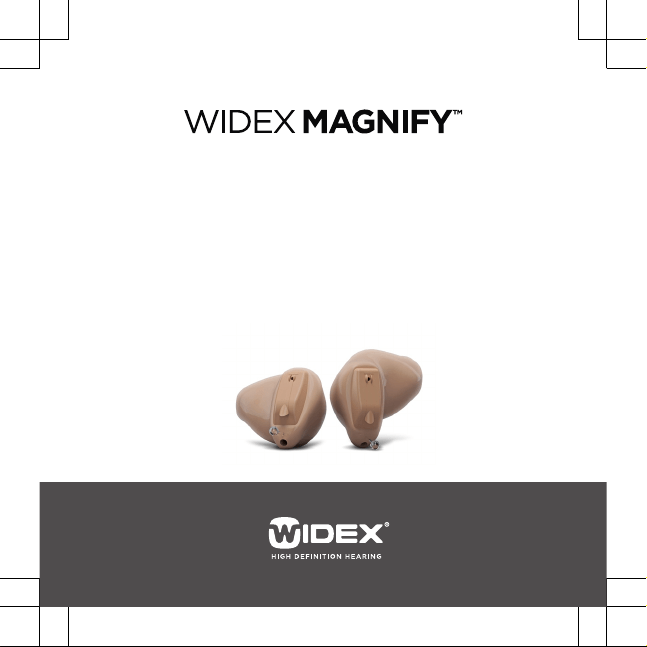
USER INSTRUCTIONS
THE WIDEX MAGNIFY™ FAMILY
M-CIC/M-CIC TR/M-CIC-M/M-CIC-M TR model
CIC
(Completely-in-canal)
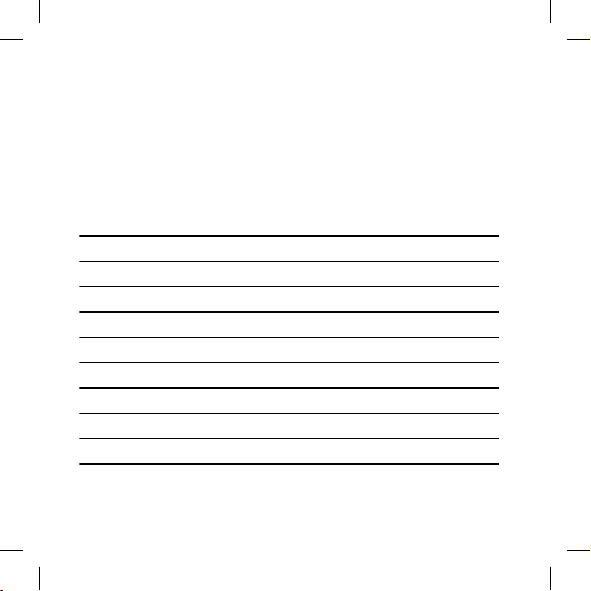
YOUR HEARING AID
(To be filled out by the hearing care professional)
Vent: Short Full length None
CIC CIC-M
This is a list of possible programs for your hearing aid. For further informa-
tion on the use of these programs, see "Customization".
Your hearing aid programs:
PROGRAMS AUDIBILITY EXTENDER
Universal
Quiet
Comfort
Transport
Urban
Impact
Party
Social
Music
2
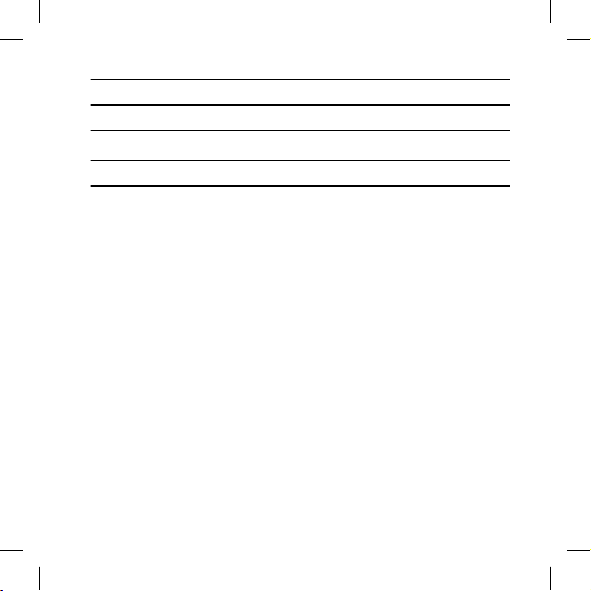
SPECIAL PROGRAMS AUDIBILITY EXTENDER
Zen
Phone
SMARTTOGGLE PROGRAM AUDIBILITY EXTENDER
Zen+
The program names in the table are the default names. If you have chosen
to use some of the other names available, write the new names in the table.
That way you will always know which programs you have in your hearing
aids.
NOTE
The CIC-M is not a wireless hearing aid, which means that the hearing aids
cannot communicate with each other or with any accessory. Consequently,
you can only change programs or adjust the volume via the TONELINK app.
NOTE
Read this booklet carefully before you start using your hearing aid.
Sound streaming and wireless control
This hearing aid allows sound streaming and direct wireless control from
smartphones and other devices via DEX. For more help and information
contact your hearing care professional or visit: https://global.widex.com.
This hearing aid works wirelessly with the TONELINK app. We take no re-
sponsibility if the hearing aid is used with any third part app or if the TONE-
LINK app is used with any other device.
3

CONTENTS
IMPORTANT SAFETY INFORMATION..........................................................6
YOUR HEARING AID...................................................................................8
Welcome...........................................................................................................8
Your hearing aid at a glance.......................................................................8
CONDITIONS FOR USE..............................................................................10
Indications for use..........................................................................................10
Intended use...................................................................................................10
Operating conditions...................................................................................... 11
Storage and transport conditions................................................................. 11
DAILY USE................................................................................................ 13
Turning the hearing aid on and off...............................................................13
Putting on and removing the hearing aid...................................................14
THE BATTERY........................................................................................... 15
Low battery indication...............................................................................15
Changing the battery................................................................................. 15
CUSTOMIZATION...................................................................................... 17
Programs......................................................................................................... 17
The Zen program........................................................................................19
Changing programs....................................................................................19
Sound signals.................................................................................................20
4

Lost partner ...............................................................................................20
Sound adjustment.........................................................................................20
PAIRING YOUR HEARING AID AND SMARTPHONE...................................22
CLEANING................................................................................................23
Tools................................................................................................................23
How to clean your hearing aid.....................................................................23
The wax guard...............................................................................................26
ACCESSORIES..........................................................................................29
TROUBLESHOOTING................................................................................30
REGULATORY INFORMATION...................................................................33
FCC and ISED statements.............................................................................33
EU directives...................................................................................................35
Directive 2014/53/EU................................................................................ 35
Information regarding disposal................................................................36
SYMBOLS................................................................................................. 37
5
IMPORTANT SAFETY INFORMATION
Read these pages carefully before you begin using your hearing aid.
Hearing aids and batteries can be dangerous if swallowed or used im-
properly. Swallowing or improper use can result in severe injury or even
fatalities. In case of ingestion, contact your local emergency number or
hospital immediately.
Take your hearing aids out when you are not using them. This will help to
ventilate the ear canal and prevent ear infections.
Contact your doctor or hearing care professional immediately if you sus-
pect you may have an ear infection or an allergic reaction.
Contact your hearing care professional if the hearing aid doesn't feel
comfortable, or if it doesn't fit properly, causing irritation, redness or the
like.
Remove your hearing aids before showering, swimming or using a hair
dryer.
Do not wear your hearing aids when applying perfume, spray, gels, lotion
or cream.
Do not dry your hearing aid in a microwave oven - this will ruin it.
Never use other people’s hearing aids and never allow others to use
yours, as this could damage your hearing.
Never use your hearing aids in environments where there may be explo-
sive gases, such as in mines, etc.
6
Keep hearing aids, their parts, accessories and batteries away from chil-
dren and mentally disabled people.
Never try to open or repair the hearing aid yourself. Contact your hearing
care professional if you need to have your hearing aid repaired.
Your hearing aids contain radio communication technology. Always ob-
serve the environment in which you are using them. If any restrictions ap-
ply, you must take precautions to comply with these.
Your device has been designed to comply with international electromag-
netic compatibility standards. However, it cannot be excluded that it may
cause interference with other electrical equipment. If you experience in-
terference, keep a distance to other electrical equipment.
Do not expose your hearing aids to extreme temperatures or high humid-
ity, and dry them quickly if they get wet, or if you perspire heavily.
7
YOUR HEARING AID
Welcome
Congratulations on your new hearing aid.
Use your hearing aid regularly, even if it takes some time getting used to it.
Infrequent users don’t usually get the full benefit of a hearing aid.
Your hearing aid and its accessories may not look exactly as illustrated in
this booklet. We also reserve the right to make any changes we consider
necessary.
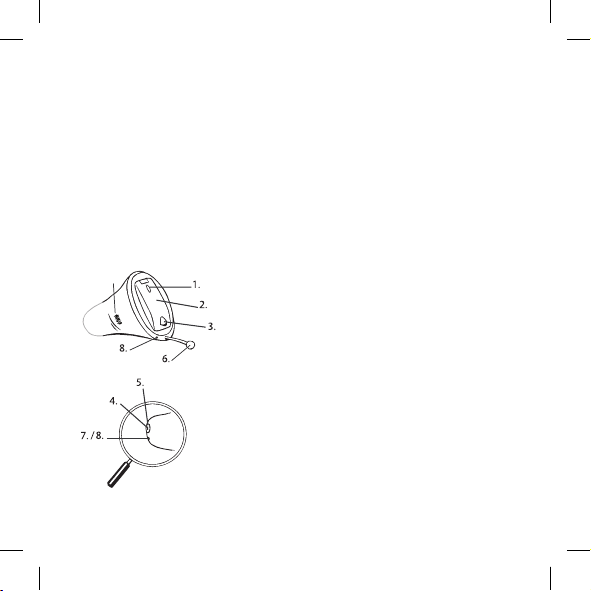
Your hearing aid at a glance
9.
1. Microphone openings
2. Battery lid (on/off function)
3. Nail grip
4. Sound outlet
5. Wax guard
6. Extraction cord
7. Relief vent (short)
8. Relief vent (full length)
9. Left/right identification
8

The colour of the left/right identification tells you how to know left from
right. The hearing aid for your left ear has a blue mark. The hearing aid for
your right ear has a red mark.
9

CONDITIONS FOR USE
Indications for use
The hearing aids are indicated for individuals older than 36 months with a
range of hearing loss from minimal (10 dB HL) to severe (90 dB HL) and all
hearing loss configurations.
They are to be programmed by licensed hearing care professionals (audiol-
ogists, hearing aid specialists, otolaryngologists) who are trained in hearing
(re)habilitation.
Intended use
The hearing aids are intended as air conduction amplification devices to be
used in everyday listening environments. The hearing aids may be equipped
with the Zen program, intended to provide a relaxing sound background
(i.e. music/noise source) for adults who desire to listen to such a back-
ground in the quiet.
10
Operating conditions
Your hearing aid has been designed to operate in everyday situations, and it
works in environmental conditions that are comfortable for you. You can
wear your hearing aid during flights, but you should remove it before show-
ering or swimming.
Specific operating conditions for your hearing aid:
Minimum Maximum
Temperature 0°C (32°F) 50°C (122°F)
Humidity 10% rH 95% rH
Atmospheric pressure 750 mbar 1060 mbar
Storage and transport conditions
Your hearing aid is sensitive to extreme conditions such as high tempera-
tures. It should not be stored or transported in direct sunlight, but only with-
in the following conditions.
Specific storage and transport conditions:
Minimum
Maximum
Temperature -20°C (-4°F) 55°C (131°F)
11

Minimum Maximum
Humidity 10% rH 95% rH
You can find technical data sheets and additional information on your hear-
ing aids on https://global.widex.com.
12
DAILY USE
Turning the hearing aid on and off
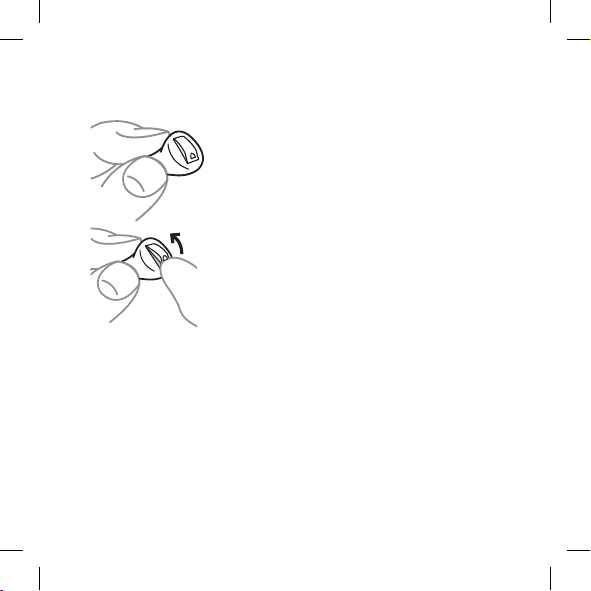
To turn the hearing aid on, close the battery door. The
hearing aid will play a sound signal to indicate that it
is on, unless your hearing care professional has deac-
tivated this function.
To turn off the hearing aid, open the battery door.
NOTE
You can also cup the hearing aid in your hand to verify that it is turned on. If it's
on, it will whistle. Don't forget to turn off the hearing aid when it is not in use.
13
Putting on and removing the hearing aid
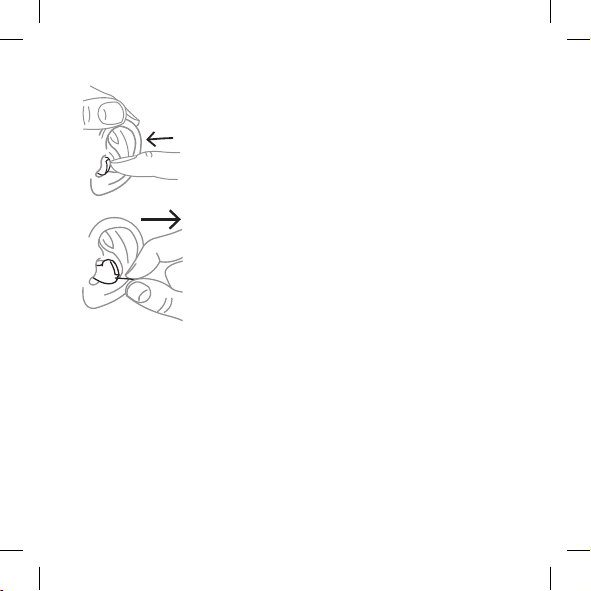
Close the battery lid completely. Hold the hearing aid
with your thumb and forefinger and insert it slowly into
your ear until you feel resistance.
Then use the tip of your forefinger to gently push the
hearing aid into your ear until it feels comfortable.
Pulling the outer ear upwards and backwards while you
insert the hearing aid can be helpful.
Use the extraction cord to take the hearing aid out of
your ear.
NOTE
If you find it difficult to take out the hearing aid, move it carefully from side to
side while pulling on the extraction cord.
14
THE BATTERY
Use a type 10 zinc-air battery for your hearing aid.
Always use a fresh, new battery that is precisely the kind recommended by
your hearing care professional.
NOTE
Check that the battery is completely clean and free of any residue before insert-
ing it in the hearing aid. Otherwise your hearing aid may not function as expec-
ted.
Never attempt to recharge your hearing aid batteries, as they could ex-
plode.
Never leave a flat battery in the hearing aids while storing them. It could
leak and ruin your hearing aid.
Dispose of used batteries as indicated on the packaging and take note of
the expiry date.
Low battery indication
When the battery is flat, a sound signal will play. If the battery drains sud-
denly there may however be no warning. We recommend carrying a spare
battery with you wherever you go.
Changing the battery
To change the battery, do as follows:
15
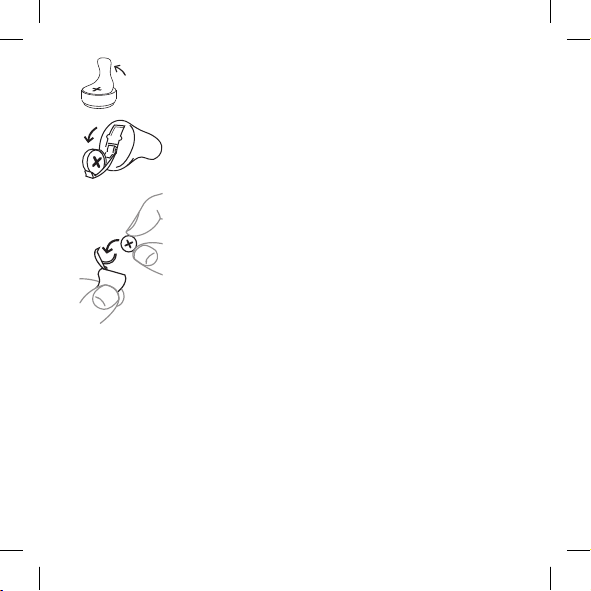
Take the adhesive tab off the new
battery and make sure there is no
sticky substance left on it. Let it
"breathe" for 60 seconds.
Use the nail grip to gently swing the
battery door open and remove the
old battery.
Now place the new battery in the
door as shown. Close the door. If it
doesn't close easily, the battery is not
placed correctly.
If you are not using the hearing aid
for a few days, remove the battery.
NOTE
Avoid dropping your hearing aid - hold the hearing aid above a soft surface
while changing the battery.
16
CUSTOMIZATION
Programs
This is an overview of programs that you can select from. Ask your hearing
care professional for guidance.
PROGRAMS USE
Universal For everyday use
Quiet Special program for listening in quiet environ-
ments
Comfort Special program for listening in noisy environ-
ments
Transport For listening in situations with noise from cars,
trains, etc.
Impact Use this program if you prefer a clear and sharp
sound
Urban For listening in situations with changing sound
levels (in supermarkets, noisy workplaces or
similar)
Party For listening in situations with many people
talking at the same time
17
PROGRAMS USE
Social Use this program if you are in small social gath-
erings, such as family dinners
Music For listening to music
SPECIAL PROGRAMS USE
Zen Plays tones or noise for a relaxing sound back-
ground
Phone This program is designed for listening to phone
conversations
SMARTTOGGLE PRO-
GRAMS
USE
Zen+ This program is similar to Zen but allows you to
listen to different types of tones or noise
NOTE
The names in the list of programs are the default names. Your hearing care pro-
fessional can also select an alternative program name from a preselected list.
Then it is even easier for you to select the right program in each listening situa-
tion.
Depending on your hearing loss, your hearing care professional can activate
the Audibility Extender feature. Ask your hearing care professional if you
could benefit from this.
18
If your needs and preferences change over time, your hearing care profes-
sional can easily change your program selection.
The Zen program
Your hearing aid may be provided with a unique optional listening program
called Zen. It makes musical tones (and sometimes a rushing noise) in the back-
ground.
If you perceive a decrease in loudness or tolerance of sounds, speech not
to be as clear, or worsening tinnitus, contact your hearing care professio-
nal.
Use of the Zen program may interfere with hearing everyday sounds, in-
cluding speech. It should not be used when it is important to be able to
hear such sounds. Switch the hearing aid to a non-Zen program in these
situations.
Changing programs
To change programs, simply push the program key on your remote control.
Zen+
To access this program, press and hold the program key for more than one
second. A quicker press then allows you to cycle through the available Zen
styles. To exit the program, press and hold down the program key for more
than one second.
NOTE
You can also use your app for changing programs and adjusting the sound in
your hearing aids.
19

Sound signals
Your hearing aid plays sounds to inform you that certain features have been
activated or that you have changed program. These sounds can be spoken
messages or tones.
Ask your hearing care professional to turn these sounds off if you don't need
them.
Lost partner
(Only available in selected models)
Your hearing care professional can turn on a feature in your hearing aid that
warns you whenever it loses contact with the hearing aid in the opposite
ear. You will hear a spoken message in your ear.
Sound adjustment
Your hearing aid adjusts the sound automatically according to your sound
environment.
If you have a remote control, you can also adjust the sound manually to ach-
ieve more comfort or more audibility, depending on your needs and prefer-
ences. For more information on how this works, consult your hearing care
professional.
Depending on the hearing aid settings and features, any sound adjustment
you make will affect both hearing aids.
20

Each time you operate the volume control, you will hear a beep-tone unless
your hearing care professional has deactivated this function. When you
reach the maximum or minimum setting, you will hear a steady tone.
To mute your hearing aid:
● Keep pressing the lower part of the volume key on the remote control
until you can hear the steady sound
To turn the sound on again:
● Press the upper part of the volume key or
● Change program
Any adjustment of the volume will be cancelled when you turn off your
hearing aid or if you change program.
NOTE
You can also use your app for changing programs and adjusting the sound in
your hearing aids.
(Only available in selected models.)
21

PAIRING YOUR HEARING AID AND SMARTPHONE
To pair your hearing aids and smartphone you need to restart your hearing
aid. Do as follows:
1. Restart your hearing aids by opening and closing the battery compart-
ment.
2. Keep the hearing aids close to your phone and follow the instructions on
your phone.
3. The hearing aids and smartphone are now ready to use.
NOTE
Your hearing aids are only in pairing mode for three minutes after you re-
start them. You might need to restart them again if you didn't pair them in
time.
22
CLEANING
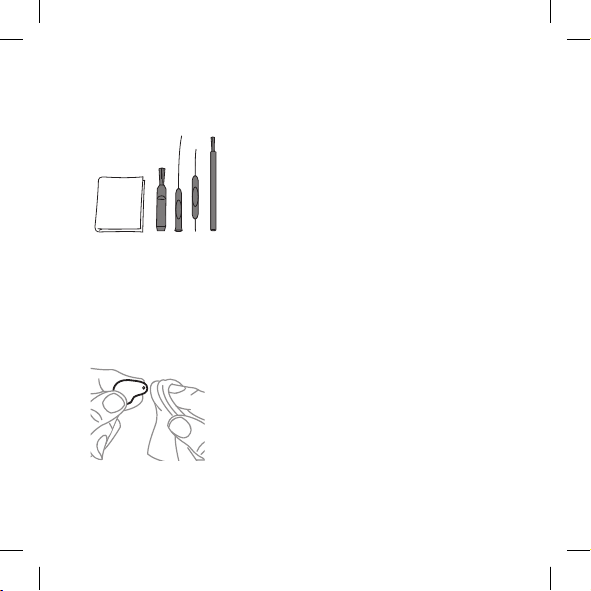
Tools
You will receive the following cleaning tools with your hearing aid:
1. 2. 3. 4. 5.
1. Cloth
2. Brush
3. Long wax-removing tool
4. Short wax-removing tool
5. Battery magnet
How to clean your hearing aid
Cleaning your hearing aid every day will make it more efficient and more
comfortable to wear.
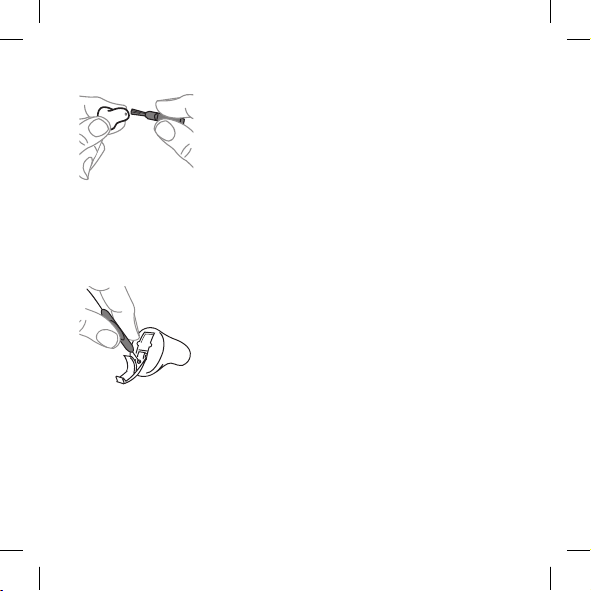
The hearing aid
Wipe it with a soft cloth (for example the cloth
you received from your hearing care professio-
nal).
23
The sound outlet
Remove any visible earwax from around the
sound outlet with the small brush or cloth.
Never try to clean the wax guard.
NOTE
If you can't clean the sound outlet, contact your hearing care professional. Never
insert anything into the sound outlet as this can ruin your hearing aid.
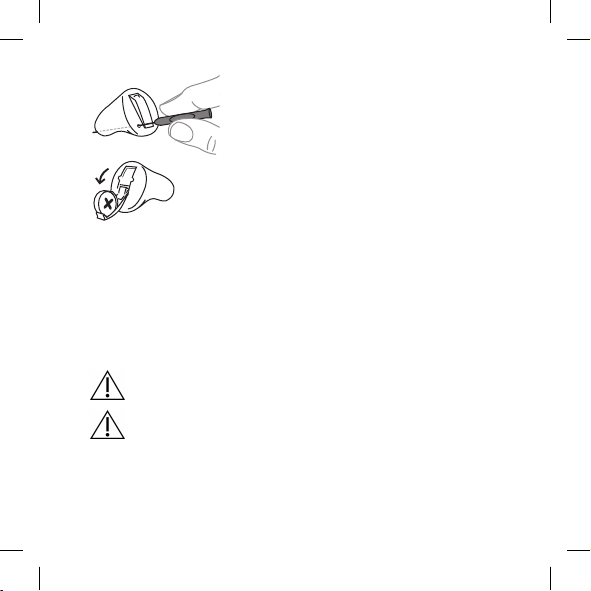
The microphone openings
Open the battery door and turn the hearing aid
so the lid is facing downwards (see illustra-
tion). Guide the short wax removing tool (no.
4 ) through the microphone openings on the
door from the inside (see illustration).
NOTE
If you suspect that earwax or dirt has got into the microphone inside the hearing
aid, contact your hearing care professional. Do not insert anything into the mi-
crophone.
24
The vent
Short vent: clean the vent as far as the long end
of the wax removing tool (no. 4) can reach.
Long vent: clean the vent every day by passing
the long wax removing tool (no. 3) all the way
through the vent.
When not in use leave the hearing aid open to
ventilate it.
NOTE
It is important for the performance of your hearing aid that you keep the vent
clean and free of earwax, dirt or the like. Clean it every day after use and consult
your hearing care professional if the vent is blocked.
Dry your hearing aid quickly if it gets wet, or if you perspire heavily. Some
people use a special dehumidifier like Widex PerfectDry Lux to help keep
their hearing aids dry and clean. Ask your hearing care professional if this is
right for you.
Do not use any kind of liquid or disinfectant to clean your hearing aid.
Clean and inspect your hearing aid every day after use to check that it is
not broken. If the hearing aid breaks while you are wearing it, leaving
small fragments in your ear canal, contact your doctor. Never try to take
out the fragments yourself.
25
The wax guard
The wax guard helps to protect the hearing aid against earwax. Always use
wax guards supplied by Widex with your hearing aid.
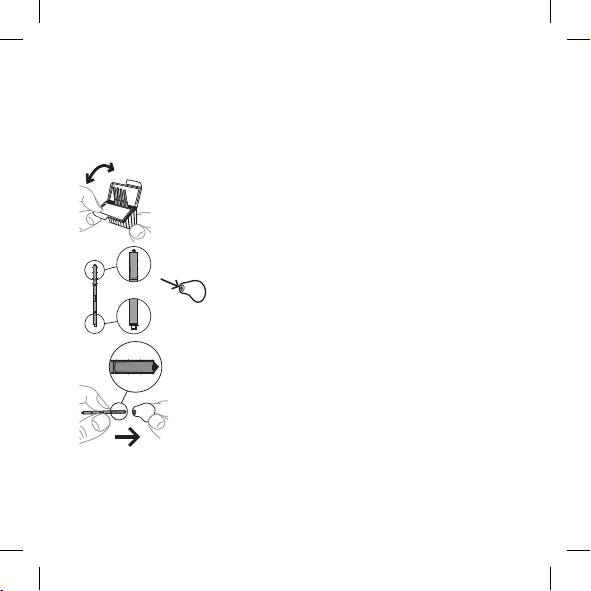
Changing the wax guard
Open the wax guard case as illustrated.
2
1
The wax guard consists of the following parts:
1. Removal hook
2. New wax guard
Insert the removal hook into the used wax guard.
26
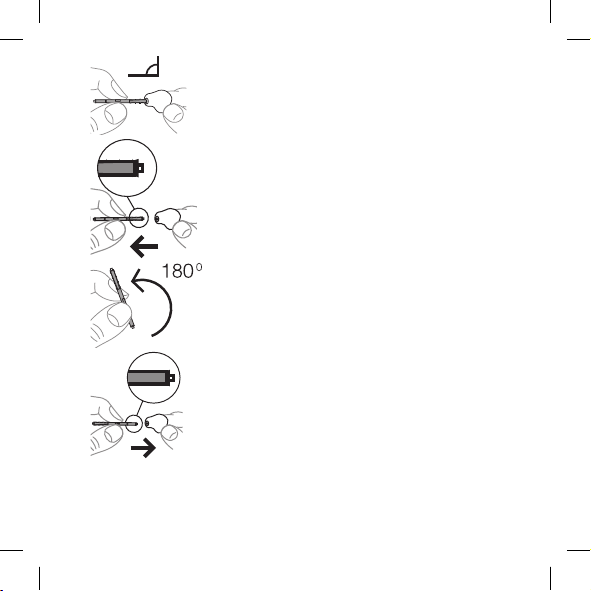
Keep the holder at a right angle.
Pull the used wax guard straight out.
Insert the new wax guard into the opening of the
sound outlet and press it gently.
27
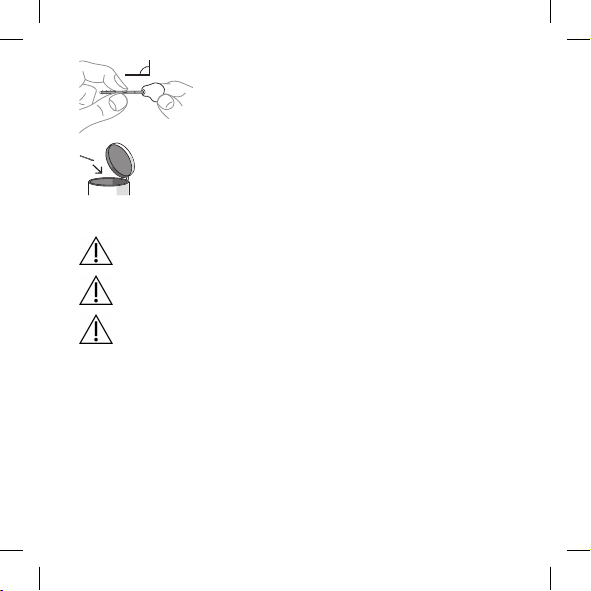
Pull the holder straight out.
Ask your hearing care professional about how often you should change the
wax guard.
The wax guard is for one-time use only and is not intended to be cleaned.
If the wax guard fits loosely, discard it and use a new one.
If the wax guard falls off inside your ear, contact your doctor or hearing
care professional to have it removed. Do NOT attempt to remove the wax
guard yourself.
28
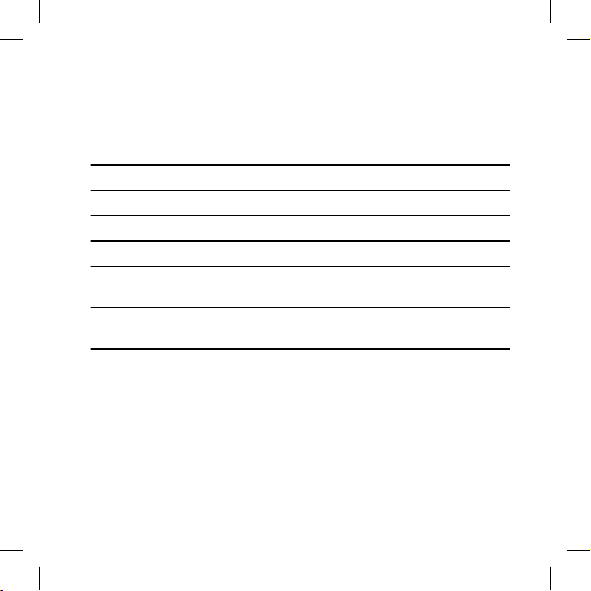
ACCESSORIES
You can use a variety of accessories with your hearing aid. To see whether
you could benefit from using these accessories, ask your hearing care pro-
fessional.
Name Use
RC-DEX remote control
TV-DEX for listening to TV and audio
PHONE-DEX 2* for easy landline use
FM+DEX for streaming audio and FM signals
COM-DEX for wireless connection to mobile phones and other
devices via Bluetooth
COM-DEX Remote
Mic
for helping hearing aid users hear speech in difficult
listening situations
*Available in some countries only.
29
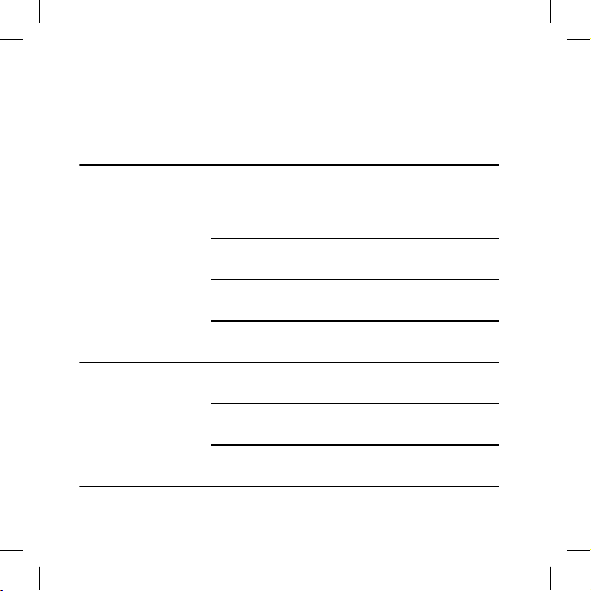
TROUBLESHOOTING
These pages contain advice on what to do if your hearing aid stops working
or if it doesn't work as expected. If the problem persists, contact your hear-
ing care professional.
Problem Possible cause Solution
The hearing aid is
completely silent
It is not turned on Make sure the battery is
placed correctly and the
battery compartment cover
is closed correctly.
The battery does not
work
Insert a new battery in the
hearing aid
The sound outlet is
blocked
See the cleaning section
The microphone open-
ing is blocked
See the cleaning section
The hearing aid vol-
ume is not powerful
enough
The sound outlet is
blocked
See the cleaning section
Your ear is blocked by
earwax
Contact your doctor
Your hearing may
have changed
Contact your hearing care
professional/doctor
30
Problem Possible cause Solution
The hearing aid whis-
tles continuously
Your ear is blocked by
earwax
Contact your doctor
It is not correctly
placed in your ear ca-
nal
Take it out and reinsert it
It fits loosely in your
ear canal
Contact your hearing care
professional
The hearing aid is un-
comfortable to wear
It is not correctly
placed in your ear ca-
nal.
Consult your hearing care
professional
It does not fit your ear
properly
Contact your hearing care
professional
Your outer ear or ear
canal is sore
It is important that first-
time users only wear the
hearing aid for short peri-
ods of time at the begin-
ning. Take 2-3 weeks to
gradually get used to the
hearing aid. If the soreness
continues, contact your
hearing care professional
31
Problem Possible cause Solution
Your hearing aids are
not working in syn-
chrony
The connection be-
tween the hearing aids
is lost
Turn them off and on again
The hearing aids do
not respond with a
corresponding change
in volume or program
to the device
a. The device is used
beyond the transmis-
sion range
b. Strong electromag-
netic interference in
the vicinity
c. The device and the
hearing aids are not
matched
a. Move the device closer to
the hearing aids
b. Move away from known
source of EM interference
c. Check with your hearing
care professional to make
sure device is matched with
the hearing aids
You hear “interrupted”
speech (on and off)
from the hearing aids
or no speech (muted)
from the opposite
hearing aid.
a. The battery in one of
the hearing aids has
expired
b. Strong electromag-
netic interference in
the vicinity
a. Replace battery in one or
both hearing aids
b. Move away from known
sources of interference
32

REGULATORY INFORMATION
FCC and ISED statements
FCC ID: TTY-UCIC
IC: 5676B-UCIC
Federal Communications Commission Statement
This device complies with part 15 of the FCC Rules. Operation is subject to
the following two conditions:
(1) This device may not cause harmful interference, and
(2) this device must accept any interference received, including interference
that may cause undesired operation.
NOTE:
This equipment has been tested and found to comply with the limits for a
Class B digital device, pursuant to part 15 of the FCC Rules. These limits are
designed to provide reasonable protection against harmful interference in a
residential installation. This equipment generates, uses and can radiate radio
frequency energy and, if not installed and used in accordance with the in-
structions, may cause harmful interference to radio communications. How-
ever, there is no guarantee that interference will not occur in a particular in-
stallation. If this equipment does cause harmful interference to radio or tele-
33

vision reception, which can be determined by turning the equipment off and
on, the user is encouraged to try to correct the interference by one or more
of the following measures:
— Reorient or relocate the receiving antenna.
— Increase the separation between the equipment and receiver.
— Connect the equipment into an outlet on a circuit different from that to
which the receiver is connected.
— Consult the dealer or an experienced radio/TV technician for help.
NOTE:
This equipment complies with FCC radiation exposure limits set forth for an
uncontrolled environment. This transmitter must not be co-located or oper-
ating in conjunction with any other antenna or transmitter.
Changes or modifications to the equipment not expressly approved by Wi-
dex A/S could void the user’s authority to operate the equipment.
ISED Statement / Déclaration d’ISED
This device contains licence-exempt transmitter(s)/receiver(s) that comply
with Innovation, Science and Economic Development Canada’s licence-ex-
empt RSS(s). Operation is subject to the following two conditions:
(1) This device may not cause interference.
(2) This device must accept any interference, including interference that
may cause undesired operation of the device.
34

L’émetteur/récepteur exempt de licence contenu dans le présent appareil
est conforme aux CNR d’Innovation, Sciences et Développement économi-
que Canada applicables aux appareils radio exempts de licence. L’exploita-
tion est autorisée aux deux conditions suivantes:
(1) L’appareil ne doit pas produire de brouillage;
(2) L’appareil doit accepter tout brouillage radioélectrique subi, même si le
brouillage est susceptible d’en compromettre le fonctionnement.
ISED RADIATION EXPOSURE STATEMENT:
This equipment complies with ISED RF radiation exposure limits set forth for
an uncontrolled environment. This transmitter must not be co-located or
operating in conjunction with any other antenna or transmitter.
ISED EXPOSITION AUX RADIATIONS:
Cet équipement est conforme avec ISED les limites d’exposition aux
rayonnements défi nies pour un contrôlé environnement. Cet émetteur ne
doit pas être co-localisés ou fonctionner en conjonction avec une autre an-
tenne ou émetteur.
EU directives
Directive 2014/53/EU
Hereby, Widex A/S declares that this M-CIC/M-CIC TR/M-CIC-M/M-CIC-M TR
is in compliance with the essential requirements and other relevant provi-
sions of Directive 2014/53/EU.
35
For regulatory reasons, the legal manufacturer of this product can be either
Widex A/S or WSAUD A/S. The relevant legal manufacturer of your hearing
aid is stated on the label of the box of your specific product.
The M-CIC/M-CIC TR/M-CIC-M/M-CIC-M TR contains a radio transmitter op-
erating at 10.6 MHz, -54dBμmA/m @10 m.
To avoid potential degradation of radio performance, your device should be
separated by at least 25 cm (10 inches) to other radio communications
equipment.
A copy of the Declaration of Conformity according to 2014/53/EU can be
found at:
https://global.widex.com/doc
N26346
Information regarding disposal
Do not dispose of hearing aids, hearing aid accessories and batteries along
with ordinary household waste.
Hearing aids, batteries and hearing aid accessories should be disposed of at
sites intended for electrical waste and electronic equipment, or given to
your hearing care professional for safe disposal.
36
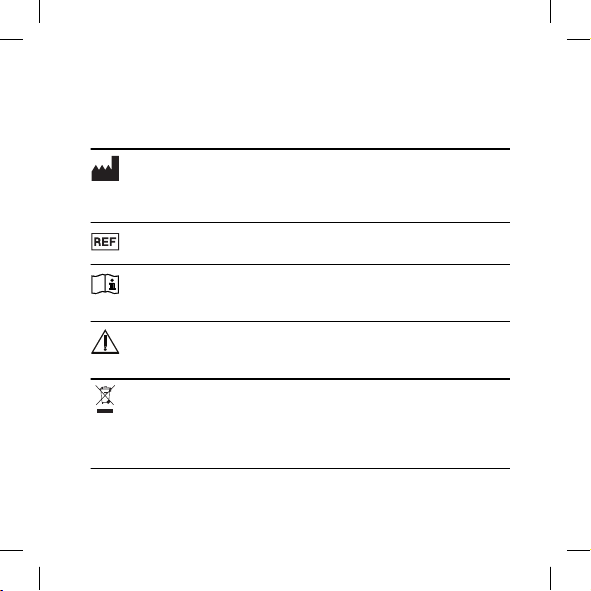
SYMBOLS
Symbols commonly used by Widex A/S in medical device labelling (la-
bels/IFU/etc.)
Symbol Title/Description
Manufacturer
The product is produced by the manufacturer whose name and address are
stated next to the symbol. If appropriate, the date of manufacture may also
be stated.
Catalogue number
The product’s catalogue (item) number.
Consult instructions for use
The user instructions contain important cautionary information (warn-
ings/precautions) and must be read before using the product.
Warning
Text marked with a warning symbol must be read before using the
product.
WEEE mark
“Not for general waste”. When a product is to be discarded, it must be
sent to a designated collection point for recycling and recovering to
prevent the risk of harm to the environment or human health as a re-
sult of the presence of hazardous substances.
37
Symbol Title/Description
CE mark
The product is in conformity with the requirements set out in European
CE marking directives.
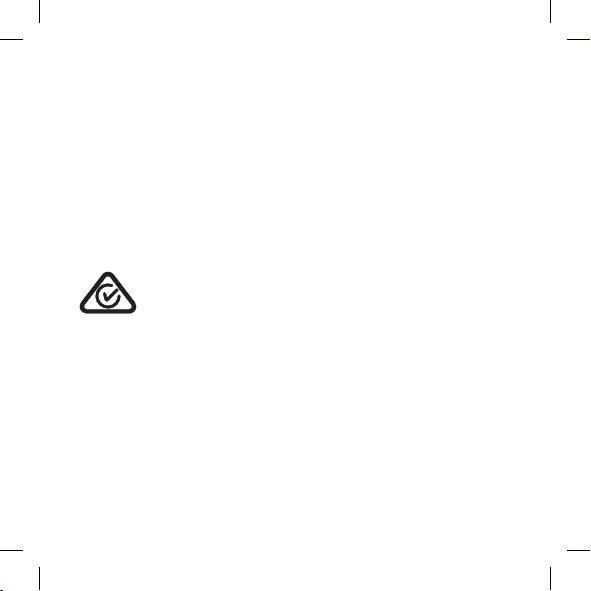
RCM mark
The product complies with electrical safety, EMC and radio spectrum regula-
tory requirements for products supplied to the Australian or New Zealand
markets.
38

39
Widex A/S Nymoellevej 6, DK-3540 Lynge, Denmark
https://global.widex.com
Manual no.:
9 514 0575 001 02
Issue:
2021-06
9 514 0575 001 02