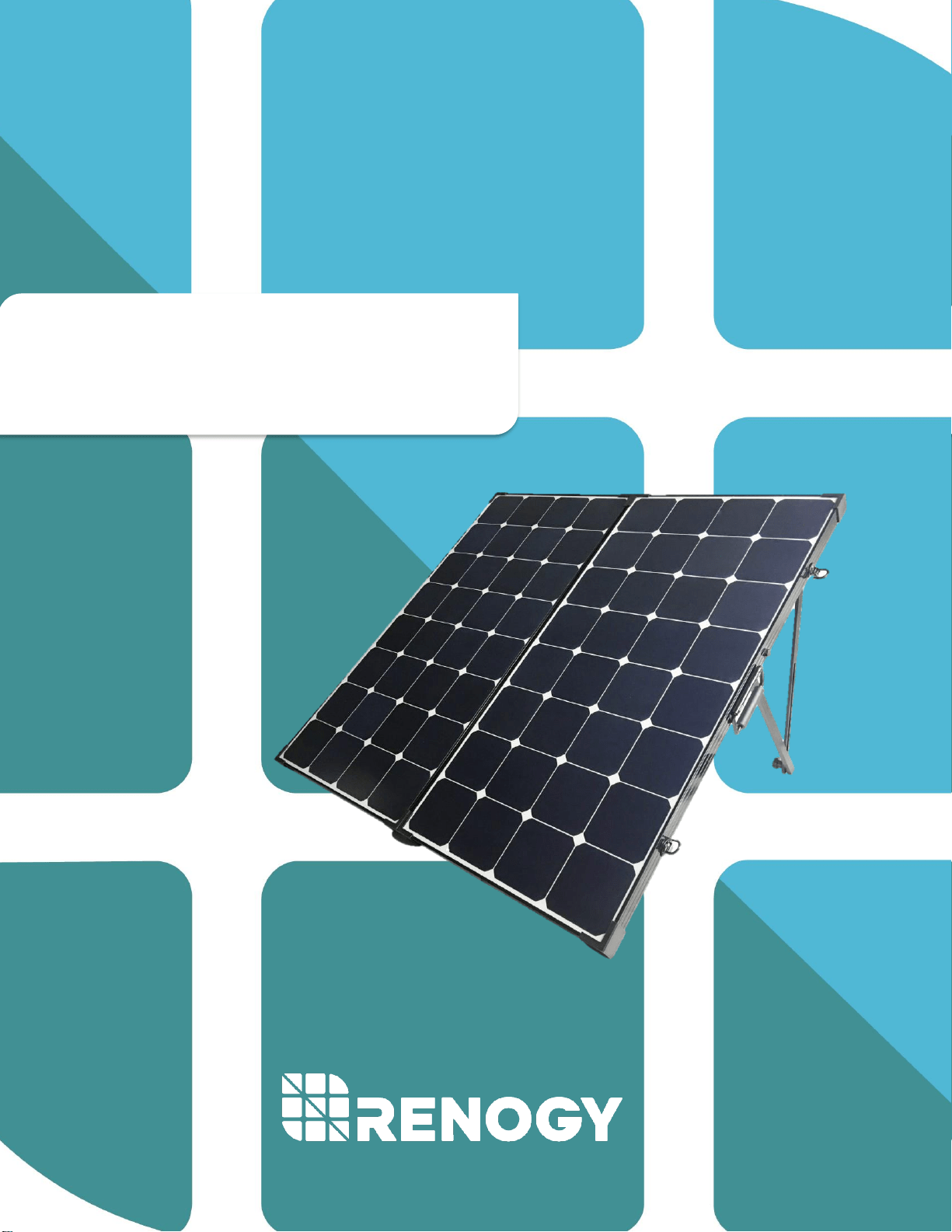
Eclipse Solar Suitcase
Renogy 100W | 200W w/o CC Manual
2775 E. Philadelphia St., Ontario, CA 91761
1-800-330-8678
Version 1.1
1
Important Safety Instructions
Please save these instructions.
This manual contains important safety, installation, and operating instructions for the charge
controller. The following symbols are used throughout the manual to indicate potentially
dangerous conditions or important safety information.
WARNING: Indicates a potentially dangerous condition. Use extreme caution when
performing this task.
CAUTION: Indicates a critical procedure for safe and proper operation of the controller
NOTE: Indicates a procedure or function that is important to the safe and proper operation
of the controller.
General Safety Information
• Read all of the instructions and cautions
in the manual before beginning the
installation.
• It is HIGHLY recommended to install a
charge controller in order to charge your
batteries using the solar suitcase.
• It is dangerous for unregulated panels to
be connected to battery banks.
Battery Safety
• Use only sealed lead-acid, flooded, or gel
batteries which must be deep cycle.
• Explosive battery gases may be present
while charging. Be certain there is
enough ventilation to release the gases.
• Be careful when working with large lead
acid batteries. Wear eye protection and
have fresh water available in case there
is contact with the battery acid.
• Carefully read battery manuals before
operation.
• Do NOT let the positive (+) and negative
(-) terminals of the battery touch each
other.
• Recycle battery when it is replaced.
• Over-charging and excessive gas
precipitation may damage the battery
plates and activate material shedding on
them. Too high of an equalizing charge
or too long of one may cause damage.
Please carefully review the specific
requirements of the battery used in the
system.
• Equalization is carried out only for non-
sealed / vented/ flooded / wet cell lead
acid batteries.
• Do NOT equalize sealed / VRLA type
AGM / Gel cell batteries UNLESS
permitted by battery manufacturer.

2
Table of Contents
General Information......................................................................................................... 3
Identification of Parts ....................................................................................................... 3
Installation ....................................................................................................................... 4
Recommended Wiring ..................................................................................................... 6
Frequently Asked Questions ........................................................................................... 7
Technical Specifications .................................................................................................. 8
Solar Panel Parameters .................................................................................................. 8
Dimensions ..................................................................................................................... 8
3
General Information
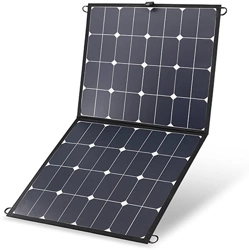
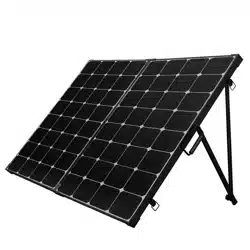
The Renogy Eclipse Solar Suitcase is specifically designed for mobile off-grid applications,
where space and weight limitations are abundant. The Solar Suitcase models support 12V deep
cycle battery varieties such as sealed-lead acid, gel, and flooded. With built-in tilting stands, these
panels can be adjusted at different angles to maximize the power output throughout the seasons.
The alligator clips included in this package make it easy to connect the panel to a battery in
seconds. If one ever needs to connect a battery with a different type of end terminal, the alligator
clips are attached via MC4 Connectors.
Key Features
• Tilting stand for maximum solar generating potential.
• Convenient storage case for easy transportation.
• High efficient monocrystalline solar panels
NOTE: The suitcase requires an adaptor kit, a charge controller, and a tray cable. These
components require a separate purchase.
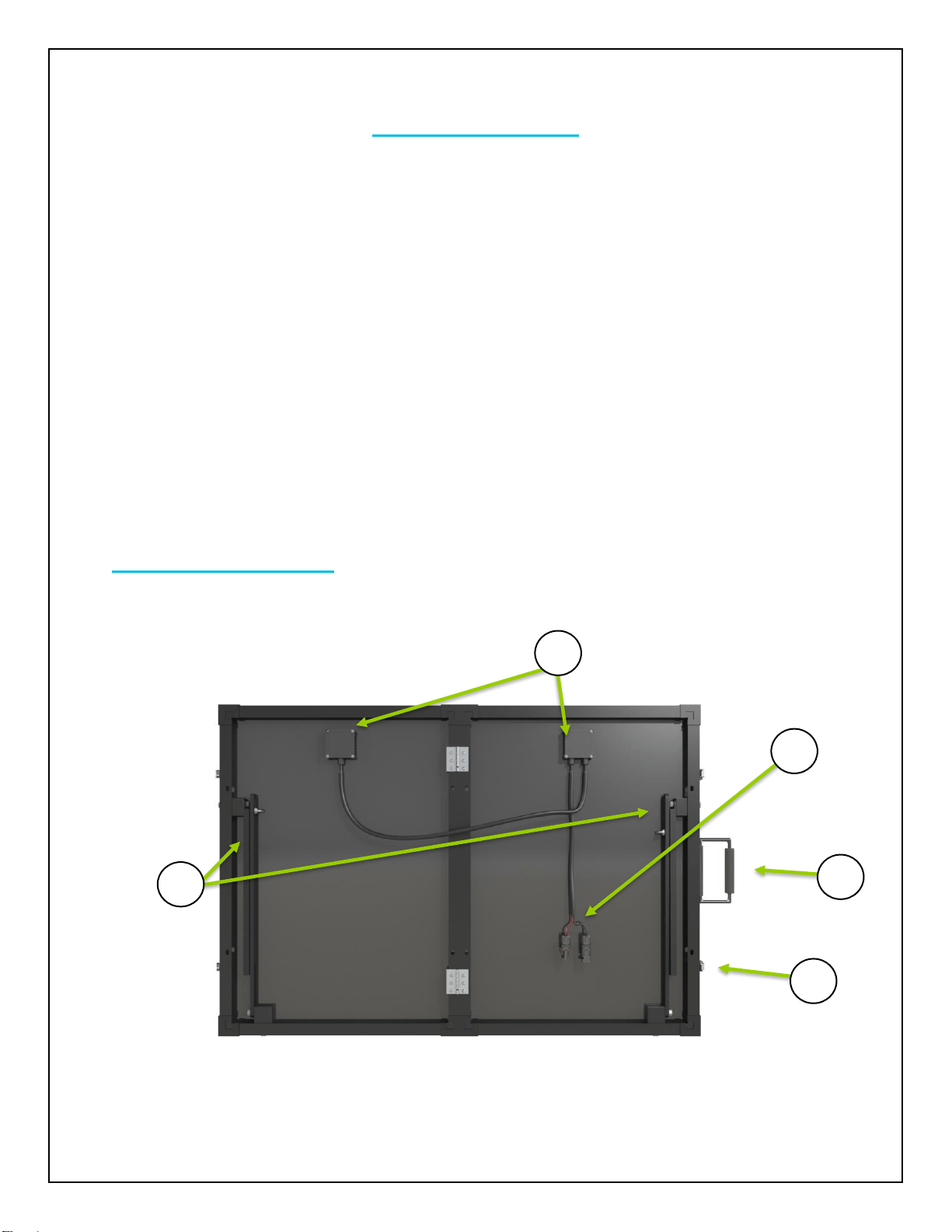
Identification of Parts
1
2
5
4
3
4
Key Parts
1. Junction Box
2. Tilt Stands
3. Latches
4. Handle
5. MC4 Connections
Installation
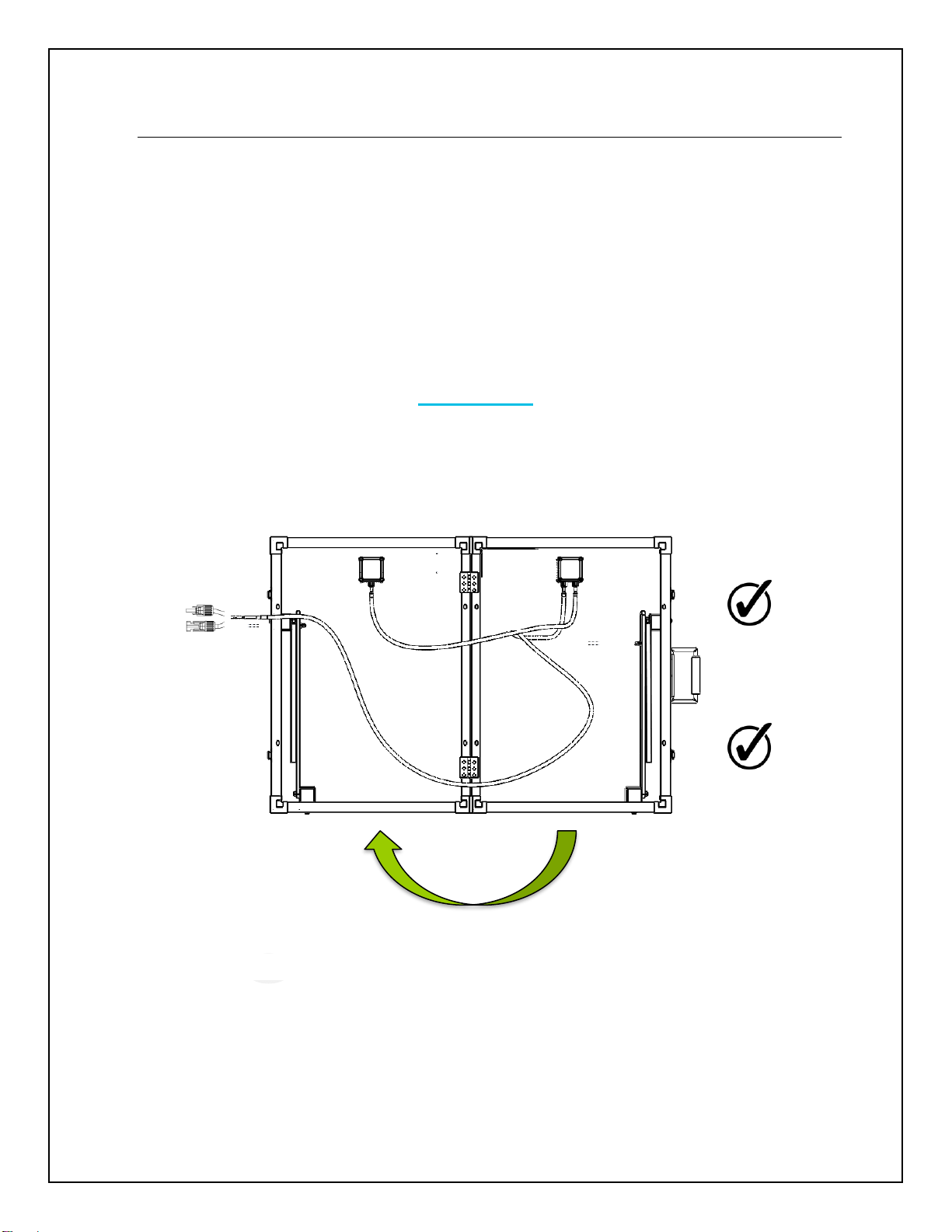
1. Unlatch and unfold
5
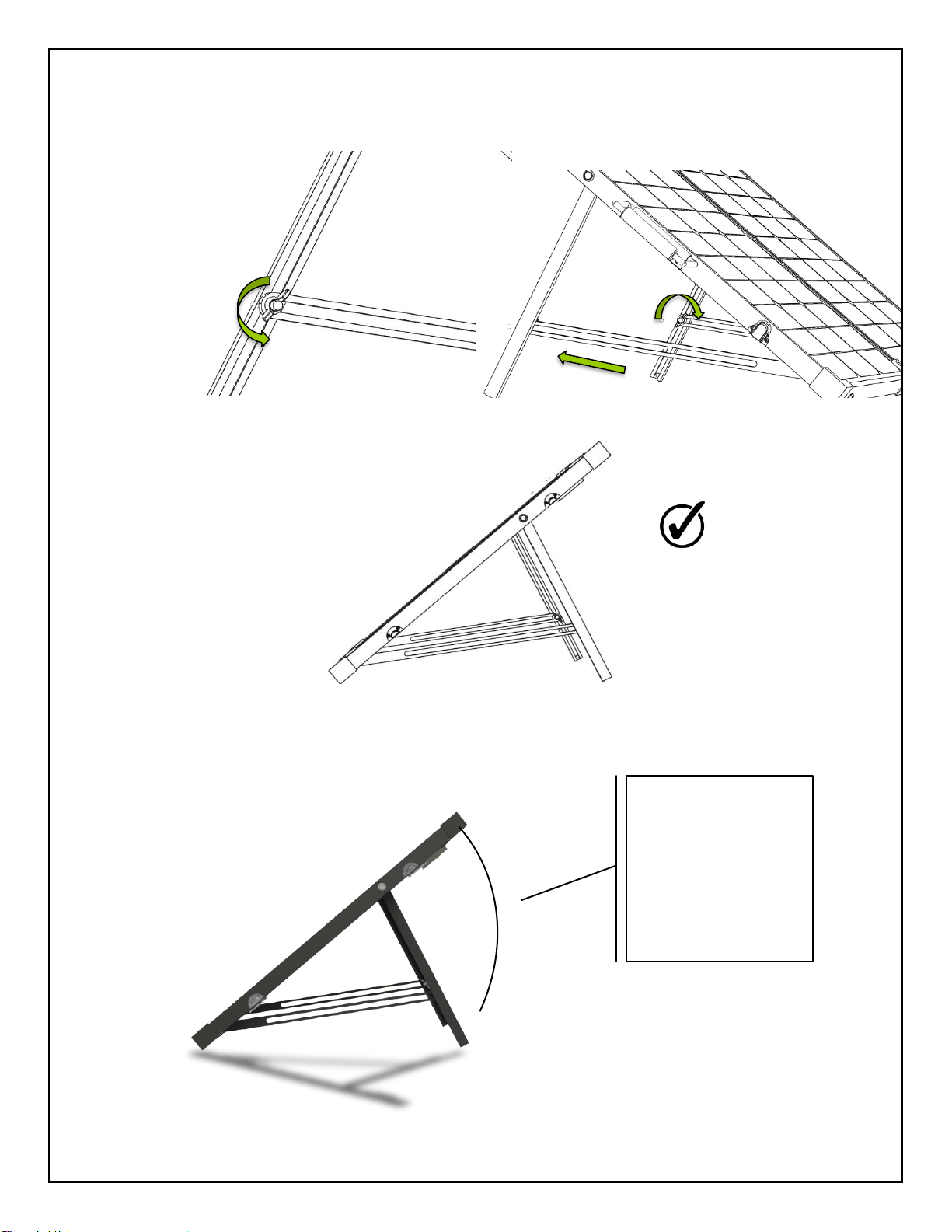
2. Unscrew butterfly nut tilt to desired angle and lock butterfly nut
To maximize the output, adjust the angle of the suitcase regularly to track the sun’s movement
throughout the season
After
Summer
𝜃 = 𝐿𝑎𝑡𝑖𝑡𝑢𝑑𝑒 – 15°
Fall and Spring
𝜃 = 𝑎𝑡 𝑙𝑎𝑡𝑖𝑡𝑢𝑑𝑒
Winter
𝜃 = 𝐿𝑎𝑡𝑖𝑡𝑢𝑑𝑒 + 15°
𝜃
6
Recommended Wiring
The Solar Suitcase is shipped by itself without any additional components. In order to utilize the
suitcase efficiently, it is highly recommended that users put their system together with the
following components:
1. Adapter kit—has an MC4 connection on one end and bare wire on the other end for
connecting to a charge controller.
2. Charge controller—regulates the solar panel power to efficiently charge batteries.
3. Tray cable—has a bare wire on one end and a battery “O-ring” on the other end for connecting
the charge controller to the battery bank.
4. Battery bank—where power from the solar panels will be stored.
NOTE: Depending on the user’s preference, different gauge wires, wire lengths, charge
controllers, and cables could possibly be used.
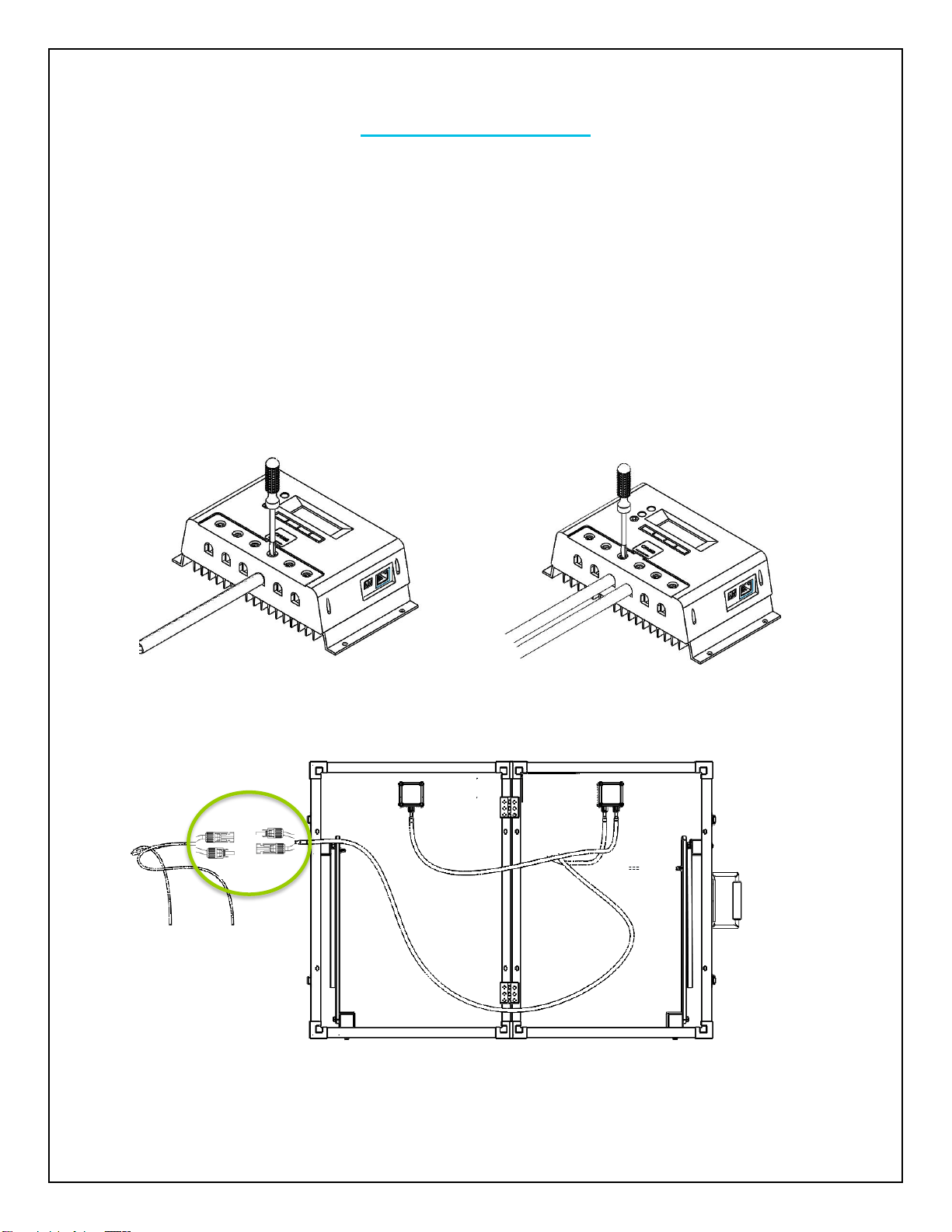
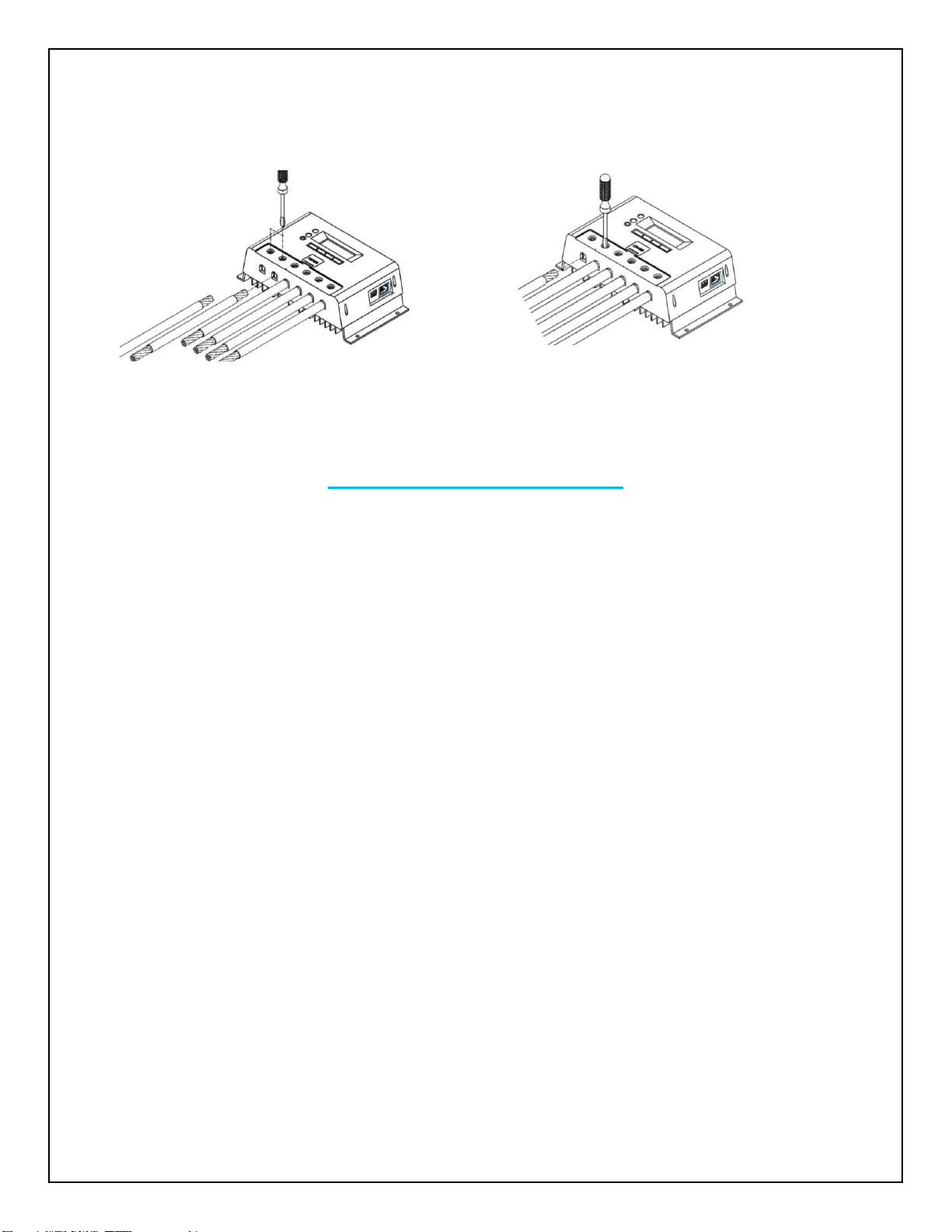
1. Use tray cable to connect battery bank to charge controller’s battery terminals
2. Connect adapter kit to MC4 connections coming from the suitcase’s junction box
7
3. Connect adapter kit to charge controller PV terminals
Frequently Asked Questions
Q. Can the kit charge two or more 12V batteries connected in parallel?
A. Yes, it’s possible if the batteries have the same type and capacity and are wired in parallel as
a single 12V battery bank.
Q. Is there any risk that the solar kit will over charge my battery?
A. One of the functions of the solar charge controller is to ensure that your battery is not over
charged; therefore there is no risk of overcharge.
Q. Can I extend the battery leads?
A. Yes, it’s possible – please choose the same size of cable for extension. However, there longer
the extension, the greater the line loss. Bigger gauge will be required for longer runs.
Q. Do I need to clean the solar panels?
A. Yes, it is recommended for better performance. Dust and dirt should first be swept off the
panel surface using a soft brush. When the sweeping is complete, use a wet cloth to wipe the
panel surface to remove remaining dirt and grime.
Q. Can rain damage the solar kit?
A. The solar panels are fully waterproof (IP66 class), the controller is not. We recommend
protecting the kit from rain, since water into controller may damage the internal circuitry.
8
Technical Specifications
Solar Panel Parameters
Description
100 W Parameters
200 W Parameters
Maximum Power
100 W
200 W
Open Circuit Voltage (Voc)
21.6 V
21.2 V
Short Circuit Current (Isc)
6.10 A
11.72 A
Maximum Power Voltage (Vmp)
17.6 V
17.7 V
Maximum Power Current (Imp)
5.68 A
10.35 A
Cell Type
Monocrystalline
Monocrystalline
Operating Temperature
−40°F to +185°F
−40°F to +185°F
Folded Size
21.1 X 21.5 X 3.1 in
41.3 X 21.1 X 3.1 in
Net Weight
19.40 lbs.
33.60 lbs.
Dimensions
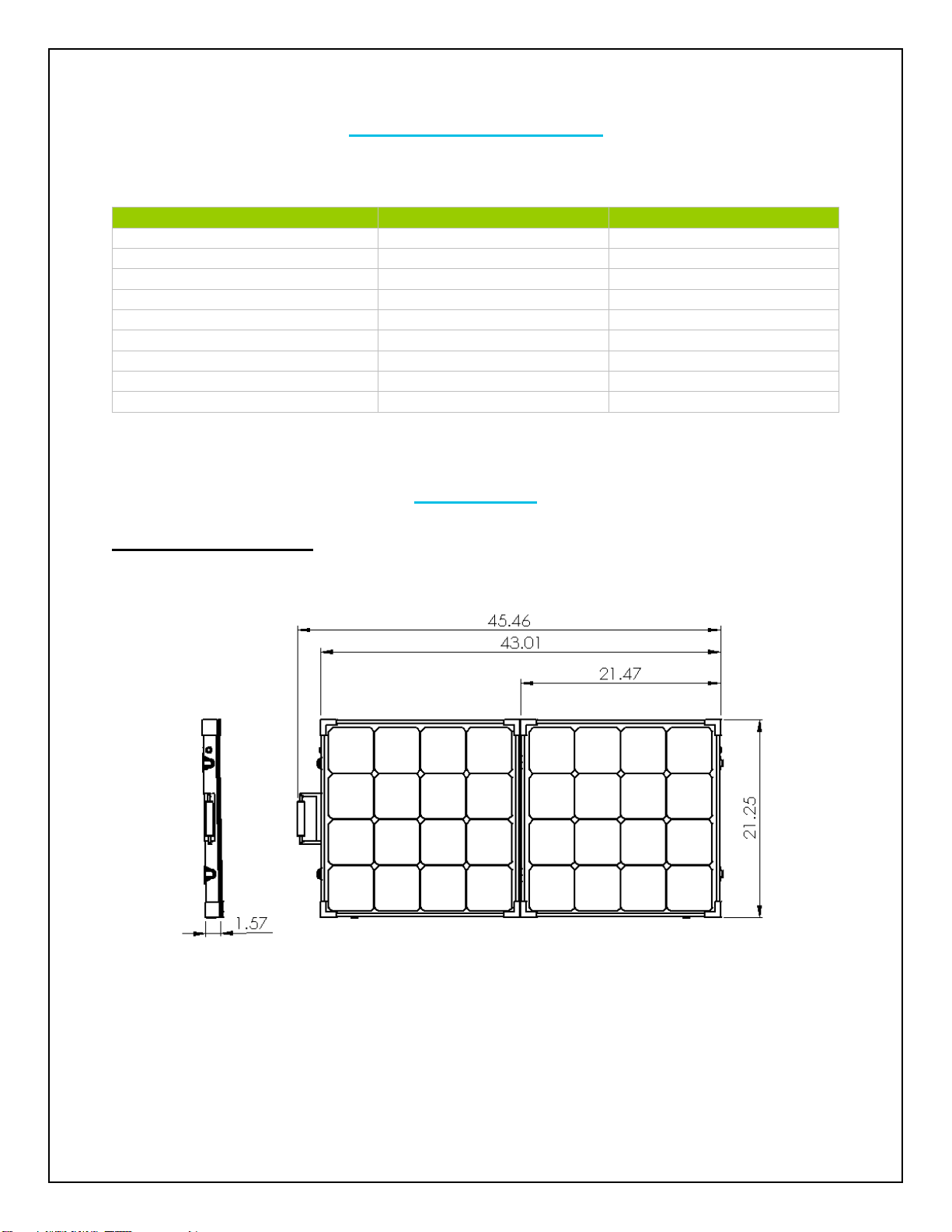
100W Eclipse Suitcase
• Leg stand length: 18 in. (long part), 14.5in. (short part)
9
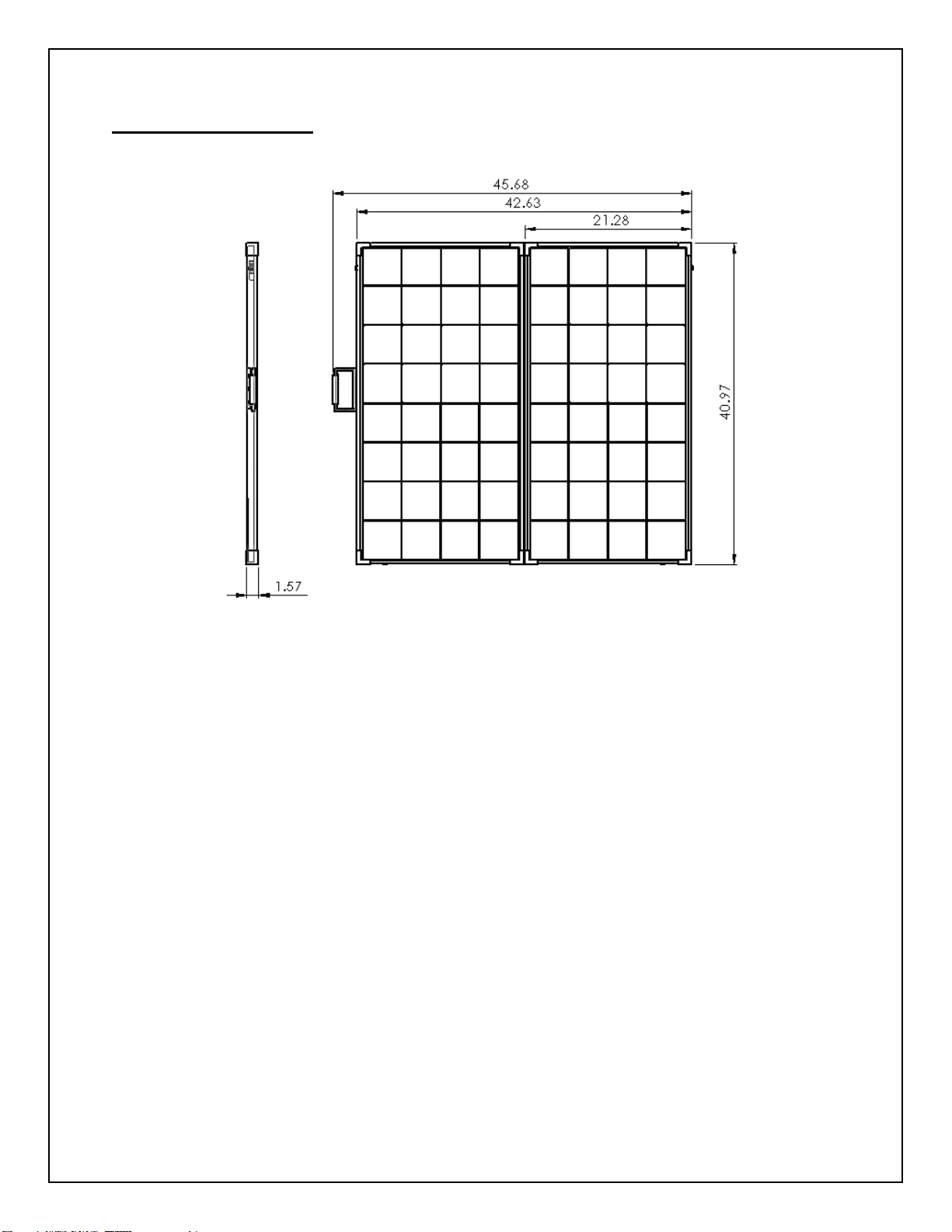
200W Eclipse Suitcase
• Leg stand length: 26.3 in. (long part), 23.3 in. (short part)
Renogy reserves the right to change the contents of this manual without notice. For the most up to date manual visit the downloads
page at www.renogy.com
Revision: 6/1/2017