User Manual
FEATURE GUIDE

COOKTOP USE
Electric igniters automatically light the surface burners when control knobs are turned to IGNITE.
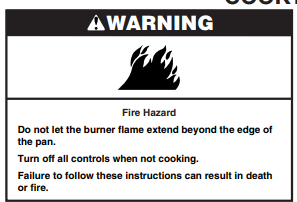
Before setting a control knob, place filled cookware on the grate. Do not operate a burner using empty cookware or without cookware on the grate. The flame should be adjusted so it does not extend beyond the edge of the pan.
NOTE: Visually check that the burner has lit. If the burner does not ignite, listen for a clicking sound. If you do not hear the igniter click, turn the burner off.
Check for a tripped circuit breaker or blown household fuse. Check that the control knob is pressed completely down on the valve shaft. If the spark igniter still does not operate, call a trained repair specialist.
To Set:
1. Push in and turn knob counterclockwise to IGNITE. All surface burners will click. Only the burner with the control knob turned to IGNITE will produce a flame.
2. Turn knob to anywhere between Hi and Lo.
Power Failure
In case of a prolonged power failure, the surface burners cannot be lit manually. No attempt should be made to operate the appliance during a power failure.
Sealed Surface Burners
IMPORTANT: Do not obstruct the flow of combustion and ventilation air around the burner grate edges.
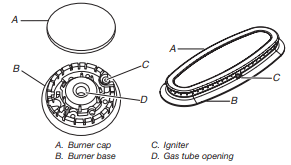
Burner Cap: Always keep the burner cap in place when using a surface burner. A clean burner cap will help avoid poor ignition and uneven flames. Always clean the burner cap after a spillover and routinely remove and clean the caps according to the “General Cleaning” section.
Gas Tube Opening: Gas must flow freely throughout the gas tube opening for the burner to light properly. Keep this area free of soil and do not allow spills, food, cleaning agents, or any other material to enter the gas tube opening. Keep spillovers out of the gas tube opening by always using a burner cap.
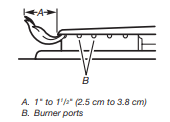
Burner Ports: Check burner flames occasionally for proper size and shape as shown in the previous illustration. A good flame is blue in color, not yellow. Keep this area free of soil and do not allow spills, food, cleaning agents, or any other material to enter the burner ports.
To Clean:
IMPORTANT: Before cleaning, make sure all controls are OFF and the cooktop is cool. Do not use oven cleaners, bleach, or rust removers.
1. Remove the burner cap and the burner base and clean according to the “General Cleaning” section.
2. Clean the gas tube opening with a damp cloth.
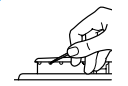
3. Clean clogged burner ports with a straight pin as shown. Do not enlarge or distort the port. Do not use a wooden toothpick. If the burner needs to be adjusted, contact a trained repair specialist.
4. Replace the burner cap, making sure the alignment pins are properly aligned with the burner cap.
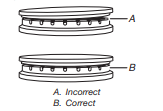
5. Turn on the burner. If the burner does not light, check cap alignment. If the burner still does not light, do not service the sealed burner yourself. Contact a trained repair specialist.
EZ-2-Lift™ Hinged Cast Iron Grates
The grates must be properly positioned before cooking. In the proper position, the grates should be flush and level. Improper installation of the grates may result in chipping or scratching of the cooktop.
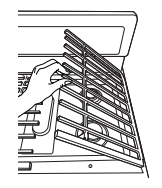
Your cooktop comes with hinged grates for easier cleaning. The grates pivot upward and toward the sides of the cooktop for easy access under the grates. The grates will stop once they are moved to their vertical (fully open) position. A 15" (38.1 cm) minimum clearance from the countertop to the bottom of the upper cabinets/appliances is needed to fully open the grates.
Be sure to return the grates to their normal (down) position once cleaning is complete. The grates are removable for cleaning.
To attach the grates to their hinges, insert the grate slot over the hinge pin on the side of the cooktop. Be sure to keep the grate angled above the cooktop to avoid scratching the cooktop until the grate is seated on the hinge pin. Then position the grate down onto the cooktop.
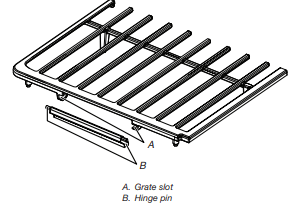
Although the burner grates are durable, they will gradually lose their shine and/or discolor due to the high temperatures of the gas flame. To lift a grate, grasp grate on the side opposite the center of the hinge. Lift straight up. Be aware of any walls, cabinets, or other surfaces that may come in contact with the grate when opened. A 15" (38.1 cm) minimum clearance from the countertop to the bottom of the upper cabinets/appliances is needed to fully open the grates.
Burner Size
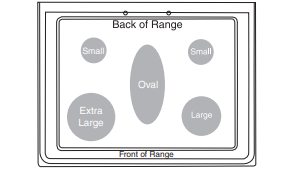
Select a burner that best fits your cookware. See the following illustration and chart.
Small
- Low-heat cooking
- Melting chocolate or butter
Large
Extra-Large
- For large cookware
- Most powerful burner
Oval
Cookware
IMPORTANT: Do not leave empty cookware on a hot surface cooking area, element, or surface burner.
Ideal cookware should have a flat bottom, straight sides, and a well-fitting lid, and the material should be of medium-to-heavy thickness.
Rough finishes may scratch the cooktop. Aluminum and copper may be used as a core or base in cookware. However, when used as a base, they can leave permanent marks on the surfaces.
Cookware material is a factor in how quickly and evenly heat is transferred which affects cooking results. A nonstick finish has the same characteristics as its base material. For example, aluminum cookware with a nonstick finish will take on the properties of aluminum.
Cookware with nonstick surfaces should not be used under the broiler.
Check for flatness by placing the straight edge of a ruler across the bottom of the cookware. While you rotate the ruler, no space or light should be visible between it and the cookware.

Use the following chart as a guide for cookware material characteristics.
Aluminum
- Heats quickly and evenly.
- Suitable for all types of cooking.
- Medium or heavy thickness is best for most cooking tasks.
Cast iron
- Heats slowly and evenly.
- Good for browning and frying
- Maintains heat for slow cooking.
Ceramic or ceramic glass
- Follow manufacturer’s instructions.
- Heats slowly but unevenly.
- Ideal results on low-to-medium heat settings.
Copper
- Heats very quickly and evenly.
- May leave copper residues which may be diminished if cleaned immediately after cooking.
Earthenware
- Follow manufacturer’s instructions.
- Use on low heat settings.
Porcelain enamel on steel or cast iron
- See stainless steel or cast iron.
Stainless steel
- Heats quickly but unevenly.
- A core or base of aluminum or copper on stainless steel provides even heating.
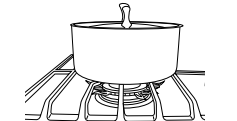
For best results, the cookware should be centered above the burner with the bottom sitting level on the grate. The flame should be adjusted so that it does not extend up the sides of the pan.
Home Canning
Canning can be performed on a glass smooth-top cooking surface or traditional coil element cooktop. When canning for long periods, alternate the use of surface cooking areas or elements between batches. This allows time for the most recently used areas to cool.
- Center the canner on the largest surface cooking area or element. On electric cooktops, canners should not extend more than 1/2" (13 mm) beyond the surface cooking area or element.
- Do not place canner on 2 surface cooking areas or elements at the same time.
- For more information, contact your local agricultural extension office or refer to published home canning guides. Companies that manufacture home canning products can also offer assistance.
OVEN USE
Odors and smoke are normal when the oven is used the first few times or when it is heavily soiled.
IMPORTANT: The health of some birds is extremely sensitive to the fumes given off. Exposure to the fumes may result in death to certain birds. Always move birds to another closed and well-ventilated room.
Electronic Oven Controls
Control Display
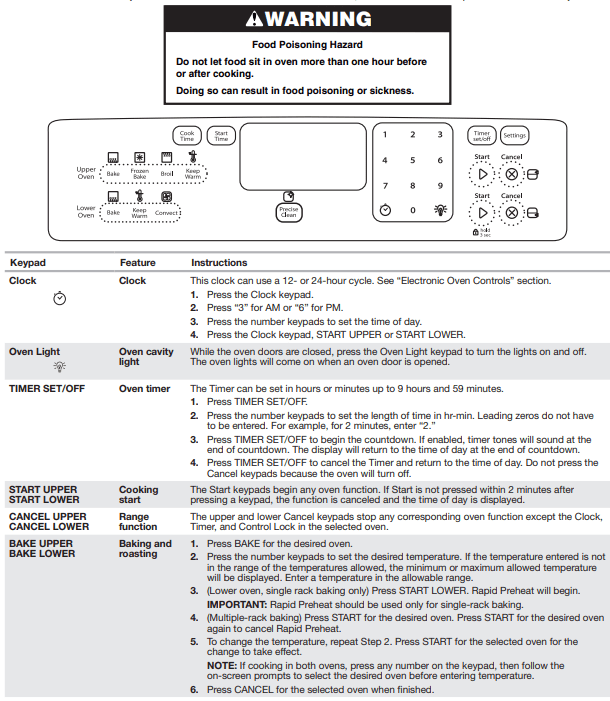
The display will flash when powered up or after a power loss. Press the Cancel keypad to clear. When oven is not in use, the time of day is displayed.
Tones
Tones are audible signals, indicating the following:
One tone
- Valid keypad press
- Oven is preheated (long tone)
- Function has been entered
- Reminder (on some models), repeating every 20 seconds after the end-of-cycle tones
Three tones
Four tones
- End of cycle (with reminder tone every minute)
Use the Settings key to change the tone settings
Settings
Many features of the oven control can be adjusted to meet your personal needs. These changes are made using the Settings keypad.
Use the Settings keypad to scroll through the features that can be changed. Each press of the Settings keypad will advance the display to the next setting. After selecting the feature to be changed, the control will prompt you for the required input. Details of all of the feature changes are explained in the following sections.
Press CANCEL UPPER or CANCEL LOWER to exit Settings.
Fahrenheit and Celsius
The temperature is preset at Fahrenheit, but it can be changed to Celsius.
1. Press SETTINGS until “TEMP UNIT” is displayed.
2. The current setting will be displayed.
3. Press the “1” keypad to adjust the setting.
4. Press CANCEL UPPER or CANCEL LOWER to exit and display the time of day.
Audible Tones Disable
Turns off all tones, including the end-of-cycle tone and keypress tones.
1. Press SETTINGS until “SOUND” is displayed.
2. The current setting will be displayed.
3. Press the “1” keypad to adjust the setting.
4. Press CANCEL UPPER or CANCEL LOWER to exit and display the time of day.
Sound Volume
Sets the pitch of the tone to either high or low.
1. Press SETTINGS until “SOUND VOLUME” is displayed.
2. The current setting will be displayed.
3. Press the “1” keypad to adjust the setting.
4. Press CANCEL UPPER or CANCEL LOWER to exit and display the time of day.
End-of-Cycle Tone
Activates or turns off the tones that sound at the end of a cycle.
1. Press SETTINGS until “END TONE” is displayed.
2. The current setting will be displayed.
3. Press the “1” keypad to adjust the setting.
4. Press CANCEL UPPER or CANCEL LOWER to exit and display the time of day.
Keypress Tones
Activates or turns off the tones when a keypad is pressed.
1. Press SETTINGS until “KEYPRESS TONE” is displayed.
2. The current setting will be displayed.
3. Press the “1” keypad to adjust the setting.
4. Press CANCEL UPPER or CANCEL LOWER to exit and display the time of day
Reminder Tones Disable
Turns off the short repeating tone that sounds every 1 minute after the end-of-cycle tones.
1. Press SETTINGS until “REMINDER TONE” is displayed.
2. The current setting will be displayed.
3. Press the “1” keypad to adjust the setting.
4. Press CANCEL UPPER or CANCEL LOWER to exit and display the time of day.
12/24 Hour Clock
1. Press SETTINGS until “12/24 HOUR” is displayed.
2. The current setting will be displayed.
3. Press the “1” keypad to adjust the setting.
4. Press CANCEL UPPER or CANCEL LOWER to exit and display the time of day.
12-Hour Shut-Off
The oven control is set to automatically shut off the oven 12 hours after the oven initiates a cook or clean function. This will not interfere with any timed or delay cook functions.
1. Press SETTINGS until “12-HR SHUT-OFF” is displayed.
2. The current setting will be displayed.
3. Press the “1” keypad to adjust the setting.
4. Press CANCEL UPPER or CANCEL LOWER to exit and display the time of day.
Languages - Scrolling Display Text
Language options are English, Spanish, and French.
1. Press SETTINGS until “LANGUAGE” is displayed.
2. The current setting will be displayed.
3. Press the number keypad to adjust the setting.
4. Press CANCEL UPPER or CANCEL LOWER to exit and display the time of day
Oven Temperature Control
IMPORTANT: Do not use a thermometer to measure oven temperature. Elements will cycle on and off as needed to provide consistent temperature but may run slightly hot or cool at any point in time due to this cycling. Most thermometers are slow to react to temperature change and will not provide an accurate reading due to this cycling.
The oven provides accurate temperatures; however, it may cook faster or slower than your previous oven, so the temperature can be adjusted to personalize it for your cooking needs. It can be changed in Fahrenheit or Celsius.
To Adjust Oven Temperature:
1. Press SETTINGS until “TEMP CALIB” is displayed.
2. The current setting will be displayed. Press the “1” keypad to toggle between the upper and lower ovens.
3. Press START UPPER or START LOWER to select the choice displayed in Step 2. Wait 10 seconds for the display to change or press START UPPER or START LOWER, and then continue with Step 4.
4. Press the “3” keypad to increase the temperature in 5°F (3°C) increments or press the “6” keypad to decrease the temperature in 5°F (3°C) increments. The range is from -30°F to +30°F (-18°C to +18°C).
5. Press START UPPER or START LOWER.
6. Press CANCEL UPPER or CANCEL LOWER to exit and display the time of day.
Demo Mode
IMPORTANT: This feature is intended for use on the sales floor with a 120V power connection and permits the control features to be demonstrated without heating elements turning on. If this feature is activated, the oven will not work.
1. Press SETTINGS until “DEMO MODE” is displayed.
2. The current setting will be displayed.
3. Press the “1” keypad to adjust the setting.
4. Press CANCEL UPPER or CANCEL LOWER to exit and display the time of day.
Energy Save
The Energy Save mode deactivates the display to reduce energy consumption. The setting will be activated after being idle for several minutes. Any mode may be used with the range in Energy Save by selecting the desired mode.
1. Press SETTINGS until “ENERGY SAVE” is displayed.
2. The current setting will be displayed.
3. Press the “1” keypad to adjust the setting.
4. Press CANCEL UPPER or CANCEL LOWER to exit and display the time of day
Keep Warm
IMPORTANT: Food must be at serving temperature before placing it in the warmed oven. Food may be held up to 1 hour; however, breads and casseroles may become too dry if left in the oven during the Keep Warm function. For best results, cover food. The Keep Warm feature allows hot cooked foods to stay at serving temperature.
To Use:
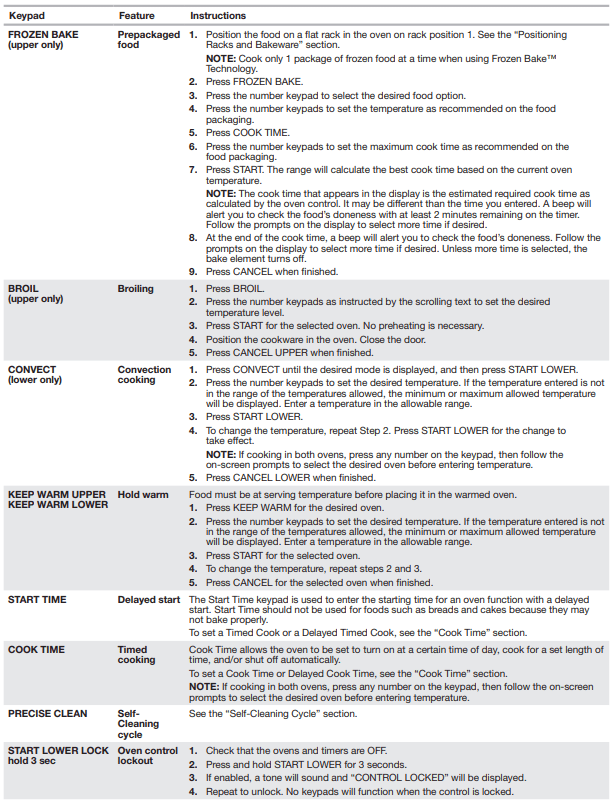
1. Press KEEP WARM for the desired oven.
2. Press the number keypads to set the desired temperature. If the temperature entered is not in the range of the temperatures allowed, the minimum or maximum allowed temperature will be displayed. Enter a temperature in the allowable range.
NOTE: When cooking in a single oven, the temperature may be changed at any time by pressing the number keypads to enter the desired temperature, and then press START for the selected oven. When cooking in both ovens, press any number on the keypad, then follow the on-screen prompts to select the desired oven. Press the number keypads to enter the desired temperature, and then press START for the selected oven.
3. Press START for the selected oven.
4. Place food in the oven.
5. Press CANCEL for the selected oven when finished.
6. Remove food from the oven.
To Cancel Keep Warm:
1. Press CANCEL for the selected oven.
2. Remove food from oven.
Sabbath Mode
The Sabbath mode sets the oven to remain on in a bake setting until turned off.
When the Sabbath mode is set, only the Bake cycle will operate.All other cooking and cleaning cycles are disabled. No tones will sound and the displays will not indicate temperature changes.
When the oven door is opened or closed, the oven light will not turn on or off and the oven heating elements will not turn on or off immediately.
To Enable Sabbath Mode Capability (one time only):
- Press SETTINGS until “SABBATH” is displayed.
- Press the “1” keypad. Sabbath mode can be activated for baking.
- Press CANCEL UPPER or CANCEL LOWER to save the setting and exit to display the time of day.
NOTE: To disable the Sabbath mode, repeat steps 1 through 3 to change the status from “SABBATH ON” to “SABBATH OFF.”
To Activate Sabbath Mode:
- Press BAKE for the desired oven.
- Press the number keypads to set the desired temperature. If the temperature entered is not in the range of the temperatures allowed, the minimum or maximum allowed temperature will be displayed. Enter a temperature in the allowable range.
- Press START for the selected oven. For timed cooking in Sabbath mode, press COOK TIME, and then press the number keypads to set the desired cook time. Press START for the selected oven.
- (Optional) If Sabbath mode is to be used for both ovens, repeat steps 1 through 3 for the second oven.
- Press SETTINGS. Three tones will sound. Then press “7.” "SAb” will appear in the display.
To Adjust Temperature (when Sabbath mode is running in only one oven):
- Press the number keypad as instructed by the scrolling text to select the new temperature. NOTE: The temperature adjustment will not appear on the display and no tones will sound. The scrolling text will be shown on the display as it was before the keypad was pressed.
- Press START for the selected oven.
To Adjust Temperature (when Sabbath mode is running in both ovens):
- Press BAKE for the desired oven.
- Press the number keypad as instructed by the scrolling text to select the new temperature. NOTE: The temperature adjustment will not appear on the display and no tones will sound. The scrolling text will be shown on the display as it was before the keypad was pressed.
- Press START for the selected oven.
To Deactivate Sabbath Mode:
Press SETTINGS, then press “7” to return to regular baking or press CANCEL UPPER or CANCEL LOWER to turn off the range
Aluminum Foil
IMPORTANT: To avoid permanent damage to the oven bottom finish, do not line the oven bottom with any type of foil or liner.
For best cooking results, do not cover entire oven rack with foil because air must be able to move freely
Positioning Racks and Bakeware
IMPORTANT: To avoid permanent damage to the porcelain finish, do not place food or bakeware directly on the oven door or bottom.
Racks
- Position racks before turning on the oven.
- Do not move racks with bakeware on them.
- Make sure racks are level.
- Place food so it will not rise into the broil element. Allow at least 1 /2" (1.3 cm) between pans and the broil element.
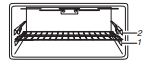
To move a rack, pull it out to the stop position, raise the front edge, and then lift out. Use the following illustration and charts as a guide.
Rack Positions - Upper Oven
Baking and Broiling

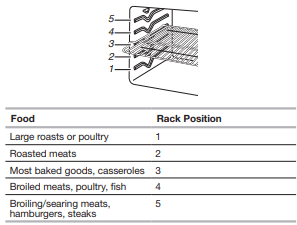
For hamburger patties to have a well-seared exterior and a rare interior, use rack position 7. Side 1 should cook for approximately minutes. Side 2 should cook for approximately 4-5 minutes. Expect a moderate degree of smoke when broiling.
Multiple Rack Cooking
2-rack: Use rack positions 2 and 4 for regular baking.
2-rack (convection only): Use rack positions 2 and 4 for convection baking
Baking Layer Cakes on 2 Racks
For best results when baking cakes on 2 racks, use rack positions 2 and 4 with the Convection Bake function. Place the cakes on the racks as shown.

Baking Cookies on 2 Racks
For best results when baking cookies on 2 racks, use rack positions 2 and 4 with the Bake function.
Bakeware
To cook food evenly, hot air must be able to circulate. Allow 2" (5 cm) of space around bakeware and oven walls. Use the following chart as a guide.
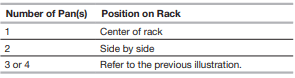
Oven Vent
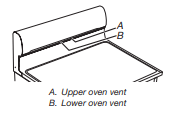
The oven vent releases hot air and moisture from the oven and should not be blocked or covered. Blocking or covering the vent will cause poor air circulation, affecting cooking and cleaning results. Do not set plastics, paper, or other items that could melt or burn near the oven vent.
Baking and Roasting
Preheating
When beginning a Bake cycle, the oven will begin preheating after Start is pressed. The oven will take approximately 12 to 15 minutes to reach 350°F (177°C) with all of the oven racks provided with your oven inside the oven cavity. Higher temperatures will take longer to preheat. The preheat cycle rapidly increases the oven temperature. The actual oven temperature will go above your set temperature to offset the heat lost when your oven door is opened to insert food. This ensures that when you place your food in the oven, the oven will begin at the proper temperature. Insert your food when the preheat tone sounds. Do not open the door during preheat before the tone sounds.
Rapid Preheat
Rapid Preheat can be used to shorten the preheating time. Only one standard flat oven rack should be in the oven during Rapid Preheat. Extra racks should be removed prior to starting Rapid Preheat. The preheating cycle should be completed before placing food in the oven. When the Rapid Preheat cycle is complete, the oven starts a normal Bake cycle.
IMPORTANT: Rapid Preheat should be used only for single-rack baking.
Oven Temperature
While in use, the oven elements will cycle on and off as needed to maintain a consistent temperature, but they may run slightly hot or cool at any point in time due to this cycling. Opening the oven door while in use will release the hot air and cool the oven which could impact the cooking time and performance. It is recommended to use the oven light to monitor cooking progress.
NOTE: On models with convection, the convection fan may run in the non-convection Bake mode to improve oven performance.
AccuBake® Temperature Management System
The AccuBake® Temperature Management System electronically regulates the oven heat levels during preheat and Bake to maintain a precise temperature range for optimal cooking results. The bake and broil elements or burners cycle on and off in intervals. On convection range models, the fan will run while preheating and may be cycled on and off for short intervals during Bake to provide the best results. This feature is automatically activated when the oven is in use. Before baking and roasting, position racks according to the "Positioning Racks and Bakeware” section. When roasting, it is not necessary to wait for the oven preheat cycle to end before putting food in unless it is recommended in the recipe.
Frozen Bake™ Technology
Frozen Bake™ Technology can be used to cook prepackaged frozen food without needing to preheat the oven and without overbrowning the food. There are 4 preprogrammed food options to choose from: Pizza, Lasagna, Nuggets/Fries, and Pie. Frozen Bake™ Technology should only be used for these foods. Cook only 1 package at a time when using Frozen Bake™ Technology. Use the recommended temperature and maximum recommended time from the packaging. A beep will alert you to check the food’s doneness before the cook time is completed and again at the end of the cook time. The display will prompt you to add to the cook time or end the cycle.
Broiling
Close the oven door while broiling. No preheating is necessary. Position food on grid in a broiler pan, and then place it in the center of the oven rack.
NOTE: Odors and smoke are normal the first few times the oven is used or if the oven is heavily soiled.
Changing the temperature when broiling allows more precise control when cooking. The lower the broil setting is, the slower the cooking. Thicker cuts and unevenly shaped pieces of meat, fish, and poultry may cook better at lower broil settings. Refer to the “Positioning Racks and Bakeware” section for more information. On lower settings, the broil element will cycle on and off to maintain the proper temperature.
- For best results, use a broiler pan and grid. It is designed to drain juices and help avoid spatter and smoke.If you would like to purchase a broiler pan, one may be ordered. Please refer to the “Accessories” section for more information..
Lower Oven Convection Cooking
In a convection oven, the fan-circulated hot air continually distributes heat more evenly than the natural movement of air in a standard thermal oven. This movement of hot air helps maintain a consistent temperature throughout the oven, cooking foods more evenly, crisping surfaces while sealing in moisture and yielding crustier breads.
If the oven door is opened during convection cooking, the fan will turn off immediately. It will come back on when the oven door is closed.
NOTE: The oven door must be closed for convection broiling.
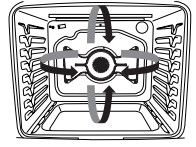
Position the racks according to the “Positioning Racks and Bakeware” section before starting convection cooking. With convection cooking, most foods can be cooked at a lower temperature or for a shorter length of time.
Cook Time
To Set a Timed Cook:
1. Press the keypad for any cooking function except Self-Cleaning or Keep Warm.
2. Press the number keypads to set the desired temperature. If the temperature entered is not in the range of the temperatures allowed, the minim or maximum allowed temperature will be displayed. Enter a temperature in the allowable range.
3. Press COOK TIME. 4. Press the number keypads to enter the length of time to cook.
5. Press START for the desired oven. The display will count down the time. When the time ends, the oven will shut off automatically. The temperature and/or time setting can be changed at any time by repeating steps 2 through 5.
NOTE: If cooking in both ovens, press any number on the keypad, then follow the on-screen prompts to select the desired oven before entering temperature.
6. Press CANCEL for the desired oven to clear the display.
To Set a Delayed Timed Cook:
Before setting, make sure the clock is set to the correct time of day. See the “Clock” keypad feature in the “Feature Guide” section.
1. Press START TIME.
2. Press the number “1” or “2” keypad to select the desired oven.
3. Press the number keypads to enter the number of hours and/ or minutes you want to delay the start time.
4. Press the keypad for any cooking function except Keep Warm and Frozen Bake™.
5. Press the number keypads to set the desired temperature. If the temperature entered is not in the range of the temperatures allowed, the minimum or maximum allowed temperature will be displayed. Enter a temperature in the allowable range.
6. Press START for the desired oven or COOK TIME.
7. Press the number keypads to enter the length of time to cook.
8. Press START for the desired oven.
When the start time is reached, the oven will automatically turn on. The temperature and/or time settings can be changed after the delay countdown by repeating steps 1 through 7. When resetting the time and temperature, it is necessary to press START for the desired oven between steps 4 and 5 to continue making changes. When the set cook time ends, the oven will shut off automatically.
9. Press CANCEL for the desired oven to clear the display.
RANGE CARE
Self-Cleaning Cycle
IMPORTANT: The health of some birds is extremely sensitive to the fumes given off during the Self-Cleaning cycle. Exposure to the fumes may result in death to certain birds. Always move birds to another closed and well-ventilated room.
Keep the kitchen well-ventilated during the Self-Cleaning cycle to help get rid of heat, odors, and smoke.
Do not block the oven vent(s) during the Self-Cleaning cycle. Air must be able to move freely. Depending on your model, see the “Oven Vent” or “Oven Vents” section.
Do not clean, rub, damage, or move the oven door gasket.
Prepare Range:
- Remove the broiler pan, grid, cookware and bakeware, all cooking utensils, oven racks, aluminum foil, and, on some models, the temperature probe from the oven.
- Use a damp cloth to clean inside door edge and the 1&1/2" (38 mm) area around the inside oven cavity frame, being certain not to move or bend the gasket.
- Wipe out any loose soil to reduce smoke and avoid damage.
- At high temperatures, foods react with porcelain. Staining, etching, pitting, or faint white spots can result. This will not affect cooking performance.
- Remove plastic items from the cooktop because they may melt.
NOTE: The cooktop burners will not function during the Self�Cleaning cycle.
IMPORTANT:
- Oven temperature must be below 500°F (260°C) to program a Self-Cleaning cycle.
- Only 1 oven can be cleaned at a time.
- Both oven doors will lock when either oven is running the Self-Cleaning cycle.
How the Cycle Works
IMPORTANT: The heating and cooling of porcelain on steel in the oven may result in discoloring, loss of gloss, hairline cracks, and popping sounds.
The Precise Clean™ Self-Cleaning cycle is a “one-touch” step that uses very high temperatures and dissolves soil to a powdery ash. The Precise Clean™ feature will automatically determine the length of cleaning time needed based on the number of times the oven has been used since the last Self-Cleaning cycle. The maximum clean time is 4 hours and the minimum clean time is 2 hours.
Once the oven has completely cooled, remove ash with a damp cloth. To avoid breaking the glass, do not apply a cool damp cloth to the inner door glass before it has completely cooled.
The oven light is disabled during the Self-Cleaning cycle.
To stop the Self-Cleaning cycle at anytime, press CANCEL UPPER or CANCEL LOWER. If the temperature is too high, the oven doors will remain locked.
When “LOCK” shows in the display, the doors of the oven cannot be opened. To avoid damage to the doors, do not force the doors open when “LOCK” is displayed.
Before self-cleaning, make sure the doors are completely closed or the doors will not lock and the Self-Cleaning cycle will not begin.
NOTE: Only one oven can use the Self-Cleaning cycle at a time and 12 hours must pass before the next Self-Cleaning cycle can begin.
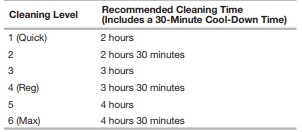
The oven is preset for a 2-hour Self-Cleaning cycle; however, the time can be changed. Suggested clean times are 2 hours for light soil and between 3 hours and 4 hours for average to heavy soil.Use the following chart as a guide to determine the desired cleaning level
To Self-Clean:
1. Close the oven doors, and then press PRECISE CLEAN.
2. Press the number “1” or “2” keypad to select the desired oven to clean.
3. Press the number keypads to enter the total cleaning time.
4. Press START for the selected oven.
The oven doors will automatically lock.
When the Self-Cleaning cycle is complete and the oven cools, the oven doors will unlock.
5. When the oven is completely cooled, remove ash with a damp cloth.
To Delay Start Self-Clean:
1. Close the oven doors, and then press START TIME.
2. Press the number “1” or “2” keypad to select the desired oven.
3. Press the number keypads to enter the desired amount of time by which you want to delay the start.
4. Press PRECISE CLEAN.
5. Press the number keypads to enter the total cleaning time.
6. Press START for the selected oven.
The oven doors will automatically lock after the Start Time countdown.
When the Self-Cleaning cycle is complete and the oven cools, the oven doors will unlock.
7. When the oven is completely cooled, remove ash with a damp cloth.
General Cleaning
Soap, water, and a soft cloth or sponge are suggested first unless otherwise noted.
EXTERIOR PORCELAIN ENAMEL SURFACES (on some models)
Food spills containing acids, such as vinegar and tomato, should be cleaned as soon as the entire range is cool. These spills may affect the finish.
Cleaning Method:
- Glass cleaner, mild liquid cleaner, or nonabrasive scrubbing pad: Gently clean around the model/serial/rating plate because scrubbing may remove numbers.
- affresh® Kitchen and Appliance Cleaner Part Number W10355010 (not included): See the “Accessories” section for more information.
STAINLESS STEEL (on some models)
NOTE: To avoid damage to stainless steel surfaces, do not use soap-filled scouring pads, abrasive cleaners, Cooktop Cleaner, steel-wool pads, gritty washcloths, or abrasive paper towels.
Damage may occur to stainless steel surfaces, even with one-time or limited use.
Cleaning Method:
Rub in direction of grain to avoid damaging.
- affresh® Stainless Steel Cleaner Part Number W10355016 (not included): See the “Accessories” section for more information.
METALLIC PAINT (on some models)
Do not use abrasive cleaners, cleaners with bleach, rust removers, ammonia, or sodium hydroxide (lye) because paint surface may stain.
PORCELAIN-COATED GRATES AND CAPS
Food spills containing acids, such as vinegar and tomato, should be cleaned as soon as the cooktop, grates, and caps are cool. These spills may affect the finish.
To avoid chipping, do not bang grates and caps against each other or hard surfaces such as cast iron cookware.
Do not reassemble caps on burners while wet.
Cleaning Method:
- Nonabrasive plastic scrubbing pad and mildly abrasive cleanser: Clean as soon as cooktop, grates, and caps are cool.
- Dishwasher (grates only, not caps):Use the most aggressive cycle. Cooked-on soils should be soaked or scrubbed before going into a dishwasher.
- Gas Grate and Drip Pan Cleaner Part Number 31617A (not included): See the “Accessories” section for more information.
SURFACE BURNERS
- See the “Sealed Surface Burner” section
COOKTOP CONTROLS
To avoid damage to the cooktop controls, do not use steel wool, abrasive cleansers, or oven cleaner.
To avoid damage, do not soak knobs. When replacing knobs, make sure knobs are in the Off position.
On some models, do not remove seals under knobs.
Cleaning Method:
- Soap and water: Pull knobs straight away from control panel to remove.
CONTROL PANEL AND OVEN DOOR EXTERIOR
To avoid damage to the control panel, do not use abrasive cleaners, steel-wool pads, gritty washcloths, or abrasive paper towels.
Cleaning Method:
- Glass cleaner and soft cloth or sponge:
Apply glass cleaner to soft cloth or sponge, not directly on panel.
- affresh® Kitchen and Appliance Cleaner Part Number W10355010 (not included):See the “Accessories” section for more information.
OVEN RACKS
Cleaning Method:
- Steel-wool pad
- For racks that have discolored and are harder to slide, a light coating of vegetable oil applied to the rack guides will help them slide.
OVEN CAVITY
Use AquaLift® Technology regularly to clean oven spills.
Do not use oven cleaners.
Food spills should be cleaned when oven cools. At high temperatures, foods react with porcelain. Staining, etching, pitting, or faint white spots can result.
Cleaning Method:
- Clean cycle:See the “Clean Cycle” section.
Oven Light
The oven light is a standard 40-watt appliance bulb. Before replacing, make sure the oven and cooktop are cool and the control knobs are in the Off position.
To Replace:
- Unplug range or disconnect power.
- Turn the glass bulb cover in the back of the oven counterclockwise to remove.
- Turn bulb counterclockwise to remove from socket.
- Replace bulb, then bulb cover by turning clockwise.
- Plug in range or reconnect power.
TROUBLESHOOTING
Nothing will operate
- Power supply cord is unplugged: Plug into a grounded 3 prong outlet.
- Household fuse is blown or a circuit breaker is tripped: Replace the fuse or reset the circuit breaker. If the problem continues, call an electrician.
- Main or regulator gas shut-off valve is in the Off position: See the Installation Instructions.
- The range is improperly connected to the gas supply: Contact a trained repair specialist, or see the Installation Instructions.
Surface burners will not operate
- The control knob is not set correctly: Push in knob before turning to a setting.
- Air in the gas lines: If this is the first time the surface burners have been used, turn on any one of the surface burner knobs to release air from the gas lines.
- Clogged burner ports: See the “Sealed Surface Burners” section.
Surface burner flames are uneven, yellow, and/or noisy
- Clogged burner ports: See the “Sealed Surface Burners” section.
- Burner caps positioned improperly: See the “Sealed Surface Burners” section.
- Range converted improperly: If propane gas is being used, contact a service technician or see the “Warranty” section for contact information.
Excessive heat around cookware on cooktop
- Cookware is not the proper size: Use cookware about the same size as the surface cooking area, element, or surface burner. Cookware should not extend more than 1/2" (13 mm) outside the cooking area.
Cooktop cooking results not what expected
- Improper cookware: Ideal cookware should have a flat bottom, straight sides, and a well-fitting lid, and the material should be of a medium-to-heavy thickness.
- Control knob set to incorrect heat level: See the “Cooktop Use” section.
- Range is not level: Level the range. See the Installation Instructions.
Oven burner flames are yellow or noisy
- Range converted improperly: If propane gas is being used, contact a service technician or see the “Warranty” section for contact information.
Oven will not operate
- Delay Start is set: See the “Electronic Oven Controls” section.
- Control lock is on: Press and hold CONTROL LOCK for 3 seconds to unlock.
- Control is in Demo mode: Demo mode will deactivate all oven elements. See “Demo Mode” in the “Electronic Oven Controls” section.
- Electronic oven control set incorrectly: See the “Electronic Oven Controls” section.
Oven temperature too high or too low
- Oven temperature needs adjustment: See “Oven Temperature Control” in the “Electronic Oven Controls” section.
Convection fan not turning on
- The convection cycle is in the first 5 minutes of operation: This is normal. The convection fan will start running approximately 5 minutes into the cycle.
- Oven door is open: If the oven door is opened during convection cooking, the fan will turn off immediately. It will come back on when the oven door is closed.
Display shows messages
- Power failure (display shows flashing time): Clear the display. On some models, reset the clock, if needed. See “Clock” keypad feature in the “Feature Guide” section.
- Error code (display shows letter followed by number): Depending on your model, press the Cancel keypad to clear the display. See “Control Display” in the “Electronic Oven Controls” section. If it reappears, call for service
- .Start needs to be pressed so a cycle can begin (display shows “PUSH” or “PSH”): See the “Start” keypad feature in the “Feature Guide” section.
- Range is in Sabbath mode (display shows “SAb”): Press CANCEL UPPER or CANCEL LOWER to exit Sabbath mode.
Self-Cleaning cycle did not work on all spills
- Several cooking cycles between Self-Cleaning cycles or spills on oven walls and doors: Run additional Self-Cleaning cycles. affresh® Kitchen and Appliance Cleaner or affresh® Cooktop Cleaner can be used for stubborn soils. See the “Accessories” and “Self-Cleaning Cycle” sections for more information.
Oven cooking results not what expected
- Range is not level: Level the range. See the Installation Instructions.
- The set temperature was incorrect: Double-check the recipe in a reliable cookbook.
- Oven temperature needs adjustment: See “Oven Temperature Control” in the “Electronic Oven Controls” section.
- Oven was not preheated: See the “Baking and Roasting” section.
- Racks were positioned improperly: See the “Positioning Racks and Bakeware” section.
- Not enough air circulation around bakeware: See the “Positioning Racks and Bakeware” section.
- Darker browning of food caused by dull or dark bakeware: Lower oven temperature 25°F (15°C) or move rack to a higher position in the oven.
- Lighter browning of food caused by shiny or light colored bakeware: Move rack to a lower position in the oven.
- Batter distributed unevenly in pan: Check that batter is level in the pan.
- Incorrect length of cooking time was used: Adjust cooking time.
- Oven door was not closed: Be sure that the bakeware does not keep the door from closing.
- Oven door was opened during cooking: Oven peeking releases oven heat and can result in longer cooking times.
- Rack is too close to bake burner, making baked items too brown on bottom: Move rack to higher position in the oven.
- Pie crusts browning too quickly: Use aluminum foil to cover the edge of the crust and/or reduce baking temperature.
Surface burner making popping noises
- Wet burner: Allow it to dry.
Gas range noises during bake and broil operations
The following are some normal sounds with the explanations.
- These sounds are normal operational noises that can be heard each time the bake or broil burners ignite during the cycle.
Pop
- Gas valve is opening or cycling on and will make a single pop when it snaps open from the solenoid. It sounds similar to a suction cup being pulled off of a piece of glass: This is normal.
Click
- The igniters will click several times until the flame is detected. These are short clicking sounds like tapping a nail onto a piece of glass: This is normal.
- Convection fan relay is cycling on and off (on some models): This is normal.
Woosh or poof
- Bake or broil burner is igniting: This is normal.
Oven burner flames are yellow or noisy
- Range converted improperly: If propane gas is being used, contact a service technician or see the “Warranty” section for contact information