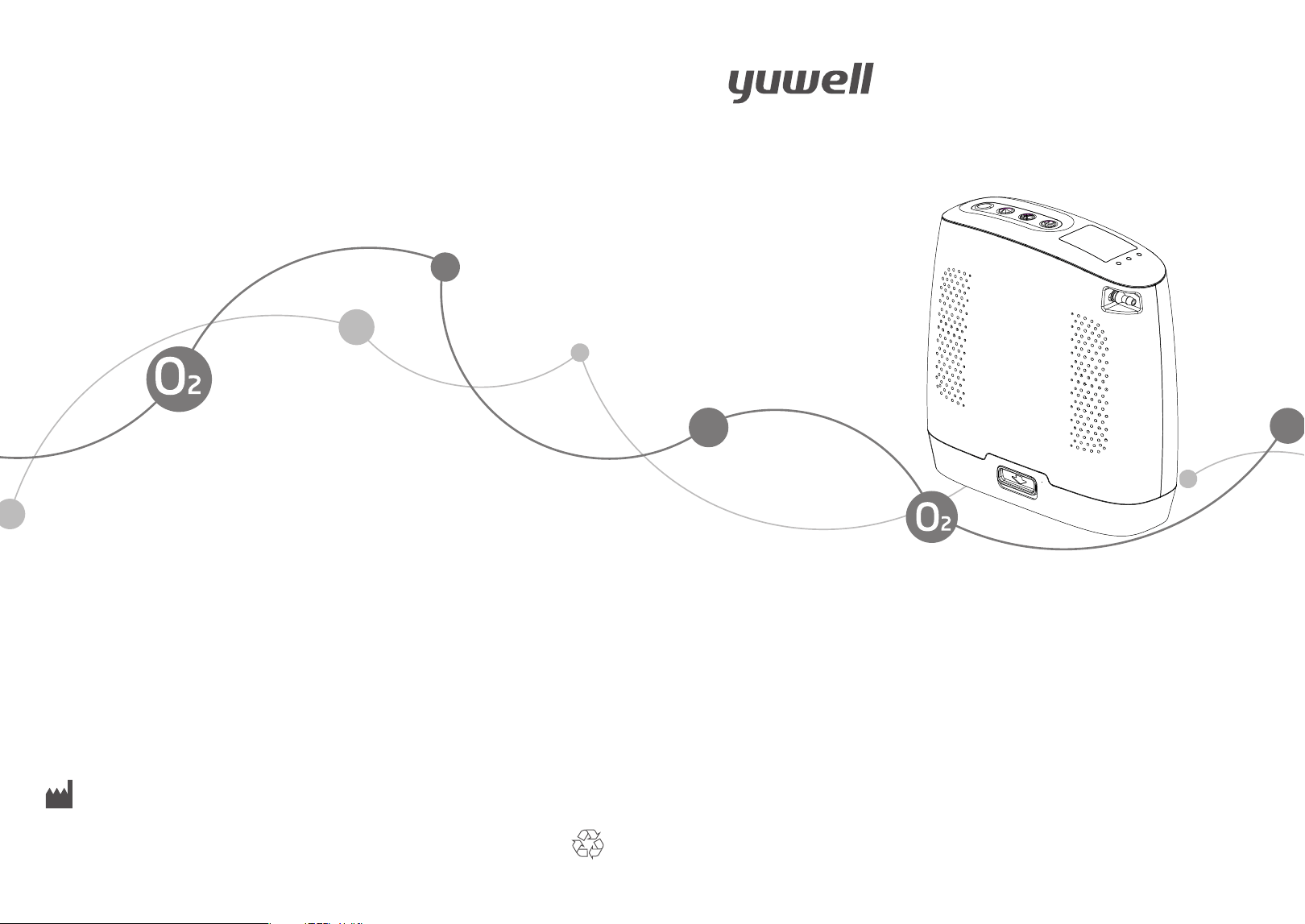
User Manual
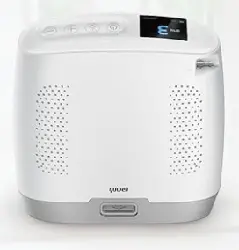
Portable Oxygen Concentrator
Model :Spirit-3
DO NOT OPERATE THIS UNIT WITHOUT FIRST
READING AND UNDERSTANDING THIS MANUAL
JIANGSU YUYUE MEDICAL EQUIPMENT & SUPPLY CO., LTD.
NO.1Baisheng Road Development Zone, Danyang,
Jiangsu 212300 CHINA
www.yuwell.com
132603-0A
01
SAFETY NOTES-- ------------------------- --------01-09---- -
FEATURES---- --------------------------------------10-14----
HANDLING --15 15------------------------------------------ -
OPERATING& INSTALLATION------- ---- ------16-25-- -----
MAINTENANCE--------- ---------------------- -------26-28- --
TROUBLESHOOTING-----------------------------------29-29
OTHER ATTENTION ITEMS----------------------------30-31
TABLE OF CONTENTS
WARNING: INDICATION FOR USE: This device designed to
extract oxygen from atmospheric air. It will typically be an
electrically-powered molecular sieve (artificial zeolite) used
to separate nitrogen from room air. The oxygen
concentration is variable, depending on the flow setting
being utilized.
INTENDED USE: This oxygen concentrator is intended for
individual use as an oxygen supplement device in the
professional healthcare facility and home healthcare
environment. It provides high concentration of oxygen to
patients with respiratory disorders e.g. COPD (Chronic
Obstructive Pulmonary Disease), LTOT (Long Term Oxygen
Therapy) etc.
Users who require continuous oxygenation must plan for
alternate reserve sources of power and oxygen in the event
of a failure or loss of power and oxygen. This device is to be
used as an oxygen supplement and is NOT considered life-
supporting or life-sustaining.
WARNING:
CONTRAINDICATION: Oxygen poisoning and oxygen allergy
user/patient DO NOT using this oxygen concentrator.
SIDE EFFECT: No side effect.
SAFETY NOTES
Symbol
Description
Describes a hazard or unsafe practice that if
not avoided can result in severe bodily
injury, death or property damage.
Describes a hazard or unsafe practice that if
not avoided can result in minor bodily injury
or property damage.
CAUTION
WARNING
0302
SAFETY NOTES
Symbol
Description
The symbol means mandatory (something
that must be observed). The specific
mandatory content shall be indicated by
words or pictures in or near by the symbol.
The figure on the left shows "general
mandatory"
The symbol means forbidden (something
that is not allowed). The specific prohibited
contents shall be indicated by words or
pictures in or near the symbols. The figure
on the left shows "general prohibition"
To reduce the risk of electrical shock, DO NOT remove the
cabinet. Only the qualified person could provide the services.
Before operating the device, read and understand this
manual.
The user should ensure the compatibility of the device and
all of the parts and accessories used to connect to the
patient before use.
The user should ensure that the oxygen delivery settings
were determined and recorded for the patient individually
together with the configuration of the equipment to be
used, including accessories.
The user should periodically reassess the settings of the
therapy for effectiveness.
The patient is an intended operator.
Ⅰ. IMPORTANT MESSAGE
SAFETY NOTES
Ⅱ. BEFORE INSTALLATION
Please use eligible, safe power set and power strip.
Non-professional people DO NOT open the oxygen
concentrator's cabinet.
Ⅲ. LOCATING
Place the concentrator on a solid, flat surface that the
operator can hear and see the alarms.
It is not allowed to place the oxygen concentrator in the air
flow blocking environment.
Be certain to place the device so all sides are at least 10 cm
(4 inches) away from walls, draperies, furniture, or other
obstruction. MUST place the oxygen concentrator in a well-
ventilated area.
Always place the device in the expected position that the
operator can hear the audio alarming.
Oxygen concentrator MUST locate so as to avoid pollutants
or fumes.Oxygen concentrator must avoid heat source, fire
source, wetness, exorbitant or over-low extra environment
condition.
Sundries and vessel do not be placed on top of the
concentrator.
It is forbidden to place any sundries at the bottom of the
oxygen concentrator, and it is forbidden to place the device
on soft surfaces (such as beds, sofas....etc.) that may cause
inclinations or sinks. Prevent the air inlet and exhaust ports
from blocking, which may cause shutdown or decrease of
oxygen concentration.

0504
SAFETY NOTES SAFETY NOTES
Ⅳ. FIRE WARNING OR EXPLOSION
WARNING:
There is a risk of fire associated with oxygen equipment
and therapy. Do not use near sparks or open flame.
Smoking during oxygen therapy is dangerous and is
likely to result in serious injury or death of the patient
and others from fire.
Use only water based lotions or salves that are oxygen
compatible during setup or use during oxygen therapy.
Never use petroleum or oil-based lotions or salves to
avoid the risk of fire and burns.
Do not lubricate replaceable fittings, connections, tubing,
or other accessories of the device to avoid the risk of
fire and burns.
Use only spare parts recommended by the manufacturer
to ensure proper function and to avoid the risk of fire
and burns.
Oxygen makes it easier for a fire to start and spread. Do
not leave the nasal cannula on bed coverings or chair
cushions, if the device is turned on, but not in use; the
oxygen will make the materials flammable. Turn the
device off when not in use.
Smoking during oxygen therapy is dangerous and is
likely to result in facial burns or death. Do not allow
smoking or open flames within the same room of the
device or any oxygen carrying accessories. If you smoke,
you must always turn the device off, remove the
cannula and leave the room where either the cannula or
the device is located. If unable to leave the room, you
must wait 10 minutes after the flow of oxygen has been
stopped.
WARNING:
WARNING:
WARNING:
WARNING:
WARNING:
WARNING:
Oxygen concentrator should be kept away from flammable
and explosive places.
Oxygen is a combustion supporting gas. Do not smoke when
using, and keep away from matches, burned cigarettes and
other combustible sources. Textiles and other normally non
combustible materials are easily ignited and cause severe
combustion in oxygen rich air. The neglect of this warning
may lead to serious fire, property damage and personal injury
or death.
The use of oxygen therapy requires special care to reduce
the risk of fire. Some materials will burn in the air, while
others will not burn in the air, but will easily ignite and burn
rapidly in oxygen rich environment. From the safety point of
view, it is necessary to keep inflammables away from oxygen
concentrator.
Oil, grease or grease like substances contact with oxygen
under a certain pressure will produce spontaneous
combustion and violent combustion. These substances must
be kept away from the oxygen concentrator, tubing,
connectors, and all other oxygen devices. Do not use any
lubricants other than those recommended by the
manufacturer.
Ⅴ. MAINTENANCE
Only authorized or factory trained personnel should perform
preventive maintenance or performance adjustments on the
oxygen concentrator.
The manufacturer recommends that the oxygen concentrator
should be operated for no less than 30 minutes at a time. Do
not turn on and off the oxygen concentrator frequently, and
turn it on again after 3-5 minutes of shutdown, so as not to
affect the service life of the compressor.

07
06
SAFETY NOTES SAFETY NOTES
Ⅵ. RADIO FREQUENCY INTERFERENCE
This device is suitable for hospital, family and other buildings
directly connected with civil low voltage network power
supply.
The radio frequency energy used by this machine only acts
on the internal operation of the machine. Therefore, its radio
frequency emission is very low and it is not to affect other
electrical equipment nearby.
As the number of radio frequency transmitting devices or
other electrical noise sources increases sharply in medical
places, serious interference caused by too close distance or
too strong power of the transmitter may cause the machine
to stop working.
In case of such a situation, the use site should be checked to
find out the interference source, and the following measures
should be taken to eliminate the interference: (1) close the
nearby equipment and then turn it on; (2) change the
direction or position of the interference equipment; (3)
increase the distance between the interference equipment
and the device.
Ⅶ. TO REDUCE THE RISK OF BURNS, ELECTROCUTION,
FIRE OR INJURY TO PERSONS
Avoid using while bathing. If continuous usage is required by
the physician's prescription, the oxygen concentrator must be
located in another room at least 2.5m from the bath.
Do not place or store the oxygen concentrator in places
where water or other liquids are easy to drip.
If the oxygen concentrator falls into the water, do not touch
it. Cut off the power supply immediately and contact a
qualified dealer or manufacturer.
After the oxygen concentrator is connected to the power
supply, do not leave the device unattended.
The operation method of oxygen concentrator is detailed in
this manual. If the user feels that there is insufficient oxygen,
please contact the supplier or physician immediately and
adjust the flow according to the physician's prescription.
When using, if the device is close to children or people with
inconvenient behavior, please supervise it.
Do not use parts, accessories or adapters that are not
approved by the manufacturer. The use of accessories not
specified by the oxygen concentrator will reduce the
performance of the machine.
Do not connect this device in parallel or in series with other
oxygen concentrator or oxygen treatment equipment.
There are certain dangers in oxygen treatment in certain
environments. Consult your doctor before recommending this
product.
Avoid any sparks in the vicinity of medical oxygen equipment,
including sparks due to friction and static electricity.
If the power cord or plug of the oxygen concentrator is
damaged, if the device could not work properly, if the
machine is dropped or damaged, please contact qualified
maintenance personnel for inspection and repair.
Keep the power cord away from heated or heated surfaces.
Do not move oxygen concentrator when inserting power
supply.
Do not drop or insert any substance into the opening of the
device.
The shelf life of the device is 5 years after manufacturing
(includes all components, excepts single use consumable

materials). And the Service Life is equal to the shelf life.
In case of any accident during the use of the device, call the
emergency hotline immediately and seek the help of
professional medical staff.
It can take up to 30 minutes to stabilize to deliver the set
flowrate and concentration of oxygen to user after turn on
the oxygen concentrator. Oxygen flowrate should be set
according to the physician prescription.
Patients with severe pulmonary disease should consult a
professional doctor about the amount of oxygen inhalation.
The power cord and oxygen tubing may cause tripping or
suffocation. When placing the power cord and oxygen tubing,
it is necessary to avoid being trampled by personnel or
squeezed or pressed by things.
DO NOT modify the oxygen concentrator in any way.
Modifications could result in hazards to the user.
For the effectiveness of treatment, the oxygen output
setting of the oxygen concentrator needs to be regularly
evaluated by physician.
This device is not suitable for patients with pneumotomy.
This device does not contain latex accessories.
This device and accessories do not contain phthalates.
To reduce the risk of infecting another user or operator of
reuse the oxygen concentrator, the cabinet should be
cleaned by 75% alcohol before reuse. And all external
tubing, cannula or other accessory should be replaced.
When not in use, do not leave the oxygen concentrator in
the vehicle to avoid danger caused by too high or too low
temperature.
08 09
SAFETY NOTES SAFETY NOTES
WARNING:
To ensure receiving the therapeutic amount of oxygen
delivery according to your medical condition, Yuwell
Spirit-3 Portable Oxygen Concentrator must
--be used only after one or more settings have been
individually determined or prescribed for you at your
specific activity levels.
--be used with the specific combination of parts and
accessories that are in line with the specification of the
device manufacturer and that were used while your
settings were determined.
The settings of Yuwell Spirit-3 Portable Oxygen
Concentrator might not correspond with continuous flow
oxygen.
Wind or strong draughts can adversely affect accurate
delivery of oxygen therapy.
--using this device beside an open window or in front of
a fan can affect the accuracy of delivery of oxygen.
--using this device in the back seat of an open
convertible car can affect the accuracy of delivery of
oxygen.
If you feel discomfort or are experiencing a medical
emergency, seek medical assistance immediately to
avoid harm.
Geriatric, paediatric or any other patient unable to
communicate discomfort can require additional
monitoring to avoid harm.
Use of this device at an altitude above 2000m or
outside temperature of 5℃~40℃ or relative humidity
above 90% is expected to adversely affect the flowrate
and the percentage of oxygen and consequently the
quality of the therapy.
Open flames during oxygen therapy are dangerous and
is likely to result in fire or death. Do not allow open
flames within 2 m of the oxygen concentrator or any
oxygen carrying accessories.
Against servicing and maintenance while the oxygen
concentrator is in use.
WARNING:
WARNING:
WARNING:
WARNING:
WARNING:
WARNING:
WARNING:

10 11
FEATURES FEATURES
Ⅰ. SUMMARY
The oxygen concentrator is intended for individual use in the
professional healthcare facility and home healthcare
environment. It is an electronically operated device that
separates oxygen from room air. It provides high
concentration of oxygen directly to you through a nasal
cannula. Clinical studies have documented that oxygen
concentrators are therapeutically equivalent to other types of
oxygen delivery systems.
This user's manual will tell you about your concentrator and
will serve as a reference as you use your concentrator.
Ⅱ. SCOPE OF APPLICATION
Produce oxygen for anoxia patient usage.
CONTRAINDICATIONS: Oxygen poisoning and oxygen allergy
user/patient DO NOT using this oxygen concentrator.
Ⅲ. CHARACTERS
*The product structure is mainly composed of oxygen
concentrator, rechargeable lithium-ion battery, power supply
(optional), DC power cord (optional), and nasal oxygen tube
(optional).
*All plastic shell, safe and reliable.
*With time-consuming function: display the total working
time through the display screen.
*Failure alarm function (including pressure failure alarm,
compressor failure alarm, over heat alarm) and low oxygen
concentration alarm.
Ⅳ. WORKING PRINCIPLE
This device uses AC power supply / DC power supply /
lithium-ion battery as power source, air as raw material,
adopts high-quality molecular sieve, and through pressure
swing adsorption separation (PSA) method at room
temperature, to produce high-purity oxygen meeting the
medical oxygen standard.
Ⅴ. SPECIFICATIONS
1. Flowrate : Setting 1 - Setting 4.
2. Oxygen Concentration at Nominal Output(Measured after
warm up 30minutes) :≥90%
3. Maximum limited pressure: 150kPa
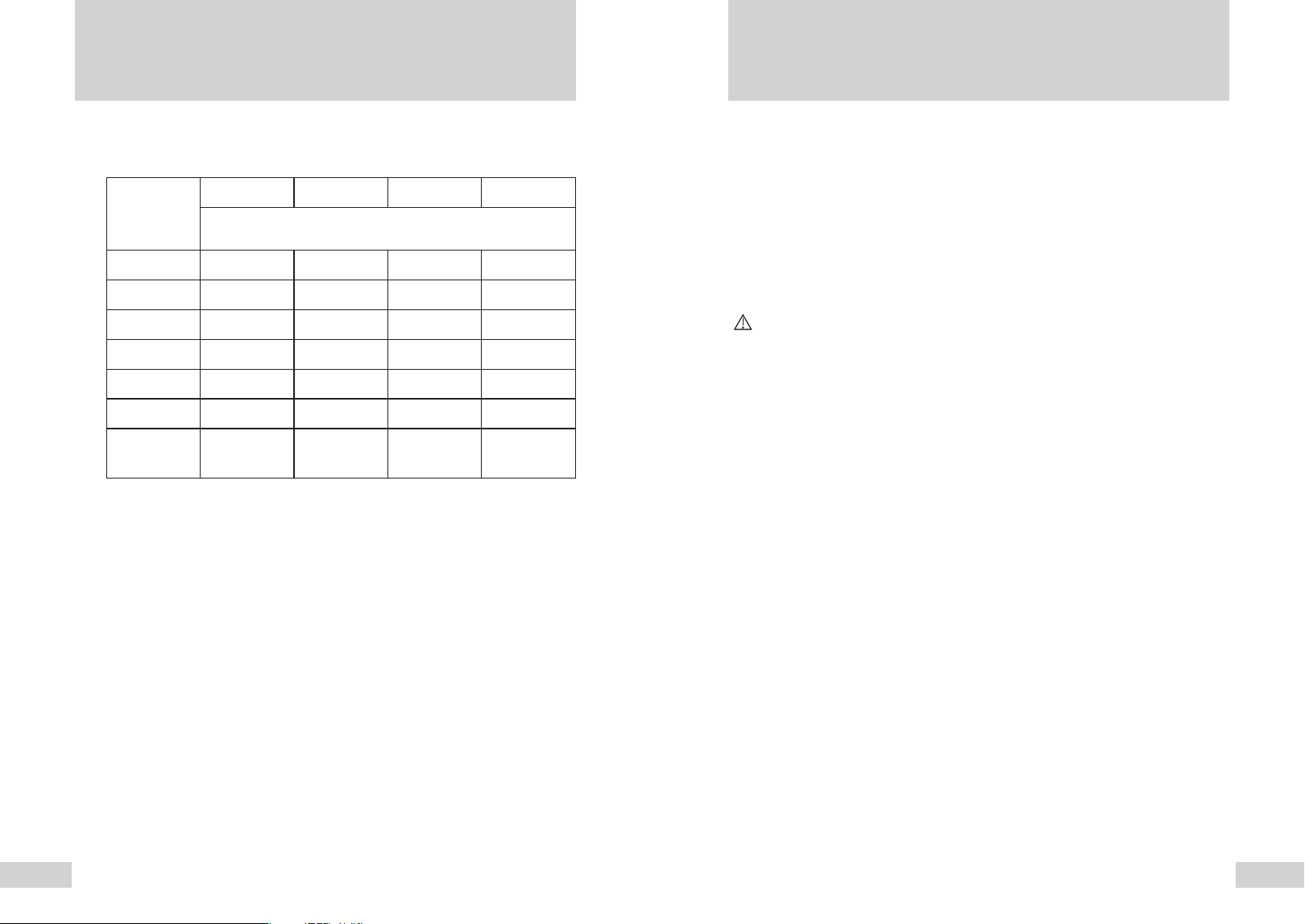
4. Chart of oxygen concentration versus rated flow rate
Oxygen Concentration(%)
Setting
96%
90%
10
*at STPD (standard temperature and pressure dry) condition.
**STPD is 101.3 kPa at an operating temperature of 20 °C,
dry.
2 3 4
12 13
FEATURES FEATURES
18.8
750
21.4
25.0
30.0
37.5
50.0
Pulse Volume (mL)
15.8
630
18.0
21.0
25.2
31.5
42.0
10.5
420
12.0
14.0
16.8
21.0
28.0
Setting 1
5.3
210
6.0
7.0
8.4
10.5
14.0
Breath Rate,
Breath/Minute
(BPM)
40
35
30
25
20
15
Total Volume
per Minute
(mL/min)
5. The rated range of delivered oxygen setting: Setting 1 to
Setting 4.
Setting 2 Setting 3 Setting 4
+/-15% at STPD*
+/-25% over the rated environmental range
*STPD is 101.3 kPa at an operating temperature of 20 °C,
dry
6. Rated breath rate : 15BPM~40BPM
7. Inspiratory Trigger Sensitivity : ≥-0.5cmH O
2
8. Sound Pressure Level & Sound Power Level : ≤ 55dB(A)
which tested @ Setting 4
9. Audio Alarm: : ≥53dB(A) which tested @ Setting 4
10. Input Power : 120W while charging
11. Power Source:
AC Power Supply: Input AC 100V-240V, 50Hz/60Hz
Battery: DC 14.4V
DC Power Supply: DC 12V-24V
12. Battery Charge Time: Maximum recharge time is 5 hours
from fully discharged to fully charged, depending on the
power source and usage.
13. Net weight :1.7kg (without battery); 2.2kg(with battery)
14. Dimensions : 22×8×22 (cm)
15. Altitude: Up to 5000 meters above sea level without
degradation of concentration levels. Beyond 5000 meters
below 90% efficiency
WARNING:
Use of this device at an altitude above 1828m or outside
a temperature of 5℃ ~ 40℃ or a relative humidity
above 15%~ 90% is expected to adversely affect the
flowrate and the concentration of oxygen and
consequently the quality of the therapy.
16. Safety System
* System Over Hot: Alarming and Shut Down
* Pressure Failure: Alarming and Shut Down;
* Compressor Failure: Alarming and Shut Down;
* Battery Over Hot: Alarming and Shut Down
* Low Oxygen Concentration: Alarming;
* No Breath Detected: Alarming;
* No Flow: Alarming;
* Low Battery: Alarming.
17. Minimum Operating Time: 30minutes
18. Electric classification: class II equipment, type BF applied
part,IP20
19. Classification : over voltage category: II pollution degree: 2
altitude : ≤5000m
20. Work system: work continuously.
21. Oxygen Output Temperature:≤46℃

14 15
FEATURES
22. Normal Operating Condition (with Oxygen Concentration
Status Indicator):
Temperature range: 5℃~40℃
Relative humidity: 15%~90%
Atmosphere pressure: 540hPa~1060hPa
CAUTION:
When the ambient temperature, relative temperature
and atmospheric pressure exceed the above normal
working range, the performance of the oxygen
concentrator may be reduced.
When the storage and transportation temperature is
lower than 5 ℃ or higher than 40 ℃ , the equipment
should be placed in the normal working temperature
environment for more than four hours before use.
CAUTION:
23. Storage and Transportation Condition:
Temperature range: -20℃~+55℃;
Relative humidity: 10%~93% Non-condensing;
Atmosphere pressure:540hPa~1060hPa.
CAUTION:
The device should be stored with no strong sunlight, no
corrosive gas and well ventilated indoor area. The
device must be transported and used in the vertical
position only.
When storage/transportation condition is lower than the
minimum temperature or higher than the maximum
temperature, please put the device in normal operating
condition more than 4 hours before operating.
CAUTION:
HANDLING
1. Check for any obvious damage to the carton or its
contents. If damage is evident, please notify the carrier or
local dealer.
2. Remove all loose packing from the carton.
3. Carefully remove all the components from the carton.
Ⅰ. UNPACKING
CAUTION:
Unless use the oxygen concentrator, retain containers
and packing materials for storage until use of the
concentrator is required
Ⅱ. INSPECTION
1.Examine exterior of the oxygen concentrator for nicks,
dents, scratches or other damages.
2.Inspect all components.
Ⅲ. STORAGE
Store the repackaged oxygen concentrator in a dry area.
DO NOT place other objects on top of the repackaged
concentrator.
16 17
OPERATING & INSTALLATION OPERATING & INSTALLATION
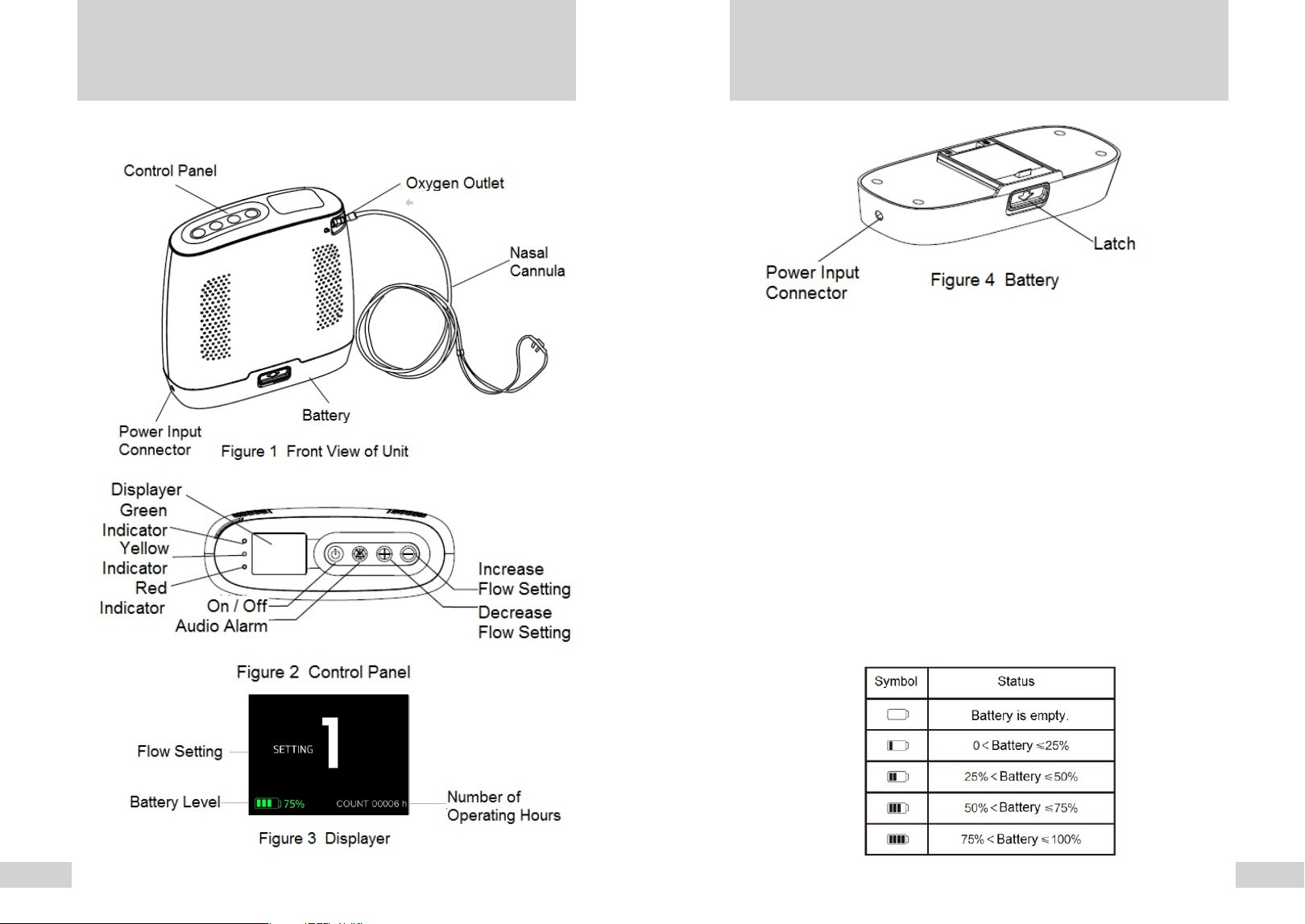
Ⅰ. FEATURE VIEW
Ⅱ. PREPARING
1. Place the oxygen concentrator in a well ventilated place
and away from heat sources.
2. Install the battery.
3. Connect the AC power output plug into the battery power
input connector. Connect the AC power plug to the power
source.
DO NOT use extension power strip.
Ⅲ. BATTERY OPERATION
Make sure the battery is installed in the correct position and
charged. The oxygen concentrator will turn on and start
working. The estimated percentage of remaining battery
level (%) is shown on the display.
18 19
OPERATING & INSTALLATION OPERATING & INSTALLATION
During operating, if the battery level is lower than 10%, the
device will send out a yellow indicator and audio alarm. When
the battery is low, perform one of the following:
a. Use the AC power supply or DC Power cable as power
source.
b. Turn off the oxygen concentrator and replace a fully
charged battery.
c. If the battery is empty, charge the battery or remove the
battery.
CAUTION:
It is the responsibility of the patient to periodically check
the battery and replace as necessary. Yuwell assumes no
liability for persons choosing not to adhere to
manufacturers recommendations.
Battery Charging
To ensure that your battery is properly charged, check that
the correct AC power supply or DC power cable is in use and
that the plug is properly plugged into the power outlet.
Observe the display indicating the state of charge.
Note: The battery should be fully charged before use for the
first time.
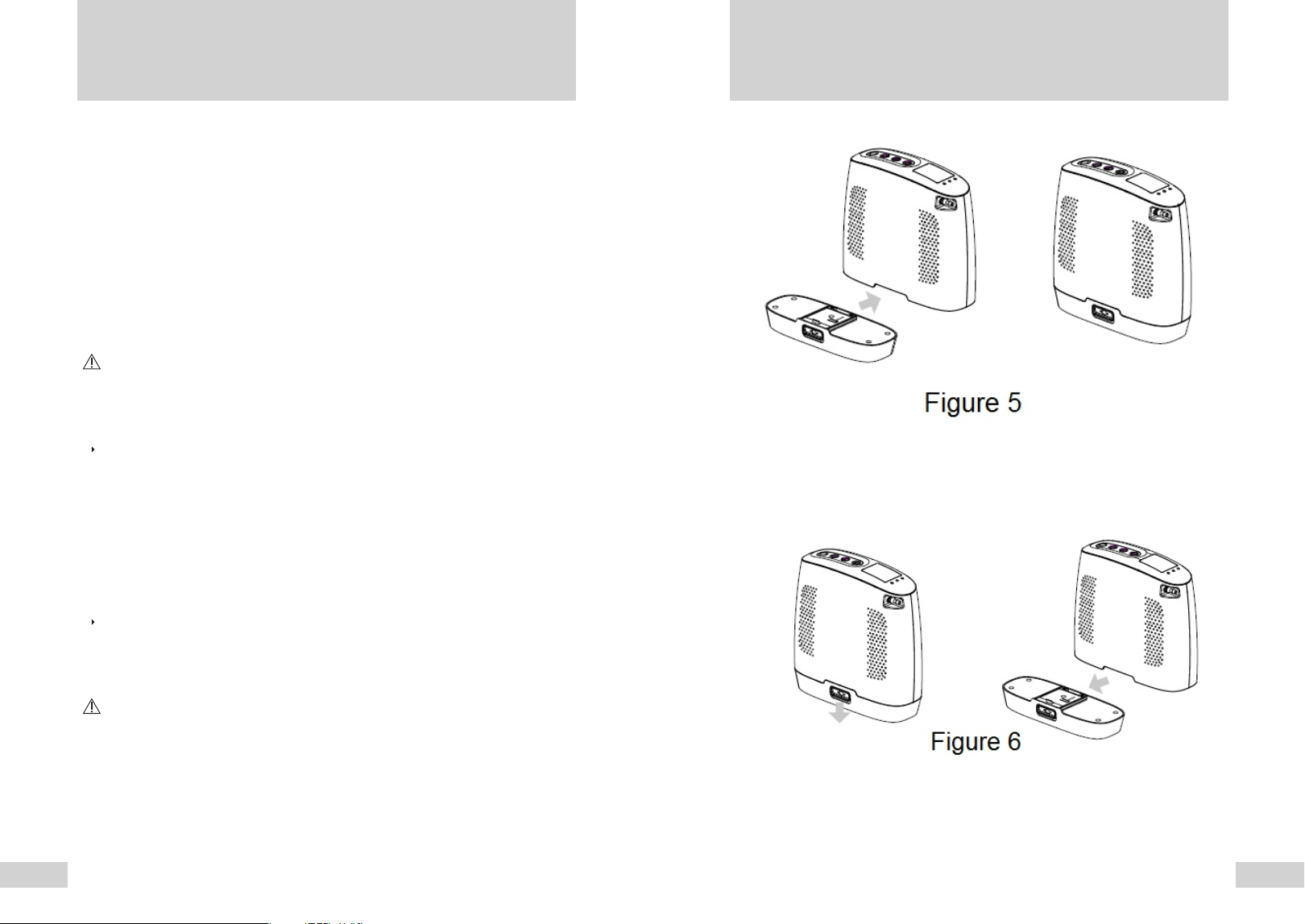
Battery Inserting
Note: The Spirit-3 is shipped from the factory with the
battery removed.
CAUTION:
Before operating, make sure that the oxygen
concentrator is turned off and the cable on the power
input connector has been removed.
Hold the Spirit-3 in one hand, and use the other hand to
insert the battery into the bottom of the device by sliding
battery into place until the latch returns to the upper position
and a "click" sound occurs. As shown in Figure 5.
Battery Removing
Place the Spirit-3 on a flat position. Hold the device in one
hand, use another hand to push the latch down and pull out
the battery from the device. As shown in Figure 6.
Note: When the battery is not installed, you can check the
battery gauge on the battery to determine the amount of
charge available.
20 21
OPERATING & INSTALLATION
Ⅵ. OXYGEN THERAPY OPERATING
OPERATING & INSTALLATION
Press the On/Off Button to turn on the Spirit-3. The panel
shows "yuwell" and the green/yellow/red indicators and alarm
come on about 1 second then the yellow/red indicators and
alarm will come off. After several seconds later, the displayer
will show the battery level and unit status. The unit is
operating normally.
Press the Increase/Decrease Flow Setting Button to adjust
the oxygen delivery as required.
Oxygen therapy operation time and flow setting MUST
according to the physician's prescription.
The oxygen delivery setting has to be determined for each
patient individually with the configuration of the device is
used, including accessories.
Connect the nasal cannula to the oxygen outlet fitting and
the other end match the patient. The nasal cannula head
should be placed in the nostril to start oxygen inhalation.
WARNING:
During operating, if oxygen could not be inhaled, please
check whether the tubing is blocked, kinked, damaged or
the nasal cannula is not equipped in right place.
The proper placement and positioning of the nasal
canual in the nose is critical to the consistent operation
of this device.
Some respiratory efforts of the patient might not trigger
the oxygen concentrator.
WARNING:
WARNING:
Ⅶ. ALARM SIGNAL
The Spirit-3 has the following failure alarm function:
1) Pressure failure
2) Compressor failure
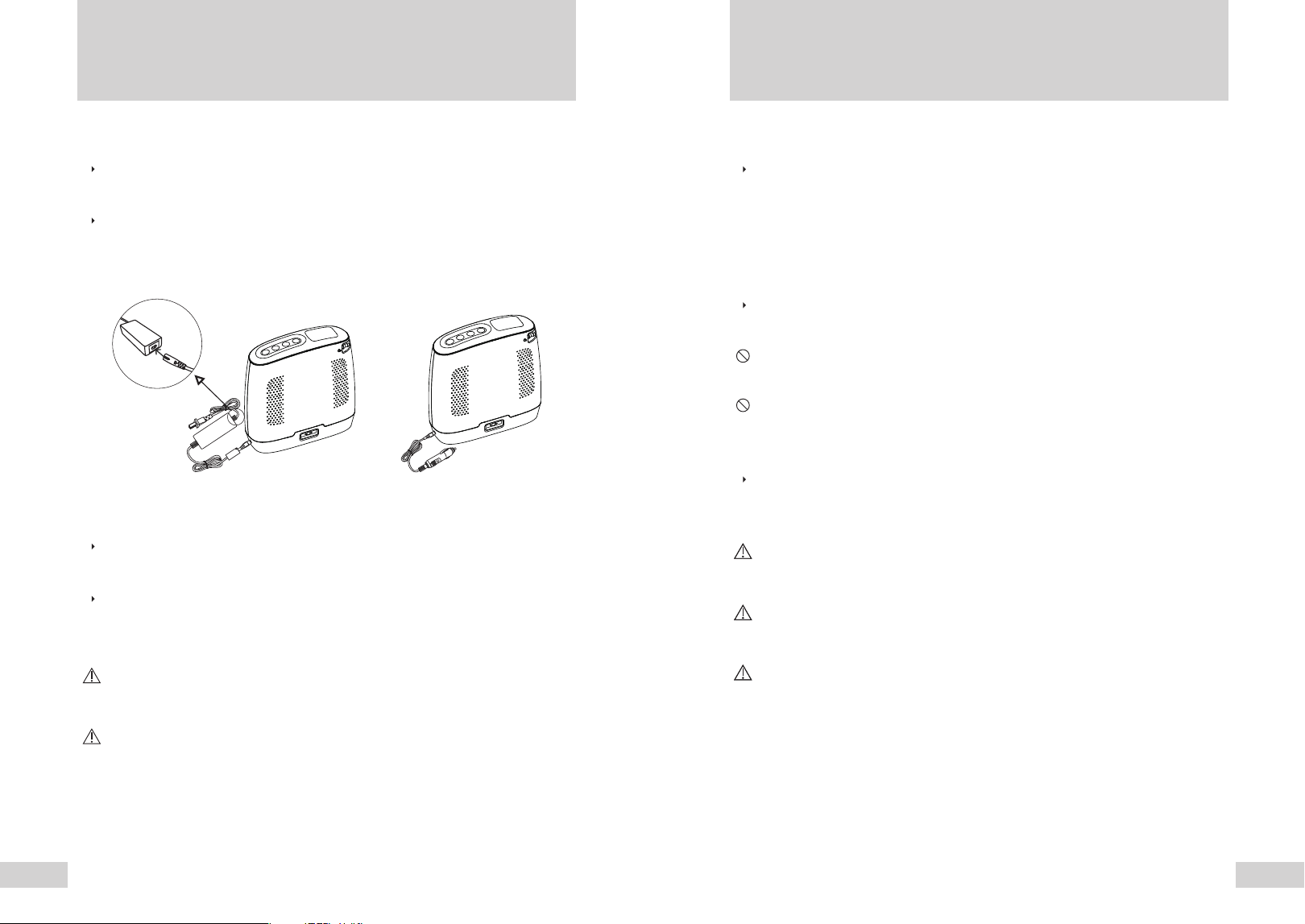
The AC Power Supply is design for the usage of the Spirit-3
only.
When operating, connect the power output plug into the
Spirit-3 then connect the AC power plug to the power source.
As shown in Figure 7.
Ⅳ. AC POWER SUPPLY
Ⅴ. DC POWER CABLE
The DC Power Cable is design for the usage of the Spirit-3
only.
When operating, connect cable into the Spirit-3 then connect
the DC power plug (Cigarette Lighter Adapter) to the power
source. As shown in Figure 8.
CAUTION:
When operating in the vehicle, always start the engine is
first, then connect DC cable into cigarette lighter
adapter.
Operating the Spirit-3 by DC cable without the engine
running may drain or damage the vehicle's battery.
CAUTION:
Figure 7 Figure 8
22 23
OPERATING & INSTALLATION
3) System over heat
4) Battery over heat
5) Low oxygen concentration
6) No breath detected
7) No flow
8) Low battery
Note: All the alarms are LOW PRIORITY.
After 5 minutes of power on, the oxygen transducer will work
normally, and the indicators will be controlled according to
the oxygen concentration value.
Explanation of the indicators
Red
Yellow
Green
OK
1) O2 concentration < 82% (+3%)
2) No breath detected
3) No flow
4) Low battery
1) Pressure failure
2) Compressor failure
3) System over heat
4) battery over heat
Symbol
Status
Indicators
1) SYSTEM OKAY: O2 concentration ≥
82% (+3%)
2) Detected breath signal
Note: It can take up to 30 minutes to stabilize to deliver the
set flowrate and concentration of oxygen to user after turn
on the oxygen concentrator.
1. Green indicator illuminates, system status is normally; and
the indicator also flash when detected the breath.
2. Yellow indicator illuminates, buzzer alarms and system
keeps working: Please contact the supplier immediately, users
can continue to use the device, and make sure that there
has the alternate oxygen source nearby.
3. Red indicator illuminates, buzzer alarms, system shuts
down: Turn off the device immediately. Use the alternate
oxygen source and contact the supplier.
OPERATING & INSTALLATION
Ⅷ.TURN OFF
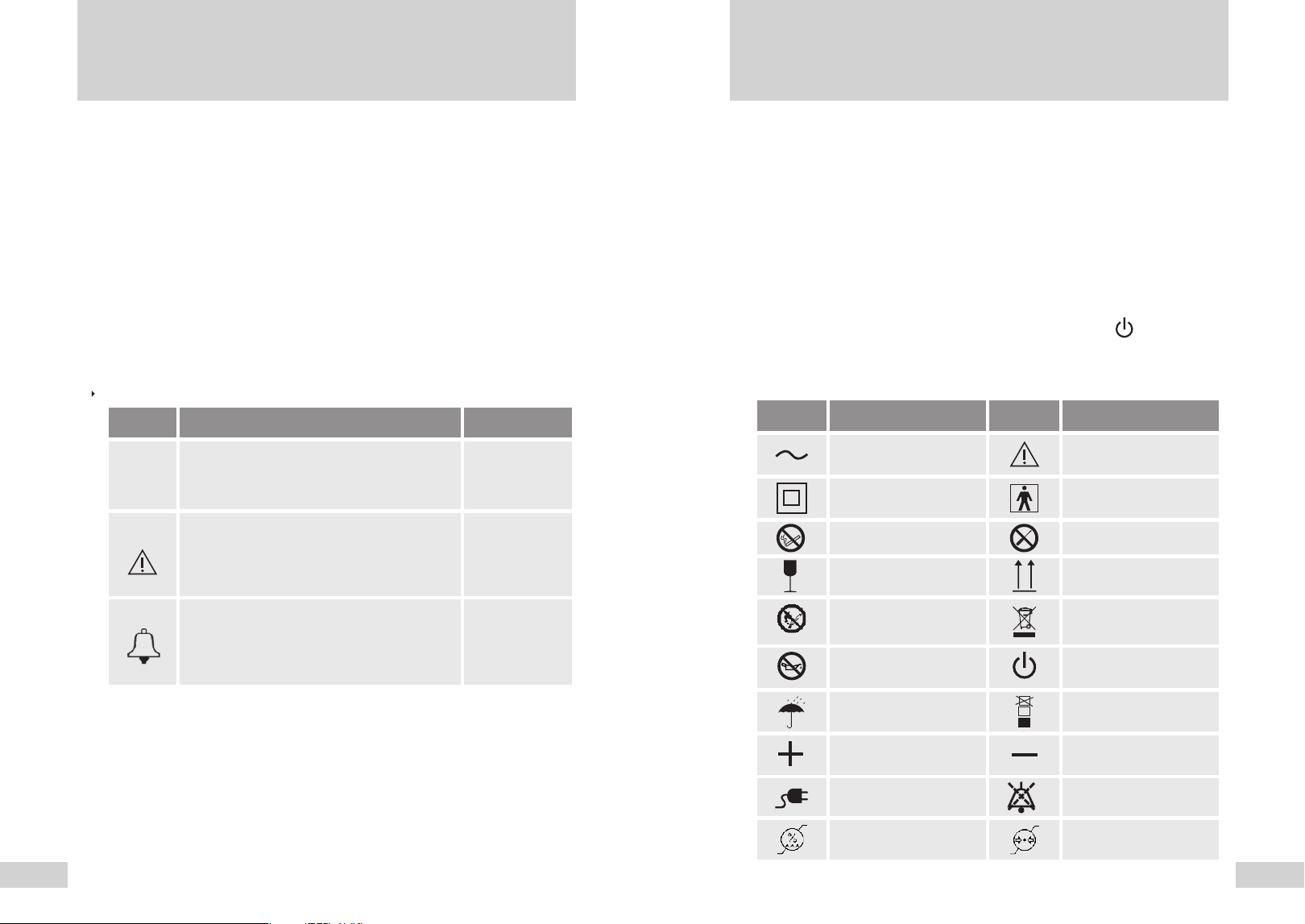
Symbol
Description
Alternating current
Symbol
Description
Consult the manual
Class Ⅱ Equipment
Type BF Applied part
Keep Up
No Smoking
Do Not Disassemble
Fragile
Power On/Off
No Smoking
Keep Up
Use No Oil or Grease
No open flame
Stacking Limitation
Increase Flow Setting
Decrease Flow Setting
External Power
is Connected
Audible Alarm Disabled
No Open Flame: Fire, open
ignition source and
smoking prohibited
Do Not Dispose of In
Unsorted Municipal Waste
6
After oxygen therapy operating, remove the nasal cannula or
tubing from oxygen outlet fitting. Press the“ ”Button to
turn off the Spirit-3.
Ⅸ.SYMBOLS
Keep Dry
Fragile
Humidity Limitation
Atmospheric Pressure
Limitation
24
25
OPERATING & INSTALLATION
Ⅹ. NASAL CANNULA
Using method
Place the nasal aspirator at the nostril of the patient, and the
tubing is surrounded by the external ear, and the movable
buckle is adjusted to fix it; the horn mouth end is inserted
into the oxygen outlet fitting of the oxygen concentrator,
and when the oxygen concentrator is turned on, oxygen is
input into the nasal cavity through the nasal cannula. (it is
recommended to use the Yuwell Nasal Cannula, P/N
10017692)
WARNING:
The nasal cannula can only be reused by individuals and
should not be cross used to avoid cross infection.
During use and storage, it is necessary to avoid sharp
angle bending, external compression and winding.
DO NOT store in the environment with toxic and
corrosive gas, and it should be stored indoors with good
ventilation.
The waste treatment after use of the products shall be
treated according to the requirements of the hospital or
environmental protection department.
WARNING:
WARNING:
WARNING:
Cleaning and disinfection
Rinse with water, then put into 70-80% medical alcohol,
cover and soak for 30 minutes for disinfection.
WARNING:
After cleaning, the cannula should be dried then stored.
It should be cleaned and disinfected after each use.
For the first use after purchase or reuse after long-term
storage, disinfection should be carried out before use.
When it is used frequently, it is recommended to replace
the cannula every two weeks or as needed.
WARNING:
WARNING:
WARNING:
OPERATING & INSTALLATION
XI.CARRY BAG
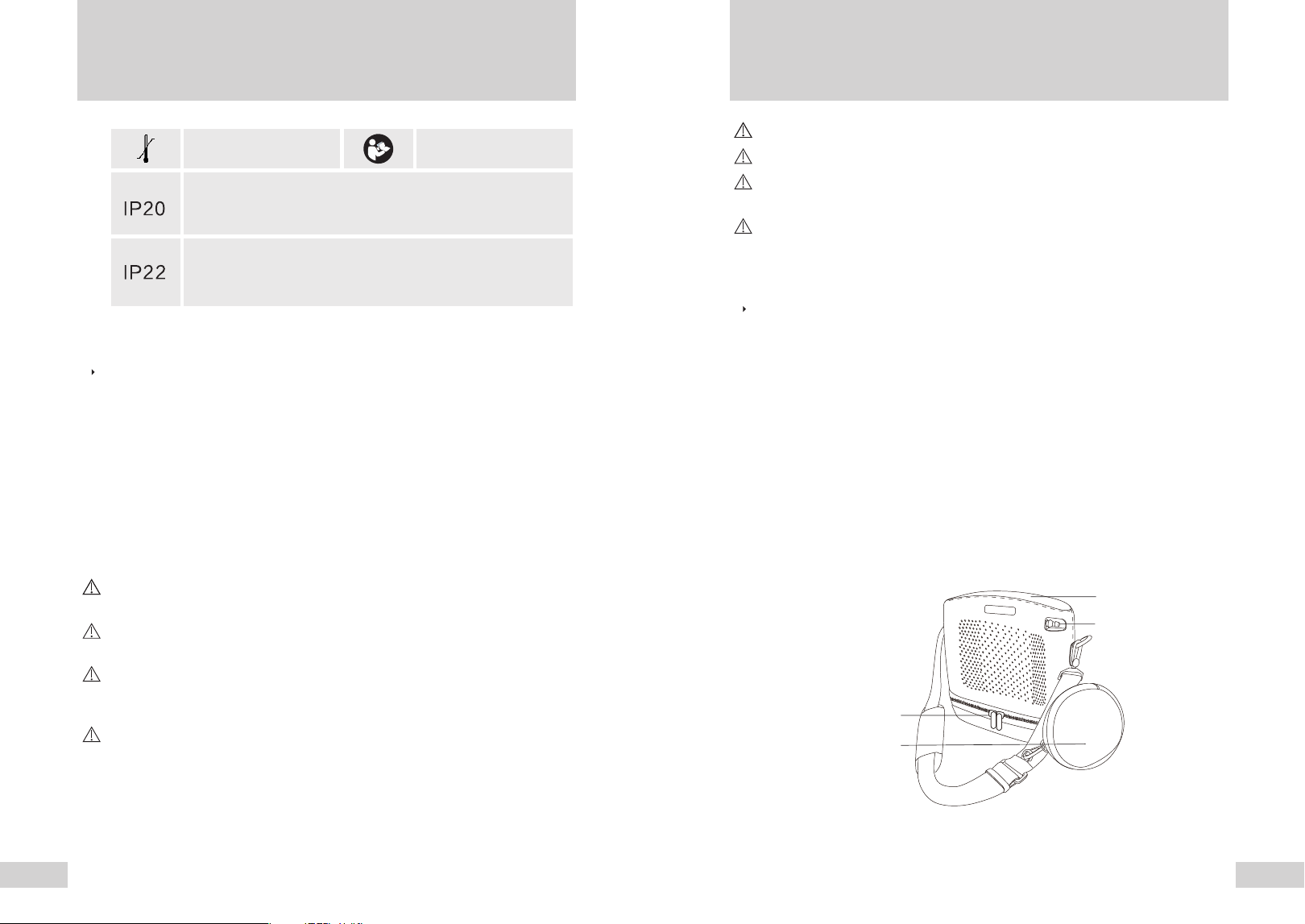
The Carry Bag provides a protective case with an adjustable
shoulder strap to help you to carry the Spirit-3 anywhere.
The Spirit-3 can be operated by battery during transport with
the Carry Bag.
1.Insert the oxygen concentrator upward into the bag
through the zipper opening at the bottom of the bag, install
the battery, and close the zipper.
2.The oxygen outlet is located at the top of the bag and
exposed for connecting accessories. The displayer can be
seen at the top of the bag.
3. Cleaning: clean with a damp cloth and mild detergent then
dry.
Oxygen
Outlet
Displayer
Keep Dry
Fragile
Temperature Limitation
Refer to
Instruction Manual
Enclosures Protection Classification
The first characteristic number "2": Protected against access to
hazardous parts with a finger.
The second characteristic number "0" : No protection from moisture.
zipper
Nasal oxygen
tube bag
Figure 9 Carry bag
Enclosures Protection Classification
The first characteristic number "2": Protected against access to
hazardous parts with a finger.
The second characteristic number "2" : Against dripping(15°tilted).
(in bag)

26
27
MAINTENANCE MAINTENANCE
WARNING:
Before maintenance, cut of the power supply and take
out the battery. To avoid electric shock, DO NOT remove
the cabinet.
Regular Inspection: check at least once a month to check
whether the appearance of oxygen concentrator, battery and
power adapter is damaged, whether the power cord is in
good condition, and whether there is abnormal noise in the
operation of the machine. If necessary, please contact the
equipment supplier for professional inspection.
Regular Inspection
Check at least once a month to check whether the
appearance of oxygen concentrator, battery and power
supply is damaged, whether the power cord is in good
condition, and whether there is abnormal noise in the
operation of the oxygen concentrator. If necessary, please
contact the supplier for professional inspection.
Replacement Cycle of Sieve Beds
When the low oxygen concentration alarm occurs and the
filter felt is cleaned or replaced, contact the supplier for
maintenance or replacement.
Ⅰ. MAINTENANCE OF BATTERY
Store the battery in a cool and dry place.
Keep Dry
Battery needs to be used and stored carefully to ensure
stable performance and long service life. Only use the battery
provided by Yuwell for the oxygen concentrator.
When not in use for a period of time, remove the battery
from the oxygen concentrator and store it separately.
Wipe the battery case with a clean soft cotton cloth or
sponge at least once a month.
Display the remaining battery level continuously. This value is
only an estimate, and the actual remaining level may be
different from this value.
Battery Level
The battery can supply power for up to 5 hours under most
environmental conditions. In order not to affect the operation
time of the battery, avoid long-term operation at the
temperature lower than 5 ℃ or higher than 40 ℃.
Temperature Effect of Battery Performance
Keep the liquid away from the battery at any times. If the
battery is damp, stop using immediately and dispose of the
electricity properly.
Ⅱ. CABINET CLEANING
Wipe and clean the outside of the cabinet at least once a
month: Cut off the power first, wipe it with clean and soft
cotton cloth or sponge, and do not let the liquid seep into the
gap of the cabinet.
Ⅲ. FILTER FELT CLEANING AND REPLACEMENT
The cleaning and replacement of filter felt is very important
to protect compressor and molecular sieve and prolong the
life of oxygen concentrator. Please clean and replace it in time.
WARNING:
DO NOT operate the oxygen concentrator when the
filter felt is not installed or wet, which will damage the
device.
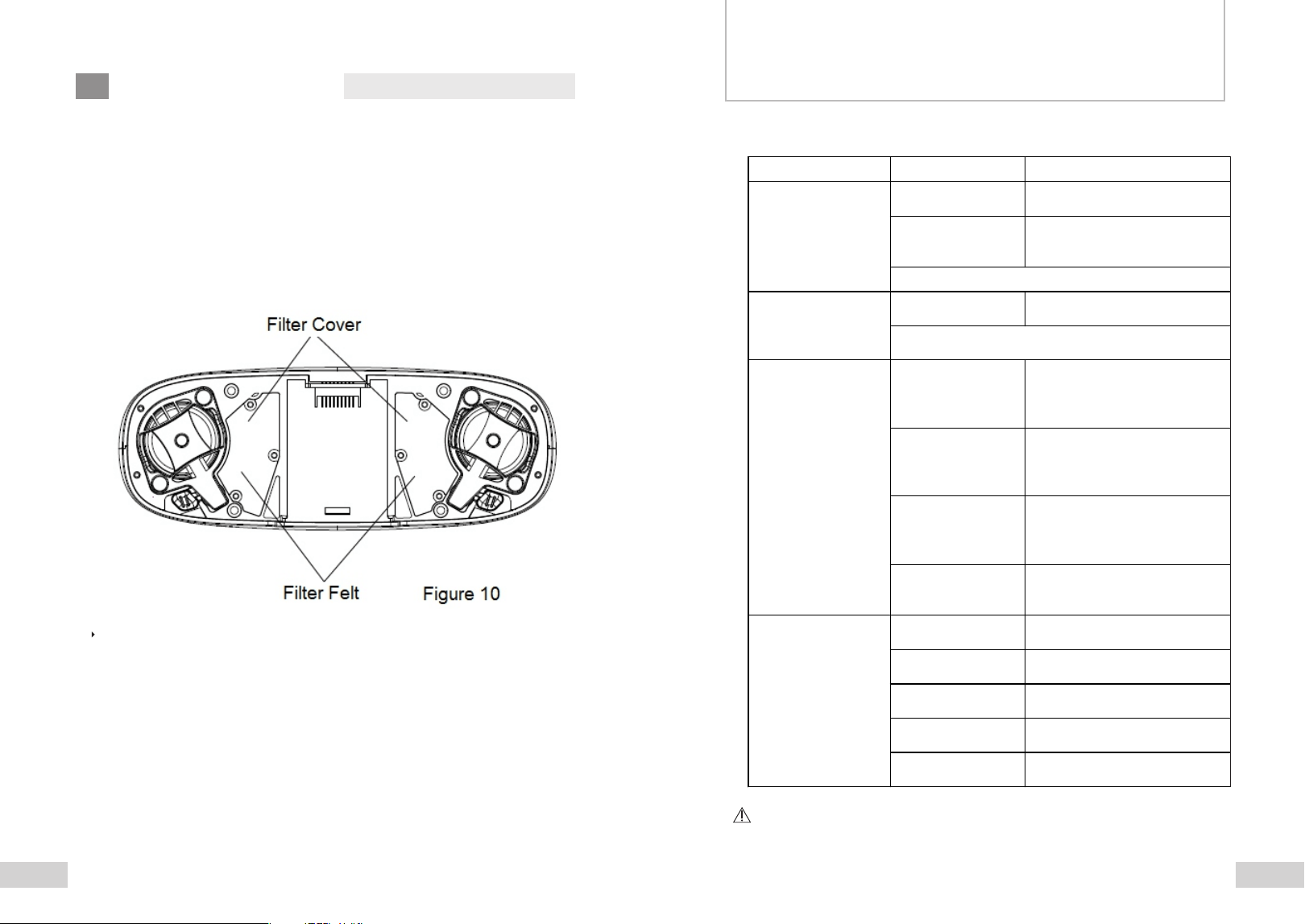
Filter Felt
Clean or replace once per 100 hours generally.
Disassembly
1. Remove the battery.
2. Screw out the screw fixing the filter cover which located at
MAINTENANCE
the bottom of the oxygen concentrator and remove the filter
cover .
3. Remove the filter felt
The actual cleaning time of filter felt should be determined
according to the actual use time and environmental impact.
If the filter felt is black or dirty, it should be cleaned or
replaced immediately no matter how long it is used.
Cleaning
First clean with light detergent, and rinse with clean water,
must be dry, and then installed on the oxygen concentrator.
DISASSEMBLY
(CUT OFF the power supply first)
TROUBLESHOOTING
Troubleshooting Guide
Symptom
Probable Cause
Solution
Displayer is no working
after installing battery
and turning on.
Battery installed not
in place.
Re-install the battery
Battery is empty.
1)Change another battery.
2) Use AC power Supply or DC Power
Cable to supply power.
If the phenomenon persists, please contact the supplier.
After turning on the
device, device is
working, but no oxygen
output. or less.
Nasal cannula is
broken.
Replace the nasal cannula.
If the phenomenon persists, please contact the supplier.
Device is working, but
yellow indicator
illuminates.
Oxygen concentrator
< 82%
1) Clean or replace the filter felt.
2) If the phenomenon persists, please
use the alternate oxygen source and
contact the supplier.
No flow
1) Check whether the pipeline is
blocked.
2) Please use the alternate oxygen
source and contact the supplier.
No breath detected
Connect the nasal cannula to the
oxygen outlet, wear it to the face,
make sure there is no kink and
breathe through the nose.
Low battery level
1)Change another battery.
2) Use AC power Supply or DC Power
Cable to supply power.
Device is not working,
and red indicator
illuminates.
Low pressure failure
Please use the alternate oxygen
source and contact the supplier.
High pressure failure
Please use the alternate oxygen
source and contact the supplier.
Compressor failure
Please use the alternate oxygen
source and contact the supplier.
Battery over heat
Please use the alternate oxygen
source and contact the supplier.
System over heat
Please use the alternate oxygen
source and contact the supplier.
28
29
CAUTION:
If there are other faults that cannot be eliminated,
please contact the supplier or manufacturerer.
OTHER ATTENTION ITEMSOTHER ATTENTION ITEMS
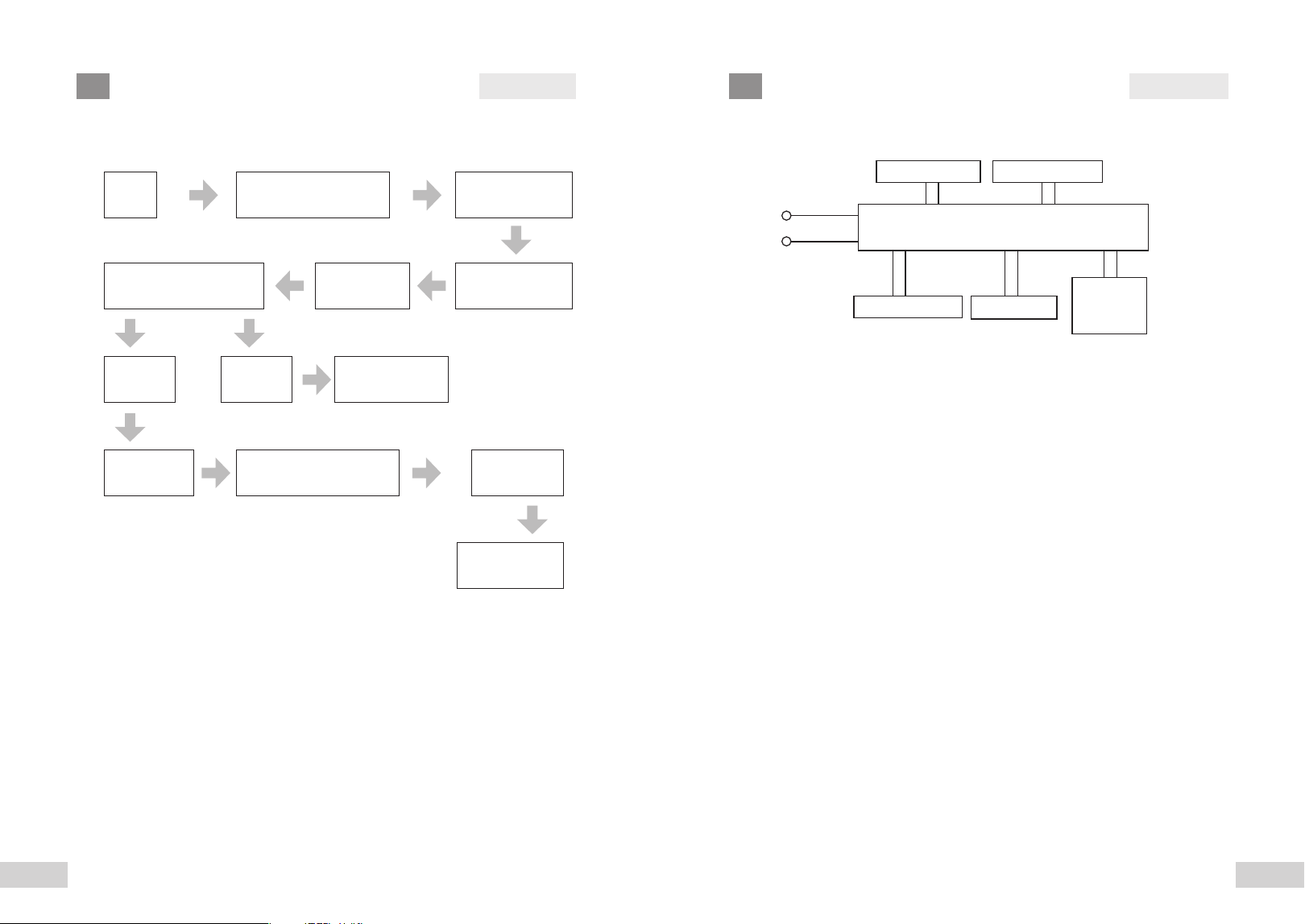
Exchange Valve
Air
Compressor
Oxygen/Nitrogen
Separation
Sieve Beds
Oxygen
Product
Tank
Nitrogen
Flow Control Valve Filter
Purge
Air Filter
Oxygen Outlet
Ⅰ.GAS PASS OPERATION SKETCH MAP
Displayer
Printed Circuit Board
Cooling Fan
Compressor
Ⅱ.ELECTRICAL RATIONALE
Oxygen Sensor
Exchange
Valve
DC12V~24V
Ⅲ.PACKING LIST
1. Oxygen Concentrator: 1 unit
2. User Manual: 1 piece
3. Rechargeable Lithium-ion Battery: 1 piece
4. AC Power Supply: 1 piece
5. DC Power Cable: 1 piece
6. Filter Felt: 1 set ( 2 pieces)
7. Nasal Cannula: 1 piece
8. Carry Bag: 1 piece
IV.DEVICE DISPOSAL
Contact the local city or town offices for proper disposal
instructions for oxygen concentrator.
30
31