
EN
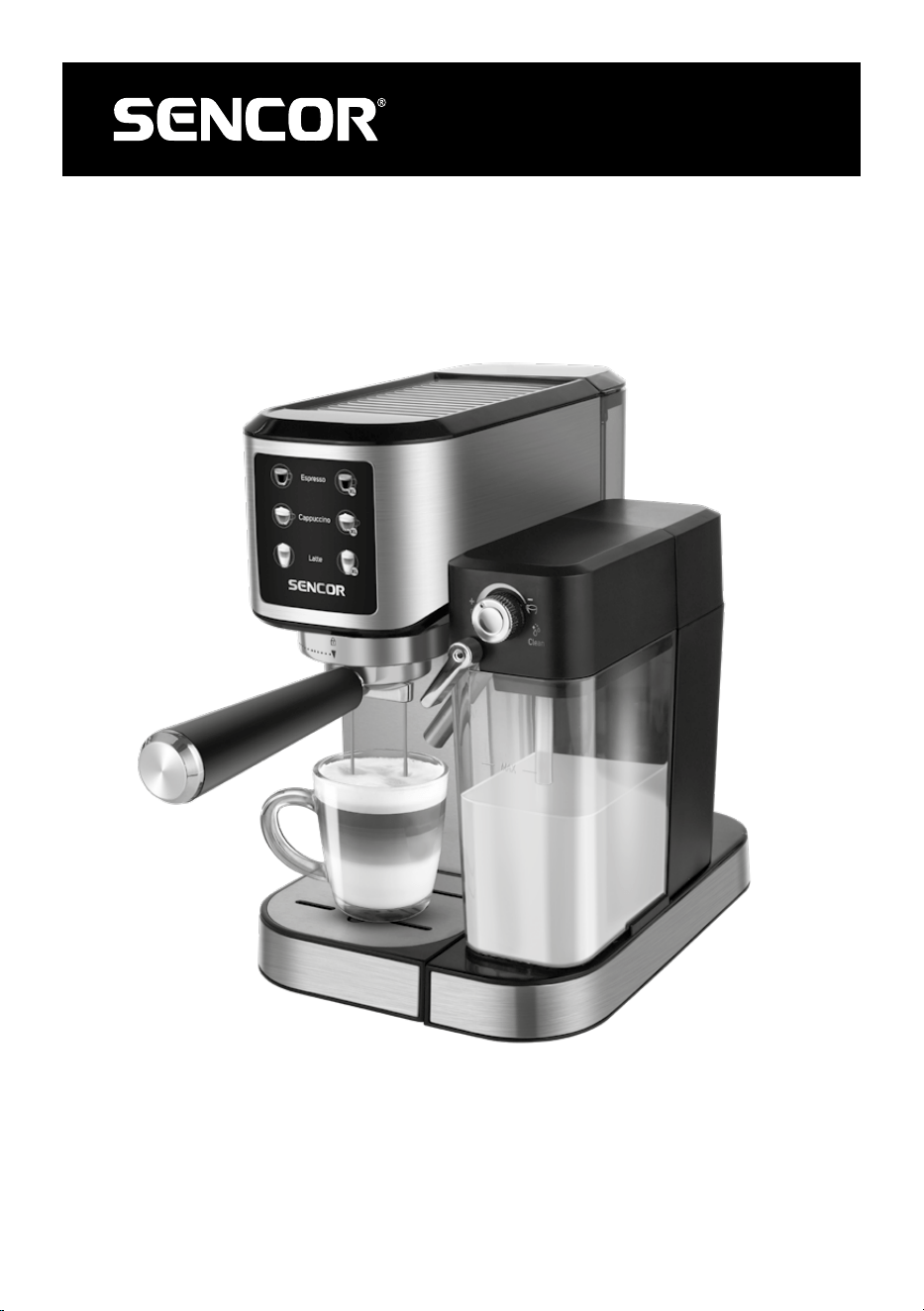
SEMI-AUTOMATIC ESPRESSO
Translation of the original manual
SES 4910SS
SES 4910SS
A
1
2
3
4
5
6
7
8
9
10
11
12
13
14
15
16
17
18
19
20
B
1
2
3
5
6
4
D
D1 D2
C
C1 C2
C3 C4

- 1 -
03/2024
2024, .
EN Semi-Automatic Espresso
Important Safety Instructions
READ CAREFULLY AND STORE FOR FUTURE USE.
• This appliance may be only used by children aged 8 years
and older and by persons with physical, sensory or mental
impairments or lack of experience and knowledge, if they
are supervised or have been instructed on the safe use of
the appliance and understand the potential hazards.
• Children must not play with the appliance.
• Cleaning and maintenance must not be performed by
unsupervised children.
• Keep the appliance and its power cord out of reach of
children younger than 8 years of age.
• If the power cable is damaged, have it replaced in a
professional service centre in order to prevent a dangerous
situation. It is forbidden to use the appliance with the power
cable damaged.
• This appliance is intended for household use. It is also
suitable for personal non-commercial use in spaces such
as:
– kitchenettes in shops, offices and other workplaces;
– agriculture;
– hotels, motels and other residential spaces;
- 2 -
03/2024
2024, .
– bed and breakfast establishments.
• The appliance must not be immersed in water during
cleaning.
WARNING: The filling hole must not be opened
during use.
WARNING: Avoid spilling on the plug.
• Always clean the parts of the appliance that come into
contact with food with clean warm water and a little neutral
dishwashing liquid, rinse them with clean water and wipe
dry.
WARNING: Incorrect use may lead to injury.
• The outer surface of the appliance heats up during use and
may be hot for some time after use. Be very careful.
• The appliance must not be placed in a cabinet when in use.
• Before connecting the appliance to a power socket, make sure that its nominal voltage indicated on the rating plate matches the electrical voltage of
the socket.
• Connect the appliance only to a properly grounded socket. For safety reasons, we do not recommend using adaptor plugs or extension cords.
• Do not place the appliance on windowsills, sink drain trays or unstable surfaces. Always place the appliance on a stable, flat and dry surface.
• Do not place the appliance on an electric or gas stove or near an open flame.
• Never use the appliance in the immediate vicinity of a bath, shower or swimming pool.
• Use the appliance only for the purpose for which it has been designed.
• Use the appliance only with the original accessories supplied with it.
• During operation, a clear space of at least 15 cm must be left around and 35 cm above the appliance to ensure sufficient air circulation.
• Only use the top surface of the appliance to heat up cups. Do not use it to store items.
• Fill the water tank with clean, cold water. Do not pour hot water or other liquids into it or place any objects inside it.
• Before turning on the appliance, make sure that:
– the drip tray with grid is properly installed in place;
– the water tank is filled with a sufficient amount of water and is properly installed in place. The water level must not exceed the maximum mark.
• Before you begin brewing coffee, check that the portafilter is properly attached to the brew head. Pressure is created in theportafilter during the
coffee brewing process, so do not move it during operation. Otherwise a dangerous situation could arise.
• Take extra care when operating the appliance to avoid scalding with hot water or steam.
• When using the appliance, check the water level in the water tank regularly. If the water level falls below the minimum mark, refill the water tank.
Before adding water, first turn the appliance off and disconnect it from the power socket.
• The appliance is equipped with a built-in thermal fuse that shuts it off when the pump is idling to prevent damage. If such asituation occurs, unplug
the power cable and allow the appliance to cool down for at least 30 minutes. Then you can use it again.
• Always turn off and unplug the appliance from the power socket when not in use, when left unattended, before disassembly or assembly, before
refilling the tank, before moving or cleaning it. Allow the appliance to fully cool down before cleaning or moving.

- 3 -
03/2024
2024, .
• Do not move the appliance with a cup of coffee placed on the drip tray grid or with cups placed on the surface designed to heat them up.
• Keep the appliance and its accessories in clean condition. Perform the cleaning and maintenance following the instructions in the Cleaning and
Maintenance section. Do not wash the appliance under running water or submerge it in water or any another liquid.
• Ensure that the power cable does not come into contact withhot surfaces or that the power cable plug is not spilled on.
• Unplug the appliance from the power socket by pulling the plug, not the power cable. Otherwise, damage to the power cable or the socket may
occur.
• To avoid the risk of electric shock, do not repair or modify the appliance yourself. All repairs should be carried out by an authorised service centre.
Tampering with the appliance may result in the loss of your legal rights regarding faulty performance or warranty for quality.
- 4 -
03/2024
2024, .
• Thank you for purchasing our SENCOR product; we hope it will serve
to your satisfaction.
• Prior to using this appliance, please read the user manual thoroughly,
even in cases when you are already familiar with the use of similar
types of appliances. Use the appliance only as described in this
user manual. Keep the manual for future reference. If you pass the
appliance on to another person, ensure that this user manual is
included.
• Carefully unpack the appliance and make sure not to discard any part
of the packaging material until you have found all its components. It
is recommended to keep the original packaging, packing material,
receipt and confirmation of the extent of the seller's liability or warranty
certificate at least for the duration of the legal right of defective
performance or quality guarantee. When transporting the appliance,
we recommend packaging it again in the original box provided by the
manufacturer.
. . . . . . . . . . . . . . . . . . . . . . . . . . . . . . . . . . . . . . . . . . . . . . . . . . . . . . . . . . . . . . . . . . . .
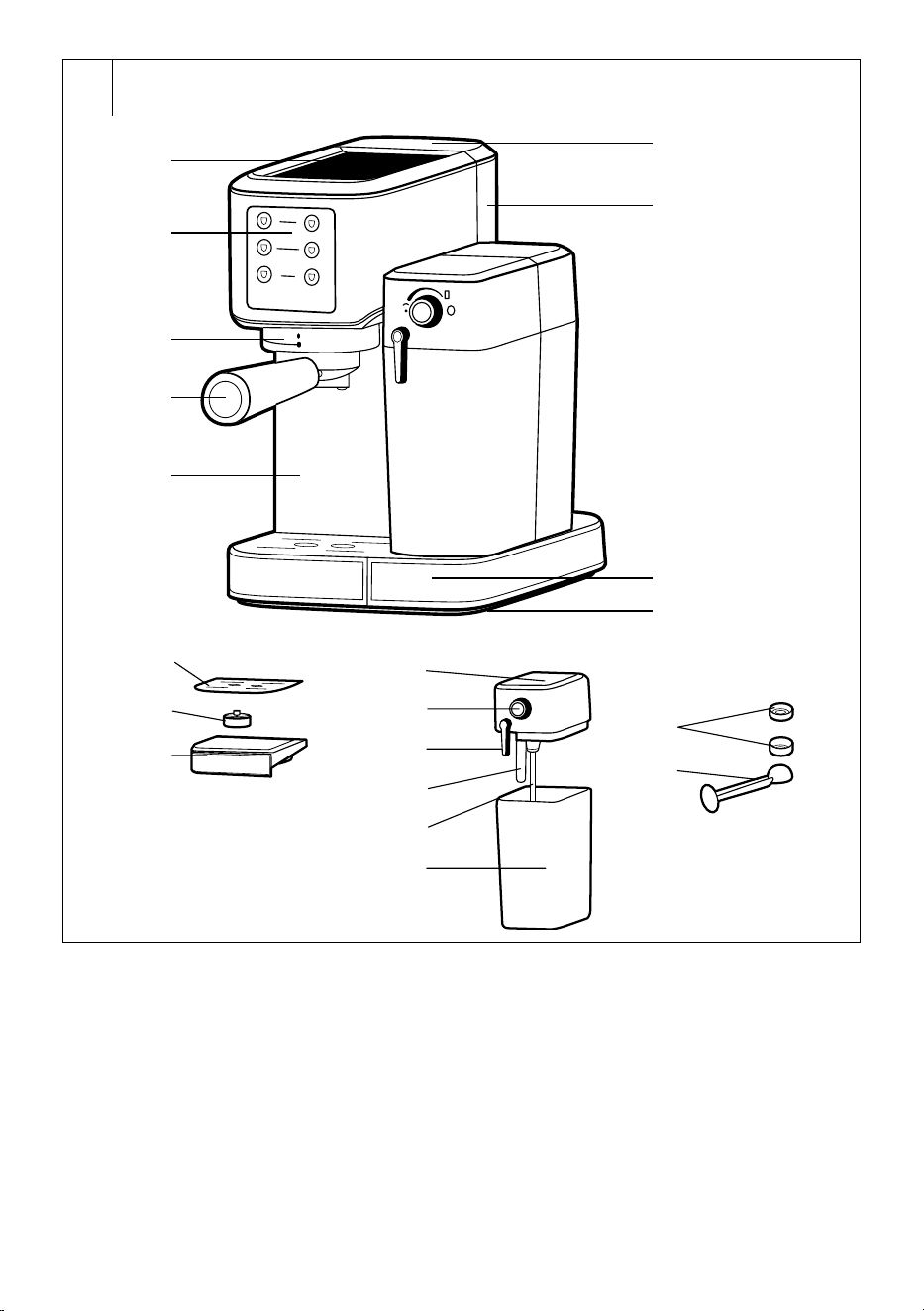
DESCRIPTION OF THE COFFEE MACHINE
A1 Cup warming plate
A2 Control panel
A3 Brew head
A4 Portafilter
A5 Coffee machine body
A6 Water tank lid
A7 Water tank with built-in
handle
A8 Coffee machine base
A9 Antiskid feet
A10 Drip tray grid
A11 Full drip tray indicator
A12 Drip tray
A13 Milk container lid
A14 Rotary control for hot milk /
milk foam setting
A15 Milk andmilk foam
dispensing nozzle control
A16 Milk and milk foam
dispensing nozzle
A17 Milk tube
A18 Milk container
A19 Filters (for 1 and2 cups)
A20 Coffee measuring scoop
withtamper
Not depicted: Main power switch
. . . . . . . . . . . . . . . . . . . . . . . . . . . . . . . . . . . . . . . . . . . . . . . . . . . . . . . . . . . . . . . . . . . .
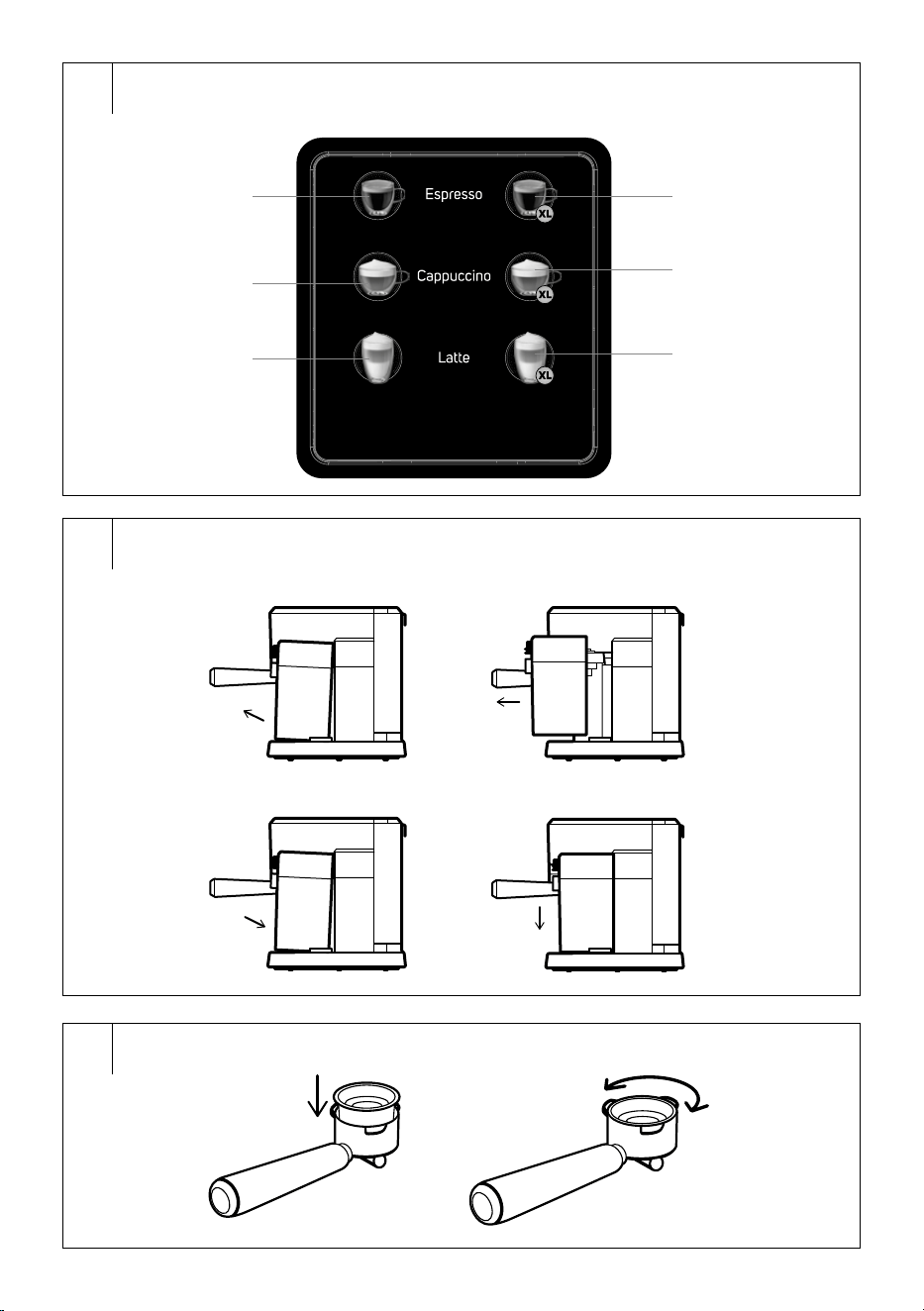
DESCRIPTION OF THE CONTROL PANEL
B1 Espresso preparation button
B2 Cappuccino preparation
button
B3 Latte preparation button
B4 Espresso XL preparation
button
B5 Cappuccino XL preparation
button
B6 Latte XL preparation button
. . . . . . . . . . . . . . . . . . . . . . . . . . . . . . . . . . . . . . . . . . . . . . . . . . . . . . . . . . . . . . . . . . . .
BEFORE FIRST USE
• Before first use, remove the appliance and its accessories form the
packaging and discard all promotional labels and tags. Check that
neither the appliance nor any of its components is damaged.
• Place the coffee machine on a flat, dry and clean surface. Make
sure there is a clear space around the coffee machine, at least
35cm above it and 15 cm on the sides. Wipe the outer surface of the
appliance with a slightly dampened sponge and then wipe dry.
• Remove the water tank from the appliance. Rinse it with clean
water and a small amount of neutral dishwashing detergent. Then
thoroughly rinse with clean water, dry, and place it back into the coffee
machine.
• Disassemble the milk container according to the instructions inthe
“Milk Container” section. Remove the drip tray withgrid from
themachine. Wash the milk container, milk tube, drip tray with grid,
portafilter, coffee measuring scoop and stainless steel filters under
clean running water witha bit of kitchen detergent. Then rinse with
clean water and dry.
• Wipe the outer surface of the coffee machine and the milk container
lid with a damp sponge, dry, and place them back into the lower part
of the appliance.
• Attach the grid back onto the drip tray and insert into the coffee
machine. Assemble the milk container following the instructions inthe
“Milk Container” section.
. . . . . . . . . . . . . . . . . . . . . . . . . . . . . . . . . . . . . . . . . . . . . . . . . . . . . . . . . . . . . . . . . . . .
PREPARATION BEFORE USE
Drip Tray
• The drip tray with a grid catches drops of brewed coffee when the
portafilter is removed, hot water after frothing milk and any spilled
milk during frothing. Therefore, make sure that both parts are correctly
installed andinserted into the appliance.
• We recommend emptying the appliance andwashing the drip tray
after each use. When washing, follow the instructions in the section
“Cleaning and Maintenance”.
Note:
The drip tray is equipped with a fullness indicator. It is a float.
When the liquid level in the drip tray pushes it up, the drip tray
must be emptied.
Filling the Water Tank
• Open the lid of the water tank. Grasp the tank by the handle and lift it
upwards. Fill it with cold potable water up to the maximum mark and
insert it back. Then close the lid of the water tank. The water tank must
be properly seated in place for water to be pumped into the internal
system.
Note:
The water you pour into the water tank should ideally be at
room temperature (approximately 25 °C). Water that is too
cold can adversely affect the final taste of the coffee drink. Do
not leave the remaining water in the water tank for more than
one day. For brewing quality fresh coffee, it is necessary to
use fresh water. Otherwise, the final taste of the coffee drink
may be adversely affected.
Warning:
The maximum capacity of the water tank is 1 l. Do
not overfill it. Never fill the water tank with warm, hot
or sparkling water or liquids such as milk. Do not fill
the water tank when it is inserted in the appliance.
There is arisk of spilling the appliance or overfilling
the water tank.
Filling the Milk Container
• Fill the milk container andinstall it into the coffee machine in the event
that you prepare latte or cappuccino.
• To remove the milk container from the coffee machine, grasp it from
underneath and pull the bottom part upwards from the coffee machine
(Figure C1). This will release the connectors at the back, allowing you
to pull out the entire container from the coffee machine (Figure C2).
• Remove the lid of the container andpour fresh cold whole milk into
the container. When filling, observe the MIN and MAX lines marked
on the container.
• Ensure that the milk tube is inserted in the lower part of the lid and
place the lid on the container. Press gently until you hear a click. This
indicates proper attachment.
• Attach the assembled container to the coffee machine at a slight angle
(Figure C3) until the connectors at the back of the lid fit into the inlet
holes in the coffee machine. Then place the bottom of the container on
the base and push it towards the coffee machine (Figure C4).
Note:
If the milk container is not inserted correctly, Latte macchiato
andCappuccino will not be available (the buttons will not light
up when the heating is complete).
EN
Semi-Automatic Espresso
User Manual
- 5 -
03/2024
2024, .
Inserting and Removing the Filter
• Insert the selected stainless steel filter into the portafilter so that the
protrusion on the filter fits into the hole in the portafilter (Figure D1).
Rotate the filter left or right (Figure D2).
• To remove the filter from theportafilter, rotate the filter in the portafilter
so that the protrusion on the filter aligns with the hole in the portafilter.
Then pull it out of theportafilter.
Warning:
Before removing the filter from theportafilter, make
sure that both the filter and theporafilter are cooled
down. Do not remove the filter from the portafilter
immediately after making coffee. They are very hot
andthere is a risk of injury.
Filling the Filter andTamping the Coffee
• Place the portafilter on a flat surface and fill the filter with the
appropriate amount of ground coffee. The single cup filter is filled with
one levelled coffee scoop of ground coffee. The double cup filter is
filled with twice the amount of coffee. One levelled scoop corresponds
to about 7 g of ground coffee. Spread the coffee inthe filter evenly
andtamp it with the flat end of the scoop. After tamping, the coffee
inthe filter should be aligned with the MAX line marked on the inner
wall of the filter.
• Clean the edges of the filter thoroughly of any ground coffee residue.
Note:
Use only ground coffee designed for use in espresso
machines. Do not use ground coffee intended for use in
French presses, drip coffee makers, etc.
Portafilter Installation and Removal
• Place the portafilter underneath the brew head so that the handle
points to the left and aligns with the open lock icon on the brewing
head. To attach the portafilter to the brew head, rotate the handle to
the right into the closed lock position.
• To remove the portafilter from the brew head, rotate the handle
counterclockwise until it aligns with the open lock icon. Remove
it from the brew head and move it above a rubbish bin. Rotate the
portafilter so that the filter with the used coffee points downwards. Use
a coffee spoon to remove the coffee grounds. Avoid contact with the
surface of the filter or portafilter as they may still be hot. Before taking
the filter out of theportafilter, cool it under cold running water. Then
rinse the filter and the portafilter under clean running water and dry
them thoroughly.
Cup Warming
• Once you turn on the coffee machine, the cup warming plate will
automatically heat up. Place empty coffee cups upside down on to
surface and let them warm up.
. . . . . . . . . . . . . . . . . . . . . . . . . . . . . . . . . . . . . . . . . . . . . . . . . . . . . . . . . . . . . . . . . . . .
USING THE COFFEE MACHINE
• Place the coffee machine on a flat, dry and clean surface at a
sufficient distance from the power socket.
• Make sure that the water tank is filled with fresh water and that the
coffee machine is properly assembled.
Rinsing the Coffee Machine upon First Use
• We recommend following these steps upon the first use of the coffee
machine or if the machine has not been used for an extended period.
1. Fill the water tank to the maximum level.
2. Fill the milk container with water up to the maximum level.
3. Insert one of the filters into the portafilter, but do not add any ground
coffee.
4. Insert the portafilter into the brew head.
5. Place a bowl under the dispensing nozzle anddirect the milk
dispensing nozzle into the bowl.
6. Plug the power cable into a power socket.
7. Turn on the coffee machine by switching the main power switch to
the I position (on). You will hear one short beep.
8. The buttons on the control panel will slowly blink, indicating that
the coffee machine is heating up. Wait until the coffee machine is
preheated.
9. When all buttons on the control panel light up, the coffee machine is
ready for use.
10. Press the Cappuccino XL or Latte XL button and the machine
will start. Water will bedispensed through the dispensing nozzle
andthen through the milk dispensing nozzle.
11. We recommend repeating this process two more times for thorough
rinsing of the coffee machine's internal system and milk frothing
system.
12. Then pour out the water in the bowl, remove the portafilter andfilter
andclean them according to the instructions in the “Cleaning
andMaintenance” section.
Warning:
Be careful during rinsing as the discharged water is
very hot and improper handling can cause scalding.
Turning the Coffee Machine On and Off
1. Plug the power cable into a power socket.
2. Turn on the coffee machine by switching the main power switch to
the I position (on). You will hear one short beep.
3. The buttons on the control panel will slowly blink, indicating that
the coffee machine is heating up. Wait until the coffee machine is
preheated.
4. When all buttons on the control panel light up, the coffee machine is
ready for use.
Note:
During coffee brewing, milk dispensing, and frothing, you will
hear the sound of the pump. This is a normal occurrence.
Preparing Espresso
• The coffee machine is supplied with 2 stainless steel filters: a single
cup filter and a double cup filter.
• The single cup filter is suitable for making 1 espresso, regular
cappuccino or latte macchiato.
• The double cup filter is suitable for preparing XL coffee drinks or 2
cups of espresso, cappuccino, or latte macchiato.
1. Insert the single cup or double cup filter in the portafilter, tamp the
coffee, andinsert the portafilter into the brew head.
2. Make sure the coffee machine is preheated.
3. Place a cup or mug under the portafilter.
4. Press the button for the selected drink. The button indicator will
light up and then blink. The coffee machine will start preparing the
selected drink.
5. First, the coffee is brewed by releasing a small amount of coffee
into the filter to allow the ground coffee to swell. After a moment, full
coffee extraction begins.
6. The coffee machine automatically stops brewing once the preset
amount of coffee has been poured into the cup.
7. Remove the portafilter from the brew head andclean it following
the instructions inthe “Cleaning andMaintenance” section. We
recommend waiting for about 5 seconds before removing the
portafilter from the brew head. This will naturally release the
pressure and make it easier to remove the portafilter.
Preparing Cappuccino, Latte Macchiato
1. Fill the milk container with fresh cold milk.
2. Set the amount of hot milk / milk foam. When preparing
Cappuccino, turn the rotary control to the left (more milk foam),
when preparing Latte macchiato, turn the rotary control to the right
(more hot milk).
3. Insert the single cup or double cup filter in the portafilter, tamp the
coffee, andinsert the portafilter into the brew head.
4. Make sure the coffee machine is preheated.
5. Place a cup or mug under the portafilter.
6. Press the button for the selected drink. The button indicator will
light up and then blink. The coffee machine will start preparing the
selected drink.
- 6 -
03/2024
2024, .
7. The preparation of the coffee drink automatically stops once the
preset amount of coffee andhot milk / milk foam has been poured
into the cup.
8. Remove the portafilter from the brew head andclean it following
the instructions inthe “Cleaning andMaintenance” section. We
recommend waiting for about 5 seconds before removing the
portafilter from the brew head. This will naturally release the
pressure and make it easier to remove the portafilter.
9. Clean the milk container following the instructions inthe “Cleaning
the Milk Container” section below.
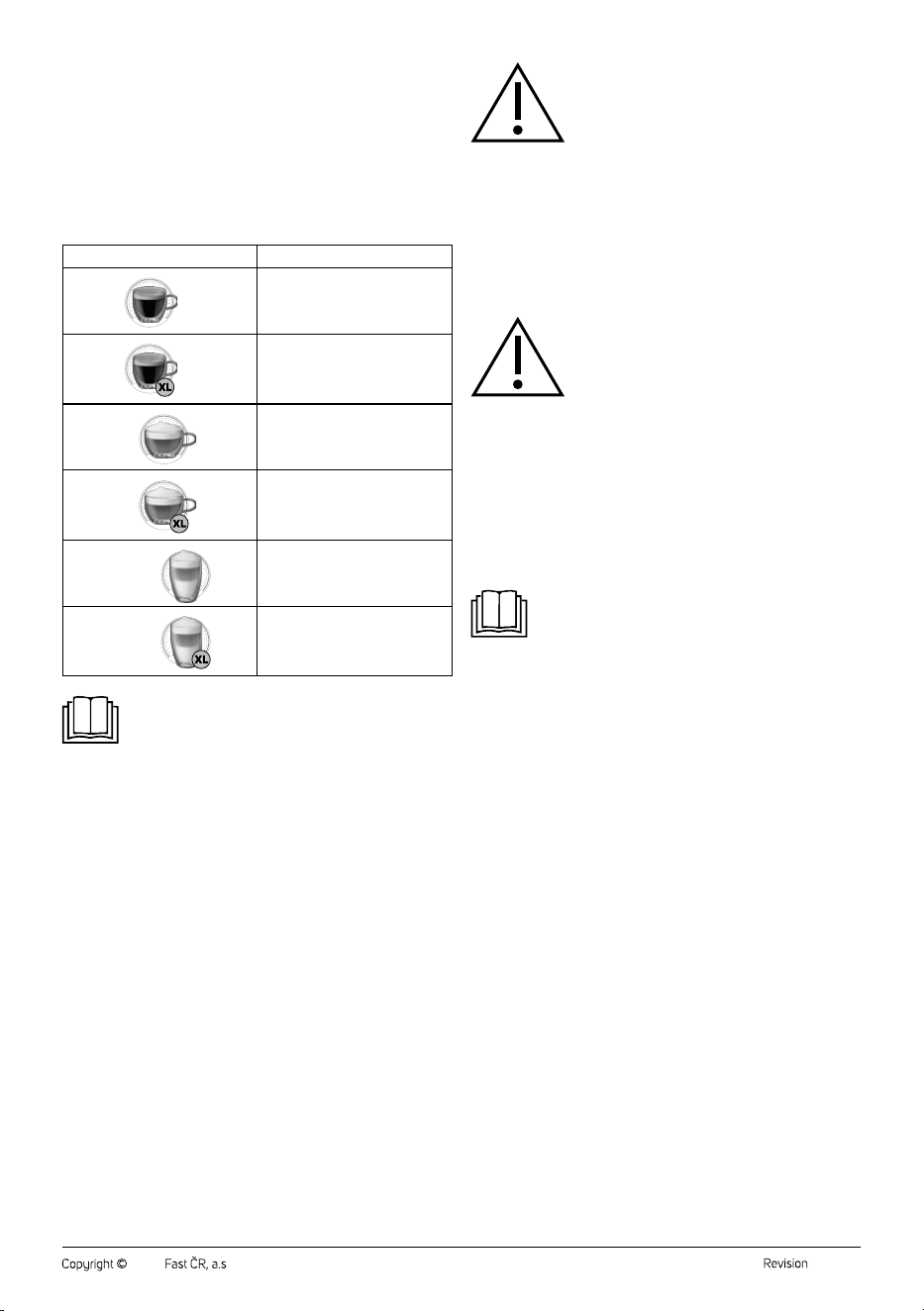
Overview of Coffee Drinks
Coffee drink Volume
Espresso
45 ml ± 20 %
Espresso
80 ml ± 20 %
Cappuccino
100 ml ± 20 % (coffee: 45 ml,
milk foam: 55 ml)
Cappuccino
200 ml ± 20 % (coffee: 80 ml,
milk foam: 120 ml)
Latte macchiato
150 ml ± 20 % (coffee: 45 ml,
milk foam: 105 ml)
Latte macchiato
250 ml ± 20 % (coffee: 80 ml,
milk foam: 170 ml)
Note:
The resulting volume of the coffee drink may differ
dependingon the type of milk and the set volume of hot milk
/ milk foam.
Coffee Making Tips
• We recommend using fresh roasted andground coffee beans. Coffee
beans should be ground to the level suitable for espresso machines.
Grind the coffee beans just before brewing coffee.
• If the ground coffee is too fine, water will not flow through the coffee
even under high pressure. Such finely ground coffee resembles
powder and feels like salt when rubbed between fingers.
• If the ground coffee is too coarse, water flows through the coffee too
quickly and the full flavour is not extracted. Make sure t use a quality
grinder for consistent grind size.
• Store coffee beans / ground coffee in an air-tight container in a cool
anddark place. Store them for a maximum of 4 weeks.
• Do not store coffee beans / ground coffee in thefridge or freezer.
Automatic Shutdown
• The coffee machine automatically turns off after 25 minutes of
inactivity.
. . . . . . . . . . . . . . . . . . . . . . . . . . . . . . . . . . . . . . . . . . . . . . . . . . . . . . . . . . . . . . . . . . . .
CLEANING AND MAINTENANCE
• Before cleaning, set the main switch to the 0 position (off), unplug the
power cable from the power socket and allow the appliance to cool
down properly.
• Do not use abrasive cleaning agents, solvents, or any substances to
clean any parts of the appliance that could damage the surface of the
appliance.
Warning:
To prevent the risk of electric shock, do not immerse
the appliance, power cable, or plug into water or any
other liquid.
Cleaning the Filter, Portafilter and Brew Head
The filter and portafilter must be thoroughly cleaned after each use.
1. Remove the portafilter with the used coffee from the brew head.
Dispose of the coffee grounds in the compost or in regular municipal
waste. If the coffee grounds are difficult to remove from the filter, use
a table knife or spoon.
2. Remove the filter from the portafilter by rotating the filter in
theportafilter so that the protrusion on the filter is aligned with the
hole in theportafilter. Then pull it out of theportafilter.
Warning:
Take extra care as the coffee grounds, filter and
portafilter are very hot after use. There is a risk of
burns.
1. Rinse the filter and portafilter under warm running water and wipe
them dry with a clean cloth.
2. Wipe the bottom of the brew head with a damp cloth to remove
ground coffee residues.
3. Insert the portafilter (without the filter) into the brew head.
4. Turn on the coffee machine andlet it heat up. Place a cup/bowl
under the portafilter.
5. Press the button to make a single Espresso andlet the coffee
machine complete the brewing. This will clean the brew head
andremove any ground coffee residues.
6. Remove andrinse the portafilter.
Note:
Place the portafilter and filters on the heating plate so that
they are preheated and ready for the next use.
Cleaning the Drip Tray
• The drip tray needs to be emptied and washed after each use of the
appliance.
• First, remove the grid from the tray and then pour out the water. Wash
the tray and grid in warm water with a neutral dishwashing detergent.
Rinse both parts under running water, dry them, and place them back
in their positions.
Cleaning the Water Tank
• Open the lid of the water tank. Grasp the tank by the handle and lift
it upwards.
• Pour out the remaining water.
• Rinse it with clean water and a small amount of neutral dishwashing
detergent. Then thoroughly rinse with clean water, dry, and place it
back into the coffee machine.
• Wash the water tank lid in warm water with a little kitchen detergent.
Rinse and wipe dry.
Cleaning the Outer Case
• Wipe the outer surface of the appliance with a slightly damp cloth
and dry it.
Cleaning the Milk Container
1. To remove the milk container from the coffee machine, grasp it
from underneath and pull the bottom part upwards from the coffee
machine (Figure C1). This will release the connectors at the back,
allowing you to pull out the entire container from the coffee machine
(Figure C2).
2. Remove the lid of the container andpour the remaining milk into a
suitable container.
3. Fill the milk container with clean water up to the MAX line.
4. Ensure that the milk tube is inserted in the lower part of the lid and
place the lid on the container. Press gently until you hear a click.
This indicates proper attachment.
- 7 -
03/2024
2024, .
5. Attach the assembled container to the coffee machine at a slight
angle (Figure C3) until the connectors at the back of the lid fit into
the inlet holes in the coffee machine. Then place the bottom of
the container on the base and push it towards the coffee machine
(Figure C4).
6. Place a larger cup/bowl under the brew head and direct the milk
dispensing nozzle into the cup/bowl.
7. Press the button to brew Cappuccino XL or Latte XL. The coffee
machine begins to release hot steam through the milk dispensing
nozzle.
8. Adjust the milk foam volume using the control knob as needed.
9. Repeat steps 5 to 8 until clean water flows out of the milk dispensing
nozzle.
10. Remove the milk container from the coffee machine and pour out
the water.
11. Wash the milk container and tube in warm water with a little kitchen
detergent. Wipe the lid of the container with a slightly damp sponge.
Wipe dry with a clean cloth.
Note: The milk container can be washed in thedishwasher
inthe top rack. However, do not insert the lid or tube.
. . . . . . . . . . . . . . . . . . . . . . . . . . . . . . . . . . . . . . . . . . . . . . . . . . . . . . . . . . . . . . . . . . . .
DESCALING
• Mineral deposits from water can accumulate in the internal circuit of
the coffee machine with regular use. It is a natural process. Therefore,
regular descaling is necessary. Mineral deposits can adversely affect
the taste of the coffee being brewed.
• We recommend using descaling agents for coffee machines that are
commonly available in the sales network.
• We recommend descaling the coffee machine when you notice an
extended time required for preparing Espresso, excessive steam
formation, or visible white deposits on the surface of the brew head.
The frequency of descaling depends on the hardness of the water
used. Thefollowing table shows the recommended descaling
intervals.
Type of water Frequency of descaling
Soft water / filtered water Approximately every 80 to 100
coffees prepared
High water hardness Approximately every 40 to 50
coffees prepared
Descaling the Water Tank
1. Fill the water tank with a small amount of descaling agent.
2. Insert the water tank into the coffee machine andlet it sit overnight.
3. Remove the water tank and pour out the content.
4. Thoroughly rinse the water tank with clean water.
Descaling the Internal System
1. Make sure that you have descaled the water tank first according to
the instructions above.
2. Ensure that the main power switch is in position 0 (off), and the plug
of the power cable is disconnected from the power socket.
3. Fill the water tank with descaling agent.
4. Insert a filter into the portafilter (without coffee) and insert the
portafilter into the brew head.
5. Place a bowl (with a capacity of at least 350 ml) under the
portafilter.
6. Plug the power cable into the power socket and switch the main
power switch to position I (on).
7. Once the coffee machine heats up, press the Espresso button.
The heated descaling agent will flow through the coffee machine
andautomatically stop.
8. Fill the milk container with clean water and place it in the coffee
machine. Turn the milk foam volume control knob to the cleaning
position.
9. Direct the milk dispensing nozzle into the bowl.
10. Press the Cappuccino XL or Latte XL button to start the coffee
machine.
11. Let the coffee machine perform a cleaning cycle until it
automatically stops.
12. Repeat steps 7 to 11 until the water tank is empty.
13. When the water tank is empty, pour out the remaining vinegar
andfill the tank with clean water.
14. Repeat steps 7 to 11 until the water tank is completely empty. This
will remove any remaining traces of descaling agent andimpurities
from thecoffee machine.
Storage
• If you are not going to use the appliance for an extended period of
time, disconnect the plug from the power socket, allow the appliance
to cool down, and clean it according to the instructions in the
“Cleaning and Maintenance” section.
• Before storing, ensure that the appliance and all accessories are
thoroughly clean and dry.
• Store the appliance in a dry, clean, and well-ventilated place away
from extreme temperatures and out of the reach of children or pets.
. . . . . . . . . . . . . . . . . . . . . . . . . . . . . . . . . . . . . . . . . . . . . . . . . . . . . . . . . . . . . . . . . . . .
TROUBLESHOOTING
Problem Cause Solution
Coffee machine
cannot be turned
on.
The power cable
plug is incorrectly
inserted in the
power socket.
Connect the power plug to
the power socket properly.
Coffee is not
dispensing.
The water tank is
empty.
Refill the water tank.
The ground coffee is
too fine.
Adjust the grinding level
to coarser.
There is too much
ground coffee in
the filter.
Reduce the amount of
ground coffee.
The coffee machine
in not turned on.
Turn on the coffee
machine.
The ground coffee
in the filter is too
coarse.
Apply moderate force
when tamping.
The coffee flows
over the edge
of the portafilter
inserted in the
brew head.
The portafilter is not
properly inserted in
the brew head.
Turn the portafilter until
you feel resistance – the
handle of the portafilter is
perpendicular to the coffee
machine.
The edge of the filter
is dirty from ground
coffee residue.
After tamping, wipe the
ground coffee residue
offthe edge ofthe filter
andthe portafilter.
There is too much
ground coffee in
the filter.
Reduce the amount of
ground coffee.
The milk is not
adequately frothy
or does not flow
through the milk
dispensing nozzle.
Insufficient steam. Refill the water tank.
The milk is not cold
enough.
Allow the milk to cool to
approximately 5 °C.
The milk frothing
system is clogged.
Clean the milk container.
The coffee
dispenses too
quickly.
The ground coffee is
too coarse.
Adjust the grinding level
to finer.
There is too little
ground coffee in
the filter.
Increase the amount of
ground coffee.
The prepared
coffee is weak.
Single cup filter
was used for double
coffee preparation.
Use the double cup filter
tobrew double (XL) coffee.
The ground coffee is
too coarse.
Adjust the grinding level
to finer.
• If the problem is not listed in the table or if the problem persists, turn off
the coffee machine, disconnect it from the power source, and contact
an authorised service centre.
. . . . . . . . . . . . . . . . . . . . . . . . . . . . . . . . . . . . . . . . . . . . . . . . . . . . . . . . . . . . . . . . . . . .
- 8 -
03/2024
2024, .
TECHNICAL SPECIFICATIONS
Rated voltage range ............................................................................220−240 V~
Rated frequency ........................................................................................ 50−60 Hz
Rated input power ...........................................................................................1,350 W
Noise level ........................................................................................................75 dB(A)
The declared noise emission level of the appliance is 75 dB(A), which
represents a level A of acoustic power with respect to a reference acoustic
power of 1 pW.
We reserve the right to change the text and technical specifications.
. . . . . . . . . . . . . . . . . . . . . . . . . . . . . . . . . . . . . . . . . . . . . . . . . . . . . . . . . . . . . . . . . . . .
INSTRUCTIONS AND INFORMATION ON DISPOSAL OF
USED PACKAGING MATERIAL
Dispose of used packaging material in the designated waste disposal area
determined by the municipality.
DISPOSAL OF USED ELECTRICAL AND ELECTRONIC
EQUIPMENT
This symbol on the products or accompanying documents
indicates that used electrical and electronic products
should not be disposed of with regular municipal waste.
For proper disposal and recycling of these products, deliver
them to designated collection points. Alternatively, in some
European Union states or other European countries the
products can be returned to the local retailer when buying
an equivalent new product. By properly disposing of this
product, you help preserve valuable natural resources and contribute to
preventing potential negative impacts on the environment and human
health resulting from improper waste disposal. For further details, contact
your local authorities or the nearest collection point. Fines may be
imposed for improper disposal of this type of waste in accordance with
national regulations.
For Business Entities in European Union States
If you want to dispose of electric or electronic devices, ask your retailer or
supplier for the necessary information.
Disposal in Other Countries Outside the European Union
This symbol is valid in the European Union. To dispose of this product
elsewhere, request necessary information on the correct disposal method
from local authorities or your retailer.
This product complies with all the essential requirements of
the applicable EU directives.

FAST ČR, a.s.
U Sanitasu 1621
CZ-251 01 Říčany
www.sencor.eu