
Operating Instructions / Owner’s Manual
<Complete Guide>
Digital Camera
DC-S1M2
Please read these instructions carefully before using this product.
Register online at
http://shop.panasonic.com/support/register
(U.S. customers only)
DVQP3227ZC
F0525TN2115
A firmware update has been made available to improve camera capabilities and to
add functionality.
•
For details, refer to the “Firmware Update” pages.
2
About Operating Instructions
This document, “Operating Instructions / Owner’s Manual <Complete
Guide>”, includes detailed explanations of all the functions and operations
of the camera.
•
The external design and specifications of this product, as described in this
document, may differ from the actual product.
•
Illustrations used in this document may differ from the actual product and the actual
images displayed on the product.
•
Images used in this document are sample pictures used to explain the functions and
effects.
Symbols Used in This Document
Black icons show conditions in which functions can be used, and gray icons show
conditions in which functions cannot be used.
Example:
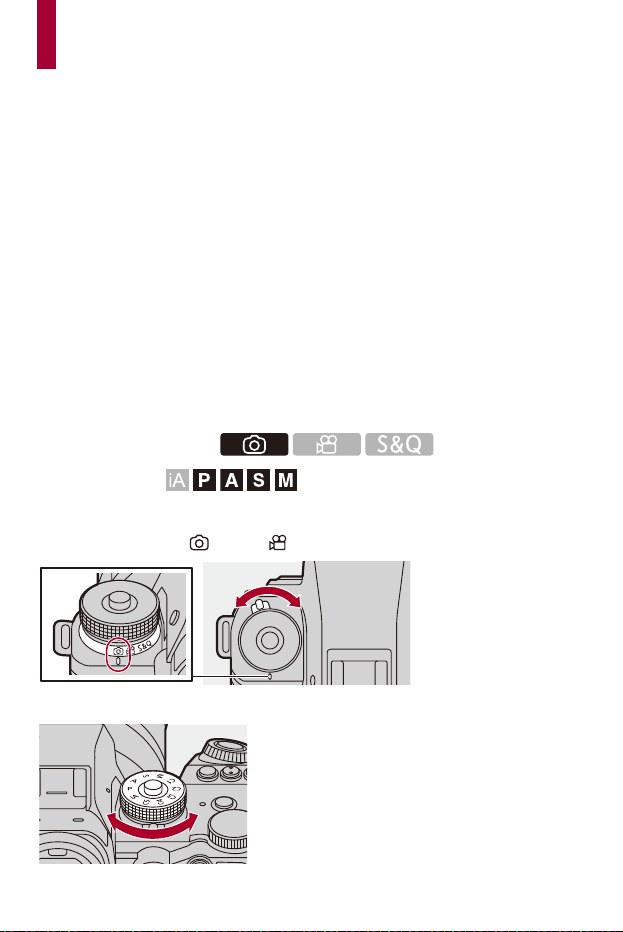
Photo/Video/S&Q mode
Recording mode
Use the photo/video/S&Q switch to switch between the photo, video and S&Q modes.
•
These are shown as [ ] mode, [ ] mode, and [S&Q] mode in this document.
Use the mode dial to switch the recording mode.
About Operating Instructions
3
Operating symbols
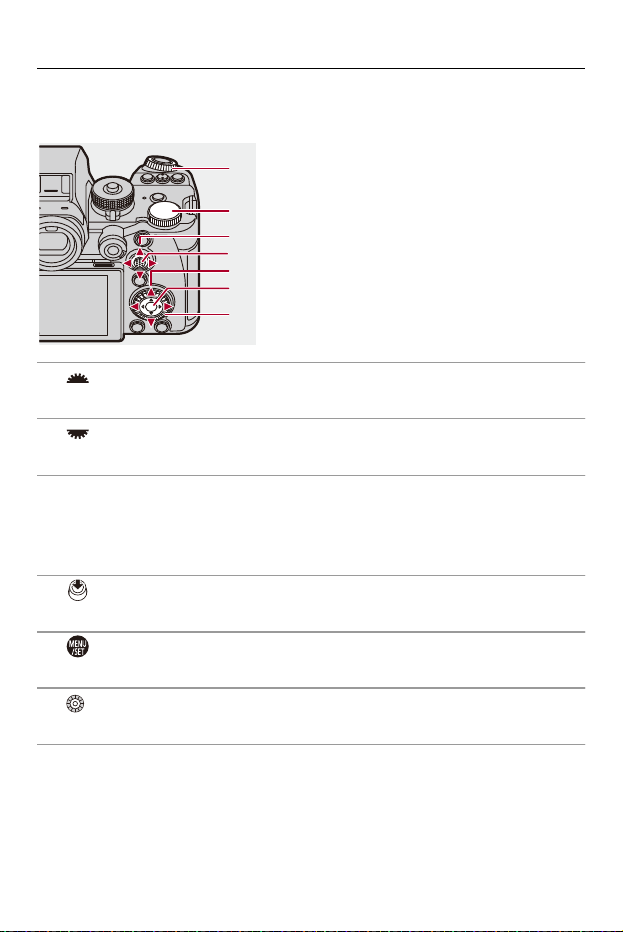
In this document, camera operation is explained using the following symbols:
(A) :
Front dial
(B) :
Rear dial
(C) 3421:
Cursor button up/down/left/right
or
Joystick up/down/left/right
(D) :
Press the center of the joystick
(E) :
[MENU/SET] button
(F) :
Control dial
(A)
(B)
(C)
(C)
(D)
(E)
(F)
About Operating Instructions
4
•
Other symbols, such as icons shown on the camera screen, are also used in
explanations.
•
This document describes the procedure for selecting menu items as follows:
Example) Set [JPEG/HEIF Picture Quality] of the [Photo] ([Image Quality]) menu to
[STD.].
[] [] [JPEG/HEIF Picture Quality] Select [STD.]
Notification classification symbols
In this document, notifications are classified and described using the following
symbols:
: To confirm prior to using the function
: Hints for better use of the camera and tips for recording
: Notifications and supplementary items regarding specifications
: Related functions and information
•
Description in this document is based on the interchangeable lens (S-R24105).

5
Contents
About Operating Instructions 2
Introduction 19
Before Use.................................................................................20
Standard Accessories................................................................23
Lenses That Can Be Used.........................................................25
Memory Cards That Can Be Used.............................................26
Names of Parts ..........................................................................29
Camera.............................................................................................. 29
Supplied Lens.................................................................................... 37
Viewfinder/Monitor Displays .............................................................. 39
Getting Started 42
Attaching a Shoulder Strap........................................................43
Charging the Battery..................................................................45
Charging with the Charger ................................................................ 46
Battery Insertion ................................................................................ 49
Inserting a Battery into the Camera for Charging .............................. 51
Using the Camera While Supplying It with Power
(Supplying Power/Charging).............................................................. 54
Notifications Regarding Charging/Power Supply............................... 56
[Power Save Mode] ........................................................................... 58
Inserting Cards (Optional)..........................................................61
Attaching a Lens........................................................................64
Attaching a Lens Hood ...................................................................... 67
Adjusting the Monitor Direction and Angle.................................70
Setting the Clock (When Turning On for the First Time)............73

Contents
6
Basic Operations 77
How to Hold the Camera ...........................................................78
Photo/Video/S&Q Switch ...........................................................80
Selecting the Recording Mode...................................................81
Camera Setting Operations .......................................................83
Monitor/Viewfinder Display Settings ..........................................90
Setting the Viewfinder ....................................................................... 90
Switching Between the Monitor and Viewfinder ................................ 91
Switching the Display Information ..................................................... 94
Quick Menu................................................................................97
Control Panel .............................................................................99
Menu Operation Methods ........................................................102
[Reset] ............................................................................................. 107
Entering Characters.................................................................108
Intelligent Auto Mode...............................................................109
Recording Using Touch Functions...........................................115
Touch AF/Touch Shutter ................................................................. 115
Touch AE......................................................................................... 118
Taking Pictures 120
Basic Picture Operations .........................................................121
[Aspect Ratio] ..........................................................................124
[Picture Size]............................................................................126
[Rec. File Format(Photo)] ........................................................128
[Switch JPEG/HEIF].................................................................131
[JPEG/HEIF Picture Quality]....................................................133

Contents
7
Recording Videos 134
Basic Video Operations ...........................................................135
[System Frequency].................................................................146
[Rec. File Format(Video)].........................................................148
[Rec Quality] ............................................................................150
RAW Video Recording.............................................................173
Proxy Recording ......................................................................175
[Image Area of Video]..............................................................180
Focus / Zoom 182
Selecting the Focus Mode .......................................................183
Using AF ..................................................................................185
[AF-Point Scope] ............................................................................. 190
[AF Custom Setting(Photo)] ............................................................ 192
[Focus Limiter]................................................................................. 195
[AF Assist Light] .............................................................................. 197
[Focus Frame Moving Speed] ......................................................... 198
[AF Micro Adjustment] ..................................................................... 199
Selecting the AF Mode ............................................................203
Automatic Detection ........................................................................ 206
[Tracking]......................................................................................... 212
[Full Area AF] .................................................................................. 214
[Zone(Horizontal/Vertical)]/[Zone].................................................... 217
[1-Area+]/[1-Area]............................................................................ 219
[Pinpoint] ......................................................................................... 221
AF Area Operations .................................................................223
Move the Position of the AF Area.................................................... 223
Changing the Size of the AF Area ................................................... 226
Resetting the AF Area ..................................................................... 227

Contents
8
Focus on and Adjust Brightness for the Touched Position
([AF+AE])......................................................................................... 228
Moving the AF Area Position with the Touch Pad ........................... 229
[Focus Switching for Vert / Hor]....................................................... 231
Record Using MF.....................................................................232
[Focus Peaking]............................................................................... 237
Recording with Zoom...............................................................239
[Crop Zoom(Photo)]......................................................................... 240
[Hybrid Zoom(Photo)] ...................................................................... 244
[Crop Zoom(Video)]......................................................................... 247
[Hybrid Zoom(Video)] ...................................................................... 252
Drive / Shutter / Image Stabilizer 256
Selecting the Drive Mode.........................................................257
Taking Burst Pictures...............................................................259
High Resolution mode .............................................................271
Recording with Time Lapse Shot.............................................276
Recording with Stop Motion Animation....................................283
Time Lapse Shot/Stop Motion Animation Videos ....................287
Recording Using the Self-timer................................................289
Bracket Recording ...................................................................293
[Live View Composite] .............................................................301
[Silent Mode]............................................................................305
[Shutter Type] ..........................................................................307
[Long Exposure NR] ........................................................................ 311
[Synchro Scan(Photo)] .................................................................... 312
[Min. Shutter Speed]........................................................................ 314
[Shutter Delay]................................................................................. 315
Image Stabilizer.......................................................................316

Contents
9
Image Stabilizer Settings................................................................. 319
Metering / Exposure / ISO Sensitivity 327
[Metering Mode].......................................................................328
Program AE Mode ...................................................................330
Program Shift .................................................................................. 332
Aperture-Priority AE Mode.......................................................334
Shutter-Priority AE Mode .........................................................337
Manual Exposure Mode...........................................................340
Available Shutter Speeds (Sec.) ..................................................... 343
[B] (Bulb) ......................................................................................... 345
Preview Mode ..........................................................................346
Exposure Compensation .........................................................348
[i.Dynamic Range] ........................................................................... 351
[Multiple Exposure] ..................................................................352
Locking Focus and Exposure (AF/AE Lock) ............................354
ISO Sensitivity .........................................................................356
[Dual Native ISO Setting] ................................................................ 361
[ISO Sensitivity (photo)]................................................................... 363
White Balance / Image Quality 364
White Balance (WB) ................................................................365
Adjusting the White Balance ........................................................... 371
[Photo Style] ............................................................................373
[Filter Settings].........................................................................388
[Simultaneous Record w/o Filter]..................................................... 393
[REAL TIME LUT] ....................................................................394
[LUT Library] ............................................................................396
Base Photo Style of LUT files.......................................................... 401

Contents
10
HLG Recording (HEIF Format) ................................................403
Lens Compensation.................................................................405
[Vignetting Comp.]........................................................................... 405
[Color Shading Compensation] ....................................................... 406
[Diffraction Compensation] .............................................................. 410
Flash 411
Using an External Flash...........................................................412
Removing the Hot Shoe Cover........................................................ 412
Setting Flash............................................................................414
[Flash Mode].................................................................................... 415
[Firing Mode]/[Manual Flash Adjust.] ............................................... 418
[Flash Adjust.].................................................................................. 420
[Flash Synchro] ............................................................................... 421
[Auto Exposure Comp.] ................................................................... 423
Recording Using a Wireless Flash...........................................424
Video Settings 431
Displays Suited to Video Recording ........................................432
[Photo/Video Separate Setting] ...............................................433
Using AF (Video) .....................................................................434
[AFS Behavior in Video Mode] ........................................................ 435
[AF Custom Setting(Video)]............................................................. 436
[Enlarged Live Display(Video)] ........................................................ 437
Video Brightness and Coloring ................................................439
[Luminance Level] ........................................................................... 439
[Master Pedestal Level]................................................................... 441
Recording While Controlling Overexposure (Knee)......................... 442
[ISO Sensitivity (video)] ................................................................... 444
[Dynamic Range Boost]................................................................... 445

Contents
11
Audio Settings..........................................................................446
[Sound Rec Level Disp.].................................................................. 447
[Mute Sound Input] .......................................................................... 448
[Sound Rec Gain Level] .................................................................. 449
[Sound Rec Level Adj.].................................................................... 450
[Sound Rec Quality] ........................................................................ 451
[Sound Rec Level Limiter] ............................................................... 453
[Wind Noise Canceller].................................................................... 454
[Audio Information] .......................................................................... 455
External Microphones (Optional) .............................................456
Setting the Sound Pickup Range (DMW-MS2: Optional) ................ 459
Reduction of Wind Noise................................................................. 460
XLR Microphone Adaptor (Optional)........................................461
[4ch Audio Recording] ..................................................................... 464
Headphones ............................................................................466
[Sound Monitoring Channel] ............................................................ 468
Time Code ...............................................................................470
Setting the Time Code..................................................................... 471
Synchronizing the Time Code with an External Device...........473
Preparations for Time Code Synchronization.................................. 473
Synchronize the Time Code of the Camera with
That of the External Device (TC IN) ................................................ 476
Main Assist Functions..............................................................478
[Flicker Decrease (Video)]............................................................... 479
[SS/Gain Operation] ........................................................................ 480
[Shutter Speed Limiter].................................................................... 482
[WFM/Vector Scope] ....................................................................... 484
[Luminance Spot Meter] .................................................................. 488
[Zebra Pattern] ................................................................................ 490
[False Color] .................................................................................... 492
[Frame Marker]................................................................................ 494

Contents
12
Color Bars/Test Tone ...................................................................... 496
Special Video Recording 498
Slow & Quick Video .................................................................499
High Frame Rate Video ...........................................................515
[Focus Transition] ....................................................................517
[Live Cropping].........................................................................522
Log Recording .........................................................................527
[Log View Assist] ............................................................................. 532
HLG Videos .............................................................................534
[HLG View Assist]............................................................................ 537
Anamorphic Recording ............................................................538
[Anamorphic Desqueeze Display] ................................................... 540
[Synchro Scan(Video)].............................................................542
[Loop Recording (video)] .........................................................544
[Segmented File Recording] ....................................................546
List of Recording Qualities That Enable Special Videos to be
Recorded .................................................................................547
HDMI Output (Video) 563
Connecting HDMI Devices.......................................................564
HDMI Output Image Quality.....................................................565
Images Output via HDMI ................................................................. 565
Settings for Down-Converting.......................................................... 568
HDMI Output Settings..............................................................576
Outputting the Camera Information Display via HDMI..................... 577
Outputting Control Information to an External Recorder ................. 578
Outputting Audio via HDMI.............................................................. 578
Outputting the Enlarged Live Display (Video) via HDMI.................. 579

Contents
13
Outputting as 4K/120p (4K/100p) via HDMI .................................... 580
[4K/120p Power Save Live View]
([4K/100p Power Save Live View]) .................................................. 581
Output of RAW Video Data......................................................582
Outputting RAW Video Data via HDMI ............................................ 584
Notes When Outputting RAW Video Data ....................................... 589
Using an External SSD (Commercially Available) 590
Compatible External SSDs ......................................................591
Connecting the External SSD ..................................................592
Formatting the External SSD ...................................................595
Notes About External SSDs.....................................................596
Playing Back and Editing of Images 598
Playing Back Pictures ..............................................................599
Playing Back Videos................................................................601
Video Repeat Playback ................................................................... 605
Extracting a Picture ......................................................................... 607
[Video Divide] .................................................................................. 608
Switching the Display Mode.....................................................610
Enlarged Display ............................................................................. 611
Thumbnail Screen ........................................................................... 613
Calendar Playback .......................................................................... 615
Group Images ..........................................................................616
Deleting Images.......................................................................618
[RAW Processing]....................................................................620
[HEIF to JPEG Conversion] .....................................................628
[Video Repair] ..........................................................................629
[Playback] Menu ......................................................................632

Contents
14
How to Select an Image(s) in the [Playback] Menu......................... 632
[Playback] ([Playback Mode]) .......................................................... 634
[Playback] ([Process Image])........................................................... 637
[Playback] ([Add/Delete Info.])......................................................... 638
[Playback] ([Edit Image]) ................................................................. 639
[Playback] ([Others])........................................................................ 644
Camera Customization 645
Fn Buttons ...............................................................................646
Register Functions to the Fn Buttons .............................................. 649
Use the Fn Buttons.......................................................................... 661
[Dial Operation Switch] ............................................................662
Register Functions to the Dials........................................................ 662
Temporarily Change Dial Operation ................................................ 664
Quick Menu Customization......................................................665
Register to the Quick Menu ............................................................. 665
Custom Mode ..........................................................................673
Register in Custom Mode................................................................ 674
Using Custom Mode........................................................................ 677
Calling Up Settings.......................................................................... 679
[Custom] Menu ........................................................................680
[Custom] menu ([Image Quality])..................................................... 681
[Custom] menu ([Focus/Shutter]) .................................................... 687
[Custom] menu ([Operation]) ........................................................... 694
[Custom] menu ([Monitor / Display (Photo)]) ................................... 701
[Custom] menu ([Monitor / Display (Video)]) ................................... 712
[Custom] menu ([IN/OUT])............................................................... 716
[Custom] menu ([Lens / Others]) ..................................................... 718
[Setup] Menu ...........................................................................723
[Setup] menu ([Card/File]) ............................................................... 724
[Setup] menu ([Monitor / Display]) ................................................... 730

Contents
15
[Setup] menu ([IN/OUT]) ................................................................. 735
[Setup] menu ([Setting]) .................................................................. 742
[Setup] menu ([Others])................................................................... 745
My Menu ..................................................................................749
Registration in My Menu.................................................................. 749
Edit My Menu .................................................................................. 750
List of Menu 751
[Photo] menu ...........................................................................752
[Video] menu............................................................................755
[Custom] menu ........................................................................758
[Setup] menu ...........................................................................762
[My Menu] ................................................................................765
[Playback] menu ......................................................................766
Wi-Fi / Bluetooth 767
Connecting to “LUMIX Lab” .....................................................769
Installing “LUMIX Lab” .................................................................... 770
Connecting to a Smartphone (Bluetooth Connection) ..................... 771
Using “LUMIX Lab” ..................................................................775
LUT Library Operations ................................................................... 775
[Remote shooting] ........................................................................... 777
[Shutter Remote Control]................................................................. 779
Sending Images on the Camera to a Smartphone with Simple
Operations....................................................................................... 781
[Transfer Photo / Video] .................................................................. 783
[Auto Transfer]................................................................................. 785
[Location Logging] ........................................................................... 788
Wi-Fi Connections ...................................................................790
[New connection]............................................................................. 790

Contents
16
Fn Button Assigned with [Wi-Fi] ...................................................... 793
[LAN / Wi-Fi] Menu ..................................................................794
Frame.io Camera to Cloud 797
Connecting with Frame.io ........................................................798
[Send Images to Frame.io] ......................................................803
[Upload Setup] .........................................................................804
Linking with “LUMIX Flow” 806
Connecting to “LUMIX Flow” ...................................................807
Installing “LUMIX Flow”................................................................... 808
Connecting to a Smartphone (Bluetooth Connection) ..................... 809
Connecting to a Smartphone (USB Connection)............................. 813
Using “ LUMIX Flow” ................................................................814
Streaming Function 815
Stream by Operating a Smartphone........................................816
Stream by Operating the Camera............................................820
Streaming Settings ..................................................................825
Notes When Using the Streaming Function.............................831
Notes When Using USB Tethering .................................................. 832
Connecting to Other Devices 833
Connecting...............................................................................834
Viewing on a TV.......................................................................836
Importing Images to a PC ........................................................840
Copying Images to a PC ................................................................. 841
Installing Software ........................................................................... 844
Using as a Web Camera for a PC ...........................................845

Contents
17
Storing on a Recorder..............................................................848
Tethered Recording .................................................................849
Installing Software ........................................................................... 850
Operating the Camera from a PC.................................................... 851
Using “LUMIX Tether” with a Wired LAN Connection..................... 852
Remote Control of Multiple Cameras .............................................. 854
Materials 857
Digital Camera Accessory System ..........................................858
Using Optional Accessories.....................................................859
Battery Grip (Optional) .................................................................... 860
Shutter Remote Control (Optional) .................................................. 862
Tripod Grip (Optional)...................................................................... 864
DC Coupler (Optional)..................................................................... 865
Monitor/Viewfinder Displays ....................................................866
Recording Screen............................................................................ 866
Playback Screen ............................................................................. 883
Message Displays....................................................................888
Troubleshooting .......................................................................892
Power, Battery................................................................................. 893
Recording ........................................................................................ 894
Video ............................................................................................... 899
Playback.......................................................................................... 899
Monitor/Viewfinder........................................................................... 900
Flash................................................................................................ 900
Wi-Fi Function ................................................................................. 901
TV, PC............................................................................................. 903
Others.............................................................................................. 904
Cautions for Use ......................................................................905

Contents
18
Number of Pictures That Can Be Taken and
Available Recording Time with the Battery ..............................917
Number of Pictures That Can Be Taken and
Video Recording Time According to Recording Media ............922
Continuous Recording Time for Video.....................................939
List of Default Settings/Custom Saving/
Settings Available for Copying.................................................941
List of Functions That Can Be Set in Each Recording Mode...970
Specifications...........................................................................979
Trademarks and Licenses .......................................................997


Introduction – Before Use
20
Before Use
Firmware of Your Camera/Lens
Firmware updates may be provided in order to improve camera capabilities or to add
functionality.
Make sure that the firmware of the camera/lens you purchased is the latest version.
We recommend using the latest firmware version.
•
To check the firmware version of the camera/lens, attach the lens to the camera and
select [Firmware Version] in the [Setup] ([Others]) menu. You can also update the
firmware in [Firmware Version]. ([Firmware Version]: 747)
•
For the latest information on the firmware or to download/update the firmware,
visit the following support site:
https://panasonic.jp/support/global/cs/dsc/download/index4.html
(English only)

Introduction – Before Use
21
Handling of the Camera
When using the camera, take care not to drop it, bump it, or apply undue force.
These may cause malfunction or damage to the camera and lens.
If sand, dust, or liquid gets on the monitor, wipe it off with a dry soft cloth.
– Touch operations may be incorrectly recognized.
When using in low temperatures (−10 oC to 0 oC (14 oF to 32 oF))
– Before use, attach a Panasonic lens with a minimum recommended operating
temperature of −10 oC (14 oF).
Do not place a hand inside the camera mount.
This may cause a failure or damage because the sensor is a precision device.
If you shake the camera while turning the camera off, a sensor may operate or a
rattling sound may be heard. This is caused by the image stabilizer mechanism
in the body. It is not a malfunction.
Splash Resistant
Splash Resistant is a term used to describe an extra level of protection this
camera offers against exposure to a minimal amount of moisture, water or dust.
Splash Resistant does not guarantee that damage will not occur if this camera is
subjected to direct contact with water.
In order to minimize the possibility of damage please be sure the following
precautions are taken:
– Splash Resistant works in conjunction with the lenses that were specifically
designed to support this feature.
– Securely close the doors, contact points cover, etc.
– When the lens or cap is removed or a door is open, do not allow sand, dust, and
moisture to enter inside.
– If liquid gets on the camera, wipe it off with a dry soft cloth.

Introduction – Before Use
22
Condensation (When the Lens, the Viewfinder or Monitor
is Fogged Up)
•
Condensation occurs when there are temperature or humidity differences. Take care
as this may lead to soiling, mold, and malfunctions in the lens, viewfinder, and
monitor.
•
If condensation occurs, turn off the camera and leave it for approx. 2 hours. The fog
will disappear naturally when the temperature of the camera becomes close to the
ambient temperature.
Be Sure to Perform Trial Recording in Advance
Perform trial recording in advance of an important event (wedding, etc.) to check that
recording can be performed normally.
No Compensation Regarding Recording
Please note that compensation cannot be provided in the event that recording could
not be performed due to a problem with the camera or a card.
Be Careful with Regard to Copyrights
Under copyright law, you may not use the images and audio you have recorded for
other than personal enjoyment without the permission of the copyright holder.
Be careful because there are cases where restrictions apply to recording even for the
purpose of personal enjoyment.
Also Read “Cautions for Use” (Cautions for Use: 905)

Introduction – Standard Accessories
23
Standard Accessories
Check that all the accessories are supplied before using the camera.
•
The accessories and their shape will differ depending on the country or area where
the camera was purchased.
For details on the accessories, refer to “Operating Instructions / Owner’s Manual
<Quick Start Guide>” (supplied).
*1 This is attached to the camera at the time of purchase.
≥Digital camera body
(This is referred to as camera in this document.)
≥Battery pack
(This is referred to as battery pack or battery in this document.)
•
Charge the battery before use.
≥Battery charger
(This is referred to as battery charger or charger in this document.)
≥Shoulder strap
≥Body cap
*1
≥Hot shoe cover
*1
≥Cover for the battery grip connector
*1

Introduction – Standard Accessories
24
*2 This is attached to the lens at the time of purchase.
•
The memory card is optional.
•
Consult the dealer or Panasonic if you lose the supplied accessories. (You can
purchase the accessories separately.)
Items Supplied with DC-S1M2M (Lens Kit Product)
≥35 mm full-frame interchangeable lens:
S-R24105 “LUMIX S 24-105mm F4 MACRO O.I.S.”
•
Dust and splash resistant
≥Lens hood
≥Lens cap
*2
≥Lens rear cap
*2

Introduction – Lenses That Can Be Used
25
Lenses That Can Be Used
The lens mount of this camera is compliant with the L-Mount standard of
Leica Camera AG.
It can be used with 35 mm full-frame interchangeable lenses and APS-C
size interchangeable lenses of this standard.
•
The interchangeable lenses used in the explanations are designated as follows in
this document.
– 35 mm full-frame interchangeable lens: full-frame lens
– APS-C-size interchangeable lens: APS-C lens
•
When there is no distinguishing the type of lens, the explanation will use lens.
•
Refer to catalogs/websites for information regarding supported lenses.
https://panasonic.jp/support/global/cs/dsc/connect/index.html
(English only)
•
The angle of view while recording with an APS-C lens is equivalent to the angle
of view of a focal length of 1.5× when converted to the focal length of a 35 mm
film camera. (If a 50 mm lens is used, the angle of view will be equivalent to a
75 mm lens.)
•
As the image area narrows, the following function is not available when using an
APS-C lens:
– High Resolution Mode
•
Attaching commercially available accessories that do not comply with the
L-Mount standard may lead to operation failure or malfunction of the camera.
– If a failure or malfunction occurs due to this cause, the warranty will be void.
Introduction – Memory Cards That Can Be Used
26
Memory Cards That Can Be Used
You can use CFexpress cards and SD memory cards with this camera.
The memory cards that can be used are described below (As of May
2025).
•
SD memory card, SDHC memory card, and SDXC memory card are referred to by
the generic name of SD card in this document.
•
When not differentiating between a CFexpress card and SD card, a card is referred
to as simply card.
•
For information on memory cards with confirmed operation, check the
following support site:
https://panasonic.jp/support/global/cs/dsc/connect/index.html
(English only)
Card slot 1: CFexpress card
Card slot 2: SD memory card
•
The camera supports UHS-I/UHS-II UHS Speed Class 3 standard and UHS-II Video
Speed Class 90 standard SD cards.
CFexpress card (CFexpress Ver.2.0 Type B) (64 GB to 2 TB)
SD memory card/SDHC memory card/SDXC memory card (Maximum 512 GB)
Introduction – Memory Cards That Can Be Used
27
SD Cards That Can Be Used with This Camera
When using the following functions, use cards that have the correct SD
Speed Class, UHS Speed Class, and Video Speed Class.
•
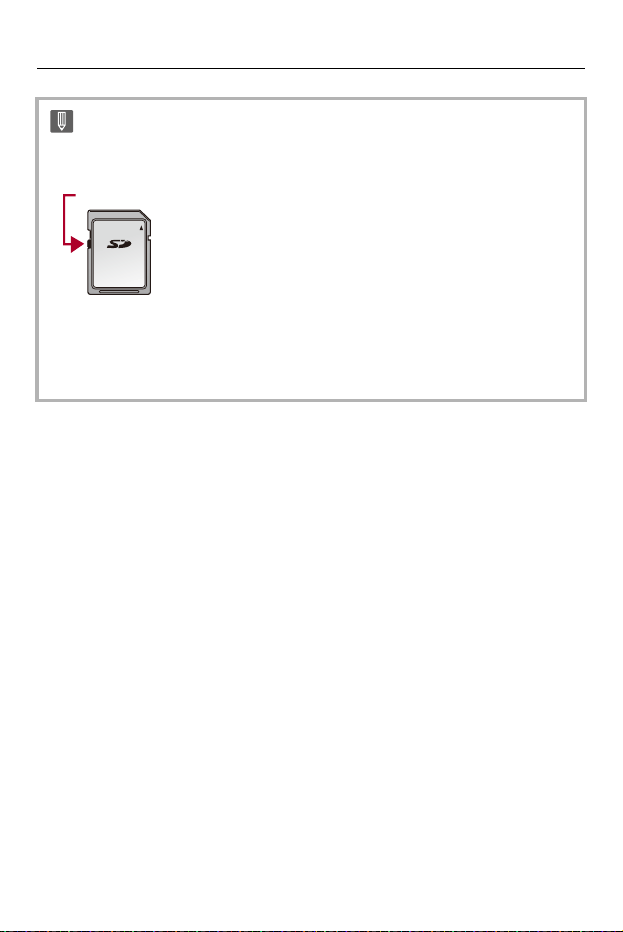
Speed classes are standards to guarantee the minimum speed necessary for
continuous writing.
[Video Record]
•
The following types of video cannot be recorded to SD cards. Use CFexpress cards.
– [MOV] video with bit rate of 800 Mbps or more
– [Apple ProRes] video with resolution other than FHD
– [Apple ProRes] video with a resolution of FHD and a recording frame rate of
120.00p/119.88p/100.00p
– Slow & Quick video with a recording quality with image compression system
ALL-Intra
Bit rate of the
recording quality
Speed Class
Example of
indication
72 Mbps or less
Class 10
UHS Speed Class 1 or higher
Video Speed Class 10 or higher
200 Mbps or less
UHS Speed Class 3
Video Speed Class 30 or higher
400 Mbps or less Video Speed Class 60 or higher
600 Mbps or less Video Speed Class 90
Introduction – Memory Cards That Can Be Used
28
•
You can prevent the writing and deleting of data by setting the write-protect
switch (A) on the SD card to “LOCK”.
•
The data stored on a card may be damaged due to electromagnetic waves, static
electricity or a failure of the camera or card. We recommend backing up
important data.
•
Keep the memory card out of reach of children to prevent swallowing.
(A)

Introduction – Names of Parts
30
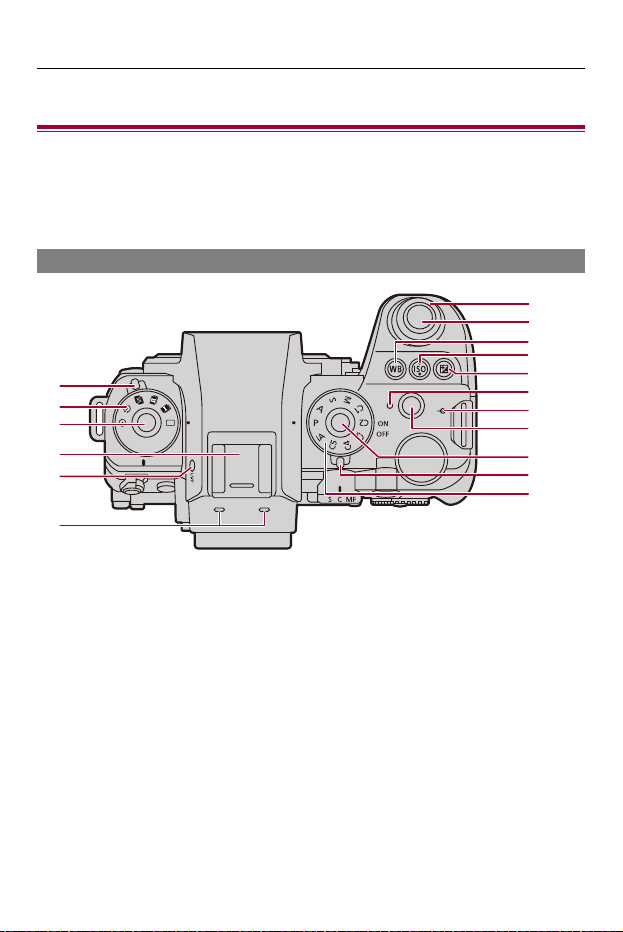
(1) Photo/Video/S&Q switch (Photo/Video/S&Q Switch: 80)
(2) Drive mode dial (Selecting the Drive Mode: 257)
(3) Drive mode dial lock button (Selecting the Drive Mode: 257)
(4) Hot shoe (hot shoe cover) (Removing the Hot Shoe Cover: 412)
•
Keep the hot shoe cover out of reach of children to prevent swallowing.
(5) [LVF] button (Switching Between the Monitor and Viewfinder: 91)
(6) Stereo microphone (Audio Settings: 446)
•
Do not block the microphone with a finger. Audio will be difficult to record.
(7) Front dial (Front Dial/Rear Dial: 84)
(8) Shutter button (Basic Picture Operations: 121)
(9) [WB] (White balance) button (White Balance (WB): 365)
(10) [ISO] (ISO sensitivity) button (ISO Sensitivity: 356)
(11) [ ] (Exposure compensation) button (Exposure Compensation: 348)
(12) Charging light (Charging Light Indications: 52)/
Network connection light (Checking operation of the Wi-Fi and Bluetooth
functions: 767)
(13) [ ] (Recording distance reference mark) (Operations on the MF Assist
Screen: 234)
(14) Video rec. button (Basic Video Operations: 135)
(15) Mode dial lock button (Selecting the Recording Mode: 81)
(16) Camera on/off switch (Setting the Clock (When Turning On for the First Time):
73)
(17) Mode dial (Selecting the Recording Mode: 81)
Introduction – Names of Parts
31
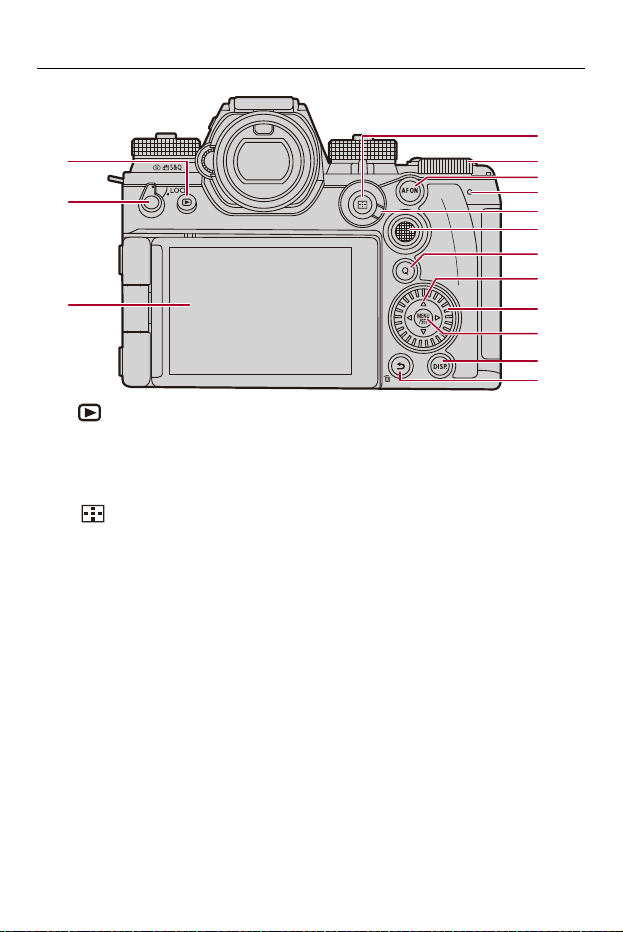
(18) [ ] (Playback) button (Playing Back and Editing of Images: 598)
(19) Operation lock lever (Operation Lock Lever: 89)
(20) Monitor (Viewfinder/Monitor Displays: 39, Monitor/Viewfinder Displays: 866)/
Touch screen (Touch Screen: 87)
(21) [ ] (AF mode) button (Selecting the AF Mode: 203)
(22) Rear dial (Front Dial/Rear Dial: 84)
(23) [AF ON] button ([AF ON] button: 187)
(24) Rear tally lamp (Basic Video Operations: 135)/
Rear card access light (Card Access Indications: 62)
(25) Focus mode lever (Selecting the Focus Mode: 183, Using AF: 185, Record
Using MF: 232)
(32)
(31)
(30)
(29)
(28)
(27)
(26)
(24)
(23)
(22)
(25)
(21)
(20)
(19)
(18)

Introduction – Names of Parts
32
(26) Joystick (Joystick: 86)/
Fn buttons (Fn12 to Fn16) (Fn Buttons: 646)
(27) [Q] (Quick menu) button (Quick Menu: 97)
(28) Cursor buttons (Cursor Buttons: 85)/
Fn buttons (Fn8 to Fn11) (Fn Buttons: 646)
(29) Control dial (Control Dial: 84)
(30) [MENU/SET] button ([MENU/SET] Button: 85, Menu Operation Methods: 102)
(31) [DISP.] button (Switching the Display Information: 94)
(32) [ ] (Cancel) button (Menu Operation Methods: 102)/
[ ] (Delete) button (Deleting Images: 618)/
Fn button (Fn1) (Fn Buttons: 646)
Introduction – Names of Parts
33
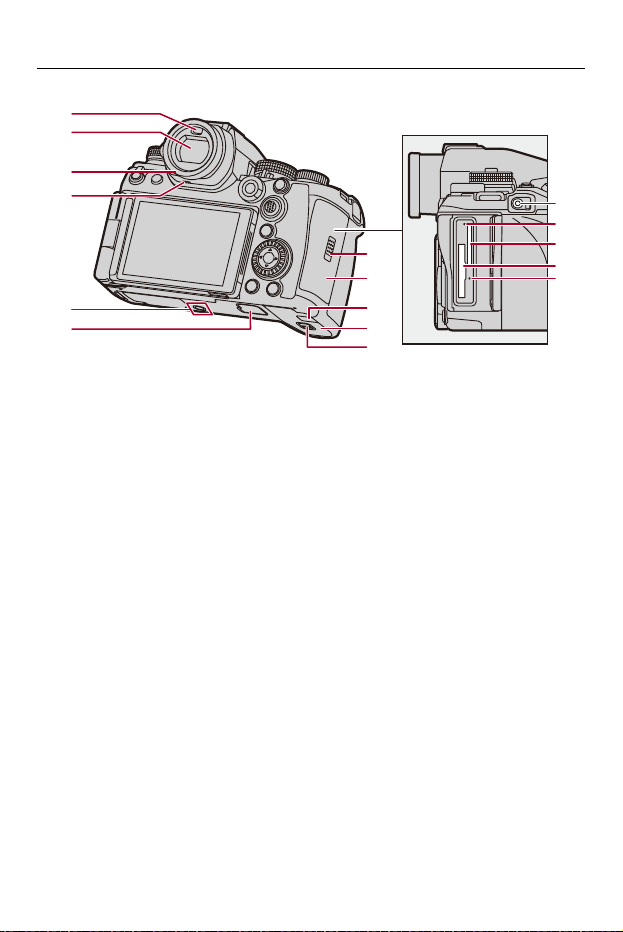
(33) Eye sensor (Switching Between the Monitor and Viewfinder: 91)
(34) Viewfinder (Viewfinder/Monitor Displays: 39, Switching Between the Monitor
and Viewfinder: 91, Monitor/Viewfinder Displays: 866)
(35) Eye cup (Cleaning the Viewfinder: 908)
•
Keep the eye cup out of reach of children to prevent swallowing.
(36) Speaker ([Beep]: 735)
(37) Tripod mount (Tripod: 915)
•
If you attempt to attach a tripod with a screw length of 5.5 mm (0.22 inch) or
more, you may not be able to securely fix it in place or it may damage the
camera.
(38) Battery grip connector (cover for the battery grip connector) (Battery Grip
(Optional): 860)
•
Keep the cover for the battery grip connector out of reach of children to prevent
swallowing.
(41)
(40)
(39)
(42)
(43)
(33)
(37)
(38)
(44)
(48)
(45)
(47)
(36)
(35)
(46)
(34)

Introduction – Names of Parts
34
(39) [REMOTE] socket (Shutter Remote Control (Optional): 862)
(40) Card access light 2 (Card Access Indications: 62)
(41) Card slot 2 (Inserting Cards (Optional): 61)
(42) Card slot 1 (Inserting Cards (Optional): 61)
(43) Card access light 1 (Card Access Indications: 62)
(44) Card door lock lever (Inserting Cards (Optional): 61)
(45) Card door (Inserting Cards (Optional): 61)
(46) DC Coupler cover (DC Coupler (Optional): 865)
(47) Battery door (Battery Insertion: 49)
(48) Battery door release lever (Battery Insertion: 49)
Introduction – Names of Parts
35
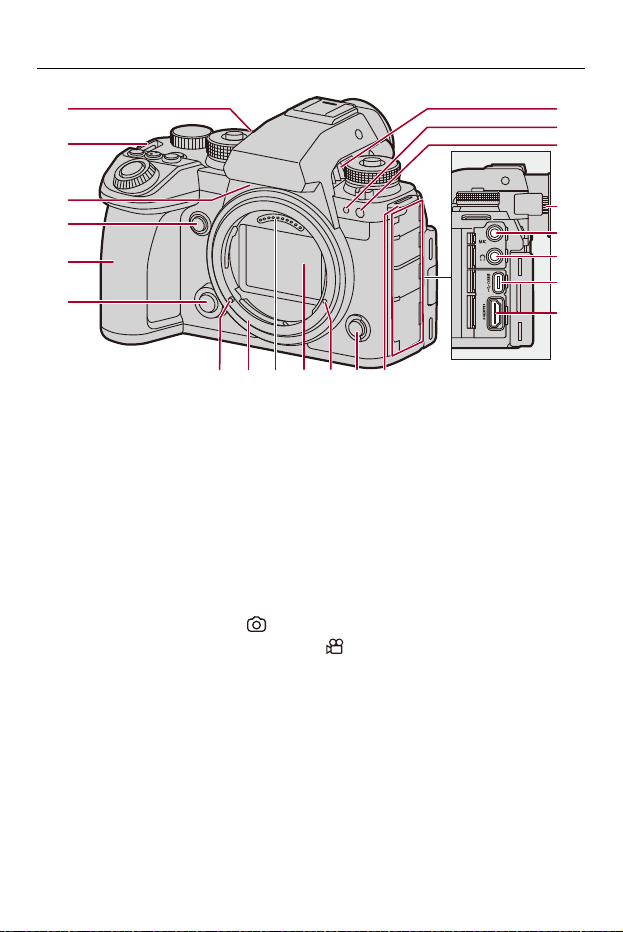
(49) Fan outlet ([Fan Mode]: 717)
•
The fan outlet for the cooling fan.
•
Do not obstruct this unit’s ventilation openings with newspapers, tablecloths,
curtains, and similar items.
(50) Shoulder strap eyelet (Attaching a Shoulder Strap: 43)
(51) Fan inlet ([Fan Mode]: 717)
•
The fan inlet for the cooling fan.
•
Do not obstruct this unit’s ventilation openings with newspapers, tablecloths,
curtains, and similar items.
(52) AF-Point Scope button (in [ ] mode) ([AF-Point Scope]: 190)/
Enlarged live display (video) button (in [ ]/[S&Q] mode) ([Enlarged Live
Display(Video)]: 437)/
Fn button (Fn2) (Fn Buttons: 646)
(53) Grip
(54) Lens release button (Removing a Lens: 66)
(52)
(53)
(54)
(64)(63) (67)
(55)
(49)
(50)
(56)
(62) (66)(65)
(50)
(51)
(49)
(61)
(60)
(59)
(58)
(57)

Introduction – Names of Parts
36
(55) Front tally lamp (Basic Video Operations: 135)
(56) Self-timer light (Recording Using the Self-timer: 289)/
AF assist light ([AF Assist Light]: 197)
(57) Diopter adjustment dial (Adjusting the Viewfinder Diopter: 90)
(58) [MIC] socket (External Microphones (Optional): 456)
(59) Headphone socket (Headphones: 466)
•
Excessive sound pressure from earphones and headphones can cause
hearing loss.
(60) USB port (Inserting a Battery into the Camera for Charging: 51, Connecting
the External SSD: 592, Connecting with Frame.io: 798, Connecting to “LUMIX
Flow”: 807, Streaming Function: 815, USB port: 835, Using as a Web Camera for
a PC: 845, Using “LUMIX Tether” with a Wired LAN Connection: 852)
(61) HDMI socket (Connecting HDMI Devices: 564, Output of RAW Video Data:
582, HDMI socket: 834)
(62) Lens lock pin (Lens fitting mark) (Attaching a Lens: 64)
(63) Mount
(64) Contact points
(65) Sensor
(66) Screw hole for function expansion
(67) Sub video rec. button (Basic Video Operations: 135)
Introduction – Names of Parts
37
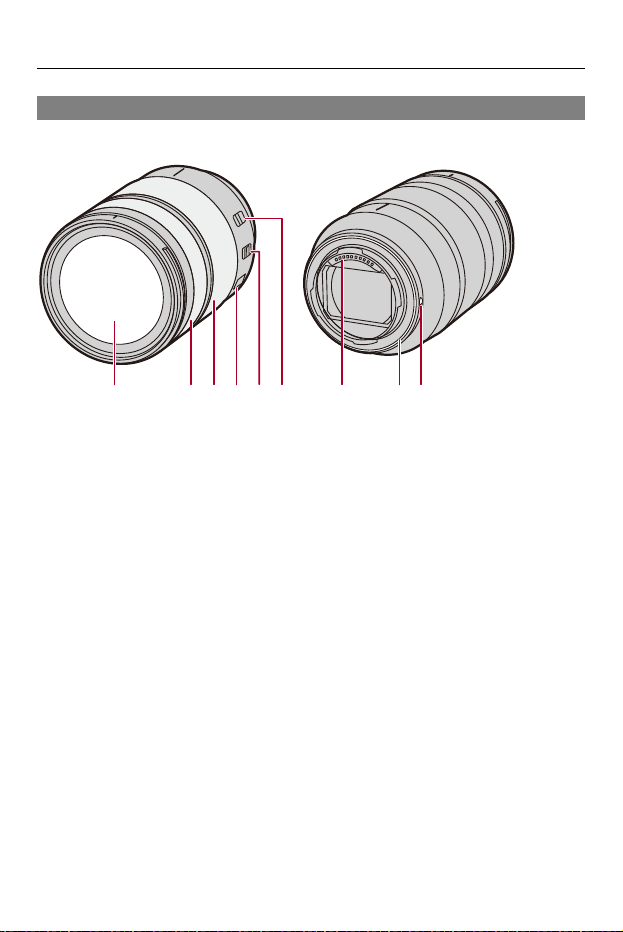
Supplied Lens
S-R24105
(4)
(6) (7)(1) (2) (3) (5) (8) (9)

Introduction – Names of Parts
38
(1) Lens surface
(2) Focus ring (Record Using MF: 232)
(3) Zoom ring (Recording with Zoom: 239)
(4) O.I.S. switch (Image Stabilizer: 316)
(5) [AF/MF] switch (Using AF: 185, Record Using MF: 232)
•
You can switch between AF and MF.
If [MF] is set on either the lens or camera, operation will be with MF.
(6) Zoom lock switch
•
When you set the focal length to 24 mm and set the switch to [LOCK], the
zoom ring is locked.
(7) Contact points
(8) Lens mount rubber
(9) Lens fitting mark (Attaching a Lens: 64)
Introduction – Names of Parts
39
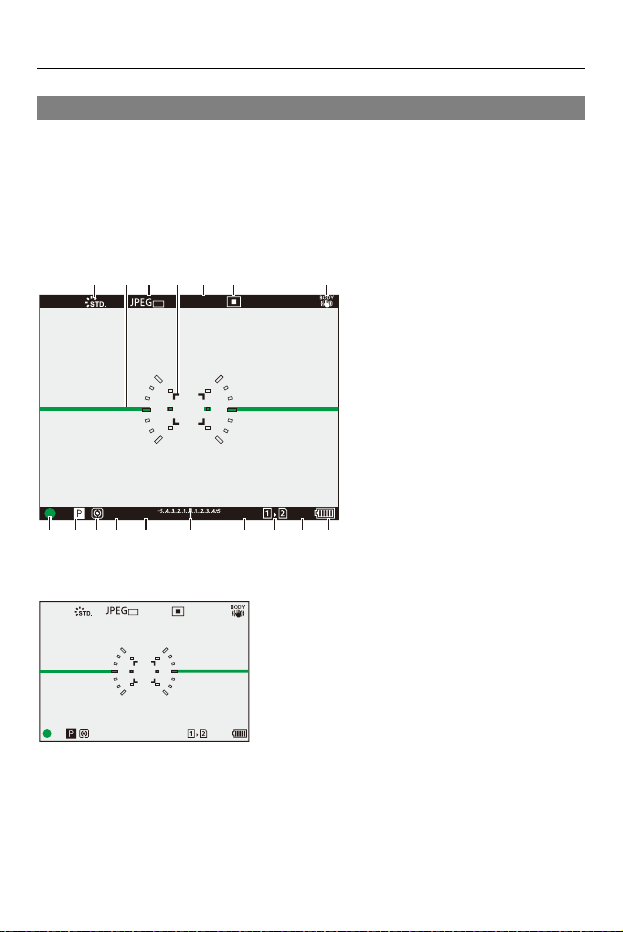
Viewfinder/Monitor Displays
At the time of purchase, the viewfinder/monitor displays the following
icons.
•
For information about the icons other than those described here (Monitor/
Viewfinder Displays: 866)
Viewfinder
Monitor
999
ISO100
F
3.560
L
FINE
AFSAFS
(8) (9)(10)(11) (12) (13) (14) (15) (16)(17)
(1) (2) (4)(3) (5) (6) (7)
999
ISO
100F3.560
±
0
AFSAFS
L
FINE

Introduction – Names of Parts
40
(1) Photo Style ([Photo Style]: 373)
(2) Level gauge ([Level Gauge]: 710)
(3) Rec. file format (photo) ([Rec. File Format(Photo)]: 128)/
JPEG/HEIF picture quality ([JPEG/HEIF Picture Quality]: 133)/
Picture size ([Picture Size]: 126)
(4) AF area (AF Area Operations: 223)
(5) Focus mode (Selecting the Focus Mode: 183, Using AF: 185, Record Using
MF: 232)
(6) AF mode (Selecting the AF Mode: 203)
(7) Image stabilizer (Image Stabilizer: 316)
(8) Focus (green) (Basic Picture Operations: 121, Using AF: 185)/
Recording state (red) (Basic Video Operations: 135, High Resolution mode:
271)
(9) Photo/Video/S&Q mode (Photo/Video/S&Q Switch: 80)/
Recording mode (Selecting the Recording Mode: 81)
(10) Metering mode ([Metering Mode]: 328)
(11) Shutter speed (Basic Picture Operations: 121, Shutter-Priority AE Mode: 337)
(12) Aperture value (Basic Picture Operations: 121, Aperture-Priority AE Mode:
334)
(13) Exposure compensation value (Exposure Compensation: 348)/
Manual Exposure Assist (Manual Exposure Assist: 342)
Introduction – Names of Parts
41
(14) ISO sensitivity (ISO Sensitivity: 356)
(15) Card slot (Inserting Cards (Optional): 61)/
Double card slot function ([Double Card Slot Function]: 725)
(16) Number of pictures that can be taken (Number of Pictures That Can Be Taken
and Video Recording Time According to Recording Media: 922)/
Number of pictures that can be taken continuously (Number of Pictures That
Can Be Taken Continuously: 266)
(17) Battery indication (Power Indications: 56)
•
Press [ ] to switch between display/hide of the level gauge.

Getting Started – Attaching a Shoulder Strap
43
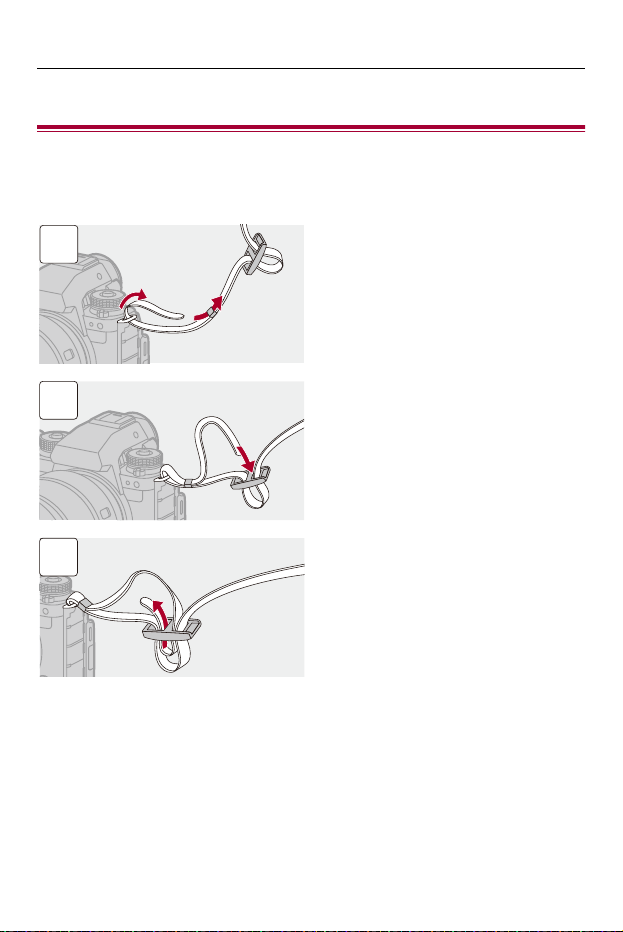
Attaching a Shoulder Strap
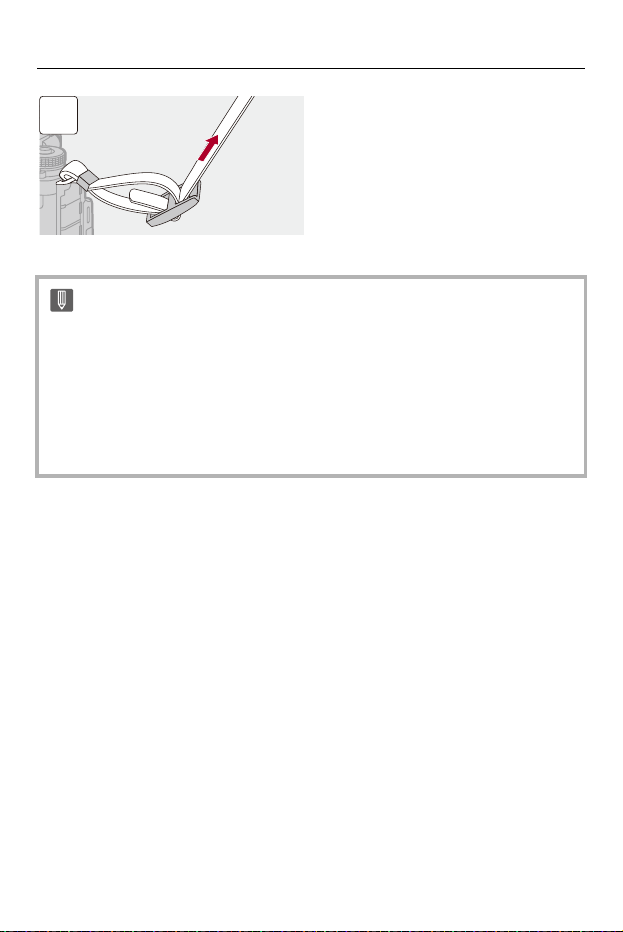
Attach a shoulder strap to the camera with the following procedure to
prevent it from dropping.
1
2
3
Getting Started – Attaching a Shoulder Strap
44
•
Pull the shoulder strap and check that it will not come out.
•
Attach the opposite end of the shoulder strap with the same procedure.
•
Use the shoulder strap around your shoulder.
– Do not wrap the strap around your neck.
It may result in injury or accident.
•
Do not leave the shoulder strap where an infant can reach it.
– It may result in an accident by mistakenly wrapping around the neck.
4
Getting Started – Charging the Battery
45
Charging the Battery
≥ Charging with the Charger: 46
≥ Battery Insertion: 49
≥ Inserting a Battery into the Camera for Charging: 51
≥ Using the Camera While Supplying It with Power (Supplying Power/
Charging): 54
≥ Notifications Regarding Charging/Power Supply: 56
≥ [Power Save Mode]: 58
You can charge the battery either using the supplied charger, or in the
camera body.
You can also turn on the camera and supply power from an electrical
outlet.
You can also use the Battery Charger (DMW-BTC15: optional).
• The battery that can be used with the camera is DMW-BLK22. (As of May
2025)
•
The battery is not charged at the time of purchase. Charge the battery before
use.
Getting Started – Charging the Battery
46
Charging with the Charger
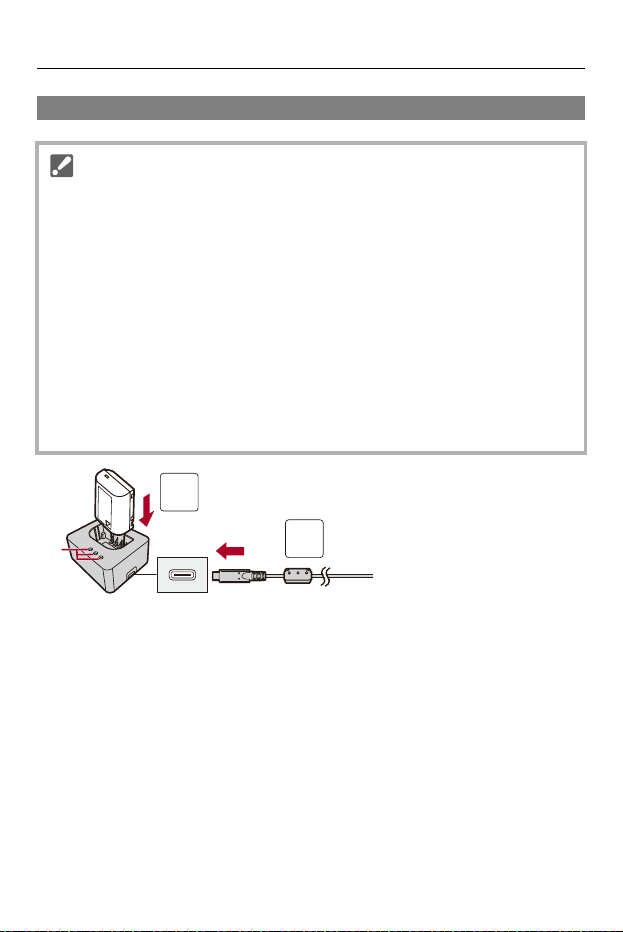
(A) To the AC adaptor
•
It is recommended to use the Panasonic AC Adaptor (DMW-AC11: optional)
for charging.
•
You can charge with the camera body or the supplied charger using a
commercially available AC adaptor and a USB connection cable.
*
Recommended specifications for the commercially available AC adaptor
–Supports PD (Power Delivery)
–Supports 9 V/3 A (27 W) DC output
–USB Type-C terminal
*
Use a USB connection cable with 27 W output or better for charging.
•
You can also use an AC adaptor with 5 V/500 mA or better for charging.
However, charging time may be longer than with the recommended AC adaptor.
•
Operation is not guaranteed with all commercially available devices.
(B)
1
3
(A)
Getting Started – Charging the Battery
47
1
Connect the charger and the AC adaptor with the USB
connection cable.
•
Check the direction of the terminals and plug in/out straight holding onto the
plug.
(Inserting these at an angle may cause deformation or malfunction)
2
Connect the AC adaptor to an electrical outlet.
3
Insert the battery.
≥The charging lights ([CHARGE]) (B) blink and charging begins.
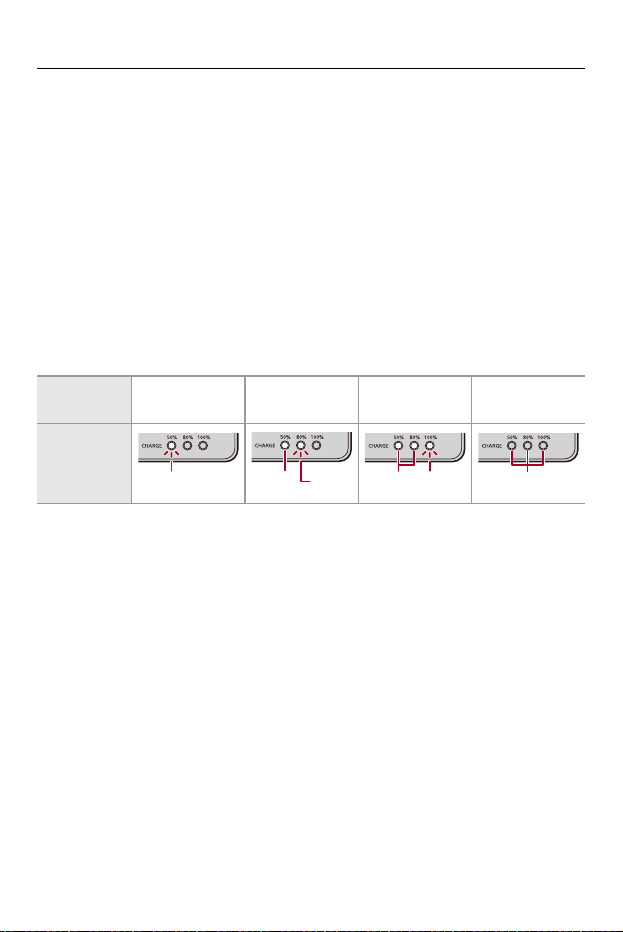
Charging Lights Indications
(C) Blinking
(D) On
(E) Off
•
When the battery is inserted while the charger is not connected to the power source,
the charging lights turn on for a certain period to allow you to confirm the battery
level.
Charging
status
0 % to 49 % 50 % to 79 % 80 % to 99 % 100 %
Charging
lights
(C)
(D) (C)
(D) (C) (E)
Getting Started – Charging the Battery
48
Charging time: Approx. 175 min
•
Using the optional AC Adaptor (DMW-AC11) or the supplied accessories of the
optional Battery Charger (DMW-BTC15).
•
The indicated charging time is for when the battery has been discharged completely.
The charging time may vary depending on how the battery has been used.
The charging time for the battery in hot/cold environments or a battery that has not
been used for a long time may be longer than normal.
•
Use the charger indoors.
•
After charging, disconnect the power source connection and remove the battery.
•
If the [50%] light is blinking quickly, then charging is not occurring.
– The temperature of the battery or surroundings is either too high or too low.
Try charging at an ambient temperature between 10 °C and 30 °C (50 oF and
86 oF).
– The terminals of the charger or the battery are dirty.
Remove the connection to the power source, and wipe with a dry cloth.
Getting Started – Charging the Battery
49
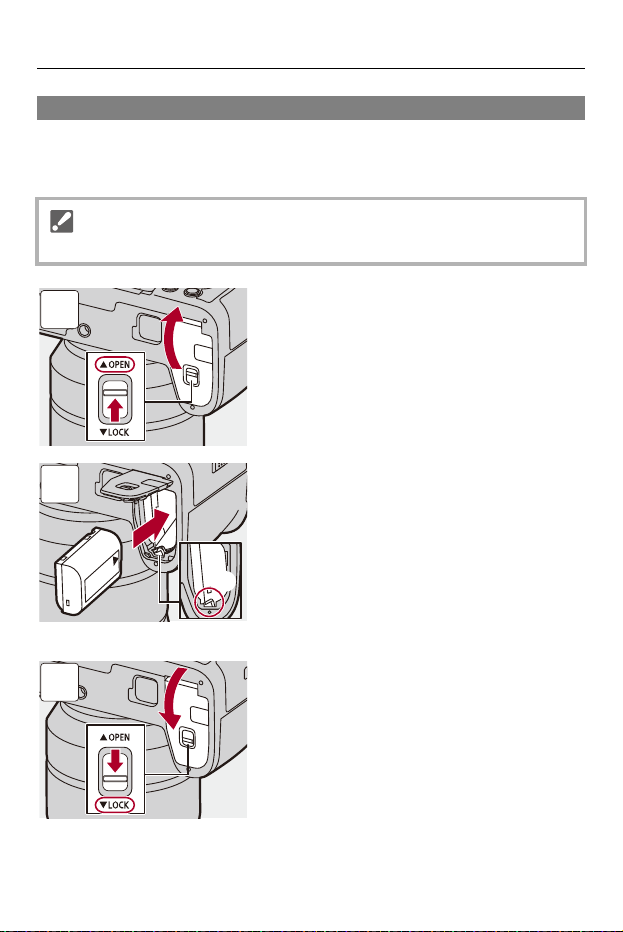
Battery Insertion
•
Always use genuine Panasonic batteries (DMW-BLK22).
•
If you use other batteries, we cannot guarantee the quality of this product.
•
Check that the lever (F) is holding the battery in place.
•
Check that the camera on/off switch is set to [OFF].
1
2
(F)
3
Getting Started – Charging the Battery
50
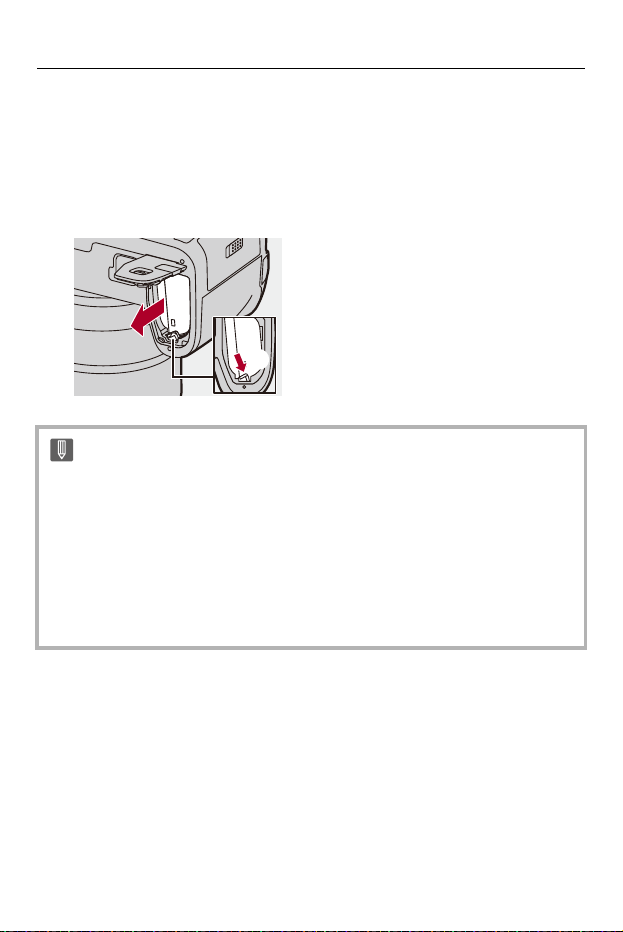
Removing the Battery
1 Set the camera on/off switch to [OFF].
2 Open the battery door.
3 Push the lever (F) in the direction of the arrow and then remove the battery.
•
Check that the card access lights are off before removing the battery. (Card
Access Indications: 62)
•
Ensure that no foreign objects are adhering to the inner side (cushion) of the
battery door.
•
Remove the battery after use.
(The battery will drain if left inserted in the camera for a long period of time.)
•
The battery becomes warm after use, during charging, and immediately after
charging.
The camera also becomes warm during use. This is not a malfunction.
•
Be careful when removing the battery as the battery will jump out.
(F)
Getting Started – Charging the Battery
51
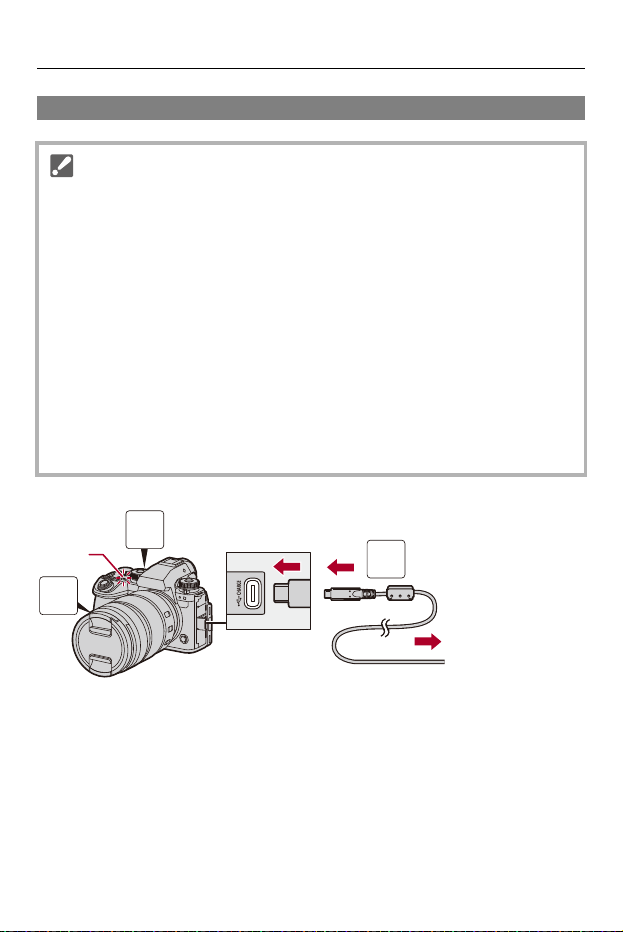
Inserting a Battery into the Camera for Charging
(G) To the AC adaptor
•
It is recommended to use the Panasonic AC Adaptor (DMW-AC11: optional)
or the supplied accessories of the Panasonic Battery Charger
(DMW-BTC15: optional) for charging.
•
You can charge with the camera body or the supplied charger using a
commercially available AC adaptor and a USB connection cable.
*
Recommended specifications for the commercially available AC adaptor
–Supports PD (Power Delivery)
–Supports 9 V/3 A (27 W) DC output
–USB Type-C terminal
*
Use a USB connection cable with 27 W output or better for charging.
•
You can also use an AC adaptor with 5 V/500 mA or better for charging.
However, charging time may be longer than with the recommended AC adaptor.
•
Operation is not guaranteed with all commercially available devices.
(G)
3
(H)
1
2
Getting Started – Charging the Battery
52
1
Set the camera on/off switch to [OFF].
2
Insert the battery into the camera.
3
Connect the camera USB port and the AC adaptor using
the USB connection cable.
•
Check the direction of the terminals and plug in/out straight holding onto the
plug.
(Inserting these at an angle may cause deformation or malfunction.)
4
Connect the AC adaptor to an electrical outlet.
•
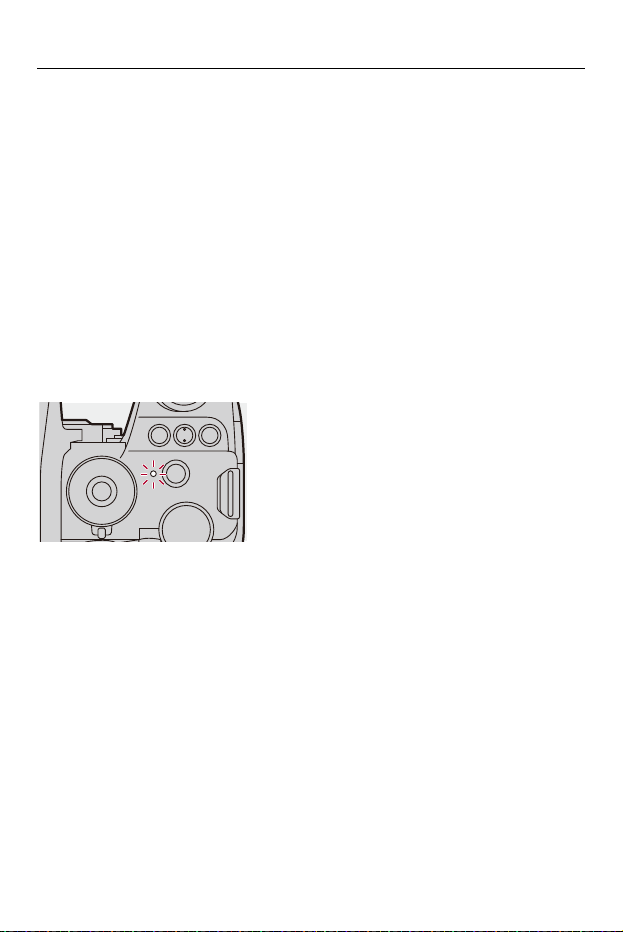
The charging light (H) turns red and charging begins.
Charging Light Indications
Charging light (red)
On: Charging.
Off: Charging has completed.
Blinking: Charging error.

Getting Started – Charging the Battery
53
Charging time: Approx. 170 min
•
Using either the camera body and the optional AC Adaptor (DMW-AC11) or the
camera body and the supplied accessories of the optional Battery Charger
(DMW-BTC15).
•
The indicated charging time is for when the battery has been discharged completely.
The charging time may vary depending on how the battery has been used.
The charging time for the battery in hot/cold environments or a battery that has not
been used for a long time may be longer than normal.
•
You can also charge the battery by connecting a USB device (PC, etc.) and the
camera with the USB connection cable.
In that case, charging may take a while.
•
The battery in the Battery Grip (DMW-BG2: optional) cannot be charged.
•
After charging, disconnect the connection to the power source.
•
While the charging light is blinking red, charging is not possible.
– The temperature of the battery or surroundings is either too high or too low.
Try charging at an ambient temperature between 10 °C and 30 °C (50 oF and
86 oF).
– The terminals of the battery are dirty.
Remove the battery and wipe off the dirt with a dry cloth.
•
Even when the camera on/off switch is set to [OFF] thus turning the camera off, it
consumes power.
When the camera will not be used for a long time, remove the power plug from
the electrical outlet in order to save power.

Getting Started – Charging the Battery
54
Using the Camera While Supplying It with Power
(Supplying Power/Charging)
Since this camera, the optional AC Adaptor (DMW-AC11), and the items
supplied with the optional Battery Charger (DMW-BTC15) are compatible
with USB PD (USB Power Delivery), you can charge while the camera is
being supplied with power.
Connect the USB connection cable, AC adaptor, and AC cable to the
camera and turn on the power.
•
Insert the battery into the camera.
•
You can supply power to the camera body using a commercially available AC
adaptor and USB connection cable.
*
Recommended specifications for the commercially available AC adaptor
–Supports PD (Power Delivery)
–Supports 9 V/3 A (27 W) DC output
–USB Type-C terminal
*
Use a USB connection cable with 27 W output or better for supplying power.
•
Operation is not guaranteed with all commercially available devices.
•
[ ] is displayed in the screen while power is being supplied.
•
When the camera is on, charging will take longer than when the camera is off.

Getting Started – Charging the Battery
55
•
If connecting with devices (PC, etc.) that do not support USB PD and turning the
camera on, then this will supply power only.
•
Turn off the camera before connecting or disconnecting the power plug.
•
Remaining charge in the battery may decrease depending on usage conditions.
When the battery level is depleted, the camera will turn off.
•
Depending on the power supply capabilities of the connected device, it may not
be possible to supply power.
•
For information about the high temperature display (For information
about the high temperature display: 145)
Getting Started – Charging the Battery
56
Notifications Regarding Charging/Power Supply
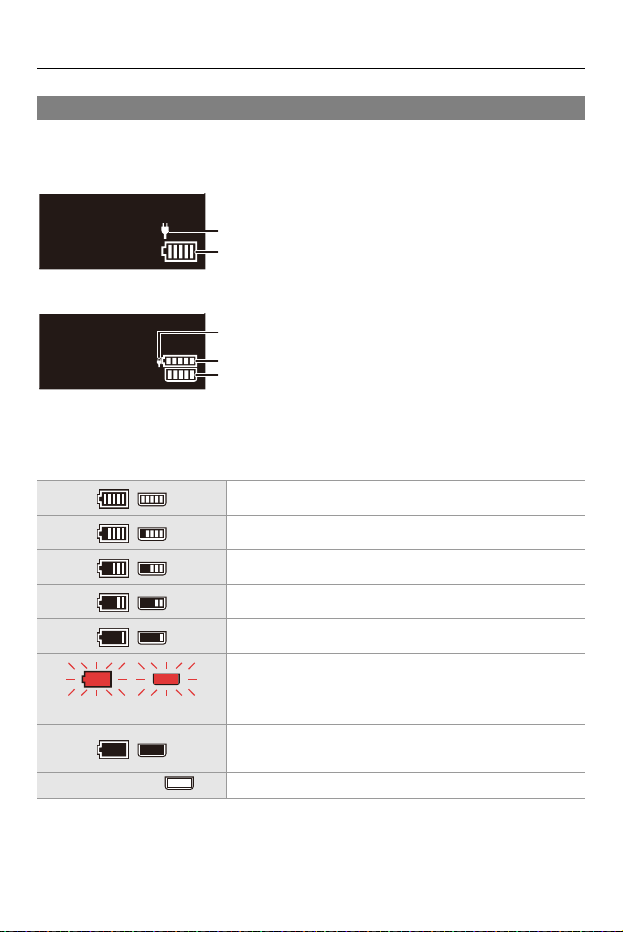
Power Indications
Indication on monitor
Indication on monitor (when the Battery Grip is attached)
(I) USB connection cable supplying power
(J) Battery indication (on the camera)
(K) Battery indication (on the Battery Grip)
•
The battery level indicated on the screen is approximate.
The exact level varies depending on the environment and the operating conditions.
/
80 % or higher
/
60 % to 79 %
/
40 % to 59 %
/
20 % to 39 %
/
19 % or below
/
Blinking in red
Low battery (The power indicator also blinks)
•
Charge or replace the battery.
/
No charge or battery not inserted
•
Charge or replace the battery.
No indication/ DC Coupler fitted
(I)
(J)
(I)
(J)
(K)

Getting Started – Charging the Battery
57
•
We recommend that genuine Panasonic batteries are used.
There is a possibility that the use of non-genuine batteries can cause
accidents or malfunctions that may lead to fire or explosion.
Please be advised that we are not liable for any accident or failure resulting
from the use of non-genuine batteries.
•
Do not leave any metal items (such as clips) near the contact areas of the power
plug.
Otherwise, a fire and/or electric shocks may be caused by short-circuiting or the
resulting heat generated.
•
Do not use USB extension cables or USB conversion adaptors.
•
The battery can be charged even when it still has some charge left, but it is not
recommended that the battery charge be frequently topped up while the battery
is fully charged.
•
If there is a power outage or other problem with the electrical outlet, then
charging may not complete successfully.
Reconnect the power plug.
•
Do not connect to keyboard or printer USB ports, or to USB hubs.
•
If the connected PC enters sleep status, then charging/power supply may stop.
•
If the battery indication does not go to [ ] even when charging is complete,
the battery may be deteriorating.
Try not to use that battery.
Getting Started – Charging the Battery
58
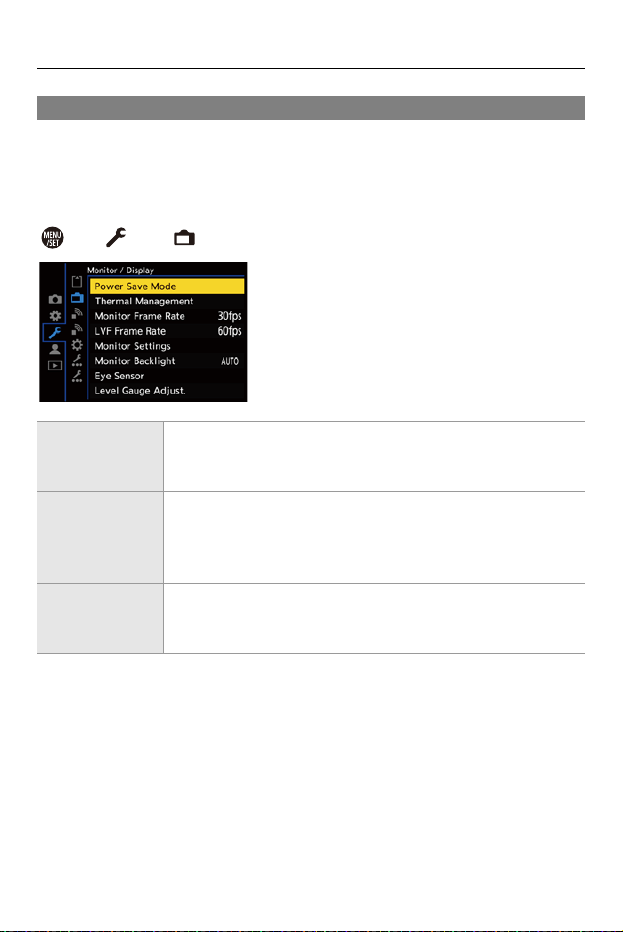
[Power Save Mode]
This is a function to automatically turn the camera to sleep (power save)
status or turn off the viewfinder/monitor if no operation is performed for a
set time. Reduces battery consumption.
[] [] Select [Power Save Mode]
[Sleep Mode]
Sets the amount of time until the camera is put to sleep.
•
When [Sleep Mode] is set to [OFF], the power consumption of
this camera may rise.
[Sleep
Mode(Wi-Fi)]
Sets the camera to sleep 15 minutes after being disconnected
from Wi-Fi.
•
When [Sleep Mode(Wi-Fi)] is set to [OFF], the power
consumption of this camera may rise.
[Auto LVF/
Monitor Off]
Sets the amount of time it takes for the viewfinder/monitor to turn
off.
(The camera is not turned off.)

Getting Started – Charging the Battery
59
•
To recover from [Sleep Mode], [Sleep Mode(Wi-Fi)], or [Power Save LVF Shooting],
perform one of the following operations:
– Press the shutter button halfway.
– Set the camera on/off switch to [OFF] and then [ON] again.
•
To recover from [Auto LVF/Monitor Off], press any button.
[Power Save
LVF Shooting]
Puts the camera to sleep when the recording screen is being
displayed on the monitor when automatic viewfinder/monitor
switching is active.
[Time to Sleep]
Sets the amount of time until the camera is
put to sleep.
[Method of
Activation]
Sets the screen where the camera is put to
sleep.
[Only Control Panel]: Puts the camera to
sleep only when the control panel (Control
Panel: 99) is displayed.
[While Recording Standby]: Puts the
camera to sleep from any screen during
recording standby.

Getting Started – Charging the Battery
60
•
[Power Save Mode] is not available in the following cases:
– While connected to a PC
– During video recording/video playback
– During a [Time Lapse Shot]
– When recording with [Stop Motion Animation] (when [Auto Shooting] is set)
– When recording with [Live View Composite]
– When recording with [Multiple Exposure]
– When recording with [Focus Transition]
– During a [Slide Show]
– During HDMI output for recording
Getting Started – Inserting Cards (Optional)
61
Inserting Cards (Optional)
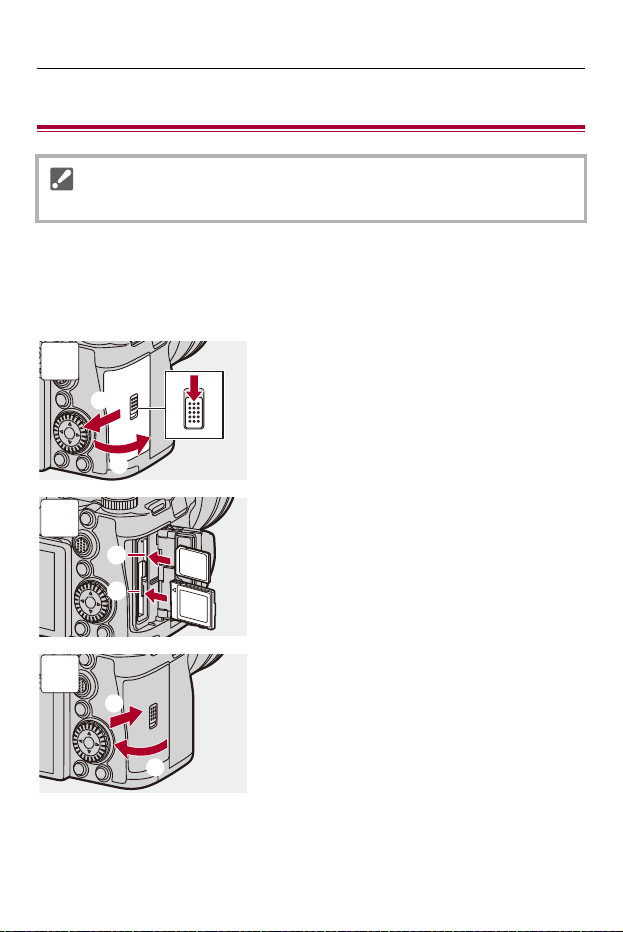
This camera supports the double card slot function.
When two cards are used, relay recording, backup recording, and
allocation recording are available.
(A) Card slot 1: CFexpress card
(B) Card slot 2: SD card
•
Format the cards with the camera before use. ([Card Format]: 724)
1
2
(B)
(A)
3
Getting Started – Inserting Cards (Optional)
62
•
Match the orientation of the cards as shown in the figure and then insert them firmly
until they click.
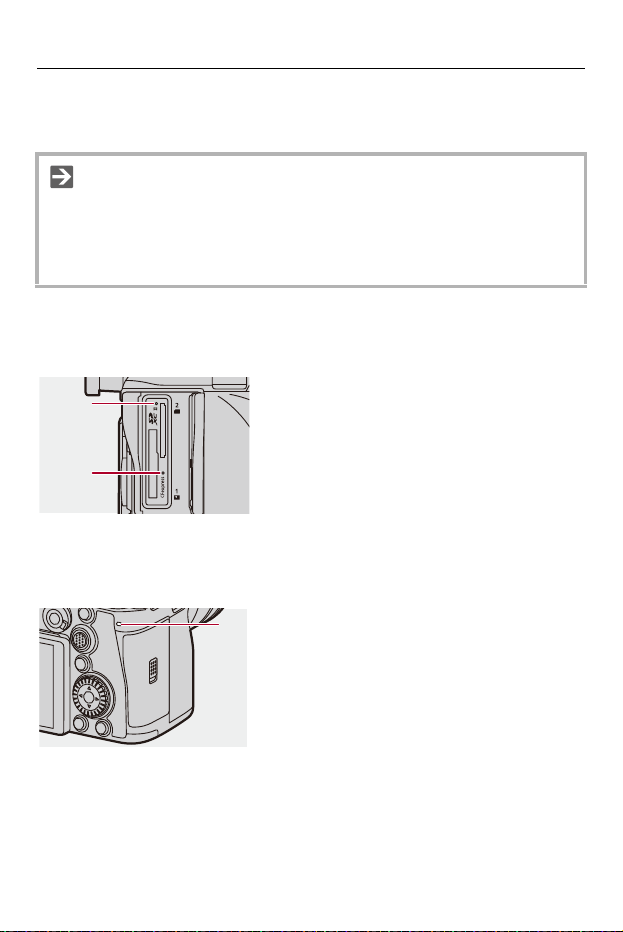
Card Access Indications
The card access light turns on while the card is being accessed.
(C) Card access light for card slot 1
(D) Card access light for card slot 2
•
The rear card access light also turns on while the card is being accessed.
(E) Rear card access light
•
You can set the way to record to card slots 1 and 2:
([Double Card Slot Function]: 725)
•
You can set the folder and file name where to save the images:
([Folder / File Settings]: 727)
(D)
(C)
(E)
Getting Started – Inserting Cards (Optional)
63
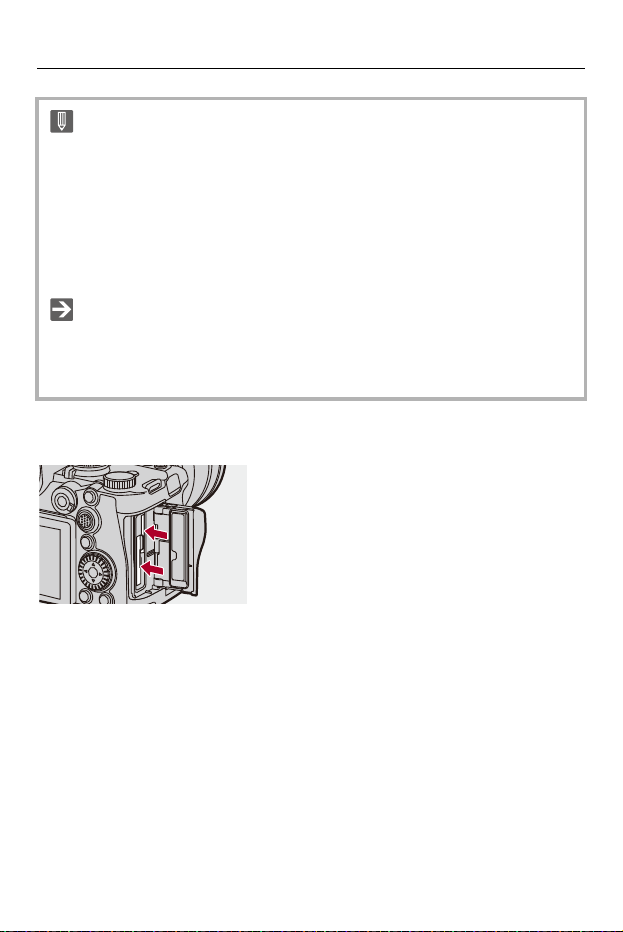
Removing a Card
1 Open the card door.
2 Push the card until it clicks and then pull the card out straight.
•
Check that the card access lights are off before removing the card.
•
The card may be warm just after the camera has been used.
•
Do not perform the following operations during access.
The camera may operate incorrectly or the card and recorded images may
be damaged.
– Turn off the camera.
– Remove the battery or card or disconnect the power plug.
– Subject the camera to vibration, impacts, or static electricity.
•
You can set whether to have the rear card access light turn on/off. You can also
change the brightness of the rear card access light:
([Tally Lamp]: 717)
Getting Started – Attaching a Lens
64
Attaching a Lens
≥ Attaching a Lens Hood: 67
You can attach the Leica Camera AG L-Mount standard lens to this
camera.
For information about the lens that can be used (Lenses That Can Be
Used: 25)
•
Check that the camera on/off switch is set to [OFF].
•
Change the lens in a location where there is not a lot of dirt and dust.
If dirt or dust gets on the lens (Dirt on the Image Sensor: 907)
•
Change the lens while the lens cap is attached.
Getting Started – Attaching a Lens
65
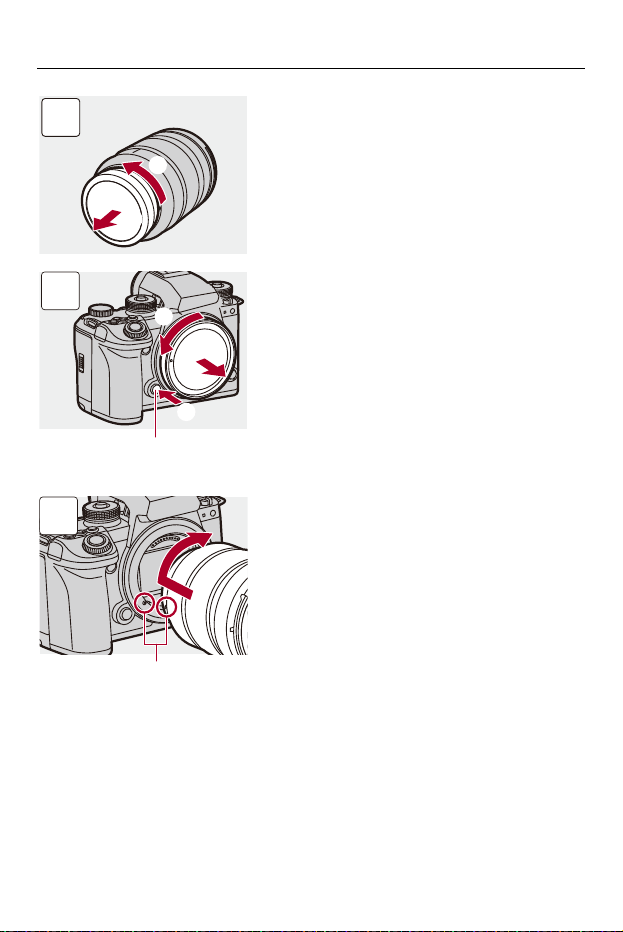
•
When removing the body cap, rotate it while pressing the lens release button (A).
(B) Lens fitting marks
•
Attach by rotating the lens until it clicks.
1
2
(A)
(B)
3
Getting Started – Attaching a Lens
66
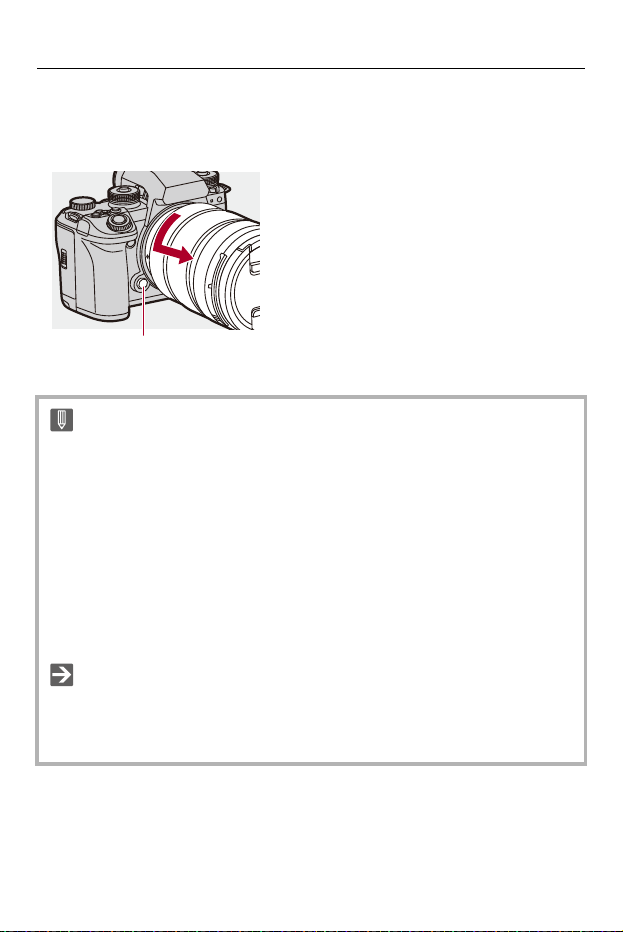
Removing a Lens
•
While pressing the lens release button (A), rotate the lens in the direction of the
arrow until it stops and then remove it.
•
When you have attached a lens that does not have a communication function
with this camera, after turning on the camera, a message asking for confirmation
of the lens information is displayed. You can register the focal length for the lens
when you select [Yes]. You can also select from amongst already registered lens
information. ([Lens Information]: 325)
•
You can change the settings so that the confirmation message is not displayed:
([Lens Info. Confirmation]: 722)
•
Insert the lens straight in.
Inserting this at an angle to attach it may damage the camera lens mount.
•
After removing the lens, be sure to attach the body cap and the lens rear cap.
•
You can set so the shutter closes when you turn off the power. This prevents
foreign matter and dust getting onto the image sensor when replacing the lens:
([Shutter Behavior at Power Off]: 746)
(A)
Getting Started – Attaching a Lens
67
Attaching a Lens Hood
For recording against strong backlight, a lens hood can reduce the
inclusion of unwanted light in images and drop in contrast resulting from
the irregular reflection of light that occurs within the lens.
It allows you take more beautiful pictures by cutting out excess light.
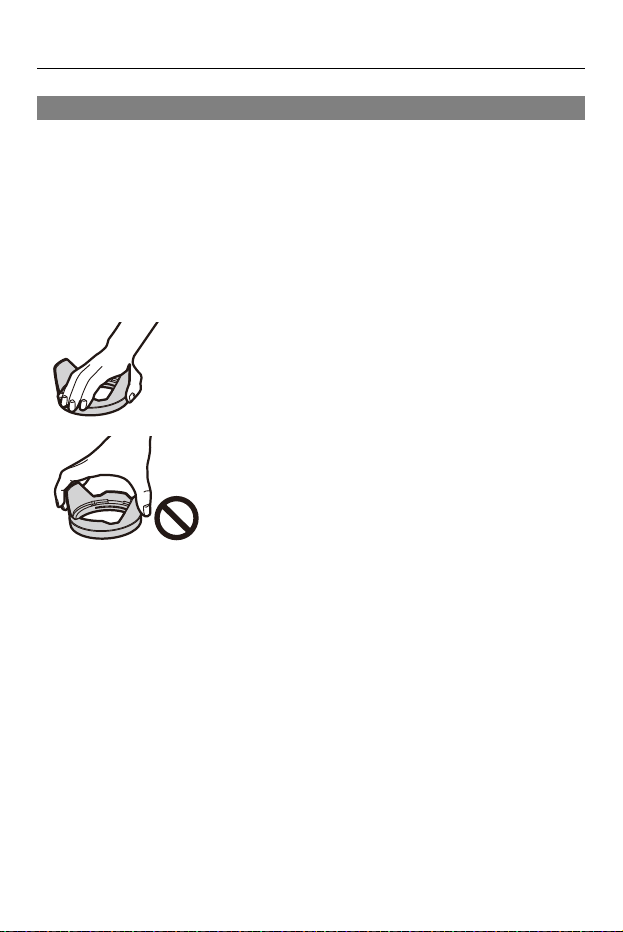
When attaching a petal shaped lens hood
• Hold the lens hood by placing your fingers as shown in the figure.
• Do not hold the lens hood in such a way that it will become bent.
Getting Started – Attaching a Lens
68
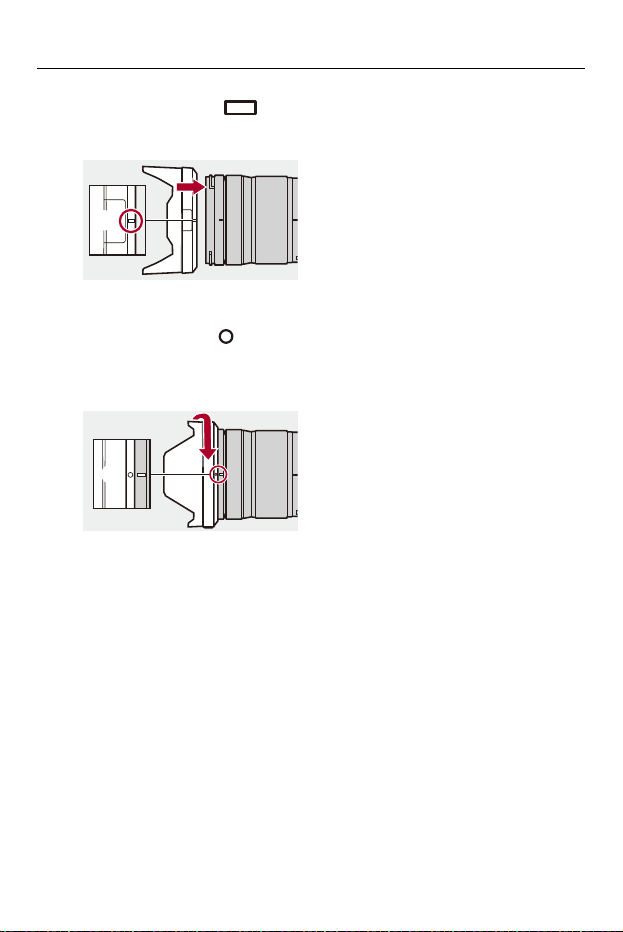
1
Align mark (C) ( ) on the lens hood with the mark on
the tip of the lens.
2
Rotate the lens hood in the direction of the arrow to
align mark (D) ( ) on the lens hood with the mark on the
tip of the lens.
≥Attach the lens hood by rotating it until it clicks.
(C)
(D)
Getting Started – Attaching a Lens
69
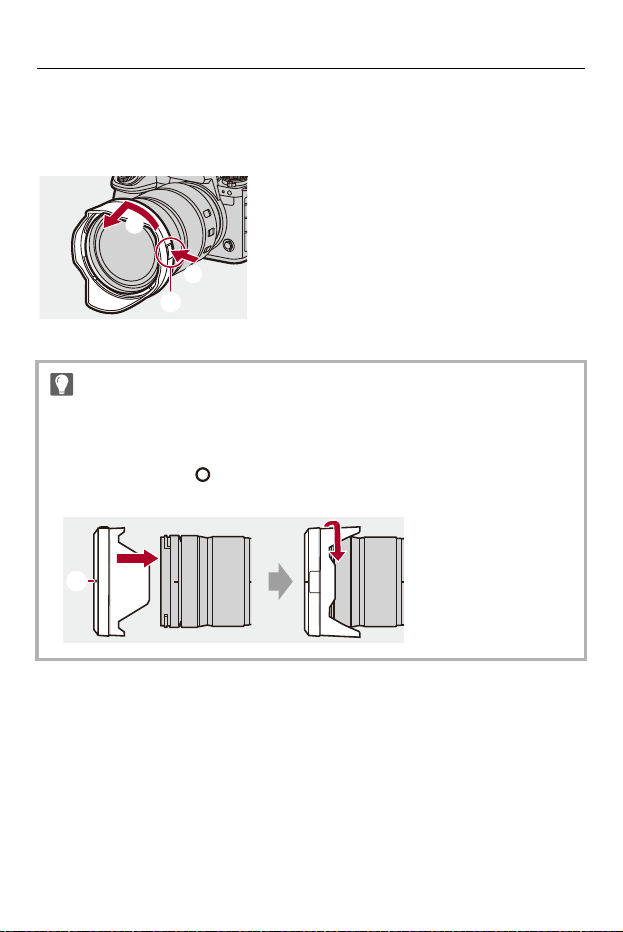
Removing the Lens Hood (S-R24105)
While pressing the lens hood button (E), rotate the lens hood in the
direction of the arrow and then remove it.
•
The lens hood can be attached in the reverse direction when carrying the
camera.
Example) S-R24105
1 Align mark (D) ( ) on the lens hood with the mark on the tip of the lens.
2 Attach the lens hood by rotating it in the direction of the arrow until it clicks.
(E)
(D)
Getting Started – Adjusting the Monitor Direction and Angle
70
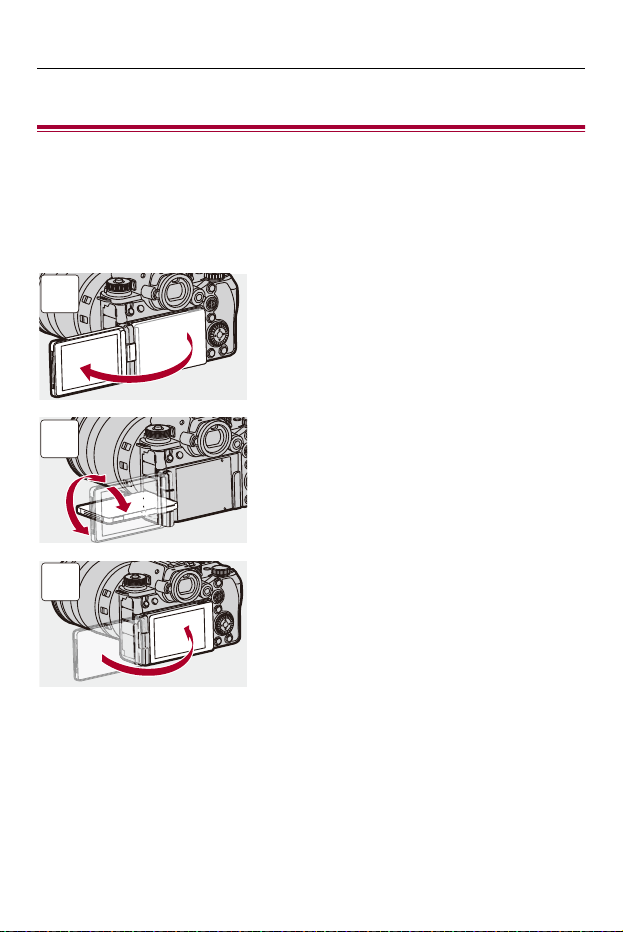
Adjusting the Monitor Direction and Angle
The monitor on this camera has angling and tilting that you can adjust in
combinations to freely change the orientation and angle.
At the time of purchase, the monitor is stowed in the camera body. Turn the
monitor surface out before use.
180°
1
90°
180°
2
3
Getting Started – Adjusting the Monitor Direction and Angle
71
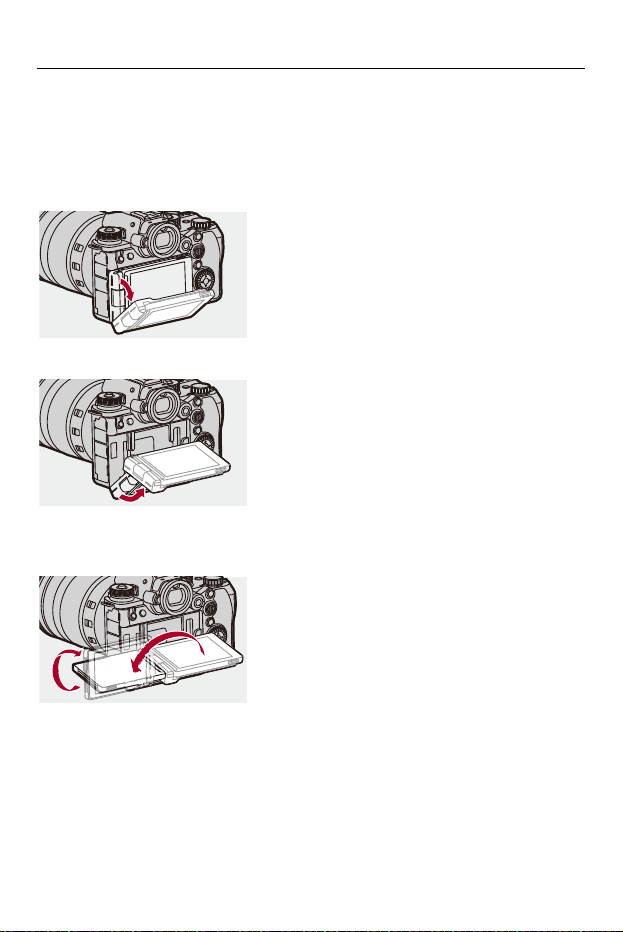
Tilt
Adjust the angle of the monitor to match the recording conditions.
This is useful for high and low angle recording.
≥ High angle recording
≥ Low angle recording
Opening the Monitor While Tilted

Getting Started – Adjusting the Monitor Direction and Angle
72
•
The angles of adjustment are guides only.
•
Take care not to trap fingers in the moving parts of the monitor or tilting
mechanism.
•
Do not apply an excessive force to the monitor. This may cause damage or
malfunction.
•
When not using the camera, close the monitor with the monitor surface facing in.
•
You can set whether the screen flips or not depending on the facing or angle of
the monitor during recording:
([LVF/Monitor Disp. Set]: 705)
•
You can assign a setting that flips the monitor screen to an Fn button:
([Image Flip(Monitor)]: 657)
Getting Started – Setting the Clock (When Turning On for the First Time)
73
Setting the Clock (When Turning On for the
First Time)
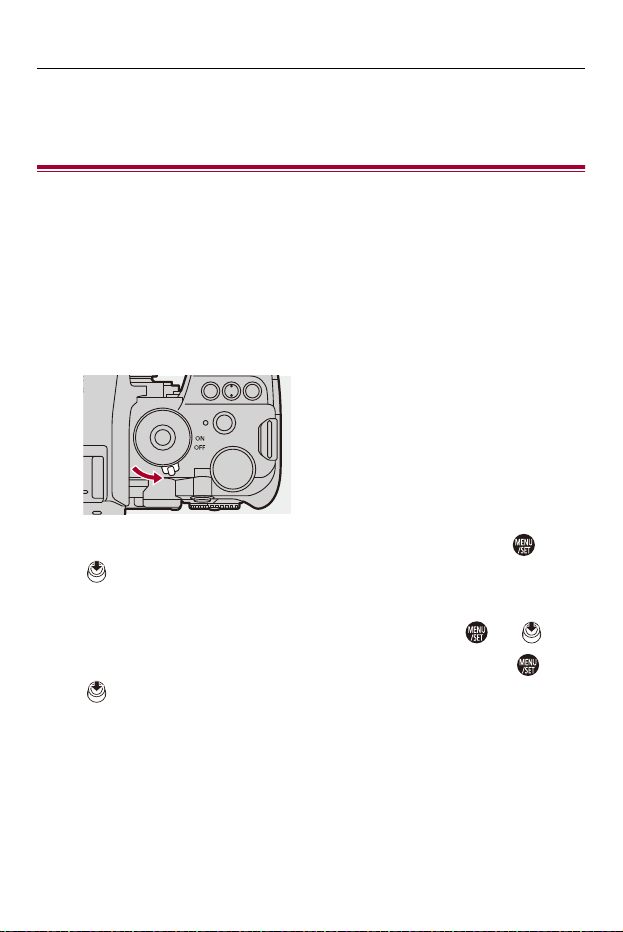
When you turn the camera on for the first time, a screen to set the time
zone and clock appears.
Be sure to set these settings before use to ensure images are recorded
with the correct date and time information.
1
Set the camera on/off switch to [ON].
≥If the language select screen is not displayed, proceed to Step
4
.
2
When [Please set the language] appears, press or
.
3
Set the language.
≥Press 34 to select the language and then press or .
4
When [Please set the time zone] appears, press or
.
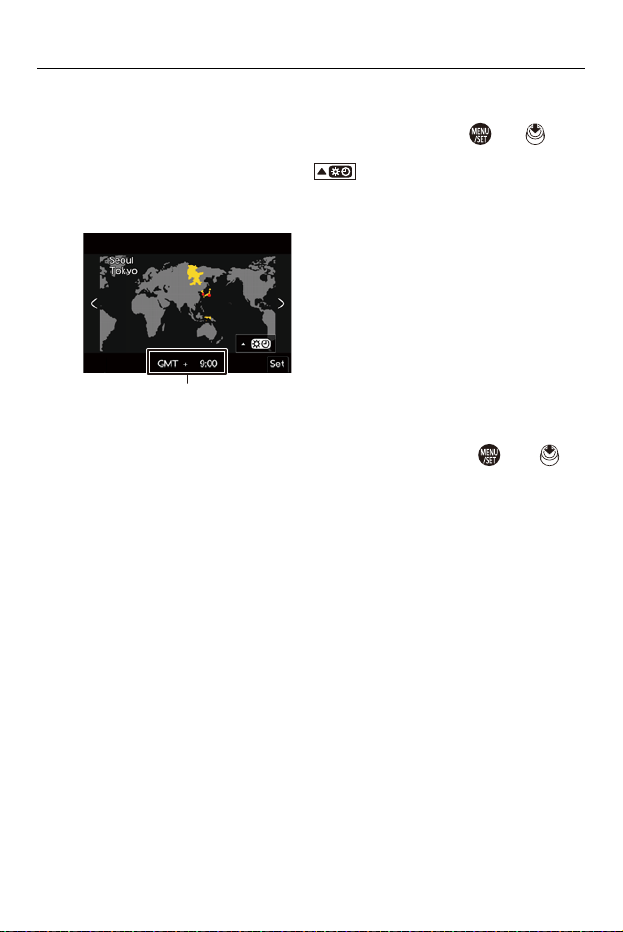
Getting Started – Setting the Clock (When Turning On for the First Time)
74
5
Set the time zone.
≥Press 21 to select the time zone and then press or .
•
If you are using Daylight Savings [ ], press 3. (The time will move
forward by 1 hour.)
To return to the normal time, press 3 again.
(A) Time difference from GMT (Greenwich Mean Time)
6
When [Please set the clock] appears, press or .
(A)
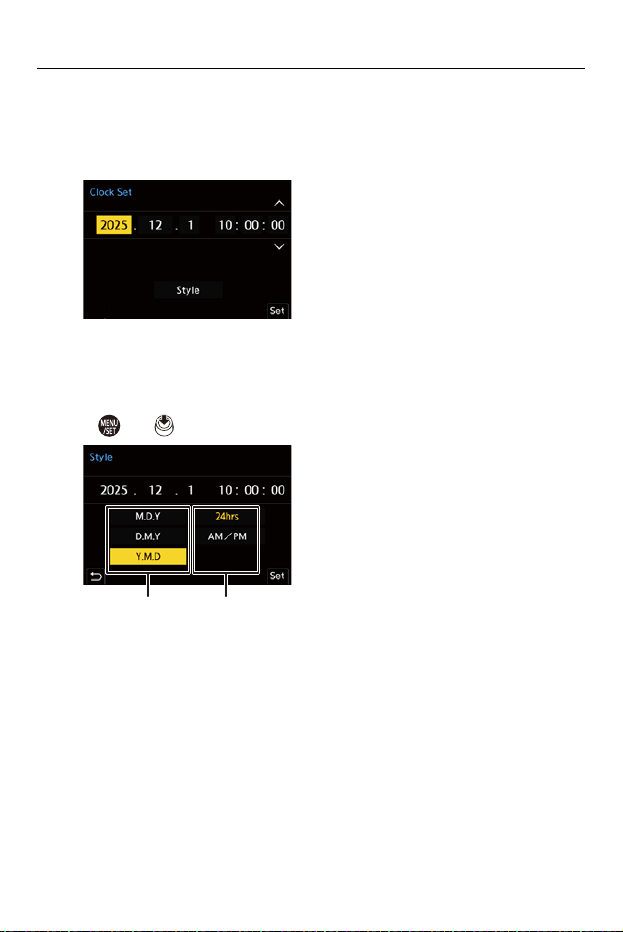
Getting Started – Setting the Clock (When Turning On for the First Time)
75
7
Set the clock.
21: Select an item (year, month, day, hour, minute, or second).
34: Select a value.
To set the display order and time display format
≥To display the screen for setting the display order (B) and time
display format (C), select [Style] by pressing 21 and then press
or .
(B) (C)
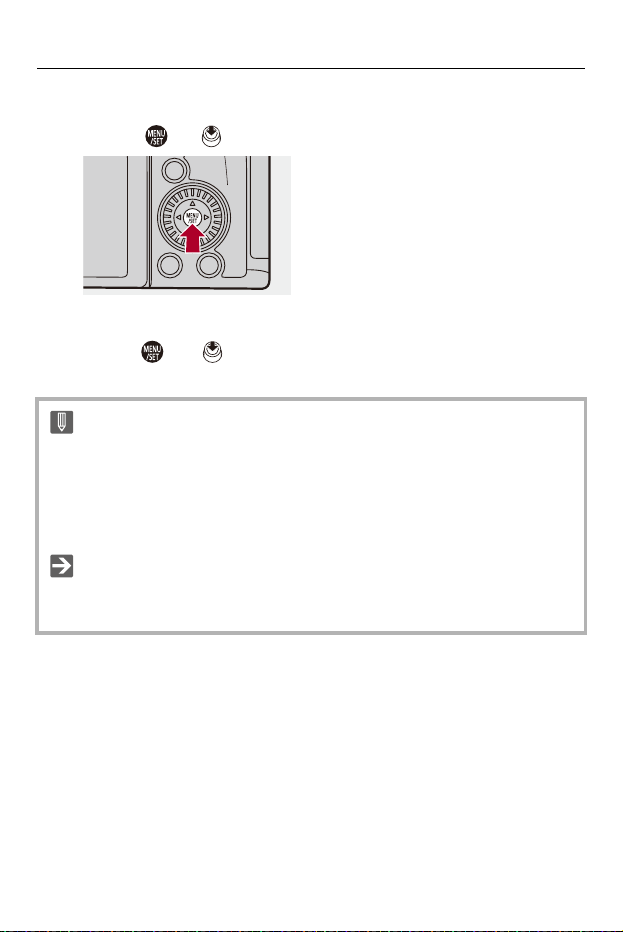
Getting Started – Setting the Clock (When Turning On for the First Time)
76
8
Confirm your selection.
≥Press or .
9
When [The clock setting has been completed.] appears,
press or .
•
If the camera is used without setting the clock, it will be set to “0:00:00 1/1/2025”.
•
Clock settings are maintained for approx. 3 months using the built-in clock
battery even without the battery.
(Leave the fully-charged battery in the camera for approx. 24 hours to charge the
built-in battery.)
•
[Time Zone] and [Clock Set] can be changed from the menu:
([Time Zone]: 745, [Clock Set]: 745)

77
Basic Operations
This chapter describes basic camera operations and the Intelligent Auto
mode which helps you start recording immediately.
≥ How to Hold the Camera: 78
≥ Photo/Video/S&Q Switch: 80
≥ Selecting the Recording Mode: 81
≥ Camera Setting Operations: 83
≥ Monitor/Viewfinder Display Settings: 90
≥ Quick Menu: 97
≥ Control Panel: 99
≥ Menu Operation Methods: 102
≥ Entering Characters: 108
≥ Intelligent Auto Mode: 109
≥ Recording Using Touch Functions: 115
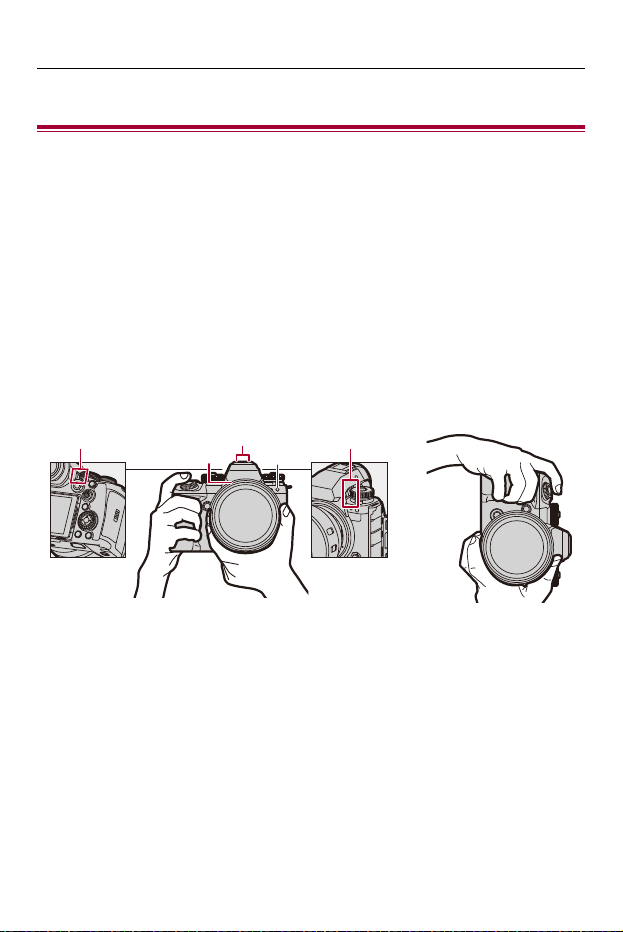
Basic Operations – How to Hold the Camera
78
How to Hold the Camera
To minimize camera shake, hold the camera so that it will not move during
recording.
Hold the camera with both hands, keep your arms still at your
side, and stand with your feet shoulder width apart.
≥ Hold the camera firmly by wrapping your right hand around the camera
grip.
≥ Support the lens from below with your left hand.
•
Do not cover the AF assist light (A) or microphone (B) with your fingers or other
objects.
•
Do not cover the fan inlet (C) and fan outlet (D) of the cooling fan with your hand, etc.
(A)
(B)
(D)(D)
(C)
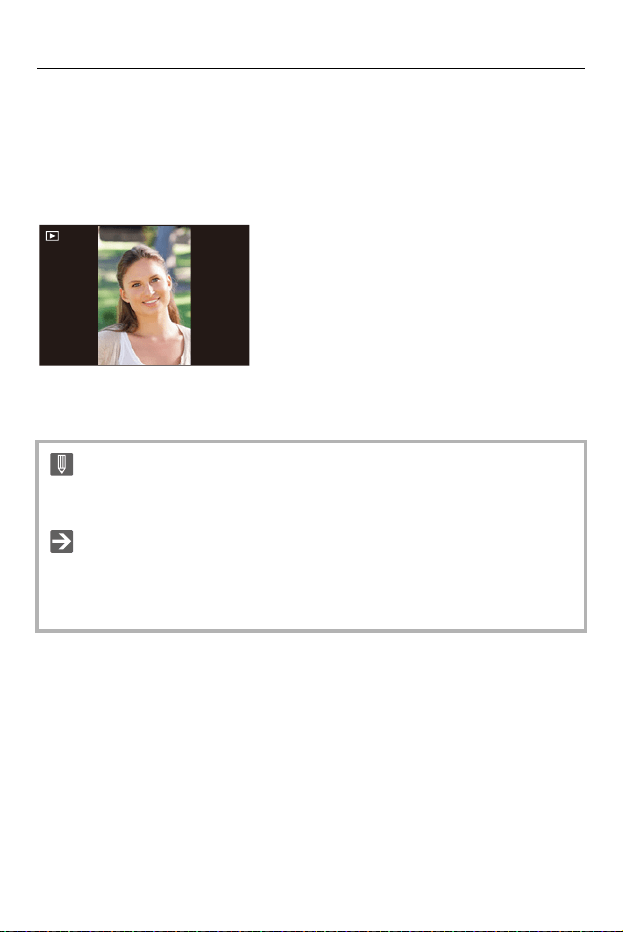
Basic Operations – How to Hold the Camera
79
Vertical Orientation Detection Function
This function detects when pictures were recorded with the camera held
vertically orientated.
With the default settings, pictures are automatically played back vertically
oriented.
•
If you set [Rotate Disp.] to [OFF], pictures will be played back without being rotated.
([Rotate Disp.]: 635)
•
When the camera is tilted significantly up or down, the vertical orientation
detection function may not work correctly.
•
You can set whether or not to record the camera’s vertical orientation information
during video recording:
([Vertical Position Info (Video)]: 722)
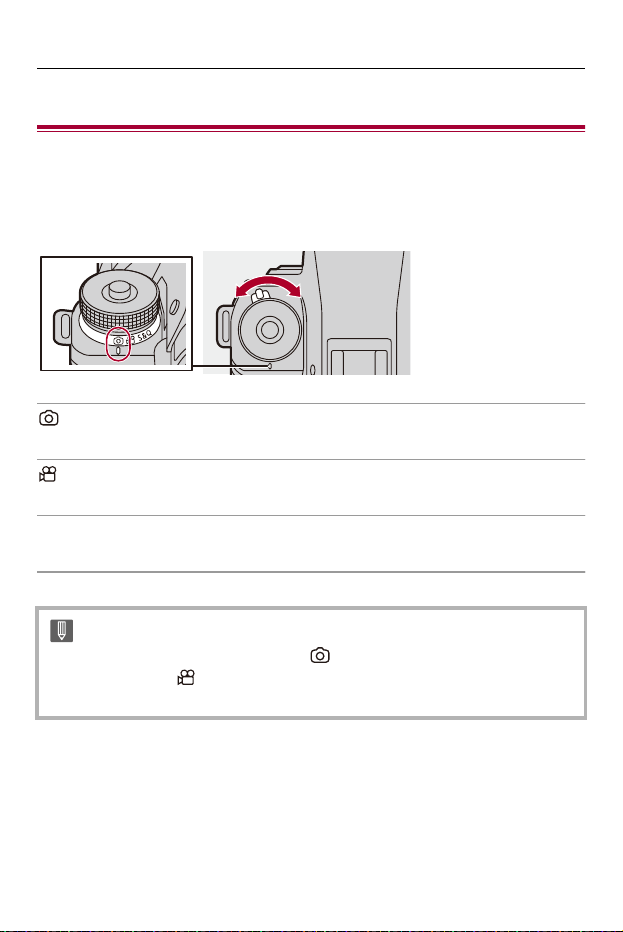
Basic Operations – Photo/Video/S&Q Switch
80
Photo/Video/S&Q Switch
Switch the photo/video/S&Q switch to suit the type of recording you want to
make.
Switch the photo/video/S&Q switch.
(Photo mode)
Select when taking pictures. (Basic Picture Operations: 121)
(Video mode)
Select when recording video. (Basic Video Operations: 135)
S&Q (Slow & Quick mode)
Select when recording Slow & Quick video. (Slow & Quick Video: 499)
•
The [Photo] menu is displayed only in [ ] mode and the [Video] menu is
displayed only in [ ]/[S&Q] mode. Select the appropriate mode to view the
[Photo] menu or [Video] menu.
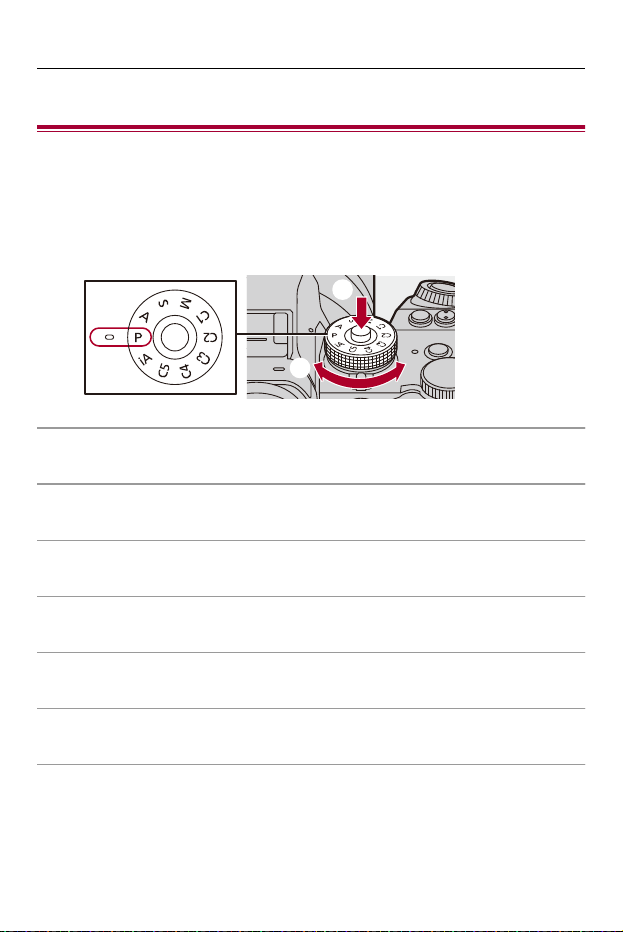
Basic Operations – Selecting the Recording Mode
81
Selecting the Recording Mode
1
Press the mode dial lock button (1) to release the lock.
• The dial is locked if the mode dial lock button is depressed. Each
press locks/unlocks the dial.
2
Rotate the mode dial (2) and adjust the recording mode.
[iA]
Intelligent Auto mode (Intelligent Auto Mode: 109)
[P]
Program AE mode (Program AE Mode: 330)
[A]
Aperture-Priority AE mode (Aperture-Priority AE Mode: 334)
[S]
Shutter-Priority AE mode (Shutter-Priority AE Mode: 337)
[M]
Manual Exposure mode (Manual Exposure Mode: 340)
[C1]/[C2]/[C3]/[C4]/[C5]
Custom mode (Custom Mode: 673)
(2)
(1)

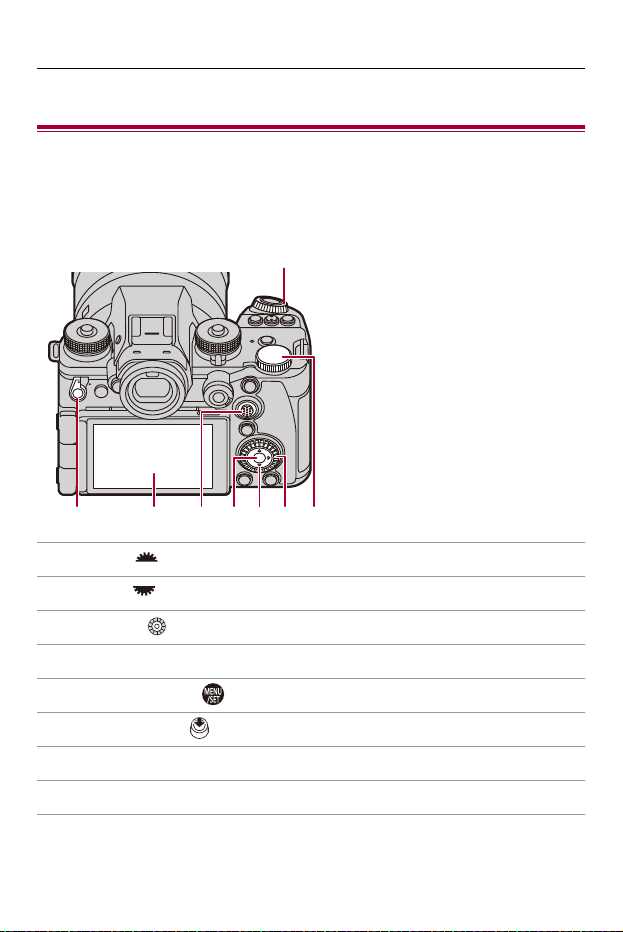
Basic Operations – Camera Setting Operations
83
Camera Setting Operations
When changing the camera settings, operate the camera using the
following operation parts.
To prevent accidental operation, you can disable operation with the
operation lock lever.
(A) Front dial ( ) (Front Dial/Rear Dial: 84)
(B) Rear dial ( ) (Front Dial/Rear Dial: 84)
(C) Control dial ( ) (Control Dial: 84)
(D) Cursor buttons (3421) (Cursor Buttons: 85)
(E) [MENU/SET] button ( ) ([MENU/SET] Button: 85)
(F) Joystick (3421/) (Joystick: 86)
(G) Touch screen (Touch Screen: 87)
(H) Operation lock lever (Operation Lock Lever: 89)
(H) (G) (F) (E) (D) (C) (B)
(A)
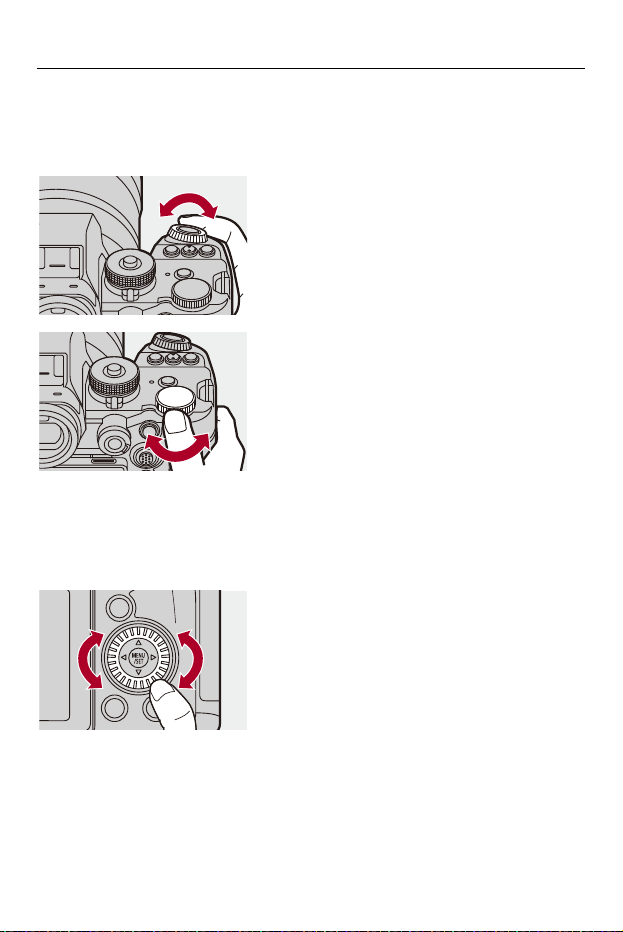
Basic Operations – Camera Setting Operations
84
Front Dial/Rear Dial
Rotate:
Selects an item or numeric value.
Control Dial
Rotate:
Selects an item or numeric value.
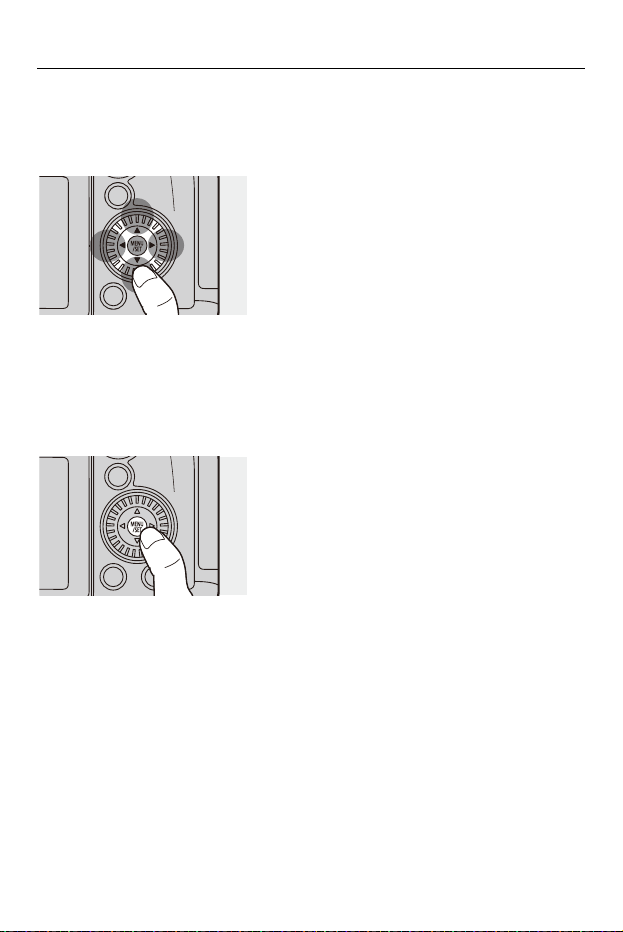
Basic Operations – Camera Setting Operations
85
Cursor Buttons
Press:
Selects an item or numeric value.
[MENU/SET] Button
Press:
Confirms a setting.
•
Displays the menu during recording and playback.
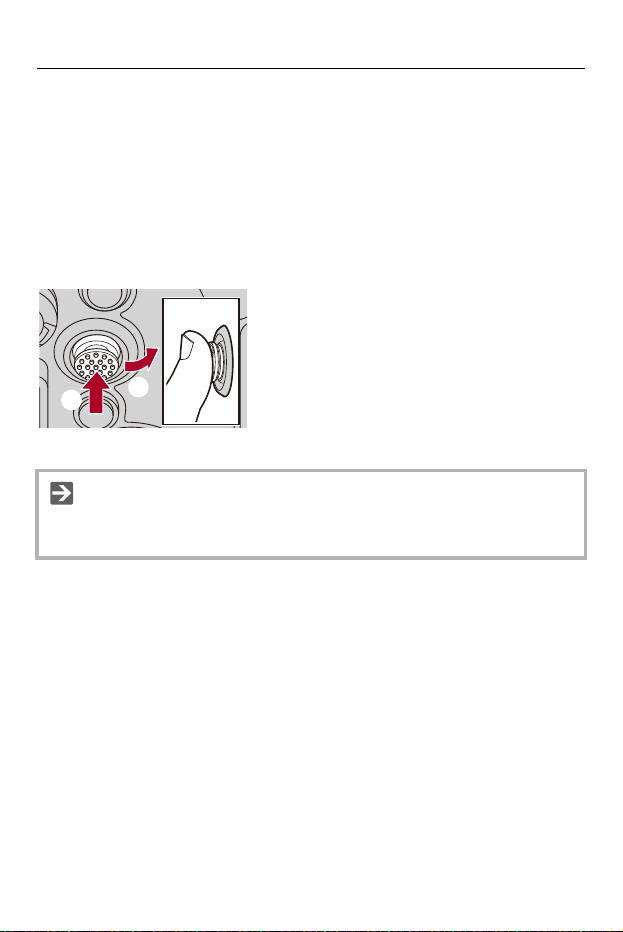
Basic Operations – Camera Setting Operations
86
Joystick
The joystick can be operated in 8 directions by tilting it up, down, left, right
and diagonally and by pressing the center part.
(I) Tilt: Selects an item or numeric value, or moves a position.
•
Operation is easier if you place your finger on the center of the joystick before tilting.
The joystick may not work as expected when the sides are pressed.
(J) Press: Confirms a setting.
•
You can disable the operations of operating parts.
([Lock Lever Setting]: 695)
(I)
(J)
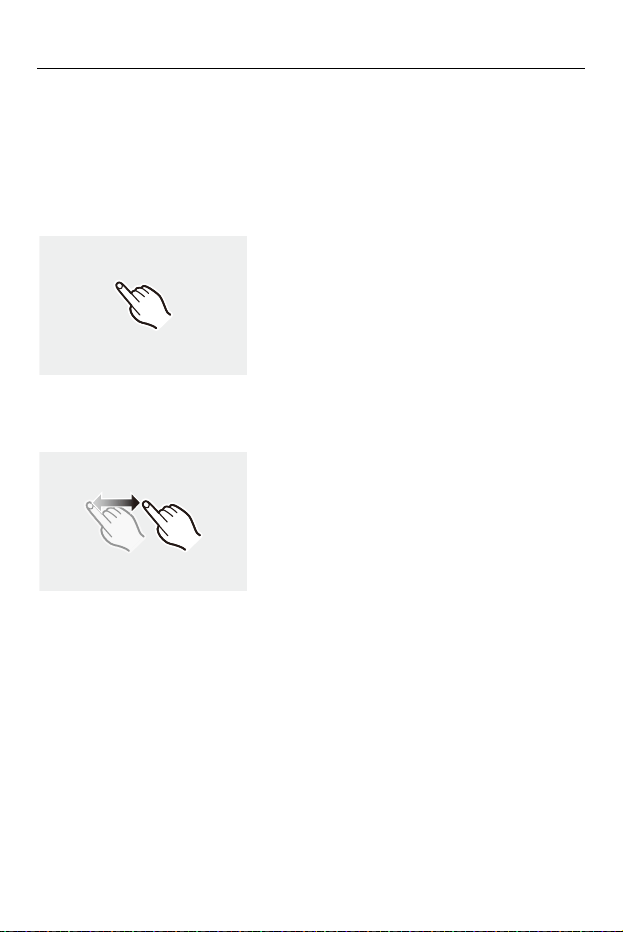
Basic Operations – Camera Setting Operations
87
Touch Screen
Operations can be performed by touching the icons, slide bars, menus,
and other items displayed on the screen.
Touch
Operation of touching and then lifting your finger from the touch screen.
Drag
Operation of moving a finger while it touches the touch screen.
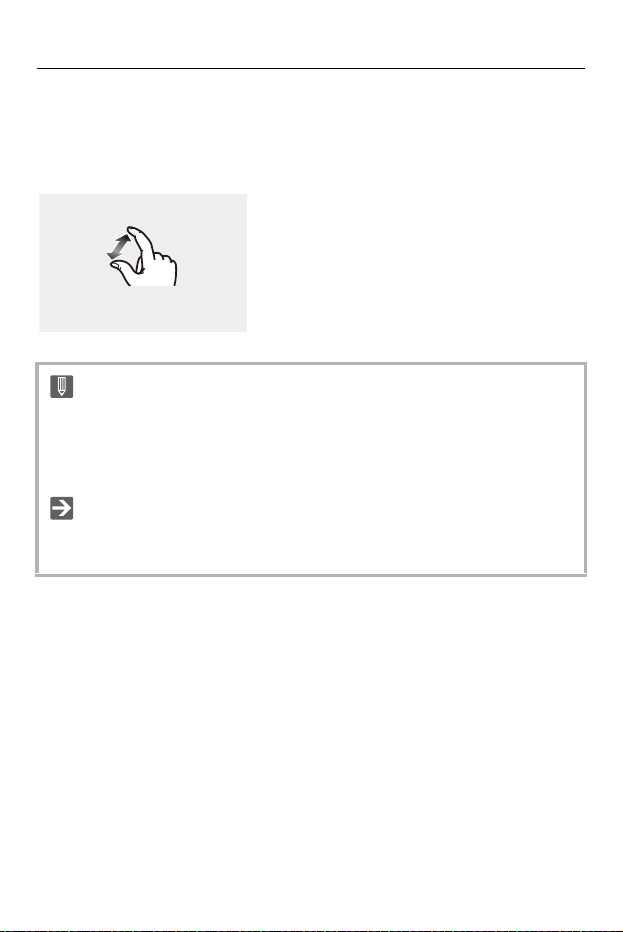
Basic Operations – Camera Setting Operations
88
Pinch (widen/narrow)
Operations of widening the distance between two fingers (pinch out) and
narrowing the distance between two fingers (pinch in) while they are
touching the touch screen.
•
If you will use a commercially available monitor protection sheet, observe the
precautions for the sheet.
(Visibility and operability may be impaired depending on the type of monitor
protection sheet.)
•
Touch operations can be disabled:
([Touch Settings]: 694)
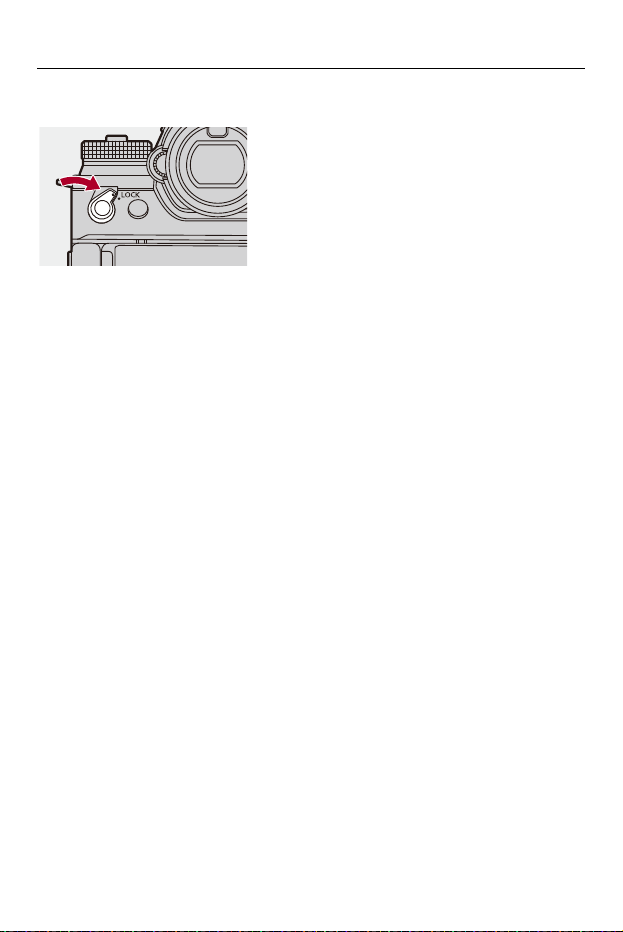
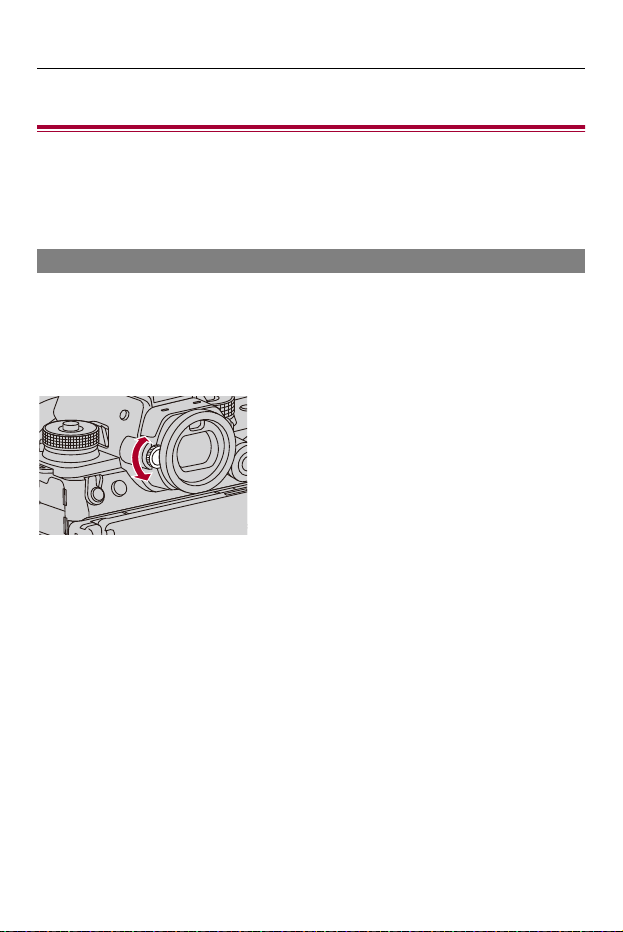
Basic Operations – Monitor/Viewfinder Display Settings
90
Monitor/Viewfinder Display Settings
≥ Setting the Viewfinder: 90
≥ Switching Between the Monitor and Viewfinder: 91
≥ Switching the Display Information: 94
Setting the Viewfinder
Adjusting the Viewfinder Diopter
Rotate the diopter adjustment dial while looking through the
viewfinder.
•
Adjust until you can clearly see the text on the viewfinder.
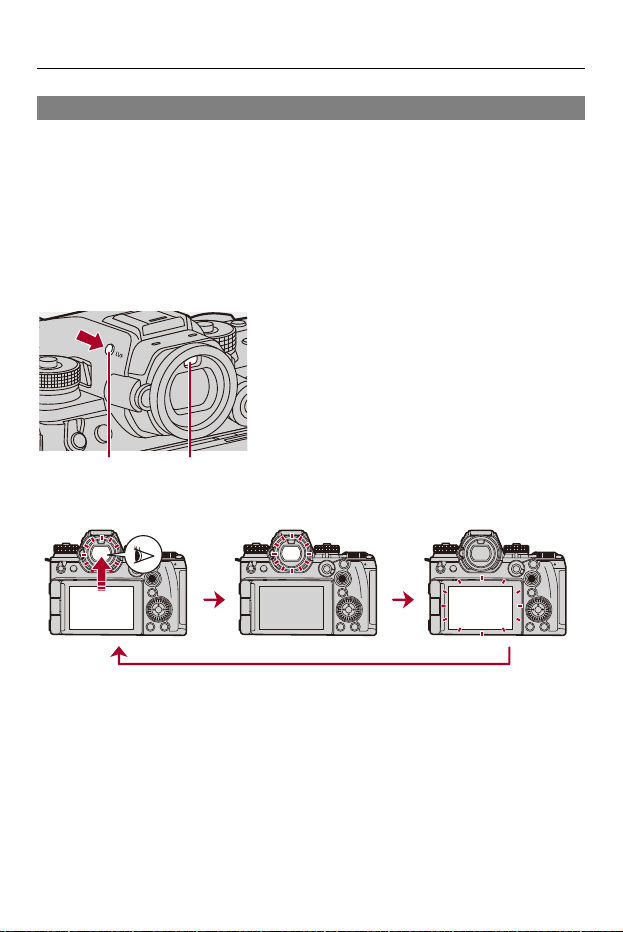
Basic Operations – Monitor/Viewfinder Display Settings
91
Switching Between the Monitor and Viewfinder
With the default settings, automatic viewfinder/monitor switching is set.
When you look through the viewfinder, the eye sensor (A) works and the
camera switches from monitor display to viewfinder display.
You can switch to viewfinder display or monitor display with [LVF] button
(B).
Press [LVF].
(C) Automatic viewfinder/monitor switching
(D) Viewfinder display
(E) Monitor display
(A)(B)
(C) (D) (E)
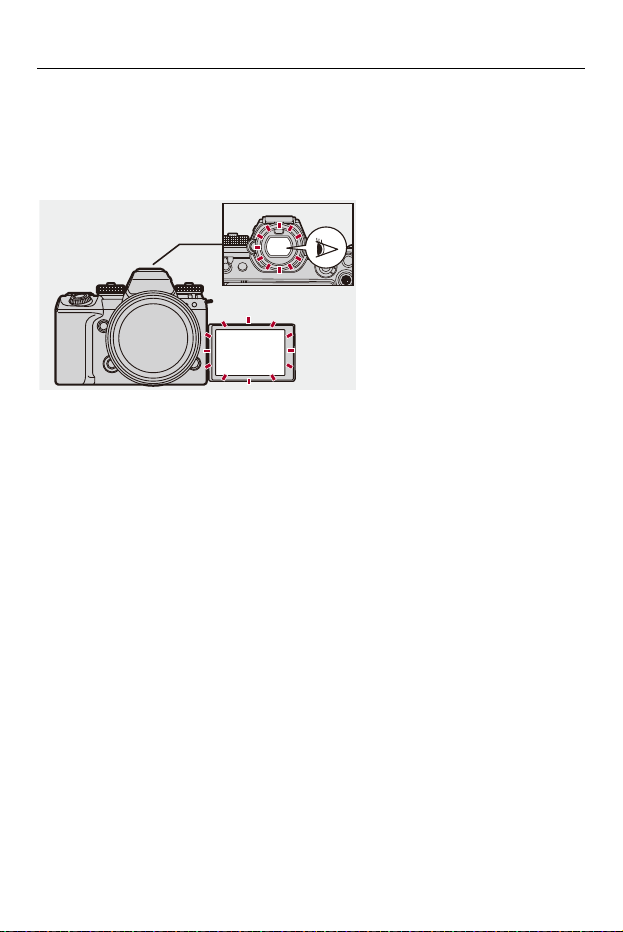
Basic Operations – Monitor/Viewfinder Display Settings
92
Simultaneous Display on the Monitor and Viewfinder
When automatic viewfinder/monitor switching (C), if the monitor is rotated
towards the lens, the recording screen is displayed on the monitor even
when you look into the viewfinder.

Basic Operations – Monitor/Viewfinder Display Settings
93
•
The eye sensor does not work while the monitor is tilted.
•
The eye sensor may not work correctly due to the shape of eyeglasses, the way
the camera is held, or bright light shining around the eyepiece.
•
During video playback or slide show, automatic viewfinder/monitor switching
does not work.
•
Simultaneous display on the monitor and viewfinder is not possible if the
following functions are used when using [Proxy Recording].
– HDMI output
– Wi-Fi connection with a smartphone
– Tethered recording
•
To focus when looking through the viewfinder:
([Eye Sensor AF]: 692)
•
The sensitivity of the eye sensor can be changed:
([Eye Sensor]: 734)
•
You can set the display speed for live view on the monitor:
([Monitor Frame Rate]: 731)
•
You can set the display speed for live view on the viewfinder when recording
pictures.
([LVF Frame Rate]: 732)
•
You can adjust the brightness, coloring, red or blue tints, etc., of the monitor/
viewfinder:
([Monitor Settings]/[Viewfinder]: 732)
•
You can adjust monitor/viewfinder luminance:
([Monitor Backlight]/[LVF Luminance]: 733)
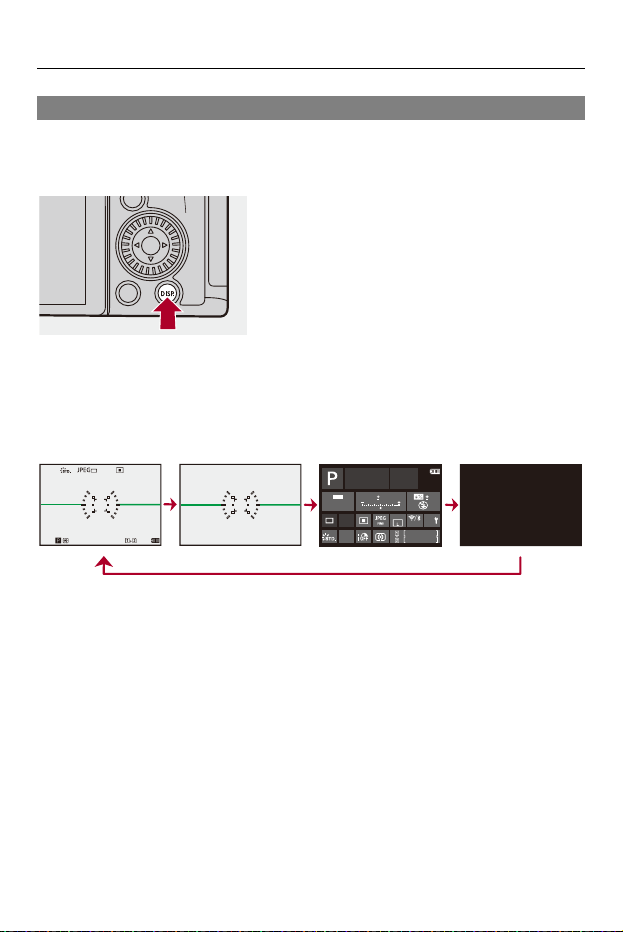
Basic Operations – Monitor/Viewfinder Display Settings
94
Switching the Display Information
Press [DISP.].
≥ The display information is switched.
Recording Screen
Monitor
(F) With information
(G) Without information
(H) Control panel
(I) Turned off (black)
999
ISO
AUTO
±
0
AFSAFS
L
FINE
999
999
AWB
Fn
0 0
0
AFS
3:2
ISO
AUTO
OFF
(F) (G) (H) (I)
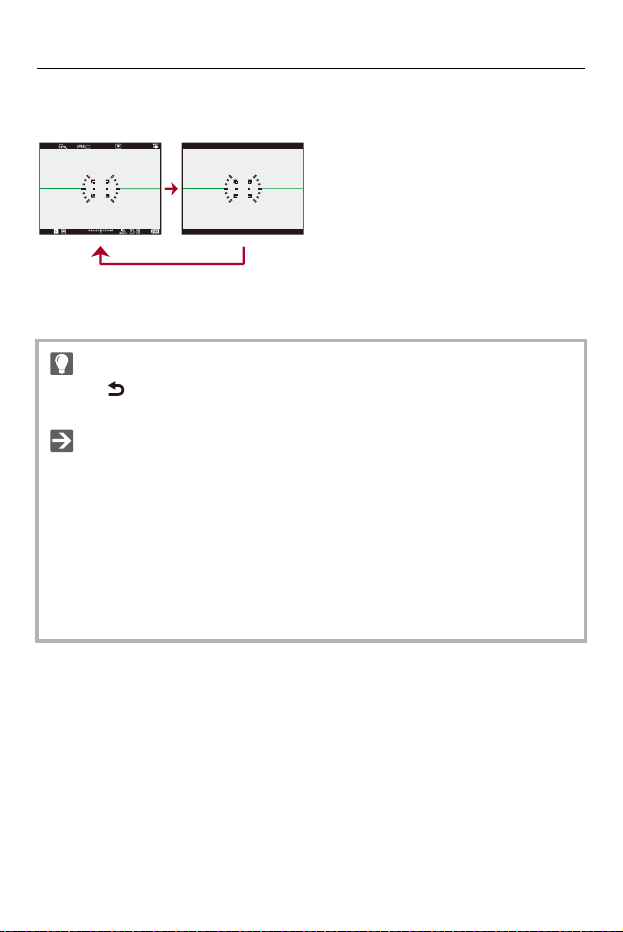
Basic Operations – Monitor/Viewfinder Display Settings
95
Viewfinder
(J) With information
(K) Without information
•
Press [ ] to switch between display/hide of the level gauge.
This can also be set by using [Level Gauge]. ([Level Gauge]: 710)
•
Control panel operation (Control Panel: 99)
•
You can hide the control panel and black screen:
([Show/Hide Monitor Layout]: 711)
•
The display can be changed so that live view and display information do not
overlap:
([LVF/Monitor Disp. Set]: 705)
•
You can display the outline for the live view:
([Framing Outline]: 711)
999
L
FINE
AFSAFS
(J) (K)
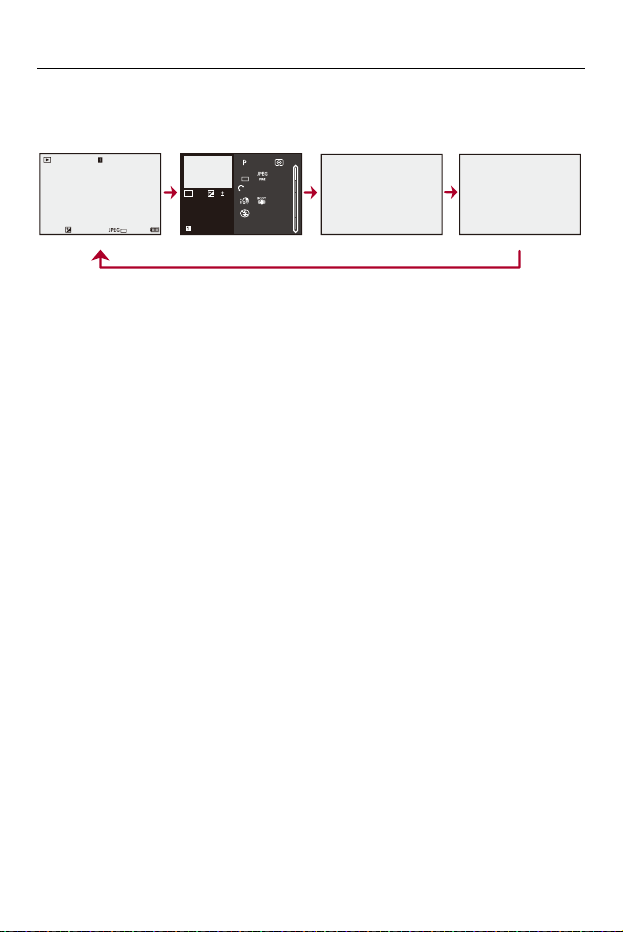
Basic Operations – Monitor/Viewfinder Display Settings
96
Playback Screen
(L) With information
(M) Detailed information display
•
Pressing 34 switches the display information. (Detailed information display: 886)
(N) Without information
(O) Without blinking highlights
•
This is a screen without blinking highlights display that is shown when [Blinking
Highlights] of the [Custom] ([Monitor / Display (Photo)]) is set to [ON].
In other than this screen, overexposed parts of the screen will blink. ([Blinking
Highlights]: 707)
2025.12.1 10:00 100-0001 1/999
ISO
100
F
3.560
±
0
L
FINE
100
100-0001
ISO
0
F3.5
60
2025.12. 1 10:00
s
RGB
1/5
AFS
STD.
L
3:2
AWB
(L) (M) (N) (O)
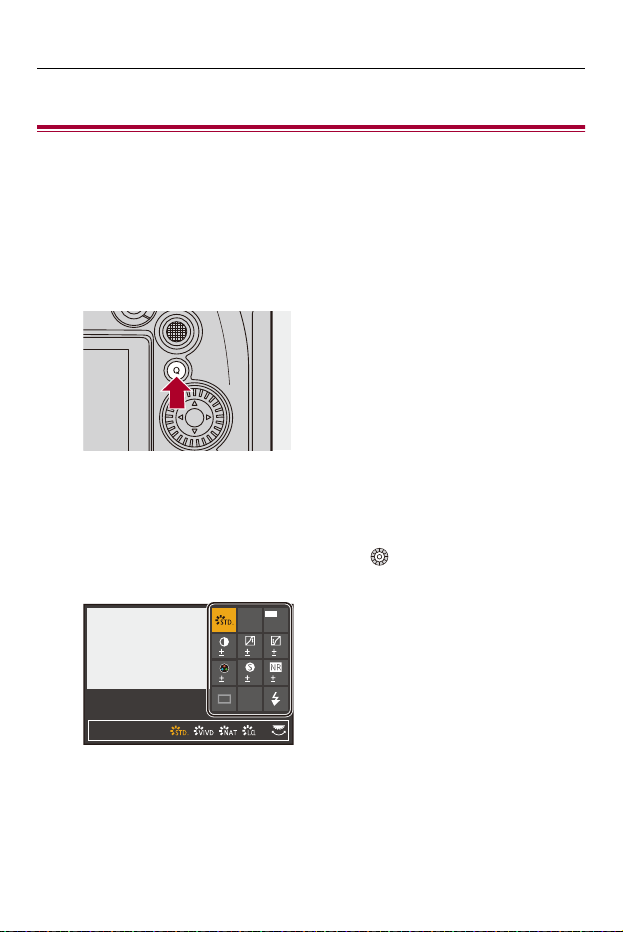
Basic Operations – Quick Menu
97
Quick Menu
This menu enables you to quickly set functions that are frequently used
during recording without calling up the menu screen. You can also change
the Quick menu display method and the items to display.
1
Display the Quick menu.
≥Press [Q].
2
Select a menu item.
≥Press 3421.
≥Directions on the diagonal can also be selected using the joystick.
≥Selection is also possible by rotating .
≥Selection is also possible by touching a menu item.
00 0
AWB
3:2
0 0
0
AUTO
ISO
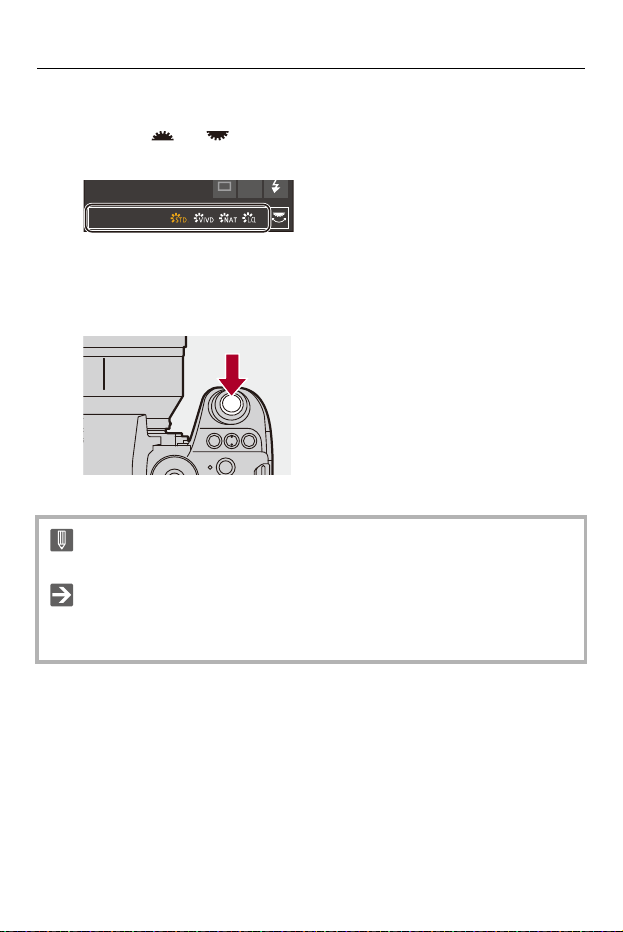
Basic Operations – Quick Menu
98
3
Select a setting item.
≥Rotate or .
≥Selection is also possible by touching a setting item.
4
Close the Quick menu.
≥Press the shutter button halfway.
≥You can also close the menu by pressing [Q].
•
Some items cannot be set depending on the recording mode or camera settings.
•
The Quick menu can be customized:
(Quick Menu Customization: 665)
3:2
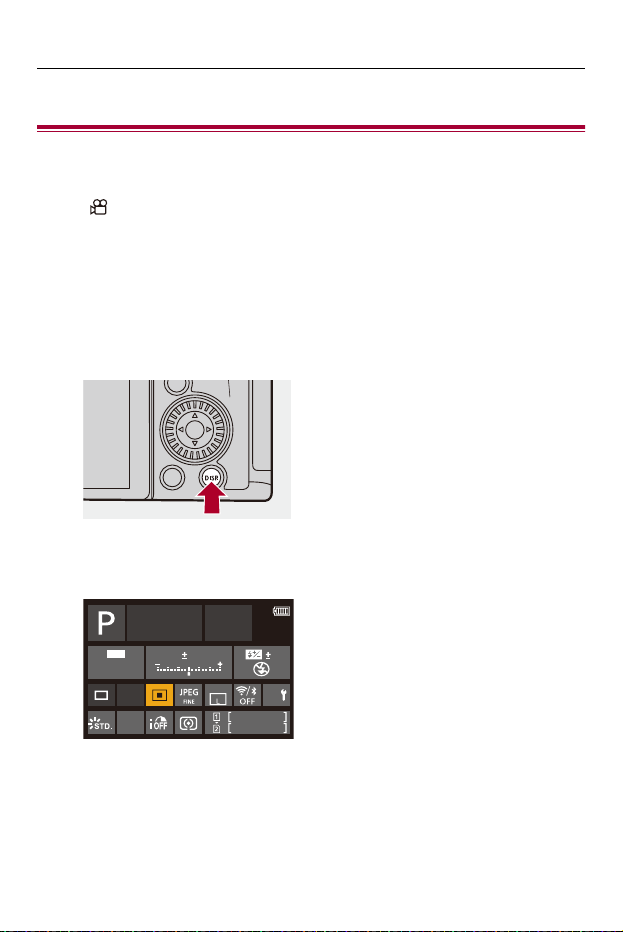
Basic Operations – Control Panel
99
Control Panel
This screen allows you to view the current recording settings on the
monitor. You can also touch the screen to change the settings.
In the [ ] mode (Video mode)/[S&Q] mode (Slow & Quick mode), the
display changes to one especially for video.
•
For information about the screen (Control Panel (Photo Mode): 875, Control Panel
(Video Mode/S&Q Mode): 878)
1
Display the control panel.
≥Press [DISP.] several times.
2
Touch the items.
Example) Changing the AF mode
999
999
AWB
Fn
ISO
AUTO
0 0
0
AFS
3:2
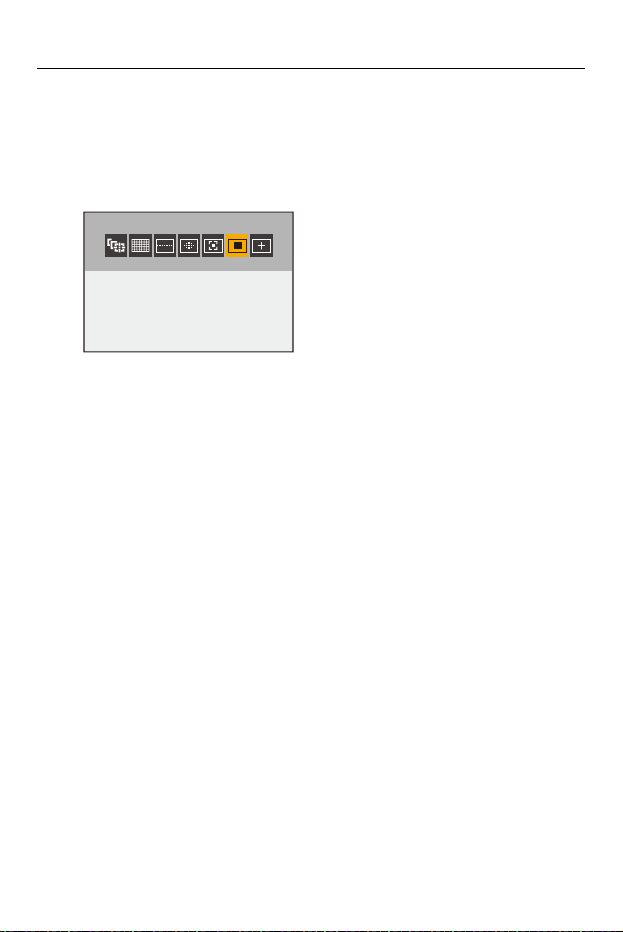
Basic Operations – Control Panel
100
3
Change the setting.
≥Touch the setting item.
•
Refer to the pages explaining each item for information on how to change the
settings.
4
Touch [Set].
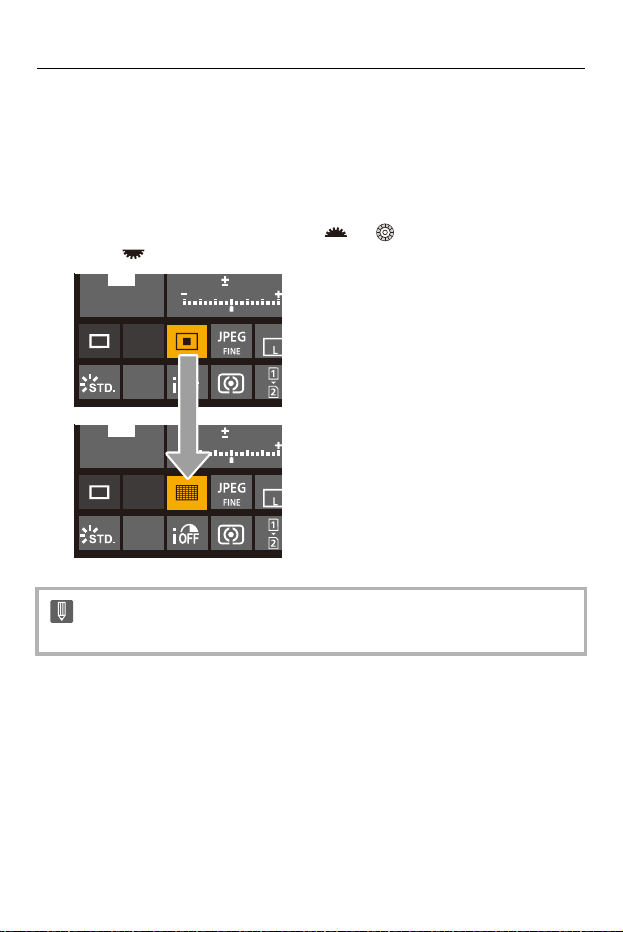
Basic Operations – Control Panel
101
Changing Directly Using the Dial
Steps
2
to
4
can also be changed using the following operations.
1 Press one of 3421 to enable selection of items.
•
Selected items are displayed in yellow.
2 Press 3421 to select an item.
•
Selection is also possible by rotating or .
3 Rotate to change the settings values.
•
Some items cannot be set depending on the recording mode or camera settings.
AWB
ISO
AUTO
0
0
AFS
3:2
AWB
ISO
AUTO
0
0
AFS
3:2
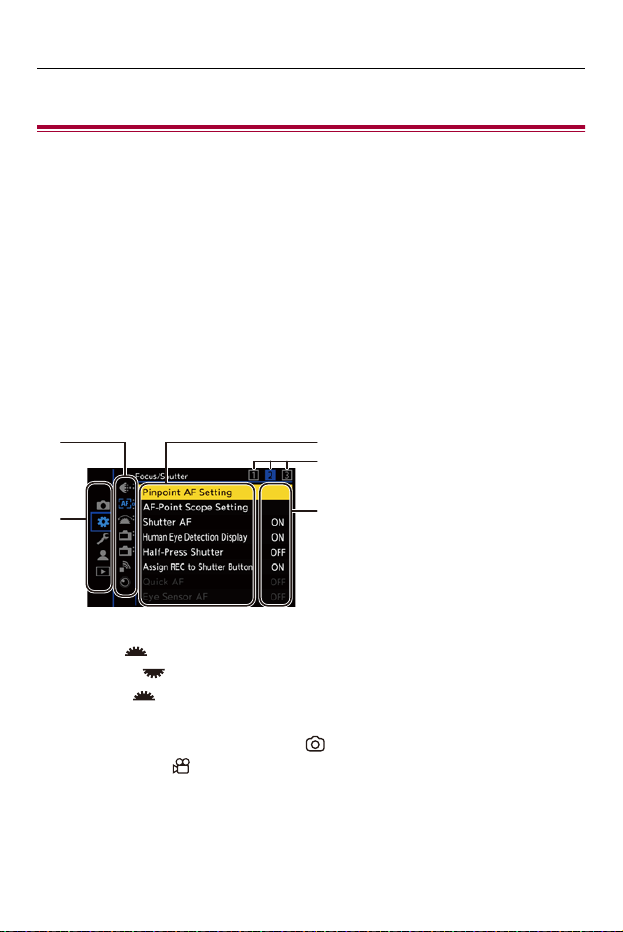
Basic Operations – Menu Operation Methods
102
Menu Operation Methods
≥ [Reset]: 107
In this camera, the menu is used for setting a wide variety of functions and
performing camera customizations.
Menu operations can be performed using the cursors, joystick, dial, or by
touch.
Configuration and operation parts of the menu
The menu can be operated by pressing 21 to move between menu screens.
Use the operation parts indicated below to operate the main tab, the sub tab, the page
tab, and menu items without moving to the corresponding menu levels.
•
You can also operate by touching the icons, menu items, and setting items.
(A) Main tab
*
([Q] button)
(B) Sub tab ( )
(C) Menu item ( )
(D) Page tab ( )
(E) Setting item
* The [Photo] menu is displayed only in [ ] mode and the [Video] menu is
displayed only in [ ]/[S&Q] mode. Select the appropriate mode to view the
[Photo] menu or [Video] menu. (Photo/Video/S&Q Switch: 80)
(C)
(D)
(E)
(A)
(B)
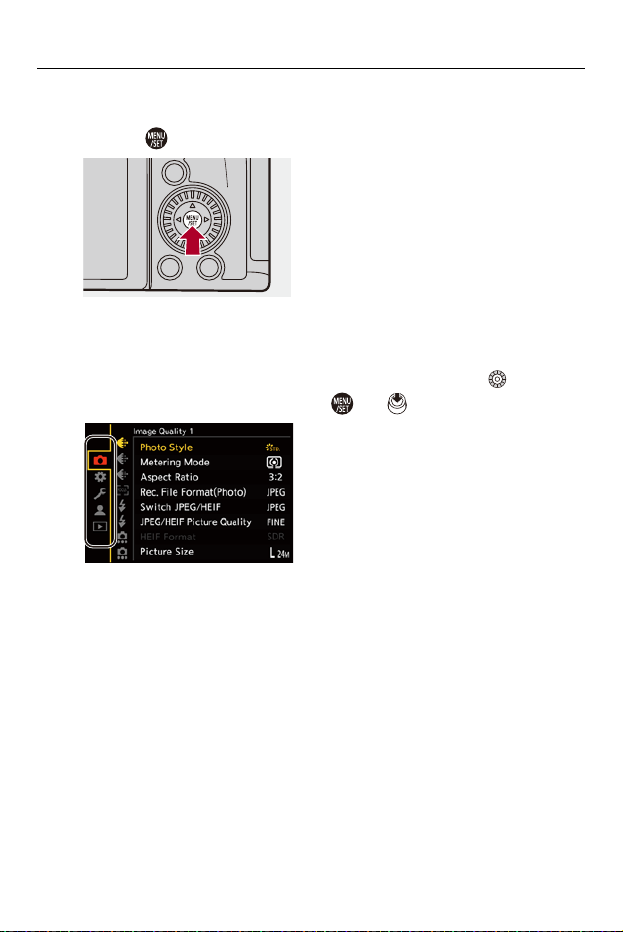
Basic Operations – Menu Operation Methods
103
1
Display the menu.
≥Press .
2
Select a main tab.
≥Press 34 to select a main tab and then press 1.
≥You can also perform the same operation by rotating to select
the main tab and then pressing or .
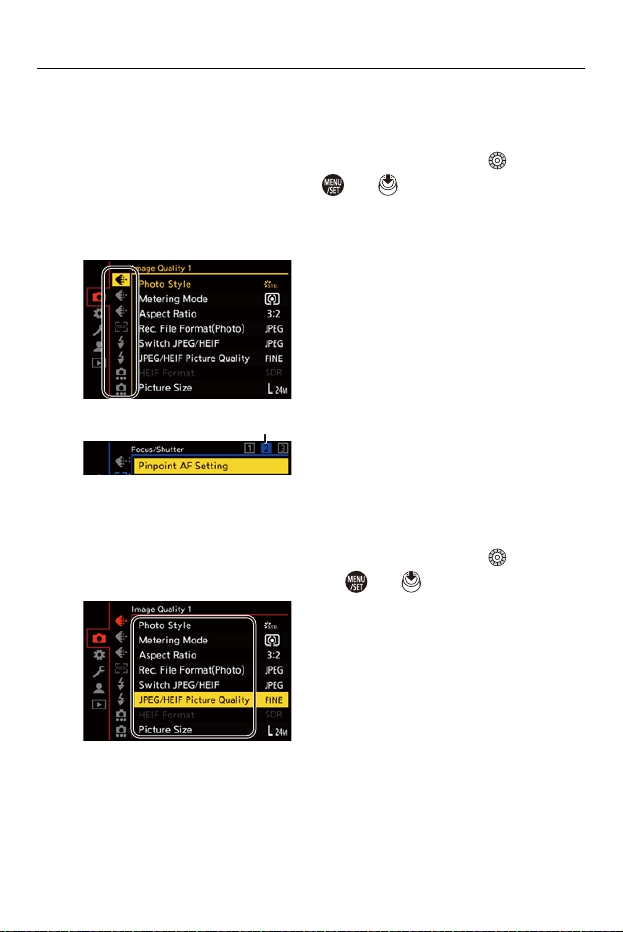
Basic Operations – Menu Operation Methods
104
3
Select a sub tab.
≥Press 34 to select a sub tab and then press 1.
≥You can also perform the same operation by rotating to select
the sub tab and then pressing or .
•
If there are page tabs (D), then after the page tabs have finished switching,
the next sub tab is switched to.
4
Select a menu item.
≥Press 34 to select a menu item and then press 1.
≥You can also perform the same operation by rotating to select
the menu item and then pressing or .
(D)
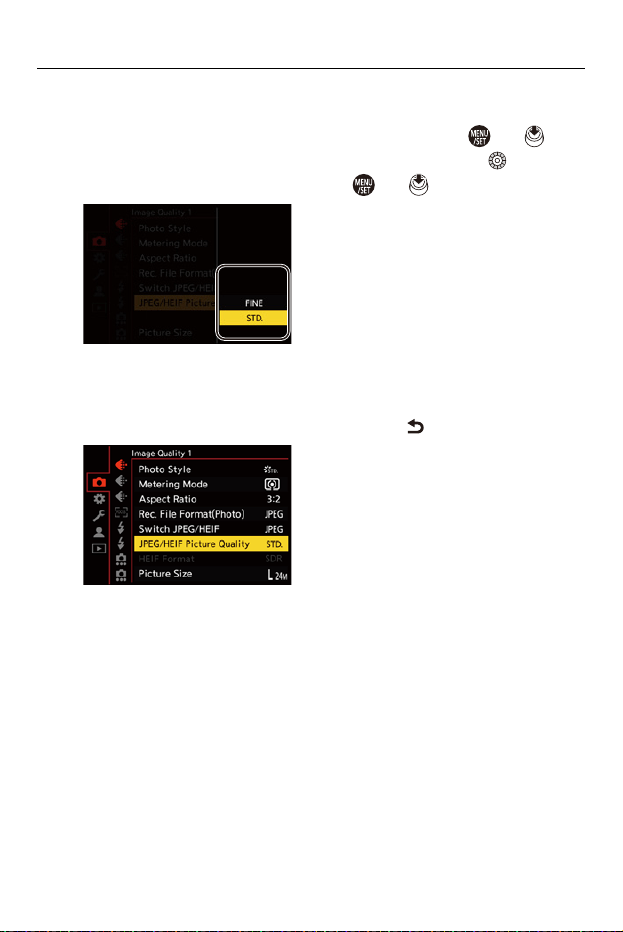
Basic Operations – Menu Operation Methods
105
5
Select a setting item and then confirm your selection.
≥Press 34 to select a setting item and then press or .
≥You can also perform the same operation by rotating to select
the setting item and then pressing or .
6
Close the menu.
≥Press the shutter button halfway.
≥You can also close the menu by pressing [ ] several times.
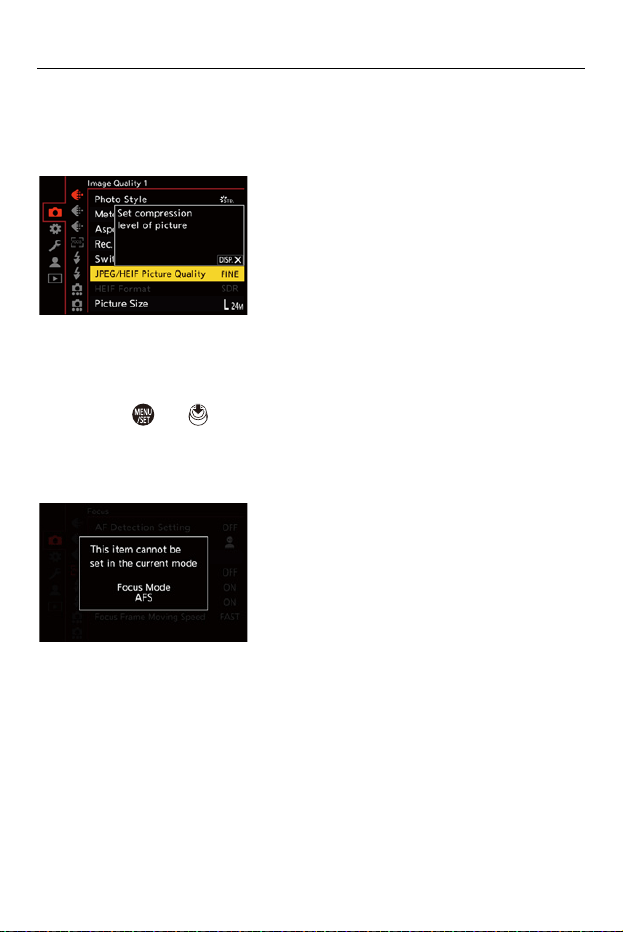
Basic Operations – Menu Operation Methods
106
Displaying Descriptions About Menu Items and Settings
If you press [DISP.] while a menu item or setting item is selected, a
description about the item is displayed on the screen.
Grayed Out Menu Items
Menu items that cannot be set are displayed grayed out.
If you press or while a grayed out menu item is selected, the
reason why it cannot be set is displayed.
•
The reason why a menu item cannot be set may not be displayed depending on the
menu item.
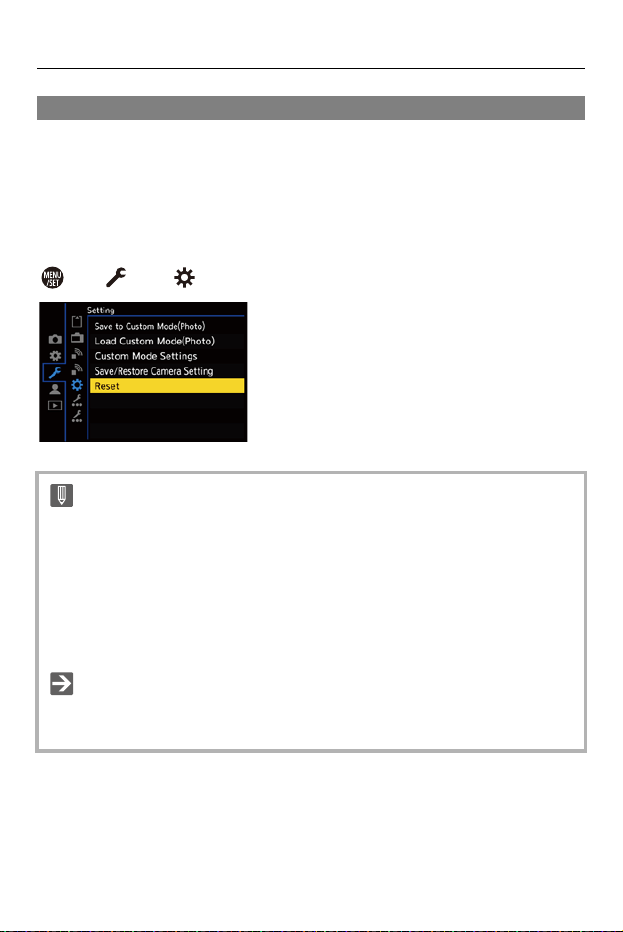
Basic Operations – Menu Operation Methods
107
[Reset]
Return each of the following settings to the default setting:
•
Recording settings
•
Network settings (settings of [Streaming Setup], [LAN / Wi-Fi], and [Bluetooth])
•
Setup and custom settings (other than [Streaming Setup], [LAN / Wi-Fi], and
[Bluetooth])
[] [] Select [Reset]
•
If the setup and custom settings are reset, the [Playback] menu is also reset.
•
The [LUT Library] is returned to the default settings when setup and custom
settings are reset. Registered LUTs are deleted.
•
If the setup and custom settings are reset, [Lens Information] in [Image Stabilizer]
in the [Photo] ([Others (Photo)]) menu/[Video] ([Others (Video)]) menu is also
returned to the default setting.
•
The folder numbers and clock settings are not reset.
•
List of default settings and settings that can be reset (List of Default Settings/
Custom Saving/Settings Available for Copying: 941)
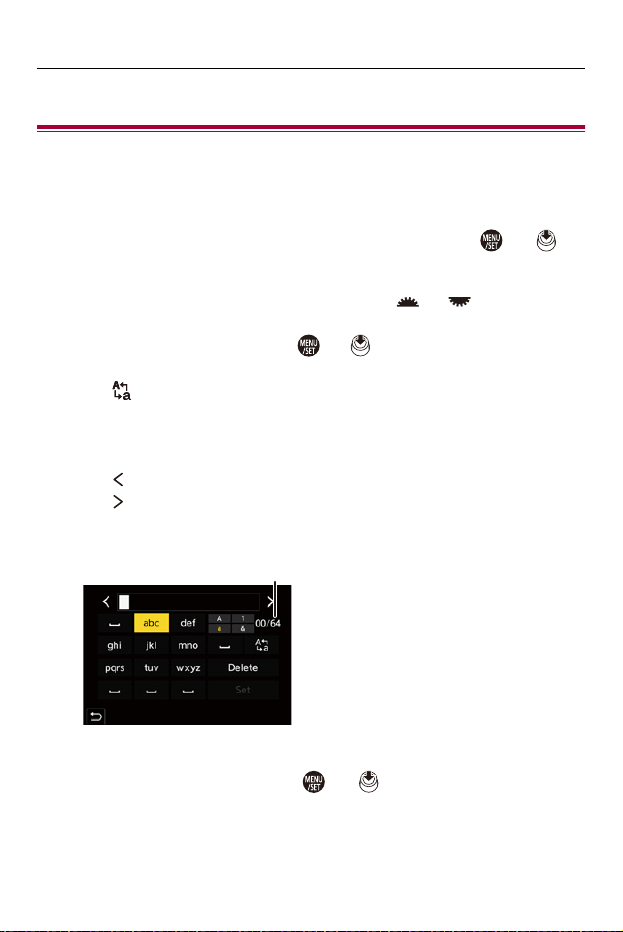
Basic Operations – Entering Characters
108
Entering Characters
Follow the steps below when the character entry screen is displayed.
1
Enter characters.
≥Press 3421 to select characters and then press or
until the character to enter is displayed. (Repeat this)
•
To repeatedly enter the same character, rotate or to the right to
move the entry position cursor.
•
If you select an item and press or , you can perform the following
operations:
– [ ]: Change the character type to [A] (upper case characters), [a] (lower
case characters), [1] (numbers), and [&] (special characters)
–[] ]: Enter a blank
– [Delete]: Delete a character
– [ ]: Move the entry position cursor to the left
– [ ]: Move the entry position cursor to the right
•
When entering a password, (A) shows the number of characters you have
entered and the number of characters you can enter.
2
Complete entering.
≥Select [Set] and then press or .
(A)
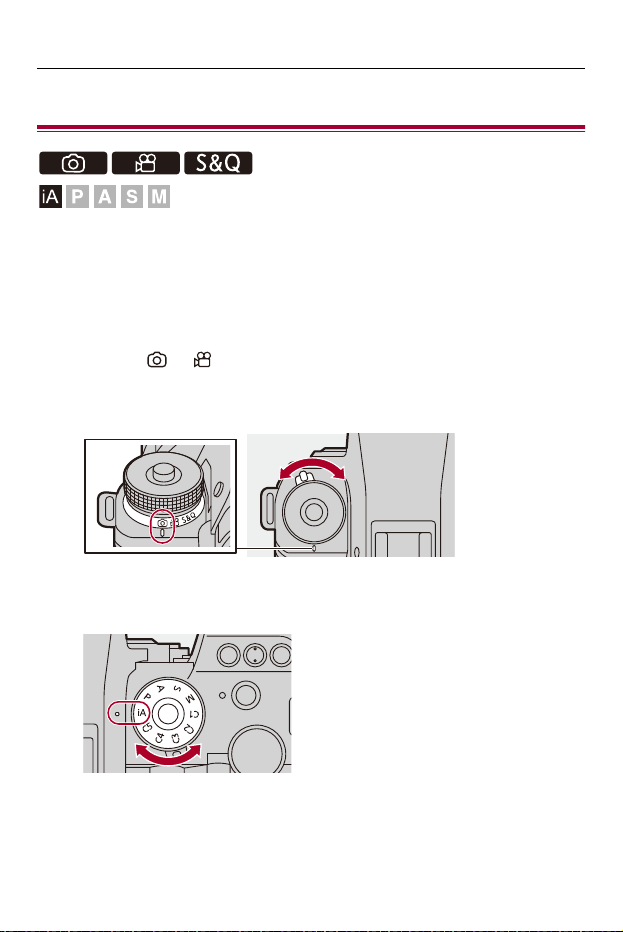
Basic Operations – Intelligent Auto Mode
109
Intelligent Auto Mode
The [iA] mode (Intelligent Auto mode) can record images using settings
automatically selected by the camera.
The camera detects the scene to set the optimal recording settings
automatically to match the subject and recording conditions.
1
Set to [ ], [ ], or [S&Q] mode.
≥Switch the photo/video/S&Q switch. (Photo/Video/S&Q Switch:
80)
2
Set the recording mode to [iA].
≥Set the mode dial. (Selecting the Recording Mode: 81)
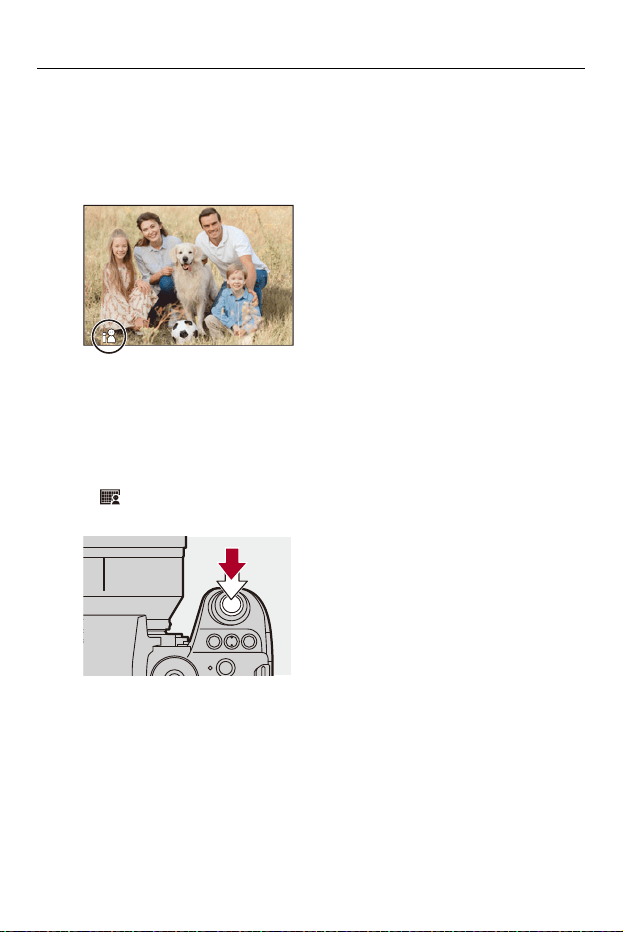
Basic Operations – Intelligent Auto Mode
110
3
Aim the camera at the subject.
≥When the camera detects the scene, the recording mode icon
changes.
(Automatic Scene Detection)
4
Adjust the focus.
≥Press the shutter button halfway.
≥Once the subject is in focus, the focus icon lights.
(When the subject is not in focus, the indication blinks.)
•
[ ] of the AF mode works and the AF area is displayed aligned to any
humans.
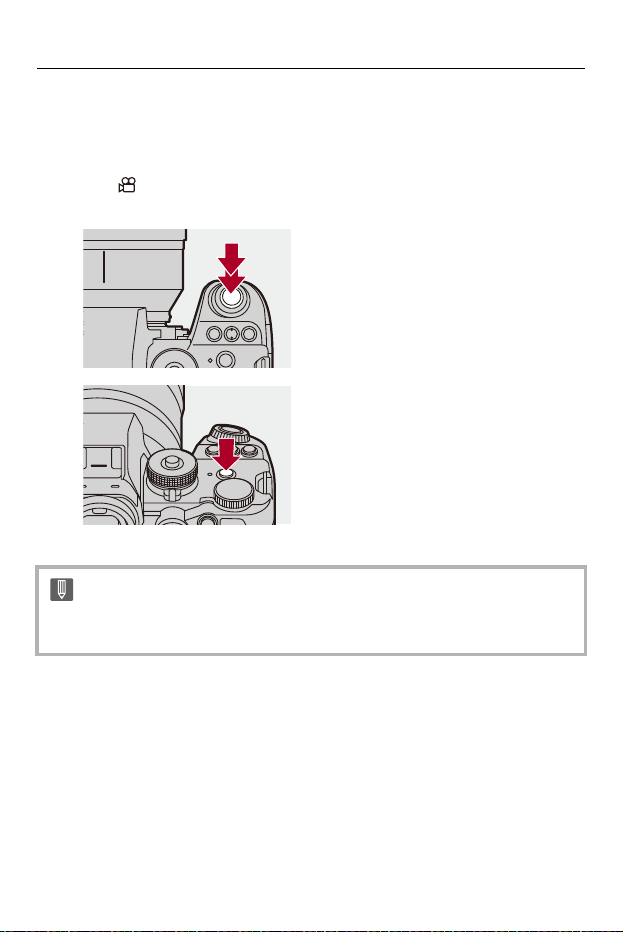
Basic Operations – Intelligent Auto Mode
111
5
Start recording.
≥Press the shutter button fully to take pictures.
≥Press the video rec. button to record videos.
In [ ]/[S&Q] mode, you also can start recording video by pressing
the shutter button fully.
•
Backlight compensation operates automatically to prevent subjects from
appearing dark when there is a backlight.
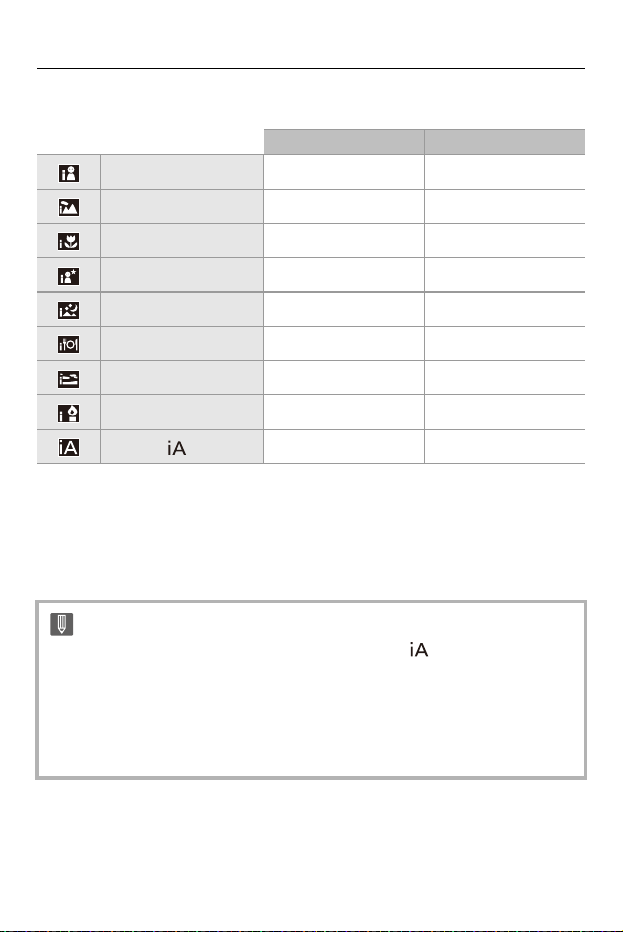
Basic Operations – Intelligent Auto Mode
112
Types of Automatic Scene Detection
*1 Detected when [Detecting Subject] ([Type of Subject]) in the [Photo] ([Focus])
menu is set to [HUMAN].
*2 Detected when using an external flash.
*3 Detected when [Detecting Subject] ([Type of Subject]) in the [Photo] ([Focus])
menu is set to other than [HUMAN].
Taking pictures Recording video
i-Portrait
*1
i-Scenery
i-Macro
i-Night Portrait
*2
i-Night Scenery
i-Food
i-Sunset
i-Low Light
*3
•
If none of the scenes are applicable, recording is with [ ] (standard setting).
•
Different scene types may be selected for the same subject depending on the
recording conditions.
•
Not all subjects can be detected according to the settings.
•
When [Detecting Subject] ([Type of Subject]) is [ANIMAL], some subjects that are
not animals may be detected as animals.
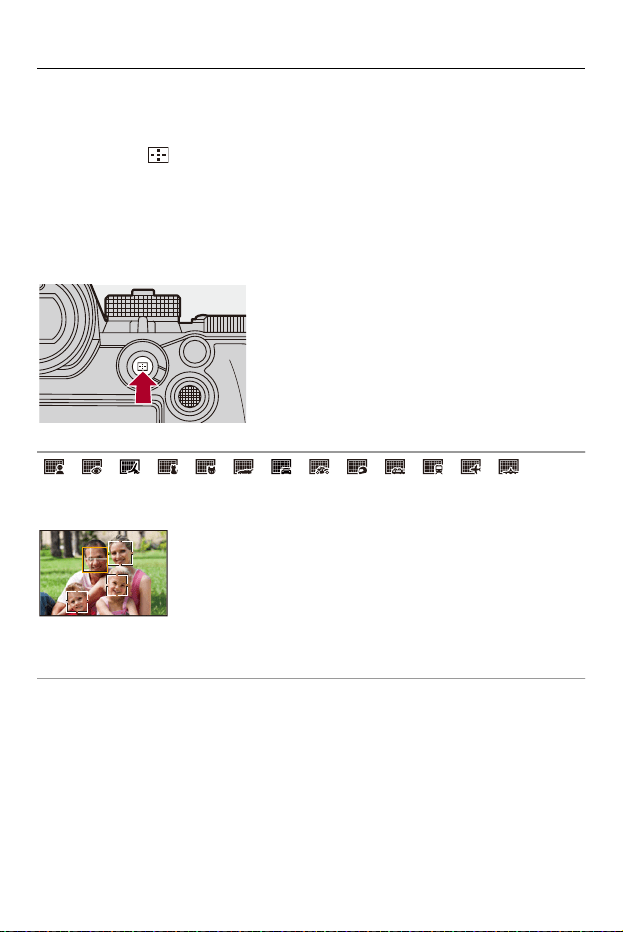
Basic Operations – Intelligent Auto Mode
113
AF Mode
Changing the AF mode.
•
Each press of [ ] changes the AF mode.
•
The mode can also be changed by touching the screen or pressing and holding the
joystick.
•
[AF Detection Setting] is fixed to [ON].
•
The [Detecting Subject] setting is maintained for any recording mode other than [iA]
mode. (Automatic Detection: 206)
[]/[]/[]/[]/[]/[]/[]/[]/[]/[]/[]/[]/[]
([Full Area AF])
Detects subjects for recording and focuses.
•
You can switch the subject to be focused by either touching the white AF area or
moving the joystick 3421.
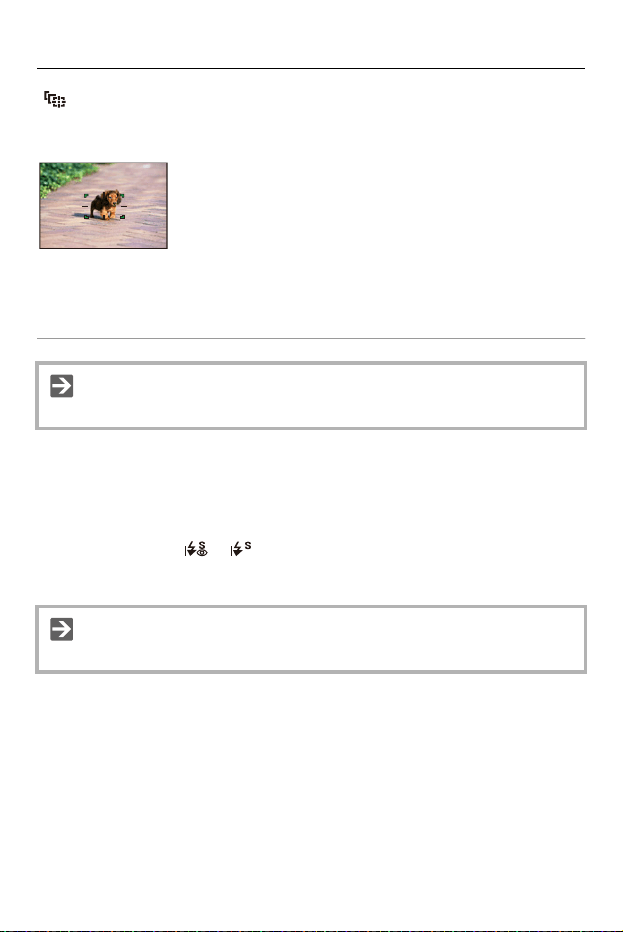
Basic Operations – Intelligent Auto Mode
114
[ ] ([Tracking])
When the focus mode is set to [AFC], the AF area follows the movement of the
subject, maintaining focusing.
Aim the AF area over the subject and then press and hold the shutter button
halfway.
•
The camera will track the subject while the shutter button is pressed halfway or fully.
Flash
When recording using a flash, the camera switches to the appropriate flash
mode for the recording conditions.
When Slow Sync. ([ ], [ ]), be careful with regard to camera shake
because the shutter speed becomes slow.
•
For information about AF modes (Automatic Detection: 206, [Tracking]: 212)
•
For information about external flashes (Using an External Flash: 412)
Basic Operations – Recording Using Touch Functions
115
Recording Using Touch Functions
≥ Touch AF/Touch Shutter: 115
≥ Touch AE: 118
Touch AF/Touch Shutter
Touch functions allow you to focus on the point that you touch, release the
shutter, etc.
•
With the default settings, the Touch Tab is not displayed.
Set [Touch Tab] to [ON] in [Touch Settings] in the [Custom] ([Operation]) menu.
([Touch Settings]: 694)
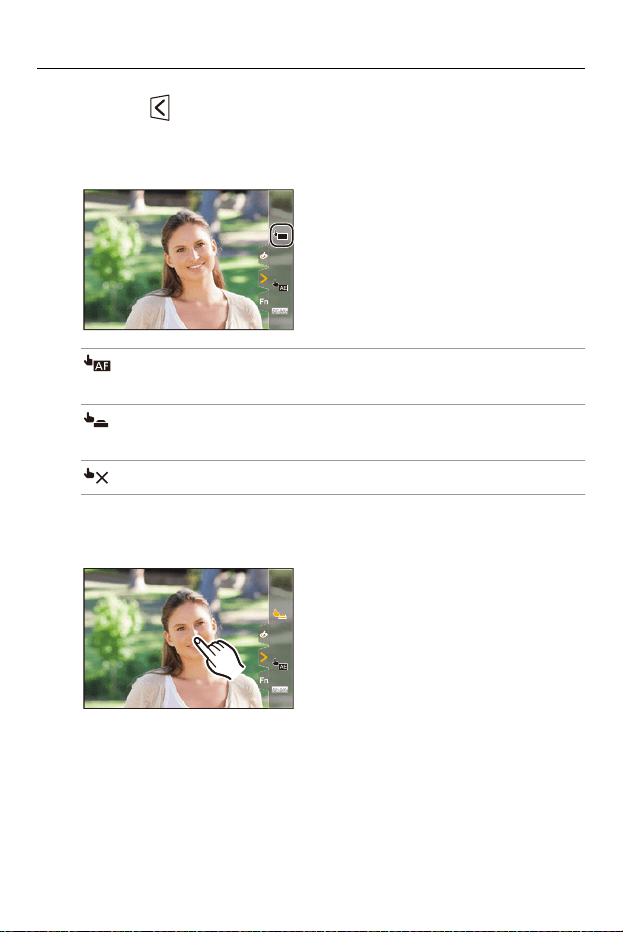
Basic Operations – Recording Using Touch Functions
116
1
Touch [ ].
2
Touch the icon.
≥The icon switches each time you touch it.
(Touch AF)
Focus on the touched position.
(Touch Shutter)
Record with focus on the touched position.
(OFF)
3
(When set to anything other than OFF) Touch the
subject.
AF

Basic Operations – Recording Using Touch Functions
117
•
When the Touch Shutter fails, the AF area first turns red and then disappears.
•
For information about operations to move the AF area (AF Area Operations:
223)
•
It is also possible to optimize the focus and brightness on the touched position:
(Focus on and Adjust Brightness for the Touched Position ([AF+AE]): 228)
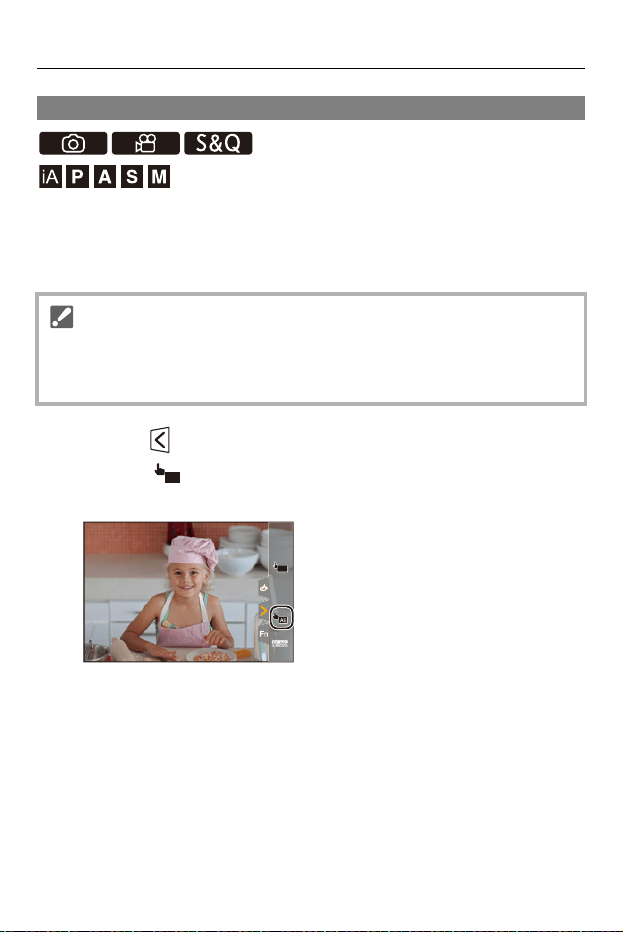
Basic Operations – Recording Using Touch Functions
118
Touch AE
This function adjusts the brightness according to a touched position.
When a subject’s face appears dark, you can make the screen brighter to
match the face.
1
Touch [ ].
2
Touch [ ].
≥The Touch AE settings screen appears.
•
With the default settings, the Touch Tab is not displayed.
Set [Touch Tab] to [ON] in [Touch Settings] in the [Custom] ([Operation]) menu.
([Touch Settings]: 694)
AE
AF
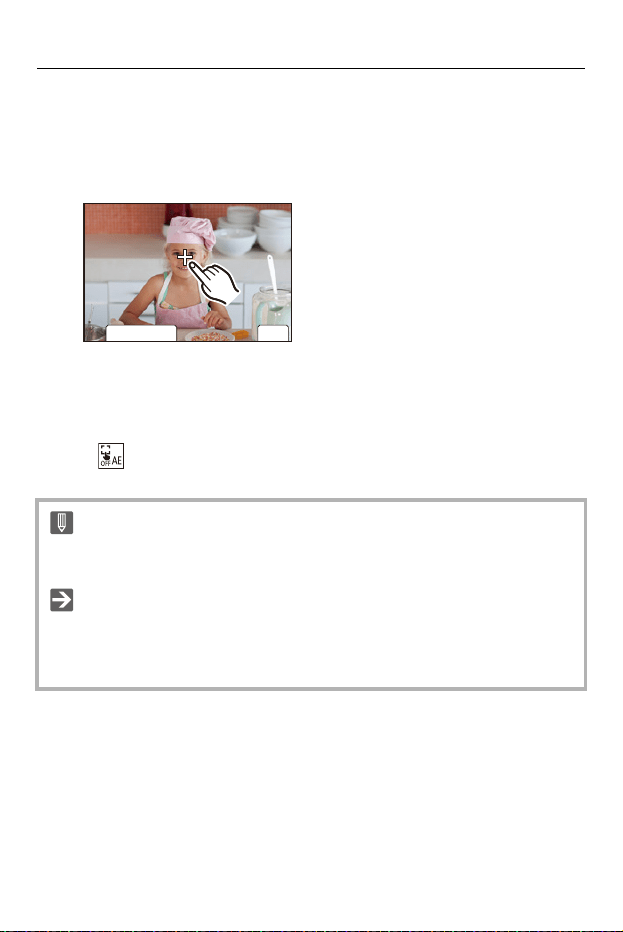
Basic Operations – Recording Using Touch Functions
119
3
Touch the subject to which you wish to adjust the
brightness.
•
To return the position to which to adjust the brightness to the center, touch
[Reset].
4
Touch [Set].
How to Disable Touch AE
Touch [ ].
•
When the following function is being used, Touch AE is not available:
– [Live Cropping]
•
You can also adjust both the focus and brightness to those of the position you
touch. (At this time, Touch AE is not available):
(Focus on and Adjust Brightness for the Touched Position ([AF+AE]): 228)
ュリヴヱハ
6HW
5HVHW

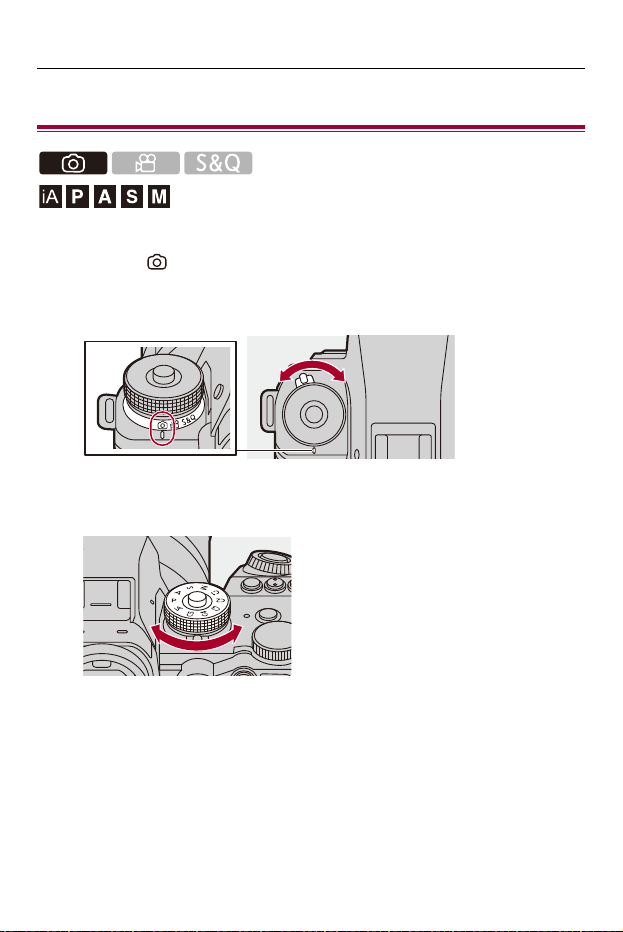
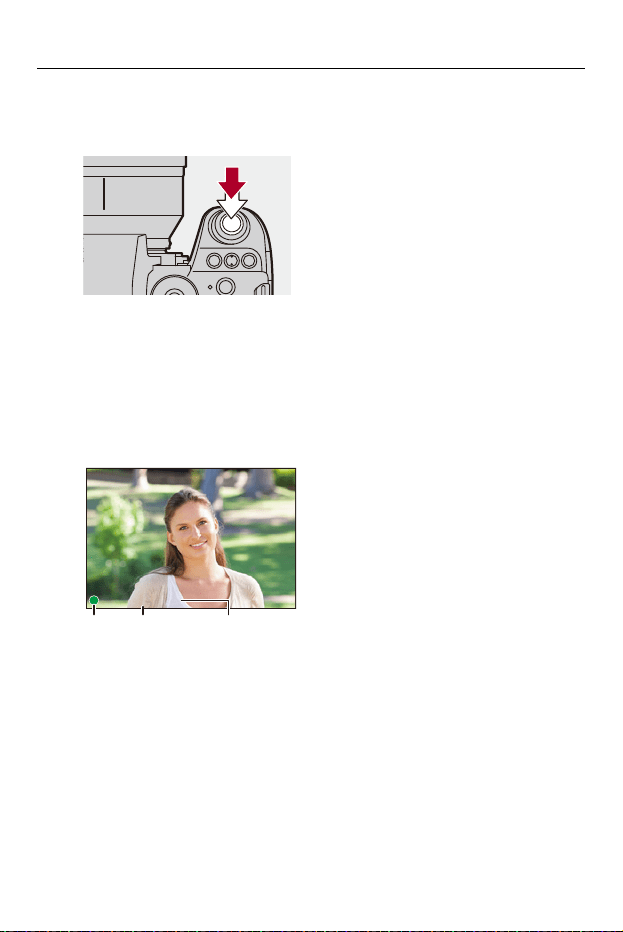
Taking Pictures – Basic Picture Operations
122
3
Adjust the focus.
≥Press the shutter button halfway (press it gently).
≥The aperture value (A) and shutter speed (B) are displayed.
(When the correct exposure cannot be obtained, the indications
blink in red.)
≥Once the subject is in focus, the focus icon (C) lights.
(When the subject is not in focus, the indication blinks.)
•
You can also perform the same operation by pressing [AF ON].
(C)
F3.5
F3.5
F3.560
60
60
(A)(B)
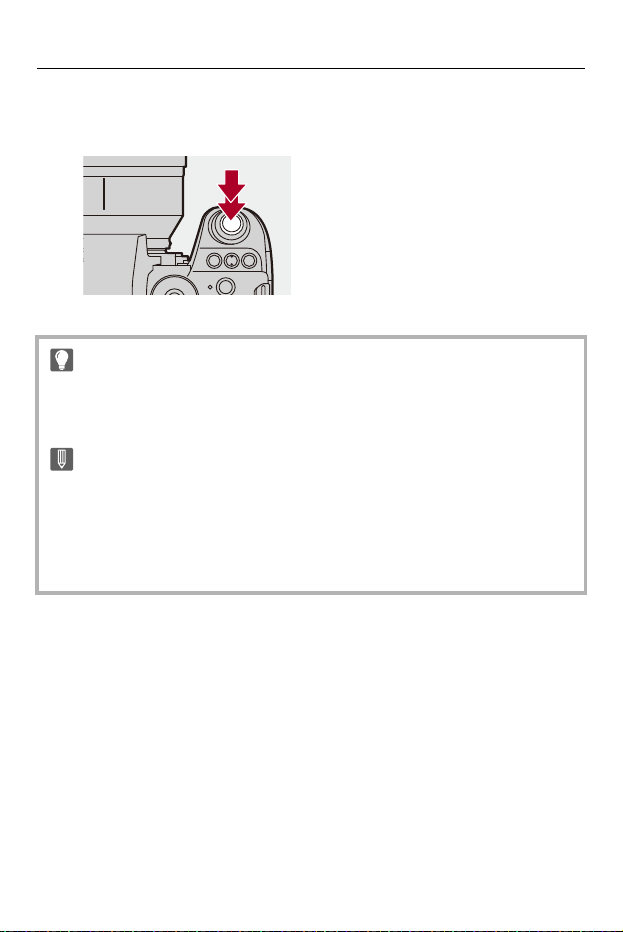
Taking Pictures – Basic Picture Operations
123
4
Start recording.
≥Press the shutter button fully (press it further).
•
Recorded pictures can be displayed automatically by setting [Auto Review] of the
[Custom] ([Monitor / Display (Photo)]) menu. You can also change the picture
display duration to your preferred setting. ([Auto Review]: 701)
•
With the default settings, you cannot take a picture until the subject is
brought into focus.
If you set [Focus/Shutter Priority] in the [Custom] ([Focus/Shutter]) menu
to [BALANCE] or [RELEASE], you will be able to take a picture even when
the subject is not in focus. ([Focus/Shutter Priority]: 687)
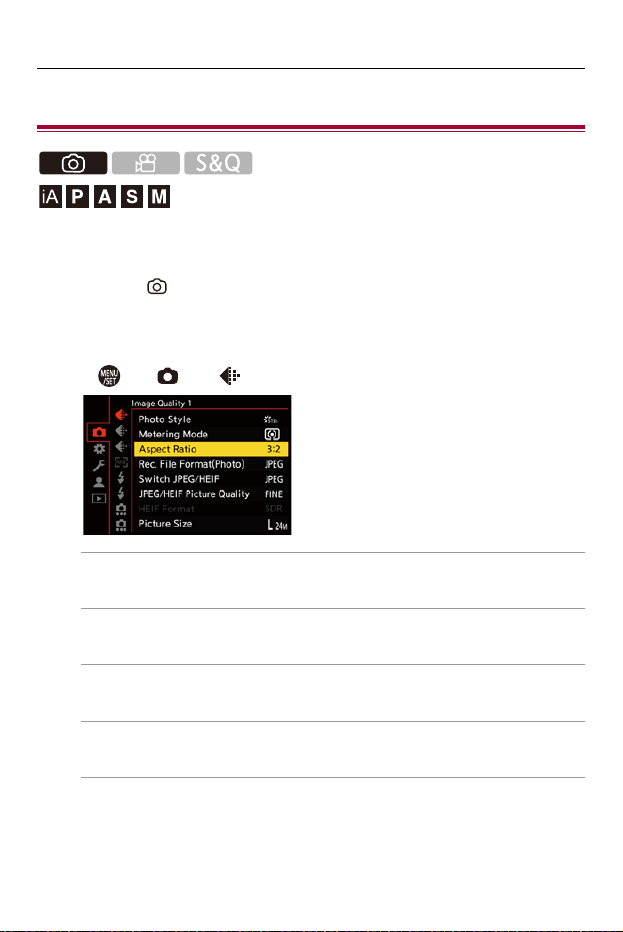
Taking Pictures – [Aspect Ratio]
124
[Aspect Ratio]
You can select the image aspect ratio.
1
Set to [ ] mode.
(Photo/Video/S&Q Switch: 80)
2
Set [Aspect Ratio].
≥ [] [] [Aspect Ratio]
[4:3]
Aspect ratio of a 4:3 monitor
[3:2]
Aspect ratio of a standard film camera
[16:9]
Aspect ratio of a 16:9 TV
[1:1]
Square aspect ratio
Taking Pictures – [Aspect Ratio]
125
[65:24]
65:24 panoramic aspect ratio
[2:1]
2:1 panoramic aspect ratio
•
[65:24] and [2:1] aspect ratios are not available when using the following
functions:
– [iA] mode
– Taking burst pictures
– [Time Lapse Shot]
– [Stop Motion Animation]
– High Resolution Mode
– [Filter Settings]
– [Multiple Exposure]
– [Live View Composite]
•
When using APS-C lenses, [65:24] and [2:1] are not available.
•
A frame for trimming (cropping) can be displayed on the recording screen:
([Frame Marker]: 494)
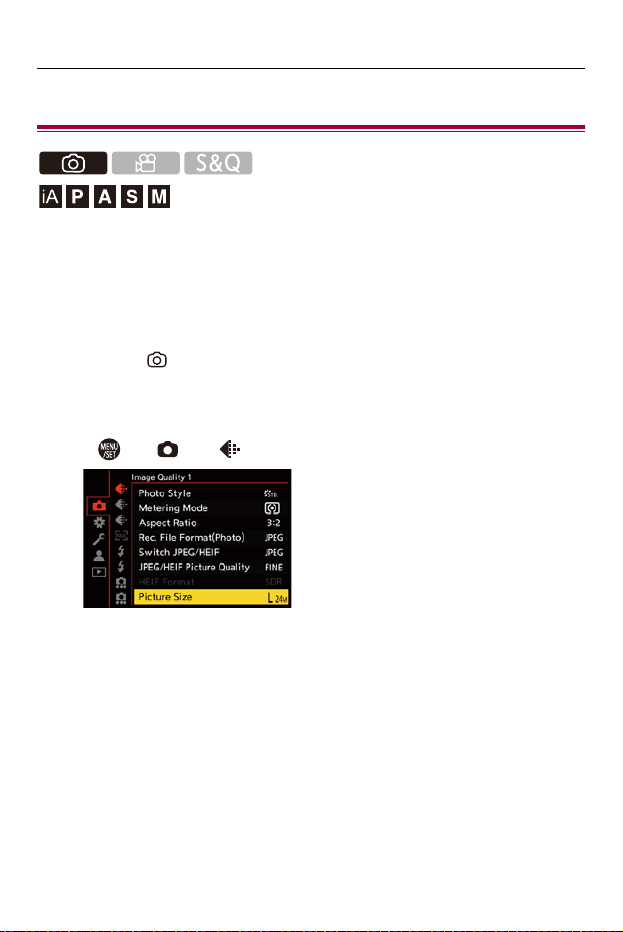
Taking Pictures – [Picture Size]
126
[Picture Size]
Sets the picture’s image size. The image size varies depending on the
[Aspect Ratio] or the lens used.
When an APS-C lens is used, the image area switches to the one for
APS-C, thereby narrowing the angle of view.
1
Set to [ ] mode.
(Photo/Video/S&Q Switch: 80)
2
Set [Picture Size].
≥ [] [] [Picture Size]
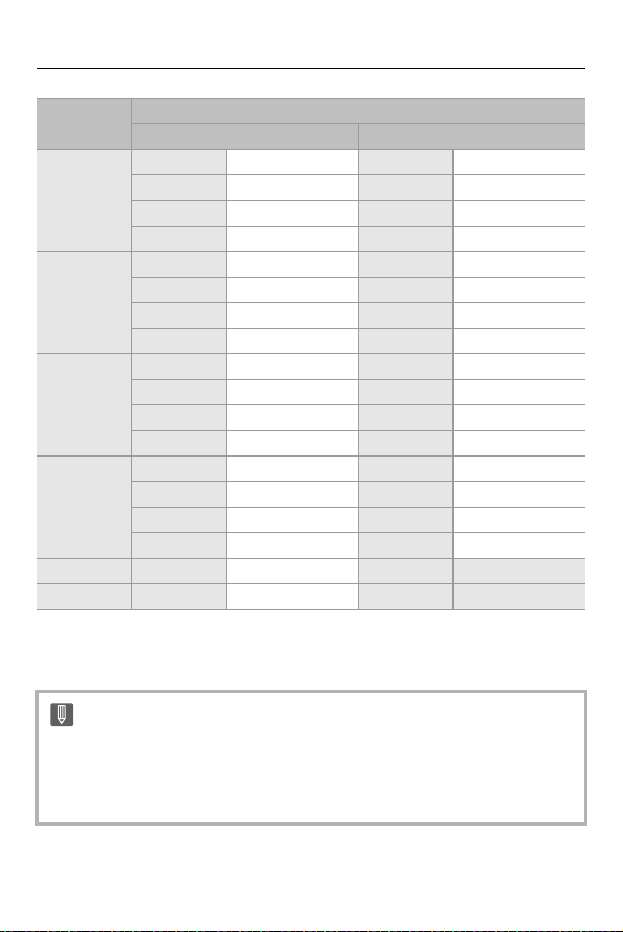
Taking Pictures – [Picture Size]
127
•
When [Hybrid Zoom(Photo)] is set, [Hy] is displayed on the image size.
•
When [Crop Zoom(Photo)] is set, [Cr] is displayed on the image size.
[Aspect
Ratio]
[Picture Size]
When using full-frame lenses When using APS-C lenses
[4:3]
[L] (21.5M) 5328×4000 [L] (9.5M) 3536×2656
[M] (10.5M) 3792×2848 [M] (5M) 2560×1920
[S] (5.5M) 2688×2016 [S] (2.5M) 1840×1376
[XS] (2M) 1712×1280 [XS] (2M) 1712×1280
[3:2]
[L] (24M) 6000×4000 [L] (10.5M) 3984×2656
[M] (12M) 4272×2848 [M] (5.5M) 2880×1920
[S] (6M) 3024×2016 [S] (3M) 2064×1376
[XS] (2.5M) 1920×1280 [XS] (2.5M) 1920×1280
[16:9]
[L] (20M) 6000×3368 [L] (9M) 3984×2240
[M] (10M) 4272×2400 [M] (4.5M) 2880×1624
[S] (5M) 3024×1704 [S] (2.5M) 2064×1160
[XS] (2M) 1920×1080 [XS] (2M) 1920×1080
[1:1]
[L] (16M) 4000×4000 [L] (7M) 2656×2656
[M] (8M) 2848×2848 [M] (3.5M) 1920×1920
[S] (4M) 2016×2016 [S] (2M) 1376×1376
[XS] (1.5M) 1280×1280 [XS] (1.5M) 1280×1280
[65:24] [L] (13M) 6000×2208
[2:1] [L] (18M) 6000×3000
•
When the following functions are being used, [Picture Size] is not available:
– [RAW] ([Rec. File Format(Photo)])
– High Resolution mode
– [Multiple Exposure]
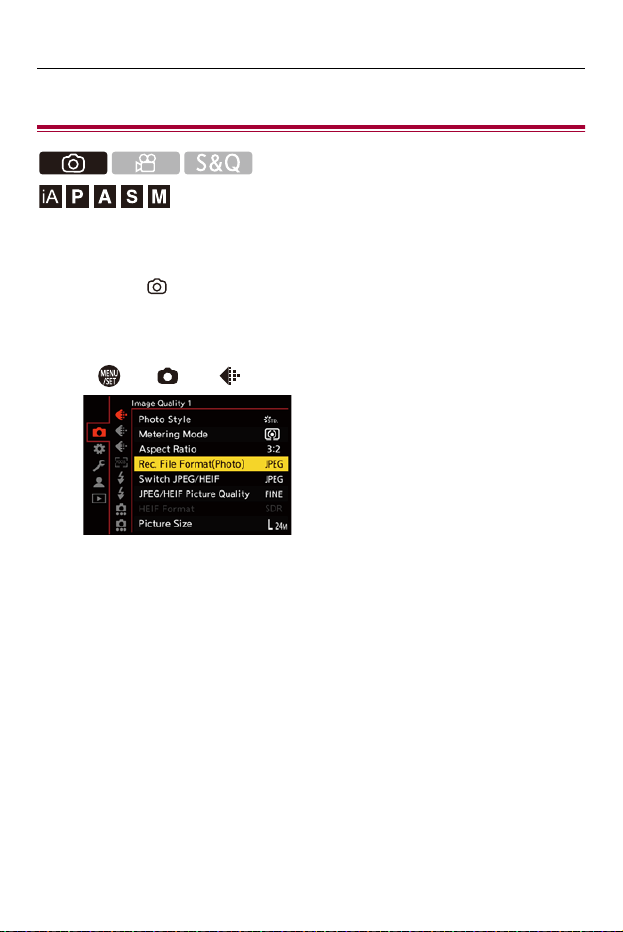

Taking Pictures – [Rec. File Format(Photo)]
129
[JPEG]
This records JPEG images.
•
This is available when [Switch JPEG/HEIF] is [JPEG]. ([Switch JPEG/
HEIF]: 131)
[HEIF]
This records HEIF images.
•
This is available when [Switch JPEG/HEIF] is [HEIF]. ([Switch JPEG/HEIF]:
131)
[RAW+JPEG]
This records RAW and JPEG images simultaneously.
•
This is available when [Switch JPEG/HEIF] is [JPEG]. ([Switch JPEG/
HEIF]: 131)
[RAW+HEIF]
This records RAW and HEIF images simultaneously.
•
This is available when [Switch JPEG/HEIF] is [HEIF]. ([Switch JPEG/HEIF]:
131)
[RAW]
This records RAW images.

Taking Pictures – [Rec. File Format(Photo)]
130
Note on RAW
RAW format refers to a data format of images that have not been processed on the
camera.
Playback and editing of RAW images require the camera or the dedicated
software.
•
You can process RAW images on the camera. ([RAW Processing]: 620)
•
Use software (“SILKYPIX Developer Studio” by Adwaa) to process and edit RAW
files on a PC. (SILKYPIX Developer Studio SE: 844)
•
The color depth of RAW images recorded with this camera will be as follows:
– Single, Burst ([SH]
*1
/[SH PRE]
*1
/[H+]/[H]/[L]/[M]): 14 bit
– Burst ([SH]
*2
/[SH PRE]
*2
): 12 bit
*1 [Behavior in SH Burst]: [IMAGE PRIORITY]
*2 [Behavior in SH Burst]: [SPEED PRIORITY]
•
RAW images are always recorded in the [L] size of the [3:2] aspect ratio.
•
When you delete an image recorded with [RAW+JPEG]/[RAW+HEIF] on the
camera, both the RAW and JPEG/HEIF images will be deleted simultaneously.
•
When the following functions are being used, [Rec. File Format(Photo)] is not
available:
– High Resolution mode
– [Multiple Exposure]
•
You can assign the function that records a RAW image and a JPEG/HEIF image
simultaneously once only to an Fn button:
([1 Shot RAW+JPEG]/[1 Shot RAW+HEIF]: 652)
•
Selects a Color Space setting from [sRGB] or [AdobeRGB]:
([Color Space]: 685)
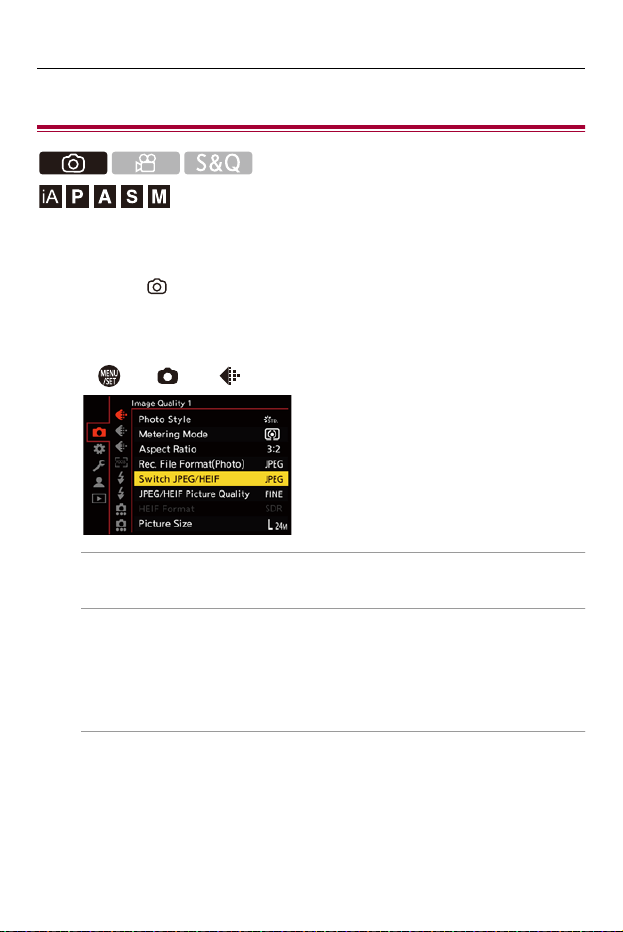
Taking Pictures – [Switch JPEG/HEIF]
131
[Switch JPEG/HEIF]
Sets the file format (JPEG or HEIF) when recording pictures.
1
Set to [ ] mode.
(Photo/Video/S&Q Switch: 80)
2
Set [Switch JPEG/HEIF].
≥ [] [] [Switch JPEG/HEIF]
[JPEG]
This records JPEG images.
[HEIF]
This records HEIF images.
•
This is a format for saving that has a higher compression rate compared to
JPEG, but the environments where the recorded pictures can be played back
or printed are limited.
Taking Pictures – [Switch JPEG/HEIF]
132
Notes about HEIF
HEIF is a format for saving that has a higher compression rate compared to JPEG,
allowing for high image quality in a file with a small size. However, depending on
the PC and software, you may be unable to display, edit, or print HEIF files.
You will need an environment that supports HEIF to play back HEIF images.
•
HEIF images are saved as files with the ".HIF" extension. Depending on the PC
and software, you may be unable to load the files. If this is the case, change the
file extension to ".HEIC".
•
You can record HLG (Hybrid Log Gamma) format HEIF images:
(HLG Recording (HEIF Format): 403)
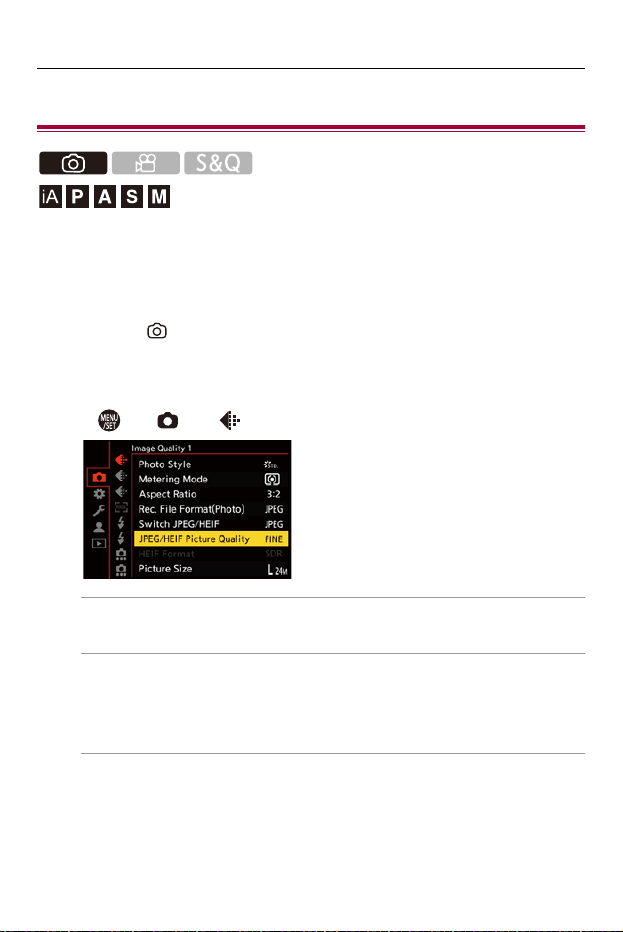
Taking Pictures – [JPEG/HEIF Picture Quality]
133
[JPEG/HEIF Picture Quality]
Set the compression rate when saving JPEG images or HEIF images.
•
This is available when [Rec. File Format(Photo)] is [JPEG]/[HEIF]/[RAW+JPEG]/
[RAW+HEIF]. ([Rec. File Format(Photo)]: 128)
1
Set to [ ] mode.
(Photo/Video/S&Q Switch: 80)
2
Set [JPEG/HEIF Picture Quality].
≥ [] [] [JPEG/HEIF Picture Quality]
[FINE]
This records JPEG images or HEIF images with image quality prioritized.
[STD.]
This records JPEG images or HEIF images with standard image quality.
This is useful for increasing the number of recordable pictures without changing
the picture size.

134
Recording Videos
These are the basic operations and settings for recording videos.
•
Please also refer to the following chapters for more detailed information about
recording videos:
– Video Settings: 431
– Special Video Recording: 498
– HDMI Output (Video): 563
≥ Basic Video Operations: 135
≥ [System Frequency]: 146
≥ [Rec. File Format(Video)]: 148
≥ [Rec Quality]: 150
≥ RAW Video Recording: 173
≥ Proxy Recording: 175
≥ [Image Area of Video]: 180
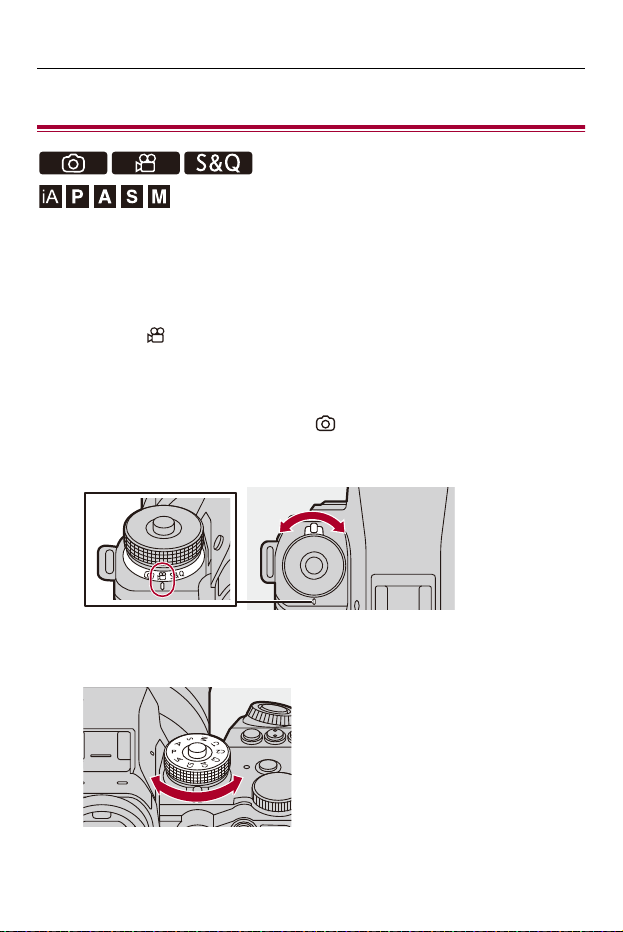
Recording Videos – Basic Video Operations
135
Basic Video Operations
This camera is capable of recording video in a variety of resolutions.
It also supports switching of the system frequency and 3 types of recording
file format; MP4, MOV, and Apple ProRes.
1
Set to [ ] or [S&Q] mode.
≥Switch the photo/video/S&Q switch. (Photo/Video/S&Q Switch:
80)
•
Video recording is still possible in [ ] mode, but there are limitations, such
as being unable to change exposure and audio settings using touch
operations. (Limitations on Video Recording in Photo Mode: 143)
2
Select the recording mode ([iA]/[P]/[A]/[S]/[M]).
≥Set the mode dial. (Selecting the Recording Mode: 81)
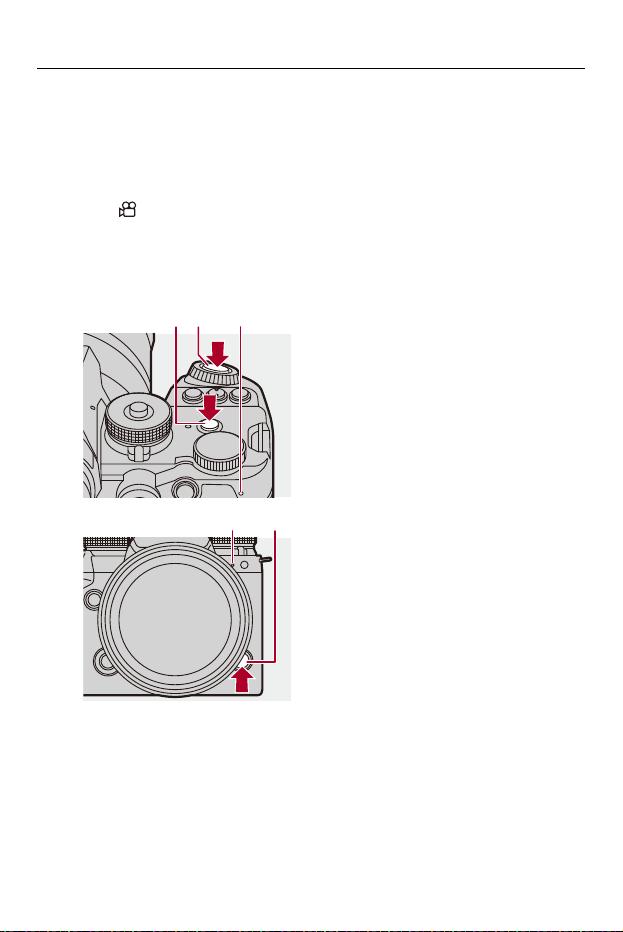
Recording Videos – Basic Video Operations
136
3
Start recording.
≥Press the video rec. button (A).
≥You can also perform the same operation by pressing the sub
video rec. button (B).
≥In [ ]/[S&Q] mode, you can also perform the same operation by
pressing the shutter button (C) fully.
•
Release the video rec. button right after you press it.
•
During video recording, the front tally lamp (D) and rear tally lamp (E) light.
(A) (E)(C)
(D) (B)
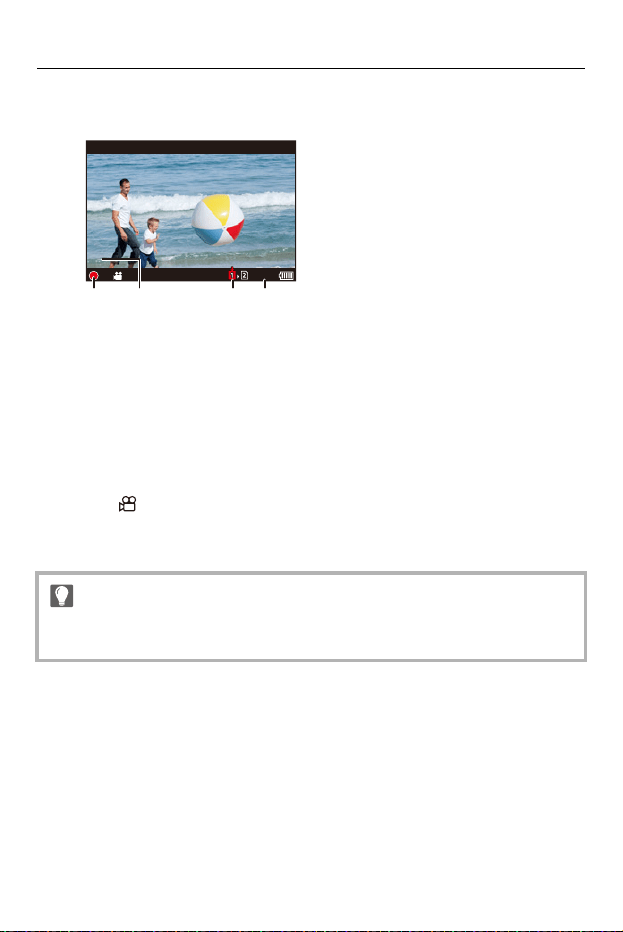
Recording Videos – Basic Video Operations
137
•
The recording state indication (F) and card access indication (G) turn red
while videos are being recorded.
(H) Video recording time
(I) Elapsed recording time
•
“h” is an abbreviation for hour, “m” for minute and “s” for second.
4
Stop recording.
≥Press the video rec. button (A) again.
≥You can also perform the same operation by pressing the sub
video rec. button (B).
≥In [ ]/[S&Q] mode, you can also perform the same operation by
pressing the shutter button (C) fully.
•
If maintaining focus on the subject is difficult during video recording with AF,
press the shutter button halfway to re-adjust the focus.
24
m
59
s
24
m
59
s
24
m
59
s
3
s
3
s
3
s
(F) (I) (G) (H)
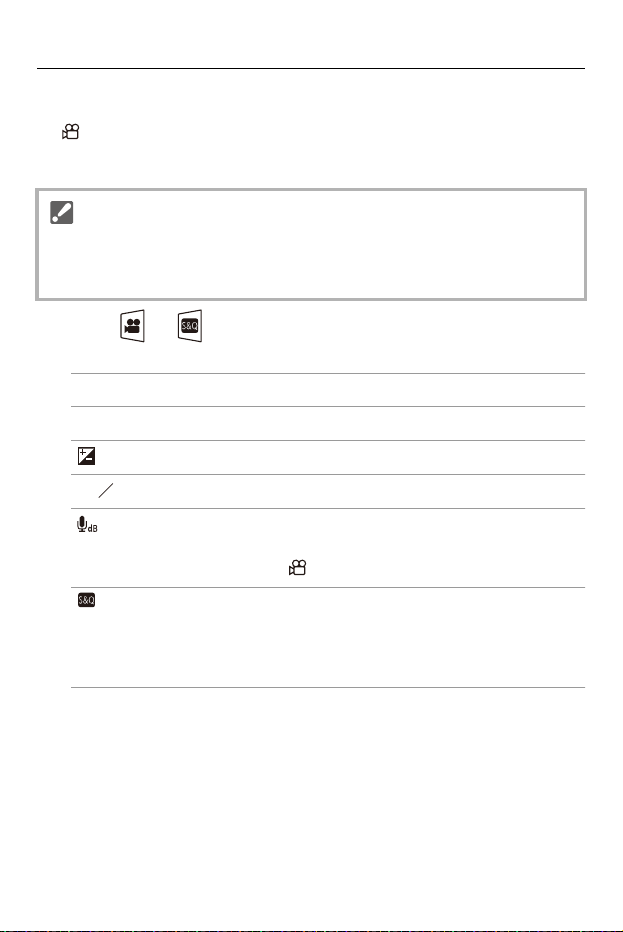
Recording Videos – Basic Video Operations
138
Operations During Video Recording
In [ ]/[S&Q] mode, you can change the exposure and audio settings with
touch operations to prevent operation sounds from being recorded.
1 Touch [ ] or [ ].
2 Touch an icon.
Aperture value
Shutter speed
Exposure compensation
ISO sensitivity/Gain (dB)
Sound recording level adjustment
([Sound Rec Level Adj.]: 450)
•
This setting is available only in [ ] mode.
Slow & Quick setting
(Slow & Quick Video: 499)
•
This setting is available only in [S&Q] mode. (The setting cannot be changed
during recording)
•
With the default settings, the Touch Tab is not displayed.
Set [Touch Tab] to [ON] in [Touch Settings] in the [Custom] ([Operation]) menu.
([Touch Settings]: 694)
F
SS
ISO
GAIN
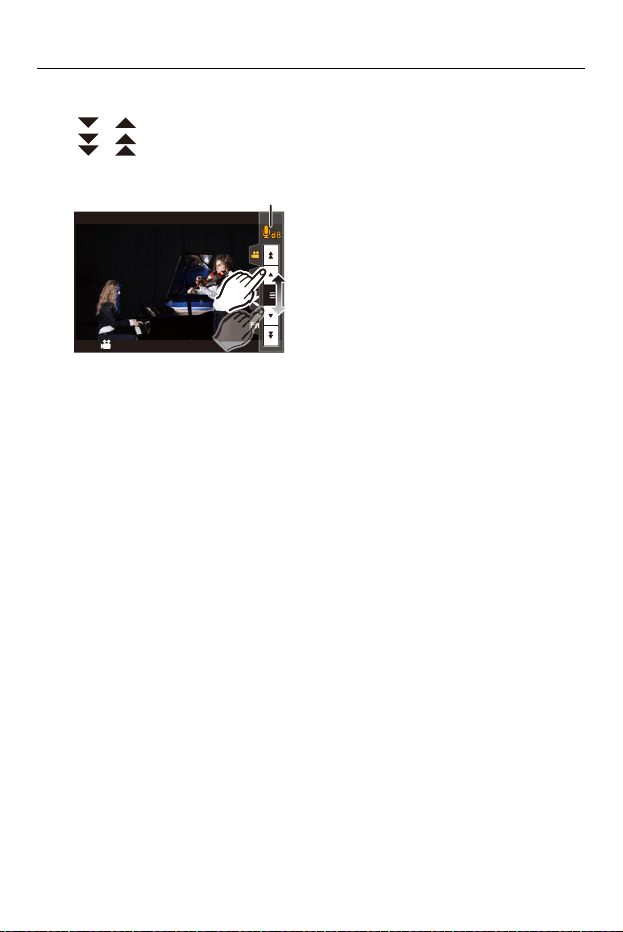
Recording Videos – Basic Video Operations
139
3 Drag the slide bar to set the item.
[ ]/[ ]: Changes the setting slowly.
[ ]/[ ]: Changes the setting quickly.
•
If you touch icon (J), the screen of Step 2 is redisplayed.
(J)
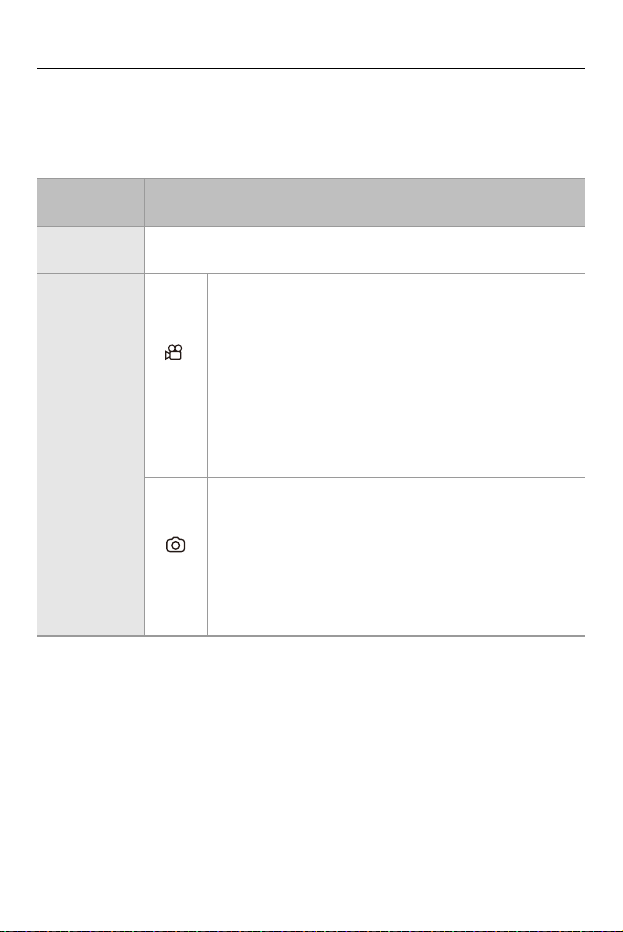
Recording Videos – Basic Video Operations
140
Exposure Control While Video Recording
Videos will be recorded using the aperture value, shutter speed, ISO
sensitivity, and Dual Native ISO settings below.
Recording
mode
Aperture value/shutter speed/ISO sensitivity/Dual Native ISO
setting
[iA]
The camera automatically makes the settings to suit the scene.
(Types of Automatic Scene Detection: 112)
[P]/[A]/[S]/[M]
[]/
[S&Q]
mode
The settings vary depending on the [Exposure
Control(Video Mode)] ([Exposure Control in P/A/S/M]) in
the [Custom] ([Image Quality]) menu. The default setting
is [MODE DIAL]. ([Exposure Control(Video Mode)]:
686)
[MODE DIAL]: Switch the [P]/[A]/[S]/[M] mode to match
the mode dial.
[P]/[A]/[S]/[M]: Recording is done in the set mode
irrespective of the mode dial.
[]
mode
The settings vary depending on the [Auto Exposure in
Photo Mode] in the [Custom] ([Image Quality]) menu. The
default setting is [ON]. ([Auto Exposure in Photo
Mode]: 686)
[ON]: Records with values set automatically by the
camera.
[OFF]: Records with manually set values.
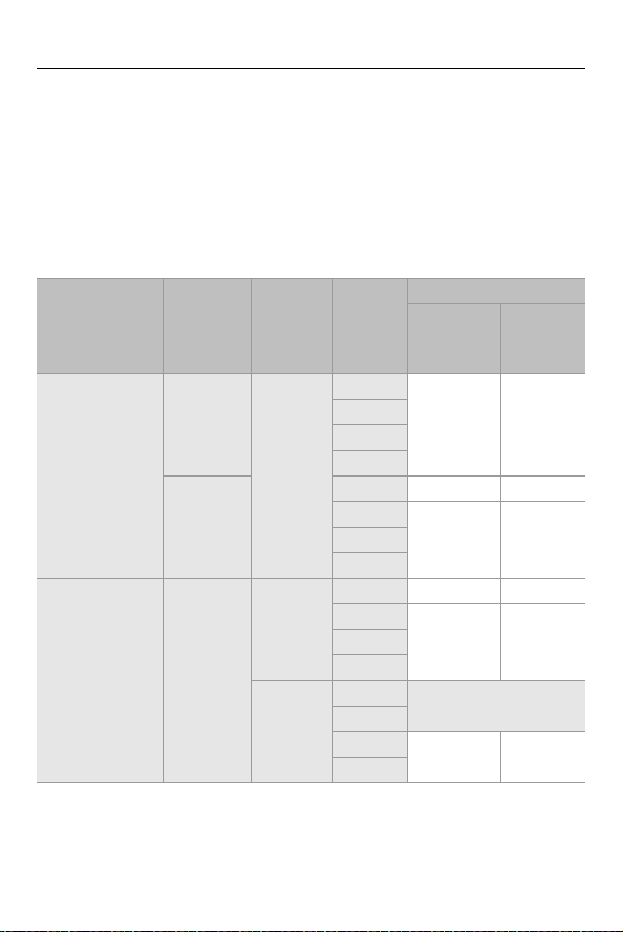
Recording Videos – Basic Video Operations
141
Size Interval for Dividing Files
A new file will be created to continue recording if the continuous recording
time or the file size exceeds the following conditions.
(A) Using an SDHC memory card
(B) Using an SDXC memory card
(C) Using an external SSD
(D) Using a CFexpress card
[Rec. File
Format(Video)]
Resolution Bit rate
Recording
media
File division
Continuous
recording
time
File size
[MP4]
[FHD]
All
(A)
30 minutes 4 GB
(B)
(C)
(D)
Other than
[FHD]
(A) 30 minutes 4 GB
(B)
3 hours
4 minutes
96 GB
(C)
(D)
[MOV] All
600 Mbps
or less
(A) 30 minutes 4 GB
(B)
3 hours
4 minutes
192 GB
(C)
(D)
800 Mbps
or more
(A)
(B)
(C)
3 hours
4 minutes
640 GB
(D)

Recording Videos – Basic Video Operations
142
* When the recording quality is [Apple ProRes RAW HQ] or [Apple ProRes RAW],
recording is stopped.
[Apple ProRes]
[FHD]
All
(A) 30 minutes 4 GB
(B)
3 hours
4 minutes
192 GB
(C)
(D)
Other than
[FHD]
(A)
(B)
(C)
3 hours
4 minutes
640 GB
*
(D)

Recording Videos – Basic Video Operations
143
Limitations on Video Recording in Photo Mode
There are the following limitations when recording video in the [ ] mode:
•
Recording cannot be started or stopped with the shutter button.
•
Exposure and audio settings cannot be changed with touch operations.
•
[Video] menu items such as [Rec. File Format(Video)] and [Rec Quality] cannot be
set. Set these in the [ ] mode beforehand.
•
When the [Rec. File Format(Video)] is [MOV] or [Apple ProRes], recording with the
following [Rec Quality] is not possible:
*
– [Rec Quality] with resolutions 6K/5.9K/5.8K/5.1K/4.8K
– [Rec Quality] exceeding a recording frame rate of 95.90p
– [Apple ProRes RAW HQ]/[Apple ProRes RAW] ([Rec Quality])
* If a [Rec Quality] with above conditions is set when in [ ] mode, then in [ ]
mode the [Rec Quality] switches automatically to the following:
– When the [Rec. File Format(Video)] is [MOV]
[4K/30p/420/10-L] ([System Frequency]: [59.94Hz (NTSC)])
[4K/25p/420/10-L] ([System Frequency]: [50.00Hz (PAL)])
[4K/24p/420/10-L] ([System Frequency]: [24.00Hz (CINEMA)])
– When the [Rec. File Format(Video)] is [Apple ProRes]
[FHD/30p/422] ([System Frequency]: [59.94Hz (NTSC)])
[FHD/25p/422] ([System Frequency]: [50.00Hz (PAL)])
[FHD/24p/422] ([System Frequency]: [24.00Hz (CINEMA)])

Recording Videos – Basic Video Operations
144
•
When the remaining capacity of the battery or card gets low during video
recording, the tally lamps blink at long intervals. When there is no remaining
capacity in the battery or card, video recording is stopped and the tally lamps
blink at short intervals.
•
If an operation such as a zoom or button operation is performed during video
recording, that operation sound may be recorded.
•
The lens operation sound (AF and image stabilizer) may be recorded to video.
•
If the operation sound of pressing the video rec. button or sub video rec. button to
end recording bothers you, try the following:
– Record the video about 3 seconds longer, and then divide the last part of the
video using [Video Divide] in the [Playback] ([Edit Image]) menu.
– Use the Shutter Remote Control (DMW-RS2: optional) for recording.
•
Depending on the type of card, the card access indication may appear for a while
after video recording. This is not a malfunction.
•
Even when playback is performed on a supported device, situations may occur
where image or sound quality is poor, recording information is not displayed
correctly, or playback is not possible, for example.
If you experience any of these, play them back on the camera.
•
Video recording is not possible while you are using the following functions:
– [Time Lapse Shot]
– [Stop Motion Animation]
Recording Videos – Basic Video Operations
145
For information about the high temperature display
•
When the temperature of the camera rises, [ ] appears blinking on the screen.
If you continue to use the camera, a message indicating that the camera cannot
be used is displayed on the screen and some functions, such as recording and
HDMI output, will be stopped. Wait for the camera to cool down and for the
message indicating that the camera can be used again. When the message
indicating that it can be used again is displayed, turn the camera off then on
again.
•
The temperature of the card rises more readily during continuous use, such as
when recording video. When the temperature of the card rises, [ ] appears
blinking on the screen. If you continue to record, a message is displayed on the
screen and some functions, such as recording, will be stopped. Wait for the
temperature to drop and the message to disappear.
•
You can set the temperature during video recording at which the camera
automatically stops recording:
([Thermal Management]: 731)
•
You can set whether to have the tally lamps light or turn off. You can also change
the brightness of the tally lamps:
([Tally Lamp]: 717)
•
You can display a red frame on the recording screen that indicates that video is
being recorded:
([Red REC Frame Indicator]: 715)
•
You can disable the recording start/stop operations using the shutter button:
([Assign REC to Shutter Button]: 691)
•
Recording time until recording stops due to increase in camera temperature:
(Continuous Recording Time for Video: 939)
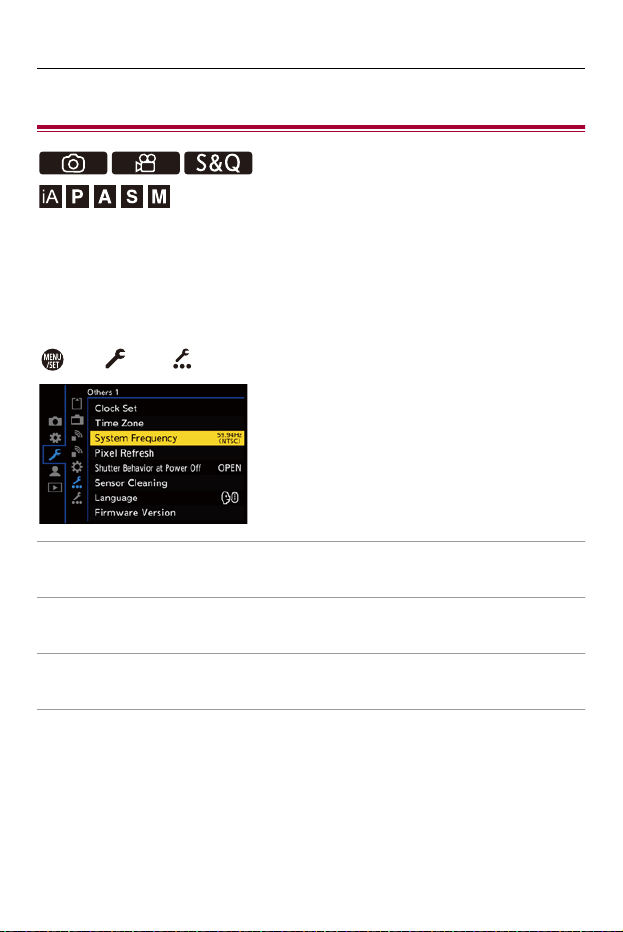
Recording Videos – [System Frequency]
146
[System Frequency]
This changes the system frequency of videos that are recorded and played
back with the camera.
The default setting is for the system frequency to be set to the TV
broadcast system for the region where the camera was purchased.
[] [] Select [System Frequency]
[59.94Hz (NTSC)]
System frequency for regions using the NTSC broadcasting system
[50.00Hz (PAL)]
System frequency for regions using the PAL broadcasting system
[24.00Hz (CINEMA)]
System frequency for producing cinema film

Recording Videos – [System Frequency]
147
•
After changing the setting, turn the camera off and on.
•
If you record using a system frequency that differs from the broadcasting system
of your region, it may not be possible for you to properly play back videos on your
TV.
We recommend using the setting as it was at the time of purchase if you are
unsure about broadcasting systems or if you will not be involved in producing
cinema film.
•
After changing the setting, it is recommended to insert another card and format it
with this camera.
– Make the [System Frequency] setting the same for when you are recording and
playing back.
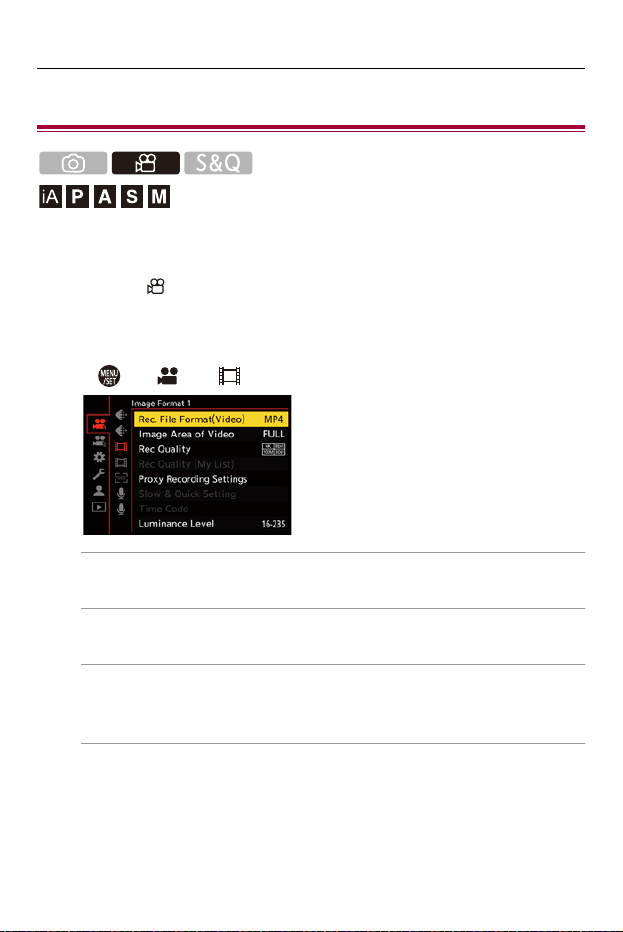
Recording Videos – [Rec. File Format(Video)]
148
[Rec. File Format(Video)]
Sets the recording file format of videos to be recorded.
1
Set to [ ] mode.
(Photo/Video/S&Q Switch: 80)
2
Set [Rec. File Format(Video)].
≥ [] [] [Rec. File Format(Video)]
[MP4]
This file format is suitable for playback on PCs.
[MOV]
This file format is suitable for image editing.
[Apple ProRes]
Records using the Apple ProRes codec.
This file format is suitable for image editing.

Recording Videos – [Rec. File Format(Video)]
149
•
The following types of video cannot be recorded to SD cards. Use CFexpress
cards.
– [MOV] video with bit rate of 800 Mbps or more
– [Apple ProRes] video with resolution other than FHD
– [Apple ProRes] video with a resolution of FHD and a recording frame rate of
120.00p/119.88p/100.00p
– Slow & Quick video with a recording quality with image compression system
ALL-Intra

Recording Videos – [Rec Quality]
150
[Rec Quality]
Sets the image quality of videos to be recorded.
The image qualities you can select depend on the recording mode,
[System Frequency], and [Rec. File Format(Video)] settings.
The [Image Area of Video] setting items you can select depend on the [Rec
Quality] settings.
[Rec Quality] settings can also be made using [Filtering] ([Filtering]: 170)
to display only items that meet your conditions and [add to list] ([add to
list]: 171) to register recording qualities you use often.
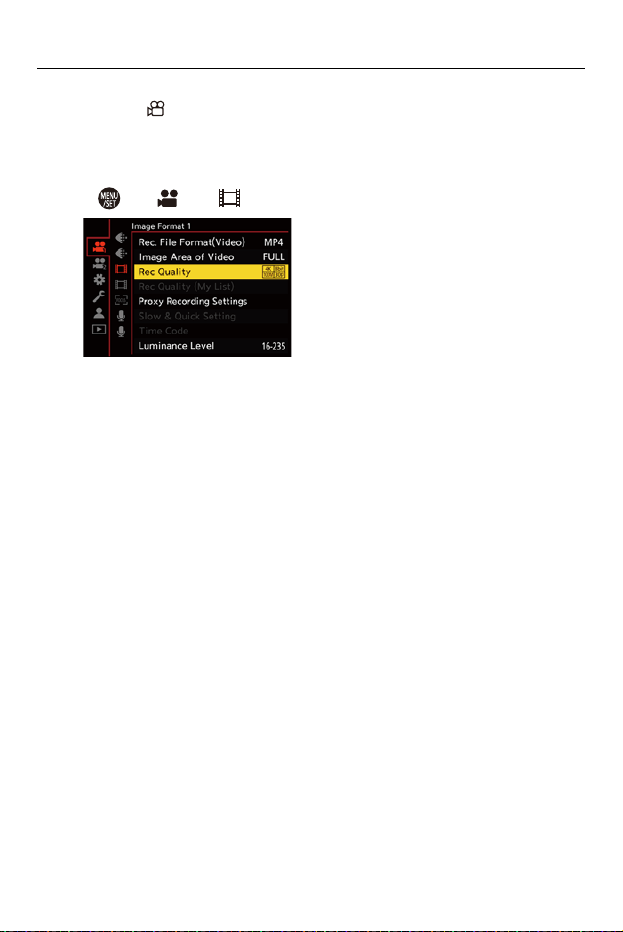
Recording Videos – [Rec Quality]
151
1
Set to [ ] or [S&Q] mode.
(Photo/Video/S&Q Switch: 80)
2
Set [Rec Quality].
≥ [] [] [Rec Quality]
•
To record video with a bit rate of 72 Mbps or more, you require an SD card
with the corresponding Speed Class.
•
Video with a bit rate of 800 Mbps or more cannot be recorded to an SD card.
Use a CFexpress card.
•
[Apple ProRes] video with a resolution other than FHD cannot be recorded to
an SD card. Use a CFexpress card.
•
[Apple ProRes] video with a resolution of FHD and a recording frame rate of
120.00p/119.88p/100.00p cannot be recorded to an SD card. Use a
CFexpress card.
•
For information about the cards that can be used (SD Cards That Can Be
Used with This Camera: 27)
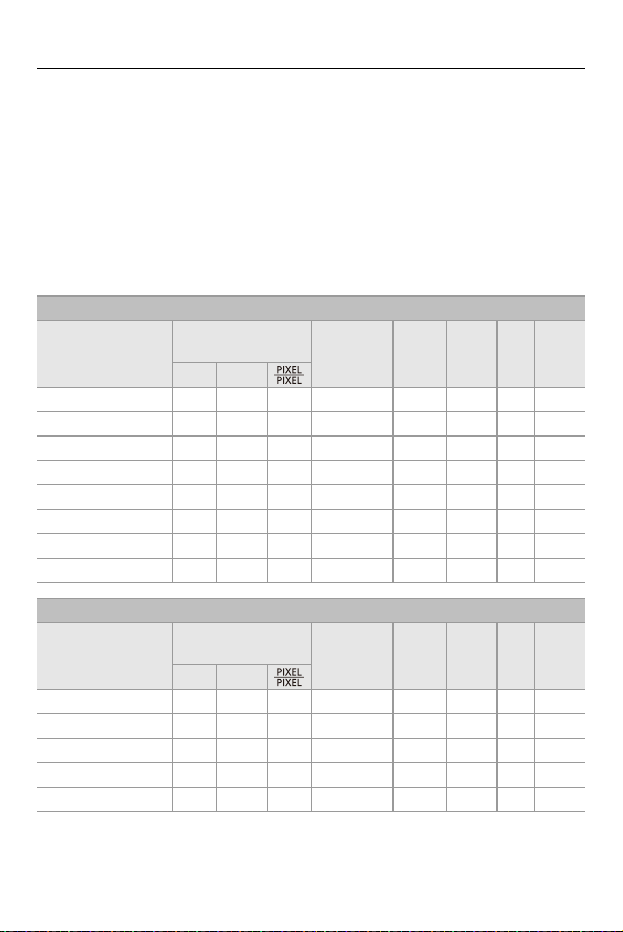
Recording Videos – [Rec Quality]
152
[Rec. File Format(Video)]: [MP4]
•
YUV, Bit value, Image compression:
– [10bit] recording quality: 4:2:0, 10 bit, Long GOP
– [8bit] recording quality: 4:2:0, 8 bit, Long GOP
•
Audio format: AAC (2ch)
(A) Recording frame rate
(B) Bit rate (Mbps)
(C) Video compression format (HEVC: H.265/HEVC, AVC: H.264/MPEG-4 AVC)
[System Frequency]: [59.94Hz (NTSC)]
[Rec Quality]
[Image Area of
Video]
Resolution
Aspect
ratio
(A) (B) (C)
FULL APS-C
[4K/10bit/100M/60p] 3840×2160 16:9 59.94p 100 HEVC
[4K/10bit/72M/30p] 3840×2160 16:9 29.97p 72 HEVC
[4K/8bit/100M/30p] 3840×2160 16:9 29.97p 100 AVC
[4K/10bit/72M/24p] 3840×2160 16:9 23.98p 72 HEVC
[4K/8bit/100M/24p] 3840×2160 16:9 23.98p 100 AVC
[FHD/8bit/28M/60p] 1920×1080 16:9 59.94p 28 AVC
[FHD/8bit/20M/30p] 1920×1080 16:9 29.97p 20 AVC
[FHD/8bit/24M/24p] 1920×1080 16:9 23.98p 24 AVC
[System Frequency]: [50.00Hz (PAL)]
[Rec Quality]
[Image Area of
Video]
Resolution
Aspect
ratio
(A) (B) (C)
FULL APS-C
[4K/10bit/100M/50p] 3840×2160 16:9 50.00p 100 HEVC
[4K/10bit/72M/25p] 3840×2160 16:9 25.00p 72 HEVC
[4K/8bit/100M/25p] 3840×2160 16:9 25.00p 100 AVC
[FHD/8bit/28M/50p] 1920×1080 16:9 50.00p 28 AVC
[FHD/8bit/20M/25p] 1920×1080 16:9 25.00p 20 AVC
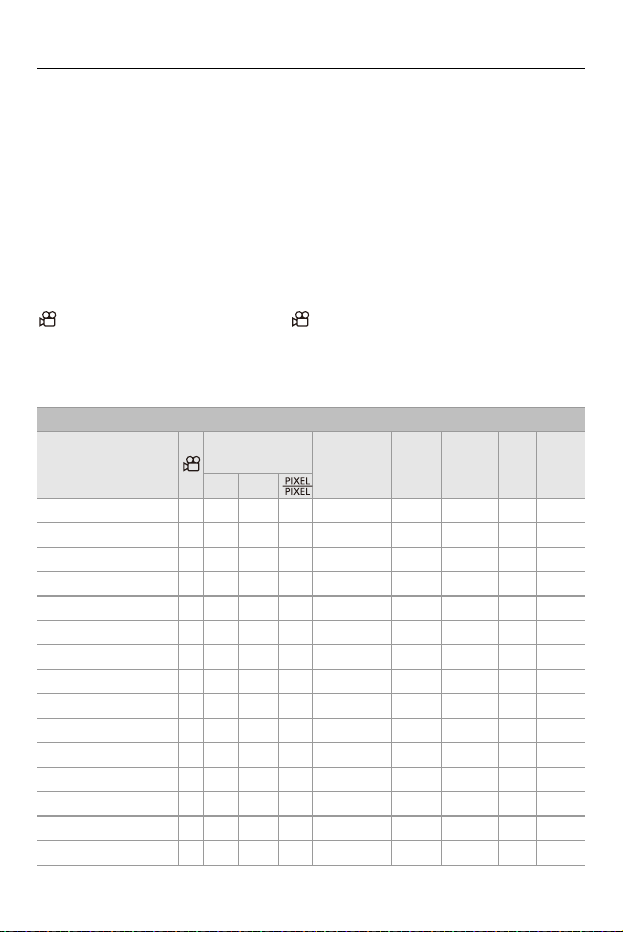
Recording Videos – [Rec Quality]
153
[Rec. File Format(Video)]: [MOV]
•
YUV, Bit value, Image compression:
– [422/10-I] recording quality: 4:2:2, 10 bit, ALL-Intra
– [422/10-L] recording quality: 4:2:2, 10 bit, Long GOP
– [420/10-L] recording quality: 4:2:0, 10 bit, Long GOP
– [420/8-L] recording quality: 4:2:0, 8 bit, Long GOP
•
Audio format: LPCM (2ch/4ch)
4-channel audio can be recorded when the XLR Microphone Adaptor (DMW-XLR2:
optional) is connected by setting [4ch Audio Recording] to [XLR] or [XLR+CAMERA].
: Only able to set or record when in [ ] mode.
(A) Recording frame rate
(B) Bit rate (Mbps)
(C) Video compression format (HEVC: H.265/HEVC, AVC: H.264/MPEG-4 AVC)
[System Frequency]: [59.94Hz (NTSC)]
[Rec Quality]
[Image Area of
Video]
Resolution
Aspect
ratio
(A) (B) (C)
FULL APS-C
[6K/30p/420/10-L] 5952×3968 3:2 29.97p 200 HEVC
[6K/24p/420/10-L] 5952×3968 3:2 23.98p 200 HEVC
[6K/60p/420/10-L] 5952×2512 2.4:1 59.94p 300 HEVC
[6K/48p/420/10-L] 5952×2512 2.4:1 47.95p 300 HEVC
[6K/30p/420/10-L] 5952×2512 2.4:1 29.97p 200 HEVC
[6K/24p/420/10-L] 5952×2512 2.4:1 23.98p 200 HEVC
[5.9K/60p/420/10-L] 5888×3312 16:9 59.94p 300 HEVC
[5.9K/48p/420/10-L] 5888×3312 16:9 47.95p 300 HEVC
[5.9K/30p/420/10-L] 5888×3312 16:9 29.97p 200 HEVC
[5.9K/24p/420/10-L] 5888×3312 16:9 23.98p 200 HEVC
[5.8K/60p/420/10-L] 5760×3040 17:9 59.94p 300 HEVC
[5.8K/48p/420/10-L] 5760×3040 17:9 47.95p 300 HEVC
[5.8K/30p/420/10-L] 5760×3040 17:9 29.97p 200 HEVC
[5.8K/24p/420/10-L] 5760×3040 17:9 23.98p 200 HEVC
[5.1K/60p/420/10-L] 5088×3392 3:2 59.94p 300 HEVC

Recording Videos – [Rec Quality]
154
[5.1K/48p/420/10-L] 5088×3392 3:2 47.95p 300 HEVC
[5.1K/30p/420/10-L] 5088×3392 3:2 29.97p 200 HEVC
[5.1K/24p/420/10-L] 5088×3392 3:2 23.98p 200 HEVC
[4.8K/60p/420/10-L] 4800×3600 4:3 59.94p 300 HEVC
[4.8K/48p/420/10-L] 4800×3600 4:3 47.95p 300 HEVC
[4.8K/30p/420/10-L] 4800×3600 4:3 29.97p 200 HEVC
[4.8K/24p/420/10-L] 4800×3600 4:3 23.98p 200 HEVC
[3.3K/120p/420/10-L] 3328×2496 4:3 119.88p 300 HEVC
[3.3K/60p/422/10-I(H)]
*
3328×2496 4:3 59.94p 800 AVC
[3.3K/60p/422/10-I(L)]
*
3328×2496 4:3 59.94p 600 AVC
[3.3K/60p/422/10-L] 3328×2496 4:3 59.94p 200 AVC
[3.3K/60p/420/10-L] 3328×2496 4:3 59.94p 200 HEVC
[3.3K/48p/422/10-I(H)]
*
3328×2496 4:3 47.95p 800 AVC
[3.3K/48p/422/10-I(L)]
*
3328×2496 4:3 47.95p 600 AVC
[3.3K/48p/422/10-L] 3328×2496 4:3 47.95p 200 AVC
[3.3K/48p/420/10-L] 3328×2496 4:3 47.95p 200 HEVC
[3.3K/30p/422/10-I] 3328×2496 4:3 29.97p 400 AVC
[3.3K/30p/422/10-L] 3328×2496 4:3 29.97p 150 AVC
[3.3K/30p/420/10-L] 3328×2496 4:3 29.97p 150 HEVC
[3.3K/24p/422/10-I] 3328×2496 4:3 23.98p 400 AVC
[3.3K/24p/422/10-L] 3328×2496 4:3 23.98p 150 AVC
[3.3K/24p/420/10-L] 3328×2496 4:3 23.98p 150 HEVC
[C4K/120p/420/10-L] 4096×2160 17:9 119.88p 300 HEVC
[C4K/96p/420/10-L] 4096×2160 17:9 95.90p 300 HEVC
[C4K/60p/422/10-I(H)]
*
4096×2160 17:9 59.94p 800 AVC
[C4K/60p/422/10-I(L)]
*
4096×2160 17:9 59.94p 600 AVC
[C4K/60p/422/10-L] 4096×2160 17:9 59.94p 200 AVC
[C4K/60p/420/10-L] 4096×2160 17:9 59.94p 200 HEVC
[C4K/60p/420/8-L] 4096×2160 17:9 59.94p 150 AVC
[C4K/48p/422/10-I(H)]
*
4096×2160 17:9 47.95p 800 AVC
[C4K/48p/422/10-I(L)]
*
4096×2160 17:9 47.95p 600 AVC
[C4K/48p/422/10-L] 4096×2160 17:9 47.95p 200 AVC

Recording Videos – [Rec Quality]
155
[C4K/48p/420/10-L] 4096×2160 17:9 47.95p 200 HEVC
[C4K/30p/422/10-I] 4096×2160 17:9 29.97p 400 AVC
[C4K/30p/422/10-L] 4096×2160 17:9 29.97p 150 AVC
[C4K/30p/420/10-L] 4096×2160 17:9 29.97p 150 HEVC
[C4K/30p/420/8-L] 4096×2160 17:9 29.97p 100 AVC
[C4K/24p/422/10-I] 4096×2160 17:9 23.98p 400 AVC
[C4K/24p/422/10-L] 4096×2160 17:9 23.98p 150 AVC
[C4K/24p/420/10-L] 4096×2160 17:9 23.98p 150 HEVC
[C4K/24p/420/8-L] 4096×2160 17:9 23.98p 100 AVC
[Cs4K/120p/420/10-L] 4096×1728 2.4:1 119.88p 300 HEVC
[Cs4K/96p/420/10-L] 4096×1728 2.4:1 95.90p 300 HEVC
[Cs4K/60p/422/10-I(H)]
*
4096×1728 2.4:1 59.94p 800 AVC
[Cs4K/60p/422/10-I(L)]
*
4096×1728 2.4:1 59.94p 600 AVC
[Cs4K/60p/422/10-L] 4096×1728 2.4:1 59.94p 200 AVC
[Cs4K/60p/420/10-L] 4096×1728 2.4:1 59.94p 200 HEVC
[Cs4K/60p/420/8-L] 4096×1728 2.4:1 59.94p 150 AVC
[Cs4K/48p/422/10-I(H)]
*
4096×1728 2.4:1 47.95p 800 AVC
[Cs4K/48p/422/10-I(L)]
*
4096×1728 2.4:1 47.95p 600 AVC
[Cs4K/48p/422/10-L] 4096×1728 2.4:1 47.95p 200 AVC
[Cs4K/48p/420/10-L] 4096×1728 2.4:1 47.95p 200 HEVC
[Cs4K/30p/422/10-I] 4096×1728 2.4:1 29.97p 400 AVC
[Cs4K/30p/422/10-L] 4096×1728 2.4:1 29.97p 150 AVC
[Cs4K/30p/420/10-L] 4096×1728 2.4:1 29.97p 150 HEVC
[Cs4K/30p/420/8-L] 4096×1728 2.4:1 29.97p 100 AVC
[Cs4K/24p/422/10-I] 4096×1728 2.4:1 23.98p 400 AVC
[Cs4K/24p/422/10-L] 4096×1728 2.4:1 23.98p 150 AVC
[Cs4K/24p/420/10-L] 4096×1728 2.4:1 23.98p 150 HEVC
[Cs4K/24p/420/8-L] 4096×1728 2.4:1 23.98p 100 AVC
[4K/120p/420/10-L] 3840×2160 16:9 119.88p 300 HEVC
[4K/60p/422/10-I(H)]
*
3840×2160 16:9 59.94p 800 AVC
[4K/60p/422/10-I(L)]
*
3840×2160 16:9 59.94p 600 AVC
[4K/60p/422/10-L] 3840×2160 16:9 59.94p 200 AVC

Recording Videos – [Rec Quality]
156
[4K/60p/420/10-L] 3840×2160 16:9 59.94p 200 HEVC
[4K/60p/420/8-L] 3840×2160 16:9 59.94p 150 AVC
[4K/48p/422/10-I(H)]
*
3840×2160 16:9 47.95p 800 AVC
[4K/48p/422/10-I(L)]
*
3840×2160 16:9 47.95p 600 AVC
[4K/48p/422/10-L] 3840×2160 16:9 47.95p 200 AVC
[4K/48p/420/10-L] 3840×2160 16:9 47.95p 200 HEVC
[4K/30p/422/10-I] 3840×2160 16:9 29.97p 400 AVC
[4K/30p/422/10-L] 3840×2160 16:9 29.97p 150 AVC
[4K/30p/420/10-L] 3840×2160 16:9 29.97p 150 HEVC
[4K/30p/420/8-L] 3840×2160 16:9 29.97p 100 AVC
[4K/24p/422/10-I] 3840×2160 16:9 23.98p 400 AVC
[4K/24p/422/10-L] 3840×2160 16:9 23.98p 150 AVC
[4K/24p/420/10-L] 3840×2160 16:9 23.98p 150 HEVC
[4K/24p/420/8-L] 3840×2160 16:9 23.98p 100 AVC
[FHD/240p/422/10-I] 1920×1080 16:9 239.76p 800 AVC
[FHD/240p/422/10-L] 1920×1080 16:9 239.76p 200 AVC
[FHD/240p/420/10-L] 1920×1080 16:9 239.76p 200 HEVC
[FHD/120p/422/10-I] 1920×1080 16:9 119.88p 400 AVC
[FHD/120p/422/10-L] 1920×1080 16:9 119.88p 150 AVC
[FHD/120p/420/10-L] 1920×1080 16:9 119.88p 150 HEVC
[FHD/60p/422/10-I] 1920×1080 16:9 59.94p 200 AVC
[FHD/60p/422/10-L] 1920×1080 16:9 59.94p 100 AVC
[FHD/60p/420/10-L] 1920×1080 16:9 59.94p 100 HEVC
[FHD/60p/420/8-L] 1920×1080 16:9 59.94p 50 AVC
[FHD/48p/422/10-I] 1920×1080 16:9 47.95p 200 AVC
[FHD/48p/422/10-L] 1920×1080 16:9 47.95p 100 AVC
[FHD/48p/420/10-L] 1920×1080 16:9 47.95p 100 HEVC
[FHD/30p/422/10-I] 1920×1080 16:9 29.97p 200 AVC
[FHD/30p/422/10-L] 1920×1080 16:9 29.97p 100 AVC
[FHD/30p/420/10-L] 1920×1080 16:9 29.97p 100 HEVC
[FHD/30p/420/8-L] 1920×1080 16:9 29.97p 25 AVC
[FHD/24p/422/10-I] 1920×1080 16:9 23.98p 200 AVC

Recording Videos – [Rec Quality]
157
[FHD/24p/422/10-L] 1920×1080 16:9 23.98p 100 AVC
[FHD/24p/420/10-L] 1920×1080 16:9 23.98p 100 HEVC
[FHD/24p/420/8-L] 1920×1080 16:9 23.98p 25 AVC
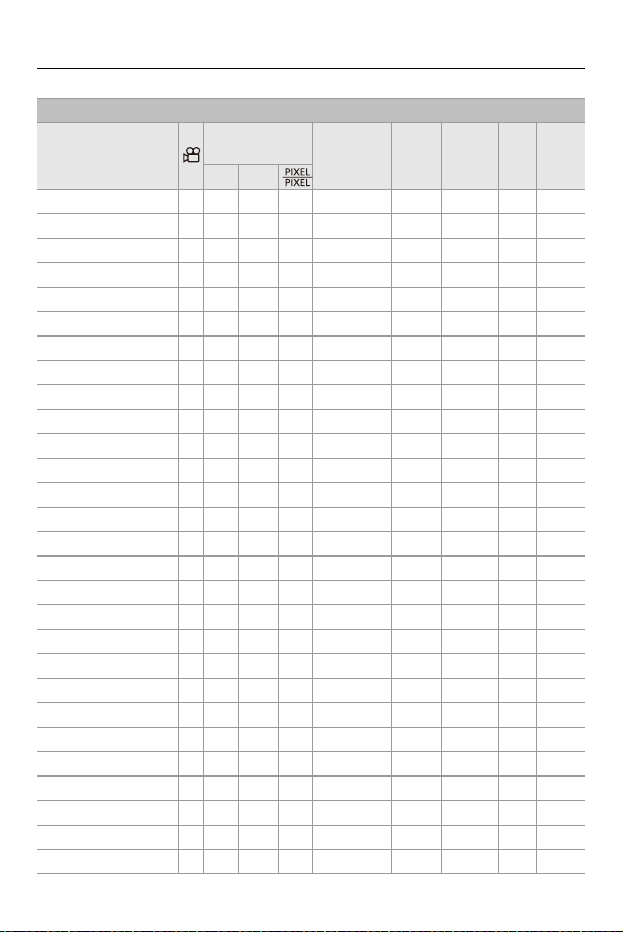
Recording Videos – [Rec Quality]
158
[System Frequency]: [50.00Hz (PAL)]
[Rec Quality]
[Image Area of
Video]
Resolution
Aspect
ratio
(A) (B) (C)
FULL APS-C
[6K/25p/420/10-L] 5952×3968 3:2 25.00p 200 HEVC
[6K/50p/420/10-L] 5952×2512 2.4:1 50.00p 300 HEVC
[6K/25p/420/10-L] 5952×2512 2.4:1 25.00p 200 HEVC
[5.9K/50p/420/10-L] 5888×3312 16:9 50.00p 300 HEVC
[5.9K/25p/420/10-L] 5888×3312 16:9 25.00p 200 HEVC
[5.8K/50p/420/10-L] 5760×3040 17:9 50.00p 300 HEVC
[5.8K/25p/420/10-L] 5760×3040 17:9 25.00p 200 HEVC
[5.1K/50p/420/10-L] 5088×3392 3:2 50.00p 300 HEVC
[5.1K/25p/420/10-L] 5088×3392 3:2 25.00p 200 HEVC
[4.8K/50p/420/10-L] 4800×3600 4:3 50.00p 300 HEVC
[4.8K/25p/420/10-L] 4800×3600 4:3 25.00p 200 HEVC
[3.3K/100p/420/10-L] 3328×2496 4:3 100.00p 300 HEVC
[3.3K/50p/422/10-I(H)]
*
3328×2496 4:3 50.00p 800 AVC
[3.3K/50p/422/10-I(L)]
*
3328×2496 4:3 50.00p 600 AVC
[3.3K/50p/422/10-L] 3328×2496 4:3 50.00p 200 AVC
[3.3K/50p/420/10-L] 3328×2496 4:3 50.00p 200 HEVC
[3.3K/25p/422/10-I] 3328×2496 4:3 25.00p 400 AVC
[3.3K/25p/422/10-L] 3328×2496 4:3 25.00p 150 AVC
[3.3K/25p/420/10-L] 3328×2496 4:3 25.00p 150 HEVC
[C4K/100p/420/10-L] 4096×2160 17:9 100.00p 300 HEVC
[C4K/50p/422/10-I(H)]
*
4096×2160 17:9 50.00p 800 AVC
[C4K/50p/422/10-I(L)]
*
4096×2160 17:9 50.00p 600 AVC
[C4K/50p/422/10-L] 4096×2160 17:9 50.00p 200 AVC
[C4K/50p/420/10-L] 4096×2160 17:9 50.00p 200 HEVC
[C4K/50p/420/8-L] 4096×2160 17:9 50.00p 150 AVC
[C4K/25p/422/10-I] 4096×2160 17:9 25.00p 400 AVC
[C4K/25p/422/10-L] 4096×2160 17:9 25.00p 150 AVC
[C4K/25p/420/10-L] 4096×2160 17:9 25.00p 150 HEVC

Recording Videos – [Rec Quality]
159
[C4K/25p/420/8-L] 4096×2160 17:9 25.00p 100 AVC
[Cs4K/100p/420/10-L] 4096×1728 2.4:1 100.00p 300 HEVC
[Cs4K/50p/422/10-I(H)]
*
4096×1728 2.4:1 50.00p 800 AVC
[Cs4K/50p/422/10-I(L)]
*
4096×1728 2.4:1 50.00p 600 AVC
[Cs4K/50p/422/10-L] 4096×1728 2.4:1 50.00p 200 AVC
[Cs4K/50p/420/10-L] 4096×1728 2.4:1 50.00p 200 HEVC
[Cs4K/50p/420/8-L] 4096×1728 2.4:1 50.00p 150 AVC
[Cs4K/25p/422/10-I] 4096×1728 2.4:1 25.00p 400 AVC
[Cs4K/25p/422/10-L] 4096×1728 2.4:1 25.00p 150 AVC
[Cs4K/25p/420/10-L] 4096×1728 2.4:1 25.00p 150 HEVC
[Cs4K/25p/420/8-L] 4096×1728 2.4:1 25.00p 100 AVC
[4K/100p/420/10-L] 3840×2160 16:9 100.00p 300 HEVC
[4K/50p/422/10-I(H)]
*
3840×2160 16:9 50.00p 800 AVC
[4K/50p/422/10-I(L)]
*
3840×2160 16:9 50.00p 600 AVC
[4K/50p/422/10-L] 3840×2160 16:9 50.00p 200 AVC
[4K/50p/420/10-L] 3840×2160 16:9 50.00p 200 HEVC
[4K/50p/420/8-L] 3840×2160 16:9 50.00p 150 AVC
[4K/25p/422/10-I] 3840×2160 16:9 25.00p 400 AVC
[4K/25p/422/10-L] 3840×2160 16:9 25.00p 150 AVC
[4K/25p/420/10-L] 3840×2160 16:9 25.00p 150 HEVC
[4K/25p/420/8-L] 3840×2160 16:9 25.00p 100 AVC
[FHD/200p/422/10-I] 1920×1080 16:9 200.00p 800 AVC
[FHD/200p/422/10-L] 1920×1080 16:9 200.00p 200 AVC
[FHD/200p/420/10-L] 1920×1080 16:9 200.00p 200 HEVC
[FHD/100p/422/10-I] 1920×1080 16:9 100.00p 400 AVC
[FHD/100p/422/10-L] 1920×1080 16:9 100.00p 150 AVC
[FHD/100p/420/10-L] 1920×1080 16:9 100.00p 150 HEVC
[FHD/50p/422/10-I] 1920×1080 16:9 50.00p 200 AVC
[FHD/50p/422/10-L] 1920×1080 16:9 50.00p 100 AVC
[FHD/50p/420/10-L] 1920×1080 16:9 50.00p 100 HEVC
[FHD/50p/420/8-L] 1920×1080 16:9 50.00p 50 AVC
[FHD/25p/422/10-I] 1920×1080 16:9 25.00p 200 AVC

Recording Videos – [Rec Quality]
160
[FHD/25p/422/10-L] 1920×1080 16:9 25.00p 100 AVC
[FHD/25p/420/10-L] 1920×1080 16:9 25.00p 100 HEVC
[FHD/25p/420/8-L] 1920×1080 16:9 25.00p 25 AVC
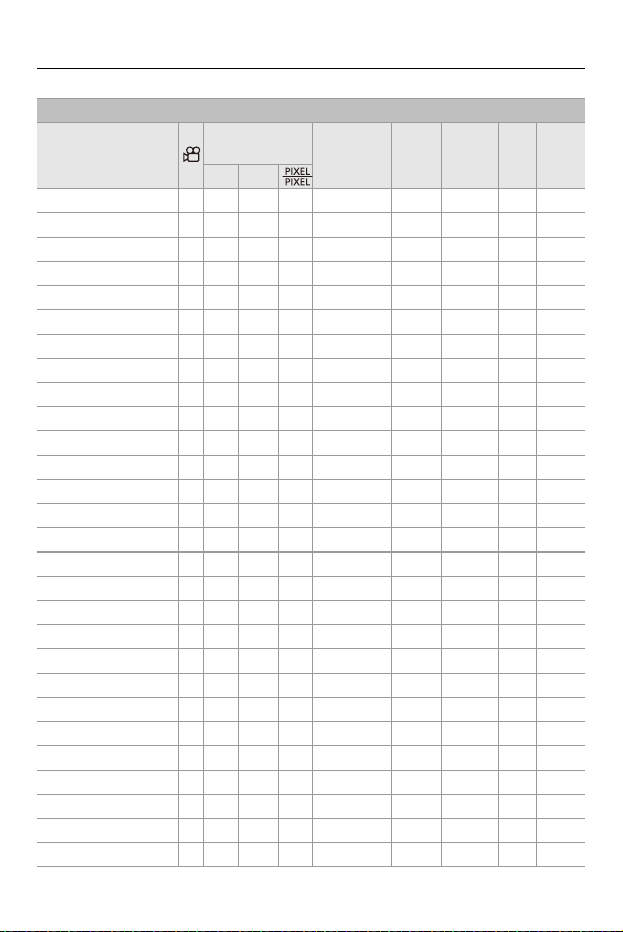
Recording Videos – [Rec Quality]
161
[System Frequency]: [24.00Hz (CINEMA)]
[Rec Quality]
[Image Area of
Video]
Resolution
Aspect
ratio
(A) (B) (C)
FULL APS-C
[6K/24p/420/10-L] 5952×3968 3:2 24.00p 200 HEVC
[6K/48p/420/10-L] 5952×2512 2.4:1 48.00p 300 HEVC
[6K/24p/420/10-L] 5952×2512 2.4:1 24.00p 200 HEVC
[5.9K/48p/420/10-L] 5888×3312 16:9 48.00p 300 HEVC
[5.9K/24p/420/10-L] 5888×3312 16:9 24.00p 200 HEVC
[5.8K/48p/420/10-L] 5760×3040 17:9 48.00p 300 HEVC
[5.8K/24p/420/10-L] 5760×3040 17:9 24.00p 200 HEVC
[5.1K/48p/420/10-L] 5088×3392 3:2 48.00p 300 HEVC
[5.1K/24p/420/10-L] 5088×3392 3:2 24.00p 200 HEVC
[4.8K/48p/420/10-L] 4800×3600 4:3 48.00p 300 HEVC
[4.8K/24p/420/10-L] 4800×3600 4:3 24.00p 200 HEVC
[3.3K/120p/420/10-L] 3328×2496 4:3 120.00p 300 HEVC
[3.3K/48p/422/10-I(H)]
*
3328×2496 4:3 48.00p 800 AVC
[3.3K/48p/422/10-I(L)]
*
3328×2496 4:3 48.00p 600 AVC
[3.3K/48p/422/10-L] 3328×2496 4:3 48.00p 200 AVC
[3.3K/48p/420/10-L] 3328×2496 4:3 48.00p 200 HEVC
[3.3K/24p/422/10-I] 3328×2496 4:3 24.00p 400 AVC
[3.3K/24p/422/10-L] 3328×2496 4:3 24.00p 150 AVC
[3.3K/24p/420/10-L] 3328×2496 4:3 24.00p 150 HEVC
[C4K/120p/420/10-L] 4096×2160 17:9 120.00p 300 HEVC
[C4K/96p/420/10-L] 4096×2160 17:9 96.00p 300 HEVC
[C4K/48p/422/10-I(H)]
*
4096×2160 17:9 48.00p 800 AVC
[C4K/48p/422/10-I(L)]
*
4096×2160 17:9 48.00p 600 AVC
[C4K/48p/422/10-L] 4096×2160 17:9 48.00p 200 AVC
[C4K/48p/420/10-L] 4096×2160 17:9 48.00p 200 HEVC
[C4K/24p/422/10-I] 4096×2160 17:9 24.00p 400 AVC
[C4K/24p/422/10-L] 4096×2160 17:9 24.00p 150 AVC
[C4K/24p/420/10-L] 4096×2160 17:9 24.00p 150 HEVC

Recording Videos – [Rec Quality]
162
* [Rec Quality] [(H)] indicates a bit rate of 800 Mbps and [(L)] indicates a bit rate of
600 Mbps.
[(H)] video cannot be recorded to SD cards.
[C4K/24p/420/8-L] 4096×2160 17:9 24.00p 100 AVC
[Cs4K/120p/420/10-L] 4096×1728 2.4:1 120.00p 300 HEVC
[Cs4K/96p/420/10-L] 4096×1728 2.4:1 96.00p 300 HEVC
[Cs4K/48p/422/10-I(H)]
*
4096×1728 2.4:1 48.00p 800 AVC
[Cs4K/48p/422/10-I(L)]
*
4096×1728 2.4:1 48.00p 600 AVC
[Cs4K/48p/422/10-L] 4096×1728 2.4:1 48.00p 200 AVC
[Cs4K/48p/420/10-L] 4096×1728 2.4:1 48.00p 200 HEVC
[Cs4K/24p/422/10-I] 4096×1728 2.4:1 24.00p 400 AVC
[Cs4K/24p/422/10-L] 4096×1728 2.4:1 24.00p 150 AVC
[Cs4K/24p/420/10-L] 4096×1728 2.4:1 24.00p 150 HEVC
[Cs4K/24p/420/8-L] 4096×1728 2.4:1 24.00p 100 AVC
[4K/120p/420/10-L] 3840×2160 16:9 120.00p 300 HEVC
[4K/48p/422/10-I(H)]
*
3840×2160 16:9 48.00p 800 AVC
[4K/48p/422/10-I(L)]
*
3840×2160 16:9 48.00p 600 AVC
[4K/48p/422/10-L] 3840×2160 16:9 48.00p 200 AVC
[4K/48p/420/10-L] 3840×2160 16:9 48.00p 200 HEVC
[4K/24p/422/10-I] 3840×2160 16:9 24.00p 400 AVC
[4K/24p/422/10-L] 3840×2160 16:9 24.00p 150 AVC
[4K/24p/420/10-L] 3840×2160 16:9 24.00p 150 HEVC
[4K/24p/420/8-L] 3840×2160 16:9 24.00p 100 AVC
[FHD/48p/422/10-I] 1920×1080 16:9 48.00p 200 AVC
[FHD/48p/422/10-L] 1920×1080 16:9 48.00p 100 AVC
[FHD/48p/420/10-L] 1920×1080 16:9 48.00p 100 HEVC
[FHD/24p/422/10-I] 1920×1080 16:9 24.00p 200 AVC
[FHD/24p/422/10-L] 1920×1080 16:9 24.00p 100 AVC
[FHD/24p/420/10-L] 1920×1080 16:9 24.00p 100 HEVC
[FHD/24p/420/8-L] 1920×1080 16:9 24.00p 25 AVC
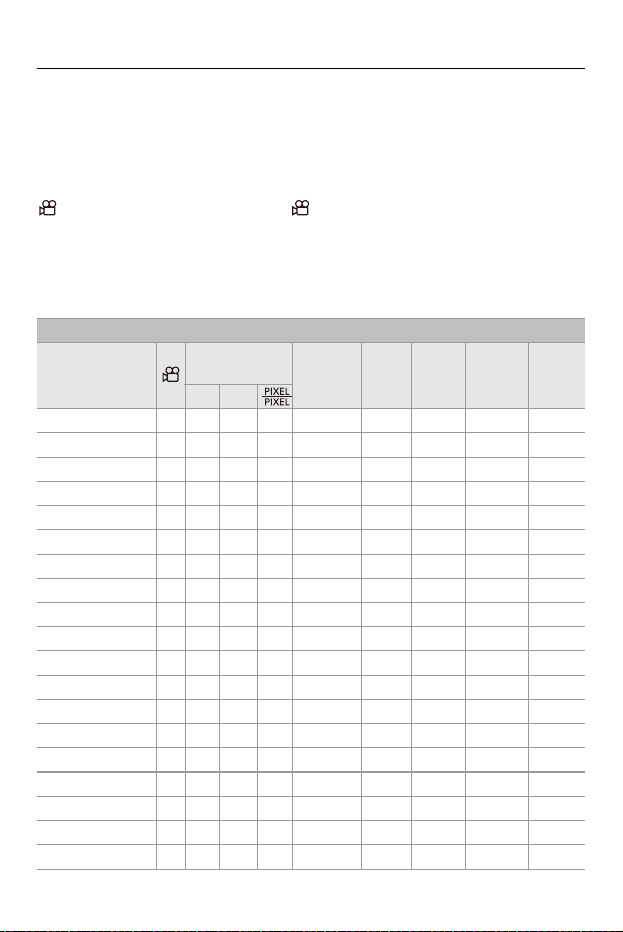
Recording Videos – [Rec Quality]
163
[Rec. File Format(Video)]: [Apple ProRes]
•
Audio format: LPCM (2ch/4ch)
4-channel audio can be recorded when the XLR Microphone Adaptor (DMW-XLR2:
optional) is connected by setting [4ch Audio Recording] to [XLR] or [XLR+CAMERA].
: Only able to set or record when in [ ] mode.
(A) Recording frame rate
(B) Bit rate
(C) Video compression format (RAW HQ: Apple ProRes RAW HQ, RAW: Apple
ProRes RAW, 422 HQ: Apple ProRes 422 HQ, 422: Apple ProRes 422)
[System Frequency]: [59.94Hz (NTSC)]
[Rec Quality]
[Image Area of
Video]
Resolution
Aspect
ratio
(A) (B) (C)
FULL APS-C
[5.8K/30p/RAW HQ]
5760×3040
17:9 29.97p 4.2 Gbps
RAW HQ
[5.8K/30p/RAW]
5760×3040
17:9 29.97p 2.8 Gbps
RAW
[5.8K/30p/422 HQ]
5760×3040
17:9 29.97p 1.9 Gbps
422 HQ
[5.8K/30p/422]
5760×3040
17:9 29.97p 1.3 Gbps
422
[5.8K/24p/RAW HQ]
5760×3040
17:9 23.98p 3.4 Gbps
RAW HQ
[5.8K/24p/RAW]
5760×3040
17:9 23.98p 2.2 Gbps
RAW
[5.8K/24p/422 HQ]
5760×3040
17:9 23.98p 1.5 Gbps
422 HQ
[5.8K/24p/422]
5760×3040
17:9 23.98p 1.0 Gbps
422
[4.8K/30p/422 HQ]
4800×3600
4:3 29.97p 1.9 Gbps
422 HQ
[4.8K/30p/422]
4800×3600
4:3 29.97p 1.3 Gbps
422
[4.8K/24p/422 HQ]
4800×3600
4:3 23.98p 1.5 Gbps
422 HQ
[4.8K/24p/422]
4800×3600
4:3 23.98p 1.0 Gbps
422
[3.3K/60p/422 HQ]
3328×2496
4:3 59.94p 1.8 Gbps
422 HQ
[3.3K/60p/422]
3328×2496
4:3 59.94p 1.2 Gbps
422
[3.3K/30p/422 HQ]
3328×2496
4:3 29.97p 913 Mbps
422 HQ
[3.3K/30p/422]
3328×2496
4:3 29.97p 609 Mbps
422
[3.3K/24p/422 HQ]
3328×2496
4:3 23.98p 730 Mbps
422 HQ
[3.3K/24p/422]
3328×2496
4:3 23.98p 487 Mbps
422
[C4K/60p/RAW HQ]
4096×2160
17:9 59.94p 4.2 Gbps
RAW HQ

Recording Videos – [Rec Quality]
164
[C4K/60p/RAW]
4096×2160
17:9 59.94p 2.8 Gbps
RAW
[C4K/60p/422 HQ]
4096×2160
17:9 59.94p 1.9 Gbps
422 HQ
[C4K/60p/422]
4096×2160
17:9 59.94p 1.3 Gbps
422
[C4K/30p/RAW HQ]
4096×2160
17:9 29.97p 2.1 Gbps
RAW HQ
[C4K/30p/RAW]
4096×2160
17:9 29.97p 1.4 Gbps
RAW
[C4K/30p/422 HQ]
4096×2160
17:9 29.97p 972 Mbps
422 HQ
[C4K/30p/422]
4096×2160
17:9 29.97p 648 Mbps
422
[C4K/24p/RAW HQ]
4096×2160
17:9 23.98p 1.7 Gbps
RAW HQ
[C4K/24p/RAW]
4096×2160
17:9 23.98p 1.1 Gbps
RAW
[C4K/24p/422 HQ]
4096×2160
17:9 23.98p 778 Mbps
422 HQ
[C4K/24p/422]
4096×2160
17:9 23.98p 519 Mbps
422
[Cs4K/60p/422 HQ]
4096×1728
2.4:1 59.94p 1.6 Gbps
422 HQ
[Cs4K/60p/422]
4096×1728
2.4:1 59.94p 1.0 Gbps
422
[Cs4K/30p/422 HQ]
4096×1728
2.4:1 29.97p 778 Mbps
422 HQ
[Cs4K/30p/422]
4096×1728
2.4:1 29.97p 519 Mbps
422
[Cs4K/24p/422 HQ]
4096×1728
2.4:1 23.98p 622 Mbps
422 HQ
[Cs4K/24p/422]
4096×1728
2.4:1 23.98p 415 Mbps
422
[4K/60p/422 HQ]
3840×2160
16:9 59.94p 1.8 Gbps
422 HQ
[4K/60p/422]
3840×2160
16:9 59.94p 1.2 Gbps
422
[4K/30p/422 HQ]
3840×2160
16:9 29.97p 911 Mbps
422 HQ
[4K/30p/422]
3840×2160
16:9 29.97p 608 Mbps
422
[4K/24p/422 HQ]
3840×2160
16:9 23.98p 729 Mbps
422 HQ
[4K/24p/422]
3840×2160
16:9 23.98p 486 Mbps
422
[FHD/120p/422 HQ]
1920×1080
16:9 119.88p 901 Mbps
422 HQ
[FHD/120p/422]
1920×1080
16:9 119.88p 601 Mbps
422
[FHD/60p/422 HQ]
1920×1080
16:9 59.94p 454 Mbps
422 HQ
[FHD/60p/422]
1920×1080
16:9 59.94p 302 Mbps
422
[FHD/30p/422 HQ]
1920×1080
16:9 29.97p 227 Mbps
422 HQ
[FHD/30p/422]
1920×1080
16:9 29.97p 151 Mbps
422
[FHD/24p/422 HQ]
1920×1080
16:9 23.98p 181 Mbps
422 HQ
[FHD/24p/422]
1920×1080
16:9 23.98p 121 Mbps
422
Recording Videos – [Rec Quality]
165
[System Frequency]: [50.00Hz (PAL)]
[Rec Quality]
[Image Area of
Video]
Resolution
Aspect
ratio
(A) (B) (C)
FULL APS-C
[5.8K/25p/RAW HQ]
5760×3040
17:9 25.00p 3.5 Gbps
RAW HQ
[5.8K/25p/RAW]
5760×3040
17:9 25.00p 2.3 Gbps
RAW
[5.8K/25p/422 HQ]
5760×3040
17:9 25.00p 1.6 Gbps
422 HQ
[5.8K/25p/422]
5760×3040
17:9 25.00p 1.1 Gbps
422
[4.8K/25p/422 HQ]
4800×3600
4:3 25.00p 1.6 Gbps
422 HQ
[4.8K/25p/422]
4800×3600
4:3 25.00p 1.1 Gbps
422
[3.3K/50p/422 HQ]
3328×2496
4:3 50.00p 1.5 Gbps
422 HQ
[3.3K/50p/422]
3328×2496
4:3 50.00p 1.0 Gbps
422
[3.3K/25p/422 HQ]
3328×2496
4:3 25.00p 761 Mbps
422 HQ
[3.3K/25p/422]
3328×2496
4:3 25.00p 508 Mbps
422
[C4K/50p/RAW HQ]
4096×2160
17:9 50.00p 3.5 Gbps
RAW HQ
[C4K/50p/RAW]
4096×2160
17:9 50.00p 2.4 Gbps
RAW
[C4K/50p/422 HQ]
4096×2160
17:9 50.00p 1.6 Gbps
422 HQ
[C4K/50p/422]
4096×2160
17:9 50.00p 1.1 Gbps
422
[C4K/25p/RAW HQ]
4096×2160
17:9 25.00p 1.8 Gbps
RAW HQ
[C4K/25p/RAW]
4096×2160
17:9 25.00p 1.2 Gbps
RAW
[C4K/25p/422 HQ]
4096×2160
17:9 25.00p 811 Mbps
422 HQ
[C4K/25p/422]
4096×2160
17:9 25.00p 541 Mbps
422
[Cs4K/50p/422 HQ]
4096×1728
2.4:1 50.00p 1.3 Gbps
422 HQ
[Cs4K/50p/422]
4096×1728
2.4:1 50.00p 865 Mbps
422
[Cs4K/25p/422 HQ]
4096×1728
2.4:1 25.00p 649 Mbps
422 HQ
[Cs4K/25p/422]
4096×1728
2.4:1 25.00p 433 Mbps
422
[4K/50p/422 HQ]
3840×2160
16:9 50.00p 1.5 Gbps
422 HQ
[4K/50p/422]
3840×2160
16:9 50.00p 1.0 Gbps
422
[4K/25p/422 HQ]
3840×2160
16:9 25.00p 760 Mbps
422 HQ
[4K/25p/422]
3840×2160
16:9 25.00p 507 Mbps
422
[FHD/100p/422 HQ]
1920×1080
16:9 100.00p 757 Mbps
422 HQ
[FHD/100p/422]
1920×1080
16:9 100.00p 505 Mbps
422

Recording Videos – [Rec Quality]
166
[FHD/50p/422 HQ]
1920×1080
16:9 50.00p 378 Mbps
422 HQ
[FHD/50p/422]
1920×1080
16:9 50.00p 252 Mbps
422
[FHD/25p/422 HQ]
1920×1080
16:9 25.00p 189 Mbps
422 HQ
[FHD/25p/422]
1920×1080
16:9 25.00p 126 Mbps
422
Recording Videos – [Rec Quality]
167
[System Frequency]: [24.00Hz (CINEMA)]
[Rec Quality]
[Image Area of
Video]
Resolution
Aspect
ratio
(A) (B) (C)
FULL APS-C
[5.8K/24p/RAW HQ]
5760×3040
17:9 24.00p 3.4 Gbps
RAW HQ
[5.8K/24p/RAW]
5760×3040
17:9 24.00p 2.2 Gbps
RAW
[5.8K/24p/422 HQ]
5760×3040
17:9 24.00p 1.5 Gbps
422 HQ
[5.8K/24p/422]
5760×3040
17:9 24.00p 1.0 Gbps
422
[4.8K/24p/422 HQ]
4800×3600
4:3 24.00p 1.5 Gbps
422 HQ
[4.8K/24p/422]
4800×3600
4:3 24.00p 1.0 Gbps
422
[3.3K/24p/422 HQ]
3328×2496
4:3 24.00p 731 Mbps
422 HQ
[3.3K/24p/422]
3328×2496
4:3 24.00p 487 Mbps
422
[C4K/24p/RAW HQ]
4096×2160
17:9 24.00p 1.7 Gbps
RAW HQ
[C4K/24p/RAW]
4096×2160
17:9 24.00p 1.1 Gbps
RAW
[C4K/24p/422 HQ]
4096×2160
17:9 24.00p 779 Mbps
422 HQ
[C4K/24p/422]
4096×2160
17:9 24.00p 519 Mbps
422
[Cs4K/24p/422 HQ]
4096×1728
2.4:1 24.00p 623 Mbps
422 HQ
[Cs4K/24p/422]
4096×1728
2.4:1 24.00p 415 Mbps
422
[4K/24p/422 HQ]
3840×2160
16:9 24.00p 730 Mbps
422 HQ
[4K/24p/422]
3840×2160
16:9 24.00p 487 Mbps
422
[FHD/120p/422 HQ]
1920×1080
16:9 120.00p 908 Mbps
422 HQ
[FHD/120p/422]
1920×1080
16:9 120.00p 606 Mbps
422
[FHD/24p/422 HQ]
1920×1080
16:9 24.00p 182 Mbps
422 HQ
[FHD/24p/422]
1920×1080
16:9 24.00p 121 Mbps
422

Recording Videos – [Rec Quality]
168
•
In this document, videos are indicated as follows according to their resolution:
– 6K (5952×3968) video: 6K video (3:2)
– 6K (5952×2512) video: 6K video (2.4:1)
– 5.9K (5888×3312) video: 5.9K video
– 5.8K (5760×3040) video: 5.8K video
– 5.1K (5088×3392) video: 5.1K video
– 4.8K (4800×3600) video: 4.8K video
– 3.3K (3328×2496) video: 3.3K video
– C4K (4096×2160) video: C4K video
– Cs4K (4096×1728) video: Cs4K video
– 4K (3840×2160) video: 4K video
– Full High Definition (1920×1080) video: FHD video

Recording Videos – [Rec Quality]
169
•
Since the camera employs the VBR recording format, the bit rate is changed
automatically depending on the subject to record. As a result, video recording
time is shortened when a fast-moving subject is recorded.
•
Videos in ALL-Intra and 4:2:2 10-bit formats and videos whose [Rec. File
Format(Video)] is [Apple ProRes] are intended for editing on a PC used for video
production.
•
Depending on the [Rec Quality] and [Image Area of Video] settings, the following
crop zoom rates are used for recording:
When [Image Area of Video] is [FULL]
– C4K video (120p/100p): Approx. 1.17×
– 4K video (120p/100p): Approx. 1.24×
– FHD video (240p): Approx. 1.21×
When [Image Area of Video] is [APS-C]
– 3.3K video (120p/100p): Approx. 1.06×
•
The following [Rec Quality] cannot be set when using an APS-C lens:
– 4.8K video
•
You can register a combination of [System Frequency], [Rec. File
Format(Video)], [Image Area of Video], and [Rec Quality] to My List. ([add to
list]: 171)
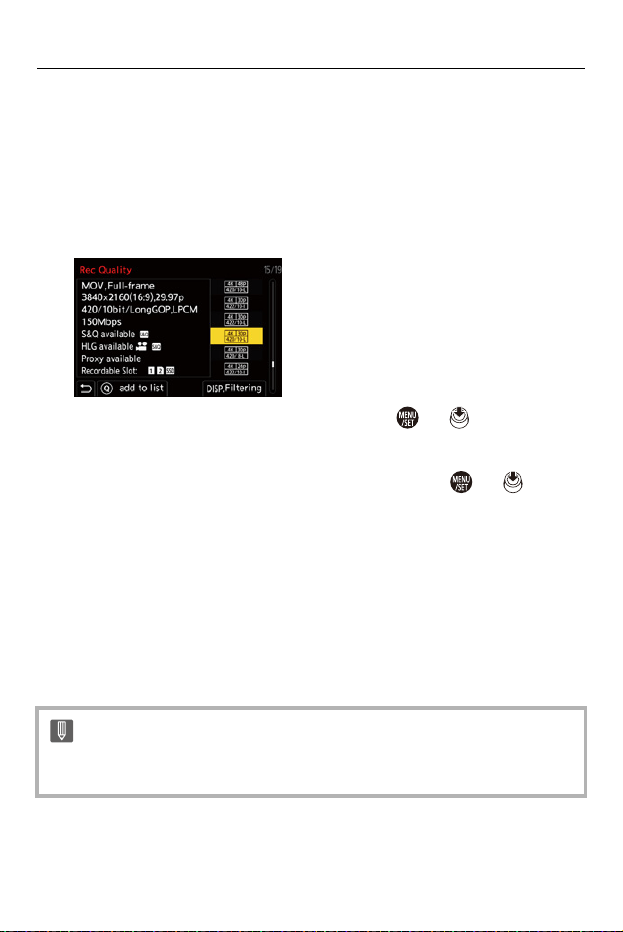
Recording Videos – [Rec Quality]
170
[Filtering]
When [Rec. File Format(Video)] is set to [MOV] or [Apple ProRes], you can
specify items such as frame rate, number of pixels (resolution), and
compression format (YUV, bit value, image compression), and just display
recording qualities that meet those conditions.
1 In the [Rec Quality] setting screen, press [DISP.].
2 Press 34 to select a setting item and then press or .
•
Settings: [Frame Rate]/[Resolution]/[Codec]/[Hybrid Log Gamma]/[Proxy
Recording]
3 Press 34 to select the filtering conditions and then press or .
4 Press [DISP.] to confirm the setting.
•
You are returned to the [Rec Quality] setting screen.
Clearing the filtering conditions
Select [ANY] in Step 3.
•
The filtering conditions are also cleared when you do the following:
– Change the [Rec. File Format(Video)]
– Change the [System Frequency]
– Select a recording quality from [Rec Quality (My List)]
•
When you change recording quality using a filter, the current filtering conditions
are stored.
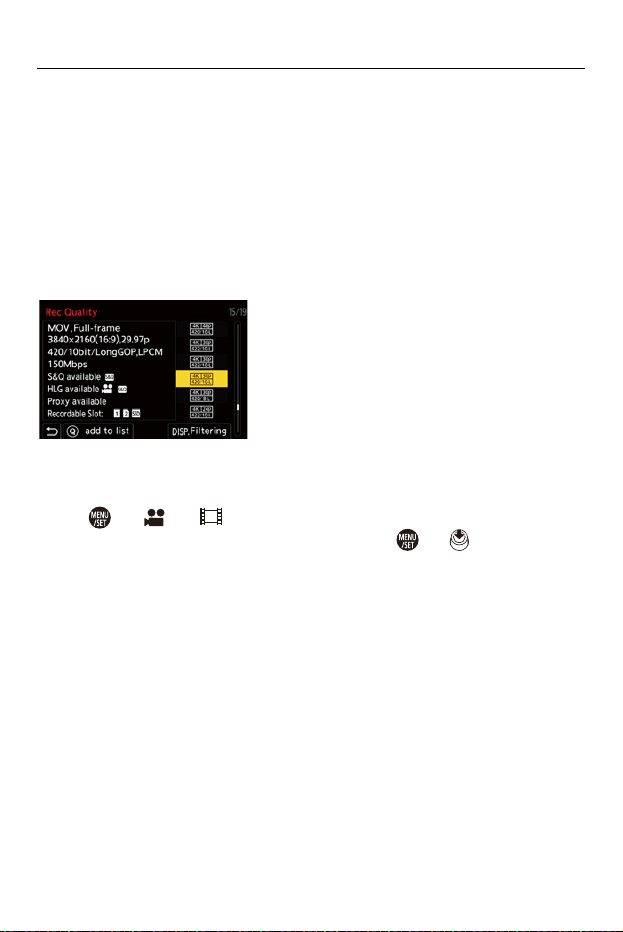
Recording Videos – [Rec Quality]
171
[add to list]
Select a recording quality and register it in My List. The recording quality
you register can be set in [Rec Quality (My List)].
In the [Rec Quality] setting screen, press [Q].
•
The following settings are also registered at the same time:
– [System Frequency]
– [Rec. File Format(Video)]
– [Image Area of Video]
Setting or deleting in My List
1 Select [Rec Quality (My List)].
•
[] [] [Rec Quality (My List)]
2 Press 34 to select a setting item and then press or .
•
You cannot select setting items that have different system frequencies.
•
To delete from My List, select the item and press [Q].
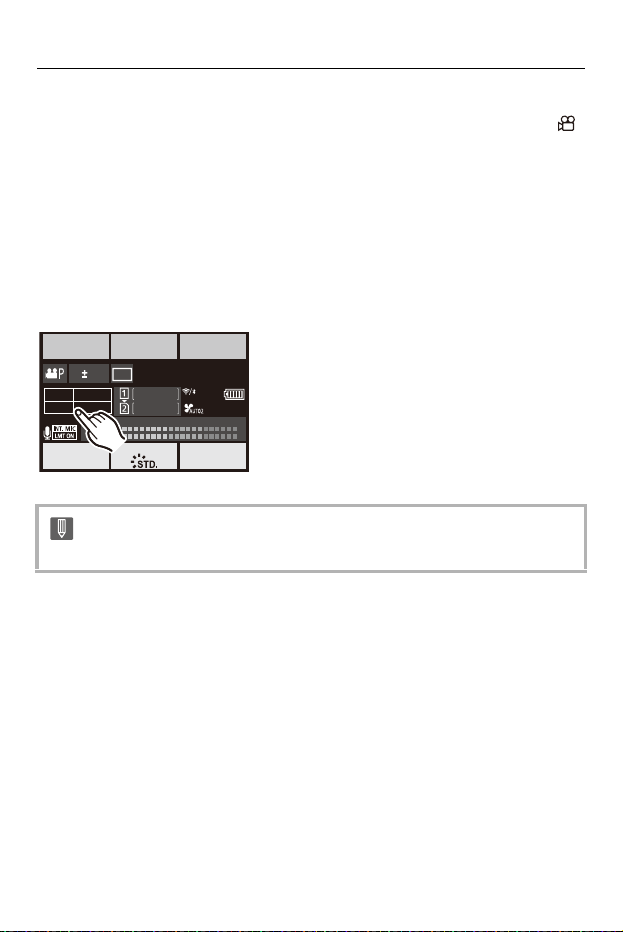
Recording Videos – [Rec Quality]
172
Setting from the control panel
It is possible to display the My List of recording qualities from the control panel in [ ]/
[S&Q] mode.
Touch the recording quality item.
•
When already registered in My List, the [Rec Quality (My List)] setting screen is
displayed.
When not yet registered, the [Rec Quality] setting screen is displayed.
•
[Rec Quality (My List)] and [Rec Quality] switch each time you press the [DISP.]
button.
•
The next time the setting screen is displayed, the screen last used is displayed.
•
Up to 12 types of recording quality can be registered.
0
FPS
30
F3.5
1/60
100
AWB
IRISSHUTTER
ISO WBPHOTO STYLE
FULL
4K 29.97
p
420/10-L
MOV
AUTO
-2
-36 -12 -6-24 0
-6
CH2
CH1
TC
DF
00:00:00.00
48kHz/24bit
24m59s
24m59s
OFF
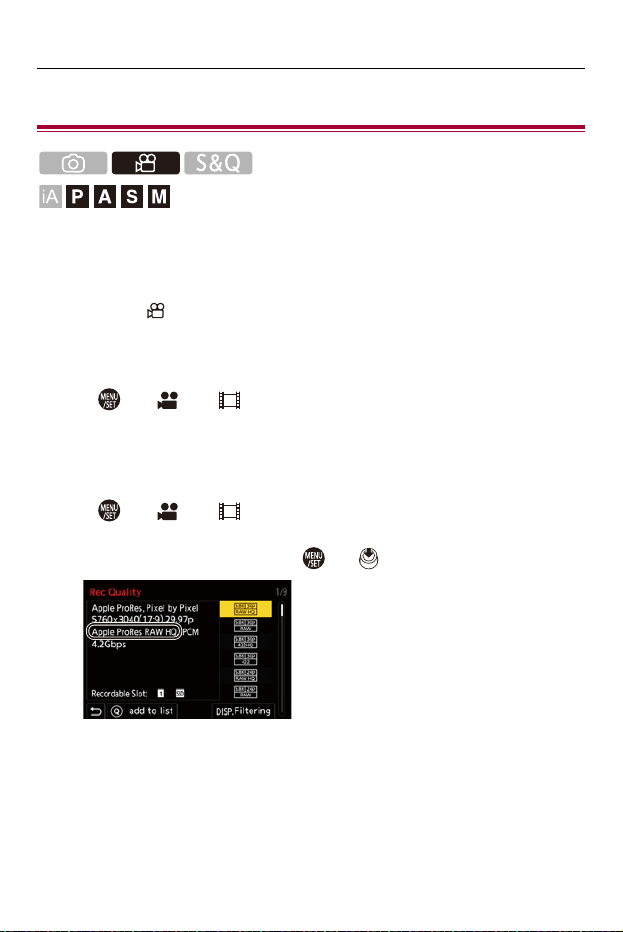
Recording Videos – RAW Video Recording
173
RAW Video Recording
High bit rate RAW video (ProRes RAW HQ/ProRes RAW formats) can be
recorded onto the camera. (Cannot be recorded to SD cards)
1
Set to [ ] mode.
(Photo/Video/S&Q Switch: 80)
2
Set [Rec. File Format(Video)] to [Apple ProRes].
≥ [] [] [Rec. File Format(Video)] [Apple
ProRes]
3
Set to a recording quality that enables RAW video
recording.
≥ [] [] [Rec Quality]
≥Select the [Apple ProRes RAW HQ] or [Apple ProRes RAW]
recording quality and press or .
Recording Videos – RAW Video Recording
174
•
Notes about RAW Video
RAW video refers to a data format of images that have not been processed on
the camera. You will need compatible software to play or edit RAW video on
devices other than this camera.
•
RAW video cannot be recorded in [iA] mode.
•
Operation is as follows when recording RAW video:
– ISO sensitivity can be set in the range between 640 and 51200. You can set
between 320 and 51200 when [Extended ISO] is set.
– [AWB], [AWBc], [AWBw] and [ ] cannot be used for white balance.
– [Photo Style] is fixed to [V-Log], and Image quality cannot be adjusted.
– [ ]/[ ] of the AF mode is not available.
– The LUT used by [Log View Assist] is fixed to [Vlog_709].
•
When recording RAW video, the following functions are not available:
– [Master Pedestal Level]
– [i.Dynamic Range]
– [Vignetting Comp.]
– [Diffraction Compensation]
– [Filter Settings]
– [Luminance Level]
– [E-Stabilization (Video)] ([Image Stabilizer])
– [Loop Recording (video)]
– [Segmented File Recording]
– [Live Cropping]
– [Color Space]
– [Color Bars]
– [Double Card Slot Function]
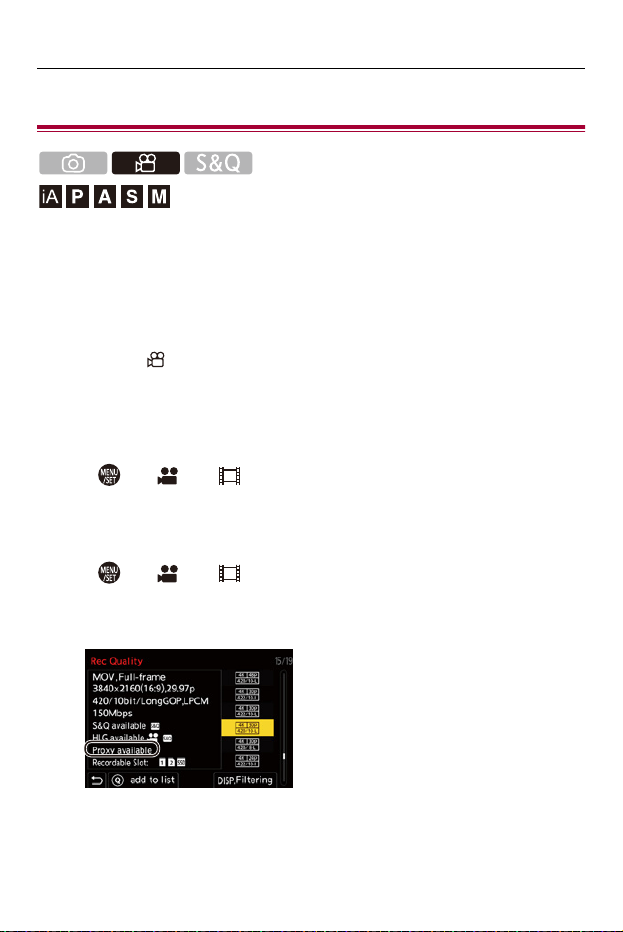
Recording Videos – Proxy Recording
175
Proxy Recording
During video recording, a proxy video with a low bit rate can also be
recorded simultaneously.
The size is small so it is suitable for data transmission, such as uploading
to the cloud. It is also less demanding on your PC during editing.
1
Set to [ ] mode.
(Photo/Video/S&Q Switch: 80)
2
Set [Rec. File Format(Video)] to [MOV] or [Apple
ProRes].
≥ [] [] [Rec. File Format(Video)]
3
Select a recording quality with which you can record
proxy video.
≥ [] [] [Rec Quality]
•
Items available for recording with proxy video are indicated as [Proxy
available].
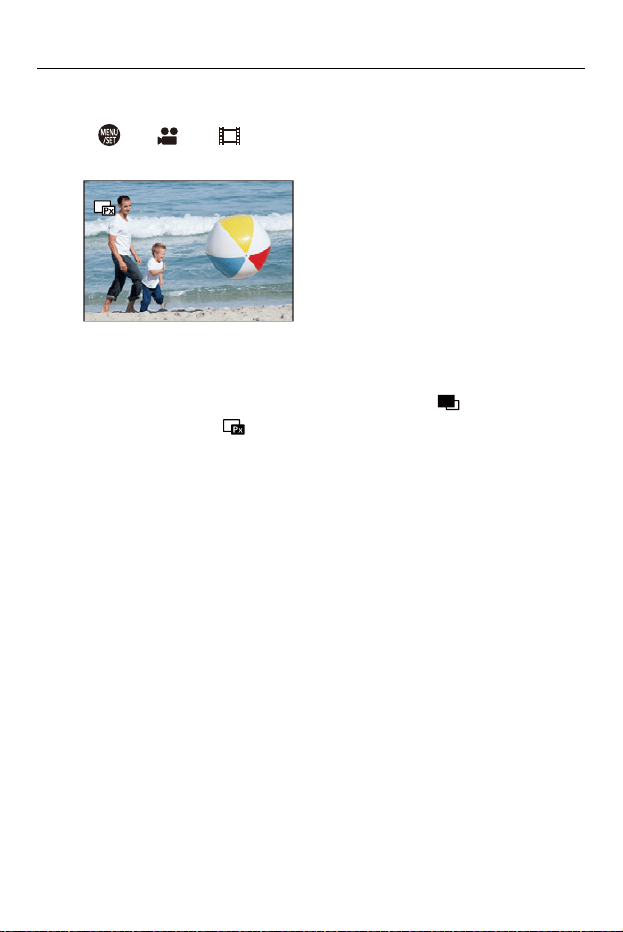
Recording Videos – Proxy Recording
176
4
Make proxy recording settings.
≥ [] [] [Proxy Recording Settings] [Proxy
Recording] [ON]
≥ The original video set in [Rec Quality] is recorded to card slot 1 and the
proxy video is recorded to card slot 2.
≥ During playback, the original video is indicated with [ ] and the proxy
video is indicated with [ ].

Recording Videos – Proxy Recording
177
•
You cannot change the recording destination for proxy videos.
•
[Proxy Recording] is not available if a card is not inserted in one of the recording
destinations.
•
When [USB-SSD] is set to [ON], the original video is recorded to the external
SSD. Proxy videos are saved to card slot 2. Set [USB-SSD] to [OFF] to play back
the proxy video.
•
Proxy videos alone are saved to card slot 2 during output of RAW data via HDMI.
The original video is not recorded. (Proxy Recording During Output of RAW
Data via HDMI: 585)
•
If a lack of space on a card, etc., causes recording of the original video to stop
after recording has started, [Proxy Recording] also stops. If recording of the
proxy video stops first, recording of the original video continues.
•
If recording of proxy video stops during output of RAW data via HDMI due to
insufficient capacity on the card, etc., output of RAW data via HDMI is temporarily
stopped.
•
[Proxy Recording] is not available with the following recording media
combinations:
– SD/SDHC memory cards and CFexpress cards
– SD/SDHC memory cards and external SSDs
•
When the following functions are being used, [Proxy Recording] is not available:
– [MP4] ([Rec. File Format(Video)])
– [Rec Quality] exceeding a resolution of C4K
*
– [Rec Quality] with [4:3] or [3:2] aspect ratio
*
– [Rec Quality] with a high frame rate video
– [Live Cropping] using a [Rec Quality] with a recording frame rate of 59.94p/
50.00p
– [Streaming]
* Except when outputting RAW data via HDMI
•
The following functions are not available when recording proxy video:
– Fn buttons registered with [Photo Style], [Apply LUT] and [REAL TIME LUT]

Recording Videos – Proxy Recording
178
Setting the Proxy Recording Quality
[] [] [Proxy Recording Settings] Select
[Proxy Rec. Quality]
(A) Video compression format (HEVC: H.265/HEVC, AVC: H.264/MPEG-4 AVC)
* This is set when outputting RAW data via HDMI.
•
The bit rate (Mbps) is a value for the images only. There is variation depending on
the audio recorded.
•
The frame rate and aspect ratio will be the same as the original video.
•
If the aspect ratio of the original video is anything other than [16:9], [L] in [Proxy Rec.
Quality] is not available.
•
Audio is fixed to LPCM, 48 kHz/16 bit. The number of channels is the same as the
original video.
[Proxy Rec.
Quality]
Resolution
YUV, Bit
value
Bit rate (Mbps)
(A)
60p 50p 30p 25p 24p
[H]
2048×1080
4:2:0 10bit
18 18 13 13 13
HEVC
2048×864 14 14 11 11 11
1920×1440
*
21 21 16 16 16
1920×1280
*
19 19 14 14 14
1920×1080 16 16 12 12 12
[M]
2048×1080
4:2:0 10bit
1010777
HEVC
2048×864 8 8 6 6 6
1920×1440
*
1212888
1920×1280
*
1111777
1920×1080 9 9 6 6 6
[L] 1280×720 4:2:0 8bit 6 6 4 4 4 AVC
Recording Videos – Proxy Recording
179
Save Destination for Proxy Videos
Proxy videos are saved to the [xxx_PRXY] folder in card slot 2.
≥ The proxy video file name is the same as the original video.
Applying LUT Files to Proxy Videos
This can be set when [Photo Style] is [REAL TIME LUT] or My Photo Style.
[] [] [Proxy Recording Settings] Select
[Real Time LUT(Proxy)]
Settings: [ON]/[OFF]
≥ When [Photo Style] is [REAL TIME LUT] or if a LUT file is applied in My
Photo Style, this is fixed to [ON].
≥ When outputting RAW data via HDMI, this is fixed to [OFF].
•
LUT cannot be applied to only proxy video when using the following functions:
– [Crop Zoom(Video)]
– [Hybrid Zoom(Video)]
– [Live Cropping]
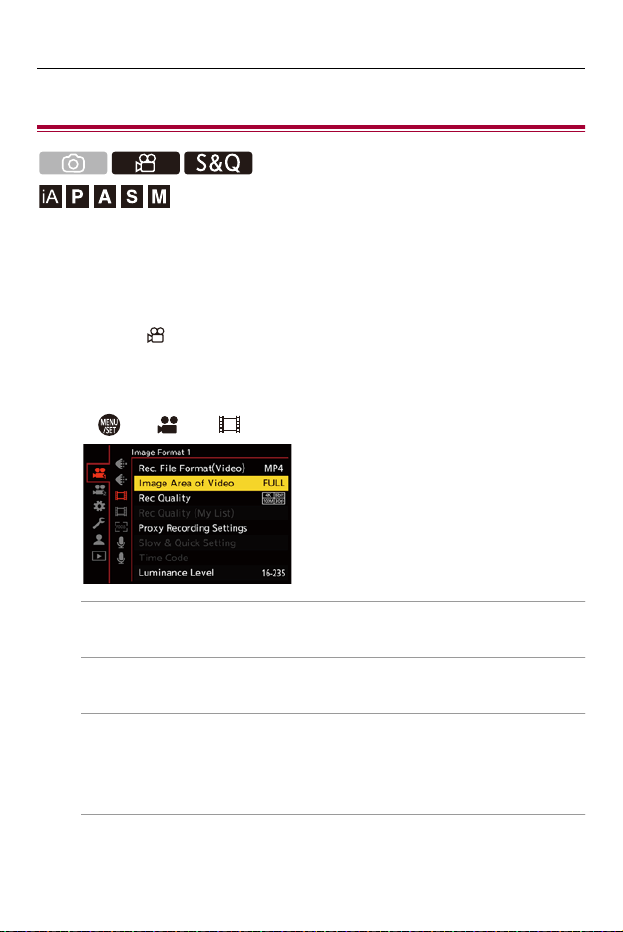
Recording Videos – [Image Area of Video]
180
[Image Area of Video]
Set the image area during video recording. The angle of view differs
depending on the image area. Narrowing the image area allows you to
achieve a telescopic effect without image deterioration.
1
Set to [ ] or [S&Q] mode.
(Photo/Video/S&Q Switch: 80)
2
Set [Image Area of Video].
≥ [] [] [Image Area of Video]
[FULL]
Records using a range corresponding to the full-frame lens image circle.
[APS-C]
Records using a range corresponding to the APS-C lens image circle.
[PIXEL/PIXEL]
Records with one pixel on the sensor, which is equal to one pixel of the video.
Records a range corresponding to the resolution range in [Rec Quality].
([Rec Quality]: 150)
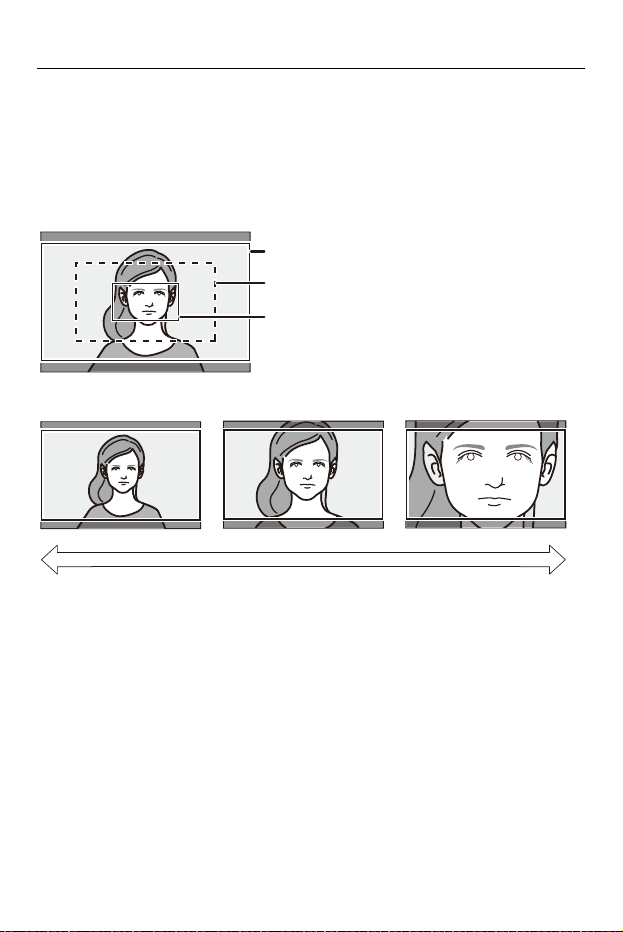
Recording Videos – [Image Area of Video]
181
•
The [Image Area of Video] settings you can select differ depending on the [Rec
Quality] setting. ([Rec Quality]: 150)
•
It is not possible to set to [FULL] in the following case.
– When using APS-C lenses
Image area (Ex.: FHD video)
(A) Angle of view: Wide/Telescopic effect: Not possible
(B) Angle of view: Narrow/Telescopic effect: Possible
FULL
APS-C
PIXEL/PIXEL
FULL APS-C PIXEL/PIXEL
(A) (B)

182
Focus / Zoom
Smoother focusing is possible by selecting the focus mode and AF mode
most suited to the recording conditions and the subject.
• This camera supports phase detection AF and contrast AF.
≥ Selecting the Focus Mode: 183
≥ Using AF: 185
≥ Selecting the AF Mode: 203
≥ AF Area Operations: 223
≥ Record Using MF: 232
≥ Recording with Zoom: 239
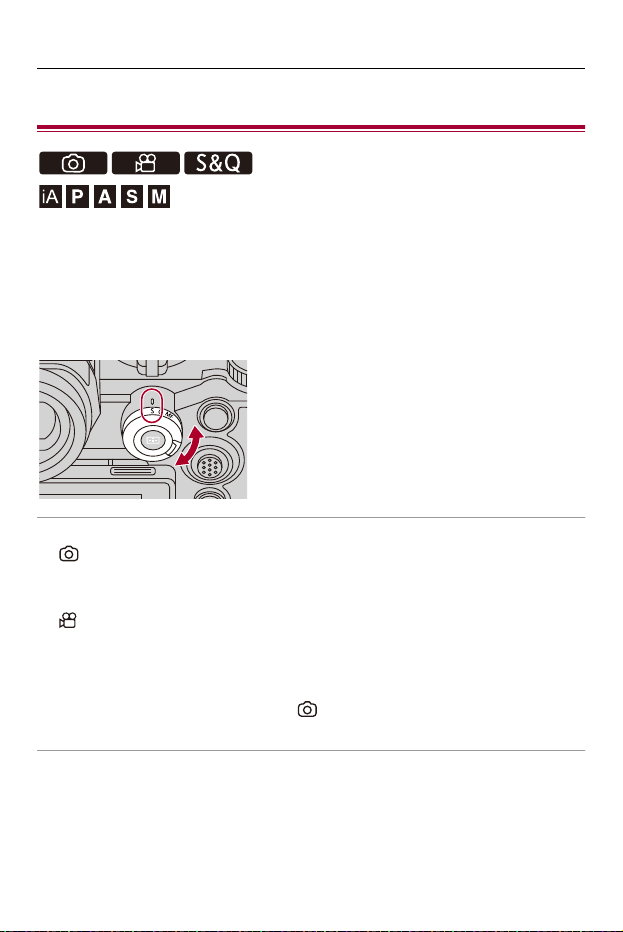
Focus / Zoom – Selecting the Focus Mode
183
Selecting the Focus Mode
Select the focusing method (focus mode) to match subject movement.
It is also possible to customize the AF tracking features with [AFC]. ([AF
Custom Setting(Photo)]: 192)
Set the focus mode lever.
[S] ([AFS])
In [ ] mode:
•
When the shutter button is not being pressed, the camera does not focus.
•
When the shutter button is pressed halfway, the camera focuses only once.
In [ ]/[S&Q] mode or when video recording:
•
When the shutter button is not being pressed, the focus is constantly adjusted
according to the movement of the subject.
•
When the shutter button is pressed halfway, the camera focuses only once.
The same AFS behavior as that in the [ ] mode can also be set. ([AFS Behavior
in Video Mode]: 435)
Focus / Zoom – Selecting the Focus Mode
184
[C] ([AFC])
In [ ] mode:
•
When the shutter button is not being pressed, the camera does not focus.
•
When the shutter button is pressed halfway, the focus is constantly adjusted
according to the movement of the subject.
In [ ]/[S&Q] mode or when video recording:
•
When the shutter button is not being pressed, the focus is constantly adjusted
according to the movement of the subject.
•
When the shutter button is pressed halfway, the camera focuses only once.
[MF]
Manual focusing. Use this when you want to fix the focus or avoid activating AF.
(Record Using MF: 232)
•
In the following case, [AFC] works the same as [AFS] when the shutter button is
pressed halfway:
– In low light situations
•
When the following functions are being used, [AFC] switches to [AFS]:
– High Resolution mode
– [65:24]/[2:1] ([Aspect Ratio])
Focus / Zoom – Using AF
185
Using AF
≥ [AF-Point Scope]: 190
≥ [AF Custom Setting(Photo)]: 192
≥ [Focus Limiter]: 195
≥ [AF Assist Light]: 197
≥ [Focus Frame Moving Speed]: 198
≥ [AF Micro Adjustment]: 199
AF (Auto Focus) refers to automatic focusing.
Select the focus mode and the AF mode appropriate for the subject and
scene.
1
Set the focus mode to [AFS] or [AFC].
≥Set the focus mode lever. (Selecting the Focus Mode: 183)
2
Select the AF mode.
≥Press [ ] to display the AF mode selection screen, and set
using or . (Selecting the AF Mode: 203)
•
In [iA] mode, each press of [ ] switches between [ ] and [ ]. (AF
Mode: 113)
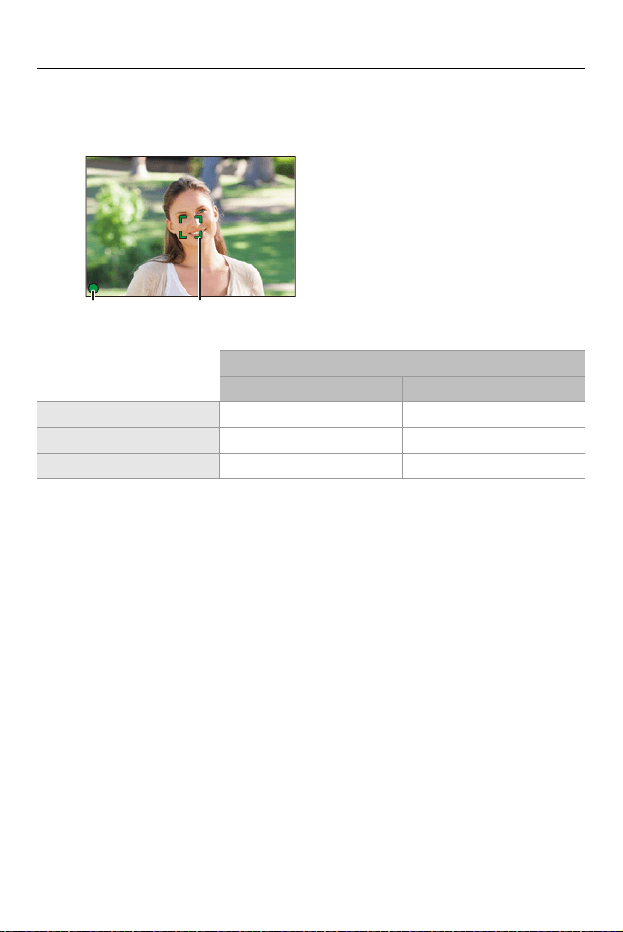
Focus / Zoom – Using AF
186
3
Press the shutter button halfway.
≥The AF operates.
Focus
In focus Not in focus
Focus icon (A) Lights Blinking
AF area (B) Green Red
AF beep Two beeps —
(A) (B)
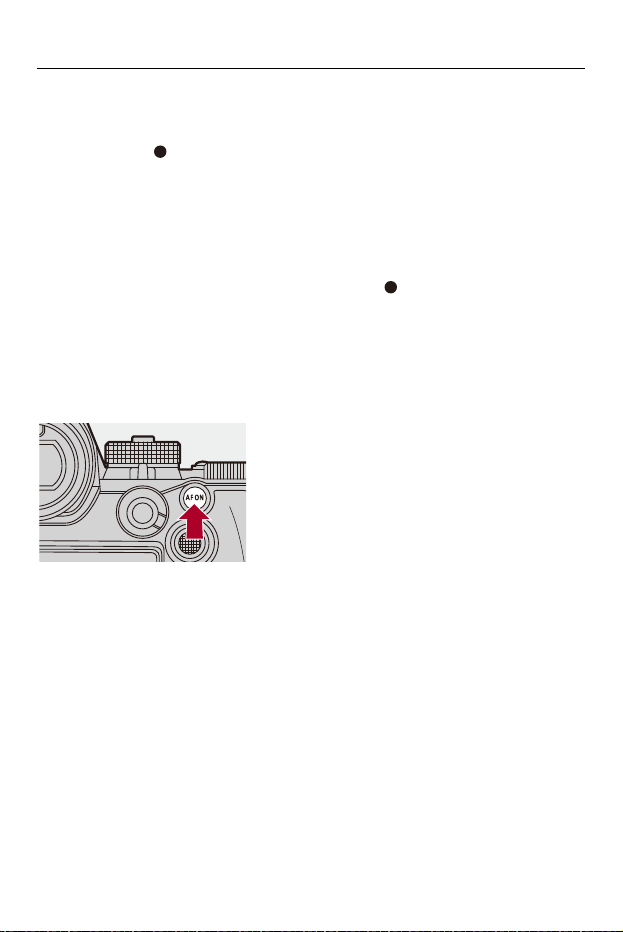
Focus / Zoom – Using AF
187
Low illumination AF
•
In dark environments, low illumination AF automatically operates, and the focus icon
is indicated as [ ].
•
Achieving focus may take more time than usual.
Starlight AF
•
If the camera detects stars in the night sky after determining low illumination AF, then
Starlight AF will be activated.
When focus is achieved, the focus icon will display [ ], and the AF area will be
displayed on the area in focus.
•
Edges of the screen cannot detect Starlight AF.
[AF ON] button
You can also activate AF by pressing [AF ON].
LOW
STAR

Focus / Zoom – Using AF
188
•
Subjects and recording conditions that make focusing difficult with AF
mode
– Fast-moving subjects
– Extremely bright subjects
– Subjects without contrast
– Subjects recorded through windows
– Subjects near shiny objects
– Subjects in very dark locations
– When recording subjects both distant and near
•
When the following operations are performed while recording with [AFC], it may
take some time for the camera to focus:
– When zooming from the wide-angle end to the telephoto end
– When the subject is suddenly changed from one far away to one close by
•
If using the zoom after achieving focus, the focus may be erroneous. In that
case, re-adjust the focus.

Focus / Zoom – Using AF
189
•
You can restrict the range for AF to work:
([Focus Limiter]: 195)
•
When camera shake reduces, it is possible to focus automatically:
([Quick AF]: 692)
•
You can change the settings so that AF does not function when the shutter button
is pressed halfway:
([Shutter AF]: 691)
•
The AF beep volume and sound can be changed:
([Beep]: 735)
•
You can assign the function that makes AF work so that it prioritizes subjects
close by to an Fn button.
This function is useful when the camera mistakenly focuses on the background:
([AF-ON : Near Shift]: 654)
•
You can assign the function that makes AF work so that it prioritizes subjects far
away to an Fn button.
This function is useful when taking pictures through fences or nets:
([AF-ON : Far Shift]: 654)
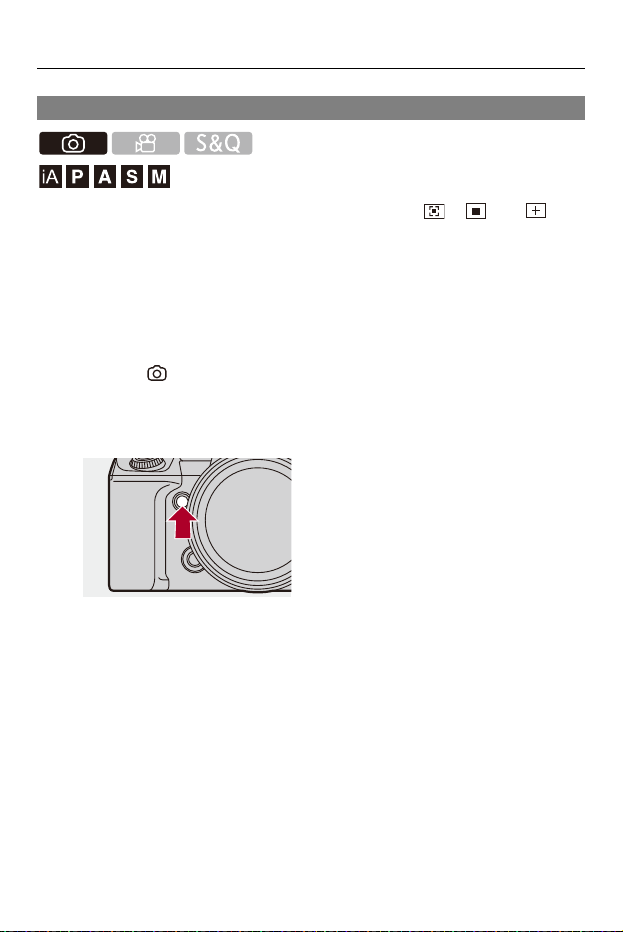
Focus / Zoom – Using AF
190
[AF-Point Scope]
This magnifies the focus point when the AF mode is [ ], [ ], or [ ]. (In
other AF modes, the center of the screen is magnified.)
You can check focus and observe an enlarged subject as with a telephoto
lens.
•
You can also perform the same operation by pressing the Fn button registered with
[AF-Point Scope]. (Fn Buttons: 646)
1
Set to [ ] mode.
(Photo/Video/S&Q Switch: 80)
2
Press and hold the AF-Point Scope button.
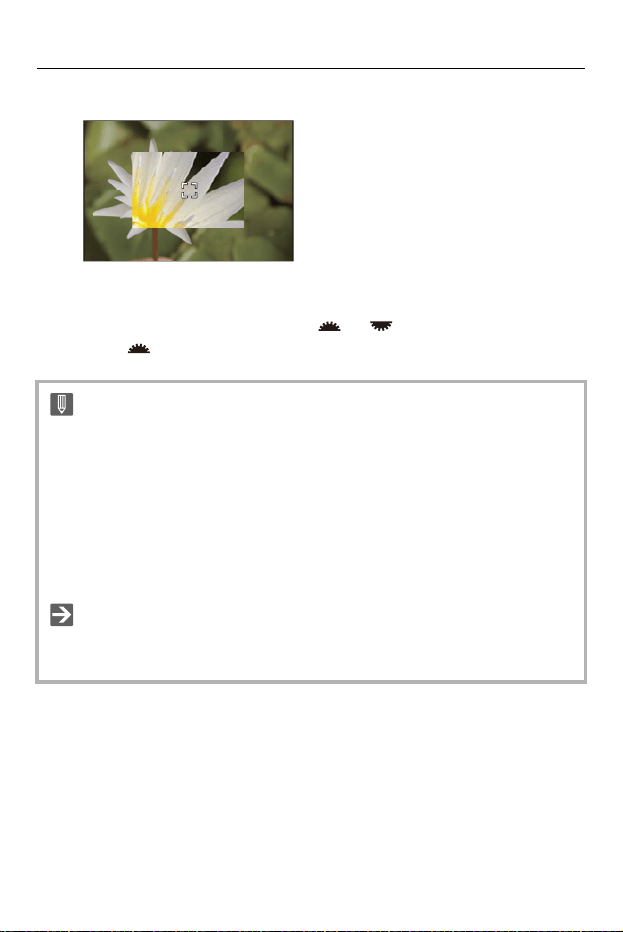
Focus / Zoom – Using AF
191
≥While pressing the button, the focus point is enlarged.
•
When the screen is enlarged, pressing the shutter button halfway re-acquires
focus in a small central AF area.
•
When the screen is enlarged, turn or to adjust the magnification.
•
Use for more detailed adjustments.
•
When the screen is enlarged, [AFC] changes to [AFS].
•
When the following function is being used, AF-Point Scope does not work:
– Video recording/SH burst recording
•
When simultaneously using functionality that puts a burden on internal camera
processing, such as HDMI output and Wi-Fi connection, for example, the frame
rate for live view is reduced.
•
For information about the high temperature display (For information
about the high temperature display: 145)
•
You can change the display method of the magnified screen:
([AF-Point Scope Setting]: 690)
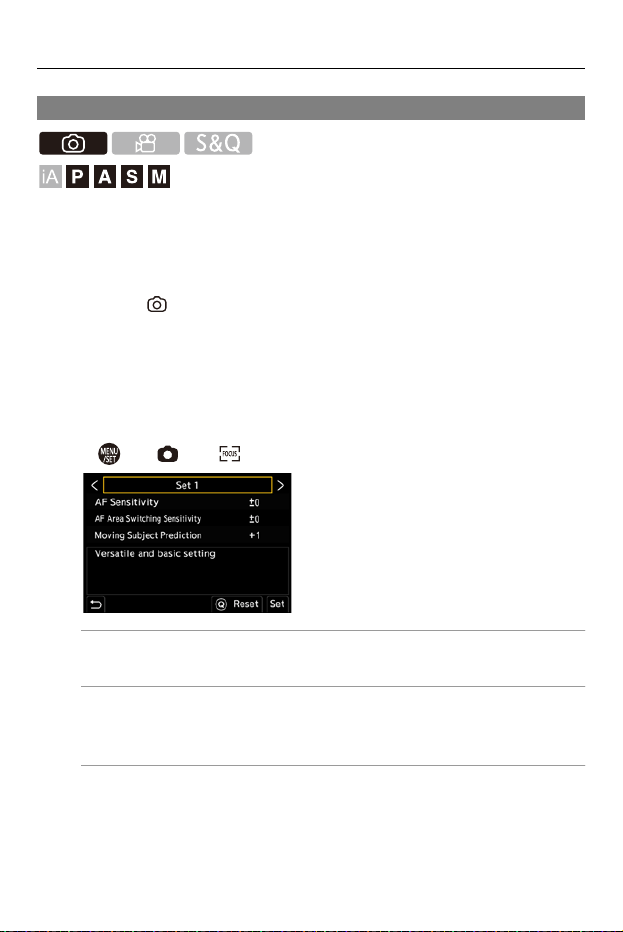
Focus / Zoom – Using AF
192
[AF Custom Setting(Photo)]
You can select features of AF operation when taking pictures with [AFC]
that are appropriate for the subject and scene.
Each of these features can be further customized.
1
Set to [ ] mode.
(Photo/Video/S&Q Switch: 80)
2
Set the focus mode to [AFC].
≥Set the focus mode lever. (Selecting the Focus Mode: 183)
3
Set [AF Custom Setting(Photo)].
≥ [] [] [AF Custom Setting(Photo)]
[Set 1]
Basic general-purpose setting.
[Set 2]
Suggested for situations where the subject moves at a constant speed in one
direction.
Focus / Zoom – Using AF
193
[Set 3]
Suggested when the subject moves randomly, and other objects may be in the
scene.
[Set 4]
Suggested for situations where the speed of the subject changes significantly.
Adjusting AF Custom Settings
1 Press 21 to select the AF Custom setting type.
2 Press 34 to select items and press 21 to adjust.
•
A description of the item is displayed on the screen when you press [DISP.].
•
To reset settings to the default, press [Q].
3 Press or .
[AF Sensitivity]
Sets the tracking sensitivity for the movement of subjects.
[+]
When the distance to the subject changes drastically,
the camera re-adjusts the focus immediately. You can
bring different subjects into focus one after another.
[−]
When the distance to the subject changes drastically,
the camera waits for a short period of time before
re-adjusting the focus. This allows you to prevent the
focus from being accidentally re-adjusted when, for
example, an object moves across the image.

Focus / Zoom – Using AF
194
[AF Area
Switching
Sensitivity]
Sets the sensitivity for switching the AF area to match subject
movement.
(When AF mode is set to Full Area AF)
[+]
When the subject moves out of the AF area, the camera
immediately switches the AF area to keep the subject in
focus.
[−]
The camera switches the AF area at a gradual pace.
Effects caused by a slight movement of the subject or by
obstacles in front of the camera will be minimized.
[Moving Subject
Prediction]
Sets the tracking method for changes in the speed of subject
movement.
•
At larger setting values, the camera tries to maintain focus by
responding even to sudden movements of the subject.
However, the camera becomes more sensitive to slight
movements of the subject, so focusing may become unstable.
[0]
This is suited to a subject with minimal changes in
speed.
[+1]
These are suited to a subject that changes its speed.
[+2]
Focus / Zoom – Using AF
195
[Focus Limiter]
You can restrict the range for AF to work.
The focusing speed of AF increases when you limit the range where AF
works.
1
Set the focus mode to [AFS] or [AFC].
≥Set the focus mode lever. (Selecting the Focus Mode: 183)
2
Set [Focus Limiter].
≥ [ ]/[ ] [] [Focus Limiter]
[ON]
Enables the following settings.
[OFF]
Disables the following settings.
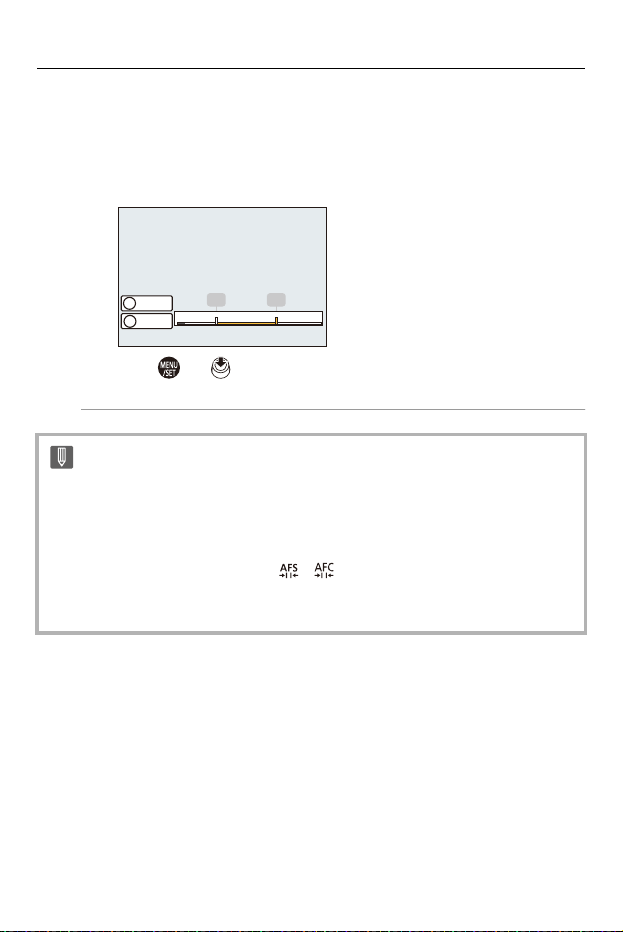
Focus / Zoom – Using AF
196
[SET]
1 Use the same procedure as MF (Record Using MF: 232) to check the
focus, then press [WB] or [ISO] to set the range of operation for AF.
•
This can also be set by touching [Limit1]/[Limit2].
•
[Limit1]/[Limit2] can be set from either.
2 Press or to confirm the setting.
•
Press [DISP.] to return the operation range to the default setting.
•
This can be set when using an L-Mount lens with a focus ring.
•
It cannot be set if the focusing distance range selector switch of the lens has
been used to limit the operation range.
•
The setting values are reset when the lens is replaced.
•
When [Focus Limiter] is working, [ ]/[ ] is displayed on the screen.
•
When the following function is being used, [Focus Limiter] is not available:
–[AF+MF]
∞
10(m) 5 3 2 1.5 1 0.5 0.1
1 2
Limit1
Limit2
WB
ISO
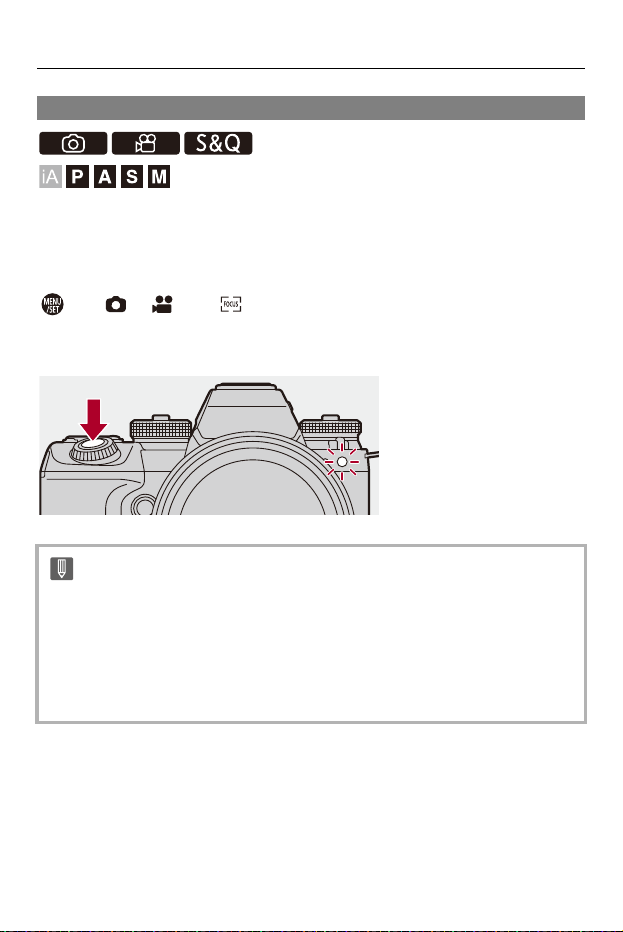
Focus / Zoom – Using AF
197
[AF Assist Light]
When recording in low light conditions, the AF assist light turns on when
you press the shutter button halfway, making it easier for the camera to
focus.
[ ]/[ ] [] Select [AF Assist Light]
Settings: [ON]/[OFF]
•
The effective range of the AF assist light is different depending on the lens used.
– When the interchangeable lens (S-R24105) is attached and at wide-angle end.
Approx. 1.0 m (3.3 feet) to 3.0 m (9.8 feet)
•
Remove the lens hood.
•
The AF assist light may be greatly blocked, and it may become harder to focus
when a lens with large diameter is used.

Focus / Zoom – Using AF
198
[Focus Frame Moving Speed]
Sets the speed when moving the AF area/MF Assist.
[ ]/[ ] [] Select [Focus Frame Moving
Speed]
Settings: [FAST]/[NORMAL]
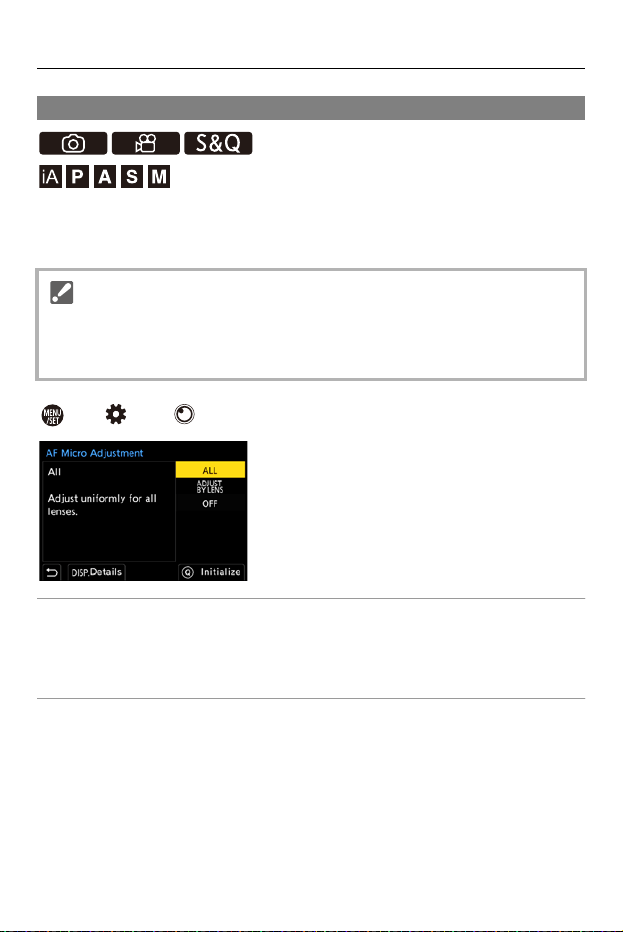
Focus / Zoom – Using AF
199
[AF Micro Adjustment]
You can make fine adjustments to the focus point when focusing with
phase detection AF.
[] [] Select [AF Micro Adjustment]
[ALL]
Adjust uniformly for all lenses.
Used in cases such as when you have attached lenses that are not registered in
[ADJUST BY LENS].
•
There is normally no need to adjust the focus point. Adjust only when necessary.
If you adjust on a lens that has a correct focus point, there is a risk that the
camera will not be able to record with the appropriate focus point.
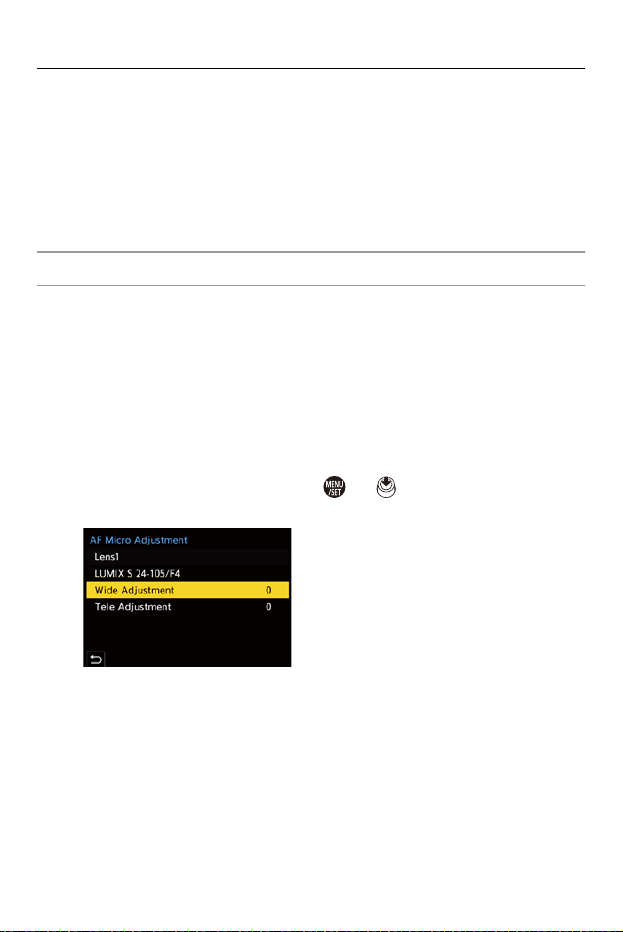
Focus / Zoom – Using AF
200
[ADJUST BY LENS]
Adjust each lens separately and register the adjustment values on the camera.
When a registered lens is attached, the adjusted value is recalled when it is set in
[ADJUST BY LENS].
•
When using a zoom lens, you can adjust the focus point individually at the
wide-angle end and the telephoto end.
•
If the lens has already been registered, the adjustment value is overwritten.
[OFF]
Registering the Adjusted Value
1 Select [ALL] or [ADJUST BY LENS] and then press [DISP.].
2 (When [ADJUST BY LENS] is selected) Register the lens.
•
Press [DISP.] and select [Yes] to register.
•
If the lens is already registered, the screen moves to the one in Step 3.
3 (When [ADJUST BY LENS] is selected) Select [Wide Adjustment] or [Tele
Adjustment].
•
Press 34 to select, and then press or .
•
When using a prime lens, [Adjustment] is displayed.
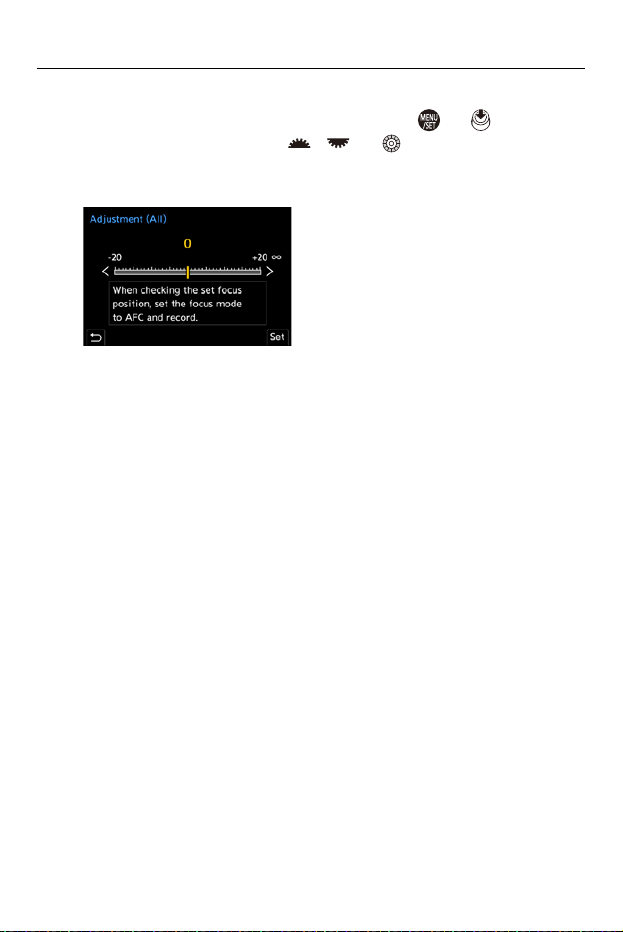
Focus / Zoom – Using AF
201
4 Adjust the focus point.
•
Press 21 to adjust the focus point and then press or .
•
You can also adjust by rotating , , or .
•
The focus point is moved backward when adjusted with the [+] side. The focus
point is moved forward when adjusted with the [−] side.
5 Record and repeat Step 4 until the suitable focus point is reached.
•
Check the set focus point in an image recorded with [AFC] of the [Focus/
Shutter Priority] set to [FOCUS] and with the focus mode set to [AFC].
([Focus/Shutter Priority]: 687)
Focus / Zoom – Using AF
202
Initializing
Registered lens information and adjusted values are initialized.
1 Select [ALL] or [ADJUST BY LENS] and then press [Q].
2 Select [Yes] to initialize.
•
We recommend making the adjustments in the same environment that will be
used for recording.
•
We recommend using a tripod when adjusting.
•
You can register a maximum of 40 lenses in [ADJUST BY LENS]. When the
upper limit is exceeded, already registered lens information is overwritten.
•
When a teleconverter is used when adjusted with [ADJUST BY LENS], the
combination of the lens and teleconverter is registered.
•
The focus point for the wide-angle end and the telephoto end cannot be
individually adjusted in [ALL].
•
The registration numbers and lens names registered in [ADJUST BY LENS] are
entered automatically and cannot be changed.
•
Irrespective of the [ALL]/[ADJUST BY LENS] selection, all of the registered lens
information and adjusted values in [AF Micro Adjustment] are initialized.
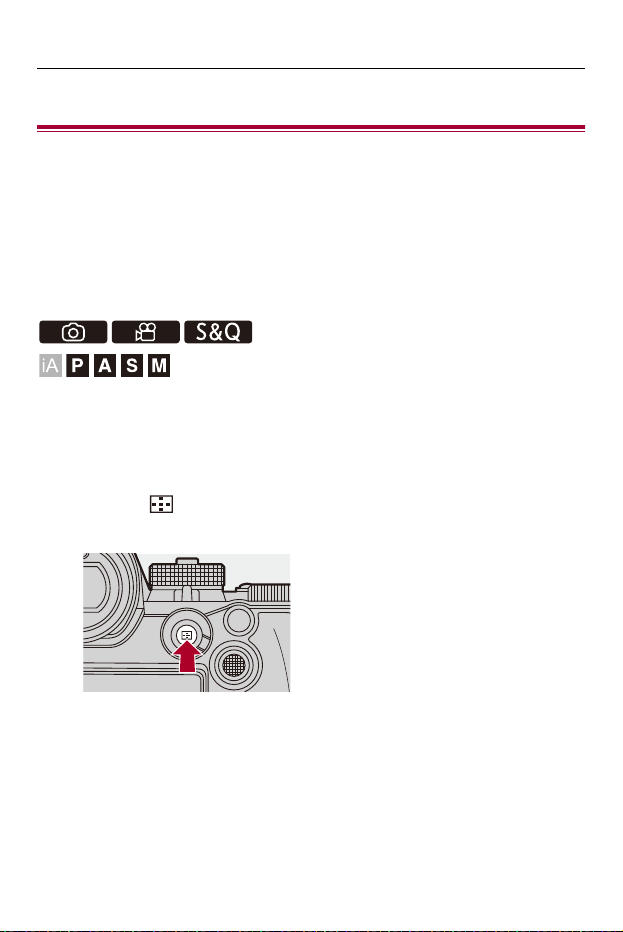
Focus / Zoom – Selecting the AF Mode
203
Selecting the AF Mode
≥ Automatic Detection: 206
≥ [Tracking]: 212
≥ [Full Area AF]: 214
≥ [Zone(Horizontal/Vertical)]/[Zone]: 217
≥ [1-Area+]/[1-Area]: 219
≥ [Pinpoint]: 221
Select the focusing method to match the position and number of subjects.
In an AF mode other than Pinpoint, you can automatically focus by
detecting subjects.
1
Press [ ].
≥The AF mode selection screen appears.
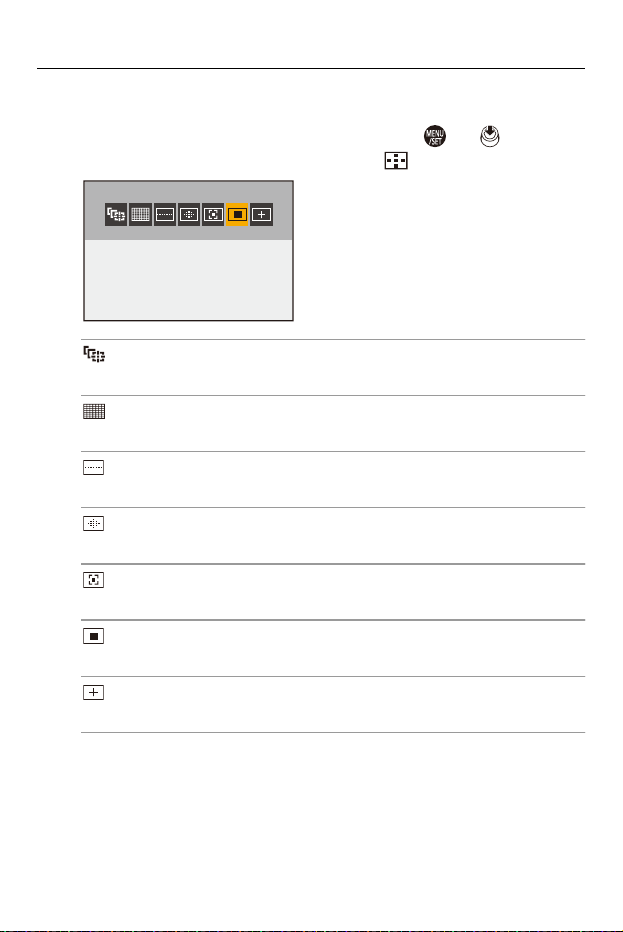
Focus / Zoom – Selecting the AF Mode
204
2
Select the AF mode.
≥Press 21 to select an item and then press or .
≥Selection is also possible by pressing [ ].
[Tracking]
([Tracking]: 212)
[Full Area AF]
([Full Area AF]: 214)
[Zone(Horizontal/Vertical)]
([Zone(Horizontal/Vertical)]: 217)
[Zone]
([Zone]: 218)
[1-Area+]
([1-Area+]: 219)
[1-Area]
([1-Area]: 219)
[Pinpoint]
([Pinpoint]: 221)
Focus / Zoom – Selecting the AF Mode
205
•
When the following functions are being used, [ ] is not available:
– [Time Lapse Shot]
– [Live View Composite]
– [H+] ([Burst Shot Setting])
•
When the focus mode is set to [AFC], [ ] is not available.
•
When the following function is being used, the AF mode is fixed to [ ]:
– [Live Cropping]
•
When the following function is being used, the AF mode is fixed to [ ]:
– [65:24]/[2:1] ([Aspect Ratio])
•
You can set the AF mode items to be displayed on the AF mode selection
screen:
([Show/Hide AF Mode]: 689)
Focus / Zoom – Selecting the AF Mode
206
Automatic Detection
When automatic detection is enabled, subjects for recording are
automatically detected and the camera focuses.
1
Set [AF Detection Setting] to [ON].
≥ [ ]/[ ] [] [AF Detection Setting] [ON]
•
You can also press 3 in the AF mode selection screen to switch automatic
detection [ON]/[OFF].
2
Select [Detecting Subject].
≥ [ ]/[ ] [] [Detecting Subject]
•
Select [Type of Subject] and [Detection Mode(Human)]/[Target Parts].
•
It is also possible to select by pressing [DISP.] in the AF mode selection
screen.
•
Not all subjects can be detected according to the settings.
•
When [Detecting Subject] ([Type of Subject]) is [ANIMAL], some subjects that are
not animals may be detected as animals.
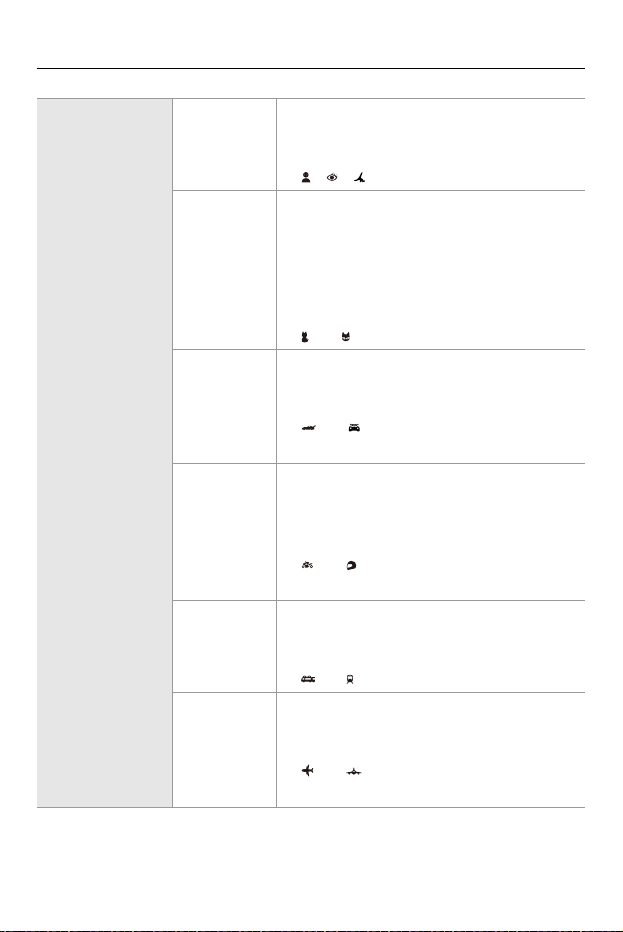
Focus / Zoom – Selecting the AF Mode
207
[Type of Subject]
[HUMAN]
Detects humans.
Select [Eye/Face/Body], [Eye/Face], or [Urban
Sports] for [Detection Mode(Human)].
•
[ ]/[ ]/[ ] appears on the AF mode icon.
[ANIMAL]
Detects animals.
Select either [Body] or [Eye/Body] for the
[Target Parts].
•
Animals that can be detected are birds,
canines (including wolves, etc.), and felines
(including lions, etc.).
•
[ ] or [ ] is displayed on the AF mode icon.
[CAR]
Detects cars (mainly for motor sports).
Select either [Entire Subject] or [Main Part
Priority] for the [Target Parts].
•
[ ] or [ ] is displayed on the AF mode
icon.
[MOTORCYCLE
/BIKE]
Detects motorcycles (mainly for motor sports)
or bikes (mainly for sports).
Select either [Entire Subject] or [Helmet
Priority] for the [Target Parts].
•
[ ] or [ ] is displayed on the AF mode
icon.
[TRAIN]
Detects railroad cars.
Select either [First Car] or [Main Part Priority]
for the [Target Parts].
•
[ ] or [ ] is displayed on the AF mode icon.
[AIRPLANE]
Detects aircraft and helicopters.
Select either [Airframe] or [Nose Priority] for
the [Target Parts].
•
[ ] or [ ] is displayed on the AF mode
icon.

Focus / Zoom – Selecting the AF Mode
208
[Detection
Mode(Human)]
(When [Type of Subject] is [HUMAN])
Select the part or person to focus on.
When [Urban Sports] is selected, detection is especially suited
to scenes with athletes performing complex movements, such
as street dancers that are breaking, or urban sports (BMX/
skateboarding/parkour/freestyle soccer).
[Target Parts]
(When [Type of Subject] is other than [HUMAN])
Select the part to be brought into focus.
The parts you can select depend on the [Type of Subject]
setting.
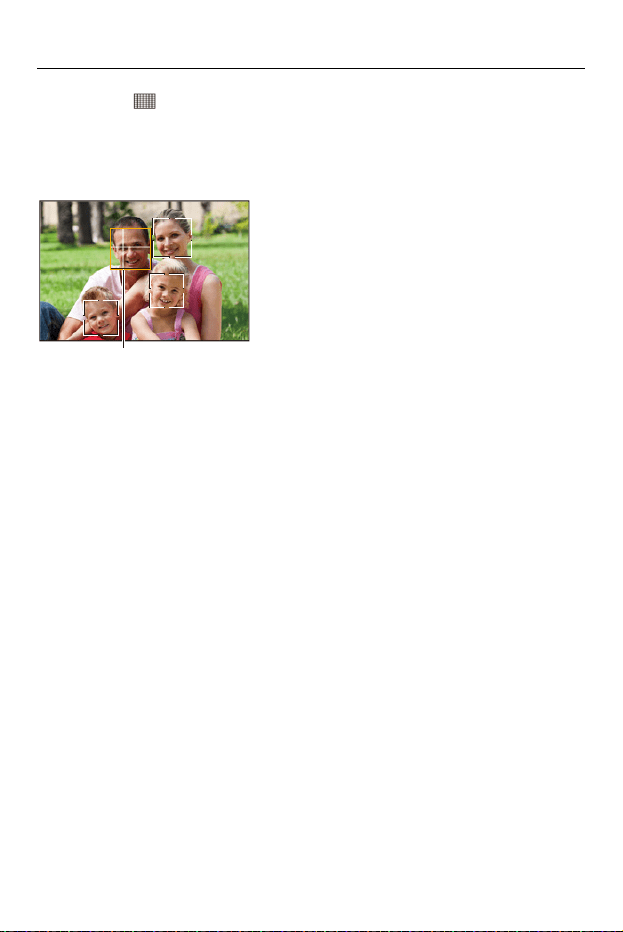
Focus / Zoom – Selecting the AF Mode
209
When [ ]
When a subject to be recorded is detected, an AF area is displayed.
If multiple subjects are detected, multiple AF areas are also displayed, and
you can select the subject you want to focus on from amongst these.
Yellow
AF area to be brought into focus.
The camera selects this automatically.
•
A cross appears in the AF area when a human eye is detected. (A)
For animal eyes, the cross does not appear.
You can specify the eye to be brought into focus. (Specify the Subject to Bring into
Focus: 214)
White
Displayed when multiple subjects are detected.
(A)
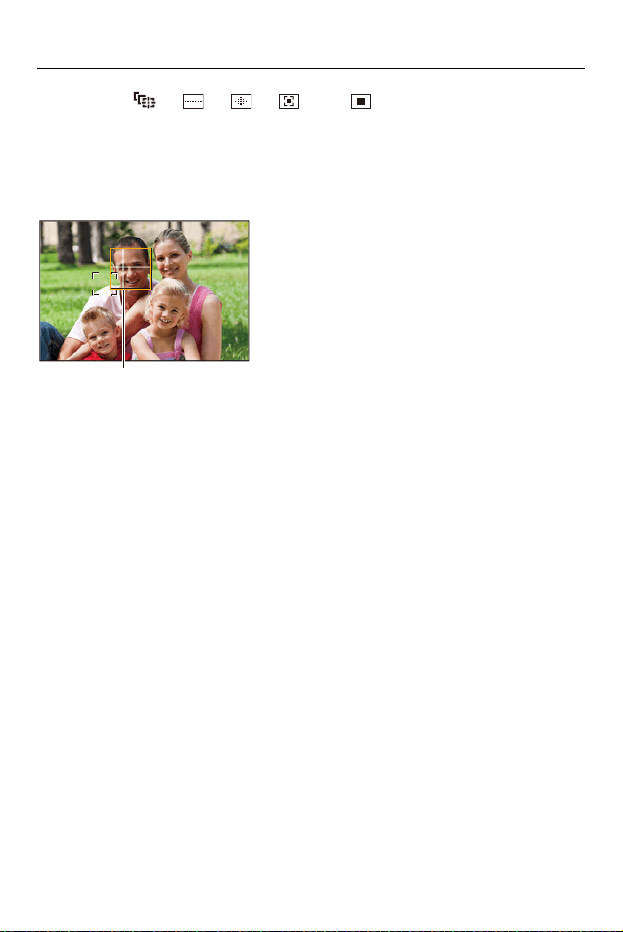
Focus / Zoom – Selecting the AF Mode
210
When [ ], [ ], [ ], [ ], or [ ]
If even part of a subject to be recorded enters the AF area, it is
automatically detected and focused.
•
If eyes are detected inside the AF area, eye detection (B) works.
It is not possible to change the eye to focus on.
(B)
Focus / Zoom – Selecting the AF Mode
211
•
[AF Detection Setting] is applied to all AF modes excluding [ ].
•
When a person’s eyes are detected, the eye closer to the camera will be brought
into focus.
The exposure will be adjusted to the face. (When [Metering Mode] is set to [ ])
•
Depending on [Detecting Subject], the number of subjects that can be detected
at once with [ ] of the AF mode will be different.
[HUMAN] ([Eye/Face/Body], [Eye/Face]): Maximum 15 (maximum 3 bodies
detected)
[HUMAN] ([Urban Sports]): Maximum 3
[ANIMAL] ([Body]), [CAR], [MOTORCYCLE/BIKE], [TRAIN], [AIRPLANE]:
Maximum 3
[ANIMAL] ([Eye/Body]): Maximum 1
•
Automatic detection may not be available due to the camera settings.
•
You can make it so the metering range for automatic exposure is not prioritized
on the eyes and face when automatic detection works:
([Face Priority In Multi Metering]: 683)
•
The cross that appears on human eyes when focused can be made to disappear:
([Human Eye Detection Display]: 691)
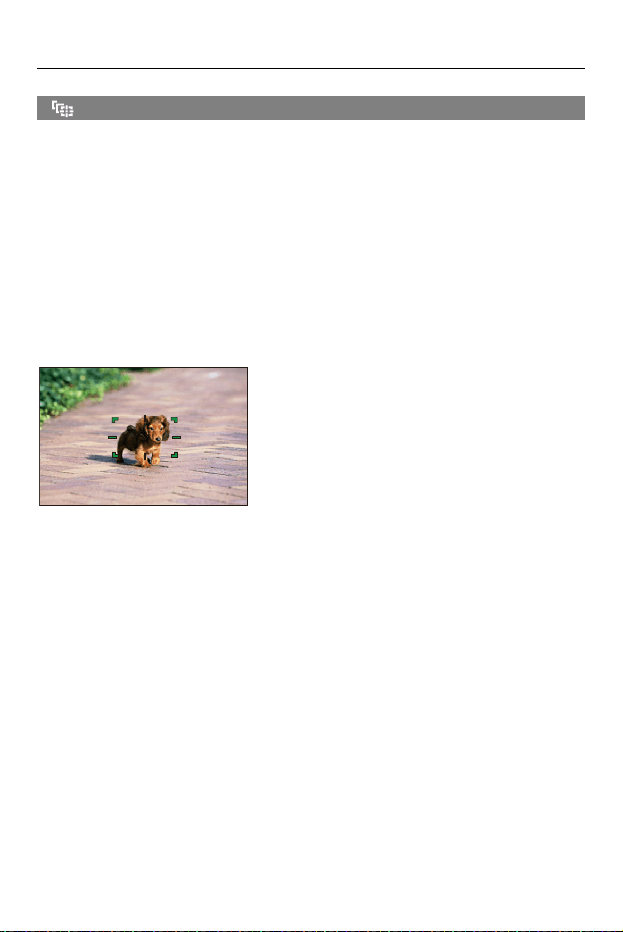
Focus / Zoom – Selecting the AF Mode
212
[Tracking]
When the focus mode is set to [AFC], the AF area follows the movement of
the subject, maintaining focusing.
Start tracking.
≥ Aim the AF area over the subject, and press the shutter button halfway.
The camera will track the subject while the shutter button is pressed
halfway or pressed fully.
•
If tracking fails, the AF area blinks red.
•
When set to [AFS], the focus will be on the AF area position. Tracking will not work.
•
How to manipulate the AF area (AF Area Operations: 223)
Focus / Zoom – Selecting the AF Mode
213
•
In [ ]/[S&Q] mode and while recording video, tracking will continue even if the
shutter button is released.
To cancel tracking, press or , or touch [ ].
•
When automatic detection is working, the detected subject is tracked.
•
When automatic detection is [ON] and there is no subject for detection, when you
press the shutter button halfway, the camera enters the tracking standby state. If
a subject for detection enters the AF area in this state, tracking starts.
•
Set [Metering Mode] to [ ] to continue to adjust the exposure as well.
•
[ ] may not be available due to the camera settings.
•
Tracking is not available when the following function is being used:
– HDMI output when [Proxy Recording] and [Frame.io Connection] are set to
[ON]
– When set to 6K (2.4:1) [Rec Quality], during HDMI output
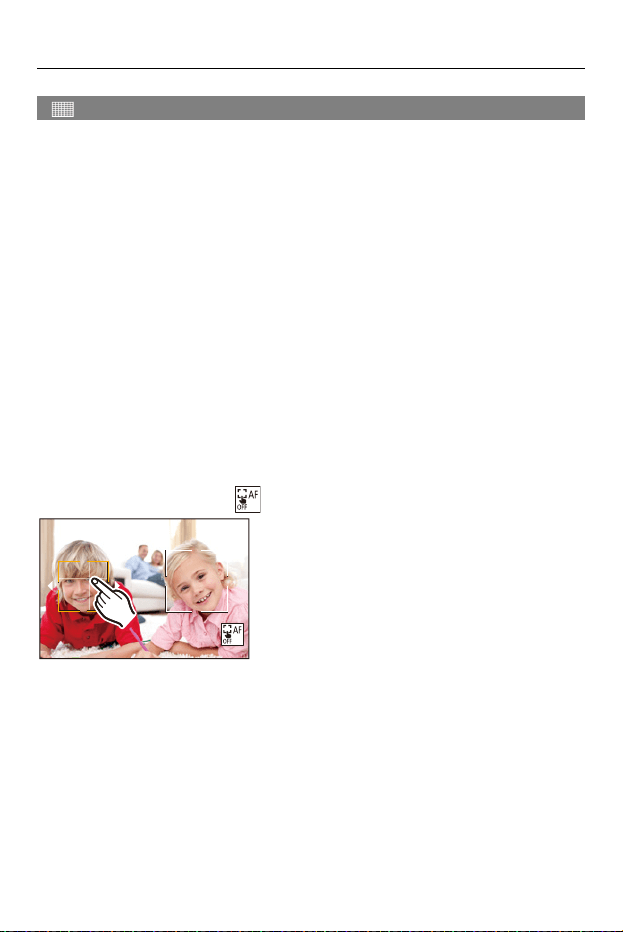
Focus / Zoom – Selecting the AF Mode
214
[Full Area AF]
The camera selects the most optimal AF area to focus.
When multiple AF areas are selected, all selected AF areas will be brought
into focus.
When the focus mode is set to [AFC], you can ensure that the focus stays
on the subject by recording while keeping the subject within the Full Area
AF area.
Specify the Subject to Bring into Focus
When automatic detection is [ON], multiple subjects are detected.
When the subject to be brought into focus is shown using the white AF
area, you can change this to a yellow AF area.
≥ Touch operations
Touch the subject indicated with the white AF area.
•
The AF area will change to yellow.
•
To cancel the setting, touch [ ].
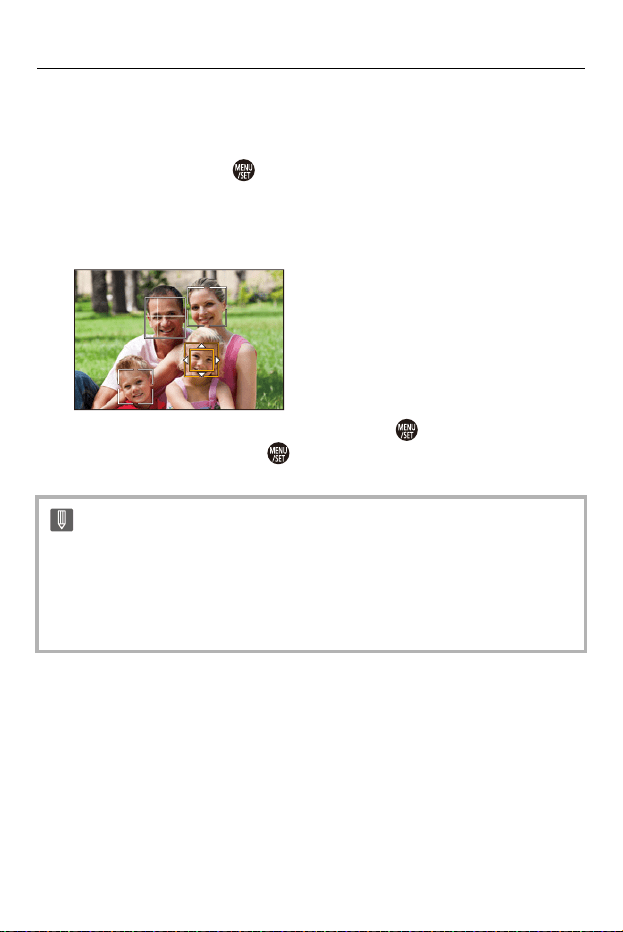
Focus / Zoom – Selecting the AF Mode
215
≥ Operations with the joystick
Tilt the joystick to
3421
.
•
Each tilt to 3421 switches the subject to be brought into focus.
•
To cancel the setting, press .
≥ Button operations
1 Press 4 in the AF mode selection screen.
2 Press 3421 to move the position of the AF area.
3 When the white AF area changes to yellow, press .
•
To cancel the setting, press .
•
When [Detecting Subject] is [ANIMAL] ([Eye/Body]), only one subject can be
detected. (The white AF area is not shown on the subjects that are not
recognized.)
If you want to focus on a different subject, operate with touch operations or
joystick operations to switch to an unrecognized subject.
Focus / Zoom – Selecting the AF Mode
216
Setting the AF Area in Any Position
The [ ] AF area can be set in any position.
≥ Touch operations
Touch any position on the recording screen and then touch [Set].
•
Touch [ ] to return to [ ].
≥ Operations with the joystick
Press and hold the joystick.
•
The [ ] AF area is set in the center of the screen.
•
Either press and hold the joystick again or press to return to [ ].
≥ Button operations
1 Press 4 in the AF mode selection screen.
2 Press 3421 to move the AF area, and then press to confirm.
•
Press again to return to [ ].
•
You can move and change the size of the set AF area:
(AF Area Operations: 223)
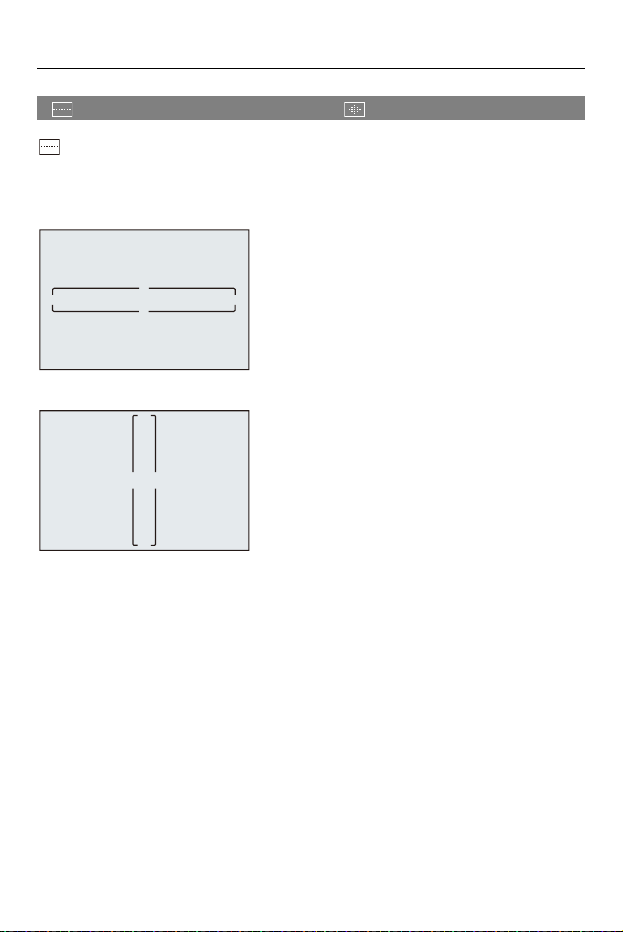
Focus / Zoom – Selecting the AF Mode
217
[Zone(Horizontal/Vertical)]/ [Zone]
[Zone(Horizontal/Vertical)]
Within the full area, vertical and horizontal zones can be focused.
Horizontal pattern
Vertical pattern
•
To switch between the horizontal pattern and vertical pattern, press 3421 in the
AF area setting screen.
•
How to manipulate the AF area (AF Area Operations: 223)
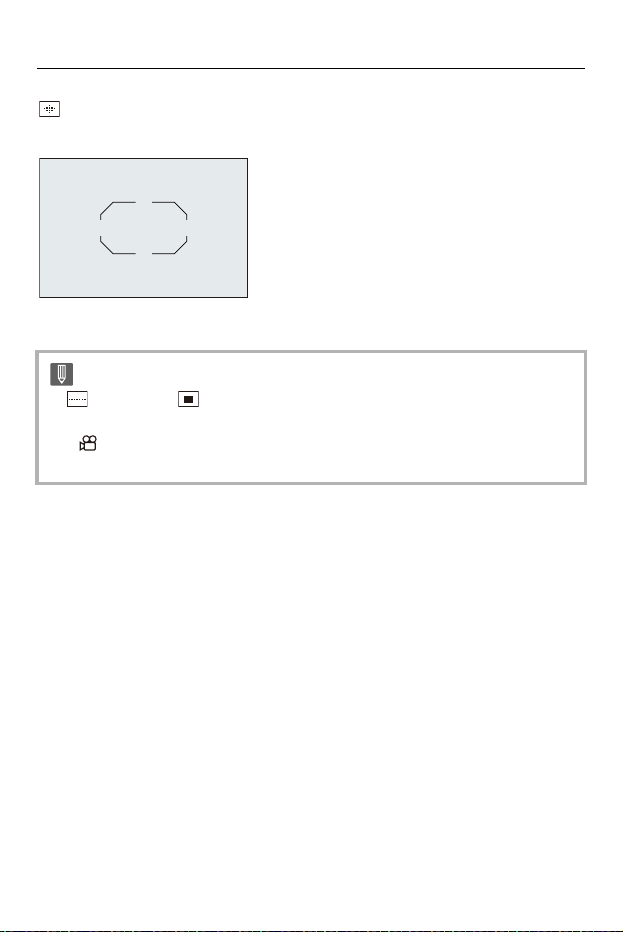
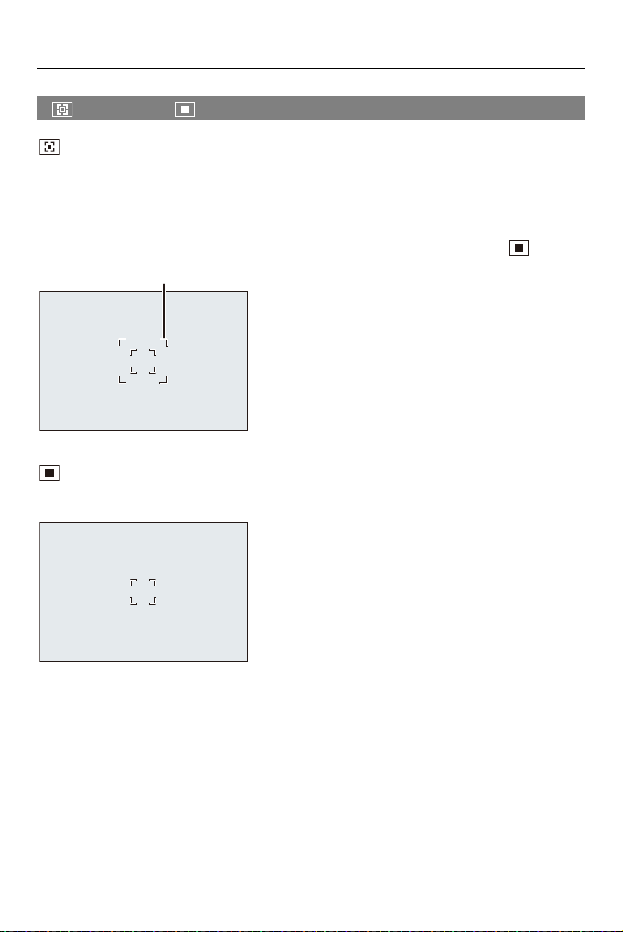
Focus / Zoom – Selecting the AF Mode
219
[1-Area+]/ [1-Area]
[1-Area+]
Emphasis within a single AF area can be focused.
Even when the subject moves out of the single AF area, the subject
remains focused in a supplementary AF area (C).
•
Effective when recording moving subjects that are difficult to track with [ ].
[1-Area]
Specify the point to be brought into focus.
(C)
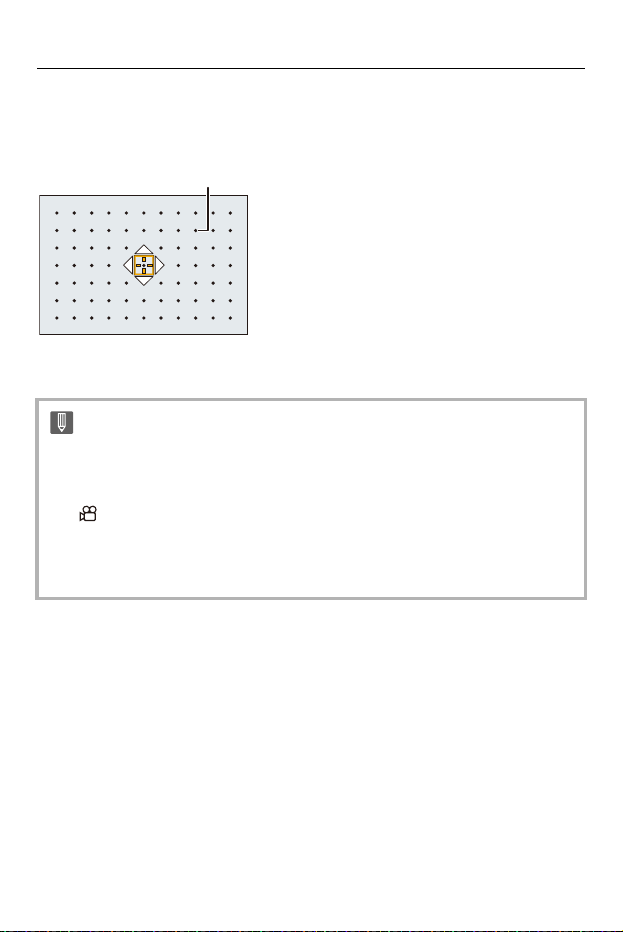
Focus / Zoom – Selecting the AF Mode
220
A dot (D) is displayed on the recording screen when a single AF area is
reduced to the minimum size. The AF area can be set on the location
where the dot is displayed.
•
How to manipulate the AF area (AF Area Operations: 223)
•
It is not possible to reduce a single AF area to the minimum when using the
following functions:
– During video recording
– [ ] mode
– [S&Q] mode
– [Hybrid Zoom(Photo)]
– [Crop Zoom(Photo)]
(D)
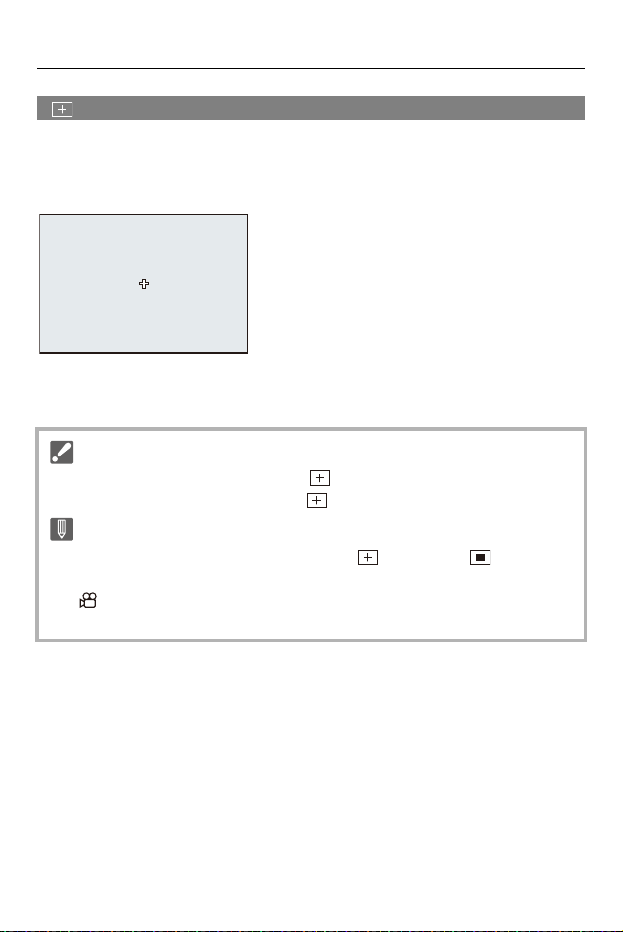
Focus / Zoom – Selecting the AF Mode
221
[Pinpoint]
You can achieve a more precise focus on a small point.
If you press the shutter button halfway, the screen that lets you check the
focus will be enlarged.
•
The enlarged screen is displayed when you set an AF area.
•
How to manipulate the AF area (AF Area Operations: 223)
•
When the focus mode is set to [AFC], [ ] is not available.
•
Automatic detection does not work in [ ].
•
When the following functions are being used, [ ] switches to [ ]:
– During video recording
– [ ] mode
– [S&Q] mode
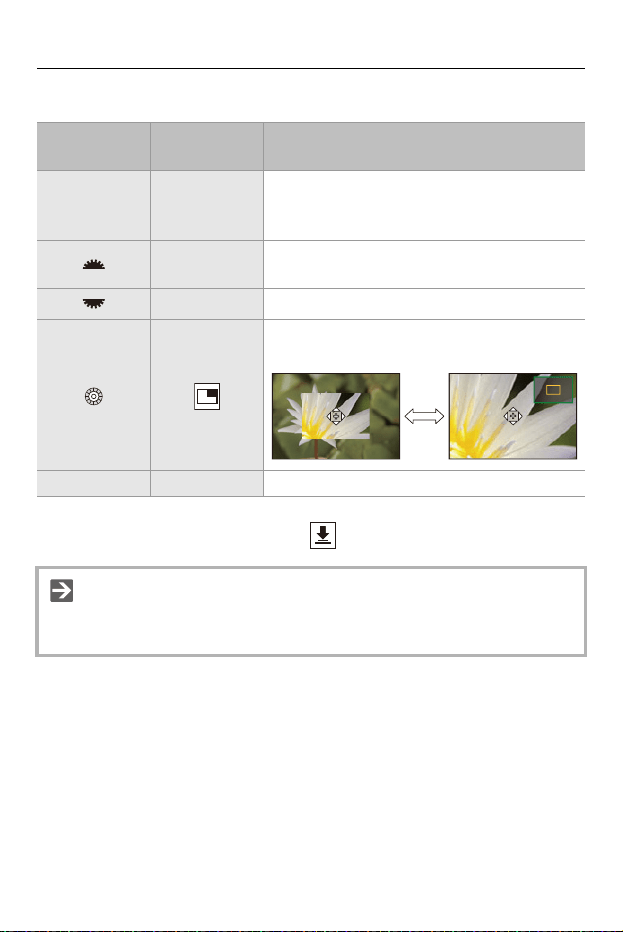
Focus / Zoom – Selecting the AF Mode
222
Operations on the Magnification Window
•
You can enlarge by approx. 3× to 6×.
•
You can also take a picture by touching [ ].
Button
operations
Touch
operations
Description of operation
3421 Touch
Moves [+].
•
Positions can be moved to the diagonal
directions using the joystick.
Pinch out/
pinch in
Enlarges/reduces the screen in small steps.
— Enlarges/reduces the screen.
Switches magnification window (windowed
mode/full screen mode).
[DISP.] [Reset] Quits the enlarged display.
•
You can change the display method of the magnified screen:
([Pinpoint AF Setting]: 690)
Focus / Zoom – AF Area Operations
223
AF Area Operations
≥ Move the Position of the AF Area: 223
≥ Changing the Size of the AF Area: 226
≥ Resetting the AF Area: 227
≥ Focus on and Adjust Brightness for the Touched Position ([AF+AE]): 228
≥ Moving the AF Area Position with the Touch Pad: 229
≥ [Focus Switching for Vert / Hor]: 231
Move the Position of the AF Area
Touch operations
With the default settings, focus is on the point touched when you touch the
screen. ([Touch Settings]: 694)
Touch the recording screen.
•
The AF area setting screen is displayed.
The AF area is set when you either touch [Set] or press the shutter button halfway.
•
You can optimize the focus and brightness on the touched position. (Focus on
and Adjust Brightness for the Touched Position ([AF+AE]): 228)
•
You can focus on the touched position and release the shutter. (Touch AF/
Touch Shutter: 115)
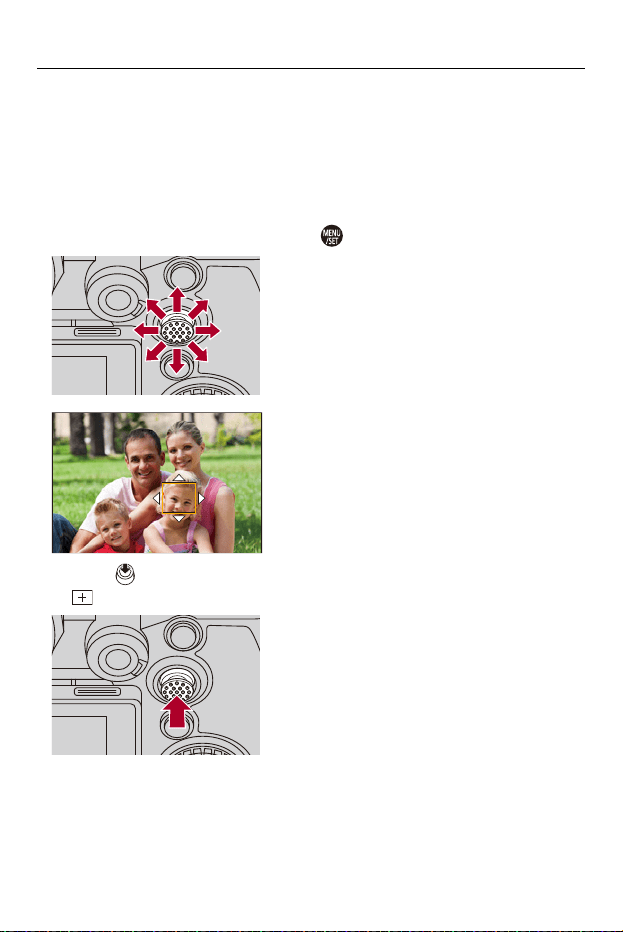
Focus / Zoom – AF Area Operations
224
Operations with the joystick
With the default settings, the AF area can be manipulated with the joystick.
([Joystick Setting]: 700)
Tilt the joystick in the recording screen.
•
The AF area setting screen is displayed.
The AF area is set when you either press or press the shutter button halfway.
•
Pressing enables switching between the default and set AF area positions.
In [ ], this operation displays the enlarged screen.
Focus / Zoom – AF Area Operations
225
Button operations
1 Press 4 in the AF mode selection screen.
•
The AF area setting screen is displayed.
2 Press 3421 to move the position of the AF area.
•
The AF area is set when you either press or press the shutter button
halfway.
•
When [Metering Mode] is [ ], the metering target also moves together with the
AF area.
•
You can set the AF area to loop when moved:
([Looped Focus Frame]: 692)
•
You can assign the function that displays the AF area/MF Assist movement
screens to an Fn button:
([Focus Area Set]: 654)
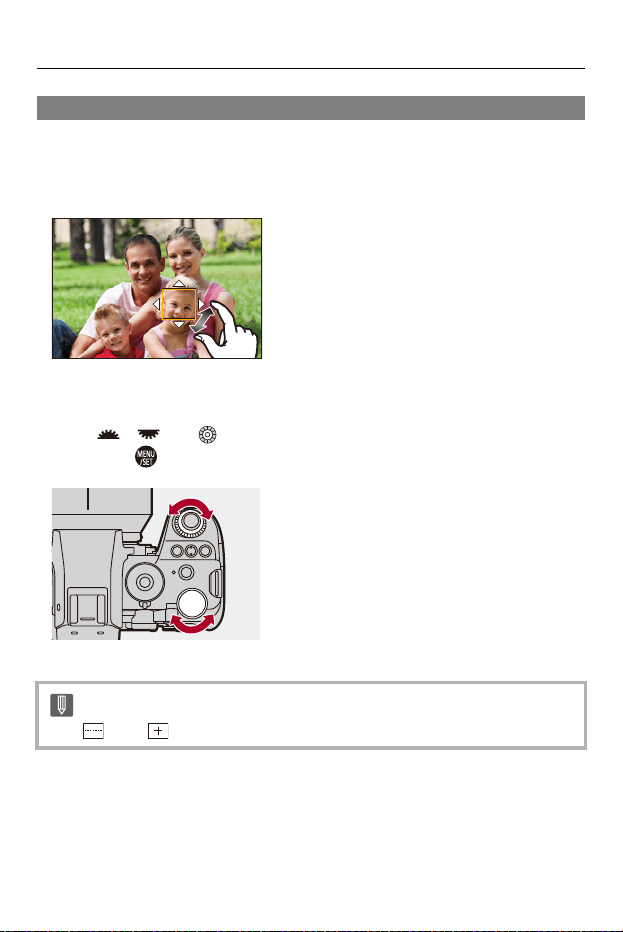
Focus / Zoom – AF Area Operations
226
Changing the Size of the AF Area
Touch operations
Pinch out/pinch in the AF area in the AF area setting screen.
•
Either touch [Set] or press the shutter button halfway to confirm.
Dial Operations
Rotate , , or .
•
Either press or press the shutter button halfway to confirm.
•
In [ ] and [ ], the size of the AF area cannot be changed.
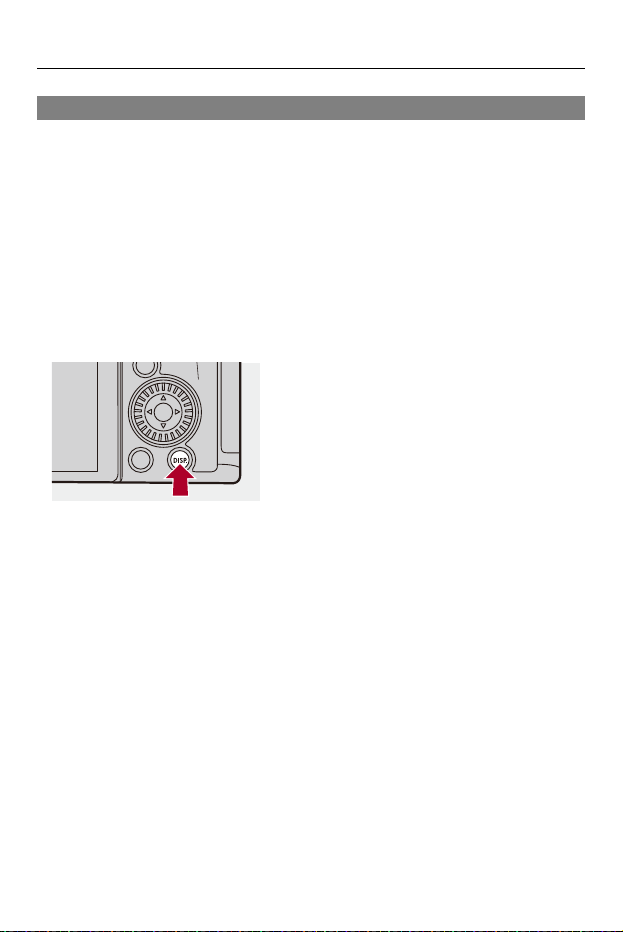
Focus / Zoom – AF Area Operations
227
Resetting the AF Area
Touch operations
Touch [Reset] in the AF area setting screen.
•
The first touch returns the AF area position to the center. The second touch returns
the AF area size to the default.
Button operations
Press [DISP.] in the AF area setting screen.
•
The first press returns the AF area position to the center. The second press returns
the AF area size to the default.
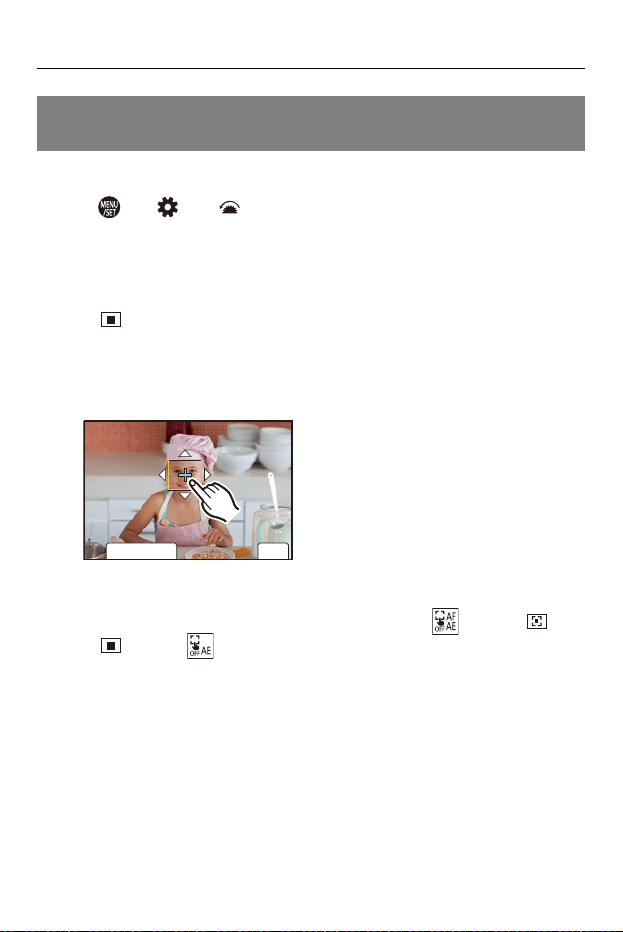
Focus / Zoom – AF Area Operations
228
Focus on and Adjust Brightness for the Touched
Position ([AF+AE])
1
Set [Touch AF].
≥ [] [] [Touch Settings] [Touch AF] [AF+AE]
2
Touch the subject to which you wish to adjust the
brightness.
≥At the touched position, an AF area that works in the same way as
[ ] is displayed.
This places a point to adjust brightness at the center of the AF
area.
•
How to manipulate the AF area (AF Area Operations: 223)
3
Touch [Set].
≥The [AF+AE] setting is canceled if you touch [ ] (when [ ] or
[ ] is set: [ ]) on the recording screen.
6HW
ュリヴヱハ
5HVHW
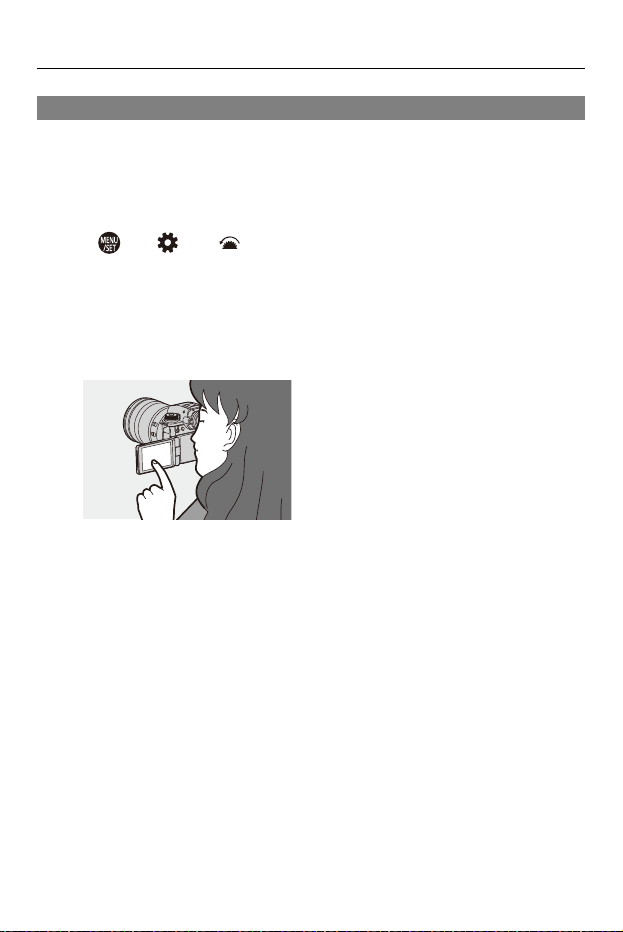
Focus / Zoom – AF Area Operations
229
Moving the AF Area Position with the Touch Pad
During viewfinder display, you can touch the monitor to change the position
and size of the AF area.
1
Set [Touch Pad AF].
≥ [] [] [Touch Settings] [Touch Pad AF]
[EXACT]/[OFFSET1] to [OFFSET7]
2
Move the position of the AF area.
≥During viewfinder display, touch the monitor.
•
How to manipulate the AF area (AF Area Operations: 223)
3
Confirm your selection.
≥Press the shutter button halfway.
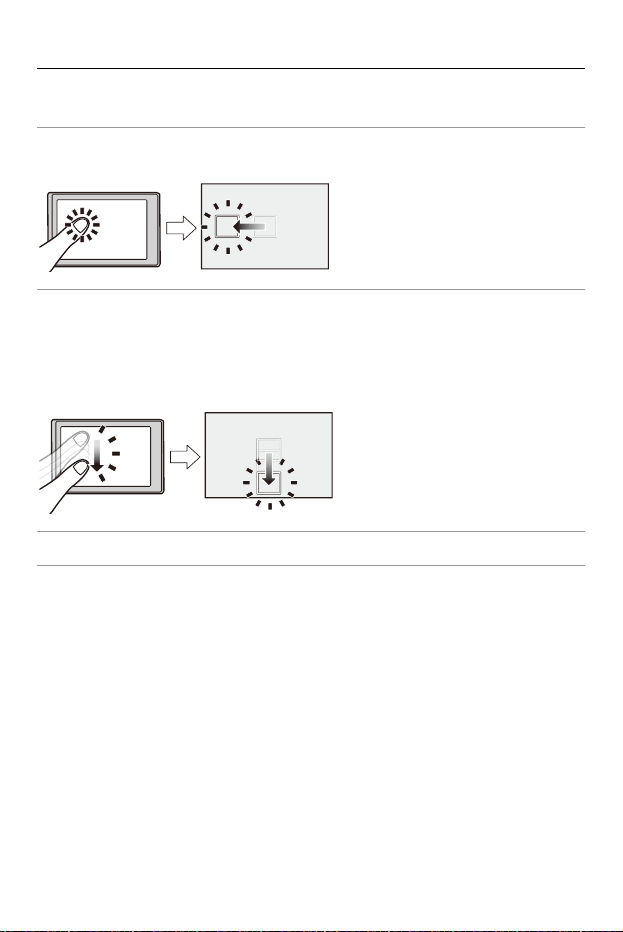
Focus / Zoom – AF Area Operations
230
Setting Items ([Touch Pad AF])
[EXACT]
Moves the AF area of the viewfinder by touching a desired position on the touch pad.
[OFFSET1] (entire area)/[OFFSET2] (right half)/[OFFSET3] (upper right)/[OFFSET4]
(lower right)/[OFFSET5] (left half)/[OFFSET6] (upper left)/[OFFSET7] (lower left)
Moves the AF area of the viewfinder according to the distance you drag your finger on
the touch pad.
Select the range to be detected with the drag operation.
[OFF]
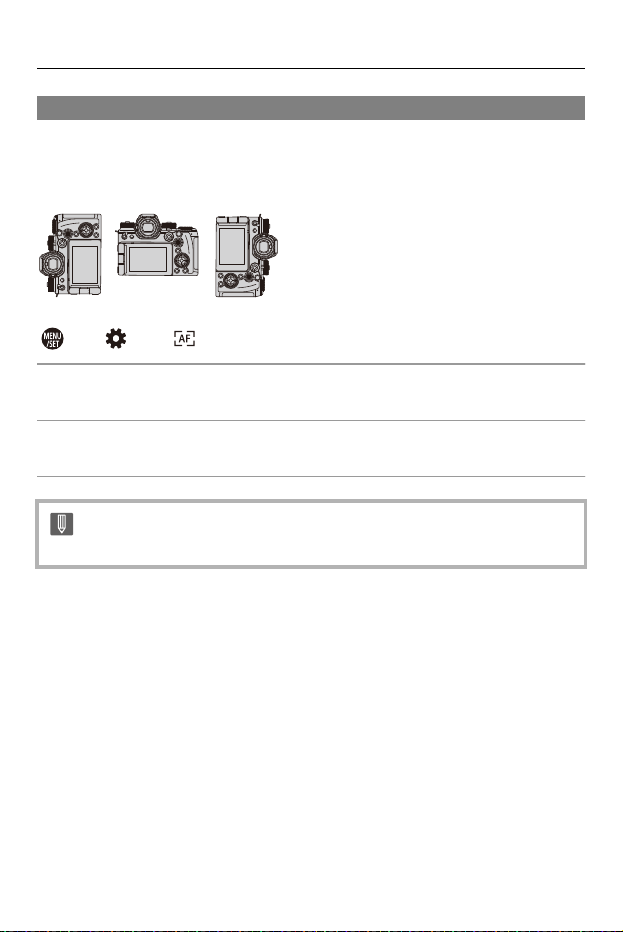
Focus / Zoom – AF Area Operations
231
[Focus Switching for Vert / Hor]
Memorizes separate positions for AF areas for when the camera is
vertically aligned and for when it is horizontally aligned.
Two vertical orientations, left and right, are available.
[] [] Select [Focus Switching for Vert / Hor]
[ON]
Memorizes separate positions for vertical and horizontal orientations.
[OFF]
Sets the same position for vertical and horizontal orientations.
•
In MF, this memorizes the MF Assist position.
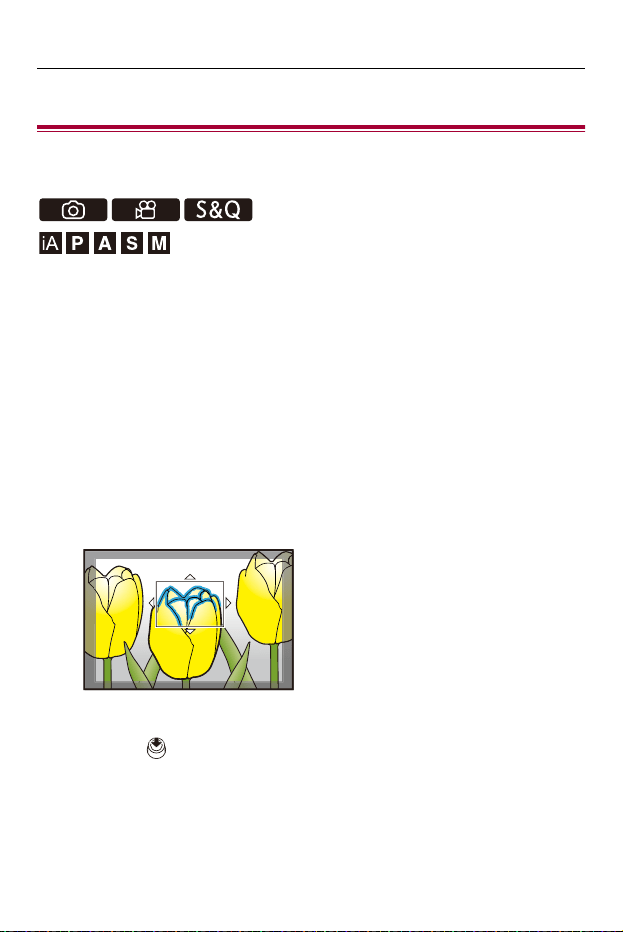
Focus / Zoom – Record Using MF
232
Record Using MF
≥ [Focus Peaking]: 237
MF (Manual Focus) refers to manual focusing.
Use this function when you want to fix the focus or when the distance
between the lens and the subject is determined and you do not want to
activate AF.
1
Set the focus mode to [MF].
≥Set the focus mode lever. (Selecting the Focus Mode: 183)
2
Select the focus point.
≥Tilt the joystick to select the focus point.
•
To return the point to be brought into focus to the center, press [DISP.].
3
Confirm your selection.
≥Press .
≥This switches to the MF Assist screen, and shows an enlarged
display.
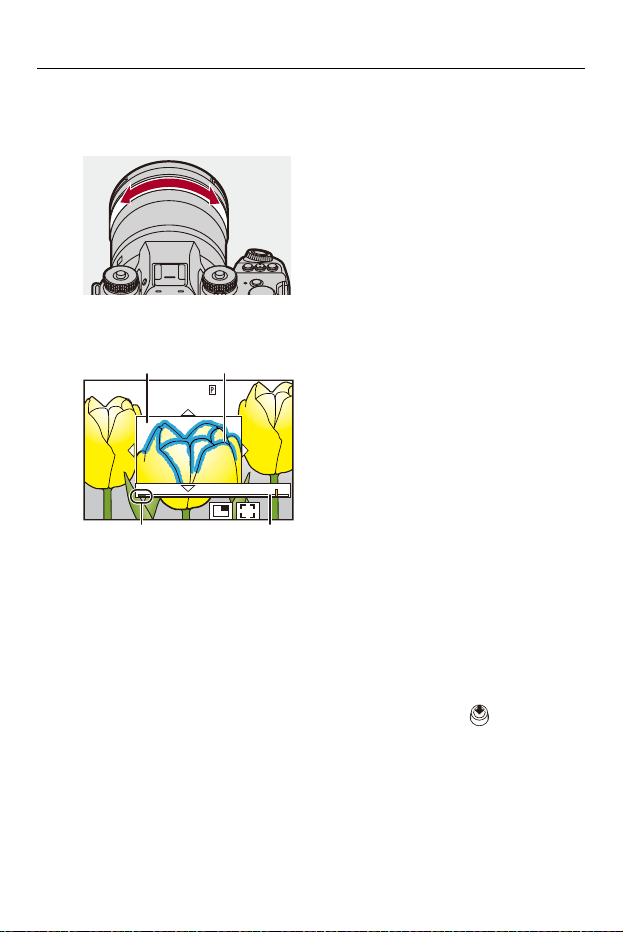
Focus / Zoom – Record Using MF
233
4
Adjust the focus.
≥Rotate the focus ring.
•
This will display the in-focus portion highlighted with color. (Focus Peaking)
•
A recording distance guideline is displayed. (MF Guide)
(A) MF Assist (enlarged screen)
(B) Focus Peaking
(C) Indicator for ¶ (infinity)
(D) MF Guide
5
Close the MF Assist screen.
≥Press the shutter button halfway.
≥This operation can also be performed by pressing .
AF
∞
10(m) 5 3 2 1.5 1 0.5 0.1
(D)
(C)
(B)
(A)
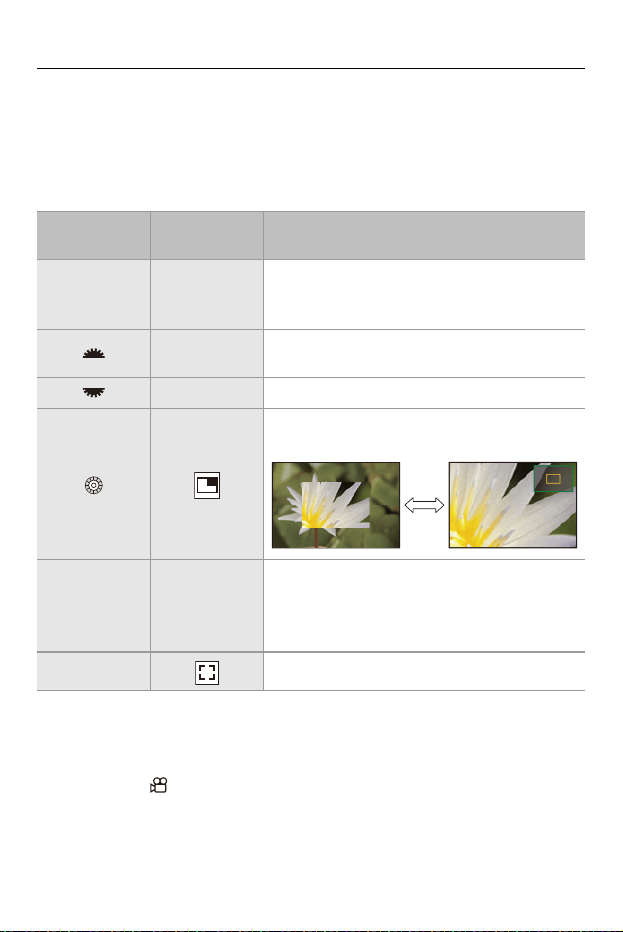
Focus / Zoom – Record Using MF
234
6
Start recording.
≥Press the shutter button fully.
Operations on the MF Assist Screen
*1 You can enlarge by approx. 3× to 6×.
*2 You can enlarge by approx. 3× to 20×. (Maximum 6× during video recording, when
[Enlarged Live Display] in [HDMI Rec Output] is set to [OFF] during HDMI output,
and when in [ ]/[S&Q] mode)
Button
operations
Touch
operations
Description of operation
3421 Drag
Moves the enlarged display position.
•
Positions can be moved to the diagonal
directions using the joystick.
Pinch out/
pinch in
Enlarges/reduces the screen in small steps.
— Enlarges/reduces the screen.
Switches magnification window (windowed
mode
*1
/full screen mode
*2
).
[DISP.] [Reset]
First time: Returns the MF Assist position to the
center.
Second time: Returns the MF Assist
magnification to the default setting.
[AF ON] The AF operates.
AF
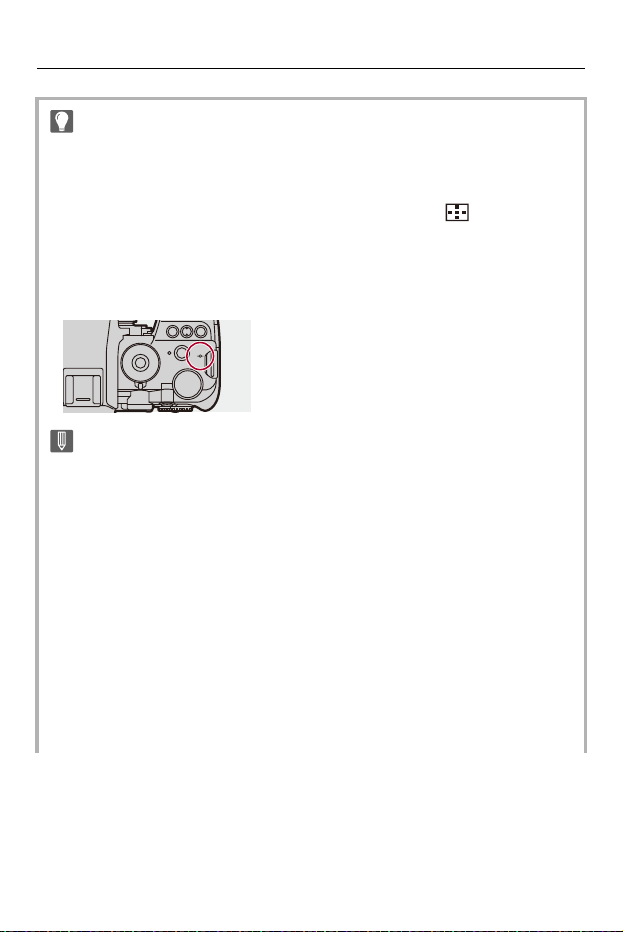
Focus / Zoom – Record Using MF
235
•
On the recording screen, you can rotate the focus ring to display the MF Assist
screen. If the focus ring has been rotated to enlarge the display, the assist screen
will be exited a short time after you cease the operation.
•
You can also display the MF Assist screen by pressing the [ ].
•
During MF, pressing [AF ON] will activate AF.
•
The MF Assist screen can also be displayed during video recording.
•
The recording distance reference mark indicates the position of the imaging
surface. This becomes the reference when measuring the recording distance.
•
When [Hybrid Zoom(Photo)] or [Crop Zoom(Photo)] is [ON], the MF Assist
magnification rate is between about 3× to 6×. (However, during video recording,
this is fixed to 3×.)
•
When [Hybrid Zoom(Video)] or [Crop Zoom(Video)] is [ON], the MF Assist
magnification rate is fixed to 3×.
•
While you are using the following function, the MF Assist screen will not be
displayed:
– During SH burst recording
•
During video recording using the following functions, the MF Assist screen
cannot be displayed:
– [Rec Quality] with a high frame rate video exceeding a recording frame rate of
60.00p
– [Live Cropping]

Focus / Zoom – Record Using MF
236
•
You can change the Focus Peaking sensitivity and the display method:
([Focus Peaking]: 237)
•
You can memorize the MF Assist position separately for vertical and horizontal
orientations:
([Focus Switching for Vert / Hor]: 231)
•
You can change the display method of the magnified screen:
([MF Assist]: 688)
•
You can change the MF Guide display units:
([MF Guide]: 689)
•
You can disable focus ring operation:
([Focus Ring Lock]: 689)
•
You can set the movement of the MF Assist position to loop:
([Looped Focus Frame]: 692)
•
The camera memorizes the focus point when you turn it off:
([Lens Focus Resume]: 718)
•
The amount of focus movement can be set:
([Focus Ring Control]: 721)
•
You can assign the function that displays the AF area/MF Assist movement
screens to an Fn button:
([Focus Area Set]: 654)
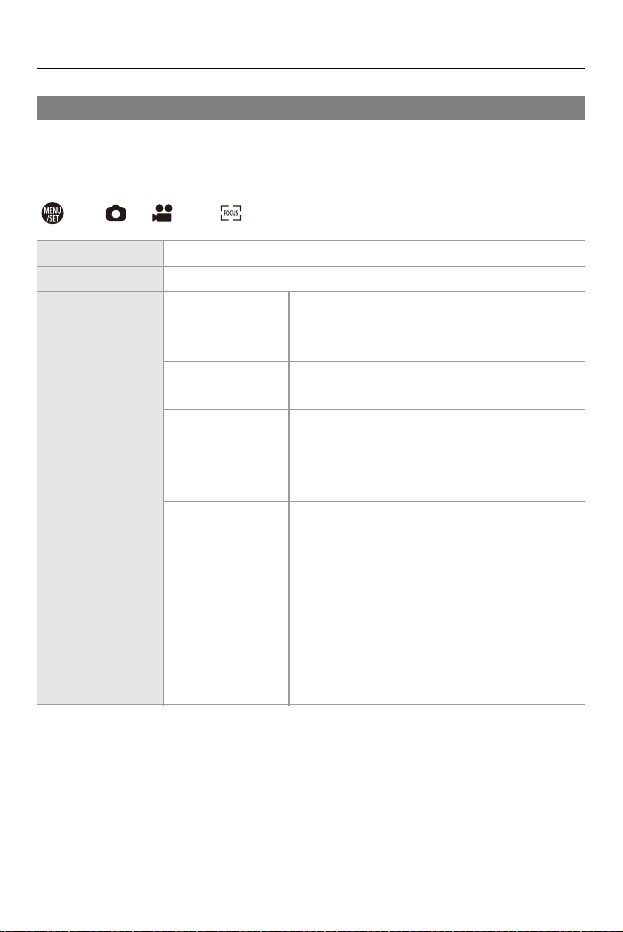
Focus / Zoom – Record Using MF
237
[Focus Peaking]
During MF operation, in-focus portions (portions on the screen with clear
outlines) are highlighted with color.
[ ]/[ ] [] Select [Focus Peaking]
[ON] Focus Peaking display is performed.
[OFF] —
[SET]
[Focus Peaking
Sensitivity]
If adjusted to the negative direction, portions
to be highlighted are reduced, allowing you
to achieve a more precise focus.
[Display Color]
You can set the display color of the in-focus
portion.
[Display During
AFS]
When set to [ON], the Focus Peaking
display is also possible when the shutter
button is pressed halfway in the [AFS] focus
mode.
[Display During
MF]
[While In Live View]: Focus Peaking is
displayed in the recording screen.
[While Live View Is Enlarged]: Focus
Peaking is displayed in the MF Assist screen
and the video enlarged display of live view
screen.
[When Shutter Is Pressed]: When set to
[OFF], Focus Peaking is hidden when the
shutter is pressed.
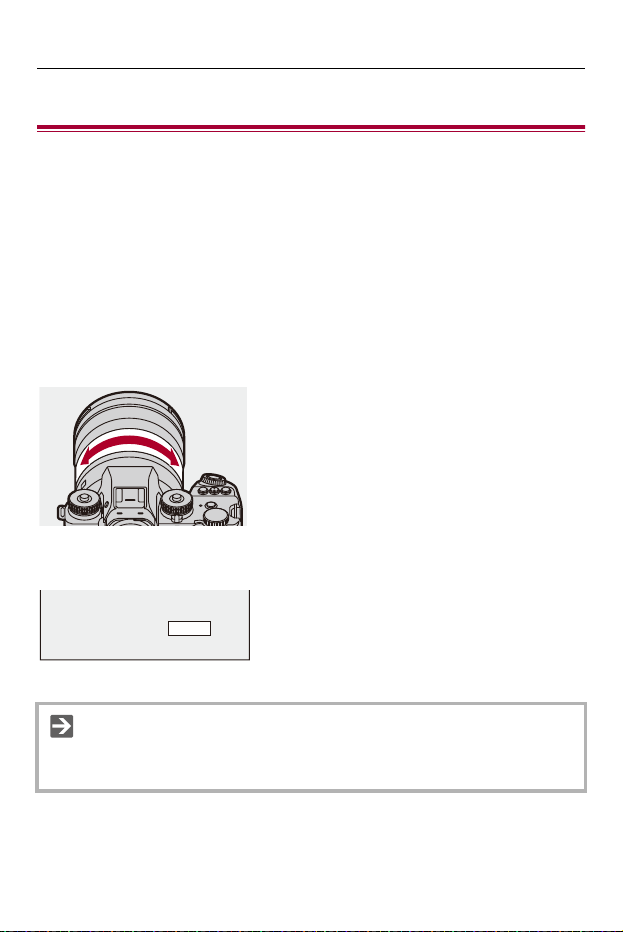
Focus / Zoom – Recording with Zoom
239
Recording with Zoom
≥ [Crop Zoom(Photo)]: 240
≥ [Hybrid Zoom(Photo)]: 244
≥ [Crop Zoom(Video)]: 247
≥ [Hybrid Zoom(Video)]: 252
Use the optical zoom of the lens to zoom to telephoto or wide-angle.
Rotate the zoom ring.
(T): Telephoto
(W): Wide-angle
≥ The focal length is displayed on the recording screen.
•
The focal length display can be hidden:
([Focal Length]: 707)
(W)
(T)
35mm
Focus / Zoom – Recording with Zoom
240
[Crop Zoom(Photo)]
Cut out the central section of the image to get an enhanced telescopic
effect without image quality deterioration.
It can even be used with a prime lens.
1
Set to [ ] mode.
(Photo/Video/S&Q Switch: 80)
2
Set [Crop Zoom(Photo)].
≥ [] [] [Crop Zoom(Photo)]

Focus / Zoom – Recording with Zoom
241
[ON] Enables crop zoom.
[OFF] —
[SET]
[Focal Length
Display
Setting]
Sets how focal length is displayed.
[Composite Focal Length]: Result of the
calculation “focal length of the optical zoom ×
crop zoom rate” (eg.: 180 mm)
[+ Crop Magnification]: The focal length of the
optical zoom and the crop zoom rate (eg.:
60 mm × 2.0)
[Minimum
Image Size]
A higher rate of zoom is possible the smaller the
[Picture Size] is.
[M]: maximum 1.4×
[S]: maximum 2.0×
[XS]: maximum approx. 3.1×
[Set
Recording
Image Size]
[ON]: Always records with the [Picture Size] set
in [Minimum Image Size].
[OFF]: [Picture Size] changes according to the
zoom position.
[Zoom
Speed(Photo)]
Sets the zoom speed during zoom operations.
Settings:
[H], [M], [L], [SL]
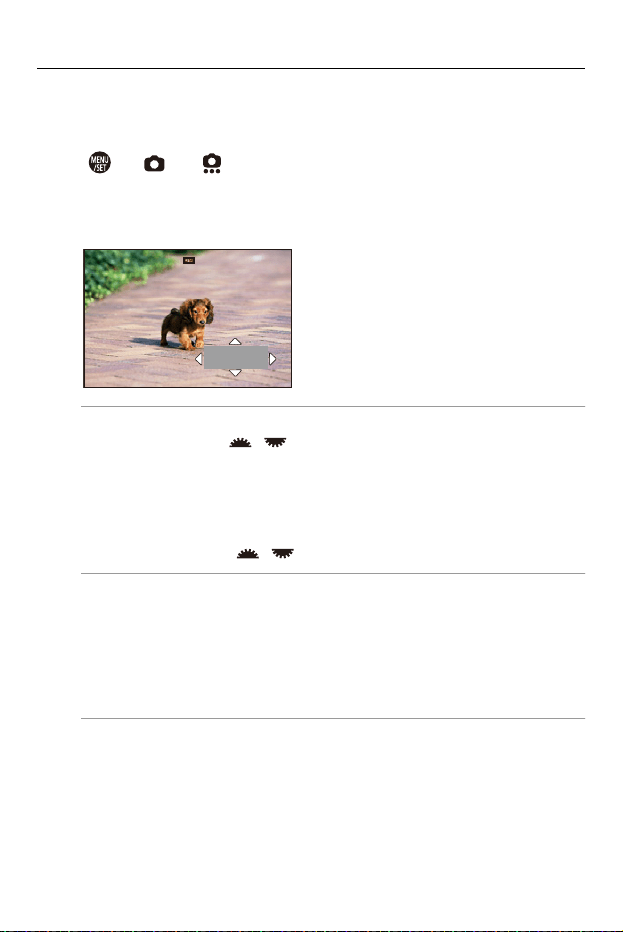
Focus / Zoom – Recording with Zoom
242
Using [Crop Zoom(Photo)]
1 Set [Crop Zoom(Photo)] to [ON].
•
[] [] [Crop Zoom(Photo)] [ON]
•
While [Crop Zoom(Photo)] is set to [ON], zoom operations are enabled by
pressing 3421. ([Zoom Control] in [Fn Button Set] is allocated to 3421.)
2 Perform the zoom operations.
Enlarge/Reduce
•
Press 34 or rotate / .
•
When [Touch Tab] is set to [ON], you can enlarge/reduce with Touch Zoom.
•
You can also enlarge/reduce by pressing the Fn button assigned with [Zoom
In(Tele)] or [Zoom Out(Wide)].
•
If you started the zoom operation with the assigned Fn button, you cannot
enlarge/reduce using / .
Step zoom
You can switch the crop zoom rate ([Minimum Image Size]).
1.0×[L] /1.4×[M] /2.0×[S] /approx. 3.1×[XS] (When using full-frame lenses)
•
Press 21.
•
You can also switch by pressing the Fn button assigned with [Crop Zoom
Increment(Step)].
28mm
28mm
28mm

Focus / Zoom – Recording with Zoom
243
3 Confirm your selection.
•
Press or .
•
Touch Zoom and the Fn buttons [Zoom In(Tele)], [Zoom Out(Wide)], and [Crop
Zoom Increment(Step)] can also be used in the recording screen.
•
RAW images are recorded without being cropped.
•
The [Focal Length Display Setting] settings work together across the following
menus:
– [Crop Zoom(Photo)]
– [Crop Zoom(Video)]
•
The [Minimum Image Size] and [Set Recording Image Size] settings work
together across the following menus:
– [Hybrid Zoom(Photo)]
– [Crop Zoom(Photo)]
•
When the following functions are being used, [Crop Zoom(Photo)] is not
available:
– [RAW] ([Rec. File Format(Photo)])
– High Resolution mode
– [Multiple Exposure]
Focus / Zoom – Recording with Zoom
244
[Hybrid Zoom(Photo)]
Even higher zoom rates can be achieved just with zoom ring operations by
combining the optical zoom and [Crop Zoom].
Zooming at a higher rate is possible the smaller the [Minimum Image Size]
is.
1
Set to [ ] mode.
(Photo/Video/S&Q Switch: 80)
2
Set [Hybrid Zoom(Photo)].
≥ [] [] [Hybrid Zoom(Photo)]
[ON] Enables hybrid zoom.
[OFF] —

Focus / Zoom – Recording with Zoom
245
[SET]
[Focal Length
Display
Setting]
Sets how focal length is displayed.
[Composite Focal Length]: Result of the
calculation “focal length of the optical zoom ×
crop zoom rate” (eg.: 180 mm)
[+ Crop Magnification]: The focal length of the
optical zoom and the crop zoom rate (eg.:
60 mm × 2.0)
[Effect at Wide
Angle(Photo)]
[ON]: Crop zoom works at a constant zoom
magnification across the entire optical zoom
area.
[OFF]: Only optical zoom is used in the area of
the edges of the wide-angle, and [Picture Size]
[L] pictures can be recorded.
[Minimum
Image Size]
A higher rate of zoom is possible the smaller the
[Picture Size] is.
[M]: maximum 1.4×
[S]: maximum 2.0×
[XS]: maximum approx. 3.1×
[Set
Recording
Image Size]
[ON]: Always records with the [Picture Size] set
in [Minimum Image Size].
[OFF]: [Picture Size] changes according to the
zoom position.

Focus / Zoom – Recording with Zoom
246
•
RAW images are recorded without being cropped.
•
The [Focal Length Display Setting] settings work together across the following
menus:
– [Hybrid Zoom(Photo)]
– [Hybrid Zoom(Video)]
•
The [Minimum Image Size] and [Set Recording Image Size] settings work
together across the following menus:
– [Hybrid Zoom(Photo)]
– [Crop Zoom(Photo)]
•
[Hybrid Zoom(Photo)] cannot be used with a prime lens.
•
When the following functions are being used, [Hybrid Zoom(Photo)] is not
available:
– [RAW] ([Rec. File Format(Photo)])
– High Resolution mode
– [Crop Zoom(Photo)]
– [Multiple Exposure]
•
The zoom operation may not be smooth if you use a zoom lens other than a
Panasonic interchangeable lens (S series).
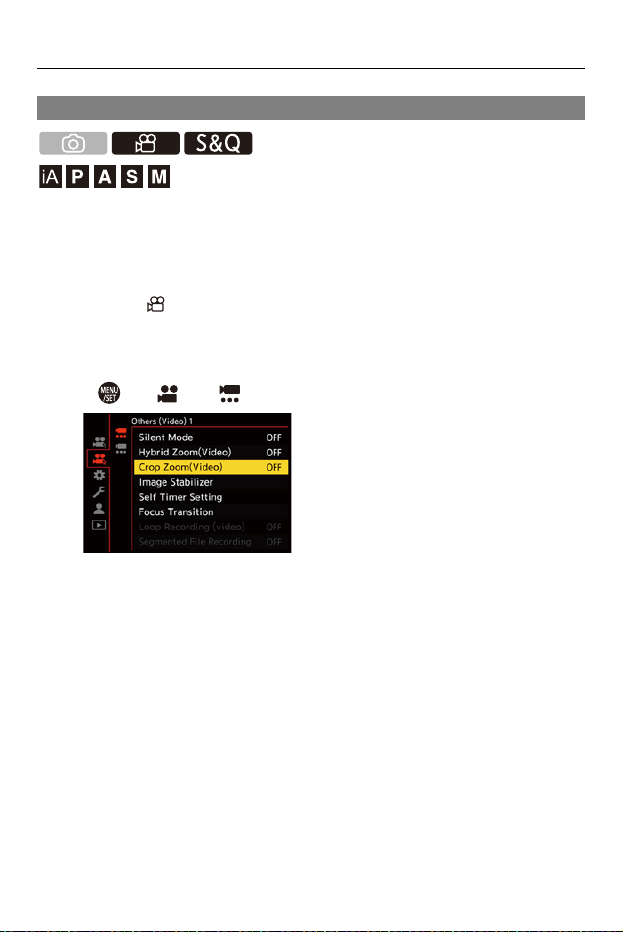
Focus / Zoom – Recording with Zoom
247
[Crop Zoom(Video)]
Cut out the central section of the image to get an enhanced telescopic
effect without image quality deterioration.
It can even be used with a prime lens.
1
Set to [ ] or [S&Q] mode.
(Photo/Video/S&Q Switch: 80)
2
Set [Crop Zoom(Video)].
≥ [] [] [Crop Zoom(Video)]

Focus / Zoom – Recording with Zoom
248
[ON] Enables crop zoom.
[OFF] —
[SET]
[Focal Length
Display
Setting]
Sets how focal length is displayed.
[Composite Focal Length]: Result of the
calculation “focal length of the optical zoom ×
crop zoom rate” (eg.: 180 mm)
[+ Crop Magnification]: The focal length of the
optical zoom and the crop zoom rate (eg.:
60 mm × 2.0)
[Zoom
Speed(Video)]
[During Recording Standby]: Sets the zoom
speed during recording standby.
[During Recording]: Sets the zoom speed
during recording.
Settings:
[H], [M], [L], [SL]
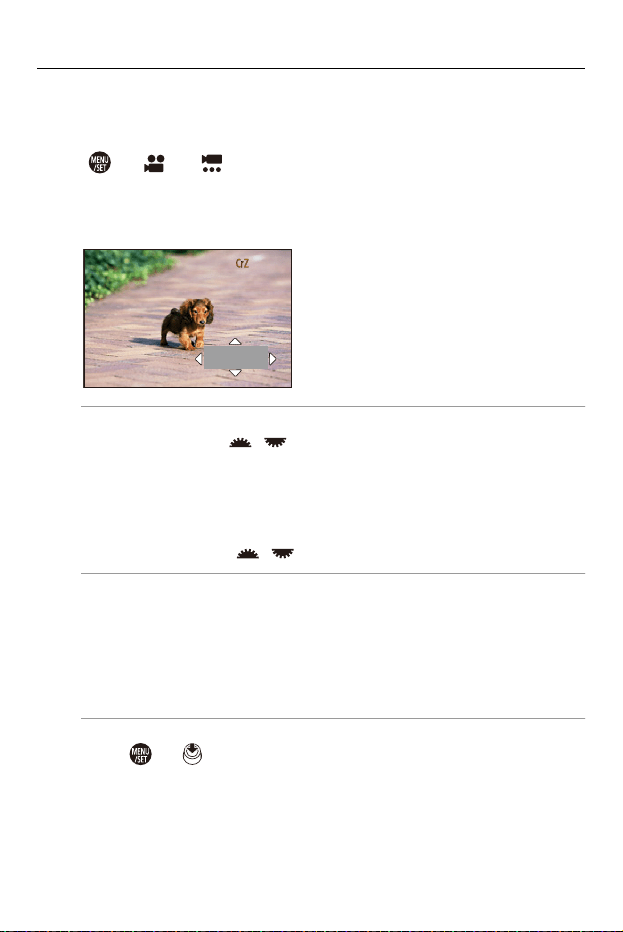
Focus / Zoom – Recording with Zoom
249
Using [Crop Zoom(Video)]
1 Set [Crop Zoom(Video)] to [ON].
•
[] [] [Crop Zoom(Video)] [ON]
•
While [Crop Zoom(Video)] is set to [ON], zoom operations are enabled by
pressing 3421. ([Zoom Control] in [Fn Button Set] is allocated to 3421.)
2 Perform the zoom operations.
Enlarge/Reduce
•
Press 34 or rotate / .
•
When [Touch Tab] is set to [ON], you can enlarge/reduce with Touch Zoom.
•
You can also enlarge/reduce by pressing the Fn button assigned with [Zoom
In(Tele)] or [Zoom Out(Wide)].
•
If you started the zoom operation with the assigned Fn button, you cannot
enlarge/reduce using / .
Step zoom
You can switch the crop zoom rate ([Image Area of Video]).
FULL, APS-C, PIXEL/PIXEL
•
Press 21.
•
You can also switch by pressing the Fn button assigned with [Crop Zoom
Increment(Step)].
3 Confirm your selection.
•
Press or .
•
Touch Zoom and the Fn buttons [Zoom In(Tele)], [Zoom Out(Wide)], and [Crop
Zoom Increment(Step)] can also be used in the recording screen.
28mm
28mm
28mm

Focus / Zoom – Recording with Zoom
250
[Rec Quality] and Crop Zoom Rate
[Rec Quality]
Maximum crop zoom rate
When using
full-frame lenses
When using APS-C
lenses
6K video, 5.9K video, 5.8K video,
5.1K video, 4.8K video
——
3.3K video,
C4K video/Cs4K video (120p/100p/
96p)
——
C4K video (60p/50p/48p) Approx. 1.3× —
C4K video (30p/25p/24p) Approx. 1.5× —
Cs4K video (60p/50p/48p/30p/25p/
24p)
Approx. 1.5× —
4K video (120p/100p) ——
4K video (60p/50p/48p) Approx. 1.4× —
4K video (30p/25p/24p) Approx. 1.6× —
FHD video (240p/200p/120p/100p) ——
FHD video (60p/50p/48p) Approx. 2.8× Approx. 2.1×
FHD video (30p/25p/24p) Approx. 3.1× Approx. 2.1×

Focus / Zoom – Recording with Zoom
251
•
The [Focal Length Display Setting] settings work together across the following
menus:
– [Crop Zoom(Photo)]
– [Crop Zoom(Video)]
•
When the following functions are being used, [Crop Zoom(Video)] is not
available:
– [S&Q] video with a [Slow & Quick Setting] frame rate exceeding 60 fps
– [Live Cropping]
•
Depending on the lens, it may not be possible to zoom to the maximum crop
zoom rate.
•
When [Crop Zoom(Video)] is set to [ON], power consumption increases and the
battery is consumed faster. The temperature increase in the camera is also
faster.
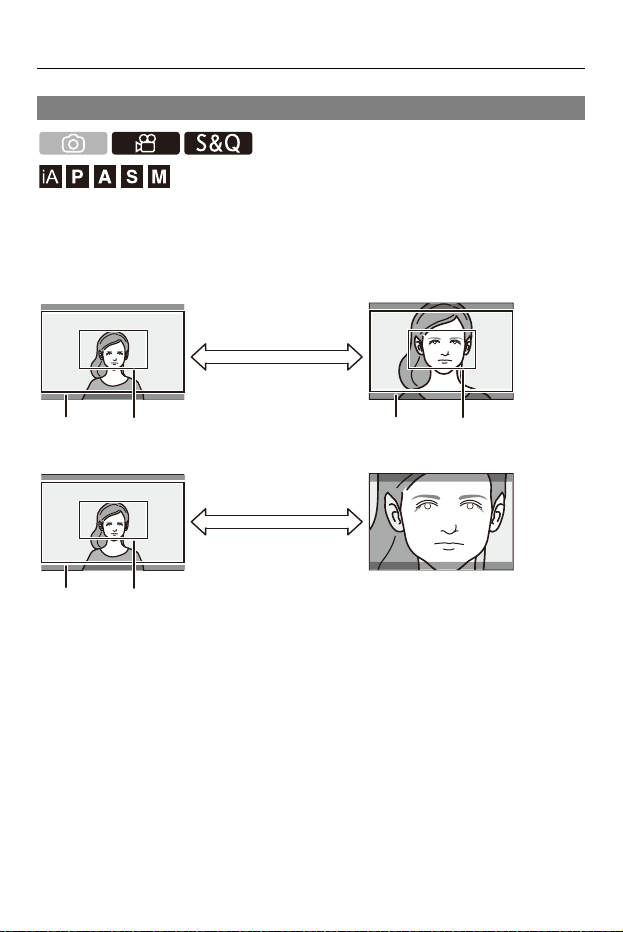
Focus / Zoom – Recording with Zoom
252
[Hybrid Zoom(Video)]
Even higher zoom rates can be achieved just with zoom ring operations by
combining the optical zoom and [Crop Zoom].
Optical zoom only
Hybrid zoom (optical zoom and crop zoom)
FULL
WT
PIXEL/PIXEL
FULL
PIXEL/PIXEL
WT
FULL
PIXEL/PIXEL
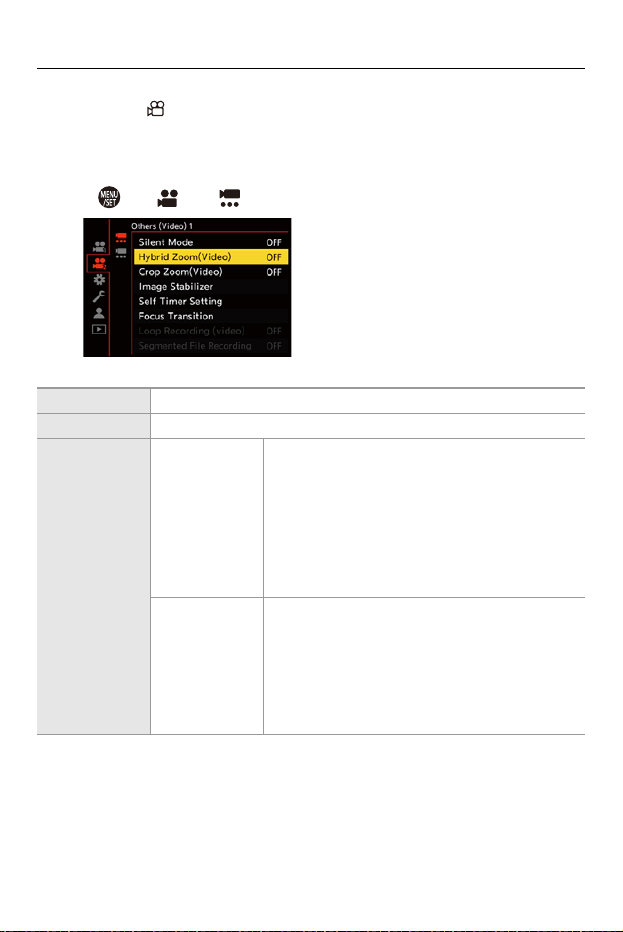
Focus / Zoom – Recording with Zoom
253
1
Set to [ ] or [S&Q] mode.
(Photo/Video/S&Q Switch: 80)
2
Set [Hybrid Zoom(Video)].
≥ [] [] [Hybrid Zoom(Video)]
[ON] Enables hybrid zoom.
[OFF] —
[SET]
[Focal Length
Display
Setting]
Sets how focal length is displayed.
[Composite Focal Length]: Result of the
calculation “focal length of the optical zoom ×
crop zoom rate” (eg.: 180 mm)
[+ Crop Magnification]: The focal length of the
optical zoom and the crop zoom rate (eg.:
60 mm × 2.0)
[Effect at Wide
Angle(Video)]
[ON]: Crop zoom works at a constant zoom
magnification across the entire optical zoom
area.
[OFF]: Only optical zoom is used in the area of
the edges of the wide-angle, and the lag during
zoom is reduced.

Focus / Zoom – Recording with Zoom
254
[Rec Quality] and Crop Zoom Rate
[Rec Quality]
Maximum crop zoom rate
When using
full-frame lenses
When using APS-C
lenses
6K video, 5.9K video, 5.8K video,
5.1K video, 4.8K video
——
3.3K video,
C4K video/Cs4K video (120p/100p/
96p)
——
C4K video (60p/50p/48p) Approx. 1.3× —
C4K video (30p/25p/24p) Approx. 1.5× —
Cs4K video (60p/50p/48p/30p/25p/
24p)
Approx. 1.5× —
4K video (120p/100p) ——
4K video (60p/50p/48p) Approx. 1.4× —
4K video (30p/25p/24p) Approx. 1.6× —
FHD video (240p/200p/120p/100p) ——
FHD video (60p/50p/48p) Approx. 2.8× Approx. 2.1×
FHD video (30p/25p/24p) Approx. 3.1× Approx. 2.1×

Focus / Zoom – Recording with Zoom
255
•
The [Focal Length Display Setting] settings work together across the following
menus:
– [Hybrid Zoom(Photo)]
– [Hybrid Zoom(Video)]
•
[Hybrid Zoom(Video)] cannot be used with a prime lens.
•
When the following functions are being used, [Hybrid Zoom(Video)] is not
available:
– [S&Q] video with a [Slow & Quick Setting] frame rate exceeding 60 fps
– [Live Cropping]
– [Crop Zoom(Video)]
•
The zoom operation may not be smooth if you use a zoom lens other than a
Panasonic interchangeable lens (S series).
•
Depending on the lens, it may not be possible to zoom to the maximum crop
zoom rate.
•
When [Hybrid Zoom(Video)] is set to [ON], power consumption increases and the
battery is consumed faster. The temperature increase in the camera is also
faster.

256
Drive / Shutter / Image Stabilizer
This chapter describes functions for recording in drive mode and the image
stabilizer function.
≥ Selecting the Drive Mode: 257
≥ Taking Burst Pictures: 259
≥ High Resolution mode: 271
≥ Recording with Time Lapse Shot: 276
≥ Recording with Stop Motion Animation: 283
≥ Time Lapse Shot/Stop Motion Animation Videos: 287
≥ Recording Using the Self-timer: 289
≥ Bracket Recording: 293
≥ [Live View Composite]: 301
≥ [Silent Mode]: 305
≥ [Shutter Type]: 307
≥ Image Stabilizer: 316
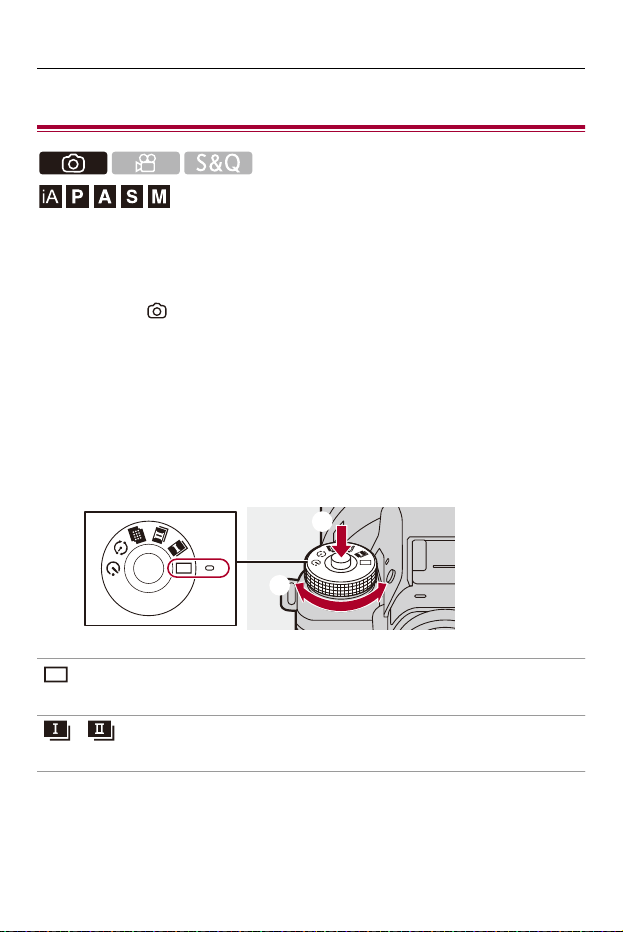
Drive / Shutter / Image Stabilizer – Selecting the Drive Mode
257
Selecting the Drive Mode
You can switch the drive mode to Single, Burst, etc. to match the recording
conditions.
1
Set to [ ] mode.
(Photo/Video/S&Q Switch: 80)
2
Press the drive mode dial lock button (1) to release the
lock.
• The dial is locked if the drive mode dial lock button is depressed.
Each press locks/unlocks the dial.
3
Rotate the drive mode dial (2) and adjust the drive mode.
[ ] (Single)
Takes one picture each time the shutter button is pressed.
[ ]/[ ] (Burst) (Taking Burst Pictures: 259)
Takes pictures continuously while the shutter button is pressed and held.
(2)
(1)
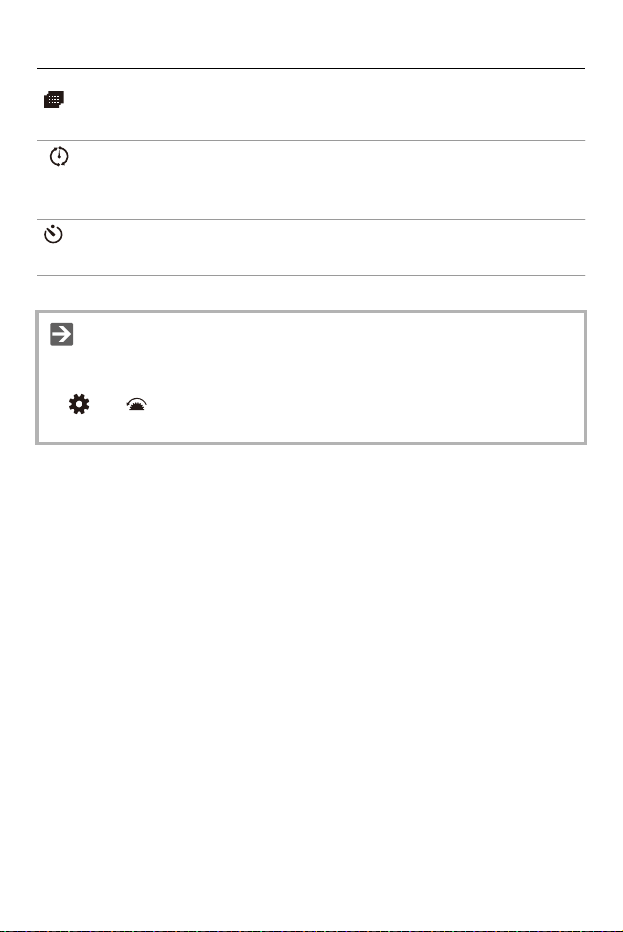
Drive / Shutter / Image Stabilizer – Selecting the Drive Mode
258
[ ] (High Resolution mode) (High Resolution mode: 271)
This merges pictures with a high resolution from multiple recorded images.
[ ] (Time Lapse Shot/Stop Motion Animation) (Recording with Time Lapse
Shot: 276, Recording with Stop Motion Animation: 283)
Takes pictures with Time Lapse Shot or Stop Motion Animation.
[ ] (Self-timer) (Recording Using the Self-timer: 289)
Takes pictures when the set time elapses after the shutter button is pressed.
•
The detailed setting screens for each drive mode can be called up with an Fn
button:
[] [] [Fn Button Set] [Setting in Photo Mode] [Drive Mode
Setting]
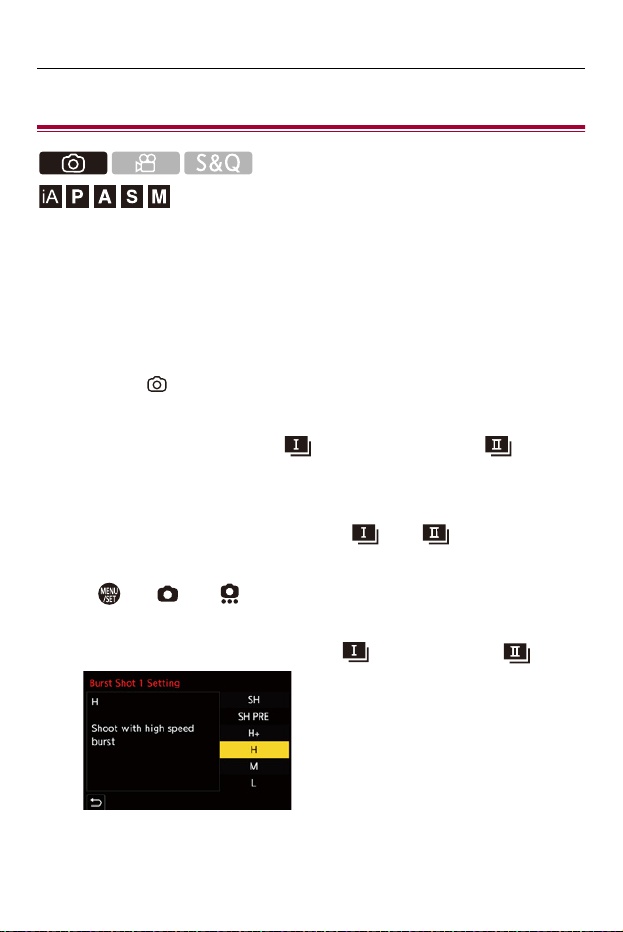
Drive / Shutter / Image Stabilizer – Taking Burst Pictures
259
Taking Burst Pictures
Takes pictures continuously while the shutter button is pressed and held.
You can select burst recording settings to suit the recording conditions,
including [H+], [H], [M], and [L] which enable burst recording with high
image quality, and SH burst recording which takes burst pictures at ultra
high speeds using an electronic shutter.
1
Set to [ ] mode.
(Photo/Video/S&Q Switch: 80)
2
Set the drive mode to [ ] (Burst Shot 1) or [ ] (Burst
Shot 2).
≥Set the drive mode dial. (Selecting the Drive Mode: 257)
•
Configure the burst settings for each of [ ] and [ ].
3
Select the burst rate.
≥ [] [] [Burst Shot Setting] [Burst Shot 1
Setting]/[Burst Shot 2 Setting]
•
With the default settings, [H] is set for [ ] and [SH] is set for [ ].

Drive / Shutter / Image Stabilizer – Taking Burst Pictures
260
[SH]
Takes burst pictures at ultra high speed with the electronic shutter.
[SH PRE]
Takes pre-burst pictures at ultra high speed. (SH Pre-burst Recording: 262)
[H+]
Takes burst pictures faster than [H].
•
When the focus mode is set to [AFC], burst rate is prioritized.
[H]
Takes high-speed burst pictures.
•
When the focus mode is set to [AFC], tracking performance is prioritized.
[M]
Takes medium-speed burst pictures.
[L]
Takes low-speed burst pictures.
4
Close the menu.
≥Press the shutter button halfway.
5
Start recording.
•
Takes burst pictures while the shutter button is pressed fully.
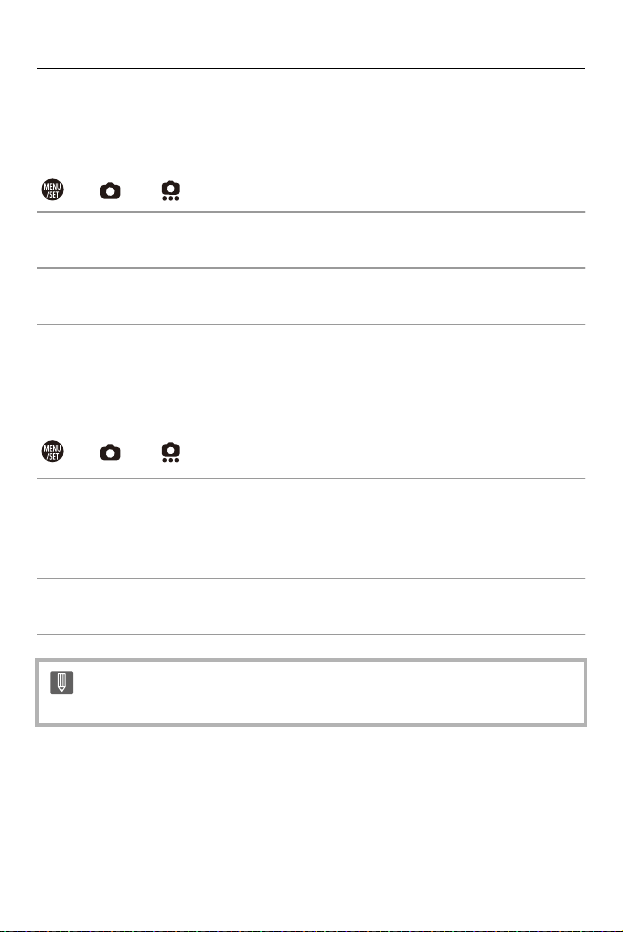
Drive / Shutter / Image Stabilizer – Taking Burst Pictures
261
[Behavior in SH Burst]
When the burst rate is [SH]/[SH PRE], you can set the behavior during
burst recording.
[] [] [Burst Shot Setting] [Behavior in SH Burst]
[IMAGE PRIORITY]
Image quality is prioritized and RAW images with a 14-bit color depth are recorded.
[SPEED PRIORITY]
Speed is prioritized and RAW images with a 12-bit color depth are recorded.
[Behavior in H+/H Burst]
When the burst rate is [H+]/[H], you can set the behavior during burst
recording.
[] [] [Burst Shot Setting] [Behavior in H+/H Burst]
[IMAGE PRIORITY]
Records with signals that have a wide dynamic range.
The burst rate is reduced. The speed is prioritized more as the ISO sensitivity is
increased.
[SPEED PRIORITY]
Records with signals that have a standard dynamic range.
•
[SPEED PRIORITY] is used when you record with the electronic shutter.
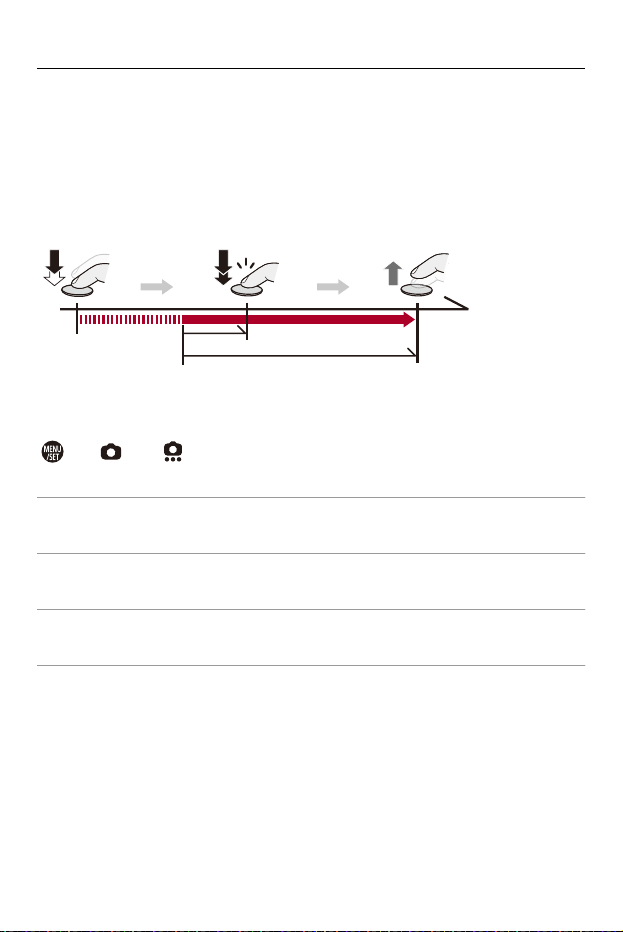
Drive / Shutter / Image Stabilizer – Taking Burst Pictures
262
SH Pre-burst Recording
The camera also records images for the set amount of time during the
period between when the shutter button is pressed halfway and when it is
pressed fully.
In [SH Burst Pre-Recording Time] you can set the length of time recordings
are made before the shutter is pressed fully.
(A) [SH Burst Pre-Recording Time]
(B) Recorded range
[] [] [Burst Shot Setting] [SH Burst Pre-Recording
Time]
[1.5SEC]
Recording starts from 1.5 seconds before the shutter button was pressed fully.
[1.0SEC]
Recording starts from 1 second before the shutter button was pressed fully.
[0.5SEC]
Recording starts from 0.5 seconds before the shutter button was pressed fully.
•
The setting for [SH Burst Pre-Recording Time] is applied to both [Burst Shot 1
Setting] and [Burst Shot 2 Setting].
•
[PRE] is displayed on the recording screen during SH pre-burst recording.
•
If the shutter button is pressed and held at halfway for approx. 1 minute, the frames
before pressing fully cannot be saved. Press the shutter button halfway again.
(A)
(B)

Drive / Shutter / Image Stabilizer – Taking Burst Pictures
263
Burst Rate
*1 [Behavior in SH Burst]: [IMAGE PRIORITY]
*2 [Behavior in SH Burst]: [SPEED PRIORITY]
*3 [Behavior in H+/H Burst]: [IMAGE PRIORITY]
*4 [Behavior in H+/H Burst]: [SPEED PRIORITY]
•
The burst rate may be lower depending on the settings for recording such as [Picture
Size] and focus mode.
Mechanical
shutter
Electronic
front curtain
Electronic shutter
Live View
when taking
burst pictures
[SH]/
[SH PRE]
—
60 frames/second ([AFS]/
[AFC]/[MF])
*1
70 frames/second ([AFS]/
[AFC]/[MF])
*2
None
[H+]
(High
speed)
8 frames/second ([AFC])
*3
10 frames/second ([AFC])
*4
10 frames/second ([AFC]) None
[H]
(High
speed)
8 frames/second ([AFS]/
[MF])
*3
10 frames/second ([AFS]/
[MF])
*4
7 frames/second ([AFC])
*3
8 frames/second ([AFC])
*4
10 frames/second ([AFS]/
[MF])
8 frames/second ([AFC])
None ([AFS]/
[MF])
Available
([AFC])
[M]
(Medium
speed)
5 frames/second ([AFS]/[AFC]/[MF]) Available
[L]
(Low
speed)
2 frames/second ([AFS]/[AFC]/[MF]) Available
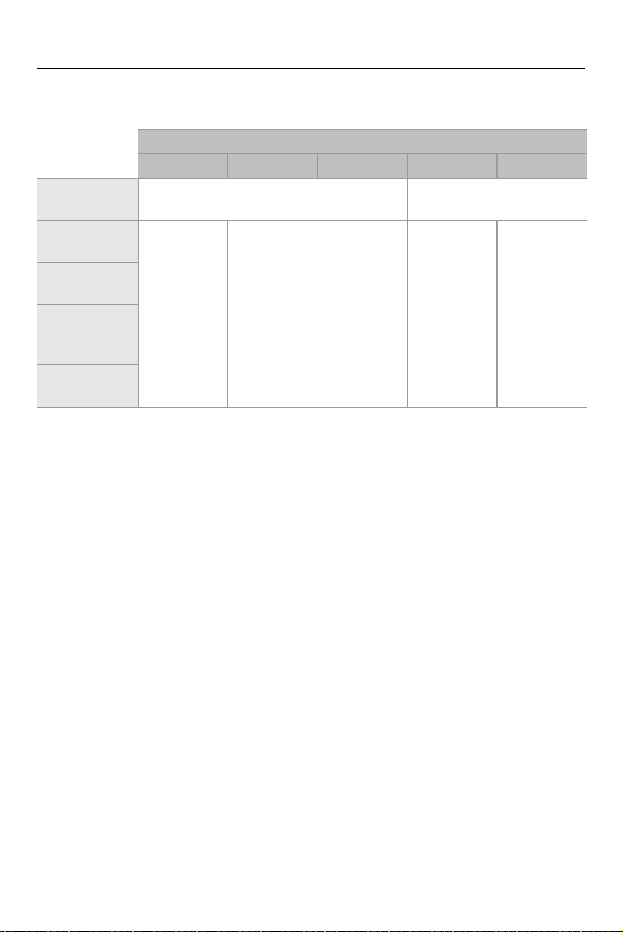
Drive / Shutter / Image Stabilizer – Taking Burst Pictures
264
Maximum Number of Frames Recordable
•
When recording under the test conditions specified by Panasonic.
Recording conditions may reduce the maximum number of frames recordable.
*1 Recording stops when the maximum number of frames recordable is reached.
For SH pre-burst recording, this includes the number of pictures taken with
pre-burst recording.
*2 The burst rate will become lower during recording but pictures can continue to be
taken until the card becomes full.
*3 Using a Nextorage SDXC memory card compliant with UHS-II UHS Speed Class 3
[Rec. File Format(Photo)]
[JPEG]
[RAW+JPEG]
[RAW] [HEIF]
[RAW+HEIF]
[SH]/
[SH PRE]
180 frames
*1
170 frames
*1
[H+]
(High speed)
300 frames
or more
*2, 3
200 frames or more
*2, 3
180 frames
or more
*2, 3
160 frames
or more
*2, 3
[H]
(High speed)
[M]
(Medium
speed)
[L]
(Low speed)

Drive / Shutter / Image Stabilizer – Taking Burst Pictures
265
The Number of Frames That Can Be Saved in Pre-Burst
Recording Before and After Fully Pressing the Shutter
Button
[SH Burst
Pre-Recording
Time]
[Rec. File
Format(Photo)]
[Behavior in SH Burst]
[IMAGE PRIORITY] [SPEED PRIORITY]
Before
pressing
fully
After
pressing
fully
Before
pressing
fully
After
pressing
fully
[1.5SEC]
[JPEG]
[RAW+JPEG]
[RAW]
90 frames 90 frames 105 frames 75 frames
[HEIF]
[RAW+HEIF]
90 frames 80 frames 105 frames 65 frames
[1.0SEC]
[JPEG]
[RAW+JPEG]
[RAW]
60 frames 120 frames 70 frames 110 frames
[HEIF]
[RAW+HEIF]
60 frames 110 frames 70 frames 100 frames
[0.5SEC]
[JPEG]
[RAW+JPEG]
[RAW]
30 frames 150 frames 35 frames 145 frames
[HEIF]
[RAW+HEIF]
30 frames 140 frames 35 frames 135 frames

Drive / Shutter / Image Stabilizer – Taking Burst Pictures
266
Number of Pictures That Can Be Taken Continuously
When you press the shutter button halfway, the number of pictures that can
be taken continuously will appear on the recording screen.
Example) When 20 frames: [r20]
•
Once recording starts, the number of pictures that can be taken continuously will
decrease.
– During [H+]/[H]/[M]/[L] burst recording: When [r0] appears, the burst rate
decreases.
– During SH burst recording: When [r0] appears, the burst recording stops.
Also, the [r] indication continues to be displayed after recording until the number of
pictures that can be taken continuously returns to the maximum.
r20
ISO
100

Drive / Shutter / Image Stabilizer – Taking Burst Pictures
267
Focus when Taking Burst Pictures
•
When the subject is dark with [AFC], the focus is fixed to that of the first frame.
•
With estimated focus, the burst rate takes priority and the focus is estimated to the
extent possible.
•
With normal focus, the burst rate may become slow.
Focus
mode
[Focus/Shutter
Priority]
([Focus/Shutter
Priority]: 687)
[SH]/
[SH PRE]/
[H]
[M]/[L] [H+]
[AFS]
[FOCUS]
Fixed to the focus of the first
frame
—
[BALANCE]
[RELEASE]
[AFC]
[FOCUS]
Estimated
focus
Normal focus
Normal focus
[BALANCE]
Estimated focus
[RELEASE]
[MF] — Focus set with manual focus —

Drive / Shutter / Image Stabilizer – Taking Burst Pictures
268
Exposure when Taking Burst Pictures
Focus mode
[SH]/
[SH PRE]/
[H]
[M]/[L] [H+]
[AFS]
Fixed to the
exposure of the
first frame
The exposure is
adjusted for each
frame
—
[AFC]
The exposure is
adjusted for each
frame
Fixed to the
exposure of the
first frame
[MF]
Fixed to the
exposure of the
first frame
—
Drive / Shutter / Image Stabilizer – Taking Burst Pictures
269
•
It may take a while to save burst pictures.
If you continue to take burst pictures while saving is in progress, the maximum
number of frames recordable will be reduced.
When taking burst pictures, we recommend using a high-speed card.
•
Taking burst pictures does not work while you are using the following functions:
– [Live View Composite]
– [Multiple Exposure]
Notes on [H+]
•
When the focus mode is set to [AFS] or [MF], [H+] is not available.
•
When set to [H+], [ ] in AF mode cannot be selected.
•
When set to [H+] when the AF mode is [ ], the AF mode switches to [ ].
Notes on SH burst recording
•
[Shutter Type] is fixed to [ELEC.].
•
There are limits on the shutter speed you can set during SH burst recording.
– [SH]/[SH PRE]: To a minimum of 1/60 ([Behavior in SH Burst]: [IMAGE
PRIORITY])
– [SH]/[SH PRE]: To a minimum of 1/80 ([Behavior in SH Burst]: [SPEED
PRIORITY])
•
The aperture will be fixed during burst recording.
•
The images recorded will be saved as a set of burst group pictures. (Group
Images: 616)

Drive / Shutter / Image Stabilizer – Taking Burst Pictures
270
Notes on SH pre-burst recording
•
Pictures taken before the shutter button is pressed fully are not saved in the
following cases:
– When recording with the Touch Shutter
– When [Half-Press Shutter] in the [Custom] ([Focus/Shutter]) menu is set to
[ON]
•
When the ambient temperature is high or Pre-Burst recording is performed
continuously, even if you press the shutter button halfway, Pre-Burst may not
operate to protect the camera from overheating. Wait until the camera cools
down.
•
Even if you press the shutter button halfway, Pre-Burst may not operate when
there is insufficient free space on the card.
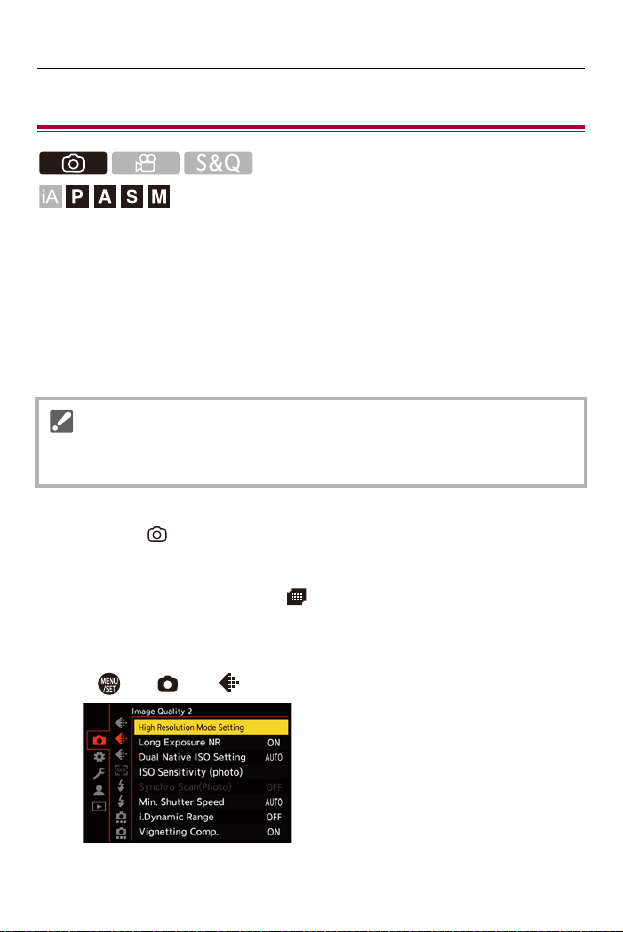
Drive / Shutter / Image Stabilizer – High Resolution mode
271
High Resolution mode
This merges pictures with a high resolution from multiple recorded images.
This function is suitable for recording subjects that do not move.
When [Handheld High-Res] is set to on, you can record pictures with a
higher resolution without using a tripod.
The picture after merging can be saved in RAW or JPEG format.
• Cannot be saved in the HEIF format.
1
Set to [ ] mode.
(Photo/Video/S&Q Switch: 80)
2
Set the drive mode to [ ] (High resolution).
≥Set the drive mode dial. (Selecting the Drive Mode: 257)
3
Set the recording settings.
≥ [] [] [High Resolution Mode Setting]
•
When recording with [Handheld High-Res] set to [OFF], use a tripod to
minimize camera shake.

Drive / Shutter / Image Stabilizer – High Resolution mode
272
[Handheld High-Res]
You can record without using a tripod. Turn on the image stabilizer function.
•
When [OFF], the image stabilizer function is not available.
[Picture Quality]
Set the compression rate at which the pictures are to be stored.
[COMBINED]/[FINE]/[RAW+FINE]/[RAW]
•
When set to [COMBINED], recording is with the same settings as [Rec. File
Format(Photo)] in the [Photo] ([Image Quality]) menu. (However, [HEIF]
changes to [JPEG] and [RAW+HEIF] changes to [RAW+JPEG].)
•
[JPEG/HEIF Picture Quality] is fixed to [FINE].
[Picture Size]
Sets the image size after merging.
When the [Aspect Ratio] is [4:3].
[XL] (85 M): 10656×8000
[LL] (42.5 M): 7552×5664
When the [Aspect Ratio] is [3:2].
[XL] (96 M): 12000×8000
[LL] (48 M): 8496×5664
When the [Aspect Ratio] is [16:9].
[XL] (81 M): 12000×6736
[LL] (40.5 M): 8496×4784
When the [Aspect Ratio] is [1:1].
[XL] (64 M): 8000×8000
[LL] (32 M): 5664×5664
•
RAW images are always recorded in the [3:2] (12000×8000) aspect ratio.

Drive / Shutter / Image Stabilizer – High Resolution mode
273
[Simul Record Normal Shot]
Simultaneously takes pictures that are not merged when [ON] is set. The first
picture will be saved with [Picture Size] set to [L].
[Shutter Delay]
Sets the delay time from when the shutter button is pressed until the shutter is
released.
[30 SEC]/[15 SEC]/[8 SEC]/[4 SEC]/[2 SEC]/[1 SEC]/[1/2 SEC]/[1/4 SEC]/[1/8
SEC]/[Off]
[Motion Blur Processing]
Sets the correction method to use when the subject moved.
[MODE1]: This gives priority to High Resolution mode, therefore subject blur
appears as an afterimage in the picture.
[MODE2]: This reduces afterimage from subject blur, but cannot obtain the
same High Resolution mode effect in the corrected range.
•
When [Handheld High-Res] is [ON], [Motion Blur Processing] is fixed to
[MODE2].
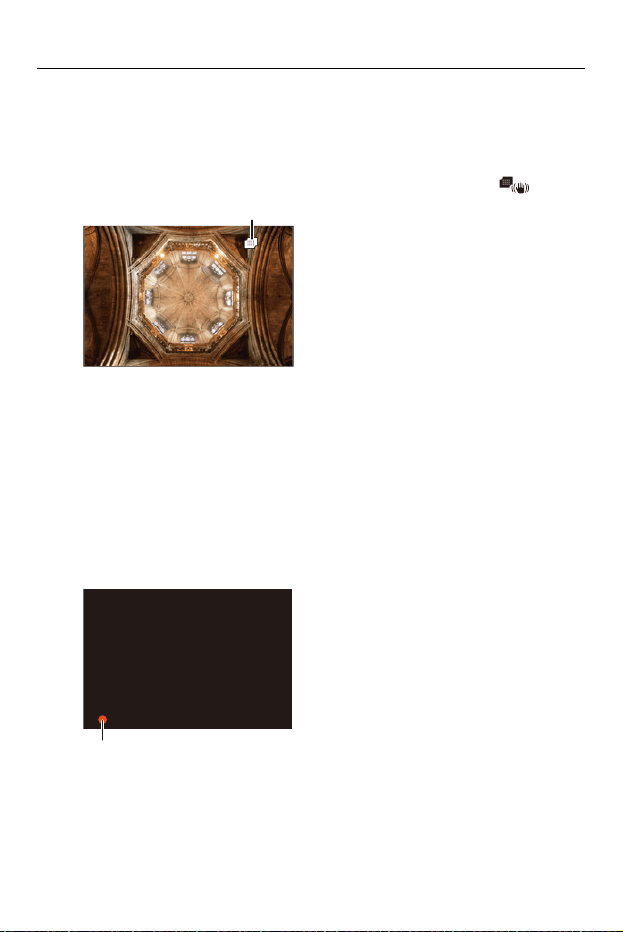
Drive / Shutter / Image Stabilizer – High Resolution mode
274
4
Decide on the composition and then fix the camera in
place.
•
If blurring is detected, the High Resolution mode icon (A) blinks.
•
When [Handheld High-Res] is set to [ON], the icon changes to [ ].
5
Start recording.
≥Press the shutter button fully.
•
With the default settings, [Shutter Delay] is activated, so there will be a gap in
time from when the shutter button is pressed until the shutter is released.
•
The screen goes dark during recording.
•
The recording state indication (red) (B) blinks.
Do not move the camera while it is blinking.
•
You can continue recording when the merging process ends.
(A)
(B)

Drive / Shutter / Image Stabilizer – High Resolution mode
275
•
In High Resolution mode, recording will be performed using the following
settings:
– [Shutter Type]: [ELEC.] (When [Long Exposure NR] is set to [OFF])/
[ELEC.+NR] (When [Long Exposure NR] is set to [ON])
– Minimum aperture value: F16
– Shutter speed: 8 seconds to 1/16000 of a second
– ISO sensitivity: Upper limit to [3200]
– Focus mode: [AFS]/[MF]
•
Hold the camera firmly during handheld recording so that the camera does not
shake. Recording may fail if there is a lot of shaking.
•
Image merging can take a long time with handheld recording.
•
When you record in an extremely bright location or under lighting such as
fluorescent or LED lighting, the coloring or brightness of the image may change
or horizontal stripes may appear on the screen.
Lowering the shutter speed may reduce the effect of horizontal stripes.
•
Devices other than this camera may not be able to play back images recorded
using High Resolution mode.
•
When using APS-C lenses, recording in High Resolution Mode is not possible.
•
When the following functions are being used, High Resolution Mode is not
available:
– [Live View Composite]
– [Multiple Exposure]
Drive / Shutter / Image Stabilizer – Recording with Time Lapse Shot
276
Recording with Time Lapse Shot
Pictures are taken automatically at a set recording interval.
This feature is ideal for keeping track of changes over time in subjects such
as animals and plants.
The pictures taken will be saved as a set of group images that can also be
combined into a video. (Group Images: 616)
1
Set to [ ] mode.
(Photo/Video/S&Q Switch: 80)
2
Set the drive mode to [ ].
≥Set the drive mode dial. (Selecting the Drive Mode: 257)
•
Check that the clock is set correctly. (Setting the Clock (When Turning On for
the First Time): 73)
•
For long recording intervals, we recommend setting [Lens Focus Resume] to
[ON] in the [Custom] ([Lens / Others]) menu.
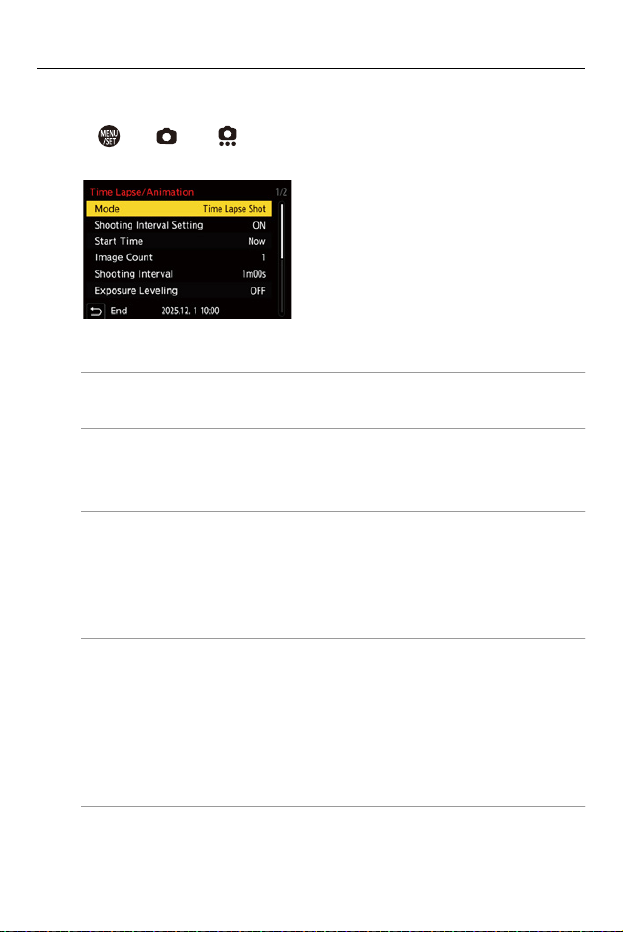
Drive / Shutter / Image Stabilizer – Recording with Time Lapse Shot
277
3
Set [Mode] to [Time Lapse Shot].
≥ [] [] [Time Lapse/Animation] [Mode] [Time
Lapse Shot]
4
Set the recording settings.
[Mode]
Switches between Time Lapse Shot and Stop Motion Animation.
[Shooting Interval Setting]
[ON]: Sets the interval before the next recording takes place.
[OFF]: Takes pictures without leaving recording intervals.
[Start Time]
[Now]: Starts recording when the shutter button is pressed fully.
[After 2 Seconds]: Starts recording 2 seconds after the shutter button is
pressed fully.
[Start Time Set]: Starts recording at the set time.
[Image Count]/[Shooting Interval]
Sets the number of pictures and the recording interval to be taken.
The number of pictures and the recording interval to be taken can be
automatically calculated and set. (Setting Assistant for Time Lapse Shot
Recording: 279)
•
[Shooting Interval] is not available when [Shooting Interval Setting] is set to
[OFF].

Drive / Shutter / Image Stabilizer – Recording with Time Lapse Shot
278
[Exposure Leveling]
Adjusts the exposure automatically to prevent large changes in brightness
between adjacent frames.
[Create New Folder At Rec]
[Create a New Folder]: When set to [ON], a new folder is created each time
that Time Lapse Shot recording is started.
[File Number Reset]: When set to [ON], the file number is reset each time a
new folder is created.
5
Close the menu.
≥Press the shutter button halfway.
6
Start recording.
≥Press the shutter button fully.
•
When [Start Time Set] is set, the camera will enter into sleep status until the
start time is reached.
•
During recording standby, the camera enters into sleep status when no
operation is performed for a certain period of time.
•
The recording will stop automatically.
7
Create a video.
(Time Lapse Shot/Stop Motion Animation Videos: 287)
•
After the recording has stopped, select [Yes] on the confirmation screen to
proceed to create a video.
Even if you select [No], you can still create a video with [Time Lapse Video] in
the [Playback] ([Process Image]) menu. ([Time Lapse Video]: 637)
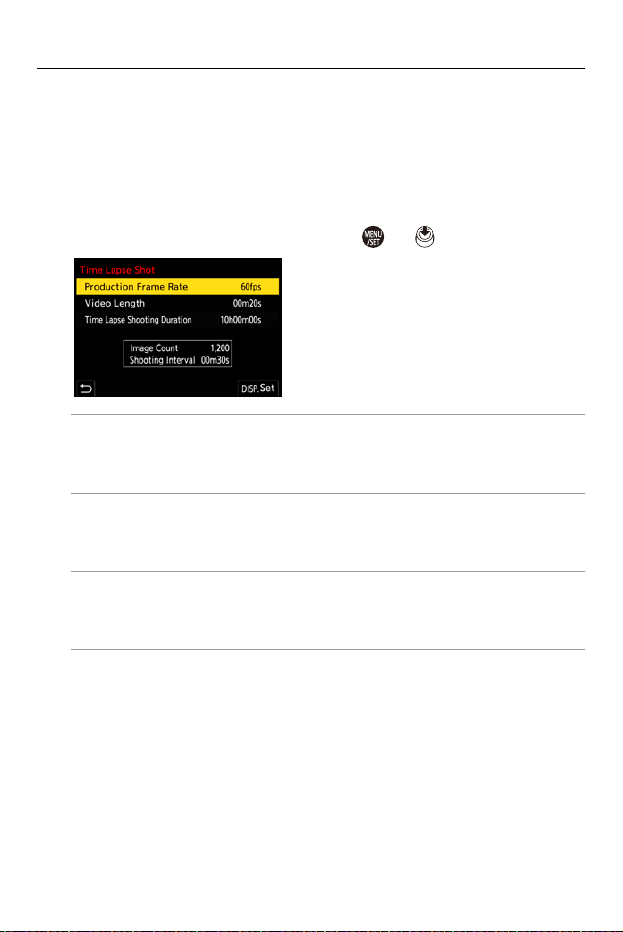
Drive / Shutter / Image Stabilizer – Recording with Time Lapse Shot
279
Setting Assistant for Time Lapse Shot Recording
When [DISP.] is pressed in the [Image Count]/[Shooting Interval] setting
screen, [Image Count] and [Shooting Interval] can be set by automatically
calculating them from the frame rate, time, and recording duration of the
video to be created.
1 Press 34 to select the item and then press or .
[Production Frame Rate]
Sets the frame rate of videos to be created.
It can be set in the range between 1 fps and 99 fps.
[Video Length]
Sets the playback time of videos to be created.
It can be set in the range between 00m01s and 99m59s.
[Time Lapse Shooting Duration]
Sets the Time Lapse Shot duration.
It can be set in the range between 00h00m01s and 99h59m59s.
2 Press [DISP.] to confirm.
•
The settings are reflected when you select [Yes].

Drive / Shutter / Image Stabilizer – Recording with Time Lapse Shot
280
•
[Image Count] can be set in the range between 1 and 9999.
•
[Shooting Interval] is set in the range between 00m01s and 99m59s.
Decimal places are rounded down if the number is not evenly divisible.
•
When the setting is one where recording is not possible, [Image Count] or
[Shooting Interval] is displayed in red letters.
•
When [Shooting Interval Setting] is [OFF], the Time Lapse Shot settings cannot
be automatically calculated.

Drive / Shutter / Image Stabilizer – Recording with Time Lapse Shot
281
Operations during Time Lapse Shot Recording
Pressing the shutter button halfway during sleep status will turn on the
camera.
•
You can perform the following operations by pressing [Q] during Time Lapse Shot
recording.
[Continue]
Returns to the recording. (Only during recording)
[Pause]
Pauses the recording. (Only during recording)
[Resume]
Resumes the recording. (Only while paused)
•
You can also press the shutter button to resume.
[End]
Stops the Time Lapse Shot recording.

Drive / Shutter / Image Stabilizer – Recording with Time Lapse Shot
282
•
Pictures recorded to more than one card cannot be combined into a single video.
•
The camera gives priority to achieving the standard exposure, so it may not take
pictures at the set interval or take the set number of pictures.
Furthermore, it may not end at the end time displayed on the screen.
•
Time Lapse Shot is paused in the following cases.
– When the charge on the battery runs out
– When you set the camera on/off switch to [OFF]
You can set the camera on/off switch to [OFF] and replace the battery or card.
Set the camera on/off switch to [ON] and then press the shutter button fully to
resume recording.
(Note that the images recorded after replacing the card will be saved as a
separate set of group images.)
•
[Exposure Leveling] is not available if ISO sensitivity is set to other than [AUTO]
in [M] mode.
•
[Time Lapse Shot] is not available when using the following functions:
– [Live View Composite]
– [Multiple Exposure]
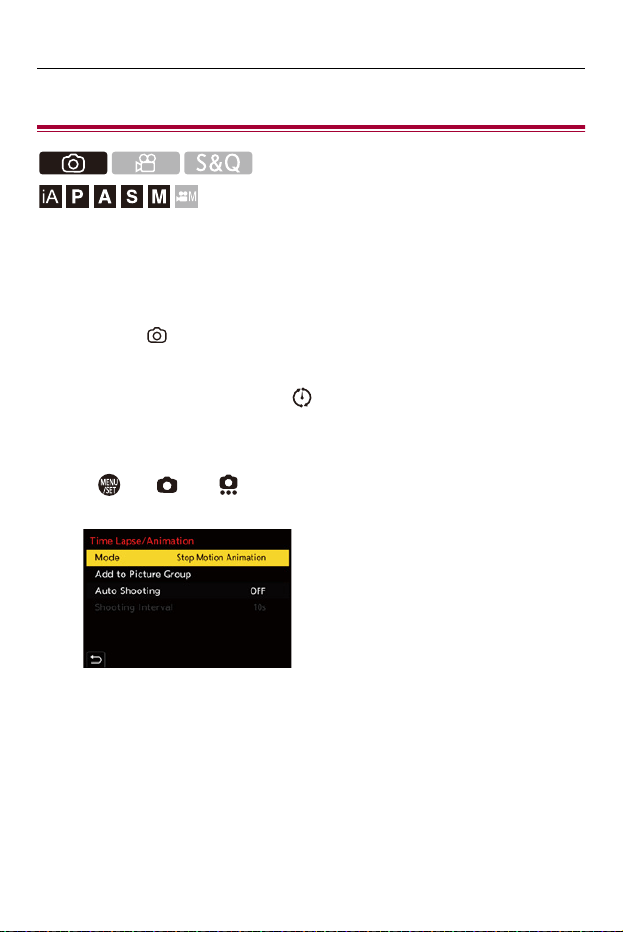
Drive / Shutter / Image Stabilizer – Recording with Stop Motion Animation
283
Recording with Stop Motion Animation
Take pictures while moving the subject little by little.
The pictures taken will be saved as a set of group images that can be
combined into a stop motion video. (Group Images: 616)
1
Set to [ ] mode.
(Photo/Video/S&Q Switch: 80)
2
Set the drive mode to [ ].
≥Set the drive mode dial. (Selecting the Drive Mode: 257)
3
Set [Mode] to [Stop Motion Animation].
≥ [] [] [Time Lapse/Animation] [Mode] [Stop
Motion Animation]

Drive / Shutter / Image Stabilizer – Recording with Stop Motion Animation
284
4
Set the recording settings.
[Mode]
Switches between Time Lapse Shot and Stop Motion Animation.
[Add to Picture Group]
Allows you to continue recording for a set of stop motion images that have
already been recorded.
•
Select an image and proceed to Step
6
.
[Auto Shooting]
[ON]: Takes pictures automatically at a set recording interval.
[OFF]: This is for taking pictures manually, frame by frame.
[Shooting Interval]
Sets the recording interval for [Auto Shooting].
5
Close the menu.
≥Press the shutter button halfway.
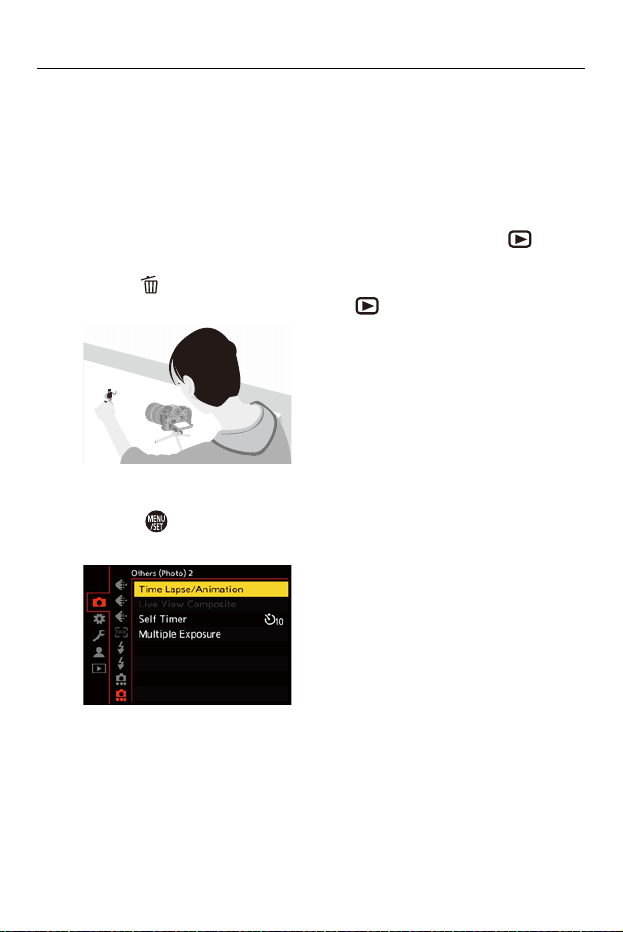
Drive / Shutter / Image Stabilizer – Recording with Stop Motion Animation
285
6
Start recording.
≥Press the shutter button fully.
≥Take pictures repeatedly while moving the subject little by little.
•
The recording screen displays up to two pictures taken previously. Use them
as reference for the amount of movement.
•
You can play back the recorded stop motion images by pressing [ ] during
recording.
Press [ ] to delete unnecessary images.
To return to the recording screen, press [ ] again.
7
Stop recording.
≥Press and then select [Time Lapse/Animation] from the
[Photo] menu to stop recording.

Drive / Shutter / Image Stabilizer – Recording with Stop Motion Animation
286
8
Create a video.
(Time Lapse Shot/Stop Motion Animation Videos: 287)
•
After the recording has stopped, select [Yes] on the confirmation screen to
proceed to create a video.
Even if you select [No], you can still create a video with [Stop Motion Video] in
the [Playback] ([Process Image]) menu. ([Stop Motion Video]: 637)
•
Up to 9999 frames can be recorded.
•
If the camera is turned off while recording, a message for resuming the recording
is displayed when it is turned on. Selecting [Yes] allows you to continue the
recording from the interruption point.
•
The camera gives priority to achieving the standard exposure, so it may not take
pictures at the set interval when the flash, etc. is used for recording.
•
A picture cannot be selected from [Add to Picture Group] when it is the only one
that was taken.
•
[Stop Motion Animation] is not available when using the following functions:
– [Live View Composite]
– [Multiple Exposure]
– [Frame.io Connection]
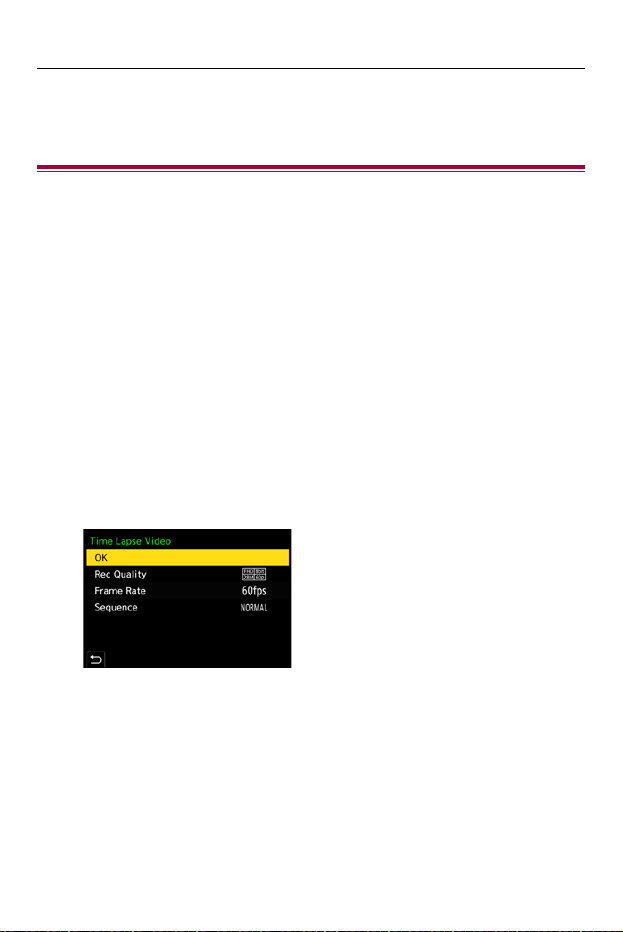
Drive / Shutter / Image Stabilizer – Time Lapse Shot/Stop Motion Animation Videos
287
Time Lapse Shot/Stop Motion Animation
Videos
After performing Time Lapse Shot or stop motion recording, you can
proceed to create a video.
•
Refer to the sections below about these recording functions.
– Recording with Time Lapse Shot: 276
– Recording with Stop Motion Animation: 283
•
You can also create videos with [Time Lapse Video] ([Time Lapse Video]: 637) or
[Stop Motion Video] ([Stop Motion Video]: 637) in the [Playback] menu.
1
Select [Yes] on the confirmation screen that appears
after recording.
2
Set the options for creating a video.
3
Select [OK].
≥A video will be created in the [MP4] recording file format.
Drive / Shutter / Image Stabilizer – Time Lapse Shot/Stop Motion Animation Videos
288
[OK]
Creates a video.
[Rec Quality]
Sets the video image quality.
[Frame Rate]
Sets the number of frames per second.
The larger the number is, the smoother the video will be.
[Sequence]
[NORMAL]: Splices pictures together in recording order.
[REVERSE]: Splices pictures together in reverse recording order.
•
Videos cannot be created when the [System Frequency] is set to [24.00Hz
(CINEMA)].
•
Videos cannot be created if the recording time exceeds 30 minutes.
•
In the following cases, videos cannot be created if the file size exceeds 4 GB:
– When an SDHC memory card is being used and a 4K [Rec Quality] is set
– When an FHD [Rec Quality] is set
•
[Time Lapse Video]/[Stop Motion Video] is not available when using the following
functions:
– [Auto Transfer] (when there is an image queued to be transferred)
– [Send Images to Frame.io] (when there is an image in the upload queue)
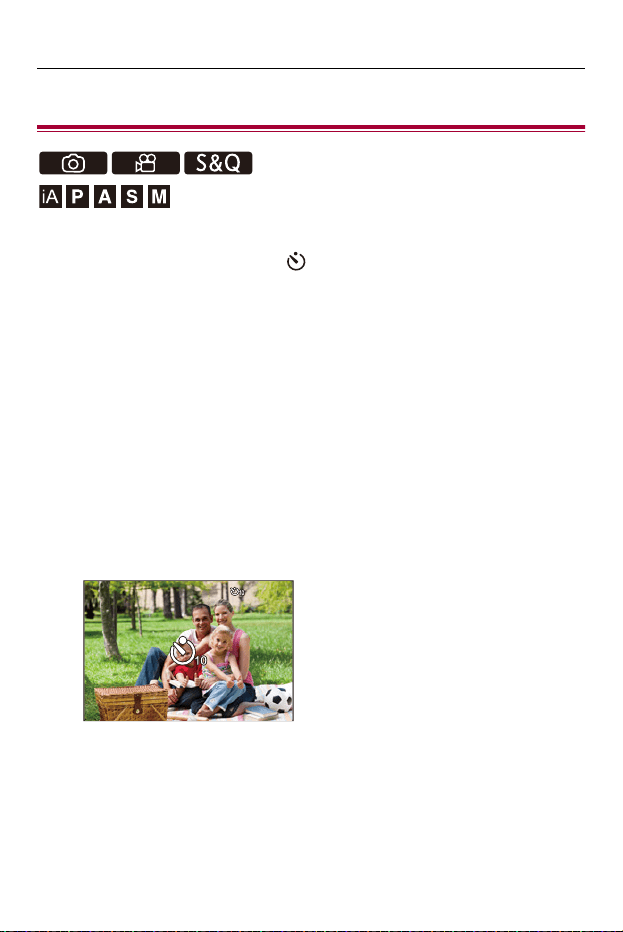
Drive / Shutter / Image Stabilizer – Recording Using the Self-timer
289
Recording Using the Self-timer
1
Set the drive mode to [ ].
≥Set the drive mode dial. (Selecting the Drive Mode: 257)
2
Set the self-timer time.
(Setting the Self-timer Time: 291)
•
When recording videos, set [Self Timer For Video] in [Self Timer Setting] of
the [Video] ([Others (Video)]) menu to [ON].
3
Close the menu.
≥Press the shutter button halfway.
4
Decide on the composition and then adjust the focus.
≥Press the shutter button halfway.
•
The focus and exposure are fixed when the shutter button is pressed halfway.
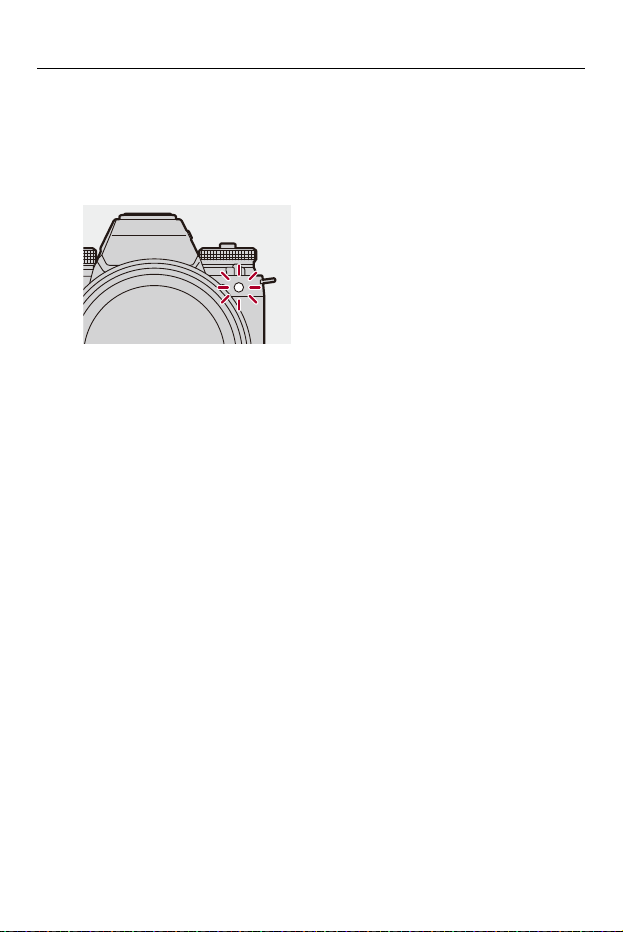
Drive / Shutter / Image Stabilizer – Recording Using the Self-timer
290
5
Start recording.
≥Press the shutter button, video rec. button, or sub video rec.
button.
≥After the self-timer light blinks, shooting or video recording starts.
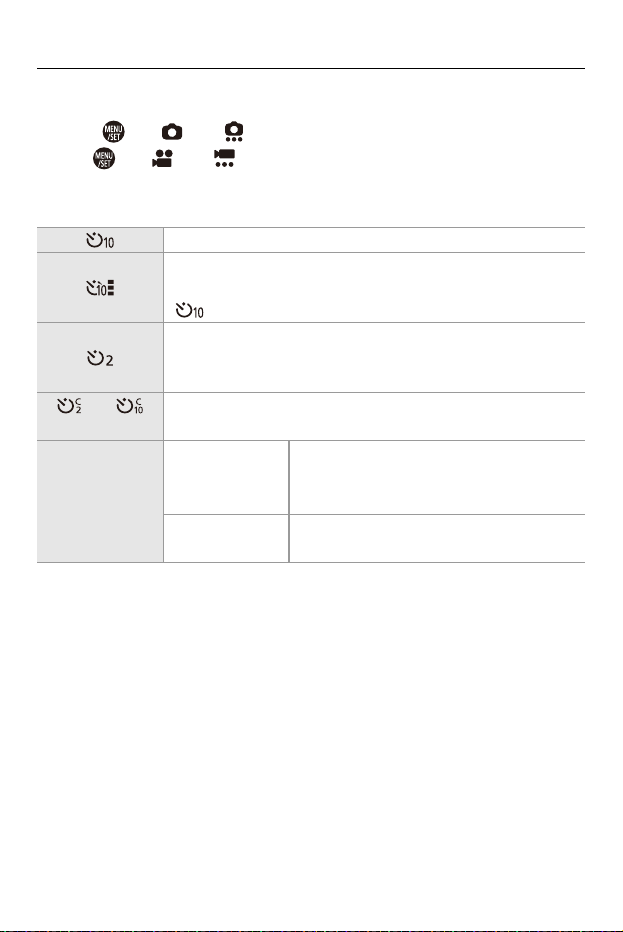
Drive / Shutter / Image Stabilizer – Recording Using the Self-timer
291
Setting the Self-timer Time
Picture: [] [] Select [Self Timer]
Video: [] [] [Self Timer Setting] Select [Self Timer]
*
* This can be set by setting [Self Timer For Video] to [ON] in [Self Timer Setting] in
the [Video] ([Others (Video)]) menu.
[] Takes a picture after 10 seconds.
[]
Takes 3 pictures at approx. 2 second intervals after 10 seconds.
(When recording video, it will be the same operation with
[ ].)
[]
Takes a picture after 2 seconds.
•
This setting is a convenient way to avoid camera shake
caused by pressing the shutter button.
[] to [ ]
(Custom)
Takes a picture after the time selected with [Custom Time].
[SET]
[Custom Time]
Sets the time until recording starts.
[10SEC]/[9SEC]/[8SEC]/[7SEC]/[6SEC]/
[5SEC]/[4SEC]/[3SEC]/[2SEC]
[Display
Countdown]
A countdown is displayed on the recording
screen when the self-timer is Custom.
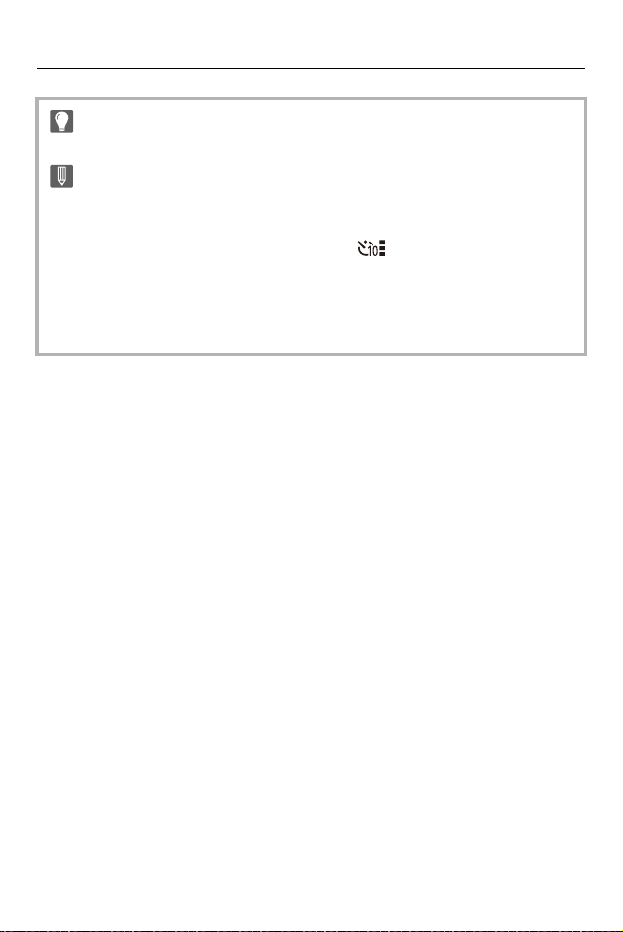
Drive / Shutter / Image Stabilizer – Recording Using the Self-timer
292
•
We recommend using a tripod when recording with the self-timer.
•
[Self Timer] in the [Photo] ([Others (Photo)]) menu and [Self Timer] in the [Self
Timer Setting] ([Video] ([Others (Video)]) menu) work together.
•
When the following functions are being used, [ ] is not available:
– [Simultaneous Record w/o Filter] ([Filter Settings])
– [Bracketing]
– [Live View Composite]
– [Multiple Exposure]
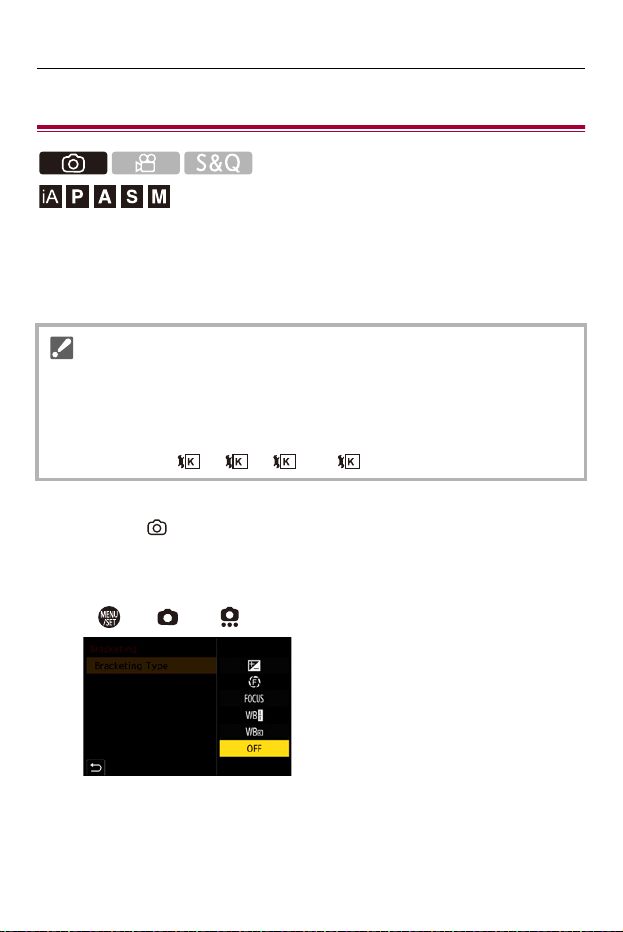
Drive / Shutter / Image Stabilizer – Bracket Recording
293
Bracket Recording
When the shutter button is pressed, the camera can record multiple
images while automatically changing the setting value for exposure,
aperture, focus or white balance (adjustment value or color temperature).
1
Set to [ ] mode.
(Photo/Video/S&Q Switch: 80)
2
Set [Bracketing Type].
≥ [] [] [Bracketing] [Bracketing Type]
•
Aperture Bracket can be selected in the following modes:
– [A] mode
– [M] mode (when ISO sensitivity is set to [AUTO])
•
White Balance Bracket (Color Temperature) can be selected when the white
balance is set to [ ], [ ], [ ], or [ ].
1 2 3 4
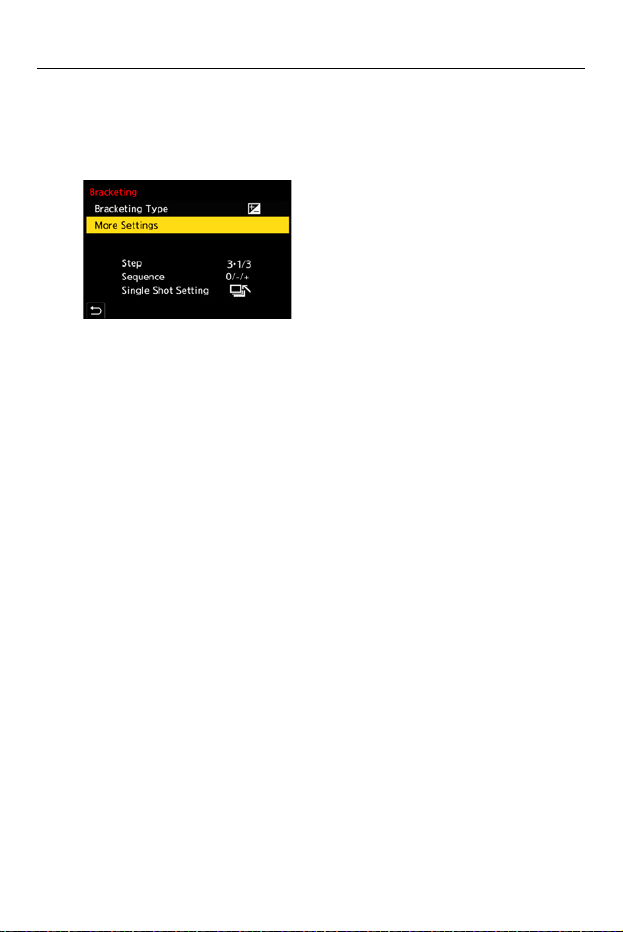
Drive / Shutter / Image Stabilizer – Bracket Recording
294
3
Set [More Settings].
≥For information about [More Settings], refer to page for each
bracketing method.
4
Close the menu.
≥Press the shutter button halfway.
5
Focus on the subject and then take pictures.
Drive / Shutter / Image Stabilizer – Bracket Recording
295
Setting Items ([Bracketing Type])
[ ] (Exposure Bracket)
When the shutter button is pressed, the camera records while changing the exposure.
([More Settings] (Exposure Bracket): 297)
[ ] (Aperture Bracket)
When the shutter button is pressed, the camera records while changing the aperture
value. ([More Settings] (Aperture Bracket): 298)
[ ] (Focus Bracket)
When the shutter button is pressed, the camera records while changing the focus
point. ([More Settings] (Focus Bracket): 299)
[ ] (White Balance Bracket)
When the shutter button is pressed once, the camera automatically records three
images with the different white balance adjustment values. ([More Settings] (White
Balance Bracket): 300)
[ ] (White Balance Bracket (Color Temperature))
When the shutter button is pressed once, the camera automatically records three
images with the different white balance color temperatures. ([More Settings] (White
Balance Bracket (Color Temperature)): 300)
[OFF]
How to Cancel Bracketing
Select [OFF] in Step
2
.

Drive / Shutter / Image Stabilizer – Bracket Recording
296
•
When [Aspect Ratio] is set to [65:24]/[2:1], only the Exposure Bracket can be
used.
•
White Balance Bracket and White Balance Bracket (Color Temperature) are not
available when using the following functions:
– [iA] mode
– Taking burst pictures
– [RAW+JPEG]/[RAW+HEIF]/[RAW] ([Rec. File Format(Photo)])
– [Filter Settings]
•
Bracket recording is not available while you are using the following functions:
– SH burst recording
– [Time Lapse Shot]
– [Stop Motion Animation] (when [Auto Shooting] is set)
– High Resolution mode
– [Live View Composite]
– [Multiple Exposure]
Drive / Shutter / Image Stabilizer – Bracket Recording
297
[More Settings] (Exposure Bracket)
[Step]
Sets the image count and exposure compensation step.
[3•1/3] (record 3 images in 1/3 EV steps) to [7•1] (record 7 images in 1 EV steps)
[Sequence]
Sets the order in which images are recorded.
[Single Shot Setting]
[]: Takes only one image each time the shutter button is pressed.
[]: Takes all of the set number of images when the shutter button is pressed once.
•
The [BKT] icon blinks until all of the set number of pictures is taken.
•
When you record images with Exposure Bracket after setting the exposure
compensation value, the images recorded are based on the selected exposure
compensation value.

Drive / Shutter / Image Stabilizer – Bracket Recording
298
[More Settings] (Aperture Bracket)
[Image Count]
[3]/[5]: Records the set number of images while alternately setting the aperture value
in the sequence of one before and then one after using the initial aperture value as the
reference.
[ALL]: Records images using all aperture values.
Example when the initial position is set to F8.0 (S-R24105)
(1) 1st image, (2) 2nd image, (3) 3rd image ... (7) 7th image
4.02.8 5.6 8.0 11 16 22
(1)(6) (4) (2) (3) (5) (7)
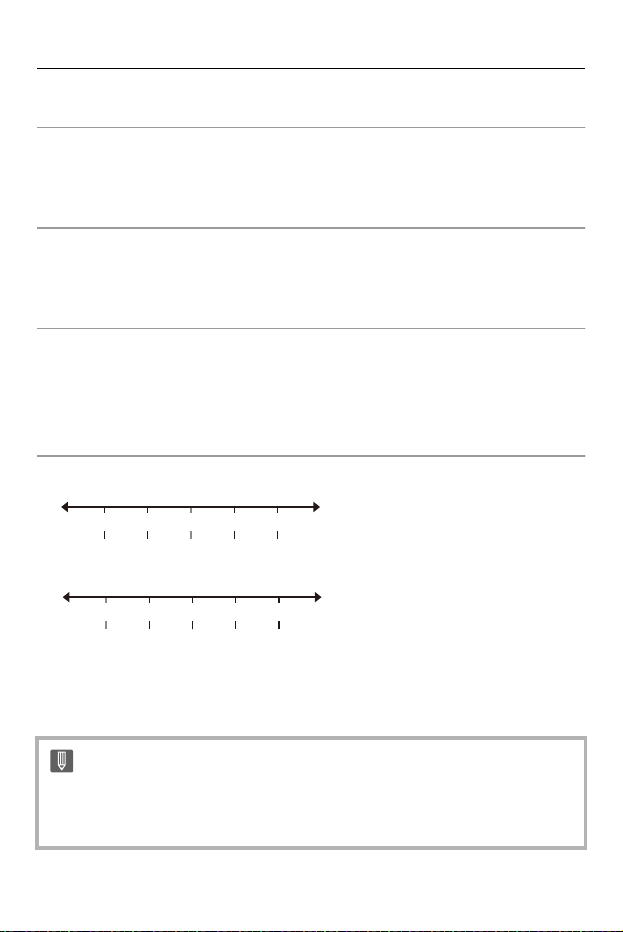
Drive / Shutter / Image Stabilizer – Bracket Recording
299
[More Settings] (Focus Bracket)
[Step]
Sets the focus adjustment step.
•
The distance that the focus point is moved becomes shorter if the initial focus point is
close, and longer if it is far away.
[Image Count]
Sets the image count.
•
This cannot be set when taking burst pictures.
Burst pictures are taken while the shutter button is pressed.
[Sequence]
[0/−/+]: Records while alternately moving the focus point in the sequence of forward
and then backward using the initial focus point as the reference.
[0/+]: Records while moving the focus point toward the far side using the initial focus
point as the reference.
Example when [Sequence]: [0/−/+] is set
Example when [Sequence]: [0/+] is set
(A) Focus: closer
(B) Focus: more distant
(1) 1st image, (2) 2nd image ... (5) 5th image ...
•
When [Focus Limiter] is set, recording is within the set range where AF works.
•
Pictures recorded with Focus Bracket are displayed as images of one group.
(Group Images: 616)
・・・ ・・・
(A) (B)
(1) (3) (5)(2)(4)
・・・
(A) (B)
(3) (4) (5)(2)(1)
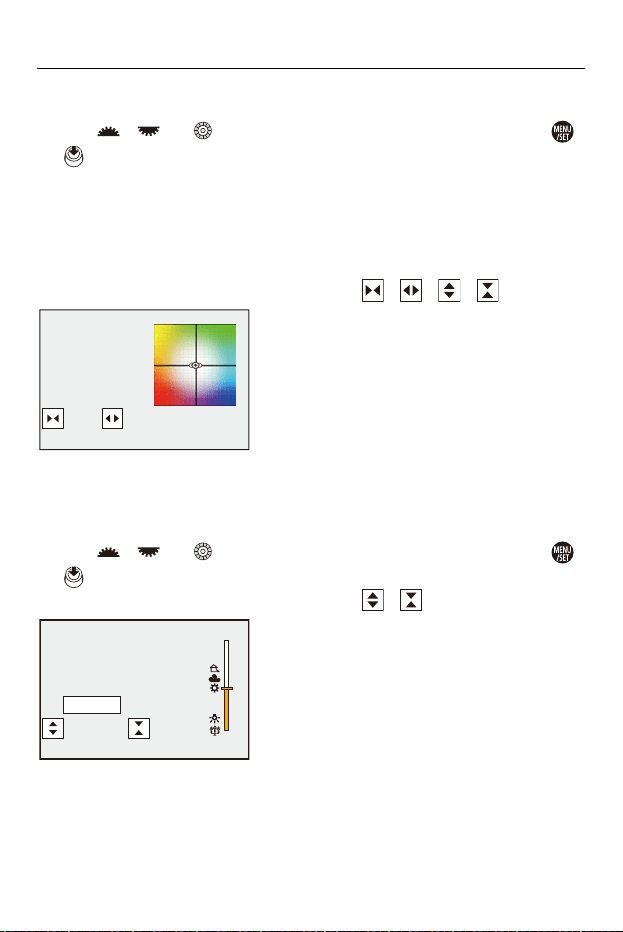
Drive / Shutter / Image Stabilizer – Bracket Recording
300
[More Settings] (White Balance Bracket)
Rotate , or to set the correction step and then press
or .
Rotate to the right:
Horizontal direction ([A] - [B])
Rotate to the left:
Vertical direction ([G] - [M])
•
The correction step can also be set by touching [ ]/[ ]/[ ]/[ ].
[More Settings] (White Balance Bracket (Color
Temperature))
Rotate , or to set the correction step and then press
or .
•
The correction step can also be set by touching [ ]/[ ].
GGGGGGG
AAAAAABBBBBBB
MMMMMM
±300K
5500K5500K5500K
Drive / Shutter / Image Stabilizer – [Live View Composite]
301
[Live View Composite]
Images are recorded over several times and only the parts that change to
become brighter form part of the composition.
The images composed by recording at a set exposure time (shutter speed)
are displayed, allowing the images to be confirmed as recording proceeds.
This allows you to reduce the overall brightness for recording, so it is
convenient for recording the light trails of stars or fireworks against a bright
nightscape.
1
Set to [ ] mode.
(Photo/Video/S&Q Switch: 80)
2
Set the recording mode to [M].
≥Set the mode dial. (Selecting the Recording Mode: 81)
•
Use a tripod to minimize camera shake.
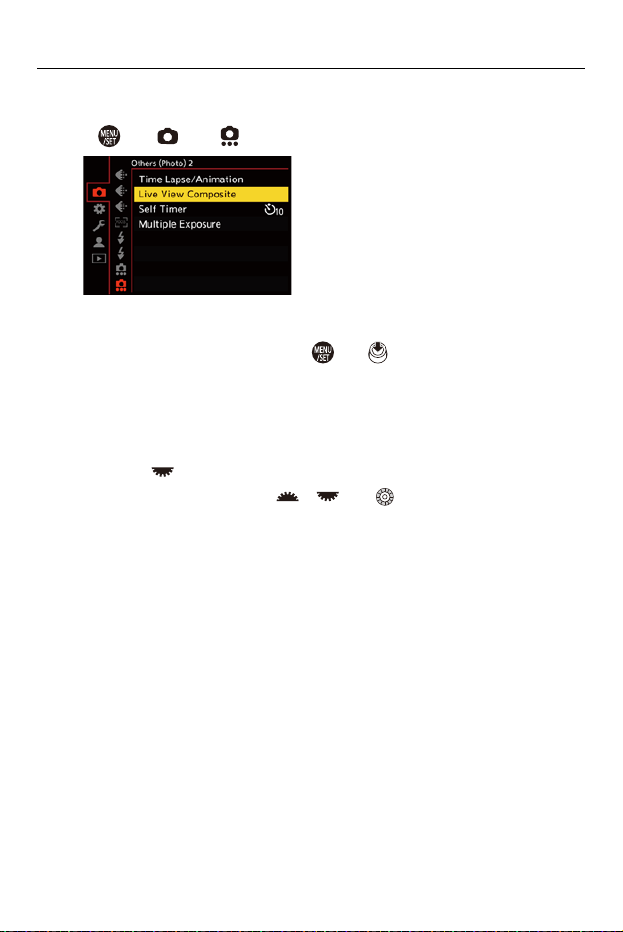
Drive / Shutter / Image Stabilizer – [Live View Composite]
302
3
Set [Live View Composite].
≥ [] [] [Live View Composite]
4
Start Live View Composite recording.
≥Select [Start] and then press or .
5
Decide on the composition and then fix the camera in
place.
6
Set the shutter speed and ISO sensitivity.
≥Rotate to set the shutter speed.
≥Press [ISO], then rotate , , or to set the ISO sensitivity.
•
The shutter speed can be set in the range between 60 seconds and 1/1.6 of a
second. The range of ISO sensitivities you can set depends on the Photo
Style used.
•
The ISO sensitivity can be set in the range between [100] and [3200] ([50]
and [3200] when [Extended ISO] is set).
7
Get the image to use for noise reduction.
≥Press the shutter button fully.
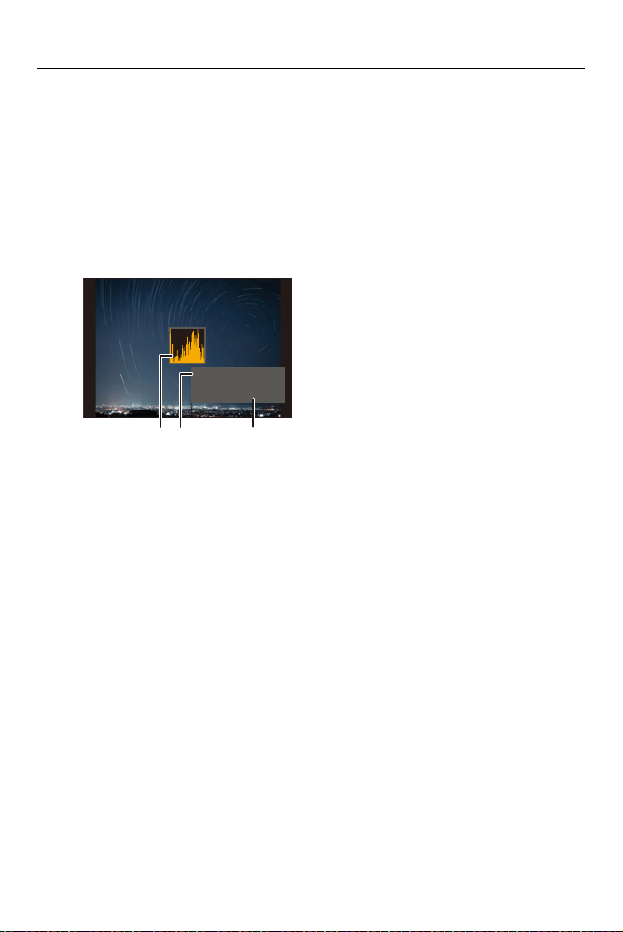
Drive / Shutter / Image Stabilizer – [Live View Composite]
303
8
Start recording.
≥Press the shutter button fully.
•
Recording is done according to the settings in Step
6
, and images processed
with noise reduction are merged a frame at a time.
(A) Histogram display
(B) Shutter speed × Number of images merged
(C) Elapsed time
9
Stop recording.
≥Press the shutter button fully.
•
A maximum of 3 hours can be recorded with one Live View Composite
recording.
(Recording automatically ends when the time exceeds 3 hours.)
10
End [Live View Composite].
≥Press [Q].
LC
LC
LC
5
sec. x 1200
sec. x 1200
5 sec. x 1200
1h40m00s
1h40m00s
1h40m00s
(A)(B) (C)
Drive / Shutter / Image Stabilizer – [Live View Composite]
304
Setting Items ([Live View Composite])
[Start]
Starts Live View Composite recording.
[Shutter Delay]
Sets the delay time from when the shutter button is pressed until the shutter is
released.
[8 SEC]/[4 SEC]/[2 SEC]/[1 SEC]/[OFF]
•
[Long Exposure NR] will be [ON].
•
When recording with the flash, the flash fires only in the first frame.
•
Some menus are not displayed after getting the noise reduction image.
•
The image for noise reduction is discarded when you do the following. Do Step
7
again.
– Modify the shutter speed/ISO sensitivity
– Switch the playback mode
•
When pressing the shutter button fully to end recording, the last image may not
be merged.
•
During Live View Composite recording, audio is not output to an external device
connected by HDMI.
•
[Live View Composite] is not available when using the following functions:
– [ELEC.]/[ELEC.+NR] ([Shutter Type])
– High Resolution mode
– [Filter Settings]
– [Silent Mode]
Drive / Shutter / Image Stabilizer – [Silent Mode]
305
[Silent Mode]
This disables all operation sounds and light output at once.
The audio from the speaker will be muted and the flash and the AF assist
light will be set to forced off mode.
•
The following settings are fixed:
– [Flash Mode]: [ ] (Forced Flash Off)
– [AF Assist Light]: [OFF]
– [Shutter Type]: [ELEC.]
– [Tally Lamp]: [OFF]
– [Rear Card Access Light]: [OFF]
– [Beep Volume]: [ ] (OFF)
– [AF Beep Volume]: [ ] (OFF)
– [E-Shutter Vol]: [ ] (OFF)
– [Shutter Behavior at Power Off]: [OPEN]
For pictures:
1
Set to [ ] mode.
(Photo/Video/S&Q Switch: 80)
2
Set [Silent Mode].
≥ [] [] [Silent Mode]
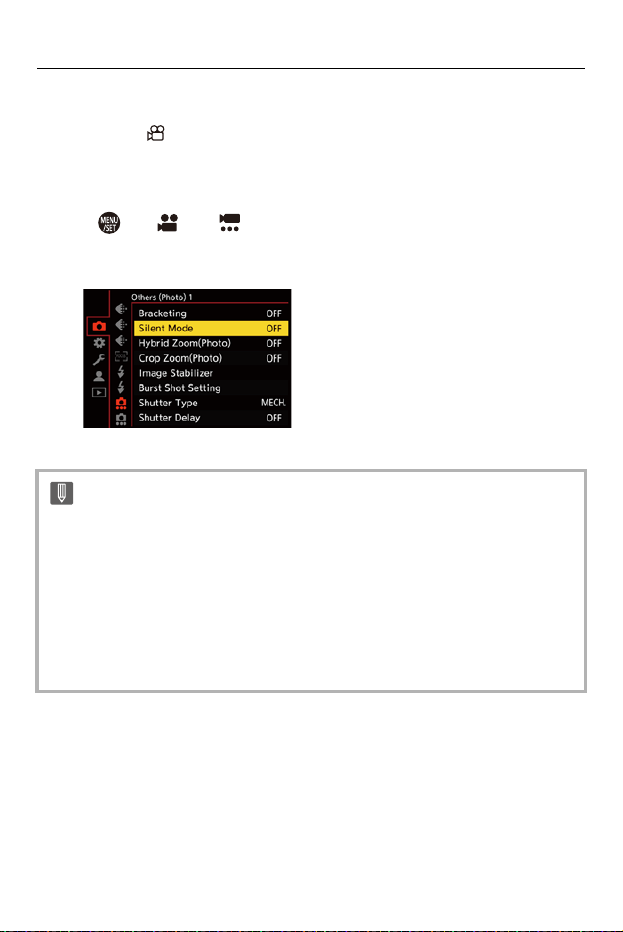
Drive / Shutter / Image Stabilizer – [Silent Mode]
306
For videos:
1
Set to [ ] mode.
(Photo/Video/S&Q Switch: 80)
2
Set [Silent Mode].
≥ [] [] [Silent Mode]
Settings: [ON]/[OFF]
•
Even when [ON] is set, the following functions light/blink:
– Charging light/Network connection light
– Card access lights inside the card door
– Self-timer light
•
[Silent Mode] is not available when using the following function:
– [Live View Composite]
•
Use this function at your own responsibility sufficiently considering the privacy,
portrait, and other rights of subjects.
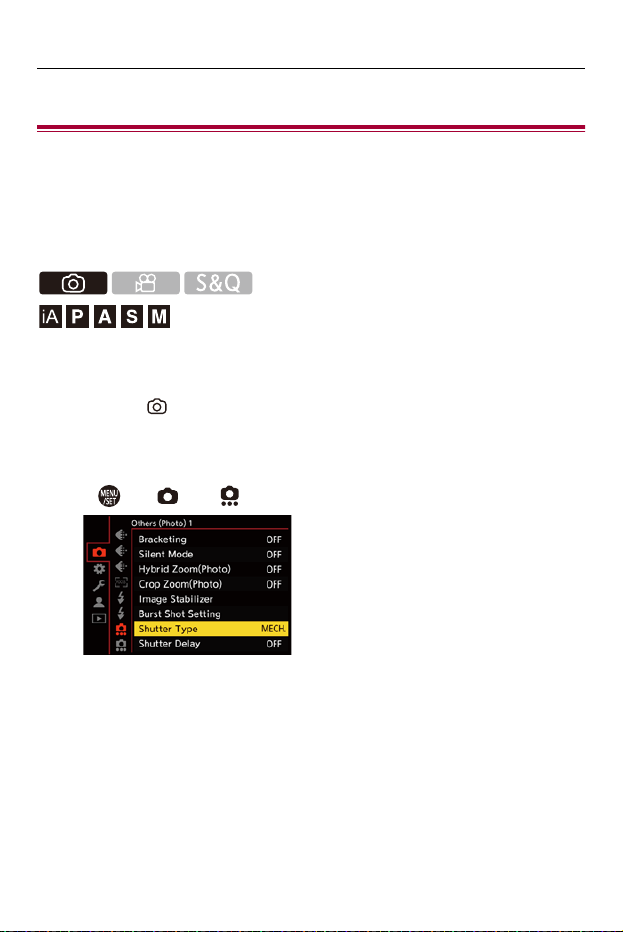
Drive / Shutter / Image Stabilizer – [Shutter Type]
307
[Shutter Type]
≥ [Long Exposure NR]: 311
≥ [Synchro Scan(Photo)]: 312
≥ [Min. Shutter Speed]: 314
≥ [Shutter Delay]: 315
Selects the shutter type to use for taking pictures.
1
Set to [ ] mode.
(Photo/Video/S&Q Switch: 80)
2
Set [Shutter Type].
≥ [] [] [Shutter Type]

Drive / Shutter / Image Stabilizer – [Shutter Type]
308
[AUTO]
Switches the shutter type automatically depending on the recording conditions
and shutter speed.
[MECH.]
Records with the mechanical shutter type.
[EFC]
Records with the electronic front curtain type.
[ELEC.]
Records with the electronic shutter type.
[ELEC.+NR]
Records with the electronic shutter type.
When pictures are taken at slower shutter speeds, the shutter is closed after
recording to perform long shutter noise reduction.

Drive / Shutter / Image Stabilizer – [Shutter Type]
309
*1 This setting is available only in [M] mode.
*2 The electronic shutter sound can be set in [E-Shutter Vol] and [E-Shutter Tone] in
[Beep] of the [Setup] ([IN/OUT]) menu. ([Beep]: 735)
Mechanical
shutter type
Electronic front
curtain type
Electronic shutter type
Mechanism
This type starts and
ends exposure with
the mechanical
shutter.
This type starts
exposure
electronically and
ends it with the
mechanical shutter.
This type starts and
ends exposure
electronically.
Flash —
Shutter
speed
(sec.)
[B] (Bulb, max.
approx.
30 minutes)
*1
,
60 to 1/8000
[B] (Bulb, max.
approx.
30 minutes)
*1
,
60 to 1/2000
[B] (Bulb, max. approx.
60 seconds)
*1
,
60 to 1/16000
Shutter
sound
Mechanical shutter
sound
Mechanical shutter
sound
Electronic shutter
sound
*2
Drive / Shutter / Image Stabilizer – [Shutter Type]
310
•
The electronic front curtain type reduces blur caused by the shutter because the
amount of vibration from the shutter is small compared to the mechanical shutter
type.
•
The electronic shutter type allows you to record without vibration from the shutter.
•
To reduce shutter-induced blur, you can set the shutter to release a few seconds
after the shutter button is pressed:
([Shutter Delay]: 315)
•
When [ ] is displayed on the screen, recording will be with the electronic
shutter type.
•
When a moving subject is recorded using the electronic shutter, the subject may
appear distorted in the picture.
•
When you record using the electronic shutter under lighting such as fluorescent
or LED lighting, horizontal stripes may be recorded. In such a case, lowering the
shutter speed may reduce the effect of horizontal stripes.
•
When using APS-C lenses, the electronic front curtain is not available.
Drive / Shutter / Image Stabilizer – [Shutter Type]
311
[Long Exposure NR]
The camera automatically removes noise generated when recording
images with a slow shutter speed.
1
Set to [ ] mode.
(Photo/Video/S&Q Switch: 80)
2
Set [Long Exposure NR].
≥ [] [] [Long Exposure NR]
Settings: [ON]/[OFF]
•
Recording is not possible during noise reduction.
•
When the following functions are being used, [Long Exposure NR] is not
available:
– Video recording/SH burst recording
– [ELEC.] (Excluding [ELEC.+NR])/[Silent Mode]
Drive / Shutter / Image Stabilizer – [Shutter Type]
312
[Synchro Scan(Photo)]
The flicker or horizontal stripes of the light source can be mitigated by
making fine adjustments to the shutter speed.
The shutter speed set in Synchro Scan is saved separately from the
shutter speed used for normal recording. In the Synchro Scan setting
screen, you can call up the current shutter speed for normal recording and
adjust it.
1
Set to [ ] mode.
(Photo/Video/S&Q Switch: 80)
2
Set the recording mode to [S] or [M].
≥Set the mode dial. (Selecting the Recording Mode: 81)
3
Set [Synchro Scan(Photo)].
≥ [] [] [Synchro Scan(Photo)] [ON]
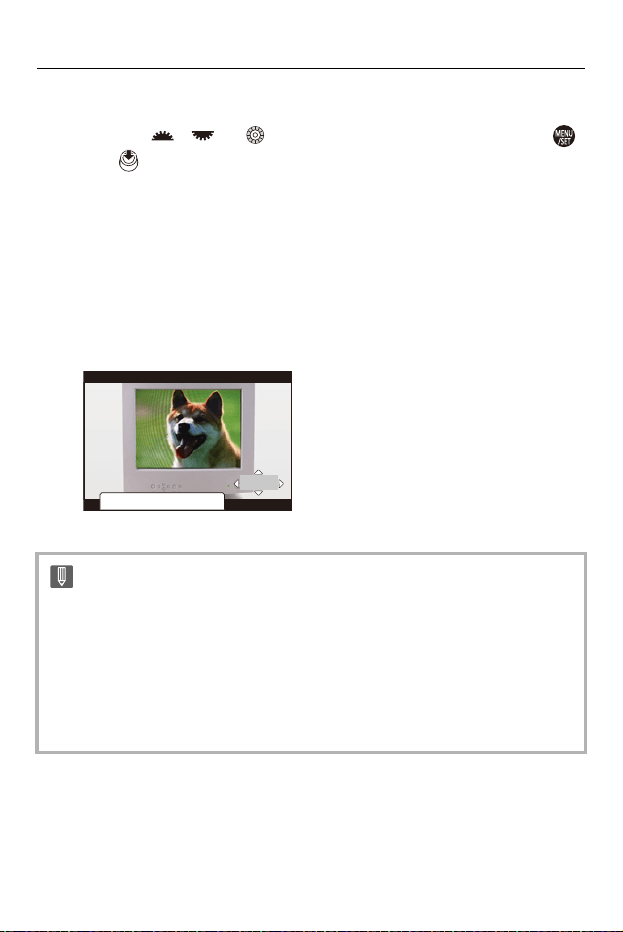
Drive / Shutter / Image Stabilizer – [Shutter Type]
313
4
Set the shutter speed.
≥Rotate , or to select a numeric value, then press
or .
•
The shutter speed can be set in the range between 1/48.0 and 1/8192.0 of a
second.
•
Press 34 to change the shutter speed in 1/4 TV intervals. Press 21 to
make fine adjustments.
•
You can call up the current shutter speed for normal recording by pressing
[DISP.].
•
Make adjustments to the shutter speed while looking at the screen until there
is no noticeable flickering or horizontal stripes.
•
There may be a difference between what you see on the recording screen and
the actual results of recording. We recommend shooting some tests beforehand.
•
To record video using the values set in [Synchro Scan(Photo)], set [Auto
Exposure in Photo Mode] to [OFF].
•
When the following function is being used, [Synchro Scan(Photo)] is not
available:
– [MECH.]
ュリヴヱハ
Current shutter speed
60.160.1
Drive / Shutter / Image Stabilizer – [Shutter Type]
314
[Min. Shutter Speed]
Sets the minimum shutter speed when the ISO sensitivity is set to [AUTO].
1
Set to [ ] mode.
(Photo/Video/S&Q Switch: 80)
2
Set [Min. Shutter Speed].
≥ [] [] [Min. Shutter Speed]
[AUTO]
The camera automatically sets the minimum shutter speed.
[1/16000] to [1/1]
•
The shutter speed may become slower than the set value in recording situations
where correct exposure cannot be achieved.
Drive / Shutter / Image Stabilizer – [Shutter Type]
315
[Shutter Delay]
To reduce camera shake and shutter-induced blur, the shutter is released
after the specified time has passed since the shutter button was pressed.
1
Set to [ ] mode.
(Photo/Video/S&Q Switch: 80)
2
Set [Shutter Delay].
≥ [] [] [Shutter Delay]
Settings: [8SEC]/[4SEC]/[2SEC]/[1SEC]/[OFF]
•
When the following functions are being used, [Shutter Delay] is not available:
– Video recording/SH burst recording
– High Resolution mode
– [Live View Composite]

Drive / Shutter / Image Stabilizer – Image Stabilizer
316
Image Stabilizer
≥ Image Stabilizer Settings: 319
This camera can use both the in-body image stabilizer and the in-lens
image stabilizer.
It is compatible with the Dual I.S.2 system that is an effective combination
of the 2 image stabilizers.
Furthermore, during video recording, you can use the 5-Axis Hybrid Image
Stabilizer that incorporates electronic stabilization.
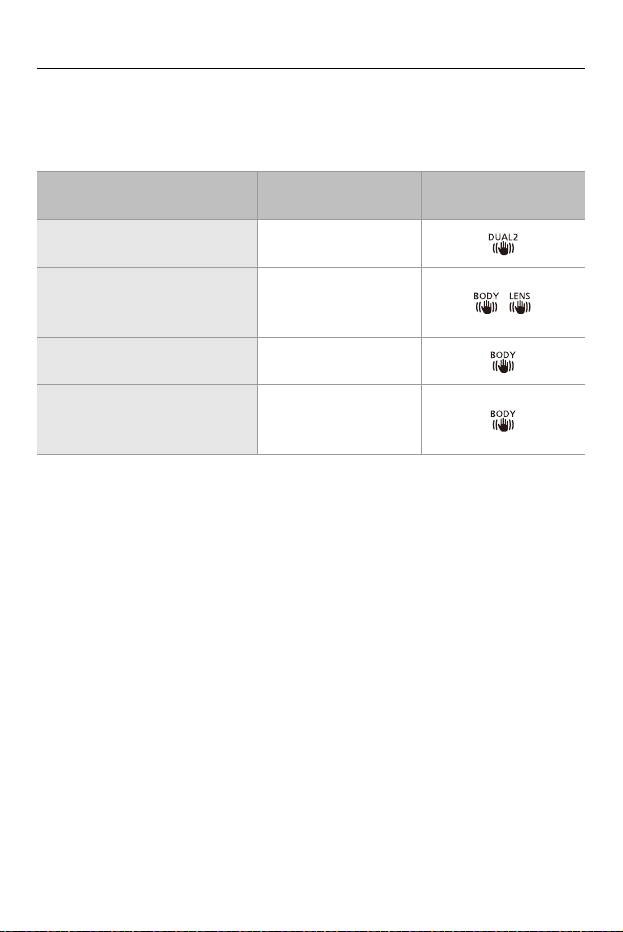
Drive / Shutter / Image Stabilizer – Image Stabilizer
317
Combinations of lenses and image stabilizers (As of May 2025)
Image stabilizers that can be used will differ depending on the attached
lens.
•
The 5-Axis Hybrid Image Stabilizer ([E-Stabilization (Video)]: 322) can be used
with any lenses.
Attached lens
Available image
stabilizer
Example of icon
Panasonic lenses with image
stabilization function
Body+Lens
(Dual I.S.2)
Other manufacturers’ lenses
with image stabilization
function
Body or Lens
/
Lenses without image
stabilizer function
Body
Lenses without function to
communicate with this
camera
Body
Drive / Shutter / Image Stabilizer – Image Stabilizer
318
Using the Image Stabilizer
•
When using a lens with an O.I.S. switch, set the switch on the lens to [ON].
•
When using a lens that does not have a communication function with this camera,
after turning on the camera, a message asking for confirmation of the lens
information is displayed.
Correctly operating the image stabilization function requires that the focal length be
set to match the attached lens.
Set the focal length in accordance as prompted by the message.
This can also be set using the menu. ([Lens Information]: 325)
•
When the shutter button is pressed halfway, the camera shake alert icon [ ]
may be displayed on the recording screen.
If this is displayed, we recommend using a tripod, the self timer or the Shutter
Remote Control (DMW-RS2: optional).
•
We recommend turning off the image stabilizer function when using a tripod.
•
The image stabilizer may cause vibration or produce operational sound during
operation, but these are not malfunctions.
•
When using a lens that does not have a communication function with this
camera, you can hide the message asking for confirmation of the lens
information that is displayed after turning on the camera:
([Lens Info. Confirmation]: 722)
•
You can display the reference point and check the camera shake status:
([I.S. Status Scope]: 709)
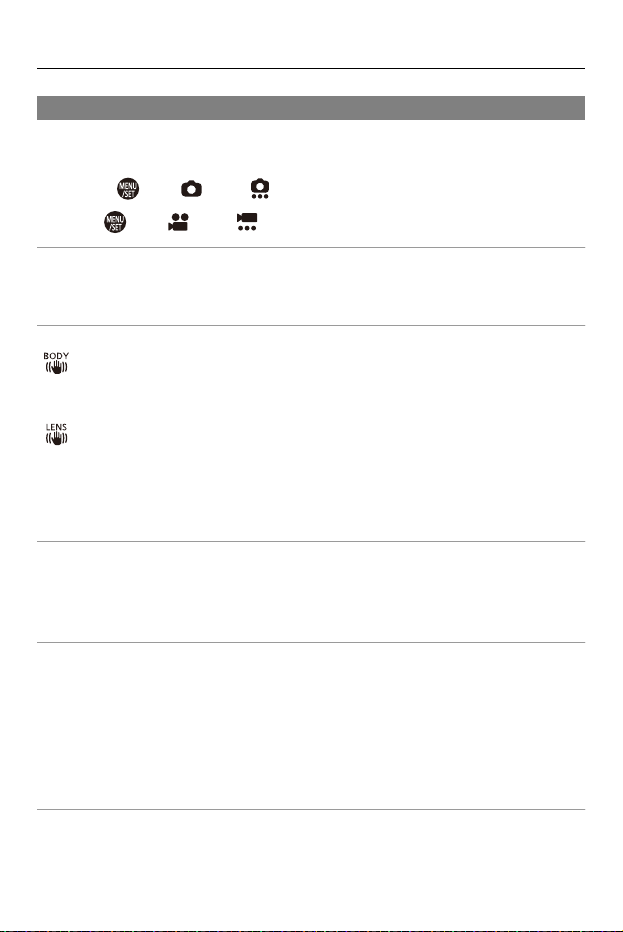
Drive / Shutter / Image Stabilizer – Image Stabilizer
319
Image Stabilizer Settings
Set the image stabilizer operation to match the recording situation.
Picture: [] [] Select [Image Stabilizer]
Video: [] [] Select [Image Stabilizer]
[Operation Mode]
Sets the stabilization movement (blur) to match the recording method (normal,
panning). ([Operation Mode]: 321)
[Body(B.I.S.) / Lens(O.I.S.)]
[ ] ([Body]): The in-body image stabilizer corrects for vertical rotation shake,
horizontal rotation shake, vertical translation shake, horizontal translation shake, and
optical axis shake.
[ ] ([Lens + Body (Roll)]): The in-lens image stabilizer corrects for vertical rotation
shake and horizontal rotation shake, while the in-body image stabilizer corrects for
optical axis shake.
•
This can be set when using other manufacturers’ lenses with an image stabilization
function.
[When to Activate]
[ALWAYS]: The image stabilizer is always operating.
[HALF-SHUTTER]: The image stabilizer operates when the shutter button is pressed
halfway.
[E-Stabilization (Video)]
The combination of in-lens, in-body, and electronic image stabilizers makes
corrections to 5 types of shake during video recording; vertical rotation shake,
horizontal rotation shake, vertical translation shake, horizontal translation shake, and
optical axis shake. The combination also makes corrections to the peripheral distortion
that readily occurs when you are using a wide-angle lens. (5-Axis Hybrid Image
Stabilizer) ([E-Stabilization (Video)]: 322)
Drive / Shutter / Image Stabilizer – Image Stabilizer
320
[Boost I.S. (Video)]
Increases the effectiveness of the image stabilizer during video recording.
This effect can help provide a stable composition when you want to perform recording
from a fixed perspective. ([Boost I.S. (Video)]: 323)
[Anamorphic (Video)]
You can switch to an image stabilizer that suits anamorphic recording. ([Anamorphic
(Video)]: 324)
[Lens Information]
When using a lens that does not have a communication function with the camera,
register the lens information in the camera. ([Lens Information]: 325)
•
When the following functions are being used, [When to Activate] is fixed to
[ALWAYS]:
– [ ] ([Body(B.I.S.) / Lens(O.I.S.)])
– [ ] mode
– [S&Q] mode
– Video recording
•
When the following functions are being used, [E-Stabilization (Video)] is not
available:
– [S&Q] mode
– [Live Cropping]
•
While you are using the following functions, [Cropless] in [E-Stabilization (Video)]
is not available:
– Other than [OFF] in [Anamorphic (Video)]
Drive / Shutter / Image Stabilizer – Image Stabilizer
321
[Operation Mode]
Set the stabilization movement (blur) to match the recording method
(normal, panning).
[Normal]
Corrects vertical, horizontal, and rotational camera shake.
This function is suitable for normal recording.
[Panning (Auto)]
Automatically detects the panning direction, and corrects vertical or horizontal camera
shake according to the detected axis.
This function is suitable for panning.
[Panning (Left/Right)]
Corrects vertical camera shake.
This is suitable for horizontal panning.
[Panning (Up/Down)]
Corrects horizontal camera shake.
This is suitable for vertical panning.
[OFF]
Turns the image stabilization function OFF.
•
Operation modes that can be used will differ depending on the used lenses and on
[Body(B.I.S.) / Lens(O.I.S.)] settings.
•
[Panning (Auto)] is not displayed when using other manufacturers’ lenses with an
image stabilization function with [Body(B.I.S.) / Lens(O.I.S.)] set to [ ]. Set to
either [Panning (Left/Right)] or [Panning (Up/Down)] to suit the panning direction.
•
When using lenses with an O.I.S. switch, the camera’s operation mode cannot be
set to [OFF]. Set the switch on the lens to [OFF].
Drive / Shutter / Image Stabilizer – Image Stabilizer
322
•
When the following functions are being used, [Operation Mode] switches to [ ]
([Normal]):
–[ ] mode
– [S&Q] mode
– Video recording
[E-Stabilization (Video)]
The combination of in-lens, in-body, and electronic image stabilizers
makes corrections to 5 types of shake during video recording; vertical
rotation shake, horizontal rotation shake, vertical translation shake,
horizontal translation shake, and optical axis shake. The combination also
makes corrections to the peripheral distortion that readily occurs when you
are using a wide-angle lens. (5-Axis Hybrid Image Stabilizer)
[HIGH]
Large shakes and peripheral distortion are corrected electronically.
The angle of view is narrower than [STANDARD].
•
[ ] is displayed on the screen during video recording.
[STANDARD]
Shakes and peripheral distortion are corrected electronically.
The angle of view is narrower.
•
[ ] is displayed on the screen during video recording.
[Cropless]
Electronically corrects peripheral distortion only.
•
[ ] is displayed on the screen during video recording.
•
This can be set when using a Panasonic interchangeable lens (S series).
[OFF]
Turns the electronic image stabilizer (video) OFF.
Drive / Shutter / Image Stabilizer – Image Stabilizer
323
[Boost I.S. (Video)]
Increase the effectiveness of the image stabilizer during video recording.
This effect can help provide a stable composition when you want to
perform recording from a fixed perspective.
Settings: [ON]/[OFF]
•
When [Boost I.S. (Video)] is operating, [ ] is displayed on the recording screen.
When [E-Stabilization (Video)] is set, the setting status is indicated with an icon such
as [ ]/[ ]/[ ].
•
To change composition while recording, first set this to [OFF] before moving the
camera.
To set this to [OFF] during recording, use the Fn button. (Fn Buttons: 646)
•
Longer focal lengths will result in weaker stabilization.
•
When set to [HIGH]/[STANDARD], there will be variations in the correction effect
depending on recording conditions such as the lens used, the focal length, the
video mode used for recording, etc.
•
When set to [Cropless], some vignetting may occur or the correction effect may
not be as expected depending on recording conditions such as the lens used, the
focal length, the video mode used for recording, etc.
•
Using [E-Stabilization (Video)] may cause a drop in resolution.
•
When [Body(B.I.S.) / Lens(O.I.S.)] is set to [ ], [Boost I.S. (Video)] is not
available.
Drive / Shutter / Image Stabilizer – Image Stabilizer
324
[Anamorphic (Video)]
You can switch to an image stabilizer that suits anamorphic recording.
Settings:
[ ]([2.0×])/[ ]([1.8×])/[ ]([1.5×])/[ ]([1.33×])/[ ]([1.30×])/
[OFF]
•
Make settings to suit the magnification of the anamorphic lens you are using.
•
While [Anamorphic (Video)] is functioning, the set magnification appears on the
image stabilizer icons on the recording screen, as shown by [ ] and [ ].
•
When [Boost I.S. (Video)] is set, [Boost I.S. (Video)] is prioritized.
•
When the following function is being used, [Anamorphic (Video)] is fixed to [OFF]:
– [ ] ([Body(B.I.S.) / Lens(O.I.S.)])
•
Image stabilizer functions on your lens may not work correctly. Turn off the image
stabilizer function on your lens if this is the case.

Drive / Shutter / Image Stabilizer – Image Stabilizer
325
[Lens Information]
Register the information for lenses that cannot communicate with the
camera.
Match the in-body image stabilizer with the information of the lens you
register.
Press 34 to select the lens information to use and then press or
.
•
In the default setting, the lens information for 6 lenses with a focal length of between
24 mm and 135 mm is registered.
The lens information for up to 12 lenses can be registered.
Registering, modifying, and deleting lens information
1 Press 34 to select the lens information and then press [DISP.].
•
If lens information that has not been registered is selected, press or
to proceed to Step 3.
2 Press 34 to select [Edit], [Sorting], or [Delete] and then press or .
•
You can change the display order of lens information by selecting [Sorting].
•
The lens information is deleted when you select [Delete].
•
You cannot delete the lens information for a lens that is being used.
3 Enter the lens Information.
•
The lens information changes if the lens information has already been
registered.
4 (If lens information that has not been registered is selected) Press [DISP.] to
register the lens information.

Drive / Shutter / Image Stabilizer – Image Stabilizer
326
[Focal Length]
Enter the focal length.
•
The live view images can be enlarged for display when you rotate .
[I.S. Area]
You can set the range of stabilisation for the image stabiliser so that vignetting does
not occur due to the image stabiliser.
[70%]/[80%]/[90%]/[100%]
•
Rotate to select the range of stabilisation, then press or to confirm.
•
When the four edges are selected by pressing 3421, the in-body image stabiliser
works and you can see if there is any vignetting. If vignetting has occurred, set again
to a smaller range.
[Lens Name]
Register the lens.
•
How to enter characters (Entering Characters: 108)
•
Up to a maximum of 30 characters can be entered.

327
Metering / Exposure / ISO
Sensitivity
This chapter describes recording modes for determining exposure and ISO
sensitivity.
≥ [Metering Mode]: 328
≥ Program AE Mode: 330
≥ Aperture-Priority AE Mode: 334
≥ Shutter-Priority AE Mode: 337
≥ Manual Exposure Mode: 340
≥ Preview Mode: 346
≥ Exposure Compensation: 348
≥ [Multiple Exposure]: 352
≥ Locking Focus and Exposure (AF/AE Lock): 354
≥ ISO Sensitivity: 356
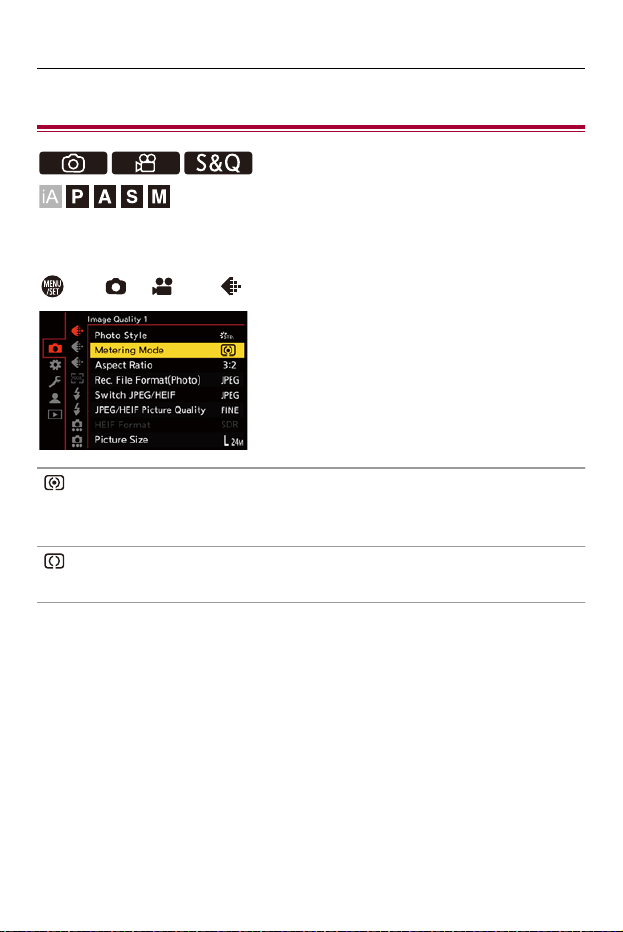
Metering / Exposure / ISO Sensitivity – [Metering Mode]
328
[Metering Mode]
Type of optical measurement to measure brightness can be changed.
[ ]/[ ] [] Select [Metering Mode]
[ ] (Multi-metering)
Method in which the most suitable exposure is measured by judging the allocation of
brightness on the whole screen.
[ ] (Center-weighted)
Method used to perform measuring which focuses on the center of the screen.
Metering / Exposure / ISO Sensitivity – [Metering Mode]
329
[ ] (Spot)
Method used to measure the extremely small part around the spot-metering target (A).
•
When you move the AF area, the spot metering target also moves to match.
[ ] (Highlight-weighted)
Method used to perform measuring which focuses on the highlighted parts of the
screen to prevent overexposure.
This is suitable for theatre photography, etc.
•
The standard value for standard exposure can be adjusted:
([Exposure Offset Adjust.]: 683)
•
You can assign the function that records with the metering mode set to [ ]
(Spot) once only to an Fn button:
([1 Shot Spot Metering]: 652)
(A)

Metering / Exposure / ISO Sensitivity – Program AE Mode
330
Program AE Mode
≥ Program Shift: 332
In [P] mode (Program AE mode), the camera automatically sets the shutter
speed and aperture value for the brightness of the subject.
You can also use Program Shift to change combinations of shutter speed
and aperture values while keeping the same exposure.
1
Set the recording mode to [P].
≥Set the mode dial. (Selecting the Recording Mode: 81)
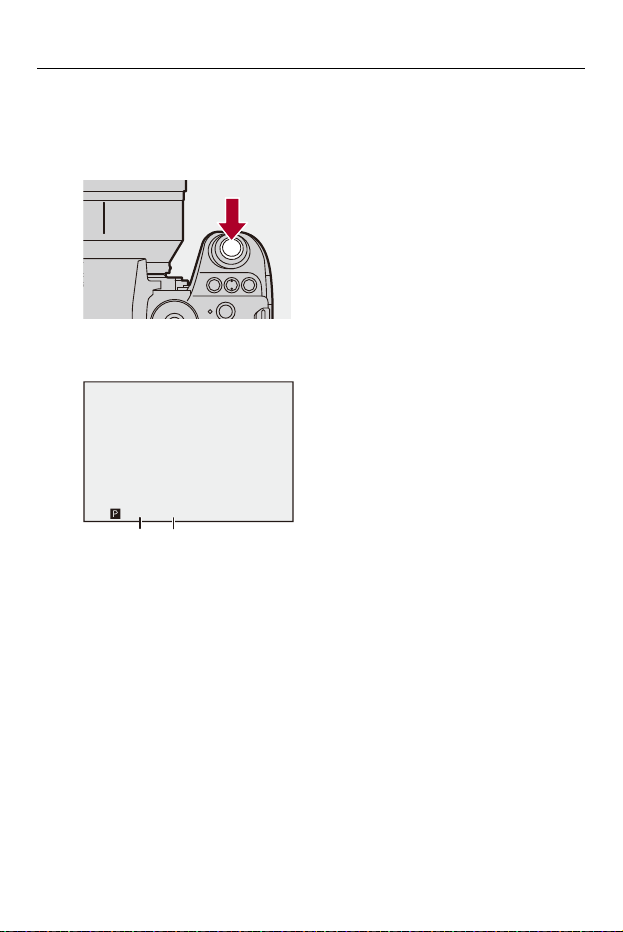
Metering / Exposure / ISO Sensitivity – Program AE Mode
331
2
Press the shutter button halfway.
≥This displays the aperture value and shutter speed value on the
recording screen.
•
If the correct exposure is not achieved, the aperture value (A) and shutter
speed (B) blink red.
3
Start recording.
F3.560
(A)(B)
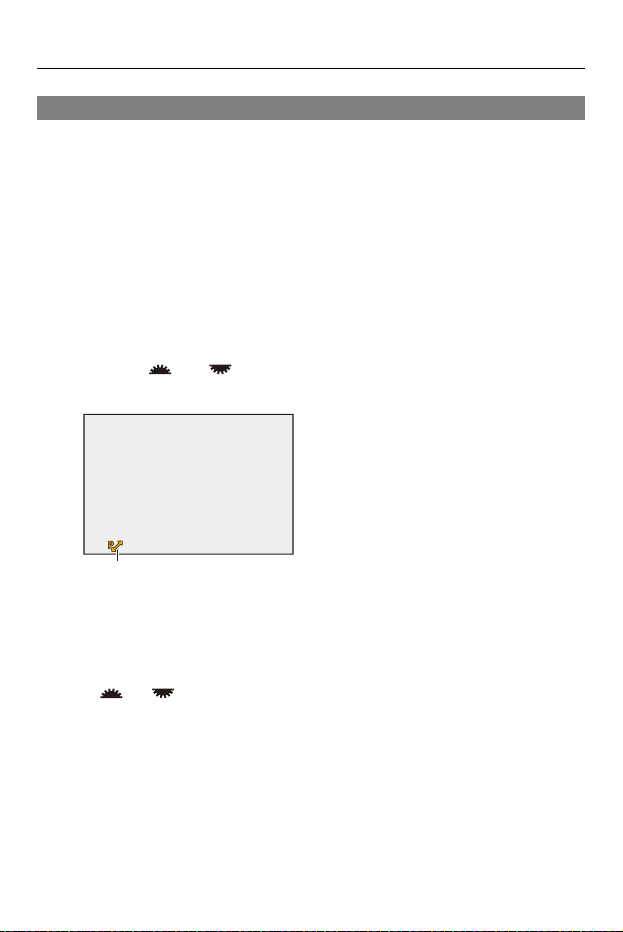
Metering / Exposure / ISO Sensitivity – Program AE Mode
332
Program Shift
You can change the shutter speed and aperture value combination set
automatically by the camera while maintaining the same exposure.
With this, you can, for example, make the background more defocused by
decreasing the aperture value or capture a moving subject more
dynamically by slowing the shutter speed.
1
Press the shutter button halfway.
•
This displays the aperture value and shutter speed value on the recording
screen. (Approx. 10 seconds)
2
Rotate or while the values are displayed.
•
This displays the Program Shift icon (C) on the recording screen.
3
Start recording.
Canceling Program Shift
•
Set the camera on/off switch to [OFF].
•
Rotate or until the Program Shift icon disappears.
F5.630
(C)
Metering / Exposure / ISO Sensitivity – Program AE Mode
333
•
Program Shift is not available when using the following function:
–Flash
•
You can customize dial operations:
([Dial Set.]: 698)
•
The recording screen can display an exposure meter indicating the relationship
between aperture value and shutter speed:
([Expo.Meter]: 707)
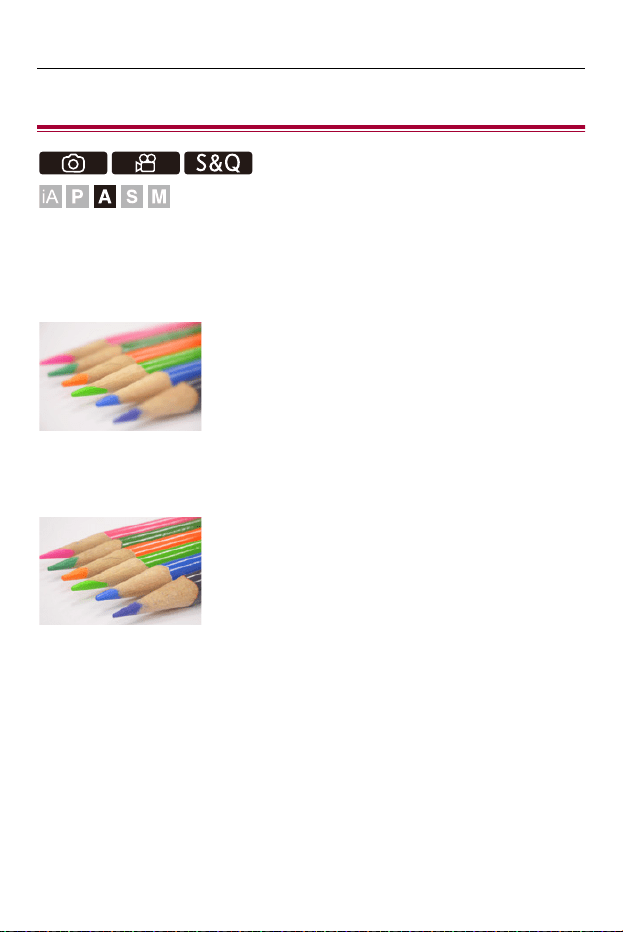
Metering / Exposure / ISO Sensitivity – Aperture-Priority AE Mode
334
Aperture-Priority AE Mode
In [A] mode (Aperture-Priority AE mode), you can set the aperture value
before recording.
The shutter speed will be automatically set by the camera.
Smaller aperture values
It becomes easier to defocus the background.
Larger aperture values
It becomes easier to bring everything into focus including the background.
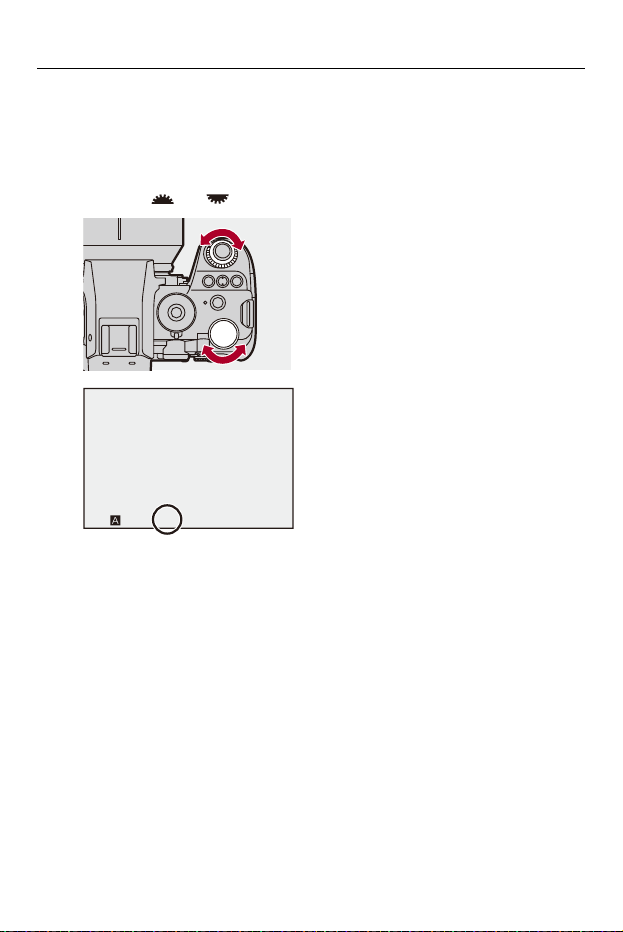
Metering / Exposure / ISO Sensitivity – Aperture-Priority AE Mode
335
1
Set the recording mode to [A].
≥Set the mode dial. (Selecting the Recording Mode: 81)
2
Set the aperture value.
≥Rotate or .
3
Start recording.
•
If the correct exposure is not achieved when the shutter button is pressed
halfway, the aperture value and the shutter speed blink red.
F8.0
F8.0
F8.0
Metering / Exposure / ISO Sensitivity – Aperture-Priority AE Mode
336
Depth of Field Characteristics
Aperture value Small Large
Focal length of lens Telephoto Wide-angle
Distance to subject Near More distant
Depth of field
(area in sharp focus)
Shallow (narrow)
Example: When you want
to take a image with a
defocused background.
Deep (wide)
Example: When you want
to take a image with focus
as far as the background.
•
The effects of the set aperture value and shutter speed will not be visible on the
recording screen.
To check the effects on the recording screen, use [Preview]. (Preview Mode:
346)
You can set the preview of the aperture effect to constantly operate in [A] mode
to check the depth of field while recording:
([Constant Preview]: 701)
•
The brightness of the recording screen and of actual recorded images may differ.
Check the images on the playback screen.
•
When using a lens with an aperture ring, set the position of the aperture ring to
other than [A] to use the aperture value of the lens.
•
You can customize dial operations:
([Dial Set.]: 698)
•
The recording screen can display an exposure meter indicating the relationship
between aperture value and shutter speed:
([Expo.Meter]: 707)
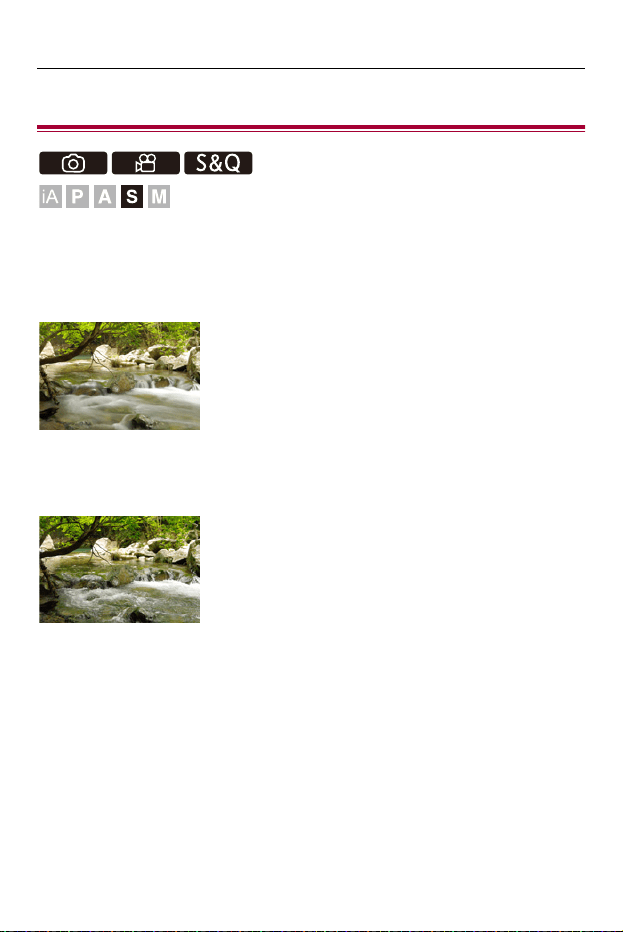
Metering / Exposure / ISO Sensitivity – Shutter-Priority AE Mode
337
Shutter-Priority AE Mode
In [S] mode (Shutter-Priority AE mode), you can set the shutter speed
before recording.
The aperture value will be automatically set by the camera.
Slower shutter speeds
It becomes easier to capture motion
Faster shutter speeds
It becomes easier to freeze motion
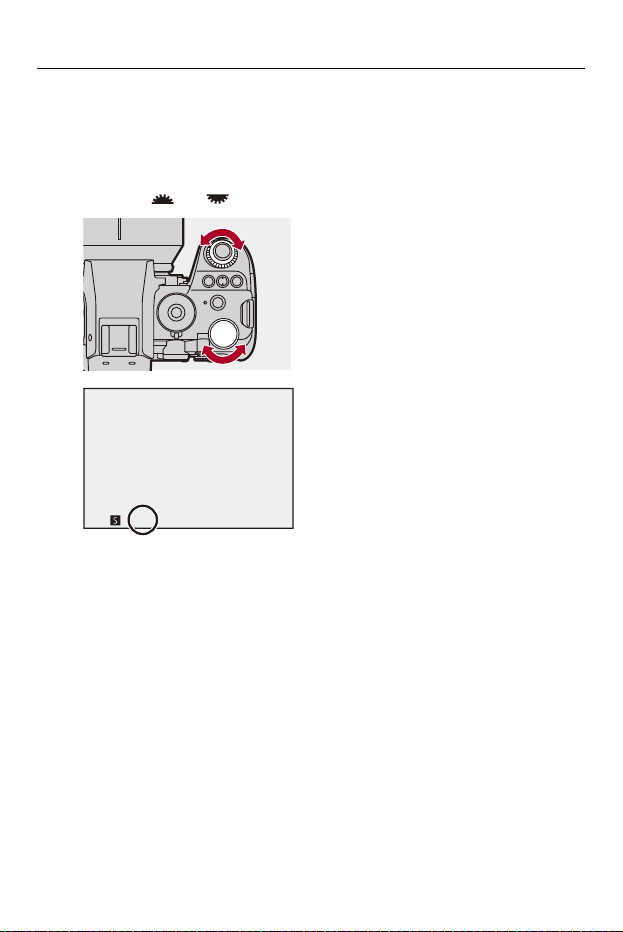
Metering / Exposure / ISO Sensitivity – Shutter-Priority AE Mode
338
1
Set the recording mode to [S].
≥Set the mode dial. (Selecting the Recording Mode: 81)
2
Set the shutter speed.
≥Rotate or .
3
Start recording.
•
If the correct exposure is not achieved when the shutter button is pressed
halfway, the aperture value and the shutter speed blink red.
250
250
250
Metering / Exposure / ISO Sensitivity – Shutter-Priority AE Mode
339
•
The effects of the set aperture value and shutter speed will not be visible on the
recording screen.
To check the effects on the recording screen, use [Preview]. (Preview Mode:
346)
•
The brightness of the recording screen and of actual recorded images may differ.
Check the images on the playback screen.
•
Shutter speeds faster than 1/250 of a second are not available when recording
using a flash. (Shutter Speeds for Flash Modes: 417)
•
You can customize dial operations:
([Dial Set.]: 698)
•
The recording screen can display an exposure meter indicating the relationship
between aperture value and shutter speed:
([Expo.Meter]: 707)

Metering / Exposure / ISO Sensitivity – Manual Exposure Mode
340
Manual Exposure Mode
≥ Available Shutter Speeds (Sec.): 343
≥ [B] (Bulb): 345
In [M] mode (Manual Exposure mode), you can record by manually setting
the aperture value and shutter speed.
In default settings, the ISO sensitivity is set to [AUTO].
As a result, the ISO sensitivity will be adjusted according to the aperture
value and shutter speed.
Exposure compensation can also be used when ISO sensitivity is set to
[AUTO].
1
Set the recording mode to [M].
≥Set the mode dial. (Selecting the Recording Mode: 81)
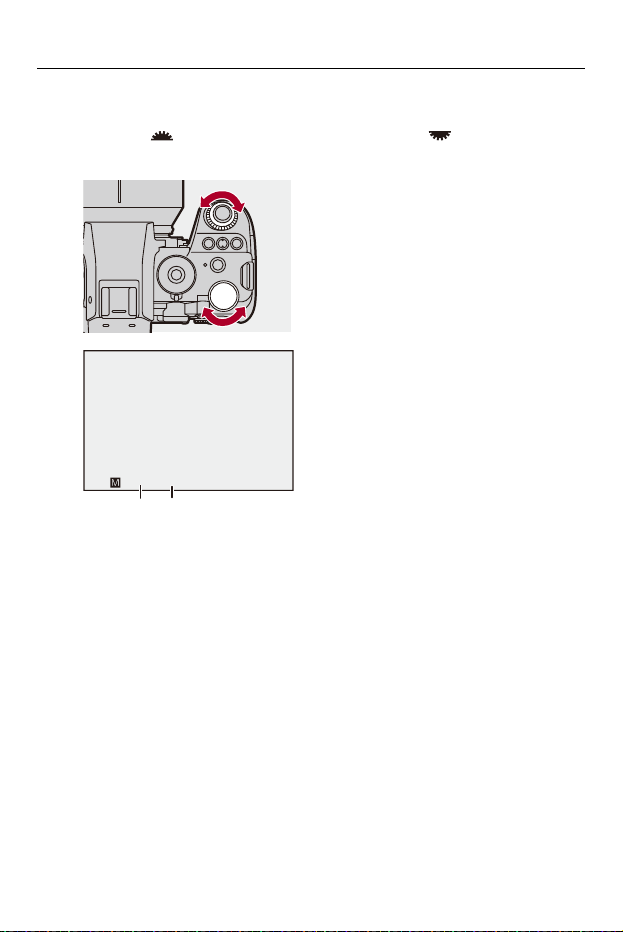
Metering / Exposure / ISO Sensitivity – Manual Exposure Mode
341
2
Set the aperture value and shutter speed.
≥Rotate to set the aperture value (A), and to set the shutter
speed (B).
3
Start recording.
•
If the correct exposure is not achieved when the shutter button is pressed
halfway, the aperture value and the shutter speed blink red.
F5.630
30
30
(A)(B)

Metering / Exposure / ISO Sensitivity – Manual Exposure Mode
342
Manual Exposure Assist
When ISO sensitivity is set to other than [AUTO], Manual Exposure Assist
(example: ) will be displayed on the recording screen.
You can check the difference between the current exposure value and the
standard exposure (±0) measured by the camera.
•
Use Manual Exposure Assist as a guide.
We recommend checking the images on the playback screen when recording.

Metering / Exposure / ISO Sensitivity – Manual Exposure Mode
343
Available Shutter Speeds (Sec.)
•
[MECH.]
[B] (Bulb, max. approx. 30 minutes), 60 to 1/8000
•
[EFC]
[B] (Bulb, max. approx. 30 minutes), 60 to 1/2000
•
[ELEC.]
[B] (Bulb, max. approx. 60 seconds), 60 to 1/16000

Metering / Exposure / ISO Sensitivity – Manual Exposure Mode
344
•
The effects of the set aperture value and shutter speed will not be visible on the
recording screen.
To check the effects on the recording screen, use [Preview]. (Preview Mode:
346)
You can set the preview of the aperture effect and the shutter speed effect to
constantly operate in [M] mode to check the depth of field and movement of the
subject while recording:
([Constant Preview]: 701)
•
The brightness of the recording screen and of actual recorded images may differ.
Check the images on the playback screen.
•
When using a lens with an aperture ring, set the position of the aperture ring to
other than [A] to use the aperture value of the lens.
•
Shutter speeds faster than 1/250 of a second are not available when recording
using a flash. (Shutter Speeds for Flash Modes: 417)
•
You can customize dial operations:
([Dial Set.]: 698)
•
The recording screen can display an exposure meter indicating the relationship
between aperture value and shutter speed:
([Expo.Meter]: 707)
Metering / Exposure / ISO Sensitivity – Manual Exposure Mode
345
[B] (Bulb)
If you set the shutter speed to [B] (Bulb), the shutter stays open while the
shutter button is pressed fully. (up to approx. 30 minutes)
The shutter closes when the shutter button is released.
Use this when you want to keep the shutter open for a long time to record
images of fireworks, night scenery or a starry sky.
•
We recommend using a tripod or the Shutter Remote Control (DMW-RS2:
optional) during bulb recording.
•
Bulb recording may create noticeable noise.
If you are concerned about noise, we recommend that you set [Long Exposure
NR] ([Long Exposure NR]: 311) to [ON] in the [Photo] ([Image Quality]) menu
before recording.
•
Bulb is not available when using the following functions:
– SH burst recording
– [Time Lapse Shot]
– [Stop Motion Animation] (when set to [Auto Shooting])
– High Resolution mode
– [Bracketing]
– [Live View Composite]

Metering / Exposure / ISO Sensitivity – Preview Mode
346
Preview Mode
You can check the effects of aperture on the recording screen by physically
closing the aperture blades of the lens to the aperture value set for actual
recording.
In addition to the effects of aperture, you can check the effects of shutter
speed at the same time.
1
Set to [ ] mode.
(Photo/Video/S&Q Switch: 80)
2
Register [Preview] to the Fn button.
(Fn Buttons: 646)
3
Check the aperture effect.
≥Press the Fn button set in Step
2
.
•
Each press of the button switches between the effect preview screens.
Aperture effect: OFF
Shutter speed effect: OFF
Aperture effect: ON
Shutter speed effect: OFF
Aperture effect: ON
Shutter speed effect: ON

Metering / Exposure / ISO Sensitivity – Preview Mode
347
•
It is possible to record in preview mode.
•
Range for shutter speed effect check is 8 seconds to 1/8000 of a second.
•
Depending on the [Constant Preview] setting, there are preview screens that
cannot be displayed.
•
You can always confirm the effects of aperture on the recording screen when in
[A]/[M] mode:
([Constant Preview]: 701)
•
You can assign the function that enables you to view the aperture effect just while
the button is being pressed to an Fn button:
([Preview Aperture Effect]: 656)
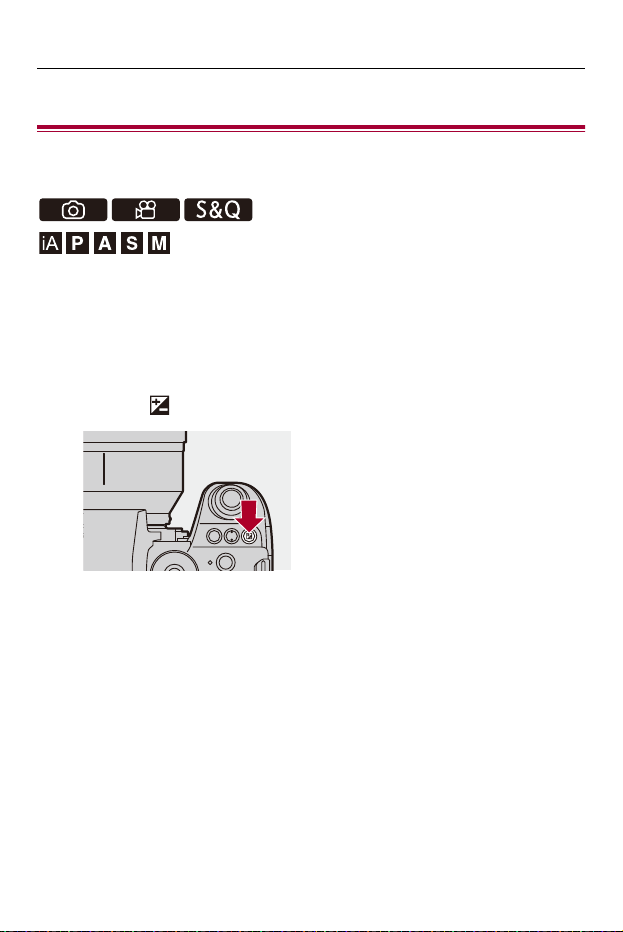
Metering / Exposure / ISO Sensitivity – Exposure Compensation
348
Exposure Compensation
≥ [i.Dynamic Range]: 351
You can compensate the exposure when the standard exposure
determined by the camera is too bright or too dark.
You can adjust the exposure in 1/3 EV steps in a range of ±5 EV.
When recording videos, the range changes to ±3 EV.
1
Press [ ].
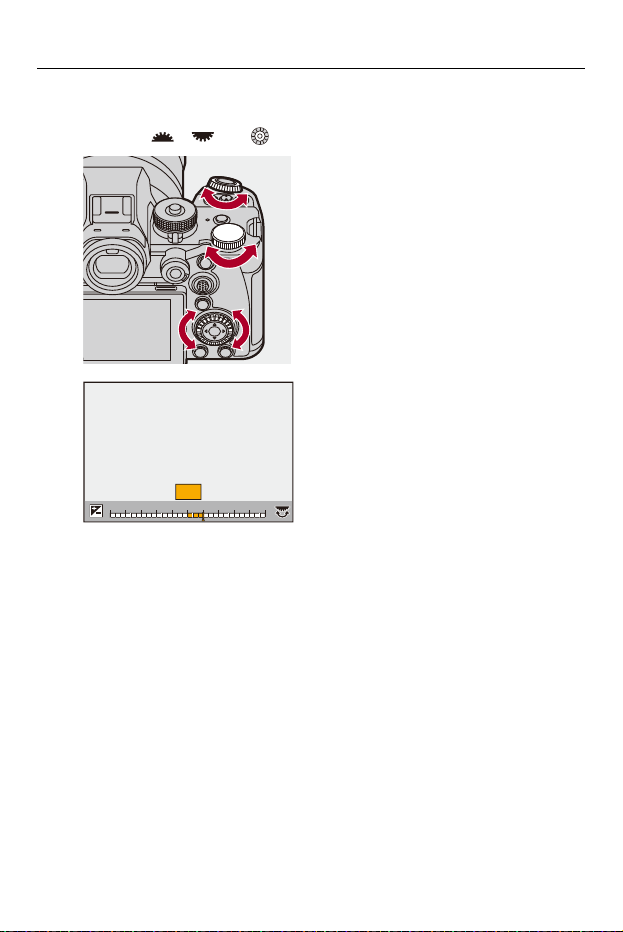
Metering / Exposure / ISO Sensitivity – Exposure Compensation
349
2
Compensate the exposure.
≥Rotate , , or .
3
Confirm your selection.
≥Press the shutter button halfway.
+3+3+1+1 +2+2 +3+3
-
5
-
5
-
4
-
4
-
3
-
3
-
2
-
2
-
1
-
100
+5+5+4+4
+
+
1

Metering / Exposure / ISO Sensitivity – Exposure Compensation
350
•
In [M] mode, you can compensate the exposure by setting the ISO sensitivity to
[AUTO].
•
When the exposure compensation value falls below or exceeds ±3 EV, the
brightness of the recording screen will no longer change.
Press the shutter button halfway or use AE Lock to reflect the value on the
recording screen.
•
The set exposure compensation value is stored even if you turn off the camera.
•
When [Dynamic Range Boost] is set to [ON] and [Photo Style] is set to [V-Log],
the exposure compensation value on the minus side is limited to -2 EV.
•
The standard value for standard exposure can be adjusted:
([Exposure Offset Adjust.]: 683)
•
You can set the exposure compensation value to be reset when the camera is
turned off:
([Exposure Comp. Reset]: 685)
•
You can change the operation of the [ ] button:
([WB/ISO/Expo. Button]: 697)
•
Exposure Bracket can be set and flash output can be adjusted on the exposure
compensation screen:
([Exposure Comp. Disp. Setting]: 697)
•
You can assign the function that matches the aperture value and shutter speed to
the standard exposure to an Fn button:
([One Push AE]: 653)
Metering / Exposure / ISO Sensitivity – Exposure Compensation
351
[i.Dynamic Range]
Contrast and exposure are compensated when the brightness difference
between the background and subject is great.
[ ]/[ ] [] Select [i.Dynamic Range]
Settings: [AUTO]/[HIGH]/[STANDARD]/[LOW]/[OFF]
•
Compensation effect may not be achieved depending on the recording
conditions.
•
When the following functions are being used, [i.Dynamic Range] is not available:
– [Like709]/[V-Log]/[REAL TIME LUT]/[Like2100(HLG)]/[Like2100(HLG) Full
Range] ([Photo Style])
– [Filter Settings]
– [Live View Composite]
Metering / Exposure / ISO Sensitivity – [Multiple Exposure]
352
[Multiple Exposure]
You can apply an effect equivalent to four exposures on a single image.
1
Set to [ ] mode.
(Photo/Video/S&Q Switch: 80)
2
Set [Multiple Exposure].
≥ [] [] [Multiple Exposure]
[Start]
Starts exposure for multiple exposures.
[Auto Gain]
Automatically adjusts brightness in accordance with image count.
[Overlay]
Allows multiple exposure for recorded RAW images. After selecting [Start], a
selection screen for images to stack is displayed.
Metering / Exposure / ISO Sensitivity – [Multiple Exposure]
353
•
After selecting [Start], pressing the shutter button fully starts multiple exposure.
•
Preview is displayed for each recording, and the following operations are available:
– [Next] (You can also perform the same operation by pressing the shutter button
halfway.)
–[Retake]
– [Exit]: Records the picture, and finishes multiple exposure recording.
•
Recording the picture will automatically stop multiple exposure recording.
•
To finish multiple exposure recording before starting the recording, press [Q] on the
recording screen.
•
Recording information for the last-recorded image will be saved as recording
information for images recorded with multiple exposures.
•
[Overlay] can be set only for RAW images recorded with the camera.
•
For RAW images recorded using the following functions, [Overlay] cannot be set:
– [65:24]/[2:1] ([Aspect Ratio])
– High Resolution mode
•
When the following functions are being used, [Multiple Exposure] is not available:
– [Time Lapse Shot]
– [Stop Motion Animation]
– High Resolution mode
– [Filter Settings]
– [Live View Composite]
– HDMI output
•
When using APS-C lenses, [Multiple Exposure] is not available.
l
y
u
Metering / Exposure / ISO Sensitivity – Locking Focus and Exposure (AF/AE Lock)
354
Locking Focus and Exposure (AF/AE Lock)
Lock the focus and exposure in advance to take pictures with the same
focus and exposure settings while changing the composition.
This is useful when you want to bring an edge of the screen into focus or
there is a backlight, for example.
1
Register [AE LOCK], [AF LOCK], or [AF/AE LOCK] to the
Fn button.
(Fn Buttons: 646)
•
These cannot be registered to [Fn4] to [Fn8].
[AE LOCK]
The exposure is locked.
[AF LOCK]
The focus is locked.
[AF/AE LOCK]
Both focus and exposure are locked.
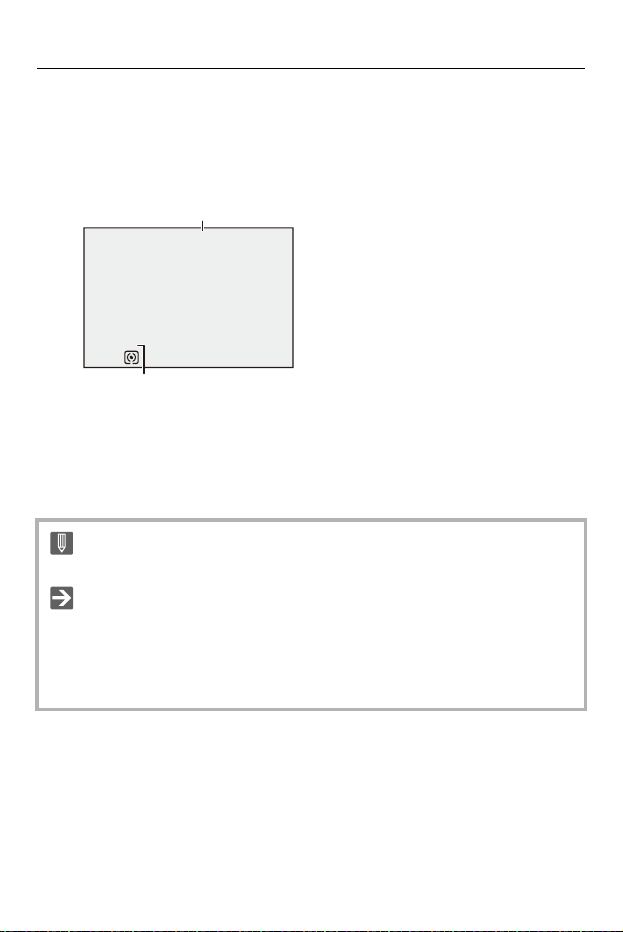
Metering / Exposure / ISO Sensitivity – Locking Focus and Exposure (AF/AE Lock)
355
2
Lock focus and exposure.
≥Press and hold the Fn button.
≥If focus is locked, then the AF lock icon (A) will be displayed.
≥If exposure is locked, then the AE lock icon (B) will be displayed.
3
Hold the Fn button to decide on the composition and
then perform recording.
≥Press the shutter button fully.
•
Program Shift can be set even when AE is locked.
•
You can maintain lock even without pressing and holding the Fn button:
([AF/AE Lock Hold]: 687)
•
You can make fine manual adjustments to the focus during AF Lock:
([AF+MF]: 688)
AFLAFL
AELAEL
(A)
(B)
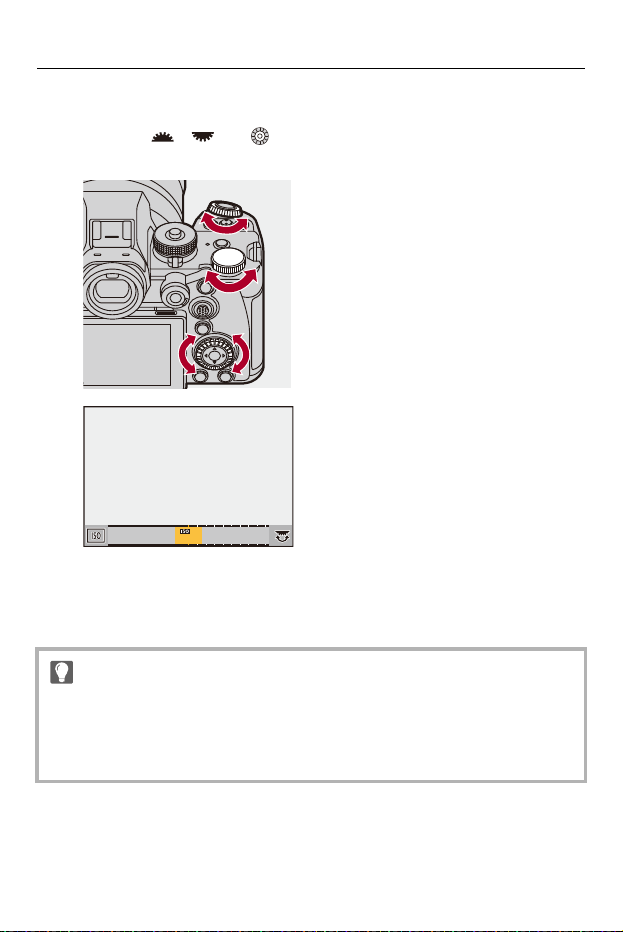
Metering / Exposure / ISO Sensitivity – ISO Sensitivity
357
2
Select ISO sensitivity.
≥Rotate , , or .
≥Selection is also possible by pressing [ISO].
3
Confirm your selection.
≥Press the shutter button halfway.
Characteristics of the ISO Sensitivity
By increasing the ISO sensitivity, the shutter speed can be increased in dark places
to prevent camera shake and subject blur. However, higher ISO sensitivities also
increase the amount of noise in the recorded images.
1
00
1
00
2
00
2
00
4
0
4
0
AUTO
AUTO

Metering / Exposure / ISO Sensitivity – ISO Sensitivity
358
Setting Items (ISO Sensitivity)
[AUTO]
The ISO sensitivity is automatically adjusted according to the brightness.
•
Taking picture: Maximum [6400]
*1
•
Video recording: Maximum [12800]
*2
[100] to [51200]
The ISO sensitivity is fixed at the selected value.
•
The available ISO sensitivity range changes according to the setting of [Dual Native
ISO Setting] in the [Photo]/[Video] ([Image Quality]) menu. ([Dual Native ISO
Setting]: 361)
•
You can extend the ISO sensitivity range in between a lower limit of [50] and an
upper limit of [204800] by setting [Extended ISO] ([Extended ISO]: 682) to [ON] in
the [Custom] ([Image Quality]) menu.
*1 Default setting. The upper limit can be changed with [ISO Sensitivity (photo)].
*2 Default setting. The upper limit can be changed with [ISO Sensitivity (video)].

Metering / Exposure / ISO Sensitivity – ISO Sensitivity
359
•
When the following functions are being used, the ISO sensitivity that can be set is
restricted.
– High Resolution mode: Up to an upper limit of [3200]
– [Filter Settings]: Up to an upper limit of [6400]
– [Dynamic Range Boost]: Up to an upper limit of [25600]
– [Multiple Exposure]: Down to a lower limit of [100], up to an upper limit of [6400]
– [Cinelike A2]/[Cinelike D2]/[Cinelike V2] ([Photo Style]): Down to a lower limit of
[200]
(The lower limit changes to [100] when [Extended ISO] is set.)
– [Like709] ([Photo Style]): Down to a lower limit of [100]
– [V-Log] ([Photo Style]): Down to a lower limit of [640], up to an upper limit of
[51200]
(The lower limit changes to [320] when [Extended ISO] is set.)
When [Dynamic Range Boost] is set to [ON]: Down to a lower limit of [1000], up to
an upper limit of [25600] (The lower limit changes to [500] when [Extended ISO] is
set.)
– [Standard(HLG)]/[Monochrome(HLG)]/[Like2100(HLG)]/[Like2100(HLG) Full
Range] ([Photo Style]): Down to a lower limit of [400]
When [Dynamic Range Boost] is set to [ON]: Up to an upper limit of [25600]
– [Live View Composite]: Down to a lower limit of [100], up to an upper limit of [3200]
(The lower limit changes to [50] when [Extended ISO] is set.)
•
When [Photo Style] is set to [REAL TIME LUT], the range of ISO sensitivity levels
you can use depends on the base Photo Style of the applied LUT file.

Metering / Exposure / ISO Sensitivity – ISO Sensitivity
360
•
You can set upper and lower limits for ISO Auto:
([ISO Sensitivity (photo)]: 363, [ISO Sensitivity (video)]: 444)
•
You can change the intervals between ISO sensitivity settings values:
([ISO Increments]: 682)
•
The setting range of ISO sensitivity can be extended:
([Extended ISO]: 682)
•
You can set the lower limit for shutter speed for ISO Auto:
([Min. Shutter Speed]: 314)
•
You can change the operation of the [ISO] button:
([WB/ISO/Expo. Button]: 697)
•
You can set the upper limit for ISO Auto on the ISO sensitivity settings screen:
([ISO Displayed Setting]: 697)
•
You can change the units for sensitivity to dB when recording video:
([SS/Gain Operation]: 480)
Metering / Exposure / ISO Sensitivity – ISO Sensitivity
361
[Dual Native ISO Setting]
You can set whether to switch the base sensitivity automatically or to fix it.
[ ]/[ ] [] Select [Dual Native ISO Setting]
[AUTO]
The base sensitivity is automatically switched according to the brightness.
•
ISO sensitivity can be set within the following ranges:
– [AUTO] / [100] to [51200]
– When [Extended ISO] is set: [AUTO] / [50] to [204800]
[LOW]
Sets the base sensitivity for low sensitivity.
•
ISO sensitivity can be set within the following ranges:
– [AUTO] / [100] to [800]
– When [Extended ISO] is set: [AUTO] / [50] to [800]
[HIGH]
The base sensitivity is automatically switched according to the brightness.
•
ISO sensitivity can be set within the following ranges:
– [AUTO] / [800] to [51200]
– When [Extended ISO] is set: [AUTO] / [400] to [204800]

Metering / Exposure / ISO Sensitivity – ISO Sensitivity
362
•
[Dual Native ISO Setting] is fixed to [AUTO] in the following cases:
– [iA] mode
– High Resolution Mode (When [Photo Style] is set to [V-Log] or [REAL TIME
LUT] (base Photo Style is [V-Log]))
– [Live View Composite] (When [Photo Style] is set to [V-Log] or [REAL TIME
LUT] (base Photo Style is [V-Log]))
Metering / Exposure / ISO Sensitivity – ISO Sensitivity
363
[ISO Sensitivity (photo)]
Sets the lower and upper limits for ISO sensitivity when ISO sensitivity is
set to [AUTO].
1
Set to [ ] mode.
(Photo/Video/S&Q Switch: 80)
2
Set [ISO Sensitivity (photo)].
≥ [] [] [ISO Sensitivity (photo)]
[ISO Auto Lower Limit Setting]
Sets the lower limit for ISO sensitivity when ISO sensitivity is [AUTO].
•
Set in the range between [100] and [25600].
[ISO Auto Upper Limit Setting]
Sets the upper limit for ISO sensitivity when ISO sensitivity is [AUTO].
•
Set to [AUTO] or in the range between [200] and [51200].
•
When the following function is being used, [ISO Sensitivity (photo)] is not
available:
– [Live View Composite]

364
White Balance / Image Quality
This chapter describes functions that enable you to record images how you
imagine them, such as white balance and Photo Style.
≥ White Balance (WB): 365
≥ [Photo Style]: 373
≥ [Filter Settings]: 388
≥ [REAL TIME LUT]: 394
≥ [LUT Library]: 396
≥ HLG Recording (HEIF Format): 403
≥ Lens Compensation: 405
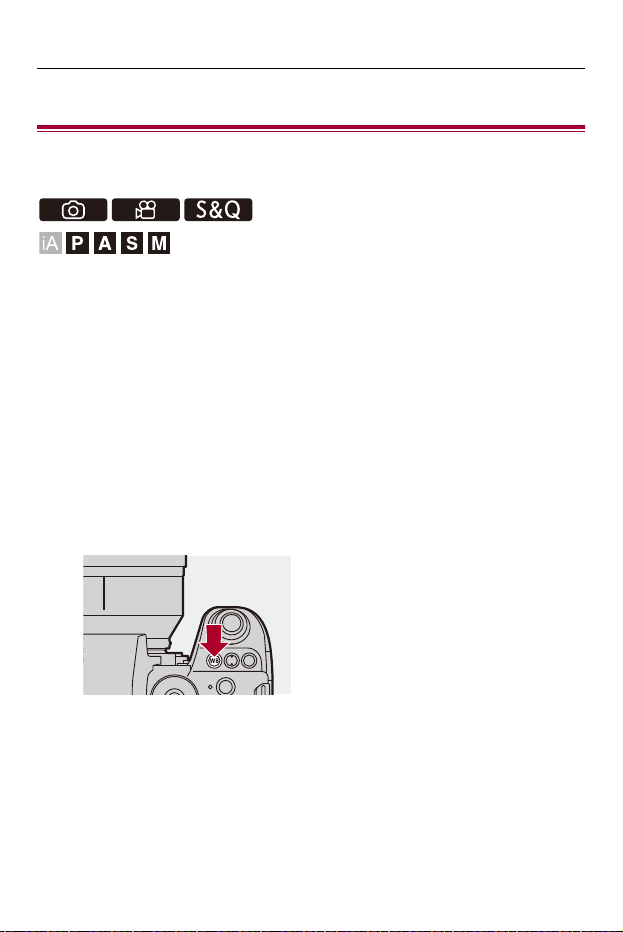
White Balance / Image Quality – White Balance (WB)
365
White Balance (WB)
≥ Adjusting the White Balance: 371
White balance (WB) is a function that corrects the color cast produced by
the light illuminating the subject.
It corrects the colors so that white objects appear in white to make the
overall color closer to what is seen by the eye.
Normally, you can use auto ([AI-AWB]
*
, [AWB], [AWBc] or [AWBw]) to
obtain the optimal white balance.
Set this function when the coloring of the image is different from what you
expected, or you want to change the coloring to capture the ambience.
* [AI-AWB] can be set when RAW processing. ([RAW Processing]: 620)
1
Press [WB].
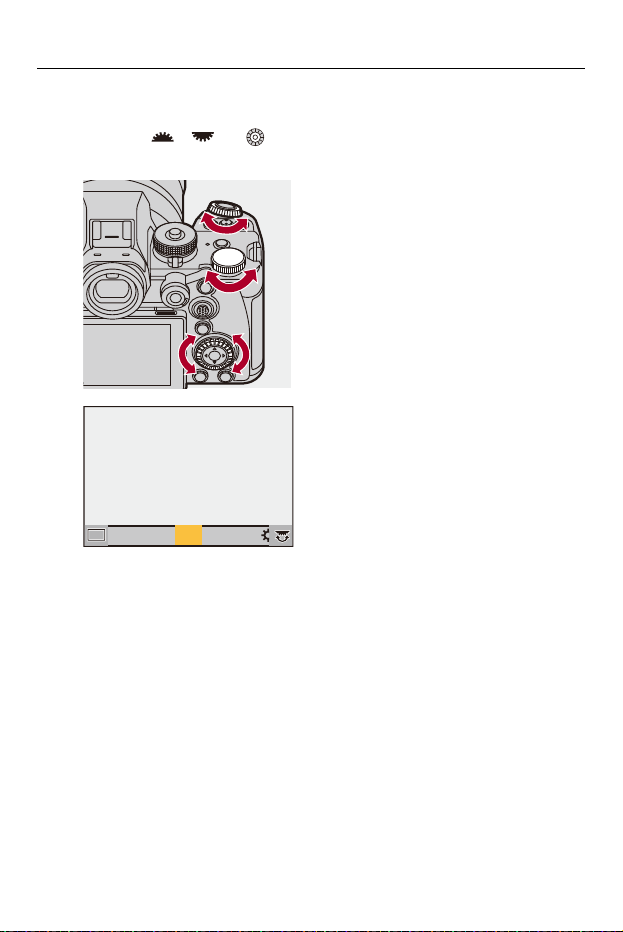
White Balance / Image Quality – White Balance (WB)
366
2
Select the white balance.
≥Rotate , or .
≥Selection is also possible by pressing [WB].
3
Confirm your selection.
≥Press the shutter button halfway.
AWBc
AWBc
AWBw
AWBw
WB
WBWBWB
WBWBWBWBWBWBWB
AWB
AWB
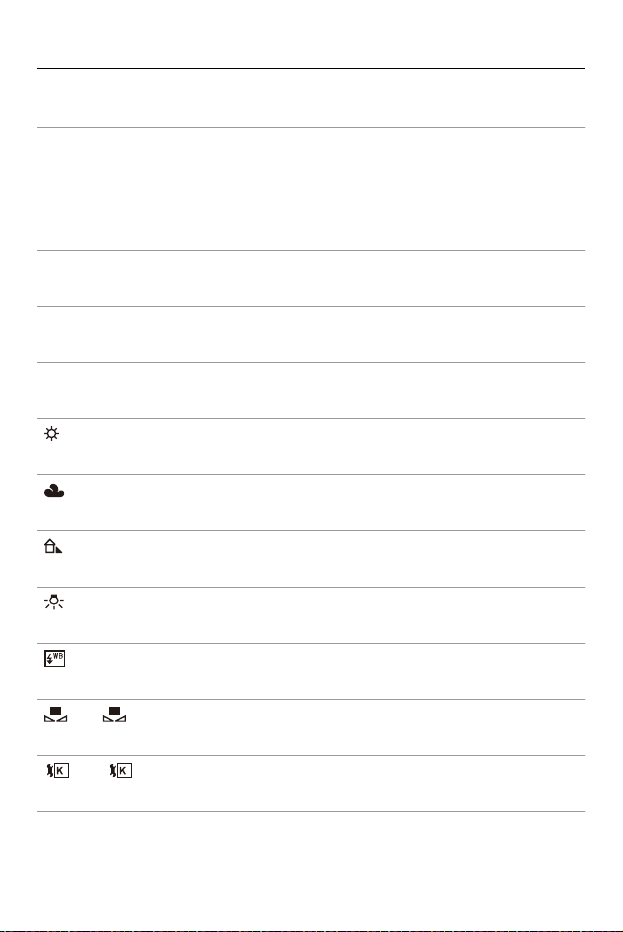
White Balance / Image Quality – White Balance (WB)
367
Setting Items (White Balance)
[AI-AWB]
Auto (In scenes where there are multiple light sources, such as incandescent lights
and sunlight, automatic detection is done for each area, and adjusts to the optimal
coloring.)
•
[AI-AWB] can be set when RAW processing. ([RAW Processing]: 620)
[AWB]
Auto
[AWBc]
Auto (Reduces the reddish hue under an incandescent light source)
[AWBw]
Auto (Leaves the reddish hue under an incandescent light source)
[]
Clear sky
[]
Cloudy sky
[]
Shade under a clear sky
[]
Incandescent light
[]
*
Flash
[] to []
Set mode 1 to 4 (Registering the White Set: 370)
[] to []
Color temperatures 1 to 4 (Color Temperature Setting: 370)
* It operates as [AWB] during video recording.
1
4
1
4
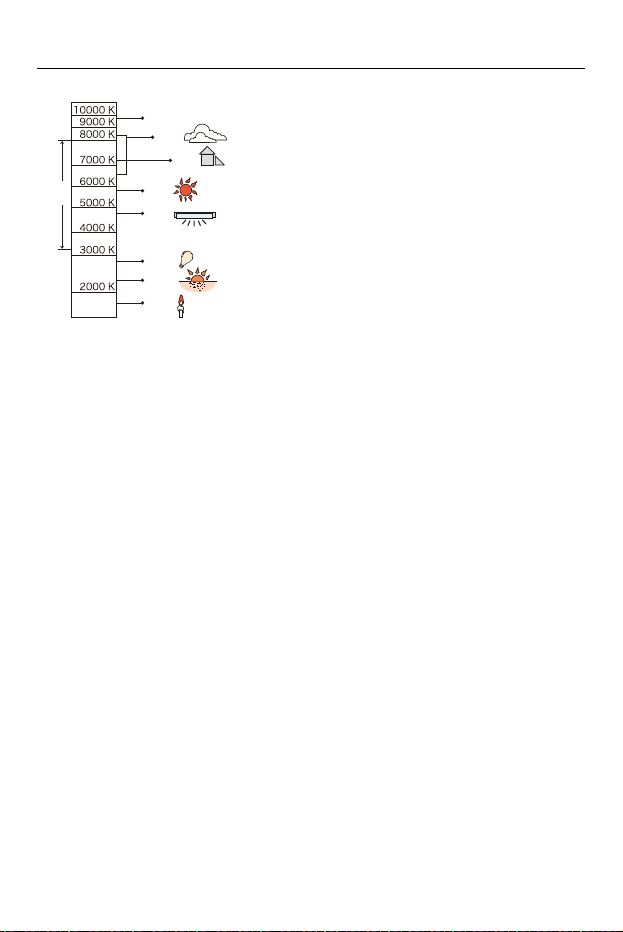
White Balance / Image Quality – White Balance (WB)
368
(1) [AWB] will work within this range.
(2) Blue sky
(3) Cloudy sky (Rain)
(4) Shade
(5) Sunlight
(6) White fluorescent light
(7) Incandescent light bulb
(8) Sunrise and sunset
(9) Candlelight
K=Kelvin Color Temperature
(1)
(5)
(6)
(7)
(8)
(9)
(4)
(3)
(2)
White Balance / Image Quality – White Balance (WB)
369
•
Under lighting such as fluorescent or LED lighting, the appropriate white balance
will vary depending on the lighting type.
Use [AWB], [AWBc], [AWBw] or [ ] to [ ].
•
The white balance is fixed to [AWB] while [Filter Settings] is being used.
•
It is possible to temporarily lock auto white balance:
([AWB Lock Setting]: 684)
•
You can change the operation of the [WB] button:
([WB/ISO/Expo. Button]: 697)
1
4
White Balance / Image Quality – White Balance (WB)
370
Registering the White Set
Take pictures of a white object under the light source of the recording
location to adjust the white balance until it appears white.
1 Press [WB] and then select any value from [ ] to [ ].
2 Press 3.
3 Aim the camera at a white object so that it appears inside the frame at the center
of the screen and then press or .
•
This will set the white balance and return you to the recording screen.
Color Temperature Setting
Set the numeric value for the white balance color temperature.
1 Press [WB] and then select any value from [ ] to [ ].
2 Press 3.
•
The color temperature setting screen is displayed.
3 Press 34 to select the color temperature and then press or .
•
You can set the White Balance Bracket (Color Temperature) by rotating ,
or . ([More Settings] (White Balance Bracket (Color Temperature)):
300)
•
You can set a color temperature from [2500K] to [10000K].
•
In [ ]/[S&Q] mode, the kelvin values are displayed on the recording screen.
1
4
1
4
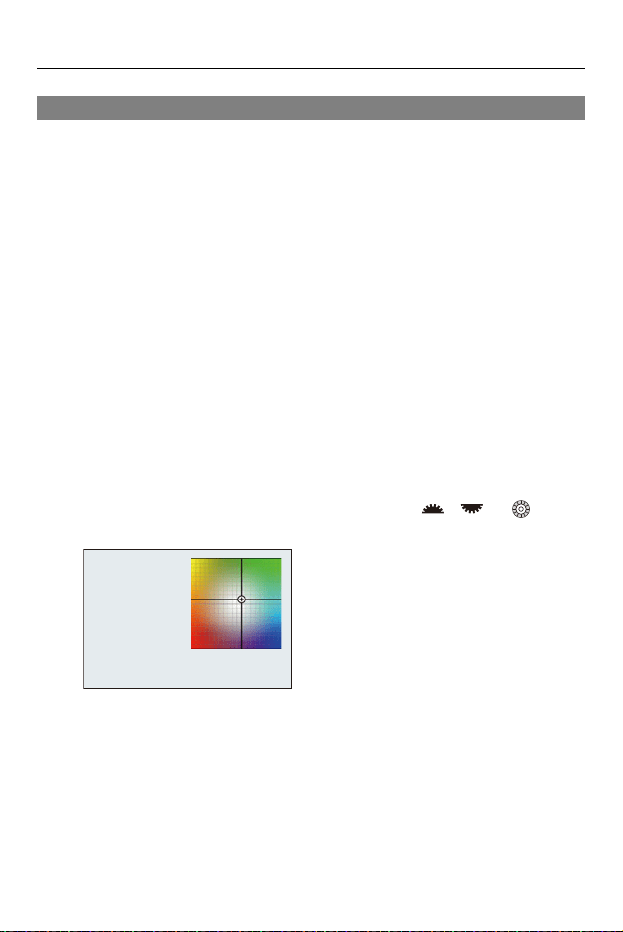
White Balance / Image Quality – White Balance (WB)
371
Adjusting the White Balance
You can adjust the coloring even when the coloring you want to apply is not
produced by the selected white balance.
1
Press [WB].
2
Select the white balance and then press 4.
≥The adjustment screen is displayed.
3
Adjust the coloring.
2: [A] (AMBER: ORANGE)
3: [G] (GREEN: GREENISH)
1: [B] (BLUE: BLUISH)
4: [M] (MAGENTA: REDDISH)
•
You can also make adjustments in diagonal directions by using the joystick.
•
You can also touch the graph to make adjustments.
•
Press [DISP.] to return to the unadjusted state.
•
You can set the White Balance Bracket by rotating , or .
([More Settings] (White Balance Bracket): 300)
GGGGGG
MMMMMM
AAAAAABBBBBBB

White Balance / Image Quality – White Balance (WB)
372
4
Confirm your selection.
≥Press the shutter button halfway.
•
When the white balance is adjusted, the color of its recording screen icon
changes to the adjusted color.
Adjusting toward the [G] side will display [+], while adjusting toward the [M] side
will display [−].
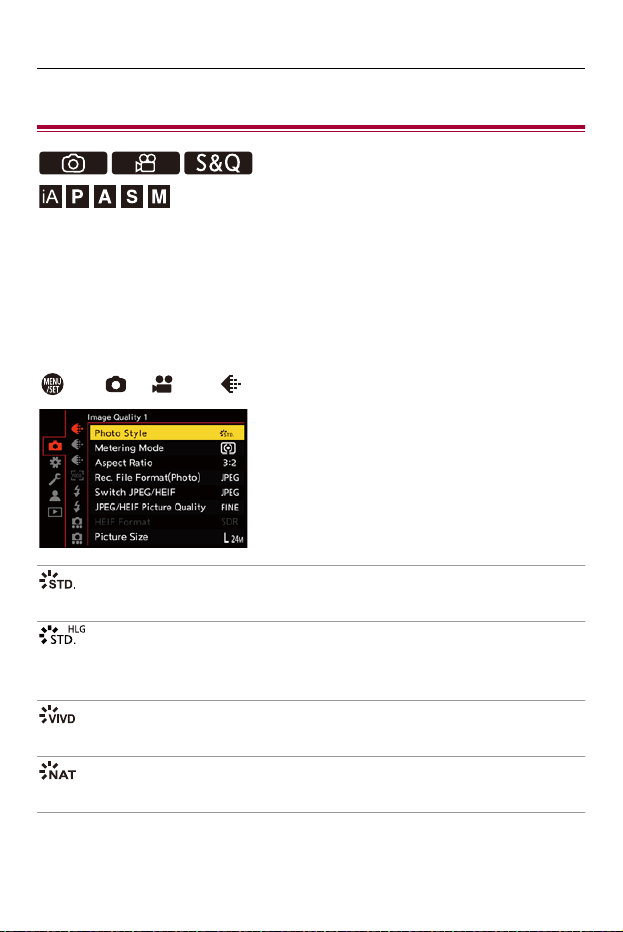
White Balance / Image Quality – [Photo Style]
373
[Photo Style]
You can select the finishing settings of images to suit your subjects and
expression styles.
The image quality can be adjusted for each Photo Style.
You can also apply the LUT file you have loaded in the camera and record
pictures and videos.
[ ]/[ ] [] Select [Photo Style]
[Standard]
The standard setting.
[Standard(HLG)]
The standard setting.
•
This can be selected when [HEIF Format] is set to [HDR(HLG)].
[Vivid]
A setting that produces a more vivid quality with higher saturation and contrast.
[Natural]
A setting that produces a softer quality with lower contrast.
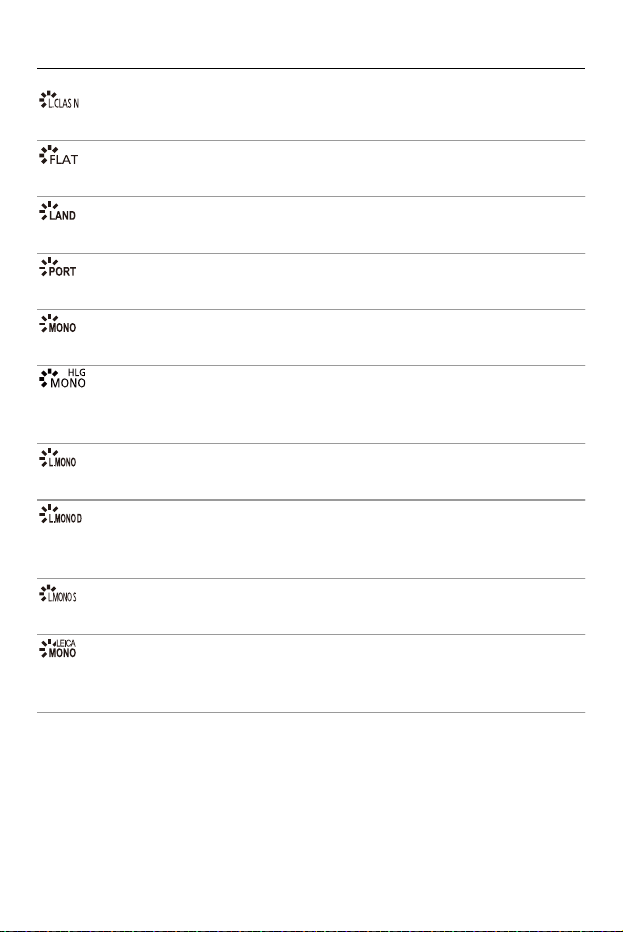
White Balance / Image Quality – [Photo Style]
374
[L.ClassicNeo]
A setting for a film-like effect that has a nostalgic, soft coloring.
[Flat]
A setting that produces a flatter image quality with lower saturation and contrast.
[Landscape]
A setting suited for sceneries with vivid blue skies and greens.
[Portrait]
A setting suited for portraits with a healthy and beautiful skin tone.
[Monochrome]
A monochrome setting with no color shades.
[Monochrome(HLG)]
A monochrome setting with no color shades.
•
This can be selected when [HEIF Format] is set to [HDR(HLG)].
[L.Monochrome]
A monochrome setting with rich gradation and crisp black accents.
[L.Monochrome D]
A monochrome setting that creates a dynamic impression with enhanced highlights
and shadows.
[L.Monochrome S]
A setting for a monochrome effect with a gentle touch suited to portraits.
[LEICA Monochrome]
A setting mode that realizes Leica monochrome mode, featuring deep contrasts
between black and white.

White Balance / Image Quality – [Photo Style]
375
[Cinelike A2]
A setting with a gamma curve that prioritizes a balance between dynamic range and
contrast, and that uses a neutral color tone to create a film-like finishing touch.
[Cinelike D2]
A setting that creates a film-like finishing touch using a gamma curve and gives priority
to the dynamic range.
[Cinelike V2]
A setting that creates a film-like finishing touch using a gamma curve that gives priority
to the contrast.
[Like709]
A setting that minimizes overexposure by applying a gamma curve correction
equivalent to Rec.709 to perform compression (knee adjustment) of high-luminance
areas. (Recording While Controlling Overexposure (Knee): 442)
•
Rec.709 is an abbreviation of “ITU-R Recommendation BT.709”, a standard for
high-definition broadcasting.
[V-Log]
A gamma curve setting intended for post-production processing. (Log Recording:
527)
•
It allows you to add rich gradation to images during post-production editing.
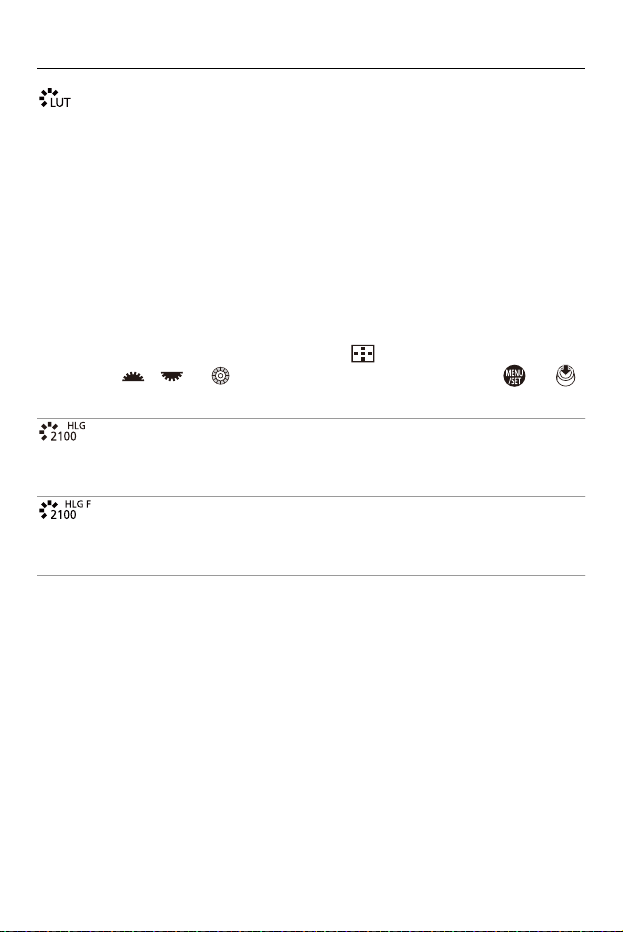
White Balance / Image Quality – [Photo Style]
376
[REAL TIME LUT]
You can apply the LUT file that was registered in [LUT Library]. ([LUT Library]: 396)
•
[Sample LUT1] is applied in the default setting.
•
The Photo Style acting as the base is set automatically by the applied LUT file. (If
there is no base Photo Style information in the LUT file, you can select [V-Log].)
Use My Photo Style when you want to change the Photo Style that will act as the
base.
•
The Photo Style can also be changed to [REAL TIME LUT] in the recording screen
by pressing the Fn button assigned with [REAL TIME LUT]. ([REAL TIME LUT]:
394)
Selecting the LUT file to apply
1 Press 34 to select [LUT] and then press [ ].
2 Rotate , or to select the LUT file to apply, then press or .
3 Press the shutter button or video rec. button to start recording.
[Like2100(HLG)]
*1
A setting used to record HLG format video. (HLG Videos: 534)
•
[Luminance Level] is fixed to [64-940].
[Like2100(HLG) Full Range]
*1, 2
A setting used to record HLG format video. (HLG Videos: 534)
•
[Luminance Level] is fixed to [0-1023].

White Balance / Image Quality – [Photo Style]
377
[MY PHOTO STYLE 1]
*2
to [MY PHOTO STYLE 10]
*2
Adjusts the image quality of Photo Style items to your preferred settings and registers
these as My Photo Style items. (Registering Settings in My Photo Style: 386)
•
Effects up to [MY PHOTO STYLE 4] are displayed with the default settings.
Applying a LUT file
With image quality adjustments, you can apply up to 2 LUT files registered in the [LUT
Library]. ([LUT Library]: 396)
•
When applying 2 LUT files, the images with LUT1 applied have LUT2 applied.
•
The Photo Style will be the base Photo Style of the applied LUT file (LUT1 if 2 LUT
files are applied).
When applying a LUT file created with image editing software, select the [Photo
Style] that is the same as the Photo Style used as the base when creating it.
When you select a different [Photo Style], the images may not be displayed or
recorded correctly.
•
[ ] switches to [ ] when [LUT1] or [LUT2] is applied in image quality
adjustments.
*1 Can only be selected when in the [ ]/[S&Q] mode and set to a 10-bit [Rec
Quality]. ([Rec Quality]: 150)
*2 You can set the items to display in the menu with [Show/Hide Photo Style] in
[Photo Style Settings]. ([Photo Style Settings]: 681)

White Balance / Image Quality – [Photo Style]
378
•
In [iA] mode, operation differs from that in other recording modes.
– [Standard] or [Monochrome] can be set.
– The setting will be reset to [Standard] when the camera is switched to another
recording mode or it is turned off.
– Image quality cannot be adjusted.
•
The range of available ISO sensitivities is different when [Photo Style] is set to
the following (Setting Items (ISO Sensitivity): 358):
– [Cinelike A2]/[Cinelike D2]/[Cinelike V2]/[Like709]/[V-Log]/[REAL TIME LUT]
(base Photo Style is [V-Log])/[Standard(HLG)]/[Monochrome(HLG)]/
[Like2100(HLG)]/[Like2100(HLG) Full Range]
The range of available ISO sensitivities is also different for [LOW] and [HIGH] in
[Dual Native ISO Setting].
Reset the exposure if necessary when ISO sensitivity changes.
•
You can set the knee mode with [Like709]. (Recording While Controlling
Overexposure (Knee): 442)
•
When [LUT] is set to [OFF] in the image quality adjustments of [REAL TIME
LUT], [Photo Style] will operate the same as the Photo Style that acts as the
base.
•
When [Filter Settings] is being used, [Photo Style] is not available.
•
You can make detailed Photo Style settings:
([My Photo Style Settings]: 681)
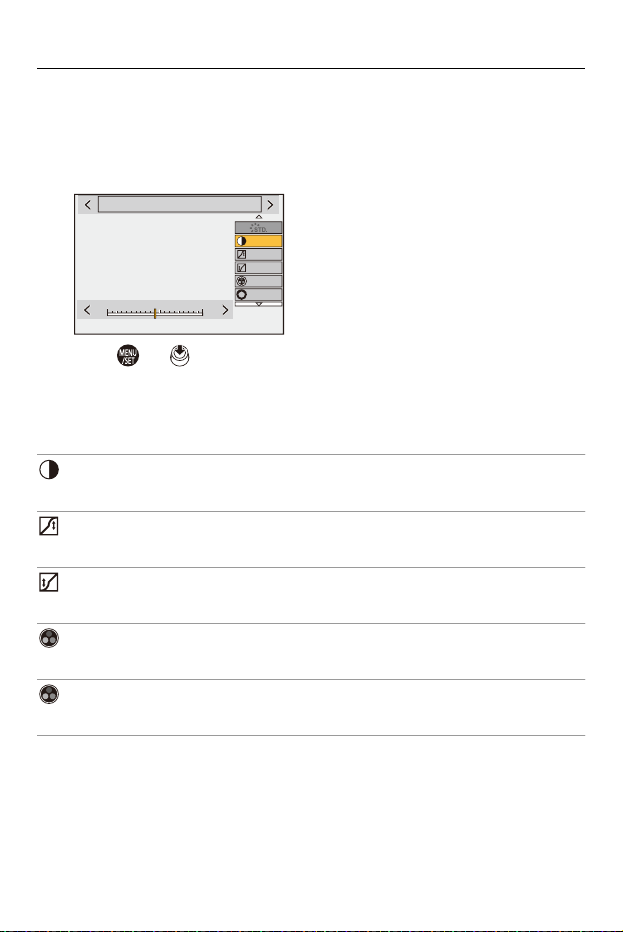
White Balance / Image Quality – [Photo Style]
379
Adjusting Image Quality
1 Press 21 to select the type of Photo Style.
2 Press 34 to select an item and then press 21 to adjust.
•
Adjusted items are indicated with [¢].
3 Press or .
•
When the image quality is adjusted, the Photo Style icon on the recording
screen is indicated with [¢].
Settings Items (Image Quality Adjustment)
[Contrast]
Adjusts the contrast in the image.
[Highlight]
Adjusts the brightness of bright areas.
[Shadow]
Adjusts the brightness of dark areas.
[Saturation]
Adjusts the vividness of colors.
[Color Tone]
Adjusts blue and yellow tints.
-
5
-
500
+5+5
±0
±0
±0
±0
±0
6WDQGDUG
White Balance / Image Quality – [Photo Style]
380
[Hue]
Assuming that the reference point is red, this rotates the hue toward violet/magenta or
yellow/green to adjust the coloring of the entire image.
[Filter Effect]
[Yellow]: Enhances the contrast. (Effect: weak) Records the sky with a clear blue.
[Orange]: Enhances the contrast. (Effect: medium) Records the sky with a darker
blue.
[Red]: Enhances the contrast. (Effect: strong) Records the sky with a much darker
blue.
[Green]: Skin and lips of people appear in natural tones. Green leaves appear brighter
and more enhanced.
[Off]
[Grain Effect]
[Low]/[Standard]/[High]: Sets the grain effect level.
[Off]
[Color Noise]
[On]: Adds color to the grain effect.
[Off]
[Sharpness]
Adjusts the outlines in the image.
[Noise Reduction]
Adjusts the noise reduction effect.
•
Increasing the effect may cause a slight drop in picture resolution.
S
White Balance / Image Quality – [Photo Style]
381
[Dual Native ISO Setting]
*3
Sets the Dual Native ISO. ([Dual Native ISO Setting]: 361)
[Sensitivity]
*3
Sets the ISO sensitivity. (ISO Sensitivity: 356)
[White Balance]
*3
Sets the white balance. (White Balance (WB): 365)
•
While [WB] is selected, press [ ] to display the white balance setting screen.
Press [ ] again to return to the original screen.
[LUT]
Applies the preset or the LUT file that was registered in [LUT Library]. ([LUT Library]:
396)
1 Select either [REAL TIME LUT] or one of [MY PHOTO STYLE 1] to [MY PHOTO
STYLE 10] in [Photo Style].
2 Press 34 to select [LUT] and then press [ ].
3 Rotate to select the LUT file to apply, then press or .
[LUT Opacity]
Adjusts the LUT file effect.
*3 Available when the following is set while [MY PHOTO STYLE 1] to [MY PHOTO
STYLE 10] are selected:
[] [] [Photo Style Settings] [My Photo Style Settings] [Add
Effects] [Sensitivity]/[White Balance] [ON]
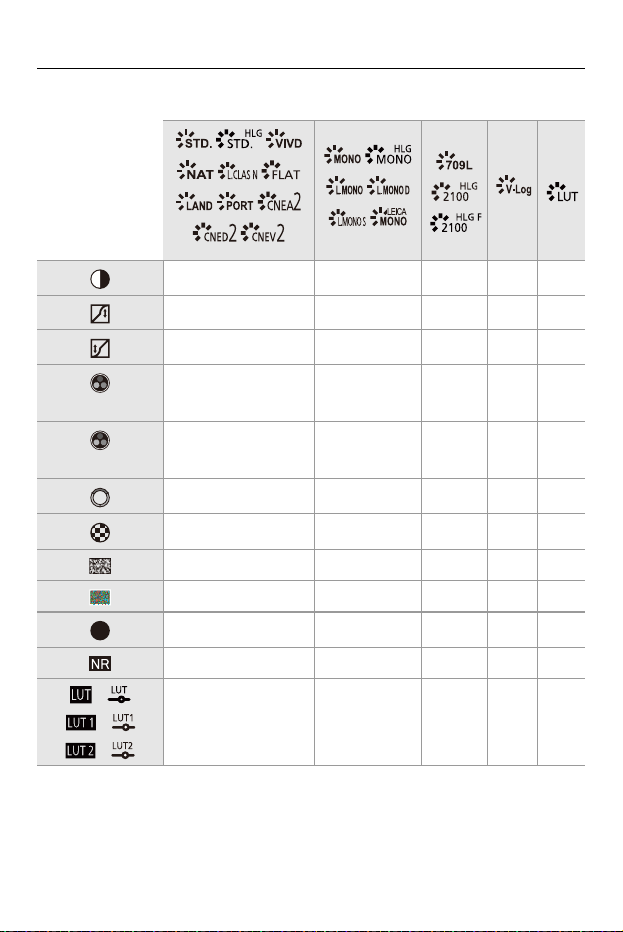
White Balance / Image Quality – [Photo Style]
382
•
The items that you can adjust the image quality for depend on the Photo Style type.
*4
*4
*4
([Saturation])
*5
([Color Tone])
*4
*4
*5
*6
*6
*5, 6
*4, 6
/
/
/
*7
*7
*7
*7
S

White Balance / Image Quality – [Photo Style]
383
*4 Adjustment may not be possible depending on the base Photo Style.
*5 Can be set when a LUT file is applied with My Photo Style.
*6 Can be set when [Grain Effect] is one of [Low], [Standard], or [High].
*7 You can set up to 2 LUT files when the [Photo Style] is My Photo Style.
•
The effects of [Grain Effect] and [Color Noise] cannot be checked on the
recording screen in the [ ] mode.
•
When recording video, we recommend shooting some tests beforehand in order
to check the effects of [Grain Effect].
•
When viewing recorded video on a TV, the [Grain Effect] may appear to be wavy
depending on the settings for frame interpolation on the TV. If this occurs, set
frame interpolation on the TV to OFF.
•
[LUT] cannot be applied to RAW images. When [Rec. File Format(Photo)] is set
to [RAW] for recording, a LUT file can be applied only to the live view and
thumbnail displays in the playback screen.
•
[Grain Effect] is not available when using the following functions:
– Video recording in [ ] mode
– [S&Q] mode
– [Proxy Recording]
– [Streaming]
– High Resolution mode
– [Rec Quality] exceeding a resolution of C4K
•
[Grain Effect] may not be available depending on the combination of [Rec
Quality] and the settings.
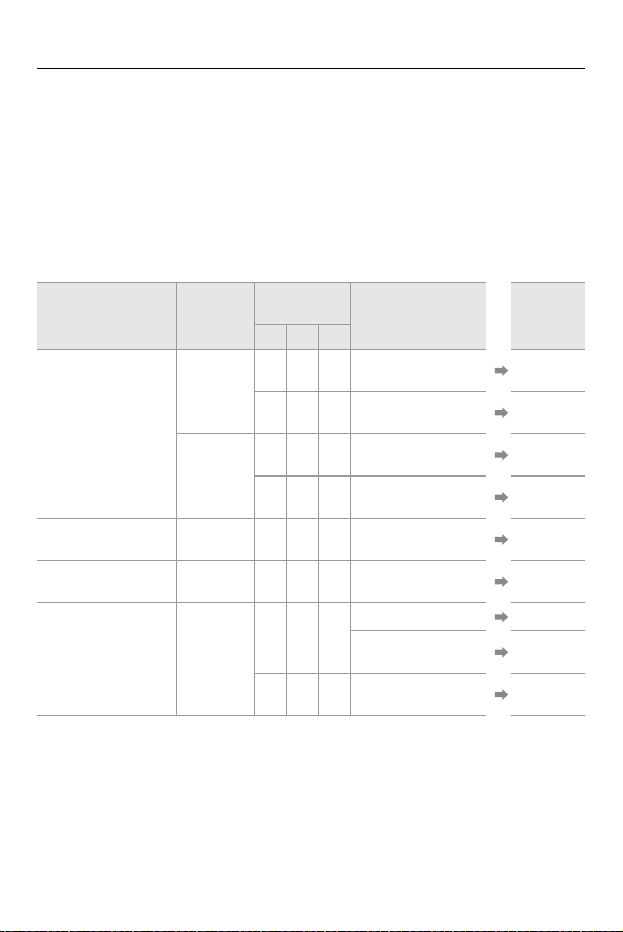
White Balance / Image Quality – [Photo Style]
384
Range Properties When Recording with a LUT File
Applied
The following table shows the range properties for videos recorded with
LUT files applied in Photo Style:
(A) MP4
(B) MOV
(C) Apple ProRes 422HQ/422
Base Photo Style of
[REAL TIME LUT]/
My Photo Style
LUT file
applied
[Rec. File
Format(Video)]
[Luminance Level]
Range
property
(A) (B) (C)
[V-Log]
[Vlog_709]
Fixed to [16-255]
([64-1023])
Video
range
Fixed to [64-940]
Video
range
Other than
[Vlog_709]
Fixed to [0-255]
([0-1023])
Full range
Fixed to [64-940]
Video
range
[Like2100(HLG)] All Fixed to [64-940]
Video
range
[Like2100(HLG) Full
Range]
All Fixed to [0-1023] Full range
Other than the above All
[0-255]([0-1023]) Full range
[16-235]([64-940])/
[16-255]([64-1023])
Video
range
Fixed to [64-940]
Video
range

White Balance / Image Quality – [Photo Style]
385
•
When editing video with image editing software, we recommend using LUT files
for full range.
•
When generating LUT files from recorded video files using image editing
software, we recommend using video files recorded with [Luminance Level] set
to [0-255] ([0-1023]) or [16-235] ([64-940]).
•
Use LUT files for full range when recording pictures.
If you record with a LUT file for video range applied, it may not be possible to
properly display or record the images.
•
If there is a difference between the range property of the applied LUT file and the
range property of the video file, it may not be possible to generate the images
properly in the image editing software.
When loading the video files into the image editing software, select the correct
range setting for each video file.
•
The results of recording images with LUT files applied with this camera and the
results of applying LUT files with image editing software will not match
completely.
White Balance / Image Quality – [Photo Style]
386
Registering Settings in My Photo Style
1 Press 21 to select the type of Photo Style.
2 Adjust the image quality.
•
My Photo Style displays the types of Photo Style at the top of image quality
adjustment.
Select the base Photo Style.
3 Press [DISP.].
4 (When [MY PHOTO STYLE 1] to [MY PHOTO STYLE 10] is selected)
Press 34 to select [Save Current Setting] and then press or .
5 Press 34 to select the registration destination number and then press or
.
•
A confirmation screen will be displayed.
On the confirmation screen, press [DISP.] to change the My Photo Style name.
Up to 22 characters may be entered. Double-byte characters are treated as 2
characters.
How to enter characters (Entering Characters: 108)
•
[Standard(HLG)] and [Monochrome(HLG)] cannot be registered in My Photo
Style.

White Balance / Image Quality – [Photo Style]
387
Changing the Registered Contents of My Photo Style
1 Select any value from [MY PHOTO STYLE 1] to [MY PHOTO STYLE 10].
2 Press [DISP.] and then set the item.
[Load Preset Setting]
[Save Current Setting]
[Edit Title]
[Restore to Default]
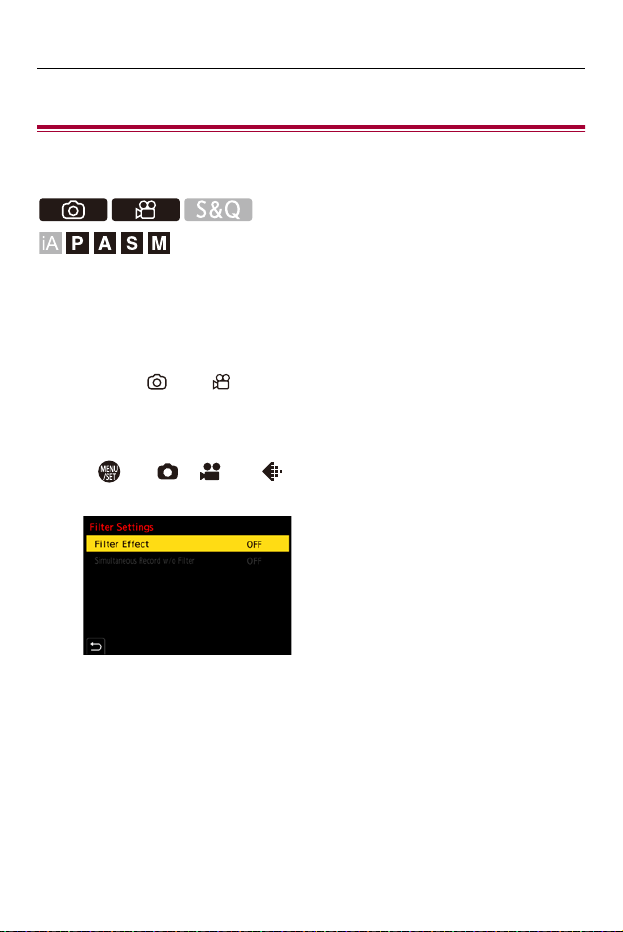
White Balance / Image Quality – [Filter Settings]
388
[Filter Settings]
≥ [Simultaneous Record w/o Filter]: 393
This mode records with additional image effects (filters).
You can adjust the effect for each filter.
In addition, you can simultaneously take pictures without effects.
1
Set to [ ] or [ ] mode.
(Photo/Video/S&Q Switch: 80)
2
Set the [Filter Effect].
≥ [ ]/[ ] [] [Filter Settings] [Filter Effect]
[SET]
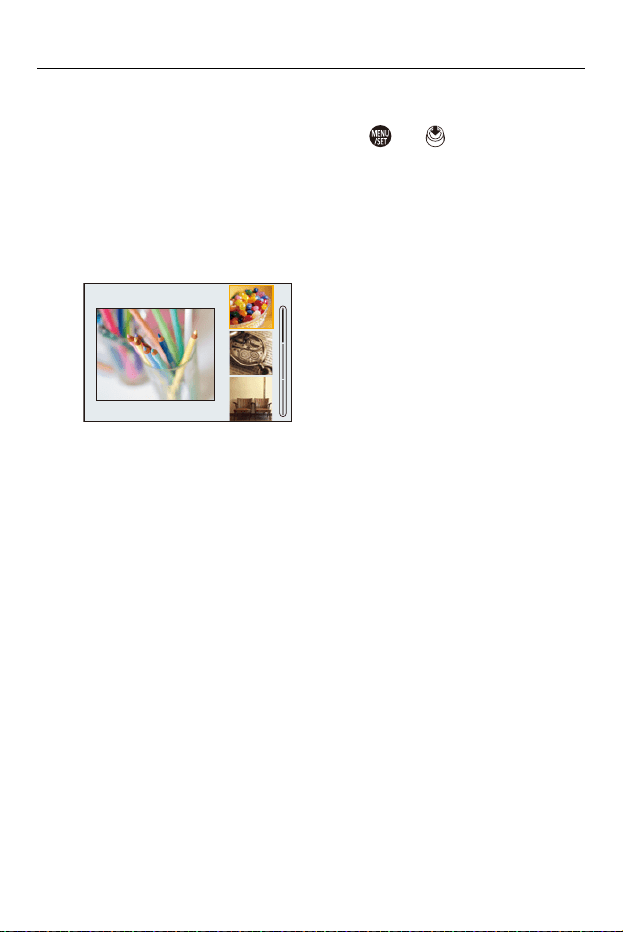
White Balance / Image Quality – [Filter Settings]
389
3
Select the filter.
≥Press 34 to select, and then press or .
≥You can also select the image effect (filter) by touching the sample
picture.
•
Press [DISP.] to switch the screen in the order of normal display and guide
display.
The guide display shows the description of each filter.
1/3
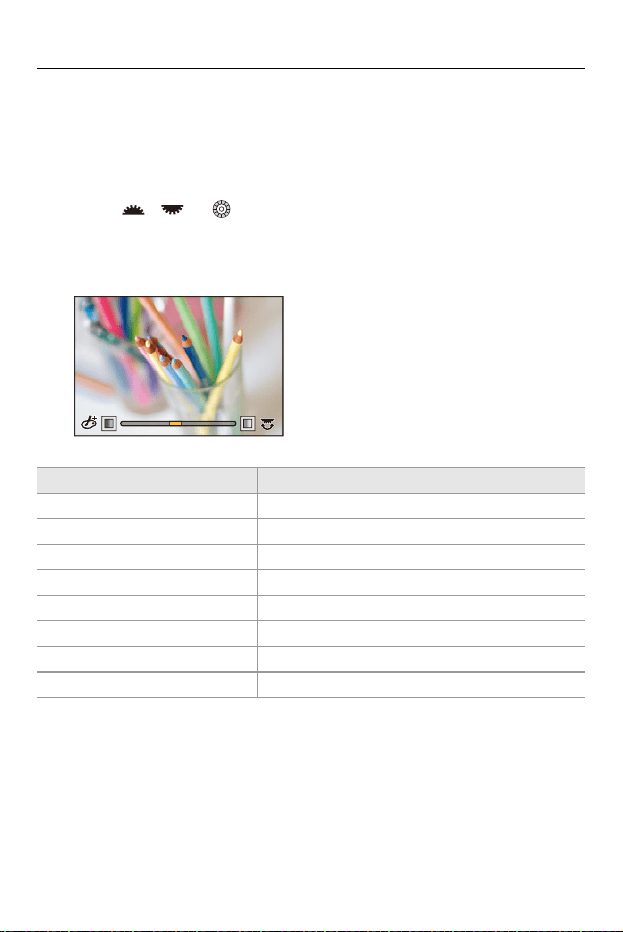
White Balance / Image Quality – [Filter Settings]
390
Adjusting the Filter Effect
You can adjust the filter effect.
1 Select the filter.
2 On the recording screen, press [WB].
3 Rotate , or to set.
•
To return to the recording screen, press [WB] again.
•
When the filter effect is adjusted, the filter icon on the recording screen is
indicated with [¢].
Filter Items that can be adjusted
[Expressive] Vividness
[Retro] Coloring
[Old Days] Contrast
[High Key] Coloring
[Low Key] Coloring
[Sepia] Contrast
[Cross Process] Coloring
[Bleach Bypass] Contrast
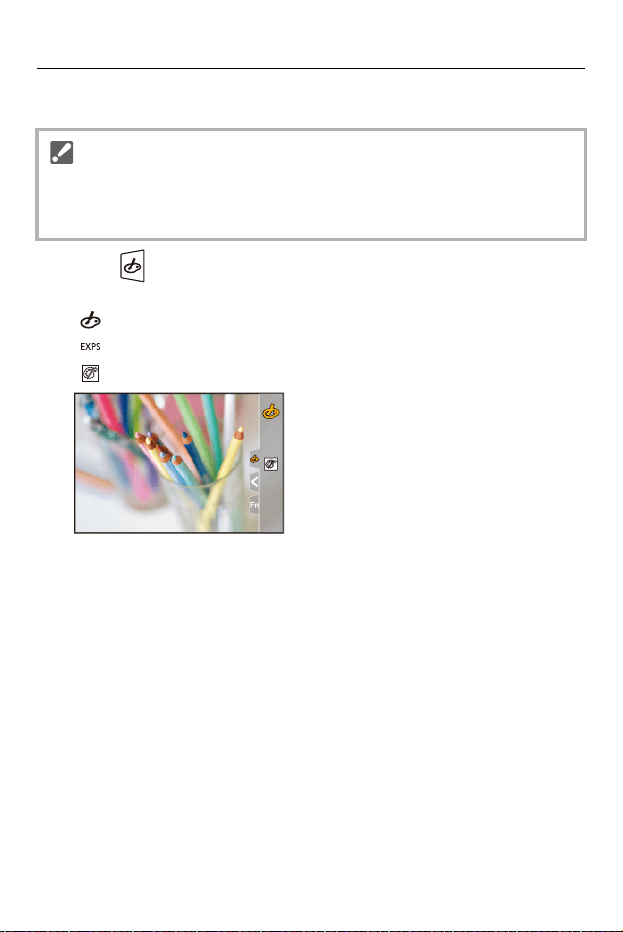
White Balance / Image Quality – [Filter Settings]
391
Setting a Filter with Touch Operation
1 Touch [ ].
2 Touch the item to set.
[ ]: Filter on/off
[ ]: Filter
[ ]: Filter effect adjustment
•
The default settings are for the Touch Tab to not be displayed.
Set [Touch Tab] to [ON] in [Touch Settings] in the [Custom] ([Operation]) menu.
([Touch Settings]: 694)
EXPSEXPSEXPS
EXPSEXPSEXPS
White Balance / Image Quality – [Filter Settings]
392
•
White balance will be fixed to [AWB] and the flash will be fixed to [ ] (Forced
Flash Off).
•
The upper limit to ISO sensitivity is [6400].
•
Depending on the filter, the recording screen may seem as if frames are missed.
•
[Filter Effect] is not available when using the following functions:
– High Resolution mode
– [Live View Composite]
– [Multiple Exposure]
– [Live Cropping]
•
When displaying the [Filter Effect] setting screen using the Fn button, pressing
[DISP.] displays the filter selection screen.
White Balance / Image Quality – [Filter Settings]
393
[Simultaneous Record w/o Filter]
You can simultaneously take pictures with no added filter effects.
1
Set to [ ] mode.
(Photo/Video/S&Q Switch: 80)
2
Set the [Simultaneous Record w/o Filter].
≥ [] [] [Filter Settings] [Simultaneous Record
w/o Filter]
Settings: [ON]/[OFF]
•
[Simultaneous Record w/o Filter] is not available when using the following
functions:
– Burst recording
– [Time Lapse Shot]
– [Stop Motion Animation]
– [RAW+JPEG]/[RAW+HEIF]/[RAW] ([Rec. File Format(Photo)])
– [Bracketing]

White Balance / Image Quality – [REAL TIME LUT]
394
[REAL TIME LUT]
Set the Photo Style to [REAL TIME LUT] and apply a LUT file.
1
Register [REAL TIME LUT] to the Fn button.
(Fn Buttons: 646)
2
Display the LUT file selection screen.
≥Press the Fn button set in Step
1
.
•
When setting up initially, etc., after purchase, the QR code that takes you to
the site for downloading “LUMIX Lab” may be displayed.
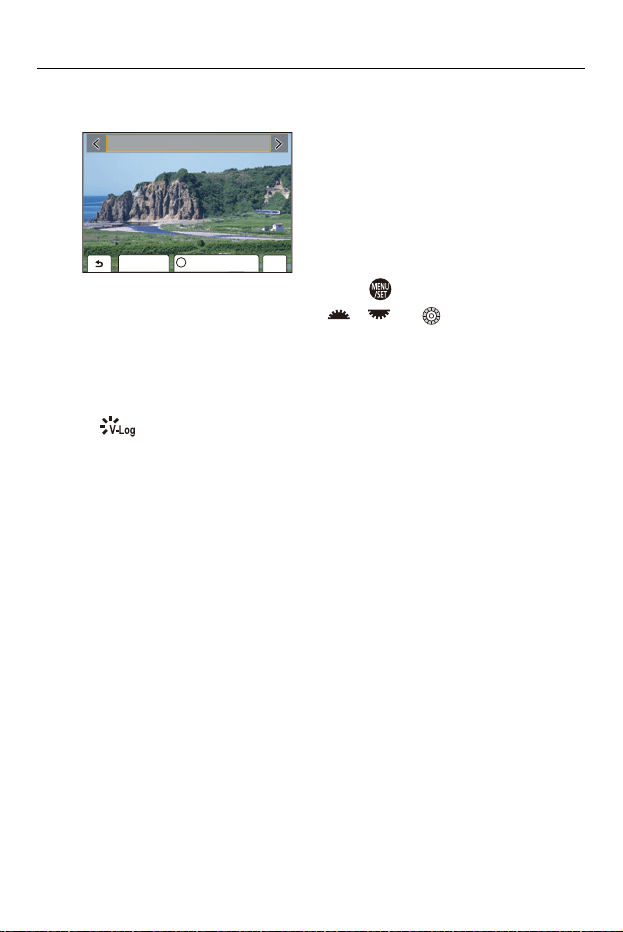
White Balance / Image Quality – [REAL TIME LUT]
395
3
Select the LUT.
≥Press 21 to select, and then press .
≥You can also select by rotating , or .
≥The LUT file list is displayed when you press [DISP.].
•
You can apply the LUT file that was registered in the [LUT Library]. ([LUT
Library]: 396)
•
[Sample LUT1] is applied in the default setting.
•
[ ] is displayed on the recording screen when a LUT file has not been
applied.
•
To cancel Real Time LUT, press [Q].
Sample LUT1
Switch
Cancel Real Time LUT
ュリヴヱハ
Set
Q

White Balance / Image Quality – [LUT Library]
396
[LUT Library]
≥ Base Photo Style of LUT files: 401
Register LUT files to the camera to use with Photo Style and LUT View
Assist.
Using the “Panasonic LUMIX Lab” smartphone app, you can register LUT
files on the smartphone in the [LUT Library] on the camera. (LUT Library
Operations: 775)

White Balance / Image Quality – [LUT Library]
397
•
The following LUT file can be used:
– The “.vlt” format, which meets the requirements specified in the “VARICAM
3DLUT REFERENCE MANUAL Rev.1.0”
– The “.cube” format
•
The “.cube” format LUT files are compatible with 2-point to 33-point 3D LUT.
•
We recommend loading LUT files for full range onto the camera. If the range
property is different, the images may not be displayed or recorded correctly.
•
The number of characters that can be used in a file name differs depending on
the file system of the card.
(Use alphanumeric characters for the file name)
FAT32 (SD memory card/SDHC memory card): Up to 8 characters (excluding
extension).
exFAT (CFexpress card/SDXC card): Up to 255 characters (including
extension).
•
Save the LUT file with a file extension of “.vlt” or “.cube” in the root directory of
the card (the folder opened when the card is opened on a PC).
•
When recording with SDR, use a LUT file for SDR, and when recording with HLG,
use a LUT file for HLG.
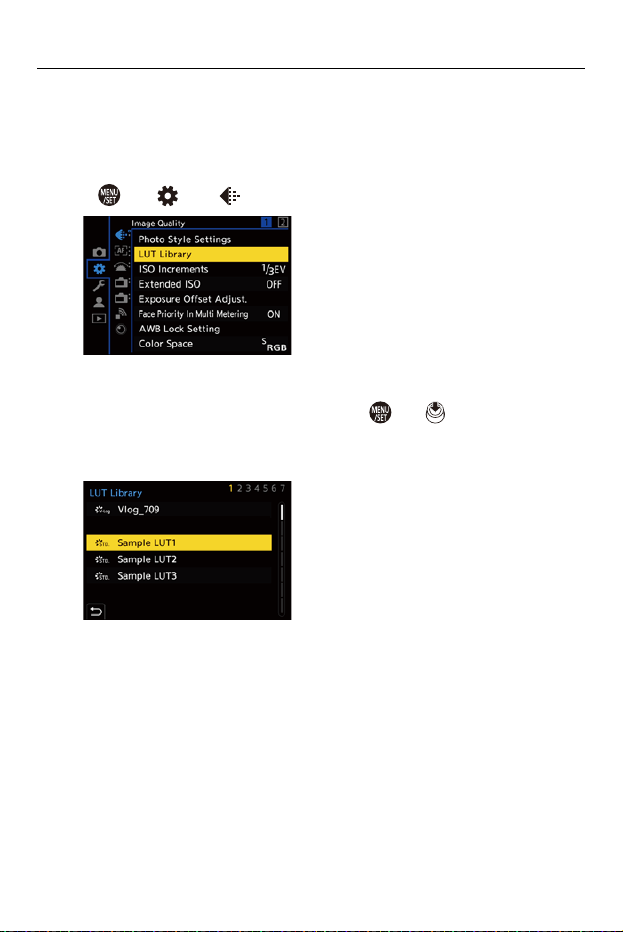
White Balance / Image Quality – [LUT Library]
398
1
Insert a card on which a LUT file is saved into the
camera.
2
Select [LUT Library].
≥ [] [] [LUT Library]
3
Select the registration destination.
≥Press 34 to select, and then press or .
≥If you select a registered item, the LUT file will be registered by
overwriting.
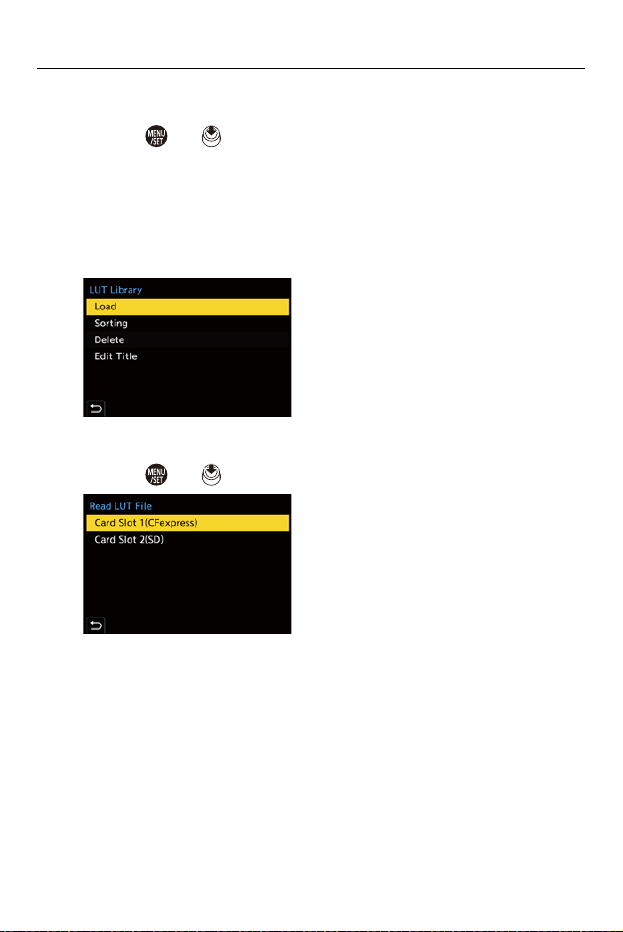
White Balance / Image Quality – [LUT Library]
399
4
Select [Load].
≥Press or .
≥You can change the display order of LUT files by selecting
[Sorting].
≥The registered LUT file is deleted when you select [Delete].
≥You can change the registered name of LUT files by selecting [Edit
Title].
5
Select [Card Slot 1(CFexpress)] or [Card Slot 2(SD)].
≥Press or .
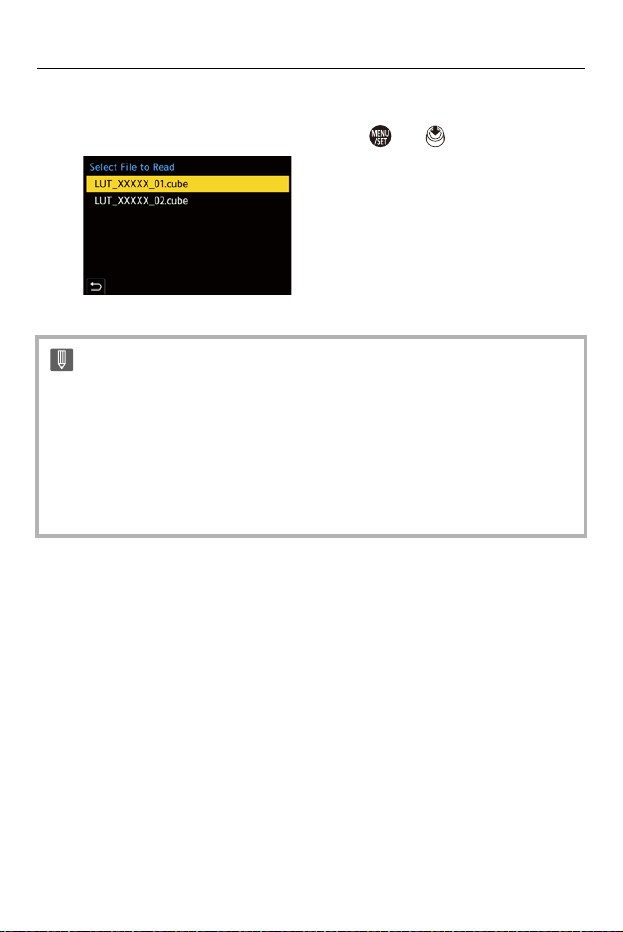
White Balance / Image Quality – [LUT Library]
400
6
Select the LUT file to load.
≥Press 34 to select, and then press or .
•
The default setting is for [Vlog_709] and 3 sample LUTs to be registered.
•
Up to 39 LUT files can be registered.
•
[Sorting], [Delete] and [Edit Title] are not possible with [Vlog_709].
•
[Sorting] and [Delete] are possible with the sample LUTs, but the default settings
are restored when [Reset] is performed.
•
With LUT files that have the Photo Style information (base Photo Style) set at the
time of creation (“.cube” format only), the base Photo Style icon is displayed.
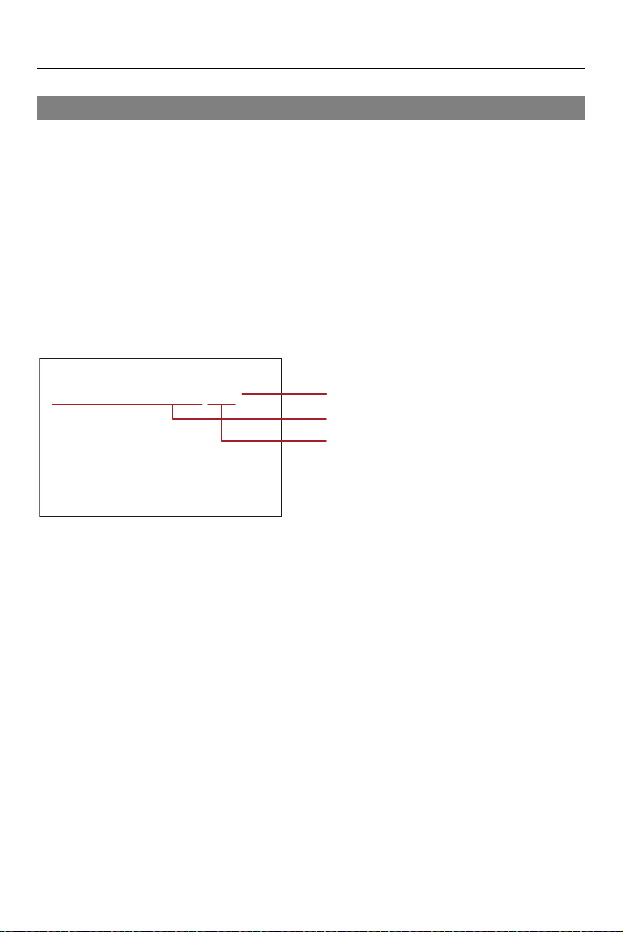
White Balance / Image Quality – [LUT Library]
401
Base Photo Style of LUT files
With Real Time LUT, the Photo Style information (base Photo Style) set in
the LUT file is recognized to determine the Photo Style.
You can add the base Photo Style information to the LUT files (“.cube”
format only) you create yourself. Open the LUT file with a text editor and
insert the Photo Style information under the title line.
• If there is a feature for selecting the character code in the text editor,
select UTF-8.
For example: LUT file (“.cube” format)
(A) Photo Style information
(B) Identifier tag
(C) Photo Style tag
•
A half-width space is required between the identifier tag and the Photo Style tag.
•
If the Photo Style information is absent or if it is not set correctly, [V-Log] is used as
the base Photo Style.
TITLE "Generated by Resolve"
#LUMIXPHOTOSTYLE STD
LUT_3D_SIZE 33
0.0170596 0.0150607 0.014023
0.0183261 0.0162356 0.0151827
・・・
(A)
(B)
(C)

White Balance / Image Quality – [LUT Library]
402
List of Photo Style Information
#LUMIXPHOTOSTYLE STD: [Standard]
#LUMIXPHOTOSTYLE STDHLG: [Standard(HLG)]
#LUMIXPHOTOSTYLE VIVD: [Vivid]
#LUMIXPHOTOSTYLE NAT: [Natural]
#LUMIXPHOTOSTYLE LCLASN: [L.ClassicNeo]
#LUMIXPHOTOSTYLE FLAT: [Flat]
#LUMIXPHOTOSTYLE LAND: [Landscape]
#LUMIXPHOTOSTYLE PORT: [Portrait]
#LUMIXPHOTOSTYLE MONO: [Monochrome]
#LUMIXPHOTOSTYLE MONOHLG: [Monochrome(HLG)]
#LUMIXPHOTOSTYLE LMONO: [L.Monochrome]
#LUMIXPHOTOSTYLE LMONOD: [L.Monochrome D]
#LUMIXPHOTOSTYLE LMONOS: [L.Monochrome S]
#LUMIXPHOTOSTYLE LEICAMONO: [LEICA Monochrome]
#LUMIXPHOTOSTYLE CNEA2: [Cinelike A2]
#LUMIXPHOTOSTYLE CNED2: [Cinelike D2]
#LUMIXPHOTOSTYLE CNEV2: [Cinelike V2]
#LUMIXPHOTOSTYLE 709L: [Like709]
#LUMIXPHOTOSTYLE 2100HLG: [Like2100(HLG)]
#LUMIXPHOTOSTYLE 2100HLGF: [Like2100(HLG) Full Range]
#LUMIXPHOTOSTYLE VLOG: [V-Log]

White Balance / Image Quality – HLG Recording (HEIF Format)
403
HLG Recording (HEIF Format)
Record HEIF images with the wide dynamic range of the HLG format.
•
“HLG (Hybrid Log Gamma)” is an international standard (ITU-R BT.2100) HDR
format.
•
This is available when [Rec. File Format(Photo)] is [HEIF] or [RAW+HEIF]. ([Rec.
File Format(Photo)]: 128)
•
This is available when [Switch JPEG/HEIF] is [HEIF]. ([Switch JPEG/HEIF]: 131)
HLG format HEIF images
•
Compression format: HEVC
•
Color sampling: 4:2:0
•
Bit value: 10 bit
1
Set to [ ] mode.
(Photo/Video/S&Q Switch: 80)
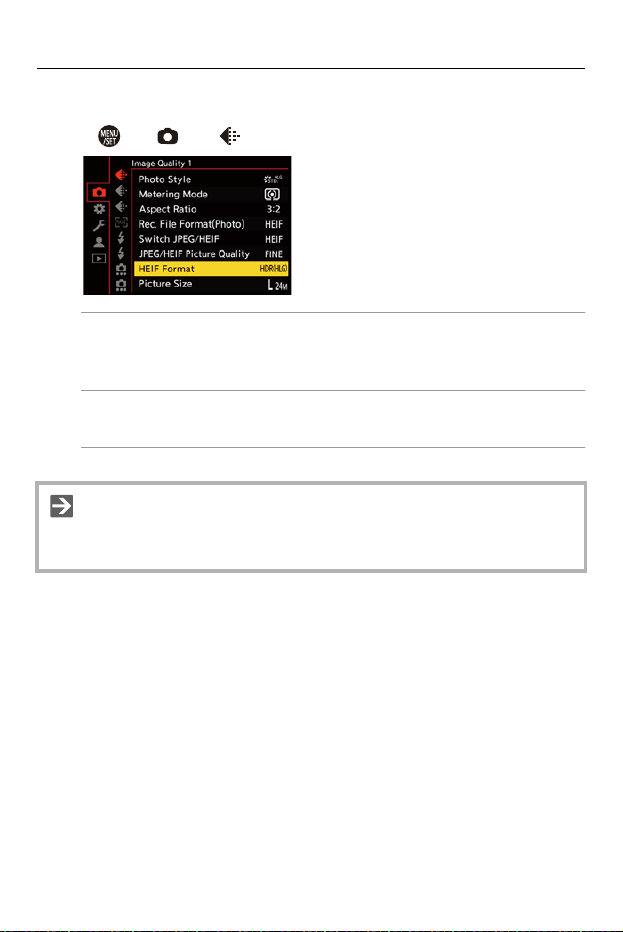
White Balance / Image Quality – HLG Recording (HEIF Format)
404
2
Set [HEIF Format] to [HDR(HLG)].
≥ [] [] [HEIF Format]
[HDR(HLG)]
Images with a wide dynamic range are recorded with the Hybrid Log Gamma
mode (BT2100).
[SDR]
Records with SDR format.
•
When set to [HDR(HLG)], only [Standard(HLG)]/[Monochrome(HLG)]/[REAL
TIME LUT] can be selected for [Photo Style].
White Balance / Image Quality – Lens Compensation
405
Lens Compensation
≥ [Vignetting Comp.]: 405
≥ [Color Shading Compensation]: 406
≥ [Diffraction Compensation]: 410
[Vignetting Comp.]
When the screen periphery darkens as a result of the lens characteristics,
you can record pictures with the brightness of the screen periphery
corrected.
1
Set to [ ] or [ ] mode.
(Photo/Video/S&Q Switch: 80)
2
Set the [Vignetting Comp.].
≥ [ ]/[ ] [] [Vignetting Comp.]
Settings: [ON]/[OFF]
•
Compensation effect may not be achieved depending on the recording
conditions.
•
Noise in the periphery of the picture may stand out with higher ISO sensitivity.
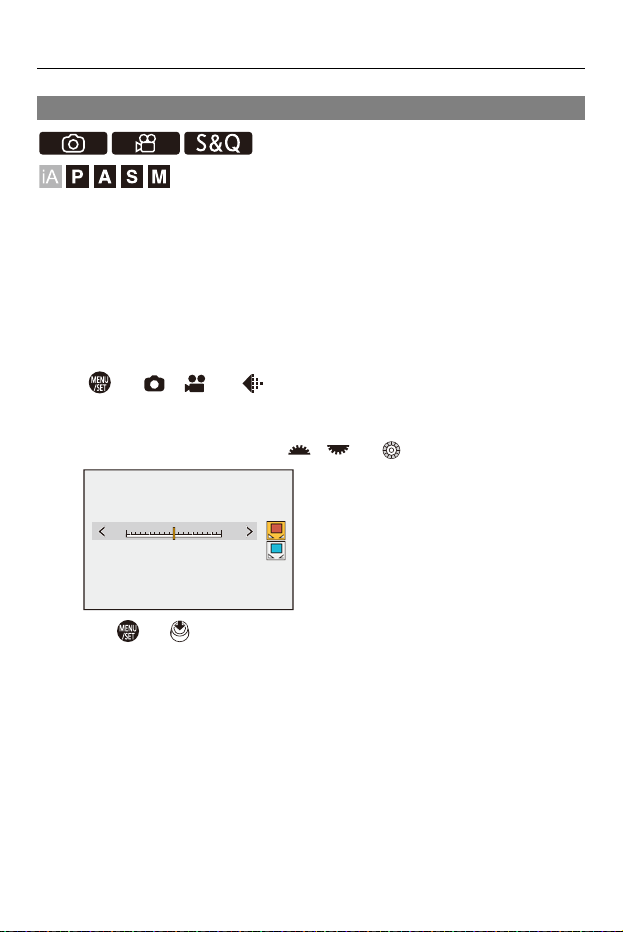
White Balance / Image Quality – Lens Compensation
406
[Color Shading Compensation]
Compensate for the coloring that occurs around the screen (color shading)
due to the characteristics of the lens.
When using an L-Mount lens
The color shading is automatically compensated, but it is also possible to
make manual fine adjustments.
1 Select [Color Shading Compensation].
•
[ ]/[ ] [] [Color Shading Compensation]
2 Adjust the red tint and blue tint.
•
Press 34 to select [Red Tint]/[Blue Tint], then press 21 to adjust.
•
You can also adjust by rotating , , or .
3 Press or to confirm the setting.
•
The adjusted value is not recorded.
•
Presetting is not possible.
±0±0
White Balance / Image Quality – Lens Compensation
407
When Using Other Than an L-Mount Lens
You can compensate for the color shading for other than L-Mount lenses
and register the compensation details.
Select [Color Shading Compensation].
•
[ ]/[ ] [] [Color Shading Compensation]
[MANUAL]
Compensate for the color shading of the attached lens.
1 Press 34 to select [MANUAL] and then press or .
2 Press [DISP.] to execute color shading compensation.
•
Execute while the screen is filled with a subject that has no color variation,
such as a white or gray one.
•
If further adjustment is required, press 4 and make fine adjustments manually.
3 Press or to confirm the setting.
•
The compensation value and adjusted value are not recorded. To record them,
press [DISP.] in the adjustment screen and make a preset registration.
[PRESET]
Compensate for the color shading of the attached lens and make a preset registration.
(Registering presets: 408)
You can also call up presets that have already been registered.
[OFF]
The color shading compensation is not applied.
[ADJUST]
Fine-adjust the red tint and blue tint.
•
The adjusted value is not recorded.
•
If a compensation value already registered in [PRESET] is adjusted, [¢] is displayed
next to [PRESET].
White Balance / Image Quality – Lens Compensation
408
Registering presets
You can register up to 12 sets of compensation settings.
1 Select [PRESET] in [Color Shading Compensation].
•
[ ]/[ ] [] [Color Shading Compensation] [PRESET]
2 Select any of [SET1] to [SET12] and press or .
3 Select [Compensate/Adjust] and then press or .
4 Press [DISP.] while the screen is filled with a subject that has no color variation,
such as a white or gray one.
•
Color shading compensation is executed. Press or .
•
If further adjustment is required, press 4 and make fine adjustments manually.
5 Select [Focal Length]/[Aperture] and then press or .
•
Press 21 to select the item and then press 34 to enter the value.
6 Select [Note] and then press or .
•
You can enter any information, such as a lens name, etc.
Up to 26 characters may be entered. Double-byte characters are treated as 2
characters.
•
How to enter characters (Entering Characters: 108)
7 Press [DISP.] to register the compensation settings.
•
When [Color Shading Compensation] is operating, [ ] is displayed on the
recording screen.
•
If you adjust a compensation value already registered in [PRESET], [¢] is
displayed next to [ ].
•
Compensation values and adjusted values that have not been registered as
presets are cleared when you do the following:
– Operating the camera on/off switch
– Replacing the lens
White Balance / Image Quality – Lens Compensation
409
Changing and deleting presets
1 Select [PRESET] in [Color Shading Compensation].
•
[ ]/[ ] [] [Color Shading Compensation] [PRESET]
2 Press 34 to select a registered preset, then press [DISP.].
3 Press 34 to select [Edit], [Sorting], or [Delete], and then press or .
•
You can change the details in the registered preset when you select [Edit].
(Registering presets: 408)
•
You can change the display order of the presets by selecting [Sorting].
•
The preset is deleted when you select [Delete]. You cannot delete the preset
that is being used.
•
If you execute [Compensate/Adjust] from [Edit], the compensation value and
adjusted value are reset and you can redo color shading compensation again.
•
The information registered in [PRESET] is returned to the default settings when
setup and custom settings are reset.
White Balance / Image Quality – Lens Compensation
410
[Diffraction Compensation]
The camera raises the image resolution by correcting the blurriness
caused by diffraction when the aperture is closed.
[ ]/[ ] [] Select [Diffraction Compensation]
Settings: [AUTO]/[OFF]
•
Compensation effect may not be achieved depending on the recording
conditions.
•
Noise may stand out with higher ISO sensitivity.

411
Flash
If you attach the external flash to the hot shoe, you can record using the
flash.
Furthermore, by attaching an external flash that supports wireless flash
recording, you can wirelessly control an external flash that is in a position
separate from the camera.
• Please also refer to the operating instructions for the external flash.
•
For information about external flashes whose operation has been verified with
this camera, refer to the following support site:
https://panasonic.jp/support/global/cs/dsc/connect/index.html
(English only)
≥ Using an External Flash: 412
≥ Setting Flash: 414
≥ Recording Using a Wireless Flash: 424
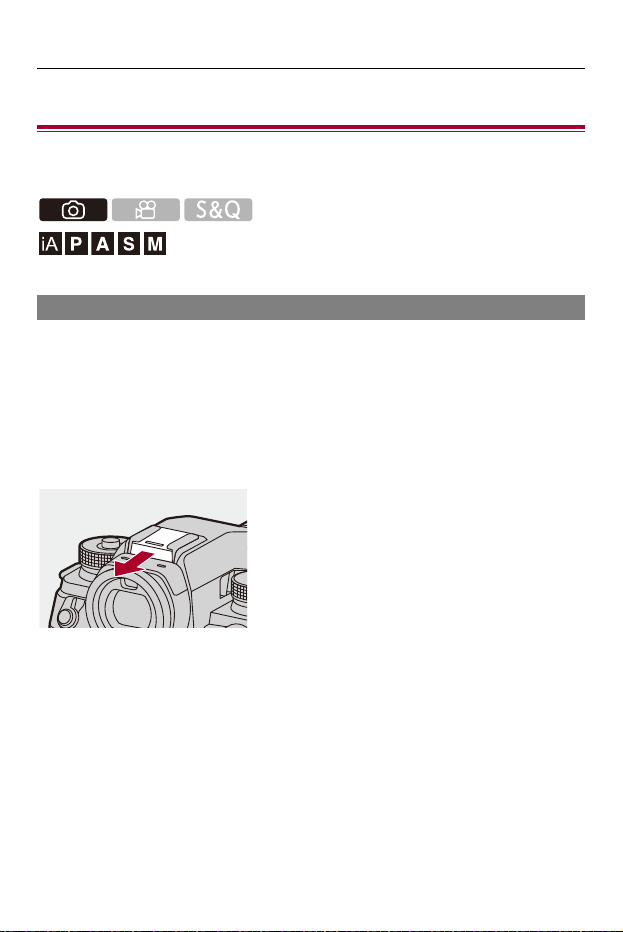
Flash – Using an External Flash
412
Using an External Flash
≥ Removing the Hot Shoe Cover: 412
Removing the Hot Shoe Cover
Before attaching the external flash, remove the hot shoe cover.
Refer to the operating instructions for the external flash for details about
how to attach it.
Remove the hot shoe cover by pulling it in the direction
indicated by arrow.

Flash – Using an External Flash
413
Notes on Flash Recording
•
Remove the lens hood to prevent vignetting.
•
Flash recording is not possible when the following functions are being used:
– [ELEC.]/[Silent Mode]
– High Resolution mode
– [Filter Settings]
– SH burst recording
•
Do not bring any object near the flash. Heat or light may cause the object to
deform or discolor.
•
If you record repeatedly, time may be needed to charge the flash.
While the flash is charging, images will be recorded without the flash firing.
•
When an external flash is attached, do not carry the camera by holding only the
external flash. It may become detached.
•
When using an external flash, do not use one with reversed polarity or function
for communicating with a camera.
It may cause the camera to malfunction, or it may not operate correctly.
•
Refer to the operating instructions for the external flash for details.
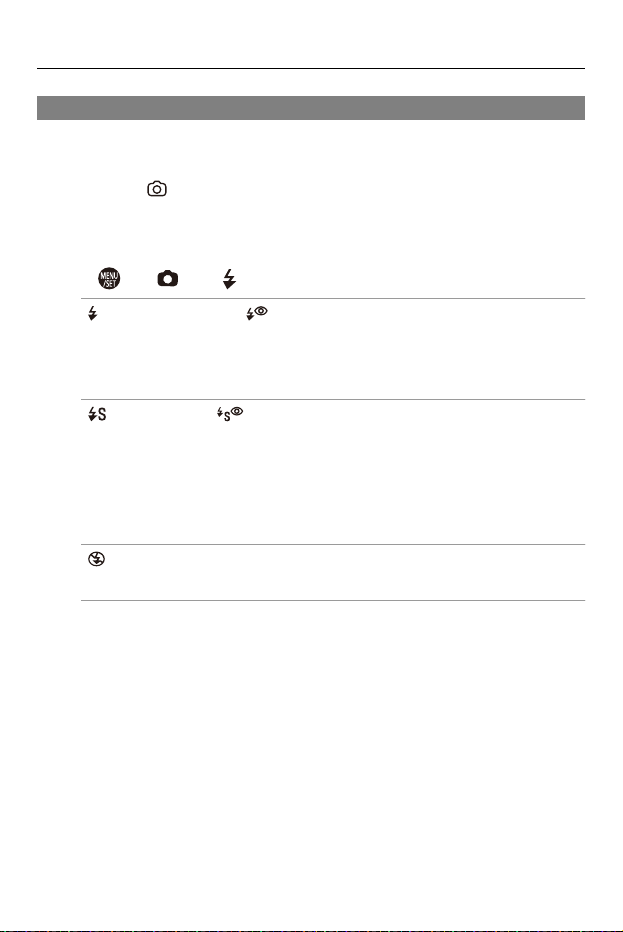
Flash – Setting Flash
415
[Flash Mode]
Sets the flash mode.
1
Set to [ ] mode.
(Photo/Video/S&Q Switch: 80)
2
Set [Flash Mode].
≥ [] [] [Flash Mode]
[ ] (Forced Flash On)/[ ] (Forced On/Red-Eye)
The flash fires every time regardless of the recording conditions.
This is suitable for recording when there is backlighting or under lighting such
as fluorescent lighting.
[ ] (Slow Sync.)/[ ] (Slow Sync./Red-Eye)
When recording images against a nightscape, this will slow the shutter speed
when the flash fires to make not only the subject but also the nightscape appear
brighter.
•
Slower shutter speeds may result in blurry images. To avoid this, we
recommend using a tripod.
[ ] (Forced Flash Off)
The flash does not fire.
Flash – Setting Flash
416
•
The flash fires twice.
The interval between the first and second firings is longer when [ ] or [ ]
is set. The subject should not move until the second firing has finished.
•
[ ] and [ ] cannot be used when the following are set:
– [Firing Mode]: [MANUAL]
– [Flash Synchro]: [2ND]
– [Wireless]: [ON]
•
Some flash modes may not be available depending on the settings on the
external flash.
•
The effectiveness of red-eye reduction varies from person to person.
The effect, which is influenced by factors such as distance to the subject and
whether the subject is looking at the camera when the preliminary flash is fired,
may not be very noticeable in some cases.
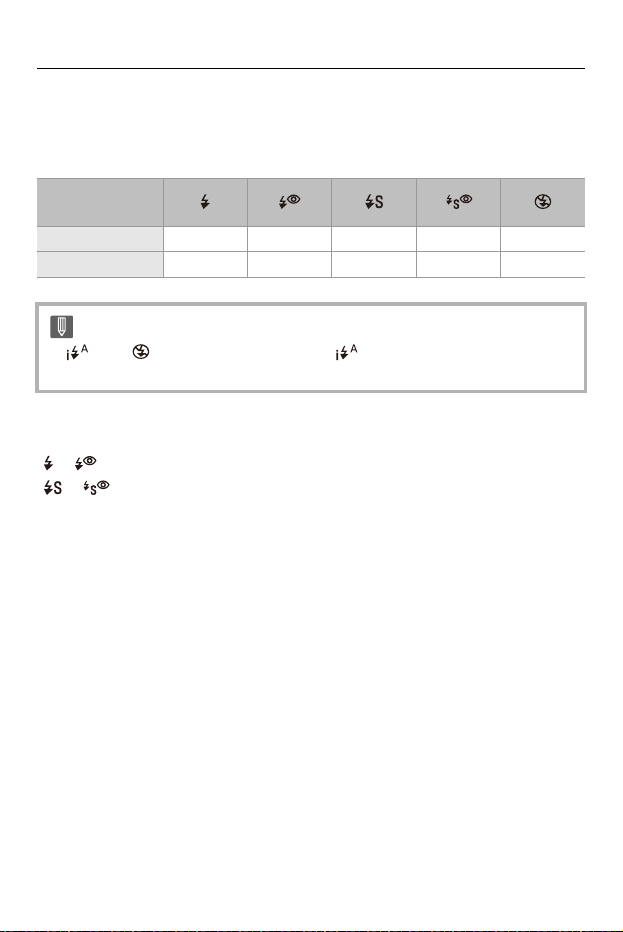
Flash – Setting Flash
417
Available Flash Settings by Recording Mode
The available flash settings depend on the recording mode.
(: Available, —: Not available)
Shutter Speeds for Flash Modes
[ ]/[ ]: 1/60 of a second
*1
to 1/250 of a second
*2
[ ]/[ ]: 1 second to 1/200 of a second
*1 In [S] mode, this will be 60 seconds and in [M] mode it will be [B] (Bulb).
*2 The maximum setting changes to 1/200 of a second in [P]/[A] modes.
•
The guide number decreases when the shutter speed is set to 1/250 of a second.
Recording
mode
[] [] [] [] []
[P]/[A]
[S]/[M] ——
•
[ ] and [ ] can be set in [iA] mode. In [ ], the flash mode switches to one
suited to the recording situation.
Flash – Setting Flash
418
[Firing Mode]/[Manual Flash Adjust.]
You can select whether to set the flash output automatically or manually.
1
Set to [ ] mode.
(Photo/Video/S&Q Switch: 80)
2
Set the [Firing Mode].
≥ [] [] [Firing Mode]
[TTL]
Sets flash output to be set automatically by the camera.
[MANUAL]
Sets the flash output manually.
•
With [TTL], you can record the images you want even when recording dark
scenes where the flash output tends to become greater.
•
The flash output ([1/1], etc.) is displayed on the flash icon of the recording
screen.
•
The settings made here are enabled when some external flashes are attached.
For flashes other than the above, make the settings on the flash.
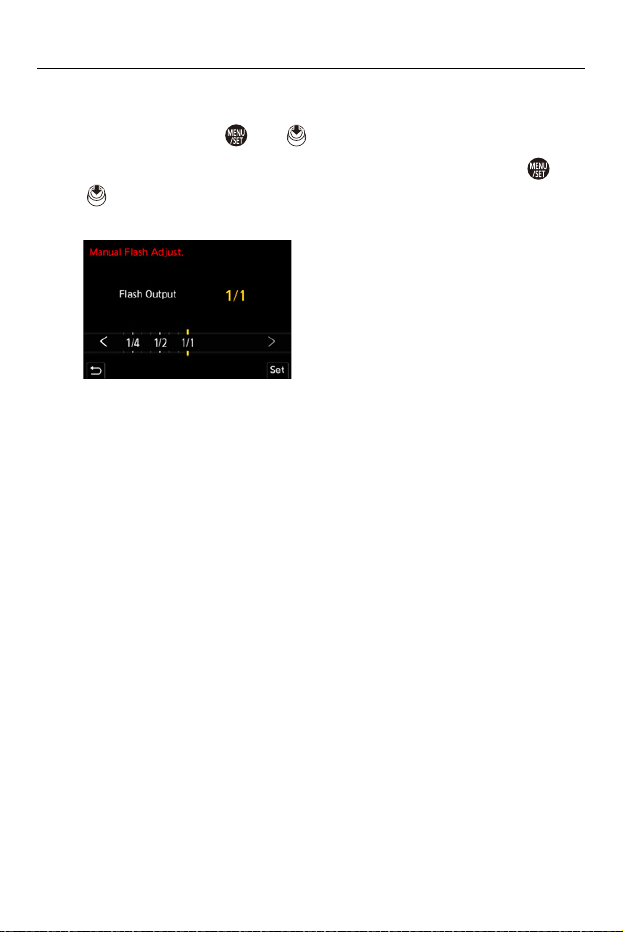
Flash – Setting Flash
419
3
(When set to [MANUAL]) Select [Manual Flash Adjust.]
and then press or .
4
Press 21 to set the flash output and then press or
.
•
It can be set within the range of [1/1] (full flash output) to [1/128] in 1/3 steps.
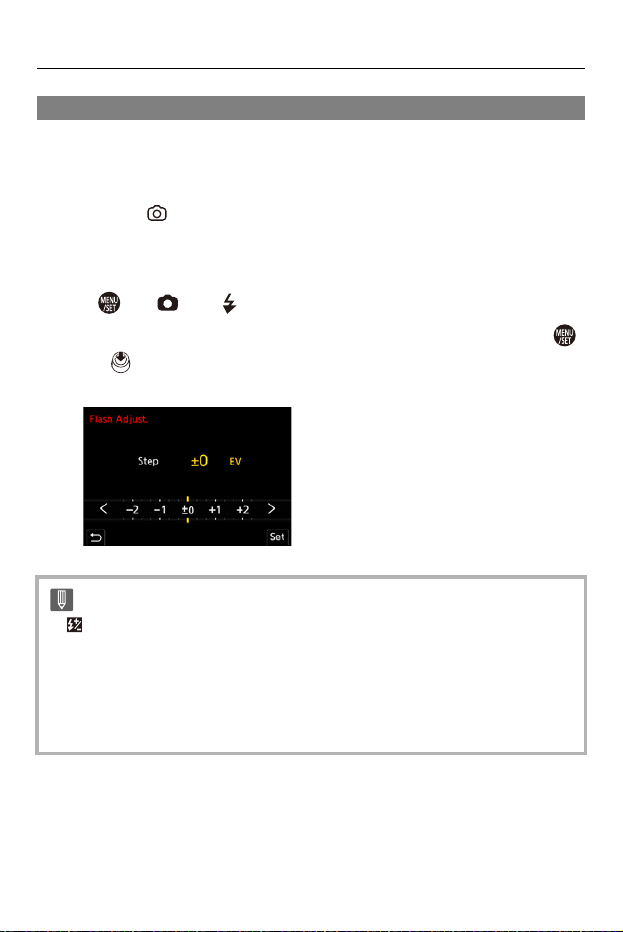
Flash – Setting Flash
420
[Flash Adjust.]
You can adjust the flash output when taking pictures with the flash in TTL
output mode.
1
Set to [ ] mode.
(Photo/Video/S&Q Switch: 80)
2
Select [Flash Adjust.].
≥ [] [] [Flash Adjust.]
3
Press 21 to adjust the flash output and then press
or .
•
It can be adjusted within the range of [−3 EV] to [+3 EV] in 1/3 EV steps.
•
[ ] is displayed on the recording screen.
•
For information about adjusting the flash output when recording using a wireless
flash ([Flash Adjust.]: 428)
•
[Flash Adjust.] cannot be used when the following are set:
– [Firing Mode]: [MANUAL]
– [Wireless]: [ON]
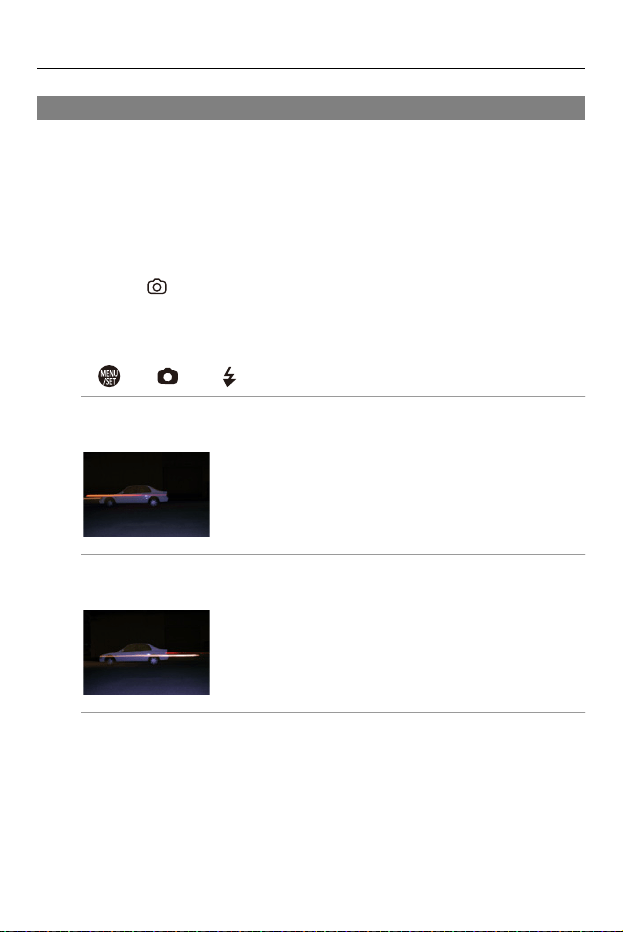
Flash – Setting Flash
421
[Flash Synchro]
When a moving subject is recorded at night using a slow shutter and flash,
a trail of light may appear in front of the subject.
If you set [Flash Synchro] to [2ND], you can take a dynamic picture with a
trail of light appearing behind the subject by firing the flash immediately
before the shutter closes.
1
Set to [ ] mode.
(Photo/Video/S&Q Switch: 80)
2
Set [Flash Synchro].
≥ [] [] [Flash Synchro]
[1ST]
This is the normal method for recording with the Flash.
[2ND]
The light source appears behind the subject and the picture becomes dynamic.

Flash – Setting Flash
422
•
When [2ND] is set, [2nd] is displayed on the flash icon of the recording screen.
•
When the following functions are being used, the setting is fixed to [1ST]:
– [Wireless]
– [Live View Composite]
•
The effect may not be adequately achieved at faster shutter speeds.


Flash – Recording Using a Wireless Flash
424
Recording Using a Wireless Flash
You can use an external flash to record using a wireless flash.
You can separately control the firing of three flash groups and the flash
attached to the hot shoe of the camera.
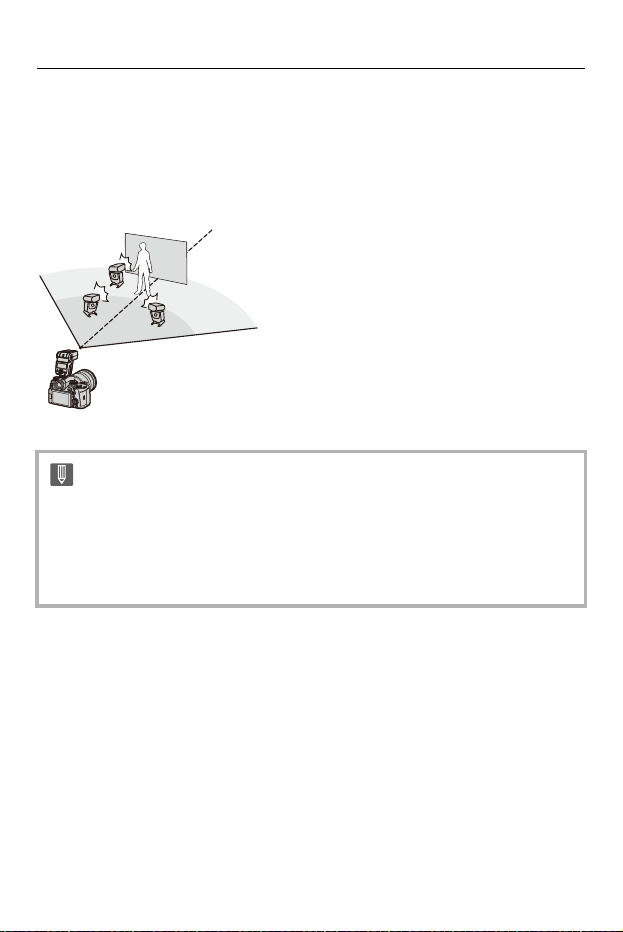
Flash – Recording Using a Wireless Flash
425
Placing a Wireless Flash
Place the wireless flash with its wireless sensor facing the camera.
Placement example
When (C) is placed to erase the shadow in the background of the subject that the flash
groups (A) and (B) will create
•
The placement range differs depending on the surrounding environment.
•
We recommend using a maximum of three wireless flashes in each group.
•
If the subject is too close, communication light may affect the exposure.
You can reduce the effect by setting [Communication Light] to [LOW] or lowering
the output with a diffuser or similar device. ([Communication Light]: 430)
A
B
C
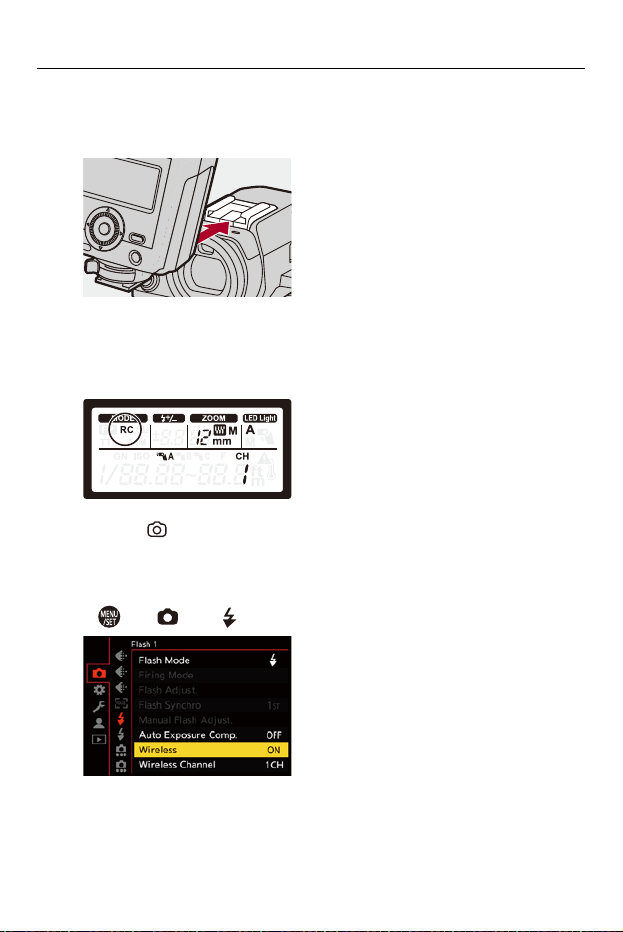
Flash – Recording Using a Wireless Flash
426
1
Attach an external flash to the camera.
(Removing the Hot Shoe Cover: 412)
2
Set the wireless flashes to [RC] mode and then place
them.
•
Set the channel and group for the wireless flashes.
3
Set to [ ] mode.
(Photo/Video/S&Q Switch: 80)
4
Enable the wireless flash function of the camera.
≥ [] [] [Wireless] [ON]
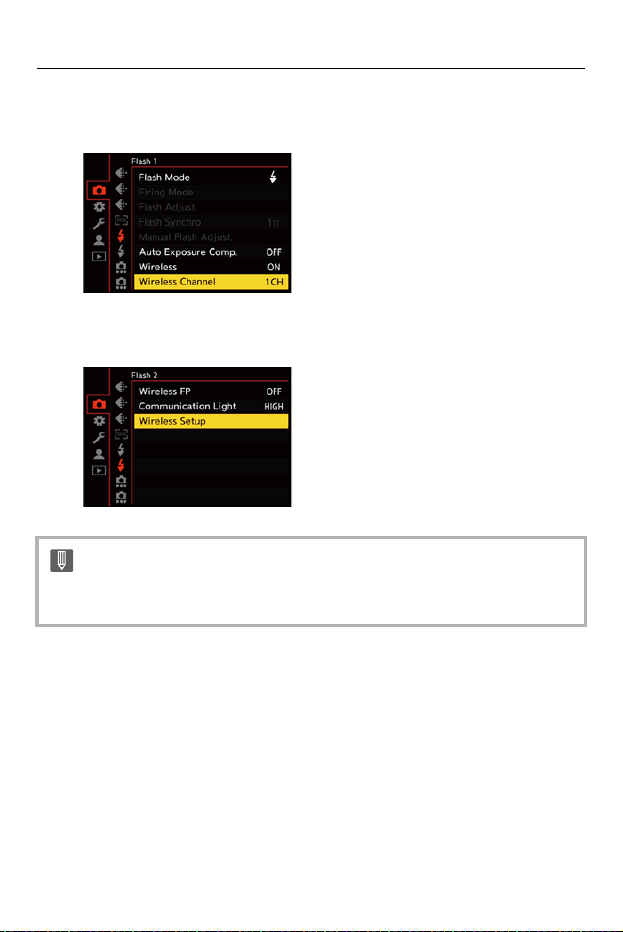
Flash – Recording Using a Wireless Flash
427
5
Set [Wireless Channel].
•
Select the same channel as on the wireless flash side.
6
Set [Wireless Setup].
•
Set the firing mode and flash output.
•
When [Wireless] is set, [WL] is displayed on the flash icon of the recording
screen.
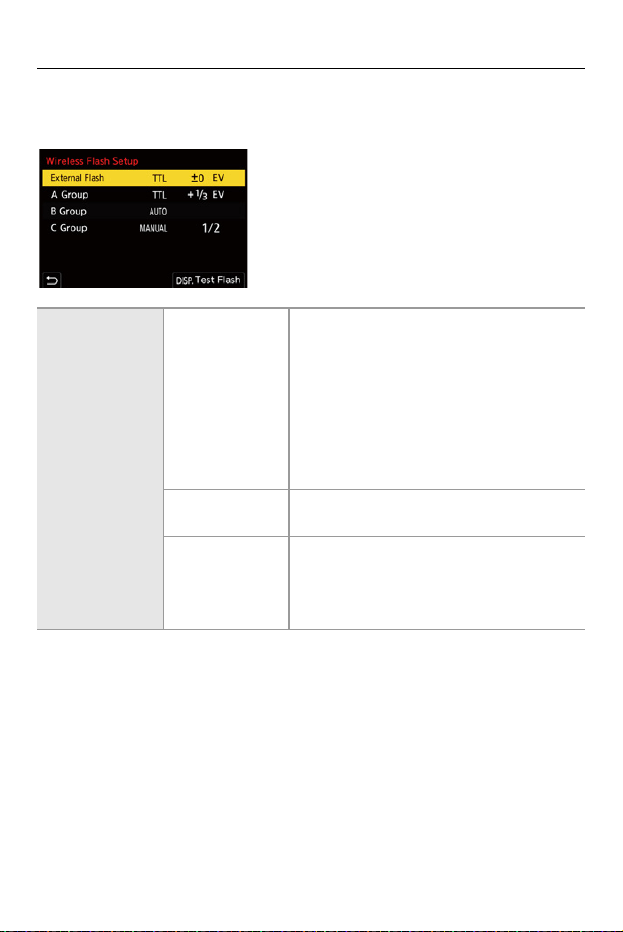
Flash – Recording Using a Wireless Flash
428
Setting Items ([Wireless Setup])
•
To fire a test flash, press [DISP.].
[External Flash]
*
[Firing Mode]
[TTL]: The camera automatically sets the
flash output.
[AUTO]: Sets the flash output on the
external flash side.
[MANUAL]: Sets the flash output of the
external flash manually.
[OFF]: The external flash outputs only
communication light.
[Flash Adjust.]
Adjusts the flash output of the external flash
manually when [Firing Mode] is set to [TTL].
[Manual Flash
Adjust.]
Sets the flash output of the external flash
when [Firing Mode] is set to [MANUAL].
•
It can be set within the range of [1/1] (full
flash output) to [1/128] in 1/3 steps.

Flash – Recording Using a Wireless Flash
429
* This cannot be selected when [Wireless FP] is set.
[A Group]/
[B Group]/
[C Group]
[Firing Mode]
[TTL]: The camera automatically sets the
flash output.
[AUTO]
*
: Sets the flash output on the
wireless flash side.
[MANUAL]: Sets the flash output of the
wireless flash manually.
[OFF]: The wireless flashes of the specified
group will not fire.
[Flash Adjust.]
Adjusts the flash output of the wireless flash
manually when [Firing Mode] is set to [TTL].
[Manual Flash
Adjust.]
Sets the flash output of the wireless flash
when [Firing Mode] is set to [MANUAL].
•
It can be set within the range of [1/1] (full
flash output) to [1/128] in 1/3 steps.

Flash – Recording Using a Wireless Flash
430
[Wireless FP]
The external flash performs FP firing (repeated high-speed firing of the
flash) during wireless recording, enabling recording using the Flash even
at fast shutter speeds.
[] [] Select [Wireless FP]
Settings: [ON]/[OFF]
[Communication Light]
Set the strength of communication light.
[] [] Select [Communication Light]
Settings: [HIGH]/[STANDARD]/[LOW]

431
Video Settings
This section describes the settings used when recording video.
≥ Displays Suited to Video Recording: 432
≥ [Photo/Video Separate Setting]: 433
≥ Using AF (Video): 434
≥ Video Brightness and Coloring: 439
≥ Audio Settings: 446
≥ External Microphones (Optional): 456
≥ XLR Microphone Adaptor (Optional): 461
≥ Headphones: 466
≥ Time Code: 470
≥ Synchronizing the Time Code with an External Device: 473
≥ Main Assist Functions: 478
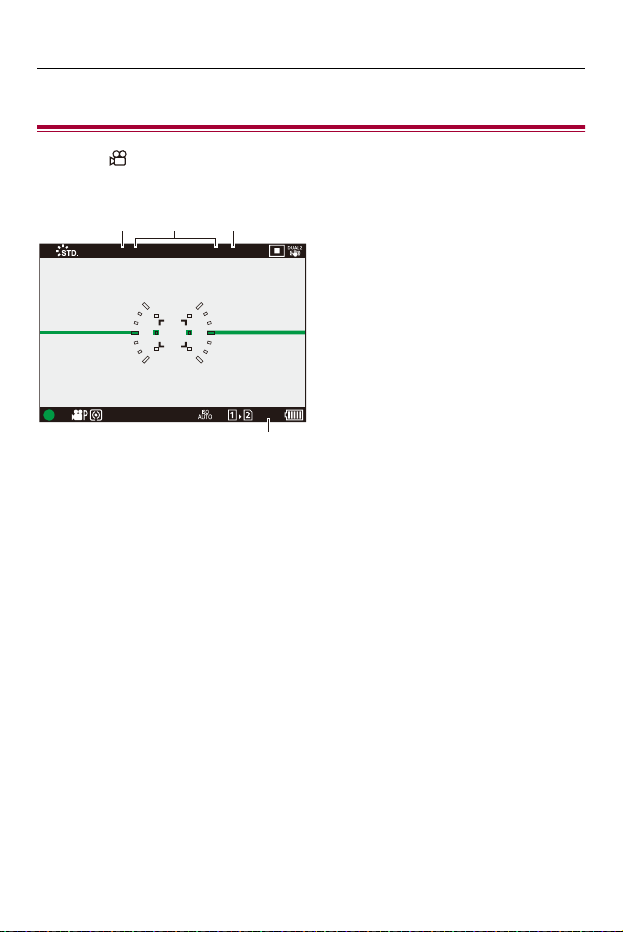
Video Settings – Displays Suited to Video Recording
432
Displays Suited to Video Recording
When in [ ]/[S&Q] mode, in the recording screen, the following parts
switch to displays suited to video recording.
(1) Recording file format (Video) ([Rec. File Format(Video)]: 148)
(2) Recording quality ([Rec Quality]: 150)/Slow & Quick setting (Slow & Quick
Video: 499)
(3) Image area of video ([Image Area of Video]: 180)
(4) Video recording time (Video Recording Time: 924)
•
Examples of displays at the time of purchase.
For information about the icons other than those described here (Monitor/
Viewfinder Displays: 866)
24m59s
100
F
3.560
±
0
AFSAFS
FULLFULLMP4MP4 4K4K 420/8-L420/8-L
29.97
p
29.97
p
(4)
(1) (3)
(2)
Video Settings – [Photo/Video Separate Setting]
433
[Photo/Video Separate Setting]
In the default settings, the settings for exposure, white balance, etc., are
separate for the [ ] mode and the [ ]/[S&Q] mode. You can select
whether to have the settings during picture recording and video recording
independent or shared.
[] [] Select [Photo/Video Separate Setting]
[F/SS/ISO/Exposure Comp.]/[White Balance]/[Photo Style]/[Metering Mode]/[AF
Mode]
[SEPARATE]: Separate the recording settings for [ ] mode and [ ]/[S&Q] mode.
[SAME]: Link the recording settings for [ ] mode and [ ]/[S&Q] mode.
•
The [iA] mode uses the optimum recording settings for the camera automatically,
so the recording settings will be independent, irrespective of the settings made
with this function.
•
When changed from [SEPARATE] to [SAME], the [ ] mode settings are
applied. (The [ ]/[S&Q] mode settings are deleted.)

Video Settings – Using AF (Video)
435
[AFS Behavior in Video Mode]
You can set the behavior when the focus mode lever is set to [AFS] when
in the [ ]/[S&Q] mode.
[] [] Select [AFS Behavior in Video Mode]
[AFS]
Behaves the same as picture AFS. AF does not work continuously.
[AFC]
AF operates continuously.
Video Settings – Using AF (Video)
436
[AF Custom Setting(Video)]
You can fine-adjust the focusing method for video recording with [AFC].
1
Set to [ ] or [S&Q] mode.
(Photo/Video/S&Q Switch: 80)
2
Set [AF Custom Setting(Video)].
≥ [] [] [AF Custom Setting(Video)]
•
A description of the item is displayed on the screen when you press [DISP.].
[ON] Enables the following settings.
[OFF] Disables the following settings.
[SET]
[AF Speed]
[+] side: Focus moves at a faster speed.
[−] side: Focus moves at a slower speed.
[AF Sensitivity]
[+] side: When the distance to the subject
changes significantly, the camera
immediately readjusts the focus.
[−] side: When the distance to the subject
changes significantly, the camera waits for a
little before readjusting the focus.
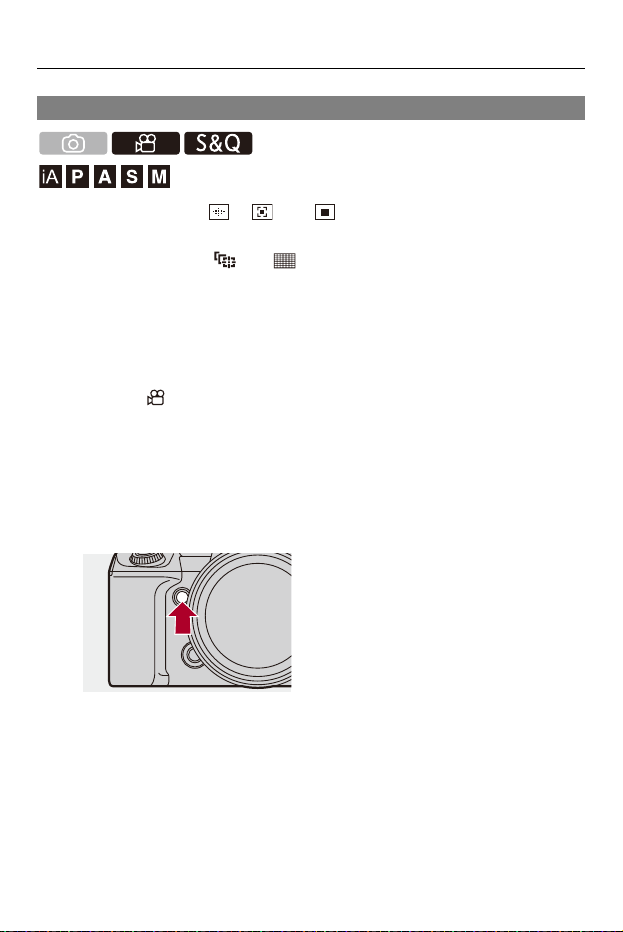
Video Settings – Using AF (Video)
437
[Enlarged Live Display(Video)]
When the AF mode is [ ], [ ], or [ ], or when recording with MF, the
focus point can be enlarged for display.
(When the AF mode is [ ] or [ ], the center of the screen is enlarged
for display.)
The focus point can also be enlarged for checking when recording videos.
•
You can also perform the same operation by pressing the Fn button registered with
[Enlarged Live Display(Video)]. (Fn Buttons: 646)
1
Set to [ ] or [S&Q] mode.
(Photo/Video/S&Q Switch: 80)
2
Press the enlarged live display (video) button to enlarge
display of the focus point.
•
The operations on the enlarged display screen are the same as the MF Assist
screen operations. (Operations on the MF Assist Screen: 234)
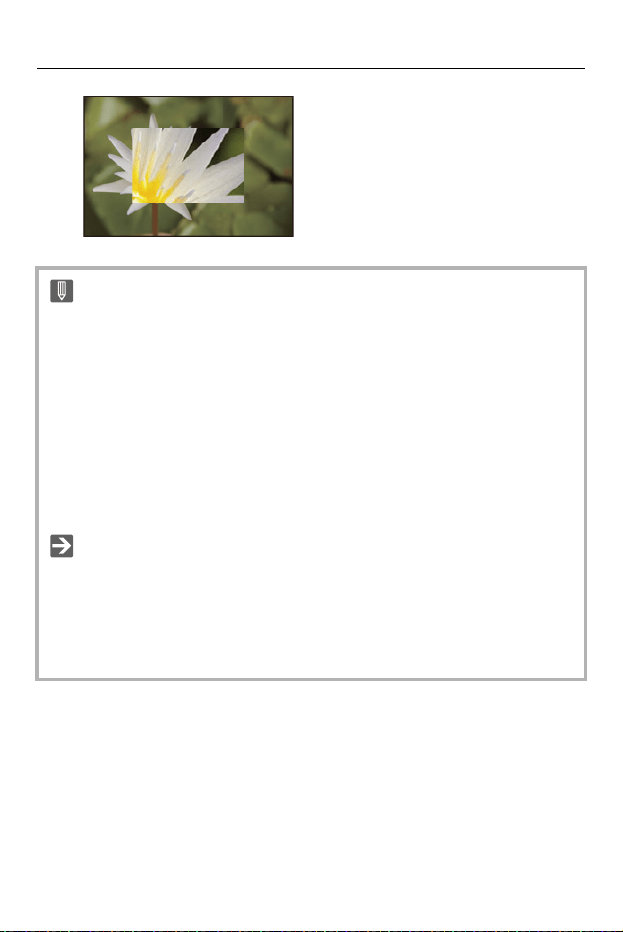
Video Settings – Using AF (Video)
438
•
If you use the following functions, enlarged display magnifications is fixed at 3×:
– [Hybrid Zoom(Video)]
– [Crop Zoom(Video)]
•
Depending on the lens used, the video enlarged display of live view screen may
not be displayed.
•
During video recording using the following functions, the video enlarged display
of live view screen cannot be displayed:
– [Rec Quality] with a high frame rate video exceeding a recording frame rate of
60.00p
– [Live Cropping]
•
You can change the display method of the enlarged display screen:
([Enlarged Live Display(Video)]: 693)
•
You can set whether to output the enlarged display to an external device
connected via HDMI:
(Outputting the Enlarged Live Display (Video) via HDMI: 579)
Video Settings – Video Brightness and Coloring
439
Video Brightness and Coloring
≥ [Luminance Level]: 439
≥ [Master Pedestal Level]: 441
≥ Recording While Controlling Overexposure (Knee): 442
≥ [ISO Sensitivity (video)]: 444
≥ [Dynamic Range Boost]: 445
[Luminance Level]
You can set the luminance range to suit the purpose of video recording.
You can set to [16-235] or [16-255], the standard for video, or to [0-255],
which covers the entire range of luminance, the same as pictures.
1
Set to [ ] or [S&Q] mode.
(Photo/Video/S&Q Switch: 80)
2
Set [Luminance Level].
≥ [] [] [Luminance Level]
[0-255]([0-1023])
Setting for video recording at full range.
[16-235]([64-940])
Setting for video recording at video range.

Video Settings – Video Brightness and Coloring
440
[16-255]([64-1023])
Setting for video recording at video range.
•
The display may not show the correct gradation depending on the monitor,
the video playback software, and the video editing software that you are
using.
•
When set to a 10-bit [Rec Quality], the setting items change to [0-1023], [64-940],
and [64-1023].
•
When [Rec. File Format(Video)] is set to 422 HQ or 422 in [Apple ProRes], this is
fixed to [64-940].
•
When [Rec. File Format(Video)] is set to [MP4] or [MOV] and [Photo Style] is set
to [V-Log] or [REAL TIME LUT] (base Photo Style is [V-Log]), this is fixed to
[0-255] ([0-1023]). However, even if [Photo Style] is set to [REAL TIME LUT]
(base Photo Style is [V-Log]) or Photo Style is set to [V-Log] in My Photo Style, if
a [Vlog_709] LUT file has been applied, this is fixed to [16-255] ([64-1023]).
•
When the [Photo Style] is set to [Like2100(HLG)] or [REAL TIME LUT] (base
Photo Style is [Like2100(HLG)]), this is fixed to [64-940].
•
When the [Photo Style] is set to [Like2100(HLG) Full Range] or [REAL TIME
LUT] (base Photo Style is [Like2100(HLG) Full Range]), this is fixed to [0-1023].
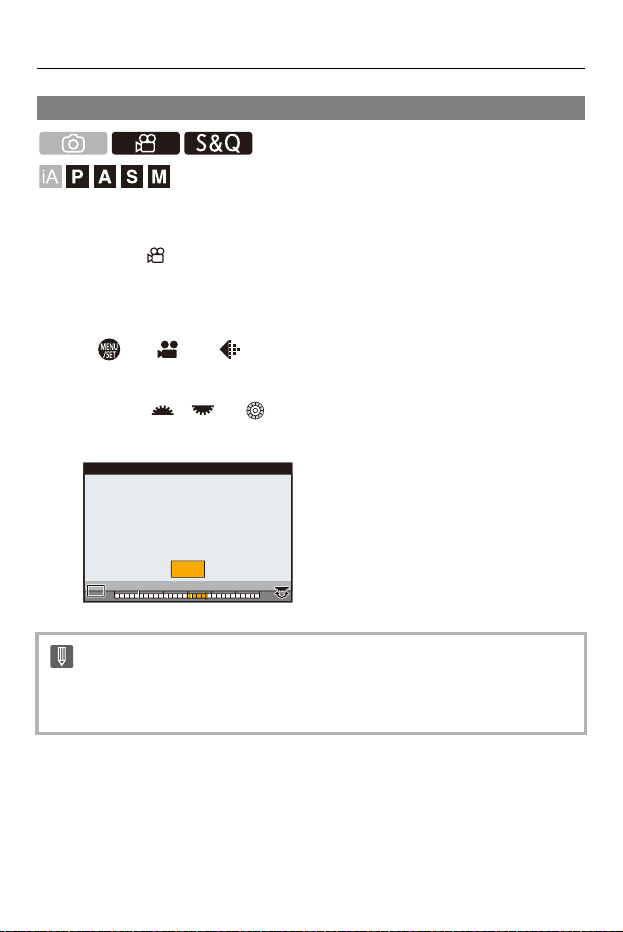
Video Settings – Video Brightness and Coloring
441
[Master Pedestal Level]
You can adjust the black level, which serves as the reference for images.
1
Set to [ ] or [S&Q] mode.
(Photo/Video/S&Q Switch: 80)
2
Select [Master Pedestal Level].
≥ [] [] [Master Pedestal Level]
3
Adjust master pedestal.
≥Rotate , or .
•
Set in the range between −15 and +15.
•
[Master Pedestal Level] is not available when using the following function:
– [V-Log] or [REAL TIME LUT] (base Photo Style is [V-Log]) in [Photo Style]
101055
-
15
-
15
-
5
-
5
-
10
-
10 00
1515
MPL
MPLMPLMPL
MPLMPLMPLMPLMPLMPLMPL
+4
+4
Video Settings – Video Brightness and Coloring
442
Recording While Controlling Overexposure (Knee)
When [Photo Style] is set to [Like709], you can adjust the knee so that
recording can be performed with minimal overexposure.
1
Set [Photo Style] to [Like709].
≥ [ ]/[ ] [] [Photo Style] [Like709]
2
Press [Q].
3
Select a knee setting.
≥Press 21 to select a setting item.
$872

Video Settings – Video Brightness and Coloring
443
[AUTO]
Adjusts the compression levels of high-luminance areas automatically.
[MANUAL]
You can set the luminance where compression starts (knee master point) and
the intensity of compression (knee master slope).
Press 34 to select an item and then press 21 to adjust.
[POINT]: Master knee point
[SLOPE]: Master knee slope
•
Rotate to adjust the knee master point, and to adjust the knee
master slope.
•
Values within the following ranges can be set:
– Master knee point: 80.0 to 107.0
– Master knee slope: 0 to 99
[Off]
4
Confirm your selection.
≥Press or .
Video Settings – Video Brightness and Coloring
444
[ISO Sensitivity (video)]
Sets the lower and upper limits for ISO sensitivity when ISO sensitivity is
set to [AUTO].
1
Set to [ ] or [S&Q] mode.
(Photo/Video/S&Q Switch: 80)
2
Set [ISO Sensitivity (video)].
≥ [] [] [ISO Sensitivity (video)]
Setting Items ([ISO Sensitivity (video)])
[ISO Auto Lower Limit Setting]
Sets the lower limit for ISO sensitivity when ISO sensitivity is [AUTO].
•
Set in the range between [100] and [25600].
[ISO Auto Upper Limit Setting]
Sets the upper limit for ISO sensitivity when ISO sensitivity is [AUTO].
•
Set to [AUTO] or in the range between [200] and [51200].
•
The range of ISO sensitivities you can set depends on the Photo Style used.
Video Settings – Video Brightness and Coloring
445
[Dynamic Range Boost]
Outputs a signal with a wide dynamic range from the image sensor.
This allows recording of video with a wider dynamic range.
1
Set to [ ] mode.
(Photo/Video/S&Q Switch: 80)
2
Set [Dynamic Range Boost].
≥ [] [] [Dynamic Range Boost]
Settings: [ON]/[OFF]
•
[ ] is displayed on the recording screen.
•
The ISO sensitivity when using [Dynamic Range Boost] will be as follows:
– Upper limit of [25600]
– When [Photo Style] is set to [V-Log]: lower limit [1000] (When [Extended ISO] is
set: [500])
•
When using [Dynamic Range Boost], video image quality and ISO sensitivity are
restricted and there will be an increase in rolling shutter distortion.
•
When [Dynamic Range Boost] is set, the following functions are not available:
– [Rec Quality] with a recording frame rate that exceeds 30.00p
– [Rec Quality] with aspect ratios of [3:2]/[4:3] and a recording frame rate that
exceeds 24.00p
•
In [ ] mode, [Dynamic Range Boost] is fixed to [OFF].
Video Settings – Audio Settings
447
[Sound Rec Level Disp.]
The sound recording level is displayed on the recording screen.
1
Set to [ ] mode.
(Photo/Video/S&Q Switch: 80)
2
Set [Sound Rec Level Disp.].
≥ [] [] [Sound Rec Level Disp.]
[ON] Sound recording level displayed on the recording screen.
[OFF] —
[SET]
Sets the display size of sound recording level.
[Displaying
Size]
[LARGE]/[SMALL]
•
When [Sound Rec Level Limiter] is set to [OFF], [Sound Rec Level Disp.] is fixed
to [ON].
Video Settings – Audio Settings
449
[Sound Rec Gain Level]
This switches the gain of audio input.
1
Set to [ ] mode.
(Photo/Video/S&Q Switch: 80)
2
Set [Sound Rec Gain Level].
≥ [] [] [Sound Rec Gain Level]
[STANDARD]
This is the standard input gain setting. (0 dB)
[LOW]
Audio input is reduced for recording in environments with loud noises. (−12 dB)
•
When [4ch Audio Recording] is set to other than [OFF], the sound recording gain
of CH3/CH4 can be adjusted. ([4ch Audio Recording]: 464)
•
[Sound Rec Gain Level] is not available when [Mic Socket] is set to [ ] and
an external audio device is connected.
Video Settings – Audio Settings
450
[Sound Rec Level Adj.]
Manually adjust the sound recording level.
1
Set to [ ] mode.
(Photo/Video/S&Q Switch: 80)
2
Set [Sound Rec Level Adj.].
≥ [] [] [Sound Rec Level Adj.]
•
Press 21 to adjust the sound recording level and then press or .
Settings: [MUTE]/[−18dB] to [+12dB]
•
You can adjust by 1 dB increments.
•
This can also be set during video recording.
•
Displayed dB values are approximate.
•
When set to [MUTE], [ ] is displayed in the recording screen.
•
When [4ch Audio Recording] is set to other than [OFF], the sound recording level
of CH3/CH4 can be adjusted. ([4ch Audio Recording]: 464)
Video Settings – Audio Settings
451
[Sound Rec Quality]
Sound quality for video can be set when the [Rec. File Format(Video)] is
[MOV] or [Apple ProRes].
32-bit float recording is possible when an XLR Microphone Adaptor
(DMW-XLR2: optional) is connected.
1
Set to [ ] mode.
(Photo/Video/S&Q Switch: 80)
2
Set [Sound Rec Quality].
≥ [] [] [Sound Rec Quality]
[96kHz/32bit]
Audio is recorded using 96 kHz/32 bit float format.
•
This can be set when an XLR Microphone Adaptor is connected and [4ch
Audio Recording] is set to [OFF].
[48kHz/32bit]
Audio is recorded using 48 kHz/32 bit float format.
•
This can be set when an XLR Microphone Adaptor is connected and [4ch
Audio Recording] is set to [XLR] or [OFF].
Video Settings – Audio Settings
452
[96kHz/24bit]
Audio is recorded using 96kHz/24bit linear format.
•
This can be set when an XLR Microphone Adaptor (DMW-XLR2: optional),
Stereo Shotgun Microphone (DMW-MS2: optional), or Stereo Microphone
(VW-VMS10: optional) is connected. (XLR Microphone Adaptor (Optional):
461, External Microphones (Optional): 456)
[48kHz/24bit]
Audio is recorded using 48kHz/24bit linear format.
•
When [4ch Audio Recording] is [XLR], you cannot set to [96kHz/32bit] or [96kHz/
24bit].
•
When [4ch Audio Recording] is [XLR+CAMERA], you cannot set to [96kHz/32bit]
or [48kHz/32bit].
•
The setting is fixed to [48kHz/16bit] in the following case:
– When [Rec. File Format(Video)] is set to [MP4]
•
The recording volume may vary if you switch between float format and linear
format.

Video Settings – Audio Settings
454
[Wind Noise Canceller]
This reduces the wind noise coming into the built-in microphone while
maintaining sound quality.
1
Set to [ ] mode.
(Photo/Video/S&Q Switch: 80)
2
Set [Wind Noise Canceller].
≥ [] [] [Wind Noise Canceller]
[HIGH]
This effectively reduces the wind noise by reducing the low-pitched sound when
a strong wind is detected.
[STANDARD]
This reduces wind noise without loss of sound quality by filtering out only wind
noise.
[OFF]
Turns the function off.
•
You may not see the full effect depending on the recording conditions.
•
This function works only with the built-in microphone.
When an external microphone is connected, [Wind Cut] is displayed.
(Reduction of Wind Noise: 460)

Video Settings – Audio Settings
455
[Audio Information]
This screen enables you to view audio settings and the status of recording
all at once.
You can also touch the screen to change the settings.
•
The operations on the audio information display screen are the same as the control
panel operations. (Control Panel: 99)
1
Register [Audio Information] to the Fn button.
(Fn Buttons: 646)
2
Display the audio information.
≥Press the Fn button set in Step
1
.
•
You can also display it by touching the audio display area on the control panel
(Video mode/S&Q mode).
•
For information about the screen (Audio Information Display: 881)
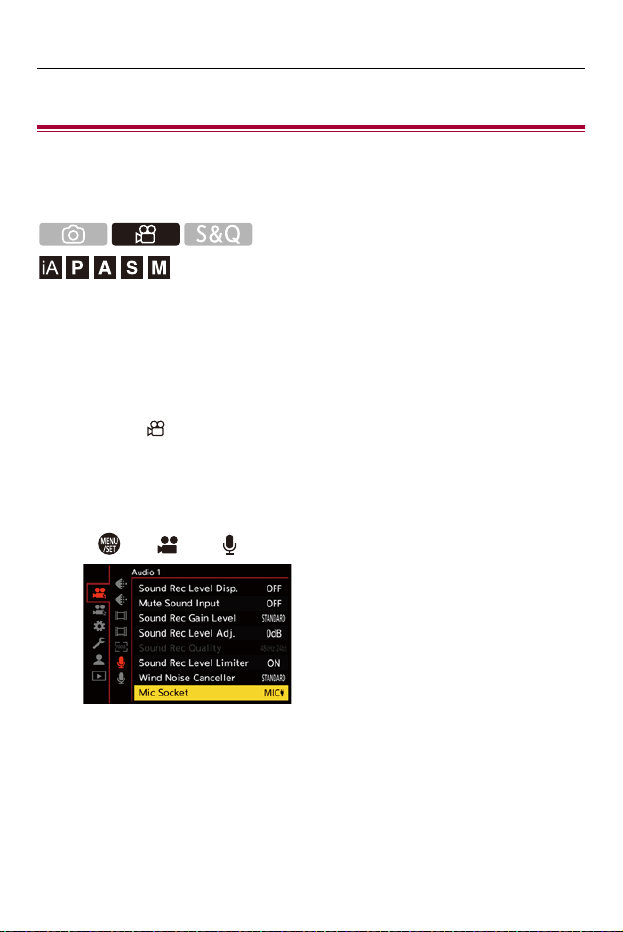
Video Settings – External Microphones (Optional)
456
External Microphones (Optional)
≥ Setting the Sound Pickup Range (DMW-MS2: Optional): 459
≥ Reduction of Wind Noise: 460
With a Stereo Shotgun Microphone (DMW-MS2: optional) or Stereo
Microphone (VW-VMS10: optional), you can record higher-quality high
resolution audio compared to the built-in microphone.
•
Some optional accessories may not be available in some countries.
1
Set to [ ] mode.
(Photo/Video/S&Q Switch: 80)
2
Set the [Mic Socket] that suits the device to be
connected.
≥ [] [] [Mic Socket]

Video Settings – External Microphones (Optional)
457
([Mic Input (Plug-in Power)])
When connecting an external microphone that requires a power supply from the
camera [MIC] socket.
([Mic Input])
When connecting an external microphone that does not require a power supply
from the camera [MIC] socket.
([Line Input])
When connecting an external audio device for line output.
•
The setting will be fixed to [ ] when a Stereo Shotgun Microphone
(DMW-MS2: optional) is connected.
•
When using [ ], if you connect an external microphone that does not
require power supply, the connected external microphone may malfunction.
Check the device before connecting.
3
Set the camera on/off switch to [OFF].
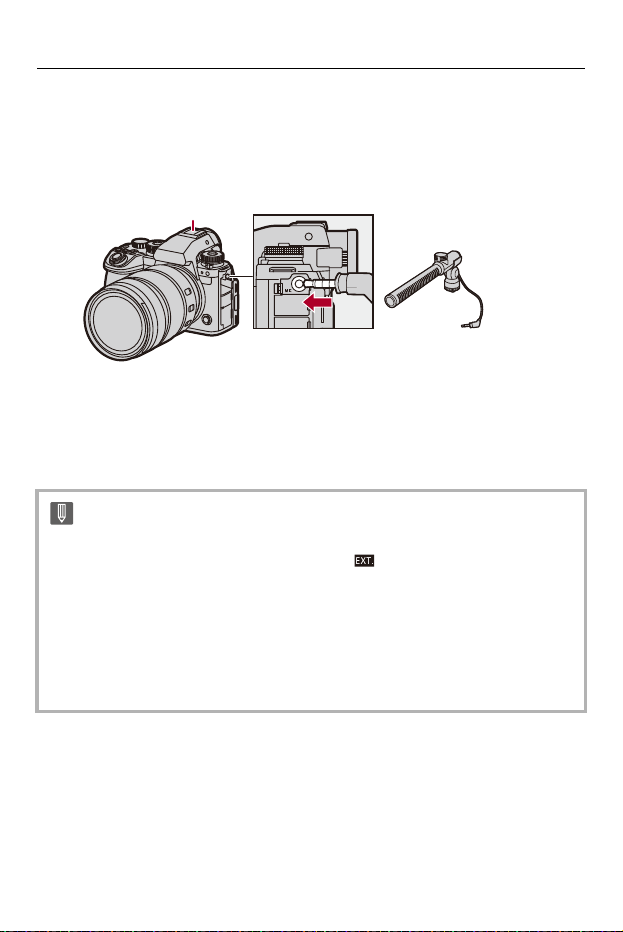
Video Settings – External Microphones (Optional)
458
4
Connect the external microphone to the camera and
then turn on the camera.
•
If mounting the external microphone on the camera hot shoe (A), remove the
hot shoe cover. (Removing the Hot Shoe Cover: 412)
5
Make settings for the sound quality of the audio to be
recorded in [Sound Rec Quality].
([Sound Rec Quality]: 451)
•
Use a stereo microphone cable with the length less than 3 m (9.8 feet).
•
While the external microphone is connected, [ ] is displayed on the screen.
•
When an external microphone is connected, [Sound Rec Level Disp.]
automatically turns [ON], and the recording level is displayed on the screen.
•
When the external microphone is attached, do not carry the camera by holding
the external microphone. It may become detached.
•
If noises are recorded when using the AC adaptor, use the battery.
•
For details, refer to the operating instructions for the external microphone.
(A)
Video Settings – External Microphones (Optional)
459
Setting the Sound Pickup Range (DMW-MS2:
Optional)
When using the Stereo Shotgun Microphone (DMW-MS2: optional), you
can set the microphone sound pickup range.
1
Set to [ ] mode.
(Photo/Video/S&Q Switch: 80)
2
Set [Special Mic.].
≥ [] [] [Special Mic.]
[STEREO]
Picks up sound over a wide area.
[SHOTGUN]
Helps prevent picking up background noise, and records sound from a specific
direction.
Video Settings – External Microphones (Optional)
460
Reduction of Wind Noise
This reduces wind noise when an external microphone is connected.
1
Set to [ ] mode.
(Photo/Video/S&Q Switch: 80)
2
Set [Wind Cut].
≥ [] [] [Wind Cut]
Settings: [HIGH]/[STANDARD]/[LOW]/[OFF]
•
Setting [Wind Cut] may alter the usual sound quality.
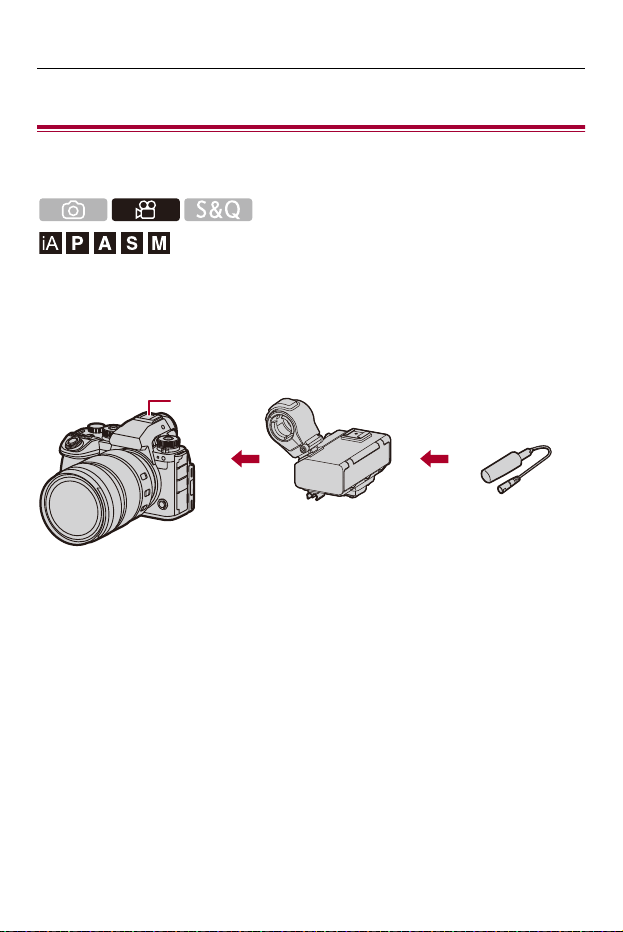
Video Settings – XLR Microphone Adaptor (Optional)
461
XLR Microphone Adaptor (Optional)
≥ [4ch Audio Recording]: 464
By attaching an XLR Microphone Adaptor (DMW-XLR2: optional), you can
use a commercially available XLR microphone, etc., to enable
superior-quality 32-bit float recording and 4-channel audio recording.
([Sound Rec Quality]: 451, [4ch Audio Recording]: 464)
(A) Hot shoe
(B) Commercially available XLR microphone, etc.
Getting started:
•
Turn off the camera, and remove the hot shoe cover. (Removing the Hot Shoe
Cover: 412)
(B)
(A)
Video Settings – XLR Microphone Adaptor (Optional)
462
1
Attach the XLR Microphone Adaptor to the hot shoe,
and then turn on the camera.
≥Set to [ ] mode. (Photo/Video/S&Q Switch: 80)
≥ [] [] [XLR Mic Adaptor Setting]
•
When the XLR Microphone Adaptor is attached, [XLR Mic Adaptor Setting]
automatically turns [ON].
[ON]
Records the audio of a device connected to the XLR Microphone Adaptor.
[OFF]
Records audio using the built-in microphone of the camera.
2
Make settings for the sound quality of the audio to be
recorded in [Sound Rec Quality].
([Sound Rec Quality]: 451)
Video Settings – XLR Microphone Adaptor (Optional)
463
Notes Regarding the Optional XLR Microphone Adaptor DMW-XLR1
You can also use DMW-XLR1 (optional), but there are the following limitations:
•
The following functions cannot be used:
– [XLR] of [4ch Audio Recording]
– [96kHz/32bit] and [48kHz/32bit] ([Sound Rec Quality])
We recommend using DMW-XLR2 (optional).
•
While an XLR Microphone Adaptor is attached, [ ] is displayed on the screen.
•
When [XLR Mic Adaptor Setting] is set to [ON] and [4ch Audio Recording] is
[OFF], the following settings are fixed:
– [Sound Rec Level Limiter]: [OFF]
– [Wind Noise Canceller]: [OFF]
– [Sound Output]: [REC SOUND]
•
When [XLR Mic Adaptor Setting] is set to [ON] and [4ch Audio Recording] is
[OFF], [Sound Rec Gain Level] and [Sound Rec Level Adj.] are not available.
•
When the XLR Microphone Adaptor is attached, [Sound Rec Level Disp.]
automatically turns [ON], and the recording level is displayed on the screen.
•
When the XLR Microphone Adaptor is attached, do not carry the camera by
holding the XLR Microphone Adaptor. It may become detached.
•
If noises are recorded when using the AC adaptor, use the battery.
•
If you start video recording immediately after turning on the camera, a period with
no sound may be recorded at the beginning.
•
For details, refer to the operating instructions for the XLR Microphone Adaptor.
Video Settings – XLR Microphone Adaptor (Optional)
464
[4ch Audio Recording]
You can record 4-channel audio by using an XLR Microphone Adaptor
(DMW-XLR2: optional) to which is connected a commercially available
XLR microphone, etc.
By combining a Stereo Shotgun Microphone (DMW-MS2: optional) or a
Stereo Microphone (VW-VMS10: optional) instead of using the built-in
microphone, it is also possible to record 4-channel 96 kHz/24-bit
high-resolution audio. (External Microphones (Optional): 456)
1
Set to [ ] mode.
(Photo/Video/S&Q Switch: 80)
2
Set [4ch Audio Recording].
≥ [] [] [4ch Audio Recording]
[XLR]
Records the audio of a device connected to the XLR Microphone Adaptor to
CH1/CH2/CH3/CH4.
[XLR+CAMERA]
Records the audio of a device connected to the XLR Microphone Adaptor to
CH1/CH2.
The audio from the built-in microphone of the camera or the external
microphone connected to the camera is recorded to CH3/CH4.
[OFF]
Records the audio of a device connected to the XLR Microphone Adaptor to
CH1/CH2.

Video Settings – XLR Microphone Adaptor (Optional)
465
•
When [4ch Audio Recording] is set to other than [OFF], it is displayed as [4ch] on
the screen.
•
4-channel audio is output to external devices connected via HDMI when [4ch
Audio Recording] is set to other than [OFF].
•
This cannot be set when [Rec. File Format(Video)] is [MP4].
•
This cannot be set when [XLR Mic Adaptor Setting] is [OFF].
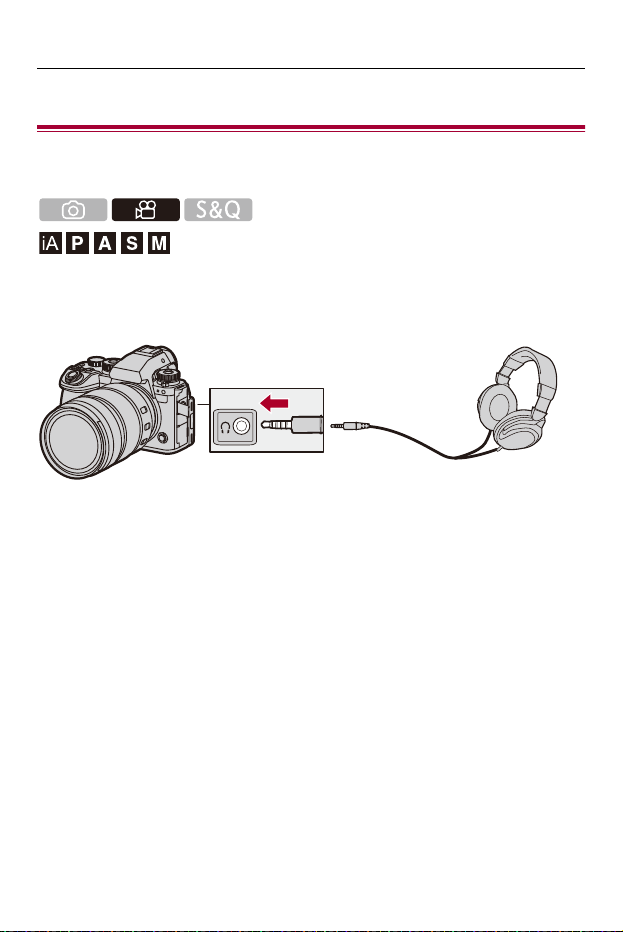
Video Settings – Headphones
466
Headphones
≥ [Sound Monitoring Channel]: 468
You can record videos while monitoring their sound by connecting
commercially available headphones to the camera.
•
Use a headphone cable with the length less than 3 m (9.8 feet).
•
When headphones are connected, beep sounds, AF beep, and electronic shutter
sounds are muted.
Video Settings – Headphones
467
Switching the Sound Output Method
1 Set to [ ] mode. (Photo/Video/S&Q Switch: 80)
2 Select [Sound Output].
•
[] [] [Sound Output]
[REALTIME]
Audio without time lag.
It may differ from the sound recorded in videos.
[REC SOUND]
Audio to be recorded in videos.
Output sound may be delayed from actual sound.
Adjusting the Headphone Volume
Connect the headphones and rotate .
: Reduces the volume.
: Increases the volume.
To adjust the volume using the menu:
1 Select [Headphone Volume].
•
[] [] [Headphone Volume]
2 Press 34 to adjust the headphone volume and then press or .
•
It can be adjusted in a range of [0] to [LEVEL15].
•
The setting is fixed to [REC SOUND] in the following case:
– When using an XLR Microphone Adaptor (DMW-XLR2: optional)
(When [4ch Audio Recording] is set to [OFF])
Video Settings – Headphones
468
[Sound Monitoring Channel]
You can set the audio channel output to the headphones when recording.
For information about the audio channel settings during playback
([Sound Monitoring Channel(Play)]: 736)
1
Set to [ ] mode.
(Photo/Video/S&Q Switch: 80)
2
Set [Sound Monitoring Channel].
≥ [] [] [Sound Monitoring Channel]
[CH1/CH2]
Outputs CH1 (L)/CH2 (R).
[CH3/CH4]
Outputs CH3 (L)/CH4 (R).
[CH1+CH2/CH3+CH4]
Outputs CH1+CH2 (L)/CH3+CH4 (R).
[CH1]
Outputs CH1.
[CH2]
Outputs CH2.
[CH3]
Outputs CH3.
[CH4]
Outputs CH4.
Video Settings – Headphones
469
[CH1+CH2]
Outputs a mix of CH1 and CH2.
[CH3+CH4]
Outputs a mix of CH3 and CH4.
[CH1+CH2+CH3+CH4]
Outputs a mix of CH1, CH2, CH3, and CH4.
•
This can also be set during video recording.

Video Settings – Time Code
471
Setting the Time Code
Sets the recording, display, and output of the time code.
1
Set to [ ] or [S&Q] mode.
(Photo/Video/S&Q Switch: 80)
2
Set [Rec. File Format(Video)] to [MOV] or [Apple
ProRes].
≥ [] [] [Rec. File Format(Video)] [MOV]/[Apple
ProRes]
3
Select [Time Code].
≥ [] [] [Time Code]
[Time Code Display]
Displays the time code on the recording screen/playback screen.
[Count Up]
[REC RUN]: Counts the time code only when recording videos.
[FREE RUN]: Counts the time code also when video recording is stopped and
when the camera is turned off.
•
When the following function is being used, [Count Up] is fixed to [REC RUN]:
– [S&Q] mode
[Time Code Value]
[Reset]: Sets to 00:00:00:00 (hour: minute: second: frame)
[Manual Input]: Manually input hour, minute, second and frame.
[Current Time]: Sets hour, minute and second to current time and sets frame to
00.

Video Settings – Time Code
472
[Time Code Mode]
[DF]: Drop Frame. The camera modifies the difference between recorded time
and time code.
•
Seconds and frames are separated by “.”. (Example: 00:00:00.00)
[NDF]: Non-Drop Frame. Records the time code without drop frame.
•
Seconds and frames are separated by “:”. (Example: 00:00:00:00)
•
When the following functions are being used, [Time Code Mode] is fixed to
[NDF]:
– [50.00Hz (PAL)]/[24.00Hz (CINEMA)] ([System Frequency])
– 47.95p or 23.98p [Rec Quality]
[HDMI Time Code Output]
Time code information is added to images output via HDMI when recording with
the [ ]/[S&Q] mode.
•
The time code can also be output during playback via HDMI by switching the
photo/video/S&Q switch to [ ]/[S&Q]. In the [Setup] ([IN/OUT]) menu, set
[Output Resolution(Playback)] in [HDMI Connection] to [AUTO]. ([Output
Resolution(Playback)]: 740)
•
The device screen may go dark depending on the connected device.
[External TC Setting]
Synchronize the time code by using a Bluetooth connection with an external
device that supports time code output. (Synchronizing the Time Code with an
External Device: 473)
[Bluetooth]: Connect with an external device via Bluetooth.
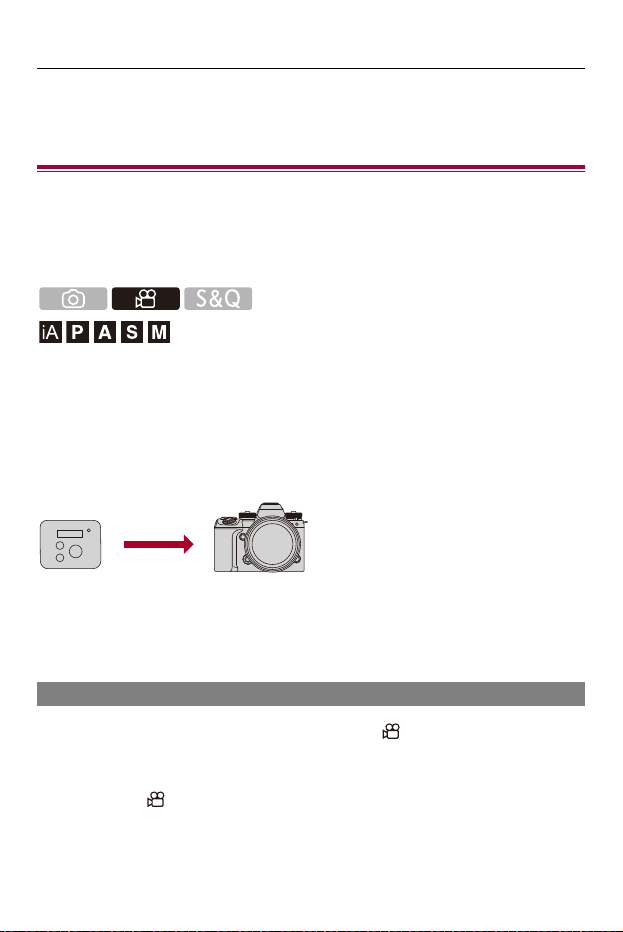
Video Settings – Synchronizing the Time Code with an External Device
473
Synchronizing the Time Code with an
External Device
≥ Preparations for Time Code Synchronization: 473
≥ Synchronize the Time Code of the Camera with That of the External
Device (TC IN): 476
Synchronize the time code default value with an external device that
supports time code output via a Bluetooth connection with this camera.
• It is compatible with the ATOMOS UltraSync BLUE.
Refer to the website below for firmware versions that support UltraSync BLUE:
https://panasonic.jp/support/global/cs/dsc/connect/index.html
(English only)
(A) Time code output
(B) Time code input
Preparations for Time Code Synchronization
When [Count Up] is set to [FREE RUN] in the [ ] mode, you can
synchronize the initial value of the time code with an external device.
1
Set to [ ] mode.
(Photo/Video/S&Q Switch: 80)
(B)(A)
Video Settings – Synchronizing the Time Code with an External Device
474
2
Set [Count Up] to [FREE RUN].
≥ [] [] [Time Code] [Count Up] [FREE RUN]
3
Set the camera to Bluetooth pairing standby state.
≥ [] [] [Time Code] [External TC Setting]
[Bluetooth] [ON]
•
The camera enters the pairing standby state.
•
If there is a paired external device, the camera enters the connection standby
state. If you want to pair with a new external device, use the following
procedure to put the camera in the pairing standby state.
[] [] [Bluetooth] [Pairing] [ATOMOS Wireless TC]
4
Pair with the camera on the external device.
•
The paired external device is registered as a paired device.
•
Even if you set up pairing with more than one external device, you can only
connect to one external device at a time.
•
When pairing takes some time, canceling the pairing settings on both the
external device and camera and re-establishing the connection may result in the
camera being detected correctly.
•
During Bluetooth connection, [ ] is displayed in the recording screen.
When the Bluetooth function is enabled, but a connection is not established with
the external device, [ ] appears translucent.
•
Up to a total of 16 Bluetooth devices can be paired. If you try to register more
than 16 devices, the registration information will be deleted from the oldest first.
•
When the following function is being used, [Bluetooth] is not available:
– [Frame.io Connection]
Video Settings – Synchronizing the Time Code with an External Device
475
End Bluetooth Connection
To terminate the Bluetooth connection, turn off the Bluetooth function of the
camera.
[] [] [Bluetooth] [Bluetooth Function] Select [OFF]
Canceling Pairing
1 Cancel the pairing setting of the camera.
•
[] [] [Bluetooth] [Pairing] [Delete]
2 Select the external device for which to cancel the pairing.
•
Even if you terminate the connection, the pairing information for it will not be
deleted.
•
Also cancel the pairing setting on the external device.
•
When [Reset] in the [Setup] ([Setting]) menu is used to reset the network
settings, the information for registered devices is deleted.
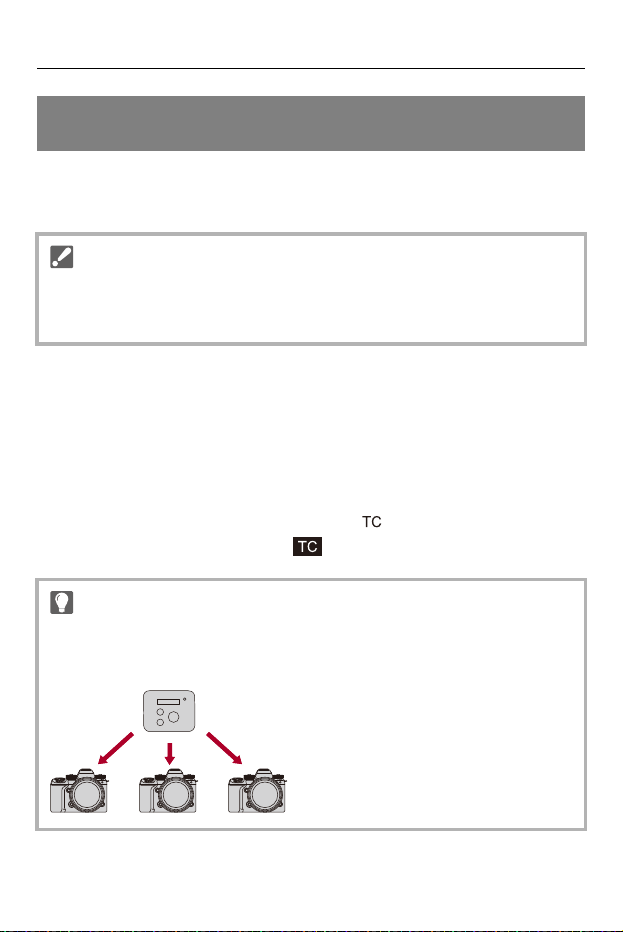
Video Settings – Synchronizing the Time Code with an External Device
476
Synchronize the Time Code of the Camera with That
of the External Device (TC IN)
The initial time code value of the camera is synchronized according to the
time code signal (LTC signal) of the external device.
1
Prepare for time code synchronizing.
(Preparations for Time Code Synchronization: 473)
2
Operate the external device to output the time code
signal.
≥When synchronized with the time code of an external device, this
camera is in a slave state, and the [ ] of the time code shown
on the screen switches to [ ].
•
In advance, change the [System Frequency] ([System Frequency]: 146), [Rec
Quality] ([Rec Quality]: 150), and [Time Code Mode] ([Time Code Mode]:
472) to match the external device.
•
When multiple units of this camera are synchronized, the time code and
exposure timings are synchronized so you can match the timings for starting
exposure between cameras.
Video Settings – Synchronizing the Time Code with an External Device
477
Maintaining, Releasing, and Restoring the Slave State
The camera is not released from the slave state even if the Bluetooth
connection is terminated.
•
Perform one of the following operations to release the camera from the slave state.
– Operate the camera on/off switch
– Switch to the [ ] or [S&Q] mode
– Change the [System Frequency]
– Change the following [Time Code] setting items:
[Count Up], [Time Code Value], [Time Code Mode]
– Switch the [Rec Quality] between 239.76p/119.88p/59.94p/29.97p and a different
recording frame rate
•
To restore the slave state, re-establish the Bluetooth connection with the external
device while set as follows.
The time code signal (LTC signal) can be input just by connecting.
–[ ] mode
– [Count Up] ([Time Code]): [FREE RUN]
•
Even when the system frequency differs between the camera and the external
device, their initial time code values may be synchronized. Bear in mind,
however, that the time codes lose sync as they count up.
Video Settings – Main Assist Functions
478
Main Assist Functions
≥ [Flicker Decrease (Video)]: 479
≥ [SS/Gain Operation]: 480
≥ [Shutter Speed Limiter]: 482
≥ [WFM/Vector Scope]: 484
≥ [Luminance Spot Meter]: 488
≥ [Zebra Pattern]: 490
≥ [False Color]: 492
≥ [Frame Marker]: 494
≥ Color Bars/Test Tone: 496
•
The [Custom] ([Monitor / Display (Video)]) menu has display assist functions
such as the center marker and safety zone marker:
([Custom] menu ([Monitor / Display (Video)]): 712)
Video Settings – Main Assist Functions
479
[Flicker Decrease (Video)]
When recording video in [ ] mode, you can fix the shutter speed to
mitigate the flickering and horizontal stripes that appear in videos.
•
This can be set when [Auto Exposure in Photo Mode] is [ON]. ([Auto Exposure in
Photo Mode]: 686)
1
Set to [ ] mode.
(Photo/Video/S&Q Switch: 80)
2
Set [Flicker Decrease (Video)].
≥ [] [] [Flicker Decrease (Video)]
[1/50]/[1/60]/[1/100]/[1/120]
[OFF]
Video Settings – Main Assist Functions
480
[SS/Gain Operation]
You can switch the units of shutter speed values and gain (sensitivity)
values.
1
Set to [ ] or [S&Q] mode.
(Photo/Video/S&Q Switch: 80)
2
Set [SS/Gain Operation].
≥ [] [] [SS/Gain Operation]
[SEC/ISO]
Displays the shutter speed in seconds and the gain in ISO.
[ANGLE/ISO]
Displays the shutter speed in degrees and the gain in ISO.
•
The angle can be set in a range between 11° and 358°.
(when [Synchro Scan(Video)] is set to [OFF])
[SEC/dB]
Displays the shutter speed in seconds and the gain in dB.
•
0 dB corresponds to either of the following ISO sensitivity values.
– When [Dual Native Gain Setting] is set to [AUTO] or [LOW]: [100]
– When [Dual Native Gain Setting] is set to [HIGH]: [800]
Video Settings – Main Assist Functions
481
Setting Range for Gain (Sensitivity)
When [SS/Gain Operation] is set to [SEC/dB], gain (sensitivity) can be set
in the following ranges.
•
The range of gains you can set depends on the Photo Style used.
•
When [SS/Gain Operation] is set to [SEC/dB], menu names change as shown
below:
– [Dual Native ISO Setting] [Dual Native Gain Setting]
– [ISO Sensitivity (video)] [Gain Setting]
– [ISO Auto Lower Limit Setting] [Auto Gain Lower Limit Setting]
– [ISO Auto Upper Limit Setting] [Auto Gain Upper Limit Setting]
– [Extended ISO] [Extended Gain Setting]
– [ISO Displayed Setting] [Gain Displayed Setting]
[Dual Native Gain
Setting]
[Extended Gain
Setting]
Setting Range for Gain
(Sensitivity)
[AUTO]
[OFF] [AUTO], [0dB] to [+54dB]
[ON] [AUTO], [−6dB] to [+66dB]
[LOW]
[OFF] [AUTO], [0dB] to [+18dB]
[ON] [AUTO], [−6dB] to [+18dB]
[HIGH]
[OFF] [AUTO], [0dB] to [+36dB]
[ON] [AUTO], [−6dB] to [+48dB]
Video Settings – Main Assist Functions
482
[Shutter Speed Limiter]
You can change the lower limit of the shutter speed according to the
recording frame rate of the video. When you set to [ON], you can limit the
shutter speed so that it does not go below the frame rate. If you want to
make the shutter speed longer than the frame rate, set to [OFF].
1
Set to [ ] mode.
(Photo/Video/S&Q Switch: 80)
2
Set [Shutter Speed Limiter].
≥ [] [] [Shutter Speed Limiter]
[ON]
Limits the shutter speed so it does not go below the frame rate.
[OFF]
No limit is placed on the shutter speed so it does not go below the frame rate.
Video Settings – Main Assist Functions
483
Minimum shutter speed
* In [ ] mode:
Can be set in [M] mode ([Exposure Control(Video Mode)] is set to [M], or set to the
[MODE DIAL] and the mode dial is [M]) ([Exposure Control(Video Mode)]: 686)
In [ ] mode:
[Auto Exposure in Photo Mode] is set to [OFF] ([Auto Exposure in Photo Mode]:
686)
Recording
frame rate
of the video
[Shutter Speed Limiter]
[ON] [OFF]
[AFS]/[AFC] [MF] [AFS]/[AFC] [MF]
23.98p/
24.00p/
25.00p
1/25 of a second
1/2 of a
second
*
29.97p 1/30 of a second
47.95p
1/50 of a second
1/25 of a second ([iA]/[S]/[M])
1/50 of a second ([P]/[A])
48.00p
50.00p
59.94p 1/60 of a second
1/30 of a second ([iA]/[S]/[M])
1/60 of a second ([P]/[A])
95.90p/
96.00p/
100.00p
1/100 of a second
119.88p/
120.00p
1/125 of a second
200.00p 1/200 of a second
239.76p 1/250 of a second
Video Settings – Main Assist Functions
484
[WFM/Vector Scope]
This displays the waveform monitor or the vector scope on the recording
screen. You can change the size of the waveform display.
1
Set [WFM/Vector Scope].
≥ [] [] [WFM/Vector Scope]
[WAVE]
Displays a waveform.
[VECTOR]
Displays the vector scope.
[OFF]
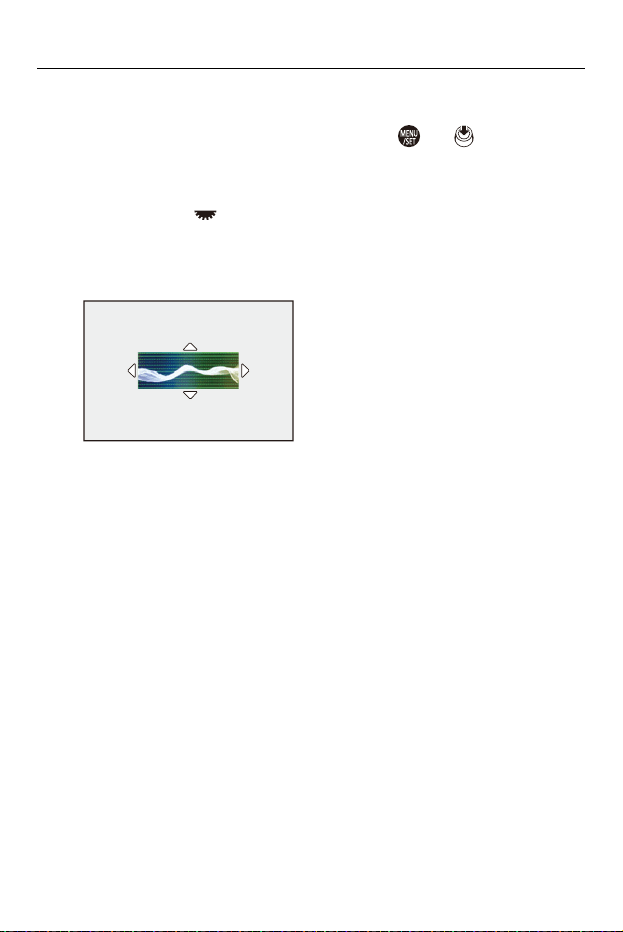
Video Settings – Main Assist Functions
485
2
Select the position to display.
≥Press 3421 to select and then press or .
•
Positions can be moved to the diagonal directions using the joystick.
•
You can also move using touch operations.
•
You can rotate to change the size of the waveform.
•
To return the waveform or vector scope position back to the center, press
[DISP.]. With waveform, pressing [DISP.] once again returns the size to the
default setting.
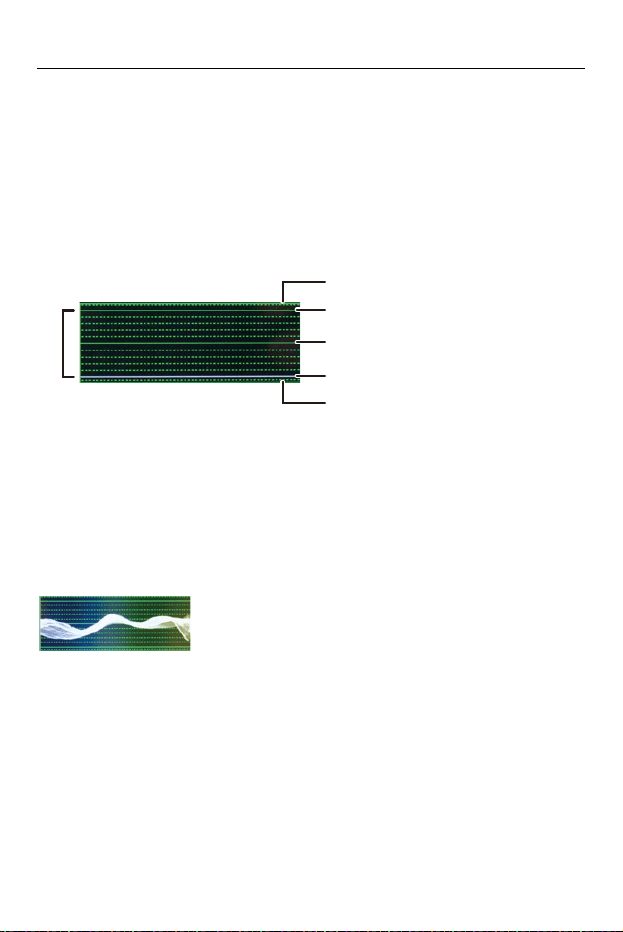
Video Settings – Main Assist Functions
486
Screen Displays
Waveform
•
The waveform displayed on the camera indicates the luminance as values based on
the conversions below:
0% (IRE
*
): Luminance value 16 (8 bit)/64 (10 bit)
100 % (IRE
*
): Luminance value 235 (8 bit)/940 (10 bit)
* IRE: Institute of Radio Engineers
(A) 109 % (IRE) (Dotted line)
(B) 100 % (IRE)
(C) 50 % (IRE)
(D) 0 % (IRE)
(E) −4 % (IRE) (Dotted line)
(F) The range between 0 % and 100 % shows dotted lines at intervals of 10 %.
Display example)
(A)
(F)
(B)
(C)
(D)
(E)
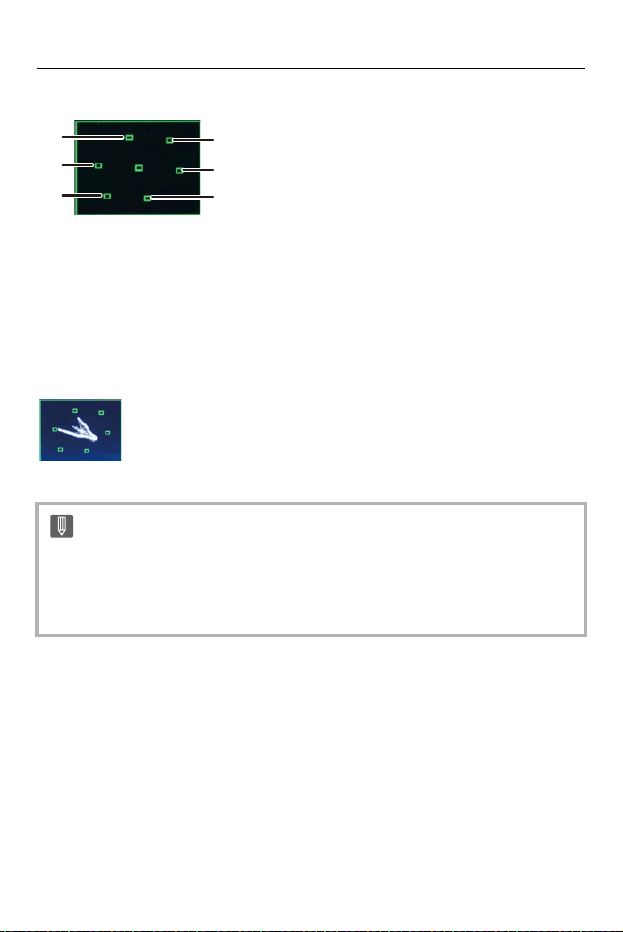
Video Settings – Main Assist Functions
487
Vector scope
(G) R (Red)
(H) YL (Yellow)
(I) G (Green)
(J) MG (Magenta)
(K) B (Blue)
(L) CY (Cyan)
Display example)
•
When you assign the function to an Fn button, you can switch between
displaying and hiding these during recording of video. (Fn Buttons: 646)
•
You can also change the position by dragging on the recording screen.
•
The waveform and vector scope are not output through HDMI.
(J)
(K)
(L)
(G)
(H)
(I)
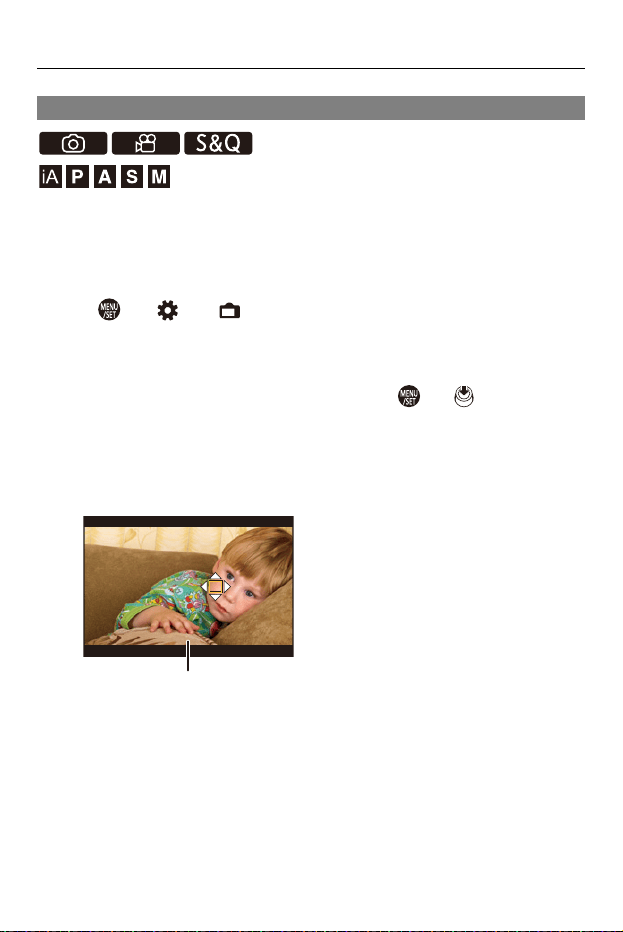
Video Settings – Main Assist Functions
488
[Luminance Spot Meter]
Specify any spot on the subject to measure the luminance over a small
area.
1
Set [Luminance Spot Meter].
≥ [] [] [Luminance Spot Meter] [ON]
2
Select the position where you want to measure the
luminance.
≥Press 3421 to select and then press or .
•
Positions can be moved to the diagonal directions using the joystick.
•
You can also change the position by dragging the frame on the recording
screen.
•
To return the position back to the center, press [DISP.].
(M) Luminance value
65%
65%
65%
(M)

Video Settings – Main Assist Functions
489
Measurement Range
Measuring is possible in the range −7 % to 109 % (IRE).
•
When [Photo Style] is set to [V-Log], or when a LUT file has not been applied in
[REAL TIME LUT] (base Photo Style is [V-Log]), this is measured with “Stop” units.
(18 % gray output level is calculated as 0 Stop)
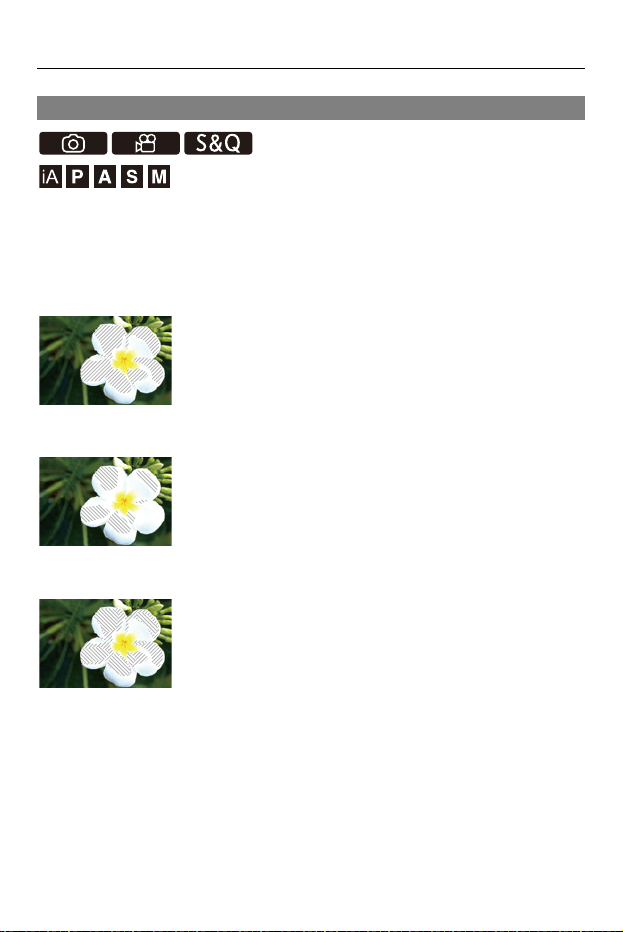
Video Settings – Main Assist Functions
490
[Zebra Pattern]
Parts that are brighter than the base value are displayed with stripes.
You can also set the base value and the breadth of the range so that the
stripes are displayed on parts that are within the range of brightness you
specify.
[ZEBRA1]
[ZEBRA2]
[ZEBRA1+2]
Video Settings – Main Assist Functions
491
[] [] Select [Zebra Pattern]
When [BASE/RANGE] Was Selected with [SET]
Centered on the brightness set with [Base Level], parts with the brightness
in the range set in [Range] are displayed with the stripes.
≥ [Base Level] can be set in the range between 0 % and 109 % (IRE).
≥ [Range] can be set in the range between ±1 % and ±10 % (IRE).
•
When [Photo Style] is set to [V-Log], or when a LUT file has not been applied in
[REAL TIME LUT] (base Photo Style is [V-Log]), this is measured with “Stop” units.
(18 % gray output level is calculated as 0 Stop)
[ZEBRA1]
Parts that are brighter than the base value are displayed with
[ZEBRA1] stripes.
[ZEBRA2]
Parts that are brighter than the base value are displayed with
[ZEBRA2] stripes.
[ZEBRA1+2] Both [ZEBRA1] and [ZEBRA2] are displayed.
[OFF] —
[SET]
Sets the base brightness.
[Zebra 1] [50%] to [105%]/[BASE/RANGE]
[Zebra 2] [50%] to [105%]/[BASE/RANGE]
•
[ZEBRA1+2] cannot be selected while you are setting [BASE/RANGE].
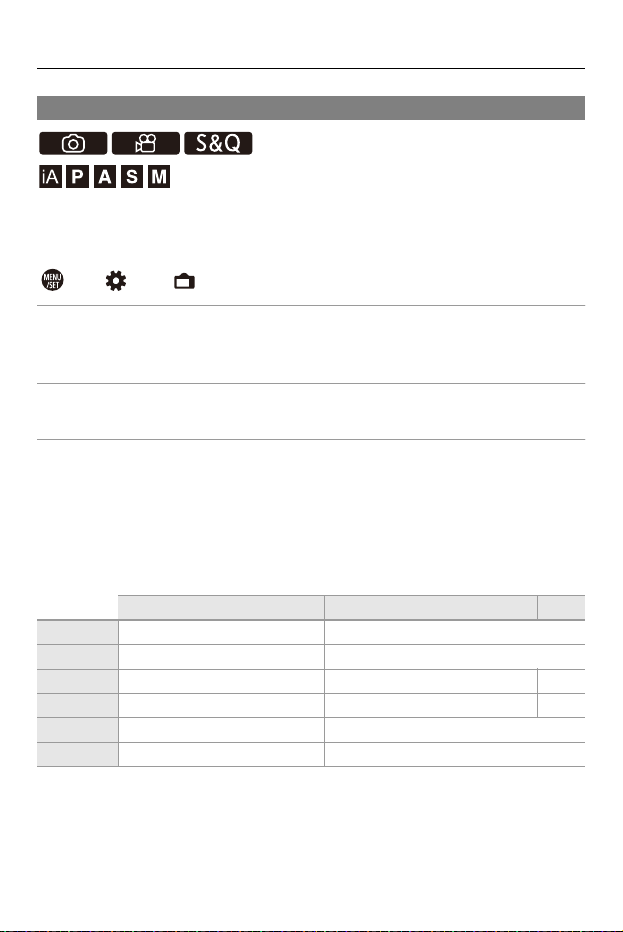
Video Settings – Main Assist Functions
492
[False Color]
The image is separated into colors to represent the luminance levels. This
is a convenient method of checking the exposure of the image overall.
[] [] Select [False Color]
[Start]
The recording screen has the false colors applied.
•
The recorded images are recorded as images without the false colors applied.
[False Color Index]
The index of the false colors is displayed.
Display Patterns
(A) [Photo Style] is set to [V-Log], [REAL TIME LUT] (base Photo Style is [V-Log])
([LUT] not applied)
(B) [Photo Style] is set to other than (A) ([LUT] not applied)
(C) [LUT] is applied with [Photo Style] or [Filter Settings] is [ON]
(A) (B) (C)
Red 1/3 stop below clipping White clipping
Yellow 2/3 stop below clipping Just below white clipping/white shoulder
Pink 1 stop over 18% middle gray One stop over medium gray —
Green 18% middle gray 18% neutral gray —
Blue Edge of shadow detail Just above black clipping/black slope
Purple Noise floor Black clipping

Video Settings – Main Assist Functions
493
•
When [LUT] is applied in [Photo Style], depending on the LUT file applied, the
luminance signal may not be input resulting in the coloring not being performed,
even if the color is displayed in the false color index.
•
The following functions cannot be displayed in the [False Color] recording
screen:
– Focus frame
– [Level Gauge]
– Spot metering target
– Touch AE
– [Luminance Spot Meter]
– [Histogram]
– [WFM/Vector Scope]
– [I.S. Status Scope]
– [Live Cropping]
– [Audio Information]
– [Time Code Display]
•
When the following function is being used, [False Color] is not available:
– [Multiple Exposure]
Video Settings – Main Assist Functions
494
[Frame Marker]
A frame with the set aspect ratio is displayed on the recording screen. This
allows you to see during recording the angle of view that will be achieved
with trimming (cropping) in post-processing.
[] [] Select [Frame Marker]
[ON] Displays the frame on the recording screen.
[OFF] —
[SET]
[Frame Aspect]
Sets the aspect ratio of the frame.
[2.39:1]/[2.35:1]/[2.00:1]/[1.85:1]/[16:9]/
[4:3]/[5:4]/[1:1]/[4:5]/[9:16]/[CUSTOM]
[Frame Color] Sets the color of the frame.
[Frame Mask]
Sets the opacity of the outside of the frame.
[100%]/[75%]/[50%]/[25%]/[OFF]
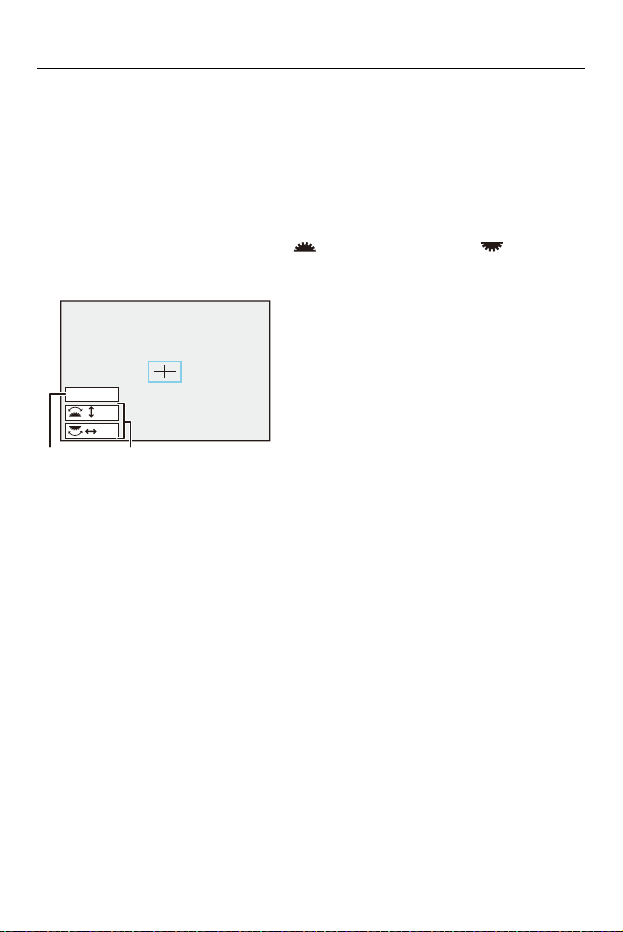
Video Settings – Main Assist Functions
495
When [CUSTOM] Is Selected with [Frame Aspect] in [SET]
You can freely set the aspect ratio of the frame.
≥ Press
3421
to move the center position.
•
Positions can be moved to the diagonal directions using the joystick.
•
You can also change the position by dragging the frame on the recording screen.
≥ Set the height of the frame with [ ], and the width with [ ].
•
You can also pinch out/pinch in the frame to change the size.
(D) Center coordinates (0 being the center of the screen)
(E) Height and width of the frame
•
The aspect ratio can be set in the range between 1 % to 100 %.
•
The first press of [DISP.] returns the frame position to the center.
The second press returns the frame size to the default.
X,Y=(±0,±0)
13%
13%
(D) (E)
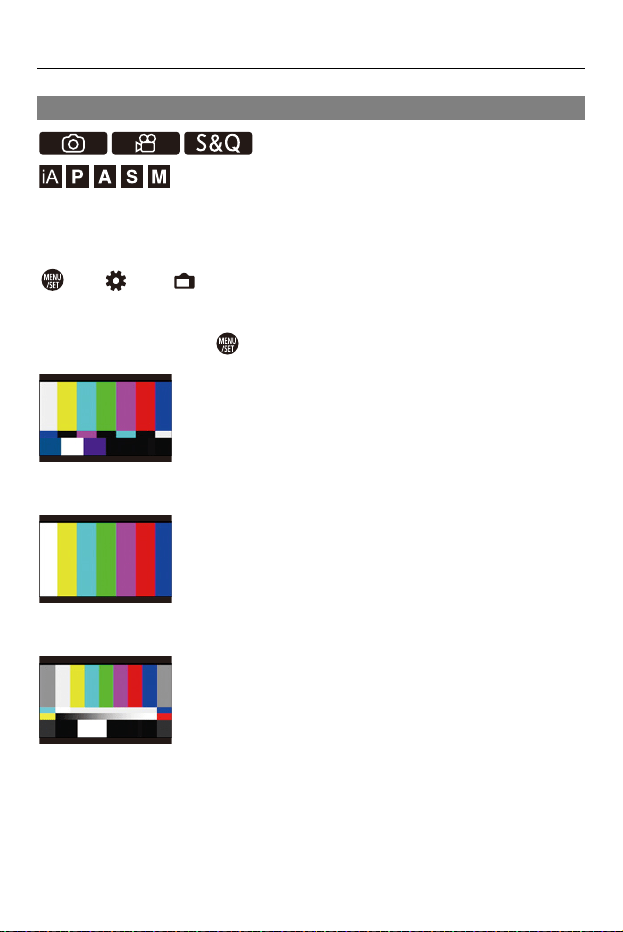
Video Settings – Main Assist Functions
496
Color Bars/Test Tone
The color bars are displayed on the recording screen.
A test tone is output while the color bars are being displayed.
[] [] Select [Color Bars]
Settings: [SMPTE]/[EBU]/[ARIB]
•
To end the display, press .
[SMPTE]
[EBU]
[ARIB]
Video Settings – Main Assist Functions
497
Adjusting the Test Tone
There are 4 levels ([−12dB], [−18dB], [−20dB], and [MUTE]) of test tone to
select.
Rotate , or to select the test tone level.
•
The color bars and test tone will be recorded on the video if video recording is
started while the color bars are being displayed.
•
The brightness and coloring that appear on the camera’s monitor or viewfinder
may differ from those that appear on another device such as an external monitor.

498
Special Video Recording
This chapter describes advanced video recording applications such as
slow motion/quick motion video and Log recording.
≥ Slow & Quick Video: 499
≥ High Frame Rate Video: 515
≥ [Focus Transition]: 517
≥ [Live Cropping]: 522
≥ Log Recording: 527
≥ HLG Videos: 534
≥ Anamorphic Recording: 538
≥ [Synchro Scan(Video)]: 542
≥ [Loop Recording (video)]: 544
≥ [Segmented File Recording]: 546
≥ List of Recording Qualities That Enable Special Videos to be Recorded:
547
Special Video Recording – Slow & Quick Video
499
Slow & Quick Video
In the [S&Q] mode, the camera records at a different frame rate to the
recording frame rate, enabling the creation of slow motion video and quick
motion video in the MOV format.
Slow Motion Video (Overcrank Recording)
Set a number of frames that is higher than the recording frame rate of the [Rec
Quality].
For example: When recording at 60 fps when set to a 29.97p [Rec Quality], the speed
is halved.
Quick Motion Video (Undercrank Recording)
Set a number of frames that is lower than the recording frame rate of the [Rec Quality].
For example: When recording at 15 fps when set to a 29.97p [Rec Quality], the speed
is doubled.
•
Slow & Quick video with a recording quality with the ALL-Intra image
compression system cannot be recorded to SD cards. Use CFexpress cards.
•
The volume of data recorded increases when you record slow motion video, so if
the card writing speed is insufficient, recording may stop.
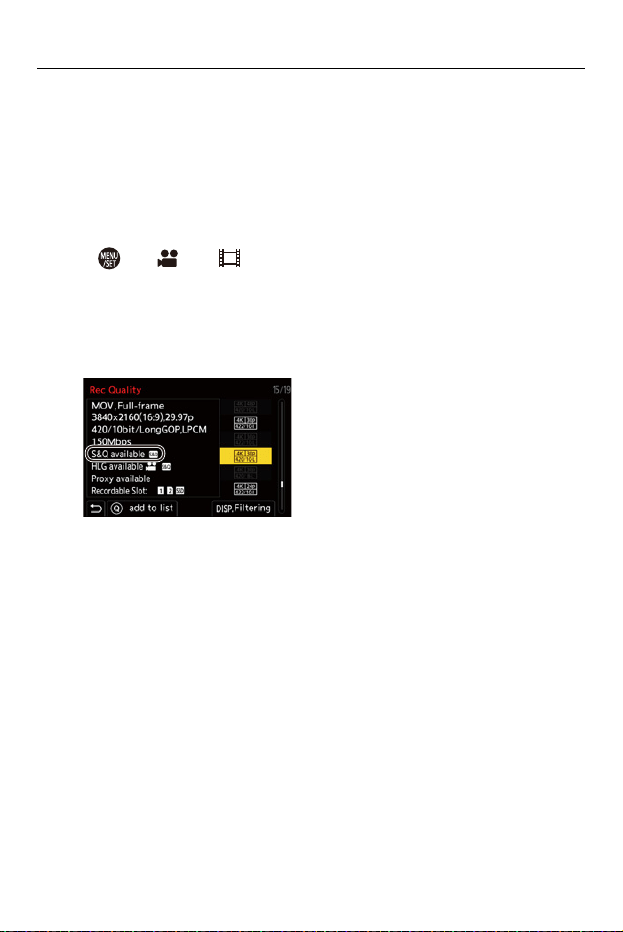
Special Video Recording – Slow & Quick Video
500
1
Set to [S&Q] mode.
(Photo/Video/S&Q Switch: 80)
•
[Rec. File Format(Video)] changes to [MOV].
2
Select a recording quality with which you can record
Slow & Quick video.
≥ [] [] [Rec Quality]
•
Items available for recording with Slow & Quick video are indicated as [S&Q
available].
•
Recording qualities with which you can record Slow & Quick video ( List of
Recording Qualities That Enable Special Videos to be Recorded: 547)
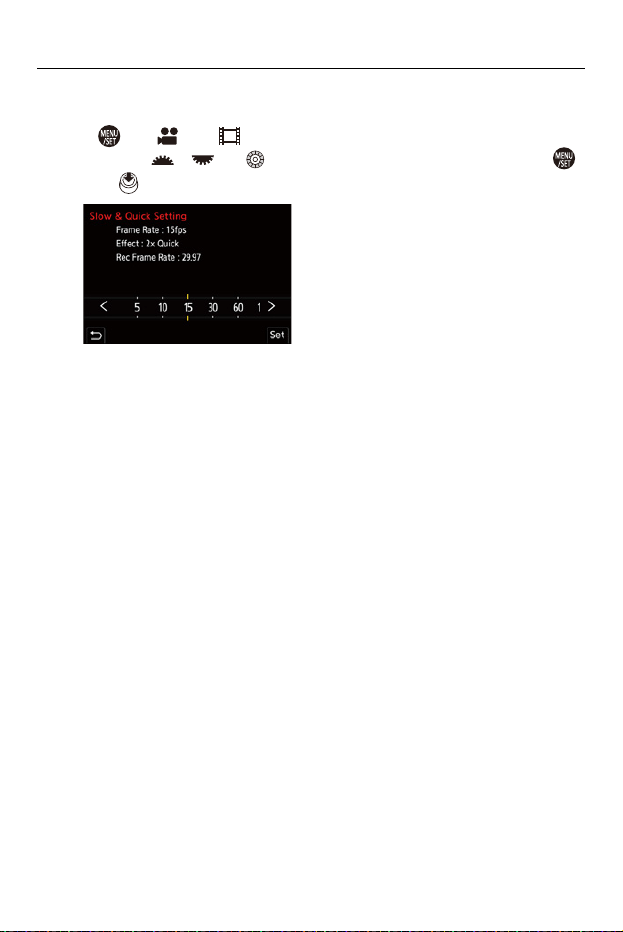
Special Video Recording – Slow & Quick Video
501
3
Set the frame rate.
≥ [] [] [Slow & Quick Setting]
≥Rotate , or to select a numeric value, then press
or .

Special Video Recording – Slow & Quick Video
502
Frame Rate Combinations and Playback Speeds
When [Image Area of Video] is set to [FULL]
Frame
rate
[System Frequency]: [59.94Hz (NTSC)]
6K/29.97p
5.9K/29.97p
5.8K/29.97p
5.1K/29.97p
6K/23.98p
5.9K/23.98p
5.8K/23.98p
5.1K/23.98p
C4K/59.94p C4K/29.97p C4K/23.98p
1fps 30× Quick 24× Quick 60× Quick 30× Quick 24× Quick
2fps 15× Quick 12× Quick 30× Quick 15× Quick 12× Quick
5fps 6× Quick 4.8× Quick 12× Quick 6× Quick 4.8× Quick
10 fps 3× Quick 2.4× Quick 6× Quick 3× Quick 2.4× Quick
15 fps 2× Quick 1.6× Quick 4× Quick 2× Quick 1.6× Quick
30 fps 1× Normal 1.25× Slow 2× Quick 1× Normal 1.25× Slow
60 fps 2× Slow 2.5× Slow 1× Normal 2× Slow 2.5× Slow
75 fps 1.25× Slow 2.5× Slow
*
3.13× Slow
*
100 fps
120 fps
150 fps
180 fps
200 fps
240 fps

Special Video Recording – Slow & Quick Video
503
Frame
rate
[System Frequency]: [59.94Hz (NTSC)]
Cs4K/59.94p Cs4K/29.97p Cs4K/23.98p 4K/59.94p 4K/29.97p
1fps 60× Quick 30× Quick 24× Quick 60× Quick 30× Quick
2fps 30× Quick 15× Quick 12× Quick 30× Quick 15× Quick
5fps 12× Quick 6× Quick 4.8× Quick 12× Quick 6× Quick
10 fps 6× Quick 3× Quick 2.4× Quick 6× Quick 3× Quick
15 fps 4× Quick 2× Quick 1.6× Quick 4× Quick 2× Quick
30 fps 2× Quick 1× Normal 1.25× Slow 2× Quick 1× Normal
60 fps 1× Normal 2× Slow 2.5× Slow 1× Normal 2× Slow
75 fps 1.25× Slow 2.5× Slow
*
3.13× Slow
*
100 fps 1.67× Slow 3.33× Slow
*
4.17× Slow
*
120 fps 2× Slow 4× Slow
*
5× Slow
*
150 fps
180 fps
200 fps
240 fps

Special Video Recording – Slow & Quick Video
504
Frame
rate
[System Frequency]: [59.94Hz (NTSC)]
4K/23.98p FHD/59.94p FHD/29.97p FHD/23.98p
1fps 24× Quick 60× Quick 30× Quick 24× Quick
2fps 12× Quick 30× Quick 15× Quick 12× Quick
5fps 4.8× Quick 12× Quick 6× Quick 4.8× Quick
10 fps 2.4× Quick 6× Quick 3× Quick 2.4× Quick
15 fps 1.6× Quick 4× Quick 2× Quick 1.6× Quick
30 fps 1.25× Slow 2× Quick 1× Normal 1.25× Slow
60 fps 2.5× Slow 1× Normal 2× Slow 2.5× Slow
75 fps 1.25× Slow 2.5× Slow 3.13× Slow
100 fps 1.67× Slow 3.33× Slow 4.17× Slow
120 fps 2× Slow 4× Slow 5× Slow
150 fps 2.5× Slow 5× Slow 6.25× Slow
180 fps 3× Slow 6× Slow 7.5× Slow
200 fps 3.33× Slow 6.67× Slow 8.33× Slow
240 fps 4× Slow 8× Slow 10× Slow

Special Video Recording – Slow & Quick Video
505
Frame
rate
[System Frequency]: [50.00Hz (PAL)]
6K/25.00p
5.9K/25.00p
5.8K/25.00p
5.1K/25.00p
C4K/50.00p C4K/25.00p Cs4K/50.00p Cs4K/25.00p
1fps 25× Quick 50× Quick 25× Quick 50× Quick 25× Quick
2fps 12.5× Quick 25× Quick 12.5× Quick 25× Quick 12.5× Quick
5fps 5× Quick 10× Quick 5× Quick 10× Quick 5× Quick
10 fps 2.5× Quick 5× Quick 2.5× Quick 5× Quick 2.5× Quick
15 fps 1.67× Quick 3.33× Quick 1.67× Quick 3.33× Quick 1.67× Quick
30 fps 1.2× Slow 1.67× Quick 1.2× Slow 1.67× Quick 1.2× Slow
60 fps 2.4× Slow 1.2× Slow 2.4× Slow 1.2× Slow 2.4× Slow
75 fps 1.5× Slow 3× Slow
*
1.5× Slow 3× Slow
*
100 fps 2× Slow 4× Slow
*
120 fps 2.4× Slow 4.8× Slow
*
150 fps
180 fps
200 fps
240 fps

Special Video Recording – Slow & Quick Video
506
Frame
rate
[System Frequency]: [50.00Hz (PAL)]
4K/50.00p 4K/25.00p FHD/50.00p FHD/25.00p
1fps 50× Quick 25× Quick 50× Quick 25× Quick
2fps 25× Quick 12.5× Quick 25× Quick 12.5× Quick
5fps 10× Quick 5× Quick 10× Quick 5× Quick
10 fps 5× Quick 2.5× Quick 5× Quick 2.5× Quick
15 fps 3.33× Quick 1.67× Quick 3.33× Quick 1.67× Quick
30 fps 1.67× Quick 1.2× Slow 1.67× Quick 1.2× Slow
60 fps 1.2× Slow 2.4× Slow 1.2× Slow 2.4× Slow
75 fps 1.5× Slow 3× Slow
100 fps 2× Slow 4× Slow
120 fps 2.4× Slow 4.8× Slow
150 fps 3× Slow 6× Slow
180 fps 3.6× Slow 7.2× Slow
200 fps 4× Slow 8× Slow
240 fps 4.8× Slow 9.6× Slow

Special Video Recording – Slow & Quick Video
507
Frame
rate
[System Frequency]: [24.00Hz (CINEMA)]
6K/24.00p
5.9K/24.00p
5.8K/24.00p
5.1K/24.00p
C4K/24.00p Cs4K/24.00p
1fps 24× Quick 24× Quick 24× Quick
2fps 12× Quick 12× Quick 12× Quick
5fps 4.8× Quick 4.8× Quick 4.8× Quick
10 fps 2.4× Quick 2.4× Quick 2.4× Quick
15 fps 1.6× Quick 1.6× Quick 1.6× Quick
30 fps 1.25× Slow 1.25× Slow 1.25× Slow
60 fps 2.5× Slow 2.5× Slow 2.5× Slow
75 fps 3.13× Slow
*
3.13× Slow
*
100 fps 4.17× Slow
*
120 fps 5× Slow
*
150 fps
180 fps
200 fps
240 fps

Special Video Recording – Slow & Quick Video
508
* Cannot be set for [422/10-I] C4K/Cs4K video.
Frame
rate
[System Frequency]: [24.00Hz (CINEMA)]
4K/24.00p FHD/24.00p
1fps 24× Quick 24× Quick
2fps 12× Quick 12× Quick
5fps 4.8× Quick 4.8× Quick
10 fps 2.4× Quick 2.4× Quick
15 fps 1.6× Quick 1.6× Quick
30 fps 1.25× Slow 1.25× Slow
60 fps 2.5× Slow 2.5× Slow
75 fps 3.13× Slow
100 fps 4.17× Slow
120 fps 5× Slow
150 fps 6.25× Slow
180 fps 7.5× Slow
200 fps 8.33× Slow
240 fps 10× Slow

Special Video Recording – Slow & Quick Video
509
When [Image Area of Video] is set to [APS-C]
Frame
rate
[System Frequency]: [59.94Hz (NTSC)]
C4K/59.94p
Cs4K/59.94p
4K/59.94p
C4K/29.97p
Cs4K/29.97p
4K/29.97p
C4K/23.98p
Cs4K/23.98p
4K/23.98p
1fps 60× Quick 30× Quick 24× Quick
2fps 30× Quick 15× Quick 12× Quick
5fps 12× Quick 6× Quick 4.8× Quick
10 fps 6× Quick 3× Quick 2.4× Quick
15 fps 4× Quick 2× Quick 1.6× Quick
30 fps 2× Quick 1× Normal 1.25× Slow
60 fps 1× Normal 2× Slow 2.5× Slow
75 fps 1.25× Slow 2.5× Slow
*
3.13× Slow
*
100 fps 1.67× Slow 3.33× Slow
*
4.17× Slow
*
120 fps 2× Slow 4× Slow
*
5× Slow
*
150 fps
180 fps

Special Video Recording – Slow & Quick Video
510
Frame
rate
[System Frequency]: [59.94Hz (NTSC)]
FHD/59.94p FHD/29.97p FHD/23.98p
1fps 60× Quick 30× Quick 24× Quick
2fps 30× Quick 15× Quick 12× Quick
5fps 12× Quick 6× Quick 4.8× Quick
10 fps 6× Quick 3× Quick 2.4× Quick
15 fps 4× Quick 2× Quick 1.6× Quick
30 fps 2× Quick 1× Normal 1.25× Slow
60 fps 1× Normal 2× Slow 2.5× Slow
75 fps 1.25× Slow 2.5× Slow 3.13× Slow
100 fps 1.67× Slow 3.33× Slow 4.17× Slow
120 fps 2× Slow 4× Slow 5× Slow
150 fps 2.5× Slow 5× Slow 6.25× Slow
180 fps 3× Slow 6× Slow 7.5× Slow

Special Video Recording – Slow & Quick Video
511
Frame
rate
[System Frequency]: [50.00Hz (PAL)]
C4K/50.00p
Cs4K/50.00p
4K/50.00p
C4K/25.00p
Cs4K/25.00p
4K/25.00p
FHD/50.00p FHD/25.00p
1fps 50× Quick 25× Quick 50× Quick 25× Quick
2fps 25× Quick 12.5× Quick 25× Quick 12.5× Quick
5fps 10× Quick 5× Quick 10× Quick 5× Quick
10 fps 5× Quick 2.5× Quick 5× Quick 2.5× Quick
15 fps 3.33× Quick 1.67× Quick 3.33× Quick 1.67× Quick
30 fps 1.67× Quick 1.2× Slow 1.67× Quick 1.2× Slow
60 fps 1.2× Slow 2.4× Slow 1.2× Slow 2.4× Slow
75 fps 1.5× Slow 3× Slow
*
1.5× Slow 3× Slow
100 fps 2× Slow 4× Slow
*
2× Slow 4× Slow
120 fps 2.4× Slow 4.8× Slow
*
2.4× Slow 4.8× Slow
150 fps 3× Slow 6× Slow
180 fps 3.6× Slow 7.2× Slow

Special Video Recording – Slow & Quick Video
512
* Cannot be set for [422/10-I] C4K/Cs4K video.
Frame
rate
[System Frequency]: [24.00Hz (CINEMA)]
C4K/24.00p
Cs4K/24.00p
4K/24.00p
FHD/24.00p
1fps 24× Quick 24× Quick
2fps 12× Quick 12× Quick
5fps 4.8× Quick 4.8× Quick
10 fps 2.4× Quick 2.4× Quick
15 fps 1.6× Quick 1.6× Quick
30 fps 1.25× Slow 1.25× Slow
60 fps 2.5× Slow 2.5× Slow
75 fps 3.13× Slow
*
3.13× Slow
100 fps 4.17× Slow
*
4.17× Slow
120 fps 5× Slow
*
5× Slow
150 fps 6.25× Slow
180 fps 7.5× Slow

Special Video Recording – Slow & Quick Video
513
Shutter Speeds When Recording Slow & Quick Video
When recording Slow & Quick video, the minimum shutter speed changes
depending on the frame rate of [Slow & Quick Setting].
Frame rate
Minimum shutter speed
[AFS]/[AFC] [MF]
1fps
1/30 of a second
1 second
2fps 1/2 of a second
5fps 1/5 of a second
10 fps 1/10 of a second
15 fps 1/15 of a second
30 fps 1/30 of a second
60 fps 1/60 of a second 1/60 of a second
75 fps 1/80 of a second 1/80 of a second
100 fps 1/100 of a second 1/100 of a second
120 fps 1/125 of a second 1/125 of a second
150 fps 1/160 of a second
180 fps 1/200 of a second
200 fps 1/200 of a second
240 fps 1/250 of a second

Special Video Recording – Slow & Quick Video
514
•
Audio will not be recorded during Slow & Quick recording.
•
[PIXEL/PIXEL] in [Image Area of Video] cannot be selected.
•
The mode switches to MF when you set to a frame rate of 150 fps or more.
(The camera automatically focuses when [AF ON] is pressed, but only before
starting recording.)
•
Depending on the [Rec Quality] and [Slow & Quick Setting] frame rate settings,
the following crop zoom rates are used for recording:
When [Image Area of Video] is [FULL]
– FHD video: Approx. 1.21× (181 fps or higher)
When [Image Area of Video] is [APS-C]
– FHD video: Approx. 1.14× (121 fps to 150 fps)/Approx. 1.44× (151 fps or
higher)
Special Video Recording – High Frame Rate Video
515
High Frame Rate Video
[MOV] video or [Apple ProRes] video with high frame rates can be
recorded to cards.
By converting it with the compatible software, it is possible to produce slow
motion video.
Audio recording, not possible in the Slow & Quick mode, also becomes
possible.
1
Set to [ ] mode.
(Photo/Video/S&Q Switch: 80)
2
Set [Rec. File Format(Video)] to [MOV] or [Apple
ProRes].
≥ [] [] [Rec. File Format(Video)] [MOV]/[Apple
ProRes]
3
Select a recording quality for high frame rate video.
≥ [] [] [Rec Quality]
•
By filtering the [Rec Quality] by the frame rate, you can display just those
recording qualities that match the frame rate conditions. ([Filtering]: 170)
•
Recording Qualities for High Frame Rate Video (List of Recording Qualities
That Enable Special Videos to be Recorded: 547)
Special Video Recording – High Frame Rate Video
516
•
When recording high frame rate video, the minimum shutter speed changes
depending on the recording frame rate of the video. You can set the minimum
shutter speed in [Shutter Speed Limiter]. ([Shutter Speed Limiter]: 482)
•
When outputting via HDMI, the resolution and frame rate may be
down-converted for output. (Settings for Down-Converting: 568)
Notice regarding AF when recording high frame rate video
•
When set to a [Rec Quality] where the recording frame rate is 200.00p or more,
there is a limitation on the lenses on which AF is possible.
You can confirm which lenses are supported by this camera in the information
about confirmed operation. Refer to the “AF and AE in Motion picture recording”
item.
https://panasonic.jp/support/global/cs/dsc/connect/index.html
(English only)
•
When set to a [Rec Quality] where the recording frame rate is 200.00p or more,
AF operation will be as follows:
– AF mode is fixed to [ ]. By pressing the shutter button halfway or pressing
[AF ON], focusing is in the AF area of [ ].
– Automatic detection is not available.
– [Quick AF] is not available.
– [Eye Sensor AF] is not available.
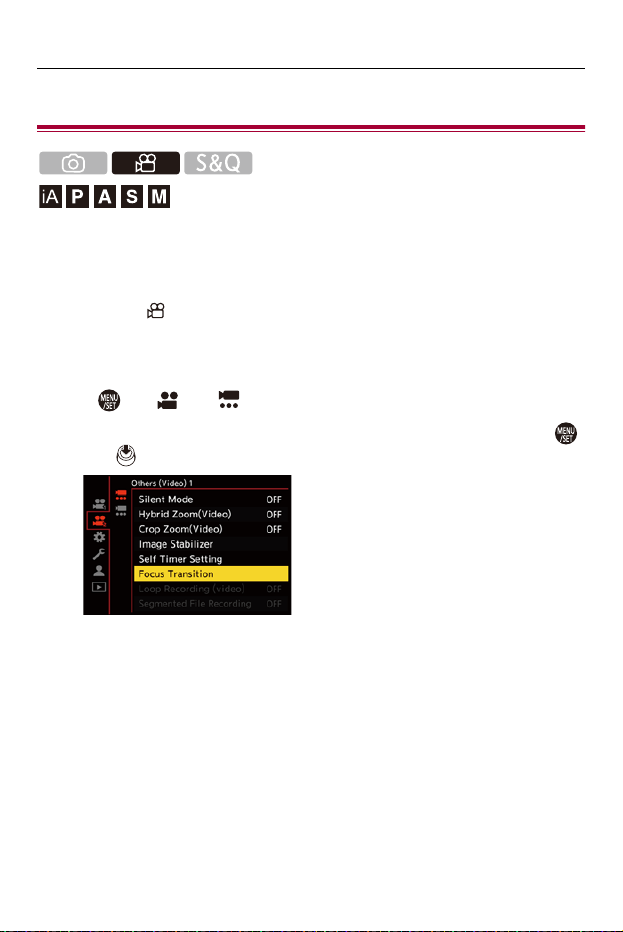
Special Video Recording – [Focus Transition]
517
[Focus Transition]
Smoothly transitions the focus position from the current position to a
position registered in advance.
1
Set to [ ] mode.
(Photo/Video/S&Q Switch: 80)
2
Select [Focus Transition].
≥ [] [] [Focus Transition]
•
If the [Please set the focus position.] message is displayed, press either
or .
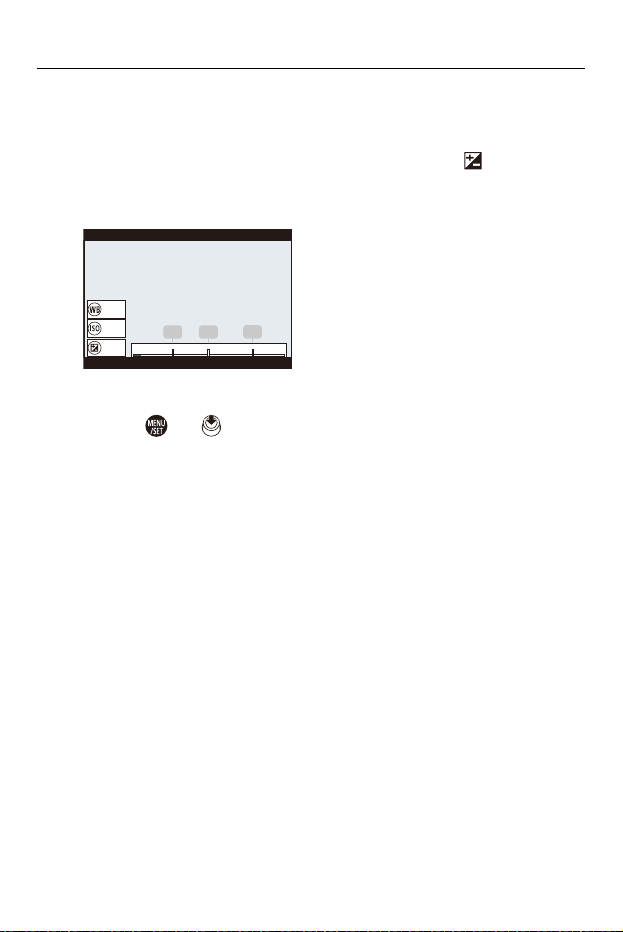
Special Video Recording – [Focus Transition]
518
3
Set focus positions.
≥Check the focus using the same procedure as MF (Record
Using MF: 232), and then press [WB], [ISO], and [ ] to set focus
positions.
≥You can also touch [POS1] to [POS3] to set focus positions.
4
Register the focus positions.
≥Press or to register the focus positions.
5
Start recording.
≥Press the video rec. button.
•
The advanced setting screen is displayed when you press [DISP.] before
recording. (Setting Items ([Focus Transition]): 520)
•
If you have enabled [Focus Transition Rec], Focus Transition will start when
you start recording a video.
∞
(m) 10.50.3
1 2
3
POS1
POS2
POS3
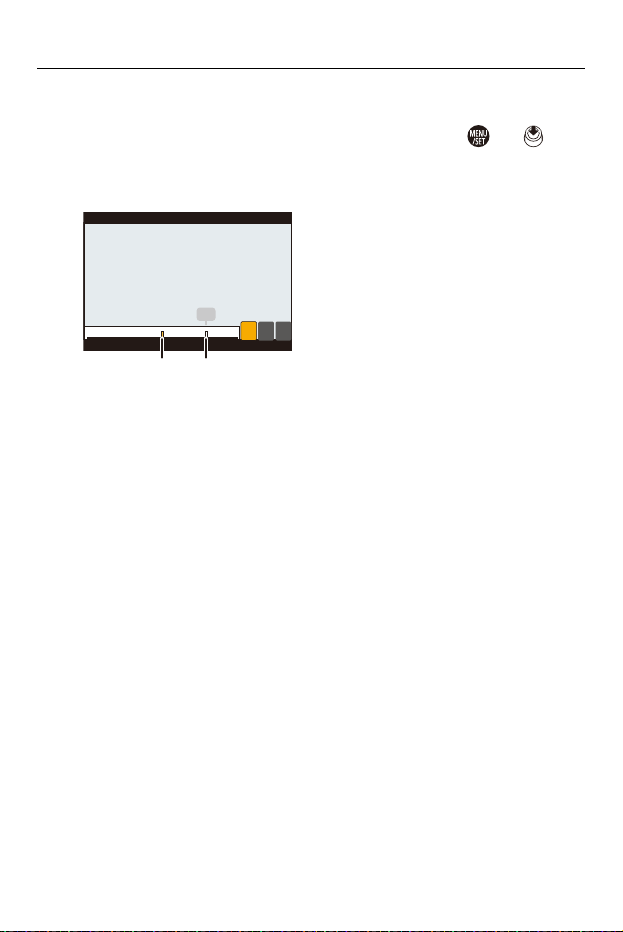
Special Video Recording – [Focus Transition]
519
6
Start Focus Transition.
≥Press 21 to select [1], [2], or [3], and then press or .
•
When [Focus Transition Wait] is set, Focus Transition starts after the set time
has elapsed.
(A) Current focus position
(B) Registered focus position
7
End Focus Transition.
≥Press [Q].
8
Stop recording.
≥Press the video rec. button once again.
∞
(m) 10.50.3
1 23
1
(A) (B)

Special Video Recording – [Focus Transition]
520
Setting Items ([Focus Transition])
[Focus Position Setting]
Registers focus positions.
[Focus Transition Speed]
Sets the moving speed of focus.
•
Moving speed: [SH] (fast) to [SL] (slow)
[Focus Transition Rec]
Starts Focus Transition when recording starts.
•
Select the position registered with [Focus Position Setting].
[Focus Transition Wait]
Sets the wait time before the start of Focus Transition.
•
The recording screen is displayed when you press [ ].

Special Video Recording – [Focus Transition]
521
•
Maintain the same distance to the subject after setting focus positions.
•
The moving speed of focus varies depending on the lens being used.
•
The moving speed of focus slows as it approaches the closest focusing distance
of the lens or infinity.
•
While using [Focus Transition], it is not possible to focus on anything other than
one of the registered focus positions.
•
Any of the operations below will clear the focus position settings.
– Operating the camera on/off switch
– Zoom operation
– Switching the focus mode
– Switching the recording mode
– Replacing the lens
•
When the following function is being used, [Focus Transition] is not available:
– [Live Cropping]
•
[Focus Transition] cannot be used when using an interchangeable lens that does
not support the focus mode [AFC].
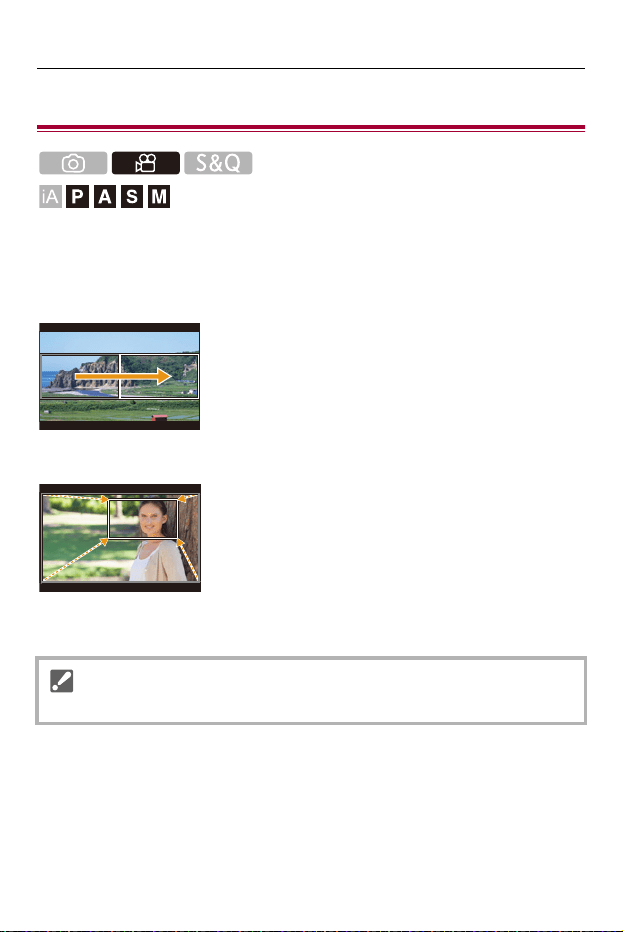
Special Video Recording – [Live Cropping]
522
[Live Cropping]
By cropping a part of the image from the image displayed in the live view, it
is possible to record 4K/FHD video that incorporates panning and zooming
with the camera staying in a fixed position.
Pan
Zoom in
•
Use a tripod to minimize camera shake.
Special Video Recording – [Live Cropping]
523
1
Set to [ ] mode.
(Photo/Video/S&Q Switch: 80)
2
Select a recording quality with which you can record
[Live Cropping] video.
≥ [] [] [Rec Quality]
•
A recording quality with which you can record [Live Cropping] video ( List of
Recording Qualities That Enable Special Videos to be Recorded: 547)
3
Set the pan and zoom effect.
≥ [] [] [Live Cropping] [SET]
[Cropping Duration]
You can set between 2 and 40 seconds.
[Easing Settings]
Select an effect.
[LINEAR]: Moves at a constant speed.
[EASE IN]: Gradually accelerates.
[EASE OUT]: Gradually decelerates.
[EASE IN OUT]: Decelerates after accelerating.
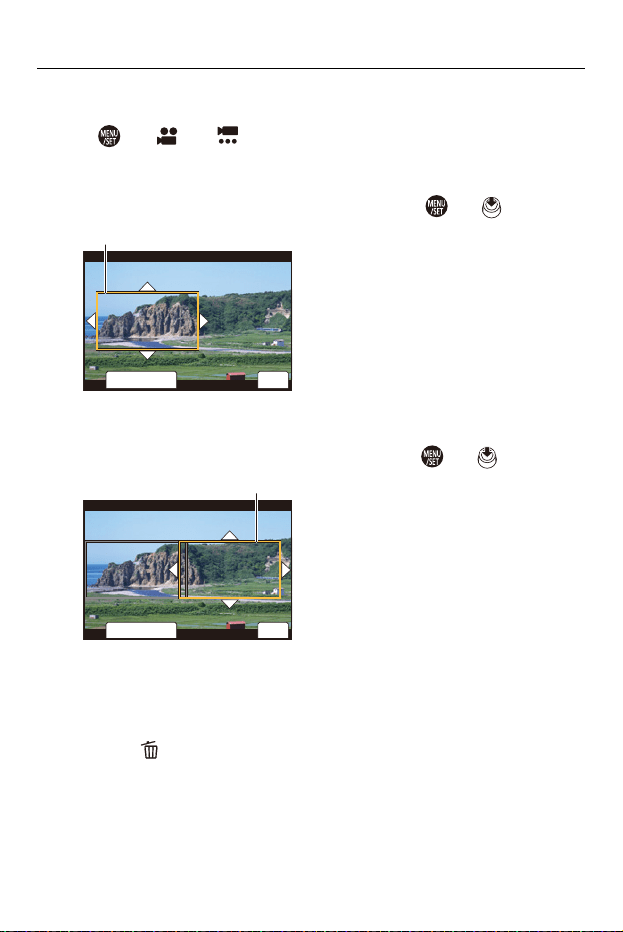
Special Video Recording – [Live Cropping]
524
4
Set the cropping frame.
≥ [] [] [Live Cropping] [SET] [Cropping Start/
End Frame]
≥Select the range to start cropping and press or .
(A) Cropping start frame
≥Select the range to end cropping and press or .
(B) Cropping end frame
•
To redo the settings for the position and size of the start frame and the end
frame, press 2.
•
Press [ ] to check the effect you have set.
ュリヴヱハ
5HVHW
6HW
(A)
ュリヴヱハ
5HVHW
6HW
(B)
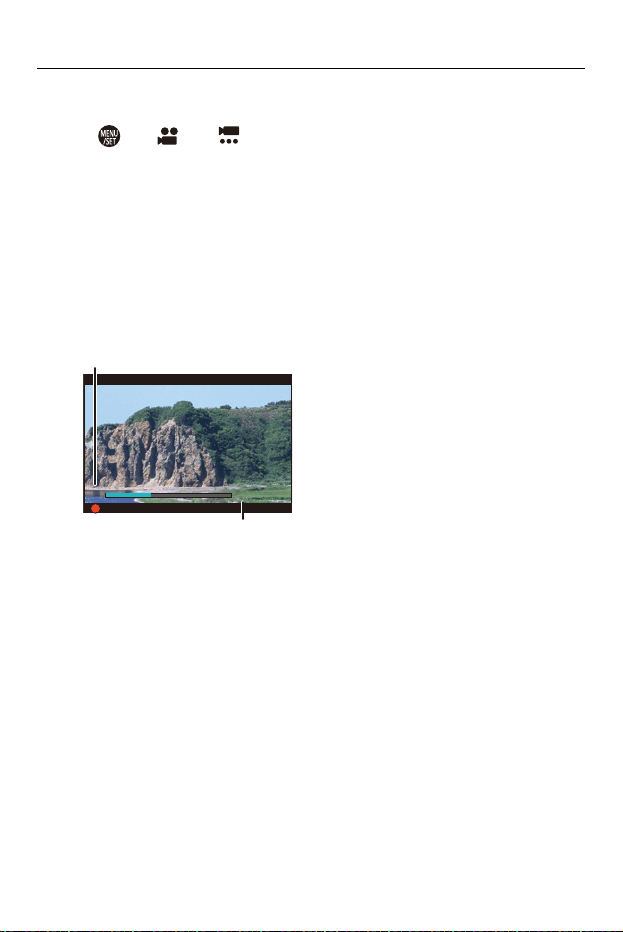
Special Video Recording – [Live Cropping]
525
5
Enable Live Cropping recording.
≥ [] [] [Live Cropping] [ON]
•
If you have selected a recording quality where Live Cropping recording is not
available, the camera switches to a recording quality where recording is
possible.
6
Start Live Cropping recording.
≥Press the video rec. button.
•
When the set operating time has elapsed, recording automatically ends.
To end recording midway, press the video rec. button again.
(C) Elapsed recording time
(D) Set operating time
7
s
7
s
7
s
20
s
20
s
20
s
(C)
(D)
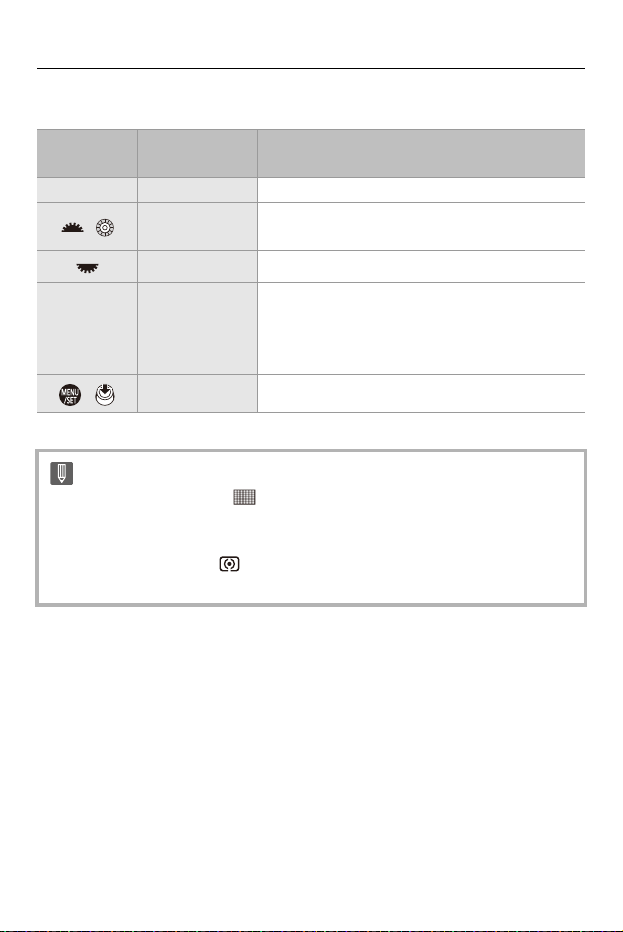
Special Video Recording – [Live Cropping]
526
Operations for Setting the Cropping Frame
Button
operation
Touch
operation
Description of operation
3421 Touch Moves the frame.
/
Pinch out/
pinch in
Enlarges/reduces the frame in small steps.
— Enlarges/reduces the frame.
[DISP.] [Reset]
Start frame: Returns the frame position and size
to the default settings.
End frame: Cancels the settings for the position
and size of the frame.
/
[Set] Confirms the frame position and size.
•
The AF mode switches to [ ].
•
Brightness measurements and focusing are performed within the cropping frame.
To lock the focus point, set the focus mode to [MF].
•
[Metering Mode] will be [ ] (multi-metering).
•
A 4K [Rec Quality] cannot be set when using an APS-C lens.
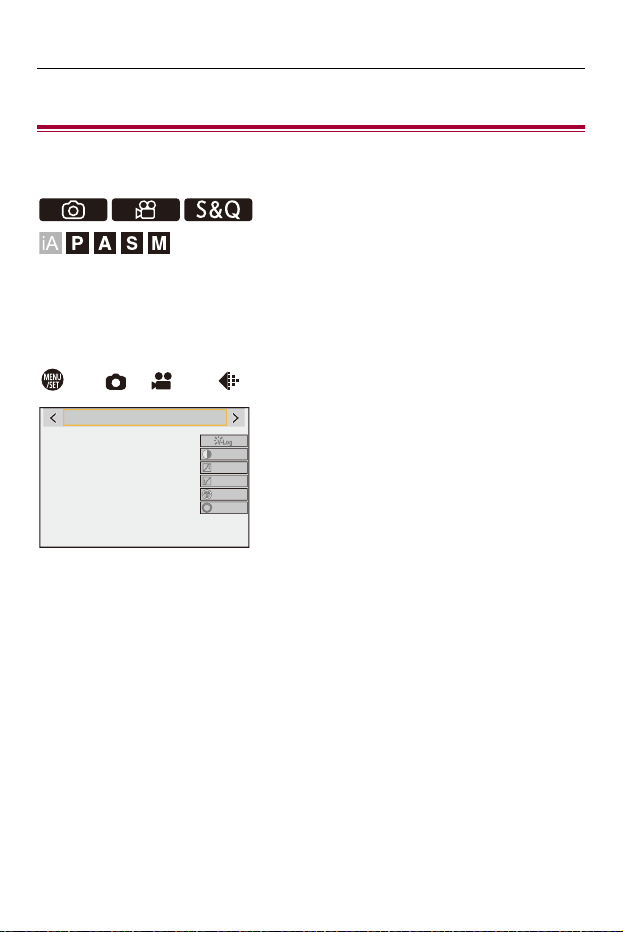


Special Video Recording – Log Recording
529
ISO Sensitivity When [V-Log] Is Set
The lower limit of available ISO sensitivity is [640] (when [Extended ISO] is
set: [320]), and the upper limit is [51200].
When [Dynamic Range Boost] is set to [ON], the lower limit is [1000] (when
set to [Extended ISO]: [500]) and the upper limit is [25600].
•
The range of available ISO sensitivities is also different for [LOW] and [HIGH] in
[Dual Native ISO Setting].
•
Reset the exposure if necessary when ISO sensitivity changes.
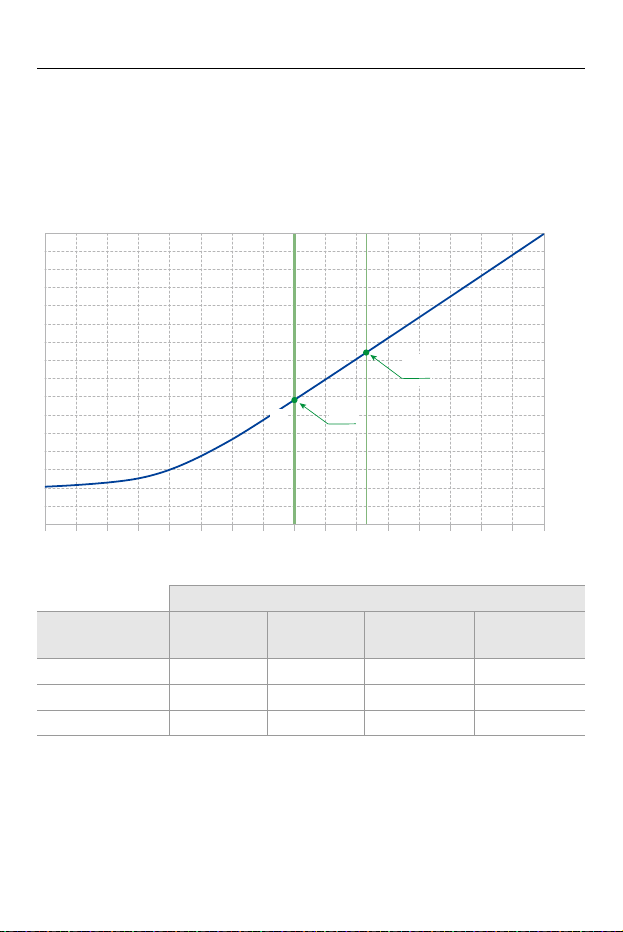
Special Video Recording – Log Recording
530
Exposure When [V-Log] Is Set
The [V-Log] curve characteristics comply with “V-Log/V-Gamut
REFERENCE MANUAL Rev.1.0”. When set to [V-Log], the standard
exposure when gray with a reflectance ratio of 18 % is imaged is IRE 42 %.
•
When luminance is to be displayed by “Stop” units, this camera calculates IRE 42 %
to “0 Stop”.
When [Photo Style] is set to [V-Log]
Reflectance ratio
(%)
IRE (%) Stop
10 bit code
value
12 bit code
value
0 7.3 — 128 512
(1) 18 42 0.0 433 1732
(2) 90 61 2.3 602 2408
-
8
-
8
-
7
-
7
-
6
-
6
-
5
-
5
-
4
-
4
-
3
-
3
-
2
-
2
-
1
-
1001122334455667788
(Stop)(Stop)
(10bitcodevalue)(10bitcodevalue)
00
6464
128128
192192
256256
320320
384384
448448
512512
576576
640640
704704
768768
832832
896896
960960
10241024
(1)
(2)


Special Video Recording – Log Recording
532
[Log View Assist]
When [Photo Style] is set to [V-Log], the recording screen and images
output via HDMI will darken. Using [Log View Assist] means you can show
images with LUT file applied on the monitor/viewfinder and output them via
HDMI.
[] [] Select [Log View Assist]
[LUT Select(V-Log)]
Selects the LUT file to apply from a preset or LUT files registered in [LUT Library].
([LUT Library]: 396)
[LUT View Assist (Monitor)]
Displays the images with LUT file applied on the monitor/viewfinder of the camera.
[LUT View Assist (HDMI)]
Applies LUT file to images output over HDMI.

Special Video Recording – Log Recording
533
•
When applying the LUT file, [LUT] is displayed on the recording screen.
•
When [Photo Style] is [V-Log], you cannot apply LUT files which are a base
Photo Style other than [V-Log].
•
[LUT View Assist (Monitor)]/[LUT View Assist (HDMI)] are not available when
[LUT] is applied in the [Photo Style] image quality adjustments.

Special Video Recording – HLG Videos
534
HLG Videos
≥ [HLG View Assist]: 537
Record videos with the wide dynamic range of the HLG format. You can
record in very bright light where overexposure can occur or in dark areas
where underexposure can occur, maintaining the rich yet subtle colors you
can see with your naked eye.
You can view the video that you record by outputting via HDMI to devices
(TVs, etc.) that support the HLG format, or playing back directly on
supporting devices.
•
“HLG (Hybrid Log Gamma)” is an international standard (ITU-R BT.2100) HDR
format.
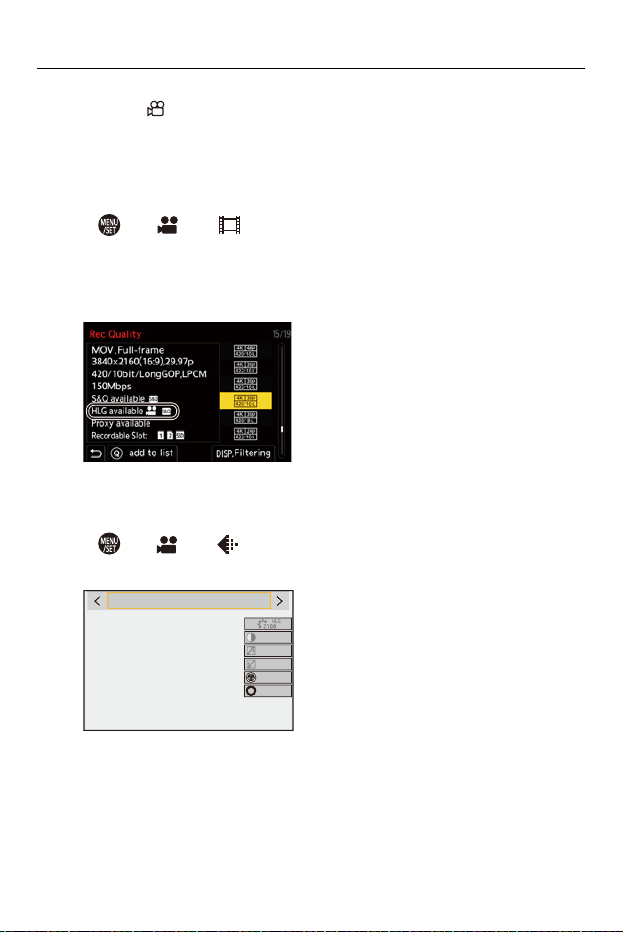
Special Video Recording – HLG Videos
535
1
Set to [ ] or [S&Q] mode.
(Photo/Video/S&Q Switch: 80)
2
Select a recording quality with which you can record
HLG video.
≥ [] [] [Rec Quality]
•
Items available for recording with HLG video are indicated as [HLG available].
•
Recording qualities with which you can record HLG video (List of
Recording Qualities That Enable Special Videos to be Recorded: 547)
3
Set [Photo Style] to [Like2100(HLG)] or [Like2100(HLG)
Full Range].
≥ [] [] [Photo Style] [Like2100(HLG)]/
[Like2100(HLG) Full Range]
±0
±0
/LNH+/*
Special Video Recording – HLG Videos
536
ISO Sensitivity When [Like2100(HLG)]/[Like2100(HLG)
Full Range] Is Set
The lower limit of available ISO sensitivities will become [400].
(When [Dynamic Range Boost] is set: upper limit [25600])
•
The range of available ISO sensitivities is also different for [LOW] and [HIGH] in
[Dual Native ISO Setting].
•
Reset the exposure if necessary when ISO sensitivity changes.
•
The monitor and viewfinder on this camera do not support display of HLG format
images.
With [Monitor] in [HLG View Assist] in the [Custom] ([Monitor / Display (Video)])
menu, you can display the images converted for monitoring on the monitor/
viewfinder of this camera. ([HLG View Assist]: 537)
•
HLG images are shown dark on devices that do not support the HLG format.
With [HDMI] in [HLG View Assist] in the [Custom] ([Monitor / Display (Video)])
menu, you can set the conversion method for images displayed for monitoring.
([HLG View Assist]: 537)

Special Video Recording – HLG Videos
537
[HLG View Assist]
At recording or playback of HLG video, this displays images with converted
color gamut and brightness on the camera monitor/viewfinder, or outputs
these over HDMI.
[] [] [HLG View Assist] [Monitor] or
[HDMI]
[AUTO]
*
Converts images before outputting them via HDMI while applying the effect of
[MODE2]. This conversion setting works only when the camera is connected to a
device that does not support HDR (HLG format).
[MODE1]
Converts with an emphasis on bright areas such as sky.
•
[MODE1] is displayed on the recording screen.
[MODE2]
Converts with an emphasis on the brightness of a main subject.
•
[MODE2] is displayed on the recording screen.
[OFF]
Displays without converting color gamut and brightness.
•
HLG images appear darker on devices that do not support the HLG format.
* Can only be set while [HDMI] is selected.

Special Video Recording – Anamorphic Recording
538
Anamorphic Recording
≥ [Anamorphic Desqueeze Display]: 540
From a variety of different video formats (recording qualities), you can
select and record with a recording quality that suits anamorphic recording.
During anamorphic recording, it is also possible to display desqueezed
images and the angle of view when cropping after desqueeze editing. It is
also possible to switch to an image stabilizer that suits anamorphic
recording.
•
For information about image stabilizers suited to anamorphic recording
([Anamorphic (Video)]: 324)
Special Video Recording – Anamorphic Recording
539
1
Set to [ ] or [S&Q] mode.
(Photo/Video/S&Q Switch: 80)
2
Set [Rec. File Format(Video)].
≥ [] [] [Rec. File Format(Video)]
3
Select a recording quality suited to anamorphic
recording.
≥ [] [] [Rec Quality]
•
The following recording qualities are available in [ ] mode:
– [Rec Quality] exceeding a resolution of C4K
– [Rec Quality] with a high frame rate video exceeding a recording frame rate
of 60.00p
•
When [Rec. File Format(Video)] is set to [MOV] or [Apple ProRes], by filtering
[Rec Quality] by the number of pixels, you can display just those recording
qualities with resolutions and aspect ratios that meet the conditions.
([Filtering]: 170)
•
This camera is not compatible with desqueeze editing of video recorded with
anamorphic recording. Use compatible software.
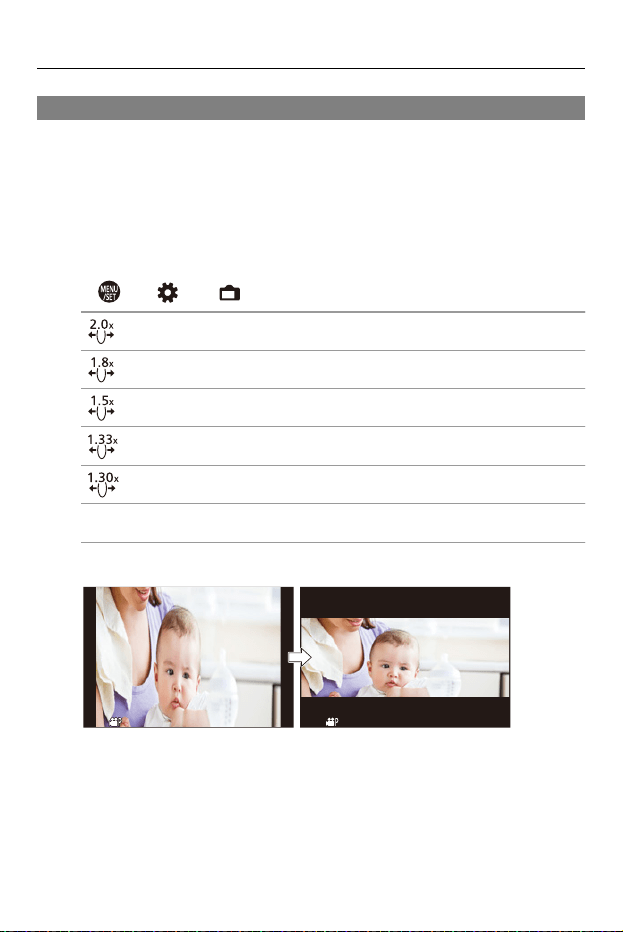
Special Video Recording – Anamorphic Recording
540
[Anamorphic Desqueeze Display]
Display the desqueezed images suited to the magnification of the
anamorphic lens on this camera.
Using the [Frame Marker], it is also possible to superimpose on display the
frame of the angle of view when cropping after desqueeze editing.
1
Set [Anamorphic Desqueeze Display].
≥ [] [] [Anamorphic Desqueeze Display]
[ ] ([2.0×])
[ ] ([1.8×])
[ ] ([1.5×])
[ ] ([1.33×])
[ ] ([1.30×])
[OFF]
•
Make settings to suit the magnification of the anamorphic lens you are using.
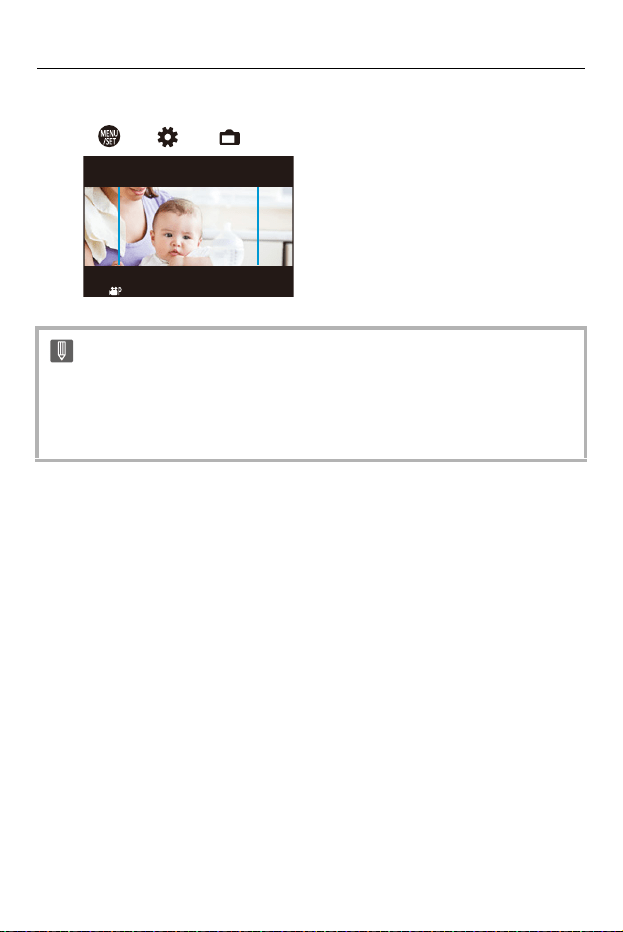
Special Video Recording – [Synchro Scan(Video)]
542
[Synchro Scan(Video)]
Fine-adjust the shutter speed to reduce flickering and horizontal stripes.
The shutter speed set in Synchro Scan is saved separately from the
shutter speed used for normal recording.
In the Synchro Scan setting screen you can call up the current shutter
speed for normal recording and adjust it.
1
Set to [ ] or [S&Q] mode.
(Photo/Video/S&Q Switch: 80)
2
Set the exposure mode to [S] or [M].
≥Set the mode dial. (Selecting the Recording Mode: 81)
•
You can also set using [Exposure Control(Video Mode)] in [Exposure Control
in P/A/S/M]. ([Exposure Control(Video Mode)]: 686)
3
Set [Synchro Scan(Video)].
≥ [] [] [Synchro Scan(Video)] [ON]
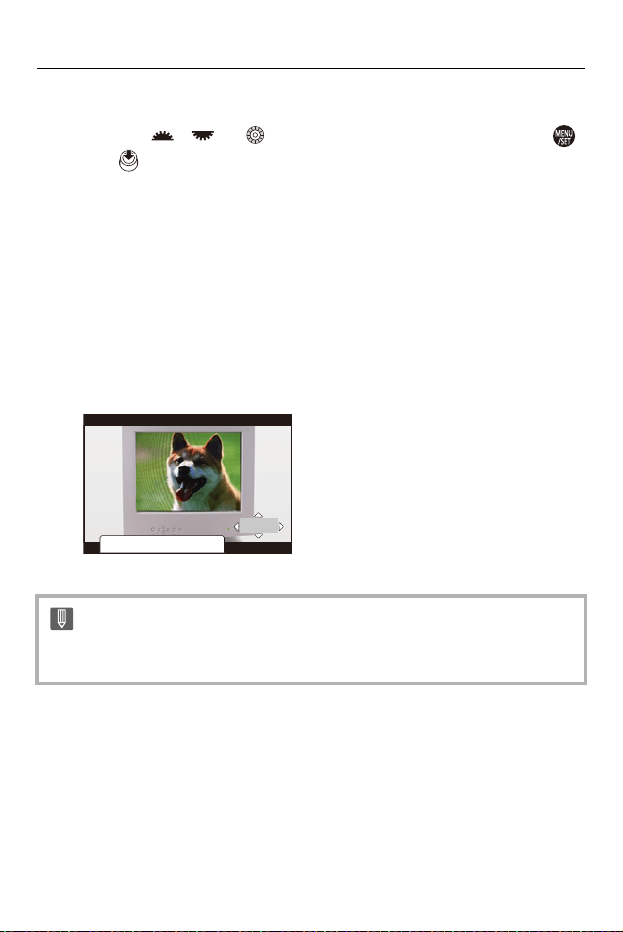
Special Video Recording – [Synchro Scan(Video)]
543
4
Set the shutter speed.
≥Rotate , or to select a numeric value, then press
or .
•
The shutter speed can be set in the range between 1 second and 1/8192.0 of
a second.
(The minimum shutter speed depends on the frame rate of the video being
recorded.)
•
Press 34 to change the shutter speed in 1/4 TV intervals. Press 21 to
make fine adjustments.
•
You can call up the current shutter speed for normal recording by pressing
[DISP.].
•
Adjust the shutter speed while looking at the screen so that flickering and
horizontal stripes will be minimized.
•
There may be a difference between what you see on the recording screen and
the actual results of recording. We recommend shooting some tests beforehand.
ュリヴヱハ
Current shutter speed
60.160.1
Special Video Recording – [Loop Recording (video)]
544
[Loop Recording (video)]
Recording continues until the card becomes full, while dividing videos into
short periods.
When the card becomes full, recording continues while deleting the old
data.
This is a convenient function for recording over long periods that might
exceed the capacity of the card.
1
Set to [ ] mode.
(Photo/Video/S&Q Switch: 80)
2
Set [Rec. File Format(Video)] to [MOV].
≥ [] [] [Rec. File Format(Video)] [MOV]
•
Recording and deleting occur at the same time, so you will need a card with a
writing speed equivalent to double the bit rate of the recording quality used for
recording.
If the writing speed on the card is insufficient, recording may stop.
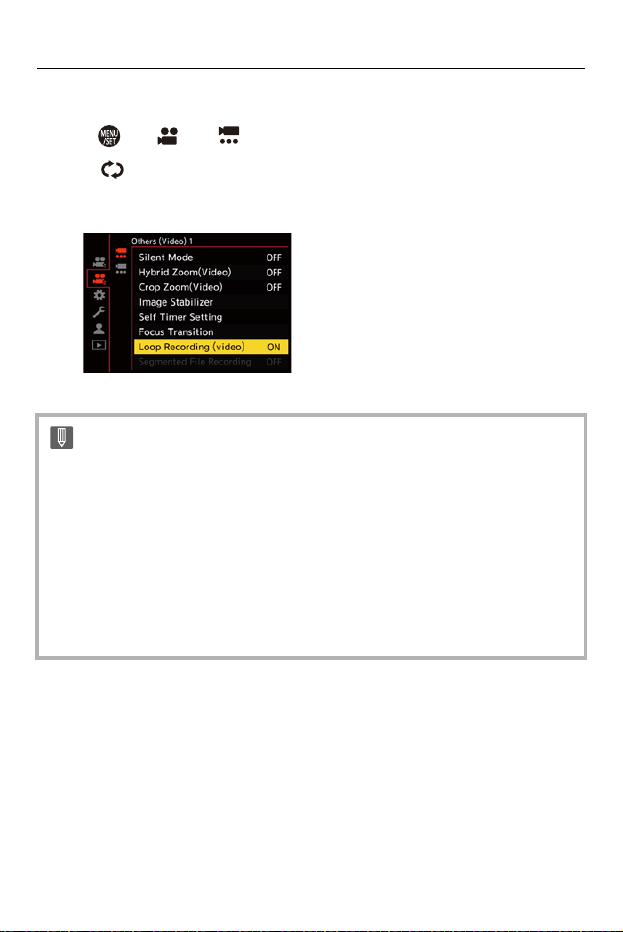
Special Video Recording – [Loop Recording (video)]
545
3
Set [Loop Recording (video)].
≥ [] [] [Loop Recording (video)] [ON]
•
[ ] is displayed on the recording screen.
•
When the recording fills the card to capacity, loop recording starts and video
recording time is no longer displayed.
•
Make sure the camera does not turn off during recording.
•
Loop recording cannot start if there is insufficient available capacity on the card.
•
When the recording time exceeds 12 hours, recording continues with data being
deleted in order from the point where recording started.
•
When the following functions are being used, [Loop Recording (video)] is not
available:
– [Rec Quality] with a bit rate of 400 Mbps or more
– [Proxy Recording]
– [Live Cropping]
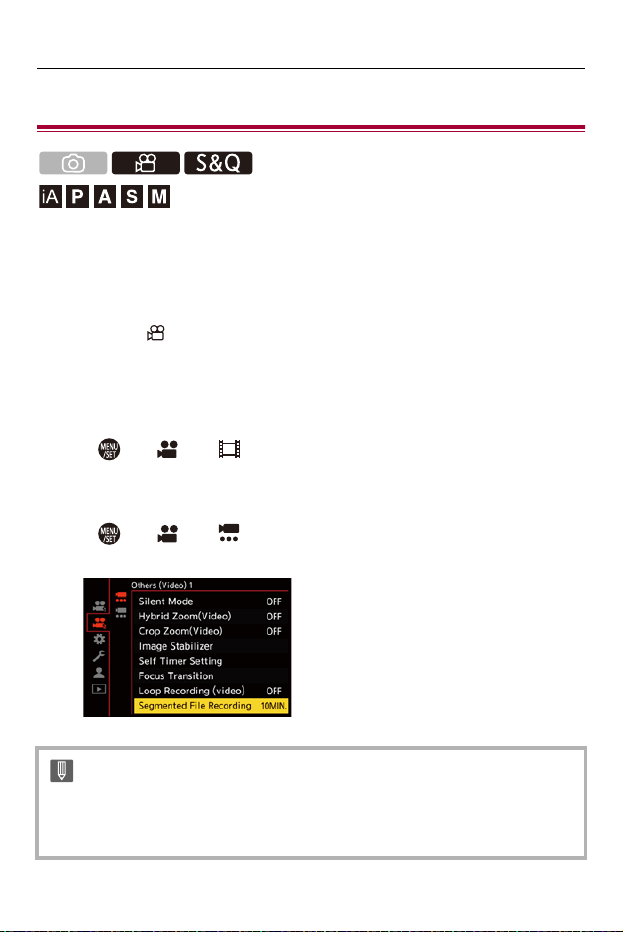
Special Video Recording – [Segmented File Recording]
546
[Segmented File Recording]
To avoid video loss due to unforeseen interruptions to the power supply,
recorded video is segmented at set intervals while being recorded.
•
The segmented videos are saved as one group image. (Group Images: 616)
1
Set to [ ] or [S&Q] mode.
(Photo/Video/S&Q Switch: 80)
2
Set [Rec. File Format(Video)] to [MOV] or [Apple
ProRes].
≥ [] [] [Rec. File Format(Video)] [MOV]/[Apple
ProRes]
3
Set [Segmented File Recording].
≥ [] [] [Segmented File Recording] [10MIN.]/
[5MIN.]/[3MIN.]/[1MIN.]
•
When the following function is being used, [Segmented File Recording] is not
available:
– [Loop Recording (video)]
Special Video Recording – List of Recording Qualities That Enable Special Videos to be Recorded
547
List of Recording Qualities That Enable
Special Videos to be Recorded
: Recording qualities with which you can record Slow & Quick video
: Recording qualities for High Frame Rate video
: Recording qualities that enable use of [Live Cropping]
: Recording qualities with which you can record HLG video
[Rec. File Format(Video)]: [MP4]
[System Frequency]: [59.94Hz (NTSC)]
[Rec Quality]
[4K/10bit/100M/60p]
[4K/10bit/72M/30p]
[4K/8bit/100M/30p]
[4K/10bit/72M/24p]
[4K/8bit/100M/24p]
[FHD/8bit/28M/60p]
[FHD/8bit/20M/30p]
[FHD/8bit/24M/24p]
S&Q
HFR
Live Crop
HLG
S&Q
HFR
Live Crop
HLG

Special Video Recording – List of Recording Qualities That Enable Special Videos to be Recorded
548
[System Frequency]: [50.00Hz (PAL)]
[Rec Quality]
[4K/10bit/100M/50p]
[4K/10bit/72M/25p]
[4K/8bit/100M/25p]
[FHD/8bit/28M/50p]
[FHD/8bit/20M/25p]
S&Q
HFR
Live Crop
HLG

Special Video Recording – List of Recording Qualities That Enable Special Videos to be Recorded
549
[Rec. File Format(Video)]: [MOV]
[System Frequency]: [59.94Hz (NTSC)]
[Rec Quality]
[6K/30p/420/10-L] (3:2)
[6K/24p/420/10-L] (3:2)
[6K/60p/420/10-L]
[6K/48p/420/10-L]
[6K/30p/420/10-L] (2.4:1)
[6K/24p/420/10-L] (2.4:1)
[5.9K/60p/420/10-L]
[5.9K/48p/420/10-L]
[5.9K/30p/420/10-L]
[5.9K/24p/420/10-L]
[5.8K/60p/420/10-L]
[5.8K/48p/420/10-L]
[5.8K/30p/420/10-L]
[5.8K/24p/420/10-L]
[5.1K/60p/420/10-L]
[5.1K/48p/420/10-L]
[5.1K/30p/420/10-L]
[5.1K/24p/420/10-L]
[4.8K/60p/420/10-L]
[4.8K/48p/420/10-L]
[4.8K/30p/420/10-L]
[4.8K/24p/420/10-L]
[3.3K/120p/420/10-L]
[3.3K/60p/422/10-I(H)]
[3.3K/60p/422/10-I(L)]
[3.3K/60p/422/10-L]
[3.3K/60p/420/10-L]
[3.3K/48p/422/10-I(H)]
S&Q
HFR
Live Crop
HLG

Special Video Recording – List of Recording Qualities That Enable Special Videos to be Recorded
550
[3.3K/48p/422/10-I(L)]
[3.3K/48p/422/10-L]
[3.3K/48p/420/10-L]
[3.3K/30p/422/10-I]
[3.3K/30p/422/10-L]
[3.3K/30p/420/10-L]
[3.3K/24p/422/10-I]
[3.3K/24p/422/10-L]
[3.3K/24p/420/10-L]
[C4K/120p/420/10-L]
[C4K/96p/420/10-L]
[C4K/60p/422/10-I(H)]
[C4K/60p/422/10-I(L)]
[C4K/60p/422/10-L]
[C4K/60p/420/10-L]
[C4K/60p/420/8-L]
[C4K/48p/422/10-I(H)]
[C4K/48p/422/10-I(L)]
[C4K/48p/422/10-L]
[C4K/48p/420/10-L]
[C4K/30p/422/10-I]
[C4K/30p/422/10-L]
[C4K/30p/420/10-L]
[C4K/30p/420/8-L]
[C4K/24p/422/10-I]
[C4K/24p/422/10-L]
[C4K/24p/420/10-L]
[C4K/24p/420/8-L]
[Cs4K/120p/420/10-L]
[Cs4K/96p/420/10-L]
[Cs4K/60p/422/10-I(H)]
[Cs4K/60p/422/10-I(L)]

Special Video Recording – List of Recording Qualities That Enable Special Videos to be Recorded
551
[Cs4K/60p/422/10-L]
[Cs4K/60p/420/10-L]
[Cs4K/60p/420/8-L]
[Cs4K/48p/422/10-I(H)]
[Cs4K/48p/422/10-I(L)]
[Cs4K/48p/422/10-L]
[Cs4K/48p/420/10-L]
[Cs4K/30p/422/10-I]
[Cs4K/30p/422/10-L]
[Cs4K/30p/420/10-L]
[Cs4K/30p/420/8-L]
[Cs4K/24p/422/10-I]
[Cs4K/24p/422/10-L]
[Cs4K/24p/420/10-L]
[Cs4K/24p/420/8-L]
[4K/120p/420/10-L]
[4K/60p/422/10-I(H)]
[4K/60p/422/10-I(L)]
[4K/60p/422/10-L]
[4K/60p/420/10-L]
[4K/60p/420/8-L]
[4K/48p/422/10-I(H)]
[4K/48p/422/10-I(L)]
[4K/48p/422/10-L]
[4K/48p/420/10-L]
[4K/30p/422/10-I]
[4K/30p/422/10-L]
[4K/30p/420/10-L]
[4K/30p/420/8-L]
[4K/24p/422/10-I]
[4K/24p/422/10-L]
[4K/24p/420/10-L]

Special Video Recording – List of Recording Qualities That Enable Special Videos to be Recorded
552
[4K/24p/420/8-L]
[FHD/240p/422/10-I]
[FHD/240p/422/10-L]
[FHD/240p/420/10-L]
[FHD/120p/422/10-I]
[FHD/120p/422/10-L]
[FHD/120p/420/10-L]
[FHD/60p/422/10-I]
[FHD/60p/422/10-L]
[FHD/60p/420/10-L]
[FHD/60p/420/8-L]
[FHD/48p/422/10-I]
[FHD/48p/422/10-L]
[FHD/48p/420/10-L]
[FHD/30p/422/10-I]
[FHD/30p/422/10-L]
[FHD/30p/420/10-L]
[FHD/30p/420/8-L]
[FHD/24p/422/10-I]
[FHD/24p/422/10-L]
[FHD/24p/420/10-L]
[FHD/24p/420/8-L]

Special Video Recording – List of Recording Qualities That Enable Special Videos to be Recorded
553
[System Frequency]: [50.00Hz (PAL)]
[Rec Quality]
[6K/25p/420/10-L] (3:2)
[6K/50p/420/10-L]
[6K/25p/420/10-L] (2.4:1)
[5.9K/50p/420/10-L]
[5.9K/25p/420/10-L]
[5.8K/50p/420/10-L]
[5.8K/25p/420/10-L]
[5.1K/50p/420/10-L]
[5.1K/25p/420/10-L]
[4.8K/50p/420/10-L]
[4.8K/25p/420/10-L]
[3.3K/100p/420/10-L]
[3.3K/50p/422/10-I(H)]
[3.3K/50p/422/10-I(L)]
[3.3K/50p/422/10-L]
[3.3K/50p/420/10-L]
[3.3K/25p/422/10-I]
[3.3K/25p/422/10-L]
[3.3K/25p/420/10-L]
[C4K/100p/420/10-L]
[C4K/50p/422/10-I(H)]
[C4K/50p/422/10-I(L)]
[C4K/50p/422/10-L]
[C4K/50p/420/10-L]
[C4K/50p/420/8-L]
[C4K/25p/422/10-I]
[C4K/25p/422/10-L]
[C4K/25p/420/10-L]
[C4K/25p/420/8-L]
S&Q
HFR
Live Crop
HLG

Special Video Recording – List of Recording Qualities That Enable Special Videos to be Recorded
554
[Cs4K/100p/420/10-L]
[Cs4K/50p/422/10-I(H)]
[Cs4K/50p/422/10-I(L)]
[Cs4K/50p/422/10-L]
[Cs4K/50p/420/10-L]
[Cs4K/50p/420/8-L]
[Cs4K/25p/422/10-I]
[Cs4K/25p/422/10-L]
[Cs4K/25p/420/10-L]
[Cs4K/25p/420/8-L]
[4K/100p/420/10-L]
[4K/50p/422/10-I(H)]
[4K/50p/422/10-I(L)]
[4K/50p/422/10-L]
[4K/50p/420/10-L]
[4K/50p/420/8-L]
[4K/25p/422/10-I]
[4K/25p/422/10-L]
[4K/25p/420/10-L]
[4K/25p/420/8-L]
[FHD/200p/422/10-I]
[FHD/200p/422/10-L]
[FHD/200p/420/10-L]
[FHD/100p/422/10-I]
[FHD/100p/422/10-L]
[FHD/100p/420/10-L]
[FHD/50p/422/10-I]
[FHD/50p/422/10-L]
[FHD/50p/420/10-L]
[FHD/50p/420/8-L]
[FHD/25p/422/10-I]
[FHD/25p/422/10-L]

Special Video Recording – List of Recording Qualities That Enable Special Videos to be Recorded
555
[FHD/25p/420/10-L]
[FHD/25p/420/8-L]

Special Video Recording – List of Recording Qualities That Enable Special Videos to be Recorded
556
[System Frequency]: [24.00Hz (CINEMA)]
[Rec Quality]
[6K/24p/420/10-L] (3:2)
[6K/48p/420/10-L]
[6K/24p/420/10-L] (2.4:1)
[5.9K/48p/420/10-L]
[5.9K/24p/420/10-L]
[5.8K/48p/420/10-L]
[5.8K/24p/420/10-L]
[5.1K/48p/420/10-L]
[5.1K/24p/420/10-L]
[4.8K/48p/420/10-L]
[4.8K/24p/420/10-L]
[3.3K/120p/420/10-L]
[3.3K/48p/422/10-I(H)]
[3.3K/48p/422/10-I(L)]
[3.3K/48p/422/10-L]
[3.3K/48p/420/10-L]
[3.3K/24p/422/10-I]
[3.3K/24p/422/10-L]
[3.3K/24p/420/10-L]
[C4K/120p/420/10-L]
[C4K/96p/420/10-L]
[C4K/48p/422/10-I(H)]
[C4K/48p/422/10-I(L)]
[C4K/48p/422/10-L]
[C4K/48p/420/10-L]
[C4K/24p/422/10-I]
[C4K/24p/422/10-L]
[C4K/24p/420/10-L]
[C4K/24p/420/8-L]
S&Q
HFR
Live Crop
HLG

Special Video Recording – List of Recording Qualities That Enable Special Videos to be Recorded
557
[Cs4K/120p/420/10-L]
[Cs4K/96p/420/10-L]
[Cs4K/48p/422/10-I(H)]
[Cs4K/48p/422/10-I(L)]
[Cs4K/48p/422/10-L]
[Cs4K/48p/420/10-L]
[Cs4K/24p/422/10-I]
[Cs4K/24p/422/10-L]
[Cs4K/24p/420/10-L]
[Cs4K/24p/420/8-L]
[4K/120p/420/10-L]
[4K/48p/422/10-I(H)]
[4K/48p/422/10-I(L)]
[4K/48p/422/10-L]
[4K/48p/420/10-L]
[4K/24p/422/10-I]
[4K/24p/422/10-L]
[4K/24p/420/10-L]
[4K/24p/420/8-L]
[FHD/48p/422/10-I]
[FHD/48p/422/10-L]
[FHD/48p/420/10-L]
[FHD/24p/422/10-I]
[FHD/24p/422/10-L]
[FHD/24p/420/10-L]
[FHD/24p/420/8-L]

Special Video Recording – List of Recording Qualities That Enable Special Videos to be Recorded
558
[Rec. File Format(Video)]: [Apple ProRes]
[System Frequency]: [59.94Hz (NTSC)]
[Rec Quality]
[5.8K/30p/RAW HQ]
[5.8K/30p/RAW]
[5.8K/30p/422 HQ]
[5.8K/30p/422]
[5.8K/24p/RAW HQ]
[5.8K/24p/RAW]
[5.8K/24p/422 HQ]
[5.8K/24p/422]
[4.8K/30p/422 HQ]
[4.8K/30p/422]
[4.8K/24p/422 HQ]
[4.8K/24p/422]
[3.3K/60p/422 HQ]
[3.3K/60p/422]
[3.3K/30p/422 HQ]
[3.3K/30p/422]
[3.3K/24p/422 HQ]
[3.3K/24p/422]
[C4K/60p/RAW HQ]
[C4K/60p/RAW]
[C4K/60p/422 HQ]
[C4K/60p/422]
[C4K/30p/RAW HQ]
[C4K/30p/RAW]
[C4K/30p/422 HQ]
[C4K/30p/422]
[C4K/24p/RAW HQ]
[C4K/24p/RAW]
S&Q
HFR
Live Crop
HLG

Special Video Recording – List of Recording Qualities That Enable Special Videos to be Recorded
559
[C4K/24p/422 HQ]
[C4K/24p/422]
[Cs4K/60p/422 HQ]
[Cs4K/60p/422]
[Cs4K/30p/422 HQ]
[Cs4K/30p/422]
[Cs4K/24p/422 HQ]
[Cs4K/24p/422]
[4K/60p/422 HQ]
[4K/60p/422]
[4K/30p/422 HQ]
[4K/30p/422]
[4K/24p/422 HQ]
[4K/24p/422]
[FHD/120p/422 HQ]
[FHD/120p/422]
[FHD/60p/422 HQ]
[FHD/60p/422]
[FHD/30p/422 HQ]
[FHD/30p/422]
[FHD/24p/422 HQ]
[FHD/24p/422]
Special Video Recording – List of Recording Qualities That Enable Special Videos to be Recorded
560
[System Frequency]: [50.00Hz (PAL)]
[Rec Quality]
[5.8K/25p/RAW HQ]
[5.8K/25p/RAW]
[5.8K/25p/422 HQ]
[5.8K/25p/422]
[4.8K/25p/422 HQ]
[4.8K/25p/422]
[3.3K/50p/422 HQ]
[3.3K/50p/422]
[3.3K/25p/422 HQ]
[3.3K/25p/422]
[C4K/50p/RAW HQ]
[C4K/50p/RAW]
[C4K/50p/422 HQ]
[C4K/50p/422]
[C4K/25p/RAW HQ]
[C4K/25p/RAW]
[C4K/25p/422 HQ]
[C4K/25p/422]
[Cs4K/50p/422 HQ]
[Cs4K/50p/422]
[Cs4K/25p/422 HQ]
[Cs4K/25p/422]
[4K/50p/422 HQ]
[4K/50p/422]
[4K/25p/422 HQ]
[4K/25p/422]
[FHD/100p/422 HQ]
[FHD/100p/422]
[FHD/50p/422 HQ]
S&Q
HFR
Live Crop
HLG

Special Video Recording – List of Recording Qualities That Enable Special Videos to be Recorded
561
[FHD/50p/422]
[FHD/25p/422 HQ]
[FHD/25p/422]
Special Video Recording – List of Recording Qualities That Enable Special Videos to be Recorded
562
[System Frequency]: [24.00Hz (CINEMA)]
[Rec Quality]
[5.8K/24p/RAW HQ]
[5.8K/24p/RAW]
[5.8K/24p/422 HQ]
[5.8K/24p/422]
[4.8K/24p/422 HQ]
[4.8K/24p/422]
[3.3K/24p/422 HQ]
[3.3K/24p/422]
[C4K/24p/RAW HQ]
[C4K/24p/RAW]
[C4K/24p/422 HQ]
[C4K/24p/422]
[Cs4K/24p/422 HQ]
[Cs4K/24p/422]
[4K/24p/422 HQ]
[4K/24p/422]
[FHD/120p/422 HQ]
[FHD/120p/422]
[FHD/24p/422 HQ]
[FHD/24p/422]
S&Q
HFR
Live Crop
HLG

563
HDMI Output (Video)
You can record while outputting the camera images to an external monitor
or external recorder connected with an HDMI cable.
•
HDMI output control differs between during recording and during playback.
For HDMI output settings during playback ([HDMI Connection]: 740)
≥ Connecting HDMI Devices: 564
≥ HDMI Output Image Quality: 565
≥ HDMI Output Settings: 576
≥ Output of RAW Video Data: 582
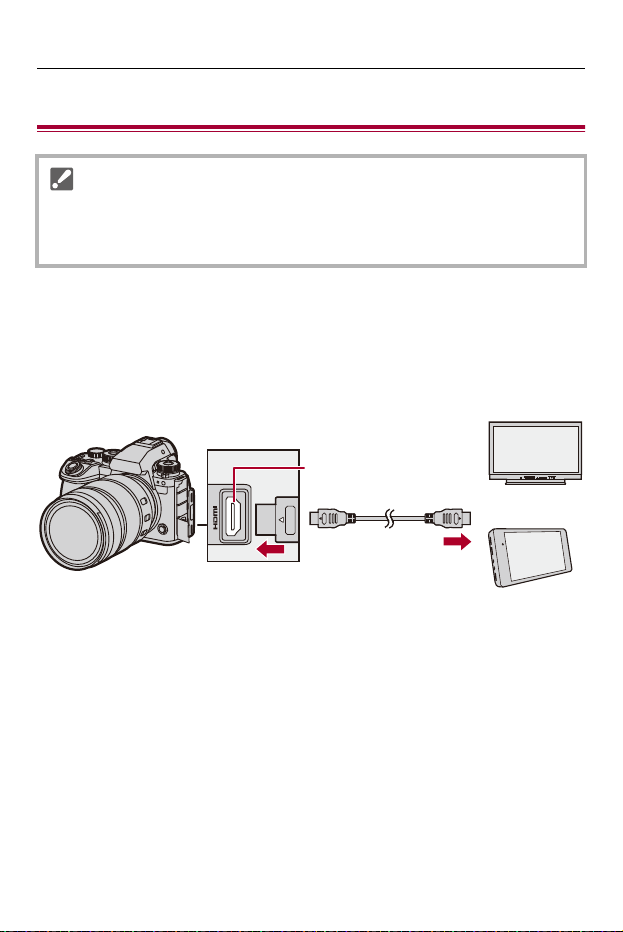
HDMI Output (Video) – Connecting HDMI Devices
564
Connecting HDMI Devices
Getting started:
•
Turn off the camera and the external monitor/external recorder.
Connect the camera and an external monitor or external
recorder with a commercially available HDMI cable.
(A) HDMI socket (Type A)
(B) External monitor
(C) External recorder
•
Use an Ultra High Speed HDMI cable (Type A–Type A plug) with the length less
than 3 m (9.8 feet).
•
Check the direction of the terminals and plug in/out straight holding onto the plug.
(Inserting at an angle can deform the terminal and cause malfunction.)
•
Do not connect the cable to the wrong terminals. This may cause a malfunction.
(B)
(C)
(A)
HDMI Output (Video) – HDMI Output Image Quality
565
HDMI Output Image Quality
≥ Images Output via HDMI: 565
≥ Settings for Down-Converting: 568
Images Output via HDMI
Aspect ratio, resolution, and frame rate output is according to the [Rec
Quality] settings in the [Video] ([Image Format]) menu. Resolution and
frame rate can be down-converted for output according to the application.
The YUV and bit value are output with YUV changed to 4:2:2 as shown
below.
If the connected device is not compatible with the output system, output
changes to match the connected device.
Recording to card HDMI output
4:2:2 10 bit 4:2:2 10 bit
4:2:0 10 bit 4:2:2 10 bit
4:2:0 8 bit 4:2:2 8 bit

HDMI Output (Video) – HDMI Output Image Quality
566
Resolution, frame rate
•
Resolution and frame rate output is according to the following menu combinations:
– [Rec Quality] in the [Video] ([Image Format]) menu.
– [Down Convert] in [HDMI Rec Output] in the [Custom] ([IN/OUT]) menu.
•
Video with a resolution exceeding 4K is output as C4K/4K resolution.
•
When set to a [Rec Quality] for high frame rate video, the resolution and frame rate
may be down-converted for output.
•
For details (Image Quality When Outputting via HDMI: 569)
•
When set to 3:2 or 4:3 [Rec Quality], bands are added to the images and they are
output with a 16:9 aspect ratio.
•
When set to 2.4:1 [Rec Quality], bands are added to the images and they are
output with a 17:9 aspect ratio.
•
When [Rec Quality] is set to [C4K/60p/RAW HQ]/[C4K/60p/RAW]/[C4K/50p/RAW
HQ]/[C4K/50p/RAW] and [Proxy Recording] is set to [ON], output is performed
via HDMI in FHD resolution.
•
If you use the following functions, HDMI output stops when using [Proxy
Recording]:
– Wi-Fi connection with a smartphone
– Tethered recording
•
When [Grain Effect] in [Photo Style] is set to anything other than [OFF] and
[False Color] is displayed, HDMI output is done with icons and frames hidden.

HDMI Output (Video) – HDMI Output Image Quality
567
Notice Regarding HDMI Output
•
It may take some time for the output method to change.
•
When you use the HDMI output during recording, the image may be displayed with a
time lag.
•
Beep sounds, AF beep, and electronic shutter sounds are muted during HDMI
output.
•
When you check the image and audio from the TV connected to the camera, the
microphone of the camera may pick up the sound from the speakers of the TV,
producing an abnormal sound (audio feedback).
If this occurs, move the camera away from the TV or lower the volume on the TV.
•
Certain setting screens are not output via HDMI.
•
For information about the high temperature display (For information about
the high temperature display: 145)
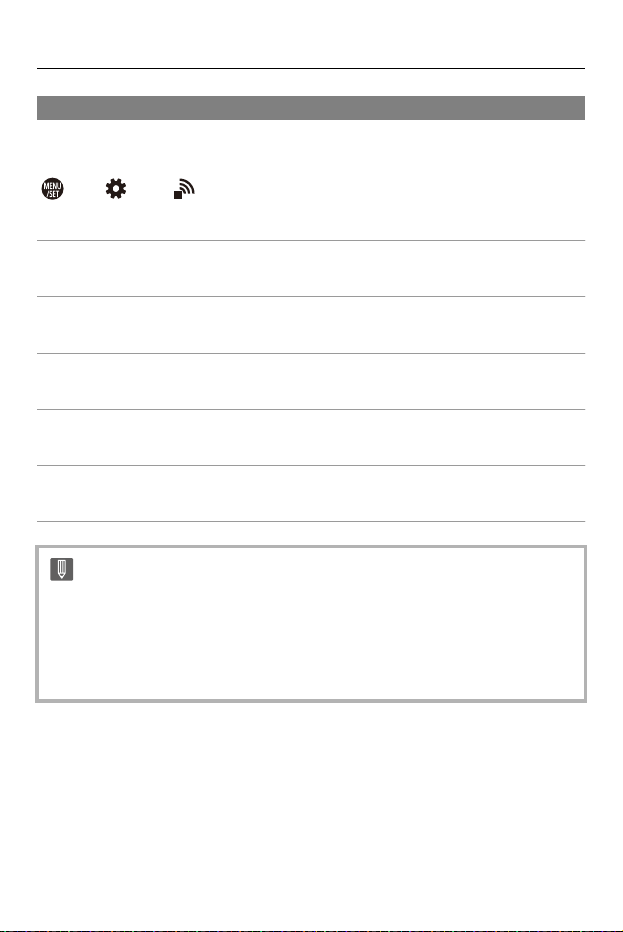
HDMI Output (Video) – HDMI Output Image Quality
568
Settings for Down-Converting
Make settings for the down-conversion of resolution for HDMI output.
[] [] [HDMI Rec Output] Select [Down
Convert]
[AUTO]
Outputs by down-converting to match the connected device.
[C4K/4K]
Outputs by down-converting resolution to C4K/4K.
[1080p]
Down-converts resolution to FHD (1080), and outputs as progressive.
[1080i]
Down-converts resolution to FHD (1080), and outputs as interlaced.
[OFF]
Outputs at the resolution and recording frame rate of the [Rec Quality].
•
The items you can select depend on the [System Frequency] setting.
•
When set to a [Rec Quality] that is for high frame rate video with a resolution of
4K or more, the resolution and frame rate may be down-converted for output.
•
If down-converting, AF may take longer than usual for focusing, and the
performance of continuous focus tracking may deteriorate.

HDMI Output (Video) – HDMI Output Image Quality
569
Image Quality When Outputting via HDMI
Output is with the resolution and frame rate according to the combinations
of the [Rec Quality] and [Down Convert] settings.
•
When [Down Convert] is set to [AUTO], the output matches the connected device.
The maximum resolution and frame rate output when [AUTO] is set are the same as
when [OFF] is selected.
•
There is no HDMI output when setting combinations result in a [—] in the below
tables.
[System Frequency]: [59.94Hz (NTSC)]
[Down
Convert]
Resolution and recording frame rate of the [Rec Quality]
6K/29.97p(3:2)
5.9K/29.97p(16:9)
5.1K/29.97p(3:2)
4.8K/29.97p(4:3)
3.3K/29.97p(4:3)
4K/29.97p(16:9)
6K/23.98p(3:2)
5.9K/47.95p(16:9)
5.9K/23.98p(16:9)
5.1K/47.95p(3:2)
5.1K/23.98p(3:2)
4.8K/47.95p(4:3)
4.8K/23.98p(4:3)
3.3K/47.95p(4:3)
3.3K/23.98p(4:3)
4K/47.95p(16:9)
4K/23.98p(16:9)
5.9K/59.94p(16:9)
5.1K/59.94p(3:2)
4.8K/59.94p(4:3)
3.3K/59.94p(4:3)
4K/59.94p(16:9)
[C4K/4K] 4K/29.97p 4K/23.98p
*1, 2
4K/59.94p
*1, 2
[1080p] 1080/29.97p 1080/23.98p 1080/59.94p
[1080i] 1080/59.94i — 1080/59.94i
[OFF] 4K/29.97p 4K/23.98p
*1, 2
4K/59.94p
*1, 2
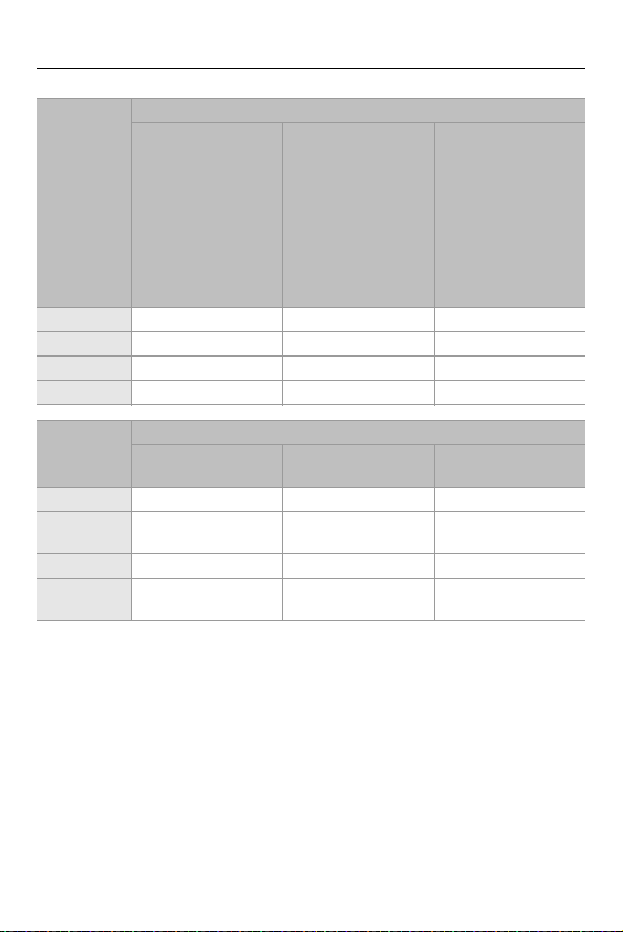
HDMI Output (Video) – HDMI Output Image Quality
570
[Down
Convert]
Resolution and recording frame rate of the [Rec Quality]
6K/59.94p(2.4:1)
5.8K/59.94p(17:9)
C4K/59.94p(17:9)
Cs4K/59.94p(2.4:1)
6K/47.95p(2.4:1)
6K/23.98p(2.4:1)
5.8K/47.95p(17:9)
5.8K/23.98p(17:9)
C4K/95.90p(17:9)
C4K/47.95p(17:9)
C4K/23.98p(17:9)
Cs4K/95.90p(2.4:1)
Cs4K/47.95p(2.4:1)
Cs4K/23.98p(2.4:1)
6K/29.97p(2.4:1)
5.8K/29.97p(17:9)
C4K/29.97p(17:9)
Cs4K/29.97p(2.4:1)
[C4K/4K] C4K/59.94p
*2
C4K/23.98p
*2
C4K/29.97p
[1080p] 1080/59.94p 1080/23.98p 1080/29.97p
[1080i] 1080/59.94i — 1080/59.94i
[OFF] C4K/59.94p
*2
C4K/23.98p
*2
C4K/29.97p
[Down
Convert]
Resolution and recording frame rate of the [Rec Quality]
3.3K/119.88p(4:3)
C4K/119.88p(17:9)
Cs4K/119.88p(2.4:1)
4K/119.88p(16:9)
[C4K/4K] ———
[1080p] 1080/59.94p
1080/59.94p
*3
1080/119.88p
*4
1080/59.94p
*3
1080/119.88p
*4
[1080i] 1080/59.94i 1080/59.94i 1080/59.94i
[OFF] 1080/59.94p
1080/59.94p
*3
C4K/119.88p
*4
1080/59.94p
*3
4K/119.88p
*4

HDMI Output (Video) – HDMI Output Image Quality
571
*1 When outputting 5.9K video (47.95p to 59.94p) via HDMI at the same time as
there is a Wi-Fi connection or USB connection (PC(Tether)/LUMIX Flow), output
will be FHD(1080).
(Even when the resolution of [S&Q] video is 5.9K, when the [Slow & Quick Setting]
frame rate is 31 fps to 60 fps, output will be FHD(1080).)
*2 When outputting C4K/Cs4K/4K video (47.95p to 95.90p) via HDMI at the same
time as there is a Wi-Fi connection and USB connection (PC(Tether)/LUMIX Flow),
output will be FHD(1080).
(Even when the resolution of [S&Q] video is C4K/Cs4K/4K, when the [Slow &
Quick Setting] frame rate is 31 fps to 75 fps, output will be FHD(1080).)
*3 When the [4K/120p Output] is [OFF]
*4 When the [4K/120p Output] is [ON]
*5 It is not possible to output FHD video (200.00p to 239.76p) via HDMI at the same
time there is a Wi-Fi connection and USB connection (PC(Tether)/LUMIX Flow).
[Down
Convert]
Resolution and recording frame rate of the [Rec Quality]
1080/239.76p(16:9)
1080/119.88p(16:9)
1080/59.94p(16:9)
1080/47.95p(16:9)
1080/23.98p(16:9)
1080/29.97p(16:9)
[C4K/4K] ————
[1080p] 1080/119.88p
*5
1080/59.94p 1080/23.98p 1080/29.97p
[1080i] 1080/59.94i
*5
1080/59.94i — 1080/59.94i
[OFF] 1080/119.88p
*5
1080/59.94p 1080/23.98p 1080/29.97p
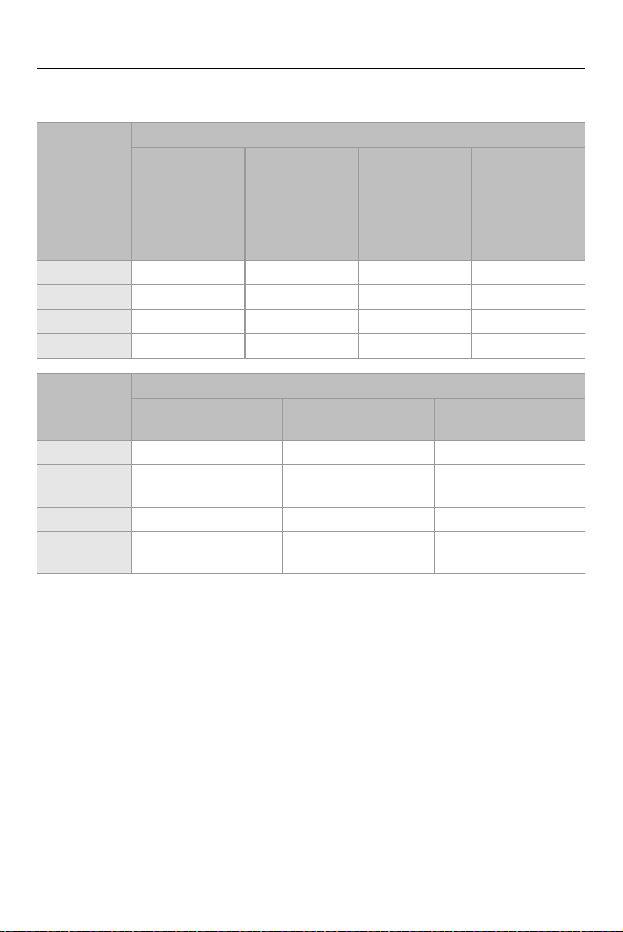
HDMI Output (Video) – HDMI Output Image Quality
572
[System Frequency]: [50.00Hz (PAL)]
[Down
Convert]
Resolution and recording frame rate of the [Rec Quality]
6K/25.00p(3:2)
5.9K/25.00p(16:9)
5.1K/25.00p(3:2)
4.8K/25.00p(4:3)
3.3K/25.00p(4:3)
4K/25.00p(16:9)
5.9K/50.00p(16:9)
5.1K/50.00p(3:2)
4.8K/50.00p(4:3)
3.3K/50.00p(4:3)
4K/50.00p(16:9)
6K/50.00p(2.4:1)
5.8K/50.00p(17:9)
C4K/50.00p(17:9)
Cs4K/50.00p(2.4:1)
6K/25.00p(2.4:1)
5.8K/25.00p(17:9)
C4K/25.00p(17:9)
Cs4K/25.00p(2.4:1)
[C4K/4K] 4K/25.00p 4K/50.00p
*1, 2
C4K/50.00p
*2
C4K/25.00p
[1080p] 1080/25.00p 1080/50.00p 1080/50.00p 1080/25.00p
[1080i] 1080/50.00i 1080/50.00i 1080/50.00i 1080/50.00i
[OFF] 4K/25.00p 4K/50.00p
*1, 2
C4K/50.00p
*2
C4K/25.00p
[Down
Convert]
Resolution and recording frame rate of the [Rec Quality]
3.3K/100.00p(4:3)
C4K/100.00p(17:9)
Cs4K/100.00p(2.4:1)
4K/100.00p(16:9)
[C4K/4K] ———
[1080p] 1080/50.00p
1080/50.00p
*3
1080/100.00p
*4
1080/50.00p
*3
1080/100.00p
*4
[1080i] 1080/50.00i 1080/50.00i 1080/50.00i
[OFF] 1080/50.00p
1080/50.00p
*3
C4K/100.00p
*4
1080/50.00p
*3
4K/100.00p
*4

HDMI Output (Video) – HDMI Output Image Quality
573
*1 When outputting 5.9K video (47.95p to 59.94p) via HDMI at the same time as
there is a Wi-Fi connection or USB connection (PC(Tether)/LUMIX Flow), output
will be FHD(1080).
(Even when the resolution of [S&Q] video is 5.9K, when the [Slow & Quick Setting]
frame rate is 31 fps to 60 fps, output will be FHD(1080).)
*2 When outputting C4K/Cs4K/4K video (47.95p to 95.90p) via HDMI at the same
time as there is a Wi-Fi connection and USB connection (PC(Tether)/LUMIX Flow),
output will be FHD(1080).
(Even when the resolution of [S&Q] video is C4K/Cs4K/4K, when the [Slow &
Quick Setting] frame rate is 31 fps to 75 fps, output will be FHD(1080).)
*3 When the [4K/100p Output] is [OFF]
*4 When the [4K/100p Output] is [ON]
*5 It is not possible to output FHD video (200.00p to 239.76p) via HDMI at the same
time there is a Wi-Fi connection and USB connection (PC(Tether)/LUMIX Flow).
[Down
Convert]
Resolution and recording frame rate of the [Rec Quality]
1080/200.00p(16:9)
1080/100.00p(16:9)
1080/50.00p(16:9) 1080/25.00p(16:9)
[C4K/4K] ———
[1080p] 1080/100.00p
*5
1080/50.00p 1080/25.00p
[1080i] 1080/50.00i
*5
1080/50.00i 1080/50.00i
[OFF] 1080/100.00p
*5
1080/50.00p 1080/25.00p
HDMI Output (Video) – HDMI Output Image Quality
574
[System Frequency]: [24.00Hz (CINEMA)]
[Down
Convert]
Resolution and recording frame rate of the [Rec Quality]
6K/24.00p(3:2)
5.9K/48.00p(16:9)
5.9K/24.00p(16:9)
5.1K/48.00p(3:2)
5.1K/24.00p(3:2)
4.8K/48.00p(4:3)
4.8K/24.00p(4:3)
3.3K/48.00p(4:3)
3.3K/24.00p(4:3)
4K/48.00p(16:9)
4K/24.00p(16:9)
6K/48.00p(2.4:1)
6K/24.00p(2.4:1)
5.8K/48.00p(17:9)
5.8K/24.00p(17:9)
C4K/96.00p(17:9)
C4K/48.00p(17:9)
C4K/24.00p(17:9)
Cs4K/96.00p(2.4:1)
Cs4K/48.00p(2.4:1)
Cs4K/24.00p(2.4:1)
3.3K/120.00p(4:3)
[C4K/4K] 4K/24.00p
*1, 2
C4K/24.00p
*2
—
[1080p] 1080/24.00p 1080/24.00p 1080/24.00p
[OFF] 4K/24.00p
*1, 2
C4K/24.00p
*2
1080/24.00p
[Down
Convert]
Resolution and recording frame rate of the [Rec Quality]
C4K/120.00p(17:9)
Cs4K/120.00p(2.4:1)
4K/120.00p(16:9)
[C4K/4K] ——
[1080p]
1080/24.00p
*3
1080/120.00p
*4
1080/24.00p
*3
1080/120.00p
*4
[OFF]
1080/24.00p
*3
C4K/120.00p
*4
1080/24.00p
*3
4K/120.00p
*4

HDMI Output (Video) – HDMI Output Image Quality
575
*1 When outputting 5.9K video (47.95p to 59.94p) via HDMI at the same time as
there is a Wi-Fi connection or USB connection (PC(Tether)/LUMIX Flow), output
will be FHD(1080).
(Even when the resolution of [S&Q] video is 5.9K, when the [Slow & Quick Setting]
frame rate is 31 fps to 60 fps, output will be FHD(1080).)
*2 When outputting C4K/Cs4K/4K video (47.95p to 95.90p) via HDMI at the same
time as there is a Wi-Fi connection and USB connection (PC(Tether)/LUMIX Flow),
output will be FHD(1080).
(Even when the resolution of [S&Q] video is C4K/Cs4K/4K, when the [Slow &
Quick Setting] frame rate is 31 fps to 75 fps, output will be FHD(1080).)
*3 When the [4K/120p Output] is [OFF]
*4 When the [4K/120p Output] is [ON]
[Down
Convert]
Resolution and recording frame rate of the [Rec Quality]
1080/120.00p(16:9)
1080/48.00p(16:9)
1080/24.00p(16:9)
[C4K/4K] ——
[1080p] 1080/120.00p 1080/24.00p
[OFF] 1080/120.00p 1080/24.00p
HDMI Output (Video) – HDMI Output Settings
576
HDMI Output Settings
≥ Outputting the Camera Information Display via HDMI: 577
≥ Outputting Control Information to an External Recorder: 578
≥ Outputting Audio via HDMI: 578
≥ Outputting the Enlarged Live Display (Video) via HDMI: 579
≥ Outputting as 4K/120p (4K/100p) via HDMI: 580
≥ [4K/120p Power Save Live View] ([4K/100p Power Save Live View]): 581
HDMI Output (Video) – HDMI Output Settings
577
Outputting the Camera Information Display via HDMI
Output the camera information display to an external device connected by
HDMI.
[] [] [HDMI Rec Output] Select [Info
Display]
Settings: [ON]/[OFF]
•
There is the following restriction when connected via HDMI and [Info Display] is
set to [ON]:
– [Touch Tab] is not available.

HDMI Output (Video) – HDMI Output Settings
578
Outputting Control Information to an External
Recorder
Recording start and stop control information is output to an external
recorder connected by HDMI.
[] [] [HDMI Rec Output] Select [HDMI
Recording Control]
Settings: [ON]/[OFF]
•
[HDMI Recording Control] can be set when [HDMI Time Code Output] is set to [ON]
in [ ]/[S&Q] mode. ([HDMI Time Code Output]: 472)
•
Control information is output when pressing the video rec. button or shutter button,
even if the video cannot be recorded (such as when there is no card inserted into the
camera).
•
Only compatible external devices can be controlled.
Outputting Audio via HDMI
Output audio to an external device connected by HDMI.
[] [] [HDMI Rec Output] Select [Sound
Output (HDMI)]
Settings: [ON]/[OFF]

HDMI Output (Video) – HDMI Output Settings
579
Outputting the Enlarged Live Display (Video) via
HDMI
Output the enlarged screens from [MF Assist] or [Enlarged Live
Display(Video)] to an external device connected by HDMI.
[] [] [HDMI Rec Output] Select [Enlarged
Live Display]
[MODE1]
Enlarged display of live view is output during standby for video recording.
•
Resolution and frame rate output are the same as those set at [Down Convert].
•
When [4K/120p Output] ([4K/100p Output]) is set to [ON] and the enlarged display of
live view is used, the resolution and frame rate of the video is output via HDMI with
C4K/120p (100p) or 4K/120p (100p), but the image refresh rate will be 30 fps or
lower.
[MODE2]
Enlarged display of live view is output during standby for video recording and during
video recording.
•
The resolution and frame rate of the video output via HDMI will be FHD/60p or less.
•
When [Down Convert] is set to [C4K/4K] or [OFF], [MODE2] is not available.
•
When [4K/120p Output] ([4K/100p Output]) is set to [ON], [MODE2] is not available.
[OFF]
Enlarged display of live view is not output.
•
When the monitor/viewfinder of the camera is displaying the enlarged display, the
camera information display is not output via HDMI.
•
When [4K/120p Output] ([4K/100p Output]) is set to [ON] and the enlarged display of
live view is used, the image refresh rate on the camera will be 30 fps or lower.
HDMI Output (Video) – HDMI Output Settings
580
Outputting as 4K/120p (4K/100p) via HDMI
When set to a recording quality of C4K/120p (100p) or 4K/120p (100p),
video is output to an external device connected via HDMI as C4K/120p
(100p) or 4K/120p (100p).
[] [] [HDMI Rec Output] Select [4K/120p
Output] ([4K/100p Output])
[ON]
Output as C4K/120p (100p) or 4K/120p (100p) via HDMI.
If the external device is not compatible, output is FHD/60p or less.
•
While outputting as C4K/120p (100p) or 4K/120p (100p) via HDMI, video cannot be
recorded to cards.
•
The YUV and bit value are output at 4:2:2 10-bit.
If the external device is not compatible, the output is at 4:2:0 10-bit.
[OFF]
Output as FHD/60p or less via HDMI.
•
When the following function is being used, [4K/120p Output] ([4K/100p Output])
is not available:
– [HDMI RAW Data Output]

HDMI Output (Video) – HDMI Output Settings
581
[4K/120p Power Save Live View] ([4K/100p Power
Save Live View])
When outputting C4K/120p (100p) or 4K/120p (100p) via HDMI, activation
of the image sensor is limited during recording standby to reduce power
consumption and keep the temperature from rising.
•
This can be set when [HDMI Recording Control] and [4K/120p Output] ([4K/100p
Output]) are [ON].
[] [] [HDMI Rec Output] Select [4K/120p Power
Save Live View] ([4K/100p Power Save Live View])
[ON]
Activation of the camera’s image sensor is limited to C4K/60p (50p) or 4K/60p (50p)
during recording standby.
The limitation is canceled when recording is started by pressing either the video rec.
button or shutter button on the camera.
•
The output destination device recognizes as C4K/120p (100p) or 4K/120p (100p),
but if the recording is started on the external recorder during recording standby,
recording is made with a limited image quality, so use the camera to perform the
operations for starting and stopping video recording on the external recorder.
(Outputting Control Information to an External Recorder: 578)
[OFF]
Output stays C4K/120p (100p) or 4K/120p (100p) via HDMI even during recording
standby.
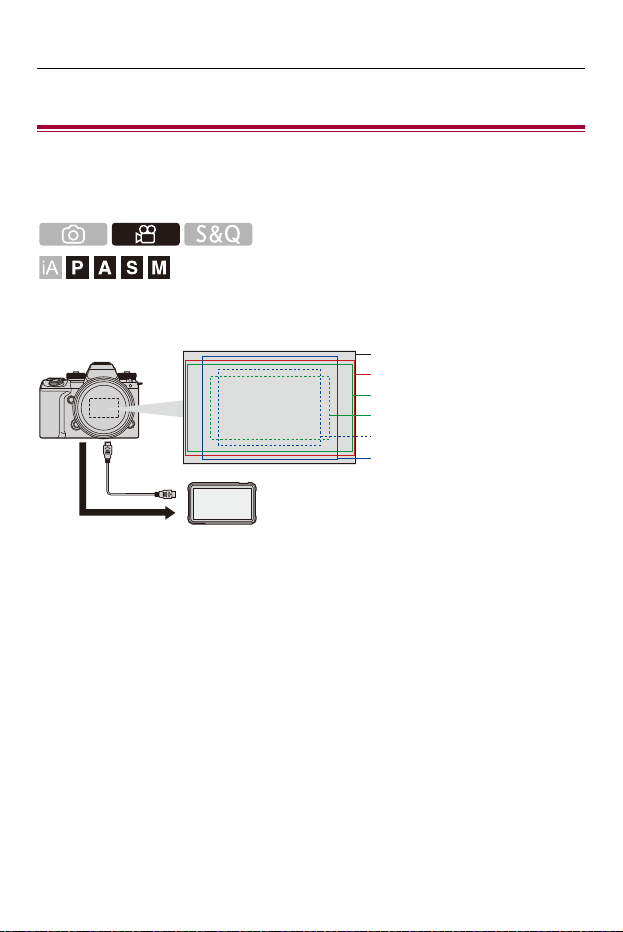
HDMI Output (Video) – Output of RAW Video Data
582
Output of RAW Video Data
≥ Outputting RAW Video Data via HDMI: 584
≥ Notes When Outputting RAW Video Data: 589
RAW Video Data can be output via HDMI to a compatible external
recorder.
(A) RAW Video
(B) External recorder
•
Recording of the RAW Video Data of this camera has been confirmed on the
following external recorders. (As of May 2025)
– ATOMOS: “NINJA V”/“NINJA V+”/“NINJA”/“NINJA ULTRA”/“SHOGUN”/“SHOGUN
ULTRA”/“SHOGUN CONNECT”
– Blackmagic Design: “Blackmagic Video Assist 5″ 12G HDR”/“Blackmagic Video
Assist 7″ 12G HDR”
HDMI
5.9K(16:9) / FULL
6K(3:2) / FULL
3.5K(4:3) / APS-C
4.1K(17:9) / PIXEL/PIXEL
5.7K(17:9) / FULL
4.8K(4:3) / PIXEL/PIXEL
(A)
(B)
HDMI Output (Video) – Output of RAW Video Data
583
•
For external recorder firmware versions that support recording of RAW Video Data,
check the following site:
https://panasonic.jp/support/global/cs/dsc/connect/index.html
(English only)
•
For details about external recorders, contact either ATOMOS or Blackmagic Design.
•
This does not guarantee all of the capabilities that the compatible external recorder
may have.
•
You will need compatible software to edit the RAW Video Data recorded with the
external recorder. Compatible software supports only V-Log/V-Gamut conversion.
•
When editing RAW video data that was recorded with an ATOMOS recorder, in order
to match the coloring with the V-Log/V-Gamut, download the LUT (Look-Up Table)
file from the following support site and load it into the software.
•
Visit the following site to download LUT file or view the latest support information:
https://panasonic.jp/support/global/cs/dsc/
(English only)
•
Proxy videos alone can be recorded during output of RAW video data via HDMI.
•
When [System Frequency] is set to [24.00Hz (CINEMA)], RAW Video Data
cannot be output via HDMI.
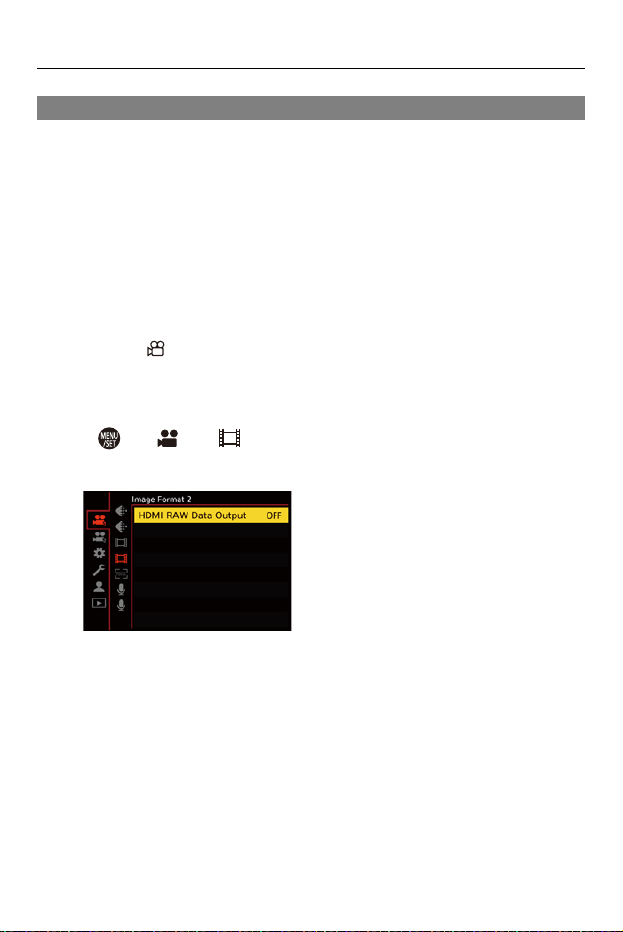
HDMI Output (Video) – Output of RAW Video Data
584
Outputting RAW Video Data via HDMI
The image quality for the output images is set in [Rec Quality].
Getting started:
1 Turn off the camera and the external recorder.
2 Connect the camera and the external recorder with a commercially available
HDMI cable.
•
Use an Ultra High Speed HDMI cable (Type A–Type A plug) with the length
less than 3 m (9.8 feet).
3 Turn on the camera and the external recorder.
1
Set to [ ] mode.
(Photo/Video/S&Q Switch: 80)
2
Set [HDMI RAW Data Output].
≥ [] [] [HDMI RAW Data Output] [ON]
•
[HDMI RAW] is displayed on the recording screen.
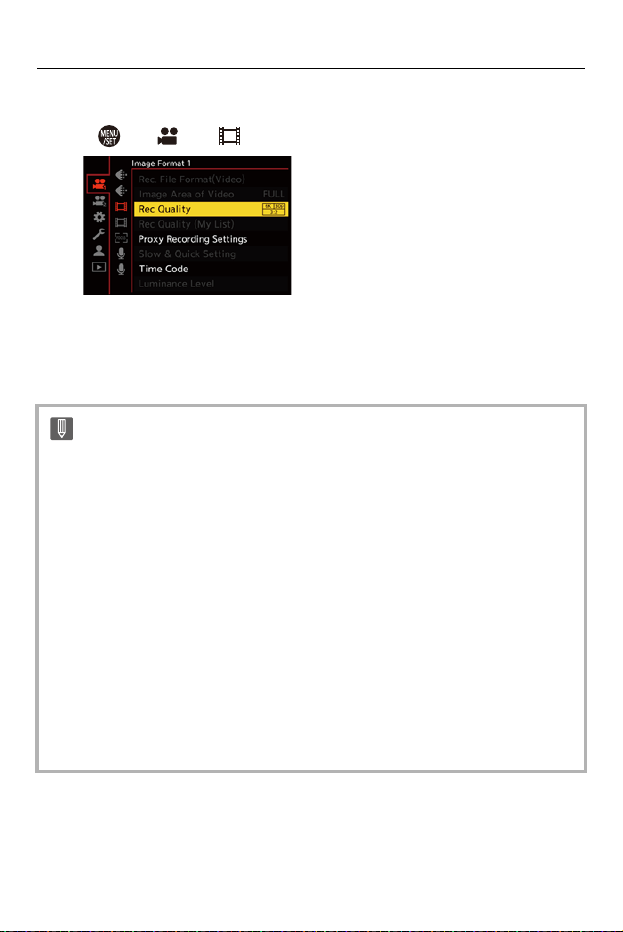
HDMI Output (Video) – Output of RAW Video Data
585
3
Select a recording quality.
≥ [] [] [Rec Quality]
4
Set the HDMI input on the external recorder.
•
When the connection is complete, images will be displayed on the screen of
the external recorder.
Proxy Recording During Output of RAW Data via HDMI
Proxy recording while outputting RAW data via HDMI requires you to record to an
external recorder. Use the camera to control the recording on the external recorder.
1 Set [HDMI Recording Control] to [ON]. ([HDMI Time Code Output]/[HDMI
Recording Control]: 588)
2 Set [Proxy Recording] to [ON]. (Proxy Recording: 175)
3 Start recording on the external recorder using the video rec. button or shutter
button on the camera.
There are differences from normal HDMI output operation.
•
[HDMI Rec Output] in the [Custom] ([IN/OUT]) menu.
– [Info Display] is not available. You cannot output the camera information
display to an external recorder connected by HDMI.
– [Down Convert] is not available. Outputs at the resolution and recording frame
rate of the [Rec Quality].
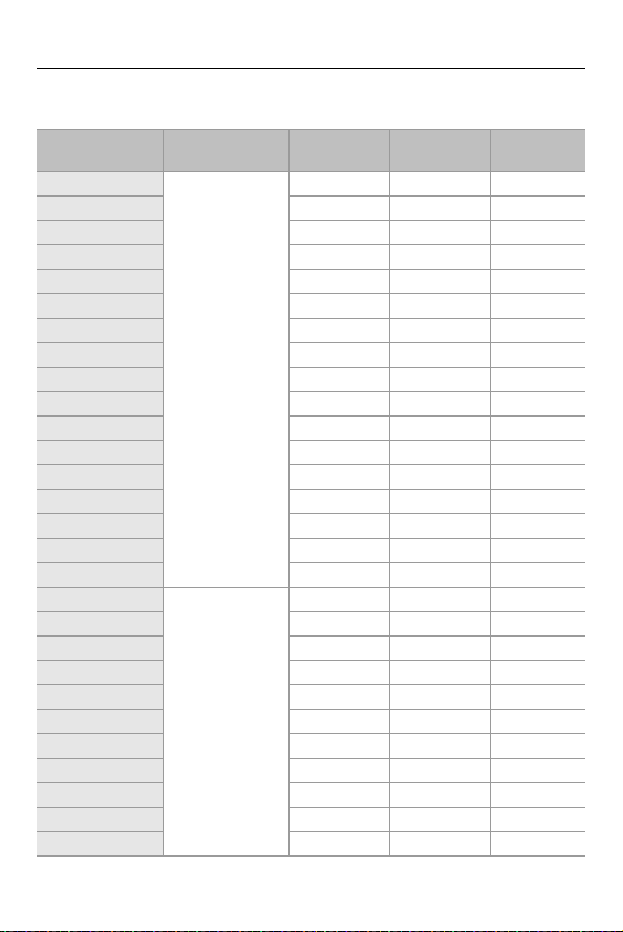
HDMI Output (Video) – Output of RAW Video Data
586
[Rec Quality] (When [HDMI RAW Data Output] is selected)
[Rec Quality]
[System
Frequency]
[Image Area
of Video]
Resolution Frame rate
[6K/30p/3:2]
[59.94Hz (NTSC)]
[FULL] 6000×4000 29.97p
[6K/24p/3:2] [FULL] 6000×4000 23.98p
[5.9K/30p/16:9] [FULL] 5888×3312 29.97p
[5.9K/24p/16:9] [FULL] 5888×3312 23.98p
[5.7K/60p/17:9] [FULL] 5728×3024 59.94p
[5.7K/30p/17:9] [FULL] 5728×3024 29.97p
[5.7K/24p/17:9] [FULL] 5728×3024 23.98p
[4.8K/60p/4:3] [PIXEL/PIXEL] 4800×3600 59.94p
[4.8K/30p/4:3] [PIXEL/PIXEL] 4800×3600 29.97p
[4.8K/24p/4:3] [PIXEL/PIXEL] 4800×3600 23.98p
[C4K/120p/17:9] [PIXEL/PIXEL] 4096×2160 119.88p
[C4K/60p/17:9] [PIXEL/PIXEL] 4096×2160 59.94p
[C4K/30p/17:9] [PIXEL/PIXEL] 4096×2160 29.97p
[C4K/24p/17:9] [PIXEL/PIXEL] 4096×2160 23.98p
[3.5K/60p/4:3] [APS-C] 3536×2656 59.94p
[3.5K/30p/4:3] [APS-C] 3536×2656 29.97p
[3.5K/24p/4:3] [APS-C] 3536×2656 23.98p
[6K/25p/3:2]
[50.00Hz (PAL)]
[FULL] 6000×4000 25.00p
[5.9K/25p/16:9] [FULL] 5888×3312 25.00p
[5.7K/50p/17:9] [FULL] 5728×3024 50.00p
[5.7K/25p/17:9] [FULL] 5728×3024 25.00p
[4.8K/50p/4:3] [PIXEL/PIXEL] 4800×3600 50.00p
[4.8K/25p/4:3] [PIXEL/PIXEL] 4800×3600 25.00p
[C4K/100p/17:9] [PIXEL/PIXEL] 4096×2160 100.00p
[C4K/50p/17:9] [PIXEL/PIXEL] 4096×2160 50.00p
[C4K/25p/17:9] [PIXEL/PIXEL] 4096×2160 25.00p
[3.5K/50p/4:3] [APS-C] 3536×2656 50.00p
[3.5K/25p/4:3] [APS-C] 3536×2656 25.00p

HDMI Output (Video) – Output of RAW Video Data
587
•
Bit value: 12-bit
•
Audio format: LPCM (2ch/4ch)
– When the XLR Microphone Adaptor (DMW-XLR2: optional) is connected, if [4ch
Audio Recording] is set to [XLR] or [XLR+CAMERA], 4-channel audio can be
recorded.
•
[Image Area of Video] is fixed to the image area according to the [Rec Quality]
setting.
Monitor/Viewfinder Display When Outputting RAW Video
Data
Images equivalent to those recorded when recording with V-Log are
displayed on the monitor/viewfinder of the camera for monitoring purposes.
[LUT View Assist (Monitor)] with the [Vlog_709] preset applied can be used
for the [Log View Assist].
•
The LUT for the monitor display cannot be changed.
•
When you use [LUT View Assist (Monitor)], [709] is displayed on the screen and
[RAW] is displayed on the screen as a [LUT View Assist (HDMI)] item.
•
[Luminance Spot Meter], and [BASE/RANGE] of [Zebra Pattern] are set at “Stop”
units.
(18 % gray output level is calculated as 0 Stop)
•
[Sound Rec Quality] can be set to [96kHz/24bit] when you have connected an XLR
Microphone Adaptor (DMW-XLR2: optional), Stereo Shotgun Microphone
(DMW-MS2: optional), or Stereo Microphone (VW-VMS10: optional).
HDMI Output (Video) – Output of RAW Video Data
588
Notes on displayed images
•
The images displayed on the camera do not affect the RAW Video Data that is
output.
•
The images displayed on the external recorder are images that suit the external
recorder specifications. This means that there may be differences between the
images displayed on the camera and the images displayed on the external recorder.
•
The monitor/viewfinder of the camera shows images with the angle of view of the
RAW Video Data. There may be some difference with the angle of view of the data
recorded on the external recorder.
[HDMI Time Code Output]/[HDMI Recording Control]
The time code of the camera can be added and output via HDMI to the
external recorder.
In addition, recording can be started and stopped on the external recorder
by using the video rec. button and shutter button of the camera.
1 Set [HDMI Time Code Output] to [ON].
•
[]
[]
[Time Code]
[HDMI Time Code Output]
[ON]
2 Set [HDMI Recording Control] to [ON].
•
[]
[]
[HDMI Rec Output]
[HDMI Recording Control]
[ON]
•
[HDMI Recording Control] can be set when [HDMI Time Code Output] is set to
[ON] in [ ] mode.

HDMI Output (Video) – Output of RAW Video Data
589
Notes When Outputting RAW Video Data
Operation is as follows when outputting RAW Video Data:
•
The lower limit of available ISO sensitivity is [640] (when [Extended ISO] is set:
[320]), and the upper limit is [51200].
The range of available ISO sensitivities is also different for [LOW] and [HIGH] in
[Dual Native ISO Setting].
•
[AWB], [AWBc], [AWBw] and [ ] cannot be used for white balance.
•
[Photo Style] is fixed to [V-Log], and image quality cannot be adjusted.
•
[ ]/[ ] of the AF mode is not available.
•
Enlarging the display with [MF Assist] and [Enlarged Live Display(Video)] is not
possible.
•
The following functions are not available:
– [Master Pedestal Level]
– [i.Dynamic Range]
– [Vignetting Comp.]
– [Diffraction Compensation]
– [Filter Settings]
– [Rec. File Format(Video)]
– [Filtering] and [add to list] in [Rec Quality]
– [Rec Quality (My List)]
– [Luminance Level]
– [E-Stabilization (Video)] ([Image Stabilizer])
– [Loop Recording (video)]
– [Segmented File Recording]
– [Color Bars]
– [Streaming]

590
Using an External SSD
(Commercially Available)
Pictures and videos can be recorded and played back with a commercially
available external SSD connected to the USB port of the camera.
There are recording qualities that can only be recorded to an external SSD.
≥ Compatible External SSDs: 591
≥ Connecting the External SSD: 592
≥ Formatting the External SSD: 595
≥ Notes About External SSDs: 596

Using an External SSD (Commercially Available) – Compatible External SSDs
591
Compatible External SSDs
This section describes the external SSDs that can be used with this
camera. (As of May 2025)
•
This camera is compatible with USB 10Gbps.
•
We recommend using an external SSD whose operation has been confirmed by
Panasonic.
Note beforehand that this is not a guarantee of operation on all devices.
•
For the latest information about external SSDs, check the following support site:
https://panasonic.jp/support/global/cs/dsc/connect/index.html
(English only)
•
This does not guarantee all of the capabilities that the external SSD whose operation
has been verified may have.
•
Perform trial recording in advance to check that operation is correct.
•
Please also refer to the operating instructions for the external SSD.
External SSD compatible with USB Type-C
®
(no more than 2 TB in size)
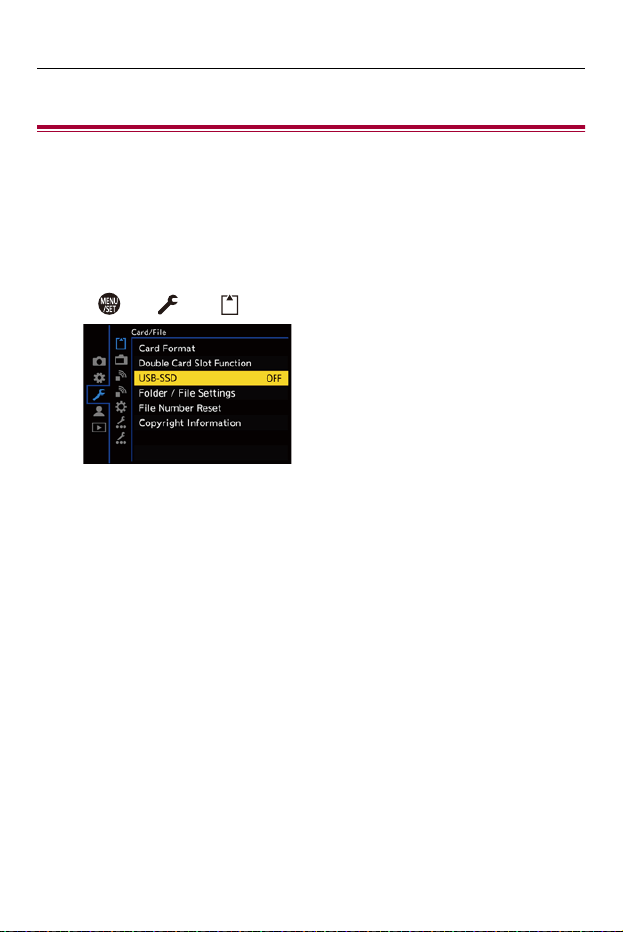
Using an External SSD (Commercially Available) – Connecting the External SSD
592
Connecting the External SSD
Be sure to follow the below steps when connecting and removing the
external SSD.
If you do not perform the steps as shown, the external SSD may not be
recognized or the external SSD or recording data may be corrupted.
1
Set [USB-SSD] to [ON].
≥ [] [] [USB-SSD] [ON]
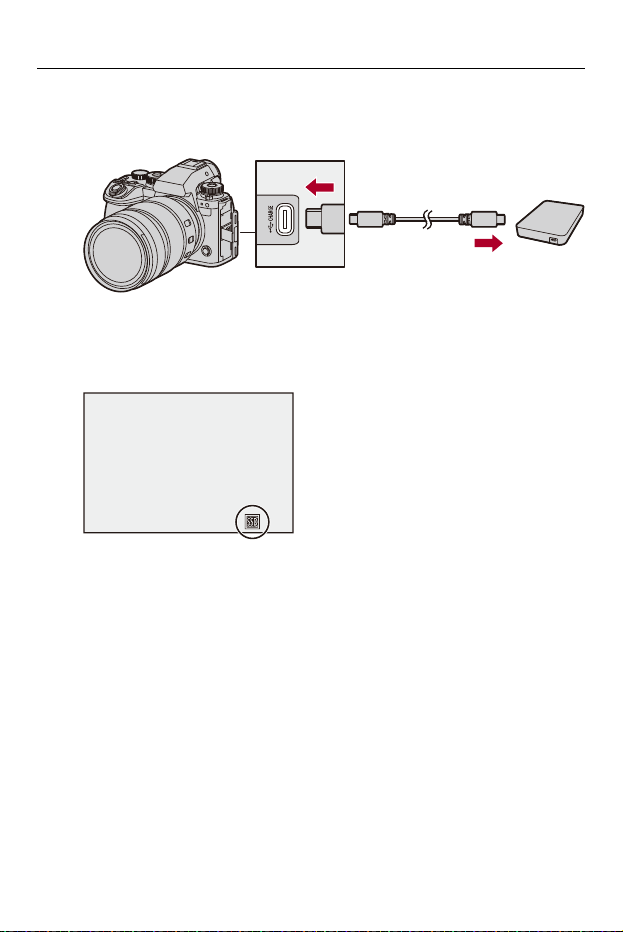
Using an External SSD (Commercially Available) – Connecting the External SSD
593
2
Connect the camera and external SSD with the USB
connection cable.
•
Use the USB connection cable supplied with the external SSD.
≥The USB-SSD icon is displayed on the screen when the camera
recognizes the external SSD.
Using an External SSD (Commercially Available) – Connecting the External SSD
594
Removing the External SSD
1 Set [USB-SSD] to [OFF].
•
[] [] [USB-SSD] [OFF]
2 Confirm that the USB-SSD icon on the screen changes to the card icon, then
unplug the USB connection cable from the camera.
•
It may take a while for the external SSD to be recognized.
•
When [USB-SSD] is set to [ON], you cannot use a card even if a card has been
inserted. To use a card, set [USB-SSD] to [OFF].
•
[ ] is displayed on the screen while writing to the external SSD.
•
While the USB-SSD icon is being displayed on the screen, do not perform any of
the following operations.
The camera may operate incorrectly or the external SSD and recorded images
may be damaged.
– Disconnect the USB connection cable.
– Remove the battery or disconnect the power plug.
– Subject the camera or external SSD to vibration, impacts, or static electricity.
Using an External SSD (Commercially Available) – Formatting the External SSD
595
Formatting the External SSD
Format the external SSD with this camera before use.
[] [] [USB-SSD Format]
•
When an external SSD is formatted, all of the data stored in the external
SSD is erased and cannot be restored.
Save a backup of necessary data before formatting the external SSD.
•
Do not turn off the camera or perform another operation during formatting.
•
Take care not to turn off the camera while formatting is in progress.
•
If the external SSD has been formatted with a PC or other device, format it again
with the camera.

Using an External SSD (Commercially Available) – Notes About External SSDs
596
Notes About External SSDs
•
When [USB-SSD] is set to [ON], the following functions are not available:
– Recording to cards, playing back pictures/videos recorded to cards
– [Double Card Slot Function]
– [Streaming] ([USB Tethering]/[LAN] in [Connection Method])
– [USB]
– [Firmware Update] ([Firmware Version])
– [Copy]
•
If you want to automatically transfer pictures to a smartphone as they are taken while
using an external SSD, set [USB-SSD] to [ON], then set [Auto Transfer] in
[Bluetooth] to [ON]. ([Auto Transfer]: 785)
•
When an external SSD is connected, power is supplied from the camera, so the
battery will be consumed faster. It is recommended to either have a backup battery
ready, or to use the Panasonic AC Adaptor (DMW-AC11: optional) and DC Coupler
(DMW-DCC18: optional).

Using an External SSD (Commercially Available) – Notes About External SSDs
597
•
When not using the external SSD, turn [USB-SSD] [OFF].
When set to [ON], power is supplied from the battery of this camera to the connected
device, so the battery will be consumed faster.
•
Depending on the external SSD connected, a message indicating that it cannot be
used may be displayed on the screen due to insufficient power and it may not
operate.
– We recommend using an external SSD whose operation has been confirmed by
Panasonic.
– Perform trial recording in advance to check that operation is correct.
•
When the temperature of the camera rises when recording over long periods to an
external SSD, for example, [ ] appears blinking on the screen. If you continue to
use the camera, a message indicating that the camera cannot be used is displayed
on the screen and some functions, such as recording and HDMI output, will be
stopped. Wait for the camera to cool down and for the message indicating that the
camera can be used again. When the message indicating that it can be used again
is displayed, turn the camera off then on again.
•
The camera cannot access the external SSD if the external SSD is protected by a
password, etc. Check the settings of the external SSD before use.
•
Do not use USB extension cables, USB conversion adaptors, or USB hubs.

598
Playing Back and Editing of Images
This chapter explains how to play back and delete pictures and videos.
You can also develop pictures recorded in the RAW format and repair
video files that cannot be played back.
•
Images recorded on devices other than this one may not be played back or edited
correctly on this camera.
≥ Playing Back Pictures: 599
≥ Playing Back Videos: 601
≥ Switching the Display Mode: 610
≥ Group Images: 616
≥ Deleting Images: 618
≥ [RAW Processing]: 620
≥ [HEIF to JPEG Conversion]: 628
≥ [Video Repair]: 629
≥ [Playback] Menu: 632
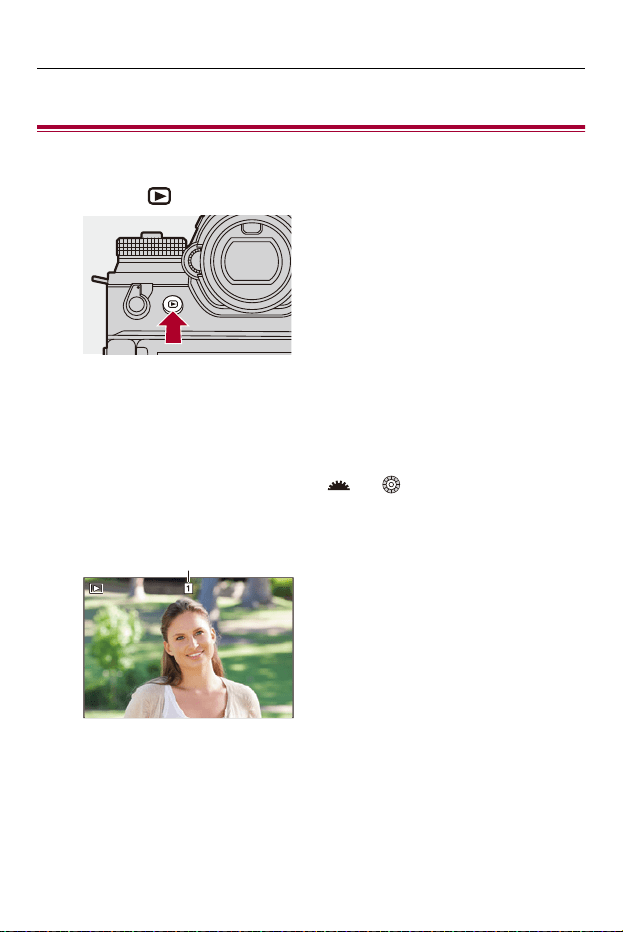
Playing Back and Editing of Images – Playing Back Pictures
599
Playing Back Pictures
1
Display the playback screen.
≥Press [ ].
2
Select a picture.
≥Select the pictures by pressing 21.
≥You can move continuously through images by pressing and
holding 21.
≥You can also select by rotating or .
≥You can also move through images by dragging the screen
horizontally.
(A) Card slot
(A)
1/999
1/999
1/999
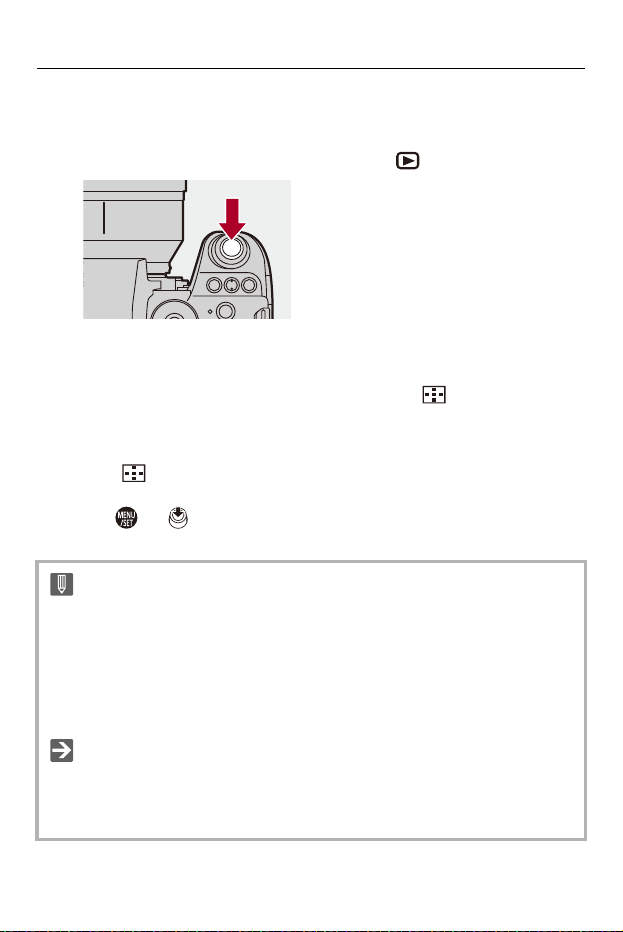
Playing Back and Editing of Images – Playing Back Pictures
600
3
Stop playback.
≥Press the shutter button halfway.
≥You can also stop playback by pressing [ ].
Switching the Card to Display
You can switch the card displayed just by pressing [ ] during playback.
•
You can also perform the same operation by pressing the Fn button assigned with
[Card Slot Change]. (Fn Buttons: 646)
1 Press [ ].
2 Press 34 to select [Card Slot 1(CFexpress)] or [Card Slot 2(SD)] and then
press or .
•
This camera complies with the “Design rule for Camera File system” (DCF) and
“Exchangeable Image File Format” (Exif) standards established by “Japan
Electronics and Information Technology Industries Association” (JEITA).
The camera cannot play back files that do not comply with the DCF standard.
Exif is a file format for pictures which allows recording information, etc. to be
added.
•
You can assign switching of the recording screen/playback screen to an Fn
button:
([Rec / Playback Switch]: 656, [Rec / Playback Switch]: 659)
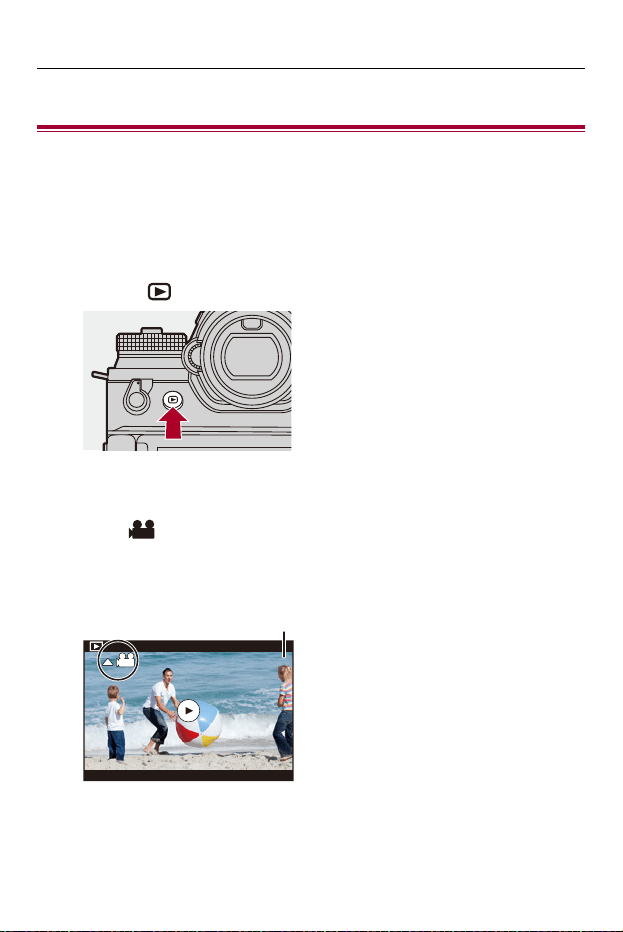
Playing Back and Editing of Images – Playing Back Videos
601
Playing Back Videos
≥ Video Repeat Playback: 605
≥ Extracting a Picture: 607
≥ [Video Divide]: 608
1
Display the playback screen.
≥Press [ ].
2
Select a video.
•
For information about how to select images (Playing Back Pictures: 599)
•
The [ ] video icon is displayed for a video.
•
The video recording time is displayed on the screen.
Example) When 8 minutes 30 seconds: 8m30s
•
h: hour, m: minute, s: second
(A) Video recording time
8m30s
8m30s
8m30s
(A)
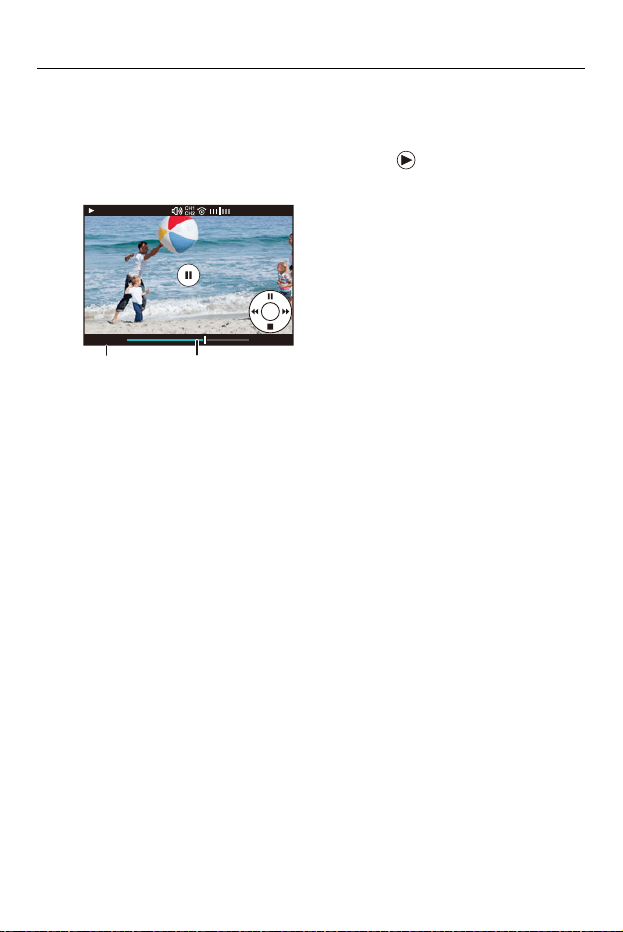
Playing Back and Editing of Images – Playing Back Videos
602
3
Play back the video.
≥Press 3.
≥You can also start playback by touching [ ] at the center of the
screen.
(B) Elapsed playback time
(C) Playback bar
4
Stop playback.
≥Press 4.
00:05:50
00:05:50
00:05:50
00:08:30
00:08:30
00:08:30
(B) (C)
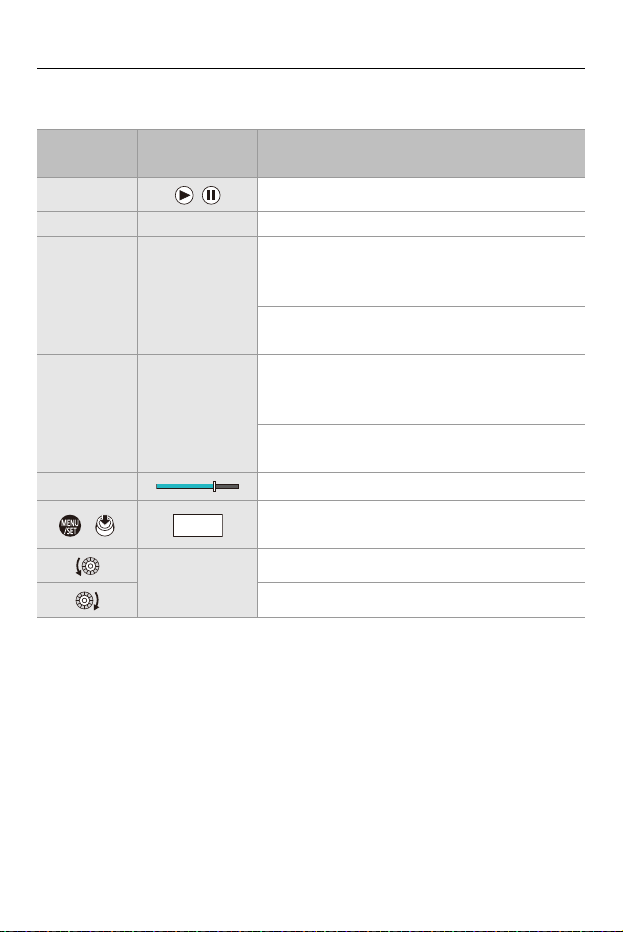
Playing Back and Editing of Images – Playing Back Videos
603
Operations During Video Playback
Button
operations
Touch
operations
Description of operation
3
/
Plays/pauses.
4 — Stops.
2 —
Performs fast-rewind playback.
•
If you press 2 again, the fast-rewind speed
increases.
Performs frame-by-frame rewinding (while
paused).
1 —
Performs fast-forward playback.
•
If you press 1 again, the fast-forward speed
increases.
Performs frame-by-frame forwarding (while
paused).
— Selects the frame to display.
/
Extracts a picture (while paused). (Extracting a
Picture: 607)
—
Reduces the volume.
Increases the volume.
6DYH

Playing Back and Editing of Images – Playing Back Videos
604
•
The camera can play back videos in MP4, MOV, and Apple ProRes formats.
•
Fast-forward playback/fast-rewind playback (frame-by-frame forwarding/
frame-by-frame rewinding) are not possible with RAW videos.
•
Video recorded with a [System Frequency] setting that is different to the current
one cannot be played back.
•
If the reading speed of the card is slow, playback may pause or it may not be
possible to play back smoothly.
•
You may be able to repair video files that cannot be played back.
([Video Repair]: 629)
•
You can set the operation for when playback of video finishes:
([Behavior After Video Playback]: 636)
•
You can assign switching of the recording screen/playback screen to an Fn
button:
([Rec / Playback Switch]: 656, [Rec / Playback Switch]: 659)
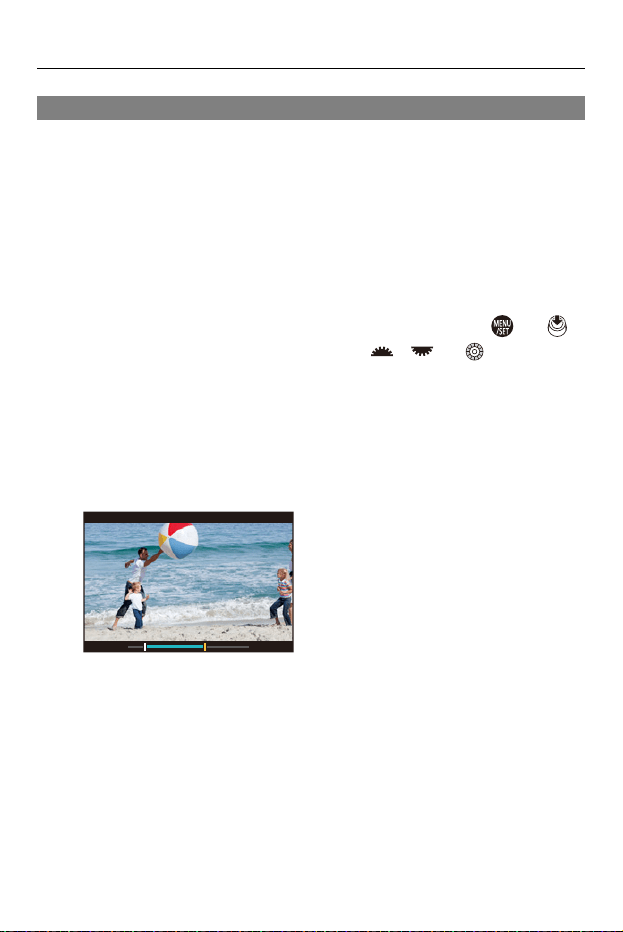
Playing Back and Editing of Images – Playing Back Videos
605
Video Repeat Playback
You can play back a part of a video repeatedly.
1
Display the screen for setting the part to repeat.
≥Press [Q] while paused.
≥The screen for setting the part to repeat is also displayed when you
touch [Repeat Playback] while paused.
2
Set the position to start the repeat.
≥Press 21 to select the start position and then press or .
≥Selection is also possible by rotating , or .
≥You can also select the start position by touching the playback bar.
3
Set the position to end the repeat.
≥Set using the same procedure as
2
.
•
The position cannot be set if the position to start the repeat and the position to
end the repeat are too close.
00:05:50
00:05:50
00:05:50
00:08:30
00:08:30
00:08:30
Playing Back and Editing of Images – Playing Back Videos
606
4
Start playback.
•
The operations during repeat playback are the same as “Operations During
Video Playback”. (Operations During Video Playback: 603)
•
End repeat playback by pressing 4 to stop playback or by pressing [Q] while
paused.
•
Repeat playback is not possible if the recording time is short.
•
The positions set for the repeated part may shift from the position where the
video is paused.
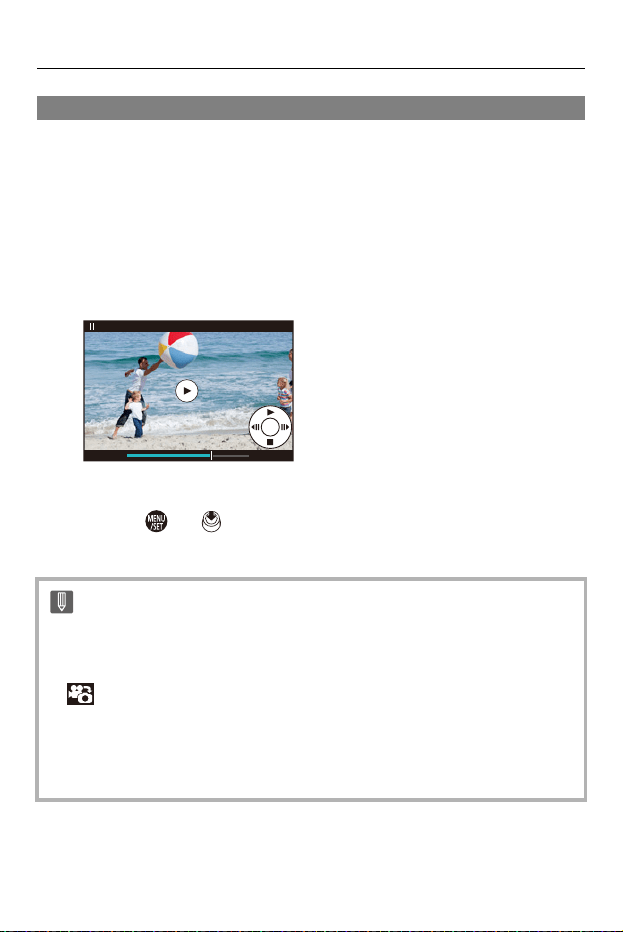
Playing Back and Editing of Images – Playing Back Videos
607
Extracting a Picture
Extract one frame of a video and save it as a JPEG image.
1
Pause playback at the position you wish to extract a
picture.
≥Press 3.
•
To fine-adjust the position, press 21 (rewind frame-by-frame or forward
frame-by-frame).
2
Save the picture.
≥Press or .
≥You can also save the picture by touching [Save].
•
The picture created from the video is saved with a [FINE] picture quality.
The picture is saved with a size according to the resolution of the [Rec Quality].
•
The image quality of a picture created from a video may be coarser than normal.
•
[ ] is displayed on the detailed information display screen for a picture
created from a video.
•
Pictures cannot be extracted when the following functions are being used:
– [Auto Transfer] (when there is an image queued to be transferred)
– [Send Images to Frame.io] (when there is an image in the upload queue)
00:06:10
00:06:10
00:06:10 00:08:30
00:08:30
00:08:30
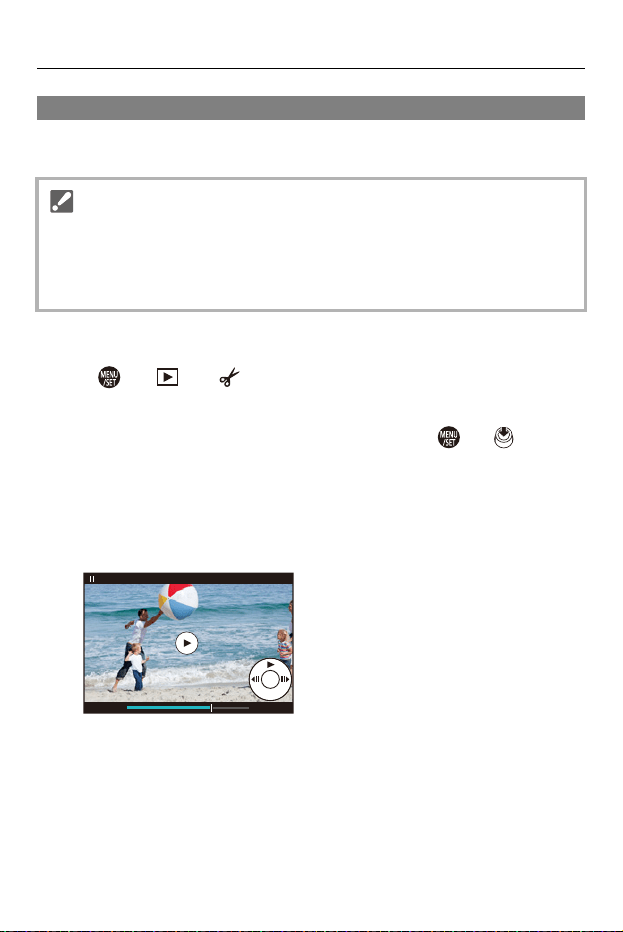
Playing Back and Editing of Images – Playing Back Videos
608
[Video Divide]
Divide a recorded video into two.
1
Select [Video Divide].
≥ [] [] [Video Divide]
2
Select and play the image.
≥Press 21 to select an image and then press or .
3
Pause playback at the position you wish to divide.
≥Press 3.
•
To fine-adjust the position, press 21 (frame-by-frame rewind or
frame-by-frame forward).
•
Images cannot be returned to their original state once they have been divided.
Carefully confirm the images before performing the divide operation.
•
Do not remove the card or battery from the camera during the divide process.
The images may be lost.
00:06:1000:06:1000:06:10 00:08:3000:08:3000:08:30

Playing Back and Editing of Images – Playing Back Videos
609
4
Divide the video.
≥Press or .
≥You can also divide the video by touching [Divide].
•
It is not possible to divide video that was recorded when [Rec. File
Format(Video)] was [Apple ProRes].
•
Dividing the video at a point close to the start or end may not be possible.
•
Videos with a short recording time cannot be divided.
•
[Video Divide] cannot be used on images recorded using [Segmented File
Recording].
•
[Video Divide] is not available when using the following functions:
– [Auto Transfer] (when there is an image queued to be transferred)
– [Send Images to Frame.io] (when there is an image in the upload queue)

Playing Back and Editing of Images – Switching the Display Mode
610
Switching the Display Mode
≥ Enlarged Display: 611
≥ Thumbnail Screen: 613
≥ Calendar Playback: 615
You can use features to do things like enlarge recorded images for display
and switch to thumbnail display to display multiple images at once
(multi-playback).
You can also switch to calendar display to show images of a selected
recording date.
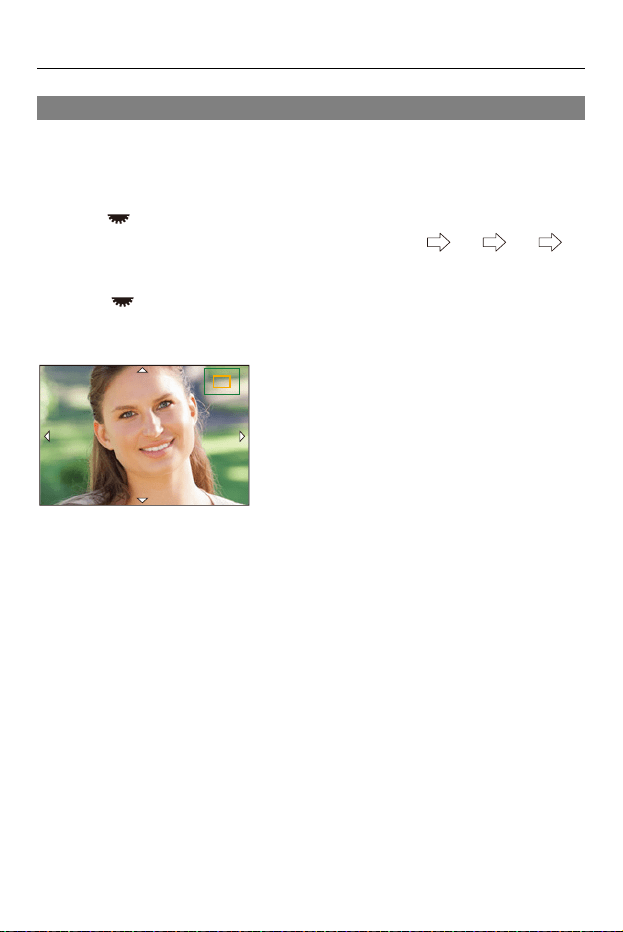
Playing Back and Editing of Images – Switching the Display Mode
611
Enlarged Display
Playback images can be displayed enlarged (Playback Zoom).
Enlarging the playback screen.
≥ Rotate to the right.
≥ The playback screen is enlarged in the order of 2× 4× 8×
16×.
•
Rotating to the left returns to the previous display size.
•
Enlarged display to 16× may not be possible with images that have a small picture
size.
2.0X2.0X2.0X
Playing Back and Editing of Images – Switching the Display Mode
612
Operations During Enlarged Display
Button
operations
Touch
operations
Description of operation
— Enlarges/reduces the screen.
—
Pinch out/
pinch in
Enlarges/reduces the screen in small steps.
3421 Drag
Moves the enlarged display position.
Positions can be moved to the diagonal
directions using the joystick.
/
—
Forwards or rewinds images while maintaining
the same zoom magnification and zoom position.
•
You can display the point focused with AF. You can enlarge the display from that
point:
([Magnify from AF Point]: 635)
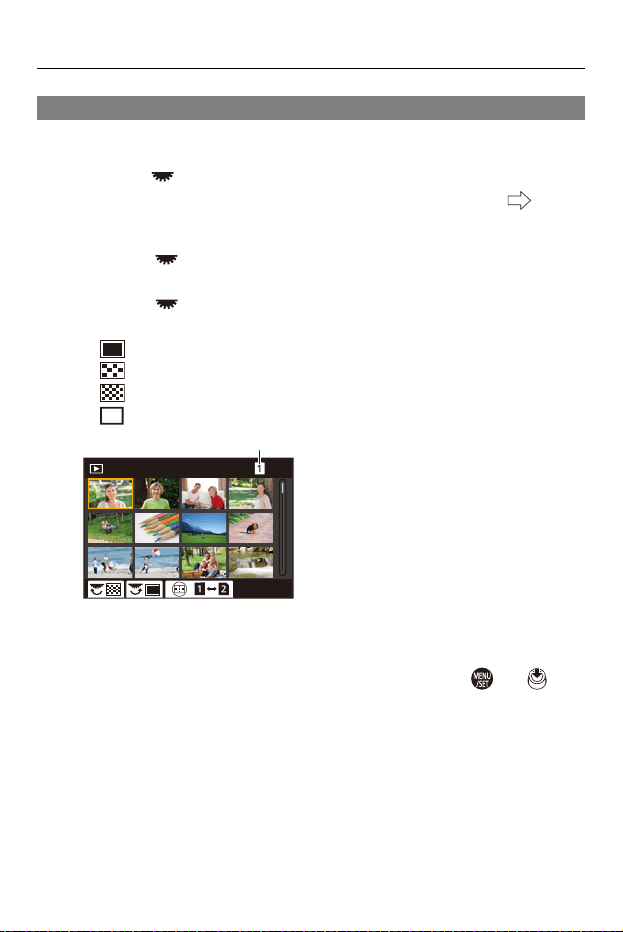
Playing Back and Editing of Images – Switching the Display Mode
613
Thumbnail Screen
1
Switch to thumbnail display.
≥Rotate to the left.
≥The display is switched in the order of 12-image screen
30-image screen.
•
Rotating to the left during 30-image screen display switches to calendar
display. (Calendar Playback: 615)
•
Rotating to the right returns to the previous display.
•
You can also switch the display by touching an icon.
[ ]: 1-image screen
[ ]: 12-image screen
[ ]: 30-image screen
[ ]: Calendar (Calendar Playback: 615)
(A) Card slot
2
Select an image.
≥Press 3421 to select an image and then press or .
CAL
(A)
1/999
Playing Back and Editing of Images – Switching the Display Mode
614
•
When you press [ ] while a thumbnail is being displayed, you can switch to
the card being displayed.
•
You can scroll the screen by dragging the thumbnail display up or down.
•
Images indicated with [ ] cannot be played back.
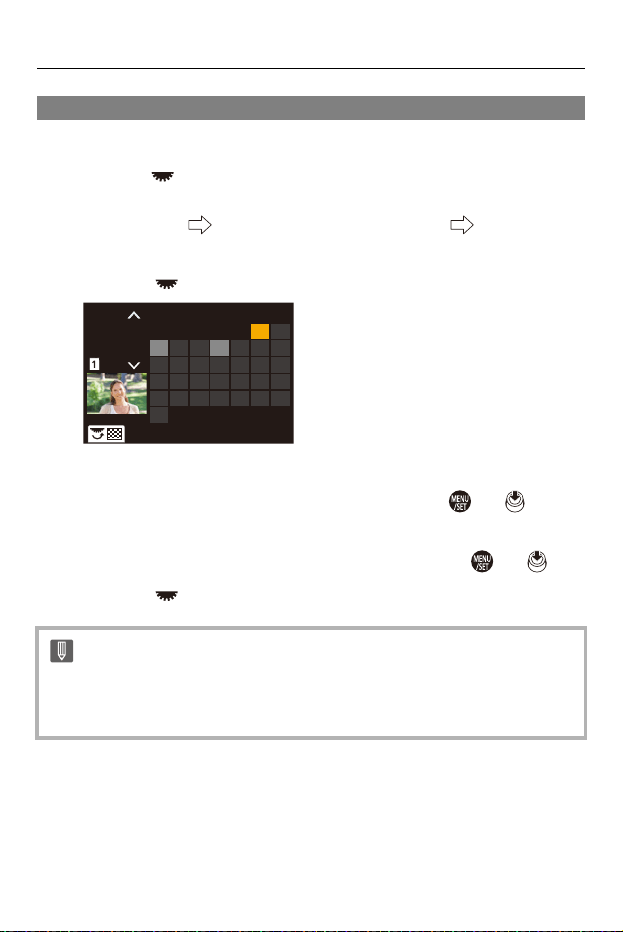
Playing Back and Editing of Images – Switching the Display Mode
615
Calendar Playback
1
Switch to calendar playback.
≥Rotate to the left.
≥The display is switched in the order of thumbnail screen
(12 images) Thumbnail screen (30 images) Calendar
playback.
•
Rotating to the right returns to the previous display.
2
Select the recording date.
≥Press 3421 to select a date and then press or .
3
Select an image.
≥Press 3421 to select an image and then press or .
•
Rotating to the left returns to calendar playback.
•
The card to display cannot be switched during calendar display.
•
The range that the calendar can be displayed is January 2000 to December
2099.
21
1
9876543
16151413121110
2322212019
26
1817
SUN SATFRITHUWEDTUEMON
2524
31
2025
12
292827 30
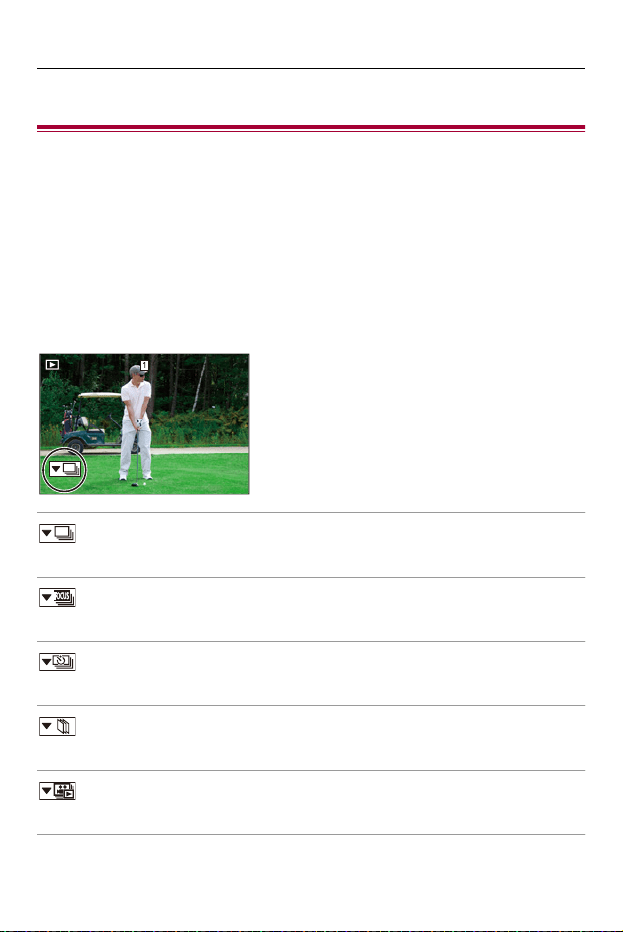
Playing Back and Editing of Images – Group Images
616
Group Images
Images recorded with Time Lapse Shot or Stop Motion Shooting are
handled as group images in the camera, and can be deleted and edited on
a group basis.
(For example, if you delete a group image, all images in the group are
deleted.)
You can also delete and edit each image in a group individually.
Images Handled as Group Images by the Camera
Group images recorded with SH burst recording.
Group images recorded with Focus Bracket.
Group images recorded with Time Lapse Shot.
Group images recorded with Stop Motion Shooting.
Group images recorded with [Segmented File Recording].
1/9991/9991/999
SLFSLFSLF

Playing Back and Editing of Images – Group Images
617
Playing and Editing the Images in a Group One by One
Operations such as displaying thumbnails and deleting images are
available with images in groups just as with normal playback.
1 Select the group image in the playback state. (Playing Back Pictures: 599)
2 Press 4 to display the images in the group.
•
You can also perform the same operation by touching the group image icon.
3 Press 21 to select an image.
•
To return to the normal playback screen, press 4 or touch [ ] again.
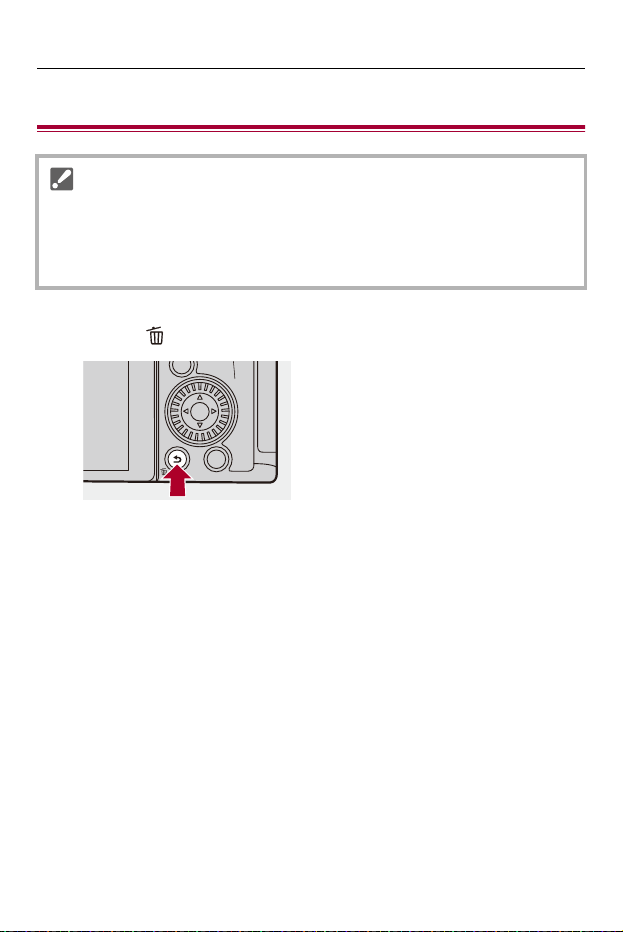
Playing Back and Editing of Images – Deleting Images
618
Deleting Images
1
Press [ ] in playback state.
•
Images cannot be restored once they have been deleted. Carefully confirm the
images before deletion.
•
You can only delete the images in the card of the selected card slot.
•
If you delete a group image, all images in the group are deleted.
Playing Back and Editing of Images – Deleting Images
619
2
Press 34 to select the deletion method and then press
or .
[Delete Single]
Deletes the selected image.
[Delete Multi]
Selecting and deleting multiple images.
1 Press 3421 to select the image to delete and then press or .
•
[ ] is displayed for the selected image.
•
If you press or again, the selection is canceled.
•
Up to 100 images can be selected.
2 Press [DISP.] to delete the selected image.
•
To switch the card selected for deleting images, press [ ] and then select the
card slot.
•
Depending on the number of images to be deleted, it may take some time to
delete them.
•
Images cannot be deleted when the following functions are being used:
– [Auto Transfer] (when there is an image queued to be transferred)
– [Send Images to Frame.io] (when there is an image in the upload queue)
•
You can set which of [Yes] and [No] is selected initially in the confirmation screen
when deleting:
([Delete Confirmation]: 644)
•
All images on the card can be deleted:
([Delete All Images]: 644)
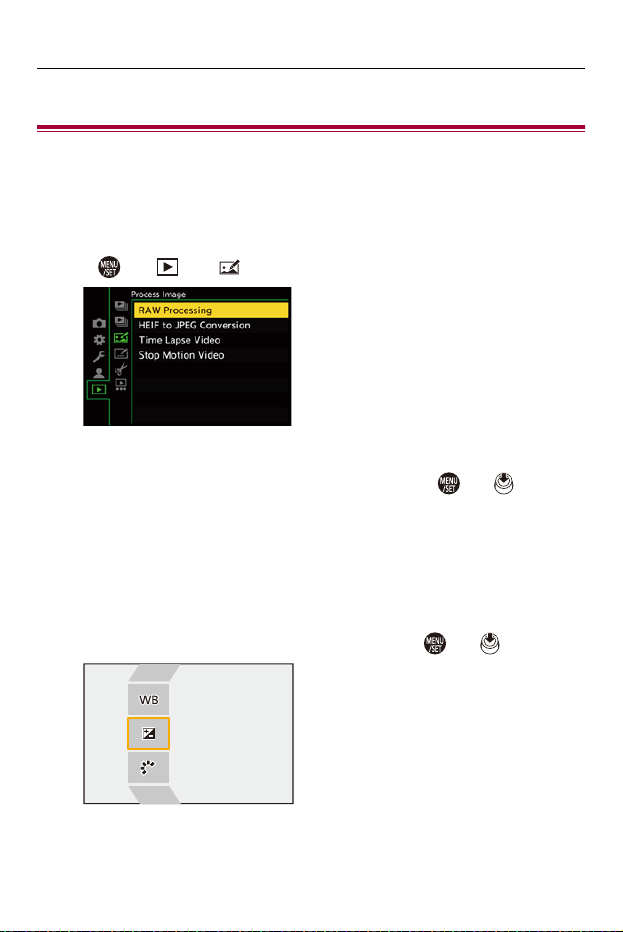
Playing Back and Editing of Images – [RAW Processing]
620
[RAW Processing]
This processes pictures taken in RAW format on the camera and saves
them in JPEG format or HEIF format.
1
Select [RAW Processing].
≥ [] [] [RAW Processing]
2
Select the RAW image.
≥Press 21 to select an image and then press or .
•
When group images are selected, press 4 and then select an image in the
group.
Press 4 again to return to the normal selection screen.
•
The settings from the time of recording are reflected in displayed images.
3
Select a setting item.
≥Press 34 to select an item and then press or .
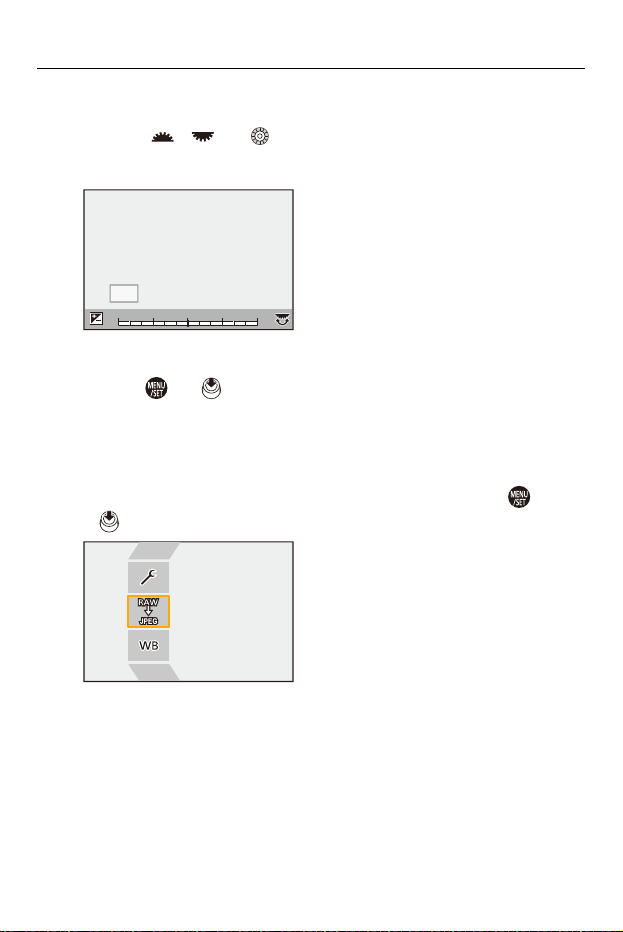
Playing Back and Editing of Images – [RAW Processing]
621
4
Change the setting.
≥Rotate , , or .
•
The image can be enlarged/reduced by pinching out/pinching in the screen.
5
Confirm the setting.
≥Press or .
≥The screen of Step
3
reappears.
To set another item, repeat Steps
3
to
5
.
6
Save the image.
≥Press 34 to select [Begin Processing] and then press or
.
+1+1 +2+2
-
2
-
2
-
1
-
100
DISP.
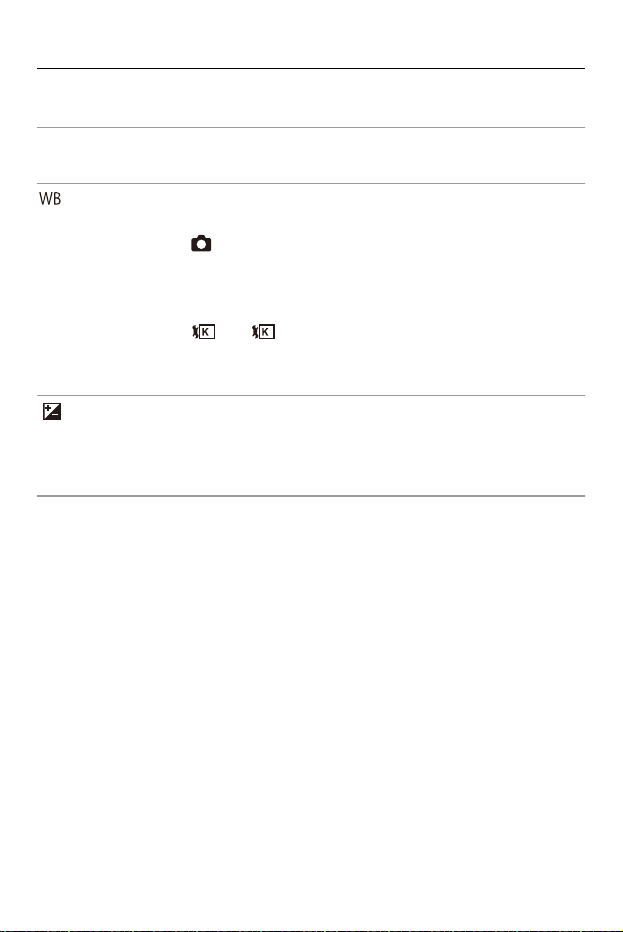
Playing Back and Editing of Images – [RAW Processing]
622
Setting Items ([RAW Processing])
[Begin Processing]
Saves the image.
[White Balance] (White Balance (WB): 365)
Selects and adjusts the white balance.
Selecting the item with [ ] enables processing with the same setting as at the time
of recording.
•
If you press 4 in the [White Balance] selection screen, the white balance adjustment
screen appears. (Adjusting the White Balance: 371)
•
If you press 3 while [ ] to [ ] is selected, the color temperature setting
screen appears. (Color Temperature Setting: 370)
•
[AI-AWB] can be set when RAW processing.
[Brightness correction]
Corrects the brightness.
•
The [Brightness correction] effect differs from the effect of exposure compensation
during recording.
1
4

Playing Back and Editing of Images – [RAW Processing]
623
[Photo Style] ([Photo Style]: 373)
Selects a Photo Style.
•
If you press [Q] while [Like709] is selected, the knee setting screen appears.
(Recording While Controlling Overexposure (Knee): 442)
•
You cannot select a Photo Style for images recorded with [V-Log]. You cannot select
[V-Log] for images not recorded with [V-Log].
•
You cannot select a Photo Style other than [Cinelike A2], [Cinelike D2] or [Cinelike
V2] for images recorded with [Cinelike A2], [Cinelike D2] or [Cinelike V2]. You cannot
select [Cinelike A2], [Cinelike D2] or [Cinelike V2] for images not recorded with
Photo Style [Cinelike A2], [Cinelike D2] or [Cinelike V2].
•
[REAL TIME LUT] cannot be selected. The Photo Styles that can be selected for
images recoded with [REAL TIME LUT] depend on the base Photo Style.
•
You can select [Standard(HLG)] and [Monochrome(HLG)] when processing RAW
images recorded with [HEIF Format] set to [HDR(HLG)] when [Switch JPEG/HEIF] is
set to [HEIF].
[i.Dynamic Range]
Selects the setting of [i.Dynamic Range].
[Contrast]
Adjusts the contrast.
[Highlight]
Adjusts the brightness of bright portions.
[Shadow]
Adjusts the brightness of dark portions.
[Saturation]/[Color Tone]
Adjusts the saturation or color tone.
[Hue]
Adjusts the hue.
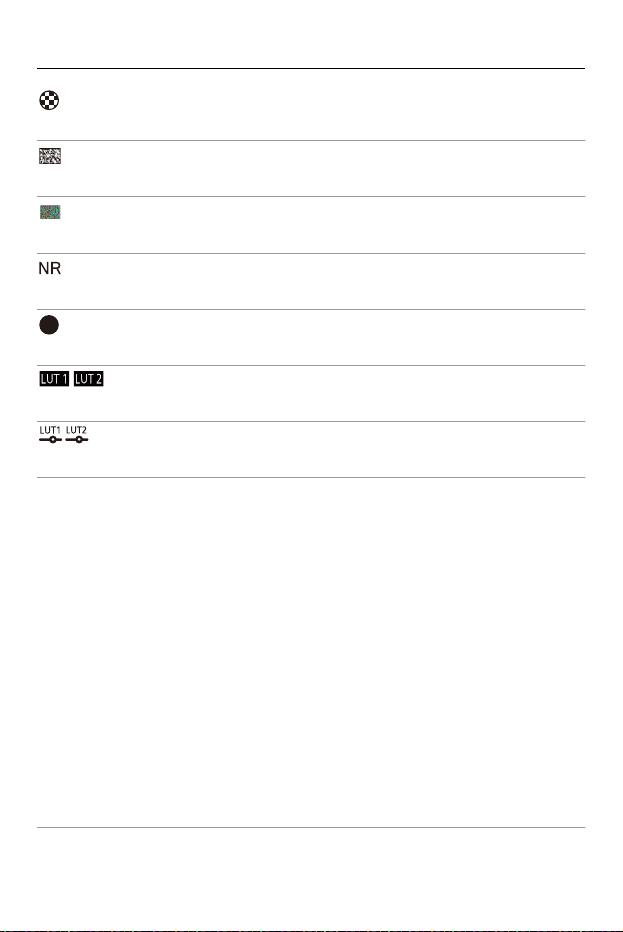
Playing Back and Editing of Images – [RAW Processing]
624
[Filter Effect]
Selects filter effects.
[Grain Effect]
Selects a grain effect setting.
[Color Noise]
Adds color to the grain effect.
[Noise Reduction]
Sets noise reduction.
[Sharpness]
Adjusts the sharpness.
[LUT]
Selects the LUT file registered in [LUT Library]. ([LUT Library]: 396)
[LUT Opacity]
Adjusts the LUT file effect.
[More Settings]
[Revert To Original]: Returns the settings to the ones from the time of recording.
[Switch JPEG/HEIF]: Sets whether to save the images in the JPEG format or the
HEIF format.
[Color Space]: Selects a Color Space setting from [sRGB] or [AdobeRGB]. ([Color
Space]: 685)
•
This is available when [Switch JPEG/HEIF] is [JPEG].
[Picture Size]: Selects the size for storing images.
[HLG View Assist (HDMI)]: Outputs via HDMI the images that have had color gamut
and brightness converted. ([HLG View Assist]: 537)
•
This can be set when processing RAW images recorded with [HEIF Format] set to
[HDR(HLG)] when [Switch JPEG/HEIF] is set to [HEIF].
[Destination Card Slot]: You can select the card slot to which to save images
processed with RAW. When [AUTO] is selected, the image is saved to the same card
slot as the RAW format image to be processed.
S
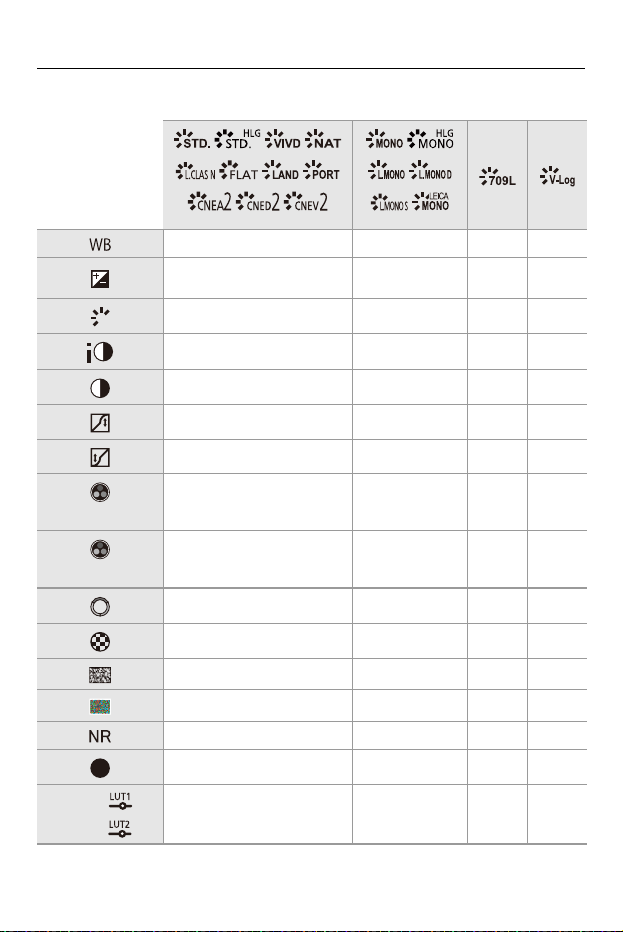
Playing Back and Editing of Images – [RAW Processing]
625
•
The items that can be adjusted depend on the selected [Photo Style].
*1
*1
([Saturation])
*2
([Color Tone])
*2
*3
*3
*2,3
LUT1/
LUT2/
S
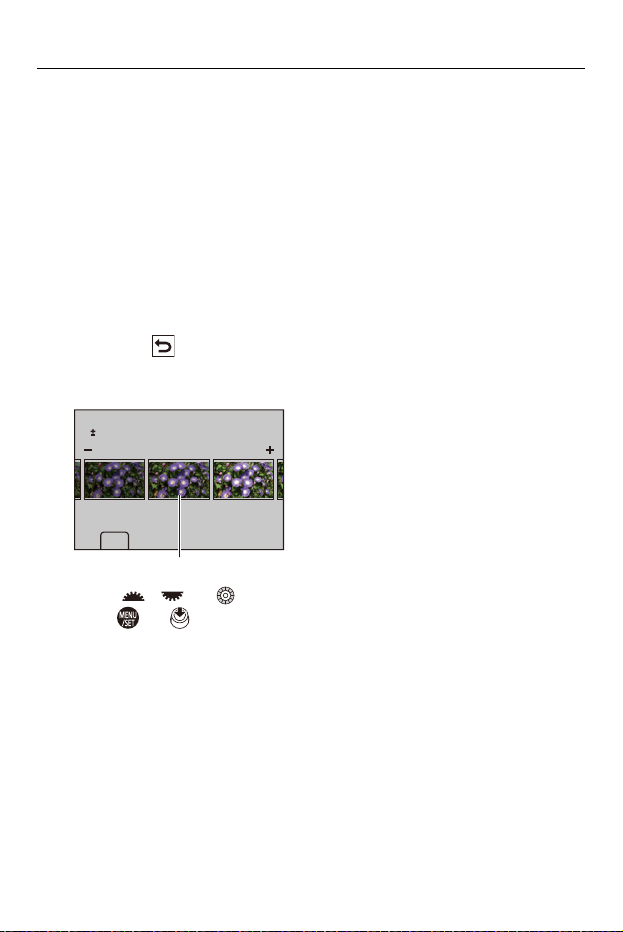
Playing Back and Editing of Images – [RAW Processing]
626
*1 Cannot be set with [Standard(HLG)] or [Monochrome(HLG)].
*2 Can be set when a LUT file is applied with [LUT1] or [LUT2].
*3 Can be set when [Grain Effect] is one of [Low], [Standard], or [High].
Displaying a Comparison Screen
You can change a setting while checking the effect by displaying images
with the applied setting value side by side.
1 Press [DISP.] in the screen of Step
4
.
•
The image with the current setting (A) is displayed at the center.
•
Touching the image with the current setting enlarges it.
Touching [ ] returns to the original display.
•
A comparison screen cannot be displayed while [Noise Reduction] or
[Sharpness] is selected.
2 Rotate , , or to change the setting.
3 Press or to confirm the setting.
DISP.
0
(A)

Playing Back and Editing of Images – [RAW Processing]
627
•
It may take a while for the comparison screen to be displayed.
•
RAW images recorded with the camera are always recorded in the [L] size of
[3:2].
(However, RAW images recorded in High Resolution mode are recorded in the
[XL] size of [3:2])
•
The [White Balance] item is fixed to the setting from the time of recording for
pictures recorded with multiple exposures.
•
With this function, images are processed with the aspect ratio and the angle of
view of [Hybrid Zoom(Photo)]/[Crop Zoom(Photo)] from the time of recording.
•
With RAW images recorded using [Hybrid Zoom(Photo)]/[Crop Zoom(Photo)],
the [Picture Size] that can be selected during processing may be different.
•
[JPEG/HEIF Picture Quality] is processed as [FINE] with this function.
•
The results of RAW processing with this function and with the “SILKYPIX
Developer Studio” software do not completely match.
•
RAW processing is not possible while you are using the following functions:
– HDMI output
– [Auto Transfer] (when there is an image queued to be transferred)
– [Send Images to Frame.io] (when there is an image in the upload queue)
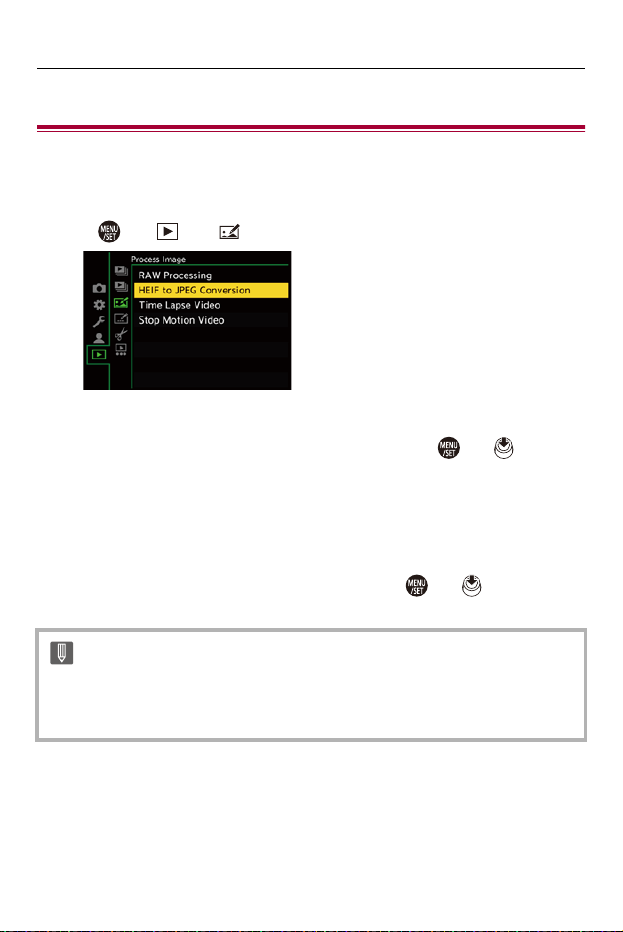
Playing Back and Editing of Images – [HEIF to JPEG Conversion]
628
[HEIF to JPEG Conversion]
Convert pictures that have been saved as HEIF images to JPEG images.
1
Select [HEIF to JPEG Conversion].
≥ [] [] [HEIF to JPEG Conversion]
2
Select the HEIF image.
≥Press 21 to select an image and then press or .
•
When group images are selected, press 4 and then select an image in the
group.
Press 4 again to return to the normal selection screen.
3
Save the image.
≥Press 21 to select [Yes] and then press or .
•
Color sampling is the following when HEIF images are converted to JPEG
images with this camera:
HEIF(4:2:0 10 bit) → JPEG(4:2:2 8 bit)
Playing Back and Editing of Images – [Video Repair]
629
[Video Repair]
When the recording of a video could not be completed normally, a video file
that cannot be played back may be generated (extension “.mdt”).
You can repair the “.mdt” file with this function to make it playable.
•
Possible causes for the generation of “.mdt” files are:
– Power turns off during video recording (battery is removed, AC cable is unplugged,
power outage while using the AC adaptor, etc.)
– Card removed during video recording
– Card removed while writing to card after video recording
– When an unexpected freeze occurs during video recording/while writing to the
card
•
Videos that can be repaired are those videos recorded with the [Rec. File
Format(Video)] being either [MOV] or [Apple ProRes].
Video recorded in [MP4] cannot be repaired.
•
As repairs can take some time, supply with power during the operation. (Using
the Camera While Supplying It with Power (Supplying Power/Charging): 54)
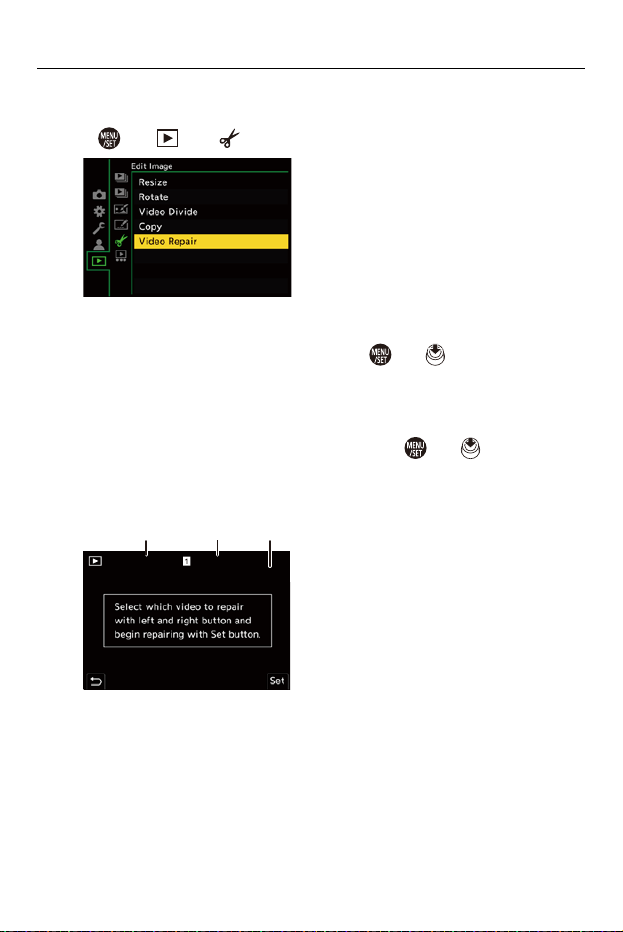
Playing Back and Editing of Images – [Video Repair]
630
1
Select [Video Repair].
≥ [] [] [Video Repair]
2
Select [Card Slot 1(CFexpress)] or [Card Slot 2(SD)].
≥Press 34 to select, and then press or .
•
Video files that can be repaired are filtered.
3
Select the video file to repair.
≥Press 21 to select a file and then press or .
•
Refer to the recording date and time (A), folder/file number (B), and video
recording time (C) to help with selecting the video file.
(B)(A) (C)
2025.12.1 10:00 100-0001 1/2
8m30s

Playing Back and Editing of Images – [Video Repair]
631
4
Select [Yes] on the confirmation screen.
•
Video repair starts. Repair takes some time.
•
The video file after repair is saved in the same folder as the file before repair.
Canceling Video Repair
Even if you cancel video repair, the file is not deleted, so the procedure can
be done over again later if required.
1 Press either or in the video repair progress screen.
2 Select [Yes] on the confirmation screen.
•
It may not be possible to repair videos with a short recording time.
•
It may not be possible to repair videos in some cases due to the state of the data.
•
Video repair cannot be started if there is very limited free space on the card.
•
Do not turn off the power or remove the card during repair.
Otherwise, the card and recorded data may be damaged.
•
Do not perform other operations during the repair.
•
You cannot repair videos recorded with devices other than this camera.
•
When the following function is being used, [Video Repair] is not available:
– [Auto Transfer] (when there is an image queued to be transferred)
Playing Back and Editing of Images – [Playback] Menu
632
[Playback] Menu
≥ How to Select an Image(s) in the [Playback] Menu: 632
≥ [Playback] ([Playback Mode]): 634
≥ [Playback] ([Process Image]): 637
≥ [Playback] ([Add/Delete Info.]): 638
≥ [Playback] ([Edit Image]): 639
≥ [Playback] ([Others]): 644
How to Select an Image(s) in the [Playback] Menu
Follow the steps below when the image selection screen is displayed.
•
Images are displayed separately by card slot.
•
You can only select images on one card at a time.
When [Single] Has Been Selected
1 Press 21 to select the image.
2 Press or .
•
If [Set/Cancel] is displayed at the right bottom of the screen, the setting is
canceled when or is pressed again.
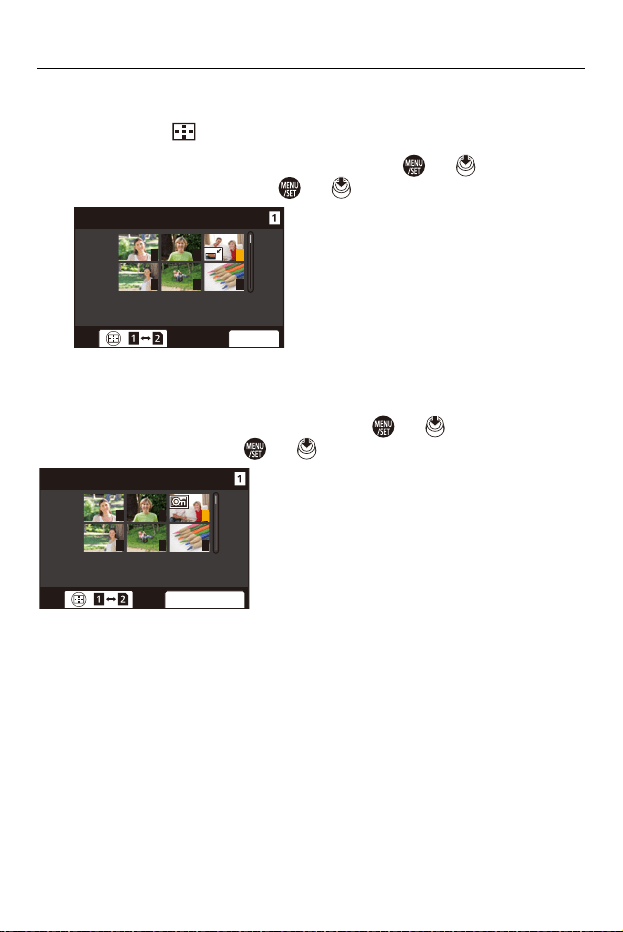
Playing Back and Editing of Images – [Playback] Menu
633
When [Multi] Has Been Selected
When you press [ ], the card that is displayed is switched.
1 Press 3421 to select the image and then press or (repeat).
•
The setting is canceled when or is pressed again.
2 Press [DISP.] to execute.
When [Protect] is selected
Press 3421 to select the image, and then press or to set (repeat).
•
The setting is canceled when or is pressed again.
321
654
OK
ュリヴヱハ
321
654
Set/Cancel
Playing Back and Editing of Images – [Playback] Menu
634
[Playback] ([Playback Mode])
[Playback Mode]
[Slide Show]
: Default settings
[Normal Play] / [Picture Only] / [Video Only] / [Rating]
Filters the type of images to play back.
•
When you have set [Rating], put a check mark in the rating level you want to
display, then press [DISP.].
[All] / [Picture Only] / [Video Only] / [Rating]
Selects image types and plays them back at regular intervals in order.
•
When you have set [Rating], put a check mark in the rating level you want to
display, then press [DISP.].
[Start]: Starts slide show playback.
[Duration]: Sets repeat playback.
[Repeat]: Sets repeat playback.
Operations during slide show
3: Plays/pauses (You can also perform the same operation by touching [ ] or
[])
2: Move to the previous image
1: Move to the next image
4: Ends the slide show
: Adjusts the volume
•
When [Video Only] is set, [Duration] is not available.

Playing Back and Editing of Images – [Playback] Menu
635
[Rotate Disp.]
[Picture Sort]
[Magnify from AF Point]
[LUT View Assist (Monitor)]
[ON] / [OFF]
Automatically displays pictures vertically if they were recorded when holding the
camera vertically.
[FILE NAME] / [DATE/TIME]
This sets the order in which the camera displays images during playback.
[FILE NAME]: Displays images by folder name/file name.
[DATE/TIME]: Displays images by recording date.
•
If you insert another card, it may take some time to read all data, therefore pictures
may not be displayed in the set order.
[ON] / [OFF]
Displays the point focused with AF.
Enlarges the AF focus location when enlarging the image.
•
The center of the image is enlarged for RAW images recorded in the High
Resolution mode or when the image is not focused.
[ON] / [OFF]
When playing back images recorded with [Photo Style] set to [V-Log], this displays
the images with LUT file applied on the monitor/viewfinder.
•
This functions in tandem with [LUT View Assist (Monitor)] in [Log View Assist] in
the [Custom] ([Monitor / Display (Video)]) menu. ([Log View Assist]: 532)
Playing Back and Editing of Images – [Playback] Menu
636
[HLG View Assist (Monitor)]
[Anamorphic Desqueeze Display]
[Behavior After Video Playback]
[MODE1] / [MODE2] / [OFF]
At recording or playback of HLG video, this converts their color gamut and
brightness for display.
•
This functions in tandem with [Monitor] in [HLG View Assist] in the [Custom]
([Monitor / Display (Video)]) menu. ([HLG View Assist]: 537)
[ ] / [ ] / [ ] / [ ] / [ ] / [OFF]
This displays the desqueezed images suited to the magnification of the anamorphic
lens on this camera.
•
This is linked with [Anamorphic Desqueeze Display] under the [Custom] ([Monitor /
Display (Video)]) menu. ([Anamorphic Desqueeze Display]: 540)
[End Playback] / [Pause At Last Frame]
Sets the operation for when playback of video finishes.
[End Playback]: Ends video playback and returns to the image selection screen.
[Pause At Last Frame]: Does not end video playback, but pauses on the final
frame. To end video playback, press 4.
Playing Back and Editing of Images – [Playback] Menu
637
[Playback] ([Process Image])
[RAW Processing]
[HEIF to JPEG Conversion]
[Time Lapse Video]
[Stop Motion Video]
This processes pictures taken in RAW format on the camera and saves them in
JPEG format or HEIF format.
([RAW Processing]: 620)
Convert pictures that have been saved as HEIF images to JPEG images.
([HEIF to JPEG Conversion]: 628)
This creates videos from group images recorded with [Time Lapse Shot].
1 Press 21 to select a [Time Lapse Shot] group and then press or .
2 Select the options for creating a video to combine the pictures into a video.
(Time Lapse Shot/Stop Motion Animation Videos: 287)
•
When [System Frequency] is set to [24.00Hz (CINEMA)], [Time Lapse Video] is
not available.
This creates videos from group images recorded with [Stop Motion Animation].
1 Press 21 to select the Stop Motion Animation group and then press or
.
2 Select the options for creating a video to combine the pictures into a video.
(Time Lapse Shot/Stop Motion Animation Videos: 287)
•
When [System Frequency] is set to [24.00Hz (CINEMA)], [Stop Motion Video] is
not available.
Playing Back and Editing of Images – [Playback] Menu
638
[Playback] ([Add/Delete Info.])
[Protect]
[Rating]
[Single] / [Multi] / [Cancel]
You can set protection for images so that they will not be deleted by mistake.
However, if you format the card, the protected images will also be deleted.
•
For information about how to select images (How to Select an Image(s) in the
[Playback] Menu: 632)
•
Be careful because the [Protect] setting may be disabled on a device other than
this camera.
[Single] / [Multi] / [Cancel]
If you set any of the five different rating levels for images, you can do the following:
•
Deleting all images except for those with ratings.
•
Use the file details view on a PC, etc., to check the rating level.
1 Select an image. (How to Select an Image(s) in the [Playback] Menu: 632)
2 Press 21 to select a rating level (1 to 5) and then press or .
•
When [Multi] is selected, repeat Steps 1 and 2.
•
To cancel the setting, set the rating level to [OFF].
Playing Back and Editing of Images – [Playback] Menu
639
[Playback] ([Edit Image])
[Resize]
: Default settings
[Single] / [Multi]
Reduce the volume of images (picture size) and save them as different images to
enable them to be easily used for web pages or sent as email attachments.
•
For information about how to select images (How to Select an Image(s) in the
[Playback] Menu: 632)
– When [Single] is selected, after choosing the image, press 34 to select the
size, then press or .
– When [Multi] is selected, before choosing the images, press 34 to select the
size, then press or .
•
You can set up to 100 images at once with [Multi].
•
The image quality of the resized image becomes lower.
•
[Resize] is not available for images recorded using the following functions:
– Video recording
– Group images
– [65:24]/[2:1] ([Aspect Ratio])
– [RAW] ([Rec. File Format(Photo)])
– Pictures created from [C4K] video
– [XS] ([Picture Size])
Playing Back and Editing of Images – [Playback] Menu
640
[Rotate]
[Video Divide]
Rotate images manually in 90o steps.
[]: Rotates 90o clockwise.
[]: Rotates 90o counter-clockwise.
•
For information about how to select images (How to Select an Image(s) in the
[Playback] Menu: 632)
•
When [Rotate Disp.] is [OFF], [Rotate] is not available.
Divide a recorded video into two.
([Video Divide]: 608)
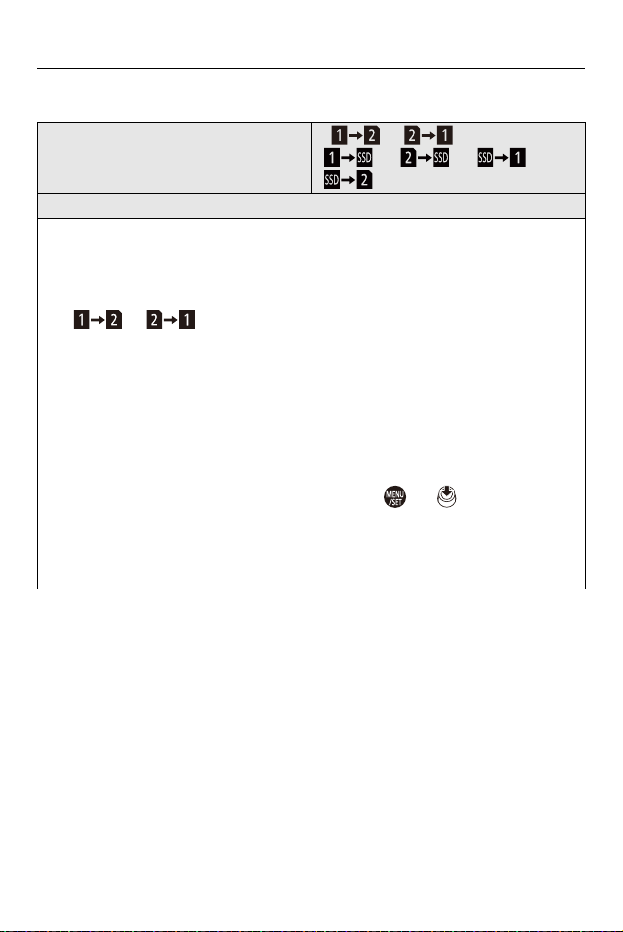
Playing Back and Editing of Images – [Playback] Menu
641
[Copy]
[Copy Direction]
[]/ []/
[]
*
/ [ ]
*
/ [ ]
*
/
[]
*
[Select Copy] / [Copy All in Folder] / [Copy All in Media]
You can copy the images in one of the cards to the other card.
When an external SSD is connected via USB, you can copy images between a card
and the SSD. (Connecting the External SSD: 592)
* Displayed when an external SSD is connected and [USB-SSD] is set to [ON].
([ ] / [ ] are not displayed)
•
Copied images will be saved in a new folder.
[Select Copy]: Copies selected images.
1 Select the folder containing the images to copy.
2 Select the images. (How to Select an Image(s) in the [Playback] Menu: 632)
[Copy All in Folder]: Copies all images in a folder.
1 Select the folder to copy.
2 Check the images to be copied and then press or to execute
copying.
[Copy All in Media]: Copies all images on the media.

Playing Back and Editing of Images – [Playback] Menu
642
Using the Fn button to copy images
If you press the Fn button with [Copy] assigned while playing back images one at a
time, the image currently being played back will be copied to the other card. (Fn
Buttons: 646)
•
Select the copy destination folder from the following options. In the case of group
images, [Create a New Folder] is selected automatically.
[Same Folder Number as Source]: Copies to a folder with the same name as the
folder of the image to be copied.
[Create a New Folder]: Creates a new folder with an incremented folder number
and then copies the image to it.
[Select Folder]: Selects a folder to store the image and then copies the image to
it.
•
You can set up to 100 images at once with [Select Copy].
•
The [Protect] setting is not copied.
•
Copying may take a while.
•
When using the following combinations of cards, video copying is not available:
– Copying from CFexpress cards to SD/SDHC memory cards

Playing Back and Editing of Images – [Playback] Menu
644
[Playback] ([Others])
[Delete Confirmation]
[Delete All Images]
: Default settings
["Yes" first] / ["No" first]
This sets which option, [Yes] or [No], will be highlighted first when the confirmation
screen for deleting an image is displayed.
["Yes" first]: [Yes] is highlighted first.
["No" first]: [No] is highlighted first.
[Card Slot 1(CFexpress)] / [Card Slot 2(SD)]
Deleting all images in a card.
•
Images cannot be restored once they have been deleted. Carefully confirm the
images before deletion.
•
If you select [Delete All Non-rating], all images except those with a rating set are
deleted.
•
[Delete All Images] can be used when [Playback Mode] is set to [Normal Play].

645
Camera Customization
This chapter describes the customization function with which you can
configure the camera to your preferred settings.
It also describes the [Custom] menu where you can make advanced
settings for the camera operations and screen displays, and the [Setup]
menu where you can make basic settings for the camera.
≥ Fn Buttons: 646
≥ [Dial Operation Switch]: 662
≥ Quick Menu Customization: 665
≥ Custom Mode: 673
≥ [Custom] Menu: 680
≥ [Setup] Menu: 723
≥ My Menu: 749
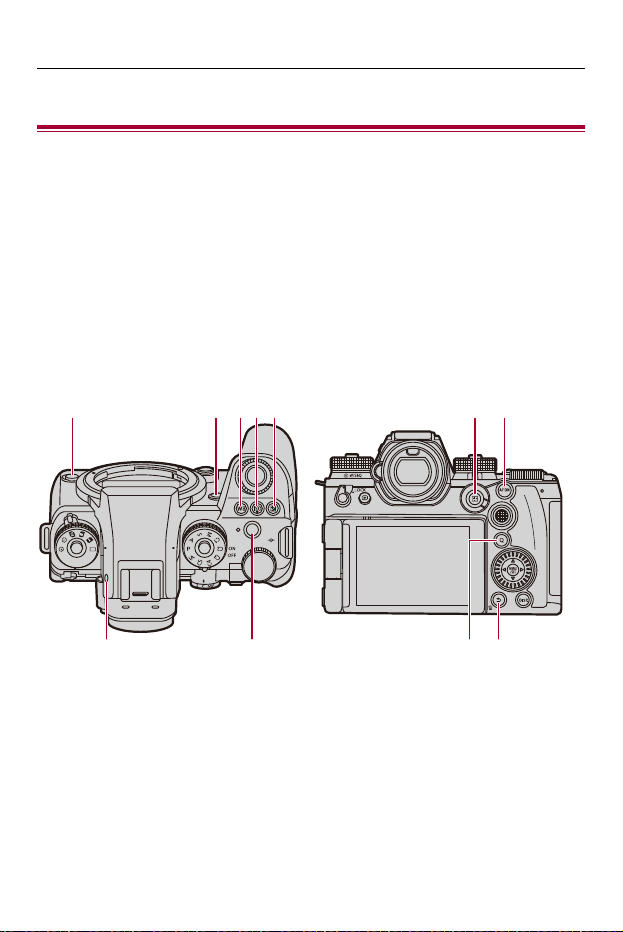
Camera Customization – Fn Buttons
646
Fn Buttons
≥ Register Functions to the Fn Buttons: 649
≥ Use the Fn Buttons: 661
You can register functions to the Fn (Function) buttons. Additionally, you
can register other functions to specialized buttons such as [WB] button, in
the same way as with the Fn buttons.
Different functions can be set for each of the photo mode, video/S&Q
mode, and for playback.
Fn Button Default Settings
(1)
(7) (11)(10)
(2) (3)(4)(5) (8) (9)
(6)
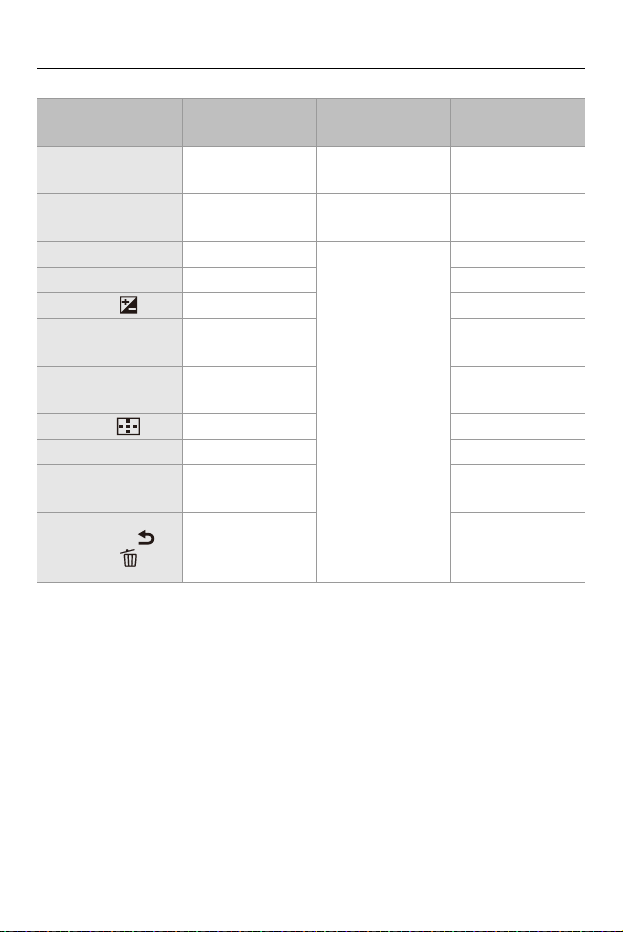
Camera Customization – Fn Buttons
647
Fn buttons
[Setting in Photo
Mode]
[Setting in Video/
S&Q Mode]
[Setting in
Playback Mode]
(1)
Sub video rec.
button
[Video Record]
[Same Setting as
Photo Mode]
[Video Record]
(2) [Fn2] [AF-Point Scope]
[Enlarged Live
Display(Video)]
[No Setting]
(3) [WB] [White Balance]
[Same Setting as
Photo Mode]
[No Setting]
(4) [ISO] [Sensitivity] [No Setting]
(5) [] [Exposure Comp.] [No Setting]
(6) [LVF]
[LVF/Monitor
Switch]
[LVF/Monitor
Switch]
(7)
Video rec.
button
[Video Record] [Video Record]
(8) [] [AF Mode] [Card Slot Change]
(9) [AF ON] [AF-ON] [Rating¿3]
(10) [Q] [Q.MENU]
[Send Image
(Smartphone)]
(11)
[Fn1]/[ ]/
[]
[Level Gauge]
•
Cannot be used
as Fn buttons
during playback.
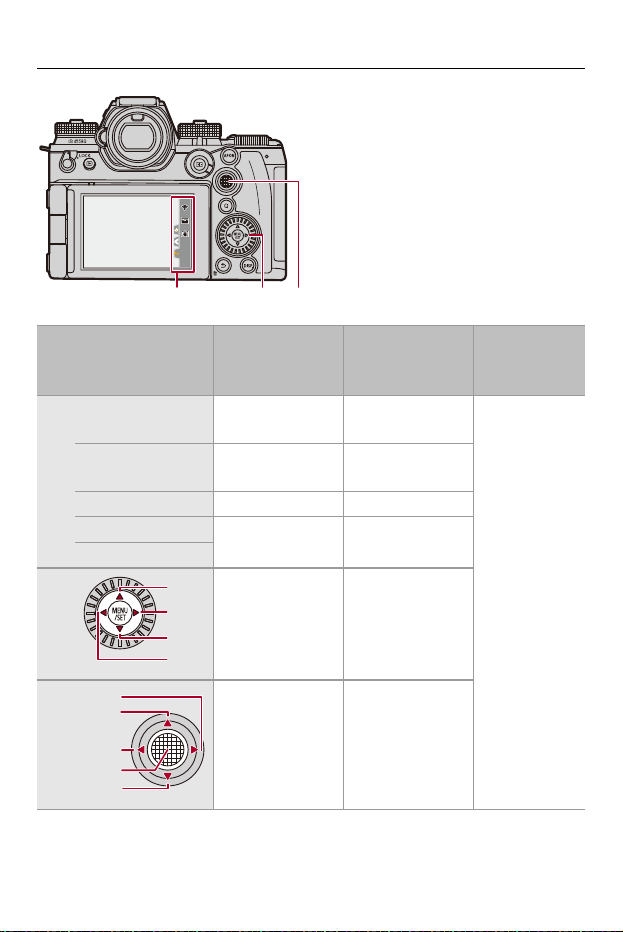
Camera Customization – Fn Buttons
648
Fn buttons
[Setting in Photo
Mode]
[Setting in Video/
S&Q Mode]
[Setting in
Playback
Mode]
(12)
[Fn3] [Wi-Fi]
[Same Setting as
Photo Mode]
•
Cannot be
used as Fn
buttons
during
playback.
[Fn4] [Histogram]
[WFM/Vector
Scope]
[Fn5] [Image Stabilizer] [Boost I.S. (Video)]
[Fn6]
[Off (Disable Press
and Hold)]
[Same Setting as
Photo Mode]
[Fn7]
(13)
[Zoom Control]
(when using [Crop
Zoom(Photo)])
[Zoom Control]
(when using [Crop
Zoom(Video)])
(14) [No Setting]
[Same Setting as
Photo Mode]
Fn4Fn4Fn4
Fn3Fn3Fn3
Fn7Fn7Fn7
OFFOFFOFF
Fn6Fn6Fn6
OFFOFFOFF
Fn5Fn5Fn5
(12) (13) (14)
Fn9
Fn8
Fn10
Fn11
Fn16
Fn15
Fn14
Fn13
Fn12
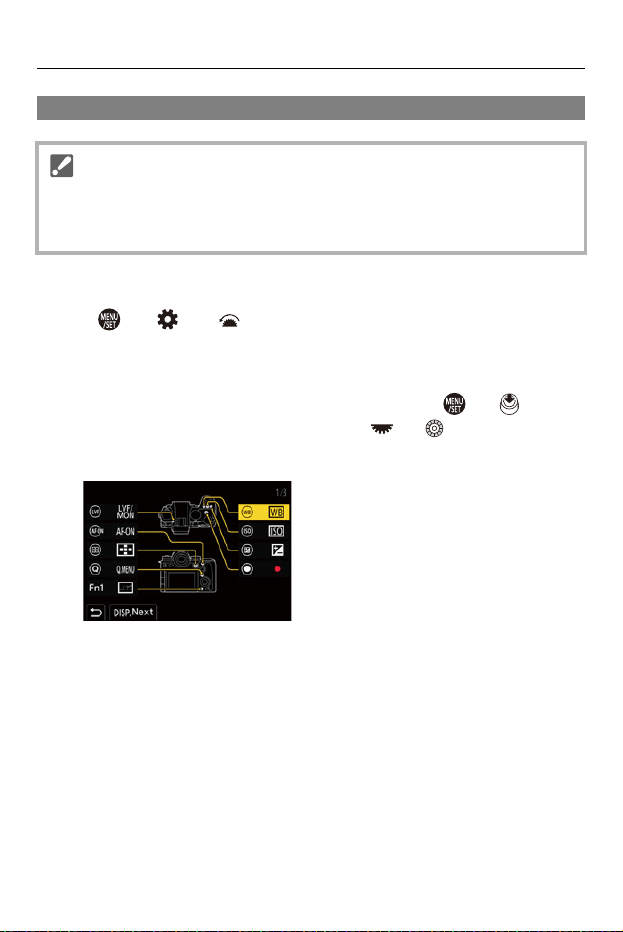
Camera Customization – Fn Buttons
649
Register Functions to the Fn Buttons
1
Select [Fn Button Set].
≥ [] [] [Fn Button Set] [Setting in Photo Mode]/
[Setting in Video/S&Q Mode]/[Setting in Playback Mode]
2
Select the button.
≥Press 34 to select the button and then press or .
≥Selection is also possible by rotating or .
•
Press [DISP.] to change the page.
•
With default settings, [Fn12] to [Fn16] on the joystick cannot be used.
When using functions, set the [Joystick Setting] in the [Custom] ([Operation])
menu to [Fn]. ([Joystick Setting]: 700)
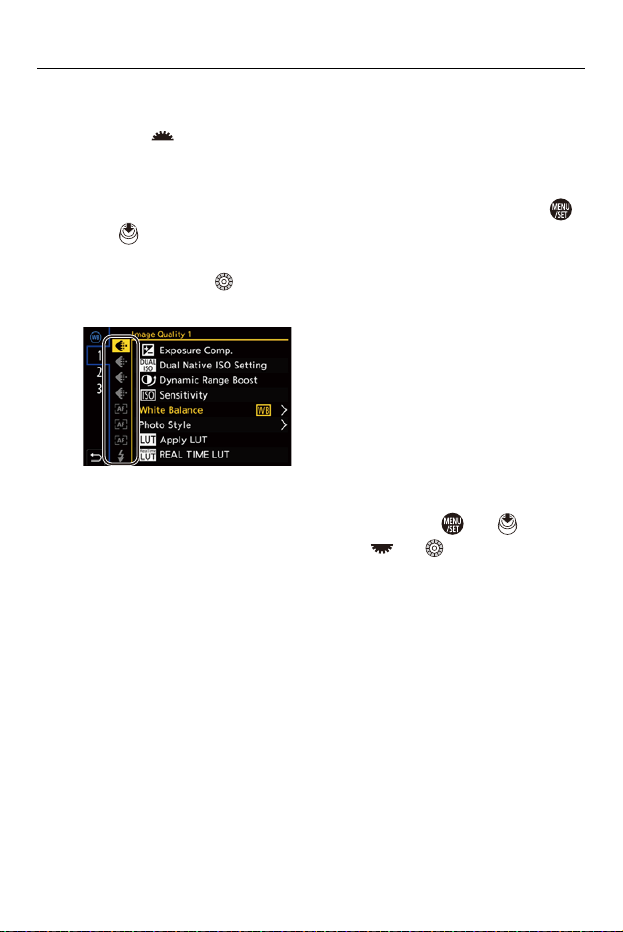
Camera Customization – Fn Buttons
650
3
Find the function to register.
≥Rotate to select the sub tab where the function to register is
categorized (Setting Items ([Fn Button Set]/[Setting in Photo
Mode]/[Setting in Video/S&Q Mode]): 652, Setting Items ([Fn
Button Set]/[Setting in Playback Mode]): 659) and then press
or .
≥You can also select by pressing 2 to select the sub tab, pressing
34 or rotating , and then pressing 1.
≥Switch the [1] to [3] tabs by pressing [Q].
4
Register the function.
≥Press 34 to select a function and then press or .
≥Selection is also possible by rotating or .
•
Select items with [>] by selecting the item again.
•
Depending on the button, some functions cannot be registered.
Camera Customization – Fn Buttons
651
•
You can also touch [ ] on the control panel (Control Panel (Photo Mode):
875) to display the screen in Step
2
.
•
You can also press and hold the Fn button (2 sec.) to display the screen in
Step
4
.
(This may not be displayed depending on the registered function and on the
button type.)
•
You can assign a function to the focus button of an interchangeable lens:
([Lens Fn Button Setting]: 719)
Fn

Camera Customization – Fn Buttons
652
Setting Items ([Fn Button Set]/[Setting in Photo Mode]/
[Setting in Video/S&Q Mode])
[1] tab
[Image Quality]
•
[Exposure Comp.] (Exposure Compensation: 348)
•
[Dual Native ISO Setting] ([Dual Native ISO Setting]: 361)
•
[Dynamic Range Boost] ([Dynamic Range Boost]: 445)
•
[Sensitivity] (ISO Sensitivity: 356)
•
[White Balance] (White Balance (WB): 365)
•
[Photo Style] ([Photo Style]: 373)
•
[Apply LUT]
– Applies the LUT file that was set in [LUT] with either [REAL TIME LUT] or [MY
PHOTO STYLE]. (Adjusting Image Quality: 379)
•
[REAL TIME LUT] ([REAL TIME LUT]: 394)
•
[Metering Mode] ([Metering Mode]: 328)
•
[Aspect Ratio] ([Aspect Ratio]: 124)
•
[Rec. File Format(Photo)] ([Rec. File Format(Photo)]: 128)
•
[Switch JPEG/HEIF] ([Switch JPEG/HEIF]: 131)
•
[JPEG/HEIF Picture Quality] ([JPEG/HEIF Picture Quality]: 133)
•
[HEIF Format] (HLG Recording (HEIF Format): 403)
•
[Picture Size] ([Picture Size]: 126)
•
[1 Shot Spot Metering]
– Records with the metering mode set to [ ] (Spot metering) once only.
([Metering Mode]: 328)
•
[Long Exposure NR] ([Long Exposure NR]: 311)
•
[Min. Shutter Speed] ([Min. Shutter Speed]: 314)
•
[1 Shot RAW+JPEG]/[1 Shot RAW+HEIF]
– Records a RAW image and a JPEG/HEIF image simultaneously once only.
([Rec. File Format(Photo)]: 128)

Camera Customization – Fn Buttons
653
•
[i.Dynamic Range] ([i.Dynamic Range]: 351)
•
[Color Shading Compensation] ([Color Shading Compensation]: 406)
•
[Filter Effect] ([Filter Settings]: 388)
•
[One Push AE]
– Adjusts the aperture value and shutter speed to the settings suited for the standard
exposure determined by the camera. (Exposure Compensation: 348)
•
[Touch AE] (Touch AE: 118)
•
[AWB Lock] ([AWB Lock Setting]: 684)
•
[Exposure Control(Photo Mode)] ([Exposure Control(Photo Mode)]: 686)
•
[Exposure Control(Video Mode)] ([Exposure Control(Video Mode)]: 686)
•
[Synchro Scan(Photo)] ([Synchro Scan(Photo)]: 312)
•
[Synchro Scan(Video)] ([Synchro Scan(Video)]: 542)
[Focus/Shutter]
•
[AF Mode] (Selecting the AF Mode: 203)
•
[AF Detection Setting] (Automatic Detection: 206)
•
[Detecting Subject] (Automatic Detection: 206)
•
[AF Custom Setting(Photo)] ([AF Custom Setting(Photo)]: 192)
•
[AF Custom Setting(Video)] ([AF Custom Setting(Video)]: 436)
•
[Focus Limiter] ([Focus Limiter]: 195)
•
[Focus Limiter Range Set] ([Focus Limiter]: 195)
•
[Focus Peaking] ([Focus Peaking]: 237)
•
[Focus Peaking Sensitivity] ([Focus Peaking]: 237)
•
[Focus Frame Moving Speed] ([Focus Frame Moving Speed]: 198)
•
[Focus Ring Lock] ([Focus Ring Lock]: 689)
•
[AE LOCK] (Locking Focus and Exposure (AF/AE Lock): 354)
•
[AF LOCK] (Locking Focus and Exposure (AF/AE Lock): 354)
•
[AF/AE LOCK] (Locking Focus and Exposure (AF/AE Lock): 354)

Camera Customization – Fn Buttons
654
•
[AF-ON] ([AF ON] button: 187)
•
[AF-ON : Near Shift]
– AF operates giving priority to close-up subjects. (Using AF: 185)
•
[AF-ON : Far Shift]
– AF operates giving priority to distant subjects. (Using AF: 185)
•
[AF-Point Scope] ([AF-Point Scope]: 190)
•
[Focus Area Set]
– Displays the AF area/MF Assist movement screens. (AF Area Operations: 223,
Operations on the MF Assist Screen: 234)
•
[Enlarged Live Display(Video)] ([Enlarged Live Display(Video)]: 437)
[Flash]
•
[Flash Mode] ([Flash Mode]: 415)
•
[Flash Adjust.] ([Flash Adjust.]: 420)
•
[Wireless Flash Setup] (Recording Using a Wireless Flash: 424)
[2] tab
[Others (Photo)]
•
[Drive Mode Setting] (Selecting the Drive Mode: 257)
•
[Bracketing] (Bracket Recording: 293)
•
[Silent Mode] ([Silent Mode]: 305)
•
[Image Stabilizer] ([Operation Mode]: 321)
•
[Shutter Type] ([Shutter Type]: 307)
•
[Hybrid Zoom(Photo)] ([Hybrid Zoom(Photo)]: 244)
•
[Crop Zoom]
– Can be set for [Crop Zoom(Photo)], [Zoom Control], [Zoom In(Tele)], [Zoom
Out(Wide)], [Crop Zoom Increment(Step)], and [Zoom Speed(Photo)]. ([Crop
Zoom(Photo)]: 240)
•
[Live View Composite] ([Live View Composite]: 301)

Camera Customization – Fn Buttons
655
[Image Format]
•
[Rec. File Format(Video)] ([Rec. File Format(Video)]: 148)
•
[Rec Quality] ([Rec Quality]: 150)
•
[Rec Quality (My List)] (Setting or deleting in My List: 171)
•
[Proxy Recording] (Proxy Recording: 175)
•
[Slow & Quick Setting] (Slow & Quick Video: 499)
•
[Time Code Display] (Time Code: 470)
[Audio]
•
[Audio Information] ([Audio Information]: 455)
•
[Sound Rec Level Disp.] ([Sound Rec Level Disp.]: 447)
•
[Mute Sound Input] ([Mute Sound Input]: 448)
•
[Sound Rec Level Adj.] ([Sound Rec Level Adj.]: 450)
•
[Sound Rec Quality] ([Sound Rec Quality]: 451)
•
[Sound Rec Level Limiter] ([Sound Rec Level Limiter]: 453)
•
[4ch Audio Recording] ([4ch Audio Recording]: 464)
•
[XLR Mic Adaptor Setting] (XLR Microphone Adaptor (Optional): 461)
•
[Sound Monitoring Channel] ([Sound Monitoring Channel]: 468)
[Others (Video)]
•
[Image Stabilizer] ([Operation Mode]: 321)
•
[E-Stabilization (Video)] ([E-Stabilization (Video)]: 322)
•
[Boost I.S. (Video)] ([Boost I.S. (Video)]: 320)
•
[Image Area of Video] ([Image Area of Video]: 180)
•
[Hybrid Zoom(Video)] ([Hybrid Zoom(Video)]: 252)
•
[Crop Zoom]
– Can be set for [Crop Zoom(Video)], [Zoom Control], [Zoom In(Tele)], [Zoom
Out(Wide)], [Crop Zoom Increment(Step)], and [Zoom Speed(Video)]. ([Crop
Zoom(Video)]: 247)
•
[Focus Transition] ([Focus Transition]: 517)
•
[Live Cropping] ([Live Cropping]: 522)
•
[Live Cropping Settings] ([Live Cropping]: 522)

Camera Customization – Fn Buttons
656
[Operation]
•
[Q.MENU] (Quick Menu: 97)
•
[Rec / Playback Switch]
– Switches to the playback screen. (Playing Back Pictures: 599, Playing Back
Videos: 601)
•
[Video Record] (Basic Video Operations: 135)
•
[LVF/Monitor Switch] (Switching Between the Monitor and Viewfinder: 91)
•
[Dial Operation Switch] (Temporarily Change Dial Operation: 664)
[Monitor / Display]
•
[Preview] (Preview Mode: 346)
•
[Preview Aperture Effect]
– The aperture effect can be previewed while the Fn button is being pressed.
(Preview Mode: 346)
•
[Constant Preview] ([Constant Preview]: 701)
•
[Level Gauge] ([Level Gauge]: 710)
•
[Histogram] ([Histogram]: 702)
•
[Luminance Spot Meter] ([Luminance Spot Meter]: 488)
•
[Frame Marker] ([Frame Marker]: 494)
•
[Photo Grid Line] ([Photo Grid Line]: 703)

Camera Customization – Fn Buttons
657
[3] tab
[Monitor / Display]
•
[Live View Boost] ([Live View Boost]: 703)
•
[Monochrome Live View] ([Monochrome Live View]: 713)
•
[Night Mode] ([Night Mode]: 704)
•
[LVF/Monitor Disp. Set]
– Switches the displayed monitor or viewfinder display style. ([LVF/Monitor Disp.
Set]: 705)
•
[Image Flip(Monitor)]
– You can make a setting that flips the monitor screen. ([Horizontal Image
Flip(Monitor)]: 706, [Vertical Image Flip(Monitor)]: 706)
•
[Zebra Pattern] ([Zebra Pattern]: 490)
•
[LUT View Assist (Monitor)] ([LUT View Assist (Monitor)]: 532)
•
[LUT View Assist (HDMI)] ([LUT View Assist (HDMI)]: 532)
•
[LUT Select(LUT View Assist)] ([Log View Assist]: 532)
•
[HLG View Assist (Monitor)] ([HLG View Assist]: 537)
•
[HLG View Assist (HDMI)] ([HLG View Assist]: 537)
•
[Sheer Overlay] ([Sheer Overlay]: 708)
•
[I.S. Status Scope] ([I.S. Status Scope]: 709)
•
[False Color] ([False Color]: 492)
•
[WFM/Vector Scope] ([WFM/Vector Scope]: 484)
•
[Anamorphic Desqueeze Display] ([Anamorphic Desqueeze Display]: 540)
•
[Color Bars] (Color Bars/Test Tone: 496)

Camera Customization – Fn Buttons
658
[Lens / Others]
•
[Focus Ring Control] ([Focus Ring Control]: 721)
•
[AF Micro Adjustment] ([AF Micro Adjustment]: 199)
•
[Lens Information] ([Lens Information]: 325)
[Card/File]
•
[Destination Card Slot]
– Changes the priority of cards for recording. This can be used if [Double Card Slot
Function] ([Double Card Slot Function]: 725) is set to [Relay Rec].
[IN/OUT]
•
[Streaming] (Streaming Function: 815)
•
[Wi-Fi] (Wi-Fi / Bluetooth: 767)
•
[Fan Mode] ([Fan Mode]: 717)
[Setting]
•
[Save to Custom Mode] (Registering Instant Customization: 675)
[Others]
•
[No Setting]
– Set when not using as an Fn button.
•
[Off (Disable Press and Hold)]
– The button does not work as an Fn button. The function registering screen is not
displayed when you press and hold (2 seconds) the Fn button.
•
[Same Setting as Photo Mode]
– Linked to the menus set in [Setting in Photo Mode]. (Only in [Setting in Video/S&Q
Mode])
•
[Restore to Default]
– Restore the default settings for the Fn button. (Fn Button Default Settings: 646)

Camera Customization – Fn Buttons
659
Setting Items ([Fn Button Set]/[Setting in Playback Mode])
[1] tab
[Playback Mode]
•
[Magnify from AF Point] ([Magnify from AF Point]: 635)
•
[LUT View Assist (Monitor)] ([LUT View Assist (Monitor)]: 635)
•
[HLG View Assist (Monitor)] ([HLG View Assist (Monitor)]: 636)
•
[Anamorphic Desqueeze Display] ([Anamorphic Desqueeze Display]: 540)
[Process Image]
•
[RAW Processing] ([RAW Processing]: 620)
•
[HEIF to JPEG Conversion] ([HEIF to JPEG Conversion]: 628)
[Add/Delete Info.]
•
[Delete Single] (Deleting Images: 618)
•
[Protect] ([Protect]: 638)
•
[Rating¿1] ([Rating]: 638)
•
[Rating¿2] ([Rating]: 638)
•
[Rating¿3] ([Rating]: 638)
•
[Rating¿4] ([Rating]: 638)
•
[Rating¿5] ([Rating]: 638)
[Edit Image]
•
[Copy] ([Copy]: 641)
[Operation]
•
[Rec / Playback Switch]
– Switches to the recording screen. (Basic Picture Operations: 121, Basic Video
Operations: 135)
•
[LVF/Monitor Switch] (Switching Between the Monitor and Viewfinder: 91)
•
[Video Record] (Basic Video Operations: 135)

Camera Customization – Fn Buttons
660
[Monitor / Display]
•
[Night Mode] ([Night Mode]: 704)
[Card/File]
•
[Card Slot Change] (Switching the Card to Display: 600)
[IN/OUT]
•
[Sound Monitoring Channel(Play)] ([Sound Monitoring Channel(Play)]: 736)
•
[Wi-Fi] (Wi-Fi / Bluetooth: 767)
•
[Fan Mode] ([Fan Mode]: 717)
•
[Send Image (Smartphone)] (Sending Images on the Camera to a Smartphone
with Simple Operations: 781)
•
[Send Images to Frame.io] ([Send Images to Frame.io]: 803)
•
[LUT View Assist (HDMI)] ([Log View Assist]: 532)
•
[HLG View Assist (HDMI)] ([HLG View Assist]: 537)
[2] tab
[Others]
•
[No Setting]
– Set when not using as an Fn button.
•
[Off (Disable Press and Hold)]
– The button does not work as an Fn button. The function registering screen is not
displayed when you press and hold (2 seconds) the Fn button.
•
[Restore to Default]
– Restore the default settings for the Fn button. (Fn Button Default Settings: 646)
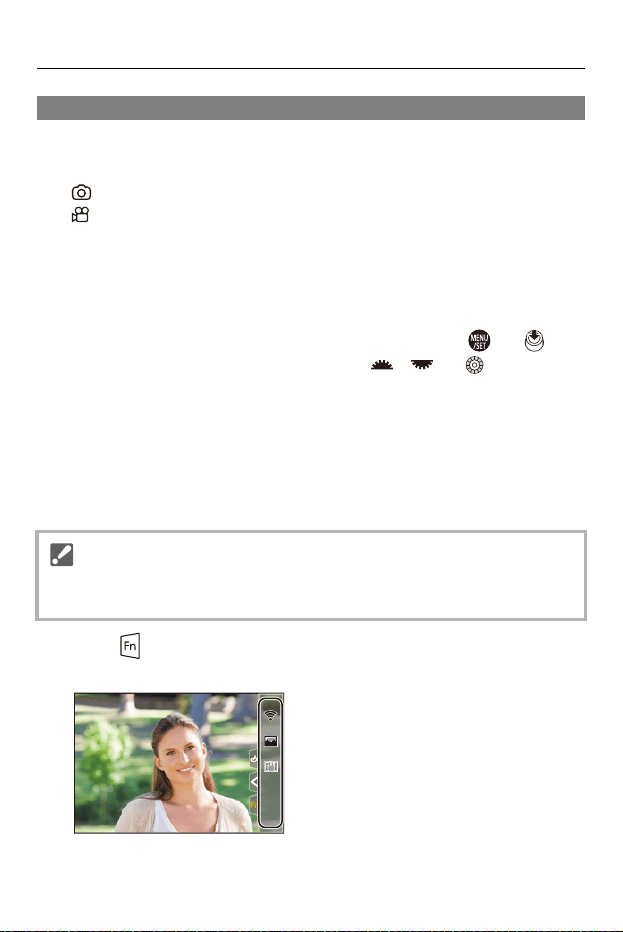
Camera Customization – Fn Buttons
661
Use the Fn Buttons
You can use the functions assigned with each of the settings when you
press the Fn buttons.
•
In [ ] mode: Functions assigned in [Setting in Photo Mode]
•
In [ ]/[S&Q] mode: Functions assigned in [Setting in Video/S&Q Mode]
•
During playback: Functions assigned in [Setting in Playback Mode]
1
Press the Fn button.
2
Select a setting item.
≥Press 21 to select a setting item and then press or .
≥Selection is also possible by rotating , or .
•
Display and selection methods of a setting item differ depending on the menu
item.
Use [Fn3] to [Fn7] (Touch Icons)
During recording, you can use the Fn buttons within the Touch Tab.
1 Touch [ ].
2 Touch one of [Fn3] to [Fn7].
•
With the default settings, the Touch Tab is not displayed. Set [Touch Tab] to [ON]
in [Touch Settings] in the [Custom] ([Operation]) menu. ([Touch Settings]: 694)
Fn4Fn4Fn4
Fn3Fn3Fn3
Fn7Fn7Fn7
OFFOFFOFF
Fn6Fn6Fn6
OFFOFFOFF
Fn5Fn5Fn5
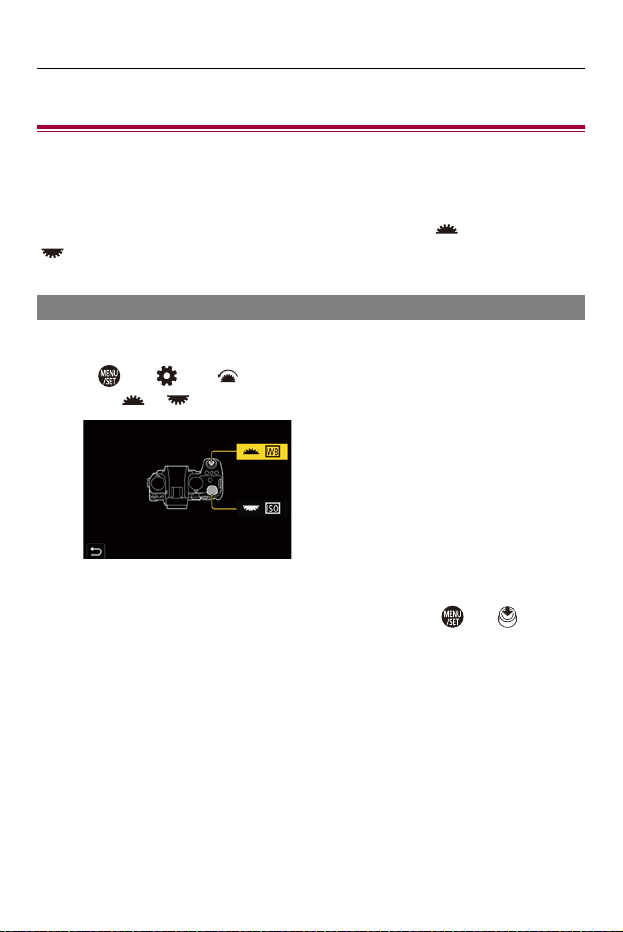
Camera Customization – [Dial Operation Switch]
662
[Dial Operation Switch]
≥ Register Functions to the Dials: 662
≥ Temporarily Change Dial Operation: 664
This temporarily changes the functions operated with (front dial) and
(rear dial).
Register Functions to the Dials
1
Select [Dial Operation Switch Setup].
≥ [] [] [Dial Set.] [Dial Operation Switch Setup]
[ ]/[ ]
2
Register the function.
≥Press 34 to select a function and then press or .

Camera Customization – [Dial Operation Switch]
663
Functions That Can Be Registered
•
[Exposure Comp.] (Exposure Compensation: 348)
•
[Sensitivity]
*1
(ISO Sensitivity: 356)
•
[White Balance]
*2
(White Balance (WB): 365)
•
[Photo Style] ([Photo Style]: 373)
•
[Aspect Ratio] ([Aspect Ratio]: 124)
•
[i.Dynamic Range] ([i.Dynamic Range]: 351)
•
[Filter Effect] ([Filter Settings]: 388)
•
[AF Mode] (Selecting the AF Mode: 203)
•
[Flash Mode] ([Flash Mode]: 415)
•
[Flash Adjust.] ([Flash Adjust.]: 420)
*1 default setting
*2 default setting
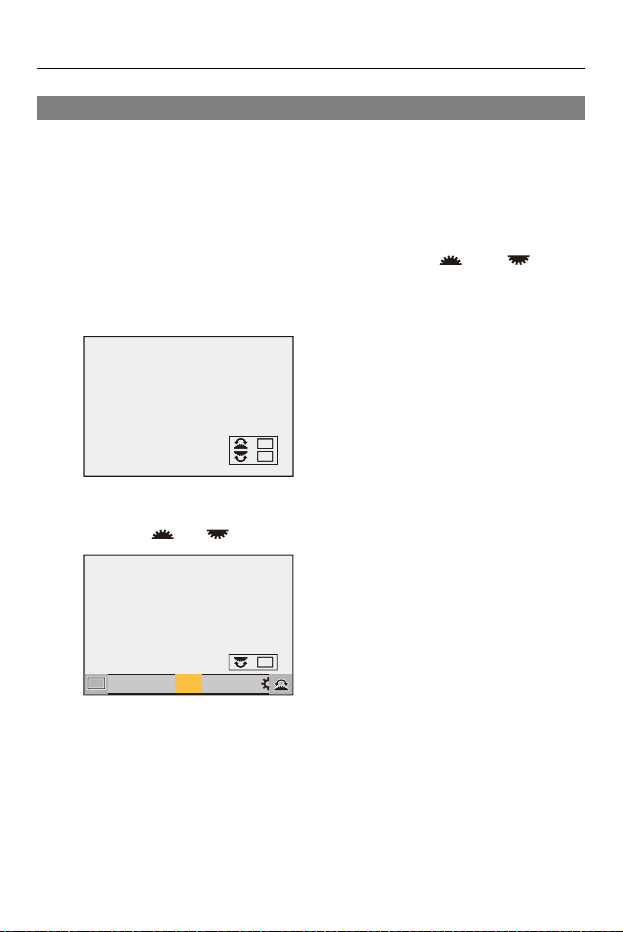
Camera Customization – [Dial Operation Switch]
664
Temporarily Change Dial Operation
1
Set [Dial Operation Switch] to the Fn button.
(Fn Buttons: 646)
2
Switch dial operation.
≥Press the Fn button set in Step
1
.
≥A guide will display the functions registered to and .
•
If no operations are performed, then several seconds later, the guide
disappears.
3
Set the registered function.
≥Rotate or while the guide is displayed.
4
Confirm your selection.
≥Press the shutter button halfway.
ISOISOISOISO
WBWBWBWB
AWBc
AWBc
AWBw
AWBw
WB
WBWBWB
WBWBWBWBWBWBWB
AWB
AWB
ISOISOISOISO
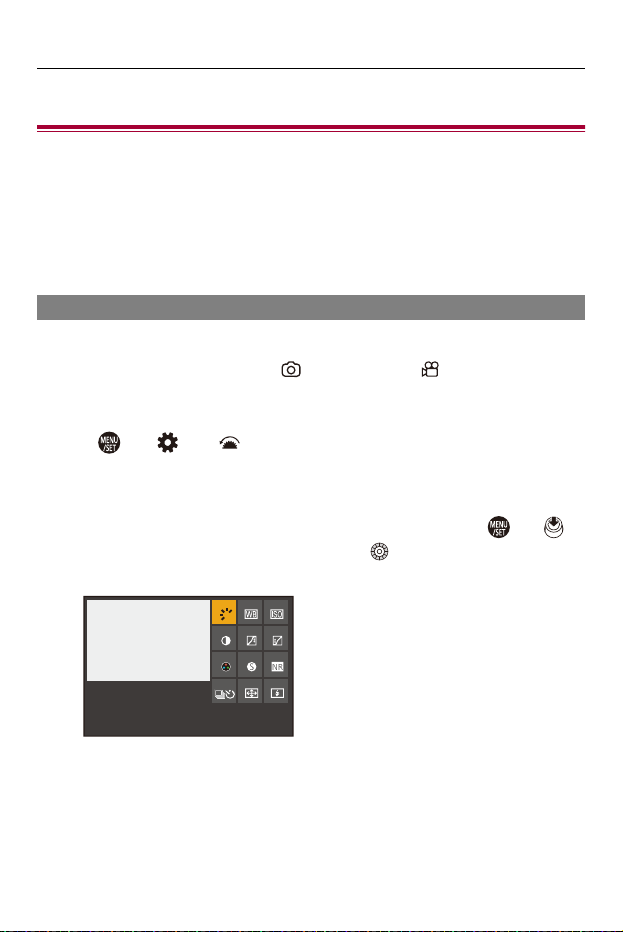
Camera Customization – Quick Menu Customization
665
Quick Menu Customization
≥ Register to the Quick Menu: 665
You can change the items to display on the Quick menu and their order to
suit your preferences.
For information about Quick menu operation methods (Quick Menu: 97)
Register to the Quick Menu
Change the menus to be displayed in the Quick menu.
These can be set separately for [ ] mode and for [ ]/[S&Q] mode.
1
Select [Q.MENU Settings].
≥ [] [] [Q.MENU Settings] [Item Customize
(Photo Mode)]/[Item Customize (Video/S&Q Mode)]
2
Select the item position (1 to 12).
≥Press 3421 to select the position and then press or .
≥Selection is also possible by rotating .
≥Directions on the diagonal can also be selected using the joystick.
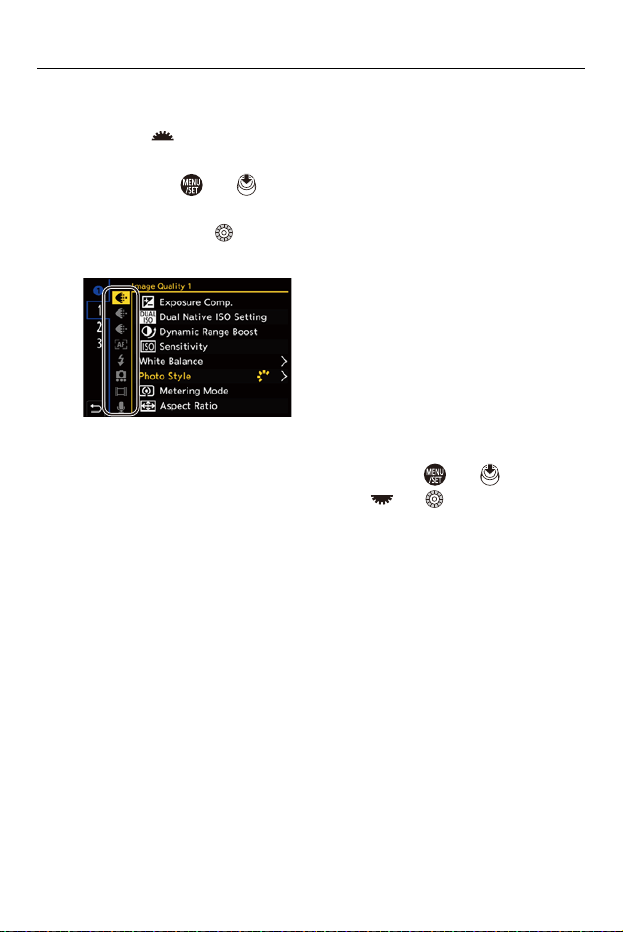
Camera Customization – Quick Menu Customization
666
3
Find the function to register.
≥Rotate to select the sub tab where the function to register is
categorized (Menu Items That Can Be Registered: 667) and
then press or .
≥You can also select by pressing 2 to select the sub tab, pressing
34 or rotating , and then pressing 1.
≥Switch the [1] to [3] tabs by pressing [Q].
4
Register menu items.
≥Press 34 to select an item and then press or .
≥Selection is also possible by rotating or .
•
Select items with [>] by selecting the item again.

Camera Customization – Quick Menu Customization
667
Menu Items That Can Be Registered
[1] tab
[Image Quality]
•
[Exposure Comp.] (Exposure Compensation: 348)
•
[Dual Native ISO Setting] ([Dual Native ISO Setting]: 361)
•
[Dynamic Range Boost] ([Dynamic Range Boost]: 445)
•
[Sensitivity] (ISO Sensitivity: 356)
•
[White Balance] (White Balance (WB): 365)
•
[Photo Style] ([Photo Style]: 373)
•
[Metering Mode] ([Metering Mode]: 328)
•
[Aspect Ratio] ([Aspect Ratio]: 124)
•
[Rec. File Format(Photo)] ([Rec. File Format(Photo)]: 128)
•
[Switch JPEG/HEIF] ([Switch JPEG/HEIF]: 131)
•
[JPEG/HEIF Picture Quality] ([JPEG/HEIF Picture Quality]: 133)
•
[HEIF Format] (HLG Recording (HEIF Format): 403)
•
[Picture Size] ([Picture Size]: 126)
•
[Long Exposure NR] ([Long Exposure NR]: 311)
•
[Min. Shutter Speed] ([Min. Shutter Speed]: 314)
•
[i.Dynamic Range] ([i.Dynamic Range]: 351)
•
[Color Shading Compensation] ([Color Shading Compensation]: 406)
•
[Filter Effect] ([Filter Settings]: 388)
•
[Exposure Control(Photo Mode)] ([Exposure Control(Photo Mode)]: 686)
•
[Exposure Control(Video Mode)] ([Exposure Control(Video Mode)]: 686)
•
[Synchro Scan(Photo)] ([Synchro Scan(Photo)]: 312)
•
[Synchro Scan(Video)] ([Synchro Scan(Video)]: 542)

Camera Customization – Quick Menu Customization
668
[Focus/Shutter]
•
[AF Mode] (Selecting the AF Mode: 203)
•
[AF Detection Setting] (Automatic Detection: 206)
•
[Detecting Subject] (Automatic Detection: 206)
•
[AF Custom Setting(Photo)] ([AF Custom Setting(Photo)]: 192)
•
[AF Custom Setting(Video)] ([AF Custom Setting(Video)]: 436)
•
[Focus Peaking] ([Focus Peaking]: 237)
•
[Focus Peaking Sensitivity] ([Focus Peaking]: 237)
•
[Focus Frame Moving Speed] ([Focus Frame Moving Speed]: 198)
[Flash]
•
[Flash Mode] ([Flash Mode]: 415)
•
[Flash Adjust.] ([Flash Adjust.]: 420)
•
[Wireless Flash Setup] (Recording Using a Wireless Flash: 424)
[Others (Photo)]
•
[Drive Mode Setting] (Selecting the Drive Mode: 257)
•
[Bracketing] (Bracket Recording: 293)
•
[Silent Mode] ([Silent Mode]: 305)
•
[Image Stabilizer] ([Operation Mode]: 321)
•
[Shutter Type] ([Shutter Type]: 307)
•
[Hybrid Zoom(Photo)] ([Hybrid Zoom(Photo)]: 244)
•
[Crop Zoom(Photo)] ([Crop Zoom(Photo)]: 240)
•
[Zoom Speed(Photo)] ([Zoom Speed(Photo)]: 241)

Camera Customization – Quick Menu Customization
669
[Image Format]
•
[Rec. File Format(Video)] ([Rec. File Format(Video)]: 148)
•
[Rec Quality] ([Rec Quality]: 150)
•
[Rec Quality (My List)] ([add to list]: 171)
•
[Proxy Recording] (Proxy Recording: 175)
•
[Slow & Quick Setting] (Slow & Quick Video: 499)
•
[Time Code Display] (Time Code: 470)
[Audio]
•
[Audio Information] ([Audio Information]: 455)
•
[Sound Rec Level Disp.] ([Sound Rec Level Disp.]: 447)
•
[Sound Rec Level Adj.] ([Sound Rec Level Adj.]: 450)
•
[Sound Rec Quality] ([Sound Rec Quality]: 451)
•
[Sound Rec Level Limiter] ([Sound Rec Level Limiter]: 453)
•
[4ch Audio Recording] ([4ch Audio Recording]: 464)
•
[XLR Mic Adaptor Setting] (XLR Microphone Adaptor (Optional): 461)
•
[Sound Monitoring Channel] ([Sound Monitoring Channel]: 468)

Camera Customization – Quick Menu Customization
670
[2] tab
[Others (Video)]
•
[Image Stabilizer] ([Operation Mode]: 321)
•
[E-Stabilization (Video)] ([E-Stabilization (Video)]: 322)
•
[Boost I.S. (Video)] ([Boost I.S. (Video)]: 320)
•
[Image Area of Video] ([Image Area of Video]: 180)
•
[Hybrid Zoom(Video)] ([Hybrid Zoom(Video)]: 252)
•
[Crop Zoom(Video)] ([Crop Zoom(Video)]: 247)
•
[Zoom Speed(Video)] ([Zoom Speed(Video)]: 248)
•
[Focus Transition] ([Focus Transition]: 517)
•
[Live Cropping] ([Live Cropping]: 522)
•
[Live Cropping Settings] ([Live Cropping]: 522)
[Monitor / Display]
•
[Constant Preview] ([Constant Preview]: 701)
•
[Level Gauge] ([Level Gauge]: 710)
•
[Histogram] ([Histogram]: 702)
•
[Luminance Spot Meter] ([Luminance Spot Meter]: 488)
•
[Frame Marker] ([Frame Marker]: 494)
•
[Photo Grid Line] ([Photo Grid Line]: 703)
•
[Live View Boost] ([Live View Boost]: 703)
•
[Monochrome Live View] ([Monochrome Live View]: 713)
•
[Night Mode] ([Night Mode]: 704)
•
[LVF/Monitor Disp. Set] ([LVF/Monitor Disp. Set]: 705)
•
[Zebra Pattern] ([Zebra Pattern]: 490)
•
[LUT View Assist (Monitor)] ([LUT View Assist (Monitor)]: 532)
•
[LUT View Assist (HDMI)] ([LUT View Assist (HDMI)]: 532)
•
[HLG View Assist (Monitor)] ([HLG View Assist]: 537)
•
[HLG View Assist (HDMI)] ([HLG View Assist]: 537)
Camera Customization – Quick Menu Customization
671
•
[Sheer Overlay] ([Sheer Overlay]: 708)
•
[I.S. Status Scope] ([I.S. Status Scope]: 709)
•
[False Color] ([False Color]: 492)
•
[WFM/Vector Scope] ([WFM/Vector Scope]: 484)
•
[Anamorphic Desqueeze Display] ([Anamorphic Desqueeze Display]: 540)
•
[Color Bars] (Color Bars/Test Tone: 496)
[Lens / Others]
•
[Focus Ring Control] ([Focus Ring Control]: 721)
•
[Lens Information] ([Lens Information]: 325)
[Card/File]
•
[Destination Card Slot] (Switching the Card to Display: 600)
[IN/OUT]
•
[Streaming] (Streaming Function: 815)
•
[Wi-Fi] (Wi-Fi / Bluetooth: 767)
•
[Fan Mode] ([Fan Mode]: 717)
[3] tab
[Others]
•
[No Setting]
– Set when not using.
Camera Customization – Quick Menu Customization
672
Quick Menu Detailed Settings
Change the appearance of the Quick menu and the operation of
during menu display.
[] [] Select [Q.MENU Settings]
[Layout Style]
Changes the appearance of the Quick menu.
[MODE1]: Displays the live view and the menu simultaneously.
[MODE2]: Displays the menu in full screen.
[Front Dial Assignment]
Changes the operation of in the Quick menu.
[Item]: Selects menu items.
[Value]: Selects setting values.
[Item Customize (Photo Mode)]
Customizes the Quick menu displayed in [ ] mode.
[Item Customize (Video/S&Q Mode)]
Customizes the Quick menu displayed in [ ]/[S&Q] mode.

Camera Customization – Custom Mode
673
Custom Mode
≥ Register in Custom Mode: 674
≥ Using Custom Mode: 677
≥ Calling Up Settings: 679
Recording modes and menu settings that match your preferences can be
registered in Custom mode. You can use registered settings by switching
the mode dial to [C1] to [C5] modes.

Camera Customization – Custom Mode
674
Register in Custom Mode
You can register the currently set information of the camera.
The settings can be registered for each of the [ ], [ ], and [S&Q]
modes.
At the time of purchase, the default settings of the [P] mode menus are
registered with all Custom modes.
1
Set to recording mode and menu settings of the state
you wish to save.
≥Switch the photo/video/S&Q switch. (Photo/Video/S&Q Switch:
80)
≥Set the mode dial. (Selecting the Recording Mode: 81)
≥Set the menu.
2
Select [Save to Custom Mode].
≥ [] [] [Save to Custom Mode(Photo)]/[Save to
Custom Mode(Video)]/[Save to Custom Mode(S&Q)]
3
Register.
≥Select the save-to number and then press or .
•
A confirmation screen will be displayed. Press [DISP.] to change the Custom
mode name.
How to enter characters (Entering Characters: 108)
Camera Customization – Custom Mode
675
Registering Instant Customization
When you press the Fn button registered with [Save to Custom Mode] in
the recording standby screen, you can quickly register the current
recording settings in the Custom mode. (Fn Buttons: 646)
•
Even with menu items linked across the [Photo] menu and [Video] menu, menu
items registered in the Custom mode are registered for each of the [ ], [ ],
and [S&Q] modes, so they remain unlinked.
For example: If the [Silent Mode] is registered as [ON] in the [ ] mode in [C1],
then when [C1] is selected in the [ ] or [S&Q] mode, the setting for [Silent
Mode] will remain as [OFF].
•
You cannot register [iA] mode in Custom mode.
•
List of settings that can be registered in Custom mode (List of Default Settings/
Custom Saving/Settings Available for Copying: 941)

Camera Customization – Custom Mode
676
Custom Mode Detailed Settings
You can create additional Custom mode sets, and how long to retain
temporarily changed settings details.
[] [] Select [Custom Mode Settings]
[Limit No. of Custom Mode]
Sets the number of Custom modes that can be registered in [C5].
A maximum of 10 sets can be registered; 3 sets are available as default settings.
[Edit Title]
Changes the Custom mode name.
[PHOTO]/[VIDEO]/[S&Q]: The name can be different for each mode.
A maximum of 22 characters can be entered. A two-byte character is treated as two
characters.
•
How to enter characters (Entering Characters: 108)
[How to Reload Custom Mode]
Sets the timing at which to return the settings that were changed temporarily while the
Custom mode was being used to their registered settings.
[Change Recording Mode]/[Return from Sleep Mode]/[Turn the Power ON]
[Select Loading Details]
Sets the types of settings to call up with [Load Custom Mode(Photo)]/[Load Custom
Mode(Video)]/[Load Custom Mode(S&Q)].
[F / SS / ISO Sensitivity]: Enables calling up of aperture value, shutter speed, and
ISO sensitivity settings.
[White Balance]: Enables calling up of white balance settings.
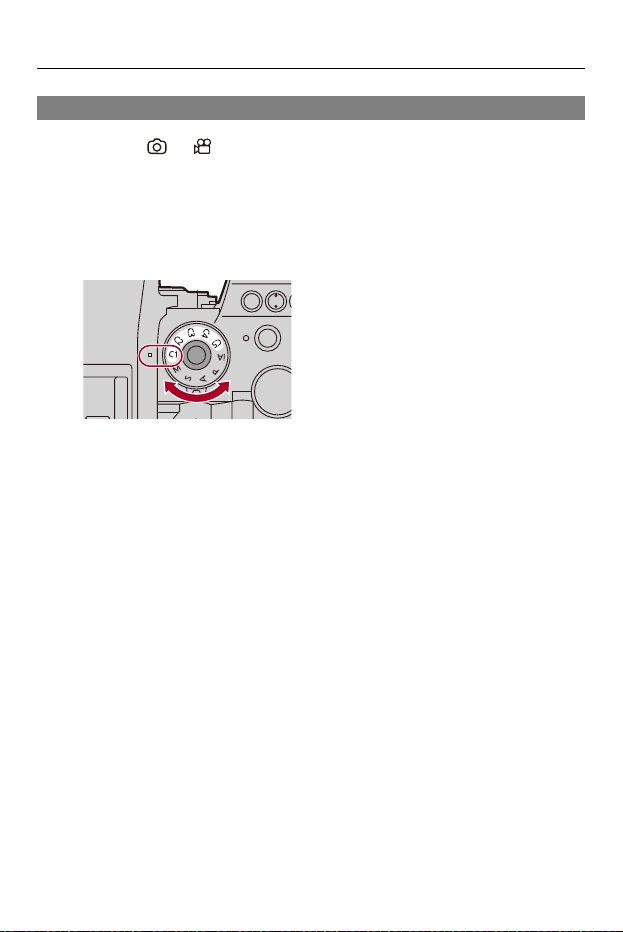
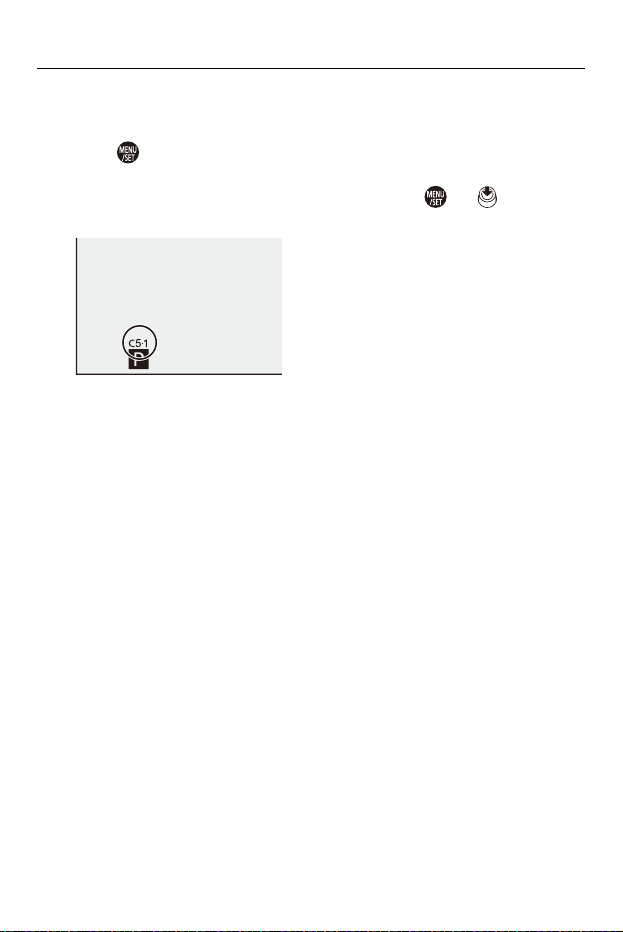
Camera Customization – Custom Mode
678
[C5] Custom Mode Selection
1 Set the recording mode to [C5].
2 Press .
•
The Custom mode selection menu appears.
3 Press 34 to select the Custom mode and then press or .
•
The selected Custom mode icon will be displayed on the recording screen.
Changing Registered Details
Registered settings do not change even if you change the camera settings
temporarily with the mode dial set to [C1] to [C5].
To change the registered details, overwrite them by using [Save to Custom
Mode(Photo)]/[Save to Custom Mode(Video)]/[Save to Custom
Mode(S&Q)] in the [Setup] ([Setting]) menu.

Camera Customization – Custom Mode
679
Calling Up Settings
Call up registered Custom mode settings to the selected recording mode
and overwrite the current settings with these.
1
Set to [ ], [ ], or [S&Q] mode.
(Photo/Video/S&Q Switch: 80)
2
Set to the recording mode to be used.
≥Set the mode dial. (Selecting the Recording Mode: 81)
3
Select [Load Custom Mode].
≥ [] [] [Load Custom Mode(Photo)]/[Load
Custom Mode(Video)]/[Load Custom Mode(S&Q)]
4
Select the Custom mode to call up.
≥Select the Custom mode and then press or .

Camera Customization – [Custom] Menu
680
[Custom] Menu
≥ [Custom] menu ([Image Quality]): 681
≥ [Custom] menu ([Focus/Shutter]): 687
≥ [Custom] menu ([Operation]): 694
≥ [Custom] menu ([Monitor / Display (Photo)]): 701
≥ [Custom] menu ([Monitor / Display (Video)]): 712
≥ [Custom] menu ([IN/OUT]): 716
≥ [Custom] menu ([Lens / Others]): 718
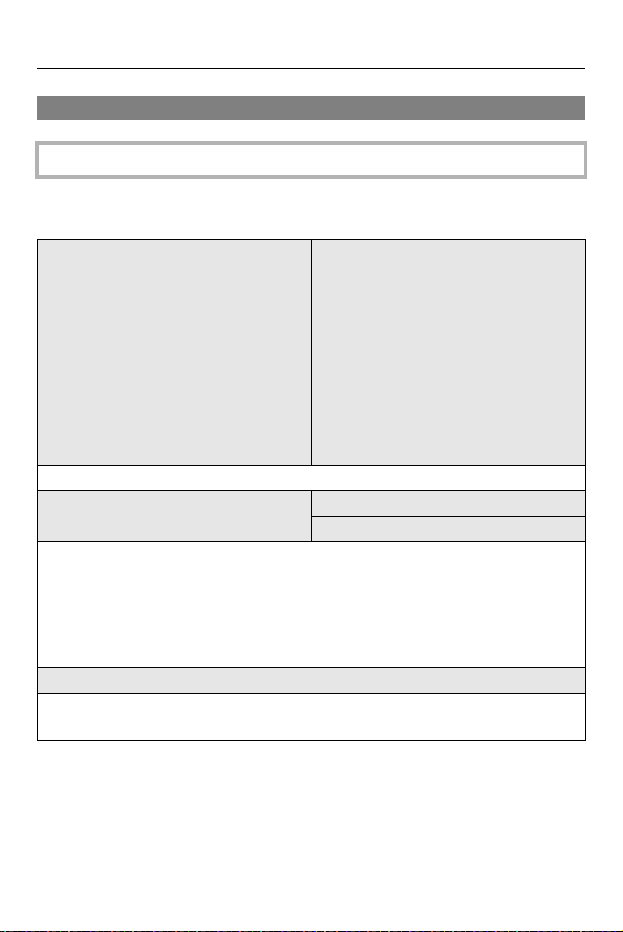
Camera Customization – [Custom] Menu
681
[Custom] menu ([Image Quality])
[Photo Style Settings]
: Default settings
[Show/Hide Photo Style]
[Vivid] / [Natural] / [L.ClassicNeo] /
[Flat] / [Landscape] / [Portrait] /
[L.Monochrome] / [L.Monochrome D] /
[L.Monochrome S] / [LEICA
Monochrome] / [Cinelike A2] / [Cinelike
D2] / [Cinelike V2] / [Like709] / [V-Log] /
[REAL TIME LUT] / [Like2100(HLG)] /
[Like2100(HLG) Full Range] / [MY
PHOTO STYLE 1] to [MY PHOTO
STYLE 10]
Sets Photo Style items to be displayed on the menu.
[My Photo Style Settings]
[Add Effects]
[Load Preset Setting]
Enables detailed image quality adjustment settings for My Photo Style.
[Add Effects]: Enables [Sensitivity] and [White Balance] settings in image quality
adjustment.
[Load Preset Setting]: Sets the timing at which image quality adjustment values
changed in My Photo Style are returned to their registered state.
[Reset Photo Style]
Returns details changed in [Photo Style] and [Photo Style Settings] to their default
settings.
Camera Customization – [Custom] Menu
682
[LUT Library]
[ISO Increments]
[Extended ISO]
[Vlog_709] / [Sample LUT1] / [Sample LUT2] / [Sample LUT3] / [Set4] to [Set39]
Registers LUT files to the camera.
([LUT Library]: 396)
[1/3 EV] / [1 EV]
Changes the intervals between ISO sensitivity adjustment values.
[ON] / [OFF]
Extends the setting range of ISO sensitivity.
Camera Customization – [Custom] Menu
683
[Exposure Offset Adjust.]
[Face Priority In Multi Metering]
[Multi Metering] [−1EV] to [+1EV] ([±0EV])
[Center Weighted] [−1EV] to [+1EV] ([±0EV])
[Spot] [−1EV] to [+1EV] ([±0EV])
[Highlight Weighted] [−1EV] to [+1EV] ([±0EV])
Adjusts the exposure level that is the standard exposure for each setting item of
[Metering Mode].
Adds the adjustment value from this function to the exposure compensation value
(Exposure Compensation: 348) when recording.
•
For video recording, it is not possible to add an adjustment value of a range that
exceeds ±3 EV.
[ON] / [OFF]
When [Metering Mode] is set to [ ] (Multi-metering), the metering range for
automatic exposure is prioritized on the eyes and face.
When set to [OFF], the change to exposure caused by the [Eye/Face] automatic
detection function can be avoided.

Camera Customization – [Custom] Menu
684
[AWB Lock Setting]
[Operation Syncs With Shutter]
[WHILE PRESSING] / [DURING BURST
SHOOTING] / [OFF]
[Lock Hold With Fn Button] [ON] / [OFF]
Fixes the white balance while you are pressing the shutter button or the Fn button
when white balance is auto ([AWB]/[AWBc]/[AWBw]).
This prevents the white balance from changing unintentionally while pressing the
shutter button halfway, during burst recording, or while recording videos.
[Operation Syncs With Shutter]
[WHILE PRESSING]: Fixes white balance while pressing the shutter button
(including while pressing halfway or during burst recording).
[DURING BURST SHOOTING]: Fixes white balance during burst recording.
[OFF]: White balance is not fixed.
[Lock Hold With Fn Button]
[ON]: When you press the Fn button registered with [AWB Lock], the white balance
is fixed. Press again to cancel the lock.
[OFF]: While you are pressing the Fn button registered with [AWB Lock], the white
balance is fixed.
•
[AWBL] is displayed on the screen while white balance is locked.
•
[Operation Syncs With Shutter] does not work in [ ]/[S&Q] mode.

Camera Customization – [Custom] Menu
685
[Color Space]
[Exposure Comp. Reset]
[sRGB] / [AdobeRGB]
This sets the method for correcting the color reproduction of the recorded images on
the screens of a PC or on a device such as a printer.
[sRGB]: This is widely used in PCs and similar devices.
[AdobeRGB]: AdobeRGB is mainly used for business purposes such as
professional printing because it has a greater range of reproducible colors than
sRGB.
•
Set to [sRGB] if you are not very familiar with AdobeRGB.
•
When the following functions are being used, the setting is fixed to [sRGB]:
– [SDR] ([HEIF Format])
– Video recording
– [Like709]/[V-Log]/[REAL TIME LUT] (base Photo Style is [V-Log]) ([Photo Style])
– [Filter Settings]
•
When [HEIF Format] is set to [HDR(HLG)], [Color Space] is not available.
[ON] / [OFF]
This resets the exposure value when you change the recording mode or turn off the
camera.
Camera Customization – [Custom] Menu
686
[Auto Exposure in Photo Mode]
[Exposure Control in P/A/S/M]
[Photo/Video Separate Setting]
[ON] / [OFF]
In the [ ] mode, select the setting method for aperture value, shutter speed, and
ISO sensitivity when recording video with the mode dial set to [P]/[A]/[S]/[M].
[ON]: Records with values set automatically by the camera.
[OFF]: Records with manually set values.
[Exposure Control(Photo Mode)] [MODE DIAL] / [P] / [A] / [S] / [M]
[Exposure Control(Video Mode)] [MODE DIAL] / [P] / [A] / [S] / [M]
You can fix the exposure setting for picture or video/S&Q to a desired exposure
mode when the mode dial is set to [P]/[A]/[S]/[M].
[MODE DIAL]: Switch the [P]/[A]/[S]/[M] mode to match the mode dial.
[P]/[A]/[S]/[M]: Recording is done in the set mode irrespective of the mode dial.
[F/SS/ISO/Exposure Comp.] [SEPARATE] / [SAME]
[White Balance] [SEPARATE] / [SAME]
[Photo Style] [SEPARATE] / [SAME]
[Metering Mode] [SEPARATE] / [SAME]
[AF Mode] [SEPARATE] / [SAME]
The settings set in the [ ] mode and the settings set in the [ ]/[S&Q] mode can
be kept separate.
([Photo/Video Separate Setting]: 433)
Camera Customization – [Custom] Menu
687
[Custom] menu ([Focus/Shutter])
[Focus/Shutter Priority]
[Focus Switching for Vert / Hor]
[AF/AE Lock Hold]
: Default settings
[AFS] [FOCUS] / [BALANCE] / [RELEASE]
[AFC] [FOCUS] / [BALANCE] / [RELEASE]
This sets whether to give priority to focus or shutter release during AF.
[FOCUS]: Disables recording when focus is not achieved.
[BALANCE]: Performs recording while controlling the balance between focusing
and shutter release timing.
[RELEASE]: Enables recording even when focus is not achieved.
[ON] / [OFF]
This stores separate AF area positions (MF positions for MF Assist) for when the
camera is held vertically and when it is held horizontally.
([Focus Switching for Vert / Hor]: 231)
[ON] / [OFF]
This sets button operations for AF/AE Lock.
Turning this [ON] maintains the lock after releasing the button until it is pressed
again.
Camera Customization – [Custom] Menu
688
[AF+MF]
[MF Assist]
[ON] / [OFF]
When the focus mode is set to [AFS]/[AFC], you can fine-adjust the focus manually
during AF Lock.
•
When the shutter button is pressed halfway
•
When [AF ON] is pressed
•
When locked using the Fn button [AF LOCK] or [AF/AE LOCK]
During video recording, the MF mode is engaged when you rotate the focus ring,
and the AF mode is engaged when you stop rotating the focus ring.
[Focus Ring]
(When an interchangeable lens with a
focus ring is attached)
[ON] / [OFF]
[AF Mode] [ON] / [OFF]
[Press Joystick] [ON] / [OFF]
[MF Assist Display] [FULL] / [PIP]
[Max. Magnification in "FULL"] [6x] / [20x]
This sets the display method of MF Assist (enlarged screen).
[Focus Ring]: The screen is enlarged by focusing with the lens.
[AF Mode]: The screen is enlarged by pressing [ ].
[Press Joystick]: Press the joystick to enlarge the display. (if [Joystick Setting] is
set to [D.FOCUS Movement]) ([Joystick Setting]: 700)
[MF Assist Display]: Sets the display method (full screen mode/windowed mode) of
MF Assist (enlarged screen).
[Max. Magnification in "FULL"]: Sets the maximum magnification for the enlarged
display ([FULL]). When set to [6x], the area that can be enlarged is broader.
Camera Customization – [Custom] Menu
689
[MF Guide]
[Focus Ring Lock]
[Show/Hide AF Mode]
[ ] / [ ] / [OFF]
* Default setting specifications vary depending on the country or area where the
camera was purchased.
During MF, MF Guide, which acts as a guide to recording distance, is displayed on
the screen. You can select from meters or feet for the display unit.
[ON] / [OFF]
This disables the focus ring operation during MF to lock the focus.
•
[MFL] is displayed on the recording screen while the focus ring is locked.
[Tracking] [ON] / [OFF]
[Full Area AF] [ON] / [OFF]
[Zone(Horizontal/Vertical)] [ON] / [OFF]
[Zone] [ON] / [OFF]
[1-Area+] [ON] / [OFF]
[Pinpoint] [ON] / [OFF]
Sets the AF mode items to be displayed on the AF mode selection screen.

Camera Customization – [Custom] Menu
690
[Pinpoint AF Setting]
[AF-Point Scope Setting]
[Pinpoint AF Time] [LONG] / [MID] / [SHORT]
[Pinpoint AF Display] [FULL] / [PIP]
Changes enlarged screen settings displayed when AF mode is [ ].
[Pinpoint AF Time]: Sets the time for which the screen is enlarged when the shutter
button is pressed halfway.
[Pinpoint AF Display]: Sets the display method (full screen mode/windowed mode)
of the enlarged screen.
[Keep Enlarged Display] [ON] / [OFF]
[PIP Display] [FULL] / [PIP]
Changes the enlarged screen settings of AF-Point Scope ([AF-Point Scope]: 190).
[Keep Enlarged Display]: Setting this to [ON] maintains the enlarged screen after
pressing the Fn button until it is pressed again.
[PIP Display]: Sets the display method (full screen mode
*1
/windowed mode
*2
) of the
enlarged screen.
*1 You can enlarge by approx. 3× to 10×.
*2 You can enlarge by approx. 3× to 6×.
•
When [Hybrid Zoom(Photo)] or [Crop Zoom(Photo)] is [ON], the AF-Point Scope
magnification rate is between about 3× to 6×.
Camera Customization – [Custom] Menu
691
[Shutter AF]
[Human Eye Detection Display]
[Half-Press Shutter]
[Assign REC to Shutter Button]
[ON] / [OFF]
This adjusts focus automatically when you press the shutter button halfway.
[ON] / [OFF]
When set to [OFF], you can make the cross that appears on human eyes when
focused disappear by pressing the shutter button halfway, etc.
[ON] / [OFF]
You can release the shutter quickly by pressing the shutter button halfway.
[ON] / [OFF]
Use the shutter button for the start/stop operation of video recording in the [ ]/
[S&Q] mode.
The start/stop operation of video recording using the shutter button can be disabled
when set to [OFF].
Camera Customization – [Custom] Menu
692
[Quick AF]
[Eye Sensor AF]
[Looped Focus Frame]
[ON] / [OFF]
When the amount of camera shake becomes small, the camera will automatically
adjust the focus and focus adjustment will then be quicker when the shutter button is
pressed.
•
The battery will drain faster than usual.
•
This function is not available in the following cases:
– In preview mode
– In low light situations
[ON] / [OFF]
When looking through the viewfinder, if the eye sensor operates, then AF will
function.
•
[Eye Sensor AF] may not work in low light situations.
[ON] / [OFF]
When moving the AF area, MF Assist, or video enlarged display of live view, this
enables looping from one edge to the opposite edge of the screen.
Camera Customization – [Custom] Menu
693
[Enlarged Live Display(Video)]
[AFS Behavior in Video Mode]
[Keep Enlarged Display] [ON] / [OFF]
[PIP Display] [FULL] / [PIP]
Sets the operation of the function for enlarging the video live view ([Enlarged Live
Display(Video)]: 437).
[Keep Enlarged Display]
[ON]: Enlarges display after releasing the Fn button until the button is pressed
again.
[OFF]: Enlarges display just while the Fn button is being pressed.
[PIP Display]
Sets the way the enlarged screen is displayed (full screen mode/windowed mode).
[AFS] / [AFC]
You can set the behavior when the focus mode lever is set to [AFS] when in the
[ ]/[S&Q] mode.
[AFS]: Behaves the same as picture AFS. AF does not work continuously.
[AFC]: AF operates continuously.
Camera Customization – [Custom] Menu
694
[Custom] menu ([Operation])
[Q.MENU Settings]
[Touch Settings]
: Default settings
[Layout Style] [MODE1] / [MODE2]
[Front Dial Assignment] [Item] / [Value]
[Item Customize (Photo Mode)]
[Item Customize (Video/S&Q Mode)]
Customizes the Quick menu.
(Quick Menu Customization: 665)
[Touch Screen] [ON] / [OFF]
[Touch Tab] [ON] / [OFF]
[Touch AF] [AF] / [AF+AE]
[Touch Pad AF]
[EXACT] / [OFFSET1] to [OFFSET7] /
[OFF]
Enables touch operation on the monitor display.
[Touch Screen]: All touch operations.
[Touch Tab]: Operations of tabs, such as [ ] on the right side of the screen.
[Touch AF]: Operation to optimize the focus ([AF]) for a touched subject.
Alternatively, operation to optimize both the focus and brightness ([AF+AE]).
(Focus on and Adjust Brightness for the Touched Position ([AF+AE]): 228)
[Touch Pad AF]: Touch pad operation during viewfinder display. (Moving the AF
Area Position with the Touch Pad: 229)
Camera Customization – [Custom] Menu
695
[Lock Lever Setting]
[AF ON] button []/ []
Joystick []/ []
[Q] button []/ []
Cursor buttons / [MENU/SET] button []/ []
Control dial []/ []
[ ] (AF mode) button []/ []
[ ] (Playback) button []/ []
Touch screen []/ []
[ ] (Cancel) button / [ ] (Delete)
button / Fn button (Fn1)
[]/ []
[DISP.] button []/ []
[ISO] button []/ []
[ ] (Exposure compensation) button []/ []
Video rec. button []/ []
Rear dial []/ []
[WB] button []/ []
[LVF] button []/ []
Sub video rec. button []/ []
Lens []/ []
Shutter button []/ []
Front dial []/ []
AF-Point Scope button / Enlarged live
display (video) button / Fn button (Fn2)
[]/ []
Camera Customization – [Custom] Menu
696
[Fn Button Set]
Sets the operations to be disabled with the operation lock lever. (Only for recording
screen)
•
The lock is applied or released each time you press .
•
Press [DISP.] to change the page.
•
The default settings are restored when you press [Q].
•
[ ] is displayed on the screen when you try to operate an operation part that is
locked.
•
Operation parts locked by “Lens” depend on the lens. Lens switches are not
locked.
•
Even if the lens is operated while “Lens” is locked, [ ] does not get displayed
on the screen.
After locking with the “Lens” setting, test whether the lock is working by trying to
operate the lens.
[Setting in Photo Mode]
[Setting in Video/S&Q Mode]
[Setting in Playback Mode]
Registers a function to the Fn button.
(Register Functions to the Fn Buttons: 649)
Camera Customization – [Custom] Menu
697
[WB/ISO/Expo. Button]
[ISO Displayed Setting]
[Exposure Comp. Disp. Setting]
[WHILE PRESSING] / [AFTER PRESSING1] / [AFTER PRESSING2]
This sets the operation to be performed when [WB] (White balance), [ISO] (ISO
sensitivity) or [ ] (Exposure compensation) is pressed.
[WHILE PRESSING]: Allows you to change the setting while pressing and holding
the button. Release the button to confirm the settings value, and to return to the
recording screen.
[AFTER PRESSING1]: Press the button to change settings. Press the button again
to confirm the settings value, and to return to the recording screen.
[AFTER PRESSING2]: Press the button to change settings. Each press of the
button switches the settings value. (Except that of exposure compensation) To
confirm your selection and return to the recording screen, press the shutter button
halfway.
[Front/Rear Dials]
[ / ] / [ / ] / [OFF/ ] /
[/]/ [/OFF]
This sets the operations of the dials in the setting screen for ISO sensitivity.
Assigning [ ] lets you change [ISO Auto Upper Limit Setting].
[Cursor Buttons (Up/Down)] []/ [OFF]
This sets the operations of the 34 buttons in the exposure compensation screen.
Assigning [ ] lets you set exposure bracketing.
[Front/Rear Dials]
[ / ]/ [ / ]/ [OFF/ ]/
[/ ]/ [/OFF]
This sets the operations of the dials in the exposure compensation screen.
Assigning [ ] lets you adjust flash output.
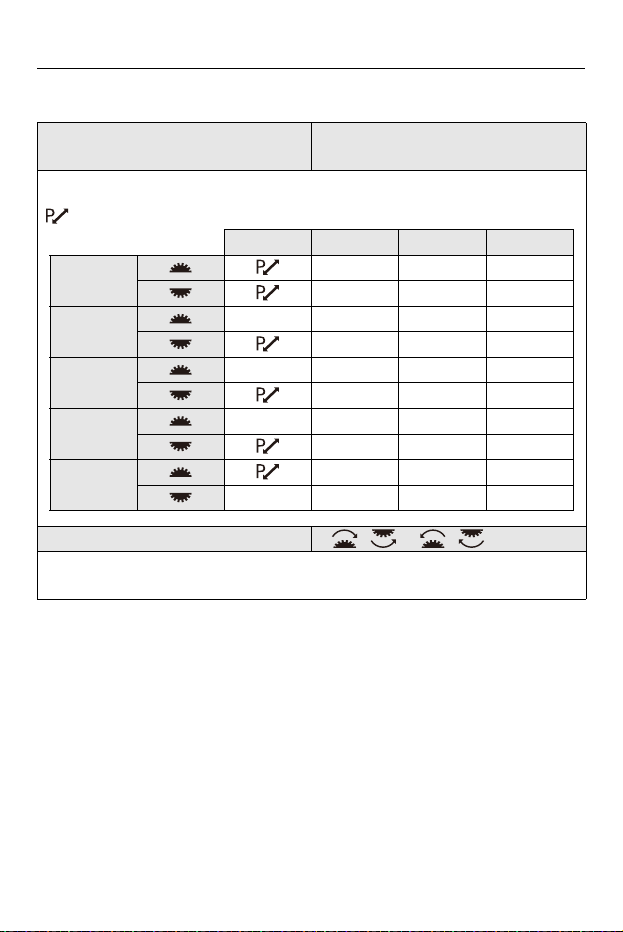
Camera Customization – [Custom] Menu
698
[Dial Set.]
[Assign Dial (F/SS)]
[SET1] / [SET2] / [SET3] / [SET4] /
[SET5]
Sets the operations to be assigned to the dials in [P]/[A]/[S]/[M] modes.
: Program Shift, F: Aperture value, SS: Shutter speed
[P] [A] [S] [M]
[SET1]
FSSF
FSSSS
[SET2]
—F—F
—SSSS
[SET3]
— — SS SS
F—F
[SET4]
——— F
FSSSS
[SET5]
FSSF
———SS
[Rotation (F/SS)] []/ []
Changes the rotational directions of the dials for aperture value and shutter speed
adjustment.
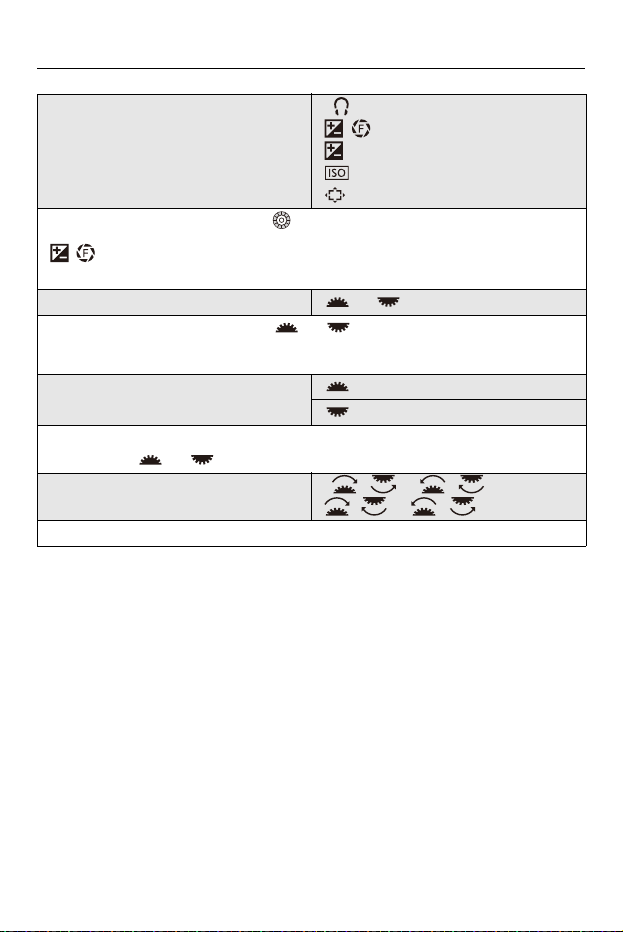
Camera Customization – [Custom] Menu
699
[Control Dial Assignment]
[ ] ([Headphone Volume]) /
[ / ] ([Exposure / Aperture]) /
[ ] ([Exposure Comp.]) /
[ ] ([Sensitivity]) /
[ ] ([Focus Frame Size])
Sets the function to be assigned to on the recording screen.
[/]: In [M] mode, this assigns the operation to adjust the aperture value. In
other than [M] mode, this assigns the operation of exposure compensation.
[Exposure Comp.] []/ []/ [OFF]
Assigns exposure compensation to or . (Except in [M] mode)
•
The [Assign Dial (F/SS)] setting takes priority.
[Dial Operation Switch Setup]
[]
[]
In the Fn button [Dial Operation Switch], this sets the functions to be registerd
temporarily to or . (Register Functions to the Dials: 662)
[Rotation (Menu Operation)]
[]/ []/
[]/ []
Changes the rotational direction of the dials when operating menus.
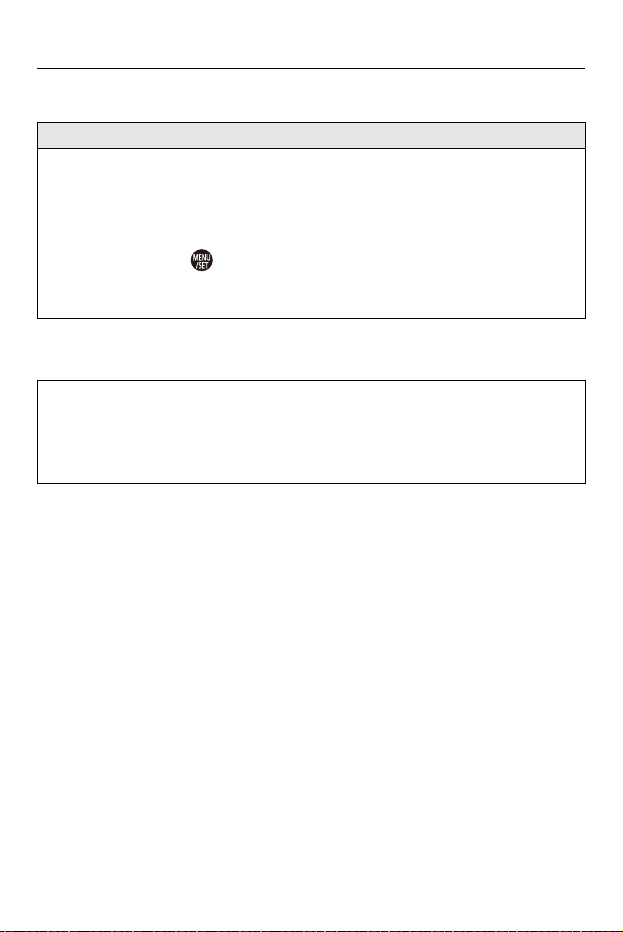
Camera Customization – [Custom] Menu
700
[Joystick Setting]
[Video Rec. Button (Remote)]
[D.FOCUS Movement] / [Fn] / [MENU] / [OFF]
Sets the joystick movement on the recording screen.
[D.FOCUS Movement]: Moves the AF area and MF Assist. (AF Area Operations:
223, Record Using MF: 232)
[Fn]: Operates as Fn buttons.
[MENU]: Operates as . Operations that can be performed by moving the
joystick are disabled.
[OFF]: Disables the joystick.
You can register a favorite function to the video rec. button on a Shutter Remote
Control (optional).
(Shutter Remote Control (Optional): 862)
•
[Video Record] is registered in the default setting.
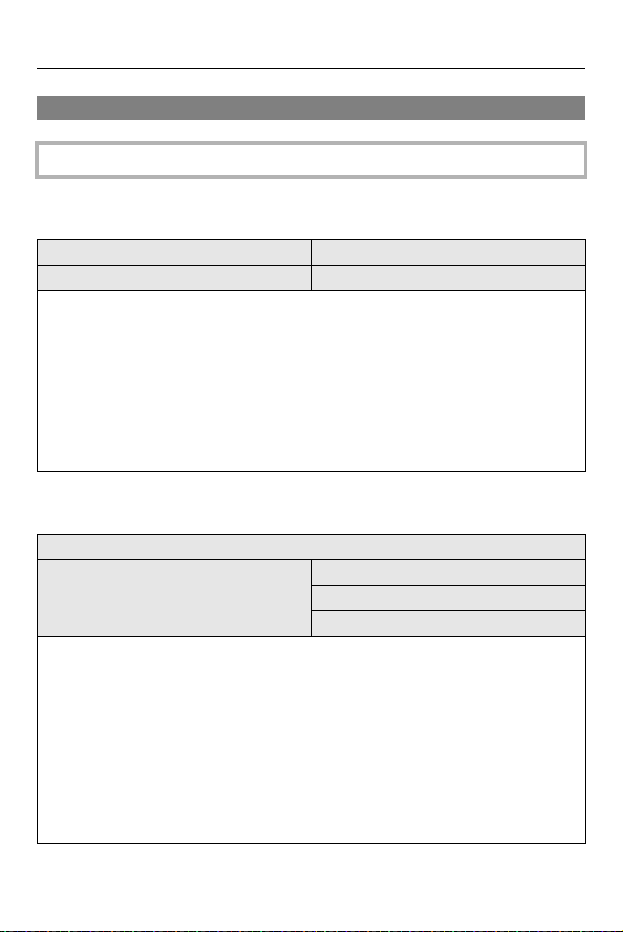
Camera Customization – [Custom] Menu
701
[Custom] menu ([Monitor / Display (Photo)])
[Auto Review]
[Constant Preview]
: Default settings
[Duration Time (photo)] [HOLD] / [5SEC] to [0.5SEC] / [OFF]
[Playback Operation Priority] [ON] / [OFF]
This displays an image immediately after it is recorded.
[Duration Time (photo)]: Sets the Auto Review when taking pictures.
[Playback Operation Priority]: When this is set to [ON], you can toggle the
playback screen during Auto Review, or delete pictures.
•
If you set [Duration Time (photo)] to [HOLD], the image recorded stays displayed
until the shutter button is pressed halfway.
[Playback Operation Priority] will be fixed to [ON].
[ON] / [OFF]
[SET]
[Effect]
[Preview While MF Assist]
[Preview During AF Operation]
You can always confirm the effects of aperture on the recording screen when in [A]/
[M] mode.
You can also confirm the shutter speed at the same time when in [M] mode.
•
You can set the combination of the aperture effect and the shutter speed effect in
[Effect].
•
Preview also operates in the MF Assist screen when [Preview While MF Assist] is
set to [ON].
•
Preview also works while AF is working when [Preview During AF Operation] is set
to [ON].
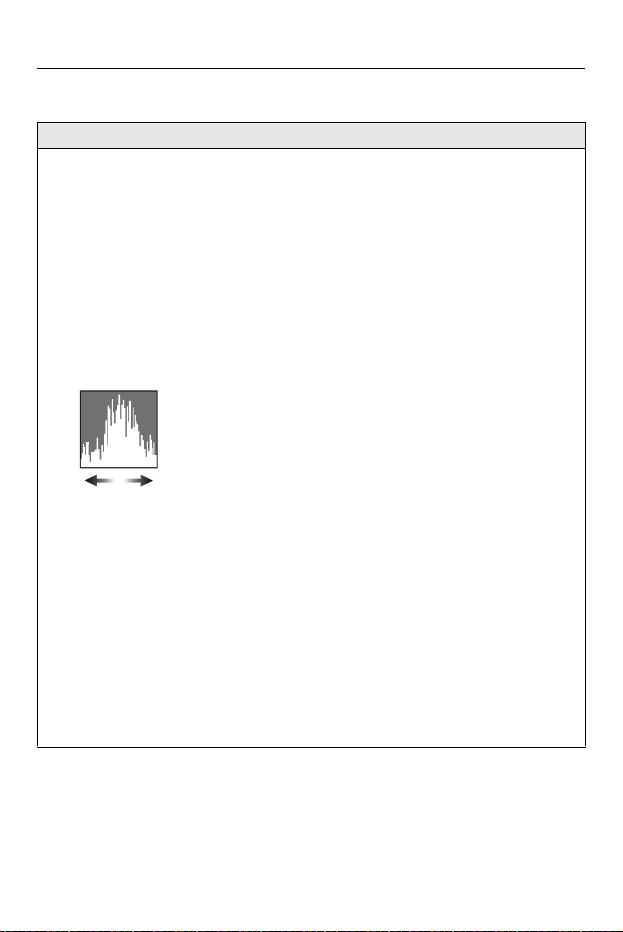
Camera Customization – [Custom] Menu
702
[Histogram]
[ON] / [OFF]
This displays the histogram.
Turning this [ON] displays the histogram transition screen.
Press 3421 to set the position.
Positions can be moved to the diagonal directions using the joystick.
•
You can also move the position by dragging the histogram on the recording
screen.
•
A histogram is a graph that displays brightness along the horizontal axis, and the
number of pixels at each brightness level on the vertical axis.
By looking at the distribution of the graph, you can determine the current
exposure.
(A) Dark
(B) Bright
•
When the recorded image and the histogram do not match each other under the
following conditions, the histogram is displayed in orange:
– During exposure compensation
– When the flash fires
– When the standard exposure is not achieved, such as in low light situations.
•
When the following functions are being used, the [Histogram] is not available:
– [WFM/Vector Scope]
– Video recording when [Proxy Recording] is set to [ON]
•
The histogram is an approximation in the recording mode.
(A) (B)
Camera Customization – [Custom] Menu
703
[Photo Grid Line]
[Live View Boost]
[ ] / [ ] / [ ] / [OFF]
Sets the grid line pattern to be displayed on the recording screen.
When using [ ], you can press 3421 to set the position.
Positions can be moved to the diagonal directions using the joystick.
•
When using [ ], you can also drag [ ] on the grid lines on the recording
screen to move the position.
[MODE1] / [MODE2] / [OFF]
[SET] [P/A/S/M] / [M]
Displays the screen brighter to make it easier to check subjects and compositions
even in low-light environment.
[MODE1]: Setting for low brightness, with priority given to a soft display.
[MODE2]: Setting for high brightness, with priority given to image visibility.
•
You can change the recording mode in which [Live View Boost] works by using
[SET].
•
This mode does not affect recorded images.
•
Noise may be more noticeable in the screen than in the recorded image.
•
This function does not work in the following cases:
– When adjusting the exposure (when the shutter button is pressed halfway, for
example)
– When recording a video
– When using [Filter Settings]
– When displaying the shutter speed effect of [Constant Preview]
Camera Customization – [Custom] Menu
704
[Night Mode]
[Monitor] [ON] / [OFF]
[LVF] [ON] / [OFF]
Displays the monitor and viewfinder in red.
In dark environments, this reduces brightness of the screen that can make the
surroundings difficult to see.
You can also set the luminance of the red display.
1 Press 3421 to select [ON] on the monitor or viewfinder (LVF).
2 Press [DISP.] to display the brightness adjustment screen.
•
Display the monitor to adjust the monitor, and display the viewfinder to adjust
the viewfinder.
3 Press 21 to adjust luminance and then press or .
•
This effect is not applied to images output via HDMI.
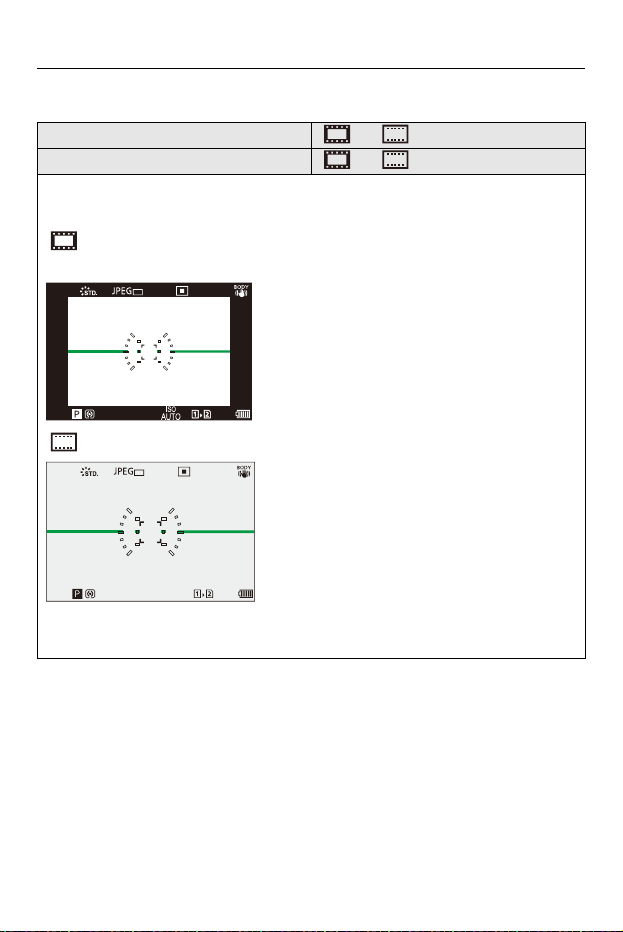
Camera Customization – [Custom] Menu
705
[LVF/Monitor Disp. Set]
[LVF Disp. Set] []/ []
[Monitor Disp. Set] []/ []
Selects whether to show the live view without covering the information display, or to
display over the entire screen.
[]: Scales down images slightly so you can better review the composition of the
images.
[]: Scales images to fill the entire screen so you can see their details.
•
You can assign the function that switches the currently displayed monitor or
viewfinder display style to an Fn button. ([LVF/Monitor Disp. Set]: 657)
999
±
0
AFSAFS
L
FINE
999
±
0
L
AFSAFS
FINE
ISO
AUTO

Camera Customization – [Custom] Menu
706
[Horizontal Image Flip(Monitor)] [AUTO] / [ON] / [OFF]
[Vertical Image Flip(Monitor)] [AUTO] / [ON] / [OFF]
You can set whether the screen flips or not depending on the facing or angle of the
monitor during recording.
[Horizontal Image Flip(Monitor)]
[AUTO]: The screen automatically flips horizontally according to the angle to which
the monitor is opened or closed.
[ON]: The screen is flipped horizontally all the time.
[OFF]: Screen is not flipped.
[Vertical Image Flip(Monitor)]
[AUTO]: The screen automatically flips vertically according to the angle to which the
monitor is rotated.
[ON]: The screen is flipped vertically all the time.
[OFF]: Screen is not flipped.
•
The settings for this function are not reflected in the playback screen.
•
If the monitor screen is displaying in a direction different to the one you want,
assign this function to an Fn button and flip to the desired direction. ([Image
Flip(Monitor)]: 657)
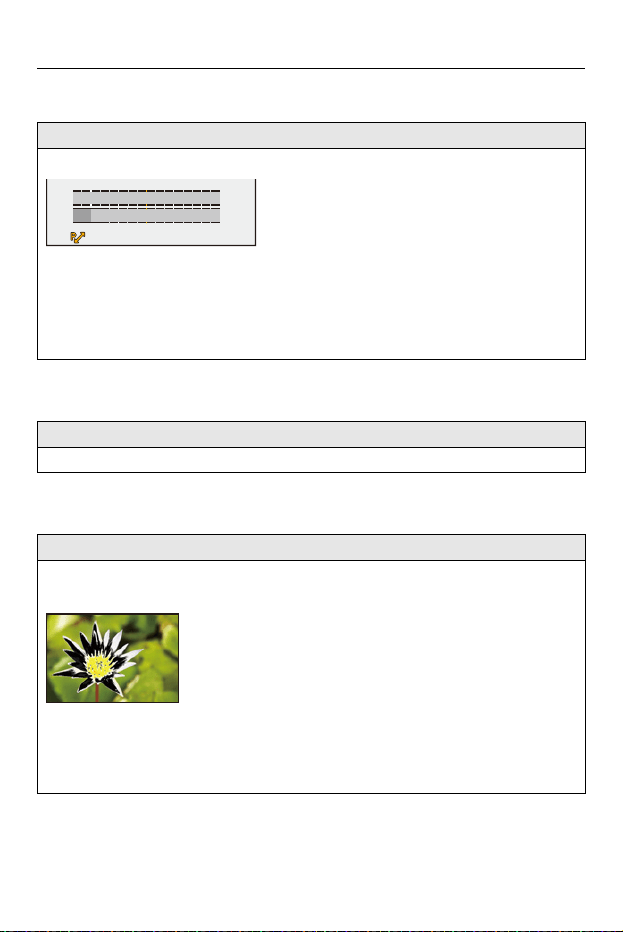
Camera Customization – [Custom] Menu
707
[Expo.Meter]
[Focal Length]
[Blinking Highlights]
[ON] / [OFF]
This displays the exposure meter.
•
Set to [ON] to display the exposure meter when performing Program Shift, setting
aperture, and setting shutter speed.
•
If no operations are performed for a certain period of time, the exposure meter
disappears.
[ON] / [OFF]
Displays the focal length on the recording screen during zoom control.
[ON] / [OFF]
Overexposed areas appear blinking in black and white during Auto Review or
playback.
•
The display without the highlights is added to the display shown when [DISP.] is
pressed in the playback screen.
Use this to delete the highlight display. (Playback Screen: 96)
F5.630
SSSS
FF
125 60 30 15 8
5.64.0 8.0 112.8
Camera Customization – [Custom] Menu
708
[Sheer Overlay]
[ON] / [OFF]
[SET]
[Transparency]
[Image Select]
[Reset at Power Off]
[Disp. Image (shutter-press)]
A picture that has been recorded or an image extracted from a video is overlayed on
the recording screen.
1 Use [Image Select] and select a picture or video to display.
•
Press 21 to select a picture or video and then press or to
confirm.
2 (When a video is selected) Pause playback at the position you wish to extract a
picture.
•
Press 3 to pause playback.
•
To fine-adjust the position, press 21 (rewind frame-by-frame or forward
frame-by-frame).
3 (When a video is selected) Set a picture.
•
Press or .
•
If you set [Disp. Image (shutter-press)] to [OFF], [Sheer Overlay] is canceled while
the shutter button is being pressed halfway or pressed fully.
•
The picture extracted from video is saved.
•
When the following functions are being used, [Sheer Overlay] is not available:
– Video recording
– [Stop Motion Animation]
– [Frame.io Connection]
– [Auto Transfer]

Camera Customization – [Custom] Menu
709
[I.S. Status Scope]
[ON] / [OFF]
Displays a reference point (C) on the recording screen in order to let you check for
camera shake.
•
[I.S. Status Scope] does not work in the following cases:
– When [Operation Mode] in [Image Stabilizer] is set to [OFF]
– When the O.I.S. switch on the lens is [OFF]
•
When the following functions are being used, [I.S. Status Scope] is not available:
– Video recording
– High Resolution mode (when [Handheld High-Res] is set to [OFF])
(C)
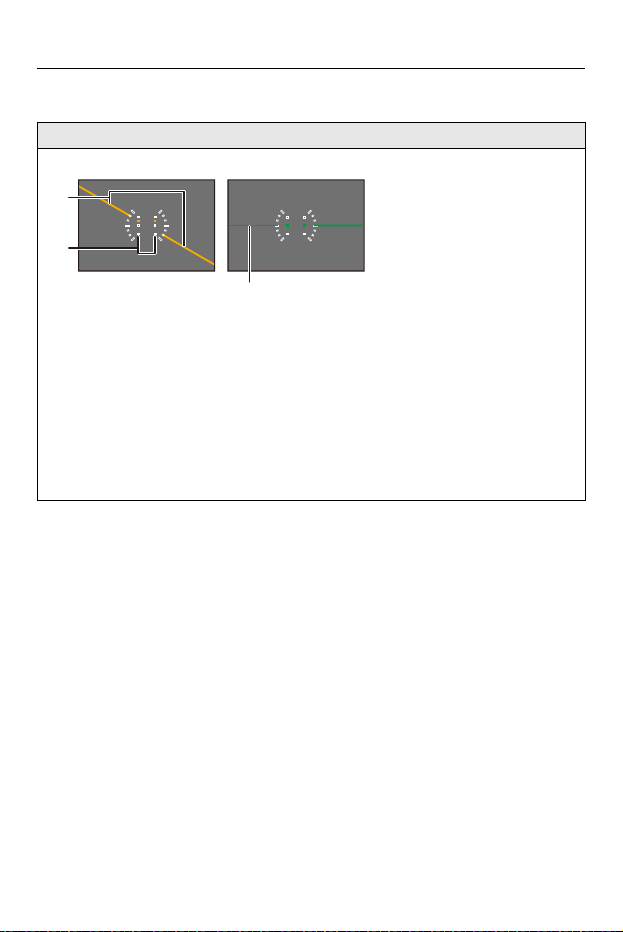
Camera Customization – [Custom] Menu
710
[Level Gauge]
[ON] / [OFF]
Displays the level gauge which is useful in correcting camera tilt.
(D) Horizontal
(E) Vertical
(F) Green (no tilt)
•
Even after correcting the tilt, there may still be an error of approx. ±1o.
•
When the camera is tilted significantly upwards or downwards, the level gauge
may not be displayed correctly.
•
You can adjust the level gauge and reset the adjusted values in [Level Gauge
Adjust.] in the [Setup] ([Monitor / Display]) menu. ([Level Gauge Adjust.]: 734)
(D)
(E)
(F)
Camera Customization – [Custom] Menu
711
[Luminance Spot Meter]
[Framing Outline]
[Show/Hide Monitor Layout]
[ON] / [OFF]
Specify any spot on the subject to measure the luminance over a small area.
([Luminance Spot Meter]: 488)
[ON] / [OFF]
Displays the outline for the live view.
[Control Panel] [ON] / [OFF]
[Black Screen] [ON] / [OFF]
Displays the control panel and black screen when switching between displays using
[DISP.] button. (Recording Screen: 94)
Camera Customization – [Custom] Menu
712
[Custom] menu ([Monitor / Display (Video)])
[Log View Assist]
[HLG View Assist]
[Anamorphic Desqueeze Display]
: Default settings
[LUT Select(V-Log)]
[LUT View Assist (Monitor)] [ON] / [OFF]
[LUT View Assist (HDMI)] [ON] / [OFF]
You can show images with LUT file applied on the monitor/viewfinder, or output them
via HDMI.
([Log View Assist]: 532)
[Monitor] [MODE1] / [MODE2] / [OFF]
[HDMI] [AUTO] / [MODE1] / [MODE2] / [OFF]
At recording or playback of HLG video, this displays images with converted color
gamut and brightness on the camera monitor/viewfinder, or outputs these over
HDMI.
([HLG View Assist]: 537)
[ ] / [ ] / [ ] / [ ] / [ ] / [OFF]
This displays the desqueezed images suited to the magnification of the anamorphic
lens on this camera.
([Anamorphic Desqueeze Display]: 540)
Camera Customization – [Custom] Menu
713
[Monochrome Live View]
[Center Marker]
[Safety Zone Marker]
[ON] / [OFF]
You can display the recording screen in black and white.
•
If you use the HDMI output during recording, the output image will not be
displayed in black and white.
•
[Monochrome Live View] is not available when [Night Mode] is used.
[ ] / [ ] / [ ] / [ ] / [OFF]
The center of the recording screen will be displayed as [+].
The shape of the marker can be changed.
[ ] / [ ] / [OFF]
[SET] [Size]
[95%]
[90%]
[80%]
This displays the safety zone, which shows a guide to the area that would be shown
on a household TV, on the recording screen.
Camera Customization – [Custom] Menu
714
[Frame Marker]
[Zebra Pattern]
[False Color]
[ON] / [OFF]
[SET]
[Frame Aspect]
[Frame Color]
[Frame Mask]
A frame with the set aspect ratio is displayed on the recording screen.
[Frame Aspect] can also be customized.
([Frame Marker]: 494)
[ZEBRA1] / [ZEBRA2] / [ZEBRA1+2] / [OFF]
[SET]
[Zebra 1]
[Zebra 2]
Parts that are brighter than the base value are displayed with stripes.
([Zebra Pattern]: 490)
[Start] / [False Color Index]
Apply false colors in the recording screen.
([False Color]: 492)

Camera Customization – [Custom] Menu
715
[WFM/Vector Scope]
[Color Bars]
[Red REC Frame Indicator]
[Streaming Blue Frame Indicator]
[WAVE] / [VECTOR] / [OFF]
This displays the waveform monitor or the vector scope on the recording screen.
([WFM/Vector Scope]: 484)
[SMPTE] / [EBU] / [ARIB]
The color bars are displayed on the recording screen.
(Color Bars/Test Tone: 496)
[ON] / [OFF]
A red frame is displayed on the recording screen that indicates that video is being
recorded.
[ON] / [OFF]
Displays a blue frame on the screen during streaming.
Camera Customization – [Custom] Menu
716
[Custom] menu ([IN/OUT])
[HDMI Rec Output]
: Default settings
[Info Display] (Outputting the Camera
Information Display via HDMI: 577)
[ON] / [OFF]
[Down Convert] (HDMI Output Image
Quality: 565)
[AUTO] / [C4K/4K] / [1080p] / [1080i] /
[OFF]
[HDMI Recording Control] (Outputting
Control Information to an External
Recorder: 578)
[ON] / [OFF]
[Sound Output (HDMI)] (Outputting
Audio via HDMI: 578)
[ON] / [OFF]
[Enlarged Live Display] (Outputting the
Enlarged Live Display (Video) via HDMI:
579)
[MODE1] / [MODE2] / [OFF]
[4K/120p Output] / [4K/100p Output]
(Outputting as 4K/120p (4K/100p) via
HDMI: 580)
[ON] / [OFF]
[4K/120p Power Save Live View] / [4K/
100p Power Save Live View] ([4K/
120p Power Save Live View] ([4K/100p
Power Save Live View]): 581)
[ON] / [OFF]
Sets HDMI output during recording.

Camera Customization – [Custom] Menu
717
[Fan Mode]
[Tally Lamp]
[AUTO1] / [AUTO2] / [FAST] / [NORMAL] / [SLOW] / [OFF]
Sets fan operation.
[AUTO1]: The camera switches [SLOW]/[NORMAL] automatically according to the
temperature of the camera. This setting prioritizes controlling rises in temperature in
the camera.
[AUTO2]: The camera switches [OFF]/[SLOW]/[NORMAL] automatically according
to the temperature of the camera.
[FAST]: The fan operates constantly at fast speed.
[NORMAL]: The fan operates constantly at a standard speed.
[SLOW]: The fan operates constantly at low speed.
[OFF]: The fan does not operate.
•
[OFF] can be set when in [ ] mode.
•
When the following functions are being used, [SLOW] is not available.
When the following functions are used while set to [SLOW], the setting switches to
[AUTO1]:
– [Rec Quality] exceeding a resolution of C4K
– [Rec Quality] with a high frame rate video exceeding a recording frame rate of
60.00p
– [Slow & Quick Setting] exceeding a frame rate of 60 fps
[Front Tally Lamp] [H] / [L] / [OFF]
[Rear Tally Lamp] [H] / [L] / [OFF]
[Rear Card Access Light] [H] / [L] / [OFF]
Sets how the tally lamps turn on while recording video and their brightness.
You can also set the behavior of the rear card access light during card access.

Camera Customization – [Custom] Menu
718
[Custom] menu ([Lens / Others])
[Lens Focus Resume]
: Default settings
[ON] / [OFF]
The camera saves the focus position when you turn it off.

Camera Customization – [Custom] Menu
719
[Lens Fn Button Setting]
[Setting in Photo
Mode]
[Focus Stop]
*1
/ [Aspect Ratio] / [AF Mode] / [AF Detection
Setting] / [Detecting Subject] / [Focus Ring Lock] / [Focus Ring
Control] / [Focus Limiter] / [Focus Peaking] / [AE LOCK] / [AF
LOCK] / [AF/AE LOCK] / [AF-ON] / [AF-ON : Near Shift] /
[AF-ON : Far Shift] / [AF-Point Scope] / [Focus Area Set] /
[Enlarged Live Display(Video)] / [Image Stabilizer] /
[E-Stabilization (Video)] / [Boost I.S. (Video)] / [Image Area of
Video] / [Hybrid Zoom(Photo)] / [Hybrid Zoom(Video)] / [Crop
Zoom(Photo)] / [Crop Zoom(Video)] / [Zoom Control] / [Zoom
In(Tele)] / [Zoom Out(Wide)] / [Crop Zoom Increment(Step)] /
[Video Record] / [Preview] / [Preview Aperture Effect] / [No
Setting] / [Off (Disable Press and Hold)] / [Same Setting as
Photo Mode]
*2
/ [Restore to Default]
*1 Initial setting for [Setting in Photo Mode]
*2 Initial setting for [Setting in Video/S&Q Mode] (only
displayed in [Setting in Video/S&Q Mode])
[Setting in Video/
S&Q Mode]
Register a function to the focus button of an interchangeable lens.
•
When [Focus Stop] is set, focus is fixed while the focus button is being pressed.
•
When set to [Same Setting as Photo Mode], [Setting in Video/S&Q Mode] behaves
using the same functions set in [Setting in Photo Mode].
•
When using an interchangeable lens that has a switch for the image stabilizer
(normal/panning), [Image Stabilizer] in [Lens Fn Button Setting] is not available.

Camera Customization – [Custom] Menu
720
[Focus Ring Setting During AF]
[Select Function to Assign]
[Front Dial] / [Rear Dial] / [Aperture] / [Shutter Speed] /
[Crop Zoom] / [Exposure Comp.] / [Sensitivity] / [White
Balance] / [Color Temperature] / [AF Mode] / [Photo
Style] / [No Setting]
[Setting]
[Direction of Ring Rotation] / [Aperture Increment] /
[Rotational Angle of the Ring]
Sets the function assigned to the focus ring when the camera is in AF mode. (When
using supported lenses)
•
Set the rotational direction when changing the setting value with [Direction of Ring
Rotation].
•
[Aperture Increment] is displayed when [Select Function to Assign] is set to
[Aperture].
•
[Rotational Angle of the Ring] is displayed when [Select Function to Assign] is set
to [Crop Zoom].
Camera Customization – [Custom] Menu
721
[Focus Ring Setting During MF]
[AF Micro Adjustment]
[Focus Ring Control] [NON-LINEAR] / [LINEAR] / [SET]
Sets the amount of focus movement by the focus ring when the camera is in MF
mode. (When using supported lenses)
[NON-LINEAR]: Focus responds by accelerating according to rotation speed of the
focus ring.
[LINEAR]: Focus responds at a constant amount according to the rotational angle of
the focus ring.
•
When using lenses equipped with focus clutch mechanisms, set the lens to AF
and the camera to MF.
[SET]: Sets the rotational angle of the focus ring for when [LINEAR] is selected.
•
Angles that cannot be set with the attached lens are not displayed.
[Direction of Ring Rotation] []/ []
Sets the rotational direction by the focus ring when the camera is in MF mode.
(When using supported lenses)
[ ]: The focus point is moved closer when the ring is rotated clockwise.
[ ]: The focus point is moved further away when the ring is rotated clockwise.
[ALL] / [ADJUST BY LENS] / [OFF]
You can make fine adjustments to the focus point when focusing with phase
detection AF.
([AF Micro Adjustment]: 199)

Camera Customization – [Custom] Menu
722
[Lens Information]
[Lens Info. Confirmation]
[Vertical Position Info (Video)]
[Lens1] to [Lens12] ([Lens1])
When using a lens that does not have a communication function with the camera,
register the lens information in the camera.
•
This is linked with [Lens Information] in [Image Stabilizer] under the [Photo]
([Others (Photo)]) menu. ([Lens Information]: 325)
[ON] / [OFF]
When you have attached a lens that does not have a communication function with
this camera, a message asking for confirmation of the lens information is displayed
when you turn on the camera.
[ON] / [OFF]
You can set whether or not to record the camera’s vertical orientation information
during video recording.
[ON]: Records vertical orientation information. Videos recorded with the camera held
vertically will be automatically played back vertically on the PC, smartphone, etc.
during playback.
[OFF]: Does not record vertical orientation information.
•
On the playback screen of the camera, only the thumbnail display is played in
vertical orientation.


Camera Customization – [Setup] Menu
724
[Setup] menu ([Card/File])
[Card Format]
: Default settings
[Card Slot 1(CFexpress)] / [Card Slot 2(SD)]
Formats the card (initialization).
Format the cards with the camera before use.
Low level formatting of CFexpress cards
When formatting CFexpress cards, you can select whether to perform a low level
format.
If the writing speed of the card has started to drop, we recommend performing a low
level format.
1 Select [Card Slot 1(CFexpress)].
2 Press [DISP.] and put a check mark next to [Low Level Format].
3 Select [Yes].
•
When a card is formatted, all of the data stored in the card is erased and
cannot be restored.
Save a backup of necessary data before formatting the card.
•
Do not turn off the camera or perform another operation during formatting.
•
Take care not to turn off the camera while formatting is in progress.
•
If the card has been formatted with a PC or other device, format it again with the
camera.
•
You can format the card while keeping the camera settings information stored on
the card. ([Save/Restore Camera Setting]: 743)
Camera Customization – [Setup] Menu
725
[Double Card Slot Function]
[Recording Method] [ ] / [ ] / [ ]
This sets the way recording to the card slots 1 and 2 is performed.
[Relay Rec]: Selects the priority of card slots for recording.
[Destination Card Slot]: [ ]/[ ]
Relays recording to the card in the other card slot after the first card runs out of free
space.
•
You can assign the function that changes the card which is prioritized for recording
to an Fn button. ([Destination Card Slot]: 658)
[Backup Rec]: Records the same images to both cards simultaneously.
[Allocation Rec]: Allows you to specify the card slot to be used for recording for
different image formats.
[JPEG/HEIF Destination]/[RAW Destination]/[Video Destination]
•
[Double Card Slot Function] does not work when using the following functions:
– [Rec. File Format(Video)] or [Rec Quality] that does not allow recording to SD
cards
– [Proxy Recording]
Notes about relay recording
•
The following video cannot be continued to be recorded on another card:
– [Loop Recording (video)]
Notes about Backup Recording
•
We recommend using cards with the same capacity.
If the card Speed Class or capacity is insufficient when video recording, recording
to both cards stops.
•
Backup recording is not available with the following video. They can only be
recorded on a single card:
– [Loop Recording (video)]
•
When using the following combinations of cards, backup recording for videos is
not available:
– SD/SDHC memory cards and CFexpress cards


Camera Customization – [Setup] Menu
727
[Folder / File Settings]
[Select Folder] / [Create a New Folder] / [File Name Setting]
Set the folder and file name where to save the images.
Folder name
(1) Folder number (3 numeric characters, 100 to 999)
(2) 5-character user-defined segment
File name
(3) Color space ([P]: sRGB, [ _ ]: AdobeRGB)
(4) 3-character user-defined segment
(5) File number (4 numeric characters, 0001 to 9999)
(6) Extension
[Select Folder]: Selects a folder for storing images.
•
When [Double Card Slot Function] is set to [Allocation Rec], [Card Slot
1(CFexpress)] and [Card Slot 2(SD)] will be displayed.
[Create a New Folder]: Creates a new folder with an incremented folder number.
•
If there are no recordable folders in the card, a screen for resetting the folder
number is displayed.
[OK]:
Increments the folder number without changing the 5-character user-defined
segment ((2) above).
[Change]:
Changes the 5-character user-defined segment ((2) above). This will also increment
the folder number.
100ABCDE
(1) (2)
PABC0001.JPG
(3) (5) (6)(4)

Camera Customization – [Setup] Menu
728
[File Name Setting]
[Folder Number Link]:
Uses the 3-character user-defined segment ((4) above) to set the folder number
((1) above).
[User Setting]:
Changes the 3-character user-defined segment ((4) above).
•
Follow the steps on “Entering Characters” when the character entry screen is
displayed. (Entering Characters: 108)
Available characters: alphabetic characters (upper-case), numerals, [ _ ]
•
Each folder can store up to 1000 files.
•
File numbers are assigned sequentially from 0001 to 9999 in the order of
recording.
If you change the storage folder, a number continuing on from the last file number
will be assigned.
•
In the following cases, a new folder with an incremented folder number will be
created automatically when the next file is saved:
– The number of files in the current folder reaches 1000.
– The file number reaches 9999.
•
New folders cannot be created when there are folders numbered from 100 all the
way up to 999.
We recommend backing up your data and formatting the card.
•
[Select Folder] is not available when [Backup Rec] in [Double Card Slot Function]
is being used.
Camera Customization – [Setup] Menu
729
[File Number Reset]
[Copyright Information]
[Card Slot 1(CFexpress)] / [Card Slot 2(SD)]
Refresh the folder number within the DCIM folder and reset the file number to 0001.
•
When the folder number reaches 999, the file number cannot be reset.
We recommend backing up your data and formatting the card.
•
To reset the folder number to 100:
1 Perform [Card Format] to format the card. ([Card Format]: 724)
2 Perform [File Number Reset] to reset the file number.
3 Select [Yes] on the folder number reset screen.
[Artist] [ON] / [OFF] / [SET]
[Copyright Holder] [ON] / [OFF] / [SET]
[Display Copyright Info.]
Records the names of the artist and the copyright holder in the image Exif data.
•
You can register names from [SET] in [Artist] and [Copyright Holder].
How to enter characters (Entering Characters: 108)
•
Up to 63 characters may be entered.
•
You can confirm registered copyright information in [Display Copyright Info.].
Camera Customization – [Setup] Menu
730
[Setup] menu ([Monitor / Display])
[Power Save Mode]
: Default settings
[Sleep Mode]
[10MIN.] / [5MIN.] / [2MIN.] / [1MIN.] /
[OFF]
[Sleep Mode(Wi-Fi)] [ON] / [OFF]
[Auto LVF/Monitor Off] [5MIN.] / [2MIN.] / [1MIN.] / [OFF]
[Power Save LVF Shooting]
[Time to Sleep]
[Method of Activation]
This is a function to automatically turn the camera to sleep (power save) status or
turn off the viewfinder/monitor if no operation is performed for a set time.
([Power Save Mode]: 58)

Camera Customization – [Setup] Menu
731
[Thermal Management]
[Monitor Frame Rate]
[Recording Max Temperature] [HIGH] / [STANDARD]
This sets the temperature during video recording at which the camera automatically
stops recording.
When set to [HIGH], recording continues even if the camera temperature rises.
[Recording Max Temperature]
[HIGH]: Sets the temperature at which recording is stopped due to the camera
temperature rising to a higher temperature.
•
You can record for a longer time, but the camera body will become hot.
Use a tripod, etc., because recording with a handheld camera for long periods can
cause low temperature burns.
[STANDARD]: Recording stops when the camera temperature rises.
•
Set to [STANDARD] when recording with a handheld camera.
[30fps] / [60fps]
Sets the display speed for live view on the monitor.
[30fps]: Reduces the power consumption for a longer operating time.
[60fps]: Enables smooth display of movements.
•
When the following function is being used, [Monitor Frame Rate] is not available:
– HDMI output
Camera Customization – [Setup] Menu
732
[LVF Frame Rate]
[Monitor Settings]/[Viewfinder]
[60fps] / [120fps]
Sets the display speed for live view on the viewfinder when recording pictures.
[60fps]: Reduces the power consumption for a longer operating time.
[120fps]: Enables smooth display of movements.
•
[LVF120] is displayed on the viewfinder when it is displayed at [120fps].
•
When set to [120fps], the images in the viewfinder will not be as smooth as with
[60fps], but there will be no change to the images recorded.
•
When the following functions are being used, [LVF Frame Rate] is not available:
– HDMI output
– While connected to Wi-Fi
•
The frame rate switches to 60 fps when the camera temperature rises.
[Brightness] / [Contrast] / [Saturation] / [Red Tint] / [Blue Tint]
This adjusts the brightness, coloring, and red or blue tints of the monitor/viewfinder.
1 Press 34 to select the setting item, and press 21 to adjust.
2 Press or to confirm the setting.
•
It will adjust the monitor when the monitor is in use, and the viewfinder when the
viewfinder is in use.

Camera Customization – [Setup] Menu
733
[Monitor Backlight]/[LVF Luminance]
[AUTO] / [−3] to [+3]
Adjusts monitor/viewfinder luminance.
[AUTO]: The brightness is adjusted automatically depending on how bright it is
around the camera.
•
Adjusts the monitor luminance when displaying the monitor, and the viewfinder
luminance when displaying the viewfinder.
•
When either [AUTO] is set, or the adjusted value is set to positive side, the usage
period will shorten.
•
When [Night Mode] is being used, [Monitor Backlight]/[LVF Luminance] are not
available.
Camera Customization – [Setup] Menu
734
[Eye Sensor]
[Level Gauge Adjust.]
[Sensitivity] [HIGH] / [LOW]
This will set the sensitivity of the eye sensor.
[LVF/Monitor Switch]
[LVF/MON AUTO] (automatic
viewfinder/monitor switching) / [LVF]
(viewfinder) / [MON] (monitor)
This will set the method for switching between the viewfinder and monitor.
•
If you press [LVF] to switch the display, the [LVF/Monitor Switch] setting will also
switch.
[Adjust.]
Hold the camera in a horizontal position, and press or . The level gauge
will be adjusted.
[Level Gauge Value Reset]
Restores the default level gauge setting.
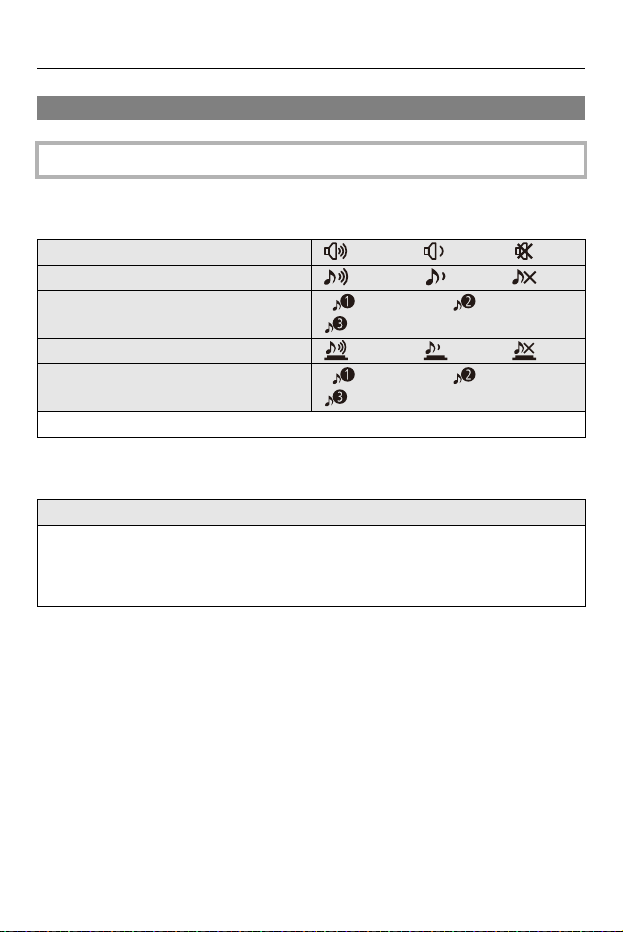
Camera Customization – [Setup] Menu
735
[Setup] menu ([IN/OUT])
[Beep]
[Headphone Volume]
: Default settings
[Beep Volume] [ ] (High) / [ ] (Low) / [ ] (Off)
[AF Beep Volume] [ ] (High) / [ ] (Low) / [ ] (Off)
[AF Beep Tone]
[ ] (Pattern 1) / [ ] (Pattern 2) /
[ ] (Pattern 3)
[E-Shutter Vol] [ ] (High) / [ ] (Low) / [ ] (Off)
[E-Shutter Tone]
[ ] (Pattern 1) / [ ] (Pattern 2) /
[ ] (Pattern 3)
Sets the beep sounds, AF beep, and electronic shutter sounds.
[0] to [LEVEL15] ([LEVEL3])
Adjusts the volume when headphones are connected.
(Adjusting the Headphone Volume: 467)
•
This functions in tandem with [Headphone Volume] in the [Video] ([Audio]) menu.
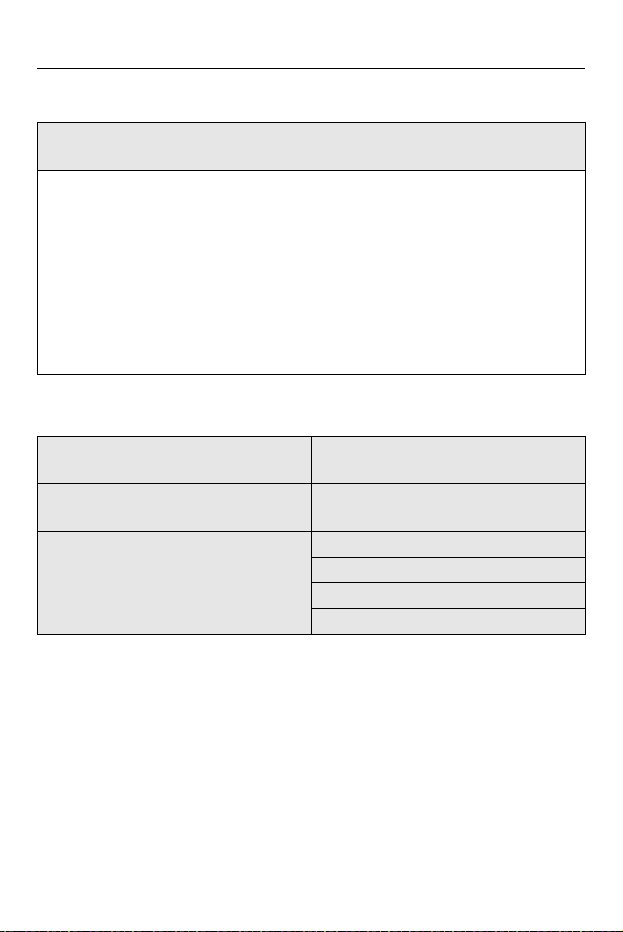
Camera Customization – [Setup] Menu
736
[Sound Monitoring Channel(Play)]
[Streaming]
* Displayed when [Connection Method] is set to [Wi-Fi].
[COMBINED WITH REC] / [CH1/CH2] / [CH3/CH4] / [CH1+CH2/CH3+CH4] /
[CH1] / [CH2] / [CH3] / [CH4] / [CH1+CH2] / [CH3+CH4] / [CH1+CH2+CH3+CH4]
During video playback, this selects the audio channel output to the speaker on the
camera or the headphones.
For information about output audio ([Sound Monitoring Channel]: 468)
[COMBINED WITH REC]: Outputs audio with the same settings as [Sound
Monitoring Channel] in the [Video] ([Audio]) menu.
•
You cannot change settings during video playback.
•
The L channel and R channel are mixed for audio output from the camera’s
speaker.
[Streaming Function] (Streaming
Settings: 825)
[ON] / [OFF]
[Connection Method] (Streaming
Settings: 825)
[Wi-Fi] / [USB Tethering]
[Streaming Setup] (Streaming
Settings: 825)
[Streaming Quality]
[Streaming Address]
[Save/Load Streaming Address]
[Wi-Fi Connection Setting]
*
Camera Customization – [Setup] Menu
737
[LAN / Wi-Fi
®
]
[Bluetooth
®
]
[Frame.io]
[Wi-Fi Frequency Bands]
[IP Address Setting (LAN)]
[Device Name/Password]
[LAN / Wi-Fi Function Lock]
[Network Address Display (LAN)]
[Network Address Display (Wi-Fi)]
Makes settings for wired LAN and Wi-Fi. ([LAN / Wi-Fi] Menu: 794)
[Bluetooth Function] (Connecting to a Smartphone (Bluetooth Connection): 771)
[Pairing]
[Add Smartphone]
[ATOMOS Wireless TC]
[Gimbal]
[Delete]
[Send Image (Smartphone)] (Using the menu to transfer easily: 782)
[Auto Transfer] ([Auto Transfer]: 785)
[Location Logging] ([Location Logging]: 788)
[Frame.io Connection] (Connecting with Frame.io: 798)
[Send Images to Frame.io] ([Send Images to Frame.io]: 803)
[Connection Setup]
[Connection Method]
[Wi-Fi Connection Setting]
[Upload Setup]
[Auto Upload to Queue]
[Upload File Format]
[Clear Upload History]
[Upload Status]
[Clear Upload Queue]
Camera Customization – [Setup] Menu
738
[USB]
[USB Mode]
[ ] [Select on connection] / [ ]
[PC(Storage)] / [ ] [PC(Tether)] / [ ]
[PC(Webcam)] / [ ] [LUMIX Flow]
This sets the communication method to be used when the USB connection cable is
connected.
[ ] [Select on connection]: Select this setting to select the USB communication
system when connecting to another device. (USB port: 835)
[ ] [PC(Storage)]: Select this setting to export images to a connected PC.
(Importing Images to a PC: 840)
[ ] [PC(Tether)]: Select this setting to control the camera from a PC installed with
“LUMIX Tether”. (Tethered Recording: 849)
[ ] [PC(Webcam)]: Select this setting to use the camera as a web camera for a
PC. (Using as a Web Camera for a PC: 845)
[ ] [LUMIX Flow]: Select this setting to control the camera from a smartphone
installed with “LUMIX Flow”. (Connecting to “LUMIX Flow ”: 807)
[USB Power Supply] [ON] / [OFF]
Provides power from the USB connection cable.
•
Even if this item is set to [OFF], power will be supplied when the AC adaptor is
connected.
[Tether(USB ethernet adaptor)] [ON] / [OFF]
This enables connection to “LUMIX Tether ” with a wired LAN connection.

Camera Customization – [Setup] Menu
739
[Webcam Image Quality]
[4K/15p] / [4K/12.5p] / [FHD/60p] / [FHD/
50p] / [FHD/30p]
*1
/ [FHD/25p]
*2
/ [HD/
30p] / [HD/25p]
*1 Initial setting when [System
Frequency] is [59.94Hz (NTSC)]
*2 Initial setting when [System
Frequency] is [50.00Hz (PAL)]
Sets the image quality when using the camera as a web camera.
•
The items you can select depend on the [System Frequency] setting.

Camera Customization – [Setup] Menu
740
[HDMI Connection]
[Output Resolution(Playback)]
[AUTO] / [C4K/120p] / [C4K/100p] /
[C4K/60p] / [C4K/50p] / [C4K/30p] /
[C4K/25p] / [C4K/24p] / [4K/120p] / [4K/
100p] / [4K/60p] / [4K/50p] / [4K/30p] /
[4K/25p] / [4K/24p] / [1080/120p] / [1080/
100p] / [1080p] / [1080i] / [720p] /
[576p] / [480p]
Sets the HDMI output resolution for playback.
[AUTO]: Outputs with a resolution suited to the connected external device. When
playing back pictures, output is at a maximum resolution of 8K.
•
The items you can select depend on the [System Frequency] setting.
•
If no image appears on the external device with [AUTO], switch to a setting other
than [AUTO] to set a format supported by your external device.
(Please also refer to the operating instructions for the external device.)
•
It may not be possible to play back video, depending on the external device
connected.
[LUT View Assist (HDMI)] [ON] / [OFF]
Images with LUT (Look-Up Table) file applied are output when you play back videos
recorded with [Photo Style] set to [V-Log].
•
This is linked with [LUT View Assist (HDMI)] in [Log View Assist] under the
[Custom] ([Monitor / Display (Video)]) menu. ([Log View Assist]: 532)
Camera Customization – [Setup] Menu
741
[Network Connection Light]
[HLG View Assist (HDMI)] [AUTO] / [MODE1] / [MODE2] / [OFF]
At recording or playback of HLG video, this converts their color gamut and
brightness for display.
•
This is linked with [HDMI] in [HLG View Assist] under the [Custom] ([Monitor /
Display (Video)]) menu. ([HLG View Assist]: 537)
[VIERA Link (CEC)] [ON] / [OFF]
You can use the device remote control to operate the camera when it is connected to
a VIERA Link compatible device using an HDMI cable.
(Using VIERA Link: 838)
[Background Color(Playback)] []/ []
Sets the color of the bands displayed on the top and bottom or the left and right of
images output on an external device.
•
We recommend setting to [ ] to prevent burn-in on the screen of the output
destination.
[Photo Luminance Level] [0-255] / [16-255]
Sets the level of luminance when outputting pictures to external devices.
[ON] / [OFF]
This will turn on the network connection light.
Camera Customization – [Setup] Menu
742
[Setup] menu ([Setting])
[Save to Custom Mode(Photo)]/[Save to Custom Mode(Video)]/[Save
to Custom Mode(S&Q)]
[Load Custom Mode(Photo)]/[Load Custom Mode(Video)]/[Load
Custom Mode(S&Q)]
[Custom Mode Settings]
[C1] / [C2] / [C3] / [C4] / [C5-1] to [C5-10]
You can register the currently set information of the camera.
(Register in Custom Mode: 674)
[C1] / [C2] / [C3] / [C4] / [C5-1] to [C5-10]
Calls up registered Custom mode settings to the selected recording mode and
overwrites the current settings with these.
(Calling Up Settings: 679)
[Limit No. of Custom Mode]
[Edit Title]
[How to Reload Custom Mode]
[Select Loading Details]
Sets the ease of use of Custom mode.
(Custom Mode Detailed Settings: 676)

Camera Customization – [Setup] Menu
743
[Save/Restore Camera Setting]
[Save] / [Load] / [Delete] / [Keep Settings While Format]
Saves the camera’s settings information to the card.
Saved settings information can be loaded to the camera, letting you set the same
settings on multiple cameras.
[Save]: Saves the camera’s settings information to the card.
•
If saving new data, then select [New File], and if overwriting an existing file, select
that existing file.
•
When [New File] is selected, a screen to select the file name to save as is
displayed.
[OK]:
Saves using the file name on the screen.
[Change the file name]:
Changes the file name and saves the file.
•
Available characters: alphabetic characters (upper-case), numerals, up to
8 characters
•
How to enter characters (Entering Characters: 108)
[Load]: Loads the settings information on the card and copies it to the camera.
[Delete]: Deletes settings information on the card.
[Keep Settings While Format]: When formatting the card, formats the card while
keeping camera settings information stored on the card.
•
Loading of settings information can be performed between some Panasonic
cameras.
Depending on the model, some settings information may not be loaded.
– Models supporting loading: DC-S1M2/DC-S1M2ES/DC-S1RM2
•
After loading, confirm that the settings are correct before recording.
•
Up to 10 instances of settings information can be saved on one card.
•
List of functions for which saving of settings information is possible (List of
Default Settings/Custom Saving/Settings Available for Copying: 941)

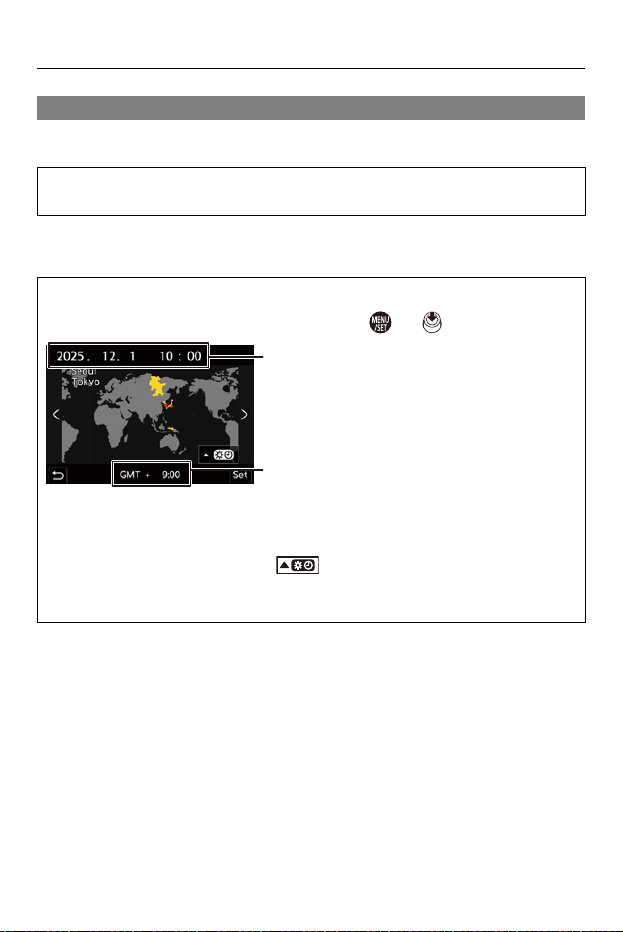
Camera Customization – [Setup] Menu
745
[Setup] menu ([Others])
[Clock Set]
[Time Zone]
Sets the date and time.
(Setting the Clock (When Turning On for the First Time): 73)
Sets the time zone.
Press 21 to select the time zone and then press or to confirm.
(A) Current time
(B) Time difference from GMT (Greenwich Mean Time)
•
If you are using Daylight Savings [ ], press 3. (The time will move forward
by 1 hour.)
To return to the normal time, press 3 again.
(A)
(B)

Camera Customization – [Setup] Menu
746
[System Frequency]
[Pixel Refresh]
[Shutter Behavior at Power Off]
[59.94Hz (NTSC)] / [50.00Hz (PAL)] / [24.00Hz (CINEMA)]
* Default setting specifications vary depending on the country or area where the
camera was purchased.
This changes the system frequency of videos that are recorded and played back
with the camera.
([System Frequency]: 146)
This optimizes the image sensor and image processing.
•
The image sensor and image processing are optimized when the camera is
purchased. Use this function when bright spots that do not exist in the subject get
recorded.
•
Turn the camera off and on after the pixels are corrected.
[OPEN] / [CLOSE]
You can set so the shutter closes when you turn off the power.
•
This prevents foreign matter and dust getting onto the image sensor when
replacing the lens.
•
The shutter may be damaged if pointed the camera toward strong light sources
such as sunlight or if touched it while the camera is turned off.
Camera Customization – [Setup] Menu
747
[Sensor Cleaning]
[Language]
[Firmware Version]
Dust reduction to blow off the debris and dust that have affixed to the front of the
image sensor is performed.
•
You can use this function when the dust is particularly noticeable.
•
Turn the camera off and on when finished.
This set the language displayed on the screen.
•
If you set a different language by mistake, select [ ] from the menu icons to set
the desired language.
[Firmware Update] / [Software info]
You can check the firmware versions of the camera and lens.
In addition, you can update the firmware, and display information about the camera
software.
[Firmware Update]: Updates firmware.
1 Download the firmware. (Firmware of Your Camera/Lens: 20)
2 Save the firmware to the root directory of the card (the first folder that appears
when you access the card on your PC), and then insert the card into the
camera.
3 Select [Firmware Update], press or , and then select [Yes] to update
the firmware.
[Software info]: Displays information about the camera software.
•
When a supported optional item (XLR Microphone Adaptor, etc.) is attached to the
camera, you can also check its firmware version.

Camera Customization – [Setup] Menu
748
[Approved Regulations]
[Root Certificate]
Displays the certification number for radio regulations.
* Depending on the country or area where the camera was purchased, this is not
displayed due to differences in specifications.
[Load] / [Delete] / [Certificate Information]
Registers a root certificate when connecting to the network.
[Load]: Registers a root certificate saved on a card to the camera. (Maximum 6 files)
•
Consult the administrator of the service you are connecting to for information on
acquiring root certificates.
•
Save the certificates you are registering for the first time in the root directory of the
card.
•
You can register certificates with the file extensions “.pem”, “.cer”, or “.crt”.
•
You cannot register those that are not recognized as certificates by OpenSSL
commands.
[Delete]: Selects root certificates registered with [Load] and deletes them.
[Certificate Information]: Selects root certificates registered with [Load] and
displays their information.
Camera Customization – My Menu
749
My Menu
≥ Registration in My Menu: 749
≥ Edit My Menu: 750
Register frequently-used menus in My Menu.
A maximum of 23 items can be registered.
Registered menus can be called up from [ ] to [ ].
Registration in My Menu
1
Select [Add].
≥ [] [] [Add]
2
Register.
≥Select the menu to register and then press or .
Calling up My Menu
Call up the menus registered in My Menu.
[] [ ]/[ ]/[ ] Registered menus

Camera Customization – My Menu
750
Edit My Menu
You can reorder the display order of My Menu, and delete unnecessary
menus.
[] Select [ ]
[Add]
Selects and registers the menus to be displayed in My Menu.
[Sorting]
Changes the order of My Menu.
Select the menu to change, then set the destination.
[Delete]
Deletes menus that are registered to My Menu.
[Delete Item]: Selects the menu, then deletes.
[Delete All]: Deletes all menus registered in My Menu.
[Display from My Menu]
Displays My Menu first when displaying a menu.
[ON]: Displays My Menu.
[OFF]: Displays the last-used menu.

751
List of Menu
Camera customization and many function settings are performed with
menus on this camera.
This chapter introduces all of the menu items in a list format.
≥ [Photo] menu: 752
≥ [Video] menu: 755
≥ [Custom] menu: 758
≥ [Setup] menu: 762
≥ [My Menu]: 765
≥ [Playback] menu: 766
•
For information about menu operation methods (Menu Operation Methods:
102)
•
Refer to the “Materials” chapter for the following lists:
– List of Default Settings/Custom Saving/Settings Available for Copying: 941
– List of Functions That Can Be Set in Each Recording Mode: 970
List of Menu – [Photo] menu
752
[Photo] menu
The [Photo] menu is displayed when in the [ ] mode.
•
Switch the photo/video/S&Q switch to [ ].
[Image Quality]
≥ [Photo Style] ([Photo Style]: 373)
≥ [Metering Mode] ([Metering Mode]: 328)
≥ [Aspect Ratio] ([Aspect Ratio]: 124)
≥ [Rec. File Format(Photo)] ([Rec. File Format(Photo)]: 128)
≥ [Switch JPEG/HEIF] ([Switch JPEG/HEIF]: 131)
≥ [JPEG/HEIF Picture Quality] ([JPEG/HEIF Picture Quality]: 133)
≥ [HEIF Format] (HLG Recording (HEIF Format): 403)
≥ [Picture Size] ([Picture Size]: 126)
≥ [High Resolution Mode Setting] (High Resolution mode: 271)
≥ [Long Exposure NR] ([Long Exposure NR]: 311)
≥ [Dual Native ISO Setting] ([Dual Native ISO Setting]: 361)
≥ [ISO Sensitivity (photo)] ([ISO Sensitivity (photo)]: 363)
≥ [Synchro Scan(Photo)] ([Synchro Scan(Photo)]: 312)
≥ [Min. Shutter Speed] ([Min. Shutter Speed]: 314)
≥ [i.Dynamic Range] ([i.Dynamic Range]: 351)
≥ [Vignetting Comp.] ([Vignetting Comp.]: 405)
≥ [Color Shading Compensation] ([Color Shading Compensation]: 406)
≥ [Diffraction Compensation] ([Diffraction Compensation]: 410)
≥ [Filter Settings] ([Filter Settings]: 388)
≥ [Flicker Decrease (Video)] ([Flicker Decrease (Video)]: 479)
: Menu items common to the [Photo] menu and [Video] menu. Their settings
are synchronized.

List of Menu – [Photo] menu
753
[Focus]
≥ [AF Detection Setting] (Automatic Detection: 206)
≥ [Detecting Subject] (Automatic Detection: 206)
≥ [AF Custom Setting(Photo)] ([AF Custom Setting(Photo)]: 192)
≥ [Focus Limiter] ([Focus Limiter]: 195)
≥ [AF Assist Light] ([AF Assist Light]: 197)
≥ [Focus Peaking] ([Focus Peaking]: 237)
≥ [Focus Frame Moving Speed] ([Focus Frame Moving Speed]: 198)
[Flash]
≥ [Flash Mode] ([Flash Mode]: 415)
≥ [Firing Mode] ([Firing Mode]/[Manual Flash Adjust.]: 418)
≥ [Flash Adjust.] ([Flash Adjust.]: 420)
≥ [Flash Synchro] ([Flash Synchro]: 421)
≥ [Manual Flash Adjust.] ([Firing Mode]/[Manual Flash Adjust.]: 418)
≥ [Auto Exposure Comp.] ([Auto Exposure Comp.]: 423)
≥ [Wireless] (Recording Using a Wireless Flash: 424)
≥ [Wireless Channel] (Recording Using a Wireless Flash: 424)
≥ [Wireless FP] ([Wireless FP]: 430)
≥ [Communication Light] ([Communication Light]: 430)
≥ [Wireless Setup] (Setting Items ([Wireless Setup]): 428)

List of Menu – [Photo] menu
754
[Others (Photo)]
≥ [Bracketing] (Bracket Recording: 293)
≥ [Silent Mode] ([Silent Mode]: 305)
≥ [Hybrid Zoom(Photo)] ([Hybrid Zoom(Photo)]: 244)
≥ [Crop Zoom(Photo)] ([Crop Zoom(Photo)]: 240)
≥ [Image Stabilizer] (Image Stabilizer: 316)
≥ [Burst Shot Setting] (Taking Burst Pictures: 259)
≥ [Shutter Type] ([Shutter Type]: 307)
≥ [Shutter Delay] ([Shutter Delay]: 315)
≥ [Time Lapse/Animation] (Recording with Time Lapse Shot: 276,
Recording with Stop Motion Animation: 283)
≥ [Live View Composite] ([Live View Composite]: 301)
≥ [Self Timer] (Recording Using the Self-timer: 289)
≥ [Multiple Exposure] ([Multiple Exposure]: 352)
List of Menu – [Video] menu
755
[Video] menu
The [Video] menu is displayed when in the [ ]/[S&Q] mode.
•
Switch the photo/video/S&Q switch to [ ] or [S&Q].
[Image Quality]
≥ [Photo Style] ([Photo Style]: 373)
≥ [Metering Mode] ([Metering Mode]: 328)
≥ [Dynamic Range Boost] ([Dynamic Range Boost]: 445)
≥ [Dual Native ISO Setting] ([Dual Native ISO Setting]: 361)
≥ [ISO Sensitivity (video)] ([ISO Sensitivity (video)]: 444)
≥ [Synchro Scan(Video)] ([Synchro Scan(Video)]: 542)
≥ [Shutter Speed Limiter] ([Shutter Speed Limiter]: 482)
≥ [Master Pedestal Level] ([Master Pedestal Level]: 441)
≥ [SS/Gain Operation] ([SS/Gain Operation]: 480)
≥ [i.Dynamic Range] ([i.Dynamic Range]: 351)
≥ [Vignetting Comp.] ([Vignetting Comp.]: 405)
≥ [Color Shading Compensation] ([Color Shading Compensation]: 406)
≥ [Diffraction Compensation] ([Diffraction Compensation]: 410)
≥ [Filter Settings] ([Filter Settings]: 388)
: Menu items common to the [Photo] menu and [Video] menu. Their settings
are synchronized.
List of Menu – [Video] menu
756
[Image Format]
≥ [Rec. File Format(Video)] ([Rec. File Format(Video)]: 148)
≥ [Image Area of Video] ([Image Area of Video]: 180)
≥ [Rec Quality] ([Rec Quality]: 150)
≥ [Rec Quality (My List)] ([add to list]: 171)
≥ [Proxy Recording Settings] (Proxy Recording: 175)
≥ [Slow & Quick Setting] (Slow & Quick Video: 499)
≥ [Time Code] (Setting the Time Code: 471)
≥ [Luminance Level] ([Luminance Level]: 439)
≥ [HDMI RAW Data Output] (Outputting RAW Video Data via HDMI: 584)
[Focus]
≥ [AF Detection Setting] (Automatic Detection: 206)
≥ [Detecting Subject] (Automatic Detection: 206)
≥ [AF Custom Setting(Video)] ([AF Custom Setting(Video)]: 436)
≥ [Focus Limiter] ([Focus Limiter]: 195)
≥ [AF Assist Light] ([AF Assist Light]: 197)
≥ [Focus Peaking] ([Focus Peaking]: 237)
≥ [Focus Frame Moving Speed] ([Focus Frame Moving Speed]: 198)

List of Menu – [Video] menu
757
[Audio]
≥ [Sound Rec Level Disp.] ([Sound Rec Level Disp.]: 447)
≥ [Mute Sound Input] ([Mute Sound Input]: 448)
≥ [Sound Rec Gain Level] ([Sound Rec Gain Level]: 449)
≥ [Sound Rec Level Adj.] ([Sound Rec Level Adj.]: 450)
≥ [Sound Rec Quality] ([Sound Rec Quality]: 451)
≥ [Sound Rec Level Limiter] ([Sound Rec Level Limiter]: 453)
≥ [Wind Noise Canceller] ([Wind Noise Canceller]: 454)
≥ [Wind Cut] (Reduction of Wind Noise: 460)
≥ [Mic Socket] (External Microphones (Optional): 456)
≥ [Special Mic.] (Setting the Sound Pickup Range (DMW-MS2:
Optional): 459)
≥ [4ch Audio Recording] ([4ch Audio Recording]: 464)
≥ [XLR Mic Adaptor Setting] (XLR Microphone Adaptor (Optional): 461)
≥ [Sound Output] (Switching the Sound Output Method: 467)
≥ [Headphone Volume] (Adjusting the Headphone Volume: 467)
≥ [Sound Monitoring Channel] ([Sound Monitoring Channel]: 468)
[Others (Video)]
≥ [Silent Mode] ([Silent Mode]: 305)
≥ [Hybrid Zoom(Video)] ([Hybrid Zoom(Video)]: 252)
≥ [Crop Zoom(Video)] ([Crop Zoom(Video)]: 247)
≥ [Image Stabilizer] (Image Stabilizer: 316)
≥ [Self Timer Setting] (Recording Using the Self-timer: 289)
≥ [
Focus Transition] ([Focus Transition]: 517)
≥ [Loop Recording (video)] ([Loop Recording (video)]: 544)
≥ [Segmented File Recording] ([Segmented File Recording]: 546)
≥ [Live Cropping] ([Live Cropping]: 522)

List of Menu – [Custom] menu
758
[Custom] menu
[Image Quality] ([Custom] menu ([Image Quality]): 681)
≥ [Photo Style Settings] ([Photo Style Settings]: 681)
≥ [LUT Library] ([LUT Library]: 396)
≥ [ISO Increments] ([ISO Increments]: 682)
≥ [Extended ISO] ([Extended ISO]: 682)
≥ [Exposure Offset Adjust.] ([Exposure Offset Adjust.]: 683)
≥ [Face Priority In Multi Metering] ([Face Priority In Multi Metering]: 683)
≥ [AWB Lock Setting] ([AWB Lock Setting]: 684)
≥ [Color Space] ([Color Space]: 685)
≥ [Exposure Comp. Reset] ([Exposure Comp. Reset]: 685)
≥ [Auto Exposure in Photo Mode] ([Auto Exposure in Photo Mode]: 686)
≥ [Exposure Control in P/A/S/M] ([Exposure Control in P/A/S/M]: 686)
≥ [Photo/Video Separate Setting] ([Photo/Video Separate Setting]: 686)

List of Menu – [Custom] menu
759
[Focus/Shutter] ([Custom] menu ([Focus/Shutter]): 687)
≥ [Focus/Shutter Priority] ([Focus/Shutter Priority]: 687)
≥ [Focus Switching for Vert / Hor] ([Focus Switching for Vert / Hor]: 687)
≥ [AF/AE Lock Hold] ([AF/AE Lock Hold]: 687)
≥ [AF+MF] ([AF+MF]: 688)
≥ [MF Assist] ([MF Assist]: 688)
≥ [MF Guide] ([MF Guide]: 689)
≥ [Focus Ring Lock] ([Focus Ring Lock]: 689)
≥ [Show/Hide AF Mode] ([Show/Hide AF Mode]: 689)
≥ [Pinpoint AF Setting] ([Pinpoint AF Setting]: 690)
≥ [AF-Point Scope Setting] ([AF-Point Scope Setting]: 690)
≥ [Shutter AF] ([Shutter AF]: 691)
≥ [Human Eye Detection Display] ([Human Eye Detection Display]: 691)
≥ [Half-Press Shutter] ([Half-Press Shutter]: 691)
≥ [Assign REC to Shutter Button] ([Assign REC to Shutter Button]: 691)
≥ [Quick AF] ([Quick AF]: 692)
≥ [Eye Sensor AF] ([Eye Sensor AF]: 692)
≥ [Looped Focus Frame] ([Looped Focus Frame]: 692)
≥ [Enlarged Live Display(Video)] ([Enlarged Live Display(Video)]: 693)
≥ [AFS Behavior in Video Mode] ([AFS Behavior in Video Mode]: 693)

List of Menu – [Custom] menu
760
[Operation] ([Custom] menu ([Operation]): 694)
≥ [Q.MENU Settings] ([Q.MENU Settings]: 694)
≥ [Touch Settings] ([Touch Settings]: 694)
≥ [Lock Lever Setting] ([Lock Lever Setting]: 695)
≥ [Fn Button Set] ([Fn Button Set]: 696)
≥ [WB/ISO/Expo. Button] ([WB/ISO/Expo. Button]: 697)
≥ [ISO Displayed Setting] ([ISO Displayed Setting]: 697)
≥ [Exposure Comp. Disp. Setting] ([Exposure Comp. Disp. Setting]: 697)
≥ [Dial Set.] ([Dial Set.]: 698)
≥ [Joystick Setting] ([Joystick Setting]: 700)
≥ [Video Rec. Button (Remote)] ([Video Rec. Button (Remote)]: 700)
[Monitor / Display (Photo)] ([Custom] menu ([Monitor / Display
(Photo)]): 701)
≥ [Auto Review] ([Auto Review]: 701)
≥ [Constant Preview] ([Constant Preview]: 701)
≥ [Histogram] ([Histogram]: 702)
≥ [Photo Grid Line] ([Photo Grid Line]: 703)
≥ [Live View Boost] ([Live View Boost]: 703)
≥ [Night Mode] ([Night Mode]: 704)
≥ [LVF/Monitor Disp. Set] ([LVF/Monitor Disp. Set]: 705)
≥ [Expo.Meter] ([Expo.Meter]: 707)
≥ [Focal Length] ([F
ocal Length]: 707)
≥ [Blinking Highlights] ([Blinking Highlights]: 707)
≥ [Sheer Overlay] ([Sheer Overlay]: 708)
≥ [I.S. Status Scope] ([I.S. Status Scope]: 709)
≥ [Level Gauge] ([Level Gauge]: 710)
≥ [Luminance Spot Meter] ([Luminance Spot Meter]: 711)
≥ [Framing Outline] ([Framing Outline]: 711)
≥ [Show/Hide Monitor Layout] ([Show/Hide Monitor Layout]: 711)

List of Menu – [Custom] menu
761
[Monitor / Display (Video)] ([Custom] menu ([Monitor / Display
(Video)]): 712)
≥ [Log View Assist] ([Log View Assist]: 712)
≥ [HLG View Assist] ([HLG View Assist]: 712)
≥ [Anamorphic Desqueeze Display] ([Anamorphic Desqueeze Display]:
712)
≥ [Monochrome Live View] ([Monochrome Live View]: 713)
≥ [Center Marker] ([Center Marker]: 713)
≥ [Safety Zone Marker] ([Safety Zone Marker]: 713)
≥ [Frame Marker] ([Frame Marker]: 714)
≥ [Zebra Pattern] ([Zebra Pattern]: 714)
≥ [False Color] ([False Color]: 714)
≥ [WFM/Vector Scope] ([WFM/Vector Scope]: 715)
≥ [Color Bars] ([Color Bars]: 715)
≥ [Red REC Frame Indicator] ([Red REC Frame Indicator]: 715)
≥ [Streaming Blue Frame Indicator] ([Streaming Blue Frame Indicator]:
715)
[IN/OUT] ([Custom] menu ([IN/OUT]): 716)
≥ [HDMI Rec Output] ([HDMI Rec Output]: 716)
≥ [Fan Mode] ([Fan Mode]: 717)
≥ [Tally Lamp] ([Tally Lamp]: 717)
[Lens / Others] ([Custom] menu ([Lens / Others]): 718)
≥ [Lens Focus Resume] ([Lens Focus Resume]: 718)
≥ [Lens Fn Button Setting] ([L
ens Fn Button Setting]: 719)
≥ [Focus Ring Setting During AF] ([Focus Ring Setting During AF]: 720)
≥ [Focus Ring Setting During MF] ([Focus Ring Setting During MF]: 721)
≥ [AF Micro Adjustment] ([AF Micro Adjustment]: 199)
≥ [Lens Information] ([Lens Information]: 722)
≥ [Lens Info. Confirmation] ([Lens Info. Confirmation]: 722)
≥ [Vertical Position Info (Video)] ([Vertical Position Info (Video)]: 722)

List of Menu – [Setup] menu
762
[Setup] menu
[Card/File] ([Setup] menu ([Card/File]): 724)
≥ [Card Format] ([Card Format]: 724)
≥ [Double Card Slot Function] ([Double Card Slot Function]: 725)
≥ [USB-SSD] ([USB-SSD]: 726)
≥ [Folder / File Settings] ([Folder / File Settings]: 727)
≥ [File Number Reset] ([File Number Reset]: 729)
≥ [Copyright Information] ([Copyright Information]: 729)
[Monitor / Display] ([Setup] menu ([Monitor / Display]): 730)
≥ [Power Save Mode] ([Power Save Mode]: 730)
≥ [Thermal Management] ([Thermal Management]: 731)
≥ [Monitor Frame Rate] ([Monitor Frame Rate]: 731)
≥ [LVF Frame Rate] ([LVF Frame Rate]: 732)
≥ [Monitor Settings]/[Viewfinder] ([Monitor Settings]/[Viewfinder]: 732)
≥ [Monitor Backlight]/[LVF Luminance] ([Monitor Backlight]/[LVF
Luminance]: 733)
≥ [Eye Sensor] ([Eye Sensor]: 734)
≥ [Level Gauge Adjust.] ([Level Gauge Adjust.]: 734)

List of Menu – [Setup] menu
763
[IN/OUT] ([Setup] menu ([IN/OUT]): 735)
≥ [Beep] ([Beep]: 735)
≥ [Headphone Volume] ([Headphone Volume]: 735)
≥ [Sound Monitoring Channel(Play)] ([Sound Monitoring Channel(Play)]:
736)
≥ [Streaming] ([Streaming]: 736)
≥ [LAN / Wi-Fi
®
] ([LAN / Wi-Fi
®
]: 737)
≥ [Bluetooth
®
] ([Bluetooth
®
]: 737)
≥ [Frame.io] ([Frame.io]: 737)
≥ [USB] ([USB]: 738)
≥ [HDMI Connection] ([HDMI Connection]: 740)
≥ [Network Connection Light] ([Network Connection Light]: 741)

List of Menu – [Setup] menu
764
[Setting] ([Setup] menu ([Setting]): 742)
≥ [Save to Custom Mode(Photo)]/[Save to Custom Mode(Video)]/[Save to
Custom Mode(S&Q)] ([Save to Custom Mode(Photo)]/[Save to
Custom Mode(Video)]/[Save to Custom Mode(S&Q)]: 742)
≥ [Load Custom Mode(Photo)]/[Load Custom Mode(Video)]/[Load Custom
Mode(S&Q)] ([Load Custom Mode(Photo)]/[Load Custom
Mode(Video)]/[Load Custom Mode(S&Q)]: 742)
≥ [Custom Mode Settings] ([Custom Mode Settings]: 742)
≥ [Save/Restore Camera Setting] ([Save/Restore Camera Setting]: 743)
≥ [Reset] ([Reset]: 744)
[Others] ([Setup] menu ([Others]): 745)
≥ [Clock Set] ([Clock Set]: 745)
≥ [Time Zone] ([Time Zone]: 745)
≥ [System Frequency] ([System Frequency]: 746)
≥ [Pixel Refresh] ([Pixel Refresh]: 746)
≥ [Shutter Behavior at Power Off] ([Shutter Behavior at Power Off]: 746)
≥ [Sensor Cleaning] ([Sensor Cleaning]: 747)
≥ [Language] ([Language]: 747)
≥ [Firmware Version] ([Firmware Version]: 747)
≥ [Approved Regulations] ([Approved Regulations]: 748)
*
* Depending on the country or area where the camera was purchased, this is not
displayed due to differences in specifications.
≥ [Root Certificate] ([Root Certificate]: 748)


List of Menu – [Playback] menu
766
[Playback] menu
[Playback Mode] ([Playback] ([Playback Mode]): 634)
≥ [Playback Mode] ([Playback Mode]: 634)
≥ [Slide Show] ([Slide Show]: 634)
≥ [Rotate Disp.] ([Rotate Disp.]: 635)
≥ [Picture Sort] ([Picture Sort]: 635)
≥ [Magnify from AF Point] ([Magnify from AF Point]: 635)
≥ [LUT View Assist (Monitor)] ([LUT View Assist (Monitor)]: 635)
≥ [HLG View Assist (Monitor)] ([HLG View Assist (Monitor)]: 636)
≥ [Anamorphic Desqueeze Display] ([Anamorphic Desqueeze Display]:
636)
≥ [Behavior After Video Playback] ([Behavior After Video Playback]: 636)
[Process Image] ([Playback] ([Process Image]): 637)
≥ [RAW Processing] ([RAW Processing]: 637)
≥ [HEIF to JPEG Conversion] ([HEIF to JPEG Conversion]: 637)
≥ [Time Lapse Video] ([Time Lapse Video]: 637)
≥ [Stop Motion Video] ([Stop Motion Video]: 637)
[Add/Delete Info.] ([Playback] ([Add/Delete Info.]): 638)
≥ [Protect] ([Protect]: 638)
≥ [Rating] ([Rating]: 638)
[Edit Image] ([Playback] ([Edit Image]): 639)
≥ [Resize] ([Resize]: 639)
≥ [Rotate] ([Rotate]: 640)
≥ [
Video Divide] ([Video Divide]: 640)
≥ [Copy] ([Copy]: 641)
≥ [Video Repair] ([Video Repair]: 643)
[Others] ([Playback] ([Others]): 644)
≥ [Delete Confirmation] ([Delete Confirmation]: 644)
≥ [Delete All Images] ([Delete All Images]: 644)
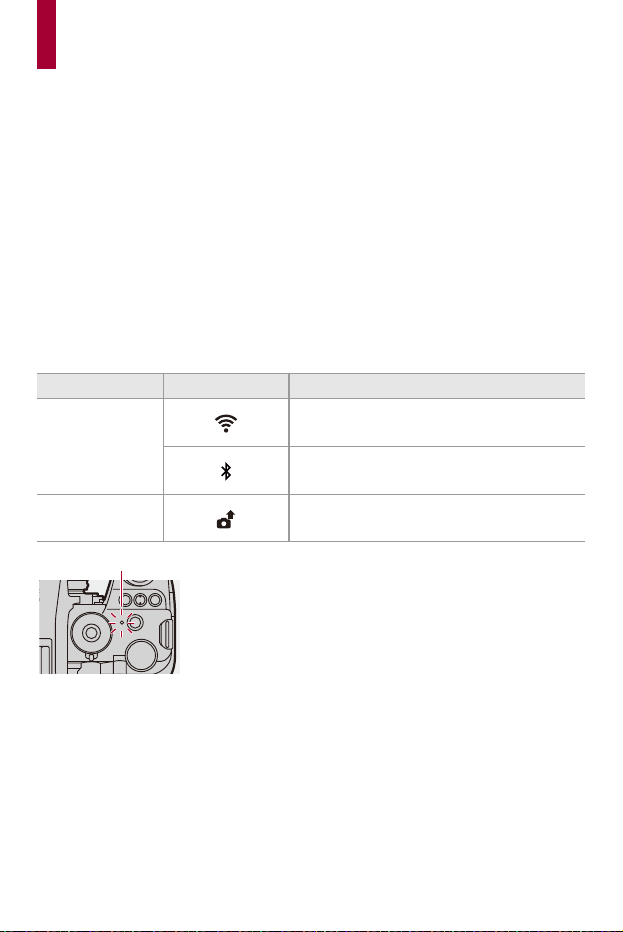
767
Wi-Fi / Bluetooth
This chapter describes how to use “LUMIX Lab” and connect to it using
Bluetooth
®
.
It also describes Wi-Fi
®
connections and settings.
•
This document refers to both smartphones and tablets as smartphones.
≥ Connecting to “LUMIX Lab”: 769
≥ Using “LUMIX Lab”: 775
≥ Wi-Fi Connections: 790
≥ [LAN / Wi-Fi] Menu: 794
Checking operation of the Wi-Fi and Bluetooth functions
(A) Network connection light
Light (blue) Monitor Operation
Lit
The Wi-Fi function is set, or there is a
connection.
The Bluetooth function is set, or there is a
connection.
Blinking
When image data is sent using a camera
operation.
(A)

Wi-Fi / Bluetooth
768
•
Do not remove the card or battery or move to an area without any reception while
sending images.
•
The camera cannot be used to connect to a public wireless LAN connection.
•
We strongly recommend that you set an encryption to maintain information
security.
•
We recommend that you use a sufficiently charged battery when sending
images.
•
When the remaining battery level is low, it may not be possible to connect to or
maintain communication with other devices.
(A message such as [Communication error] is displayed.)
•
Images may not be completely sent depending on radio wave conditions.
If the connection is terminated while sending images, images with missing parts
may be sent.
•
You can set so that the network connection light does not turn on:
([Network Connection Light]: 741)

Wi-Fi / Bluetooth – Connecting to “LUMIX Lab”
769
Connecting to “LUMIX Lab”
≥ Installing “LUMIX Lab”: 770
≥ Connecting to a Smartphone (Bluetooth Connection): 771
Connect with a smartphone which has the “Panasonic LUMIX Lab” (below:
“LUMIX Lab”) smartphone app installed.
Use “LUMIX Lab” for [LUT Library] operations and image transfers.
Wi-Fi / Bluetooth – Connecting to “LUMIX Lab”
770
Installing “LUMIX Lab”
“LUMIX Lab” is an application for smartphones provided by Panasonic.
1
Connect the smartphone to a network.
2
(Android) Select “Google Play™ Store”.
(iOS) Select “App Store”.
3
Enter “LUMIX” or “panasonic lumix lab” into the search
box.
4
Select and install the “Panasonic LUMIX Lab” .
Supported OS
Android™: Android 10 or higher
iOS: iOS 15 or higher
•
This can also be downloaded via the QR code displayed with [REAL TIME LUT].
•
Use the latest version.
•
Supported OSs are current as of May 2025 and are subject to change.
•
Read the [Help] in the “LUMIX Lab” menu for further details on how to operate.
•
The app may not operate correctly depending on your smartphone.
For information on the “LUMIX Lab”, refer to the following support site:
https://panasonic.jp/support/global/cs/dsc/
(English only)
Wi-Fi / Bluetooth – Connecting to “LUMIX Lab”
771
Connecting to a Smartphone (Bluetooth
Connection)
Follow a simple connection setup procedure (pairing) to connect to a
smartphone that supports Bluetooth Low Energy.
•
For the first-time connection, pairing settings are required.
When connecting the second and subsequent times, the connection is automatic
when you set [Bluetooth Function] to [SMARTPHONE] on the camera.
Supported smartphones
Android™: Android 10 or higher with Bluetooth 4.0 or higher (excluding those that
do not support Bluetooth Low Energy)
iOS: iOS 15 or higher
•
Turn on the Bluetooth function on the smartphone beforehand.
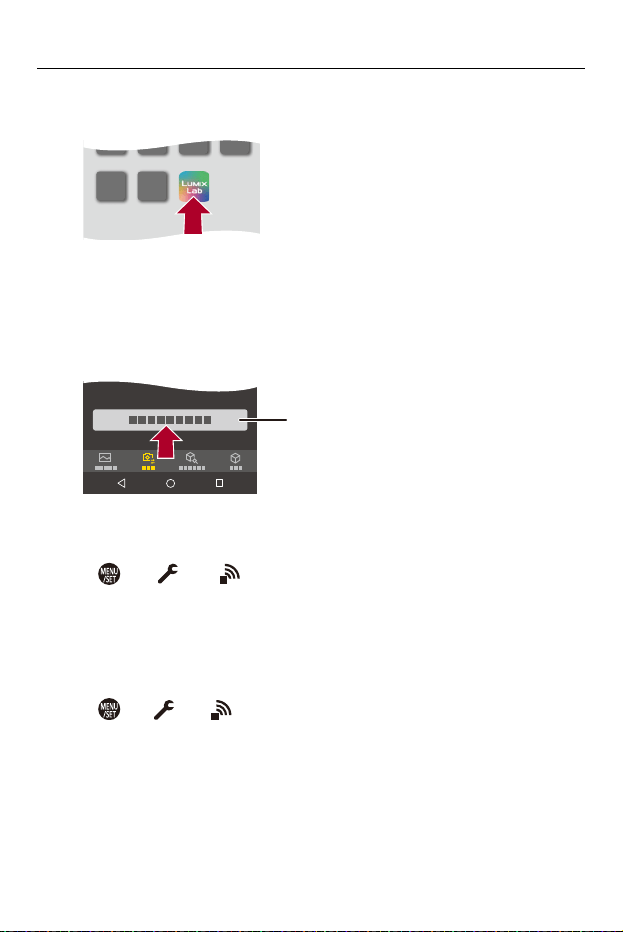
Wi-Fi / Bluetooth – Connecting to “LUMIX Lab”
772
1
On the smartphone, start up “LUMIX Lab”.
2
View the content in the displayed guidance and start
using the app.
3
Switch to the [Camera] screen and select [Pair The
Camera].
(A) [Pair The Camera]
4
Set the camera to Bluetooth pairing standby state.
≥ [] [] [Bluetooth] [Bluetooth Function]
[SMARTPHONE]
•
The camera enters the pairing standby state.
•
If there is a paired smartphone, the camera enters the connection standby
state. If you want to pair with a new smartphone, use the following procedure
to put the camera in the pairing standby state.
[] [] [Bluetooth] [Pairing] [Add Smartphone]
5
Select the camera to be connected in “LUMIX Lab”.
•
Pairing is executed when you select [Pairing] in the confirmation screen.
(A)
Wi-Fi / Bluetooth – Connecting to “LUMIX Lab”
773
End Bluetooth Connection
To terminate the Bluetooth connection, turn off the Bluetooth function of the
camera.
[] [] [Bluetooth] [Bluetooth Function] Select [OFF]
•
The paired smartphone is registered as a paired device.
•
Even if you set up pairing with more than one smartphone, you can only connect
to one smartphone at a time.
•
When pairing takes some time, canceling the pairing settings on both the
smartphone and camera and re-establishing the connection may result in the
camera being detected correctly.
•
During Bluetooth connection, [ ] is displayed in the recording screen.
When the Bluetooth function is enabled, but a connection is not established with
the smartphone, [ ] appears translucent.
•
Up to a total of 16 Bluetooth devices can be paired. If you try to register more
than 16 devices, the registration information will be deleted from the oldest first.
•
When the following function is being used, [Bluetooth] is not available:
– [Frame.io Connection]
•
Even if you terminate the connection, the pairing information for it will not be
deleted.
Wi-Fi / Bluetooth – Connecting to “LUMIX Lab”
774
Canceling Pairing
1 Cancel the pairing setting of the camera.
•
[] [] [Bluetooth] [Pairing] [Delete]
2 Select the smartphone for which to cancel the pairing.
•
Also cancel the pairing setting on the smartphone.
•
When [Reset] in the [Setup] ([Setting]) menu is used to reset the network
settings, the information for registered devices is deleted.
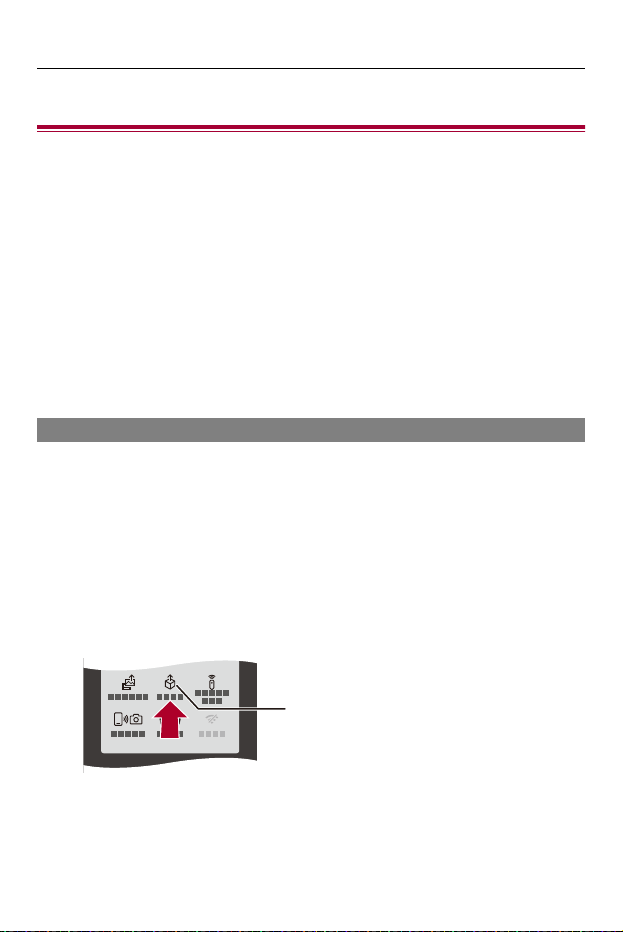
Wi-Fi / Bluetooth – Using “LUMIX Lab”
775
Using “LUMIX Lab”
≥ LUT Library Operations: 775
≥ [Remote shooting]: 777
≥ [Shutter Remote Control]: 779
≥ Sending Images on the Camera to a Smartphone with Simple
Operations: 781
≥ [Transfer Photo / Video]: 783
≥ [Auto Transfer]: 785
≥ [Location Logging]: 788
This explains the functions for operating the camera from “LUMIX Lab”.
LUT Library Operations
Operate “LUMIX Lab” to update the [LUT Library] in the camera.
Getting started:
•
Connect the camera to a smartphone by Bluetooth. (Connecting to a Smartphone
(Bluetooth Connection): 771)
•
On the smartphone, start up “LUMIX Lab”.
1
Select [LUT Transfer] in the [Camera] screen.
•
Connect to the camera with Wi-Fi. Select [Join] to start the connection.
(A) [LUT Transfer]
(A)
Wi-Fi / Bluetooth – Using “LUMIX Lab”
776
2
Select the LUT file in the [LUT Library] screen to edit.
•
You can transfer, rename, delete or reorder your LUT files.
•
A list of LUT files saved to “LUMIX Lab” is shown in [Device].
•
A list of LUT files saved to the camera is shown in [Camera].
3
Select from [Device] the LUT file to transfer.
4
Select [Transfer to Camera] and update the [LUT
Library] on the camera.
•
When the following function is being used, [Bluetooth] is not available:
– [Frame.io Connection]
Vlog_709
XXXXXXXXX
XXXXXXXXX
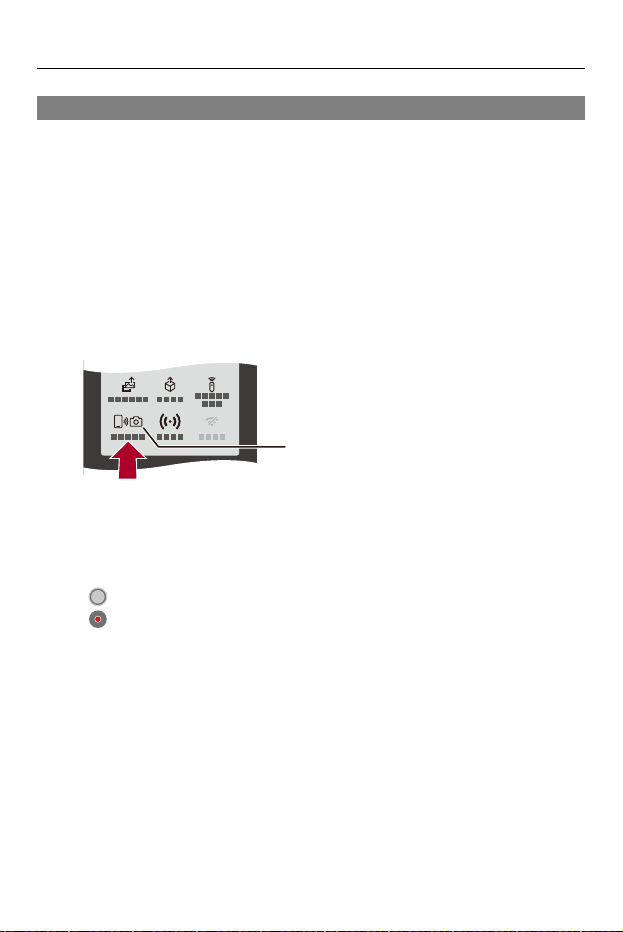
Wi-Fi / Bluetooth – Using “LUMIX Lab”
777
[Remote shooting]
You can use the smartphone to record from a remote location while
viewing the live view images from the camera.
Getting started:
•
Connect the camera to a smartphone by Bluetooth. (Connecting to a Smartphone
(Bluetooth Connection): 771)
•
On the smartphone, start up “LUMIX Lab”.
1
Select [Remote shooting] in the [Camera] screen.
•
Connect to the camera with Wi-Fi. Select [Join] to start the connection.
(B) [Remote shooting]
2
Start recording.
•
The recorded image is saved on the camera.
: Takes a picture
: Starts/ends the video recording
(B)
Wi-Fi / Bluetooth – Using “LUMIX Lab”
778
Operation Method During Remote Recording
Set either the camera or the smartphone as the priority control device to be
used during remote recording.
Touch [ ] in the “LUMIX Lab” remote recording screen.
•
The icon switches each time you touch it.
(Camera prioritized)
Operation is possible on both the camera and the smartphone.
•
You cannot use the smartphone to change settings for photo/video/S&Q mode,
recording mode, etc.
(Smartphone prioritized)
Operation is possible only on the smartphone.
•
You can use the smartphone to change settings for photo/video/S&Q mode,
recording mode, etc.
•
To end remote recording, press any of the buttons on the camera to turn on the
screen, and select [End].
•
The default setting is [ ] (Camera prioritized).
•
When used in combination with [Auto Transfer], it is possible to automatically
transfer the remotely recorded images to a smartphone. ([Auto Transfer]: 785)
•
If [Auto Transfer] is set to [ON] using the setting menu for remote recording, it is
enabled when you return to the camera screen from the remote recording
screen.
•
Certain features, including some settings, may not be available.
•
When the following function is being used, [Bluetooth] is not available:
– [Frame.io Connection]
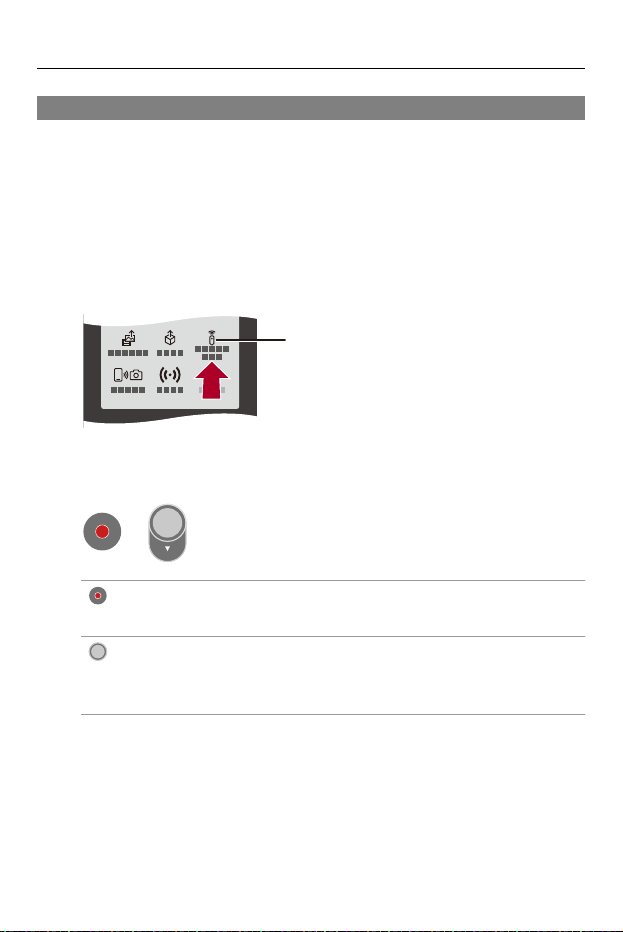
Wi-Fi / Bluetooth – Using “LUMIX Lab”
779
[Shutter Remote Control]
You can use the smartphone as a remote control for the shutter.
Getting started:
•
Connect the camera to a smartphone by Bluetooth. (Connecting to a Smartphone
(Bluetooth Connection): 771)
•
On the smartphone, start up “LUMIX Lab”.
1
Select [Shutter Remote Control] in the [Camera] screen.
(C) [Shutter Remote Control]
2
Start recording.
Starts/ends the video recording
Takes a picture
•
Bulb Recording: 780
(C)
LOCK
Wi-Fi / Bluetooth – Using “LUMIX Lab”
780
Bulb Recording
The shutter can be kept open from the start to end of recording, which is
useful for recording of starry skies or night scenery.
Getting started:
•
Set the camera to [M] mode. (Manual Exposure Mode: 340)
•
Set the camera shutter speed to [B] (Bulb). ([B] (Bulb): 345)
1 Touch [ ] to start recording (keep touching, without removing your finger).
2 Remove your finger from [ ] to end recording.
•
Slide [ ] in the direction of [LOCK] to record with the shutter button locked
in a fully-pressed state.
(Slide [ ] back to its original position or press the camera shutter button to
end recording)
•
During [B] (Bulb) recording, if the Bluetooth connection is broken, then carry
out Bluetooth connection again, then end recording from the smartphone.
•
When [Auto Transfer] is set to [ON], [Shutter Remote Control] cannot be used.
•
When the following function is being used, [Bluetooth] is not available:
– [Frame.io Connection]

Wi-Fi / Bluetooth – Using “LUMIX Lab”
781
Sending Images on the Camera to a Smartphone
with Simple Operations
You can transfer pictures to a smartphone connected by Bluetooth just by
pressing [Q] during playback.
You can also use the menu to connect easily.
•
You can also perform the same operation by pressing the Fn button registered with
[Send Image (Smartphone)]. (Fn Buttons: 646)
Getting started:
•
Connect the camera to a smartphone by Bluetooth. (Connecting to a Smartphone
(Bluetooth Connection): 771)
•
Press [ ] on the camera to display the playback screen.
Send a single image
1 Press 21 to select the image.
2 Press [Q].
3 Select [Single Select].
•
To change the send settings of images, press [DISP.]. (Image Send Settings:
786)
4 Select [OK] on the smartphone.
•
This connects automatically using Wi-Fi.
Send multiple images
1 Press [Q].
2 Select [Multi Select].
•
To change the send settings of images, press [DISP.]. (Image Send Settings:
786)
3 Select the images and then transfer.
21: Select images
or : Set/Cancel
[DISP.]: Transfer
4 Select [OK] on the smartphone.
•
This connects automatically using Wi-Fi.
Wi-Fi / Bluetooth – Using “LUMIX Lab”
782
Using the menu to transfer easily
[] [] [Bluetooth] [Send Image (Smartphone)]
Settings: [Single Select]/[Multi Select]
•
If [Single Select], press 21 to select the image and then press or to
execute.
•
If [Multi Select], use the same operation as with “Send multiple images”. (Send
multiple images: 781)
•
It is not possible to transfer images with file sizes exceeding 4 GB.
•
Images recorded using the following function cannot be transferred:
– [MOV] videos, [Apple ProRes] videos
•
When recording, recording is prioritized so it will take time for sending to
complete.
•
If the camera is turned off, or the Wi-Fi is disconnected before sending is
completed, then sending will not restart.
•
You may not be able to delete files or use the [Playback] menu while sending.
•
When [Auto Transfer] is set to [ON], [Send Image (Smartphone)] cannot be used.
•
When the following function is being used, [Bluetooth] is not available:
– [Frame.io Connection]
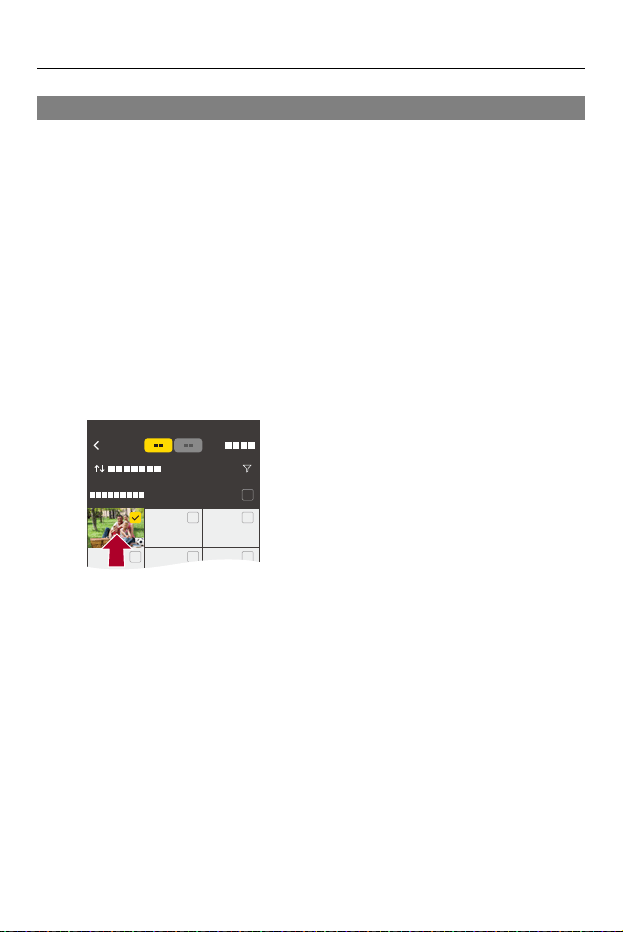
Wi-Fi / Bluetooth – Using “LUMIX Lab”
783
[Transfer Photo / Video]
Operate “LUMIX Lab” to transfer images from the camera to your
smartphone.
Getting started:
•
Connect the camera to a smartphone. (Connecting to a Smartphone (Bluetooth
Connection): 771)
•
On the smartphone, start up “LUMIX Lab”.
1
Select [Transfer Photo / Video] in the [Camera] screen.
•
Connect to the camera with Wi-Fi. Select [Join] to start the connection.
2
Select the image to transfer.
≥Touch the checkbox to select.
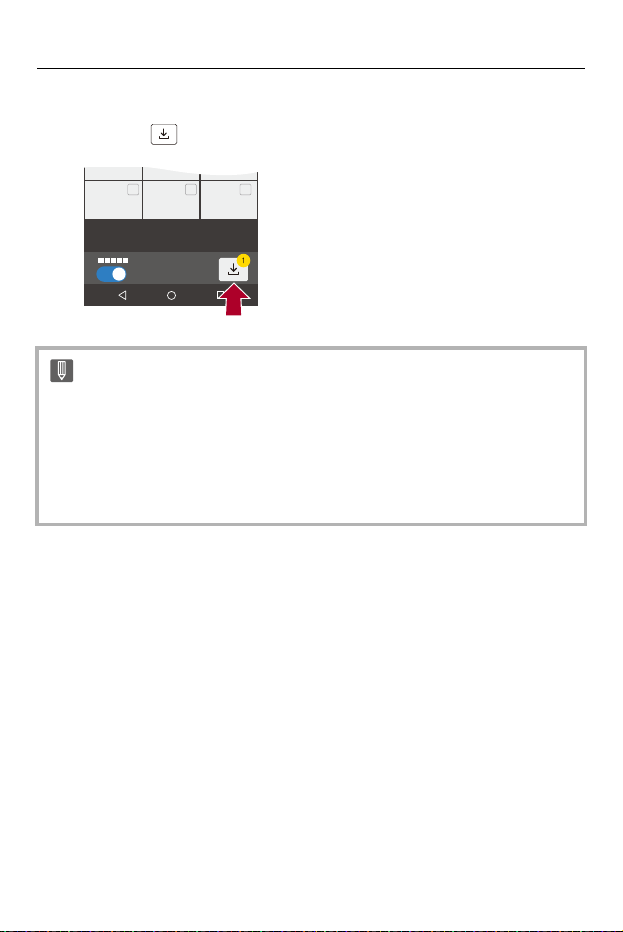
Wi-Fi / Bluetooth – Using “LUMIX Lab”
784
3
Transfer the image.
≥Select [ ].
•
It is not possible to transfer images with file sizes exceeding 4 GB.
•
Images recorded using the following function cannot be transferred:
– [MOV], [Apple ProRes] videos
•
When the following function is being used, [Bluetooth] is not available:
– [Frame.io Connection]
•
The transfer speed slows when the camera temperature rises.
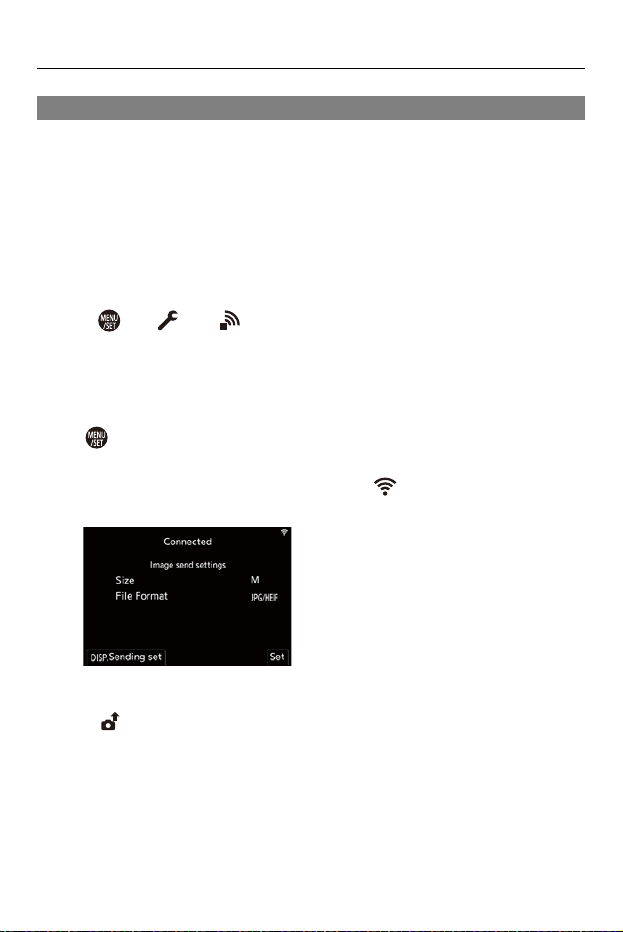
Wi-Fi / Bluetooth – Using “LUMIX Lab”
785
[Auto Transfer]
You can automatically transfer images from the camera to your
smartphone as they are taken.
Getting started:
•
Connect the camera to a smartphone by Bluetooth. (Connecting to a Smartphone
(Bluetooth Connection): 771)
1
Enable [Auto Transfer] on the camera.
≥ [] [] [Bluetooth] [Auto Transfer] [ON]
≥The function can also be enabled in “LUMIX Lab”.
•
Connect to the smartphone with Wi-Fi.
2
Check the send settings on the camera and then press
.
•
To change the send setting, press [DISP.]. (Image Send Settings: 786)
•
Automatic image transfer is possible when [ ] is displayed on the camera
recording screen.
3
Record with the camera.
•
[ ] is displayed in the recording screen of the camera while a file is being
sent.

Wi-Fi / Bluetooth – Using “LUMIX Lab”
786
Image Send Settings
Set the size and file format for sending the image.
1 Send settings confirmation screen will be displayed, so press [DISP.].
2 Change the send settings.
[Size]
Resize the image to send.
[Original]/[Change] ([L], [M], [S], [XS] or [VGA])
[File Format]
Sets the file format of images to send.
[JPG/HEIF]/[RAW]
To Stop the Automatic Transfer of Images
[] [] [Bluetooth] [Auto Transfer] Select [OFF]
≥ A confirmation screen is displayed, asking you to terminate the Wi-Fi
connection.

Wi-Fi / Bluetooth – Using “LUMIX Lab”
787
•
When [Bluetooth Function] is set to [SMARTPHONE] and [Auto Transfer] is set to
[ON] on the camera and you turn on the camera, Wi-Fi/Bluetooth connection to
the smartphone is performed automatically.
Start up the “LUMIX Lab” on the smartphone to connect to the camera.
•
Automatic image transfer is interrupted while recording or playing back videos.
The transfer starts at the start of the file where it was interrupted when the
transmission restarts.
•
If the camera is turned off during image transfer, and the file sending is
interrupted, then turn on the camera to restart the sending.
– If the storage status of unsent files changes, then sending of files may no
longer be possible.
– If there are many unsent files, then sending of all files may not be possible.
•
If automatic image transfer is performed in places where the ambient
temperature is high, communications may be interrupted.
The camera automatically reconnects when its temperature goes down and
automatic image transfer restarts.
If automatic image transfer does not restart, turn the camera off then on again to
reconnect.
•
Images recorded with the following function cannot be transferred automatically:
– Video recording
•
When the following function is being used, [Bluetooth] is not available:
– [Frame.io Connection]

Wi-Fi / Bluetooth – Using “LUMIX Lab”
788
[Location Logging]
The smartphone sends its location information to the camera via Bluetooth,
and the camera performs recording while writing the acquired location
information.
Getting started:
•
Enable the GPS function on the smartphone.
•
Connect the camera to a smartphone by Bluetooth. (Connecting to a Smartphone
(Bluetooth Connection): 771)
1
Enable [Location Logging] on the camera.
≥ [] [] [Bluetooth] [Location Logging] [ON]
≥The function can also be enabled in “LUMIX Lab”.
•
The camera will enter a mode where location information can be recorded
and [ ] is displayed in the recording screen of the camera.
2
Record images with the camera.
•
Location information will be written to the recorded images.
GPS

Wi-Fi / Bluetooth – Using “LUMIX Lab”
789
•
When [ ] on the recording screen appears translucent, location information
cannot be acquired, therefore data cannot be written.
Smartphone GPS positioning may not be possible if the smartphone is within a
building, a bag, or similar. Move the smartphone to a position affording a wide
view of the sky to improve positioning performance.
In addition, refer to the operating instructions of your smartphone.
•
Images with location information are indicated with [ ].
•
Be sure to pay special attention to the privacy, the likeness rights, etc. of the
subject when you use this function. Use at your own risk.
•
The smartphone drains its battery faster while acquiring location information.
•
When the following function is being used, [Bluetooth] is not available:
– [Frame.io Connection]
GPS
GPS
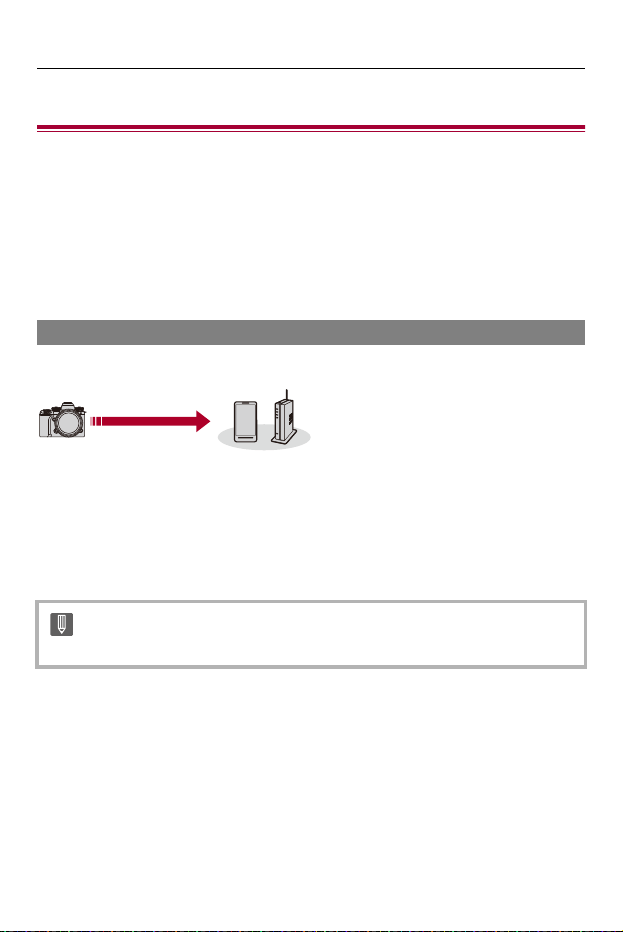
Wi-Fi / Bluetooth – Wi-Fi Connections
790
Wi-Fi Connections
≥ [New connection]: 790
≥ Fn Button Assigned with [Wi-Fi]: 793
When [ON] is selected in [Streaming Function] or [Frame.io Connection], a
Wi-Fi connection is established when you select [New connection]. (When
[Connection Method] in [Streaming] or [Frame.io] is set to [Wi-Fi])
[New connection]
Connects the camera and a wireless access point using Wi-Fi.
Select the method for connecting to a wireless access point.
Settings: [WPS (Push-Button)]/[WPS (PIN code)]/[From List] ([WPS
(Push-Button)]: 791, [WPS (PIN code)]: 791, [From List]: 792)
•
Check the operating instructions and settings of the wireless access point.
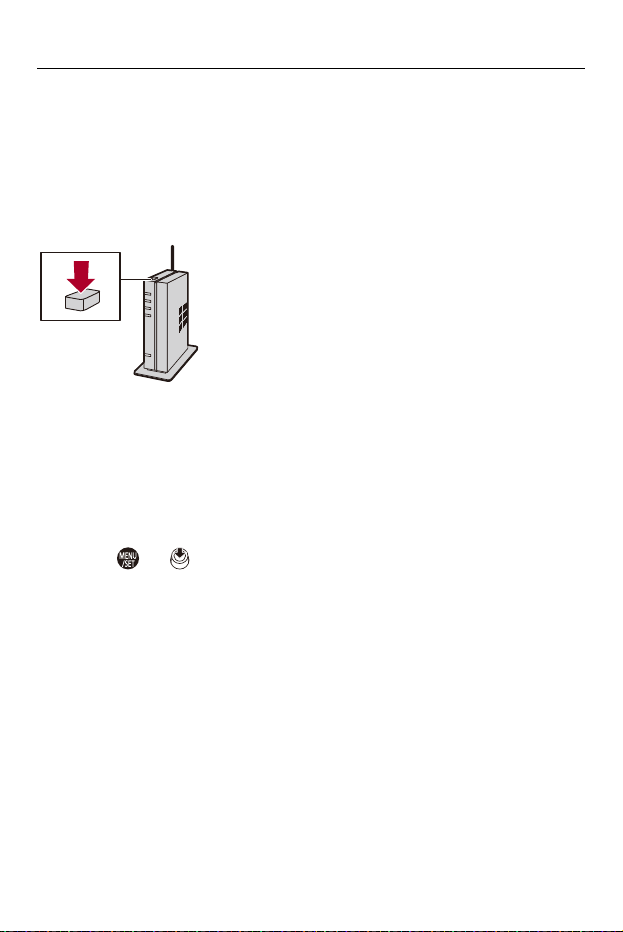
Wi-Fi / Bluetooth – Wi-Fi Connections
791
[WPS (Push-Button)]
Press the WPS button on the wireless access point to set up a connection.
Press the wireless access point WPS button until it switches to WPS
mode.
Example)
[WPS (PIN code)]
Enter a PIN code into the wireless access point to set up a connection.
1 On the camera screen, select the wireless access point you are connecting to.
2 Enter the PIN code displayed on the camera screen into the wireless access
point.
3 Press or of the camera.
Wi-Fi / Bluetooth – Wi-Fi Connections
792
[From List]
Searches for a wireless access point to use, and connects to this.
1 Select the wireless access point you are connecting to.
•
Press [DISP.] to run a wireless access point search again.
•
If no wireless access point is found (Connecting by Manual Input: 792)
2 (If network authentication is encrypted) Enter the encryption key.
•
How to enter characters (Entering Characters: 108)
Connecting by Manual Input
1 In the screen in Step 1 of “[From List]”, select [Manual Input]. ([From List]: 792)
2 Enter the SSID of the wireless access point you are connecting to, and then
select [Set].
•
How to enter characters (Entering Characters: 108)
3 Select the network authentication.
[WPA3-SAE]/[WPA3/WPA2]/[WPA2-PSK]/[WPA2/WPA-PSK]
Supported encryption: [AES]
4 Enter the encryption key and then select [Set].
•
Confirm the encryption key of the wireless access point.
•
Check the SSID, network authentication, encryption, and encryption key of the
wireless access point you are using.
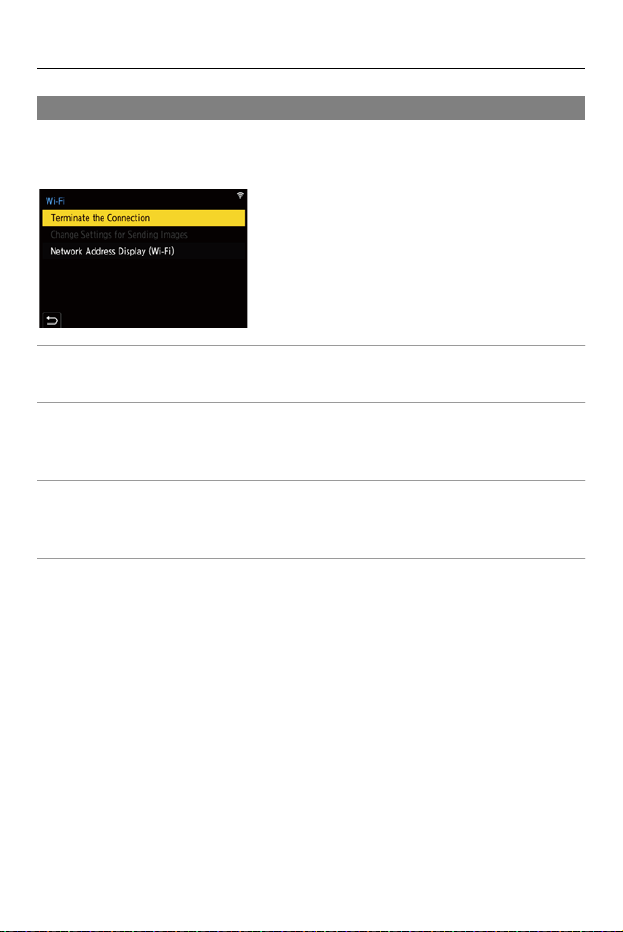
Wi-Fi / Bluetooth – Wi-Fi Connections
793
Fn Button Assigned with [Wi-Fi]
You can perform the following operations by pressing the Fn button
assigned with [Wi-Fi] after connecting to Wi-Fi. (Fn Buttons: 646)
[Terminate the Connection]
Terminates the Wi-Fi connection.
[Change Settings for Sending Images]
Sets the image size, file format, and other items for sending recorded images.
(Image Send Settings: 786)
[Network Address Display (Wi-Fi)]
Displays the MAC address and IP address of the camera. ([Network Address
Display (Wi-Fi)]: 796)
•
Depending on the Wi-Fi function being used or the connection destination, you may
not be able to perform some of these operations.
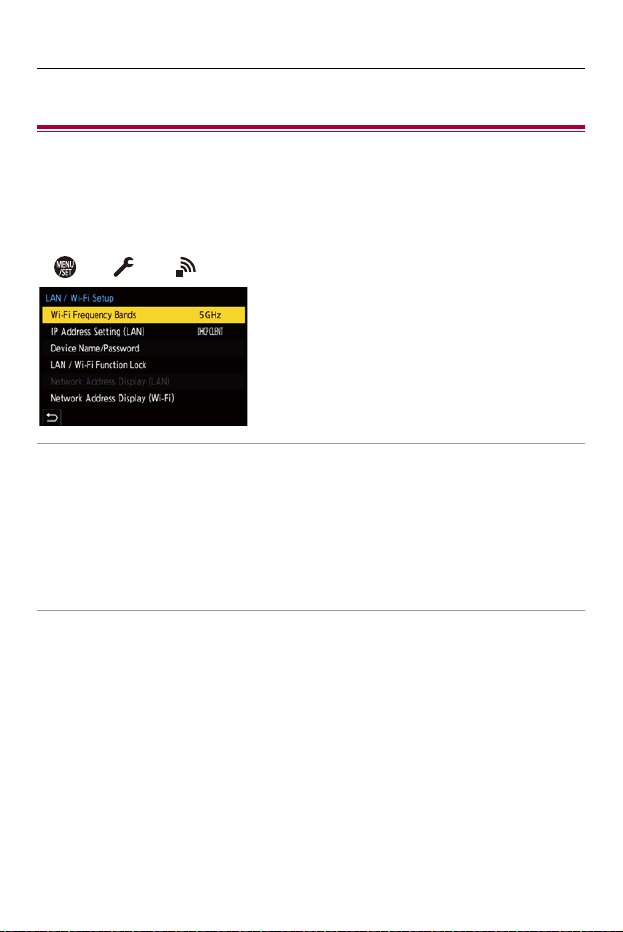
Wi-Fi / Bluetooth – [LAN / Wi-Fi] Menu
794
[LAN / Wi-Fi] Menu
This configures the settings required for the wired LAN/Wi-Fi function.
The settings cannot be changed while connected with wired LAN/Wi-Fi.
Displaying the [LAN / Wi-Fi] menu.
≥ [] [] [LAN / Wi-Fi]
[Wi-Fi Frequency Bands]
This sets the frequency band used for direct connection with a smartphone.
[2.4GHz]: Connection uses the 2.4 GHz frequency band.
[5GHz]: Connection uses the 5 GHz frequency band.
•
Depending on the region, local regulations, etc. may prohibit you from using the 5
GHz frequency band outdoors. If this is the case, when outdoors, connect to the
smartphone using [2.4GHz] for the Wi-Fi connection.

Wi-Fi / Bluetooth – [LAN / Wi-Fi] Menu
795
[IP Address Setting (LAN)]
Sets the IP address when connecting via wired LAN.
You can select to either automatically allocate the IP address with the DHCP, or set
any static IP address.
[DHCP Server]: Select when the camera is to be connected as the DHCP server.
[DHCP Client]: Select when the camera is to be connected as the DHCP client.
(Default setting)
[Static IP Address]: Select when connecting using an IP set in [Static IP Address
Setting].
[Static IP Address Setting]: Set the IP address to be used in [Static IP Address].
[IP Address]: The default setting is <192.168.0.2>.
[Subnet Mask]: The default setting is <255.255.255.0>.
[Default Gateway]: The default setting is <192.168.0.1>.
Use the correct combinations when setting the [IP Address], [Subnet Mask], and
[Default Gateway].
•
Consult the administrator of the network you are using for detailed information about
the DHCP settings and static IP address settings.
•
If you have modified settings in [IP Address Setting (LAN)], turn the camera off and
on again.
Wi-Fi / Bluetooth – [LAN / Wi-Fi] Menu
796
[Device Name/Password]
You can change the camera name (SSID) and password.
•
Press [DISP.] to change the device name and password.
•
The number of characters you can enter is a maximum of 32 for the device name
and between 8 and 63 for the password.
[LAN / Wi-Fi Function Lock]
You can set a password to prevent incorrect operation and use of the wired LAN/Wi-Fi
functions by a third party and to protect personal information that may be found either
in the camera itself or in images recorded with the camera.
[Setup]: Enter any 4-digit numbers as the password.
•
Once a password is set, you are required to enter it when you select [LAN / Wi-Fi] or
[Streaming].
[Cancel]: Cancel the password.
[Network Address Display (LAN)]
Displays the MAC address and IP address of the camera when connecting via wired
LAN.
[Network Address Display (Wi-Fi)]
Displays the MAC address and IP address of the camera when connecting via Wi-Fi.
•
If you forget your password, you can use [Reset] in the [Setup] ([Setting]) menu
to reset the network settings and thereby reset the password.
•
How to enter characters (Entering Characters: 108)

797
Frame.io Camera to Cloud
This camera is compatible with “Frame.io Camera to Cloud”.
By connecting the camera to the internet via Wi-Fi, you can upload still
images and proxy videos directly to the Frame.io platform.
* This does not guarantee all of the functions of “Frame.io Camera to Cloud”.
≥ Connecting with Frame.io: 798
≥ [Send Images to Frame.io]: 803
≥ [Upload Setup]: 804
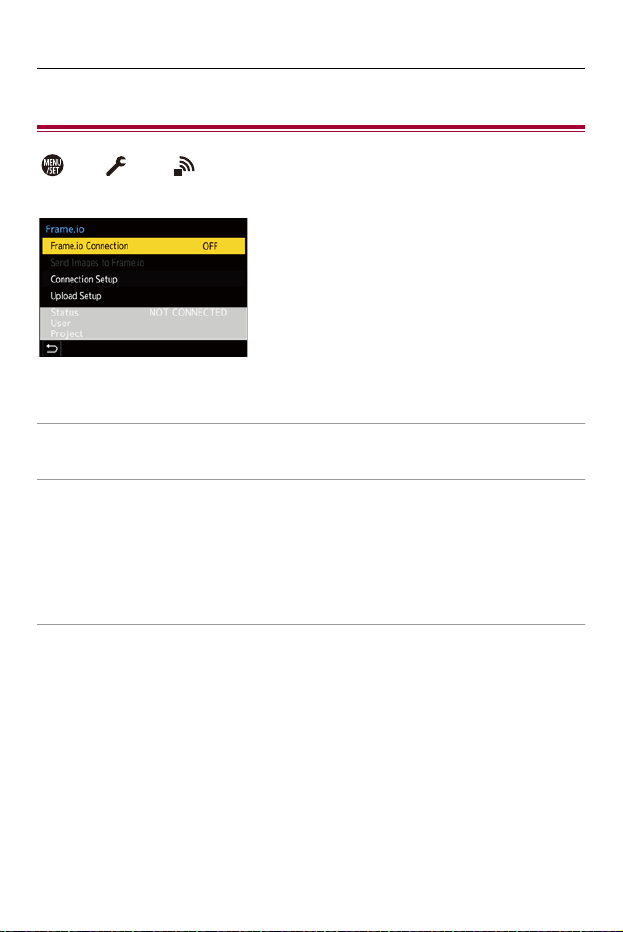
Frame.io Camera to Cloud – Connecting with Frame.io
798
Connecting with Frame.io
[] [] [Frame.io] [Frame.io Connection]
Select [ON].
≥ Perform [Wi-Fi Connection Setting] and [Pairing(Frame.io)] when
connecting for the first time.
[Wi-Fi Connection Setting]
Select [New connection] and connect via Wi-Fi to the access point.
[Pairing(Frame.io)]
A pairing code is displayed on the camera.
Log into Frame.io from a PC, etc., and enter the pairing code in the device registration
screen.
•
This can also be set by selecting [Frame.io Connection] [SET]
[Pairing(Frame.io)].
Frame.io Camera to Cloud – Connecting with Frame.io
799
•
You can view the [Status] in relation to Frame.io in the [Frame.io] menu screen.
– [NOT CONNECTED]: Connection with Frame.io not started
– [CONNECTING]: Currently trying to connect with Frame.io (incomplete)
– [CONNECTED]: Connection with Frame.io completed
– [CONNECTED(PAUSED)]: Camera connection has been paused on the Frame.io
site
•
The user name ([User]) and project name ([Project]) are displayed on the camera
when the connection is completed.
•
If connection with Frame.io fails repeatedly (authentication failure), try the pairing
setting procedure again.
•
If it is not possible to connect with Frame.io, check the connection method and
then try setting [Frame.io Connection] to [ON] again.
•
Depending on the status of the camera, it may take some time to transfer
images.
•
When the following functions are being used, [Frame.io] is not available:
– [Bluetooth]
– [Streaming]
– [USB]
– Tethered recording
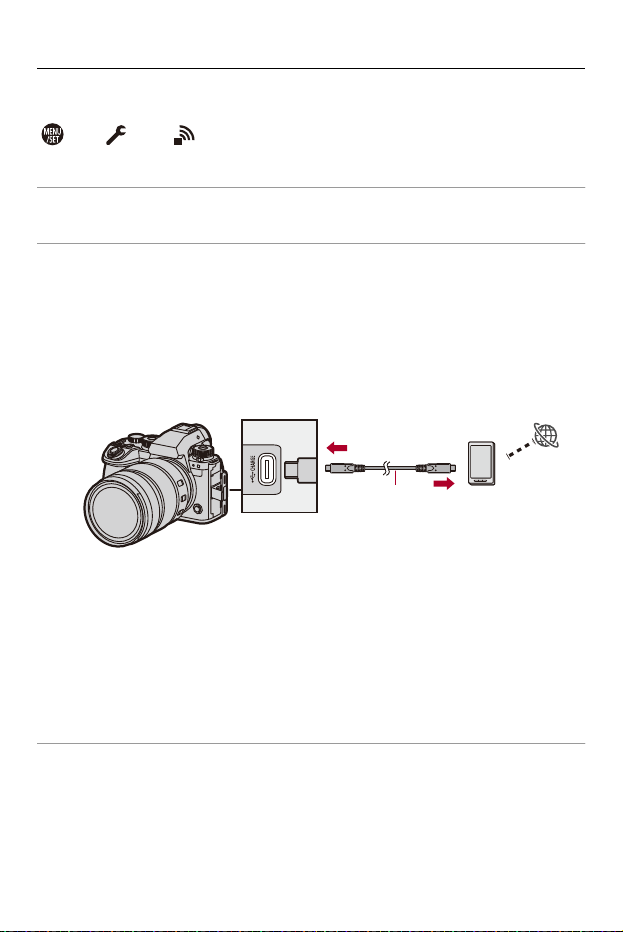
Frame.io Camera to Cloud – Connecting with Frame.io
800
Changing the Connection Method
[] [] [Frame.io] [Connection Setup]
Select [Connection Method].
[Wi-Fi]
Connect to an access point via Wi-Fi.
[USB Tethering]
Connect using the USB tethering function of a smartphone.
• When a smartphone is used, the camera is connected to the internet via
mobile data communications (4G, 5G, etc.) enabling you to connect with
Frame.io from locations where a router is not available, when you are out
and about, for example.
1 Connect the camera and the smartphone using a USB connection cable.
(A) USB connection cable (commercially available)
2 Enable the USB tethering function on the smartphone.
•
Select [USB Tethering] (for Android devices) or [Personal Hotspot] (for iOS
devices) on the smartphone.
•
If a confirmation message appears on the smartphone screen asking for
permission to enable access by the connected device, grant permission.
Connection is not complete until permission is given.
•
Please also refer to the operating instructions of your smartphone.
≥ If the connection method is changed while connected with Frame.io, the
connection with Frame.io is temporarily broken, and then it is
reestablished after the change.
(A)

Frame.io Camera to Cloud – Connecting with Frame.io
801
Notes When Using USB Tethering
•
For information about the tethering function of your smartphone, refer to the
operating instructions of the smartphone and the contract you have with the
cell-phone provider.
Depending on the contract you have, there may be limitations on tethering or it
may incur large additional charges.
•
Set [Frame.io Connection] to [OFF] if you are not going to connect with
Frame.io.
When set to [ON], if the [Connection Method] is set to [USB Tethering], power is
supplied from the battery of this camera to the connected device, so the battery
will be consumed faster.
•
For information about the high temperature display
When the temperature of the camera rises, [ ] appears blinking on the screen.
If you continue to use the camera, a message indicating that the camera cannot
be used is displayed on the screen and some functions, such as recording and
HDMI output, will be stopped. Wait for the camera to cool down and for the
message indicating that the camera can be used again. When the message
indicating that it can be used again is displayed, turn the camera off then on
again.
•
The network connection light does not light when connected to the internet via
USB tethering.
•
After connecting via USB tethering, when charging the battery in the camera,
make sure that the charging light of the camera lights red.
If the charging light does not light, reconnect the USB connection cable while the
camera is turned off.

Frame.io Camera to Cloud – Connecting with Frame.io
802
Changing the Wi-Fi Connection Destination
Change the access point, etc., while connected to Frame.io.
[] [] [Frame.io] [Connection Setup]
Select [Wi-Fi Connection Setting].
≥ Press [DISP.] to reselect the connection destination.
Disconnecting from Frame.io
[] [] [Frame.io] [Frame.io Connection]
Select [OFF].
≥ The upload queue is not cleared even if you break the connection (Wi-Fi)
with Frame.io.
Unpairing (Frame.io)
[] [] [Frame.io] [Frame.io Connection]
[SET] Select [Delete].
≥ This deletes the information for pairing with Frame.io and breaks the
connection (Wi-Fi) with Frame.io.
≥ The upload queue is cleared.
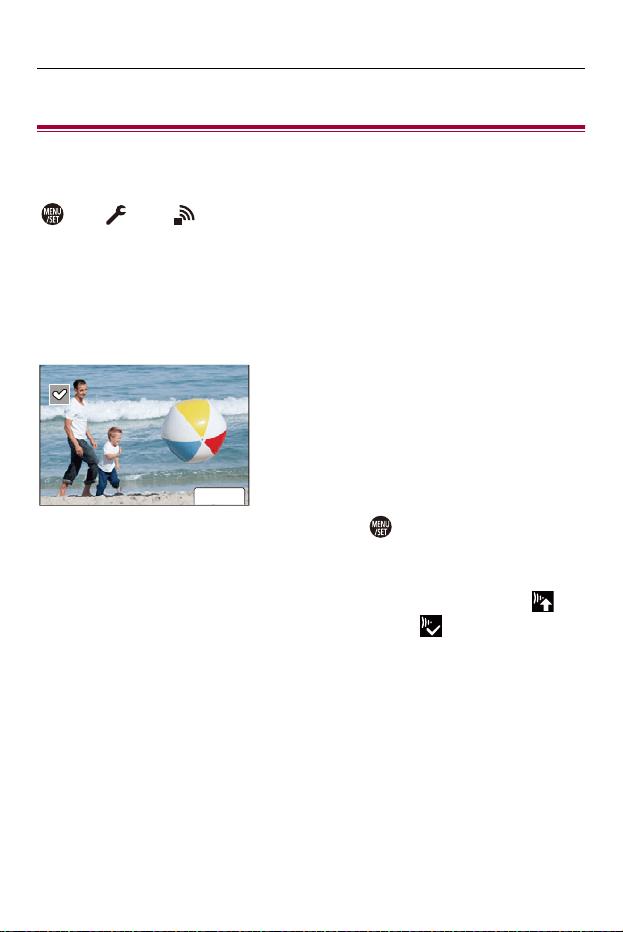
Frame.io Camera to Cloud – [Send Images to Frame.io]
803
[Send Images to Frame.io]
When [Frame.io Connection] is set to [ON], the images to upload can be
reserved manually.
[] [] [Frame.io] Select [Send Images to
Frame.io]
≥ You also can display the screen for selecting images by pressing the Fn
button which has been assigned [Send Images to Frame.io].
≥ The images filtered by [Upload File Format] in [Upload Setup] are
displayed.
• Press 21 to select the images and press to add check marks.
• Images are added to the end of the upload queue when you press
[DISP.].
• During playback, images reserved for transfer are indicated with [ ]
and images already transfered are indicated with [ ].
2.
ュリヴヱハ
6HQG,PDJHVWR)UDPHLR6HQG,PDJHVWR)UDPHLR6HQG,PDJHVWR)UDPHLR
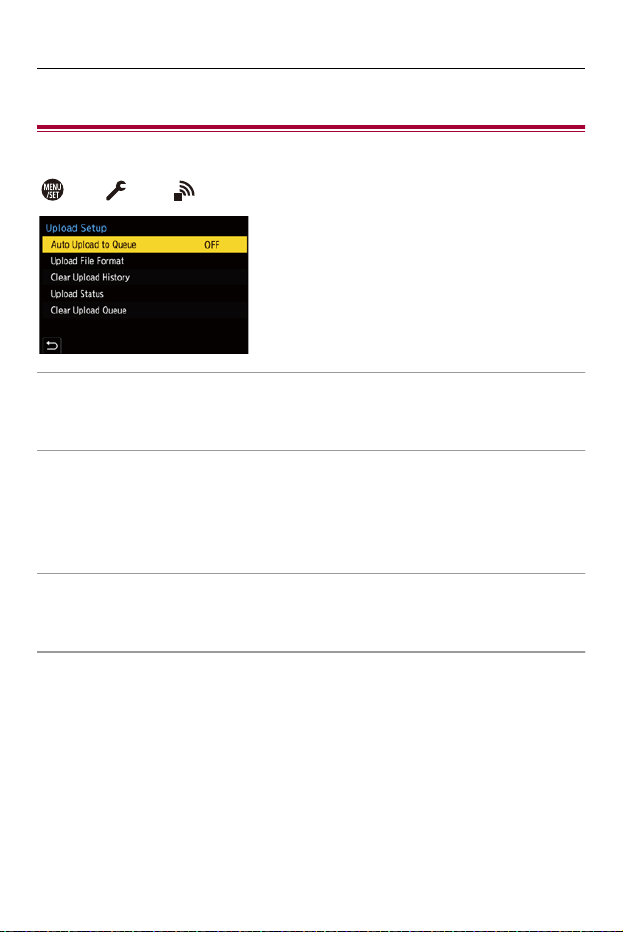
Frame.io Camera to Cloud – [Upload Setup]
804
[Upload Setup]
Make settings related to uploading of images.
[] [] [Frame.io] Select [Upload Setup]
[Auto Upload to Queue]
When set to [ON], images are added to the Frame.io upload queue as they are
recorded.
[Upload File Format]
Select the format of the files to be automatically uploaded.
With [Send Images to Frame.io], you can filter the file types to display when making
image selections.
You can upload proxy videos and pictures (JPEG/RAW).
[Clear Upload History]
Removes the icon indicating an image is uploaded from images that have been
uploaded.

Frame.io Camera to Cloud – [Upload Setup]
805
[Upload Status]
You can see the projects that are connected and the number of files remaining to be
uploaded, etc.
Press [DISP.] to see even more detailed information.
[Clear Upload Queue]
Clears the upload queue for Frame.io.
Removes the icon indicating that images are in the queue for uploading.
•
Images that are removed from the upload queue are not uploaded to Frame.io.
Notes About the Upload Queue (Transfer Reservation
List)
When the camera has been connected to Frame.io, the images in the
upload queue are uploaded to Frame.io.
•
If there are images remaining in the upload queue, uploading is continued even if the
camera on/off switch is set to [OFF]. The power is turned off when uploading is
completed. If [Exit] is selected to turn off the power, uploading is resumed when the
camera is next turned on.
•
Uploading is canceled when the connection with Frame.io is broken and then is
resumed when the connection is reestablished.
•
The upload queue is cleared in the following cases:
– [Clear Upload Queue] is executed
– Pairing with Frame.io is canceled
•
Do not remove the battery while the camera is still turned on. The upload queue will
not be kept properly.


Linking with “LUMIX Flow” – Connecting to “LUMIX Flow”
808
Installing “LUMIX Flow”
“LUMIX Flow” is an application for smartphones provided by Panasonic.
1
Connect the smartphone to a network.
2
(Android) Select “Google Play™ Store”.
(iOS) Select “App Store”.
3
Enter “LUMIX” or “panasonic lumix flow” into the
search box.
4
Select and install the “Panasonic LUMIX Flow” .
Supported OS
Android™: Android 11 or higher
iOS: iOS 15.4 or higher
•
Use the latest version.
•
Supported OSs are current as of May 2025 and are subject to change.
•
Read the [Help] in the “LUMIX Flow” menu for further details on how to operate.
•
The app may not operate correctly depending on your smartphone.
For information on the “LUMIX Flow”, refer to the following support site:
https://panasonic.jp/support/global/cs/dsc/
(English only)
Linking with “LUMIX Flow” – Connecting to “LUMIX Flow”
809
Connecting to a Smartphone (Bluetooth
Connection)
Follow a simple connection setup procedure (pairing) to connect to a
smartphone that supports Bluetooth Low Energy.
•
For the first-time connection, pairing settings are required.
When connecting the second and subsequent times, the connection is automatic
when you set [Bluetooth Function] to [SMARTPHONE] on the camera.
Supported smartphones
Android™: Android 11 or higher with Bluetooth 4.0 or higher (excluding those that
do not support Bluetooth Low Energy)
iOS: iOS 15.4 or higher
•
Turn on the Bluetooth function on the smartphone beforehand.
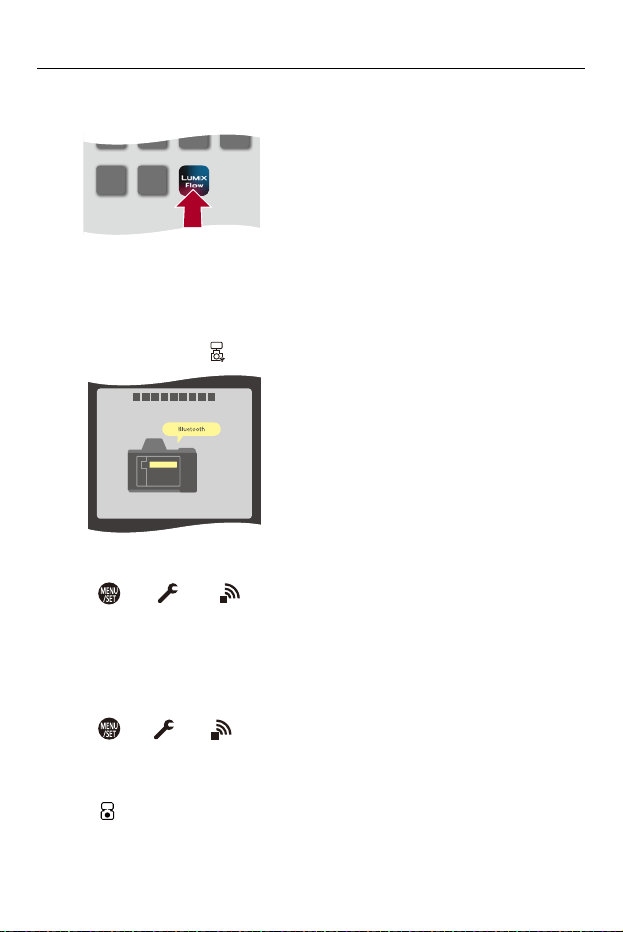
Linking with “LUMIX Flow” – Connecting to “LUMIX Flow”
810
1
On the smartphone, start up “LUMIX Flow ”.
2
View the content in the displayed guidance and start
using the app.
3
Operate “LUMIX Flow” to set to pairing standby state.
≥After selecting [ ], select [Pair The Camera].
4
Set the camera to Bluetooth pairing standby state.
≥ [] [] [Bluetooth] [Bluetooth Function]
[SMARTPHONE]
•
The camera enters the pairing standby state.
•
If there is a paired smartphone, the camera enters the connection standby
state. If you want to pair with a new smartphone, use the following procedure
to put the camera in the pairing standby state.
[] [] [Bluetooth] [Pairing] [Add Smartphone]
5
Select the camera to be connected in “LUMIX Flow”.
•
Pairing is executed when you select [Pairing] in the confirmation screen.
≥[ ] is displayed on the camera’s screen when connected.
Linking with “LUMIX Flow” – Connecting to “LUMIX Flow”
811
End Bluetooth Connection
To terminate the Bluetooth connection, turn off the Bluetooth function of the
camera.
[] [] [Bluetooth] [Bluetooth Function] Select [OFF]
•
The paired smartphone is registered as a paired device.
•
Even if you set up pairing with more than one smartphone, you can only connect
to one smartphone at a time.
•
When pairing takes some time, canceling the pairing settings on both the
smartphone and camera and re-establishing the connection may result in the
camera being detected correctly.
•
During Bluetooth connection, [ ] is displayed in the recording screen.
When the Bluetooth function is enabled, but a connection is not established with
the smartphone, [ ] appears translucent.
•
Up to a total of 16 Bluetooth devices can be paired. If you try to register more
than 16 devices, the registration information will be deleted from the oldest first.
•
When the following function is being used, [Bluetooth] is not available:
– [Frame.io Connection]
•
Even if you terminate the connection, the pairing information for it will not be
deleted.
Linking with “LUMIX Flow” – Connecting to “LUMIX Flow”
812
Canceling Pairing
1 Cancel the pairing setting of the camera.
•
[] [] [Bluetooth] [Pairing] [Delete]
2 Select the smartphone for which to cancel the pairing.
•
Also cancel the pairing setting on the smartphone.
•
When [Reset] in the [Setup] ([Setting]) menu is used to reset the network
settings, the information for registered devices is deleted.
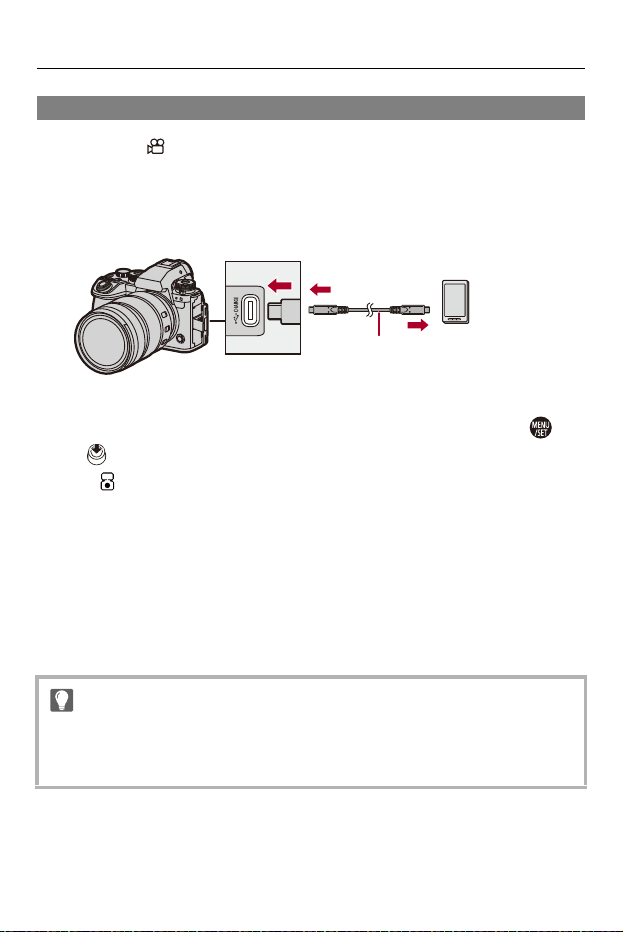
Linking with “LUMIX Flow” – Connecting to “LUMIX Flow”
813
Connecting to a Smartphone (USB Connection)
1
Set to [ ] mode.
(Photo/Video/S&Q Switch: 80)
2
Connect the camera and Smartphone with the USB
connection cable (commercially available).
(A) USB connection cable (commercially available)
3
Press 34 to select [LUMIX Flow] and then press or
.
≥[ ] is displayed on the camera’s screen.
•
If a confirmation message appears on the smartphone screen asking for
permission to enable access by the connected device, grant permission.
Connection is not complete until permission is given.
•
Please also refer to the operating instructions of your smartphone.
4
Use “LUMIX Flow” to operate the camera from the
Smartphone.
•
If [USB Mode] is set to [LUMIX Flow] in the [Setup] ([IN/OUT]) menu, the camera
will be connected to the Smartphone without the [USB Mode] selection screen
being displayed. ([USB Mode]: 738)
(A)
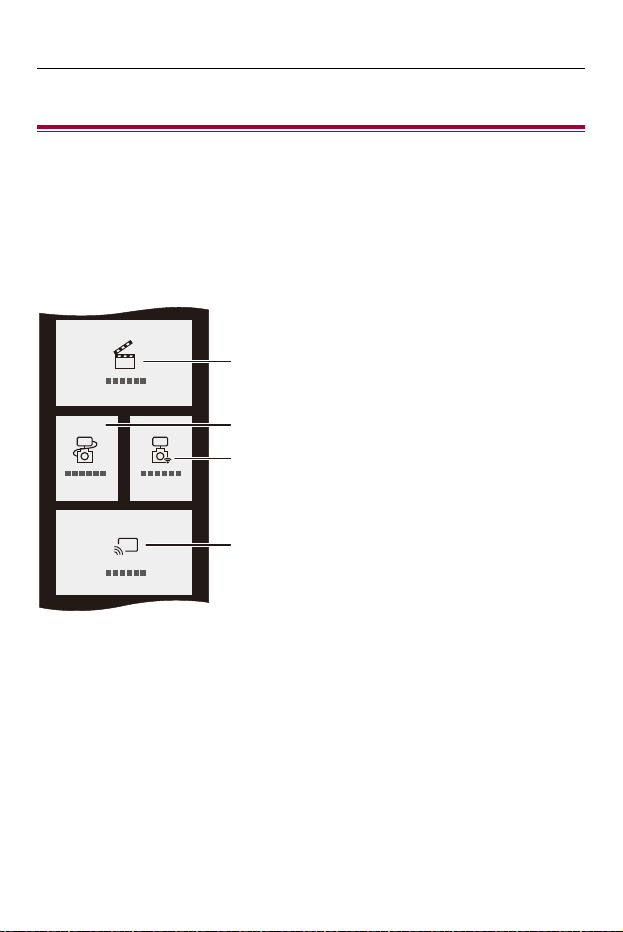
Linking with “LUMIX Flow” – Using “LUMIX Flow”
814
Using “LUMIX Flow”
You can use “LUMIX Flow” for creating, managing, etc. image editing
projects. You can also use it as a monitor for the camera.
Getting started:
•
On the smartphone, start up “LUMIX Flow”.
Follow the app screen to operate.
(A) Image editing work flow
Create, manage, etc., image editing projects.
(B) External monitor
You can use your smartphone as a monitor for the camera.
(C) Mirroring monitor
You can transfer the live view images from an external monitor to your
smartphone, etc., to view.
(A)
(B)
(B)
(C)
815
Streaming Function
Live stream the camera’s images and audio over the internet.
There are the following connection methods for streaming:
Wi-Fi connection with an access point such as a router or
smartphone/USB tethering connection with a smartphone
• Streaming can be started with operations on a smartphone or on the
camera.
• Compatible with RTMP/RTMPS
*
.
You can stream to video sharing websites that support these protocols.
• When a smartphone is used, the camera is connected to the internet via
mobile data communications (4G, 5G, etc.) enabling you to live stream
from locations where a router is not available, when you are out and
about, for example.
* Communication protocol for streaming
≥ Stream by Operating a Smartphone: 816
≥ Stream by Operating the Camera: 820
≥ Streaming Settings: 825
≥ Notes When Using the Streaming Function: 831
– RTMP is not supported on models for Europe and Ukraine (DC-S1M2E/
DC-S1M2ME).
•
Video cannot be recorded to the cards while using streaming function.
•
For information about the tethering function of your smartphone, refer to the
operating instructions of the smartphone and the contract you have with the
cell-phone provider.
Depending on the contract you have, there may be limitations on tethering or it
may incur large additional charges.
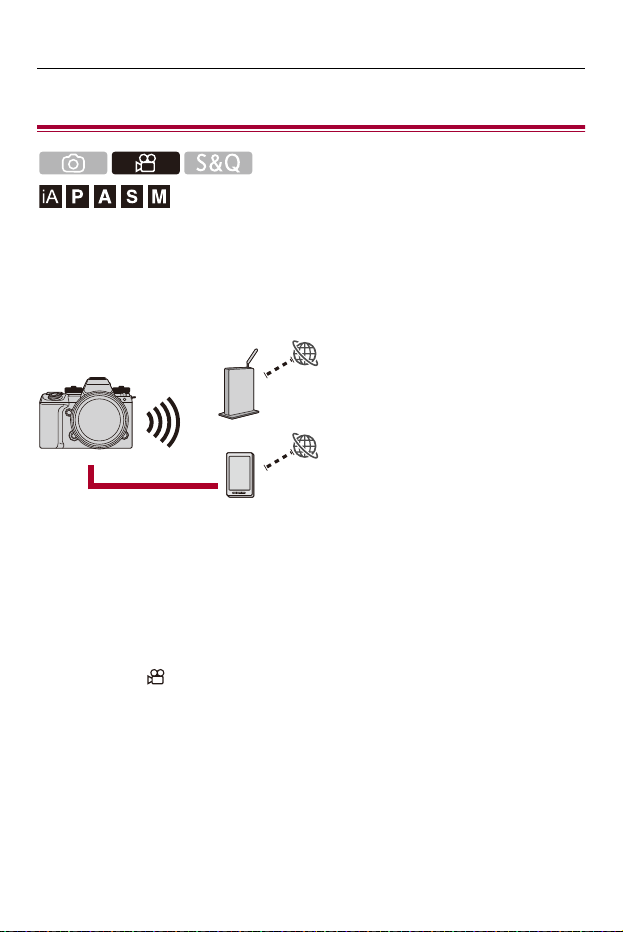
Streaming Function – Stream by Operating a Smartphone
816
Stream by Operating a Smartphone
Operate the smartphone app “LUMIX Lab” to start streaming. (Supported
protocols: RTMP/RTMPS)
Getting started:
•
Install “LUMIX Lab” on your smartphone. (Installing “LUMIX Lab”: 770)
•
Connect the camera to a smartphone by Bluetooth. (Connecting to a Smartphone
(Bluetooth Connection): 771)
•
(When using USB tethering) Confirm that the camera and smartphone are not
connected via USB.
1
Set to [ ] mode.
(Photo/Video/S&Q Switch: 80)
•
RTMP is not supported on models for Europe and Ukraine (DC-S1M2E/
DC-S1M2ME).
Bluetooth

Streaming Function – Stream by Operating a Smartphone
817
2
Set streaming on the smartphone.
1 Start up “LUMIX Lab”.
2 Select [Live streaming] in the “LUMIX Lab” home screen.
3 Select a live streaming platform.
4 Make detailed streaming settings.
•
The setting items depend on the selection made in Step 3. Follow the
smartphone screen to make the settings.
[Connection Method]: Select [Wi-Fi] or [USB Tethering].
•
If you select [Wi-Fi], set the wireless access point that the camera will
connect to for streaming.
[Streaming Quality]: Sets the image quality that will be streamed.
[Privacy settings]: Selects privacy setting.
[Stream URL]: Enter the streaming URL acquired from the streaming
service.
[Stream key]: Enter the streaming key acquired from the streaming
service.
5 Select [Set to the camera].
•
The settings will be sent from the smartphone to the camera.
•
[Streaming Function] on the camera turns [ON] and [ ] is displayed on
the recording screen.
•
(When using Wi-Fi) The camera connects via Wi-Fi to the access point.
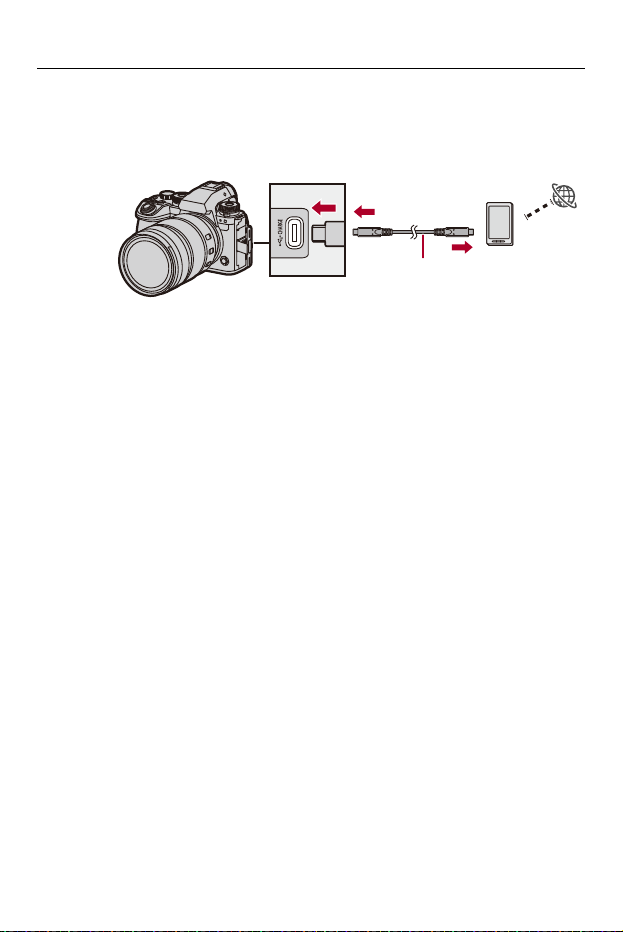
Streaming Function – Stream by Operating a Smartphone
818
3
(When using USB tethering) Set the USB tethering
connection.
1 Connect the camera and the smartphone using a USB connection cable.
(A) USB connection cable (commercially available)
2 Enable the USB tethering function on the smartphone.
•
Select [USB Tethering] (for Android devices) or [Personal Hotspot] (for
iOS devices) on the smartphone.
•
If a confirmation message appears on the smartphone screen asking for
permission to enable access by the connected device, grant permission.
Connection is not complete until permission is given.
•
Please also refer to the operating instructions of your smartphone.
(A)

Streaming Function – Stream by Operating a Smartphone
819
4
Start streaming.
≥Select [Start streaming] on “LUMIX Lab”.
≥[ ] is displayed on the camera’s recording screen.
5
Stop streaming.
≥Select [Stop streaming] on “LUMIX Lab”.
6
End the streaming function.
≥If you select [End streaming] on “LUMIX Lab”, the [Streaming
Function] of the camera will be set to [OFF].
•
Displays a blue frame on the screen during streaming:
([Streaming Blue Frame Indicator]: 715)
•
When you press the shutter button or the video rec. button on the camera to start
streaming, you can record the images being streamed on an external recorder
connected via HDMI:
(Outputting Control Information to an External Recorder: 578)
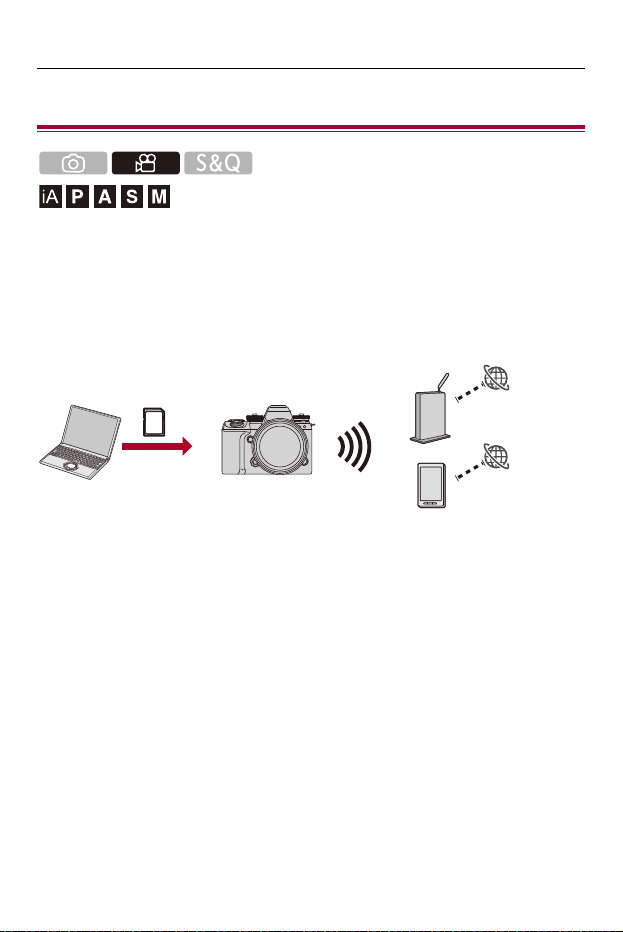
Streaming Function – Stream by Operating the Camera
820
Stream by Operating the Camera
Sets the streaming destination on a PC and saves it to a card. Insert the
card to the camera and start streaming by operating the camera.
(Supported protocols: RTMP/RTMPS)
Getting started:
•
Install “LUMIX Network Setting Software” to the PC.
https://panasonic.jp/support/global/cs/dsc/download/index3.html
(English only)
Supported OS
Windows: Windows 10 (22H2), Windows 11 (21H2 to 24H2)
Mac: macOS 12.0 to 12.7, 13.0 to 13.7, 14.0 to 14.7, 15.0 to 15.1
•
Insert a card into the PC.
•
(When using USB tethering) Confirm that the camera and smartphone are not
connected via USB.
•
RTMP is not supported on models for Europe and Ukraine (DC-S1M2E/
DC-S1M2ME).
SD

Streaming Function – Stream by Operating the Camera
821
1
Set the streaming destination on the PC.
1 Start up “LUMIX Network Setting Software”.
2 Login to a video sharing website and retrieve a streaming destination
(URL, stream key).
3 Input the streaming destination (URL, stream key) to “LUMIX Network
Setting Software” and select [Next].
4 Set the output destination (card) and file name, and select [Save].
•
Characters that can be set in [File Name]: Alphabet (uppercase),
numbers, up to 8 characters.
•
To prevent usage from a third party, you can secure the streaming
destination with a password.
– Put a check mark in [Password].
– When you set a password, password input will be required when
loading the streaming destination.
– You can enter any 4-digit numbers as the password.
•
The settings set at step 3 is saved in the card.
2
Set to [ ] mode.
(Photo/Video/S&Q Switch: 80)
3
Insert into the camera the card onto which you have
saved the streaming destination in Step
1
.
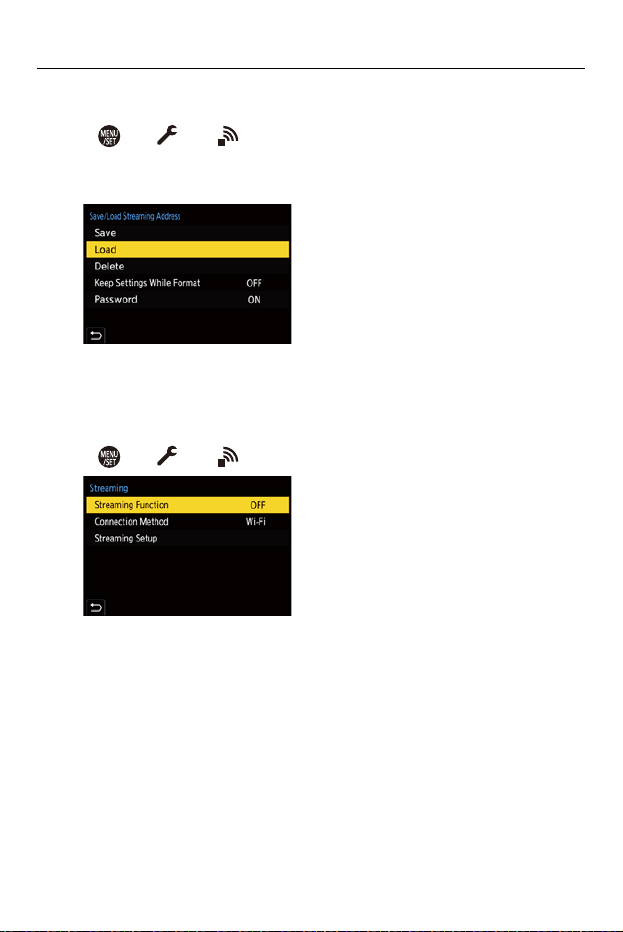
Streaming Function – Stream by Operating the Camera
822
4
Load the streaming destination onto the camera.
≥ [] [] [Streaming] [Streaming Setup] [Save/
Load Streaming Address] [Load]
≥If a password is set at step
1
, input the password.
•
The streaming destination address can be displayed and changed.
([Streaming Setup]: 826)
5
Set up streaming settings on the camera.
≥ [] [] [Streaming]
1 Select [Wi-Fi] or [USB Tethering] in [Connection Method].
2 Select [Streaming Quality] in [Streaming Setup]. (Streaming Settings:
825)
3 (When using Wi-Fi) Set [Wi-Fi Connection Setting] in [Streaming Setup].
(Streaming Settings: 825)
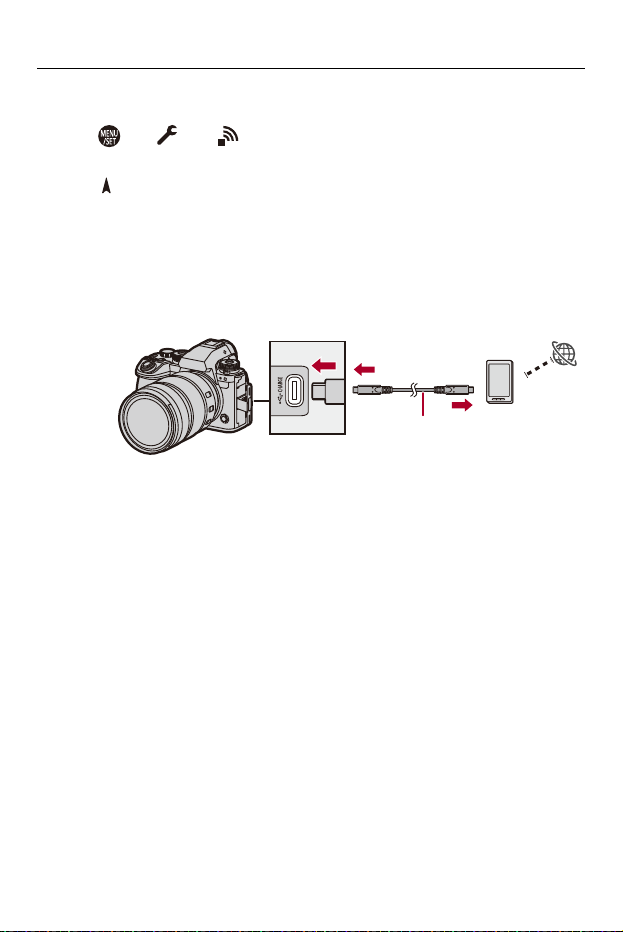
Streaming Function – Stream by Operating the Camera
823
6
Set [Streaming Function] on the camera to [ON].
≥ [] [] [Streaming] [Streaming Function]
[ON]
≥[ ] is displayed on the recording screen.
≥(When using Wi-Fi) The camera connects via Wi-Fi to the access
point.
7
(When using USB tethering) Set the USB tethering
connection.
1 Connect the camera and the smartphone using a USB connection cable.
(A) USB connection cable (commercially available)
2 Enable the USB tethering function on the smartphone.
•
Select [USB Tethering] (for Android devices) or [Personal Hotspot] (for
iOS devices) on the smartphone.
•
If a confirmation message appears on the smartphone screen asking for
permission to enable access by the connected device, grant permission.
Connection is not complete until permission is given.
•
Please also refer to the operating instructions of your smartphone.
(A)
Streaming Function – Stream by Operating the Camera
824
8
Start streaming.
≥Press the shutter button or video rec. button.
≥[ ] is displayed on the recording screen.
•
Operations to start streaming may be needed on the video sharing website.
9
Stop streaming.
≥Press the shutter button or video rec. button.
10
End the streaming function.
≥ [] [] [Streaming] [Streaming Function]
[OFF]
•
Displays a blue frame on the screen during streaming:
([Streaming Blue Frame Indicator]: 715)
•
When you press the shutter button or the video rec. button on the camera to start
streaming, you can record the images being streamed on an external recorder
connected via HDMI:
(Outputting Control Information to an External Recorder: 578)
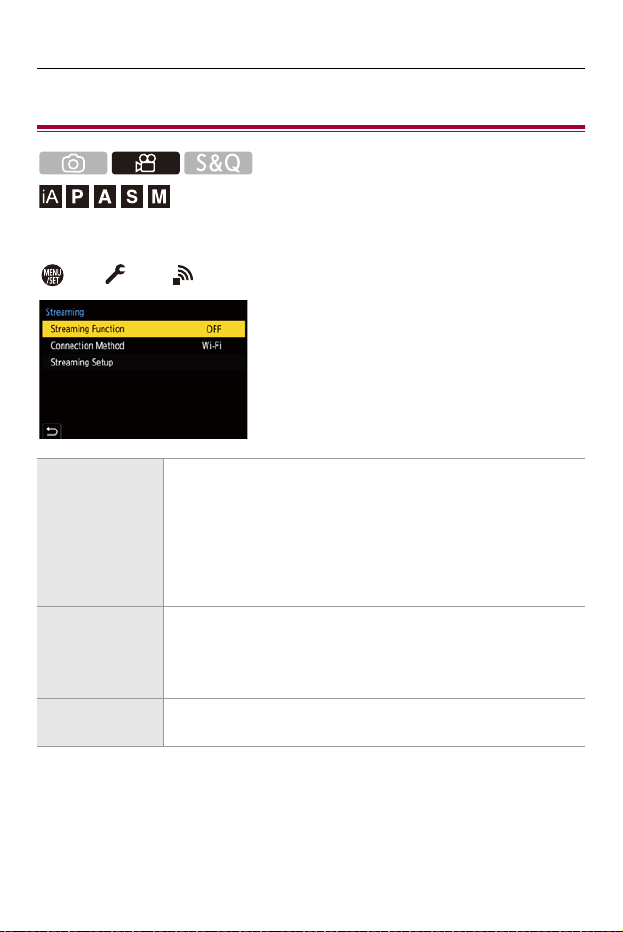
Streaming Function – Streaming Settings
825
Streaming Settings
Configures streaming settings.
[] [] Select [Streaming]
[Streaming
Function]
Enables/disables the streaming function.
•
The settings may not be reflected when the camera is
connected to USB devices. Reconnect the USB connection
cable if this occurs.
•
Before setting to [ON], set [Connection Method] and
[Streaming Setup].
[Connection
Method]
[Wi-Fi]: Connect to an access point such as a smartphone via
Wi-Fi.
[USB Tethering]: Connect using the USB tethering function of a
smartphone.
[Streaming
Setup]
Make advanced settings for streaming.
([Streaming Setup]: 826)

Streaming Function – Streaming Settings
826
[Streaming Setup]
[Streaming
Quality]
Sets the image quality that will be streamed. ([Streaming
Quality]: 829)
[Streaming
Address]
Displays the current streaming destination address.
To change the streaming destination, press [DISP.] first then input
the streaming destination address.

Streaming Function – Streaming Settings
827
[Save/Load
Streaming
Address]
[Save]
Saves the current streaming destination
address to the card.
•
If saving new data, then select [New File],
and if overwriting an existing file, select that
existing file.
•
When [New File] is selected, a screen to
select the file name to save as is displayed.
[OK]: Saves using the file name on the screen.
[Change the file name]: Changes the file
name and saves the file.
•
Available characters: alphabetic characters
(uppercase), numerals, up to 8 characters
When you set [Password], the screen for
entering the password (4-digit numeral) is
displayed.
[Load]
Copy the streaming destination address in the
card to the camera.
•
If you set a password when you saved the
streaming destination address on the card,
the password entry screen is displayed.
[Delete]
Deletes the streaming destination address
within the card.
[Keep Settings
While Format]
When formatting the card, you can keep the
streaming destination address saved in the
card and format.
[Password]
Select whether to set a password when you
save the streaming destination address on the
card.
Streaming Function – Streaming Settings
828
* Displayed when [Connection Method] in [Streaming] is set to [Wi-Fi].
[Wi-Fi
Connection
Setting]
*
Sets the wireless access point the camera connects to when
streaming. To change the destination, press [DISP.]. (Wi-Fi
Connections: 790)
•
Up to 10 streaming destination addresses can be saved onto one card.
•
Set [Wi-Fi Connection Setting] before setting [Streaming Function] to [ON].
•
If you forget the password, save the streaming destination address again with a
new password.
•
How to enter characters (Entering Characters: 108)
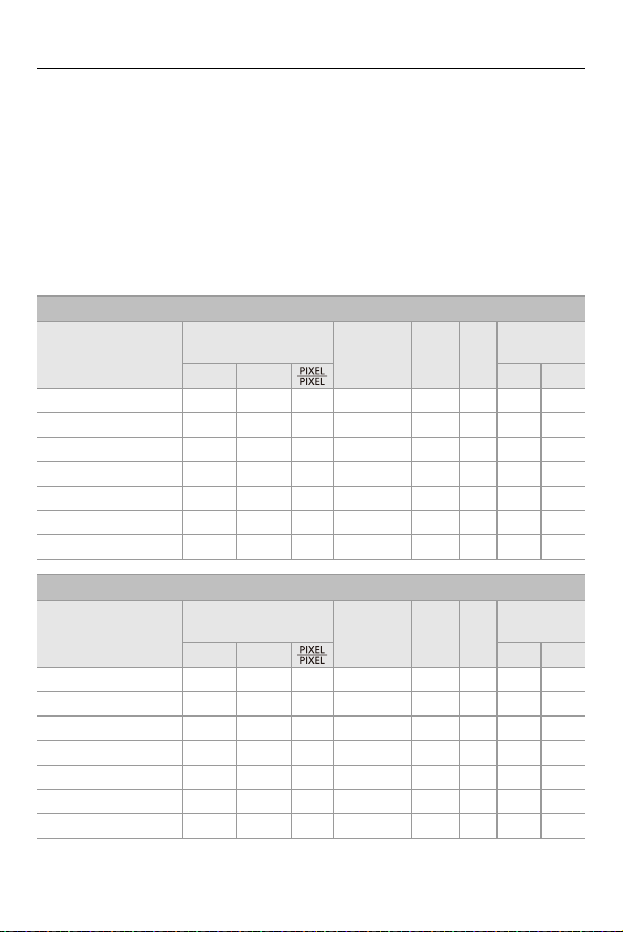
Streaming Function – Streaming Settings
829
[Streaming Quality]
•
Video compression format:
– [H.264] streaming quality: H.264/MPEG-4 AVC
•
Audio format: AAC (2ch)
(A) Frame rate
(B) Bit rate (Mbps)
(C) [Wi-Fi]
(D) [USB Tethering]
[System Frequency]: [59.94Hz (NTSC)]
[Streaming Quality]
[Image Area of Video]
Resolution (A) (B)
[Connection
Method]
FULL APS-C (C) (D)
[4K/12.5M/30p] 3840×2160 29.97p 12.5 —
[FHD/16M/60p] 1920×1080 59.94p 16
*
[FHD/8M/60p] 1920×1080 59.94p 8
[FHD/6M/30p] 1920×1080 29.97p 6
[FHD/3M/30p] 1920×1080 29.97p 3
[HD/6M/60p] 1280×720 59.94p 6
[HD/4M/30p] 1280×720 29.97p 4
[System Frequency]: [50.00Hz (PAL)]
[Streaming Quality]
[Image Area of Video]
Resolution (A) (B)
[Connection
Method]
FULL APS-C (C) (D)
[4K/12.5M/25p] 3840×2160 25.00p 12.5 —
[FHD/16M/50p] 1920×1080 50.00p 16
*
[FHD/8M/50p] 1920×1080 50.00p 8
[FHD/6M/25p] 1920×1080 25.00p 6
[FHD/3M/25p] 1920×1080 25.00p 3
[HD/6M/50p] 1280×720 50.00p 6
[HD/4M/25p] 1280×720 25.00p 4

Streaming Function – Streaming Settings
830
* This can be set when the streaming destination is RTMP. (Cannot be set when it is
RTMPS.)
•
RTMP is not supported on models for Europe and Ukraine (DC-S1M2E/
DC-S1M2ME).
•
Set a streaming image quality (bit rate) appropriate to the communication speed
of your internet connection.
•
Images output via HDMI are output with a resolution and frame rate that match
[Streaming Quality].
However, when [Streaming Quality] is set to [HD], the output is in [FHD]
resolution.

Streaming Function – Notes When Using the Streaming Function
831
Notes When Using the Streaming Function
≥ Notes When Using USB Tethering: 832
•
The following functions are not available while you are using the streaming function:
– [Like2100(HLG)]/[Like2100(HLG) Full Range] ([Photo Style])
– [Rec. File Format(Video)]
– [Rec Quality]
– [Rec Quality (My List)]
– [Sound Rec Quality]
– [4ch Audio Recording]
– [Loop Recording (video)]
– [Segmented File Recording]
– [Live Cropping]
– Pairing function of [Bluetooth]
–[Reset]
•
The streaming function is not available when using the following functions:
– [HDMI RAW Data Output]
– When [System Frequency] is set to [24.00Hz (CINEMA)]
– During USB connection (PC)
– [Frame.io Connection]
– Tethered recording (except when connected via wired LAN)
•
The communication speed depends on the internet connection and the handset, so
we recommend that you perform streaming tests beforehand.
•
If you turn the camera off without ending the streaming function, when the next time
the camera is turned on, it is automatically reconnected to the connection destination
that was previously connected.
•
The menu screen cannot be displayed while streaming.
•
The camera’s recording information will not be displayed on the streamed images.
•
The required conditions for streaming differ depending on the video sharing website.
Check the video sharing website for details.

Streaming Function – Notes When Using the Streaming Function
832
Notes When Using USB Tethering
•
When the streaming function is not to be used, set [Streaming Function] to
[OFF].
When set to [ON], if the [Connection Method] is set to [USB Tethering], power is
supplied from the battery of this camera to the connected device, so the battery will
be consumed faster.
•
For information about the high temperature display (For information about
the high temperature display: 145)
•
The network connection light does not light when connected to the internet via USB
tethering.
•
After connecting via USB tethering, when charging the battery in the camera, make
sure that the charging light of the camera lights red.
If the charging light does not light, reconnect the USB connection cable while the
camera is turned off.

833
Connecting to Other Devices
This chapter describes connections with other devices, for example, HDMI
devices, such as TVs, and PCs.
Connect using either the HDMI socket or the USB port on the camera.
≥ Connecting: 834
≥ Viewing on a TV: 836
≥ Importing Images to a PC: 840
≥ Using as a Web Camera for a PC: 845
≥ Storing on a Recorder: 848
≥ Tethered Recording: 849
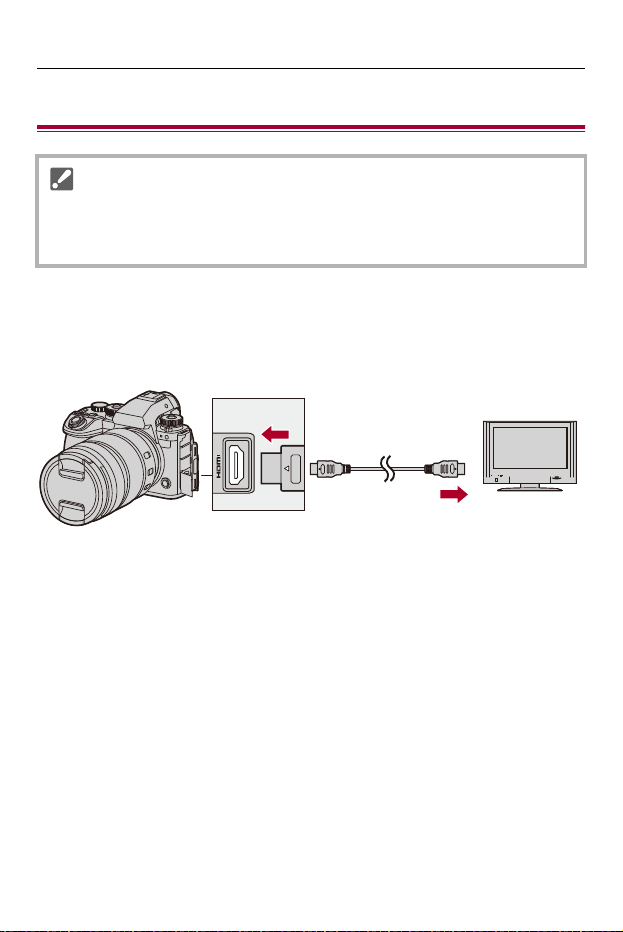
Connecting to Other Devices – Connecting
834
Connecting
HDMI socket
Connect the camera and HDMI device (TV, etc.) with a
commercially available HDMI cable.
•
Use an Ultra High Speed HDMI cable (Type A–Type A plug) with the length less
than 3 m (9.8 feet).
•
Check the direction of the terminals and plug in/out straight holding onto the plug.
(Inserting these at an angle may cause deformation or malfunction)
•
Do not connect the cable to the wrong terminals. This may cause a malfunction.
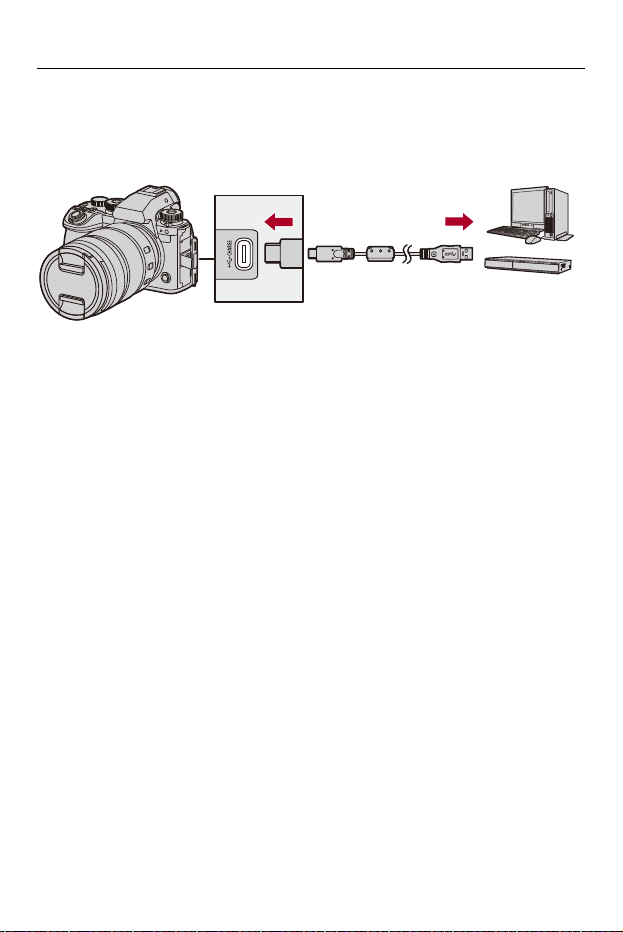
Connecting to Other Devices – Connecting
835
USB port
Use a USB connection cable (commercially available) to
connect the camera to a PC or recorder.
•
Use a USB connection cable that complies with the USB standards.

Connecting to Other Devices – Viewing on a TV
836
Viewing on a TV
You can connect the camera to a TV or external monitor to view recorded
pictures and videos.
Getting started:
•
Turn off the camera and TV.
1
Connect the camera and TV with a commercially
available HDMI cable.
(HDMI socket: 834)
2
Turn on the TV.
3
Switch the TV input to HDMI input.
4
Turn on the camera.
5
Display the playback screen.
≥Press [ ].
≥The recorded images are displayed on the camera and TV.

Connecting to Other Devices – Viewing on a TV
837
•
With the default settings, pictures are output at the optimal resolution for the
connected TV.
The output resolution can be changed in [Output Resolution(Playback)].
([Output Resolution(Playback)]: 740)
•
Depending on the aspect ratio, gray bands may be displayed on the top and
bottom or the left and right of images.
You can change the band color in [Background Color(Playback)] in [HDMI
Connection] of the [Setup] ([IN/OUT]) menu. ([Background Color(Playback)]:
741)
•
HDMI output is not possible if you connect a USB connection cable at the same
time while [USB Mode] is set to [PC(Storage)].
•
The audio of video recorded with [4ch Audio Recording] set to other than [OFF]
cannot be output if the external device connected via HDMI is not compatible
with 4-channel audio or high-resolution audio.
•
Change the screen mode on your TV if images are displayed with the top or
bottom cut off.
•
Please also refer to the operating instructions for the TV.
Connecting to Other Devices – Viewing on a TV
838
Using VIERA Link
VIERA Link (HDAVI Control™) is a function that allows you to use your
remote control for the Panasonic TV for easy operations when the camera
has been connected to a VIERA Link compatible device using an HDMI
cable for automatic linked operations.
(Not all operations are possible.)
1 Connect the camera to a Panasonic TV compatible with VIERA Link using a
commercially available HDMI cable. (HDMI socket: 834)
2 Turn on the camera.
3 Turn on the VIERA Link.
•
[] [] [HDMI Connection] [VIERA Link (CEC)] [ON]
4 Display the playback screen.
•
Press [ ].
•
The recorded images are displayed on the TV. (The monitor and viewfinder of
the camera will turn off.)
5 Operate with the remote control for the TV.
•
To use VIERA Link, you need to also configure the settings on the TV.
For the setting procedure, refer to the operating instructions for the TV.

Connecting to Other Devices – Viewing on a TV
839
Power off link
If you turn off the TV with its remote control, the camera will also turn off.
Automatic input switching
If you turn on the camera and then press [ ], the input of the TV automatically
switches to input to which this camera is connected.
Furthermore, when the TV power is in the standby state, it turns on automatically.
(When “Power on link” on the TV is set to “Set”)
•
VIERA Link is a unique Panasonic function built on an HDMI control function
using the standard HDMI CEC (Consumer Electronics Control) specification.
Linked operations with HDMI CEC compatible devices made by other companies
are not guaranteed.
•
The camera supports “VIERA Link Ver.5”. “VIERA Link Ver.5” is the standard for
Panasonic’s VIERA Link compatible devices. This standard is compatible with
Panasonic’s conventional VIERA Link devices.
•
Operation using the buttons on the camera will be limited.

Connecting to Other Devices – Importing Images to a PC
840
Importing Images to a PC
≥ Copying Images to a PC: 841
≥ Installing Software: 844
If you connect the camera to a PC, you can copy the recorded images to
the PC.
You will need to use software that is compatible with the recorded video
format in order to play back or edit video on the PC.
You can also use software for processing and editing RAW images.
(Installing Software: 844)
Connecting to Other Devices – Importing Images to a PC
841
Copying Images to a PC
After connecting to the PC, you can copy the recorded images by dragging
files and folders on this camera to the PC.
Getting started:
•
Turn on the camera and PC.
1
Connect the camera and PC with the USB connection
cable (commercially available).
(USB port: 835)
2
Press 34 to select [PC(Storage)] and then press or
.
≥Windows: The drive (“LUMIX”) is displayed in [This PC].
≥Mac: The drive (“LUMIX”) is displayed on the desktop.
3
Drag the files and folders from the camera to the PC.
•
The camera can be connected to a PC running any of the following OSs which
can detect mass storage devices.
Supported OS
Windows: Windows 10, Windows 11
Mac: macOS 12.0 to 12.7, 13.0 to 13.7, 14.0 to 14.7, 15.0 to 15.1
•
Mac:
Supported by “Final Cut Pro X”.
For details on “Final Cut Pro X”, please contact Apple Inc.
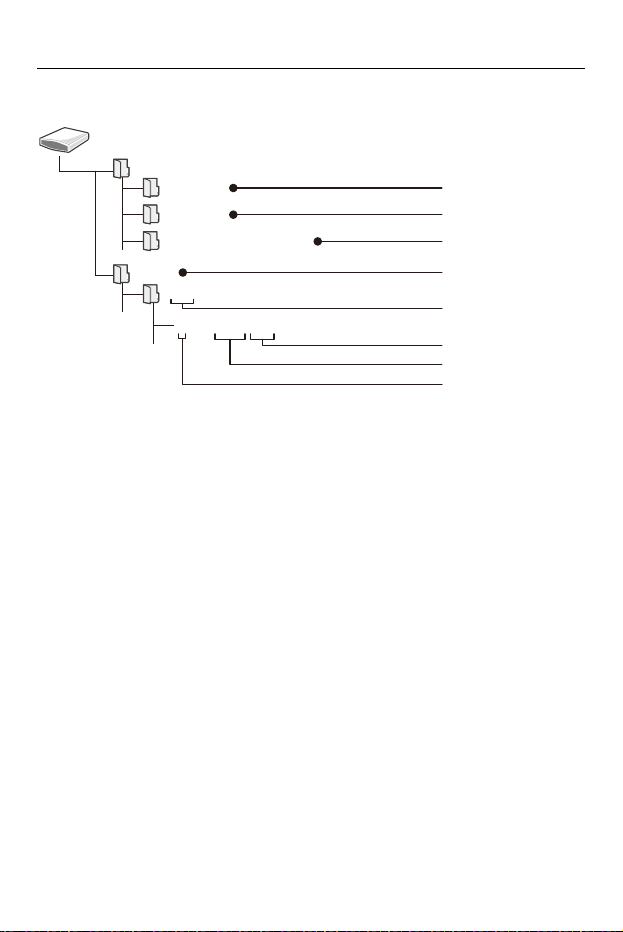
Connecting to Other Devices – Importing Images to a PC
842
Folder Structure Inside Card
* The folder name will be either “LUMIX FLOW” or “FLOW”.
(A) The camera’s setup information
(B) Streaming Settings
(C) “LUMIX Flow” XML file
(D) Images
(E) Folder number
(F) JPG: JPEG format pictures
HIF: HEIF format pictures
RW2: RAW format pictures
MP4: MP4 videos
MOV: MOV videos, Apple ProRes videos
(G) File number
(H) Color space
P: sRGB
_: AdobeRGB
CAMSET
AD_LUMIX
DCIM
(A)
100XXXXX
PXXX0001.JPG
(D)
(F)
(G)
(H)
(E)
STREAM
(B)
(C)
LUMIX FLOW / FLOW
*
Connecting to Other Devices – Importing Images to a PC
843
•
If [USB Mode] is set to [PC(Storage)] in the [Setup] ([IN/OUT]) menu, the camera
will be automatically connected to the PC without the [USB Mode] selection
screen being displayed. ([USB Mode]: 738)
•
Take care not to turn off the camera while images are being imported.
•
After importing of the images is completed, perform the operation to safely
remove the USB connection cable on the PC.
•
Turn off the camera and disconnect the USB connection cable before removing
the card from the camera. Otherwise, the recorded data may be damaged.

Connecting to Other Devices – Importing Images to a PC
844
Installing Software
Install the software to process and edit RAW images.
SILKYPIX Developer Studio SE
This software processes and edits RAW images.
Edited images can be saved in a format (JPEG, TIFF, etc.) that can be
displayed on a PC.
Check the following site and then download and install the software:
http://www.isl.co.jp/SILKYPIX/english/p/
Operating environment
≥ Supported OS
Windows: Windows 10 (64 bit), Windows 11
Mac: macOS 10.13 to 10.15, 11, 12, 13, 14, 15
•
For more information such as how to use “SILKYPIX Developer Studio”, refer to the
Help or the Adwaa’s support site.
•
To download the software, your PC needs to be able to connect to the internet.
•
Supported OSs are current as of May 2025 and are subject to change.
Connecting to Other Devices – Using as a Web Camera for a PC
845
Using as a Web Camera for a PC
By connecting the camera to a PC via USB, you can use the camera as a
web camera.
• The camera supports the UVC (USB Video Class) specification.
Getting started:
•
Turn on the camera and PC.
1
Set to [ ] mode.
(Photo/Video/S&Q Switch: 80)
2
Connect the camera and PC with the USB connection
cable (commercially available).
(USB port: 835)
3
Press 34 to select [PC(Webcam)] and then press
or .
≥[ ] is displayed on the camera’s screen.
•
You can connect to the following PCs:
Supported OS
Windows: Windows 10, Windows 11
Mac: macOS 14.0 to 14.7, 15.0 to 15.1
There may be cases when images are not shown properly due to the PC
environment you are using. If this occurs, the situation may be corrected by
changing the web camera image quality settings or changing the USB port used
for connection.
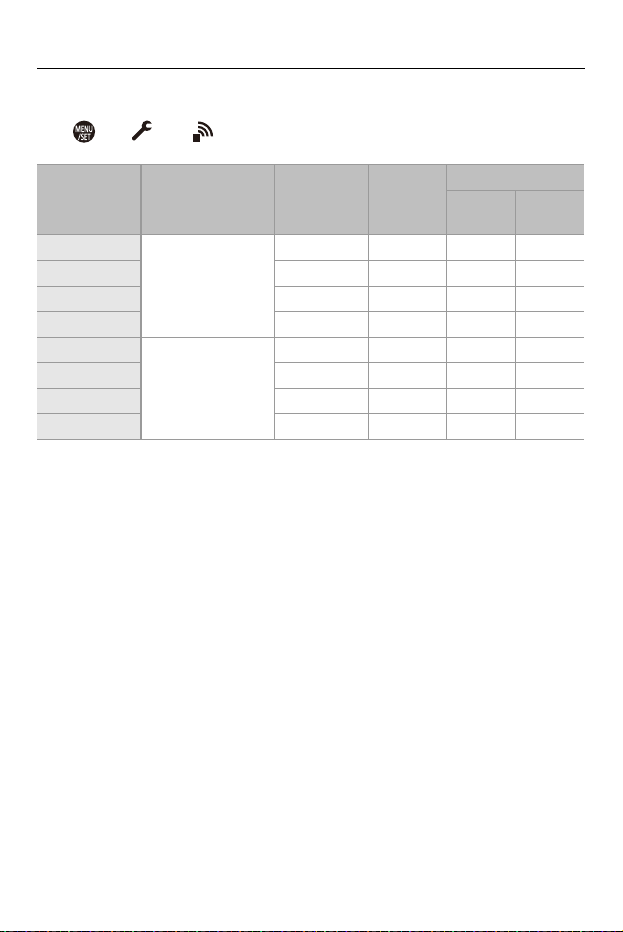
Connecting to Other Devices – Using as a Web Camera for a PC
846
Setting [Webcam Image Quality]
[] [] [USB] Select [Webcam Image Quality]
•
Video format: MJPEG
•
Audio format: LPCM (2ch, 48 kHz/16 bit)
[Webcam
Image
Quality]
[System
Frequency]
Resolution
Frame
rate
Connected port
USB3.0 USB2.0
[4K/15p]
[59.94Hz (NTSC)]
3840×2160 14.99p —
[FHD/60p]
1920×1080 59.94p —
[FHD/30p]
1920×1080 29.97p —
[HD/30p]
1280×720 29.97p
[4K/12.5p]
[50.00Hz (PAL)]
3840×2160 12.50p —
[FHD/50p]
1920×1080 50.00p —
[FHD/25p]
1920×1080 25.00p —
[HD/25p]
1280×720 25.00p

Connecting to Other Devices – Using as a Web Camera for a PC
847
•
If [USB Mode] is set to [PC(Webcam)] in the [Setup] ([IN/OUT]) menu, the
camera will be automatically connected to the PC without the [USB Mode]
selection screen being displayed. ([USB Mode]: 738)
•
There may be some audio delay after using as a web camera for a long time.
•
The menu screen cannot be displayed while the camera is connected as a web
camera.
•
When there is a PC connection with [PC(Webcam)], the following functions are
not available:
– [Streaming]
– [Bluetooth]
– Viewfinder display
– HDMI output
•
For information about the high temperature display (For information
about the high temperature display: 145)
Connecting to Other Devices – Storing on a Recorder
848
Storing on a Recorder
By connecting the camera to a Panasonic Blu-ray disc recorder or DVD
recorder, you can store the pictures and videos.
Getting started:
•
Turn on the camera and recorder.
•
Insert a card into card slot 1.
1
Connect the camera and recorder with the USB
connection cable (commercially available).
(USB port: 835)
2
Press 34 to select [PC(Storage)] and then press or
.
3
Operate the recorder to store the images.
•
If [USB Mode] is set to [PC(Storage)] in the [Setup] ([IN/OUT]) menu, the camera
will be automatically connected to the recorder without the [USB Mode] selection
screen being displayed. ([USB Mode]: 738)
•
Take care not to turn off the camera while storage is in progress.
•
Images such as 4K videos may not be supported depending on your recorder.
•
Turn off the camera and disconnect the USB connection cable before removing
the card from the camera. Otherwise, the recorded data may be damaged.
•
For the storage and playback procedures, refer to the operating instructions for
the recorder.
Connecting to Other Devices – Tethered Recording
849
Tethered Recording
≥ Installing Software: 850
≥ Operating the Camera from a PC: 851
≥ Using “LUMIX Tether” with a Wired LAN Connection: 852
≥ Remote Control of Multiple Cameras: 854
If you install the “LUMIX Tether” camera control software on your PC, you
can connect the camera to the PC via USB and then control the camera
from the PC and record while checking the live view on the PC screen
(tethered recording).
In addition, you can output via HDMI to an external monitor or TV during
tethered recording.
By using a commercially available USB ethernet adaptor, you can use
tethered recording by connecting the camera to the PC via a LAN cable.
Multiple cameras can also be operated remotely this way.
•
For information about USB ethernet adaptors whose operation has been verified
with this camera, check the following support site. (As of May 2025)
https://panasonic.jp/support/global/cs/dsc/connect/index.html
(English only)
Connecting to Other Devices – Tethered Recording
850
Installing Software
“LUMIX Tether”
This software is for controlling the camera from a PC.
It allows you to change various settings and to record remotely and then
save the images to the PC.
Check the following site and then download and install the software:
https://panasonic.jp/support/global/cs/soft/download/d_lumixtether.html
(English only)
Operating environment
≥ Supported OS
Windows: Windows 10 (64 bit) (22H2), Windows 11 (21H2 to 24H2)
Mac: macOS 12.0 to 12.7, 13.0 to 13.7, 14.0 to 14.7, 15.0 to 15.1
≥ Interface
USB port (USB 3.1)
•
Supported OSs are current as of May 2025 and are subject to change.
•
Use the latest version of “LUMIX Tether”.
•
To download the software, your PC needs to be able to connect to the internet.
•
For how to operate the software, refer to the operation guide for “LUMIX Tether”.
Connecting to Other Devices – Tethered Recording
851
Operating the Camera from a PC
Getting started:
•
Turn on the camera and PC.
•
Install “LUMIX Tether ” on PC.
1
Connect the camera and PC with the USB connection
cable (commercially available).
(USB port: 835)
2
Press 34 to select [PC(Tether)] and then press or
.
≥[ ] is displayed on the camera’s screen.
3
Use “LUMIX Tether” to operate the camera from the PC.
•
If [USB Mode] is set to [PC(Tether)] in the [Setup] ([IN/OUT]) menu, the camera
will be automatically connected to the PC without the [USB Mode] selection
screen being displayed. ([USB Mode]: 738)
•
When there is a PC connection with [PC(Tether)], the following functions are not
available:
– [Streaming]
– [Bluetooth]
•
Tethered recording is not possible while you are using the following function:
– [Frame.io Connection]

Connecting to Other Devices – Tethered Recording
852
Using “LUMIX Tether” with a Wired LAN Connection
Getting started:
•
Turn on the camera and PC.
•
Install “LUMIX Tether ” on PC.
1
Set the camera as a DHCP server.
≥ [] [] [LAN / Wi-Fi] [IP Address Setting (LAN)]
[DHCP Server]
•
If you have modified settings in [IP Address Setting (LAN)], turn the camera
off and on again.
2
Set to wired LAN tethering connection.
≥ [] [] [USB] [Tether(USB ethernet adaptor)]
[ON]
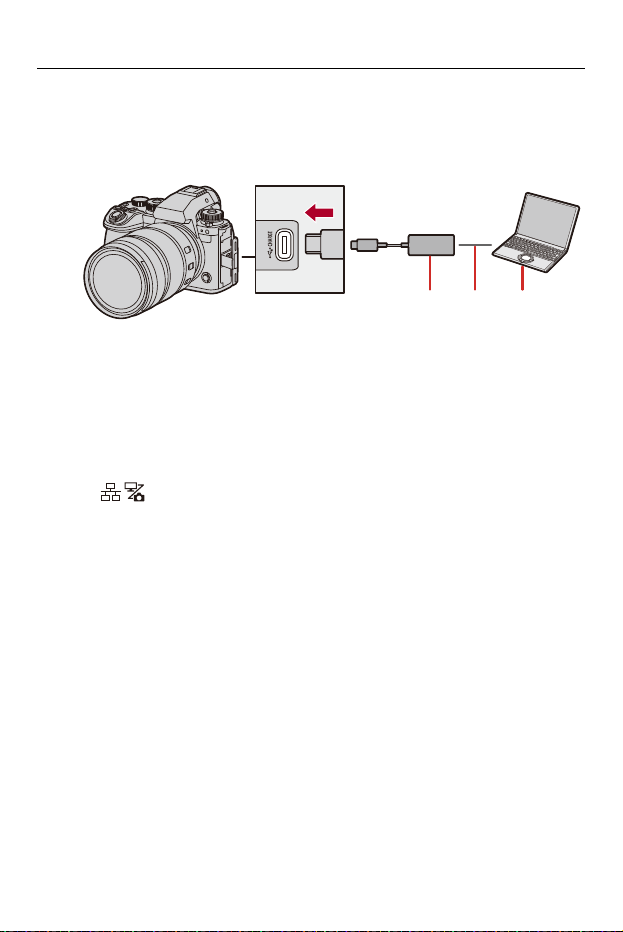
Connecting to Other Devices – Tethered Recording
853
3
Connect the commercially available USB ethernet
adaptor to the camera, then use a commercially
available LAN cable to connect the camera and the PC.
(A) USB ethernet adaptor (commercially available)
(B) LAN cable (commercially available)
(C) A PC on which “LUMIX Tether” is installed
4
Use “LUMIX Tether” to remotely control the camera.
≥(Initial connection) Set the password to be used to connect from
“LUMIX Tether” to the camera. (Between 8 and 31 characters)
≥[ ] is displayed on the top right of the camera’s screen.
•
Reconnect the USB connection cable if there is a problem with operation.
(A) (B) (C)

Connecting to Other Devices – Tethered Recording
854
Remote Control of Multiple Cameras
A number of cameras can be remotely controlled using “LUMIX Tether”.
Getting started:
•
Turn on the camera and PC.
•
Install “LUMIX Tether ” on PC.
1
Set the camera as a DHCP client (default setting).
≥ [] [] [LAN / Wi-Fi] [IP Address Setting (LAN)]
[DHCP Client]
•
If there is no DHCP server in the LAN, it is also possible to make the
connection by setting one camera as [DHCP Server], and the remainder as
[DHCP Client].
•
If you have modified settings in [IP Address Setting (LAN)], turn the camera
off and on again.
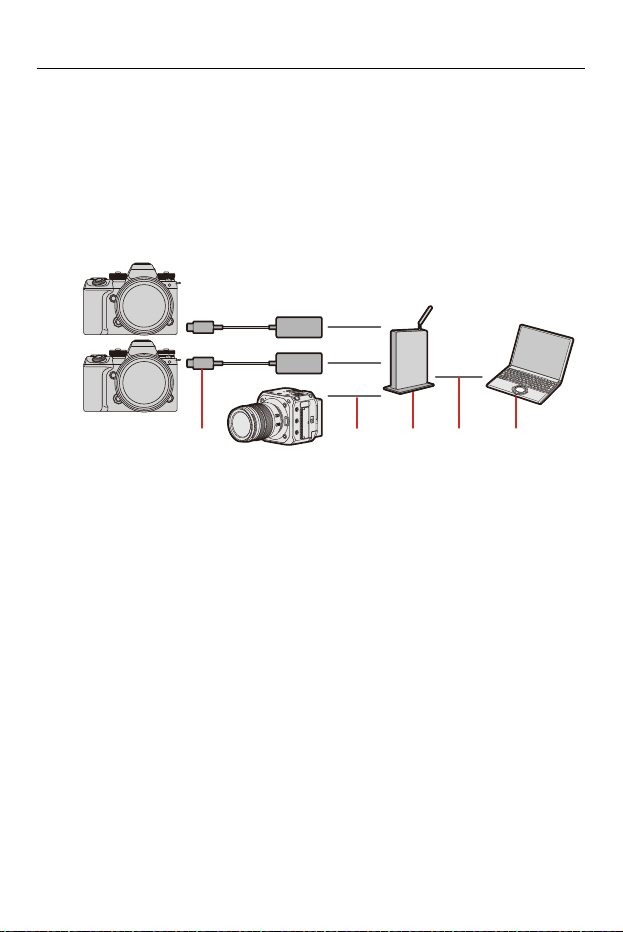
Connecting to Other Devices – Tethered Recording
855
2
Do the operations in “Using “LUMIX Tether” with a
Wired LAN Connection” from Step
2
.
≥Connect the cameras, PC, and router (hub) according to the
diagram below.
For example: When there is a DHCP server in the LAN, and the camera is to be
connected as a DHCP client
(A) USB ethernet adaptor (commercially available)
(B) LAN cable (commercially available)
(C) Router (or hub)
(D) A PC on which “LUMIX Tether” is installed
≥You can use “LUMIX Tether” to remotely control multiple cameras.
(A) (B) (B)(C) (D)
Connecting to Other Devices – Tethered Recording
856
•
When a wired LAN connection is not to be used, set [Tether(USB ethernet
adaptor)] to [OFF].
When set to [ON], power is supplied from the battery of this camera to the
connected device, so the battery will be consumed faster.
•
When using “LUMIX Tether” with a wired LAN connection, the following function
is not available:
– [Bluetooth]
•
Tethered recording is not possible while you are using the following function:
– [Frame.io Connection]
•
When recording with multiple tethered cameras, we recommend allocating
unique device names to each of the cameras:
[] [] [LAN / Wi-Fi] [Device Name/Password] [Device Name]

857
Materials
This chapter describes procedures to try when there is a problem and
provides information about the specifications for your reference.
≥ Digital Camera Accessory System: 858
≥ Using Optional Accessories: 859
≥ Monitor/Viewfinder Displays: 866
≥ Message Displays: 888
≥ Troubleshooting: 892
≥ Cautions for Use: 905
≥ Number of Pictures That Can Be Taken and Available Recording Time
with the Battery: 917
≥ Number of Pictures That Can Be Taken and Video Recording Time
According to Recording Media: 922
≥ Continuous Recording Time for Video: 939
≥ List of Default Settings/Custom Saving/Settings Available for Copying:
941
≥ List of Functions That Can Be Set in Each Recording Mode: 970
≥ Specifications: 979
≥ Trademarks and Licenses: 997

Materials – Digital Camera Accessory System
858
Digital Camera Accessory System
(Product numbers correct as of May 2025.)
*1 Supplied with an AC adaptor, an AC cable/AC mains lead and a USB connection
cable. (Charging time: Approx. 175 min)
*2 A separately available AC adaptor and USB connection cable are required. It is
recommended to use the Panasonic AC Adaptor (DMW-AC11: optional).
*3 Supplied with an AC cable/AC mains lead and USB connection cable.
•
Some optional accessories may not be available in some countries.
•
For lens-related optional accessories such as compatible lenses and filters, refer to
our catalogs/website, etc.
•
For the latest information on optional accessories, refer to our catalogs/website, etc.
Product name Product number
Battery Pack DMW-BLK22
Battery Charger DMW-BTC15
*1
, DMW-BTCD15
*2
AC Adaptor DMW-AC11
*3
DC Coupler DMW-DCC18
*2
Battery Grip DMW-BG2
LED Video Light VW-LED1
Stereo Shotgun Microphone DMW-MS2
Stereo Microphone VW-VMS10
XLR Microphone Adaptor DMW-XLR2
Shutter Remote Control DMW-RS2
Tripod Grip DMW-SHGR2, DMW-SHGR1

Materials – Using Optional Accessories
859
Using Optional Accessories
≥ Battery Grip (Optional): 860
≥ Shutter Remote Control (Optional): 862
≥ Tripod Grip (Optional): 864
≥ DC Coupler (Optional): 865
•
For information on the external flash (Using an External Flash: 412)
•
For information on the external microphone (External Microphones (Optional):
456)
•
For information on the XLR Microphone Adaptor (XLR Microphone Adaptor
(Optional): 461)
•
Some optional accessories may not be available in some countries.
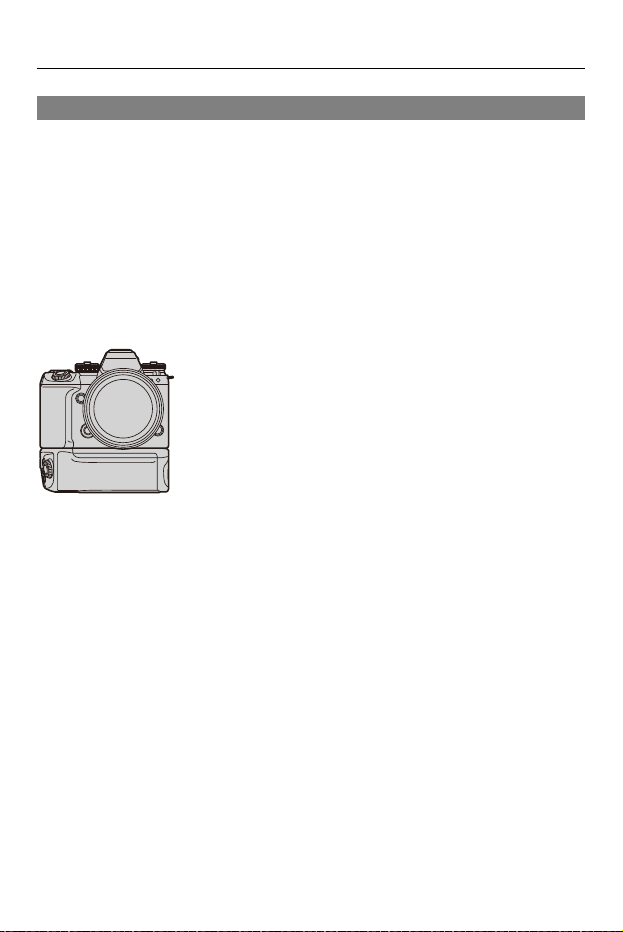
Materials – Using Optional Accessories
860
Battery Grip (Optional)
When mounted on the camera, the Battery Grip (DMW-BG2: optional)
improves ease of operation and grip when the camera is held vertically.
Also, inserting a battery into the Battery Grip provides a stable supply of
power even for long periods of recording.
•
The Battery Grip is dust and splash resistant.
•
When batteries are inserted in both the camera and the Battery Grip, the battery in
the Battery Grip is used first.
•
When a battery is attached to the camera, the battery in the Battery Grip can be
changed when the power of the camera is on.

Materials – Using Optional Accessories
861
•
[ ] is displayed on the screen when a battery has been inserted in the Battery
Grip. (Power Indications: 56)
•
You can register functions of your choice to the [Fn] button on the Battery Grip.
(Fn Buttons: 646)
•
The [WB] button, [ISO] button, [ ] button, [AF ON] button, and joystick each
work the same as the buttons and joystick on the camera body.
•
Refer to the operating instructions for the Battery Grip for details.
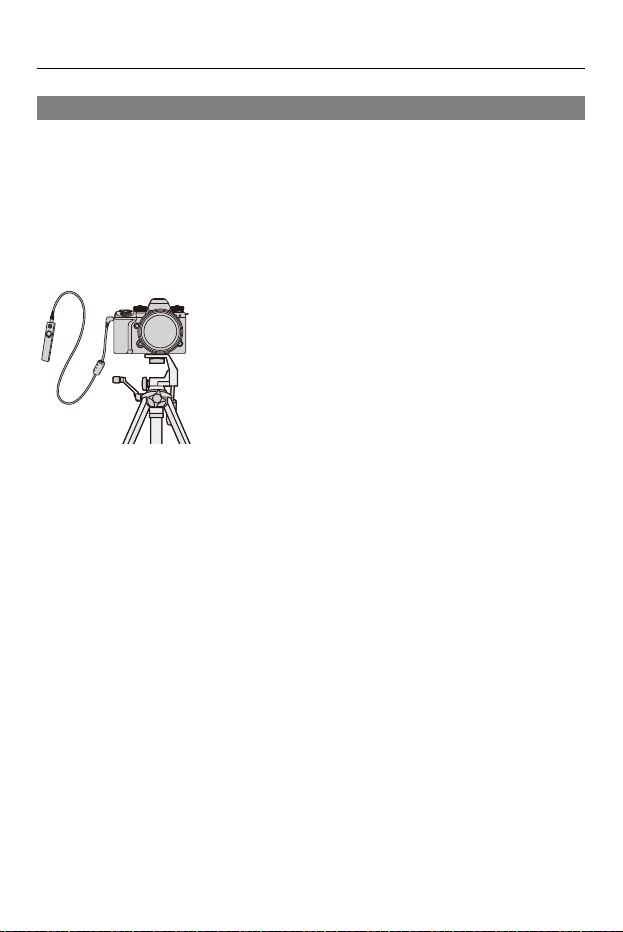
Materials – Using Optional Accessories
862
Shutter Remote Control (Optional)
You can connect the Shutter Remote Control (DMW-RS2: optional) to use
the camera as follows:
•
Fully pressing the shutter button without camera shake
•
Securing the shutter button during bulb recording and burst recording
•
Start/end the video recording
•
Using the functions registered in the video rec. button of the Shutter Remote Control
Materials – Using Optional Accessories
863
Registering Functions to the Video Rec. Button
You can register a favorite function to the video rec. button on a Shutter
Remote Control.
The functions that can be registered are the same as the functions that can
be registered to the Fn buttons for recording (Setting Items ([Fn Button
Set]/[Setting in Photo Mode]/[Setting in Video/S&Q Mode]): 652).
[Video Record] is registered in the default setting.
[] [] Select [Video Rec. Button (Remote)]
•
Register functions using the same operations as [Fn Button Set]. (Register
Functions to the Fn Buttons: 649)
•
Always use a genuine Panasonic Shutter Remote Control (DMW-RS2: optional).
•
Refer to the operating instructions for the Shutter Remote Control for details.
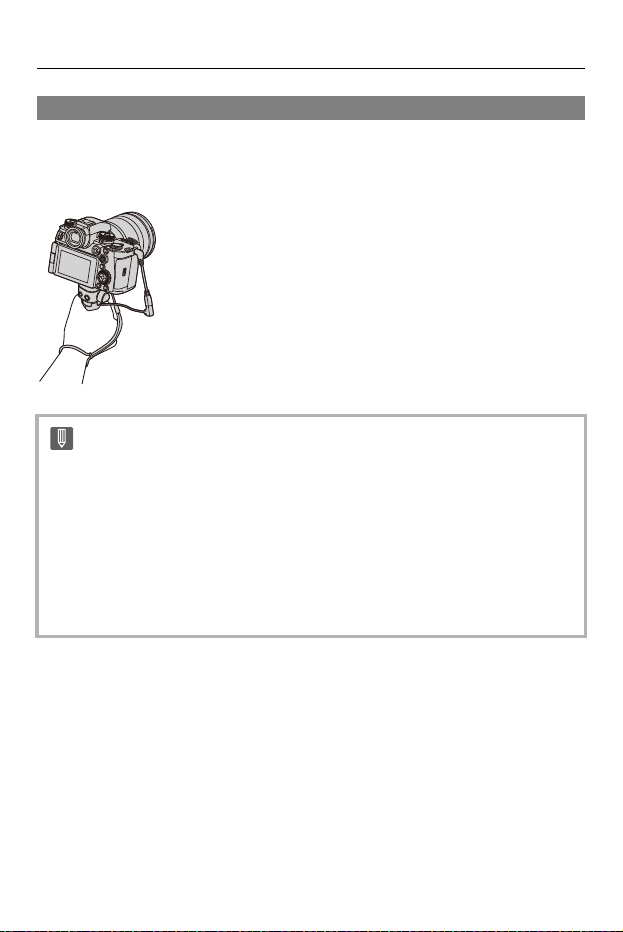
Materials – Using Optional Accessories
864
Tripod Grip (Optional)
Attach a Tripod Grip (DMW-SHGR2/DMW-SHGR1: optional) to use it as a
grip for recording while walking, a tripod, or a Shutter Remote Control.
•
Connect the grip cable to the [REMOTE] socket on the camera.
•
Depending on the combinations of lenses and accessories used, the weight may
exceed the carrying capacity of the Tripod Grip. For information about the
carrying capacity, refer to the operating instructions for the Tripod Grip.
•
Always use a genuine Panasonic Tripod Grip (DMW-SHGR2/DMW-SHGR1:
optional).
•
The [Video Rec. Button (Remote)] menu does not work with the Tripod Grip.
•
Do not carry just by holding the hand strap when the camera is attached.
•
For details, refer to the operating instructions for the Tripod Grip.
Materials – Using Optional Accessories
865
DC Coupler (Optional)
Using a DC Coupler (DMW-DCC18: optional) means you do not have to
worry about the remaining battery charge even when you are using an
external SSD.
•
A separately available AC adaptor and USB connection cable are required. It is
recommended to use the Panasonic AC Adaptor (DMW-AC11: optional).
•
When the DC Coupler is being mounted, the DC Coupler cover opens, so the
structure ceases to be dust and splash resistant.
Do not allow sand, dust and water droplets to adhere to or enter the camera.
After use, confirm that no foreign objects are adhering to the DC Coupler cover,
then firmly close the cover.
•
For details, refer to the operating instructions for the AC Adaptor and DC
Coupler.
•
Screen indications when the DC Coupler is fitted (Power Indications: 56)
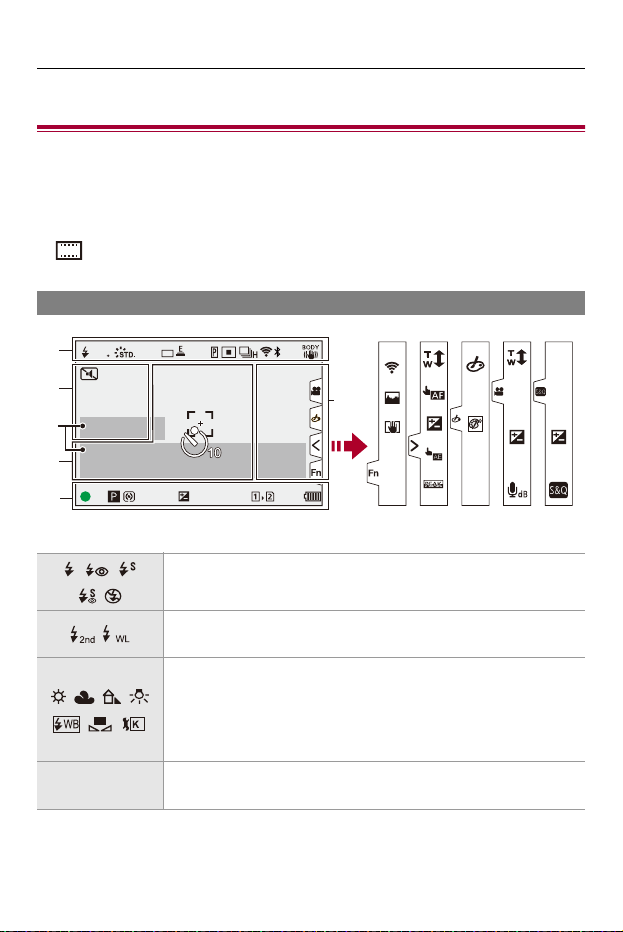
Materials – Monitor/Viewfinder Displays
866
Monitor/Viewfinder Displays
≥ Recording Screen: 866
≥ Playback Screen: 883
•
The screen is an monitor display example of when [LVF/Monitor Disp. Set] is set to
[].
Recording Screen
(1)
Flash mode ([Flash Mode]: 415)
Flash setting ([Flash Synchro]: 421, Recording Using a
Wireless Flash: 424)
AWBc AWBw
2500K
White balance (White Balance (WB): 365)/
Color Temperature (Color Temperature Setting: 370)
White Balance Bracket, White Balance Bracket (Color
Temperature) ([More Settings] (White Balance Bracket): 300)
(1)
(2)
(3)
(4)
(5)
(6)
Fn7Fn7
Fn4Fn4
Fn3Fn3
Fn5Fn5
Fn6Fn6
OFFOFF
OFFOFF
ISO
SS
FF
ISO
SS
FF
EXPSEXPS
AWB
BKT
AEL BKT
AFSAFS
999
ISO
100
F
3.560
24m59s24m59s
GPS
APS-C
+
1
/
3
L
FINE
RAW JPEG
+
WL
1
1
BKT
AWB
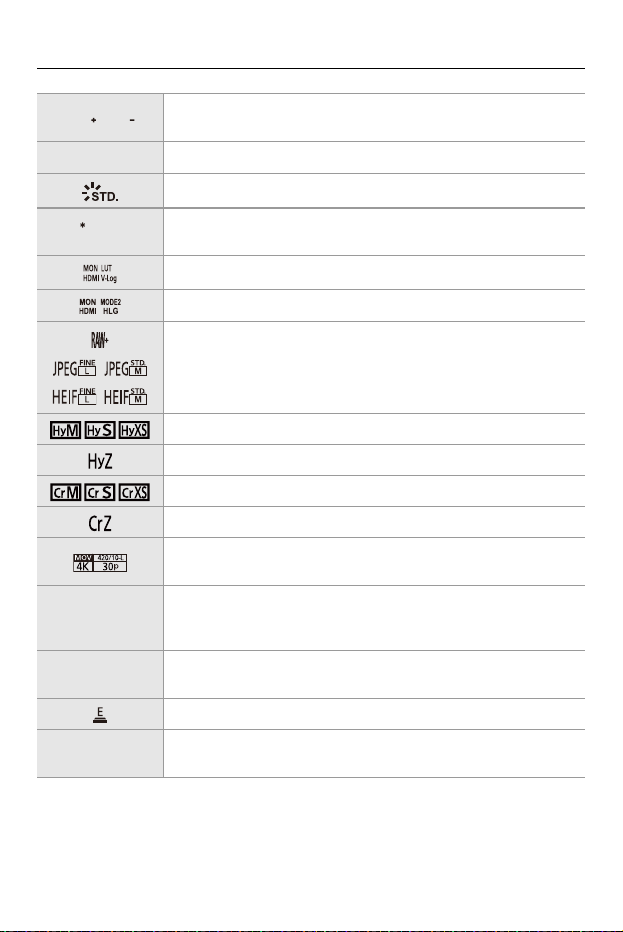
Materials – Monitor/Viewfinder Displays
867
Adjusting the white balance (Adjusting the White Balance:
371)
AWB lock setting ([AWB Lock Setting]: 684)
Photo Style ([Photo Style]: 373)
Filter setting ([Filter Settings]: 388)/
Filter effect adjustment (Adjusting the Filter Effect: 390)
LUT View Assist ([Log View Assist]: 532)
HLG View Assist ([HLG View Assist]: 537)
Recording file format (photo) ([Rec. File Format(Photo)]: 128)/
JPEG/HEIF picture quality ([JPEG/HEIF Picture Quality]:
133)/
Picture size ([Picture Size]: 126)
Hybrid Zoom (Photo) ([Hybrid Zoom(Photo)]: 244)
Hybrid Zoom (Video) ([Hybrid Zoom(Video)]: 252)
Crop Zoom (Photo) ([Crop Zoom(Photo)]: 240)
Crop Zoom (Video) ([Crop Zoom(Video)]: 247)
Recording file format (video) ([Rec. File Format(Video)]: 148)/
Recording quality ([Rec Quality]: 150)
Recording file format (video) ([Rec. File Format(Video)]: 148)/
Recording quality ([Rec Quality]: 150)
59.94p
60/59.94p
Recording frame rate ([Rec Quality]: 150)/
Slow & Quick setting (Slow & Quick Video: 499)
Electronic shutter ([Shutter Type]: 307)
Focus mode (Selecting the Focus Mode: 183, Record Using
MF: 232)
AWB
AWB
AWBL
EXPS
MOV
4K 420/10-L
AFS
AFC MF
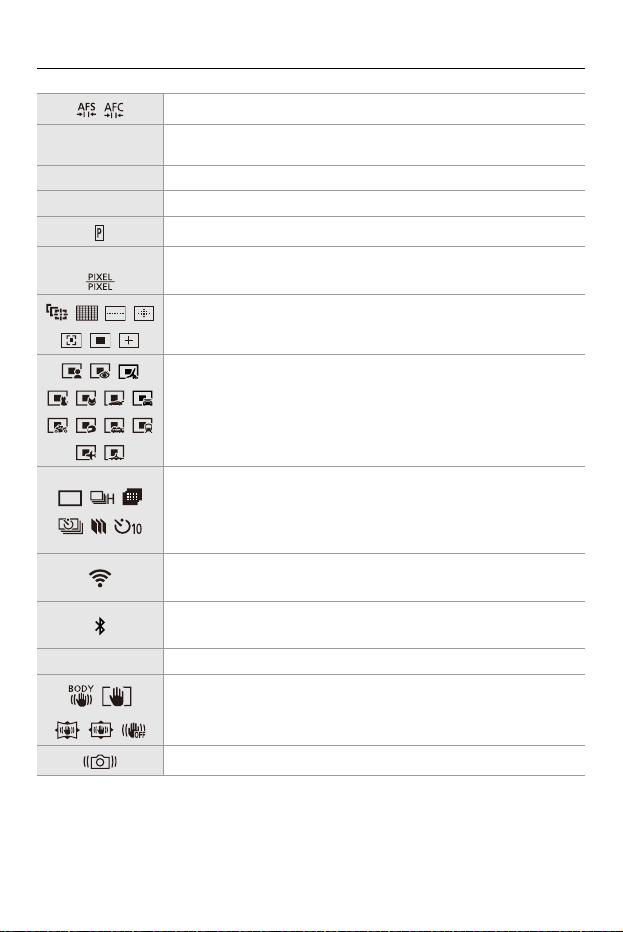
Materials – Monitor/Viewfinder Displays
868
Focus Limiter ([Focus Limiter]: 195)
Focus Bracket ([More Settings] (Focus Bracket): 299)
AFL AF Lock (Locking Focus and Exposure (AF/AE Lock): 354)
MFL Focus ring lock ([Focus Ring Lock]: 689)
Focus Peaking ([Focus Peaking]: 237)
FULL APS-C
Image area of video ([Image Area of Video]: 180)
AF mode (Selecting the AF Mode: 203)
AF detection setting (Automatic Detection: 206)
Drive mode (Selecting the Drive Mode: 257)
Connected to Wi-Fi (Checking operation of the Wi-Fi and
Bluetooth functions: 767)
Connected to Bluetooth (Connecting to a Smartphone
(Bluetooth Connection): 771)
GPS Location logging ([Location Logging]: 788)
Image stabilizer (Image Stabilizer: 316)
Camera shake alert (Using the Image Stabilizer: 318)
AFS
BKT
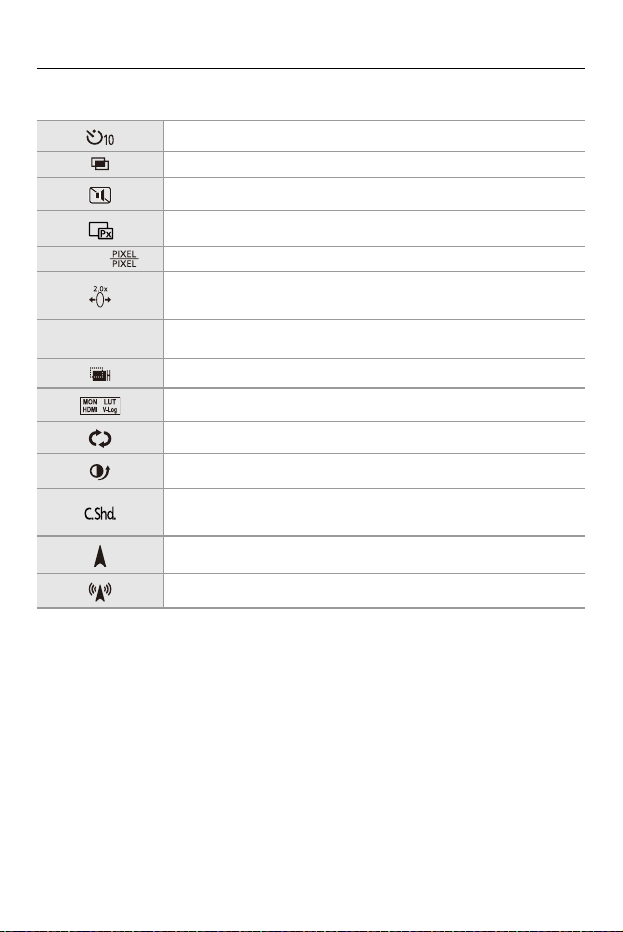
Materials – Monitor/Viewfinder Displays
869
(2)
Self-timer (Recording Using the Self-timer: 289)
Multiple exposures ([Multiple Exposure]: 352)
Silent mode ([Silent Mode]: 305)
Proxy Recording (Proxy Recording: 175)
APS-C Image area of video ([Image Area of Video]: 180)
Anamorphic Desqueeze Display ([Anamorphic Desqueeze
Display]: 540)
Live View Composite recording ([Live View Composite]: 301)
Overlay indication ([Sheer Overlay]: 708)
LUT View Assist ([Log View Assist]: 532)
Loop recording ([Loop Recording (video)]: 544)
Dynamic Range Boost ([Dynamic Range Boost]: 445)
Color shading compensation ([Color Shading Compensation]:
406)
Streaming function is ON (Streaming Function: 815)
Currently streaming (Streaming Function: 815)
LC
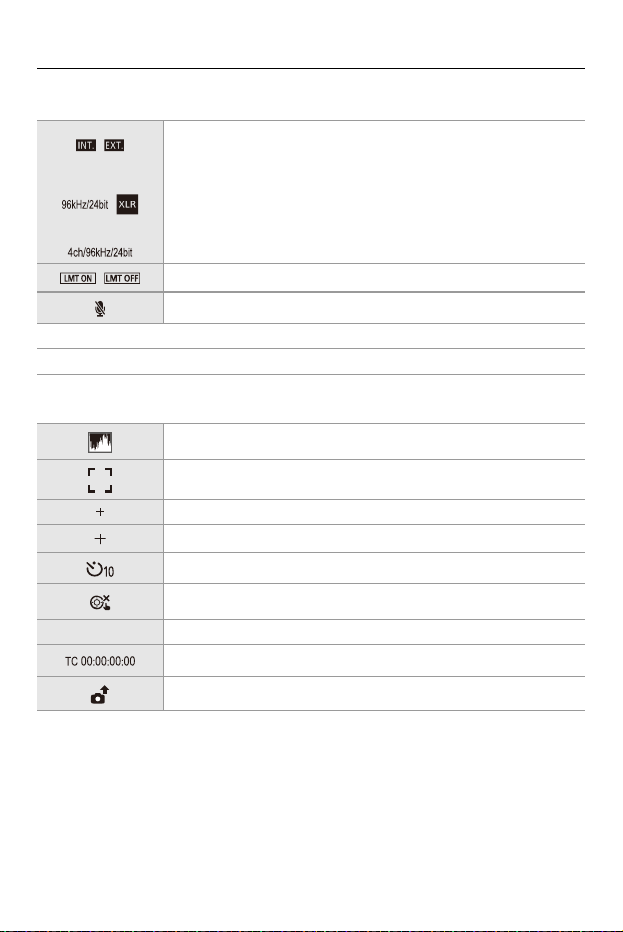
Materials – Monitor/Viewfinder Displays
870
(3)
(4)
Built-in microphone, External microphone ([Sound Rec Level
Disp.]: 447, External Microphones (Optional): 456)
Sound recording quality/XLR microphone adaptor setting
([Sound Rec Quality]: 451, XLR Microphone Adaptor
(Optional): 461)
4ch audio recording ([4ch Audio Recording]: 464)
Sound recording level limiter ([Sound Rec Level Limiter]: 453)
Mute ([Mute Sound Input]: 448)
Sound recording level ([Sound Rec Level Disp.]: 447)
Exposure meter ([Expo.Meter]: 707)
Histogram ([Histogram]: 702)
AF area (AF Area Operations: 223)
Spot metering target ([Metering Mode]: 328)
Center marker ([Center Marker]: 713)
Self-timer (Recording Using the Self-timer: 289)
Lock lever (Operation Lock Lever: 89)
24m59s Elapsed recording time (Basic Video Operations: 135)
Time code (Time Code: 470)
Image being sent ([Auto Transfer]: 785)
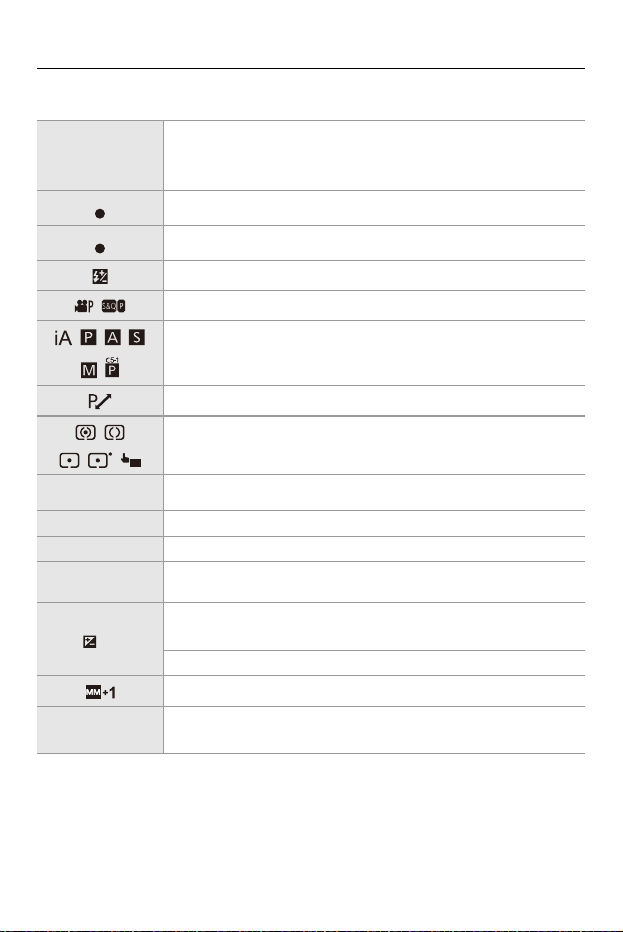
Materials – Monitor/Viewfinder Displays
871
(5)
¥
Focus (turns green) (Basic Picture Operations: 121)/
Recording state (turns red) (High Resolution mode: 271,
Basic Video Operations: 135)
Focus (in low light AF situations) (Low illumination AF: 187)
Focus (Starlight AF) (Starlight AF: 187)
Flash adjustment ([Flash Adjust.]: 420)
Video mode/S&Q mode (Photo/Video/S&Q Switch: 80)
Recording mode (Selecting the Recording Mode: 81)
Program Shift (Program Shift: 332)
Metering mode ([Metering Mode]: 328)
AE Lock (Locking Focus and Exposure (AF/AE Lock): 354)
60 Shutter speed (Basic Picture Operations: 121)
F3.5 Aperture value (Basic Picture Operations: 121)
Aperture Bracket ([More Settings] (Aperture Bracket): 298)
Exposure compensation value (Exposure Compensation:
348)
Exposure Bracket ([More Settings] (Exposure Bracket): 297)
Manual Exposure Assist (Manual Exposure Assist: 342)
ISO sensitivity (ISO Sensitivity: 356)/
Dual Native ISO setting ([Dual Native ISO Setting]: 361)
LOW
STAR
AE
A
E
L
F3.5
BKT
BKT
+
1
/
3
ISO
100
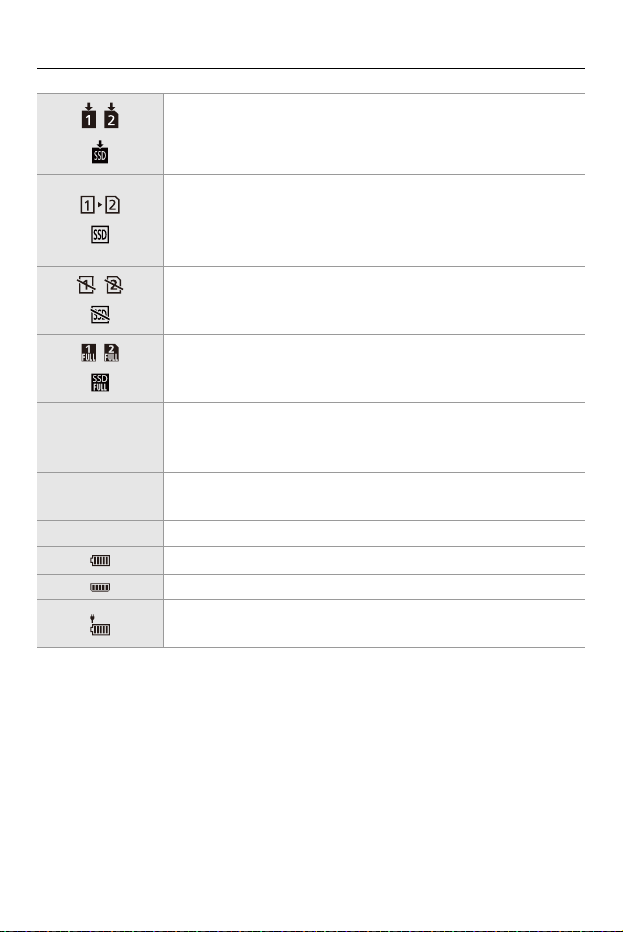
Materials – Monitor/Viewfinder Displays
872
Card/external SSD access indication (turns red) (Basic Video
Operations: 135, Using an External SSD (Commercially
Available): 590)
Card slot (Inserting Cards (Optional): 61)/
Double card slot function ([Double Card Slot Function]: 725)/
External SSD (Using an External SSD (Commercially
Available): 590)
No card/external SSD
Card/external SSD full
999
Number of pictures that can be taken (Number of Pictures
That Can Be Taken and Video Recording Time According to
Recording Media: 922)
r20
Number of pictures that can be taken continuously (Number of
Pictures That Can Be Taken Continuously: 266)
24m59s Video recording time (Video Recording Time: 924)
Battery indication (Power Indications: 56)
Battery indication (battery grip) (Power Indications: 56)
Power supply (Using the Camera While Supplying It with
Power (Supplying Power/Charging): 54)
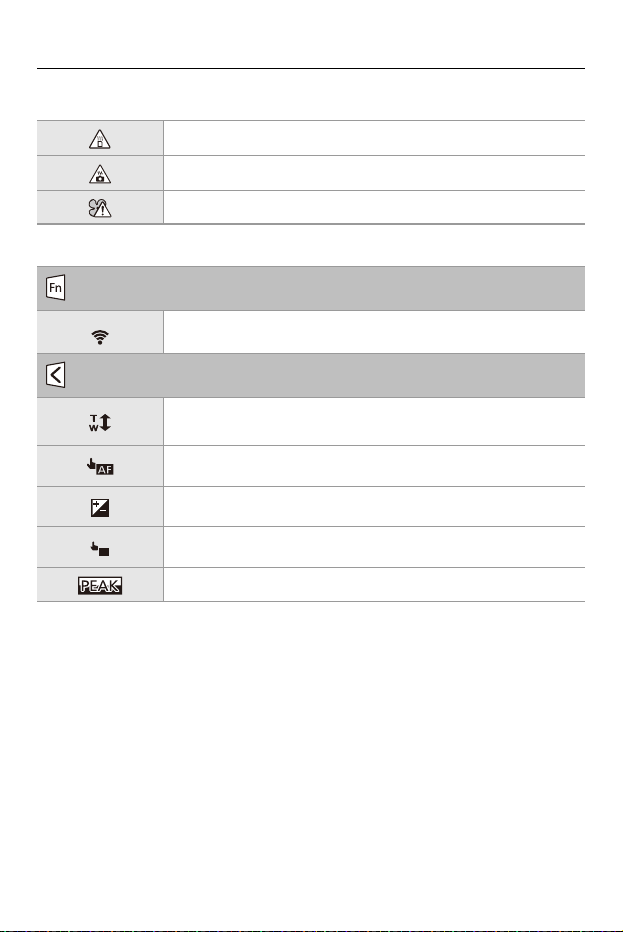
Materials – Monitor/Viewfinder Displays
873
(6)
Touch Tab ([Touch Settings]: 694)
Card overheat warning icon (Recording: 894)
Temperature rise warning icon (Recording: 894)
Fan error warning icon (Others: 904)
Fn button (Use [Fn3] to [Fn7] (Touch Icons): 661)
Crop Zoom (Photo) ([Crop Zoom(Photo)]: 240)/
Crop Zoom (Video) ([Crop Zoom(Video)]: 247)
Touch AF, Touch Shutter (Touch AF/Touch Shutter: 115)
Exposure compensation (Exposure Compensation: 348)
Touch AE (Touch AE: 118)
Focus Peaking ([Focus Peaking]: 237)
Fn3
AE
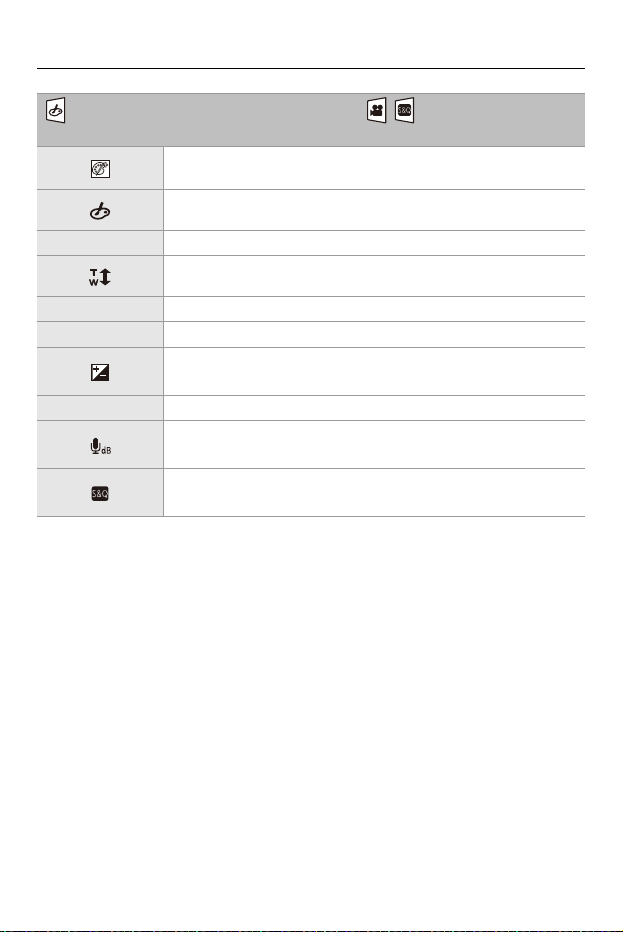
Materials – Monitor/Viewfinder Displays
874
(Setting a Filter with Touch Operation: 391)// (Operations During
Video Recording: 138)
Filter effect adjustment (Adjusting the Filter Effect: 390)
Filter on/off (Setting a Filter with Touch Operation: 391)
EXPS Filter setting ([Filter Settings]: 388)
Crop Zoom (Video) ([Crop Zoom(Video)]: 247)
F Aperture value (Operations During Video Recording: 138)
SS Shutter speed (Operations During Video Recording: 138)
Exposure compensation (Operations During Video Recording:
138)
ISO ISO sensitivity (Operations During Video Recording: 138)
Sound recording level adjustment (Operations During Video
Recording: 138)
Slow & Quick setting (Operations During Video Recording:
138)
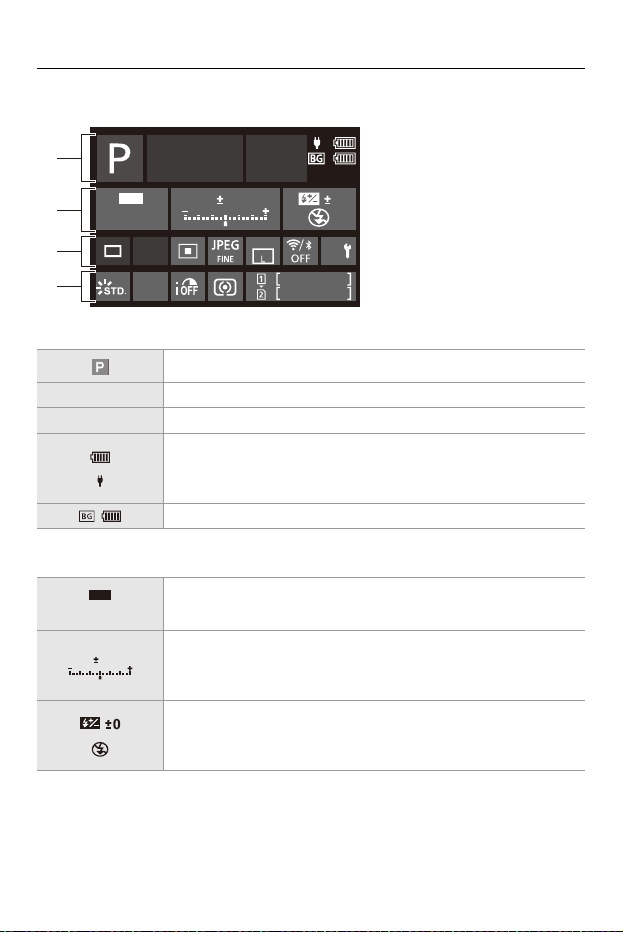
Materials – Monitor/Viewfinder Displays
875
Control Panel (Photo Mode)
(1)
(2)
Recording mode (Selecting the Recording Mode: 81)
1/60 Shutter speed (Basic Picture Operations: 121)
F3.5 Aperture value (Basic Picture Operations: 121)
Battery indication (Power Indications: 56)/
Power supply (Using the Camera While Supplying It with
Power (Supplying Power/Charging): 54)
Battery indication (battery grip) (Power Indications: 56)
ISO sensitivity (ISO Sensitivity: 356)/
Dual Native ISO setting ([Dual Native ISO Setting]: 361)
Exposure compensation value (Exposure Compensation:
348)/
Manual Exposure Assist (Manual Exposure Assist: 342)
Flash setting ([Flash Adjust.]: 420, [Flash Synchro]: 421,
Recording Using a Wireless Flash: 424)/
Flash mode ([Flash Mode]: 415)
F3.5
1/60
999
999
AWB
Fn
0 0
0
ISO
100
AFS
3:2
(1)
(2)
(3)
(4)
ISO
100
0
0
Materials – Monitor/Viewfinder Displays
876
(3)
Drive mode (Selecting the Drive Mode: 257)
Focus mode (Selecting the Focus Mode: 183, Record Using
MF: 232)
AF mode (Selecting the AF Mode: 203)
Recording file format (photo) ([Rec. File Format(Photo)]: 128)/
Switch JPEG/HEIF ([Switch JPEG/HEIF]: 131)/
JPEG/HEIF picture quality ([JPEG/HEIF Picture Quality]: 133)
APS-C
Image area of video ([Image Area of Video]: 180)/
Recording file format (video) ([Rec. File Format(Video)]: 148)/
Recording quality ([Rec Quality]: 150)
Picture size/Aspect ratio ([Picture Size]: 126)
Wi-Fi/Bluetooth connection state (Checking operation of the
Wi-Fi and Bluetooth functions: 767)
Fn button settings (Fn Buttons: 646)
AFS
L
3:2
Fn
Materials – Monitor/Viewfinder Displays
877
(4)
Photo Style ([Photo Style]: 373)
AWB White balance (White Balance (WB): 365)
i.Dynamic Range ([i.Dynamic Range]: 351)
Metering mode ([Metering Mode]: 328)
Card slot (Inserting Cards (Optional): 61)/
Double card slot function ([Double Card Slot Function]: 725)/
External SSD (Using an External SSD (Commercially
Available): 590)
No card/external SSD
Card/external SSD full
999
Number of pictures that can be taken (Number of Pictures
That Can Be Taken and Video Recording Time According to
Recording Media: 922)
r20
Number of pictures that can be taken continuously (Number of
Pictures That Can Be Taken Continuously: 266)
R24m59s Video recording time (Video Recording Time: 924)
---- No card
Materials – Monitor/Viewfinder Displays
878
Control Panel (Video Mode/S&Q Mode)
(1)
(2)
Frame rate ([Rec Quality]: 150)/
Slow & Quick setting (Slow & Quick Video: 499)
Shutter speed (Shutter-Priority AE Mode: 337)
Aperture value (Aperture-Priority AE Mode: 334)
Exposure control (video mode) ([Exposure Control(Video
Mode)]: 686)
Exposure compensation value (Exposure Compensation:
348)/
Manual Exposure Assist (Manual Exposure Assist: 342)
Image area of video ([Image Area of Video]: 180)
Time code (Time Code: 470)
Recording state (The recording state indication (F) and card
access indication (G) turn red while videos are being recorded.:
137)
FULL
FPS
30
F3.5
1/60
100
AWB
IRISSHUTTER
ISO WBPHOTO STYLE
TC
DF
00:00:00:00
REC
1
1
3
4K 29.97
p
420/10-L
MOV
24m59s
24m59s
AUTO
CH1
-2
-36 -12 -6-24 0
CH2
-6
(1)
(2)
(4)
(3)
(5)
OFF
48kHz/24bit
FPS
60
SHUTTER
1/60
IRIS
F3.5
00:00:00:00
TC
DF
REC
Materials – Monitor/Viewfinder Displays
879
(3)
Recording file format (video) ([Rec. File Format(Video)]: 148)/
Recording quality ([Rec Quality]: 150)
Card slot (Inserting Cards (Optional): 61)/
Double card slot function ([Double Card Slot Function]: 725)/
External SSD (Using an External SSD (Commercially
Available): 590)
Video recording time (Video Recording Time: 924)
Wi-Fi/Bluetooth connection state (Checking operation of the
Wi-Fi and Bluetooth functions: 767)
Fan operating mode ([Fan Mode]: 717)
Streaming function is ON (Streaming Function: 815)
Currently streaming (Streaming Function: 815)
Battery indication (Power Indications: 56)/
Power supply (Using the Camera While Supplying It with
Power (Supplying Power/Charging): 54)
Battery indication (battery grip) (Power Indications: 56)
4K 29.97
p
420/10-L
MOV
24
m
59
s
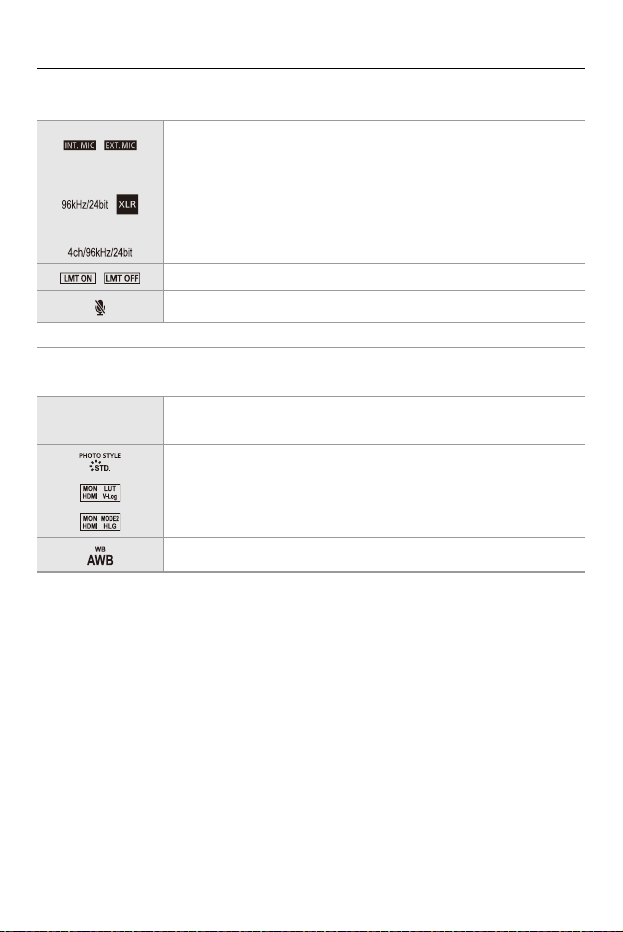
Materials – Monitor/Viewfinder Displays
880
(4)
(5)
Built-in microphone, External microphone ([Sound Rec Level
Disp.]: 447, External Microphones (Optional): 456)
Sound recording quality/XLR microphone adaptor setting
([Sound Rec Quality]: 451, XLR Microphone Adaptor
(Optional): 461)
4ch audio recording ([4ch Audio Recording]: 464)
Sound recording level limiter ([Sound Rec Level Limiter]: 453)
Mute ([Mute Sound Input]: 448)
Sound recording level ([Sound Rec Level Disp.]: 447)
ISO sensitivity (ISO Sensitivity: 356)/
Dual Native ISO setting ([Dual Native ISO Setting]: 361)
Photo Style ([Photo Style]: 373)/
LUT View Assist ([Log View Assist]: 532)/
HLG View Assist ([HLG View Assist]: 537)
White balance (White Balance (WB): 365)
100
ISO
AUTO
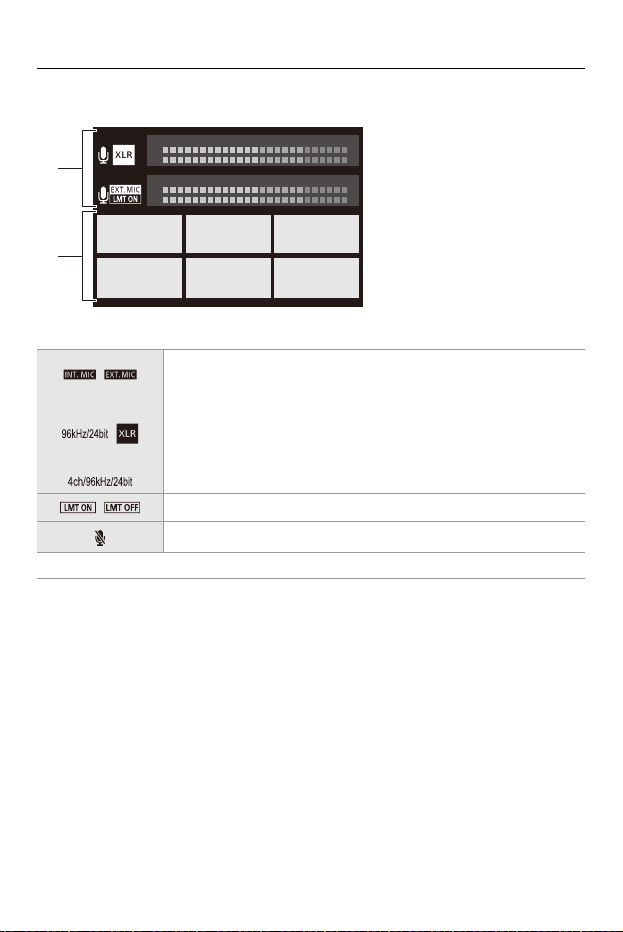
Materials – Monitor/Viewfinder Displays
881
Audio Information Display
(1)
Built-in microphone, External microphone ([Sound Rec Level
Disp.]: 447, External Microphones (Optional): 456)
Sound recording quality/XLR microphone adaptor setting
([Sound Rec Quality]: 451, XLR Microphone Adaptor
(Optional): 461)
4ch audio recording ([4ch Audio Recording]: 464)
Sound recording level limiter ([Sound Rec Level Limiter]: 453)
Mute ([Mute Sound Input]: 448)
Sound recording level ([Sound Rec Level Disp.]: 447)
EXT. GAIN
96kHz/24bit
OFF
CH1/CH2
Audio QualityMute
4ch MIC Input Monitor CHMonitor
CH1
-2
-36 -12 -6-24 0
CH2
-6
CH3
-2
-36 -12 -6-24 0
CH4
-6
ON
4ch/96kHz/24bit
STD.
REALTIME
(1)
(2)

Materials – Monitor/Viewfinder Displays
882
(2)
Sound recording gain switch ([Sound Rec Gain Level]: 449)
Sound input mute ([Mute Sound Input]: 448)
Sound recording quality ([Sound Rec Quality]: 451)
4ch audio recording ([4ch Audio Recording]: 464)
Sound monitoring (Headphones: 466)
Sound monitoring channel ([Sound Monitoring Channel]: 468)
EXT.GAIN
STD.
Mute
OFF
Audio Quality
96kHz/24bit
4ch MIC Input
ON
Monitor
REALTIME
Monitor CH
CH1/CH2
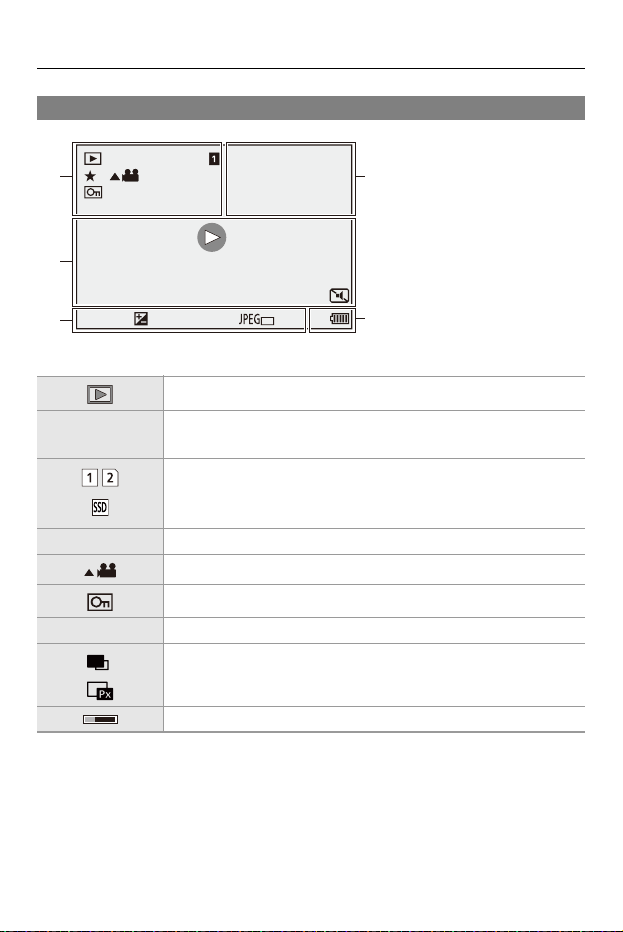
Materials – Monitor/Viewfinder Displays
883
Playback Screen
(1)
Playback mode ([Playback Mode]: 634)
Recording date and time (Setting the Clock (When Turning On
for the First Time): 73)
Card slot (Switching the Card to Display: 600)/
External SSD (Using an External SSD (Commercially
Available): 590)
¿3 Rating ([Rating]: 638)
Video playback (Playing Back Videos: 601)
Protected picture ([Protect]: 638)
GPS Location logging ([Location Logging]: 788)
Proxy recording (original video/proxy video) (Proxy
Recording: 175)
Obtaining information
2025.12.1 10:00 100-0001 1/999
8m30s
ISO
100F3.560
±
0
3
GPS
L
FINE
(4)
(1)
(5)
(2)
(3)
2025.12. 1 10:00
Materials – Monitor/Viewfinder Displays
884
(2)
100-0001 Folder/file number ([Folder / File Settings]: 727)
1/999 Image number/Total number of images
Number of group images/
Number of files
8m30s Video recording time (Playing Back Videos: 601)
Slow & Quick video (Slow & Quick Video: 499)
Loop recording ([Loop Recording (video)]: 544)
LUT View Assist ([Log View Assist]: 532)
HLG View Assist ([HLG View Assist]: 537)
SLF
ILOHV
XX
s
XX
m
XX
s
XX
m
XX
s
Materials – Monitor/Viewfinder Displays
885
(3)
(4)
(5)
Playback (video) (Playing Back Videos: 601)
Group images (Group Images: 616)
Time code (Time Code: 470)
Sound recording quality ([Sound Rec Quality]: 451)
Recording file format (video) ([Rec. File Format(Video)]: 148)/
Recording quality ([Rec Quality]: 150)
59.94p
60/59.94p
Frame rate ([Rec Quality]: 150)/
Slow & Quick setting (Slow & Quick Video: 499)
FULL APS-C
Image area of video ([Image Area of Video]: 180)
Wi-Fi/Bluetooth connection state (Checking operation of the
Wi-Fi and Bluetooth functions: 767)
Silent mode ([Silent Mode]: 305)
Recording information
Battery indication (Power Indications: 56)
Battery indication (battery grip) (Power Indications: 56)
Power supply (Using the Camera While Supplying It with
Power (Supplying Power/Charging): 54)
MOV
4K 420/10-L
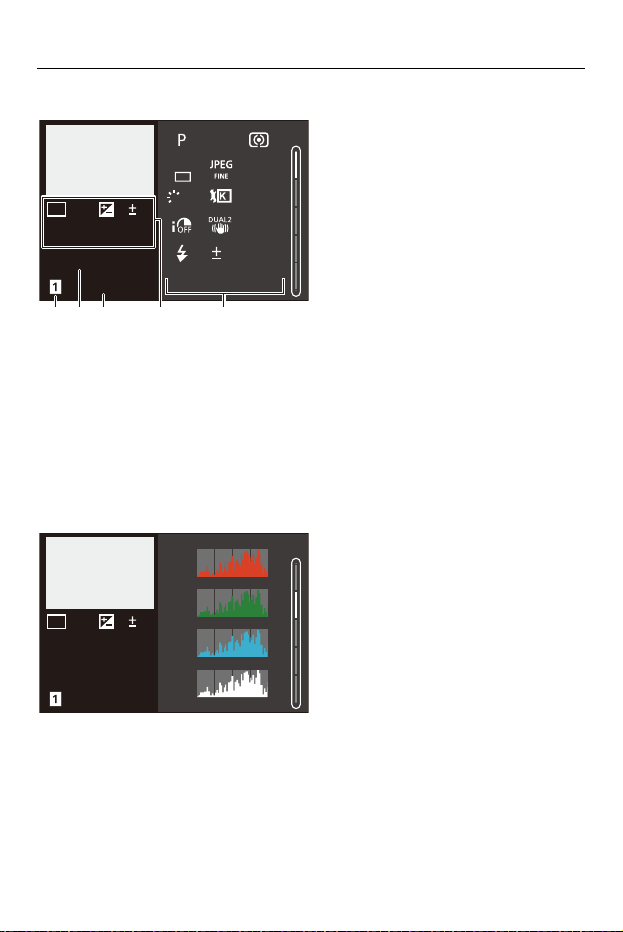
Materials – Monitor/Viewfinder Displays
886
Detailed information display
(1) Card slot (Inserting Cards (Optional): 61)/External SSD (Using an External
SSD (Commercially Available): 590)
(2) Recording date and time (Setting the Clock (When Turning On for the First
Time): 73)
(3) Folder/file number ([Folder / File Settings]: 727)
(4) Recording information (basic)
(5) Recording information (advanced)
Histogram display
100
100-0001
ISOISO
0
F4.0
60
2025.12. 1 10:00
s
RGB
1/5
AFS
5500
0
STD.
L
3:2
1
(1) (5)(4)(3)(2)
2/5
R
Y
B
G
100
100-0001
ISOISO
0
F4.0
60
2025.12. 1 10:00
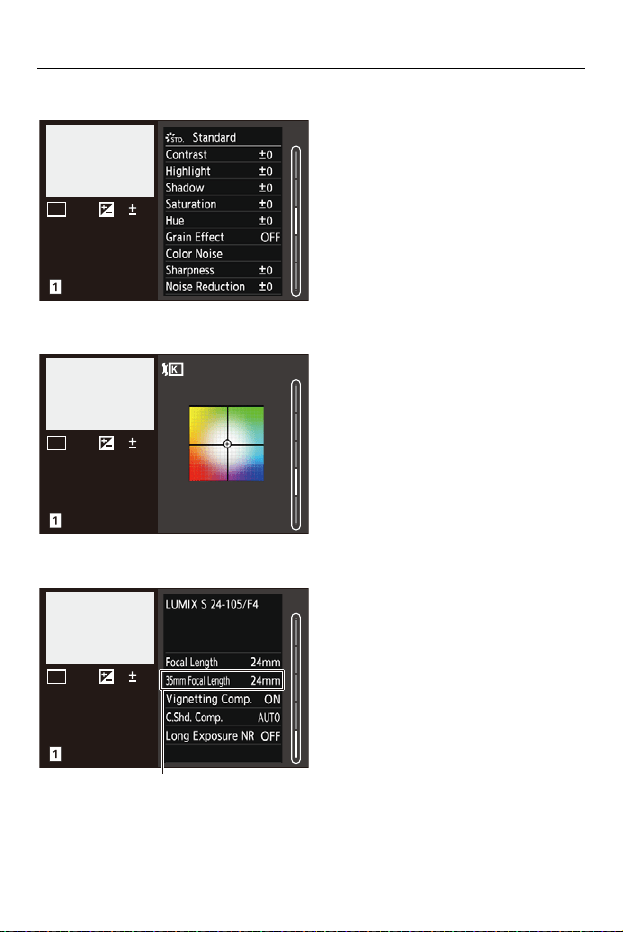
Materials – Monitor/Viewfinder Displays
887
Photo Style display
White balance display
Lens information display
(6) The focal length corresponding to the angle of view when using a full-frame lens
with the [Aspect Ratio] set to [3:2]
3/5
100
100-0001
ISOISO
0
F4.0
60
2025.12. 1 10:00
100
100-0001
ISOISO
0
F4.0
60
2025.12. 1 10:00
4/5
5500K
1
G
M
AB
5/5
100
100-0001
ISOISO
0
F4.0
60
2025.12. 1 10:00
(6)

Materials – Message Displays
888
Message Displays
Meanings of main messages displayed on the camera screen, and
response methods.
Card
[Memory Card Error]/[Format this card?]
•
It is a format that cannot be used with the camera.
Either insert another card, or back up any necessary data before formatting.
([Card Format]: 724)
[Memory Card Error]/[This memory card cannot be used]
•
Use a card compatible with the camera. (Memory Cards That Can Be Used: 26)
[Insert memory card again.]/[Try another card]
•
Unable to access the card. Reinsert the card.
•
Insert a different card.
[Read Error]/[Write Error]/[Please check the card]
•
Failure to read or write data.
Turn off the camera, reinsert the card, and then turn it on again.
•
The card may be broken.
•
Insert a different card.

Materials – Message Displays
889
[Recording was cancelled due to the limitation of the writing
speed of the card]
•
The card does not meet the writing speed requirements for recording.
Cards that can be used depend on the video image quality. Check whether the card
you are using meets the conditions required for recording. (SD Cards That Can Be
Used with This Camera: 27)
* Check with the card manufacturers for the specifications of their cards.
•
If recording stops even if you are using a card that meets the conditions required for
recording, it is possible that the speed of writing on the card has dropped.
Take a backup of the data, and either format the card (SD cards) or low level format
the card (CFexpress cards). ([Card Format]: 724)
•
When using CFexpress cards, the writing speed can drop if the temperature of the
card rises. Wait until the card cools down.

Materials – Message Displays
890
Lens
[The lens is not attached properly. Do not push lens release button
while lens is attached.]
•
Remove the lens once, and then attach it again without pressing the lens release
button. (Attaching a Lens: 64)
Turn on the camera again, and if it is still displaying, contact the dealer.
[Lens attachment failed. Please make sure the lens is attached
correctly.]
•
Remove the lens from the camera body and gently wipe the contacts on the lens and
the camera body using a dry cotton swab.
Attach the lens, turn on the camera again, and if it is still displaying, contact the
dealer.
Battery
[This battery cannot be used]
•
Use a genuine Panasonic battery.
If this message is displayed even when a genuine Panasonic battery is used, contact
the dealer.
•
If the terminal of the battery is dirty, remove the dirt and dust from the terminal.
[The life span of this battery is starting to decline and should be
considered for replacement. To maintain reliability refrain from
using this battery.]
•
The battery has deteriorated. Try not to use that battery.

Materials – Message Displays
891
Others
[Some pictures cannot be deleted]/[This picture cannot be
deleted]
•
Images that do not comply with the DCF standard cannot be deleted.
Back up any necessary data before formatting the card. ([Card Format]: 724)
[A folder cannot be created]
•
The maximum number of folder numbers has been reached, so new folders cannot
be created.
After formatting the card, execute [File Number Reset] in the [Setup] ([Card/File])
menu. ([File Number Reset]: 729)
[Please turn camera off and then on again]/[System Error]
•
Turn off and on the camera.
If the message is displayed even when doing this several times, contact the dealer.
[The fan is not functioning correctly.]
•
The fan has stopped. Turn off and on the camera. If the fan does not work after
turning the camera off and then on again, consult the dealer.
•
The temperature of the camera will rise if you continue to use the camera with the
fan stopped. Do not use over long periods of time.

Materials – Troubleshooting
892
Troubleshooting
≥ Power, Battery: 893
≥ Recording: 894
≥ Video: 899
≥ Playback: 899
≥ Monitor/Viewfinder: 900
≥ Flash: 900
≥ Wi-Fi Function: 901
≥ TV, PC: 903
≥ Others: 904
First, try out the following procedures.
If the problem is not resolved, it may be improved by selecting
[Reset] ([Reset]: 107) on the [Setup] ([Setting]) menu.

Materials – Troubleshooting
893
Power, Battery
The camera turns off automatically.
•
[Power Save Mode] is enabled. ([Power Save Mode]: 58)
The battery becomes flat too quickly.
•
When connected to Wi-Fi, the battery drains quickly.
Turn the camera off frequently such as by using [Power Save Mode] ([Power Save
Mode]: 58).
•
When the following functions are being used, power is supplied from the battery of
this camera to the connected device, so the battery will be consumed faster:
– [USB-SSD]
– [Streaming] (when [Connection Method] in [Streaming] is set to [USB Tethering])
– [Tether(USB ethernet adaptor)] in [USB]
When not using these functions, set them to [OFF]. (Using an External SSD
(Commercially Available): 590, Streaming Function: 815, Tethered Recording: 849)
The remaining capacity in the battery reduces suddenly.
•
During recording of high picture quality video or when using the following functions,
the battery is consumed rapidly, so depending on the status of the battery,
immediately after video recording starts, the video recording may be stopped and the
power may be turned off.
– [USB-SSD]
– [Streaming] (when [Connection Method] in [Streaming] is set to [USB Tethering])
– [Tether(USB ethernet adaptor)] in [USB]
Before use, ensure the battery has sufficient capacity or charge the battery.

Materials – Troubleshooting
894
Recording
Recording stops before finishing. Cannot record. Cannot use
some functions.
•
The temperature of the camera rises more readily in the following circumstances:
when the ambient temperature is high, during continuous use such as when
recording high-definition video or outputting via HDMI. When the temperature of the
camera rises, [ ] appears blinking on the screen. If you continue to use the
camera, a message indicating that the camera cannot be used is displayed on the
screen and some functions, such as recording and HDMI output, will be stopped.
Wait for the camera to cool down and for the message indicating that the camera
can be used again. When the message indicating that it can be used again is
displayed, turn the camera off then on again.
(Continuous Recording Time for Video: 939)
* When recording with the camera mounted on a tripod, etc., you can set the
temperature at which recording is stopped to a higher temperature. ([Thermal
Management]: 731)
•
The temperature of the card rises more readily during continuous use, such as when
recording video. When the temperature of the card rises, [ ] appears blinking on
the screen. If you continue to record, a message is displayed on the screen and
some functions, such as recording, will be stopped. Wait for the temperature to drop
and the message to disappear.
Cannot record images. The shutter will not operate immediately
when the shutter button is pressed.
•
If [Focus/Shutter Priority] is set to [FOCUS], then recording will not take place until
focus is achieved. ([Focus/Shutter Priority]: 687)

Materials – Troubleshooting
895
The recorded image is whitish.
•
Images may look whitish when the lens or image sensor gets dirty with fingerprints or
similar.
If the lens is dirty, turn the camera off, then wipe the lens surface with a soft, dry
cloth.
For information about how to clean the image sensor (Dirt on the Image Sensor:
907)
The recorded image is too bright or dark.
•
Ensure AE Lock is not set where it is not appropriate. (Locking Focus and
Exposure (AF/AE Lock): 354)
Multiple images are recorded at once.
•
When drive mode is set to [ ] (Burst Shot 1) or [ ] (Burst Shot 2), pressing
and holding the shutter button will take burst pictures. (Selecting the Drive Mode:
257)
•
When [Bracketing] is set, then pressing the shutter button records multiple images
while automatically changing the settings. (Bracket Recording: 293)
The subject is not focused properly.
•
Confirm the following details:
– Is the subject outside of the focus range?
– Is [Shutter AF] set to [OFF]? ([Shutter AF]: 691)
– Is [Focus/Shutter Priority] set to [RELEASE]? ([Focus/Shutter Priority]: 687)
– Is AF Lock (Locking Focus and Exposure (AF/AE Lock): 354) set where it is not
appropriate?
– Is [Focus Limiter] set to [ON]? ([Focus Limiter]: 195)
– Is [AF Micro Adjustment] set? ([AF Micro Adjustment]: 199)

Materials – Troubleshooting
896
Cannot focus or zoom with the lens.
•
Confirm the following details:
– Is “Lens” in [Lock Lever Setting] set to [ ]? ([Lock Lever Setting]: 695)
– Is [Focus Ring Lock] set to [ON]? ([Focus Ring Lock]: 689)
The recorded image is blurred. The image stabilizer is not
effective.
•
The shutter speed will become slower and the image stabilizer function may not
work properly when recording in dark places.
In these cases, use a tripod and the self-timer when recording.
The recorded image looks rough. Noise appears on the picture.
•
Try the following:
– Reduce the ISO sensitivity. (ISO Sensitivity: 356)
– Increase [Noise Reduction] of [Photo Style] to the positive direction, or adjust each
item other than [Noise Reduction] to the negative direction. (Adjusting Image
Quality: 379)
– Set [Long Exposure NR] to [ON]. ([Long Exposure NR]: 311)
•
When the camera is used continuously, the temperature inside the camera may rise
and this may cause lower image quality. We recommend turning off the camera
whenever you are not actually recording.
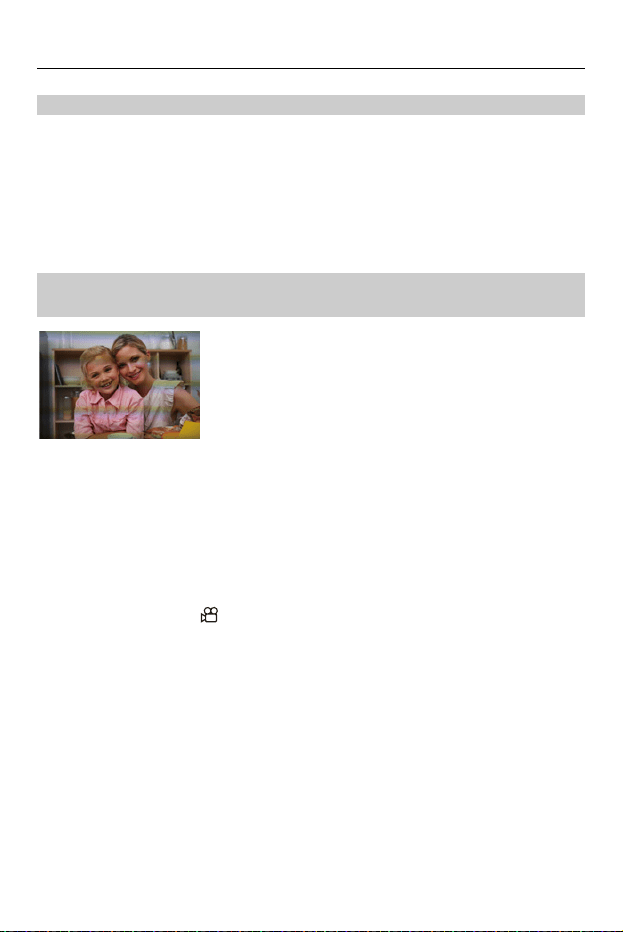
Materials – Troubleshooting
897
The subject appears distorted on the image.
•
When a moving subject is recorded while using the following functions, the subject
may appear distorted in the picture:
– [ELEC.]
– Video recording
This is a characteristic of the CMOS sensor that is the image sensor of the camera,
and is not a malfunction.
Striping or flicker may appear under lighting such as fluorescent
or LED lighting.
•
This is characteristic of CMOS sensors which serve as the camera’s pickup sensors.
This is not a malfunction.
•
When using the electronic shutter ([Shutter Type]: 307), lowering the shutter
speed may reduce the effect of the horizontal stripes.
•
If flicker or horizontal stripes are noticeable when recording video, this can be
mitigated by fixing the shutter speed.
Either set [Flicker Decrease (Video)] ([Flicker Decrease (Video)]: 479), or fix the
shutter speed with the [ ]/[S&Q] mode.
•
You can make finer adjustments to shutter speed by using [Synchro Scan(Photo)] or
[Synchro Scan(Video)]. ([Synchro Scan(Photo)]: 312, [Synchro Scan(Video)]: 542)

Materials – Troubleshooting
898
Stripes appear in high ISO sensitivity.
•
Stripes may appear in high ISO sensitivity or depending on the lens you use.
Decrease the ISO sensitivity. (ISO Sensitivity: 356)
The brightness or coloring of the recorded image is different from
the actual scene.
•
When recording under lighting such as fluorescent or LED lighting, increasing the
shutter speed may introduce slight changes to brightness or coloring.
These are a result of the characteristics of the light source and do not indicate a
malfunction.
•
When recording subjects in extremely bright locations or recording under lighting
such as fluorescent, LED, mercury, or sodium lighting, the coloring or screen
brightness may change or horizontal striping may appear on the screen.
Bright spot not in subject is recorded.
•
Pixels may be missing from the image sensor.
Perform [Pixel Refresh]. ([Pixel Refresh]: 746)

Materials – Troubleshooting
899
Video
Cannot record videos.
•
Try again after either returning the [System Frequency] to the original setting or
inserting another card.
•
When using a large capacity card, you may not be able to record for a while after
turning on the camera.
•
There are [Rec. File Format(Video)] and [Rec Quality] that cannot be recorded to SD
cards. Use CFexpress cards. (Memory Cards That Can Be Used: 26)
In videos, abnormal clicking and buzzing sounds are recorded.
The recorded audio is very quiet.
•
Depending on the recording conditions or the lens used, the sound of aperture and
focus actions may be recorded in videos.
•
Do not block the microphone hole during video recording.
An operation sound is recorded in a video.
•
We recommend setting the [ ]/[S&Q] mode and recording with touch operation if
you are bothered about the operation sounds during recording. (Operations
During Video Recording: 138)
Playback
Cannot play back. There are no recorded pictures.
•
Folders and images processed on a PC cannot be played on the camera.
•
Some images are not displayed when the [Playback Mode] is set. Set to [Normal
Play]. ([Playback Mode]: 634)
•
Videos recorded with a different [System Frequency] setting cannot be played back.
Return the [System Frequency] setting to the one you used during the recording.
([System Frequency]: 146)

Materials – Troubleshooting
900
Monitor/Viewfinder
The monitor/viewfinder turns off when the camera is turned on.
•
If no operations are performed during the set time period, [Auto LVF/Monitor Off]
([Auto LVF/Monitor Off]: 58) is activated, and the monitor/viewfinder turns off.
•
When an object or your hand is positioned near the eye sensor, the monitor display
may switch to the viewfinder display.
It may flicker for an instant or the brightness of the screen may
change significantly for an instant.
•
This occurs when the shutter button is pressed halfway, or when the subject
brightness changes, making the lens aperture change.
This is not a malfunction.
Unevenly bright parts or irregular colors appear on the viewfinder.
•
The viewfinder of the camera is built with OLED components. Screen burn-in may
occur on the screen/viewfinder when a same image is displayed for a long period of
time, but it does not affect the recorded images.
Flash
The flash does not fire.
•
The flash does not fire when using the following functions:
– Video recording
– [ELEC.]/[Silent Mode]
– High Resolution mode
– [Filter Settings]

Materials – Troubleshooting
901
Wi-Fi Function
A Wi-Fi connection cannot be established. Radio waves get
disconnected. Wireless access point is not displayed.
General tips for using a Wi-Fi connection
•
Use within the communication range of the device to be connected.
•
Usage near devices that utilize the 2.4 GHz frequency such as microwave ovens
and cordless telephones may result in the radio wave being lost.
Use the camera at a sufficient distance from these devices.
•
When the remaining battery level is low, it may not be possible to connect to or
maintain communication with other devices.
(A message such as [Communication error] is displayed.)
•
If you place the camera on a metal table or shelf, the radio waves may be adversely
affected. In such cases, you may not be able to establish a connection.
Move the camera away from the metal surface.
Wireless access point
•
Confirm that the connected wireless access point can be used.
•
Confirm the radio wave conditions of the wireless access point.
– Move the camera closer to the wireless access point.
– Change the location and angle of the wireless access point.
•
Depending on the wireless access point, the radio wave may not be displayed even
though it is present.
– Turn off and then on the wireless access point.
– If the wireless channel of the wireless access point cannot be set automatically,
manually set the channel supported by the camera.
– If the wireless access point SSID is set not to broadcast, it may not be detected.
Enter the SSID, and then connect. (Connecting by Manual Input: 792)
•
Depending on the wireless access point, connection may be automatically
disconnected after specific time has passed.
Reconnect the connection again.

Materials – Troubleshooting
902
Cannot connect with a wireless access point.
•
The wireless access point information set on the camera is wrong.
Check the authentication type and encryption key. (Connecting by Manual Input:
792)
•
Radio waves from other devices may block the connection to a wireless access
point.
Check the status of other devices that are connected to the wireless access point as
well as the status of other wireless devices.
Wi-Fi connection on an iOS device fails.
•
Follow the message displayed to allow connection to the camera.
If you still cannot connect, select the SSID of the camera on the Wi-Fi setup screen
of the smartphone to connect.
If the SSID is not displayed, turn off and on the camera, then perform the Bluetooth
connection settings again.
Wi-Fi connection with a smartphone is not possible.
•
Change the access point to connect to in the smartphone Wi-Fi settings to the
camera.

Materials – Troubleshooting
903
Sending of videos/images fails midway. There are some videos/
images that cannot be sent.
•
Is the size of the image too large?
– Reduce the image size at [Size] ([Size]: 786), and then send.
– Transmit after dividing the video with [Video Divide] ([Video Divide]: 608).
•
Set the file format of video files to send. ([File Format]: 786)
•
If sending of videos/images fails, we recommend transferring them over a USB
connection cable.
I have forgotten the password for the Wi-Fi.
•
In the [Setup] ([Setting]) menu, [Reset], reset network settings. ([Reset]: 107)
However, all information set in [LAN / Wi-Fi] and [Bluetooth] will also be reset.
TV, PC
The TV images are displayed with gray bands.
•
Depending on the [Aspect Ratio], gray bands may be displayed on the top and
bottom or the left and right of the images. You can change the band color in
[Background Color(Playback)] in [HDMI Connection] of the [Setup] ([IN/OUT]) menu.
([Background Color(Playback)]: 741)
Images cannot be imported even when connected to a PC.
•
Set the [USB Mode] of the camera to [PC(Storage)]. ([USB Mode]: 738)
•
Turn the camera off and on.
Materials – Troubleshooting
904
Others
[ ] is displayed on the screen.
•
The fan has stopped. Turn off and on the camera. If the fan does not work after
turning the camera off and then on again, consult the dealer.
•
The temperature of the camera will rise if you continue to use the camera with the
fan stopped. Do not use over long periods of time.
When the camera is shaken, a rattling sound is heard from the
camera.
•
The sound is caused by the in-body stabilizer. This is not a malfunction.
There is rattling noise from the lens when the camera is turned on
or off, or when the camera is swung. There is a sound from the
lens when recording.
•
This is the sound of the internal lenses moving or the aperture operating. It is not a
malfunction.
An unreadable language was selected by mistake.
•
Reselect the language from the menu using the following procedure:
[] [] [] Select desired language ([Language]: 747)
The camera becomes warm.
•
The camera surface and back of the monitor may become warm during use, but this
does not indicate a problem with performance or quality.

Materials – Cautions for Use
905
Cautions for Use
The Camera
Keep this unit as far away as possible from electromagnetic
equipment (such as microwave ovens, TVs, video games etc.).
•
If you use this unit on top of or near a TV, the pictures and/or sound on this unit may
be disrupted by electromagnetic wave radiation.
•
Do not use this unit near cell phones because doing so may result in noise adversely
affecting the pictures and/or sound.
•
Recorded data may be damaged, or pictures may be distorted, by strong magnetic
fields created by speakers or large motors.
•
Electromagnetic wave radiation may adversely affect this unit, disturbing the pictures
and/or sound.
•
If this unit is adversely affected by electromagnetic equipment and stops functioning
properly, turn this unit off and remove the battery or disconnect AC adaptor. Then
reinsert the battery or reconnect AC adaptor and turn this unit on.
Do not use this unit near radio transmitters or high-voltage lines.
•
If you record near radio transmitters or high-voltage lines, the recorded pictures and/
or sound may be adversely affected.
Do not extend the cords or the cables.
Do not spray the camera with insecticides or volatile chemicals.
•
If the camera is sprayed with such chemicals, the body of the camera may be
damaged and the surface finish may peel off.
Do not keep products made of rubber, PVC or similar materials in
contact with the camera for a long period of time.

Materials – Cautions for Use
906
When Using in Cold Places or at Low Temperatures
•
Skin burns may result if you leave the metal parts of the camera in direct
contact with the skin for long periods of time at cold places (environments
with temperatures at or below 0 oC (32 oF), such as ski resorts or places at high
altitude).
Use gloves or similar when using it for long periods.
•
The performance of the battery (Number of pictures that can be taken/available
recording time) may decrease temporarily at temperatures between −10 °C and 0 °C
(14 oF and 32 oF).
Keep the battery warm as you are using by keeping it inside your cold weather gear
or clothes. Battery performance will recover when the internal temperature rises
again.
•
The battery cannot be charged at temperatures below 0 °C (32 oF).
An error message is shown on the charger or on the camera body when charging is
not possible.
– When charging with the charger: The 50 % charged light blinks rapidly.
– When charging in the camera body: The charging light blinks red.
•
If using in cold locations, do not allow water droplets and snow to remain on the
camera.
If these are left on the camera, water may freeze in gaps in the camera on/off switch,
speaker, and microphone, making these parts difficult to move, and/or leading to
reduced volume. This is not a malfunction.

Materials – Cautions for Use
907
Cleaning
Before cleaning the camera, remove the battery or the DC Coupler,
and disconnect the power plug from the electrical outlet. Then wipe
the camera with a dry, soft cloth.
•
When the camera is soiled badly, it can be cleaned by wiping the dirt off with a wrung
wet cloth, and then with a dry cloth.
•
Do not use solvents such as benzine, thinners, alcohol, kitchen cleansers, etc., as
there is a possibility that these can deform the surfaces of the camera, such as those
of the external case and the mount, or cause peeling of the coatings.
•
When using a chemical cloth, be sure to follow the accompanying instructions.
Dirt on the Image Sensor
If dirt gets inside the mount when changing lenses, depending on the
recording conditions, it may adhere to the image sensor and appear on the
recorded picture.
To prevent debris or dust adhering to internal parts of the body, avoid
changing the lens in a dusty environment and always fit the body cap or a
lens when storing the camera.
Remove any dirt on the body cap before attaching it.
[Shutter Behavior at Power Off]
You can set this camera so the shutter closes when you turn off the power.
This prevents foreign matter and dust getting onto the image sensor when
replacing the lens. ([Shutter Behavior at Power Off]: 746)
•
The shutter may be damaged if pointed the camera toward strong light sources such
as sunlight or if touched it while the camera is turned off.

Materials – Cautions for Use
908
Dust reduction function
The camera has a dust reduction function that will blow off the dirt and dust
that have affixed to the front of the image sensor.
If the dirt is particularly noticeable, from the [Setup] ([Others]) menu,
perform [Sensor Cleaning]. ([Sensor Cleaning]: 747)
Removing dirt on the image sensor
The image sensor is very precise and delicate, so be sure to observe the
following when you do have to clean it yourself.
•
Blow dust off the surface of the image sensor using a commercially available blower.
Do not blow the dust off with excessive power.
•
Do not put the blower further inside than the lens mount.
The blower can scratch the image sensor if it touches.
•
Do not use any objects except a blower brush to clean the image sensor.
•
If you cannot remove the dirt or dust with the blower, consult the dealer or
Panasonic.
Cleaning the Viewfinder
If the viewfinder becomes dirty, blow dirt off the surface of the viewfinder
using a commercially available blower, then lightly wipe with a soft dry
cloth.
•
The eye cup cannot be removed, so make sure it does not come loose when
cleaning the viewfinder.
•
If the eye cup accidentally gets removed, consult the dealer or Panasonic.

Materials – Cautions for Use
909
Monitor/Viewfinder
•
Do not push hard on the monitor.
This may cause irregular coloration or malfunction.
•
Extremely high precision technology is employed to produce the monitor/viewfinder
screen. However there may be some dark or bright spots, or spots that light
constantly (red, blue, or green) on the screen.
This is not a malfunction.
Though the monitor/viewfinder screen parts are produced with highly controlled
precision technology, some pixels may be inactive or always lit.
The spots will not be recorded on images on a card.
Lens
•
When using this lens, take care not to drop, bump, or apply undue force to it.
Doing so may cause malfunction or damage to this lens and the digital
camera.
•
Do not aim the lens at the sun or strong light sources.
The concentrated light may cause fire or damage.
•
Do not allow strong light beams, such as laser light, to be directly exposed to this
camera (lens). These can destroy the image sensor and cause the camera to
malfunction.
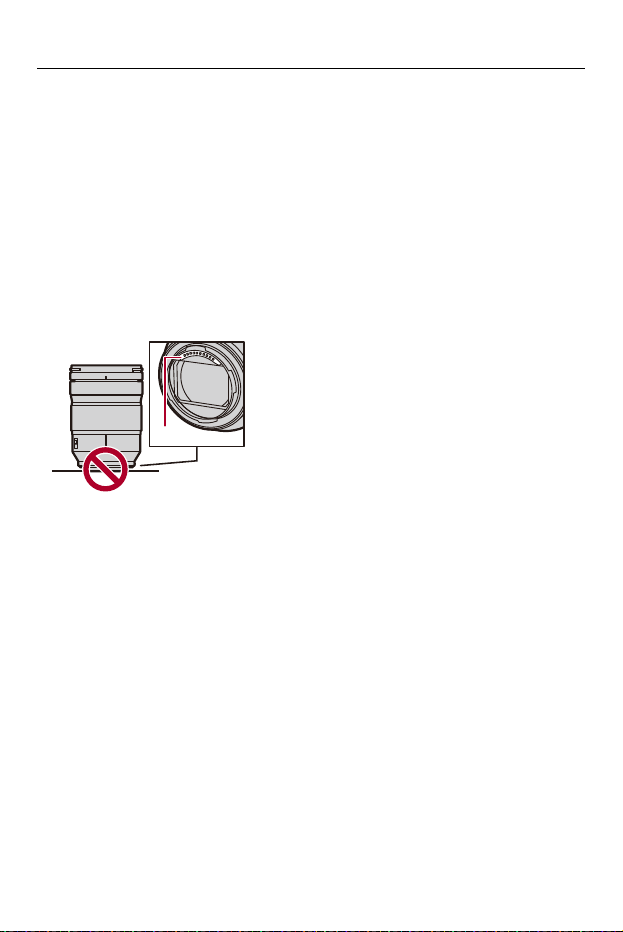
Materials – Cautions for Use
910
•
Images may be affected by dust, dirt, and soiling (water, oil, fingerprints, etc.) on the
lens surface.
Before and after recording, use a blower to blow off dust and dirt from the surface of
the lens, then lightly wipe with a soft dry cloth to remove soiling.
•
When the camera is not being used, attach the lens cap and lens rear cap to prevent
dust and dirt from adhering to or entering the camera.
•
To protect the lens contact points (A), do not do the following.
These may cause a malfunction.
– Touch the lens contact points.
– Soil the lens contact points.
– Place the lens with its mount surface facing down.
•
To improve the dust and splash resistant performance of the interchangeable lens
(S-R24105), a lens mount rubber is used in the mount.
– The lens mount rubber will leave scuff marks on the digital camera mount, but this
does not impact performance.
– To replace the lens mount rubber, contact Panasonic.
(A)
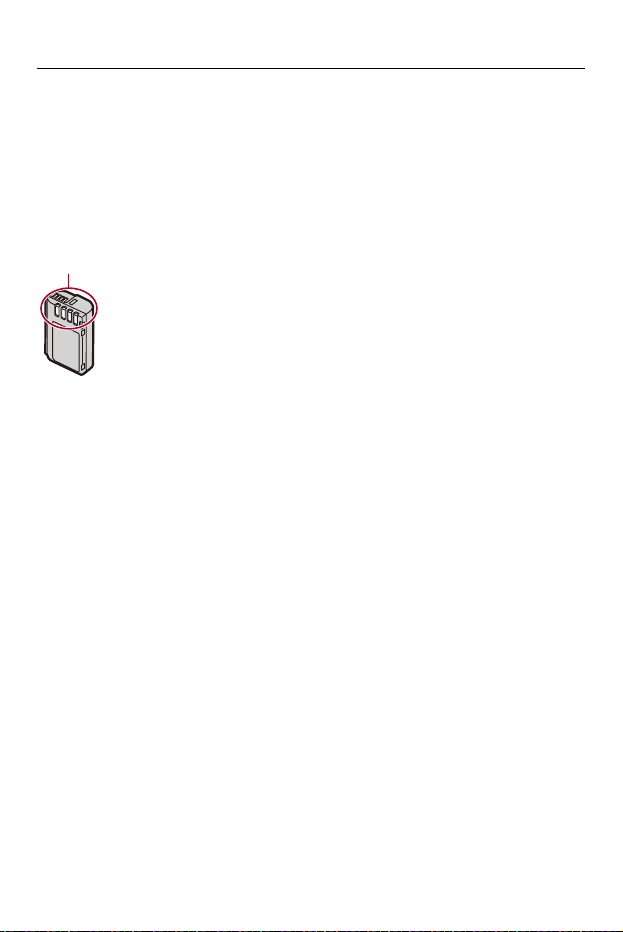
Materials – Cautions for Use
911
Battery
The battery is a rechargeable lithium ion battery.
It is highly sensitive to temperature and humidity, and the effect on
performance increases as the temperature rises or drops.
Do not let the battery terminals (B) become soiled.
•
Wipe with a dry cloth if they become soiled.
Always remove the battery after use.
•
Place the removed battery in a plastic bag, etc., and keep away from metallic objects
(clips, etc.) for storage or transport.
If you drop the battery accidentally, check to see if the body of the
battery and the contacts are deformed.
•
Damage to the camera will result if a battery with deformed contacts is inserted into
the camera.
Dispose of unusable battery.
•
The battery has a limited life.
•
Do not throw the battery into fire because it may cause an explosion.
Do not allow battery terminals to come into contact with metal objects
(such as necklaces, hairpins, etc.).
•
This can cause short-circuiting or heat generation and you may be badly burned if
you touch a battery.
(B)
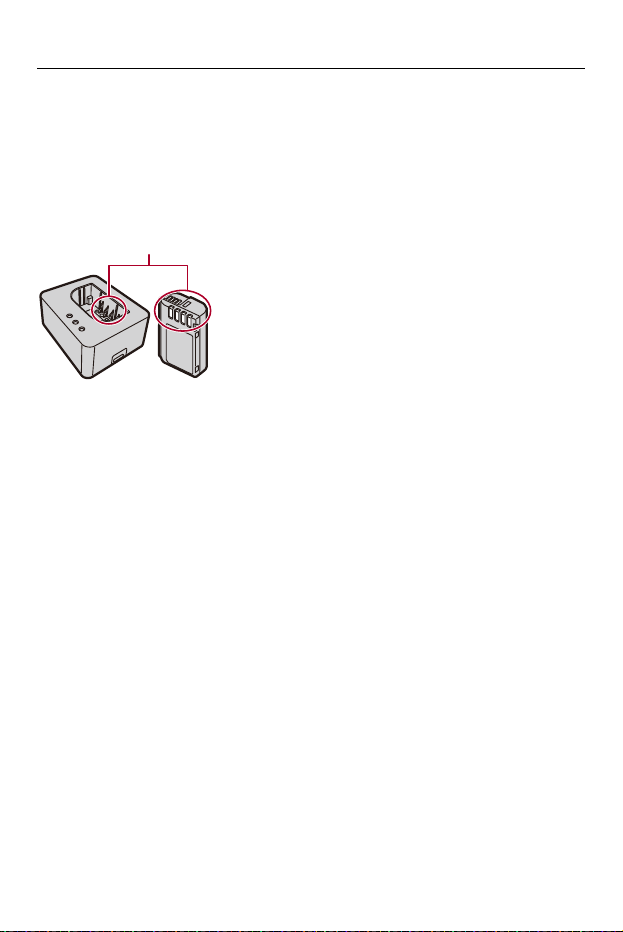
Materials – Cautions for Use
912
Charger
•
The charging lights may blink under the influence of static electricity or
electromagnetic wave, depending on the charging environment. This phenomenon
has no effects on charging.
•
Keep the contacts (C) of the charger and battery clean.
Wipe them with a dry cloth if they get dirty.
Card
Do not leave the card in areas with high temperatures, direct sunlight,
or areas prone to electromagnetic waves and static.
Do not bend or drop the card.
Do not subject the card to strong vibration.
•
Otherwise, the card and recorded data may be damaged.
•
Put the card in the card case or the storage bag after use and when storing or
carrying the card.
•
Do not allow dirt, water or other foreign objects to get into the contacts on the card.
Additionally, do not touch the contacts with your hands.
(C)

Materials – Cautions for Use
913
Personal Information
Personal information is stored within the camera and in recorded images.
We recommend that you enhance security by setting the LAN / Wi-Fi
function lock to protect personal information. ([LAN / Wi-Fi] Menu: 794)
•
Images may contain information that can be used to identify the user, such as
recording dates and times, and location information.
•
Avoid using passwords that may be easily guessed by someone else, such as
birthdays, etc.
•
Use a different password to the passwords you have used for services provided by
other companies.
Disclaimer
•
Information including personal information may be altered or vanish due to
erroneous operation, effect of static electricity, accident, malfunction, repair, or other
handlings.
Please note in advance that Panasonic is not liable in any way for any direct or
indirect damage from the alteration or vanishing of information or personal
information.
When requesting a repair or transferring/disposing of the camera
•
After making a copy of personal information, be sure to delete information, including
personal information, such as wireless LAN connection settings that you have
registered or saved within the camera with [Reset] ([Reset]: 107).
•
Reset the settings to protect the personal information. ([Reset]: 107)
•
Remove the card from the camera.
•
Settings may return to factory default when camera is repaired.
•
Please contact the dealer where you purchased the camera or Panasonic if above
operations are not possible due to malfunction.

Materials – Cautions for Use
914
Points to remember when disposing of/transferring the memory card
Format or delete using the camera or a PC will only modify the file management
information, so it will not delete the data in the card completely.
We recommend physically destroying the card or using commercially available PC
data deletion software to delete the card data completely when disposing of/
transferring the card.
You are responsible for handling of data on cards.
When Not Using the Camera for a Long Period of Time
•
Ensure you remove the battery and card from the camera.
If the battery is left in the camera, it may over-discharge, and be rendered unusable
even after charging.
•
Store the battery in a cool and dry place with a relatively stable temperature.
(Recommended temperature: 15 oC to 25 oC (59 oF to 77 oF); recommended
humidity: 40 %RH to 60 %RH)
•
If storing for a long period of time, it is recommended that the battery be charged
once per year, fully drained in the camera, then removed from the camera and then
stored again.
•
We recommend storing the camera with a desiccant (silica gel) when you keep it in a
closet or a cabinet.
•
Check all the parts before recording when you have not used the camera for a long
period of time.

Materials – Cautions for Use
915
Image Data
•
Recorded data may be damaged or lost if the camera breaks down due to
inappropriate handling.
Panasonic will not be liable for any damage caused due to loss of recorded data.
Tripod
•
Make sure the tripod is stable when the camera is attached to it.
•
When using a tripod, removal of the battery may not be possible.
•
Care is required because tightening the screw excessively may damage the camera,
or cause the rating label to come off.
•
Please also refer to the operating instructions for the tripod.
Shoulder Strap
•
If you attach a heavy interchangeable lens to the camera body, do not carry the
camera by the shoulder strap.
Hold the camera and the lens when carrying them.

Materials – Cautions for Use
916
Wi-Fi Function
Use the camera as a wireless LAN device.
When using devices or computer systems that require more reliable security than
wireless LAN devices, ensure that the appropriate measures are taken for safety
designs and defects for the systems used.
Panasonic will not take any responsibility for any damage that arises when using the
camera for any purpose other than as a wireless LAN device.
Use of the Wi-Fi function of the camera is presumed to be in
countries where it is sold.
There is the risk that the camera violates the radio wave regulations if used in
countries other than those where it is sold, and Panasonic takes no responsibility for
any violations.
There is the risk that data sent and received via radio waves may be
intercepted.
Please note that there is the risk that data sent and received via radio waves may be
intercepted by a third party.
Do not use the camera in areas with magnetic fields, static electricity
or interference.
•
Do not use the camera in areas with magnetic fields, static electricity or interference,
such as near microwave ovens.
These may cause the interruption of the radio waves.
•
Using the camera near devices such as microwave ovens or cordless telephones
that use the 2.4 GHz radio wave band may cause a decrease in performance in both
devices.
Do not connect to the wireless network you are not authorized to use.
When using Wi-Fi, wireless networks (SSID) that you are not allowed to use may be
displayed, but you should not connect to these as it may be viewed as unauthorized
access.
Materials – Number of Pictures That Can Be Taken and Available Recording Time with the Battery
917
Number of Pictures That Can Be Taken and
Available Recording Time with the Battery
Listed below are the numbers of pictures that can be taken and the time
lengths available for recording when the supplied battery is being used.
•
The number of pictures that can be taken is according to the CIPA (Camera &
Imaging Products Association) standards.
•
Using a Nextorage CFexpress Type B card.
•
Using a Nextorage SDXC memory card.
•
Using a Samsung external SSD.
•
The values listed are approximate.
Recording Pictures (When Using the Monitor)
When the interchangeable lens (S-R24105) is used
Recording media Number of pictures that can be taken
CFexpress card 350
SDXC memory card 360

Materials – Number of Pictures That Can Be Taken and Available Recording Time with the Battery
918
Recording Pictures (When Using the Viewfinder)
When the interchangeable lens (S-R24105) is used
•
The numbers in parentheses indicate the values that result when [Time to Sleep] in
[Power Save LVF Shooting] is set to [1SEC] and the [Power Save LVF Shooting]
function works as intended.
(Based on the test conditions derived from the CIPA standard and specified by
Panasonic)
Recording media Number of pictures that can be taken
CFexpress card 310 (1000)
SDXC memory card 320 (1150)
Materials – Number of Pictures That Can Be Taken and Available Recording Time with the Battery
919
Recording Videos (When Using the Monitor)
•
[Image Area of Video]: [FULL]
(A) Using a CFexpress card
(B) Using an SDXC memory card
(C) Using an external SSD
When the interchangeable lens (S-R24105) is used
[Rec. File
Format(Video)]
[Rec Quality]
Recording
media
Continuous
available
recording time
(minutes)
Actual available
recording time
(minutes)
[MP4]
[4K/10bit/100M/60p]
[4K/10bit/100M/50p]
(A) 90 45
(B) 90 45
[FHD/8bit/20M/30p]
[FHD/8bit/20M/25p]
(A) 120 60
(B) 130 65
[MOV]
[6K/60p/420/10-L]
[6K/50p/420/10-L]
(A) 70 35
(B) 80 40
[C4K/120p/420/10-L]
[C4K/100p/420/10-L]
(A) 60 30
(B) 60 30
[C4K/60p/422/10-I(L)]
[C4K/50p/422/10-I(L)]
(A) 90 45
(B) 90 45
[FHD/30p/420/10-L]
[FHD/25p/420/10-L]
(A) 120 60
(B) 120 60

Materials – Number of Pictures That Can Be Taken and Available Recording Time with the Battery
920
* [Image Area of Video]: [PIXEL/PIXEL]
•
Actual available recording time is the time available for recording when repeating
actions such as turning the camera on and off, starting/stopping recording, etc.
[Apple
ProRes]
[5.8K/30p/RAW HQ]
*
[5.8K/25p/RAW HQ]
*
(A) 90 45
(C) 50 25
[5.8K/30p/422 HQ]
[5.8K/25p/422 HQ]
(A) 90 45
(C) 50 25
[C4K/60p/RAW HQ]
*
[C4K/50p/RAW HQ]
*
(A) 90 45
(C) 50 25
[C4K/60p/422 HQ]
[C4K/50p/422 HQ]
(A) 80 40
(C) 50 25
Materials – Number of Pictures That Can Be Taken and Available Recording Time with the Battery
921
Playback (When Using the Monitor)
When the interchangeable lens (S-R24105) is used
Recording media Playback time (minutes)
CFexpress card 210
SDXC memory card 240
•
The number of pictures that can be taken and the available recording time vary
depending on the surrounding environment and the usage conditions.
For example, these will reduce in the following case:
– In low-temperature environments, such as on ski slopes.
•
If the usage duration drops significantly even when the battery is fully charged,
then the battery is at the end of its service life.
Replace with a new battery.

Materials – Number of Pictures That Can Be Taken and Video Recording Time According to
Recording Media
922
Number of Pictures That Can Be Taken and
Video Recording Time According to
Recording Media
Listed below are the numbers of pictures and the time lengths of videos
that can be recorded on recording media.
•
Using a Nextorage CFexpress Type B card.
•
Using a Nextorage SDXC memory card.
•
Using a Samsung external SSD.
Number of Pictures That Can Be Taken
•
The listed values are a guide to the minimum number of pictures to be taken.
This may vary depending on the recorded subject.
•
[Aspect Ratio]: [3:2]; [Rec. File Format(Photo)]: [JPEG]; [JPEG/HEIF Picture
Quality]: [FINE]
[Picture
Size]
CFexpress card
capacity
SDXC memory
card capacity
External SSD capacity
660 GB 1330 GB 256 GB 512 GB 1TB 2TB
[L] (24M) 43400 87470 17190 33720 65760 131550
[M] (12M) 78660 158540 31050 60920 119200 238420
[S] (6M) 125860 253660 53480 104920 190710 381460
[XS] (2.5M) 209750 422730 87500 171670 317830 635720
Materials – Number of Pictures That Can Be Taken and Video Recording Time According to
Recording Media
923
•
[Aspect Ratio]: [3:2]; [Rec. File Format(Photo)]: [RAW+JPEG]; [JPEG/HEIF
Picture Quality]: [FINE]
•
[Aspect Ratio]: [3:2]; [Rec. File Format(Photo)]: [HEIF]; [JPEG/HEIF Picture
Quality]: [FINE]
•
[Aspect Ratio]: [3:2]; [Rec. File Format(Photo)]: [RAW+HEIF]; [JPEG/HEIF
Picture Quality]: [FINE]
[Picture
Size]
CFexpress card
capacity
SDXC memory
card capacity
External SSD capacity
660 GB 1330 GB 256 GB 512 GB 1TB 2TB
[L] (24M) 8740 17610 3410 6690 13240 26490
[M] (12M) 9600 19360 3740 7340 14550 29120
[S] (6M) 10060 20290 3940 7730 15250 30510
[XS] (2.5M) 10400 20960 4060 7960 15760 31520
[Picture
Size]
CFexpress card
capacity
SDXC memory
card capacity
External SSD capacity
660 GB 1330 GB 256 GB 512 GB 1TB 2TB
[L] (24M) 52440 105700 21390 41970 79470 158950
[M] (12M) 96820 195130 38500 75540 146710 293440
[S] (6M) 139840 281840 64170 125900 211900 423840
[XS] (2.5M) 251690 507260 106950 209810 381380 762830
[Picture
Size]
CFexpress card
capacity
SDXC memory
card capacity
External SSD capacity
660 GB 1330 GB 256 GB 512 GB 1TB 2TB
[L] (24M) 9120 18380 3530 6940 13820 27640
[M] (12M) 9830 19810 3810 7490 14900 29800
[S] (6M) 10230 20620 3990 7830 15500 31010
[XS] (2.5M) 10480 21130 4070 8000 15890 31790
Materials – Number of Pictures That Can Be Taken and Video Recording Time According to
Recording Media
924
Video Recording Time
•
“h” is an abbreviation for hour, “m” for minute and “s” for second.
•
Video recording time is the total time of all the videos which have been recorded.
•
The values listed are approximate.
•
[Rec. File Format(Video)]: [MP4]
[System Frequency]: [59.94Hz (NTSC)]
[Rec Quality]
CFexpress card
capacity
SDXC memory
card capacity
External SSD
capacity
660 GB 1330 GB 256 GB 512 GB 1TB 2TB
[4K/10bit/100M/60p]
[4K/8bit/100M/30p]
[4K/8bit/100M/24p]
14h35m 29h25m 5h30m 10h55m 22h05m 44h20m
[4K/10bit/72M/30p]
[4K/10bit/72M/24p]
20h15m 40h55m 7h45m 15h10m 30h45m 61h30m
[FHD/8bit/28M/60p] 51h15m 103h20m 19h45m 38h50m 77h40m 155h25m
[FHD/8bit/20M/30p] 68h10m 137h35m 26h20m 51h45m 103h25m 206h55m
[FHD/8bit/24M/24p] 59h45m 120h30m 23h00m 45h20m 90h35m 181h15m
[System Frequency]: [50.00Hz (PAL)]
[Rec Quality]
CFexpress card
capacity
SDXC memory
card capacity
External SSD
capacity
660 GB 1330 GB 256 GB 512 GB 1TB 2TB
[4K/10bit/100M/50p]
[4K/8bit/100M/25p]
14h35m 29h25m 5h30m 10h55m 22h05m 44h20m
[4K/10bit/72M/25p] 20h15m 40h55m 7h45m 15h10m 30h45m 61h30m
[FHD/8bit/28M/50p] 51h15m 103h20m 19h45m 38h50m 77h40m 155h25m
[FHD/8bit/20M/25p] 68h10m 137h35m 26h20m 51h45m 103h25m 206h55m
Materials – Number of Pictures That Can Be Taken and Video Recording Time According to
Recording Media
925
•
[Rec. File Format(Video)]: [MOV]
[System Frequency]: [59.94Hz (NTSC)]
[Rec Quality]
CFexpress card
capacity
SDXC memory
card capacity
External SSD
capacity
660 GB 1330 GB 256 GB 512 GB 1TB 2TB
[3.3K/60p/422/10-I(H)]
[3.3K/48p/422/10-I(H)]
[C4K/60p/422/10-I(H)]
[C4K/48p/422/10-I(H)]
[Cs4K/60p/422/10-I(H)]
[Cs4K/48p/422/10-I(H)]
[4K/60p/422/10-I(H)]
[4K/48p/422/10-I(H)]
[FHD/240p/422/10-I]
1h45m 3h40m 2h45m 5h30m
[3.3K/60p/422/10-I(L)]
[3.3K/48p/422/10-I(L)]
[C4K/60p/422/10-I(L)]
[C4K/48p/422/10-I(L)]
[Cs4K/60p/422/10-I(L)]
[Cs4K/48p/422/10-I(L)]
[4K/60p/422/10-I(L)]
[4K/48p/422/10-I(L)]
2h25m 4h50m 55m00s 1h45m 3h40m 7h20m
[3.3K/30p/422/10-I]
[3.3K/24p/422/10-I]
[C4K/30p/422/10-I]
[C4K/24p/422/10-I]
[Cs4K/30p/422/10-I]
[Cs4K/24p/422/10-I]
[4K/30p/422/10-I]
[4K/24p/422/10-I]
[FHD/120p/422/10-I]
3h35m 7h20m 1h20m 2h40m 5h30m 11h00m

Materials – Number of Pictures That Can Be Taken and Video Recording Time According to
Recording Media
926
[6K/60p/420/10-L]
[6K/48p/420/10-L]
[5.9K/60p/420/10-L]
[5.9K/48p/420/10-L]
[5.8K/60p/420/10-L]
[5.8K/48p/420/10-L]
[5.1K/60p/420/10-L]
[5.1K/48p/420/10-L]
[4.8K/60p/420/10-L]
[4.8K/48p/420/10-L]
[3.3K/120p/420/10-L]
[C4K/120p/420/10-L]
[C4K/96p/420/10-L]
[Cs4K/120p/420/10-L]
[Cs4K/96p/420/10-L]
[4K/120p/420/10-L]
4h50m 9h45m 1h50m 3h35m 7h20m 14h40m

Materials – Number of Pictures That Can Be Taken and Video Recording Time According to
Recording Media
927
[6K/30p/420/10-L] (3:2)
[6K/24p/420/10-L] (3:2)
[6K/30p/420/10-L] (2.4:1)
[6K/24p/420/10-L] (2.4:1)
[5.9K/30p/420/10-L]
[5.9K/24p/420/10-L]
[5.8K/30p/420/10-L]
[5.8K/24p/420/10-L]
[5.1K/30p/420/10-L]
[5.1K/24p/420/10-L]
[4.8K/30p/420/10-L]
[4.8K/24p/420/10-L]
[3.3K/60p/422/10-L]
[3.3K/60p/420/10-L]
[3.3K/48p/422/10-L]
[3.3K/48p/420/10-L]
[C4K/60p/422/10-L]
[C4K/60p/420/10-L]
[C4K/48p/422/10-L]
[C4K/48p/420/10-L]
[Cs4K/60p/422/10-L]
[Cs4K/60p/420/10-L]
[Cs4K/48p/422/10-L]
[Cs4K/48p/420/10-L]
[4K/60p/422/10-L]
[4K/60p/420/10-L]
[4K/48p/422/10-L]
[4K/48p/420/10-L]
[FHD/240p/422/10-L]
[FHD/240p/420/10-L]
[FHD/60p/422/10-I]
[FHD/48p/422/10-I]
[FHD/30p/422/10-I]
[FHD/24p/422/10-I]
7h10m 14h35m 2h45m 5h25m 10h55m 21h55m

Materials – Number of Pictures That Can Be Taken and Video Recording Time According to
Recording Media
928
[3.3K/30p/422/10-L]
[3.3K/30p/420/10-L]
[3.3K/24p/422/10-L]
[3.3K/24p/420/10-L]
[C4K/60p/420/8-L]
[C4K/30p/422/10-L]
[C4K/30p/420/10-L]
[C4K/24p/422/10-L]
[C4K/24p/420/10-L]
[Cs4K/60p/420/8-L]
[Cs4K/30p/422/10-L]
[Cs4K/30p/420/10-L]
[Cs4K/24p/422/10-L]
[Cs4K/24p/420/10-L]
[4K/60p/420/8-L]
[4K/30p/422/10-L]
[4K/30p/420/10-L]
[4K/24p/422/10-L]
[4K/24p/420/10-L]
[FHD/120p/422/10-L]
[FHD/120p/420/10-L]
9h35m 19h20m 3h40m 7h10m 14h30m 29h05m
[C4K/30p/420/8-L]
[C4K/24p/420/8-L]
[Cs4K/30p/420/8-L]
[Cs4K/24p/420/8-L]
[4K/30p/420/8-L]
[4K/24p/420/8-L]
[FHD/60p/422/10-L]
[FHD/60p/420/10-L]
[FHD/48p/422/10-L]
[FHD/48p/420/10-L]
[FHD/30p/422/10-L]
[FHD/30p/420/10-L]
[FHD/24p/422/10-L]
[FHD/24p/420/10-L]
14h15m 28h50m 5h25m 10h40m 21h40m 43h20m
[FHD/60p/420/8-L] 27h55m 56h25m 10h40m 20h55m 42h20m 84h50m
[FHD/30p/420/8-L]
[FHD/24p/420/8-L]
53h30m 107h55m 20h25m 40h10m 81h05m 162h20m

Materials – Number of Pictures That Can Be Taken and Video Recording Time According to
Recording Media
929
[System Frequency]: [50.00Hz (PAL)]
[Rec Quality]
CFexpress card
capacity
SDXC memory
card capacity
External SSD
capacity
660 GB 1330 GB 256 GB 512 GB 1TB 2TB
[3.3K/50p/422/10-I(H)]
[C4K/50p/422/10-I(H)]
[Cs4K/50p/422/10-I(H)]
[4K/50p/422/10-I(H)]
[FHD/200p/422/10-I]
1h45m 3h40m 2h45m 5h30m
[3.3K/50p/422/10-I(L)]
[C4K/50p/422/10-I(L)]
[Cs4K/50p/422/10-I(L)]
[4K/50p/422/10-I(L)]
2h25m 4h50m 55m00s 1h45m 3h40m 7h20m
[3.3K/25p/422/10-I]
[C4K/25p/422/10-I]
[Cs4K/25p/422/10-I]
[4K/25p/422/10-I]
[FHD/100p/422/10-I]
3h35m 7h20m 1h20m 2h40m 5h30m 11h00m
[6K/50p/420/10-L]
[5.9K/50p/420/10-L]
[5.8K/50p/420/10-L]
[5.1K/50p/420/10-L]
[4.8K/50p/420/10-L]
[3.3K/100p/420/10-L]
[C4K/100p/420/10-L]
[Cs4K/100p/420/10-L]
[4K/100p/420/10-L]
4h50m 9h45m 1h50m 3h35m 7h20m 14h40m

Materials – Number of Pictures That Can Be Taken and Video Recording Time According to
Recording Media
930
[6K/25p/420/10-L] (3:2)
[6K/25p/420/10-L] (2.4:1)
[5.9K/25p/420/10-L]
[5.8K/25p/420/10-L]
[5.1K/25p/420/10-L]
[4.8K/25p/420/10-L]
[3.3K/50p/422/10-L]
[3.3K/50p/420/10-L]
[C4K/50p/422/10-L]
[C4K/50p/420/10-L]
[Cs4K/50p/422/10-L]
[Cs4K/50p/420/10-L]
[4K/50p/422/10-L]
[4K/50p/420/10-L]
[FHD/200p/422/10-L]
[FHD/200p/420/10-L]
[FHD/50p/422/10-I]
[FHD/25p/422/10-I]
7h10m 14h35m 2h45m 5h25m 10h55m 21h55m
[3.3K/25p/422/10-L]
[3.3K/25p/420/10-L]
[C4K/50p/420/8-L]
[C4K/25p/422/10-L]
[C4K/25p/420/10-L]
[Cs4K/50p/420/8-L]
[Cs4K/25p/422/10-L]
[Cs4K/25p/420/10-L]
[4K/50p/420/8-L]
[4K/25p/422/10-L]
[4K/25p/420/10-L]
[FHD/100p/422/10-L]
[FHD/100p/420/10-L]
9h35m 19h20m 3h40m 7h10m 14h30m 29h05m
[C4K/25p/420/8-L]
[Cs4K/25p/420/8-L]
[4K/25p/420/8-L]
[FHD/50p/422/10-L]
[FHD/50p/420/10-L]
[FHD/25p/422/10-L]
[FHD/25p/420/10-L]
14h15m 28h50m 5h25m 10h40m 21h40m 43h20m
[FHD/50p/420/8-L] 27h55m 56h25m 10h40m 20h55m 42h20m 84h50m
[FHD/25p/420/8-L] 53h30m 107h55m 20h25m 40h10m 81h05m 162h20m

Materials – Number of Pictures That Can Be Taken and Video Recording Time According to
Recording Media
931
[System Frequency]: [24.00Hz (CINEMA)]
[Rec Quality]
CFexpress card
capacity
SDXC memory
card capacity
External SSD
capacity
660 GB 1330 GB 256 GB 512 GB 1TB 2TB
[3.3K/48p/422/10-I(H)]
[C4K/48p/422/10-I(H)]
[Cs4K/48p/422/10-I(H)]
[4K/48p/422/10-I(H)]
1h45m 3h40m 2h45m 5h30m
[3.3K/48p/422/10-I(L)]
[C4K/48p/422/10-I(L)]
[Cs4K/48p/422/10-I(L)]
[4K/48p/422/10-I(L)]
2h25m 4h50m 55m00s 1h45m 3h40m 7h20m
[3.3K/24p/422/10-I]
[C4K/24p/422/10-I]
[Cs4K/24p/422/10-I]
[4K/24p/422/10-I]
3h35m 7h20m 1h20m 2h40m 5h30m 11h00m
[6K/48p/420/10-L]
[5.9K/48p/420/10-L]
[5.8K/48p/420/10-L]
[5.1K/48p/420/10-L]
[4.8K/48p/420/10-L]
[3.3K/120p/420/10-L]
[C4K/120p/420/10-L]
[C4K/96p/420/10-L]
[Cs4K/120p/420/10-L]
[Cs4K/96p/420/10-L]
[4K/120p/420/10-L]
4h50m 9h45m 1h50m 3h35m 7h20m 14h40m

Materials – Number of Pictures That Can Be Taken and Video Recording Time According to
Recording Media
932
[6K/24p/420/10-L] (3:2)
[6K/24p/420/10-L] (2.4:1)
[5.9K/24p/420/10-L]
[5.8K/24p/420/10-L]
[5.1K/24p/420/10-L]
[4.8K/24p/420/10-L]
[3.3K/48p/422/10-L]
[3.3K/48p/420/10-L]
[C4K/48p/422/10-L]
[C4K/48p/420/10-L]
[Cs4K/48p/422/10-L]
[Cs4K/48p/420/10-L]
[4K/48p/422/10-L]
[4K/48p/420/10-L]
[FHD/48p/422/10-I]
[FHD/24p/422/10-I]
7h10m 14h35m 2h45m 5h25m 10h55m 21h55m
[3.3K/24p/422/10-L]
[3.3K/24p/420/10-L]
[C4K/24p/422/10-L]
[C4K/24p/420/10-L]
[Cs4K/24p/422/10-L]
[Cs4K/24p/420/10-L]
[4K/24p/422/10-L]
[4K/24p/420/10-L]
9h35m 19h20m 3h40m 7h10m 14h30m 29h05m
[C4K/24p/420/8-L]
[Cs4K/24p/420/8-L]
[4K/24p/420/8-L]
[FHD/48p/422/10-L]
[FHD/48p/420/10-L]
[FHD/24p/422/10-L]
[FHD/24p/420/10-L]
14h15m 28h50m 5h25m 10h40m 21h40m 43h20m
[FHD/24p/420/8-L] 53h30m 107h55m 20h25m 40h10m 81h05m 162h20m

Materials – Number of Pictures That Can Be Taken and Video Recording Time According to
Recording Media
933
•
[Rec. File Format(Video)]: [Apple ProRes]
[System Frequency]: [59.94Hz (NTSC)]
[Rec Quality]
CFexpress card
capacity
SDXC memory
card capacity
External SSD
capacity
660 GB 1330 GB 256 GB 512 GB 1TB 2TB
[5.8K/30p/RAW HQ]
* *
[5.8K/30p/RAW]
[5.8K/30p/422 HQ] 45m00s 1h30m 1h05m 2h15m
[5.8K/30p/422] 1h05m 2h15m 1h40m 3h25m
[5.8K/24p/RAW HQ]
* *
[5.8K/24p/RAW]
[5.8K/24p/422 HQ] 56m00s 1h50m 1h25m 2h50m
[5.8K/24p/422] 1h25m 2h50m 2h05m 4h15m
[4.8K/30p/422 HQ] 46m00s 1h30m 1h05m 2h15m
[4.8K/30p/422] 1h05m 2h15m 1h40m 3h25m
[4.8K/24p/422 HQ] 57m00s 1h55m 1h25m 2h55m
[4.8K/24p/422] 1h25m 2h50m 2h10m 4h20m
[3.3K/60p/422 HQ] 47m00s 1h35m 1h10m 2h25m
[3.3K/60p/422] 1h10m 2h25m 1h45m 3h35m
[3.3K/30p/422 HQ] 1h35m 3h10m 2h25m 4h50m
[3.3K/30p/422] 2h20m 4h45m 3h35m 7h15m
[3.3K/24p/422 HQ] 1h55m 4h00m 3h00m 6h00m
[3.3K/24p/422] 2h55m 6h00m 4h30m 9h00m
[C4K/60p/RAW HQ]
* *
[C4K/60p/RAW]
[C4K/60p/422 HQ] 44m00s 1h30m 1h05m 2h15m
[C4K/60p/422] 1h05m 2h15m 1h40m 3h25m
[C4K/30p/RAW HQ]
* *
[C4K/30p/RAW]
[C4K/30p/422 HQ] 1h25m 3h00m 2h15m 4h30m
[C4K/30p/422] 2h10m 4h30m
3h20m 6h45m

Materials – Number of Pictures That Can Be Taken and Video Recording Time According to
Recording Media
934
[C4K/24p/RAW HQ]
* *
[C4K/24p/RAW]
[C4K/24p/422 HQ] 1h50m 3h45m 2h50m 5h40m
[C4K/24p/422] 2h45m 5h35m 4h15m 8h30m
[Cs4K/60p/422 HQ] 56m00s 1h50m 1h25m 2h50m
[Cs4K/60p/422] 1h20m 2h50m 2h05m 4h15m
[Cs4K/30p/422 HQ] 1h50m 3h45m 2h50m 5h40m
[Cs4K/30p/422] 2h45m 5h35m 4h15m 8h30m
[Cs4K/24p/422 HQ] 2h20m 4h40m 3h30m 7h05m
[Cs4K/24p/422] 3h30m 7h00m 5h15m 10h35m
[4K/60p/422 HQ] 47m00s 1h35m 1h10m 2h25m
[4K/60p/422] 1h10m 2h25m 1h45m 3h35m
[4K/30p/422 HQ] 1h35m 3h10m 2h25m 4h50m
[4K/30p/422] 2h20m 4h50m 3h35m 7h15m
[4K/24p/422 HQ] 1h55m 4h00m 3h00m 6h00m
[4K/24p/422] 2h55m 6h00m 4h30m 9h05m
[FHD/120p/422 HQ] 1h35m 3h15m 2h25m 4h50m
[FHD/120p/422] 2h25m 4h50m 3h40m 7h20m
[FHD/60p/422 HQ] 3h10m 6h25m 1h10m 2h20m 4h50m 9h40m
[FHD/60p/422] 4h45m 9h40m 1h50m 3h35m 7h15m 14h35m
[FHD/30p/422 HQ] 6h20m 12h50m 2h25m 4h45m 9h40m 19h20m
[FHD/30p/422] 9h30m 19h15m 3h35m 7h05m 14h25m 28h55m
[FHD/24p/422 HQ] 7h55m 16h05m 3h00m 5h55m 12h05m 24h10m
[FHD/24p/422] 11h50m 23h55m 4h30m 8h50m 17h55m 36h00m

Materials – Number of Pictures That Can Be Taken and Video Recording Time According to
Recording Media
935
[System Frequency]: [50.00Hz (PAL)]
[Rec Quality]
CFexpress card
capacity
SDXC memory
card capacity
External SSD
capacity
660 GB 1330 GB 256 GB 512 GB 1TB 2TB
[5.8K/25p/RAW HQ]
* *
[5.8K/25p/RAW]
[5.8K/25p/422 HQ] 54m00s 1h50m 1h20m 2h45m
[5.8K/25p/422] 1h20m 2h45m 2h00m 4h05m
[4.8K/25p/422 HQ] 55m00s 1h50m 1h20m 2h45m
[4.8K/25p/422] 55m00s 1h50m 1h20m 2h45m
[3.3K/50p/422 HQ] 56m00s 1h50m 1h25m 2h50m
[3.3K/50p/422] 1h25m 2h50m 2h10m 4h20m
[3.3K/25p/422 HQ] 1h50m 3h50m 2h50m 5h45m
[3.3K/25p/422] 2h50m 5h45m 4h20m 8h40m
[C4K/50p/RAW HQ]
* *
[C4K/50p/RAW]
[C4K/50p/422 HQ] 53m00s 1h45m 1h20m 2h40m
[C4K/50p/422] 1h20m 2h40m 2h00m 4h05m
[C4K/25p/RAW HQ]
* *
[C4K/25p/RAW]
[C4K/25p/422 HQ] 1h45m 3h35m 2h40m 5h25m
[C4K/25p/422] 2h40m 5h25m 4h05m 8h10m
[Cs4K/50p/422 HQ] 1h05m 2h15m 1h40m 3h20m
[Cs4K/50p/422] 1h40m 3h20m 2h30m 5h05m
[Cs4K/25p/422 HQ] 2h10m 4h30m 3h20m 6h45m
[Cs4K/25p/422] 3h20m 6h45m 5h05m 10h10m
[4K/50p/422 HQ] 57m00s 1h55m 1h25m 2h50m
[4K/50p/422] 1h25m 2h50m 2h10m 4h20m
[4K/25p/422 HQ] 1h55m 3h50m 2h50m 5h45m
[4K/25p/422] 2h50m 5h45m 4h20m 8h40m
[FHD/100p/422 HQ] 1h55m 3h50m
2h55m 5h50m
[FHD/100p/422] 2h50m 5h45m
4h20m 8h45m

Materials – Number of Pictures That Can Be Taken and Video Recording Time According to
Recording Media
936
[FHD/50p/422 HQ] 3h50m 7h45m 1h25m 2h50m 5h50m 11h40m
[FHD/50p/422] 5h45m 11h35m 2h10m 4h15m 8h40m 17h25m
[FHD/25p/422 HQ] 7h35m 15h25m 2h55m 5h40m 11h35m 23h10m
[FHD/25p/422] 11h20m 23h00m 4h20m 8h30m 17h15m 34h35m
Materials – Number of Pictures That Can Be Taken and Video Recording Time According to
Recording Media
937
* Recording stops when 640 GB is reached.
Guide to recording time with 640 GB
[5.8K/30p/RAW HQ]: Approx. 20 minutes
[System Frequency]: [24.00Hz (CINEMA)]
[Rec Quality]
CFexpress card
capacity
SDXC memory
card capacity
External SSD
capacity
660 GB 1330 GB 256 GB 512 GB 1TB 2TB
[5.8K/24p/RAW HQ]
* *
[5.8K/24p/RAW]
[5.8K/24p/422 HQ] 56m00s 1h50m 1h25m 2h50m
[5.8K/24p/422] 1h25m 2h50m 2h05m 4h15m
[4.8K/24p/422 HQ] 57m00s 1h55m 1h25m 2h50m
[4.8K/24p/422] 1h25m 2h50m 2h10m 4h20m
[3.3K/24p/422 HQ] 1h55m 4h00m 3h00m 6h00m
[3.3K/24p/422] 2h55m 6h00m 4h30m 9h00m
[C4K/24p/RAW HQ]
* *
[C4K/24p/RAW]
[C4K/24p/422 HQ] 1h50m 3h45m 2h50m 5h40m
[C4K/24p/422] 2h45m 5h35m 4h15m 8h30m
[Cs4K/24p/422 HQ] 2h20m 4h40m 3h30m 7h05m
[Cs4K/24p/422] 3h30m 7h00m 5h15m 10h35m
[4K/24p/422 HQ] 1h55m 4h00m 3h00m 6h00m
[4K/24p/422] 2h55m 6h00m 4h30m 9h00m
[FHD/120p/422 HQ] 1h35m 3h10m 2h25m 4h50m
[FHD/120p/422] 2h20m 4h50m 3h35m 7h15m
[FHD/24p/422 HQ] 7h55m 16h00m 3h00m 5h55m 12h00m 24h05m
[FHD/24p/422] 11h50m 23h55m 4h30m 8h50m 17h55m 36h00m

Materials – Number of Pictures That Can Be Taken and Video Recording Time According to
Recording Media
938
•
The available recording time will be shorter depending on the SD card used
when recording with [Segmented File Recording] or [Loop Recording (video)].
•
The number of pictures that can be taken and the available video recording time
depend on the recording conditions and the type of recording media.
•
[9999+] is displayed on the recording screen if the remaining number of pictures
that can be taken is 10000 or more.
•
[99h59m] is displayed on the recording screen if the remaining video recording
time is 100 hours or more.
•
The continuous recordable time for videos is displayed on the screen.
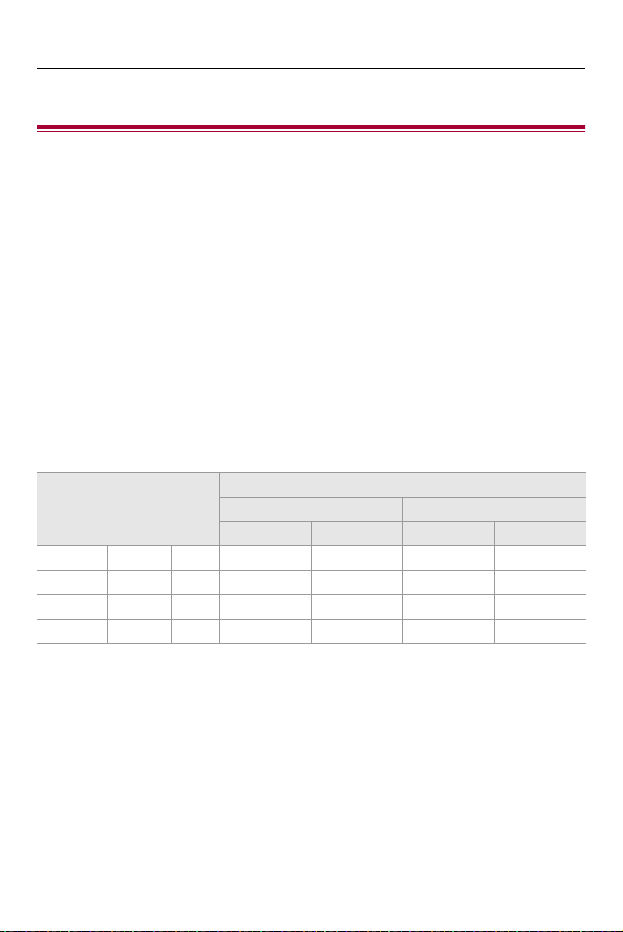
Materials – Continuous Recording Time for Video
939
Continuous Recording Time for Video
During video recording, recording will be stopped automatically to protect
the camera if the ambient temperature is high or recording is performed
over extended periods and the internal temperature gets too high.
• For information about the continuous recording time for video, refer also
to the support site below.
https://panasonic.jp/support/global/cs/dsc/info/s1m2_rec.html
(English only)
Guide to Continuous Recording Times for Video from a
Cold Start
*1
(A) SDXC memory card
(B) SDXC memory card and CFexpress card
•
When recording under the test conditions specified by Panasonic:
– Ambient temperature (temperature in the vicinity of the camera): 23 oC (73.4 oF)
– Camera settings at the time of purchase
– No external device connections, no wireless connections
– Using a Nextorage SDXC memory card and a Nextorage CFexpress Type B card
Firmware version 1.2 or later
Updated: November 26, 2025
Video recording settings
[Recording Max Temperature] in [Thermal Management]
[STANDARD] [HIGH]
(A) (B) (A) (B)
C4K 120p 420/10-L FULL
Approx. 30 min
*2
Approx. 25 min
*2
Approx. 60 min
*2
Approx. 30 min
*2
C4K 60p 422/10-L FULL
Unlimited
*3
Unlimited
*3
Unlimited
*3
Unlimited
*3
C4K 30p 422/10-L FULL
Unlimited
*3
Unlimited
*3
Unlimited
*3
Unlimited
*3
FHD 60p 422/10-L FULL
Unlimited
*3
Unlimited
*3
Unlimited
*3
Unlimited
*3

Materials – Continuous Recording Time for Video
940
*1 With the camera turned off and the temperature inside and outside the camera at
23 oC (73.4 oF), the camera is turned on and video recording is started
immediately.
*2 Times may be shorter than shown in the table due to the environment and
conditions of use, the status of camera use, and the usage conditions prior to
video recording.
*3 If the temperature in the camera rises, recording stops.
Conditions that cause overheating
•
Using in locations where the ambient temperature is high or in direct sunlight
•
Repeatedly make video recordings
•
Leave the camera in the ON state for extended periods and then trying to make
video recordings.
•
When connected to external devices (HDMI, USB, Wi-Fi/Bluetooth)
•
When using the following functions or settings:
– [Crop Zoom(Video)]
– [Hybrid Zoom(Video)]
– [E-Stabilization (Video)]:[HIGH]
– [Dynamic Range Boost]
– [False Color] (firmware version 1.2 or later)
– [Video Live View Mode]:[IMAGE PRIORITY] (firmware version 1.2 or later)
Restarting Video Recording After Stopping Due to
Temperature Increase in the Camera
If video recording stops due to temperature increase in the camera, the
temperature in the camera needs to be lowered before video recording can
be started again.
•
We recommend turning the camera off to lower the temperature in the camera.
•
The continuous recording time for video after restarting depends on the standby time
(the amount of time the camera was off for).
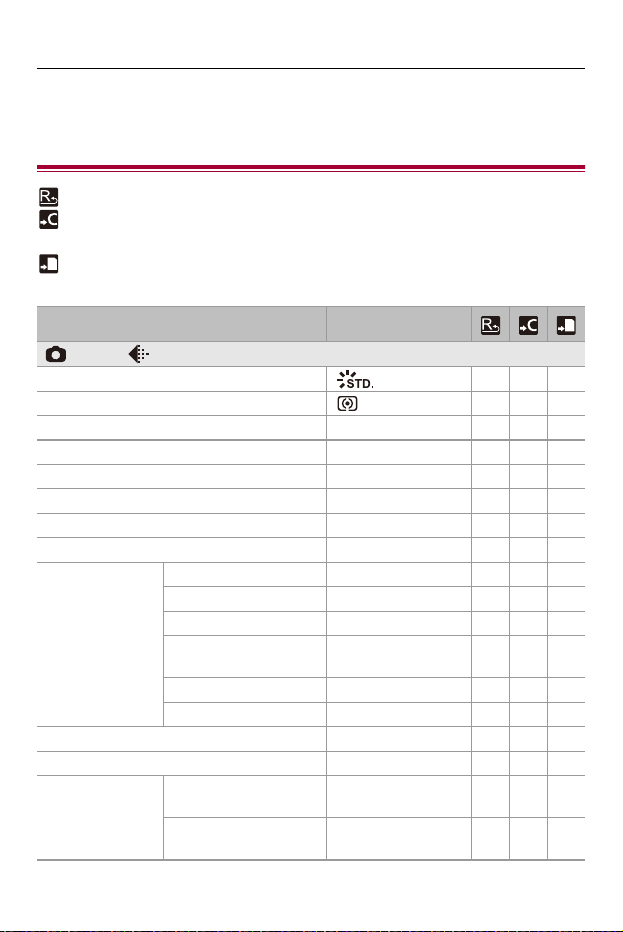
Materials – List of Default Settings/Custom Saving/Settings Available for Copying
941
List of Default Settings/Custom Saving/
Settings Available for Copying
: Using [Reset], the function to return to default settings
: Using [Save to Custom Mode(Photo)]/[Save to Custom Mode(Video)]/[Save to
Custom Mode(S&Q)], the function to save settings details in the Custom mode
: Using [Save/Restore Camera Setting], the function to copy settings details
Menu Default setting
[Photo]: [Image Quality]
[Photo Style] [ ]
[Metering Mode] [ ]
[Aspect Ratio] [3:2]
[Rec. File Format(Photo)] [JPEG]
[Switch JPEG/HEIF] [JPEG]
[JPEG/HEIF Picture Quality] [FINE]
[HEIF Format] [SDR]
[Picture Size] [L]
[High Resolution
Mode Setting]
[Handheld High-Res] [OFF]
[Picture Quality] [COMBINED]
[Picture Size] [XL]
[Simul Record Normal
Shot]
[ON]
[Shutter Delay] [2 SEC]
[Motion Blur Processing] [MODE1]
[Long Exposure NR] [ON]
[Dual Native ISO Setting] [AUTO]
[ISO Sensitivity
(photo)]
[ISO Auto Lower Limit
Setting]
[100]
[ISO Auto Upper Limit
Setting]
[AUTO]
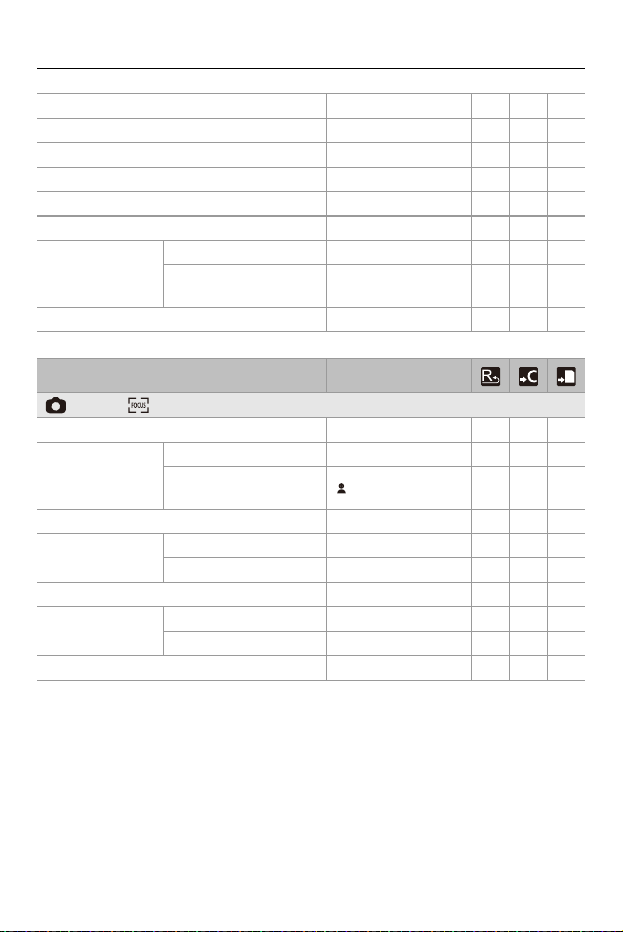
Materials – List of Default Settings/Custom Saving/Settings Available for Copying
942
[Synchro Scan(Photo)] [OFF]
[Min. Shutter Speed] [AUTO]
[i.Dynamic Range] [OFF]
[Vignetting Comp.] [ON]
[Color Shading Compensation] —
[Diffraction Compensation] [OFF]
[Filter Settings]
[Filter Effect] [OFF]
[Simultaneous Record w/o
Filter]
[OFF]
[Flicker Decrease (Video)] [OFF]
Menu Default setting
[Photo]: [Focus]
[AF Detection Setting] [OFF]
[Detecting Subject]
[Type of Subject] [HUMAN]
[Detection Mode(Human)]
[Target Parts]
[]
[AF Custom Setting(Photo)] [Set 1]
[Focus Limiter]
[ON] / [OFF] [OFF]
[SET] —
[AF Assist Light] [ON]
[Focus Peaking]
[ON] / [OFF] [ON]
[SET] —
[Focus Frame Moving Speed] [FAST]
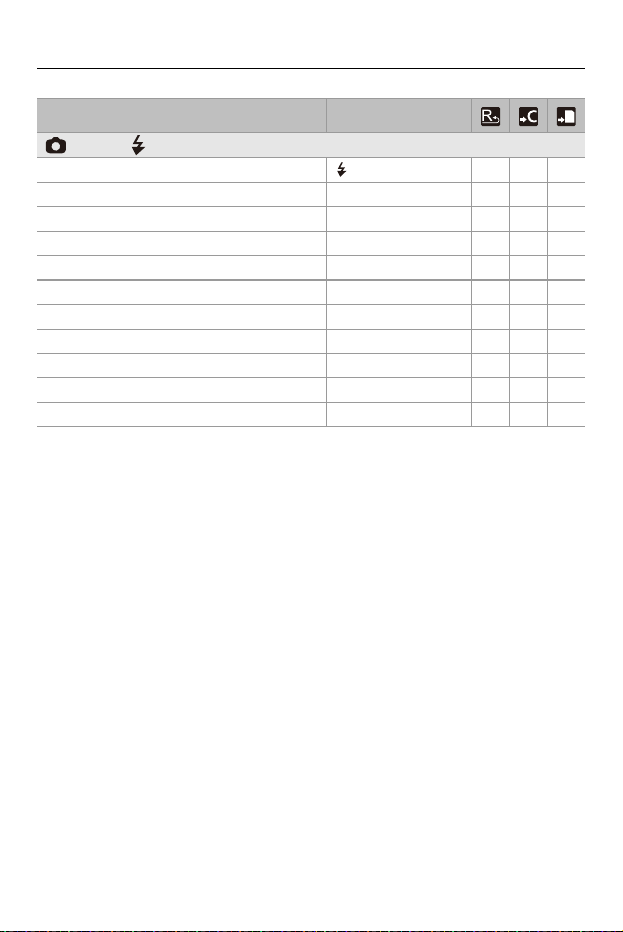
Materials – List of Default Settings/Custom Saving/Settings Available for Copying
943
Menu Default setting
[Photo]: [Flash]
[Flash Mode] [ ]
[Firing Mode] [TTL]
[Flash Adjust.] [±0 EV]
[Flash Synchro] [1ST]
[Manual Flash Adjust.] [1/1]
[Auto Exposure Comp.] [OFF]
[Wireless] [OFF]
[Wireless Channel] [1CH]
[Wireless FP] [OFF]
[Communication Light] [HIGH]
[Wireless Setup] —
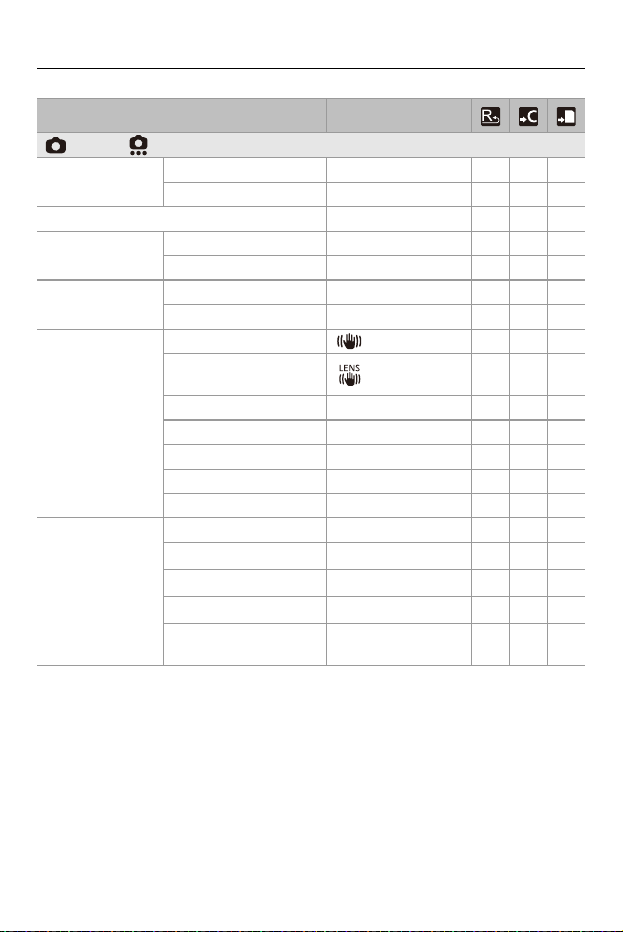
Materials – List of Default Settings/Custom Saving/Settings Available for Copying
944
Menu Default setting
[Photo]: [Others (Photo)]
[Bracketing]
[Bracketing Type] [OFF]
[More Settings] —
[Silent Mode] [OFF]
[Hybrid
Zoom(Photo)]
[ON] / [OFF] [OFF]
[SET] —
[Crop
Zoom(Photo)]
[ON] / [OFF] [OFF]
[SET] —
[Image Stabilizer]
[Operation Mode] [ ]
[Body(B.I.S.) /
Lens(O.I.S.)]
[]
[When to Activate] [HALF-SHUTTER]
[E-Stabilization (Video)] [OFF]
[Boost I.S. (Video)] [OFF]
[Anamorphic (Video)] [OFF]
[Lens Information] [Lens1]
[Burst Shot Setting]
[Burst Shot 1 Setting] [H]
[Burst Shot 2 Setting] [SH]
[Behavior in SH Burst] [SPEED PRIORITY]
[Behavior in H+/H Burst] [SPEED PRIORITY]
[SH Burst Pre-Recording
Time]
[0.5SEC]
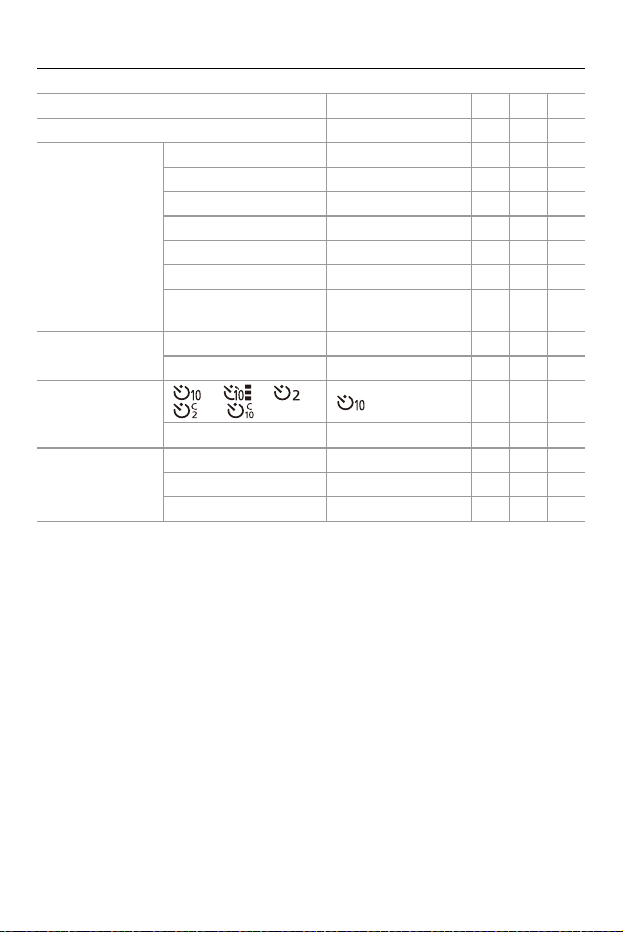
Materials – List of Default Settings/Custom Saving/Settings Available for Copying
945
[Shutter Type] [MECH.]
[Shutter Delay] [OFF]
[Time Lapse/
Animation]
[Mode] [Time Lapse Shot]
[Shooting Interval Setting] [ON]
[Start Time] [Now]
[Image Count] [1]
[Shooting Interval] [1m00s]
[Exposure Leveling] [OFF]
[Create New Folder At
Rec]
—
[Live View
Composite]
[Start] —
[Shutter Delay] [OFF]
[Self Timer]
[ ] / [ ] / [ ] /
[ ] to [ ]
[]
[SET] —
[Multiple Exposure]
[Start] —
[Auto Gain] [ON]
[Overlay] [OFF]
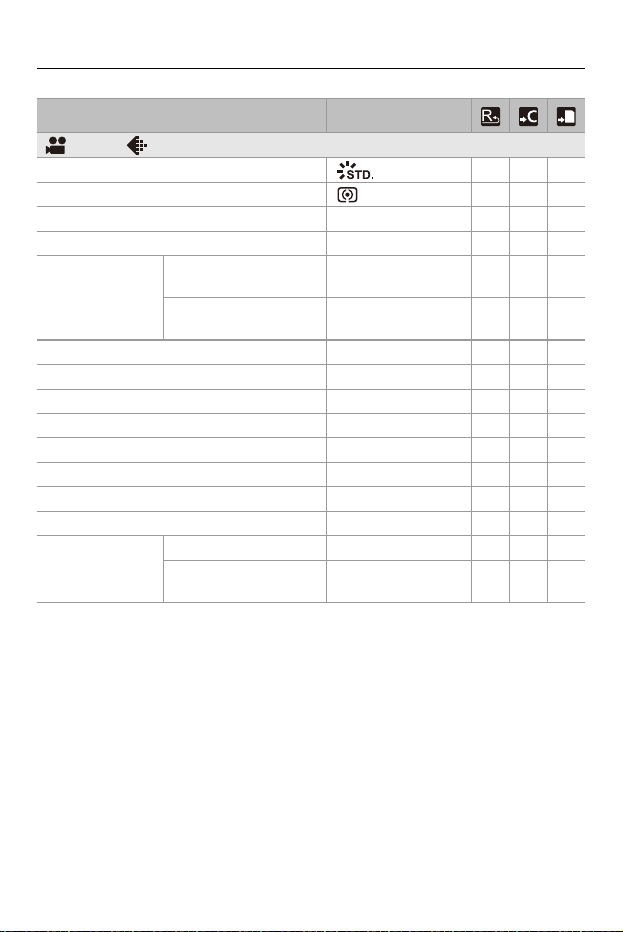
Materials – List of Default Settings/Custom Saving/Settings Available for Copying
946
Menu Default setting
[Video]: [Image Quality]
[Photo Style] [ ]
[Metering Mode] [ ]
[Dynamic Range Boost] [OFF]
[Dual Native ISO Setting] [AUTO]
[ISO Sensitivity
(video)]
[ISO Auto Lower Limit
Setting]
[100]
[ISO Auto Upper Limit
Setting]
[AUTO]
[Synchro Scan(Video)] [OFF]
[Shutter Speed Limiter] [ON]
[Master Pedestal Level] [0]
[SS/Gain Operation] [SEC/ISO]
[i.Dynamic Range] [OFF]
[Vignetting Comp.] [ON]
[Color Shading Compensation] —
[Diffraction Compensation] [OFF]
[Filter Settings]
[Filter Effect] [OFF]
[Simultaneous Record w/o
Filter]
[OFF]
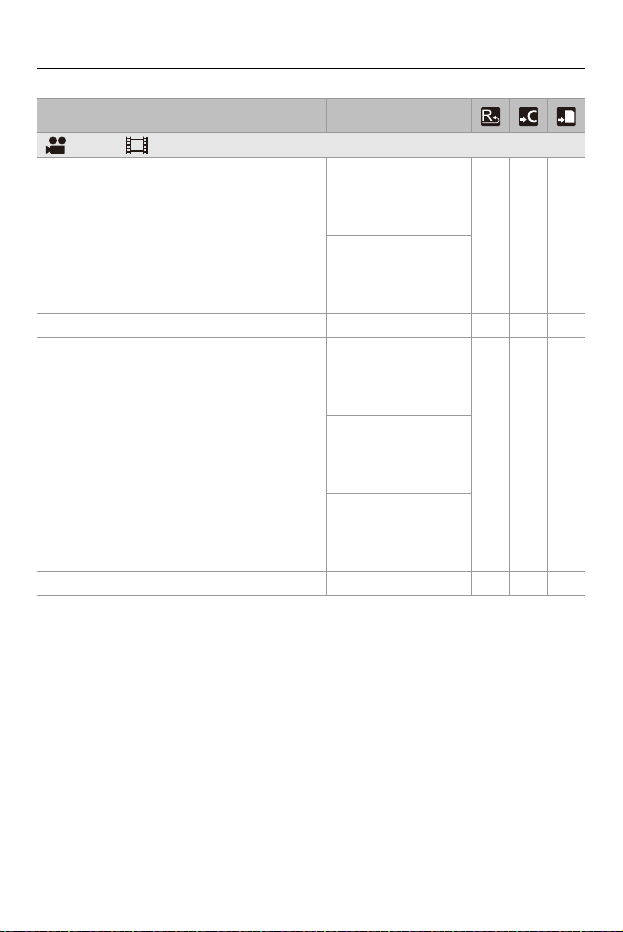
Materials – List of Default Settings/Custom Saving/Settings Available for Copying
947
Menu Default setting
[Video]: [Image Format]
[Rec. File Format(Video)]
When [System
Frequency] is set to
[59.94Hz (NTSC)] or
[50.00Hz (PAL)]: [MP4]
When [System
Frequency] is set to
[24.00Hz (CINEMA)]:
[MOV]
[Image Area of Video] [FULL]
[Rec Quality]
When [System
Frequency] is set to
[59.94Hz (NTSC)]:
[4K/8bit/100M/30p]
When [System
Frequency] is set to
[50.00Hz (PAL)]: [4K/
8bit/100M/25p]
When [System
Frequency] is set to
[24.00Hz (CINEMA)]:
[4K/24p/420/10-L]
[Rec Quality (My List)] —

Materials – List of Default Settings/Custom Saving/Settings Available for Copying
948
[Proxy Recording
Settings]
[Proxy Recording] [OFF]
[Proxy Rec. Quality] [M]
[Real Time LUT(Proxy)] [OFF]
[Slow & Quick Setting] [30fps]
[Time Code]
[Time Code Display] [OFF]
[Count Up] [REC RUN]
[Time Code Value] —
[Time Code Mode] [DF]
[HDMI Time Code Output] [OFF]
[External TC Setting] —
[Luminance Level] [16-235]
[HDMI RAW Data Output] [OFF]
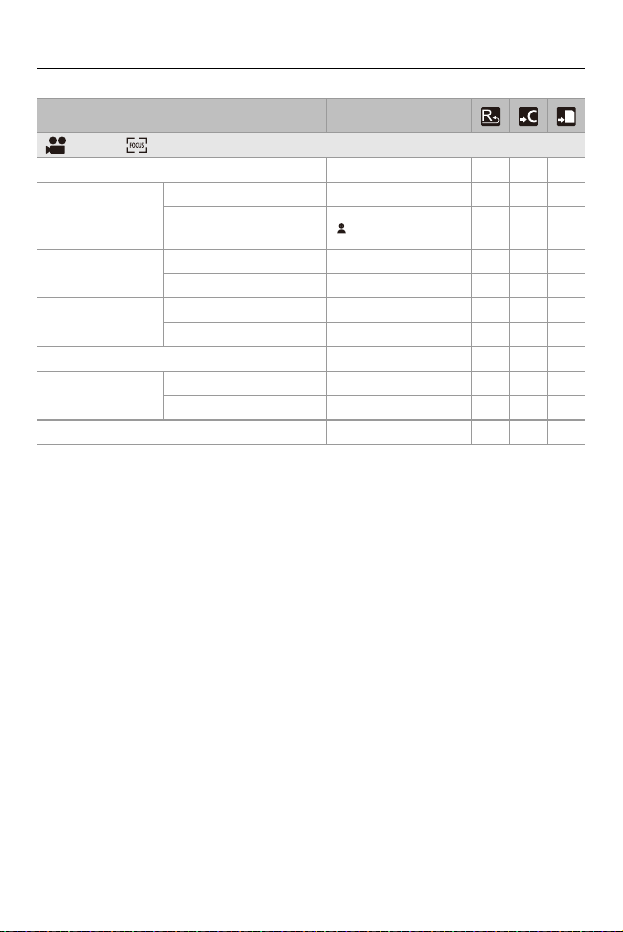
Materials – List of Default Settings/Custom Saving/Settings Available for Copying
949
Menu Default setting
[Video]: [Focus]
[AF Detection Setting] [OFF]
[Detecting Subject]
[Type of Subject] [HUMAN]
[Detection Mode(Human)]
[Target Parts]
[]
[AF Custom
Setting(Video)]
[ON] / [OFF] [OFF]
[SET] —
[Focus Limiter]
[ON] / [OFF] [OFF]
[SET] —
[AF Assist Light] [ON]
[Focus Peaking]
[ON] / [OFF] [ON]
[SET] —
[Focus Frame Moving Speed] [FAST]
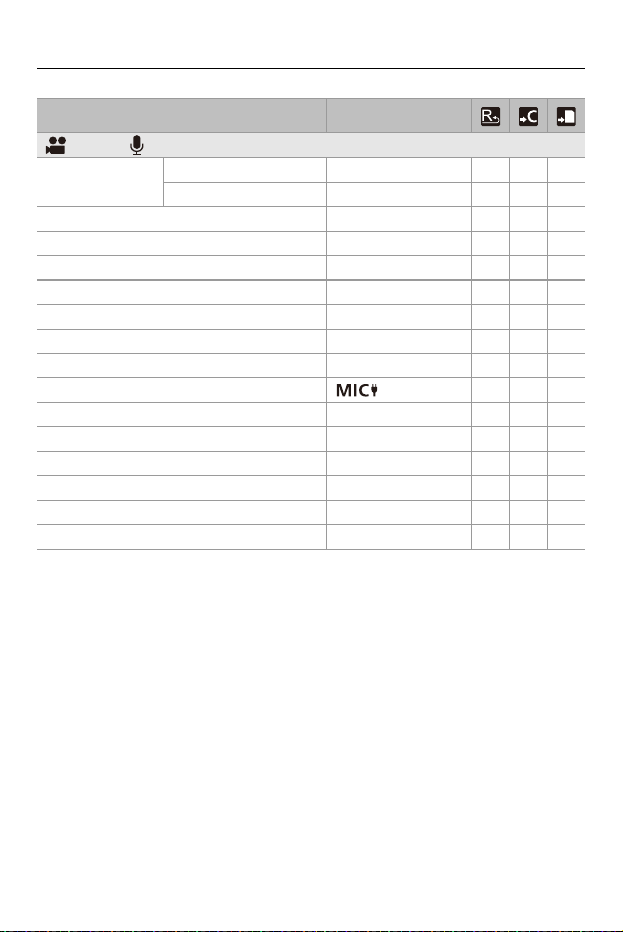
Materials – List of Default Settings/Custom Saving/Settings Available for Copying
950
Menu Default setting
[Video]: [Audio]
[Sound Rec Level
Disp.]
[ON] / [OFF] [OFF]
[SET] —
[Mute Sound Input] [OFF]
[Sound Rec Gain Level] [STANDARD]
[Sound Rec Level Adj.] [0dB]
[Sound Rec Quality] [48kHz/24bit]
[Sound Rec Level Limiter] [ON]
[Wind Noise Canceller] [STANDARD]
[Wind Cut] [OFF]
[Mic Socket] [ ]
[Special Mic.] [STEREO]
[4ch Audio Recording] [OFF]
[XLR Mic Adaptor Setting] [ON]
[Sound Output] [REALTIME]
[Headphone Volume] [LEVEL3]
[Sound Monitoring Channel] [CH1/CH2]
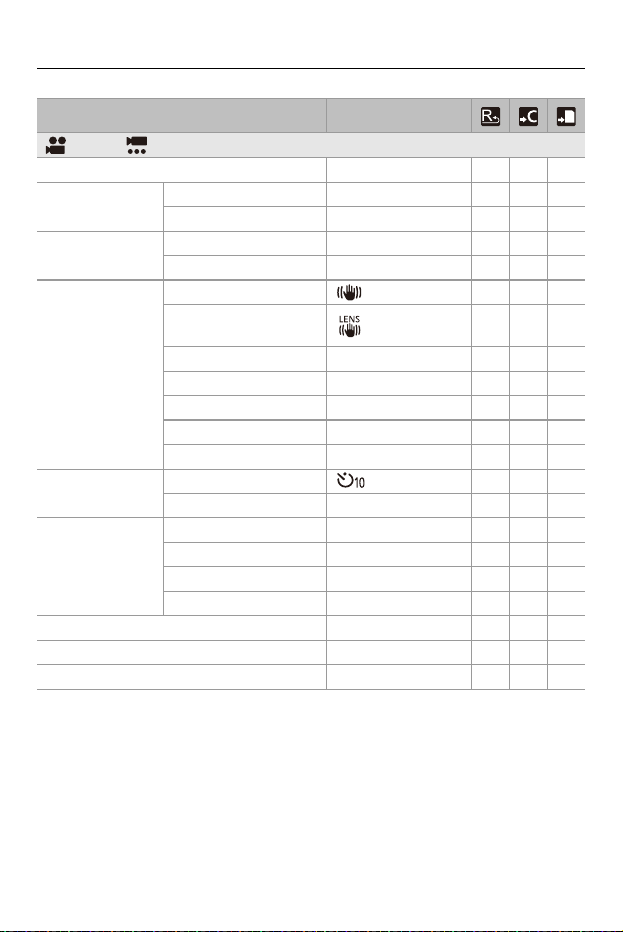
Materials – List of Default Settings/Custom Saving/Settings Available for Copying
951
Menu Default setting
[Video]: [Others (Video)]
[Silent Mode] [OFF]
[Hybrid
Zoom(Video)]
[ON] / [OFF] [OFF]
[SET] —
[Crop Zoom(Video)]
[ON] / [OFF] [OFF]
[SET] —
[Image Stabilizer]
[Operation Mode] [ ]
[Body(B.I.S.) /
Lens(O.I.S.)]
[]
[When to Activate] [ALWAYS]
[E-Stabilization (Video)] [OFF]
[Boost I.S. (Video)] [OFF]
[Anamorphic (Video)] [OFF]
[Lens Information] [Lens1]
[Self Timer Setting]
[Self Timer] [ ]
[Self Timer For Video] [OFF]
[Focus Transition]
[Focus Position Setting] —
[Focus Transition Speed] [M]
[Focus Transition Rec] [OFF]
[Focus Transition Wait] [OFF]
[Loop Recording (video)] [OFF]
[Segmented File Recording] [OFF]
[Live Cropping] [OFF]
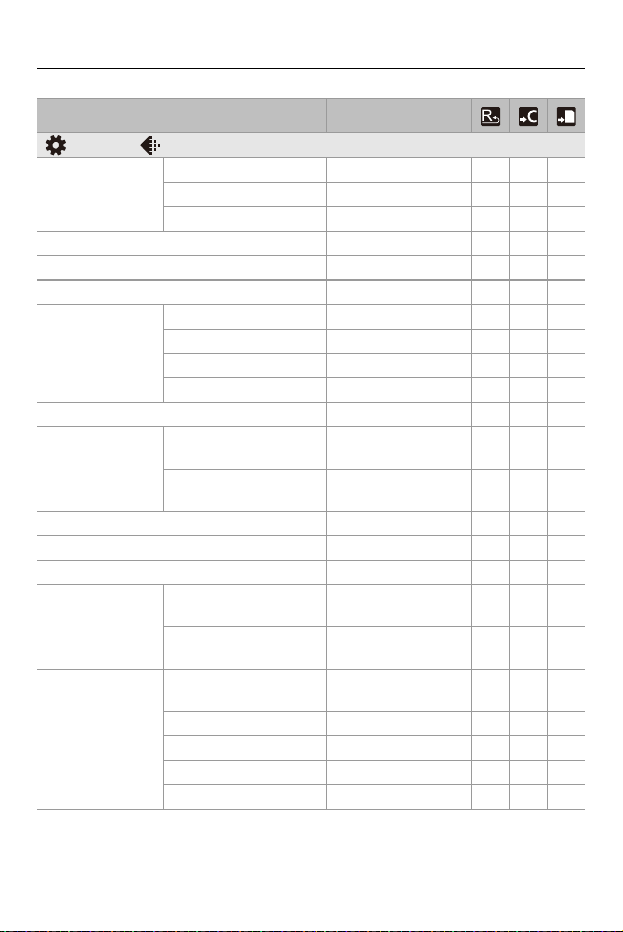
Materials – List of Default Settings/Custom Saving/Settings Available for Copying
952
Menu Default setting
[Custom]: [Image Quality]
[Photo Style
Settings]
[Show/Hide Photo Style] —
[My Photo Style Settings] —
[Reset Photo Style] —
[LUT Library] —
[ISO Increments] [1/3 EV]
[Extended ISO] [OFF]
[Exposure Offset
Adjust.]
[Multi Metering] [±0EV]
[Center Weighted] [±0EV]
[Spot] [±0EV]
[Highlight Weighted] [±0EV]
[Face Priority In Multi Metering] [ON]
[AWB Lock Setting]
[Operation Syncs With
Shutter]
[OFF]
[Lock Hold With Fn
Button]
[ON]
[Color Space] [sRGB]
[Exposure Comp. Reset] [OFF]
[Auto Exposure in Photo Mode] [ON]
[Exposure Control
in P/A/S/M]
[Exposure Control(Photo
Mode)]
[MODE DIAL]
[Exposure Control(Video
Mode)]
[MODE DIAL]
[Photo/Video
Separate Setting]
[F/SS/ISO/Exposure
Comp.]
[SEPARATE]
[White Balance] [SEPARATE]
[Photo Style] [SEPARATE]
[Metering Mode] [SEPARATE]
[AF Mode] [SEPARATE]
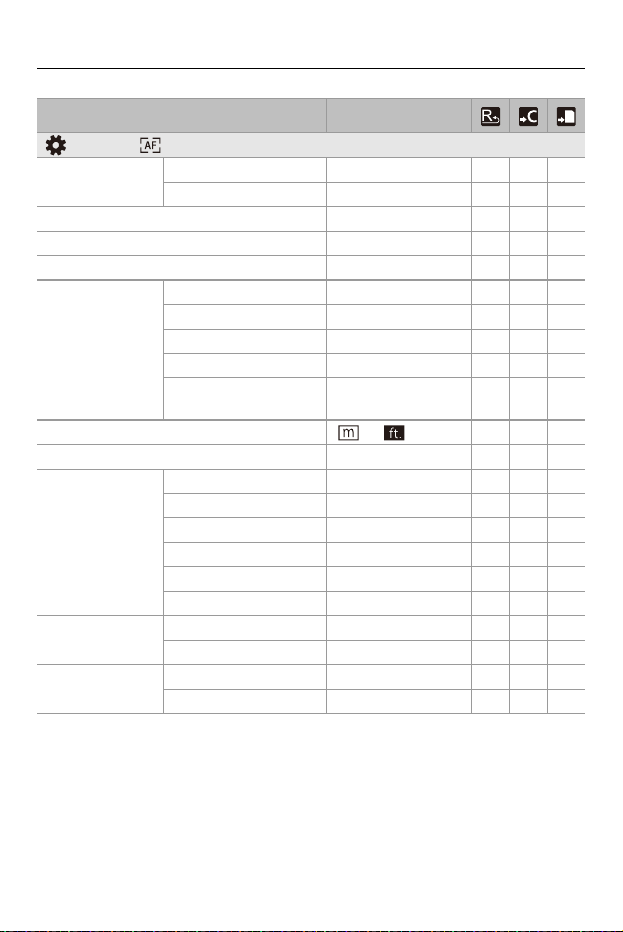
Materials – List of Default Settings/Custom Saving/Settings Available for Copying
953
Menu Default setting
[Custom]: [Focus/Shutter]
[Focus/Shutter
Priority]
[AFS] [FOCUS]
[AFC] [BALANCE]
[Focus Switching for Vert / Hor] [OFF]
[AF/AE Lock Hold] [OFF]
[AF+MF] [OFF]
[MF Assist]
[Focus Ring] [ON]
[AF Mode] [ON]
[Press Joystick] [OFF]
[MF Assist Display] [PIP]
[Max. Magnification in
"FULL"]
[20x]
[MF Guide] [ ] / [ ]
*1
[Focus Ring Lock] [OFF]
[Show/Hide AF
Mode]
[Tracking] [ON]
[Full Area AF] [ON]
[Zone(Horizontal/Vertical)] [ON]
[Zone] [ON]
[1-Area+] [ON]
[Pinpoint] [ON]
[Pinpoint AF
Setting]
[Pinpoint AF Time] [MID]
[Pinpoint AF Display] [PIP]
[AF-Point Scope
Setting]
[Keep Enlarged Display] [OFF]
[PIP Display] [PIP]

Materials – List of Default Settings/Custom Saving/Settings Available for Copying
954
*1 Default setting specifications vary depending on the country or area where the
camera was purchased.
[Shutter AF] [ON]
[Human Eye Detection Display] [ON]
[Half-Press Shutter] [OFF]
[Assign REC to Shutter Button] [ON]
[Quick AF] [OFF]
[Eye Sensor AF] [OFF]
[Looped Focus Frame] [OFF]
[Enlarged Live
Display(Video)]
[Keep Enlarged Display] [ON]
[PIP Display] [PIP]
[AFS Behavior in Video Mode] [AFC]
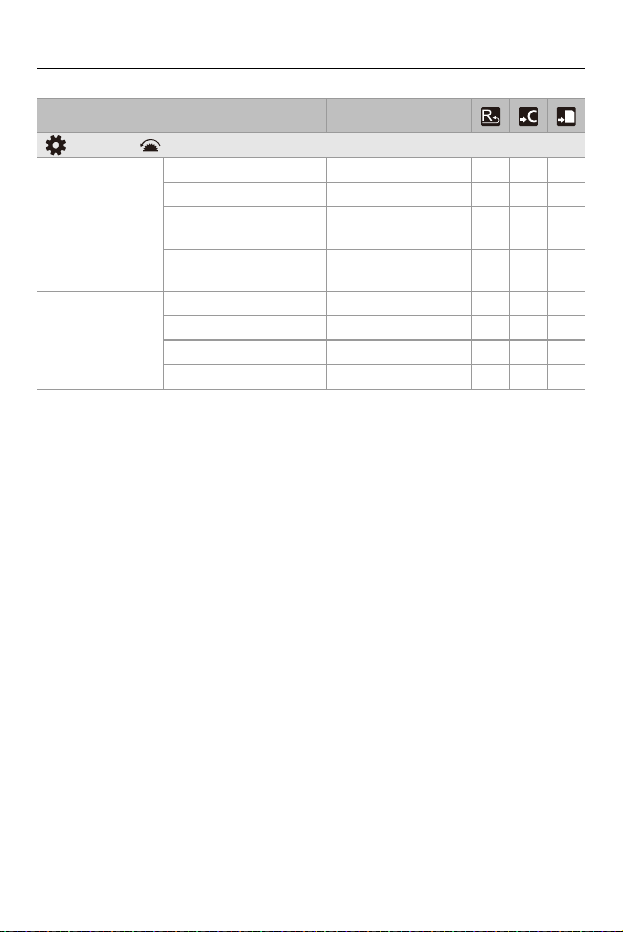
Materials – List of Default Settings/Custom Saving/Settings Available for Copying
955
Menu Default setting
[Custom]: [Operation]
[Q.MENU Settings]
[Layout Style] [MODE1]
[Front Dial Assignment] [Value]
[Item Customize (Photo
Mode)]
—
[Item Customize (Video/
S&Q Mode)]
—
[Touch Settings]
[Touch Screen] [ON]
[Touch Tab] [OFF]
[Touch AF] [AF]
[Touch Pad AF] [OFF]
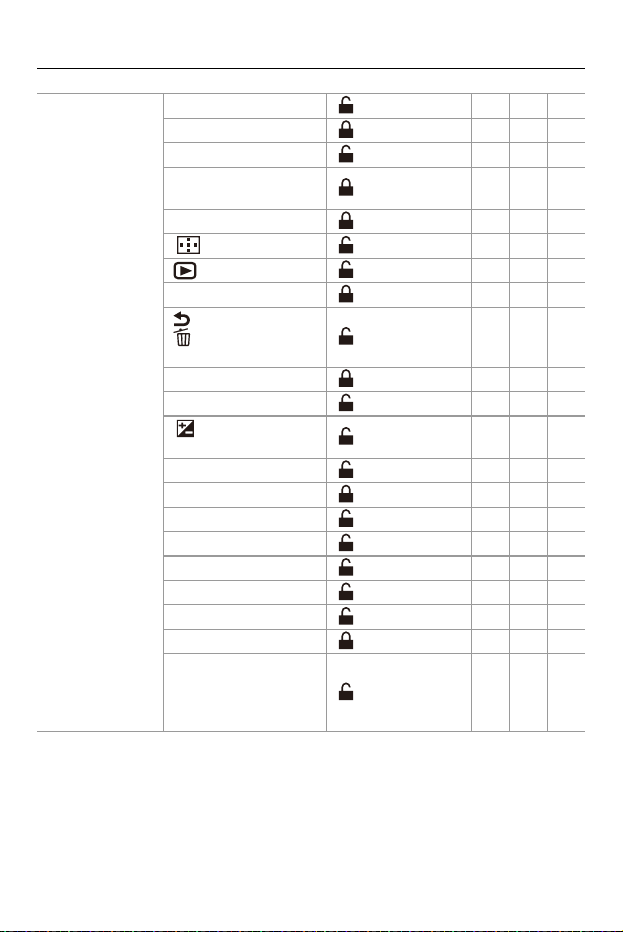
Materials – List of Default Settings/Custom Saving/Settings Available for Copying
956
[Lock Lever Setting]
[AF ON] button [ ]
Joystick [ ]
[Q] button [ ]
Cursor buttons / [MENU/
SET] button
[]
Control dial [ ]
[ ] (AF mode) button [ ]
[ ] (Playback) button [ ]
Touch screen [ ]
[ ] (Cancel) button /
[ ] (Delete) button / Fn
button (Fn1)
[]
[DISP.] button [ ]
[ISO] button [ ]
[ ] (Exposure
compensation) button
[]
Video rec. button [ ]
Rear dial [ ]
[WB] button [ ]
[LVF] button [ ]
Sub video rec. button [ ]
Lens [ ]
Shutter button [ ]
Front dial [ ]
AF-Point Scope button /
Enlarged live display
(video) button / Fn button
(Fn2)
[]
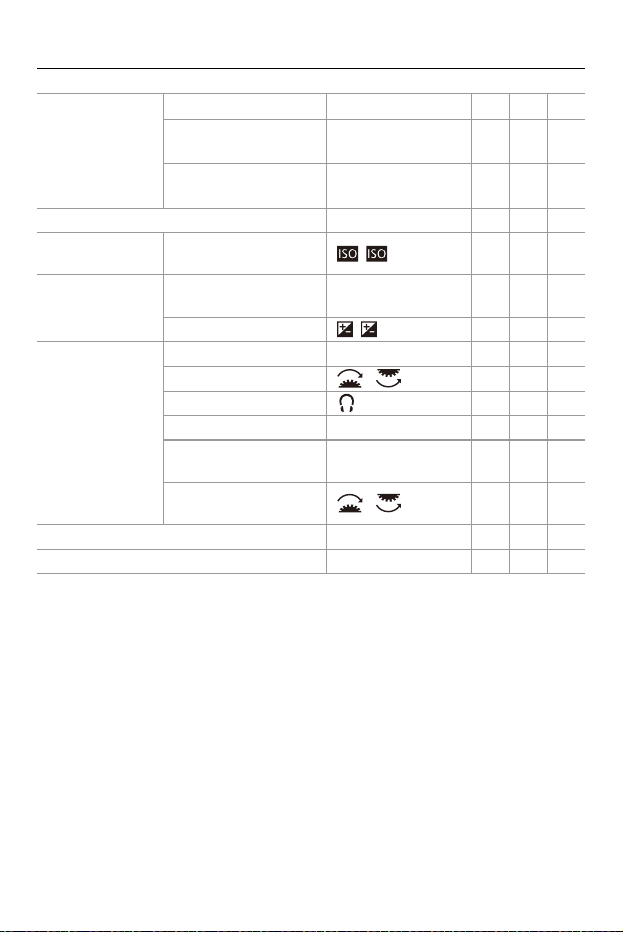
Materials – List of Default Settings/Custom Saving/Settings Available for Copying
957
[Fn Button Set]
[Setting in Photo Mode]
—
[Setting in Video/S&Q
Mode]
—
[Setting in Playback
Mode]
—
[WB/ISO/Expo. Button] [AFTER PRESSING2]
[ISO Displayed
Setting]
[Front/Rear Dials] [ / ]
[Exposure Comp.
Disp. Setting]
[Cursor Buttons (Up/
Down)]
[OFF]
[Front/Rear Dials] [ / ]
[Dial Set.]
[Assign Dial (F/SS)] [SET1]
[Rotation (F/SS)] [ ]
[Control Dial Assignment] [ ]
[Exposure Comp.] [OFF]
[Dial Operation Switch
Setup]
—
[Rotation (Menu
Operation)]
[]
[Joystick Setting] [D.FOCUS Movement]
[Video Rec. Button (Remote)] [Video Record]
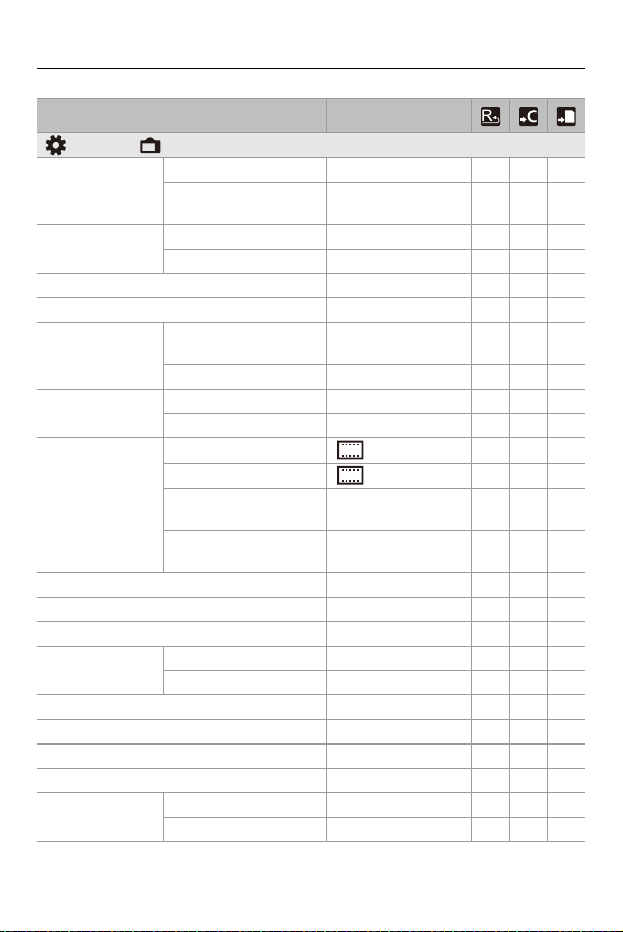
Materials – List of Default Settings/Custom Saving/Settings Available for Copying
958
Menu Default setting
[Custom]: [Monitor / Display (Photo)]
[Auto Review]
[Duration Time (photo)] [OFF]
[Playback Operation
Priority]
[OFF]
[Constant Preview]
[ON] / [OFF] [ON]
[SET] —
[Histogram] [OFF]
[Photo Grid Line] [OFF]
[Live View Boost]
[MODE1] / [MODE2] /
[OFF]
[OFF]
[SET] [M]
[Night Mode]
[Monitor] [OFF]
[LVF] [OFF]
[LVF/Monitor Disp.
Set]
[LVF Disp. Set] [ ]
[Monitor Disp. Set] [ ]
[Horizontal Image
Flip(Monitor)]
[AUTO]
[Vertical Image
Flip(Monitor)]
[AUTO]
[Expo.Meter] [OFF]
[Focal Length] [ON]
[Blinking Highlights] [OFF]
[Sheer Overlay]
[ON] / [OFF] [OFF]
[SET] —
[I.S. Status Scope] [OFF]
[Level Gauge] [ON]
[Luminance Spot Meter] [OFF]
[Framing Outline] [OFF]
[Show/Hide Monitor
Layout]
[Control Panel] [ON]
[Black Screen] [ON]
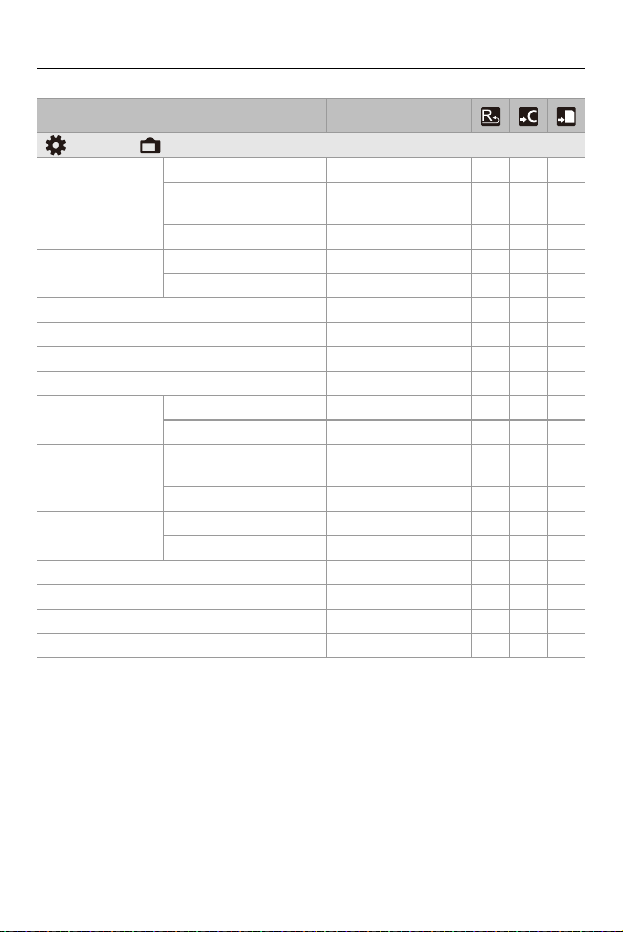
Materials – List of Default Settings/Custom Saving/Settings Available for Copying
959
Menu Default setting
[Custom]: [Monitor / Display (Video)]
[Log View Assist]
[LUT Select(V-Log)] [Vlog_709]
[LUT View Assist
(Monitor)]
[OFF]
[LUT View Assist (HDMI)] [OFF]
[HLG View Assist]
[Monitor] [MODE2]
[HDMI] [AUTO]
[Anamorphic Desqueeze Display] [OFF]
[Monochrome Live View] [OFF]
[Center Marker] [OFF]
[Safety Zone Marker] [OFF]
[Frame Marker]
[ON] / [OFF] [OFF]
[SET] —
[Zebra Pattern]
[ZEBRA1] / [ZEBRA2] /
[ZEBRA1+2] / [OFF]
[OFF]
[SET] —
[False Color]
[Start] —
[False Color Index] —
[WFM/Vector Scope] [OFF]
[Color Bars] [SMPTE]
[Red REC Frame Indicator] [OFF]
[Streaming Blue Frame Indicator] [OFF]
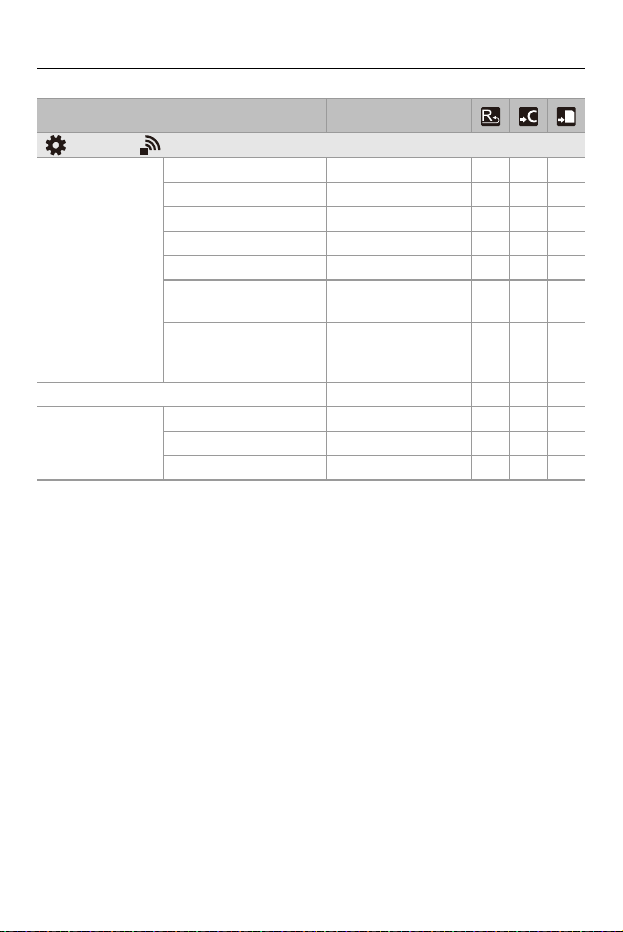
Materials – List of Default Settings/Custom Saving/Settings Available for Copying
960
Menu Default setting
[Custom]: [IN/OUT]
[HDMI Rec Output]
[Info Display] [ON]
[Down Convert] [AUTO]
[HDMI Recording Control] [OFF]
[Sound Output (HDMI)] [ON]
[Enlarged Live Display] [OFF]
[4K/120p Output] / [4K/
100p Output]
[OFF]
[4K/120p Power Save
Live View] / [4K/100p
Power Save Live View]
[OFF]
[Fan Mode] [AUTO2]
[Tally Lamp]
[Front Tally Lamp] [H]
[Rear Tally Lamp] [L]
[Rear Card Access Light] [L]
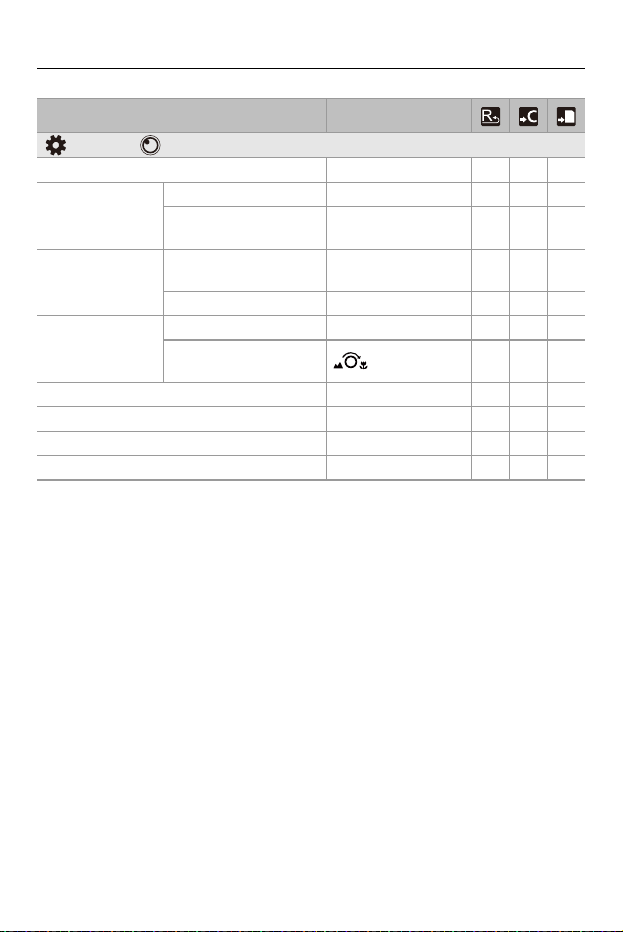
Materials – List of Default Settings/Custom Saving/Settings Available for Copying
961
*1 The adjustment value for the focus point cannot be registered.
*2 The settings information cannot be loaded onto a camera different from the one
where the camera settings were saved.
Menu Default setting
[Custom]: [Lens / Others]
[Lens Focus Resume] [OFF]
[Lens Fn Button
Setting]
[Setting in Photo Mode] [Focus Stop]
[Setting in Video/S&Q
Mode]
[Same Setting as
Photo Mode]
[Focus Ring Setting
During AF]
[Select Function to
Assign]
[OFF]
[Setting] —
[Focus Ring Setting
During MF]
[Focus Ring Control] [NON-LINEAR]
[Direction of Ring
Rotation]
[AF Micro Adjustment] [OFF]
*1
*2
[Lens Information] [Lens1]
[Lens Info. Confirmation] [ON]
[Vertical Position Info (Video)] [ON]
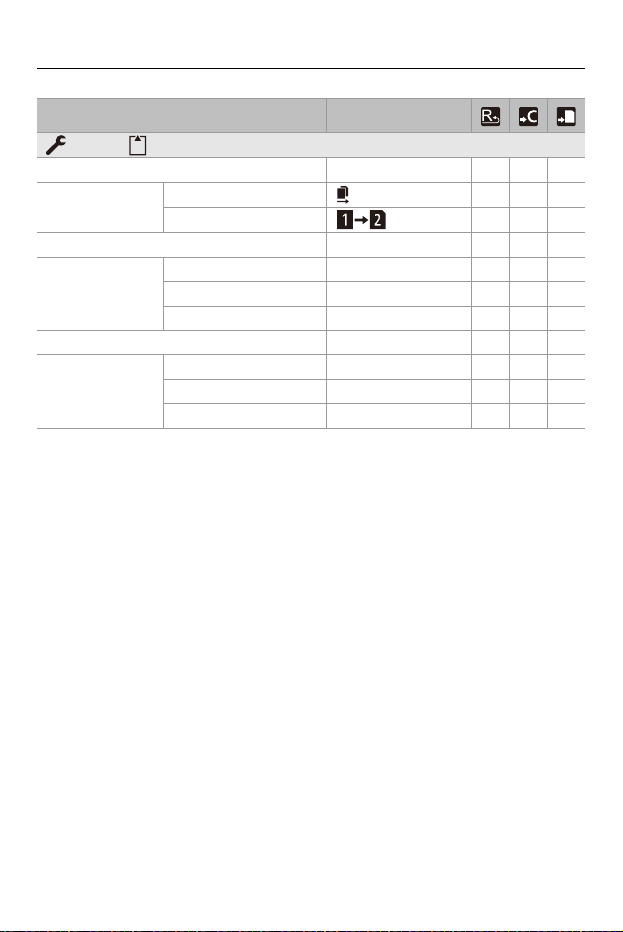
Materials – List of Default Settings/Custom Saving/Settings Available for Copying
962
Menu Default setting
[Setup]: [Card/File]
[Card Format] —
[Double Card Slot
Function]
[Recording Method] [ ]
[Destination Card Slot] [ ]
[USB-SSD] [OFF]
[Folder / File
Settings]
[Select Folder] —
[Create a New Folder] —
[File Name Setting] [Folder Number Link]
[File Number Reset] —
[Copyright
Information]
[Artist] [OFF]
[Copyright Holder] [OFF]
[Display Copyright Info.] —
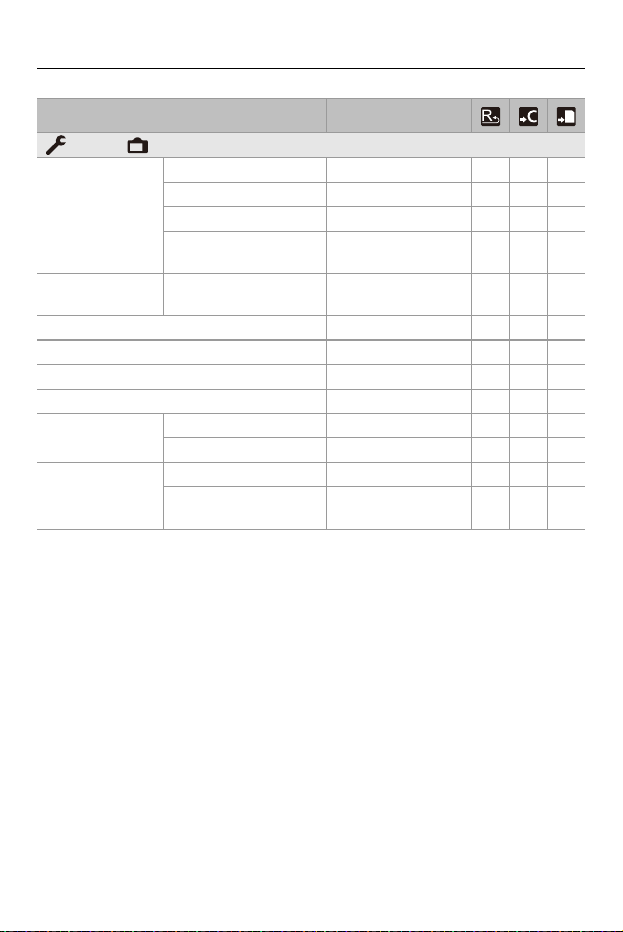
Materials – List of Default Settings/Custom Saving/Settings Available for Copying
963
Menu Default setting
[Setup]: [Monitor / Display]
[Power Save Mode]
[Sleep Mode] [1MIN.]
[Sleep Mode(Wi-Fi)] [ON]
[Auto LVF/Monitor Off] [1MIN.]
[Power Save LVF
Shooting]
—
[Thermal
Management]
[Recording Max
Temperature]
[STANDARD]
[Monitor Frame Rate] [30fps]
[LVF Frame Rate] [60fps]
[Monitor Settings] / [Viewfinder] —
[Monitor Backlight] / [LVF Luminance] [AUTO]
[Eye Sensor]
[Sensitivity] [HIGH]
[LVF/Monitor Switch] [LVF/MON AUTO]
[Level Gauge
Adjust.]
[Adjust.] —
[Level Gauge Value
Reset]
—
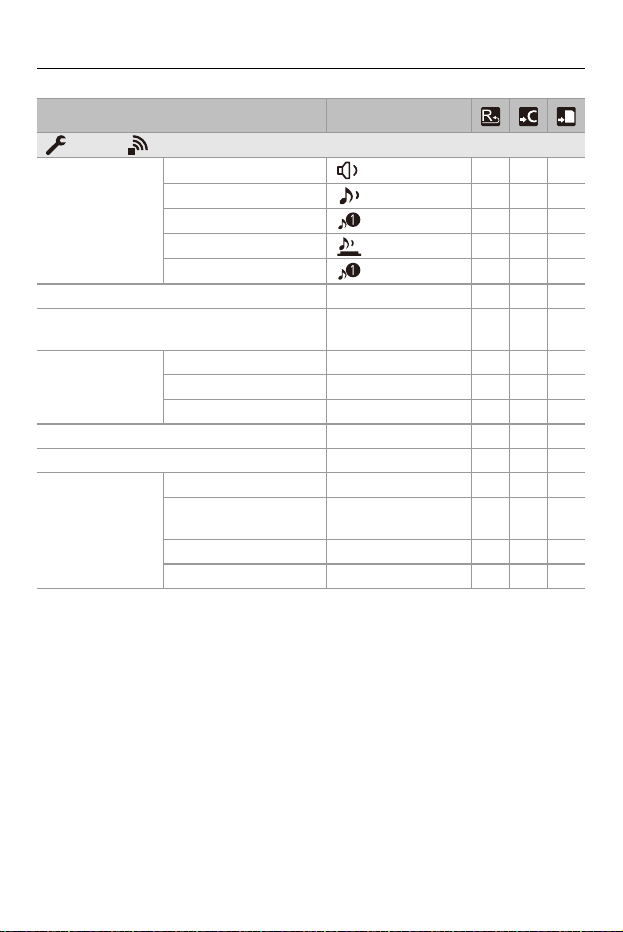
Materials – List of Default Settings/Custom Saving/Settings Available for Copying
964
Menu Default setting
[Setup]: [IN/OUT]
[Beep]
[Beep Volume] [ ]
[AF Beep Volume] [ ]
[AF Beep Tone] [ ]
[E-Shutter Vol] [ ]
[E-Shutter Tone] [ ]
[Headphone Volume] [LEVEL3]
[Sound Monitoring Channel(Play)]
[COMBINED WITH
REC]
[Streaming]
[Streaming Function] [OFF]
[Connection Method] [Wi-Fi]
[Streaming Setup] —
*1
[LAN / Wi-Fi] —
*2
[Bluetooth] —
[Frame.io]
[Frame.io Connection] [OFF]
[Send Images to
Frame.io]
—
[Connection Setup] —
[Upload Setup] —
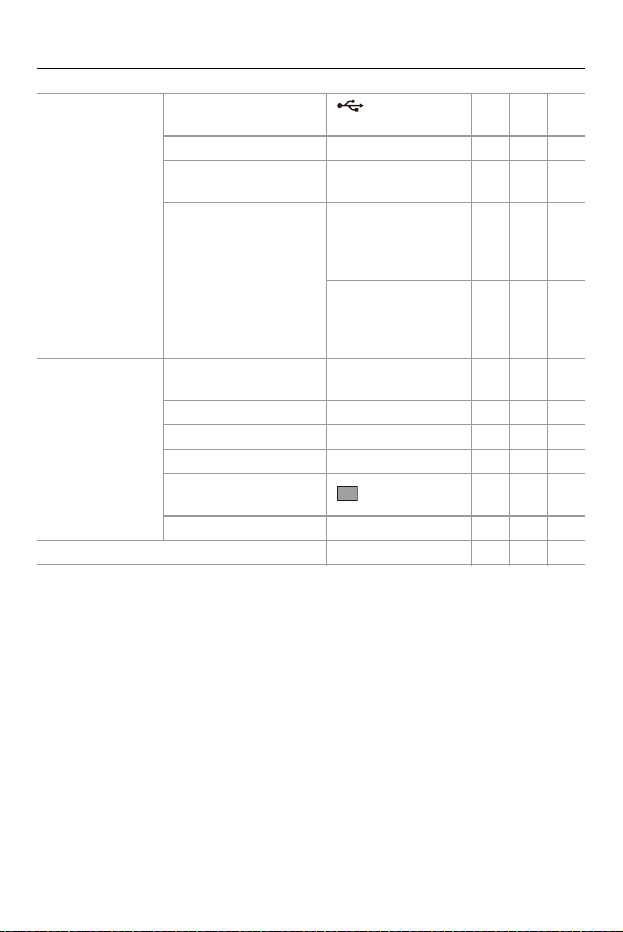
Materials – List of Default Settings/Custom Saving/Settings Available for Copying
965
*1 [Streaming Quality] settings are saved.
*2 [IP Address Setting (LAN)] setting in [LAN / Wi-Fi] is saved.
However, the IP address set in [Static IP Address Setting] is not saved.
[USB]
[USB Mode]
[ ] [Select on
connection]
[USB Power Supply] [ON]
[Tether(USB ethernet
adaptor)]
[OFF]
[Webcam Image Quality]
When [System
Frequency] is set to
[59.94Hz (NTSC)]:
[FHD/30p]
When [System
Frequency] is set to
[50.00Hz (PAL)]: [FHD/
25p]
[HDMI Connection]
[Output
Resolution(Playback)]
[AUTO]
[LUT View Assist (HDMI)] [OFF]
[HLG View Assist (HDMI)] [AUTO]
[VIERA Link (CEC)] [OFF]
[Background
Color(Playback)]
[]
[Photo Luminance Level] [16-255]
[Network Connection Light] [ON]
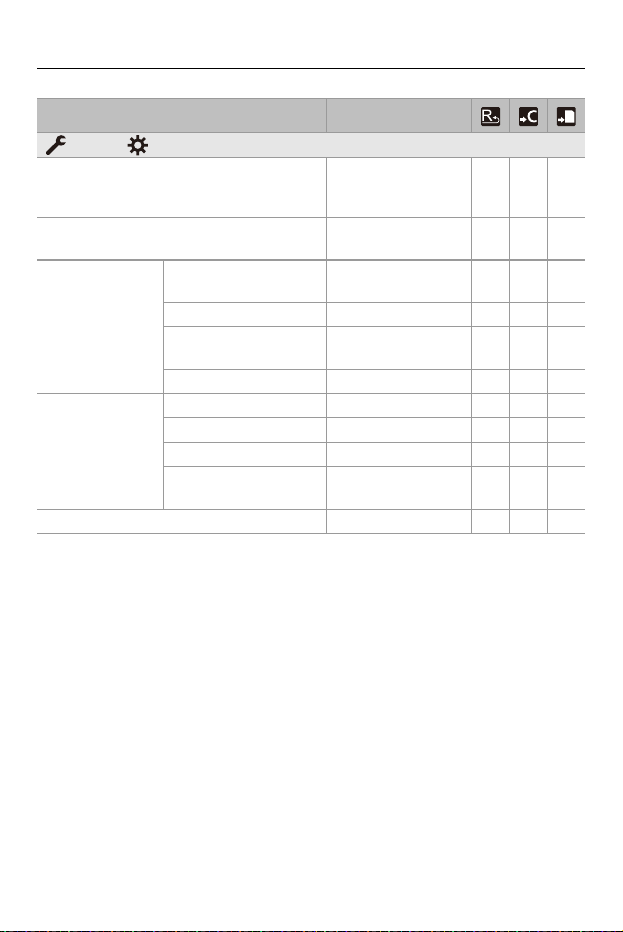
Materials – List of Default Settings/Custom Saving/Settings Available for Copying
966
Menu Default setting
[Setup]: [Setting]
[Save to Custom Mode(Photo)]/[Save to
Custom Mode(Video)]/[Save to Custom
Mode(S&Q)]
—
[Load Custom Mode(Photo)]/[Load Custom
Mode(Video)]/[Load Custom Mode(S&Q)]
—
[Custom Mode
Settings]
[Limit No. of Custom
Mode]
[3]
[Edit Title] —
[How to Reload Custom
Mode]
—
[Select Loading Details] —
[Save/Restore
Camera Setting]
[Save] —
[Load] —
[Delete] —
[Keep Settings While
Format]
[OFF]
[Reset] —
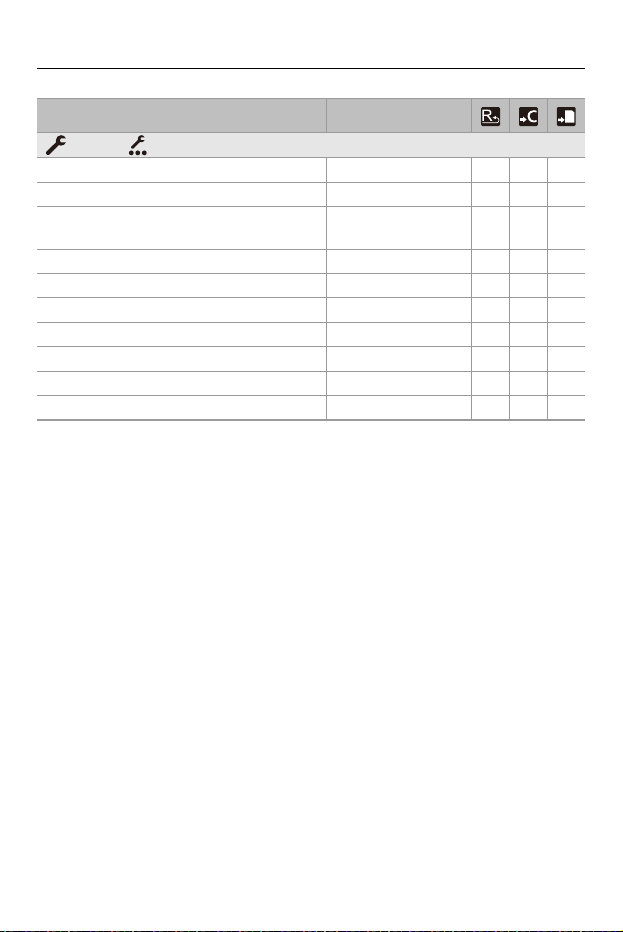
Materials – List of Default Settings/Custom Saving/Settings Available for Copying
967
*1 Default setting specifications vary depending on the country or area where the
camera was purchased.
*2 Depending on the country or area where the camera was purchased, this is not
displayed due to differences in specifications.
Menu Default setting
[Setup]: [Others]
[Clock Set] 0:00:00 1/1/2025
[Time Zone]
*
1
[System Frequency]
[59.94Hz (NTSC)] /
[50.00Hz (PAL)]
*1
[Pixel Refresh] —
[Shutter Behavior at Power Off] [OPEN]
[Sensor Cleaning] —
[Language]
*
1
[Firmware Version] —
[Approved Regulations]
*2
—
[Root Certificate] —
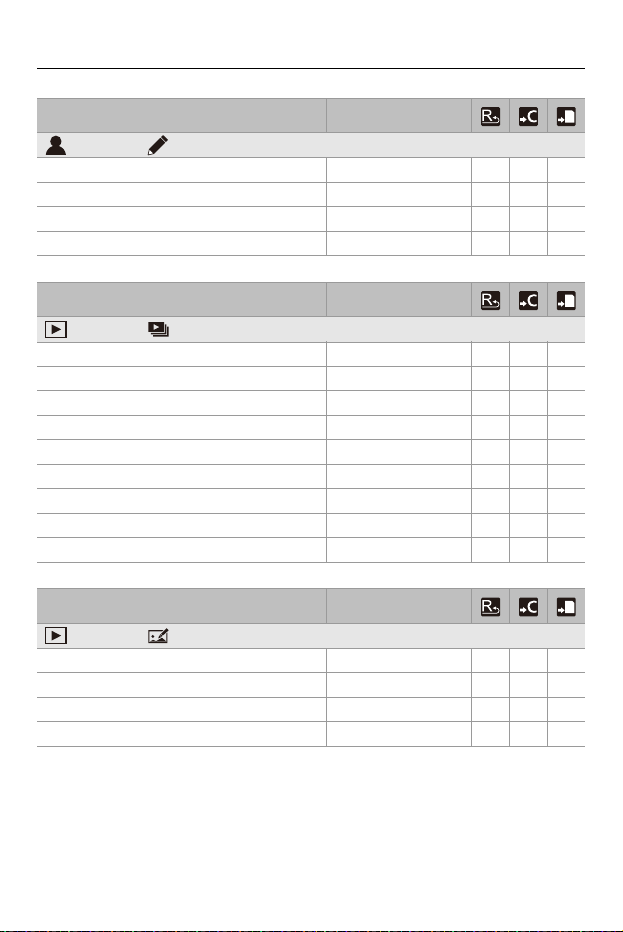
Materials – List of Default Settings/Custom Saving/Settings Available for Copying
968
Menu Default setting
[My Menu]: [Edit My Menu]
[Add] —
[Sorting] —
[Delete] —
[Display from My Menu] [OFF]
Menu Default setting
[Playback]: [Playback Mode]
[Playback Mode] [Normal Play]
[Slide Show] —
[Rotate Disp.] [ON]
[Picture Sort] [DATE/TIME]
[Magnify from AF Point] [OFF]
[LUT View Assist (Monitor)] [OFF]
[HLG View Assist (Monitor)] [MODE2]
[Anamorphic Desqueeze Display] [OFF]
[Behavior After Video Playback] [End Playback]
Menu Default setting
[Playback]: [Process Image]
[RAW Processing] —
[HEIF to JPEG Conversion] —
[Time Lapse Video] —
[Stop Motion Video] —
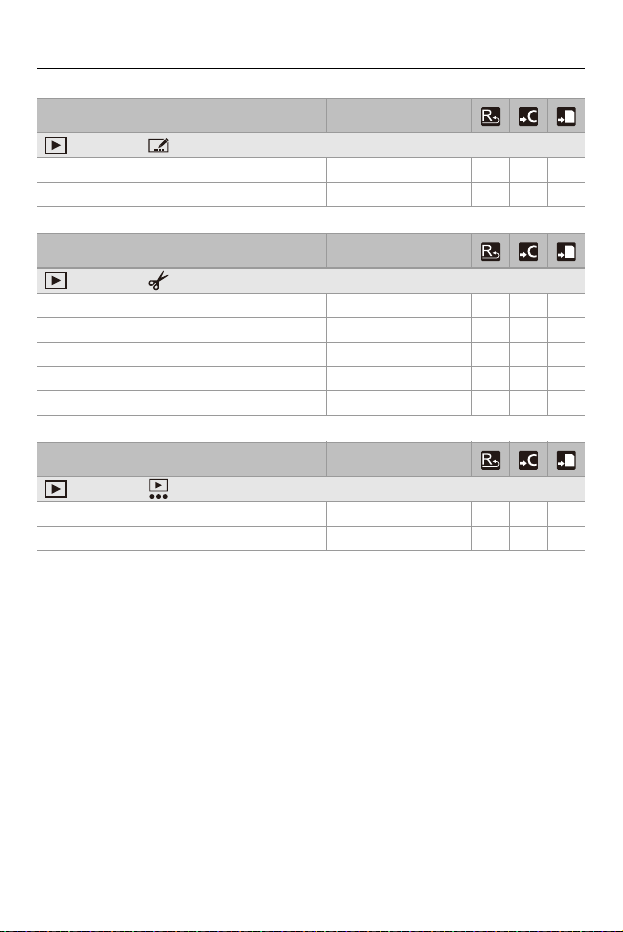
Materials – List of Default Settings/Custom Saving/Settings Available for Copying
969
Menu Default setting
[Playback]: [Add/Delete Info.]
[Protect] —
[Rating] —
Menu Default setting
[Playback]: [Edit Image]
[Resize] —
[Rotate] —
[Video Divide] —
[Copy] —
[Video Repair] —
Menu Default setting
[Playback]: [Others]
[Delete Confirmation] ["No" first]
[Delete All Images] —
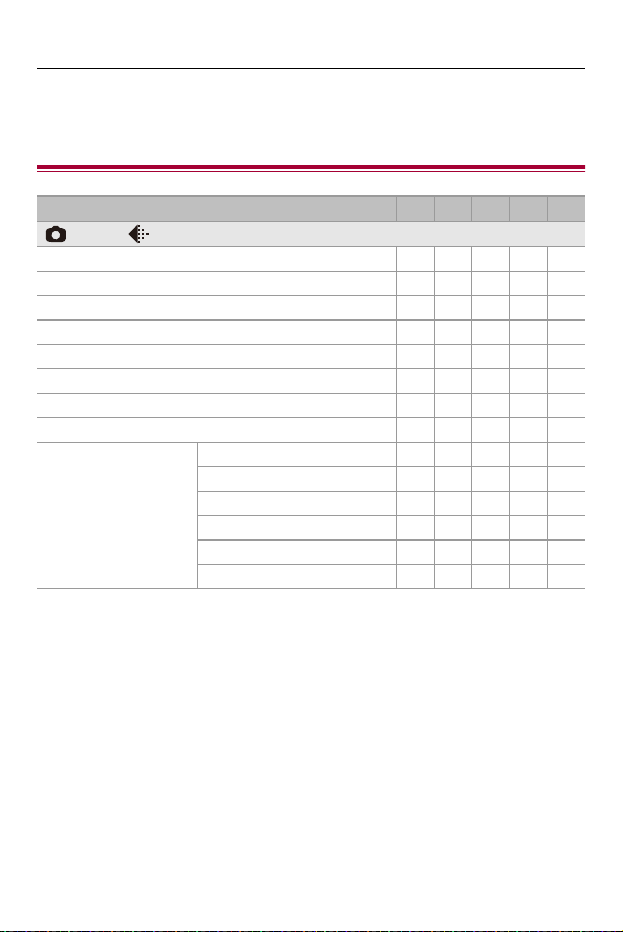
Materials – List of Functions That Can Be Set in Each Recording Mode
970
List of Functions That Can Be Set in Each
Recording Mode
Menu iA P A S M
[Photo]: [Image Quality]
[Photo Style]
[Metering Mode]
[Aspect Ratio]
[Rec. File Format(Photo)]
[Switch JPEG/HEIF]
[JPEG/HEIF Picture Quality]
[HEIF Format]
[Picture Size]
[High Resolution Mode
Setting]
[Handheld High-Res]
[Picture Quality]
[Picture Size]
[Simul Record Normal Shot]
[Shutter Delay]
[Motion Blur Processing]

Materials – List of Functions That Can Be Set in Each Recording Mode
971
[Long Exposure NR]
[Dual Native ISO Setting]
[ISO Sensitivity (photo)]
[ISO Auto Lower Limit Setting]
[ISO Auto Upper Limit Setting]
[Synchro Scan(Photo)]
[Min. Shutter Speed]
[i.Dynamic Range]
[Vignetting Comp.]
[Color Shading Compensation]
[Diffraction Compensation]
[Filter Settings]
[Filter Effect]
[Simultaneous Record w/o
Filter]
[Flicker Decrease (Video)]
Materials – List of Functions That Can Be Set in Each Recording Mode
972
Menu iA P A S M
[Photo]: [Focus]
[AF Detection Setting]
[Detecting Subject]
[Type of Subject]
[Detection Mode(Human)]
[Target Parts]
[AF Custom Setting(Photo)]
[Focus Limiter]
[AF Assist Light]
[Focus Peaking]
[Focus Frame Moving Speed]
Menu iA P A S M
[Photo]: [Flash]
[Flash Mode]
[Firing Mode]
[Flash Adjust.]
[Flash Synchro]
[Manual Flash Adjust.]
[Auto Exposure Comp.]
[Wireless]
[Wireless Channel]
[Wireless FP]
[Communication Light]
[Wireless Setup]
Materials – List of Functions That Can Be Set in Each Recording Mode
973
Menu iA P A S M
[Photo]: [Others (Photo)]
[Bracketing]
[Bracketing Type]
[More Settings]
[Silent Mode]
[Hybrid Zoom(Photo)]
[Crop Zoom(Photo)]
[Image Stabilizer]
[Operation Mode]
[Body(B.I.S.) / Lens(O.I.S.)]
[When to Activate]
[E-Stabilization (Video)]
[Boost I.S. (Video)]
[Anamorphic (Video)]
[Lens Information]
[Burst Shot Setting]
[Burst Shot 1 Setting]
[Burst Shot 2 Setting]
[Behavior in SH Burst]
[Behavior in H+/H Burst]
[SH Burst Pre-Recording Time]
[Shutter Type]
[Shutter Delay]
[Time Lapse/Animation]
[Live View Composite]
[Start]
[Shutter Delay]
[Self Timer]
[Multiple Exposure]
[Start]
[Auto Gain]
[Overlay]
Materials – List of Functions That Can Be Set in Each Recording Mode
974
Menu iA P A S M
[Video]: [Image Quality]
[Photo Style]
[Metering Mode]
[Dynamic Range Boost]
[Dual Native ISO Setting]
[ISO Sensitivity (video)]
[ISO Auto Lower Limit Setting]
[ISO Auto Upper Limit Setting]
[Synchro Scan(Video)]
[Shutter Speed Limiter]
[Master Pedestal Level]
[SS/Gain Operation]
[i.Dynamic Range]
[Vignetting Comp.]
[Color Shading Compensation]
[Diffraction Compensation]
[Filter Settings]
[Filter Effect]
[Simultaneous Record w/o
Filter]
Materials – List of Functions That Can Be Set in Each Recording Mode
975
Menu iA P A S M
[Video]: [Image Format]
[Rec. File Format(Video)]
[Image Area of Video]
[Rec Quality]
[Rec Quality (My List)]
[Proxy Recording
Settings]
[Proxy Recording]
[Proxy Rec. Quality]
[Real Time LUT(Proxy)]
[Slow & Quick Setting]
[Time Code]
[Time Code Display]
[Count Up]
[Time Code Value]
[Time Code Mode]
[HDMI Time Code Output]
[External TC Setting]
[Luminance Level]
[HDMI RAW Data Output]
Materials – List of Functions That Can Be Set in Each Recording Mode
976
Menu iA P A S M
[Video]: [Focus]
[AF Detection Setting]
[Detecting Subject]
[Type of Subject]
[Detection Mode(Human)]
[Target Parts]
[AF Custom Setting(Video)]
[Focus Limiter]
[AF Assist Light]
[Focus Peaking]
[Focus Frame Moving Speed]
Materials – List of Functions That Can Be Set in Each Recording Mode
977
Menu iA P A S M
[Video]: [Audio]
[Sound Rec Level Disp.]
[Mute Sound Input]
[Sound Rec Gain Level]
[Sound Rec Level Adj.]
[Sound Rec Quality]
[Sound Rec Level Limiter]
[Wind Noise Canceller]
[Wind Cut]
[Mic Socket]
[Special Mic.]
[4ch Audio Recording]
[XLR Mic Adaptor Setting]
[Sound Output]
[Headphone Volume]
[Sound Monitoring Channel]
Materials – List of Functions That Can Be Set in Each Recording Mode
978
Menu iA P A S M
[Video]: [Others (Video)]
[Silent Mode]
[Hybrid Zoom(Video)]
[Crop Zoom(Video)]
[Image Stabilizer]
[Operation Mode]
[Body(B.I.S.) / Lens(O.I.S.)]
[When to Activate]
[E-Stabilization (Video)]
[Boost I.S. (Video)]
[Anamorphic (Video)]
[Lens Information]
[Self Timer Setting]
[Self Timer]
[Self Timer For Video]
[Focus Transition]
[Loop Recording (video)]
[Segmented File Recording]
[Live Cropping]

Materials – Specifications
979
Specifications
The specifications are subject to change for performance enhancement.
Digital camera body (DC-S1M2):
Information for your safety
Type
≥ Type
Digital Single Lens Mirrorless camera
≥ Lens mount
Leica Camera AG L-Mount
≥ Recording media
Card slot 1: CFexpress Type B card
Card slot 2: SD memory card / SDHC memory card
*1
/ SDXC memory card
*1
*1 Compliant with UHS-I/UHS-II UHS Speed Class 3, UHS-II Video Speed Class 90
Double slot recording function is available.
Power source:
9.0 V
Power consumption:
5.2 W (when recording with the monitor), 3.9 W (when playing back with the
monitor)
[When using the interchangeable lens (S-R24105)]

Materials – Specifications
980
Image sensor
≥ Image sensor
35 mm full-frame (35.6 mm×23.8 mm) CMOS sensor, a total of approx.
26,800,000 pixels, primary color filter
≥ Effective number of pixels of the camera
Approx. 24,100,000 pixels
Latitude
14+ stops (when [Dynamic Range Boost] is set to [OFF]),
15 stops (when [Dynamic Range Boost] is set to [ON]) ([V-Log])
Recording format for still images
≥ File format for still images
JPEG (DCF compliant, Exif 3.0 compliant) / HEIF / RAW
≥ Picture size (pixels)
When the aspect ratio setting is [4:3]
[L]: 5328×4000 (3536×2656)
*2
[M]: 3792×2848 (2560×1920)
*2
[S]: 2688×2016 (1840×1376)
*2
[XS]: 1712×1280 (1712×1280)
*2
High Resolution mode ([XL]): 10656×8000
High Resolution mode ([LL]): 7552×5664
When the aspect ratio setting is [3:2]
[L]: 6000×4000 (3984×2656)
*2
[M]: 4272×2848 (2880×1920)
*2
[S]: 3024×2016 (2064×1376)
*2
[XS]: 1920×1280 (1920×1280)
*2
High Resolution mode ([XL]): 12000×8000
High Resolution mode ([LL]): 8496×5664

Materials – Specifications
981
When the aspect ratio setting is [16:9]
[L]: 6000×3368 (3984×2240)
*2
[M]: 4272×2400 (2880×1624)
*2
[S]: 3024×1704 (2064×1160)
*2
[XS]: 1920×1080 (1920×1080)
*2
High Resolution mode ([XL]): 12000×6736
High Resolution mode ([LL]): 8496×4784
When the aspect ratio setting is [1:1]
[L]: 4000×4000 (2656×2656)
*2
[M]: 2848×2848 (1920×1920)
*2
[S]: 2016×2016 (1376×1376)
*2
[XS]: 1280×1280 (1280×1280)
*2
High Resolution mode ([XL]): 8000×8000
High Resolution mode ([LL]): 5664×5664
When the aspect ratio setting is [65:24]
[L]: 6000×2208
When the aspect ratio setting is [2:1]
[L]: 6000×3000
*2 Figures in parentheses are for APS-C lenses

Materials – Specifications
982
≥ Picture size (pixels) (HLG)
When the aspect ratio setting is [4:3]
[L]: 5328×4000
[M]: 3792×2848
[S]: 2688×2016
[XS]: 1712×1280
When the aspect ratio setting is [3:2]
[L]: 6000×4000
[M]: 4272×2848
[S]: 3024×2016
[XS]: 1920×1280
When the aspect ratio setting is [16:9]
[L]: 6000×3368
[M]: 4272×2400
[S]: 3024×1704
[XS]: 1920×1080
When the aspect ratio setting is [1:1]
[L]: 4000×4000
[M]: 2848×2848
[S]: 2016×2016
[XS]: 1280×1280
When the aspect ratio setting is [65:24]
[L]: 6000×2208
When the aspect ratio setting is [2:1]
[L]: 6000×3000
≥ Image quality for pictures
Fine / Standard

Materials – Specifications
983
Recording format for video
≥ Video format
MP4 (H.264/MPEG-4 AVC, H.265/HEVC)
MOV (H.264/MPEG-4 AVC, H.265/HEVC, Apple ProRes, Apple ProRes RAW)
≥ Audio compression format
When [OFF] is selected for [4ch Audio Recording]
MP4 Linear format: AAC (2ch stereo 48 kHz/16 bit)
MOV Linear format: LPCM (2ch stereo 48 kHz/24 bit, 96 kHz/24 bit)
*3
Float format: LPCM (2ch stereo 48 kHz/32 bit, 96 kHz/32 bit)
*4
When [XLR] is selected for [4ch Audio Recording]
MOV Linear format: LPCM (4ch monaural 48 kHz/24 bit)
*4
Float format: LPCM (4ch monaural 48 kHz/32 bit)
*4
When [XLR+CAMERA] is selected for [4ch Audio Recording]
MOV Linear format: LPCM (4ch monaural 48 kHz/24 bit, 96 kHz/24 bit)
*3, 4
*3 Supports only 48 kHz when using the built-in microphone
*4 When the XLR Microphone Adaptor DMW-XLR2 is attached
≥ System frequency
59.94 Hz / 50.00 Hz / 24.00 Hz
≥ Image quality for video
Refer to the “[Rec Quality]” pages for information about resolution, recording frame
rate, and other elements of recording quality. ([Rec Quality]: 150)
≥ S&Q (Slow & Quick)
Refer to the pages for “Slow & Quick Video” for information about the [Rec Quality]
and frame rates combinations with which you can record Slow & Quick video and the
playback speeds. (Slow & Quick Video: 499)

Materials – Specifications
984
Viewfinder
≥ Type
Aspect ratio 4:3, 0.5 inches, approx. 5,760,000 dots, organic EL (OLED) live view
viewfinder
≥ Field of view ratio
Approx. 100 %
≥ Magnification
Approx. 0.78× (−1.0 m
−1
50 mm at infinity, with aspect ratio set to [3:2])
≥ Eye point
Approx. 21 mm (at −1.0 m
−1
)
≥ Diopter adjustment range
−4.0 to +2.0 diopter
≥ Eye sensor
Yes
Monitor
≥ Type
Aspect ratio 3:2, 3.0 inches, approx. 1,840,000 dots monitor, capacitive touch screen
≥ Field of view ratio
Approx. 100 %

Materials – Specifications
985
Focus
≥ AF type
TTL type based on image detection (image plane phase detection AF/contrast AF)
≥ Focus mode
AFS / AFC / MF
≥ AF mode
Tracking
*5
/ Full Area AF
*5
/ Zone (Horizontal/Vertical)
*5
/ Zone
*5
/
1-Area+Supplementary
*5
/ 1-Area
*5
/ Pinpoint
Focus area selection is possible by touching or with the joystick
*5 Automatic detection (Human, Animal, Car, Motorcycle/Bike, Train, Airplane) can
be switched ON/OFF
≥ AF Micro Adjustment
Yes (All / Adjust By Lens)
Exposure control
≥ Light metering system, Light metering mode
1728-zone metering, multi-metering / center-weighted metering / spot metering /
highlight-weighted metering
≥ Metering range
EV 0 to EV 18 (F2.0 lens, ISO100 conversion)
≥ Exposure
Program AE (P) / Aperture-Priority AE (A) / Shutter-Priority AE (S) / Manual
Exposure (M)
≥ Exposure compensation
1/3 EV steps, ±5 EV

Materials – Specifications
986
≥ ISO sensitivity for still images (standard output sensitivity)
Normal: AUTO / 50
*6
/ 100 to 51200 / 102400
*6
/ 204800
*6
[V-Log]: AUTO / 320
*6
/ 640 to 51200
*6 When [Extended ISO] is set
•
Switchable between 1/3 EV and 1 EV steps
≥ ISO sensitivity for video (standard output sensitivity)
Normal:
[Dynamic Range Boost]
[OFF]: AUTO / 50
*7
/ 100 to 51200 / 102400
*7
/ 204800
*7
[ON]: AUTO / 50
*7
/ 100 to 25600
[V-Log]:
[Dynamic Range Boost]
[OFF]: AUTO / 320
*7
/ 640 to 51200
[ON]: AUTO / 500
*7
/ 1000 to 25600
HLG:
[Dynamic Range Boost]
[OFF]: AUTO / 400 to 51200 / 102400
*7
/ 204800
*7
[ON]: AUTO / 400 to 25600
*7 When [Extended ISO] is set
•
Switchable between 1/3 EV and 1 EV steps

Materials – Specifications
987
≥ Dual Native ISO setting
Normal:
[AUTO]: Base sensitivity: 100 / 800 (dB display values are based on 100)
AUTO / 50
*8
/ 100 to 51200 / 102400
*8
/ 204800
*8
[LOW]: Base sensitivity: 100
AUTO / 50
*8
/ 100 to 800
[HIGH]: Base sensitivity: 800
AUTO / 400
*8
/ 800 to 51200 / 102400
*8
/ 204800
*8
[V-Log]:
[AUTO]: Base sensitivity: 640 / 5000 (dB display values are based on 640)
AUTO / 320
*8
/ 640 to 51200
[LOW]: Base sensitivity: 640
AUTO / 320
*8
/ 640 to 5000
[HIGH]: Base sensitivity: 5000
AUTO / 2500
*8
/ 5000 to 51200

Materials – Specifications
988
HLG:
[AUTO]: Base sensitivity: 400 / 3200 (dB display values are based on 400)
AUTO / 400 to 51200 / 102400
*8
/ 204800
*8
[LOW]: Base sensitivity: 400
AUTO / 400 to 3200
[HIGH]: Base sensitivity: 3200
AUTO / 3200 to 51200 / 102400
*8
/ 204800
*8
Cinelike A2/Cinelike D2/Cinelike V2:
[AUTO]: Base sensitivity: 200 / 1600 (dB display values are based on 200)
AUTO / 100
*8
/ 200 to 51200 / 102400
*8
/ 204800
*8
[LOW]: Base sensitivity: 200
AUTO / 100
*8
/ 200 to 1600
[HIGH]: Base sensitivity: 1600
AUTO / 800
*8
/ 1600 to 51200 / 102400
*8
/ 204800
*8
*8 When [Extended ISO] is set
Image stabilizer
≥ Image stabilizer type
Compliant with Image sensor shift type, 5-axis stabilizer, Dual I.S.2

Materials – Specifications
989
White balance
≥ White balance mode
AWB / AWBc / AWBw / Daylight / Cloudy / Shade / Incandescent lights / Flash / Set
mode 1, 2, 3, 4 / Color temperature 1, 2, 3, 4
AWB lock supported
Shutter
≥ Type
Focal-plane shutter
≥ Shutter speed
Pictures:
Mechanical shutter: Bulb (max. approx. 30 minutes), 60 seconds to 1/8000 of a
second
Electronic front curtain: Bulb (max. approx. 30 minutes), 60 seconds to 1/2000 of a
second
Electronic shutter:
Bulb (max. approx. 60 seconds), 60 seconds to 1/16000 of a second
Videos:
1/25
*9
of a second to 1/16000 of a second
*10
1/25
*9
of a second to 1/6400 of a second
*11
*9 With the [Shutter Speed Limiter] set to [OFF], this can be set up to 1/2 of a
second when the exposure setting is [M] and focus mode is [MF] in video mode
*10 [Dynamic Range Boost]: [OFF]
*11 [Dynamic Range Boost]: [ON]
≥ Flash synchronization speed
Equal to or smaller than 1/250 of a second

Materials – Specifications
990
Burst recording
≥ Mechanical shutter/Electronic front curtain
[H+]: 8 frames/second ([AFC]) ([Behavior in H+/H Burst]: [IMAGE PRIORITY])
[H+]: 10 frames/second ([AFC]) ([Behavior in H+/H Burst]: [SPEED PRIORITY])
[H]: 8 frames/second ([AFS], [MF]) / 7 frames/second ([AFC]) ([Behavior in H+/H
Burst]: [IMAGE PRIORITY])
[H]: 10 frames/second ([AFS], [MF]) / 8 frames/second ([AFC]) ([Behavior in H+/H
Burst]: [SPEED PRIORITY])
[M]: 5 frames/second ([AFS], [AFC], [MF])
[L]: 2 frames/second ([AFS], [AFC], [MF])
≥ Electronic shutter
[SH]: 60 frames/second ([AFS], [AFC], [MF]) ([Behavior in SH Burst]: [IMAGE
PRIORITY])
[SH]: 70 frames/second ([AFS], [AFC], [MF]) ([Behavior in SH Burst]: [SPEED
PRIORITY])
[SH PRE]: 60 frames/second ([AFS], [AFC], [MF]) ([Behavior in SH Burst]: [IMAGE
PRIORITY])
[SH PRE]: 70 frames/second ([AFS], [AFC], [MF]) ([Behavior in SH Burst]: [SPEED
PRIORITY])
[H+]: 10 frames/second ([AFC])
[H]: 10 frames/second ([AFS], [MF]) / 8 frames/second ([AFC])
[M]: 5 frames/second ([AFS], [AFC], [MF])
[L]: 2 frames/second ([AFS], [AFC], [MF])

Materials – Specifications
991
≥ Maximum number of frames recordable (SH burst recording)
JPEG burst/RAW+JPEG burst/RAW burst: 180 frames
HEIF burst/RAW+HEIF burst: 170 frames
≥ Maximum number of frames recordable ([H+], [H], [M], [L])
JPEG burst: 300 frames or more
*12
RAW+JPEG burst/RAW burst: 200 frames or more
*12
HEIF burst: 180 frames or more
*12
RAW+HEIF burst: 160 frames or more
*12
*12 Using a Nextorage SDXC memory card compliant with UHS-II UHS Speed Class
3
(When recording is performed under the test conditions specified by Panasonic)
Zoom
≥ Hybrid Zoom (Photo)/Crop Zoom (Photo)
Max. Approx. 3.1× ([Minimum Image Size]: when [XS] is selected)
≥ Hybrid Zoom (Video)/Crop Zoom (Video)
Max. Approx. 3.1× ([Rec Quality]: when FHD video is selected)
Max. Approx. 2.1× ([Rec Quality]: when FHD video is selected/when using APS-C
lenses)
Microphone / Speaker
≥ Microphone
Stereo
≥ Speaker
Monaural

Materials – Specifications
992
Interface
≥ USB
USB Type-C
®
, USB 10Gbps
Supports USB Power Delivery (9.0 V/3.0 A)
Output: DC 5 V, 900 mA
≥ HDMI
HDMI Type A
≥ [REMOTE]
‰2.5 mm jack
≥ [MIC]
‰3.5 mm stereo mini jack
Mic Input (Plug-in Power) / Mic Input / Line Input (Operate the menu to switch
between these inputs)
Standard input level: −55 dBV (Mic Input) / −10 dBV (Line Input)
≥ Headphones
‰3.5 mm stereo mini jack
Splash Resistant
Yes
Output of RAW video data via HDMI
Yes
Recording to an external SSD
Yes

Materials – Specifications
993
Streaming
≥ Wireless IP streaming
Supported protocols: RTMP/RTMPS
≥ USB tethering with a smart device
Supported protocols: RTMP/RTMPS
External dimensions / Mass (Weight)
≥ External dimensions
Approx. 134.3 mm (W)×102.3 mm (H)×91.8 mm (D)
(5.29″ (W)×4.03″ (H)×3.61″ (D))
(excluding the projecting parts)
≥ Mass (Weight)
Approx. 800
g
/1.76 lb (camera body, with battery and one SD memory card)
Approx. 718
g
/1.58 lb (only camera body)
Operating environment
≥ Recommended operating temperature
−10 oC to 40 oC (14 oF to 104 oF)
•
Battery performance temporarily worsens at low temperatures (−10 oC to 0 oC
(14 oF to 32 oF)), reducing the number of pictures that can be taken and the
available recording time.
≥ Permissible relative humidity
10 %RH to 80 %RH
– RTMP is not supported on models for Europe and Ukraine (DC-S1M2E/
DC-S1M2ME).
– RTMP is not supported on models for Europe and Ukraine (DC-S1M2E/
DC-S1M2ME).
Materials – Specifications
994
Wi-Fi
≥ Compliance standard
IEEE 802.11a/b/g/n/ac (standard wireless LAN protocol)
≥ Frequency range used (central frequency)
Specifications vary depending on the country or area where the camera was
purchased.
Refer to the “Operating Instructions / Owner’s Manual <Quick Start Guide>”
(supplied) for details.
≥ Encryption method
Wi-Fi compliant WPA™ / WPA2™ / WPA3™
≥ Access method
Infrastructure mode
Bluetooth
≥ Compliance standard
Bluetooth v5.0, Bluetooth Low Energy (BLE)
≥ Frequency range used (central frequency)
2402 MHz to 2480 MHz
The symbols on this product (including the accessories) represent the
following:
DC
Hot surfaces

Materials – Specifications
995
35 mm full-frame interchangeable lens:
S-R24105 “LUMIX S 24-105mm F4 MACRO O.I.S.”
≥ Mount
Leica Camera AG L-Mount
≥ Focal length
f=24 mm to 105 mm
≥ Lens construction
16 elements in 13 groups (2 aspherical ED lenses, 2 aspherical lenses, 1 UED lens,
2 ED lenses)
≥ Aperture type
9 diaphragm blades/circular aperture diaphragm
≥ Maximum aperture
F4.0
≥ Minimum aperture value
F22
≥ Angle of view
84o (Wide) to 23o (Tele)
≥ In focus distance
0.30 m (0.98 feet) to ¶ (from the focus distance reference line)
≥ Maximum image magnification
0.5×
≥ Optical Image Stabilizer
Yes

Materials – Specifications
996
≥ Filter diameter
77 mm
≥ Maximum diameter
‰84 mm (3.3″)
≥ Overall length
Approx. 118 mm (4.6″) (from the tip of the lens to the base side of the lens mount)
≥ Mass (Weight)
Approx. 680
g
(1.4991 lb)
≥ Dust and splash resistant
Yes
≥ Recommended operating temperature
−10 oC to 40 oC (14 oF to 104 oF)
≥ Permissible relative humidity
10 %RH to 80 %RH

Materials – Trademarks and Licenses
997
Trademarks and Licenses
•
L-Mount is a trademark or registered trademark of Leica Camera AG.
•
“Nextorage” is a registered trademark or trademark of Nextorage corporation.
•
SDXC Logo is a trademark of SD-3C, LLC.
•
The terms HDMI, HDMI High-Definition Multimedia Interface, HDMI Trade dress and
the HDMI Logos are trademarks or registered trademarks of HDMI Licensing
Administrator, Inc.
•
USB Type-C
®
and USB-C
®
are registered trademarks of USB Implementers Forum.

Materials – Trademarks and Licenses
998
•
QuickTime and the QuickTime logo are trademarks or registered trademarks of
Apple Inc., used under license therefrom.
•
HDAVI Control™ is a trademark of Panasonic Holdings Corporation.
•
Adobe is a trademark or registered trademark of Adobe Systems Incorporated in the
United States and/or other countries.
•
Frame.io, the Frame.io logo and Camera to Cloud are either registered trademarks
or trademarks of Adobe in the United States and/or other countries.
•
Windows is a registered trademark or trademark of Microsoft Corporation in the
United States and/or other countries.
•
Apple, Final Cut Pro, Mac, macOS, and ProRes are trademarks or registered
trademarks of Apple Inc. in the United States and/or other countries.
•
App Store is a service mark of Apple Inc.
•
Google, Android and Google Play are trademarks of Google LLC.

Materials – Trademarks and Licenses
999
•
The Bluetooth
®
word mark and logos are registered trademarks owned by Bluetooth
SIG, Inc. and any use of such marks by Panasonic Holdings Corporation is under
license. Other trademarks and trade names are those of their respective owners.
•
“Wi-Fi
®
” is a registered trademark of Wi-Fi Alliance
®
.
•
“WPA™”, “WPA2™”, and “WPA3™” are trademarks of Wi-Fi Alliance
®
.
•
QR Code is a registered trademark of DENSO WAVE INCORPORATED.
•
“ATOMOS”, “ATOMOS NINJA”, “SHOGUN”, “ATOMOS SHOGUN” and
“ULTRASYNC BLUE” are registered trademarks of Atomos Limited.
•
‘Blackmagic Design’ is a registered trademark of Blackmagic Design Pty. Ltd.
•
Samsung is the registered trademark of Samsung Electronics Co., Ltd.
•
Other names, company names, product names mentioned in this document are
trademarks or registered trademarks of the companies concerned.

Materials – Trademarks and Licenses
1000
This product incorporates the following software:
(1) the software developed independently by or for Panasonic,
(2) the software owned by third party and licensed to Panasonic,
(3) the software licensed under the GNU General Public License, Version 2.0 (GPL
V2.0),
(4) the software licensed under the GNU LESSER General Public License, Version
2.1 (LGPL V2.1), and/or
(5) open source software other than the software licensed under the GPL V2.0 and/
or LGPL V2.1.
The software categorized as (3) - (5) are distributed in the hope that it will be useful,
but WITHOUT ANY WARRANTY, without even the implied warranty of
MERCHANTABILITY or FITNESS FOR A PARTICULAR PURPOSE. Please refer to
the detailed terms and conditions thereof displayed by selecting [MENU/SET]
[Setup] [Others] [Firmware Version] [Software info].
At least three (3) years from delivery of this product, Panasonic will give to any third
party who contacts us at the contact information provided below, for a charge no more
than our cost of physically performing source code distribution, a complete
machine-readable copy of the corresponding source code covered under GPL V2.0 or
LGPL V2.1, as well as the respective copyright notice thereof.
Contact Information: [email protected]
The source code and the copyright notice are also available for free in our website
below.
https://docs.connect.panasonic.com/oss/
This product is licensed under the AVC Patent Portfolio License for the personal use of
a consumer or other uses in which it does not receive remuneration to (i) encode video
in compliance with the AVC Standard (“AVC Video”) and/or (ii) decode AVC Video that
was encoded by a consumer engaged in a personal activity and/or was obtained from
a video provider licensed to provide AVC Video. No license is granted or shall be
implied for any other use. Additional information may be obtained from MPEG LA,
L.L.C.
See http://www.mpegla.com
Materials – Trademarks and Licenses
1001
Disposal of Old Equipment and Batteries
Only for European Union and countries with recycling systems
These symbols on the products, packaging, and/or accompanying
documents mean that used electrical and electronic products and
batteries must not be mixed with general household waste.
For proper treatment, recovery and recycling of old products and used
batteries, please take them to applicable collection points in
accordance with your national legislation.
By disposing of them correctly, you will help to save valuable
resources and prevent any potential negative effects on human health
and the environment.
For more information about collection and recycling, please contact
your local authority.
Penalties may be applicable for incorrect disposal of this waste, in
accordance with national legislation.
Note for the battery symbol (bottom symbol):
This symbol might be used in combination with a chemical symbol. In
this case it complies with the requirement set by the Directive for the
chemical involved.

F-1
Firmware Update
≥ Firmware Ver. 1.1: F-3
≥ Firmware Ver. 1.2: F-41
A firmware update has been made available to improve camera
capabilities and to add functionality.
The following pages describe the details of the firmware update.
•
To check the firmware version of the camera, select [Firmware Version] in the
[Setup] ([Others]) menu.
•
For the latest information on the firmware or to download/update the firmware,
visit the following support site:
https://panasonic.jp/support/global/cs/dsc/download/index4.html
(English only)

Firmware Update
F-2
About Applications/Software
When you have updated the firmware for the camera, use the latest
version of the application for your smartphone or the software for your PC.
“LUMIX Lab ”
•
Install or update the application on your smartphone.
“LUMIX Flow ”
•
Install or update the application on your smartphone.
“LUMIX Tether ”
•
Check the following site and then download and install the software:
https://panasonic.jp/support/global/cs/soft/download/d_lumixtether.html
(English only)

F-3
Firmware Ver. 1.1
≥ [Focus Stacking] Function Added: F-4
≥ Frame Marker Function Has Been Enhanced: F-7
≥ Tethered Recording Function Has Been Enhanced: F-11
≥ Changes to Wi-Fi Connections: F-15
≥ Support for Upgrade Software Key: F-20
≥ Extended Functions: F-21
≥ Additions/Changes to Other Functions: F-30
≥ Added Menus: F-38
Firmware Ver. 1.1 – [Focus Stacking] Function Added
F-4
[Focus Stacking] Function Added
This merges images that were recorded multiple times while automatically
changing the focus point.
Times you might find this feature convenient are when you have a featured
subject but still want your image to have depth, or when you want focus to
extend through the entire image, from the foreground to the background.
1
Set to [ ] mode.
(Photo/Video/S&Q Switch: 80)
•
Use a tripod to minimize camera shake.
•
It is recommended to record subjects that are still. The images may not be
properly merged when recording subjects that are moving.
•
It is recommended to record with the aperture value set in the range between
F5.6 and F11.
•
The appropriate [Step] will depend on the subject. We recommend taking some
test shots beforehand.
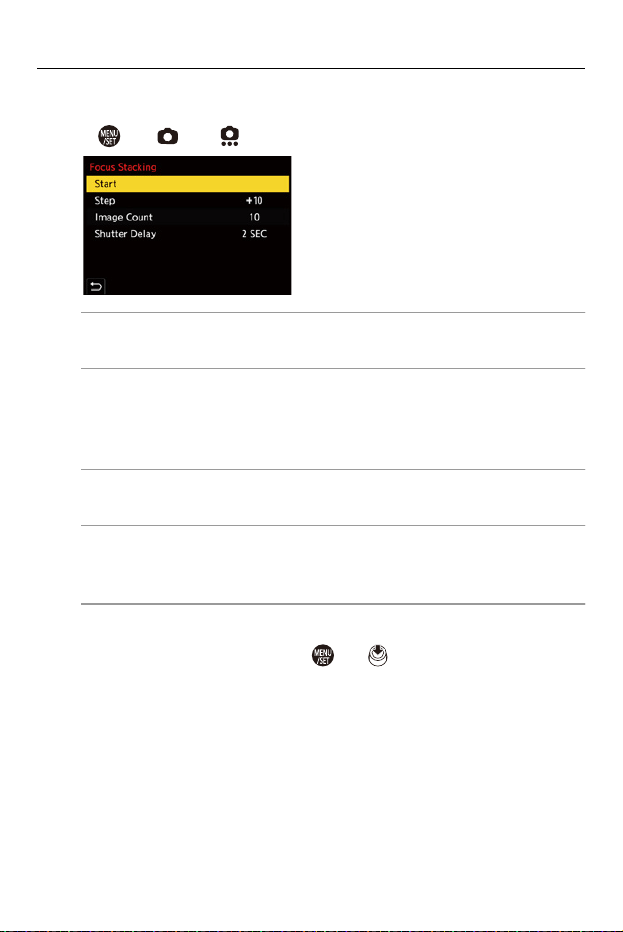
Firmware Ver. 1.1 – [Focus Stacking] Function Added
F-5
2
Set [Focus Stacking].
≥ [] [] [Focus Stacking]
[Start]
Starts recording with focus stacking.
[Step]
Sets the focus adjustment step.
•
The distance that the focus point is moved becomes shorter if the initial focus
point is close, and longer if it is far away.
[Image Count]
Sets the image count.
[Shutter Delay]
Sets the delay time from when the shutter button is pressed until the shutter is
released.
3
Start [Focus Stacking].
≥Select [Start] and then press or .

Firmware Ver. 1.1 – [Focus Stacking] Function Added
F-6
4
Start recording.
≥Press the shutter button fully.
•
Records while shifting the focus point backward and forward, using the focus
point when recording starts as the reference.
•
The merging is performed after recording. Depending on the recording
conditions and the number of pictures taken, image merging may take some
time.
5
End [Focus Stacking].
≥Press [Q].
•
This can be set when using an L-Mount lens that supports AF.
•
During focus stacking, recording will be performed using the following settings:
– [Shutter Type]: [ELEC.] (When [Long Exposure NR] is set to [OFF])/
[ELEC.+NR] (When [Long Exposure NR] is set to [ON])
•
A gray border is displayed in the recording screen in focus stacking. The image
after focus stacking has the parts outside this border cropped, and they are not
recorded. The images before focus stacking are recorded without being cropped.
•
If recording is canceled, the recorded images are saved, but merging of the
images is not performed.
•
The number of images actually taken may be fewer than the number of images
set to be recorded. Furthermore, not all of the images recorded are always used
when merging the images.
•
If there are great differences between the recorded images, merging may fail.
•
Images recorded with focus stacking are saved in the following file formats:
– [Rec. File Format(Photo)]: [JPEG]/[RAW+JPEG]/[RAW]
Saved in the JPEG format
– [Rec. File Format(Photo)]: [HEIF]/[RAW+HEIF]
Saved in the HEIF format
•
Images recorded using focus stacking are treated as group images ( ).
(Except for merged images) (Group Images: 616)

Firmware Ver. 1.1 – Frame Marker Function Has Been Enhanced
F-7
Frame Marker Function Has Been
Enhanced
A maximum of 3 frames can be displayed.
You can set different aspect ratios, frame colors, and frame sizes/positions
for each of the frames.
≥ Composition of [SET] Menus Has Been Changed: F-8
≥ The Setting Method for [CUSTOM] in [Frame Aspect] Has Been
Changed: F-10
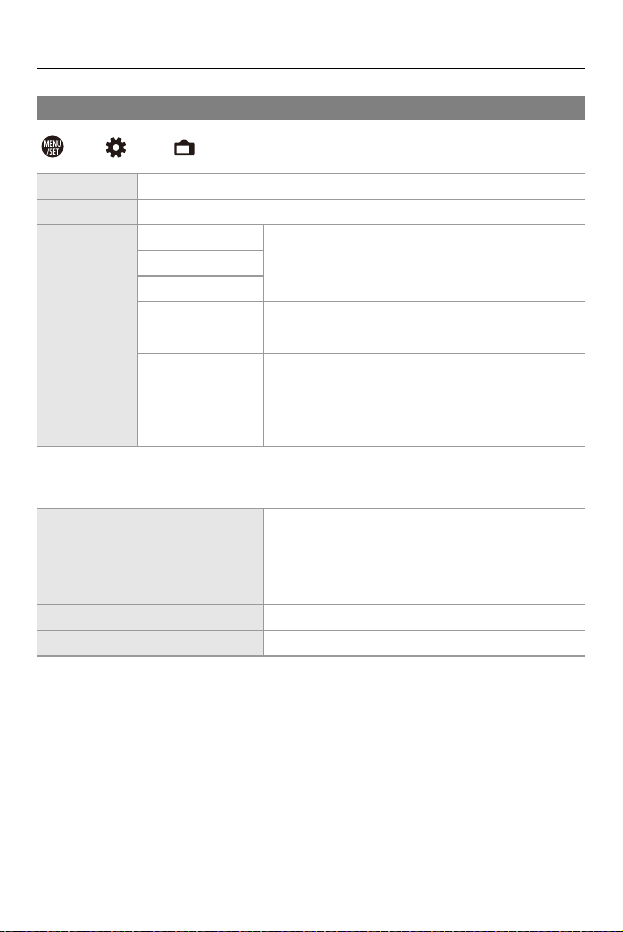
Firmware Ver. 1.1 – Frame Marker Function Has Been Enhanced
F-8
Composition of [SET] Menus Has Been Changed
[] [] Select [Frame Marker]
[Frame 1]/[Frame 2]/[Frame 3] Settings
[ON] Displays the frame on the recording screen.
[OFF] —
[SET]
[Frame 1]
Refer to “[Frame 1]/[Frame 2]/[Frame 3]
Settings”.
[Frame 2]
[Frame 3]
[Frame Mask]
Sets the opacity of the outside of the frame.
[100%]/[75%]/[50%]/[25%]/[OFF]
[Live View
Frame
Adjustment]
When set to [ON], the [Change Size/Position]
setting screen is displayed when you touch a
frame in the recording screen.
[ON]/[OFF]
[Frame Aspect]
Sets the aspect ratio of the frame.
[2.39:1]/[2.35:1]/[2.00:1]/[17:9]/[1.85:1]/[16:9]/
[3:2]/[4:3]/[5:4]/[7:6]/[1:1]/[6:7]/[4:5]/[3:4]/
[2:3]/[9:16]/[9:17]/[CUSTOM]/[OFF]
[Frame Color] Sets the color of the frame.
[Change Size/Position] Sets the size and position of a frame.
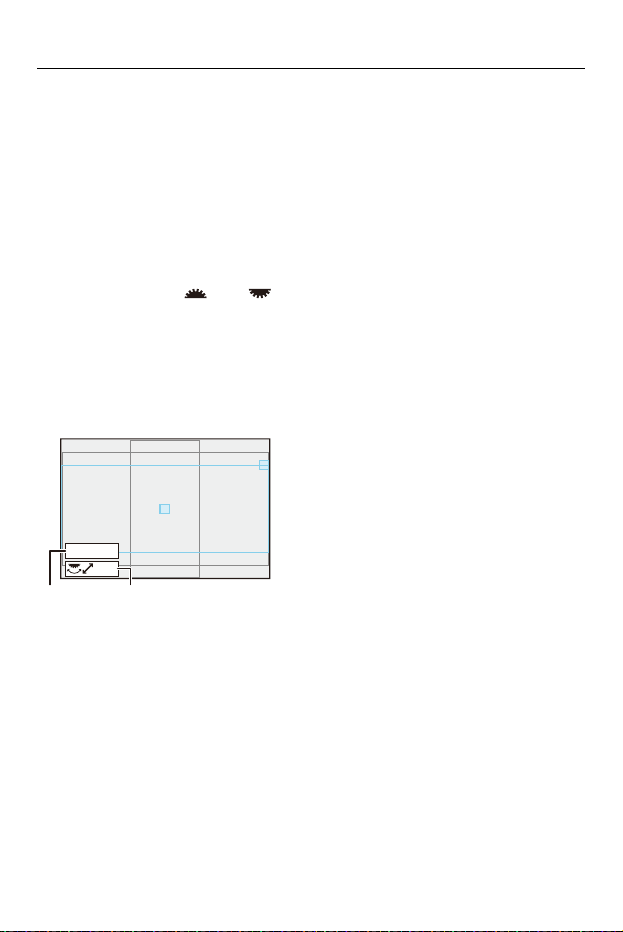
Firmware Ver. 1.1 – Frame Marker Function Has Been Enhanced
F-9
When [Change Size/Position] Is Selected
You can change the size and position of the frame while maintaining the
aspect ratio of the frame.
•
You can change the height, width, and position of the frame if you select [CUSTOM]
in [Frame Aspect]. (The Setting Method for [CUSTOM] in [Frame Aspect] Has
Been Changed: F-10)
≥ Press
3421
to move the center position.
≥ Set the size with [ ] or [ ].
•
The position of the frame can be moved by dragging the center frame inside the
frame in the recording screen. The size of the frame can be changed by dragging the
frame at the top right of the frame.
≥ Press [Q] to switch the frame to be changed.
(A) Center coordinates (0 being the center of the screen)
(B) Frame size
•
Frame size can be set in the range between 20 % and 100 %.
•
The first press of [DISP.] returns the frame position to the center.
The second press returns the frame size to the default.
X,Y=(±0,±0)
100%
(A) (B)
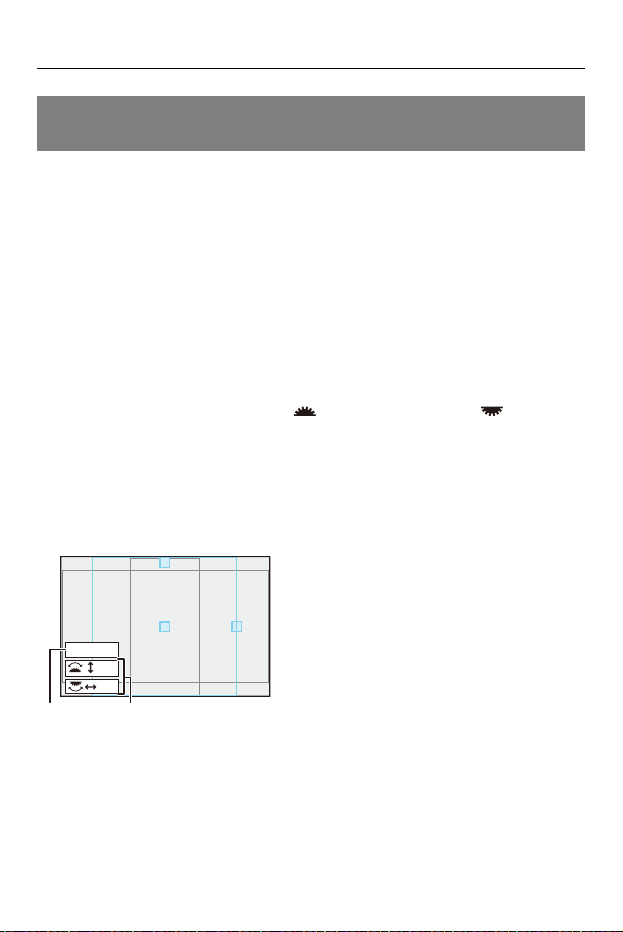
Firmware Ver. 1.1 – Frame Marker Function Has Been Enhanced
F-10
The Setting Method for [CUSTOM] in [Frame Aspect]
Has Been Changed
The [CUSTOM] setting in [Frame Aspect] is performed with [Change Size/
Position].
1
Select [SET] in the [Frame Marker] menu.
2
Select one of [Frame 1] to [Frame 3] and then select
[CUSTOM] in [Frame Aspect].
3
Select [Change Size/Position].
≥ Press
3421
to move the center position.
≥ Set the height of the frame with [ ], and the width with [ ].
•
The position of the frame can be moved by dragging the center frame inside the
frame in the recording screen. The height and width of the frame can be changed by
dragging the frame at the top or right edge of the frame.
≥ Press [Q] to switch the frame to be changed.
(A) Center coordinates (0 being the center of the screen)
(B) Height and width of the frame
•
Frame size can be set in the range between 20 % and 100 %.
•
The first press of [DISP.] returns the frame position to the center.
The second press returns the frame size to the default.
X,Y=(±0,±0)
100%
70%
(A) (B)

Firmware Ver. 1.1 – Tethered Recording Function Has Been Enhanced
F-11
Tethered Recording Function Has Been
Enhanced
It is now possible to use the tethering software with a Wi-Fi connection.
The procedure for using “LUMIX Tether” with wired LAN has been
changed.
≥ Using Tethering Software with a Wi-Fi Connection: F-11
≥ Changes to the Procedure for Using “LUMIX Tether” with Wired LAN:
F-13
Using Tethering Software with a Wi-Fi Connection
Getting started:
•
Turn on the camera and PC.
•
Install the tethering software on your PC.
1
Display the connection method setting screen for the
camera.
≥ [] [] [LAN / Wi-Fi] [Wi-Fi Function] [New
Connection] [Tether]
Connecting via network
1 Select [Via Network] and then press or .
•
Connect the camera to a wireless access point. ([Via Network]: F-16)
2 In the setting menu of the PC, turn the Wi-Fi function ON.
3 Connect the PC to the wireless access point that the camera is connected
to.
4 Use operations on your PC to connect the camera to the tethering
software.

Firmware Ver. 1.1 – Tethered Recording Function Has Been Enhanced
F-12
Connecting directly
1 Select [Direct] and then press or .
•
Connect the camera to a PC. ([Direct]: F-17)
2 Use operations on your PC to connect the camera to the tethering
software.
2
Use the tethering software to operate the camera from
the PC.
Terminating the Wi-Fi Connection
To end the Wi-Fi connection between the camera and PC, follow the steps
below.
1 Press the shutter button halfway to put the camera in recording mode.
2 Terminate the Wi-Fi connection.
•
[] [] [LAN / Wi-Fi] [Wi-Fi Function] [Yes]
•
You can also perform the same operation by pressing the Fn button assigned
with [Wi-Fi]. (Fn Buttons: 646)

Firmware Ver. 1.1 – Tethered Recording Function Has Been Enhanced
F-13
Changes to the Procedure for Using “LUMIX Tether”
with Wired LAN
[Tether(USB ethernet adaptor)] has been changed to [USB ethernet
adaptor] and therefore the procedure for using “LUMIX Tether” with wired
LAN connection has been changed.
Getting started:
•
Turn on the camera and PC.
•
Install “LUMIX Tether ” on PC.
1
Set the camera as a DHCP server.
≥ [] [] [LAN / Wi-Fi] [LAN / Wi-Fi Setup] [IP
Address Setting (LAN)] [DHCP Server]
•
If you have modified settings in [IP Address Setting (LAN)], turn the camera
off and on again.
2
Set to wired LAN tethering connection.
≥ [] [] [USB] [USB ethernet adaptor] [LUMIX
Tether]
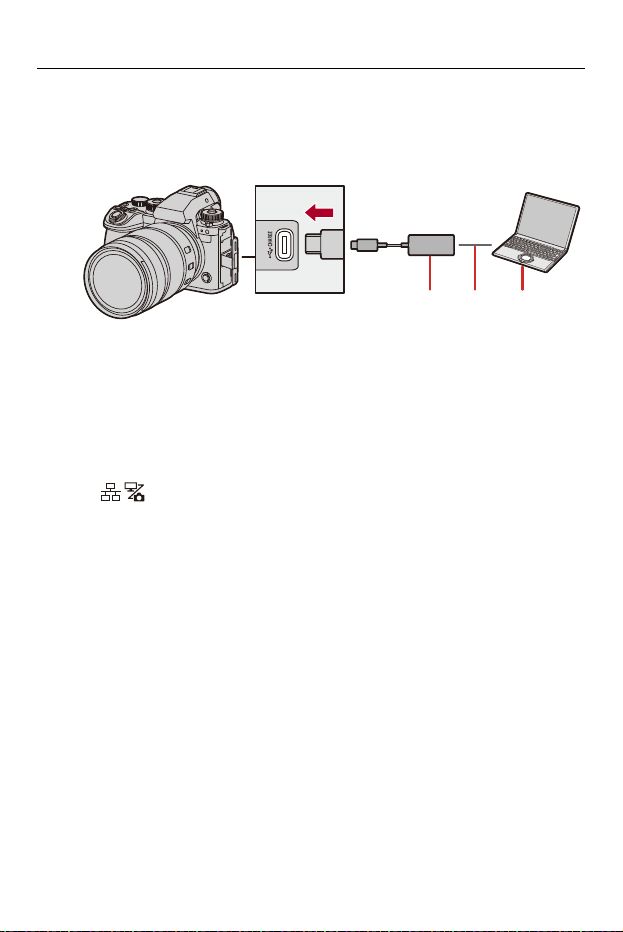
Firmware Ver. 1.1 – Tethered Recording Function Has Been Enhanced
F-14
3
Connect the commercially available USB ethernet
adaptor to the camera, then use a commercially
available LAN cable to connect the camera and the PC.
(A) USB ethernet adaptor (commercially available)
(B) LAN cable (commercially available)
(C) A PC on which “LUMIX Tether” is installed
4
Use “LUMIX Tether” to remotely control the camera.
≥(Initial connection) Set the password to be used to connect from
“LUMIX Tether” to the camera. (Between 8 and 31 characters)
≥[ ] is displayed on the top right of the camera’s screen.
•
Reconnect the USB connection cable if there is a problem with operation.
(A) (B) (C)

Firmware Ver. 1.1 – Changes to Wi-Fi Connections
F-15
Changes to Wi-Fi Connections
The composition of [LAN / Wi-Fi] in the [Setup] ([IN/OUT]) menu has been
changed and therefore the methods for connecting by Wi-Fi have been
changed. (Composition of [LAN / Wi-Fi] Menus Has Been Changed:
F-33)
≥ [Via Network]: F-16
≥ [Direct]: F-17
≥ Connect to Wi-Fi Using Previously Saved Settings: F-18
When [New Connection] has been selected in [Wi-Fi Function] in [LAN /
Wi-Fi] of the [Setup] ([IN/OUT]) menu, select the connection method from
either [Via Network] or [Direct] to connect.
On the other hand, when you use [Select a destination from History] or
[Select a destination from Favorite], the camera connects to the selected
device with the previously-used settings.
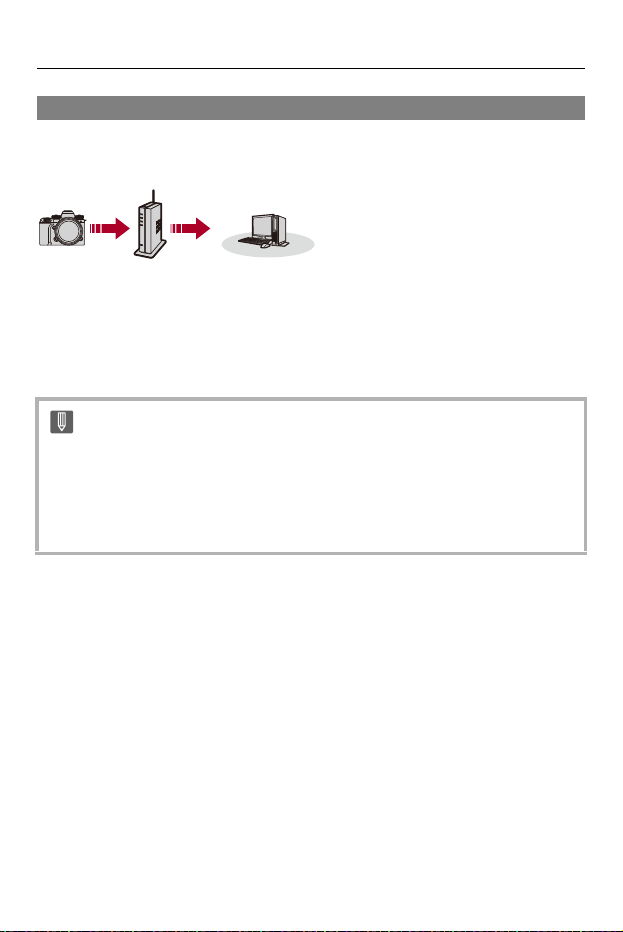
Firmware Ver. 1.1 – Changes to Wi-Fi Connections
F-16
[Via Network]
Connect the camera and destination device through the wireless access
point.
Select the method for connecting to a wireless access point.
Settings: [WPS (Push-Button)]/[WPS (PIN code)]/[From List] ([WPS
(Push-Button)]: 791, [WPS (PIN code)]: 791, [From List]: 792)
•
After selecting [Via Network] once, the camera will connect to the
previously-used wireless access point.
To change the wireless access point used for connection, press [DISP.] and
change the connection destination.
•
Check the operating instructions and settings of the wireless access point.
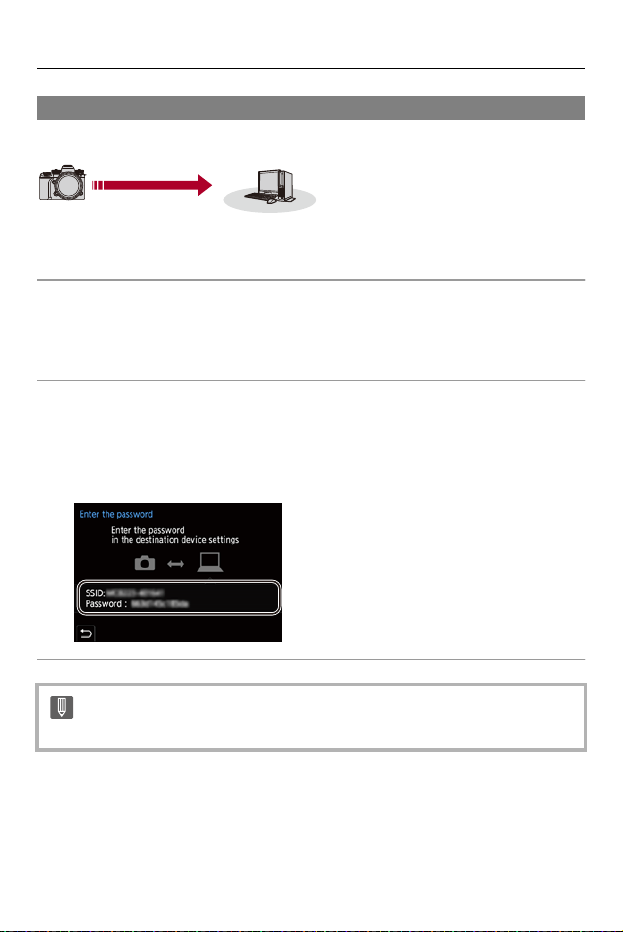
Firmware Ver. 1.1 – Changes to Wi-Fi Connections
F-17
[Direct]
Directly connect the camera and the destination device.
Select the method for connecting with the destination device.
[WPS Connection]
[WPS (Push-Button)]: Press the WPS button on the destination device to connect.
•
On the camera, press [DISP.] to extend the connection wait time.
[WPS (PIN code)]: Enter the PIN code into the camera, and connect.
[Manual Connection]
Search for the camera on the destination device to connect.
1 Select the network authentication.
[WPA3]/[WPA3/WPA2]
2 Enter the SSID and password displayed on the camera into the device.
•
Please also refer to the operating instructions for the device to be connected.

Firmware Ver. 1.1 – Changes to Wi-Fi Connections
F-18
Connect to Wi-Fi Using Previously Saved Settings
Use the Wi-Fi connection history to connect using the same settings as
previously.
1
Display the Wi-Fi connection history.
≥ [] [] [LAN / Wi-Fi] [Wi-Fi Function] [Select
a destination from History]/[Select a destination from Favorite]
2
Select the History item to connect to.
•
Press [DISP.] to confirm details of the connection history.
Register to Favorite
You can register the Wi-Fi connection history to Favorite.
1 Display the Wi-Fi connection history.
•
[] [] [LAN / Wi-Fi] [Wi-Fi Function] [Select a
destination from History]
2 Select the History item to register and then press 1.
3 Enter a registration name and then select [Set].
•
How to enter characters (Entering Characters: 108)
•
A maximum of 30 characters can be entered. A two-byte character is treated
as two characters.
Firmware Ver. 1.1 – Changes to Wi-Fi Connections
F-19
Editing Items Registered in Favorite
1 Display items registered to Favorite.
•
[] [] [LAN / Wi-Fi] [Wi-Fi Function] [Select a
destination from Favorite]
2 Select the History item to edit in Favorite and then press 1.
[Remove from Favorite]
[Change the Order in Favorite]
Specify the destination location of the desired item to change the display order.
[Change the Registered Name]
Enter characters to change the registered name.
•
How to enter characters (Entering Characters: 108)
•
The number of items that can be saved in History is limited. Register
frequently-used connection settings to Favorite.
•
When [Reset] in the [Setup] ([Setting]) menu is used to reset the network
settings, the content registered in History and Favorite is deleted.
•
If the device you want to connect to (PC, etc.) is connected to a wireless access
point other than the camera, you cannot connect the device to the camera using
[Direct].
Change the Wi-Fi settings of the device you want to connect to so that the
access point to be used is set to the camera. You can also select [New
Connection] and reconnect the devices.
•
It may be difficult to connect to networks to which many devices are connected.
In these cases, connect using [New Connection].
•
When the following functions are being used, [Wi-Fi Function] is not available:
– [Streaming Function]
– [Auto Transfer]
– [Frame.io Connection]
– When connected as a web camera
Firmware Ver. 1.1 – Support for Upgrade Software Key
F-20
Support for Upgrade Software Key
≥ [Activate] Has Been Added: F-20
Upgrade Software Key (DMW-SFU3A: optional) is now supported.
Using an Upgrade Software Key to activate the camera enables usage of
extended functions.
[Activate] Has Been Added
Using an Upgrade Software Key (DMW-SFU3A: optional) enables usage
of extended functions for the camera.
[] [] Select [Activate]
[Export Serial Code]
Exports the device information of the camera to the card.
[Import Activation Code]
Imports the activation code into the camera to enable extended functions.
[Activation List]
Displays extended functions which have been enabled for usage on the camera.
•
After activation, even if [Reset] is selected in the [Setup] ([Setting]) menu,
re-activation is not required.
•
Refer to the Installation guide supplied with the Upgrade Software Key
(DMW-SFU3A: optional) for details about activation methods.
Firmware Ver. 1.1 – Extended Functions
F-21
Extended Functions
≥ [ARRI LogC3] Has Been Added as a Photo Style: F-21
≥ Log Recording: F-23
≥ [LUT Select(ARRI LogC3)] Added to [Log View Assist]: F-29
≥ [ARRI 709] Added to the [LUT Library]: F-29
This section explains the extended functions that become available by
using an Upgrade Software Key (DMW-SFU3A: optional).
[ARRI LogC3] Has Been Added as a Photo Style
It is now possible to select [ARRI LogC3] from [Photo Style].
This can only be selected in [ ]/[S&Q] mode with [Rec. File
Format(Video)] set to [MOV] or [Apple ProRes].
[] [] Select [Photo Style]
[ARRI LogC3]
A setting for log video that conforms to the EI800 gamma curve from the LogC3
specification offered by ARRI (Log Recording: F-23)
•
It allows the production of images rich in gradation through post-production
techniques.

Firmware Ver. 1.1 – Extended Functions
F-22
•
It is possible to set [ARRI LogC3] in the Photo Style display restrictions in the
Photo Style setting of the [Custom] ([Image Quality]) menu.
•
Functions are restricted as follows when [ARRI LogC3] is set:
– Cannot record with the [MP4] recording quality.
– Cannot record with the [MOV] [420/8-L] recording quality.
– Cannot record with the [Apple ProRes RAW HQ]/[Apple ProRes RAW]
recording quality.
– ISO sensitivity is restricted to a lower limit of 500 and an upper limit of 51200.
When [Dynamic Range Boost] is set to [ON]: Down to a lower limit of 800, up to
an upper limit of 25600.
– The luminance level setting is fixed to [64-940].
– [L] in [Proxy Rec. Quality] is not available.
– [Master Pedestal Level] is not available.
– [i.Dynamic Range] is not available.
– The only image quality adjustments available are [Sharpness] and [Noise
Reduction].
•
The base Photo Style information for [ARRI LogC3] is as follows:
#LUMIXPHOTOSTYLE LOGC3: [ARRI LogC3]
Firmware Ver. 1.1 – Extended Functions
F-23
Log Recording
Setting [Photo Style] to [ARRI LogC3] enables Log recording.
Images finished with rich gradation can be created through post-production
processing.
1
Set to [ ] or [S&Q] mode.
(Photo/Video/S&Q Switch: 80)
2
Set [Rec. File Format(Video)] to [MOV] or [Apple
ProRes].
≥ [] [] [Rec. File Format(Video)] [MOV]/[Apple
ProRes]
3
Select the video image quality with which [ARRI LogC3]
can be used.
≥ [] [] [Rec Quality]
4
Select [ARRI LogC3].
≥ [] [] [Photo Style] [ARRI LogC3]

Firmware Ver. 1.1 – Extended Functions
F-24
•
Post-production processing is enabled by utilizing LUT (Look-Up Table).
Download the LUT file for [ARRI LogC3] from the following:
(1) ARRI Look Library (LogC3-to-Rec709)
A LUT file with the ARRI Look File applied for the Rec.709 color space.
There are 87 types of Look Files, providing you with a great variety. (As of
June 2025)
https://www.arri.com/resource/blob/365070/
de67ce8908d30b22d83526dc4c1c8732/
arri-look-library-logc3-to-rec709-3d-luts-data.zip
(2) ARRI Look Library (log-to-log)
A LUT file for applying Looks with the Log space as is with its rich color
information.
Similarly to (1), there are 87 types of Look Files, providing you with a great
variety. (As of June 2025)
https://www.arri.com/resource/blob/283984/
763aadc4a2be5c301529704b1357513c/
arri-look-library-logc3-log-to-log-3d-luts-data.zip
(3) ARRI LogC3 LUT Package
A LUT file for converting from ARRI LogC3 to the color spaces of a variety of
display devices.
By going through (2) ARRI Look Library (log-to-log), it is possible to produce
the Look according to the color space you are aiming for.
https://www.arri.com/resource/blob/294620/
f4290b963ff83a4dde4fff795645bc26/
2022-09-arri-logc3-v1-2-lut-package-data.zip
Refer to the following site for information regarding ARRI Look Files:
https://www.arri.com/en/learn-help/learn-help-camera-system/
image-science/look-files

Firmware Ver. 1.1 – Extended Functions
F-25
ISO Sensitivity When [ARRI LogC3] Is Set
The lower limit of available ISO sensitivity is [500], and the upper limit is
[51200].
When [Dynamic Range Boost] is set to [ON]: Down to a lower limit of [800],
up to an upper limit of [25600].
•
Reset the exposure if necessary when ISO sensitivity changes.
ISO Sensitivity When [Dual Native ISO Setting] Is Set
[AUTO]: Base sensitivity: 500 / 4000 (dB display values are based on 500)
AUTO / 500 to 51200
[LOW]: Base sensitivity: 500
AUTO / 500 to 4000
[HIGH]: Base sensitivity: 4000
AUTO / 4000 to 51200

Firmware Ver. 1.1 – Extended Functions
F-26
Exposure When [ARRI LogC3] Is Set
The log characteristics of [ARRI LogC3] comply with 800 ASA (EI 800),
described in “ARRI_ALEXA_LogC_Curve_in_VFX.pdf” released by ARRI.
The log characteristics of [ARRI LogC3] on this camera do not depend on
the ISO sensitivity settings.
However, according to the Exposure Stops values defined in 800 ASA (EI
800), there will be the equivalent of 1.3 stops worth of clipping when
[Dynamic Range Boost] is [OFF] and 0.63 stops worth of clipping when
[Dynamic Range Boost] is [ON].
Refer to the following for “ARRI_ALEXA_LogC_Curve_in_VFX.pdf”:
https://www.arri.com/resource/blob/31918/
66f56e6abb6e5b6553929edf9aa7483e/
2017-03-alexa-logc-curve-in-vfx-data.pdf
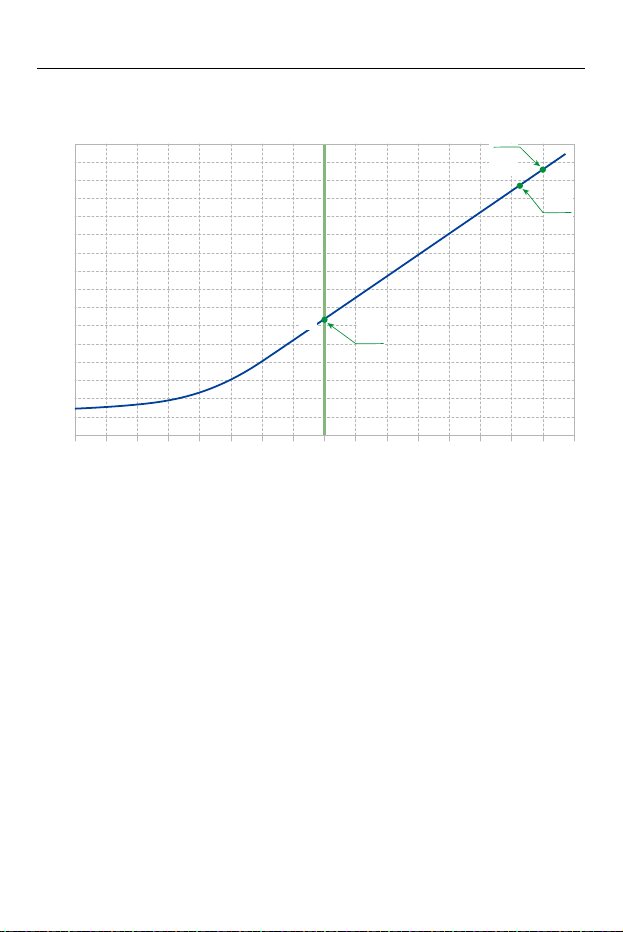
Firmware Ver. 1.1 – Extended Functions
F-27
Diagram of the log characteristics of [ARRI LogC3] on this camera
(1) 18 % gray
(2) Clipping level (when [Dynamic Range Boost] is [OFF])
(3) Clipping level (when [Dynamic Range Boost] is [ON])
-
8
-
8
-
7
-
7
-
6
-
6
-
5
-
5
-
4
-
4
-
3
-
3
-
2
-
2
-
1
-
1001122334455667788
(Stop)(Stop)
(10bitcodevalue)(10bitcodevalue)
ExposureStopsExposureStops
00
6464
128128
192192
256256
320320
384384
448448
512512
576576
640640
704704
768768
832832
896896
960960
10241024
(1)
(2)
(3)
LogSignalLogSignal
00
0.20.2
0.60.6
0.80.8
11
0.40.4

Firmware Ver. 1.1 – Extended Functions
F-28
•
When the [Photo Style] is set to [ARRI LogC3] or [REAL TIME LUT] (base Photo
Style is [ARRI LogC3]), the [Luminance Level] is fixed to [64-940] (video range).
•
The recorded data is recorded as video range.
•
HDMI output is output as video range.
•
The waveform and vector scope are both displayed as video range.
•
The luminance spot meter displays the 18 % gray output level as 0 Stop.
When [Photo Style] is set to [ARRI LogC3]
Exposure Stops
(18 % gray
standard)
Full range Video range
IRE (%)
Code Value
IRE
(%)
Code Value
10 bit 12 bit 10 bit 12 bit
Black
level
— 3.5 95 380 9.2 145 580
(1) 0.0 38 400 1600 39 407 1628
(2) 6.3 93 877 3508 86 817 3268
(3) 7.0 99 928 3712 91 861 3444
Firmware Ver. 1.1 – Extended Functions
F-29
[LUT Select(ARRI LogC3)] Added to [Log View
Assist]
You can now select [LUT Select(ARRI LogC3)] in [Log View Assist].
[] [] Select [Log View Assist]
[LUT Select(ARRI LogC3)]
Selects the LUT file to apply from a preset or LUT files registered in [LUT Library].
([LUT Library]: 396)
[ARRI 709] Added to the [LUT Library]
[ARRI 709] has been added as a sample LUT in the [LUT Library].
[] [] [LUT Library] Select [ARRI 709]
•
When [Photo Style] is [ARRI LogC3], you cannot apply LUT files which are a
base Photo Style other than [ARRI LogC3].
•
[Sorting], [Delete] and [Edit Title] are not possible with [ARRI 709].

Firmware Ver. 1.1 – Additions/Changes to Other Functions
F-30
Additions/Changes to Other Functions
≥ [Focus Frame Color Setting] Function Has Been Added: F-31
≥ Changes to the Functionality of Custom Mode: F-31
≥ Changes to the Functionality of [Pixel Refresh]: F-32
≥ Composition of [LAN / Wi-Fi] Menus Has Been Changed: F-33
≥ Composition of [USB] Menus Has Been Changed: F-34
≥ Additions/Changes to the Setting Items in [Fn Button Set]: F-36
≥ Additions/Changes to the Setting Items in [Q.MENU Settings]: F-37
Firmware Ver. 1.1 – Additions/Changes to Other Functions
F-31
[Focus Frame Color Setting] Function Has Been
Added
It is now possible to set the color of the focus frame.
[ ]/[ ] [] Select [Focus Frame Color
Setting]
Select the color to set.
Changes to the Functionality of Custom Mode
When registering settings to Custom mode C5-1 to C5-10, a change has
been made so you can register for each of [ ]/[ ]/[S&Q] modes
separately.
[] [] Select [Save to Custom Mode(Photo)]/
[Save to Custom Mode(Video)]/[Save to Custom Mode(S&Q)]
Firmware Ver. 1.1 – Additions/Changes to Other Functions
F-32
Changes to the Functionality of [Pixel Refresh]
Functionality has been added in the [Pixel Refresh] item of the [Setup]
([Others]) menu to execute an automatic Pixel Refresh after a certain time
has elapsed.
[] [] Select [Pixel Refresh]
[Pixel Refresh]
[Now]
[Auto] [ON] / [OFF]
This optimizes the image sensor and image processing.
[Now]: Starts a Pixel Refresh immediately. Turn the camera off and on after it is
finished.
[Auto]: Starts a Pixel Refresh automatically when the power is turned off after a
certain time has elapsed.
•
The image sensor and image processing are optimized when the camera is
purchased. Use this function when bright spots that do not exist in the subject get
recorded.
•
It is not possible to execute a Pixel Refresh with [Auto] when [Silent Mode] is [ON].
Firmware Ver. 1.1 – Additions/Changes to Other Functions
F-33
Composition of [LAN / Wi-Fi] Menus Has Been
Changed
The composition of the [LAN / Wi-Fi] menus in the [Setup] ([IN/OUT]) menu
has been changed.
[LAN / Wi-Fi
®
]
[Wi-Fi Function]
[New Connection]
[Select a destination from History]
[Select a destination from Favorite]
[LAN / Wi-Fi Setup]
[Wi-Fi Frequency Bands]
[IP Address Setting (LAN)]
[Device Name/Password]
[LAN / Wi-Fi Function Lock]
[Network Address Display (LAN)]
[Network Address Display (Wi-Fi)]
Makes settings for wired LAN and Wi-Fi.
Firmware Ver. 1.1 – Additions/Changes to Other Functions
F-34
Composition of [USB] Menus Has Been Changed
The composition of the [USB] menus in the [Setup] ([IN/OUT]) menu has
been changed.
[USB]
[USB Mode]
[ ] [Select on connection] / [ ]
[PC(Storage)] / [ ] [PC(Tether)] / [ ]
[PC(Webcam)] / [ ] [LUMIX Flow]
This sets the communication method to be used when the USB connection cable is
connected.
[ ] [Select on connection]: Select this setting to select the USB communication
system when connecting to another device.
[ ] [PC(Storage)]: Select this setting to export images to a connected PC.
[ ] [PC(Tether)]: Select this setting to control the camera from a PC installed with
“LUMIX Tether”.
[ ] [PC(Webcam)]: Select this setting to use the camera as a web camera for a
PC.
[ ] [LUMIX Flow]: Select this setting to control the camera from a smartphone
installed with “LUMIX Flow”.
[USB Power Supply] [ON] / [OFF]
Provides power from the USB connection cable.
•
Even if this item is set to [OFF], power will be supplied when the AC adaptor is
connected.
[USB ethernet adaptor] [LUMIX Tether] / [Tether] / [OFF]
This enables connection to Tether with a wired LAN connection.

Firmware Ver. 1.1 – Additions/Changes to Other Functions
F-35
[Webcam Image Quality]
[4K/15p] / [4K/12.5p] / [FHD/60p] / [FHD/
50p] / [FHD/30p]
*1
/ [FHD/25p]
*2
/ [HD/
30p] / [HD/25p]
*1 Initial setting when [System
Frequency] is [59.94Hz (NTSC)]
*2 Initial setting when [System
Frequency] is [50.00Hz (PAL)]
Sets the image quality when using the camera as a web camera.
•
The items you can select depend on the [System Frequency] setting.

Firmware Ver. 1.1 – Additions/Changes to Other Functions
F-36
Additions/Changes to the Setting Items in [Fn
Button Set]
The following items have been added or changed in the setting items that
can be registered to Fn buttons.
Select [Fn Button Set].
≥ [] [] [Fn Button Set] [Setting in Photo Mode]/
[Setting in Video/S&Q Mode]/[Setting in Playback Mode]
Setting Items ([Fn Button Set]/[Setting in Photo Mode]/
[Setting in Video/S&Q Mode])
[1] tab
[Focus/Shutter]
•
[Focus Frame Color Setting]

Firmware Ver. 1.1 – Additions/Changes to Other Functions
F-37
Additions/Changes to the Setting Items in [Q.MENU
Settings]
The following items have been added or changed in the setting items that
can be registered to the Quick menu.
Select [Q.MENU Settings].
≥ [] [] [Q.MENU Settings] [Item Customize (Photo
Mode)]/[Item Customize (Video/S&Q Mode)]
Menu Items That Can Be Registered
[1] tab
[Focus/Shutter]
•
[Focus Frame Color Setting]
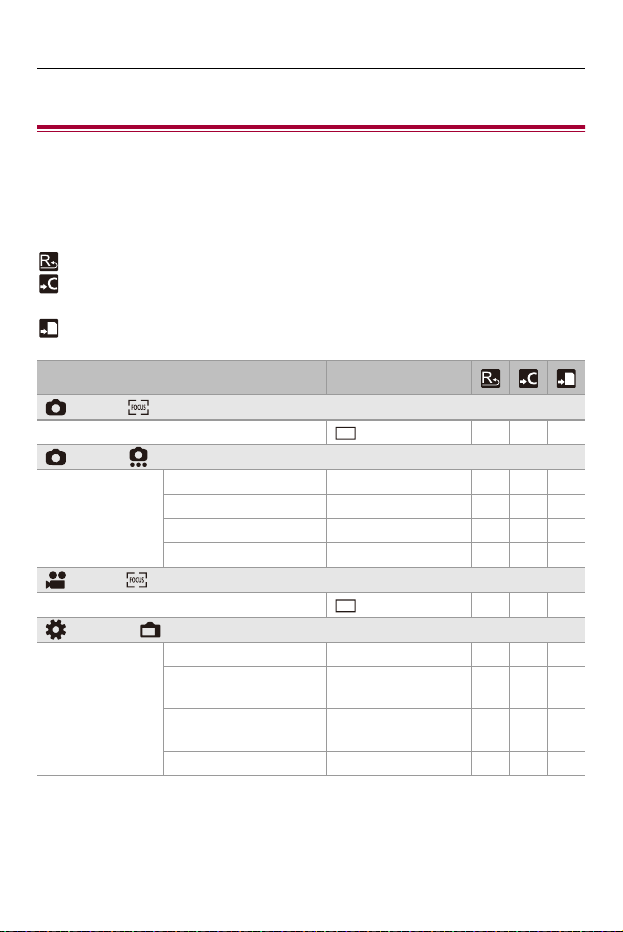
Firmware Ver. 1.1 – Added Menus
F-38
Added Menus
Specifications information for the menus added by the firmware update.
List of Default Settings/Custom Saving/Settings Available
for Copying
: Using [Reset], the function to return to default settings
: Using [Save to Custom Mode(Photo)]/[Save to Custom Mode(Video)]/[Save to
Custom Mode(S&Q)], the function to save settings details in the Custom mode
: Using [Save/Restore Camera Setting], the function to copy settings details
Menu Default setting
[Photo]: [Focus]
[Focus Frame Color Setting]
[Photo]: [Others (Photo)]
[Focus Stacking]
[Start] —
[Step] [+10]
[Image Count] [10]
[Shutter Delay] [2 SEC]
[Video]: [Focus]
[Focus Frame Color Setting]
[Custom]: [Monitor / Display (Video)]
[Log View Assist]
[LUT Select(V-Log)] [Vlog_709]
[LUT Select(ARRI
LogC3)]
*
[ARRI 709]
[LUT View Assist
(Monitor)]
[OFF]
[LUT View Assist (HDMI)] [OFF]
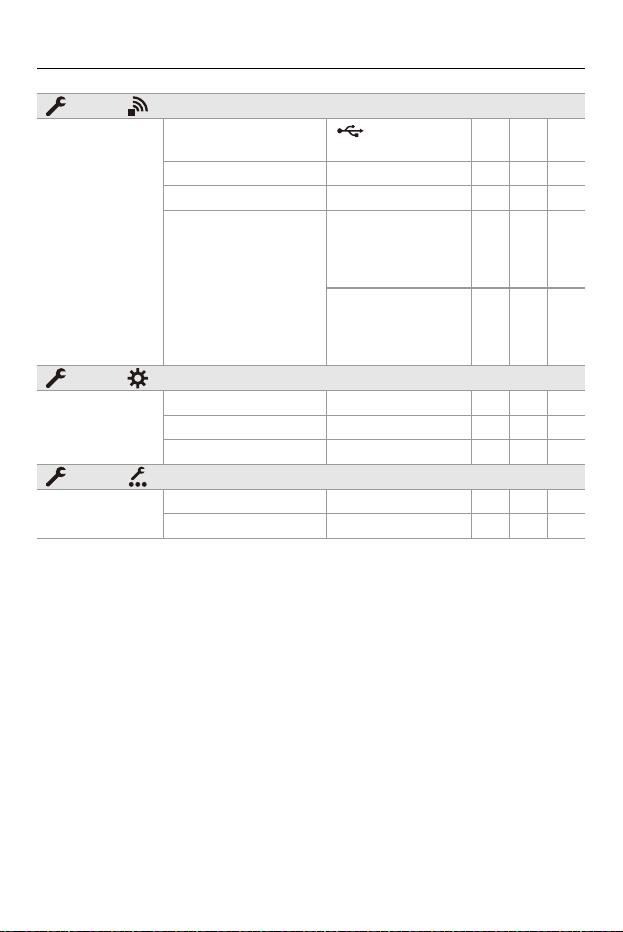
Firmware Ver. 1.1 – Added Menus
F-39
* Available when activated with the Upgrade Software Key (DMW-SFU3A: optional).
[Setup]: [IN/OUT]
[USB]
[USB Mode]
[ ] [Select on
connection]
[USB Power Supply] [ON]
[USB ethernet adaptor] [OFF]
[Webcam Image Quality]
When [System
Frequency] is set to
[59.94Hz (NTSC)]:
[FHD/30p]
When [System
Frequency] is set to
[50.00Hz (PAL)]: [FHD/
25p]
[Setup]: [Setting]
[Activate]
[Export Serial Code] —
[Import Activation Code] —
[Activation List] —
[Setup]: [Others]
[Pixel Refresh]
[Now] —
[Auto] [ON]
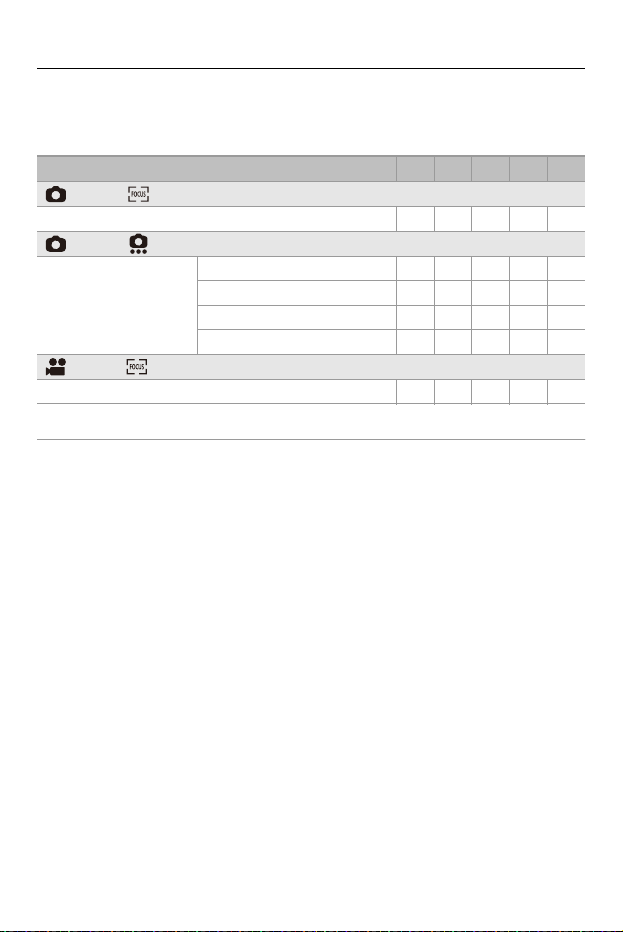
Firmware Ver. 1.1 – Added Menus
F-40
List of Functions That Can Be Set in Each Recording
Mode
•
ARRI is a registered trademark of Arnold & Richter Cine Technik GmbH & Co.
Betriebs KG.
Menu iA P A S M
[Photo]: [Focus]
[Focus Frame Color Setting]
[Photo]: [Others (Photo)]
[Focus Stacking]
[Start]
[Step]
[Image Count]
[Shutter Delay]
[Video]: [Focus]
[Focus Frame Color Setting]

Firmware Ver. 1.2 – [MP4(Lite)] Has Been Added to [Rec. File Format(Video)]
F-42
[MP4(Lite)] Has Been Added to [Rec. File
Format(Video)]
[MP4(Lite)] has been added as a [Rec. File Format(Video)] for videos.
≥ [Rec. File Format(Video)]: F-42
≥ Recording Qualities Settings That Can Be Set for [MP4(Lite)]: F-45
≥ List of Recording Qualities That Enable Special Videos to be Recorded:
F-47
≥ Available Recording Time with the Battery: F-48
≥ Video Recording Time with Recording Media: F-49
[Rec. File Format(Video)]
1
Set to [ ] mode.
(Photo/Video/S&Q Switch: 80)
2
Set [Rec. File Format(Video)].
≥ [] [] [Rec. File Format(Video)]
[MP4(Lite)]
This MP4 file format is suitable for editing with smartphone apps.

Firmware Ver. 1.2 – [MP4(Lite)] Has Been Added to [Rec. File Format(Video)]
F-43
•
The maximum crop zoom rate for when recording with [MP4(Lite)] with [Crop
Zoom(Video)] or [Hybrid Zoom(Video)] set to [ON] will be as follows:
– Approx. 1.6x (when using a full-frame lens)
[Crop Zoom(Video)] and [Hybrid Zoom(Video)] are not available when using an
APS-C lens.
•
The limitations for recording with [MP4(Lite)] and with video recorded with
[MP4(Lite)] are the same as for [MP4].
•
The videos recorded with [MP4(Lite)] can be transferred to a smartphone using
“LUMIX Lab” with the following functions:
– [Transfer Photo / Video]
– [Auto Transfer]
– [Send Image (Smartphone)]
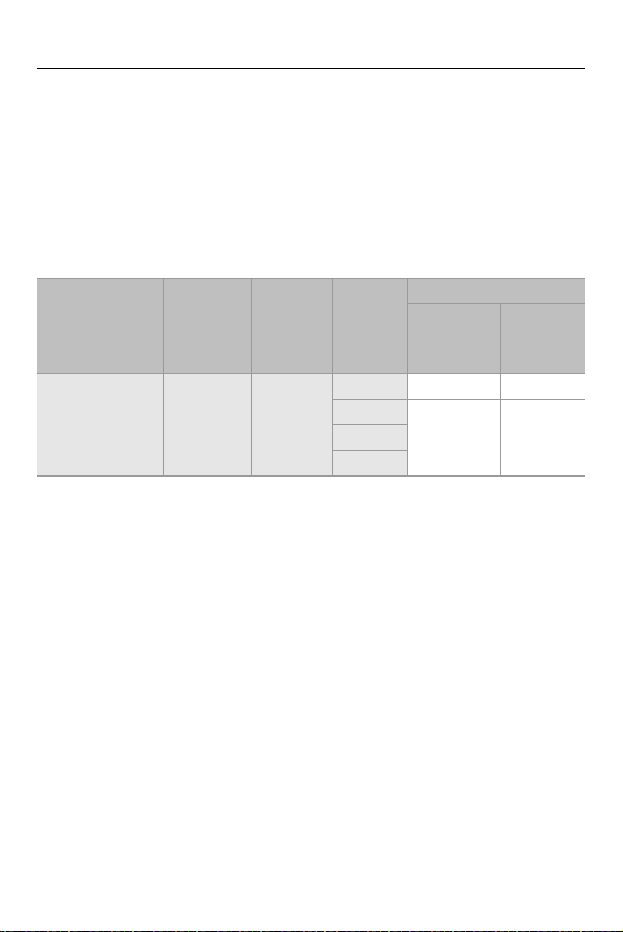
Firmware Ver. 1.2 – [MP4(Lite)] Has Been Added to [Rec. File Format(Video)]
F-44
Size Interval for Dividing Files
A new file will be created to continue recording if the continuous recording
time or the file size exceeds the following conditions.
(A) Using an SDHC memory card
(B) Using an SDXC memory card
(C) Using an external SSD
(D) Using a CFexpress card
[Rec. File
Format(Video)]
Resolution Bit rate
Recording
media
File division
Continuous
recording
time
File size
[MP4(Lite)] All All
(A) 30 minutes 4 GB
(B)
3 hours
4 minutes
96 GB
(C)
(D)
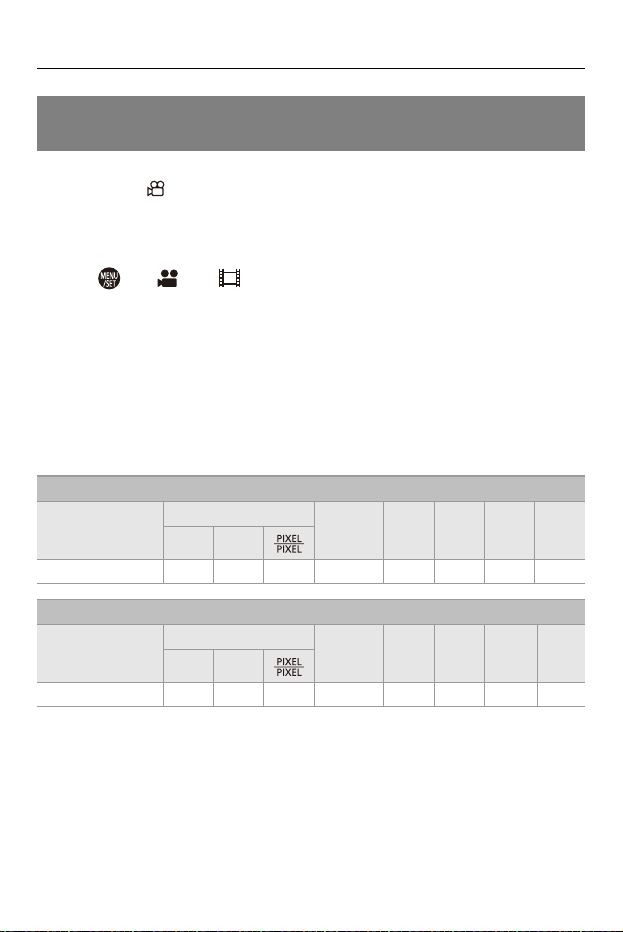
Firmware Ver. 1.2 – [MP4(Lite)] Has Been Added to [Rec. File Format(Video)]
F-45
Recording Qualities Settings That Can Be Set for
[MP4(Lite)]
1
Set to [ ] mode.
(Photo/Video/S&Q Switch: 80)
2
Set [Rec Quality].
≥ [] [] [Rec Quality]
[Rec. File Format(Video)]: [MP4(Lite)]
•
YUV, Bit value, Image compression: 4:2:0, 10 bit, Long GOP
•
Audio format: AAC (2ch)
(A) Recording frame rate
(B) Bit rate (Mbps)
(C) Video compression format (HEVC: H.265/HEVC)
•
In this document, videos are indicated as follows according to their resolution:
– 3.8K (3840×2560) video: 3.8K video
[System Frequency]: [59.94Hz (NTSC)]
[Rec Quality]
[Image Area of Video]
Resolution
Aspect
ratio
(A) (B) (C)
FULL APS-C
[3.8K/10bit/50M/30p]
3840×2560
3:2 29.97p 50 HEVC
[System Frequency]: [50.00Hz (PAL)]
[Rec Quality]
[Image Area of Video]
Resolution
Aspect
ratio
(A) (B) (C)
FULL APS-C
[3.8K/10bit/50M/25p]
3840×2560
3:2 25.00p 50 HEVC

Firmware Ver. 1.2 – [MP4(Lite)] Has Been Added to [Rec. File Format(Video)]
F-46
•
When set to [MP4(Lite)], [Dynamic Range Boost] is not available.
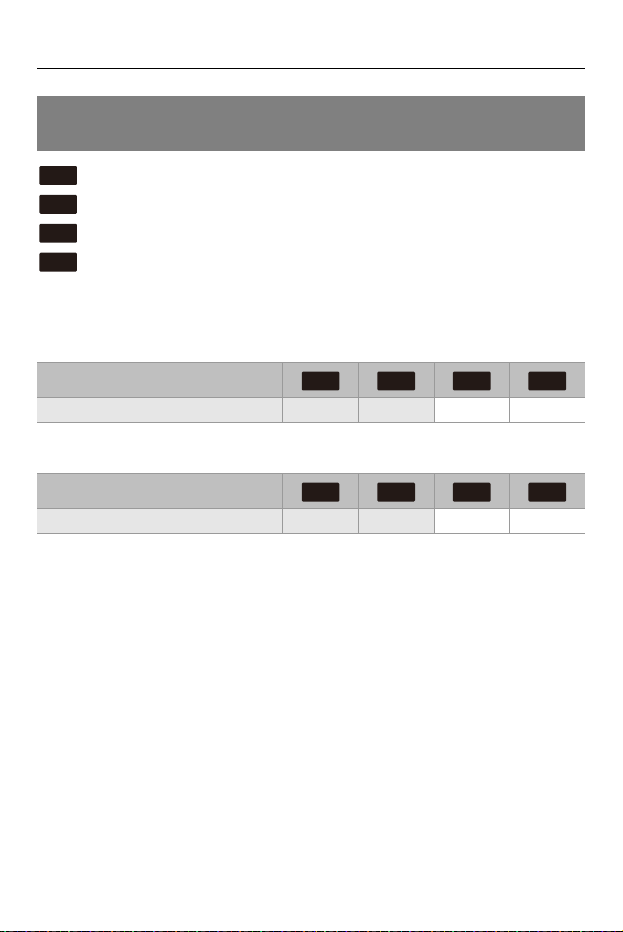
Firmware Ver. 1.2 – [MP4(Lite)] Has Been Added to [Rec. File Format(Video)]
F-47
List of Recording Qualities That Enable Special
Videos to be Recorded
: Recording qualities with which you can record Slow & Quick video
: Recording qualities for High Frame Rate video
: Recording qualities that enable use of [Live Cropping]
: Recording qualities with which you can record HLG video
[Rec. File Format(Video)]: [MP4(Lite)]
[System Frequency]: [59.94Hz (NTSC)]
[System Frequency]: [50.00Hz (PAL)]
[Rec Quality]
[3.8K/10bit/50M/30p]
[Rec Quality]
[3.8K/10bit/50M/25p]
S&Q
HFR
Live Crop
HLG
S&Q
HFR
Live Crop
HLG
S&Q
HFR
Live Crop
HLG

Firmware Ver. 1.2 – [MP4(Lite)] Has Been Added to [Rec. File Format(Video)]
F-48
Available Recording Time with the Battery
Listed below are the time lengths available for recording when the supplied
battery is being used.
•
Using a Nextorage CFexpress Type B card.
•
Using a Nextorage SDXC memory card.
•
The values listed are approximate.
Recording Videos (When Using the Monitor)
•
[Image Area of Video]: [FULL]
(A) Using a CFexpress card
(B) Using an SDXC memory card
When the interchangeable lens (S-R24105) is used
•
Actual available recording time is the time available for recording when repeating
actions such as turning the camera on and off, starting/stopping recording, etc.
[Rec. File
Format(Video)]
[Rec Quality]
Recording
media
Continuous
available
recording time
(minutes)
Actual available
recording time
(minutes)
[MP4(Lite)]
[3.8K/10bit/50M/30p]
[3.8K/10bit/50M/25p]
(A) 100 50
(B) 100 50
Firmware Ver. 1.2 – [MP4(Lite)] Has Been Added to [Rec. File Format(Video)]
F-49
Video Recording Time with Recording Media
Listed below is the time lengths of videos that can be recorded on
recording media.
•
Using a Nextorage CFexpress Type B card.
•
Using a Nextorage SDXC memory card.
•
Using a Samsung external SSD.
Video Recording Time
•
“h” is an abbreviation for hour, “m” for minute and “s” for second.
•
Video recording time is the total time of all the videos which have been recorded.
•
The values listed are approximate.
•
[Rec. File Format(Video)]: [MP4(Lite)]
[System Frequency]: [59.94Hz (NTSC)]
[Rec Quality]
CFexpress card
capacity
SDXC memory
card capacity
External SSD
capacity
660 GB 1330 GB 256 GB 512 GB 1TB 2TB
[3.8K/10bit/50M/30p] 29h10m 58h50m 11h05m 21h50m 44h10m 88h30m
[System Frequency]: [50.00Hz (PAL)]
[Rec Quality]
CFexpress card
capacity
SDXC memory
card capacity
External SSD
capacity
660 GB 1330 GB 256 GB 512 GB 1TB 2TB
[3.8K/10bit/50M/25p] 29h10m 58h50m 11h05m 21h50m 44h10m 88h30m
Firmware Ver. 1.2 – SH Burst Recording Function Has Been Enhanced
F-50
SH Burst Recording Function Has Been
Enhanced
Slow burst rates have been added to SH burst recording.
1
Set to [ ] mode.
(Photo/Video/S&Q Switch: 80)
2
Set the drive mode to [ ] (Burst Shot 1) or [ ] (Burst
Shot 2).
≥Set the drive mode dial. (Selecting the Drive Mode: 257)
•
Configure the burst settings for each of [ ] and [ ].
3
Select the burst rate.
≥ [] [] [Burst Shot Setting] [Burst Shot 1
Setting]/[Burst Shot 2 Setting]
•
With the default settings, [H] is set for [ ] and [SH70] is set for [ ].

Firmware Ver. 1.2 – SH Burst Recording Function Has Been Enhanced
F-51
[SH70]
Takes burst pictures at ultra high speed with the electronic shutter, 70 frames/
second.
•
This is available when [Behavior in SH Burst] is [SPEED PRIORITY].
[SH60]
Takes burst pictures at ultra high speed with the electronic shutter, 60 frames/
second.
•
This is available when [Behavior in SH Burst] is [IMAGE PRIORITY].
[SH30]
Takes burst pictures at ultra high speed with the electronic shutter, 30 frames/
second.
•
This is available when [Behavior in SH Burst] is [IMAGE PRIORITY].
[SH70 PRE]
Takes pre-burst pictures at ultra high speed, 70 frames/second. (SH
Pre-burst Recording: 262)
•
This is available when [Behavior in SH Burst] is [SPEED PRIORITY].
[SH60 PRE]
Takes pre-burst pictures at ultra high speed, 60 frames/second. (SH
Pre-burst Recording: 262)
•
This is available when [Behavior in SH Burst] is [IMAGE PRIORITY].
[SH30 PRE]
Takes pre-burst pictures at ultra high speed, 30 frames/second. (SH
Pre-burst Recording: 262)
•
This is available when [Behavior in SH Burst] is [IMAGE PRIORITY].
4
Close the menu.
≥Press the shutter button halfway.
5
Start recording.
•
Takes burst pictures while the shutter button is pressed fully.

Firmware Ver. 1.2 – SH Burst Recording Function Has Been Enhanced
F-52
[Behavior in SH Burst]
You can set the behavior of when using SH burst recording.
[] [] [Burst Shot Setting] [Behavior in SH Burst]
[IMAGE PRIORITY]
Image quality is prioritized and RAW images with a 14-bit color depth are recorded.
•
Burst rates can be set to [SH60], [SH30], [SH60 PRE], or [SH30 PRE].
[SPEED PRIORITY]
Speed is prioritized and RAW images with a 12-bit color depth are recorded.
•
Burst rates can be set to [SH70] or [SH70 PRE].

Firmware Ver. 1.2 – SH Burst Recording Function Has Been Enhanced
F-53
Burst Rate
•
The burst rate may be lower depending on the settings for recording such as [Picture
Size] and focus mode.
Mechanical
shutter
Electronic
front
curtain
Electronic shutter
Live View
when taking
burst pictures
[SH70]/[SH70 PRE] —
70 frames/second
([AFS]/[AFC]/[MF])
None
[SH60]/[SH60 PRE] —
60 frames/second
([AFS]/[AFC]/[MF])
None
[SH30]/[SH30 PRE] —
30 frames/second
([AFS]/[AFC]/[MF])
None

Firmware Ver. 1.2 – SH Burst Recording Function Has Been Enhanced
F-54
Maximum Number of Frames Recordable
•
When recording under the test conditions specified by Panasonic.
Recording conditions may reduce the maximum number of frames recordable.
* Recording stops when the maximum number of frames recordable is reached.
For SH pre-burst recording, this includes the number of pictures taken with
pre-burst recording.
[Rec. File Format(Photo)]
[JPEG]
[RAW+JPEG]
[RAW] [HEIF]
[RAW+HEIF]
[SH70]/[SH70 PRE]
180 frames
*
170 frames
*
[SH60]/[SH60 PRE]
[SH30]/[SH30 PRE]

Firmware Ver. 1.2 – SH Burst Recording Function Has Been Enhanced
F-55
The Number of Frames That Can Be Saved in Pre-Burst
Recording Before and After Fully Pressing the Shutter
Button
[SH Burst
Pre-Recording
Time]
[Rec. File
Format(Photo)]
[SH70 PRE] [SH60 PRE] [SH30 PRE]
Before
pressing
fully
After
pressing
fully
Before
pressing
fully
After
pressing
fully
Before
pressing
fully
After
pressing
fully
[1.5SEC]
[JPEG]
[RAW+JPEG]
[RAW]
105 frames 75 frames 90 frames 90 frames 45 frames 135 frames
[HEIF]
[RAW+HEIF]
105 frames 65 frames 90 frames 80 frames 45 frames 125 frames
[1.0SEC]
[JPEG]
[RAW+JPEG]
[RAW]
70 frames 110 frames 60 frames 120 frames 30 frames 150 frames
[HEIF]
[RAW+HEIF]
70 frames 100 frames 60 frames 110 frames 30 frames 140 frames
[0.5SEC]
[JPEG]
[RAW+JPEG]
[RAW]
35 frames 145 frames 30 frames 150 frames 15 frames 165 frames
[HEIF]
[RAW+HEIF]
35 frames 135 frames 30 frames 140 frames 15 frames 155 frames
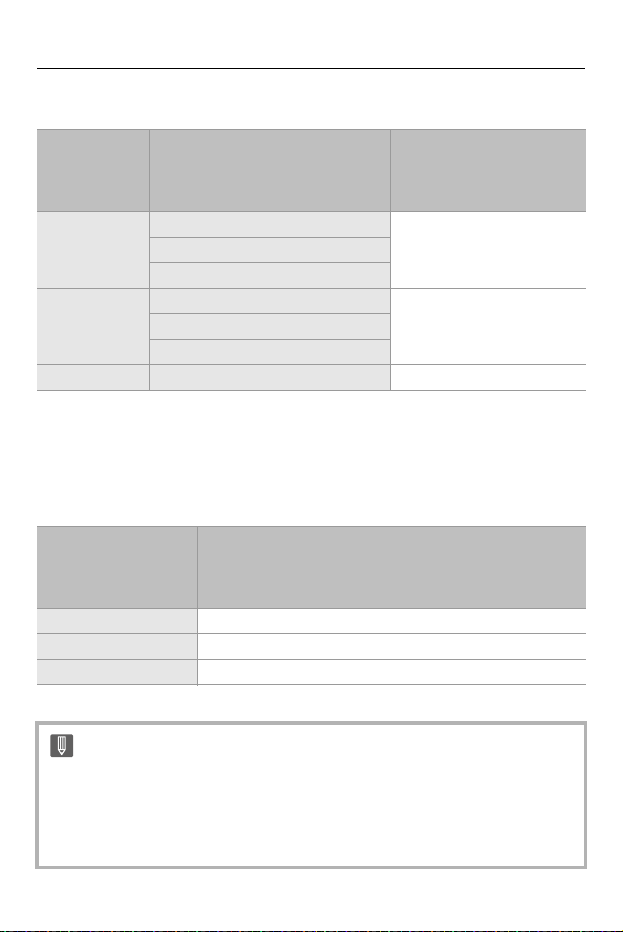
Firmware Ver. 1.2 – SH Burst Recording Function Has Been Enhanced
F-56
Focus when Taking Burst Pictures
•
When the subject is dark with [AFC], the focus is fixed to that of the first frame.
•
With estimated focus, the burst rate takes priority and the focus is estimated to the
extent possible.
Exposure when Taking Burst Pictures
Focus mode
[Focus/Shutter Priority]
([Focus/Shutter Priority]: 687)
[SH70]/[SH70 PRE]
[SH60]/[SH60 PRE]
[SH30]/[SH30 PRE]
[AFS]
[FOCUS]
Fixed to the focus of the first
frame
[BALANCE]
[RELEASE]
[AFC]
[FOCUS]
Estimated focus
[BALANCE]
[RELEASE]
[MF] — Focus set with manual focus
Focus mode
[SH70]/[SH70 PRE]
[SH60]/[SH60 PRE]
[SH30]/[SH30 PRE]
[AFS] Fixed to the exposure of the first frame
[AFC] The exposure is adjusted for each frame
[MF] Fixed to the exposure of the first frame
•
There are limits on the shutter speed you can set during SH burst recording.
– [SH70]/[SH70 PRE]: To a minimum of 1/80
– [SH60]/[SH60 PRE]: To a minimum of 1/60
– [SH30]/[SH30 PRE]: To a minimum of 1/60
Firmware Ver. 1.2 – [ISO Displayed Setting] Function Has Been Enhanced
F-57
[ISO Displayed Setting] Function Has Been
Enhanced
It is now possible to set ISO auto in [ISO Displayed Setting] in the [Custom]
menu.
[] [] Select [ISO Displayed Setting]
[ISO Displayed Setting]
[Front/Rear Dials]
[/]/ [/]/ [/]/
[OFF/]/ [/]/ [/]/ [/
OFF]
This sets the operations of the dials in the setting screen for ISO sensitivity.
ISO auto switches between [ON] and [OFF] each time you operate the dial allocated
to [ ].
(ISO sensitivity reverts to the previous setting when [OFF] is set.)
•
[ISO Auto] can be assigned to an Fn button:
ISO auto switches between [ON] and [OFF] each time you press the assigned
button in the recording screen.
(ISO sensitivity reverts to the previous setting when [OFF] is set.)
([ISO Auto] Has Been Added to [Fn Button Set]: F-65)
Firmware Ver. 1.2 – Additions/Changes to Other Functions
F-58
Additions/Changes to Other Functions
≥ [AF Detect. Multi. Frame Disp.] Function Has Been Added: F-58
≥ Changes to the Functionality of [Human Eye Detection Display]: F-59
≥ Anamorphic Recording Function Has Been Enhanced: F-60
≥ Functionality of the ISO Sensitivity Setting Screen Has Been Changed:
F-61
≥ [LUT View Assist (App)] Has Been Added to [Log View Assist]: F-62
≥ Changes to the Functionality of [Constant Preview]: F-62
≥ [Video Live View Mode] Function Has Been Added: F-63
≥ Changes to the Functionality of [False Color]: F-63
≥ Changes to the Fn Button Initial Settings: F-64
≥ [ISO Auto] Has Been Added to [Fn Button Set]: F-65
≥ [LUT View Assist (App)] Has Been Added to [Fn Button Set]: F-66
≥ [LUT View Assist (App)] Has Been Added to [Q.MENU Settings]: F-67
[AF Detect. Multi. Frame Disp.] Function Has Been
Added
It is now possible to make settings to display the automatic detection
frames on only the main subjects during AF.
[] [] Select [AF Detect. Multi. Frame Disp.]
[ON]
Frames are displayed on all detected subjects.
[OFF]
Frames displayed only on main subjects.
•
If you want the frame displayed on another subject, use touch or joystick operations
to change the subject.
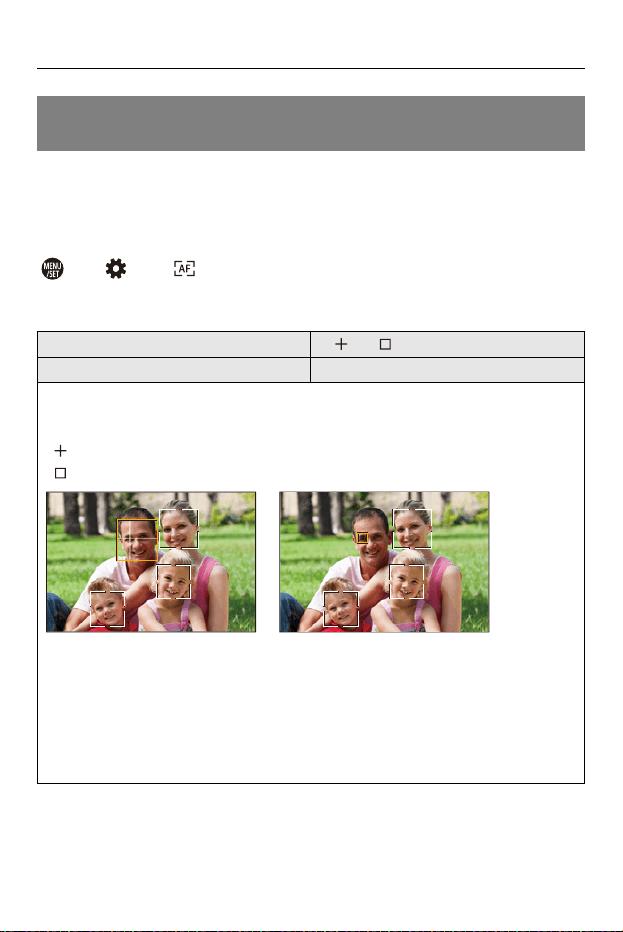
Firmware Ver. 1.2 – Additions/Changes to Other Functions
F-59
Changes to the Functionality of [Human Eye
Detection Display]
The composition of [Human Eye Detection Display] has been changed.
It is now possible to set how to indicate the position of an eye when a
human eye is detected during AF.
[] [] Select [Human Eye Detection Display]
[Human Eye Detection Display]
[Eye Detection Style] []/ []
[Crosshairs During Focus] [ON] / [OFF]
Sets how to indicate the position of an eye when a human eye is detected.
[Eye Detection Style]
[]: The position of the eye is indicated with a cross inside the AF area. (A)
[]: The position of the eye is indicated by a square frame. (B)
[Crosshairs During Focus]
[ON]: A cross on the eye remains displayed when focused, such as when the shutter
button is pressed halfway.
[OFF]: A cross on the eye is not displayed when focused, such as when the shutter
button is pressed halfway.
(A) (B)
Firmware Ver. 1.2 – Additions/Changes to Other Functions
F-60
Anamorphic Recording Function Has Been
Enhanced
1.6× has been added as a rate for the anamorphic lens.
[Anamorphic (Video)]
You can now select [ ] ([1.6×]) with [Anamorphic (Video)] in the [Image
Stabilizer].
Picture: [] [] [Image Stabilizer] Select
[Anamorphic (Video)]
Video: [] [] [Image Stabilizer] Select
[Anamorphic (Video)]
[Anamorphic Desqueeze Display]
You can now select [ ] ([1.6×]) in [Anamorphic Desqueeze Display].
[] [] Select [Anamorphic Desqueeze
Display]
Firmware Ver. 1.2 – Additions/Changes to Other Functions
F-61
Functionality of the ISO Sensitivity Setting Screen
Has Been Changed
When [Dual Native ISO Setting] is [AUTO] in the [ ]/[S&Q] mode, the low
sensitivity range and high sensitivity range are identified with colors in the
setting screen for ISO sensitivity.
(A) Low sensitivity range (blue)
(B) High sensitivity range (pink)
•
When [ ] ([Sensitivity]) is set with [Control Dial Assignment] or [Focus Ring
Setting During AF] and the ISO sensitivity is changed to the base sensitivity with
the control dial or focus ring, the ISO sensitivity value is identified with a color.
– Low sensitivity: blue
– High sensitivity: pink
16
00
16
00
1
00
1
00
2
00
2
00
32
00
32
00
64
00
64
00
4
00
4
00
800800
(A) (B)
Firmware Ver. 1.2 – Additions/Changes to Other Functions
F-62
[LUT View Assist (App)] Has Been Added to [Log
View Assist]
[LUT View Assist (App)] has been added to the [Log View Assist] in the
[Custom] ([Monitor / Display (Video)]) menu.
[] [] Select [Log View Assist]
[LUT View Assist (App)]
You can view images with LUT files applied with the smartphone applications “LUMIX
Lab”/“LUMIX Flow”.
Changes to the Functionality of [Constant Preview]
When you set [Constant Preview] to [OFF], an icon ( ) is displayed to
indicate that the preview effect is disabled in the recording screen for the
[A]/[M] mode.
[] [] Select [Constant Preview]
•
[LUT View Assist (App)] does not work in the following case:
– When [LUT] is applied using image quality adjustments in [Photo Style]
Firmware Ver. 1.2 – Additions/Changes to Other Functions
F-63
[Video Live View Mode] Function Has Been Added
The same image quality can now be used for the video live view displayed
during recording standby as for during video recording.
[] [] [Power Save Mode] Select [Video
Live View Mode]
Changes to the Functionality of [False Color]
The same image quality can now be displayed with false color applied
during both recording standby and while recording video.
• The power consumption increases when false color is applied and the
camera temperature increases more readily.
[Video Live View
Mode]
Sets the video live view behavior in [ ]/[S&Q] mode.
[POWER SAVING]: Power consumption is reduced during
recording standby. There may be a difference in the image
quality of the live views during recording standby and during
video recording.
[IMAGE PRIORITY]: Image quality is the same during recording
standby and during video recording. The temperature of the
camera rises during recording standby, so the available
recording time is reduced.
•
When false color is applied, even if [Video Live View Mode] is set to [POWER
SAVING], the camera behaves the same as if it is set to [IMAGE PRIORITY].
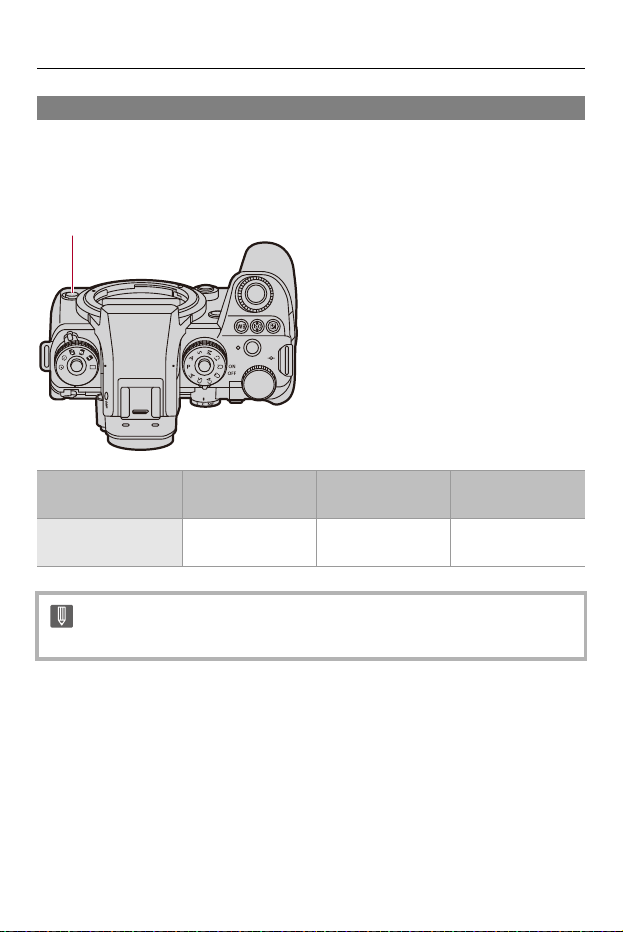
Firmware Ver. 1.2 – Additions/Changes to Other Functions
F-64
Changes to the Fn Button Initial Settings
The initial settings for the sub video rec. button have been changed.
Fn Button Default Settings
Fn buttons
[Setting in Photo
Mode]
[Setting in Video/
S&Q Mode]
[Setting in
Playback Mode]
(1)
Sub video rec.
button
[No Setting] [Video Record] [No Setting]
•
The Fn button setting maintains the setting from before the firmware update.
(1)

Firmware Ver. 1.2 – Additions/Changes to Other Functions
F-65
[ISO Auto] Has Been Added to [Fn Button Set]
[ISO Auto] can be assigned to an Fn button.
• ISO auto switches between [ON] and [OFF] each time you press the
assigned button in the recording screen.
(ISO sensitivity reverts to the previous setting when [OFF] is set.)
Select [Fn Button Set].
≥ [] [] [Fn Button Set] [Setting in Photo Mode]/
[Setting in Video/S&Q Mode]
Setting Items ([Fn Button Set]/[Setting in Photo Mode]/
[Setting in Video/S&Q Mode])
[1] tab
[Image Quality]
•
[ISO Auto]

Firmware Ver. 1.2 – Additions/Changes to Other Functions
F-66
[LUT View Assist (App)] Has Been Added to [Fn
Button Set]
[LUT View Assist (App)] can be assigned to an Fn button.
Select [Fn Button Set].
≥ [] [] [Fn Button Set] [Setting in Photo Mode]/
[Setting in Video/S&Q Mode]
Setting Items ([Fn Button Set]/[Setting in Photo Mode]/
[Setting in Video/S&Q Mode])
[3] tab
[Monitor / Display]
•
[LUT View Assist (App)]

Firmware Ver. 1.2 – Additions/Changes to Other Functions
F-67
[LUT View Assist (App)] Has Been Added to
[Q.MENU Settings]
[LUT View Assist (App)] can be assigned to the Quick menu.
Select [Q.MENU Settings].
≥ [] [] [Q.MENU Settings] [Item Customize (Photo
Mode)]/[Item Customize (Video/S&Q Mode)]
[2] tab
[Monitor / Display]
•
[LUT View Assist (App)]
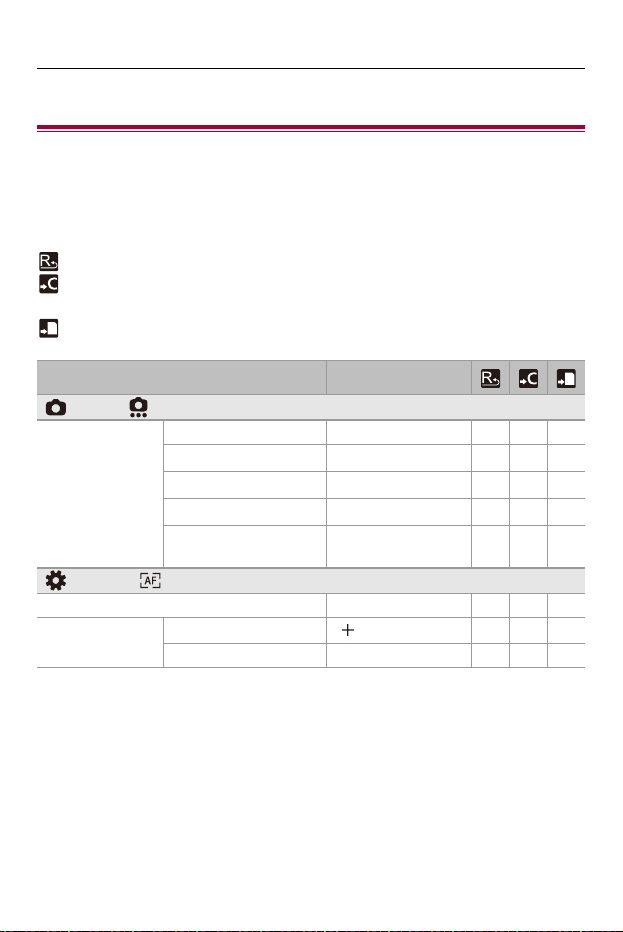
Firmware Ver. 1.2 – Added Menus
F-68
Added Menus
Specifications information for the menus added by the firmware update.
List of Default Settings/Custom Saving/Settings Available
for Copying
: Using [Reset], the function to return to default settings
: Using [Save to Custom Mode(Photo)]/[Save to Custom Mode(Video)]/[Save to
Custom Mode(S&Q)], the function to save settings details in the Custom mode
: Using [Save/Restore Camera Setting], the function to copy settings details
Menu Default setting
[Photo]: [Others (Photo)]
[Burst Shot Setting]
[Burst Shot 1 Setting] [H]
[Burst Shot 2 Setting] [SH70]
[Behavior in SH Burst] [SPEED PRIORITY]
[Behavior in H+/H Burst] [SPEED PRIORITY]
[SH Burst Pre-Recording
Time]
[0.5SEC]
[Custom]: [Focus/Shutter]
[AF Detect. Multi. Frame Disp.] [ON]
[Human Eye
Detection Display]
[Eye Detection Style]
[]
[Crosshairs During Focus] [ON]
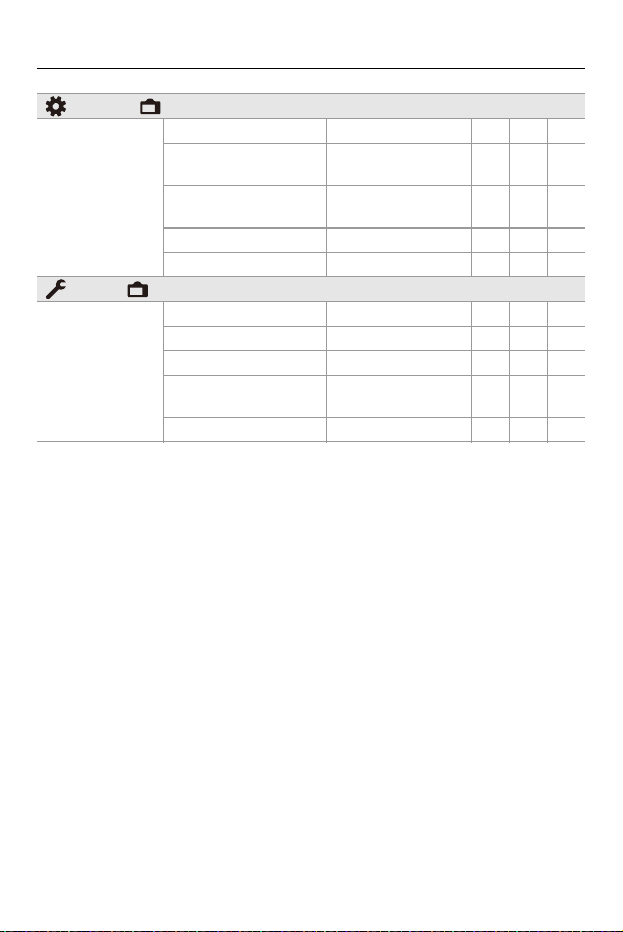
Firmware Ver. 1.2 – Added Menus
F-69
[Custom]: [Monitor / Display (Video)]
[Log View Assist]
[LUT Select(V-Log)] [Vlog_709]
[LUT Select(ARRI
LogC3)]
[ARRI 709]
[LUT View Assist
(Monitor)]
[OFF]
[LUT View Assist (HDMI)] [OFF]
[LUT View Assist (App)] [OFF]
[Setup]: [Monitor / Display]
[Power Save Mode]
[Sleep Mode] [1MIN.]
[Sleep Mode(Wi-Fi)] [ON]
[Auto LVF/Monitor Off] [1MIN.]
[Power Save LVF
Shooting]
—
[Video Live View Mode] [POWER SAVING]