B. Electrical rating: 100V-240VAC 50/60Hz
MAX. Motor watts: 24V 35W
Light watts: <100W
2.
OPERATING TRANSMITTER:
A. Install LR03/AAA1.5V*2 volt battery(not included).
(To prevent damage to tr
ansmitter, remove the battery if not used for a long time).
B. Store the transmitter away from excessive heat or humidity.
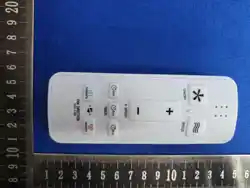
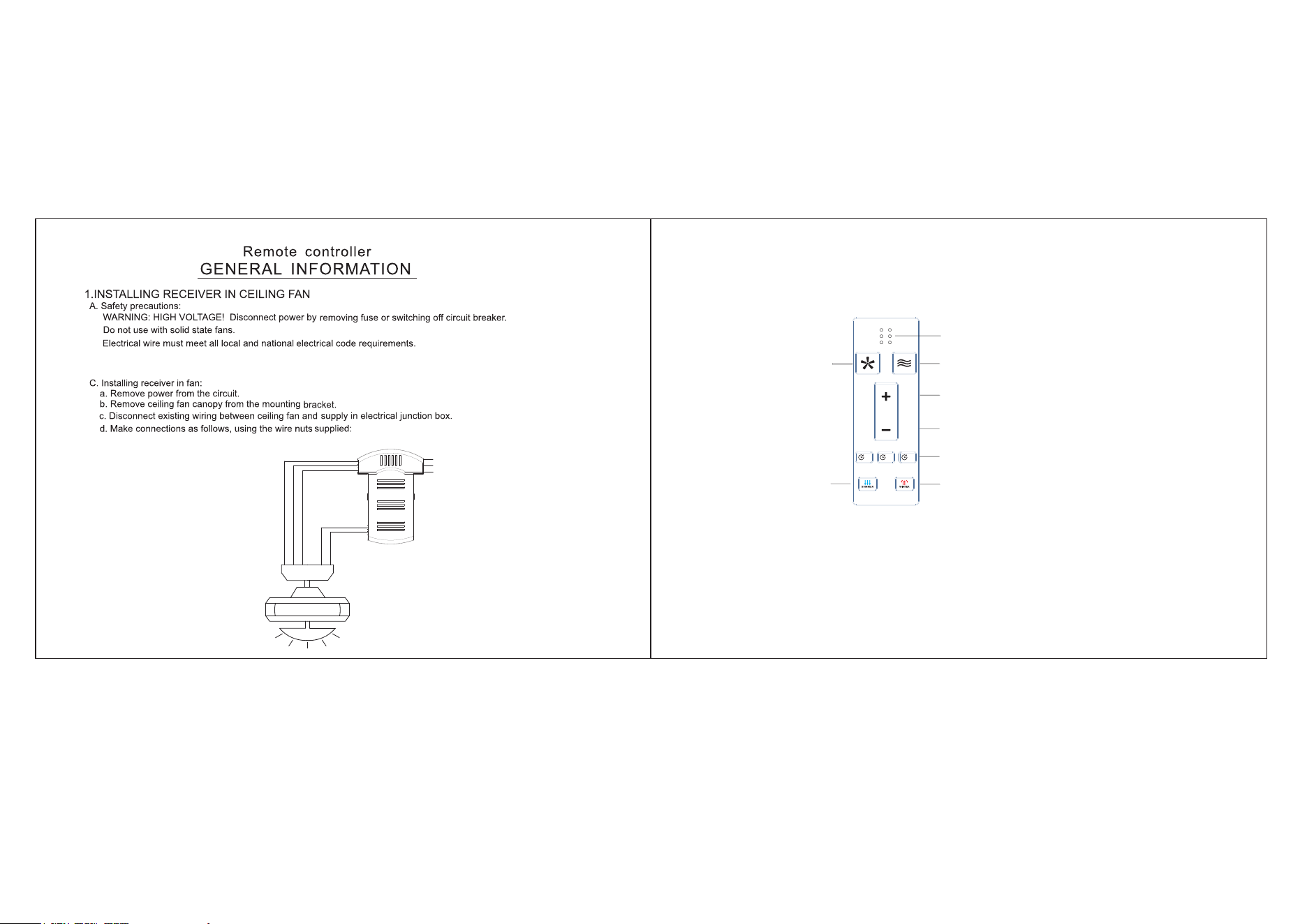
C. Operating the buttons on the panel of the transmitter.
D. Setting the codes on the receiver:
1. Learning code matching mode is used between REMOTE CONTROL
and receiver. Turn on the supply power within 5 seconds and press the
REMOTE CONTROL“ALL OFF” button for 3 seconds, it can load normally after
hearing a long sound “bee”, which means learning successfully and it can works
normally.(PS: Learning mode is not accepted after turn “ON” the supply power
for 5 seconds)
AC IN L
AC IN N
MOTOR U
MOTOR V
AC N
AC L
MOTOR W
GROUND
LED Indicating
Fan Speed
+
Fan On/OFF
8HR
4HR
2HR
Foward
Reverse
Fan Speed
-
Timer
Natual wind
0
0
0
0
0
0

FCC Warning
This device complies with Part 15 of the FCC Rules. Operation is subject to the following two conditions:
(1) This device may not cause harmful interference, and (2) this device must accept any interference received, including
interference that may cause undesired operation.
NOTE 1: This equipment has been tested and found to comply with the limits for a Class B digital device, pursuant to part 15 of
the FCC Rules. These limits are designed to provide reasonable protection against harmful interference in a residential
installation. This equipment generates, uses and can radiate radio frequency energy and, if not installed and used in accordance
with the instructions, may cause harmful interference to radio communications. However, there is no guarantee that
interference will not occur in a particular installation. If this equipment does cause harmful interference to radio or television
reception, which can be determined by turning the equipment off and on, the user is encouraged to try to correct the
interference by one or more of the following measures:
- Reorient or relocate the receiving antenna.
- Increase the separation between the equipment and receiver.
-Connect the equipment into an outlet on a circuit different from that to which the receiver is connected.
-Consult the dealer or an experienced radio/TV technician for help.
NOTE 2: Any changes or modifications to this unit not expressly approved by the party responsible for compliance could void the
user's authority to operate the equipment.
The device has been evaluated to meet general RF exposure requirement. The device can be used in portable exposure
condition without restriction.

“This device complies with Industry Canada’s license-exempt RSSs.
Operation is subject to the following two conditions:
(1) This device may not cause interference; and
(2) This device must accept any interference, including interference that
may cause undesired operation of the device.”
« Le présent appareil est conforme aux CNR d'Industrie Canada
applicables aux appareils radio exempts de licence.
L'exploitation est autorisée aux deux conditions suivantes : (1) l'appareil
ne doit pas produire de brouillage, et
(2) l'utilisateur de l'appareil doit accepter tout brouillage radioelectrique
subi, meme sile brouillage est susceptible
d'en compromettre le fonctionnement. »
The device has been evaluated to meet general RF exposure
requirement. The device can be used in portable exposure condition
without restriction.
L’appareil a été évalué pour répondre aux exigences générales en
matière d’exposition aux RF. L’appareil peut être utilisé en condition
d’exposition portable sans restriction.