OWNER'S MANUAL
GAS RANGE
Read this owner's manual thoroughly before operating the
appliance and keep it handy for reference at all times.
ENGLISH
LRGN6321*
MFL33029642
Rev.00_020326
www.lg.com
Copyright © 2026 LG Electronics. All Rights Reserved
Scan to see the online manual.
en-us_main.book.book Page 1 Tuesday, February 3, 2026 8:10 AM
Safe
ty for a Gas Range
WARNING: If the information in these instructions is not
followed exactly, a fire or explosion may result causing property damage,
personal injury or death.
• Do not store or use gasoline or other flammable vapors and liquids in
the vicinity of this or any other appliance.
• WHAT TO DO IF YOU SMELL GAS
- Do not try to light any appliance.
- Do not touch any electrical switch.
- Do not use any phone in your building.
- Immediately call your gas supplier from a neighbor's phone. Follow
the gas supplier's instructions.
- If you cannot reach your gas supplier, call the fire department.
• Installation and service must be performed by a qualified installer,
service agency, or the gas supplier.
WARNING:
Never Operate the Top Surface Cooking Section of this Appliance
Unattended.
• Failure to follow this warning statement could result in fire,
explosion, or burn hazard that could cause property damage,
personal injury, or death.
• If a fire should occur, keep away from the appliance and
immediately call your fire department.
DO NOT ATTEMPT TO EXTINGUISH AN OIL/GREASE FIRE WITH
WATER.
us_main.book.book Page 4 Monday, March 15, 2021 5:24 PM
TABLE OF CONTENTS
3
5 IMPORTANT SAFETY
INSTRUCTIONS
5 READ ALL INSTRUCTIONS BEFORE USE
5 Safety Messages
5 Anti-tip Device
6 WARNING
6 Installation
7 Operation
8 Maintenance
8 Grounding Instructions
8 Risk of Fire and Flammable Materials
9CAUTION
9 Installation
9 Operation
9 Maintenance
10 PRODUCT OVERVIEW
10 Product Features
10 Exterior and Interior
10 Product Specifications
11 Accessories
12 INSTALLATION
12 Before Installing
12 Tools Needed
12 Parts
12 In the Commonwealth of Massachusetts
12 Unpacking and Moving the Range
14 Choosing the Proper Location
14 Dimensions and Clearances
15 Ventilation
15 Flooring
16 Ambient Temperature
16 Leveling
16 Leveling the Range
16 Connecting Gas
16 Providing Adequate Gas Supply
16 Connecting the Range to Gas
18 Adjusting Air Shutters (for LP
Conversions)
18 Connecting Electricity
18 Electrical Requirements
18 Grounding
18 Surface Burners
18 Assembling the Surface Burners
19 Checking Ignition of the Surface Burners
19 Adjusting the Surface Burner to the Low
Flame (Simmer) Setting
20 Anti-tip Device
20 Installing the Anti-Tip Device
21 Test Run
21 Test the Range Before Use
22 OPERATION
22 Control Panel
22 Control Panel Features
22 Changing Oven Settings
22 Clock
23 Oven Light
23 Timer On/Off
23 Wi-Fi
23 Settings (Hour Mode, Convection Auto
Conversion, Adjusting the Oven
Thermostat, Preheat Alarm Light, Beeper
Volume, Fahrenheit or Celsius, Wi-Fi On/
Off)
25 Control Lock
25 Start Time (Delayed Timed Cook)
26 Cook Time (Timed Cook)
26 Minimum and Maximum Default Settings
27 Gas Surface Burners
27 Before Using the Gas Surface Burners
28 Burner Locations
29 Using the Gas Surface Burners
29 Using the Knob Lock
30 Setting the Flame Size
30 Using the Proper Cookware
30 Using a Wok
31 Using Stove-Top Grills
31 Oven
31 Before Using the Oven
32 Oven Vent
32 Using Oven Racks
32 Bake
33 Convection Mode
34 Recommended Baking and Roasting
en-us_main.book.book Page 3 Tuesday, February 3, 2026 8:10 AM
4
Guide
35 Broil
37 Recommended Broiling Guide
38 Warm
39 Air Fry
40 Recommended Air Frying Guide
41 Remote Start
42 Using the Sabbath Mode
43 SMART FUNCTIONS
43 LG ThinQ Application
43 LG ThinQ Application Features
43 Installing LG ThinQ Application and
Connecting an LG Appliance
44 Installing the LG ThinQ Application
44 LG UP Feature
44 Connecting to Wi-Fi
45 Radio Equipment Specifications
45 FCC Statement
45 FCC RF Radiation Exposure Statement
45 Open Source Software Notice
Information
45 Smart Diagnosis
TM
Feature
46 Using LG ThinQ to Diagnose Issues
46 Using Audible Diagnosis to Diagnose
Issues
47 MAINTENANCE
47 Cleaning
47 Interior
47 Exterior
48 Gas Surface Burners
50 EasyClean
52 Removing/Assembling Lift-Off Oven
Doors
54 Removing/Assembling Drawers
54 Periodic Maintenance
54 Changing the Oven Light
56 TROUBLESHOOTING
56 FAQs
56 Frequently Asked Questions
58 Before Calling for Service
58 Cooking
60 Parts & Features
62 Noises
62 Wi-Fi
64 LIMITED WARRANTY
64 USA
64 TERMS AND CONDITIONS
64 THIS LIMITED WARRANTY DOES NOT
COVER:
70 PROCEDURE FOR RESOLVING DISPUTES:
en-us_main.book.book Page 4 Tuesday, February 3, 2026 8:10 AM
5IMPORTANT SAFETY INSTRUCTIONS
ENGLISH
IMPORTANT SAFETY INSTRUCTIONS
READ ALL INSTRUCTIONS BEFORE USE
Download this owner's manual at http://www.lg.com
Safety Messages
Your safety and the safety of others are very important.
We have provided many important safety messages in this manual and on your appliance. Always read and
follow all safety messages.
All safety messages will tell you what the potential hazard is, tell you how to reduce the chance of injury,
and tell you what may happen if the instructions are not followed.
Anti-tip Device
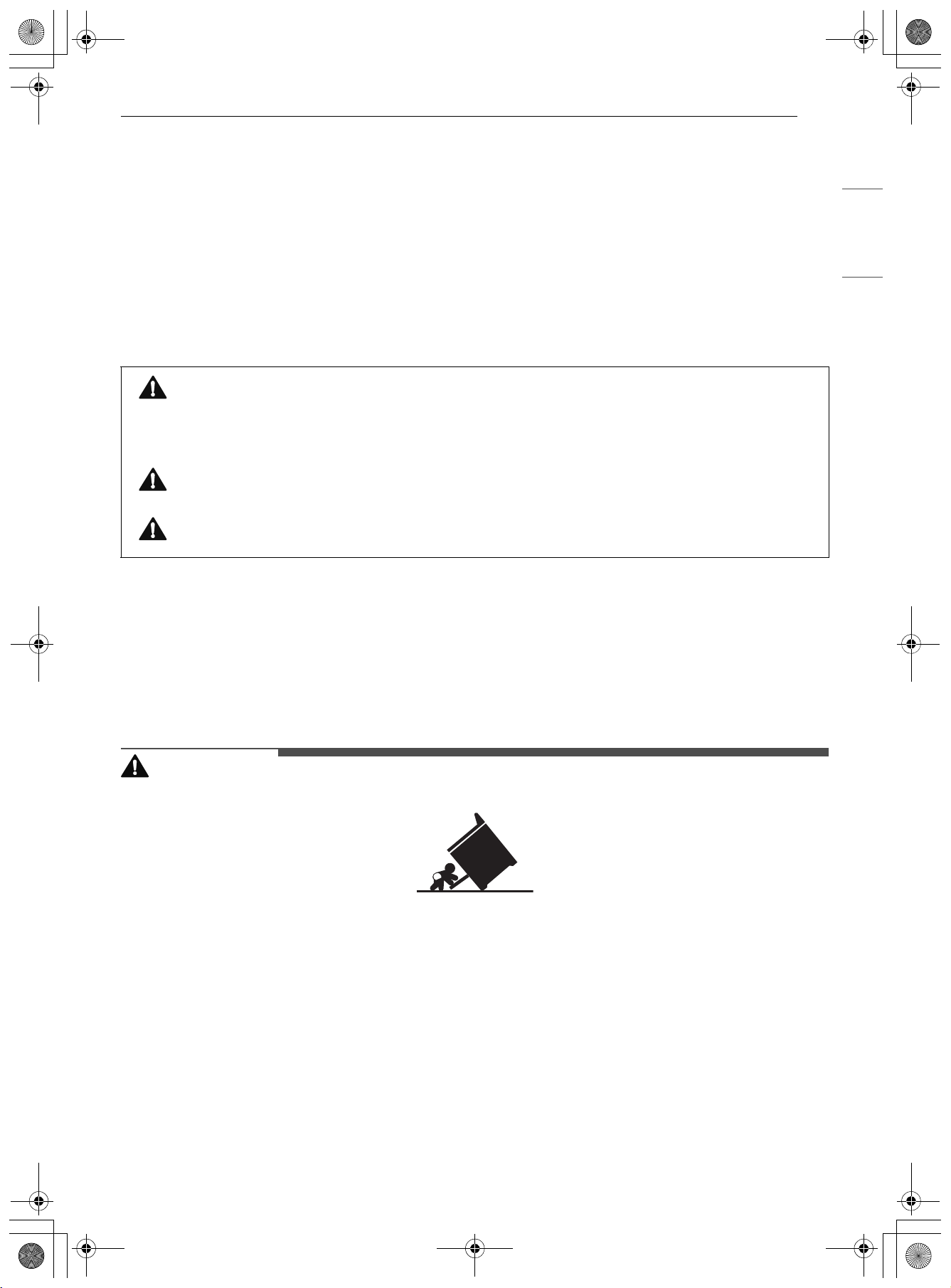
To reduce the risk of tipping, the appliance must be secured by a properly installed anti-tip device. To
check if the device is installed properly, verify that the anti-tip device is engaged, or grasp the top rear
edge of the range back guard and carefully attempt to tilt it forward. Refer to the installation section for
instructions.
WARNING
• A child or adult can tip the range and be killed.
• Install the anti-tip device to the structure and/or the range. Verify the anti-tip device has been properly
installed and engaged by following the guide on the anti-tip bracket template.
• Engage the range to the anti-tip device by following the guide on the anti-tip bracket template. Ensure
the anti-tip device is re-engaged when the range is moved by following the guide on the anti-tip bracket
template.
• Re-engage the anti-tip device if the range is moved. Do not operate the range without the anti-tip device
in place and engaged.
• See installation instructions for details.
• Failure to do so can result in death or serious burns to children or adults.
• Do not rest large, heavy items such as whole turkeys on the open oven door. The range could tip forward
and cause injury.
This is the safety alert symbol.
This symbol alerts you to potential hazards that can kill or injure you and others. All safety messages
will follow the safety alert symbol and either the word WARNING or CAUTION.
These words mean:
WARNING
You may be killed or seriously injured if you do not follow instructions.
CAUTION
You may be injured or cause damage to the product if you do not follow instructions.
en-us_main.book.book Page 5 Tuesday, February 3, 2026 8:10 AM
6 IMPORTANT SAFETY INSTRUCTIONS
WARNING
• Do not step or sit on the oven door. The range could be tipped and injury might result from spilled hot
liquid, food, or the range itself.
• Never remove the oven legs. The range will not be secured to the anti-tip bracket if the legs are
removed.
WARNING
WARNING
• To reduce the risk of explosion, fire, death, electric shock, injury or scalding to persons when using this
product, follow basic precautions, including the following:
Installation
• Do not attempt to open or close the door or operate the oven until the door is properly installed.
• Have the installer show you the location of the range gas shut-off valve and how to shut it off if
necessary.
• To shut off the gas supply to the range, close the range gas shut-off valve by turning it clockwise.
• Make sure your range is properly installed and grounded by a qualified installer, according to the
installation instructions. Any adjustment and service should be performed only by qualified gas range
installers or service technicians.
• Make sure your range is properly adjusted by a qualified service technician or installer for the type of gas
(natural or LP) that is to be used. Your range can be converted for use with either type of gas. See the
installation instructions.
• These adjustments must be done by a qualified service technician according to the manufacturer’s
instructions and all codes and requirements of the authority having jurisdiction. Failure to follow these
instructions could result in serious injury or property damage. The qualified agency performing these
adjustments assumes responsibility for the conversion.
• Disconnect the electrical supply before servicing the appliance.
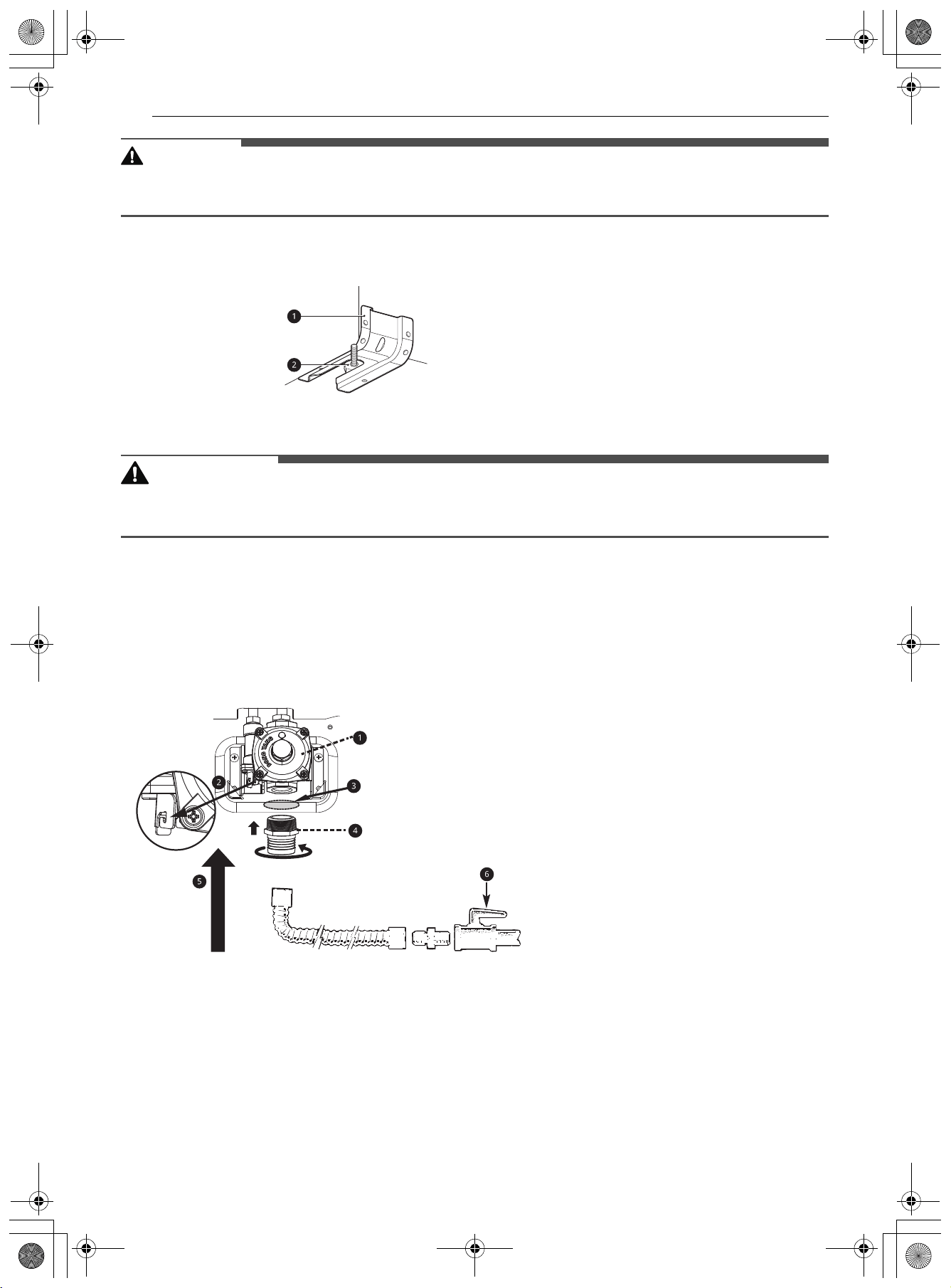
aAnti-tip bracket
bLeveling leg
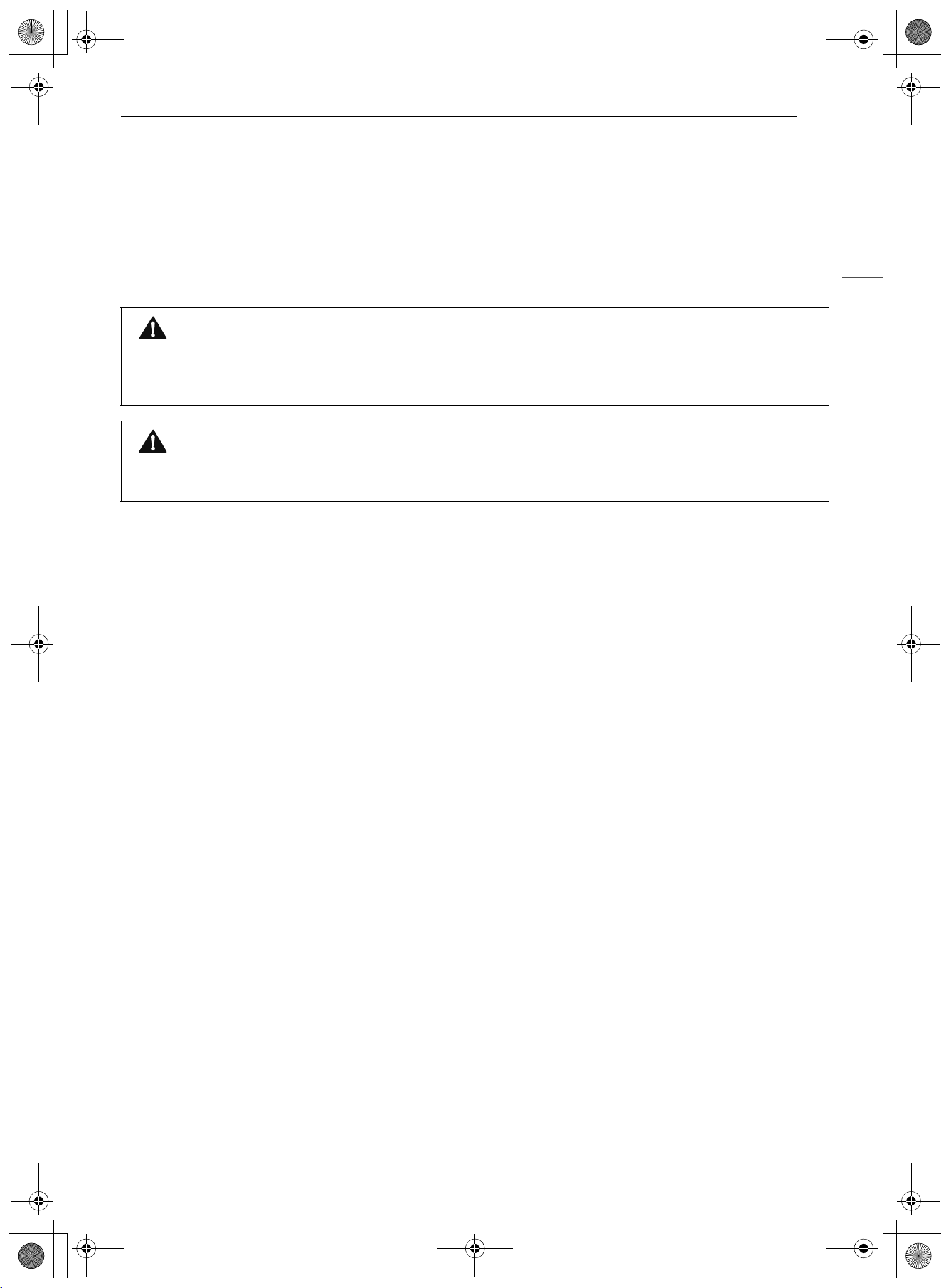
a Pressure regulator
b Lever open (use) position
c Remove the label
d Adapter (1/2"-14 NPT)
e Gas flow into range
f Range gas shut-off valve
en-us_main.book.book Page 6 Tuesday, February 3, 2026 8:10 AM
7IMPORTANT SAFETY INSTRUCTIONS
ENGLISH
• This product should not be installed below ventilation type hood systems that direct air in a downward
direction.
- Doing so may cause ignition and combustion problems with the gas burners resulting in personal
injury and may affect the cooking performance of the unit.
• To prevent poor air circulation, place the range out of the kitchen traffic path and out of drafty locations.
Operation
• Gas appliances can cause minor exposure to four potentially harmful substances, namely benzene,
carbon monoxide, formaldehyde and soot, caused primarily by the imperfect combustion of natural or
LP gas. Correctly adjusted burners, indicated by a bluish rather than a yellow flame, will minimize
imperfect combustion.
- Exposure to these substances can be minimized by opening windows or using a ventilation fan or
hood.
• Let the burner grates and other surfaces cool before touching them.
• Never block the vents (air holes) of the range. They provide the air inlet and outlet necessary for the
range to operate properly with correct combustion.
- Air openings are located at the rear of the cooktop, at the top and bottom of the oven door, and at the
bottom of the range.
• Never obstruct the flow of combustion and ventilation air by blocking the oven vent or air intakes. Doing
so restricts air to the burner and may result in carbon monoxide poisoning.
• Stepping, leaning or sitting on the doors or drawers of this range can result in serious injuries and also
cause damage to the range. Do not allow children to climb or play around the range. The weight of a
child on an open door may cause the range to tip, resulting in serious burns or other injury.
• Never place fingers between the door hinge and front oven frame. Hinge arms are spring mounted. If
accidentally hit, the hinge will slam shut against the oven frame and injure your fingers.
• Do not leave children alone or unattended where a range is hot or in operation. They could be seriously
burned.
• Do not let anyone climb, stand or hang on the oven door, warming drawer or cooktop. They could
damage the range or tip it over, causing severe personal injury.
• Do not stand or place excessive weight on the open oven door. This could tip the range, break the door,
or injure the user.
• To prevent fire hazard or electrical shock, do not use an adapter plug or an extension cord, or remove
the grounding prong from the electrical power cord. Doing so can result in death or serious burns to
children or adults.
• Make sure that all packaging materials are removed from the range before operating it to prevent fire or
smoke damage should the packaging material ignite.
• When opening the door of a hot oven, stand away from the range. The hot air and steam that escape can
cause burns to hands, face and eyes.
• Do not heat food in closed containers. Pressure inside the container could increase and cause the
container to burst, resulting in injury.
WARNING
NEVER cover any slots, holes or passages in the oven bottom or cover an entire rack with materials such as
aluminum foil. Doing so blocks air flow through the oven and may cause carbon monoxide poisoning.
Aluminum foil linings may also trap heat, causing a fire hazard.
WARNING
NEVER use this appliance as a space heater to heat or warm the room. Doing so may result in carbon
monoxide poisoning and overheating of the oven.
en-us_main.book.book Page 7 Tuesday, February 3, 2026 8:10 AM
8 IMPORTANT SAFETY INSTRUCTIONS
• Do not line oven walls or bottom with aluminum foil or allow them to contact exposed heating elements
in the oven. Doing so could create a fire hazard or cause damage to the range.
• During oven operation, the upper surface of the drawer cavity becomes hot and may cause burns. Never
allow children to remain unsupervised near the oven or cooktop.
• Do not put your hand inside the drawer while the oven is operating.
• REMOTE OPERATION - This appliance is configurable to allow remote operation at any time. Do not store
any flammable materials or temperature sensitive items inside, on top or near surface units of the
appliance.
Maintenance
• Large scratches or impacts to glass doors can lead to broken or shattered glass.
• Items of interest to children should not be placed in cabinets above the range or on the backsplash of
the range.
- Children climbing on the range to reach items could be seriously injured.
• Do not attempt to repair or replace any part of your range unless it is specifically mentioned in this
manual. All other service should be referred to a qualified technician.
Grounding Instructions
• Plug your range into a 120-volt grounded outlet only. Do not remove the round grounding prong from
the plug. If in doubt about the grounding of the home electrical system, it is your personal responsibility
and obligation to have an ungrounded outlet replaced with a properly grounded, three-prong outlet in
accordance with the National Electrical Code. Do not use an extension cord with this range.
Risk of Fire and Flammable Materials
• Never wear loose fitting or hanging garments while using the appliance. Be careful when reaching for
items placed in cabinets over the range. Flammable materials could be ignited if brought in contact with
flame or hot oven surfaces and may cause severe burns.
• Do not place or use combustible materials such as gasoline or other flammable vapors and liquids in the
vicinity of this or any other appliance.
• Do not place flammable materials in the oven or near the cooktop.
• Do not allow cooking grease or other flammable materials in or near the range.
• Do not use water on grease fires. Never touch a flaming pan. Turn the controls off. Smother a flaming
pan on a surface burner by covering the pan completely with a well-fitting lid, cookie sheet or flat tray.
Use a multi-purpose dry chemical or foam-type fire extinguisher.
- A grease fire can be put out by covering it with baking soda or, if available, by using a multi-purpose
dry chemical or foam-type fire extinguisher.
- Flame in the oven or the drawer can be smothered completely by closing the oven door or drawer and
turning the control to off or by using a multi-purpose dry chemical or foam-type fire extinguisher.
• Leak testing of the appliance must be conducted according to the manufacturer’s instructions.
• Gas leaks may occur in the system and result in a serious hazard. Gas leaks may not be detected by smell
alone. Gas suppliers recommend you purchase and install a UL approved gas detector. Install and use in
accordance with the gas detector manufacturer’s instructions.
• When using a broiler pan, make sure to place it correctly to minimize the possibility of grease fires.
• Always remove a broiler pan from the range after you finish broiling. Grease left in the pan can catch fire
if the oven is used without removing the grease from the broiler pan.
• If you have a grease fire in a broiler pan, turn off the cooking function being used and keep the oven
door closed to contain the fire until it burns out.
en-us_main.book.book Page 8 Tuesday, February 3, 2026 8:10 AM
9IMPORTANT SAFETY INSTRUCTIONS
ENGLISH
SAVE THESE INSTRUCTIONS
• If meat is too close to the flame while broiling, the fat may ignite. Trim excess fat to prevent excessive
flare-ups.
CAUTION
CAUTION
• To reduce the risk of minor injury to persons, malfunction, or damage to the product or property when
using this product, follow basic precautions, including the following:
Installation
• After using your range for an extended period of time high floor temperatures may result. Many floor
coverings will not withstand this kind of use. Never install the range over vinyl tile or linoleum that
cannot withstand such type of use. Never install it directly over interior kitchen carpeting.
Operation
• Do not use the oven for storing food or cookware. Items stored in the oven can catch on fire.
• To prevent damage to the oven door, do not attempt to open the door when Lock is displayed (on some
models).
• Do not use delayed baking for highly perishable foods such as dairy products, pork, poultry, or seafood.
• Keep the oven free from grease buildup.
• Insert the oven racks in the desired position while the oven is cool.
• To prevent burns when removing food, slide racks out until the stop engages, then remove food items.
This may also protect you from getting burned by touching hot surfaces of the door or oven walls.
• When placing or removing a griddle, always wear oven mitts.
• When using cooking or roasting bags in the oven, follow the manufacturer’s directions.
• Use only glass cookware that is recommended for use in gas ovens.
• For safety and better cooking performance, always bake and broil with the oven door closed. Open door
baking or broiling can cause damage to the knobs or valves. Do not leave the oven door open during
cooking or while the oven is cooling down.
Maintenance
• Do not use commercial oven cleaners on the oven finish or around any part of the oven. They will
damage the finish.
• To prevent staining or discoloration, clean the appliance after each use.
• Wear gloves when cleaning the range to avoid injury or burns.
• Clean in the self-clean cycle only parts listed in this manual. Before self-cleaning the oven, remove the
broiler pan, all oven racks, the meat probe and any utensils or food from the oven.
en-us_main.book.book Page 9 Tuesday, February 3, 2026 8:10 AM
10 PRODUCT OVERVIEW
PRODUCT OVERVIEW
Product Features
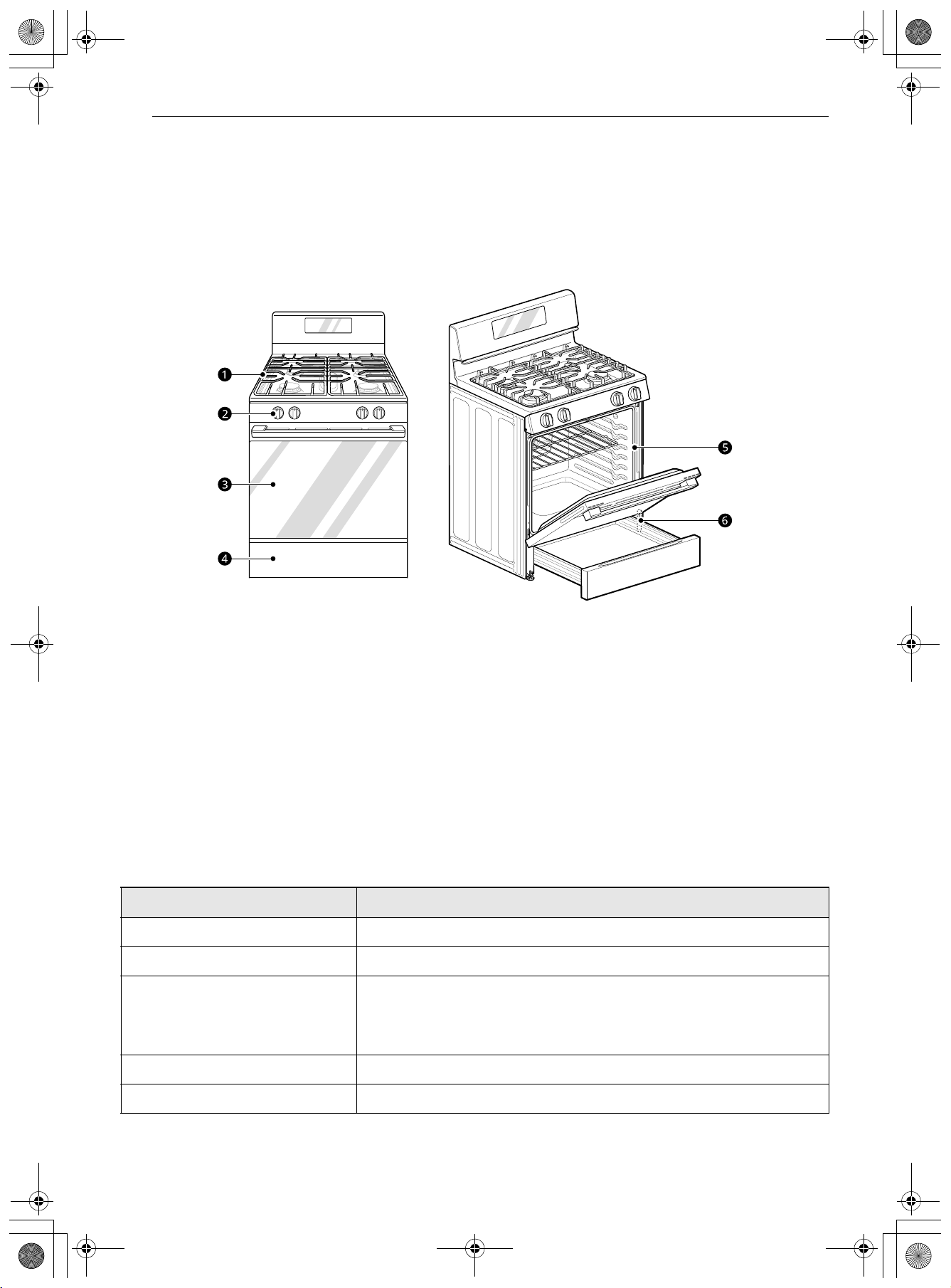
Exterior and Interior
The image in this part may be different from the actual model.
a Cooktop
b Cooktop controller
c Oven door
d Storage drawer
e Gasket
f Model & serial number plate
Product Specifications
The appearance and specifications listed in this manual may vary due to constant product improvements.
Oven Range Models LRGN6321*
Description Gas Oven Range
Electrical requirements 0.5 kW 120 VAC
Exterior Dimensions 29 31/32" (W) x 46 1/2" (H) x 29 9/32" (D) (D with door closed and
including door handle)
76.1 cm (W) x 118.2 cm (H) x 74.5 cm (D) (D with door closed and
including door handle)
Height to cooking surface 36" (91.4cm)
Total capacity 6.3 cu. ft.
en-us_main.book.book Page 10 Tuesday, February 3, 2026 8:10 AM
11PRODUCT OVERVIEW
ENGLISH
Accessories
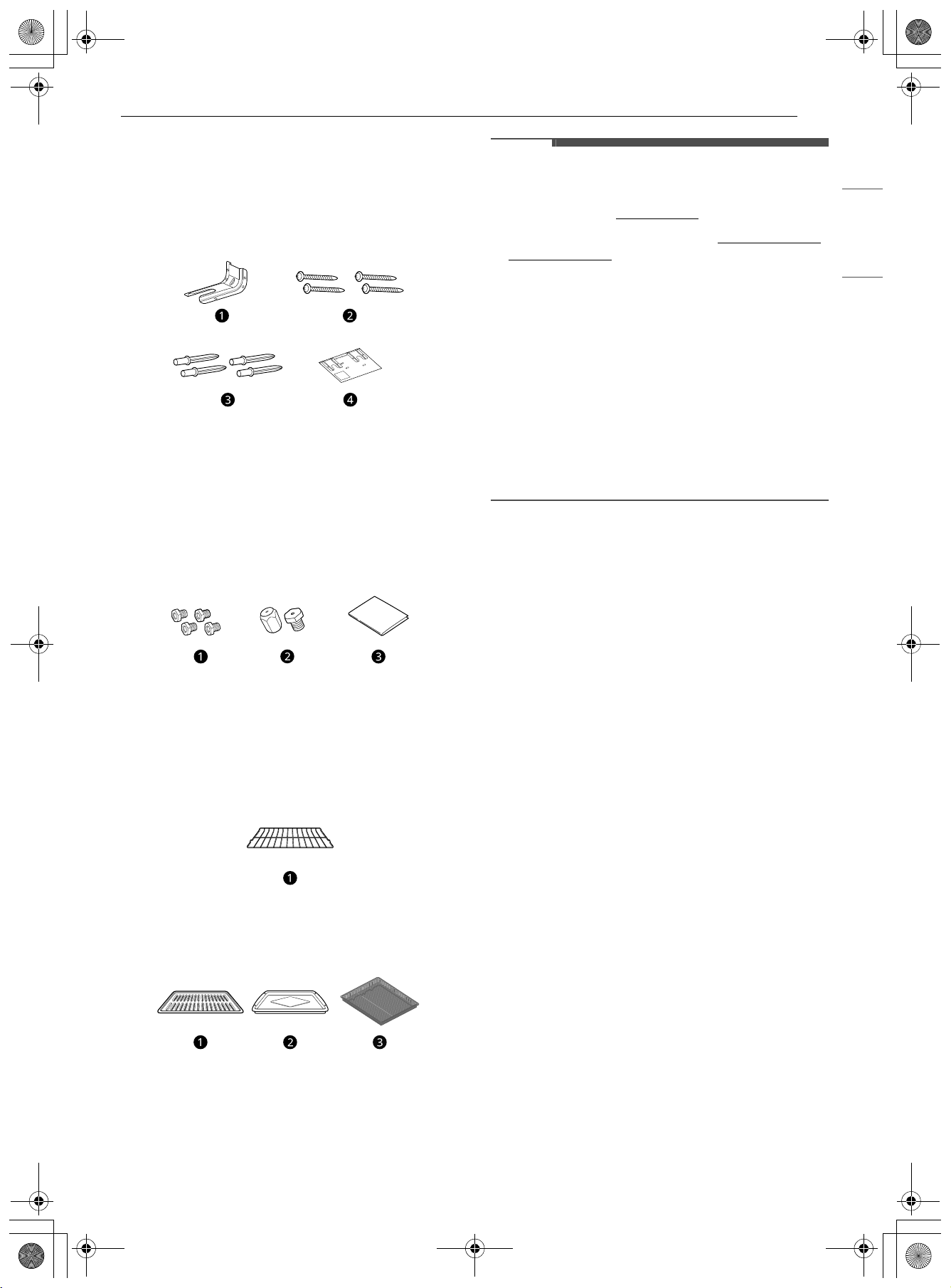
Included Accessories
Anti-tip Kit
a
Anti-tip Bracket (1 ea)
b Screws (4 ea)
c Anchors (4 ea)
d Template (1 ea)
LP Nozzle Conversion Kit
a Cooktop Nozzles (4 ea)
b Oven Nozzles (2 ea)
c Installation Guide (1 ea)
Other Accessories
a
Standard Rack (2 ea)
Optional Accessories (sold separately)
a Grid
b Broiler Pan
c Air Fry Tray
NOTE
• Optional accessories are not included with the
unit. These accessories are available for
purchase on the www.lg.com web page.
• Contact LG Customer Service at 1-800-243-0000
(1-888-542-2623
in Canada) if any accessories
are missing.
• For your safety and for extended product life,
only use authorized components.
• The manufacturer is not responsible for product
malfunction or accidents caused by the use of
separately purchased, unauthorized
components or parts.
• The images in this guide may be different from
the actual components and accessories, which
are subject to change by the manufacturer
without prior notice for product improvement
purposes.
en-us_main.book.book Page 11 Tuesday, February 3, 2026 8:10 AM
12 INSTALLATION
INSTALLATION
Before Installing
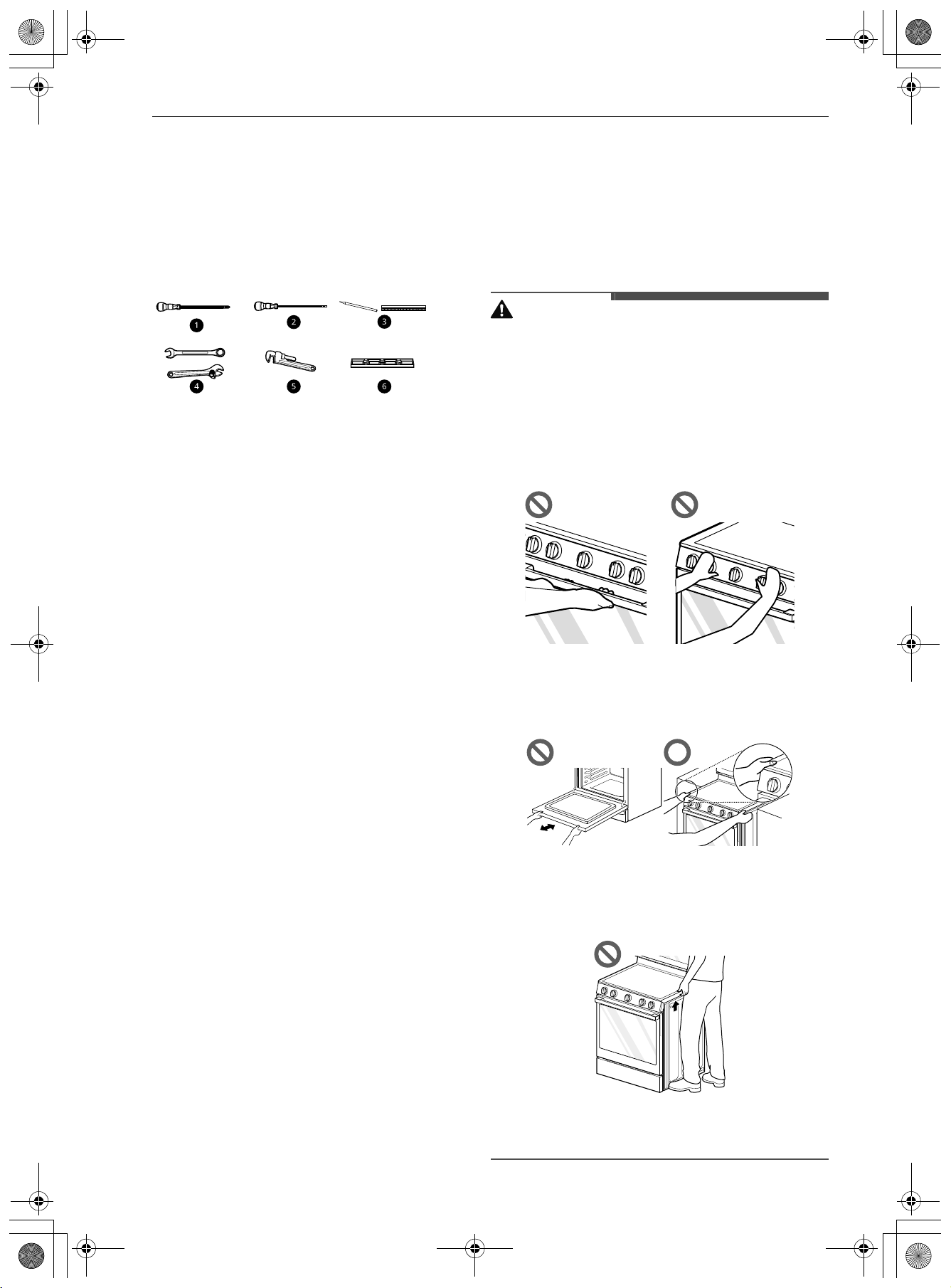
Tools Needed
a Phillips screwdriver
b Flat-blade screwdriver
c Pencil and ruler
d Combination or adjustable wrench
e Pipe wrench (2) (one for support)
f Level
Parts
Parts You May Need
• Gas line shut-off valve
• Pipe joint sealant that resists action of natural
and LP gases
• Flexible metal appliance connector (3/4" or 1/2"
NPT x 1/2" I.D.)
- Never use an old connector when installing a
new range.
• Flare union adapter for connection to gas supply
line (3/4" or 1/2" NPT x 1/2" I.D.)
• Flare union adapter for connection to pressure
regulator on range (1/2" NPT x 1/2" I.D.)
• Liquid leak detector or soapy water
• Lag bolt or 1/2" O.D. sleeve anchor (for concrete
floors only)
In the Commonwealth of
Massachusetts
• This product must be installed by a licensed
plumber or gas fitter.
• When using ball type gas shut-off valves, they
must be the T-handle type.
• When using a flexible gas connector, it must not
exceed 3 feet in length.
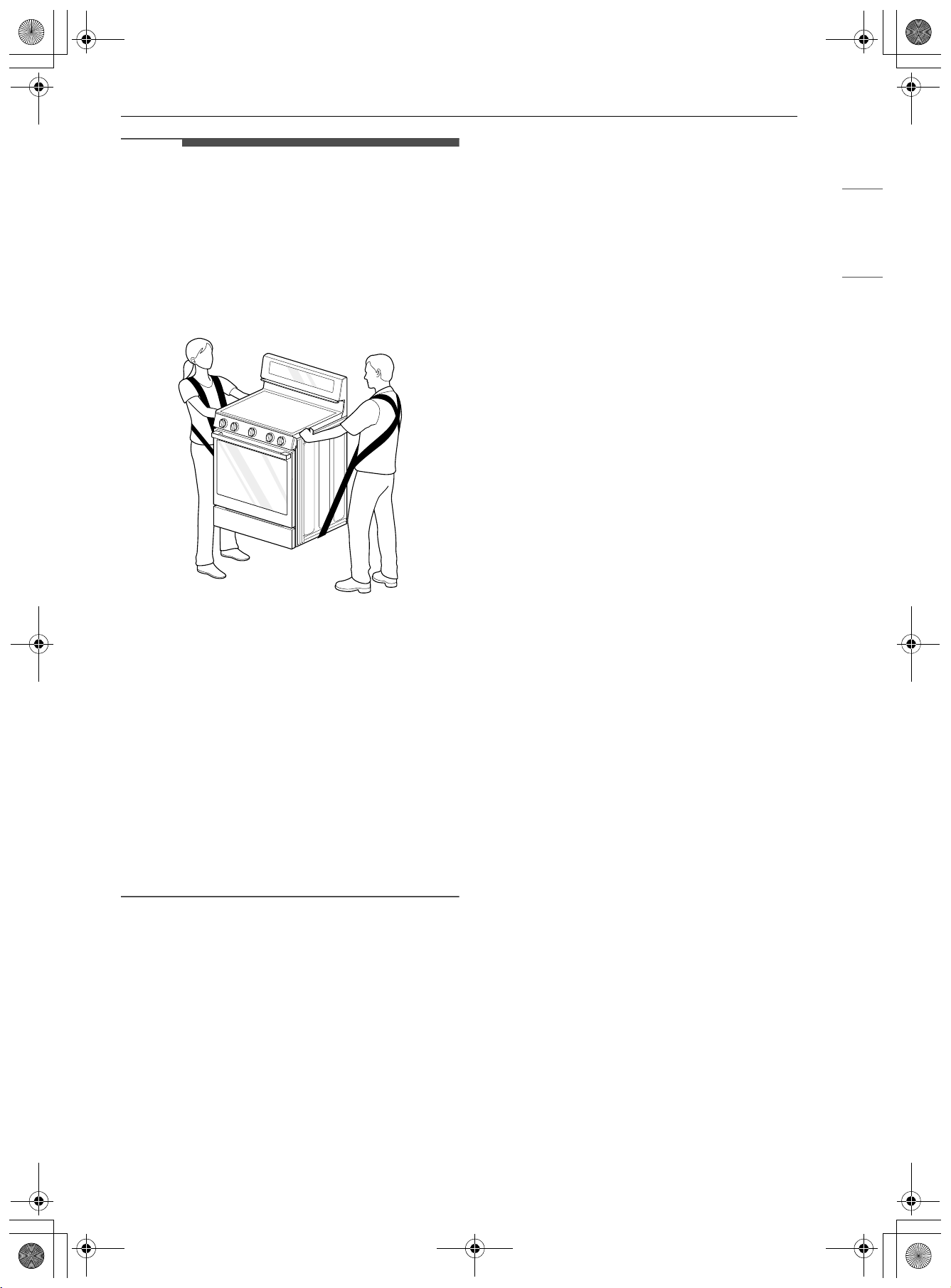
Unpacking and Moving the Range
WARNING
• You should use two or more people to move and
install the range. (Excessive Weight Hazard)
Failure to do so can result in back or other injury.
• Do not use the door handles or knobs to push or
pull the range during installation or when
moving the range out for cleaning or service.
Doing so can result in serious damage to the
range.
• Do not push or pull the range by grabbing the
open oven door or cooktop only. Doing so can
result in serious damage to the range.
• Do not lift the range using the cooktop or door
handle. Doing so can cause damage and
improper operation of the range.
• To reduce the risk of burns, do not move this
appliance while it is hot.
en-us_main.book.book Page 12 Tuesday, February 3, 2026 8:10 AM
13INSTALLATION
ENGLISH
NOTE
• The image may differ from the actual model.
• Your range is heavy and can be installed on soft
floor coverings such as cushioned vinyl or
carpeting. Use care when moving the range on
this type of flooring. Use a belt when moving the
range to prevent damaging the floor. Or slide
the range onto cardboard or plywood to avoid
damaging the floor covering.
• Remove packing material, tape and any
temporary labels from your range before using.
Do not remove any warning-type labels, the
model and serial number label, or the Tech
Sheet that is located on the back of the range.
• To remove any remaining tape or glue, rub the
area briskly with your thumb. Tape or glue
residue can also be easily removed by rubbing a
small amount of liquid dish soap over the
adhesive with your fingers. Wipe with warm
water and dry.
• Do not use sharp instruments, rubbing alcohol,
flammable fluids, or abrasive cleaners to remove
tape or glue. These products can damage the
surface of your range.
en-us_main.book.book Page 13 Tuesday, February 3, 2026 8:10 AM
14 INSTALLATION
Choosing the Proper Location
Dimensions and Clearances
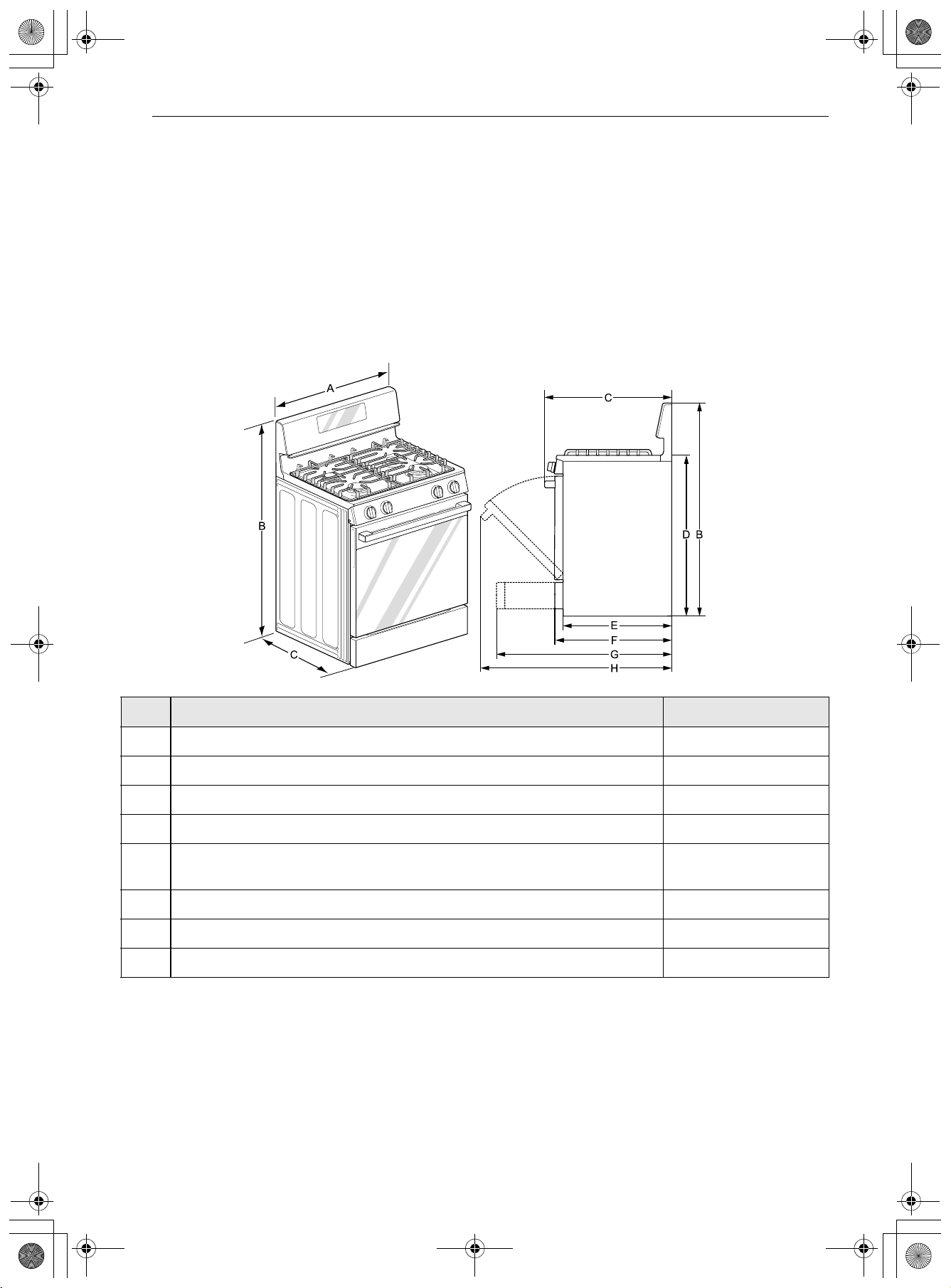
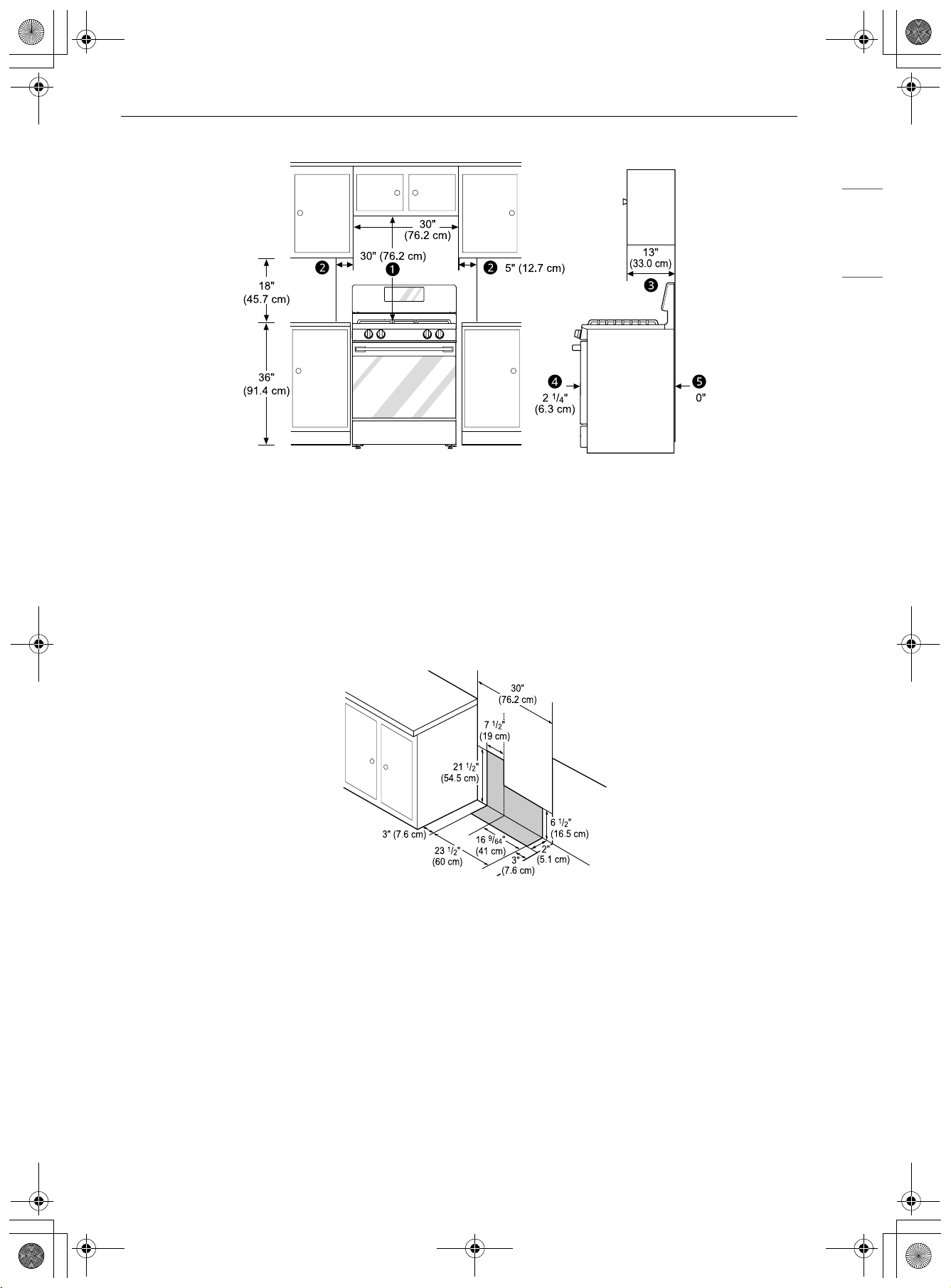
• Provide proper clearance between the range and adjacent combustible surfaces.
• These dimensions must be met for safe use of your range.
• The location of the electrical outlet and pipe opening (see "Gas Pipe and Electrical Outlet Locations"
below) may be adjusted to meet specific requirements.
• The range may be placed with 0" clearance (flush) at the back wall.
Dimensions
- Dimensions LRGN6321*
AWidth 29 31/32" (761 mm)
BHeight 46 1/2" (1182 mm)
C Depth (Includes Door Handle) 29 9/32" (745 mm)
D Height (Cooking surface) 36" (914 mm)
E Depth (Includes only the product body that is loaded into the cabinet.
Excludes door, drawer, and handles)
24 3/4" (629 mm)
F Depth (Excludes Door Handle) 26 31/32" (685 mm)
G Depth when drawer is fully opened 36 27/32" (936 mm)
H Depth when door is fully opened 48 15/32" (1232 mm)
en-us_main.book.book Page 14 Tuesday, February 3, 2026 8:10 AM
15INSTALLATION
ENGLISH
Clearances
a Minimum
b Minimum clearance to left/right wall
c Maximum depth for cabinets above countertops
d Front edge of the range side panel forward from cabinet
e To cabinets below cooktop and at the range back
Gas Pipe and Electrical Outlet Locations
Ventilation
• Do not locate your range where it may be subject to strong drafts. Any openings in the floor or wall
behind the range should be sealed. Make sure the openings around the base of the range that supply
fresh air for combustion and ventilation are not blocked by carpeting or woodwork.
• This appliance must not be installed with a ventilation system that blows air downward toward the
range. This type of ventilation system may cause ignition and combustion problems with the gas cooking
appliance resulting in personal injury or unintended operation.
Flooring
• Your range, like many other household units, is heavy and can be installed on soft floor coverings such
as cushioned vinyl or carpeting. Use care when moving the range on this type of flooring.
en-us_main.book.book Page 15 Tuesday, February 3, 2026 8:10 AM
16 INSTALLATION
• When the floor covering ends at the front of the range, the area that the range will be installed on should
be built up with plywood to the same level or higher than the floor covering. This will allow the range to
be moved for cleaning and servicing, as well as provide proper air flow to the range.
• Make sure the floor covering can resist temperatures of at least 167 °F (75 °C). See the Installation Safety
Instructions included in this manual.
Ambient Temperature
• Make sure the wall coverings around your range can resist the heat generated up to 194 °F (90 °C) by the
range. See the Installation Safety Instructions included in this manual.
Leveling
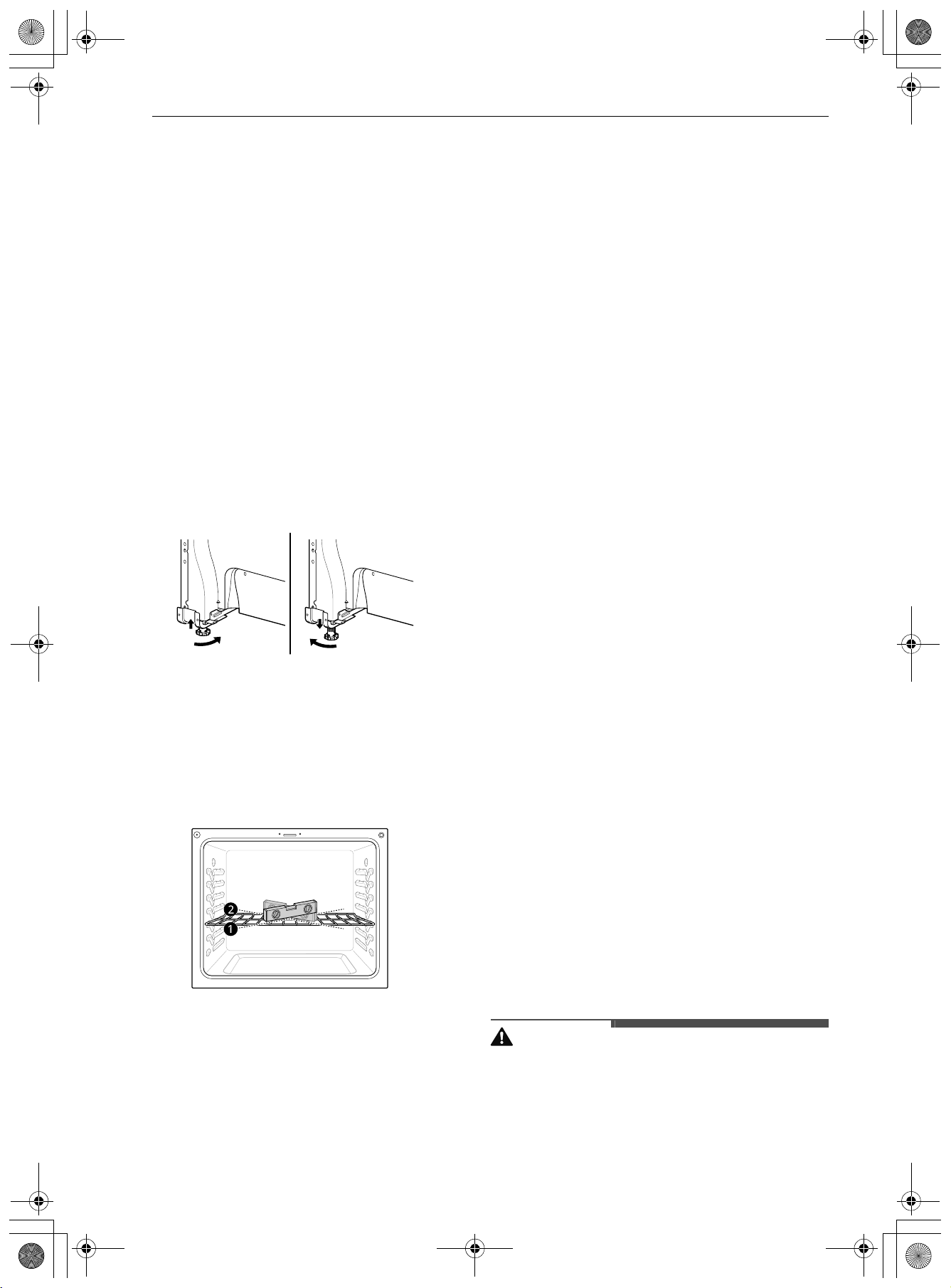
Leveling the Range
Level the range by adjusting the leveling legs with
a wrench. Extending the legs slightly may also
make it easier to insert the rear leg into the anti-tip
bracket.
Checking Adjustments
1 Place a level diagonally on the oven rack, and
check each direction for level.
• First check direction
a. Then check
direction
b.
2 If the level doesn’t show that the rack is level,
adjust the leveling legs with a wrench.
Connecting Gas
Providing Adequate Gas Supply
• Your range is designed to operate at a pressure
of 5" of water column on natural gas or 10" of
water column on LP.
• Make sure you are supplying your range with the
type of gas for which it is configured.
• This range is convertible for use with natural or
LP gas. When using this range with LP gas,
conversion must be made by a qualified LP
installer before attempting to operate the range.
• For proper operation, the pressure of natural
gas supplied to the regulator must be between
5" and 13" of water column.
• For LP gas, the pressure supplied to the
regulator must be between 10" and 13" of water
column. When checking for correct operation of
the regulator, the inlet pressure must be at least
1" more than the operating (manifold) pressure
as given above.
• The pressure regulator located at the inlet of the
range must remain in the supply line regardless
of which type of gas is being used.
• A flexible metal appliance connector used to
connect the range to the gas supply line should
have an I.D. of 5/8" and a maximum length of 5
feet. In Canada, flexible connectors must be
single wall metal connectors less than 6 feet in
length.
Connecting the Range to Gas
WARNING
• Isolate the range from the gas supply system by
closing its individual shut-off valve during any
pressure testing of the gas supply system at test
pressures equal to or less than 1/2 psi (3.5 kPa).
• The appliance and its individual shut-off valve
must be disconnected from the gas supply
en-us_main.book.book Page 16 Tuesday, February 3, 2026 8:10 AM
17INSTALLATION
ENGLISH
piping system during any pressure testing of
that system at test pressures in excess of 1/2 psi
(3.5 kPa).
• Shut off the range gas supply valve before
removing the old range and leave it off until the
new hook-up has been completed.
• Because hard piping restricts movement of the
range, a CSA International-certified flexible
metal appliance connector should be used
unless local codes require a hard-piped
connection.
• A manual valve must be installed in an accessible
location in the gas piping external to the
appliance for the purpose of turning on or
shutting off gas to the appliance.
• Never reuse an old connector when installing a
new range.
• To protect against gas leaks, use a qualified pipe
joint sealant on all external threads.
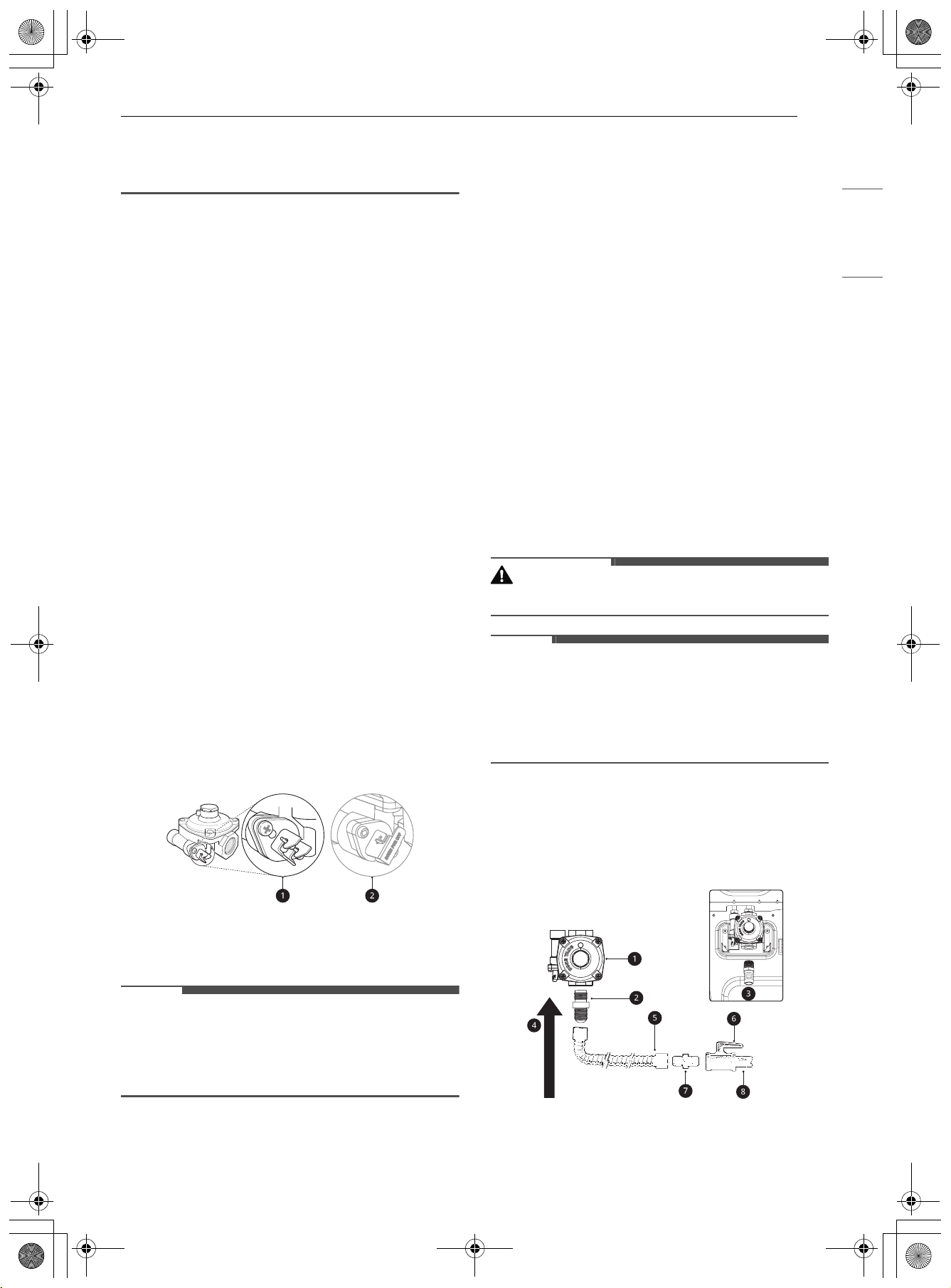
1 Install a male 1/2" or 3/4" flare union adapter
to the NPT internal thread of the manual shut-
off valve, taking care to back-up the shut-off
valve to keep it from turning.
2 Install a male 1/2" flare union adapter to the
1/2" NPT internal thread at the inlet of the
pressure regulator. Use a backup wrench on
the pressure regulator fitting to prevent
damage.
• Check that the gas pressure regulator valve
is in the open position.
a Lever’s open position
b Lever’s closed position
NOTE
• The gas pressure regulator valve is open when
shipped. If the range does not work properly
after installation, make sure the regulator valve
is still open.
3 Connect a flexible metal appliance connector
to the adapter on the range. Position the
range to permit connection at the shut-off
valve.
4 When all connections have been made, be
sure all range controls are in the OFF position
and the pressure regulator valve is open
before turning on the main gas supply valve.
• Gas leaks may occur in your system and
create a hazard. Gas leaks may not be
detected by smell alone.
5 Check all gas connection joints and fittings for
leaks with a non-corrosive leak detection fluid,
then wipe off.
• Gas suppliers recommend you purchase
and install a UL approved gas detector.
Install and use in accordance with the
installation instructions.
WARNING
• Do not use a flame to check for gas leaks.
NOTE
• Installation must conform with local codes or, in
the absence of local codes, with the National
Fuel Gas Code, ANSI Z223.1/NFPA 54 or, in
Canada, the Natural Gas and Propane
Installation Code, CSA B149.1.
Flexible Connector Hookup
Have the installer show you the location of the
range gas shut-off valve and how to shut it off if
necessary.
a Pressure regulator
b 1/2" adapter
en-us_main.book.book Page 17 Tuesday, February 3, 2026 8:10 AM
18 INSTALLATION
c 1/2" adapter
d Gas flow into range
e Flex connector (6 ft. max.)
f Gas shut-off valve
g 1/2" adapter
h 1/2" or 3/4" gas pipe
Pressure Regulator Position
a Pressure regulator
Adjusting Air Shutters (for LP
Conversions)
The range comes from the factory with the air
shutters adjusted for proper air flow for natural
gas. If converted to LP, follow the instructions
provided in the conversion kit to properly adjust
the air shutters. LP conversion must be performed
by a qualified technician.
Connecting Electricity
Electrical Requirements
120 Volt, 60 Hz, properly grounded dedicated
circuit protected by a 15 or 20 Amp circuit breaker,
or slow blow fuse.
If an external electrical source is utilized, the
appliance, when installed, must be electrically
grounded in accordance with local codes or, in the
absence of local codes, with the National Electrical
Code, NFPA70 or the Canadian Electric Code, CSA
C22.1-02.
Grounding
WARNING
• For personal safety, this appliance must be
properly grounded.
• This appliance is equipped with a three-prong
groundling plug for your protection against
shock hazard and should be plugged directly
into a properly grounded receptacle.
• Do not cut or remove the groundling prong from
this plug.
• The customer should have the wall receptacle
and circuit checked by a qualified electrician to
make sure the receptacle is properly grounded.
• The power cord of this appliance is equipped
with a 3-prong (grounding) plug which mates
with a standard 3-prong grounding wall
receptacle to minimize the possibility of electric
shock hazard from this appliance.
• Where a standard two-prong wall receptacle is
encountered, it is the personal responsibility and
obligation of the customer to have it replaced
with a properly grounded three-prong wall
receptacle.
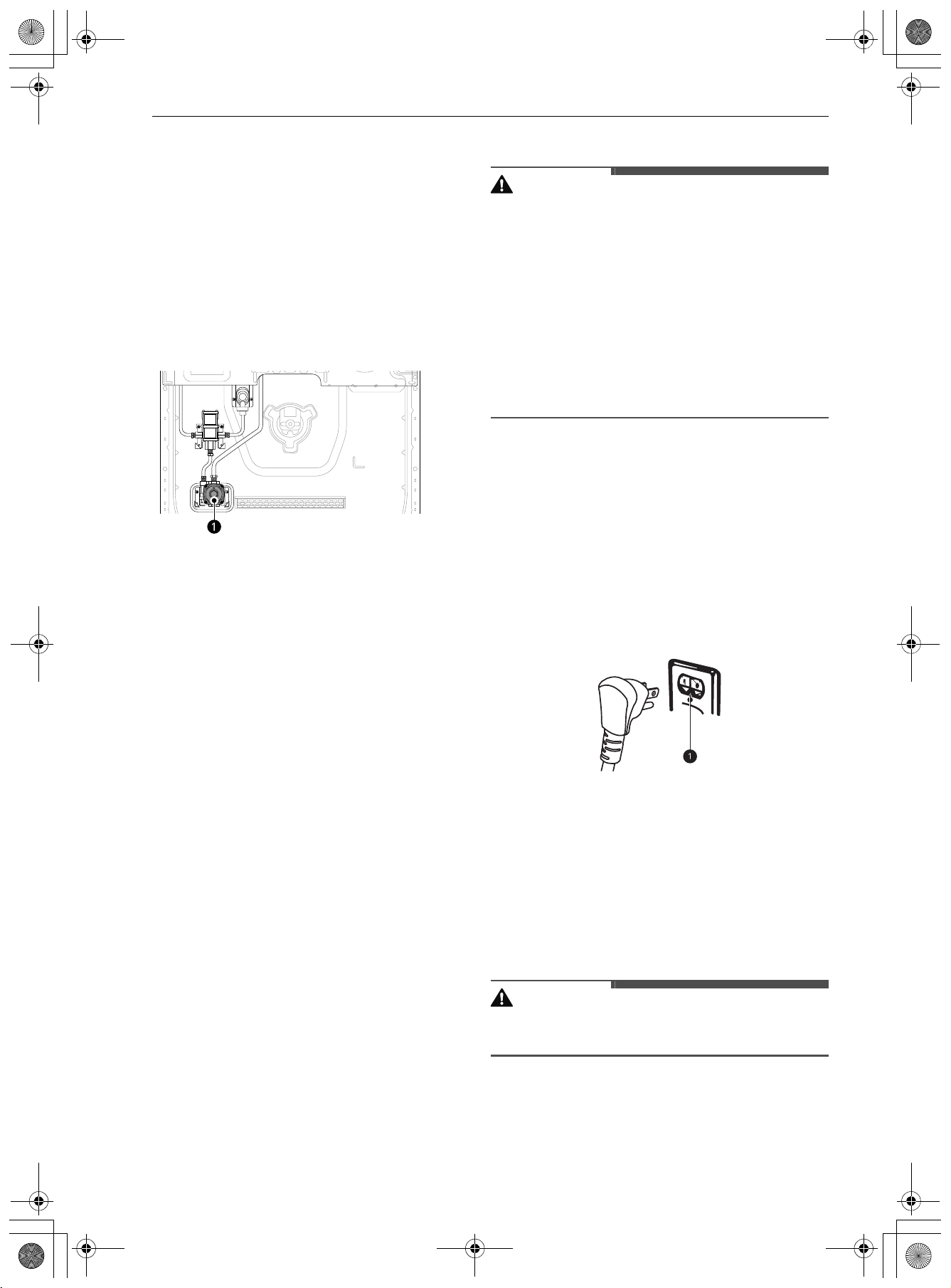
• Ensure proper ground
a exists before use.
• Do not use an adapter plug. Disconnecting of
the power cord places undue strain on the
adapter and leads to eventual failure of the
adapter ground terminal.
Surface Burners
Assembling the Surface Burners
CAUTION
• Do not operate the burners without all parts in
place.
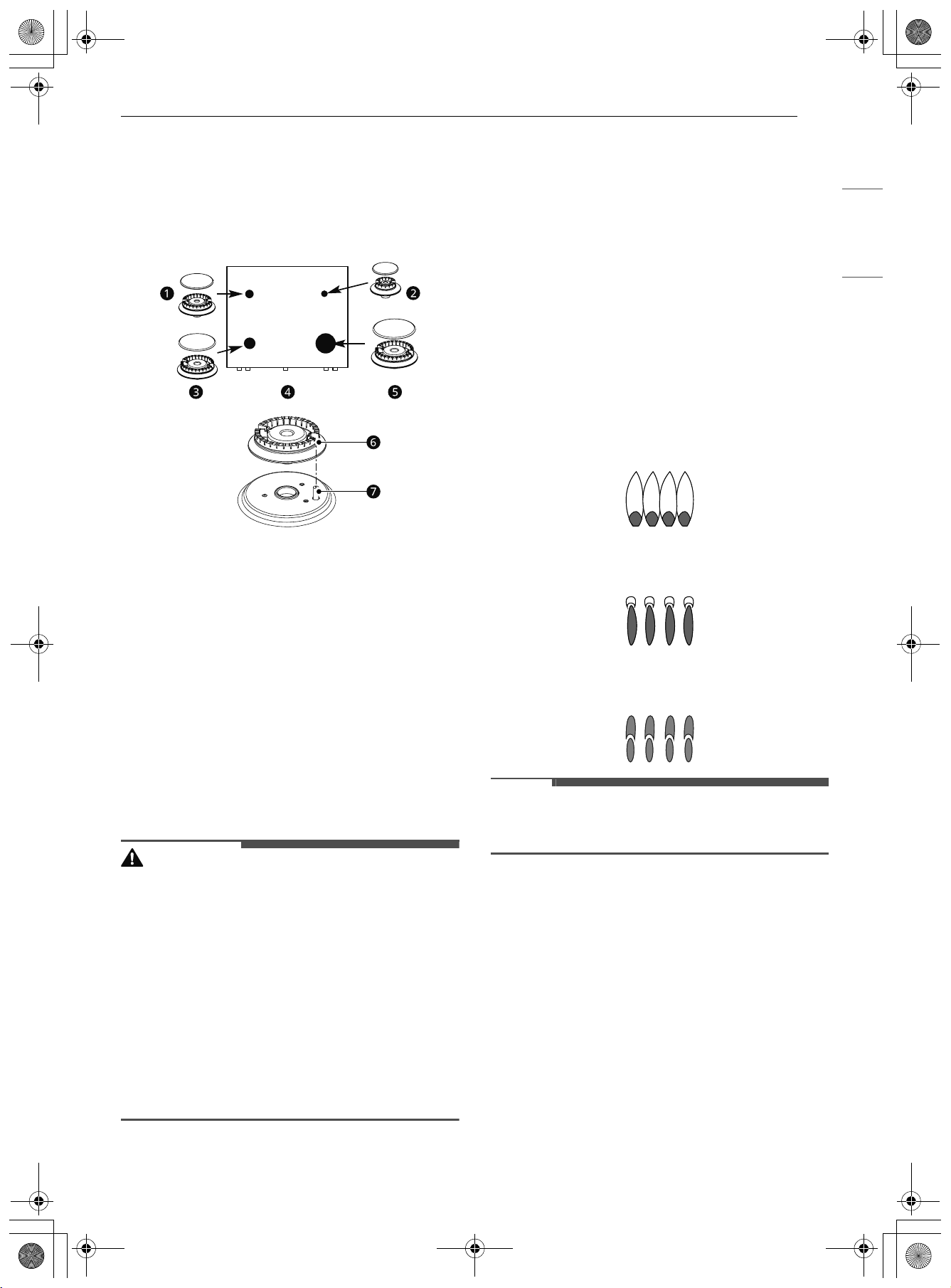
1 Place the burner caps and heads on the
cooktop.
• There is one small, one medium, one large,
and one extra large burner head and cap.
en-us_main.book.book Page 18 Tuesday, February 3, 2026 8:10 AM
19INSTALLATION
ENGLISH
2 Make sure that the caps and heads are placed
in the correct locations.
3 Make sure the hole in the burner head is
positioned over the electrode.
a Medium burner head and cap
b Small burner head and cap
c Large burner head and cap
d Front of range
e Extra large burner head and cap
f Hole
g Electrode
Checking Ignition of the Surface
Burners
WARNING
• Even if the top burner flame goes out, gas is still
flowing to the burner until the knob is turned to
the OFF position. If you smell gas, immediately
open a window and ventilate the area for five
minutes prior to using the burner. Do not leave
the burners on unattended.
• Always turn the knobs to the LITE position when
igniting the top burners and make sure the
burners have ignited.
• Electric spark igniters from the burners cause a
clicking noise. All the spark igniters on the
cooktop will activate when igniting just one
burner.
Electric Ignition
Select a surface burner knob and simultaneously
push in and turn to the LITE position. You will hear
a clicking sound indicating proper operation of the
spark module.
Once the air has been purged from the supply
lines the burner should ignite within 4 seconds.
After the burner ignites, rotate the knob out of the
LITE position. Try each burner in succession until
all burners have been checked.
Quality of Flames
The combustion quality of the burner flames
needs to be confirmed visually.
Yellow flames
Call for service.
Yellow tips on outer cones
This is normal for LP gas.
Soft blue flames
This is normal for natural gas.
NOTE
• With LP gas, some yellow tipping on outer cones
is normal.
Adjusting the Surface Burner to the
Low Flame (Simmer) Setting
1 Light all surface burners.
2 Turn the knob on the burner being adjusted
to Lo.
3 Remove the knob.
en-us_main.book.book Page 19 Tuesday, February 3, 2026 8:10 AM
20 INSTALLATION
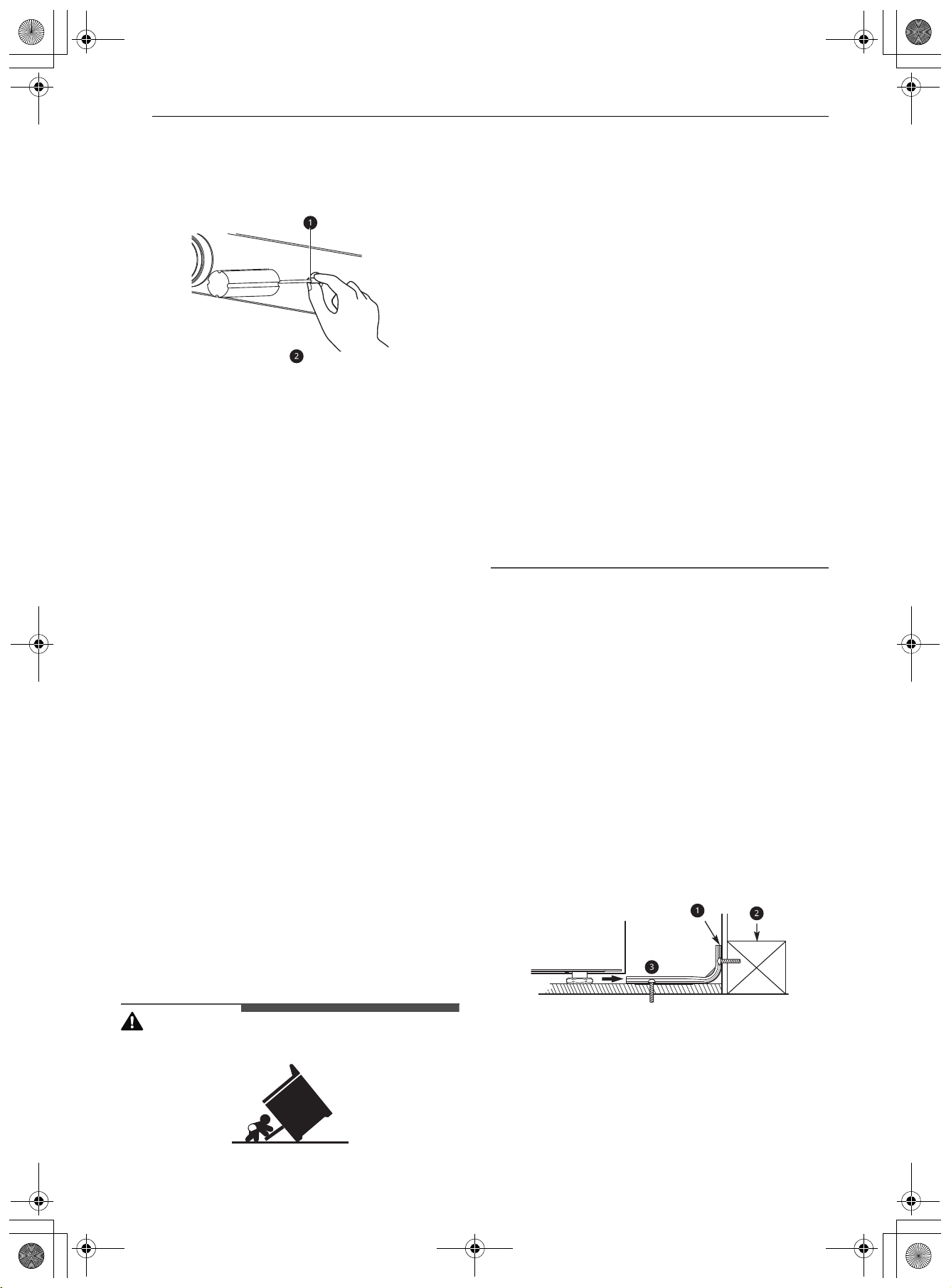
4 Insert a small, flat-blade screwdriver with a
minimum length of 3" (76.2 mm) and a
diameter of 3/32" (2.4 mm) into the valve
shaft.
a Valve shaft
b Center adjustment screw
5 Turn the screw to adjust.
• Hold the valve shaft with one hand while
turning the screw to adjust with the other.
6 Replace the knob.
7 Test the flame stability.
• Test 1: Turn the knob from Hi to Lo quickly.
If the flame goes out, increase the flame
size and test again.
• Test 2: With the burner on a Lo setting,
open and close the oven door quickly. If the
flame is extinguished by the air currents
created by the door movement, increase
the flame height and test again.
8 Repeat steps 1-7 for each surface burner.
Anti-tip Device
Installing the Anti-Tip Device
Tip Hazard
WARNING
• A child or adult can tip the range and be killed.
• Install the anti-tip device to the structure and/or
the range. Verify the anti-tip device has been
properly installed and engaged by following the
guide on the anti-tip bracket template.
• Engage the range to the anti-tip device by
following the guide on the anti-tip bracket
template. Ensure the anti-tip device is re-
engaged when the range is moved by following
the guide on the anti-tip bracket template.
• Re-engage the anti-tip device if the range is
moved. Do not operate the range without the
anti-tip device in place and engaged.
• See installation instructions for details.
• Failure to follow these instructions can result in
death or serious burns to children or adults.
• Range must be secured with an approved anti-
tip device.
• The range could be tipped by standing, sitting or
leaning on an open door if the range or anti-tip
device is not properly installed.
• The use of this device does not preclude tipping
of the range when not properly installed.
• After installing the anti-tip device, verify that it is
in place by carefully attempting to tilt the range
forward.
• This range has been designed to meet all
recognized industry tip standards for all normal
conditions.
• The installation of the anti-tip device must meet
all local codes for securing the appliance.
Using the Anti-Tip Bracket Template
• The anti-tip bracket is packaged with an
installation template. The instructions include
necessary information to complete the
installation. Read and follow the range
installation instruction sheet.
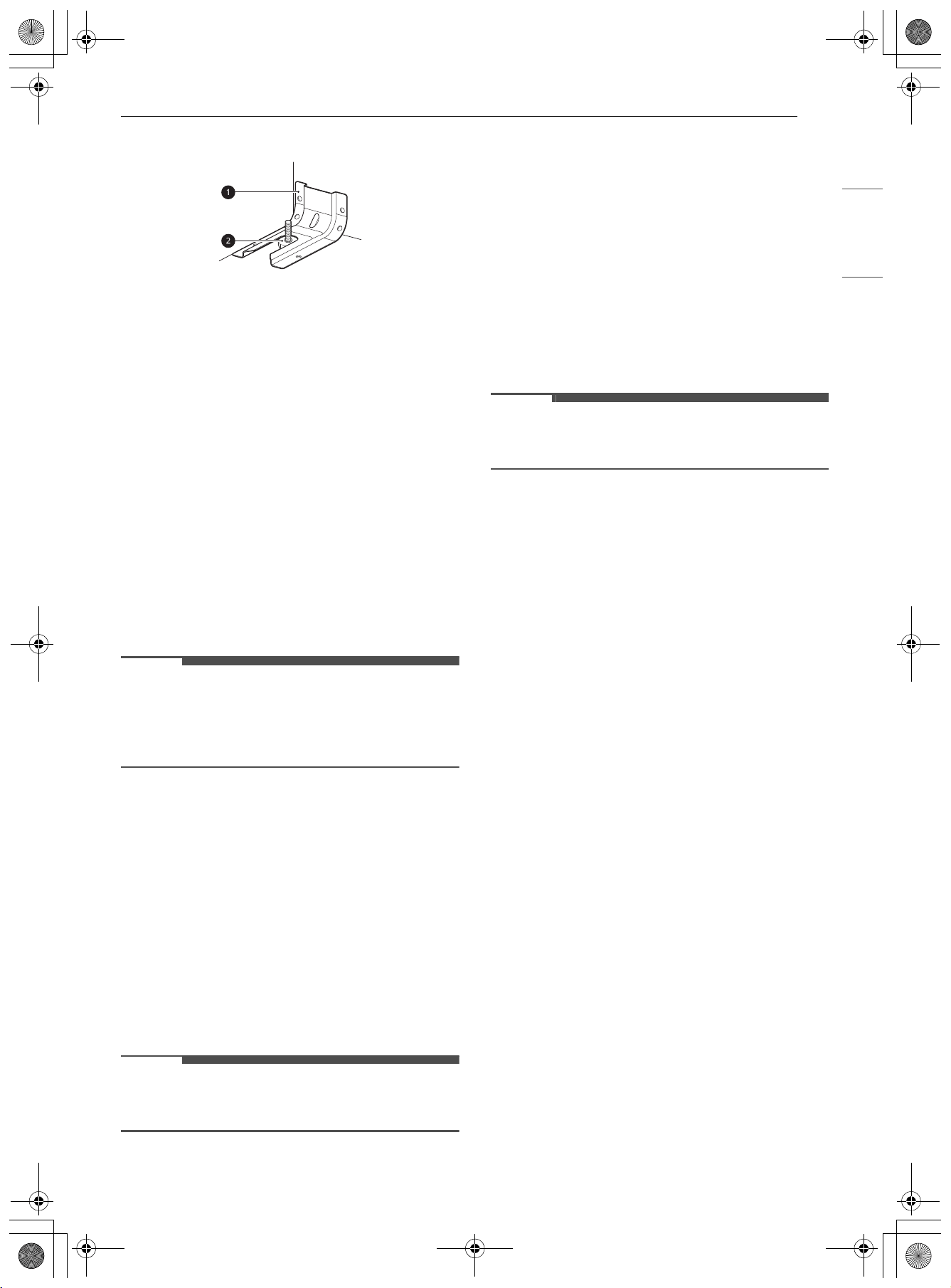
•Screws
c must enter wood or concrete.
a Anti-tip bracket
b Wall plate
en-us_main.book.book Page 20 Tuesday, February 3, 2026 8:10 AM
21INSTALLATION
ENGLISH
Engaging the Anti-tip Device
a Anti-tip bracket
b Leveling leg
1 Slide the range against the wall, making sure
the back leg slides into and engages the anti-
tip bracket.
• Make sure the back leg slides into and
engages the anti-tip bracket.
2 Check for proper installation by grasping the
front edge of the cooktop and carefully
attempting to tilt the range forward.
Test Run
Test the Range Before Use
NOTE
• Do not try to light either the Bake or Broil
burners during a power outage. The range has
an electrical ignition system and cannot be used
without power.
Checking Operation of Bake Burners
To check ignition of the Bake burner, follow the
steps below:
1 Remove all packing materials from inside the
oven cavity.
2 Press Bake. 350℉ appears in the display.
(Make sure the door is closed.)
3 Press START.
NOTE
• It may take between 30 and 90 seconds for the
burner to start heating.
Checking Operation of Broil Burners
To check ignition of the Broil burner, follow the
steps below:
1 Remove all packing materials from inside the
oven cavity.
2 Press Broil. Hi appears in the display. Make
sure the door is closed.
3 Press START.
NOTE
• It may take between 30 and 90 seconds for the
burner to start heating.
en-us_main.book.book Page 21 Tuesday, February 3, 2026 8:10 AM
22 OPERATION
OPERATION
Control Panel
Control Panel Features
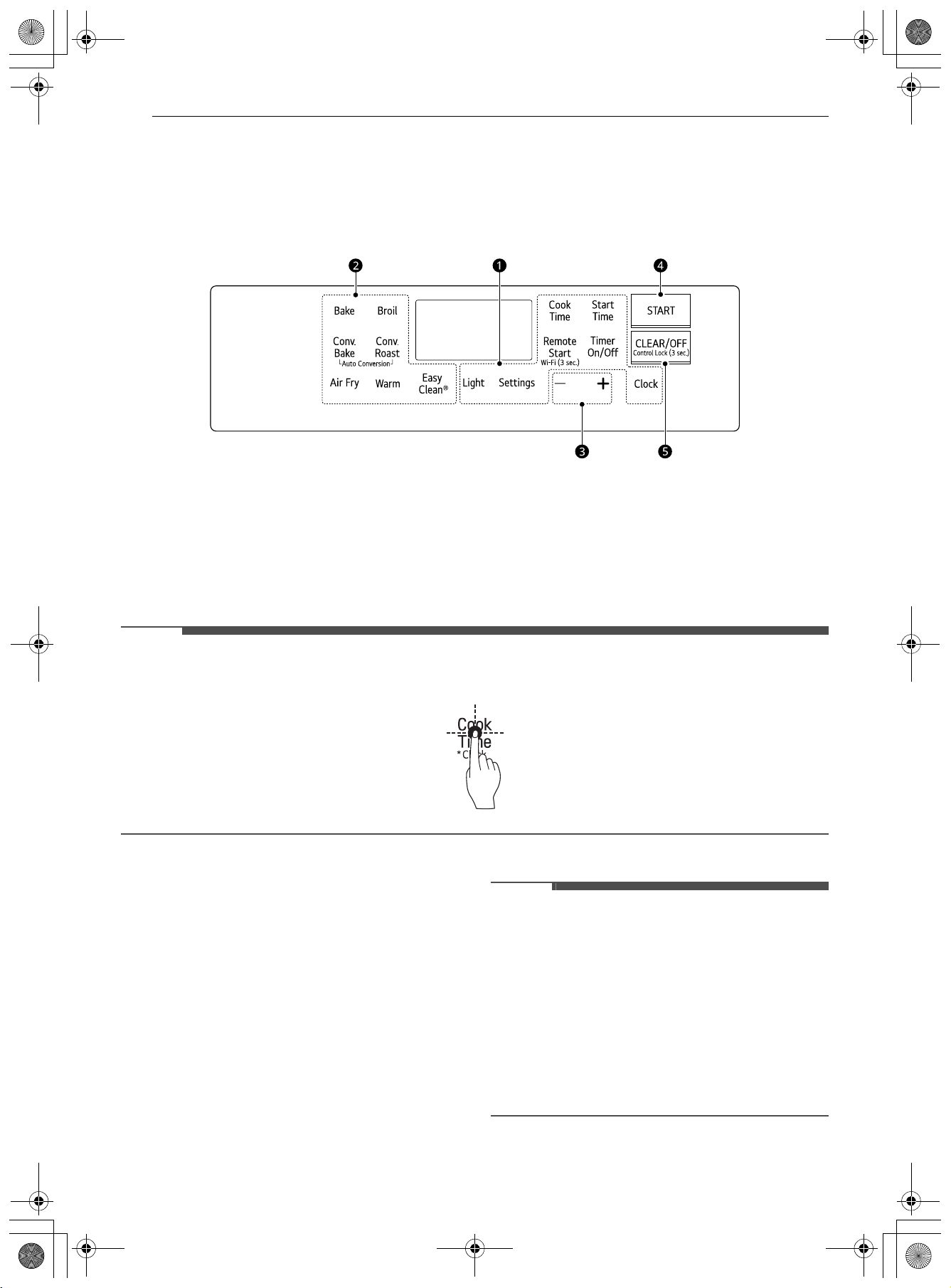
a Features
b Oven Control
c +/- Buttons
d START
e CLEAR/OFF / Control Lock
NOTE
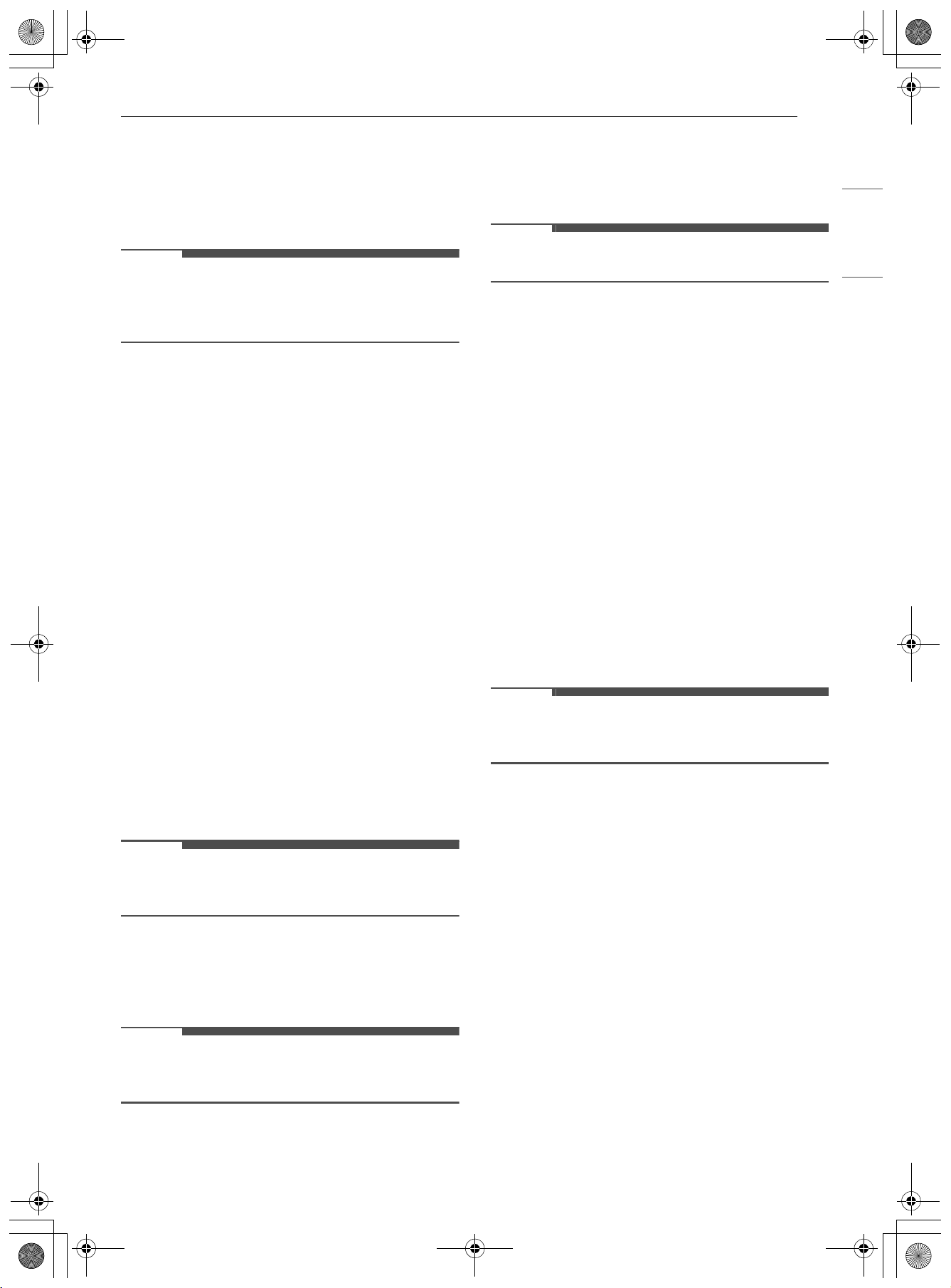
• For best results, press buttons in the center, even when activating a button's secondary function. The
buttons may not work properly if pressed too far from the center.
Changing Oven Settings
Clock
The clock must be set to the correct time of day in
order for the automatic oven timing functions to
work properly.
1 Press Clock.
2 Press plus (+) or minus (-) buttons to set the
time.
3 Press START.
NOTE
• The time of day cannot be changed during a
timed baking or self-clean cycle (available on
some models).
• To check the time of day when the display is
showing other information, press Clock.
• If no other keys are pressed within 25 seconds of
pressing Clock, the display reverts to the
original setting.
• If the display time is blinking, you may have
experienced a power failure. Reset the time.
en-us_main.book.book Page 22 Tuesday, February 3, 2026 8:10 AM
23OPERATION
ENGLISH
Oven Light
The interior oven light automatically turns on/off
when the door is opened and closed.
• Press Light button to manually turn the oven
light on/off.
NOTE
• The oven light cannot be turned on if the Self
Clean function is active. (available on some
models)
Timer On/Off
The Timer serves as an extra timer in the kitchen
that beeps when the set time has run out. It does
not start or stop cooking.
The Timer feature can be used during any of the
other oven control functions.
Setting the Timer
1 Press Timer On/Off button once to set the
time in hours and minutes, or press the
button twice to set the time in minutes and
seconds. Timer or an icon flashes in the
display.
2 Enter the desired length of time.
Use the +/- buttons.
3 Press Timer On/Off to start the Timer. The
remaining time countdown appears in the
display.
NOTE
•If Timer On/Off is not pressed, the timer returns
to the time of day.
4 When the timer reaches 0:00, End shows in
the display. The clock beeps every 15 seconds
until Timer On/Off is pressed.
NOTE
• If the remaining time is not in the display, recall
the remaining time by pressing Timer On/Off.
Canceling the Timer
1 Press Timer On/Off once.
The display returns to the time of day.
NOTE
• Pressing CLEAR/OFF will not turn off the timer.
Wi-Fi
The Wi-Fi button is used to connect the appliance
to a home Wi-Fi network.
1 Press and hold Remote Start for 3 seconds.
2 The power on chime sounds, SET appears in
the display, and the Wi-Fi icon (f) blinks.
3 Connect the appliance to the Wi-Fi network
using the LG ThinQ smartphone application.
4 To disconnect the appliance from the
network, delete it from the connected
appliances in the application.
NOTE
• See the Smart Functions section in the owner’s
manual for more details.
Settings (Hour Mode, Convection
Auto Conversion, Adjusting the
Oven Thermostat, Preheat Alarm
Light, Beeper Volume, Fahrenheit
or Celsius, Wi-Fi On/Off)
Press the Settings button repeatedly to toggle
through and change oven settings.
The Settings key allows you to:
• set the hour mode on the clock (12 or 24
hours)
• enable/disable convection auto conversion
• adjust the oven temperature
• activate/deactivate the preheating alarm
light
• set the beeper volume
en-us_main.book.book Page 23 Tuesday, February 3, 2026 8:10 AM
24 OPERATION
• switch the temperature scale between
Fahrenheit and Celsius
• activate/deactivate the Wi-Fi
Setting the Hour Mode
The control is set to use a 12-hour clock. To reset
the clock to 24-hour mode, follow the steps below.
1 Press Settings button.
2 Press +/- to toggle between a 12-hour and 24-
hour clock.
3 Press START to accept the change.
Setting Convection Auto Conversion
When Conv. Bake and Conv. Roast are selected,
Convection Auto Conversion automatically
converts the standard recipe temperature entered
to a convection temperature by subtracting 25 °F /
14 °C. This auto-converted temperature shows on
the display. For example, select Conv. Bake, enter
350 °F, and 325 °F shows on the display after
preheat.
Convection Auto Conversion is enabled by default.
To change the setting, follow these instructions.
1 Press Settings repeatedly until Avto appears
in the display.
2 Press +/- button to switch Auto Conversion on
or off.
3 Press START to accept the change.
Adjusting the Oven Thermostat
Your new oven may cook differently from the one
it replaced. Use your new oven for a few weeks to
become more familiar with it before changing the
temperature settings. If after familiarizing yourself
with the new oven, you still think that it is too hot
or too cold, you can adjust the oven thermostat
yourself.
• To begin, either raise or lower the thermostat 15
°F (8 °C). Try the oven with the new setting. If the
oven still needs adjustment, raise or lower the
thermostat again, using the first adjustment as a
gauge. For example, if the adjustment was too
much, raise or lower the thermostat 10 °F (5 °C).
If the adjustment was not enough, raise or lower
the thermostat 20 °F (12 °C). Proceed in this way
until the oven is adjusted to your satisfaction.
1 Press Settings repeatedly until AdJU appears
in the display.
2 Set the number of degrees to adjust:
Press or press and hold the +/- buttons until
the desired number of degrees appears in the
display.
3 Press START to accept the change.
NOTE
• This adjustment does not affect the broiling or
Self Clean temperatures. The adjustment is
retained in memory after a power failure. The
oven temperature can be increased (+) or
decreased (-) as much as 35 °F or 19 °C.
• Once the temperature is increased or decreased,
the display shows the adjusted temperature
until it readjusts.
Turning the Preheat Alarm Light On/
Off
When the oven reaches its set-temperature, the
preheating alarm light flashes 5 times or until the
oven door is opened.
You can activate or deactivate the preheating
alarm light.
1 Press Settings repeatedly until PrE appears in
the display.
2 Press +/- to turn the light on/off.
3 Press START to accept the change.
Adjusting the Beeper Volume
1 Press Settings repeatedly until bEEP appears
in the display.
2 Press +/- to select Hi, Lo or OFF.
3 Press START to accept the change.
en-us_main.book.book Page 24 Tuesday, February 3, 2026 8:10 AM
25OPERATION
ENGLISH
Selecting Fahrenheit or Celsius
Set the oven temperature display to show either
Fahrenheit (°F) or Celsius (°C) units. The oven
defaults to Fahrenheit unless changed by the user.
1 Press Settings repeatedly until UNit appears
in the display.
2 Press +/- to select F (Fahrenheit) or C (Celsius).
3 Press START to accept the change.
Turning the Wi-Fi On/Off
You can turn the Wi-Fi transmitter on the PCB on
or off.
1 Press Settings repeatedly until Wi-Fi appears
in the display.
2 Press +/- to turn the Wi-Fi transmitter on/off.
3 Press START to accept the change.
Control Lock
The Control Lock feature automatically prevents
most oven controls from being turned on.
1 Press and hold CLEAR/OFF for three seconds.
2 The lock melody sounds. Loc and the lock icon
k appear in the display.
3 To deactivate the Control Lock feature, press
and hold CLEAR/OFF for three seconds. The
unlock melody sounds and the controls
unlock.
Start Time (Delayed Timed Cook)
The automatic timer of the Delayed Timed Cook
function turns the oven on and off at the time you
select. This feature can be used with the Bake,
Conv. Bake and Conv. Roast modes.
CAUTION
• Use caution with the Delayed Timed Cook
features. Use the automatic timer when cooking
cured or frozen meats and most fruits and
vegetables. Foods that can easily spoil, such as
milk, eggs, fish, meat or poultry, should be
chilled in the refrigerator first. Even when
chilled, they should not stand in the oven for
more than 1 hour before cooking begins, and
should be removed promptly when cooking is
complete. Eating spoiled food can result in
sickness from food poisoning.
Setting a Delayed Timed Cook
For example, to bake at 300 8 for 30 minutes and
delay the start of baking until 4:30, first set the
clock for the correct time of day.
1 Press Bake. 350 8 appears in the display.
2 Set the temperature:
Press or press and hold the +/- buttons until
the desired temperature appears in the
display.
3 Press Cook Time and +/- buttons to set the
baking time.
4 Press Start Time.
5 Set the start time:
Use the +/- buttons to adjust the time
displayed to match your desired start time.
6 Press START. A short beep sounds and Timed
Delay and the start time appears in the
display. The oven begins baking at the set
start time.
NOTE
• To cancel the Delayed Timed Cook function,
press CLEAR/OFF at any time.
• To change the cooking time, repeat steps 3 and
4 and press START.
en-us_main.book.book Page 25 Tuesday, February 3, 2026 8:10 AM
26 OPERATION
NOTE
• If the oven clock is set as a 12-hour clock, you
can delay the cook time for 11 hours and 59
minutes. If the oven clock is set as a 24-hour
clock, you can delay the cook time for 23 hours
and 59 minutes.
The oven will continue to cook for the set amount
of time and then turn off automatically. When the
cooking time has elapsed:
• End and the time of day show in the display.
• The cook end indicator tone sounds every 60
seconds until CLEAR/OFF is pressed.
Cook Time (Timed Cook)
Set the oven to cook for a specific length of time
using the Timed Cook feature. This feature can
only be used with the Bake, Conv. Bake, Conv.
Roast, Air Fry and Broil modes.
Setting a Cook Time Function
For example, to bake at 300 °F for 30 minutes, first
set the clock to the correct time of day.
1 Press Bake. 350 °F appears in the display.
2 Set the temperature. Press +/- button.
3 Press Cook Time. Timed flashes in the
display. Bake and 0:00 appear in the display.
4 Set the baking time: Press +/- button to set
the baking time.
• The baking time can be set for any amount
of time between 1 minute and 11 hours and
59 minutes.
5 Press START.
The oven will continue to cook for the set amount
of time and then turn off automatically. When the
cooking time has elapsed:
• End and the time of day show in the display.
• The cook end indicator tone sounds every 60
seconds until CLEAR/OFF is pressed.
Changing the Cook Time during Cooking
For example, to change the cook time from 30
minutes to 1 hour and 30 minutes during cooking:
1 Press Cook Time.
2 Change the baking time: Press +/- button.
3 Press START to accept the change.
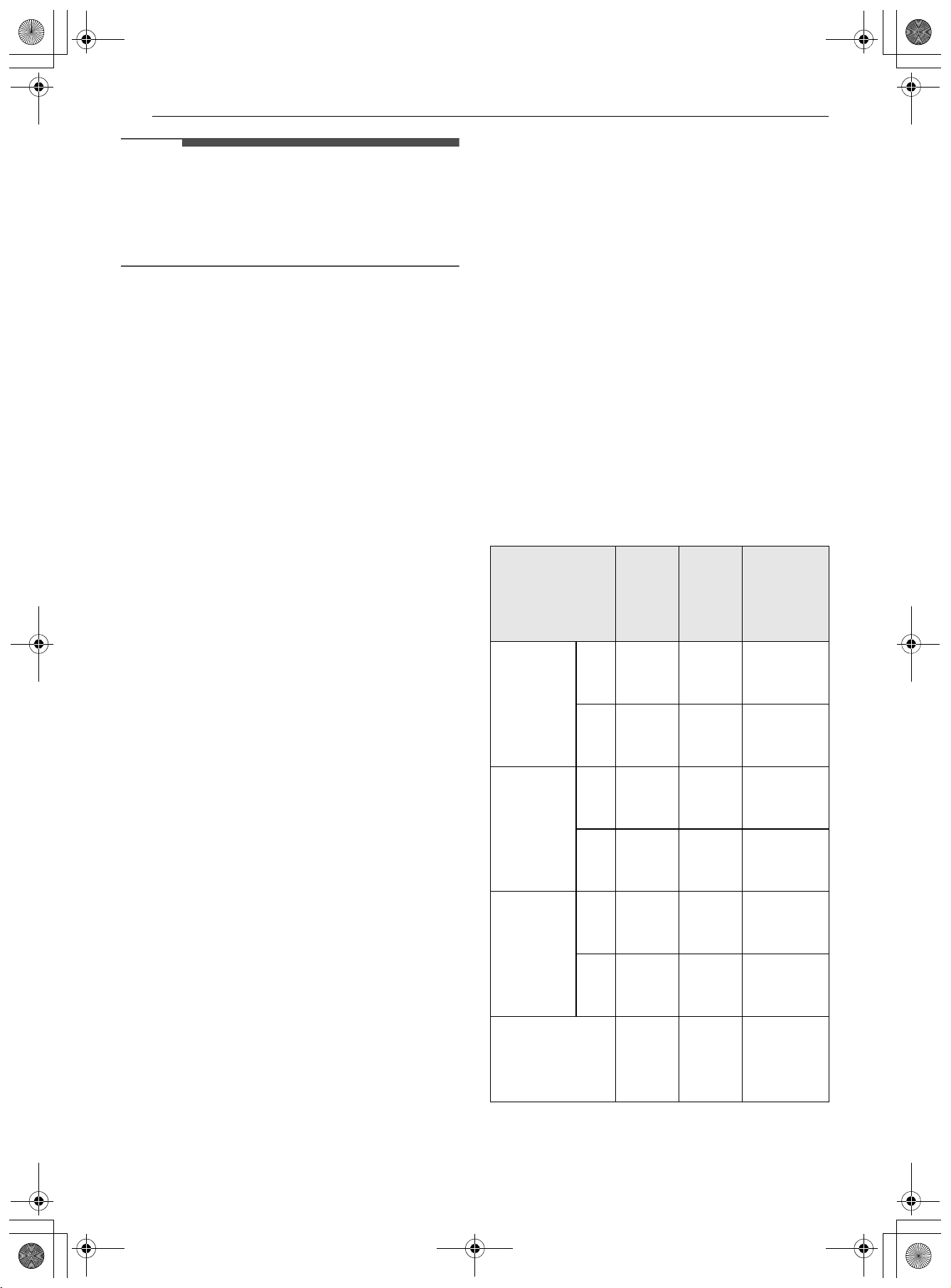
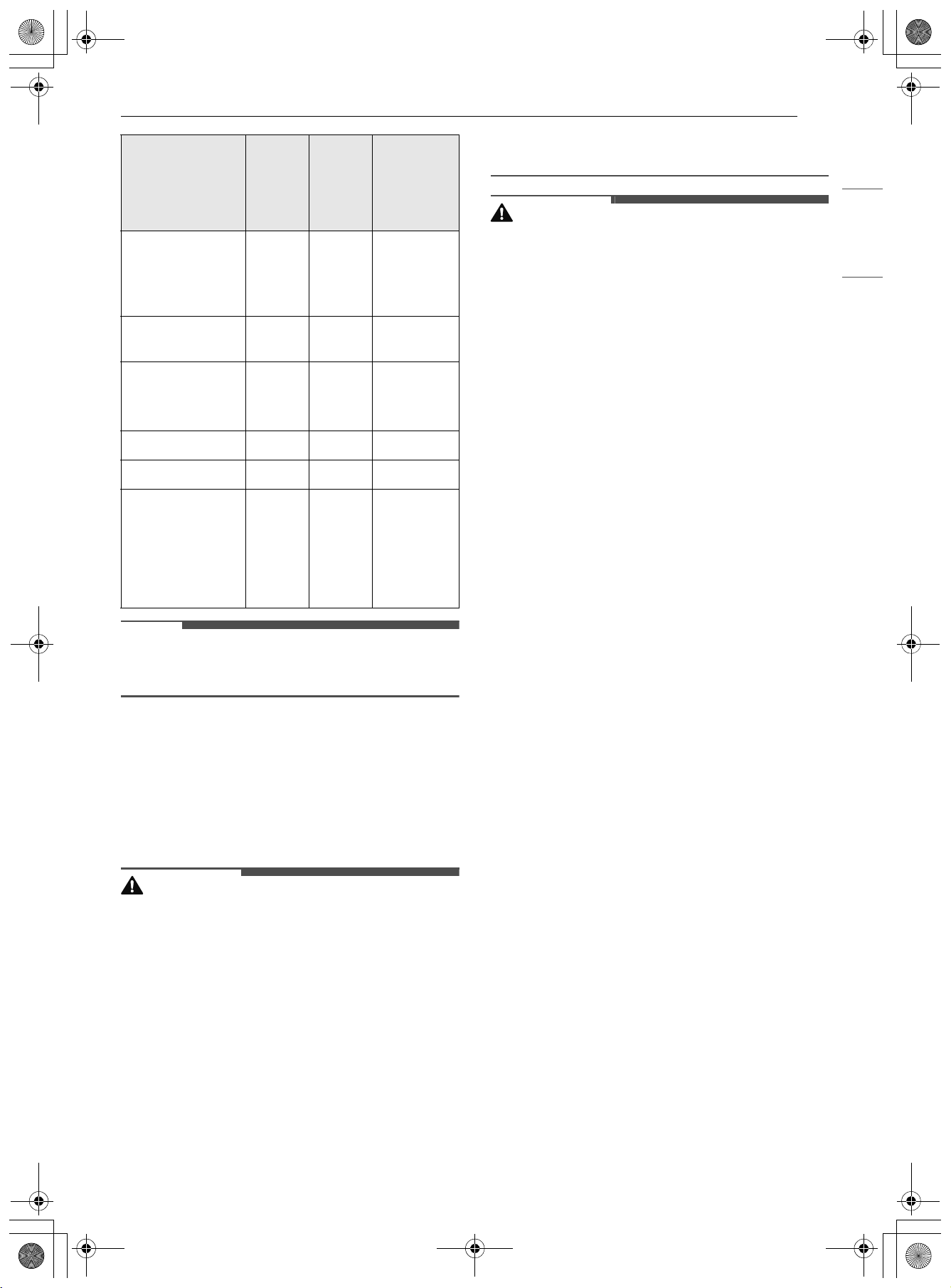
Minimum and Maximum Default
Settings
All of the features listed have a minimum and a
maximum time or temperature setting that may
be entered into the controls. An entry acceptance
beep sounds each time a control button is pressed.
An entry error tone (two short tones) sounds if the
entry of the temperature or time is below the
minimum or above the maximum setting for the
feature.
* Temperature if using auto conversion
Feature
Min.
Temp.
/
Time
Max.
Temp.
/
Time
Default
Clock
12
Hr.
1:00
Hr. /
min.
12:59
Hr. /
min.
24
Hr.
0:00
Hr. /
min.
23:59
Hr. /
min.
Timer
12
Hr.
0:01
min. /
sec.
11:59
Hr. /
min.
24
Hr.
0:01
min. /
sec.
11:59
Hr. /
min.
Cook Time
12
Hr.
0:01
Hr. /
min.
11:59
Hr. /
min.
24
Hr.
0:01
Hr. /
min.
11:59
Hr. /
min.
Conv. Bake
300
8
/
(*275
8)
550
8
/
285
7
350 8
(*325 8) /
12 Hr.
en-us_main.book.book Page 26 Tuesday, February 3, 2026 8:10 AM
27OPERATION
ENGLISH
NOTE
• Default cook mode times are without setting a
cook time.
Gas Surface Burners
Before Using the Gas Surface
Burners
Read all instructions before using.
WARNING
• Even if the top burner flame goes out, gas is still
flowing to the burner until the knob is turned to
the OFF position. If you smell gas, immediately
open a window and ventilate the area for five
minutes prior to using the burner. Do not leave
the burners on unattended.
• Use the proper pan size. Do not use pans that
are unstable or that can be easily tipped. Select
cookware with flat bottoms large enough to
cover burner grates. To avoid spillovers, make
sure the cookware is large enough to contain the
food properly. This will both save cleaning time
and prevent hazardous accumulations of food,
since heavy spattering or spillovers left on the
range can ignite. Use pans with handles that can
be easily grasped and remain cool.
CAUTION
• To avoid discoloration during use, follow the tips
in the Maintenance section.
• Do not operate the burner for an extended
period of time without cookware on the grate.
• The finish on the grate may chip without
cookware to absorb the heat.
• Touching grates before they cool down may
cause burns.
• What to do if you smell gas
- Open windows.
- Do not try to light any appliance.
- Do not touch any electrical switch.
- Do not use any phone in your building.
- Immediately call your gas supplier from a
neighbor’s phone. Follow the gas supplier’s
instructions.
- If you cannot reach your gas supplier, call the
fire department.
• Be sure that all surface controls are set in the
OFF position prior to supplying gas to the range.
• Never leave the surface burners unattended at
high flame settings. Boilovers may cause smoke
and greasy spillovers that may ignite.
• Always turn the knobs to the LITE position when
igniting the top burners and make sure the
burners have ignited.
• Control the top burner flame size so it does not
extend beyond the edge of the cookware.
Excessive flame is hazardous.
• Only use dry pot holders. Moist or damp pot
holders on hot surfaces may result in burns from
steam. Do not let pot holders come near open
flames when lifting cookware. Do not use towels
or other bulky cloth items. Use a pot holder.
• If using glass cookware, make sure the
cookware is designed for range-top cooking.
• To prevent burns from ignition of flammable
materials and spillage, turn cookware handles
toward the side or back of the range without
extending them over adjacent burners.
• Never leave any items on the cooktop. The hot
air from the vent may ignite flammable items
and will increase pressure in closed containers,
which may cause them to burst.
• Carefully watch foods being fried at a high flame
setting.
• Always heat fat slowly, and watch as it heats.
Conv. Roast
300
8
/
(*275
8)
550
8
/
285
7
350 8
(*325 8) /
12 Hr.
Broil Lo Hi
Hi /
3 Hr.
Bake
170
8
/
80
7
550 8
/
285
7
350 8 /
12 Hr.
Warm 3 Hr.
EasyClean 10 min.
Air Fry
300
8
/
150
7
0:01
Hr. /
min.
550
8
/
285
7
11:59
Hr. /
min.
400
8 /
205
7
Feature
Min.
Temp.
/
Time
Max.
Temp.
/
Time
Default
en-us_main.book.book Page 27 Tuesday, February 3, 2026 8:10 AM
28 OPERATION
CAUTION
• If frying combinations of oils and fats, stir
together before heating.
• Use a deep fat thermometer if possible to
prevent fat from heating beyond the smoking
point.
• Use the least possible amount of fat for effective
shallow or deep fat frying. Filling the pan with
too much fat can cause spillovers when food is
added.
• Do not cook foods directly on an open flame on
the cooktop.
• Do not use a wok on the surface burners if the
wok has a round metal ring that is placed over
the burner grate to support the wok. This ring
acts as a heat trap, which may damage the
burner grate and burner head. It may also cause
the burner to work improperly. This may cause
carbon monoxide levels which are higher than
what is allowed by current standards, resulting
in a health hazard.
CAUTION
• Foods for frying should be as dry as possible.
Frost or moisture on foods can cause hot fat to
bubble up and spill over the sides of the pan.
• Never try to move a pan of hot fat, especially a
deep fryer. Wait until the fat is cool.
• Do not place plastic items on the cooktop. They
may melt if left too close to the vent.
• Keep all plastics away from the surface burners.
• To prevent burns, always be sure that the
controls for all burners are in the OFF position
and all grates are cool before attempting to
remove them.
• If you smell gas, turn off the gas to the range
and call a qualified service technician. Never use
an open flame to locate a leak.
• Always turn the knobs to the OFF position before
removing cookware.
• Do not lift the cooktop. Lifting the cooktop can
cause damage and improper operation of the
range.
• If the range is located near a window, do not
hang long curtains that could blow over the
surface burners and catch on fire.
• Use care when cleaning the cooktop. The
pointed metal ends on the electrodes could
cause injury.
• Make sure that all burners are properly placed.
• Make sure that all grates are properly placed
before using the burners.
- Take care when installing or removing the
grates, as the rough edges may cause
scratches on the surface of the cooktop.
• Make sure that the burners and grates are cool
before touching them or placing a pot holder,
cleaning cloth, or other materials on them.
NOTE
• Electric spark igniters from the burners cause a
clicking noise. All the spark igniters on the
cooktop will activate when igniting just one
burner.
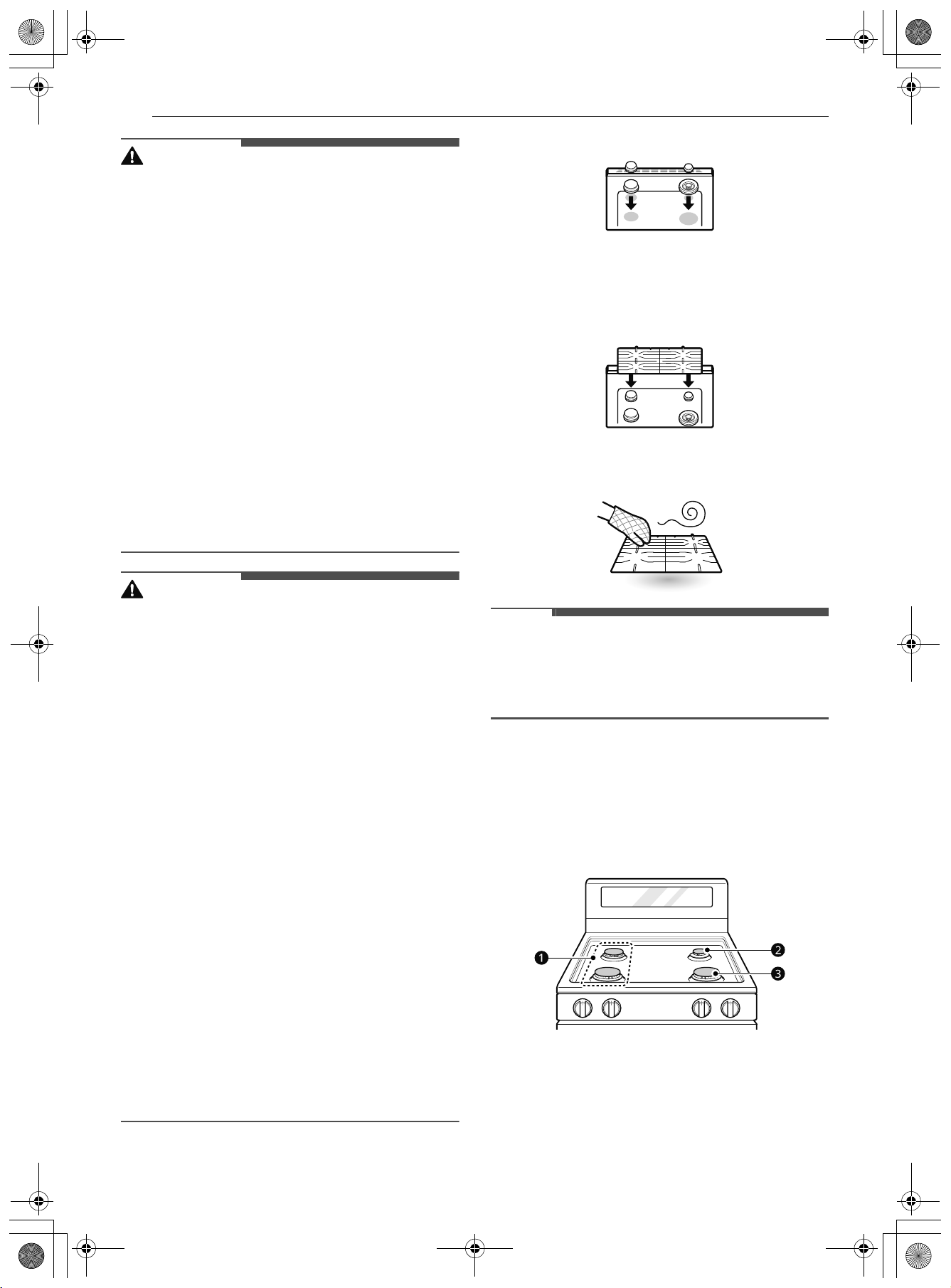
Burner Locations
Your gas range cooktop has four or five sealed gas
burners, depending on the model. The heads and
caps can be assembled and removed for cleaning.
Follow the guide below.
a Medium and large burners
The medium and large burners are the primary
burners for most cooking. These general
purpose burners can be turned down from Hi
to Lo to suit a wide range of cooking needs.
en-us_main.book.book Page 28 Tuesday, February 3, 2026 8:10 AM
29OPERATION
ENGLISH
b Small burner
The smallest burner is used for delicate foods
such as sauces or foods that require low heat
for a long cooking time.
c Extra large burner
The extra large burner is the maximum output
burner. Like the other four burners, it can be
turned down from Hi to Lo for a wide range of
cooking applications. This burner is also
designed to quickly bring large amounts of
liquid to a boil. It can be used with cookware 10
inches or larger in diameter.
Using the Gas Surface Burners
CAUTION
• Match the size of the cooktop burner or element
to the size of the cookware in use. Using a large
element for a small pan wastes heating energy,
and the exposed surface of the element is a burn
or fire hazard.
• Clean the knobs regularly. Soil or foreign objects
on the knobs may interfere with the operation of
the button.
• Do not apply excessive force when using the
buttons and lock functions, or they may be
damaged.
• The surfaces of the knobs may be hot after
cooking. Allow the knobs to cool sufficiently or
put on an oven mitt before touching them.
• The buttons must be properly set to ensure the
intended functions of the knobs.
NOTE
• If removing and reassembling the knob, press
and hold the side button while pushing the knob
fully onto shaft.
1 Be sure that all of the surface burners and
grates are placed in the correct positions.
2 Place cookware on the grate.
3 Press in the side button on the knob.
4 Push the control knob in and turn to the LITE
position to light the burner.
NOTE
• The electric spark ignition system makes a
clicking noise.
• The oven mode knob does not have a button.
(On some models)
• To use the cooktop knobs without pressing in
the side button, use the button lock function.
5 Turn the control knob to control the flame
size.
CAUTION
• Do not attempt to disassemble or clean around
any burner while another burner is on. All the
spark igniters on the cooktop will activate when
igniting just one burner. An electric shock may
result causing you to knock over hot cookware.
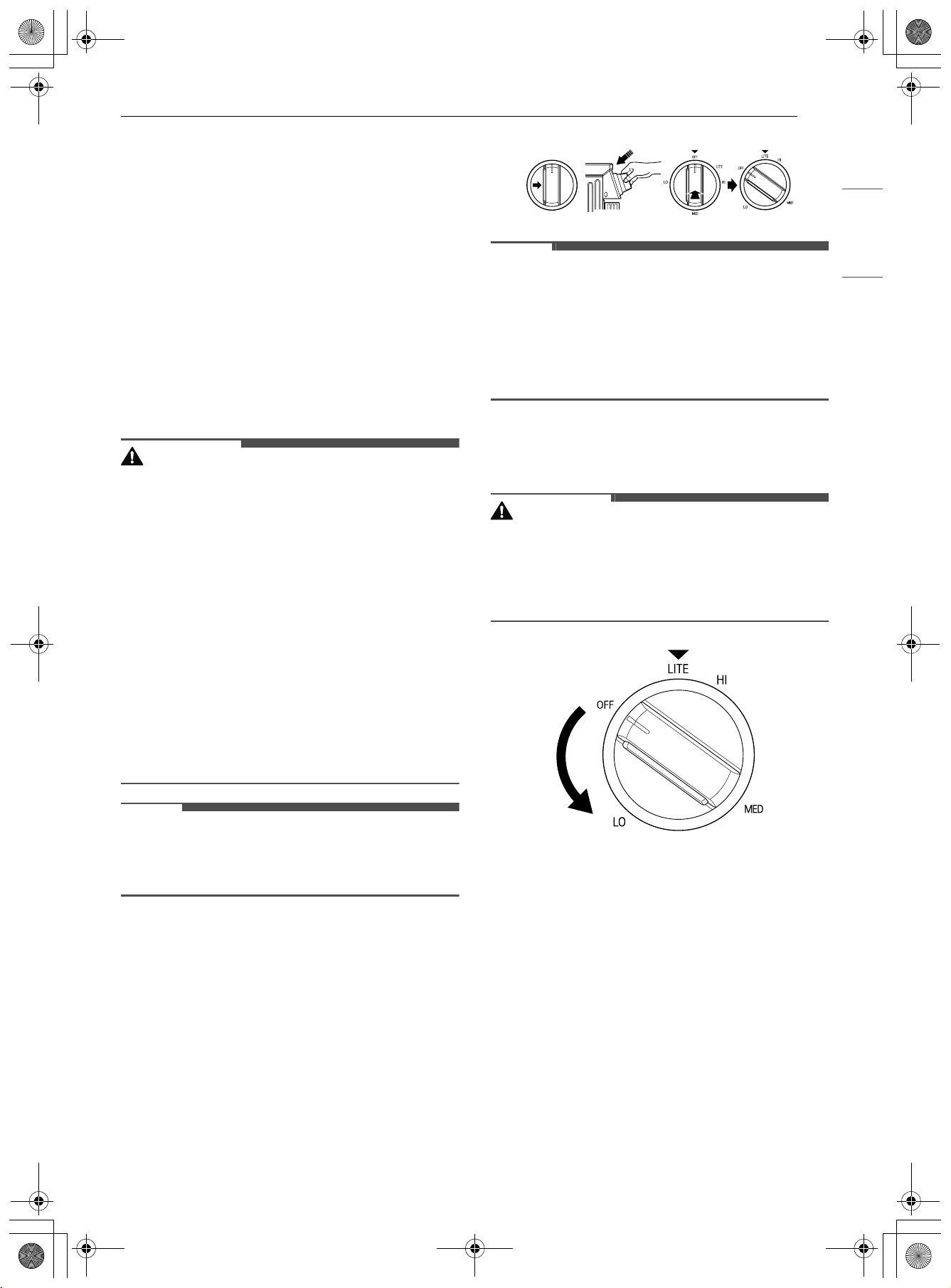
Using the Knob Lock
You can adjust the Knob Lock on each cooktop
knob so you don’t have to press the button in to
use the knob. Remove and adjust one knob at a
time.
1 Make sure the knob is in the OFF position and
pull it straight off the stem.
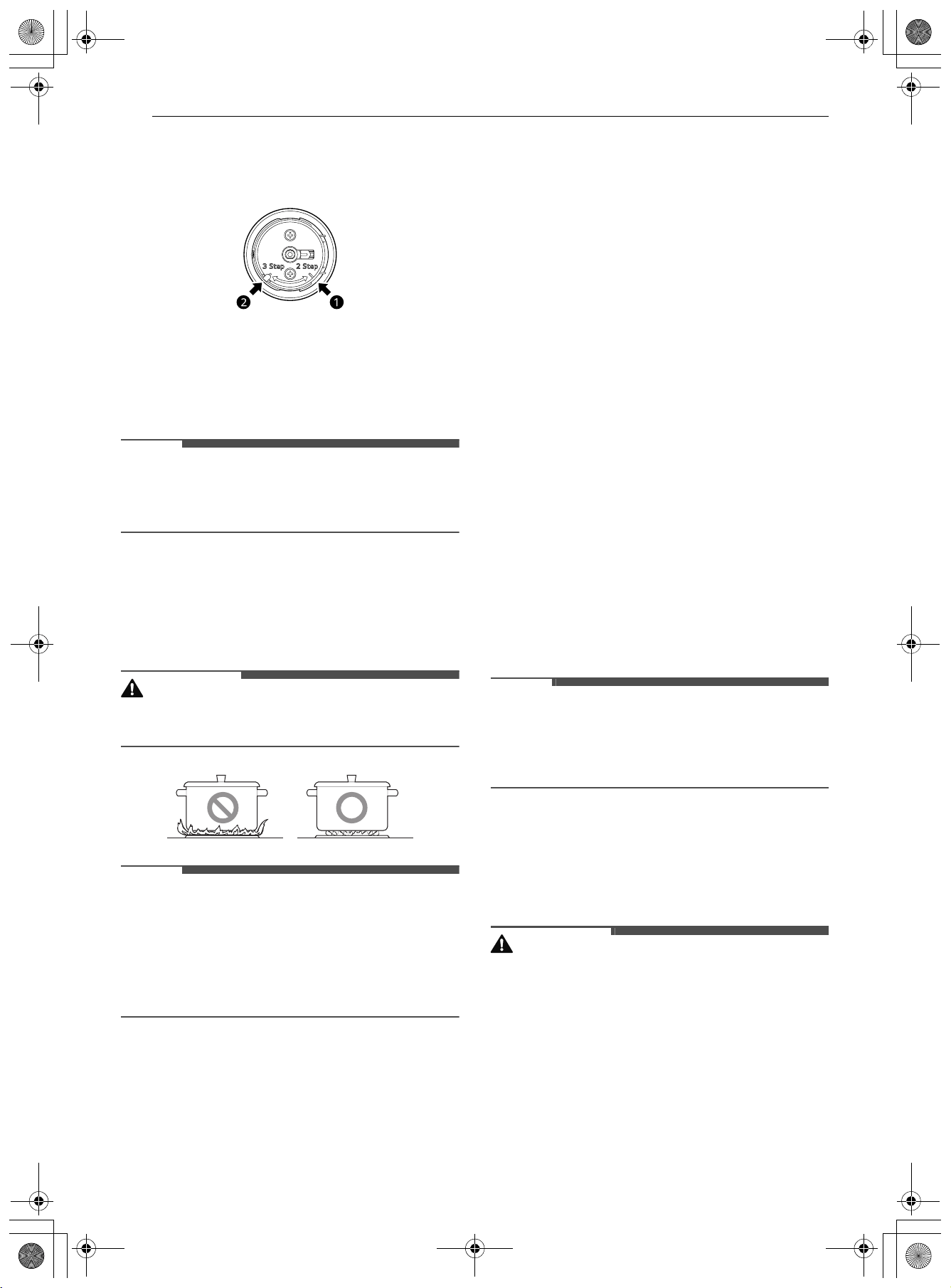
2 On the back of the knob ring, rotate the black
tab to the 2 Step or 3 Step position.
• If you slide the tab to the 2 Step
a position,
the knob can be used without pressing in
the button.
en-us_main.book.book Page 29 Tuesday, February 3, 2026 8:10 AM
30 OPERATION
• If you slide the tab to the 3 Step b position,
you must press in the button to use the
knob.
3 Once the Knob Lock is adjusted as desired,
reinstall the knob. To reinstall, hold the knob
with the OFF label at the top and slide the
knob directly onto the stem.
NOTE
• The black tab must be aligned with the 2 Step or
3 Step mark to ensure proper operation of the
knob and button.
Setting the Flame Size
Watch the flame, not the knob, as you reduce heat.
Match the flame size on a gas burner to the
cookware being used for fastest heating.
CAUTION
• Never let the flames extend up the sides of the
cookware.
NOTE
• The flames on the surface burners may burn
yellow in the presence of high humidity, such as
a rainy day or a nearby humidifier.
• After LP gas conversion, flames can be bigger
than normal when you put a pot on the surface
burner.
Using the Proper Cookware
• Aluminum
- Medium-weight cookware is recommended
because it heats quickly and evenly. Most
foods brown evenly in an aluminum skillet.
Use saucepans with tight fitting lids when
cooking with minimum amounts of water.
• Cast-Iron
- If heated slowly, most skillets will give
satisfactory results.
• Stainless Steel
- This metal alone has poor heating properties
and is usually combined with copper,
aluminum or other metals for improved heat
distribution. Combination metal skillets work
satisfactorily if they are used with medium
heat as the manufacturer recommends.
• Enamelware
- Under some conditions, the enamel of this
cookware may melt. Follow cookware
manufacturer’s recommendations for cooking
methods.
•Glass
- There are two types of glass cookware, those
for oven use only and those for top-of-range
cooking.
• Heatproof Glass Ceramic
- Can be used for either surface or oven
cooking. It conducts heat very slowly and cools
very slowly. Check cookware manufacturer’s
directions to be sure it can be used on gas
ranges.
NOTE
• Match the size of the cookware to the amount of
food being cooked to save energy when heating.
Heating 1/2 quart of water requires more energy
in a 3-quart pot than in a 1-quart pot.
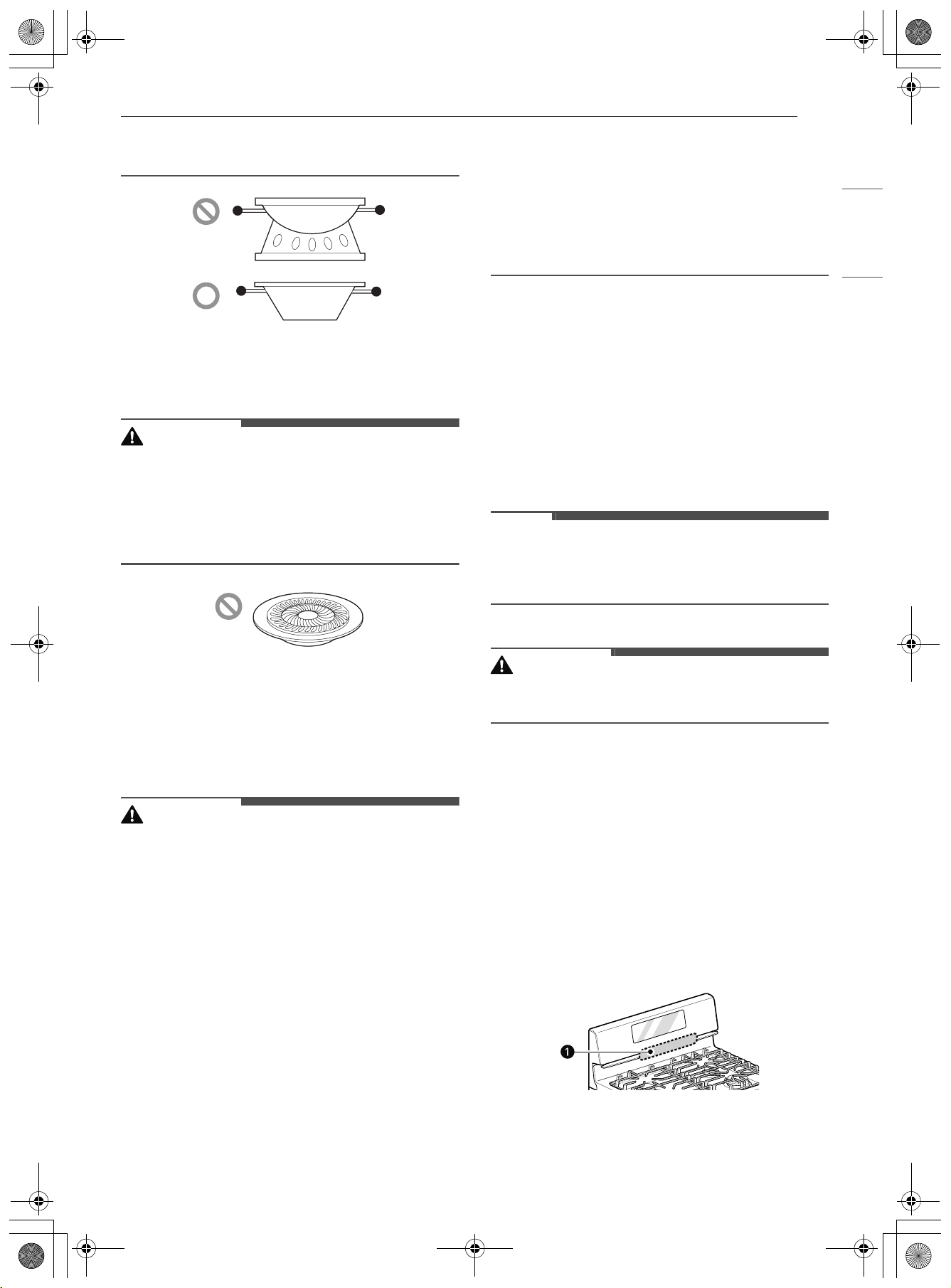
Using a Wok
If using a wok, use a 14-inch or smaller flat-
bottomed wok. Make sure that the wok bottom sits
flat on the grate.
CAUTION
• Do not use a wok support ring. Placing the ring
over the burner or grate may cause the burner
to work improperly, resulting in carbon
en-us_main.book.book Page 30 Tuesday, February 3, 2026 8:10 AM
31OPERATION
ENGLISH
monoxide levels above allowable standards. This
can be hazardous to your health.
Using Stove-Top Grills
Do not place stove-top grills on the burner.
CAUTION
• Do not use stove top grills on the surface
burners. Using a stove top grill on the surface
burner will cause incomplete combustion and
can result in exposure to carbon monoxide
levels above allowable current standards. This
can be a health hazard.
Oven
Before Using the Oven
Read all instructions before using.
CAUTION
• To avoid discoloration during use, follow the tips
in the Maintenance section.
• What to do if you smell gas
- Open windows.
- Do not try to light any appliance.
- Do not touch any electrical switch.
- Do not use any phone in your building.
- Immediately call your gas supplier from a
neighbor’s phone. Follow the gas supplier’s
instructions.
- If you cannot reach your gas supplier, call the
fire department.
• Do not place plastic or flammable items on the
cooktop. They may melt or ignite if left too close
to the vent.
• Do not place closed containers on the cooktop.
The pressure in closed containers may increase,
which may cause them to burst.
• Metal items will become very hot if they are left
on the cooktop, and could cause burns.
• Handles of pots and pans on the cooktop may
become hot if left too close to the vent.
• Avoid opening the oven door more than
necessary during use. This helps the oven
maintain temperature, prevents unnecessary
heat loss, and saves on energy use.
• Make sure the electrical power cord and the gas
valve are properly connected.
• Confirm the correct usage of the range for the
type of food you will cook.
- Make sure you know how to use the oven
(temperature setting, time setting and recipe)
for best results.
NOTE
• If using an oven thermometer in the oven cavity,
temperatures may differ from the actual set
oven temperature with all modes.
• In case of power failure, do not use the oven.
CAUTION
• Do not attempt to operate the electric ignition
during an electrical power failure.
- The oven and broiler cannot be used during a
power outage. If the oven is in use when a
power failure occurs, the oven burner shuts off
and cannot be re-lit until power is restored.
Once power is restored, you will need to reset
the oven (or Broil function).
• Do not block, touch or place items around the
oven vent during cooking.
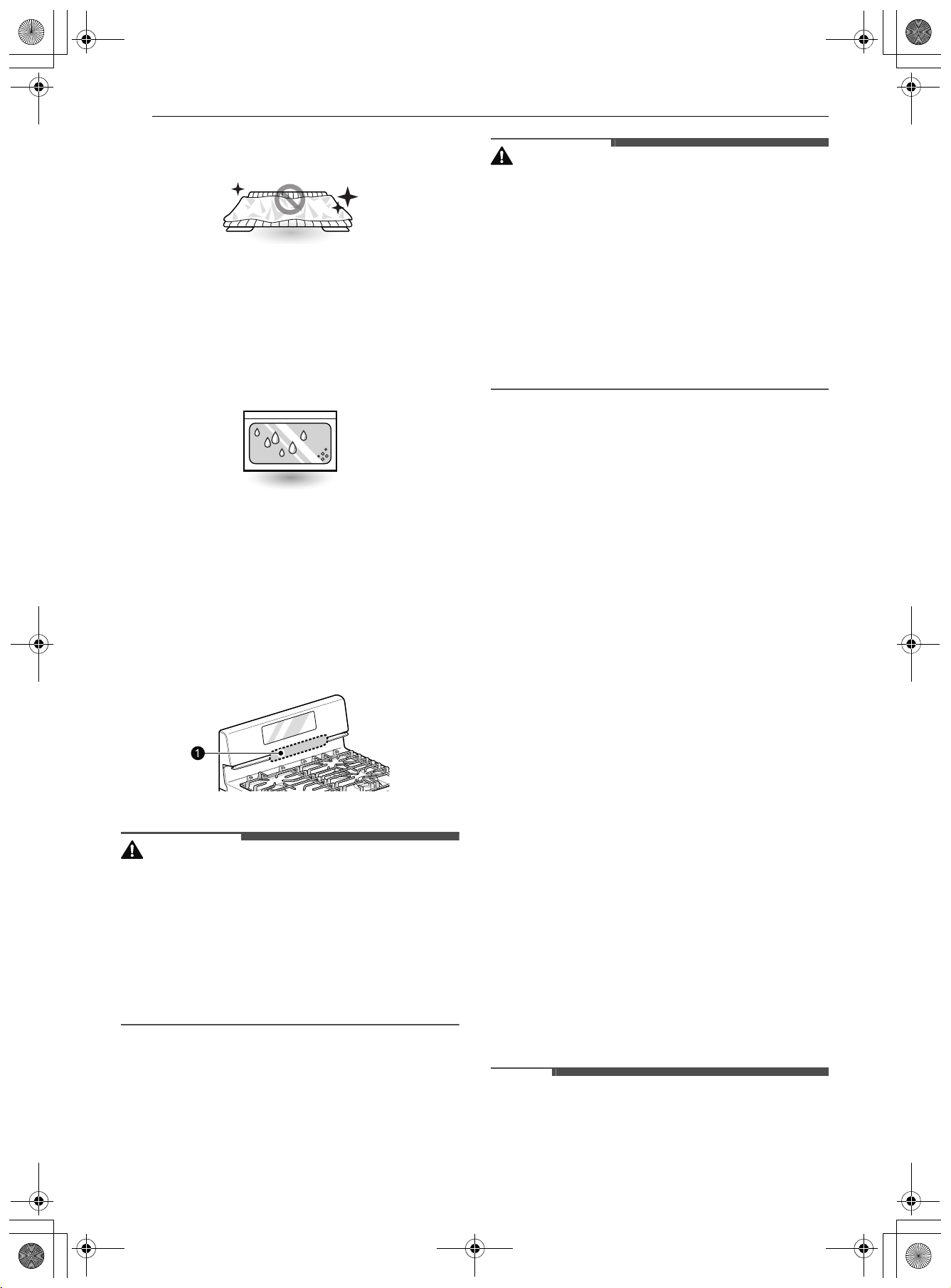
- Your oven is vented through ducts at the
center above the burner grate. Do not block
the oven vent
a when cooking to allow for
proper air flow. Do not touch vent openings or
nearby surfaces during any cooking operation.
en-us_main.book.book Page 31 Tuesday, February 3, 2026 8:10 AM
32 OPERATION
• Do not cover racks or oven bottom with
aluminum foil.
• You may see condensation on the oven door
glass.
- As the oven heats up, the heated air in the
oven may cause condensation to appear on
the oven door glass. These water drops are
harmless and will evaporate as the oven
continues to heat up.
Oven Vent
Areas near the vent may become hot during
operation and may cause burns. Do not block the
vent opening. Avoid placing plastics near the vent
as heat may distort or melt the plastic.
It is normal for steam to be visible when cooking
foods with high moisture content.
a Oven Vent
CAUTION
• The edges of the range vent are sharp. Wear
gloves when cleaning the range to avoid injury.
• Do not block, touch or place items around the
oven vent during cooking.
- Do not block the oven vent when cooking to
allow for proper air flow. Do not touch vent
openings or nearby surfaces during any
cooking operation.
Using Oven Racks
The racks have a turned-up back edge that
prevents them from being pulled out of the oven
cavity.
CAUTION
• Replace oven racks before turning the oven on
to prevent burns.
• Do not cover the racks with aluminum foil, or
any other material, or place anything on the
bottom of the oven. Doing so will result in poor
baking and may damage the oven bottom.
• Only arrange oven racks when the oven is cool.
• Do not place objects heavier than 33 lb (15 kg)
on the racks. Do not place heavy objects on the
corners of the racks. Doing so can damage the
racks.
Removing Racks
1 Pull the rack straight out until it stops.
2 Lift up the front of the rack and pull it out.
Replacing Racks
1 Place the end of the rack on the support.
2 Tilt the front end up and push the rack in.
Bake
Bake is used to prepare foods such as pastries,
breads and casseroles.
The oven can be programmed to bake at any
temperature from 170 ℉ (80 ℃) to 550 ℉ (285 ℃).
The default temperature is 350 ℉ (175 ℃).
Setting the Bake Function
(For example, to bake at 375 °F)
1 Press Bake.
2 Use the +/- buttons to set the temperature.
3 Press START. The oven starts to preheat.
NOTE
• As the oven preheats, the temperature is
displayed and rises in 5-degree increments.
Once the oven reaches the set temperature, a
tone sounds and the oven light blinks on and off.
en-us_main.book.book Page 32 Tuesday, February 3, 2026 8:10 AM
33OPERATION
ENGLISH
• If the door is opened during baking, the bake
burner turns off after 30 seconds. The burner
turns back on automatically once the door is
closed.
4 When cooking is complete, press CLEAR/OFF.
5 Remove the food from the oven.
NOTE
• It is normal for the convection fan to operate
periodically throughout a normal bake cycle in
the oven. This is to ensure even baking results.
• The convection fan may continue to run for a
short time after the oven is turned off.
Baking Tips
• Baking time and temperature will vary
depending on the characteristics, size, and
shape of the baking pan used.
• Check for food doneness at the minimum recipe
time.
• Use metal bakeware (with or without a nonstick
finish), heatproof glass-ceramic, ceramic or
other bakeware recommended for oven use.
• Dark metal pans or nonstick coatings will cook
food faster with more browning. Insulated
bakeware will slightly lengthen the cooking time
for most foods.
• The oven bottom has a porcelain-enamel finish.
To make cleaning easier, protect the oven
bottom from excessive spillovers by placing a
cookie sheet on the rack below the rack you are
cooking on. This is particularly important when
baking a fruit pie or other foods with a high acid
content. Hot fruit fillings or other foods that are
highly acidic may cause pitting and damage to
the porcelain-enamel surface and should be
wiped up immediately.
Convection Mode
The convection system uses a fan to circulate the
heat evenly within the oven. Improved heat
distribution allows for even cooking and excellent
results while cooking with single or multiple racks.
Setting the Convection Function
(For example, cooking at 375 ℉)
1 Press Conv. Bake or Conv. Roast. The display
flashes 350 ℉.
2 Use the +/- buttons to set the temperature.
3 Press START. The display shows Conv. Bake
or Conv. Roast and the oven temperature
starting at 100 °F.
• As the oven preheats, the display shows
increasing temperatures in 5-degree
increments. Once the oven reaches the set
adjusted temperature, a tone sounds and
the oven light flashes on and off. The
display shows the auto-converted oven
temperature.
4 When cooking has finished or to cancel, press
CLEAR/OFF.
NOTE
• The oven fan runs while convection baking. The
fan stops when the door is open. In some cases,
the fan may shut off during a convection bake
cycle.
• It's normal for there to be a delay before the
convection fan turns on during a cook cycle.
Tips for Convection Baking
• Use Convection Bake for faster and more even
multiple-rack cooking of pastries, cookies,
muffins, biscuits, and breads of all kinds.
• Bake cookies and biscuits on pans with no sides
or very low sides to allow heated air to circulate
around the food. Food baked on pans with a
dark finish will cook faster.
• When using Convection Bake, place the oven
racks in positions suggested in the charts in this
manual.
• Multiple oven rack cooking may slightly increase
cook times for some foods.
• Cakes, cookies and muffins have better results
when using multiple racks.
Tips for Convection Roasting
The Convection Roast feature is designed to give
optimum roasting performance. Convection Roast
combines cooking with the convection fan to roast
meats and poultry. The heated air circulates
around the food from all sides, sealing in juices
and flavors. Foods are crispy brown on the outside
en-us_main.book.book Page 33 Tuesday, February 3, 2026 8:10 AM
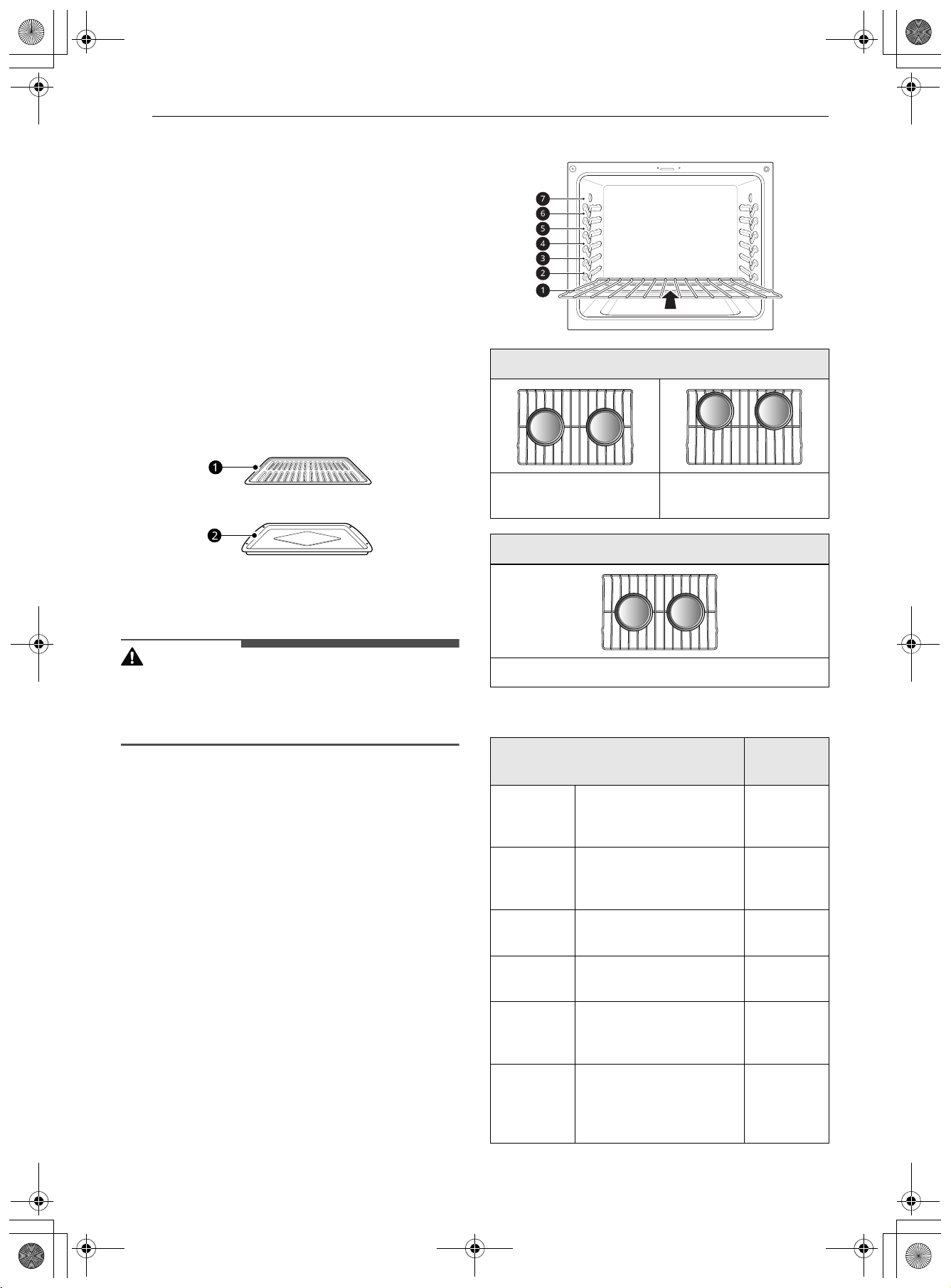
34 OPERATION
while staying moist on the inside. Convection
roasting is especially good for large tender cuts of
meat, uncovered.
Use a broiler pan and grid when preparing meats
for convection roasting. The broiler pan catches
grease spills and the grid helps prevent grease
splatters.
1 Place the oven rack in the recommended
position.
2 Place the grid in the broiler pan.
3 Place the broiler pan on the oven rack.
a Grid (sold separately)
b Broiler pan (sold separately)
CAUTION
• Do not use a broiler pan without a grid.
• Do not cover the grid with aluminum foil.
• Position food (fat side up) on the grid.
Recommended Baking and
Roasting Guide
Baking results will be better if baking pans are
centered in the oven as much as possible. If
cooking on multiple racks, place the oven racks in
the positions shown.
Multiple-rack cooking saves time and energy.
Whenever possible, cook foods requiring the same
cooking temperature together in one oven.
Rack and Pan Placement
Baking Rack Guide
Multiple rack baking
Standard rack (Position
1)
Standard rack (Position
4)
Single rack baking
Standard rack
Food
Rack
position
Cakes
Layer cakes
Bundt cakes
Angel food cake
2
3
3
Cookies
Sugar cookies
Chocolate chips
Brownies
3
3
3
Pizza
Fresh
Frozen
4
4
Pastry
Crust
From scratch
Refrigerated
4
4
Breads
Biscuit, canned
Biscuit, from scratch
Muffins
5
5
4
Desserts
Fruit crisps and
cobblers, from scratch
Pies, from scratch, 2-
crust fruit
3
3
en-us_main.book.book Page 34 Tuesday, February 3, 2026 8:10 AM
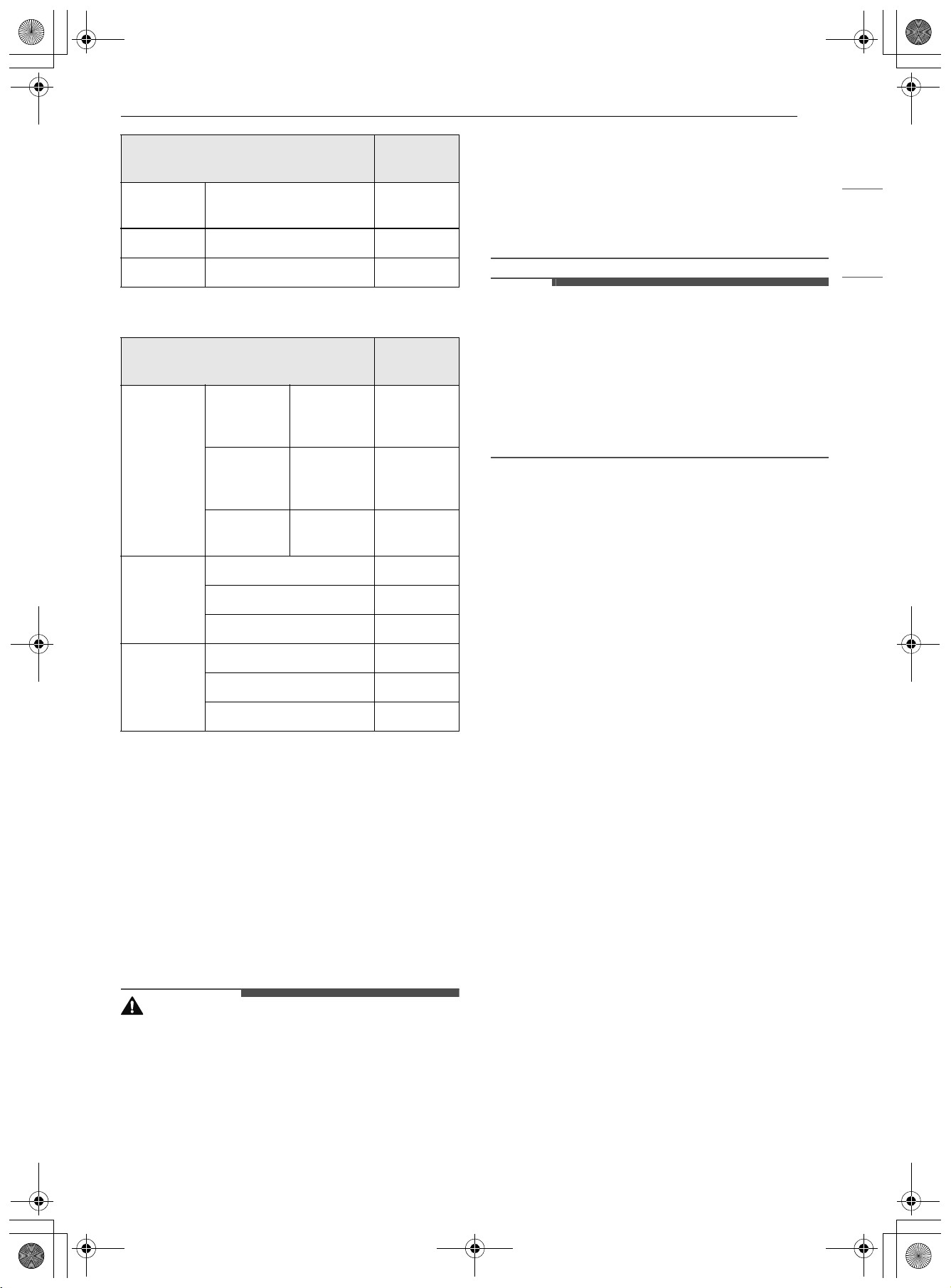
35OPERATION
ENGLISH
Roasting Rack Guide
Broil
The Broil function uses intense heat from the
upper heating element to cook food. Broiling
works best for tender cuts of meat, fish, and thinly
cut vegetables.
Some models may feature a hybrid broiler
consisting of an inner broiler that utilizes a carbon
heating element which provides instantaneous
heat, and a traditional outer broiling element.
During normal broiler operation, it is normal for
either element to cycle off intermittently.
CAUTION
• Do not use a broiler pan without a grid. Oil can
cause a grease fire.
• Do not cover the grid and broiler pan with
aluminum foil. Doing so will cause a fire.
• Always use a broiler pan and grid for excess fat
and grease drainage. This will help to reduce
splatter, smoke, and flare-ups.
• When using your broiler, the temperature inside
the oven will be extremely high. Take care to
avoid possible burns by:
- Keeping the door closed when broiling
- Always wearing oven mitts when inserting or
removing food items
NOTE
• This range is designed for closed-door broiling.
Close the door to set the Broil function. If the
door is open, the Broil function cannot be set
and "door" appears on the display. Close the
door and reset the Broil function. If the door is
opened during broiling, the broil burner turns
off after five seconds. The broiler turns back on
automatically once the door is closed.
Setting the Oven to Broil
1 Press Broil.
• Use the +/- buttons to change the
temperature settings.
2 Press START. The oven begins to heat.
3 Let the oven preheat for approximately five
minutes before cooking the food if using
Broil.
4 Place food in the oven.
5 Close the oven door. The oven door must be
closed during broiling.
6 Press CLEAR/OFF to cancel at any time or
when cooking is complete.
Tips for Reducing Smoke
Due to the intense heat associated with broiling, it
is normal to experience smoke during the cooking
process. This smoke is a natural byproduct of
searing and should not cause you to worry. If you
are experiencing more smoke than you are
comfortable with, use the following tips to reduce
the amount of smoke in your oven.
• Always use a broiler pan. Do not use saute pans
or regular baking sheets for safety reasons.
Custards
Cheesecake, crème
brulée
2
Soufflés Sweet or savory 2
Casserole Frozen lasagna 5
Food
Rack
position
Beef
Rib
Rare
Medium
Well done
2
2
2
Boneless
rib, top
sirloin
Rare
Medium
Well done
2
2
2
Beef
tenderloin
Rare
Medium
2
2
Pork
Rib 2
Bone-in, sirloin 2
Ham, cooked 2
Poultry
Whole chicken 3
Chicken pieces 3
Turkey 3
Food
Rack
position
en-us_main.book.book Page 35 Tuesday, February 3, 2026 8:10 AM
36 OPERATION
• The broiler pan should always be thoroughly
cleaned and at room temperature at the
beginning of cooking.
• Always run your cooktop ventilation system or
vent hood during broiling.
• Keep the interior of your oven as clean as
possible. Leftover debris from prior meals can
burn or catch fire.
• Avoid fatty marinades and sugary glazes. Both of
these will increase the amount of smoke you
experience. If you would like to use a glaze,
apply it at the very end of cooking.
• If you are experiencing significant smoke with
any food item, consider:
- Lowering the broiler to the Lo setting.
- Lowering the rack position to cook the food
farther away from the broiler.
- Using the Hi broil setting to achieve the level
of searing you desire, and then either
switching to the Lo broil setting, or switching
to the Bake function.
• As a rule, fattier cuts of meat and fish will
produce more smoke than leaner items.
• Adhere to the guidelines in the Recommended
Broiling Guide section whenever possible.
en-us_main.book.book Page 36 Tuesday, February 3, 2026 8:10 AM
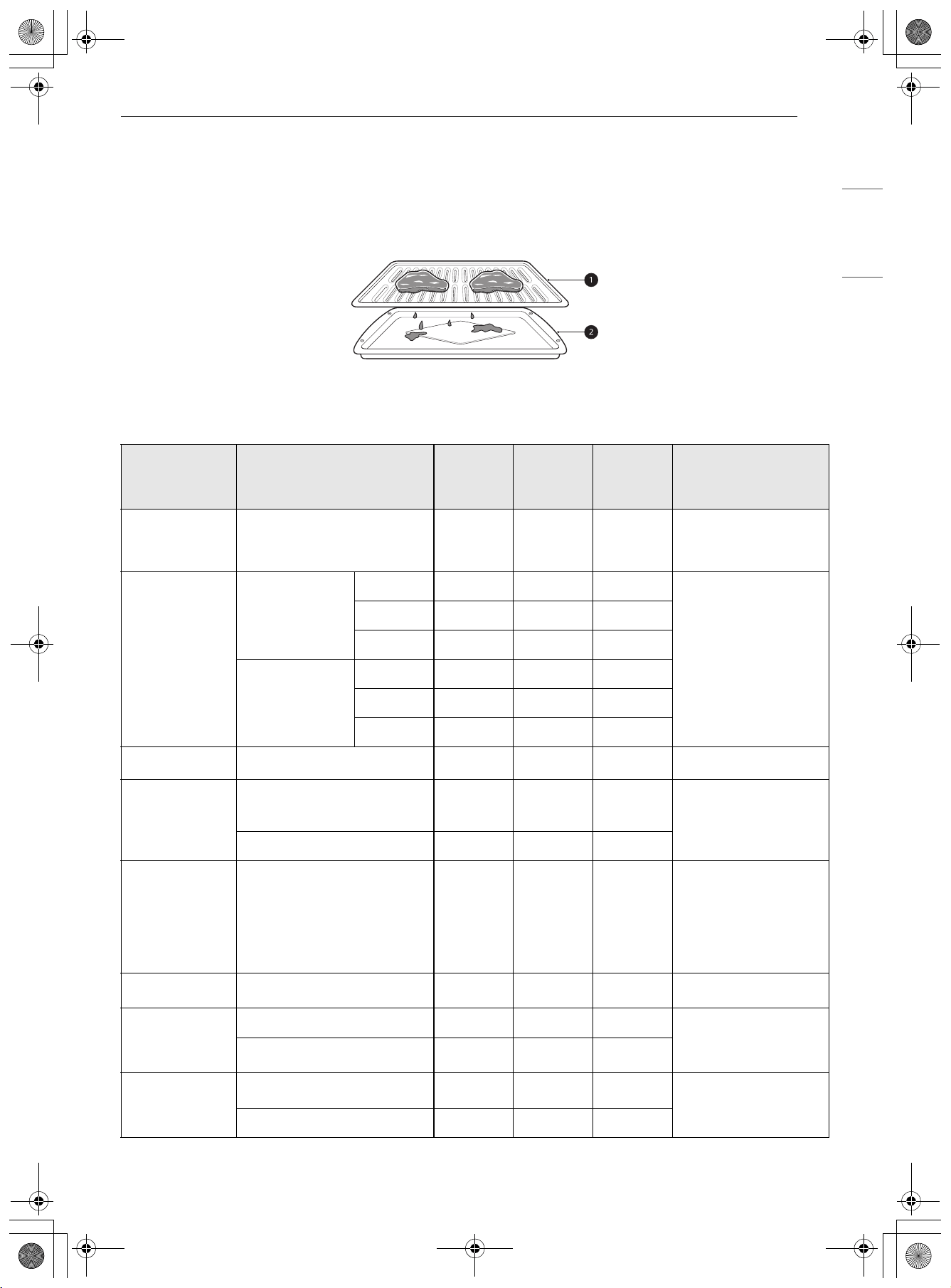
37OPERATION
ENGLISH
Recommended Broiling Guide
The size, weight, thickness, starting temperature, and your preference of doneness will affect broiling
times.
This guide is based on meats at refrigerator temperature. For best results when broiling, use a pan
designed for broiling.
a Grid (sold separately)
b Broiler pan (sold separately)
Food
Quantity and/or
Thickness
Rack
Position
First
Side
(min.)
Second
Side
(min.)
Comments
Hamburgers
9 patties
1
/
2
to
3
/
4
" thick
76-74-5
Space evenly. Up to 9
patties may be broiled
at once.
Beef Steaks
1" thick
1 to 1
1
/
2
lbs.
Rare 6 7 5
Steaks less than 1"
thick cook through
before browning. Pan
frying is
recommended. Slash
fat.
Medium 6 12 5-6
Well done 6 13 8-9
1
1
/
2
" thick
2 to 2
1
/
2
lbs.
Rare 4 10 6-7
Medium 4 12-15 10-12
Well done 4 25 16-18
Toast 1 to 9 pieces 5 1-2 1-2
Chicken
1 whole, 2 to 2
1
/
2
lbs., split
lengthwise
2 35-40 25
Broil skin-side-down
first.
2 Breasts 2 25-30 10-15
Lobster Tails
2–4
6 to 8 oz. each
3 13-16
Do not
turn over
Cut through back of
shell. Spread open.
Brush with melted
butter before broiling
and after half of
broiling time.
Fish Fillets
1
/
4
to
1
/
2
" thick
57-86
Ham Slices
(precooked)
1" thick 3 10 5
1
/
2
" thick
474
Pork Chops
Well done
2 (
1
/
2
" thick)
4108
2 (1" thick) about 1lb. 4 13 8-9
en-us_main.book.book Page 37 Tuesday, February 3, 2026 8:10 AM
38 OPERATION
• This guide is only for reference. Adjust cook time according to your preference.
• Do not use the gliding rack in position 7.
NOTE
• The USDA advises that consuming raw or undercooked fish, meat, or poultry can increase your risk of
food-borne illness.
• The USDA has indicated the following as safe minimum internal temperatures for consumption:
- Ground beef: 160 °F (71.1 °C)
- Poultry: 165 °F (73.9 °C)
- Beef, veal, pork, or lamb: 145 °F (62.8 °C)
- Fish / Seafood: 145 °F (62.8 °C)
Tips for Broiling
• Beef
- Steaks and chops should always be allowed to rest for five minutes before being cut into and eaten.
This allows the heat to distribute evenly through the food and creates a more tender and juicy result.
- Pieces of meat that are thicker than two inches should be removed from the refrigerator 30 minutes
prior to cooking. This will help them cook more quickly and evenly, and will produce less smoke when
broiling. Cooking times will likely be shorter than the times indicated in the Broiling Chart.
- For bone-in steaks or chops that have been frenched (all meat removed from around the bone), wrap
the exposed sections of bone in foil to reduce burning.
• Seafood
- When broiling skin-on fish, always use the Lo broil setting and always broil the skin side last.
- Seafood is best consumed immediately after cooking. Allowing seafood to rest after cooking can cause
the food to dry out.
- It is a good idea to rub a thin coating of oil on the surface of the broiling pan before cooking to reduce
sticking, especially with fish and seafood. You can also use a light coating of non-stick pan spray.
• Vegetables
- Toss your vegetables lightly in oil before cooking to improve browning.
Warm
This function maintains an oven temperature of
170 °F. The Warm function will keep cooked food
warm for serving up to 3 hours after cooking has
finished. The Warm function may be used without
any other cooking operations.
Setting the Warm Function
1 Press Warm.
2 Press START.
Lamb Chops
2 (1" thick)
about 10 to 12
oz.
Medium 5 6 4-7
Well done
51010
2 (1
1
/
2
" thick)
about 1lb.
Medium 5 10 4-6
Well done 5 17 12-14
Bacon 1/2 lb. (about 8 thin slices) 4 8 3
Food
Quantity and/or
Thickness
Rack
Position
First
Side
(min.)
Second
Side
(min.)
Comments
en-us_main.book.book Page 38 Tuesday, February 3, 2026 8:10 AM
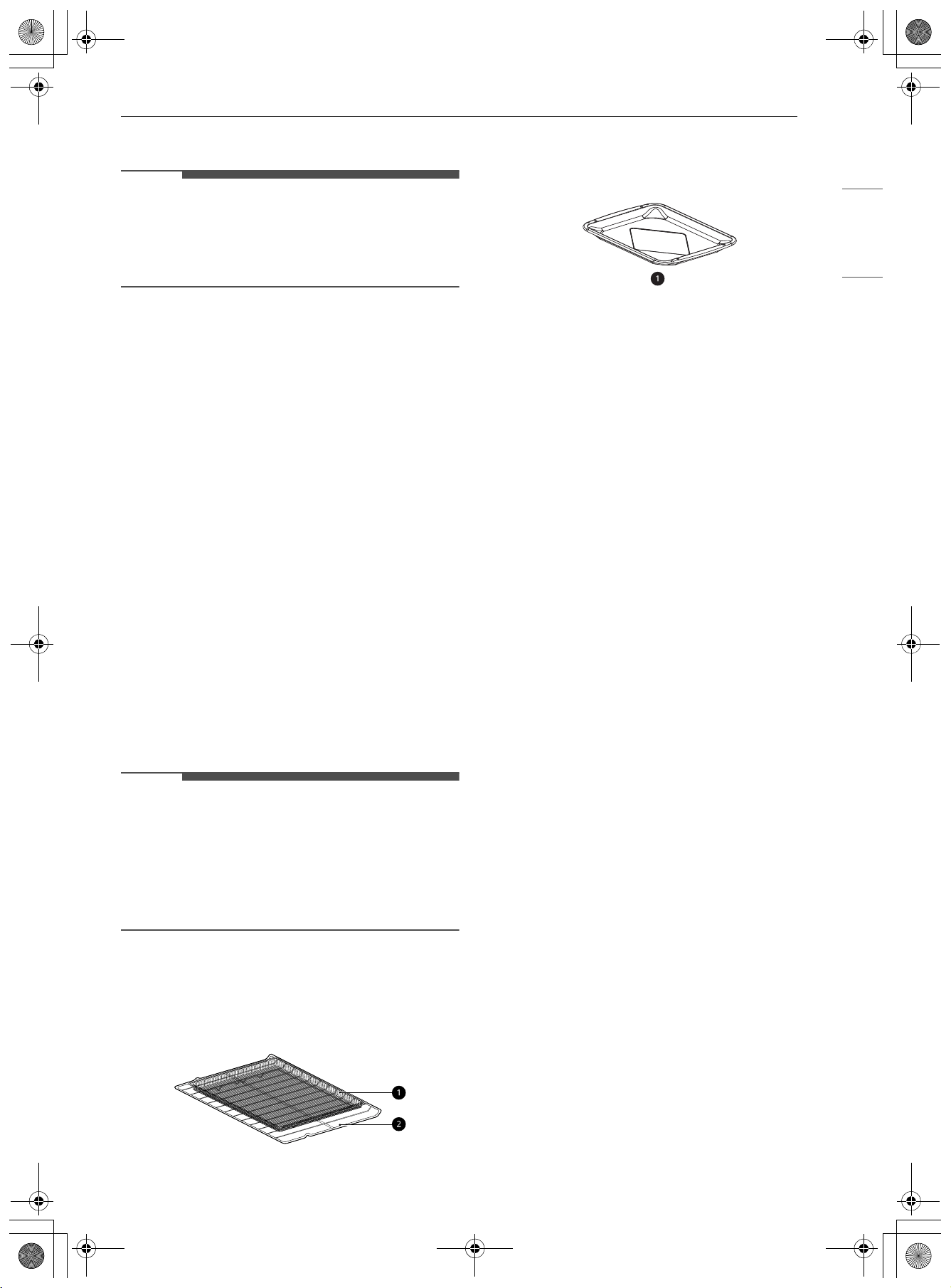
39OPERATION
ENGLISH
3 Press CLEAR/OFF at any time to cancel.
NOTE
•The Warm function is intended to keep food
warm. Do not use it to cool food down.
• It is normal for the fan to operate during the
Warm function.
Air Fry
This feature automatically increases the entered
temperature for optimal performance when using
Air Fry.
The air fry function is specially designed for oil-free
frying.
Setting the Air Fry Function
1 Press Air Fry. 400°F appears in the display.
2 Set the oven temperature (Range: 300°F ~
550°F)
Use +/- buttons to enter the desired
temperature.
3 Press START.
4 When cooking is complete, press CLEAR/OFF .
NOTE
• No preheating is required when using the Air Fry
mode.
• If cooking multiple batches, the later batches
may take less time to cook.
• Wet batters and coatings will not crisp or set
when using the Air Fry mode.
Tips for Air Fry
• For best results, use the provided air fry tray.
- The mesh section of the air fry tray can be
cleaned in a dishwasher.
a Air Fry Tray
b Standard Rack
• If you don't have the air fry tray, place food on a
wire rack inside a foil-lined cookie pan.
a Broiler Pan
• For best results, cook food on a single rack
placed in positions suggested in the chart in this
manual.
• The mesh section of the air fry tray can be
cleaned in a dishwasher.
• Spread the food out evenly in a single layer.
• Use either the optional air fry tray available from
LG or a dark baking tray with no sides or short
sides that does not cover the entire rack. This
allows for better air circulation.
• If desired, spray the baking tray or air fry tray
with a pan spray. Use an oil that can be heated to
a high temperature before smoking, such as
avocado, grapeseed, peanut or sunflower oil.
• Place a foil-lined baking tray on a rack in position
2 to catch the oil falling from the food. For high-
fat foods like chicken wings, add a few sheets of
parchment paper to absorb the fat.
• Check food often and shake it or turn it over for
crisper results.
• Prepared frozen foods may cook faster with the
Air Fry mode than stated on the package.
Reduce the cooking time by about 20 percent,
check food early, and adjust cooking time as
needed.
• Use a food thermometer to make sure food has
reached a safe temperature for consumption.
Eating undercooked meats can increase your
risk of food-borne illness.
• For the crispiest results, dredge fresh chicken
wings or tenders in seasoned flour. Use 1/3 cup
flour for 2 pounds.
Recommendations When Air Frying
High-Fat Foods
Foods high in fat will smoke when using the Air Fry
mode. For best results, follow these
recommendations when air frying foods that are
high in fat, such as chicken wings, bacon, sausage,
hot dogs, turkey legs, lamb chops, ribs, pork loin,
duck breasts, or some plant-based proteins.
en-us_main.book.book Page 39 Tuesday, February 3, 2026 8:10 AM
40 OPERATION
CAUTION
• Never cover slots, holes, or passages in the oven
bottom or cover entire racks with materials such
as aluminum foil. Doing so blocks airflow
through the oven and can result in carbon
monoxide poisoning. Aluminum foil can also
trap heat, causing a fire hazard or poor oven
performance.
• Turn on your exhaust hood at a high fan setting
before you start Air Fry and leave it on for 15
minutes after you're done.
• Open a window or sliding glass door, if possible,
to make sure the kitchen is well-ventilated.
• Clean the grease filters on your exhaust hood
regularly.
• Keep the oven free from grease buildup. Wipe
down the interior of the oven before and after
air frying (once the oven has cooled).
• Run oven cleaning cycles (EasyClean or
SelfClean) regularly, depending on how often
and what types of food you Air Fry.
• Avoid opening the oven door more than
necessary to help maintain the oven
temperature, prevent heat loss, and save
energy.
• Air-frying fresh chicken pieces such as wings or
drumsticks with the skin left on can produce
smoke as the fat renders at high temperatures.
If the smoke is excessive, use the Convection
Roast mode instead of Air Fry.
Recommended Air Frying Guide
• Arrange food evenly in a single layer.
• Put a foil-lined baking pan on a rack in position 1 to catch drips. If needed, add parchment paper to
absorb oil and reduce smoking.
• Flip food over during cooking to avoid burning it.
† High-fat items may produce more smoke when cooked using Air Fry. For less smoke, cook using
Convection Roast mode.
Recommended Items
Quantity
(oz)
Temp. (°F)
Rack
Position
Time Guide
POTATOES-Frozen
Frozen French Fries
(Shoestring)
20 425 3 15-25
Frozen French Fries
(Crinkle cut, 3/8" or 10
mm)
35 425 3 15-25
Frozen Sweet Potato
Fries
25 425 3 15-30
Frozen Tater Tots 50 450 3 20-30
Frozen Hash Browns 40 450 3 25-35
POTATOES-Fresh/Homemade
Homemade French Fries
(3/8" x 3/8" or 10 x 10
mm)
25 450 3 25-35 Cut the potatoes and soak
for 30 minutes in hot tap
water. Drain and pat dry.
Brush or lightly spray with
3 tbsp. of oil. Add salt and
pepper to taste.
Homemade Potato
Wedges
60 450 3 35-45
CHICKEN-Frozen
en-us_main.book.book Page 40 Tuesday, February 3, 2026 8:10 AM
41OPERATION
ENGLISH
Remote Start
This feature starts preheating and maintains the
temperature for up to 12 hours (including
preheating time). The appliance must be
connected to a home Wi-Fi network to use Remote
Start. Once Remote Start is selected on the
appliance, you can start or stop it remotely using
the LG ThinQ smartphone application. Follow the
instructions in the Smart Functions section to
connect the appliance to the network.
Setting Remote Start
1 Open the oven door to make sure the oven is
ready for pre-heating. Close the oven door.
2 The product must be connected to Wi-Fi to
use the Remote Start function.
Frozen Chicken Nuggets,
Crispy
30 400 3 15-25
Frozen Chicken Strips 35 425 3 25-35
Frozen Hot Wings, Bone-
in
50 425 3 25-35
CHICKEN-Fresh, Skin on
Fresh Chicken Wings
†
40 450 3 25-35 Brush or lightly spray with
1 tbsp. of oil. Add salt and
pepper to taste.
Fresh Chicken
Drumsticks
†
70 450 3 30-40
Thighs 40 450 3 30-35
Breasts 40 450 3 30-35
OTHER
Frozen Onion Rings,
Breaded
20 400 3 20-30
Frozen Spring Rolls (0.7
oz. each)
45 425 3 25-35
Thin Sausage
†
(2.5 oz.
each, diameter 0.8")
90 400 3 25-35
Frozen Coconut Shrimp 25 425 3 20-30 Brush or lightly spray the
surface of food with oil.
Fresh Scallops on the half
shell (35 oz.)
35 425 3 20-30 Melt 4 tbsp. of butter and
brush on scallops. Mix 1/2
cup bread crumbs, 1 tbsp.
minced garlic, 1/4 cup
grated parmesan cheese
and season to taste.
Sprinkle mixture over
scallops.
Fresh Shrimp 50 425 3 20-30
Mixed Vegetables 35 425 3 20-30 Brush or lightly spray with
4 tbsp. of olive oil. Add salt
and pepper to taste.
Recommended Items
Quantity
(oz)
Temp. (°F)
Rack
Position
Time Guide
en-us_main.book.book Page 41 Tuesday, February 3, 2026 8:10 AM
42 OPERATION
3 Once Wi-Fi is connected, press the Remote
Start button.
4 Follow the instructions in the smartphone app
to set the cook mode, temperature, and run
time (preheating time plus holding time).
5 Press the Remote Start button repeatedly to
turn the Remote Start function On/Off.
NOTE
• Remote Start may not start if
- The appliance is not connected to the Wi-Fi
network and/or OFF appears in the display.
- Remote Start is not set up in the smartphone
app.
- The oven door is open. If the oven door is
open, a short beep sounds.
- Control Lock is ON.
- Sabbath Mode is ON.
- When setting the oven or cooking functions on
the product.
Using the Sabbath Mode
Sabbath mode is typically used on the Jewish
Sabbath and Holidays. When the Sabbath mode is
activated, the oven does not turn off until the
Sabbath mode is deactivated. In Sabbath mode, all
function buttons are inactive. sb will appear in the
display.
NOTE
• If the oven light is turned on and the Sabbath
mode is active, the oven light will turn off. If the
oven light needs to be off, be sure to turn the
oven light off before activating the Sabbath
mode. Sabbath mode can only be used in Bake
mode.
• If a cook time is set, the oven turns off
automatically at the end of the cook time,
without chiming. The oven remains in Sabbath
mode, but is turned off.
• If no cook time is set, the oven will not
automatically turn off.
• After a power failure, the display will turn back
on in Sabbath mode, but the oven will be off.
• Always close the oven door before engaging
Sabbath mode.
Setting the Sabbath mode
1 Press the Bake button.
2 Set the desired temperature using the +/-
buttons.
3 Press the START button.
4 Press and hold the Settings button for three
seconds.
NOTE
• sb will appear in the display when the Sabbath
mode is activated.
5 To cancel the Sabbath mode, press and hold
the Settings button for three seconds. To
cancel the Bake function, press the CLEAR/
OFF button at any time.
en-us_main.book.book Page 42 Tuesday, February 3, 2026 8:10 AM
43SMART FUNCTIONS
ENGLISH
SMART FUNCTIONS
LG ThinQ Application
This feature is only available on models with Wi-Fi.
The LG ThinQ application allows you to
communicate with the appliance using a
smartphone.
LG ThinQ Application Features
• Product Upgrades
- On models with the LG UP Home Appliance
feature, experience new features by
upgrading the product through the LG ThinQ
app.
• Scan to Cook
- Scan the barcode on a ready-made meal using
the LG ThinQ application and send the
recommended or customized cooking
instructions straight to your oven. Remote
Start must be activated on the oven to use
Scan to Cook.
• Monitoring
- This function helps you check the current
status, remaining time, cook settings and end
time in one place.
• Product Notifications
- Turn on the Push Alerts to receive appliance
status notifications. The notifications are
triggered even if the LG ThinQ application is
not open.
• Timer
- You can set the timer from the application.
• Settings
- Allows you to set various options on the oven
and in the application.
• Smart Diagnosis
TM
- This function provides useful information for
diagnosing and solving issues with the
appliance based on the pattern of use.
• Firmware Update
- Keep the appliance updated.
NOTE
• In the following cases, you must update the
network information for each appliance in the
LG ThinQ application under Device Cards
~
Settings
~ Change Network.
- wireless router is changed
- wireless router password is changed
- Internet service provider is changed
• This information is current at the time of
publication. The application is subject to change
for product improvement purposes without
notice to users.
• Scan to Cook cannot be used while the timer is
running. Cancel the timer operation to use Scan
to Cook.
Installing LG ThinQ Application and
Connecting an LG Appliance
Models with QR Code
Scan the QR code attached to the product using
the camera or a QR code reader application on
your smartphone.
Models without QR Code
1 Search for and install the LG ThinQ
application from the Google Play Store or
Apple App Store on a smartphone.
2 Run the LG ThinQ application and sign in with
your existing account or create an LG account
to sign in.
3 Touch the add (~) button on the LG ThinQ
application to connect your LG appliance.
Follow the instructions in the application to
complete the process.
NOTE
• To verify the Wi-Fi connection, check that the f
icon on the control panel is lit.
• The appliance supports 2.4 GHz Wi-Fi networks
only. To check your network frequency, contact
your Internet service provider or refer to your
wireless router manual.
en-us_main.book.book Page 43 Tuesday, February 3, 2026 8:10 AM
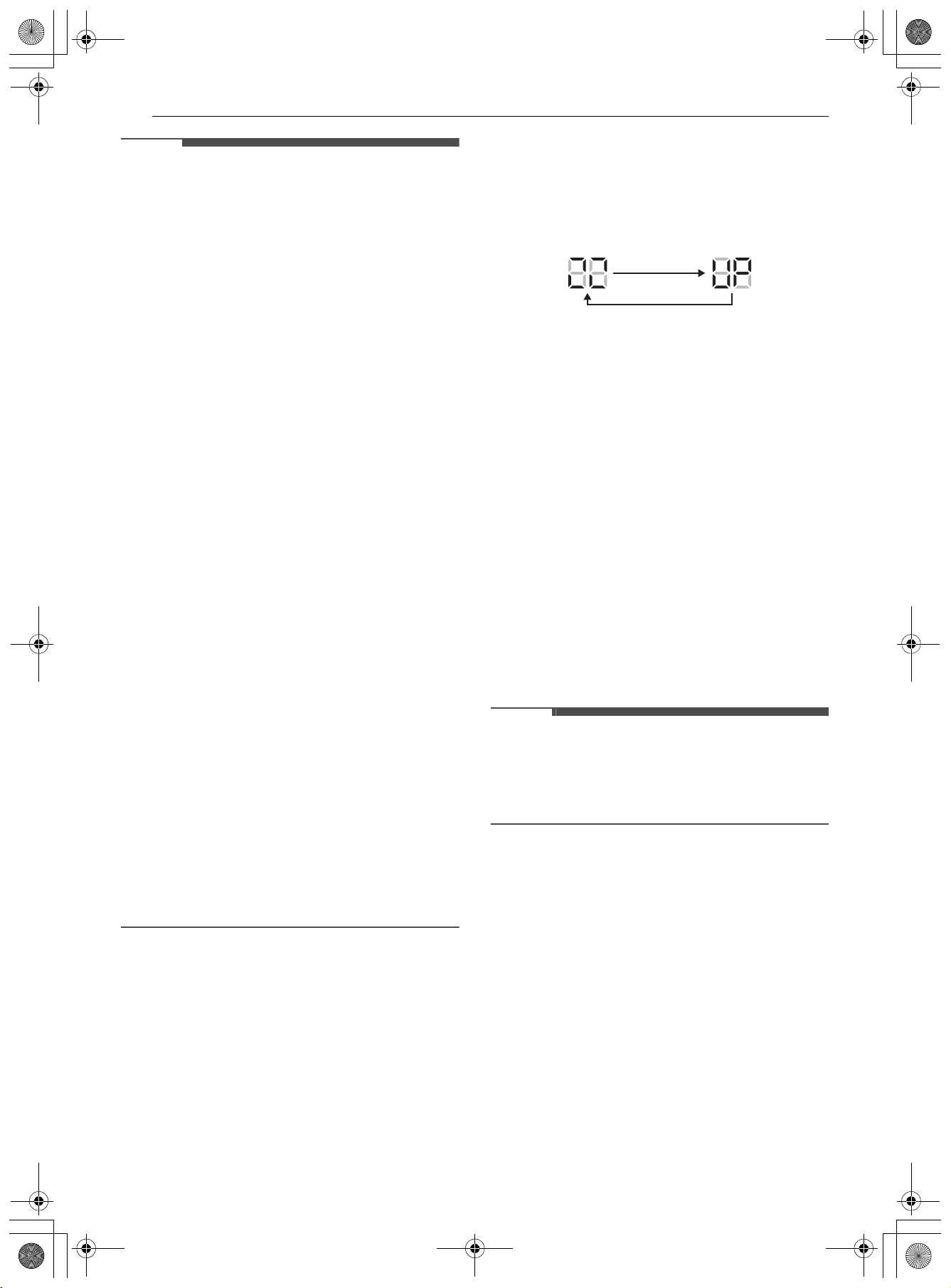
44 SMART FUNCTIONS
NOTE
• LG ThinQ is not responsible for any network
connection problems or any faults, malfunctions,
or errors caused by network connection.
• The surrounding wireless environment can
make the wireless network service run slowly.
• If the distance between the appliance and the
wireless router is too far, the signal becomes
weak. It may take a long time to connect or fail
to install the application.
• If the appliance is having trouble connecting to
the Wi-Fi network, it may be too far from the
router. Purchase a Wi-Fi repeater (range
extender) to improve the Wi-Fi signal strength.
• The network connection may not work properly
depending on the Internet service provider.
• The Wi-Fi may not connect or the connection
may be interrupted because of the home
network environment.
• If the appliance cannot be connected due to
problems with the wireless signal transmission,
unplug the appliance and wait about a minute
before trying again.
• If the firewall on your wireless router is enabled,
disable the firewall or add an exception to it.
• The wireless network name (SSID) should be a
combination of English letters and numbers. (Do
not use special characters.)
• Smartphone user interface (UI) may vary
depending on the mobile operating system (OS)
and the manufacturer.
• If the security protocol of the router is set to
WEP, network setup may fail. Change the
security protocol (WPA2 is recommended), and
connect the product again.
• To reconnect the appliance or add another user,
press and hold the Wi-Fi button for 3 seconds.
Run the LG ThinQ application and follow the
instructions in the application to connect the
appliance.
Installing the LG ThinQ Application
Search for the LG ThinQ application from the
Google Play Store or Apple App Store on a
smartphone. Follow instructions to download and
install the application.
LG UP Feature
Experience new features by updating the product
through the LG ThinQ app.
If an updated feature is available, an update
notification appears on the display and a melody
sounds after cooking has finished and the CLEAR/
OFF key is pressed.
For example, the lights on the display may light in
sequence until φπ appears.
1 Update notifications are sent to your
smartphone when updated features are
available.
2 Press the update notification on your
smartphone to go to the Feature Updates
page in the LG ThinQ app.
3 On the Feature Updates page, select a new
function and press the Update button.
• Do not unplug the product during the
update, as doing so may interrupt the
update process.
4 After the update is complete, check the guide
in the LG ThinQ app for detailed feature
settings.
NOTE
• This feature is only available on some models.
• After the update is complete, the actual product
features may differ from those described in the
owner's manual.
Connecting to Wi-Fi
The Wi-Fi button, when used with the LG ThinQ
application, allows the appliance to connect to a
home Wi-Fi network. The
f icon shows the status
of the appliance’s network connection. The icon
illuminates when the appliance is connected to the
Wi-Fi network.
• Initial Appliance Connection
Run the LG ThinQ application and follow the
instructions in the application to connect the
appliance.
• Reconnecting the Appliance or Connecting
Another User
Press and hold the Wi-Fi button for 3 seconds.
Run the LG ThinQ application and follow the
en-us_main.book.book Page 44 Tuesday, February 3, 2026 8:10 AM
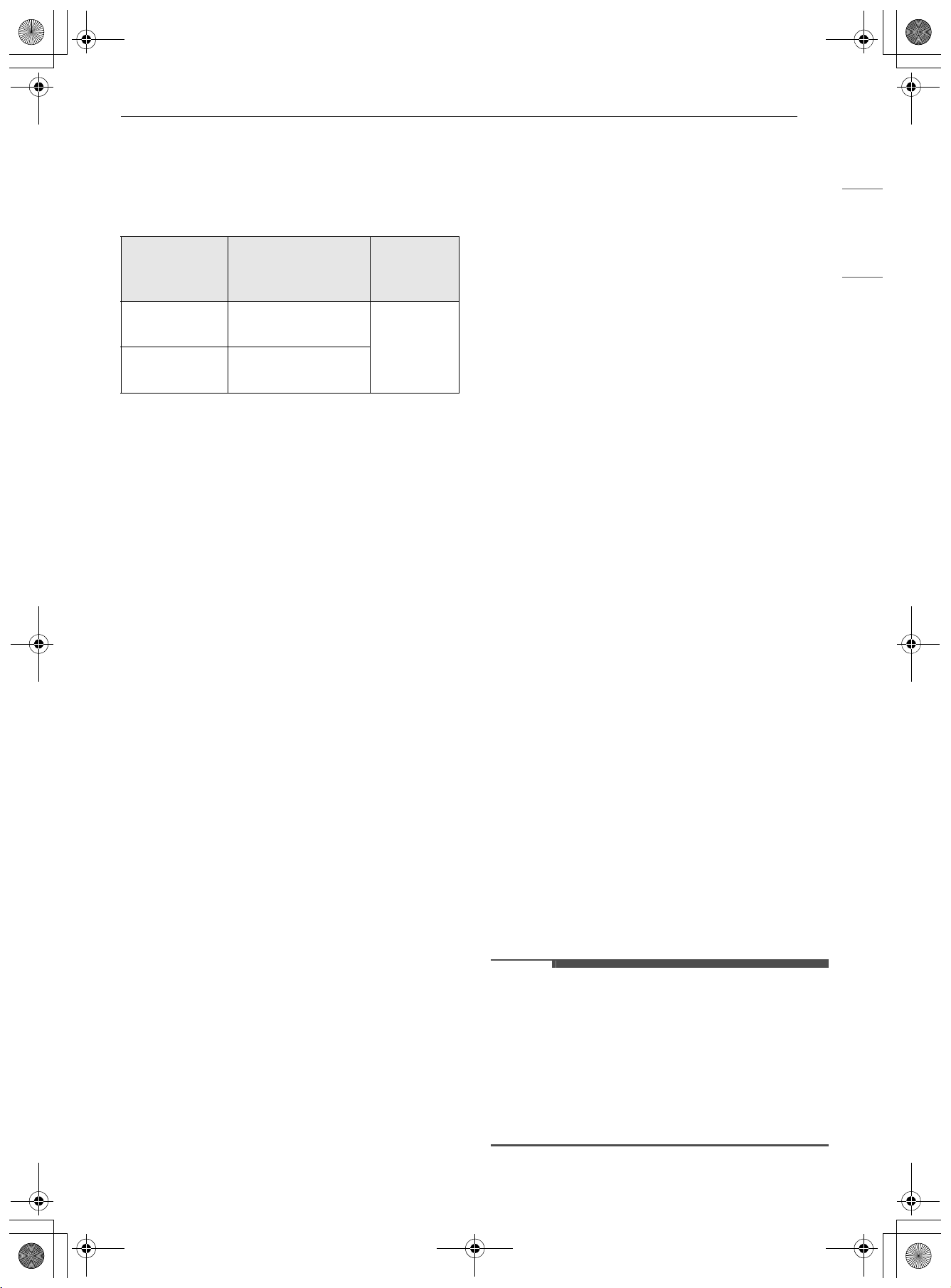
45SMART FUNCTIONS
ENGLISH
instructions in the application to connect the
appliance.
Radio Equipment Specifications
† This feature is only available on some models.
FCC Statement
The following notice covers the transmitter
module contained in this product.
This equipment has been tested and found to
comply with the limits for a Class B digital device,
pursuant to Part 15 of the FCC Rules. These limits
are designed to provide reasonable protection
against harmful interference in a residential
installation. This equipment generates, uses, and
can radiate radio frequency energy and, if not
installed and used in accordance with the
instructions, may cause harmful interference to
radio communications. However, there is no
guarantee that interference will not occur in a
particular installation. If this equipment does
cause harmful interference to radio or television
reception, which can be determined by turning the
equipment off and on, the user is encouraged to
try to correct the interference by one or more of
the following measures:
• Reorient or relocate the receiving antenna.
• Increase the separation between the equipment
and the receiver.
• Connect the equipment into an outlet on a
circuit different from that to which the receiver is
connected.
• Consult the dealer or an experienced radio/TV
technician for help.
This device complies with part 15 of the FCC Rules.
Operation is subject to the following two
conditions:
(1) This device may not cause harmful interference
and
(2) This device must accept any interference
received, including interference that may cause
undesired operation.
Any changes or modifications in construction of
this device which are not expressly approved by
the party responsible for compliance could void
the user’s authority to operate the equipment.
FCC RF Radiation Exposure
Statement
This equipment complies with FCC radiation
exposure limits set forth for an uncontrolled
environment. This transmitter must not be co-
located or operating in conjunction with any other
antenna or transmitter.
This equipment should be installed and operated
with a minimum distance of 20 cm (7.8 inches)
between the antenna and your body. Users must
follow the specific operating instructions for
satisfying RF exposure compliance.
Open Source Software Notice
Information
To obtain the source code that is contained in this
product, under GPL, LGPL, MPL, and other open
source licenses that have the obligation to disclose
source code, and to access all referred license
terms, copyright notices and other relevant
documents, please visit https://
opensource.lge.com.
LG Electronics will also provide open source code
to you on CD-ROM for a charge covering the cost
of performing such distribution (such as the cost of
media, shipping, and handling) upon email
request to opensource@lge.com.
This offer is valid to anyone in receipt of this
information for a period of three years after our
last shipment of this product.
Smart Diagnosis
TM
Feature
Use this feature to help you diagnose and solve
problems with your appliance.
NOTE
• For reasons not attributable to LGE’s negligence,
the service may not operate due to external
factors such as, but not limited to, Wi-Fi
unavailability, Wi-Fi disconnection, local app
store policy, or app unavailability.
• The feature may be subject to change without
prior notice and may have a different form
depending on where you are located.
Type
Operating
Frequency Range
Output
Power
(Max.)
Wireless LAN
2 400 MHz - 2 472
MHz
< 1 W
Bluetooth
†
2 400 MHz - 2 483.5
MHz
en-us_main.book.book Page 45 Tuesday, February 3, 2026 8:10 AM
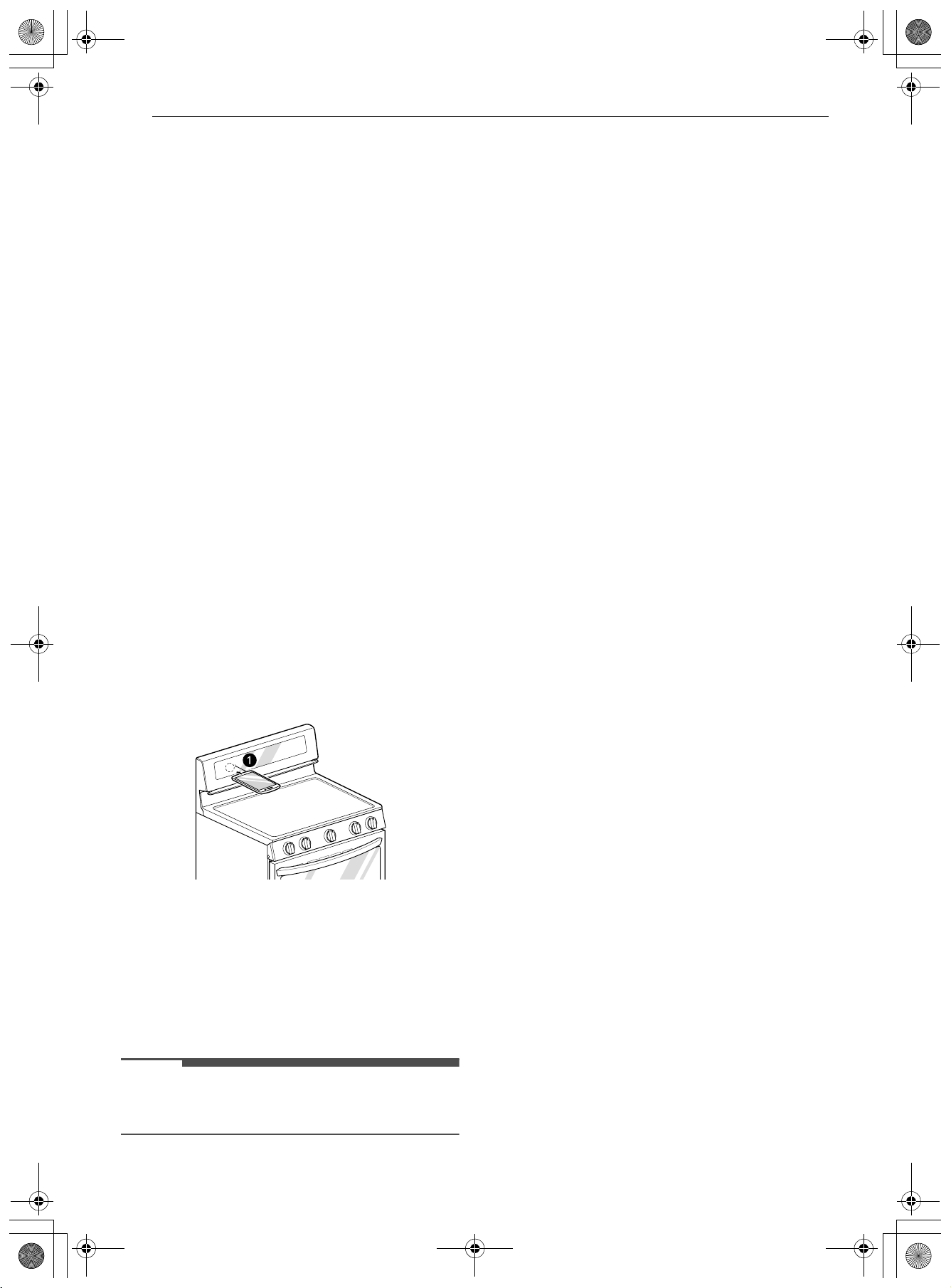
46 SMART FUNCTIONS
Using LG ThinQ to Diagnose Issues
If you experience a problem with your Wi-Fi
equipped appliance, it can transmit
troubleshooting data to a smartphone using the
LG ThinQ application.
• Launch the LG ThinQ application and select the
Smart Diagnosis feature in the menu. Follow
the instructions provided in the LG ThinQ
application.
Using Audible Diagnosis to
Diagnose Issues
The image in this part may be different from the
actual model.
Follow the instructions below to use the audible
diagnosis method.
• Launch the LG ThinQ application and select the
Smart Diagnosis feature in the menu. Follow
the instructions for audible diagnosis provided
in the LG ThinQ application.
1 Press the START button for 3 seconds.
• If the display has been locked, you must
deactivate the lock and then reactivate it.
2 Hold the mouthpiece of your phone in front of
the control panel.
a Max: 3/8" (10 mm)
3 Keep the phone in place until the tone
transmission has finished. The display will
count down the time. Once the countdown is
over and the tones have stopped, the
diagnosis will be displayed in the application.
NOTE
• For best results, do not move the phone while
the tones are being transmitted.
en-us_main.book.book Page 46 Tuesday, February 3, 2026 8:10 AM
47MAINTENANCE
ENGLISH
MAINTENANCE
Cleaning
CAUTION
• Do not clean this appliance with bleach.
• To prevent burns, wait until the cooktop has
cooled down before touching any of its parts.
• Always wear gloves when cleaning the cooktop.
Interior
Do not use oven cleaners to clean the oven cavity.
Use the product's EasyClean function regularly to
clean light soil. For stubborn soil, use the Self
Clean function (on some models) or clean
manually using the following tips.
• A plastic spatula can be used as a scraper to
scrape off any chunks or debris before and
during oven cleaning.
• Using the rough side of a non-scratch scouring
pad may help to take off burnt-on stains better
than a soft sponge or towel.
• Certain non-scratch scrubbing sponges, such as
those made of melamine foam, available at local
stores, can also help improve cleaning.
CAUTION
• Do not use oven cleaners, harsh chemical
cleaners, bleach, vinegar, steel scouring pads, or
abrasive pads or cleansers to clean the oven, as
they can permanently damage the oven surface.
• Do not clean the gasket.
Exterior
Control Panel
To prevent activating the control panel during
cleaning, disconnect power to the appliance. Clean
up splatters with a damp cloth using a glass
cleaner. Remove heavier soil with warm, soapy
water. Do not use abrasives of any kind.
Front Manifold Panel and Knobs
Clean the knobs and manifold panel after each
use. For best results, use a damp cloth and mild
soapy water or a 50/50 solution of vinegar and
water. Rinse using clean water and immediately
dry and polish with a soft cloth.
CAUTION
• To avoid damaging the finish on the knobs and
manifold panel, do not use abrasive cleansers,
strong liquid cleaners, plastic scouring pads or
oven cleaners.
• Do not try to bend the knobs by pulling them up
or down, and do not hang a towel or other object
on them. Doing so can damage the gas valve
shaft.
• The control knobs may be removed for easy
cleaning.
• To remove the knobs, make sure that they are in
the OFF position and pull them straight off the
stems.
• To replace the knobs, make sure the knob has
the OFF position centered at the top, and slide
the knob directly onto the stem.
Painted and Decorative Trim
For general cleaning, use a cloth with hot soapy
water. For more difficult soils and built-up grease,
apply a liquid detergent directly onto the soil.
Leave it on for 30 to 60 minutes. Rinse with a damp
cloth and dry. Do not use abrasive cleaners.
Stainless Steel Surfaces
To avoid scratches, do not use steel wool pads.
1 Place a small amount of stainless steel
appliance cleaner or polish on a damp cloth or
paper towel.
2 Clean a small area, rubbing with the grain of
the stainless steel if applicable.
3 Dry and buff with a clean, dry paper towel or
soft cloth.
4 Repeat as necessary.
NOTE
• To clean the stainless steel surface, use warm
sudsy water or a stainless steel cleaner or polish.
• Always wipe in the direction of the metal surface
finish.
en-us_main.book.book Page 47 Tuesday, February 3, 2026 8:10 AM
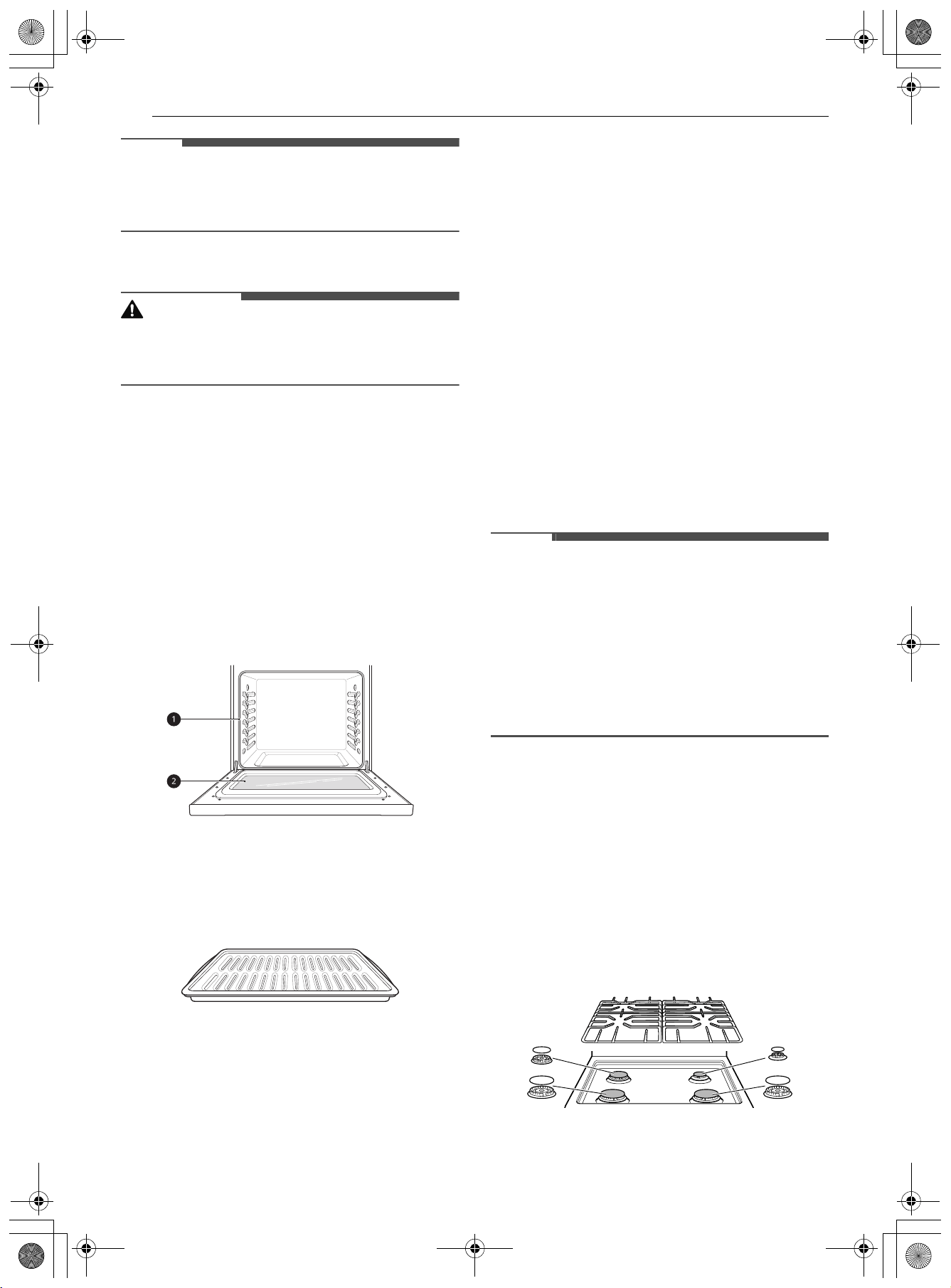
48 MAINTENANCE
NOTE
• Stainless steel appliance cleaner or polish can be
purchased online or from most retailers of
appliances or home goods.
Oven Door
CAUTION
• Do not use harsh cleaners or harsh abrasive
cleaning materials on the outside of the oven
door. Doing so can cause damage.
• Use soapy water to thoroughly clean the oven
door. Rinse well. Do not immerse the door in
water.
• You may use a glass cleaner on the outside glass
of the oven door. Do not spray water or glass
cleaner on the door vents.
• Do not use oven cleaners, cleaning powders, or
harsh abrasive cleaning materials on the outside
of the oven door.
• Do not clean the oven door gasket. The oven
door gasket is made of a woven material that is
essential for a good seal. Care should be taken
not to rub, damage, or remove this gasket.
a Don’t hand clean oven door gasket
b Do hand clean door
Broiler Pan and Grid
• Do not store a soiled broiler pan or grid
anywhere in the range.
• Do not clean the broiler pan or grid in a self
cleaning mode. (Available on some models)
• Remove the grid from the pan. Carefully pour
out the grease from the pan into a proper
container.
• Wash and rinse the broiler pan and grid in hot
water with a soap-filled or plastic scouring pad.
• If food has burned on, sprinkle the grid with
cleaner while hot and cover with wet paper
towels or a dishcloth. Soaking the pan will
remove burned-on foods.
• Both the broiler pan and grid may be cleaned
with a commercial oven cleaner or in the
dishwasher.
Oven Racks
Remove the oven racks before operating the Self
Clean cycle (on some models) and EasyClean.
1 Clean with a mild, abrasive cleaner.
• Food spilled into the tracks could cause the
racks to become stuck.
2 Rinse with clean water and dry.
NOTE
• For models with Self Clean function:
- If the racks are cleaned using the Self Clean
cycle (not recommended), the color will turn
slightly blue and the finish will become dull.
After the Self Clean cycle is complete, and the
oven has cooled, rub the sides of the racks
with wax paper or a cloth containing a small
amount of oil. This will make the racks glide
more easily into the rack tracks.
Gas Surface Burners
Removing and Replacing the Gas
Surface Burners
Position and size of burners vary by model.
Grates and burner heads/caps can be removed for
care and cleaning.
• Take care when installing or removing the
grates, as the rough edges may cause scratches
on the surface of the cooktop.
en-us_main.book.book Page 48 Tuesday, February 3, 2026 8:10 AM
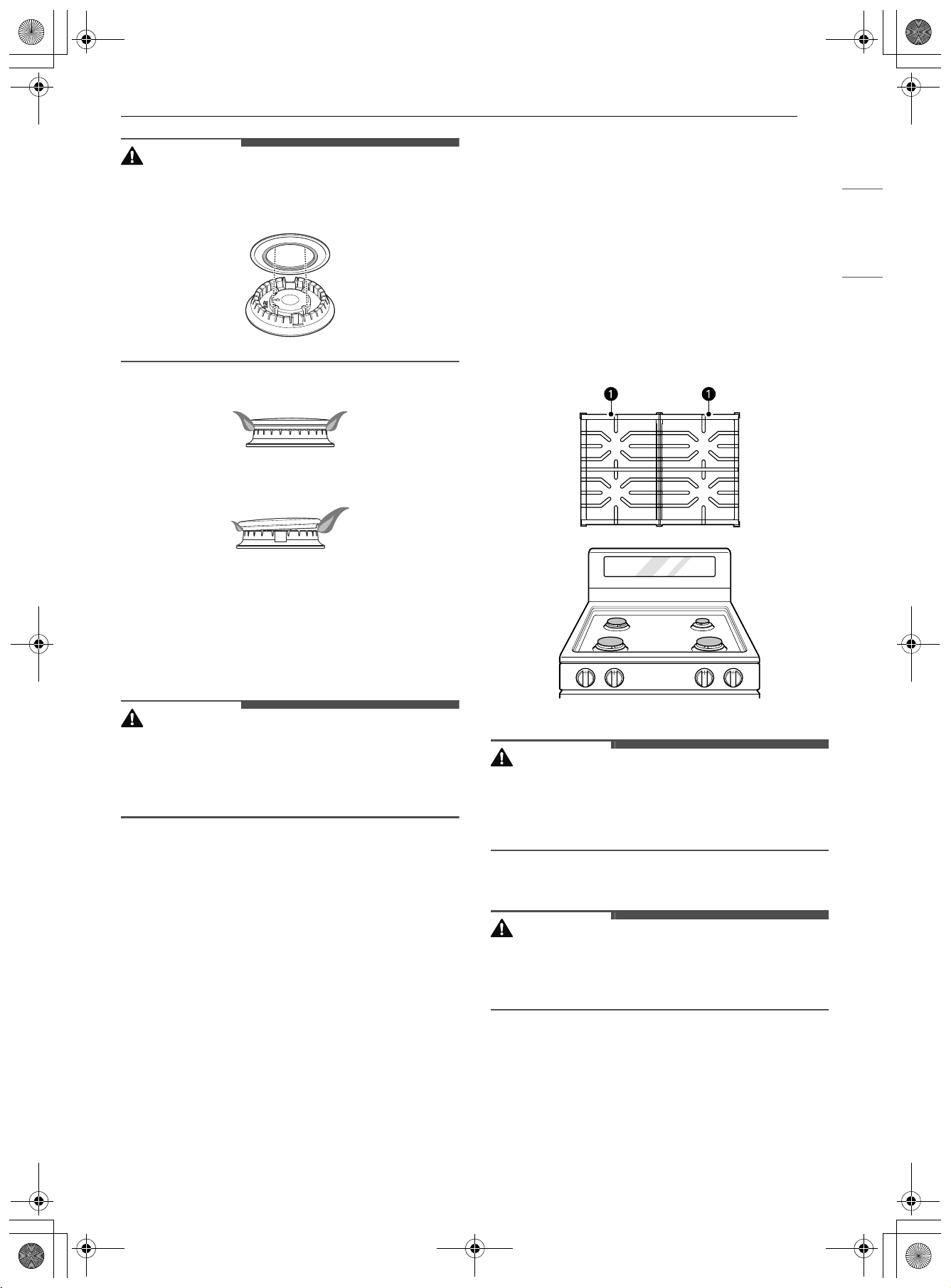
49MAINTENANCE
ENGLISH
CAUTION
• Make sure burner heads and caps are reinstalled
properly. They will be stable and rest flat when
correctly installed.
• When burner cap is properly set:
• When burner cap is not properly set:
Cleaning Burner Heads/Caps
For even and unhampered flame, the slits in the
burner heads must be kept clean at all times.The
burner heads and caps (and the oval burner head
and cap assembly) can be lifted off. Do not attempt
to remove the oval burner cap.
CAUTION
• Do not hit the electrodes with anything hard.
Doing so could damage them.
• Do not use steel wool or scouring powders to
clean the burners.
• Wash the burner caps in hot soapy water and
rinse with clean water. Run water through the
oval burner from the bottom stem to flush out
debris.
• Use care when cleaning the cooktop. The
pointed metal ends on the electrodes could
cause injury. Hitting an electrode with a hard
object may damage it.
• To remove burnt-on food, soak the burner heads
in a solution of mild liquid detergent and hot
water for 20–30 minutes. For stubborn stains,
use a toothbrush or wire brush.
• The burners will not operate properly if the
burner ports or electrodes are clogged or dirty.
• Burner caps and heads should be cleaned
routinely, especially after excessive spillover.
• Burners will not light if the cap is removed.
After Cleaning the Burner Heads/Caps
Shake out any excess water and then let them dry
thoroughly. Placing the oval burner upside down
will allow the water to drain out more easily.
Replace the burner heads and caps over the
electrodes on the cooktop in the correct locations
according to their size. Make sure the hole in the
burner head is positioned over the electrode.
Burner Grates
The range consists of two separate professional-
style grates. For maximum stability, these grates
should only be used when in their proper position.
a Side grate
CAUTION
• Do not operate a burner for an extended period
of time without cookware on the grate. The
finish on the grate may chip without cookware to
absorb the heat.
Cleaning the Burner Grates
CAUTION
• Do not lift the grates out until they have cooled.
• Do not put the grate in the oven during self
cleaning mode. (On some models)
• Grates should be washed regularly and after
spillovers.
• Wash the grates in hot, soapy water and rinse
with clean water.
• The grates are dishwasher safe.
en-us_main.book.book Page 49 Tuesday, February 3, 2026 8:10 AM
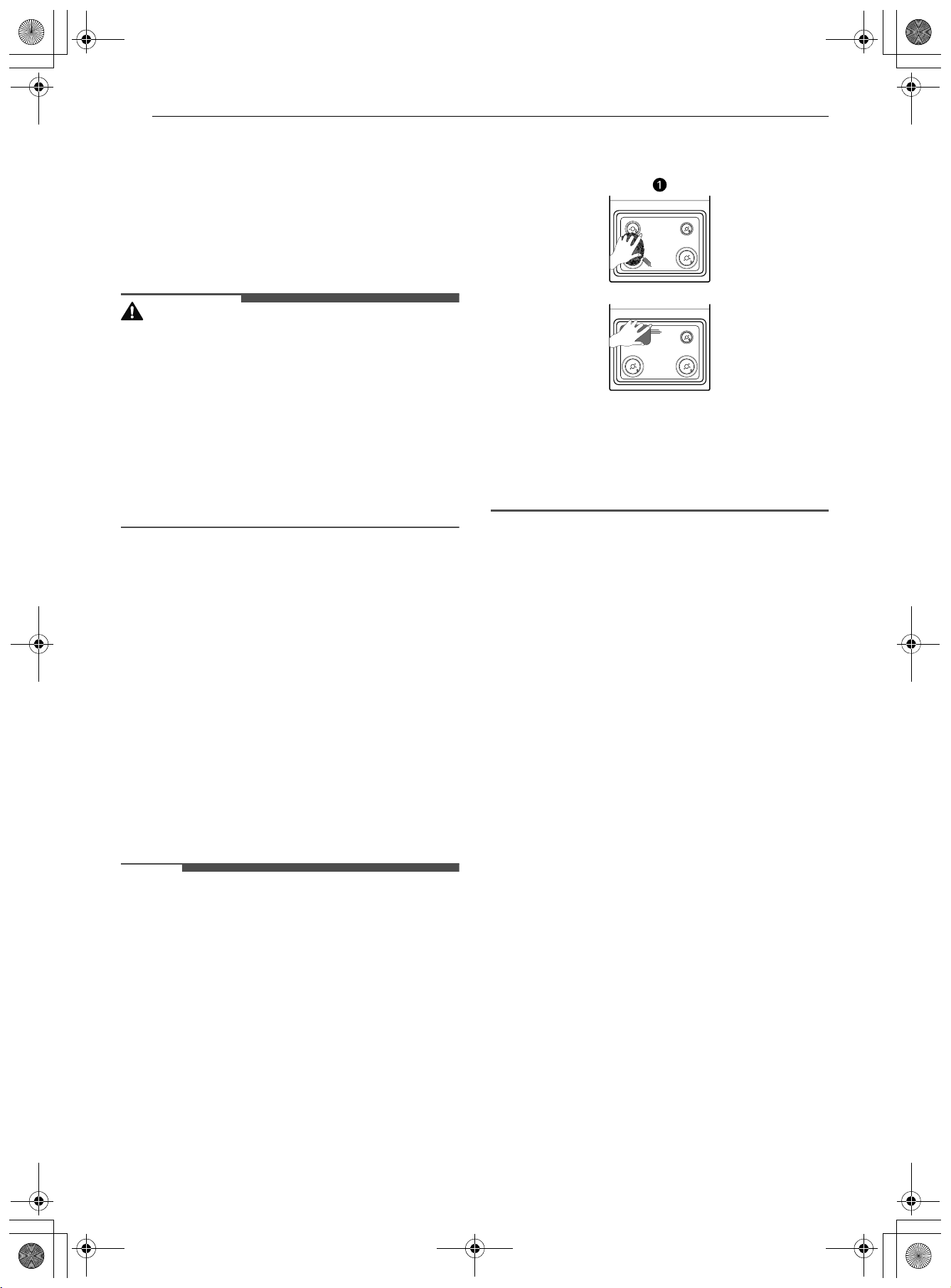
50 MAINTENANCE
• After cleaning the grates, let them dry
completely and securely position them over the
burners.
Cleaning the Cooktop Surface
The EasyClean coating makes cleaning the cooktop
easier. Even heavy grease stains can be removed
using only warm water.
CAUTION
• Before cleaning, turn all controls to OFF and
allow the cooktop to cool.
• To avoid burns, do not clean the cooktop surface
until it has cooled.
• Do not lift the cooktop surface. Lifting the
cooktop surface can lead to damage and
improper operation of the range.
• When water is spilled on the cooktop, wipe up
water immediately. If water is left on the cooktop
for a long time, discoloration may occur.
Foods with high acid or sugar content may cause a
dull spot if allowed to set. Wash and rinse soon
after the surface has cooled. For other spills such
as oil/grease spattering, wash with soap and water
when the surface has cooled, then rinse and polish
with a dry cloth.
1 Remove grates, burners and burner caps
from the cooktop.
2 Scrape off and remove any burned-on debris
with a plastic scraper or old credit card.
3 Clean the cooktop with a wet, non-scratch
scouring sponge or pad.
NOTE
• EasyClean Stainless Steel Cooktop (On some
models)
- To avoid scratching the cooktop surface, do
not use abrasive or metal scouring sponges or
pads.
- Rub in the direction of the grain to avoid
damaging the surface.
a Direction of the grain
- As with any cooktop, some stains may not be
removable.
- To remove hardened residue on the cooktop,
use a kitchen detergent for easier cleaning.
EasyClean
LG’s EasyClean enamel technology provides two
cleaning options for the inside of the range. The
EasyClean feature takes advantage of LG’s new
enamel to help lift soils without harsh chemicals,
and it runs using ONLY WATER for just 10 minutes
in low temperatures to help loosen LIGHT soils
before hand cleaning.
While EasyClean is quick and effective for small
and LIGHT soils, the Self Clean feature can be used
to remove HEAVY, built up soils. The intensity and
high heat of the Self Clean cycle may result in
smoke which will require the opening up of
windows to provide ventilation. Compared to the
more intense Self Clean process, your LG oven
gives you the option of cleaning with LESS HEAT,
LESS TIME, and virtually NO SMOKE OR FUMES.
You can reduce energy use by cleaning light oven
soils with the EasyClean feature instead of Self
Clean.
When needed, the range still provides the Self
Clean option for longer, more thorough oven
cleaning for heavier, built up soils.
• For hard to reach areas such as the back surface
of the oven, it is better to use the Self Clean
cycle.
Benefits of EasyClean
• Helps loosen light soils before hand-cleaning
• EasyClean only uses water; no chemical cleaners
• Makes for a better Self Clean experience
- Delays the need for a Self Clean cycle
en-us_main.book.book Page 50 Tuesday, February 3, 2026 8:10 AM
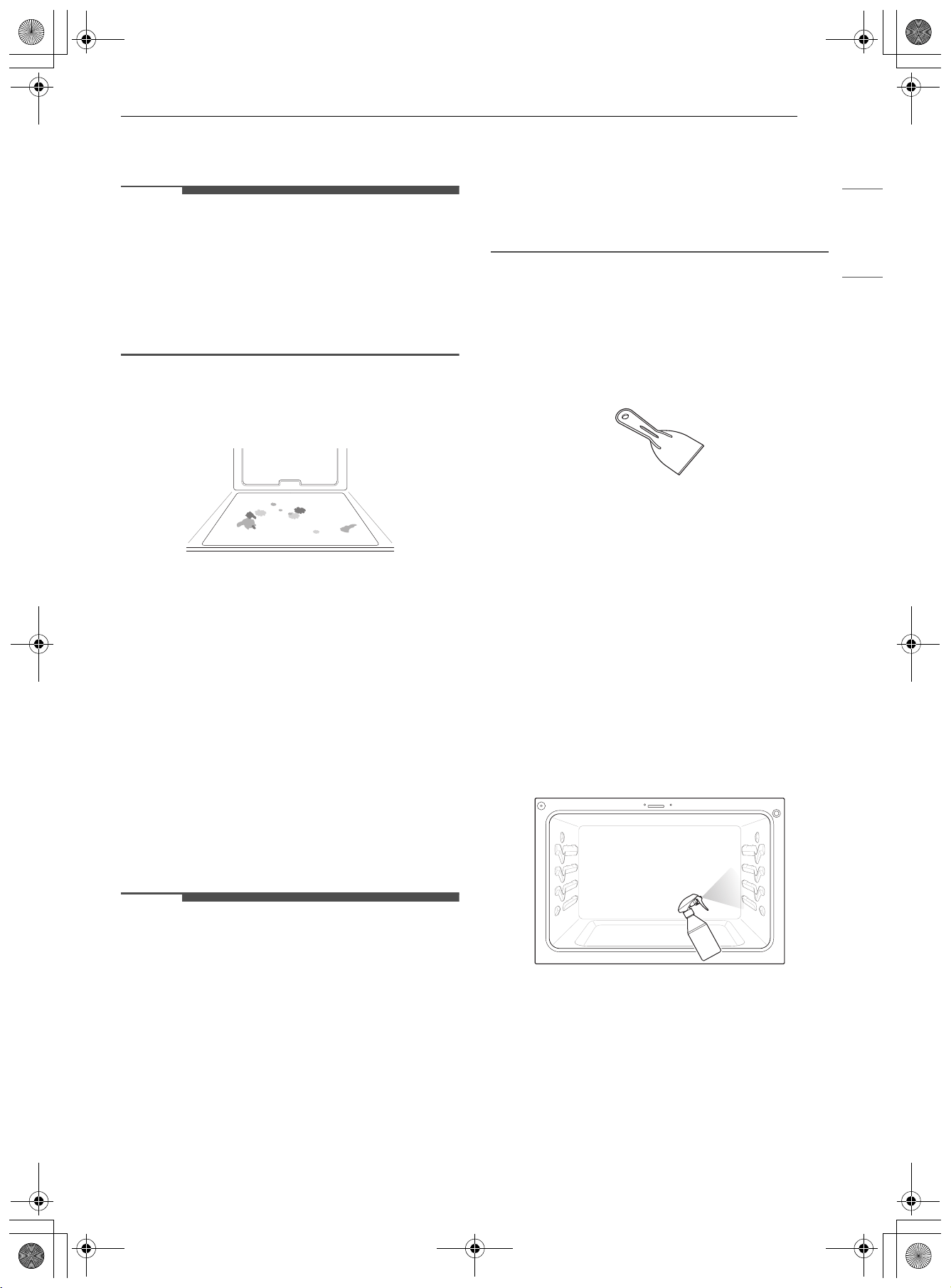
51MAINTENANCE
ENGLISH
- Minimizes smoke and odors
- Can allow shorter Self Clean time
NOTE
• For models without Self Clean option
- The EasyClean feature may not be effective in
removing heavy, built-up soils. Because the
range does not include a Self Clean option,
clean the oven regularly using the EasyClean
feature to prevent heavy, burnt-on soil from
building up in the oven.
When to Use EasyClean
• Example of oven soiling
Case 1
- Soil pattern: Small drops or spots
- Types of soils: Cheese or other ingredients
- Common food items that can soil your oven:
Pizza
Case 2
- Soil pattern: Light splatter
- Types of soils: Fat/grease
- Common food items that can soil your oven:
Steaks, broiled / Fish, broiled / Meat roasted at
low temperatures
EasyClean Instruction Guide
NOTE
• Allow the oven to cool to room temperature
before using the EasyClean cycle. If your oven
cavity is above 150 °F (65 °C), Hot will appear in
the display, and the EasyClean cycle will not be
activated until the oven cavity cools down.
• The range should be level to ensure that the
bottom surface of the oven cavity is entirely
covered by water at the beginning of the
EasyClean cycle.
• For best results, use distilled or filtered water.
Tap water may leave mineral deposits on the
oven bottom.
• Soil baked on through several cooking cycles will
be more difficult to remove with the EasyClean
cycle.
• Do not open the oven door during the EasyClean
cycle. Water will not get hot enough if the door is
opened during the cycle.
1 Remove oven racks and accessories from the
oven.
2 Scrape off and remove any burnt-on debris
with a plastic scraper.
• Suggested plastic scrapers:
- Hard plastic spatula
- Plastic pan scraper
- Plastic paint scraper
- Old credit card
3 Fill a spray bottle (10 oz or 300 ml) with water
and use the spray bottle to thoroughly spray
the inside surfaces of the oven.
4 Use at least 1/5 (2 oz or 60 ml) of the water in
the bottle to completely saturate the soil on
both the walls and in the corners of the oven.
5 Spray or pour the remaining water (8 oz or
240 ml) onto the bottom center of the oven
cavity. The indentation on the oven bottom
should be fully covered to submerge all soils.
Add water if necessary.
en-us_main.book.book Page 51 Tuesday, February 3, 2026 8:10 AM
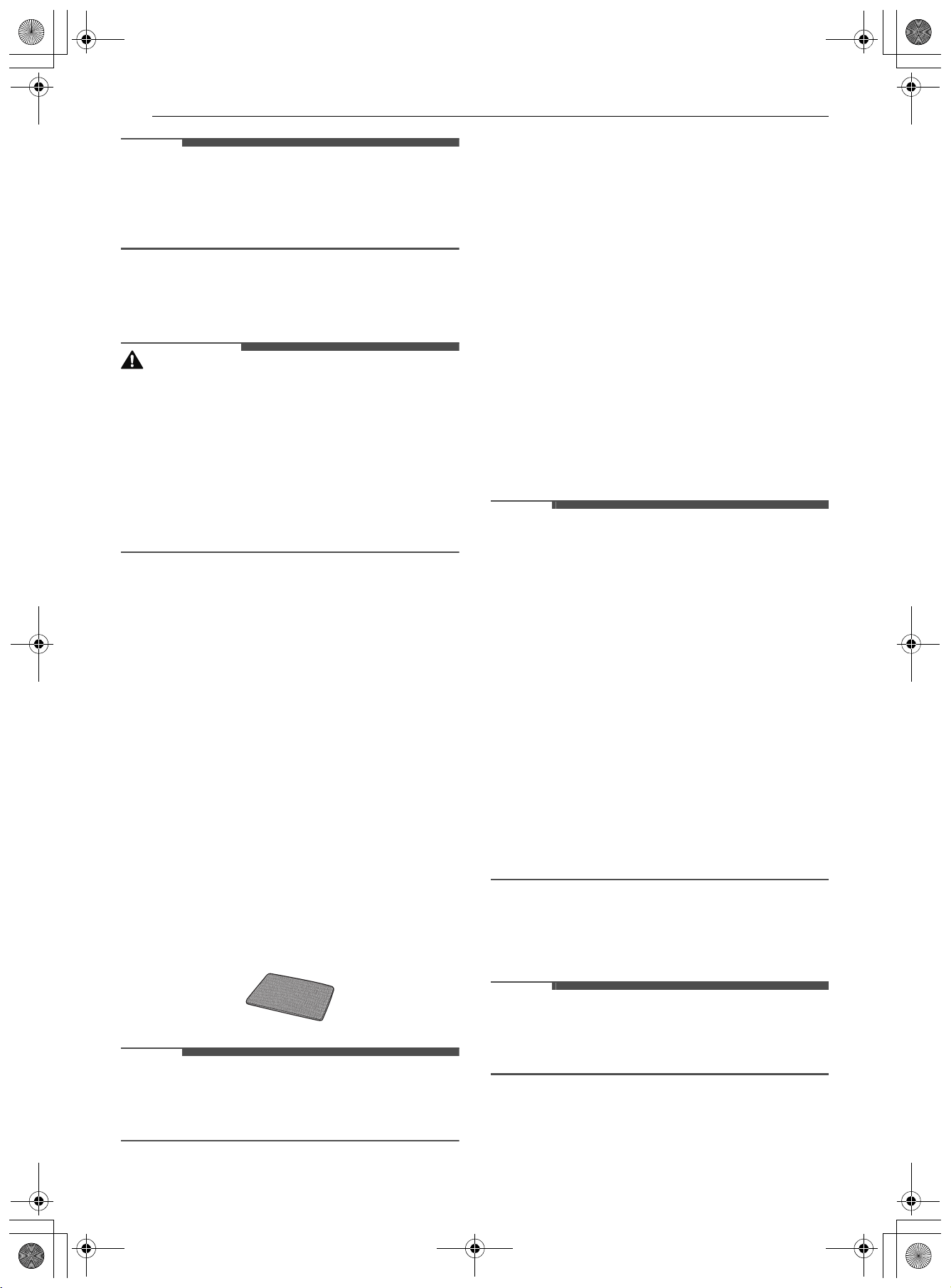
52 MAINTENANCE
NOTE
• If cleaning multiple ovens, use an entire bottle of
water to clean each oven. Do not spray water
directly on the door. Doing so will result in water
dripping to the floor.
6 Close the oven door. Press EasyClean. Press
START.
CAUTION
• Some surfaces may be hot after the EasyClean
cycle. Wear rubber gloves while cleaning to
prevent burns.
• During the EasyClean cycle, the oven becomes
hot enough to cause burns. Wait until the cycle is
over before wiping the inside surface of the
oven. Failure to do so may result in burns.
• Avoid leaning or resting on the oven door glass
while cleaning the oven cavity.
7 A tone will sound at the end of the cycle. Press
CLEAR/OFF to clear the display and end the
tone.
8 After the cleaning cycle and during hand-
cleaning, enough water should remain on the
oven bottom to completely submerge all soils.
Add water if necessary. Place a towel on the
floor in front of the oven to capture any water
that may spill out during hand-cleaning.
9 Clean the oven cavity immediately after the
EasyClean cycle by scrubbing with a wet, non-
scratch scouring sponge or pad. (The scouring
side will not scratch the finish.) Some water
may spill into the bottom vents while
cleaning, but it will be captured in a pan under
the oven cavity and will not hurt the burner.
NOTE
• Do not use any steel scouring pads, abrasive
pads or cleaners as these materials can
permanently damage the oven surface.
10 Once the oven cavity is cleaned, wipe any
excess water with a clean dry towel. Replace
racks and any other accessories.
11 If some light soils remain, repeat the above
steps, making sure to thoroughly soak the
soiled areas.
• For models with Self Clean function
- If stubborn soils remain after multiple
EasyClean cycles, run the Self Clean cycle.
Be sure that the oven cavity is empty of
oven racks and other accessories, and
that the oven cavity surface is dry before
running the Self Clean cycle. Consult the
Self Clean section of your owner’s manual
for further details. If a Self Clean option is
not available, scrape off and remove
stubborn soil using a scraper.
NOTE
• If you forget to saturate the inside of the oven
with water before starting EasyClean, press
CLEAR/OFF to end the cycle. Wait for the range
to cool to room temperature and then spray or
pour water into the oven and start another
EasyClean cycle.
• The cavity gasket may be wet when the
EasyClean cycle finishes. This is normal. Do not
clean the gasket.
• If mineral deposits remain on the oven bottom
after cleaning, use a cloth or sponge soaked in
vinegar to remove them.
• It is normal for the fan to operate during the
EasyClean cycle.
• Using commercial oven cleaners or bleach to
clean the oven is not recommended. Instead,
use a mild liquid cleanser with a pH value below
12.7 to avoid discoloring the enamel.
Removing/Assembling Lift-Off
Oven Doors
NOTE
• Parts may be changed due to product
improvement and may look different than
shown in images.
Door Care Instructions
Most oven doors contain glass that can break.
en-us_main.book.book Page 52 Tuesday, February 3, 2026 8:10 AM
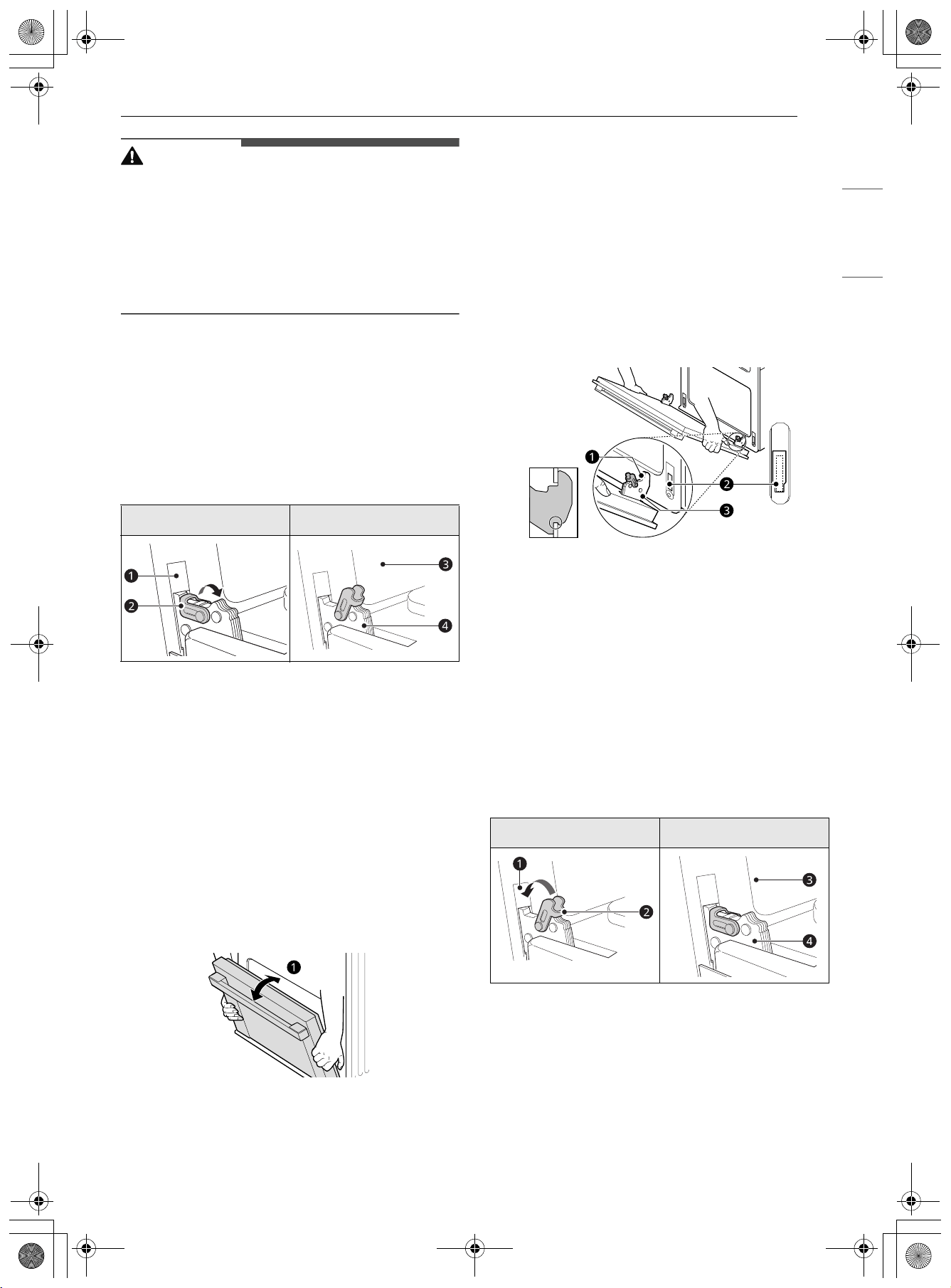
53MAINTENANCE
ENGLISH
CAUTION
• Do not close the oven door until all the oven
racks are fully in place.
• Do not hit the glass with pots, pans, or any other
object.
• Scratching, hitting, jarring, or stressing the glass
may weaken its structure causing an increased
risk of breakage at a later time.
Removing Doors
1 Fully open the door.
2 Lift up the hinge lock b and flip it towards the
hinge arm
d completely. Repeat on other
side.
a Slot
b Hinge Lock
c Oven Frame
d Hinge Arm
3 Firmly grasp both sides of the door at the top.
4 Partially close the door to approximately 5
degrees a. If the position is correct, the hinge
arms will move freely.
a about 5°
5 Lift and pull the door towards you until the
hinge latches are completely loosened.
Assembling Doors
1 Firmly grasp both sides of the door at the top.
2 Fully insert the hinge arms a into the slots b
until the indentations c on the hinge arms
rest on the bottom edges of the slots.
a Hinge Arm
b Bottom Edge of Slot
c Indentation
3 Slowly open the door fully. Make sure that the
hinge arms are properly engaged in the slots.
4 Lift up the hinge lock b and flip it towards the
oven c until it clicks into position. Repeat on
other side.
a Slot
b Hinge Lock
c Oven Frame
d Hinge Arm
5 Close the oven door.
Locked Position Unlocked Position
Unlocked Position Locked Position
en-us_main.book.book Page 53 Tuesday, February 3, 2026 8:10 AM
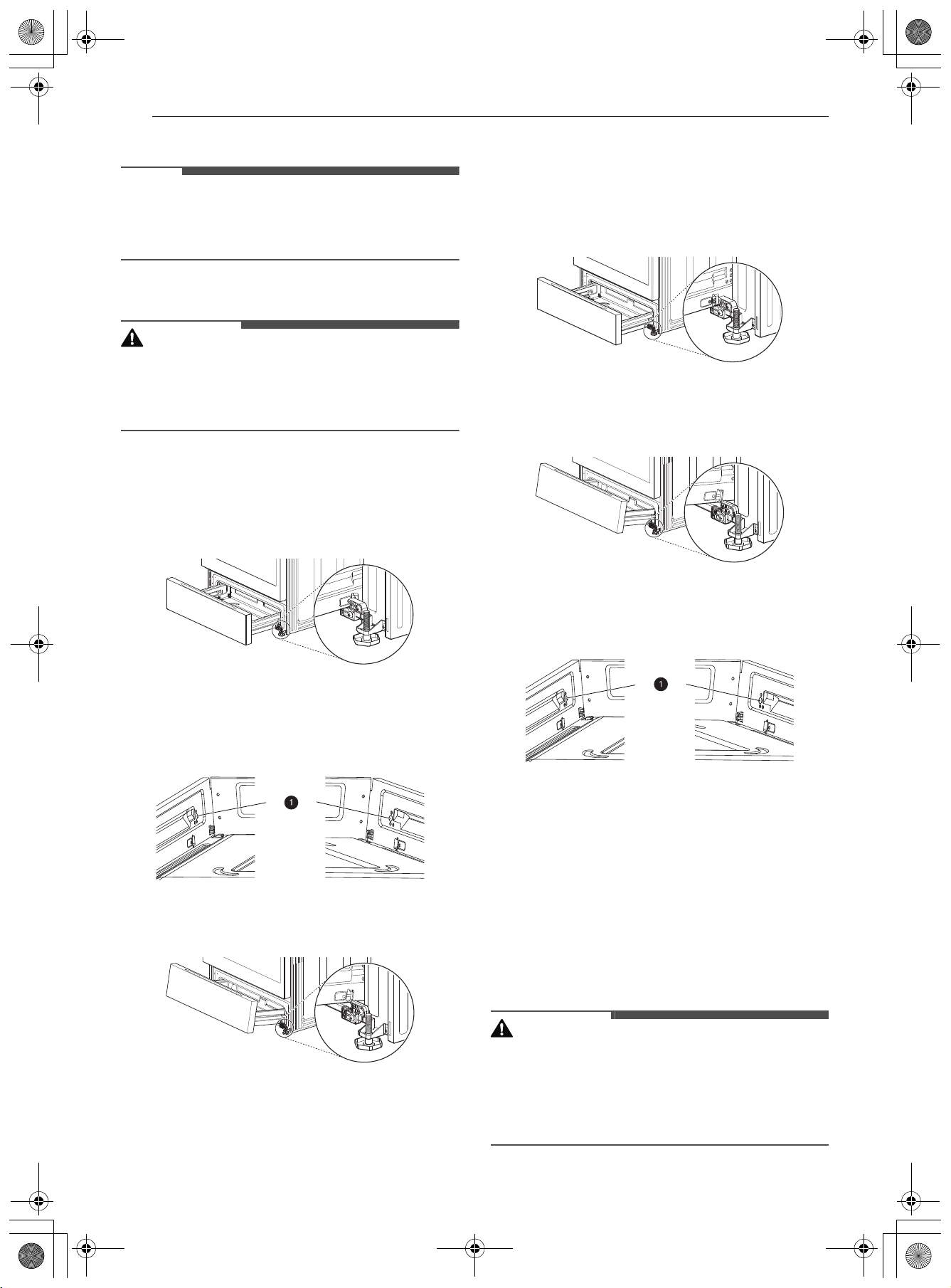
54 MAINTENANCE
Removing/Assembling Drawers
NOTE
• Parts may be changed due to product
improvement and may look different than
shown in images.
Removing Drawers
CAUTION
• Disconnect the electrical power to the range at
the main fuse or circuit breaker panel. Failure to
do so can result in severe personal injury, death,
or electrical shock.
Most cleaning can be done with the drawer in
place; however, the drawer may be removed if
further cleaning is needed. Use warm water to
thoroughly clean.
1 Fully open the drawer.
2 If there are screws a on the sides at the back
of the drawer, remove the 2 screws and set
them aside. For models without screws, go to
step 3.
3 Lift the front of the drawer until the stops
clear the guides.
4 Remove the drawer.
Assembling Drawers
1 Place the drawer rails on the guides.
2 Push the drawer back until it stops.
3 Lift the front of the drawer, push it back until
the stops clear the guides, and lower the front
of the drawer.
4 If the drawer had screws, insert and tighten
the 2 screws a on the sides at the back of the
drawer.
5 Push the drawer to close it.
Periodic Maintenance
Changing the Oven Light
The oven light is a standard 40-watt halogen
appliance bulb. It turns on when the oven door is
open. When the oven door is closed, press Light to
turn it on or off.
WARNING
• Make sure that the oven and lamp are cool.
• Disconnect the electrical power to the range at
the main fuse or circuit breaker panel. Failure to
do so can result in severe personal injury, death,
or electrical shock.
en-us_main.book.book Page 54 Tuesday, February 3, 2026 8:10 AM
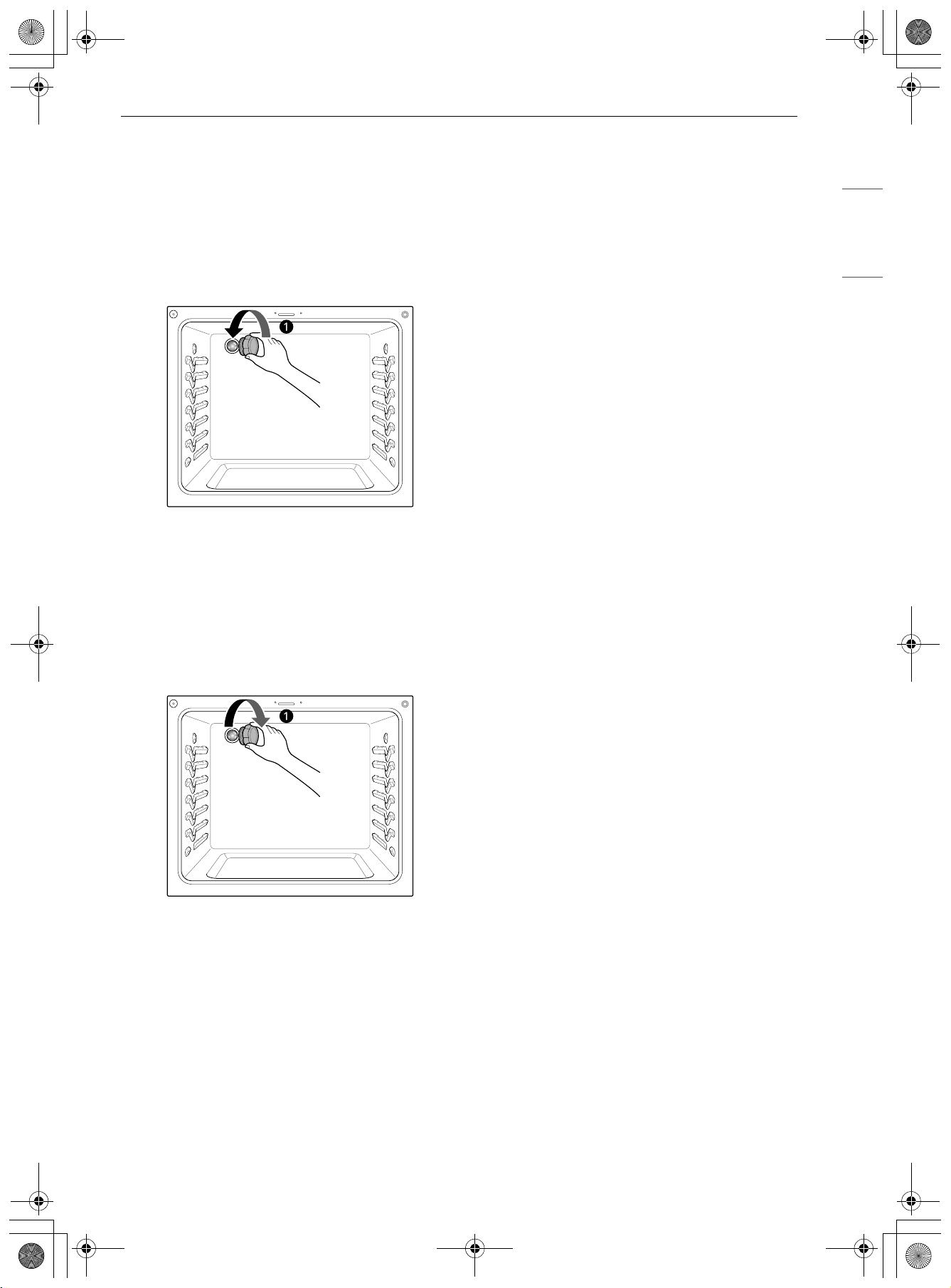
55MAINTENANCE
ENGLISH
1 Unplug the range or disconnect power.
2 Turn the glass lamp cover in the back of the
oven counterclockwise to remove.
3 Remove the halogen lamp from the socket.
a To Remove
4 Insert a new halogen lamp.
5 Insert the glass lamp cover and turn it
clockwise.
a To Assemble
6 Plug in the range or reconnect the power.
en-us_main.book.book Page 55 Tuesday, February 3, 2026 8:10 AM
56 TROUBLESHOOTING
TROUBLESHOOTING
FAQs
Frequently Asked Questions
CAUTION
• Foil may be used to wrap food in the oven or warming drawer, but do not allow the foil to come into
contact with the exposed heating/broiling elements in the oven. The foil could melt or ignite, causing
smoke, fire, or injury.
Q: What types of cookware are recommended for use with the cooktop?
A:
• The pans must have a flat bottom and straight sides.
• Only use heavy-gauge pans.
• The pan size must match the amount of food to be prepared and the size of the surface
element.
• Use tight fitting lids.
• Only use flat-bottom woks.
Q: My new oven doesn’t cook like my old one. Is there something wrong with the temperature
settings?
A: No. Your oven has been factory tested and calibrated. For the first few uses, follow your recipe times
and temperatures carefully. If you still think your new oven is too hot or too cold, you can adjust the
oven temperature yourself to meet your specific cooking needs. Refer to the Changing Oven Settings
section in this manual for easy instructions on how to adjust your thermostat.
Q: Is it normal to hear a clicking noise coming from the back of my oven when I am using it?
A: Your new range is designed to maintain a tighter control over your oven’s temperature. You may hear
your oven’s heating elements click on and off more frequently on your new oven. This is NORMAL.
Q: Why is the time flashing?
A: This means that the product has just been plugged in, or that it has experienced a power
interruption. To clear the flashing time, touch any button and reset the clock if needed.
Q: During convection cooking the fan stops when I open the door. Is that normal?
A: Yes, this is normal. When the door is opened, the convection fan will stop until the door is closed.
Q: Can I use aluminum foil to catch drippings in my oven cavity?
A: Never use aluminum foil to line the bottom or sides of the oven or the warming drawer (on some
models). The foil will melt and stick to the bottom surface of the oven and will not be removable. Use
a foil-lined sheet pan placed on a lower oven rack to catch drippings instead. (If foil has already
melted onto the bottom of the oven, it will not interfere with the oven’s performance.)
Q: Can I use aluminum foil on the racks?
A: Do not cover racks with aluminum foil. Covering entire racks with foil restricts air flow, leading to
poor cooking results. Use a sheet pan lined with foil under fruit pies or other acidic or sugary foods to
prevent spillovers from damaging the oven finish.
Q: Can I leave my racks in the oven when running a Self Clean cycle? (On some models)
A: No. Although it will not damage the racks, it will discolor them and may make them hard to slide in
and out during use. Remove all items from the oven before starting a Self Clean cycle.
en-us_main.book.book Page 56 Tuesday, February 3, 2026 8:10 AM
57TROUBLESHOOTING
ENGLISH
Q: What should I do if my racks are sticky and have become hard to slide in and out?
A: Over time, the racks may become hard to slide in and out. Apply a small amount of olive oil to the
sides of the racks. This will work as a lubricant for easier gliding.
Q: What should I do for hard to remove stains on my cooktop?
A: The cooktop should be cleaned after every use to prevent permanent staining. When cooking foods
with high sugar content, such as tomato sauce, clean the stain off with a scraper while the cooktop is
still warm. Use an oven mitt when scraping to prevent burns. Refer to the MAINTENANCE section of
this owner's manual for further instruction.
Q: Why aren't the function buttons working?
A:
Make sure that the range is not in Control Lock / Lockout mode. The lock
k will show in the display if
Control Lock / Lockout is activated. To deactivate Control Lock / Lockout, refer to the Control Lock /
Lockout section. The unlock melody sounds and Loc appears in the display until the controls are
unlocked.
Q: My range is still dirty after running the EasyClean cycle. What else should I do?
A: The EasyClean cycle only helps to loosen light soils in your oven range to assist in hand-cleaning of
your oven. It does not automatically remove all soils after the cycle. Some scrubbing of your oven
range is required after running the EasyClean cycle.
Q: I tried scrubbing my oven after running EasyClean, but some soils still remain. What can I do?
A: The EasyClean feature works best when the soils are fully soaked and submerged in water before
running the cycle and during hand-cleaning. If soils are not sufficiently soaked in water, it can
negatively affect the cleaning performance. Repeat the EasyClean process using sufficient water.
• For models with Self Clean function:
Sugar-based and certain greasy soils are especially hard to clean. If some stubborn soils
remain, use the Self Clean feature to thoroughly clean your oven.
Q: Soils on my oven walls are not coming off. How can I get the oven walls clean?
A: Soils on the side and rear walls of your oven range may be more difficult to fully soak with water. Try
repeating the EasyClean process with more than the ¼ cup (2 oz or 60 ml) of spray recommended.
Q: Will EasyClean get all of the soils and stains out completely?
A: It depends on the soil type. Sugar-based and certain grease stains are especially hard to clean. Also, if
stains are not sufficiently soaked in water, this can negatively affect cleaning performance.
• For models with Self Clean function:
If stubborn or built-up stains remain, use the Self Clean feature. Refer to the Self Clean section
of your owner's manual.
Q: Are there any tricks to getting some of the stubborn soils out?
A: Scraping the soils with a plastic scraper before and during hand-cleaning is recommended. Fully
saturating soils with water is also recommended.
• For models with Self Clean function:
Certain types of soils are harder to clean than others. For these stubborn soils, the Self Clean
cycle is recommended. Consult the Self Clean section of your owner's manual for details.
Q: Is it safe for my convection fan or heater element to get wet during EasyClean?
A: Yes. The convection fan or heater element may get a little wet during cleaning. However, direct spray
onto the broil burner and heater elements is not necessary because these are self-cleaning during
regular use.
Q: Do I need to use all 1 ¼ cups (10 oz or 300 ml) of water for EasyClean?
en-us_main.book.book Page 57 Tuesday, February 3, 2026 8:10 AM
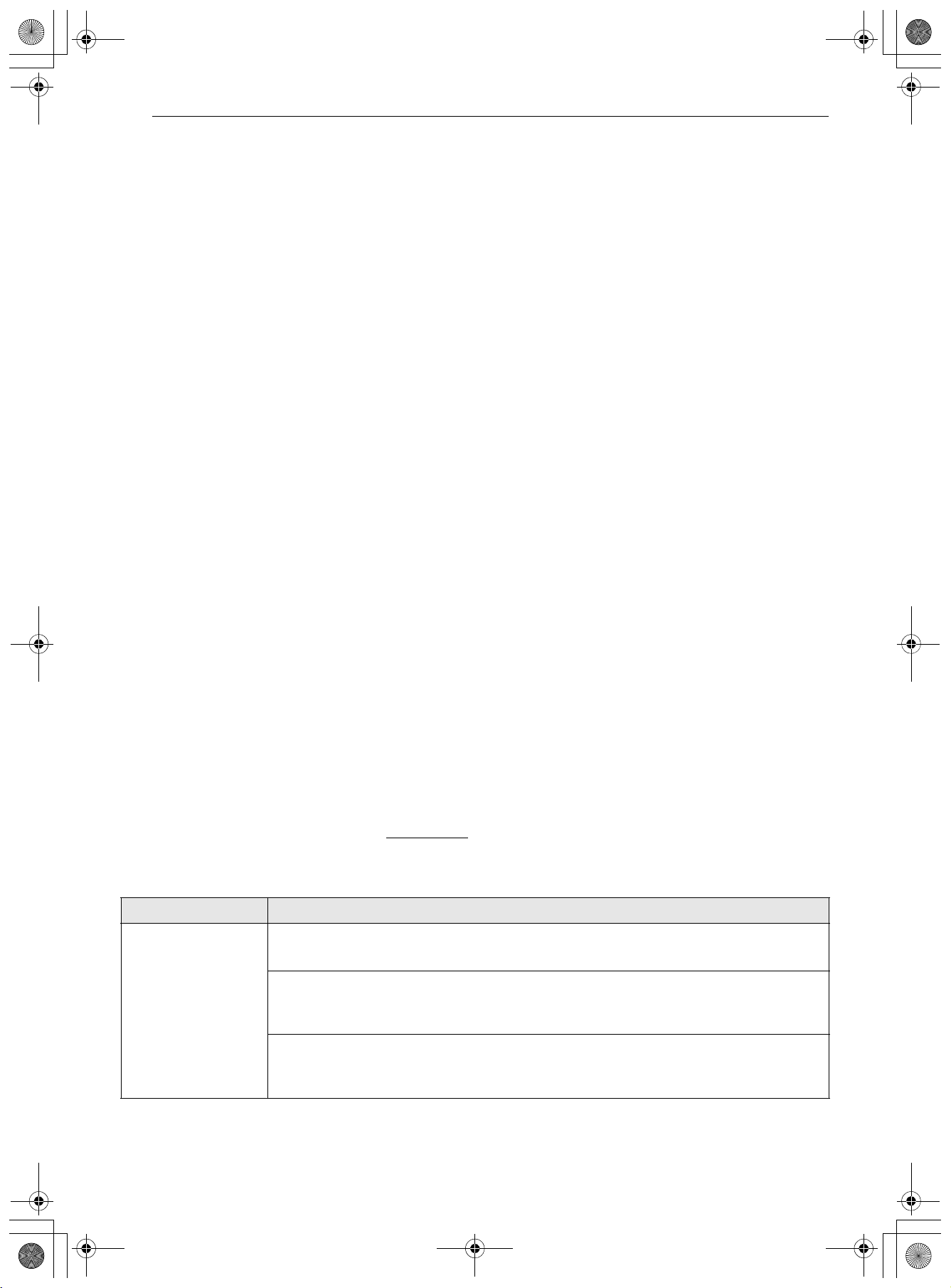
58 TROUBLESHOOTING
Before Calling for Service
Review this section before calling for service; doing so will save you both time and money.
For detailed information or videos, visit www.lg.com
for the troubleshooting page.
Cooking
A: Yes. It is highly recommended that 1 cup (8 oz or 240 ml) of water be sprayed or poured on the
bottom and an additional ¼ cup (2 oz or 60 ml) of water be sprayed on walls and other soiled areas to
fully saturate the soils for better cleaning performance.
Q: I see smoke coming out of my oven range’s cooktop vents during EasyClean. Is this normal?
A: This is normal. This is not smoke. It is actually water vapor (steam) from the water in the oven cavity.
As the oven heats briefly during EasyClean, the water in the cavity evaporates and escapes through
the oven vents.
Q: How often should I use EasyClean?
A: EasyClean can be performed as often as you wish. EasyClean works best when your oven is LIGHTLY
soiled from such things as LIGHT grease splatter and small drops of cheese. Please refer to the
EasyClean section in your owner's manual for more information.
Q: What is required for EasyClean?
A: A spray bottle filled with 1¼ cups (10 oz or 300 ml) of water, a plastic scraper, a non-scratch scrubbing
pad and a towel. You should not use abrasive scrubbers such as heavy-duty scouring pads or steel
wool.
Q: How can I help keep children safe around the range? (On some models)
A: Children should be supervised around the range whenever it is in use, and after use until surfaces
have cooled. You can also use the Control Lock / Lockout feature to help prevent children from
accidentally turning on the cooktop or oven. The Control Lock / Lockout feature disables most control
panel buttons and the cooktop control knobs. On some models, it also locks the oven door. Consult
the Control Lock / Lockout section of your owner’s manual for details. (In models without a Self Clean
option, the Control Lock / Lockout feature locks the controls but does not lock the oven door.)
Q: The third knob from the right doesn't light up. Is that normal? (On some models)
A: This is normal. Your range is designed to light up only 5 burner knobs.
Q: Why isn't the Instaview working? (On some models)
A: Level the range by adjusting the leveling legs with a wrench.
Problem Possible Cause & Solution
Top burners do not
light or do not burn
evenly.
The electrical plug is not inserted properly.
• Make sure that the electrical plug is inserted into a live, properly grounded outlet.
Electrode area is not clean.
• Remove the burners and clean them. Check the electrode area for burnt on food or grease.
See "Cleaning Burner Heads/Caps" in the MAINTENANCE chapter.
Burner parts are not installed properly.
• Make sure that the burner parts are installed correctly. See "Removing and Replacing the
Gas Surface Burners" in the MAINTENANCE chapter.
en-us_main.book.book Page 58 Tuesday, February 3, 2026 8:10 AM
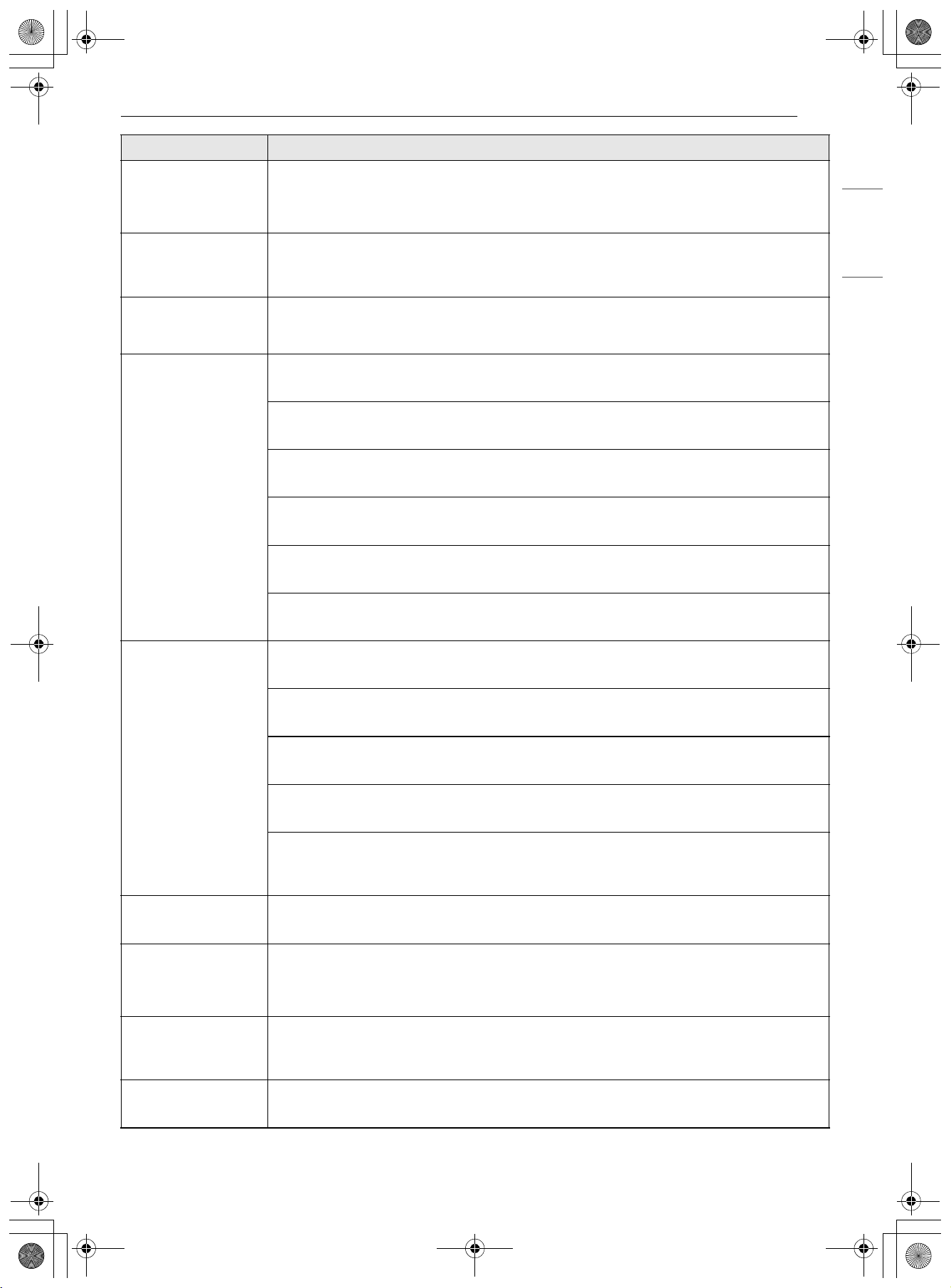
59TROUBLESHOOTING
ENGLISH
Burners are not
lighting properly
after cleaning the
cooktop surface.
Burner heads and caps are not completely dry or properly positioned.
• Make sure that the burner heads and caps are completely dry and properly positioned.
Burner flames are
very large or yellow.
It may be due to improper installation or setting.
• If the range is connected to LP gas, contact the technician who installed your range or
made the conversion.
Surface burners light
but the oven does
not.
Shut-off valve is not fully open.
• Make sure that the oven gas shut-off valve, located behind the range, is fully open.
Food does not bake
or roast properly
Oven controls improperly set.
• See the "Oven" section in the Operation chapter.
Rack position is incorrect or the rack is not level.
• See the "Oven" section in the Operation chapter.
Incorrect cookware or cookware of improper size being used.
• See the "Oven" section in the Operation chapter.
Oven thermostat needs to be adjusted.
• See the "Calibrating the Oven Temperature" section in the Operation chapter.
The Clock is not set correctly.
• See "Changing Oven Settings" in the OPERATION chapter.
Aluminum foil used improperly in the oven.
• See "Using Oven Racks" in Oven section.
Food does not broil
properly
Oven controls improperly set.
• Make sure you select the Broil mode properly.
Improper rack position being used.
• See the Broiling Guide.
Cookware not suited for broiling.
• Use broiling pan and grid.
The oven door is not closed.
• See "Broil" in the OPERATION chapter.
Aluminum foil used on the broiling pan and grid has not been fitted properly and slit as
recommended.
• See the "Oven" section in the Operation chapter.
Oven temperature
too hot or too cold
Oven sensor needs to be adjusted.
• See the "Calibrating the Oven Temperature" section in the Operation chapter.
Excessive smoking
during a Self Clean
cycle (On some
models)
Excessive soil.
• Turn off the Self Clean function. Open the windows to rid the room of smoke. Wait until the
Self Clean mode is cancelled. Wipe up the excess soil and reset the clean.
Burning or oily odor
emitting from the
vent
This is normal in a new oven.
• This will disappear in time. To speed the process, set a Self Clean cycle for a minimum of 3
hours. See the Self Clean section. (On some models)
Oven will not work Plug on range is not completely inserted in the electrical outlet.
• Make sure electrical plug is plugged into a live, properly grounded outlet.
Problem Possible Cause & Solution
en-us_main.book.book Page 59 Tuesday, February 3, 2026 8:10 AM
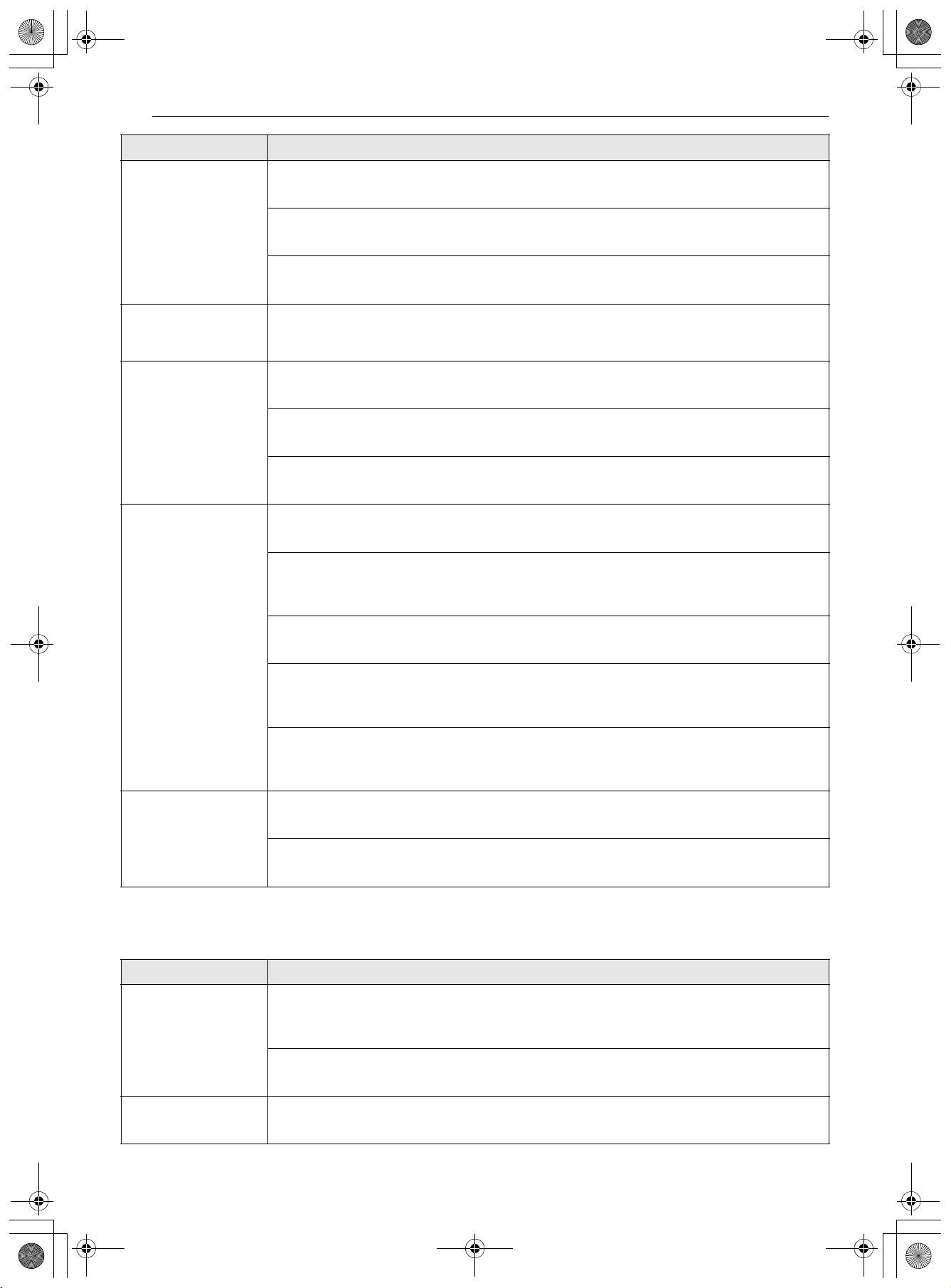
60 TROUBLESHOOTING
Parts & Features
Oven will not work A fuse in your home may be blown or the circuit breaker tripped.
• Replace the fuse or reset the circuit breaker.
Oven controls improperly set.
• See the "Oven" section in the Operation chapter.
Oven too hot.
• Allow the oven to cool to below locking temperature.
Steam is exhausted
through the oven
vent.
Cooking foods with high moisture produces steam.
• This is normal.
Appliance does not
operate.
Cord is not plugged in correctly.
• Make sure cord is plugged correctly into outlet. Check circuit breakers.
Service wiring is not complete.
• Contact your electrician for assistance.
Power outage.
• Check house lights to be sure. Call your local electric company for service.
Oven smokes
excessively during
broiling.
Control not set properly.
• Follow instructions under Setting Oven Controls.
Meat too close to the element.
• Reposition the rack to provide proper clearance between the meat and the element.
Preheat broil element for searing.
Meat not properly prepared.
• Remove excess fat from meat. Cut remaining fatty edges to prevent curling.
Insert on broiler pan wrong side up and grease not draining.
• Always place the grid on the broiler pan with ribs up and slots down to allow grease to drip
into the pan.
Grease has built up on oven surfaces. Old grease or food spatters cause excessive
smoking.
• Regular cleaning is necessary when broiling frequently.
Moisture collects on
oven window or
steam comes from
oven vent
This happens when cooking foods high in moisture.
• This is normal.
Excessive moisture was used when cleaning the window.
• Do not use excessive moisture when cleaning the window.
Problem Possible Cause & Solution
Clock and timer does
not work.
The electrical plug is not inserted properly.
• Make sure the electrical plug is inserted into a live, properly grounded outlet. Replace the
fuse or reset the circuit breaker.
Improper oven control settings
• See "Changing Oven Settings" in the OPERATION chapter.
Oven light does not
work.
It is time to replace the lamp or the lamp is loose.
• Replace or tighten lamp. See "Changing the Oven Light" section in this Owner’s Manual.
Problem Possible Cause & Solution
en-us_main.book.book Page 60 Tuesday, February 3, 2026 8:10 AM
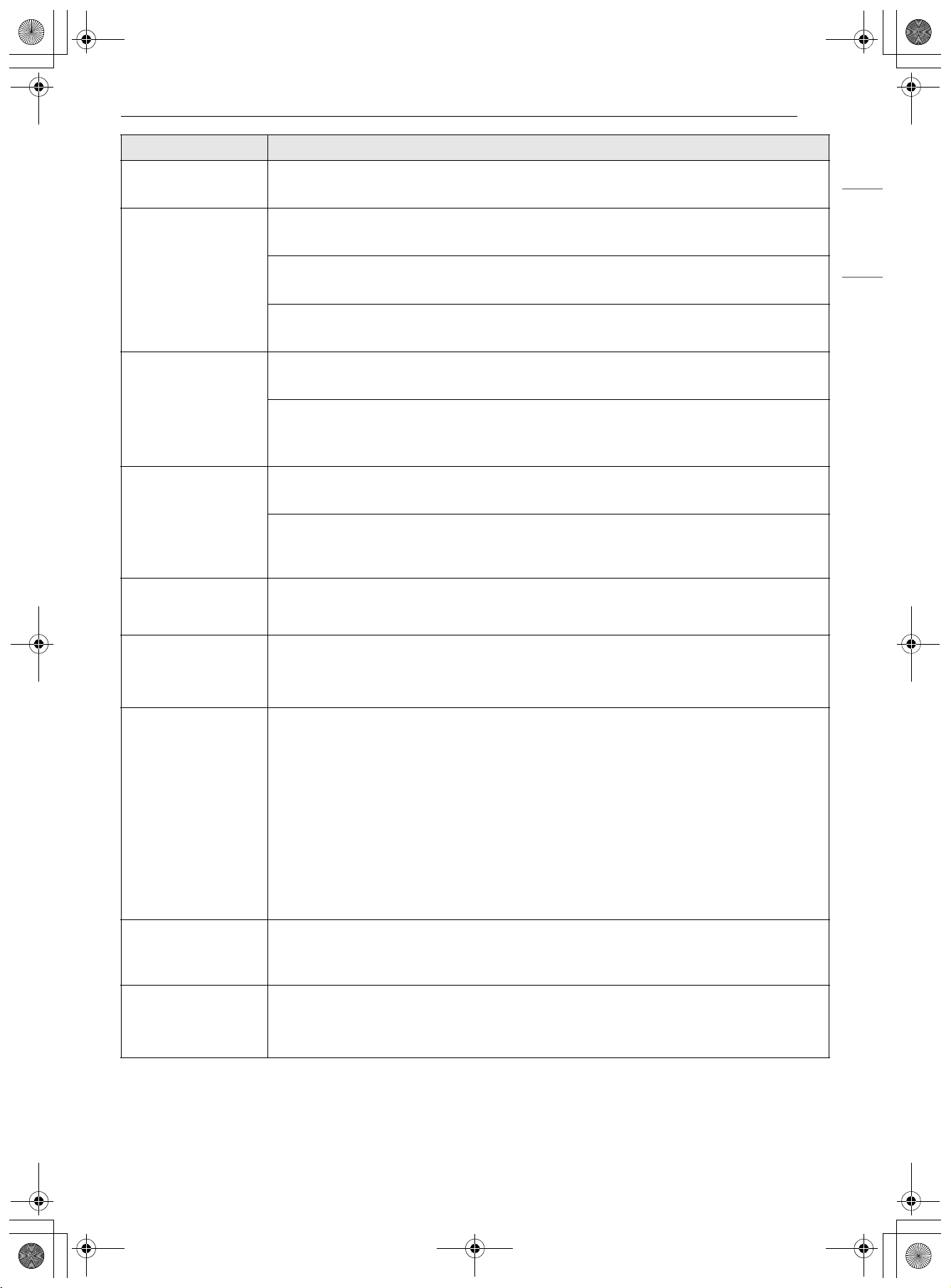
61TROUBLESHOOTING
ENGLISH
Oven light does not
work.
The plug on the range is not completely inserted in the electrical outlet.
• Make sure the electrical plug is inserted into a live, properly grounded outlet.
Oven will not Self
Clean. (On some
models)
The oven temperature is too high to set a Self Clean operation.
• Allow the range to cool and reset the controls.
Oven controls improperly set.
• See the Self Clean section.
A Self Clean cycle cannot be started if the oven Control Lock / Lockout feature is active.
• See the "Control Lock / Lockout" in "Changing Oven Settings" section.
Oven door does not
open after a Self
Clean cycle (On some
models)
Oven is too hot.
• Allow the oven to cool below locking temperature.
The control and door may be locked.
• Allow about one hour for the oven to cool after the completion of a Self Clean cycle. The
door can be opened when the lock
k is no longer displayed.
The oven is not clean
after a Self Clean
cycle (On some
models)
Oven controls not properly set.
• See the Self Clean section.
Oven was heavily soiled.
• Clean up heavy spillovers before starting the clean cycle. Heavily soiled ovens may need to
Self Clean again or for a longer period of time.
CLEAN and door
flash in the display
(On some models)
The Self Clean cycle has been selected, but the door is not closed.
• Close the oven door.
"Loc" is on in the
display when you
want to cook (On
some models)
The oven is locked because of the Control Lock / Lockout feature.
• Deactivate the Control Lock / Lockout feature.
Oven control beeps
and displays any F
code error.
Electronic control has detected a fault condition.
• Remove the power from the range for five minutes and then reconnect the power. If the
function error code repeats, call for service.
- [Case 1]
Code: F-3
Cause: Key short error
- [Case 2]
Code: F-9
Cause: Oven not heating
• Check the main gas shut-off valve or the oven gas shut-off valve and call for service.
Oven control
displays Sb/5b/S6/56
error code.
This code is not an error code. It indicates that the product's Sabbath mode
sb is
activated.
• See the "Using the Sabbath Mode" section in the Operation chapter.
The oven racks were
cleaned in a Self
Clean cycle. (On
some models)
The shiny, silver-colored racks were cleaned in a Self Clean cycle.
• Apply a small amount of vegetable oil to a paper towel and wipe the edges of the oven
racks with the paper towel. Do not use lubricant sprays.
Problem Possible Cause & Solution
en-us_main.book.book Page 61 Tuesday, February 3, 2026 8:10 AM
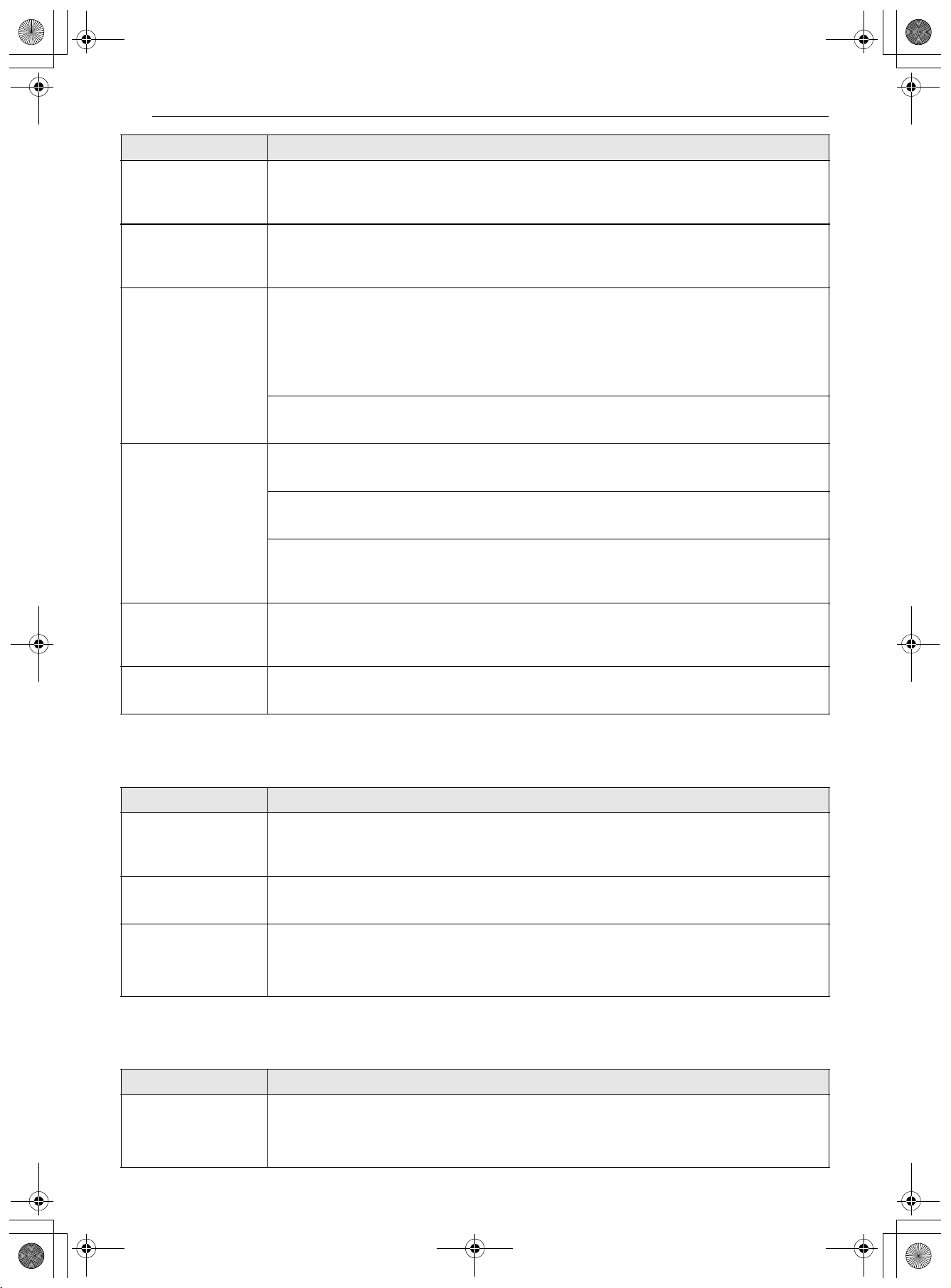
62 TROUBLESHOOTING
Noises
Wi-Fi
Displayed colon in
the clock is flashing
This means that the product has just been plugged in, or that it has experienced a
power interruption.
• This is normal. Reset the clock and any cooking function.
Light can be seen
through the oven air
vents.
While the Broil function is running, it is normal to see a light between the oven air
vents.
• This is normal.
Range is not level. Poor installation.
• Place oven rack in center of oven. Place a level on the oven rack. Adjust leveling legs at
base of range until the oven rack is level.
• Be sure floor is level and strong and stable enough to adequately support range.
• If floor is sagging or sloping, contact a carpenter to correct the situation.
Kitchen cabinet alignment may make range appear unlevel.
• Be sure cabinets are square and have sufficient room for range clearance.
Cannot move
appliance easily.
Appliance must be
accessible for
service.
Cabinets not square or are built in too tightly.
• Contact builder or installer to make appliance accessible.
Carpet interferes with range.
• Provide sufficient space so range can be lifted over carpet.
Anti-tip device engaged.
• Uninstall the anti-tip device to move the range. Reengage the anti-tip device after pulling
the range out for cleaning, service, or any other reason.
Convection fan
stops. (During
Conv.Bake mode)
Convection fan stops during a convection bake cycle. It is done to allow for more even
heating during the cycle.
• This is not a failure of the range and should be considered normal operation.
Fan operation
(During Bake Mode)
This is to ensure even baking results.
• It is normal for the fan to operate periodically throughout a normal bake cycle in the oven.
Problem Possible Cause & Solution
“Crackling” or
“popping” sound
This is the sound of the metal heating and cooling during both the cooking and Self
Clean functions.
• This is normal.
Fan noise A convection fan may automatically turn on and off.
• This is normal.
When lighting just
one burner, clicking
noise is heard from
all the burners.
Electric spark igniters from the burners cause the clicking noise. All the spark igniters
on the cooktop will activate when igniting just one burner.
• This is normal.
Problem Possible Cause & Solution
Trouble connecting
appliance and
smartphone to Wi-Fi
network
The password for the Wi-Fi network was entered incorrectly.
• Delete your home Wi-Fi network and begin the connection process again.
Problem Possible Cause & Solution
en-us_main.book.book Page 62 Tuesday, February 3, 2026 8:10 AM
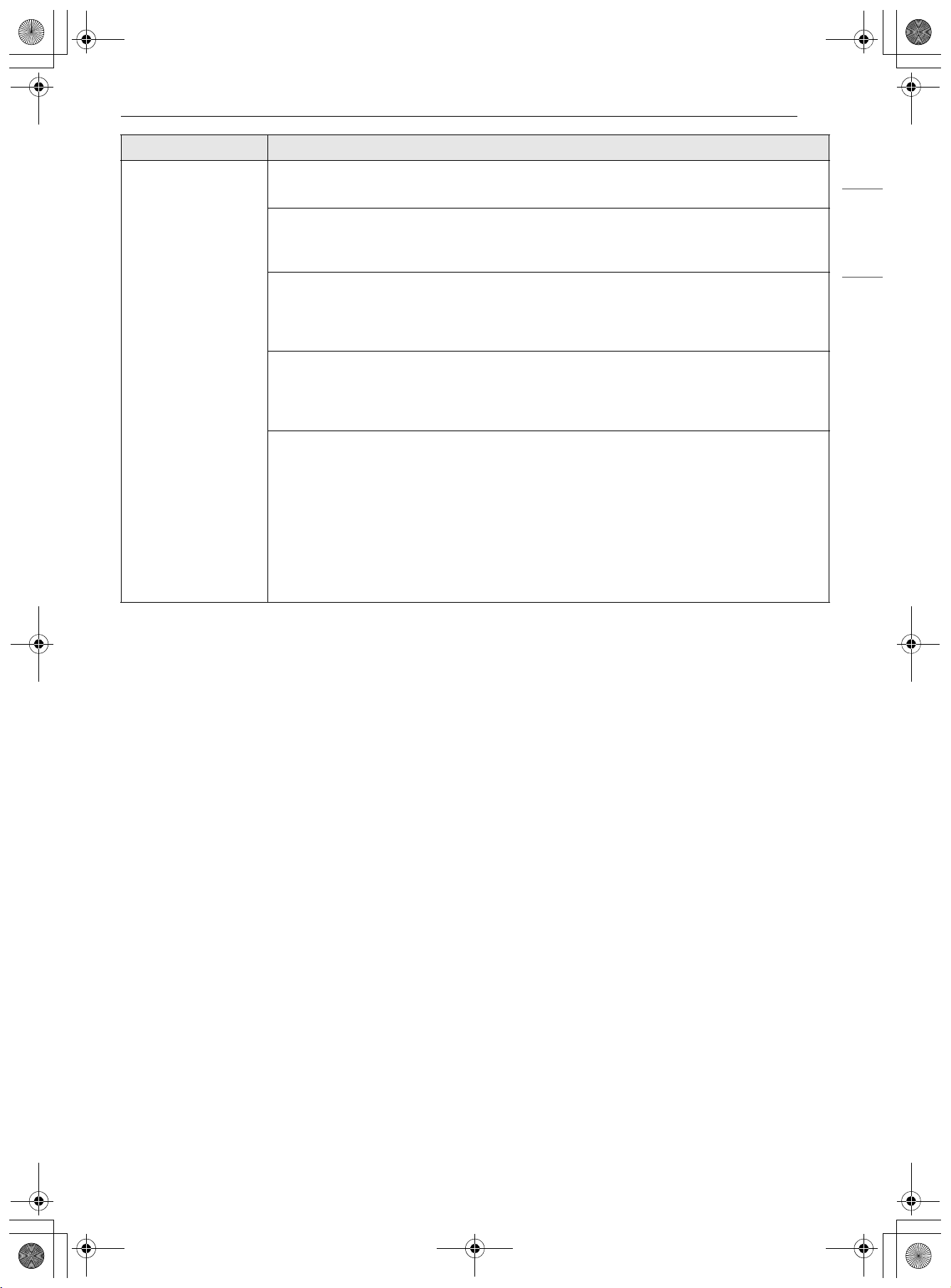
63TROUBLESHOOTING
ENGLISH
Trouble connecting
appliance and
smartphone to Wi-Fi
network
Mobile data for your smartphone is turned on.
• Turn off the Mobile data on your smartphone before connecting the appliance.
The wireless network name (SSID) is set incorrectly.
• The wireless network name (SSID) should be a combination of English letters and
numbers. (Do not use special characters.)
The router frequency is not 2.4 GHz.
• Only a 2.4 GHz router frequency is supported. Set the wireless router to 2.4 GHz and
connect the appliance to the wireless router. To check the router frequency, check with
your Internet service provider or the router manufacturer.
The appliance and the router are too far apart.
• If the appliance is too far from the router, the signal may be weak and the connection may
not be configured correctly. Move the router closer to the appliance or purchase and
install a Wi-Fi repeater.
During Wi-Fi setup, the app is requesting a password to connect to the product (on
certain phones).
• Locate the network name which starts with "LG" under Settings > Networks. Note the last
part of the network name.
- If the network name looks like LGE_Appliance_XX-XX-XX, enter lge12345.
- If the network name looks like LGE_Appliance_XXXX, enter XXXX twice as your password.
For example, if the network name appears as LGE_Appliance_8b92, then you would
enter 8b928b92 as your password. In this instance, the password is case sensitive and
the last 4 characters are unique to your appliance.
Problem Possible Cause & Solution
en-us_main.book.book Page 63 Tuesday, February 3, 2026 8:10 AM
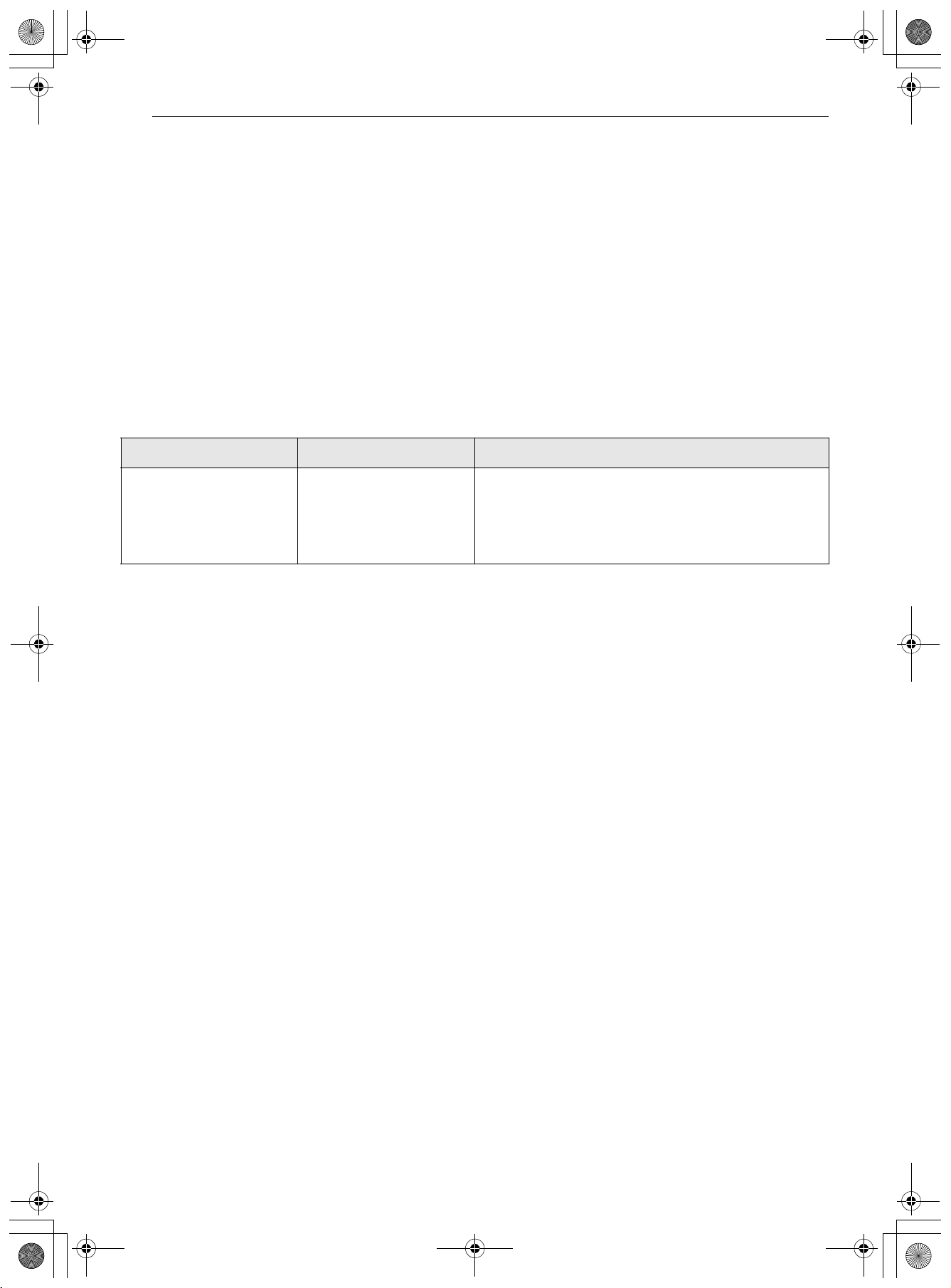
64 LIMITED WARRANTY
LIMITED WARRANTY
USA
TERMS AND CONDITIONS
ARBITRATION NOTICE: THIS LIMITED WARRANTY CONTAINS AN ARBITRATION PROVISION THAT
REQUIRES YOU AND LG ELECTRONICS (“LG”) TO RESOLVE DISPUTES BY BINDING ARBITRATION
INSTEAD OF IN COURT, UNLESS YOU CHOOSE TO OPT OUT. IN ARBITRATION, CLASS ACTIONS AND
JURY TRIALS ARE NOT PERMITTED. PLEASE SEE THE SECTION TITLED “PROCEDURE FOR RESOLVING
DISPUTES” BELOW.
Should your LG Gas Range ("Product") fail due to a defect in materials or workmanship under normal and
proper use, during the warranty period set forth below, LG will, at its option, repair or replace the Product.
This limited warranty is valid only to the original retail purchaser of the Product (“You”) and applies only
when purchased lawfully and used within the United States including U.S. Territories.
• Replacement Products and parts are warranted for the remaining portion of the original warranty period
or ninety (90) days, whichever is greater.
• Replacement Products and parts may be new, reconditioned, refurbished, or otherwise factory
remanufactured.
• Replaced Product or part(s) will be the property of LG.
• Proof of original retail purchase specifying the Product model and date of purchase is required to obtain
warranty service under this limited warranty.
EXCEPT TO THE EXTENT PROHIBITED BY APPLICABLE LAW, ANY IMPLIED WARRANTY OF
MERCHANTABILITY OR FITNESS FOR A PARTICULAR PURPOSE ON THE PRODUCT IS LIMITED IN
DURATION TO THE DURATION OF THE ABOVE LIMITED WARRANTY. UNDER NO CIRCUMSTANCES
SHALL LG OR ITS U.S. DISTRIBUTORS/DEALERS BE LIABLE FOR ANY INDIRECT, INCIDENTAL,
CONSEQUENTIAL, SPECIAL, OR PUNITIVE DAMAGES, INCLUDING, WITHOUT LIMITATION, LOST
GOODWILL, LOST REVENUES OR PROFITS, WORK STOPPAGE, IMPAIRMENT OF OTHER GOODS, COST OF
REMOVAL AND REINSTALLATION OF THE PRODUCT, LOSS OF USE, OR ANY OTHER DAMAGES WHETHER
BASED IN CONTRACT, TORT, OR OTHERWISE. LG’S TOTAL LIABILITY, IF ANY, SHALL NOT EXCEED THE
PURCHASE PRICE PAID BY YOU FOR THE PRODUCT.
SOME STATES DO NOT ALLOW THE EXCLUSION OR LIMITATION OF INCIDENTAL OR CONSEQUENTIAL
DAMAGES OR LIMITATIONS ON HOW LONG AN IMPLIED WARRANTY LASTS, SO THE ABOVE
EXCLUSIONS OR LIMITATIONS MAY NOT APPLY TO YOU. THIS LIMITED WARRANTY GIVES YOU
SPECIFIC LEGAL RIGHTS AND YOU MAY ALSO HAVE OTHER RIGHTS THAT VARY FROM STATE TO STATE.
THIS LIMITED WARRANTY DOES NOT COVER:
• Service trips to deliver, pick up, or install, educate how to operate, correct wiring, or correct
unauthorized repairs.
• Damage or failure of the Product to perform during power failures and interrupted or inadequate
electrical service.
• Damage or failure of the Product caused by leaky or broken water pipes, frozen water pipes, restricted
drain lines, inadequate or interrupted water supply or inadequate supply of air.
• Damage or failure of the Product resulting from operating the Product in a corrosive atmosphere or
contrary to the Product owner’s manual.
Warranty Period Scope of Warranty HOW SERVICE IS HANDLED
One (1) year from the
date of original retail
purchase, or from the
date of delivery as per
applicable law
Parts and Labor (internal
/ functional parts only)
LG will provide, free of charge, all labor and in-home
service to replace defective part(s).
en-us_main.book.book Page 64 Tuesday, February 3, 2026 8:10 AM
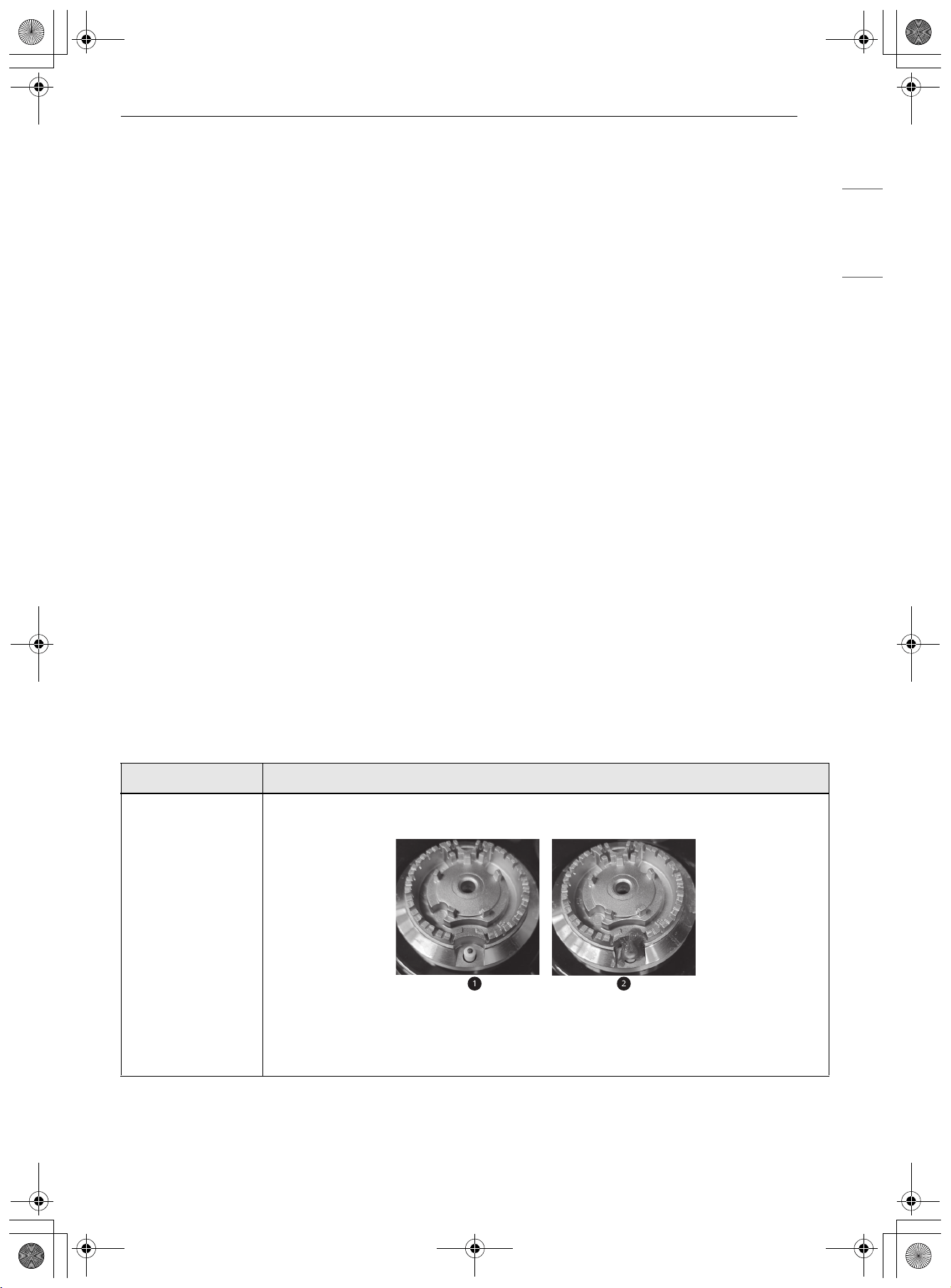
65LIMITED WARRANTY
ENGLISH
• Damage or failure of the Product caused by accidents, pests and vermin, lightning, wind, fire, floods, acts
of nature, or any other causes beyond the control of LG.
• Damage or failure of the Product caused by unauthorized modification or alteration, or if the Product is
used for other than the intended purpose, or any water leakage where the Product was not properly
installed.
• Damage or failure of the Product caused by incorrect electrical current, voltage, or plumbing codes.
• Damage or failure of the Product caused by transportation, storage, and/or handling, including
scratches, dents, chips, and/or other damage to the finish of the Product, unless such damage is
reported within one (1) week of delivery.
• Damage or failure of the Product resulting from misuse, abuse, improper installation, repair, or
maintenance. Improper repair includes the use of parts not authorized by LG. Improper installation or
maintenance includes installation or maintenance contrary to the Product owner’s manual.
• Damage or failure of the Product caused by the use of parts, components, accessories, consumable
cleaning products, or any other products or services that were not authorized by LG.
• Damage or missing items to any display or open box Product.
• Refurbished Product or any Product sold “As Is”, “Where Is”, “With all Faults”, or similar disclaimer.
• Products with original serial numbers that have been removed, altered, or cannot be readily determined.
• Increases in utility costs and additional utility expenses.
• Any noises associated with normal operation.
• Products used for other than normal and proper household use (e.g., commercial, business, or industrial
settings, including any retail or food service establishments, or any commercial lodging/transient rental
setting), or any use contrary to the Product owner's manual.
• Costs associated with removal and reinstallation of the Product for repairs, or the removal and
reinstallation of the Product if it is installed in an inaccessible location or not installed in accordance with
the Product Owner's manual.
• Accessories, removable components, or consumable parts (e.g. Shelves, door bins, drawers, water/air
filters, racks, light bulbs, batteries, etc., as applicable), except for internal/functional parts covered under
this limited warranty.
• Cost of conversion of the Product from natural gas to LP gas or vice versa.
Not Covered by this Limited Warranty
Problem Possible Cause & Prevention
Burners do not
light.
Clogged or dirty burner ports or electrodes will not allow the burner to operate
properly.
a OK
b Not working (must be cleaned)
• Check and clean the gas electrode.
en-us_main.book.book Page 65 Tuesday, February 3, 2026 8:10 AM
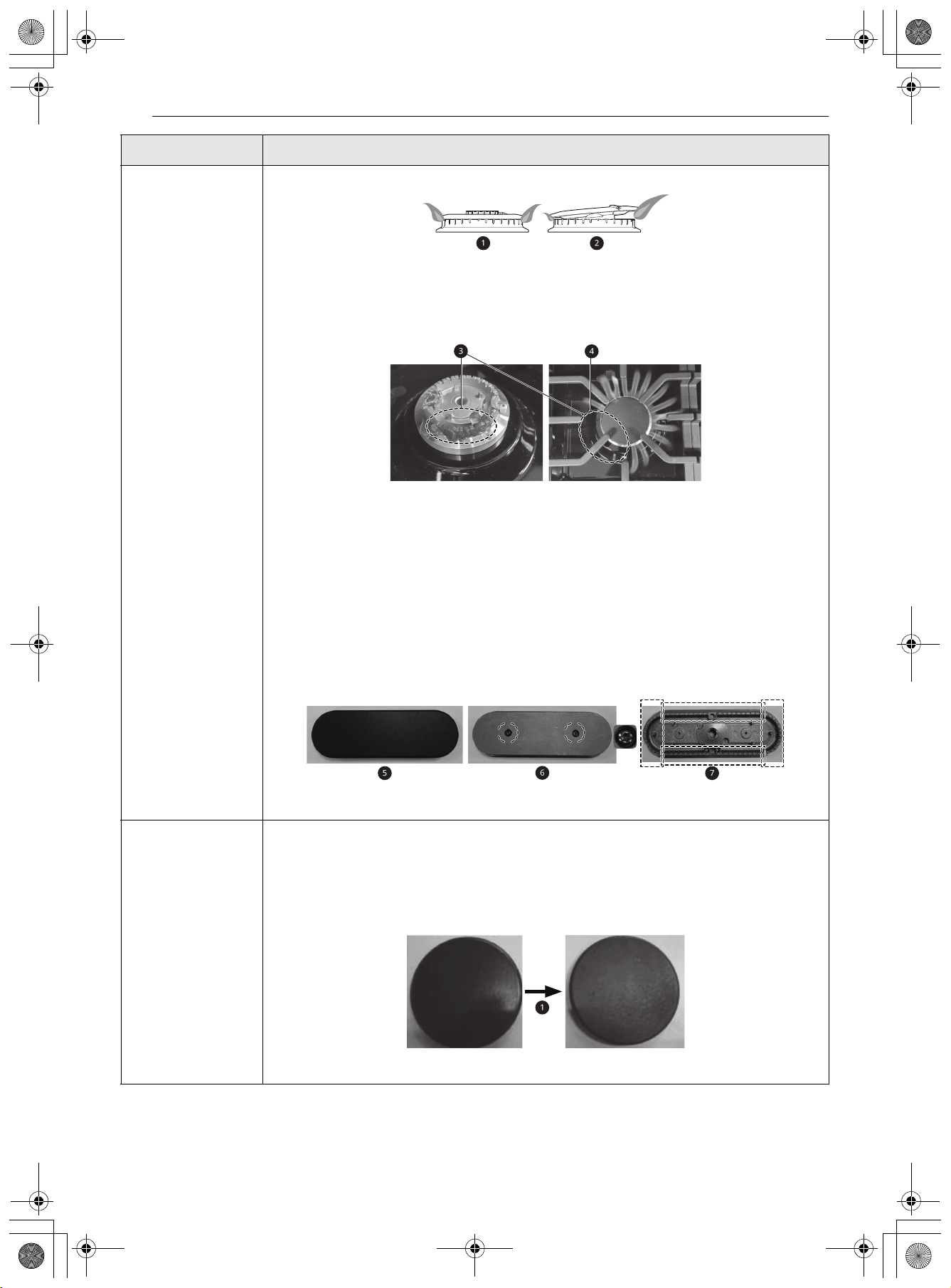
66 LIMITED WARRANTY
Uneven flame Improper burner cap installation
a Burner cap is properly seated.
b Burner cap is NOT properly seated.
• Check installation of burner head and cap.
Burner ports clogged by food residue
c Ports blocked by dirt
d Flames uneven
• Hardened residue should be removed using a toothbrush.
NOTE
• Cleaning oval burner
1) Open burner cap e.
2) Release 2 screws f.
3) Clean residue using toothbrush.
g Clean highlighted part with toothbrush.
Burner cap color
change and lost
shine
Scratching
• Do not use steel wool or abrasive cleansers to clean.
Use of detergent or abrasive cleansers
• To remove burnt-on food, soak the burner heads in hot water for 20–30 minutes.
(Do not use detergent)
a Shine is lost.
Problem Possible Cause & Prevention
en-us_main.book.book Page 66 Tuesday, February 3, 2026 8:10 AM
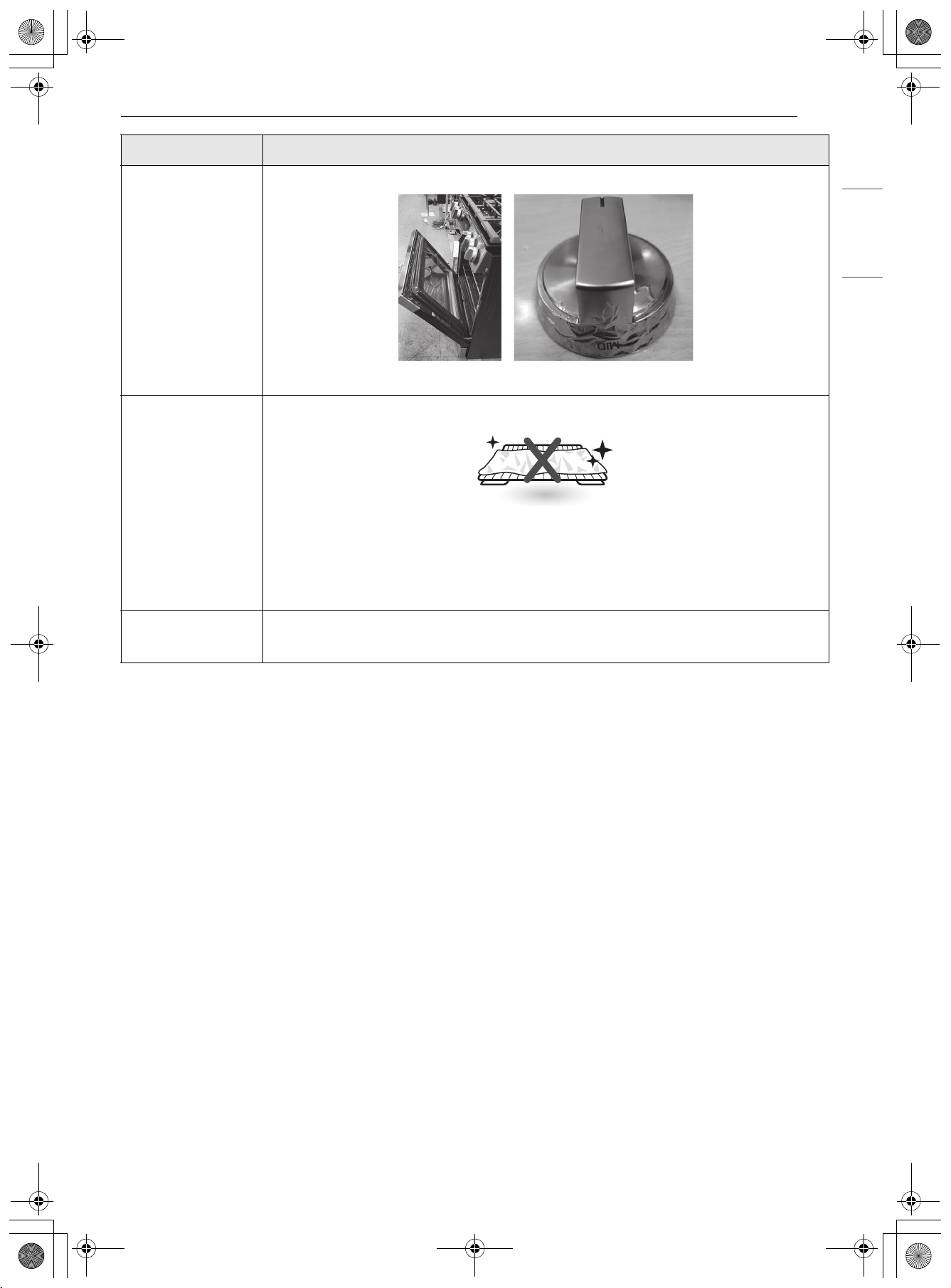
67LIMITED WARRANTY
ENGLISH
Knobs melt Improper usage
• Do not leave door at stop position during Broil/Bake mode or right after cooking.
Oven or racks are
stained after
using aluminum
foil
Aluminum foil has melted in the oven
• Never cover the oven bottom or cover an entire rack with materials such as
aluminum foil.
• If the foil has already melted onto the oven, it will not affect the performance of
the oven.
Flame or power is
weak
Gas pressure may be weak
• Check with gas supplier first.
Problem Possible Cause & Prevention
en-us_main.book.book Page 67 Tuesday, February 3, 2026 8:10 AM
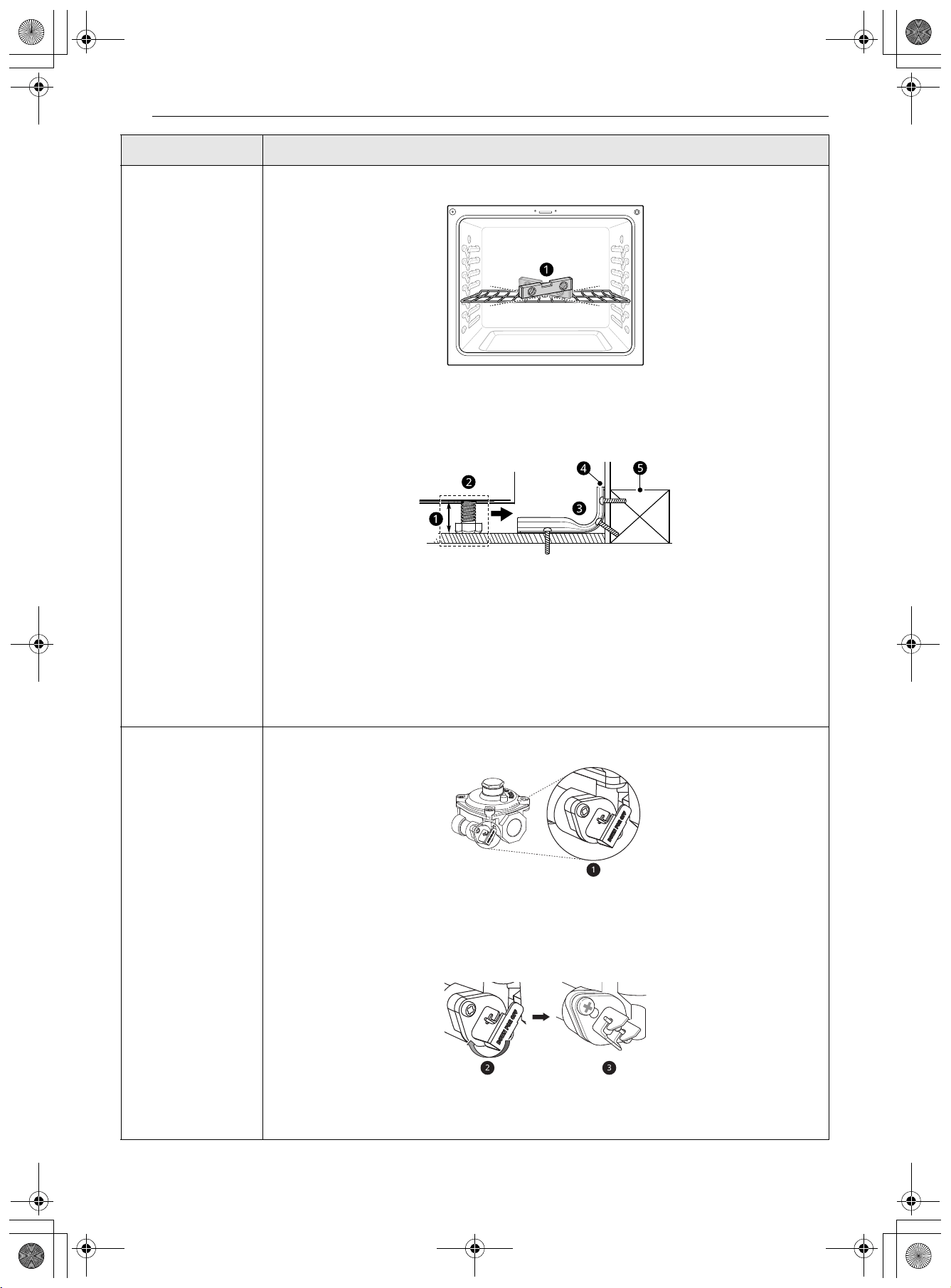
68 LIMITED WARRANTY
Surface is not level
Oven is tipping
Range not leveled
• Check with installer first.
• Use carpenter’s level a to check level.
Anti-tip device not installed correctly
a Approximately 0.65" (16.5 mm)
b Level both sides of range
c Screw must enter wood or concrete
d Anti-tip bracket
e Wall plate
• Check with installer first.
Oven shows error
code (F9, F19) but
cooktop burners
are working.
The gas pressure regulator valve is closed.
a Lever’s closed position
• Check that the regulator valve is in the open position.
• If the regulator valve is closed, rotate the lever to open the valve.
b Lever’s closed position
c Lever’s open position
Problem Possible Cause & Prevention
en-us_main.book.book Page 68 Tuesday, February 3, 2026 8:10 AM
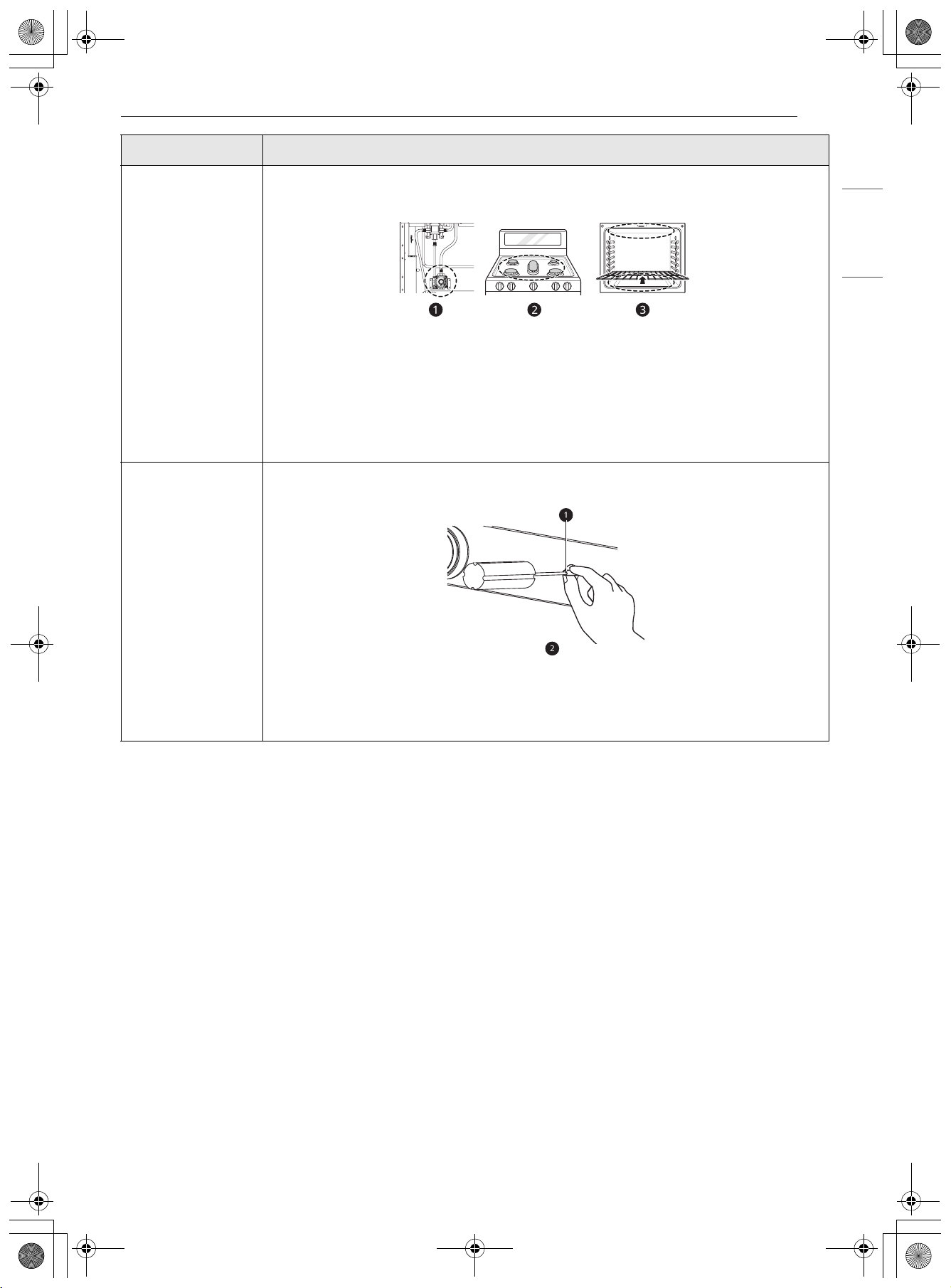
69LIMITED WARRANTY
ENGLISH
Flames too big on
converted cooktop
(NP
~LP)
The installer missed part of the conversion. (Check 3 parts: regulator, cooktop
valve, broil/bake valve.)
a Regulator
b Cooktop valve
c Broil/Bake valve
• Check with installer first.
• Refer to installation manual.
Flame is too small
or too large
1. Variable gas pressure
2. Installer did not check
a Valve shaft
b Center adjustment screw
• Check with installer first.
Problem Possible Cause & Prevention
en-us_main.book.book Page 69 Tuesday, February 3, 2026 8:10 AM
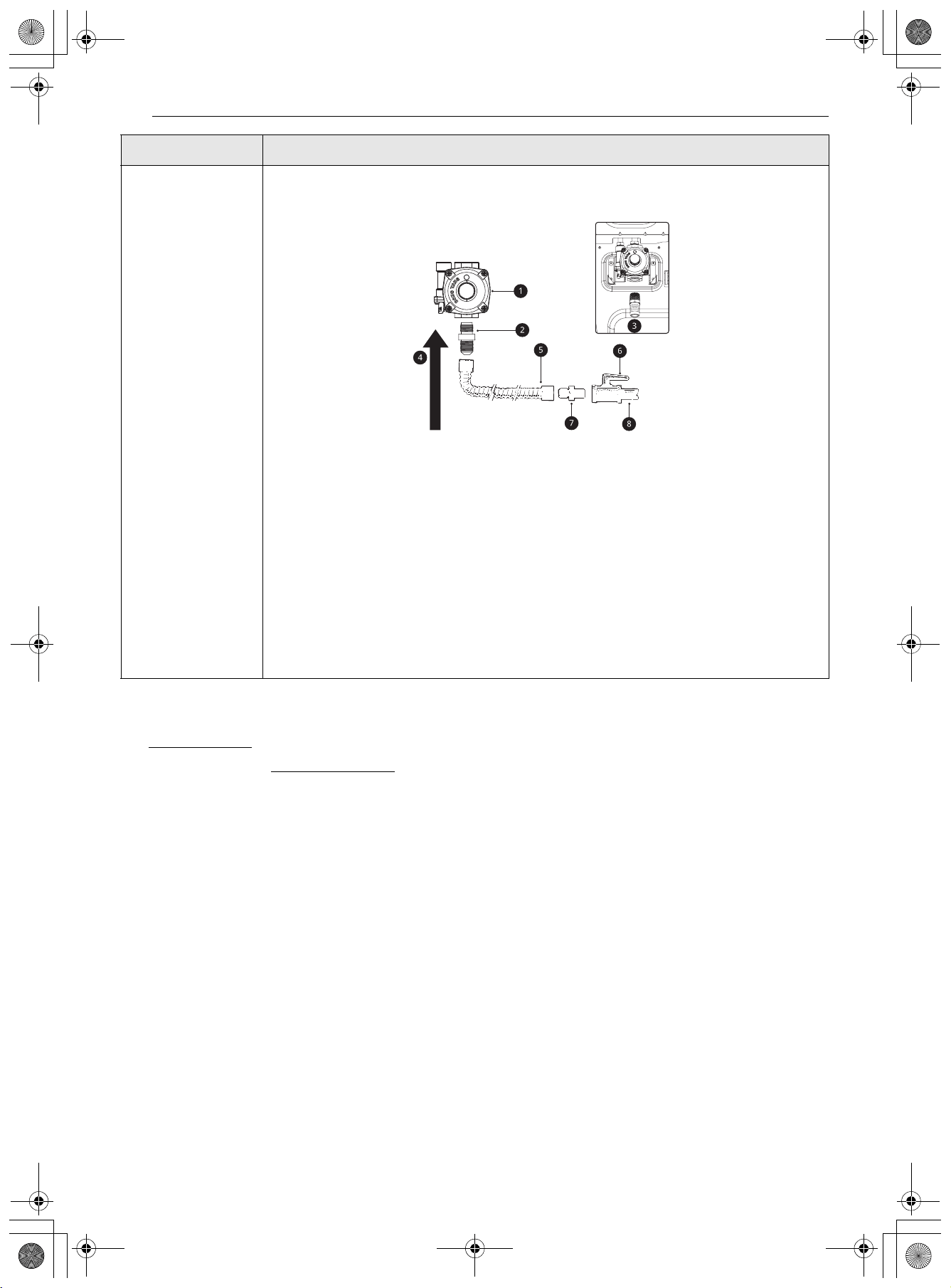
70 LIMITED WARRANTY
The cost of repair or replacement under these excluded circumstances shall be borne by You.
TO OBTAIN WARRANTY SERVICE AND ADDITIONAL INFORMATION
Call 1-800-243-0000
and select the appropriate option from the menu.
Or visit our website at http://www.lg.com
Or by mail: LG Electronics Customer Service P.O. Box 240007 Huntsville, AL 35813 ATTN: CIC
PROCEDURE FOR RESOLVING DISPUTES:
ALL DISPUTES BETWEEN YOU AND LG ARISING OUT OF OR RELATING IN ANY WAY TO THIS LIMITED
WARRANTY OR THE PRODUCT SHALL BE RESOLVED EXCLUSIVELY THROUGH BINDING ARBITRATION, AND
NOT IN A COURT OF GENERAL JURISDICTION. BINDING ARBITRATION MEANS THAT YOU AND LG ARE EACH
WAIVING THE RIGHT TO A JURY TRIAL AND TO BRING OR PARTICIPATE IN A CLASS ACTION.
Definitions. For the purposes of this section, references to “LG” mean LG Electronics U.S.A., Inc., its
parents, subsidiaries and affiliates, and each of their officers, directors, employees, agents, beneficiaries,
predecessors in interest, successors, assigns and suppliers; references to “dispute” or “claim” shall include
any dispute, claim or controversy of any kind whatsoever (whether based in contract, tort, statute,
regulation, ordinance, fraud, misrepresentation or any other legal or equitable theory) arising out of or
relating in any way to the sale, condition or performance of the product or this Limited Warranty.
Notice of Dispute. In the event you intend to commence an arbitration proceeding, you must first notify
LG in writing at least 30 days in advance of initiating the arbitration by sending a letter to LG at LG
Electronics, USA, Inc. Attn: Legal Department- Arbitration 111 Sylvan Avenue, Englewood Cliffs, NJ 07632.
You and LG agree to engage in good faith discussions in an attempt to amicably resolve your claim. The
notice must provide your name, address, and telephone number; identify the product that is the subject of
the claim; and describe the nature of the claim and the relief being sought. If you and LG are unable to
resolve the dispute within 30 days, either party may proceed to file a claim for arbitration.
Gas smell Improper connection
Flexible Connector Hookup
a Pressure regulator
b 1/2" Adapter
c 1/2" Adapter
d Gas Flow into Range
e Flex connector (6 ft. max.)
f Gas shut-off valve
g 1/2" Adapter
h 1/2" or 3/4" Gas pipe
• Check with installer first.
Problem Possible Cause & Prevention
en-us_main.book.book Page 70 Tuesday, February 3, 2026 8:10 AM
71LIMITED WARRANTY
ENGLISH
Agreement to Binding Arbitration and Class Action Waiver. Upon failure to resolve the dispute during
the 30 day period after sending written notice to LG, you and LG agree to resolve any claims between us
only by binding arbitration on an individual basis, unless you opt out as provided below. Any dispute
between you and LG shall not be combined or consolidated with a dispute involving any other person’s or
entity’s product or claim. More specifically, without limitation of the foregoing, any dispute between you
and LG shall not under any circumstances proceed as part of a class or representative action. Instead of
arbitration, either party may bring an individual action in small claims court, but that small claims court
action may not be brought on a class or representative basis.
Arbitration Rules and Procedures. To begin arbitration of a claim, either you or LG must make a written
demand for arbitration. The arbitration will be administered by the American Arbitration Association
(“AAA”) and will be conducted before a single arbitrator under the AAA’s Consumer Arbitration Rules that
are in effect at the time the arbitration is initiated (referred to as the “AAA Rules”) and under the
procedures set forth in this section. The AAA Rules are available online at www.adr.org/consumer
. Send a
copy of your written demand for arbitration, as well as a copy of this provision, to the AAA in the manner
described in the AAA Rules. You must also send a copy of your written demand to LG at LG Electronics,
USA, Inc. Attn: Legal Department- Arbitration 111 Sylvan Avenue, Englewood Cliffs, NJ 07632. If there is a
conflict between the AAA Rules and the rules set forth in this section, the rules set forth in this section will
govern. This arbitration provision is governed by the Federal Arbitration Act. Judgment may be entered on
the arbitrator’s award in any court of competent jurisdiction. All issues are for the arbitrator to decide,
except that issues relating to the scope and enforceability of the arbitration provision and to the
arbitrability of the dispute are for the court to decide. The arbitrator is bound by the terms of this
provision.
Governing Law. The law of the state of your residence shall govern this Limited Warranty and any
disputes between us except to the extent that such law is preempted by or inconsistent with applicable
federal law.
Fees/Costs. You do not need to pay any fee to begin an arbitration. Upon receipt of your written demand
for arbitration, LG will promptly pay all arbitration filing fees to the AAA unless you seek more than $25,000
in damages, in which case the payment of these fees will be governed by the AAA Rules. Except as
otherwise provided for herein, LG will pay all AAA filing, administration and arbitrator fees for any
arbitration initiated in accordance with the AAA Rules and this arbitration provision. If you prevail in the
arbitration, LG will pay your attorneys’ fees and expenses as long as they are reasonable, by considering
factors including, but not limited to, the purchase amount and claim amount. Notwithstanding the
foregoing, if applicable law allows for an award of reasonable attorneys’ fees and expenses, an arbitrator
can award them to the same extent that a court would. If the arbitrator finds either the substance of your
claim or the relief sought in the demand is frivolous or brought for an improper purpose (as measured by
the standards set forth in Federal Rule of Civil Procedure 11(b)), then the payment of all arbitration fees will
be governed by the AAA Rules. In such a situation, you agree to reimburse LG for all monies previously
disbursed by it that are otherwise your obligation to pay under the AAA Rules. Except as otherwise
provided for, LG waives any rights it may have to seek attorneys’ fees and expenses from you if LG prevails
in the arbitration.
Hearings and Location. If your claim is for $25,000 or less, you may choose to have the arbitration
conducted solely on the basis of (1) documents submitted to the arbitrator, (2) through a telephonic
hearing, or (3) by an in-person hearing as established by the AAA Rules. If your claim exceeds $25,000, the
right to a hearing will be determined by the AAA Rules. Any in-person arbitration hearings will be held at a
location within the federal judicial district in which you reside unless we both agree to another location or
we agree to a telephonic arbitration.
Opt Out. You may opt out of this dispute resolution procedure. If you opt out, neither you nor LG can
require the other to participate in an arbitration proceeding. To opt out, you must send notice to LG no
later than 30 calendar days from the date of the first consumer purchaser’s purchase of the product by
either: (i) sending an e-mail to [email protected]
, with the subject line: “Arbitration Opt Out” or (ii) calling 1-
800-980-2973. You must include in the opt out e-mail or provide by telephone: (a) your name and address;
(b) the date on which the product was purchased; (c) the product model name or model number; and (d)
the serial number (the serial number can be found (i) on the product; or (ii) online by accessing https://
www.lg.com/us/support and clicking on “How do I find my model number?”).
You may only opt out of the dispute resolution procedure in the manner described above (that is, by e-mail
or telephone); no other form of notice will be effective to opt out of this dispute resolution procedure.
Opting out of this dispute resolution procedure will not affect the coverage of the Limited Warranty in any
en-us_main.book.book Page 71 Tuesday, February 3, 2026 8:10 AM
72 LIMITED WARRANTY
way, and you will continue to enjoy the full benefits of the Limited Warranty. If you keep this product and
do not opt out, then you accept all terms and conditions of the arbitration provision described above.
en-us_main.book.book Page 72 Tuesday, February 3, 2026 8:10 AM
MANUAL DEL PROPIETARIO
ESTUFA DE GAS
Lea el manual del propietario detenidamente previo a operar el
electrodoméstico y mantengalo al alcance para futuras
referencias.
ESPAÑOL
LRGN6321*
www.lg.com
Copyright © 2026 LG Electronics. Todos los derechos reservados
Escanee el código QR para ver el manual.
es-us_main.book.book Page 1 Tuesday, February 3, 2026 8:20 AM
Seguridad para una estufa de gas
ADVERTENCIA: Si no sigue con exactitud la información de
este manual, puede provocar un incendio o una explosión que cause
daños en la propiedad, lesiones personales o la muerte.
• No guarde ni use gasolina u otros vapores o líquidos inflamables cerca
de este aparato o cualquier otro.
• QUÉ HACER SI HUELE GAS
- No intente encender ningún aparato.
- No toque ningún interruptor eléctrico.
- No use ningún teléfono en su edificio.
- Llame a su compañía de gas inmediatamente desde el teléfono de un
vecino. Siga las instrucciones de la compañía de gas.
- Si no puede comunicarse con su compañía de gas, llame al
departamento de bomberos.
• Un instalador calificado, una agencia de servicio o la compañía de gas
deben realizar la instalación y mantenimiento.
ADVERTENCIA:
Nunca deje la sección de cocción de superficie de este aparato sin
supervisión.
• El incumplimiento de esta advertencia puede provocar incendios,
explosiones o riesgos de quemaduras que causen daños en la
propiedad, lesiones personales o la muerte.
• En caso de incendio, manténganse alejado del electrodoméstico y
llame de inmediato al departamento de bomberos local.
NO INTENTE APAGAR CON AGUA UN INCENDIO PROVOCADO POR
ACEITE/GRASA.
ls_main.book.book Page 4 Monday, March 15, 2021 3:51 PM
ÍNDICE
3
5 INSTRUCCIONES IMPORTANTES
DE SEGURIDAD
5 LEA TODAS LAS INSTRUCCIONES ANTES DE
UTILIZAR
5 Mensajes de Seguridad
5 Dispositivo antivuelco
6 ADVERTENCIA
6 Instalación
7 Funcionamiento
8 Mantenimiento
8 Instrucciones de Conexión a Tierra
8 Riesgo de incendio y materiales
inflamables
9 PRECAUCIÓN
9 Instalación
9 Funcionamiento
10 Mantenimiento
11 DESCRIPCIÓN GENERAL DEL
PRODUCTO
11 Características del producto
11 Exterior e interior
11 Especificaciones del producto
12 Accesorios
13 INSTALACIÓN
13 Antes de la instalación
13 Herramientas necesarias
13 Piezas
13 En el Commonwealth de Massachusetts
13 Desembalaje y traslado de la estufa
15 Elección de la ubicación adecuada
15 Dimensiones y Espacios
16 Ventilación
17 Suelo
17 Temperatura ambiente
17 Nivelando
17 Nivelación de la estufa
17 Conexión de gas
17 Cómo brindar el suministro adecuado de
gas
18 Conexión de la estufa al gas
19 Ajuste de los obturadores de aire (para
conversiones a gas LP)
19 Conexión de electricidad
19 Requisitos eléctricos
19 Conexión a tierra
20 Quemadores de superficie
20 Ensamblaje de los quemadores de
superficie
20 Verificación de encendido de los
quemadores de superficie
21 Ajuste del quemador de superficie en la
configuración Low Flame (Simmer) (Llama
baja [Fuego lento])
22 Dispositivo antivuelco
22 Instalación del dispositivo antivuelco
22 Prueba de funcionamiento
22 Pruebe la estufa antes de usarla
24 FUNCIONAMIENTO
24 Panel de control
24 Funciones del panel de control
24 Cambio de configuración del horno
24 Reloj
25 Luz del horno
25 Timer On/Off (Temporizador encendido/
apagado)
25 Wi-Fi
26 Configuración (Modo de horas,
Conversión automática a convección,
Ajuste del termostato del horno, Luz de
alarma de precalentado, Volumen del
indicador sonoro, Fahrenheit o Celsius,
Wi-Fi Encendido/Apagado)
27 Bloqueo de control
27 Hora de inicio (Cocción programada
retrasada)
28 Cook Time (Timed Cook) (Tiempo de
cocción [Cocción programada])
29 Configuraciones predeterminadas
mínimas y máximas
29 Quemadores de superficie de gas
29 Antes de usar los quemadores de
superficie a gas
31 Ubicaciones de los quemadores
32 Uso de los quemadores de gas de
superficie
es-us_main.book.book Page 3 Tuesday, February 3, 2026 8:20 AM
4
32 Uso del Bloqueo de Perillas
33 Ajuste del tamaño de la llama
33 Uso de los utensilios de cocina adecuados
33 Uso de un wok
34 Uso de las rejillas en superficie
34 Horno
34 Antes de usar el horno
35 Ventilación del horno
35 Uso de los estantes del horno
35 Bake (Hornear)
36 Modo de convección
37 Guía de recomendaciones para hornear y
rostizar
38 Broil (Asar)
40 Guía de recomendaciones para asar
42 Warm (Calentar)
42 Air Fry (Freír con aire)
44 Guía para freír con aire recomendada
45 Inicio remoto
46 Uso del Modo Sabbath
47 FUNCIONES INTELIGENTES
47 Aplicación LG ThinQ
47 Funciones de la aplicación LG ThinQ
47 Instalación de la aplicación LG ThinQ y
conexión de un electrodoméstico LG
48 Instalación de la aplicación LG ThinQ
48 Actualización de características LG
49 Conexión a Wi-Fi
49 Especificaciones del equipo de radio
49 Declaración de la FCC
49 Declaración sobre exposición a la
radiación de RF de la FCC
49 Software de código abierto
50 Función Smart Diagnosis
TM
50 Uso de LG ThinQ para diagnosticar
problemas
50 Uso del diagnóstico audible para
diagnosticar problemas
51 MANTENIMIENTO
51 Limpieza
51 Interior
51 Exterior
53 Quemadores de superficie de gas
55 EasyClean
57 Extracción y colocación de las puertas
desmontables del horno
59 Extracción y colocación de cajones
59 Mantenimiento periódico
59 Cambio de la luz del horno
61 SOLUCIÓN DE PROBLEMAS
61 Preguntas Frecuentes
61 Preguntas frecuentes
64 Antes de llamar al servicio técnico
64 Cocción
66 Partes y Características
68 Ruidos
68 Wi-Fi
70 GARANTÍA LIMITADA
70 EE. UU.
70 TÉRMINOS Y CONDICIONES
70 ESTA GARANTÍA LIMITADA NO CUBRE LO
SIGUIENTE:
76 PROCEDIMIENTO PARA RESOLVER
DISPUTAS:
es-us_main.book.book Page 4 Tuesday, February 3, 2026 8:20 AM
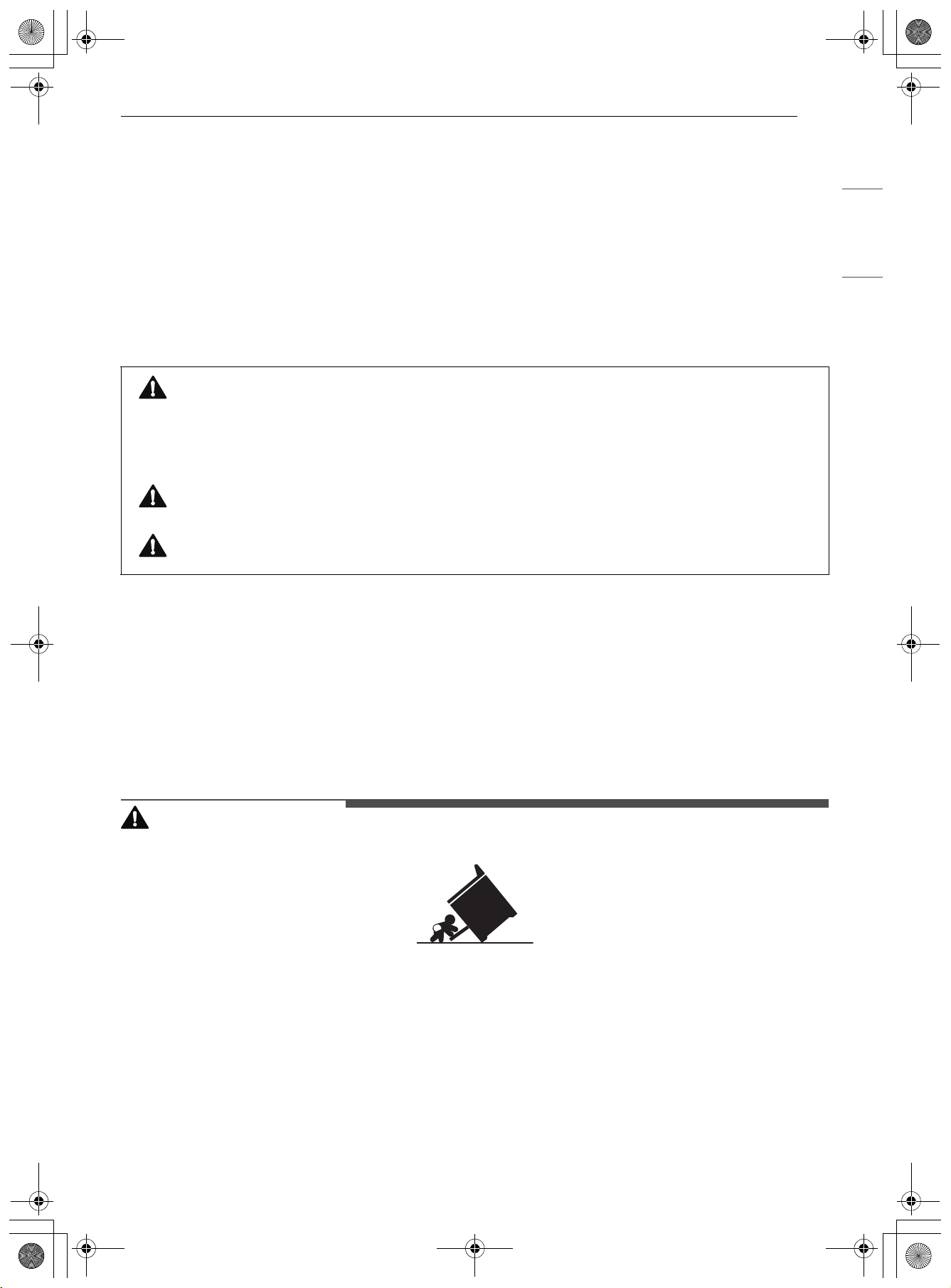
5INSTRUCCIONES IMPORTANTES DE SEGURIDAD
ESPAÑOL
INSTRUCCIONES IMPORTANTES DE SEGURIDAD
LEA TODAS LAS INSTRUCCIONES ANTES DE UTILIZAR
Descargue este manual del propietario en http://www.lg.com
Mensajes de Seguridad
Su seguridad y la de los demás son muy importantes.
Tanto en este manual como en el equipo, hemos proporcionado muchos mensajes de seguridad
importantes. Siempre debe leer y respetar todos los mensajes de seguridad.
Todos los mensajes de seguridad le indicarán cuál es el riesgo potencial, le indicarán cómo reducir la
probabilidad de lesiones y le proporcionarán información sobre qué podría suceder si no se siguen las
instrucciones.
Dispositivo antivuelco
Para reducir el riesgo de vuelco, el electrodoméstico debe estar asegurado con un dispositivo antivuelco
instalado de manera adecuada. Para comprobar si el dispositivo está instalado correctamente, verifique
que el dispositivo antivuelco esté bien sujeto, o tome el borde superior trasero de la protección posterior
de la estufa e intente inclinarla hacia adelante con cuidado. Consulte la sección de instalación para obtener
instrucciones.
ADVERTENCIA
• Un niño o adulto pueden volcar la estufa y morir.
• Coloque el dispositivo antivuelco en la estructura y/o estufa. Verifique que el dispositivo antivuelco se
haya instalado y acoplado correctamente siguiendo la guía del soporte antivuelco.
• Enganche la estufa al dispositivo antivuelco conforme a la guía del soporte antivuelco. Asegúrese que el
dispositivo antivuelco se vuelva a acoplar cuando se mueva la estufa según la guía del soporte
antivuelco.
• Vuelva a enganchar el dispositivo antivuelco si mueve la estufa. No opere la estufa sin el dispositivo
antivuelco en su lugar y enganchado.
• Consulte las instrucciones de instalación para obtener los detalles.
• Si no sigue estas instrucciones puede ocasionar la muerte o quemaduras graves en niños o adultos.
Este es el símbolo de alerta de seguridad.
Este símbolo le advierte de posibles peligros que pueden matarlos o lastimarlos a usted y a otros.
Todos los mensajes de seguridad seguirán el símbolo de alerta de seguridad y la palabra
ADVERTENCIA o PRECAUCIÓN.
Estos términos significan lo siguiente:
ADVERTENCIA
Podría sufrir lesiones graves o la muerte si no sigue las instrucciones.
PRECAUCIÓN
Puede resultar lesionado o causar daño al producto si no sigue las instrucciones.
es-us_main.book.book Page 5 Tuesday, February 3, 2026 8:20 AM
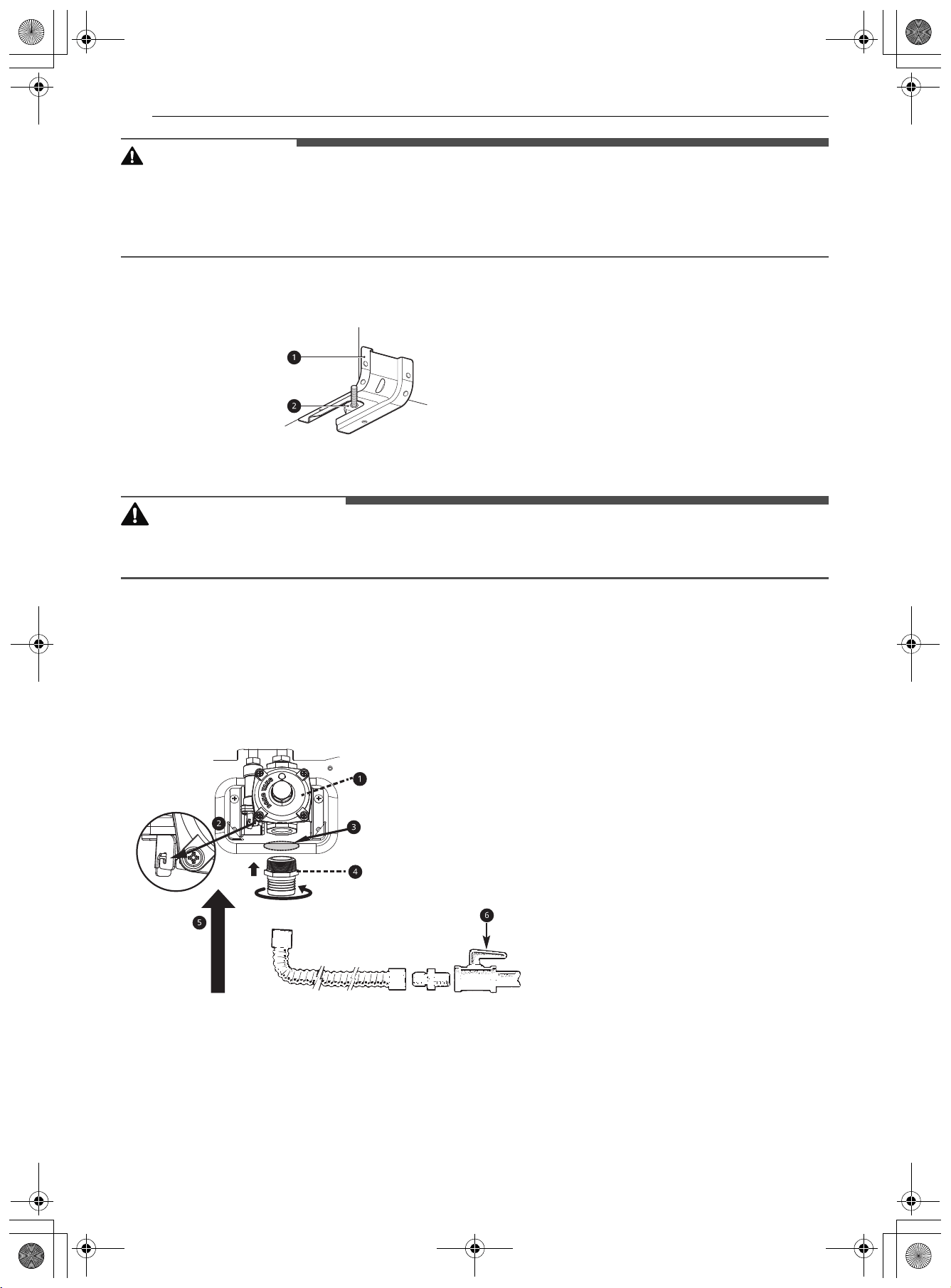
6 INSTRUCCIONES IMPORTANTES DE SEGURIDAD
ADVERTENCIA
• No coloque objetos grandes y pesados, como pavos enteros, sobre la puerta del horno abierta. La estufa
podría inclinarse hacia adelante y ocasionar lesiones.
• No se pare ni se siente sobre la puerta del horno. La estufa podría inclinarse y usted podría sufrir
lesiones con líquidos calientes derramados, alimentos calientes o la estufa misma.
• Nunca retire las patas del horno. La estufa no estará asegurada al soporte antivuelco si se retiran las
patas del horno.
ADVERTENCIA
ADVERTENCIA
• Para reducir el riesgo de explosiones, incendios, descargas eléctricas, quemaduras, lesiones o muerte de
las personas al usar este producto, siga las precauciones básicas, incluidas las siguientes:
Instalación
• No intente abrir o cerrar la puerta ni usar el horno hasta que la puerta esté correctamente instalada.
• Pídale al instalador que le muestre la ubicación de la válvula de corte de gas de la estufa y cómo cerrarla
si es necesario.
• Para cerrar el suministro de gas de la estufa, cierre la válvula de corte de gas, girándola hacia la derecha.
• Haga que un instalador calificado instale y conecte a tierra su estufa de manera apropiada, de acuerdo
con las instrucciones de instalación. Cualquier ajuste y servicio deben realizarlo instaladores de estufas
de gas calificados o técnicos de servicio.
• Asegúrese de que un técnico de servicio o instalador calificado para el tipo de gas (natural o LP) que se
usará ajuste su estufa correctamente. Su estufa se puede convertir para uso con cualquier tipo de gas.
Consulte las instrucciones de instalación.
• Un técnico de servicio calificado debe completar estos ajustes de acuerdo con las instrucciones del
fabricante y todos los códigos y requisitos de la autoridad competente. El incumplimiento de estas
a Soporte antivuelco
b Pata de nivelación
a Regulador de presión
b Posición abierta de la palanca (uso)
c Retire el precinto
d Adaptador (1/2"-14 NPT)
e Flujo de gas a la estufa
f Válvula de corte de gas de la estufa
es-us_main.book.book Page 6 Tuesday, February 3, 2026 8:20 AM
7INSTRUCCIONES IMPORTANTES DE SEGURIDAD
ESPAÑOL
instrucciones podría causar lesiones graves o daños a la propiedad. La agencia calificada que realice este
trabajo asume la responsabilidad de la conversión.
• Desconecte el suministro eléctrico antes de realizar el mantenimiento al electrodoméstico.
• Este producto no se debe instalar debajo de sistemas de ventilación de tipo campana que dirijan el aire
hacia abajo.
- Hacerlo podría causar problemas de encendido y combustión en los quemadores de gas, lo que puede
generar lesiones personales y podrían afectar el rendimiento de la unidad.
• Sitúe la estufa fuera de las áreas transitadas de la cocina y fuera de lugares con corrientes de aire para
evitar una circulación de aire inadecuada.
Funcionamiento
• Los aparatos a gas causan una exposición mínima a cuatro sustancias potencialmente peligrosas:
benceno, monóxido de carbono, formaldehido y hollín, causados principalmente por la combustión
incompleta de gas natural o gas LP. Los quemadores ajustados de manera correcta, cuya indicación es
una llama azul en lugar de amarilla, minimizarán la combustión incompleta.
- La exposición a estas sustancias puede minimizarse con una ventana abierta, el uso de un ventilador o
una campana de ventilación.
• Deje que las rejillas de los quemadores y otras superficies se enfríen antes de tocarlas.
• Nunca obstruya los respiraderos (aberturas de aire) de la estufa. Estas proporcionan la entrada y salida
de aire necesarias para que la estufa funcione adecuadamente con una combustión correcta.
- Las aberturas de aire están ubicadas en la parte trasera de la placa de cocción, en las partes superior e
inferior de la puerta del horno y en el fondo de la estufa.
• Nunca obstruya el flujo del aire de combustión y ventilación al bloquear la ventilación del horno o las
entradas de aire. Si lo hace, restringe la entrada de aire al quemador y esto puede provocar
envenenamiento por monóxido de carbono.
• Pararse, apoyarse o sentarse sobre las puertas o los cajones de esta estufa podría causar lesiones
personales graves y daños a la estufa. No permita que los niños trepen a la estufa o jueguen cerca de
ella. El peso de un niño sobre una puerta abierta podría hacer que la estufa se incline, lo que causaría
quemaduras graves u otras lesiones.
• Nunca coloque los dedos entre la bisagra de la puerta y el marco delantero del horno. Los brazos de las
bisagras están montados con resortes. Si se golpea por accidente, la bisagra se cerrará de pronto contra
el marco delantero y se lesionaría los dedos.
• No deje a los niños solos o sin supervisión donde haya una estufa caliente o en funcionamiento. Pueden
sufrir quemaduras graves.
• No permita que nadie se suba, pare o cuelgue de la puerta del horno, del cajón calentador ni de la placa
de cocción. Podrían causar daños a la estufa e incluso hacerla caer, lo que generaría lesiones personales
graves.
• No apoye ni coloque peso excesivo sobre la puerta del horno abierta. Esto podría inclinar la estufa,
romper la puerta o lesionar al usuario.
ADVERTENCIA
NUNCA cubra ranuras, aberturas ni conductos del fondo del horno, ni cubra un estante completo con
materiales como papel de aluminio. Si lo hace, se bloqueará la corriente de aire a través del horno y esto
puede provocar envenenamiento por monóxido de carbono. El revestimiento de papel metálico también
puede concentrar calor, generando un peligro de incendio.
ADVERTENCIA
NUNCA utilice este electrodoméstico como un calentador para calefaccionar o calentar una habitación. Si lo
hace, puede provocar envenenamiento por monóxido de carbono y un recalentamiento del horno.
es-us_main.book.book Page 7 Tuesday, February 3, 2026 8:20 AM
8 INSTRUCCIONES IMPORTANTES DE SEGURIDAD
• Para prevenir riesgos de incendio o descarga eléctrica, no use un adaptador o cable de extensión, ni
retire la punta con conexión a tierra del cable de alimentación eléctrica. Si lo hace podría causar lesiones
graves, incendio o incluso la muerte a niños o adultos.
• Asegúrese de quitar todos los materiales de empaque de la estufa antes de encenderla para evitar un
incendio o daños causados por el humo si se encendieran los materiales de empaque.
• Al abrir la puerta del horno caliente, manténgase alejado de la estufa. El aire caliente y el vapor que salen
del horno pueden causar quemaduras en las manos, el rostro y los ojos.
• No caliente alimentos en recipientes cerrados. La presión dentro del recipiente podría aumentar y
podría hacerlo estallar causando lesiones.
• No recubra las paredes internas del horno ni el fondo con papel de aluminio ni permita que entren en
contacto con elementos calentadores expuestos en el horno. Esto podría causar riesgo de incendio o
daños a la estufa.
• Cuando el horno está en funcionamiento, la superficie superior de la cavidad del cajón se calienta y
puede causar quemaduras. Nunca deje a los niños sin supervisión cerca del horno o de la placa de
cocción.
• No ponga la mano dentro del cajón mientras el horno está en funcionamiento.
• USO REMOTO - Este artefacto se puede configurar para permitir su uso remoto en todo momento. No
almacene materiales inflamables o artículos sensibles a la temperatura en el interior, encima o cerca de
las unidades de superficie del artefacto.
Mantenimiento
• Las rayas grandes o los golpes en las puertas de vidrio pueden romper o hacer estallar el vidrio.
• No guarde artículos de interés para los niños en los gabinetes que están arriba de la estufa o sobre la
protección trasera.
- Si los niños subieran a la estufa para alcanzar algo que buscan, podrían sufrir lesiones graves.
• No intente reparar ni reemplazar ninguna parte de la estufa, a menos que se mencione específicamente
en este manual. Todos los demás servicios deben ser derivados a un técnico calificado.
Instrucciones de Conexión a Tierra
• Enchufe su estufa a un tomacorriente de pared conectada a tierra de 120 voltios solamente. No quite la
punta redonda de conexión a tierra del enchufe. Si existen dudas acerca de la conexión a tierra del
sistema eléctrico de la vivienda, es su responsabilidad personal y su obligación reemplazarla por un
tomacorriente adecuado para tres puntas con conexión a tierra de acuerdo con el Código Eléctrico
Nacional. No use un cable de extensión ni un adaptador con esta estufa.
Riesgo de incendio y materiales inflamables
• Nunca vista ropa suelta o una prenda que cuelgue mientras use este aparato. Tenga cuidado al tomar
objetos ubicados en los gabinetes sobre la estufa. Los materiales inflamables se podrían encender si
tuvieran contacto con llamas o superficies calientes del horno y podrían causar quemaduras graves.
• No guarde ni use materiales combustibles, gasolina u otros vapores o líquidos cerca de este o cualquier
otro electrodoméstico.
• No coloque materiales inflamables en el horno ni cerca de la placa de cocción.
• No deje grasa de cocina u otros materiales inflamables dentro de la estufa o cerca de ella.
• No utilice agua para apagar incendios provocados por grasa. Nunca toque una sartén en llamas. Apague
los controles. Apague una sartén en llamas sobre un quemador cubriendo completamente la sartén con
una tapa que quede ajustada, una placa para hornear o una bandeja plana. Use un extintor de sustancia
química seca multiuso o de tipo espuma.
- La grasa en llamas se puede extinguir cubriéndola con bicarbonato de sodio o, si estuviera disponible,
mediante un extintor de sustancia química seca multiuso o de tipo espuma.
es-us_main.book.book Page 8 Tuesday, February 3, 2026 8:20 AM
9INSTRUCCIONES IMPORTANTES DE SEGURIDAD
ESPAÑOL
- Las llamas en el horno o el cajón de almacenamiento se pueden extinguir por completo si se cierra la
puerta del horno o cajón de almacenamiento y se apaga el horno o si se usa un extintor multiuso de
sustancia química seca o de tipo espuma.
• La prueba para detectar fugas del aparato se debe realizar según las instrucciones del fabricante.
• Pueden producirse fugas de gas en el sistema y generar un riesgo grave. Es posible que no se detecten
fugas de gas solo con el olfato. Los proveedores de gas recomiendan que compre e instale un detector
de gas aprobado por UL. Instale el detector y úselo según las instrucciones del fabricante del detector de
gas.
• Para reducir la posibilidad de incendios provocados por grasa asegúrese de ubicar la asadera
correctamente.
• Siempre retire la asadera de la estufa después de usarla. La grasa que queda en la asadera podría
provocar un incendio si se usa el horno sin remover la grasa.
• Si hubiera un incendio causado por la grasa en la asadera, apague la función de cocción que estaba
usando y mantenga cerrada la puerta del horno para contener el fuego hasta que se apague.
• Si la carne está muy cerca de la llama durante la cocción, la grasa puede encenderse. Recorte el exceso
de grasa para evitar más estallidos.
PRECAUCIÓN
PRECAUCIÓN
• Para reducir el riesgo de lesiones leves a personas, mal funcionamiento o daño al producto o a la
propiedad al usar este producto, siga las precauciones básicas, incluidas las siguientes:
Instalación
• Después del uso prolongado de la estufa, se pueden producir temperaturas altas en el piso. Muchos
recubrimientos del suelo no resisten este tipo de uso. Nunca instale la estufa sobre baldosas de vinilo o
linóleo porque no pueden resistir este uso. Nunca la instale directamente sobre alfombras de cocina.
Funcionamiento
• No use el horno para guardar alimentos o utensilios de cocina. Los elementos guardados en el horno
pueden incendiarse.
• Para prevenir daños en la puerta del horno, no intente abrirla cuando aparezca Bloqueo en la pantalla
(en algunos modelos).
• No use el horneado retrasado para alimentos altamente perecederos como productos lácteos, cerdo,
aves o mariscos.
• Mantenga el horno libre de acumulación de grasa.
• Acomode los estantes en el horno según la posición deseada mientras el horno esté frío.
• Para prevenir quemaduras al retirar alimentos, deslice los estantes hacia afuera hasta que el tope se
trabe, luego retire los alimentos. Esto podría protegerlo de quemarse al tocar superficies calientes de la
puerta o las paredes del horno.
• Al colocar o retirar una parrilla, use siempre guantes para horno.
• Al usar bolsas para hornear o asar en el horno, siga las instrucciones del fabricante.
• Use solo recipientes de vidrio recomendados para hornos de gas.
• Por seguridad y para lograr una mejor cocción, siempre hornee y ase con la puerta del horno cerrada.
Hornear o asar con la puerta abierta puede dañar las perillas o las válvulas. No deje la puerta abierta
durante la cocción o mientras el horno se esté enfriando.
es-us_main.book.book Page 9 Tuesday, February 3, 2026 8:20 AM
10 INSTRUCCIONES IMPORTANTES DE SEGURIDAD
GUARDE ESTAS INSTRUCCIONES
Mantenimiento
• No use limpiadores comerciales para horno sobre el acabado ni alrededor de ninguna pieza del horno.
Dañarán el acabado del aparato.
• Para prevenir manchas o decoloración, limpie el electrodoméstico después de cada uso.
• Use guantes al limpiar la estufa para evitar lesiones o quemaduras.
• Limpie con el ciclo de autolimpieza solo las partes indicadas en este manual. Antes de realizar la
autolimpieza del horno, retire la asadera, todos los estantes del horno, la sonda para carne y cualquier
otro utensilio o alimento del horno.
es-us_main.book.book Page 10 Tuesday, February 3, 2026 8:20 AM
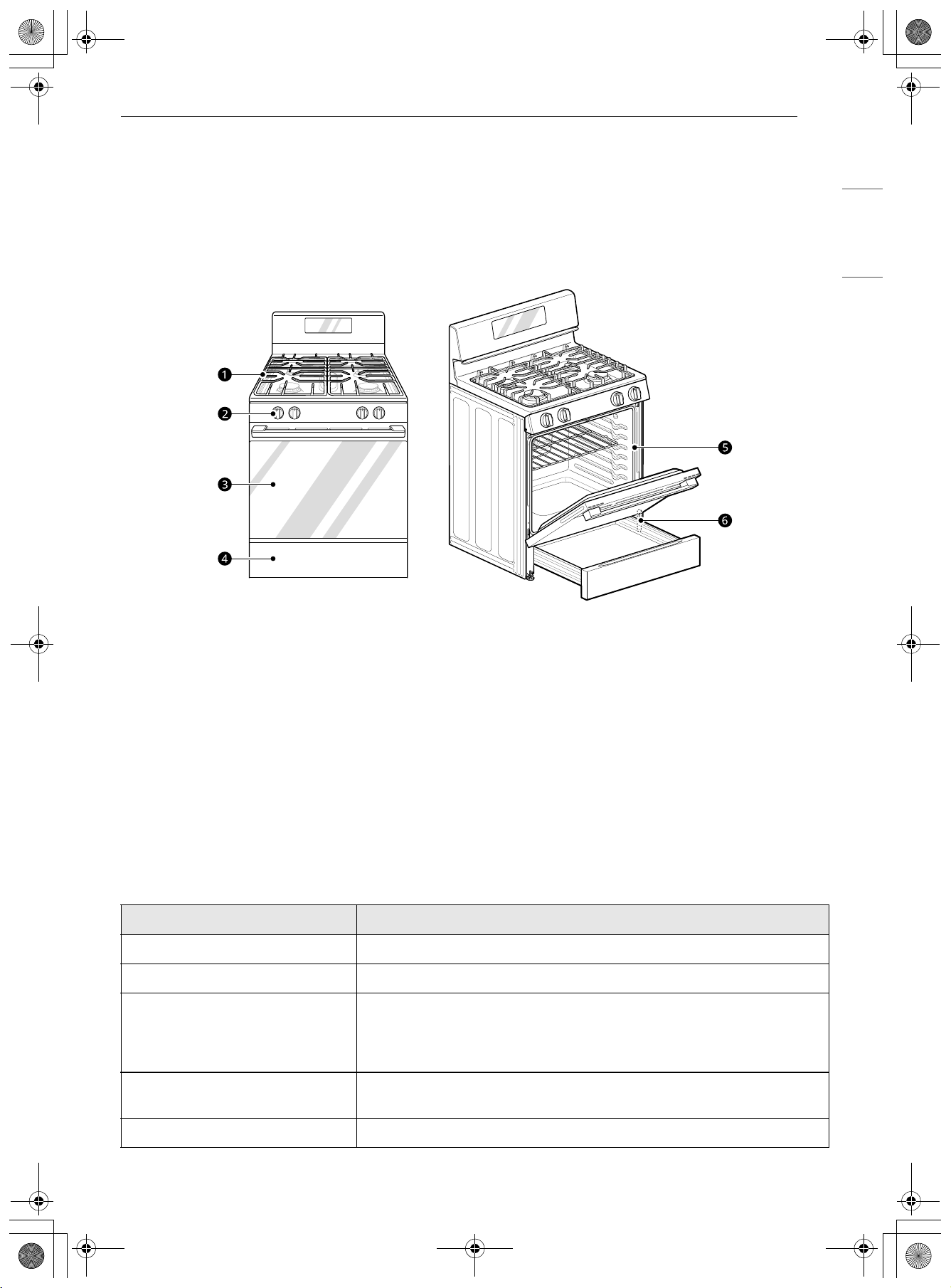
11DESCRIPCIÓN GENERAL DEL PRODUCTO
ESPAÑOL
DESCRIPCIÓN GENERAL DEL PRODUCTO
Características del producto
Exterior e interior
La imagen en esta parte puede ser diferente del modelo real.
a Placa de cocción
b Controlador de la placa de cocción
c Puerta del horno
d Cajón de almacenamiento
e Junta
f Placa con el número de serie y modelo
Especificaciones del producto
La apariencia y las especificaciones detalladas en este manual podrían variar debido a mejoras constantes
en el producto.
Modelos de estufas con horno LRGN6321*
Descripción Estufa con horno gas
Requisitos eléctricos 0.5 kW 120 VCA
Dimensiones exteriores 29 31/32 in (ancho) x 46 1/2 in (alto) x 29 9/32 in (profundidad con la
puerta cerrada e incluyendo la manija de la puerta)
76.1 cm (ancho) x 118.2 cm (alto) x 74.5 cm (profundidad) (profundidad
con la puerta cerrada y la manija de la puerta)
Altura hasta la superficie de
cocción
36" (91.4 cm)
Capacidad total 6.3 pies cúbicos
es-us_main.book.book Page 11 Tuesday, February 3, 2026 8:20 AM
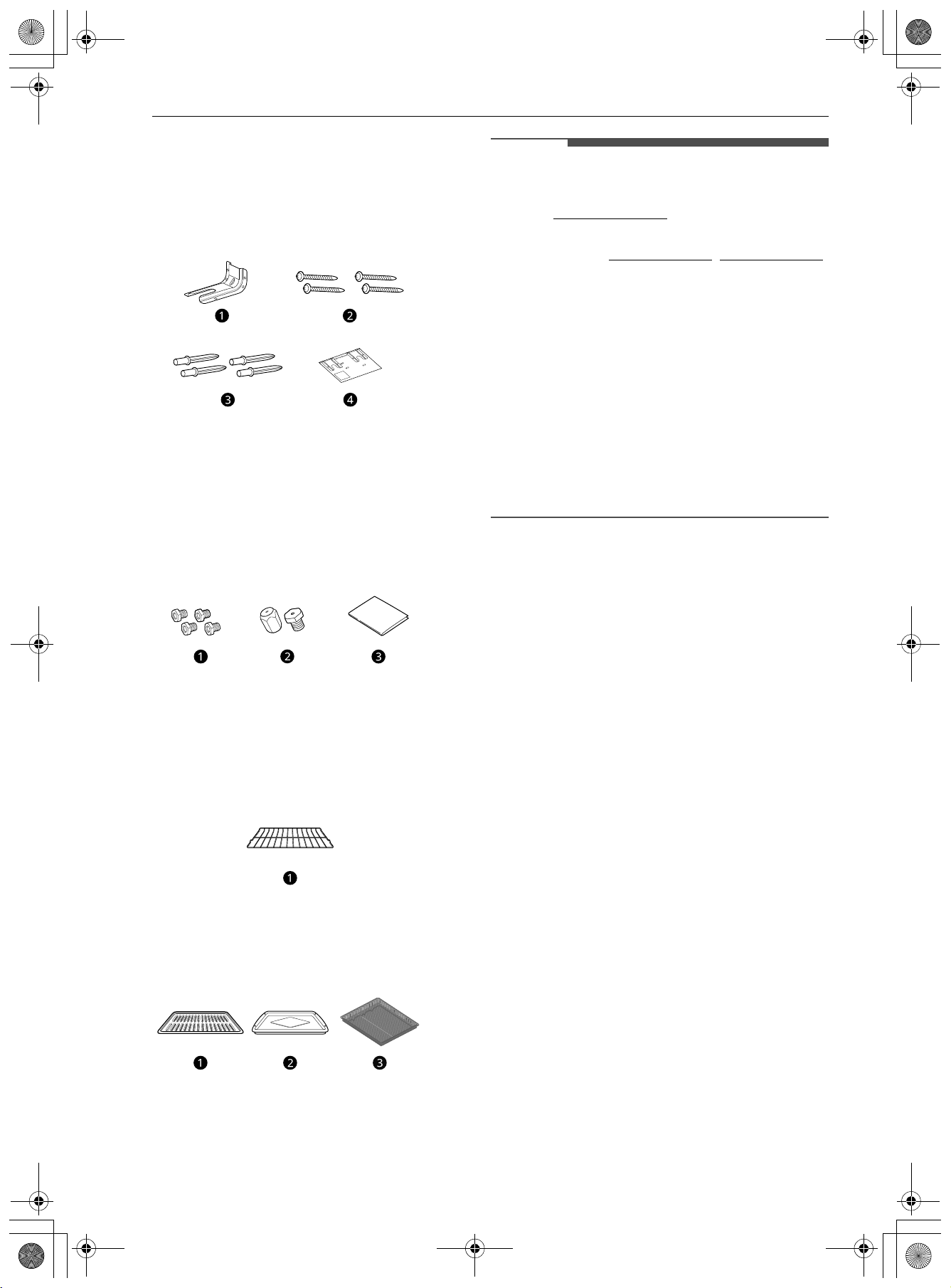
12 DESCRIPCIÓN GENERAL DEL PRODUCTO
Accesorios
Accesorios incluidos
Kit antivuelco
a
Soporte antivuelco (1 c/u)
b Tornillos (4 c/u)
c Anclajes (4 c/u)
d Plantilla (1 c/u)
Kit de conversión para boquilla de LP
a Boquillas de placa de cocción (4 c/u)
b Boquillas de horno (2 c/u)
c Guía de instalación (1 c/u)
Otros accesorios
a
Estante estándar (2 c/u)
Accesorios opcionales (se vende por
separado)
a Rejilla
b Asadera
c Bandeja para freír con aire
NOTA
• Con la unidad no se incluyen los accesorios
opcionales. Debe comprarlos a través de la
página web www.lg.com.
• Comuníquese con el Servicio de atención al
cliente de LG al 1-800-243-0000
(1-888-542-2623
en Canadá) si le falta algún accesorio.
• Para su seguridad y una mayor duración del
producto, utilice únicamente componentes
autorizados.
• El fabricante no es responsable del mal
funcionamiento del producto ni de accidentes
causados por el uso de componentes o piezas no
autorizados y comprados por separado.
• Las ilustraciones en esta guía pueden diferir de
los componentes y accesorios reales, los cuales
están sujetos a cambios sin previo aviso por
parte del fabricante a fin de introducir mejoras
en el producto.
es-us_main.book.book Page 12 Tuesday, February 3, 2026 8:20 AM
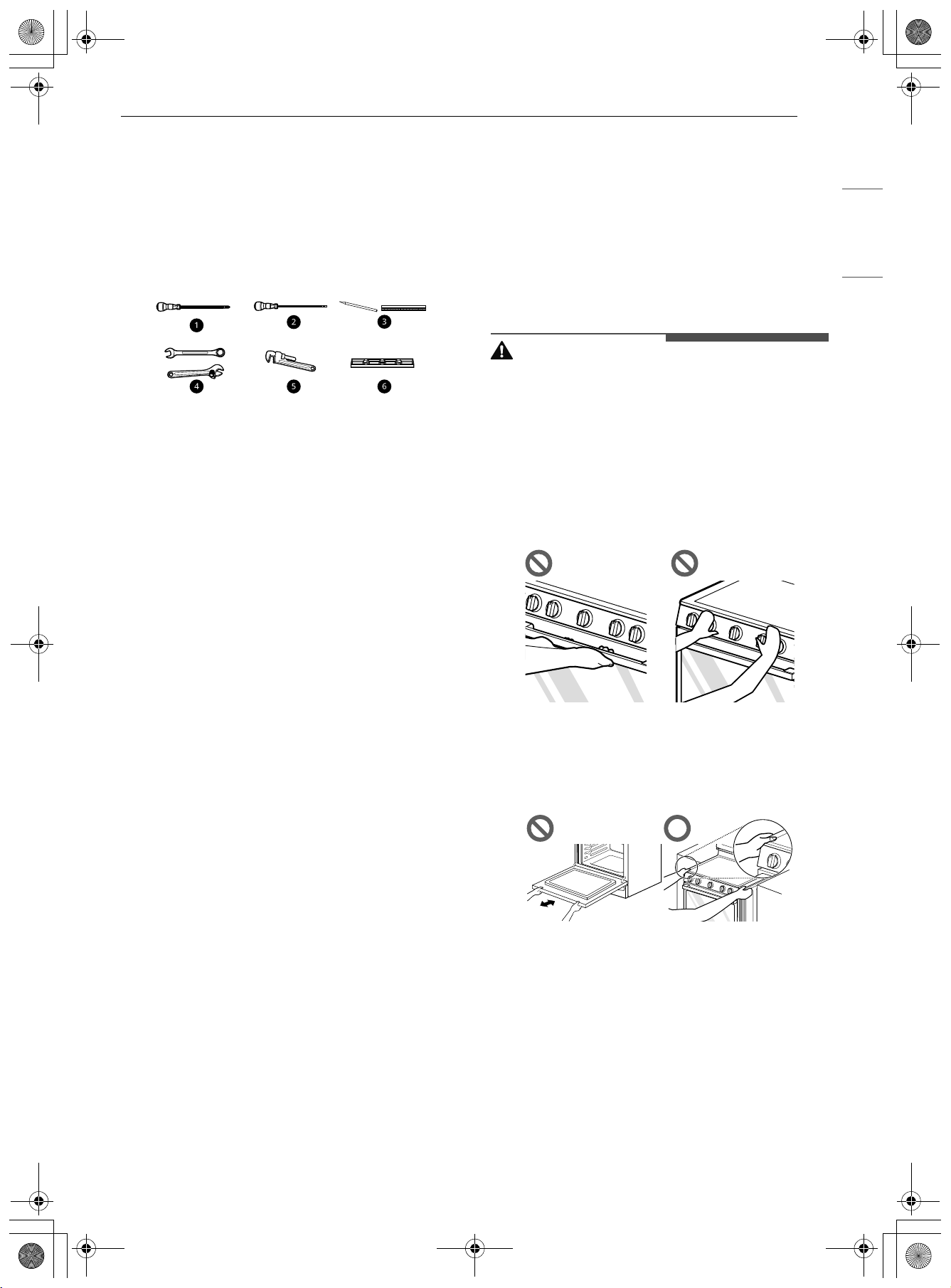
13INSTALACIÓN
ESPAÑOL
INSTALACIÓN
Antes de la instalación
Herramientas necesarias
a Destornillador Phillips
b Destornillador plano
c Lápiz y regla
d Llave para rincones o llave ajustable
e Llave de tubos (2) (uno para soporte)
f Nivel
Piezas
Piezas que podría necesitar
• Válvula de corte de línea de gas
• Sellador de juntas de tubería que resista la
acción del gas natural y LP
• Conector de artefacto metálico flexible (3/4" o 1/
2" NPT x 1/2" D.I.)
- Nunca use un conector viejo cuando instale
una estufa nueva.
• Adaptador de unión acampanada para conexión
a línea de suministro de gas (3/4" o 1/2" NPT x 1/
2" D.I.)
• Adaptador de unión acampanada para conexión
al regulador de presión de la estufa (1/2" NPT x
1/2" D.I.)
• Detector de líquido de fugas o agua jabonosa
• Tirafondo o casquillo de anclaje de 1/2" D.E (solo
para pisos de hormigón)
En el Commonwealth de
Massachusetts
• Un plomero certificado o un instalador de gas
deben instalar este producto.
• Cuando utilice válvulas de bola para corte de
gas, deben ser manijas en T.
• Cuando use un conector de gas flexible, no debe
superar los 3 pies de longitud.
Desembalaje y traslado de la estufa
ADVERTENCIA
• Debe haber dos o más personas para mover e
instalar la estufa. (Peligro de peso excesivo) Si no
se cumple con esto, se pueden producir lesiones
en la espalda o de otro tipo.
• No utilice las manijas de la puerta ni perillas para
empujar o tirar de la estufa durante la
instalación, ni al mover la estufa para tareas de
limpieza o reparaciones. Si lo hace podría causar
daños graves a la estufa.
• No agarre solo la puerta abierta del horno ni la
placa de cocción para empujar la estufa o tirar
de ella, ya que puede causar daños graves en la
estufa.
es-us_main.book.book Page 13 Tuesday, February 3, 2026 8:20 AM
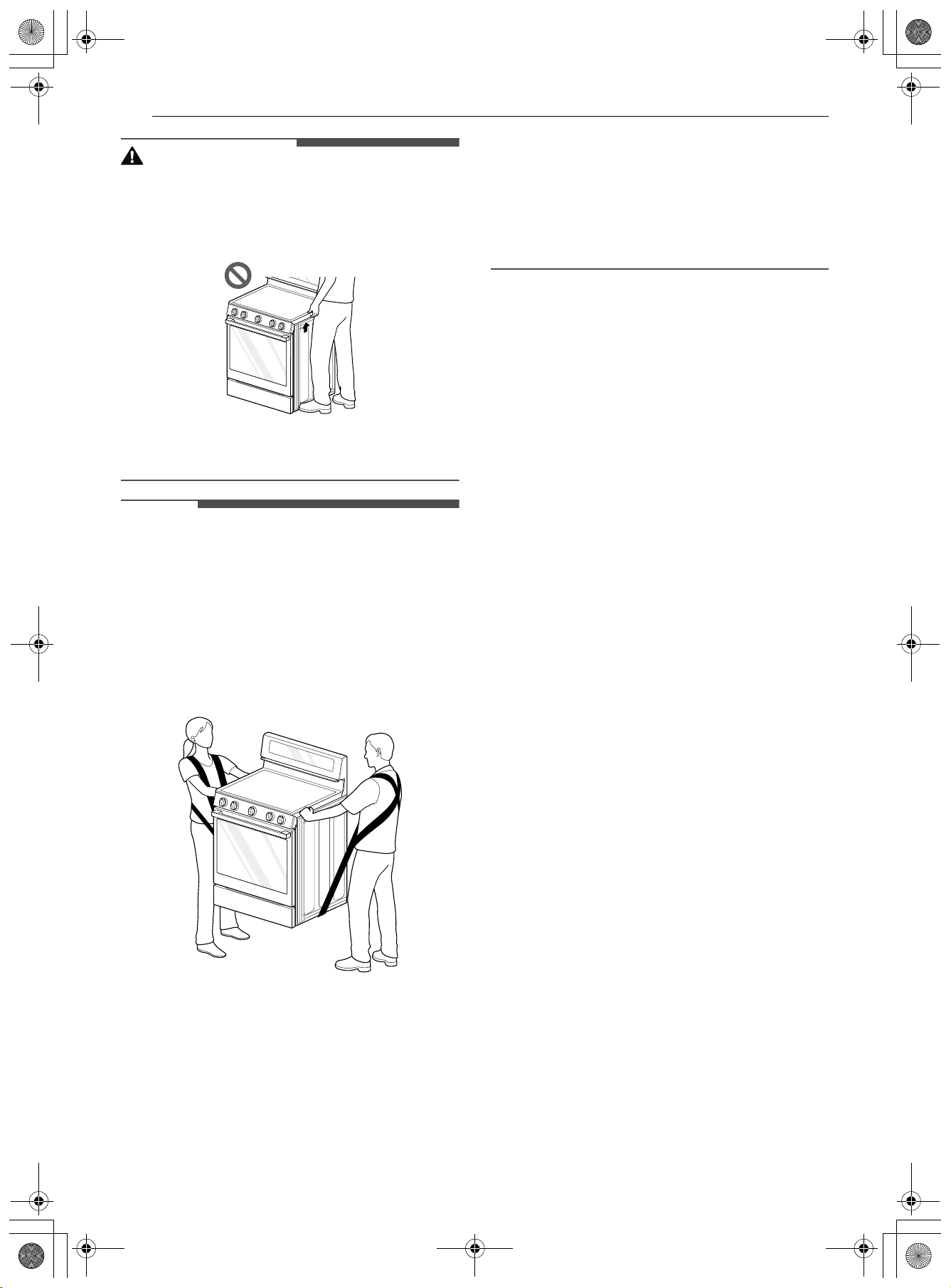
14 INSTALACIÓN
ADVERTENCIA
• No levante la estufa usando la placa de cocción
ni la manija de la puerta. Esto puede provocar
daños y un funcionamiento inadecuado de la
estufa.
• Para reducir el riesgo de quemaduras, no mueva
el electrodoméstico mientras esté caliente.
NOTA
• La imagen puede ser distinta al modelo real.
• La estufa es pesada y puede instalarse sobre
revestimientos blandos para pisos como vinilo
acolchado o piso alfombrado. Tenga cuidado al
mover la estufa sobre este tipo de pisos. Utilice
una correa al mover la estufa para evitar dañar
el piso. O deslice la estufa sobre un cartón o
madera enchapada para evitar dañar el
revestimiento del piso.
• Retire el material de embalaje, la cinta y
cualquier etiqueta temporaria de la estufa, antes
de usarla. No retire las etiquetas de advertencia,
del modelo y número de serie ni la hoja técnica
ubicada en la parte trasera de la estufa.
• Para remover cualquier cinta adhesiva o goma
restante frote enérgicamente el área con su
pulgar. La cinta adhesiva o residuos de goma
pueden ser fácilmente removidos frotando una
pequeña cantidad de jabón líquido para platos
con sus dedos. Limpie con agua caliente y seque.
• No utilice instrumentos puntiagudos, alcohol
para frotar, fluidos inflamables o limpiadores
abrasivos para remover cinta adhesiva o goma.
Estos productos pueden dañar la superficie de la
estufa.
es-us_main.book.book Page 14 Tuesday, February 3, 2026 8:20 AM
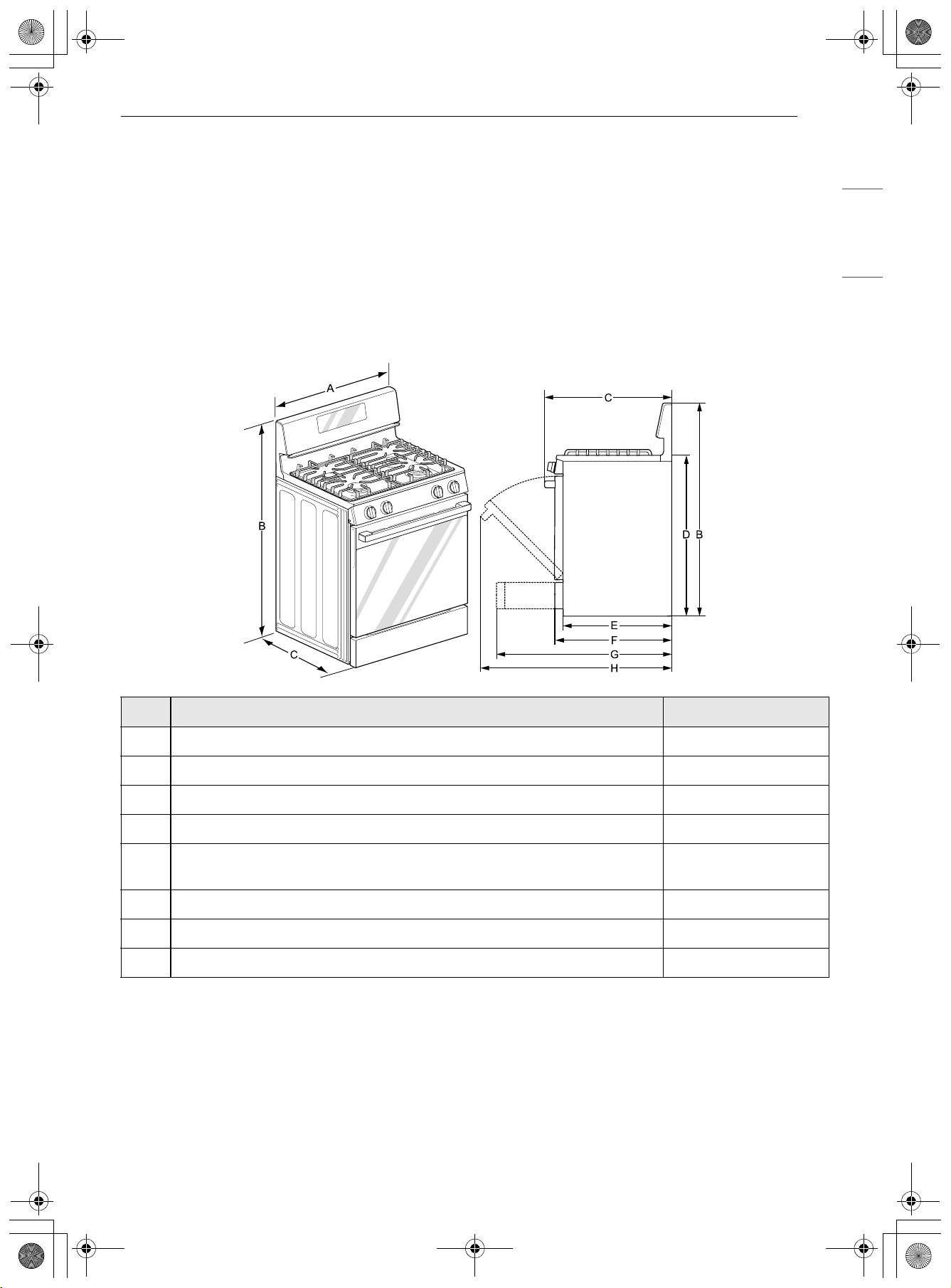
15INSTALACIÓN
ESPAÑOL
Elección de la ubicación adecuada
Dimensiones y Espacios
• Deje suficiente espacio entre la estufa y las superficies combustibles adyacentes.
• Se deben cumplir estas dimensiones para usar de manera segura su estufa.
• Se debe modificar la ubicación del tomacorriente y la abertura de la tubería (consulte "Ubicaciones de
tubería de gas y tomacorriente eléctrico" a continuación) para cumplir los requisitos específicos.
• Se debe instalar la estufa dejando un espacio de 0" (al ras) de la pared posterior.
Dimensiones
- Dimensiones LRGN6321*
A Ancho 29 31/32" (761 mm)
BAlto 46 1/2" (1182 mm)
C Profundidad (Incluye manija de la puerta) 29 9/32" (745 mm)
D Altura (superficie de cocción) 36" (914 mm)
E Profundidad (Incluye solo el cuerpo del producto que se carga en el
gabinete. No incluye puerta, cajón y manijas)
24 3/4" (629 mm)
F Profundidad (No incluye manija de la puerta) 26 31/32" (685 mm)
G Profundidad cuando el cajón está totalmente abierto 36 27/32" (936 mm)
H Profundidad cuando la puerta está totalmente abierta 48 15/32" (1232 mm)
es-us_main.book.book Page 15 Tuesday, February 3, 2026 8:20 AM
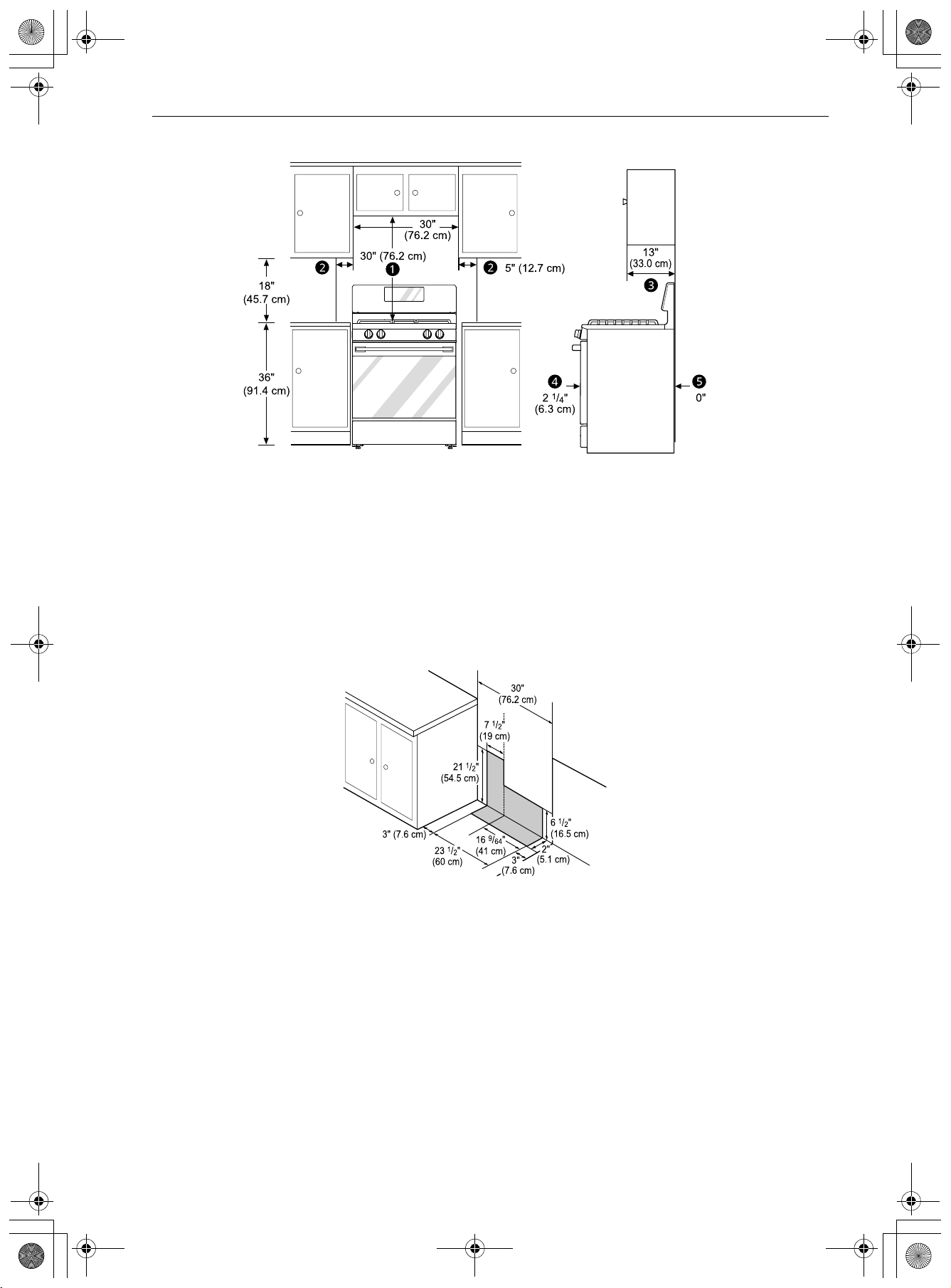
16 INSTALACIÓN
Espacios libres
a Mínimo
b Espacio mínimo a la izquierda/derecha de la pared
c Profundidad máxima para gabinetes ubicados sobre la mesada
d Borde frontal del panel lateral de la estufa delante del gabinete
e Para gabinetes debajo de la placa de cocción y en la parte posterior de la estufa
Ubicaciones de tubería de gas y tomacorriente eléctrico
Ventilación
• No instale la estufa donde pueda estar sujeta a corrientes de aire fuertes. Debe sellar todas las aberturas
del piso o la pared que están detrás de la estufa. Asegúrese de que las aberturas alrededor de la base de
la estufa que brindan aire fresco para la combustión y la ventilación no estén obstruidas por alfombras o
madera.
• Este aparato no se debe instalar con un sistema de ventilación que envíe aire hacia abajo en dirección a
la estufa. Este tipo de sistema de ventilación podría causar problemas de encendido y combustión en el
aparato, que pueden generar lesiones personales y un funcionamiento incorrecto.
es-us_main.book.book Page 16 Tuesday, February 3, 2026 8:20 AM
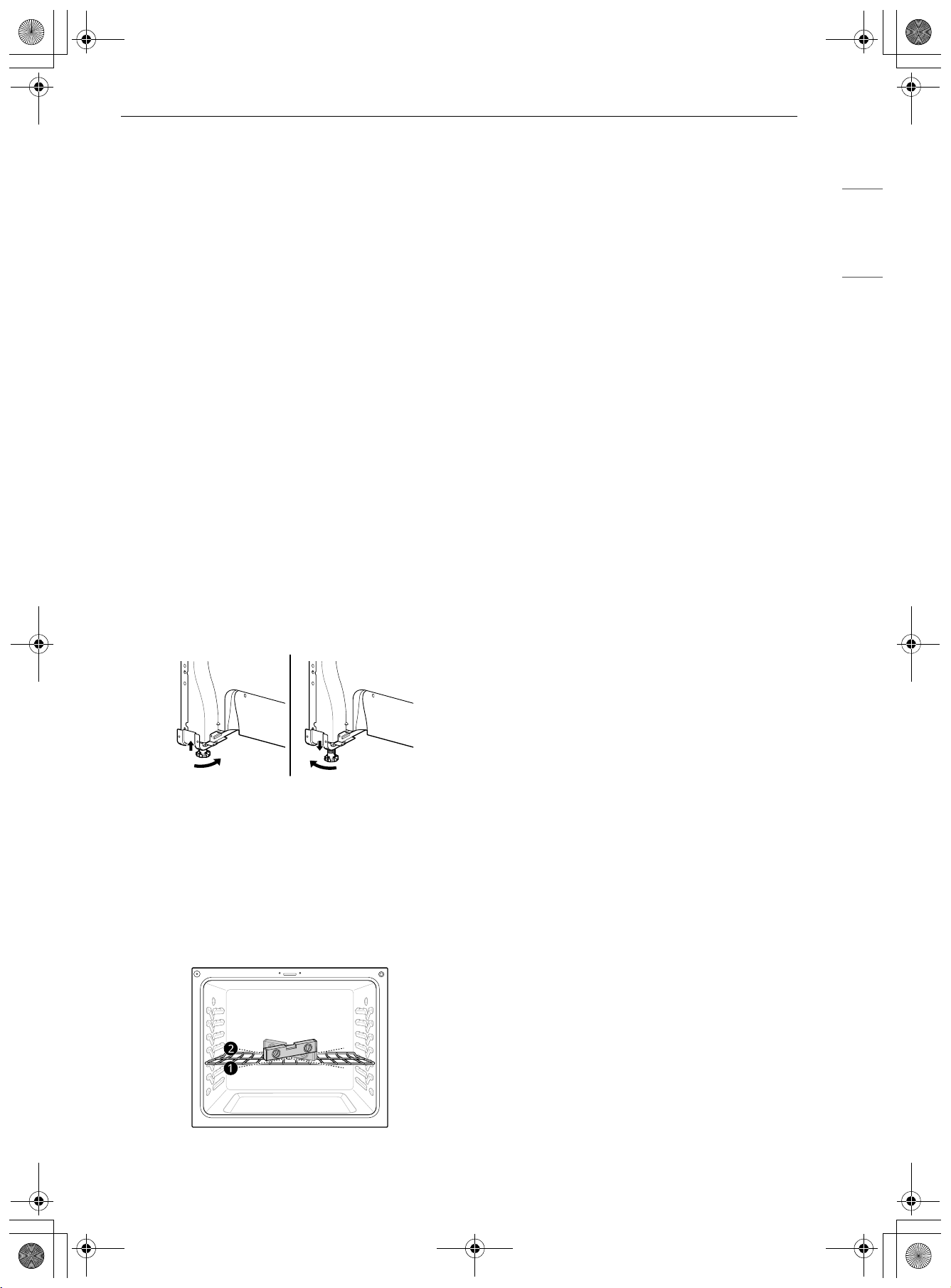
17INSTALACIÓN
ESPAÑOL
Suelo
• Su estufa, al igual que muchos otros electrodomésticos, es pesada y puede instalarse sobre
revestimientos blandos para pisos como vinilo acolchado o piso alfombrado. Tenga cuidado al mover la
estufa sobre este tipo de pisos.
• Cuando el revestimiento del piso termine frente a la estufa, el área donde se instalará la estufa se debe
elevar con madera contrachapada al mismo nivel o más arriba que el revestimiento del piso. Esto
permitirá mover la estufa para tareas de limpieza y mantenimiento, además de brindar un adecuado
flujo de aire para la estufa.
• Asegúrese de que el revestimiento del piso pueda resistir temperaturas de 167 °F (75 °C) como mínimo.
Consulte las Instrucciones de seguridad de instalación incluidas en este manual.
Temperatura ambiente
• Asegúrese de que los revestimientos de las paredes que rodeen su estufa puedan resistir el calor de
hasta 194 °F (90 °C) generado por la estufa. Consulte las Instrucciones de seguridad de instalación
incluidas en este manual.
Nivelando
Nivelación de la estufa
Nivele la estufa ajustando las patas de nivelación
con una llave. Si extiende las patas ligeramente,
podría ser más fácil insertar la pata trasera en el
soporte antivuelco.
Verificación de los ajustes
1 Ubique un nivelador en diagonal sobre el
estante el horno y verifique en todas
direcciones para nivelar.
• Primero verifique la dirección
a. Luego
verifique la dirección
b.
2 Si el nivelador no queda equilibrado sobre el
estante, ajuste las patas de nivelación con una
llave.
Conexión de gas
Cómo brindar el suministro
adecuado de gas
• Su estufa está diseñada para funcionar con una
presión de 5" de columna de agua con gas
natural o 10" de columna de agua con LP.
• Asegúrese de suministrarle a su estufa el tipo de
gas para el cual está configurada.
• Esta estufa es convertible para uso con gas
natural o LP. Al usar la estufa con gas LP, un
instalador de gas LP calificado debe realizar la
conversión antes de intentar hacer funcionar la
estufa.
• Para un funcionamiento adecuado, la presión
del gas natural suministrada al regulador debe
estar entre 5" y 13" de columna de agua.
• Para usar con gas LP, la presión suministrada al
regulador debe estar entre 10" y 13" de columna
de agua. Al verificar el funcionamiento correcto
del regulador, la presión de entrada debe ser,
como mínimo, 1" más que la presión operativa
(del colector) según se indica anteriormente.
• El regulador de presión ubicado en la entrada de
la estufa debe permanecer en la línea de
suministro, independientemente del tipo de gas
que se utilice.
• Un conector metálico flexible utilizado para unir
la estufa al suministro de gas debe tener un
diámetro interior de 5/8" y una longitud máxima
es-us_main.book.book Page 17 Tuesday, February 3, 2026 8:20 AM
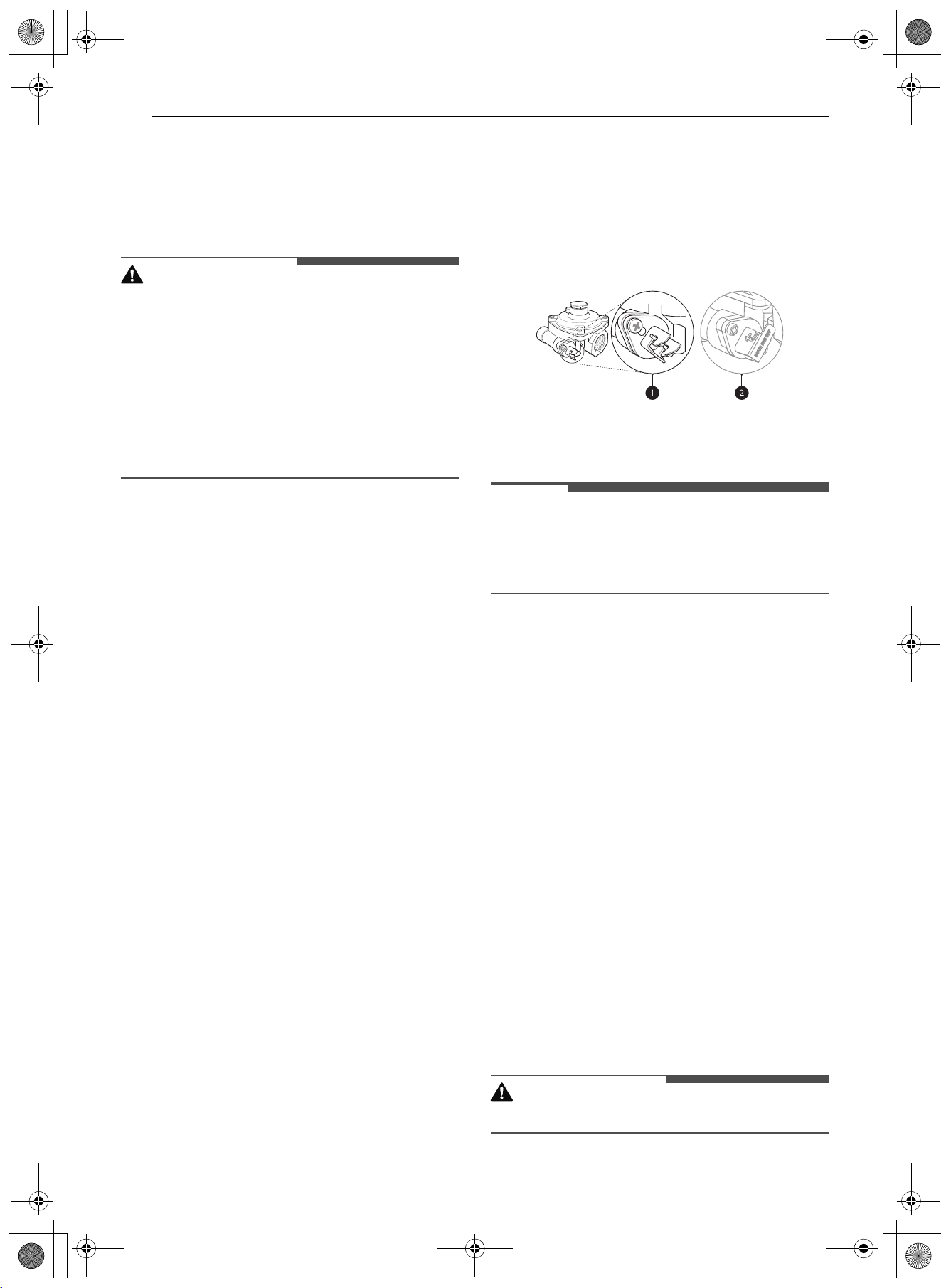
18 INSTALACIÓN
de 5 pies. En Canadá, los conectores flexibles
deben ser conectores metálicos de pared simple
de menos de 6 pies de longitud.
Conexión de la estufa al gas
ADVERTENCIA
• Aísle la estufa del sistema de suministro de gas
cerrando la válvula de corte individual durante
cualquier prueba de presión del sistema de gas a
presiones de prueba iguales o inferiores a 1/2
psi (3.5 kPa).
• El electrodoméstico y su válvula de corte
individual deben estar desconectados del
sistema de suministro de gas durante cualquier
prueba de presión que se realice a presiones de
prueba superiores a 1/2 psi (3.5 kPa).
• Corte el suministro de gas a la estufa con la
válvula antes de retirar la estufa anterior y déjela
de ese modo hasta que se haya completado la
nueva instalación.
• Debido a que las tuberías rígidas restringen el
movimiento de la estufa, se debe utilizar un
conector metálico flexible con certificación
internacional de la Asociación de Normalización
Canadiense (Canadian Standards Association,
CSA), excepto en caso de que los códigos locales
requieran una conexión de tubería rígida.
• Se debe instalar una válvula manual en una
ubicación accesible en la tubería de gas externa
a la estufa con el fin de abrir o cerrar el
suministro de gas a la estufa.
• Nunca reutilice un conector usado cuando
instale una estufa nueva.
• Para prevenir las fugas de gas, use un sellador
de juntas de tuberías calificado en todas las
roscas externas.
1 Instale un adaptador de unión acampanada
macho de 1/2" o 3/4" a la rosca interna NPT de
la válvula de corte manual con cuidado de
sujetar la válvula de corte para que no gire.
2 Instale un adaptador de unión acampanada
macho de 1/2" a la rosca interna de 1/2" NPT
en la entrada del regulador de presión. Use
una llave de sujeción en el accesorio del
regulador de presión para evitar daños.
• Compruebe que el regulador de la válvula
de gas se encuentre en posición abierta.
a Posición abierta de la palanca
b Posición cerrada de la palanca
NOTA
• El regulador de presión de gas está en posición
abierta desde fábrica. Si la estufa no funciona
bien después de la instalación, asegúrese que el
regulador de la válvula esté en posición abierta.
3 Coloque un conector metálico flexible al
adaptador de la estufa. Ubique la estufa para
permitir la conexión en la válvula de corte.
4 Una vez realizadas todas las conexiones,
asegúrese de que todos los controles de la
estufa estén en posición OFF (APAGADO) y
que la válvula del regulador de presión esté
abierta antes de abrir el paso principal de gas.
• Podría haber fugas de gas y crear una
situación peligrosa. Las fugas de gas no
pueden determinarse solo por el olor.
5 Verifique todas las juntas y los accesorios
para detectar fugas con un fluido de
detección de fugas no corrosivo y luego
retírelo.
• Los proveedores de gas recomiendan que
compre e instale un detector de gas
aprobado por UL. Instale el detector y úselo
según las instrucciones de instalación.
ADVERTENCIA
• No use una llama para detectar fugas de gas.
es-us_main.book.book Page 18 Tuesday, February 3, 2026 8:20 AM
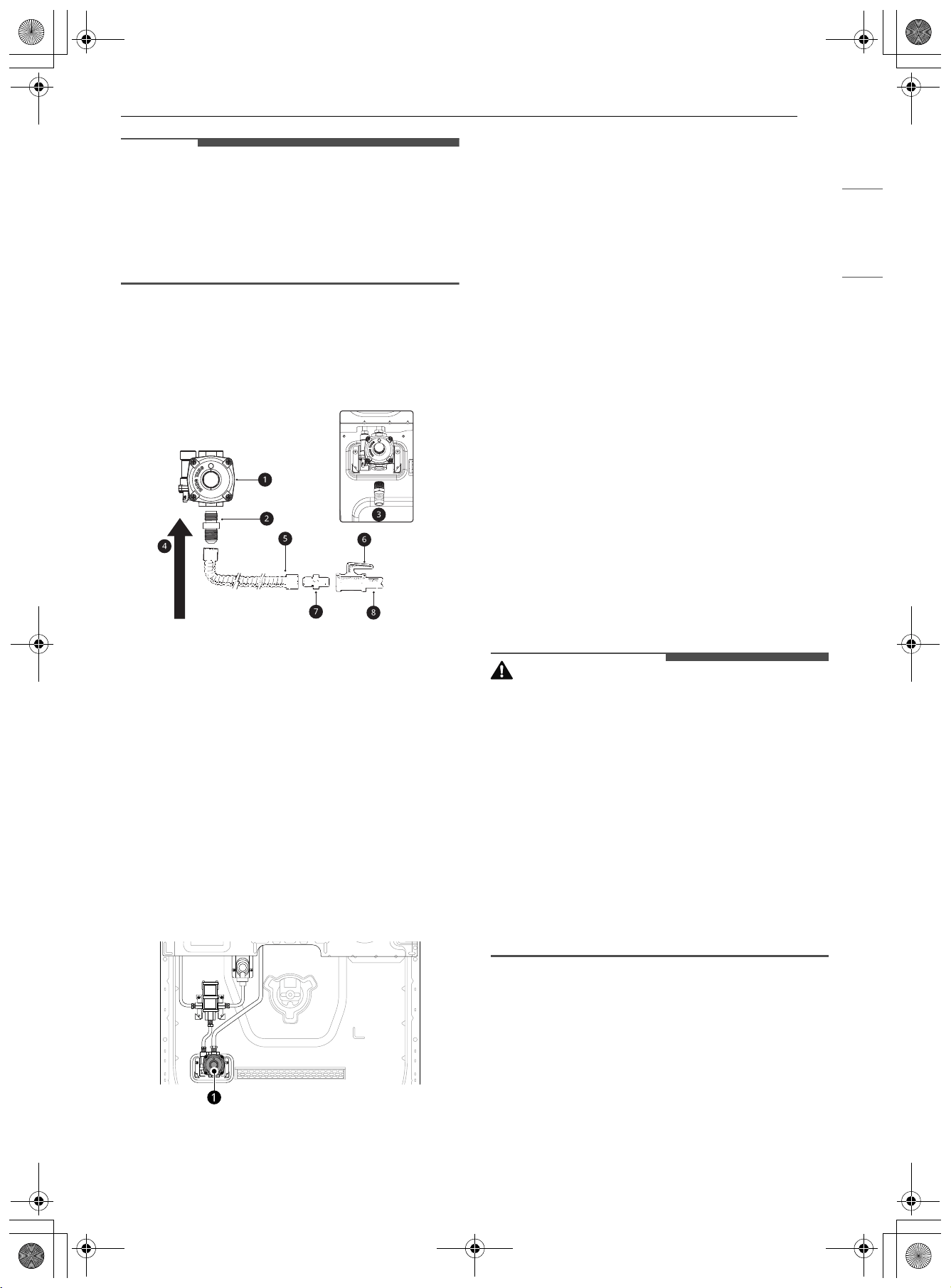
19INSTALACIÓN
ESPAÑOL
NOTA
• La instalación debe cumplir los códigos locales o,
en ausencia de estos, con lo establecido en el
Código Nacional de Gas Combustible, ANSI
Z223.1/NFPA 54 o, en Canadá, con el Código de
Instalación de Gas Natural y Propano, CSA
B149.1.
Montaje del conector flexible
Pídale al instalador que le muestre la ubicación de
la válvula de corte de gas de la estufa y cómo
cerrarla si es necesario.
a Regulador de presión
b Adaptador de 1/2"
c Adaptador de 1/2"
d Flujo de gas a la estufa
e Conector flexible (6 pies máx.)
f Válvula de corte de gas
g Adaptador de 1/2"
h Tubería de gas de 1/2" o 3/4"
Posición del regulador de presión
a Regulador de presión
Ajuste de los obturadores de aire
(para conversiones a gas LP)
La estufa viene de fábrica con los obturadores de
aire ajustados para el flujo de aire adecuado para
gas natural. Si la estufa se convierte a gas LP, siga
las instrucciones del kit de conversión para ajustar
los obturadores de aire adecuadamente. Un
técnico calificado debe realizar la conversión a gas
LP.
Conexión de electricidad
Requisitos eléctricos
Circuito exclusivo conectado a tierra de forma
adecuada de 120 voltios, 60 Hz protegido por un
disyuntor de 15 o 20 A o fusible de fusión lenta.
Si se utiliza una fuente eléctrica externa, cuando se
instala el electrodoméstico se debe contar con una
conexión a tierra que cumpla los códigos locales o,
en ausencia de estos, con lo establecido en el
Código Eléctrico Nacional, NFPA70 o el Código
Eléctrico Canadiense, CSA C22.1-02
Conexión a tierra
ADVERTENCIA
• Por razones de seguridad personal, este aparato
debe contar con una conexión a tierra adecuada.
• Este electrodoméstico está equipado con un
enchufe de toma de tierra con tres clavijas para
su protección contra el riesgo de descargas
eléctricas y debe estar enchufado directamente
en un tomacorriente con una toma de tierra
adecuada.
• No corte ni retire la clavija de toma a tierra de
este enchufe.
• El cliente debe solicitar que un electricista
calificado verifique el receptáculo en la pared y
el circuito para asegurarse de que la conexión a
tierra sea adecuada.
• El cable de alimentación de este aparato está
equipado con un enchufe de 3 puntas (conexión
a tierra) que se conecta a un receptáculo de
pared estándar para enchufes de 3 puntas, a fin
de minimizar la posibilidad de descarga eléctrica
desde el aparato.
• Si se encuentra un receptáculo de pared
estándar para dos puntas, es responsabilidad
personal y obligación del cliente reemplazarlo
por uno con tres puntas con la conexión a tierra
adecuada.
es-us_main.book.book Page 19 Tuesday, February 3, 2026 8:20 AM
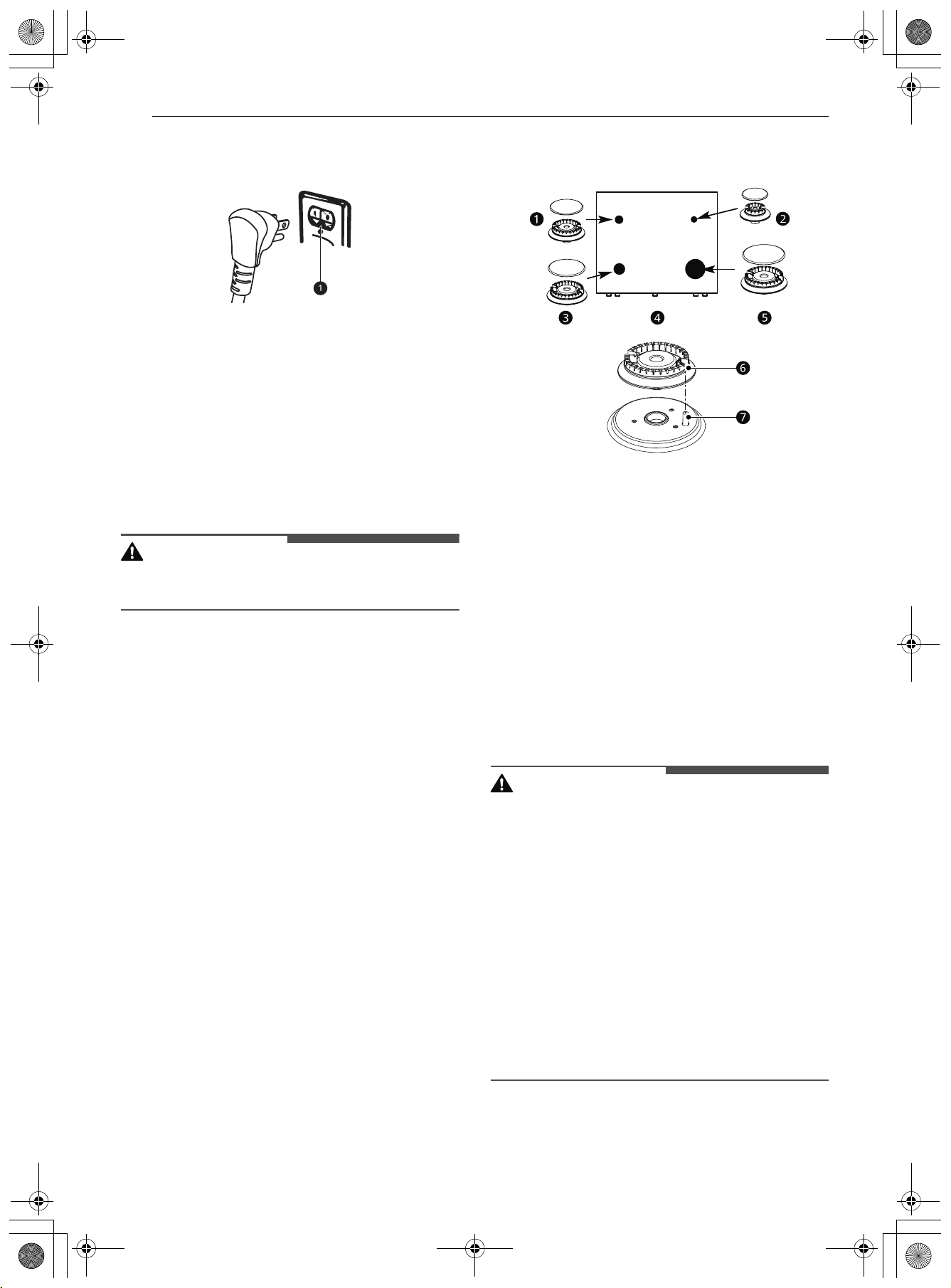
20 INSTALACIÓN
• Asegúrese de que haya una conexión a tierra a
adecuada antes del uso.
• No utilice un enchufe adaptador. Desconectar el
cable de alimentación genera tensión indebida
en el adaptador y una falla eventual en el
terminal a tierra del adaptador.
Quemadores de superficie
Ensamblaje de los quemadores de
superficie
PRECAUCIÓN
• No haga funcionar los quemadores sin todas las
piezas colocadas.
1 Coloque las tapas de los quemadores y los
cabezales sobre la placa de cocción.
• Hay tapas y cabezales de quemadores de
tamaño pequeño, mediano, grande y
extragrande (una tapa y cabezal por
tamaño).
2 Asegúrese de que las tapas y los cabezales
estén en las ubicaciones correctas.
3 Asegúrese de que el orificio del cabezal del
quemador esté ubicado sobre el electrodo.
a Cabezal y tapa del quemador mediano
b Cabezal y tapa del quemador pequeño
c Cabezal y tapa del quemador grande
d Frente de la estufa
e Cabezal y tapa del quemador extragrande
f Orificio
g Electrodo
Verificación de encendido de los
quemadores de superficie
ADVERTENCIA
• Incluso si la llama del quemador superior se
apaga, el gas sigue saliendo hacia el quemador
hasta que la perilla se gire a la posición OFF. Si
huele gas, abra una ventana de inmediato y
ventile el área durante cinco minutos antes de
volver a usar el quemador. No deje los
quemadores encendidos sin supervisión.
• Coloque siempre las perillas en la posición LITE
al encender los quemadores superiores y
asegúrese de que se hayan encendido.
• Los encendedores con chispa eléctrica de los
quemadores hacen un sonido de clic. Todos los
encendedores de chispa de la placa de cocción
se activarán cuando se encienda solo un
quemador.
Encendido eléctrico
Seleccione la perilla de un quemador de superficie
y empuje mientras gira hasta la posición LITE
es-us_main.book.book Page 20 Tuesday, February 3, 2026 8:20 AM
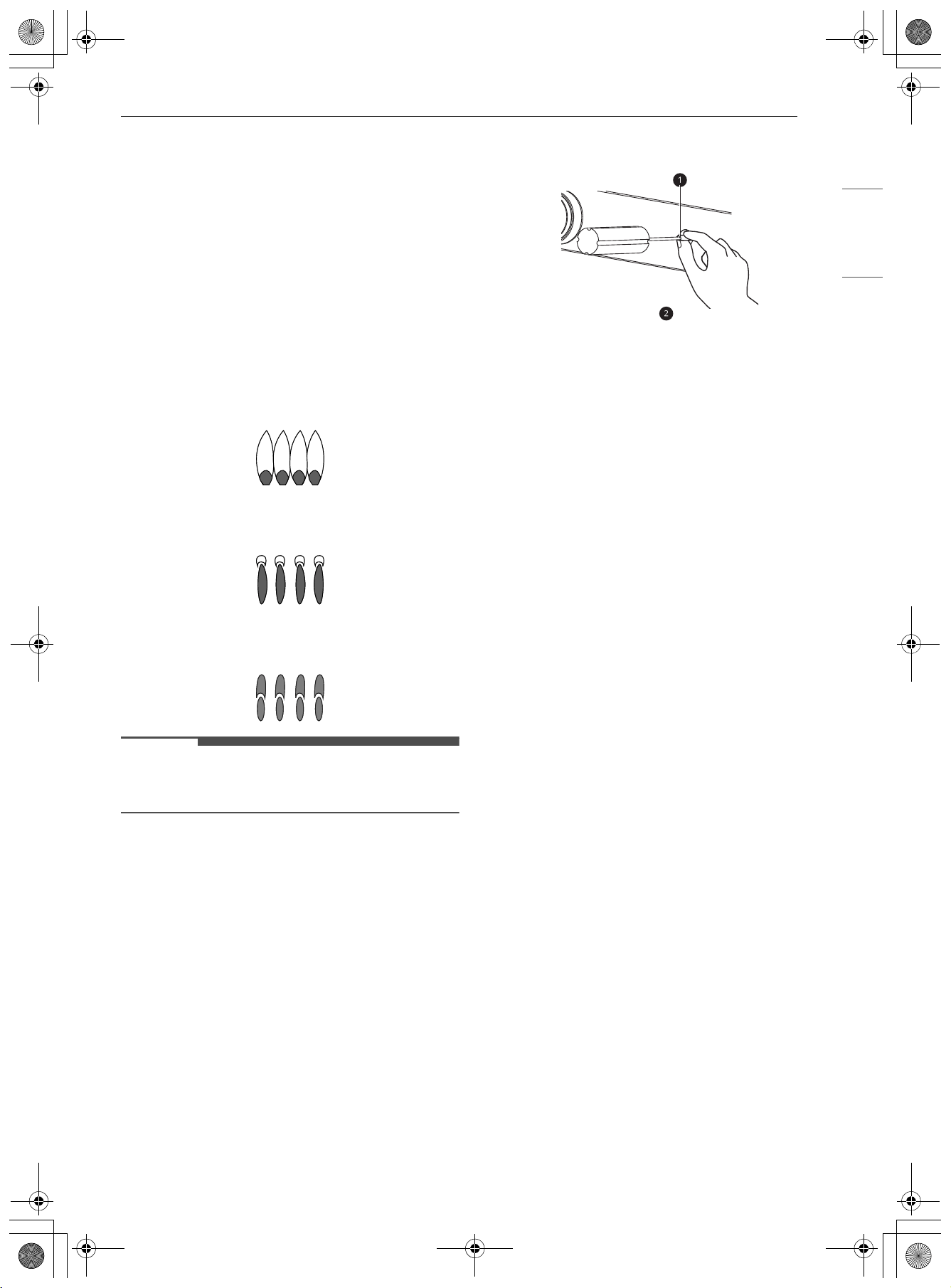
21INSTALACIÓN
ESPAÑOL
Escuchará un clic que indica el funcionamiento
correcto del módulo de chispa.
Cuando el aire de las líneas de suministro se haya
purgado, el quemador debe encenderse en 4
segundos. Después de que se encienda el
quemador, gire la perilla para retirarla de la
posición LITE Pruebe con cada quemador
sucesivamente hasta verificarlos todos.
Calidad de las llamas
Debe confirmar visualmente la calidad de
combustión de las llamas de los quemadores.
Llamas amarillas
Solicite mantenimiento.
Puntas amarillas en conos externos
Esto es normal para el gas LP.
Llamas azul claro
Esto es normal para el gas natural.
NOTA
• Con gas LP, es normal detectar algunas puntas
amarillentas en los conos externos.
Ajuste del quemador de superficie
en la configuración Low Flame
(Simmer) (Llama baja [Fuego lento])
1 Encienda todos los quemadores de superficie.
2 Gire la perilla del quemador que se está
ajustando hasta la posición Lo.
3 Retire la perilla.
4 Inserte un destornillador pequeño de hoja
plana con una longitud mínima de 3"
(76.2 mm) y un diámetro de 3/32" (2.4 mm) en
la eje de la válvula.
a Eje de la válvula
b Tornillo de ajuste central
5 Gire el tornillo para ajustar.
• Sostenga el eje de la válvula con una mano
mientras gira el tornillo para ajustar con la
otra.
6 Vuelva a colocar la perilla.
7 Pruebe la estabilidad de la llama.
• Prueba 1: Gire la perilla de Hi a Lo con
rapidez. Si la llama se apaga, aumente el
tamaño de la llama y vuelva a probar.
• Prueba 2: Con el quemador en la
configuración Lo abra y cierre la puerta del
horno rápido. Si la llama se apaga por la
corriente de aire creada debido al
movimiento de la puerta, aumente la altura
de la llama y vuelva a probar.
8 Repita los pasos del 1 al 7 para cada
quemador de superficie.
es-us_main.book.book Page 21 Tuesday, February 3, 2026 8:20 AM
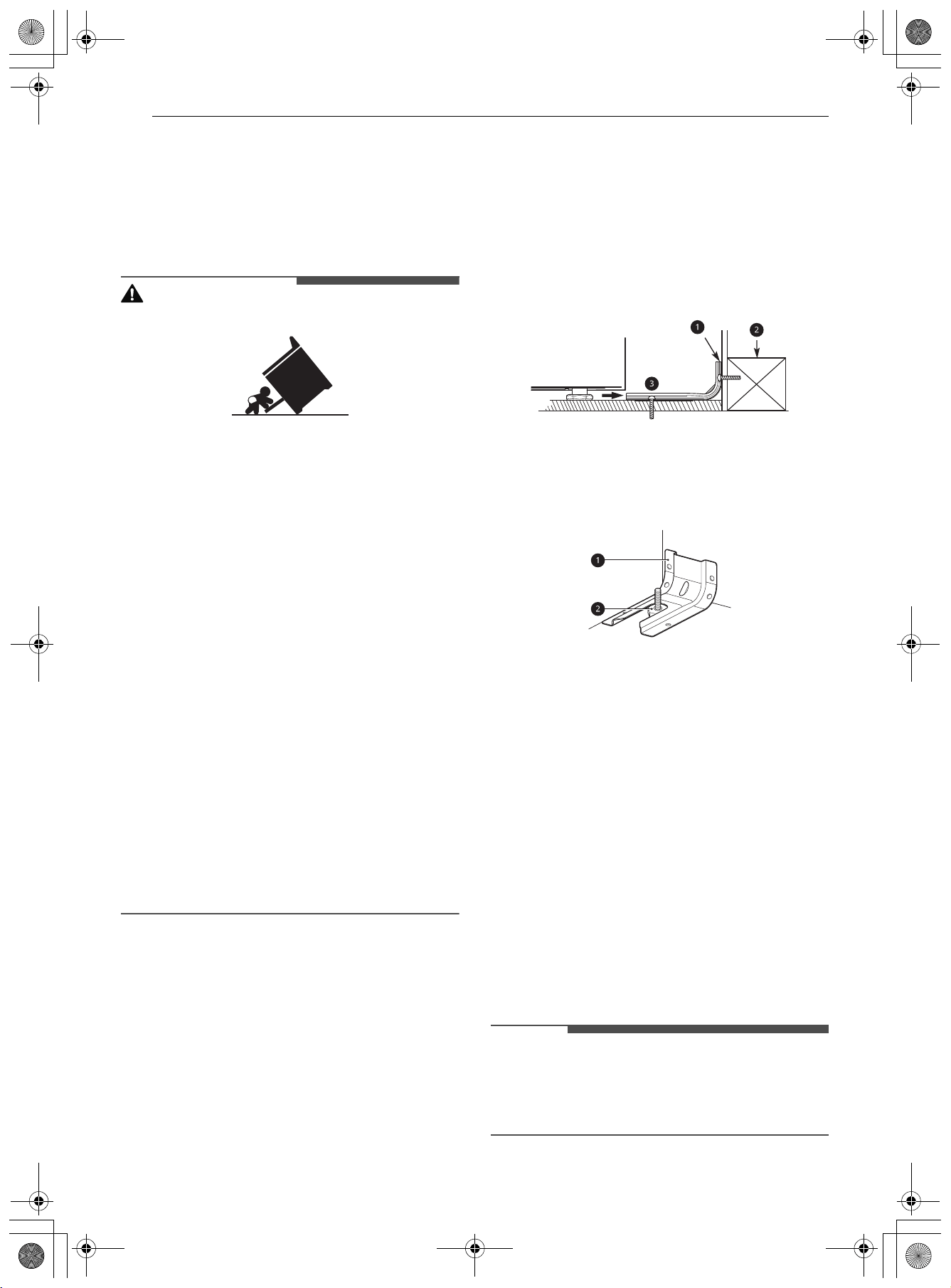
22 INSTALACIÓN
Dispositivo antivuelco
Instalación del dispositivo
antivuelco
Peligro de vuelco
ADVERTENCIA
• Un niño o adulto pueden volcar la estufa y morir.
• Coloque el dispositivo antivuelco en la estructura
y/o estufa. Verifique que el dispositivo antivuelco
se haya instalado y acoplado correctamente
siguiendo la guía del soporte antivuelco.
• Enganche la estufa al dispositivo antivuelco
conforme a la guía del soporte antivuelco.
Asegúrese que el dispositivo antivuelco se
vuelva a acoplar cuando se mueva la estufa
según la guía del soporte antivuelco.
• Vuelva a enganchar el dispositivo antivuelco si
mueve la estufa. No opere la estufa sin el
dispositivo antivuelco en su lugar y enganchado.
• Consulte las instrucciones de instalación para
obtener los detalles.
• Si no sigue estas instrucciones puede ocasionar
la muerte o quemaduras graves en niños o
adultos.
• Se debe asegurar la estufa con un dispositivo
antivuelco aprobado.
• La estufa puede inclinarse si una persona se
pone de pie, se sienta o apoya en la puerta
abierta y el dispositivo antivuelco no está
instalado de manera adecuada.
• El uso de este dispositivo no impide que la estufa
se caiga si no está bien instalado.
• Después de instalar el dispositivo antivuelco,
intente inclinar la estufa hacia adelante para
verificar una correcta instalación.
• Esta estufa está diseñada para cumplir con todos
los estándares de vuelco reconocidos por la
industria para todas las condiciones normales.
• La instalación del dispositivo antivuelco debe
cumplir con todos los códigos locales para
asegurar el electrodoméstico.
Uso de la plantilla de soporte
antivuelco
• Se incluye un soporte antivuelco con una
plantilla de instalación. Las instrucciones
incluyen la información necesaria para
completar la instalación. Lea y siga la hoja de
instrucciones de instalación de la estufa.
• Los tornillos
c deben ser aptos para madera u
hormigón.
a Soporte antivuelco
b Placa de pared
Colocación del dispositivo antivuelco
a Soporte antivuelco
b Pata de nivelación
1 Deslice la estufa contra la pared y asegúrese
de que la pata trasera se deslice y se
enganche en el soporte antivuelco.
• Asegúrese de que la pata trasera se deslice
y se enganche en el soporte antivuelco.
2 Verifique la correcta instalación sujetando el
borde delantero de la placa de cocción e
intente inclinar la estufa hacia adelante.
Prueba de funcionamiento
Pruebe la estufa antes de usarla
NOTA
• No intente encender los quemadores de
Hornear o Asar durante un corte de energía. La
estufa tiene un sistema de encendido eléctrico y
no se puede utilizar sin energía eléctrica.
es-us_main.book.book Page 22 Tuesday, February 3, 2026 8:20 AM
23INSTALACIÓN
ESPAÑOL
Verificación del funcionamiento de los
quemadores para hornear
Para verificar el encendido del quemador para
hornear, siga los pasos que se indican a
continuación:
1 Retire todos los materiales de embalaje del
interior de la cavidad del horno.
2 Presione Bake. Aparece 350 °F en la pantalla;
(asegúrese de que la puerta esté cerrada).
3 Presione START.
NOTA
• El quemador podría demorar entre 30 y 90
segundos para comenzar a calentar.
Verificación del funcionamiento de los
quemadores para asar
Para verificar el encendido del quemador para
asar, siga los pasos que se indican a continuación:
1 Retire todos los materiales de embalaje del
interior de la cavidad del horno.
2 Presione Broil. Aparece Hi en la pantalla.
Asegúrese de que la puerta esté cerrada.
3 Presione START.
NOTA
• El quemador podría demorar entre 30 y 90
segundos para comenzar a calentar.
es-us_main.book.book Page 23 Tuesday, February 3, 2026 8:20 AM
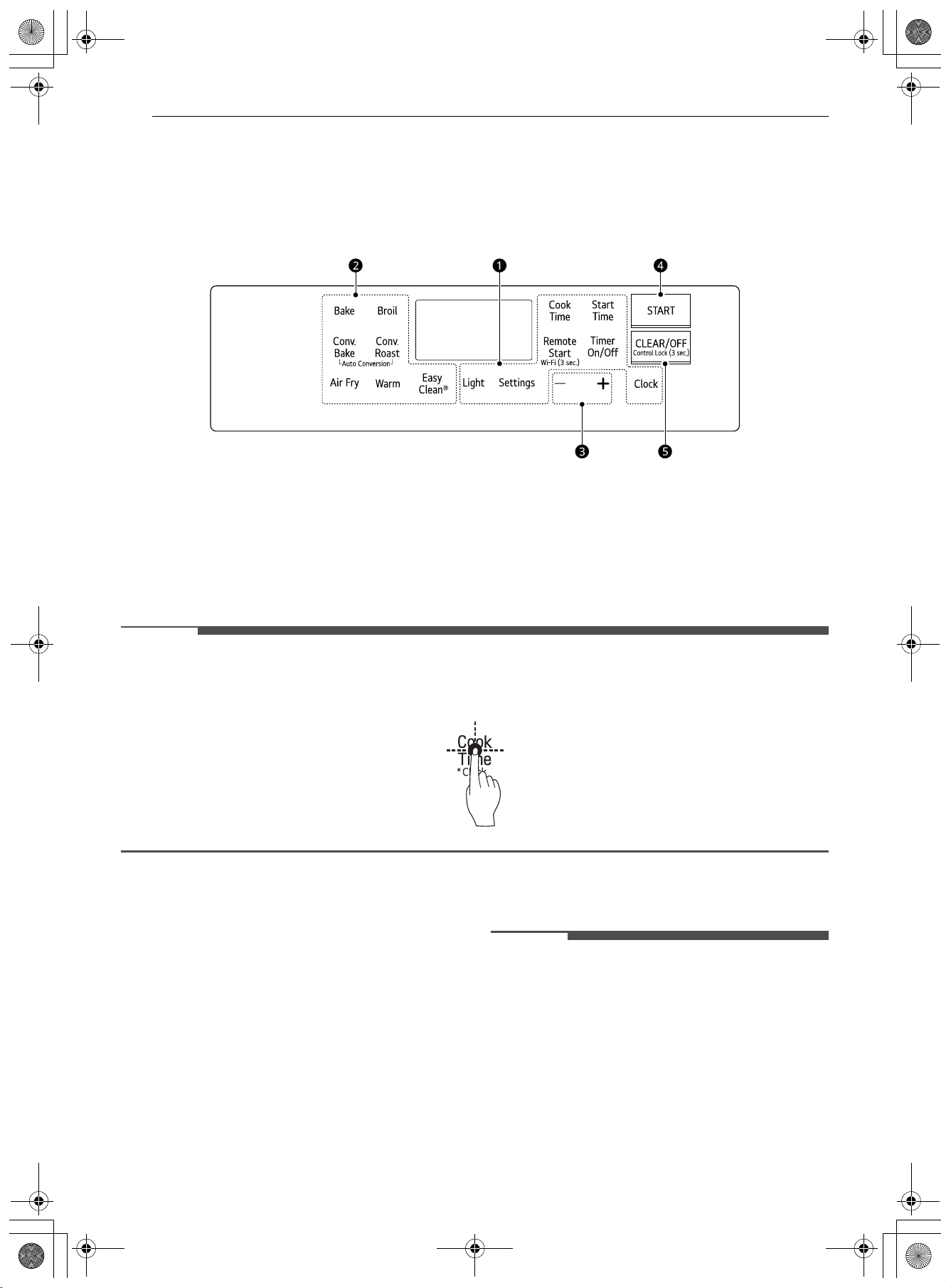
24 FUNCIONAMIENTO
FUNCIONAMIENTO
Panel de control
Funciones del panel de control
a Características
b Control del horno
c Botones +/–
d START
e CLEAR/OFF / Control Lock
NOTA
• Para obtener mejores resultados, presione los botones del centro, incluso cuando active la función
secundaria de un botón. Es posible que los botones no funcionen de forma adecuada si se presionen
demasiado lejos del centro.
Cambio de configuración del
horno
Reloj
El reloj debe estar configurado en la hora correcta
para que las funciones con temporizador del
horno funcionen correctamente.
1 Presione Clock.
2 Presione los botones más (+) o menos (-) para
establecer la hora.
3 Presione START.
NOTA
• La hora no puede modificarse durante los ciclos
de horneado con temporizador o autolimpieza
(disponible en algunos modelos).
• Para comprobar la hora mientras se muestra
otra información en pantalla, presione Clock.
• Si no se presionan los botones numéricos dentro
de los 25 segundos después de presionar el
botón Clock la pantalla vuelve a la configuración
original.
es-us_main.book.book Page 24 Tuesday, February 3, 2026 8:20 AM
25FUNCIONAMIENTO
ESPAÑOL
• Si puede verse una hora parpadeando en la
pantalla, usted ha experimentado un corte de
energía. Reconfigure el reloj.
Luz del horno
La luz interior del horno se enciende de forma
automática cuando se abre y se cierra la puerta.
• Presione el botón Light para encender/ apagar
la luz del horno de forma manual.
NOTA
• La luz del horno no se puede encender si la
función de Autolimpieza está activada.
(disponible en algunos modelos)
Timer On/Off (Temporizador
encendido/apagado)
El Temporizador sirve de temporizador adicional
en la cocina y emite un pitido cuando se ha
agotado el tiempo configurado. No inicia ni
detiene la cocción.
La función Temporizador se puede utilizar
durante cualquiera de las funciones de control del
horno.
Ajuste del temporizador
1 Presione el botón Timer On/Off una vez para
ajustar el tiempo en horas y minutos, o
presione el botón dos veces para ajustar el
tiempo en minutos y segundos. Timer o un
icono parpadea en la pantalla.
2 Ingrese la duración de tiempo deseada.
Use los botones +/-.
3 Presione Timer On/Off para iniciar el
temporizador. La cuenta regresiva del tiempo
restante aparece en pantalla.
NOTA
• Si no se presiona Timer On/Off, el temporizador
vuelve a mostrar la hora del día.
4 Cuando el temporizador alcanza 0:00, End se
muestra en la pantalla. El reloj pita cada 15
segundos hasta que se presiona Timer On/
Off.
NOTA
• Si en la pantalla no aparece el tiempo restante,
recupérelo presionando Timer On/Off.
Cancelación del temporizador
1 Presione Timer On/Off una vez.
La pantalla vuelve a mostrar la hora del día.
NOTA
• El temporizador no se apagará si presiona
CLEAR/OFF.
Wi-Fi
El botón Wi-Fi se usa para conectar el
electrodoméstico a una red de Wi-Fi doméstica.
1 Mantenga presionado Remote Start durante
3 segundos.
2 Se emite el sonido de encendido, en la
pantalla aparece SET (Ajustes), y parpadea el
icono de Wi-Fi (f).
3 Conecte el electrodoméstico en la red de Wi-Fi
con la aplicación del teléfono inteligente LG
ThinQ.
4 Para desconectar el artefacto de la red,
elimínelo de los artefactos registrados en la
aplicación.
NOTA
• Consulte la sección de Funciones Inteligentes en
el manual del usuario para obtener más detalles.
es-us_main.book.book Page 25 Tuesday, February 3, 2026 8:20 AM
26 FUNCIONAMIENTO
Configuración (Modo de horas,
Conversión automática a
convección, Ajuste del termostato
del horno, Luz de alarma de
precalentado, Volumen del
indicador sonoro, Fahrenheit o
Celsius, Wi-Fi Encendido/Apagado)
Presione el botón Settings (Ajustes) varias veces
para alternar entre las diferentes configuraciones
del horno y modificarlas.
La tecla Settings permite:
• Configurar el modo de horas en el reloj (12 o
24 horas)
• Habilitar/inhabilitar la conversión
automática a convección
• Ajustar la temperatura del horno
• Activar/desactivar la luz de alarma de
precalentamiento
• Configurar el volumen del indicador sonoro
• Cambiar la escala de temperatura entre
Fahrenheit y Celsius
• activar/desactivar el Wi-Fi
Configuración del modo de la hora
El control está configurado para usar un reloj de
12 horas. Si desea restablecer el reloj al modo de
24 horas, siga los pasos a continuación.
1 Presione el botón Settings.
2 Presione +/- para ir cambiando entre un reloj
de 12 horas y uno de 24 horas.
3 Presione START para aceptar el cambio.
Configuración del modo de conversión
automática a convección
Cuando se seleccionan los modos Conv. Bake y
Conv. Roast, la función Conversión automática a
convección convierte de manera automática la
temperatura estándar de la receta ingresada en
una temperatura de convección al restar 25 °F/14
°C. Esta temperatura convertida automáticamente
aparece en la pantalla. Por ejemplo, si selecciona
Conv. Bake e ingresa 350 °F, en la pantalla
aparecerá 325 °F después de precalentar.
La función Conversión automática a convección
está habilitada de forma predeterminada. Para
cambiar la configuración, siga estas instrucciones.
1 Presione Settings varias veces hasta que
aparezca Avto en la pantalla.
2 Presione el botón +/- para activar o desactivar
la Conversión automática.
3 Presione START para aceptar el cambio.
Ajuste del termostato del horno
El horno nuevo podría cocinar de manera
diferente a su horno anterior. Use el horno nuevo
durante algunas semanas para familiarizarse con
él antes de cambiar los ajustes de temperatura. Si,
después de familiarizarse con el horno nuevo,
sigue pensando que la temperatura está
demasiada elevada o baja, puede ajustar el
termostato del horno.
• Para comenzar, suba o baje el termostato 15 °F
(8 °C). Pruebe el horno con la nueva
configuración. Si el horno aún necesita un
ajuste, suba o baje nuevamente el termostato y
utilice el primer ajuste como referencia
medidora. Por ejemplo, si el ajuste fue excesivo,
suba o baje el termostato 10 °F (5 °C). Si el ajuste
no fue suficiente, suba o baje el termostato 20 °F
(12 °C). Proceda de esta manera hasta que el
horno quede ajustado para su satisfacción.
1 Presione Settings varias veces hasta que
aparezca AdJU en la pantalla.
2 Establezca la cantidad de grados que desea
ajustar:
Presione o mantenga presionados los
botones +/- hasta que aparezca la cantidad
deseada de grados en la pantalla.
3 Presione START para aceptar el cambio.
NOTA
• Este ajuste no afecta a las temperaturas de
asado o SelfClean. El ajuste se retiene en la
memoria después de una falla eléctrica. Es
posible aumentar (+) o disminuir (-) la
temperatura del horno hasta 35 °F o 19 °C.
• Una vez que haya subido o bajado la
temperatura, la pantalla mostrará la
temperatura ajustada hasta que la misma se
vuelva a ajustar.
es-us_main.book.book Page 26 Tuesday, February 3, 2026 8:20 AM
27FUNCIONAMIENTO
ESPAÑOL
Encendido/apagado de la luz de alarma
de precalentamiento
Cuando el horno alcanza la temperatura
programada, la luz de alarma de precalentamiento
titila 5 veces o hasta que se abra la puerta del
horno.
Puede activar o desactivar la luz de alarma de
precalentamiento.
1 Presione Settings varias veces hasta que
aparezca PrE en la pantalla.
2 Presione +/- para encender/apagar la luz.
3 Presione START para aceptar el cambio.
Ajuste del volumen del indicador
sonoro
1 Presione Settings varias veces hasta que
aparezca
bEEP en la pantalla.
2 Presione +/- para seleccionar Hi, Lo u OFF.
3 Presione START para aceptar el cambio.
Selección de grados Fahrenheit o
Celsius
Configure la visualización de la temperatura del
horno para que muestre unidades Fahrenheit (°F)
o Celsius (°C). El ajuste predeterminado del horno
es en unidades Fahrenheit, a menos que lo cambie
el usuario.
1 Presione Settings varias veces hasta que
aparezca UNit en la pantalla.
2 Presione +/- para seleccionar F (Fahrenheit) o
C (Celsius).
3 Presione START para aceptar el cambio.
Encender/Apagar el Wi-Fi
Puede encender o apagar el transmisor Wi-Fi de la
PCB.
1 Presione Settings varias veces hasta que
aparezca Wi-Fi en la pantalla.
2 Presione +/- para encender o apagar el
transmisor Wi-Fi.
3 Presione START para aceptar el cambio.
Bloqueo de control
La función de Bloqueo de control evita
automáticamente que se enciendan la mayoría de
los controles del horno.
1 Mantenga presionado el botón CLEAR/OFF
por tres segundos.
2 Suena la melodía de bloqueo. El ícono Loc y
de candado
k aparecen en la pantalla.
3 Para desactivar la función Bloqueo de
control, mantenga presionado el botón
CLEAR/OFF durante tres segundos. Suena la
melodía de desbloqueo y se destraban los
controles.
Hora de inicio (Cocción programada
retrasada)
El temporizador automático de la función Cocción
programada retrasada enciende y apaga el horno
a la hora que usted seleccione. Esta función puede
usarse junto con los modos Bake, Conv. Bake y
Conv. Roast.
es-us_main.book.book Page 27 Tuesday, February 3, 2026 8:20 AM
28 FUNCIONAMIENTO
PRECAUCIÓN
• Tenga cuidado con las funciones de Cocción
programada retrasada. Utilice el temporizador
automático cuando cocine carnes curadas o
congeladas y la mayoría de las frutas y verduras.
Los alimentos que se pueden echar a perder
fácilmente, como la leche, los huevos, el
pescado, la carne o las aves, deben enfriarse
primero en el refrigerador. Incluso cuando estén
fríos, no deben permanecer en el horno durante
más de 1 hora antes de que comience la cocción,
y deben retirarse inmediatamente cuando
finalice la cocción. Comer alimentos en mal
estado puede provocar enfermedades por
intoxicación alimentaria.
Configuración de la Cocción programada
retrasada
Por ejemplo, para hornear a 300 8 durante
30 minutos y retrasar el inicio del proceso de
horneado hasta las 4:30, primero debe configurar
el reloj para la hora correcta del día.
1 Presione Bake. Aparece 350 8 en la pantalla.
2 Ajuste la temperatura:
Presione o mantenga presionados los
botones +/- hasta que aparezca la
temperatura deseada en la pantalla.
3 Presione Cook Time y los botones +/- para
ajustar el tiempo de cocción.
4 Presione Start Time.
5 Ajuste la hora de inicio:
Use los botones +/- para ajustar la hora
mostrada para que se corresponda con su
hora de inicio deseada.
6 Presione START. Suena un tono corto y Timed
Delay y la hora de inicio aparecen en la
pantalla. El horno comienza a funcionar a la
hora de inicio configurada.
NOTA
• Para cancelar la función Cocción programada
retrasada, presione CLEAR/OFF en cualquier
momento.
• Para cambiar el tiempo de cocción, repita el paso
3 y 4 y presione START.
• Si el reloj de horno está configurado para 12
horas, puede retrasar la hora de inicio de la
cocción 11 horas y 59 minutos. Si el reloj de
horno está configurado para 24 horas, puede
retrasar la hora de inicio de la cocción 23 horas y
59 minutos.
El horno seguirá cocinando durante la cantidad de
tiempo configurada y luego se apagará
automáticamente. Cuando haya transcurrido el
tiempo de cocción:
• End y la hora del día aparecen en la pantalla.
• El tono indicador de fin de cocción suena cada 60
segundos hasta que se presiona CLEAR/OFF.
Cook Time (Timed Cook) (Tiempo de
cocción [Cocción programada])
Configure el horno para que realice la cocción
durante un período específico de tiempo mediante
la función Cocción programada. Esta función solo
puede usarse junto con los modos Bake, Conv.
Bake, Conv. Roast, Air Fry y Broil.
Ajuste de una función de tiempo de
cocción
Por ejemplo, para hornear a 300 °F durante 30
minutos, primero debe configurar el reloj para la
hora correcta del día.
1 Presione Bake. Aparece 350 °F en la pantalla.
2 Configure la temperatura. Presione el botón
+/- Botón.
3 Presione Cook Time. Timed parpadea en la
pantalla. Hornear y 0:00 aparece en la
pantalla.
4 Ajuste el tiempo de horneado: Presione el
botón +/- para establecer el tiempo de
horneado.
• El tiempo de horneado se puede configurar
para cualquier cantidad de tiempo entre 1
minuto y 11 horas y 59 minutos.
5 Presione START.
es-us_main.book.book Page 28 Tuesday, February 3, 2026 8:20 AM
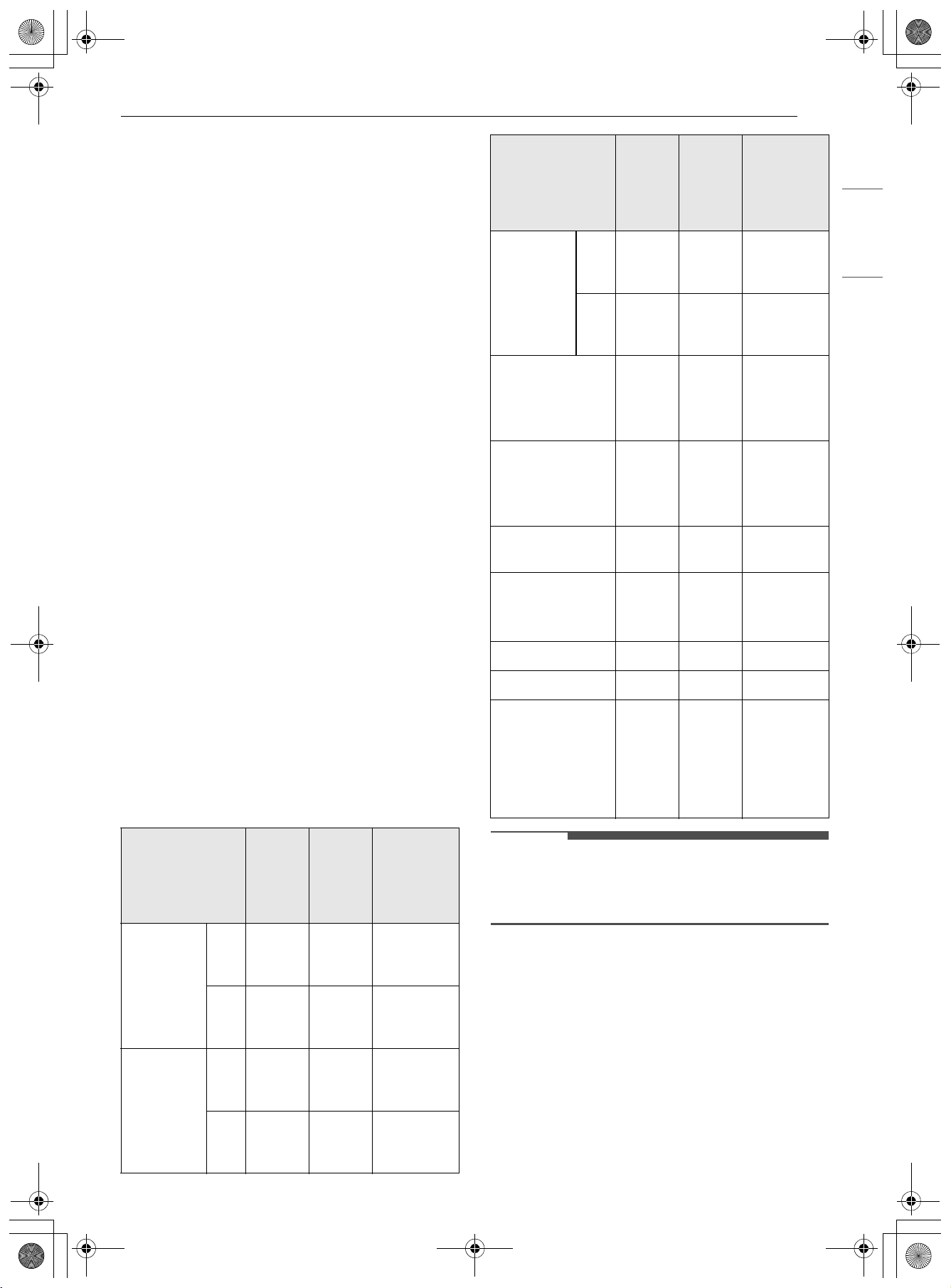
29FUNCIONAMIENTO
ESPAÑOL
El horno seguirá cocinando durante la cantidad de
tiempo configurada y luego se apagará
automáticamente. Cuando haya transcurrido el
tiempo de cocción:
• End y la hora del día aparecen en la pantalla.
• El tono indicador de fin de cocción suena cada 60
segundos hasta que se presiona CLEAR/OFF.
Cambio de Tiempo de cocción durante la
cocción
Por ejemplo, para cambiar el tiempo de cocción de
30 minutos a 1 hora y 30 minutos durante la
cocción, haga lo siguiente:
1 Presione Cook Time.
2 Cambie el tiempo de horneado: presione el
botón +/-.
3 Presione START para aceptar el cambio.
Configuraciones predeterminadas
mínimas y máximas
Todas las funciones detalladas tienen un ajuste
mínimo y máximo de tiempo o temperatura que
puede ingresarse en el control. Cada vez que se
presiona un botón de control, suena un pitido.
Suena un tono de error de la entrada (dos tonos
cortos) si la entrada de la temperatura o tiempo
está por debajo de la configuración mínima o por
encima de la máxima para esa función.
*Temperatura si usa la conversión automática
NOTA
• Los tiempos predeterminados del modo de
cocción se habilitan si no se configura un tiempo
de cocción.
Quemadores de superficie
de gas
Antes de usar los quemadores de
superficie a gas
Lea todas las instrucciones antes de usar.
Característica
Min.
Temp.
/
Hora
Máx.
Temp.
/
Hora
Predeter
minado
Clock
12
hor
as
01:00
Horas/
min.
12:59
Horas/
min.
24
hor
as
0:00
Horas/
min.
23:59
Horas/
min.
Timer
12
hor
as
0:01
min./
seg.
11:59
Horas/
min.
24
hor
as
0:01
min./
seg.
11:59
Horas/
min.
Cook Time
12
hor
as
0:01
Horas/
min.
11:59
Horas/
min.
24
hor
as
0:01
Horas/
min.
11:59
Horas/
min.
Conv. Bake
300
8
/
(*275
8)
550
8
/
285
7
350 8
(*325 8) /
12 horas
Conv. Roast
300
8
/
(*275
8)
550
8
/
285
7
350 8
(*325 8) /
12 horas
Broil Bajo Alto
Alto /
3horas
Bake
170
8
/
80
7
550 8
/
285
7
350 8 /
12 horas
Warm 3horas
EasyClean 10 min.
Air Fry
300
8
/
150
7
0:01
Horas/
min.
550
8
/
285
7
11:59
Horas/
min.
400
8 /
205
7
Característica
Min.
Temp.
/
Hora
Máx.
Temp.
/
Hora
Predeter
minado
es-us_main.book.book Page 29 Tuesday, February 3, 2026 8:20 AM
30 FUNCIONAMIENTO
ADVERTENCIA
• Incluso si la llama del quemador superior se
apaga, el gas sigue saliendo hacia el quemador
hasta que la perilla se gire a la posición OFF. Si
huele gas, abra una ventana de inmediato y
ventile el área durante cinco minutos antes de
volver a usar el quemador. No deje los
quemadores encendidos sin supervisión.
• Use el tamaño adecuado de olla. No use ollas
inestables o que puedan volcarse con facilidad.
Seleccione utensilios de cocina con fondo plano
del tamaño suficiente para cubrir las rejillas del
quemador. A fin de evitar derrames, asegúrese
de que el recipiente tenga el tamaño suficiente
para contener los alimentos de manera
adecuada. Esto ahorrará tiempo de limpieza y
evitará la acumulación riesgosa de alimentos, ya
que las salpicaduras o los derrames que quedan
en la estufa pueden encenderse. Use ollas con
mangos que se puedan sostener con facilidad y
que permanezcan fríos.
PRECAUCIÓN
• Para evitar que se decolore con el uso, siga los
consejos en la sección de Mantenimiento.
• No haga funcionar el quemador durante mucho
tiempo sin colocar utensilios de cocina en la
rejilla.
• El acabado de la rejilla puede saltarse si no hay
utensilios de cocina que absorban el calor.
• Tocar las rejillas antes de que se enfríen puede
causar quemaduras.
• Qué hacer si huele gas
- Abra las ventanas.
- No intente encender ningún aparato.
- No toque ningún interruptor eléctrico.
- No use ningún teléfono en su edificio.
- Llame a su compañía de gas inmediatamente
desde el teléfono de un vecino. Siga las
instrucciones de la compañía de gas.
- Si no puede comunicarse con su compañía de
gas, llame al departamento de bomberos.
• Asegúrese de que todos los controles de
superficie estén en posición OFF antes de
suministrar gas a la estufa.
• Nunca deje los quemadores de superficie sin
supervisión en ajustes de llama alta. Las
salpicaduras o los derrames pueden provocar
humo y encenderse.
• Coloque siempre las perillas en la posición LITE
al encender los quemadores superiores y
asegúrese de que se hayan encendido.
• Controle el tamaño de la llama del quemador de
superficie para que no se extienda sobre el
borde del utensilio de cocina. Las llamas
excesivas son peligrosas.
• Use solo agarraderas secas. Las agarraderas
húmedas o mojadas sobre superficies calientes
pueden producir quemaduras por vapor. No
deje que las agarraderas se acerquen a las
llamas al levantar una pieza de los utensilios de
cocina. No use toallas ni otros paños abultados.
Use siempre agarraderas.
• Al usar utensilios de cocina de vidrio, asegúrese
de que estén diseñados para la cocción sobre la
cocina.
• Para minimizar la posibilidad de incendio de
materiales inflamables y derrames, coloque los
mangos de los utensilios hacia la parte trasera
de la estufa sin que se extiendan sobre los
quemadores adyacentes.
• Nunca deje objetos sobre la placa de cocción. El
aire caliente de la ventilación puede encender
objetos inflamables y aumentar la presión de los
recipientes cerrados, lo que puede provocar su
estallido.
• Vigile con atención los alimentos que se frían
con llama alta.
• Siempre caliente la grasa lentamente y vigile
mientras aumenta la temperatura.
• Si freirá una combinación de aceites y grasas,
mézclelos antes de calentarlos.
• Si es posible, utilice un termómetro para frituras
a fin de evitar que la grasa se caliente por
encima del punto de humeo.
• Utilice la menor cantidad posible de grasa para
rehogados o frituras profundas efectivos. Llenar
la sartén con demasiada grasa podría causar
derrames al agregar los alimentos.
• No cocine los alimentos directamente sobre
llama abierta en la placa de cocción.
• No use woks sobre los quemadores de superficie
si tienen anillos de metal que se colocan sobre la
rejilla del quemador para sostenerlos. Este anillo
actúa como trampa de calor, lo cual puede dañar
la rejilla y el cabezal del quemador. También
puede hacer que el quemador no funcione
correctamente. Esto puede provocar que el nivel
de monóxido de carbono sea superior a los
estándares actuales permitidos, lo que generaría
un peligro para la salud.
PRECAUCIÓN
• Los alimentos para freír deben estar tan secos
como sea posible. La escarcha o la humedad
sobre los alimentos pueden hacer que la grasa
es-us_main.book.book Page 30 Tuesday, February 3, 2026 8:20 AM
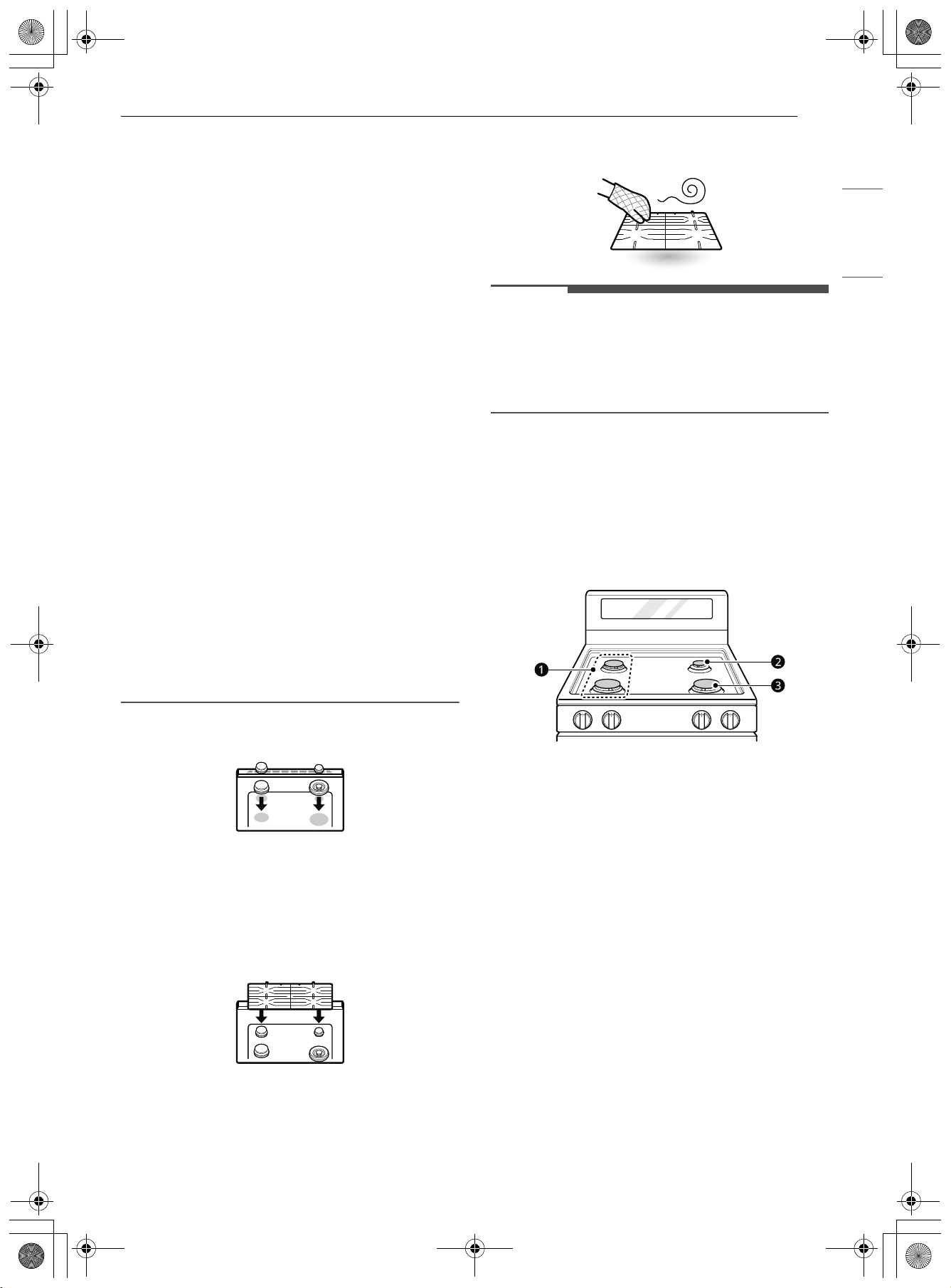
31FUNCIONAMIENTO
ESPAÑOL
caliente burbujee y se derrame por los costados
del recipiente.
• Nunca trate de mover una sartén de grasa
caliente, en especial una freidora. Espere hasta
que la grasa se enfríe.
• No deje artículos de plástico sobre la placa de
cocción. Se pueden derretir si se dejan muy
cerca de la ventilación.
• Aleje todos los artículos plásticos de los
quemadores de superficie.
• Para prevenir quemaduras, siempre asegúrese
de que los controles para todos los quemadores
estén en la posición OFF y que todas las rejillas
estén frías antes de tratar de quitarlas.
• Si huele a gas, apague el gas de la estufa y llame
a un técnico calificado. Nunca use una llama viva
para encontrar una fuga.
• Siempre coloque las perillas en posición OFF
antes de quitar los utensilios de la cocina.
• No levante la placa de cocción. Esto puede
provocar daños y un funcionamiento
inadecuado de la estufa.
• Si la estufa está ubicada cerca de una ventana,
no cuelgue cortinas largas que puedan volarse
sobre los quemadores de superficie y
encenderse.
• Limpie la placa de cocción con cuidado. Los
extremos de metal puntiagudos de los
electrodos de chispa pueden producir lesiones.
• Asegúrese de que todos los quemadores estén
colocados en las posiciones adecuadas.
• Asegúrese de que todas las rejillas estén
colocadas en las posiciones adecuadas antes de
usar los quemadores.
- Tenga cuidado al instalar o retirar las rejillas,
ya que los extremos ásperos pueden causar
arañazos en la superficie de la placa de
cocción.
• Asegúrese de que los quemadores y las rejillas
estén fríos antes de tocarlos o de colocar una
agarradera, un paño de limpieza u otros
materiales sobre ellos.
NOTA
• Los encendedores con chispa eléctrica de los
quemadores hacen un sonido de clic. Todos los
encendedores de chispa de la placa de cocción
se activarán cuando se encienda solo un
quemador.
Ubicaciones de los quemadores
La placa de cocción de su estufa de gas tiene
cuatro o cinco quemadores a gas sellados, según
el modelo. Los cabezales y las tapas se pueden
ensamblar y quitar para limpiar. Siga la guía a
continuación.
a Quemadores mediano y grande
Los quemadores mediano y grande son los
principales para la mayoría de las cocciones.
Estos quemadores para fines generales se
pueden regular de Hi a Lo para adaptarse a
una amplia variedad de necesidades culinarias.
b Quemador pequeño
El quemador más pequeño se utiliza para
alimentos delicados como salsas o los que
requieren calor bajo durante un período
prolongado de tiempo de cocción.
c Quemador extra grande
El quemador extra grande es el quemador de
máxima salida. Al igual que los otros cuatro
quemadores, se puede regular de Hi a Lo para
adaptarse a una amplia gama de aplicaciones
culinarias. Este quemador también está
diseñado para hacer hervir grandes cantidades
de líquido. No se debe usar con utensilios de
cocina de 10 pulgadas o más de diámetro.
es-us_main.book.book Page 31 Tuesday, February 3, 2026 8:20 AM
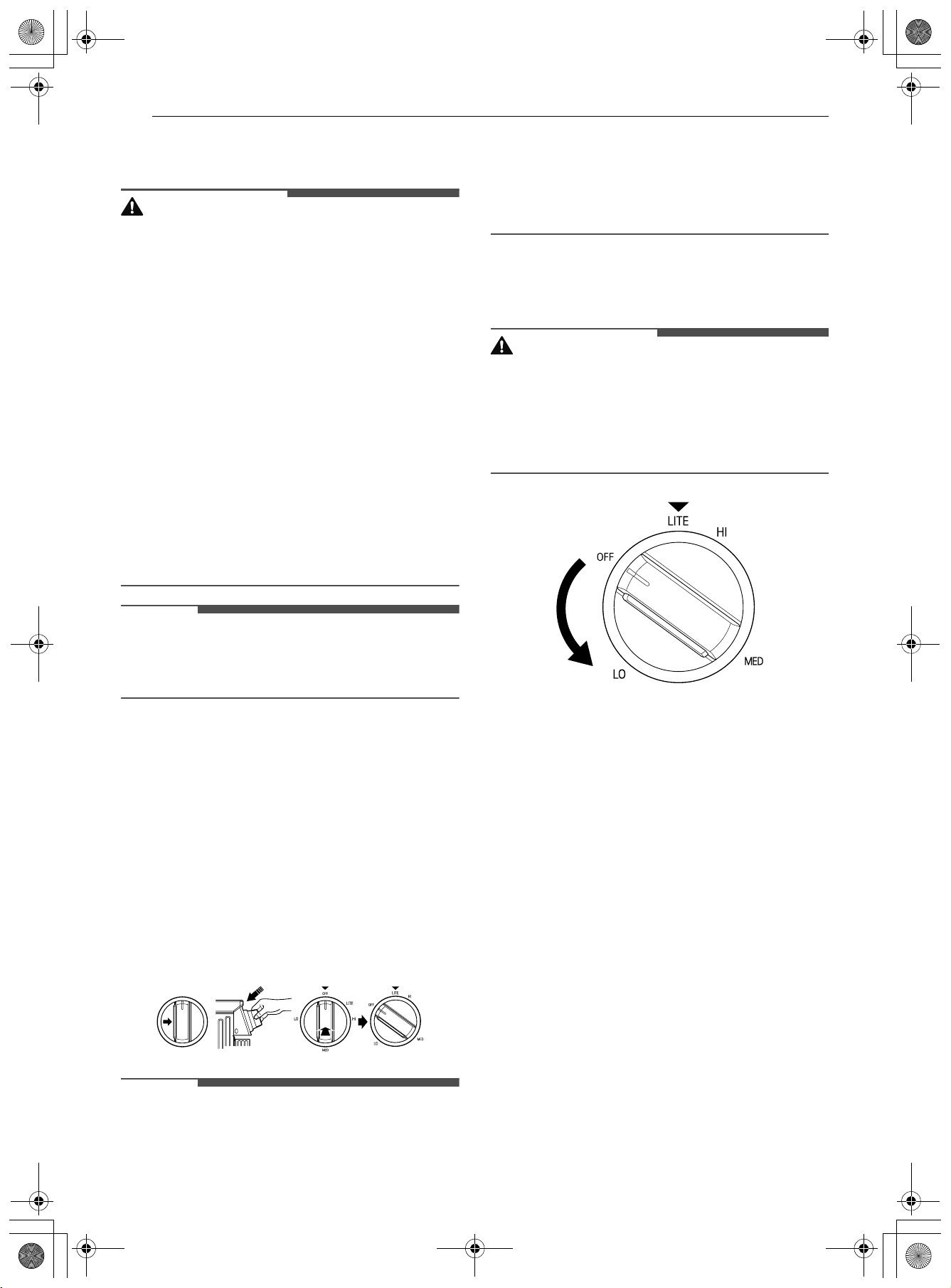
32 FUNCIONAMIENTO
Uso de los quemadores de gas de
superficie
PRECAUCIÓN
• Haga coincidir el tamaño del elemento o
quemador de la placa de cocción con el tamaño
del utensilio en uso. El uso un elemento grande
para una olla pequeña desperdicia energía
térmica, y la superficie expuesta del elemento
constituye un riesgo de quemadura o incendio.
• Limpie las perillas regularmente. La suciedad u
objetos extraños en las perillas podrían interferir
con el funcionamiento del botón.
• No aplique fuerza excesiva al utilizar los botones
y las funciones de bloqueo, ya que podrían
dañarse.
• Las superficies de las perillas podrían estar
calientes luego de la cocción. Deje que las
perillas se enfríen lo suficiente o póngase un
guante de cocina previo a tocarlas.
• Los botones deben estar ajustados
correctamente para garantizar las funciones
previstas de las perillas.
NOTA
• Si va a remover y reensamblar la perilla,
mantenga pulsado el botón lateral mientras
presiona la perilla completamente sobre el eje.
1 Asegúrese de que todos los quemadores de
superficie y las rejillas estén colocados en las
posiciones adecuadas.
2 Coloque el utensilio de cocina sobre la rejilla.
3 Presione el botón lateral de la perilla.
4 Empuje la perilla de control y gire hacia la
posición LITE para encender el quemador.
NOTA
• El sistema de encendido por chispa eléctrica
hace un clic.
• La perilla de modo del horno no tiene botón. (en
algunos modelos)
• Para utilizar las perillas de la placa de cocción sin
presionar el botón lateral, utilice la función de
bloqueo de botón.
5 Gire la perilla de control para regular el
tamaño de llama.
PRECAUCIÓN
• No intente desensamblar o limpiar alrededor de
un quemador mientras otro esté encendido.
Todos los encendedores de chispa de la placa de
cocción se activarán cuando se encienda solo un
quemador. Una descarga eléctrica podría
hacerlo volcar una olla caliente.
Uso del Bloqueo de Perillas
Puede ajustar el bloqueo de perilla en cada perilla
de la placa de cocción para que no tenga que
presionar el botón para utilizar la perilla. Retire y
ajuste una perilla a la vez.
1 Asegúrese de que la perilla está en la posición
OFF y tire de ella hacia afuera de su eje.
2 En la parte posterior del anillo de la perilla,
gire la pestaña negra a la posición de 2 Step o
3 Step.
• Si desliza la lengüeta a la posición 2 Step
a,
la perilla se puede usar sin presionar el
botón.
• Si desliza la lengüeta a la posición 3 Step b,
debe presionar el botón para usar la perilla.
es-us_main.book.book Page 32 Tuesday, February 3, 2026 8:20 AM
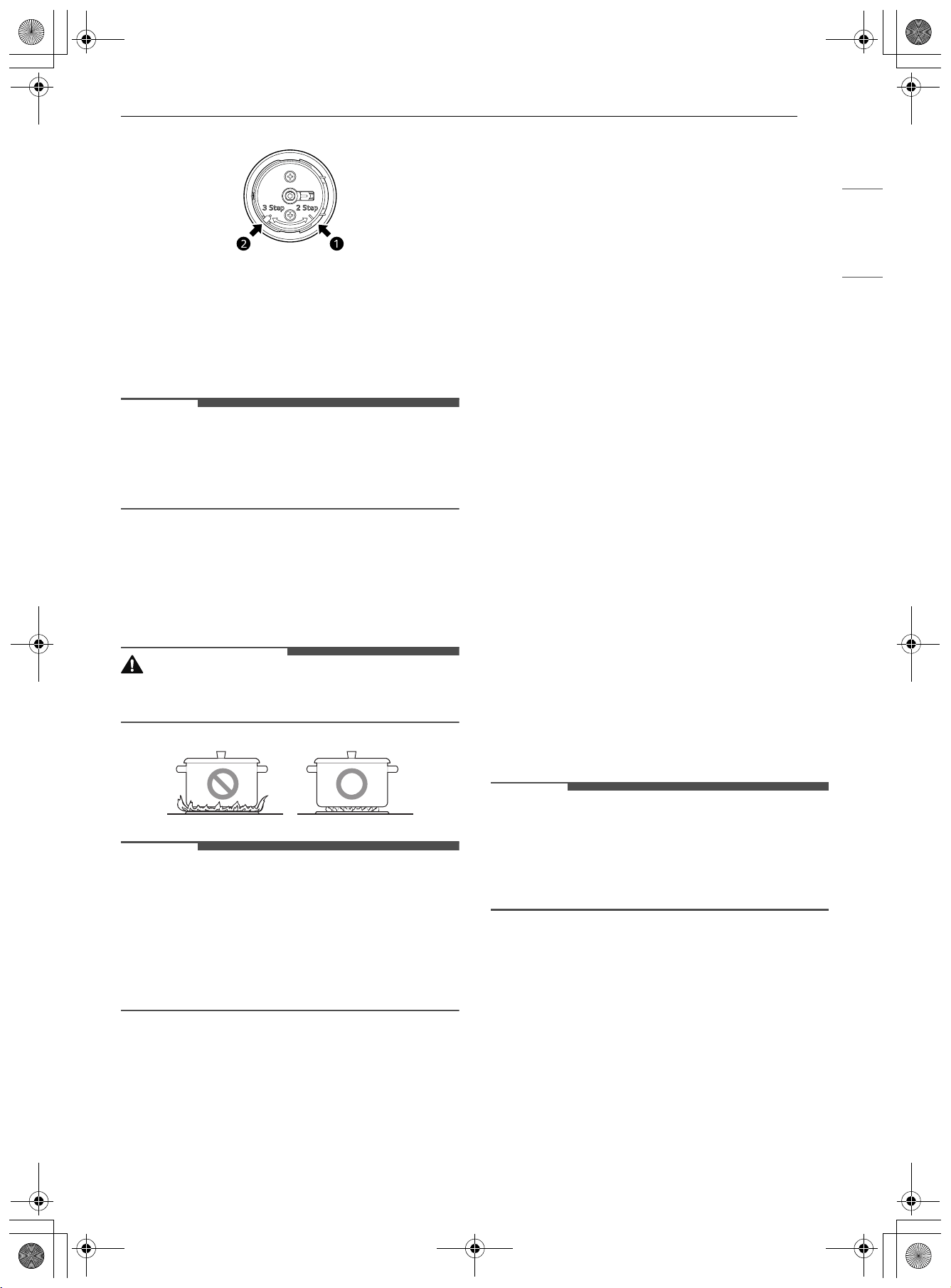
33FUNCIONAMIENTO
ESPAÑOL
3 Una vez que el bloqueo de la perilla esté
ajustado como desee, vuelva a instalar la
perilla. Para reinstalar, sostenga la perilla con
la etiqueta OFF en la parte superior y deslice
la perilla directamente sobre su eje.
NOTA
• La lengüeta negra debe estar alineada con la
marca 2 Step o 3 Step para garantizar el
funcionamiento adecuado de la perilla y del
botón.
Ajuste del tamaño de la llama
Mire la llama, y no la perilla, mientras reduce el
calor. Haga coincidir el tamaño de la llama con la
olla que usará para calentar más rápido.
PRECAUCIÓN
• Nunca permita que las llamas se extiendan hacia
arriba sobre los costados de la olla.
NOTA
• Las llamas de los quemadores de superficie
pueden volverse amarillas si hay un alto grado
de humedad; por ejemplo, si el día es lluvioso o
si hay un humidificador cerca.
• Después de la conversión a gas LP, las llamas
pueden ser más grandes de lo normal cuando
coloque una olla en la superficie del quemador.
Uso de los utensilios de cocina
adecuados
• Aluminio
- Se recomienda el uso de utensilios de cocina
de peso medio porque se calientan más rápido
y de manera uniforme. La mayoría de los
alimentos se doran uniformemente en una
sartén de aluminio. Use ollas con tapas que
ajusten bien cuando cocine con cantidades
mínimas de agua.
• Hierro fundido
- Si se calienta lentamente, la mayoría de las
sartenes darán resultados satisfactorios.
• Acero inoxidable
- Este metal por sí solo tiene propiedades de
calentamiento deficientes y, en general, se
combina con cobre, aluminio u otros metales
para mejorar la distribución de calor. Las
sartenes de combinación de metales
funcionan bien si se usan con calor medio
según recomienda el fabricante.
• Utensilios de cocina esmaltados
- En ciertas condiciones, el esmalte de los
utensilios de cocina podría derretirse. Siga las
recomendaciones del fabricante de los
utensilios de cocina para conocer los mejores
métodos de cocción.
•Vidrio
- Existen dos tipos de utensilios de cocina de
vidrio: para usar en el horno y en la superficie
de la estufa.
• Vitrocerámica refractaria
- Se puede usar para cocinar en la superficie o
en el horno. Conduce el calor lentamente y se
enfría del mismo modo. Verifique las
instrucciones del fabricante de los utensilios
de cocina para asegurarse de que puedan
usarse con las estufas de gas.
NOTA
• Haga coincidir el tamaño de los utensilios de
cocina con la cantidad de comida que cocine
para ahorrar energía al calentar. Calentar 1/2
litro de agua requiere más energía en una olla
de 3 cuartos que en una de 1 cuarto.
Uso de un wok
Si utiliza un wok, use uno de 14 pulgadas o menos
con fondo plano. Asegúrese de que la base del
wok quede nivelada sobre la rejilla.
es-us_main.book.book Page 33 Tuesday, February 3, 2026 8:20 AM
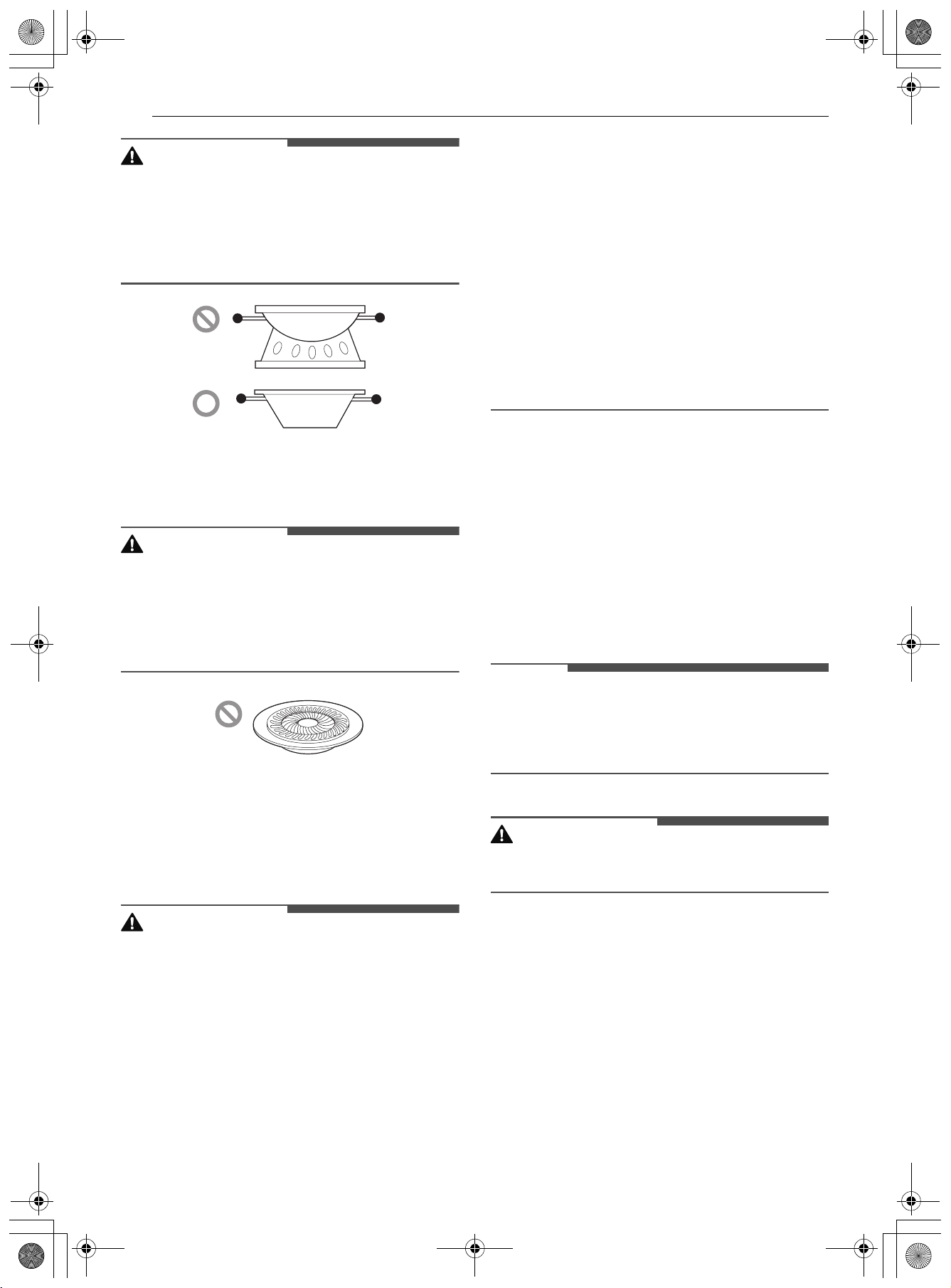
34 FUNCIONAMIENTO
PRECAUCIÓN
• No utilice un anillo de soporte para el wok. Si
coloca el anillo sobre el quemador o la rejilla, el
quemador podría funcionar mal, lo que
generaría niveles de monóxido de carbono
superiores a los estándares permitidos. Esto
puede ser riesgoso para su salud.
Uso de las rejillas en superficie
No coloque rejillas sobre el quemador.
PRECAUCIÓN
• No use rejillas sobre los quemadores de
superficie. Si usa una rejilla sobre el quemador
de superficie, la combustión sería incompleta, lo
que generaría niveles de monóxido de carbono
superiores a los estándares permitidos. Esto
puede ser riesgoso para su salud.
Horno
Antes de usar el horno
Lea todas las instrucciones antes de usar.
PRECAUCIÓN
• Para evitar que se decolore con el uso, siga los
consejos en la sección de Mantenimiento.
• Qué hacer si huele gas
- Abra las ventanas.
- No intente encender ningún aparato.
- No toque ningún interruptor eléctrico.
- No use ningún teléfono en su edificio.
- Llame a su compañía de gas inmediatamente
desde el teléfono de un vecino. Siga las
instrucciones de la compañía de gas.
- Si no puede comunicarse con su compañía de
gas, llame al departamento de bomberos.
• No deje artículos de plástico o inflamables sobre
la placa de cocción. Se pueden derretir o
encender si se dejan muy cerca de la ventilación.
• No coloque recipientes cerrados sobre la placa
de cocción. Podría aumentar la presión en los
recipientes cerrados y hacerlos explotar.
• Los objetos metálicos se calentarán demasiado
si los deja sobre la estufa y podrían causar
quemaduras.
• Las manijas de las ollas y sartenes sobre la placa
de cocción podrían calentarse si se dejan muy
cerca de la ventilación.
• Evite abrir la puerta del horno más de lo
necesario durante el uso. Esto ayuda a que el
horno mantenga la temperatura, evita la pérdida
innecesaria de calor y ahorra el consumo de
energía.
• Asegúrese de que el cable de alimentación y la
válvula de gas estén conectados correctamente.
• Confirme el uso correcto de la estufa para el tipo
de alimento que desee cocinar.
- Asegúrese de saber cómo usar el horno
(configuración de temperatura, configuración
de tiempo y receta) para mejores resultados.
NOTA
• Si usa un termómetro en la cavidad del horno,
las temperaturas podrían diferir de la
temperatura del horno configurada con todos
los modos.
• En caso de corte de energía, no utilice el horno.
PRECAUCIÓN
• No intente hacer funcionar el encendido
eléctrico durante un corte de energía eléctrica.
- El horno y el asador no se pueden usar
durante un corte de energía. Si el horno está
en uso cuando se produce el corte, el
quemador del horno se cierra y no puede
volver a encenderse hasta que se restablezca
la electricidad. Cuando vuelva la energía,
deberá reiniciar el horno (o la función Asar).
• No bloquee, toque ni coloque elementos
alrededor de la ventilación del horno durante la
cocción.
- Su horno se ventila a través de conductos en el
centro sobre el quemador. No bloquee la
ventilación del horno
a cuando cocine para
permitir un flujo de aire adecuado. No toque
es-us_main.book.book Page 34 Tuesday, February 3, 2026 8:20 AM
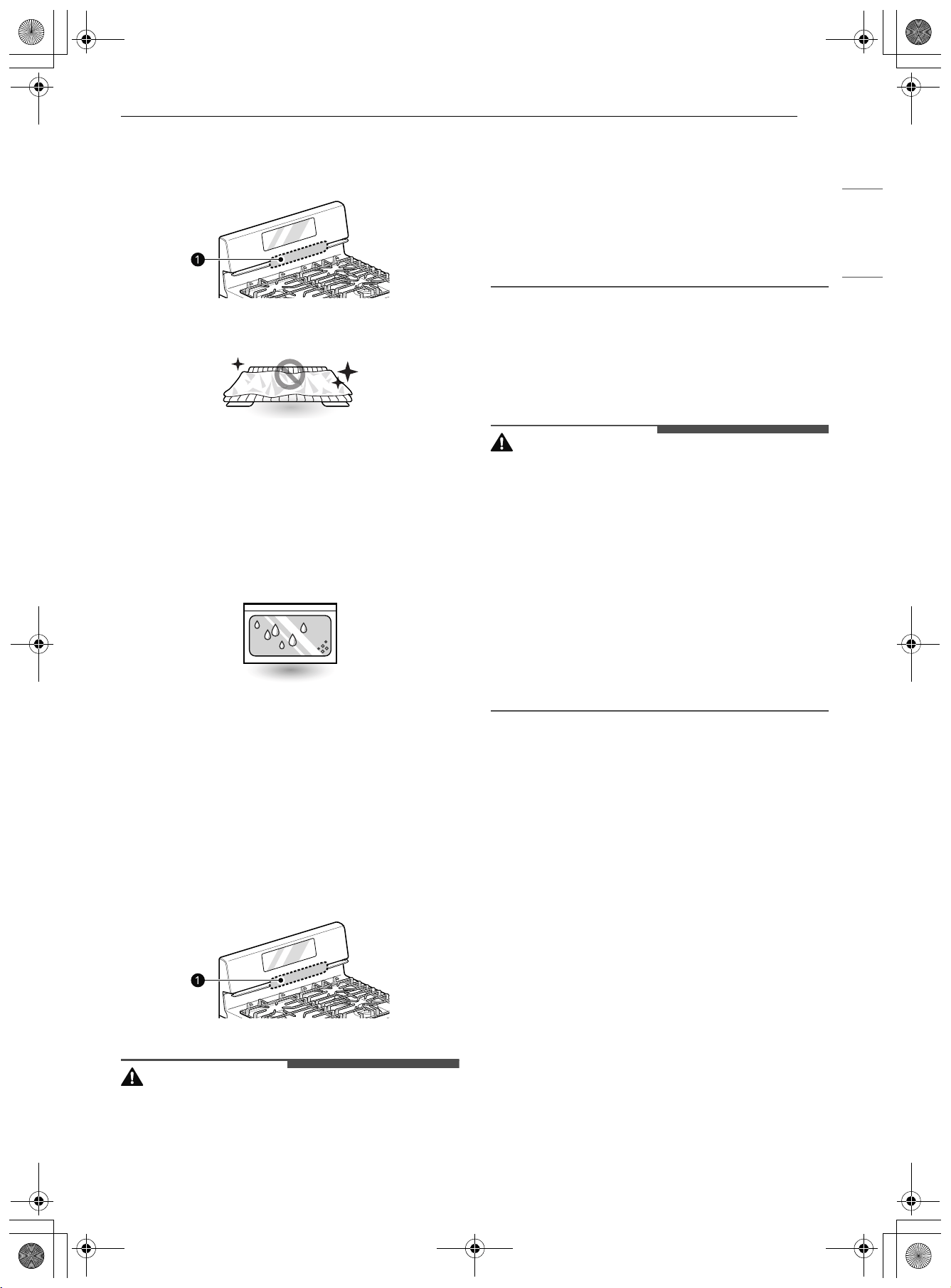
35FUNCIONAMIENTO
ESPAÑOL
las aberturas de ventilación ni las superficies
cercanas durante cualquier operación de
cocina.
• No cubra las rejillas ni el fondo del horno con
papel de aluminio.
• Podría notar condensación en el vidrio de la
puerta del horno.
- A medida que el horno se calienta, el aire
caliente del horno puede hacer que aparezca
condensación en el vidrio de la puerta del
horno. Estas gotas de agua son inofensivas y
se evaporarán a medida que el horno siga
calentándose.
Ventilación del horno
Las áreas cercanas a la ventilación podrían
calentarse durante el funcionamiento y causar
quemaduras. No bloquee la abertura de
ventilación. Evite colocar plásticos cerca de la
ventilación, ya que el calor podría deformar o
derretir el plástico.
Es normal que se vea vapor cuando se cocinan
alimentos con un alto contenido de humedad.
a Ventilación del horno
PRECAUCIÓN
• Los bordes de la ventilación de la estufa son
filosos. Para evitar sufrir lesiones, use guantes
cuando limpie la estufa.
• No bloquee, toque ni coloque elementos
alrededor de la ventilación del horno durante la
cocción.
- No bloquee la ventilación del horno cuando
cocine para permitir un flujo de aire adecuado.
No toque las aberturas de ventilación ni las
superficies cercanas durante cualquier
operación de cocina.
Uso de los estantes del horno
Los estantes tienen un borde posterior hacia
arriba que evita que salgan de la cavidad del
horno.
PRECAUCIÓN
• Reemplace los estantes del horno antes de
encender el horno para evitar quemaduras.
• No cubra los estantes con papel de aluminio o
cualquier otro material, ni coloque nada sobre la
parte inferior del horno. Si lo hace, podría
generar un proceso de horneado deficiente y
dañar la base del horno.
• Acomode los estantes del horno solo cuando el
horno esté frío.
• No coloque objetos que pesen más de 33 lb
(15 kg) sobre los estantes. No coloque objetos
pesados en las esquinas de los estantes. De lo
contrario, podrían dañarse.
Extracción de los estantes
1 Tire del estante hacia afuera hasta que se
detenga.
2 Levante el frente del estante y tire de él hacia
afuera.
Reemplazo de los estantes
1 Coloque el extremo del estante sobre el
soporte.
2 Incline el extremo frontal hacia arriba y
empuje el estante hacia adentro.
Bake (Hornear)
La función Hornear se utiliza para preparar
alimentos como pasteles, panes y estofados.
es-us_main.book.book Page 35 Tuesday, February 3, 2026 8:20 AM
36 FUNCIONAMIENTO
Es posible programar el horno para hornear a
cualquier temperatura entre 170 °F (80 °C) y 550 °F
(285 °C). La temperatura predeterminada es 350 °F
(175 °C).
Configuración de la función Hornear
(Por ejemplo, hornear a 375 ºF).
1 Presione Bake.
2 Use las Botón +/- para ajustar la temperatura.
3 Presione START. El horno comienza a
precalentar.
NOTA
• A medida que el horno se precalienta, aparece la
temperatura en pantalla y aumenta en
incrementos de 5 grados. Una vez que el horno
alcanza la temperatura configurada, suena un
tono, y la luz del horno se enciende y se apaga.
• Si se abre la puerta durante la cocción, el
quemador de horneado se apaga luego de 30
segundos. El quemador se vuelve a encender
automáticamente cuando se cierra la puerta.
4 Cuando termine de cocinar, presione CLEAR/
OFF.
5 Retire los alimentos del horno.
NOTA
• Es normal que el ventilador de convección
funcione periódicamente durante un ciclo
normal de horneado. Esto sucede para asegurar
resultados uniformes de horneado.
• El ventilador de convección podría continuar
funcionando durante un corto periodo de
tiempo luego de que se apague el horno.
Consejos de horneado
• El tiempo y la temperatura de horneado variarán
según las características, el tamaño y la forma
de la bandeja para hornear que se utilice.
• Compruebe que los alimentos estén cocidos en
el tiempo mínimo de preparación.
• Utilice recipientes para horneado de metal (con
o sin acabado antiadherente), vitrocerámica
resistente al calor, cerámica u otros recipientes
para horneado recomendados para horno.
• Las bandejas de metal oscuro o los
revestimientos antiadherentes cocinarán los
alimentos más rápido y se dorarán más. Los
recipientes para hornear aislados extenderán
levemente el tiempo de cocción de la mayoría de
los alimentos.
• La base del horno tiene un acabado de esmalte
de porcelana. Para facilitar la limpieza, proteja el
fondo del horno de derrames excesivos
colocando una bandeja para hornear galletas
debajo del estante en el que está cocinando.
Esto es particularmente importante cuando se
hornea un pastel de frutas u otros alimentos con
un alto contenido de ácido. Los rellenos de
frutas calientes u otros alimentos que son muy
ácidos pueden causar salpicaduras y dañar la
superficie de esmalte de porcelana, y deben
limpiarse de inmediato.
Modo de convección
El sistema de convección usa un ventilador para
hacer circular el calor de manera uniforme dentro
del horno. Esto mejora la distribución del calor y
permite una cocción uniforme y excelentes
resultados mientras se cocina con un solo estante
o con varios.
Configuración de la función Cocción por
Convección
(Por ejemplo, cocinar a 375 ºF).
1 Presione Conv. Bake o Conv. Roast. 350 ℉
parpadea en la pantalla.
2 Use las Botón +/- para ajustar la temperatura.
3 Presione START. La pantalla muestra Conv.
Bake o Conv. Roast y la temperatura
convertida comienza en 100 °F.
• A medida que el horno se precalienta, se
muestran incrementos de temperatura
cada 5 grados. Una vez que el horno
alcanza la temperatura deseada, suena un
tono y la luz del horno se enciende y apaga.
La pantalla muestra la temperatura del
horno convertida automáticamente.
4 Cuando termine de cocinar o para cancelar,
presione CLEAR/OFF.
es-us_main.book.book Page 36 Tuesday, February 3, 2026 8:20 AM
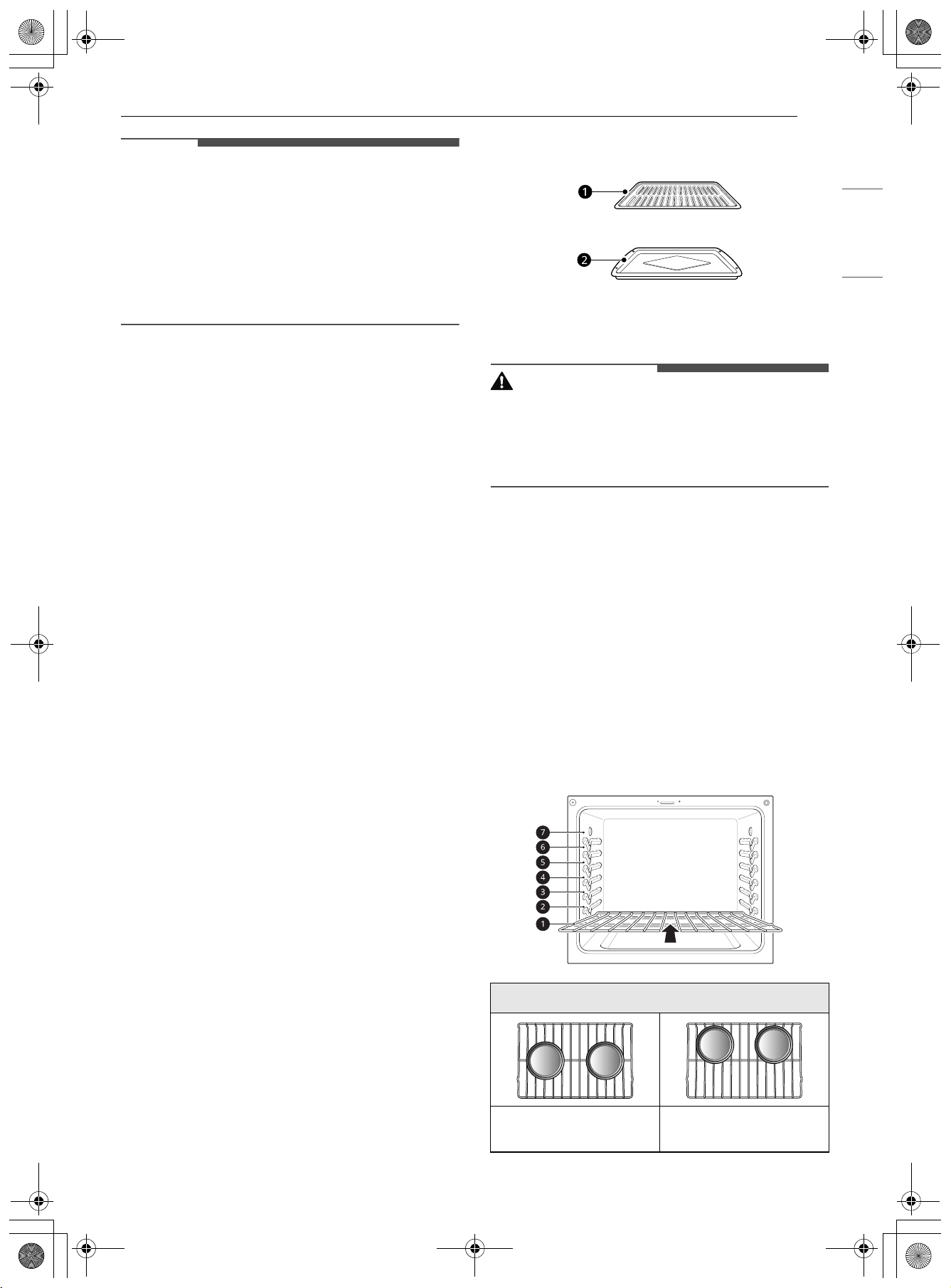
37FUNCIONAMIENTO
ESPAÑOL
NOTA
• El ventilador del horno funciona mientras se
hornea por convección. Si la puerta está abierta,
el ventilador se detiene. En algunos casos, el
ventilador podrá detenerse durante un ciclo de
horneado por convección.
• Es normal que haya un retardo previo a que el
ventilador de convección se encienda durante un
ciclo de cocción.
Consejos para el horneado por convección
• Utilice el horneado por convección para lograr
una cocción más rápida y uniforme de pasteles,
galletas, muffins, bizcochos y panes de todo tipo
en varios estantes.
• Hornee galletas y bizcochos en bandejas sin
lados o con lados muy bajos para permitir que el
aire caliente circule alrededor de la comida. Los
alimentos horneados en bandejas con un
acabado oscuro se cocinarán más rápido.
• Si usa el Horneado por convección, coloque los
estantes del horno en las posiciones sugeridas
en las tablas que se muestran en este manual.
• La cocción con varios estantes puede aumentar
ligeramente los tiempos de cocción de algunos
alimentos.
• Los pasteles, las galletas y los muffins tienen
mejores resultados cuando se utilizan varios
estantes.
Consejos para asar por convección
La función de rostizado por convección está
diseñada para ofrecer resultados de rostizado
óptimos. El rostizado por convección combina la
cocción con el ventilador de convección para
rostizar carnes y aves. El aire caliente circula
alrededor de los alimentos desde todos los
ángulos, y sella los jugos y los sabores. Los
alimentos cocinados de esta manera quedan
dorados y crocantes por fuera, y jugosos por
dentro. El rostizado por convección es ideal para
cortes de carne grandes y tiernos, sin cubrir.
Use una asadera y una rejilla cuando prepare
carnes para asar por convección. La asadera
contiene la grasa derramada, y la rejilla ayuda a
prevenir las salpicaduras de grasa.
1 Coloque el estante del horno en la posición
recomendada.
2 Coloque la rejilla en la asadera.
3 Coloque la asadera en el estante del horno.
a Rejilla (se vende por separado)
b Asadera (se vende por separado)
PRECAUCIÓN
• No use una asadera sin rejilla.
• No cubra la rejilla con papel de aluminio.
• Coloque los alimentos (con la grasa hacia arriba)
en la rejilla.
Guía de recomendaciones para
hornear y rostizar
Los resultados del horneado serán mejores si las
bandejas para hornear están centradas en el
horno todo lo posible. Si cocina en varios estantes,
coloque los estantes del horno en las posiciones
que se muestran.
La cocción con varios estantes ahorra tiempo y
energía. Siempre que sea posible, cocine los
alimentos que requieran la misma temperatura de
cocción juntos en un horno.
Colocación de estantes y bandejas
Horneado en varios estantes
Estante estándar
(posición 1)
Estante estándar
(posición 4)
es-us_main.book.book Page 37 Tuesday, February 3, 2026 8:20 AM
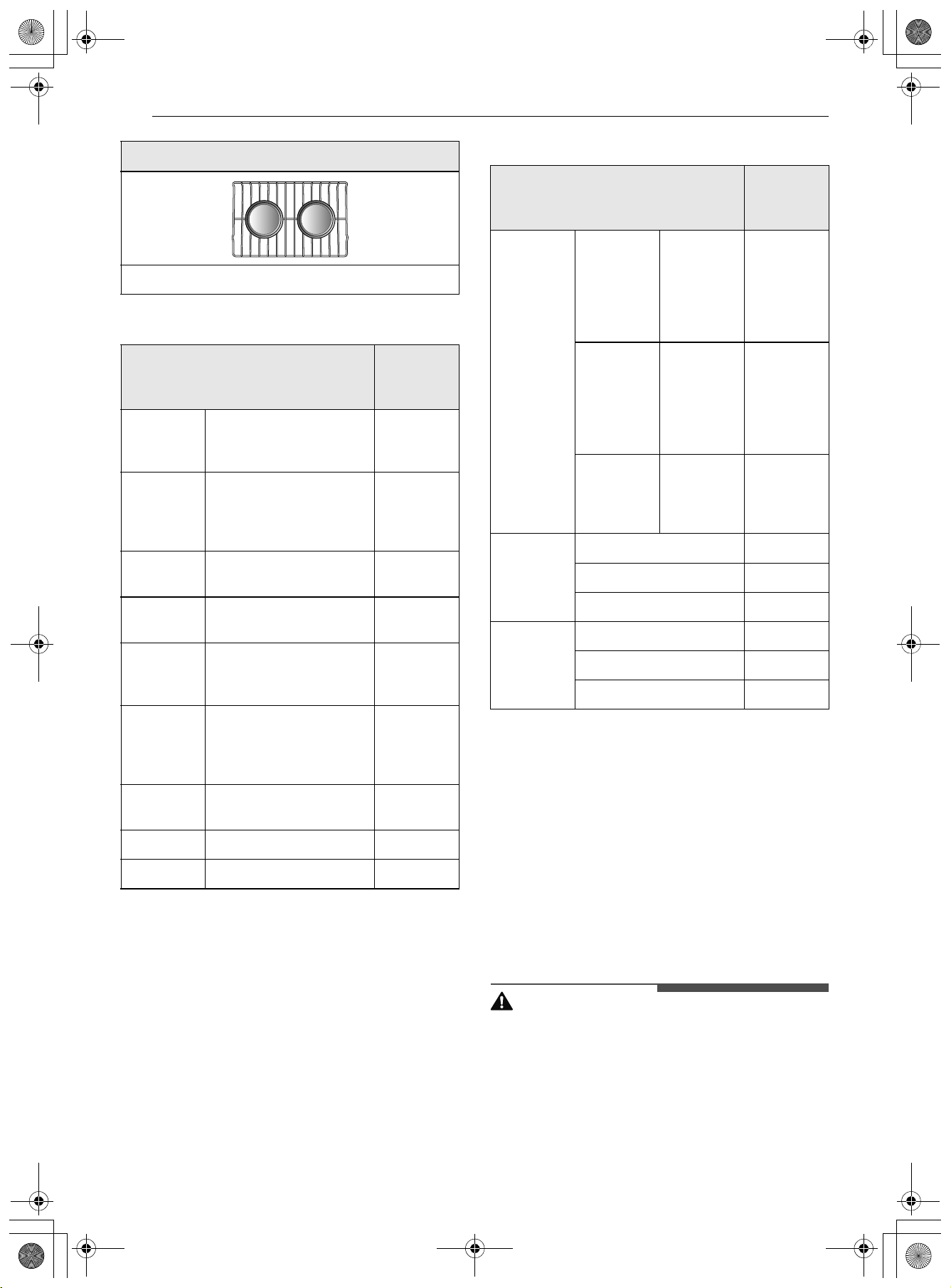
38 FUNCIONAMIENTO
Guía para horneado en estantes
Guía para rostizado en estantes
Broil (Asar)
La función Asar utiliza calor intenso del elemento
calentador superior para cocinar los alimentos. La
función Asar funciona mejor cuando se asan cortes
de carne, pescado y vegetales tiernos y finos.
Algunos modelos pueden incluir un asador híbrido
compuesto por un asador interior que utiliza un
elemento calentador de carbón que proporciona
calor instantáneo y un elemento asador exterior
tradicional. Durante el funcionamiento normal del
asador, cualquiera de los elementos se puede
apagar de forma intermitente.
PRECAUCIÓN
• No utilice una asadera sin rejilla. El aceite puede
provocar un incendio causado por grasa.
• No cubra la rejilla ni la asadera con papel de
aluminio. Si lo hace, se prenderá fuego.
• Siempre use una asadera con rejilla para drenar
el exceso de grasa. Esto ayuda a reducir las
salpicaduras, el humo y las llamaradas
ocasionales.
Horneado en un solo estante
Estante estándar
Comida
Posición
del
estante
Pasteles
Pasteles en capas
Pasteles en savarín
Pastel de ángel
2
3
3
Galletas
Galletas azucaradas
Con chispas de
chocolate
Con chocolate y nueces
3
3
3
Pizza
Fresca
Congelada
4
4
Masa de
hojaldre
Casera
Refrigerada
4
4
Panes
Bizcochos, enlatados
Bizcochos, caseros
Madalenas
5
5
4
Postres
Frutas azucaradas y
crujientes, caseras
Pasteles caseros con
frutas de doble corteza
3
3
Cremas
Cheesecake, crème
brulée
2
Suflés Dulces o salados 2
Cazuela Lasaña congelada 5
Comida
Posición
del
estante
Carne de
res
Costilla
Poco
cocidos
Término
medio
Bien
cocidas
2
2
2
Costillas
deshuesad
as,
solomillo
superior
Poco
cocidos
Término
medio
Bien
cocidas
2
2
2
Lomo de
res
Poco
cocidos
Término
medio
2
2
Cerdo
Costilla 2
Con hueso, solomillo 2
Jamón, cocido 2
Aves
Pollo entero 3
Presas de pollo 3
Pavo 3
es-us_main.book.book Page 38 Tuesday, February 3, 2026 8:20 AM
39FUNCIONAMIENTO
ESPAÑOL
• Cuando use su asador, la temperatura dentro
del horno será extremadamente elevada. Tenga
cuidado de evitar posibles quemaduras por los
siguientes motivos:
- Mantener la puerta cerrada al asar
- Siempre use guantes de cocina al insertar o
quitar alimentos
NOTA
• Esta estufa está diseñada para asar con la puerta
cerrada. Cierre la puerta para configurar la
función Asar. Si la puerta está abierta, la función
Asar no se puede configurar, y aparece la
palabra "door" (puerta) en la pantalla. Cierre la
puerta y restablezca la función Asar. Si la puerta
se abre durante el proceso de asar, el quemador
se apaga luego de cinco segundos. El quemador
para asar se vuelve a encender
automáticamente una vez cerrada la puerta.
Configuración del horno para asar
1 Presione Broil.
• Utilice los botónes +/- para ajustar la
temperatura.
2 Presione START. El horno comienza a
calentar.
3 Si usa Broil, deje que el horno se precaliente
durante aproximadamente cinco minutos
antes de cocinar los alimentos.
4 Coloque los alimentos en el horno.
5 Cierre la puerta del horno. La puerta del
horno debe estar cerrada durante el asado.
6 Presione CLEAR/OFF para cancelar el
procedimiento en cualquier momento o
cuando la cocción haya finalizado.
Consejos para reducir el humo
Debido al intenso calor asociado con el asado, es
normal experimentar humo durante el proceso de
cocción. Este humo es un producto secundario
natural del proceso de dorado y no debe
preocuparlo. Si hay más humo del esperado, siga
estos consejos para reducir la cantidad de humo
en su horno.
• Utilice siempre una asadera. No use sartenes o
bandejas para hornear normales por razones de
seguridad.
• La asadera debe estar siempre limpia y a
temperatura ambiente al comienzo de la
cocción.
• Siempre encienda el sistema de ventilación de la
placa de cocción o la campana de ventilación
durante el asado.
• Mantenga el interior del horno lo más limpio
posible. Los restos de comidas anteriores
pueden quemarse o incendiarse.
• Evite los adobos grasos y los glaseados
azucarados. Ambos aumentarán la cantidad de
humo presente. Si desea utilizar un glaseado,
aplíquelo al final de la cocción.
• Si experimenta demasiado humo con algún
alimento, considere lo siguiente:
- Bajar el asador a la configuración Lo.
- Bajar la posición del estante para cocinar los
alimentos más lejos del asador.
- Utilice la configuración Asar Hi para lograr el
nivel de dorado que desee y luego cambie a la
configuración Asar Lo o cambie a la función de
Horneado.
• Como regla general, los cortes de carne y
pescado más grasos producirán más humo que
los más magros.
• Siga las indicaciones de la sección Guía
recomendada para asar siempre que sea
posible.
es-us_main.book.book Page 39 Tuesday, February 3, 2026 8:20 AM
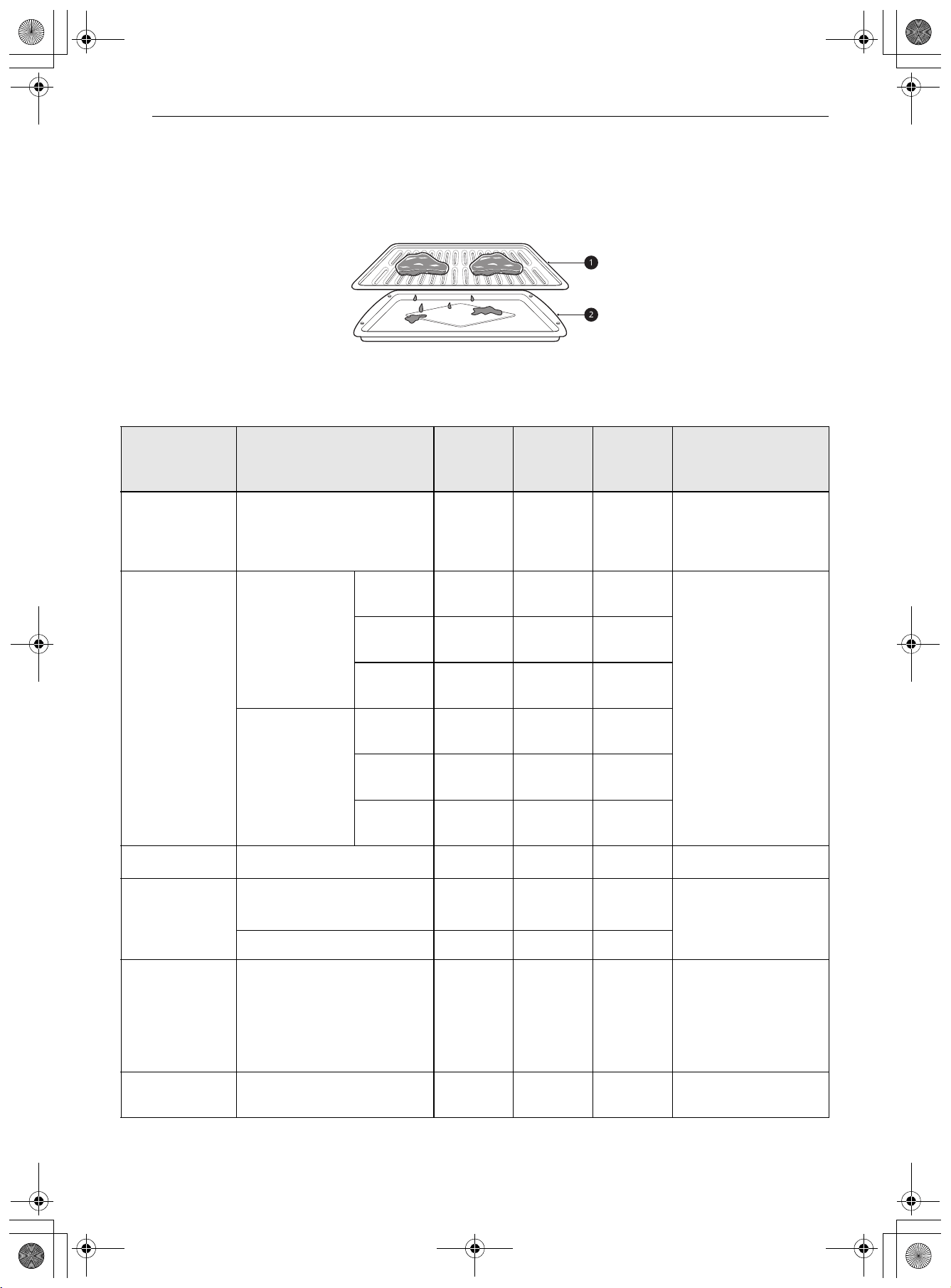
40 FUNCIONAMIENTO
Guía de recomendaciones para asar
El tamaño, peso, espesor, la temperatura inicial y su preferencia de cocción afectarán el tiempo de asado.
Esta guía se basa en carnes a temperatura de refrigerador. Para obtener mejores resultados al asar, use
una bandeja especial para asar.
a Rejilla (se vende por separado)
b Asadera (se vende por separado)
Comida Cantidad y/o espesor
Posición
del
estante
Primer
lado
(min.)
Segundo
lado
(min.)
Comentarios
Hamburguesa
s
9 hamburguesas
1
/
2
a
3
/
4
" de espesor
76-74-5
Espaciar de manera
uniforme. Se pueden
asar hasta 9
hamburguesas.
Bistecs de
carne vacuna
1" de espesor
1 a 1
1
/
2
lb.
Poco
cocidos
675
Los bistecs de menos
de 1" de espesor se
cocinan totalmente
antes de dorarse. Se
recomienda usar una
sartén. Corte la grasa.
Término
medio
6125-6
Bien
cocidas
6138-9
1
1
/
2
" de
espesor
2 a 2
1
/
2
lb.
Poco
cocidos
4106-7
Término
medio
4 12-15 10-12
Bien
cocidas
4 25 16-18
Tostadas De 1 a 9 piezas 5 1-2 1-2
Pollo
1 entero de 2 a 2
1
/
2
lb,
cortado a lo largo
2 35-40 25
Ase con el lado de la
piel hacia abajo.
2 pechugas 2 25-30 10-15
Colas de
langostas
2-4
De 6 a 8 onzas c/u
3 13-16
No las
gire.
Corte la parte trasera
del caparazón. Abra
bien. Pincele con
mantequilla derretida
antes de asar y en la
mitad de la cocción.
Filetes de
pescado
1
/
4
a
1
/
2
" de espesor
57-86
es-us_main.book.book Page 40 Tuesday, February 3, 2026 8:20 AM
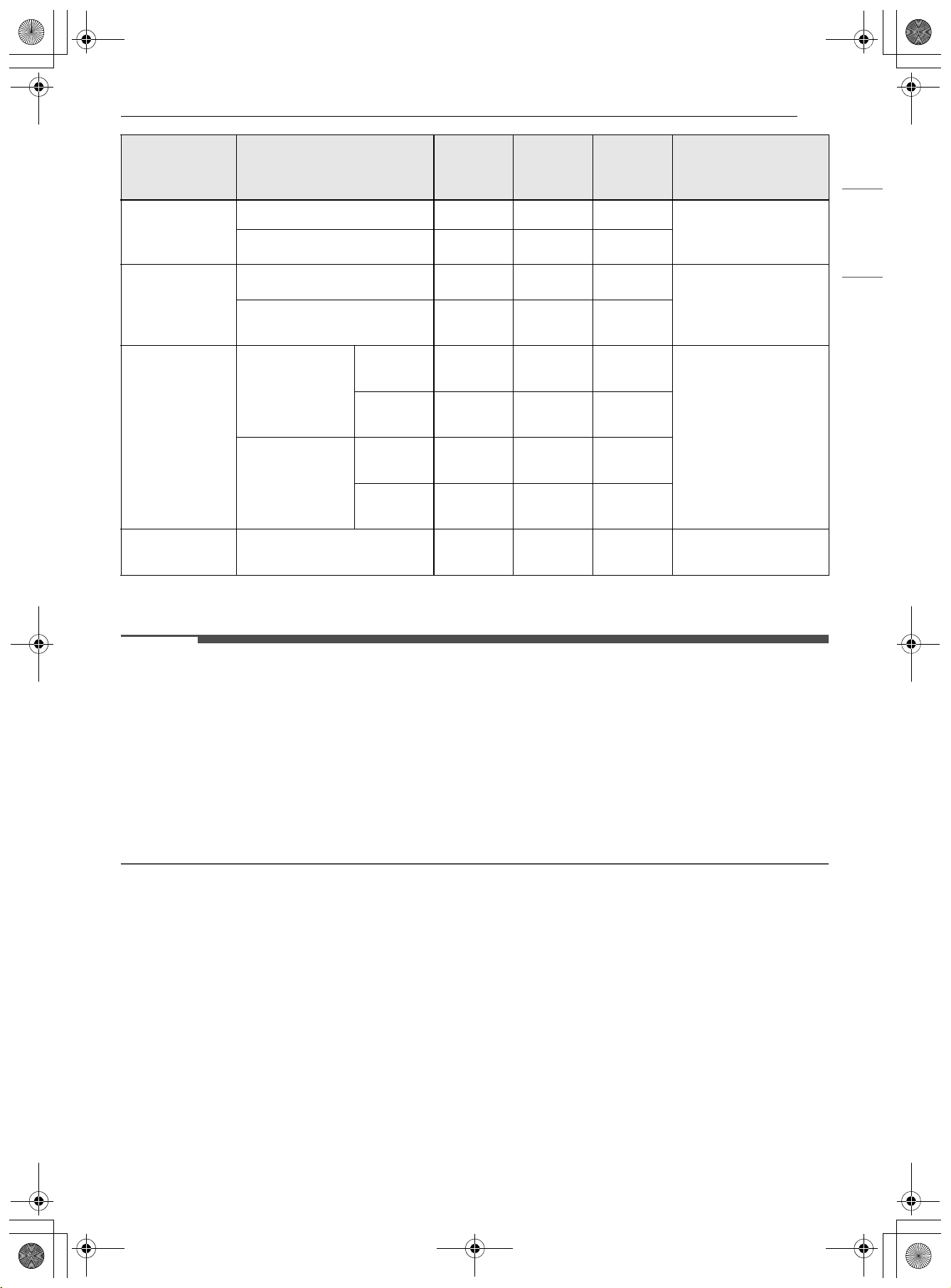
41FUNCIONAMIENTO
ESPAÑOL
• Esta guía es meramente de referencia. Ajuste el tiempo de cocción según su preferencia.
• No utilice el estante deslizante en la posición 7.
NOTA
• El Departamento de Agricultura de los Estados Unido (United States Department of Agriculture, USDA)
advierte que el consumo de pescado, carne o aves crudos o poco cocidos puede aumentar el riesgo de
enfermedades transmitidas por los alimentos.
• El USDA ha indicado que las siguientes constituyen temperaturas internas mínimas de seguridad para el
consumo:
- Carne molida de vaca: 160 °F (71.1 °C)
- Aves: 165 °F (73.9 °C)
- Carne de vaca, ternera, cerdo o cordero: 145 °F (62.8 °C)
- Pescado/mariscos: 145 °F (62.8 °C)
Consejos para asar
• Carne de res
- Los filetes y chuletas siempre deben dejarse reposar durante cinco minutos antes de cortarlos y
comerlos. Esto permite que el calor se distribuya uniformemente a través de la comida y crea un
resultado más tierno y jugoso.
- Los trozos de carne que tengan más de dos pulgadas de espesor deben sacarse del refrigerador
30 minutos antes de cocinarlos. Esto permitirá cocinar de manera más rápida y uniforme, y producirá
menos humo al asar. Los tiempos de cocción probablemente serán más cortos que los tiempos
indicados en la Tabla para asar.
- En el caso de los bistecs con hueso o las chuletas deshuesadas (que se les quitó toda la carne
alrededor del hueso), envuelva las secciones expuestas del hueso en papel de aluminio para reducir el
quemado.
Fetas de
jamón
(precocidas)
1" de espesor 3 10 5
1
/
2
" de espesor
474
Chuletas de
cerdo
Bien cocidas
2 (
1
/
2
" de espesor)
4108
2 (1" de espesor) de
alrededor de 1 lb.
4138-9
Chuletas de
cordero
2 (1" de
espesor) de
alrededor de 10
a 12 oz.
Término
medio
564-7
Bien
cocidas
51010
2 (1
1
/
2
" de
espesor) de
alrededor de
1lb.
Término
medio
5104-6
Bien
cocidas
5 17 12-14
Tocino
1/2 libra (aproximadamente
8 fetas finas)
483
Comida Cantidad y/o espesor
Posición
del
estante
Primer
lado
(min.)
Segundo
lado
(min.)
Comentarios
es-us_main.book.book Page 41 Tuesday, February 3, 2026 8:20 AM
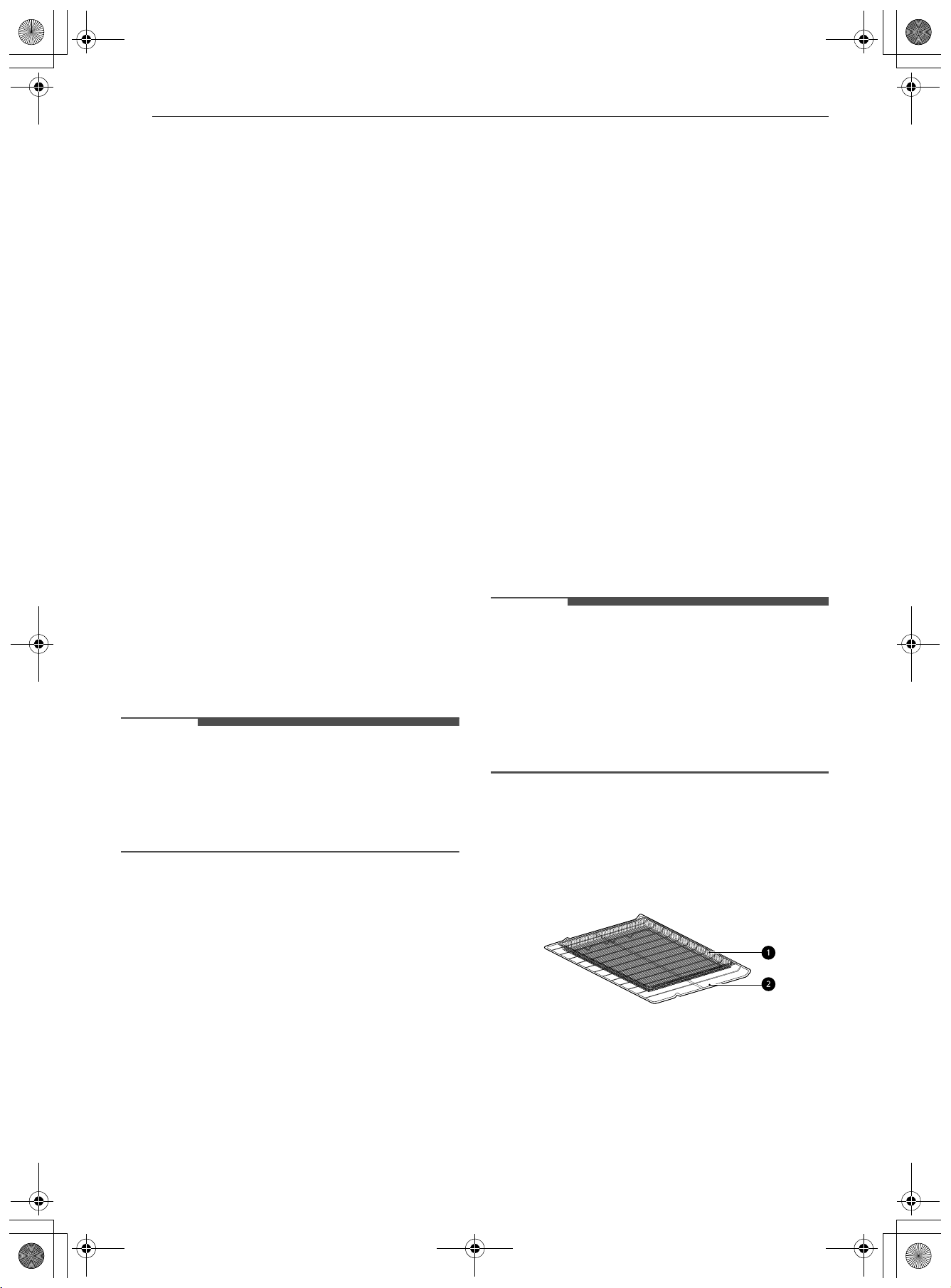
42 FUNCIONAMIENTO
• Mariscos
- Al asar pescado con piel, utilice siempre la configuración de Asar y ase siempre por último el lado de la
piel.
- Es mejor consumir mariscos inmediatamente después de cocinarlos. Dejar reposar los mariscos
después de cocinarlos puede hacer que los alimentos se sequen.
- Es una buena idea frotar una capa fina de aceite en la superficie de la asadera antes de cocinar para
evitar que se pegue, especialmente con pescados y mariscos. También puede usar una capa ligera de
aerosol antiadherente para sartenes.
• Vegetales
- Mezcle las verduras ligeramente en aceite antes de cocinarlas para mejorar el dorado.
Warm (Calentar)
Esta función mantiene una temperatura del horno
de 170 °F. La función Calentar mantendrá caliente
la comida cocida para servir hasta 3 horas después
de realizada la cocción. La función Calentar puede
utilizarse sin ninguna otra operación de cocción.
Configuración de la función Calentar
1 Presione Warm.
2 Presione START.
3 Para cancelar, presione CLEAR/OFF en
cualquier momento.
NOTA
• La función Calentar está diseñada para
mantener calientes los alimentos. No la use para
bajar la temperatura de los alimentos.
• Es normal que el ventilador funcione durante la
función Calentar.
Air Fry (Freír con aire)
Esta función aumenta automáticamente la
temperatura ingresada para un rendimiento
óptimo cuando se usa Air Fry (Freír con aire).
La función freír con aire está especialmente
diseñada para freír sin aceite.
Configuración de la función Freír con
aire
1 Presione Air Fry. Aparece 400 °F en la
pantalla.
2 Ajuste la temperatura del horno. (Rango: de
300°F ~ 550°F)
Use los botones +/- para ingresar la
temperatura deseada.
3 Presione START.
4 Cuando termine de cocinar, presione CLEAR/
OFF.
NOTA
• Cuando se usa el modo Freír con aire, no se
requiere precalentamiento.
• Si cocina varias tandas de comidas, las últimas
tandas pueden tardar menos en cocinarse.
• Los batidos y recubrimientos húmedos no se
doran ni se endurecen cuando se usa el modo
Freír con aire.
Consejos para Air Fry (Freír con aire)
• Para obtener mejores resultados, utilice el
estante para Air Fry.
- La sección de la malla de la bandeja para freír
con aire se puede limpiar en lavavajillas.
a Bandeja para freír con aire
b Estante estándar
es-us_main.book.book Page 42 Tuesday, February 3, 2026 8:20 AM
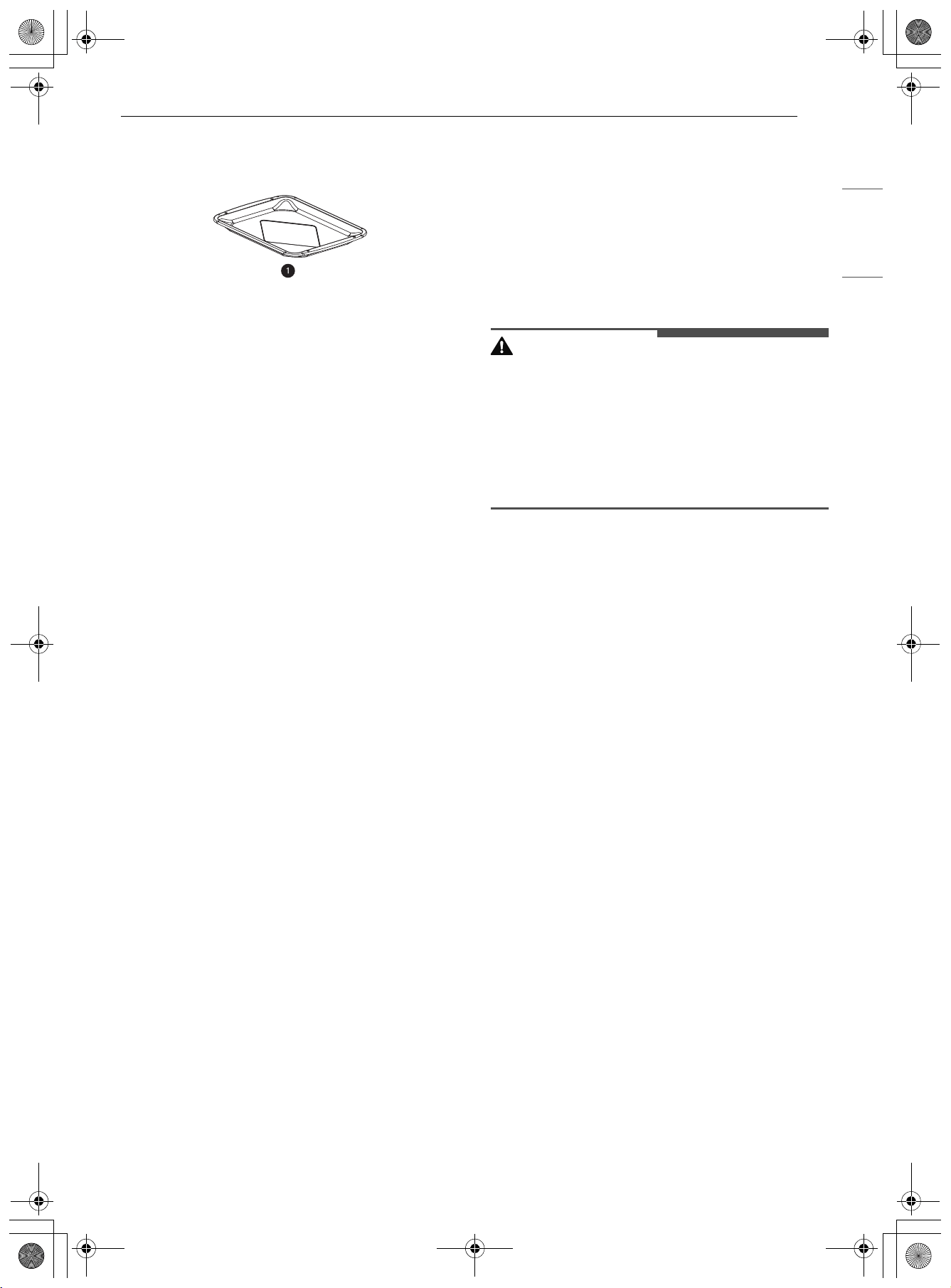
43FUNCIONAMIENTO
ESPAÑOL
• Si no tiene esta bandeja, coloque los alimentos
sobre un estante dentro de una bandeja para
galletas forrada con papel de aluminio.
a Asadera
• Para obtener mejores resultados, cocine los
alimentos en un solo estante colocado en las
posiciones sugeridas en la tabla en este manual.
• La sección de la malla de la bandeja para freír
con aire se puede limpiar en lavavajillas.
• Distribuya los alimentos de manera uniforme en
una sola capa.
• Use la bandeja para freír con aire opcional
disponible de LG o una bandeja para hornear
oscura sin lados o con lados bajos que no cubra
todo el estante. Esto permite una mejor
circulación del aire.
• Si lo desea, rocíe con aerosol para sartenes la
bandeja para hornear o la bandeja para freír con
aire. Use un aceite que se pueda calentar a una
temperatura elevada antes de provocar humo;
como por ejemplo, aceite de aguacate, semillas
de uva, maní o girasol.
• Coloque una bandeja para hornear forrada con
papel de aluminio en un estante en la posición 2
para atrapar el aceite que caiga de los alimentos.
Para alimentos con alto contenido de grasa,
como las alitas de pollo, agregue algunas hojas
de papel de horno para absorber la grasa.
• Controle los alimentos con frecuencia y agítelos
o gírelos para obtener resultados más
crujientes.
• Con el modo Freír con aire, los alimentos
congelados preparados pueden cocinarse más
rápido de lo que se indica en el paquete.
Reduzca el tiempo de cocción en
aproximadamente un 20 %, verifique los
alimentos con anticipación y ajuste el tiempo de
cocción según sea necesario.
• Use un termómetro para alimentos si desea
asegurarse de que hayan alcanzado una
temperatura adecuada para el consumo. Comer
carnes mal cocidas puede aumentar el riesgo de
enfermedades transmitidas por los alimentos.
• Para obtener resultados más crujientes, reboce
las alitas de pollo frescas o los filetes en harina
sazonada. Use 1/3 taza de harina cada 2 libras.
Recomendaciones para freír alimentos
con alto contenido de grasa
Los alimentos con alto contenido de grasa se
ahumarán cuando se use el modo Freír con aire.
Para obtener mejores resultados, siga estas
recomendaciones al freír alimentos con alto
contenido de grasa, como alitas de pollo, tocino,
salchichas, salchichas, muslos de pavo, chuletas de
cordero, costillas, lomo de cerdo, pechugas de
pato o algunas proteínas de origen vegetal.
PRECAUCIÓN
• Nunca cubra ranuras, orificios o pasajes en la
base del horno ni cubra todos los estantes con
materiales como papel de aluminio. Si lo hace,
bloqueará el flujo de aire a través del horno y
puede provocar una intoxicación por monóxido
de carbono. El papel de aluminio también puede
atrapar el calor y provocar riesgo de incendio o
un rendimiento deficiente del horno.
• Encienda la campana extractora en una
configuración de ventilador alta antes de iniciar
el modo Freír con aire, y déjela encendida
durante 15 minutos después de que haya
terminado.
• En lo posible, abra una ventana o una puerta
para asegurarse de que la cocina esté bien
ventilada.
• Limpie los filtros de grasa de la campana
extractora con regularidad.
• Mantenga el horno libre de grasa acumulada.
Limpie el interior del horno antes y después de
freír con aire (una vez que el horno se haya
enfriado).
• Ejecute ciclos de limpieza del horno (EasyClean
o SelfClean) con regularidad, según la
frecuencia y el tipo de alimentos que cocina con
Air Fry.
• Evite abrir la puerta del horno más de lo
necesario para ayudar a mantener la
temperatura del horno, evitar la pérdida de calor
y ahorrar energía.
• Freír con aire piezas de pollo frescas, como alitas
o muslos, sin piel, puede producir humo ya que
la grasa se derrite a altas temperaturas. Si el
humo es excesivo, use el modo de asado por
convección en lugar del modo Freír con aire.
es-us_main.book.book Page 43 Tuesday, February 3, 2026 8:20 AM
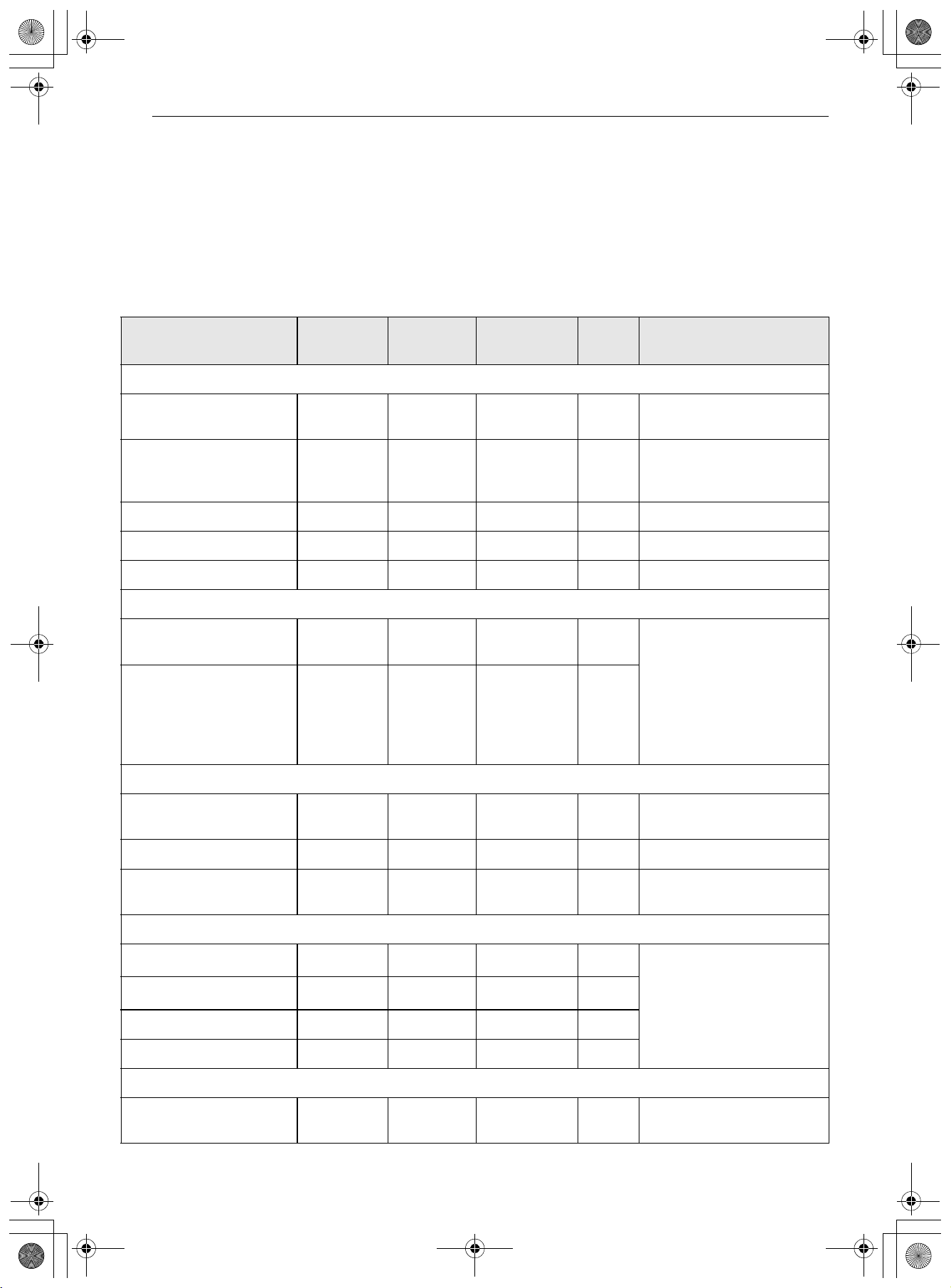
44 FUNCIONAMIENTO
Guía para freír con aire recomendada
• Disponga los alimentos de manera uniforme en una sola capa.
• Coloque una bandeja para hornear forrada con papel de aluminio en un estante en la posición 1 para
que caigan las gotas. Si es necesario, agregue papel de horno para absorber el aceite y reducir el humo.
• Dé vuelta los alimentos durante la cocción para evitar que se quemen.
† Los alimentos con mucha grasa pueden producir más humo si se los cocina con la función Air Fry (Freír
con aire). Para reducir el humo, cocine con el modo de Rostizado por convección.
Puntos recomendados
Cantidad
(onzas)
Temp. (°F)
Posición del
estante
Hora Guía
PAPAS congeladas
Papas fritas congeladas
(Shoestring)
20 425 3 15-25
Papas fritas congeladas
(corte ondulado, 3/8" o
10 mm)
35 425 3 15-25
Batatas fritas congeladas 25 425 3 15-30
Tater Tots congeladas 50 450 3 20-30
Hash Browns congeladas 40 450 3 25-35
PAPAS frescas/caseras
Papas fritas caseras (3/8"
x 3/8" o 10 x 10 mm)
25 450 3 25-35 Corte las papas y
sumérjalas durante 30
minutos en agua caliente
del grifo. Escurra y seque.
Pinte o rocíe ligeramente
con 3 cucharadas de aceite.
Agregue sal y pimienta a
gusto.
Gajos de papas caseras 60 450 3 35-45
POLLO congelado
Nuggets crocantes de
pollo congeladas
30 400 3 15-25
Tiras de pollo congeladas 35 425 3 25-35
Alitas de pollo
congeladas
50 425 3 25-35
POLLO fresco con piel
Alitas de pollo frescas
†
40 450 3 25-35 Pinte o rocíe ligeramente
con 1 cucharadas de aceite.
Agregue sal y pimienta a
gusto.
Patitas de pollo frescas
†
70 450 3 30-40
Muslos 40 450 3 30-35
Pechugas 40 450 3 30-35
OTRAS
Aros de cebolla
empanados congelados
20 400 3 20-30
es-us_main.book.book Page 44 Tuesday, February 3, 2026 8:20 AM
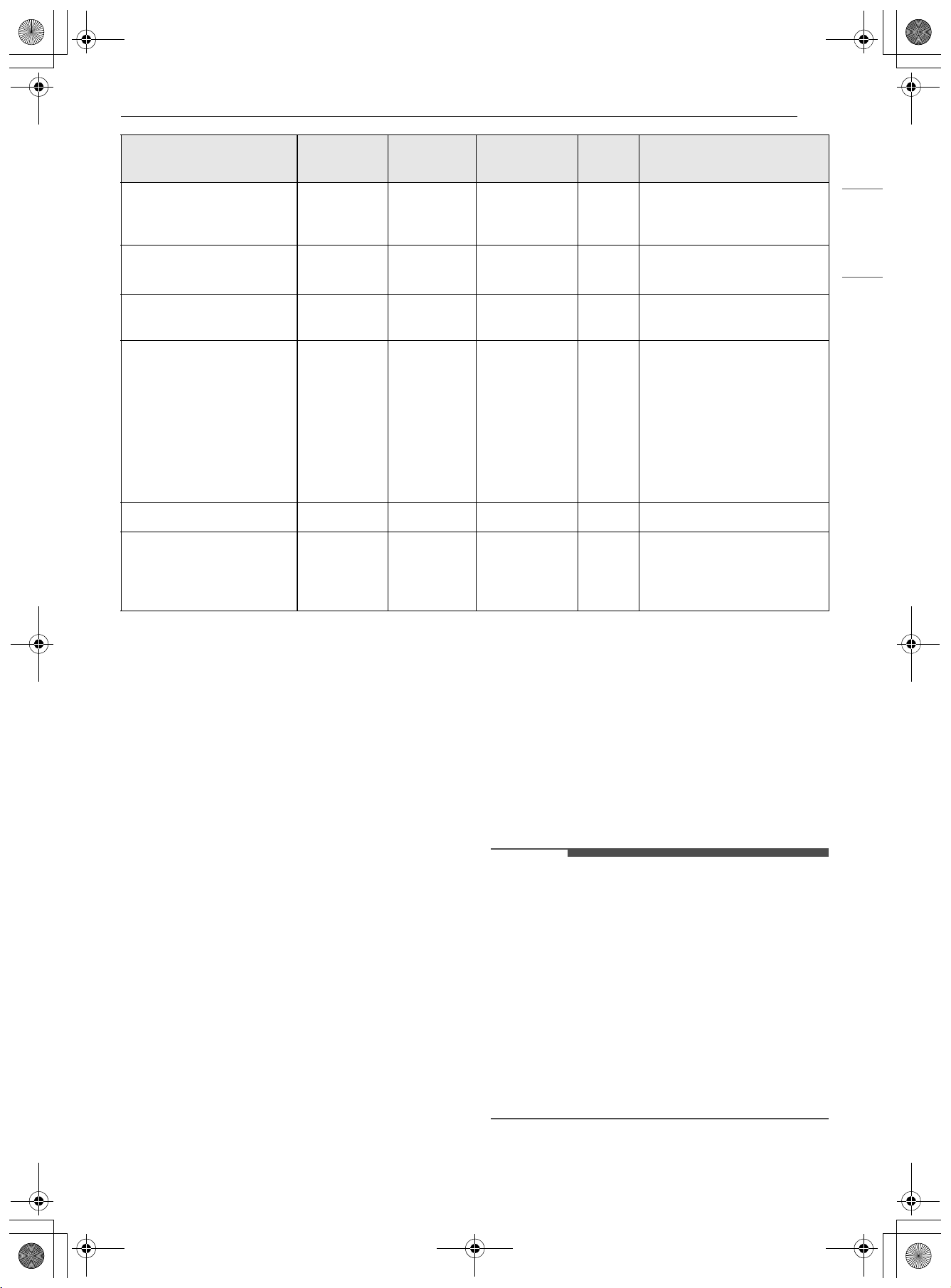
45FUNCIONAMIENTO
ESPAÑOL
Inicio remoto
Esta función inicia el precalentamiento y mantiene
la temperatura hasta 12 horas (incluido el tiempo
de precalentamiento). El electrodoméstico debe
estar conectado a una red Wi-Fi doméstica para
utilizar la función Remote Start. Una vez que se
selecciona Remote Start en el electrodoméstico,
puede iniciarlo o detenerlo de forma remota
mediante la aplicación para teléfonos inteligentes
LG ThinQ. Siga las instrucciones de la sección
Funciones Inteligentes para conectar el
electrodoméstico a la red.
Configuración de Inicio remoto
1 Abra la puerta del horno para asegurarse de
que esté listo para el precalentamiento. Cierre
la puerta del horno.
2 El producto debe conectarse al Wi-Fi para
utilizar la función Inicio remoto.
3 Cuando el Wi-Fi esté conectado, presione el
botón Remote Start.
4 Sigue las instrucciones de la aplicación del
teléfono inteligente para ajustar el modo de
cocción, la temperatura y el tiempo de
funcionamiento (tiempo de precalentamiento
más tiempo de espera).
5 Presione el botón Remote Start
repetidamente para activar/desactivar la
función Inicio remoto.
NOTA
• La función Remote Start no se inicia si
- El electrodoméstico no está conectado a la red
Wi-Fi o aparece OFF en la pantalla.
- Remote Start no está configurado en la
aplicación del teléfono inteligente.
- La puerta del horno está abierta. Si la puerta
del horno está abierta, suena un breve pitido.
- Bloqueo de control está ACTIVADO.
- Modo Sabbath está ACTIVADO.
- Cuando se configuran las funciones del horno
o de cocción en el producto.
Rollos primavera
congelados (0.7 onzas c/
u)
45 425 3 25-35
Salchichas
†
(2.5 onzas c/u,
0.8" de diámetro)
90 400 3 25-35
Camarones con coco
congelados
25 425 3 20-30 Pinte o rocíe con aceite la
superficie del alimento.
Ostiones frescos en su
media concha (35 onzas)
35 425 3 20-30 Derrita 4 cucharadas de
manteca y pinte los
ostiones. Mezcle 1/2 taza
de pan rallado, 1 cucharada
de ajo picado, 1/4 de tasa
de queso parmesano
rallado y condimente a
gusto. Esparza la mezcla
sobre los ostiones.
Camarones frescos 50 425 3 20-30
Vegetales mixtos 35 425 3 20-30 Pinte o rocíe ligeramente
con 4 cucharadas de aceite
de oliva. Agregue sal y
pimienta a gusto.
Puntos recomendados
Cantidad
(onzas)
Temp. (°F)
Posición del
estante
Hora Guía
es-us_main.book.book Page 45 Tuesday, February 3, 2026 8:20 AM
46 FUNCIONAMIENTO
Uso del Modo Sabbath
El Modo Sabbath se usa generalmente en las
fiestas y el Sabbath judío. Cuando el modo
Sabbath está activo, el horno no se apaga hasta
que se desactive el modo Sabbath. En el modo
Sabbath, todos los botones de función están
inactivos. Aparecerá
sb en pantalla.
NOTA
• Si la luz del horno se enciende y el modo
Sabbath está activo, la luz del horno se apagará.
Si la luz del horno debe estar apagada,
asegúrese de apagar la luz del horno antes de
activar el modo Sabbath. El modo Sabbath solo
se puede usar en el modo Horneado.
• Si se configura un tiempo de cocción, el horno se
apaga automáticamente al final de ese tiempo
de cocción, sin que suene. El horno permanece
en modo Sabbath, pero está apagado.
• Si no se configura un tiempo de cocción, el
horno no se apagará automáticamente.
• Después de un corte de energía, la pantalla se
volverá a encender en modo Sabbath, pero el
horno se apagará.
• Siempre cierre la puerta del horno antes de
activar el modo Sabbath.
Ajuste del modo Sabbath
1 Presione el botón Bake.
2 Seleccione la temperatura deseada utilizando
los botones de +/-.
3 Presione el botón START.
4 Mantenga presionado el botón Settings por
tres segundos.
NOTA
• sb aparecerá en la pantalla cuando el modo
Sabbath se activa.
5 Para cancelar el modo Sabbath, mantenga
presionado el botón Settings durante tres
segundos. Para cancelar la función Horneado,
presione el botón CLEAR/OFF en cualquier
momento.
es-us_main.book.book Page 46 Tuesday, February 3, 2026 8:20 AM
47FUNCIONES INTELIGENTES
ESPAÑOL
FUNCIONES INTELIGENTES
Aplicación LG ThinQ
Esta característica solo está disponible en modelos
con Wi-Fi.
La aplicación LG ThinQ le permite comunicarse
con el electrodoméstico usando un teléfono
inteligente.
Funciones de la aplicación LG ThinQ
• Actualizaciones de productos
- En los modelos que cuentan con la
característica LG UP para electrodomésticos,
disfrute de nuevas características mediante la
actualización de su producto a través de la
aplicación LG ThinQ.
• Scan to Cook (Escanear para cocinar)
- Escanee el código de barras en una comida
precocinada usando la aplicación LG ThinQ y
envíe las instrucciones de cocción
recomendadas o personalizadas directamente
a su horno. Arranque remoto debe estar
activado en el horno para usar la función
Escanear para Cocinar.
• Monitoreo
- Esta función le ayuda a comprobar el estado
actual, el tiempo restante, la configuración de
cocción y la hora de finalización en un lugar.
• Notificaciones de productos
- Active las Alertas Push para recibir
notificaciones del estado del electrodoméstico.
Las notificaciones se emiten incluso si la
aplicación LG ThinQ no está abierta.
• Temporizador
- Se puede configurar el temporizador desde la
aplicación.
• Configuración
- Esta función le permite ajustar varias opciones
en el horno y en la aplicación.
• Smart Diagnosis
TM
- Esta función brinda información útil para
diagnosticar y resolver problemas con el
producto conforme a su patrón de uso.
• Actualización de Firmware
- Mantiene el electrodoméstico actualizado.
NOTA
• En los siguientes casos, debe actualizar la
información de red para cada electrodoméstico
en la aplicación LG ThinQ en tarjeta del
electrodoméstico ~ Ajustes ~ Cambio de
red.
- el router inalámbrico ha cambiado
- la contraseña del router inalámbrico ha
cambiado
- el proveedor de servicio de internet ha
cambiado
• Esta información está actualizada en el
momento de su publicación. La aplicación está
sujeta a cambios, con fines de mejorar el
producto, sin previo aviso a los usuarios.
• No se puede utilizar Scan to Cook (Escanear para
cocinar) mientras el temporizador está
funcionando. Cancele la operación del
temporizador para usar Scan to Cook.
Instalación de la aplicación LG
ThinQ y conexión de un
electrodoméstico LG
Modelos con código QR
Escanee el código QR que trae el producto con la
cámara o una aplicación lectora de códigos QR en
su teléfono inteligente.
Modelos sin código QR
1 Busque la aplicación LG ThinQ en la tienda
Google Play o Apple App Store e instálela en
su teléfono inteligente.
2 Ejecute la aplicación LG ThinQ e inicie sesión
con su cuenta actual, o cree una cuenta LG
para iniciar sesión.
3 Pulse el botón Agregar (~) en la aplicación LG
ThinQ para conectar su electrodoméstico LG.
Siga las instrucciones en la aplicación y
complete el proceso.
es-us_main.book.book Page 47 Tuesday, February 3, 2026 8:20 AM
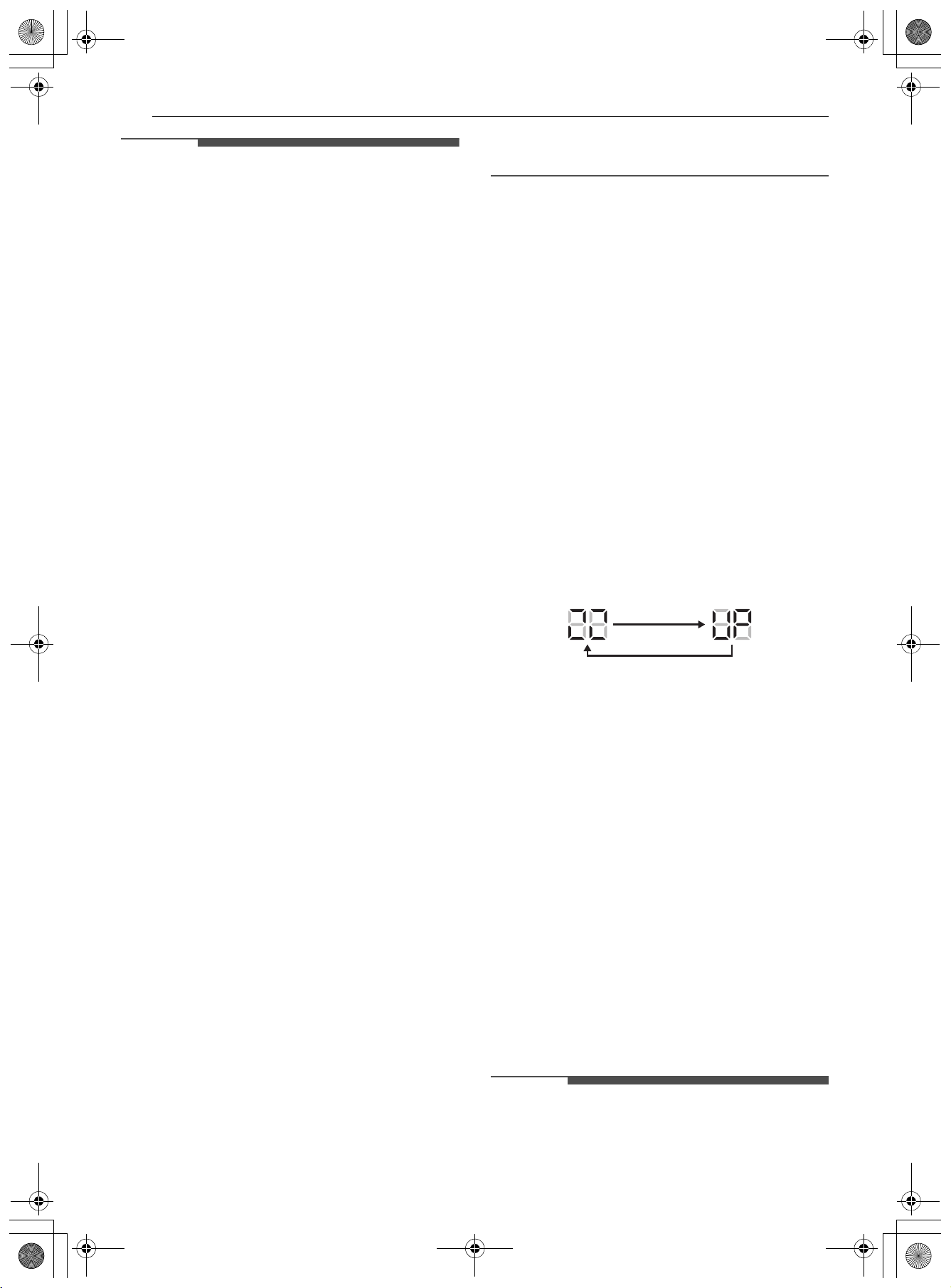
48 FUNCIONES INTELIGENTES
NOTA
• Para verificar la conexión Wi-Fi, revise que el
ícono
f en el panel de control esté encendido.
• El electrodoméstico funciona únicamente con
redes Wi-Fi de 2.4 GHz. Contacte a su proveedor
de servicios de internet o verifique el manual del
enrutador inalámbrico para revisar la frecuencia
de su red.
• LG ThinQ no es responsable por ningún
problema de conexión en red, falla, mal
funcionamiento o error causado por la conexión
de red.
• El entorno inalámbrico circundante puede hacer
que el servicio de red inalámbrica funcione
lentamente.
• Si la distancia entre el electrodoméstico y el
enrutador inalámbrico es muy grande, la señal
será débil. Probablemente le tome más tiempo
conectarse o no pueda instalar la aplicación.
• Si el aparato tiene problemas para conectarse a
la red Wi-Fi, es posible que se encuentre
demasiado lejos del router. Adquiera un
repetidor Wi-Fi (extensor de alcance) para
mejorar la intensidad de la señal Wi-Fi.
• Es posible que la conexión de red no funcione
bien por cuestiones relacionadas con su
proveedor de servicios de Internet.
• Es posible que el equipo no se conecte a la red
Wi-Fi o que se interrumpa la conexión debido al
entorno de la red doméstica.
• Si el electrodoméstico no puede conectarse
debido a problemas con la transmisión de la
señal inalámbrica, desenchufe el artefacto y
espere alrededor de un minuto antes de
intentarlo de nuevo.
• Si el cortafuegos de su enrutador inalámbrico
está activado, desactivelo o añada una
excepción a éste.
• El nombre de la red inalámbrica (SSID) debe ser
una combinación de letras y números. (No utilice
símbolos especiales)
• La interfaz de usuario (IU) del teléfono
inteligente puede variar dependiendo del
sistema operativo (OS) del móvil y del fabricante.
• Puede que la configuración de red falle si el
protocolo de seguridad del enrutador está en
WEP. Cambie el protocolo de seguridad por otro
(se recomienda el WPA2) y conecte el producto
de nuevo.
• Para volver a conectar el electrodoméstico o
agregar otro usuario, mantenga presionado el
botón Wi-Fi por 3 segundos. Ejecute la
aplicación LG ThinQ y siga las instrucciones en
ella para conectar el electrodoméstico.
Instalación de la aplicación LG
ThinQ
Busque la aplicación LG ThinQ en la tienda Google
Play o App Store desde su teléfono inteligente.
Siga las instrucciones para descargar e instalar la
aplicación.
Actualización de características LG
Disfrute de nuevas características mediante la
actualización de su producto a través de la app LG
ThinQ.
Si una función actualizable está disponible,
aparece una notificación de actualización en la
pantalla y suena una melodía después de que la
cocción haya terminado y se presiona CLEAR/OFF.
Por ejemplo, es posible que las luces de la pantalla
se enciendan en una secuencia hasta que aparezca
φπ.
1 Cuando hay actualizaciones disponibles, se
envían notificaciones de actualización a su
teléfono inteligente.
2 Presione la notificación de actualización en su
teléfono inteligente para ingresar al Feature
Updates en la app LG ThinQ.
3 En la página Feature Updates, seleccione una
nueva función y presione el botón Update.
• No desenchufe el producto durante la
actualización; de lo contrario, podría
interrumpir el proceso de actualización.
4 Cuando haya finalizado la actualización,
compruebe la guía en la app LG ThinQ para
obtener las configuraciones de la
característica en detalle.
NOTA
• Esta característica solamente está disponible en
algunos modelos.
es-us_main.book.book Page 48 Tuesday, February 3, 2026 8:20 AM
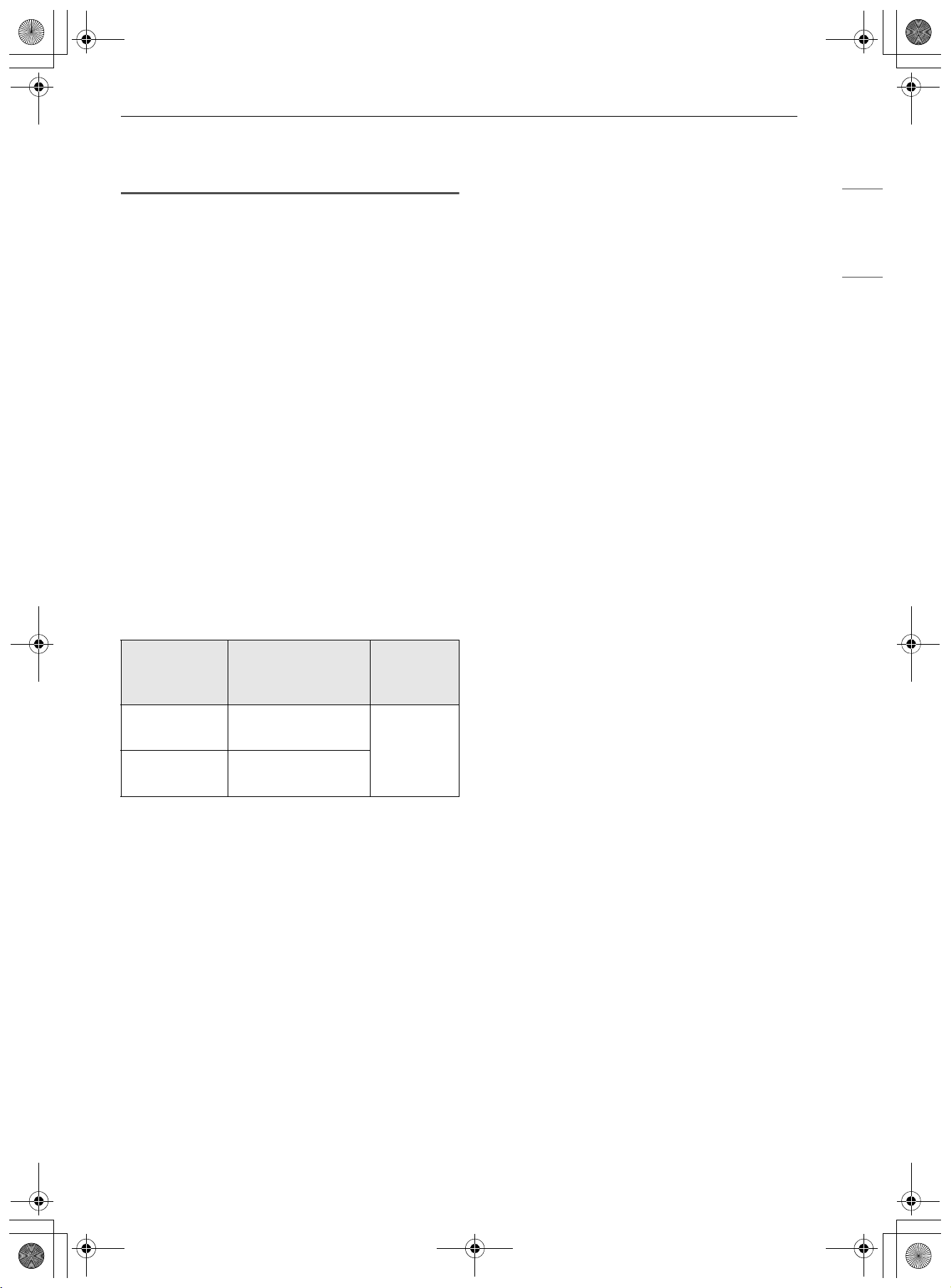
49FUNCIONES INTELIGENTES
ESPAÑOL
• Cuando haya finalizado la actualización, las
funciones reales del producto pueden diferir de
las descritas en el manual del propietario.
Conexión a Wi-Fi
El botón Wi-Fi, al ser usado con la aplicación LG
ThinQ, permite al electrodoméstico conectarse a
la red Wi-Fi doméstica. El ícono
f muestra el
estado de la conexión de red del electrodoméstico.
El ícono se ilumina cuando el electrodoméstico
está conectado a la red Wi-Fi.
• Conexión inicial del electrodoméstico
Ejecute la aplicación LG ThinQ y siga las
instrucciones en ella para conectar el
electrodoméstico.
• Reconexión del electrodoméstico o conexión
de otro usuario
Mantenga presionado el botón Wi-Fi durante 3
segundos. Ejecute la aplicación LG ThinQ y siga
las instrucciones en ella para conectar el
electrodoméstico.
Especificaciones del equipo de radio
† Esta característica solamente está disponible en
algunos modelos.
Declaración de la FCC
El siguiente aviso cubre el módulo transmisor
contenido en este producto.
Este equipo fue probado y se determinó que
cumple con los límites para los dispositivos
digitales de Clase B, en conformidad con la parte
15 de las normas de la FCC. Estos límites están
diseñados para ofrecer una protección razonable
contra interferencias dañinas en una instalación
residencial. Este equipo genera, usa y puede emitir
energía de radiofrecuencia y, si no se instala y
utiliza de acuerdo con las instrucciones, podría
causar interferencias dañinas a las
comunicaciones por radio. Sin embargo, no se
garantiza que dicha interferencia no pueda ocurrir
en instalaciones particulares. Si este equipo causa
interferencia dañina a la recepción de radio o
televisión, que se puede determinar encendiendo
y apagando el equipo, se aconseja al usuario
intentar corregir la interferencia realizando alguna
de las siguientes acciones:
• Reorientar o reubicar la antena receptora.
• Aumentar la separación entre el equipo y el
receptor.
• Conecte el equipo a una toma de corriente en un
circuito diferente al que está conectado el
receptor.
• Consultar al vendedor o a un técnico de radio/TV
con experiencia para solicitar ayuda.
El dispositivo cumple con la parte 15 de las Reglas
FCC. La operación está sujeta a las siguientes dos
condiciones:
(1) Este dispositivo no debe causar interferencia
dañina, y
(2) Este dispositivo debe aceptar cualquier
interferencia que reciba, incluida la interferencia
que pueda causar un funcionamiento no deseado.
Cualquier cambio o modificación en la
construcción de este dispositivo, que no cuente
con la aprobación expresa de la parte responsable
del cumplimiento, puede anular la autorización del
usuario para operarlo.
Declaración sobre exposición a la
radiación de RF de la FCC
Este equipo cumple con los límites de exposición a
la radiación de la FCC establecidos para entornos
no controlados. Este transmisor no se debe ubicar
ni operar junto con ninguna otra antena ni
transmisor.
El equipo se debe instalar y operar con una
distancia mínima de 20 cm (7.8 pulg.) entre la
antena y su cuerpo. Los usuarios deben seguir las
instrucciones de operación específicas de manera
tal de cumplir con las normas de exposición a la
RF.
Software de código abierto
Para obtener el código fuente bajo GPL, LGPL, MPL
y otras licencias de código abierto con las
obligaciones para divulgar el código abierto, que
contiene este producto, y para acceder a todos los
términos de la licencia, avisos de derechos de
autor y otros documentos relevantes, visite https:/
/opensource.lge.com.
LG Electronics también le proporcionará el código
abierto en un CD-ROM por un costo que cubra los
Tipo
Rango de
frecuencia del
operación
Potencia
de salida
(máx.)
LAN
inalámbrico
2 400 MHz - 2 472
MHz
< 1 W
Bluetooth
†
2 400 MHz - 2 483.5
MHz
es-us_main.book.book Page 49 Tuesday, February 3, 2026 8:20 AM
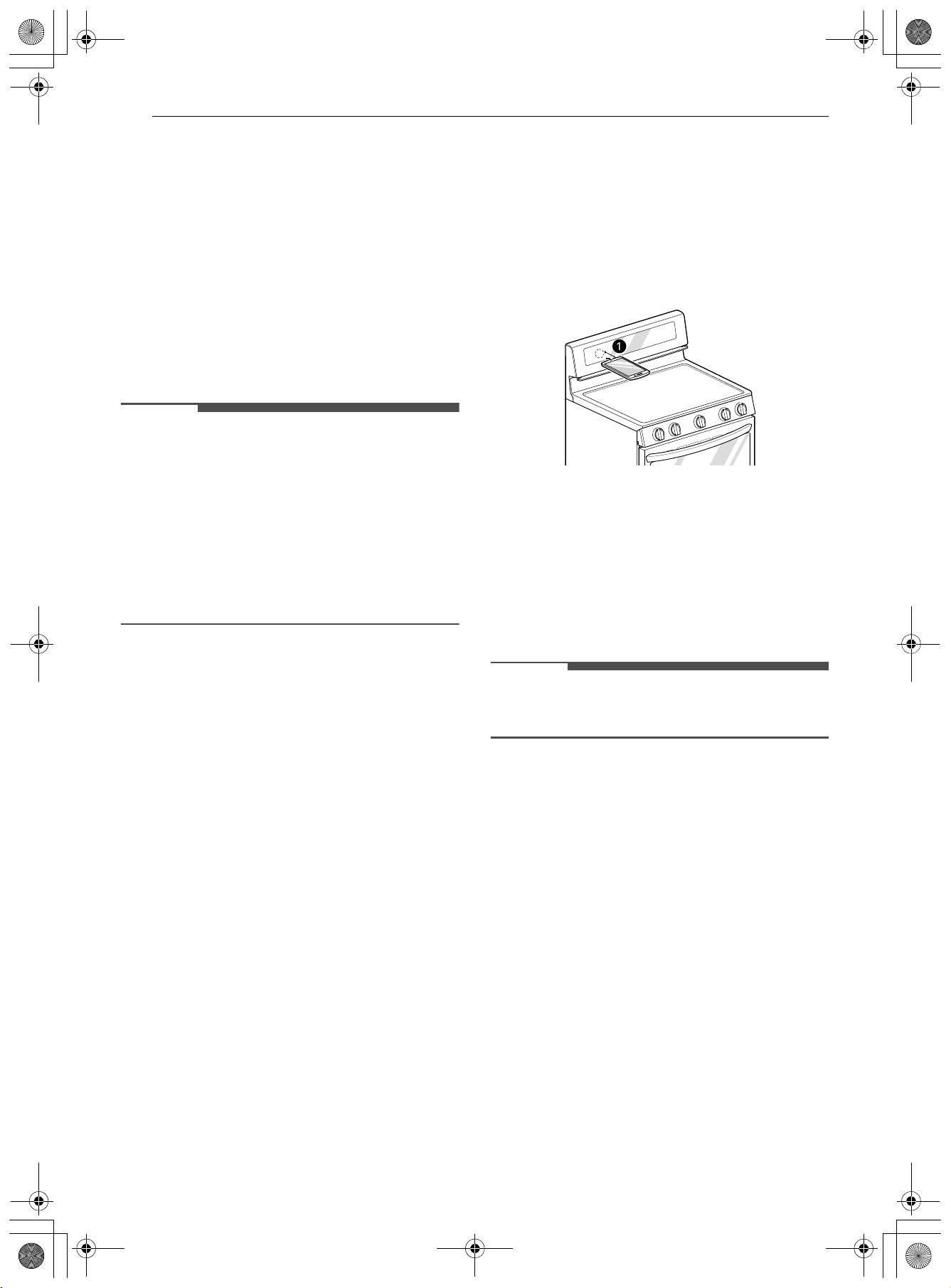
50 FUNCIONES INTELIGENTES
gastos de dicha distribución (como el costo del
medio, del envío y de la manipulación) una vez
realizado el pedido por correo electrónico a la
dirección openso[email protected].
Esta oferta es válida para todo aquel que reciba
esta información durante un período de tres años
después de que se envíe el último cargamento de
este producto.
Función Smart Diagnosis
TM
Utilice esta función como ayuda para diagnosticar
y resolver problemas con su electrodoméstico.
NOTA
• Por motivos no atribuibles a la negligencia de
LGE, es posible que el servicio no pueda
funcionar debido a factores externos como por
ejemplo, la indisponibilidad de Wi-Fi,
desconexión de Wi-Fi, política de la tienda de
aplicaciones local o indisponibilidad de
aplicaciones, entre otros.
• Esta función puede estar sujeta a cambios sin
previo aviso y puede tener una forma diferente
según dónde se encuentre ubicado.
Uso de LG ThinQ para diagnosticar
problemas
Si experimenta un problema con su
electrodoméstico equipado con Wi-Fi, este puede
transmitir datos sobre la resolución de problemas
a un teléfono inteligente con la aplicación LG
ThinQ.
• Inicie la aplicación LG ThinQ y seleccione la
función Smart Diagnosis en el menú. Siga las
instrucciones provistas en la aplicación LG
ThinQ.
Uso del diagnóstico audible para
diagnosticar problemas
La imagen en esta parte puede ser diferente del
modelo real.
Siga las instrucciones a continuación para utilizar
el método de diagnóstico audible.
• Inicie la aplicación LG ThinQ y seleccione la
función Smart Diagnosis en el menú. Siga las
instrucciones para el diagnóstico audible
provistas en la aplicación LG ThinQ.
1 Mantenga presionado el botón START
durante 3 segundos.
• Si la pantalla ha sido bloqueada, debe
desactivar el bloqueo y luego reactivarlo.
2 Mantenga el micrófono de su teléfono frente
al panel de control.
a Máx: 3/8" (10 mm)
3 Mantenga el teléfono en su sitio hasta que
haya terminado la transmisión de tonos. La
pantalla mostrará el recuento de tiempo. Una
vez que haya finalizado el recuento de tiempo
y los tonos se hayan detenido, aparecerá el
diagnóstico en la aplicación.
NOTA
• Para obtener resultados óptimos, no mueva el
teléfono mientras se transmitan los tonos.
es-us_main.book.book Page 50 Tuesday, February 3, 2026 8:20 AM
51MANTENIMIENTO
ESPAÑOL
MANTENIMIENTO
Limpieza
PRECAUCIÓN
• No limpie este aparato con lejía.
• Para evitar quemaduras, deje enfriar la parte
superior de la estufa antes de tocar cualquiera
de sus piezas.
• Use guantes para limpiar la parte superior.
Interior
No utilice limpiadores de horno para limpiar la
cavidad del horno. Utilice la función EasyClean del
producto regularmente para limpiar la suciedad
ligera. Para la suciedad rebelde, utilice la función
Self Clean (en algunos modelos) o limpie
manualmente con los siguientes consejos.
• Se puede usar una espátula plástica como
raspador para quitar los restos o residuos antes
de la limpieza del horno o durante el proceso.
• Puede resultar de ayuda usar el lado áspero de
una esponja que no raye para quitar manchas
quemadas mejor que con una esponja blanda o
una toalla.
• Algunas esponjas que no rayan, como las hechas
de espuma de melamina, disponibles en las
tiendas locales, también pueden ayudar a
mejorar la limpieza.
PRECAUCIÓN
• No utilice limpiadores para hornos, limpiadores
químicos abrasivos, lejía, vinagre, esponjas de
acero ni paños o limpiadores abrasivos para
limpiar el horno, ya que pueden dañar
permanentemente la superficie del horno.
• No limpie las juntas.
Exterior
Panel de control
Para evitar que el panel de control se active
durante la limpieza, desconecte el
electrodoméstico de la alimentación eléctrica.
Limpie las salpicaduras con un paño húmedo y
limpiacristales. Elimine la suciedad más difícil con
una solución de agua tibia jabonosa. No use
ningún tipo de abrasivos.
Perillas y panel del múltiple delantero
Limpie las perillas y el panel del múltiple después
de cada uso. Para obtener los mejores resultados,
use un paño húmedo y agua jabonosa suave o una
solución 50/50 de vinagre y agua. Enjuague con
agua limpia e inmediatamente seque y lustre con
un paño suave.
PRECAUCIÓN
• Para evitar dañar el acabado de las perillas y el
panel del múltiple No use limpiadores abrasivos,
limpiadores líquidos fuertes, esponjas abrasivas
plásticas o limpiadores para horno.
• No intente doblar las perillas moviéndolas hacia
arriba o hacia abajo y no cuelgue toallas ni otros
objetos de ellas. Hacerlo puede dañar el eje de la
válvula de gas.
• Las perillas de control se pueden quitar para
limpiarlas fácilmente.
• Para limpiar las perillas, asegúrese de que estén
en la posición OFF y sáquelas de los vástagos.
• Para volver a colocarlas, asegúrese de que la
perilla esté colocada en la posición OFF centrada
en la parte superior y deslice la perilla
directamente sobre el vástago.
Reborde decorativo y pintado
Para la limpieza general, use un paño con agua
jabonosa caliente. En el caso de suciedad más
difícil y grasa acumulada, aplique detergente
líquido directamente sobre la suciedad. Déjelo
reposar allí entre 30 y 60 minutos. Enjuague con
un paño húmedo y seque. No use limpiadores
abrasivos.
Superficies de acero inoxidable
Para evitar hacer rayas, no use esponjas de lana de
acero.
1 Coloque una pequeña cantidad de limpiador
o pulidor para electrodomésticos de acero
inoxidable en un paño o una toalla de papel
húmedos.
2 Limpie un área pequeña y friegue siguiendo
el grano del acero inoxidable si corresponde.
3 Seque y saque brillo con un paño suave o una
toalla de papel secos y limpios.
es-us_main.book.book Page 51 Tuesday, February 3, 2026 8:20 AM
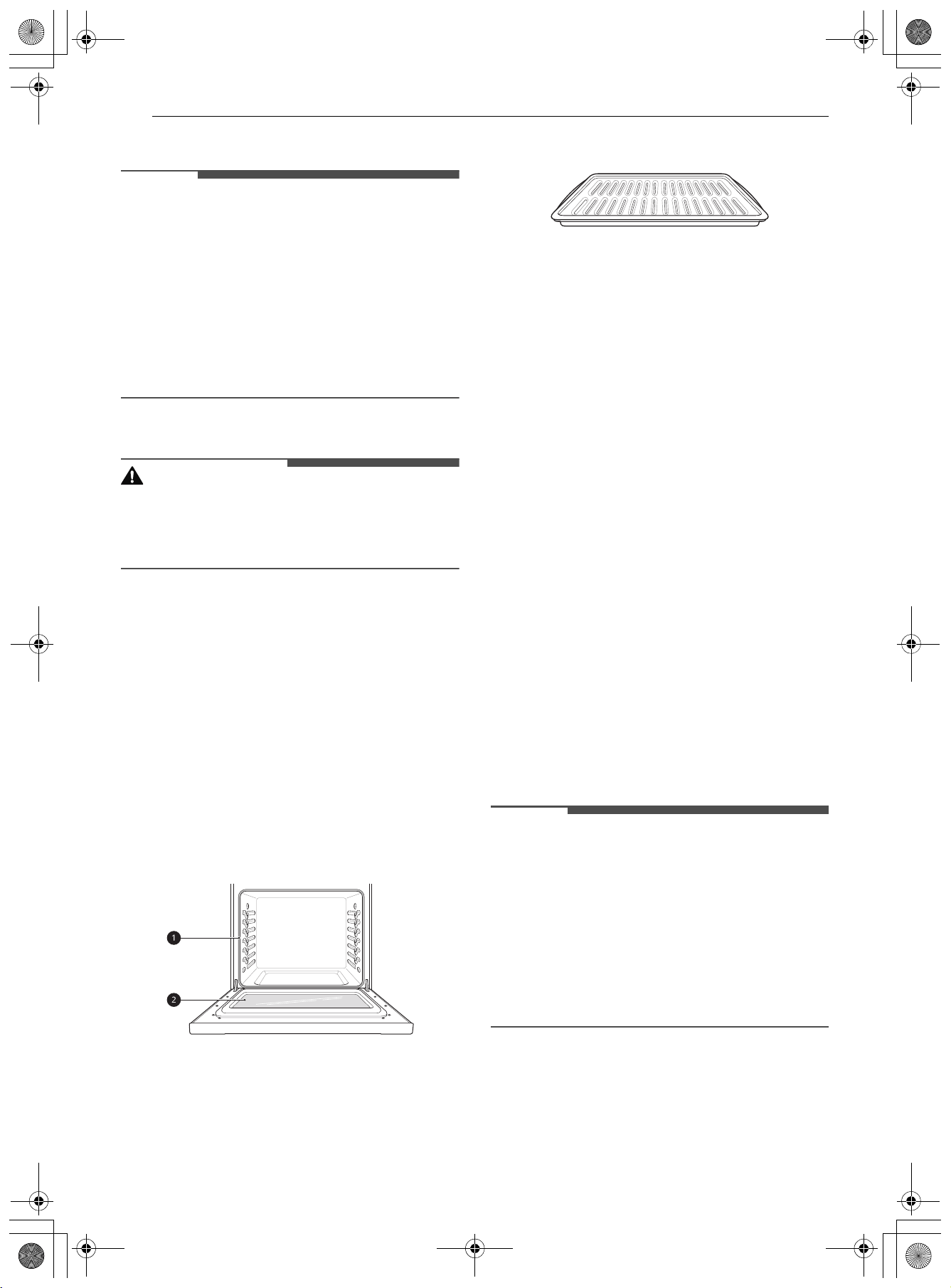
52 MANTENIMIENTO
4 Repita si fuera necesario.
NOTA
• Para limpiar la superficie de acero inoxidable,
utilice agua tibia jabonosa, limpiador o pulidor
para acero inoxidable.
• Limpie siempre en la dirección del acabado de la
superficie de metal.
• Los limpiadores o pulidores para
electrodomésticos de acero inoxidable pueden
comprarse por Internet o en la mayoría de los
comercios minoristas de electrodomésticos o
artículos para el hogar.
Puerta del horno
PRECAUCIÓN
• No use limpiadores para horno, polvos
limpiadores ni materiales abrasivos de limpieza
en el exterior de la puerta del horno. Si lo hace,
podría causar daños.
• Use agua jabonosa para limpiar bien la puerta
del horno. Enjuague bien. No sumerja la puerta
en agua.
• Puede usar un limpiador para vidrios en la parte
externa de la puerta del horno. No rocíe agua ni
limpiador para vidrios en las ventilaciones de la
puerta.
• No use limpiadores para horno, polvos
limpiadores ni materiales abrasivos de limpieza
en el exterior de la puerta del horno.
• No limpie la junta de la puerta del horno. La
junta está hecha de material tejido que es
fundamental para lograr un buen sellado. Se
debe tener cuidado de no frotar, dañar ni quitar
esta junta.
a No limpie manualmente la junta de la puerta
del horno
b Limpie manualmente la puerta
Asadera y rejilla
• No guarde una asadera o rejilla sucia en ninguna
parte de la estufa.
• No limpie la asadera ni la rejilla en el modo de
autolimpieza. (Disponible en algunos modelos)
• Retire la rejilla de la asadera. Vierta la grasa de la
asadera en un recipiente adecuado con cuidado.
• Lave y enjuague la asadera y la rejilla con agua
caliente y una esponja abrasiva plástica o jabón.
• Si hay comida quemada, rocíe la rejilla con
limpiador mientras está caliente y cúbrala con
toallas de papel húmedas o un paño de cocina.
Al sumergir la asadera se removerán los restos
de comida quemada.
• Tanto la asadera como la rejilla se pueden
limpiar con un limpiador para horno comercial o
en el lavavajillas.
Estantes del horno
Retire los estantes del horno antes de iniciar el
ciclo Self Clean (en algunos modelos) y la función
EasyClean.
1 Limpie con un limpiador abrasivo suave.
• Los alimentos derramados en las guías
pueden atascar los estantes.
2 Enjuague con agua limpia y seque.
NOTA
• Para modelos con función Self Clean:
- Si limpia los estantes usando el ciclo Self Clean
(no recomendado), el color cambiará a azul
claro y el acabado perderá el brillo. Una vez
finalizado el ciclo Self Clean y después de que
el horno se haya enfriado, frote los costados
de los estantes con papel encerado o con un
paño que contenga una pequeña cantidad de
aceite. Esto hará que los estantes se deslicen
más fácilmente en las guías.
es-us_main.book.book Page 52 Tuesday, February 3, 2026 8:20 AM
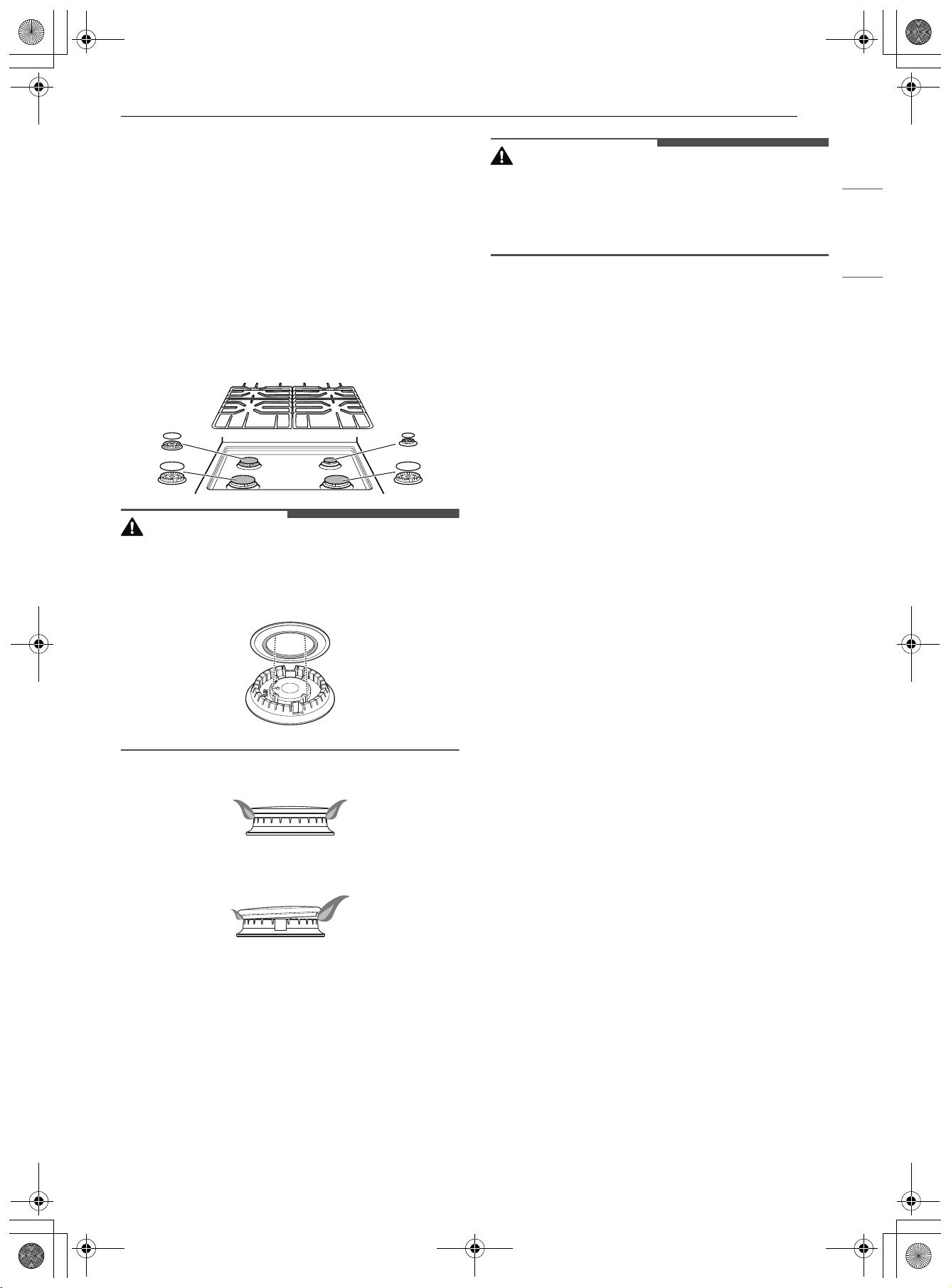
53MANTENIMIENTO
ESPAÑOL
Quemadores de superficie de gas
Retiro y colocación de los quemadores
de superficie de gas
La ubicación y el tamaño de los quemadores
pueden variar según el modelo.
Es posible retirar las rejillas, las tapas y los
cabezales de los quemadores para limpiarlos y
brindarles mantenimiento.
• Tenga cuidado al instalar o retirar las rejillas, ya
que los extremos ásperos pueden causar
arañazos en la superficie de la placa de cocción.
PRECAUCIÓN
• Asegúrese de que los cabezales del quemador se
reinstalen adecuadamente. Estarán estables y
quedarán planos si están correctamente
instalados.
• La tapa del quemador está bien colocada:
• La tapa del quemador no está bien colocada:
Limpieza de tapas/cabezales del
quemador
Para lograr una llama uniforme y libre, las
aberturas en los cabezales de los quemadores
deben estar siempre limpias. Las tapas y los
cabezales del quemador (y el conjunto de tapa y
cabezal del quemador ovalado) se pueden
levantar. No intente retirar la tapa del quemador
ovalado.
PRECAUCIÓN
• No golpee los electrodos con nada duro. Si lo
hace, podría dañarlos.
• No use lana de acero ni polvos abrasivos para
limpiar los quemadores.
• Lave las tapas del quemador con agua jabonosa
caliente y enjuáguelas con agua limpia. Deje
correr el agua sobre el quemador ovalado desde
el vástago inferior para eliminar la suciedad.
• Limpie la placa de cocción con cuidado. Los
extremos de metal puntiagudos de los
electrodos de chispa pueden producir lesiones.
Si golpea un electrodo con un objeto rígido
puede dañarlo.
• Para limpiar alimentos quemados, sumerja los
cabezales del quemador en una solución de
agua caliente y detergente líquido suave
durante 20 a 30 minutos. Si las manchas son
difíciles de quitar, use un cepillo de dientes o un
cepillo de alambre.
• Los quemadores no funcionarán correctamente
si los electrodos o los puertos del quemador
están obstruidos o sucios.
• Los cabezales y las tapas del quemador se deben
limpiar regularmente, en especial después de
derrames excesivos.
• Los quemadores no se encenderán si ha retirado
la tapa.
Después de la limpieza de tapas/
cabezales del quemador
Sacuda los restos de agua y deje que se sequen
bien. Si coloca el quemador ovalado al revés
permitirá que el agua drene con más facilidad.
Vuelva a colocar las tapas y los cabezales de los
quemadores sobre los electrodos en la placa de
cocción en el lugar correcto de acuerdo con su
tamaño. Asegúrese de que el agujero del cabezal
del quemador esté ubicado sobre el electrodo.
Rejillas de los quemadores
La estufa incluye dos rejillas profesionales
independientes. Para lograr la estabilidad máxima,
es-us_main.book.book Page 53 Tuesday, February 3, 2026 8:20 AM
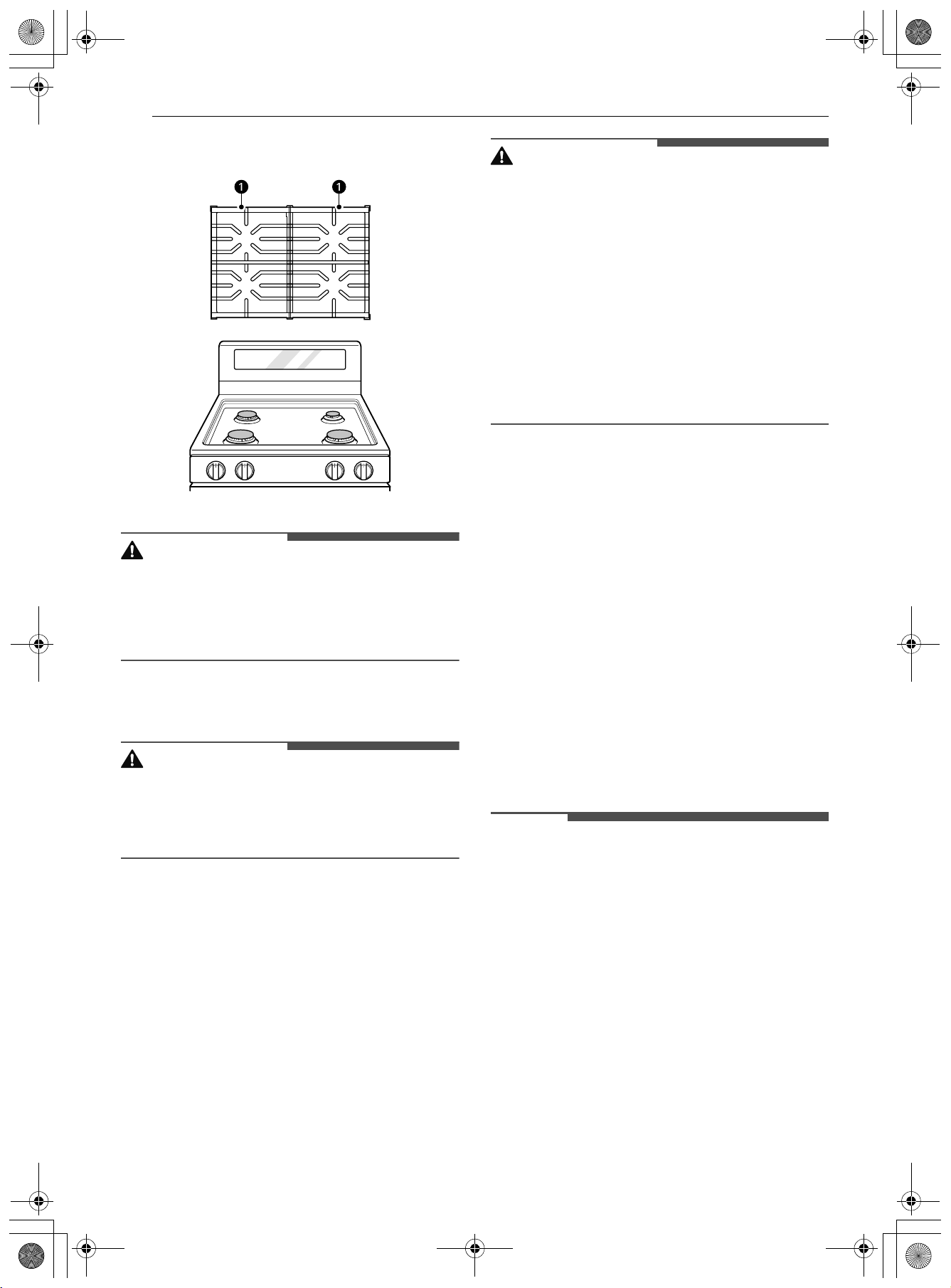
54 MANTENIMIENTO
estas rejillas solo se deben usar en la posición
correcta.
a Rejilla lateral
PRECAUCIÓN
• No haga funcionar un quemador durante un
período prolongado sin colocar utensilios de
cocina en la rejilla. El acabado de la rejilla puede
saltarse cuando no hay utensilios de cocina que
absorban el calor.
Limpieza de las rejillas de los
quemadores
PRECAUCIÓN
• No levante las rejillas hasta que se hayan
enfriado.
• No coloque la rejilla en el horno durante el modo
de autolimpieza. (En algunos modelos)
• Las rejillas se deben lavar regularmente y
después de derrames.
• Lave las rejillas con agua jabonosa caliente y
enjuáguelas con agua limpia.
• Las rejillas son aptas para lavavajillas.
• Después de limpiar las rejillas, deje que se
sequen completamente y colóquelas de manera
segura sobre los quemadores.
Limpieza de la superficie de la placa de
cocción
El revestimiento EasyClean facilita la limpieza de la
placa de cocción. Hasta las manchas de grasa
difíciles se pueden eliminar solo con agua tibia.
PRECAUCIÓN
• Antes de limpiar, gire todos los controles a la
posición OFF y deje enfriar la placa de cocción.
• Para evitar quemaduras, no limpie la superficie
de la placa de cocción hasta que se haya
enfriado.
• No levante la superficie de la placa de cocción. Si
levanta la superficie de la placa de cocción
puede dañar la estufa o hacer que funcione de
forma incorrecta.
• En caso de derramar agua sobre la estufa,
séquela de inmediato. Si queda agua sobre la
estufa por un periodo prolongado, se puede
decolorar la superficie.
Los alimentos con alto contenido de ácido o
azúcares pueden quitar el brillo si se dejan
asentar. Lave y enjuague estas manchas
inmediatamente después de que la superficie se
haya enfriado. Si se trata de otros derrames, como
salpicaduras de aceite, grasa, etc., lave con agua y
jabón cuando la superficie se haya enfriado; luego,
enjuague y lustre con un paño seco.
1 Retire las rejillas, los quemadores y las tapas
de los quemadores de la placa de cocción.
2 Raspe y retire los residuos quemados con un
raspador plástico o una tarjeta de crédito que
ya no use.
3 Limpie la placa de cocción con una esponja o
un paño de limpieza húmedos que no rayen.
NOTA
• Placa de cocción de acero inoxidable EasyClean
(en algunos modelos)
- Para evitar rayones en la superficie de la placa
de cocción, no use paños o esponjas de metal
o abrasivas.
es-us_main.book.book Page 54 Tuesday, February 3, 2026 8:20 AM
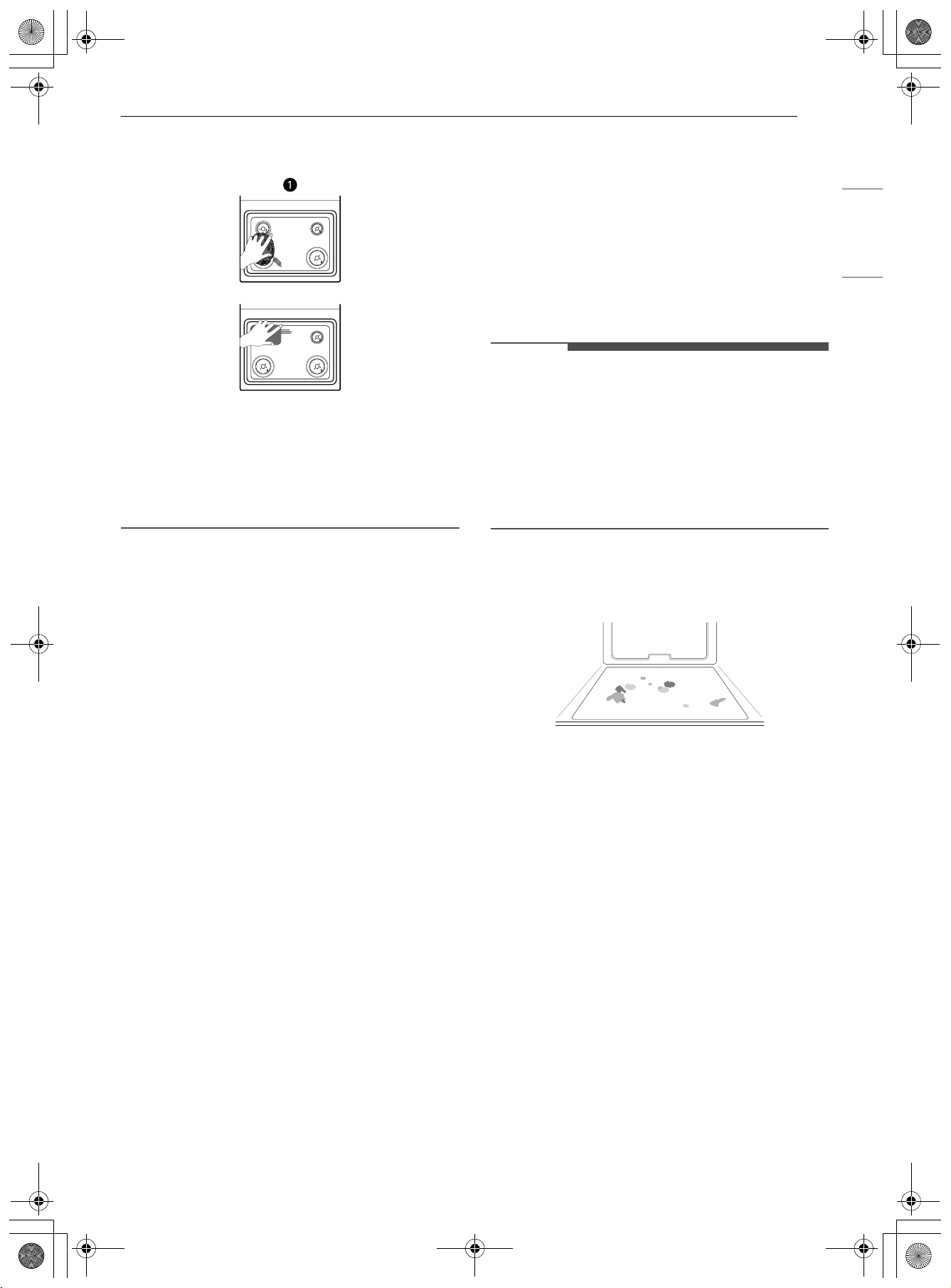
55MANTENIMIENTO
ESPAÑOL
- Frote siguiendo la dirección del grano para no
dañar la superficie.
a Dirección del grano
- Como en cualquier placa de cocción, algunas
manchas no pueden eliminarse.
- Para eliminar los residuos endurecidos de la
placa de cocción, utilice un detergente de
cocina para una limpieza más fácil.
EasyClean
La tecnología esmaltada de LG EasyClean ofrece
dos opciones de limpieza para el interior de la
estufa. La función EasyClean se beneficia con el
nuevo esmalte de LG ya que ayuda a despegar la
suciedad sin usar químicos fuertes y funciona
SOLAMENTE CON AGUA durante apenas 10
minutos a baja temperatura para aflojar la
suciedad LEVE antes de la limpieza manual.
Si bien la función EasyClean es rápida y eficaz para
la suciedad LEVE y pequeña, la función Self Clean
se puede usar para quitar la suciedad DIFÍCIL
acumulada. La intensidad y la alta temperatura del
ciclo Self Clean pueden producir humo, de modo
que se deberán abrir las ventanas para ventilar. En
comparación con el proceso más intenso de Self
Clean, el horno LG le brinda la opción de limpiar
con MENOS CALOR, en MENOS TIEMPO y,
prácticamente, SIN HUMO NI VAPORES. Puede
reducir el uso de energía limpiando la suciedad
leve del horno con la función EasyClean en lugar
de usar Self Clean.
Cuando sea necesario, la estufa ofrece también la
opción de Self Clean más prolongada y profunda
del horno para quitar la suciedad más difícil
acumulada.
• Para limpiar áreas difíciles de alcanzar, como la
superficie trasera del horno, es mejor usar el
ciclo Self Clean.
Beneficios de EasyClean
• Ayuda a aflojar la suciedad leve antes de la
limpieza manual
• EasyClean solo usa agua; no usa limpiadores
químicos
• Favorece una mejor experiencia de Self Clean
- Retrasa la necesidad de un ciclo Self Clean
- Minimiza el humo y los olores
- Puede acortar el tiempo de Self Clean
NOTA
• Para modelos sin la opción de Self Clean
- La función EasyClean tal vez no sea efectiva
para quitar la suciedad difícil acumulada.
Debido a que la estufa no incluye una opción
de Self Clean, limpie el horno periódicamente
con la función EasyClean para evitar que se
acumulen residuos difíciles quemados en el
horno.
Cuándo usar EasyClean
• Ejemplo de suciedad en el horno
Caso 1
- Forma de la suciedad: gotitas o manchitas
- Tipos de suciedad: queso u otros ingredientes
- Alimentos comunes que pueden ensuciar el
horno: pizza
Caso 2
- Forma de la suciedad: salpicadura leve
- Tipos de suciedad: grasa/aceite
- Alimentos comunes que pueden ensuciar el
horno: bistecs, asados / pescado, asado /
carne rostizada a baja temperatura
Guía de instrucciones de EasyClean
es-us_main.book.book Page 55 Tuesday, February 3, 2026 8:20 AM
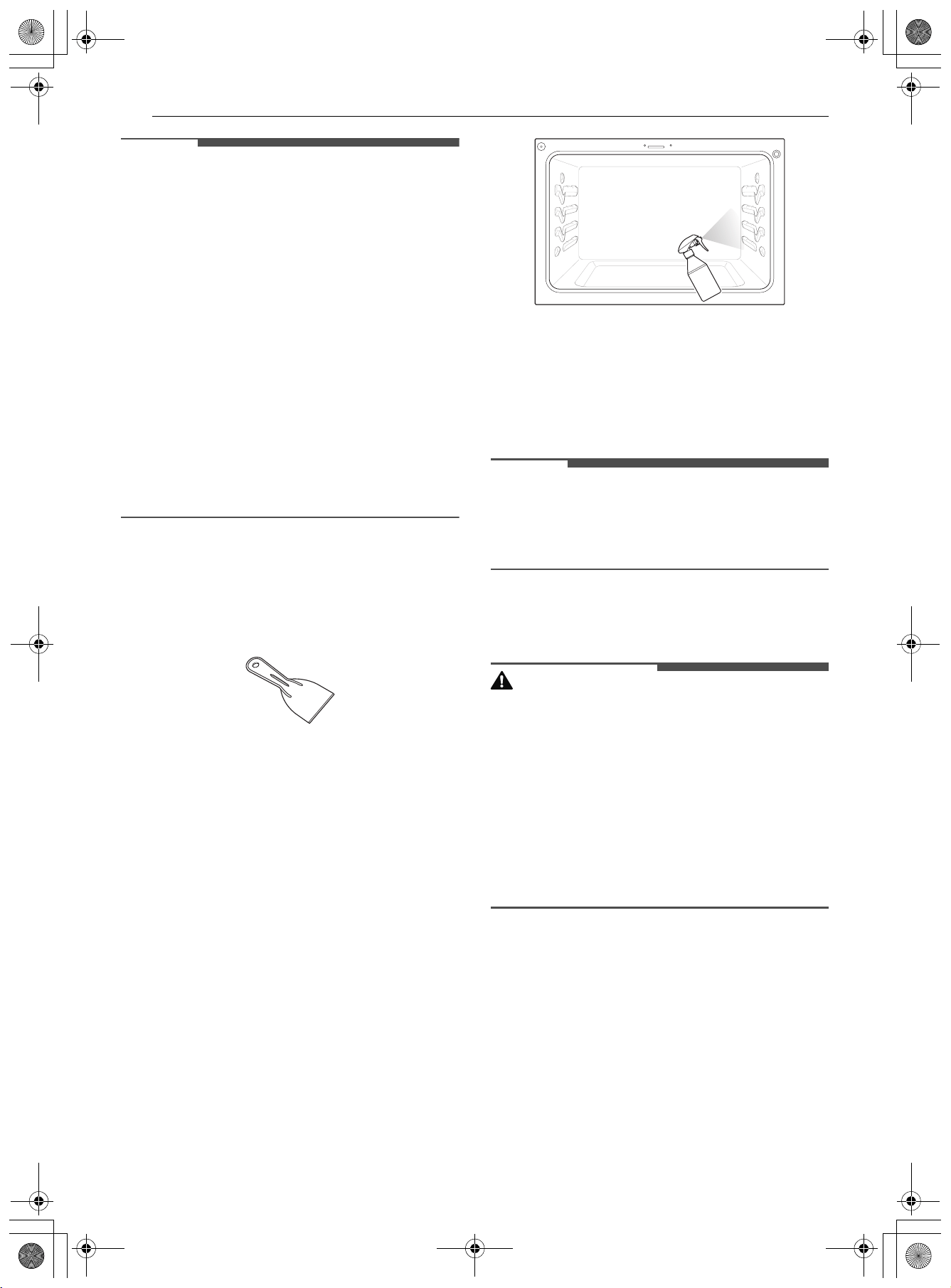
56 MANTENIMIENTO
NOTA
• Permita que el horno se enfríe a temperatura
ambiente antes de usar el ciclo EasyClean. Si la
cavidad del horno alcanza una temperatura
superior a 150 °F (65 °C), aparecerá "Hot" en la
pantalla y el ciclo EasyClean no se activará hasta
que la cavidad del horno se enfríe.
• La estufa debe estar nivelada para garantizar
que la superficie inferior de la cavidad del horno
esté completamente cubierta con agua al
comienzo del ciclo EasyClean.
• Para obtener mejores resultados, use agua
destilada o filtrada. El agua del grifo puede dejar
depósitos minerales en la base del horno.
• La suciedad quemada en varios ciclos de cocción
será más difícil de quitar con el ciclo EasyClean.
• No abra la puerta del horno durante el ciclo
EasyClean. El agua no se calienta lo suficiente si
se abre la puerta durante este ciclo.
1 Quite los estantes y los accesorios del horno.
2 Raspe y retire los residuos quemados con un
raspador plástico.
• Raspadores plásticos sugeridos:
- Espátula de plástico dura
- Raspador plástico para bandejas
- Raspador plástico para pintura
- Tarjeta de crédito sin usar
3 Llene un envase rociador con agua (10 oz o
300 ml) y utilícelo para rociar bien las
superficies interiores del horno.
4 Use por lo menos 1/5 (2 oz o 60 ml) del agua
de la botella para saturar completamente la
suciedad en las paredes y las esquinas del
horno.
5 Rocíe o vierta el agua restante (8 oz o 240 ml)
en el centro de la base de la cavidad del
horno. La hendidura en la base del horno
debe estar totalmente cubierta para sumergir
toda la suciedad. Agregue agua si fuera
necesario.
NOTA
• Si limpia varios hornos, use una botella de agua
entera para cada uno. No rocíe agua
directamente en la puerta. Si lo hace, el agua
caerá al piso.
6 Cierre la puerta del horno.
PresioneEasyClean. Presione START.
PRECAUCIÓN
• Algunas superficies pueden quedar calientes
después del ciclo EasyClean. Use guantes de
goma cuando limpie para evitar quemaduras.
• Durante el ciclo EasyClean, el horno se calienta
lo suficiente como para provocar quemaduras.
Espere hasta que el ciclo termine antes de
limpiar la superficie interna del horno. Si no
espera, podría quemarse.
• Evite apoyarse o posarse sobre el vidrio de la
puerta del horno mientras limpia la cavidad del
horno.
7 Sonará un tono al final del ciclo. Presione
CLEAR/OFF para borrar la pantalla y apagar el
tono.
8 Después del ciclo de limpieza y durante la
limpieza manual, debe quedar suficiente agua
en la base del horno para sumergir
completamente la suciedad. Agregue agua si
fuera necesario. Coloque una toalla en el piso
frente al horno para absorber el agua que
es-us_main.book.book Page 56 Tuesday, February 3, 2026 8:20 AM
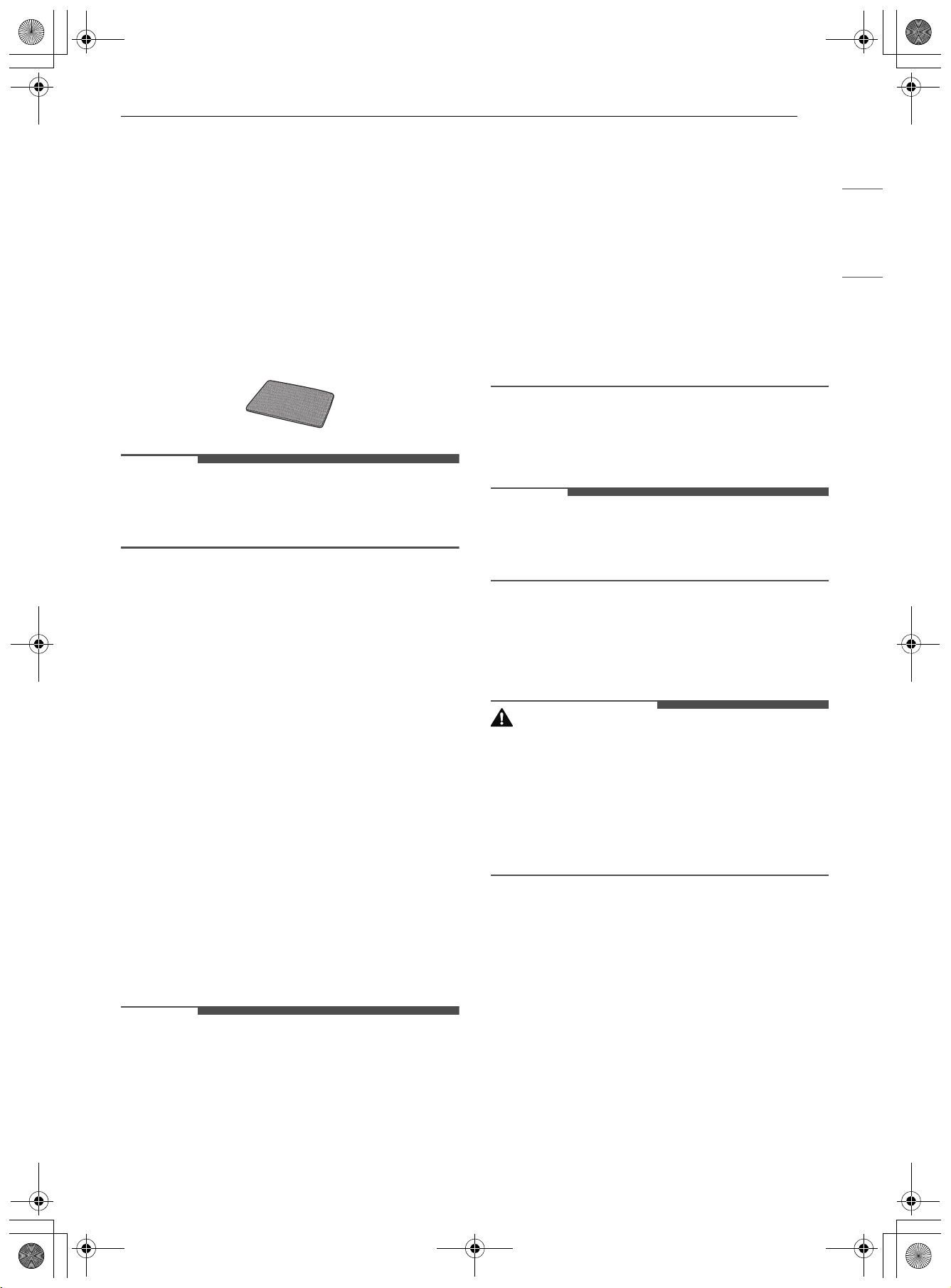
57MANTENIMIENTO
ESPAÑOL
pueda derramarse durante la limpieza
manual.
9 Limpie la cavidad del horno inmediatamente
después del ciclo EasyClean fregando con una
esponja o un paño de limpieza húmedos que
no rayen. (El lado para refregar no rayará el
acabado). Se puede derramar un poco de
agua en las ventilaciones de la base cuando se
realice la limpieza, pero se recogerá en una
bandeja que se encuentra debajo de la
cavidad del horno y no dañará el quemador.
NOTA
• No use esponjas de acero ni paños o limpiadores
abrasivos, ya que estos materiales pueden dañar
en forma permanente la superficie del horno.
10 Una vez que haya limpiado la cavidad del
horno, quite el exceso de agua con una toalla
limpia y seca. Vuelva a colocar los estantes y
demás accesorios.
11 Si queda alguna suciedad leve, repita los
pasos anteriores y asegúrese de empapar
bien las áreas sucias.
• Para modelos con función Self Clean
- Si queda suciedad rebelde después de
varios ciclos EasyClean, ejecute el ciclo
Self Clean. Asegúrese de que se hayan
retirado de la cavidad del horno los
estantes y los demás accesorios y que la
superficie de la cavidad esté seca antes de
ejecutar el ciclo Self Clean. Consulte la
sección Self Clean (Autolimpieza) del
manual del propietario para obtener más
detalles. Si la opción de Self Clean no está
disponible, raspe y retire la suciedad
difícil usando un raspador.
NOTA
• Si olvida empapar el interior del horno con agua
antes de comenzar el ciclo EasyClean, presione
CLEAR/OFF para finalizar el ciclo. Espere que la
estufa se enfríe a temperatura ambiente y,
luego, rocíe o vierta agua en el horno y comience
otro ciclo EasyClean.
• La junta de la cavidad puede quedar mojada
cuando termine el ciclo EasyClean. Esto es
normal. No limpie la junta.
• Si quedan depósitos minerales en la base del
horno después de la limpieza, use un paño o una
esponja impregnada en vinagre para quitarlos.
• Es normal que el ventilador funcione durante el
ciclo EasyClean.
• No es recomendable el uso de limpiadores
comerciales o blanqueadores para limpiar el
horno. Utilice un limpiador líquido suave con un
valor de pH inferior a 12.7 para evitar que el
esmalte pierda el color.
Extracción y colocación de las
puertas desmontables del horno
NOTA
• Las piezas pueden ser modificadas debido a la
mejora del producto y pueden tener un aspecto
diferente al mostrado en las imágenes.
Instrucciones para el cuidado de la
puerta
La mayoría de las puertas de los hornos contienen
un vidrio que puede romperse.
PRECAUCIÓN
• No cierre la puerta del horno hasta que todos los
estantes estén bien colocados en su lugar.
• No golpee el vidrio con ollas, sartenes ni con
ningún otro objeto.
• Si se raya, golpea, hace vibrar o fuerza el vidrio,
se puede debilitar su estructura, lo que aumenta
el riesgo de rotura más adelante.
Extracción de las puertas
1 Abra la puerta totalmente.
es-us_main.book.book Page 57 Tuesday, February 3, 2026 8:20 AM
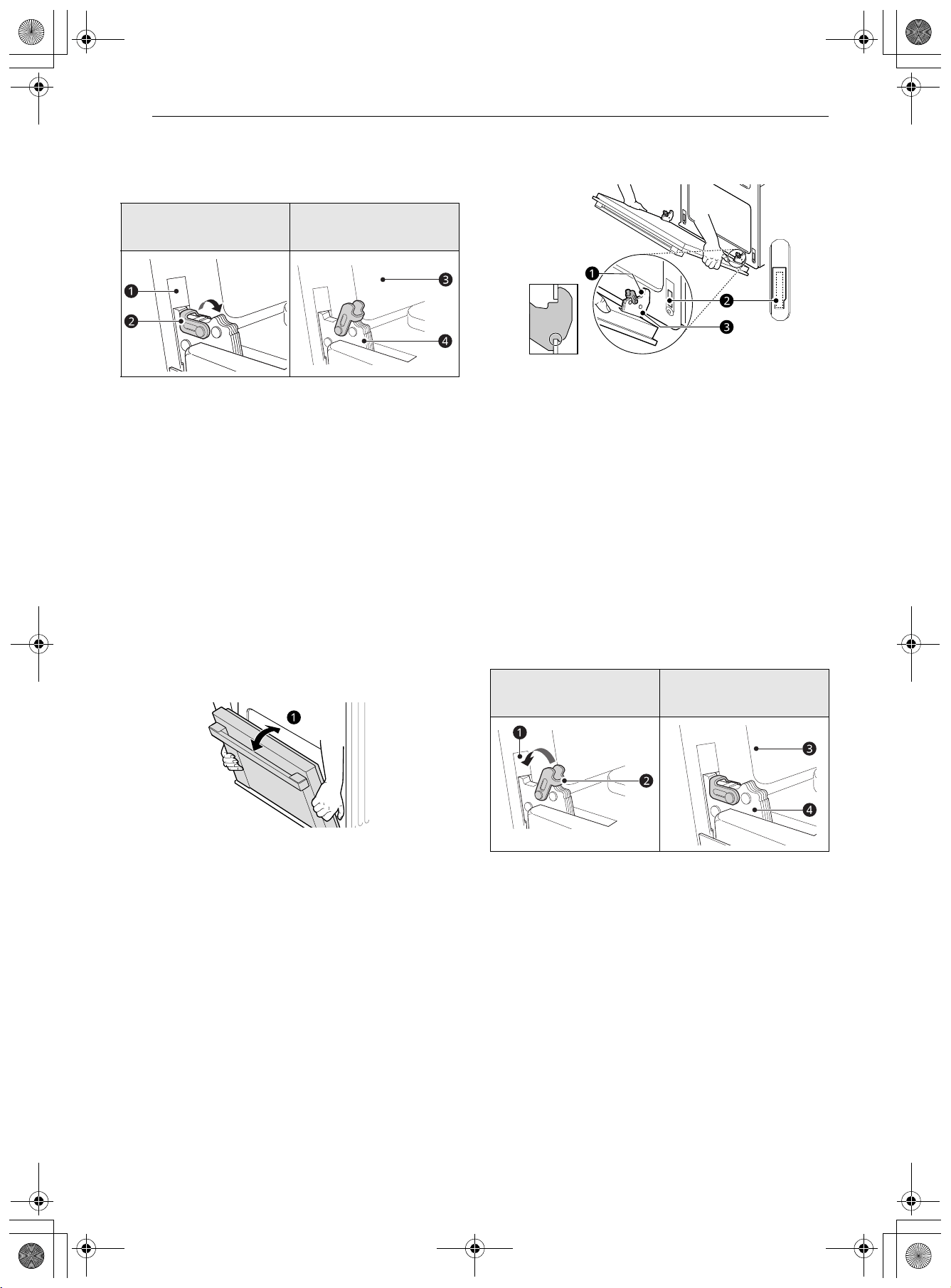
58 MANTENIMIENTO
2 Levante la traba de la bisagra b y gírela
completamente hacia el brazo de la bisagra
d. Repita en el otro lado.
a Ranura
b Traba de la bisagra
c Marco del horno
d Brazo de la bisagra
3 Tome firmemente ambos lados de la puerta
desde la parte superior.
4 Cierre la puerta parcialmente a
aproximadamente 5 grados a. Si la posición
es correcta, los brazos de la bisagra se
moverán de manera libre.
a Aproximadamente 5°
5 Levante la puerta y tire de ella hacia usted
hasta que la cerradura de la bisagra esté
completamente desprendida.
Colocación de las puertas
1 Tome firmemente ambos lados de la puerta
desde la parte superior.
2 Inserte completamente los brazos de la
bisagra a dentro de la ranura b hasta que
las hendiduras
c de los brazos de la bisagra
se apoyen en los bordes inferiores de las
ranuras.
a Brazo de la bisagra
b Borde inferior de la ranura
c Hendidura
3 Lentamente abra la puerta por completo.
Asegúrese de que los brazos de la bisagra
estén colocados correctamente en las
ranuras.
4 Levante la traba de la bisagra b y gírela hacia
el horno c hasta que haga clic en la posición.
Repita en el otro lado.
a Ranura
b Traba de la bisagra
c Marco del horno
d Brazo de la bisagra
5 Cierre la puerta del horno.
Posición de
bloqueado
Posición de
desbloqueado
Posición de
desbloqueado
Posición de
bloqueado
es-us_main.book.book Page 58 Tuesday, February 3, 2026 8:20 AM
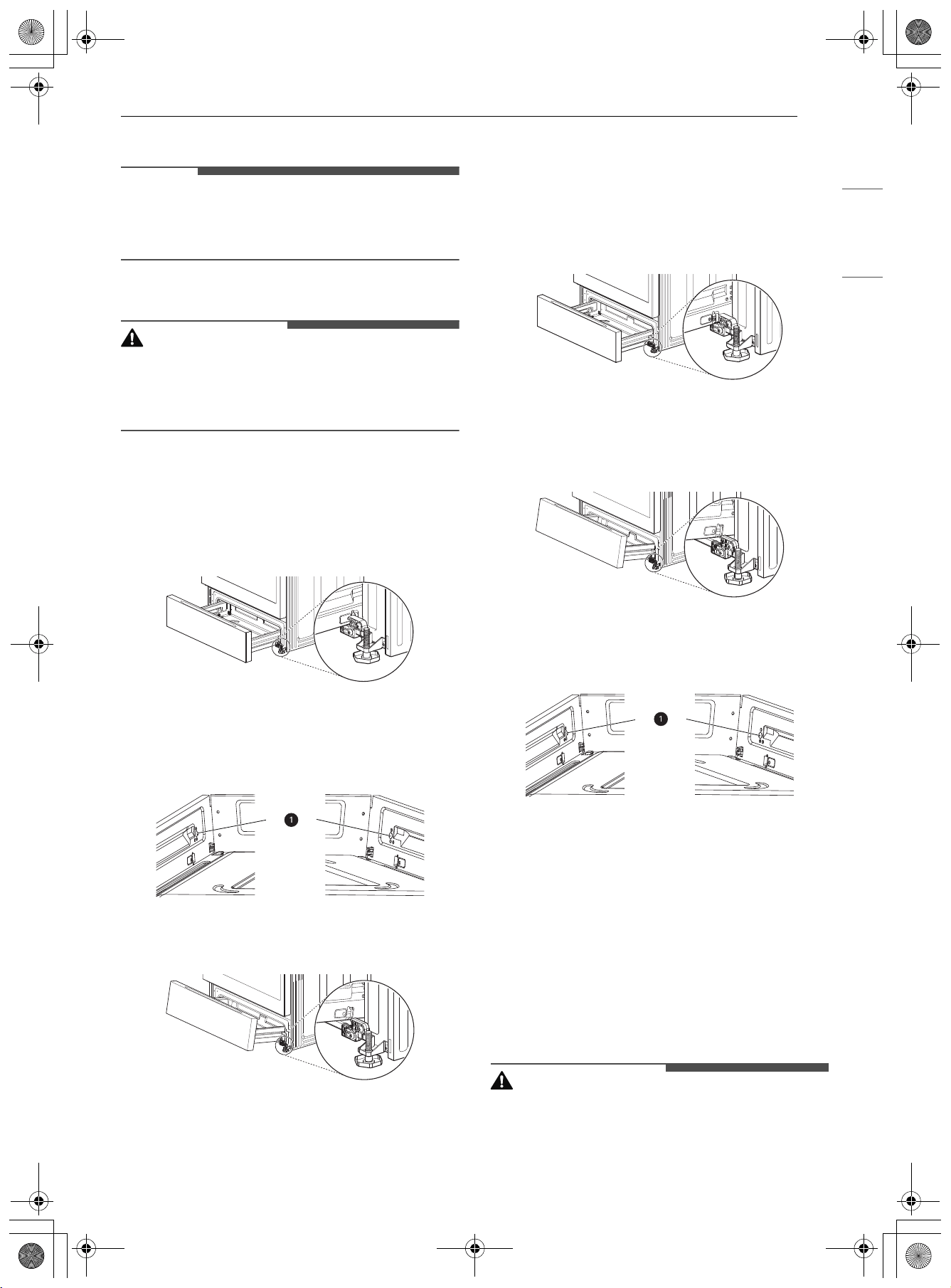
59MANTENIMIENTO
ESPAÑOL
Extracción y colocación de cajones
NOTA
• Las piezas pueden ser modificadas debido a la
mejora del producto y pueden tener un aspecto
diferente al mostrado en las imágenes.
Extracción de cajones
PRECAUCIÓN
• Desconecte la energía eléctrica de la estufa del
fusible principal o el panel disyuntor. Si no lo
hace, podría causar lesiones graves, descargas
eléctricas o la muerte.
La mayor parte de la limpieza se puede realizar
con el cajón en su lugar; sin embargo, el cajón
puede extraerse si se necesita realizar una
limpieza adicional. Use agua caliente para limpiar
a fondo.
1 Abra el cajón totalmente.
2 Si hay tornillos a en los laterales de la parte
posterior del cajón, remueva los 2 tornillos y
apártelos. Para los modelos sin tornillos, vaya
al paso 3.
3 Levante la parte delantera del cajón hasta que
los topes salgan de las guías.
4 Quite el cajón.
Colocación de los cajones
1 Coloque los rieles del cajón en las guías.
2 Empuje el cajón hacia atrás hasta que se
detenga.
3 Levante la parte frontal del cajón, y empújela
hacia atrás hasta que los topes se
desenganchen de las guías, y baje la parte
frontal del cajón.
4 Si el cajón tenía tornillos, inserte y apriete los
2 tornillos a en los lados de la parte posterior
del cajón.
5 Empuje el cajón para cerrarlo.
Mantenimiento periódico
Cambio de la luz del horno
La luz del horno es una bombilla halógena
estándar para electrodomésticos de 40 vatios. Se
enciende cuando se abre la puerta del horno.
Cuando la puerta del horno está cerrada, presione
Light para encenderla o apagarla.
ADVERTENCIA
• Asegúrese de que el horno y la bombilla estén
fríos.
es-us_main.book.book Page 59 Tuesday, February 3, 2026 8:20 AM
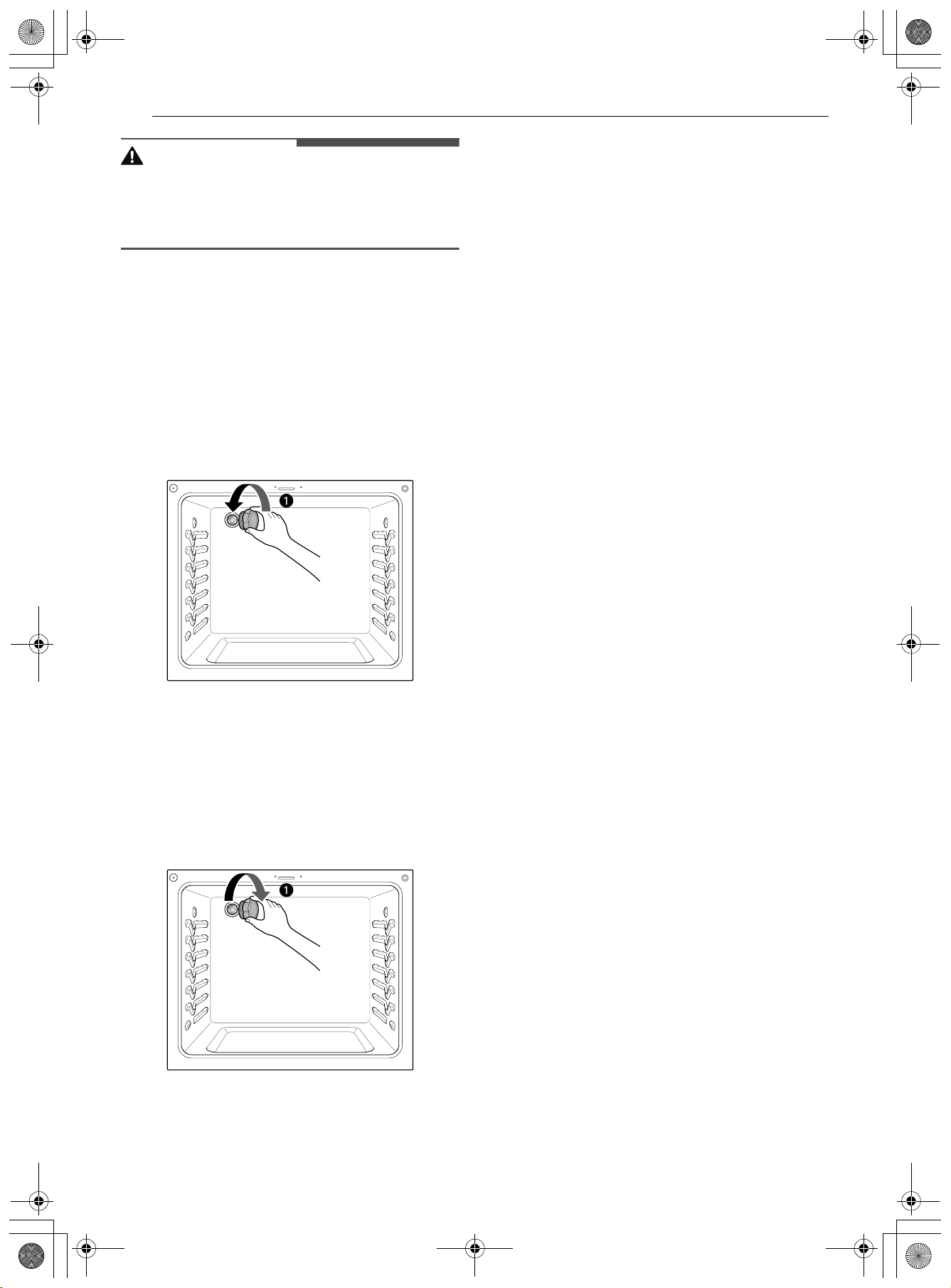
60 MANTENIMIENTO
ADVERTENCIA
• Desconecte la energía eléctrica de la estufa del
fusible principal o el panel disyuntor. Si no lo
hace, podría causar lesiones graves, descargas
eléctricas o la muerte.
1 Desenchufe la estufa o desconéctela de la
corriente eléctrica.
2 Para remover la tapa de vidrio de la bombilla
que se encuentra en la parte trasera del
horno, gírela hacia la izquierda.
3 Retire la bombilla halógena del enchufe.
a Para remover
4 Inserte una nueva bombilla halógena.
5 Inserte la tapa de vidrio de la bombilla y
gírela hacia la derecha.
a Para ensamblar
6 Enchufe la estufa o reconecte la corriente
eléctrica.
es-us_main.book.book Page 60 Tuesday, February 3, 2026 8:20 AM
61SOLUCIÓN DE PROBLEMAS
ESPAÑOL
SOLUCIÓN DE PROBLEMAS
Preguntas Frecuentes
Preguntas frecuentes
P: ¿Qué tipo de utensilios cocina se recomienda usar con la placa de cocción?
R:
• Las bandejas deben tener fondo plano y laterales rectos.
• Use solamente bandejas gruesas.
• El tamaño de la bandeja debe coincidir con la cantidad de comida que se preparará y el
tamaño de la hornalla.
• Use tapas herméticas.
• Use solamente woks de fondo plano.
P: Mi nuevo horno no cocina como el que tenía antes. ¿Hay algún problema con los ajustes de
temperatura?
R: No, su horno se probó y calibró en la fábrica. Durante los primeros usos, siga cuidadosamente los
tiempos y las temperaturas de su receta. Si todavía piensa que el horno nuevo se calienta o enfría
demasiado, puede ajustar su temperatura para adecuarla a sus necesidades específicas de cocción.
Consulte la sección Cambio de configuración del horno de este manual para obtener instrucciones
fáciles sobre cómo ajustar el termostato.
P: ¿Es normal que se escuche un chasquido que proviene de la parte trasera del horno cuando lo
uso?
R: Su nueva estufa está diseñada para mantener un control más estricto de la temperatura del horno. Es
posible que escuche los elementos calentadores del horno hacer un chasquido al encenderse y
apagarse con más frecuencia en su horno nuevo. Esto es NORMAL.
P: ¿Por qué parpadea el reloj?
R: Esto significa que el producto acaba de enchufarse o que hubo una interrupción del suministro
eléctrico. Para eliminar el parpadeo del reloj, toque cualquier botón o reinicie el reloj si es necesario.
P: Durante la cocción por convección, el ventilador se detiene cuando abro la puerta. ¿Es normal?
R: Sí, es normal. Cuando se abre la puerta, el ventilador de convección se detiene hasta que se cierra la
puerta.
P: ¿Puedo usar papel de aluminio para que recolecte el goteo en la cavidad del horno?
R: Nunca utilice papel de aluminio para revestir la base o los costados del horno o el cajón calentador
(en algunos modelos). El papel se derretirá y se pegará a la superficie del fondo del horno y no se
podrá quitar. En lugar de eso, coloque una bandeja forrada con papel de aluminio sobre un estante
inferior del horno y úsela para recolectar las gotas. (Si ya se ha derretido papel de aluminio en el
fondo del horno, esto no interferirá con el rendimiento del horno).
P: ¿Puedo usar papel de aluminio en los estantes?
R: No cubra los estantes con papel de aluminio. Cubrir estantes por completo con papel de aluminio
restringe el flujo de aire, generando resultados de cocción deficientes. Coloque una bandeja cubierta
con papel de aluminio debajo de tartas de frutas u otros alimentos ácidos o dulces para evitar que los
derrames dañen el acabado del horno.
es-us_main.book.book Page 61 Tuesday, February 3, 2026 8:20 AM
62 SOLUCIÓN DE PROBLEMAS
PRECAUCIÓN
• Se puede utilizar papel de aluminio para envolver los alimentos dentro del horno o el cajón de
calentamiento, pero no permita que el papel de aluminio entre en contacto con los elementos
calentadores o asaderas del horno expuestos. El papel de aluminio podría derretirse o prenderse fuego,
lo que ocasionaría humo, incendio o lesiones.
P: ¿Puedo dejar los estantes en el horno cuando ejecute un ciclo de autolimpieza? (En algunos
modelos)
R: No. Aunque no dañará los estantes, esto los decolorará y no se deslizarán bien cuando los use. Quite
todos los elementos del horno antes de comenzar un ciclo de autolimpieza.
P: ¿Qué debo hacer si los estantes están pegajosos y es difícil deslizarlos hacia dentro y hacia
fuera?
R: Con el tiempo, se puede hacer difícil deslizar los estantes. Aplique una pequeña cantidad de aceite de
oliva en los extremos de los estantes. Este actuará como lubricante para un mejor deslizamiento.
P: ¿Qué debo hacer para quitar manchas difíciles de la placa de cocción?
R: La placa de cocción debe limpiarse después de cada uso para evitar que queden manchas
permanentes. Cuando cocine alimentos con alto contenido de azúcar, como salsa de tomate, se
recomienda limpiar la mancha con una espátula mientras la placa de cocción todavía esté tibia. Use
un guante para horno cuando raspe para evitar quemarse. Consulte la sección MANTENIMIENTO del
presente manual del propietario para obtener más instrucciones.
P: ¿Por qué no se pueden operar los botones de función?
R:
Asegúrese de que la estufa no esté en modo Bloqueo de Control/Bloqueo. El icono del candado
k
aparecerá en la pantalla si el modo Bloqueo de Control/Bloqueo está activado. Para desactivarlo,
consulte la sección Bloqueo de Control/Bloqueo. Suena la melodía de desbloqueo y aparece Loc en la
pantalla hasta que los controles se desbloquean.
P: Mi estufa todavía está sucia después de ejecutar el ciclo EasyClean. ¿Qué más debo hacer?
R: El ciclo EasyClean solo ayuda a aflojar la suciedad leve de la estufa para ayudar en la limpieza manual
del horno. No quita automáticamente toda la suciedad después del ciclo. Es posible que necesite
fregar la estufa después de haber ejecutado el ciclo EasyClean.
P: Probé fregar el horno después de ejecutar EasyClean, pero queda suciedad. ¿Qué puedo hacer?
R: La función EasyClean tiene un mejor resultado cuando la suciedad se empapa y sumerge totalmente
en agua antes de ejecutar el ciclo y durante la limpieza manual. Si la suciedad no está muy empapada
en agua, puede tener un efecto negativo sobre el desempeño de la limpieza. Repita el proceso
EasyClean utilizando suficiente agua.
• Para modelos con función Self Clean:
La suciedad de azúcar y algunos residuos grasosos son particularmente difíciles de limpiar. Si
queda alguna suciedad rebelde, use la función Self Clean para limpiar bien el horno.
P: La suciedad de las paredes del horno no sale. ¿Cómo puedo dejar limpias las paredes?
R: La suciedad en las paredes laterales y traseras de su estufa con horno puede resultar más difícil de
empapar totalmente con agua. Intente repetir el proceso EasyClean con más de ¼ de taza (2 oz o 60
ml) del producto recomendado.
P: ¿EasyClean quita toda la suciedad y las manchas por completo?
es-us_main.book.book Page 62 Tuesday, February 3, 2026 8:20 AM
63SOLUCIÓN DE PROBLEMAS
ESPAÑOL
R: Depende del tipo de suciedad. Las manchas de azúcar y algunas de grasa son particularmente
difíciles de limpiar. Además, si las manchas no están muy empapadas en agua, esto puede tener un
efecto negativo en el desempeño de la limpieza.
• Para modelos con función Self Clean:
Si todavía quedan manchas rebeldes o acumulación, use la función Self Clean. Consulte la
sección Self Clean (Autolimpieza) del manual del propietario.
P: ¿Hay algún truco para eliminar algo de la suciedad rebelde?
R: Se recomienda raspar la suciedad con un raspador plástico antes de limpiar manualmente y mientras
limpia. También se recomienda saturar por completo con agua la suciedad.
• Para modelos con función Self Clean:
Hay suciedad que es más difícil de limpiar que otra. Para la suciedad rebelde, se recomienda
usar el ciclo Self Clean. Consulte la sección Self Clean (Autolimpieza) del manual del
propietario para obtener más detalles.
P: ¿Es seguro que el ventilador de convección o el elemento calentador se mojen durante la
función EasyClean?
R: Sí. Tanto el ventilador de convección como el elemento calentador pueden mojarse un poco durante
la limpieza. Sin embargo, no es necesario aplicar un rocío directo sobre el quemador del asador ni los
elementos calentadores porque se limpian automáticamente durante el uso regular.
P: ¿Debo usar toda el agua 1 ¼ taza (10 oz o 300 ml) para la función EasyClean?
R: Sí. Se recomienda encarecidamente rociar o verter 1 taza (8 oz o 240 ml) de agua en la base y otro ¼
de taza (2 oz o 60 ml) de agua en las paredes y otras áreas sucias para saturar por completo la
suciedad a fin de lograr un mejor resultado de la limpieza.
P: Veo humo que sale de las ventilaciones de la placa de cocción de la estufa durante la función
EasyClean. ¿Es normal?
R: Esto es normal. No es humo. En realidad es vapor del agua que está en la cavidad del horno. Cuando
el horno se calienta brevemente durante la función EasyClean, el agua de la cavidad se evapora y sale
por las ventilaciones del horno.
P: ¿Con qué frecuencia debo usar EasyClean?
R: EasyClean se puede usar las veces que desee. EasyClean funciona mejor cuando el horno está
LEVEMENTE sucio, por ejemplo, con salpicaduras de grasa LEVES y gotitas de queso. Consulte la
sección EasyClean del manual del propietario para obtener más información.
P: ¿Qué se necesita para EasyClean?
R: Un envase rociador con 1 ¼ taza (10 oz o 300 ml) de agua, un raspador plástico, una esponja que no
raye y una toalla. No debe usar esponjas abrasivas como las de trabajo pesado ni lana de acero.
P: ¿Cómo puedo mantener la seguridad de los niños alrededor de la estufa? (en algunos modelos)
R: Los niños deben estar bajo supervisión cuando estén alrededor de la estufa en uso y hasta que las
superficies se hayan enfriado. También puede usar la función de Bloqueo de Control/Bloqueo para
evitar que los niños enciendan accidentalmente la placa de cocción o el horno. La función de Bloqueo
de Control/Bloqueo desactiva la mayoría de los botones del panel de control y las perillas de control
de la placa de cocción. En algunos modelos, también se puede trabar la puerta del horno. Consulte la
sección Bloqueo de Control/Bloqueo del manual del propietario para obtener más detalles. (En
modelos sin la opción de Self Clean (Autolimpieza), la función de Bloqueo de Control/Bloqueo
bloquea los controles, pero no traba la puerta del horno).
P: La tercera perilla desde la derecha no enciende. ¿Es normal? (En algunos modelos)
R: Es normal. Su estufa está diseñada para encender solo 5 perillas de quemadores.
P: ¿Por qué no está funcionando Instaview? (En algunos modelos)
es-us_main.book.book Page 63 Tuesday, February 3, 2026 8:20 AM
64 SOLUCIÓN DE PROBLEMAS
Antes de llamar al servicio técnico
Revise esta sección antes de llamar para servicio; hacerlo le ahorrará tiempo y dinero.
Para obtener información detallada o videos, visite www.lg.com para consultar la página de resolución de
problemas.
Cocción
R: Nivele la estufa ajustando las patas de nivelación con una llave.
Problemas Causas posibles y solución
Los quemadores
superiores no
encienden o no
queman de forma
pareja.
El enchufe no está insertado completamente.
• Verifique que el enchufe eléctrico esté conectado a un tomacorriente con tensión y con la
adecuada conexión a tierra.
El área del electrodo no está limpia.
• Quite los quemadores y límpielos. Revise el área de los electrodos en búsqueda de
alimentos o grasa quemada. Consulte "Limpieza de tapas/cabezales del quemador" en el
capítulo MANTENIMIENTO.
Las piezas del quemador no están bien instaladas.
• Asegúrese de que las piezas del quemador estén bien instaladas. Consulte "Retiro y
colocación de los quemadores de superficie de gas" en el capítulo MANTENIMIENTO.
Los quemadores no
encienden
correctamente
después de limpiar la
superficie de la placa
de cocción.
Los cabezales y tapas del quemador no están completamente secos ni ubicados de
manera correcta.
• Asegúrese de que los cabezales y las tapas de los quemadores estén completamente secos
y ubicados de manera correcta.
Las llamas del
quemador son muy
altas o amarillas.
Puede ser debido a una mala instalación o configuración de la estufa.
• Si la estufa está conectada a gas LP, comuníquese con el técnico que instaló la estufa o que
realizó la conversión.
Los quemadores de
la superficie se
encienden, pero el
horno no lo hace.
La válvula de corte no está completamente abierta.
• Asegúrese de que la válvula de corte de gas del horno, ubicada detrás de la estufa, esté
completamente abierta.
Los alimentos no se
hornean o rostizan
correctamente
Los controles del horno no se configuraron correctamente.
• Consulte la sección "Horno" en el capítulo Funcionamiento.
La posición del estante es incorrecta o está mal nivelado.
• Consulte la sección "Horno" en el capítulo Funcionamiento.
Se está utilizando un utensilio de cocina incorrecto o de un tamaño inapropiado.
• Consulte la sección "Horno" en el capítulo Funcionamiento.
El termostato del horno debe ajustarse.
• Consulte la sección "Calibración de la temperatura del horno" en el capítulo
Funcionamiento.
El reloj no está configurado correctamente.
• Consulte "Cambio de configuración del horno" en el capítulo "FUNCIONAMIENTO".
Se usó papel de aluminio de manera inapropiada en el horno.
• Consulte "Uso de los estantes del horno" en la sección Horno.
es-us_main.book.book Page 64 Tuesday, February 3, 2026 8:20 AM
65SOLUCIÓN DE PROBLEMAS
ESPAÑOL
Los alimentos no se
asan de manera
adecuada
Los controles del horno no se configuraron correctamente.
• Asegúrese de seleccionar el modo Broil correctamente.
Se está usando una posición de estante inadecuada.
• Consulte la Guía de asado.
Los utensilios de cocina no son los adecuados para asar.
• Use la asadera y la rejilla.
La puerta del horno no está cerrada.
• Consulte "Asar" en el capítulo FUNCIONAMIENTO.
El papel metálico que se utiliza en la asadera y la rejilla no se colocó de manera correcta
y no se realizaron los cortes recomendados.
• Consulte la sección "Horno" en el capítulo Funcionamiento.
La temperatura del
horno es demasiado
alta o baja
Se debe ajustar el sensor del horno.
• Consulte la sección "Calibración de la temperatura del horno" en el capítulo
Funcionamiento.
Hay demasiado
humo durante el
ciclo SelfClean (En
algunos modelos)
Suciedad excesiva.
• Apague la función SelfClean. Abra las ventanas para que salga el humo. Espere hasta que
se cancele el modo de autolimpieza. Limpie el exceso de suciedad y vuelva a configurar el
ciclo de limpieza.
Un olor a quemado o
a aceite sale de la
ventilación
Esto es normal en un horno nuevo.
• Desaparecerá con el tiempo. Para acelerar el proceso, configure un ciclo Self Clean
durante un mínimo de 3 horas. Consulte la sección Self Clean (Autolimpieza). (En algunos
modelos)
El horno no funciona El enchufe de la estufa no está introducido completamente en el tomacorriente.
• Verifique que el enchufe eléctrico esté conectado a un tomacorriente con tensión y
adecuada conexión a tierra.
Es posible que se haya quemado un fusible o saltado el disyuntor de la vivienda.
• Reemplace el fusible o reinicie el disyuntor.
Los controles del horno no se configuraron correctamente.
• Consulte la sección "Horno" en el capítulo Funcionamiento.
El horno está demasiado caliente.
• Deje enfriar el horno por debajo de la temperatura de bloqueo.
Sale vapor a través
de la ventilación del
horno.
Cocinar comidas muy húmedas produce vapor.
•Esto es normal.
El aparato no
funciona.
El cable no está enchufado correctamente.
• Asegúrese de que el cable esté enchufado correctamente al tomacorriente. Verifique los
disyuntores.
El cableado de servicio no está completo.
• Comuníquese con un electricista para obtener ayuda.
Corte de energía.
• Controle las luces de la vivienda para asegurarse. Llame a la compañía de servicio eléctrico
local para recibir mantenimiento.
El horno hace
demasiado humo
durante el asado.
El control no está configurado correctamente.
• Siga las instrucciones de Configuración de los controles del horno.
Problemas Causas posibles y solución
es-us_main.book.book Page 65 Tuesday, February 3, 2026 8:20 AM
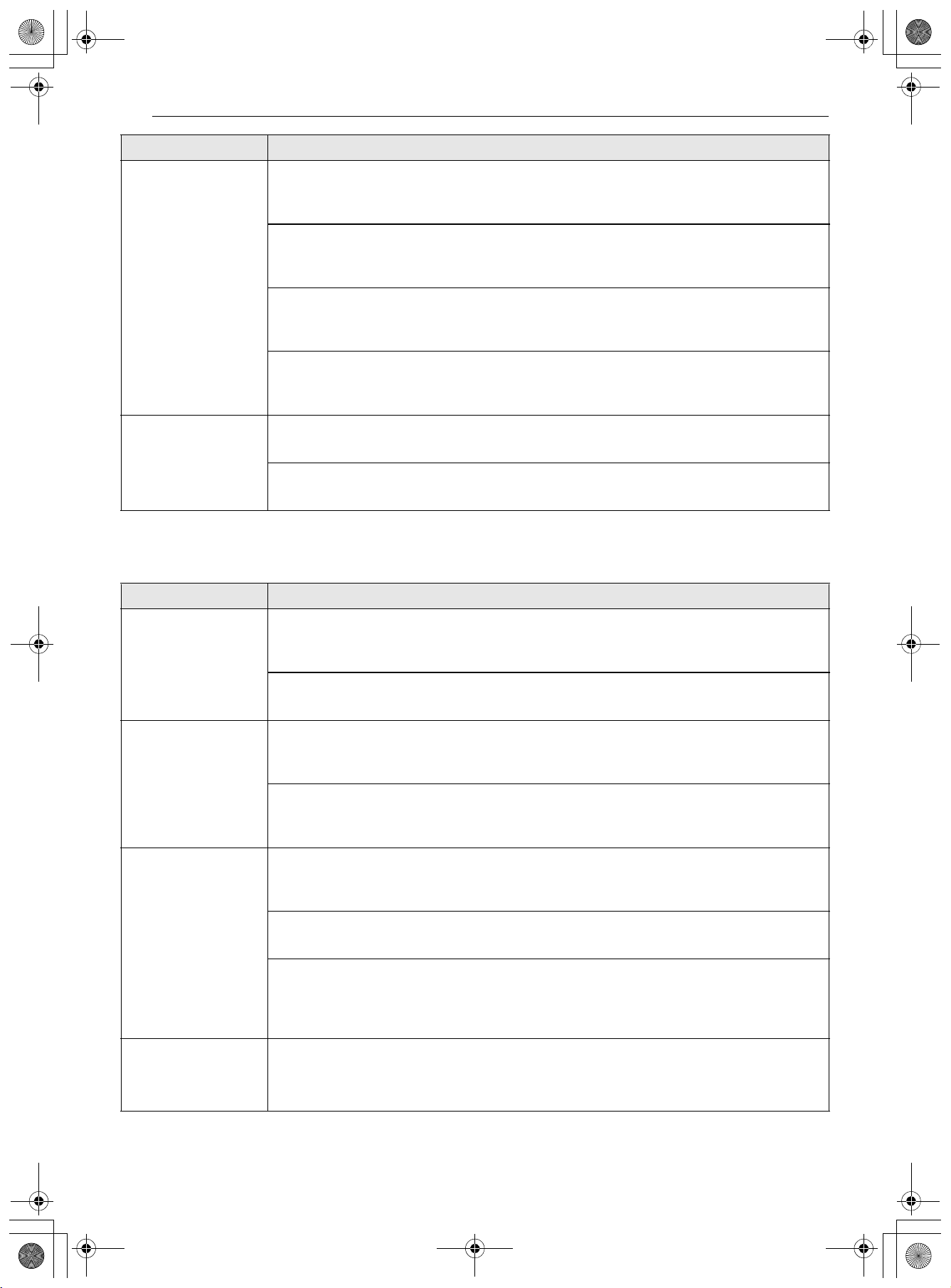
66 SOLUCIÓN DE PROBLEMAS
Partes y Características
El horno hace
demasiado humo
durante el asado.
La carne se encuentra muy cerca del elemento.
• Cambie la posición del estante para dejar un espacio adecuado entre la carne y el
elemento. Precaliente el elemento de asado para sellar los jugos.
No se ha preparado bien la carne.
• Quite el exceso de grasa de la carne. Corte los costados restantes de grasa para evitar que
se enrulen.
La asadera está mal colocada y no se escurre la grasa.
• Siempre coloque la rejilla sobre la asadera con las estrías hacia arriba y las ranuras hacia
abajo para que la grasa caiga dentro de la asadera.
Se ha acumulado grasa en las superficies del horno. La grasa antigua o las salpicaduras
de comida provocan humo excesivo.
• Es necesaria una limpieza regular cuando se asa frecuentemente.
Se junta humedad en
la ventana del horno
o sale vapor de la
ventilación del horno
Esto sucede al cocinar alimentos muy húmedos.
•Esto es normal.
Se usó demasiada agua para limpiar la ventana.
• No use demasiada agua para limpiar la ventana.
Problemas Causas posibles y solución
El reloj y el
temporizador no
funcionan.
El enchufe no está insertado completamente.
• Asegúrese de que el enchufe esté conectado a un tomacorriente con tensión y adecuada
conexión a tierra. Reemplace el fusible o reinicie el disyuntor.
Configuración de control del horno inadecuada
• Consulte "Cambio de configuración del horno" en el capítulo "FUNCIONAMIENTO".
La luz del horno no
funciona.
Es hora de reemplazar la bombilla o la bombilla está floja.
• Reemplace o ajuste la bombilla. Consulte la sección "Cambio de la luz del horno" en el
Manual del Propietario.
El enchufe de la estufa no está introducido completamente en el tomacorriente.
• Verifique que el enchufe eléctrico esté conectado a un tomacorriente con tensión y
adecuada conexión a tierra.
El horno no realiza
Self Clean. (En
algunos modelos)
La temperatura del horno es demasiado elevada para establecer la operación Self
Clean.
• Deje enfriar la estufa y reinicie los controles.
Los controles del horno no se configuraron correctamente.
• Consulte la sección Self Clean (Autolimpieza).
No se puede iniciar un ciclo Self Clean (Autolimpieza) si está activa la función Bloqueo
de Control/Bloqueo del horno.
• Consulte "Bloqueo de Control/Bloqueo" en la sección "Cambio de configuración del
horno".
La puerta del horno
no se abre después
de un ciclo Self Clean
(En algunos modelos)
El horno está demasiado caliente.
• Deje enfriar el horno por debajo de la temperatura de bloqueo.
Problemas Causas posibles y solución
es-us_main.book.book Page 66 Tuesday, February 3, 2026 8:20 AM
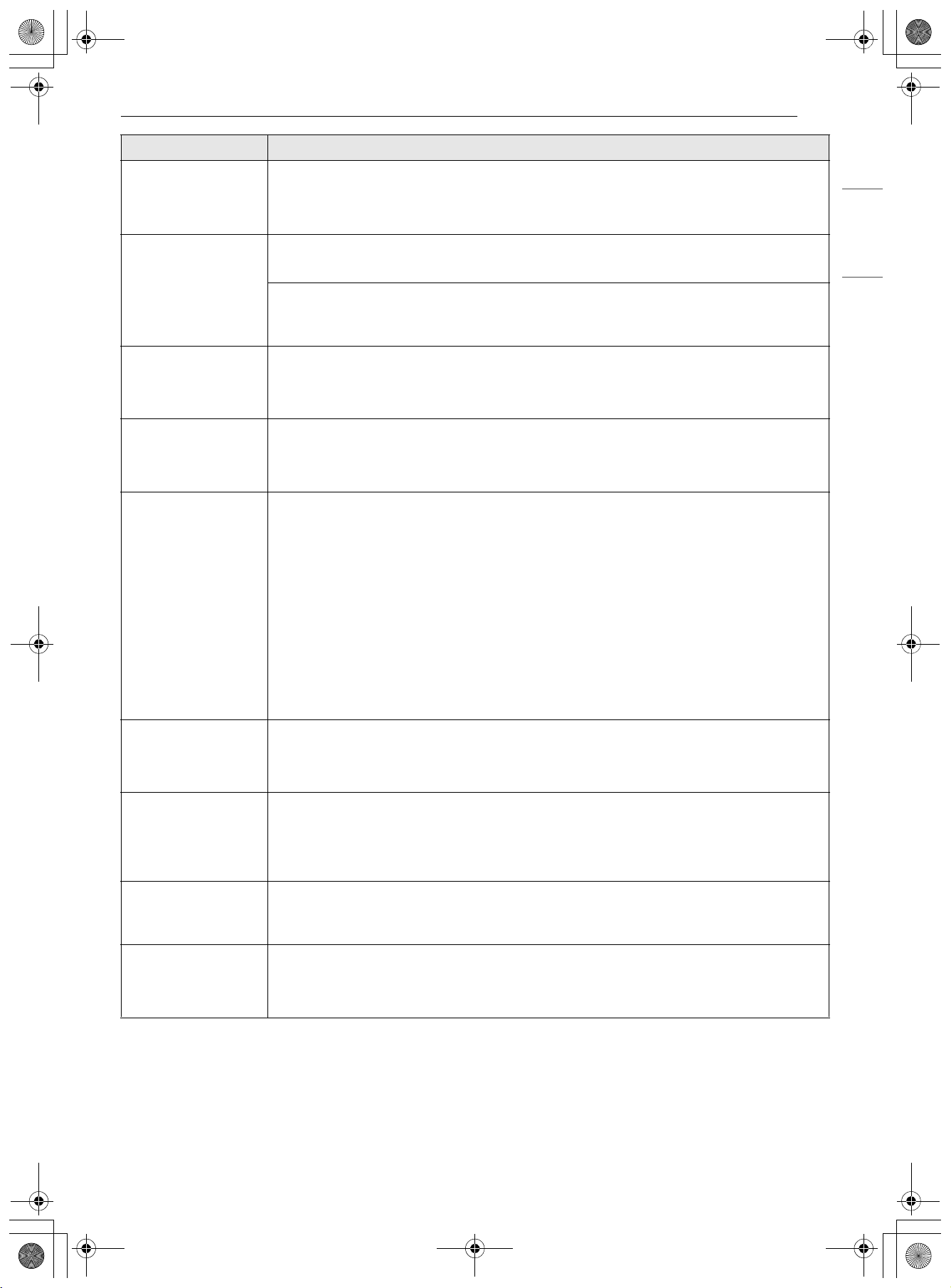
67SOLUCIÓN DE PROBLEMAS
ESPAÑOL
La puerta del horno
no se abre después
de un ciclo Self Clean
(En algunos modelos)
El control y la puerta pueden estar bloqueados.
• Deje enfriar el horno durante aproximadamente una hora después de completar un ciclo
Self Clean. Puede abrir la puerta cuando desaparezca el candado
k.
El horno no está
limpio después de un
ciclo Self Clean (En
algunos modelos)
Los controles del horno no se configuraron correctamente.
• Consulte la sección Self Clean (Autolimpieza).
El horno está muy sucio.
• Limpie los derrames difíciles antes de iniciar el ciclo de limpieza. Es posible que los hornos
con suciedad difícil necesiten otro ciclo Self Clean o durante más tiempo.
CLEAN (LIMPIAR) y la
puerta parpadean en
la pantalla (En
algunos modelos)
Se ha seleccionado el ciclo Self Clean, pero la puerta no está cerrada.
• Cierre la puerta del horno.
Aparece "Loc" en
pantalla cuando
quiere cocinar (En
algunos modelos)
El horno está bloqueado por la función Bloqueo de Control/Bloqueo.
• Desactive la función Bloqueo de Control/Bloqueo.
El control del horno
suena y aparece un
código de error F.
El control electrónico detectó una condición de falla.
• Desconecte la estufa de la corriente eléctrica durante cinco minutos y luego reconéctela. Si
el código de error de la función se repite, solicite mantenimiento.
- [Caso 1]
Código: F-3
Causa: clave de error de cortocircuito
- [Caso 2]
Código: F-9
Causa: el horno no calienta
• Revise la válvula de corte de gas principal o la válvula de corte de gas del horno y solicite
mantenimiento.
El control del horno
aparece código de
error 'Sb', '5b', 'S6',
'56'.
Este código no es un código de error. Indica que el modo Sabbath
sb del producto está
activado.
• Consulte la sección "Uso del Modo Sabbath" en el capítulo Funcionamiento.
Los estantes del
horno se limpiaron
en un ciclo Self
Clean. (En algunos
modelos)
Los estantes brillantes color plateado se limpiaron en un ciclo Self Clean.
• Aplique una pequeña cantidad de aceite vegetal en una toalla de papel y limpie los bordes
de los estantes del horno con ella. No utilice rociadores lubricantes.
Los dos puntos del
reloj parpadean
Esto significa que el producto se ha enchufado recién o que se ha interrumpido el
suministro eléctrico.
• Esto es normal. Reinicie el reloj y cualquier función de cocción.
Se puede ver una luz
a través de las
ventilaciones de aire
del horno.
Al ejecutar la función Asar, es normal ver una luz entre las ventilaciones de aire del
horno.
•Esto es normal.
Problemas Causas posibles y solución
es-us_main.book.book Page 67 Tuesday, February 3, 2026 8:20 AM
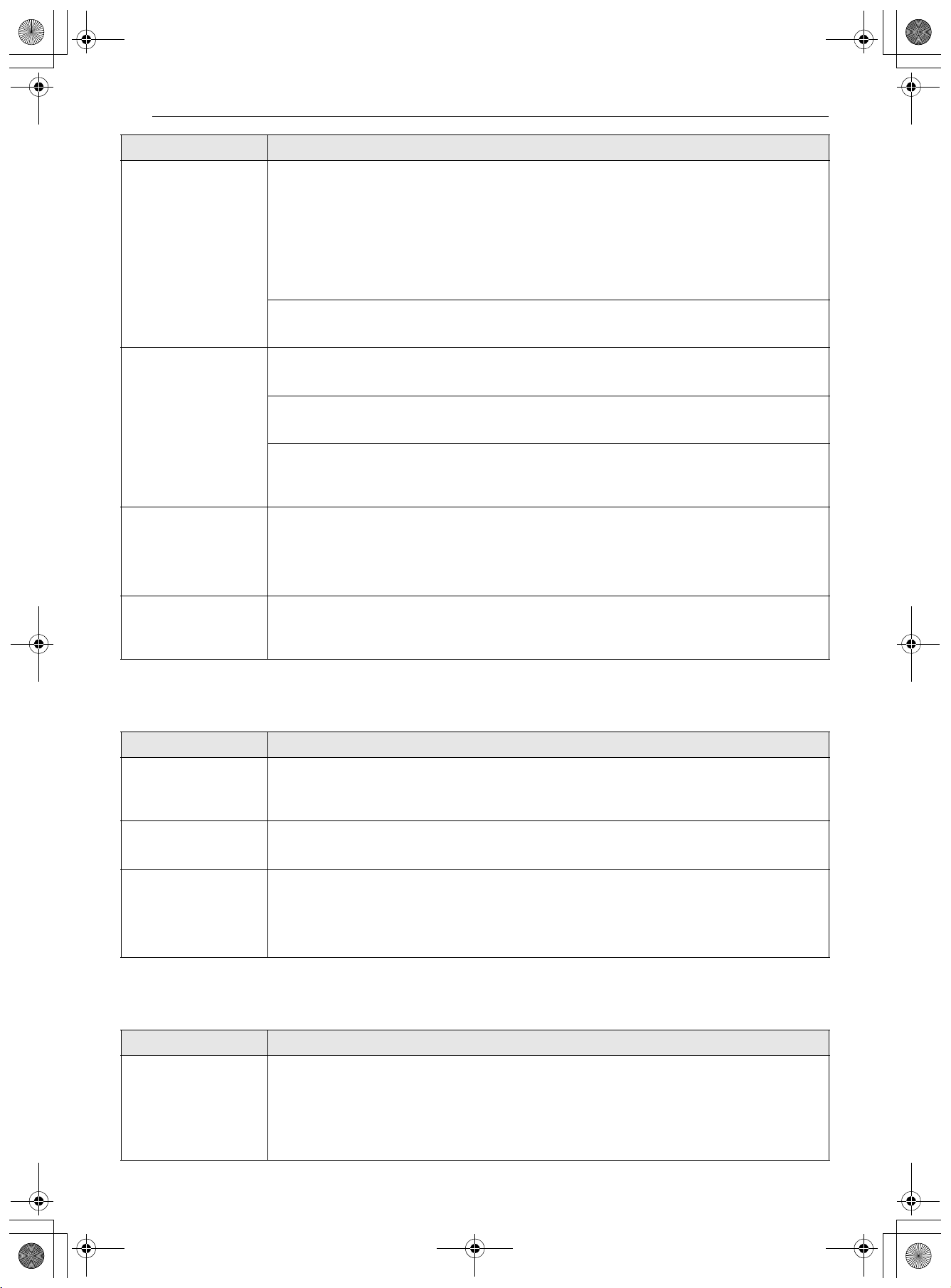
68 SOLUCIÓN DE PROBLEMAS
Ruidos
Wi-Fi
La estufa no está
nivelada.
Instalación deficiente.
• Coloque el estante en el centro del horno. Ubique un nivelador en el estante. Ajuste las
patas niveladoras en la base de la estufa hasta que el estante del horno esté nivelado.
• Asegúrese de que el piso esté nivelado y que sea lo suficientemente firme y estable para
soportar la estufa de manera adecuada.
• Si el piso está hundido o en pendiente, comuníquese con un carpintero para corregir la
situación.
La alineación del gabinete de la cocina puede hacer que la estufa parezca desnivelada.
• Asegúrese de que los gabinetes sean cuadrados y tengan espacio suficiente para la estufa.
No se puede mover
el aparato con
facilidad. El aparato
debe estar accesible
para el
mantenimiento.
Los gabinetes no son cuadrados o están instalados muy justos.
• Comuníquese con el fabricante o instalador para hacer que el aparato sea accesible.
La alfombra interfiere con la estufa.
• Deje espacio suficiente para elevar la estufa sobre la alfombra.
Dispositivo antivuelco conectado.
• Desinstale el dispositivo antivuelco para mover la estufa y vuelva a conectarlo después de
sacar la estufa para la limpieza, el mantenimiento o cualquier otro motivo.
El ventilador de
convección se
detiene. (Durante el
modo Horneado por
convección)
El ventilador de convección se detiene durante un ciclo de horneado por convección.
Esto sucede para lograr un calor más parejo durante el ciclo.
• No es una falla de la estufa y debe considerarse un funcionamiento normal.
Funcionamiento del
ventilador (Durante
el modo Horneado)
Esto se realiza para garantizar resultados uniformes de horneado.
• Es normal que el ventilador funcione periódicamente durante un ciclo normal de
horneado en el horno.
Problemas Causas posibles y solución
Ruido de crujidos o
chasquidos
Es el sonido del metal calentándose y enfriándose durante las funciones de cocción y
autolimpieza.
•Esto es normal.
Ruido del ventilador Un ventilador de convección puede encenderse y apagarse automáticamente.
•Esto es normal.
Al encender un solo
quemador, se oye un
sonido de clic en
todos los
quemadores.
Los encendedores con chispa eléctrica de los quemadores hacen un sonido de clic.
Todos los encendedores de chispa de la placa de cocción se activarán cuando se
encienda solo un quemador.
•Esto es normal.
Problemas Causas posibles y solución
Problemas para
conectar el
electrodoméstico y
el teléfono
inteligente a la red
Wi-Fi
La contraseña para la red Wi-Fi se introdujo de forma incorrecta.
• Elimine la red Wi-Fi doméstica y comience el proceso de conexión una vez más.
Problemas Causas posibles y solución
es-us_main.book.book Page 68 Tuesday, February 3, 2026 8:20 AM
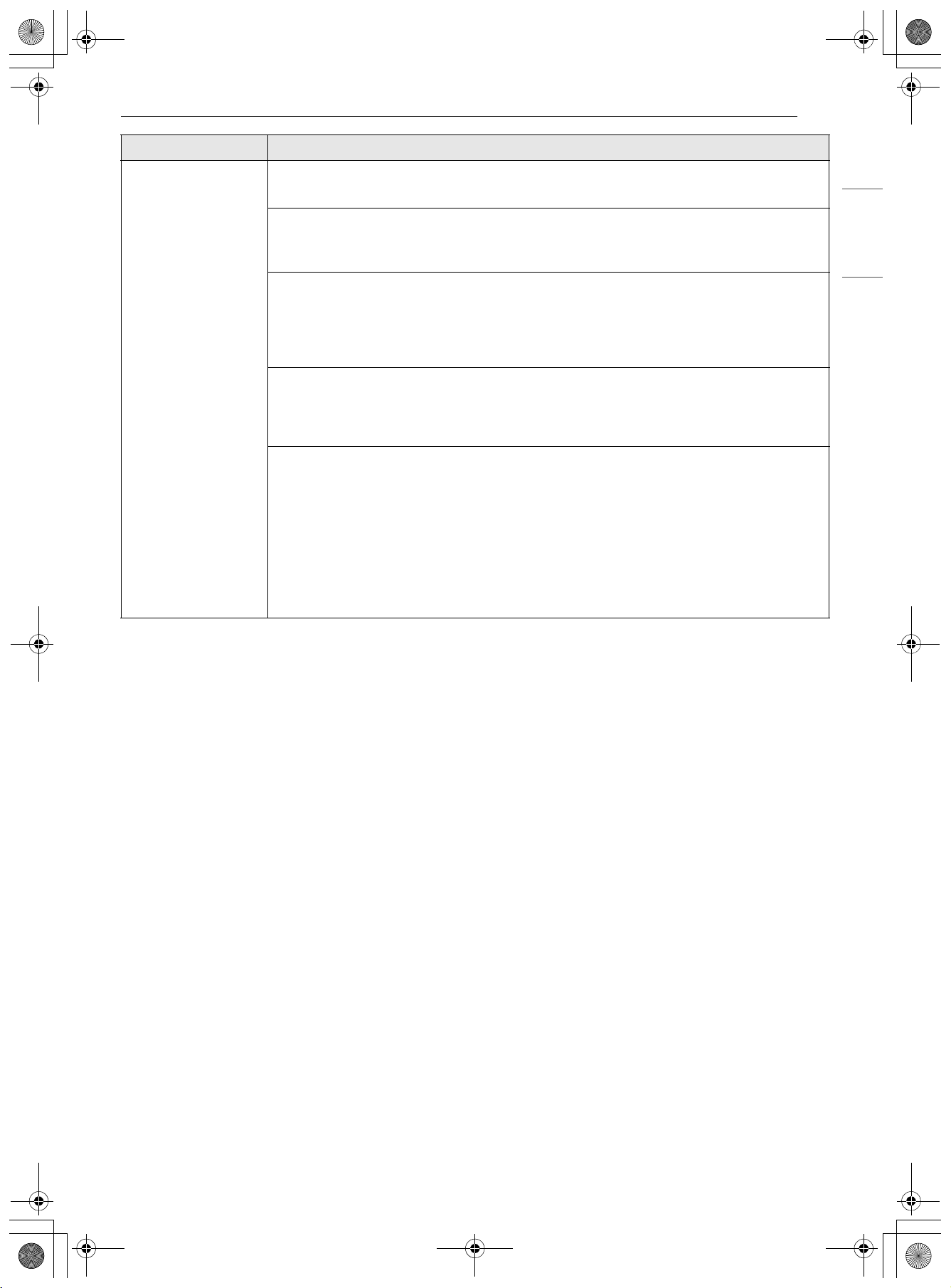
69SOLUCIÓN DE PROBLEMAS
ESPAÑOL
Problemas para
conectar el
electrodoméstico y
el teléfono
inteligente a la red
Wi-Fi
Los Datos Móviles para su teléfono inteligente están activados.
• Desactive la Red Móvil en su teléfono inteligente antes de conectar el electrodoméstico.
El nombre de la red inalámbrica (SSID) se ha configurado incorrectamente.
• El nombre de la red inalámbrica (SSID) debe ser una combinación de letras y números. (No
utilice símbolos especiales)
La frecuencia del enrutador no es de 2.4 GHz.
• Sólo se admite una frecuencia de enrutador de 2.4 GHz. Configure el enrutador
inalámbrico a 2.4 GHz y conecte el electrodoméstico a éste. Para verificar la frecuencia del
enrutador, consulte con su proveedor de servicios de internet o con el fabricante del
enrutador.
El electrodoméstico y el enrutador están demasiado alejados.
• Si el electrodoméstico se encuentra muy lejos del enrutador, puede que la señal sea débil y
que la conexión no sea configurada correctamente. Coloque el enrutador más cerca del
electrodoméstico o compre e instale un repetidor Wi-Fi.
Durante la configuración de Wi-Fi, la aplicación requiere una contraseña para conectar
el producto (en determinados teléfonos).
• Ubique el nombre de la red que comienza con "LG" en Configuración > Redes. Anote la
última parte del nombre de la red.
- Si el nombre de la red se asemeja a LGE_Appliance_XX-XX-XX, ingrese lge12345.
- Si el nombre de la red se asemeja a LGE_Appliance_XXXX, ingrese XXXX dos veces como
su contraseña. Por ejemplo, si el nombre de la red aparece como LGE_Appliance_8b92,
debería ingresar 8b928b92 como su contraseña. En esta instancia, la contraseña detecta
mayúsculas y minúsculas, y los últimos 4 caracteres son únicos a su electrodoméstico.
Problemas Causas posibles y solución
es-us_main.book.book Page 69 Tuesday, February 3, 2026 8:20 AM
70 GARANTÍA LIMITADA
GARANTÍA LIMITADA
EE. UU.
TÉRMINOS Y CONDICIONES
AVISO DE ARBITRAJE: ESTA GARANTÍA LIMITADA CONTIENE UNA CLÁUSULA DE ARBITRAJE QUE LE
DEMANDA A USTED Y A LG ELECTRONICS (“LG”) RESOLVER CONFLICTOS A TRAVÉS DE UN ARBITRAJE
VINCULANTE EN LUGAR DE HACERLO EN EL TRIBUNAL, A MENOS QUE USTED DECIDA NO PARTICIPAR.
EN EL ARBITRAJE, NO ESTÁN PERMITIDAS LAS ACCIONES COLECTIVAS NI LOS JUICIOS CON JURADO.
VEA A CONTINUACIÓN LA SECCIÓN “PROCEDIMIENTO PARA RESOLVER CONFLICTOS”.
Si su Estufa de gas LG (“Producto”) fallara debido a defectos de materiales o fabricación en el uso
doméstico normal y correcto, durante el período de garantía que se establece a continuación, LG reparará
o reemplazará el Producto, según su criterio. Esta garantía limitada solo es válida para el comprador
minorista original del Producto (“Usted”), y solo se aplica cuando la compra es legal y se utiliza dentro de
los Estados Unidos, incluidos los territorios estadounidenses.
• Los productos y las piezas de repuesto están cubiertos durante el tiempo restante del período original
de garantía o noventa (90) días, lo que resulte mayor.
• Los productos y las piezas de repuesto pueden ser nuevos, reparados, reacondicionados o reconstruidos
por la fábrica.
• Los productos o las piezas reemplazadas serán propiedad de LG.
• Es necesario presentar prueba de la compra minorista especificando el modelo del Producto y la fecha
de compra para obtener el servicio de garantía conforme a la presente garantía limitada.
SALVO LO PROHIBIDO POR LA LEY, TODA GARANTÍA DE COMERCIALIZACIÓN O IDONEIDAD
IMPLÍCITA, PARA UN PROPÓSITO PARTICULAR EN EL PRODUCTO, ESTÁ LIMITADA A LA DURACIÓN DE
LA GARANTÍA ARRIBA EXPRESADA. BAJO NINGUNA CIRCUNSTANCIA DEBERÁ LG O SUS
DISTRIBUIDORES/REPRESENTANTES SER RESPONSABLE POR CUALQUIER DAÑO INDIRECTO,
INCIDENTAL, CONSECUENTE, ESPECIAL, O PUNITIVO, LO CUAL INCLUYE PERO NO SE LIMITA A,
PÉRDIDA DE FONDOS DEL COMERCIO, GANANCIAS PERDIDAS, INTERRUPCIÓN DEL TRABAJO,
DETERIORO DE OTROS BIENES, COSTO DE REMOVER Y REINSTALAR EL PRODUCTO, PÉRDIDA DE USO, O
CUALQUIER OTRO DAÑO YA SEA BASADO EN CONTRATO, PERJUICIO, U OTROS. LA RESPONSABILIDAD
TOTAL DE LG, EN CASO EXISTA, NO EXCEDERÁ EL PRECIO QUE USTED PAGÓ POR ADQUIRIR EL
PRODUCTO.
ALGUNOS ESTADOS NO PERMITEN LA EXCLUSIÓN O LIMITACIÓN DE DAÑOS INCIDENTALES O
EMERGENTES, O LIMITACIONES A LA DURACIÓN DE LA GARANTÍA IMPLÍCITA, POR LO QUE LA
EXCLUSIÓN O LIMITACIÓN ANTERIORMENTE MENCIONADA PODRÍAN NO CORRESPONDER EN SU
CASO. ESTA GARANTÍA LIMITADA LE OTORGA DERECHOS LEGALES ESPECÍFICOS Y ES POSIBLE QUE
USTED CUENTE CON OTROS DERECHOS QUE VARÍAN SEGÚN EL ESTADO.
ESTA GARANTÍA LIMITADA NO CUBRE LO SIGUIENTE:
• Viajes del servicio técnico para entregar, buscar o instalar el producto, instruir al cliente sobre la
operación del mismo, corregir el cableado o las reparaciones/instalaciones no autorizadas.
• Daño o fallo del producto al operar durante fallas e interrupciones del suministro eléctrico, o resultado
de un servicio eléctrico inadecuado.
Período de garantía Alcance de la garantía CÓMO SE MANEJA EL SERVICIO
Un (1) año a partir de la
fecha de compra
minorista original, o
desde la fecha de
entrega según la ley
aplicable
Piezas y mano de obra
(solo piezas internas /
funcionales)
LG suministrará toda la mano de obra y el
mantenimiento a domicilio sin cargo para reemplazar
las piezas defectuosas.
es-us_main.book.book Page 70 Tuesday, February 3, 2026 8:20 AM
71GARANTÍA LIMITADA
ESPAÑOL
• Daños o fallos del Producto causados por tuberías de agua rotas o con fugas, tuberías de agua
congeladas, líneas de desagüe obstruidas, suministro de agua inadecuado o interrumpido, o suministro
de aire inadecuado.
• Daño o fallo del producto resultantes de operar el producto en una atmósfera corrosiva o contraria a las
instrucciones detalladas en el manual del propietario del producto.
• Daños o fallos del producto causados por accidentes, pestes y alimañas, rayos, viento, incendio,
inundaciones, hechos de fuerza mayor, o cualquier otra causa fuera del control de LG.
• Daños o fallos del Producto causados por modificaciones o alteraciones no autorizadas, o por utilizar el
Producto para fines distintos de lo previsto, o pérdida de agua cuando el Producto no se instaló
adecuadamente.
• Daños o fallos del Producto causados por corriente eléctrica o voltaje incorrectos, o códigos de cañería.
• Daños o fallos del producto causados por el transporte, almacenamiento y/o manejo, incluye rayas,
muescas, astillados y/u otros daños al acabado del producto, a menos que tales daños se informen
dentro del plazo de una (1) semana de la entrega.
• Daños o fallos del producto resultantes de mal uso, abuso, instalación, reparación o mantenimiento
incorrectos. Una reparación incorrecta incluye el uso de piezas no autorizadas, aprobadas o
especificadas por LG. La instalación o el mantenimiento inadecuados incluye aquellos contrarios a lo
especificado en el manual del usuario del producto.
• Daños o fallos del Producto causados por el uso de piezas, componentes, accesorios, productos de
limpieza consumibles, u otros productos o servicios no autorizados por LG.
• Daños o artículos faltantes con la caja abierta o que hayan estado en exhibición.
• Productos reacondicionados o cualquier producto vendido con los avisos "En el estado actual", "En el
sitio actual", "Con todos sus defectos" o similares.
• Productos cuyos números de serie originales hayan sido retirados, alterados o no se puedan determinar
fácilmente.
• Aumentos en los costos de los servicios públicos y otros gastos adicionales de dichos servicios.
• Cualquier ruido asociado con la operación normal.
• Productos utilizados para un uso distinto del habitual y adecuado del hogar (por ejemplo, entornos
comerciales, empresariales o industriales, incluidos establecimientos minoristas o de servicios
alimenticios o cualquier establecimiento de alojamiento comercial o alquiler transitorio) o cualquier uso
contrario al indicado en el manual del propietario del producto.
• Costos asociados con la remoción y reinstalación del Producto para reparaciones o la remoción y
reinstalación del Producto si está instalado en una ubicación inalcanzable o no está instalado de acuerdo
con el Manual del propietario del producto.
• Accesorios, componentes extraíbles o partes consumibles (por ejemplo, estantes, compartimentos de la
puerta, cajones, filtros de agua o aire, rejillas, bombillas, baterías, etc. según corresponda), excepto las
partes internas/funcionales cubiertas por esta garantía limitada.
• Costo de la conversión del producto de gas natural a gas LP o viceversa.
Esta garantía limitada no cubre
es-us_main.book.book Page 71 Tuesday, February 3, 2026 8:20 AM
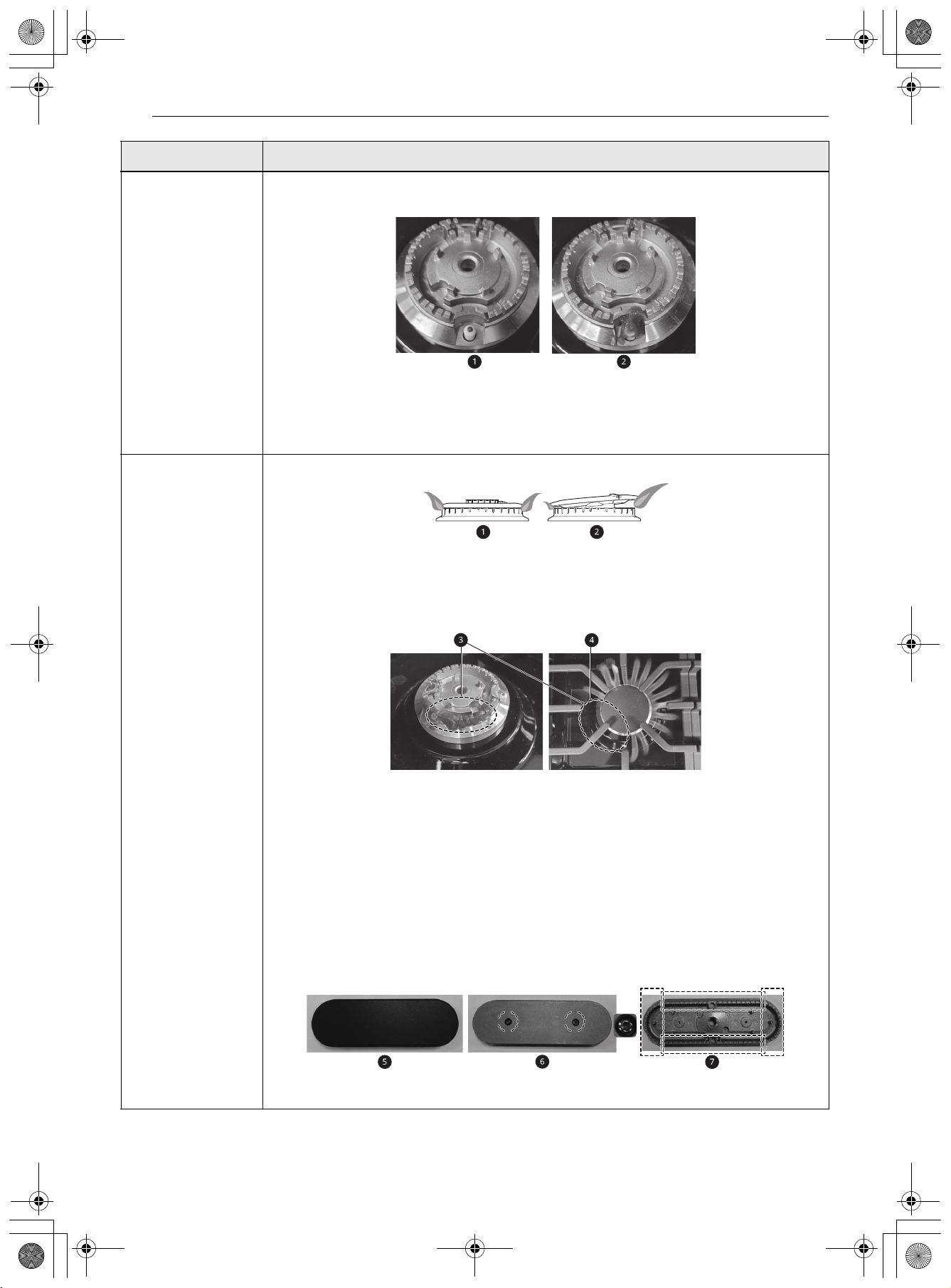
72 GARANTÍA LIMITADA
Problema Posible causa y prevención
Los quemadores
no encienden.
Los puertos o electrodos del quemador que estén sucios u obstruidos impedirán el
funcionamiento correcto del quemador.
a ACEPTAR
b No funciona (debe limpiarse)
• Revise y limpie el electrodo de gas.
Llama desigual Instalación incorrecta de la tapa del quemador
a La cabeza del quemador está asentada adecuadamente.
b La cabeza del quemador NO está asentada adecuadamente.
• Revise la instalación de la cabeza y la tapa del quemador.
Los puertos del quemador están obstruidos con restos de alimentos
c Los puertos están bloqueados por suciedad
d Llamas desiguales
• Los residuos endurecidos deben removerse con un cepillo de dientes.
NOTA
• Limpieza del quemador ovalado
1) Abra la tapa del quemador e.
2) Retire los 2 tornillos f.
3) Limpie los residuos con un cepillo de dientes.
g Limpie la parte resaltada con un cepillo de dientes.
es-us_main.book.book Page 72 Tuesday, February 3, 2026 8:20 AM
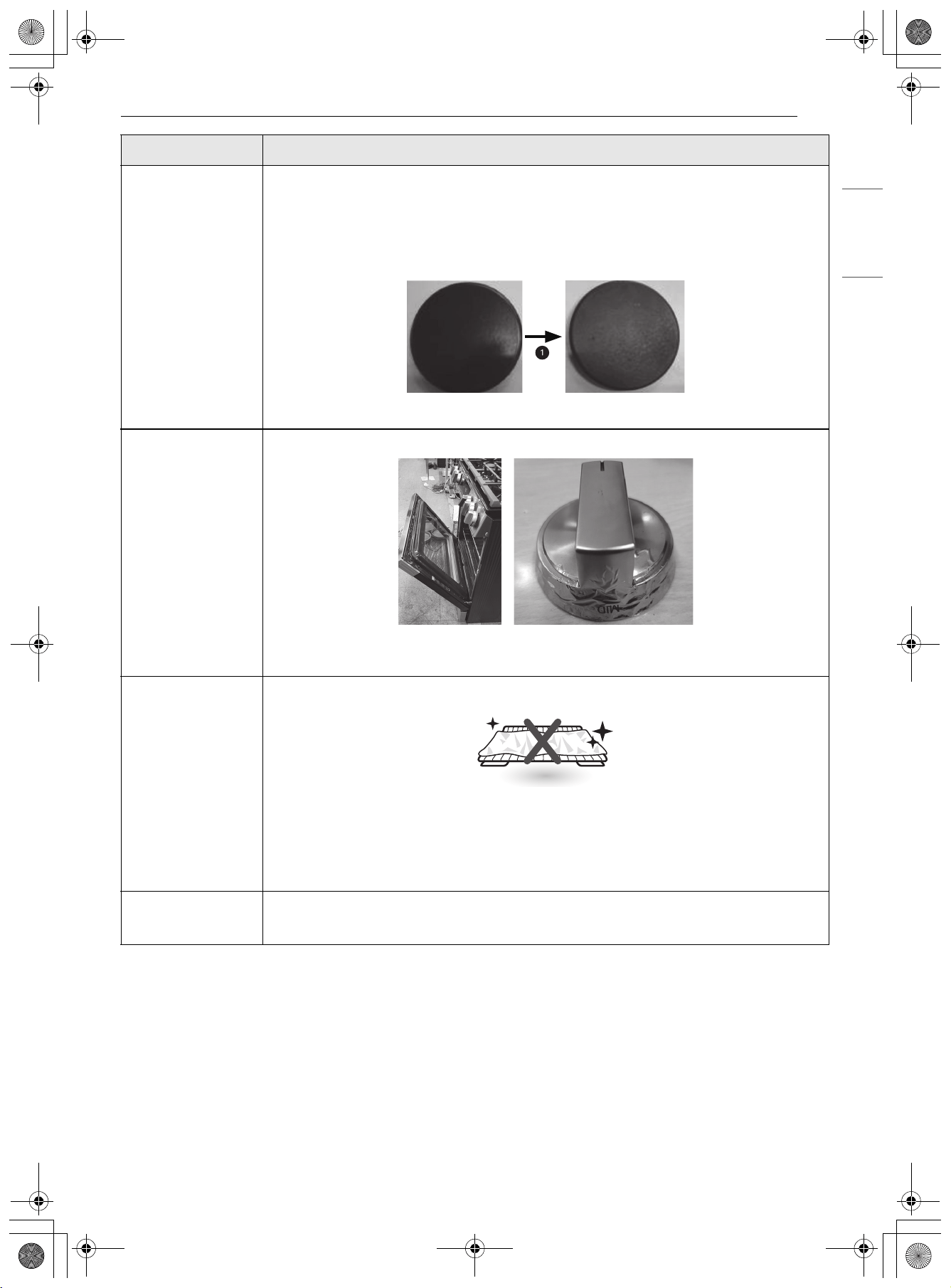
73GARANTÍA LIMITADA
ESPAÑOL
La tapa del
quemador cambió
de color y perdió
brillo
Rayas
• No use esponjas metálicas ni limpiadores abrasivos.
Uso de detergente o limpiadores abrasivos
• Para remover los alimentos quemados, sumerja los cabezales de los
quemadores en agua caliente durante 20 a 30 minutos. (No use detergente)
a Se pierde el brillo.
Perillas derretidas Uso inadecuado
• No deje la puerta en la posición de detención durante del modo Asar/Hornear ni
inmediatamente después de cocinar.
El horno o los
estantes están
manchados
después de usar
papel de aluminio
El papel de aluminio se derritió dentro del horno
• Nunca cubra la base del horno ni un estante completo con materiales como
papel de aluminio.
• Si ya se ha derretido papel de aluminio en el horno, esto no afectará su
rendimiento.
La llama o la
energía es débil
La presión de gas puede ser baja
• Consulte primero con su proveedor de gas.
Problema Posible causa y prevención
es-us_main.book.book Page 73 Tuesday, February 3, 2026 8:20 AM
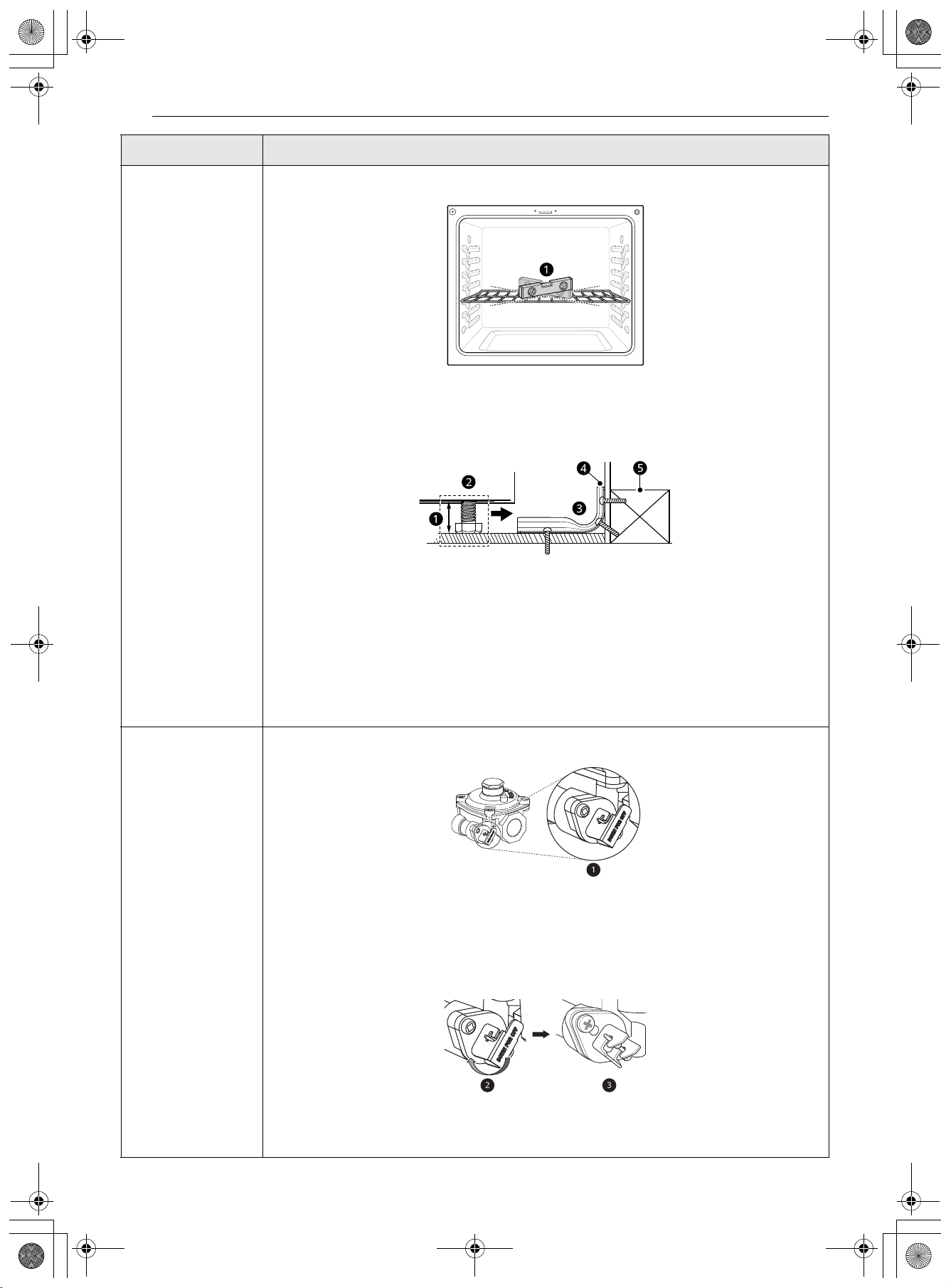
74 GARANTÍA LIMITADA
La superficie no
está nivelada
El horno está
inclinado
La estufa no está nivelada
• Primero consulte con el instalador.
• Use un nivelador de carpintero a para verificar la nivelación.
El dispositivo antivuelco no está instalado correctamente
a Aproximadamente 0.65" (16.5 mm)
b Nivele ambos lados de la estufa
c El tornillo debe ser apto para madera u hormigón
d Soporte antivuelco
e Placa de pared
• Primero consulte con el instalador.
El horno muestra
un código de error
(F9, F19), pero los
quemadores de la
placa de cocción
están
funcionando.
La válvula reguladora está cerrada.
a Posición cerrada de la palanca
• Compruebe que el regulador de la válvula esté en posición abierta.
• Si el regulador se encuentra en posición cerrada, rote la palanca a la posición
abierta.
b Posición cerrada de la palanca
c Posición abierta de la palanca
Problema Posible causa y prevención
es-us_main.book.book Page 74 Tuesday, February 3, 2026 8:20 AM
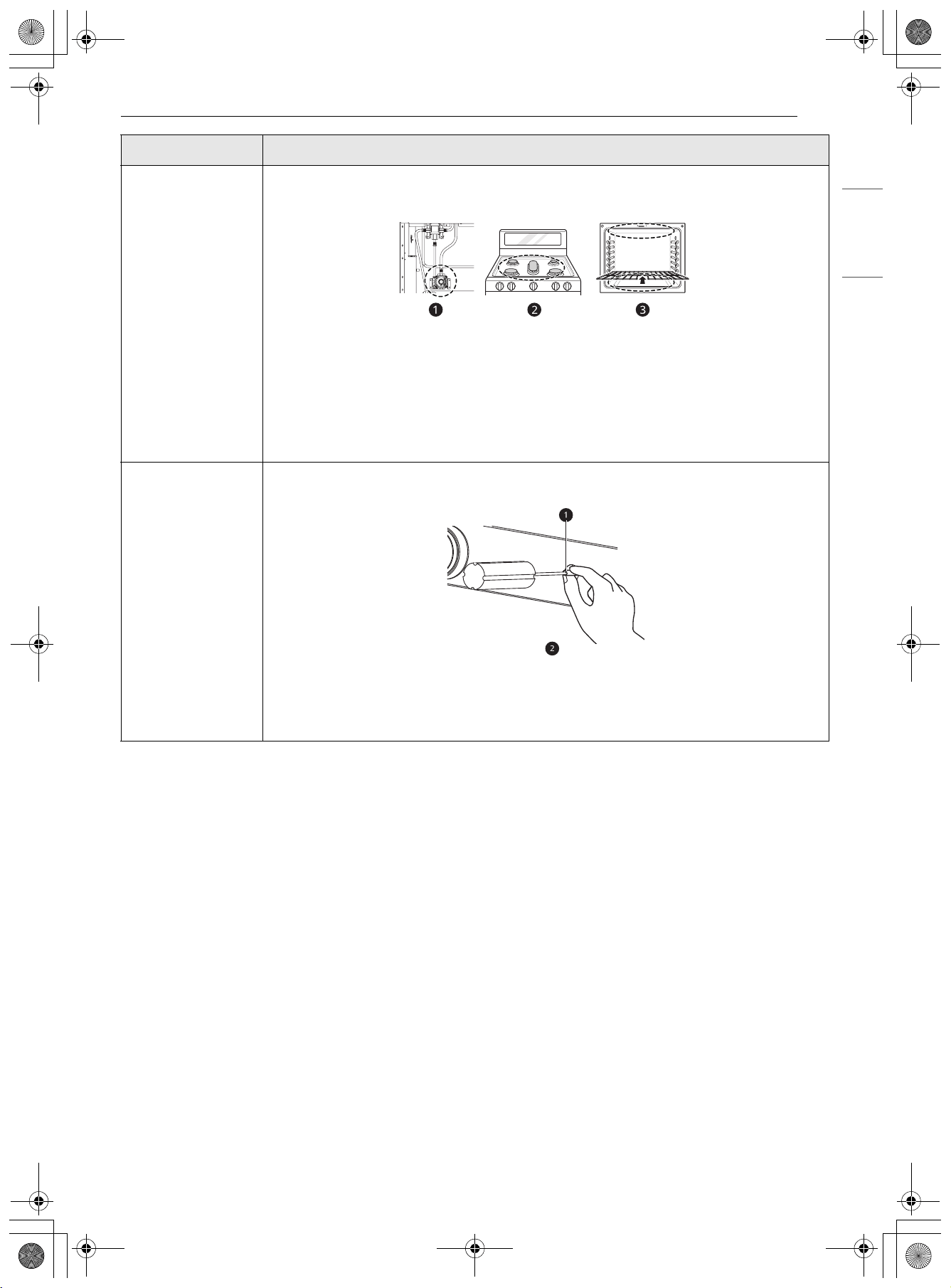
75GARANTÍA LIMITADA
ESPAÑOL
Las llamas son
demasiado
grandes en la
placa de cocción
convertida (NP
~LP)
El instalador no realizó parte de la conversión. (Revise 3 partes: regulador, válvula
de placa de cocción, válvula de asar/hornear.)
a Regulador
b Válvula de placa de cocción
c Válvula de asar/hornear
• Primero consulte con el instalador.
• Consulte el manual de instalación.
La llama es
demasiado
pequeña o
demasiado grande
1. Presión de gas variable
2. El instalador no verificó
a Eje de la válvula
b Tornillo de ajuste central
• Primero consulte con el instalador.
Problema Posible causa y prevención
es-us_main.book.book Page 75 Tuesday, February 3, 2026 8:20 AM
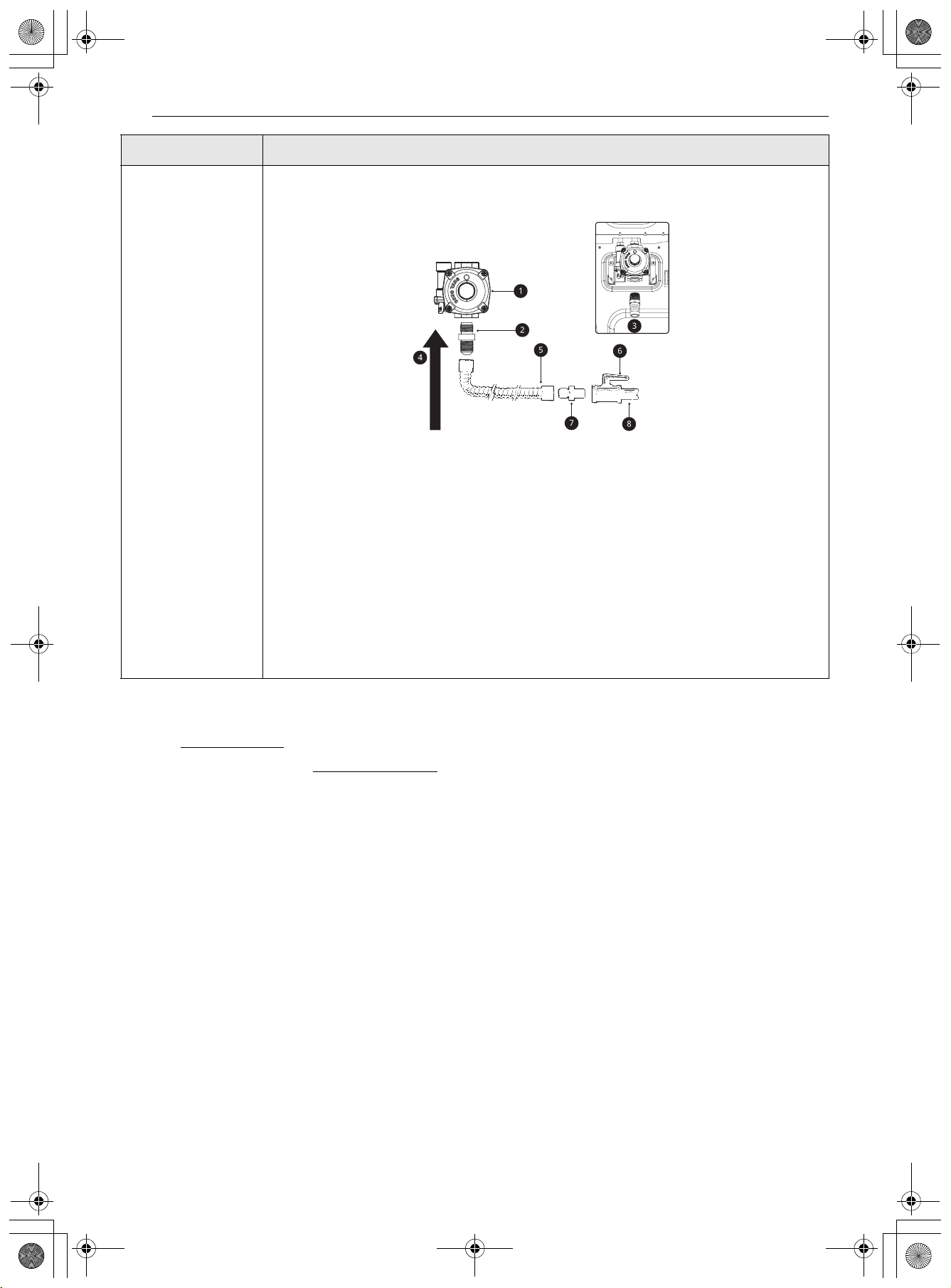
76 GARANTÍA LIMITADA
El costo de la reparación o el reemplazo en estas circunstancias excluidas estará a su cargo.
PARA OBTENER SERVICIO EN GARANTÍA E INFORMACIÓN ADICIONAL
Llame al 1-800-243-0000
y seleccione la opción apropiada desde el menú.
O visite nuestro sitio web en http://www.lg.com
O por correo: LG Electronics Customer Service P.O. Box 240007 Huntsville, AL 35813 ATTN: CIC
PROCEDIMIENTO PARA RESOLVER DISPUTAS:
TODOS LOS CONFLICTOS ENTRE USTED Y LG QUE SURJAN FUERA DE O RELACIONADOS DE ALGUNA
MANERA CON ESTA GARANTÍA LIMITADA O CON EL PRODUCTO, SE RESOLVERÁN EXCLUSIVAMENTE A
TRAVÉS DE UN ARBITRAJE VINCULANTE Y NO EN UNA CORTE DE JURISDICCIÓN GENERAL. ARBITRAJE
VINCULANTE SIGNIFICA QUE USTED Y LG RENUNCIAN AL DERECHO DE UN JUICIO CON JURADO Y A
REALIZAR O PARTICIPAR EN UNA DEMANDA COLECTIVA.
Definiciones. Para el propósito de esta sección, las referencias a “LG” significan: LG Electronics U.S.A., Inc.,
sus empresas matrices, subsidiarias y filiales y cada uno de sus directivos, directores, empleados, agentes,
beneficiarios, predecesores en interés, sucesores, cesionarios y proveedores; las referencias a “conflicto” o
“reclamación” incluirán cualquier conflicto, reclamo o controversia de cualquier tipo, sin importar (ya sea
basado en contrato, agravio, estatuto, regulación, ordenanza, fraude, falsa representación o cualquier
teoría legal o equitativa) que surja de o esté relacionada con cualquier forma de venta, condición o
desempeño del producto o de esta Garantía Limitada.
Aviso de disputa. En caso de que usted desee iniciar un procedimiento de arbitraje, primero debe
notificar a LG por escrito al menos 30 días antes de iniciar el arbitraje enviando una carta a LG a LG
Electronics, USA, Inc. Atención: Legal Department- Arbitration 111 Sylvan Avenue, Englewood Cliffs, NJ
07632. Usted y LG aceptan participar en discusiones de buena fe en un intento de resolver su reclamo de
manera amistosa. En la carta debe proporcionar su nombre, dirección y número de teléfono; identificar el
Olor a gas Conexión incorrecta
Montaje del conector flexible
a Regulador de presión
b Adaptador de 1/2"
c Adaptador de 1/2"
d Flujo de gas a la estufa
e Conector flexible (6 pies máx.)
f Válvula de corte de gas
g Adaptador de 1/2"
h Tubería de gas de 1/2" o 3/4"
• Primero consulte con el instalador.
Problema Posible causa y prevención
es-us_main.book.book Page 76 Tuesday, February 3, 2026 8:20 AM
77GARANTÍA LIMITADA
ESPAÑOL
producto que es objeto de la reclamación; y describir la naturaleza del reclamo y el remedio que busca. Si
usted y LG no pueden resolver la disputa dentro de 30 días, cualquiera de las partes puede proceder a
presentar una demanda de arbitraje.
Acuerdo de arbitraje vinculante y renuncia de demanda colectiva. En caso de no resolver la disputa
durante el período de 30 días después de enviar una notificación por escrito a LG, Usted y LG se
comprometen a resolver cualquier reclamo entre nosotros, solamente a través de arbitraje vinculante
sobre una base individual, a menos que usted se excluya, conforme a lo dispuesto a continuación.
Cualquier conflicto entre usted y LG no estarán combinados o consolidados con una controversia
relacionada con cualquier otro producto o reclamo de otra persona o entidad. Más específicamente y sin
prejuicio de lo anterior, no procederá bajo ninguna circunstancia cualquier disputa entre usted y LG como
parte de una acción colectiva o representativa. En lugar del arbitraje, cualquiera de las partes podrá iniciar
una acción individual en la corte de reclamos menores, pero tales acciones en la corte de reclamos
menores no podrán ser realizadas en una acción colectiva o representativa.
Normas y procedimientos de arbitraje. Para comenzar con el arbitraje de un reclamo, usted o LG deben
realizar una demanda escrita para arbitraje. El arbitraje será administrado por la Asociación Americana de
Arbitraje (AAA) y se llevará a cabo ante un árbitro único bajo las Normas de Arbitraje del Consumidor de la
AAA, que tienen efecto al momento de inicio del arbitraje (en adelante “Normas de la AAA”) y bajo los
procedimientos establecidos en esta sección. Las Normas de la AAA están disponibles en línea en
www.adr.org/consumer
. Envíe una copia de su solicitud de arbitraje por escrito, así como una copia de
esta disposición, a la AAA de la forma descrita en las Normas de la AAA. También debe enviar una copia de
su solicitud por escrito a LG en LG Electronics, USA, Inc. Atención: Legal Department-Arbitration 111 Sylvan
Avenue, Englewood Cliffs, NJ 07632. Si hay un conflicto entre las Normas de la AAA y las reglas establecidas
en esta sección, prevalecerán dichas reglas de esta sección. Esta disposición de arbitraje se rige por la Ley
Federal de Arbitraje. El juicio se puede introducir en el laudo arbitral en cualquier tribunal de jurisdicción
competente. Todos son temas para que el árbitro tome sus decisiones, excepto aquellos asuntos relativos
al alcance y aplicabilidad de la cláusula de arbitraje y de la capacidad de arbitraje de la controversia para
que el tribunal decida. El árbitro se regirá por los términos de esta disposición.
Legislación vigente. La legislación del estado de su residencia regirá esta Garantía Limitada, así como
todas las disputas entre nosotros, salvo que sea invalidada o inconsistente con leyes federales aplicables.
Tarifas / Costos. Usted no debe pagar ninguna tarifa para comenzar un arbitraje. Al recibir su solicitud de
arbitraje por escrito, LG pagará todos los gastos administrativos rápidamente a la AAA, a menos que usted
solicite más de $25,000.00 por daños, en cuyo caso el pago de estos gastos se regirá por las Normas de la
AAA. Salvo disposición contraria prevista en el presente documento, LG pagará a la AAA todos los gastos
documentales, administrativos y de arbitraje para cualquier arbitraje iniciado, de conformidad con las
Normas de la AAA y esta disposición de arbitraje. Si usted prevalece en el arbitraje, LG pagará los
honorarios y gastos de sus abogados, siempre y cuando sean razonables, considerando factores que
incluyen, entre otros, el monto de la compra y el monto del reclamo. No obstante lo anterior, si la ley
aplicable permite una adjudicación de honorarios y gastos razonables de abogados, un árbitro puede
otorgarlos en la misma medida que lo haría un tribunal. Si el árbitro considera que la sustancia de su
reclamo o la reparación solicitada en la demanda es frívola o se utiliza para un propósito inadecuado
(calificado según las normas establecidas en la Norma Federal de Procedimiento Civil 11 (b)), el pago de
todos los honorarios de arbitraje se regirá por las Normas de la AAA. En tal situación usted se compromete
a reembolsar a LG todos los fondos erogados previamente por ella, cuyo pago es, por otra parte, su
obligación, según las Normas de la AAA. Salvo disposición contraria, LG renuncia a cualquier derecho que
pudiera tener para solicitarle los honorarios y gastos de sus abogados, si LG prevalece en el arbitraje.
Audiencias y ubicación. Si su reclamo es por $25,000 o menos, usted puede optar que el arbitraje sea
realizado únicamente sobre la base de: (1) documentos presentados al árbitro, (2) a través de una
audiencia telefónica o (3) por una audiencia en persona, según lo establecido por las Normas de la AAA. Si
su reclamo excede $25,000, el derecho a una audiencia estará determinado por las Normas de la AAA.
Cualquier audiencia de arbitraje en persona se realizará en un lugar dentro del distrito judicial federal en
el cual resida, a menos que ambos acuerden otra ubicación o estemos de acuerdo con el arbitraje
telefónico.
Exclusión voluntaria. Usted puede optar por no participar en este procedimiento de resolución de
disputas. Si opta por no participar, ni usted ni LG pueden exigir a la otra parte que participe en un
procedimiento de arbitraje. Para optar por no participar, usted debe enviar un aviso a LG a más tardar 30
días calendario a partir de la fecha de compra del producto por parte del primer comprador consumidor ya
sea (i) enviando un correo electrónico a [email protected]
, con el asunto: “Exclusión voluntaria del arbitraje”
es-us_main.book.book Page 77 Tuesday, February 3, 2026 8:20 AM
78 GARANTÍA LIMITADA
o (ii) llamando al 1-800-980-2973. Debe incluir lo siguiente en el correo electrónico de exclusión voluntaria
o proporcionar por teléfono: (a) su nombre y dirección; (b) la fecha en la que se compró el producto; (c) el
nombre del modelo o el número de modelo del producto; y (d) el número de serie (el número de serie se
puede encontrar (i) en el producto; o (ii) en línea accediendo a https://www.lg.com/us/support
al hacer clic
en "How do I find my model number?”).
Usted sólo puede optar por no participar en el procedimiento de resolución de disputas de la manera
descrita anteriormente (es decir, por correo electrónico o por teléfono); ninguna otra forma de notificación
será efectiva para optar por no participar en este procedimiento de resolución de disputas. La exclusión
voluntaria de este procedimiento de resolución de disputas no afectará la cobertura de la Garantía
limitada de ninguna manera y usted seguirá disfrutando de todos los beneficios de la Garantía limitada. Si
conserva este producto y no opta por no participar, acepta todos los términos y condiciones de la
disposición de arbitraje descrita anteriormente.
es-us_main.book.book Page 78 Tuesday, February 3, 2026 8:20 AM
Memorándum
es-us_main.book.book Page 79 Tuesday, February 3, 2026 8:20 AM
Memorándum
es-us_main.book.book Page 79 Tuesday, February 3, 2026 8:20 AM
Memorándum
es-us_main.book.book Page 79 Tuesday, February 3, 2026 8:20 AM
Memorándum
es-us_main.book.book Page 79 Tuesday, February 3, 2026 8:20 AM
Memorándum
es-us_main.book.book Page 79 Tuesday, February 3, 2026 8:20 AM
es-us_main.book.book Page 79 Tuesday, February 3, 2026 8:20 AM