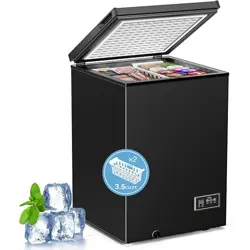
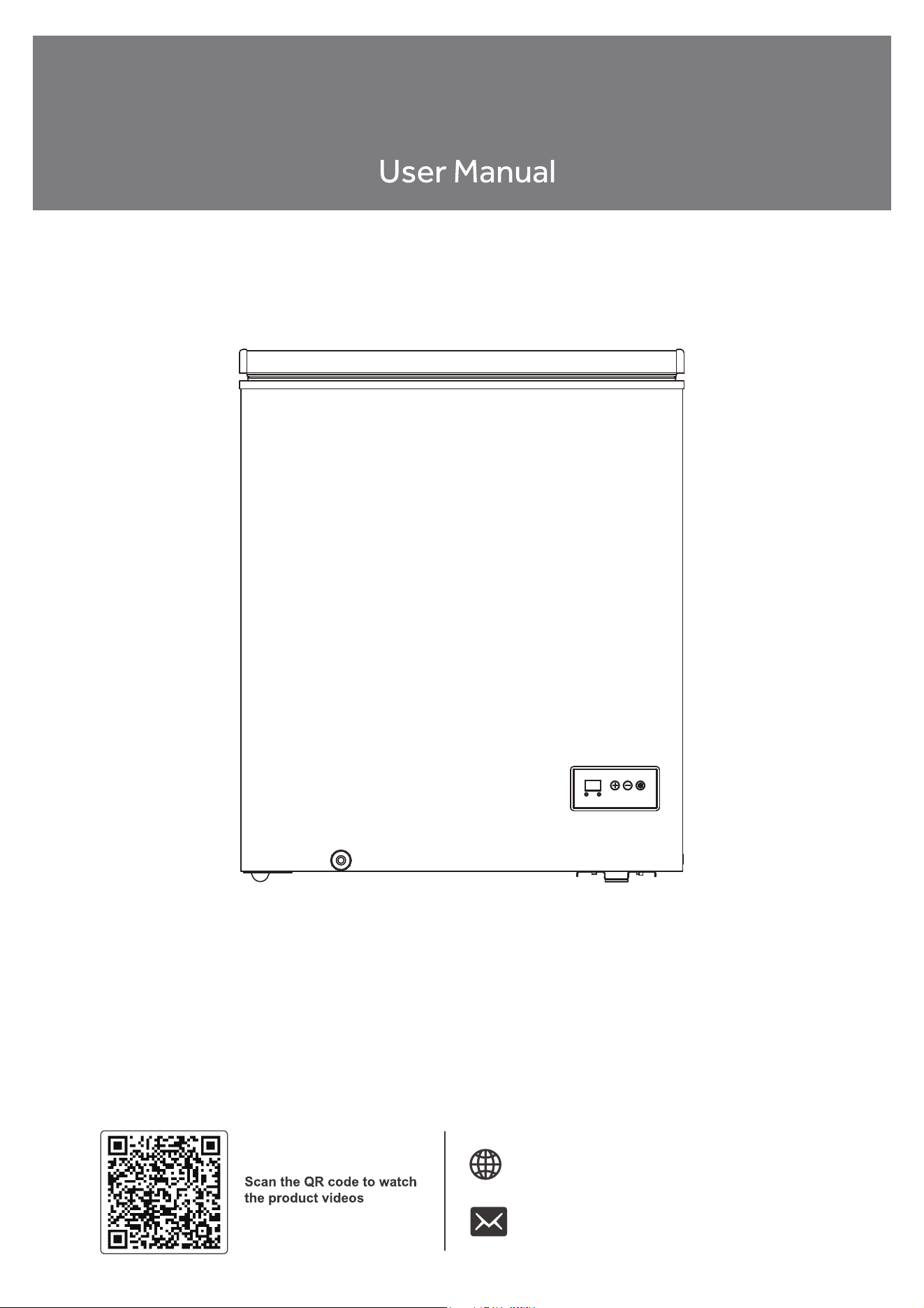
Model No.:
BD-100B-E
It is important that you read these instructions before using your product
and we strongly recomm end that you keep them in a safe place
for future reference.
Household Freezer
Web: www.electacticshop.com
Email: [email protected]


CONTENTS
IMPORTANT SAFETY INSTRUCTIONS
KNOWING YOUR UNIT
BEFORE FIRST USE
OPERATING YOUR FREEZER
CARE AND MAINTENANCE
TROUBLESHOOTING GUIDE
1
2
3
4
6
7
···················································································
···················································································································
····························································································································
·········································································································
·········································································································
·········································································································
1
IMPORTANT SAFETY INSTRUCTIONS
WARNING
-Save these instructions-
To reduce the risk of fire, electrical
shock, or injury when using your
freezer, follow these basic precautions:
Read all instructions before using the freezer.
DANGER or WARNING: Risk of child entrapment.
To avoid the possibility of child entrapment, please take the following pre-
cautions:
Remove the freezer top and DO NOT remove the internal basket.
Before you throw away your old freezer: Take off the top. Leave the basket in
place so that children may not easily climb inside.
Never allow children to operate, play with, or crawl inside the freezer.
Refrigerants: All refrigeration products contain refrigerants, which under the
guidelines of federal law must be removed before disposal of product. It is
the consumer's responsibility to comply with federal and local regulations
when disposing of this product.
Never clean freezer parts with flammable fluids. The fumes can create a fire
hazard or explosion.
Do not store or use gasoline or any other flammable vapors and liquids in the
vicinity of this or any other freezer. The fumes can create a fire hazard or an
explosion.
DANGER – Risk Of Fire Or Explosion. Flammable Refrigerant Used. To Be Repaired Only By
Trained Service Personnel. Do Not Puncture Refrigerant Tubing
CAUTION – Risk Of Fire Or Explosion. Flammable Refrigerant Used. Consult Repair
Manual/Owner’s Guide Before Attempting To Service This Product. All Safety Precautions Must
be Followed
CAUTION – Risk Of Fire Or Explosion. Dispose Of Property In Accordance With Federal Or
Local Regulations. Flammable Refrigerant Used
CAUTION – Risk Of Fire Or Explosion Due To Puncture Of Refrigerant Tubing; Follow Handling
Instructions Carefully. Flammable Refrigerant Used
2
WARNING : Never touch the interior of the Freezer Chamber or frozen foods in the
compartment with wet hands as this could result in frost bite.
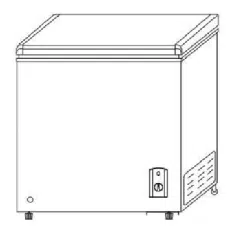
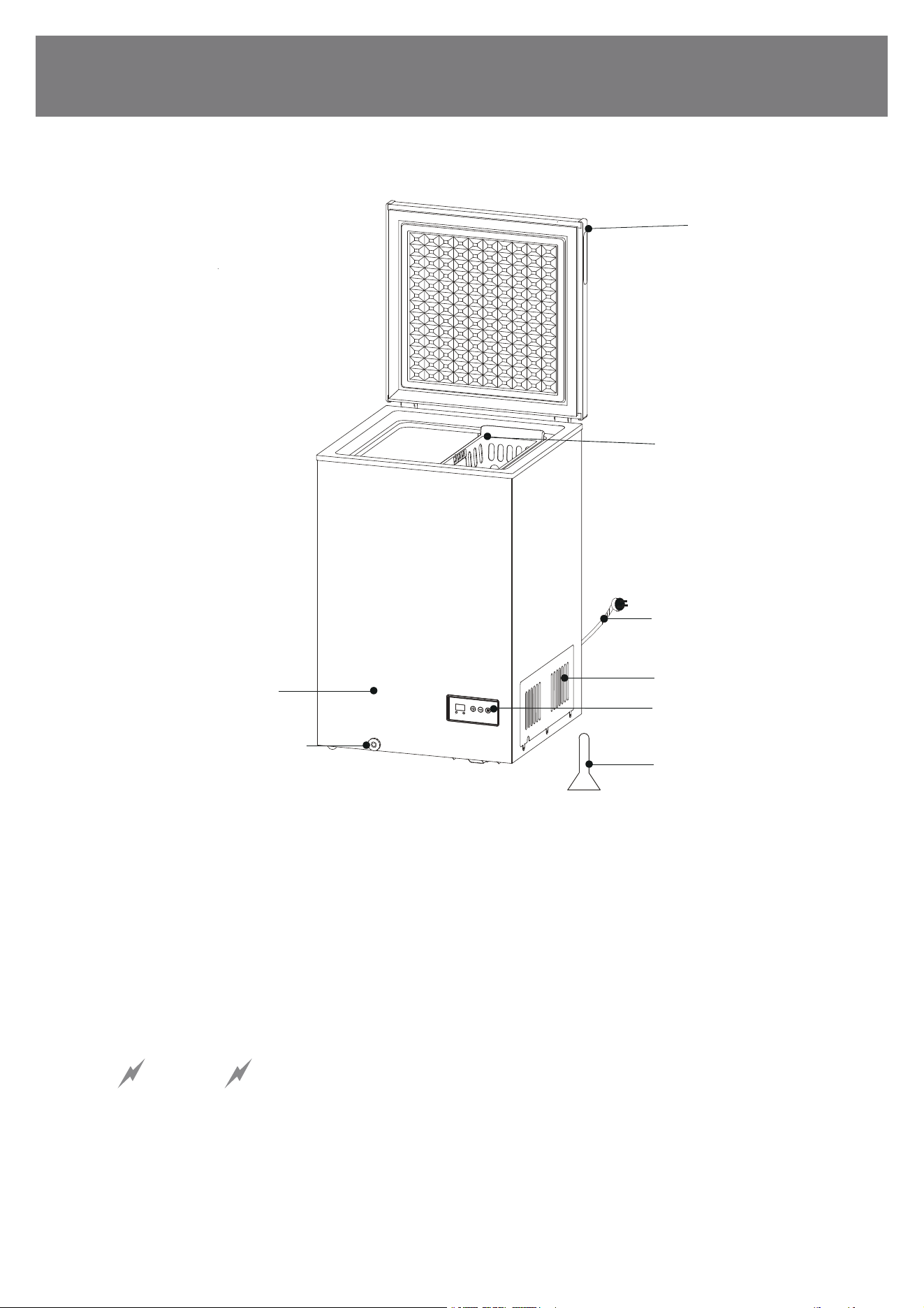
1.Recessed door handle
2.Basket
4.Shutter
5.Temperature control panel
6.Cabinet
7.Drainage hole
8.Ice shovel
3
4
5
8
6
7
1
2
3.Power cord
KNOWING YOUR UNIT
BEFORE FIRST USE
Installing Your Freezer
This appliance is designed to be free standing only and should not be recessed or built-in.
Place your freezer on a floor that is strong enough to support the freezer when it is fully
loaded.
Allow 5 inches of space between the back and sides of the freezer, which allows the proper
air ventilation.
3
The cord should be secured behind the freezer and not left exposed or dangling to prevent
accidental injury.
Never unplug the freezer by pulling the power cord. Always grip the plug firmly and pull
straight out from the receptacle.
Do not use an extension cord with this appliance. If the power cord is too short, have a quali-
fied electrician or service technician install an outlet near the appliance. Use of an extension
cord can negatively affect the performance of the unit.
Do not attempt to repair or replace any part of your refrigerator unless it specifically recom-
mended in this manual. All other servicing should be referred to a qualified technician, so as
to minimize the risk of possible ignition due to incorrect parts or improper service.
Your freezer should be conveniently located in a dry, well ventilated room away from direct
sunlight and sources of heat (stove, heater, radiator etc.) Direct sunlight may affect acrylic
coating and heat sources may increase electrical consumption. Install the freezer at where
the temperature is between 32-100°F.Temperatures outside of this range may affect the
performance and longevity of the unit
Improper use of the grounded plug can result in the risk of electrical shock. If the power
cord is damaged, have it replaced by an authorized service center.
Avoid locating the freezer in moist areas.
Before connecting the freezer to the power source, let it stand upright for approximately 4
hours. This will reduce the possibility of a malfunction in the cooling system from improper
handling during transportation.
Clean the machine according to the “Cleaning Your Freezer” section.
Plug the freezer into dedicated, properly installed-grounded wall outlet. Do not, under any
circumstances, cut or remove the third (ground) prong from the power cord. Any ques-
tions concerning power and/or grounding should be directed toward a certified electrician
or an authorized service center. This unit is not designed to be installed in an RV or used
with an inverter.
After plugging the appliance into a wall outlet, turn the unit on and allow the unit to cool
for 2~3 hours before placing food in the freezer compartment.
WARNING
4
OPERATING YOUR FREEZER
Starting and Running the Unit: Plug in the unit, and the display screen will turn fully on for 1
second, and fully dark for 1 second. Then the digital tube display will switch to the actual
temperature in the freezer. At this time, the control panel is not locked and the tempera-
ture setting can be adjusted. The default set temperature is 0℉, and the machine will
start to run after a delay of 30 seconds after the first power-on.
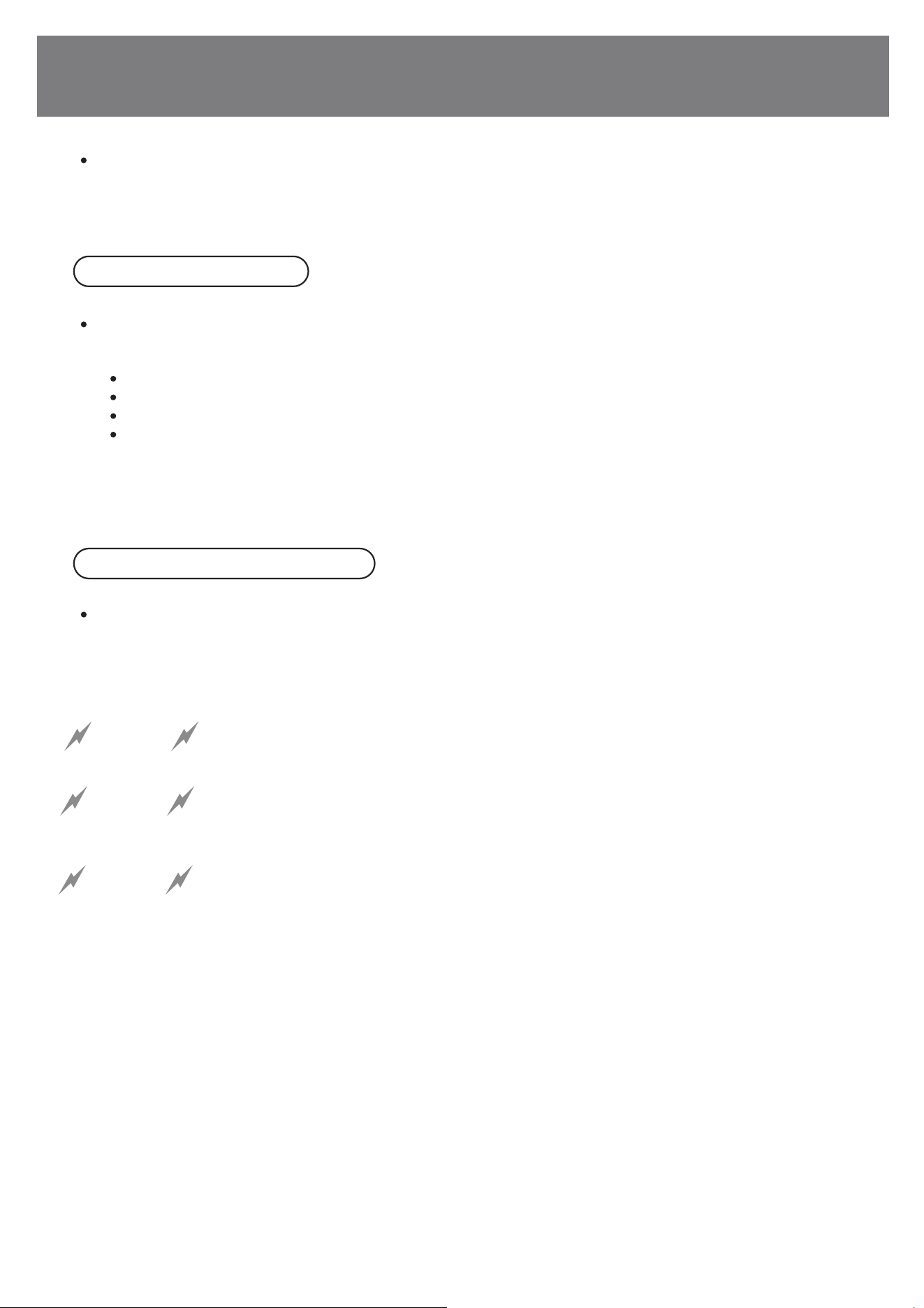
Control Panel Auto-Lock: The temperature control panel will be automatically locked after
30 seconds without pressing any keys and the lock indicator will light up. When the tem-
perature control panel is locked, press both "+" and "-" keys for 3 seconds to unlock and
set the keys.
Power-off Memory: With power-off memory function, the working state will be locked at
the moment of power-off, and it will still work in the state before the power-off after the
power is turned on again; If it is in the quick-freezing state when the power is off, it will
return to the state before the quick-freezing.
When control panel is unlocked, set the temperature with the "+" and "-"keys. Each time
you press the "+" and "-"key, the set temperature will rise or fall by 1 degree. If you press
and hold the key continuously, the set temperature will rise or drop continuously, and the
digits will be displayed in a cycle between the set range. During the temperature setting
process, the digital tube will be flashing. If no key operation is performed within 5 seconds,
the temperature setting value will be confirmed and the display will convert to the actual
temperature in the freezer. If other keys are pressed, the value will be confirmed immedi-
ately. Temperature setting range: 14℉ to -40℉
When the control panel is unlocked and the set temperature is ≤0℉, press freeze key to
switch on and off quick-freeze function. When quick-freeze is switched on, the digital tube
will alternately display “Sd” and the actual temperature of the freezer twice respectively.
Then it will display the actual temperature in the freezer, and the freeze indicator lights up.
The indicator will stay on until freeze is turned off.
Under quick-freeze function, the compressor will run continuously without stopping. The
continuous running time is adjusted according to your set temperature: The compressor
runs for 24 hours with set temperature between -10 to 0°F, 36 hours with set temperature
between -25 to -10°F, or 48 hours with set temperature between -40 to -25°F. After the
continuous running time, the freezer will automatically exit quick-freeze and enter the set
temperature control mode.
Temperature Adjustment:
Quick-freeze:
℉
5
If the chest temperature sensor is damaged, the temperature control panel will display E1,
meanwhile the freezer can still operate cooling. But it cannot display the actual temperature in
the chest and cannot operate at the set temperature you need. It is recommended to cut off the
power and check whether the connector of the sensor cable is loose.
This freezer is equipped with a high temperature alarm function. If the temperature in
the cabinet fails to reach the set temperature after a long-term operation, the temperature
control panel will display EH. At this time, please check the following:
whether the ambient temperature around the freezer is too high;
whether the heat dissipation of the freezer is obstructed;
whether the door is completely closed;
whether the refrigeration system of the freezer is abnormal.
If you have checked the above points but the high temperature alarm does not turn off,
please transfer the food in the freezer to a working freezer or refrigerator to avoid food spoil.
: The set temperature range of this product is 14℉ to -40℉. During operation, there will
be difference between the temperature in the chest and the set temperature, which is
a normal phenomenon. Because the temperature inside the chest can reach -40℉, it is
recommended to operate at an ambient temperature of ≤90℉. When the ambient
temperature is higher than 90℉, extra ventilation and heat dissipation around the freezer
is required and it is recommended to use it in a room with air-conditioning.
WARNING
:This product is a low-temperature equipment. To avoid frost bite when your skin
touches the inner wall of the freezer, please wear gloves when accessing the contents
of the freezer.
:This product is a low-temperature equipment, with high power compressor and a
condensing fan. The noise of the freezer is relatively loud. It is recommended to place
the freezer away from rest areas.
WARNING
WARNING
OPERATING YOUR FREEZER
For quick freezing, it is recommended to turn on quick-freeze for 2 hours before putting a
small amount of food and turn on quick-freeze for more than 10 hours before putting a
large amount of food at a time. Notice that the power consumption will increase under
quick freeze mode.
High Temperature Alarm:
Temperature sensor malfunction:
6
CARE AND MAINTENANCE
Upon installation of your new appliance, it is recommended that it be cleaned thoroughly.
Unplug the freezer.
Wash the inside with a damp warm cloth soaked in lukewarm water and baking soda
solution.
The solution should be about 2 tablespoons of baking soda to a quart of water.
Wash the storage basket with a mild detergent solution.
Be sure to keep the door gasket (seal) clean to keep the unit running efficiently.
The outside of the freezer should be cleaned with mild detergent and warm water.
Dry the inner parts of the cabinet and exterior with a soft cloth.
It is recommended that the unit be cleaned each time it is defrosted to help keep the unit
odor free and running efficiently.
interfere with cold air circulation, making the freezer less efficient. Organize and label food
to reduce door openings and extended searches. Remove as many items as needed at
one time, and close the door as soon as possible.
For most efficient operation and minimum energy consumption, defrost whenever the
frost becomes 1/4" thick. Never use a sharp or metallic instrument to remove the frost, as
it may damage the cooling coils. Use only a plastic scraper. Do not use boiling water as it
may damage the unit.
Remove frozen food from the freezer and place it in a cooler to protect the food.
Turn off the machine and unplug the unit. Defrosting usually takes a few hours. To defrost
faster, keep the freezer door open.
Place a narrow defrost pan (not included) in front of the drainage hole, and gently
remove the melted frost chunks outward. Water that has accumulated at the bottom of
the freezer during defrosting will drain into the pan.
When defrosting is complete, wipe the interior of the freezer with a soft cloth.
Plug in power cord back into the electrical outlet.
Reset the temperature control to the desired setting.
Return the food into the freezer.
NOTE: Monitor the defrost pan to avoid overflow.
Cleaning Your Freezer
Defrosting Tips
7
TROUBLESHOOTING GUIDE
You can solve many common freezer problems easily, saving you the cost of a possible
service call.
Try the suggestions below to see if you can solve the problem before calling for service.
Freezer does not operate.
Not plugged in.
The circuit breaker tripped or a blown fuse.
The room temperature is hotter than normal.
A large amount of food has been added to the
freezer.
The door is opened too often.
The door is not closed completely.
The temperature control is not set correctly.
The door gasket does not seal properly.
The freezer does not have the correct
clearances.
The freezer has recently been disconnected for a
period of time. 4 hours are required for the freezer
to cool down completely.
Temperature control is set too cold. Turn the
control to a warmer setting and allow several
hours for the temperature to stabilize.
Compressor turns on and off
frequently.
Temperature inside the freez-
er is too warm.
Temperature inside the freez-
er is too cold.
The exterior freezer walls can be as much as
30 warmer than room temperature. This is normal
while the compressor works to transfer heat from
inside the freezer cabinet.
Temperature of external
freezer surface is warm.
Metal parts undergo expansion and contraction,
as in hot water pipes. This is normal. Sound will
level off or disappear as freezer continues to run.
Popping or cracking sound
when compressor comes on.
Refrigerant (used to cool freezer) is circulating
throughout the system. This is normal.
Bubbling or gurgling sound,
like water boiling.
Check to assure that the freezer is on a level
surface.
Floor is uneven or weak. Freezer rocks on the
floor when it is moved slightly. Be sure floor can
adequately support freezer. Level the freezer by
putting wood or metal shims under part of the
freezer.
The freezer is touching the wall. Re-level the
freezer and move it from the wall.
Vibrations.
Weather is hot and humid, which increases
internal rate of frost build-up. This is normal.
Door is slightly open.
Door is kept open too long, or is opened too
frequently. Open the door less often.
The door is not sealed properly.
Moisture forms on inside
freezer walls.
Door is slightly open, causing cold air from inside
the freezer to meet warm moist air from outside.
Moisture forms on outside of
freezer.
The freezer is not on a level surface.
The gasket is dirty.
The storage basket is out of position.
The door will not close prop-
erly.
PROBLEM POSSIBLE CAUSE


ROWAN ELECTRIC APPLIANCE LLC
8:30am-5:30pm P.S.T.
Monday to Friday
V1
Web: www.electacticshop.com
Email: [email protected]