
1

2
CONTENTS
PAGE NO.S
1
SAFETY
3 - 8
2
ASSEMBLY
9 - 10
3
FUEL & OIL
11 - 12
4
STARTING PROCEDURE
13
5
STOPPING PROCEDURE
13
6
OPERATION
14 - 18
7
MAINTENANCE
18 - 22
8
STORAGE & WINTERIZATION
23
9
TRANSPORTATION
23
10
TROUBLE SHOOTING
24
11
SPECIFICATION
26
12
DECLARATION OF CONFORMITY
27
13
RECYCLING & PRODUCT DISPOSAL
28
14
CONTACT DETAILS / WARRANTY
29
INDEX

3
1.1 General Safety Notes.
1.2 The operator of the machine is responsible for, and has a duty of care in making sure
that the machine is operated safely and in accordance with the instructions in this user
manual. Keep the manual safe and pass it on if the machine is loaned or sold to another
user.
1.3 Please note the following safety points.
1.4 The machine should never be left it in a condition which would allow an untrained or
unauthorised person/s to operate this machine.
1.5 All due care and diligence should be taken by the operator for the safety of and with
regard to those around whilst using the machine.
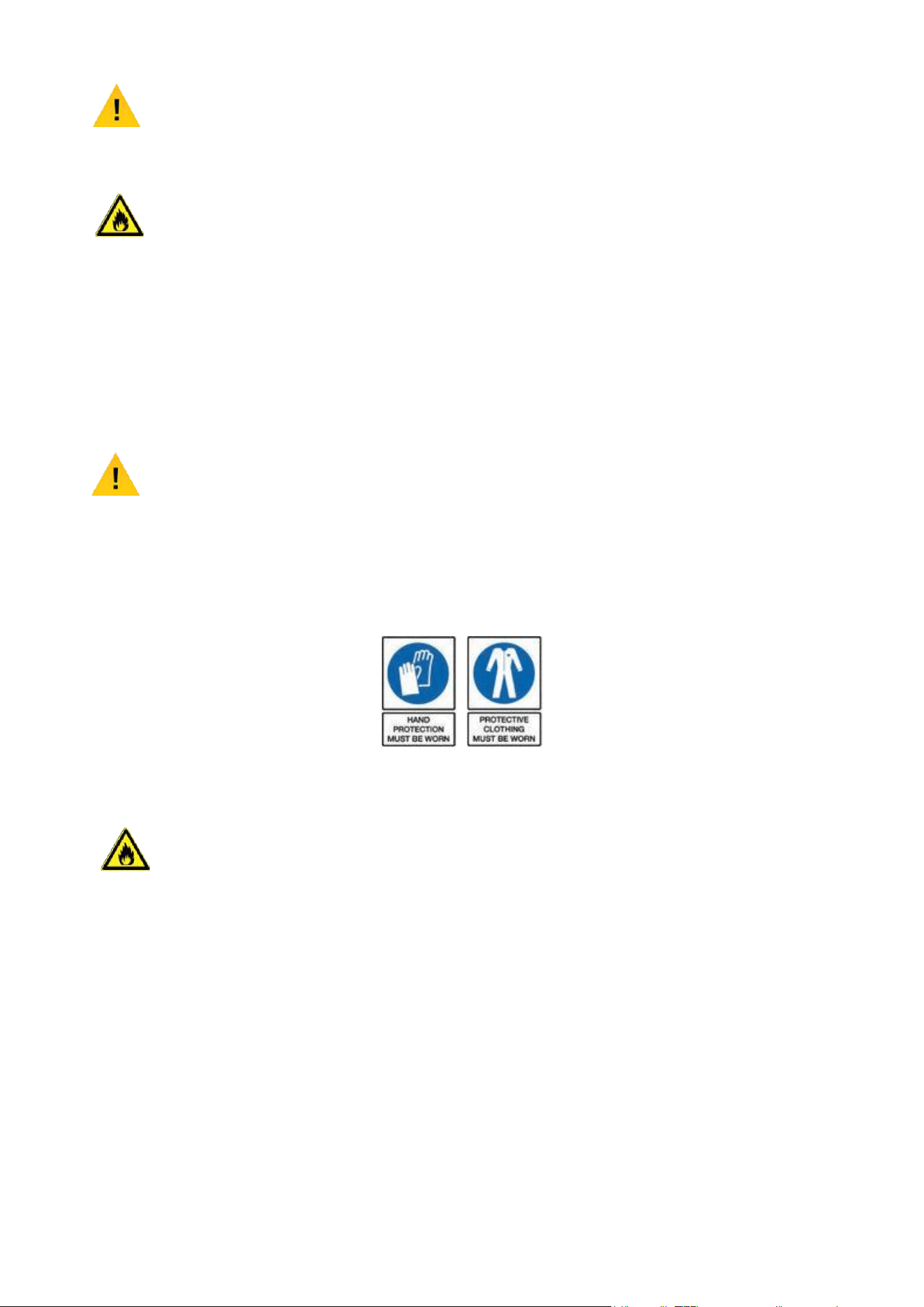
1.6 Some or all of the following - warning signs, symbols and/or PPE pictograms may ap-
pear throughout this manual. You MUST adhere to their warnings. Failure to do so
may result in personal injury to yourself or those around you.
DANGER
Indicates a hazard, which, if not avoided, could result in serious injury or death.
WARNING
Indicates a hazard, which, if not avoided, could result in serious injury.
CAUTION
Indicates a hazard which, if not avoided, might result in minor or moderate injury.
NOTE
Indicates a situation that could easily result in equipment damage.
READ and keep the manual safe and pass it on if the machine is loaned or sold to another user.
You MUST fully understand all instructions to ensure you use and operate the machine safely.
Appropriate Personal Protective Equipment (PPE), MUST be worn at all times when operating or
repairing the machine.
1. SAFETY

4
1.10 Carbon Monoxide (where applicable).
1.11 Carbon monoxide is a colourless and odourless gas. Inhaling this gas can cause
death as well as serious long term health problems such as brain damage.
1.12 The symptoms of carbon monoxide poisoning can include but are not limited to the
following;
Headaches, dizziness, nausea, breathlessness, collapsing or loss of consciousness.
1.13 Carbon monoxide poisoning symptoms are similar to flue, food poisoning, viral
infections and simply tiredness. It is quite common for people to mistake this very
dangerous poisoning for something else.
1.14 To avoid carbon monoxide poisoning DO NOT use Petrol/Diesel powered equipment
inside any of the following; Home, garage, tent, camper van, mobile home, caravan
or boat. This is not exhaustive and if you are in any doubt contact your dealer.
1.15 If you think you have or someone around you has been affected by carbon monoxide
poisoning;
1.16 Get them fresh air immediately, by leaving the affected area or by opening doors and
windows. If safe and practical to do so make sure that the machine is turned off.
DO NOT enter a room you suspect of having carbon monoxide present – instead call
the emergency services.
1.17 Contact a Doctor immediately or go to Hospital – let them know that you suspect
carbon monoxide poisoning.
1.18 DO NOT use in an enclosed area or moving vehicle.
5
1.20 General Fuel Safety (where applicable).
CAUTION
ALL FUELS ARE FLAMABLE
1.21 Fire Hazard – keep fuel away from all sources of ignition for example heaters.
Lamps, sparks from grinding or welding.
1.22
DO NOT carry out hot work on tanks that have contained fuel.
1.23 ALWAYS keep the work area tidy.
1.24 ALWAYS clean up spills promptly using absorbent granules and a lidded bin.
1.25 ALWAYS dispose of waste fuels correctly.
1.30 Fueling/De-fueling (where applicable).
CAUTION
ALL FUELS ARE FLAMABLE
1.31 ALWAYS fuel and defuel in a well ventilated area outside of buildings.
1.32 ALWAYS wear correct, suitable and fit for purpose Personal Protective Equipment
(PPE), suggested items are but not limited to safety gloves, overalls.
1.33 When fueling/de-fueling ALWAYS avoid inhaling fumes.
1.34 When de-fueling ALWAYS use a proper fuel retriever.
1.35 ALWAYS carry fuel in the correct and clearly marked container.
1.40 Electrical Safety (where applicable).
1.41 Electricity can kill – NEVER work on LIVE/ENERGISED equipment.
1.42 Prior to carrying out any maintenance work you MUST identify electrical isolation
methods and isolate all electrical supplies.
1.43 Prior to use and with all electrical supplies isolated, you MUST check all electrical
cables, plugs and connectors for the following;
1.44 Are intact and have no signs of damage, to include but not limited to bare wires,
chaffing, cuts and loose wiring.
1.45 If there are any signs of damage, the damaged item MUST be taken out of service
until the damage has been repaired by an electrically competent person.

6
1.46 All trailing cables should be routed so as not to cause any kind of trip hazard.
1.47 NEVER work on or near electricity with wet hands, wet clothing and wet gloves.
1.50 Batteries (where present).
1.51 Batteries present a risk if they become damaged by the possible leaking of
electrolyte. This electrolyte is an acid and can cause serious burn injuries. Care
should be taken when working on or near them. NOTE the electrolyte may be in
a liquid or gel form.
1.52 Should you come in to contact with electrolyte you should;
1.53 Remove all clothing contaminated with electrolyte. If you cannot remove then
saturate them in water.
1.54 Get medical assistance as soon as possible. You must advise the medical staff of
the type of acid.
1.55 Lead/acid battery = dilute sulphuric acid.
1.56 Nickel/cadmium = potassium hydroxide alkali electrolyte.
1.57 Use fresh running water to wash off excess electrolyte, continue this until medical
assistance arrives. Make sure that you do not was the electrolyte to another part of
your body or face.
1.58 If electrolyte comes in to contact with Eyes the electrolyte needs to be immediately
washed away with large amounts of water. Make sure that you do not wash the
electrolyte to another part of your face or body.
1.59 Gasses from charging batteries are highly flammable and great care should be taken
to charge in well ventilated areas.
1.59.1 There is an explosion risk if the battery terminals are short circuited, when
connecting/disconnecting ALWAYS exercise great care so that the terminals or
battery leads are NOT allowed to touch and cause a spark. ALWAYS use suitable
insulated tools.
1.60 Vibrations (where applicable).
1.61 Prolonged use of hand held (operated) machines will cause the user to feel the
effects of/from vibrations. These vibrations can lead to white finger (Raynaud’s
phenomenon) or carpal tunnel syndrome. This condition reduces the ability of the
hand to feel and regulate temperature, causing numbness and heat sensations and
may cause never damage and circulatory tissue death.
1.62 Not all factors that lead to white finger disease are known, but cold weather, smoking
and other diseases that affect blood vessels and blood circulation as well as large
and long-lasting impact of shocks are considered factors in the formation of white
finger. Note the following to reduce the risk of white finger and carpal tunnel
syndrome;
1.63 Wear gloves and keep your hands warm.
1.64 Take regular breaks.
1.65 All of the above precautions may help reduce the risk of white finger disease but not
rule out the carpal tunnel syndrome. Long-term and regular users are therefore

7
recommended to observe the condition of your hands and fingers. Seek medical
attention immediately if any of the above symptoms should occur.
1.70 Noise (where applicable).
1.71 The operating noise of the machine can damage your hearing. Wear hearing
protection such as earplugs or ear defenders to protect your hearing. Long-term
and regular users are advised to have hearing checked regularly. Be especially
vigilant and cautious when hearing ear protection because your ability to hear alarm
warnings will be reduced.
1.72 Noise emissions for this equipment is unavoidable. Carry out noisy work at approved
times and for certain periods. Limit the working time to a minimum. For your personal
protection and protection of people working nearby it is also advisable for them to
wear hearing protection.
1.73 See Certificate of Conformity section for Outdoor Noise declaration of
conformity.
1.80 General Machine Safety.
1.81 Read the owner’s manual carefully to understand how to operate this machine
properly.
1.82 You should NEVER use the machine when;
1.83 Wearing loose clothing, barefoot or sandals.
1.84 Under the influence of drink or drugs or as a result of having taken medication for
cold or flu, or any other times when a possibility exists that your judgement might be
impaired or that you might not be able to operate the machine properly and in a safe
manner.
1.85 Suffering from exhaustion or lack of sleep.
1.86 When the ground is slippery or when other conditions exist which might make it not
possible to maintain a steady posture.
1.87 At night, at times of heavy fog, or at any other times when your field of vision might
be limited and it would be difficult to gain a clear view of the area.
1.88 During rain storms, lighting storms, at times of strong or gale force winds, or at
any other times when the weather conditions might make it unsafe to use this
product.
1.89 NEVER run the engine indoors. The exhaust gasses contain harmful carbon
monoxide.
1.90 When using this machine for the first time and before actual work, you MUST learn
how to handle the machine from an experienced or skilled person.
1.91 Limit the amount of time using the machine continuously to somewhere around 10
minutes per session and take 10 to 20 minutes of rest between sessions. Also try to
keep the total amount of work in a single day limited to 2 hours or less.
MACHINE SPECIFIC SAFETY

8
1.92 NEVER allow children or anyone unable to fully understand the directions given in
this manual to operate this product.
1.93 Make sure you keep this manual handy so you may refer to it whenever questions
arise and ensure you pass this manual on if the machine is loaned or sold.
1.94 Correct Personal Protective Equipment (PPE) MUST be worn at all times when
operating or repairing this machine. This should include but is not limited to;
9
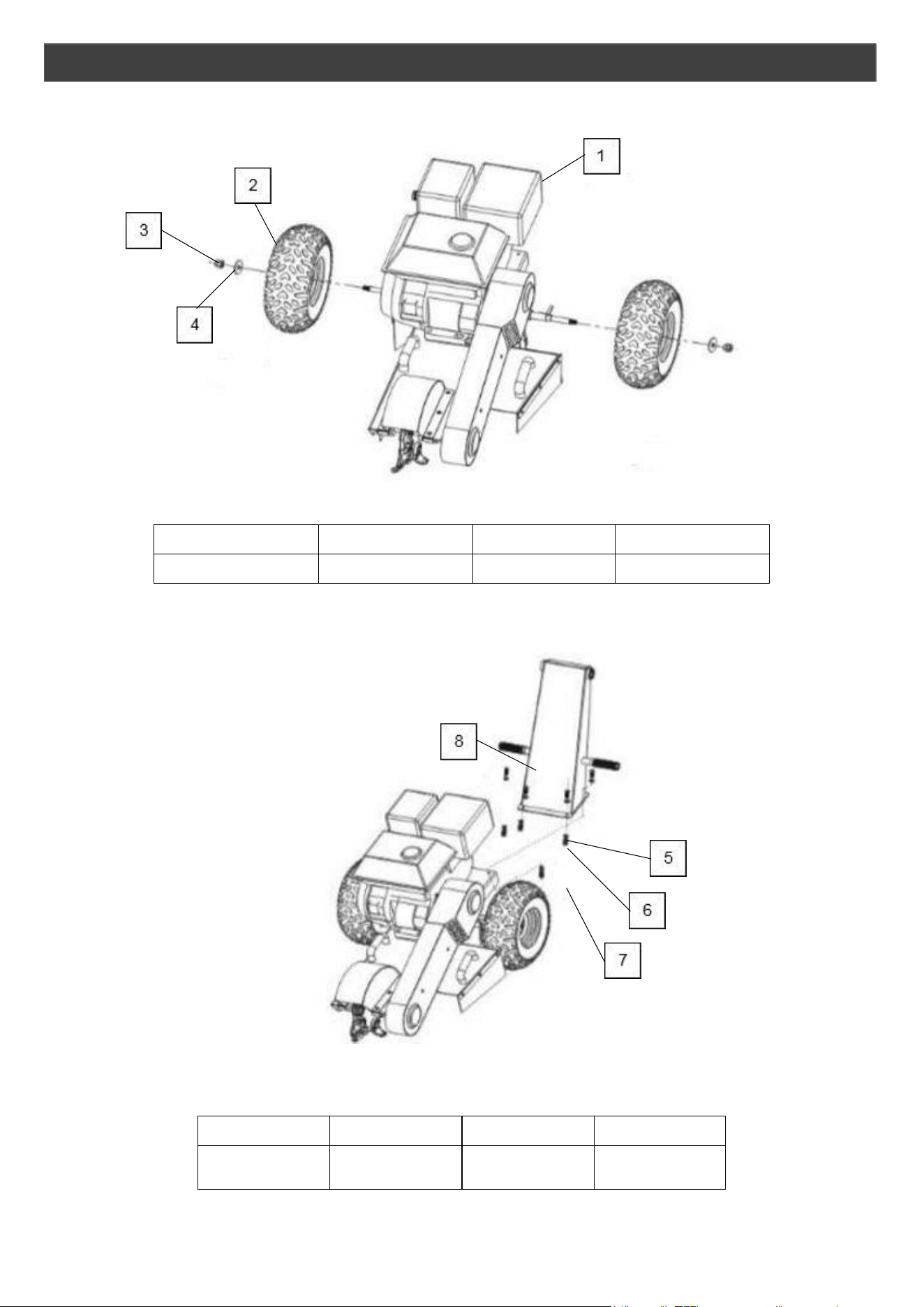
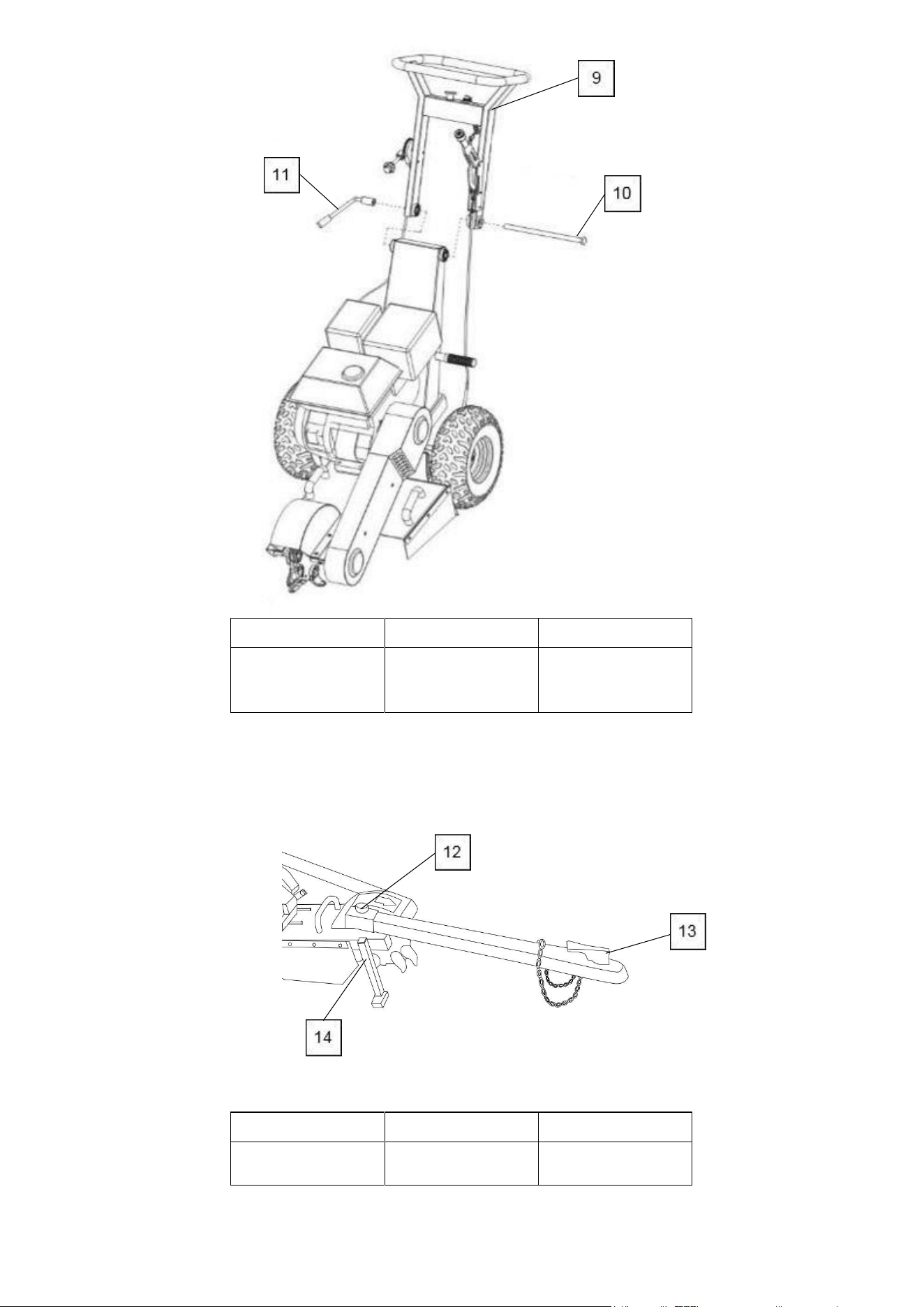
1
2
3
4
Engine
Wheel
Nut
Washer
5
6
7
8
Bolt
Washer
Nut
Handle
Support
2. ASSEMBLY
10
9
10
11
Upper Handle
Handle Bar Bolt
Handlebar
Adjustment
Lever
12
13
14
Tow Bar Lock
Bolt
Tow Bar
Front Support
Leg
11
CAUTION
This machine is shipped WITHOUT Oil and Fuel and will require filling BEFORE use.
Failure to do so will result in engine damage that will not be covered by the warranty.
Recommended Oil: SAE30 or 15W40 Engine Oil
Oil Capacity: 1200ml
Recommended Fuel: Straight Unleaded Petrol
Fuel Tank Capacity: 6Litres
CAUTION
FOR OUTDOOR USE ONLY.
This machine produces carbon monoxide – a poisonous, colourless and odourless
gas that can cause death or serious injury.
Petrol is highly flammable, always handle with extreme care and in a well-ventilated
area.
ALWAYS remove the spark plug HT lead from the spark plug when fuelling or
de-fuelling the machine, checking or changing parts.
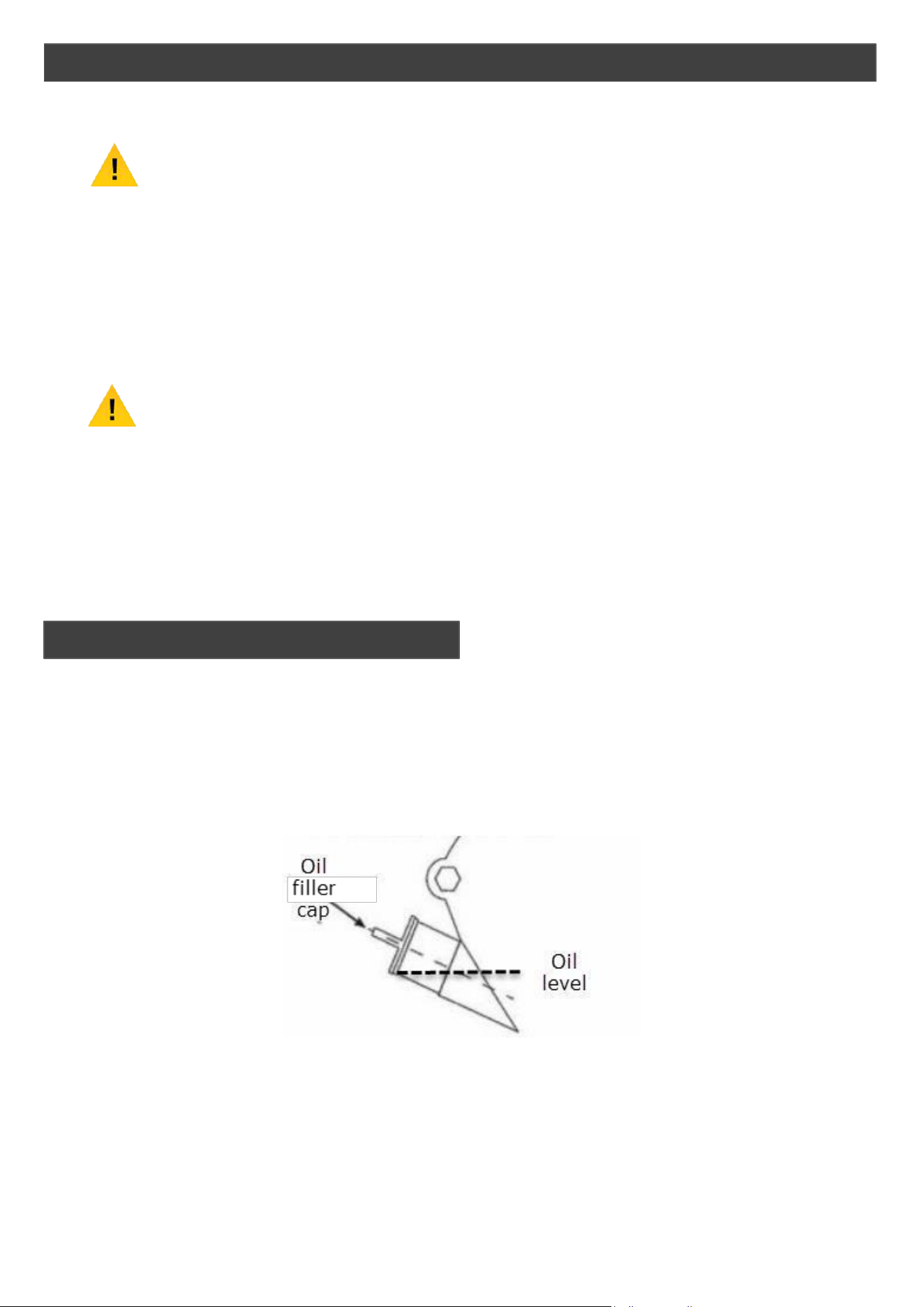
2.0 Place the stump grinder on a flat level surface.
2.1 Clean around the oil filler and remove the oil filler cap/dipstick.
Wipe the dipstick clean.
2.2 Slowly fill the engine with oil through the oil filler until it reaches the upper thread.
DO NOT OVERFILL.
2.3 Stop occasionally to check the level.
2.4 Refit the oil filler cap/dipstick.
2.5 You MUST check the oil level before starting every session.
3. FUEL & OIL
OIL

12
CAUTION
ALL FUELS ARE FLAMMABLE
ALWAYS fuel and defuel in a well-ventilated area outside of buildings.
ALWAYS wear correct, suitable and fit for purpose Personal Protective Equipment
(PPE), suggested items are but not limited to safety gloves, overalls and eye protection.
CAUTION
DO NOT overfill the fuel tank, you MUST allow space for fuel expansion.
If the fuel tank is overfilled, fuel can overflow onto a hot engine and cause fire and/or
explosion.
If fuel does spill, wait until it evaporates before starting the engine.
Check fuel lines, tank, cap and fittings frequently for cracks or leaks. Replace as
required.
2.6 Place the stump grinder on a flat level surface.
2.7 Remove the fuel filler cap.
2.8 Slowly fill with fresh unleaded petrol to within 25mm of the top of the fuel tank.
2.9 Refit the fuel fill cap and tighten securely.
FUEL

13
3.0 Lock the travel wheel by pulling the brake lever fully back.
3.1 Turn the fuel tap ON.
3.2 Turn the engine ON/OFF switch to ON.
3.3 Make sure the throttle is in the slow speed position.
3.4 If the engine is cold, move the choke to the closed/start position.
3.5 Raise the cutter wheel 4 to 5 inches off the ground by pushing downwards on the
handlebar and hold in that position.
3.6 Pull the recoil start handle unit you feel resistance the pull swiftly.
DO NOT allow the starter handle to snap back, return it by hand to prevent damage
to the starter.
This may cause the cutting wheel to rotate, keep everyone away.
3.7 When the engine starts, move the choke lever to the open/run position.
3.8 Allow the engine to run at a slow idle speed under no load for a few minutes to allow
the engine to warm up before operation.
4.0 In consideration for your own safety and that of others, you should always use the
following shutdown procedure before leaving the machine for any reason.
Never deviate from this procedure unless so instructed in this manual or in an
emergency.
4.1 Move the engine throttle lever to the slow position and allow the engine to idle under
no load for a few minutes.
4.2 Press the engine emergency stop button and allow the engine to come to a complete
stop.
4.3 Turn the engine ignition switch to the OFF position.
4.4 Turn the fuel tap to the OFF position.
4.5 Engage the park brake.
5. STOPPING PROCEDURE
4. STARTING PROCEDURE

14
5.0 DO NOT use the machine on slopes greater than 10°
5.1 DO NOT use the machine if you are tired, consumed alcohol or if you are taking any
drugs or medication that can affect your vision, judgement or coordination.
5.2 NEVER use the machine indoors or in spaces lacking proper ventilation.
5.3 Make sure you have a proper foothold when using the machine, particularly when
walking backwards (which you should avoid).
5.4 Walk don’t run.
NEVER work on wet grass, poor traction may cause you to slip and fall.
5.5 Keep your hands and feet away from moving parts and working tools.
DO NOT use your hands, feet or other parts of your body to gain greater bearing
pressure against the stump.
5.6 Naked flames or sparks in the vicinity are strictly forbidden.
Petrol is extremely flammable and carelessness in handling can result in personal injury
or fire.
5.7 NEVER use the machine with a defective exhaust or muffler.
5.8 In very warm and dry climates, stump grinder operation will pose a greater risk of
starting fires.
5.9 Stop and inspect the equipment if you run over or into anything.
If any damage has occurred you MUST make all the necessary repairs before starting
work again.
5.10 Whatever happens, you should always park the machine on even ground, disengage
the drive, activate the parking brake, turn off the engine and wait until all moving parts
have stopped before leaving the machine.
5.11 Beware of thrown objects, rotating cutters, DO NOT smoke in the vicinity of the
machine.
OIL
O
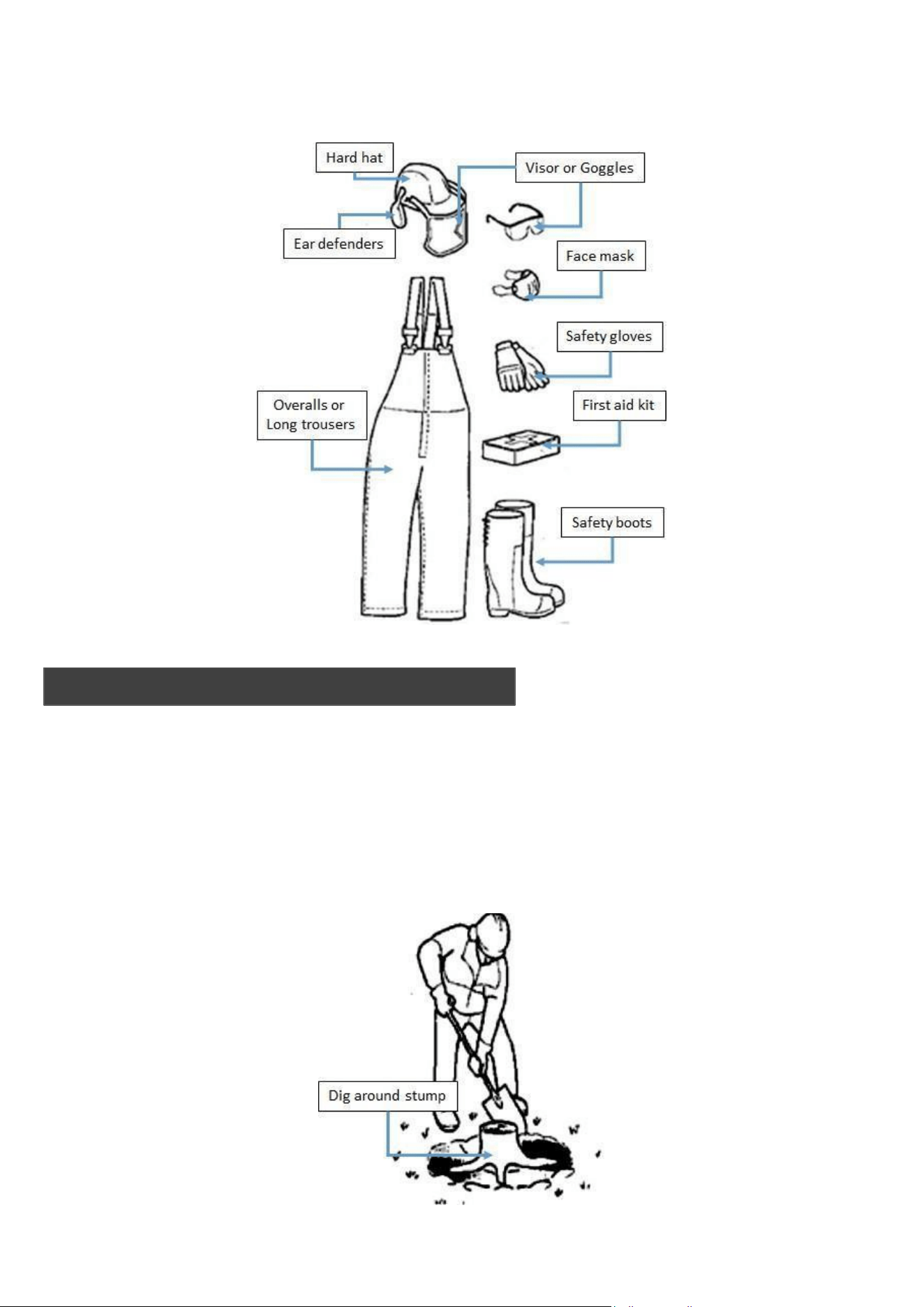
5.12 Always use the approved protective clothing and approved protective equipment
when using the machine.
Protective clothing and protective equipment cannot eliminate the risk of an accident
but wearing proper clothing and the correct equipment will reduce the degree of
injury should an accident occur.
6. OPERATION
15
Ask your dealer about approved protective clothing and approved protective equipment
recommended.
5.13 Remove all loose pieces of wood, stones, wire and other debris from the area before
beginning stump removal.
5.14 Wind direction should be considered as this influences the direction in which dust and
wood chips are directed.
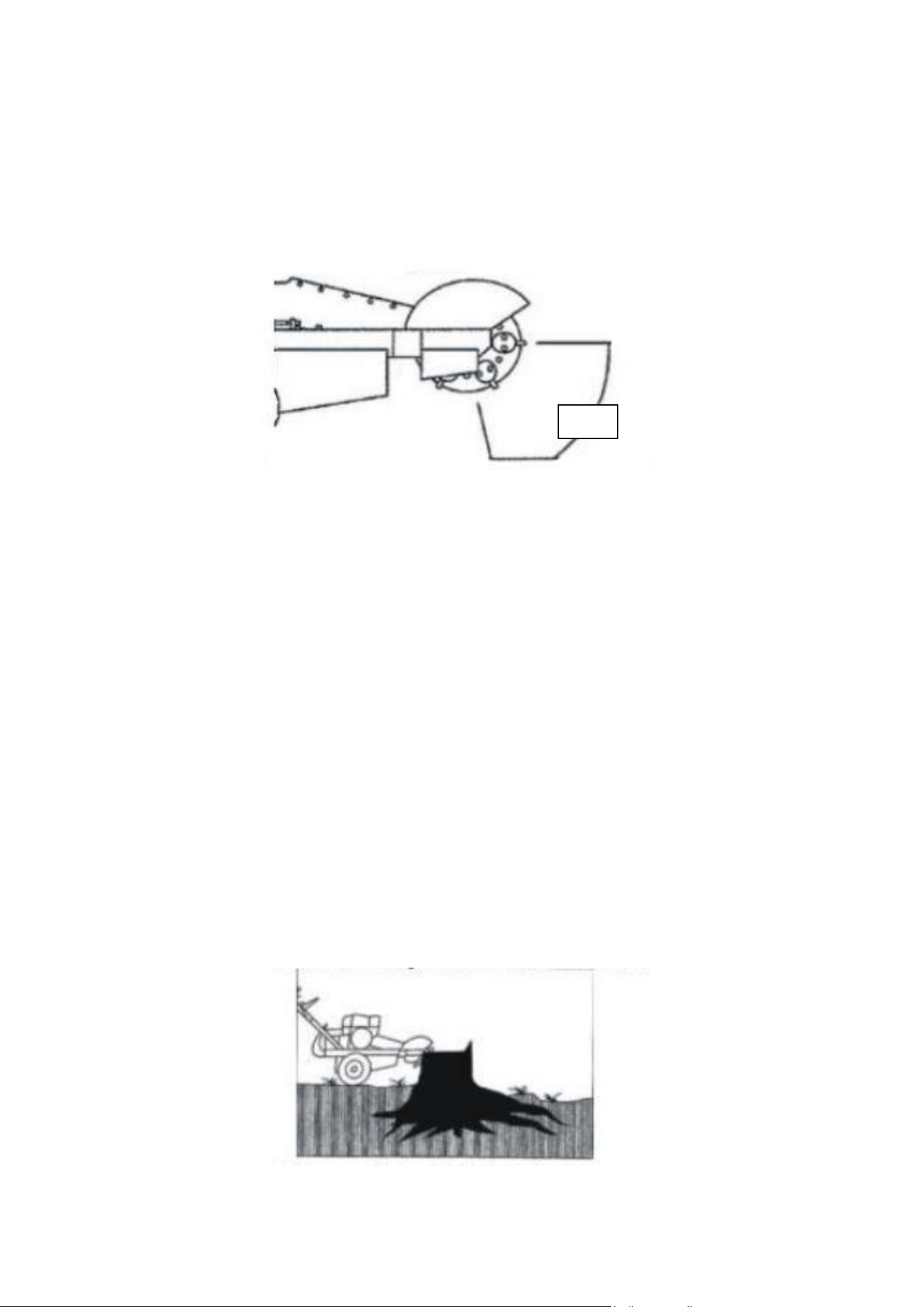
5.15 Dig around the earth and remove any stones near the stump that may interfere with
your work.
Check that the ground is free of foreign objects such as, cables, barbed wire etc.
REMOVING STUMPS
16
5.16 Cut or trim the stump as low to the ground as required using a power saw.
5.17 Never operate the stump grinder after dark. There will not be adequate lighting for the
operator to use the machine safely.
5.18 Allow a cold engine time to warm up before use.
5.19 For best results, only use the portion of the cutting wheel within the 80° area shown
below.
5.20 Never leave the controls when the cutting wheel is rotating and stop the engine when
the machine is left unattended.
5.21 Use smooth comfortable side to side movements while operating, pivoting the arc
on the locked left wheel.
5.22 When it is desired to cut smaller roots, it may be more effective to do so before rather
than after cutting the main stump.
5.23 Should the chip build-up become excessive when cutting, stop the engine, wait for
the cutting wheel to stop rotating, retract the machine from the stump and rake away
the chips.
5.24 In order to prevent the wheels becoming stuck in the hole. Move the grinder to the
other side of the stump to continue removal or by filling the hole with chips before
continuing.
PREPARE THE GRINDER AT THE STUMP
5.25 Place the stump grinder into position with the cutting wheel near the top edge of the
stump.
80°
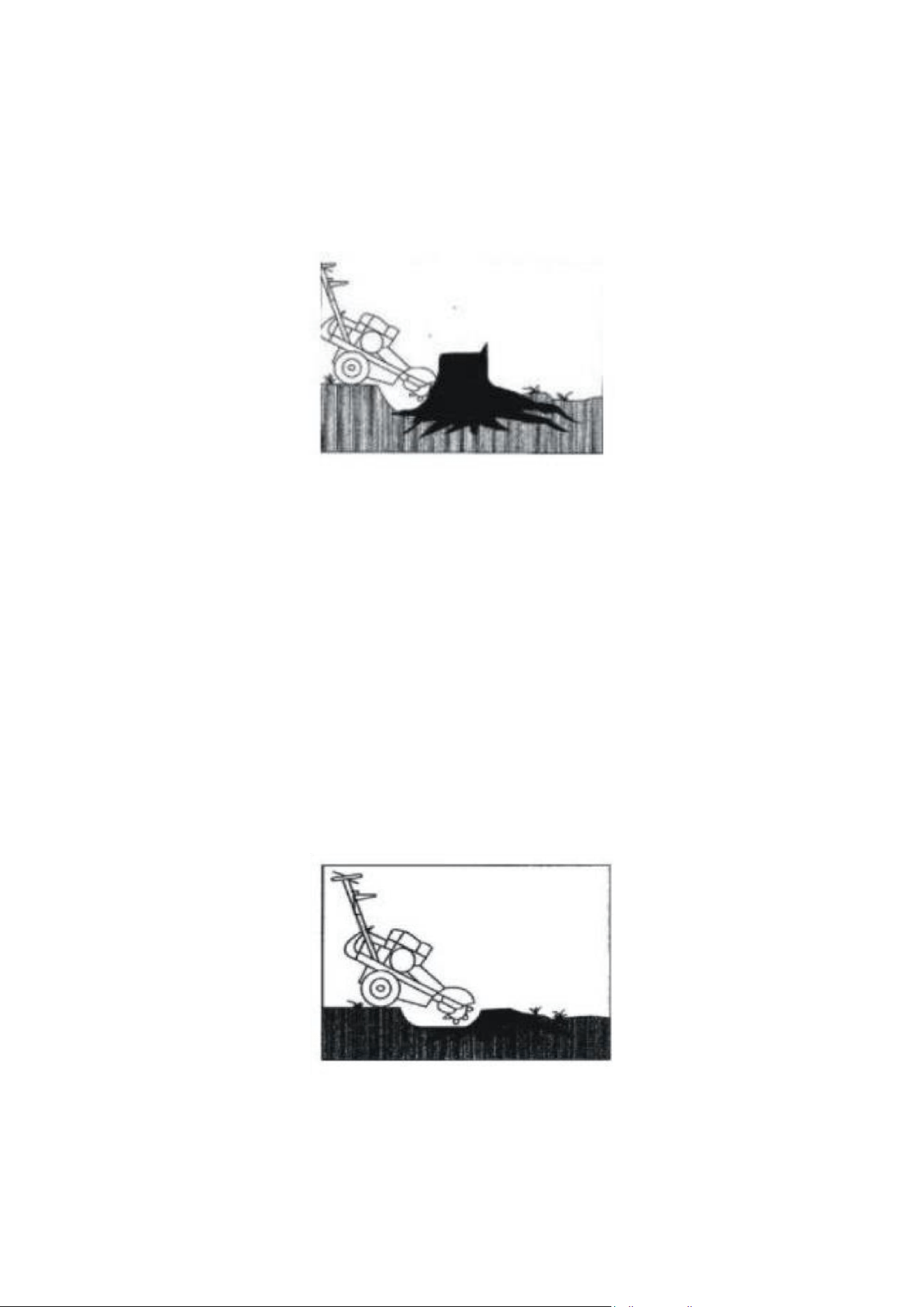
17
REMOVING ROOTS
5.26 Make sure the throttle is set to high speed, the cutter wheel will accelerate to cutting
speed.
5.27 Swing the cutting wheel to one side, then lower it into the nearest roots that are buried
at the foot of the stump.
5.28 Swing the cutting wheel before each sweep until the roots are sufficiently removed.
5.29 Raise the cutting wheel until the centre of the cutting wheel is just above the top of the
stump.
5.30 Allow the cutter wheel to stop, release the brake and reposition the machine.
5.31 Lock the brake again.
CUTTING THE FULL STUMP
5.32 Make sure the throttle is set to high speed. The cutter wheel will accelerate to cutting
speed.
5.33 Direct the cutter wheel against the stump, beginning with the nearest top corner of the
stump and steadily sweep it across the stump left to right, cutting away ½” of wood with
each sweep.
5.34 Raise and lower the cutter wheel between sweeps by lowering and raising the control
handle.
5.35 Roll the machine forward and back by pushing and pulling on the control handle.
To do this, release the park brake.
Relock it when the machine has been repositioned and continue cutting.

18
CONTINUE WITH FINAL ROOT REMOVAL
5.36 Cut the remaining roots as described until satisfactorily removed.
WARNING
ALWAYS stop the engine allow to cool and unplug the spark plug HT lead cap before
doing any repairs or maintenance.
Check and maintain the fuel level regularly and check engine oil level daily.
At regular intervals, check the tightness of all nuts, bolts and screws.
If the blade hits and obstacle, check for damage and if the machine vibrates badly,
stop the machine and take it to a service dealer.
CAUTION
ALWAYS fuel and defuel in a well-ventilated are with the engine off and cool.
Whilst carrying out any maintenance you must wear the appropriate Personal Protective
Equipment (PPE).
CAUTION
NEVER use a pressure washer or hose pipe to clean your stump grinder.
Water can penetrate areas of the machine and cause damage to spindles, pulleys,
bearings or the engine.
The use of a pressure washer or hose pipe will result in a shortened life span and
reduce serviceability.
Shut down the engine, wait for all moving parts to come to a complete stop, remove
the spark plug HT lead cap and wait for 5 minutes before carrying out any maintenance.
NOTE
Only use manufacturer recommended parts when servicing or repairing this machine.
The use of non-recommended parts may shorted the machines lifespan and void the
manufacturer’s warranty.
7. MAINTENANCE

19
Each use
1st Month or
20 hours
Every 50
hours
Every 6
months or
100 hours
Every year
or
300 hours
Engine oil
Oil Check
*
Replace
*
*
Air Filter
Check
*
Clean
*
*
Air filter
Carburetor
Float bowl
Spark plug
Replace
*
Clean
*
Clean / Adjust
*
Carburettor
Float bowl
Replace
*
Spark arrester
Clean
*
Idle speed
Check / adjust
*#
Valve clearance
Check / adjust
*#
Fuel filter
Clean
*
Fuel tank
Clean
*
Fuel lines
Check
Check every 2 years – replace as required.
Cylinder head
Clean
Every 500 hours #
#- Unless you are mechanically proficient and have the correct tools we recommend that these service items are carried out
by an authorised service dealer.
6.1 Make sure all nuts, bolts and screws are tight.
6.2 Never store the equipment with petrol in the tank inside a building where fumes can
reach an open flame or spark. Allow the engine to cool before moving the grinder.
6.3 To reduce fire hazards, keep the engine and petrol storage area free of grass, dirt
and excessive grease.
6.4 Replace worn or damaged parts for safety. If the fuel tank has to be drained, this
should be done outdoors.
6.5 Check the oil level daily and add engine oil if required. Change engine oil every 100
hours of use or every year, whichever comes first.
6.6 Frequently check the grinder and ensure to ensure all wood, bark and dirt deposits
are removed from beneath the deck.
6.7 Grease the main cutting blade shaft bearings every 20 hours of use. There is a
grease nipple on each bearing.
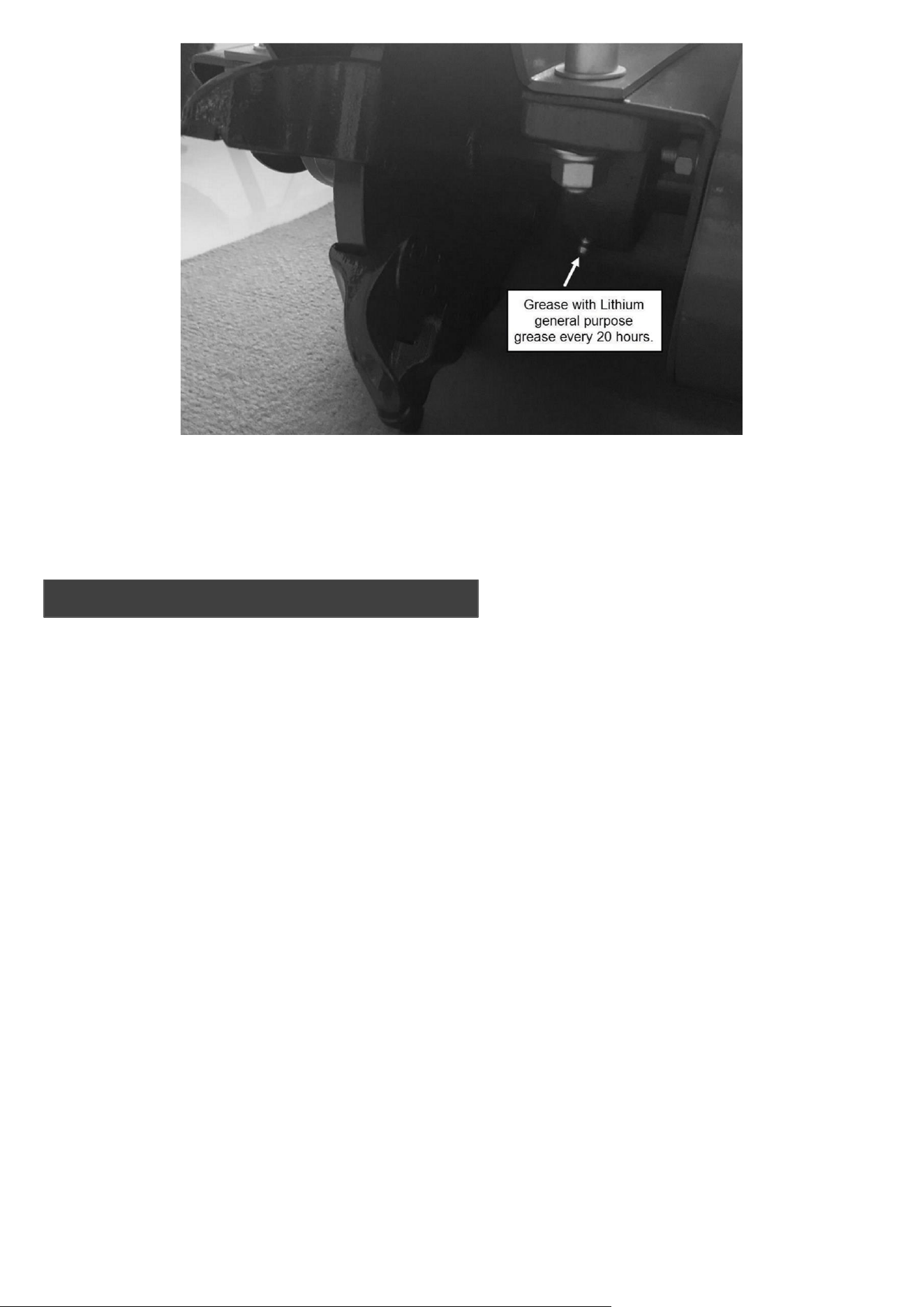
20
6.8 Check the tightness of all bolts and screws at regular intervals.
6.9 If the grinder hits an obstacle violently, stop the grinder and take it to a service
dealer for inspection.
6.10 Never let the engine run without and air filter being installed. A dirty air filter element
affects the engine performance, increases fuel consumption and makes it difficult
to start.
If you notice a loss of engine power check the air filter.
You MUST make sure the housing is free of dust and debris DO NOT allow any dust
or debris to enter the carburettor.
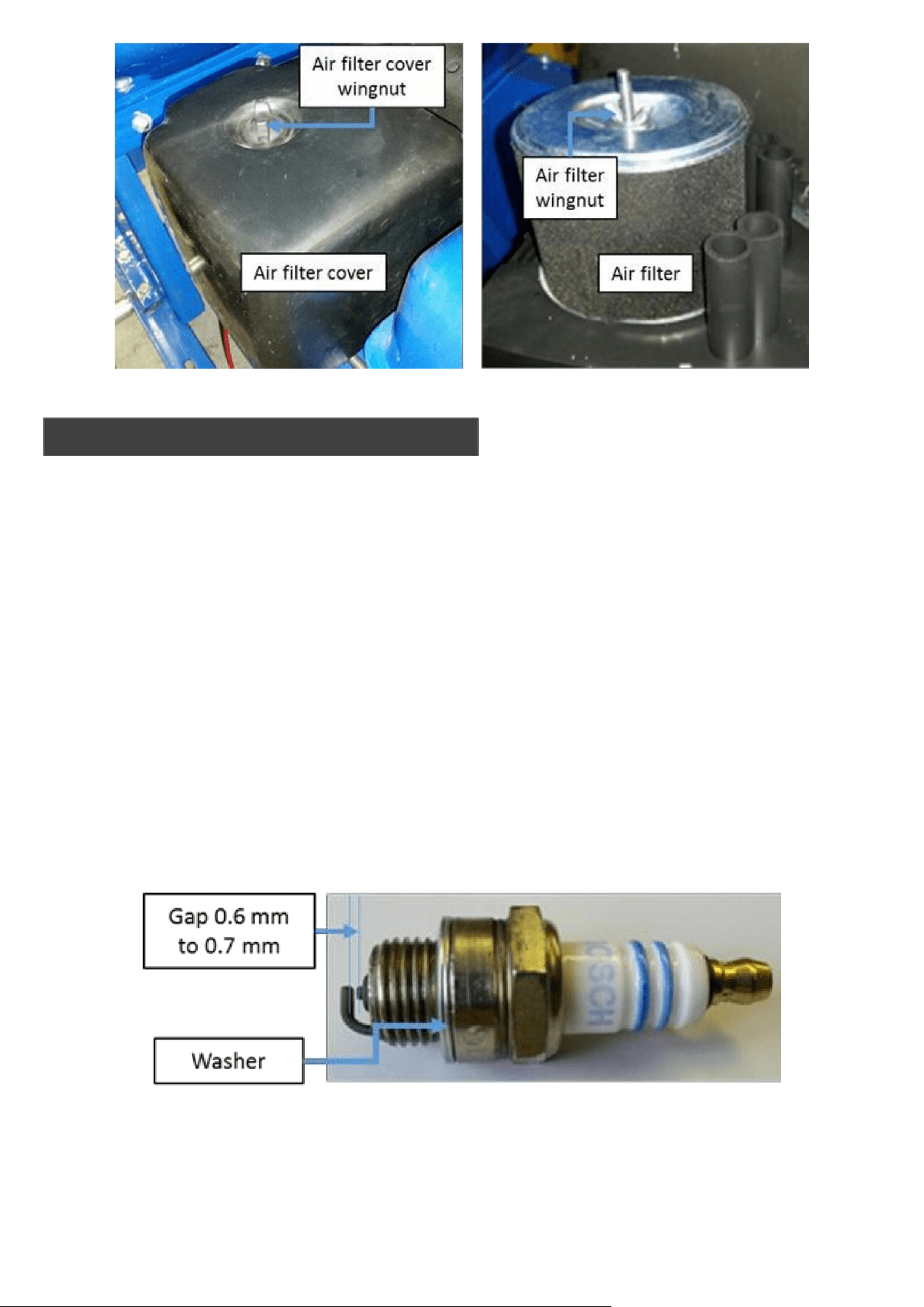
6.11 Remove the air filter cover by unscrewing the air filter cover wing nut and removing
the cover.
6.12 Once the cover has been removed, undo the air filter element wing nut and remove
the foam and paper elements.
6.13 If damaged or worn, replace immediately.
6.14 Was the foam filter in a mild detergent solution and allow to dry.
6.15 Once dry, soak the foam in fresh engine oil and remove the excess.
6.16 Tap the paper element to remove dirt and debris and use a low pressure airline to
blow from the inside of the element outwards to remove the remaining dust.
6.17 Reassemble and reinstall the air filter.
AIR FILTER
21
6.18 The spark plug MUST be fully tightened otherwise the engine will overheat causing
damage.
ALWAYS complete the following steps after the engine has been turned off and
allowed to cool down.
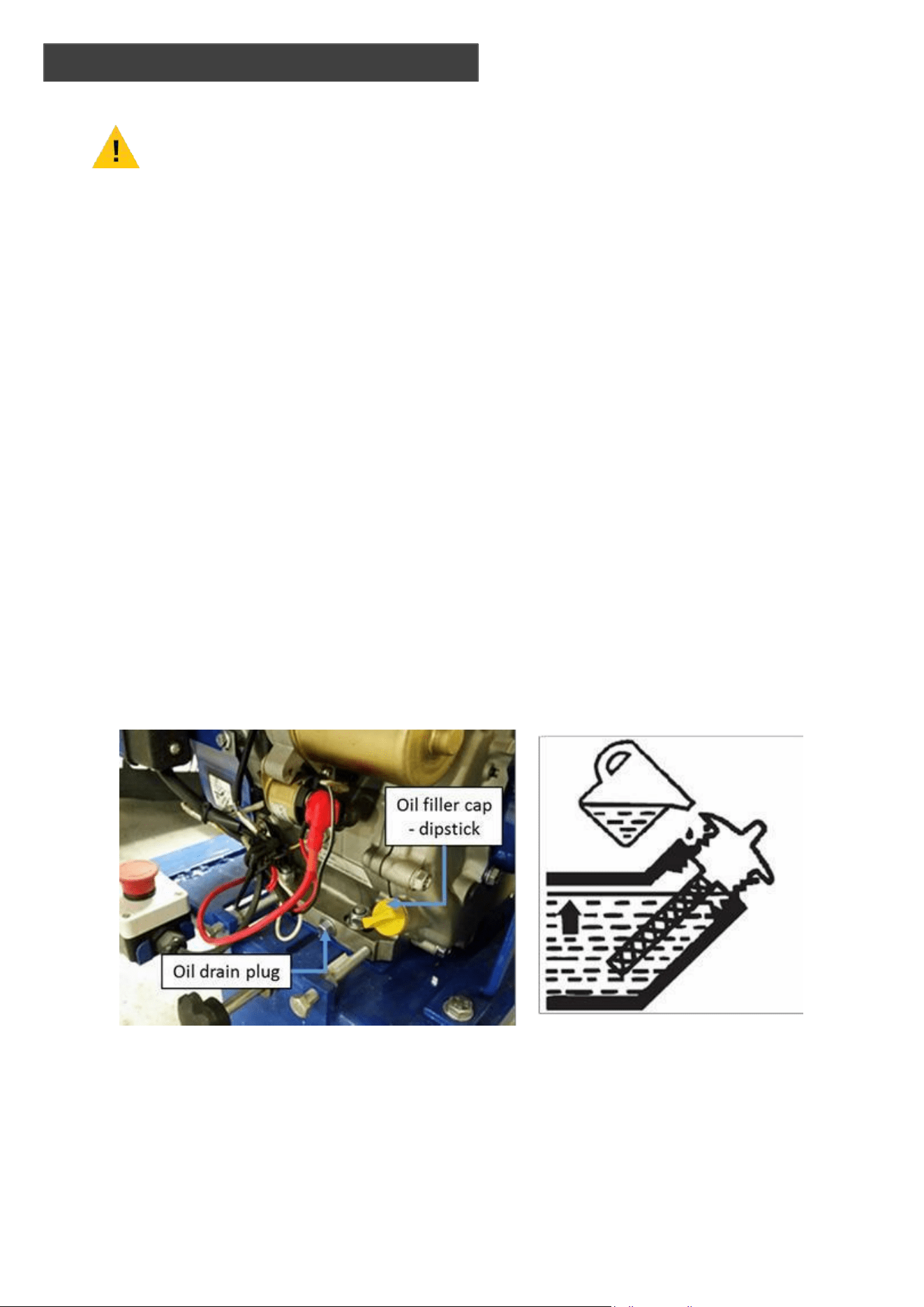
6.19 To make sure the engine runs correctly a spark plug gap of 0.6 – 0.7mm must be
maintained and the spark plug free of carbon deposits.
6.20 To remove the spark plug, remove the spark plug HT lead cap and undo the spark
plug.
6.21 Inspect the spark plug and if worn or damaged, replace immediately.
6.22 Clean any carbon deposits with a soft wire brush and using a feeler gauge, gently tap
the electrode until the correct gap is achieved.
6.23 Check the spark plug washer for damage and replace if required.
6.24 Replace the spark plug by hand to avoid cross threading then tighten to a torque of
12 to 15Nm.
SPARK PLUG
22
6.25
6.26
6.27
6.28
6.29
6.30
6.31
6.32
6.33
6.34
6.35
CAUTION
Risk of Burn from hot engine oil.
ALWAYS allow engine oil to cool before changing.
Drain the engine oil when the engine is warm, not hot. Warm oil drains more effectively.
Place a suitable container underneath the oil drain plug.
Remove the oil filler cap/dipstick.
Undo and remove the oil drain plug and allow the oil to drain into the container.
You may need to tilt the machine to drain all the oil, you will require assistance for this.
Inspect the oil drain plug and washer and if damaged, replace.
Reinstall the oil drain plug.
Place the machine of flat level ground and slowly refill with 1200ml of SAE30 or 15W40
engine oil.
Stop occasionally to check the oil level and DO NOT OVERFILL.
Refit the oil filler/dipstick.
Dispose of the waste engine oil in a safe and correct manner.
DO NOT throw waste oil down drains or on to the ground.
Clean up any spilt oil.
ENGINE OIL

23
NOTE
If the machine is to be stored for Winter or for periods of more than 30 days, then
you MUST follow the correct storage procedure.
Failure to do so may result in poor starting, performance issues and machine failure
that will not be covered by the warranty.
7.0 Allow the engine to cool completely before storing the machine.
7.1 Drain the fuel from the fuel tank into a suitable container and then run the machine
until it cuts out to drain the remaining fuel from the fuel lines and carburettor.
7.2 Drain and replace the engine oil as specified in the maintenance section.
7.3 Remove the spark plug and pour 1 teaspoon of fresh engine oil down the cylinder bore.
7.4 Place a clean lint free cloth over the spark plug hole and gently pull the recoil start
handle 4 to 5 times to coat the cylinder wall with fresh oil, then refit the spark plug.
7.5 Clean the machine thoroughly with a damp cloth.
7.6 Use a silicone based grease and coat the cutting teeth to prevent rust.
7.7 Lubricate all cables and moving parts of the machine.
7.8 Top up the grease level at the grease point.
7.9 Check the tightness of all bolts.
7.10 Store in a cool, dry place away from sources of ignition.
7.11 DO NOT stack other items on top the machine.
8.0 The stump grinder has been designed to be transported by van or trailer.
8.1 With assistance, lift the machine in the van or trailer.
8.2 Ensure the machine is supported and strapped down securely to prevent it moving
during transport.
8.3 DO NOT transport the machine while full of fuel and ensure the fuel tap is in the OFF
position.
8. STORAGE & WINTERIZATION
9. TRANSPORTATION

24
9.0 If troubleshooting does not resolve your issue, then contact the service dealer.
Use only parts recommended or supplied by the manufacturer.
ENGINE WILL NOT START
Fuel System
9.1 POSSIBLE CAUSES
1. Fuel valve is in CLOSED position.
2. Choke OPEN.
3. Fuel tank empty.
4. Machine stored incorrectly.
5. Water in the fuel system.
6. Carburettor problem.
POSSIBLE CORRECTIVE ACTION
1. Move the fuel valve to OPEN.
2. Move the choke to the CLOSED position.
3. Check and fill with fuel.
4/5. Check and clean the fuel tank, fuel line & carburettor of sludge.
6. Contact your service dealer.
Spark Plug
POSSIBLE CAUSES
1. Incorrect spark plug.
2. Dirt or carbon build up on electrode.
3. Spark plug short circuit.
4. Incorrect plug gap.
5. Petrol/Oil on spark plug.
6. Faulty engine switch.
POSSIBLE CORRECTIVE ACTION
1. Replace with the correct spark plug.
2. Clean and check spark plug gap, replace if required.
3. Replace with correct plug.
4. Check and re-gap the plug to 0.6 – 0.7mm.
5. Clean the spark plug, allow excess fuel to evaporate. Start on full throttle.
6. Contact your service dealer.
Low Compression
POSSIBLE CAUSES
1. Serious internal engine damage.
POSSIBLE CORRECTIVE ACTION
1. Call your service dealer.
10. TROUBLESHOOTING

25
Fuel System
POSSIBLE CAUSE
1. Machine stored incorrectly with regards to emptying the fuel system.
POSSIBLE CORRECTIVE ACTION
1. Check and clean fuel tank, fuel lines and carburettor of sludge.
Belt Coming Off
POSSIBLE CAUSE
1. Pulleys not aligned.
2. Incorrect belt tension.
POSSIBLE CORRECTIVE ACTION
1. Align pulleys.
2. Re-tension the belt.
Engages Late
POSSIBLE CAUSE
1. Loose belt.
2. Incorrect cutting depth.
POSSIBLE CORRECTIVE ACTION
1. Tighten the belt.
2. Reduce cutting depth.
Cutting wheel does not rotate
POSSIBLE CAUSE
1. Insufficient speed.
2. Incorrect belt tension.
3. Faulty clutch shoes, springs and/or clutch bearings.
POSSIBLE CORRECTIVE ACTION
1. Speed up the engine.
2. Re-tension the belt.
3. Replace clutch shoes, springs and clutch bearings.
26
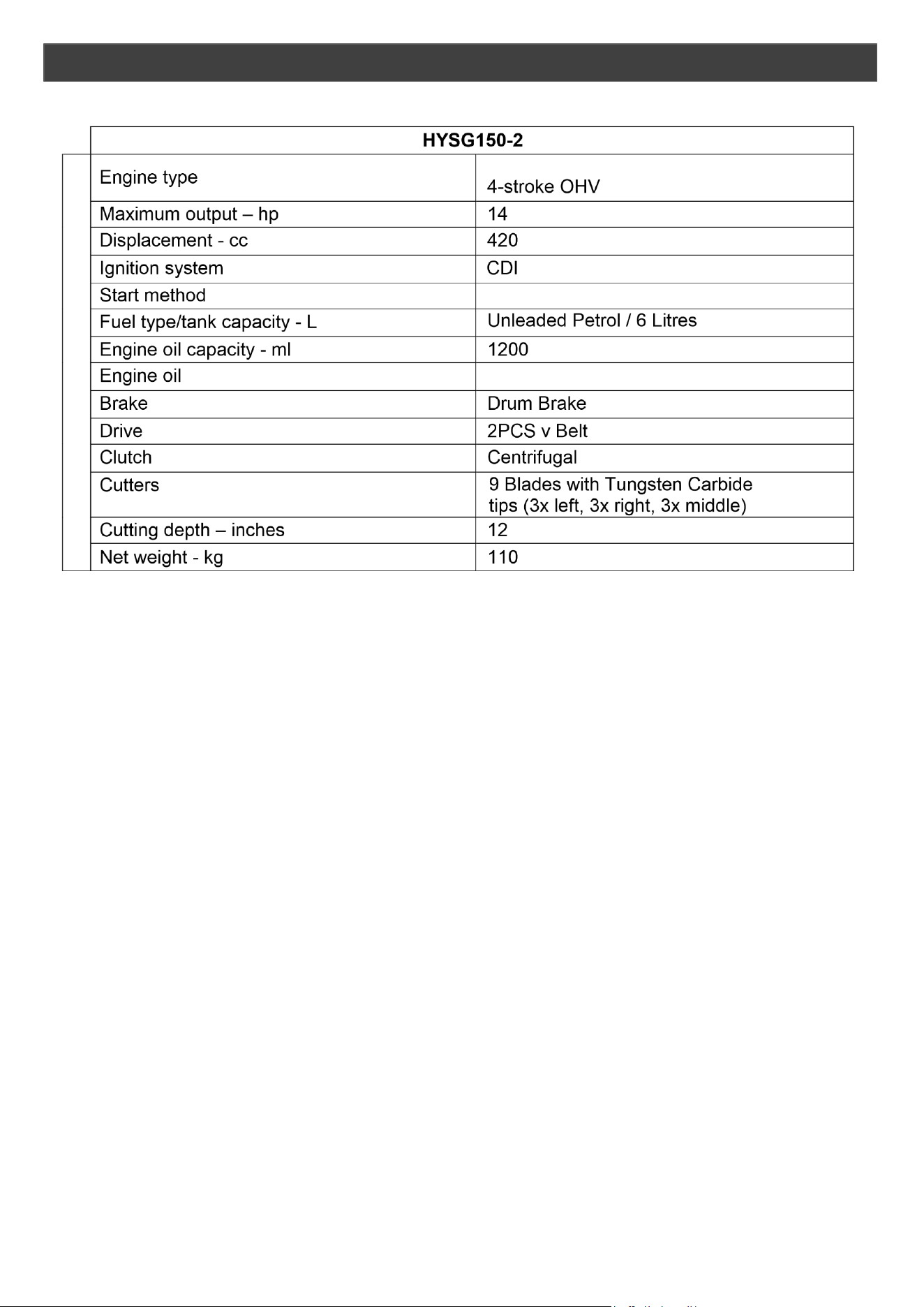
11. SPECIFICATION
Recoil
SAE30 or 15w40

27
12. DECLARATION OF CONFORMITY
EC Declaration of Conformity
We hereby declare that the machine detailed in this declaration complies to all the relevant
provisions of the following EC directives.
• 2006/42/EC The Machinery Directive
• 2014/30/EU Annex ll Electromagnetic Compatibility Directive
• 2016/1628/EC The Emission of Gaseous and Particulate Pollutants from internal Combustion
engines
• 2000/14/EC Noise Emissions in the Environment by Equipment for use Outdoors.
And is in conformity with the applicable requirements of the following documents:
• EN ISO 12100:2010, BS EN ISO 14120:2015
• EN13683:2003+A2:2011+AC:2015
• EN ISO 14982:2009
Declaration for 2000/14/EC Noise Emissions in the Environment by Equipment for use
Outdoors.
Product Details
Brand: Hyundai
Model: HYSG150-2
Description: Petrol stump grinder
Name and address of technical documentation holder and EU distributor:
Genpower Ltd, Isaac Way, Pembroke Dock, Pembrokeshire, SA72 4RW, UK.
Signed by:
Roland Llewellin, Managing Director
Date: 26/03/2020
28
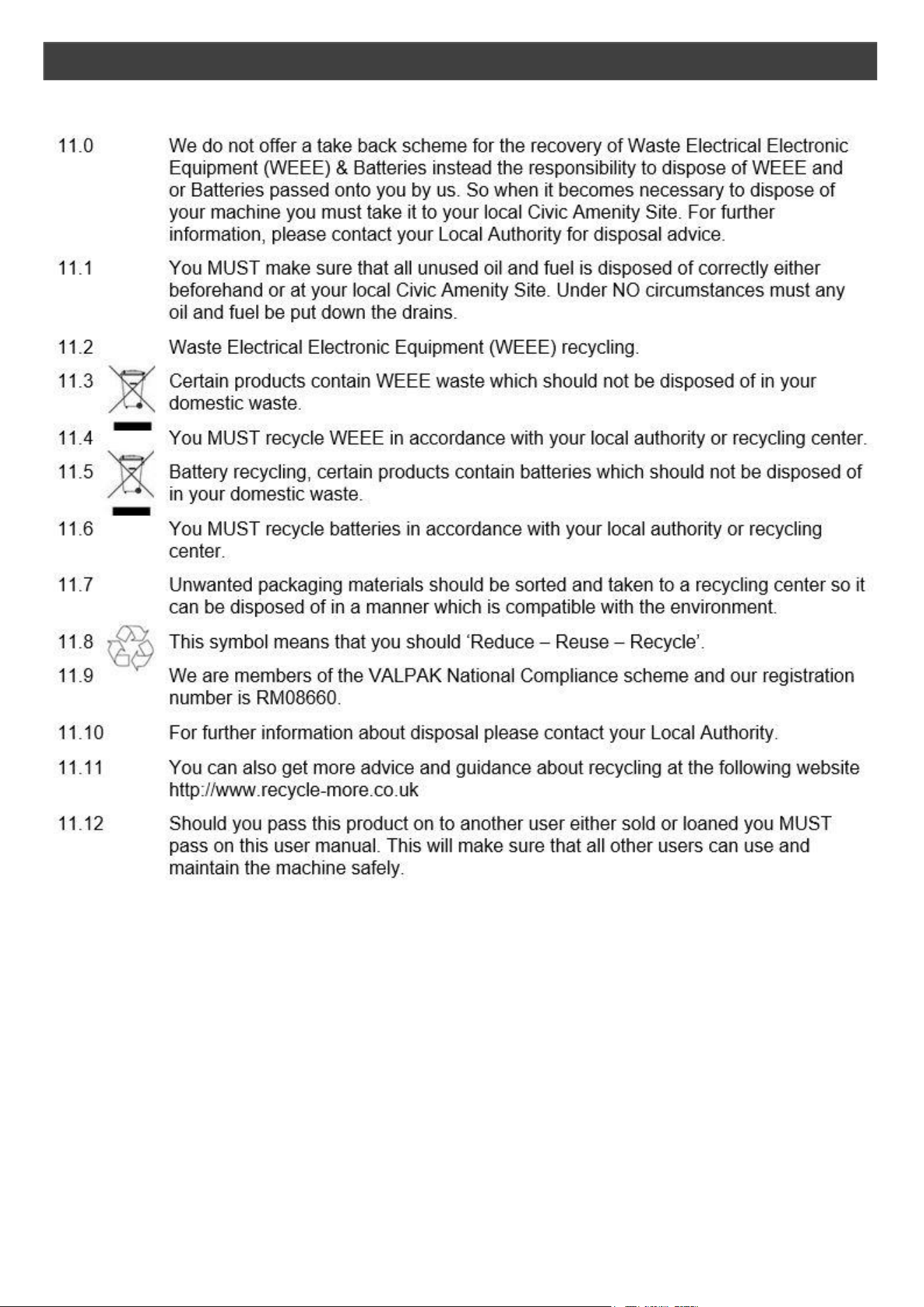
13. RECYCLING & PRODUCT DISPOSAL

29
14. CONTACT DETAILS
15. WARRANTY
16. MANUAL UPDATES
For warranty information, please visit www.hyundaipowerproducts.co.uk
Proof of purchase will be required before you make a warranty claim.
Our manuals are constantly being reviewed and updated. Should you find an error,
omission or something unclear, please contact us for assistance.
We reserve the right to make any modifications without prior notice whenever necessary.
Our latest manuals are also placed online. All manuals can be downloaded at
www.hyundaipowerproducts.co.uk
Our friendly aftersales team will be more than happy to help you.
Phone
Call our team on 01646 687 880, open Monday-Friday 8.30am-5pm.
Email
Online Live Chat
Go to www.hyundaipowerproducts.co.uk
Live chat is open Monday-Friday from 8.30am-5pm.
Post
Genpower Ltd, Isaac Way, Pembroke Dock, Pembrokeshire. SA72 4RW, UK.

Importer:
GENPOWER LTD
Isaac Way, London Road
Pembroke Dock, UNITED KINGDOM, SA72 4RW
T: +44 (0) 1646
687
880
F: +44 (0) 1646 686
198
E: info@hyundaipowerproducts.co.uk
www.hyundaipowerproducts.co.uk
Imported/Distributed by
GENPOWER
LTD for The United Kingdom & Ireland
Licensed by Hyundai Corporation, Korea