GR-RB449WE-PMA(57)-1

1. Ⴖڕ䂓..................................................................... 1
2. ₐⷧҬ⩕䰗 ........................................................... 10
3. ⩏৮㉽Ỹহߌ㘪 ....................................................... 16
4. 䰗⮱㋚䂤হԊ丷 ................................................... 22
5.
ᩲ䯉ᢿ䮑...................................................................2
6.
⩏৮ᐏ㮂⤳ ........................................................... 2
Ⱋ䠱
㻗ᙈ⮱Ҭ⩕㔲喞
• 䲋፥ᙌ䁊ҍ䈩䇤ₑᲞ㟊⩏৮ȡ
• ᪙㿸䫞䂭᱙⩕ᝣڷ喐Ҭ⩕ݺႹڕ⛌ᖶ⩏৮喐ВӬႶڕ
ₐⷧҬ⩕᱙⩏৮ȡ
• 㿸ᄴ᱙⩕ᝣڷႅᩫౕღᭀᓄ⮱ౝ喐Вӈᄴҳࣰ㔰ȡ
• ⷧԊጟᩣݝԊ⩕䁶ȡ
1
1.1 䂓
䂓
䂓喞▘▪喓ᭀ⛰䷕䯗
•
䂓喞▘▪喓▪䰐হ✳◥䷕䯗
᱙䰨க⮱㸪ۤ᭜ᭀ⛰৮喐∕ᘼႶ㸊হ䕸䑥䕻⼸㿸ࠬ᤺ซ
ۤࢨノȡຯ⮩⩌⅐倁≖喐㿸㖜㊎䑶䟤ᝃ⪣ౝࠆА⤳喐
ᛶ㉯ᣎВ䴽䭟ᣗ喞
1. ក䪸⿄ᝣ喐ⷧԊ䕇䷕㞜ສȡ
2. 䭱䓾⺮ᬻ▘ᓄҬ⩕ڣЃ䰨கȡ
•
᱙⩐৮ӈუᅲࣷ䶋ѩ⧝ධҬ⩕喐ຯ喞Ꮔ㝃ڔ⮱ጒᐇᝬഌȠ
䓓ڙბࣷڣЃጒ҉⧝ධ喟䓟㜺喟হӈᝣ䙿ᏄȠ↪䏷乕
ࣷڣЃѼႲ䶋ಸ⧝ධ喟Ꮇࣷᬖ丽䶋ಸ⧝ධ喟丽丟ࣷ䶋ѩ䲋䰣
ᛶ⩕ᗲධȡ
•
㿸⚔ⰸٿ〒喐ⷧԊЃԾᰰិ⣖䰨கȡ
•
䂓喞▘▪হ㼥䰨䷕䯗
ຯ䰨⎽㌇᤺ซ喐ݴᛶεᰡᤈ喟ຯ䰭ᰡᤈ喐㿸㖜㊎㋀䟤ᝃ
⪣ౝࠆА⤳ȡ
•
⌲⒁᱙䰨கᝃ䪤᭯䫀Ҭ⩕᱙䰨க᭯喐㿸ᓋᏔ᠁䮑䰨⎽
䵚ȡ
1. Ⴖڕ䂓
Ⴖ㸊ݺ㿸ٵ䫞䂭Ⴖڕ∕ᘼθ䴲
◧䭟Ҭ⩕㔲ᝃڣЃϧ⮱₨ώᝃפВࣷ䇎⩏᤺ซ喐ᓲ䴵䖢
ᓗВᠴȡ⩞ᔪ⪒ᠴ㔹ᄻ㜡⮱ₐⷧ᧺҉㘪ᰰᄻ㜡פ
რᝃ᤺ซȡ
2
•
㿸ࠬҬ⩕ᐣ䪤㌇ᝃ᱗ᣒౝ⮱喌䰆䜊喍䖖䙺கȡ
•
䂓喞Ԋᠮ䰨கใᝃڔᐧ㉽Ỹ⮱䕇䷕ᯏ䕇♎䭨ȡ
•
䂓喞㿸ࠬҬ⩕㸊㒛ᝃڣЃᐼҳߍ䕌䮑䱉䕻⼸喐䮑䲋ᆙ㸪
䕍ᣕ㫓㔲ȡ
•
䂓喞㿸ࠬ᤺ซ㸪ۤ䰨䌜ȡ
•
䂓喞㿸ࠬ᱙䰨க⮱丌৮ٟ㫼ბڔҬ⩕䰨க喐䮑䲋◧㸪䕍
ᣕ㫓⮱䶋ಸȡ
•
䂓喞⩞䰗Ҭ⩕ᭀ⛰⧝☤⮩∎ᱽহ㸪ۤ喐ₑ㿸
ᵦᨇ⪣ౝ∂㺼㒛䰗ȡ
•
䂓喞ᨧᩫ䰨க᭯喐㿸ⷧԊ䰨⎽㌇♎Ѽᝃ᤺ซȡ
•
䂓喞㿸ౕࠬ䰨கᒹᩫ㒛็Ըᩉ፣ᐼᏔᝃᩉ፣ᐼ䰨⎽ӈ
ᛶகȡ
•
䂓喞㿸ײ∕ڒ丟⩕Ⅱȡ㿸ࠬ∕ڒ⛞Ⅱᝃ丟⩕ⅡВใ⮱⋟倁
喌ҸຯⅮ喍ȡ
•
࢞䯗喞ٿ〒㷘ఝ⮱䷕䯗ȡ㒛㜷䰗ᝃマݺ喞
- ⼨䮑䪭ȡ
- Ԋ⪆䯁Წ喐Вٺٿ〒䑂ᭀ❙ڒȡ
•
ୄ㾓Ⴖ㸊䭱Уݺ喐ᓲ䴵ٵ䪸䰗⮱䰨⎽ȡ
•
䰗Ҭ⩕⮱㸪ۤহ⧝☤⮩∎㛍ᱽᭀ⛰ȡₑ喐䰗൞
ᐏᒹ喐ᛶ䖍䰏▘⎽喐⩞ڤᰶⰥᛶ䇴ᵩ⮱ᄵ䪭ఋᩣڙ䕟㵹ఋᩣ喐
ᓄВ♇ࡃ㮂㒛喐Вٺᄺ⧝ධ䕍ⵡซᝃڣЃ࢞რȡ
3
•
䖖⩕ IEC ⏃喞ⰐⲐᝃᠴᄻ喐䏘倁ᙌݝ䖖Ƞ⺋⟭ᙸ
Ҡᝃ㑧ͼⰥ䬉㋀侄㜴ⴒ䂅⮱ϧธ喌࠲᠙ٿ〒喍喐䖖
Ҭ⩕᱙⩏৮ȡ
•
䖖⩕ EN ⏃喞8 ࣷВٿ〒Ƞ䏘倁ȠᙌჅᝃᓰᮧᑞ㘪ϧธ喐
ᝃ㑧ͼ㋀侄ࣷⴒ䂅ϧธ喐䰭ౕγ㼐Ⱕ䬉䷕䯗喐ᓄݝⰐⲐᝃ
ᠴᑂᰶ䬉᱙⩏৮⮱ႶڕҬ⩕∂Ҭ⩕ȡٿ〒ᓄិ
⣖᱙⩏৮ȡٿ〒ᓄౕ↿ᰶⰐⲐ⮱ᗲ⇮⌲⒁ࣷ㋚䂤⩏৮ȡ
•
㿸ࠬϑ䕇ጒڤ喌ຯ㝦㝣ぶ喍Ҭ⩕᱙䰨கȡ
•
ຯܧ⤫䴠Ƞ⪝ঠᝃڿ⚆喐㿸⿸ࢠ᠁䮑䵚䰨⎽喐㖜㊎
㋀䟤ᝃ⪣ౝ㋚ԛА⤳ȡ
•
㿸ࠬᄴᩫౕ᱙䰨க䲏ᝃᒹ䲏喐В䭟פȡ
•
㿸ᄴ࠲㸊ᱽহڣЃ䘕Уᩫౕٿ〒ᣒ㼥ݝ⮱ౝ喐
В䭟⾿ᖜȡ
•
◧䖬ٺᴀ丌➖喐㿸䖢ႵВ㿗ᬻ喞
- 䪤᭯䫀䪸䪭ᰰᄻ㜡᱙䰨க䯁䫀ڔ⮱⏘Ꮣ䶜㦄ࡴ倅ȡ
- Ⴧ⌲⒁㘪㜴丌➖ᣒ㼥⮱㶕䲏Вহ㼥ࣷ⮱ᢿⅡ㈨㊞ȡ
- ຯⅡマ 48 ᄼ᭯᱗Ҭ⩕喐ݴ㿸⇃≄⌲⒁Ⅱマ喟ຯ 5 ᬒ
᱗Ⅱ喐ݴ㿸⇃≄㜴ӈⅡⰥ䕐⮱ӈⅡ㈨㊞ȡ喌׆㽨 1喍
- ᄴ⩌㖶হ傇ႅᩫౕ䖖⮱ღக喐♣ᒹںᩫڒ䰗ۤ㫼喐
Вٺᣒ㼥ᝃ␡㥪ݝڣЃ丌➖ȡ
- ιᭌ丌৮ۤ㫼ᵩ䖖⩕ٟႅ䴽ٵۤۺ丌৮喟ٟႅᝃ㸪҉䰗
㈂喟Вࣷ㸪ȡ喌׆㽨 2喍
- ᭌȠιᭌহᭌ䯁䫀䖖ۤ㫼僛丌➖ȡ喌׆㽨 3喍
- 䖖⩕↿ᰶఈᭌ䯁䫀⮱䰨க喞᱙㸪ۤ䰨க䖖ۤ㫼丌৮ȡ
喌׆㽨 4喍
- ຯ㸪ۤ䰨க䪤㮂⾧㒛⟭ᙸ喐ݴᛶ䬉䪶Ƞ䮑䱉Ƞ⌲⒁Ƞ
ᒲΫ䪸䪭喐В䭟᱙䰨க⮩䰶ȡ
4
•
׆㽨 1Ƞ2Ƞ3Ƞ喞㿸ᵦᨇҍ⮱⩏৮䯁䫀䶋ಸⷧ㾺᭜䖖⩕ȡ
•
⢕⿸ᐼ䰨க喞᱙䰨க㘪҉ቹڒᐼ䰨கҬ⩕ȡ
•
LED ⛵⮱Ш҂ᰡᤈᝃ㋚䂤ᛶ⩞㸪䕍ȠڣࠆА⤳ᝃ䶋ѩ⮱
䇴ᵩϧ䕟㵹ȡ
•
᱙⩏৮࠲ (G) ㉇㘪⎽᩵⯷⮱ٶ⎽ȡ
5
1.2 Ⴖڕ䂓こ㮌А㶕ᘼ㓖
⺮こ㮌
ₑこ㮌㶕⺮⮱θ䴲ȡ
䖢Ⴕᠴ㘪ᰰᄻ㜡⩏৮᤺ซᝃ㔲࢞ࣷҬ⩕
㔲ϧ䏘Ⴖڕȡ
ᓲ䴵䖢Ⴕθ䴲こ㮌
ₑこ㮌㶕ᓲ䴵䖢Ⴕ⮱θ䴲ȡ
ᰶₑこ㮌⮱㵹◧ᓲ䴵ᵩᠶ⚔㺮Ⅿ᧺҉ത
㵹喟ݴ㘪ᰰᄻ㜡⩏৮᤺ซᝃ㔲࢞ࣷҬ⩕㔲
ϧ䏘Ⴖڕȡ
∕ᘼこ㮌
ₑこ㮌㶕䰭∕ᘼ⮱θ䴲ȡ
ᰶₑこ㮌⮱㵹◧䰭㺮➦ݒ∕ᘼȡຯߍВ
䭟ヱ喐㘪ᄻ㜡䑂Ꮣᝃ㔲Ꮣ⮱פრ喐ᝃ䕍
⩏৮᤺ȡ
᱙㿗ᬻᰥ࠲㽞็䛺㺮⮱Ⴖڕ䇴㼷喐㿸ࠆᓲ䖢Ⴕᰶ⮱Ⴖڕ
䇴㼷ȡ
1.3 ⩕䰨ᰶ䬉⮱䂓θ䴲
• ᠁䮑䰗⮱䰨⎽䵚᭯喐ܴࠬ៶វ䰨⎽㌇ȡ
ࠆᓲ㋷ᤎ䵚喐ᓋᏔⰡᣒ᠁ܧȡ
• ◧Ԋ䯉ႶڕҬ⩕喐Ш҂᭯Ն㿸㺮᤺ซ䰨
⎽㌇喐⪣䰨⎽㌇ܧ⤫ⵡ᤺ᝃ䵚ܧ⤫⸕᤺
᭯喐ܴࠬҬ⩕ȡ
• │᭯㿸ࠬ㼥ᦥ䰨⎽䵚喐В䭟㼥䰨ȡ
• 㿸Ҭ⩕ᄵ⩕䰨⎽Ꮤ喐㾟Ꮤᛶ㜴ڣЃ
䰨கڞ⩕ȡ䰨⎽㌇䵚ᛶԊᠮ㜴Ꮤ➏ధ
ᣒ㼥喐ݴ㘪ᄻ㜡▘▪ȡ
6
• 㿸ࠆᓲԊ䁶Ꮤ⮱ᣒౝẢᛶᰶ䲍⮱
ᣒౝ㌇ȡ
• 㿸ᄸⅯᄵẚϧ᎘ߖВ῏ᴒᏔ᭜ᰶ䲍
⮱ᣒౝ㌇ȡ
• ᰭ㉯Ҭ⩕㔲ᰶ䇙Шᄴ᱗ᣒౝᏔᰡᤈ◧ᣒ
ౝᏔȡ
• ⪣⚑⅐ぶᭀ⛰⅐倁≖᭯喐ᛶٵ䬉䪶⅐倁
≖⮱䫒䪭喐ںក䪸䪭⿄ȡₑ᭯㺮᠁ܧ
䰨கУ⮱䵚喐Вٺ▘㟞ᑂ⮩▘▪ȡ
• 㿸ࠬ᱙䰨க䴯䘕Ҭ⩕䰨க喐䮑䲋◧㸪䕍
ᣕ㫓⮱䶋ಸȡ
1.4 Ҭ⩕᭯䂓θ䴲
• ⺮⻮㜗៳ࢥȠᩦ䕍᱙䰗Ƞ⺮᤺ซ㸪
ۤノ䌜喐㋚ԛ䰗ᓲ䴵⩞ᄵẚϧ䕟㵹ȡ
• ຯ䰨⎽䐌㌇᤺ซ喐◧γ䖬ٺ࢞䯗喐ᓲ䴵
⩞䟤ᝃڣ㋚ԛ䘕Ⱕ䬉⮱ᄵẚϧᰡᤈȡ
• 䰗䪭䫀Вࣷ䰗䪭㜴ᾌ䏘䫀⮱㍘䯆
ᒵᄼ喐∕ᘼ㿸ࠬᄴѥڒ䕆ψౝ喐Вٺ
ᨍפᠴȡ䪸䬉䰗䪭᭯喐⩕߈㺮䕻๔喐
Вٺ➖৮ᢶ㥪ȡ
• 䰗䪸䕸҉ᒹ喐㺮⩕│ࣨᠬۤۺ
ბڔ⮱丌৮ᝃღக喐➦ݒ᭜䛾ᆙღக喐В
ٺۺפȡ
7
• 㿸ࠬ䃀ٿ〒䕟ڒᝃᨭ❙䰗喐Вٺᄴٿ〒
ჳᄮౕ䰗⩏৮ڔᄻ㜡⾿ᖜᝃ䰨க⩏৮Կ
喐פࣷٿ〒ȡ
• 㿸㺮ᄴ䛺➖ᝃ࢞䯗➖৮喌⨣ၽȠ丽ڤᝃ
• ։䰨ᝃ⌲⒁᭯喐ᛶ᠁䰨⎽䵚喐㜠ᄾⰥ
䯁ρܳ䥅喐㘪ں⁎ᣒ䕇䰨⎽喐В䭟䕐
㎹ઌࠂ㔹᤺ซ㍛ᾌȡ
ᰶ⋟倁⮱➖৮喍ᩫ㒛ౕ䰗䴯䘕ȡ
1.5 ᩫ㒛➖৮䂓θ䴲
ۤۺბ
• 㿸ࠬᄴᭀ⛰Ƞᭀ✳Ƞᭀᤛ⮩হᑤ㙽㲂ᕔ➖
৮ᩫڒ䰨க喐Вٺᄻ㜡⩏৮᤺ซᝃ▘▪ぶ
ᘼใȡ
• 㿸㺮ౕ䰗䭱䓾ᩫ㒛ᝃҬ⩕⛰ᕔ➖৮喐
Вٺ⮩⩌▘▪ȡ
• ᱙䰗◧უ⩕䰗喐უ⩕䰗䖖⩕ٟ
㫼丌৮喐㘪⩕ڣЃ⩕䕁喐ຯٟ㫼㵭⋟Ƞ
㬒৮হ⩌➖㸪৮ぶȡ
• 㿸㺮ᄴ⨣㸊ᝃჳ䪶ღகڔ⮱≮倁➖৮ຯ
Ὢ㸊ઑ䙿Ƞ丟ぶᩫڒۤۺბ喐Вٺۺ㉽
✳㷯ᄻ㜡ڣЃ᤺ȡ
8
1.6
•
•
•
•
•
•
⎽
Ⅱ
9
1.7 ᐏⰥ䬉䂓
• 䰗Ҭ⩕⮱㸪ۤহ⧝☤⮩∎㛍ᱽᭀ⛰ȡₑ喐
䰗൞ᐏᒹ喐ᛶ䖍䰏▘⎽喐⩞ڤᰶⰥᛶ䇴ᵩ⮱ᄵ䪭ఋ
ᩣڙ䕟㵹ఋᩣ喐ᓄВ♇ࡃ㮂㒛喐Вٺᄺ⧝ධ䕍
ⵡซᝃڣЃ࢞რȡ
• ᱙䰗ᐏ⩕᭯喐㿸ᄴ᱙䰗䪭ࢥᢶ喐៳䪭ᄮ
ࣷ᨞➖᳣喐ᄴ䪭㜴䯁Წᩫݝ䖖⮱Ѻ㒛喐Вٺٿ〒
䕟ڒ⣖㔺喐⮩⩌ᘼใȡ
10
2. ₐⷧҬ⩕䰗
2.1 ᩫ㒛
• ⼨ࠂ䰗ݺ喐㿸ᄴ䰗ڔ⮱ᰶ➖৮ܧ喐
⩕㛍፣ధჇ⣨⦰䯁ᲬȠ㩙㤉᳣Ƞۤۺბ
ᆉぶ喐㋷㿬Ꭰ㚠喟䬉䪶䰗䪭⩕㛍
፣ჳᄮȡ⼨ࠂ䕻⼸喐᱙䰨கᓄԿ㒛ᝃ
ⅡᎠᩫ㒛喐ϓᓄᡜࠂ喟⼨ࠂ䕻⼸⮱
Ꮣᓄ䊲䕻 45
°
ȡ
• Ҭ⩕ݺ喐㿸ٵ⌲䮑ᰶ࠲㸊ᱽ喐࠲᠙䰗
ڔ⮱ᠶ䝂භȠ∎⇘භহ㛍፣喟Вࣷᧂᢶ
䰗䪭হᾌ䏘⮱Ԋ䂤㛉ȡ䖍䰏⛞⎽喐䖬
ٺ䮪ٶⰡᄱȡ㿸ࠬᄴ䰗ᩫౕ⒛│ᝃᰶⅡ
⮱ౝ喐В䭟⩌䤪ᝃ㊂㌐᩵䭺ѻȡ
• 㿸ࠬᄺ䰗䕟㵹Ⅱᝃ⇃≄喟㿸ࠬᄴ䰗
ᩫ㒛ౕღᭀ㷘Ⅱ┧ݝ⮱⒛│ౝ喐Вٺᒞ
䴬䰗⮱䰨߈㊂㌐ᆙᕔȡ
• 䰗ᛶᩫ㒛ౕბڔ䕇䷕㞜ສ⮱ౝ喟ౝ䲏
ᛶᎠ᪡Ƞലధ喌ຯ⾖Ⴧ喐ጓ䑶㿬
᪡䑗ВᩫᎠ喍ȡ
• 䰗䴯䘕⾧䫀ᛶ๔ 30 ࣅㆠ喐䰗ᛶ䲍❳
ᩫ㒛喐㜗⩞䌊䰏๔ 10 ࣅㆠ喐Вݖ᪐⛞ȡ
Ⴖ㸊ݺ⮱∕ᘼθ䴲喞
ୄ㾓Ⴖ㸊ᝃ㿬᪡䙺Уݺ喐ᓲ䴵Ԋ䁶䰗↿ᰶᣒ䕇䰨
⎽ȡ㿸ևສ䭟䂤喐Вٺ䕍ϧ䏘פώȡ
10cm
30cm
10cm
11
2.2
a.
b.
c.
2.3
5/16
1.
12
2. ጓ䞥䣵㧸㸊丫㧸Ƞ䞥䣵㧸হ䞥䣵喐䪸マ倁䴯
䘕⮱Ԏ㮌㌇喌Ԏ㮌㌇㉯〜 1Ƞ2喍ȡ
1
2
䞥䣵㧸
䞥䣵
㸊丫㧸
3. ៳ۤ㫼ბ䪭倁喌⪆ᓰ㺮䪭⮱䐥ຄহ᧸Წぶᄼ䘕У喍;
䫀⮱䞥䣵喐֡䞥䣵ႁ⮱㸊丫㧸ȡ
䫀䞥䣵
㸊丫㧸
4. ៳ۤۺ䪭䏘喌⪆ᓰ㺮䪭⮱䐥ຄহ᧸Წぶᄼ䘕У喍;
䞥䣵㿬᪡㻿Ꮣȡᄴ䞥䣵䐥ࢥႶ㸊ݝ䞥䣵⮱֡喐
♣ᒹᄴᩦ㸊ᒹ⮱䞥䣵Ⴖ㸊ݝマ倁⮱֡ȡ
㻿Ꮣ
䞥䣵
13
5. ᰡᤈ䰗䪭喞
1) ۤ㫼ბ䪭〜㧸⮱㧸Წহጓ֡㸊丫㧸ȡ
ᄴ䐥ຄহ䪭倁Ԏ㮌㌇Ⴖ㸊ݝ֡喐㧸〜㧸Წȡᓋ䙺У
㶸ܧ㸊丫㧸喐ᄴڣႶ㸊ݝ〜㧸⮱֡ȡ
2) ۤ㫼䪭⮱䪭㜗䣃Ƞ䪭᧸হ䐥ຄ喐ᓋ䙺У㶸ܧጓ֡䪭㜗䣃喐
ᄴڣႶ㸊ౕۤ㫼䪭〜㧸⮱ጓ֡喐ᄴ䪭᧸൷হ䐥ຄᤈݝۤ㫼䪭
〜㧸⮱ጓ֡ȡ
6. ᰡᤈۤ㫼䪭喞
1) ܧۤ㫼䪭〜㧸⮱䐥ຄহ㧸ၽ喐ᄴڣႶ㸊ౕጓᄺ㿬Ѻ㒛ȡ
2) ۤ㫼䪭⮱䪭㜗䣃Ƞ䪭᧸হ䐥ຄ喐ᓋ䙺У㶸ܧጓ֡⮱䪭
㜗䣃喐ᄴڣႶ㸊ౕۤ㫼䪭〜㧸⮱ጓ֡喐ᄴ䪭᧸൷হ䐥ຄᤈݝۤ
㫼䪭〜㧸⮱ጓ֡ȡ
14
7. ᄴᰡᤈᒹ⮱ۤ㫼䪭Ⴖ㸊ౕ䞥䣵喐♣ᒹႶ㸊䫀䞥䣵㧸䞥
䣵ႁ㸊丫㧸ȡ
䫀䞥䣵
㸊丫㧸
8. ᓋ䙺У㶸ܧጓ䞥䣵㧸হጓ䞥䣵ȡᄴۤ㫼ბ䪭倁ᩫౕ䫀
⮱䞥䣵喐♣ᒹႶ㸊ጓ⮱䞥䣵ȡᄴ䰗䴯䘕Ԏ㮌㌇ 4 䕐ᣒ㜠
䪭倁Ԏ㮌㌇ 1ȡ
ᰭᒹ喐ᰡᤈマ倁֡⮱䞥䣵㸊丫㧸喌׆㽨喞ౕᰡᤈマ倁֡⮱䞥
䣵㸊丫㧸᭯喐䞥䣵㸊丫㧸⮱ږԸ❴喌ຯృ喍ᓲ䴵ޗᢶ喍ȡ
2
4
1
4
1
2
䞥䣵
❴
䞥䣵㧸
㸊丫㧸
2.4 ⛵䘕৮ᰡᤈ
LED ⛵⮱Ш҂ᰡᤈᝃ㋚䂤ᛶ⩞㸪䕍ȠڣࠆА⤳ᝃ䶋ѩ⮱䇴
ᵩϧ䕟㵹ȡ
15
2.5
•
• 2
3
4
•
2.6
•
•
•
•
•
998mm
595mm
135°
678mm
1132mm
16
3.
3.1
LED
LED
•
3 5
•
•
•
㒛➖䯁Წ
㒛➖䯁Წ
㒛➖䯁Წ
17
ۤۺბ
• ѻ⏘ۤۺბВ䪤᭯䫀Ԋᠮ丌➖僛喐㺮⩕ٟႅۤۺ丌৮হ
㸪ȡ
• ۤۺბ䖖⩕ٟႅ㖶䶋Ƞ傇䶋Ƞ东㈝হڣЃⴚڔ丌⩕⮱丌➖ȡ
• ๔൷㖶䶋ᰭສܳᄼ൷喐ВӬҬ⩕ȡࠆ㿸∕ᘼ喐丌৮ᛶౕԊ䈗
ڔ丌⩕Ⴙ⪏ȡ
ᠶ⚔ృ⮱Ѻ㒛ᨧᩫᆉȠ丌৮⯿Ƞ⣨⦰᳣ぶᰭڤ㘪⎽᩵⯷ȡ
㽨喞݊㸪ۤᒹ⮱䕸҉䫀ٟႅ䕻็丌➖ȡٟႅ⮱丌➖ᓄൢඋܧ
⅐喟ݴϓᰰᄺۤۺ᩵⩏⩌ݖᒞ䴬ȡ
18
3.2
1.
2. 3.
4.
5. 6. 7.
8. 9.
A.
B. -
C.
+
D.
3
5
°
C -18
°
C
;
30
30
19
30
TEMP SELECT 3
TEMP SELECT 3
30
TEMP SELECT + -
- 1
°
C
2
°
C - 8
°
C +
1
°
C 8
°
C +
2
°
C 2 ~ 8
°
C
TEMP SELECT + -
+ -
- -> -> -> -
20
TEMP SELECT + -
- 1
°
C
-24
°
C + -16
°
C
+ 1
°
C -16
°
C
+ -24
°
C -16 ~
-24
°
C
- 3
2
°
C
- 3 + -
6
+ 3
-24
°
C
+ 3
+ -
24
....
-18
°
C
5
°
C
-18
°
C MODE 5 POWER
OFF
--
HOLIDAY SMART POWER OFF
MODE
POWER OFF
POWER
OFF
30
V
21
4
°
C
-18
°
C
E1
E2
E3
E5
E6
E7
*當蜂鳴器沒響、開門時燈沒亮,門把上的指示燈也關掉時,你可以試著同時
按「 」+「 」組合鍵3秒,解決目前狀況。
22
4. 䰗⮱㋚䂤হԊ丷
4.1 ⩏৮᪡倁⌲⒁
• 㿸ᠶ᭯⌲⤳䰗㗹ᒹࣷক⮱▝ජ喐В倅᪐⛞᩵喐᭯ݖ
ロ㘪ȡ
• Ⴧ῏ᴒ䪭ᄮ喐ⷧԊ↿ᰶ䰉➖ȡ⩕㭥ᰶ㗒⮯Ⅱᝃ⼭䛸ᒹ⮱⌲⒁
⮱䐌ጰ⌲⒁䪭ᄮȡ
• 䰗ڔ䘕ᛶ㋀፥⌲⒁Вٺ⩏⩌⪝ঠȡ
• ⌲⒁䰗ڔ䘕ݺ㿸ٵ䬉ᢶ䰨⎽喐ܧᰶ丌➖Ƞ
丟৮Ƞ᨞᳣Ƞᆉぶȡ
• ⌲⒁䰗ڔ㛪㿸Ҭ⩕䐌ጰᝃ㔲⊤㋬喐В⩕ږ⎜ࡆ㬴កㆶহ㾴
㙘⏘Ⅱ⏣⋟ٵ⌲⒁䕺ȡں⩕⌲Ⅱ⌲≄ᨓΫ⌕ȡ⌲⒁Ⴙ⪏ᒹ
ក䪸䪭㜗♣䷕Ϋᒹںᣒ䕇䰨⎽ȡ
• ᄺ䰗ڔᭀ⌲⒁ഌ喌ຯ⾱ᄼ⮱ᆑȠ㍘䯆ᝃ㻿喍喐ݴᐧ
䂝⩕䐌ጰȠ䐌℈ݤぶহψᓲ㺮⮱䑁ߖጒڤ喌ຯ㉝ぶ喍䕟㵹Ⴧ
⌲⒁喐ⷧԊᰶ䬉Ѻ㒛♎ᴀ➖ᝃ㉝㣹㖇䯳ȡ
• 㿸ࠬҬ⩕㗒⮯Ƞ≄⏹Ƞᨓ≄ㆶȠ䱔⌲⒁ぶ喐◧䕆ψ㘪
ᰰᄻ㜡䰗ڔ䘕⩏⩌⪝ঠᝃᴀ丌➖ȡ
• ⩕㭥ᰶ㗒⮯Ⅱᝃ⼭䛸ᒹ⮱⌲⒁⮱䐌ጰ⌲≄⨣ᵳȠ᨞᳣হᆉぶȡ
♣ᒹ⩕䐌ጰᨓΫᝃ㜗♣᮫Ϋȡ
• ⩕㭥ᰶ㗒⮯Ⅱ喐⌲⒁ぶ⮱䐌ጰᨓ䰗ใ㶕䲏喐♣ᒹ⩕䐌ጰ
ᨓΫȡ
Gas
Detergent
Bananaoil
Alcohol
23
• ⌲⒁᭯㿸ࠬҬ⩕䈗℈ݤȠ䠩㊟⤰Ƞ䠩㊟ݤȠⵁ⸕喌ຯ➆㚼喍Ƞ
ᰶᾌ⏣喌ຯ䙿Ƞ䚛Ƞ仆㩶Ⅱぶ喍Ƞ䪸ⅡȠ䚥厩ᕔ➖৮喐
◧ᰶ㘪ᰰ᤺פ䰗㶕䲏ࣷڔ㛪ȡ⇥Ⅱহ㠜ぶᰶᾌ⏣㘪ᰰҬ
ൾ㛍䘕У䂷ᒏᝃ᤺ซȡ
• ⌲⒁᭯㺮⩕ⅡᝃڣЃ⋟倁Ⱑᣒ⇃≄喐Вٺ⊥∎ᒹ䕍ⴚ䌜ᝃᒞ
䴬䰨⅐㊂㌐ȡ
䰗䕟㵹䮑䱉হ⌲⒁᭯喐㿸ٵ᠁䰨⎽䵚ȡ
4.2 ⌲⒁⣨⦰᳣
• ܧ⣨⦰᳣⮱㒛➖ᆉ喟៙䊤⣨⦰᳣ݺ
〜喌㈱ 60
°
喍喐♣ᒹ៶ܧ喟
• ܧ⣨⦰᳣喐ᵦᨇ䰭㺮䕟㵹⌲⒁喟
• ࣺ᧺҉䖖⩕Ⴖ㸊⣨⦰᳣ȡ
4.3 䮑䱉
• ₑ䰗Ͱᵦᨇ⾧⅐ۤࢨ࣌⤳㸪䕍喐ₑڤᰶ㜗ࠂ㼐ۺߌ㘪ȡ⩞
႐ロᝃ⏘Ꮣ䂷ࡃ㔹ᒏ⮱㉽䱉喐ϓВ䕇䕻䪸᱙䰨க㜴䰨߈ӈ
ᛶ⮱䕐ᣒᝃ⩕Ϋ℈ጫᨓ⮱ᐼࠂ⌲䮑ȡ
4.4 ։䕸҉
• 䰨⎽ᩲ䯉喞ຯ⮩⩌䰨⎽ᩲ䯉喐ࢠҬ᭜ౕ๖喐᱙䰨கڔ⮱丌➖
ϓВԊႅᎫԸᄼ᭯喟ౕ䰨⎽ᩲ䯉䫀喐ᛶ⍈ᄾ䪸䪭⁎᪥喐
ᓄں᱙䰨கڔᩫڒ僛丌➖ȡ
• 䪤Ҭ⩕喞ᛶ᠁᱙䰨க⮱䰨⎽䵚喐♣ᒹ䕟㵹⌲⒁喟♣ᒹក
䪸䪭喐В䭟⩏⩌⪝ঠȡ
24
•
45
°
2
5. ᩲ䯉ᢿ䮑
• ᄺВψㅎ⮱䵹喐ҍВୄ㾓㜗ጞࠂ㼐↧ȡ㠒↿ᰶᩦ
喐㿸㜡䰨ᒹࠆ䘕䪭ȡ
ܧ⤫ᗲ⇮ 㘪⮱࣌喓῏ᴒ䴲Ⱋ
䕸҉᪄
῏ᴒ᱙䰨க᭜ጟ䕐ᣒݝ䰨⎽喟ᝃ䵚᭜ᣒ㼥㞜ສ
῏ᴒ䰨᭜䕻ѻ
῏ᴒ᭜ᰶ䰨⎽ᩲ䯉ᝃ䘕ܳ䰨䌜䌠ᣐ
䰗ᰶ⪝ঠ
ᰶ⪝ঠ⮱丌৮ᛶჳ࠲㸊
῏ᴒ᭜ᰶ丌➖㙽❈䂷䈗
䰗ڔ䘕䰭㺮⌲⒁
㍛ᾌ䪤᭯
䫀䕸҉
႐⧝ධ⏘Ꮣ倅喐䰗ጒ҉᭯䫀䪤ᆙₐ፥⤫䆎
⁎ᕔᩫڒ丌৮䕻็
丌৮ۤࢨᒹںᩫڒ䰗
䪸ઌ䪭⁎᪥䕻䵨㍮
䰗⛵ϛ
䰗᭜䕇䰨喐⚔ᬻ⛵᭜᤺ซ
⚔ᬻ⛵⩞ᄵẚϧᰡᤈ
䰗䪭♎∂
䬉㋷
丌➖࠲㸊ࢎѼ䪭Ҭ䪭♎∂䬉ᩫڒ⮱丌৮๗็
䰗
䴠๔
ౝ䲏᭜Ꭰಓ喐䰗ᩫ㒛᭜Ꭰ⾖
䰗䭱У᭜ᩫౕₐ፥Ѻ㒛
䪭ჳᄮ
⌲䮑䪭ᄮ⪝➖
ߍ⛞䪭ᄮҬڣۤࢨᒹᓖ࣌
喌⩕䰨䷕みᝃ⩕⛞℈ጫ喍
ᣒⅡⰑ⏏Ⅱ
マڔ丌৮ႅᩫ䕻็ᝃⅡܳ䕻๔喐ᄻ㜡ࡃ䱉Ⅱ䛼๔
䪭᱗䬉ݝѺぶ࣌ᄻ㜡⾧⅐䕟ڒ㉽䱉喐ࡃ䱉⩏⩌⮱Ⅱߍ
䰗ใ
⮩⛞
ڔ㒛ۤ܊க䕇䕻ใ᪐⛞喐Ͱₐ፥⤫䆎
ڔ㒛ۤ܊கౕڔ䘕䕇䕻ใ᪐⛞喐ᆙₐ፥⤫䆎 ⧝ධ⏘Ꮣ䕻倅喐ႅᩫ
丌৮䕻็ᝃ㍛ᾌ։ᾌ᭯䫀ぶ䘪ᝃᄻ㜡ใ⮩⛞∕ᘼ䕇䷕᪐⛞
ใ㶕܊䱟
⧝ධ│Ꮣ䕻倅᭯喐䰨ใ㶕হ䪭㍘㶕䲏ᰰᰶ܊䱟⤫䆎ᆙₐ፥⤫䆎ȡ
⩕Ϋ⌕℈ጫᨓࢠȡ
䰗ᰶ⪝䴬
ሻ㖟喞㍛ᾌጒ҉᭯ᰰ⩏⩌ሻ㖟喐ઌࠂᝃ։ᾌ᭯㖟䴠䐰๔喐
ᆙₐ፥⤫䆎ȡₑ◧ₐ፥⤫䆎ȡ
㖟喞䰨கڔ䘕㸪ۤ≮ࠂ᭯ᰰ⩏⩌㖟喐ᆙₐ፥⤫䆎
6. ⩏৮ᐏ㮂⤳
ₐⷧ㮂㒛᱙⩏৮喞
ₑ㶕᱙⩏৮ᓄౕ⁽Ⰼసუ㜴ڣЃუᏚᐏ➖
䊤㮂㒛ȡ◧γ䭟᱗ߍノݣ⮱ᐏ➖㮂⤳ᄺ⧝ධᝃ
ϧ䶋֒Ꮴ䕍࢞რ喐㿸В䇍䇙Ш⮱ᐼఋᩣ⩏৮喐
ВӰ䕟➖䈗䇴⎽⮱ᠮ㎹ںݖ⩕ȡ㺮䔭ఋҬ⩕䕻⮱
⩏৮喐㿸Ҭ⩕ϑఋࣷᩣ䯳㈨㊞ᝃ㖜㊎ܧ㾟⩏৮⮱
䰣ȡЃԾВᄴ᱙⩏৮䔮ࣨ⧝Ԋఋᩣౝ吋ȡ
⧝ධ⏘Ꮣ
᱙䰨க㽚㼵⩕ౕ䵺Ⴧ䇩㉆ᬻ䶋ݒ㺼Ⴧ⮱⧝ධ⏘Ꮣ䕸҉ȡ
⅐Ն䶋ಸ ⧝ධ⏘Ꮣ喌... 㜠 ...喍
SN +10
°
C 㜠 +32
°
C
N +16
°
C 㜠 +32
°
C
ST +16
°
C 㜠 +38
°
C
T +16
°
C 㜠 +43
°
C
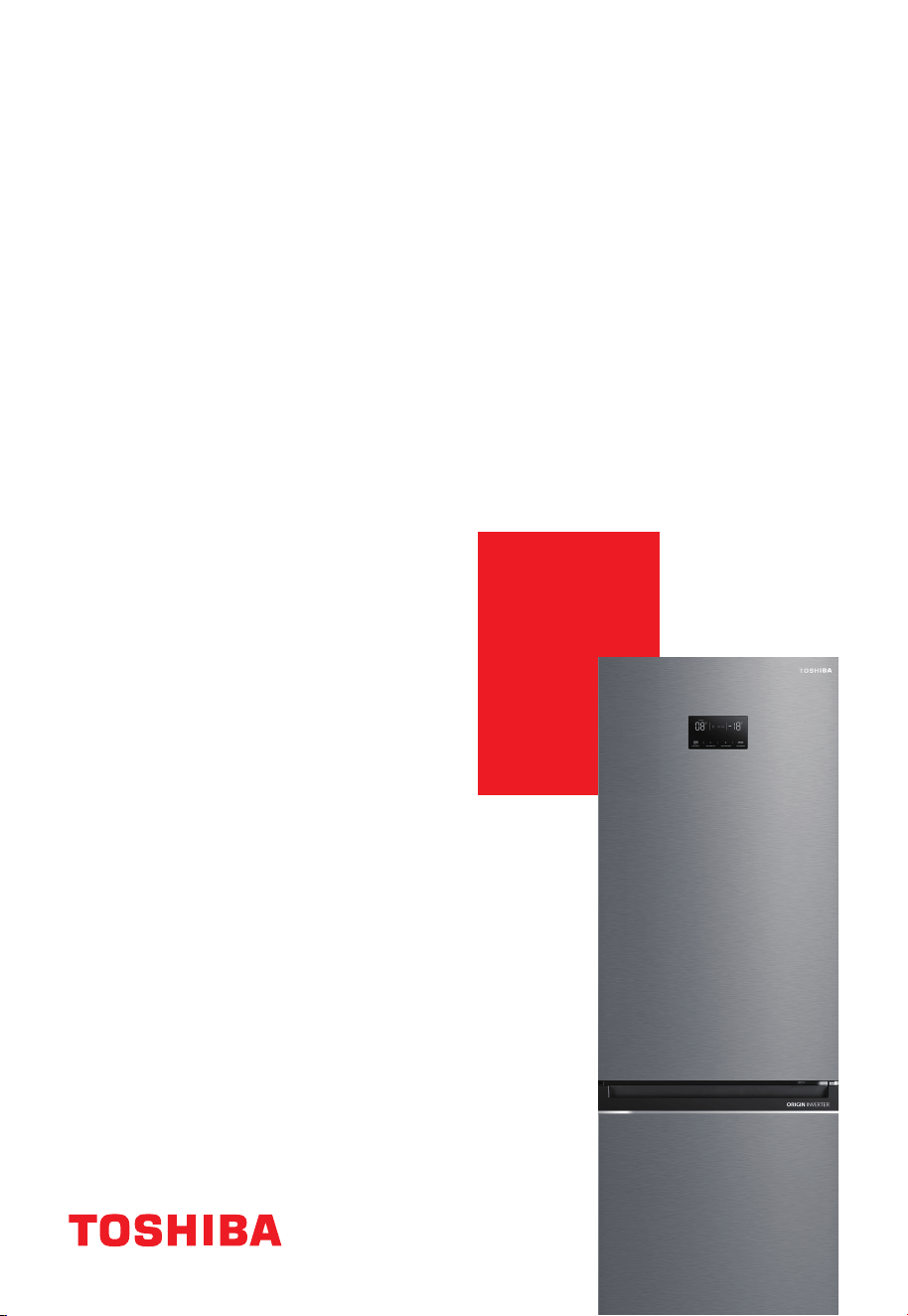
GR-RB449WE-PMA(57)-1
USER
MANUAL
REFRIGERATOR FREEZER
For Home Use Only

CONTENTS
1. Safety warnings ....................................................................................1
2. Proper use of the freezer .....................................................................8
3. Structure and functions ....................................................................14
4. Maintenance and care of the refrigerator........................................20
5. Trouble shooting ................................................................................2
6. Disposal of your appliance ................................................................2
Thank you very much for purchasing this Toshiba product.
Read this user manual and become completely familiar
with the product before. use in order to use this product safely
and correctly.
Keep this user manual in a handy place for future reference.
Make sure that you received your warranty.
Dear user :
1. Safety warnings
READ SAFETY PRECAUTIONS BEFORE INSTALLATION
1.1 Warning
To prevent injury to the user or other people and property damage, the following
instructions must be followed. Incorrect operation due to ignoring of instructions
may cause harm or damage.
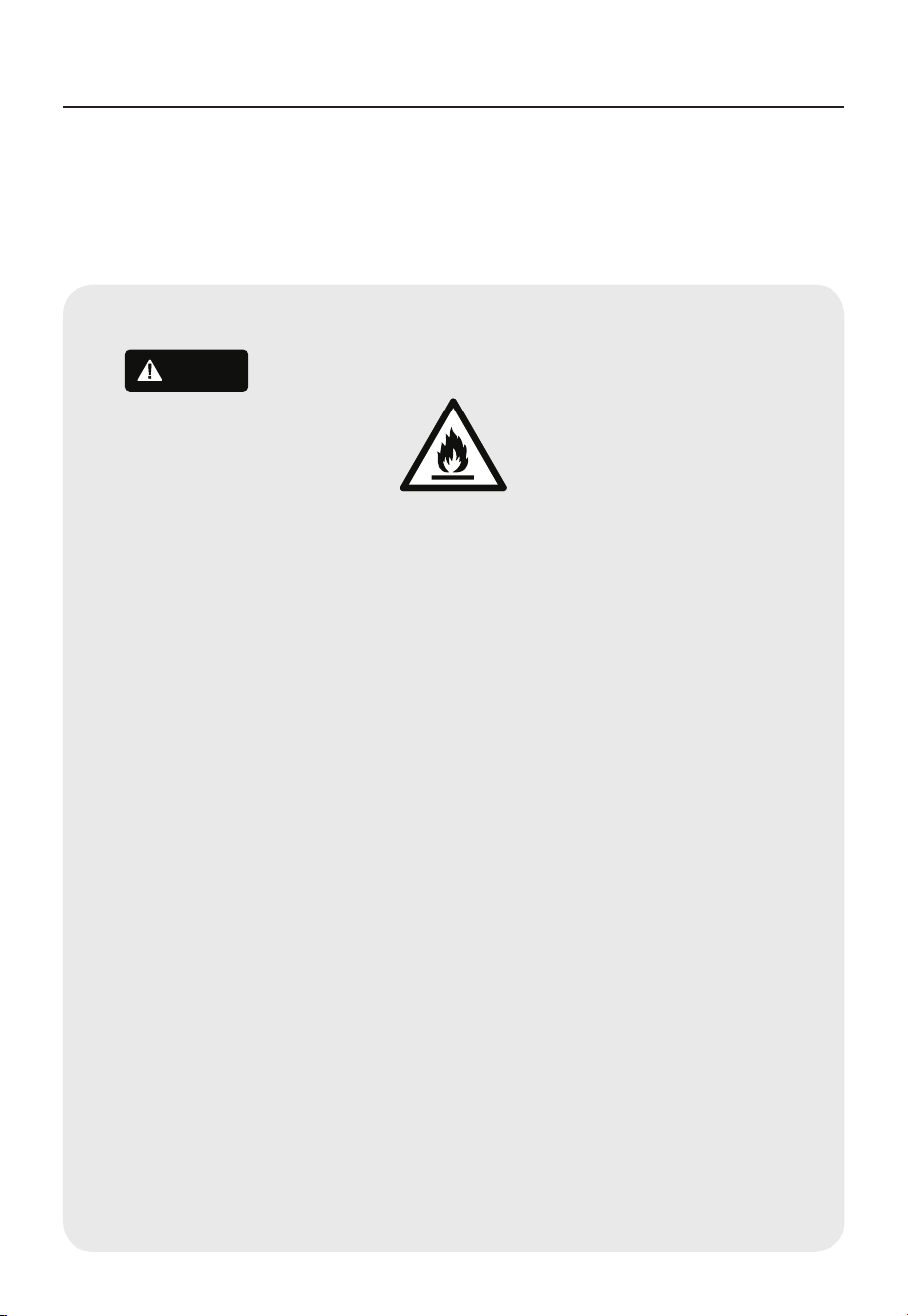
Warning: risk of fire / flammable materials
WARNING: Risk of fire disaster and explosion
The refrigerant of the appliance is flammable, please be care not to damage the
cooling pipes during installation and transportation. if gas leakage happens,
please contact the distributor or local service agent, and the following precautions
should be always taken:
1. Open the windows for ensuring good ventilation.
2. No fire around and please do not use other electric appliance.
1
This appliance is intended to be used in household and similar applications such
as staff kitchen areas in shops, offices and other working environments; farm
houses and by clients in hotels, motels and other residential type environments;
bed and breakfast type environments; catering and similar non-retail applications.
Children should be supervised to ensure that they do not play with the appliance.
WARNING: Risk of fire disaster and electric shock
The power cord should be replaced when it has been damaged. please contact the
distributor or local service agent for replacement.
Please unplug the power plug from socket when clean the appliance or leave the
appliance nonuse for a long time.
Do not use extension cord or ungrounded (two prong) adapters.
WARNING: Keep ventilation openings, in the appliance enclosure or in the built-in
structure, clear of obstruction.
WARNING: Do not use mechanical devices or other means to accelerate the
defrosting process, other than those recommended by the manufacturer.
WARNING: Do not damage the refrigerant circuit.
WARNING: Do not use electrical appliances inside the food storage compartments
of the appliance, unless they are of the type recommended by the manufacturer.
2
WARNING: Please abandon the refrigerator according to local regulators for it use
flammable cyclopentane foaming material and refrigerant.
WARNING: When positioning the appliance, ensure the supply cord is not trapped
or damaged.
WARNING: Do not locate multiple portable socket-outlets or portable power
supplies at the rear of the appliance.
WARNING: Please fill with potable water only. Please do not fill hot water or liquids
other than potable water such as juices.
DANGER: Risk of child entrapment. Before you throw away your old refrigerator or
freezer:
Take of the doors.
Leave the shelves in place so that children may not easily climb inside.
The refrigerator must be disconnected from the source of electrical supply before
attempting the Installation of accessory.
Refrigerant and cyclopentane foaming material used for the refrigerator are
flammable. Therefore, when the refrigerator is scraped, it shall be kept away from
any fire source and be recovered by a special recovering company with
corresponding qualification other than be disposed by combustion, so as to
prevent damage to the environment or any other harm.
For IEC standard: This appliance is not intended for use by persons (including
children) with reduced physical, sensory or mental capabilities, or lack of
experience and knowledge, unless they have been given supervision or instruction
concerning use of the appliance by a person responsible for their safety.
For EN standard: This appliance can be used by children aged from 8 years and
above and persons with reduce physical sensory or mental capabilities or lack of
experience and knowledge If they have been given supervision or instruction
concerning use of the appliance in a safe way and understand the hazards
involved. Children shall not play with the appliance. Cleaning and user
maintenance shall not be made by children without supervision.
Please do not use the appliance on traffic means (such as ship and so on).
If noise, odor and smoking happens, please unplug the power plug Immediately,
and contact the distributor or local service agent.
Please do not put your hands under or behind the appliance to prevent from being
hurt.
3
Please leave the packing materials and other parts out of the reach of children to
prevent from risk of suffocation.
Note 1,2,3,4: Please confirm whether it is applicable according to your product
compartment type.
For a freestanding appliance: this refrigerating appliance is not intended to be
used as a built in appliance.
Any replacement or maintenance of the LED lamps is intended to be made by the
manufacturer, its service agent or similar qualified person.
This product contains a light source of energy efficiency class (G).
To avoid contamination of food, please respect the following instructions:
Opening the door for long periods can cause a significant increase of the
temperature in the compartments of the appliance.
Clean regularly surfaces that can come in contact with food and accessible
drainage systems.
Clean water tanks if they have not been used for 48h, flush the water system
connected to a water supply if water has not been drawn for 5days. (note 1)
Store raw meat and fish in suitable containers in the refrigerator, so that it is
not in contact with or drip onto other food.
Two-star frozen-food compartments are suitable for storing pre-frozen food,
storing or making ice-cream and making ice cubes. (note 2)
One-, two- and three star compartments are not suitable for the freezing of
fresh food. (note 3)
For appliances without a 4-star compartment: this refrigerating appliance is not
suitable for freezing foodstuffs. (note 4)
If the refrigerating appliance is left empty for long periods, switch off, defrost,
clean, dry, and leave the door open to prevent mouldy developing within the
appliance.
4
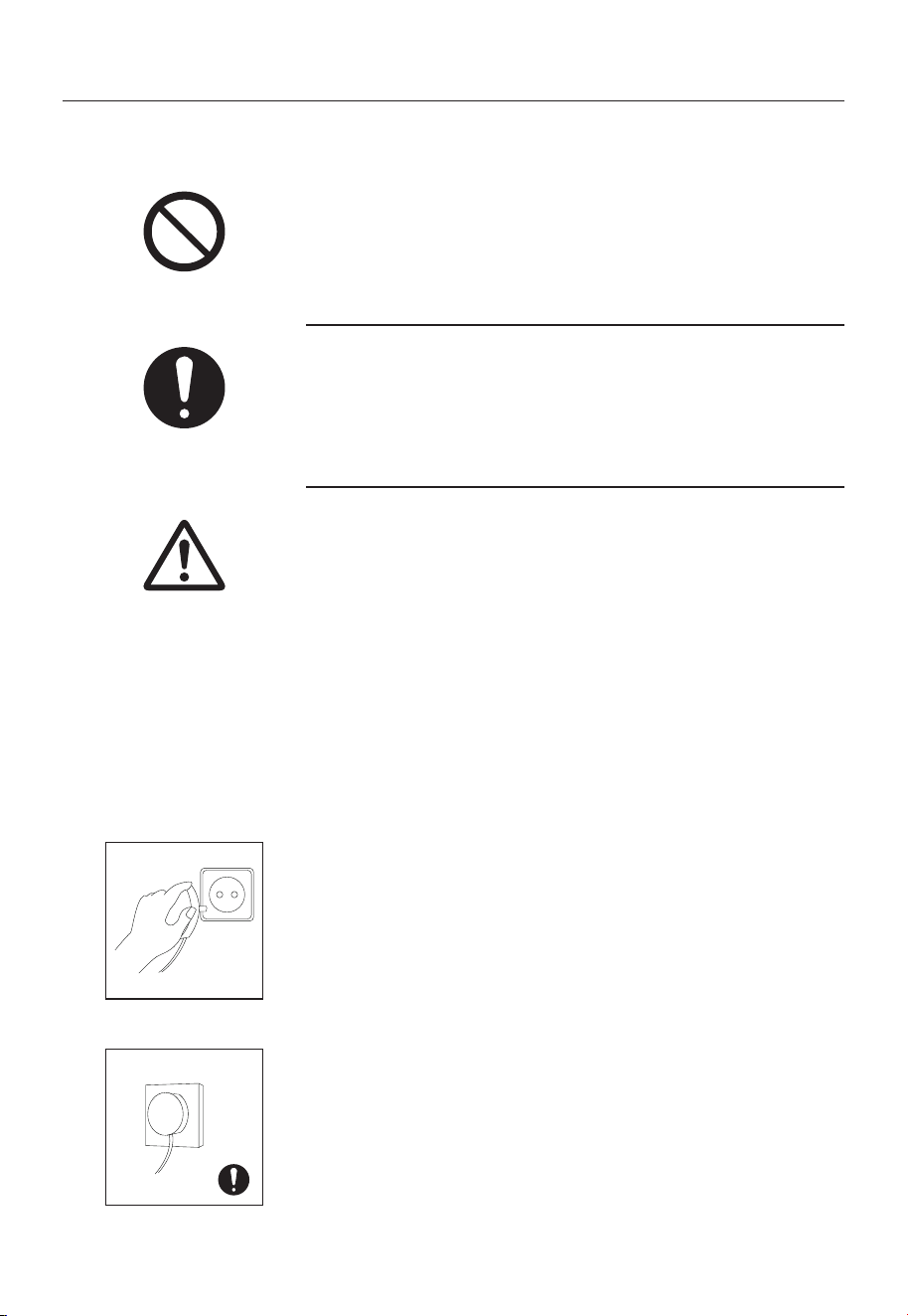
1.2 Meaning of safety warning symbols
1.3 Electricity related warnings
This manual contains lots of important safety information which shall be observed
by the users.
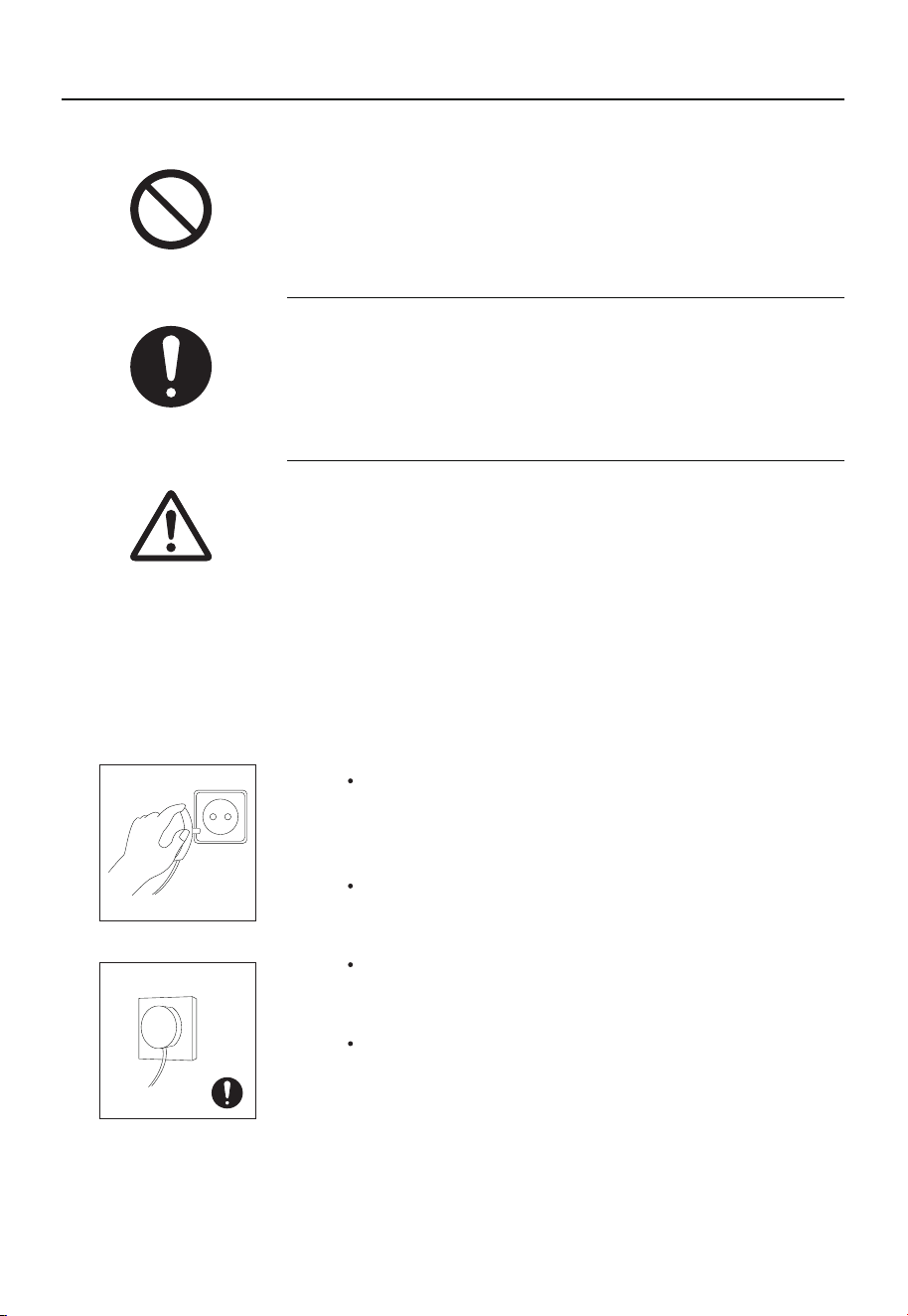
Prohibition symbol
Mandatory symbol
Cautioning symbol
This is a prohibition symbol.
Any incompliance with instructions marked with this
symbol may result in damage to the product or endanger
the personal safety of the user.
This is a mandatory symbol.
It is required to operate in strict observance of instructions
marked with this symbol; or otherwise damage to the product
or personal injury may be caused.
This is a cautioning symbol.
Instructions marked with this symbol require special caution.
Insufficient caution may result in slight or moderate injury, or
damage to the product.
Do not pull the power cord when pulling the power
plug of the refrigerator. Please firmly grasp the plug
and pull out it from the socket directly.
To ensure safe use, do not damage the power cord or
use the power cord when it is damaged or worn.
Please do not touch the power plug with wet hand to
prevent from electric shock.
Please use a dedicated power socket and the power
socket shall not be shared with other electrical
appliances. The power plug should be firmly
contacted with the socket or else fires might be
caused.
5
1.4 Warnings for using
Please ensure that the grounding electrode of the
power socket is equipped with a reliable grounding
line.
Please ask for help from persons with professional
qualification to examine whether the socket is with
reliable grounding line or not.
It is the end-consumers' responsibility to change the
ungrounded socket into grounded socket.
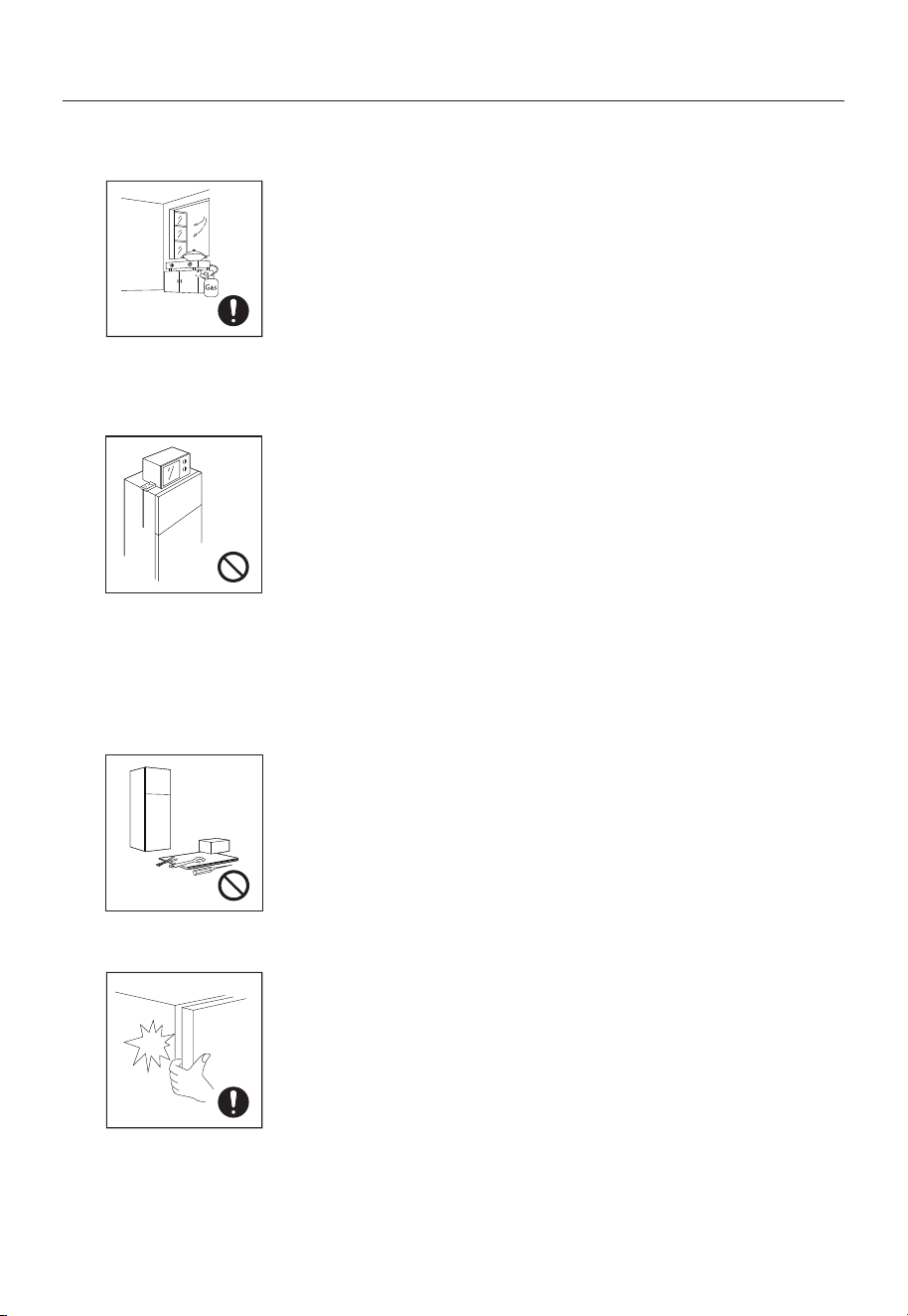
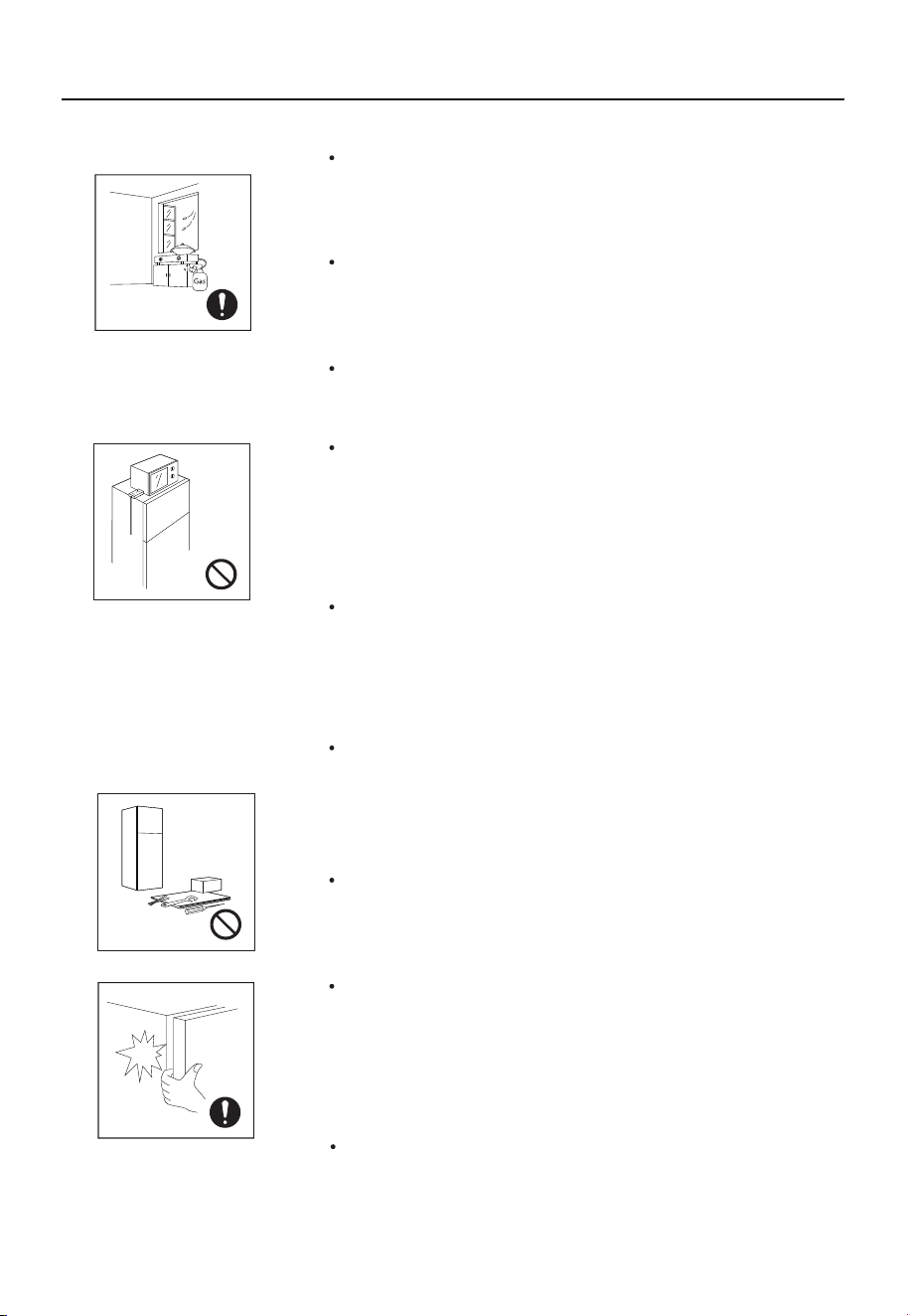
Please turn off the valve of the leaking gas and then
open the doors and windows in case of leakage of
gas and other flammable gases. Do not unplug the
refrigerator and other electrical appliances
considering that spark may cause a fire.
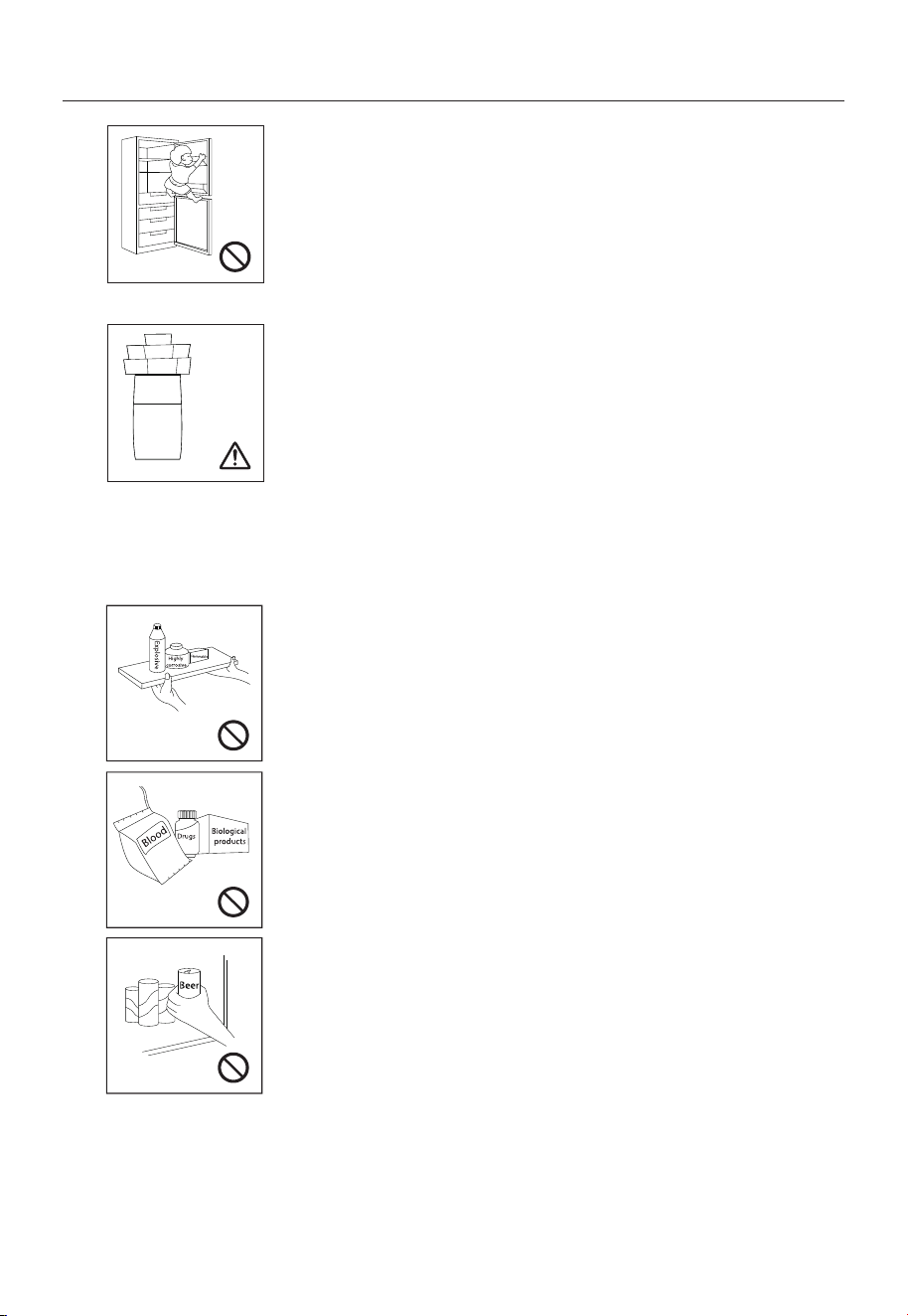
Do not use electrical appliances on the top of the
appliance, unless they are of the type recommended
by the manufacturer.
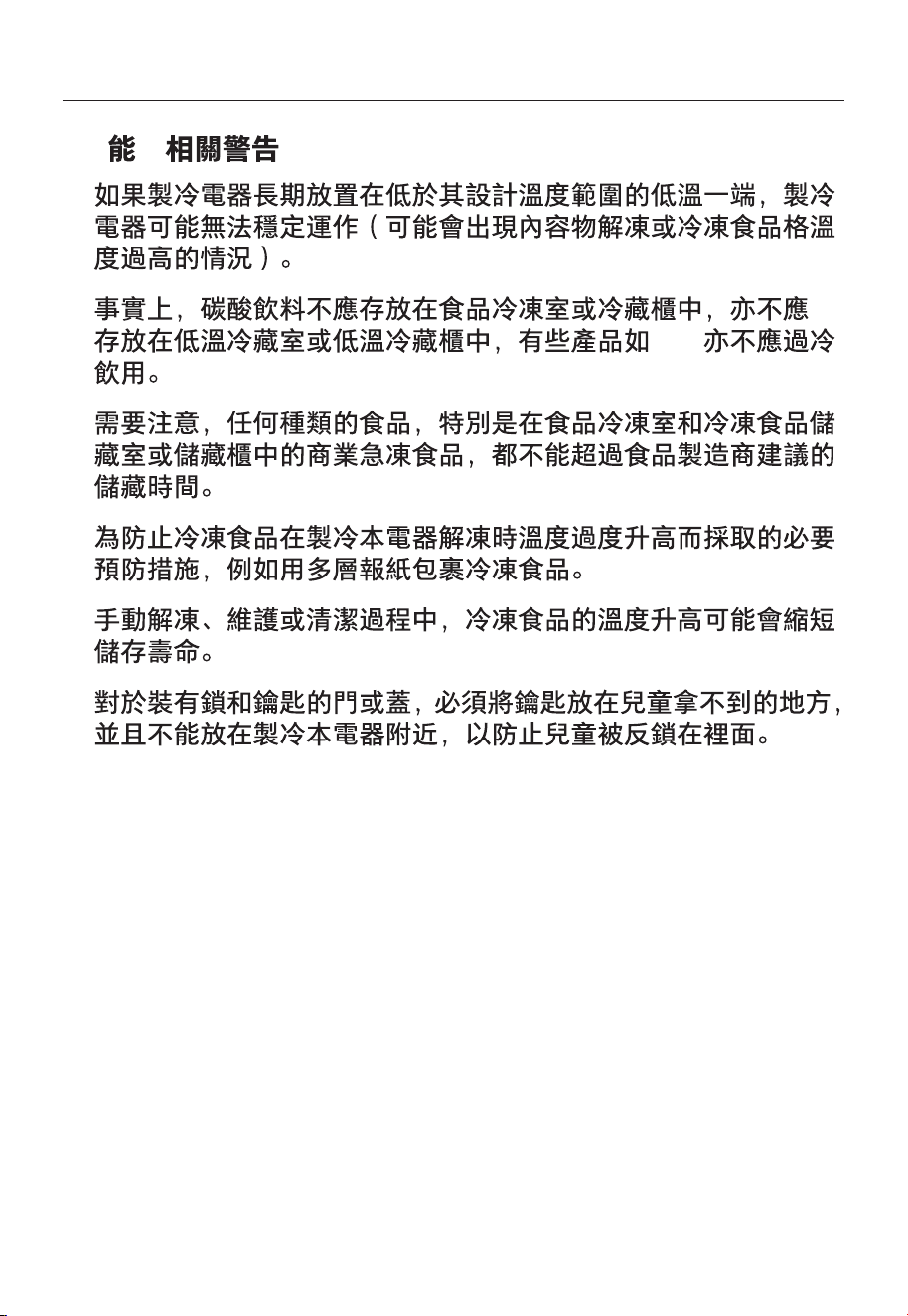
Do not arbitrarily disassemble or reconstruct the
refrigerator, nor damage the refrigerant circuit;
maintenance of the appliance must be conducted by
a specialist.
Damaged power cord must be replaced by the
manufacturer, its maintenance department or related
professionals in order to avoid danger.
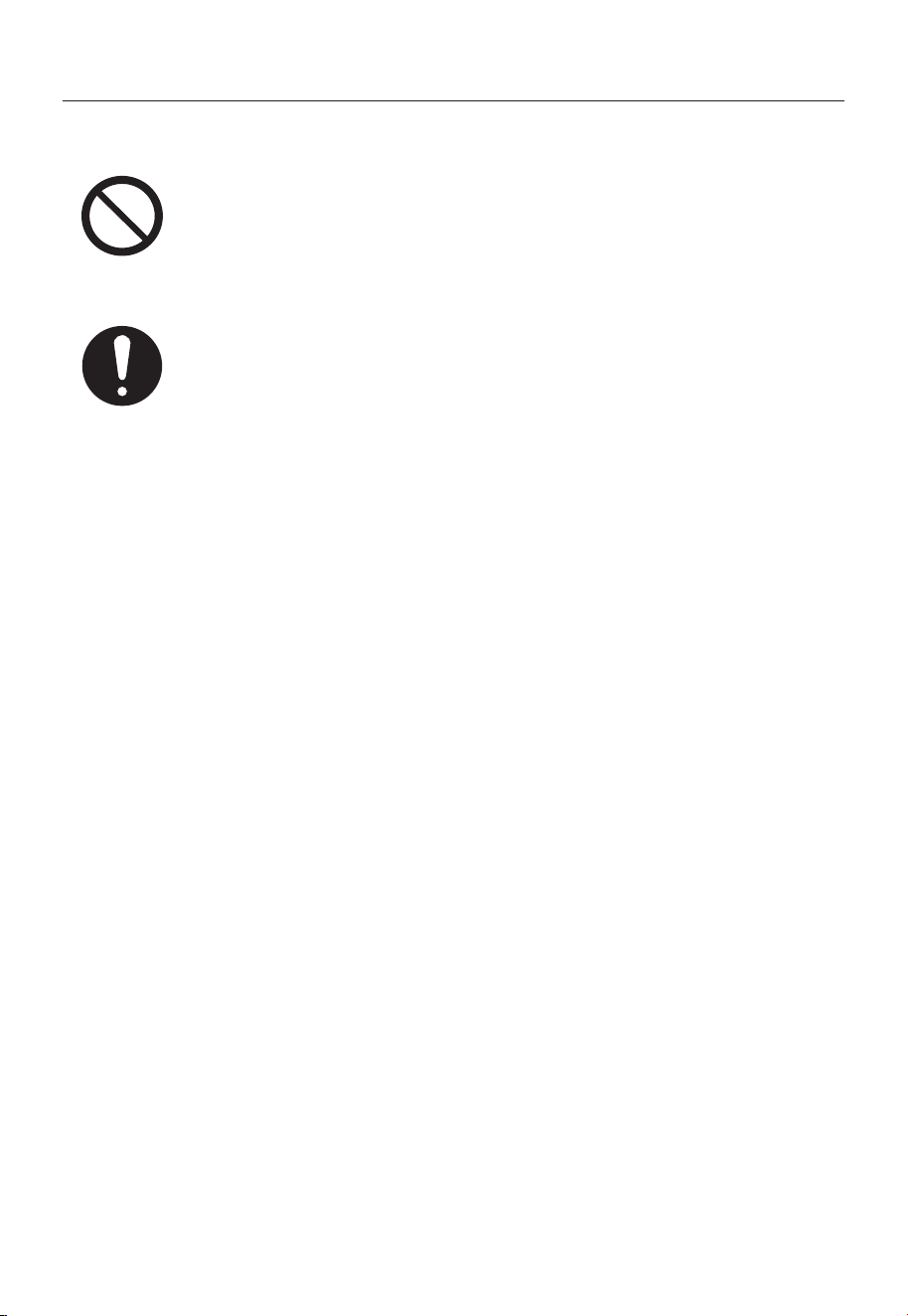
The gaps between refrigerator doors and between
doors and refrigerator body are small, be noted not to
put your hand in these areas to prevent from squeezing
the finger. Please be gentle when close the refrigerator
door to avoid falling articles.
Do not pick foods or containers with wet hands in the
freezing chamber when the refrigerator is running,
especially metal containers in order to avoid frostbite.
6
1.5 Warnings for placement
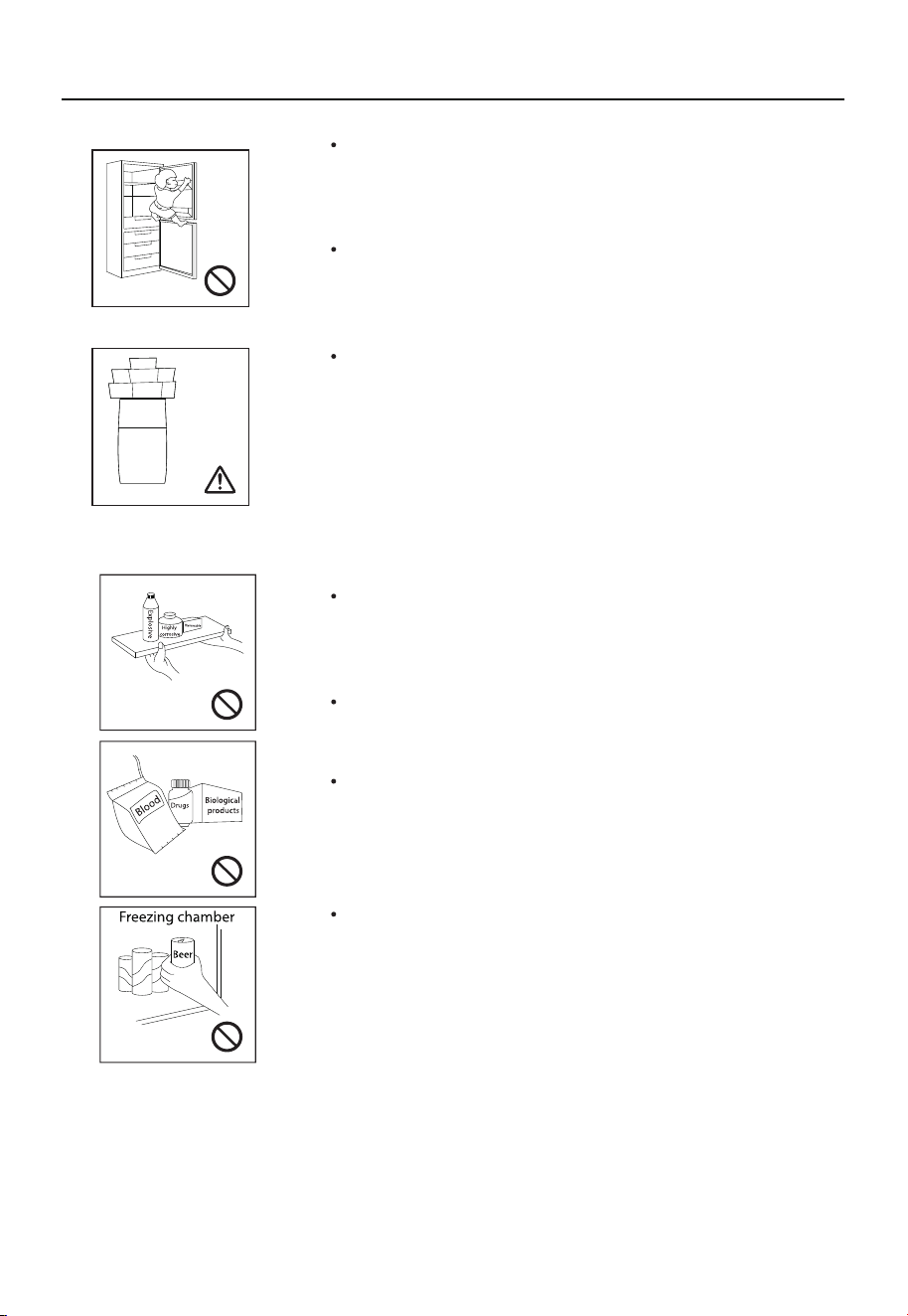
Do not allow any child to get into or climb the
refrigerator; otherwise suffocation or falling injury of
the child may be caused.
Please do not put heavy or dangerous objects on top
of the appliance (bottles, tableware, or something
containing liquid).
Please pull out the power plug when the electricity fails
or clean the appliance, and connecting it to power
supply after at least 5 minutes, which prevents
damage to the compressor by continuous startup.
Do not put flammable, explosive, volatile and highly
corrosive items in the refrigerator to prevent damages
to the product or fire accidents.
Do not place flammable items near the refrigerator to
avoid fires.
The refrigerator is intended for household use, such
as storage of foods; it shall not be used for other
purposes, such as storage of blood, drugs or biological
products, etc.
Do not store beer, beverage or other fluid contained in
bottles or enclosed containers in the freezing chamber
of the refrigerator ; or otherwise the bottles or enclosed
containers may crack due to freezing to cause damages.
7
1.6 Warnings for energy
1.7 Warnings for disposal
Refrigerating appliances might not operate consistently (possibility of defrosting
of contents or temperature becoming too warm in the frozen food compartment)
when sited for an extended period of time below the cold end of the range of
temperatures for which the refrigerating appliance is designed.
The fact that effervescent drinks should not be stored in food freezer compartments
or cabinets or in low-temperature compartments or cabinets, and that some
products such as ices water should not be consumed too cold.
The need to not exceed the storage time(s) recommended by the food
manufacturers for any kind of food and particularly for commercially quick-frozen
food in food-freezer and frozen-food storage compartments or cabinets.
The precautions necessary to prevent an undue rise in the temperature of the
frozen food while defrosting the refrigerating appliance, such as wrapping the
frozen food in several layers of newspaper.
The fact that a rise in temperature of the frozen food during manual defrosting,
maintenance or cleaning could shorten the storage life.
The necessity that, for doors or lids fitted with locks and keys, the keys be kept out
of the reach of children and not in the vicinity of the refrigerating appliance, in
order to prevent children from being locked inside.
Refrigerant and cyclopentane foaming material used for the
refrigerator are flammable. Therefore, when the refrigerator is
scrapped, it shall be kept away from any fire source and be
recovered by a special recovering company with corresponding
qualification other than be disposed by combustion, so as to
prevent damage to the environment or any other harm.
When the refrigerator is scrapped, disassemble the doors, and
remove gasket of door and shelves; put the doors and shelves in
a proper place, so as to prevent trapping of any child.
2. Proper use of the freezer
8
2.1 Placement
Precautions before installation:
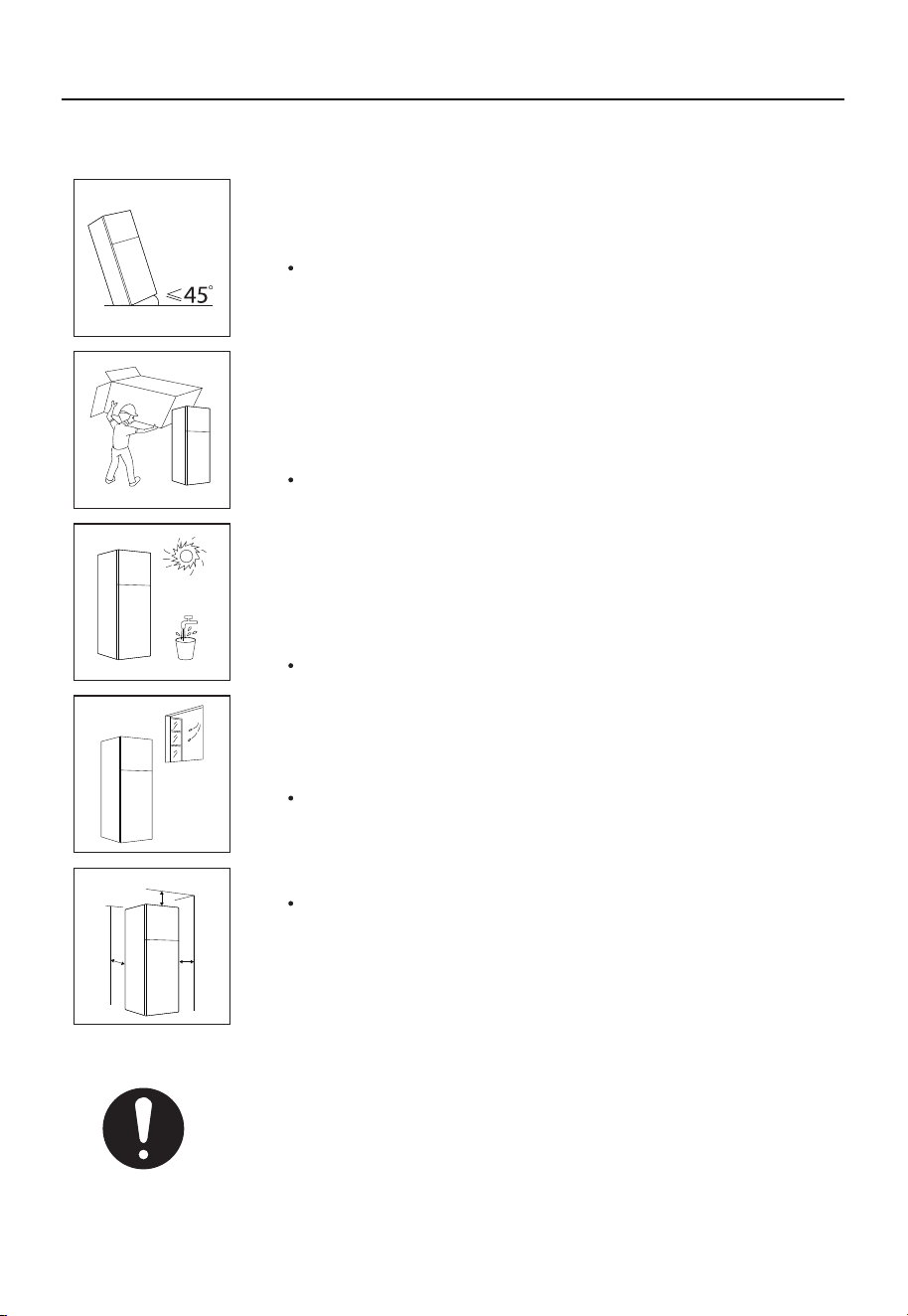
Before installation or adjusting of accessories, it shall be ensured
that the refrigerator is disconnected from power. Precautions
shall be taken to prevent fall of the handle from causing any
personal injury.
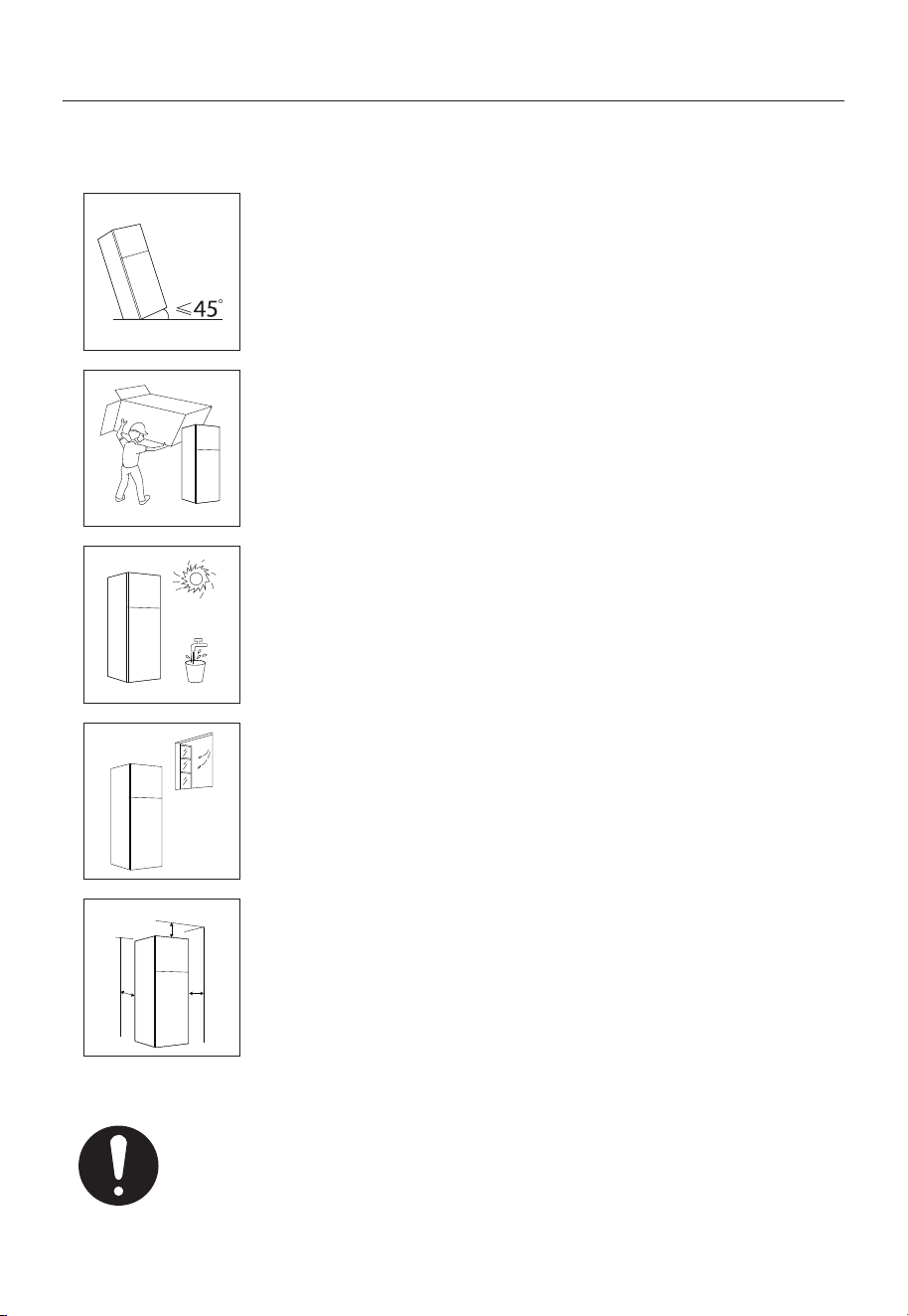
Before the refrigerator is moved, take all objects inside
out, fix the glass partitions, vegetable holder, freezing
chamber drawers and etc. with tape, and tighten the
leveling feet; close the doors and seal them with tape.
During moving, the appliance shall not be laid upside
down or horizontally, or be vibrated; the inclination
during movement shall be no more than 45°.
Before use, remove all packing materials, including button
cushions, foam pads and tapes inside of the refrigerator;
tear off the protective film on the doors and the refrigerator
body. Keep away from heat and avoid direct sunlight. Do
not place the freezer in moist or watery places to prevent
rust or reduction of insulating effect.
Do not spray or wash the refrigerator; do not put the
refrigerator in moist places easy to be splashed with water
so as not to affect the electrical insulation properties of the
refrigerator.
The refrigerator is placed in a well-ventilated indoor place;
the ground shall be flat, and sturdy (rotate left or right to
adjust the wheel for leveling if unstable).
The top space of the refrigerator shall be greater than 30cm,
and the refrigerator should be placed against a wall with a
free distance more than 10cm to facilitate heat dissipation.
10cm
30cm
10cm
9
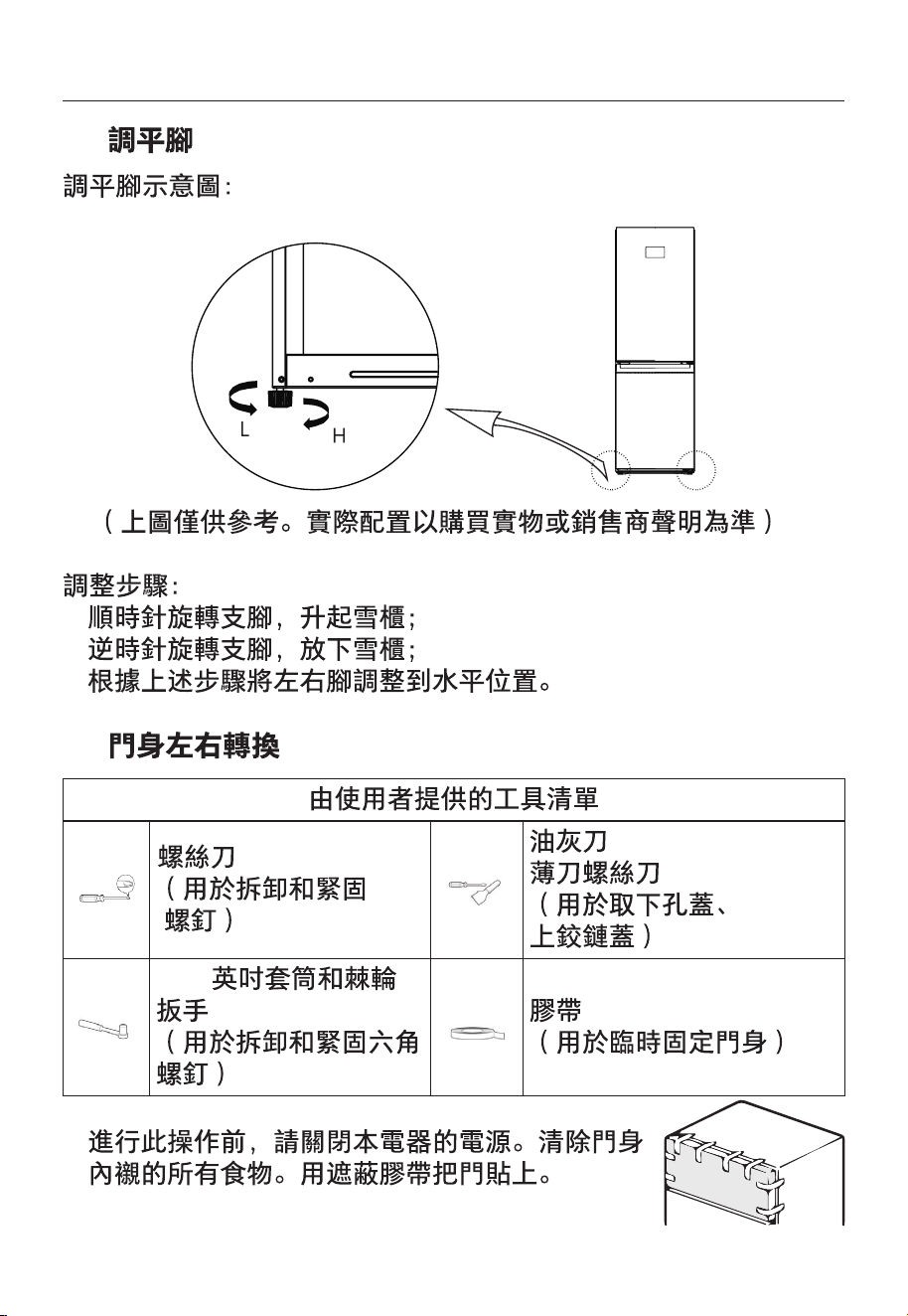
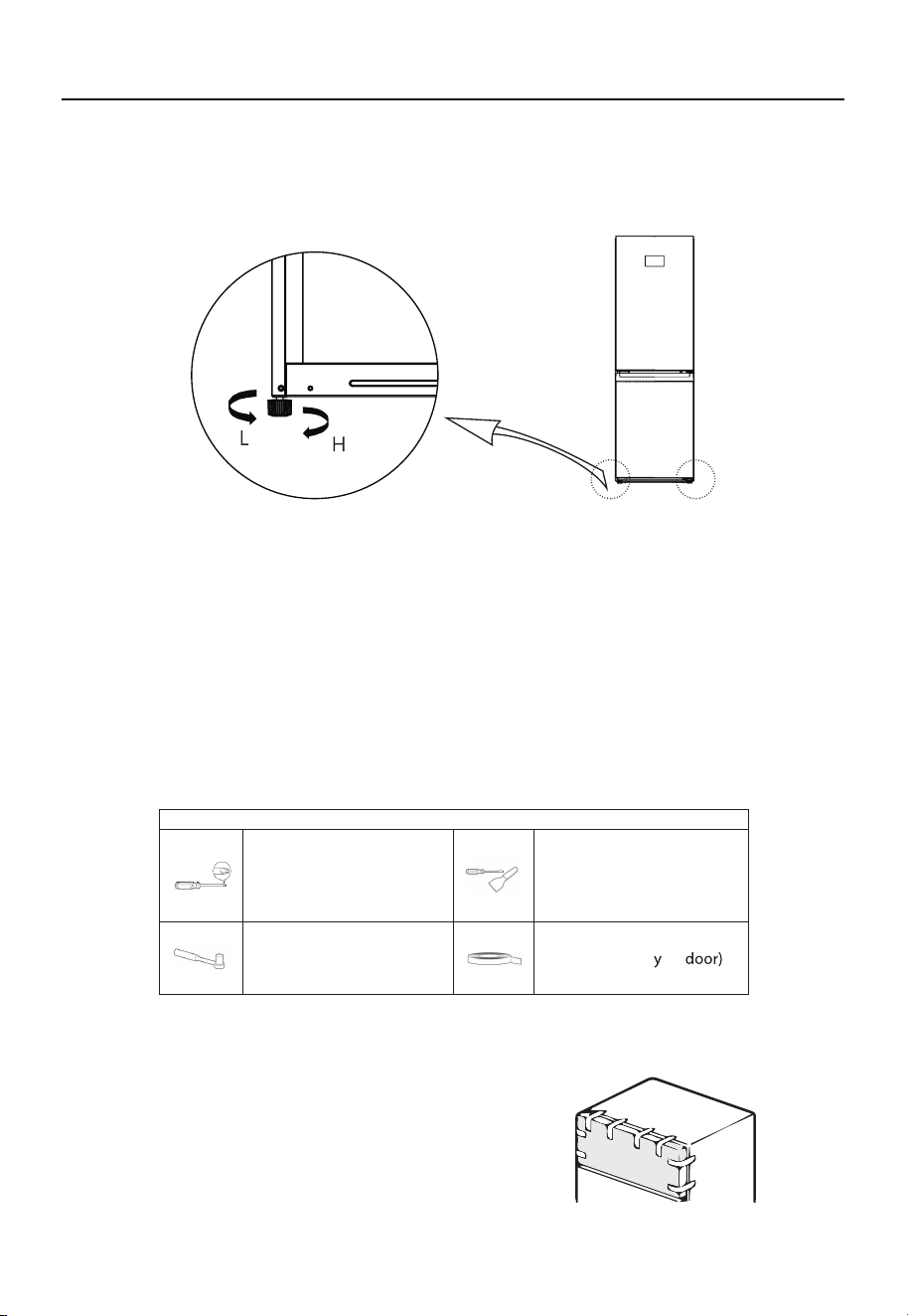
2.2 Leveling feet
2.3 Door right-left change
Adjusting procedures:
a. Turn the feet clockwise to raise the refrigerator;
b. Turn the feet counterclockwise to lower the refrigerator;
c. Adjust the right and left feet based on the procedures above to a horizontal level.
1. Please power off this appliance, before conduct this
operation. Remove all food from the inner door liner.
Tape the door shut with masking tape.
(The picture above is only for reference. The actual configuration will
depend on the physical product or statement by the distributor)
Schematic diagram of the levelling feet:
List of tools to be provided by the user
Screwdriver
(Use to remove and fasten
screw)
Putty knife
thin-blade screwdriver
(Use to remove hole cap,
upper hinge cover)
5/16" socket and ratchet
(Use to remove and fasten
hex screws)
Tape
(Use to tempo fixrar
10
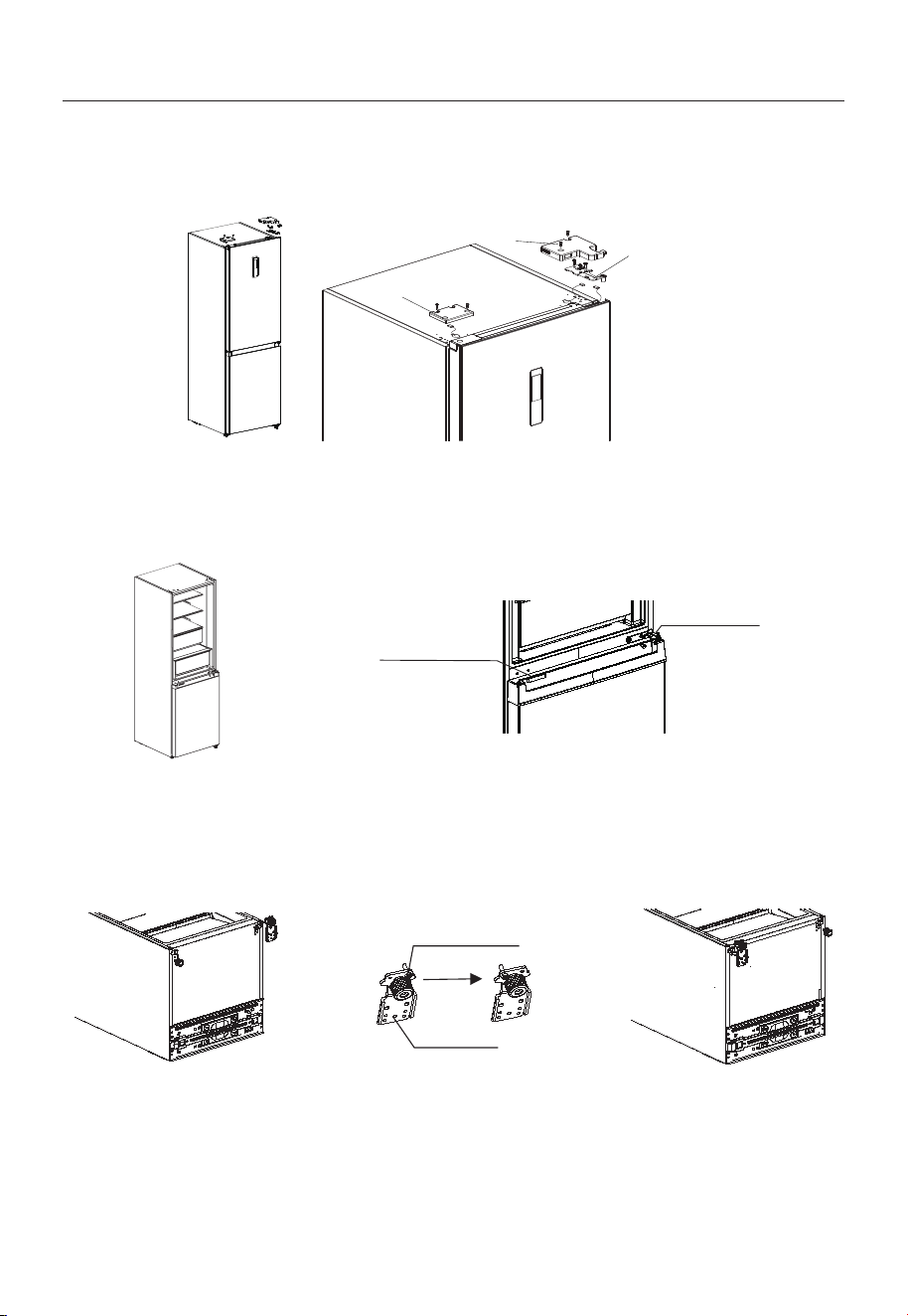
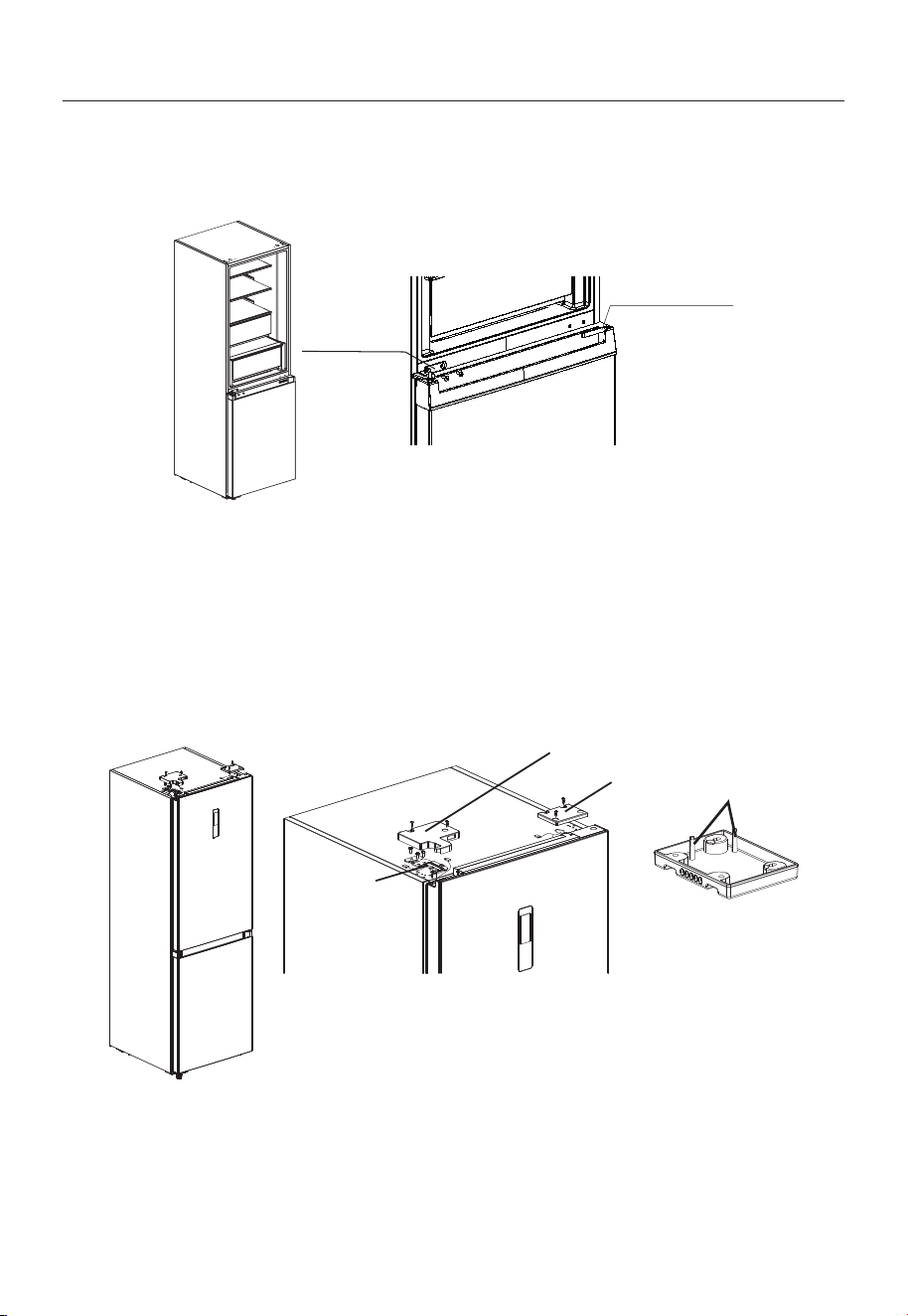
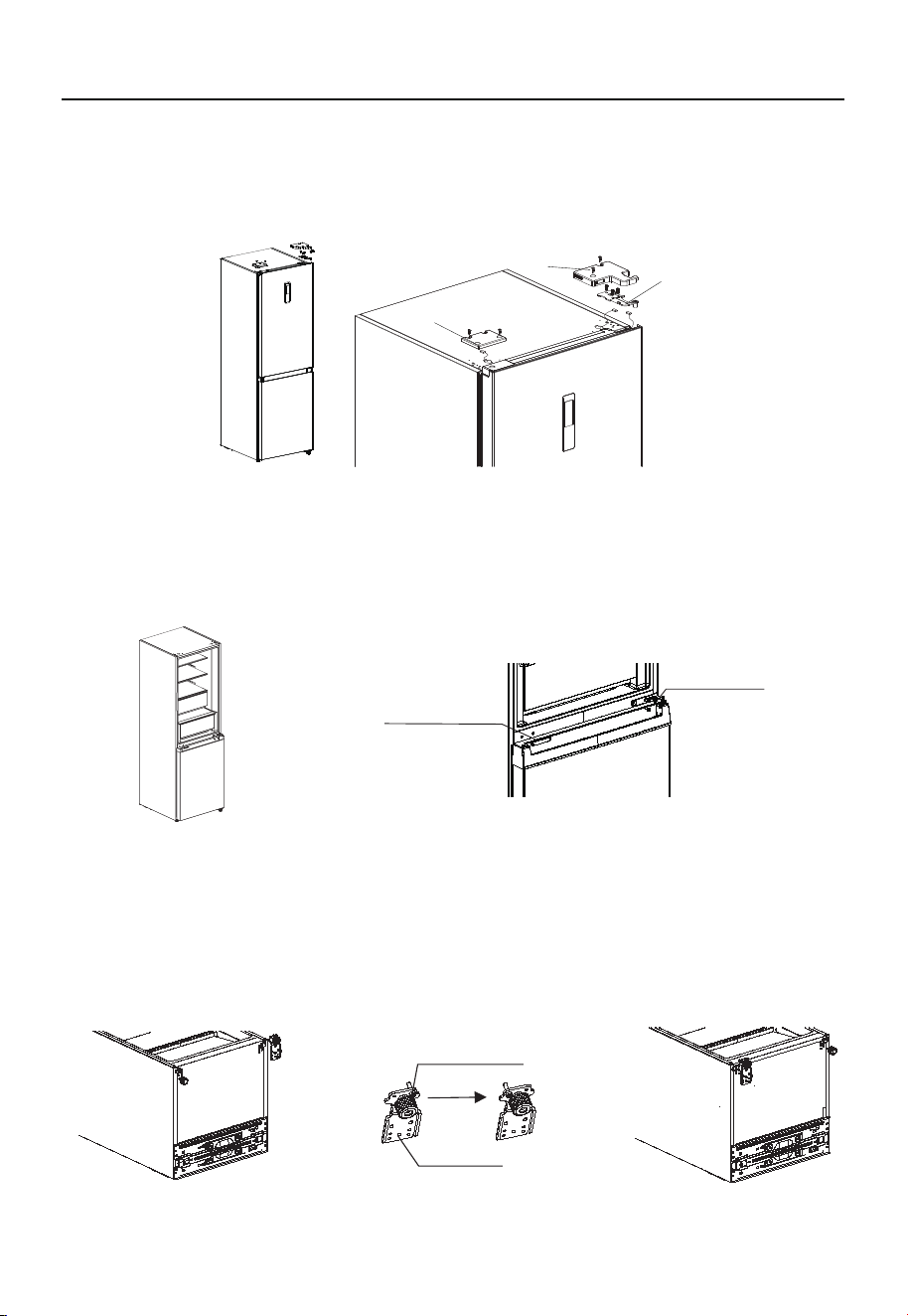
2. Remove the upper left hinge cover decorative cover, upper right hinge cover and
upper right hinge, and disconnect the right signal line(signal line terminal 1,2) at the
top of the box body.
3.Remove the refrigerated door body (be careful not to lose small parts such as the
shaft sleeve and stop on the door);
Remove the middle hinge and remove the decorative cover of hinge hole on the
other side.
4.Remove the freezing door body (be careful not to lose small parts such as the shaft
sleeve and stop on the door);
Remove the hinge and adjust the angle. Remove and install the lower hinge shaft to
the other side of the hinge, and install the modified lower hinge to the other side of
the box.
upper hinge cover
decorative cover
upper hinge
1
2
Decorative cover
Middle hinge
The angle
Lower hinge
11
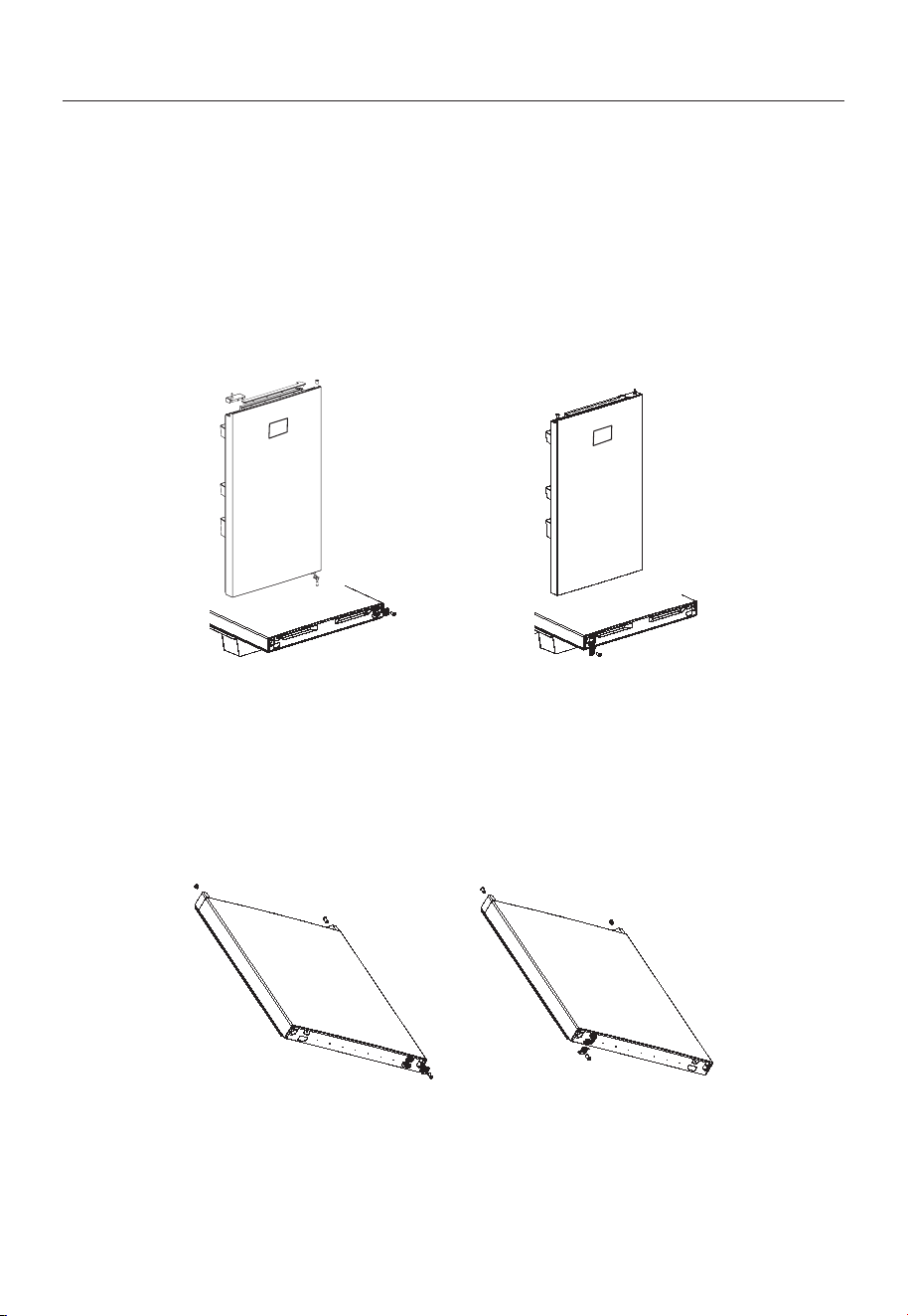
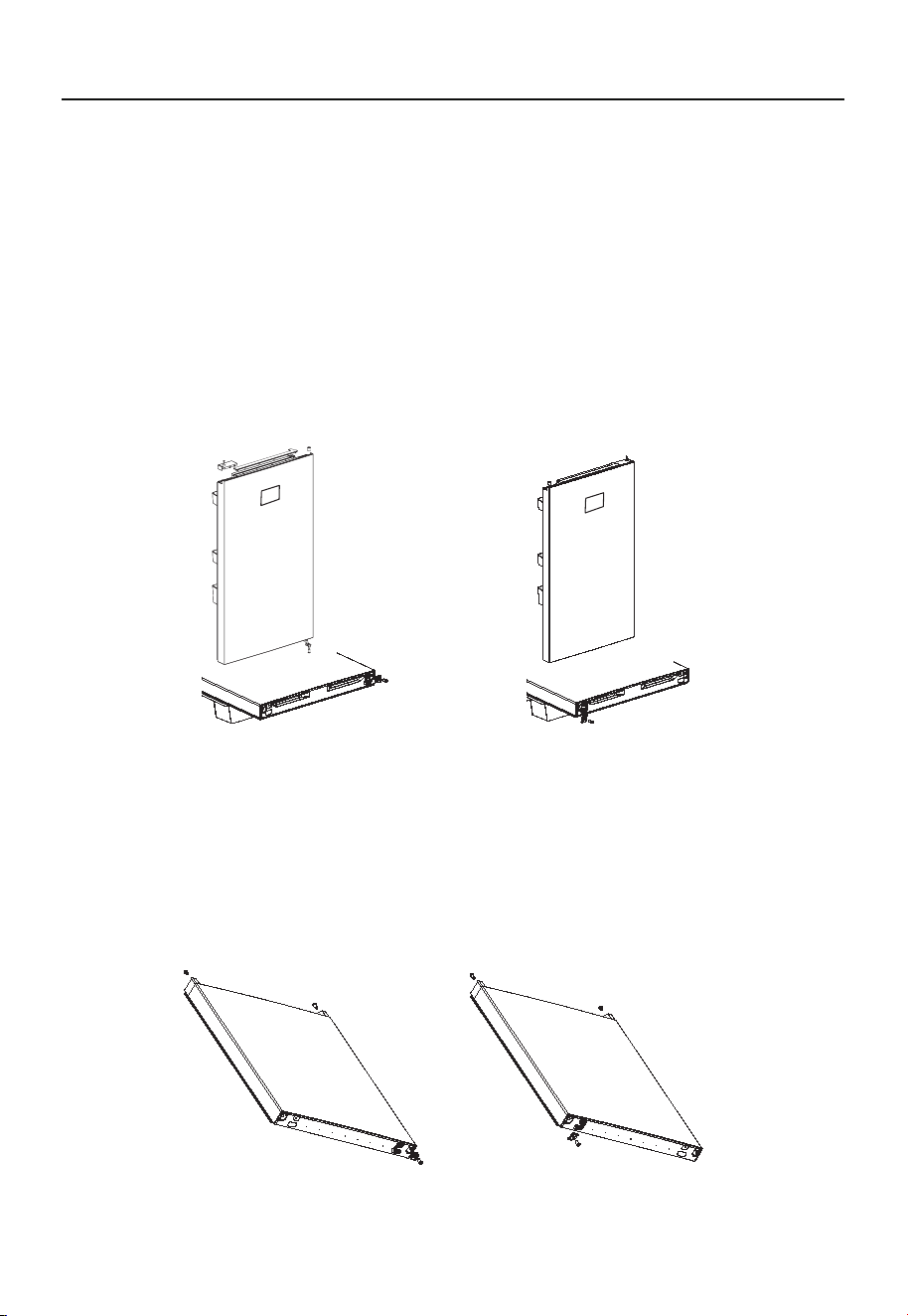
5.Change the refrigerator door:
1)Remove the cover plate of the upper end cover of the refrigeration door and the left
decorative cover.
Install the upper shaft sleeve and the signal line of the door body to the other side and
cover the upper end cover plate. Take out the right decorative cover from the accessory
bag and install it to the other side of the upper end cover.
2)Remove the door self-locking, door stop and shaft sleeve of the refrigeration door,
take out the left door self-locking from the accessory bag, install it on the left side of
the lower end cover of the refrigeration door, change the door stop and shaft sleeve
to the left side of the lower end cover of the refrigeration door.
6.Change the freezing door:
1)Remove the shaft sleeve and cap of the upper end cover of the freezing door and
install them at the left and right swap positions.
2)Remove the door self-locking, door stop and shaft sleeve of the freezing door, take
out the left door self-locking from the accessory bag, install it on the left side of the
lower end cover of the freezing door, change the door stop and shaft sleeve to the left
side of the lower end cover of the freezing door.
12
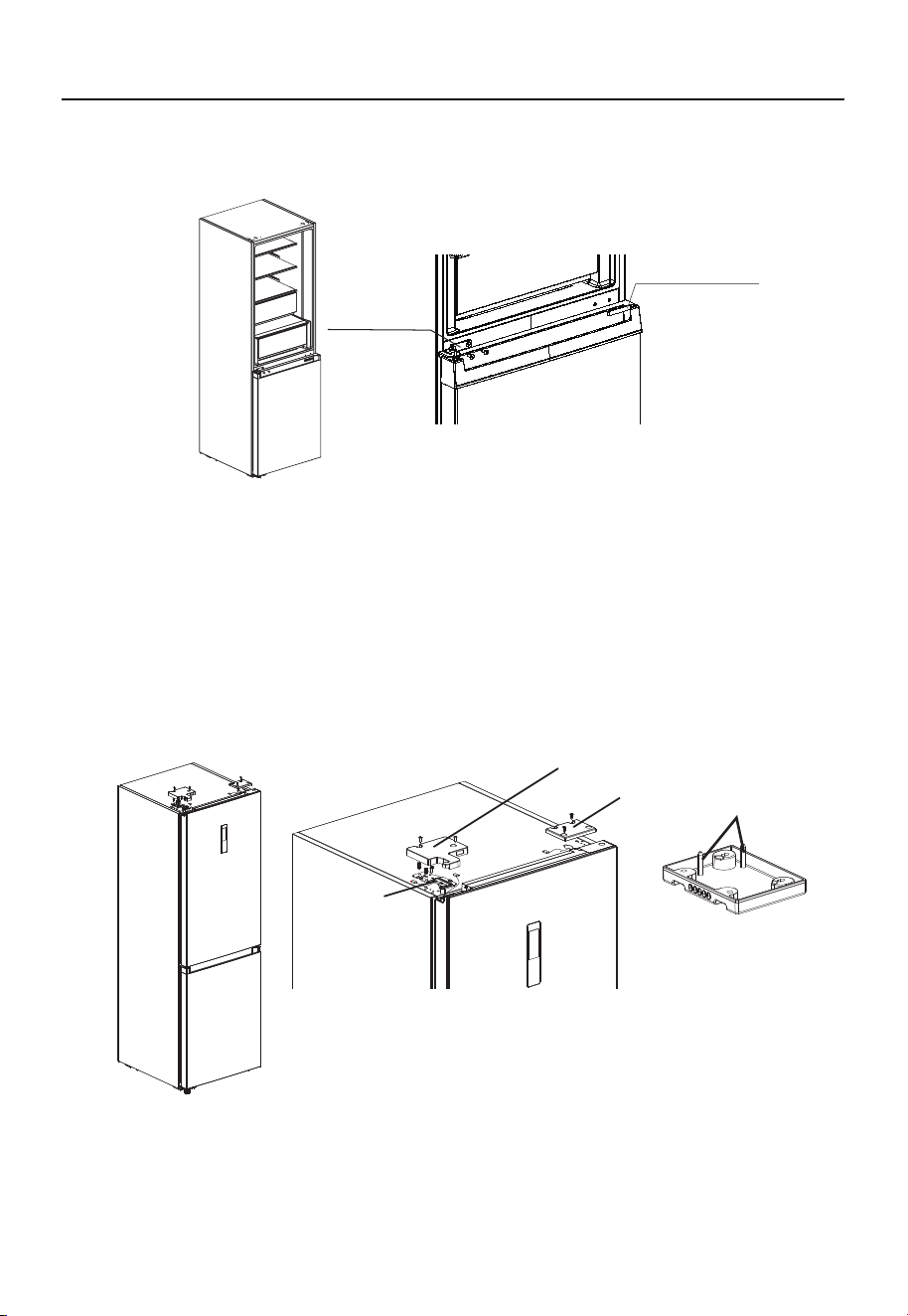
7. Install the replaced freezing door on the lower hinge then install the middle hinge
and cover the hinge hole decorative cover.
8.Remove the upper left hinge cover and upper left hinge from the accessory bag.
Place the refrigerated door body on the middle hinge and install the upper left hinge.
Connect the refrigerator top signal line 4 to the door body signal line 1.
Finally, replace the hinge decorative cover to the right side of the box body (note: when
replacing the hinge decorative cover to the right side of the box body, the two inserts
on the hinge decorative cover (as shown in the figure) shall be cut off ).
Decorative
cover
Middle
hinge
Upper hinge
Upper hinge cover
Decorative cover
Inserts
2
4
1
4
1
2
13
2.4 Changing the Light
2.5 Starting
2.6 Energy saving tips
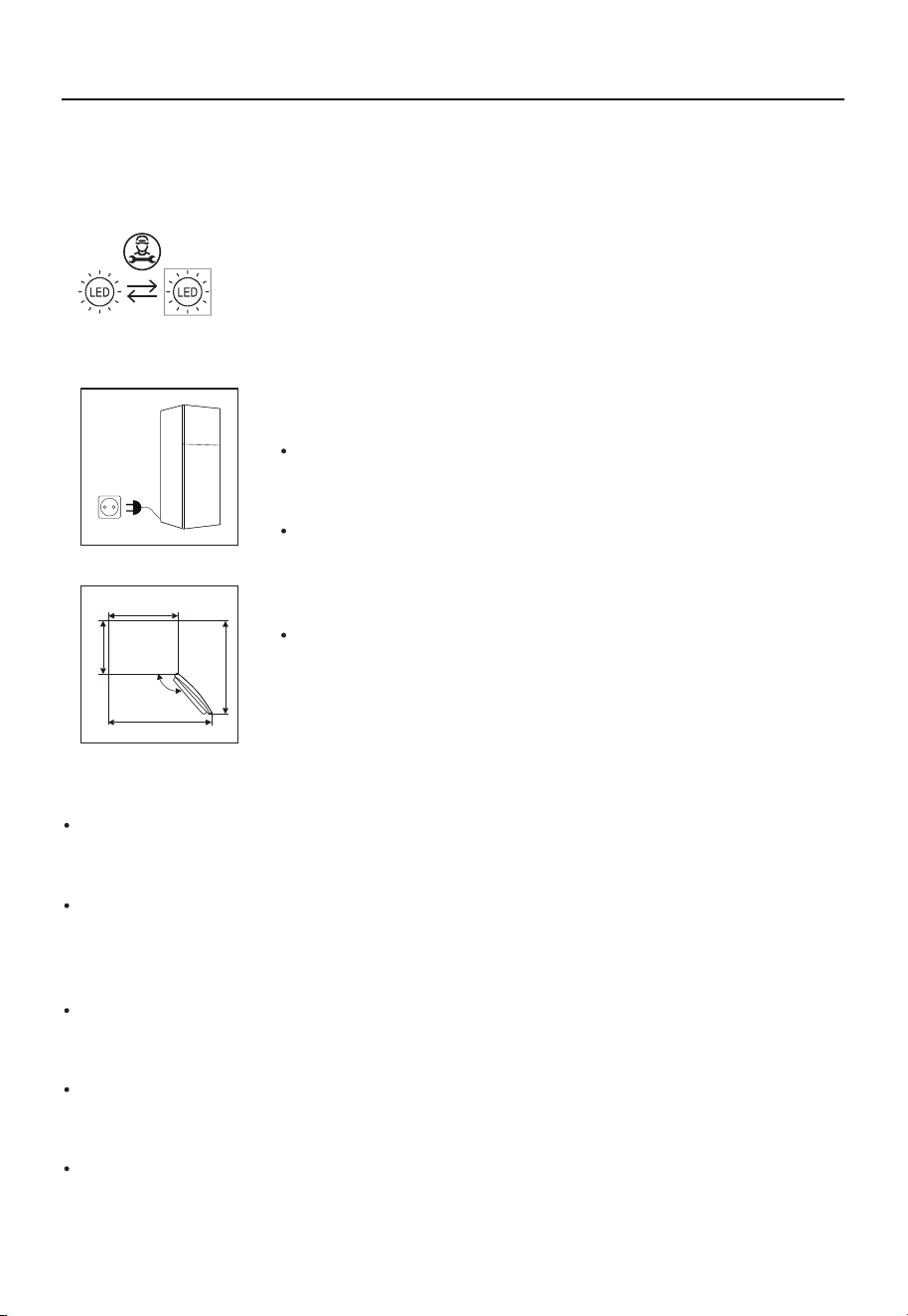
Any replacement or maintenance of the LED lamps is intended to be made by the
manufacturer, its service agent or similar qualied person.
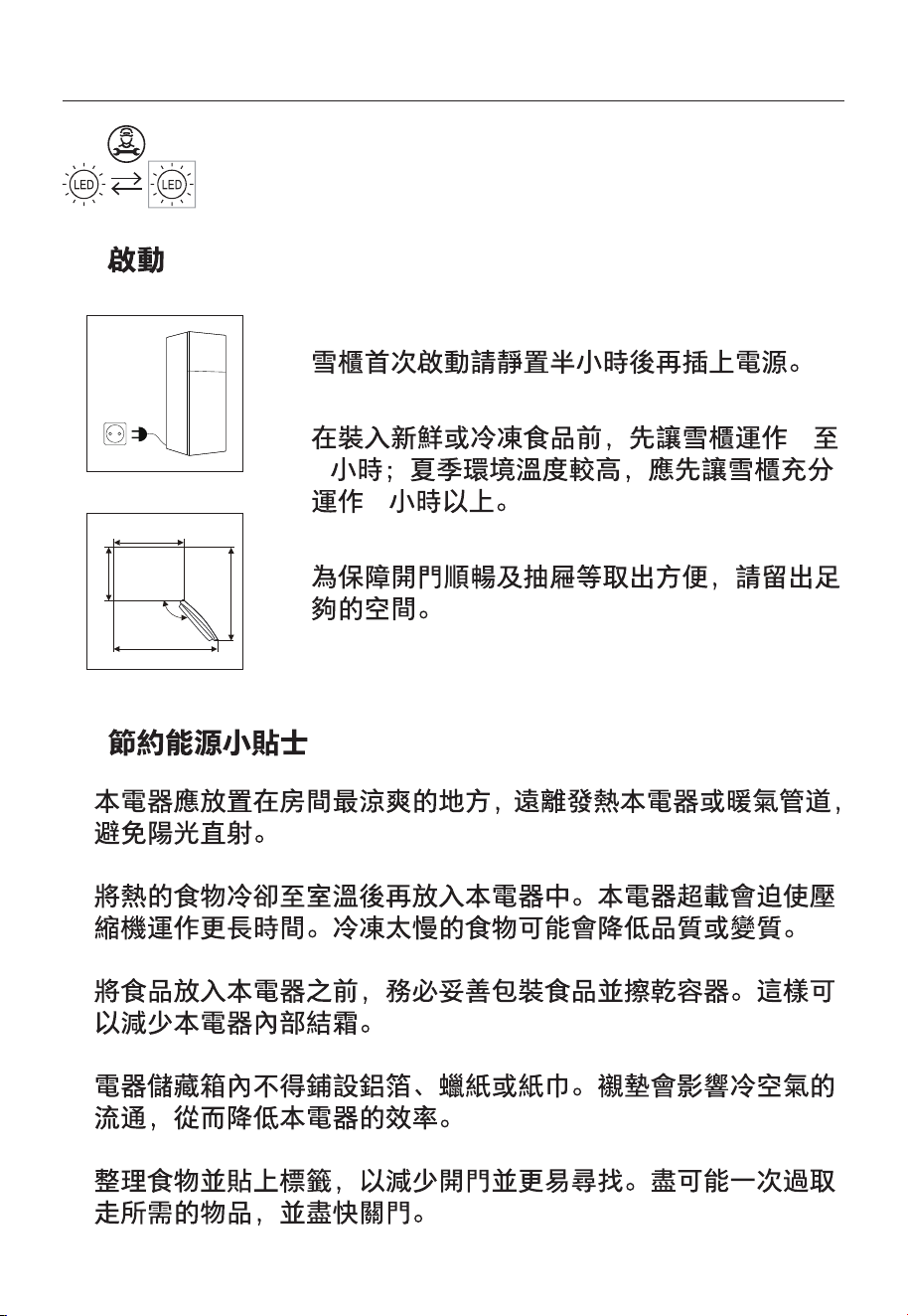
Before initial start, keep the refrigerator still for half an hour
before connecting it to power supply.
Before putting any fresh or frozen foods, the refrigerator
shall have run for 2-3 hours, or for above 4 hours in summer
when the ambient temperature is high.
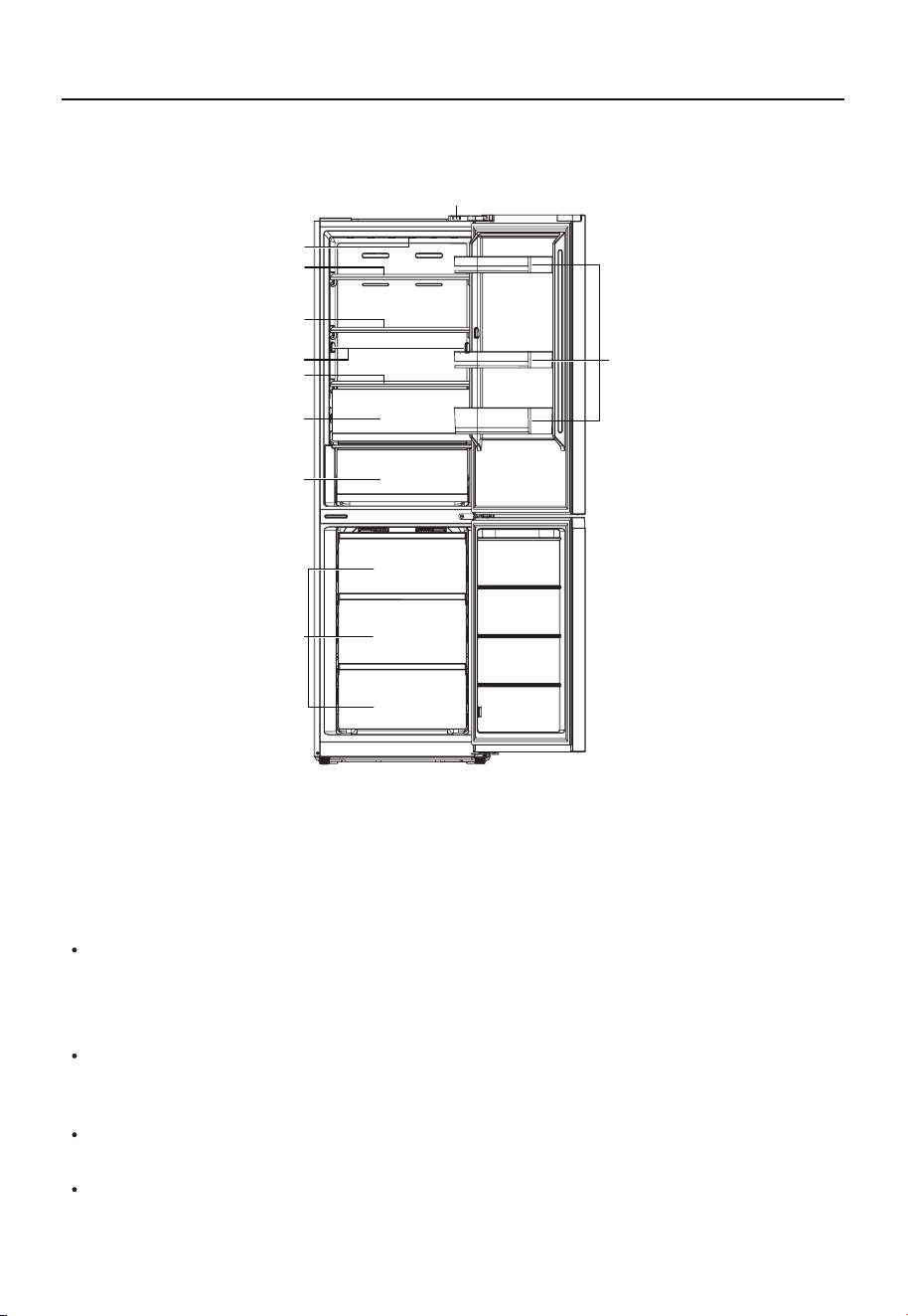
Spare enough space for convenient opening of the doors
and drawers or statement by the distributor.
The appliance should be located in the coolest area of the room, away from heat
producing appliances or heating ducts, and out of the direct sunlight.
Let hot foods cool to room temperature before placing in the appliance. Overloading
the appliance forces the compressor to run longer. Foods that freeze too slowly may
lose quality, or spoil.
Be sure to wrap foods properly, and wipe containers dry before placing them in the
appliance. This cuts down on frost build-up inside the appliance.
Appliance storage bin should not be lined with aluminum foil, wax paper, or paper
toweling. Liners interfere with cold air circulation, making the appliance less ecient.
Organize and label food to reduce door openings and extended searches. Remove as
many items as needed at one time, and close the door as soon as possible.
998mm
595mm
135°
678mm
1132mm
3. Structure and functions
14
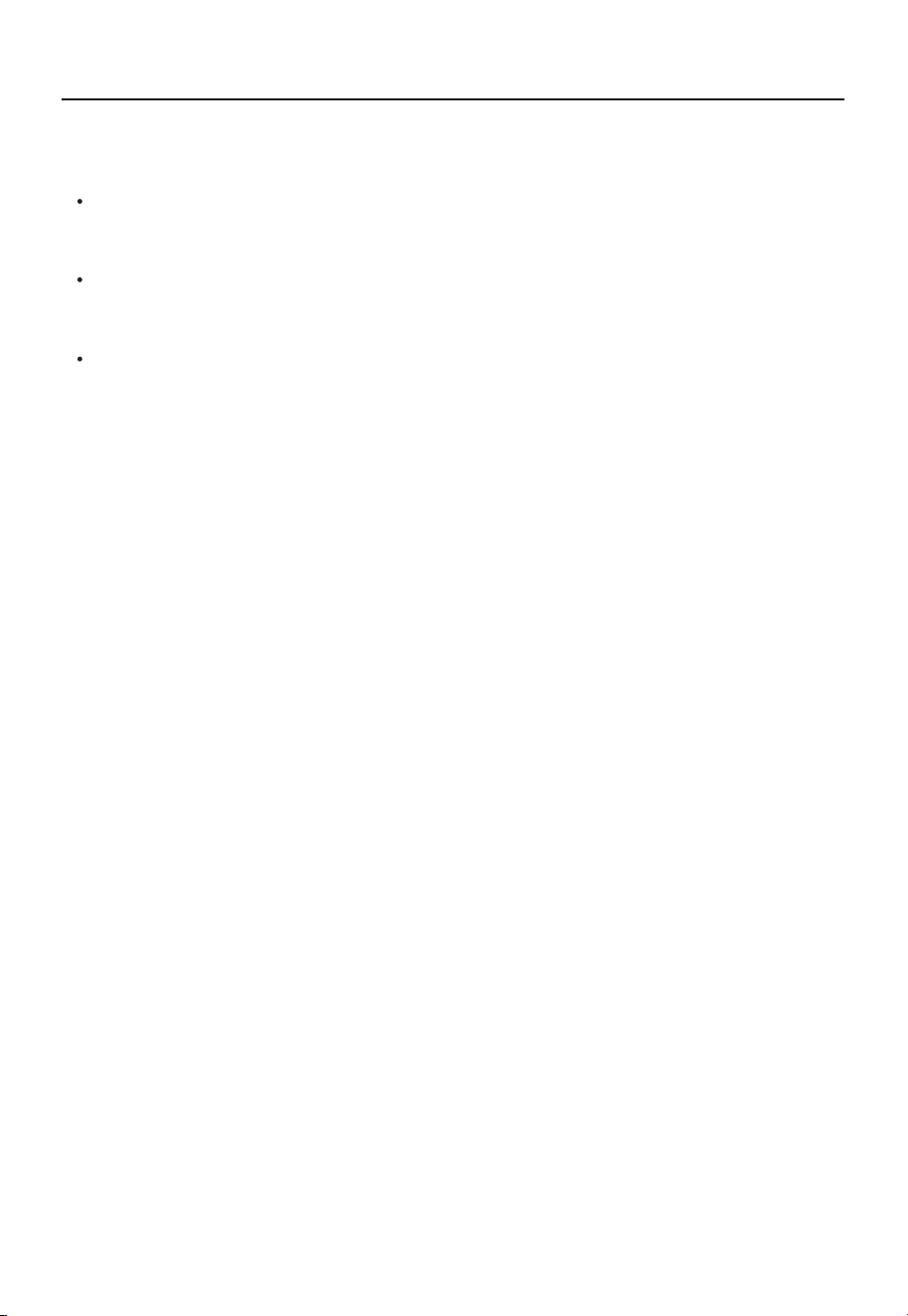
3.1 Key components
Door switch
LED light
Shelf
Shelf
LED light
(for some models)
Shelf
Fruits & vegetables box
Meat & fish box
Drawer
Door tray
Refrigerating chamber
(The picture above is only for reference. The actual configuration will
depend on the physical product or statement by the distributor)
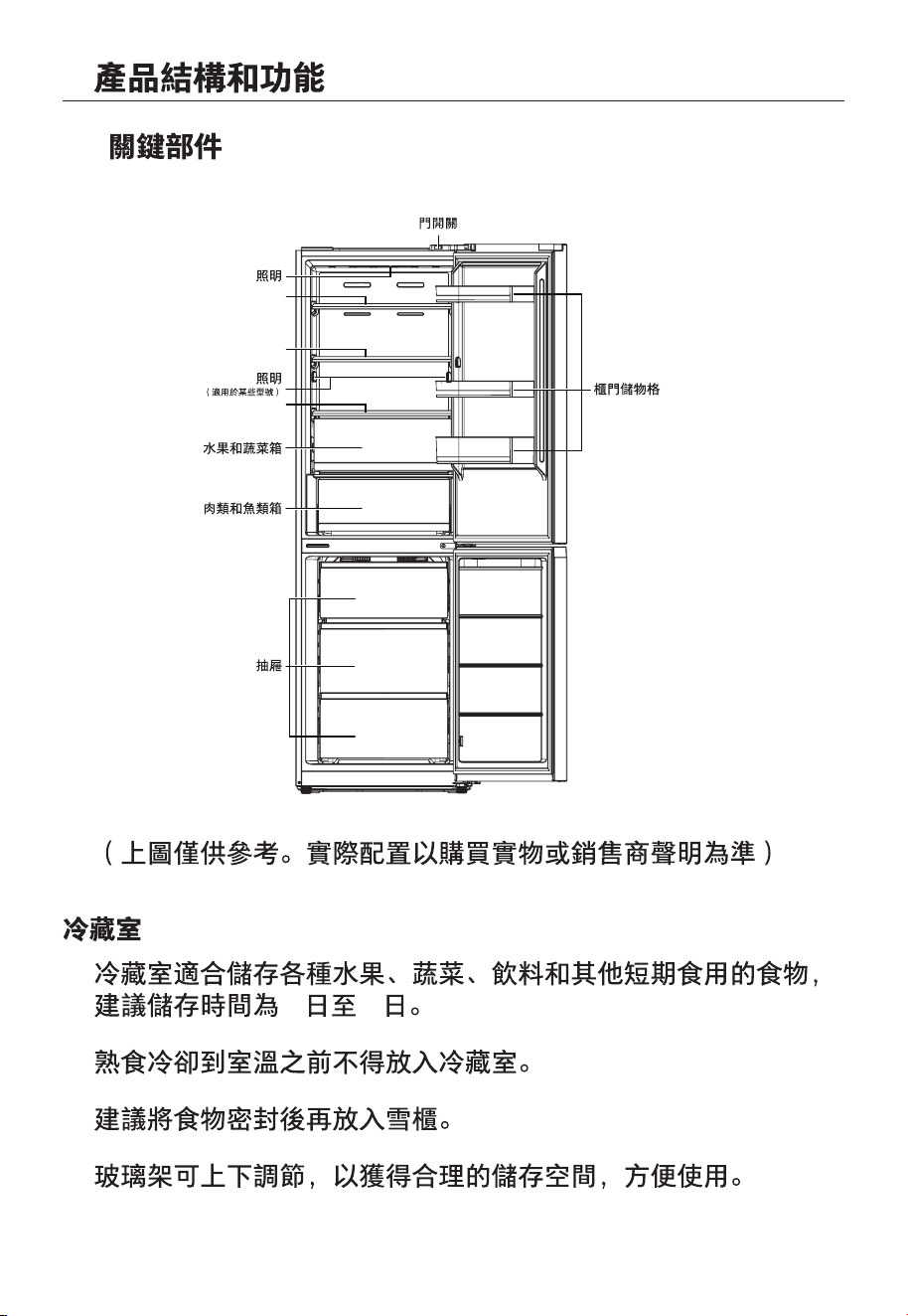
The Refrigerating chamber is suitable for storage of a variety of fruits, vegetables,
beverages and other food consumed in the short term, suggested storage time
3 days to 5 days.
Cooking foods shall not be put in the refrigerating chamber until cooled to room
temperature.
Foods are recommended to be sealed up before putting into the refrigerator.
The glass shelves can be adjusted up or down for a reasonable amount of storage
space and easy use.
15
Freezing chamber
Note: Storage of too much food during operation after the initial refrigerator. Foods
stored shall not block the air outlet; or otherwise the freez ing effect will also be
adversely affected.
The low temperature freezing chamber may keep food fresh for a long time and it
is mainly used to store frozen foods and making ice.
The freezing chamber is suitable for storage of meat, fish, rice balls and other
foods not to be consumed in short term.
Chunks of meat are preferably to be divided into small pieces for easy access. Please
be noted food shall be consumed within the shelf time.
Drawers, food boxes, shelves, etc. placed according to the position in the picture above
are the most energy efficient.
16
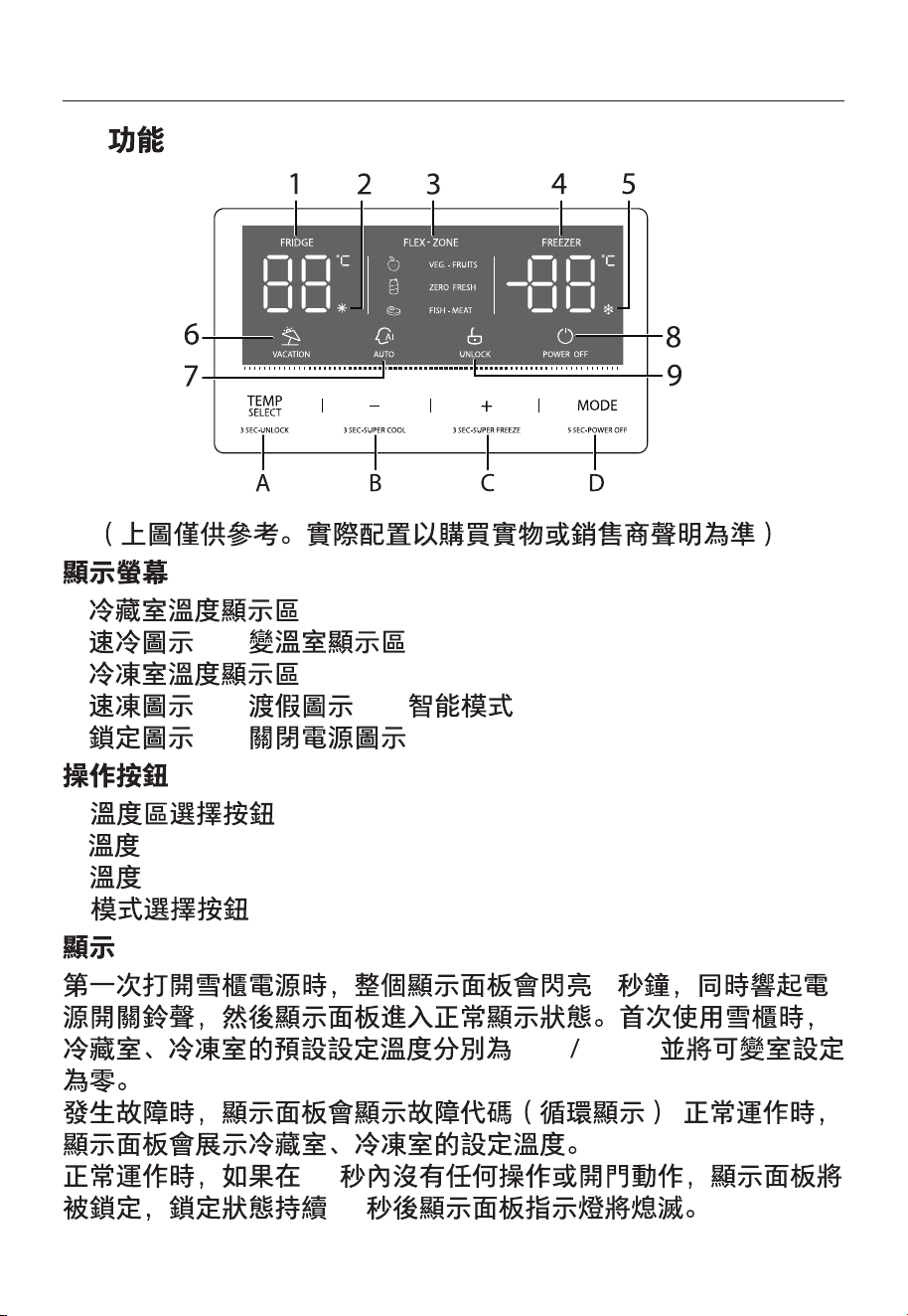
3.2 Functions
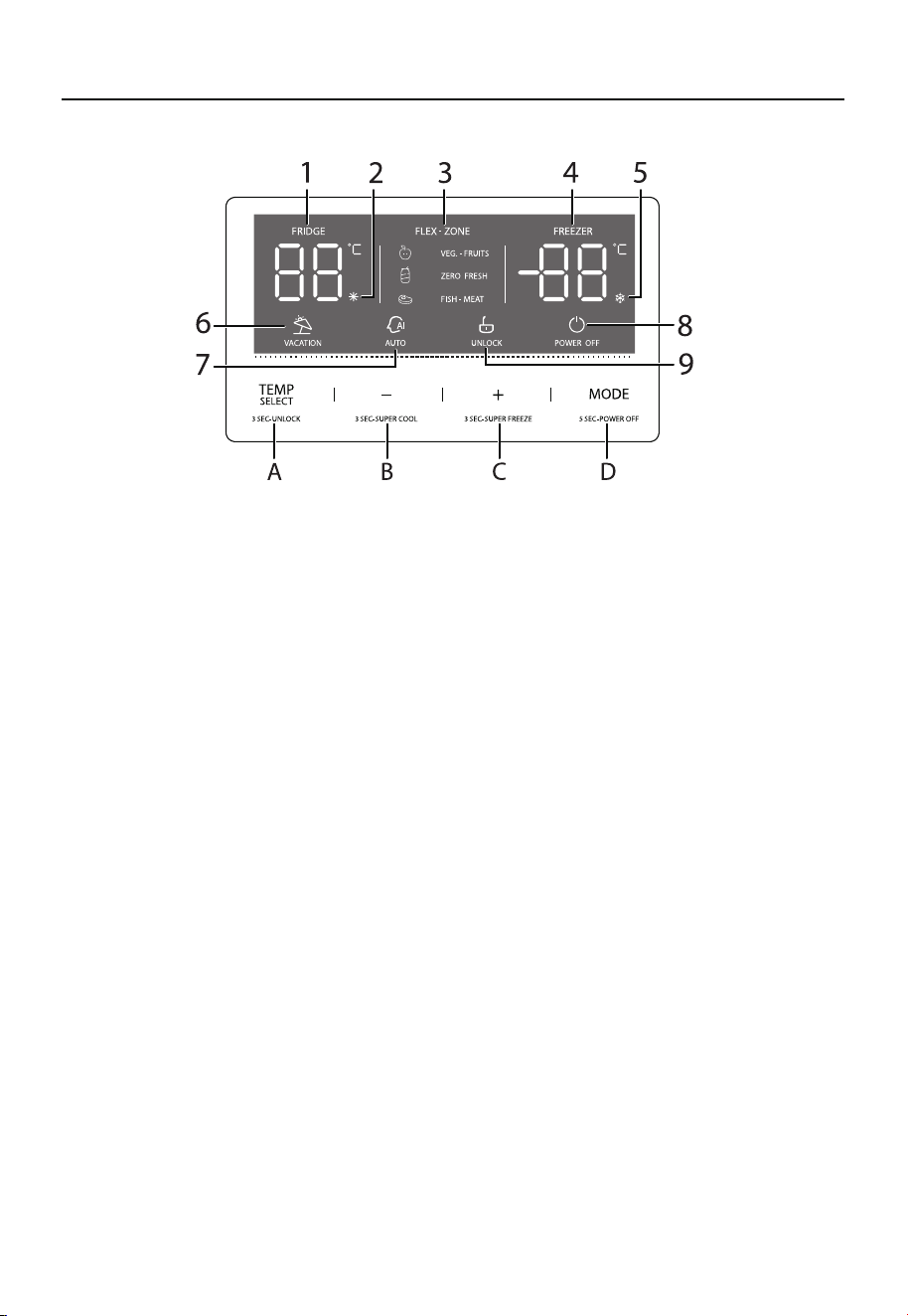
Displayscreen
Operation button
Display
(The picture above is only for reference. The actual configuration will
depend on the physical product or statement by the distributor)
1. Refrigerating chamber termperature display area
2. Quick cool icon 3. Variable chamber display area
4. Freezing chamber temperature display area
5. Quick freeze icon 6. Vacation icon 7. Smart mode
8. Lock icon 9. Power off icon
A. Temperature zone selection button
B. Temperature -
C. Temperature +
D. Mode selection button
When power on the refrigerator for the 1st time, the whole display panel will shine for
.
.
.
3 seconds, and ring the power on bell at the same time, then the display panel enters
the normal display. The first time for using the refrigerator, the default set temperatures
of refrigerating chamber, freezing chamber is 5° C/-18°C respectively and set the variable
chamber to zero.
When the error occurs, the display panel shows the error code (Cycle display); during
normal running, the display panel shows the set temperature of refrigerating chamber,
freezing chamber.
Under normal running, if there is no operation or opening door action within 30s, the
display panel will be locked, the light of display panel will go out after the locked state
continued for 30s.
17
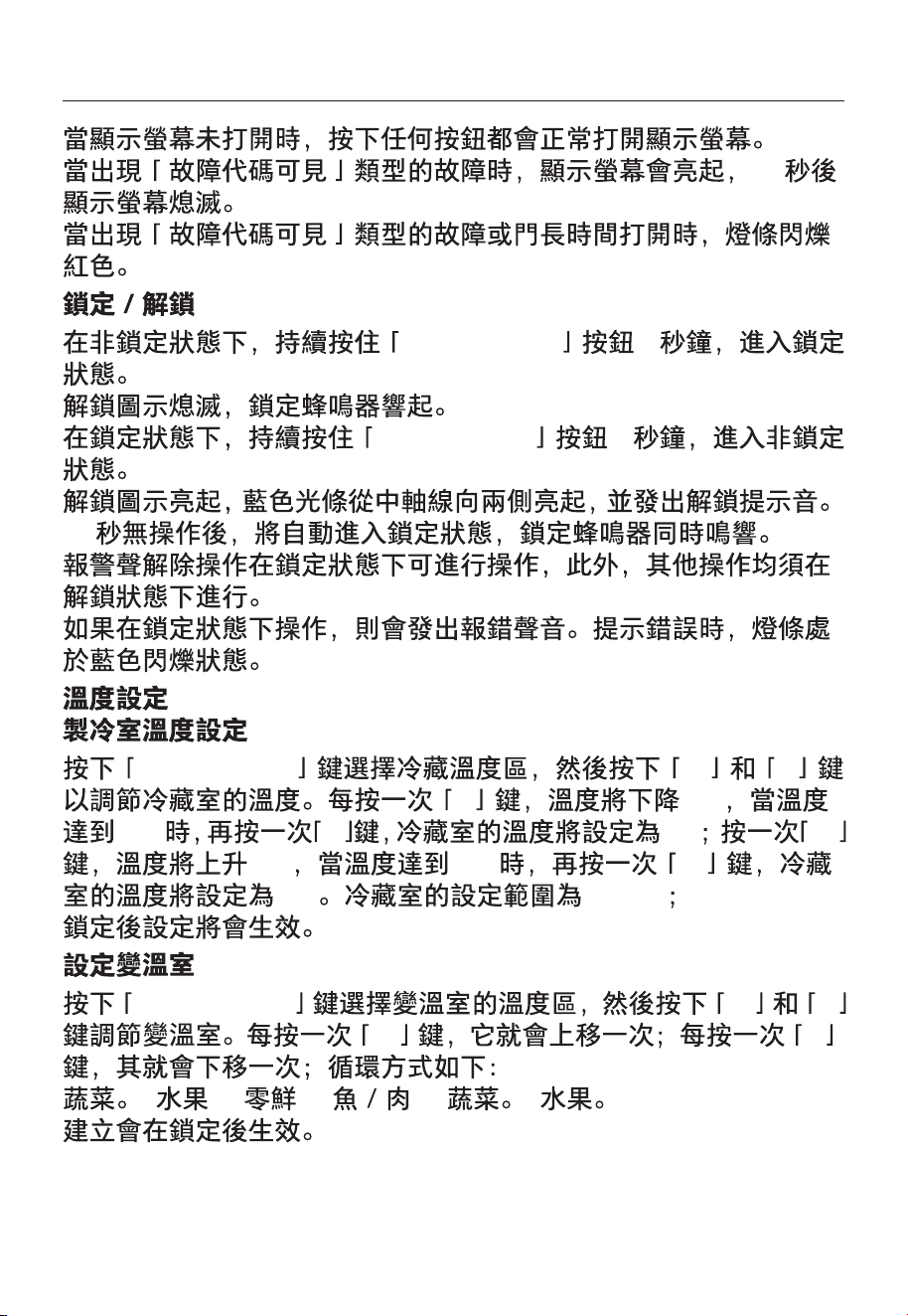
When the display screen is not on, press any button will turn on the display screen
normally.
When there is a "fault code visible" type of fault, the display screen lights up, and 30
seconds later, the display screen goes out.
When there is a "fault code visible" type of fault or when the door is opened for a long
time, the light bar is flashing red.
In the non locked state, press and hold the "TEMP SELECT" for 3 seconds to enter the
locking state.
The unlock icon goes out and the lock buzzer sounds.
In the locked state, press and hold the "TEMP SELECT" for 3 seconds to enter the non
locking state.
The unlock icon lights up, the blue light bar lights up from the central axis to both sides,
and the unlocking beep sounds.
After 30 seconds of no operation, it will automatically enter the locking state, and the
lock buzzer will sound at the same time.
In addition to the alarm tone release operation can also be carried out in the locked
state, other operations must be carried out in the non locked state.
If it is operated in the locked state, an error beep will be given. The light bar is in blue
flashing state when the error is prompted.
Press the "TEMP SELECT" to select the refrigeration temperature zone, and then press
the "+" and "-" button to adjust the temperature of the refrigerating chamber. Each
time the"-" key is pressed, the temperature will drop by 1°C, when the temperature
reaches 2°C, press the "-" button again will set the refrigeration chamber at 8°C; press
the "+" button once, the temperature will increase by 1°C, and press the "+" button
again when the temperature reaches 8°C will set the refrigeration chamber at 2°C. The
setting range of the refrigerating chamber is 2 ~ 8°C;
The setting will take effect after locking.
Press the "TEMP SELECT" to select the temperature zone of the variable chamber, and
then press the "+" "-" button to adjust the variable chamber. Each time the"+" key is
pressed, it shifts up once; Each time the "-" key is pressed, it will switch downward once;
cycle according to the following way:
VEG. - FRUITS - > ZERO FRESH - > FISH - MEAT - > VEG. - FRUITS.
After locking the establishment takes effect.
Lock/unlock
Temperature setting
Temperature setting of refrigerating chamber
Setting of variable chamber
.
.
.
.
.
.
.
.
.
.
.
.
.
18
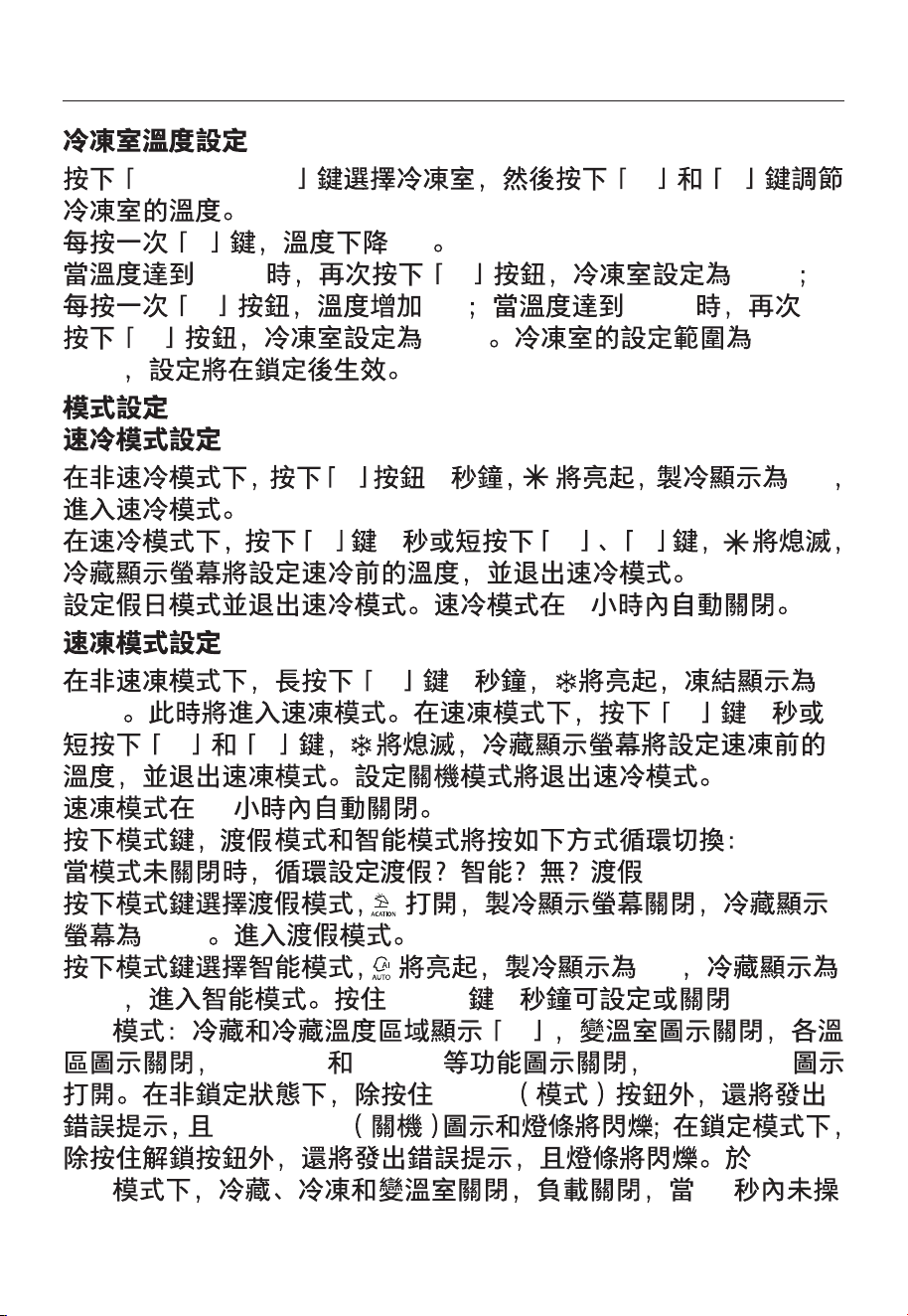
Press the "TEMP SELECT" to select the freezing chamber, and then press the "+" and "-"
keys to adjust the temperature of the freezing chamber.
Each time the "-" key is pressed, the temperature drops by 1°C.
When the temperature reaches - 24°C, press the "+" button once again, the freezing
chamber is set to -16°C; each time the "+" button is pressed once, the temperature
increases by 1°C; when the temperature reaches -16°C, press the "+" button again, the
freezing chamber will set to - 24°C. The setting range of cold storage room is -16 ~
-24°C, the setting will take effect after locking.
In the non fast cooling mode, press the "-" button for 3s, will light up, and the
refrigeration display will be 2°C, enter the fast cooling mode.
In the quick cooling mode, press the "-" button for 3s or short press the "+", "-" button,
will go out, the refrigeration display will set the temperature before the quick
cooling, and exit the quick cooling mode.
Set holiday mode and exit quick cooling mode. Quick cooling mode automatically
disabled for 6H.
In non quick freezing mode, press and hold the "+" button for 3s, will light up, and
the freezing display will be -24°C. It will enter the quick freezing mode. In the quick
freezing mode, press the "+" button for 3s or short press the "+" and "-" buttons,
will go out, the freezing display will set the temperature before the quick freezing,
and exit the quick freezing mode. Set the shutdown mode will exit the quick cooling
mode.
Quick freeze mode automatically disabled for 24H.
Press the mode key, and the vacation and intelligent mode will cycle as follows:
When the mode is not off, cycle to set vacation? smart? none? vacation....
Press the mode key to select vacation mode, is on, the refrigeration display is off, and
the freezing display is - 18°C. The vacation mode is entered.
Press the mode key to select the smart mode, will light up, the refrigeration display
will be 5°C, the freezing display will be - 18°C, and the intelligent mode will be entered.
Press and hold the MODE key for 5S to set or turn off the POWER OFF mode: "--" is
displayed in the cold storage and freezing temperature area, the icon of variable
chamber is off, the icon of each temperature zone is off, the function icon such as
HOLIDAY and SMART is off, and the POWER OFF icon is on. In the non locked state, in
addition to hold the MODE button, the error prompt will be given, and the POWER OFF
icon and light strip will flash; ln the lock mode, in addition to hold the unlock button, an
error prompt will be given and the light strip will flash. In the POWER OFF mode, the
Temperature setting of freezing chamber
Mode setting
Quick cooling mode setting
Quick freezing mode setting
.
.
.
.
.
.
.
.
.
.
.
.
V
19
refrigeration, freezing and variable chamber are closed, the load is closed, and when
the display panel is not operated for 30 seconds, it will goes out. Recommended
setting: refrigerated chamber 4°C, freezing chamber -18°C.
When open the refrigerator door, the door open music will play.
If the door is not closed in two minutes, the buzzer will sound until the door closed.
Press any one button to stop the buzzer alarm.
Opening warning and alarm control
The following warnings appearing on the display indicate corresponding faults of the
refrigerator. Though the refrigerator may still have cold storage function with the
following faults, the user shall contact a maintenance specialist for maintenance, so as
to ensure optimized operation of the appliance.
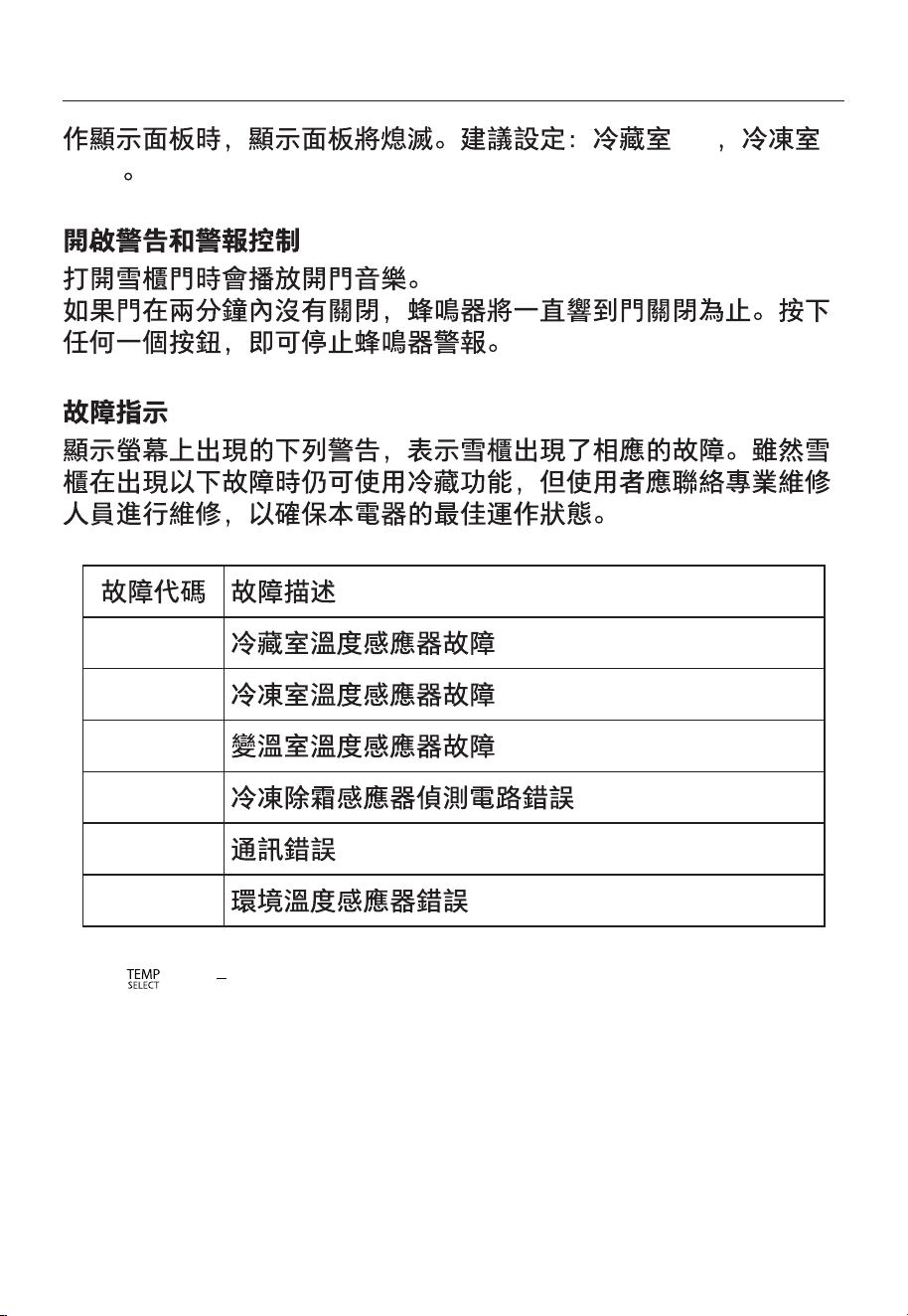
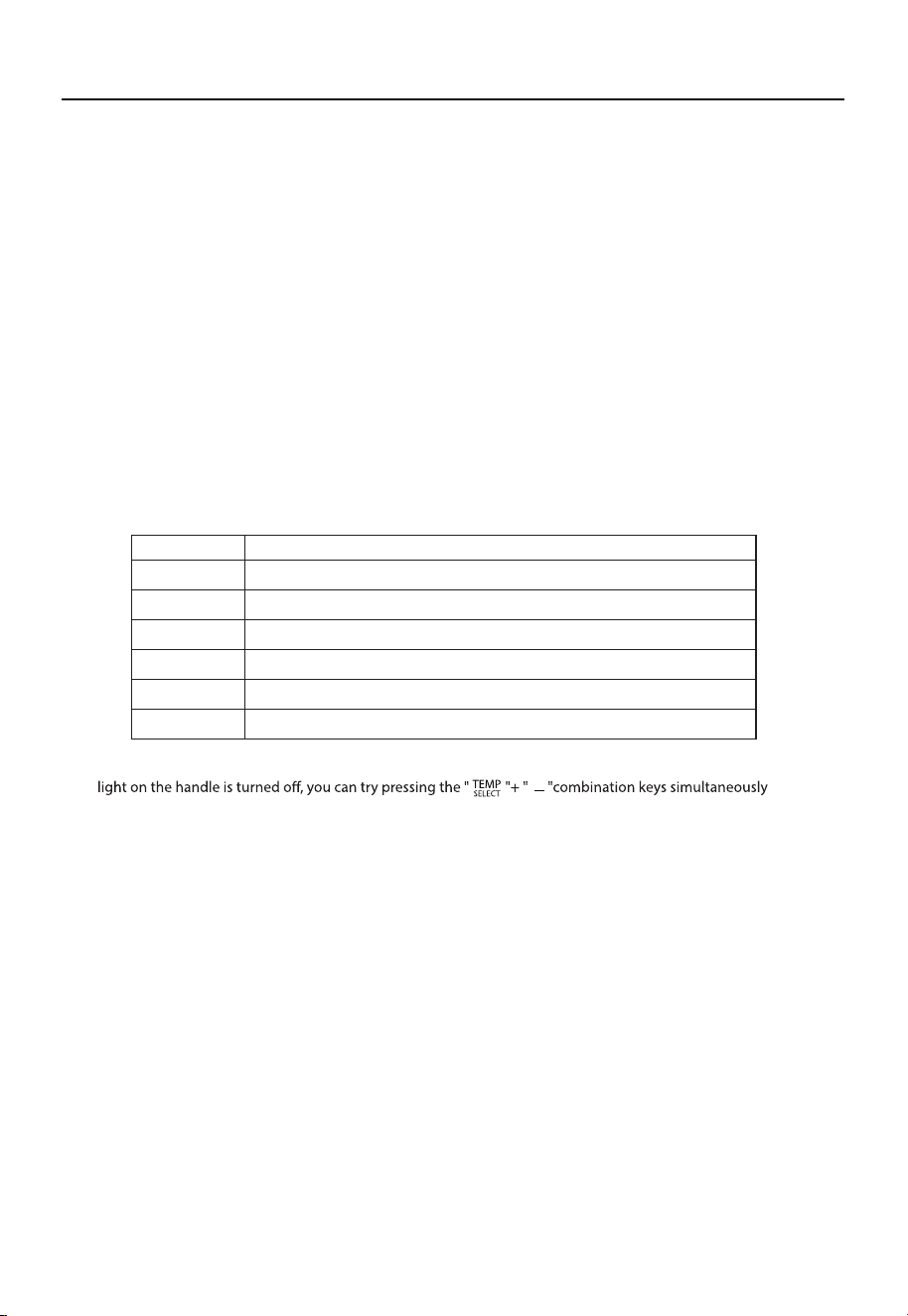
Fault indication
Fault code Fault description
E1 Temperature sensor failure of refrigerating chamber
E2 Temperature sensor failure of freezing chamber
E3 Temperature sensor failure of variable chamber
E5 Freezing defrost sensor detection circuit error
E6 Communication error
E7 Ambient temperature sensor error
.
.
* When the huzzer doesn't sound ,the lighting doesn't light up when the door is opened ,and the amhient
for 3 seconds to solve the current situation.
20
4.1 Overall cleaning
Dusts behind the refrigerator and on the ground shall be timely cleaned to improve
the cooling effect and energy saving.
Check the door gasket regularly to make sure there are no debris. Clean the door
gasket with a soft cloth dampened with soapy water or diluted detergent.
The interior of the refrigerator should be cleaned regularly
to avoid odor.
Please turn off the power before cleaning interior, remove
all foods, drinks, shelves, drawers, etc.
Use a soft cloth or sponge to clean the inside of the refrigerator, with two
tablespoons of baking soda and a quart of warm water. Then rinse with water and
wipe clean. After cleaning, open the door and let it dry naturally before turning on
the power.
For areas that are difficult to clean in the refrigerator (such as narrow sandwiches,
gaps or corners), it is recommended to wipe them regularly with a soft rag, soft
brush, etc. and when necessary, combined with some auxiliary tools (such as thin
sticks) to ensure no contaminants or bacterial accumulation in these areas.
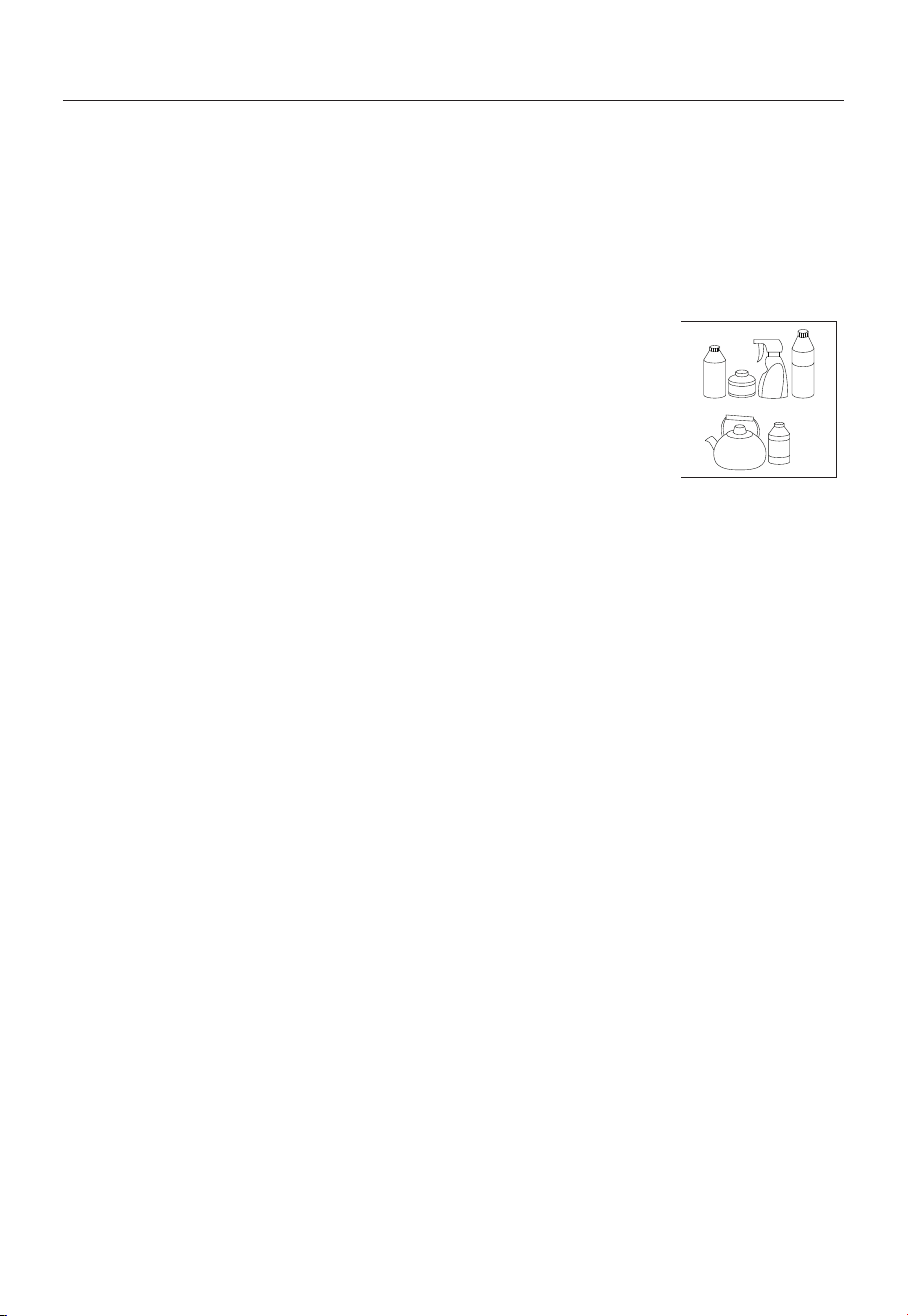
Do not use soap, detergent, scrub powder, spray cleaner, etc. as these may cause
odors in the interior of the refrigerator or contaminated food.
Clean the bottle frame, shelves and drawers with a soft cloth dampened with soapy
water or diluted detergent. Dry with a soft cloth or dry naturally.
Wipe the outer surface of the refrigerator with a soft cloth dampened with soapy
water, detergent, etc., and then wipe dry.
Do not use hard brushes, clean steel balls, wire brushes, abrasives (such as
toothpastes), organic solvents (such as alcohol, acetone, banana oil, etc.), boiling
water, acid or alkaline items, which may damage the fridge surface and interior.
Boiling water and organic solvents such as benzene may deform or damage plastic
parts.
Do not rinse directly with water or other liquids during cleaning to avoid short circuits
or affect electrical Insulation after immersion.
4. Maintenance and care of the refrigerator
Gas
Detergent
Bananaoil
Alcohol
21
4.2 Cleaning the glass shelf
Please unplug the refrigerator for defrost and cleaning.
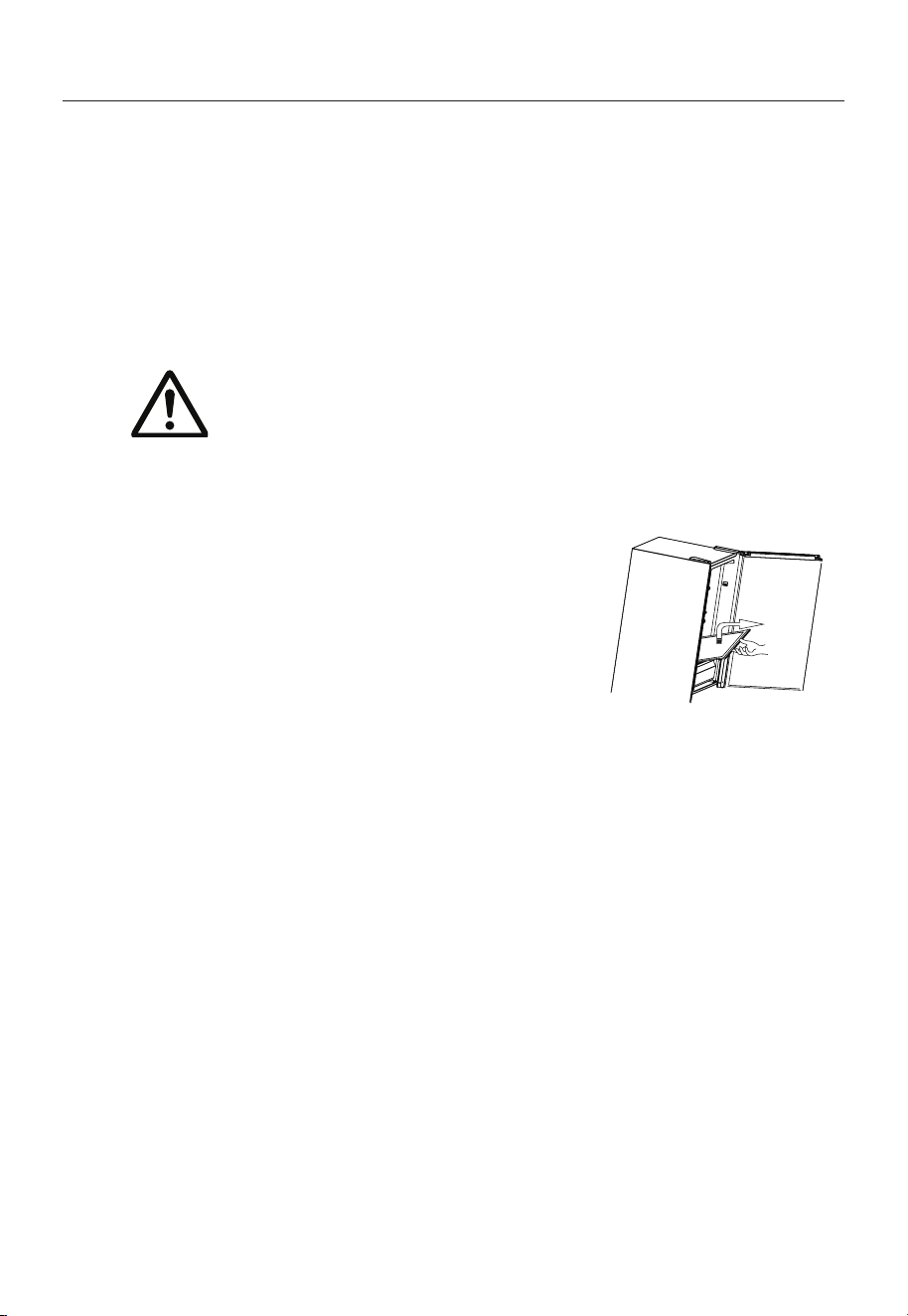
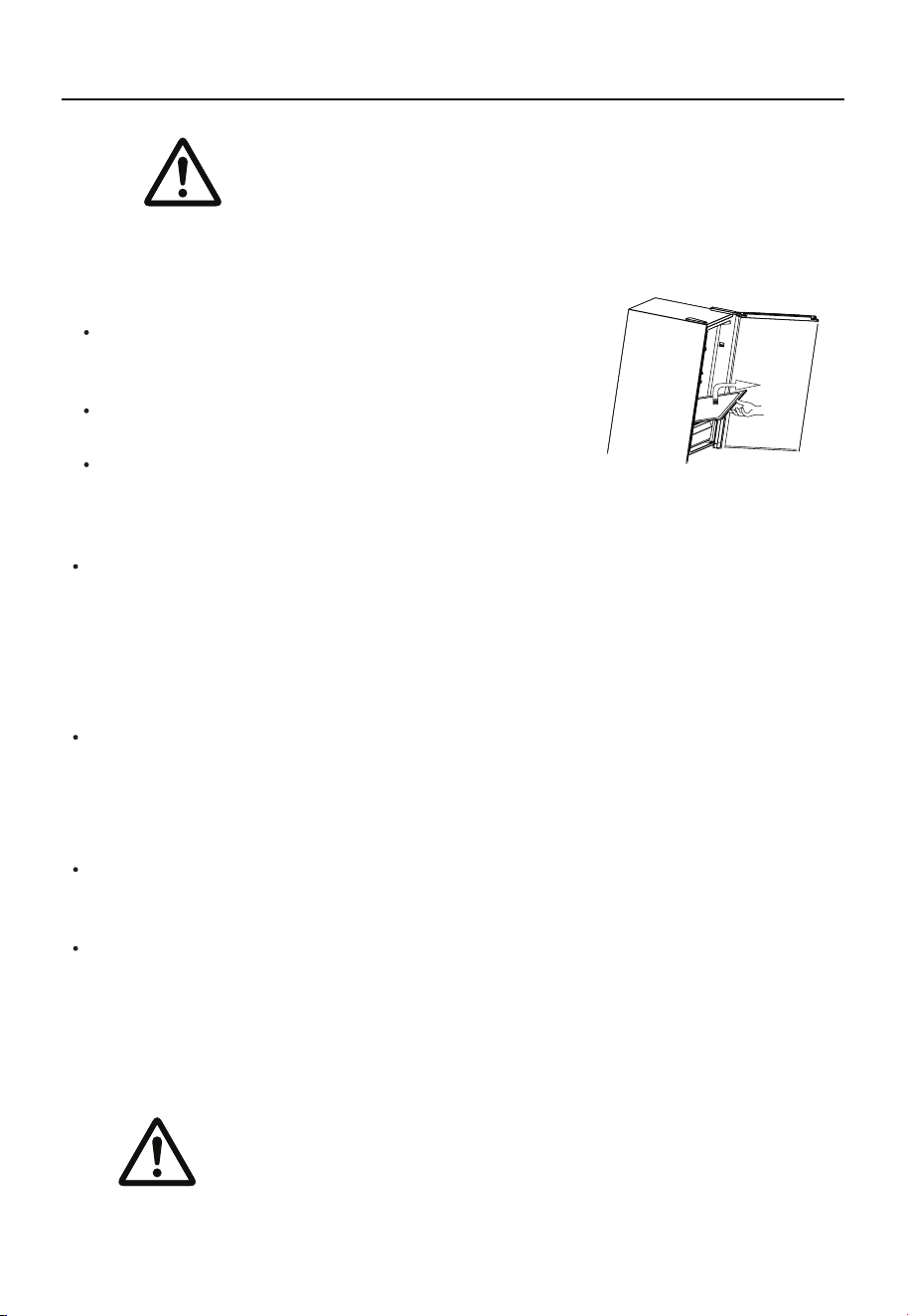
Remove the drawer on the glass shelf; Lift up
the front of glass shelf (about 60°), and then pull out;
Remove the glass shelf and clean as needed;
The reverse operation is for installation of glass shelf.
4.3 Defrosting
The refrigerator is made based on the air-cooling principle and thus has automatic
defrosting function. Frost formed due to change of season or temperature may
also be manually removed by disconnection of the appliance from power supply
or by wiping with a dry towel.
4.4 Out of operation
The appliance shall run continuously once it is started.
Generally, the operation of the appliance shall not be
interrupted; otherwise the service life may be impaired.
Power failure: In case of power failure, even if it is in summer, foods inside the
appliance can be kept for several hours; during the power failure, the times of
door opening shall be reduced, and no more fresh food shall be put into the
appliance.
Long-time nonuse: The appliance shall be unplugged and then cleaned; then the
doors are left open to prevent odor.
Moving: Before the refrigerator is moved, take all objects inside out, fix the glass
partitions, vegetable holder, freezing chamber drawers and etc. with tape, and
tighten the leveling feet; close the doors and fix them with tape. During moving,
the appliance shall not be laid upside down or horizontally, or be vibrated; the
inclination during movement shall be no more than 45°.
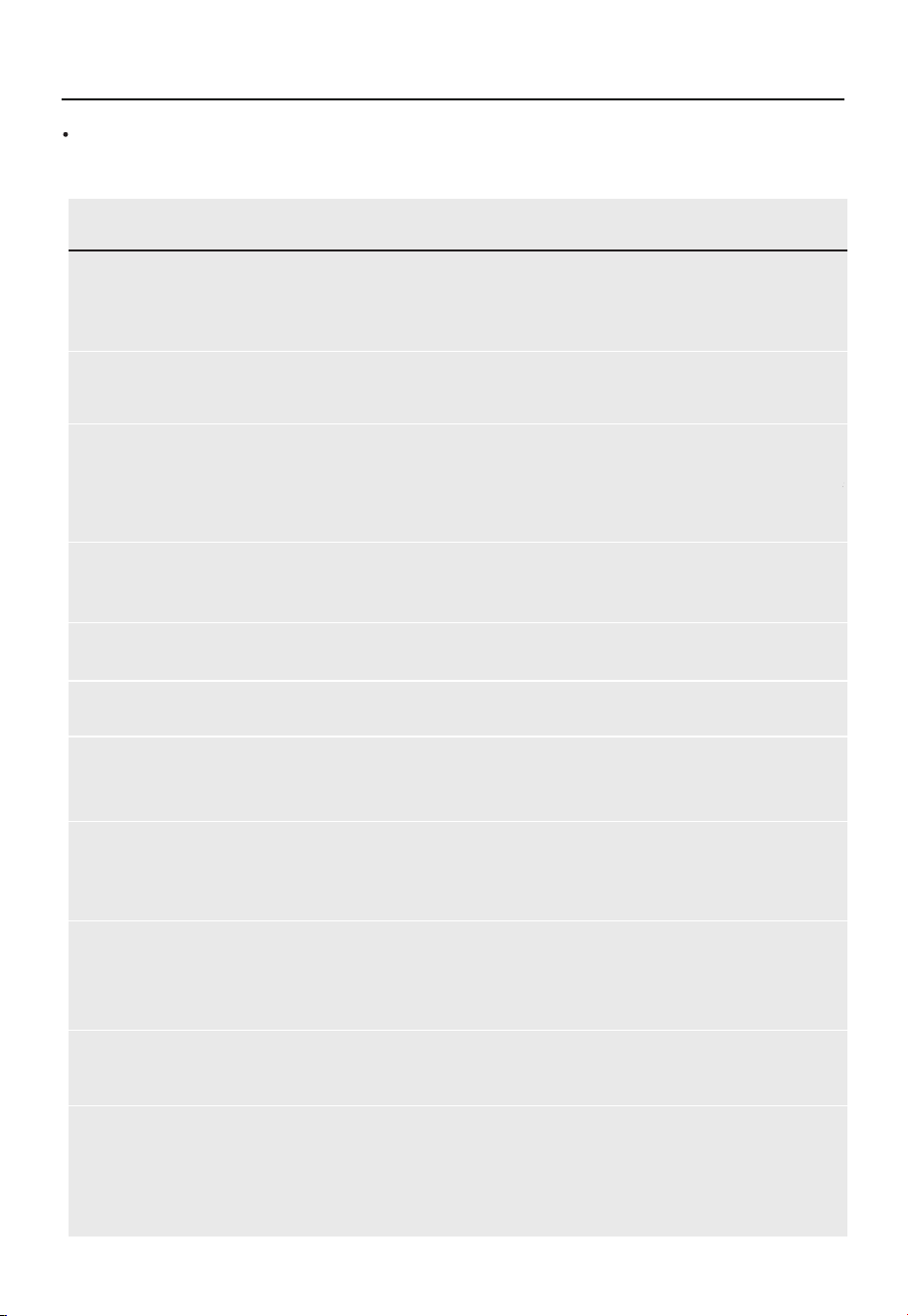
You may try to solve the following simple problems by yourself. If them cannot be
solved, please contact the after-sales department.
5. Trouble shooting
Occurrence
Failed operation
Odor
Light fails to get lit
Loud noise
Water pan overflows
Hot housing
Surface condensation
Abnormal noise
Buzz: The compressor may produce buzzes during operation, and the
buzzes are loud particularly upon start or stop. This is normal.
Creak: Refrigerant flowing inside of the appliance may produce creak,
which is normal
Condensation on the exterior surface and door seals of the refrigerator
is normal when the ambient humidity is too high. Just wipe the condensate
with a clean towel
Heat dissipation of the built-in condenser via the housing, which is normal
When housing becomes hot due to high ambient temperature,
storage of too much food or shutdown of the compressor is shut down,
provide sound ventilation to facilitate heat dissipation
There is too much food in the chamber or food stored contains
too much water,resulting in heavy defrosting
The doors are not closed properly, resulting in frosting due to entry
of air and increased water due to defrosting
Remove foreign matters on the door seal
Heat the door seal and then cool it for restoration
(or blow it with an electrical drier or use a hot towel for heating)
Door seal fails to
be tight
Check whether the floor is level and whether the refrigerator is placed stably
Check whether accessories are placed at proper locations
The door is stuck by food packages Too much food is placed
The refrigerator is tilted
Doors cannot be
properly closed
Check whether the refrigerator is connected to power supply and
whether the illuminating light is damaged
Have the light replaced by a specialist
Long-time operation
of the compressor
Odorous foods shall be tightly wrapped
Check whether there is any rotten food
Clean the inside of the refrigerator
Long operation of the refrigerator is normal in summer
when the ambient temperature is high
It is not suggestible having too much food in the appliance at the
same time
The doors are opened too frequently
Check whether the appliance is connected to power or
whether the plug is in well contact
Check whether the voltage is too low
Check whether there is a power failure or partial circuits have tripped
Possible cause/inspection items
Food shall get cool before being put into the appliance
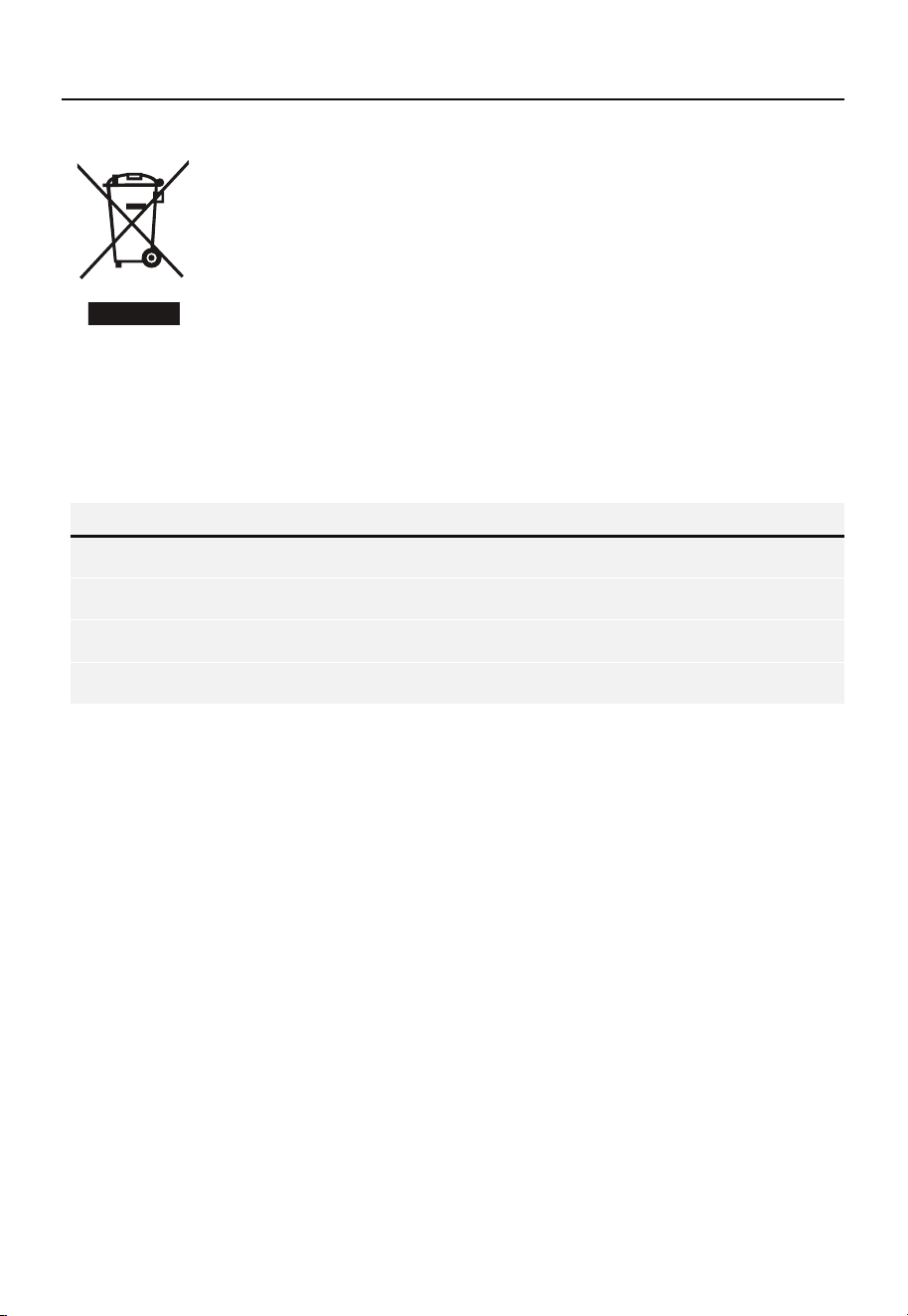
AMBIENT TEMPERATURE
Climate category
SN
N
ST
T
+10°C to +32°C
+16°C to +32°C
+16°C to +38°C
+16°C to +43°C
Ambient temperature (from...to...)
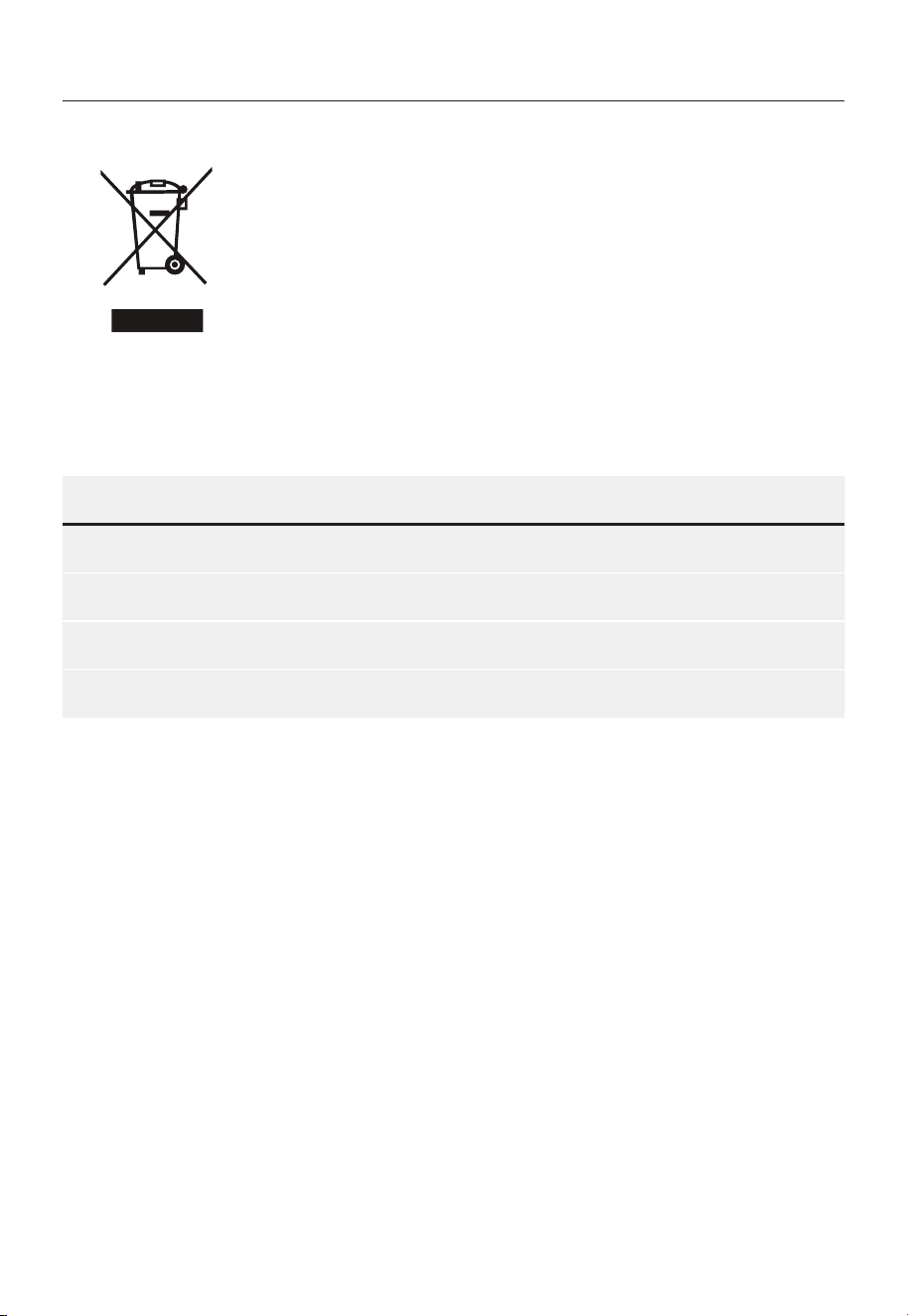
Correct Disposal of this product:
This marking indicates that this product should not be disposed
with other household wastes throughout the EU. To prevent
possible harm to the environment or human health from
uncontrolled waste disposal, recycle it responsibly to promote
the sustainable reuse of material resources. To return your used
device, please use the return and collection systems or contact
the retailer where the product was purchased. They can take this
product for environmental safe recycling.
This appliance is designed to operate in ambient temperature specified by its category
marked onthe rating plate.
6. Disposal of your appliance