Installation Guide
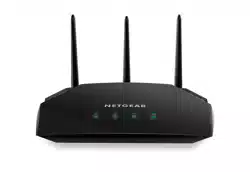
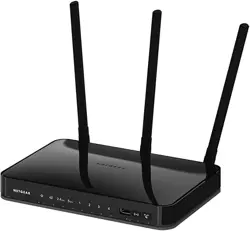
AC750 Wireless Dual Band Gigabit Router R6050
Package Contents
AC750 Wireless Dual Band Gigabit Router
Power adapter Ethernet cable
Modem
DSL
or Cable
Internet
Power
On/Off
Step 1.
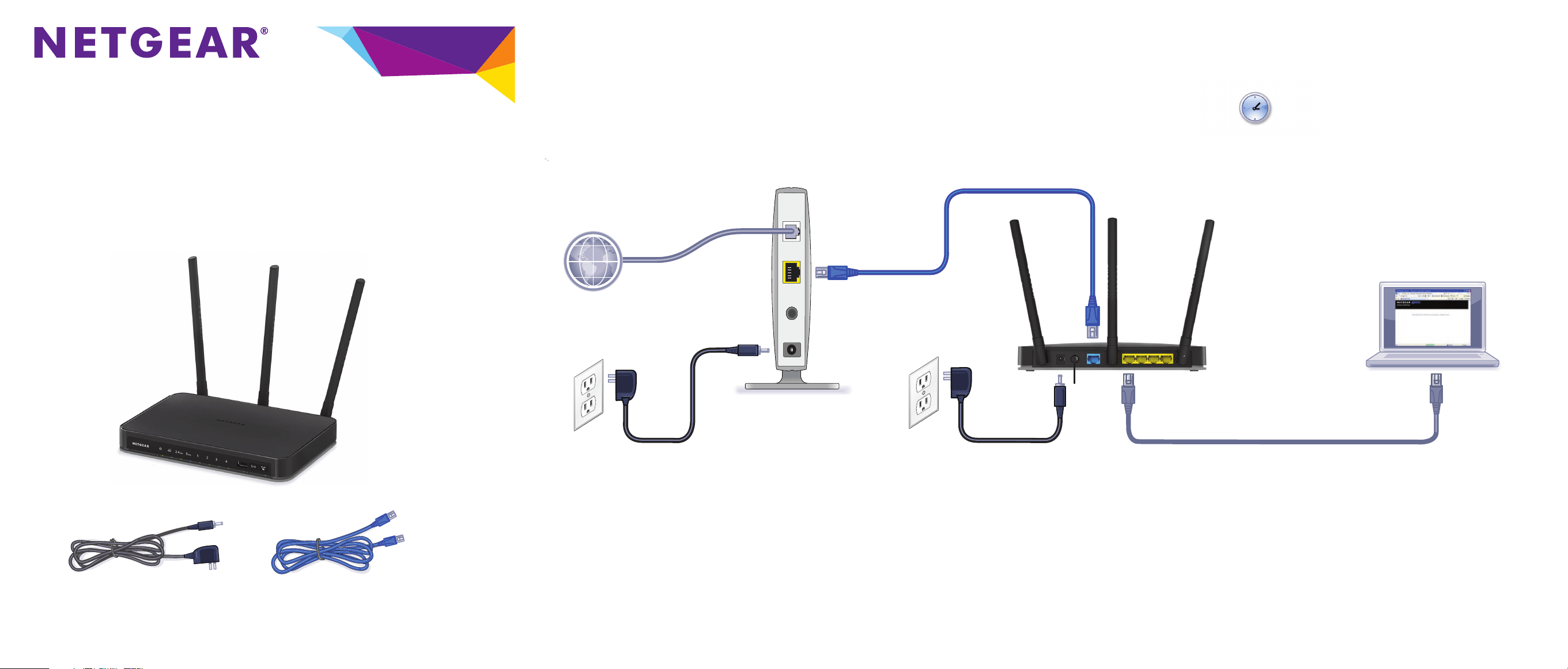
Unplug the power
to turn off your modem.
Step 2.
Connect one end of the blue
Ethernet cable to your modem,
and the other end to the Internet
port on your router.
Step 4.
Connect the power adapter to the
router, then plug it into an outlet.
Wait until the Wireless LED turns
solid green.
If none of the LEDs light, make sure that the
Power On/Off button is in the on position
(pushed in).
Step 3.
Plug in, then turn on your modem.
Wait approximately 2 minutes
until your modem turns on.
If your modem has a battery backup,
first remove and reinsert the battery
before connectiong your modem to power
.
Step 5.
Connect the router
to your computer.
Use anouter Ethernet cable to establish
a wired connection as shown in this diagram.
(Optionally) Connect wirelessly by using the
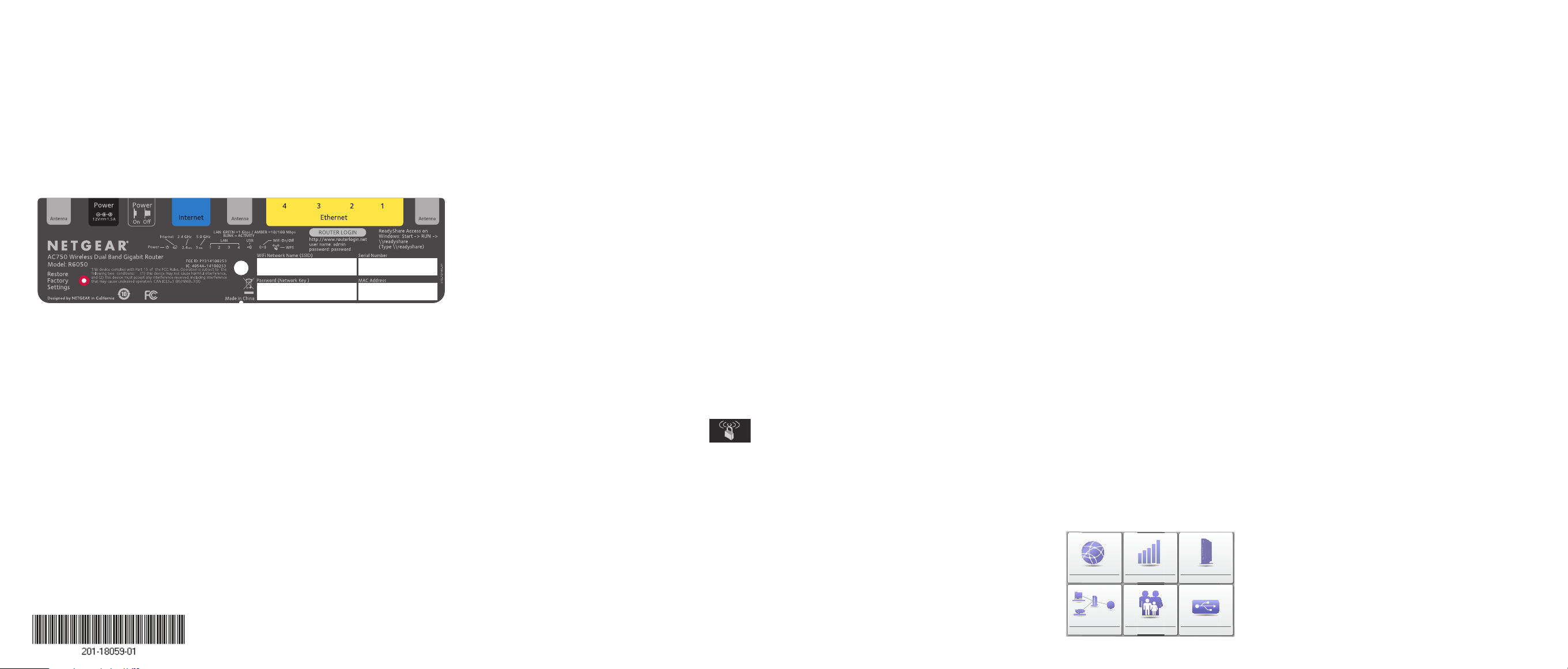
preset wireless security settings located
on th bottom label.
Step 6.
Open a browser.
If the web page does not display,
close and reopen the browser and
enter http://www.routerlogin.net
in the address bar, or check the
“Troubleshooting” chapter of the
user manual.
AC750 Wireless Dual
Band Gigabit Router
(not included)
March 2014
NETGEAR, the NETGEAR logo, and Connect with Innovation are trademarks and/or registered
trademarks of NETGEAR, Inc. and/or its subsidiaries in the United States and/or other
countries. Information is subject to change without notice. © NETGEAR, Inc. All rights reserved.
NETGEAR, Inc.
350 East Plumeria Drive
San Jose, CA 95134 USA
Preset Wireless Security
This product has a unique WiFi network name (SSID) and network key (password).
The default SSID and password are uniquely generated for every device (like a
serial number) to protect and maximize your wireless security. This information is
located on the label on the bottom of the product.
NETGEAR recommends that you do not change the preset SSID and password. If
you do change the settings, the information on the bottom of the product does not
apply.
Find the preset wireless settings on your router and record them here:
WiFi network name (SSID) _______________________________
Network key (password) _________________________________
If you change the preset wireless settings, record them here:
Wireless network name (SSID) _____________________________
Network key (password) __________________________________
If necessary to retrieve or update your password, enter
http://www.routerlogin.net in a web browser and log in using the
default user name (admin) and password (password).
Select Wireless Settings to locate your wireless password.
Connect Wireless Devices to Your Router
Choose either the manual or Wi-Fi Protected Setup (WPS) method to add
wireless computers and other devices to your wireless network.
Manual Method
1. Open the software utility that manages your wireless connections on the
wireless device that you want to connect to your router (smartphone, laptop,
computer, or gaming device). This utility scans for all wireless networks in
your area.
2. Look for the preset NETGEAR wireless network name (SSID), and select it.
The SSID is located on the product label on the bottom of the router.
Note: If you changed the name of your network during the setup process, look for
that network name.
3. Enter the preset password (or your custom password if you changed it), and
click Connect.
4. Repeat steps 1–3 to add other wireless devices.
WPS Method
If your wireless device supports WPS (Wi-Fi Protected Setup), which NETGEAR
calls Push 'N' Connect, you might be prompted to press the WPS button on the
router instead of entering a password. If this happens:
1. Press the WPS button on the router.
2. Within 2 minutes, press the WPS button on the client device, or follow the
WPS instructions that came with your wireless device to complete the WPS
process. The device will then be connected to your router.
3. Repeat this process to add other WPS wireless devices.
Note: WPS does not support WEP security. If you try to connect a WEP client to
your network using WPS, it will not work.
ReadySHARE Printer
ReadySHARE Printer lets you connect a USB printer to the router’s USB port and
access it wirelessly. To set up this feature:
1. Connect the USB printer to the router’s USB port.
2. Download and install the NETGEAR USB Control Center utility at
http://www.netgear.com/landing/en-us/readyshare.aspx. You must install this
utility before you can use the ReadySHARE Printer feature.
3. Follow the instructions in the utility to connect to the printer.
Support
Thank you for selecting NETGEAR products.
After installing your device, locate the serial number on the label of your product and
use it to register your product at https://my.netgear.com.
You must register your product before you can use NETGEAR telephone support.
NETGEAR recommends registering your product through the NETGEAR website.
For product updates and web support, visit http://support.netgear.com.
NETGEAR recommends that you use only the official NETGEAR support resources.
You can get the user manual online at http://downloadcenter.netgear.com or through
a link in the product’s user interface.
For the current EU Declaration of Conformity, visit
http://support.netgear.com/app/answers/detail/a_id/11621/.
For regulatory compliance information, visit
http://www.netgear.com/about/regulatory/.
See the regulatory compliance document before connecting the power supply.
Internet
STATUS GOOD
Network Map
Number of devices 16
Parental Controls
WiFi Connection
STATUS Connected
Router Settings
Click here
ReadySHARE
Click here
Click here
Download the free genie app from
www.NETGEAR.com/genie.
Automatically fix common network problems and
easily manage your home network connections.