TX33 Manual
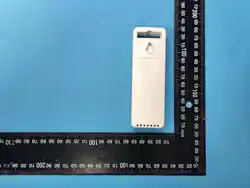
OUTDOOR SENSOR
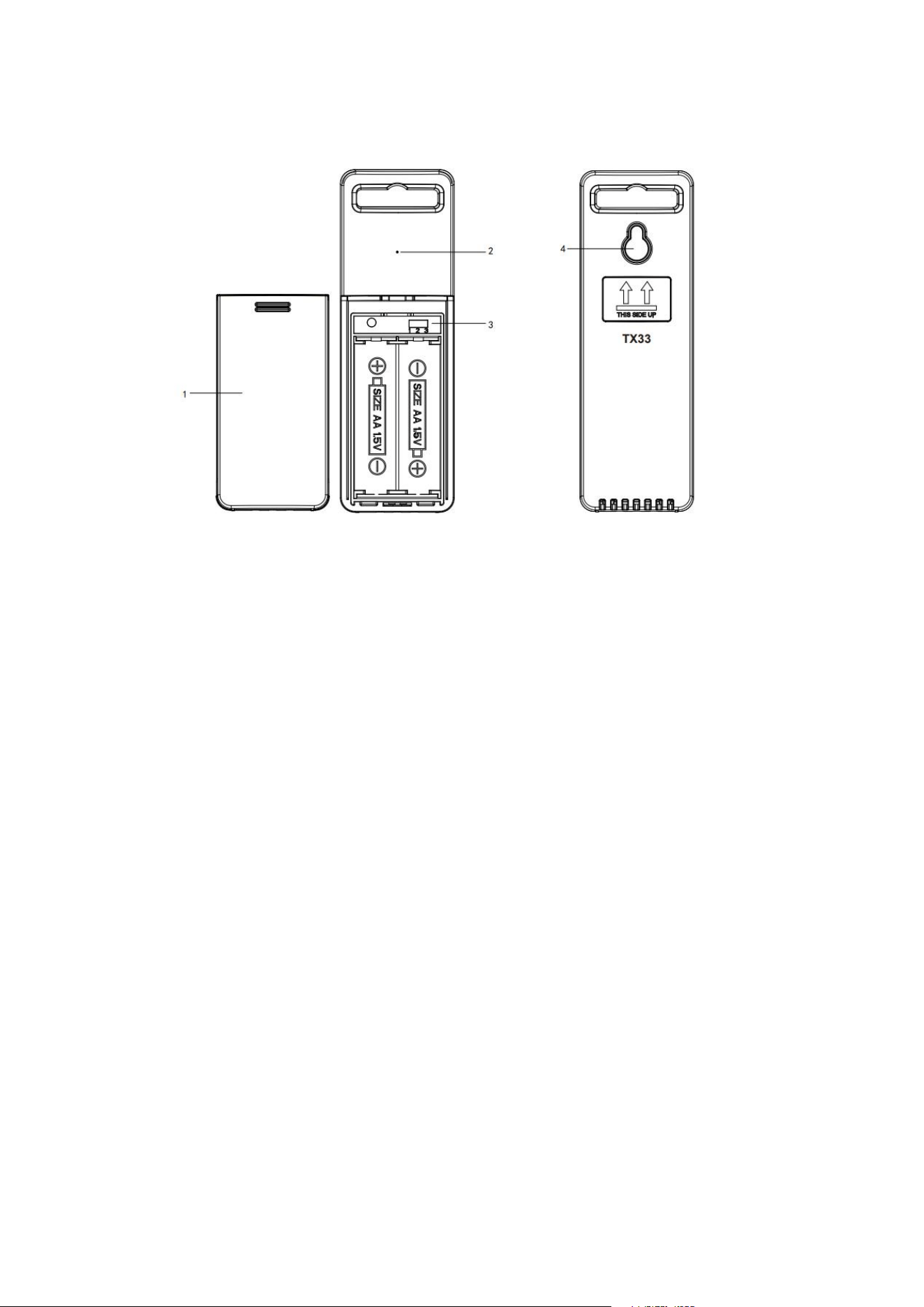
1.Compartment 2xAA batteries
2.Wireless signal indicator (Flashes when data is being sent to the display unit)
3.Channel selector, select external sensor channel
4.Wall mount hole
FIRST OPERATION
1. Open the battery compartment cover.
2. Set the desired channel with the switch. If you are using only one transmitter, please leave the
selection at “1”.
3. Insert 2pieces new “AA” 1.5V batteries observing correct polarity.
4. Close the battery compartment cover and set the unit in the desired location.
Note: Although the outdoor sensor is waterproof, it should not be placed in places exposed to direct
sunlight, rain or snow.
Positioning the Wireless outdoor Transmitter:
Once the Forecast Station shows the outdoor temperature, place it and the
transmitter in the desired locations and wait approximately 1-hour before
permanently mounting the transmitter to ensure that there is proper reception.
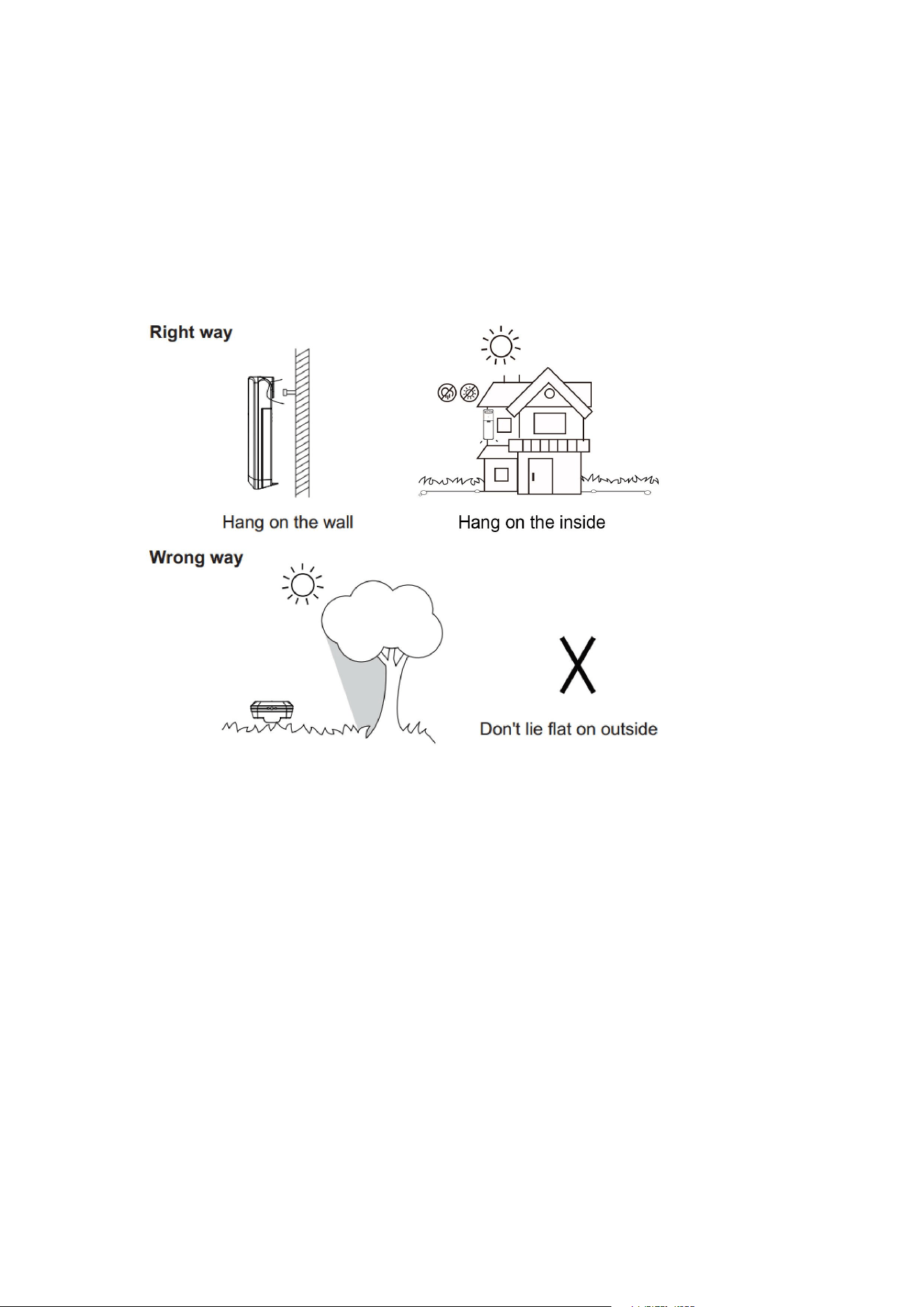
The transmitter should be mounted vertically, in a shaded, protected area, at
least 1.3 m from the ground to avoid damage and ensure accurate readings.
The transmitter is water resistant, not waterproof and should not be placed
anywhere it will become submerged in water or subject to standing water or
snow.
WALL MOUNT:
1. Choose a shaded location with an overhang for the transmitter, that is within the confirmed wireless
reception range of the Forecast Station for accuracy.
2. Install one mounting screw (not included) into a wall leaving approximately 1/2 of an inch (12.7mm)
extended.
3. Place the hanging hole (on the back of the transmitter) onto the mounting screw and gently slide the
transmitter down onto the mounting screw to secure it into place.
FCC Caution:
This device complies with part 15 of the FCC Rules. Operation is subject to the following two conditions:
(1) This device may not cause harmful interference, and (2) this device must accept any interference
received, including interference that may cause undesired operation.
Any changes or modifications not expressly approved by the party responsible for compliance could void
the user's authority to operate the equipment.
NOTE: This equipment has been tested and found to comply with the limits for a Class B digital device,
pursuant to Part 15 of the FCC Rules. These limits are designed to provide reasonable protection against
harmful interference in a residential installation. This equipment generates, uses and can radiate radio
frequency energy and, if not installed and used in accordance with the instructions, may cause harmful
interference to radio communications. However, there is no guarantee that interference will not occur in a
particular installation.
If this equipment does cause harmful interference to radio or television reception,
which can be determined by turning the equipment off and on, the user is encouraged to try to correct the

interference by one or more of the following measures:
-- Reorient or relocate the receiving antenna.
-- Increase the separation between the equipment and receiver.
-- Connect the equipment into an outlet on a circuit different
from that to which the receiver is connected.
-- Consult the dealer or an experienced radio/TV technician for help.
The device has been evaluated to meet general RF exposure requirement. The device can be used in
portable exposure condition without restriction.