Intelligent Locations Asset Beacon (ILA-TBC300) User Manual
Introduction:
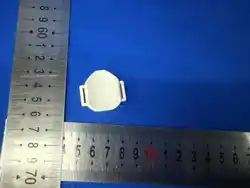
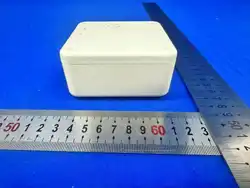
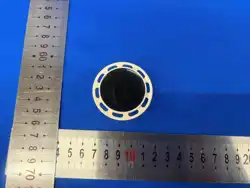
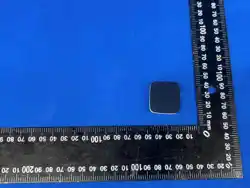
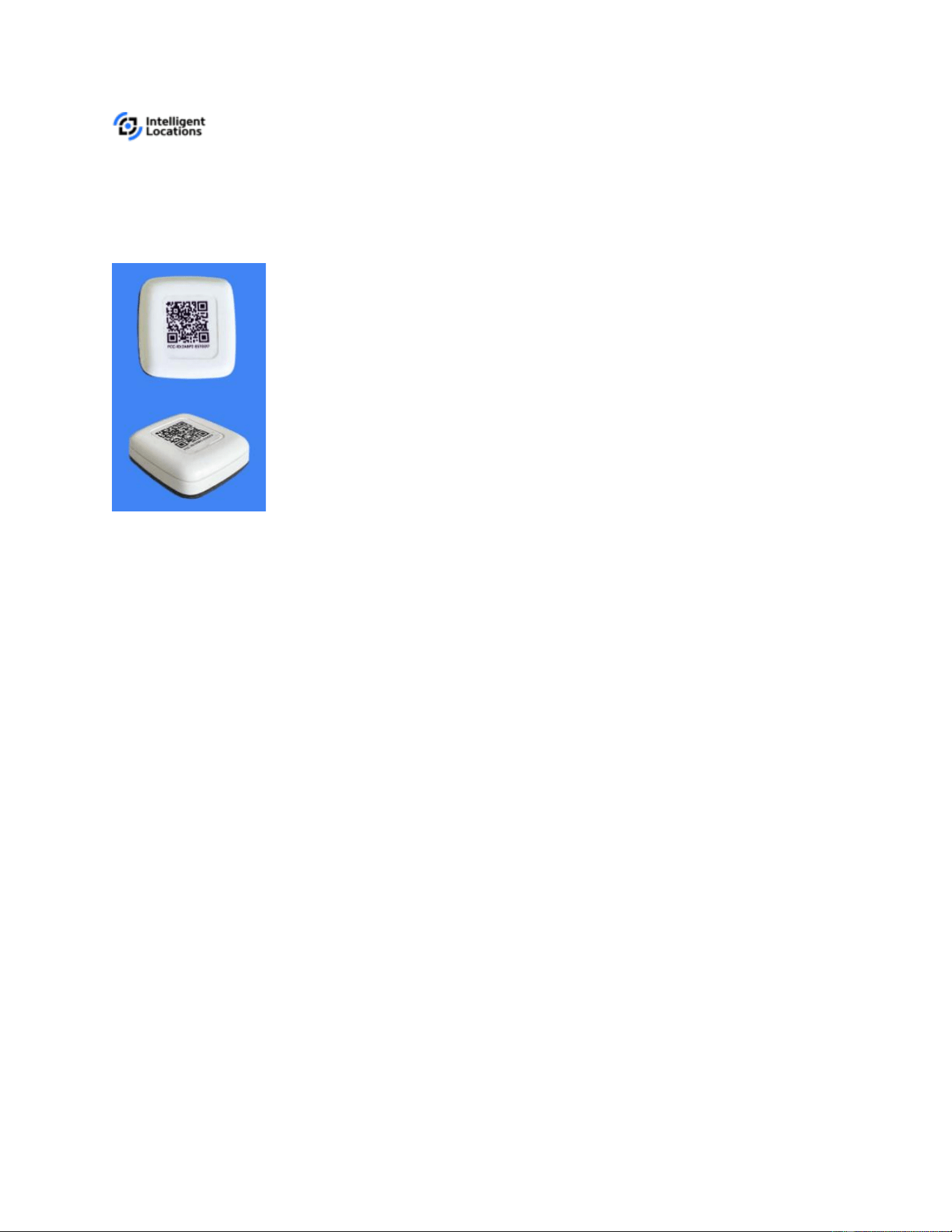
Intelligent Locations’ asset beacons are quarter-sized wireless devices that broadcast
signals using our Bluetooth Low Energy (BLE) technology. The asset beacons can be
used to track hospital equipment in real-time to reduce find times, maximize utilization
rates, and manage inventory and resources more efficiently.
Small beacon using BLE technology with up to 3.5 years of battery life on a single coin
cell battery. The beacon contains and ST Micro accelerometer which also features a
temperature sensor. BLE advertisement packets broadcast data for Intelligent Locations
systems to decipher. The beacon has two states:
Active: the beacon is in motion, 1 second advertising interval.
Inactive: the beacon is idle, 7.5 second advertising interval.
The specifications for the asset beacon are as follows:
PERFORMANCE
⎯ 32 –bit ARM ® Cortex®–M3 with 76.8 MHz
⎯ Bluetooth LE 5.2 (direction finding)
POWER
⎯ 3v CR2032 Coin Cell Battery (non-serviceable)
⎯ Expected Lifetime Approximately 3 yrs(configuration-dependent)

PHYSICAL DIMENSIONS
L ⎯ 1.34 in(34.04mm)
W⎯ 1.25 in(31.75mm)
H ⎯ 0.25 in(6.35mm)
The asset beacons are shipped in bulk to a customer site location. The Intelligent
Locations Account team is responsible for installing these beacons.
Additional Information
This device complies with part 15 of the FCC Rules. Operation is subject to the following two conditions: (1) This
device may not cause harmful interference, and (2) this device must accept any interference received, including
interference that may cause undesired operation.
Changes or modifications not expressly approved by the party responsible for compliance could void the user’s
authority to operate the equipment.
Class B:
NOTE: This equipment has been tested and found to comply with the limits for a Class B digital device, pursuant to
part 15 of the FCC Rules. These limits are designed to provide reasonable protection against harmful interference in
a residential installation. This equipment generates, uses and can radi-ate radio frequency energy and, if not in-
stalled and used in accordance with the instructions, may cause harmful interference to radio communications.
However, there is no guarantee that interference will not occur in a particular installation. If this equipment does
cause harmful interference to radio or television reception, which can be determined by turning the equipment off
and on, the user is encouraged to try to correct the interference by one or more of the following measures:
—Reorient or relocate the receiving antenna.
—Increase the separation between the equipment and receiver.
—Connect the equipment into an outlet on a circuit different from that to which the receiver is connected.
—Consult the dealer or an experienced radio/ TV technician for help.