M22
Instruction:
1.Slide the mouse toggle switch to the left to turn it ON
2.Press and hold the top DPI button for at least 3
seconds to enter Bluetooth pairing mode. The red
indicator light on the top flashes, indicating the mouse
is in pairable status. Please complete the pairing
operation within 120 seconds.
3.Turn on the Bluetooth of your device for searching.
After successful connection, the indicator light stays on
for 2 seconds and then turns off.
LED Status:
1.Supports 3-level of DPI adjustment. 800/ 1200/ 1600. The
DPI selection button blinks once for 800 DPI, twice for 1200
DPI and thrice for 1600 DPI.
2.Connection Status Prompt: During mouse pairing, the red
light flashes quickly twice per second.During mouse
reconnection, the red light flashes slowly once per second.
When the mouse is connected successfully, the red light stays
steadily on for 2 seconds then turns off.
3.Low Battery Reminder: When the battery level is lower than
20%, the red light flashes slowly.
1
Quick start guide
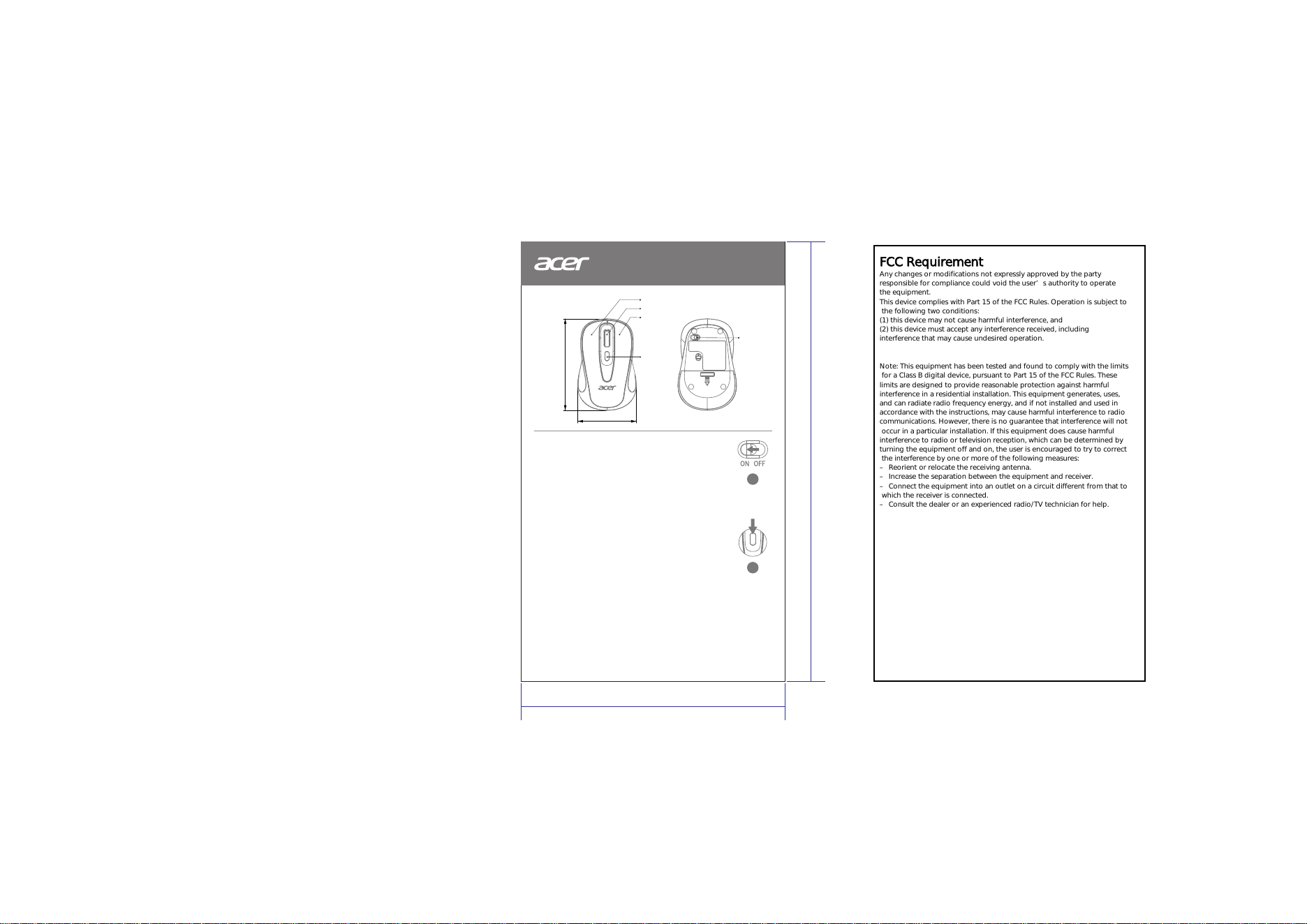
Overview:
65.37
102.16
Left button
Middle button/ scroll wheel
Right button
DPI
ON/OFF
switch
ON OFF
2
at least
3 seconds
60
100
FCC Requirement
Any changes or modifications not expressly approved by the party
responsible for compliance could void the user’s authority to operate
the equipment.
This device complies with Part 15 of the FCC Rules. Operation is subject to
the following two conditions:
(1) this device may not cause harmful interference, and
(2) this device must accept any interference received, including
interference that may cause undesired operation.
Note: This equipment has been tested and found to comply with the limits
for a Class B digital device, pursuant to Part 15 of the FCC Rules. These
limits are designed to provide reasonable protection against harmful
interference in a residential installation. This equipment generates, uses,
and can radiate radio frequency energy, and if not installed and used in
accordance with the instructions, may cause harmful interference to radio
communications. However, there is no guarantee that interference will not
occur in a particular installation. If this equipment does cause harmful
interference to radio or television reception, which can be determined by
turning the equipment off and on, the user is encouraged to try to correct
the interference by one or more of the following measures:
– Reorient or relocate the receiving antenna.
– Increase the separation between the equipment and receiver.
– Connect the equipment into an outlet on a circuit different from that to
which the receiver is connected.
– Consult the dealer or an experienced radio/TV technician for help.