16
ASSISTANCE CENTRE
AUTHORIZED RETAILER
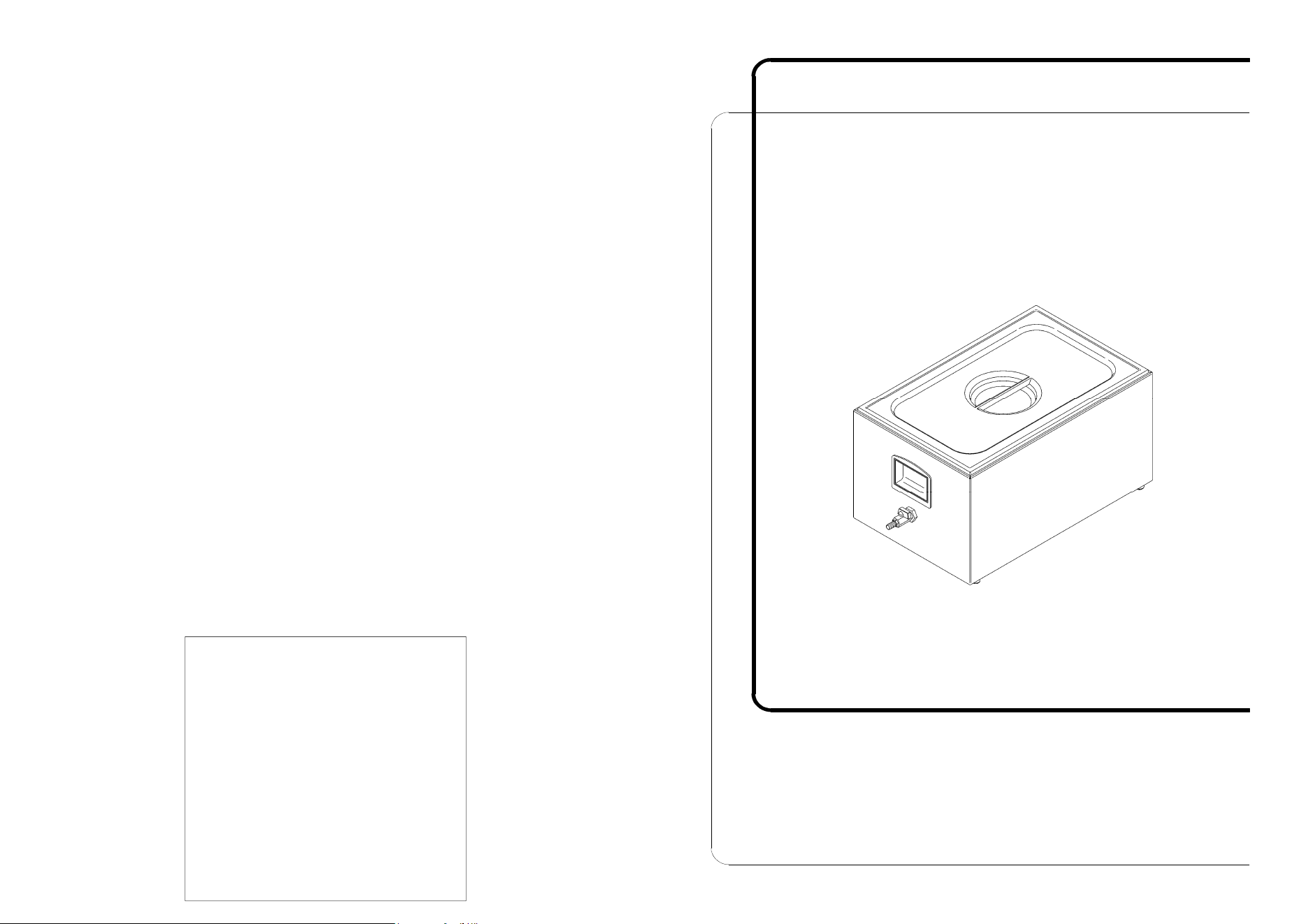
SoftcookerS Ed. 03/2018
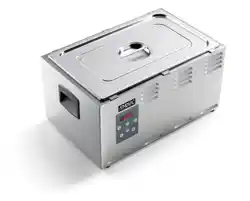
Softcooker S
Softcooker S R

2 15
14
8.3 - WEEE Waste electrical and electronic equipment
In conformity with article 13 of Legislative Decree no. 151 of 25 July 2005,
“Implementation of the Directives 2002/95/EC, 2002/96/EC and 2003/108/EC con-
cerning the reduction of the use of hazardous substances in electrical and elec-
tronic equipment, and the disposal of waste”
The symbol of the crossed out wheelie bin on the equipment or packaging indicates
the product must be disposed of separately from other waste at the end of its useful
life.
The segregated collection of this equipment at the end of its useful life is organized
and arranged by the producer. The user wishing to dispose of the equipment con-
cerned must therefore contact the producer and follow the manufacturer’s instructions
regarding the segregated collection of the equipment at the end of its useful life.
Suitable segregated collection of the equipment for subsequent recycling, treatment or
environmentally friendly disposal helps prevent damage to the environment and to
human health, and encourages the re-use and/or recycling of the materials that make
up the equipment.
Abusive disposal of the product by the user shall result in the application of fines in
accordance with the law in force.
3
FOREWORD
-
This manual was drawn up to provide the Customer with information concerning
the machine and applicable standards, as well as instructions on operation and
maintenance to ensure the optimal use and durability of the device.
-
This manual is intended for operators authorized to use the machine and
execute routine maintenance.
LIST OF CONTENTS
PART 1 - ABOUT THE MACHINE 4
1.1 - General precautions
1.2 - The machine’s safety devices
1.3 - Description of the machine
1.3.1 - Overview
1.3.2 - Structural characteristics
1.4 - Intended use
1.5 - Unintended use
1.6 - Master data
1.7 - Protective and safety devices
1.8 - Machine composition
1.9 - Warning label
PART 2 - TECHNICAL DATA 8
2.1 - Size, weight, properties...
PART 3 - RECEIPT OF THE MACHINE 9
3.1 - Delivery of the machine
3.2 - Checking the pack on receipt
3.3 - Disposal of the packaging
PART 4 - INSTALLATION 10
4.1 - Positioning of the machine
4.2 - Connection to the mains
4.3 - Wiring diagram
PART 5 - MACHINE USE 11
5.1 - Controls
PART 6 - CLEANING THE MACHINE 13
6.1 - General point
6.2 - Maintenance
PART 7 - MAINTENANCE 13
7.1 - General point
7.2 - Power cable
PART 8 - DISMANTLING 13
8.1 - Putting out of service
8.2 - Disposal
8.3 - WEEE Waste electrical and electronic equipment
4
PART 1 - ABOUT THE MACHINE
1.1 - GENERAL PRECAUTIONS
- The Softcooker S must only ever be used by a trained operator who has
read and understood the safety instructions in this manual.
- In the case of shifts, make sure all the operators are suitably trained.
- Do not touch the heating elements with bare hands.
- Always unplug the machine before cleaning or maintenance.
- Always take the residual risks into account when servicing or cleaning the
machine (and therefore when removing the protective devices).
- Always focus on the work in hand when executing maintenance or clean-
ing.
- Check the condition of the power cable on a regular basis; a worn or dam-
aged cable can pose serious electrical risks.
- If there are any signs the machine is not working properly or you have rea-
son to believe it is malfunctioning, you are advised to not use it and to con-
tact the Assistance Centre immediately.
- Do not execute any repairs directly. Always contact an authorized repair-
man.
The user must never, for any reason, tamper with the machine. Always
contact the Manufacturer in the event of a fault. Any attempt by the user or
unauthorized operator to dismantle, change or tamper with a component
of the machine shall forfeit the
Declaration of Conformity drawn up in accordance with EEC Directive
2006/42 and invalidate the warranty. The Manufacturer Firm cannot as-
sume liability for damage due to tampering.
Moreover, the Manufacturer cannot be held liable for:
- Improper use or tampering with the machine by poorly trained operators;
- Poor or insufficient maintenance;
- Use of spare parts that are not original or type-approved;
- Failure to comply with some or all of the instructions in this manual;
- Treatment of the machine’s surfaces with unsuitable products.
13
5.1 - Controls
PART 6 – CLEANING THE MACHINE
ATTENTION! Always unplug the machine before cleaning it to ensure it is no
longer live. Pay attention to the temperature of the basin.
6.1 - General point
-
Clean the machine with a cloth soaked in a normal detergent at ambient
temperature.
-
Clean thoroughly all parts of the machine that come in contact with the product.
-
Do not use high-pressure water jet machine or pressurized water spray.
-
Do not use tools, brushes or other that could damage the surface of the machine.
-
Do not put any of the components in the dishwasher.
-
Make sure that no residual liquid infiltrates inside of the equipment, compromising
its correct functiona and increasing possible risk of electrocution.
6.2 - Maintenance
To protect the tank, you are advised to add some vinegar in the tank with the water for each
work cycle.
PART 7 - MAINTENANCE
7.1 - General point
Always unplug the machine before servicing it to ensure it is no longer live.
7.2 - Power cable
Check the cable regularly to ensure it is in good condition. Call the ASSISTANCE
CENTRE if the cable needs to be replaced.
PART 8 - DISMANTLING
8.1 - Putting out of service
Should you decide to put the machine out of service, make sure it cannot be used by
anyone: unplug the machine and disconnect all the electrical connections.
8.2 - Disposal
Once the machine has been put out of service, it can be eliminated in due course. To
dispose of the machine correctly, contact a waste disposal firm taking into account the
various materials that make up the various components.
Table of preset programs
Program
P01 P02 P03 P04 P05
Temperature
58°C 66°C 74°C 85°C 50°C
Time
40 min. 40 min. 4 h 6 h 10 min.
12
The Softcooker S gives an error message when:
- The level of water in the container is too low ( ERR ), in which case the machine will
also emit a SOUND SIGNAL.- The electronic components in the machine start to
overheat ( ERR ),
- The temperature probes do not detect the same temperature as one of the two
probes is faulty ( ERR ).
MENU
button: press to set the work cycle.
- By pressinf the MENU button once, the section where you can set the
temperature will be displayed on screen. Use the UP and DOWN buttons
to select the desired temperature.
- Press the MENU button to skip to time adjustment.
- The display will show the time in setting mode.
Use the UP and DOWN buttons to select the desired cooking time.
- Press the START button to start the work cycle.
With the machine switched to STOP, by pressing the MENU button three
times, you will directly access the preset programs.
Use the MENU button to scroll the list of programs.
ECO / PROG
button: Press this button to shift the work cycle to economy
mode. When the mode is activated (the LED will go on), the work cycle will
run at its lowest consumption range.
With the machine switched to STOP, hold this button down until “PROG 1”
appears on the display. In this way, you will access the menu to modify the
preset programs.
Use the UP and DOWN buttons to scroll the list of preset programs.
Use the MENU button to access the page where you can modify the
selected program.
By pressing MENU once, the display will show the temperature in setting
mode. Use the UP and DOWN buttons to select the desired temperature
The display will show the time in setting mode.
Use the UP and DOWN buttons to select the desired cooking time. Any
changes made ot the settings will be automatically saved.
Once the Softcooker S reaches the selected temperature, independently of whether
you have or have not set the time and at the end of the work cycle, it will emit a
SOUND SIGNAL.
When the work cycle has ended, press the STOP button to turn off the machine.
Unplug the machine.
Empty the tank.
ATTENTION! Water drainage must be done when the water temperature is equal
to or less than 60°C.
5
1.2 - THE MACHINE’S SAFETY DEVICES
The electrical and mechanical safety devices conform to directives 2006/95
and 2006/42, and standard 60335-1.
The Softcooker protects against electrical and mechanical risks during
operation as well as cleaning and maintenance.
There are however some RESIDUAL RISKS that cannot be fully eliminated.
These are headed ATTENTION and concern the risk of burns, bruises or
electrocution when loading and unloading the product and cleaning the
machine or due to improper use of the product.
1.3 - DESCRIPTION OF THE MACHINE
1.3.1 - Overview
Our firm designed and constructed the Softcooker S to guarantee the
following:
-
the sturdiness and stability of all the components;
-
easy handling, with handles so they can be carried with convenience;
-
high precision heating control;
-
an operating temperature of between 30 and 100°, at a precision of +/- 0.3°
C.
1.3.2 - Structural characteristics
The Softcooker S was made entirely of AISI 304 stainless steel to ensure
hygiene and resistance to acids and salts, as well as excellent resistance to
oxidisation.
- The heating element is on the bottom of the basin which heats up and
then transmits that heat to the water inside of it.
- Emergency block in case an abnormal temperature is detected.
1.4 – Intended use
The Softcooker S is intended for vacuum cooking in a water-filled immersion
tank.
The machine was not designed to directly cook foods or for any use o-
ther than heating foods.
1.5 – Unintended use
The machine must be put to the sole use intended by the manufacturer; in
particular:
- Do not use the machine unless it has been installed correctly and all the
protective devices are in good condition and properly fitted, in order to
prevent the risk of serious harm to yourself.
- Do not touch the electrical components without having first unplugged the
machine: risk of electrocution.
- Do not start up the machine when this is not working properly.
- Before using the machine, make sure the machine is perfectly safe and that
any dangerous conditions have been eliminated in an appropriate manner. If
6
there are any irregularities, stop the machine and request the assistance of
a maintenance technician.
- Do not allow unauthorized operators to use the machine.
Emergency action in the event of electrical accidents first of all, remove the
victim from the conductor (as he is likely to be unconscious). This operation is
dangerous.
The victim in this case is a conductor: touching him is to risk electrocution.
It is advisable therefore to disconnect the contacts directly from the line sup-
ply valve, or if this is not possible, move the victim away using insulation ma-
terials (pieces of wood or PVC, cloth, leather, etc.).
The victim should be given immediate medical attention and taken to a
hospital.
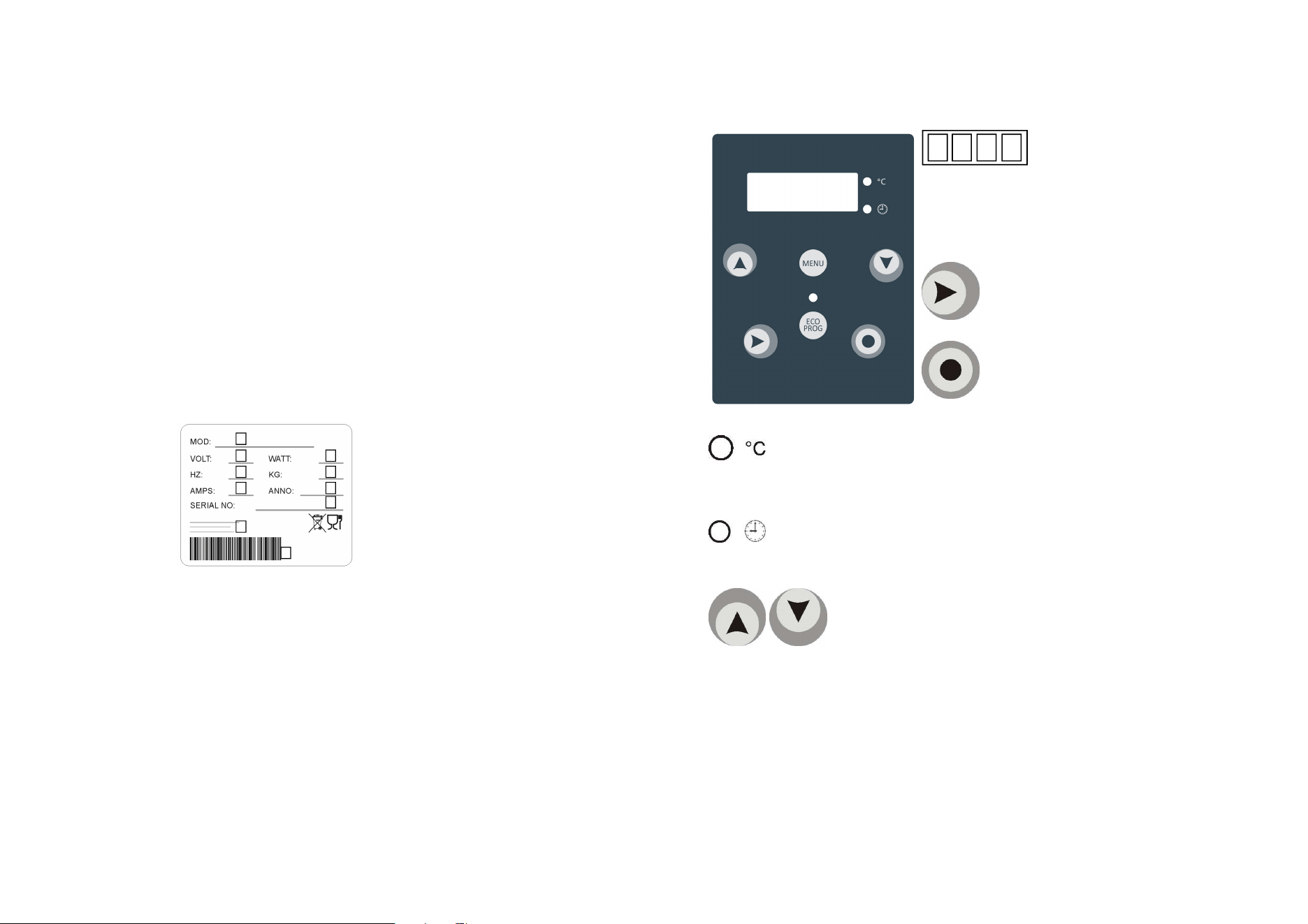
1.6 – Master data
Please state the machine’s exact "Model", "Serial number" and "Year of
manufacture" when contacting our assistance service. This will help us give
you a quick and efficient response.
We will ask you to state the machine model and serial number whenever you
contact us, so make sure to check this on the data plate, pictured in Fig. n°1.
1.7 – Protective and safety devices
ATTENTION!
Before using the machine, double check that it is positioned correctly and that
it is in integral condition.
Before each work shift, check the integrity of the machine. If it is not, im-
mediately notify the Head of Maintenance.
ATTENTION! There is no device to display the water level: always use
the machine with a level of water that is 4-5 centimeters from the upper rim.
Using the machine without sufficient water in the basin will compromise the
correct function and the quality of the cooking. If used empty, the basin will
overheat, creating serious risk of burns and will damage the machine.
Fig. n°1
A = machine model
B = power supply
C = engine power
D = engine frequency (Hz)
E = weight
F = amperage
G = year of manufacture
H = serial number
I = manufacturer
L = barcode
A
B C
D E
F G
H
I
L
11
PART 5 - MACHINE USE
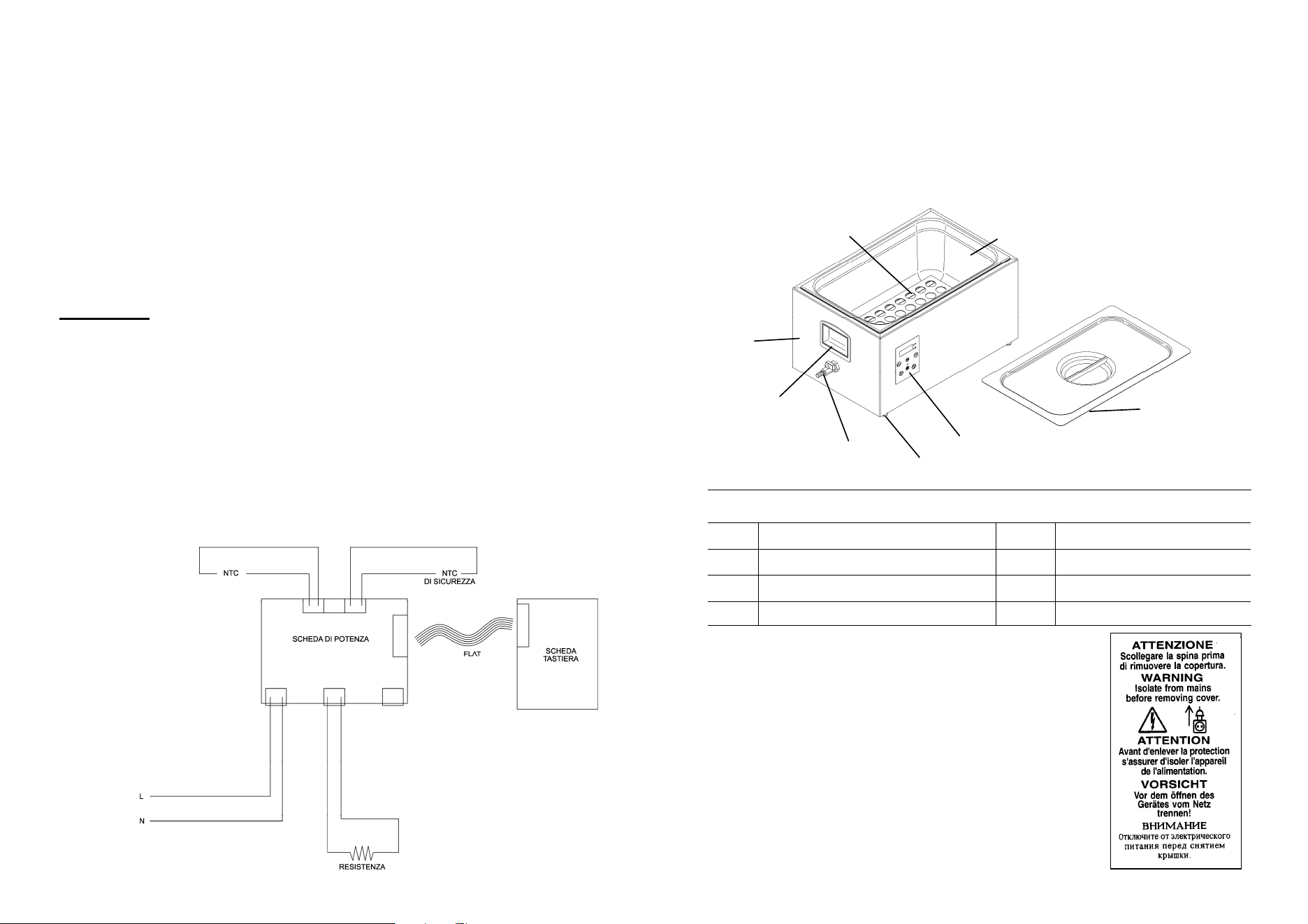
Display:
a four-digit display that gives the temperature and
time, with alternate every 5 seconds, and a
description of the various pre-configured programs.
START
button: press to start the work
cycle.
OFF button: press to stop the work
cycle.
Temperature Led:
this is at the side of the display and lights up when
the work temperature is shown on the display during the work cycle.
Timer Led : this is at the side of the display and lights up when the
work time is shown on the display during the work cycle.
UP and DOWN buttons (+/-): use these to configure the
temperature and time. Press the start button to start the
work cycle.
With the machine switched to STOP, by pressing UP, you will
directly access the preset programs.
Use the UP and DOWN b uttons to scroll the list of programs.
With the machine switched on, by pressing the UP and DOWN
buttons you can modify the set temperature and time.
10
3.3 - Disposal of the packaging
All the packaging (cardboard, plastic support and polyurethane foam) is
classified as solid urban waste; it can be disposed of without difficulty.
If the machine is installed in a country where there are specific regulations,
you should dispose of the packaging in accordance with those regulations in
force.
PART 4 - INSTALLATION
4.1 - Positioning of the machine
Place the machine on a solid surface approximately 80 cm from the floor. The surface
must be smooth, not slippery and resistent to high temperatures. Keep a minimum
distance of 10 cm from walls or other objects, even if they are heat resistent.
ATTENTION! Machines equipped with taps must be connected to a sufficiently
long pipe, in order to be able to move the machine and clean the worktop.
4.2 - Connection to the mains
A 3x1.5 mm² power cable 2.5 m in length and NEMA 5-15P plug is provided
with the appliance. Connect the machine to a 120 Volt 60 Hz power supply.
Check that the grounding system works perfectly and that the connection has a 0.03A
differential magnetothermal switch.
Check the data on the technical – serial number plate is the same as that
stated in the delivery and accompanying documents. Make sure also that the
switch and socket are easy to access when the appliance is in use.
4.3 - Wiring diagram
Fig. n°5
7
Disabling device: the machine stops and an error (HIGH) message appears
on the screen when there is a fault with one of the probes and their tempera-
ture readings are different.
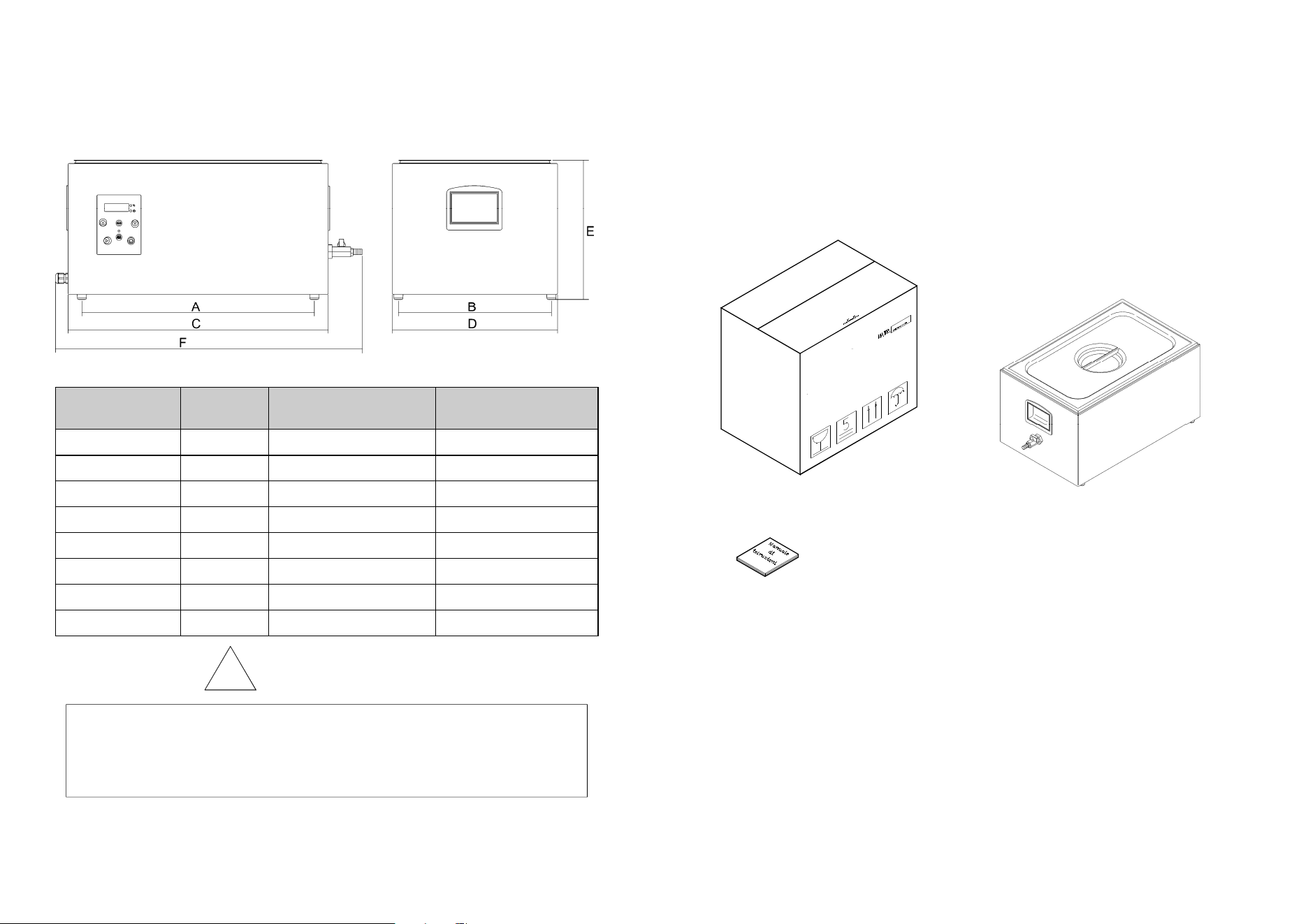
1.8 - Machine composition
LEGEND
1 Body 5 Controls
2 Handle 6 Lid
3 Tap 7 Basin
4 Feet 8 Bag protection
Fig. n°2
1
2
5
6
7
8
4
3
1.9 - Warning label
The warning label to side is applicate on the appliance.
Label is intended to alert the user to the presence of
uninsulated “dangerous voltage” within the product’s
enclosure that may be of sufficient magnitude to consti-
tute a rick of fire or electric shock to persons.
8
PART 2 - TECHNICAL DATA
2.1 - Size, weight, properties...
Fig.n°3 - Dimensions and max size of the machine
Model Measure Softcooker S or S R 2/3
GN
Power watt 1020
Power supply 120V / 60Hz
Temperature °C 40 ÷ 115
Basin mm 2/3 Gastronorm
A x B mm 330x330
C x D x E mm 390x360x300
Net weight kg 11
Softcooker S or S R
1/1 GN
1700
120V / 60Hz
40 ÷ 115
1/1 Gastronorm
500x330
560x360x300
15
F mm 500 670
!
THE ELECTRICAL PROPERTIES OF THE MACHINE ARE STATED ON A
PLATE ON ITS BACK; BEFORE CONNECTING THE MACHINE, REFER TO THE
SECTION:
“ CONNECTION TO THE MAINS.”
ATTENTION
9
PART 3 - RECEIPT OF THE MACHINE
3.1 - Delivery of the machine (refer to Fig.n°4)
The machinery is carefully packed before it leaves our warehouses.
The pack contains:
- A sturdy cardboard box with inside padding;
- The machine;
- This manual.
3.2 - Checking the pack upon receipt
When you receive the pack containing the machine, check the packaging
carefully for any signs of damage it may have sustained during transport.
If the outer packaging looks as if it has been treated roughly, knocked or
dropped, within three days of the date of delivery, as stated in the documents,
and write a precise report on any damage the machine has sustained.
Fig. n°4