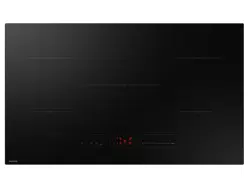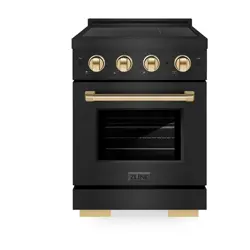
Extractor Induction Hob
User manual
CC90H84JAD, CC90H84PAD

2 English
Contents
Contents
Selecting cooking zone and power level 18
Boost 19
Using the Flex zone (only for ex zone applied models) 19
Flex zone Plus (only for ex zone plus applied models) 20
Keep warm 20
Timer 21
Pause/Resume 21
Quick stop 21
Child safety lock 21
Wi-Fi on/off setting 22
Easy setup mobile app connection 22
Sound on/off 23
Display brightness 23
Method to Enter Brightness Setting Mode 24
Auto pan detection Add Feature 24
Using the hood 25
Hood Smart/Auto 26
Hood AfterRun 26
AfterRun function settings 27
Smart mode sensitivity setting (only CC90H84JAD) 28
Cleaning and Maintenance 28
Cleaning the hob 28
Light soiling 28
Stubborn soiling 29
Problem dirt 29
Cleaning and maintaining the hood 30
Cleaning the hood 30
Cleaning the Hood (Dishwasher) 31
Cleaning the Hood Cover 31
Replacing the Grease Filter 32
Replacing the Charcoal Filter 33
Troubleshooting and service 34
Troubleshooting 34
Information codes 35
Service 39
Contents
Using this manual 3
The following symbols are used in this User Manual: 3
Model name & serial number 3
Safety instructions 4
Instructions about the WEEE 5
Installing the hob 6
Safety instructions for the installer 6
Tools you will need 6
Connecting to the power supply 6
Installing into the countertop 8
Components 8
Product dimension 9
Filter Material Assembly 10
Before you start 10
Cooking zones 10
Control panel 11
Induction heating 12
Safety shutoff 12
Residual heat indicator 12
Temperature detection 13
Cookware 13
Using the touch buttons 16
Operating noises 16
Initial cleaning 16
Open Source Announcement 17
SmartThings 17
Registering a Device in SmartThings 17
SmartThings Support Services 17
Troubleshooting 18
Operation 18
Switching the appliance on 18
Switching the appliance off 18
English 3
Using this manual
Using this manual
Please take the time to read this owner’s manual, paying particular attention to the safety
information contained in the following section, before using your appliance. Keep this manual
for future reference.
If transferring ownership of the appliance, please remember to pass the manual on to the
new owner.
The following symbols are used in this User Manual:
WARNING
Hazards or unsafe practices that may result in severe personal injury or death.
CAUTION
Hazards or unsafe practices that may result in minor personal injury or property damage.
CAUTION
To reduce the risk of re, explosion, electric shock, or personal injury when using your hob,
follow these basic safety precaution.
NOTE
Useful tips, recommendations, or information that helps users manipulate the product.
Model name & serial number
Both the model name and the serial number are labeled underneath the hob base.
For later use, write down the information or attach the additional product label (located on
the top of the product) onto the current page.
Model Name
Serial Number
Technical specications 39
Product Fiche compliant to commission delegated regulation (EU) No 65/2014 39
Additional Product Information compliant to commission regulation (EU) No 66/2014 40
Product Fiche compliant to commission delegated regulation (EU) No 65/2014 40
Technical data 40
Cooking zones 40
Product information 41
Appendix 41

4 English
Safety instructions
14. (For Use in Europe) WARNING: Unattended cooking on a hob with fat or oil can be
dangerous and may result in re. NEVER try to extinguish a re with water, but switch off
the appliance and then cover ame e.g. with a lid or a re blanket.
15. (For Use in Europe) CAUTION: The cooking process has to be supervised. A short term
cooking process has to be supervised continuously.
16. WARNING: Danger of re: do not store items on the cooking surfaces.
17. (For Use in Europe) WARNING: Use only hob guards designed by the manufacturer of the
cooking appliance or indicated by the manufacturer of the appliance in the instructions
for use as suitable or hob guards incorporated in the appliance. The use of inappropriate
guards can cause accidents.
18. CAUTION: The cooking process has to be supervised. A short term cooking process has
to be supervised continuously.
19. WARNING: Unattended cooking on a hob with fat or oil can be dangerous and may result
in re.
20. There shall be adequate ventilation of the room when the range hood is used at the
same time as appliances burning gas or other fuels (not applicable to appliances that
only discharge the air back into the room).
21. There is a re risk if cleaning is not carried out in accordance with the instructions.
22. CAUTION: This appliance is not intended to be used with gas hobs.
23. CAUTION: Accessible parts may become hot when used with cooking appliances.
24. CAUTION: Do not use the appliance with gas hobs.
WARNING: For proper connection to the power source, follow the wiring diagram attached
near the terminals.
Connecting to the power source: Before connecting, check if the nominal voltage of the
appliance – indicated on the technical data plate – matches the available power supply
voltage. The technical data plate is located on the lower casing of the cooktop.
WARNING: Turn off the circuit power before connecting the cables to the circuit. The heating
element voltage is 230 V AC.
The appliance also operates properly on AC 220 V~ or AC 240 V~ power supplies. The cooktop
must be connected to the power supply using a device that allows disconnection of the
appliance from the power supply at all poles, with contacts having a minimum width of 3 mm
– for example, automatic line protection devices, grounding devices, fuses, or circuit breakers.
WARNING: Cable connections must be made in accordance with regulations, and the terminal
screws must be tightly secured.
Safety instructions
WARNING
Failure to follow the instructions may result in electric shock, injury, re, breakdown or
explosion.
1. This appliance is not intended for use by persons (including children) with reduced
physical, sensory or mental capabilities, or lack of experience and knowledge, unless
they have been given supervision or instruction concerning use of the appliance by a
person responsible for their safety.
2. (For Use in Europe) This appliance can be used by children aged from 8 years and above
and persons with reduced physical, sensory or mental capabilities or lack of experience
and knowledge if they have been given supervision or instruction concerning use of the
appliance in a safe way and understand the hazards involved. Children shall not play
with the appliance. Cleaning and user maintenance shall not be performed by children
without supervision.
3. Children should be supervised to ensure that they do not play with the appliance.
4. If the supply cord is damaged, it must be replaced by the manufacturer, its service agent
or similarly qualied persons in order to avoid a hazard.
5. The means for disconnection must be incorporated in the xed wiring in accordance with
the wiring rules.
6. This Appliance should be allowed to disconnect from the supply after installation. The
disconnection may be achieved by having the plug accessible or by incorporating a
switch in the xed wiring in accordance with the wiring rules.
7. WARNING: If the surface is cracked, switch off the appliance to avoid the possibility of
electric shock.
8. WARNING: Accessible parts may become hot during use. Young children should be kept
away.
9. If this appliance has cleaning function, during cleaning conditions the surfaces may get
hotter than usual and children should be kept away.
10. A steam cleaner is not to be used.
11. After use, switch off the hob element by its control and do not rely on the pan detector.
12. The appliance must not be installed behind a decorative door in order to avoid
overheating.
13. (For Use in Europe) WARNING: The appliance and its accessible parts become hot during
use. Care should be taken to avoid touching heating elements. Children less than 8 years
of age shall be kept away unless continuously supervised.
English 5
Safety instructions
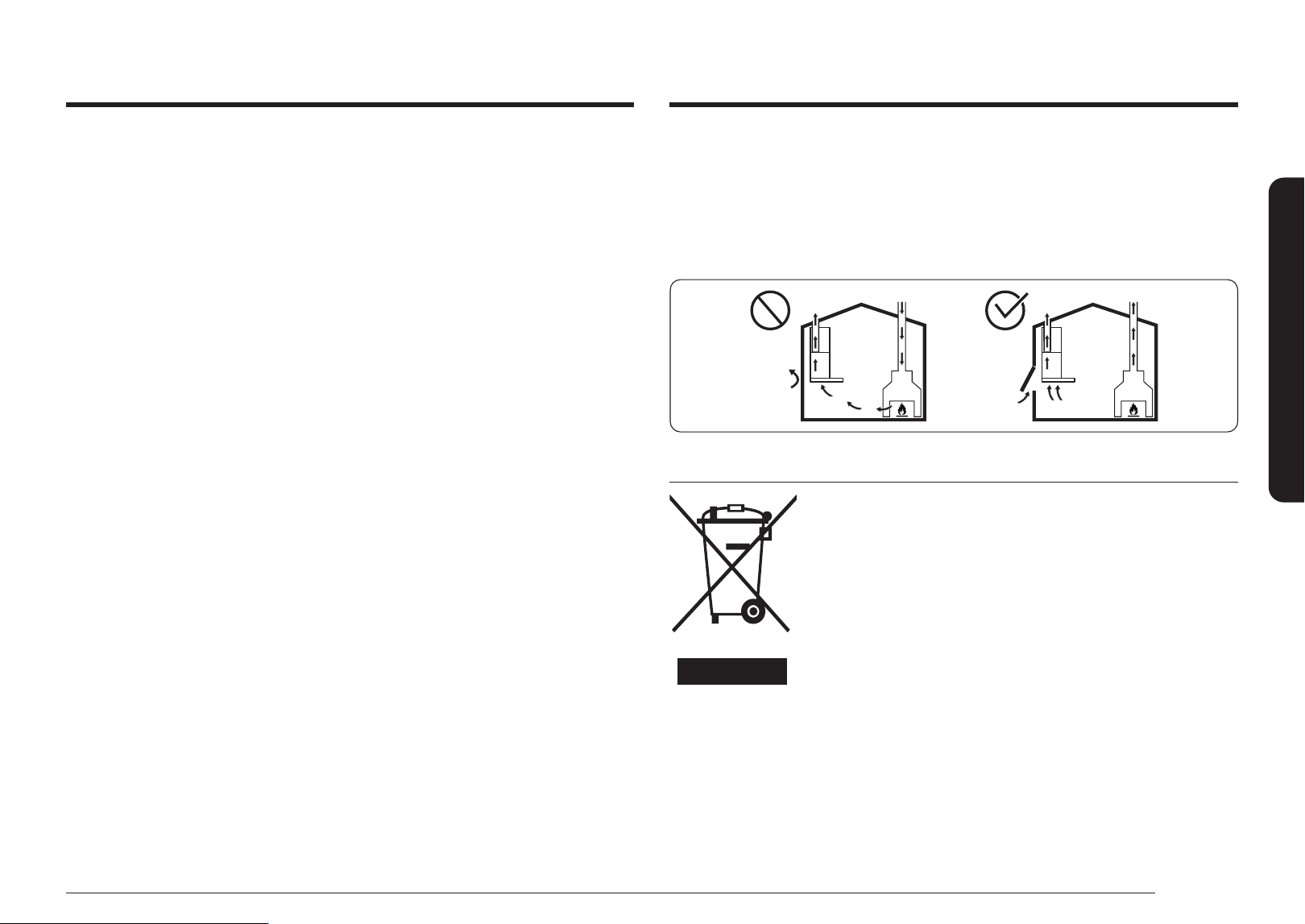
The room must be properly ventilated when the cooker hood is used at the same time as
combustion devices (e.g., a replace or gas appliance). For example, doors, windows, air
intake/exhaust wall vents, or similar measures should be used to ensure adequate airow
and prevent the room from becoming sealed while the hood is in operation. When the cooker
hood is used together with such devices, the negative pressure in the room must not exceed 4
Pa (4 x 10
-5
bar). Otherwise, there is a risk that toxic combustion gases from the chimney could
be drawn into the living space.
Instructions about the WEEE
Correct Disposal of This Product (Waste Electrical & Electronic Equipment)
(Applicable in countries with separate collection systems)
This marking on the product, accessories or literature indicates that the
product and its electronic accessories (e.g. charger, headset, USB cable) should
not be disposed of with other household waste at the end of their working
life. To prevent possible harm to the environment or human health from
uncontrolled waste disposal, please separate these items from other types
of waste and recycle them responsibly to promote the sustainable reuse of
material resources.
Household users should contact either the retailer where they purchased this
product, or their local government ofce, for details of where and how they can
take these items for environmentally safe recycling.
Business users should contact their supplier and check the terms and
conditions of the purchase contract. This product and its electronic accessories
should not be mixed with other commercial wastes for disposal.
For information on Samsung’s environmental commitments and product regulatory
obligations, e.g. REACH, visit our sustainability page available via www.samsung.com
WARNING: After connecting the cooktop to the power supply, check if all cooking zones are
ready for use, starting each zone one by one, at maximum setting, with suitable cooking
vessels.
Any modications or repairs must be performed by qualied personnel only.
Do not heat food or liquids sealed in containers for the induction function.
Do not use benzene, thinner, alcohol, or steam or high pressure cleaners to clean the
induction.
Do not install the induction near a heater or ammable material, locations that are humid,
oily, dusty or exposed to direct sunlight or water, or where gas may leak, or an uneven surface.
This induction must be properly grounded in accordance with local and national codes.
Regularly use a dry cloth to remove foreign substances from the power plug terminals and
contacts.
Do not pull, excessively bend, or place heavy objects on the power cord.
Do not touch the power cord with wet hands.
While the induction is operating, do not turn it off by unplugging the power cord.
Do not insert ngers or foreign substances. If foreign substances are present in induction,
unplug the power cord and contact a local Samsung service center.
Do not apply excessive pressure or impact to the induction. Do not place the cooktop over
fragile objects.
Ensure the power voltage, frequency, and current matches the product specications.
Firmly plug the power plug into the wall socket. Do not use multiple plug adapters, extension
cords, or electric transformers.
Do not hook the power cord on metal objects. Make sure the cord is between objects or
behind the induction.
Do not use a damaged power plug, power cord, or loose wall socket. For damaged power plugs
or cords, contact a local Samsung service center.
Do not pour or directly spray water onto the induction, place objects on it, or use volatile
materials such as insecticide.
Do not store ammable materials in the induction. Because alcohol vapours can contact hot
parts of the induction, use caution when heating food or drinks containing alcohol.
If there is a risk of burning your hands on the top of the induction, keep children away and do
not let them be near you.
6 English
Installing the hob
Installing the hob
WARNING
Be sure the new appliance is installed and grounded only by qualied personnel.
Please observe this instruction. The warranty will not cover any damage that may occur as a
result of improper installation.
Technical data is provided at the end of this manual.
Safety instructions for the installer
• A device must be provided in the electrical installation that allows the appliance to be
disconnected from the mains at all poles with a contact opening width of at least 3 mm.
Suitable isolation devices include line protecting cut - outs, fuses (screw type fuses are
to be removed from the holder), earth leakage trips and contactors.
• With respect to re protection, this appliance corresponds to EN 60335 - 2 - 6. This type
of appliance may be installed with a high cupboard or wall on one side.
• The installation must guarantee shock protection.
• The kitchen unit in which the appliance is tted must satisfy the stability requirements
of DIN 68930.
• For protection against moisture, all cut surfaces are to be sealed with a suitable sealant.
• On tiled work surfaces, the joints in the area where the hob sits must be completely
lled with grout.
• On natural, articial stone, or ceramic tops, the snap action springs must be bonded in
place with a suitable articial resin or mixed adhesive.
• Ensure that the seal is correctly seated against the work surface without any gaps.
Additional silicon sealant must not be applied; this would make removal more difcult
when servicing.
• The hob must be pressed out from below when removed.
• A board can be installed underneath the hob.
• The ventilation gap between the worktop and front of the unit underneath it must not
be covered.
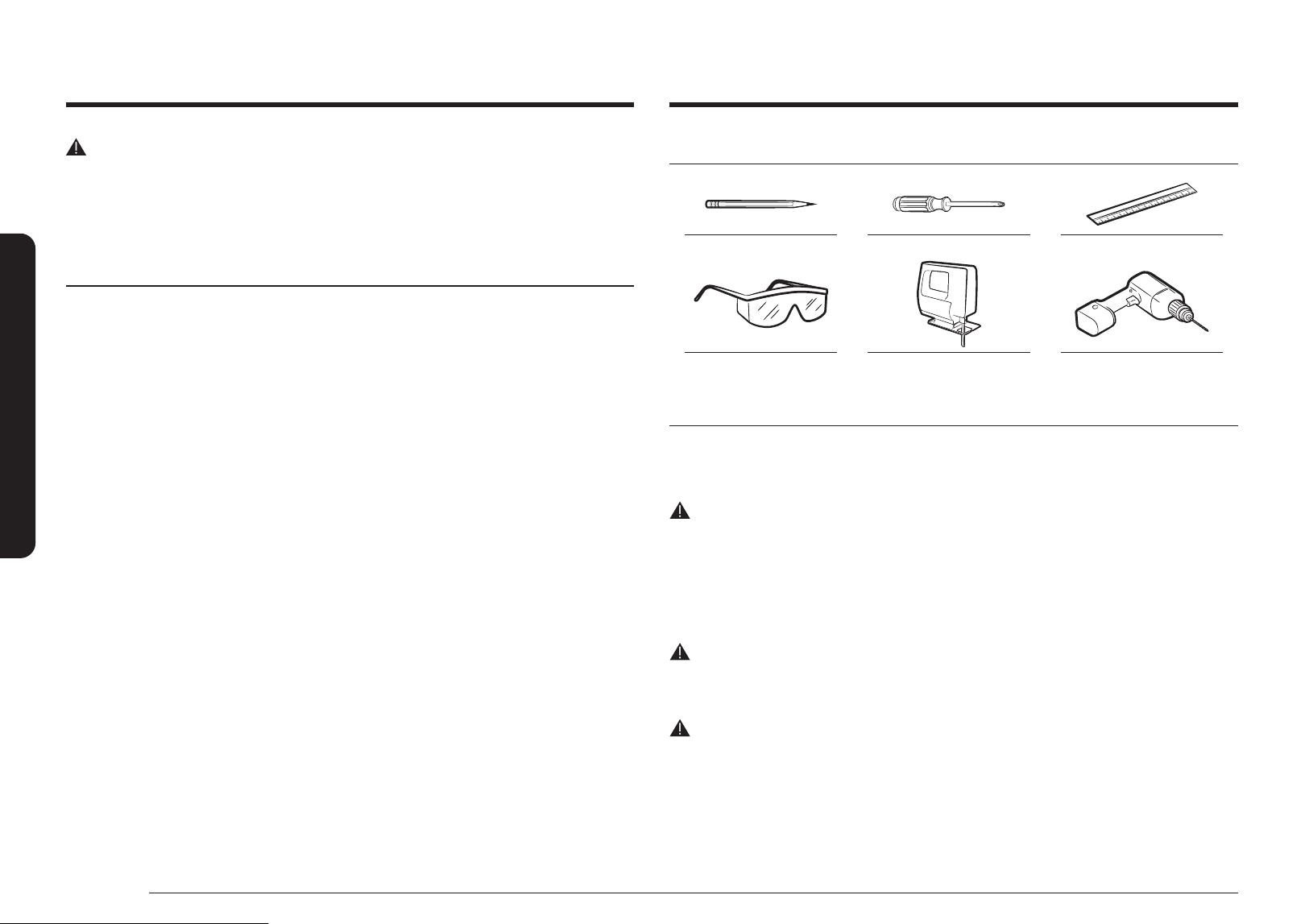
Tools you will need
Pencil Phillips Head Screwdriver Ruler or Straightedge
Safety Glasses Saber Saw Drill
Connecting to the power supply
Before connecting, check that the nominal voltage of the appliance, that is, the voltage stated
on the rating plate, corresponds to the available supply voltage. The rating plate is located on
the lower casing of the hob.
WARNING
Shut off power to circuit before connecting wires to circuit.
The heating element voltage is AC 230 V~. The appliance also works perfectly on networks
with AC 220 V~ or AC 240 V~. The hob is to be connected to the mains using a device that
allows the appliance to be disconnected from the mains at all poles with a contact opening
width of at least 3 mm, eg. automatic line protecting cut - out, earth leakage trips or fuse.
WARNING
The cable connections must be made in accordance with regulations and the terminal screws
tightened securely.
WARNING
Once the hob is connected to the mains supply, check that all cooking zones are ready for use
by briey switching each on in turn at the maximum setting with suitable cookware.
English 7
Installing the hob
WARNING
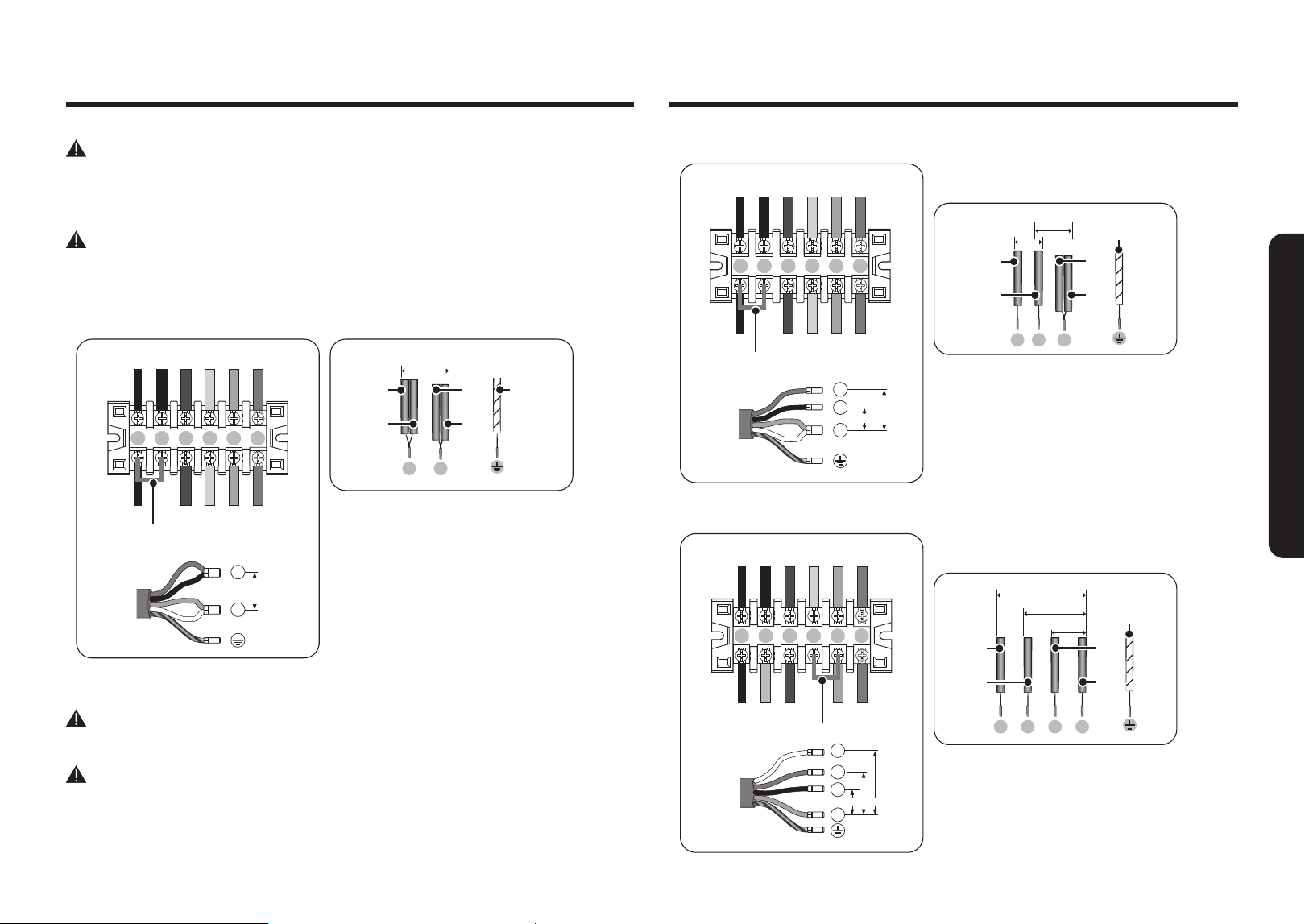
Pay attention (conformity) to phase and neutral allocation of house connection and appliance
(connection schemes); otherwise, components can be damaged.
Warranty does not cover damage resulting from improper installation.
WARNING
If the supply cord is damaged, it must be replaced by the manufacturer, its service agent or
similarly qualied persons in order to avoid a hazard.
220-240V/380-415V 3N~
BK
BN
GY
BU
GN/YE
L
N
220 - 240 V
L L L N N Earth
L L N N Earth
060402
05
01 03
CLIP CONNECTOR
Blue
Green /
Yellow
GrayBlack
220 - 240 V ~
Brown
L N
• If the CLIP CONNECTOR is not properly connected, the product may not function
correctly.
WARNING
For correct supply connection, follow the wiring diagram attached near the terminals.
WARNING
Ensure you use the following torque specications when connecting the power cord to the
terminal block.
Torque: 15 ~ 20 kgf.
220-240V/380-415V 2N~
BK
BN
GY
BU
GN/YE
L1
220 - 240 V
N
L2
L1 L1 L2 N N Earth
L1 L2 N N Earth
060402
05
01 03
CLIP CONNECTOR
2N~ (16A): Separate the 2-phase wires (L1 and L2)
before connection.
Gray
Blue
Black
380- 415 V~
220 - 240 V~
Brown
N
Green /
Yellow
L1 L2
220-240V/380-145V 3N~
BK
GY
BN
BU
GN/YE
L1
N
L2
L3
220 - 240 V
L1 L2 L3 N N Earth
L1 L3L2 N Earth
060402
05
01 03
CLIP CONNECTOR
2 x 1N~ (16A): Separate the wires before
connection.
Brown
Green /
Yellow
Blue
Black
220 - 240 V~
220 - 240 V~
220 - 240 V~
Gray
L2 L3 NL1
)
8 English
Installing the hob
Installing the hob
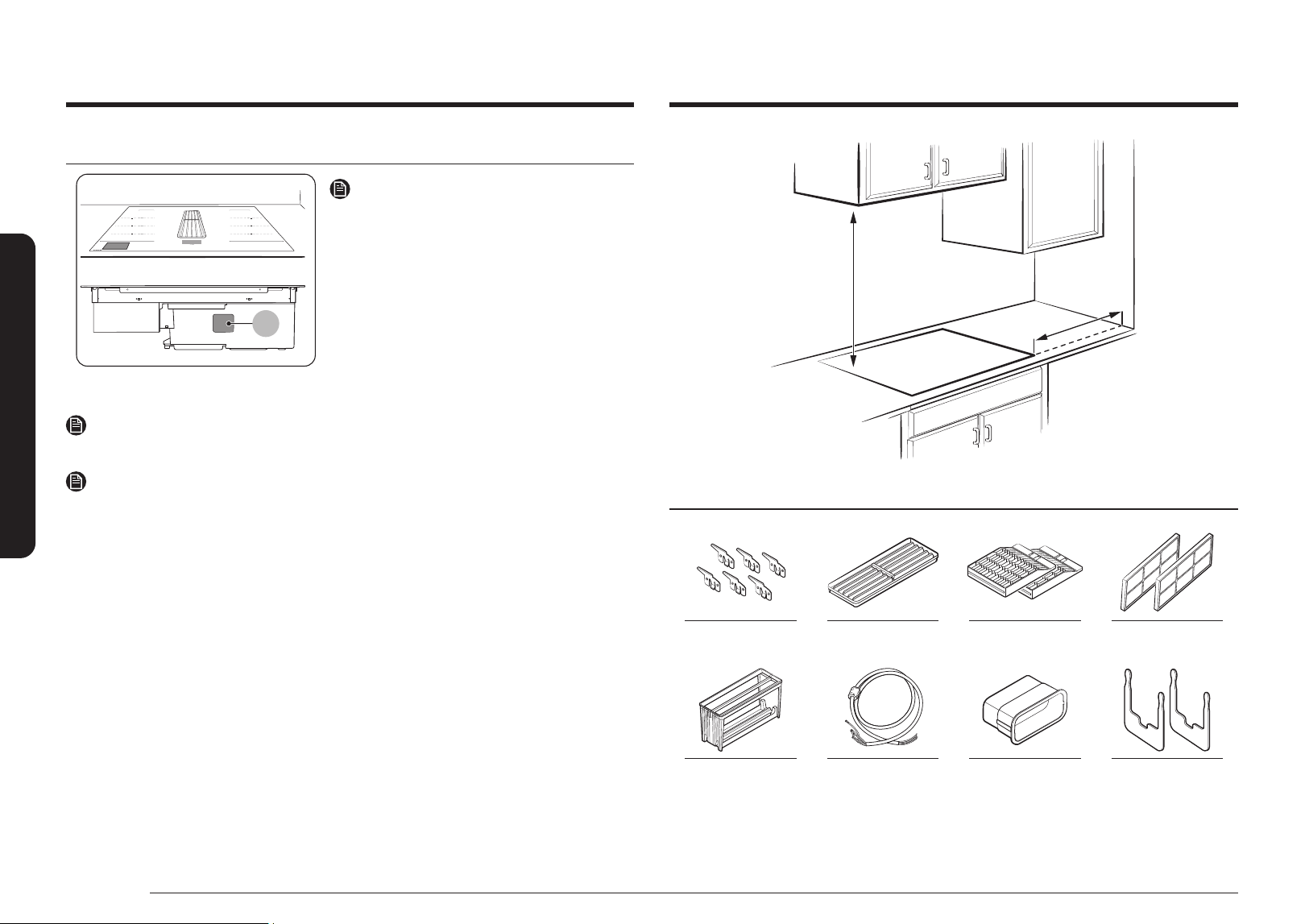
Min. Min. 50 mm50 mm
Min.Min. 500 mm 500 mm
Components
Bracket Spring (6) Grille Charcoal Filter (2) Grease Filter (2)
Tray Filter Power Cord
(with Ferrite Core)
Assy Duct Clip Connector (2)
Installing into the countertop
A
A. Serial number
NOTE
Make a note of the serial number on the appliance
rating label prior to installation. This number will
be required in the case of requests for service and
is no longer accessible after installation.
The original label is attached to the side of the
hood.
NOTE
Pay special attention to the minimum space and clearance requirements.
NOTE
The bottom of the hob is equipped with a fan. If there is a drawer under the hob it should not
be used to store small objects or paper, since they could damage the fan or interfere with the
cooling if they are sucked into it.
English 9
Installing the hob
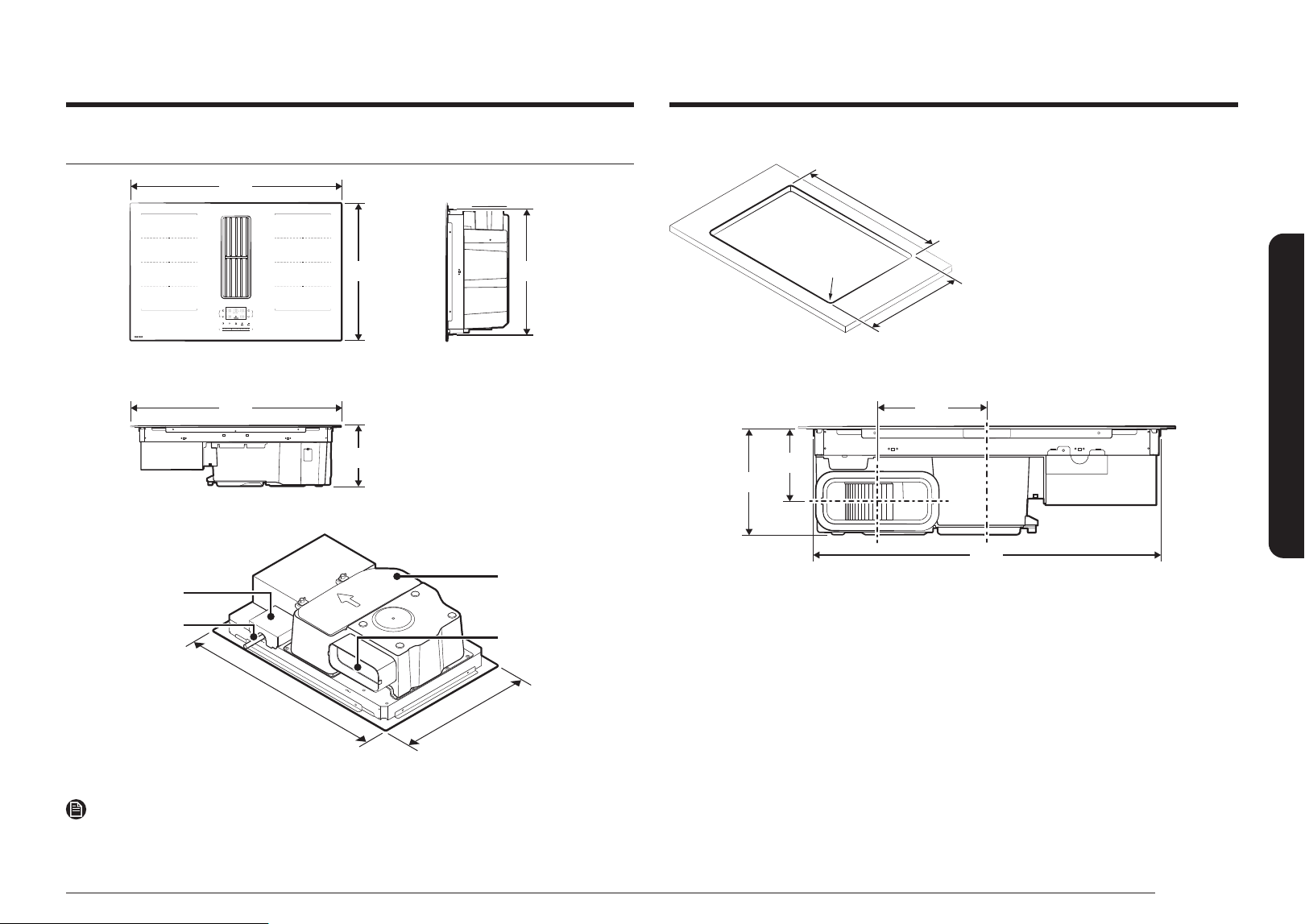
Cut-out size worktop
750 + 2
490 + 2
≤ R10
Air outlet dimension
226
154
737
233
Product dimension
520
800
474
226
737
737
474
Connection box
Unit : mm
Power cable
Drip tray
Outlet
All dimensions are given in mm.
• Power cable length : 1,500 mm
NOTE
Foam tape is attached to the left side of the bottom of the glass to reduce impact and prevent
breakage.
10 English
Before you start
Installing the hob Before you start
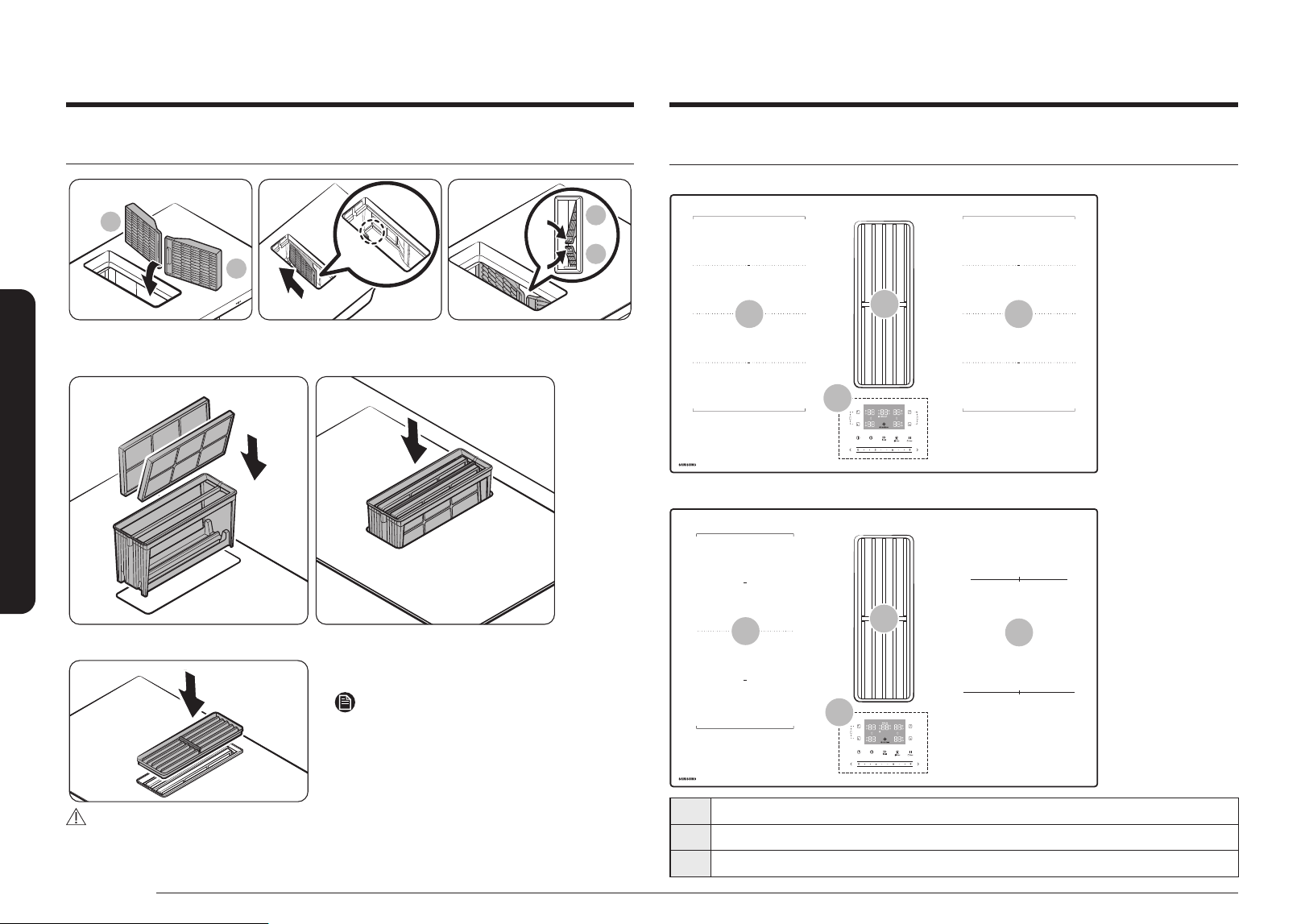
Cooking zones
CC90H84JAD
01
01
02
03
CC90H84PAD
01
01
02
03
01 Induction cooking zone
02 Control panel
03 Hood Ventilation
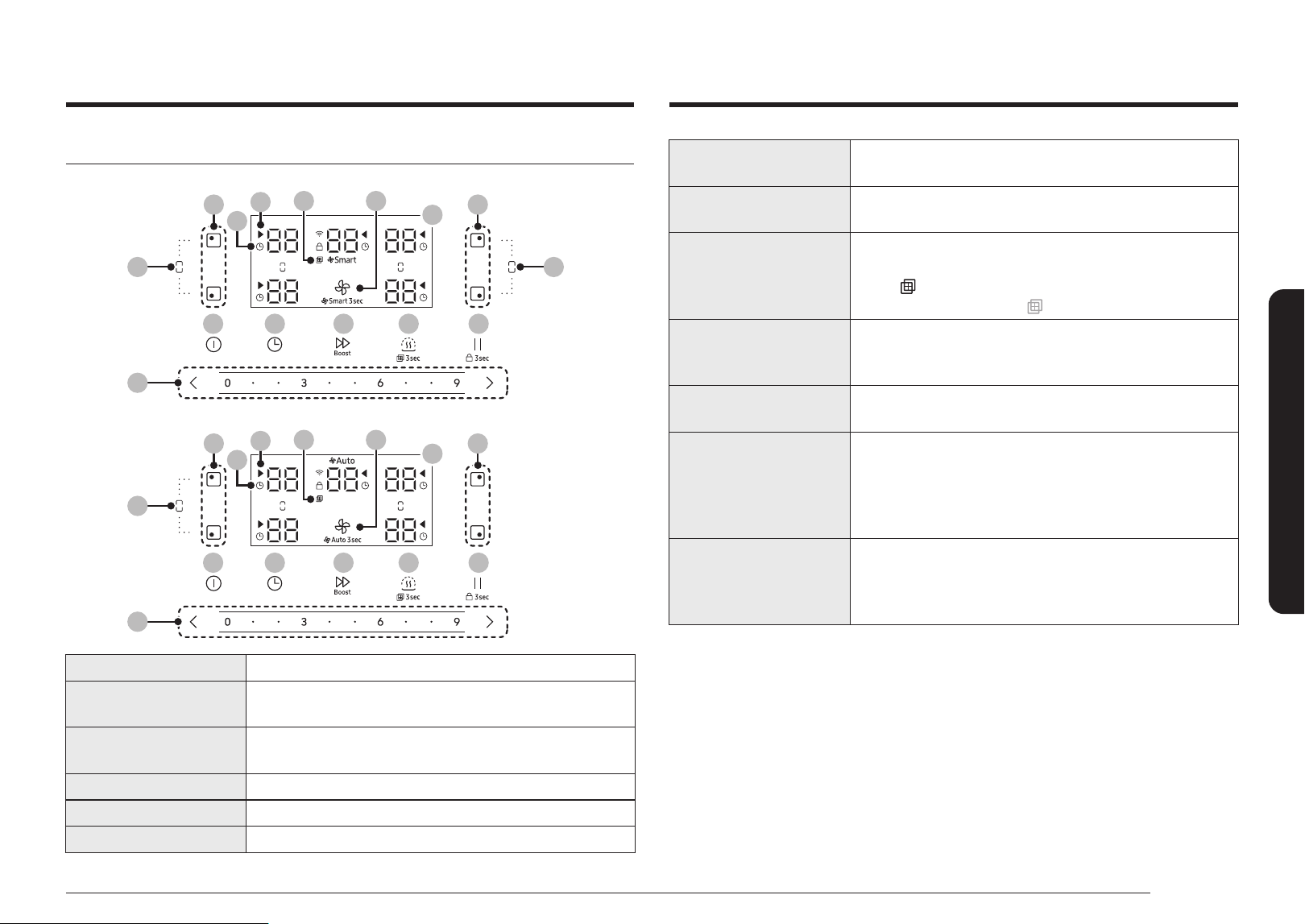
Filter Material Assembly
1
2
1
2
1. Place one charcoal lter into the xed slot and press the top to lock it.
2. Place the other charcoal lter into the adjacent slot and press the top to lock it in place.
3. Insert Filter box(Tray lter + Grease lter) into the set.
4. Put the Hood Grille on the set.
NOTE
• Disassembly : Remove the lters in reverse
order of installation.
• Charcoal lter must be assembled in
recirculation installation.
CAUTION
Please be careful not to drop the accessories (hood grille and lters) when installing or
cleaning.
English 11
Before you start
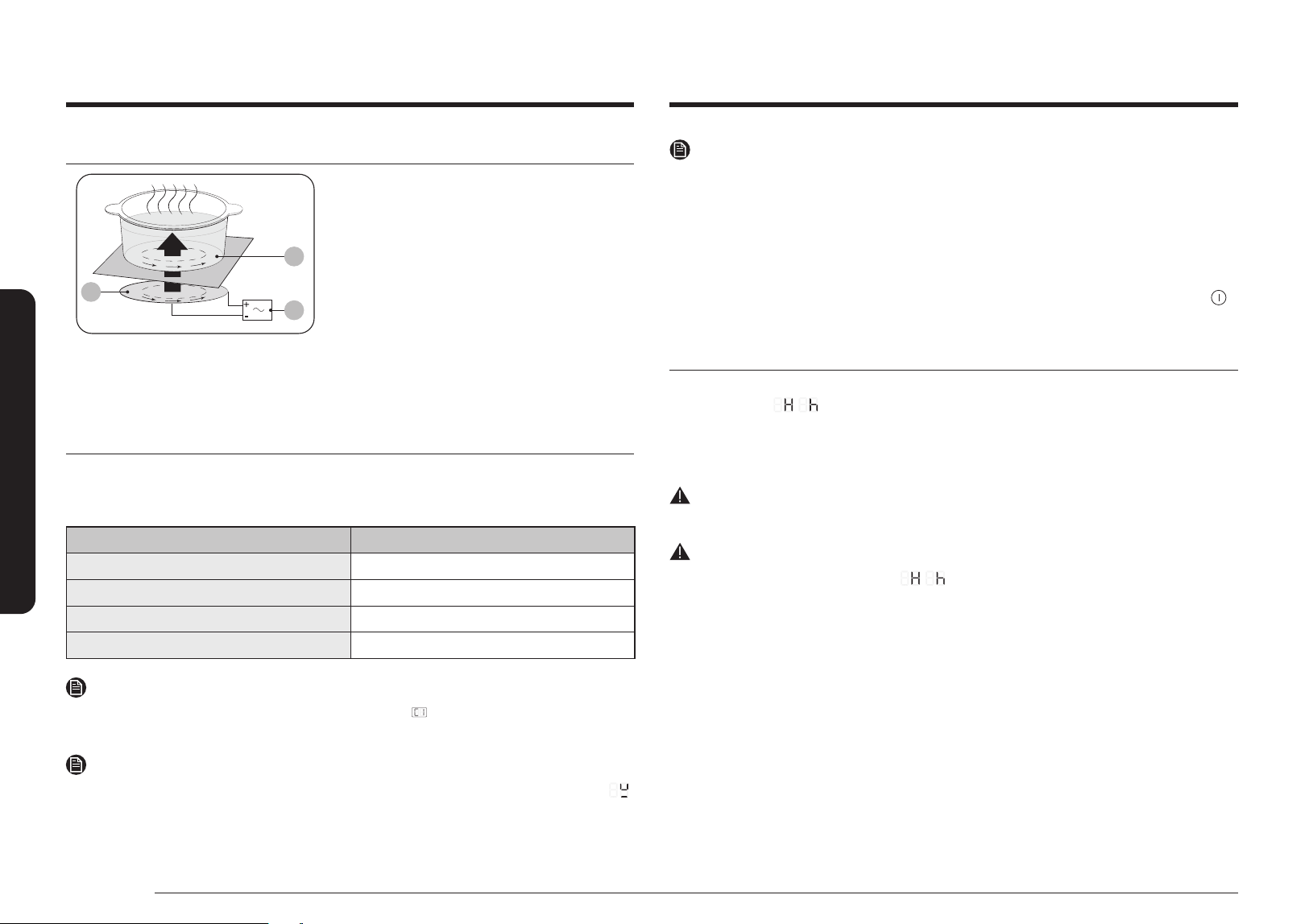
07 Safety cut-off timer
Button
Set or cancel the cooking time.
08 Boost Button Use the output of the re pit for a certain period of time as a
higher output.
09 Warm/Charcoal Filter
Reset Button
Set the heat preservation function. You can keep the
temperature of the stew constant. When the lter alarm
occurs
and need to reset the lter alarm is to press the
Warm button for 3 seconds.
10 Pause / Lock Button To switch all cooking zones on to the low power setting.
Press 3 seconds to lock or unlock the control panel. (Child
safety lock)
11 Output Control
Button
The output of cooking zone and hood can be adjusted.
12 Hood Choose /
Hood Smart/Auto
Button
This is the button to select hood.
Hood Smart/Auto mode can be operated to control the hood
airow according to the sensor and cooking zone power.
• Sensor and cooking zone power (CC90H84JAD) : Smart
• Cooking zone power (CC90H84PAD) : Auto
13 Charcoal Filter
Replacement Alarm
Indicator
The charcoal lter replacement alarm indicator turns on
when the lter replacement cycle is reached, and the mobile
notication is also activated.
(Only for recirculation installation mode)
Control panel
CC90H84JAD
06 07 08 09 10
02 02
03
04
13 12
01
11
05 05
CC90H84PAD
06 07 08 09 10
02 02
03
04
13 12
01
11
05
01 Screen Shows the overall operating status of the product.
02 Cooking Zone Choose
Button
Buttons for selecting each cooking zone.
03 Choose Cooking Zone
Indicator
Lights up when a cooking zone is selected.
04 Timer Indication The timer displays the selected cooking zone.
05 Flex Selection Button Button for selecting the Flex Zone.
06 Power Button You can turn the product off or on.
12 English
Before you start
Before you start
NOTE
Should one or more of the cooking zones switch off before the indicated time has elapsed, see
the “Troubleshooting”.
Other reasons why a cooking zone will switch itself off
All cooking zones will switch themselves off if liquid boils over on the control panel.
The automatic shutoff will also be activated if you place a damp cloth on the control panel. In
both of these instances, the appliance will need to be switched on again using the Power
button after the liquid or the cloth has been removed.
Residual heat indicator
When an individual cooking zone or the hob is turned off, the presence of residual heat
is shown with an
, (for “hot”) in the corresponding cooking zone display. Even after
the cooking zone has been switched off, the residual heat indicator goes out only after the
cooking zone has cooled.
You can use the residual heat for thawing or keeping food warm.
WARNING
As long as the residual heat indicator is illuminated, there is a risk of burns.
WARNING
If the power supply is interrupted, the
, symbol will go out and information about
residual heat will no longer be available.
However, it may still be possible to burn yourself. This can be avoided by always taking care
when near the hob.
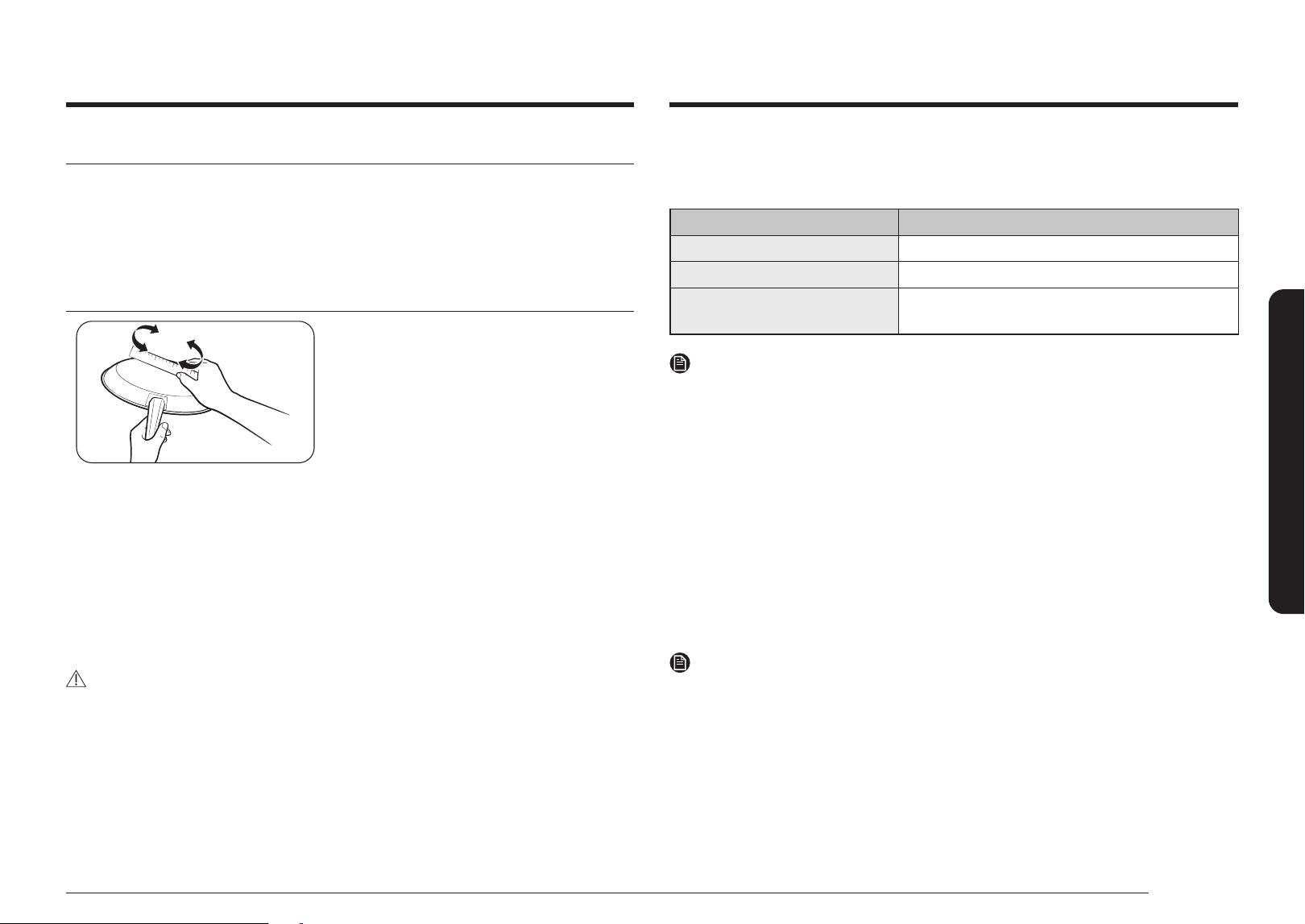
Induction heating
A
B
C
A. Induction coil
B. Induced currents
C. Electronic circuits
• The Principle of Induction Heating: When you
place your cookware on a cooking zone and
you turn it on, the electronic circuits in your
induction hob produce “induced currents” in
the bottom of the cookware which instantly
raise cookware’s temperature.
• Greater speed in cooking and frying: As the
pan is heated directly and not the glass, the
efciency is greater than in other systems
because no heat is lost. Most of the energy
absorbed is transformed into heat.
Safety shutoff
If one of the cooking zones is not switched off or the power level is not adjusted after an
extended period of time, that particular cooking zone will automatically switch itself off.
The cooking zones switch themselves off at the following times.
Power level Switch off
1 - 2 After 6 hours
3 - 6 After 5 hours
7 - 8 After 4 hours
9 After 1.5 hours
NOTE
If the Hob is overheated because of abnormal operation,
will be displayed.
And the Hob will be switched off.
NOTE
If cookware is unsuitable, too small, or no cookware has been placed on the cooking zone,
will be displayed. And after 1 minute the corresponding cooking zone will be switched off.
English 13
Before you start
Cookware for induction cooking zones
The Induction cooking zone can only be turned on when cookware with a magnetic base is
placed on one of the cooking zones. You can use the cookware identied as suitable below.
Material Suitability
Steel, enameled steel, cast iron Yes
Stainless steel Yes (If magnet sticks to the bottom of the cookware)
Aluminum, copper, brass, glass,
ceramic, porcelain
No
NOTE
• Cookware appropriate for induction cooking is labelled as suitable by the manufacturer.
• Certain cookware can make noises when being used on induction cooking zones.
• These noises do not indicate that the hob is malfunctioning and do not affect its
operation in any way.
• Special stainless-steel cookware may not be suitable for induction cooking. Check if the
base of the cookware is attracted by a magnet.
Cookware sizes for induction cooking zones
Induction cooking zones adapt automatically to the bottom size of the cookware up to
a certain limit. However, the magnetic part of the bottom of the cookware must have a
minimum diameter depending upon the size of the cooking zone.
For best results, use cookware whose ferromagnetic diameter match that of a cooking zone. If
the cookware is not sensed by the cooking zone, try a smaller sized cooking zone.
NOTE
For Cookware diameter, please refer to the model’s Cooking zones specications.
Temperature detection
If for any reason the temperatures on any of the cooking zones were to exceed the safety
levels, the cooking zone will automatically reduce to a lower power level.
When you have nished using the hob, the cooling fan will continue to run until the hob’s
electronics has cooled down. And the cooling fan switches itself off depending upon the
temperature of the electronics.
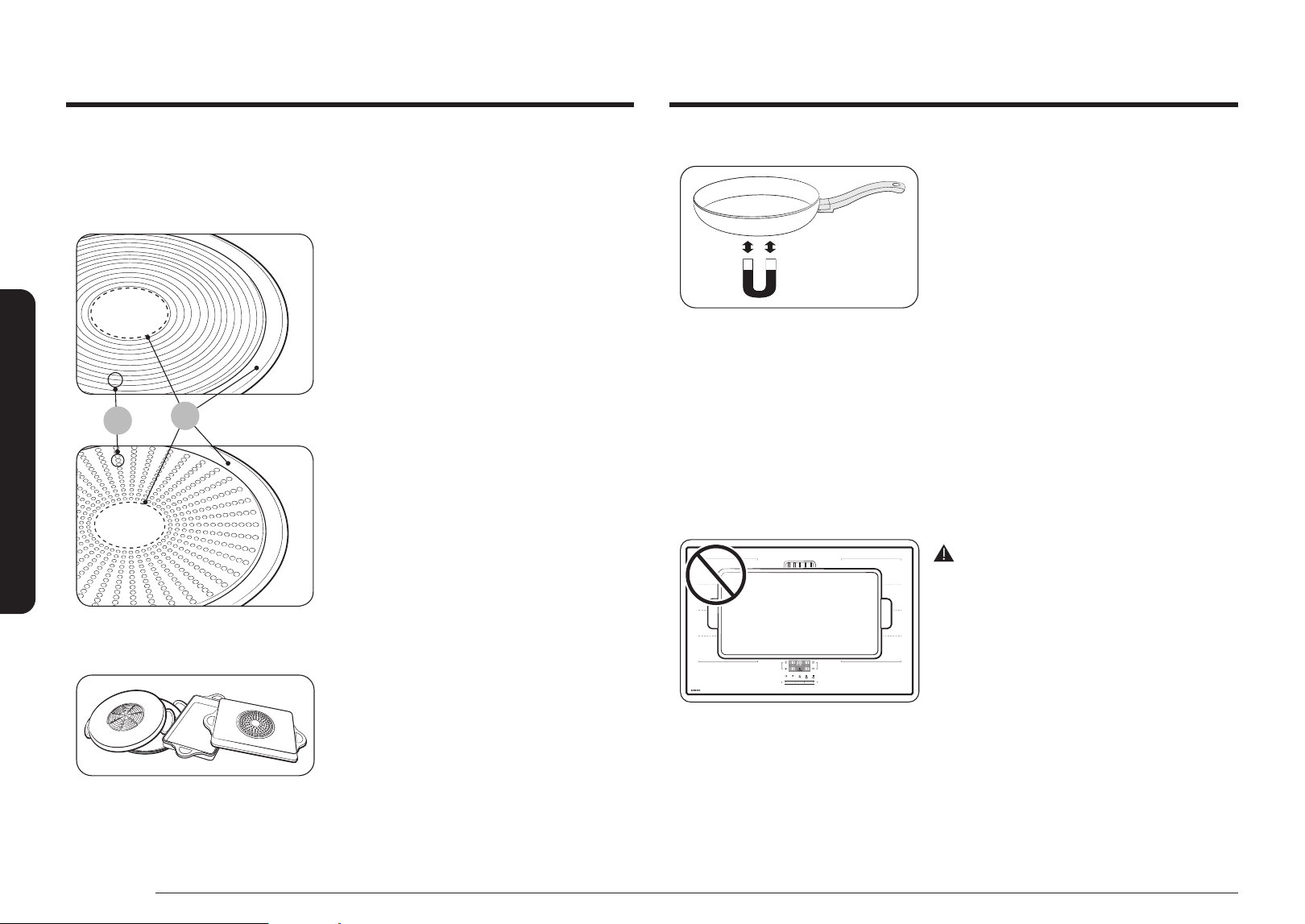
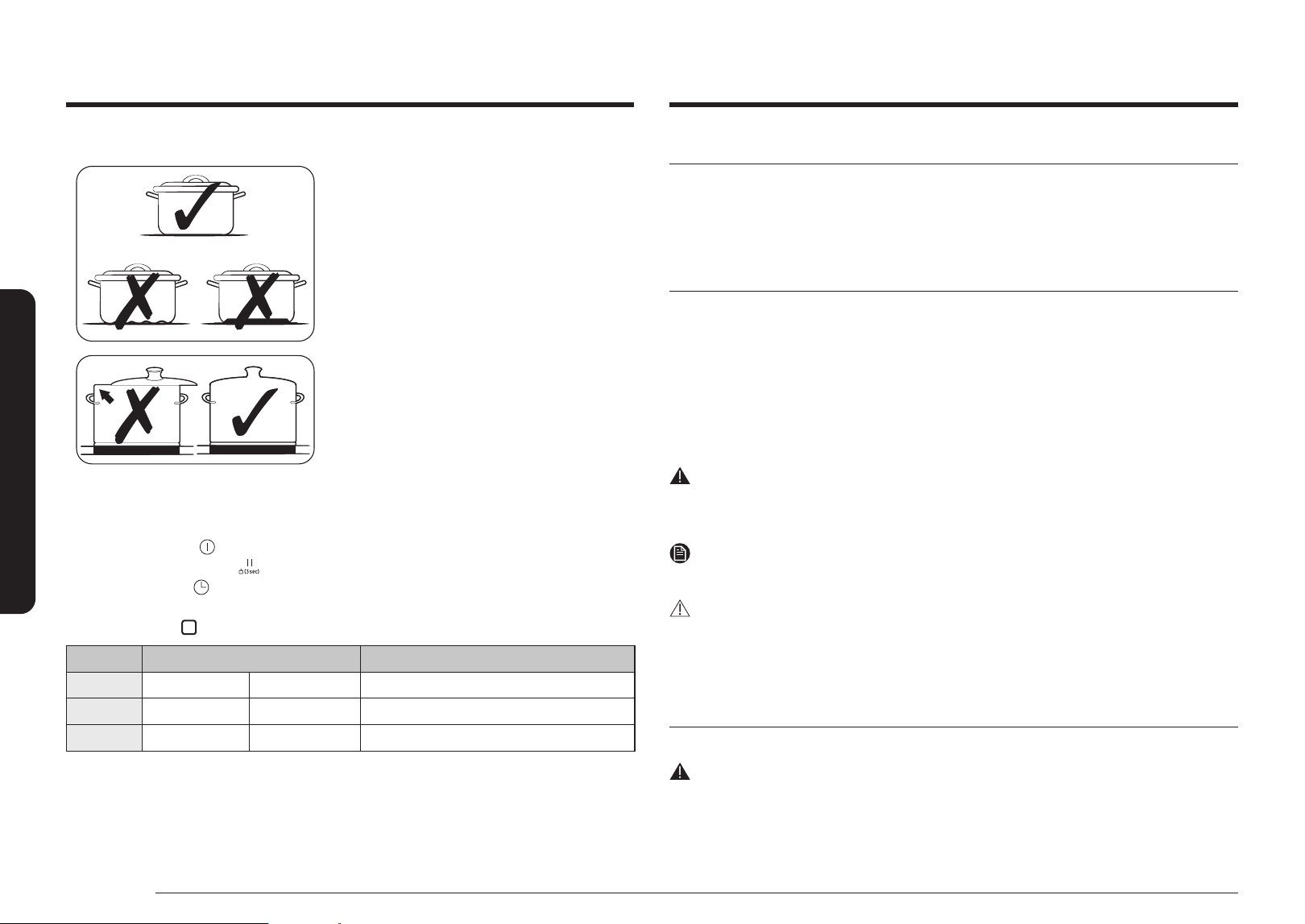
Cookware
Use at-bottomed cookware that completely
contacts the entire cooking zone. Check for
atness by rotating a ruler across the bottom
of the cookware. Be sure to follow all the
recommendations for using cookware.
• Use cookware made with the correct material for induction cooking.
• Use quality cookware with heavier bottoms for better heat distribution. This gives best
cooking results.
• Match the cookware size to the quantity of food being prepared.
• Do not let cookware boil dry. This may cause permanent damage in the form of
breakage, fusion, or marring that can affect the ceramic hob. (This type of damage is not
covered by your warranty).
• Do not use dirty cookware or cookware with heavy grease buildup. Always use cookware
that is easy to clean after cooking.
CAUTION
• The cooking zones may appear cooled down after they have been turned off. However,
the glass surface may be hot from residual heat transferred from the cookware. The risk
of burns is still present.
• Do not touch hot cookware directly with your hands. Always use oven mitts or pot
holders to protect your hands from burns.
• Do not slide cookware across the hob surface. Doing so may permanently damage the
hob.
14 English
Before you start
Before you start
Other induction cookware
Some cookware has thin magnetic material on the bottom to work with an induction heating
hob. These cookware has weak magnetism and may not work well. (Weak magnetism means
a magnet does not stick rmly or the area where the magnet sticks is small.)
B
A
A. Area where magnet does not stick
B. Area where magnet sticks
Even though cookware are designed for an
induction hob, the heating performance could be
weak or sometimes the hob may not detect the
cookware depending on the size and strength of
the magnetic area on the bottom of the cookware.
When using large cookware with a smaller
ferromagnetic element, only the ferromagnetic
element heats up. Consequently, heat might not
be uniformly distributed.
Suitability test
Cookware is suitable for induction cooking if a
magnet sticks to the bottom of the cookware
and the cookware is labelled as suitable by the
cookware manufacturer.
• You can recognise good cookware by their bases. The base is supposed to be as thick and
at as possible.
• When buying new cookware, pay special attention to the diameter of the base.
Manufacturers often give only the diameter of the upper rim.
• Do not use cookware which have damaged bases with rough edges or burrs. Damaged
cookware can scratch the ceramic hob permanently if you slide them across the surface.
• When cold, cookware bases are normally bowed slightly inwards (concave). They must
not be bent outwards (convex).
• If you want to use a special type of cookware, for example, a pressure cooker, a
simmering pan, or a wok, please follow the manufacturer’s instructions.
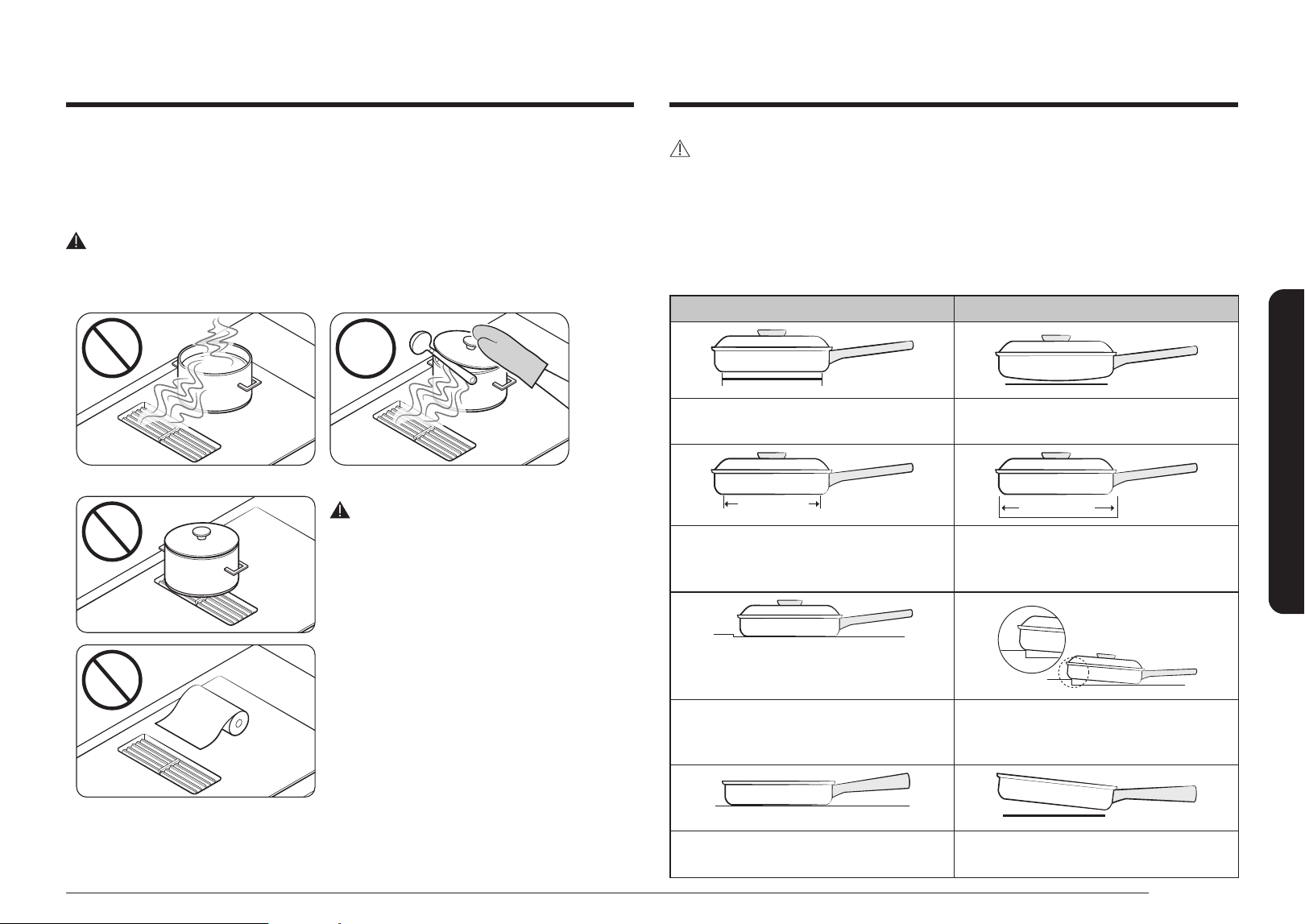
WARNING
Do not use both cooking zones on the left and
right sides of a single cookware..
English 15
Before you start
Recommendations for hood ventilation performance.
Tip : When using a pot with a height of 15 cm or more, direct the steam towards the hood
ventilation using the pot lid and utensils for effective suction.
• We recommend using low-height pots to improve hood suction efciency.
WARNING
• You must denitely use utensils that are resistant to high temperature.
• Be careful of burns and denitely wear gloves as the utensils are hot.
WARNING
• Do not block the hood Ventilation(Grille)
with a pot.
• Do not place a hot pot on the hood
Ventilation(Grille).
• Please be careful to prevent thin
and lightweight objects(ex. Paper
Towel) from being sucked into the Hood
Ventilation(Grille).
• If even a small amount of foreign substances
are present in the Hood Ventilation it can
reduce the hood performance and increase
noise during operation.
CAUTION
• This product may produce relatively loud noise when operating in boost mode due to its
powerful hood function.
• When air passes through the charcoal lter designed for air purication, a whistling
sound may occur during the airtight ltering.
Correct positioning
Correct Incorrect
Flat-bottomed cookware and straight sides Cookware with curved or warped bottoms
or sides
The cookware meets or exceeds the
recommended minimum size for the
cooking zone.
The cookware does not meet the minimum
size required for the current cooking zone.
The cookware rests completely on the hob
surface.
The cookware rests on the hob trim or does
not rest completely on the hob surface.
The cookware is properly balanced. The heavy handle causes the cookware to
tilt.
16 English
Before you start
Before you start
Using the touch buttons
To operate the touch buttons, touch the desired button with the tip of your pointed nger
until the relevant displays illuminate or go out, or until the desired function is activated.
Ensure that you are touching only one button when operating the appliance. If your nger is
too at on the button, an adjacent button may be actuated as well.
Operating noises
If you can hear.
• Cracking noise: cookware is made of different materials.
• Whistling: you use more than two cooking zones and the cookware is made of different
materials.
• Humming: you use high power levels.
• Clicking: electric switching occurs.
• Hissing, Buzzing: the fan operates.
The noise are normal and do not refer to any defects.
WARNING
Do not use cookware of different size and material.
Using cookware of different sizes or materials may cause noises and vibrations.
NOTE
Using low power levels (1 - 5) may cause clicking noises.
CAUTION
Hood vibration
• Hood vibration and Noise may occur depending on the installation environment and
airow of the product.
Initial cleaning
Wipe the ceramic glass surface with a damp cloth and ceramic hob glass cleaner.
WARNING
Do not use caustic or abrasive cleaners. The surface could be damaged.
Energy saving tips
Follow these tips to save power consumption.
• Always put cookware on a cooking zone
before you turn the corresponding burner on.
• Keep the cooking zones and cookware
bases clean. Otherwise, more power will be
consumed.
• Firmly close the cover of cookware
if available. This will reduce power
consumption.
• Turn the working burner off before the end
of the cooking time. Use the residual heat to
keep food warm.
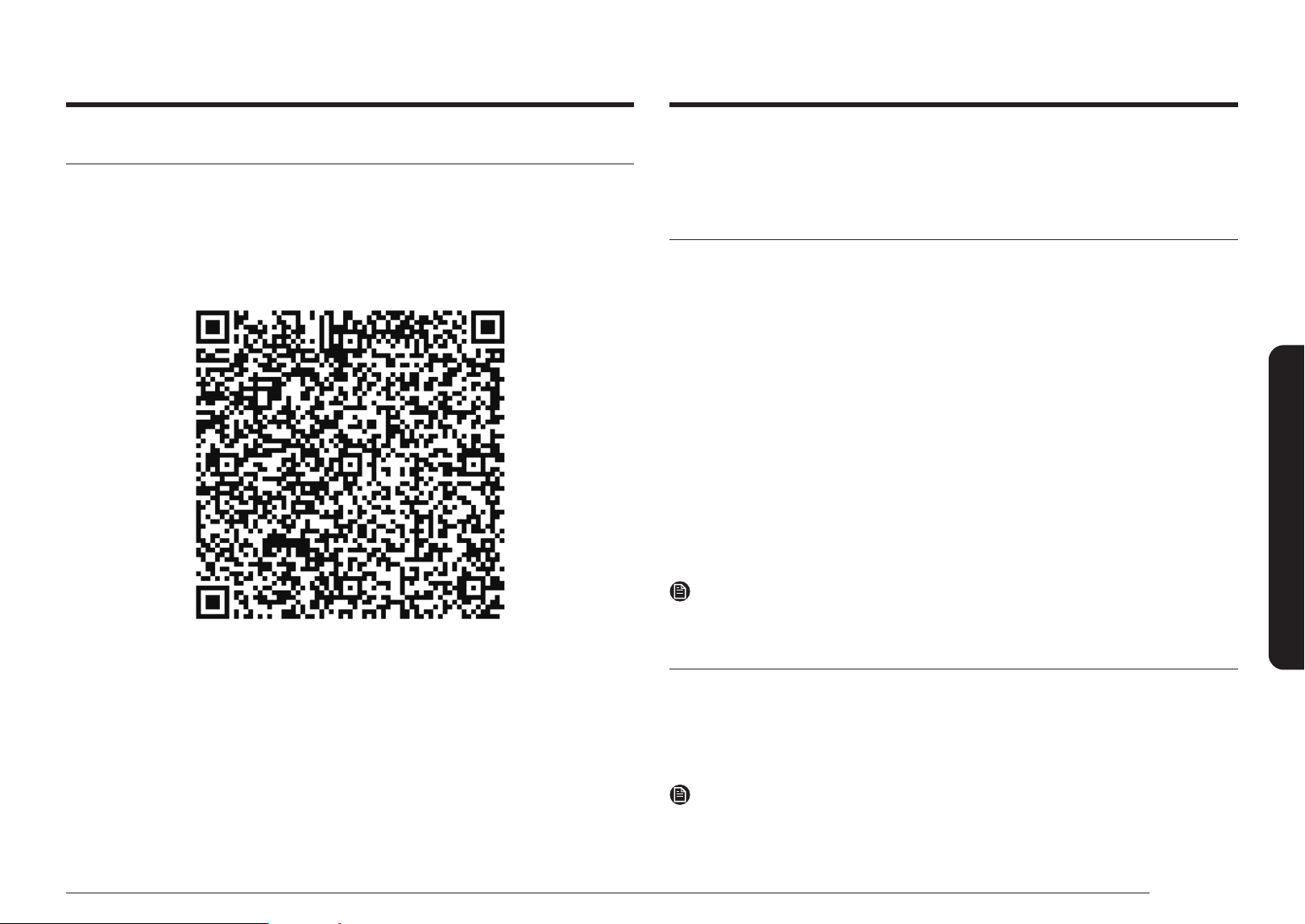
Correct positioning
You can test cookware to see if they are suitable for use with the product.
1. Press the Power
button for 1-2 seconds to turn on the hob.
2. Press the Pause & Lock
button for 3 seconds to activate the child safety lock.
3. Press the Timer
button for 3 seconds to activate the cookware suitability test mode.
4. Place the cookware on the one of the cooking zones, and then press and hold the
Cooking zone
button for 3 seconds.
Display container t index Description
0 0 % Unusable Cookware is unsuitable
1 ~ 7 10 % ~ 70 % Low efciency Cookware is suitable, but inefcient
8 ~ 10 80 % ~ 100 % High efciency Cookware is suitable
English 17
SmartThings
SmartThings
Scan the QR code on the front upper right surface of the product (location may vary by model)
and follow the app’s onscreen instructions to add your device.
See the specications below for details.
Registering a Device in SmartThings
1. Install the App
• Visit the Google Play Store or Apple App Store and search for "SmartThings."
• Download and install the Samsung SmartThings app on your mobile device.
2. Sign in with a Samsung Account
• A Samsung account is required to use the app. If you don't have a Samsung account,
follow the app’s instructions to create one.
• Samsung smartphone users who register a Samsung account in their phone
settings are automatically signed in.
3. Add a Device
• Turn on the device you want to connect.
• If the product has a QR code, you can also add the device by scanning it with your
camera app.
• Or, when you open the SmartThings app, a pop-up may appear saying that a new
device has been found. Select Add.
• If the device is not added using the methods above, tap Add Device in the
SmartThings app, and follow the onscreen instructions to add the device.
NOTE
For the mobile requirements of the SmartThings app, please refer to the app information.
SmartThings Support Services
To learn how to use SmartThings with the device, tap the device card in the SmartThings app.
You can:
• Check and manage device status
• Set up automation routines
• Monitor energy usage
NOTE
SmartThings features available for your device may vary depending on model and app version.
Open Source Announcement
The software included in this product contains open source software.
The following URL http://opensource.samsung.com/opensource/SMART_TP1_0/seq/0 leads
to open source license information as related to this product.
Security updates information
Security updates are provided to strengthen the security of your device and protect your
personal information. For more information on security updates, visit
https://security.samsungda.com.
* The website supports only some languages.
18 English
Operation
Operation
Switching the appliance on
The appliance is switched on using the Power button. Press the Power button for
approximately 1 - 2 seconds.
NOTE
After the Power
button has been actuated to switch on your appliance, a power level must
be selected within approximately 20 seconds. Otherwise, the appliance will switch itself off
for safety reasons.
Switching the appliance off
To completely switch off the appliance, use the Power button.
Press the Power button for approximately 1 - 2 seconds.
NOTE
After switching off a single cooking zone or the entire cooking surface, the presence of
residual heat will be indicated in the digital displays of the corresponding cooking zones
in the form of an
, two steps for “hot”. The temperature is lowered, , wil be
disappeared.
Selecting cooking zone and power level
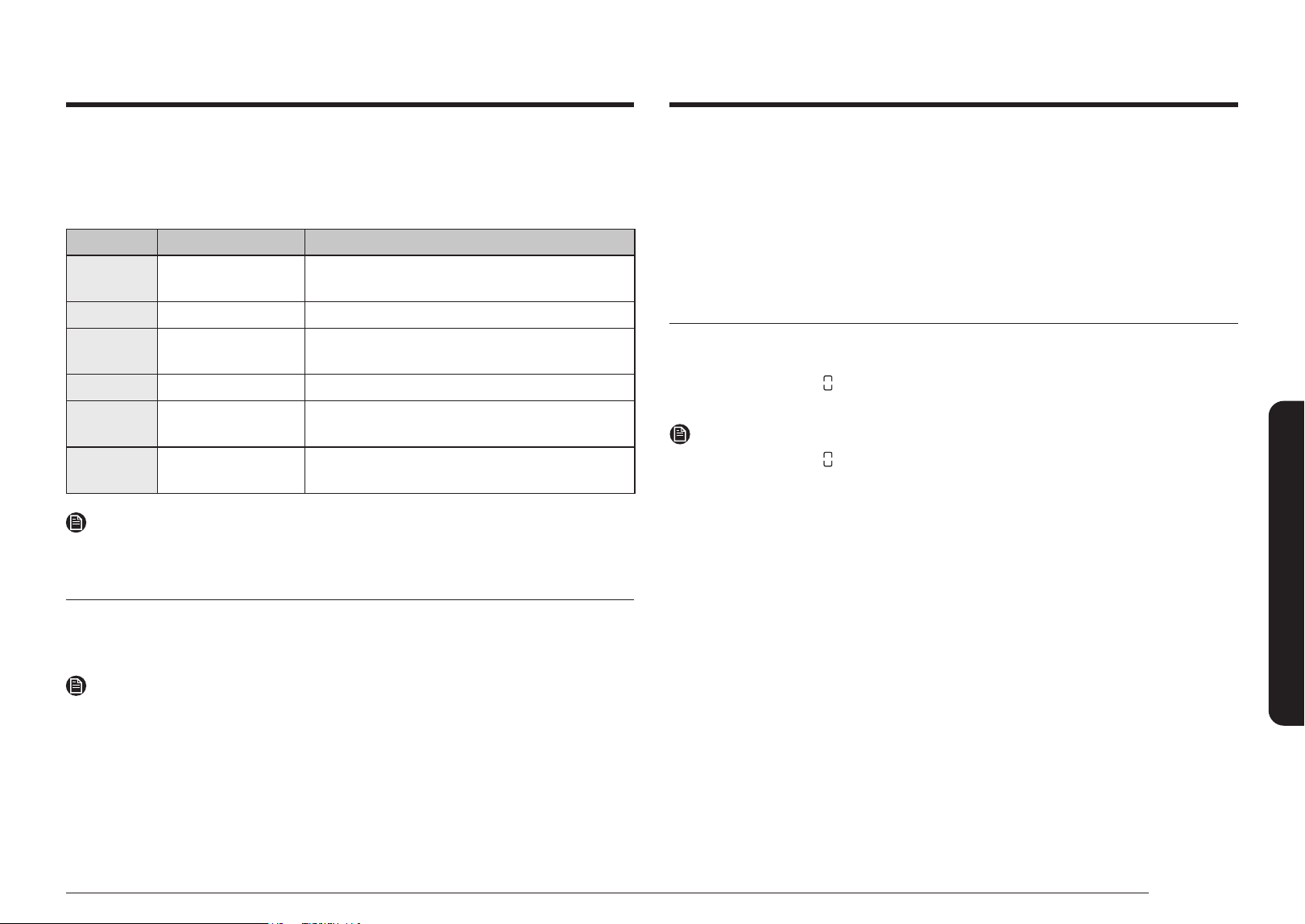
1. For selecting the cooking zone, press the corresponding Cooking zone button.
2. For setting and adjusting the power level, use the Control bar or Control key or Control
knob.
Control bar
NOTE
• The default level is set to 0 when selecting the cooking zone.
• If more than one key is pressed for longer than 8 seconds,
will show in the cooking
zone display.
Troubleshooting
When the connected device is not working,
• check the device status in the SmartThings app.
If Ofine is displayed on the device card, the network connection has been lost.
• Close and restart the SmartThings app.
• Restart the router.
• Remove the device from the SmartThings app and add it again.
• If the problem persists, contact support via Error Reports.
Ofine Device Diagnosis
• Run Ofine Device Diagnosis in the SmartThings app.
• This feature can help identify the cause of the problem and resolve the issue.
NOTE
Wireless Network Specications
• It is recommended to set the wireless router security type to WPA2 and the data
encryption method to AES.
• IEEE 802.11 b/g/n (2.4 GHz) is recommended for wireless connections.
NOTE
• Wireless network connection quality may be affected by the router and the surrounding
environment.
• If rewall settings or MAC address registration is required, please contact your internet
service provider.
SmartThings
English 19
Operation
Power management
The cooking zones have a maximum power available to them.
If this power range is exceeded by switching on the Boost function, Power Management
automatically reduces the power level of cooking zone.
The display for this cooking zone alternates for some seconds between the set power level
and the maximum possible power level. After then, the display changes from the set power
level to maximum possible power level.
Using the Flex zone (only for ex zone applied models)
The Flex function can operate complete left side cooking zone for using large size cookware.
(example : oval cookware, sh kettle)
1. Press the Flex zone
button.
2. For setting and adjusting the power level, use the Power level button.
NOTE
• Press the Flex zone
button during operating, Flex zone function will be off.
• If you press the Flex selection button, it starts from 0 regardless of whether it was
previously operating with different repower levels.
Suggested settings for cooking specic foods
The numbers in the table below are guidelines. The power level required for various cooking
methods depend on a number of variables, including the quality of the cookware being used
and the type and amount of food being cooked.
Power level Cooking method Examples for Use
9
Warming / Sautéing
/ Frying
Warming large amounts of liquid, boiling noodles,
searing meat, browning goulash, braising meat
7-8 Intensive frying Steak, sirloin, hash browns, sausages
6-7 Frying
Schnitzel / chops, liver, sh, rissoles, fried eggs,
pancakes / griddle cakes
4-5 Boiling Cooking up to 1.5 l liquid, potatoes, vegetables
2-3
Steaming / Stewing /
Boiling
Steaming and stewing of small amounts of
vegetables, boiling rice and milk dishes
1 Melting
Melting butter, dissolving gelatine, melting
chocolate
NOTE
You will need to adjust the power level according to specic cookware and foods.
Boost
The Boost function makes additional power available to the each cooking zones.
(example : bring a large volume of water to the boil)
After Boost times, the cooking zones automatically sets back to the highest heat setting.
NOTE
• In certain circumstances, the Boost function may be deactivated automatically to protect
the internal electronic components of the hob.
For example, It is impossible to output max power on Flex zone rear and Flex zone front
at the same time.
• Refer to your model’s Cooking zones specication for Boost time.
20 English
Operation
Operation
NOTE
• When using only one cooking zone, the diameter of the bottom of the cookware must be
less than 18 cm.
• The hob may take 5 - 10 seconds to recognise the position of cookware.
• Noises may occur while the hob recognise the cookware.
• Do not remove cookware during cooking. For safety purposes, the hob automatically
stops if cookware has been removed for more than 5 seconds.
Using the Flex zone Plus (Only for Flex zone plus applied models)
1. Press the Flex zone
button.
2. For setting and adjusting the power level, use the Power level button.
NOTE
• If you press the Flex zone
button during operating, Flex zone function will be off.
• If you press the Flex zone button while each cooking zone is operating at different
levels, it will be automatically adjusted to higher level.
• When moving or adding cookware to a new Flex zone, cancel the current operation, and
then press the corresponding Cooking zone button to activate the cooking zone.
Keep warm
1. Use this function to keep cooked food warm. Press the corresponding
Cooking zone button.
2. Press the Keep warm
button.
3. The cooking zone display will be changed.
4. Press the Keep warm
button again to turn off the cooking zone.
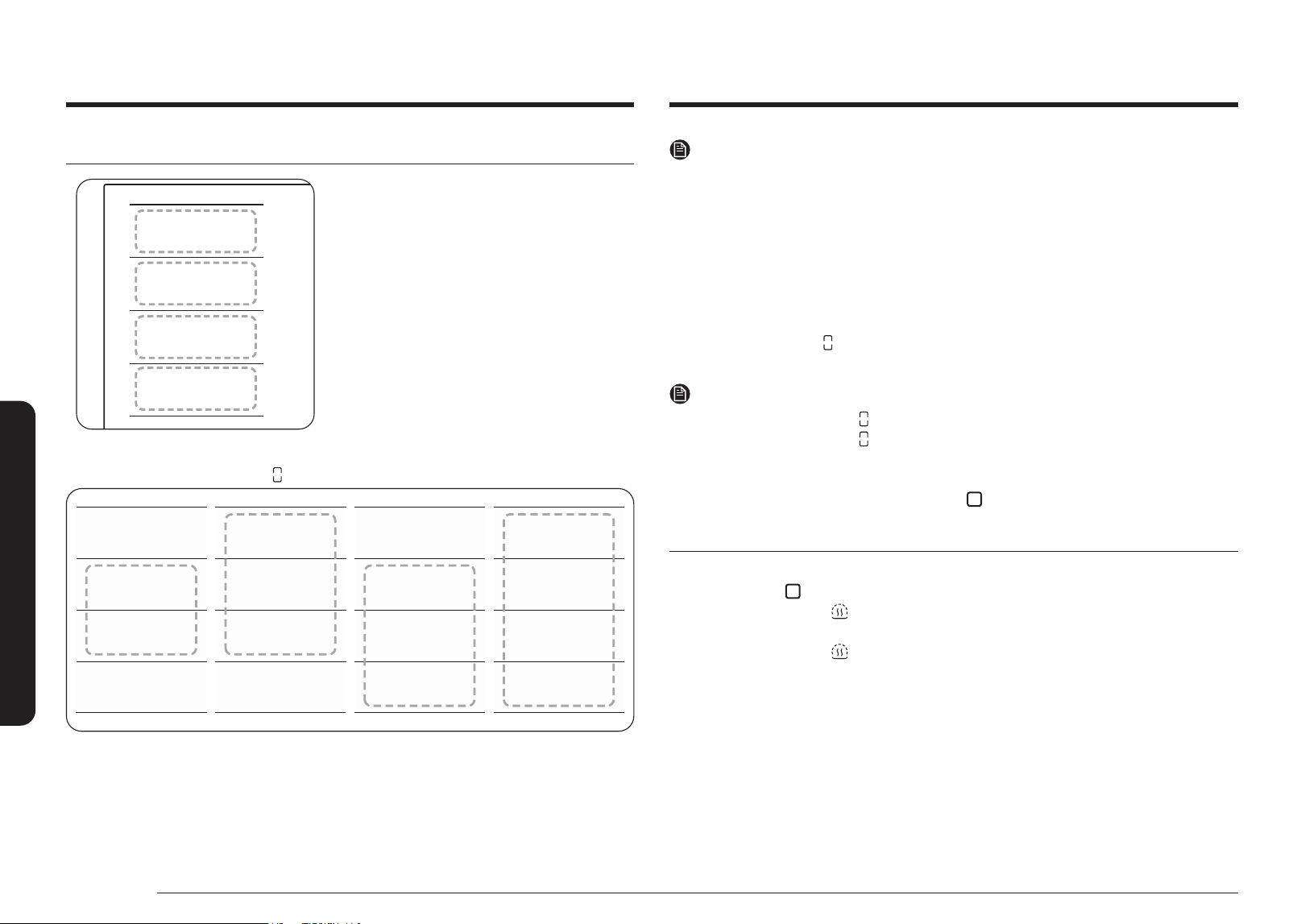
Flex zone Plus (only for ex zone plus applied models)
Cooking Zone 4
Cooking Zone 3
Cooking Zone 2
Cooking Zone 1
The Flex zone is the large cooking area located on
the left side of the hob (see the gure left) that
is specially designed to accommodate multiple
pots and pans of varying shapes and sizes at once.
The Flex zone has four zones that are operated
by individual inductors, allowing you to cook
regardless of where cookware is placed on a
cooking zone.
With Flex zone Plus, you can use a combination of different cooking zones to enlarge the
cooking area. Press the Flex zone
button to use the cooking zone as follows.
Cooking Zone 4 Cooking Zone 4Cooking Zone 4Cooking Zone 4
Cooking Zone 3 Cooking Zone 3Cooking Zone 3Cooking Zone 3
Cooking Zone 2 Cooking Zone 2Cooking Zone 2Cooking Zone 2
Cooking Zone 1 Cooking Zone 1Cooking Zone 1Cooking Zone 1
English 21
Operation
Quick stop
This option reduces the step and time it takes to stop cooking.
To switch off a cooking zone, press the Cooking zone button for 2 seconds.
NOTE
The Flex zone
button does not support quick stop function.
Child safety lock
You can use the child safety lock to safeguard against unintentionally turning on a cooking
zone and activating the cooking surface. Also the control panel, with the exception of the
Power
button (Only turn off control), can be locked in order to prevent the settings from
being changed unintentionally, for example, by wiping over the panel with a cloth.
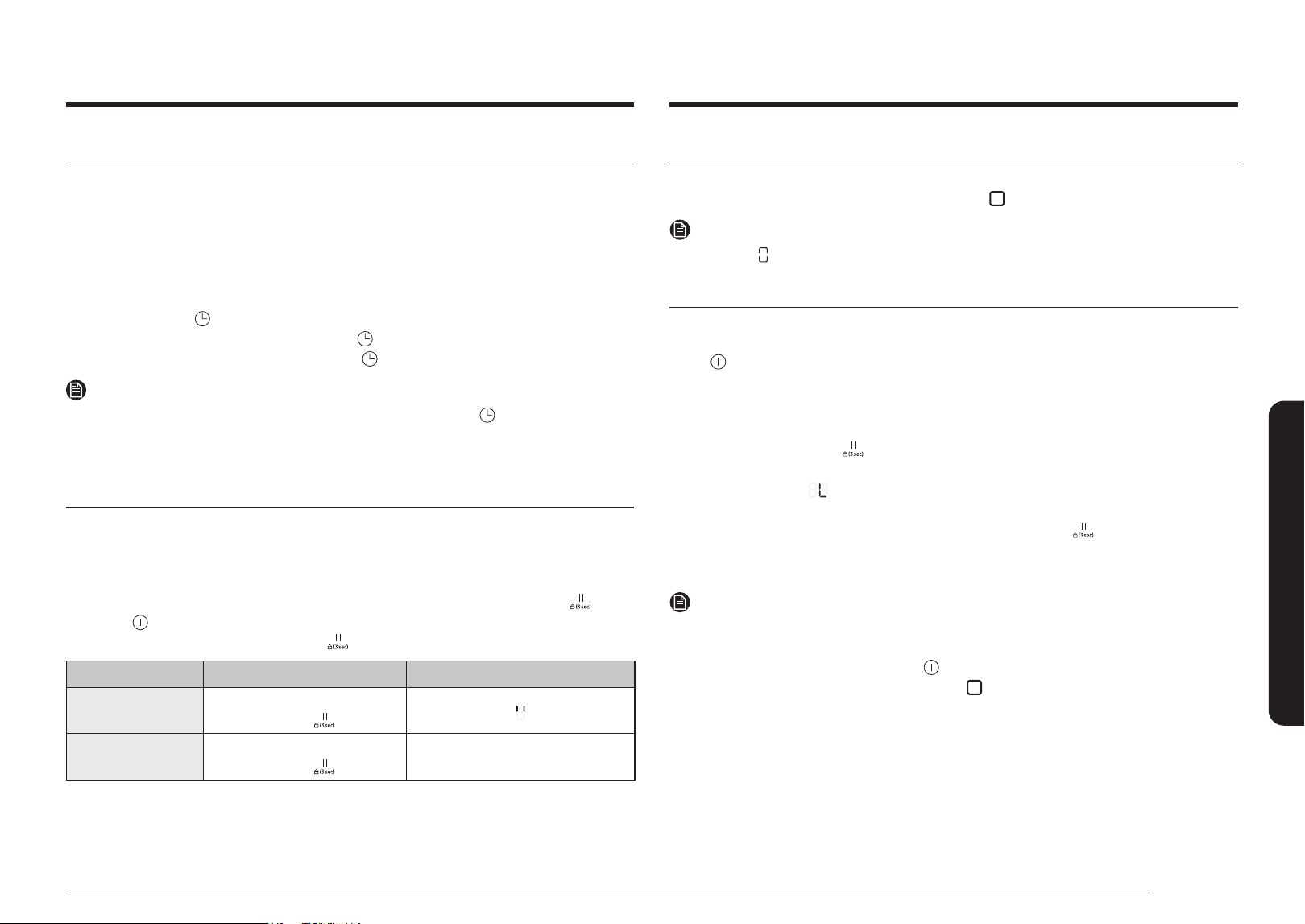
Switching the child safety lock On/Off
1. Press the Pause & Lock
button for approximately 3 seconds. An acoustic signal will
sound as conrmation.
2. Press any button.
will appear in the displays, indicating the child safety lock has been
activated.
3. For switching the child safety lock off, press the Pause & Lock
button again for
3 seconds.
An acoustic signal will sound as conrmation.
NOTE
• Regardless of power on/off, child lock is activated.
• You can set the child safety lock during cooking. To turn off the cooking zone with the
child safety lock on, press the Power
button or turn off the child safety lock rst and
then press the corresponding Cooking zone button.
Timer
Using the timer as a safety shutoff
If a specic time is set for a cooking zone, the cooking zone will shut itself off once this period
of time has elapsed. This function can be used for multiple cooking zones simultaneously.
Setting the timer
The cooking zone(s) for which you want to apply the safety shutoff must be switched on.
1. Press the Timer
button.
2. Set timer by repeatedly pressing the Timer
button.
3. To cancel the timer settings, hold the Timer button for 2 seconds.
NOTE
• To change the settings quicker, press and hold any of the Timer
button until the
desired value is reached.
• When the timer is terminated, it sounds a beep.
Pause/Resume
The Pause/Resume function simultaneously switches all cooking zones that are switched
on to the low power setting and then back to the power level that was previously set. This
function can be used to briey interrupt and then continue the cooking process e.g. to take a
telephone call.
When the Pause/Resume function is activated, all keys except for the Pause & Lock
, and
the Power buttons are disabled.
To resume cooking, press the Pause & Lock
button again.
Control Panel Display
To Switch On
Press the
Pause & Lock
button
To Switch Off
Press the
Pause & Lock
button
Return to previous power level
22 English
Operation
Operation
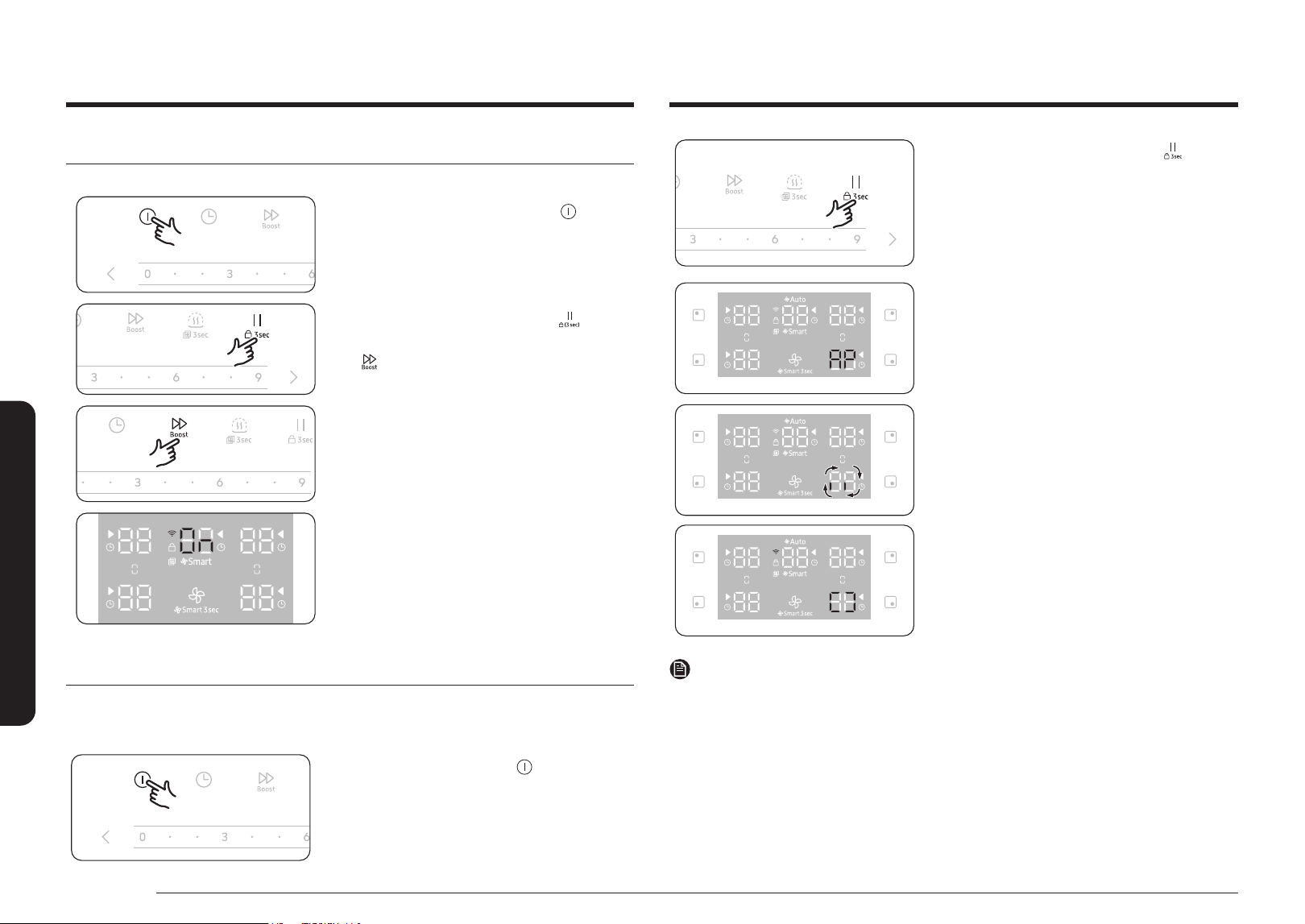
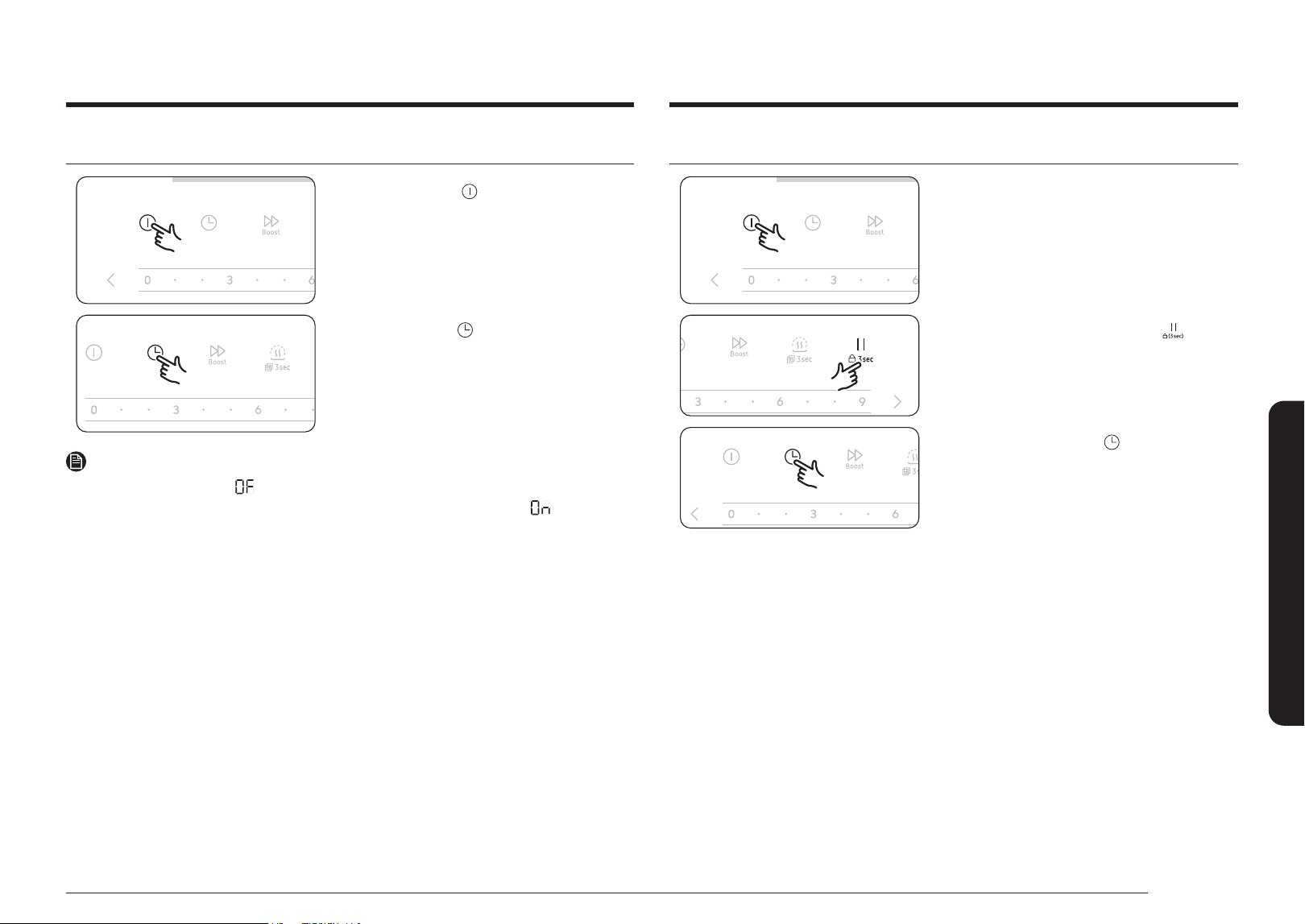
2. Press and hold the Pause & Lock button
for about 5 seconds. When the AP message
appears, prepare to connect with the mobile
app. Follow the guide displayed on the
mobile app to proceed with the connection.
• Even after the 'L' appears, please keep
pressing it.
Product registration started
3. When starting product registration, 'AP' is
displayed.
Product registration
4. While the device registration is in progress,
it is shown as illustrated.
Product registration completed
5. When the product registration is complete,
it is displayed as shown in the illustration
and blinks for 3 seconds.
6. Monitor registered products.
NOTE
The design of the cooking zone and control panel may vary depending on the model.
Wi-Fi on/off setting
Use for turning Wi-Fi on/off.
1. Please press and hold the Power button
(for more than 1 second) to turn on the
product.
2. Press and hold the Pause & Lock button
to set the lock, and press and hold the Boost
button (for more than 3 seconds).
Easy setup mobile app connection
Search for 'SmartThings' on the Google Play Store, Galaxy Store, or Apple App Store.
Download and install the SmartThings app provided by Samsung Electronics on your smart
device. A Samsung account is required to use the app.
1. Press and hold the Power button for
more than 1 second to turn on the product,
and prepare your mobile app (SmartThings).
English 23
Operation
Display brightness
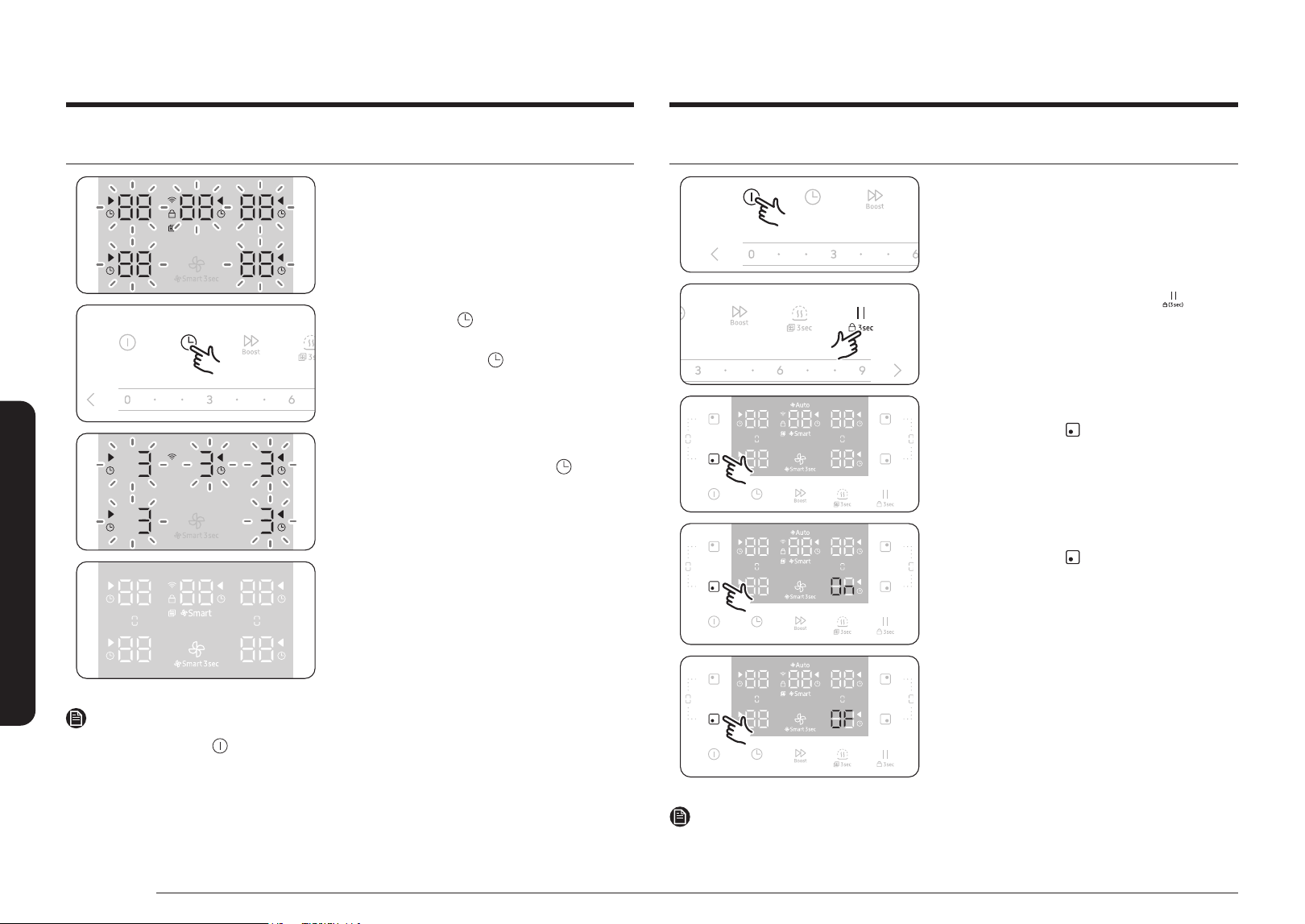
1. Check if the power is turned off.
2. Press and hold the Pause & Lock button
to set the lock.
3. Please press the Timer button for
3 seconds.
Sound on/off
1. Press the Power button for approximately
1 - 2 seconds.
2. Press the Timer button for 2 seconds
within 10 seconds after the power has turned
on.
NOTE
• Sound will turn off and will be displayed in the display.
• To change the sound setting, repeat steps 1 and 2. Sound will turn on and will be
displayed in the display.
• It is not possible to change the sound settings after 10 seconds from turning the power on.
24 English
Operation
Operation
Auto pan detection Add Feature
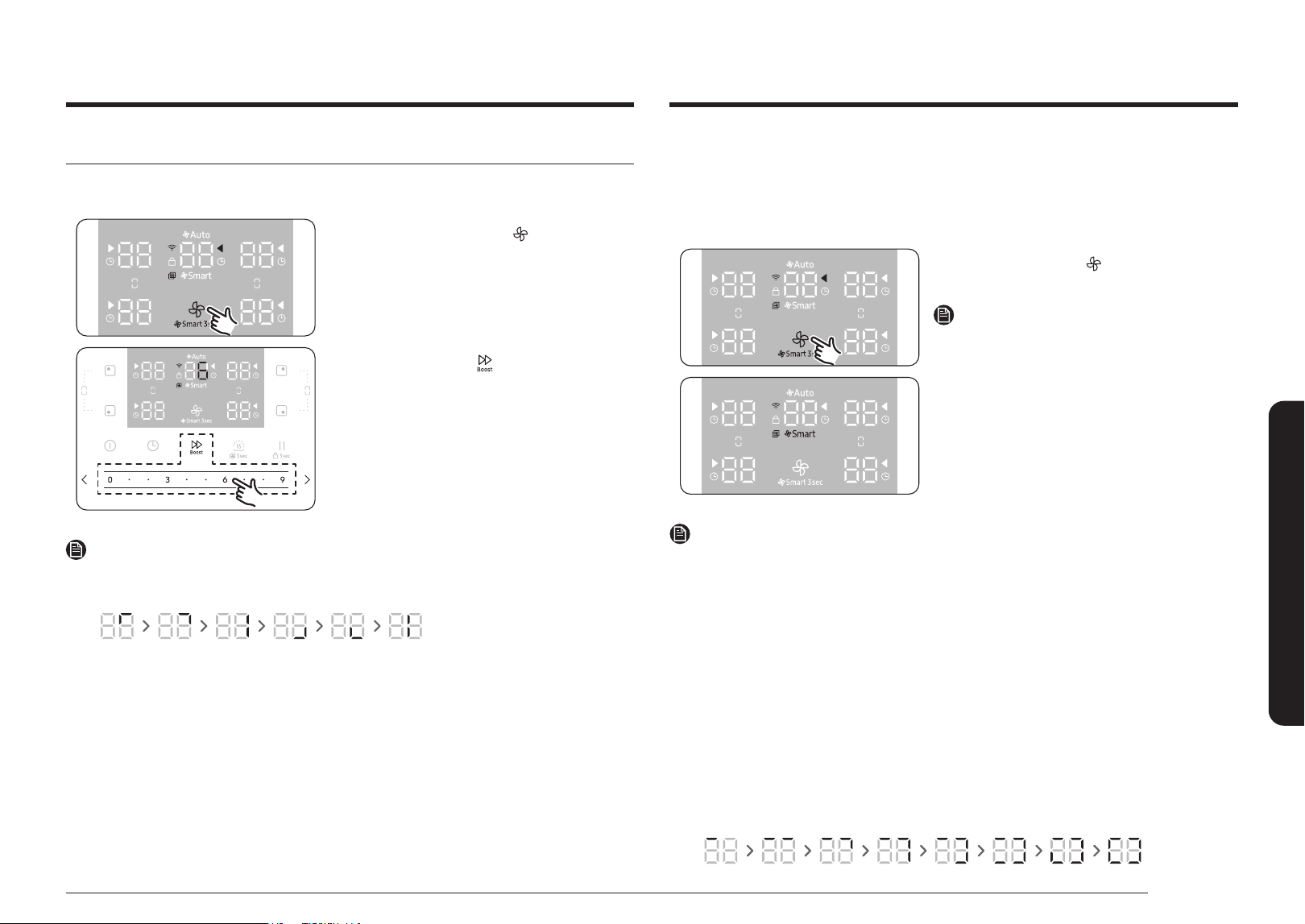
1. Check if the power is turned off.
2. Press and hold the Pause & Lock button
for more than 3 seconds to set the lock.
3. While in the locked state, press and hold the
LF cooking zone for more than 3 seconds.
4. You can turn the function on or off using the
LF cooking zone button.
NOTE
The automatic pan detection function is OFF by default.
However, the setting is only available when all cooking zones are turned off.
Method to Enter Brightness Setting Mode
1. When selecting the screen brightness
setting mode, all screens blink.
2. Press the Timer button to adjust the
brightness.
• Press the Timer button briey and
enter the brightness setting stage.
3. The icon blinks along with the current
brightness. Each time the Timer button is
pressed, the brightness changes in the order:
3 → 4 → 5 → 1 → 2.
4. After about 3 seconds, the setting is
completed and the lock is automatically
released.
NOTE
Do not press the Power
button after entering the brightness setting mode.
English 25
Operation
Smart/Auto Operation
(CC90H84JAD) Smart : This function is that automatically adjusts the airow when the sensor
and cooking zone power detects harmful gases generated during cooking.
(CC90H84PAD) Auto : This function is that automatically adjusts the airow according to the
cooking zone power.
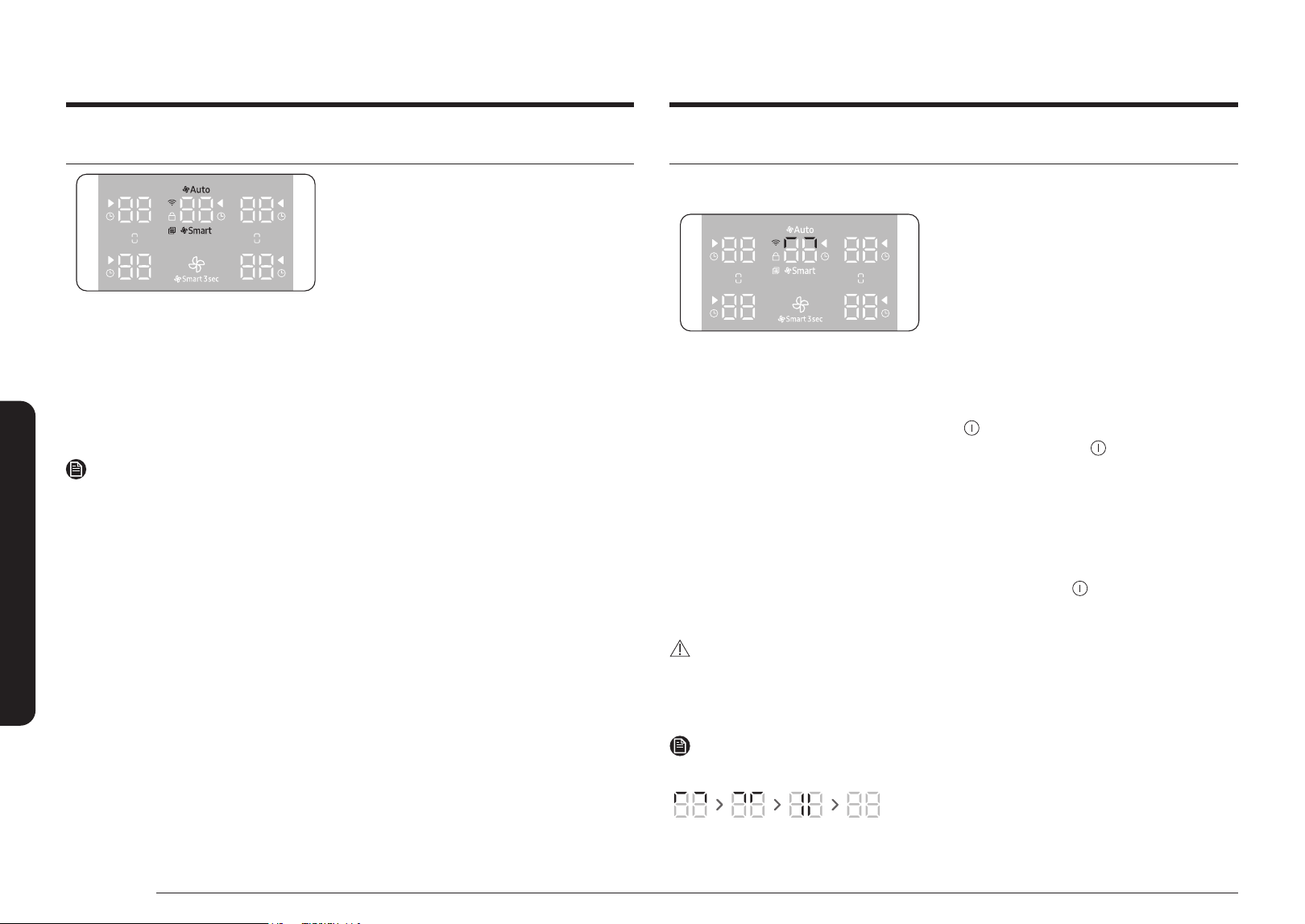
Press and hold the Hood button for 3 seconds
to select options.
NOTE
Smart/Auto operation Default : On
NOTE
• If the option is turned on while in manual mode inactive or AfterRun inactive state, the
indicator will turn on.
• While in manual mode, regardless of previously set options, pressing and holding the
hood will turn on the indicator and activate Smart/Auto operation.
• While Smart/Auto is operating, pressing and holding the hood will terminate Smart/
Auto operation.
• If Smart/Auto is terminated by pressing for 3 seconds and then the power is turned off
and on again, Smart/Auto operation will not start.
• If Smart/Auto is activated by pressing for 3 seconds and then the power is turned off and
on again, Smart/Auto operation will start.
• You can operate the hood manually after the Smart/Auto mode is turned off.
• If a lot of smoke (steam) occurs during cooking and the suction in Smart/Auto mode is
insufcient, please switch to manual operation.
• Smart/Auto mode Display
Using the hood
Manual Operation
1. Press and hold the Hood button.
2. Press 0~9 or Boost and then hood will be
operated.
NOTE
Operate the Boost mode for 8 minutes and then change to 9 Level.
• Boost mode Display
26 English
Operation
Operation
Hood AfterRun
This function is that operates the hood for a certain period of time after stopping to dry out
the moisture inside the product.
• Operation when the hood is turned off while
it is running.
• AfterRun operation when the hood timer is
set and the cooking is nished, at the end of
the timer.
• AfterRun operation only when the hood
has been running for more than 1 minute
and then turned off. (based on hood fan
operation)
• When the device is turned off with the Power
button, the AfterRun operation occurs,
and when the Power is turned off again,
the AfterRun ends.
• When the hood is turned off, AfterRun
operates and then you can select the hood to
change fan speed.
• AfterRun operates due to the timer ending
during manual hood operation.
• Even if the Power is turned off during
AfterRun operation, AfterRun is maintained.
CAUTION
• Do not place containers on the hood.
• Please refrain from using the hood to lower the temperature of hot containers.
• If an odor occurs, please ventilate immediately or turn on the hood.
NOTE
Hood AfterRun Operation Indicator
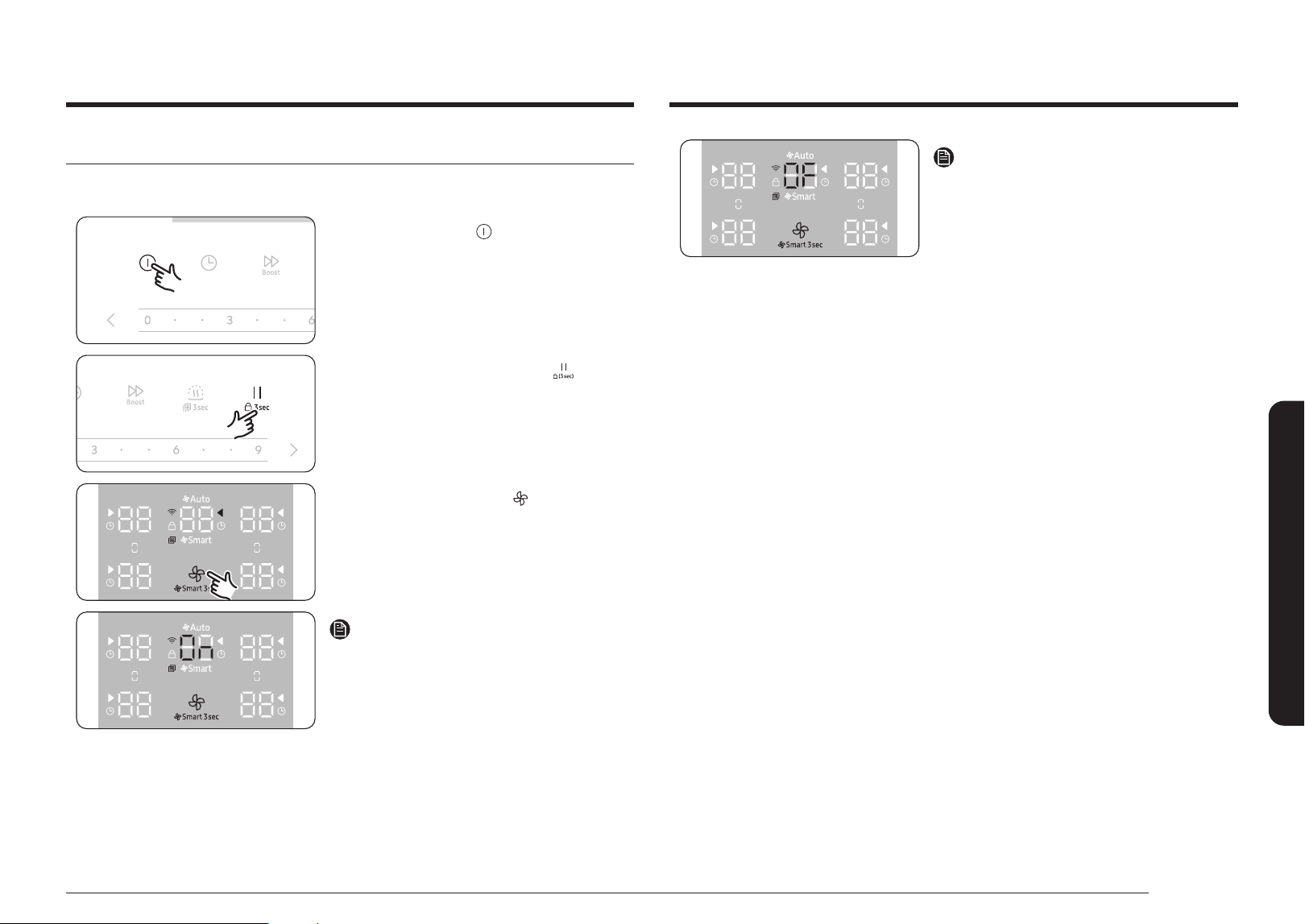
Hood Smart/Auto
This is an explanation of the Smart/Auto
automatic start.
• If you previously turned on the Smart/Auto
mode, the device will automatically start in
Smart/Auto when you turn it off and then on
again.
• If you previously turned on the Smart/Auto
mode, under conditions where the hood is
not manually operating (1~9, boost), if the
cooking zones are completely turned off
and then at least one cooking zone starts
operating, the Smart/Auto will automatically
start.
NOTE
• If the Smart/Auto feature was previously turned on, the Smart/Auto indicator will light
up immediately when you turn on the power.
• When the cooking zone is not operating, the hood fan will not operate according to the
automatic mode. (However, the Smart/Auto indicator remains lit.)
• If there is no cooking zone operation for 20 seconds, the set power will turn off.
• When the cooking zone is operating, the hood fan will operate according to the
automatic mode.
• When using pots as high height, the hood suction effective may be reduced.
English 27
Operation
NOTE
• If you need to change the AfterRun hood
wind speed and ventilation time settings
through the SmartThings App.
• AfterRun operation works according to
before setting hood wind speed, and If you
set the wind speed number high, it operates
quickly.
- Wind speed: 1(default) / 2 / 3
- Ventilation time: 5 minutes / 10 minutes
/ 15 minutes / 20 minutes(default) /
25 minutes
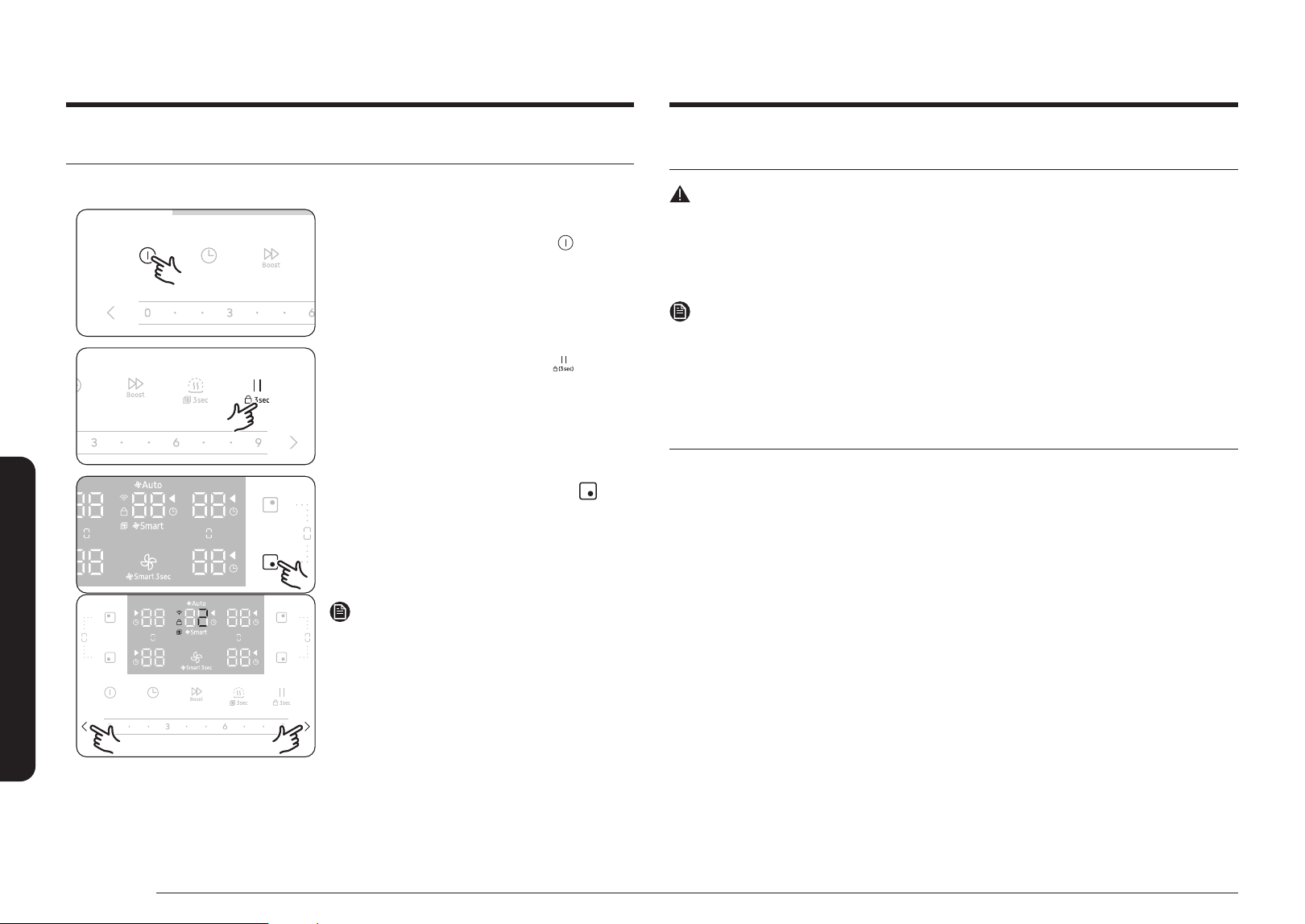
AfterRun function settings
This function is that operates the hood for a certain period of time after stopping to dry out
the moisture inside the product.
1. Check if the Power is turned on.
2. Press and hold the Pause/Lock button
for 3 seconds to set the lock.
3. Press and hold the Hood button for
3 seconds to set the AfterRun feature.
NOTE
• Default : On
• It can only be set when both the hood and
cooking zone are not operating.
28 English
Cleaning and Maintenance
Operation Cleaning and Maintenance
Cleaning the hob
WARNING
Cleaning agents must not come into contact with a heated ceramic glass surface: All cleaning
agents must be removed with adequate amounts of clean water after cleaning because they
can have a caustic effect when the surface becomes hot. Do not use any aggressive cleaners
such as grill or oven sprays, scouring pads or abrasive pan cleaners.
NOTE
Clean the ceramic glass surface after each use when it is still warm to the touch. This will
prevent spillage from becoming burnt onto the surface. Remove scales, watermarks, fat
drippings and metallic discolouration with the use of a commercially available ceramic glass
or stainless steel cleaner.
Light soiling
1. Wipe the ceramic glass surface with a damp cloth.
2. Rub dry with a clean cloth. Remnants of cleaning agent must not be left on the surface.
3. Thoroughly clean the entire ceramic glass cooking surface once a week with a
commercially available ceramic glass or stainless steel cleaner.
4. Wipe the ceramic glass surface using adequate amounts of clean water and rub dry with
a clean lint - free cloth.
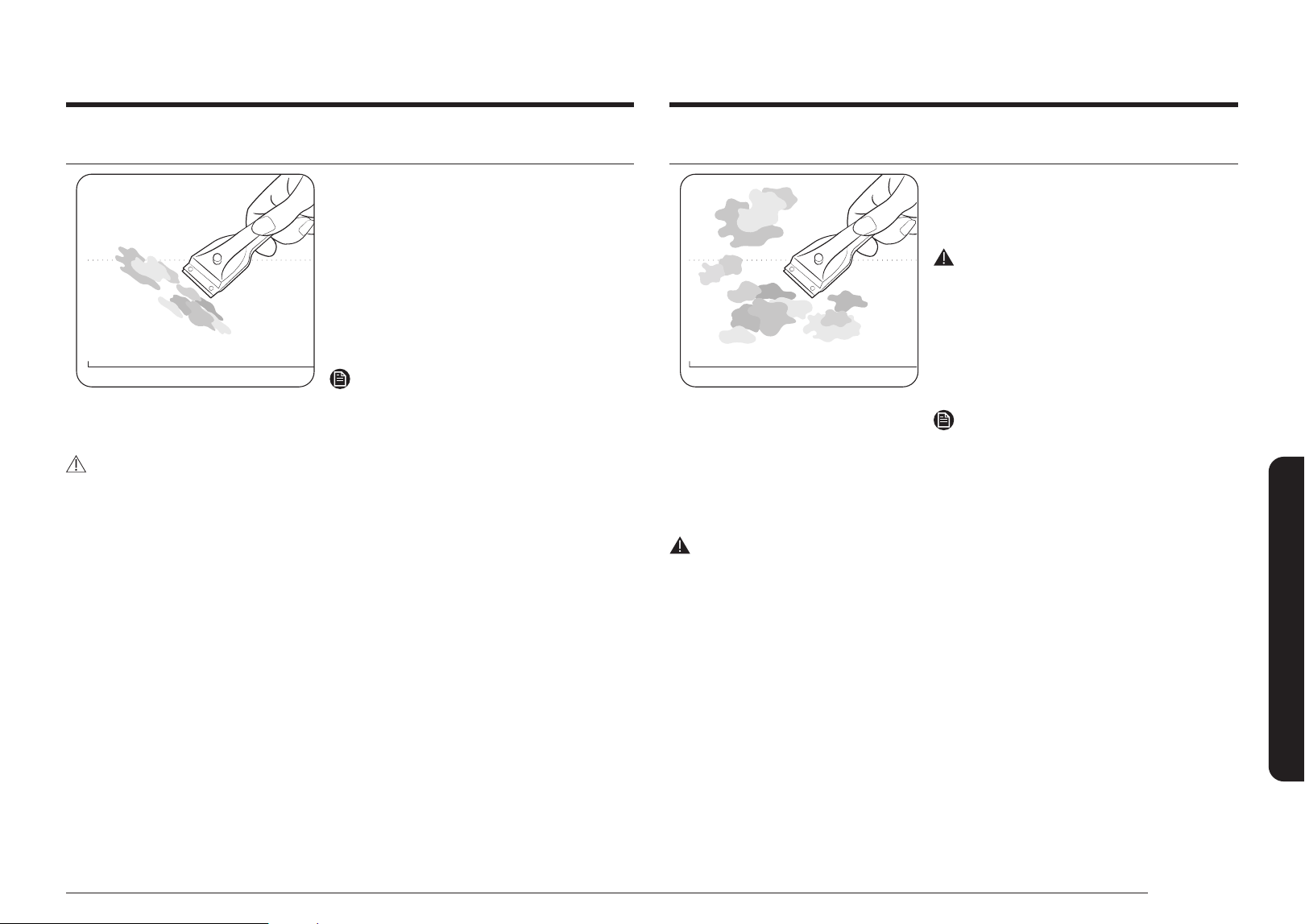
Smart mode sensitivity setting (only CC90H84JAD)
This function is that allows to set the sensor sensitivity when operating in Smart mode.
1. Sensitivity settings are available when the
power is on and press the Power button
for 1 second.
• It can only be set when the hood is not
working.
2. Press and hold the Pause/Lock button
for 3 seconds to set the lock.
3. Press and hold the RF cooking zone
button for 3 seconds to enter.
4. Check and change the current sensitivity
setting.
NOTE
• Change the setting value using the <,>
buttons.
• Sensitivity has a total of 3 levels
(Low/Medium(default)/High).
(Low: 1, Medium: 2, High: 3)
• The setting is automatically applied and
maintained after 3 seconds.
English 29
Cleaning and Maintenance
Problem dirt
1. Remove burnt-on sugar, melted plastic,
aluminium foil or other materials with a glass
scraper immediately and while still hot.
WARNING
There is a risk of burning yourself when the glass
scraper is used on a hot cooking zone:
2. Clean the hob as normal when it has
cooled down. If the cooking zone on which
something has melted has been allowed to
cool, warm it up again for cleaning.
NOTE
Scratches or dark blemishes on the ceramic glass
surface, caused, for example, by a pan with sharp
edges, cannot be removed. However, they do not
impair the function of the hob.
WARNING
• After cooling down, clean the cooktop normally. If the cooking area where something
has melted has already cooled down, heat it again to clean.
• For example, scratches or black stains on the surface of ceramic glass due to pots with
sharp edges cannot be removed.
• However, these things do not interfere with the normal operation of the cooktop.
• Do not use vinegar, lemon juice or other stain removers on the cooktop frame. There is a
risk of permanent stains.
• Wipe the frame with a damp cloth.
• Moisten the dry residue with a damp cloth and wipe until it dries completely.
• Do not use the cooktop as a workbench or storage space to prevent damage to the
device.
• Do not place pots in the cooking area or use empty pots.
• Ceramic glass is very resistant to temperature changes, but it is easy to break. Sharp or
hard objects can easily damage it upon impact.
• Do not place the pot on the cooktop frame. There is a risk of scratches and nish
damage.
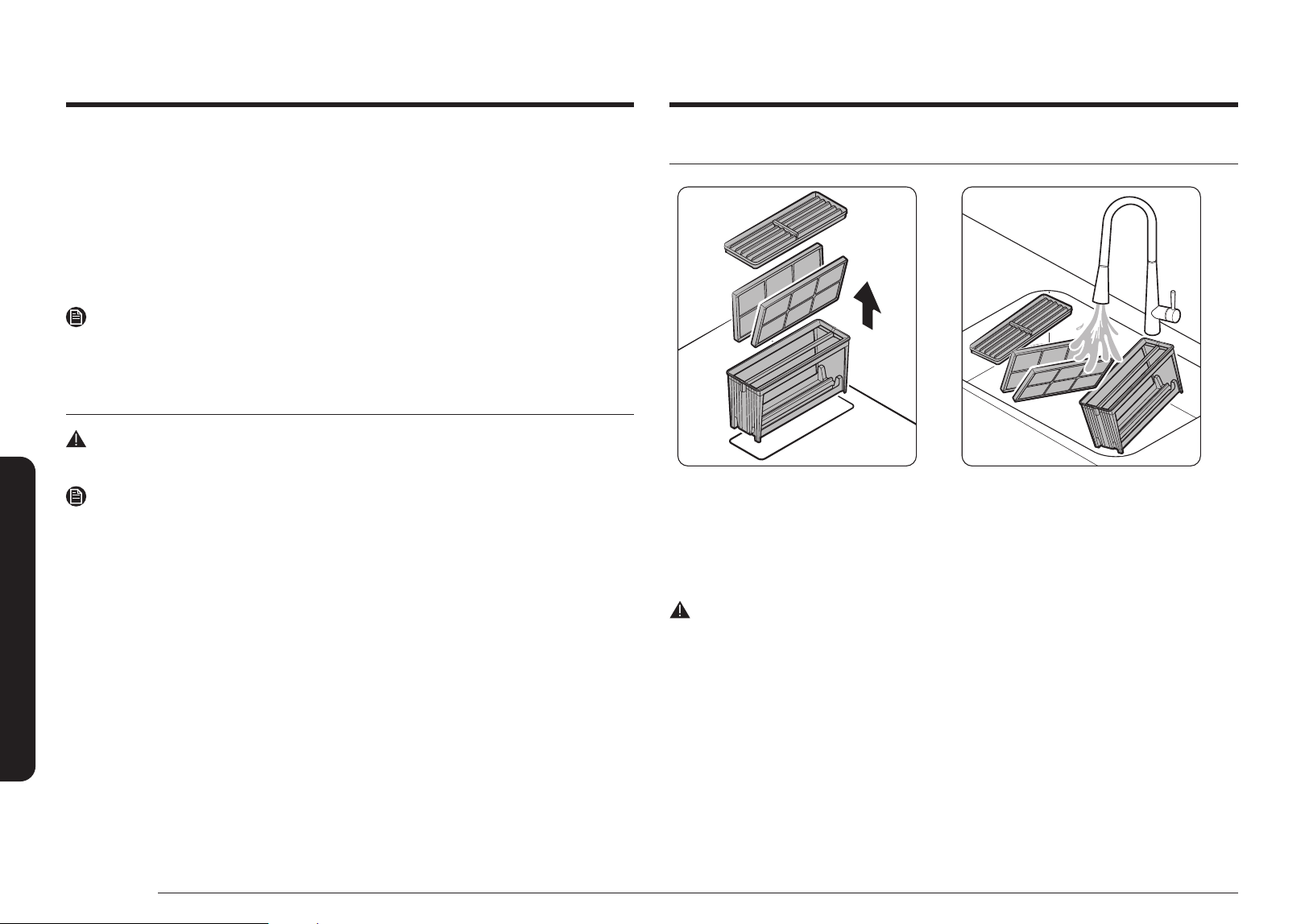
Stubborn soiling
1. To remove food that has boiled over and
stubborn splashes, use a glass scraper.
2. Place the glass scraper at an angle to the
ceramic glass surface.
3. Remove soiling by scraping with the blade.
4. Remove burnt sugar, melted plastic,
aluminum foil, or any other material with a
glass scraper as quickly as possible. Work
when it is still hot.
NOTE
Glass scrapers and ceramic glass cleaners are
available from specialty retailers.
CAUTION
The use of glass scrapers in hot cooking areas risks getting burned.
30 English
Cleaning and Maintenance
Cleaning and Maintenance
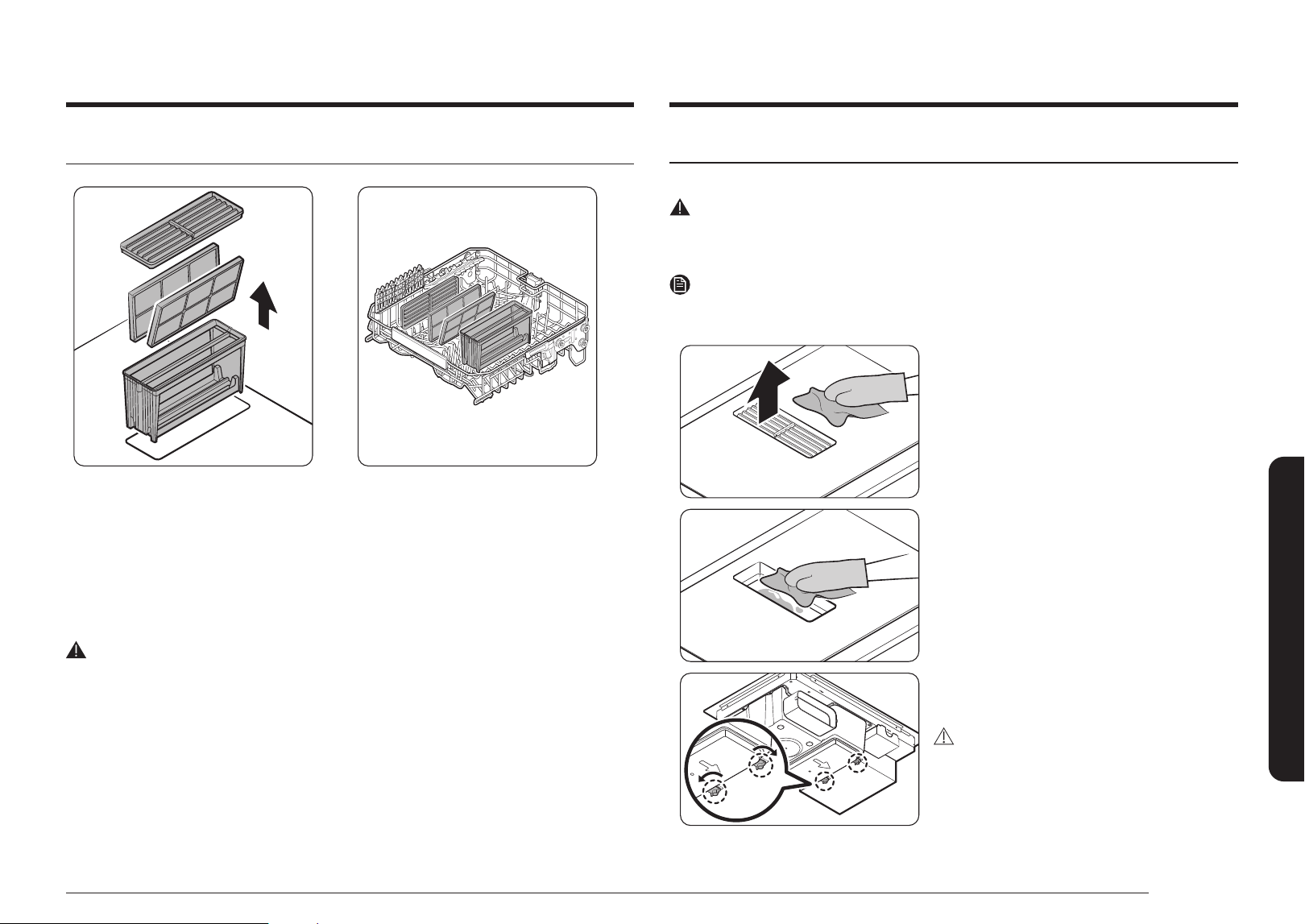
Cleaning the hood
1. Lift the Grille and detach the Tray Filter.
2. Disassemble the Grease Filter.
3. Please use a soft sponge or brush soaked in warm water and neutral liquid detergent to
wipe away and remove grease stains from the inside of the hood and its parts.
4. Once cleaning is complete, reassemble the parts in reverse order of disassembly.
WARNING
• Be sure to turn off the power when cleaning the hood.
• Do not use tools or equipment such as steel wool.
• Do not use baking soda, hydrogen peroxide, citric acid, abrasives, alcohol, etc. This may
damage the coating or cause discoloration.
• Always wear gloves for safety during cleaning.
• Do not spray water directly on the hood while it is installed. There is a risk of electric
shock and re.
• Finger and greasy marks easily appear on the surface, but are not as visible as on a
reective glass surface.
• Be careful not to spill acidic liquids such as vinegar, lemon juice or limestone into the
cooktop frame. These liquids can cause persistent stains.
• When food containing sugar melts in contact with hot cooking surfaces, it must be
cleaned with scrapers immediately while still warm. If the residue cools, there is a risk of
surface damage when removed.
• Do not place any dissolvable items such as plastic, aluminum foil or cellophane on
the ceramic glass surface area of the cooktop. Once these products are melted in the
cooktop, they must be removed with scrapers immediately.
NOTE
Please be advised that the Samsung warranty does NOT cover service calls to explain product
operation, correct improper installation, or perform normal cleaning or maintenance.
Cleaning and maintaining the hood
WARNING
Fatty deposits in the grease lter may catch re and there is a risk of re.
NOTE
• The sensor response may vary depending on the usage environment (near construction
sites, along roadsides, when using a vacuum cleaner, during bedding/clothing
arrangement, near fabric sofas, etc.).
• The sensor response may temporarily increase in the following cases: – When used
in places with furry carpets, animal hospitals with shedding animals, clothing stores,
humid areas, places with smoke, or areas with many insects. – When using humidiers,
electric rice cookers, sprays, or misting devices. – When used in environments with
yellow dust or external air inow (such as building ventilation systems, apartment
ventilation systems, or near windows with drafts).
• In environments affected by electromagnetic waves or electrical noise, the sensor
response may be increased.
• To maintain the hood performance, you must frequently clean the accessories (Tray
lter, Grease lter, Grille).
• The degree of contamination varies depending on the usage environment, so cleaning
should be carried out as needed based on the contamination status(every 2 or 3 weeks).
• Charcoal lters cannot be washed and can only be replaced.
English 31
Cleaning and Maintenance
Cleaning the Hood (Dishwasher)
1. Lift the Grille and detach the Tray Filter.
2. Disassemble the Grease Filter.
3. Place the Grille and Tray Filter and Grease Filter in the dishwasher.
But do not stack them.
4. Use a general household dishwasher detergent and clean at a low temperature with a
short cycle.
5. Once cleaning is complete, reassemble the parts in reverse order of disassembly.
WARNING
• The lter may discolor during washing, but this does not affect its performance.
• Do not wash heavily greased grease lters together with tableware.
• The edges of the lter are sharp and can cause injury, so always wear gloves when
handling it.
• Finger and greasy marks easily appear on the surface, but are not as visible as on a
reective glass surface.
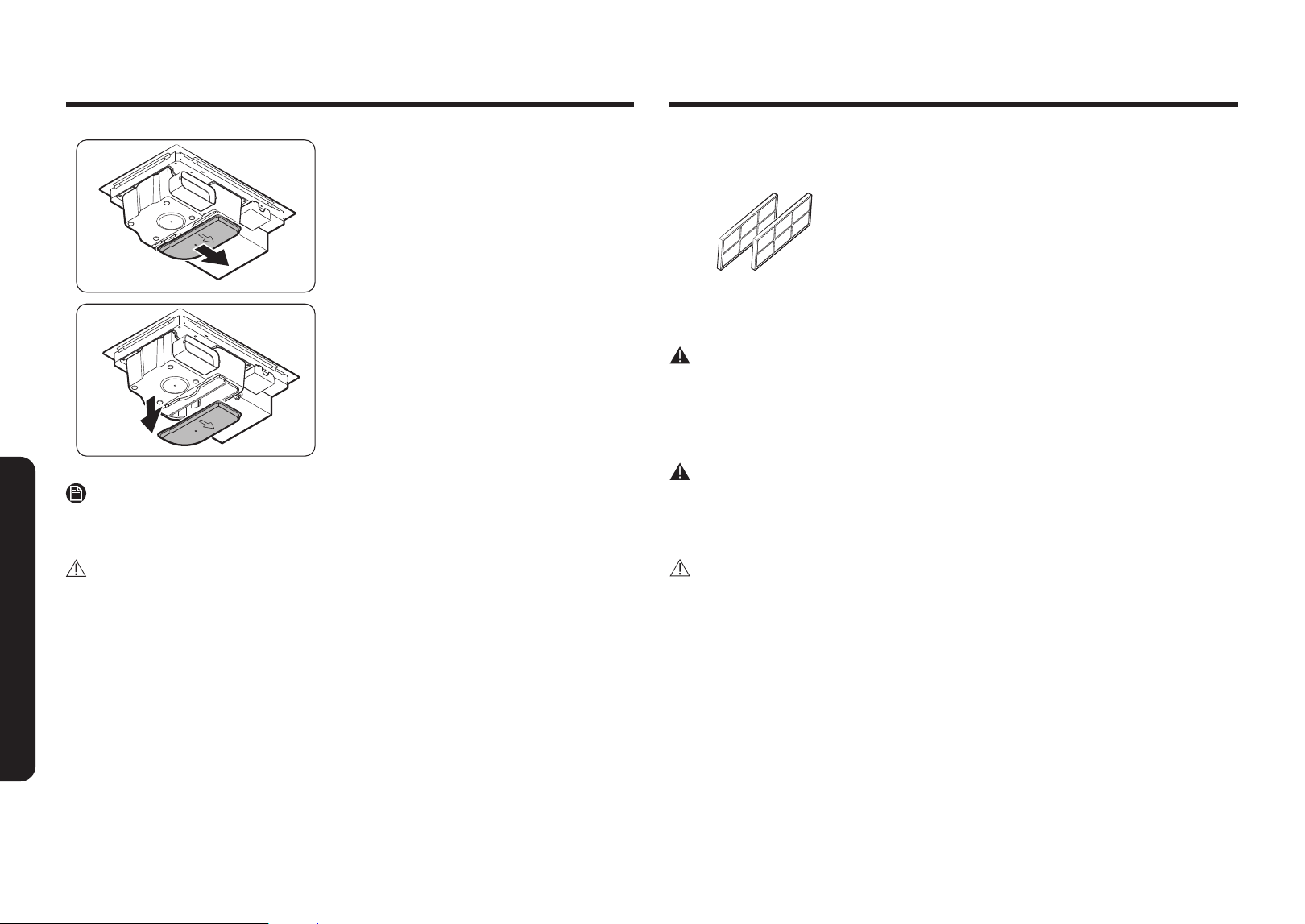
Cleaning the Hood Cover
If water or food particles have entered the Hood, clean it using this method.
WARNING
• Ensure the product's power is turned off before cleaning.
• There is a risk of electric shock.
NOTE
If the cabinet is xed at the bottom, there must be enough space for the hood cover to be
disassembled.
1. Carefully wipe around the grille with a dry
towel. Carefully lift and detach the grille,
tray lter, and grease lter.
2. Wipe the water and food(oil) that has
entered inside the product.
3. Please rotate the two holders in opposite
direction.
CAUTION
Please be careful not to spill water when
separating the hood cover.
32 English
Cleaning and Maintenance
Cleaning and Maintenance
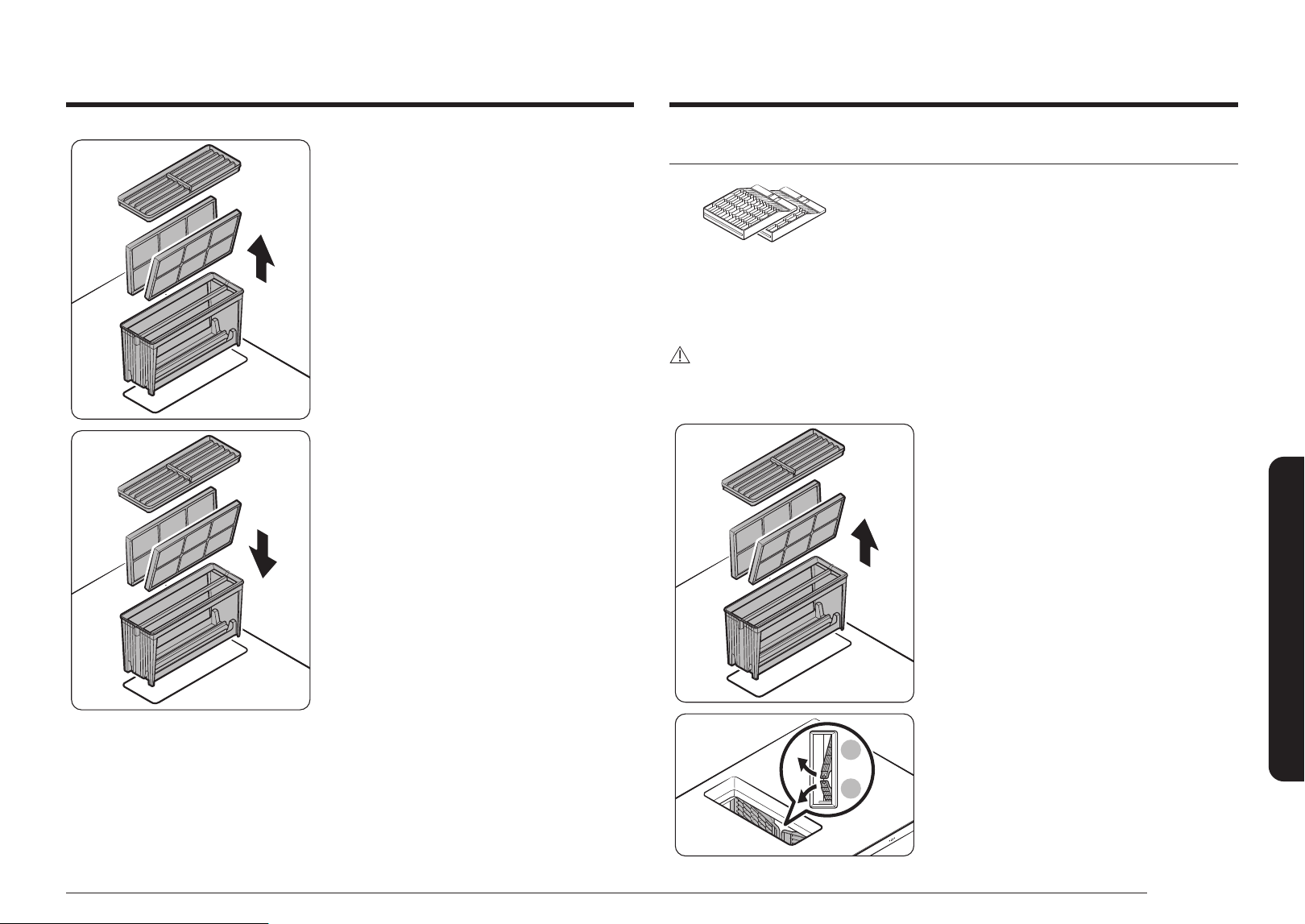
Replacing the Grease Filter
• This is a function that captures steam and oil fumes during cooking.
• To maintain the hood performance, you must frequently clean the grease lter.
WARNING
• Grease lter is made of metal, so it may be detected and heat up when placed on the
induction cooktop.
• Do not place the grease lter on the Induction Cooktop.
• Always attach the grease lter to the product when in use.
WARNING
• If you use the product without attaching the grease lter, oil fumes during cooking can
directly enter the inside of the product and the fan motor.
• Be sure to use the product with the grease lter correctly installed.
CAUTION
This part requires separate purchase and replacement through Samsung Service Center and
Homepage(www.samsung.com/
**
/support) when needed.
4. Push the hood cover in the direction of the
arrow.
5. Detach the cover from the hood basket in a
downward direction, and when washing is
complete, assemble the cover in the reverse
order.
NOTE
Recommend removing the hood cover to clean hardened oil.
After separation, please wipe off water and food(oil) with a dry towel before washing.
CAUTION
• If a lot of water has entered the hood top suction inlet, rst remove and clean the tray
lter. If the tray lter is overowing, remove the water from the bottom of the tray lter
rst, then remove and clean the under tank.
• Cleaning the cover will be difcult if there is a shelf xed to the bottom of the product
inside the cabinet. In this case, remove the drawer before cleaning.
English 33
Cleaning and Maintenance
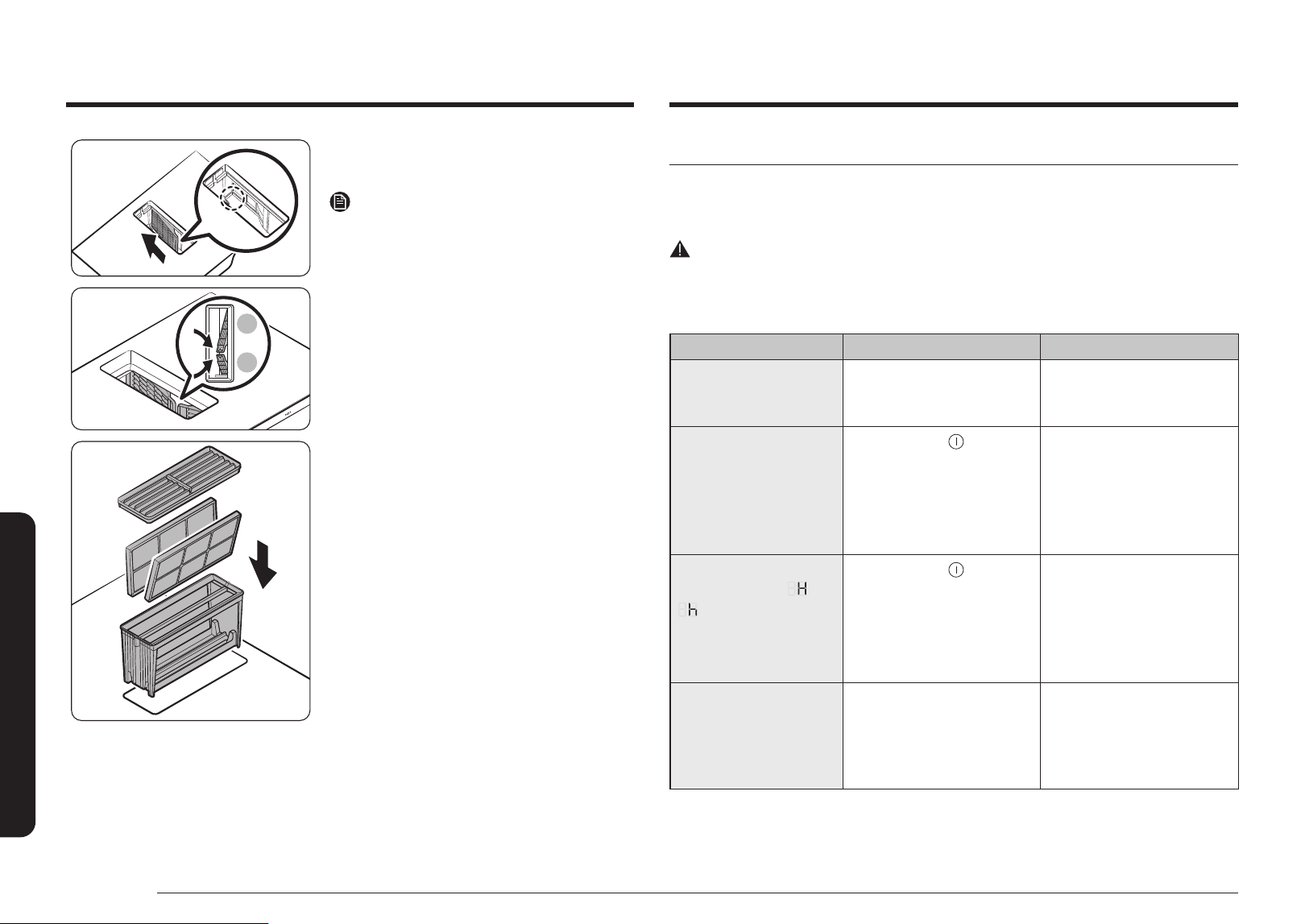
Replacing the Charcoal Filter
• This is a function that reduces smells from air drawn in during recirculation installation.
• The Charcoal lter has a standard lifespan of 360 hours, but its lifespan may vary
depending on the cooking environment and usage patterns. It is recommended to
replace it at least every 6 months.
CAUTION
This part cannot be cleaned and requires separate purchase and replacement through
Samsung Service Center and Homepage(www.samsung.com/
**
/support) when needed.
1. Lift the Grille and detach the Tray Filter.
1
2
2. Pull the top part of the Charcoal Filter
diagonally and then remove it.
1. Lift the Grille and detach the Tray Filter.
2. Disassemble the Grease Filter.
3. Replace with a new Grease Filter and
reassemble in the reverse order of
disassembly.
34 English
Troubleshooting and service
Cleaning and Maintenance
3. Assemble the new charcoal lter according
to the inside guide marks.
NOTE
• Assemble with the at surface facing up.
• Assemble the remaining lters in the
opposite direction using the same method.
1
2
4. Insert the new charcoal lter at an angle.
5. Assemble the remaining parts in reverse
order of disassembly.
Troubleshooting and service
Troubleshooting
A fault may result from a minor information that you can correct yourself with the help of the
following instructions. Do not attempt any further repairs if the following instructions do not
help in each specic case.
WARNING
Repairs to the appliance are to be performed only by a qualied service technician.
Improperly performed repairs may result in considerable risk to the user. If your appliance
needs repair, please contact your customer service centre.
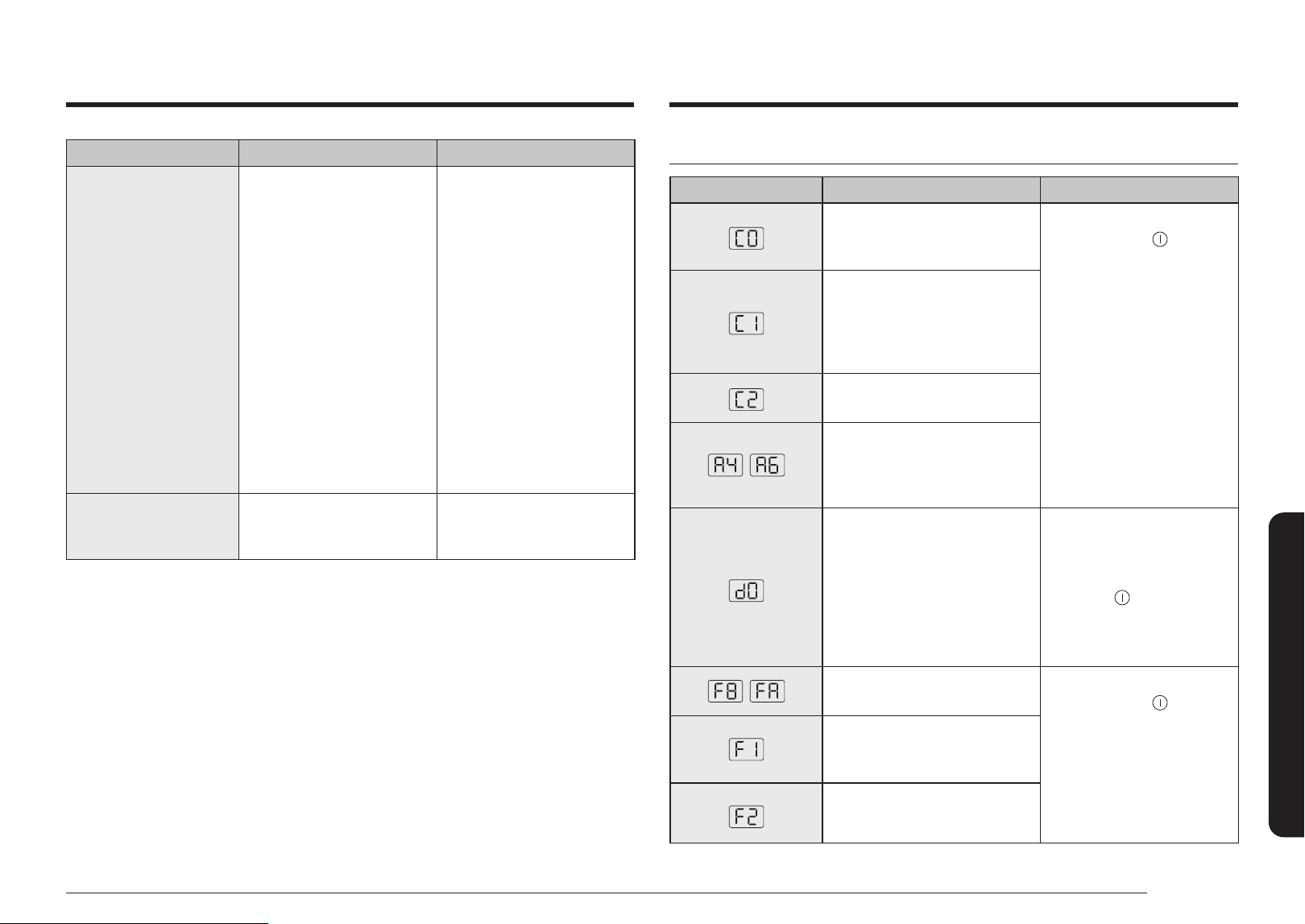
Problem Possible cause Solution
What should I do if the
cooking zones are not
functioning?
• The fuse in the house
wiring is not intact.
• If the fuses trip a
number of times, call an
authorised electrician.
What should I do if the
cooking zones will not
switch on?
• The Power
button
was accidentally
pressed.
• The control panel is
partially covered by a
damp cloth or liquid.
• Ensure the appliance is
properly switched on.
• Clean the control panel.
What should I do if the
display except for
,
the residual heat
indicator suddenly
disappears?
• The Power
button
was accidentally
actuated.
• The control panel is
partially covered by a
damp cloth or liquid.
• The appliance is properly
switched on.
• Clean the control panel.
What should I do if,
after the cooking zones
have been switched
off, residual heat is not
indicated in the display
• The cooking zone
was only briey used
and therefore did not
become hot enough.
• If the cooking zone is
hot, please call a local
service centre.
English 35
Troubleshooting and service
Information codes
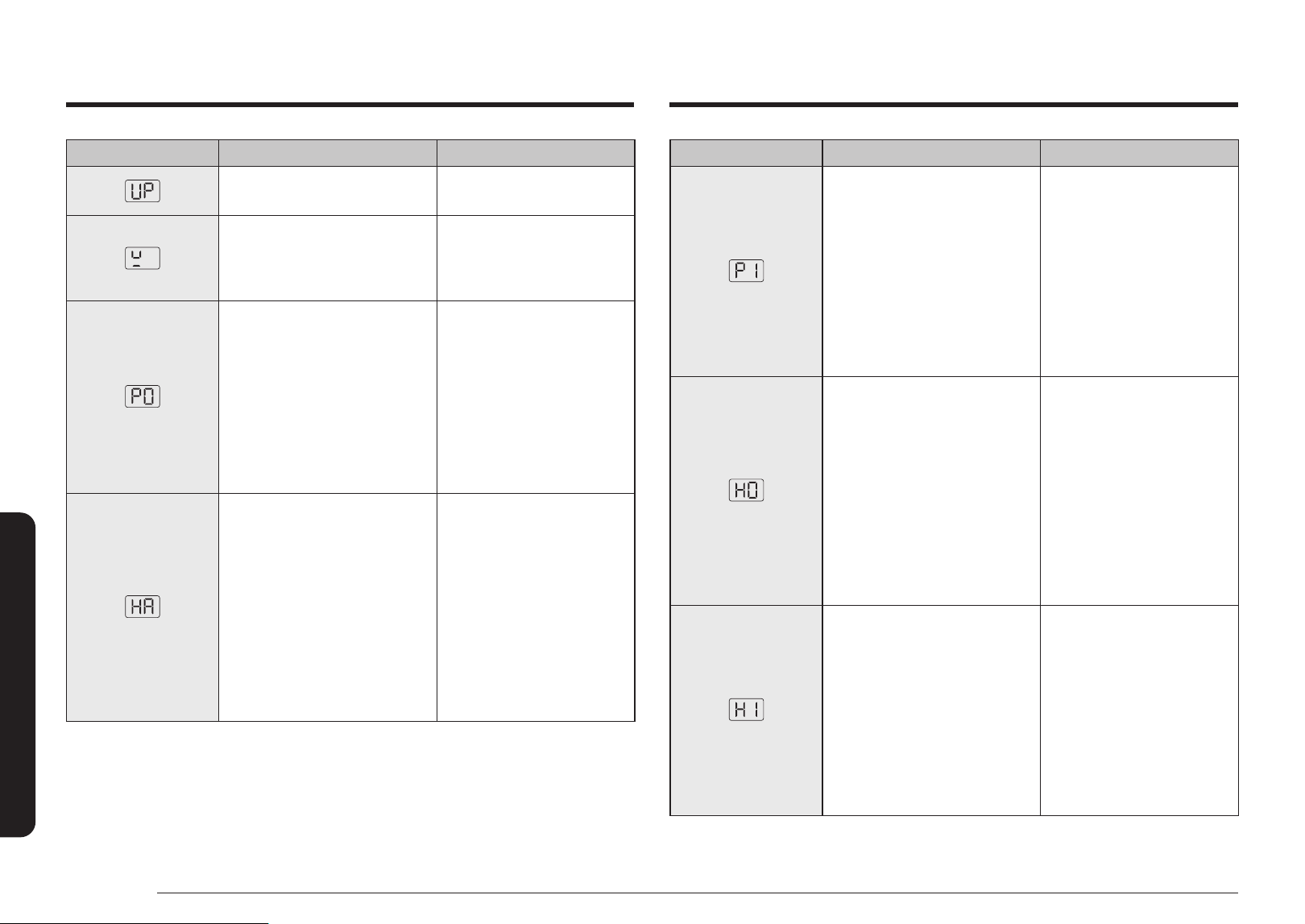
Information code Possible cause Solution
There is a problem with the
cooking zone temperature
sensor.
Restart the appliance
using the Power key.
If the problem continues,
disconnect power for more
than 30 seconds. Then,
restart the appliance and
try again. If the problem still
continues, contact a local
service centre.
The temperature is sensed
higher than specied.
When an error occurs, the hood
stops operating to prevent the
spread of re.
There is a problem with the PBA
sensor.
,
The DC Motor fails to operate
because of problems with the
PCB or wiring, or electrical
disturbance on the motor blade.
A key is being pressed for more
than 8 seconds.
Check if the key is wet or is
being pressed.
If the problem continues,
restart the appliance using
the Power key. If the
problem still continues,
contact a local service
centre.
,
Communications between main
and sub PCBs fail.
Restart the appliance
using the Power key.
If the problem continues,
disconnect power for more
than 30 seconds. Then,
restart the appliance. If the
problem still continues,
contact a local service
centre.
EEPROM Error occurs when
EEPROM or Read is not
performed.
The touch-enabled IC
communicates abnormally.
Problem Possible cause Solution
The hood’s mode changes
automatically.
• Is it operating in Smart/
Auto mode?
• Is it operating in Boost
mode?
• The Smart/Auto mode
operates automatically
according to sensor and
cooking zone power.
- Sensor and cooking
zone power
(CC90H84JAD) :
Smart
- Cooking zone power
(CC90H84PAD) :
Auto
• The Boost mode
operates for a maximum
of 8 minutes, and then
switches to 9 level
operation.
The hood’s wind strength
is weaks.
• Is there a lot of foreign
matter in the lter?
• Wipe off the lter with
a neutral detergent in
lukewarm water.
36 English
Troubleshooting and service
Troubleshooting and service
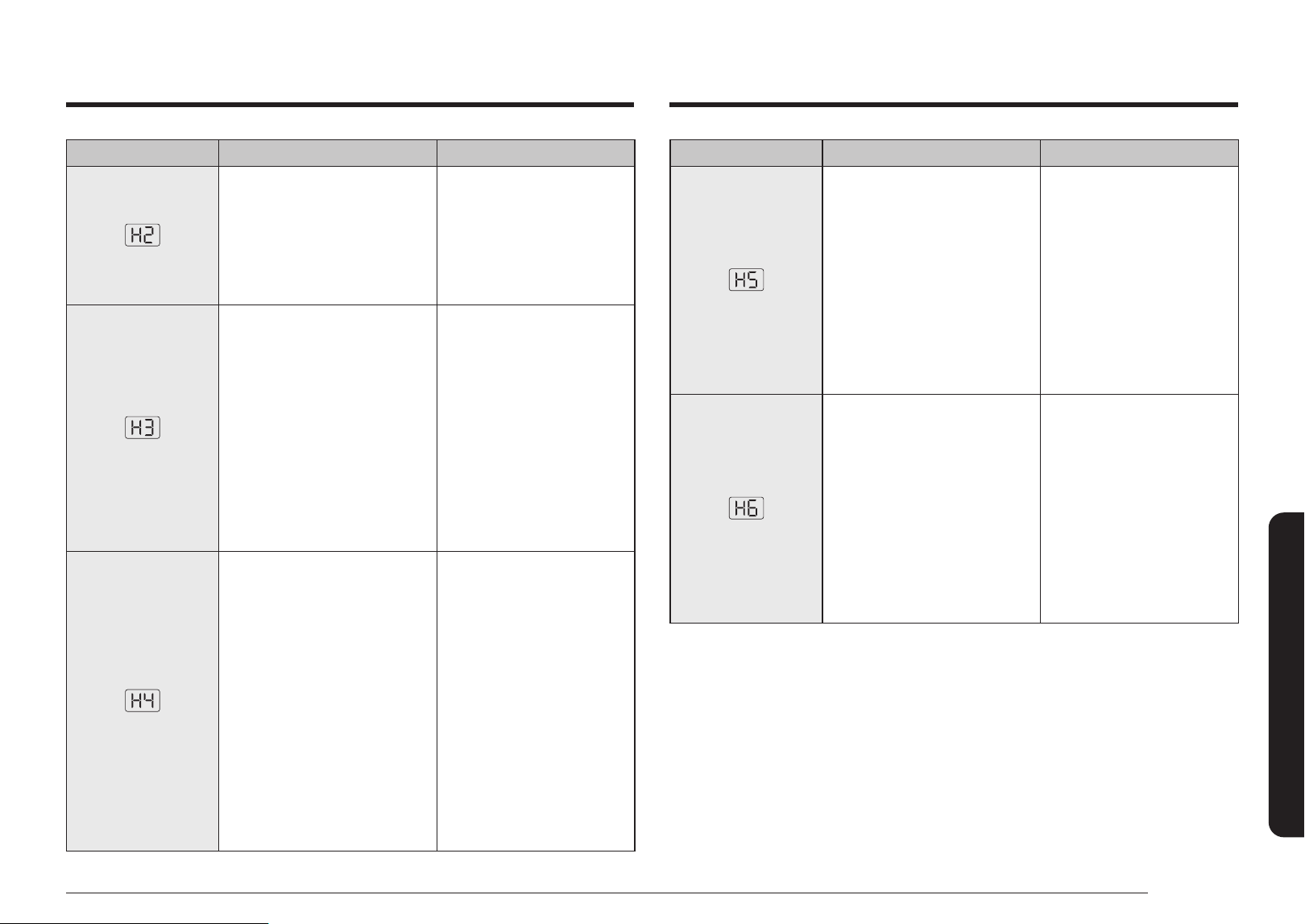
Information code Possible cause Solution
Communications between Hood
main and Hood Inverter PCB.
It occurs when the Hood
Main PCB and Hood Inverter
PCB are not communicating.
Disconnect the power plug
for more than 30 seconds,
then allow the product to
cool sufciently before
restarting. If this issue
persists, please contact
Samsung Electronics Service
Center.
FAN overcurrent error. It occurs when a problem
occurs in the electrical
circuit that controls the hood
fan's rotation and operation.
Disconnect the power plug
for more than 30 seconds,
then allow the product to
cool sufciently before
restarting. If this issue
persists, please contact
Samsung Electronics Service
Center.
FAN overload error. It occurs when the hood
fan is overloaded and
overcurrent occurs.
Disconnect the power plug
for more than 30 seconds,
then allow the product to
cool sufciently before
restarting. If this issue
persists, please contact
Samsung Electronics Service
Center.
Information code Possible cause Solution
It is out of normal voltage
(220 ~ 240 V).
Check home power
environment.
If the cooking container is not
suitable for the induction, or
operates without the cooking
container, it is displayed.
Use a cooking container
suitable for inductions.
Communications between main
and Hood Main PCB.
It occurs when the Main PCB
and Hood Main PCB are not
communicating.
Disconnect the power plug
for more than 30 seconds,
then allow the product to cool
sufciently before restarting.
If this issue persists, please
contact Samsung Electronics
Service Center.
EEPROM data information. It occurs when the EEPROM
data at Hood is interrupted,
due to some noise, defects of
Main PCB.
Disconnect the power plug
for more than 30 seconds,
then allow the product to
cool sufciently before
restarting. If this issue
persists, please contact
Samsung Electronics Service
Center.
English 37
Troubleshooting and service
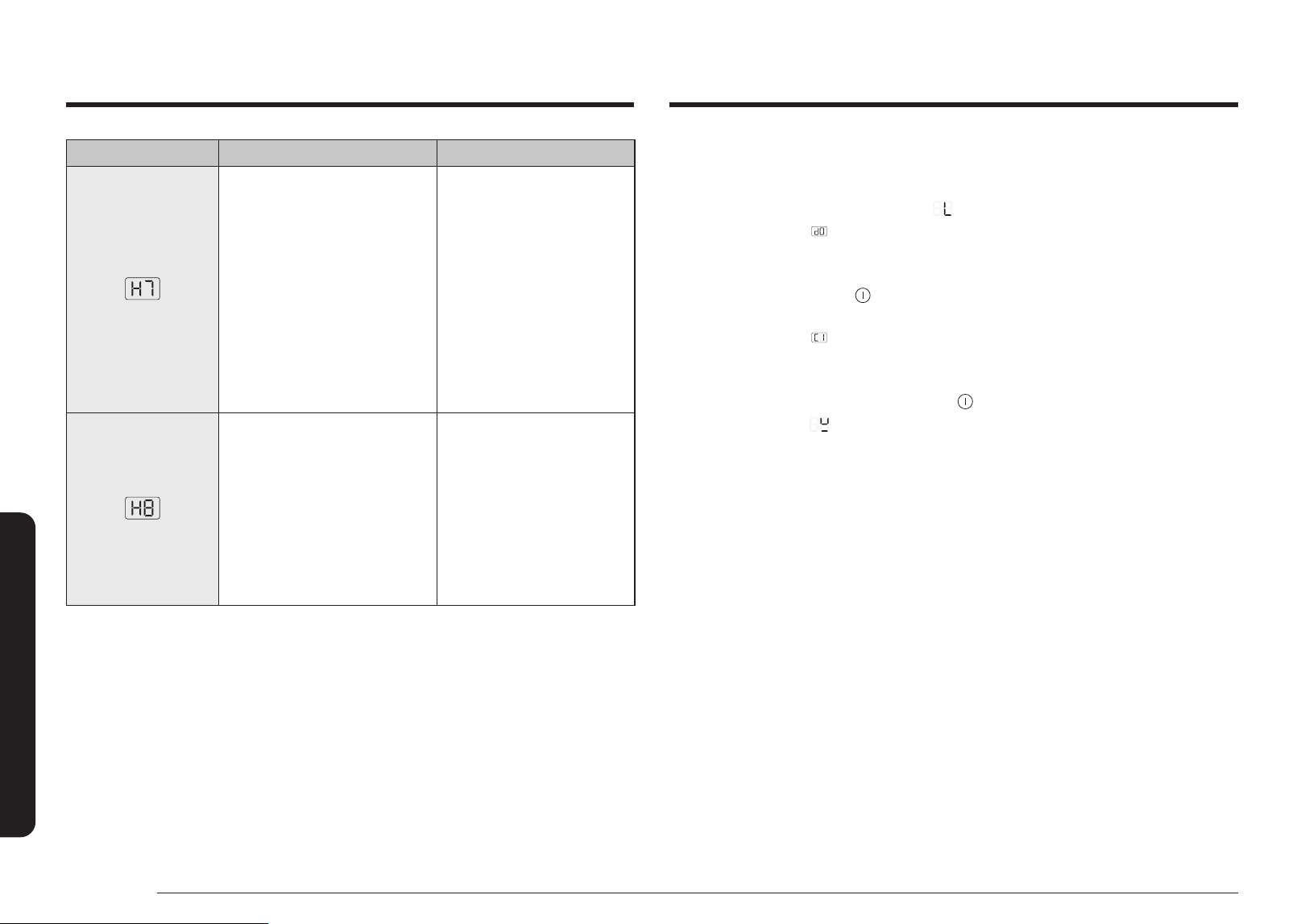
Information code Possible cause Solution
The hood fan motor IPM
overheat.
It occurs when a high
temperature is detected in
the internal electrical circuit
that operates the hood fan.
Disconnect the power plug
for more than 30 seconds,
then allow the product to
cool sufciently before
restarting. If this issue
persists, please contact
Samsung Electronics Service
Center.
The hood fan motor output
current sensor.
It occurs when there is a
problem with the sensor that
measures the current when
the hood fan is operating.
Disconnect the power plug
for more than 30 seconds,
then allow the product to
cool sufciently before
restarting. If this issue
persists, please contact
Samsung Electronics Service
Center.
Information code Possible cause Solution
FAN Wire disconnection error. It occurs when the hood fan
is not receiving sufcient
power or the fan wire is
disconnected.
If the issue persists, contact
Samsung Electronics Service
Center.
The hood fan Over voltage / Low
Voltage.
It occurs when the voltage
supplied to the hood fan
motor is too low or too high,
or when there is a problem
with the voltage sensor.
Disconnect the power plug
for more than 30 seconds,
then allow the product to
cool sufciently before
restarting. If this issue
persists, please contact
Samsung Electronics Service
Center.
The hood fan motor IPM
temperature sensor.
It occurs when there
is a problem with the
temperature sensor that
measures the surface
temperature of the heat
sink, which dissipates heat
from the electrical circuit
that controls the hood fan.
Disconnect the power plug
for more than 30 seconds,
then allow the product to
cool sufciently before
restarting. If this issue
persists, please contact
Samsung Electronics Service
Center.
38 English
Troubleshooting and service
Troubleshooting and service
What should I do if the cooking zone will not switch on or off?
This could be due to one of the following possibilities:
• The control panel is partially covered by a damp cloth or liquid.
• The child safety lock is on. and display
.
What should I do if the
display is illuminated?
Check for the following:
• The control panel is partially covered by a damp cloth or liquid.
To reset, press the Power
key.
• If liquid has overowed on control panel, please wipe the liquid.
What should I do if the
display is illuminated?
Check for the following:
• The hob is overheated because of abnormal operation.
• After hob is cooled down, press the Power
key for resetting.
What should I do if the
display is illuminated?
Check for the following:
• Cookware is unsuitable, too small, or no cookware has been placed on the cooking zone.
• If you use suitable cookware, displayed message will automatically disappear.
What should I do if the cooling fan runs after the hob is turned off?
Check for the following:
• When you have nished using the hob, the cooling fan runs by itself for cooling down.
• After the hob’s electronics has cooled down or elapsed max time (10 minutes) the
cooling fan will be turned off.
• If you request a service call because of an information made in operating the appliance,
the visit from the customer service technician may incur a charge even during the
warranty period.
Information code Possible cause Solution
The hood fan motor DC voltage
sensor.
It occurs when there is a
problem with the sensor
that measures the voltage
in the electrical circuit that
controls the hood fan.
Disconnect the power plug
for more than 30 seconds,
then allow the product to
cool sufciently before
restarting. If this issue
persists, please contact
Samsung Electronics Service
Center.
The hood fan motor not
starting.
It occurs when the hood fan
fails to operate.
Disconnect the power plug
for more than 30 seconds,
then allow the product to
cool sufciently before
restarting. If this issue
persists, please contact
Samsung Electronics Service
Center.
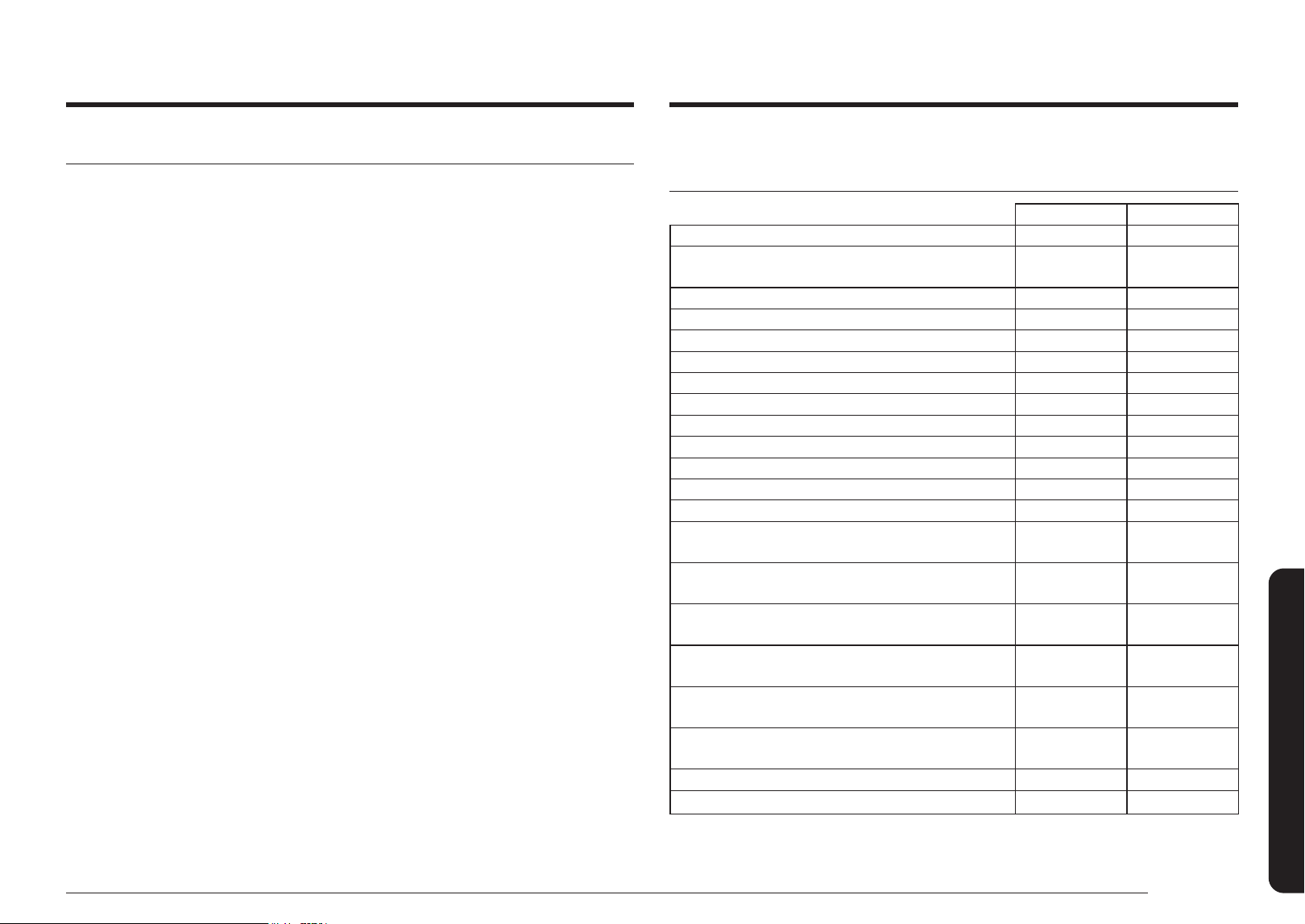
English 39
Technical specications
Technical specications
Product Fiche compliant to commission delegated regulation (EU)
No 65/2014
Value Unit
Supplier's name or trade mark Samsung -
Model identier
CC90H84JAD /
CC90H84PAD
-
Annual Energy Consumption - AEC
hood
44.1 kWh/a
Energy Efciency Class A+ -
Fluid Dynamic Efciency - FDE
hood
32.0 -
Fluid Dynamic Efciency Class A -
Light Efciency - LE
hood
* lux/W
Lighting Efciency Class * -
Grease Filtering Efciency - GFE
hood
95.1 %
Grease Filtering Efciency Class A -
Minimum Air Flow in normal use 190.0 m
3
/h
Maximum Air Flow in normal use 600.0 m
3
/h
Air Flow at intensive/boost setting 720.0 m
3
/h
A-weighted Sound Power Emission at minimum speed 42
dB(A) re
1pW
A-weighted Sound Power Emission at maximum speed 68
dB(A) re
1pW
A-weighted Sound Power Emission at intensive or
boost speed
72
dB(A) re
1pW
A-weighted Sound Power Emission at minimum speed
- Recirculation mode **
41
dB(A) re
1pW
A-weighted Sound Power Emission at maximum speed
- Recirculation mode **
70
dB(A) re
1pW
A-weighted Sound Power Emission at intensive or
boost speed - Recirculation mode **
72
dB(A) re
1pW
Power consumption off mode - P
o
0.30 W
Power consumption in standby mode - P
s
* W
Service
Before calling for assistance or service, please check the section “Troubleshooting”. If you still
need help, follow the instructions below.
Is it a technical fault?
If so, please contact your customer service centre.
Always prepare in advance for the discussion. This will ease the process of diagnosing the
problem and also make it easier to decide if a customer service visit is necessary.
Please take note of the following information.
• What form does the problem take?
• Under what circumstances does the problem occur?
When calling, please know the model and serial number of your appliance. This information is
provided on the rating plate as follows:
• Model description
• S/N code (15 digits)
We recommend that you record the information here for easy reference.
• Model:
• Serial number:
When do you incur costs even during the warranty period?
• If you could have remedied the problem yourself by applying one of the solutions
provided in the section “Troubleshooting”.
• If the customer service technician has to make several service calls because he was not
provided with all of the relevant information before his visit and as a result, for example,
has to make additional trips for parts. Preparing for your phone call as described above
will save you the cost of these trips.
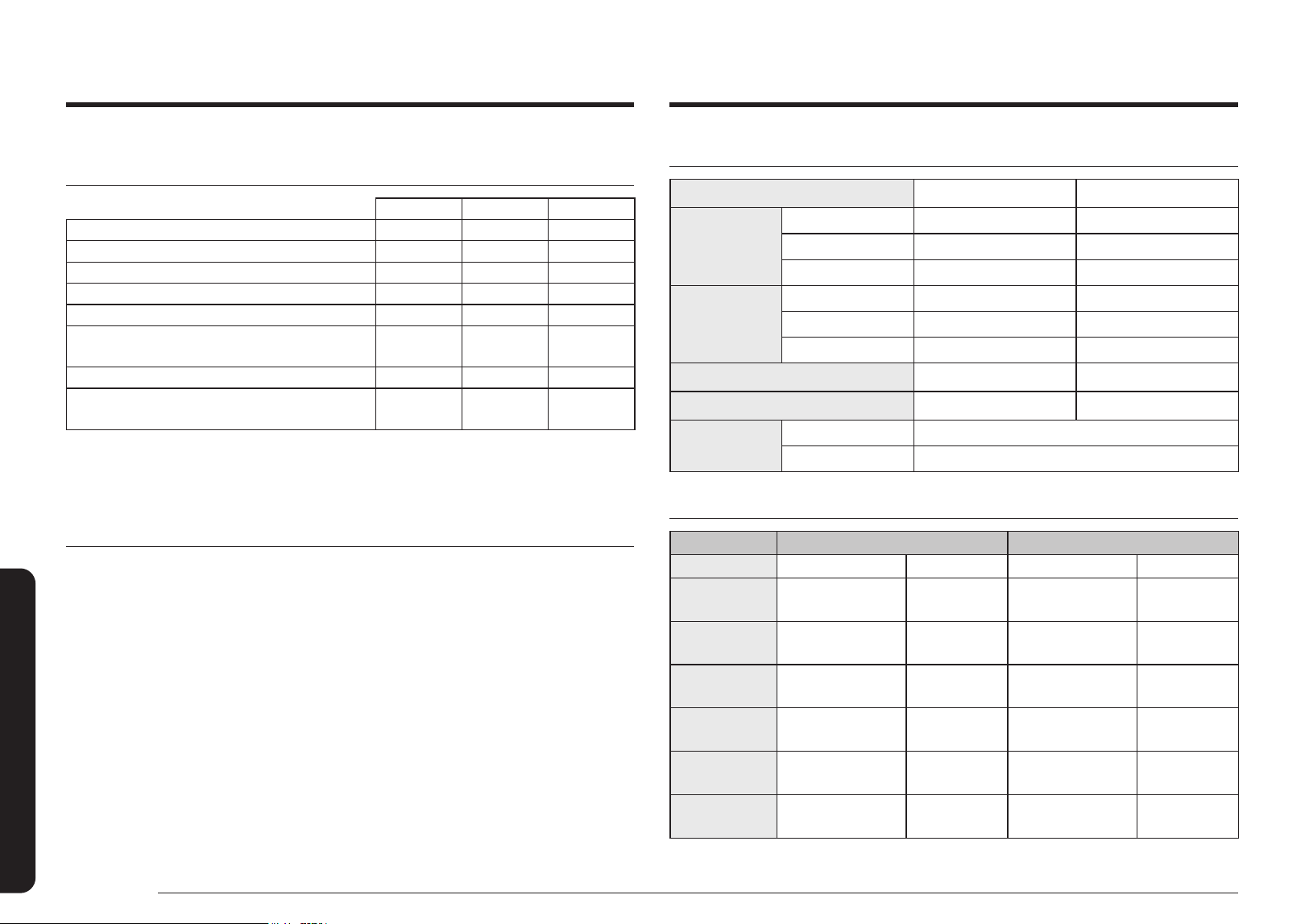
40 English
Technical specications
Technical specications
Additional Product Information compliant to commission regulation (EU)
No 66/2014
Symbol Value Unit
Time increase factor f 0.8 -
Energy Efciency Index EEI
hood
44.8 -
Measured air ow rate at best efciency point Q
BEP
381.0 m
3
/h
Measured air pressure at best efciency point P
BEP
456 Pa
Maximum air ow Q
max
720.0 m
3
/h
Measured electric power input at best efciency
point
W
BEP
151.0 W
Nominal power of the lighting system W
L
* W
Average illumination of the lighting system on
the cooking surface
E
middle
* lux
* Does not apply to this product
** Voluntary declaration
Product Fiche compliant to commission delegated regulation (EU)
No 65/2014
Data determined according to standard EN 61591, EN 60704-2-13, EN 50564, Commission
Regulations (EU) No 65/2014 and (EU) No 66/2014.
Suggestions for a correct use in order to reduce the environmental impact: Switch ON the
hood at minimum speed when you start cooking and keep it running for a few minutes after
cooking is nished. Increase the speed only in case of large amount of smoke and vapor and
use boost speed(s) only in extreme situations. Replace the charcoal lter(s) when necessary
to maintain a good smell reduction efciency. Clean the grease lter(s) when necessary to
maintain a good grease lter efciency. Use the maximum diameter of the ducting system
indicated in this manual to optimize efciency and minimize noise.
Technical data
Model identication CC90H84JAD CC90H84PAD
Appliance
dimensions
Width 800 mm 800 mm
Depth 520 mm 520 mm
Height 230 mm 230 mm
Worktop cut -
out dimensions
Width 882 mm 800 mm
Depth 602 mm 602 mm
Height 312 mm 312 mm
Connection voltage 220~230V/50~60Hz 220~230V/50~60Hz
Maximum connected load power 7.4kW 7.4kW
Weight
Net 29.9kg
Gross 32.0kg
Cooking zones
CC90H84JAD CC90H84PAD
Position Power Boost Time Power Boost Time
Left Front
2100 W /
Boost 2700 W
8 min
1800 W /
Boost 2600 W
8 min
Left Rear
2100 W /
Boost 2700 W
8 min
1800 W /
Boost 2600 W
8 min
Right Front
2100 W /
Boost 2700 W
8 min
2200 W /
Boost 3400 W
8 min
Right Rear
2100 W /
Boost 2700 W
8 min
1500 W /
Boost 2600 W
8 min
Flex Zone
2100 W /
Boost 2700 W
5 min
2400 W / Boost
3700 W
5 min
Complete Flex
2700 W /
Boost 3700 W
5 min - -
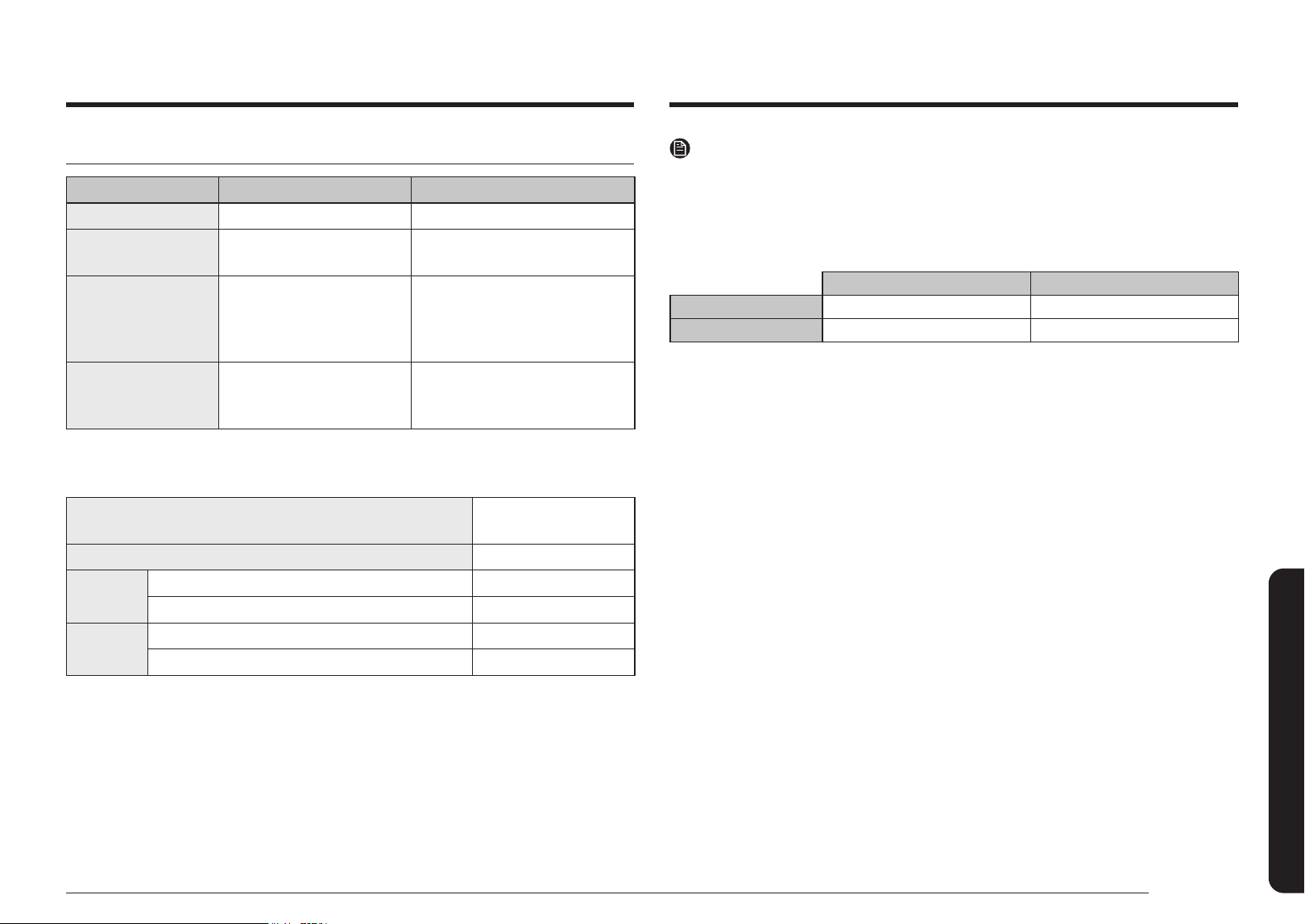
English 41
Appendix
Appendix
NOTE
Hereby, Samsung declares that this radio equipment is in compliance with Directive 2014/53/
EU and with the relevant statutory requirements in the UK. The full text of the EU declaration
of conformity and the UK declaration of conformity is available at the following internet
address: The ofcial Declaration of conformity may be found at http://www.samsung.com. go
to Support > Search Product Support and enter the model name.
Frequency range Transmitter power (Max)
Wi-Fi 2412-2472 MHz 20 dBm
Bluetooth 2402-2480 MHz 10 dBm
Product information
Supplier’s name Samsung Electronics co. Ltd. Samsung Electronics co. Ltd.
Model identication CC90H84JAD CC90H84PAD
Number of cooking
zones and/or area
2 3
Energy consumption
per cooking zone or
area calculated per kg
(EC
electric cooking
)
36.5 x 21.0 cm :190 Wh/kg
36.5 x 21.0 cm : 190.9 Wh/kg
36.5 x 18.0 cm : 196.5 Wh/kg (Left)
18.0 cm : 185.5 Wh/kg (Upper)
21.0 cm : 178.6 Wh/kg (Lower)
Energy consumption
for the hob calculated
per kg (EC
electric hob
)
190.5 Wh/kg 186.8 Wh/kg
Data determined according to standard EN 60350-2 and Commission Regulations
(EU) No 66/2014.
Overall Standby Power consumption (W)
(All network ports is "on" condition)
1.9 W
Period of time for the power management (min) 20 min.
Wi-Fi Standby-mode Power Consumption (W) 1.9 W
Period of time for the power management (min) 20 min.
Off mode Power consumption 0.30 W
Period of time for the power management (min) 20 min.
Energy Saving Tips
Save energy by:
• Positioning pots and pans before switching on the zone.
• Keeping zones and pan bases clean.
• Using lids rmly on pots and pans.
• Switching zones off before the end of cooking time and using residual heat.
QUESTIONS OR COMMENTS?
COUNTRY CONTACT CENTER WEB SITE
UK 0333 000 0333
www.samsung.com/support
IRELAND (EIRE) 0818 717100
GERMANY 06196 77 555 77
FRANCE 01 48 63 00 00
SPAIN 91 175 00 15
PORTUGAL
210 608 098 Chamada para a rede xa nacional Dias
úteis das 9h às 20h
LUXEMBURG +352 2610 37 10
NETHERLANDS +31 88 909 0111
BELGIUM +32 26200210
NORWAY 21 62 90 99
DENMARK 70 70 19 70
FINLAND OLD 030-622 75 15, NEW number: 0800 528 475
SWEDEN 0771-400 300
AUSTRIA 0800 72 67 864 (0800-SAMSUNG)
SWITZERLAND 0800 726 786
HUNGARY
06 1 42 92 312
CZECH
800726786
SLOVAKIA
800726786
CROATIA 072 726 786
COUNTRY CONTACT CENTER WEB SITE
BOSNIA 055 233 999
www.samsung.com/support
North Macedonia 023 207 777
MONTENEGRO 020 405 888
SLOVENIA 080 697 267 (brezplačna številka)
SERBIA 011 321 6899
Kosovo 038 40 30 90
ALBANIA 045 620 202
BULGARIA
0800 111 31-Безплатен за всички оператори
*3000-Цена на един градски разговор или
според тарифата на мобилният оператор 09:00 до
18:00-Понеделник до Петък
ROMANIA
0800872678-Apel gratuit *8000-Apel tarifat în reţea
Program Call Center Luni - Vineri: 9 AM - 6 PM
ITALIA 800-SAMSUNG (800.7267864)
CYPRUS 8009 4000 only from landline, toll free
GREECE
80111-SAMSUNG (80111 726 7864)
from mobile and land line
(+30) 210 6897691 from mobile and land line
POLAND
801-172-678*
* (opłata według taryfy operatora)
LITHUANIA 0-800-77777
LATVIA 8000-7267
ESTONIA 800-7267
UKRAINE 0-800-502-000
MOLDOVA +373-22-667-400