Foreword
Congratulations on choosing a SUBARU vehicle equipped with EyeSight
TM
.
EyeSight incorporates the latest driver assistance features available from
SUBARU, including such features as Adaptive Cruise Control, a Lead Vehicle Start
Alert and a Lane Departure and Lane Sway Warning, all of which are designed to
assist the driver in making decisions and increase driver comfort and
convenience. Initially, the operation and use of the various EyeSight features may
be unfamiliar to you. That is why we urge you to read this manual carefully before
using EyeSight. We also recommend that you first take the time to test EyeSight in
order to experience its features for yourself so that you can become familiar with
their operation.
Please keep in mind that it is the responsibility of drivers to operate their vehicles
safely at all times. Drivers should always remain alert and should never become
complacent while operating their vehicles because of the presence of EyeSight.
EyeSight is never a substitute for active driver involvement and it may not operate
optimally under all driving conditions.
This booklet is a supplement to the Owner’s Manual for your SUBARU vehicle and
contains a detailed description of EyeSight. It should be read in conjunction with
your Owner’s Manual so that you will gain a thorough understanding of the proper
operation of your vehicle.
The information, specifications and illustrations found in this booklet are those in
effect at the time of printing. SUBARU CORPORATION reserves the right to
change specifications and designs at any time without prior notice and without
incurring any obligation to make the same or similar changes on vehicles
previously sold.
Please keep this booklet together with your Owner’s Manual and leave it in the
vehicle at the time of resale. The next owner will need the information it contains.
SUBARU CORPORATION, TOKYO, JAPAN
“SUBARU” and the six-star cluster design are registered trademarks of SUBARU CORPORATION.
© Copyright 2025 SUBARU CORPORATION
B8442BE-A.book 1 ページ 2024年10月29日 火曜日 午後6時50分

B8442BE-A.book 2 ページ 2024年10月29日 火曜日 午後6時50分

EyeSight
About EyeSight .................................................................. 4
Pre-Collision Braking System........................................... 32
Adaptive Cruise Control ................................................... 68
Lane Centering Function.................................................. 98
Lane Departure Prevention Function ............................. 131
Emergency Lane Keep Assist ........................................ 141
Pre-Collision Throttle Management................................ 153
Lane Departure Warning................................................ 161
Lane Sway Warning ....................................................... 166
Lead Vehicle Start Alert ................................................. 170
EyeSight Assist Monitor (if equipped) ............................ 172
Conventional Cruise Control .......................................... 175
List of alert/notification sounds....................................... 187
EyeSight malfunction and temporary stop ..................... 189
Open Source Software information ................................ 194
Changing settings .......................................................... 195
Message screen list ....................................................... 200
Troubleshooting ............................................................. 206
B8442BE-A.book 3 ページ 2024年10月29日 火曜日 午後6時50分

4
About EyeSight
EyeSight is a driving support system that uses a range of functions to assist the driver in
making decisions in order to provide for more safe and comfortable driving and to reduce
driver fatigue. Making use of images created by the camera, EyeSight detects the vehicle in
front, obstacles, traffic lanes and other items. EyeSight also uses radar sensors to detect
vehicles close to the rear of your vehicle.
WARNING
Drivers are responsible for driving safely. Always comply with all traf-
fic rules and regulations regardless of the fact that your vehicle is
equipped with EyeSight. Always maintain a safe following distance
between your vehicle and the vehicle in front of you, pay attention to
your surroundings and driving conditions, and take necessary actions
in order to maintain a safe following distance.
Never attempt to drive relying on EyeSight alone.
EyeSight is intended to assist the driver in making decisions in order
to reduce the risk of accidents or damage and lessen the burden on
the driver.
When an EyeSight warning is activated, pay attention to what is in
front of you and to your surroundings, and take necessary actions.
This system is not designed to support driving in poor visibility or in
extreme weather conditions, or to protect against careless driving
when the driver is not paying complete attention to the road ahead. It
also cannot prevent collisions from occurring in all driving conditions.
When an alert/notification, Pre-Collision Braking System, Automatic
Emergency Steering or other system activates, the driver should
check the area around the vehicle and then take appropriate action.
There are limits to the EyeSight recognition performance and control
performance. Be sure to read the instructions for each function before
using the system, and always use it properly. Improper use may lead
to failure of control performance, which could cause an accident.
B8442BE-A.book 4 ページ 2024年10月29日 火曜日 午後6時50分

About EyeSight
5
Continued on next page
Refer to the following pages for each function:
• For Pre-Collision Braking System, refer to page 32.
• For Adaptive Cruise Control, refer to page 68.
• For Lane Centering Function, refer to page 98.
• For Lane Departure Prevention Function, refer to page 131.
• For Emergency Lane Keep Assist, refer to page 141.
• For Pre-Collision Throttle Management, refer to page 153.
• For Lane Departure Warning, refer to page 161.
• For Lane Sway Warning, refer to page 166.
• For Lead Vehicle Start Alert, refer to page 170.
• For Conventional Cruise Control, refer to page 175.
In left-hand drive vehicles, EyeSight is configured for driving on the
right-hand side of the road. However, it can be reconfigured by chang-
ing the Driving Lane Customize setting for driving on the left-hand
side.*
Page 195
If the setting for the traffic lane (driving side of the road) does not
match the traffic lane, full EyeSight performance may not be available.
*: Characteristics and settings that are affected by specific differences
between right-hand drive and left-hand drive vehicles cannot be
changed.
B8442BE-A.book 5 ページ 2024年10月29日 火曜日 午後6時50分

About EyeSight
6
Continued from previous page
• The system may not operate correctly under the conditions listed below.
When these conditions occur, turn off Pre-Collision Braking System. Also, do
not use Adaptive Cruise Control, Lane Centering Function, Lane Departure
Prevention Function, Emergency Lane Keep Assist or Conventional Cruise
Control.
- The tire pressure is not correct.
*1
- The temporary spare tire is installed.
*1
- Tires that are unevenly worn or tires with uneven wear patterns are
installed.
*1
- Tires that are the wrong size are installed.
*1
- A flat tire has been fixed temporarily with a tire repair kit.
- The suspension has been modified (including a genuine SUBARU suspen-
sion that has been modified).
- An object that obstructs the camera’s view is installed on the vehicle.
- Tire chains are installed.
- The headlights are dirty or they have snow and ice or dirt on them. (Objects
are not correctly illuminated and are difficult to detect.)
- The optical axes are not aligned correctly. (Objects are not correctly illumi-
nated and are difficult to detect.)
- The lights including headlights and fog lights have been modified.
- Vehicle operation has become unstable due to an accident or malfunction.
- The brake system warning light is illuminated in red.
*2
- The vehicle is tilted at an extreme angle due to loaded cargo or other fac-
tors.
- The maximum number of occupants is exceeded.
- The combination meter is not operating properly; such as when the lights do
not illuminate, the beeps do not sound, the display is different from when it
is normal, etc.
*3
B8442BE-A.book 6 ページ 2024年10月29日 火曜日 午後6時50分

About EyeSight
7
• The system will not operate correctly in the following conditions. Do not use
Adaptive Cruise Control, Lane Centering Function, Lane Departure Preven-
tion Function, Emergency Lane Keep Assist or Conventional Cruise Control.
- The wheels are out of balance (e.g., the balance weight is removed or mis-
aligned).
*1
- The wheels are out of alignment.
*1
- A trailer or another vehicle, etc. is being towed.
• The system may not operate properly under the following conditions. Do not
use Lane Centering Function, Lane Departure Prevention Function or Emer-
gency Lane Keep Assist.
- There is an abnormal vibration in the steering wheel or the steering wheel is
heavier than usual.
- The steering wheel has been replaced with parts other than genuine
SUBARU parts.
*1: The wheels and tires have functions that are critically important. Be sure to
use the correct ones. For details, refer to the vehicle Owner’s Manual.
*2: If the brake system warning light does not turn off, immediately pull the vehi-
cle over in a safe place and contact a SUBARU dealer to have the system
inspected. For details, refer to the vehicle Owner’s Manual.
*3: For details about the combination meter, refer to the vehicle Owner’s Man-
ual.
B8442BE-A.book 7 ページ 2024年10月29日 火曜日 午後6時50分
About EyeSight
8
CAUTION
• The characteristics of the camera are similar to those of human eyes. For this
reason, conditions that make it difficult for the driver to see in the forward
direction have the same effect on the camera. They also make it difficult for
the system to detect vehicles, obstacles, and traffic lanes.
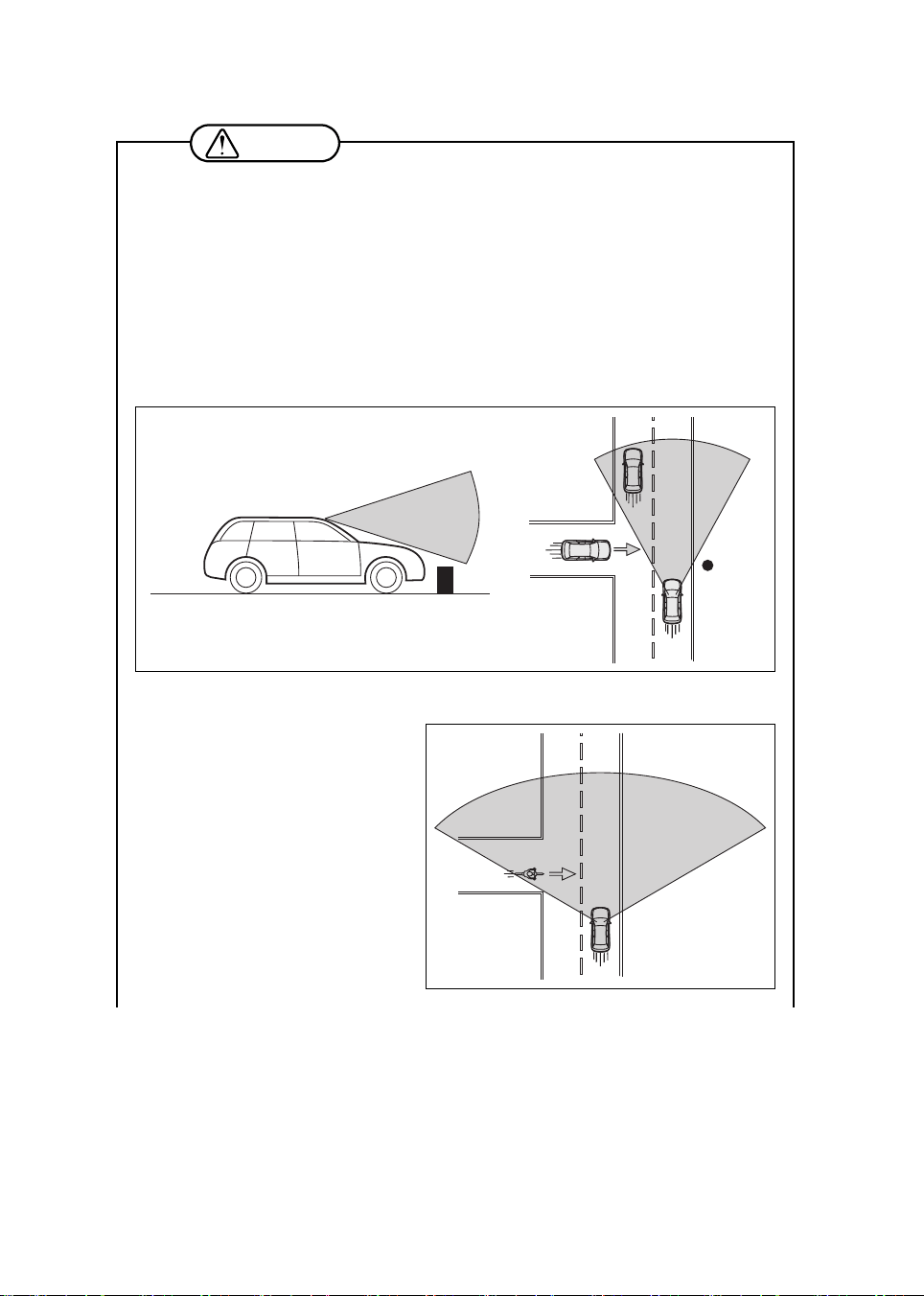
• Detection by the EyeSight system is limited to objects that are within the
range of the camera’s field of view. Also, after an object enters the range of
the camera’s field of view, it may take some time for the system to detect it as
a target obstacle and to warn the driver.
Example of the range of the stereo camera’s field of view
Example of the range of the wide angle mono camera’s field of view
H00714
Low objects surrounding the vehicle
cannot be detected.
H00968
B8442BE-A.book 8 ページ 2024年10月29日 火曜日 午後6時50分

About EyeSight
9
Continued on next page
• Under the conditions listed below, it will become more difficult for the system
to detect the vehicle in front, motorcycles, cyclists, pedestrians and obstacles
on the road, and lane markers. Also, EyeSight may temporarily stop operat-
ing. However, the temporary stop will be canceled once these conditions have
improved and the vehicle is driven for a short period of time.
- Bad weather (for example heavy rain, a blizzard or thick fog). In particular,
the system is more likely to temporarily stop operating when there is an oil
film adhering to the windshield, a glass coating has been applied, or poorly
performing wipers are used.
- Strong light is coming from the front (sunlight or headlight beams of oncom-
ing traffic, etc.).
- The windshield washer is in use.
- Raindrops, water drops, or dirt on the windshield are not wiped off suffi-
ciently.
- The camera’s field of view is obstructed by fogging, snow, dirt, frost, dust,
scratches, or smears on the windshield, or by light reflecting off the dirt, etc.
- The vehicle is tilted at an extreme angle due to loaded cargo or other fac-
tors.
- Visibility is poor due to sand, smoke or water vapor blowing in the wind, or
the front vision is obscured due to water splashes, snow, dirt or dust stir up
generated by the vehicle in front or oncoming traffic.
- The camera’s field of view is obstructed (for example by a canoe on the roof
of the vehicle).
- Through the entrance or exit of a tunnel
- The rear aspect of the vehicle in front is low, small or irregular (for example
a low bed trailer, etc.).
- The obstacle is a fence, a wall or a shutter, etc. with a uniform pattern (a
striped pattern, brick, etc.) or with no pattern in front.
- The obstacle is a wall or door made of glass or a mirror in front.
- Driving at night or in a tunnel when there is a vehicle in front that does not
have its taillights on
- Driving through a banner or flag, low branches on a tree or thick/tall vegeta-
tion
- On steep uphill or downhill grades
- It is completely dark and no objects are detected.
- The area around the vehicle has a uniform color (such as when completely
covered in snow, etc.).
- Accurate detection is not possible due to reflections in the windshield.
B8442BE-A.book 9 ページ 2024年10月29日 火曜日 午後6時50分

About EyeSight
10
Continued from previous page
• Under the conditions listed below, EyeSight may temporarily stop operating. If
this occurs, EyeSight will resume operating when the conditions improve.
- The inside or outside of the windshield in front of the stereo camera is dirty
or fogged.
- The temperature inside the vehicle is high, such as after the vehicle was left
in bright sunshine, or the temperature inside the vehicle is low, such as after
the vehicle was left in an extremely cold environment.
- Immediately after the hybrid system starts
• Under the conditions listed below, it is difficult to recognize vehicles in front,
motorcycles, cyclists, pedestrians, obstacles on the road, traffic lanes, etc.
Also, the EyeSight system may temporarily stop operating. If the EyeSight
system repeatedly stops operating several times, contact a SUBARU dealer
and have the system inspected.
- There is dirt or dust around the camera lenses.
- The camera has become misaligned due to a strong impact.
- The vehicle has not been driven for a long time (1 year or more, for exam-
ple).
• When there is a malfunction in the EyeSight system, turn off Pre-Collision
Braking System, Lane Departure Prevention Function and Emergency Lane
Keep Assist, and stop using Adaptive Cruise Control, Lane Centering Func-
tion and Conventional Cruise Control. Contact a SUBARU dealer and have
the system inspected.
Page 195
• When the Vehicle Dynamics Control warning light is illuminated, Pre-Collision
Braking System may not operate properly. If the warning light is illuminated,
turn off Pre-Collision Braking System. Also, do not use Adaptive Cruise Con-
trol or Conventional Cruise Control.
B8442BE-A.book 10 ページ 2024年10月29日 火曜日 午後6時50分

About EyeSight
11
NOTE
• EyeSight records and stores the following data when Pre-Collision Braking
System activates, when the “Obstacle Detected” warning activates, when
SRS airbags have been deployed, and when the EyeSight system has a mal-
function or has temporarily stopped due to poor visibility or a misalignment in
the position/angle of the camera. It does not record conversations or other
audio data.
- Stereo camera image data
- Wide angle mono camera image data
- Distance from the vehicle in front
- Vehicle speed
- Steering wheel turning angle
- Lateral movement with regards to the direction of travel
- Accelerator pedal operation status
- Brake pedal operation status
- Select lever position
- Odometer reading
- Data related to ABS, Vehicle Dynamics Control and Traction Control Func-
tion
- Time of occurrence
• SUBARU and third parties contracted by SUBARU may acquire and use the
recorded data for the purpose of vehicle research and development.
SUBARU and third parties contracted by SUBARU will not disclose or provide
the acquired data to any other third party except under the following condi-
tions.
- With the consent of the vehicle owner or with the consent of the lessee if the
vehicle is leased.
- The disclosure/provision is based on a court order or other legally enforce-
able request.
- Data that has been modified so that the user and vehicle cannot be identi-
fied is provided to a research institution for statistical processing or similar
purposes.
B8442BE-A.book 11 ページ 2024年10月29日 火曜日 午後6時50分
About EyeSight
12
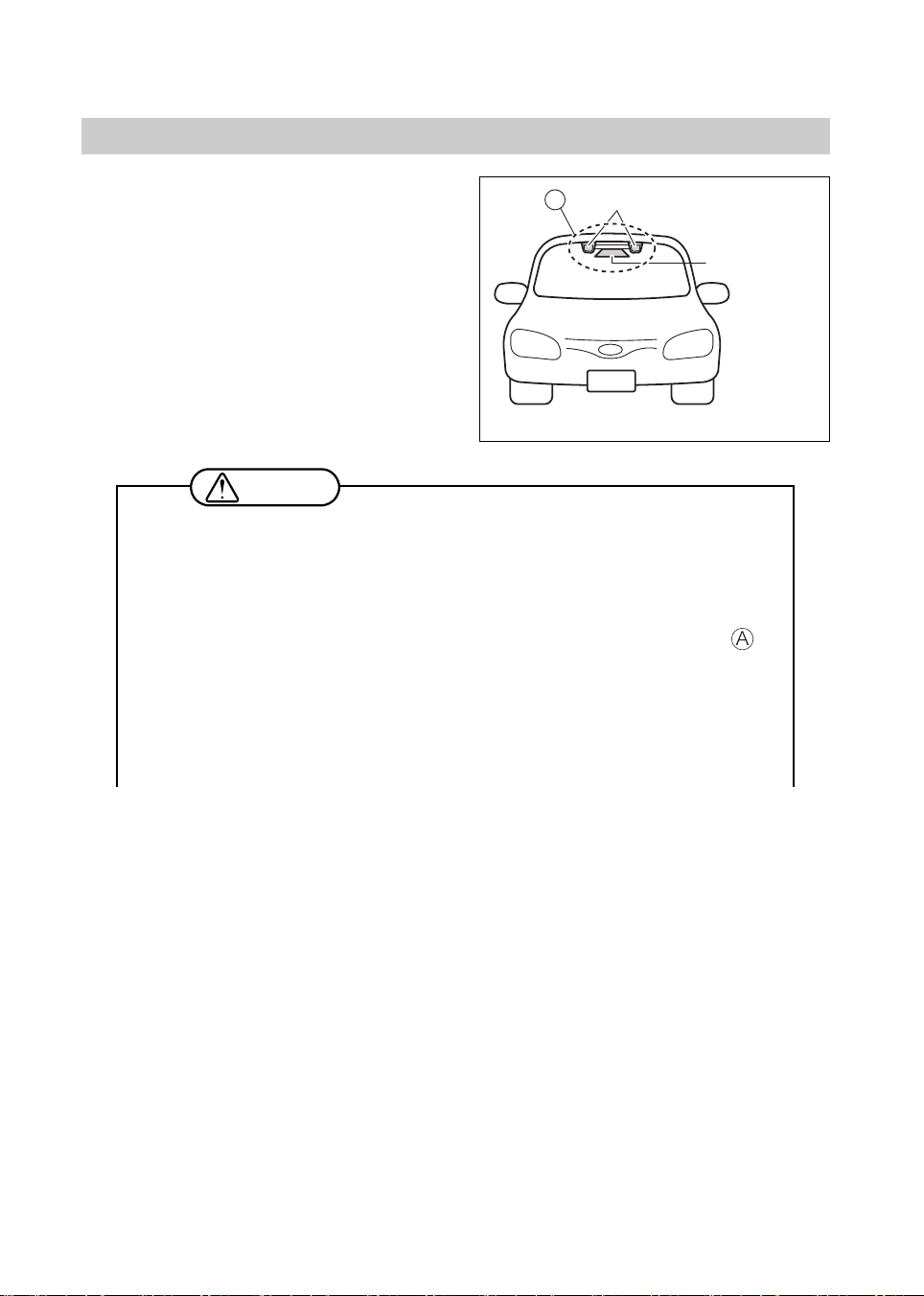
The stereo camera and wide angle mono cam-
era are located on the windshield.
Handling of the Camera
CAUTION
• The camera monitors and detects smears or blurs on the front of the camera.
However, detection is not 100% accurate.
Under certain conditions, the function may fail to detect smears or blurs on
the front of the camera accurately. In addition, this function may not detect
that there is snow or ice on the windshield close to the camera. In such condi-
tions, be sure to keep the windshield clean at all times (indicated by ).
Otherwise the system may not operate correctly. When this function detects
that the front of the stereo camera is smeared or blurred, no EyeSight func-
tions can be activated except for Conventional Cruise Control.
• If the area around the camera lenses is dirty, do not try to clean the wind-
shield yourself. Contact a SUBARU dealer to have the vehicle inspected.
A
H00716
Stereo camera
Wide angle
mono camera
B8442BE-A.book 12 ページ 2024年10月29日 火曜日 午後6時50分
About EyeSight
13
Continued on next page
• The camera lenses are precision components. Always observe the following
precautions especially when handling the area around the camera lenses.
- Never touch the lenses of the camera. Also, do not try to clean the lenses. If
you do accidentally touch the lenses, be sure to contact a SUBARU dealer.
- When you are cleaning the inside of the windshield around the camera
cover, do not spray cleaner directly onto the windshield. Instead, spray
cleaner onto a cloth and then wipe the windshield.
- Do not subject the camera to a strong impact.
- Do not remove or disassemble the camera.
- Do not change the positions where the camera is installed or modify any of
the surrounding structures.
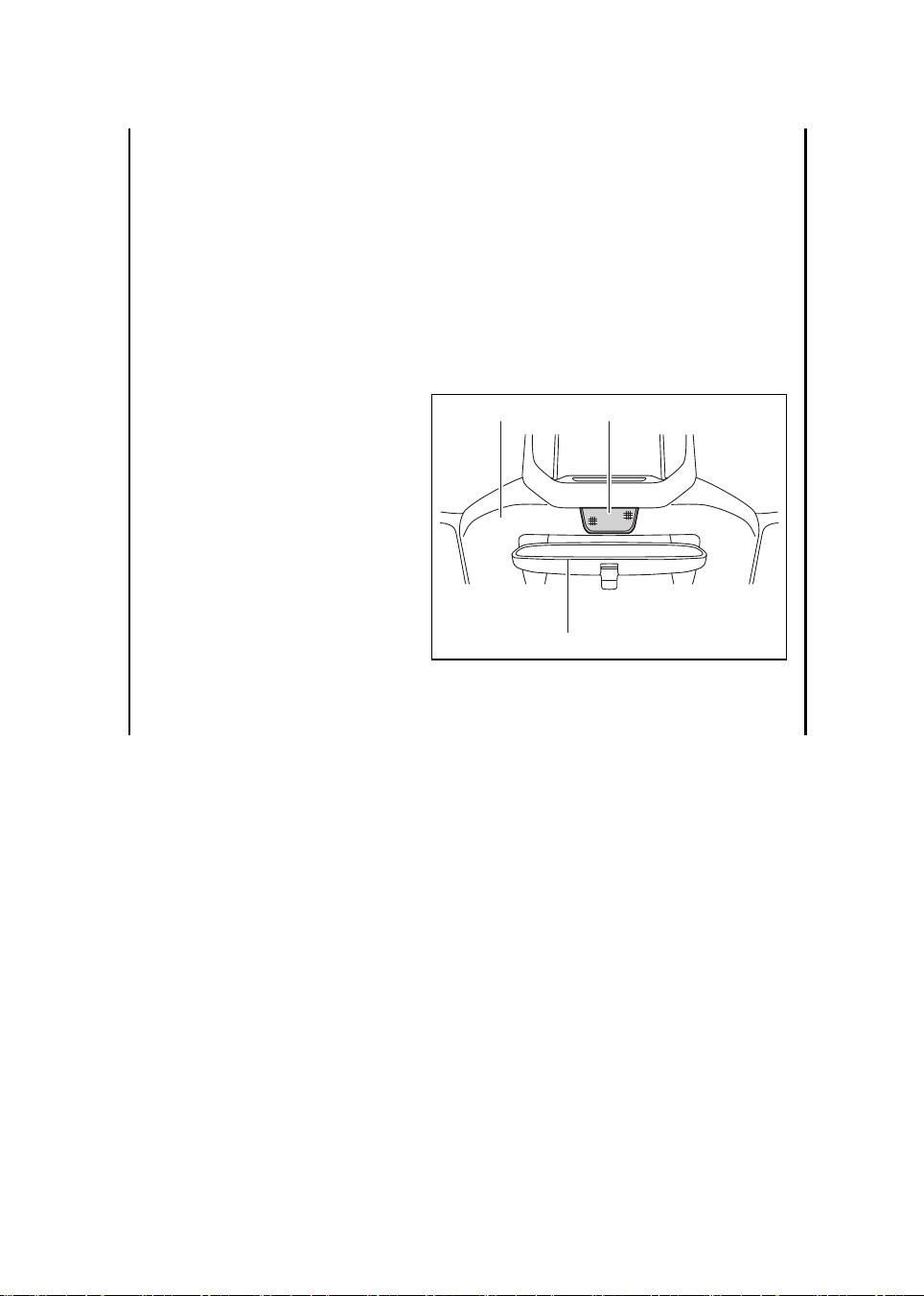
• If the camera system becomes
hot, the cooling fans may start
operating. Do not block the
ventilation holes in the camera
cover. Also, do not insert any-
thing into the ventilation holes.
Doing so could damage the
camera system.
• Do not touch the camera
cover, because it may be hot
due to heat generated by the
camera system.
• If the camera cover is hit, pressed strongly or otherwise subjected to impacts,
EyeSight functions may not operate correctly.
H01244
Camera cover Ventilation holes
Inside mirror
B8442BE-A.book 13 ページ 2024年10月29日 火曜日 午後6時50分
About EyeSight
14
Continued from previous page
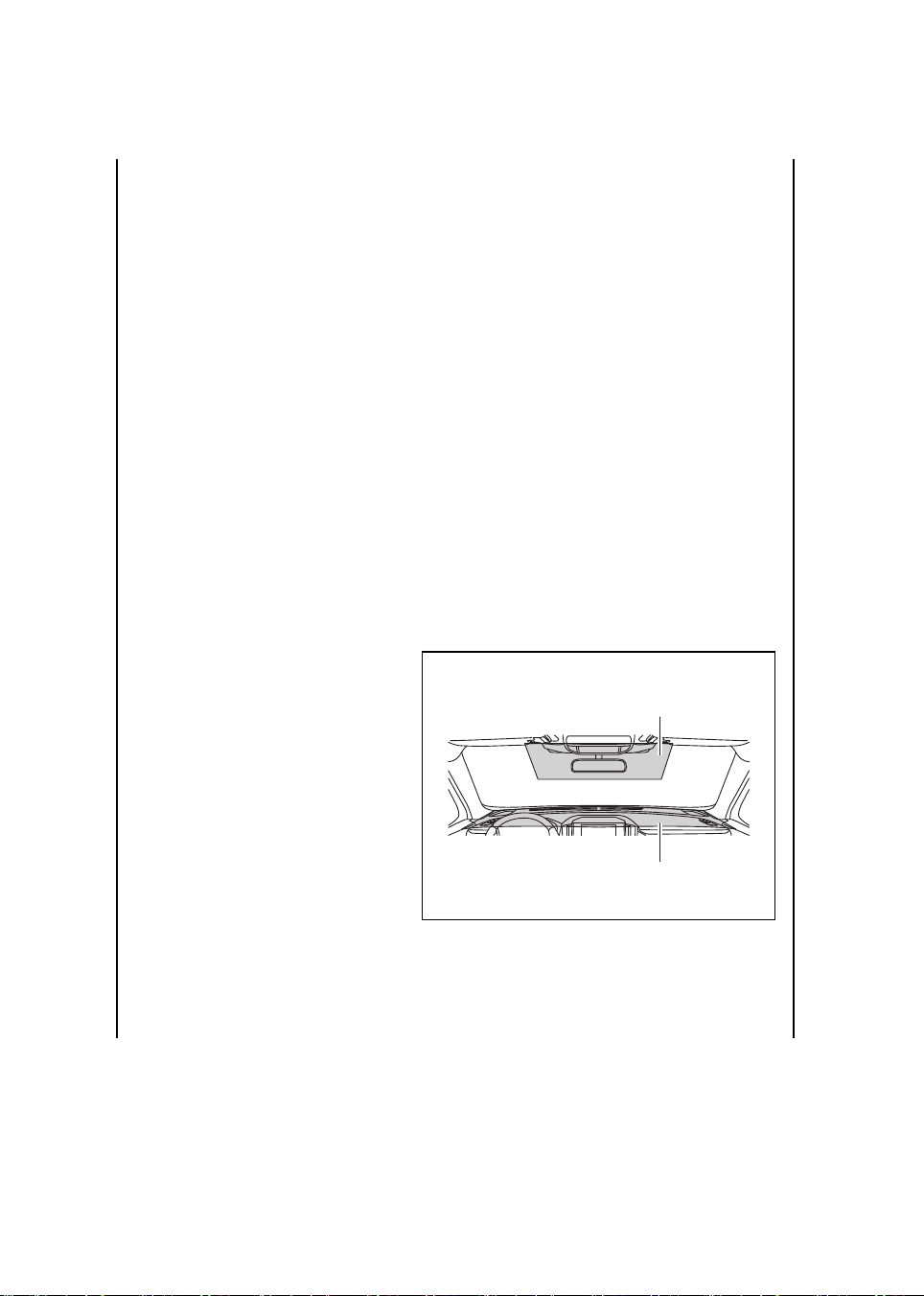
• Do not install any accessories other than the ones designated by SUBARU on
the prohibited areas (1) and (2), shown in gray in the illustration below, includ-
ing the windshield (inside and outside), inside mirror, camera cover and top of
the instrument panel.
- Even if some accessories are installed on the outside of the prohibited
areas, abnormal operation of EyeSight may occur due to the reflection of
the light or any objects. In this situation, move the accessories. For details,
contact a SUBARU dealer.
- Do not place any stickers or accessories on the windshield (outside or
inside). If you have to do so (for example, legally required or electronic toll
tag), avoid the prohibited area (1) gray zone shown in the illustration.
Otherwise, it may adversely affect the field of view of the camera and can
cause improper operation of the system. For details, contact a SUBARU
dealer.
- Do not place any objects in the prohibited area (2) gray zone. The camera
may not be able to detect objects accurately and the EyeSight system may not
function properly due to reflections in the windshield. For details, contact a
SUBARU dealer.
-
Do not polish the top of the instrument panel with chemicals or other substances.
The camera may not be able to detect objects accurately and the EyeSight
system may not function properly due to reflections in the windshield.
• Do not install any wiper blades other than genuine SUBARU wiper blades.
Doing so may affect the camera’s field of view and could prevent the EyeSight
system from functioning properly.
H02506
(1)
(2)
B8442BE-A.book 14 ページ 2024年10月29日 火曜日 午後6時50分
About EyeSight
15
For details, refer to the vehicle Owner’s Manual.
• Replace damaged wiper blades or worn wiper blade rubbers as soon as pos-
sible. Using damaged wiper blades or worn wiper blade rubbers may cause
streaking on the windshield. The camera may not be able to detect objects
accurately and the EyeSight system may not function properly due to streaks
or droplets remaining on the windshield.
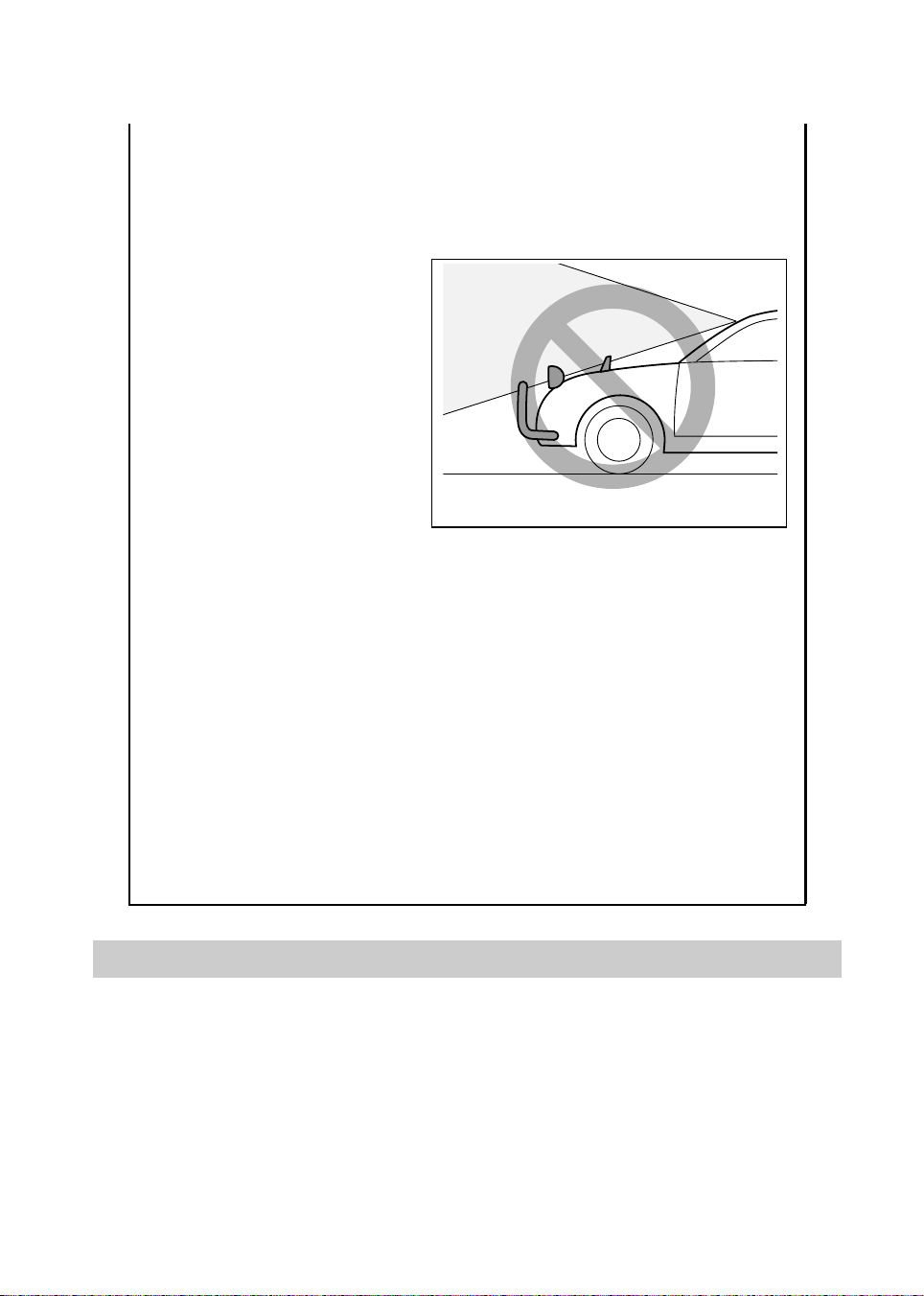
• Do not install any accessories
on the front side such as on the
hood or the grille. It may affect
the camera view and the sys-
tem may not operate correctly.
• Make sure that the cargo
loaded on the roof does not
interfere in the camera’s field
of view. Obstructing the cam-
era’s view may impair the sys-
tem operation. For details,
contact a SUBARU dealer.
• Keep the windshield (outside
and inside) clean at all times. When the windshield has become fogged, or it
has a dirt or an oil film on it, the camera may not detect objects accurately and
the EyeSight system may not operate correctly. Never mount any device or
accessories to the center air vent, as any airflow change may impact
EyeSight performance.
• Do not use any glass coating agents or similar substances on the windshield.
Doing so may interfere with the proper operation of the system.
• Do not install any film or an additional layer of glass on the windshield. The
system may not operate correctly.
• If there are scratches or cracks on the windshield, contact a SUBARU dealer.
• To have the windshield replaced or repaired, contact a SUBARU dealer. Do
not install a windshield other than a genuine SUBARU windshield. The cam-
era may not be able to detect objects accurately and the EyeSight system
may not operate properly.
Handling of Radar Sensors
S01098
B8442BE-A.book 15 ページ 2024年10月29日 火曜日 午後6時50分

About EyeSight
16
EyeSight includes the following functions.
■ Pre-Collision Braking System
This function uses a following distance warning feature to warn the driver to take evasive
action when there is a possibility of a collision with an obstacle in front (a vehicle, motorcy-
cle, pedestrian, cyclist, etc.). If the driver does not take evasive action, the brakes are
applied automatically to help reduce vehicle collision damage or, if possible, help prevent a
collision.
Page 32
Automatic Emergency Steering
This function warns the driver if there is a possibility of a collision with a vehicle, motorcycle,
pedestrian or cyclist in front of the vehicle. If the driver does not take evasive action, the
system will operate the steering wheel to try to avoid a collision.
Page 52
■ Advanced Adaptive Cruise Control
Advanced Adaptive Cruise Control is a driving support system that is intended to assist driv-
ers when driving on an expressway (including during congestion and when driving at high
speed). Adaptive Cruise Control and Lane Centering Function, which operates linked with
Adaptive Cruise Control, are used to assist with driving by automatically controlling the
accelerator, brake, and steering.
Adaptive Cruise Control
This function maintains a set vehicle speed that is manually set by the driver. When there is
a vehicle in front in the same traffic lane, your vehicle follows the vehicle in front up to the
set vehicle speed.
Page 68
Lane Centering Function
This function helps keep your vehicle close to the center of the lane by detecting lane mark-
ings (e.g., white lines) and the lead vehicle on expressways, freeways and interstate high-
ways, and by assisting steering operation. Lane Centering Function activates only when
Adaptive Cruise Control is activated.
Page 98
EyeSight Functions
B8442BE-A.book 16 ページ 2024年10月29日 火曜日 午後6時50分

About EyeSight
17
■ Lane Departure Prevention Function
When driving on expressways, freeways, or interstate highways, the system recognizes the
lane markings. If the vehicle is likely to depart the lane, the system assists with steering
operation in the direction that prevents the lane departure, preventing the vehicle from leav-
ing the lane.
Page 131
■ Emergency Lane Keep Assist
If the vehicle is likely to depart the lane when there is a following vehicle approaching in the
neighboring lane, the system assists the driver to turn the steering wheel in the direction
which will prevent lane departure, keeping the vehicle in the lane.
Page 141
■ Pre-Collision Throttle Management
This function reduces accidental forward movement caused by the select lever being placed
in the wrong position or the accelerator pedal being accidentally depressed, or depressed
too strongly.
Page 153
■ Lane Departure Warning
This function warns the driver when the vehicle is about to drift off the road.
Page 161
■ Lane Sway Warning
This function warns the driver when the system detects that the vehicle is swaying in the
lane, caused by driver fatigue, failure to concentrate on the road, inattention, strong cross-
winds or other factors.
Page 166
■ Lead Vehicle Start Alert
This function notifies the driver when the vehicle stopped in front starts moving but the
driver’s vehicle remains stationary.
Page 170
B8442BE-A.book 17 ページ 2024年10月29日 火曜日 午後6時50分
About EyeSight
18
■ Conventional Cruise Control
This function maintains a set vehicle speed that is manually set by the driver. It does not fol-
low the vehicle in front. This function can be used even when the EyeSight system has tem-
porarily stopped operating (
page 191). This function is used by switching from Adaptive
Cruise Control to Conventional Cruise Control.
Page 175
NOTE
EyeSight does not operate when the hybrid system is not running (Hybrid
READY indicator light turns off).
B8442BE-A.book 18 ページ 2024年10月29日 火曜日 午後6時50分
About EyeSight
19
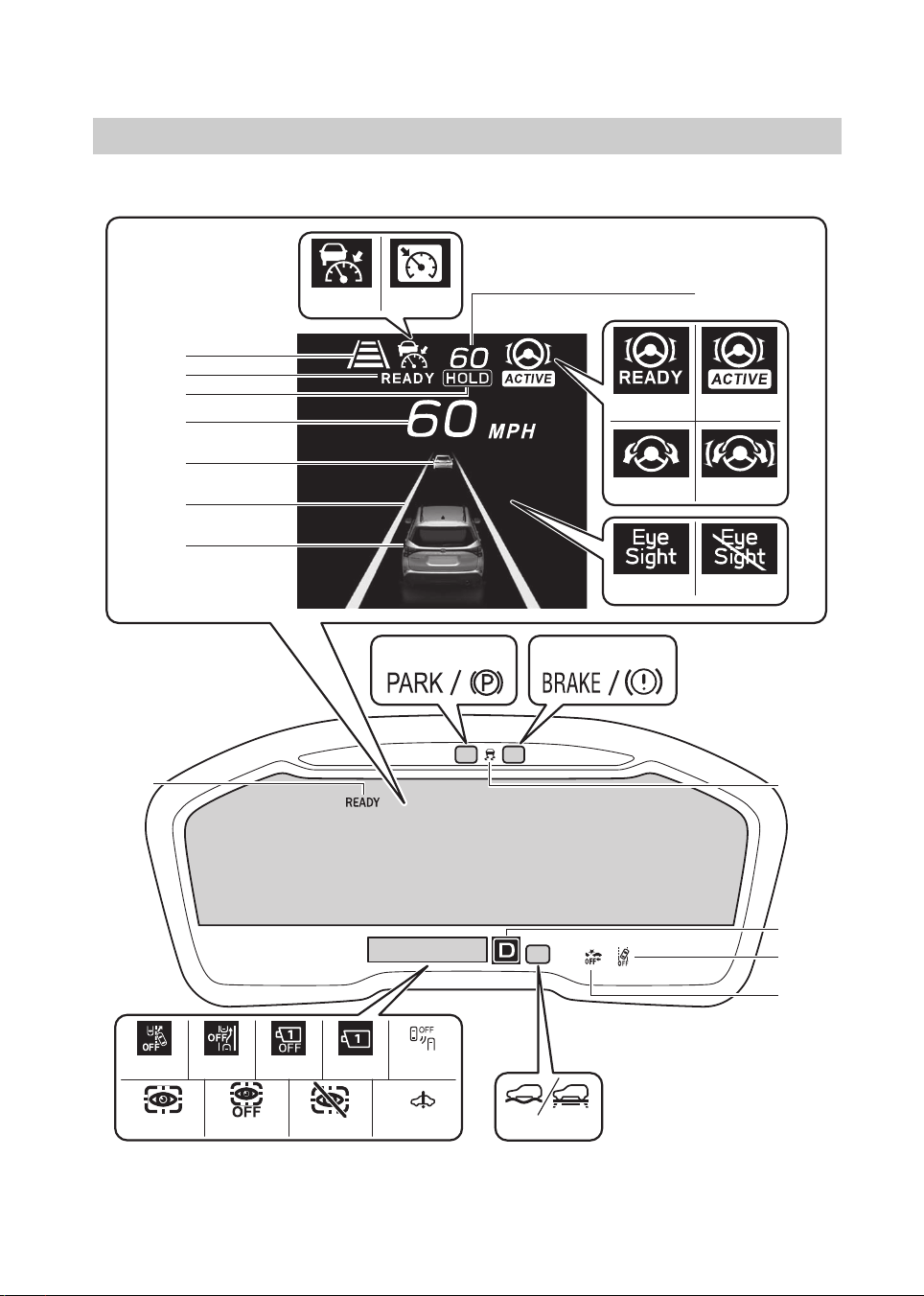
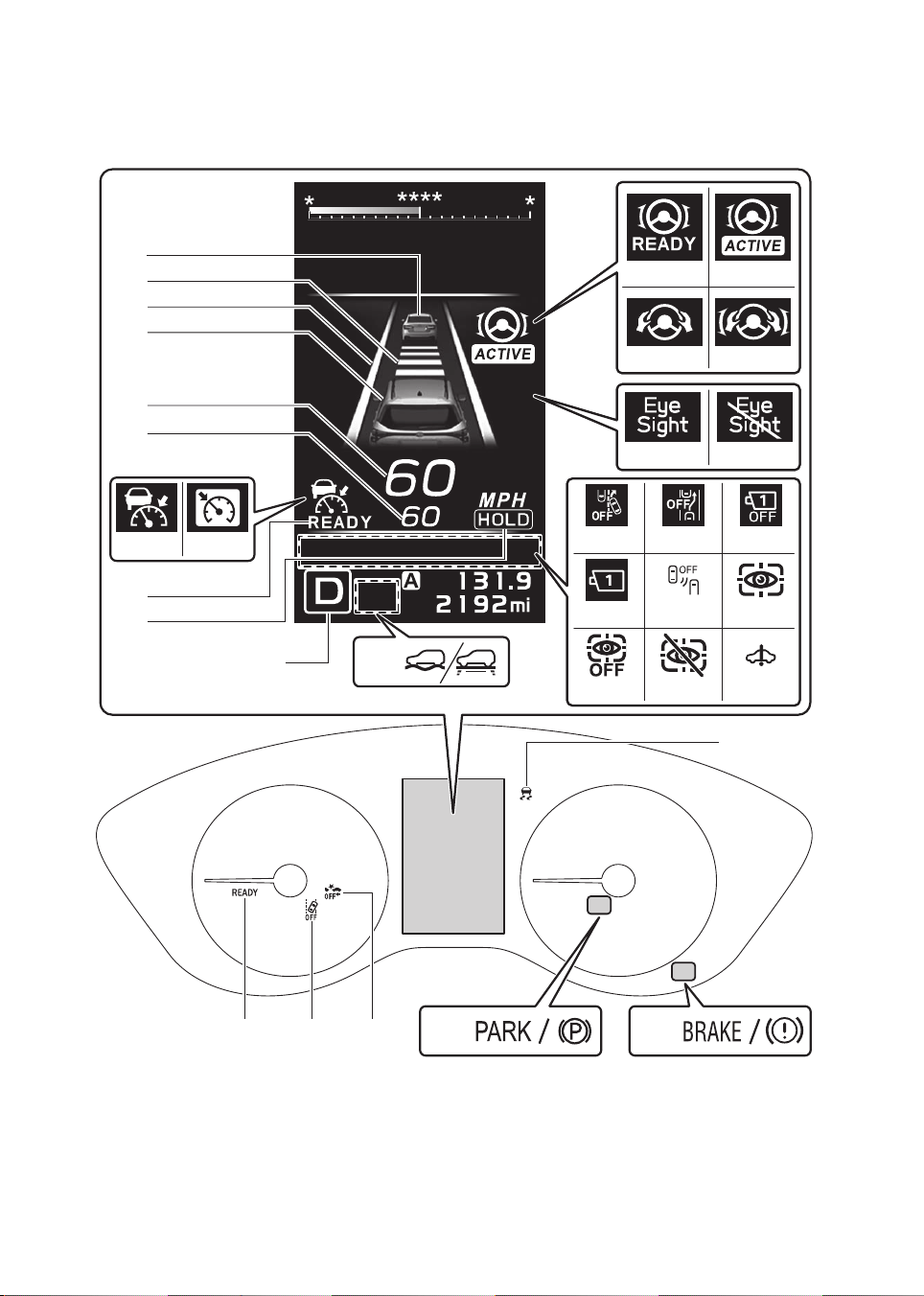
■ 12.3-inch display models (if equipped)
Combination meter
H02293
(14) (15)
(12) (13)
(21)
(23)
(22)
(24)
(18)
(11)
(7)
(16) (17)
(9) (10)
(8)
(6)
(5)
(4)
(3)
(1)
(20)(19)
(34)
(25)
(26)
(27) (28) (29)
(30) (31) (32) (33)
Display units can be changed in the Screen Settings. For details, refer to the vehicle Owner’s Manual.
B8442BE-A.book 19 ページ 2024年10月29日 火曜日 午後6時50分
About EyeSight
20
■ 4.2-inch display models (if equipped)
(24)(23) (20)(19)
(21)
H02294
(6)
(7)
(8)
(2)
(5)
(4)
(3)
(9) (10)
(11)
(14) (15)
(12) (13)
(16) (17)
(25) (26) (27)
(28) (29) (30)
(22)
(34)
(31) (32) (33)
(18)
Display units can be changed in the Screen Settings. For details, refer to the vehicle Owner’s Manual.
B8442BE-A.book 20 ページ 2024年10月29日 火曜日 午後6時50分
About EyeSight
21
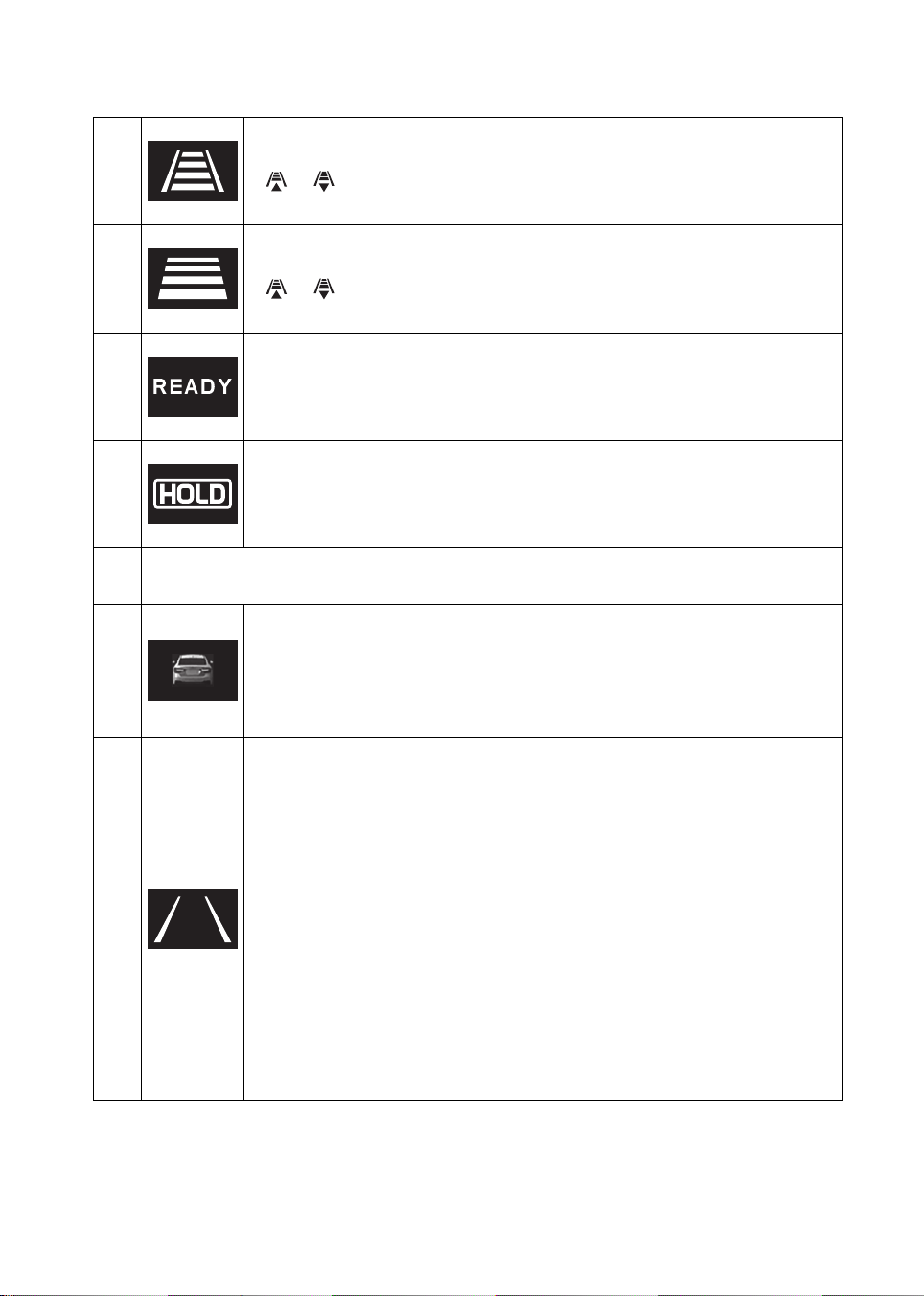
(1)
Following distance setting indicator
This indicator shows the following distance setting that was set with the
/ (Following distance setting) switch.
Page 86
(2)
Following distance setting indicator
This indicator shows the following distance setting that was set with the
/ (Following distance setting) switch.
Page 86
(3)
READY indicator
This indicator illuminates when cruise control* can be activated.
Pages 77 and 176
*: Adaptive Cruise Control and Conventional Cruise Control
(4)
HOLD indicator
This indicator illuminates when the stay-stopped function is operated
while Adaptive Cruise Control is on.
Page 87
(5)
Current vehicle speed
Displays the vehicle speed.
(6)
Lead vehicle indicator
This indicator illuminates when a vehicle in front has been detected
while Adaptive Cruise Control is active, or when the stay-stopped func-
tion is engaged.
Page 77
(7)
Lane indicator
• This indicator illuminates in gray when Lane Departure Prevention
Function and Lane Departure Warning are turned on.
• If your vehicle is about to drift out of the lane while Lane Centering
Function is active, the line the vehicle is about to cross will blink in yel-
low. (for 4.2-inch display models)
• Both right and left lines or only one line illuminates in white under the
following conditions.
- Lane Departure Prevention Function goes into the standby status.
- Lane Centering Function is operating by detecting the lane mark-
ings.
• It illuminates in yellow on the side where Lane Departure Prevention
Function activated.
Pages 107, 115 and 137
B8442BE-A.book 21 ページ 2024年10月29日 火曜日 午後6時50分
About EyeSight
22
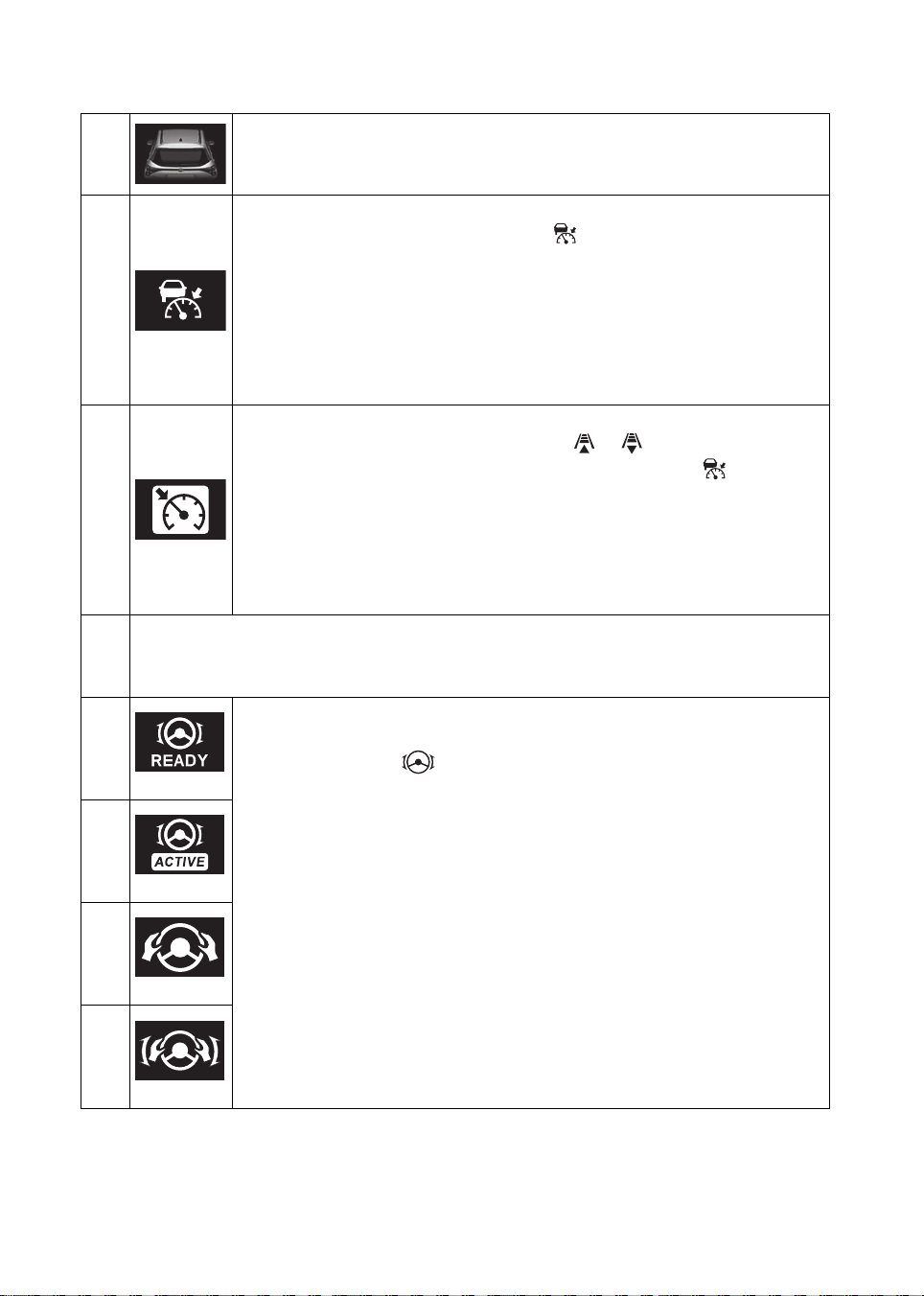
(8)
Your vehicle indicator
The brake lights on this indicator illuminate in red according to the actual
brake control.
(9)
Adaptive Cruise Control indicator
• This indicator illuminates when the (CRUISE) switch is pressed.
Page 77
• When Adaptive Cruise Control is activated, this indicator changes
from white to green. When the driver accelerates the vehicle by
depressing the accelerator pedal while Adaptive Cruise Control is
operating, the indicator changes from green to white.
Page 77
(10)
Conventional Cruise Control indicator
• This indicator illuminates when the / (Following distance
setting) switch is pressed and held after pressing the (CRUISE)
switch.
Page 176
• When Conventional Cruise Control is activated, this indicator changes
from white to green.
Page 176
(11)
Set vehicle speed
Displays the set vehicle speed.
Pages 77 and 176
(12)
white
Lane Centering indicator
• This indicator illuminates when Lane Centering Function is turned on
by pressing the (Lane Centering) switch (only when Adaptive
Cruise Control is on).
• While Lane Centering Function is operating, this indicator changes
from white to green.
• This indicator turns off when Adaptive Cruise Control is off.
Page 107
(12) (13): For US models
(14) (15): For Canada models
(13)
green
(14)
white
(15)
green
B8442BE-A.book 22 ページ 2024年10月29日 火曜日 午後6時50分
About EyeSight
23
(16)
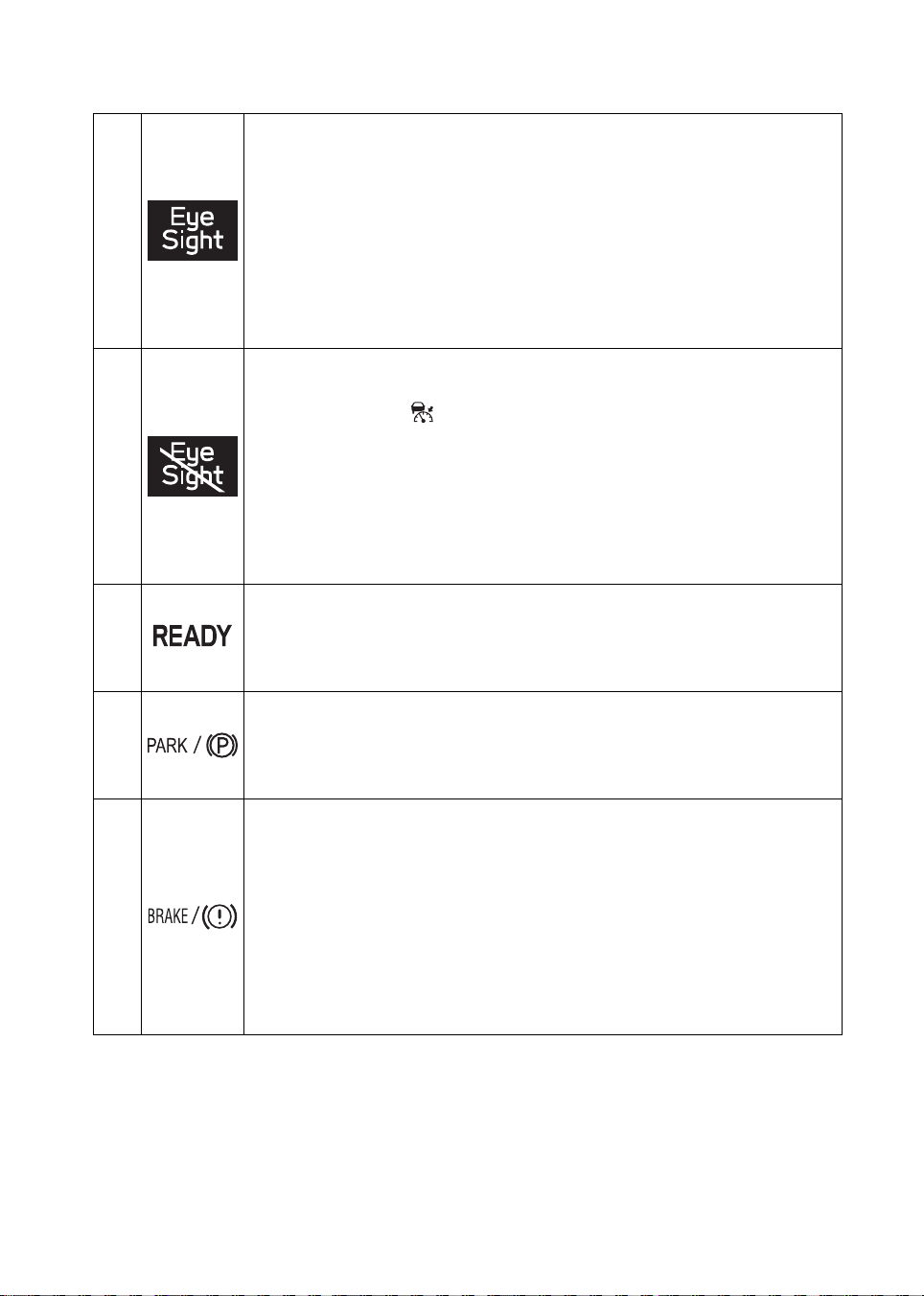
EyeSight warning indicator (yellow)
• This indicator illuminates or blinks when a malfunction occurs in the
EyeSight system.
• This indicator may illuminate when the remaining fuel or the remaining
charge in the high-voltage battery becomes low.
• When it is illuminated or blinking, none of the EyeSight functions can
be used (including Pre-Collision Braking System and Adaptive Cruise
Control, etc.).
Page 189
(17)
EyeSight temporary stop indicator (white)
• When the ignition switch is turned to the ON position, this indicator will
illuminate if the (CRUISE) switch is pressed just after the hybrid
system starts. It turns off several seconds after the hybrid system
starts.
• It illuminates when the EyeSight system is temporarily stopped.
• When it is illuminated, none of the EyeSight functions can be used
except for Conventional Cruise Control.
Page 191
(18)
Hybrid READY indicator light
This indicator light illuminates when the hybrid system has started. It
turns off when the hybrid system has been turned off.
Refer to the vehicle Owner’s Manual for details.
(19)
Electronic parking brake indicator light
This indicator light illuminates when the electronic parking brake is
applied.
Refer to the vehicle Owner’s Manual for details.
(20)
Brake system warning light
If the brake system warning light illuminates when the electronic parking
brake is released while driving, turn Pre-Collision Braking System off. At
this time, do not use cruise control*.
If the brake system warning light does not turn off, immediately pull the
vehicle over in a safe place. Contact a SUBARU dealer to have the sys-
tem inspected.
Refer to the vehicle Owner’s Manual for details.
*: Adaptive Cruise Control and Conventional Cruise Control
B8442BE-A.book 23 ページ 2024年10月29日 火曜日 午後6時50分
About EyeSight
24
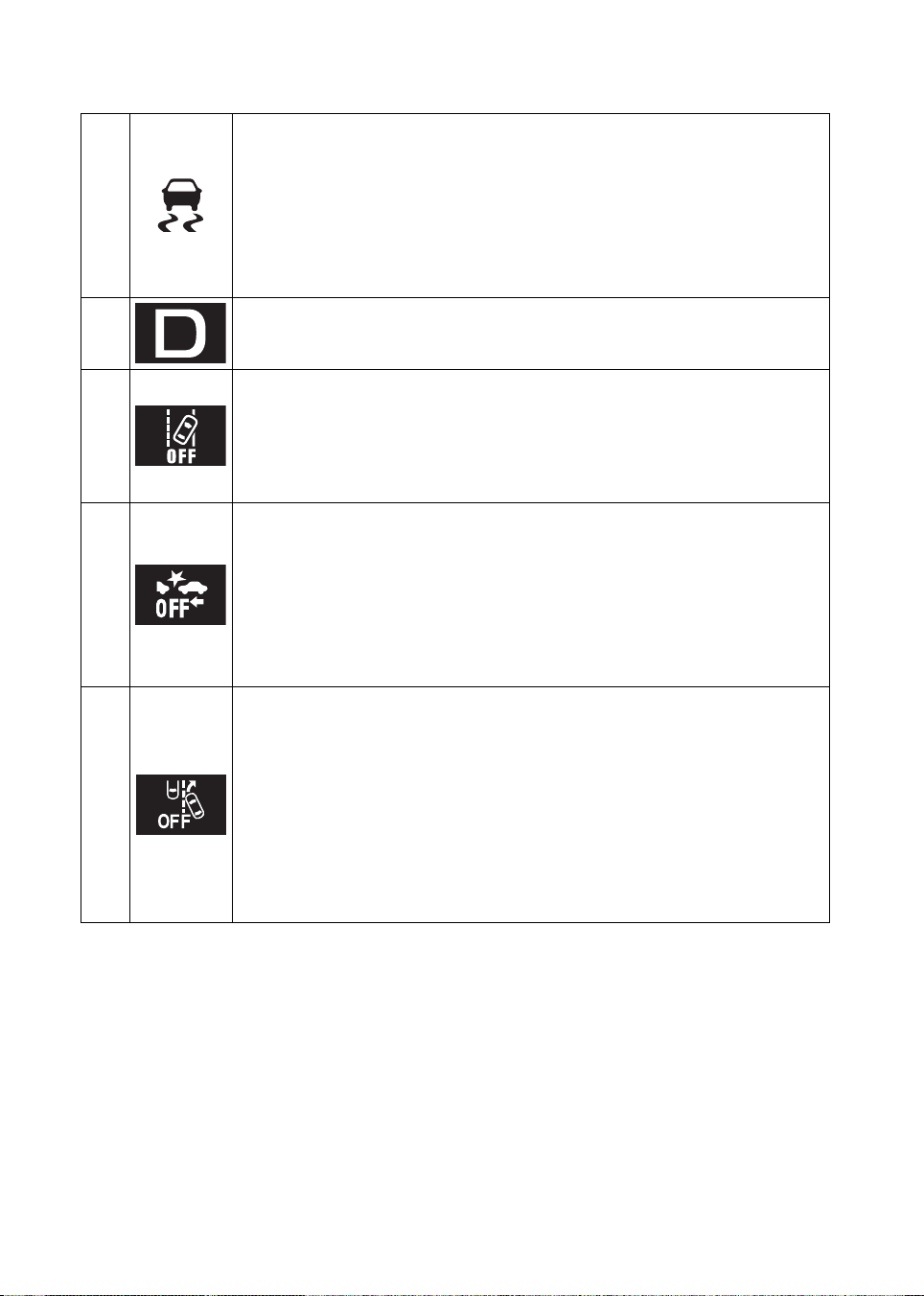
(21)
Vehicle Dynamics Control warning light/Vehicle Dynamics Control
operation indicator light
• This warning light illuminates when the Vehicle Dynamics Control sys-
tem is probably malfunctioning.
• This indicator light blinks during activation of the skid suppression
function and during activation of the traction control function.
Refer to the vehicle Owner’s Manual for details.
(22)
Select lever/gear position indicator
This indicator shows which position the select lever or the gear is in.
(23)
Lane Departure Warning OFF indicator light
This indicator light illuminates when the ignition switch is turned to the
ON position, and then turns off several seconds after the hybrid system
starts.
Pages 165 and 169
(24)
Pre-Collision Braking System OFF indicator light
• This indicator light illuminates when the ignition switch is turned to the
ON position, and then turns off several seconds after the hybrid sys-
tem starts.
• It illuminates when Pre-Collision Braking System and Pre-Collision
Throttle Management are off.
Pages 65 and 160
(25)
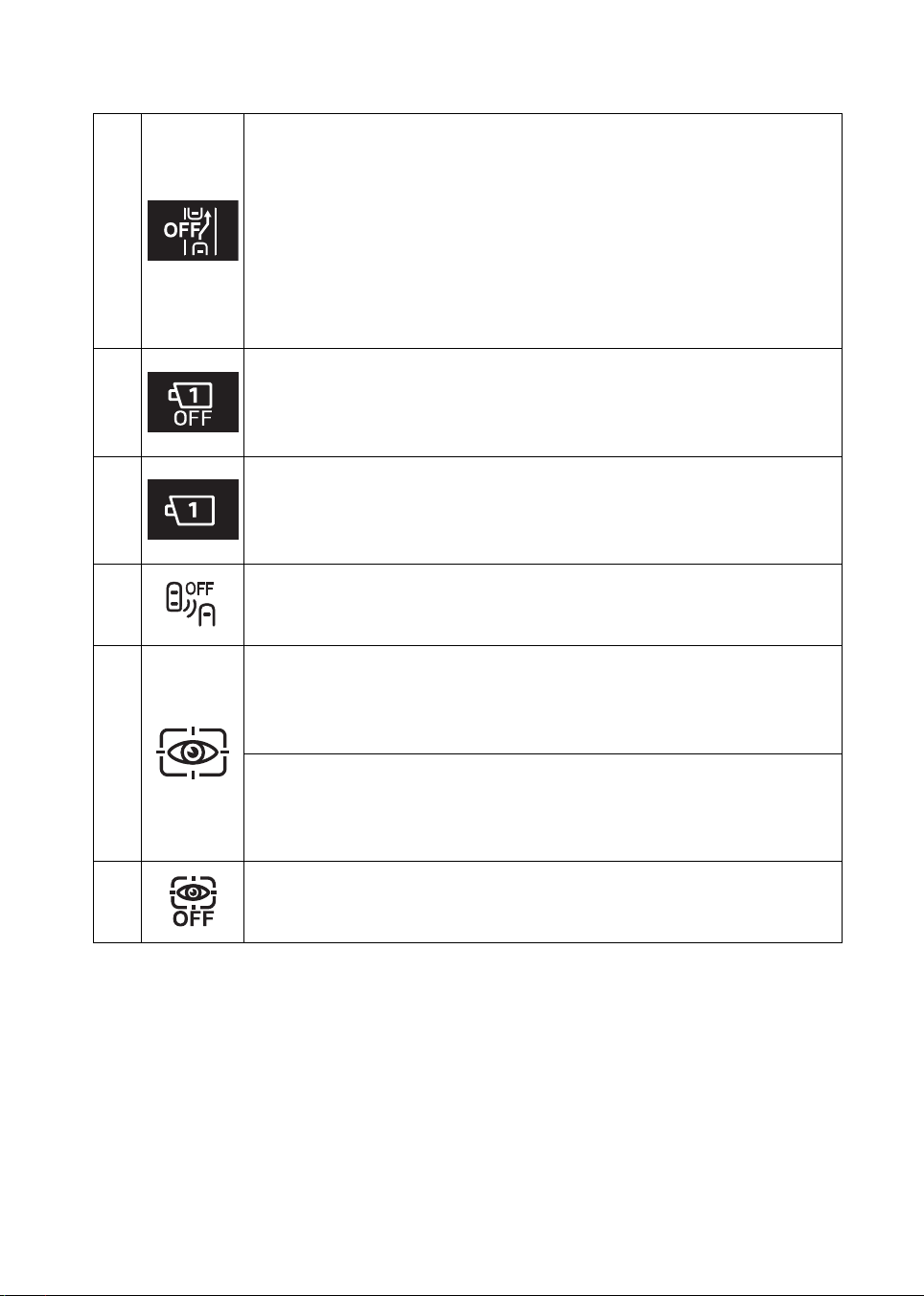
Emergency Lane Keep Assist OFF indicator
• This indicator illuminates when the ignition switch is turned to the ON
position, and then several seconds after the hybrid system starts, it
turns off or remains illuminated depending on the current status (ON
or OFF).
• It illuminates if Emergency Lane Keep Assist is turned off.
• It illuminates if BSD/RCTA or Emergency Lane Keep Assist cannot be
used due to a malfunction or if BSD/RCTA is turned off.
Page 141
B8442BE-A.book 24 ページ 2024年10月29日 火曜日 午後6時50分
About EyeSight
25
(26)
Automatic Emergency Steering OFF indicator
• This indicator illuminates when the ignition switch is turned to the ON
position, and then turns off several seconds after the hybrid system
starts.
• It illuminates if BSD/RCTA or Pre-Collision Braking System is turned
off.
• It illuminates if Automatic Emergency Steering cannot be used due to
a malfunction.
Page 63
(27)
Wide angle mono camera OFF indicator
This indicator illuminates when the wide angle mono camera is tempo-
rarily stopped.
Page 66
(28)
Wide angle mono camera warning indicator
This indicator illuminates when a malfunction occurs in the wide angle
mono camera.
Page 67
(29)
BSD/RCTA OFF indicator
This indicator illuminates when BSD/RCTA is deactivated.
Refer to the vehicle Owner’s Manual for details.
(30)
Driver Monitoring System operation indicator light (green) (if
equipped)
This indicator light illuminates while Driver Monitoring System operates.
Refer to the vehicle Owner’s Manual for details.
Driver Monitoring System warning light (yellow) (if equipped)
This warning light illuminates when a malfunction occurs in the Driver
Monitoring System.
Refer to the vehicle Owner’s Manual for details.
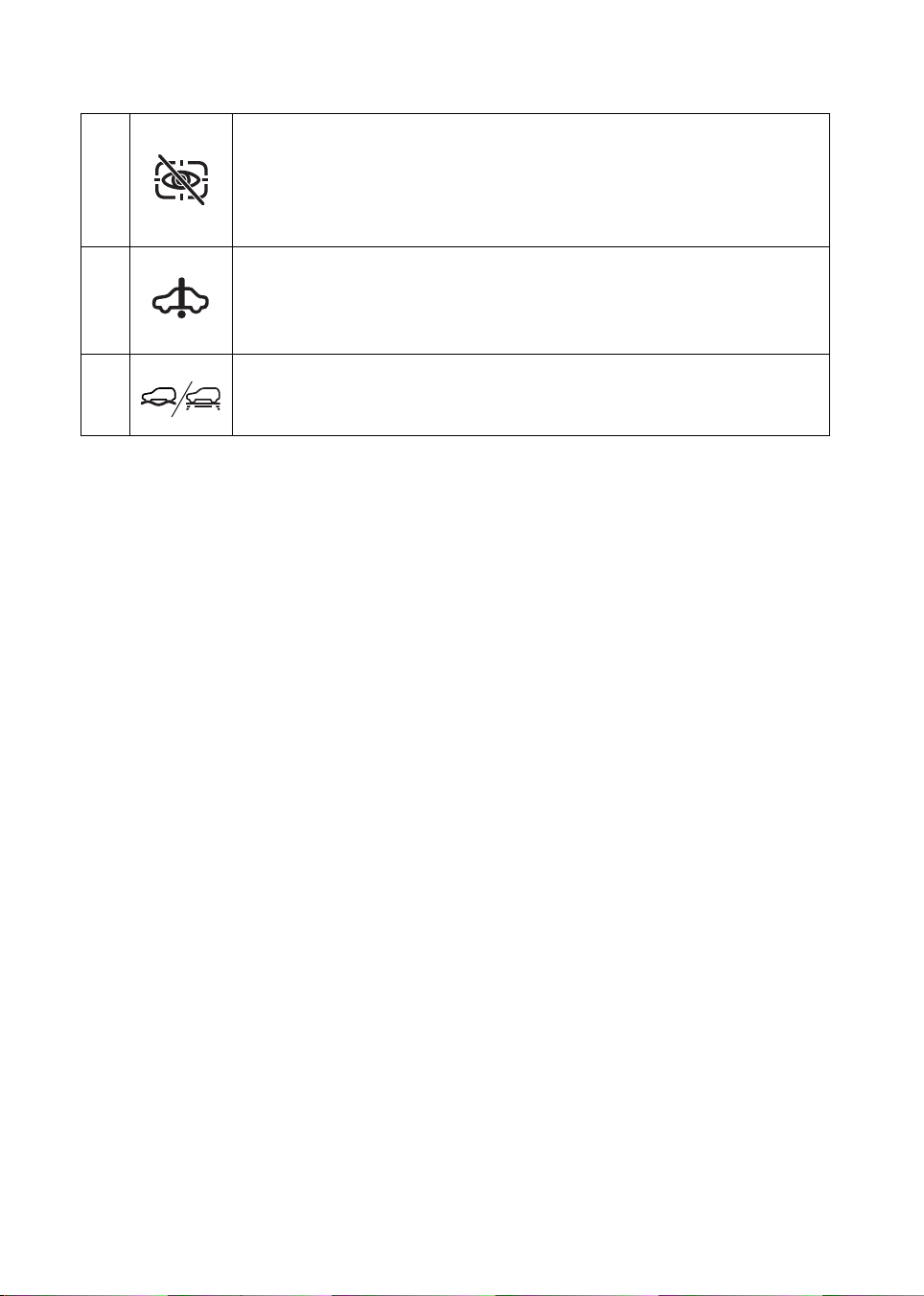
(31)
Driver Monitoring System OFF indicator light (if equipped)
This indicator light illuminates when Driver Monitoring System is off.
Refer to the vehicle Owner’s Manual for details.
B8442BE-A.book 25 ページ 2024年10月29日 火曜日 午後6時50分
About EyeSight
26
(32)
Driver Monitoring System temporary stop indicator light (if
equipped)
This indicator light illuminates when the Driver Monitoring System is tem-
porarily stopped.
Refer to the vehicle Owner’s Manual for details.
(33)
Hybrid fail lamp
This fail lamp illuminates when a malfunction occurs in the hybrid sys-
tem.
Refer to the vehicle Owner’s Manual for details.
(34)
X-MODE indicator
This indicator illuminates when the X-MODE is on.
Refer to the vehicle Owner’s Manual for details.
B8442BE-A.book 26 ページ 2024年10月29日 火曜日 午後6時50分
About EyeSight
27
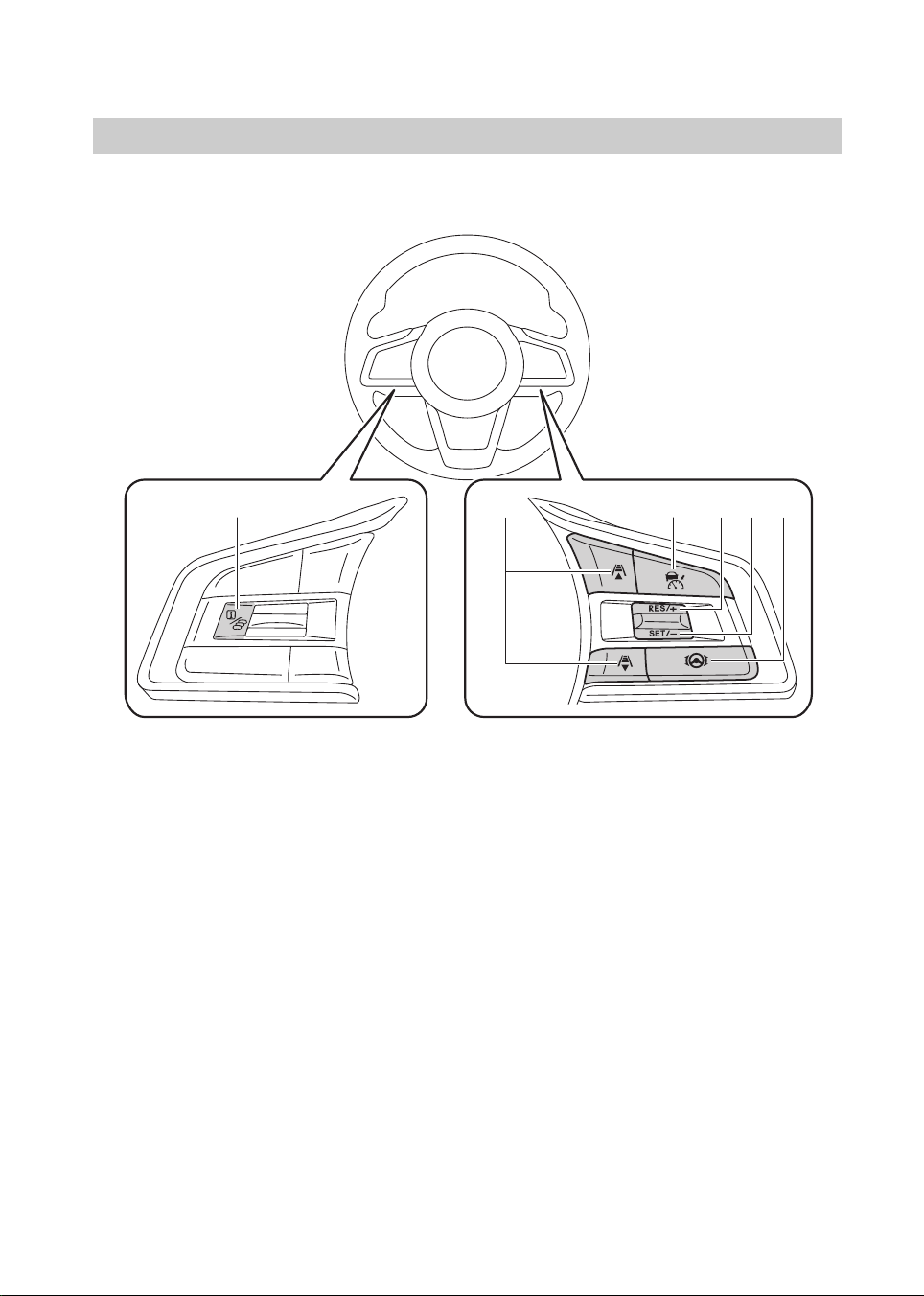
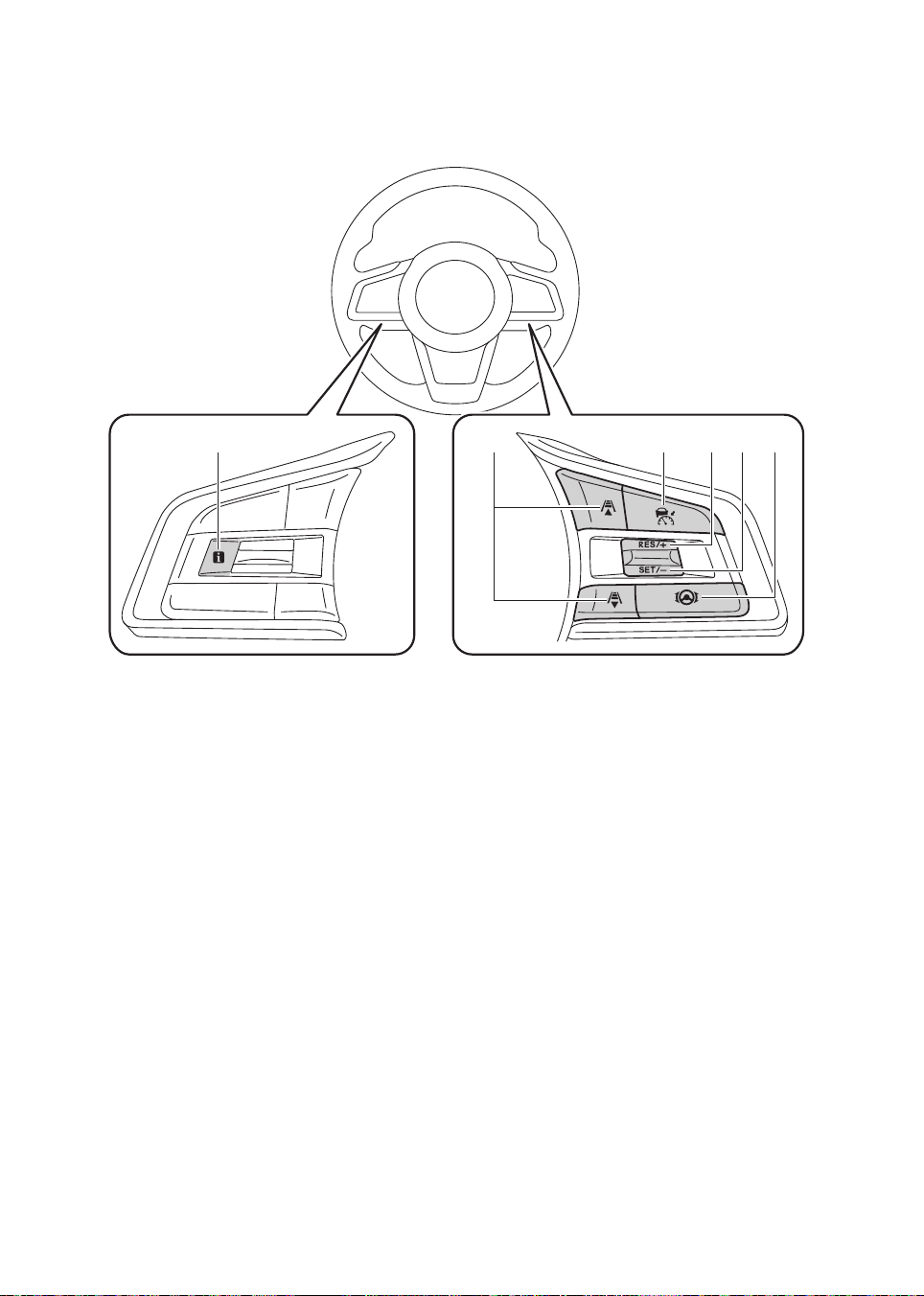
■ 12.3-inch display models (if equipped)
Steering wheel
H02130
(6) (2) (3) (4) (5)(1)
B8442BE-A.book 27 ページ 2024年10月29日 火曜日 午後6時50分
About EyeSight
28
■ 4.2-inch display models (if equipped)
H00914
(6) (2) (3) (4) (5)(1)
B8442BE-A.book 28 ページ 2024年10月29日 火曜日 午後6時50分
About EyeSight
29
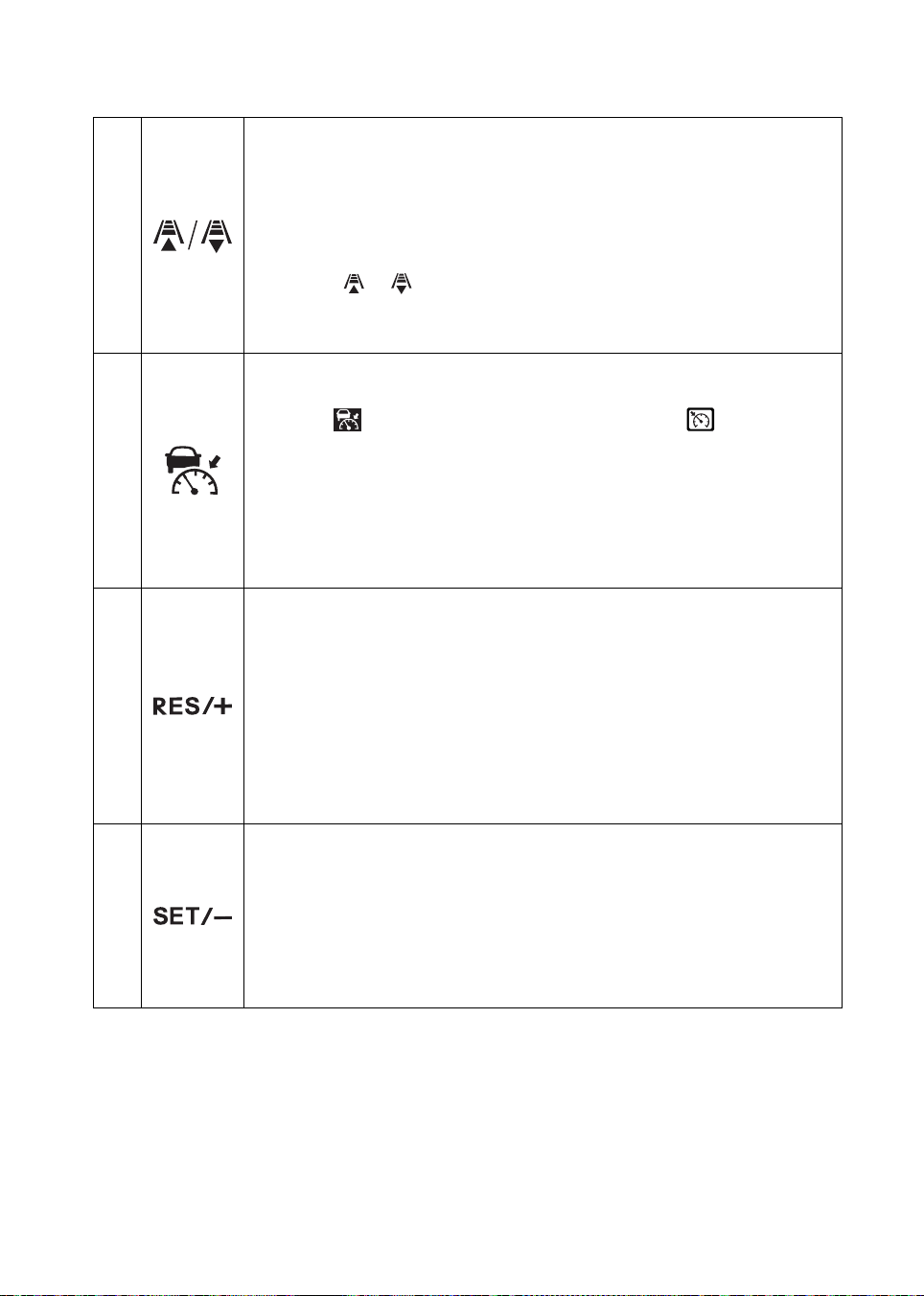
(1)
Following distance setting switches
• Press either of these switches to select the set following distance in 4
stages (only when Adaptive Cruise Control is on).
Page 86
• When the main cruise control is on, switching between Adaptive
Cruise Control and Conventional Cruise Control is possible by press-
ing the / (Following distance setting) switch*.
*: To switch to Conventional Cruise Control, press and hold the switch
for approximately 2 seconds or longer.
(2)
CRUISE switch
• Press this switch to turn cruise control* on/off.
When (Adaptive Cruise Control indicator) or (Conventional
Cruise Control indicator) is shown on the combination meter display,
the main cruise control is on.
Pages 77 and 176
• Press this switch to cancel cruise control*.
Pages 91 and 182
*: Adaptive Cruise Control and Conventional Cruise Control
(3)
RES/+ switch (RES/SET switch)
• Press this switch to set cruise control*.
• After cruise control* is canceled, press this switch to resume cruise
control* at the vehicle speed that was previously set.
• Press this switch to increase the set vehicle speed (when cruise con-
trol* is currently set).
Pages 77, 83 and 94 (for Adaptive Cruise Control)
Pages 176, 180 and 185 (for Conventional Cruise Control)
*: Adaptive Cruise Control and Conventional Cruise Control
(4)
SET/- switch (RES/SET switch)
• Press this switch to set cruise control*.
• Press this switch to reduce the set vehicle speed (when cruise control*
is currently set).
Pages 77 and 84 (for Adaptive Cruise Control)
Pages 176 and 181 (for Conventional Cruise Control)
*: Adaptive Cruise Control and Conventional Cruise Control
B8442BE-A.book 29 ページ 2024年10月29日 火曜日 午後6時50分
About EyeSight
30
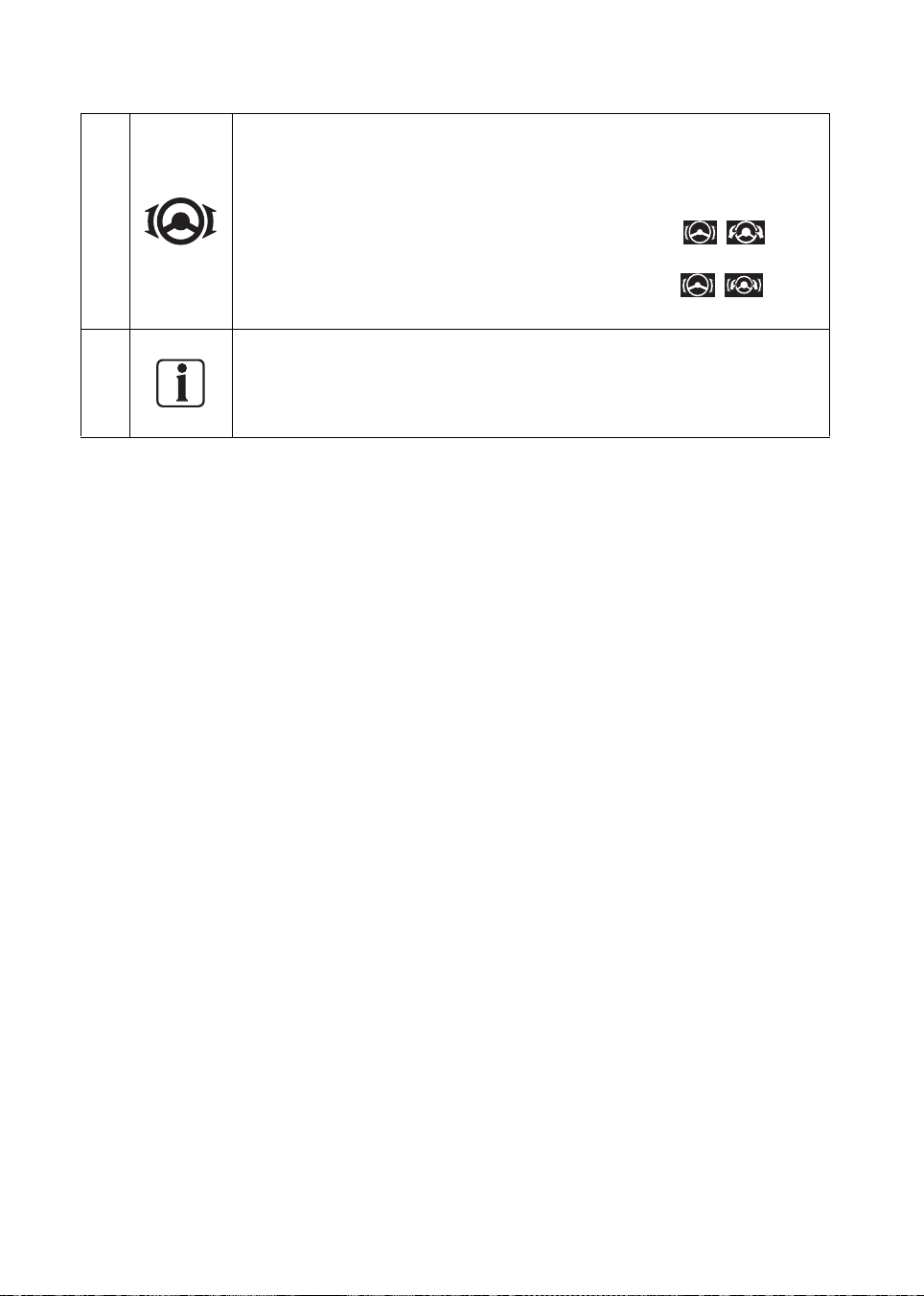
(5)
Lane Centering switch
Press this switch to turn Lane Centering Function on/off (only when
Adaptive Cruise Control is on).
Page 107
• When Lane Centering Function status is standby, / (Lane
Centering indicator) (white) illuminates.
• When Lane Centering Function status is active, / (Lane
Centering indicator) (green) illuminates.
(6)
i switch
Press this switch to display the message that appeared on the combina-
tion meter display again.
Page 200
B8442BE-A.book 30 ページ 2024年10月29日 火曜日 午後6時50分
About EyeSight
31
■ Changing settings
The EyeSight settings can be changed by operating the center information display.
Page 195
The following systems can also be turned on/off by operating the center information display.
• Vehicle Dynamics Control
• X-MODE
• BSD/RCTA
Refer to the vehicle Owner’s Manual for details.
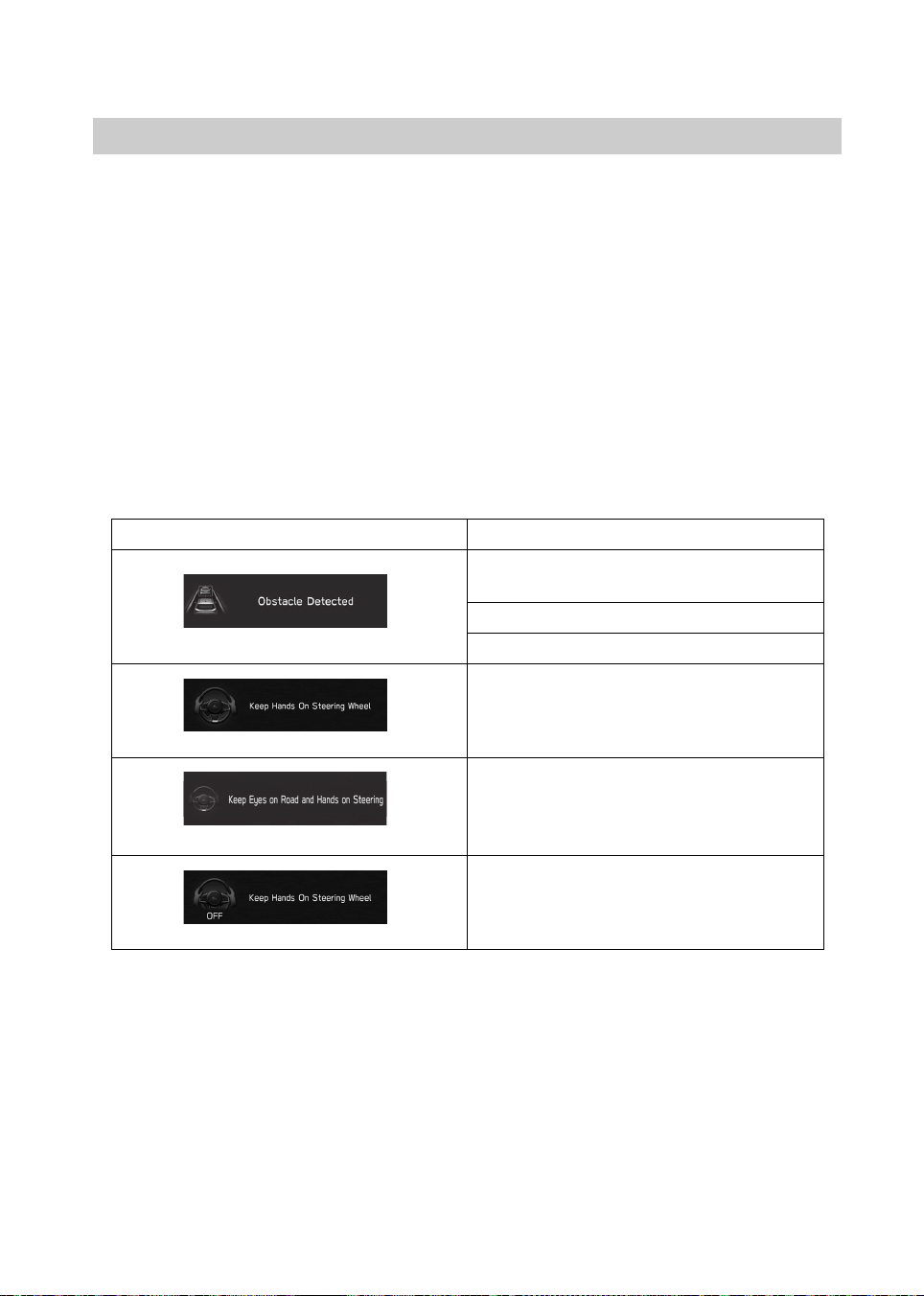
■ Warning screens
The following warning screens will be displayed on the center information display.
Center information display
Displayed screen Item
Pre-Collision Braking System warning
(first braking and secondary braking)
Automatic Emergency Steering warning
“Obstacle Detected” warning
Lane Centering Function warning (no-
operation of the steering wheel)
(models without Driver Monitoring System)
Lane Centering Function warning (no-
operation of the steering wheel)
(models with Driver Monitoring System)
Lane Centering Function cancellation (no-
operation of the steering wheel)
H01572
S03540
H01552
S03541
B8442BE-A.book 31 ページ 2024年10月29日 火曜日 午後6時50分
32
Pre-Collision Braking System
When there is a risk of a collision with an identified object in front (a vehicle, motorcycle,
pedestrian, cyclist, etc.), the EyeSight system helps to prevent or minimize a collision by
warning the driver. If the driver still does not take evasive action to avoid a collision, the
brakes can be automatically applied just before the collision in order to reduce impact dam-
age, or if possible, prevent the collision. If the driver takes evasive action to avoid a collision,
Pre-Collision Braking Assist will operate in order to help the driver to prevent or minimize
the collision.
This system can be effective with direct rear-end collisions. In addition to rear-end colli-
sions, this system can be effective for avoiding collisions with crossing pedestrians and
cyclists. This system is also effective for avoiding collisions with oncoming vehicles, oncom-
ing motorcycles, pedestrians and oncoming cyclists when you make a turn.
This function can be activated when the select lever is in the “D”, “M” or “N” position.
About identified objects for Pre-Collision Braking System
EyeSight recognizes the following objects as identified objects for Pre-Collision Braking
System. (Identified objects differ depending on the function.)
• Vehicles
• Motorcycles
• Pedestrians
• Cyclists
WARNING
Pre-Collision Braking System operation
• Never use Pre-Collision Braking System and Pre-Collision Braking Assist to
stop your car or avoid a collision under ordinary conditions. These functions
cannot prevent collisions under all conditions. If the driver relies only on Pre-
Collision Braking System for Brake operation, collisions may occur.
• When a warning is activated, pay attention to the front of the vehicle and its
surroundings, and operate the brake pedal and/or take other actions if neces-
sary.
• The Pre-Collision Braking System recognizes vehicles, motorcycles, pedestri-
ans and cyclists as identified objects. The system is intended to avoid or
reduce the severity of collisions, but the system may not be able to recognize
objects under certain conditions*. For example, when a vehicle is viewed from
the side, oncoming vehicle, vehicles approaching in reverse, small animals or
children, or walls or doors are not likely to be detected.
B8442BE-A.book 32 ページ 2024年10月29日 火曜日 午後6時50分

Pre-Collision Braking System
33
Continued on next page
• Pre-Collision Braking System will operate at the point when it determines that
a collision cannot be avoided and is designed to apply strong braking force
just before a collision. The result of this varies depending on a variety of con-
ditions*. Because of this, performance of this function will not always be the
same.
• When Pre-Collision Braking System is activated, it will continue to operate
even if the accelerator pedal is partially depressed. However, it will be can-
celed if the accelerator pedal is suddenly or fully depressed.
• If the driver depresses the brake pedal or turns the steering wheel, the system
may determine that this constitutes evasive action by the driver, and the auto-
matic braking control may not activate in order to allow the driver full control.
• If the speed difference with the identified object is greater than approximately
37 mph (60 km/h), collisions cannot be avoided due to performance limita-
tions of EyeSight. However, even if the speed difference is approximately 37
mph (60 km/h) or less, if the identified object suddenly cuts in front of you or is
outside the camera’s field of view, your vehicle may not stop or the system
may not activate depending on various conditions* such as visibility or the
slipperiness of the road. Similarly, Pre-Collision Braking Assist may not acti-
vate depending on various conditions*.
*: Conditions
- Distance to the identified object, speed difference, proximity conditions, lat-
eral displacement (the amount of offset)
- Vehicle conditions (amount of load, number of occupants, etc.)
- Road conditions (grade, slipperiness, shape, bumps, etc.)
- Visibility ahead is poor (rain, snow, fog or smoke, etc.).
- The detected object is something other than an identified object.
• A domestic animal or other animal (a dog or deer, etc.)
• A guardrail, telephone pole, tree, fence or wall, etc.
- Even if the object is an identifiable object, depending on the brightness of
the surroundings, its relative movement, its aspect, and the direction it is
facing, there may be cases when the system cannot detect it as an identi-
fied object.
- The system determines that operation by the driver (based on accelerator
pedal operation, braking, steering wheel angle, etc.) is intended as evasive
action.
B8442BE-A.book 33 ページ 2024年10月29日 火曜日 午後6時50分

Pre-Collision Braking System
34
Continued from previous page
- Vehicle maintenance status (brake systems, tire wear, tire pressure,
whether a temporary spare tire is being used, etc.)
- A trailer or another vehicle, etc. is being towed.
- The brakes are cold due to the outside temperature being low or just after
starting the hybrid system.
- The brakes are overheated on downhill grades (braking performance is
reduced).
- In rain or after washing the vehicle (the brakes are wet and braking perfor-
mance is reduced.)
- Recognition conditions of the camera
In particular, the function may be unable to stop the vehicle or may not acti-
vate in the following cases.
• The identified object moves outside the camera’s field of view.
• Bad weather (for example heavy rain, a blizzard or thick fog)
• Visibility is poor due to sand, smoke or water vapor blowing in the wind, or
the front vision is obscured due to water splashes, snow, dirt or dust stir
up generated by the vehicle in front or oncoming traffic.
• At night or in a tunnel without the headlights on
• At night or in a tunnel when there is a vehicle in front that does not have
its taillights on
• Approaching a pedestrian or cyclist at night
• An identified object is outside the area illuminated by the headlights.
• Strong light is coming from the front (for example, sunlight at dawn, sun-
set or headlight beams, etc.).
• The camera’s field of view is obstructed by fogging, snow, dirt, frost, dust,
scratches, or smears on the windshield, or by light reflecting off the dirt,
etc.
• Fluid has not been fully wiped off the windshield during or after washer
use.
B8442BE-A.book 34 ページ 2024年10月29日 火曜日 午後6時50分
Pre-Collision Braking System
35
Continued on next page
• The target cannot be correctly recognized because the camera’s view is
obstructed by water droplets from rain or the window washer, or by the
wiper blades.
• The camera’s field of view is obstructed (for example by a canoe on the
roof of the vehicle).
• The vehicle is tilted at an extreme angle due to loaded cargo or other fac-
tors.
• It is pitch black and there are no objects in the surrounding area.
• The surrounding area is mostly the same color (for example in a snowy
location).
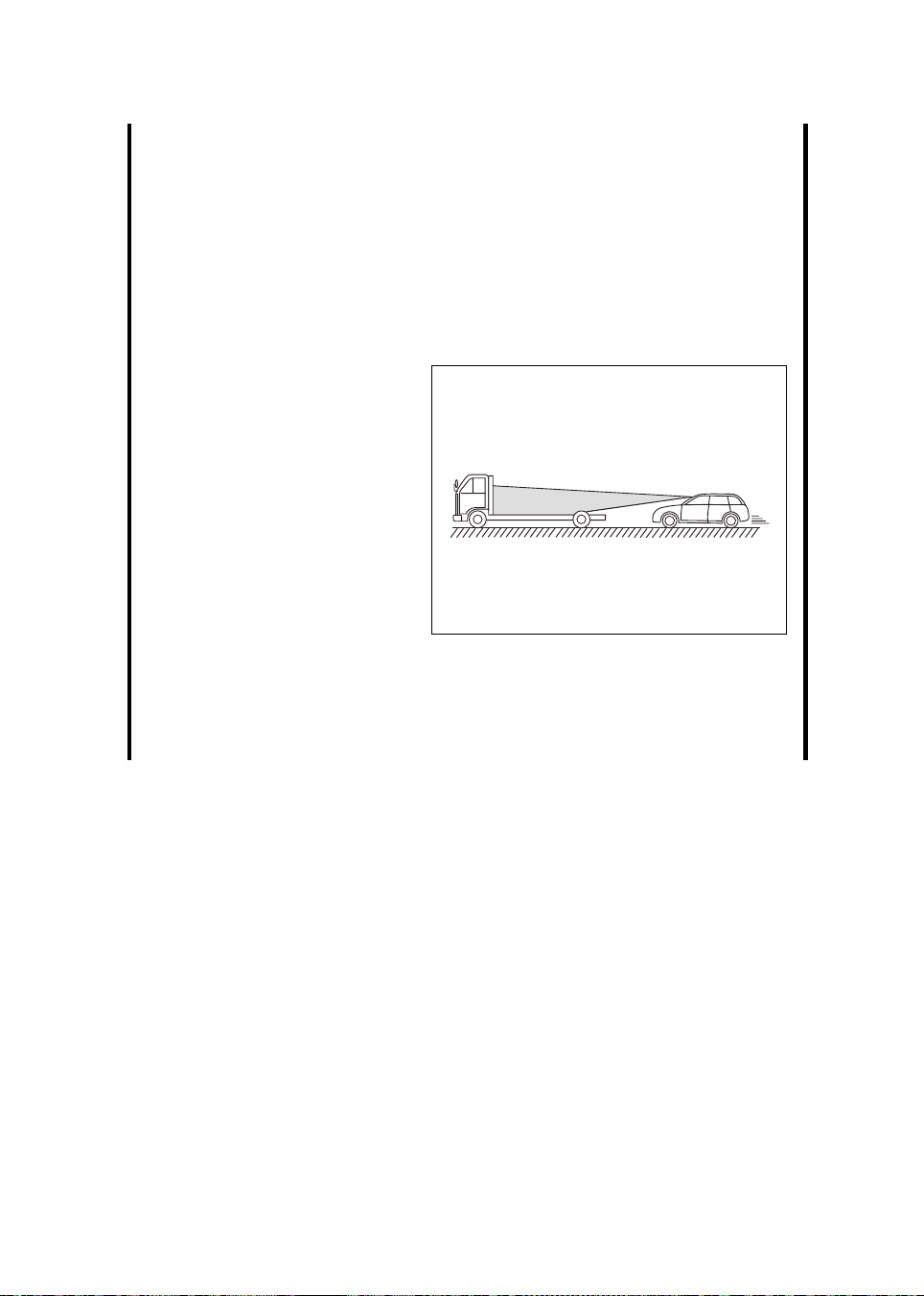
• The rear aspect of the
vehicle in front is low,
small or irregular (the sys-
tem may recognize
another part of the vehicle
as its rear and will deter-
mine operation from that).
- There is an empty truck
or trailer with no rear
and/or side panels on
the cargo bed.
- Vehicles that have cargo
protruding from their
back ends
- Non-standard shaped vehicles (vehicle transporters or vehicles with a
sidecar fitted, etc.)
- The height of the vehicle is low, etc.
S02133
B8442BE-A.book 35 ページ 2024年10月29日 火曜日 午後6時50分
Pre-Collision Braking System
36
Continued from previous page
• There is a wall, etc. in front of a stopped vehicle.
• There is another object near the vehicle.
• A vehicle, etc. has its side facing you.
• With vehicles that are backing up or with oncoming vehicles, etc.
• The size and height of an obstacle is smaller than the limitations of the
camera’s recognition capability.
- With small animals or children, etc.
- With pedestrians who are sitting or lying down
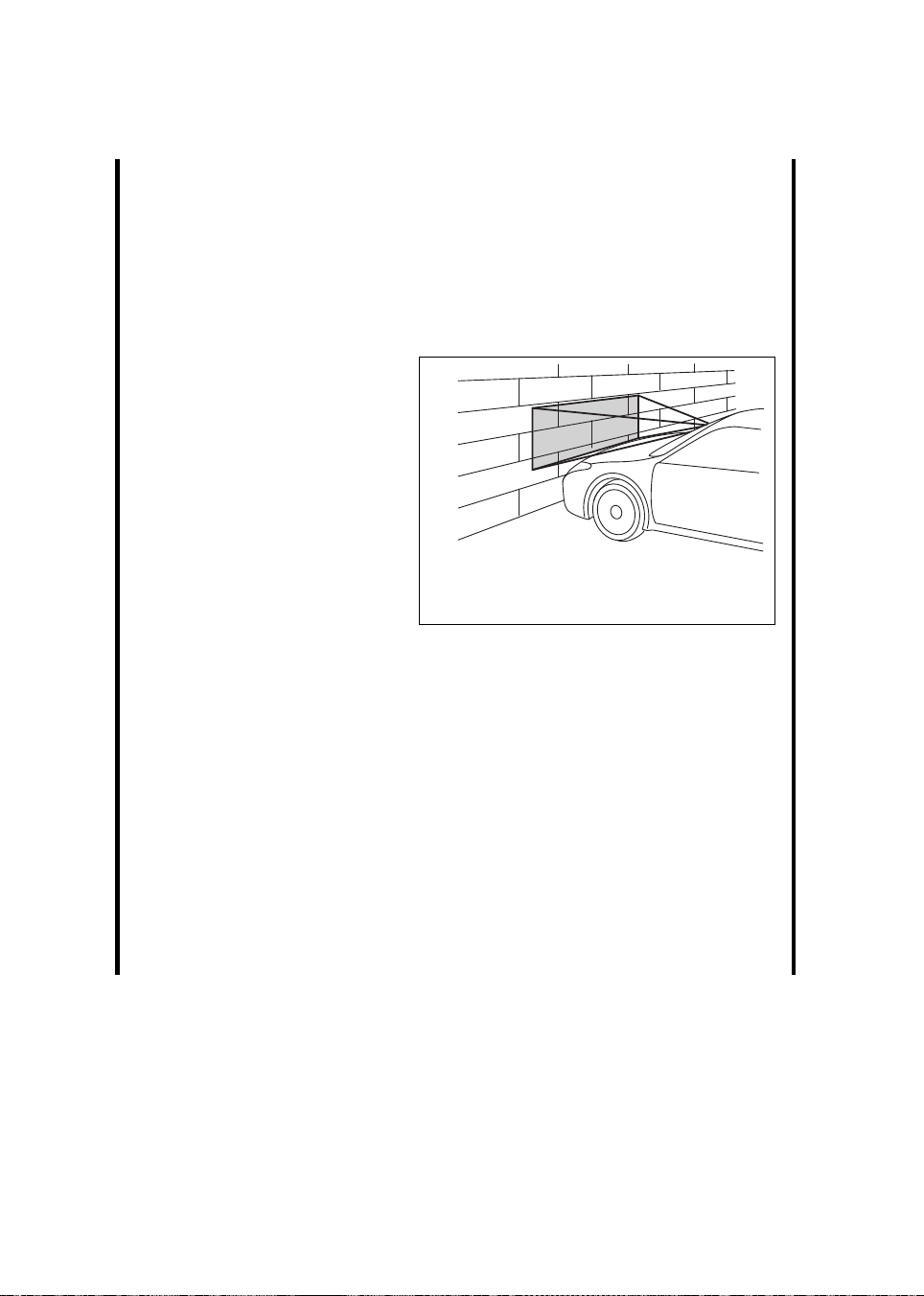
• The detected object is a
fence or wall, etc. with a
uniform pattern (a striped
pattern or brick pattern,
etc.).
• There is a wall or door
made of glass or a mirror
in front.
• The vehicle in front sud-
denly swerves, acceler-
ates, or decelerates.
• An identified object sud-
denly cuts in from the side
or suddenly runs in front of you.
• Your vehicle is immediately behind an obstacle after changing lanes.
• There is an identified object in a location close to your vehicle’s bumper.
• The speed difference between your vehicle and an obstacle is approxi-
mately 4 mph (5 km/h) or less (As braking is performed once the obstacle
is in close proximity to your vehicle, depending on the shape and size of
the obstacle, there may be some cases when the obstacle is outside the
range of the camera’s field of view.).
• On sharp curves, steep uphill grades or steep downhill grades
• On a bumpy or unpaved road
• The brightness changes such as at a tunnel entrance or exit or when you
drive under an overpass.
• Do not test Pre-Collision Braking System on its own. It may operate improp-
erly and cause an accident.
H00996
B8442BE-A.book 36 ページ 2024年10月29日 火曜日 午後6時50分

Pre-Collision Braking System
37
Continued on next page
• The system may not operate correctly under the conditions listed below.
When these conditions occur, turn off Pre-Collision Braking System.
Page 64
- The tire pressure is not correct.
*1
- The temporary spare tire is installed.
*1
- Tires that are unevenly worn or tires with uneven wear patterns are
installed.
*1
- Tires that are the wrong size are installed.
*1
- A flat tire has been fixed temporarily with a tire repair kit.
- The suspension has been modified (including a genuine SUBARU suspen-
sion that has been modified).
- An object that obstructs the camera’s view is installed on the vehicle.
- Tire chains are installed.
- The headlights are dirty or they have snow and ice or dirt on them. (Objects
are not correctly illuminated and are difficult to detect.)
- The optical axes are not aligned correctly. (Objects are not correctly illumi-
nated and are difficult to detect.)
- The lights including headlights and fog lights have been modified.
- Vehicle operation has become unstable due to an accident or malfunction.
- The brake system warning light is illuminated in red.
*2
- The vehicle is tilted at an extreme angle due to loaded cargo or other fac-
tors.
- The maximum number of occupants is exceeded.
- The combination meter is not operating properly; such as when the lights do
not illuminate, the beeps do not sound, the display is different from when it
is normal, etc.
*3
*1: The wheels and tires have functions that are critically important. Be sure to
use the correct ones. For details, refer to the vehicle Owner’s Manual.
*2: If the brake system warning light does not turn off, immediately pull the
vehicle over in a safe place and contact a SUBARU dealer to have the
system inspected. For details, refer to the vehicle Owner’s Manual.
*3: For details about the combination meter, refer to the vehicle Owner’s Man-
ual.
B8442BE-A.book 37 ページ 2024年10月29日 火曜日 午後6時50分
Pre-Collision Braking System
38
Continued from previous page
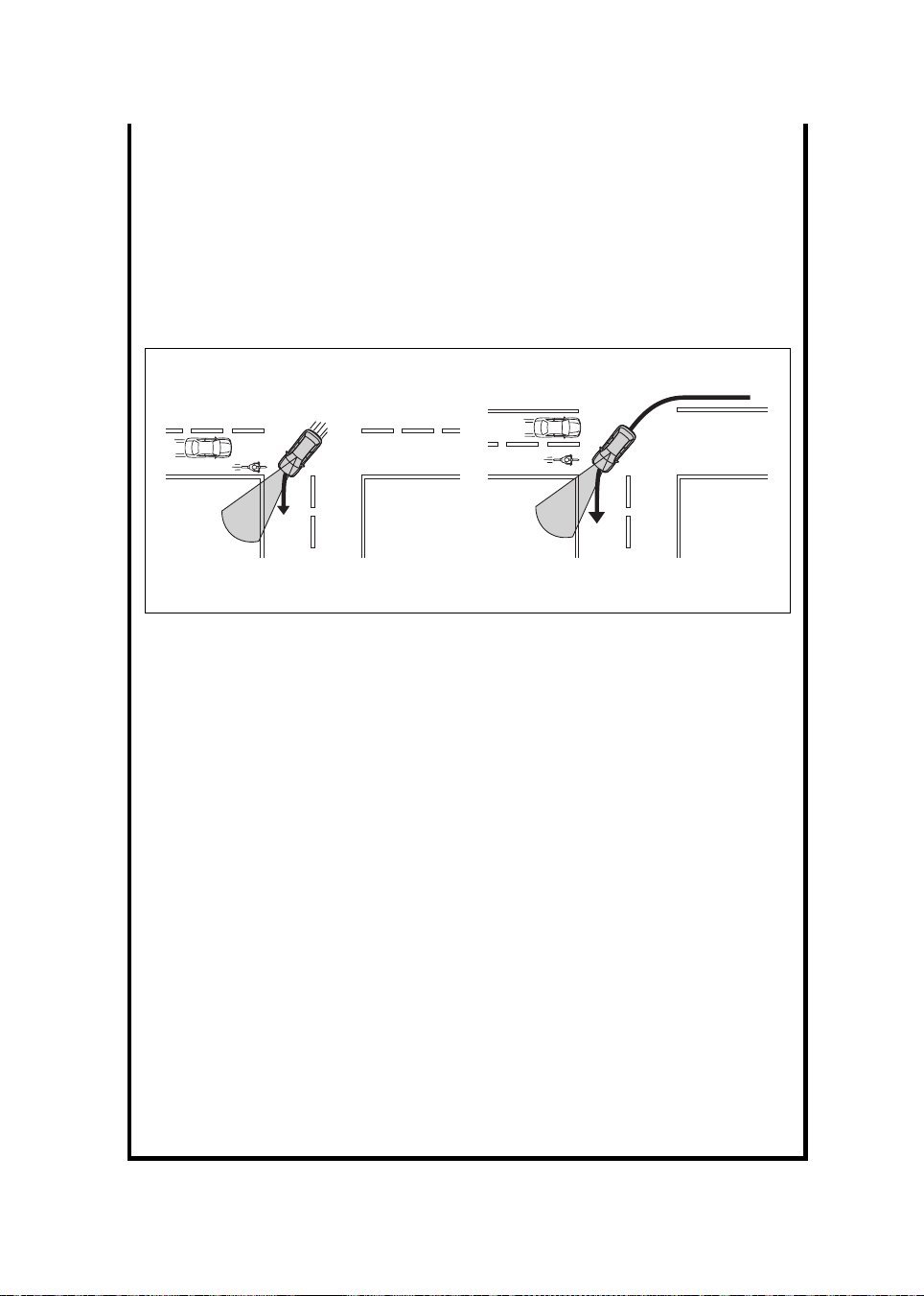
Activation of Pre-Collision Braking System when you make a turn
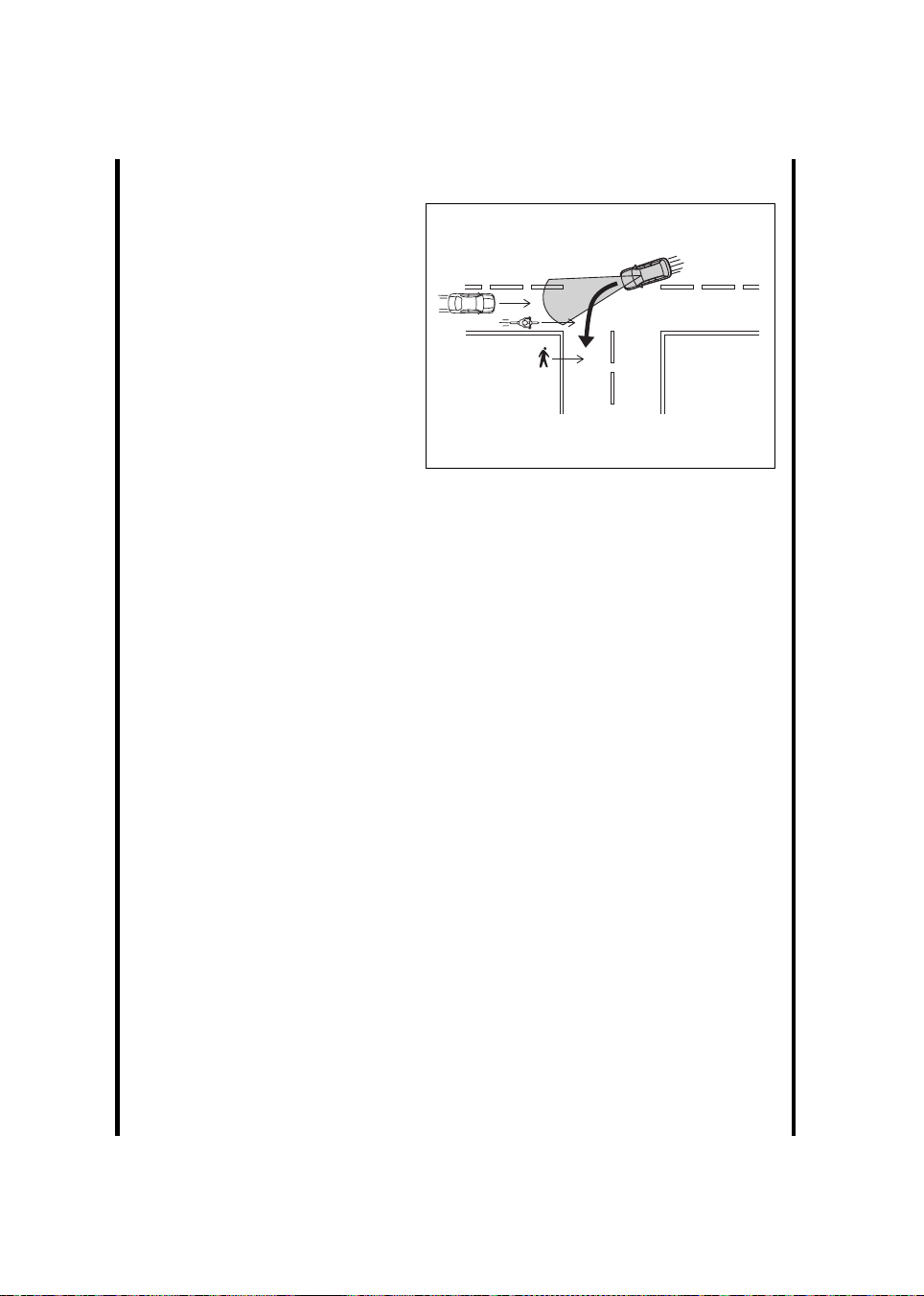
• The Pre-Collision Braking Sys-
tem recognizes oncoming vehi-
cles, oncoming motorcycles,
pedestrians or oncoming
cyclists as identified objects
when you are making a turn.
The system is intended to avoid
or reduce the severity of colli-
sions with oncoming vehicles
that are approaching in the
neighboring oncoming lane, but
the vehicle may not be able to
stop or the system may not activate under certain conditions*.
• If your vehicle is moving faster than approximately 16 mph (25 km/h) (faster
than approximately 22 mph (35 km/h) if the identified object is an oncoming
pedestrian, and out of the range between approximately 7 mph (10 km/h) and
12 mph (20 km/h) if the identified object is a pedestrian approaching from
behind) when you turn, the system will not activate. Also, even if your vehicle
speed is within the activation range of the system, if the obstacle suddenly
cuts in front of you or is outside the camera’s field of view, your vehicle may
not stop or the system may not activate depending on various conditions*
such as visibility or the slipperiness of the road.
*: Conditions
- Speed difference with the identified object, distance to the identified object,
the angle of approach, changes in the actions of the identifiable object and
the position of the identifiable object relative to the side of your vehicle.
- Vehicle conditions (amount of load, number of occupants, etc.)
- Road conditions (grade, slipperiness, shape, bumps, etc.)
- Visibility ahead is poor (rain, snow, fog or smoke, etc.).
- The obstacle is something other than an identifiable object.
• A parked vehicle or a vehicle that is traveling in the same direction as
your vehicle
• An animal, etc.
• A guardrail, telephone pole, tree, fence or wall, etc.
- Even if an identified object has been detected, you are not signaling to
move in the direction that your vehicle is actually traveling.
- Even if the object is an identifiable object, it is traveling close to objects on
the side of the road.
- Even if the object is an identifiable object, it is stopped or traveling in your
lane.
H00969
B8442BE-A.book 38 ページ 2024年10月29日 火曜日 午後6時50分
Pre-Collision Braking System
39
- Even if the object is an identifiable object, the system cannot recognize it as
an identified object because, for example, the front of the identifiable object
cannot be seen or is difficult to see because it is driving without its head-
lights on at night.
- Even if the obstacle is an oncoming vehicle, your vehicle moved into the
oncoming vehicle’s path before the system could recognize it as an identi-
fied object.
- Even if the object is an identifiable object, your vehicle is in the oncoming
lane.
- Even if the object is an identifiable object, depending on the brightness of
the surroundings, its relative movement, its aspect, and the direction it is
facing, there may be cases when the system cannot detect it as an identi-
fied object.
• In particular, there is a high possibility that your vehicle cannot stop or that the
system will not activate in the following cases:
- Visibility is poor due to water, snow, dust, etc. kicked up by another vehicle,
or due to water vapor, sand, smoke, etc. in the air.
- Approaching an oncoming motorcycle, a pedestrian or an oncoming cyclist
at night.
- The identified object is outside the area illuminated by the headlights.
- The front aspect of the oncoming vehicle is small, low or irregular.
- The vehicle, etc. has its side facing you.
- The vehicle, etc. is backing up.
- The oncoming vehicle suddenly swerves, accelerates or decelerates.
- The identified object suddenly cuts in from the side or suddenly runs in front
of you.
- The identified object is close to your vehicle’s bumper.
- You turn the steering wheel suddenly away or back to your direction of
travel.
- The angle of the crossing road is acute, or you are entering into a road that
curves very gently, etc.
- Entering a crank, curve, road that forks several times, etc.
H00970
B8442BE-A.book 39 ページ 2024年10月29日 火曜日 午後6時50分
Pre-Collision Braking System
40
CAUTION
• In the following situations, turn off Pre-Collision Braking System. Otherwise
Pre-Collision Braking System may activate unexpectedly.
Page 64
- The vehicle is being towed.
- The vehicle is being loaded onto a carrier.
- A chassis dynamometer, free-rollers or similar equipment is being used.
- A mechanic lifts up the vehicle, starts the hybrid system and spins the
wheels freely.
- Passing hanging banners, flags or branches
- Thick/tall vegetation is touching the vehicle.
- Driving on a race track
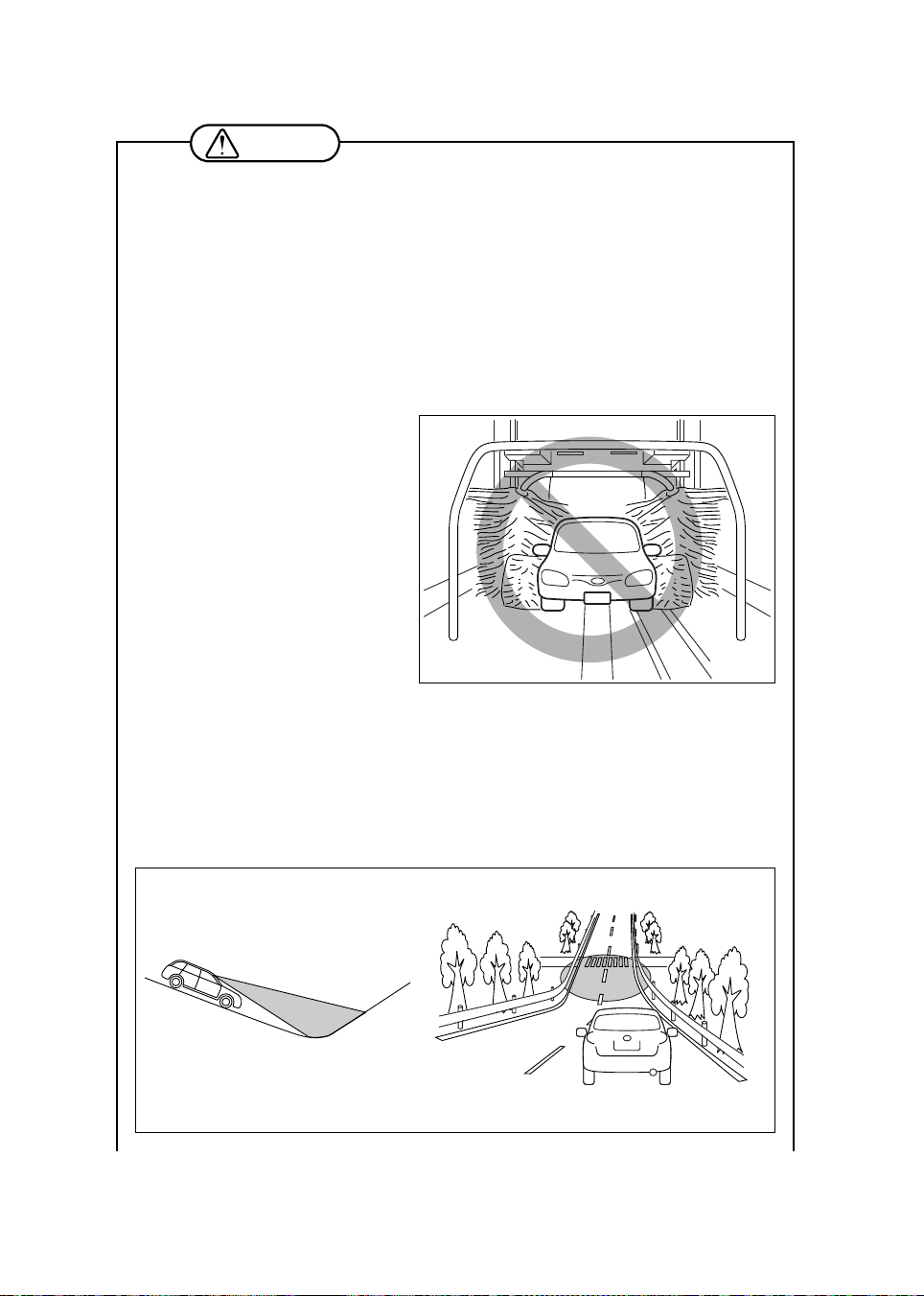
- In a drive-through car wash
• Pre-Collision Braking System may activate in the following situations. There-
fore concentrate on safe driving.
- Passing through an automatic gate (opening and shutting)
- Driving close to an identified object
- Reflection or markings on a wall or the road surface in front of your vehicle
is difficult to distinguish from an identified object.
- Driving in a location where the grade of the road changes rapidly
S00656
S01264
B8442BE-A.book 40 ページ 2024年10月29日 火曜日 午後6時50分
Pre-Collision Braking System
41
Continued on next page
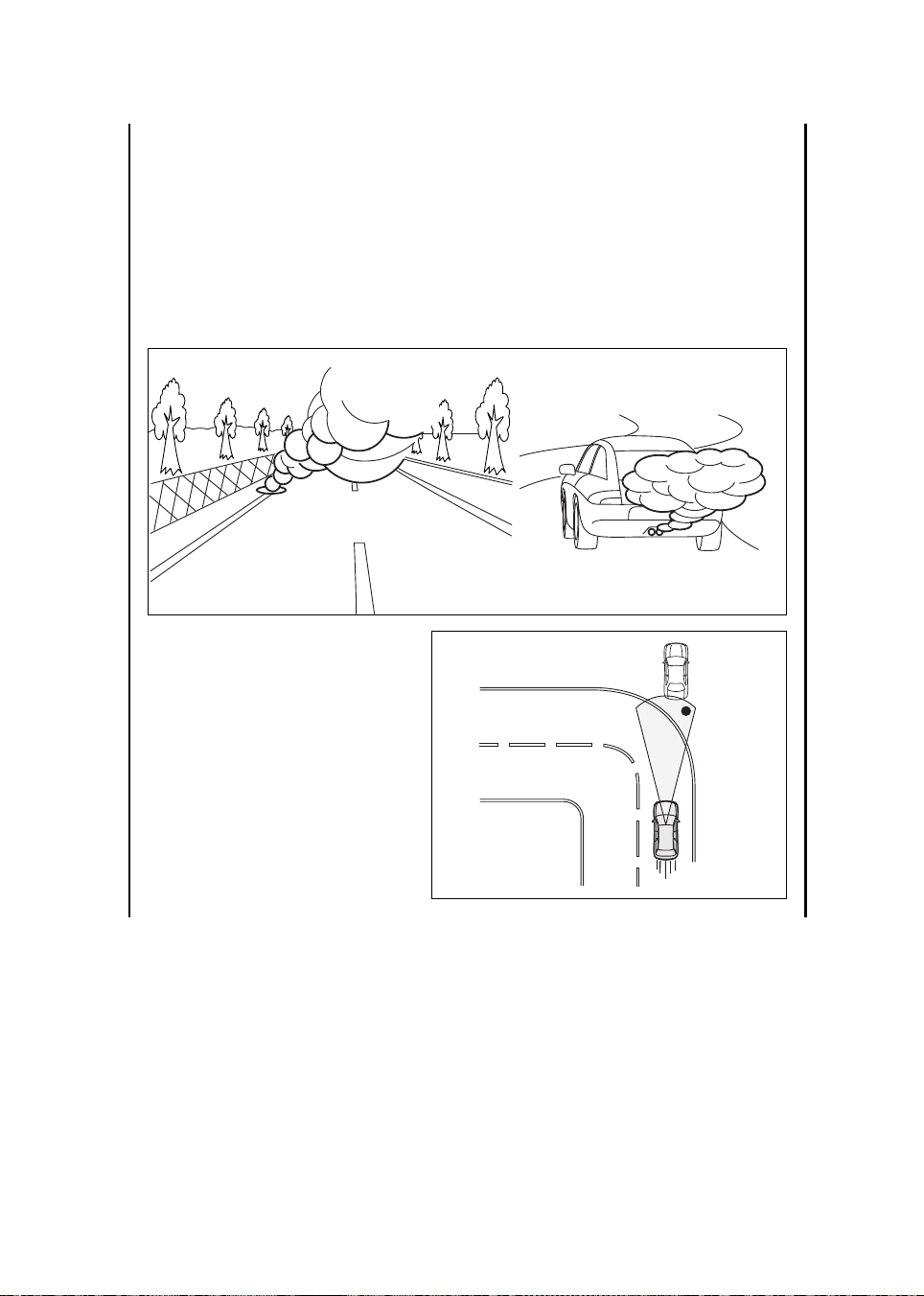
- Visibility is poor due to sand, smoke or water vapor blowing in the wind, or
the front vision is obscured due to water splashes, snow, dirt or dust stir up
generated by the vehicle in front or oncoming traffic.
- Passing through clouds of steam or smoke, etc.
- In adverse weather, such as heavy snow or snowstorms
- Strong light reflects off dirt or fog on the inside or outside of the windshield
in front of the camera, and rays from the light get into the camera.
- The exhaust gas emitted by the vehicle in front is clearly visible in cold
weather, etc.
- There is an identified object
or obstacle on a curve or
intersection.
- You are passing close to an
identified object or obstacle,
etc.
- Stopping very close to a wall
or a vehicle in front
S00652
H00717
B8442BE-A.book 41 ページ 2024年10月29日 火曜日 午後6時50分
Pre-Collision Braking System
42
Continued from previous page
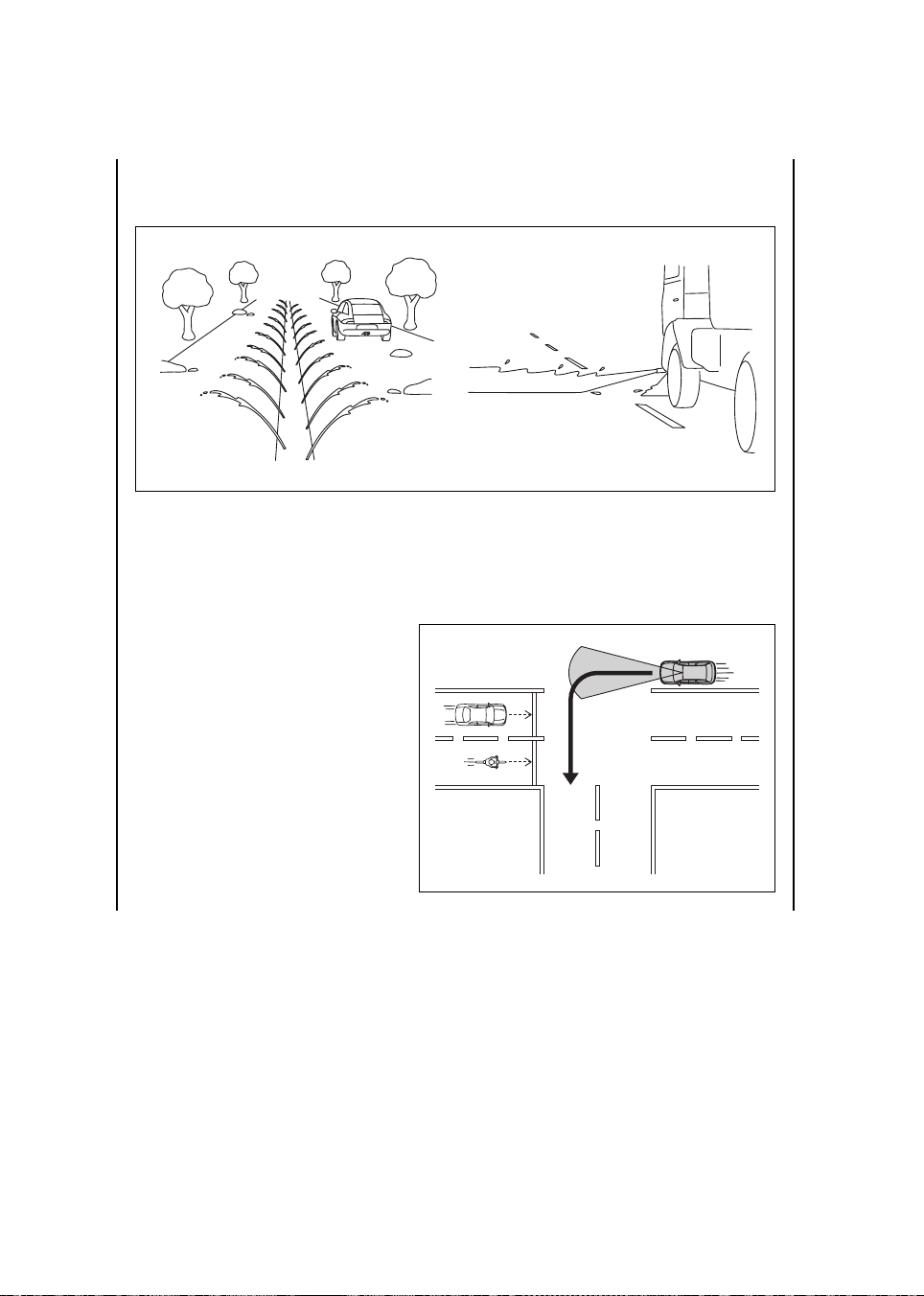
- Passing through water spray from road sprinklers or snow clearing sprin-
klers on the road
• If there is cargo or installed accessories, etc. that are protruding beyond the
edge of the front bumper, the vehicle’s length will increase and the system
may not be able to prevent a collision.
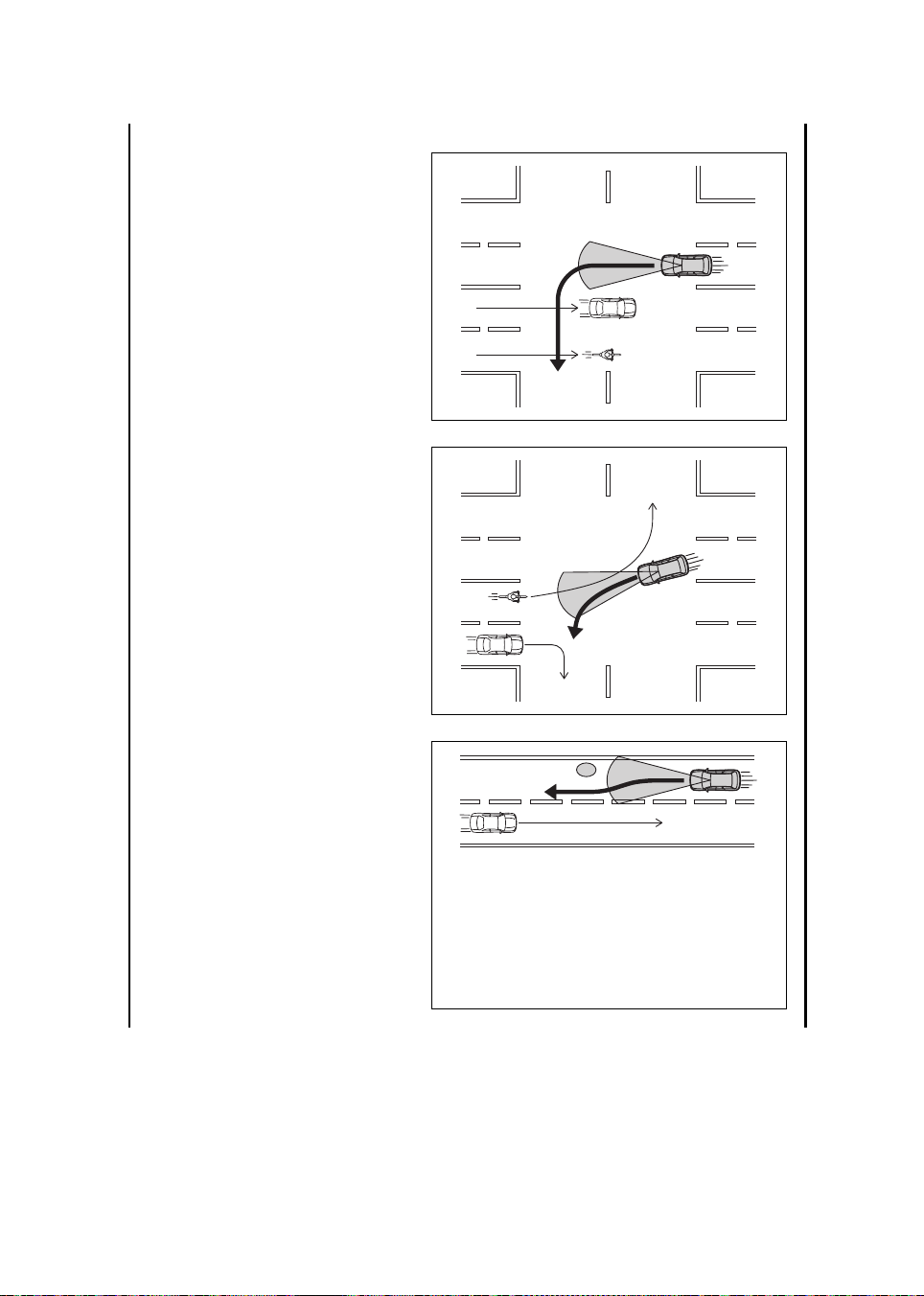
• Pre-Collision Braking System may activate in the following situations even
when there is no identified object approaching.
- An identified object slows
down or stops before an
intersection just before you
make a turn and enter the
oncoming lane.
S02636
H00971
B8442BE-A.book 42 ページ 2024年10月29日 火曜日 午後6時50分
Pre-Collision Braking System
43
Continued on next page
- An identified object passes
by just before you make a
turn and enter the oncoming
lane.
- Just before you make a turn
and enter the oncoming lane,
you pass by an identified
object also making a turn.
- You suddenly approach
close to an identified object
while trying to change lanes
or avoid an obstacle.
- When you are turning, a
pedestrian crosses in front of
your vehicle or just before
crossing slows down or
stops.
H00972
H00973
H00997
B8442BE-A.book 43 ページ 2024年10月29日 火曜日 午後6時50分
Pre-Collision Braking System
44
Continued from previous page
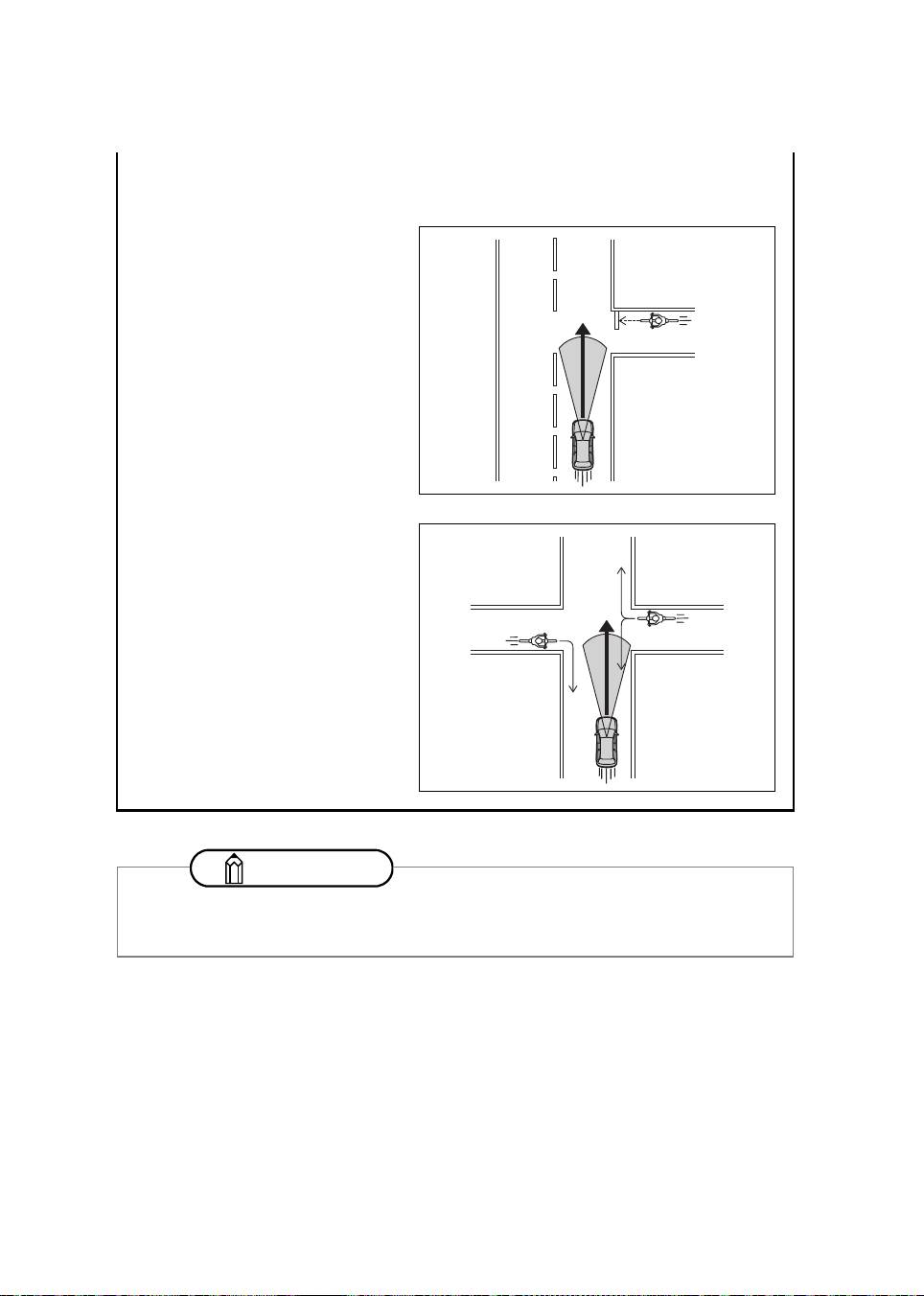
- An oncoming motorcycle or an oncoming cyclist suddenly stops or changes
direction in front of you just before you make a turn.
- An identified object slows
down or stops just before
crossing in front of you.
- An identified object changes
direction to either join your
lane or pass by you in the
opposite direction just before
crossing in front of you.
NOTE
Some unusual noises may be audible during automatic braking. This is caused
by the braking control and is normal.
H00492
H00493
B8442BE-A.book 44 ページ 2024年10月29日 火曜日 午後6時50分
Pre-Collision Braking System
45
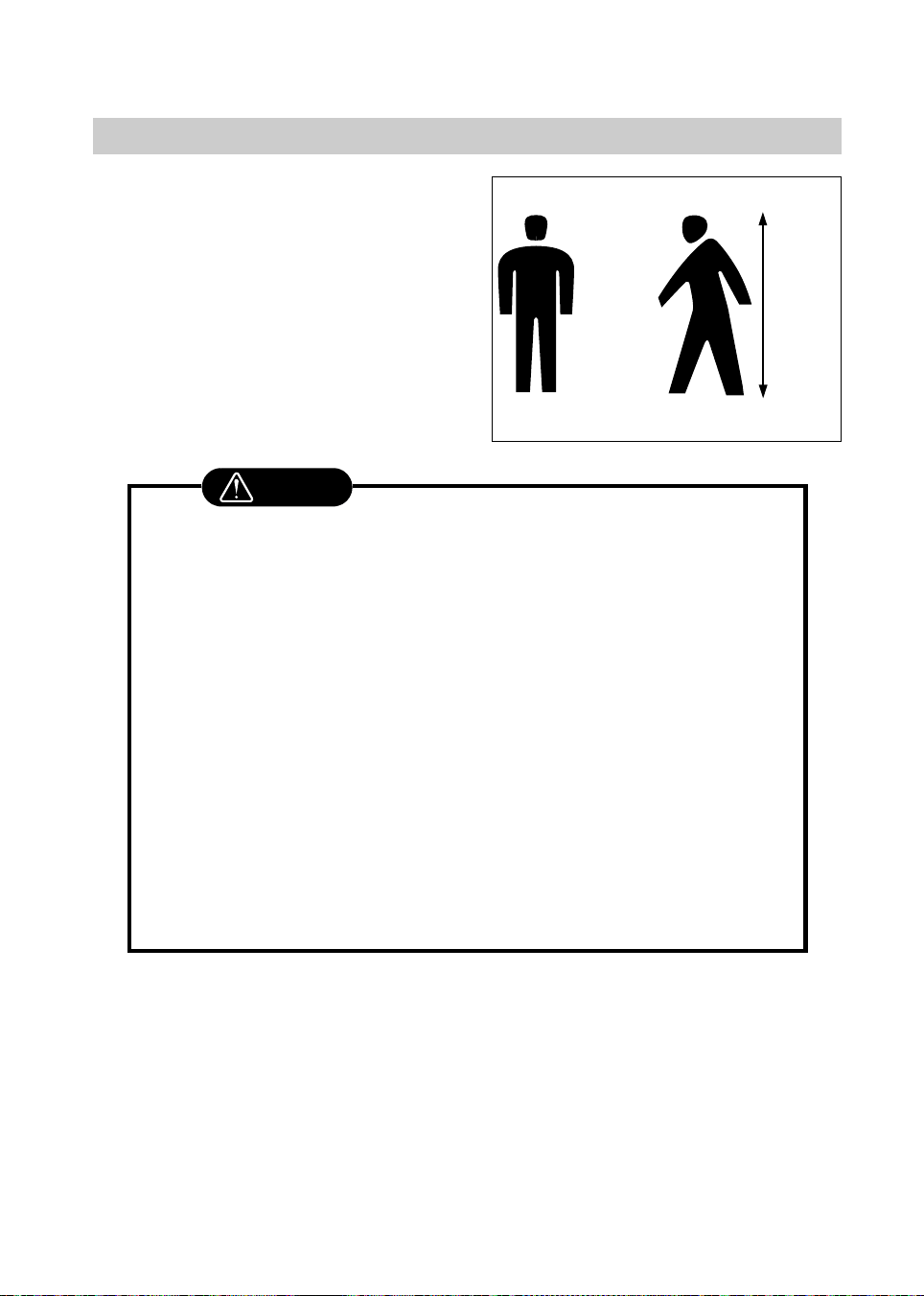
The EyeSight system can also detect pedes-
trians. The EyeSight system detects pedestri-
ans from their size, shape and movement.
The system detects a pedestrian when the
contour of the pedestrian is clear.
Detection of pedestrians
WARNING
Pre-Collision Braking System also identifies pedestrians as identified objects.
However, depending on the conditions, there may be cases when the system
cannot detect a pedestrian. In the following conditions, the possibility that the
system may not be able to detect a pedestrian as an identified object is particu-
larly high.
• Part of a pedestrian’s body is obscured.
• Pedestrians are walking in a group.
• A pedestrian is next to a wall or other obstacle.
• A pedestrian is using an umbrella.
• A pedestrian is wearing clothes that are a similar color to the surrounding
environment.
• A pedestrian is carrying bulky luggage or tall object, or is pushing an object
such as a cart.
• A pedestrian is bending over, crouching down, lying down or making a sud-
den movement such as standing up.
• A pedestrian is in a dark location.
• A pedestrian suddenly crosses in front of you from the side or suddenly runs
in front of you.
S02796
Approx.
3 1/3 ft-
6 2/3 ft
(1-2 m)
B8442BE-A.book 45 ページ 2024年10月29日 火曜日 午後6時50分
Pre-Collision Braking System
46
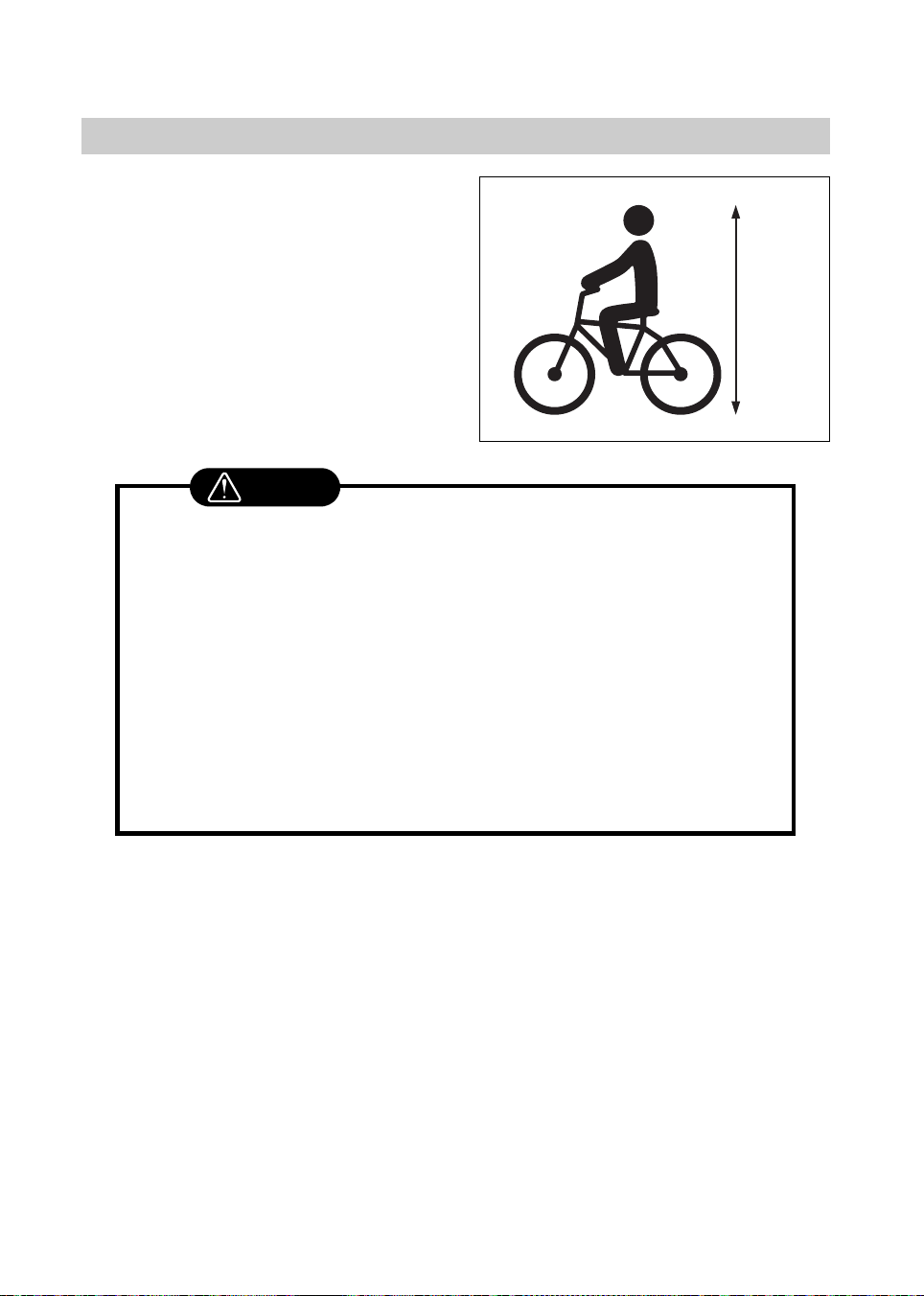
The EyeSight system can also detect cyclists.
The EyeSight system detects cyclists from
their size, shape and movement.
The system can recognize a cyclist when the
outline of a rider and bicycle is clear and it
detects human-like movement.
Detection of cyclists
WARNING
Pre-Collision Braking System may not recognize objects as identified objects
under certain conditions. In the following conditions, the possibility that the sys-
tem may not be able to detect a cyclist as an identified object is particularly high.
• Part of the rider or bicycle is obscured.
• A cyclist is moving in a group with other pedestrians or cyclists.
• A cyclist is next to a wall or other obstacle.
• A cyclist’s clothing and/or bicycle are similar in color to the surrounding envi-
ronment.
• A large item is being carried on the bicycle.
• A cyclist is standing while pedaling or leaning over the handlebars.
• A cyclist is in a dark location.
• A cyclist suddenly cuts in from the side or suddenly appears in front of you.
• A cyclist crosses in front of you at a high speed.
H01459
Approx.
3 1/3 ft-
8 1/3 ft
(1-2.5 m)
B8442BE-A.book 46 ページ 2024年10月29日 火曜日 午後6時50分

Pre-Collision Braking System
47
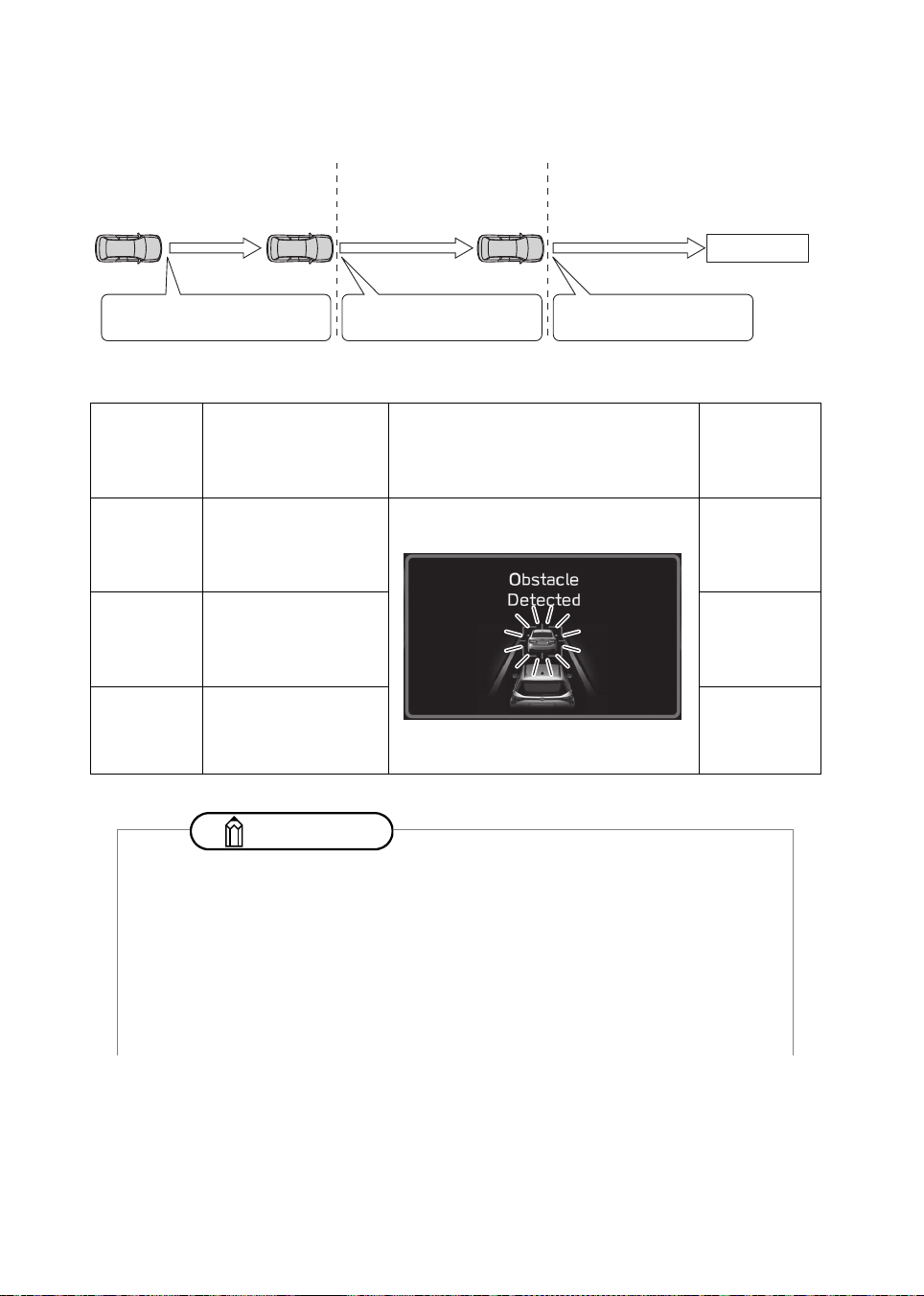
When there is an obstacle in front of you during driving, the system activates in the following
sequence in order to warn the driver and to activate braking control and the brake lights.
Following Distance Warning:
When the system determines that there is a risk of collision, an alert sounds repeated short
beeps and an interruption screen is displayed on the combination meter display to warn the
driver.
When the driver depresses the brake pedal to decelerate and achieves a suitable following
distance, the warning is canceled.
First Braking and Warning:
When the system determines that there is a high risk of collision with an obstacle in front, an
alert sounds repeated short beeps and interruption screens are displayed on the combina-
tion meter display and the center information display to warn the driver. Braking control may
be activated and in some situations, hybrid system output may also be controlled. If the sys-
tem determines that the amount of evasive action (braking, steering, etc.) taken by the
driver has reduced the risk of collision, braking activation is canceled.
Secondary Braking and Warning:
If the system then determines that the risk of collision is extremely high, the alert changes to
a continuous beeping sound and stronger braking control is activated. Despite any evasive
action taken by the driver, if the system subsequently determines that a collision is unavoid-
able, the system continues to control braking and hybrid system output.
When the vehicle is stopped by secondary braking, the driver should depress the brake
pedal in order to ensure that the vehicle stays stopped.
Pre-Collision Braking System operation
B8442BE-A.book 47 ページ 2024年10月29日 火曜日 午後6時50分
Pre-Collision Braking System
48
Operating
system
Strength of
Automatic Braking
Indication on the
combination meter display
Alert type
Following
distance
warning
No brake control
Repeated
short beeps
First
braking
Moderate
Repeated
short beeps
Secondary
braking
Strong
Single
continuous
beep
NOTE
• In the following cases, the brake control after the vehicle has come to a stop
through Pre-Collision Braking System will be released.
- Depress the brake pedal.
- Depress the accelerator pedal (except when the select lever is in the “N”
position).
- Shift the select lever into the “P” position.
- The vehicle has been stopped for approximately 2 minutes.
- The electronic parking brake was applied.
H01238
Following distance
warning
First braking &
warning
Secondary braking &
warning
Possible collision area Highly possible
collision area
Extremely highly possible
collision area
Obstacle
H02442
B8442BE-A.book 48 ページ 2024年10月29日 火曜日 午後6時50分

Pre-Collision Braking System
49
• After stopping with secondary braking, in the following cases, the electronic
parking brake will be applied.
(For details about how to release the electronic parking brake, refer to the
vehicle Owner’s Manual.)
- Approximately 2 minutes have elapsed since stopping and the brake pedal
is not depressed.
- Any door (except the rear gate) is opened.
- The EyeSight system has a malfunction. (EyeSight warning indicator:
Yellow)
Page 189
- The EyeSight system has stopped temporarily. (EyeSight temporary
stop indicator: White)
Page 191
• Neither first braking nor secondary braking will operate in the following cases.
- The vehicle speed is approximately 1 mph (1 km/h) or less (approximately 2
mph (4 km/h) or less when the select lever is in the “N” position), or approx-
imately 100 mph (160 km/h) or more.
- The vehicle speed is approximately 60 mph (100 km/h) or more, and the
obstacle is a motorcycle, a pedestrian or a cyclist.
- Vehicle Dynamics Control is active.
• If the system detects the brake lights of the vehicle in front, your vehicle will
start decelerating earlier than if it does not.
• There are some cases where the first braking is applied for a longer period of
time. One of the reasons for this is due to a large speed difference with an
obstacle in front. In those cases, stronger or weaker braking control may be
activated.
B8442BE-A.book 49 ページ 2024年10月29日 火曜日 午後6時50分
Pre-Collision Braking System
50
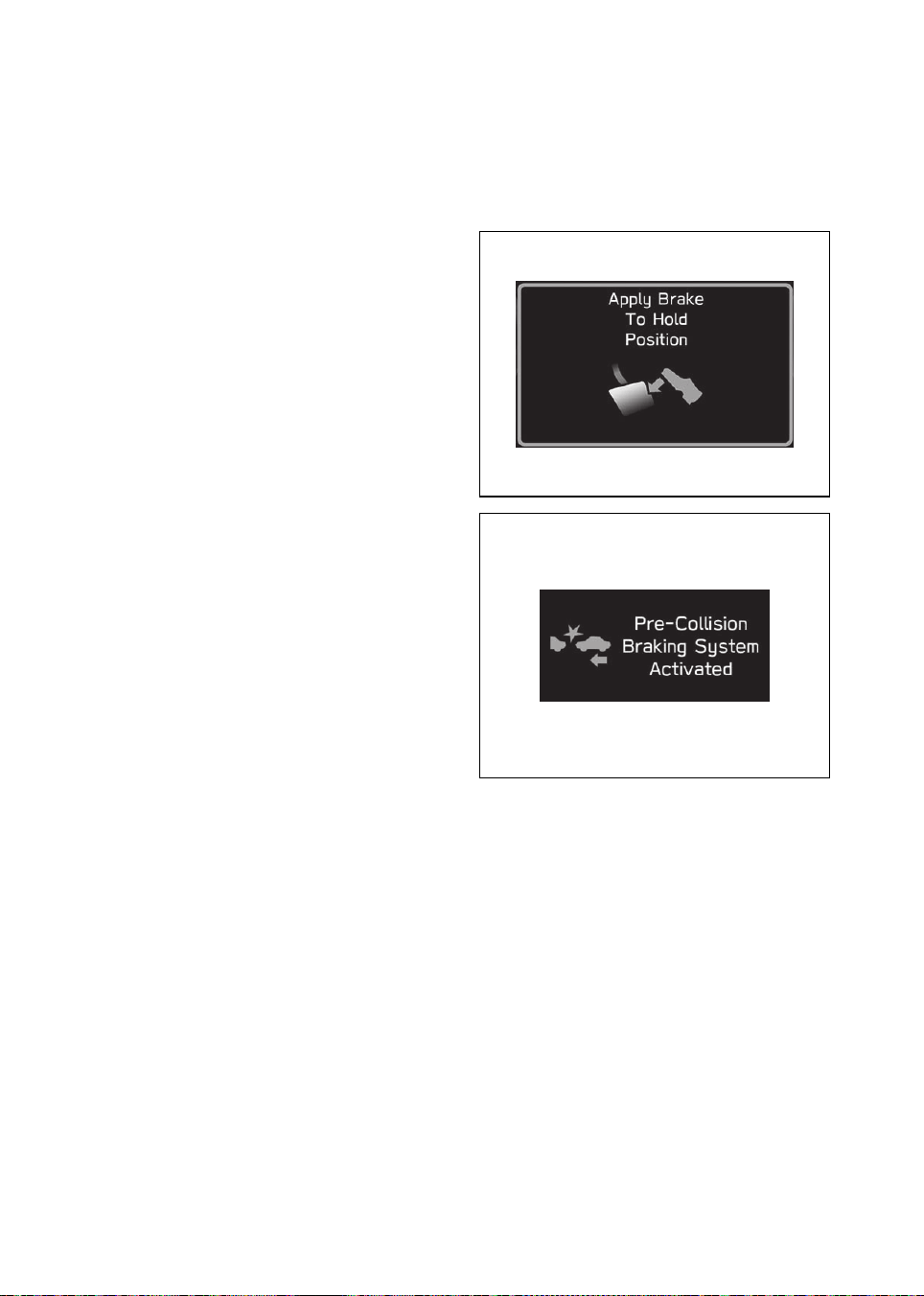
■ Pre-Collision Braking System operation screen
After the Pre-Collision Braking System operation, an interruption screen appears and stays
on the combination meter display for a certain period of time.
The screen displays the message “Apply
Brake To Hold Position” to urge the driver to
depress the brake pedal. At this time the alert
(beep) sounds. This screen will be displayed
for approximately 2 minutes until the driver
depresses the brake pedal.
An interruption screen appears and stays on
the combination meter display to indicate that
Pre-Collision Braking System has activated.
H02373
H02400
B8442BE-A.book 50 ページ 2024年10月29日 火曜日 午後6時50分
Pre-Collision Braking System
51
When Pre-Collision Braking System is activated (when the system determines that there is
a high risk of collision with an obstacle in front), if the driver depresses the brake pedal, the
system determines that this is emergency braking and activates braking assist automati-
cally.
Pre-Collision Braking Assist operation
CAUTION
If the driver depresses the brake pedal while following distance warning is acti-
vated, the Pre-Collision Braking Assist will not work. The vehicle decelerates
with the normal braking force operated by the driver.
NOTE
• Pre-Collision Braking Assist function does not operate when the vehicle
speed is approximately 7 mph (10 km/h) or less, or approximately 100 mph
(160 km/h) or more.
• For information about the brake assist function, refer to the vehicle Owner’s
Manual.
B8442BE-A.book 51 ページ 2024年10月29日 火曜日 午後6時50分
Pre-Collision Braking System
52
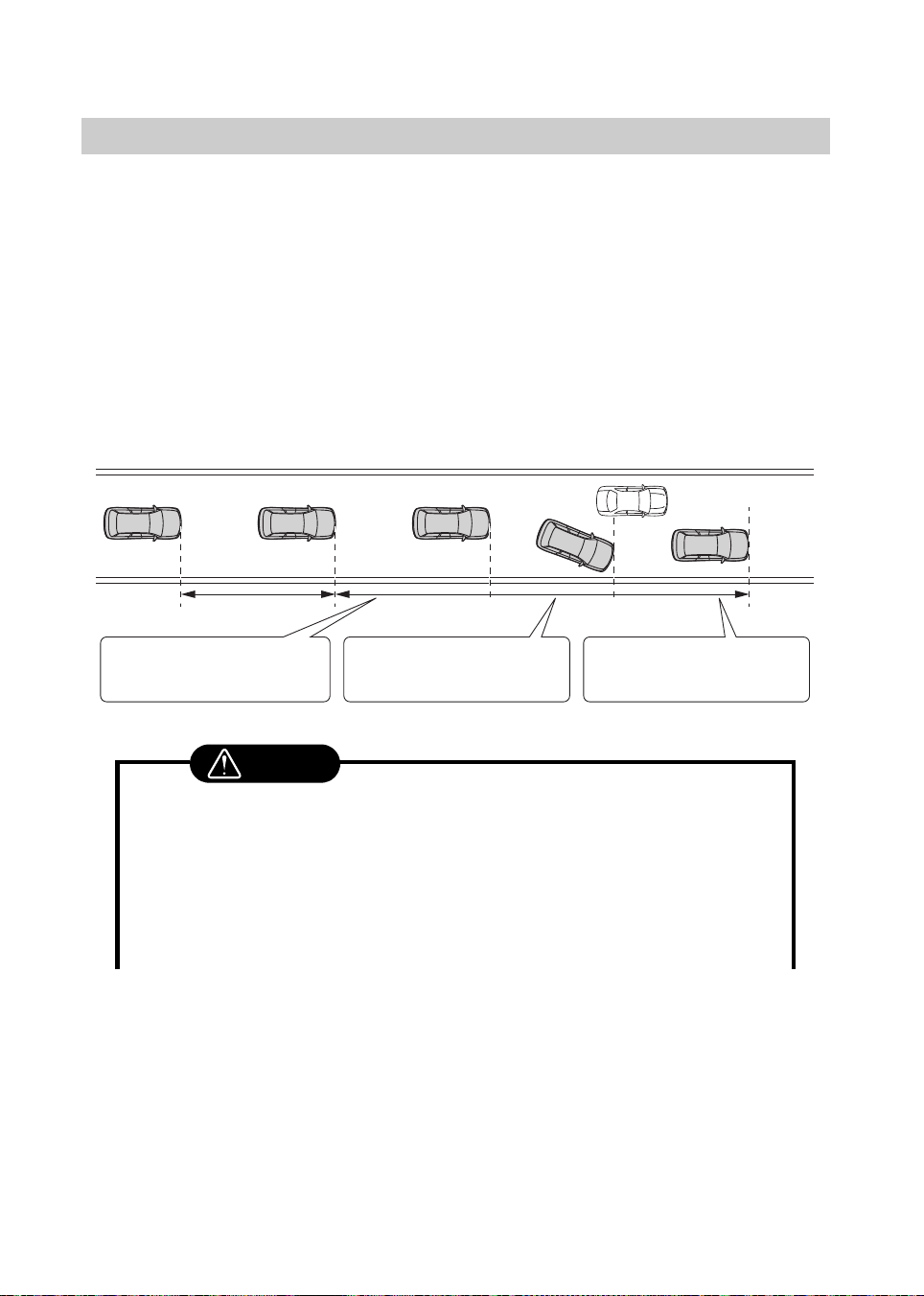
If there is an obstacle ahead while driving, the Pre-Collision Braking System activates pri-
mary vehicle braking and then secondary braking to help avoid a collision. After secondary
braking activates, the system determines whether the road you are driving on has lane
markings and also determines whether there is sufficient space for avoiding a collision in
your lane. At the same time, the system checks whether there is a vehicle approaching from
the rear, using the BSD/RCTA to determine if the lane is clear to activate Automatic Emer-
gency Steering. If there is an extremely high possibility of a collision with the obstacle using
only secondary braking, Automatic Emergency Steering is activated, and the system con-
trols the steering wheel to help avoid the collision while staying in the lane. After a collision
with the object is avoided, the system continues to control the brake and steering wheel so
that your vehicle does not leave its lane until the vehicle comes to a complete stop.
Automatic Emergency Steering operation
WARNING
• Automatic Emergency Steering recognizes vehicles, motorcycles, pedestri-
ans, and cyclists as identified objects. The system is intended to avoid or
reduce the severity of collisions, but if the system cannot recognize objects
due to certain conditions*, it may not activate.
• When Automatic Emergency Steering activates, the driver should check the
area around the vehicle and then take appropriate action, such as operating
the steering wheel or depressing the brakes.
H01612
Secondary brakingFirst braking
Controls the vehicle to
stay in the lane
Operates the steering
wheel to avoid the
collision
Confirms the space for
avoiding a collision
B8442BE-A.book 52 ページ 2024年10月29日 火曜日 午後6時50分

Pre-Collision Braking System
53
Continued on next page
• Automatic Emergency Steering is set to activate when the system determines
a collision cannot be avoided with Pre-Collision Braking System only and
other conditions such as driving conditions and object recognition are met; its
effectiveness changes based on a variety of conditions. Therefore, this func-
tion will not always exhibit the same performance.
• Automatic Emergency Steering does not activate when Pre-Collision Braking
System is turned off. The function also does not activate when the decelera-
tion from Pre-Collision Braking System is not sufficient.
• If the driver is operating the steering wheel, and the system determines that
the operation is evasive action, then operation of the steering wheel by the
system may not activate.
• Automatic Emergency Steering will not activate if the system determines that
the driver is not gripping the steering wheel.
• This function will not activate if your vehicle’s speed is more than approxi-
mately 50 mph (80 km/h). Also, even if your vehicle’s speed is approximately
50 mph (80 km/h) or slower, if another vehicle suddenly cuts in front of you, a
collision may not be avoidable or the function may not activate depending on
various conditions* such as visibility or the slipperiness of the road.
*: Conditions
- Vehicle conditions (amount of load, number of occupants, etc.)
- Road conditions (grade, slipperiness, shape, bumps, etc.)
- Visibility ahead is poor (rain, snow, fog or smoke, etc.).
- Even if the object is an identifiable object, depending on the brightness of
the surroundings, its relative movement, its aspect, and the direction it is
facing, there may be cases when the system cannot detect it.
- Even if the object is an identified object, the system determines that it may
cross in front of you or move sideways, based on its aspect or the direction
it is facing.
- Even if the object is an identified object, the object is determined to be mov-
ing across your path such as crossing the street or cutting in front of you.
- In a collision with an identified object that is near the center of the path in
front of your vehicle.
B8442BE-A.book 53 ページ 2024年10月29日 火曜日 午後6時50分

Pre-Collision Braking System
54
Continued from previous page
- The system determines that operation by the driver (based on accelerator
pedal operation, braking, steering wheel angle, etc.) is intended as evasive
action.
- Vehicle maintenance status (brake systems, tire wear, tire pressure,
whether a temporary spare tire is being used, etc.)
- A trailer or another vehicle, etc. is being towed.
- The brakes are cold due to the outside temperature being low or just after
starting the hybrid system.
- The brakes are overheated on downhill grades (braking performance is
reduced).
- In rain or after washing the vehicle (the brakes are wet and braking perfor-
mance is reduced)
- The obstacle is not recognized as an identified object.
- Lane markings cannot be detected.
- Steering wheel operation by the driver cannot be detected.
- You are driving on a road that is not straight.
- You are driving on a road with a steep grade.
- Recognition conditions of the stereo camera
In particular, the function may be unable to stop the vehicle or may not acti-
vate in the following cases.
• Roads with lane restrictions or tentative lanes due to construction work,
etc.
• Roads with curves
• Old lane markings remain.
• Snow, puddles or snow melting agents remain on the road surface.
• Cracks or constructed traces remain on the road surface.
• Frozen roads, snow-covered roads or other slippery road surfaces
The tires may spin, causing loss of control of the vehicle.
• Entering a sharp curve into an interchange or junction, or a service area,
parking area, toll booth or other facilities
• A vehicle, cyclist or pedestrian is approaching the area near to the object.
• An oncoming vehicle or a vehicle that will overtake you is approaching.
• The identified object is moving across your path.
B8442BE-A.book 54 ページ 2024年10月29日 火曜日 午後6時50分

Pre-Collision Braking System
55
Continued on next page
• The boundaries of your lane are difficult to determine with the stereo cam-
era. (For example, there are no lane markings (white lines, etc.), or the
lane markings are difficult to see because they are faint, thin or similar in
color to the road.)
• A vehicle is approaching from the front in the neighboring lane.
• There is not enough space to avoid a collision within your lane.
• The area around your rear bumper is dirty, or it has frost, mud, etc. on it.
• Your rear bumper is scratched, dented, misaligned, etc.
• You are driving on a snowy road, or the road has puddles or is wet, and
your vehicle or nearby vehicles are kicking up water, snow, etc. from the
road.
• Never attempt to test the operation of Automatic Emergency Steering.
- Your vehicle may not stop, or the system may not activate, which can lead
to an unintended collision.
• The system may not operate correctly under the conditions listed below.
When these conditions occur, turn off Automatic Emergency Steering.
Page 64
- The tire pressure is not correct.*
1
- Tires that are unevenly worn or tires with uneven wear patterns are
installed.*
1
- Tires that are the wrong size are installed.*
1
- The wheels are out of balance (e.g., the balance weight is removed or mis-
aligned).*
1
- The wheels are out of alignment.*
1
- There is an abnormal vibration in the steering wheel or the steering wheel is
heavier than usual.
- The steering wheel has been replaced with parts other than genuine
SUBARU parts.
- A trailer or another vehicle, etc. is being towed.
- A flat tire has been fixed temporarily with a tire repair kit.
- The suspension has been modified (including a genuine SUBARU suspen-
sion that has been modified).
B8442BE-A.book 55 ページ 2024年10月29日 火曜日 午後6時50分

Pre-Collision Braking System
56
Continued from previous page
- An object that obstructs the stereo camera’s view is installed on the vehicle.
- Tire chains are installed.
- The temporary spare tire is installed.
- The headlights are dirty or they have snow and ice or dirt on them. (Objects
are not correctly illuminated and are difficult to detect.)
- The optical axes are not aligned correctly. (Objects are not correctly illumi-
nated and are difficult to detect.)
- The lights including headlights and fog lights have been modified.
- Vehicle operation has become unstable due to an accident or malfunction.
- The brake system warning light is illuminated in red.*
2
- The power steering warning light is illuminated.
Refer to the vehicle Owner’s Manual for details.
- The vehicle is tilted at an extreme angle due to loaded cargo or other fac-
tors.
- The maximum number of occupants is exceeded.
- The combination meter is not operating properly; such as when the lights do
not illuminate, the beeps do not sound, the display is different from when it
is normal, etc.*
3
*1: The wheels and tires have functions that are critically important. Be sure to
use the correct ones. For details, refer to the vehicle Owner’s Manual.
*2: If the brake system warning light does not turn off, immediately pull the
vehicle over in a safe place and contact a SUBARU dealer to have the
system inspected. For details, refer to the vehicle Owner’s Manual.
*3: For details about the combination meter, refer to the vehicle Owner’s Man-
ual.
B8442BE-A.book 56 ページ 2024年10月29日 火曜日 午後6時50分
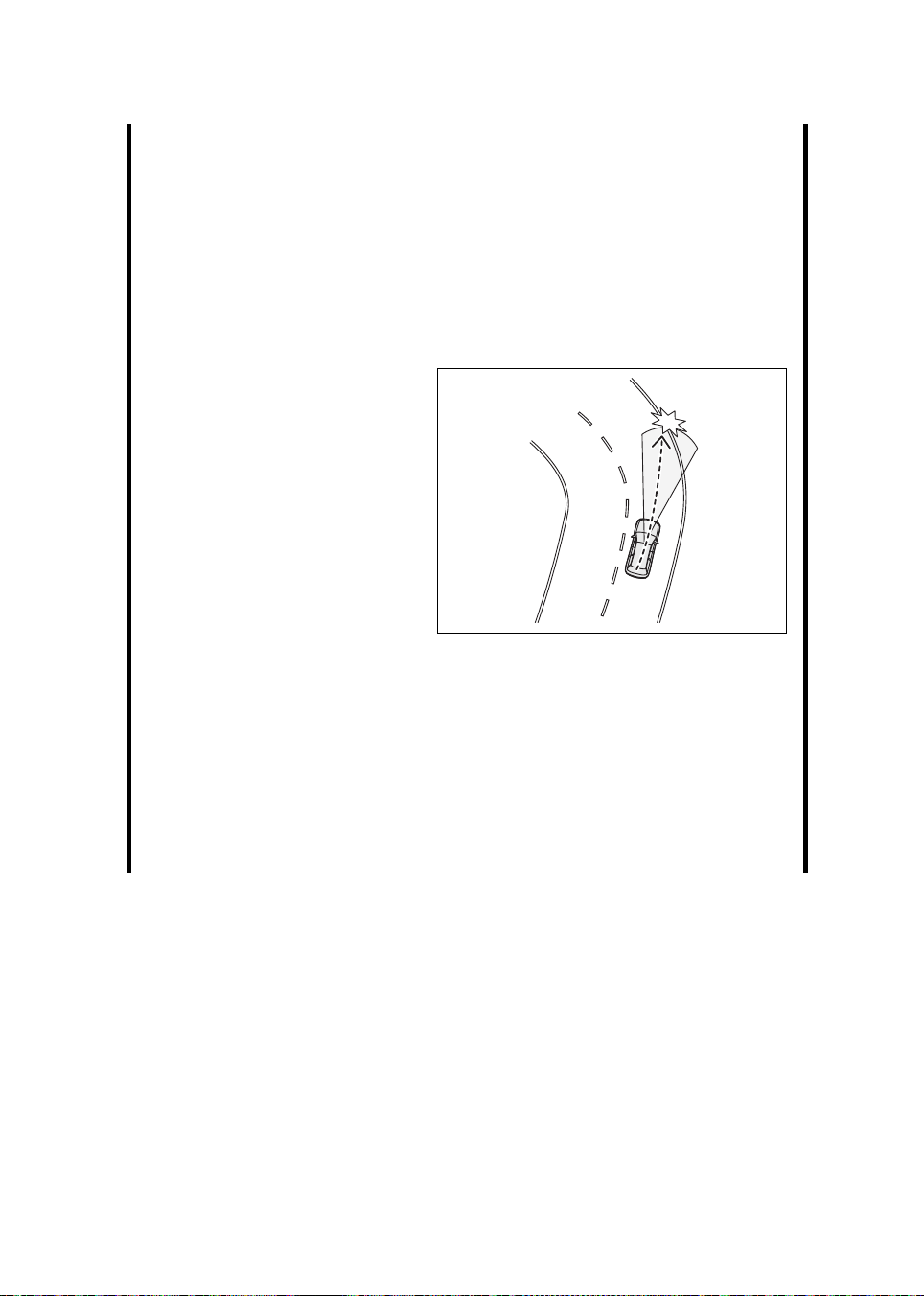
Pre-Collision Braking System
57
Continued on next page
• The stereo camera may have difficulty detecting the lane markings under the
following conditions and the system may not operate properly.
- At night or in a tunnel without the headlights on
- In bad weather (for example, rain, snow or thick fog)
- The road surface is wet and shining by reflected light.
- There are other traffic markings in your lane (arrows, words, etc.).
- The distance between your vehicle and the vehicle in front is short, making
it difficult to detect lane markings.
- A vehicle intruded from an adjacent lane or the vehicle in front changed
lanes.
- The shape of a curve in the
road suddenly changes.
- Shadows of guardrails or sim-
ilar objects are overlapped on
the lane markings.
- Strong light is coming from
the front (sunlight or headlight
beams of oncoming traffic,
etc.).
- The width of a lane is either
too narrow or too wide.
- The width of a lane has
changed.
- The stereo camera may have difficulty detecting the lane due to the perfor-
mance of the camera.
• There are no lane markings or they are very worn.
• The lane markings are painted in yellow.
• The lane markings are similar in color to the road surface.
• The lane markings are drawn in double.
• The width of lane markings is narrow.
• Lines that are not lane markings are painted on roads.
• The lane markings are touching the walls and poles.
H00465
B8442BE-A.book 57 ページ 2024年10月29日 火曜日 午後6時50分
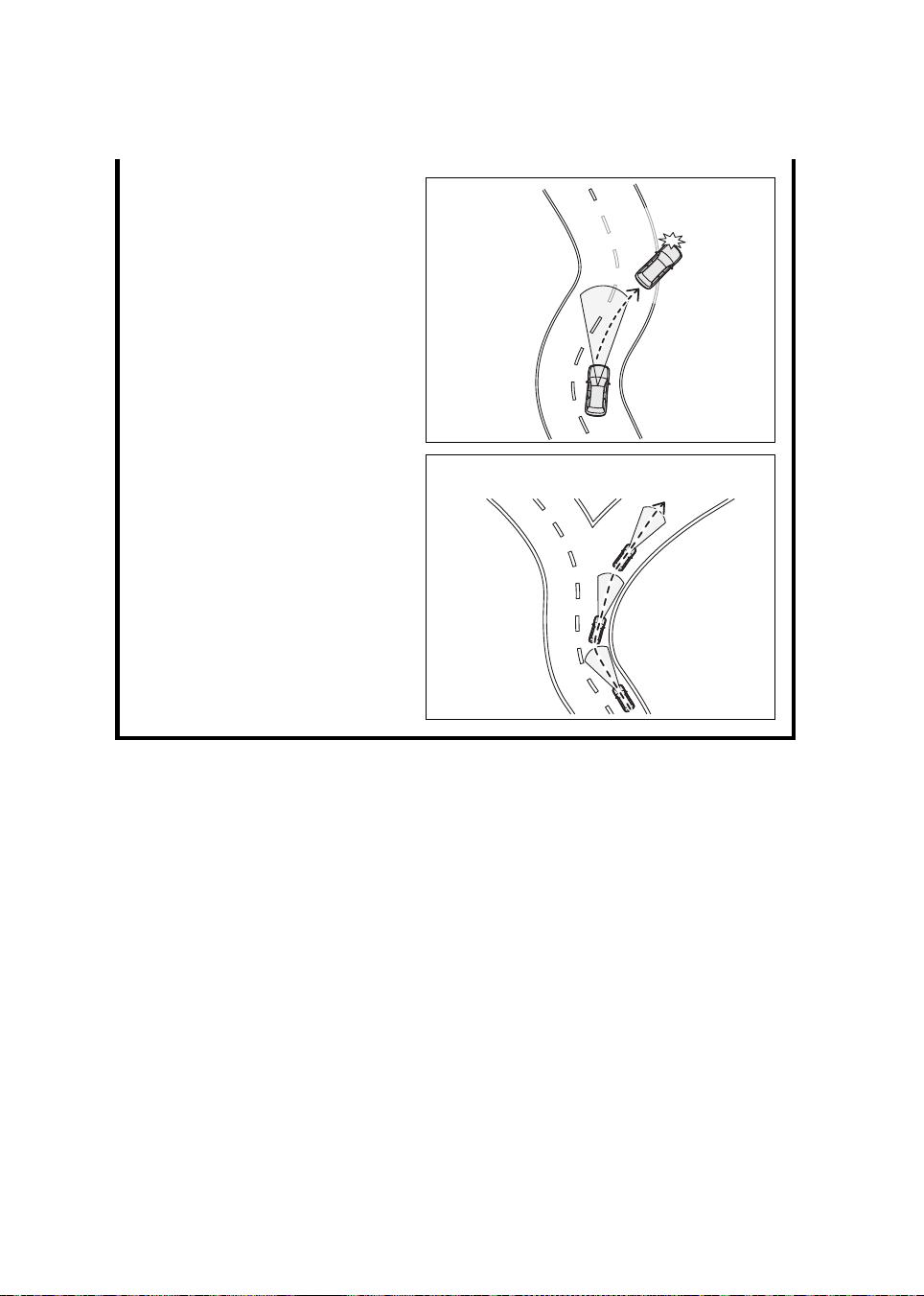
Pre-Collision Braking System
58
Continued from previous page
- The shape of lane markings
suddenly changes
(entrance/exit of a curve,
crank and winding road, etc.).
- Going into lanes that lead to
interchanges, junctions, ser-
vice areas or parking areas
- There is a curb or a side wall
on the road shoulder.
- The brightness changes such
as at a tunnel entrance or exit
or when you drive under an
overpass.
- Fluid has not been fully wiped
off the windshield during or
after washer use.
H00464
H01405
Main road Exit lane
B8442BE-A.book 58 ページ 2024年10月29日 火曜日 午後6時50分
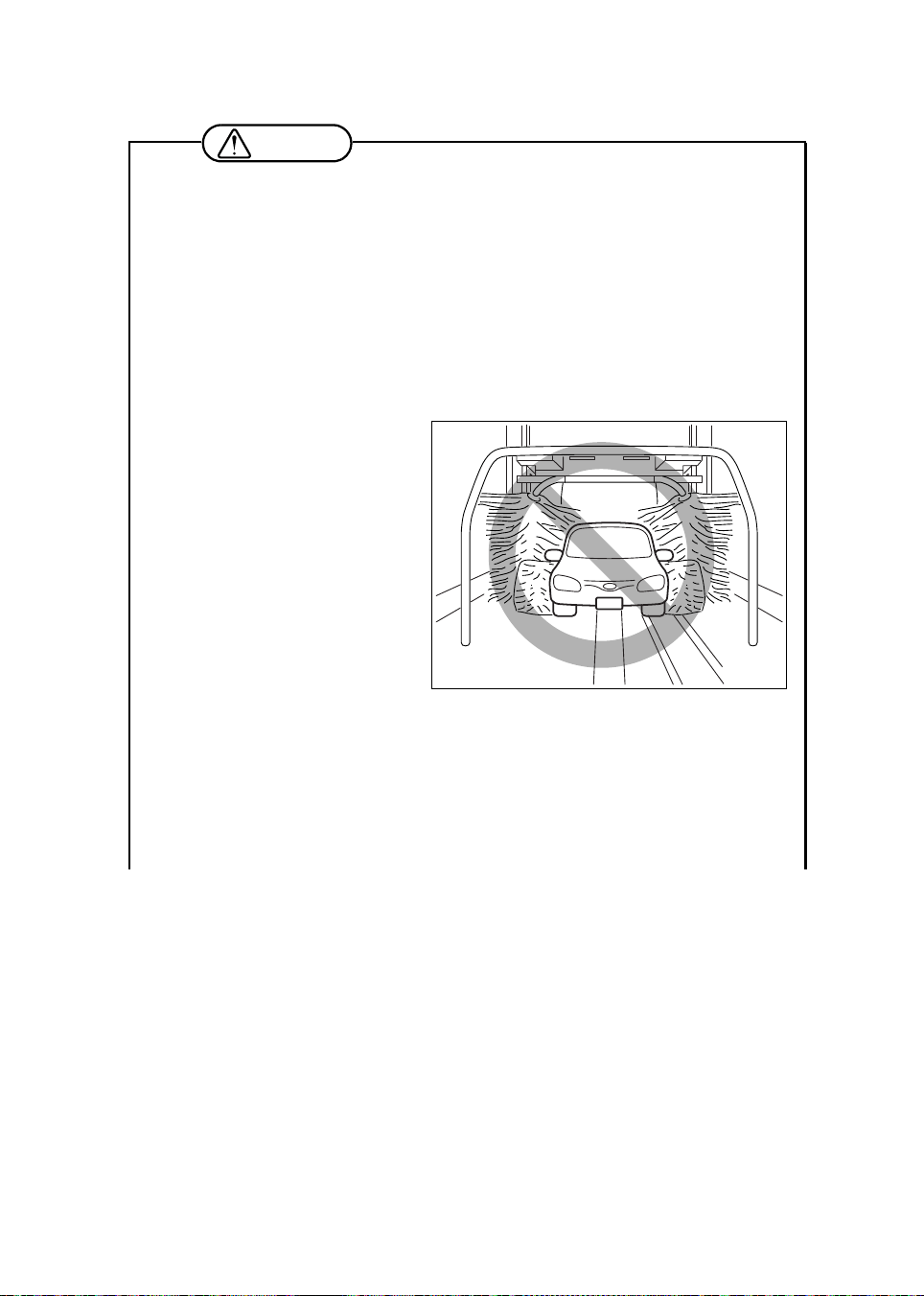
Pre-Collision Braking System
59
Continued on next page
CAUTION
• Automatic Emergency Steering may activate unexpectedly in the following sit-
uations. Therefore be sure to turn off Automatic Emergency Steering.
Page 64
- The vehicle is being towed.
- The vehicle is being loaded onto a carrier.
- A chassis dynamometer, free-rollers or similar equipment is being used.
- A mechanic lifts up the vehicle, starts the hybrid system and spins the
wheels freely.
- Passing hanging banners, flags or branches
- Thick/tall vegetation is touching the vehicle.
- Driving on a race track
- In a drive-through car wash
• Automatic Emergency Steering may activate in the following situations.
Therefore concentrate on safe driving.
- You are approaching an identified object.
- Visibility is poor due to sand, smoke or water vapor blowing in the wind, or
the front vision is obscured due to water splashes, snow, dirt or dust stir up
generated by the vehicle in front or oncoming traffic.
S00656
B8442BE-A.book 59 ページ 2024年10月29日 火曜日 午後6時50分
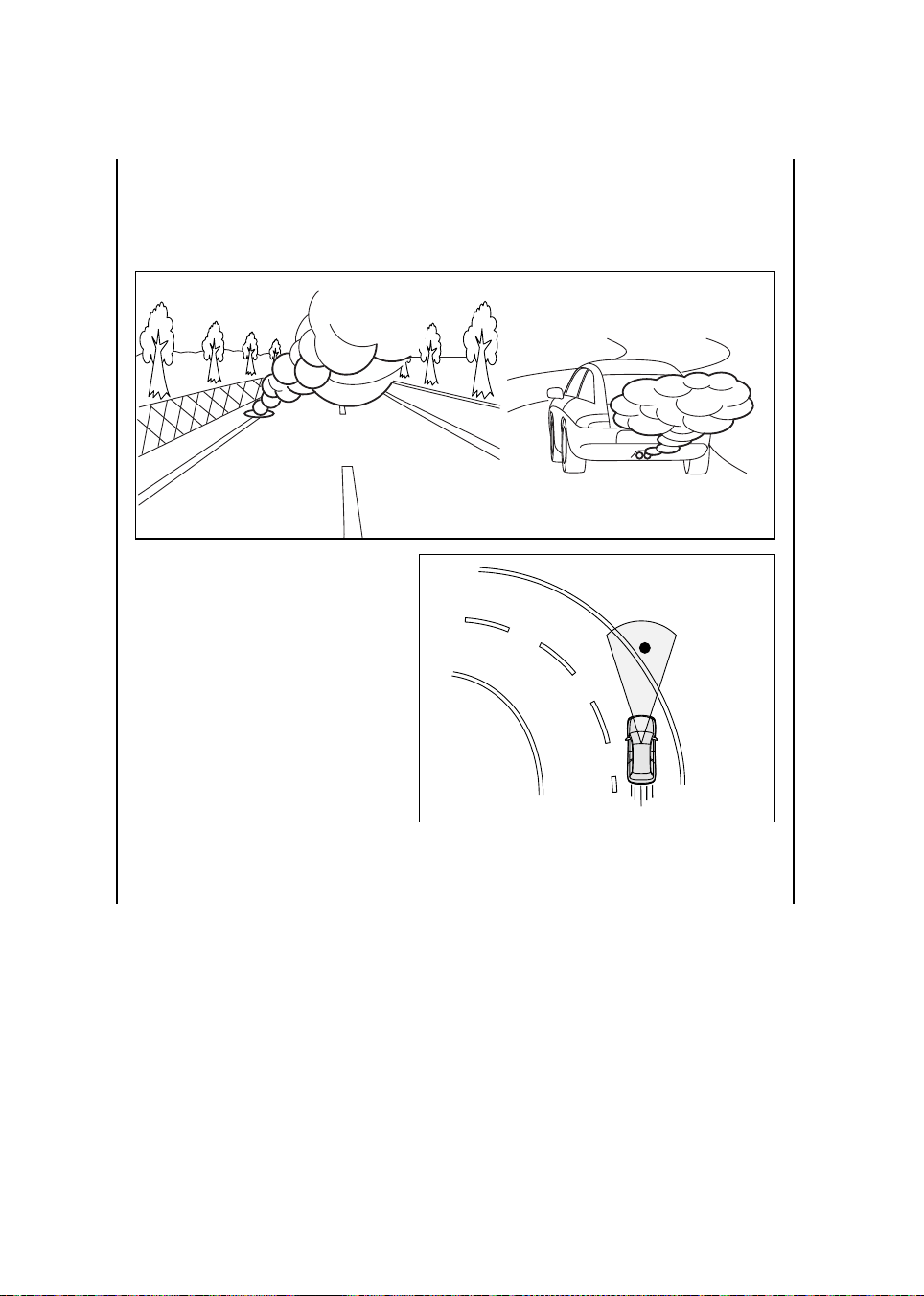
Pre-Collision Braking System
60
Continued from previous page
- Passing through clouds of steam or smoke, etc.
- In adverse weather, such as heavy snow or snowstorms
- The exhaust gas emitted by the vehicle in front is clearly visible in cold
weather, etc.
- There is an obstacle on a
curve or intersection.
- You are passing close to the
side of an identified object,
obstacle or vegetation.
- The system cannot recog-
nize an object that suddenly
appears or suddenly cuts in
front of your vehicle from the
side.
- The obstacle begins to move
suddenly.
- There are no lane markings
for your lane, but a difference in color between your lane and the neighbor-
ing lane, shoulder, etc. could be mistaken for lane markings.
S00652
S02669
B8442BE-A.book 60 ページ 2024年10月29日 火曜日 午後6時50分
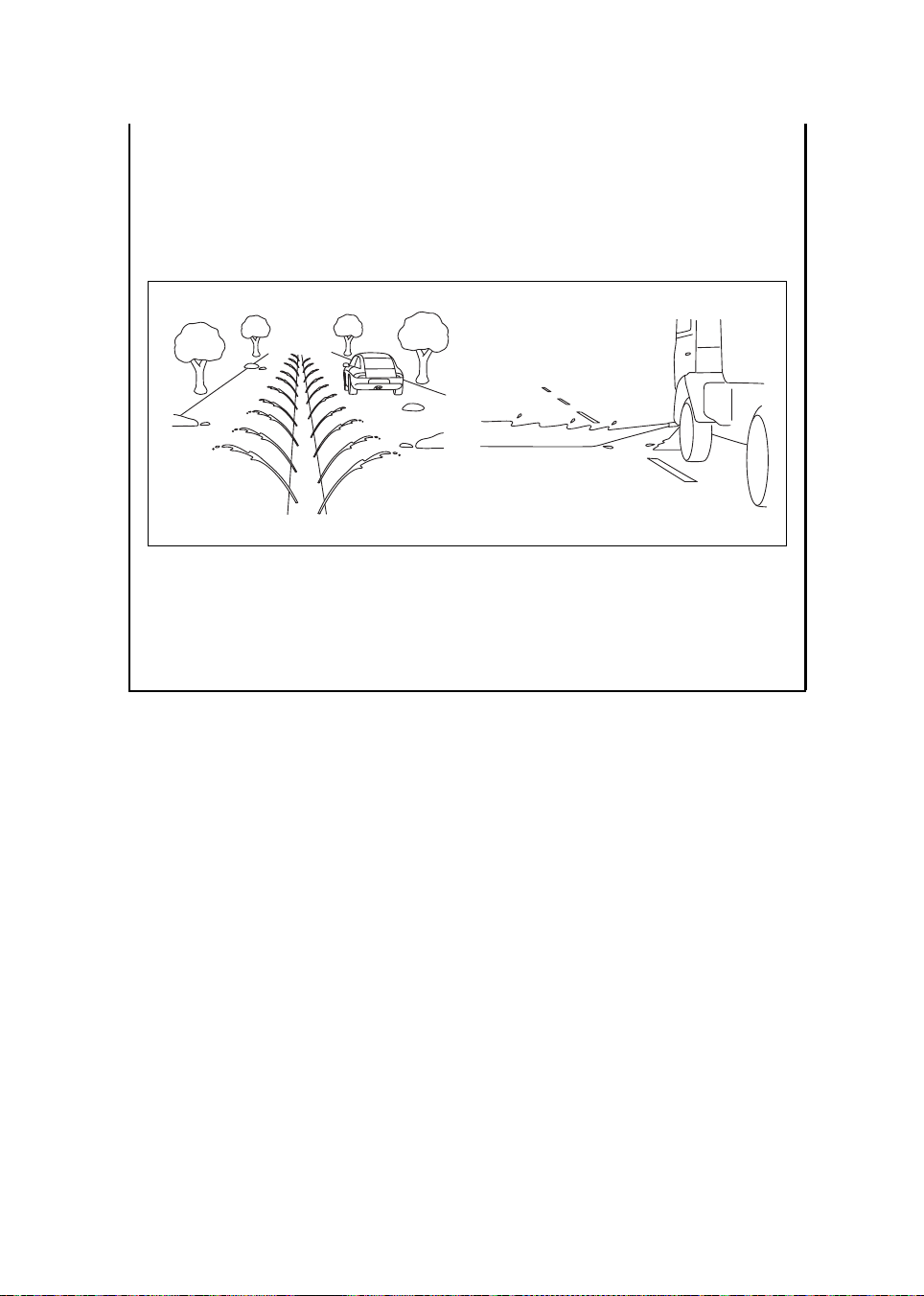
Pre-Collision Braking System
61
- There is dirt, cracks, curbs, etc. that could be mistaken for lane markings in
your lane.
- The road is narrow and markings in the oncoming lane could be mistaken
for lane markings for your lane.
- Passing through water spray from road sprinklers or snow clearing sprin-
klers on the road
• To cancel Automatic Emergency Steering, turn the steering wheel or depress
the accelerator pedal.
• If there is cargo or installed accessories, etc. that are protruding beyond the
edge of the front bumper, the vehicle’s length will increase and the system
may not be able to prevent a collision.
S02636
B8442BE-A.book 61 ページ 2024年10月29日 火曜日 午後6時50分
Pre-Collision Braking System
62
When Automatic Emergency Steering activates, an interruption screen appears on the com-
bination meter display for a certain period of time to notify you of the activation.
Page 50
NOTE
Automatic Emergency Steering will not activate in the following situations.
• Pre-Collision Braking System is off.
• BSD/RCTA is off.
• The obstacle is an oncoming vehicle, an oncoming motorcycle or an oncom-
ing cyclist.
• An identified object is crossing in front of your vehicle.
• There is not enough space to avoid a collision, or another object has been
detected in the area around the space for avoiding a collision.
• Objects are approaching from the front or rear of your vehicle.
• The lane or lane markings cannot be detected.
• Pre-Collision Braking System is active due to guardrails or other structures.
• The system determines steering control cannot avoid a collision.
• The EyeSight system has a malfunction. (EyeSight warning indicator:
Yellow)
Page 189
• The EyeSight system has stopped temporarily. (EyeSight temporary
stop indicator: White)
Page 191
B8442BE-A.book 62 ページ 2024年10月29日 火曜日 午後6時50分
Pre-Collision Braking System
63
If Automatic Emergency Steering temporarily stops, (Automatic Emergency Steering
OFF indicator) illuminates. When the cause has been resolved, operation returns to normal.
This indicator will also appear in extremely hot or cold environments, and if there is an
abnormality in the battery voltage.
If (Automatic Emergency Steering OFF indicator) stays illuminated for a long time, the
EyeSight system may have a malfunction. Contact a SUBARU dealer and have the system
inspected.
■ Automatic Emergency Steering OFF indicator
This indicator illuminates when the ignition
switch is turned to the ON position, and then
turns off several seconds after the hybrid sys-
tem starts.
It illuminates when Automatic Emergency
Steering is turned off.
Page 64
Automatic Emergency Steering malfunction and
temporary stop
NOTE
You cannot use Automatic Emergency Steering when BSD/RCTA is turned off.
In this case, (Automatic Emergency Steering OFF indicator) illuminates.
H02192
B8442BE-A.book 63 ページ 2024年10月29日 火曜日 午後6時50分
Pre-Collision Braking System
64
While the vehicle is stopped, operate the center information display to turn on/off Pre-Colli-
sion Braking System (including Pre-Collision Braking Assist and Automatic Emergency
Steering).
This function is turned on by selecting “Setting ON” on the “Pre-Collision Braking” screen of
the EyeSight settings.
This function is turned off by selecting “Setting OFF” on the “Pre-Collision Braking” screen
of the EyeSight settings.
Page 195
If Pre-Collision Braking System is turned off, (Pre-Collision Braking System OFF indi-
cator light) illuminates on the combination meter.
If Pre-Collision Braking System is turned on, (Pre-Collision Braking System OFF indi-
cator light) turns off on the combination meter.
Turning on/off Pre-Collision Braking System
NOTE
• The on/off setting for Pre-Collision Braking System operates in cooperation
with Automatic Emergency Steering and Pre-Collision Throttle Management.
• Even when Pre-Collision Braking System is turned off, if the hybrid system is
turned off and then restarted, Pre-Collision Braking System will be turned on.
The system default setting when the vehicle is restarted is on.
• Pre-Collision Braking System cannot be turned off while Lane Centering
Function is operating.
B8442BE-A.book 64 ページ 2024年10月29日 火曜日 午後6時50分
Pre-Collision Braking System
65
■ Pre-Collision Braking System OFF indicator light
This indicator light illuminates when the igni-
tion switch is turned to the ON position, and
then turns off several seconds after the hybrid
system starts. It illuminates when Pre-Colli-
sion Braking System and Pre-Collision Throt-
tle Management are turned off.
It also illuminates under the following condi-
tions.
• The EyeSight system has a malfunction.
(EyeSight warning indicator: Yellow)
Page 189
• The EyeSight system has stopped temporarily. (EyeSight temporary stop indicator:
White)
Page 191
NOTE
• If (Pre-Collision Braking System OFF indicator light) illuminates,
(Automatic Emergency Steering OFF indicator) also illuminates.
Page 63
• When (Pre-Collision Braking System OFF indicator light) illuminates,
Pre-Collision Braking System (including the Pre-Collision Braking Assist func-
tion), Automatic Emergency Steering and Pre-Collision Throttle Management
do not operate.
• You cannot use Automatic Emergency Steering when BSD/RCTA is turned
off. In this case, (Automatic Emergency Steering OFF indicator) illumi-
nates.
H02186
B8442BE-A.book 65 ページ 2024年10月29日 火曜日 午後6時50分
Pre-Collision Braking System
66
If the wide angle mono camera temporarily
stops, (wide angle mono camera OFF
indicator) illuminates. When the cause has
been resolved, operation returns to normal.
This indicator will also appear if the inside or
outside of the windshield in front of the wide
angle mono camera is dirty or fogged, in
extremely hot or cold environments, and if
there is an abnormality in the battery voltage.
If (wide angle mono camera OFF indica-
tor) stays illuminated for a long time, contact a
SUBARU dealer and have the system inspected.
Wide angle mono camera OFF indicator
NOTE
• If (wide angle mono camera OFF indicator) illuminates while (Pre-
Collision Braking System OFF indicator light) is not illuminated, the field of
view of the EyeSight system is narrower than usual. In this situation, the abil-
ity of EyeSight to detect obstacles is reduced, and Pre-Collision Braking Sys-
tem may not be able to stop the vehicle or may not activate.
• If the outside of the windshield in front of the wide angle mono camera is dirty
or fogged, clean the windshield.
• If the inside of the windshield in front of the wide angle mono camera is
fogged, the system will restart after you have driven your vehicle for a while
and conditions improve. Also, the defroster may be effective in improving the
conditions.
Refer to the vehicle Owner’s Manual for details.
• If the inside of the windshield in front of the wide angle mono camera or the
area around the camera lenses is dirty or constantly fogged, contact a
SUBARU dealer to have the vehicle inspected.
H02295
B8442BE-A.book 66 ページ 2024年10月29日 火曜日 午後6時50分
Pre-Collision Braking System
67
This indicator illuminates when a malfunction
occurs in the system. Contact a SUBARU
dealer and have the system inspected.
Wide angle mono camera warning indicator
NOTE
• If (wide angle mono camera warning indicator) illuminates while
(Pre-Collision Braking System OFF indicator light) is not illuminated, the field
of view of the EyeSight system is narrower than usual. In this situation, the
ability of EyeSight to detect obstacles is reduced, and Pre-Collision Braking
System may not be able to stop the vehicle or may not activate.
• If (wide angle mono camera warning indicator) continues illuminating
even after the hybrid system has been restarted, the wide angle mono cam-
era system has a malfunction. Normal driving will still be possible. However,
contact a SUBARU dealer for an inspection.
H02296
B8442BE-A.book 67 ページ 2024年10月29日 火曜日 午後6時50分
68
Adaptive Cruise Control
Adaptive Cruise Control is a driving support system intended to allow more comfortable
driving on expressways, freeways and interstate highways. The stereo camera detects vehi-
cles in front that are driving in the same traffic lane, and your vehicle follows the vehicle in
front up to the set vehicle speed. While following, your vehicle will automatically maintain a
following distance that corresponds to the speed of the vehicle in front. When the vehicle in
front comes to a complete stop, your vehicle will also be stopped and the electronic parking
brake will be automatically applied. The vehicle is capable of being controlled at a speed
between 0 mph (0 km/h) and approximately 90 mph (145 km/h). Please remember that you
should not exceed posted speed limits.
WARNING
• This system does not provide the driver with an automatic driving function that
handles all traffic conditions.
•
Do not rely excessively on Adaptive Cruise Control. This system is not intended
to assist in driving when the driver is not paying full attention to what is ahead of
him/her due to distractions or a lack of concentration while driving, or under
conditions of poor visibility. It is not intended to prevent rear-end collisions.
Strive for safe driving at all times. Always maintain a safe following distance
behind the vehicle in front of you, pay attention to your surroundings and the
driving conditions, and operate the brake pedal and take other actions as nec-
essary.
• When using Adaptive Cruise Control, always set the speed according to the
speed limit, traffic flow, road conditions, and other conditions.
• Before using the system, perform a daily inspection and verify that there are
no malfunctions of the tires or brakes.
Refer to “Warranty and Maintenance Booklet”.
B8442BE-A.book 68 ページ 2024年10月29日 火曜日 午後6時50分

Adaptive Cruise Control
69
Continued on next page
• The system may not operate correctly under the conditions listed below.
When these conditions occur, do not use Adaptive Cruise Control.
- The tire pressure is not correct.
*1
- The temporary spare tire is installed.
*1
- Tires that are unevenly worn or tires with uneven wear patterns are
installed.
*1
- Tires that are the wrong size are installed.
*1
- A flat tire has been fixed temporarily with a tire repair kit.
- The suspension has been modified (including a genuine SUBARU suspen-
sion that has been modified).
- An object that obstructs the stereo camera’s view is installed on the vehicle.
- Tire chains are installed.
- The headlights are dirty or they have snow and ice or dirt on them. (Objects
are not correctly illuminated and are difficult to detect.)
- The optical axes are not aligned correctly. (Objects are not correctly illumi-
nated and are difficult to detect.)
- The lights including headlights and fog lights have been modified.
- Vehicle operation has become unstable due to an accident or malfunction.
- The brake system warning light is illuminated in red.
*2
- The vehicle is tilted at an extreme angle due to loaded cargo or other fac-
tors.
- The maximum number of occupants is exceeded.
- A trailer or another vehicle, etc. is being towed.
- The combination meter is not operating properly; such as when the lights do
not illuminate, the beeps do not sound, the display is different from when it
is normal, etc.
*3
*1: The wheels and tires have functions that are critically important. Be sure to
use the correct ones. For details, refer to the vehicle Owner’s Manual.
*2: If the brake system warning light does not turn off, immediately pull the
vehicle over in a safe place and contact a SUBARU dealer to have the
system inspected. For details, refer to the vehicle Owner’s Manual.
*3: For details about the combination meter, refer to the vehicle Owner’s Man-
ual.
B8442BE-A.book 69 ページ 2024年10月29日 火曜日 午後6時50分

Adaptive Cruise Control
70
Continued from previous page
• Adaptive Cruise Control is designed for use on expressways, freeways, toll
roads, interstate highways and similar limited access roads. It is not intended
to be used in city traffic. In the following conditions, do not use Adaptive
Cruise Control. Doing so may result in an accident.
- Ordinary roads (roads other than those mentioned above)
Depending on the driving environment (complexity of roads and other fac-
tors), the system may not be able to perform as the traffic conditions
require, and that may result in an accident.
- Sharp curves or winding roads
- Frozen roads, snow-covered roads or other slippery road surfaces
The tires may spin, causing loss of control of the vehicle.
- Traffic conditions when frequent acceleration and deceleration make it diffi-
cult to maintain the following distance
It may not be possible for the system to perform as the traffic conditions
require.
- Steep downhill grades
The set vehicle speed may be exceeded.
- On a steep continuous downhill grade
The brakes may overheat.
- Roads and overpasses with repeated steep uphill and downhill grades
Detection of the vehicle in front may be lost, or the road surface may be
detected instead of the vehicle in front, making correct control impossible.
- Entering a sharp curve/turn into an interchange or junction, or a service
area, parking area, toll booth or other facilities
Detection of the vehicle in front may not be possible.
B8442BE-A.book 70 ページ 2024年10月29日 火曜日 午後6時50分
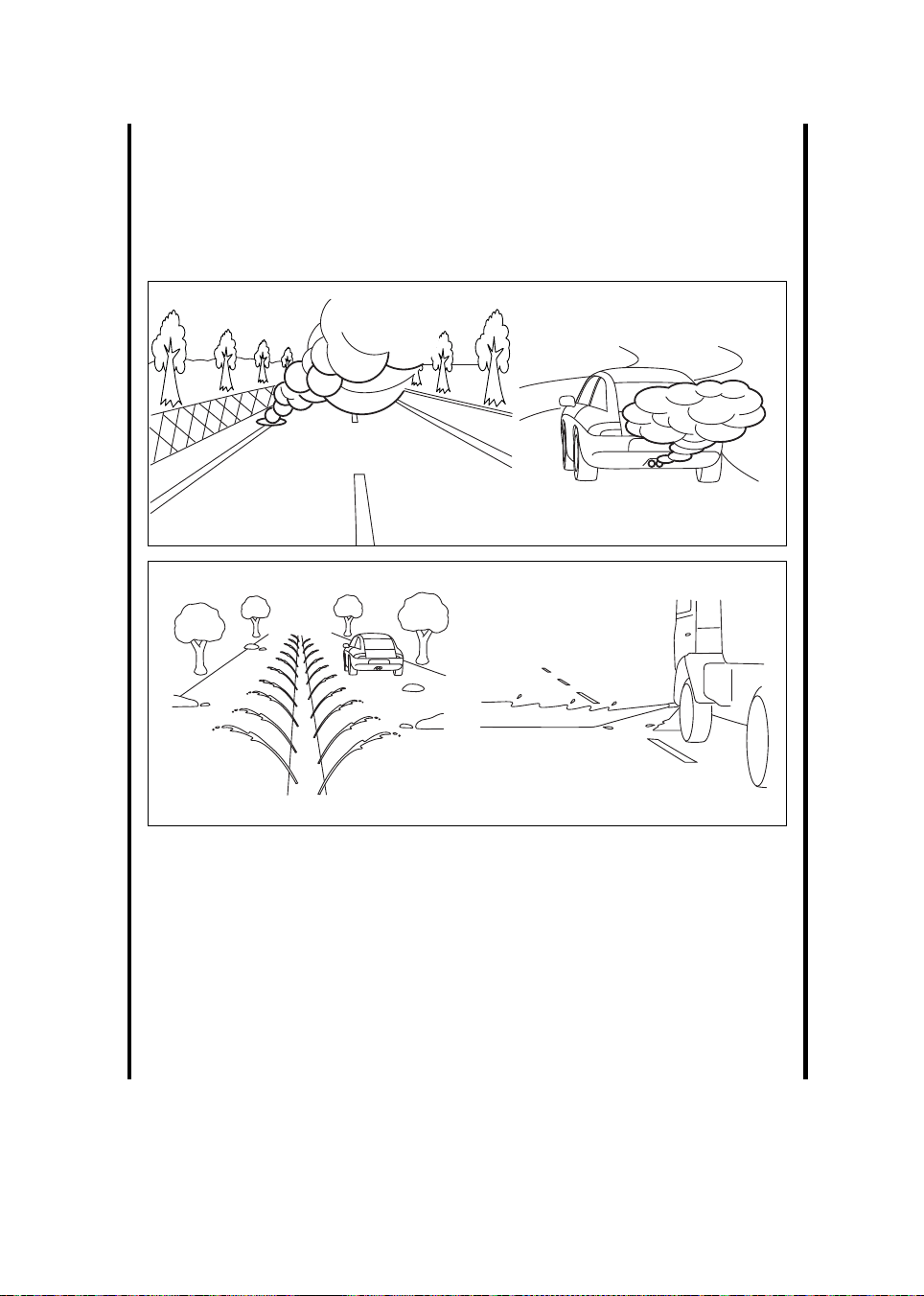
Adaptive Cruise Control
71
Continued on next page
- Visibility is poor due to sand, smoke or water vapor blowing in the wind, or
the front vision is obscured due to water splashes, snow, dirt, water spray
from road sprinklers or snow clearing sprinklers on the road, or dust stir up
generated by the vehicle in front or oncoming traffic.
Detection of the vehicle in front may be lost, or water or other substances
may be incorrectly detected instead, making correct control impossible.
- In adverse weather, such as heavy snow or snowstorms
- The stereo camera’s field of view is obstructed by fogging, snow, dirt, frost,
dust, scratches, or smears on the windshield, or by light reflecting off the
dirt, etc.
- Water droplets from rain or the window washer, or dirt has not been fully
wiped off the windshield.
It may not be possible to detect the vehicle in front, making correct control
impossible.
- The stereo camera’s field of view is obstructed (for example by a canoe on
the roof of the vehicle).
S00652
S02636
B8442BE-A.book 71 ページ 2024年10月29日 火曜日 午後6時50分
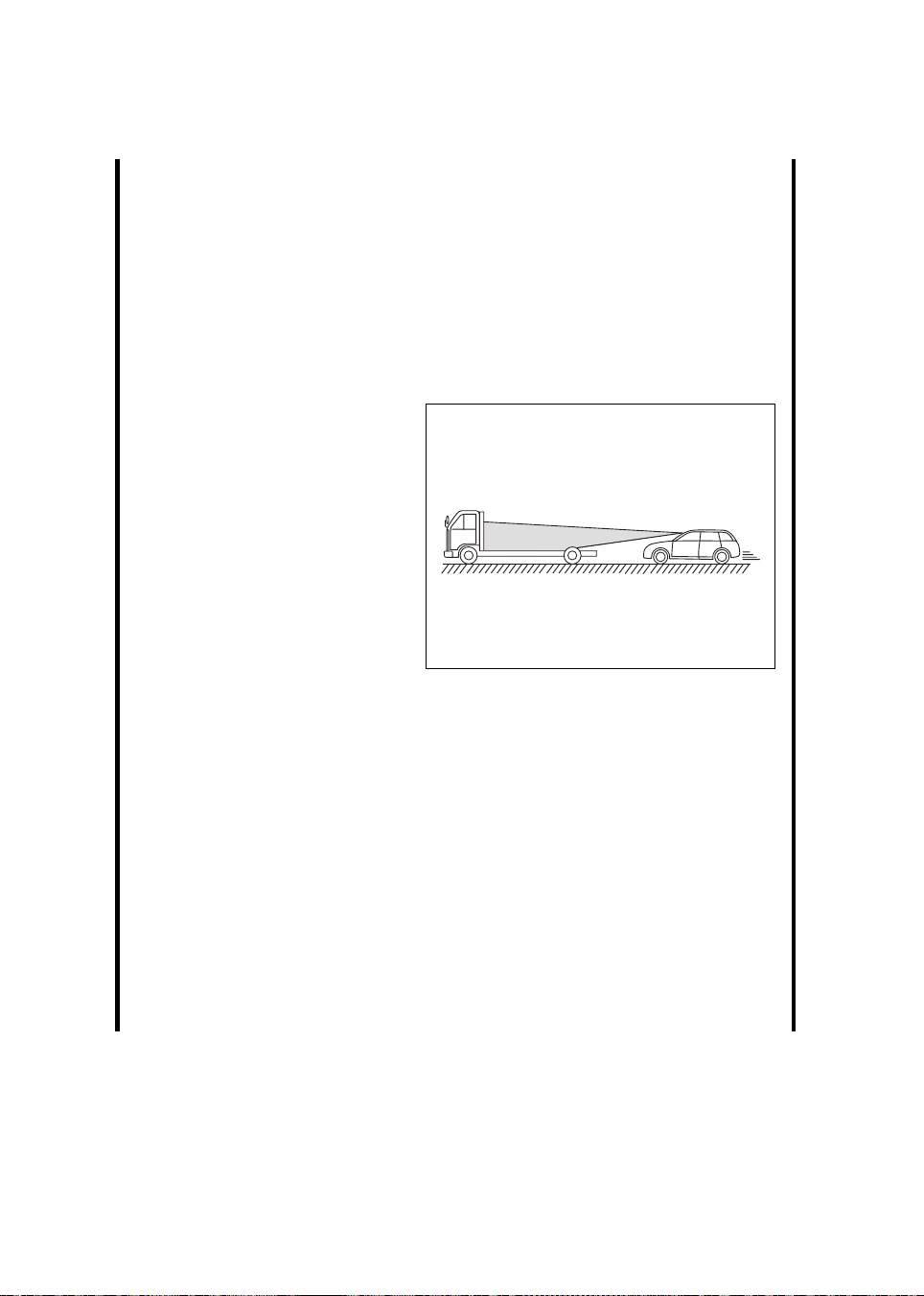
Adaptive Cruise Control
72
Continued from previous page
• The stereo camera may have difficulty detecting the following objects or con-
ditions. Operate the brake pedal and take other actions as necessary.
- Vehicles at significantly different speeds (vehicles driving slowly, stopped or
oncoming vehicles, etc.)
- Vehicles cutting into your lane
- Motorcycles, cyclists, pedestrians and animals, etc.
- At night or in a tunnel without the headlights on
- At night or in a tunnel when there is a vehicle in front that does not have its
taillights on
- Strong light is coming from the front (sunlight or headlight high beams, etc.).
- The rear aspect of the vehicle
in front is low, small or irregu-
lar (the system may recognize
another part of the vehicle as
its rear and will determine
operation from that).
• There is an empty truck or
trailer with no rear and/or
side panels on the cargo
bed.
• Vehicles that have cargo
protruding from their back
ends
• Non-standard shaped vehicles (vehicle transporters or vehicles with a
sidecar fitted, etc.)
• The height of the vehicle is low, etc.
- The brightness changes such as at a tunnel entrance or exit or when you
drive under an overpass.
- Objects that are located close to the bumper of your vehicle
• When you do not use Adaptive Cruise Control, be sure to turn it off. If the
function is left on, the function may operate unexpectedly, causing an acci-
dent. Also, when parking, be sure to apply the electronic parking brake and
shift the select lever to the “P” position.
Page 95
• Before using Adaptive Cruise Control, be sure to fully verify the safety of the
vehicle occupants and the area around the vehicle. Never operate the cruise
control from outside the vehicle.
S02133
B8442BE-A.book 72 ページ 2024年10月29日 火曜日 午後6時50分
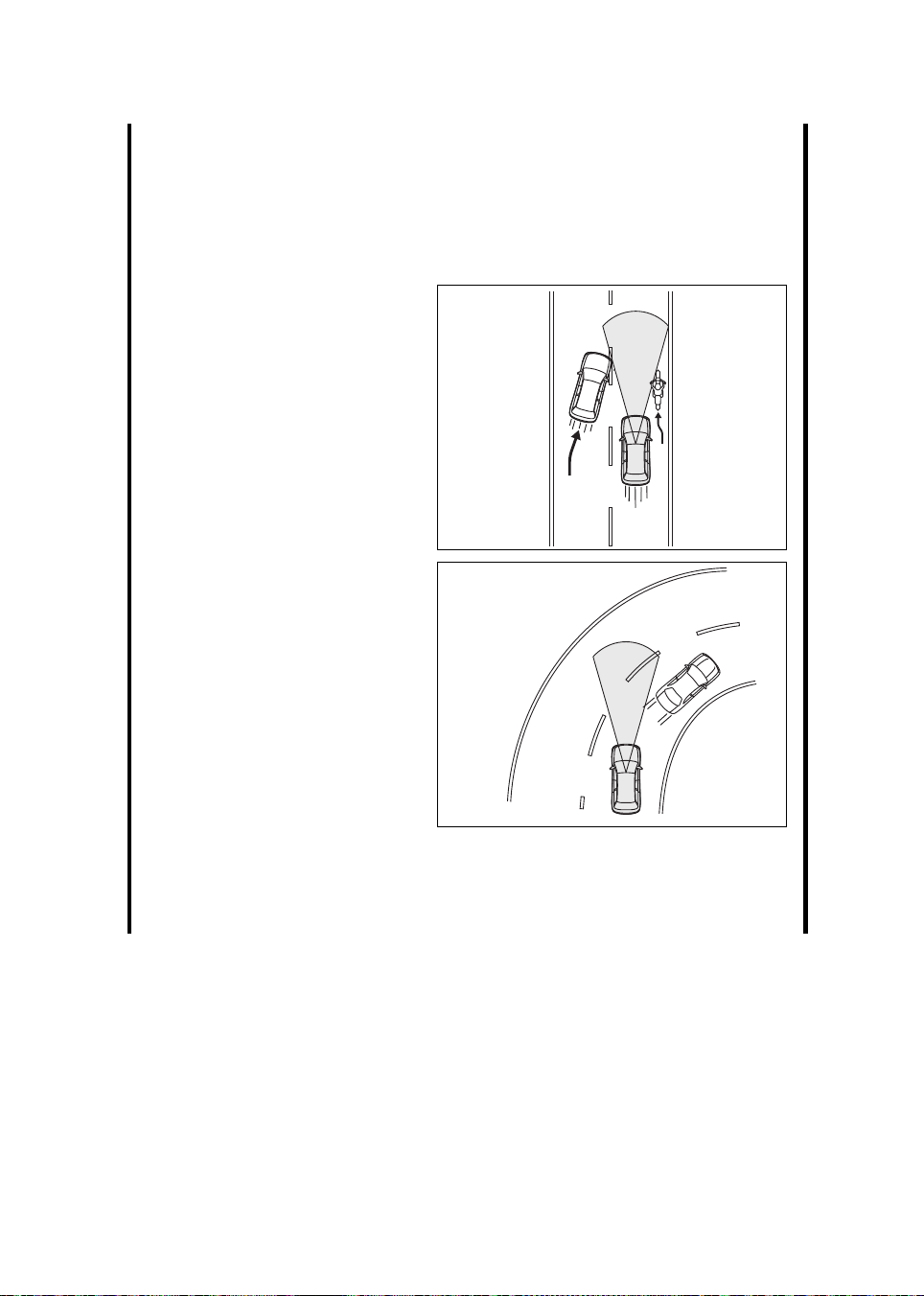
Adaptive Cruise Control
73
Continued on next page
Detection of the vehicle in front by the stereo camera*
• Under the following road conditions or conditions of your vehicle, detection of
the vehicle in front may not be possible. Vehicles in neighboring traffic lanes
or roadside objects may also be incorrectly detected. Under conditions such
as these, do not use Adaptive Cruise Control. If cruise control is currently in
use, operate the brake pedal and take other actions as necessary.
- Following begins from a short
following distance, such as
when the vehicle in front is a
vehicle that cut into your lane.
- On curved roads, at the start
and end of a curve and on
roads with continuous curves
(These conditions make it dif-
ficult for the system to detect
vehicles because they are
outside the detectable area.)
- On an on-ramp or off-ramp to
a freeway, highway, or other
restricted access road (Adap-
tive Cruise Control is not
designed for use in this kind
of driving environment.)
- In an urban or suburban environment (Adaptive Cruise Control is not appro-
priate for use in these driving areas. Use Adaptive Cruise Control only on
limited-access highways.)
S01975
S01976
B8442BE-A.book 73 ページ 2024年10月29日 火曜日 午後6時50分
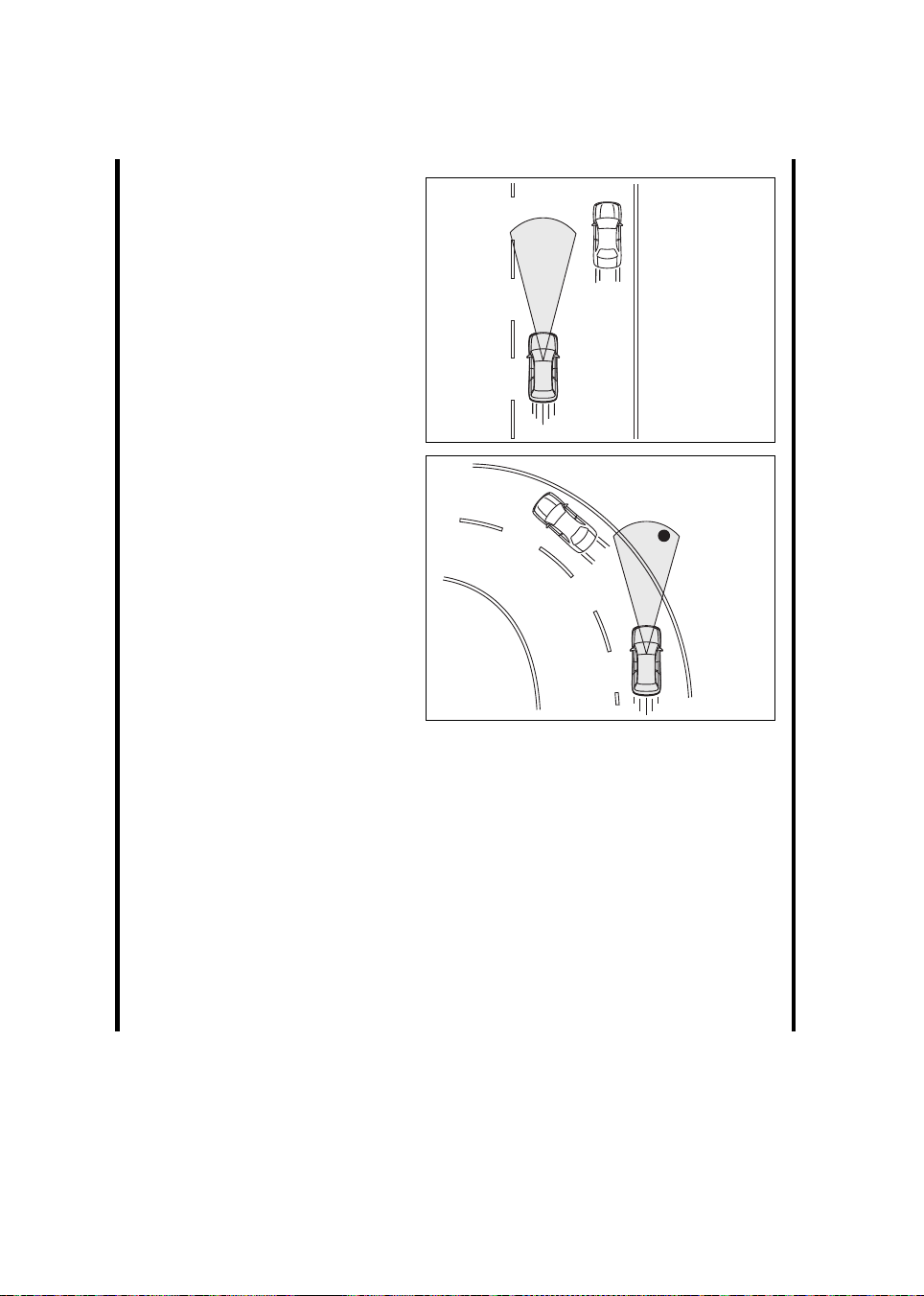
Adaptive Cruise Control
74
Continued from previous page
- The vehicle in front is not
directly ahead of your vehicle
and is shifted to one side.
- There is an obstacle on the
side of the road.
- The relative speed difference
compared to the vehicle in
front is large.
- A vehicle cuts into your lane
in front of you.
- The distance between vehi-
cles is extremely short.
- Your vehicle is drifting within
the lane.
- On a bumpy or unpaved road
surface
- On a road with extremely narrow lanes, such as when traffic restrictions are
in effect or in areas where construction work is taking place
- Normal driving has become unstable due to an accident or malfunction.
- Extremely heavy cargo is loaded in the cargo area or rear seat of your vehi-
cle.
• There are limits to the situation judgment capabilities of the Adaptive Cruise
Control system. Deceleration may not take place in time in the following situa-
tions. Depress the brake pedal to decelerate the vehicle if necessary.
- The speed difference with the vehicle in front is too large or the vehicle in
front decelerates unexpectedly.
- The decelerating vehicle in front unexpectedly slows down or suddenly
brakes.
S01977
S01978
B8442BE-A.book 74 ページ 2024年10月29日 火曜日 午後6時50分

Adaptive Cruise Control
75
• If the alert/notification sounds frequently, do not use Adaptive Cruise Control.
• Even when the following distance is short, the “Obstacle Detected” warning
may not activate in the following situations.
- The difference in speed with the vehicle in front is small. The two vehicles
are traveling at almost the same speed.
- The vehicle in front is traveling faster than your vehicle. The following dis-
tance is gradually increasing.
- Another vehicle cuts into your lane very close to your vehicle.
- The vehicle in front decelerates suddenly.
- There are repeated uphill and downhill grades.
Page 96
*: The recognition status of the lead vehicle using the stereo camera can be
confirmed by the illumination status of the lead vehicle indicator.
Page 77
B8442BE-A.book 75 ページ 2024年10月29日 火曜日 午後6時50分

Adaptive Cruise Control
76
CAUTION
• After Adaptive Cruise Control has started, it maintains control continuously
according to the movement of the vehicle in front. When your vehicle comes
to a stop if the vehicle in front has stopped, the stay-stopped function is
engaged. However, if the stereo camera has lost detection of the vehicle in
front, the system may not stop your vehicle. Operate the brake pedal and
maintain the correct following distance as necessary. Be aware that the
EyeSight system has difficulty detecting objects or vehicles that have a rela-
tive speed in comparison to your vehicle. Therefore, if the EyeSight system
loses detection just as you are approaching a line of stopped cars, for exam-
ple, you will have to brake manually.
• There is no possibility that the vehicle will automatically begin moving from a
stay-stopped condition without operation from the driver.
• If the conditions for automatically canceling cruise control (
page 92) are
met while the vehicle is stay-stopped, Adaptive Cruise Control is canceled.
For safety reasons, the electronic parking brake is automatically applied.
• Braking may not be sufficient depending on the following conditions. Depress
the brake pedal and decelerate as necessary.
- Vehicle conditions (amount of load, number of occupants, etc.)
- Road conditions (grade, slipperiness, shape, bumps, etc.)
- Vehicle maintenance condition (brake systems, tire wear, air pressure, tem-
porary spare tire is being used, etc.)
- The brakes are cold. (For example, just after the hybrid system is started or
the outside temperature is low.)
- For a short period of time when driving after the hybrid system is started
until the engine has warmed-up
- The brakes are overheated on downhill grades (braking performance may
be reduced).
- In rain or after washing the vehicle (the brakes may become wet and brak-
ing performance may be reduced.)
B8442BE-A.book 76 ページ 2024年10月29日 火曜日 午後6時50分
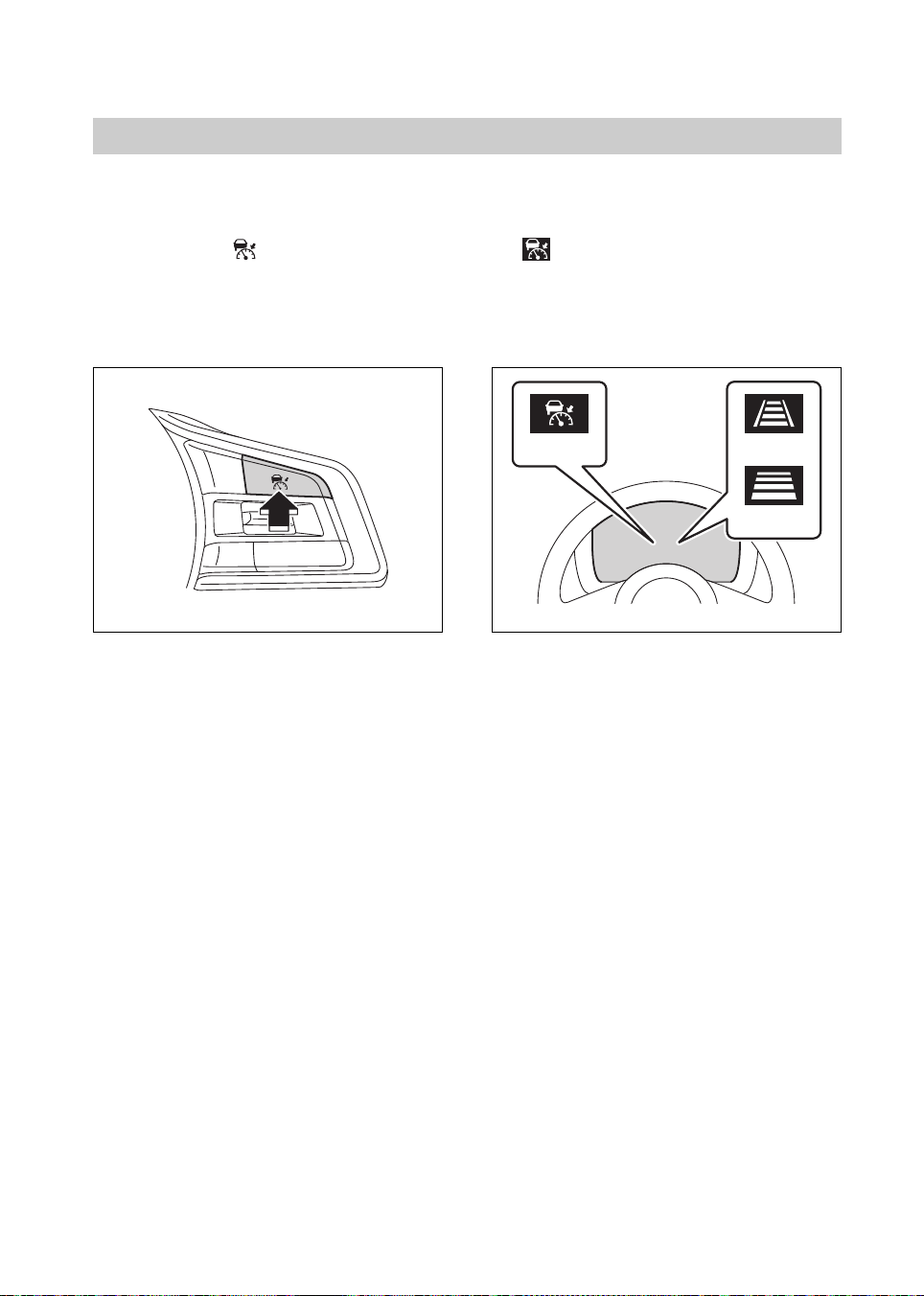
Adaptive Cruise Control
77
■ Setting Adaptive Cruise Control
1. Setting Adaptive Cruise Control to standby status
Press the (CRUISE) switch. At this time, (Adaptive Cruise Control indicator)
(white), your vehicle indicator and the following distance setting indicator are displayed
on the combination meter display.
The set vehicle speed display will read “- - - MPH (- - - km/h)”.
How to use Adaptive Cruise Control
(1) Adaptive Cruise Control indicator
(white)
(2) Following distance setting indicator
(12.3-inch display models)
(3) Following distance setting indicator
(4.2-inch display models)
H00530
H02215
(3)
(1)
(2)
B8442BE-A.book 77 ページ 2024年10月29日 火曜日 午後6時50分
Adaptive Cruise Control
78
To set the ready status:
When all of the following conditions are
met, (READY indicator) is displayed
on the combination meter display, and
Adaptive Cruise Control can be activated.
- All doors (except the rear gate) are
closed.
- The driver’s seatbelt is fastened.
- The electronic parking brake is not
applied. The electronic parking brake
indicator light is off.
- The select lever is in the “D” or “M”
position.
- Gear “1”, “2” or “3” has not been selected with the shift paddles.
- The brake pedal is not depressed while driving or the brake pedal is strongly
depressed while stopping.
- EyeSight operation is not temporarily stopped. (EyeSight temporary stop indi-
cator: White) is off.
Page 191
- The road is not a steep slope.
- The steering wheel has not been turned significantly in either direction.
- The X-MODE is turned off (the X-MODE indicator is off).
- The vehicle speed is between 0 mph (0 km/h) and approximately 90 mph (145 km/h).
- The engine is not running at a high rpm.
- Vehicle Dynamics Control or Traction Control Function is not active.
(1) READY indicator
H02216
(1)
B8442BE-A.book 78 ページ 2024年10月29日 火曜日 午後6時50分
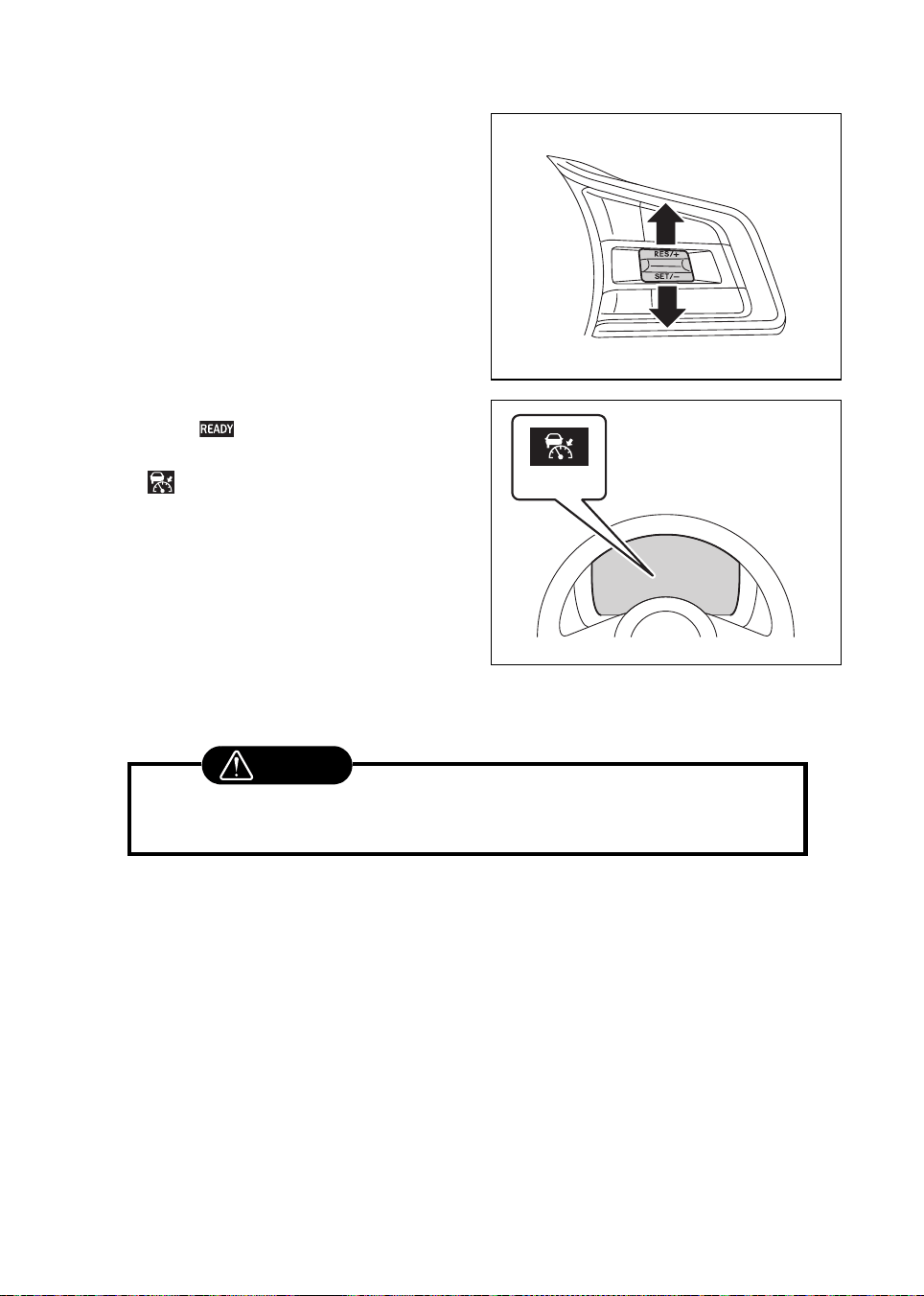
Adaptive Cruise Control
79
2. Setting Adaptive Cruise Control
Press the RES/SET switch to the “RES/+”
side or the “SET/-” side.
The vehicle speed at the time the switch is
pressed becomes the set vehicle speed,
and Adaptive Cruise Control activates.
If no vehicle in front has been detected,
the vehicle drives at the constant set
vehicle speed.
When Adaptive Cruise Control is acti-
vated, (READY indicator) turns off,
the set vehicle speed is displayed, and
(Adaptive Cruise Control indicator)
changes from white to green.
WARNING
When using Adaptive Cruise Control, always set the speed according to the
speed limit, traffic flow, road conditions, and other conditions.
H00894
(1) Adaptive Cruise Control indicator
(green)
H02217
(1)
B8442BE-A.book 79 ページ 2024年10月29日 火曜日 午後6時50分
Adaptive Cruise Control
80
When a vehicle in front is detected, the
lead vehicle indicator will illuminate.
The vehicle follows the lead vehicle in
front and maintains the selected following
distance. At this time, the cruise speed is
adjusted to and will not exceed the set
vehicle speed. If the vehicle in front is no
longer detected, the lead vehicle indicator
turns off.
NOTE
• The set vehicle speed can be set between 20 mph (30 km/h) and 90 mph
(145 km/h).
• If the vehicle speed is approximately 20 mph (30 km/h) or less when the vehi-
cle speed is set, the set vehicle speed is set to 20 mph (30 km/h).
• When driving on a curve, the vehicle may not accelerate, or may decelerate,
even if the set vehicle speed is higher than the current vehicle speed.
• If
(Adaptive Cruise Control indicator) does not illuminate even when the
(CRUISE) switch is pressed, Adaptive Cruise Control will not operate.
• If
(Adaptive Cruise Control indicator) does not illuminate even when the
(CRUISE) switch is pressed and this occurs frequently, there may be a
malfunction in the system. Contact a SUBARU dealer and have the system
inspected.
NOTE
The notification sound (lead vehicle acquisition sound) that occurs when a vehi-
cle in front is detected or no longer detected while Adaptive Cruise Control is
activated can be turned on by changing settings.
Page 195
(1) Lead vehicle indicator
H02218
(1)
B8442BE-A.book 80 ページ 2024年10月29日 火曜日 午後6時50分
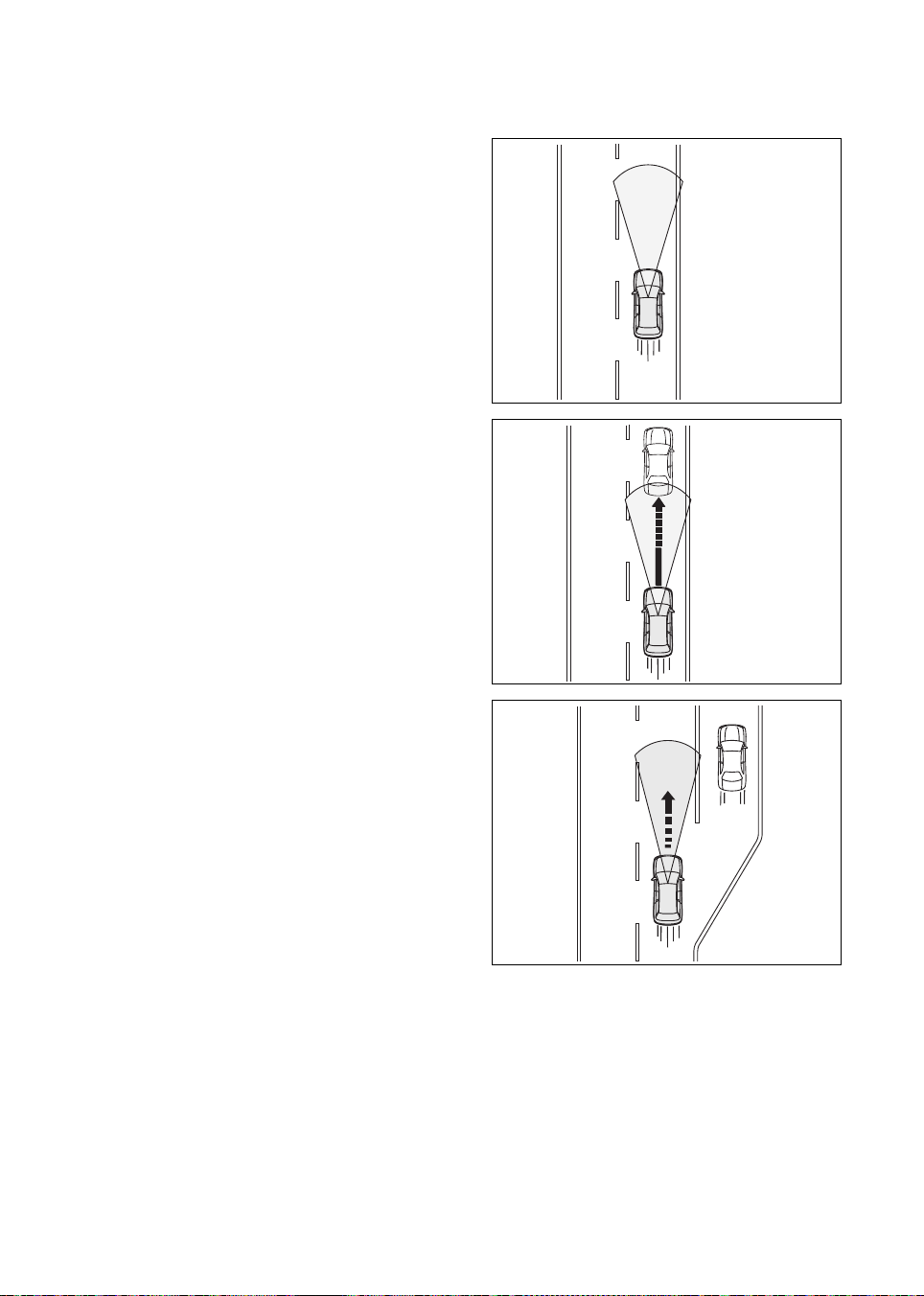
Adaptive Cruise Control
81
Operation of Adaptive Cruise Control
• When no vehicle in front is detected
The vehicle drives constantly and corre-
spondingly to the set vehicle speed
between 20 mph (30 km/h) and 90 mph
(145 km/h).
• When a vehicle in front is detected
The vehicle follows the lead vehicle in front,
and will maintain the chosen following dis-
tance (there are four settings), up to the set
vehicle speed between 20 mph (30 km/h)
and 90 mph (145 km/h).
• If your vehicle no longer detects the vehicle
in front
The vehicle accelerates back to the set
vehicle speed and will drive at that constant
speed.
If a vehicle in front is detected while accel-
erating to the set vehicle speed, vehicle fol-
lowing will be started again.
S01979
S01980
S01981
B8442BE-A.book 81 ページ 2024年10月29日 火曜日 午後6時50分

Adaptive Cruise Control
82
NOTE
• When the brakes are applied by Adaptive Cruise Control, the vehicle’s brake
lights will illuminate.
• Even if there is no lead vehicle present, on a downhill grade, the Adaptive
Cruise Control’s automatic brake may operate in order to maintain the set
vehicle speed.
• Some noises may be audible during automatic braking. This is caused by the
braking control and does not indicate a malfunction.
• To temporarily accelerate quickly, use the accelerator pedal. After accelerat-
ing, the vehicle will gradually return to the set vehicle speed shown in the set
vehicle speed display.
• If the vehicle in front is no longer detected while your vehicle is still controlled
by the automatic braking operation, the brake will be automatically released
gradually. Depress the accelerator pedal if necessary.
• If a far away object is recognized as a possible lead vehicle, acceleration will
be reduced early.
• The lead-vehicle following function has the following characteristics:
- If the system detects that the lead vehicle has changed lanes, acceleration
to the set vehicle speed will start early.
- If the lead vehicle’s brake lights are detected, deceleration will start earlier
than without detection.
- If the vehicle moves to the fast lane while traveling more than approximately
37 mph (60 km/h), the system starts acceleration to the set vehicle speed
more quickly because it is linked with the turn signal.
- If you operate the turn signal lever at a speed of approximately 6 mph (10
km/h) or more, depending on the surrounding conditions, a vehicle in the
lane on the side you indicated with the turn signal may be recognized as the
lead vehicle, and your vehicle will maintain the following distance according
to that vehicle’s speed.
- If the setting of Driving Lane Customize is different from the actual driving
direction, the vehicle may start to accelerate faster than usual when the
driver signals a lane change to move from the passing lane to the driving
lane.
Page 195
B8442BE-A.book 82 ページ 2024年10月29日 火曜日 午後6時50分
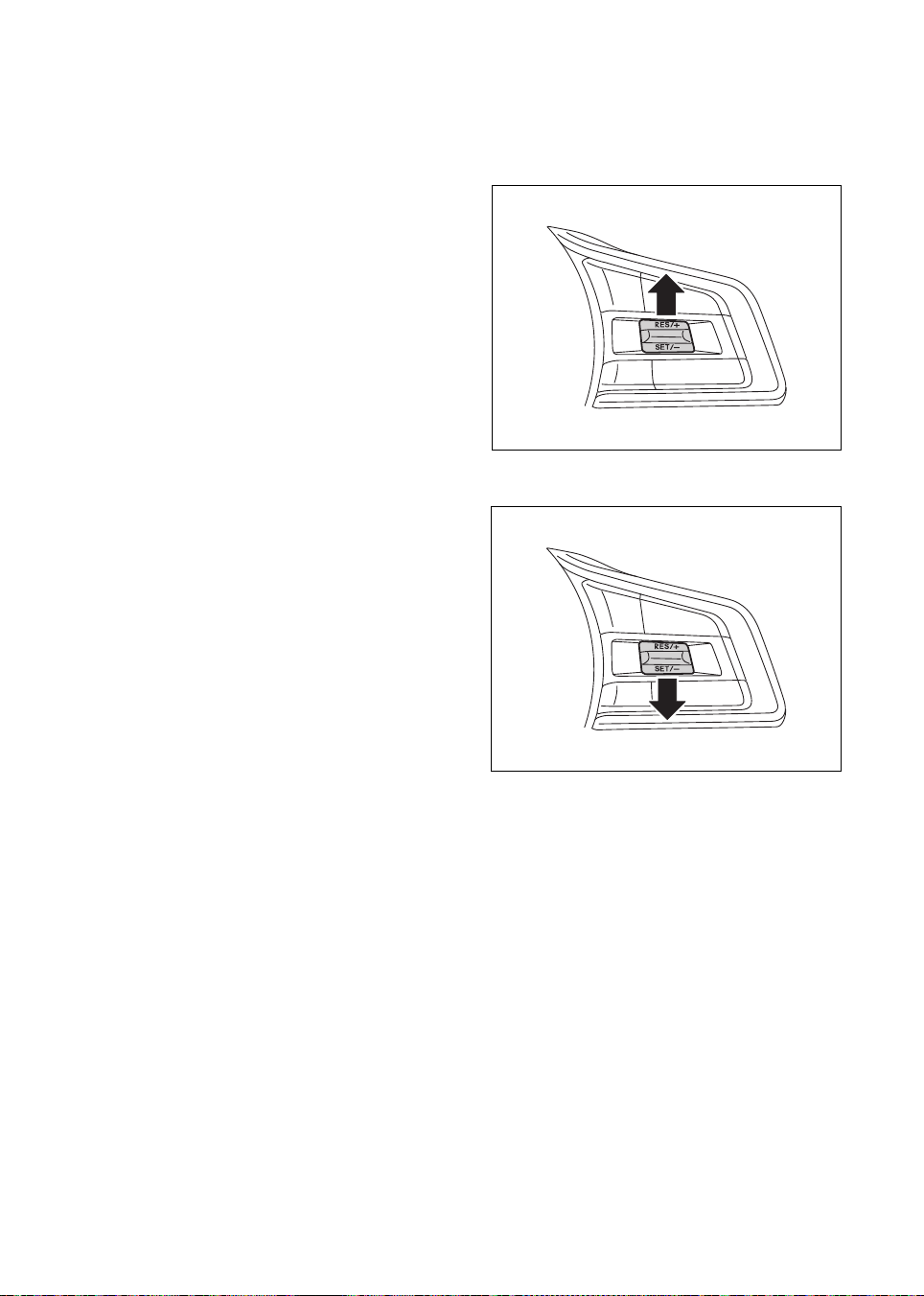
Adaptive Cruise Control
83
■ Increasing the set vehicle speed
●
Using the RES/SET switch
• Push to the “RES/+” side briefly.
Every time the switch is pushed, the set
vehicle speed will increase in increments of
1 mph (1 km/h).
• Push to the “RES/+” side continuously.
While the switch is being pushed, the set
vehicle speed will increase in increments of
5 mph (5 km/h).
When operating the switch, the set vehicle
speed changes on the combination meter dis-
play.
●Using the accelerator pedal
1. Depress the accelerator pedal to increase
vehicle speed.
2. When the desired speed is reached, press
the RES/SET switch to the “SET/-” side.
The speed at the time of pressing the
switch will be set as the new set vehicle
speed, and it appears on the combination
meter display.
H00895
H00896
B8442BE-A.book 83 ページ 2024年10月29日 火曜日 午後6時50分
Adaptive Cruise Control
84
■ Decreasing the set vehicle speed
●
Using the RES/SET switch
• Push to the “SET/-” side briefly.
Every time the switch is pushed, the set
vehicle speed will decrease in decrements
of 1 mph (1 km/h).
• Push to the “SET/-” side continuously.
While the switch is being pushed, the set
vehicle speed will decrease in decrements
of 5 mph (5 km/h).
When operating the switch, the set vehicle
speed changes on the combination meter dis-
play.
●Using the brake pedal
1. Depress the brake pedal to decrease the vehicle speed.
Adaptive Cruise Control will be canceled and (Adaptive Cruise Control indicator)
changes from green to white.
2. When the desired speed is reached, press the RES/SET switch to the “SET/-” side.
The speed at the time of pressing the switch will be set as the new set vehicle speed, and
it appears on the combination meter display.
CAUTION
• When the vehicle is following the lead vehicle, the actual vehicle speed is
controlled according to the lead vehicle. Therefore, if the RES/SET switch is
pressed to the “RES/+” side and set to a speed higher than the speed of the
lead vehicle, the vehicle will not accelerate; it will maintain a safe following
distance as the first priority. However, because doing so changed the set
vehicle speed, when the lead vehicle is no longer detected (for example, if
you change to a freeway lane with no vehicles in front), the vehicle will accel-
erate to that new set vehicle speed. Change the set vehicle speed while
briefly checking the value shown in the set vehicle speed display on the com-
bination meter display.
• When the accelerator pedal is depressed with Adaptive Cruise Control on,
automatic braking control and warnings by Adaptive Cruise Control will not
occur. However, if there is a high risk of collision with an obstacle in front of
the vehicle at this time, the warning and braking control of Pre-Collision Brak-
ing System may activate.
H00897
B8442BE-A.book 84 ページ 2024年10月29日 火曜日 午後6時50分
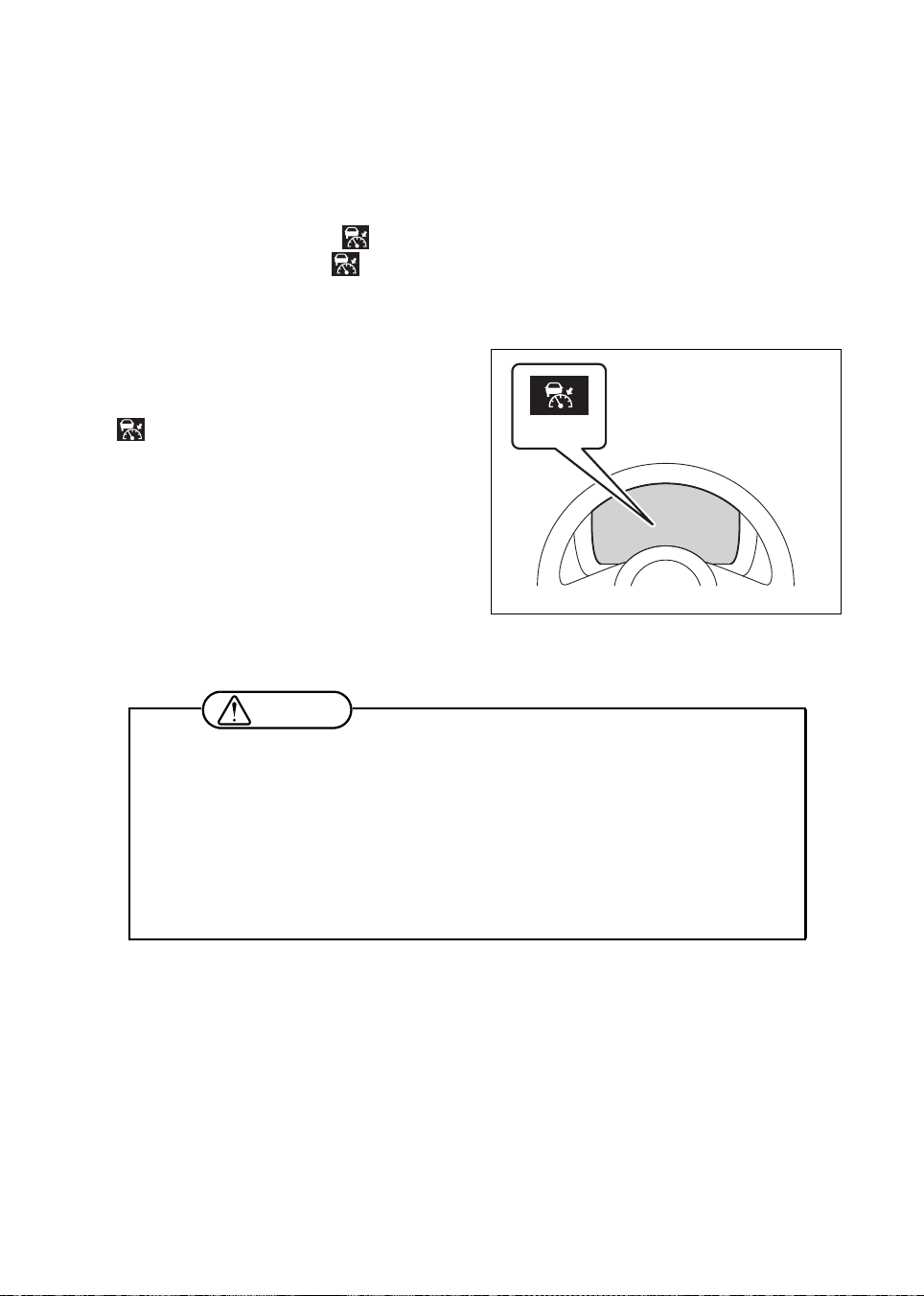
Adaptive Cruise Control
85
■ Accelerating temporarily
Depress the accelerator pedal to accelerate temporarily.
When the accelerator pedal is released, the vehicle returns to the set vehicle speed.
When the driver accelerates the vehicle by depressing the accelerator pedal while Adaptive
Cruise Control is operating,
(Adaptive Cruise Control indicator) turns white. When the
acceleration is completed,
(Adaptive Cruise Control indicator) returns to green.
■ Decelerating temporarily
Depress the brake pedal to decelerate tempo-
rarily. When the brake pedal is depressed,
Adaptive Cruise Control will be canceled.
(Adaptive Cruise Control indicator)
changes from green to white while the set
vehicle speed remains displayed on the com-
bination meter display.
Release the brake pedal and press the
RES/SET switch to the “RES/+” side to
restore the set vehicle speed.
CAUTION
When following another vehicle while using Adaptive Cruise Control, your vehi-
cle will accelerate or slow down based on the speed of the lead vehicle.
However, the driver always remains responsible for safe driving and should not
rely too much on the system.
If you need to accelerate (for example, to make a lane change) or slow down (for
example, because the lead vehicle suddenly slows down or another vehicle cuts
into your path), then operate either the accelerator or the brake pedal as appro-
priate based on surrounding conditions.
(1) Adaptive Cruise Control indicator
(white)
H02219
(1)
B8442BE-A.book 85 ページ 2024年10月29日 火曜日 午後6時50分
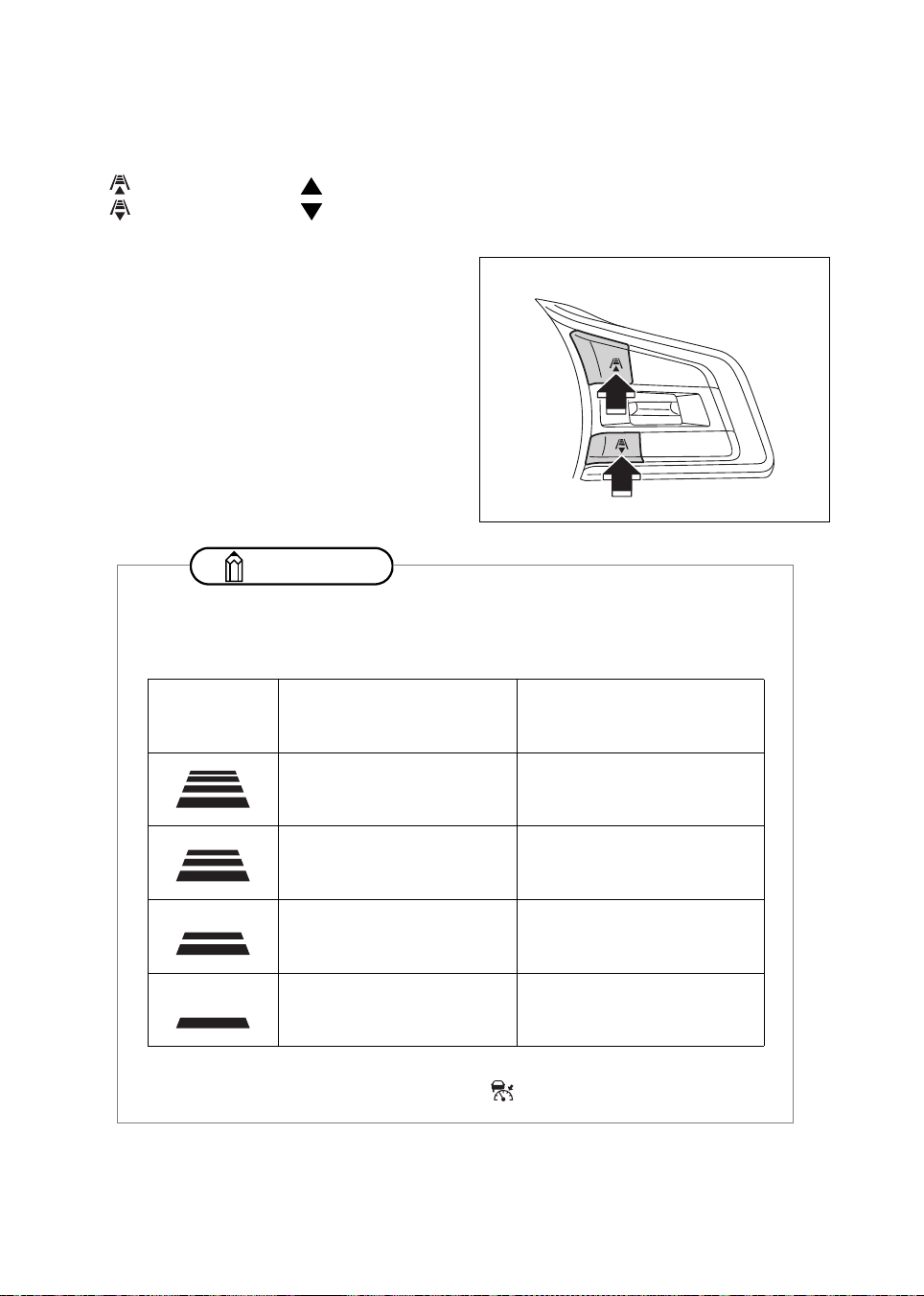
Adaptive Cruise Control
86
■ Changing the following distance from the vehicle in front
The following distance from the vehicle in front setting can be changed in 4 stages.
: When the switch ( side) is pressed, the following distance will be longer.
: When the switch ( side) is pressed, the following distance will be shorter.
NOTE
• The following distance changes corresponding with the vehicle speed. The
faster the vehicle travels, the greater the following distance.
Approximate guide to following distances
• The following distance previously set is restored when you turn back on
Adaptive Cruise Control by pressing the
(CRUISE) switch.
H00535
Following
distance
indicator
When your vehicle speed is
25 mph (40 km/h)
When your vehicle speed is
60 mph (100 km/h)
Approx. 100 ft (30 m) Approx. 200 ft (60 m)
Approx. 80 ft (25 m) Approx. 160 ft (50 m)
Approx. 65 ft (20 m) Approx. 130 ft (40 m)
Approx. 50 ft (15 m) Approx. 100 ft (30 m)
B8442BE-A.book 86 ページ 2024年10月29日 火曜日 午後6時50分
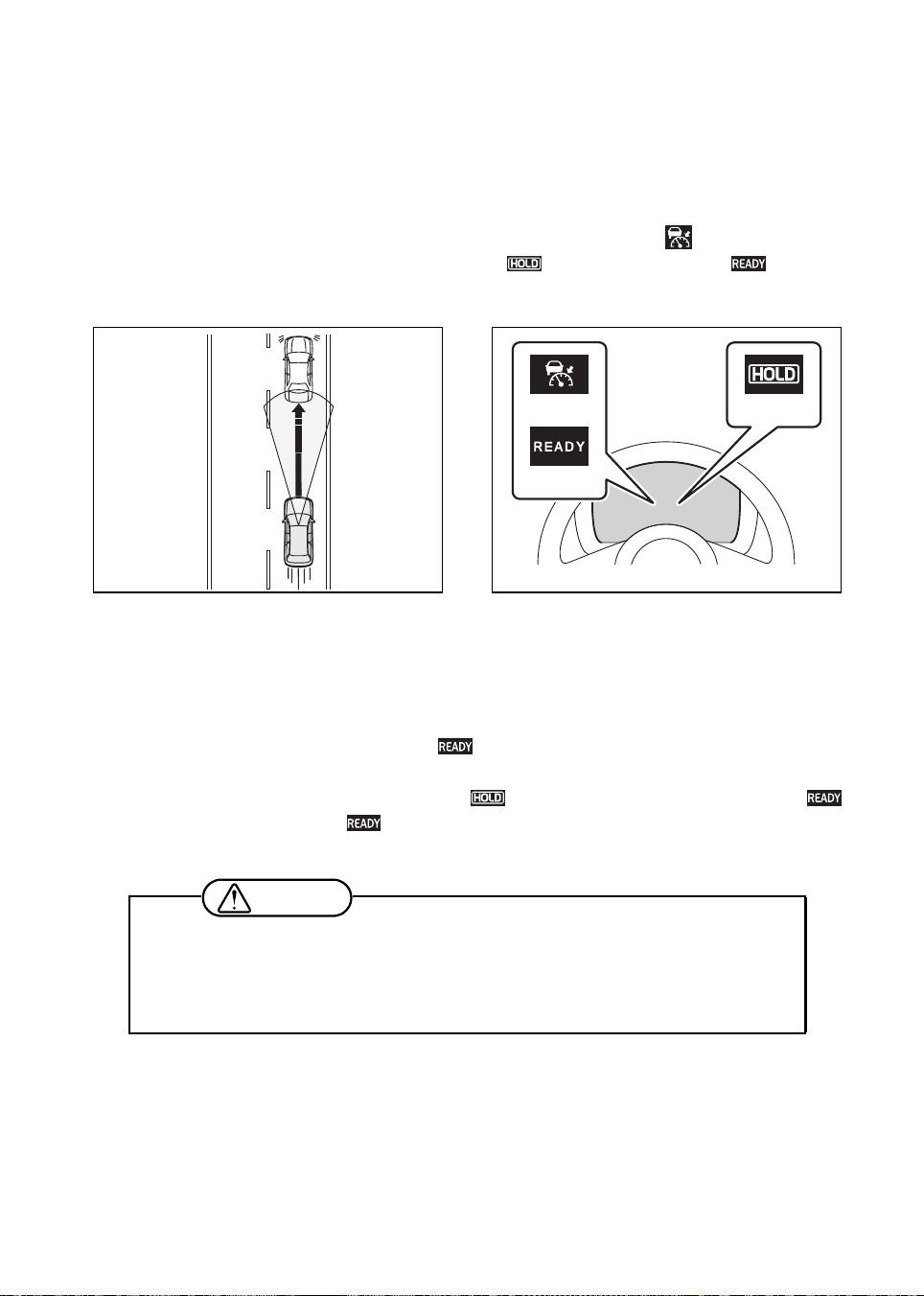
Adaptive Cruise Control
87
■ Stay-stopped function
If the vehicle in front comes to a stop while you are utilizing Adaptive Cruise Control, your
vehicle will also come to a stop and will stay stopped.
Once your vehicle has come to a complete stop with the vehicle in front, Adaptive Cruise
Control is paused and the stay-stopped function is engaged. When (Adaptive Cruise
Control indicator) changes from green to white, (HOLD indicator) and (READY
indicator) will be displayed.
Regardless of whether or not there is a vehicle in front, if the brake pedal is strongly
depressed while the vehicle is stopped, (READY indicator) illuminates. Operating the
RES/+ switch or SET/- switch at this time activates the stay-stopped function.
When starting the stay-stopped function, (HOLD indicator) illuminates and
(READY indicator) turns off. (READY indicator) will illuminate again by releasing the
brake pedal.
(1) Adaptive Cruise Control indicator
(white)
(2) READY indicator
(3) HOLD indicator
CAUTION
Approximately 3 seconds are required from when the vehicle stops until the
stay-stopped function activates. Because there is the possibility that the vehicle
may start moving before the stay-stopped function activates, pay attention to the
surroundings and depress the brake pedal as necessary.
H01234
H02220
(2)
(3)
(1)
B8442BE-A.book 87 ページ 2024年10月29日 火曜日 午後6時50分
Adaptive Cruise Control
88
●Resuming Adaptive Cruise Control in stay-stopped status
TSetting using the RES/SET switch
Even when the vehicle in front remains stopped, Adaptive Cruise Control can be activated
by operating the RES/+ switch or SET/- switch. (HOLD indicator) and (READY
indicator) turn off, and
(Adaptive Cruise Control indicator) changes from white to
green.
• Press the SET/- switch. The speed is automatically set to 20 mph (30 km/h).
• Press the RES/+ switch. The vehicle speed that was set before the stay-stopped function
activated is set again.
Page 94
NOTE
If you depress the brake pedal softly, the stay-stopped function may not start. In
this case, (READY indicator) will not illuminate.
NOTE
When Adaptive Cruise Control is resumed from stay-stopped status and the
vehicle in front accelerates, your vehicle will also accelerate and continue to fol-
low the vehicle in front at the previously set following distance. However, if the
lead vehicle does not start moving or pauses, stay-stopped status will be auto-
matically restored after approximately 3 seconds.
B8442BE-A.book 88 ページ 2024年10月29日 火曜日 午後6時50分
Adaptive Cruise Control
89
TSetting with the accelerator pedal
Depressing the accelerator pedal while stay-stopped is engaged cancels stay-stopped sta-
tus. At this time, Adaptive Cruise Control is resumed. The vehicle will attempt to travel at the
previously set vehicle speed unless a lead vehicle is detected. If a lead vehicle is detected,
Adaptive Cruise Control will maintain the previous following distance setting.
●Canceling the stay-stopped function
If any of the following operations are performed while the vehicle is in the stay-stopped func-
tion (
page 87), the stay-stopped function will be canceled and Adaptive Cruise Control
will be canceled at the same time.
• The brake pedal is depressed.
• The (CRUISE) switch is pressed.
• The electronic parking brake switch is operated to manually apply the electronic parking
brake.
WARNING
When the stay-stopped function is canceled, the vehicle will start. Make sure the
surroundings are safe before canceling the stay-stopped function.
NOTE
If the accelerator pedal is only slightly depressed, the stay-stopped function may
not be canceled, and Adaptive Cruise Control may not be resumed.
B8442BE-A.book 89 ページ 2024年10月29日 火曜日 午後6時50分
Adaptive Cruise Control
90
●Setting Adaptive Cruise Control while the electronic parking brake is applied
If the electronic parking brake is applied before setting Adaptive Cruise Control, release the
electronic parking brake by depressing the accelerator pedal or by other specified means.
For details of how to release the electronic parking brake, refer to the vehicle Owner’s Man-
ual.
WARNING
• When the stay-stopped function is canceled by pressing the (CRUISE)
switch, the vehicle will start to creep. Depress the brake pedal as necessary.
• Do not exit the vehicle while the stay-stopped function is engaged.
• The stay-stopped function is not a replacement for applying the electronic
parking brake. When parking, always apply brakes manually to come to a full
stop, then set the electronic parking brake.
• When you exit the vehicle, apply the electronic parking brake, shift the select
lever to the “P” position and turn the ignition switch to the OFF position.
CAUTION
The stay-stopped function will be canceled under the following conditions:
• The vehicle is in stay-stopped mode for approximately 10 minutes or more. A
notification will sound 5 intermittent beeps, 1 short beep and 1 long beep.
• Any condition in which automatic cancellation is met. A notification sounds 1
short beep and 1 long beep.
Page 92
After the stay-stopped function has been canceled, the electronic parking brake
will be automatically applied and the electronic parking brake indicator light will
illuminate. However, if any canceling condition for the electronic parking brake
(i.e. the interlock system with the accelerator pedal, switch operation of the elec-
tronic parking brake, etc.) is fulfilled, the electronic parking brake will not work.
For details, refer to the vehicle Owner’s Manual.
If the accelerator pedal is only slightly depressed while the stay-stopped function
is activated, the stay-stopped function may be canceled, and the electronic park-
ing brake may not work.
B8442BE-A.book 90 ページ 2024年10月29日 火曜日 午後6時50分
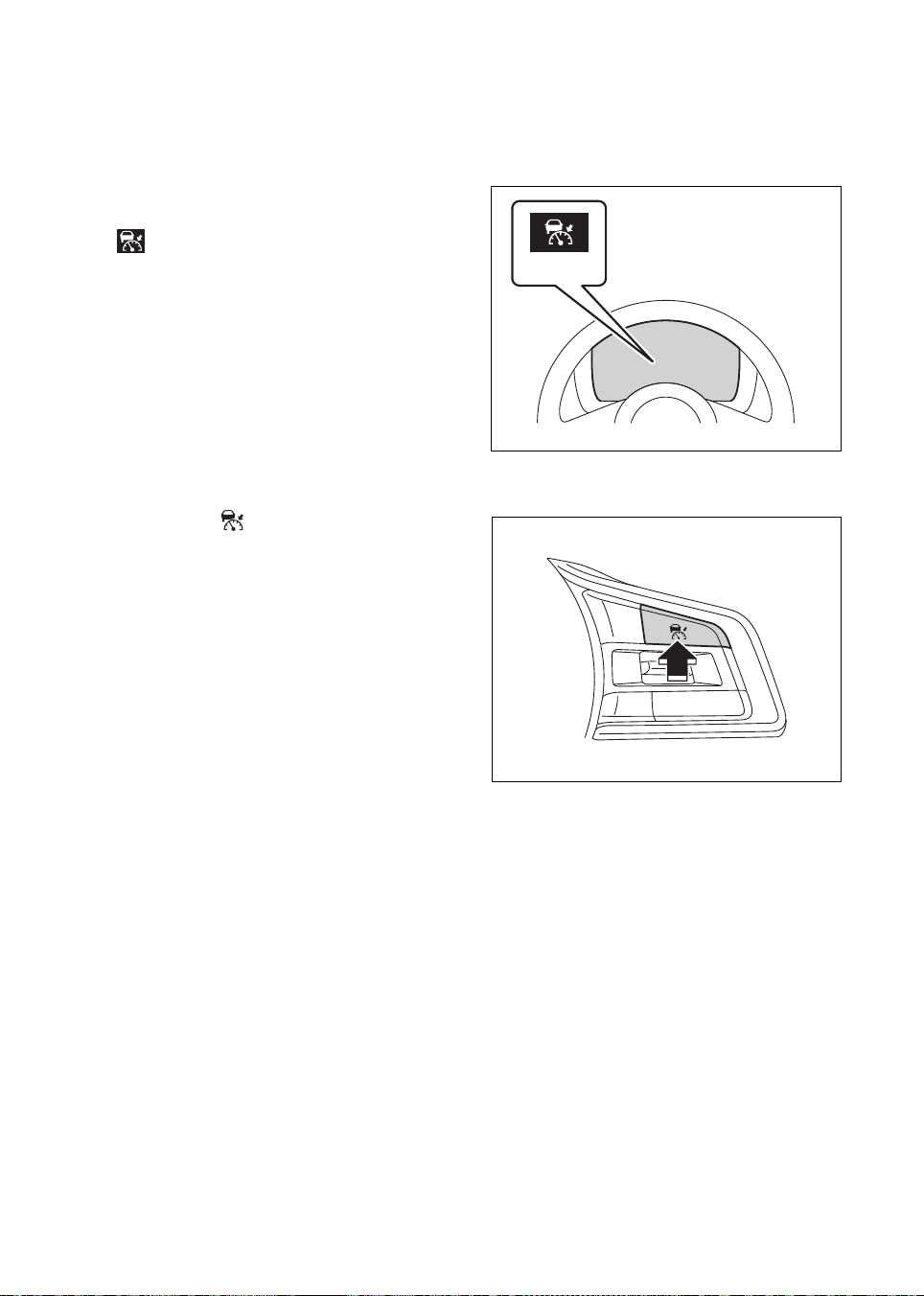
Adaptive Cruise Control
91
■ Canceling Adaptive Cruise Control
●
Canceling by driver operation
Any of the following operations will cancel
Adaptive Cruise Control.
(Adaptive Cruise Control indicator)
changes from green to white while the set
vehicle speed remains displayed on the com-
bination meter display.
• Depress the brake pedal.
• Press the (CRUISE) switch.
(1) Adaptive Cruise Control indicator
(white)
H02221
(1)
H00536
B8442BE-A.book 91 ページ 2024年10月29日 火曜日 午後6時50分
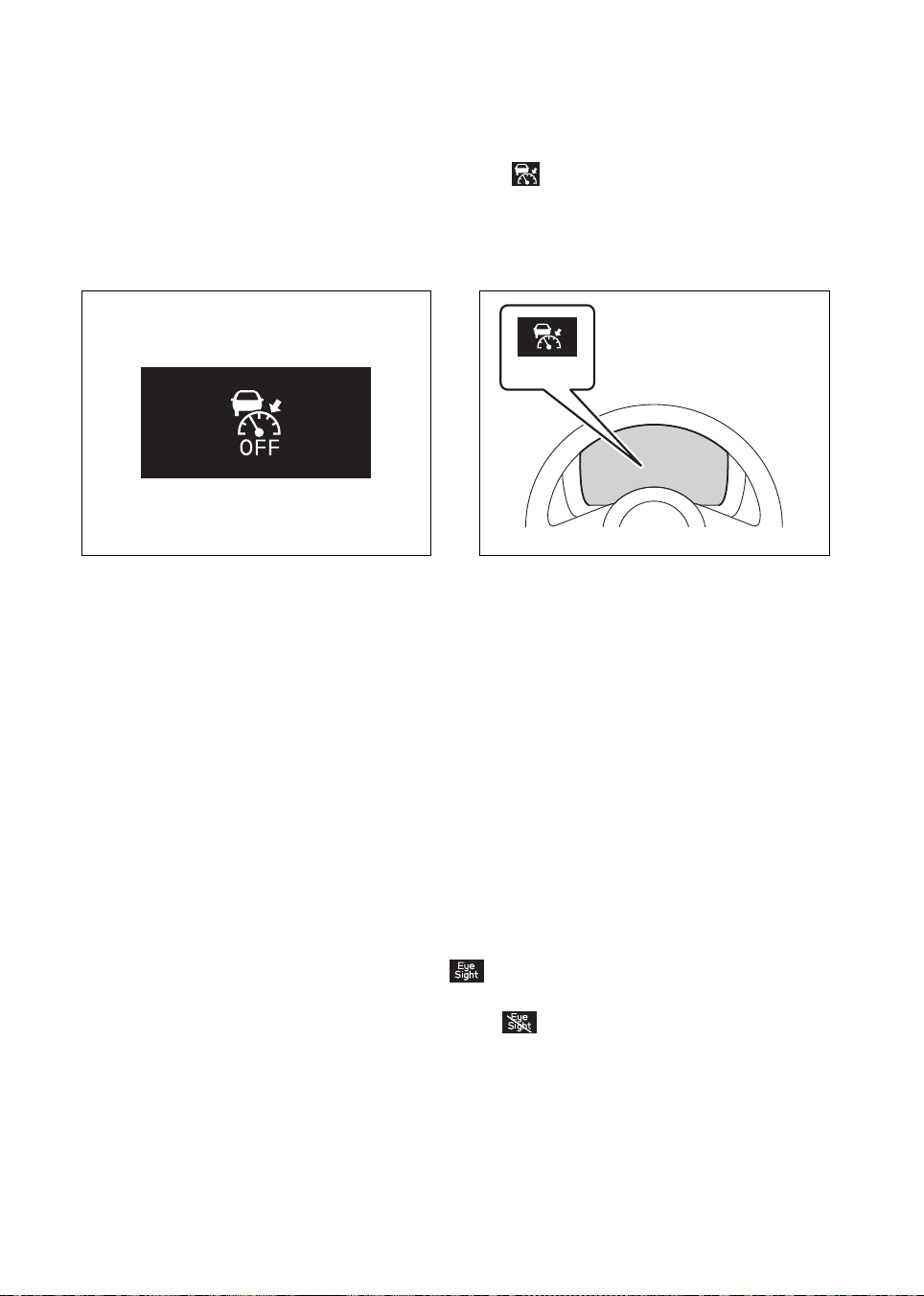
Adaptive Cruise Control
92
●Automatic cancellation by the system
Under the following conditions, a notification sounds 1 short beep and 1 long beep, and
Adaptive Cruise Control is automatically canceled. (Adaptive Cruise Control indicator)
changes from green to white. Also, an interruption screen is displayed on the combination
meter display. If the stay-stopped function is engaged (
page 87), the electronic parking
brake will be automatically applied.
• The grade of the road is very steep.
• Vehicle Dynamics Control or Traction Control Function is activated.
• The vehicle speed has exceeded approximately 100 mph (160 km/h) while cruise control
is activated.
• The steering wheel is turned significantly in either direction.
• The select lever is moved to a position other than “D” or “M”.
• Gear “1”, “2” or “3” has been selected with the shift paddles.
• Any door (except the rear gate) is opened.
• The driver’s seatbelt is unfastened.
• The electronic parking brake is applied manually.
• The X-MODE is turned on (the X-MODE indicator illuminates).
• The accelerator pedal was depressed continuously for a long time.
• The engine speed increased to a high rpm.
• The EyeSight system has a malfunction. (EyeSight warning indicator: Yellow)
Page 189
• The EyeSight system has stopped temporarily. (EyeSight temporary stop indicator:
White)
Page 191
• The Pre-Collision secondary braking is activated.
(1) Adaptive Cruise Control indicator
(white)
H02258
H02222
(1)
B8442BE-A.book 92 ページ 2024年10月29日 火曜日 午後6時50分
Adaptive Cruise Control
93
After the conditions have been resolved, perform the Adaptive Cruise Control set operation
again to reactivate Adaptive Cruise Control.
WARNING
Do not use Adaptive Cruise Control on slippery roads. Doing so may result in an
accident.
CAUTION
• When shifting the select lever to the “N” position, Adaptive Cruise Control will
be automatically canceled. Do not shift the lever to the “N” position unless in
an emergency. Otherwise the engine brake may not operate, which could
cause an accident.
• If Adaptive Cruise Control is canceled automatically by the system right after
the vehicle stops (in approximately 1 second), the electronic parking brake
will not operate.
Page 87
NOTE
•
If EyeSight is malfunctioning, (EyeSight warning indicator: Yellow) is dis-
played on the combination meter display. If this occurs, stop the vehicle in a
safe location and then turn off the hybrid system and restart it. If the indicator
remains illuminated after restarting the hybrid system, Adaptive Cruise Control
cannot be used. This will not interfere with ordinary driving. However, contact a
SUBARU dealer and have the system inspected.
Page 189
• If the EyeSight operation has temporarily stopped, (EyeSight temporary
stop indicator: White) is displayed on the combination meter display.
Page 191
• When the operation of Adaptive Cruise Control has been automatically can-
celed, perform the Adaptive Cruise Control setting operation again after the
condition that caused the cancellation has been corrected. If Adaptive Cruise
Control cannot be activated even after the condition has been corrected,
EyeSight may be malfunctioning. This will not interfere with ordinary driving.
However, contact a SUBARU dealer and have the system inspected.
B8442BE-A.book 93 ページ 2024年10月29日 火曜日 午後6時50分
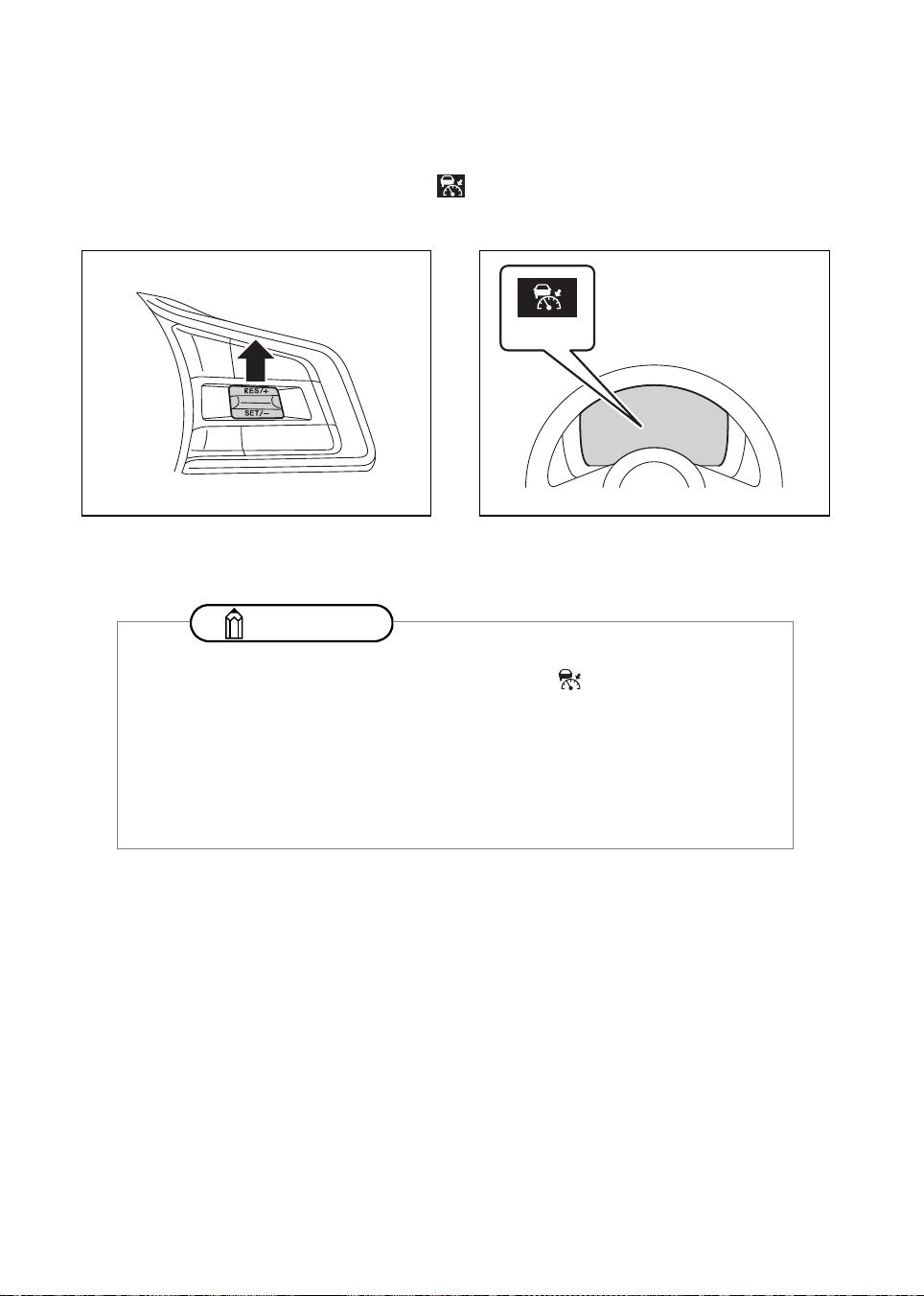
Adaptive Cruise Control
94
■ Restoring the previously set vehicle speed
The previously set vehicle speed is stored in memory. To restore that vehicle speed, press
the RES/SET switch to the “RES/+” side. (Adaptive Cruise Control indicator) changes
from white to green.
(1) Adaptive Cruise Control indicator
(green)
NOTE
• The vehicle speed stored in memory is erased in the following circumstances:
- The cruise control is turned off by pressing the (CRUISE) switch.
- The cruise control mode was switched from Adaptive Cruise Control to Con-
ventional Cruise Control.
• If there is no vehicle speed stored in the memory (previous vehicle speed),
the current vehicle speed is set when the RES/SET switch is pressed to the
“RES/+” side.
Page 77
H00898
H02223
(1)
B8442BE-A.book 94 ページ 2024年10月29日 火曜日 午後6時50分
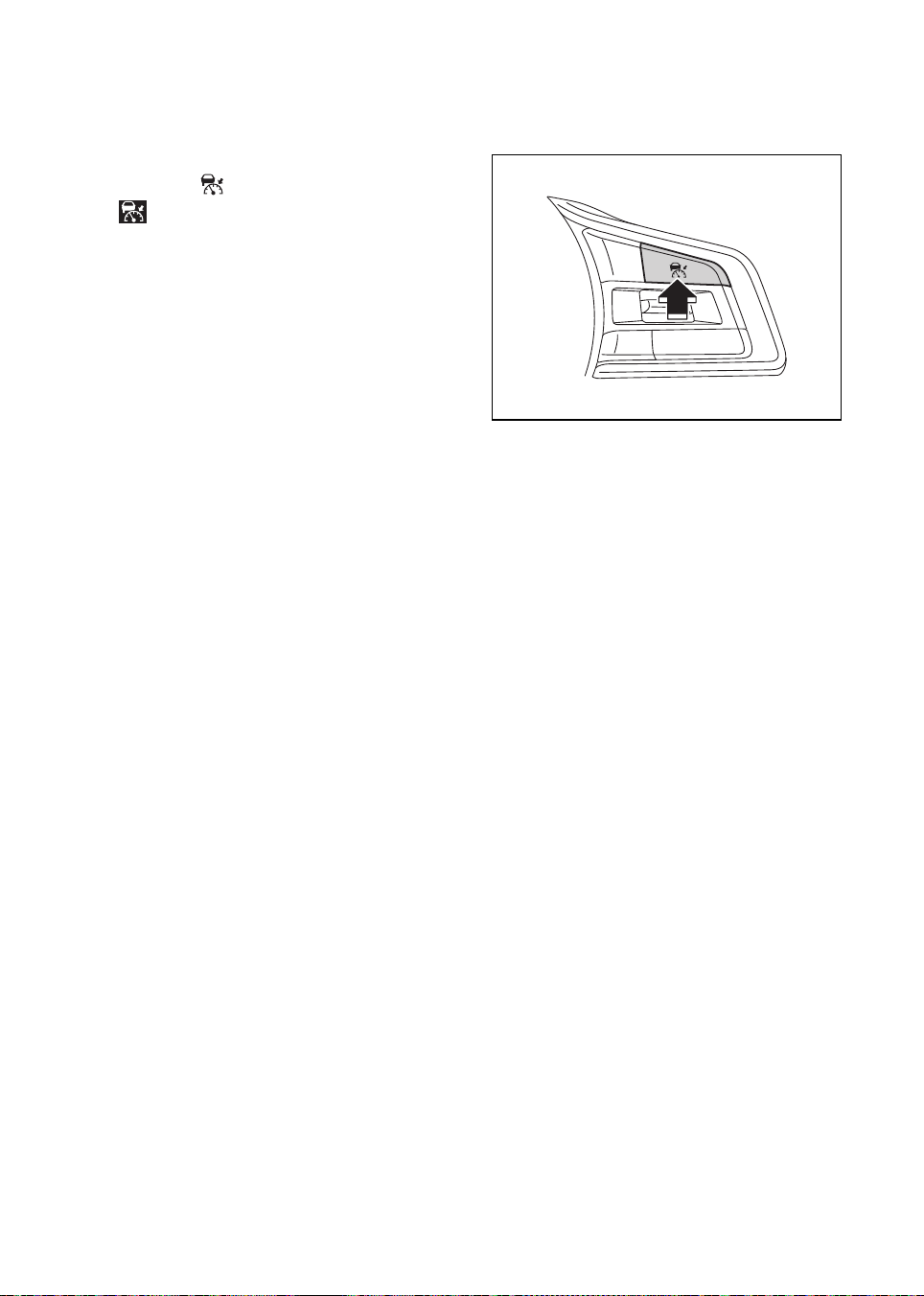
Adaptive Cruise Control
95
■ Turning off Adaptive Cruise Control
When Adaptive Cruise Control is not active,
press the (CRUISE) switch.
(Adaptive Cruise Control indicator), your
vehicle indicator and the following distance
setting indicator turn off on the combination
meter display.
H00538
B8442BE-A.book 95 ページ 2024年10月29日 火曜日 午後6時50分
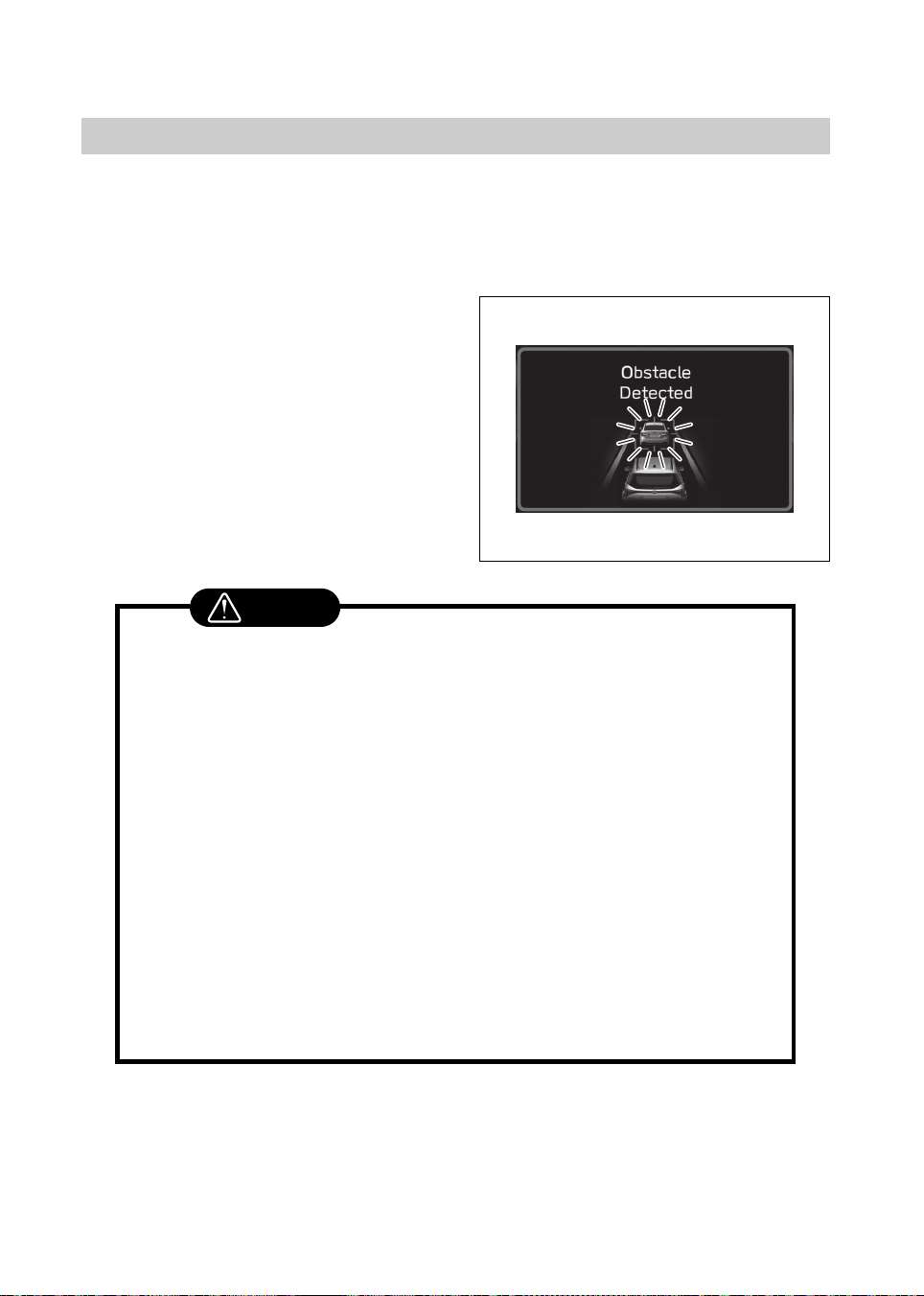
Adaptive Cruise Control
96
■ “Obstacle Detected” warning
The “Obstacle Detected” warning is activated while Adaptive Cruise Control is following a
lead vehicle. This function warns the driver when it determines that the current level of
deceleration by automatic braking control is insufficient.
• When the system determines that the vehi-
cle speed needs to be reduced manually by
the driver, an alert sounds repeated short
beeps and an interruption screen is dis-
played.
• When this function activates, depress the
brake pedal to decelerate and maintain an
optimal following distance.
Other functions
WARNING
• If the alert/notification sounds frequently, do not use Adaptive Cruise Control.
• The “Obstacle Detected” warning will not activate in the following situations.
- The accelerator pedal is depressed.
- The brake pedal is depressed.
• Even when the following distance is short, the “Obstacle Detected” warning
may not activate in the following situations.
- The difference in speed with the vehicle in front is small. The two vehicles
are traveling at almost the same speed.
- The vehicle in front is traveling faster than your vehicle. The following dis-
tance is gradually increasing.
- Another vehicle cuts into your lane very close to your vehicle.
- The vehicle in front decelerates suddenly.
- There are repeated uphill and downhill grades.
• The “Obstacle Detected” warning may not activate in time in the case of a
vehicle that is stopped at the end of a line at a toll gate, at a stop light or inter-
section or in traffic congestion, or a vehicle that is moving much slower than
your vehicle. EyeSight requires a speed differential in order to recognize a
potential obstacle and react to it.
H02443
B8442BE-A.book 96 ページ 2024年10月29日 火曜日 午後6時50分

Adaptive Cruise Control
97
NOTE
Vehicles in front in the same traffic lane are detected by the stereo camera
within a distance of approximately 426 ft (130 m) in the forward direction. How-
ever the detection distance may be reduced depending on the traffic environ-
ment, driving conditions, and conditions of the vehicle in front.
B8442BE-A.book 97 ページ 2024年10月29日 火曜日 午後6時50分
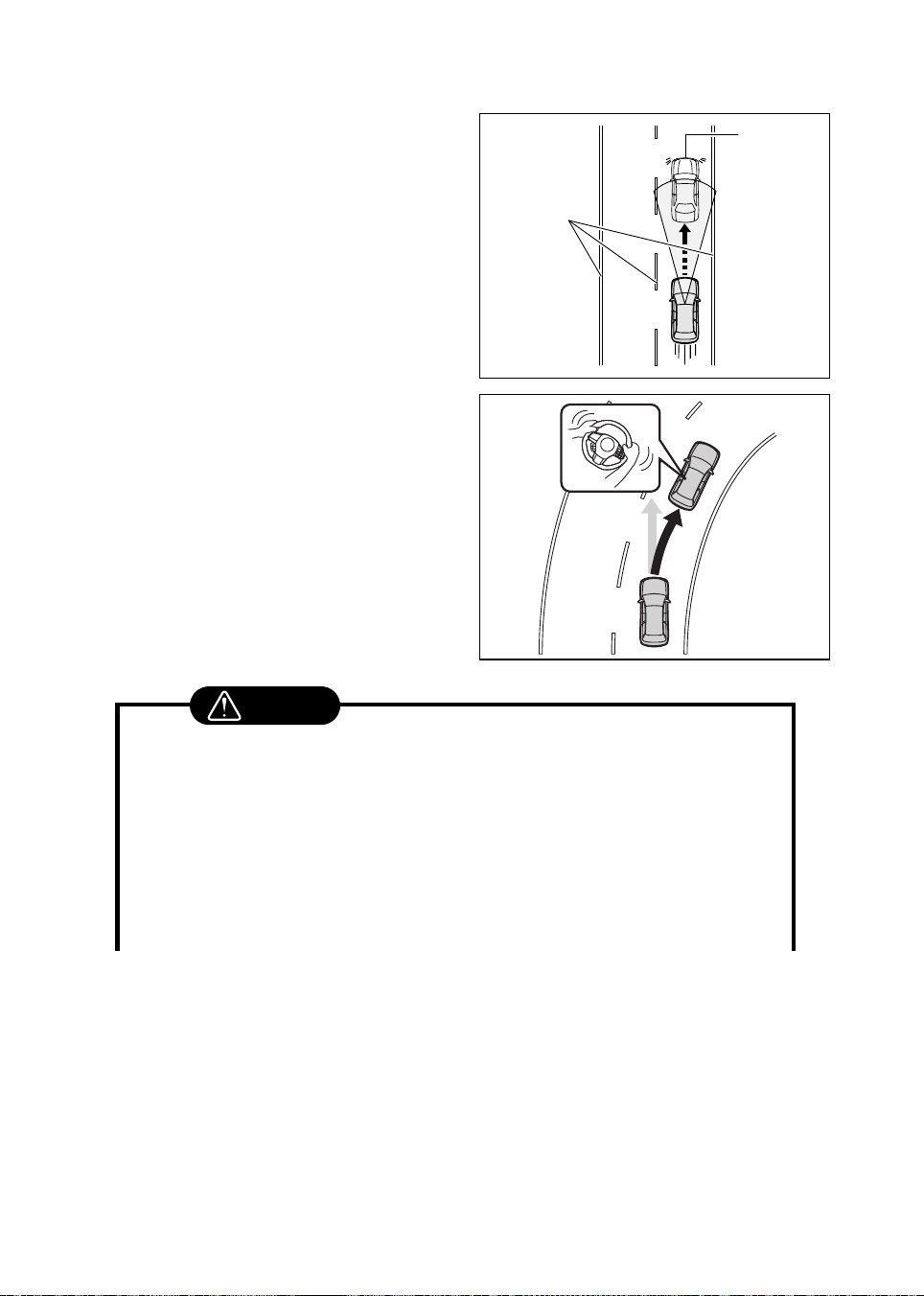
98
Lane Centering Function
The stereo camera detects lane markings
(including Botts’ dots) of the lane and the lead
vehicle and the system assists the steering
operation by working with the electric power
steering to help keep your vehicle in its lane
when driving on expressways, freeways and
interstate highways.
This function can be used when Adaptive
Cruise Control is activated.
Page 77
When driving at speeds of 0 mph (0 km/h) to
approximately 90 mph (145 km/h), the system
detects the lane markings and/or the lead
vehicle and assists the driver with steering
control in order to help keep the vehicle close
to the center of the lane and follow the lead
vehicle.
WARNING
Lane Centering Function is not an automatic driving system.
Do not overestimate the capabilities of Lane Centering Function. It is
not a system to assist inattentive driving or meant to permit driving
without holding the steering wheel. Make sure to grip the steering
wheel while driving. To drive safely, check the distance from the vehi-
cle in front or from a vehicle driving in parallel with your vehicle, the
surrounding conditions and the surrounding environment while driv-
ing.
S03576
Lane
markings
Lead
vehicle
H00470
B8442BE-A.book 98 ページ 2024年10月29日 火曜日 午後6時50分

Lane Centering Function
99
Continued on next page
If you feel that the level of control and timing by the system are different from
your own driving style, the system may not support safe driving. Do not use Lane
Centering Function.
Lane Centering Function does not always operate under all situations. If you rely
only on Lane Centering Function to stay in a lane, it may cause an accident such
as a collision with an obstacle beside your lane or with a vehicle driving in an
adjacent lane.
• Check that there are no problems with the tires and brakes during a daily
inspection before using the system.
Refer to “Warranty and Maintenance Booklet”.
• The system may not operate properly under the following conditions. Do not
use Lane Centering Function.
- The air pressure of tires is not to specification.
*1
- Tires that are unevenly worn or tires with uneven wear patterns are
installed.
*1
- Tires that are the wrong size are installed.
*1
- The wheels are out of balance (e.g., the balance weight is removed or mis-
aligned).
*1
- The wheels are out of alignment.
*1
- A flat tire has been fixed temporarily with a tire repair kit.
- The suspension has been modified (including genuine SUBARU parts).
- An object that obstructs the stereo camera’s view is installed on the vehicle.
- Tire chains are installed.
- There is an abnormal vibration in the steering wheel or the steering wheel is
heavier than usual.
- The steering wheel has been replaced with parts other than genuine
SUBARU parts.
B8442BE-A.book 99 ページ 2024年10月29日 火曜日 午後6時50分

Lane Centering Function
100
Continued from previous page
- The headlights are dirty or they have snow, ice or dirt on them. (Objects are
not adequately illuminated and are difficult to detect.)
- The headlights are not aligned correctly. (Objects are not adequately illumi-
nated and are difficult to detect.)
- The headlights, fog lights and other lights have been modified.
- Vehicle operation has become unstable due to an accident or malfunction.
- The brake system warning light is illuminated in red.
*2
- The vehicle is tilted at an extreme angle due to loaded cargo or other fac-
tors.
- The maximum number of occupants is exceeded.
- A trailer or another vehicle, etc. is being towed.
- The combination meter is not operating properly. For example, an indicator
light or a warning light on the combination meter does not properly turn on
or off, a beep does not sound, or the indication on the combination meter
display is different from when it is normal.
*3
*1: The wheels and tires have functions that are critically important. Be sure to
use the correct ones.
For details, refer to the vehicle Owner’s Manual.
*2: If the brake system warning light does not turn off, immediately pull the
vehicle over in a safe place and contact a SUBARU dealer to have the
system inspected. For details, refer to the vehicle Owner’s Manual.
*3: For details about the functions and operations of the combination meter,
refer to the vehicle Owner’s Manual.
B8442BE-A.book 100 ページ 2024年10月29日 火曜日 午後6時50分
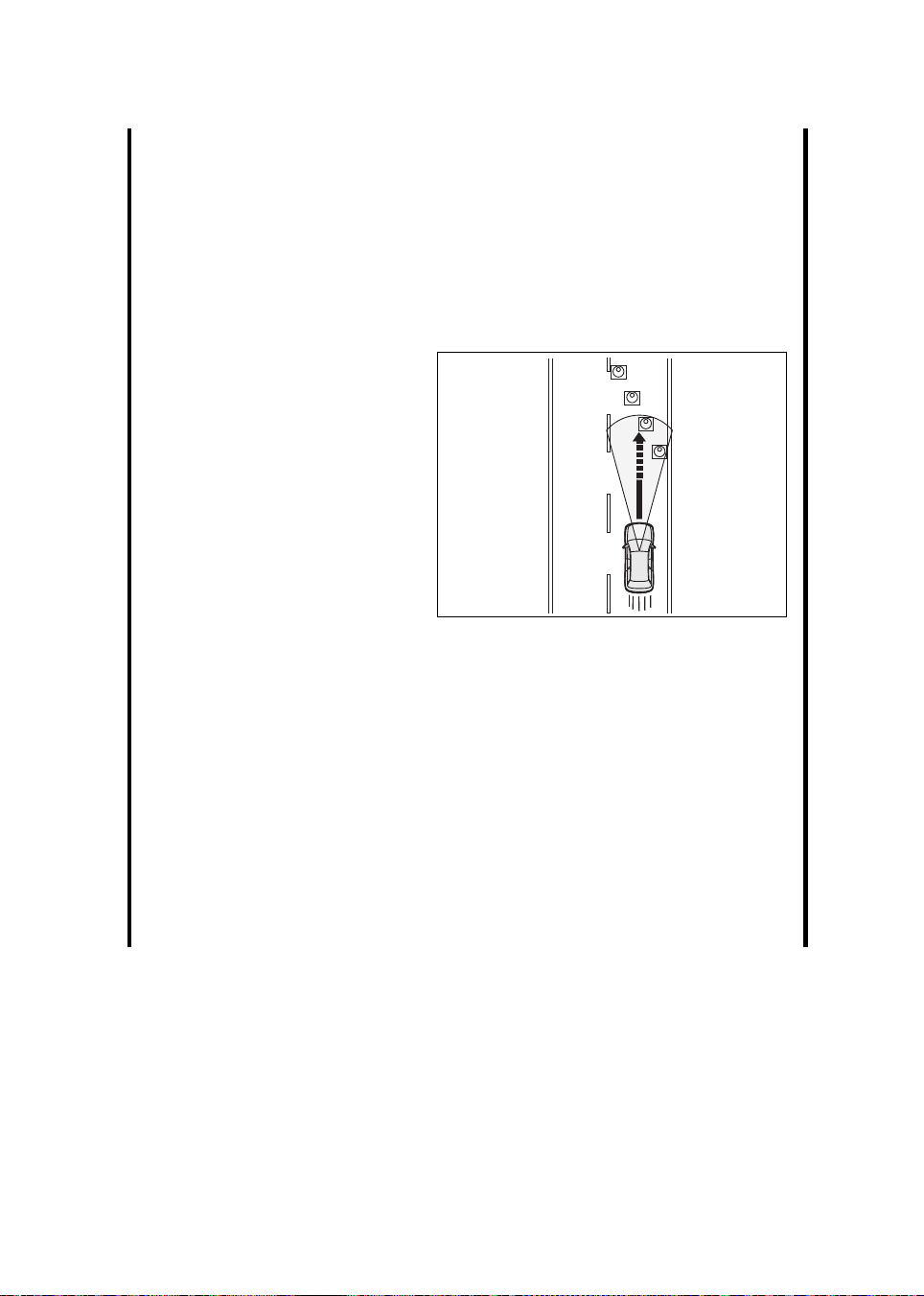
Lane Centering Function
101
Continued on next page
• Lane Centering Function is designed for use on expressways, freeways, toll
roads, interstate highways and similar limited access roads. It is not intended
to be used in city traffic. In the following conditions, do not use Lane Centering
Function. Doing so may result in an accident.
- Ordinary roads (roads other than those mentioned above)
Depending on the driving environment (complexity of roads and other fac-
tors), the system may not be able to perform as the traffic conditions
require, and that may result in an accident.
- Roads with sharp curves
- Roads with lane restrictions or
tentative lanes due to con-
struction work, etc.
- Old lane markings remain.
- Avoiding parked vehicles
- Snow, puddles or snow melt-
ing agents remain on the road
surface.
- Cracks or constructed traces
remain on the road surface.
- Frozen roads, snow-covered
roads or other slippery road
surfaces
The tires may spin, causing loss of control of the vehicle.
- Entering a sharp curve into an interchange or junction, or a service area,
parking area, toll booth or other facilities
- Visibility is poor due to sand, smoke or water vapor blowing in the wind, or
the front vision is obscured due to water splashes, snow, dirt or dust stir up
generated by the vehicle in front or oncoming traffic.
- The stereo camera’s field of view is obstructed by fogging, snow, dirt, frost,
dust, scratches, or smears on the windshield, or by light reflecting off the
dirt, etc.
- Rain or dirt has not been fully wiped off of the windshield. There is a risk of
that the stereo camera may not detect the lanes.
- The stereo camera’s field of view is obstructed (for example by a canoe on
the roof of the vehicle).
H00463
B8442BE-A.book 101 ページ 2024年10月29日 火曜日 午後6時50分
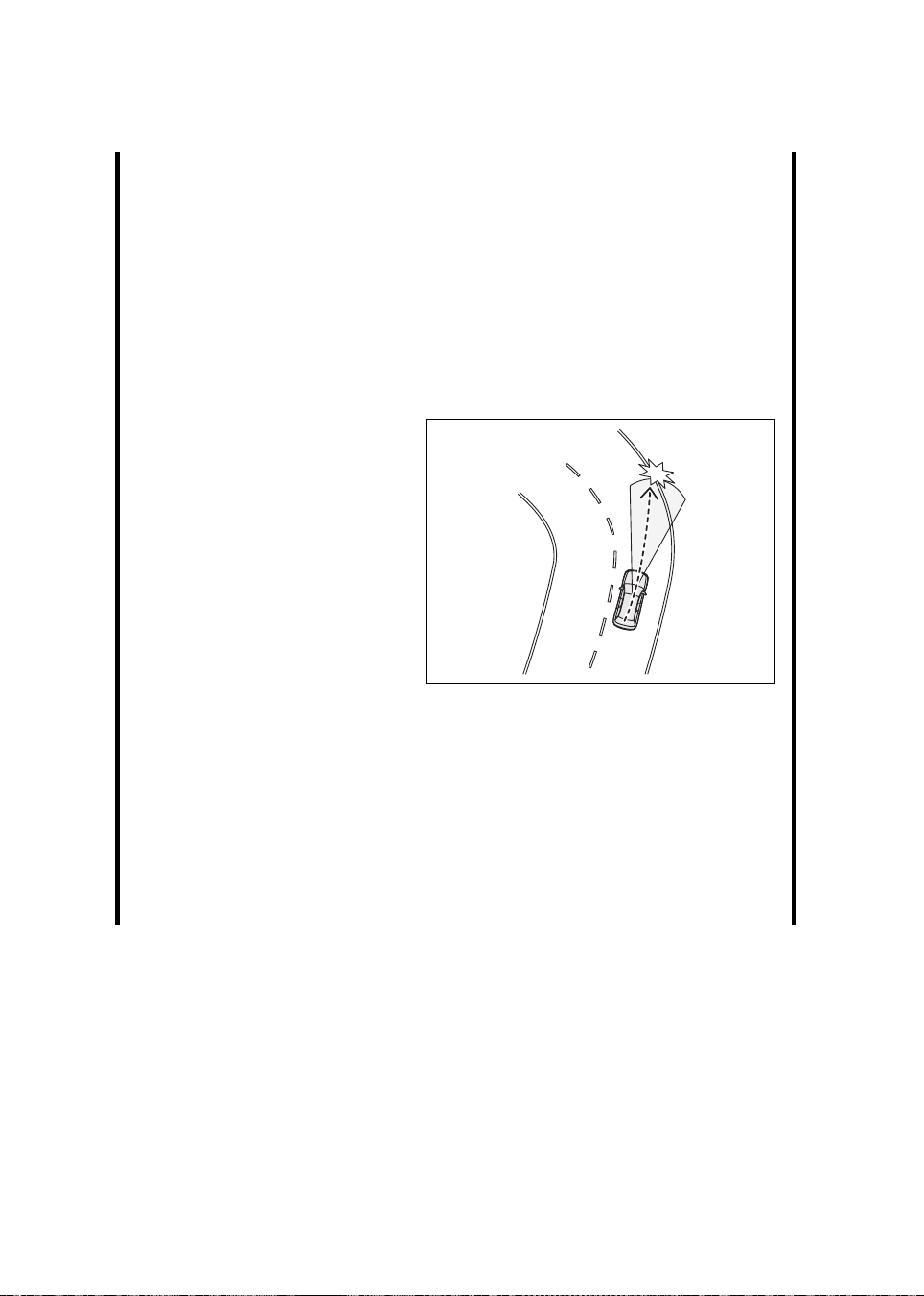
Lane Centering Function
102
Continued from previous page
• The stereo camera may have difficulty detecting the lane markings under the
following conditions and the system may not operate properly.
- At night or in a tunnel without the headlights on
- In bad weather (for example, rain, snow or thick fog)
- The road surface is wet and shining by reflected light.
- There are other traffic markings on the lane you are driving in (arrows,
words, etc.).
- The distance between your vehicle and the vehicle in front is short, making
it difficult to detect lane markings.
- A vehicle intruded from an adjacent lane or the vehicle in front changed
lanes.
- The shape of a curve in the
road suddenly changes.
- Shadows of guardrails or sim-
ilar objects are overlapped on
the lane markings.
- Strong light is coming from
the front (sunlight or headlight
beams of oncoming traffic,
etc.).
- The width of a lane is either
too narrow or too wide.
- The width of a lane has
changed.
- The stereo camera may have difficulty detecting the lane due to the perfor-
mance of the camera.
• There are no lane markings or they are very worn.
• The lane markings are painted in yellow.
• The lane markings are similar in color to the road surface.
• The lane markings are drawn in double.
• The width of lane markings is narrow.
• Lines that are not lane markings are painted on roads.
• The lane markings are touching the walls and poles.
H00465
B8442BE-A.book 102 ページ 2024年10月29日 火曜日 午後6時50分
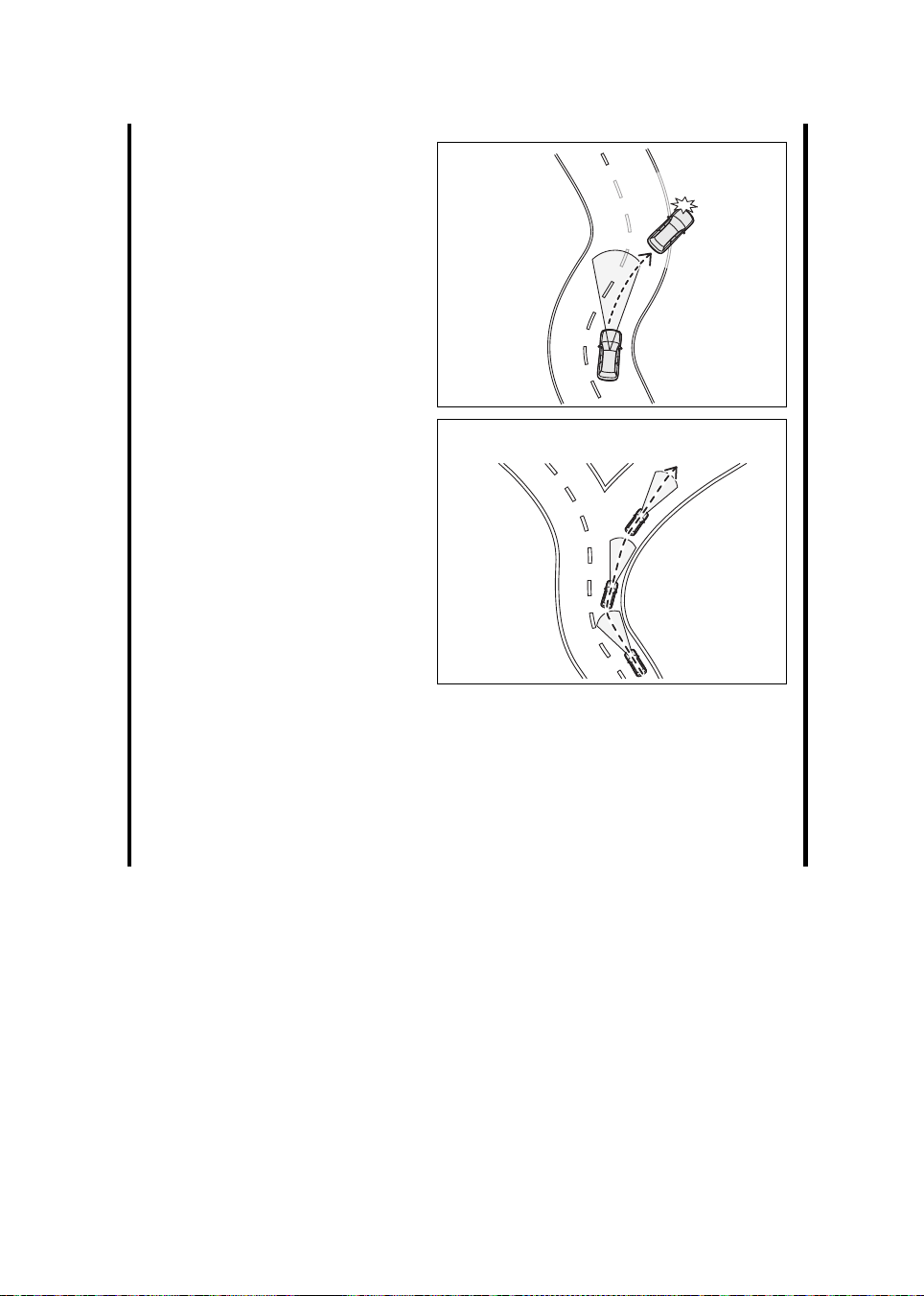
Lane Centering Function
103
Continued on next page
- The shape of lane markings
suddenly changes
(entrance/exit of a curve,
crank and winding road, etc.).
- Going into lanes that lead to
interchanges, junctions, ser-
vice areas or parking areas
- There is a curb or a side wall
on the road shoulder.
- The brightness changes such
as at a tunnel entrance or exit
or when you drive under an
overpass.
- Fluid has not been fully wiped
off the windshield during or
after washer use.
• Under the conditions below, the stereo cameras may have difficulty in detect-
ing the vehicle in front, and Lane Centering Function may not operate as
expected.
In addition, depending on the behavior of the vehicle in front and the sur-
rounding traffic conditions, there is the risk of an unexpected accident (for
example, a collision with a vehicle in the neighboring lane or a guardrail).
H00464
H01406
Main road Exit lane
B8442BE-A.book 103 ページ 2024年10月29日 火曜日 午後6時50分
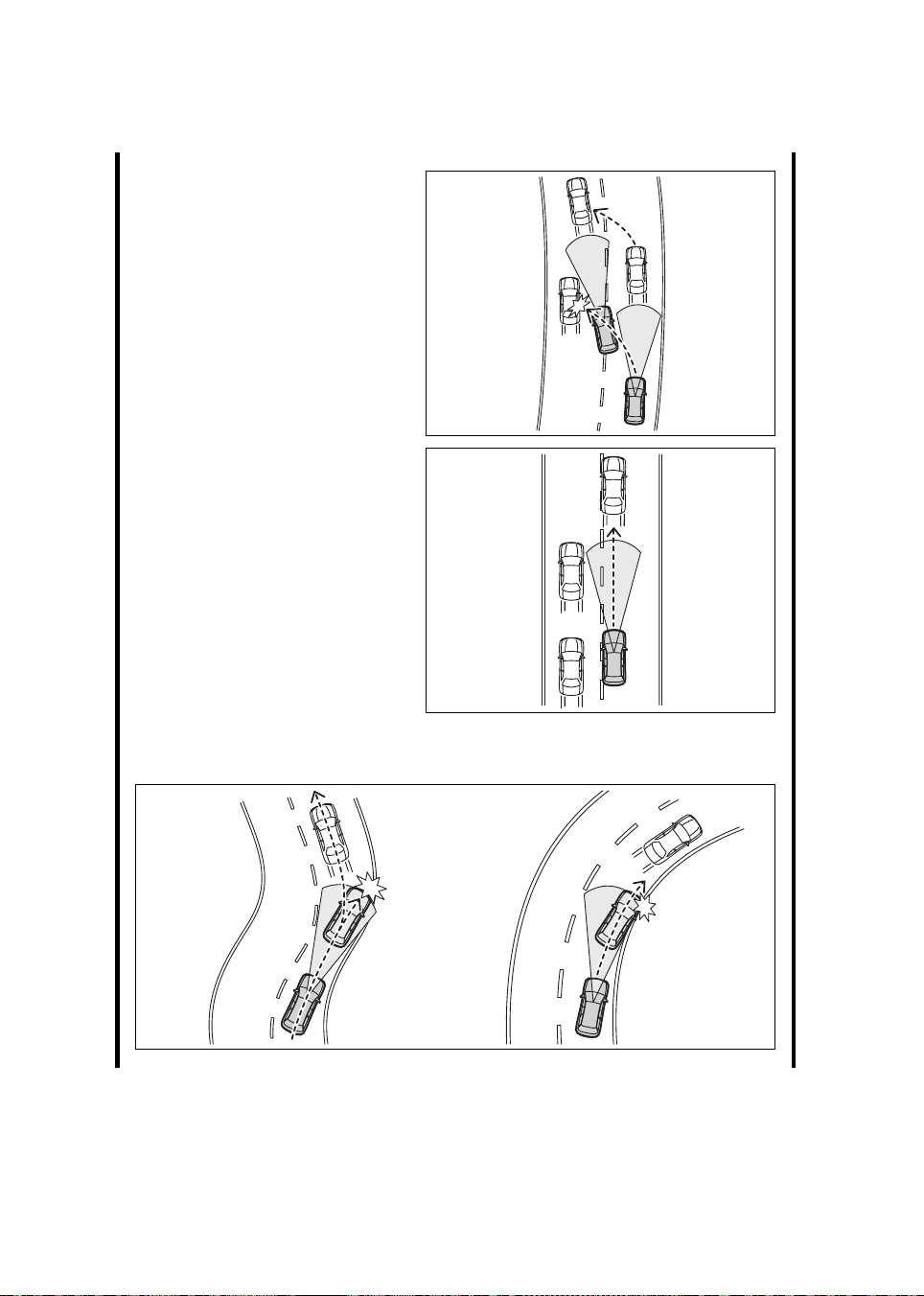
Lane Centering Function
104
Continued from previous page
- The vehicle in front changes
lanes, turns left or right, or
takes similar action.
- The vehicle in front is drifting.
- The vehicle in front is not driv-
ing in the center of the lane
and is driving with wheels on
or over either side of the lane
markings or at the edge of the
lane.
- The behavior of the vehicle in front changes suddenly (such as at the start
or end of a curve or on a road with continuous curves and corners).
H00466
H00467
H00701
B8442BE-A.book 104 ページ 2024年10月29日 火曜日 午後6時50分

Lane Centering Function
105
- The vehicle in front moves to avoid a vehicle stopped on the shoulder on the
road or an obstacle in the road.
- Your vehicle is passing a vehicle in your lane or that is close to the lane
marking (motorcycle or other similar vehicle).
- There is a motorcycle or similar vehicle traveling next to or passing the vehi-
cle in front.
- Another vehicle cuts between the vehicle in front and your vehicle.
- The vehicle in front is operating a turn signal, hazard warning flashers, or
similar light.
- At night or in a tunnel without the headlights on
- Driving at night or in a tunnel when there is a vehicle in front that does not
have its taillights on
• Lane Centering Function may be unable to continue operating when the vehi-
cle in front has a unique shape or due to the surrounding environment.
- The rear aspect of the vehicle in front is low, small or irregular (the system
may recognize another part of the vehicle as its rear and will determine
operation from that).
• There is an empty truck or trailer with no rear and/or side panels on the
cargo bed.
• Vehicles that have cargo protruding from their back ends
• Non-standard shaped vehicles (vehicle transporters or vehicles with a
sidecar fitted, etc.)
• The height of the vehicle is low, etc.
- The vehicle in front is a compact car, motorcycle, or other narrow vehicle.
- The relative speed difference compared to the vehicle in front is large. (The
vehicle in front pulls away.)
- Bad weather (for example heavy rain, a blizzard or thick fog)
- There is sunlight, headlights, or other light reflecting from the rear of the
vehicle in front.
- Strong light is coming from the front (for example, sunlight at dawn, sunset
or headlight beams, etc.).
- The brightness changes such as at a tunnel entrance or exit or when you
drive under an overpass.
- Fluid has not been fully wiped off the windshield during or after washer use.
B8442BE-A.book 105 ページ 2024年10月29日 火曜日 午後6時50分

Lane Centering Function
106
CAUTION
• The performance of Lane Centering Function may not be optimal under the
following conditions. In addition, Lane Centering Function may not operate or
the operation may be canceled.
- Immediately after the weight of your vehicle changes radically
- Immediately after the replacement of a tire or the adjustment of tire pressure
- Immediately after the adjustment, repair or replacement of the camera or
related components
- Immediately after the repair or replacement of the suspension or steering
system
- A winter tire or a tire other than a genuine SUBARU tire is used.
- The vehicle is in a crosswind.
- The road grade abruptly changes (uphill or downhill).
- The grade of the crossing direction in a road is large or changes abruptly.
- Unevenness, winding and joint of a road surface
- The acceleration/deceleration is high.
- Immediately after starting the hybrid system when the outside temperature
is low.
- The outside temperature is high.
• When you do not use Lane Centering Function, be sure to turn it off. If the
function is left on, the function may operate unexpectedly, causing an acci-
dent.
Page 115
• If you turn on the (Lane Centering) switch, the operation power of elec-
tric power steering may change.
B8442BE-A.book 106 ページ 2024年10月29日 火曜日 午後6時50分
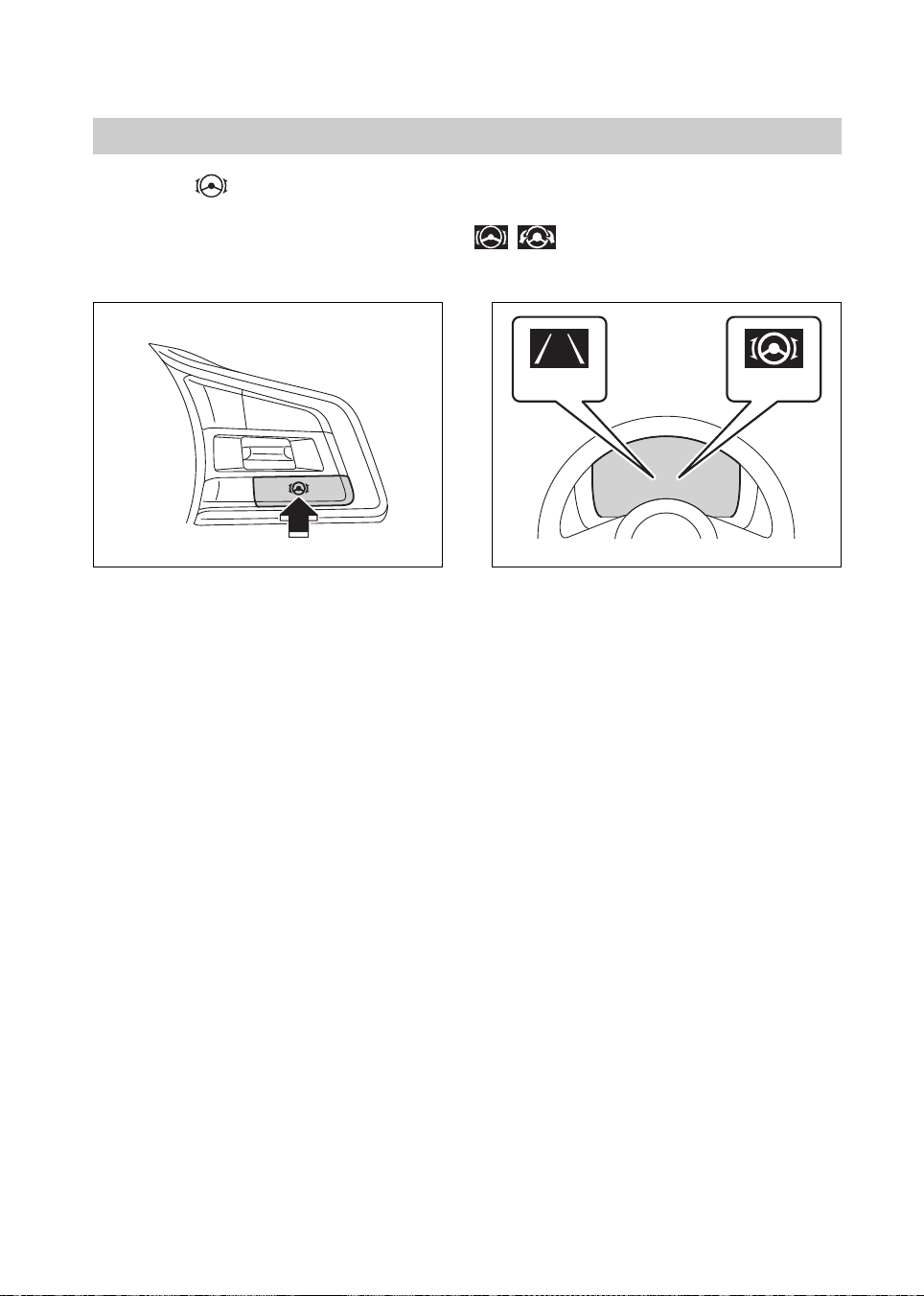
Lane Centering Function
107
Press the (Lane Centering) switch when Adaptive Cruise Control is on.
Page 77
Lane Centering Function is turned on, and / (Lane Centering indicator) (white)
and the lane indicator (gray) are displayed on the combination meter display.
Lane Centering Function starts operating when all of the following conditions are met.
• Adaptive Cruise Control is activated.
• Pre-Collision Braking System is on.
• The vehicle speed is between 0 mph (0 km/h) and approximately 90 mph (145 km/h).
• The system is detecting the lane markings or the lead vehicle.
• The driver is operating the steering wheel.
• On a straight road or gentle curve
• On a road that has a lane width that is between approximately 10 ft (3 m) and 15 ft (4.5 m)
• Driving near the center of a lane
• Driver Monitoring System operation indicator light (green) or Driver Monitoring System
OFF indicator light illuminates. (models with Driver Monitoring System)
• The driver’s eyes are on the road. (models with Driver Monitoring System)
How to use Lane Centering Function
(1) Lane indicator (gray)
(2) Lane Centering indicator (white)
H00539
H02265
(1) (2)
B8442BE-A.book 107 ページ 2024年10月29日 火曜日 午後6時50分
Lane Centering Function
108
While the function is operating, /
(Lane Centering indicator) on the combination
meter display changes from white to green. At
this time, if lane markings have been
detected, the lane indicator illuminates in
white.
WARNING
When Lane Centering Function is operating and the lane markings are not
detected, steering operation will occur automatically to track the vehicle in front
when the vehicle in front changes lanes or performs similar movement. Always
be aware of surrounding vehicles and obstacles, and operate the steering wheel
as necessary. Relying on Lane Centering Function for steering operation could
lead to an accident, resulting in serious injury or death.
CAUTION
If you grip the steering wheel firmly, the system may determine that you are
operating the steering wheel and reduce the level of assistance.
(1) Lane indicator (white)
(2) Lane Centering indicator (green)
H02266
(1) (2)
B8442BE-A.book 108 ページ 2024年10月29日 火曜日 午後6時50分

Lane Centering Function
109
■ Canceling Lane Centering Function
●
Canceling by driver operation
Any of the following operations temporarily cancels Lane Centering Function.
While temporarily canceling this function, / (Lane Centering indicator) on the com-
bination meter display illuminates in white.
• Depressing the brake pedal
• Pressing the (CRUISE) switch to cancel Adaptive Cruise Control
• Operating the turn signal lever
NOTE
• Depending on the lane detection status, the lane indicator may turn white on
one side (left or right) only.
• The lane indicator does not turn white if the function does not detect the lane
markings and the vehicle is controlled by following the lead vehicle.
• The on/off status of Lane Centering Function is restored when you restart the
hybrid system.
• For models with Driver Monitoring System, even if Driver Monitoring System
is turned off, Lane Centering Function uses information from Driver Monitor-
ing System.
For details about Driver Monitoring System, refer to the vehicle Owner’s Man-
ual.
• For models with Driver Monitoring System, Lane Centering Function may not
operate because Driver Monitoring System cannot detect driver’s state, has a
malfunction or has stopped temporarily.
For details about Driver Monitoring System, refer to the vehicle Owner’s Man-
ual.
B8442BE-A.book 109 ページ 2024年10月29日 火曜日 午後6時50分
Lane Centering Function
110
●Automatic cancellation by the system
Under the following conditions, a notification sounds 1 short beep and 1 long beep, and
Lane Centering Function is temporarily canceled.
While the function is temporarily canceled, / (Lane Centering indicator) on the
combination meter display illuminates in white. Also, an interruption screen is displayed on
the combination meter display.
• The system does not detect the lane markings and the lead vehicle.
• Adaptive Cruise Control is automatically canceled.
• The system judges that the driver operated the steering wheel in order to leave the lane.
• The steering wheel is operated aggressively.
• Entering a sharp curve
• On a sharp curve
• Due to another system operating
(1) Lane Centering indicator (white)
H02259
H02274
(1)
B8442BE-A.book 110 ページ 2024年10月29日 火曜日 午後6時50分
Lane Centering Function
111
• The driver operate the steering wheel forcefully during an alert sounds under the following
conditions. (models with Driver Monitoring System)
- Driver Monitoring System detects driver inattention or that the driver has fallen asleep.
- Driver Monitoring System has a malfunction or has stopped temporarily.
- Driver Monitoring System does not detect the driver’s state for a certain period of time.
• The EyeSight system has a malfunction. (EyeSight warning indicator: Yellow)
Page 189
• The EyeSight system has stopped temporarily. (EyeSight temporary stop indicator:
White)
Page 191
(1) Lane Centering indicator (white)
No Driver
Detected
H02352
H02362
(1)
B8442BE-A.book 111 ページ 2024年10月29日 火曜日 午後6時50分
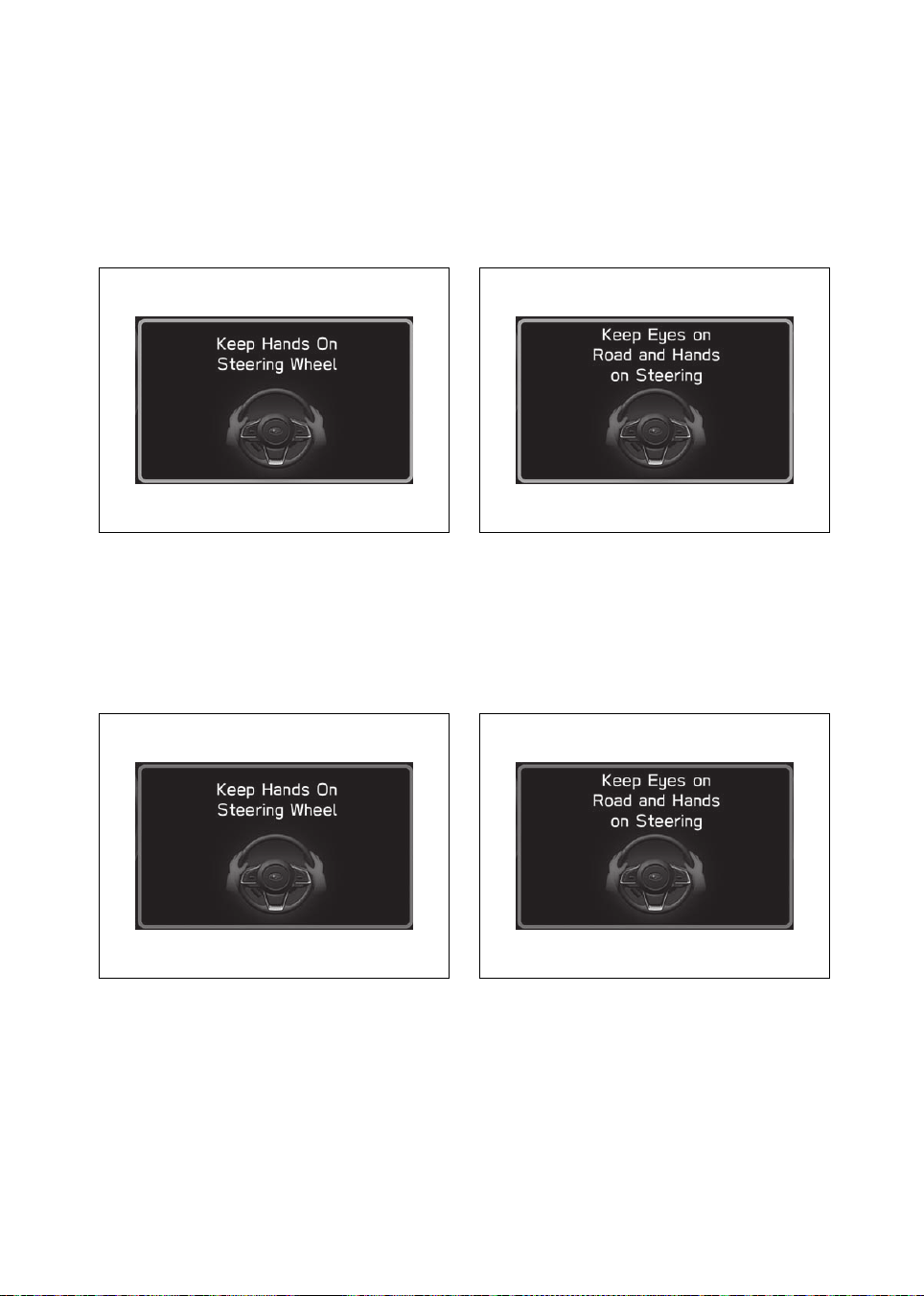
Lane Centering Function
112
• The system does not detect steering operation by the driver for a certain period of time.
- When the system detects no steering operation, an interruption screen is displayed on
the combination meter display. If this condition continues, an alert sounds and warning
screens are displayed in stages.
- If the system still cannot detect steering operation or steering operation while the
driver’s eyes are on the road, the following warning screen is displayed, and Emer-
gency Stop Assist activates.
Page 117
Models without Driver Monitoring System Models with Driver Monitoring System
Models without Driver Monitoring System Models with Driver Monitoring System
H02380
H02368
H02381
H02404
B8442BE-A.book 112 ページ 2024年10月29日 火曜日 午後6時50分
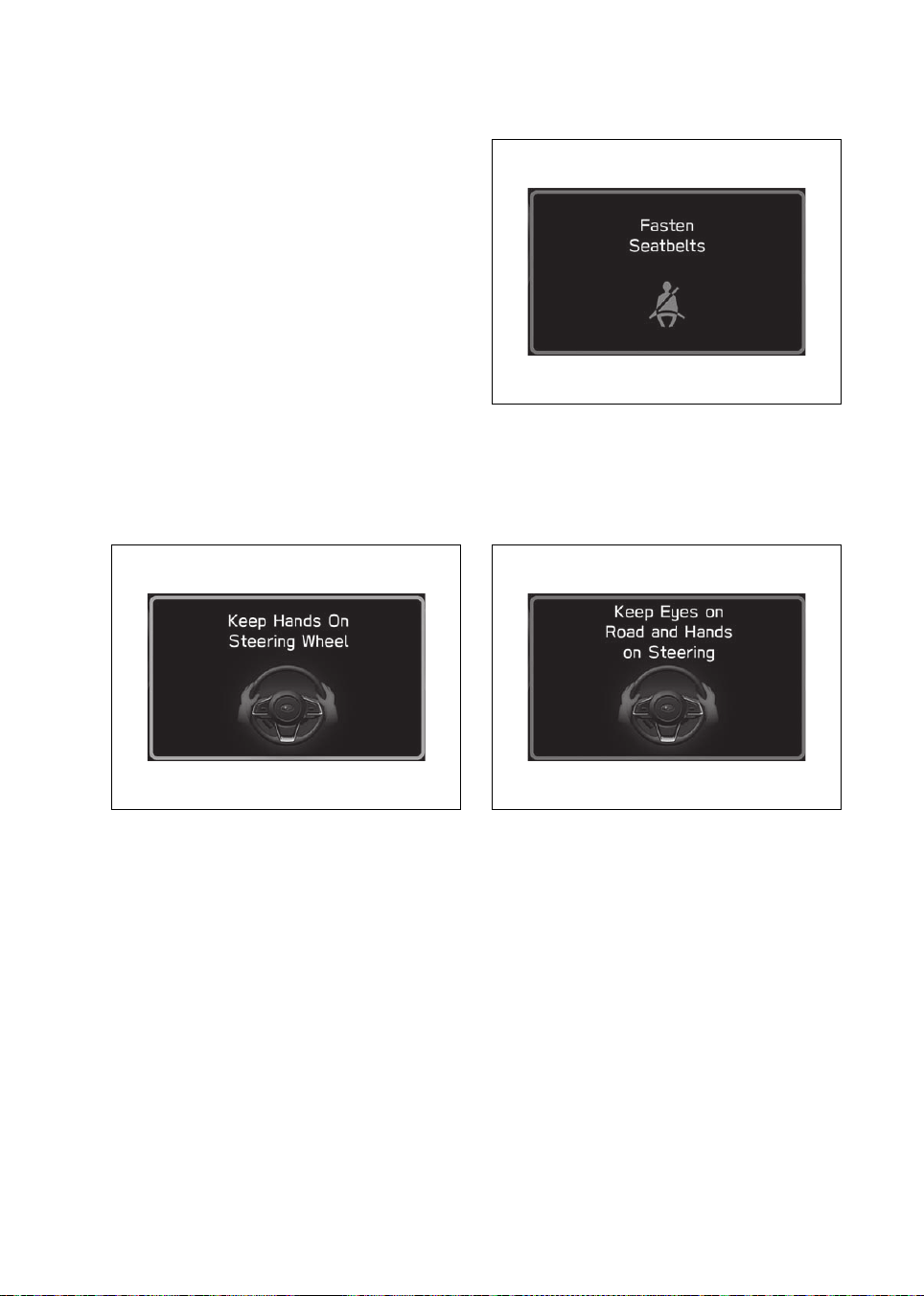
Lane Centering Function
113
• The driver’s seatbelt is unfastened.
- The warning screen is displayed on the
combination meter display after the
driver’s seatbelt is unfastened.
- If the system is still unable to detect the driver’s seatbelt is fastened, Emergency Stop
Assist activates.
Page 117
Models without Driver Monitoring System Models with Driver Monitoring System
H02413
H02444
H02405
B8442BE-A.book 113 ページ 2024年10月29日 火曜日 午後6時50分
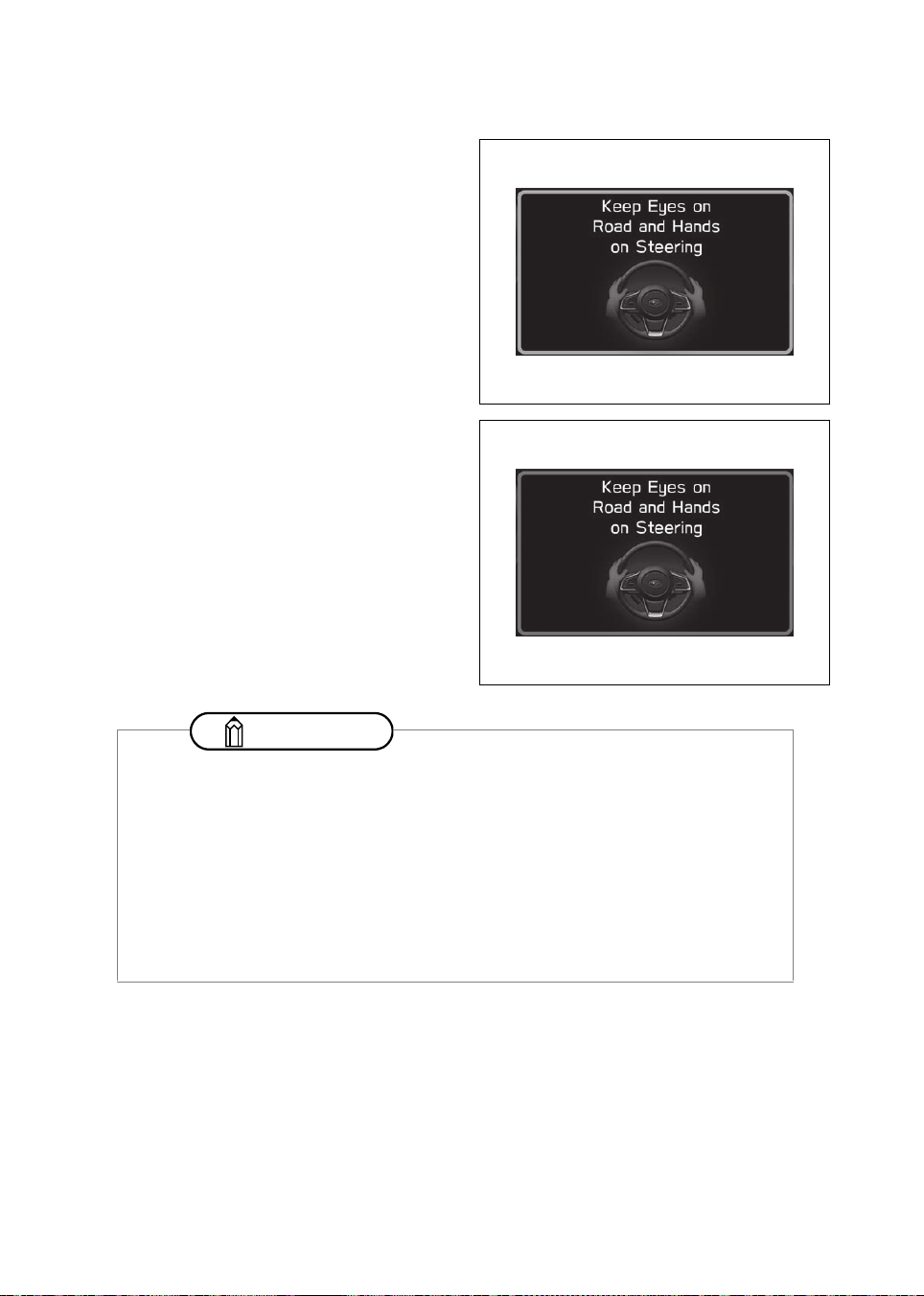
Lane Centering Function
114
• Driver Monitoring System (if equipped) determines that the driver is incapacitated.
- If Driver Monitoring System (if equipped)
determines that the driver is incapaci-
tated, an alert sounds and an interruption
screen is displayed on the combination
meter display.
- If the system is still unable to detect
steering operation while the driver’s eyes
are on the road, the following warning
screen is displayed, and Emergency Stop
Assist activates.
Page 117
NOTE
• In the following cases, Emergency Stop Assist may activate because the sys-
tem cannot detect steering wheel operation by the driver.
- The driver is driving with hands placed lightly on the steering wheel.
- Driver steering operation is insufficient.
• For models with Driver Monitoring System, Emergency Stop Assist may acti-
vate because Driver Monitoring System cannot detect driver’s state, has a
malfunction or has stopped temporarily.
For details about Driver Monitoring System, refer to the vehicle Owner’s Man-
ual.
H02369
H02406
B8442BE-A.book 114 ページ 2024年10月29日 火曜日 午後6時50分
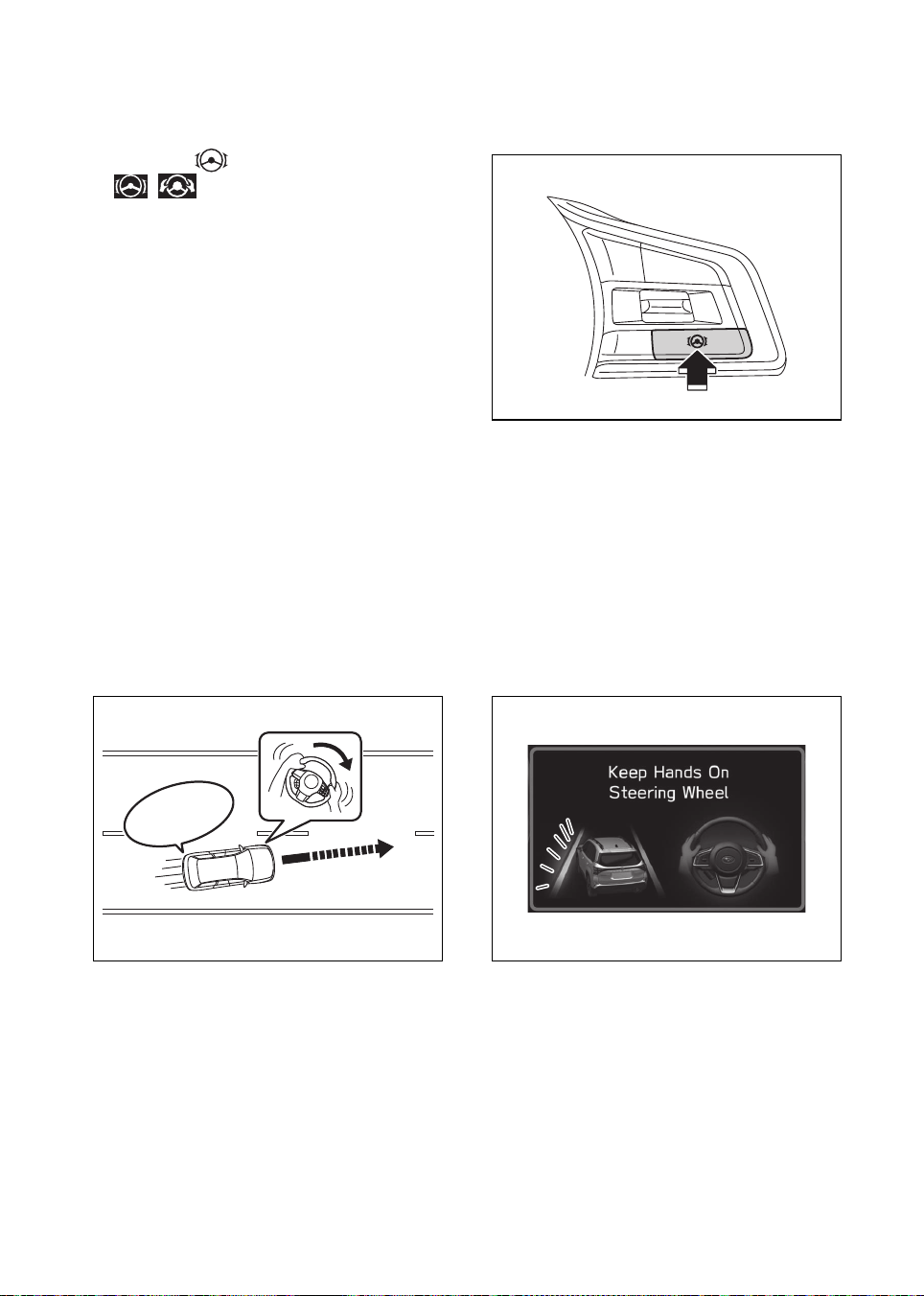
Lane Centering Function
115
■ Turning off Lane Centering Function
Press the (Lane Centering) switch.
/ (Lane Centering indicator) and the
lane indicator turn off on the combination
meter display.
■ When Lane Centering Function is active and the vehicle is
likely to depart the lane
When Lane Centering Function is active and the vehicle is likely to depart the lane, an alert
sounds 3 short beeps and an interruption screen is displayed on the combination meter dis-
play. Also the lane indicator on which the vehicle is about to cross will blink in yellow. (for
4.2-inch display models)
When this warning activates, operate the steering wheel so that the vehicle does not depart
the lane.
H00540
S03876
3
s
h
o
r
t
b
e
e
p
s
H02470
B8442BE-A.book 115 ページ 2024年10月29日 火曜日 午後6時50分
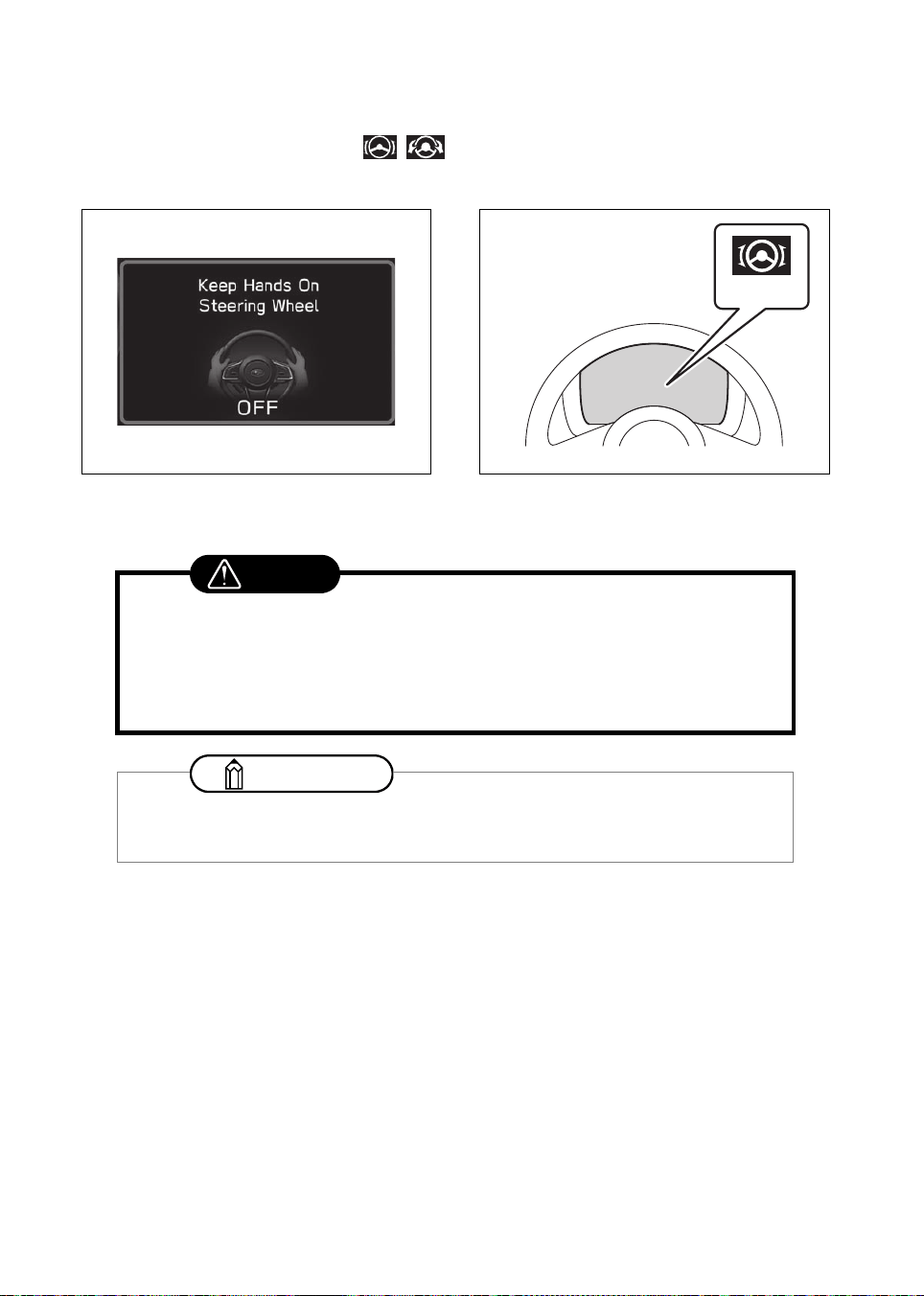
Lane Centering Function
116
If Lane Centering Function is canceled while this warning is activated, the interruption
screen will change. At this time, / (Lane Centering indicator) changes from green
to white.
(1) Lane Centering indicator (white)
WARNING
When Lane Centering Function is operating, and the lane markings are not
detected, this warning and Lane Departure Warning (
page 161) do not oper-
ate. Pay attention to your surroundings and operate the steering wheel as nec-
essary. Relying only on this warning to judge lane departure will lead to an
unexpected accident.
NOTE
This function operates even when Lane Departure Warning is turned off.
Page 165
H02384
H02268
(1)
B8442BE-A.book 116 ページ 2024年10月29日 火曜日 午後6時50分
Lane Centering Function
117
■ Emergency Stop Assist
This driving support system is intended to reduce the risk of accidents in the event that the
driver can no longer operate the vehicle, for example due to a medical emergency. If the
system determines that the driver is incapacitated based on steering operation, or the Driver
Monitoring System (if equipped), etc., it slows down and then stops the vehicle in the driving
lane. While Lane Centering Function is operating, if the system does not detect steering
operation or the driver’s state for a certain period of time, or if it detects driver inattention,
that the driver has fallen asleep or has unfastened the driver’s seatbelt, sounds and warning
screens are used to urge the driver to operate the steering wheel or to operate the steering
wheel while keeping their eyes on the road. If the system still cannot detect steering opera-
tion or steering operation while the driver’s eyes are on the road, it determines that the
driver is incapacitated and slows down and then stops the vehicle in the driving lane while
continuing to urge the driver to operate the steering wheel or to operate the steering wheel
while keeping their eyes on the road. After the vehicle has stopped, the hazard warning
flashers are used to alert trailing and surrounding vehicles of the emergency situation, and
all doors (including the rear gate) are automatically unlocked.
The system also makes an emergency call after the vehicle has stopped. (if equipped)
Refer to the Owner’s Manual supplement for “MySubaru Connected Services”.
Continued on next page
WARNING
Emergency Stop Assist is not an automatic driving system. Drivers are responsi-
ble for driving safely. Responsibility for the operation of Emergency Stop Assist
rests with the driver.
• Do not rely excessively on Emergency Stop Assist. This system is not
designed for hands-free driving or inattentive driving, and it is not a system for
driving automatically when you are feeling unwell. If the system urges you to
operate the steering wheel or to operate the steering wheel and keep your
eyes on the road, operate the steering wheel immediately keeping your eyes
on the road.
• If you recover after Emergency Stop Assist has activated, check the safety of
your vehicle and your surroundings, and then either resume driving or evacu-
ate to a safe location. When stopping or getting out of the vehicle, always
apply the electronic parking brake, and shift the select lever to the “P” posi-
tion.
B8442BE-A.book 117 ページ 2024年10月29日 火曜日 午後6時50分
Lane Centering Function
118
Continued from previous page
• If, for example, you are leaning on the steering wheel while incapacitated, the
system may not be able to determine that you are incapacitated and cannot
activate.
• This system determines whether you are incapacitated based on factors such
as whether you are operating the steering wheel and with the Driver Monitor-
ing System (if equipped). If you intentionally do not operate the steering
wheel, close your eyes or hide part of your face even when you are not inca-
pacitated, the system will still activate. If the system urges you to operate the
steering wheel or to operate the steering wheel and keep your eyes on the
road, operate the steering wheel immediately keeping your eyes on the road.
• Do not intentionally activate Emergency Stop Assist. Doing so may result in
an unexpected accident. Also, do not drive if you are feeling unwell.
CAUTION
• If the system determines that you are on a curve, it continues to control the
vehicle without stopping.
• If the system cancels lane centering control, such as on a sharp curve, it may
not be able to keep the vehicle in the lane and may depart the lane.
• If Lane Centering Function is canceled by the system before the system has
determined that you are incapacitated, Emergency Stop Assist will not acti-
vate.
• If the system determines that it cannot continue deceleration and lane center-
ing control, it may cancel these controls.
• The stereo camera may have difficulty detecting the lane markings under the
following conditions, and the system may not be able to effectively slow down
the vehicle or stay in the lane.
- In bad weather (for example, rain, snow or thick fog)
• Pre-Collision Braking System takes precedence in situations where Emer-
gency Stop Assist can also operate.
B8442BE-A.book 118 ページ 2024年10月29日 火曜日 午後6時50分
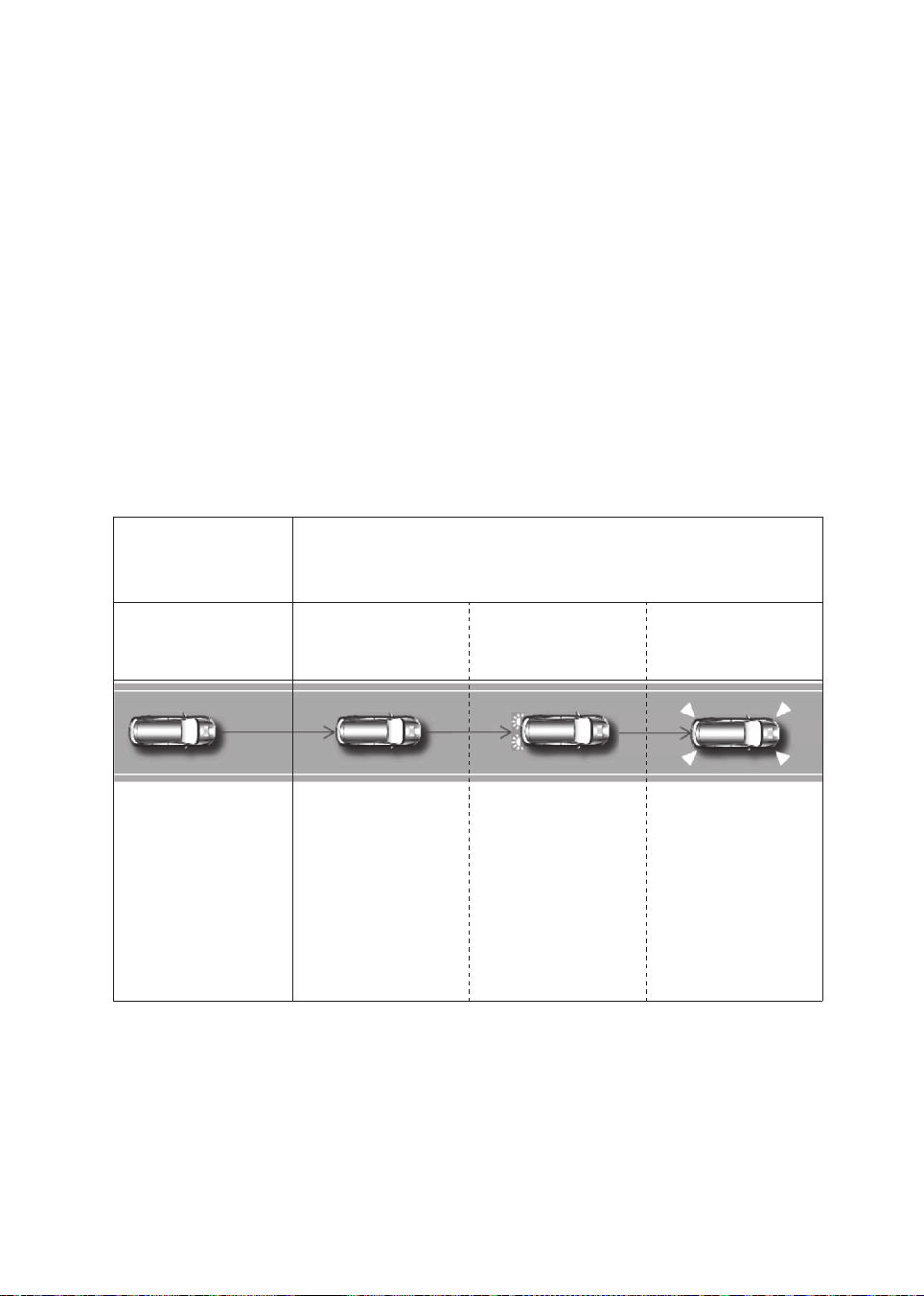
Lane Centering Function
119
Emergency Stop Assist activates under any of the following conditions while Lane Centering
Function is operating.
• The system continues not to detect any steering wheel operation, and the system has
tried to urge the driver to operate the steering wheel or to operate the steering wheel
while keeping their eyes on the road*.
• The driver’s seatbelt was unfastened, and the system cannot detect that it has been fas-
tened after urging the driver to fasten the driver’s seatbelt, and the system is urging the
driver to operate the steering wheel or to operate the steering wheel while keeping their
eyes on the road*.
• The system continues to detect driver inattention or that the driver has fallen asleep, or
continues not to be able to detect the driver’s state, and the system is urging the driver to
operate the steering wheel while keeping their eyes on the road*.
*: Alerts to operate the steering wheel while keeping eyes on the road are only for models
with Driver Monitoring System.
Page 110
H02119
(2) (3)
(1) - A
(1) - B
(1) - C
Lane Centering
Function is
operating.
Emergency Stop Assist
• Alert
• Haptic braking*
* Except for (1) - B
• Deceleration
• Haptic braking
• Stay stopped
• Hazard warning
flashers
• All doors
unlocked
(including the rear
gate)
• Emergency call (if
equipped)
B8442BE-A.book 119 ページ 2024年10月29日 火曜日 午後6時50分

Lane Centering Function
120
NOTE
• Haptic braking is repeated braking over a short period of time with the inten-
tion of alerting the driver.
• Haptic braking activates if the vehicle speed is approximately 20 mph (30
km/h) or more.
B8442BE-A.book 120 ページ 2024年10月29日 火曜日 午後6時50分
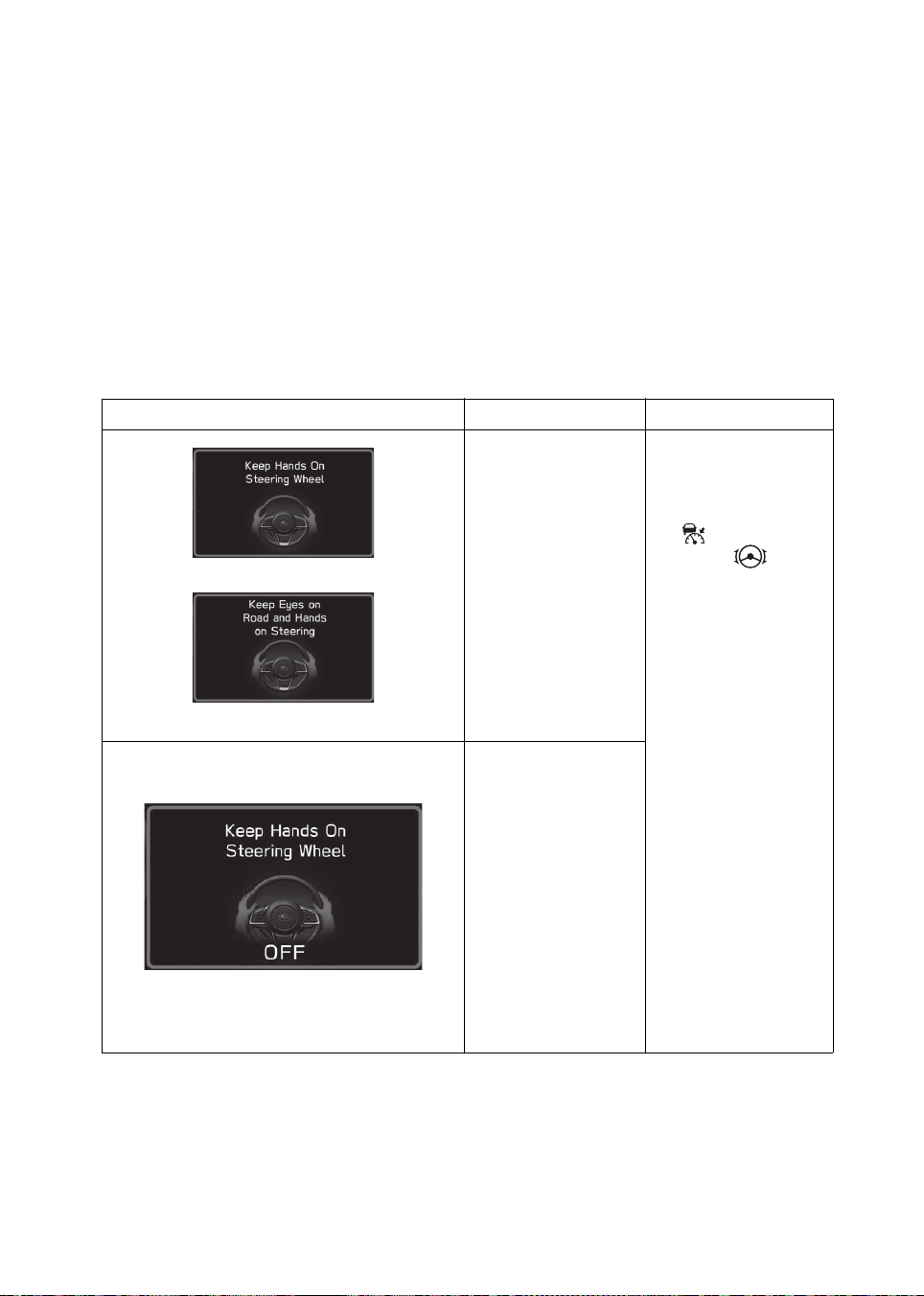
Lane Centering Function
121
(1) - A.
If the system cannot detect steering operation by the driver, it displays an alert urging the
driver to operate the steering wheel or to operate the steering wheel while keeping their
eyes on the road*.
The alert consists of an alert sound and a warning screen.
Several seconds after the alert starts, haptic braking is activated.
This stage operates as follows.
• Alert to operate the steering wheel or to operate the steering wheel while keeping your
eyes on the road*.
• Haptic braking
*: Alerts to operate the steering wheel while keeping eyes on the road are only for models
with Driver Monitoring System.
Meter display / Alert sound Status How to cancel
1 beep and 1 long beep (repeated)
The system can
keep the vehicle in
the lane.
• Operate the
steering wheel.
• Press one of the
following switches:
(CRUISE)
switch, (Lane
Centering) switch
1 short beep and 1 long beep (repeated)
The system can no
longer keep the
vehicle in the lane.
H02445
or
H02385
B8442BE-A.book 121 ページ 2024年10月29日 火曜日 午後6時50分
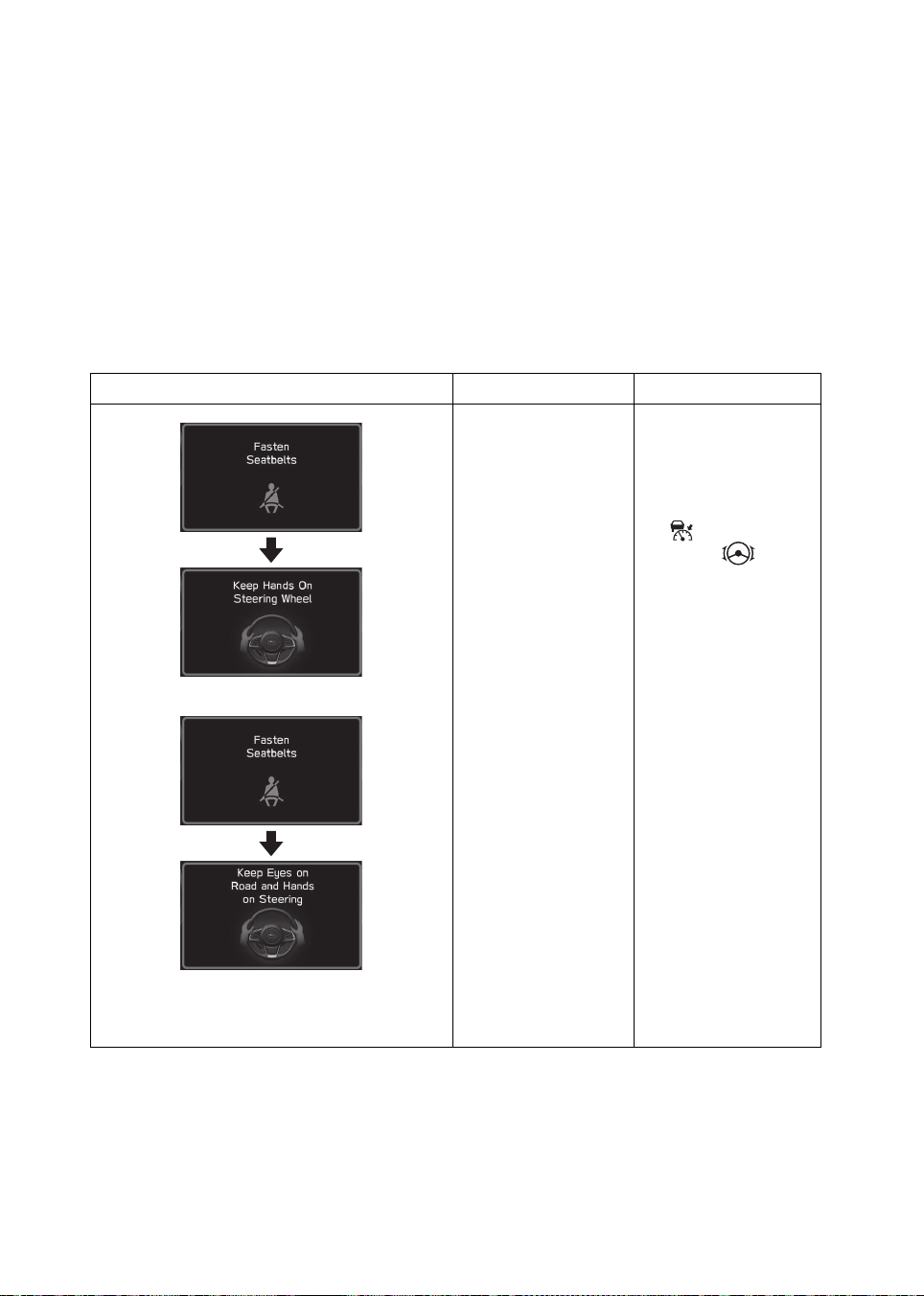
Lane Centering Function
122
(1) - B.
If the system cannot detect steering operation by the driver after the driver unfastens the
driver’s seatbelt, the system urges the driver to fasten the driver’s seatbelt, and then urges
the driver to operate the steering wheel or to operate the steering wheel while keeping their
eyes on the road*.
The alert consists of an alert sound and a warning screen.
This stage operates as follows.
Alert to fasten the driver’s seatbelt, and then an alert to operate the steering wheel or to
operate the steering wheel while keeping your eyes on the road*
Meter display / Alert sound Status How to cancel
or
High tone beep and low tone beep
(repeated) and then 1 beep and
1 long beep (repeated)
The system can
keep the vehicle in
the lane.
• Operate the
steering wheel
forcefully.
• Press one of the
following switches:
(CRUISE)
switch, (Lane
Centering) switch
H02446
H02408
B8442BE-A.book 122 ページ 2024年10月29日 火曜日 午後6時50分
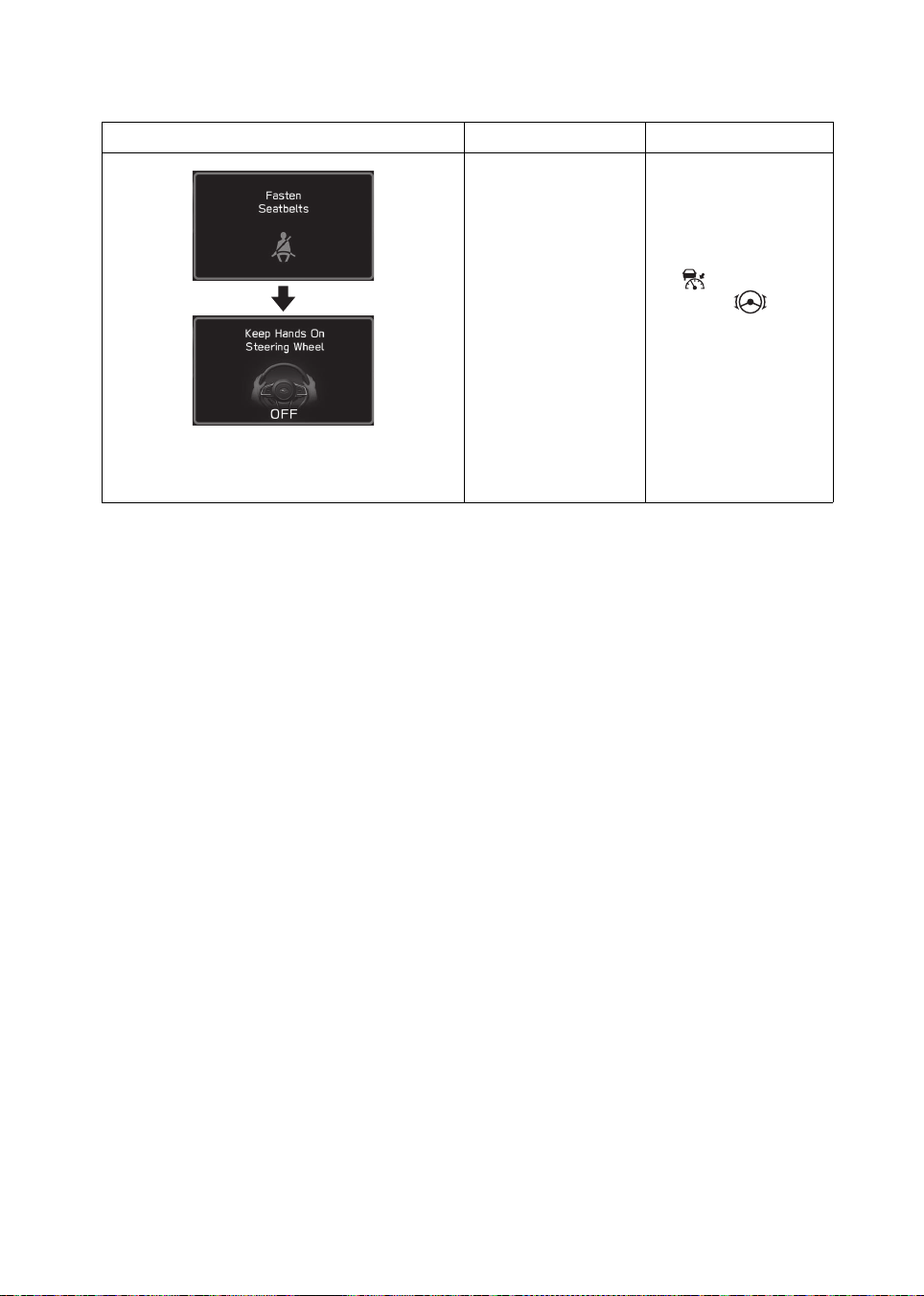
Lane Centering Function
123
*: Alerts to operate the steering wheel while keeping eyes on the road are only for models
with Driver Monitoring System.
Meter display / Alert sound Status How to cancel
High tone beep and low tone beep
(repeated) and then 1 short beep and
1 long beep (repeated)
The system can no
longer keep the
vehicle in the lane.
• Operate the
steering wheel
forcefully.
• Press one of the
following switches:
(CRUISE)
switch, (Lane
Centering) switch
H02414
B8442BE-A.book 123 ページ 2024年10月29日 火曜日 午後6時50分
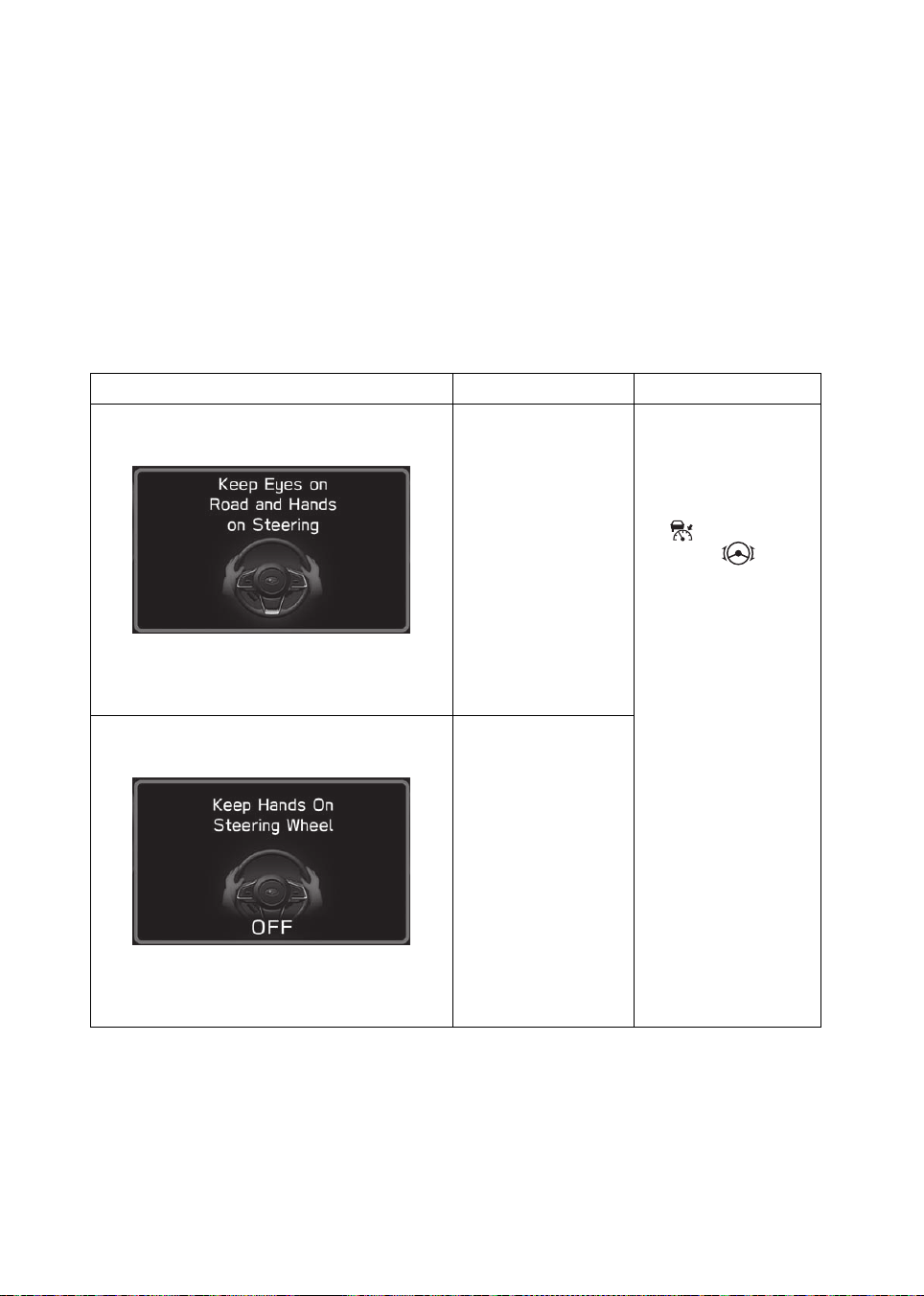
Lane Centering Function
124
(1) - C.
If the system detects driver inattention or that the driver has fallen asleep, or if the system is
unable to detect the driver’s state, the system urges the driver to operate the steering wheel
while keeping their eyes on the road*.
The alert consists of an alert sound and a warning screen.
Several seconds after the alert starts, haptic braking is activated.
This stage operates as follows.
• Alert to operate the steering wheel while keeping your eyes on the road*
• Haptic braking
*: Alerts to operate the steering wheel while keeping eyes on the road are only for models
with Driver Monitoring System.
Meter display / Alert sound Status How to cancel
1 beep and 1 long beep (repeated)
The system can
keep the vehicle in
the lane.
• Operate the
steering wheel
forcefully.
• Press one of the
following switches:
(CRUISE)
switch, (Lane
Centering) switch
1 short beep and 1 long beep (repeated)
The system can no
longer keep the
vehicle in the lane.
H02409
H02416
B8442BE-A.book 124 ページ 2024年10月29日 火曜日 午後6時50分
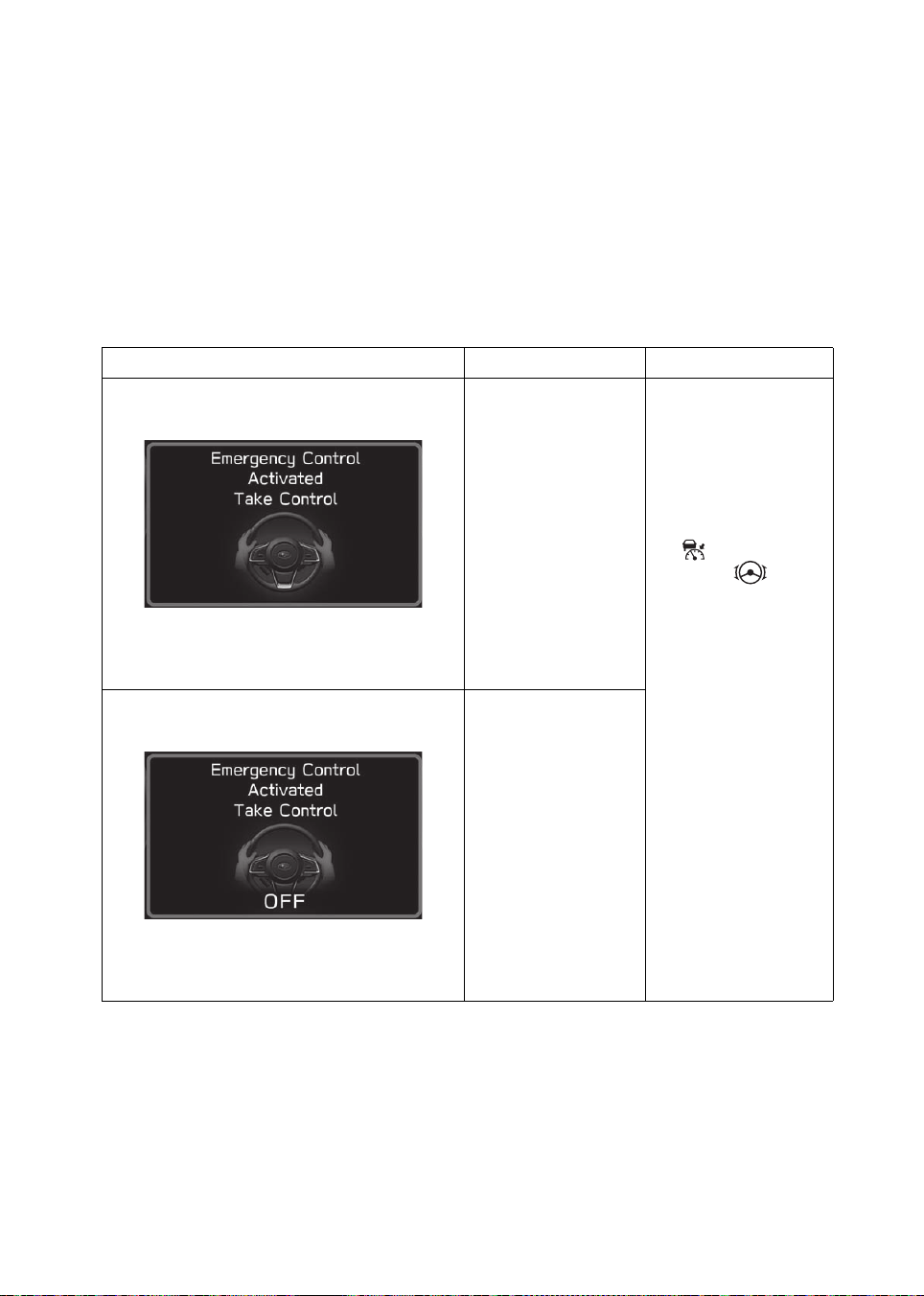
Lane Centering Function
125
(2)
If the system still does not detect any steering operation despite continuing the alert in
stage-(1), it determines that the driver is incapacitated.
The system slows down and stops the vehicle and plays an alert sound and displays a
warning screen.
This stage operates as follows.
• Deceleration
• Haptic braking
*: If the driver’s seatbelt is unfastened, or the driver is looking away from the road (models
with Driver Monitoring System).
Meter display / Alert sound Status How to cancel
1 beep and 1 long beep (repeated)
The system can
keep the vehicle in
the lane.
• Operate the
steering wheel.
• Operate the
steering wheel
forcefully.*
• Press one of the
following switches:
(CRUISE)
switch, (Lane
Centering) switch
1 short beep and 1 long beep (repeated)
The system can no
longer keep the
vehicle in the lane.
H02388
H02390
B8442BE-A.book 125 ページ 2024年10月29日 火曜日 午後6時50分

Lane Centering Function
126
NOTE
• If Emergency Stop Assist is canceled in stage-(2), the current speed will be
set as the set vehicle speed for Adaptive Cruise Control.
• Depending on when Emergency Stop Assist is canceled, the following func-
tions may not be available. In that case, the functions will become available
when the hybrid system is restarted.
- Adaptive Cruise Control
- Lane Centering Function
- Conventional Cruise Control
B8442BE-A.book 126 ページ 2024年10月29日 火曜日 午後6時50分
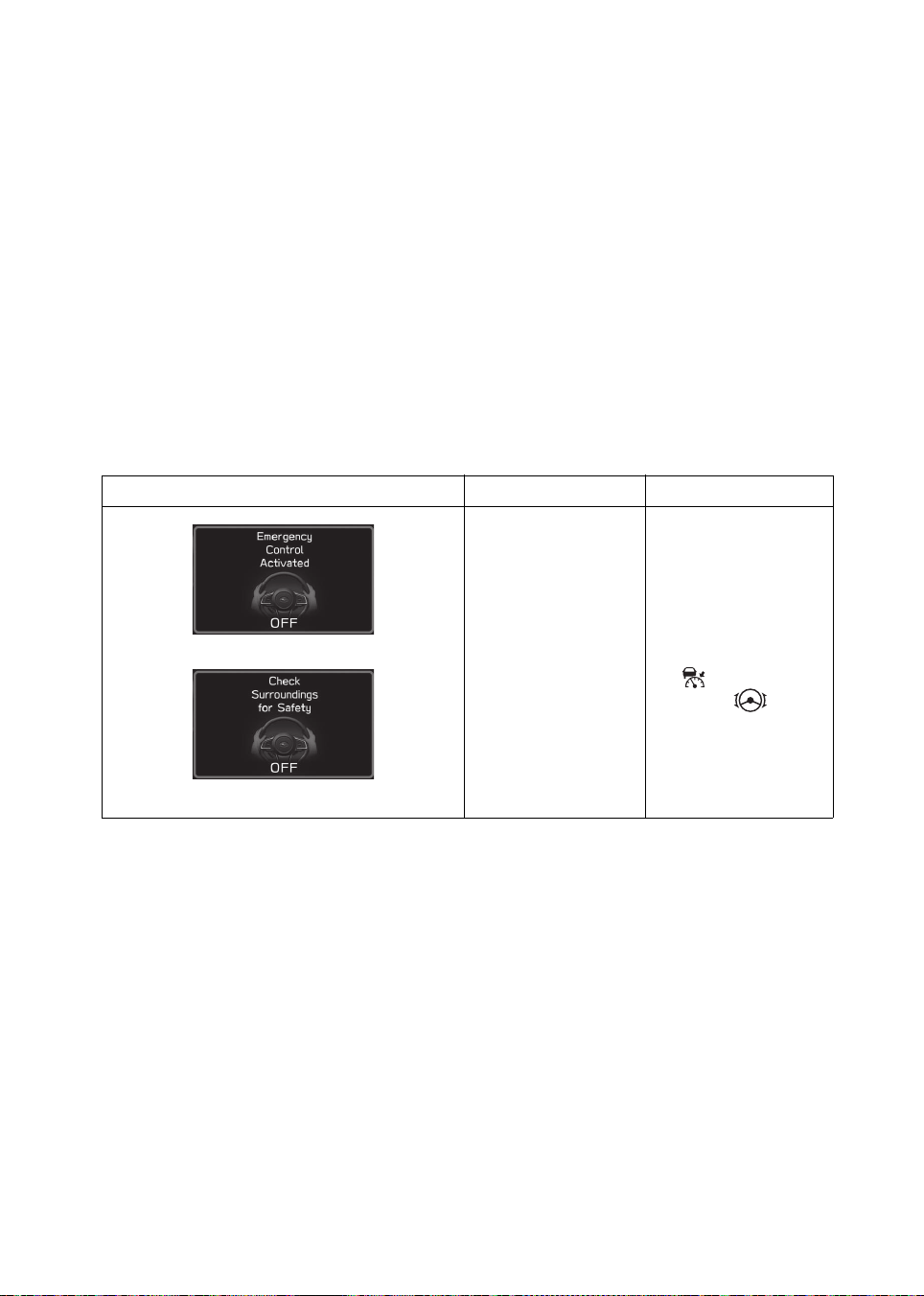
Lane Centering Function
127
(3)
Once the vehicle has stopped, all doors (including the rear gate) are automatically
unlocked, and the vehicle remains stopped.
Lane centering control is canceled, and the electronic parking brake is applied. An alert
sound is played and a warning screen is displayed. The hazard warning flashers are used to
alert trailing and surrounding vehicles of the emergency situation.
At the same time, Emergency Stop Assist makes an emergency call. (if equipped)
This stage operates as follows.
• Stay stopped
• Hazard warning flashers
• Electronic parking brake
• All doors unlocked (including the rear gate)
• Emergency call (if equipped)
*: If the driver’s seatbelt is unfastened, or the driver is looking away from the road (models
with Driver Monitoring System).
Meter display / Alert sound Status How to cancel
1 short beep and 1 long beep (repeated)
Lane centering con-
trol is canceled.
• Operate the
steering wheel.
• Operate the
steering wheel
forcefully.*
• Press one of the
following switches:
(CRUISE)
switch, (Lane
Centering) switch
H02502
B8442BE-A.book 127 ページ 2024年10月29日 火曜日 午後6時50分

Lane Centering Function
128
NOTE
Deceleration and lane centering control will continue where possible, but they
may be canceled depending on the situation. Even if deceleration or lane center-
ing control is canceled, Emergency Stop Assist continues to play an alert sound
and display a warning screen and to use the hazard warning flashers to alert
trailing and surrounding vehicles of the emergency situation.
B8442BE-A.book 128 ページ 2024年10月29日 火曜日 午後6時50分
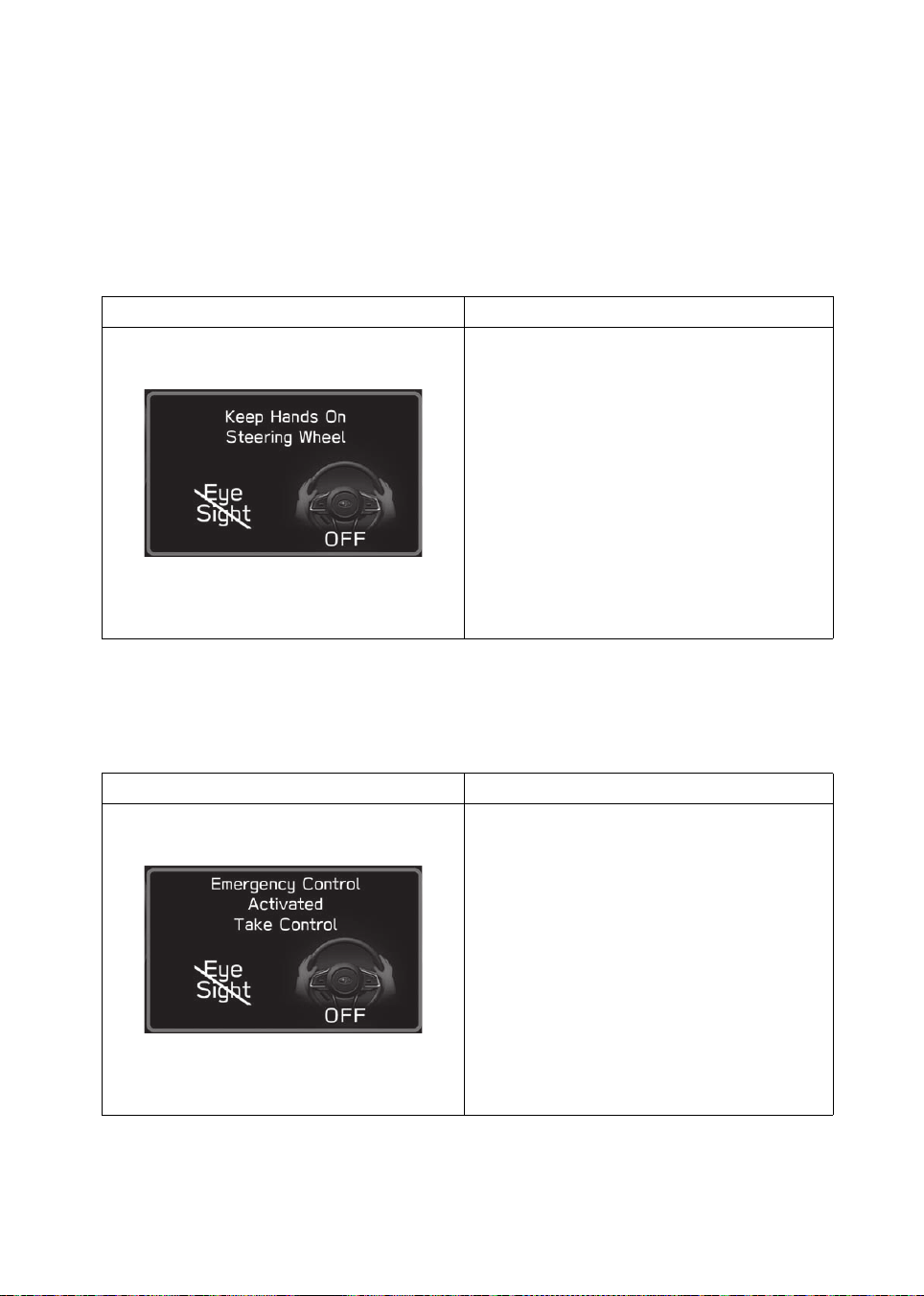
Lane Centering Function
129
Screens when EyeSight stops temporarily while Emergency Stop Assist is operating
(1) - A. Alert to operate the steering wheel or to operate the steering wheel while keeping
your eyes on the road*
(1) - B. Alert to fasten the driver’s seatbelt, and then an alert to operate the steering wheel
or to operate the steering wheel while keeping your eyes on the road*
(1) - C. Alert to operate the steering wheel while keeping your eyes on the road*
*: Alerts to operate the steering wheel while keeping eyes on the road are only for models
with Driver Monitoring System.
(2) Deceleration
Meter display / Alert sound Status
1 short beep and 1 long beep (repeated)
Emergency Stop Assist continues to oper-
ate, but lane centering control is canceled.
Meter display / Alert sound Status
1 short beep and 1 long beep (repeated)
Emergency Stop Assist continues to oper-
ate, but lane centering control is canceled.
H02394
H02396
B8442BE-A.book 129 ページ 2024年10月29日 火曜日 午後6時50分
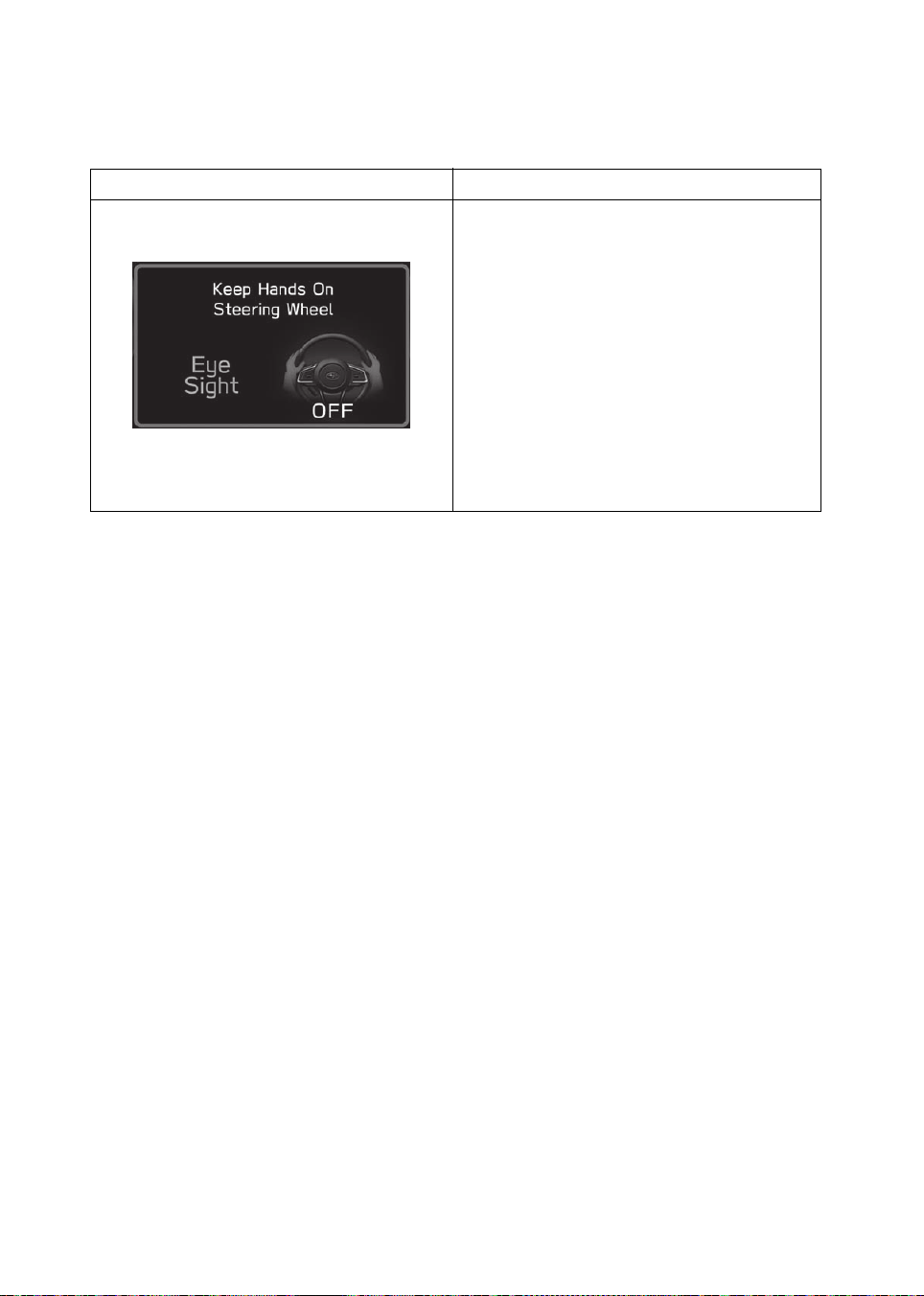
Lane Centering Function
130
Screens when EyeSight has a malfunction while Emergency Stop Assist is operating
Meter display / Alert sound Status
1 short beep and 1 long beep (repeated)
Only the warning on the combination meter
display continues to be displayed. Other
control is canceled. (The hazard warning
flashers continue if they were operating.)
H02398
B8442BE-A.book 130 ページ 2024年10月29日 火曜日 午後6時50分
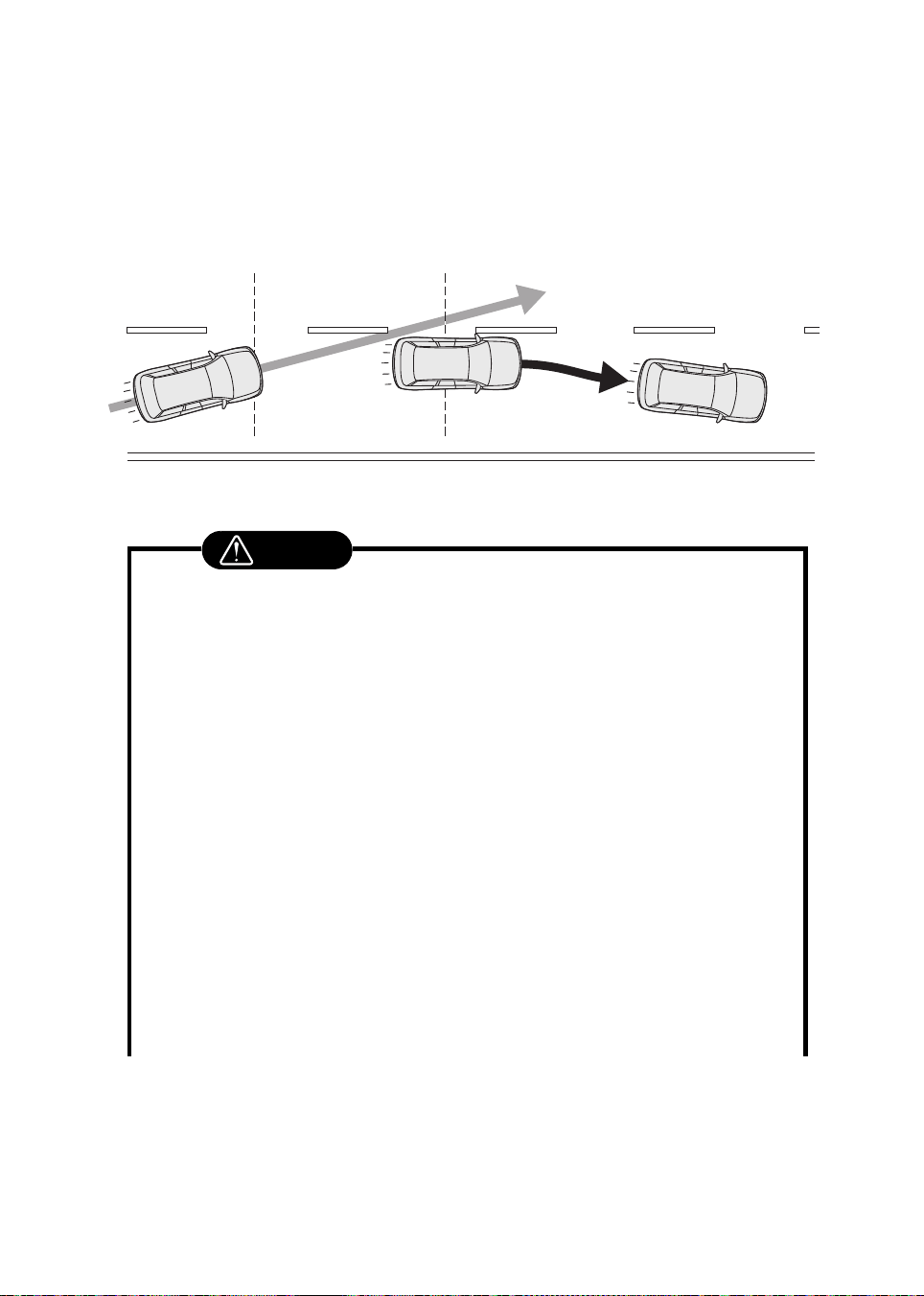
Lane Departure Prevention Function
131
Lane Departure Prevention Function
The system detects lane markings in order to help prevent departure from the lane. If you
drive on expressways, freeways or interstate highways at speeds above approximately 37
mph (60 km/h) and the vehicle is about to depart the lane, the system assists the steering
operation by turning it to the direction that will help prevent the lane departure.
Continued on next page
WARNING
Lane Departure Prevention Function is not an automatic driving sys-
tem.
Do not overestimate the capabilities of Lane Departure Prevention
Function. It is not a system to assist inattentive driving or meant to
permit driving without holding the steering wheel. Make sure to grip
the steering wheel while driving. To drive safely, check the distance
from the vehicle in front or from a vehicle driving in parallel with your
vehicle, the surrounding conditions and the surrounding environment
while driving.
If you feel that the level of control and timing by the system are different from
your own driving style, the system may not support safe driving. Do not use Lane
Departure Prevention Function.
Lane Departure Prevention Function does not always operate under all situa-
tions. If you rely only on Lane Departure Prevention Function to stay in a lane, it
may cause an accident such as a collision with an obstacle beside your lane or
with a vehicle driving in an adjacent lane.
• Check that there are no problems with the tires and brakes during a daily
inspection before using the system.
Refer to “Warranty and Maintenance Booklet”.
H01240
There is a strong
possibility of lane
departure.
There is a
possibility of lane
departure.
B8442BE-A.book 131 ページ 2024年10月29日 火曜日 午後6時50分

Lane Departure Prevention Function
132
Continued from previous page
• The system may not operate properly under the following conditions. Do not
use Lane Departure Prevention Function.
- The air pressure of tires is not to specification.
*1
- Tires that are unevenly worn or tires with uneven wear patterns are
installed.
*1
- Tires that are the wrong size are installed.
*1
- The wheels are out of balance (e.g., the balance weight is removed or mis-
aligned).
*1
- The wheels are out of alignment.
*1
- A flat tire has been fixed temporarily with a tire repair kit.
- The suspension has been modified (including genuine SUBARU parts).
- An object that obstructs the stereo camera’s view is installed on the vehicle.
- Tire chains are installed.
- There is an abnormal vibration in the steering wheel or the steering wheel is
heavier than usual.
- The steering wheel has been replaced with parts other than genuine
SUBARU parts.
- The headlights are dirty or they have snow, ice or dirt on them. (Objects are
not adequately illuminated and are difficult to detect.)
- The headlights are not aligned correctly. (Objects are not adequately illumi-
nated and are difficult to detect.)
- The headlights, fog lights and other lights have been modified.
- Vehicle operation has become unstable due to an accident or malfunction.
- The brake system warning light is illuminated in red.
*2
- The vehicle is tilted at an extreme angle due to loaded cargo or other fac-
tors.
- The maximum number of occupants is exceeded.
- A trailer or another vehicle, etc. is being towed.
- The combination meter is not operating properly. For example, an indicator
light or a warning light on the combination meter does not properly turn on
or off, a beep does not sound, or the indication on the combination meter
display is different from when it is normal.
*3
*1: The wheels and tires have functions that are critically important. Be sure to
use the correct ones.
For details, refer to the vehicle Owner’s Manual.
*2: If the brake system warning light does not turn off, immediately pull the
vehicle over in a safe place and contact a SUBARU dealer to have the
system inspected. For details, refer to the vehicle Owner’s Manual.
*3: For details about the functions and operations of the combination meter,
refer to the vehicle Owner’s Manual.
B8442BE-A.book 132 ページ 2024年10月29日 火曜日 午後6時50分
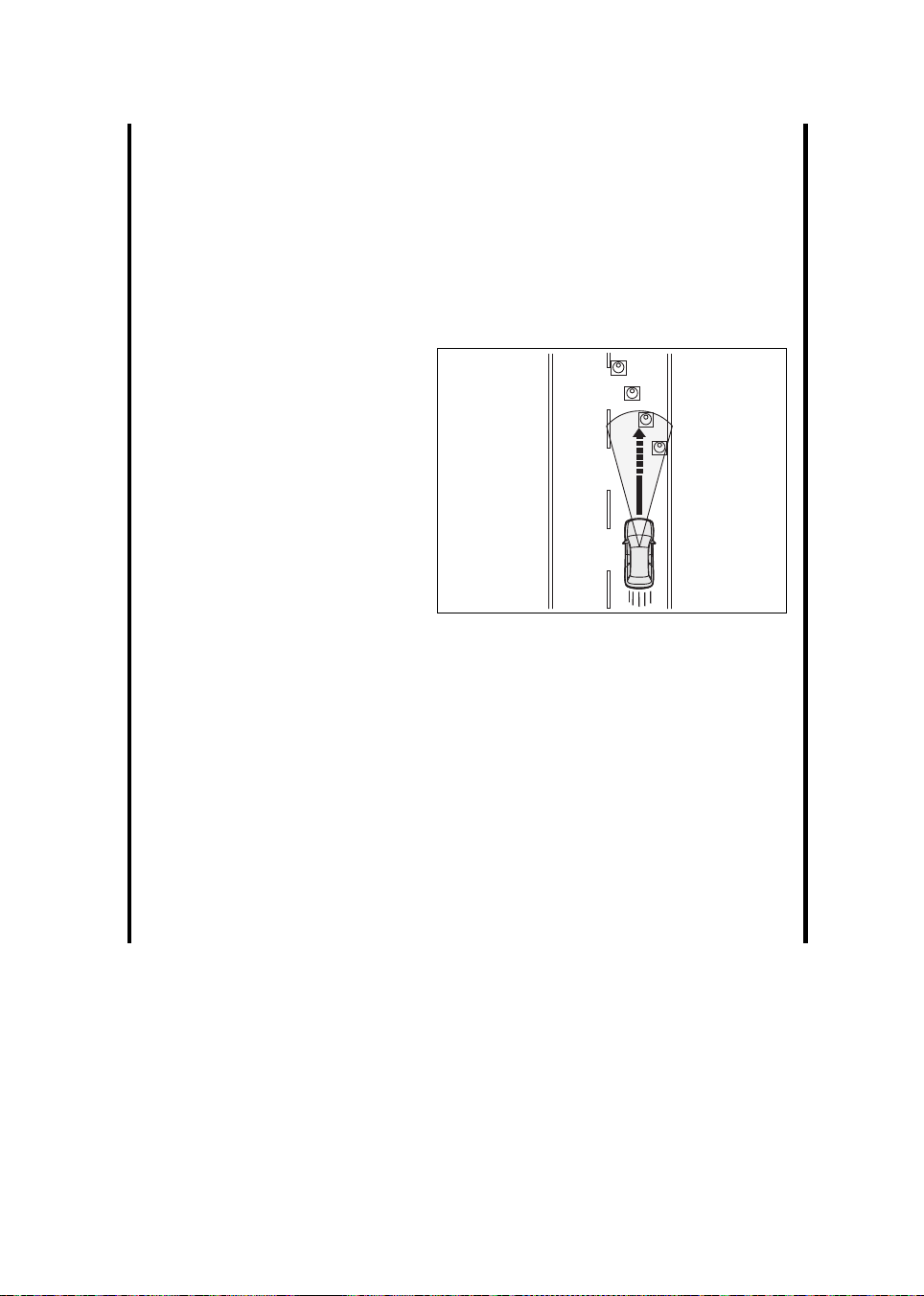
Lane Departure Prevention Function
133
Continued on next page
• Lane Departure Prevention Function is designed for use on expressways,
freeways, toll roads, interstate highways and similar limited access roads. It is
not intended to be used in city traffic. In the following conditions, do not use
Lane Departure Prevention Function. Doing so may result in an accident.
- Ordinary roads (roads other than those mentioned above)
Depending on the driving environment (complexity of roads and other fac-
tors), the system may not be able to perform as the traffic conditions
require, and that may result in an accident.
- Roads with sharp curves
- Roads with lane restrictions or
tentative lanes due to con-
struction work, etc.
- Old lane markings remain.
- Avoiding parked vehicles
- Snow, puddles or snow melt-
ing agents remain on the road
surface.
- Cracks or constructed traces
remain on the road surface.
- Frozen roads, snow-covered
roads or other slippery road
surfaces
The tires may spin, causing loss of control of the vehicle.
- Entering a sharp curve into an interchange or junction, or a service area,
parking area, toll booth or other facilities
- Visibility is poor due to sand, smoke or water vapor blowing in the wind, or
the front vision is obscured due to water splashes, snow, dirt or dust stir up
generated by the vehicle in front or oncoming traffic.
- The stereo camera’s field of view is obstructed by fogging, snow, dirt, frost,
dust, scratches, or smears on the windshield, or by light reflecting off the
dirt, etc.
- Rain or dirt has not been fully wiped off of the windshield. There is a risk of
that the stereo camera may not detect the lanes.
- The stereo camera’s field of view is obstructed (for example by a canoe on
the roof of the vehicle).
H00463
B8442BE-A.book 133 ページ 2024年10月29日 火曜日 午後6時50分
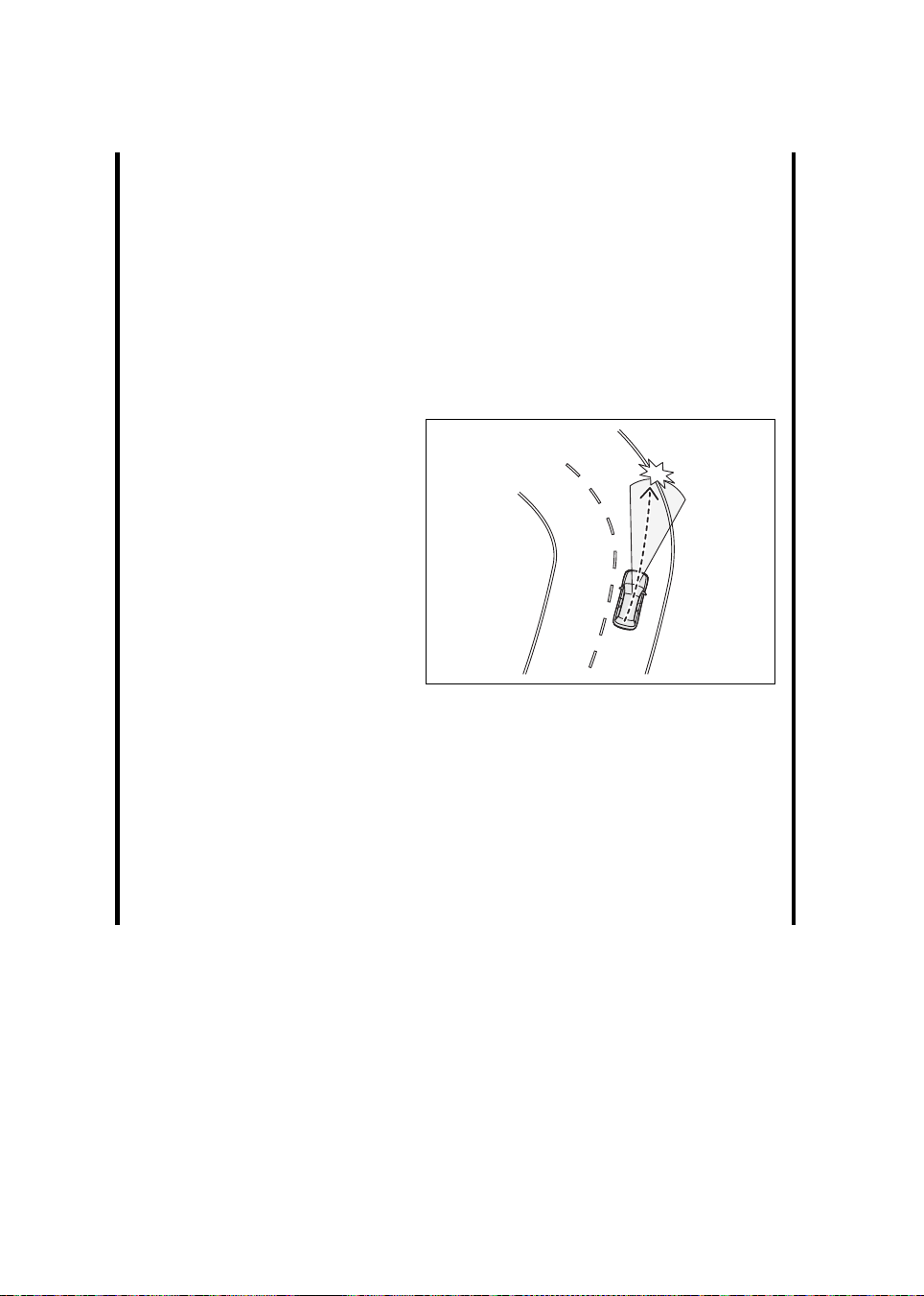
Lane Departure Prevention Function
134
Continued from previous page
• The stereo camera may have difficulty detecting the lane markings under the
following conditions and the system may not operate properly.
- At night or in a tunnel without the headlights on
- In bad weather (for example, rain, snow or thick fog)
- The road surface is wet and shining by reflected light.
- There are other traffic markings on the lane you are driving in (arrows,
words, etc.).
- The distance between your vehicle and the vehicle in front is short, making
it difficult to detect lane markings.
- A vehicle intruded from an adjacent lane or the vehicle in front changed
lanes.
- The shape of a curve in the
road suddenly changes.
- Shadows of guardrails or sim-
ilar objects are overlapped on
the lane markings.
- Strong light is coming from
the front (sunlight or headlight
beams of oncoming traffic,
etc.).
- The width of a lane is either
too narrow or too wide.
- The width of a lane has
changed.
- The stereo camera may have difficulty detecting the lane due to the perfor-
mance of the camera.
• There are no lane markings or they are very worn.
• The lane markings are painted in yellow.
• The lane markings are similar in color to the road surface.
• The lane markings are drawn in double.
• The width of lane markings is narrow.
• Lines that are not lane markings are painted on roads.
• The lane markings are touching the walls and poles.
H00465
B8442BE-A.book 134 ページ 2024年10月29日 火曜日 午後6時50分
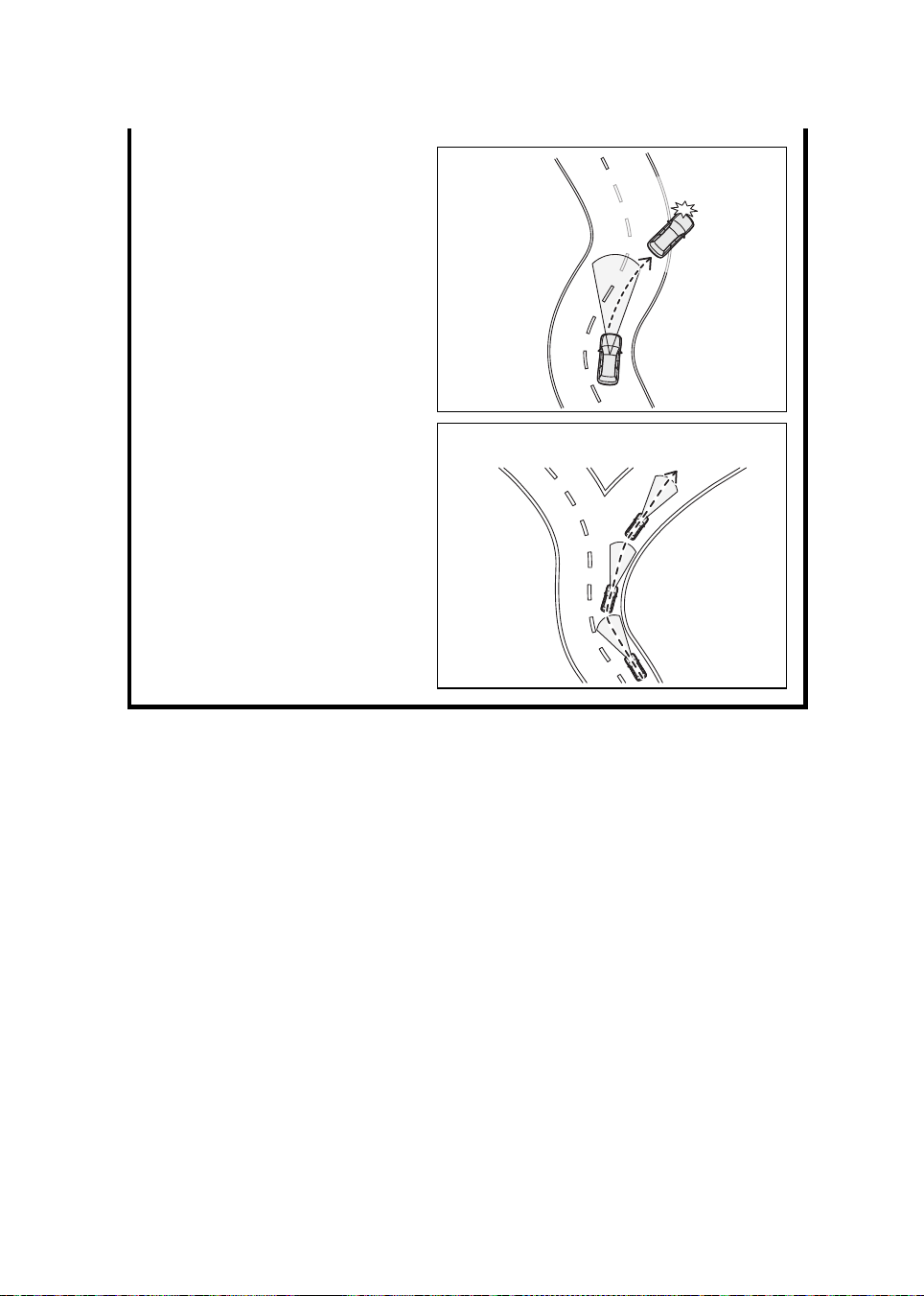
Lane Departure Prevention Function
135
- The shape of lane markings
suddenly changes
(entrance/exit of a curve,
crank and winding road, etc.).
- Going into lanes that lead to
interchanges, junctions, ser-
vice areas or parking areas
- There is a curb or a side wall
on the road shoulder.
- The brightness changes such
as at a tunnel entrance or exit
or when you drive under an
overpass.
- Fluid has not been fully wiped
off the windshield during or
after washer use.
H00464
H01407
Main road Exit lane
B8442BE-A.book 135 ページ 2024年10月29日 火曜日 午後6時50分

Lane Departure Prevention Function
136
CAUTION
• The performance of Lane Departure Prevention Function may not be optimal
under the following conditions. In addition, Lane Departure Prevention Func-
tion may not operate or the operation may be canceled.
- Immediately after the weight of your vehicle changes radically
- Immediately after the replacement of a tire or the adjustment of tire pressure
- Immediately after the adjustment, repair or replacement of the camera or
related components
- Immediately after the repair or replacement of the suspension or steering
system
- A winter tire or a tire other than a genuine SUBARU tire is used.
- The vehicle is in a crosswind.
- The road grade abruptly changes (uphill or downhill).
- The grade of the crossing direction in a road is large or changes abruptly.
- Unevenness, winding and joint of a road surface
- The acceleration/deceleration is high.
- Immediately after starting the hybrid system when the outside temperature
is low.
- The outside temperature is high.
• When you do not use Lane Departure Prevention Function, be sure to turn it
off. If the function is left on, the function may operate unexpectedly, causing
an accident.
Page 140
• If you turn on Lane Departure Prevention Function, the operation power of
electric power steering may change.
B8442BE-A.book 136 ページ 2024年10月29日 火曜日 午後6時50分
Lane Departure Prevention Function
137
Operate the center information display to turn on Lane Departure Prevention Function.
On the “Lane Departure” screen of the EyeSight settings, select “Prevention & Warning”,
and then select “All Functions” or “Lane Departure Prevention Function Only” to turn this
function on.
Page 195
When Lane Departure Prevention Function is
turned on, the lane indicator (gray) and your
vehicle indicator are displayed on the combi-
nation meter display.
Lane Departure Prevention Function goes
into the standby status, and the lane indicator
(white) illuminates when all of the following
conditions are met.
• The vehicle speed is between approxi-
mately 37 mph (60 km/h) and 90 mph (145
km/h).
• The system is detecting the lane markings.
• Lane Centering Function is not operating.
• The driver is operating the steering wheel.
• On a road that has a lane width that is
between approximately 10 ft (3 m) and 15 ft
(4.5 m)
• On a straight road or gentle curve
• Driving near the center of a lane
How to use Lane Departure Prevention Function
(1) Lane indicator (gray)
H02246
(1)
(1) Lane indicator (white)
H02247
(1)
B8442BE-A.book 137 ページ 2024年10月29日 火曜日 午後6時50分
Lane Departure Prevention Function
138
When the vehicle is about to depart the lane,
Lane Departure Prevention Function starts to
operate and the lane indicator changes from
white to yellow on the side where Lane
Departure Prevention Function activated.
NOTE
• If you just lightly put your hands on the steering wheel for a certain period of
time or if you do not operate the steering wheel, the function will temporarily
be canceled. Also, the Lane Departure Prevention Function cancellation mes-
sage is displayed on the combination meter display.
• Lane Departure Prevention Function operates when the system determines
that the vehicle will depart the lane if you continue to drive in the same man-
ner. Therefore, it operates at an earlier timing than Lane Departure Warning
(
page 161). It may depend on the surrounding environment and road con-
dition.
• The lane indicator in the standby status and in operation may illuminate only
on the left side or right side.
• The on/off status of Lane Departure Prevention Function is restored when
you restart the hybrid system.
• When both Lane Departure Prevention Function and Emergency Lane Keep
Assist are turned on:
- After an activation of Emergency Lane Keep Assist and the following vehi-
cle is no longer detected, if there is still a possibility that your vehicle will
depart the lane, control will switch to Lane Departure Prevention Function.
- If a vehicle is detected nearby while Lane Departure Prevention Function is
active, control will switch to Emergency Lane Keep Assist.
• If / (Lane Centering indicator) (white) is illuminated while Adaptive
Cruise Control is on, Lane Departure Prevention Function will not activate.
(1) Lane indicator (yellow on the side of
departure)
H02248
(1)
B8442BE-A.book 138 ページ 2024年10月29日 火曜日 午後6時50分

Lane Departure Prevention Function
139
■ Canceling Lane Departure Prevention Function
●
Canceling by driver operation
Any of the following operations temporarily cancels Lane Departure Prevention Function.
While temporarily canceling this function, the lane indicator turns gray.
• Depressing the brake pedal strongly
• Operating the turn signal lever
• The system determines that the driver operates the steering wheel to make a lane
change.
• Turning on the hazard warning flasher switch
●Automatic cancellation by the system
Under the following conditions, Lane Departure Prevention Function is temporarily can-
celed.
While the function is temporarily canceled, the lane indicator turns gray.
• The system does not detect the lane markings.
• The vehicle speed is less than approximately 37 mph (60 km/h) or is more than approxi-
mately 100 mph (160 km/h).
• Vehicle Dynamics Control or Traction Control Function is activated.
• Any door (except the rear gate) is opened.
• The driver’s seatbelt is unfastened.
• The electronic parking brake is applied.
• The select lever is moved to a position other than “D” or “M”.
• Entering a sharp curve
• On a sharp curve
• Due to the road conditions
• Due to another system operating
• The EyeSight system has a malfunction. (EyeSight warning indicator: Yellow)
Page 189
• The EyeSight system has stopped temporarily. (EyeSight temporary stop indicator:
White)
Page 191
B8442BE-A.book 139 ページ 2024年10月29日 火曜日 午後6時50分
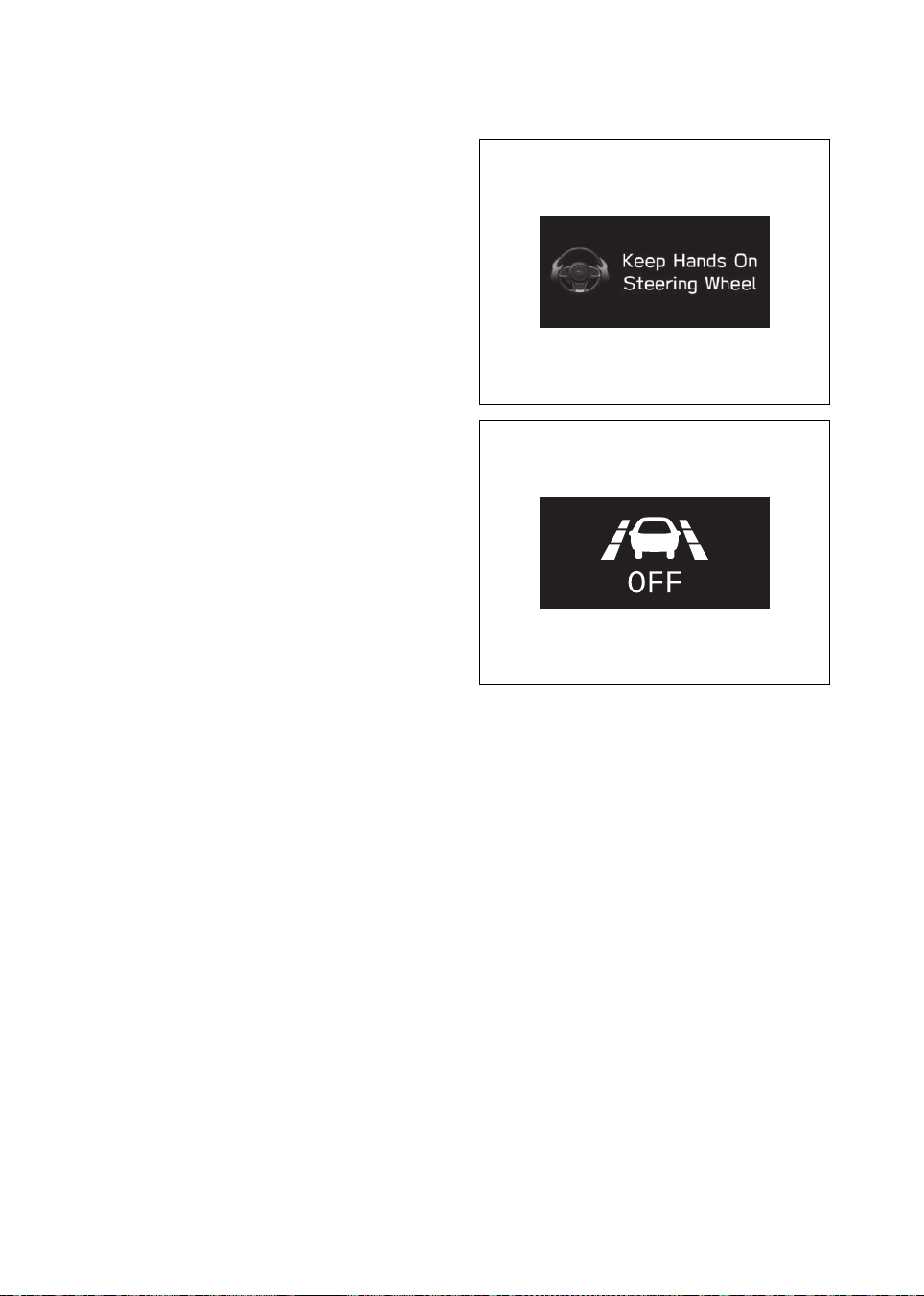
Lane Departure Prevention Function
140
• The system does not detect steering operation by the driver for a certain period of time.
- When the system detects no steering
operation, an interruption screen is dis-
played on the combination meter display.
The interruption screen continues to be
displayed until the system detects the
steering operation.
If the system still does not detect any
steering operation, Lane Departure Pre-
vention Function is temporarily canceled.
The system notifies the driver with an
interruption screen on the combination
meter display and notification (1 short
beep and 1 long beep).
■ Turning off Lane Departure Prevention Function
Operate the center information display to turn off Lane Departure Prevention Function.
On the “Lane Departure” screen of the EyeSight settings, select “Prevention & Warning”,
and then select “Warning Buzzer Only” or “OFF” to turn this function off.
Page 195
H02401
H02260
B8442BE-A.book 140 ページ 2024年10月29日 火曜日 午後6時50分
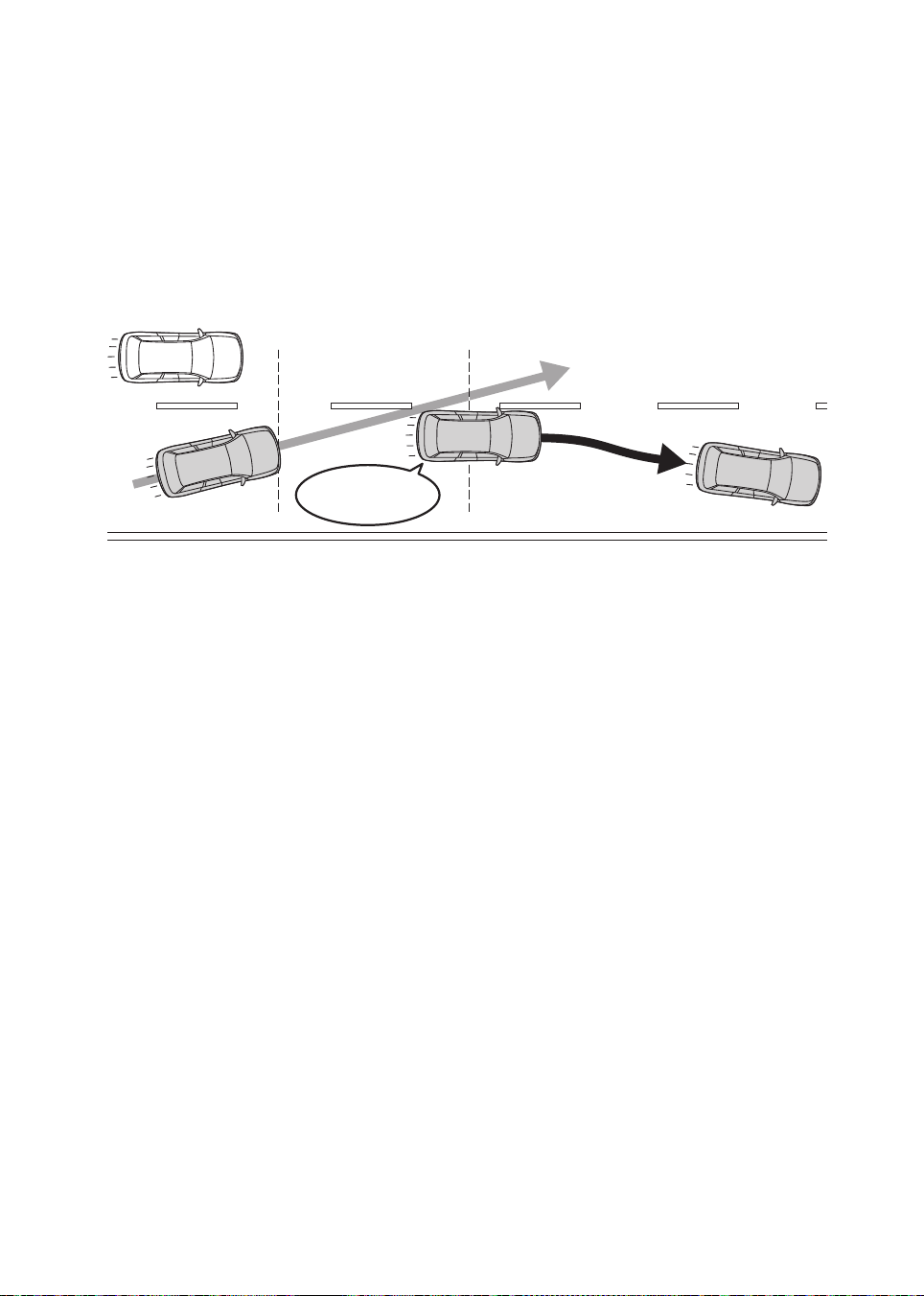
Emergency Lane Keep Assist
141
Emergency Lane Keep Assist
When the vehicle speed is approximately 37 mph (60 km/h) or more on an expressway,
freeways or interstate highways and the vehicle is likely to depart the lane when there is a
following vehicle approaching in the neighboring lane, this function assists the driver to turn
the steering wheel in the direction which will prevent lane departure, keeping the vehicle in
the lane. If the vehicle departs the lane, an interruption screen is displayed that shows
which side of lane was crossed, and an alert sounds repeated 3 short beeps.
(1) Your vehicle
(2) Following vehicle in neighboring lane
*: The alert will not sound before the vehicle departs the lane.
H01241
(1)
(2)
Repeated
3 short beeps*
B8442BE-A.book 141 ページ 2024年10月29日 火曜日 午後6時50分

Emergency Lane Keep Assist
142
WARNING
Emergency Lane Keep Assist is not an automatic driving system.
Do not overestimate the capabilities of Emergency Lane Keep Assist.
It is not a system to assist inattentive driving or meant to permit driv-
ing without holding the steering wheel. Make sure to grip the steering
wheel while driving. To drive safely, check the distance from the vehi-
cle in front or from a vehicle driving in parallel with your vehicle, the
surrounding conditions and the surrounding environment while driv-
ing.
If you feel that the level of control and timing by the system are different from
your own driving style, the system may not support safe driving. Do not use
Emergency Lane Keep Assist.
Emergency Lane Keep Assist activates only when your vehicle is likely to depart
the driving lane and there is a following vehicle approaching in the neighboring
lane. For this reasons, it will not operate correctly in response to the following.
• Light motor vehicles, motorcycles, vehicles with special shapes
• Bicycles
• Pedestrians
• A vehicle suddenly appears.
• A part of the vehicle is not shown.
• The system judges that there are no possibility of collisions.
Emergency Lane Keep Assist does not always operate under all situations. If
you rely only on Emergency Lane Keep Assist to stay in a lane, it may cause an
accident such as a collision with an obstacle beside your lane or with a vehicle
driving in an adjacent lane.
• Check that there are no problems with the tires and brakes during a daily
inspection before using the system.
Refer to “Warranty and Maintenance Booklet”.
• The system may not operate properly under the following conditions. Do not
use Emergency Lane Keep Assist.
- The air pressure of tires is not to specification.
*1
- Tires that are unevenly worn or tires with uneven wear patterns are
installed.
*1
B8442BE-A.book 142 ページ 2024年10月29日 火曜日 午後6時50分

Emergency Lane Keep Assist
143
Continued on next page
- Tires that are the wrong size are installed.
*1
- The wheels are out of balance (e.g., the balance weight is removed or mis-
aligned).
*1
- The wheels are out of alignment.
*1
- A flat tire has been fixed temporarily with a tire repair kit.
- The suspension has been modified (including genuine SUBARU parts).
- An object that obstructs the stereo camera’s view is installed on the vehicle.
- Tire chains are installed.
- There is an abnormal vibration in the steering wheel or the steering wheel is
heavier than usual.
- The steering wheel has been replaced with parts other than genuine
SUBARU parts.
- The headlights are dirty or they have snow, ice or dirt on them. (Objects are
not adequately illuminated and are difficult to detect.)
- The headlights are not aligned correctly. (Objects are not adequately illumi-
nated and are difficult to detect.)
- The headlights, fog lights and other lights have been modified.
- Vehicle operation has become unstable due to an accident or malfunction.
- The brake system warning light is illuminated in red.
*2
- The vehicle is tilted at an extreme angle due to loaded cargo or other fac-
tors.
- The maximum number of occupants is exceeded.
- A trailer or another vehicle, etc. is being towed.
- The combination meter is not operating properly. For example, an indicator
light or a warning light on the combination meter does not properly turn on
or off, a beep does not sound, or the indication on the combination meter
display is different from when it is normal.
*3
*1: The wheels and tires have functions that are critically important. Be sure to
use the correct ones.
For details, refer to the vehicle Owner’s Manual.
*2: If the brake system warning light does not turn off, immediately pull the
vehicle over in a safe place and contact a SUBARU dealer to have the
system inspected. For details, refer to the vehicle Owner’s Manual.
*3: For details about the functions and operations of the combination meter,
refer to the vehicle Owner’s Manual.
B8442BE-A.book 143 ページ 2024年10月29日 火曜日 午後6時50分
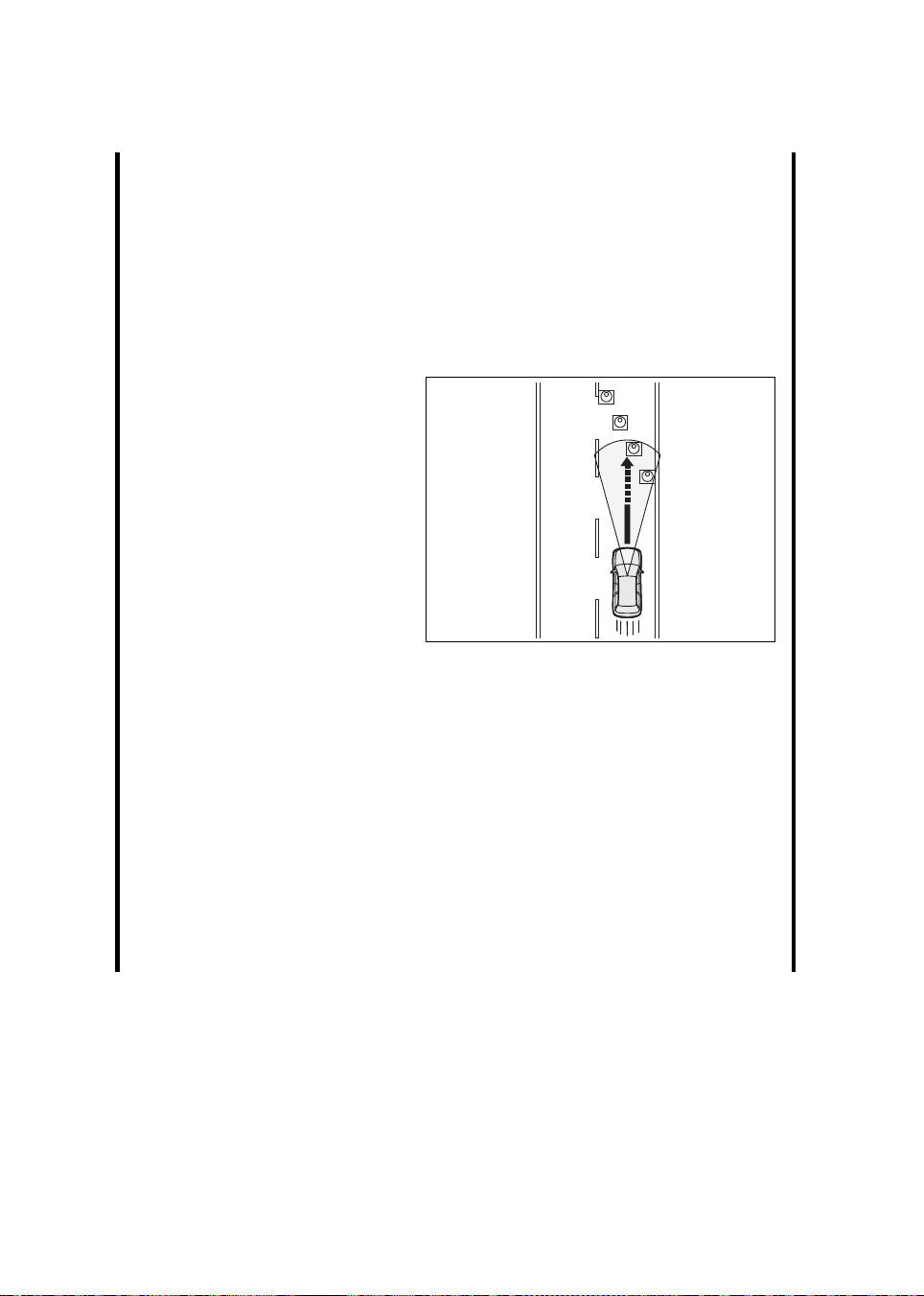
Emergency Lane Keep Assist
144
Continued from previous page
• Emergency Lane Keep Assist is designed for use on expressways, freeways,
toll roads, interstate highways and similar limited access roads. It is not
intended to be used in city traffic. In the following conditions, do not use Emer-
gency Lane Keep Assist. Doing so may result in an accident.
- Ordinary roads (roads other than those mentioned above)
Depending on the driving environment (complexity of roads and other fac-
tors), the system may not be able to perform as the traffic conditions
require, and that may result in an accident.
- Roads with sharp curves
- Roads with lane restrictions or
tentative lanes due to con-
struction work, etc.
- Old lane markings remain.
- Avoiding parked vehicles
- Snow, puddles or snow melt-
ing agents remain on the road
surface.
- Cracks or constructed traces
remain on the road surface.
- Frozen roads, snow-covered
roads or other slippery road
surfaces
The tires may spin, causing loss of control of the vehicle.
- Entering a sharp curve into an interchange or junction, or a service area,
parking area, toll booth or other facilities
- Visibility is poor due to sand, smoke or water vapor blowing in the wind, or
the front vision is obscured due to water splashes, snow, dirt or dust stir up
generated by the vehicle in front or oncoming traffic.
- The stereo camera’s field of view is obstructed by fogging, snow, dirt, frost,
dust, scratches, or smears on the windshield, or by light reflecting off the
dirt, etc.
- Rain or dirt has not been fully wiped off of the windshield. There is a risk of
that the stereo camera may not detect the lanes.
- The stereo camera’s field of view is obstructed (for example by a canoe on
the roof of the vehicle).
H00463
B8442BE-A.book 144 ページ 2024年10月29日 火曜日 午後6時50分
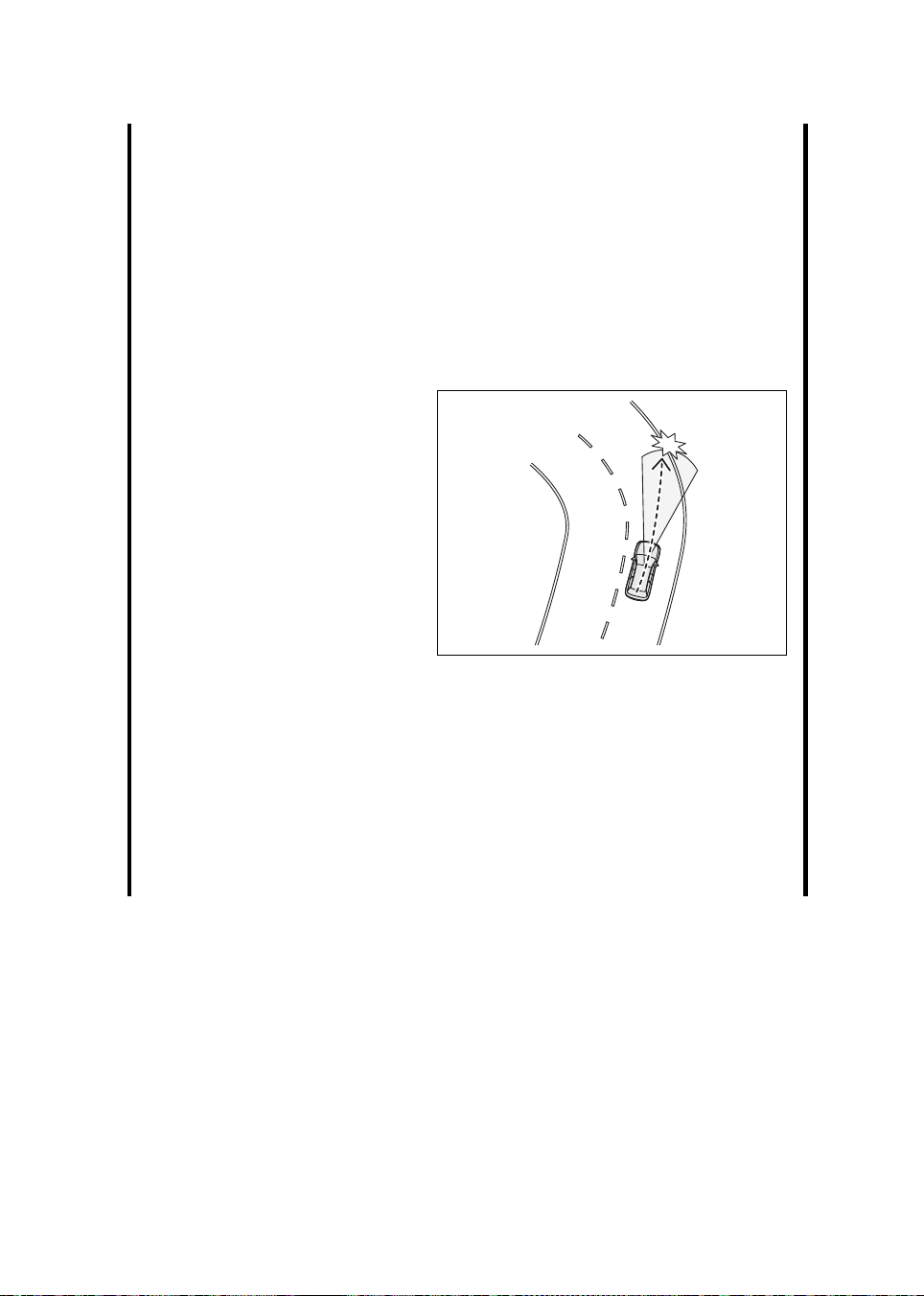
Emergency Lane Keep Assist
145
Continued on next page
• The stereo camera may have difficulty detecting the lane markings under the
following conditions and the system may not operate properly.
- At night or in a tunnel without the headlights on
- In bad weather (for example, rain, snow or thick fog)
- The road surface is wet and shining by reflected light.
- There are other traffic markings on the lane you are driving in (arrows,
words, etc.).
- The distance between your vehicle and the vehicle in front is short, making
it difficult to detect lane markings.
- A vehicle intruded from an adjacent lane or the vehicle in front changed
lanes.
- The shape of a curve in the
road suddenly changes.
- Shadows of guardrails or sim-
ilar objects are overlapped on
the lane markings.
- Strong light is coming from
the front (sunlight or headlight
beams of oncoming traffic,
etc.).
- The width of a lane is either
too narrow or too wide.
- The width of a lane has
changed.
- The stereo camera may have difficulty detecting the lane due to the perfor-
mance of the camera.
• There are no lane markings or they are very worn.
• The lane markings are painted in yellow.
• The lane markings are similar in color to the road surface.
• The lane markings are drawn in double.
• The width of lane markings is narrow.
• Lines that are not lane markings are painted on roads.
• The lane markings are touching the walls and poles.
H00465
B8442BE-A.book 145 ページ 2024年10月29日 火曜日 午後6時50分
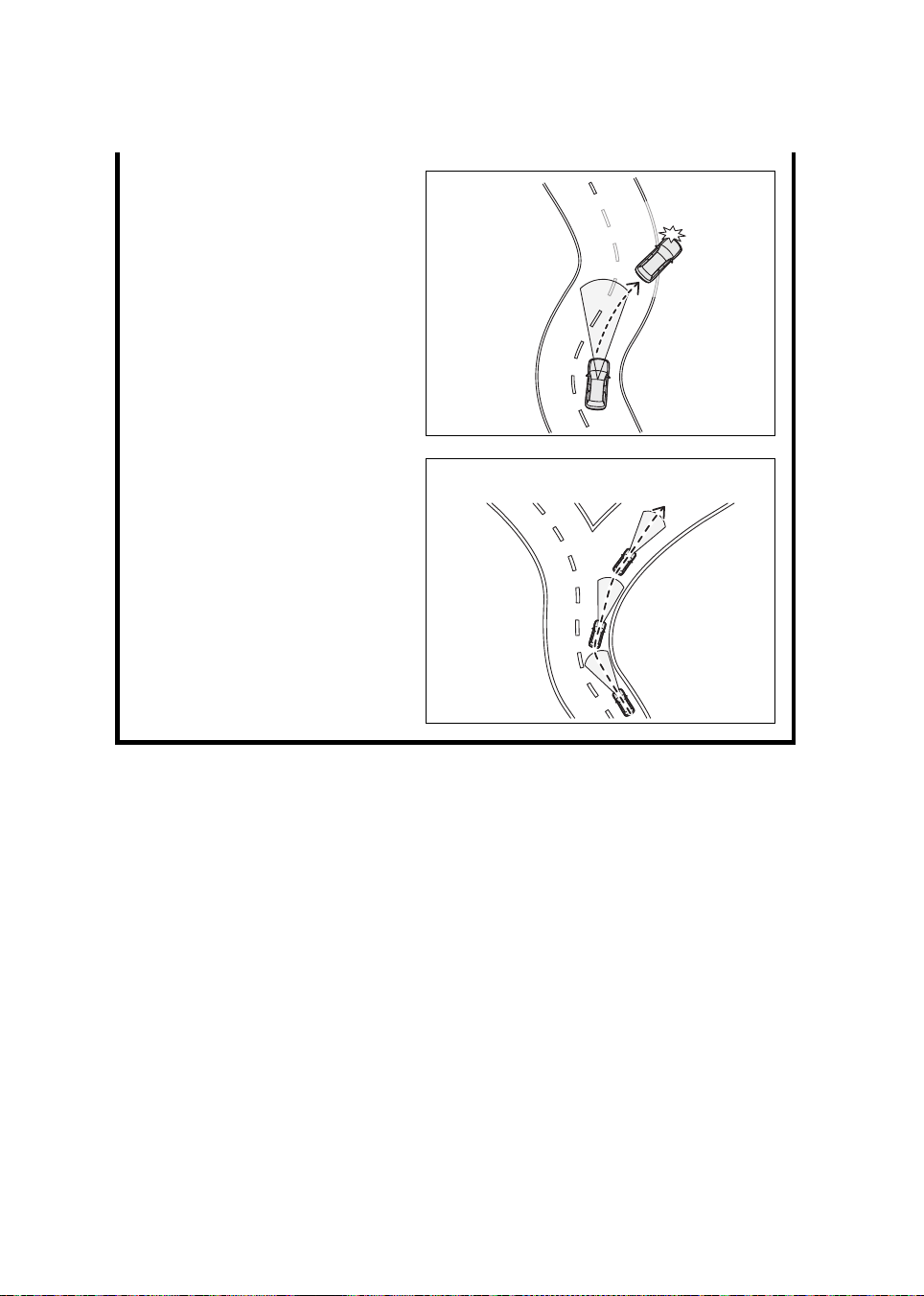
Emergency Lane Keep Assist
146
Continued from previous page
- The shape of lane markings
suddenly changes
(entrance/exit of a curve,
crank and winding road, etc.).
- Going into lanes that lead to
interchanges, junctions, ser-
vice areas or parking areas
- There is a curb or a side wall
on the road shoulder.
- The brightness changes such
as at a tunnel entrance or exit
or when you drive under an
overpass.
- Fluid has not been fully wiped
off the windshield during or
after washer use.
H00464
H01408
Exit laneMain road
B8442BE-A.book 146 ページ 2024年10月29日 火曜日 午後6時50分
Emergency Lane Keep Assist
147
Continued on next page
CAUTION
• The performance of Emergency Lane Keep Assist may not be optimal under
the following conditions. In addition, Emergency Lane Keep Assist may not
operate or the operation may be canceled.
- Immediately after the weight of your vehicle changes radically
- Immediately after the replacement of a tire or the adjustment of tire pressure
- Immediately after the adjustment, repair or replacement of the camera or
related components
- Immediately after the repair or replacement of the suspension or steering
system
- A winter tire or a tire other than a genuine SUBARU tire is used.
- The vehicle is in a crosswind.
- The road grade abruptly changes (uphill or downhill).
- The grade of the crossing direction in a road is large or changes abruptly.
- Unevenness, winding and joint of a road surface
- The acceleration/deceleration is high.
- Immediately after starting the hybrid system when the outside temperature
is low.
- The outside temperature is high.
• When you do not use Emergency Lane Keep Assist, be sure to turn it off. If
the function is left on, the function may operate unexpectedly, causing an
accident.
Page 152
• If you turn on Emergency Lane Keep Assist, the operation power of electric
power steering may change.
• There are limits to the detection performance of the radar sensors used for
Emergency Lane Keep Assist.
Refer to the vehicle Owner’s Manual for details.
NOTE
• In the following cases, Emergency Lane Keep Assist will temporarily stop
operating (or may stop operating) and
(Emergency Lane Keep Assist
OFF indicator) will appear. Emergency Lane Keep Assist will resume opera-
tion once these conditions are corrected, and
(Emergency Lane Keep
Assist OFF indicator) will disappear. However, if
(Emergency Lane
Keep Assist OFF indicator) has appeared for a prolonged time, we recom-
mend that you contact a SUBARU dealer and have the system inspected.
- A large amount of snow or ice sticks to the rear bumper surface around the
radar sensors.
B8442BE-A.book 147 ページ 2024年10月29日 火曜日 午後6時50分

Emergency Lane Keep Assist
148
Continued from previous page
- The vehicle is driven on a snow-covered road or in an environment in which
there are no objects around (such as a desert) for a long time.
- The temperature around the radar sensors increased excessively due to
long driving on uphill grades in summer, etc.
- The temperature around the radar sensors becomes extremely low.
- The vehicle battery voltage lowers.
- An overvoltage occurs in the vehicle battery.
- The radar sensor becomes significantly misaligned (If the orientation of the
radar sensor is shifted for any reason, readjustment is required. We recom-
mend that you have the sensor adjusted at a SUBARU dealer.).
• The detectability of the radar sensors is restricted. The Emergency Lane
Keep Assist detection may be impaired and the system may not operate prop-
erly under the following conditions.
- The rear bumper around the radar sensors is distorted.
- Ice, snow or mud adheres to the rear bumper surface around the radar sen-
sors.
- Stickers, etc. are affixed on the areas of the radar sensors on the rear
bumper.
- During adverse weather conditions such as rain, snow or fog
- On wet roads such as snow-covered roads and through puddles
• The radar sensors may not detect or may have difficulty detecting the follow-
ing vehicles and objects.
- Small motorcycles, bicycles, pedestrians, stationary objects on the road or
road side, etc.
- Vehicles with body shapes that the radar may not reflect (vehicles with
lower body height such as a trailer with no cargo and sports cars)
- Vehicles that are not approaching your vehicle even though they are in the
detection area (either on a neighboring lane to the rear or beside your vehi-
cle when reversing) (The system determines the presence of approaching
vehicles based on data detected by the radar sensors.)
- Vehicles traveling at significantly different speeds
- Vehicles driving parallel to and at almost the same speed as your vehicle
for a prolonged time
- Oncoming vehicles
- Vehicles in a lane beyond the neighboring lane
- Vehicles traveling at a significantly lower speed that you are trying to over-
take
B8442BE-A.book 148 ページ 2024年10月29日 火曜日 午後6時50分
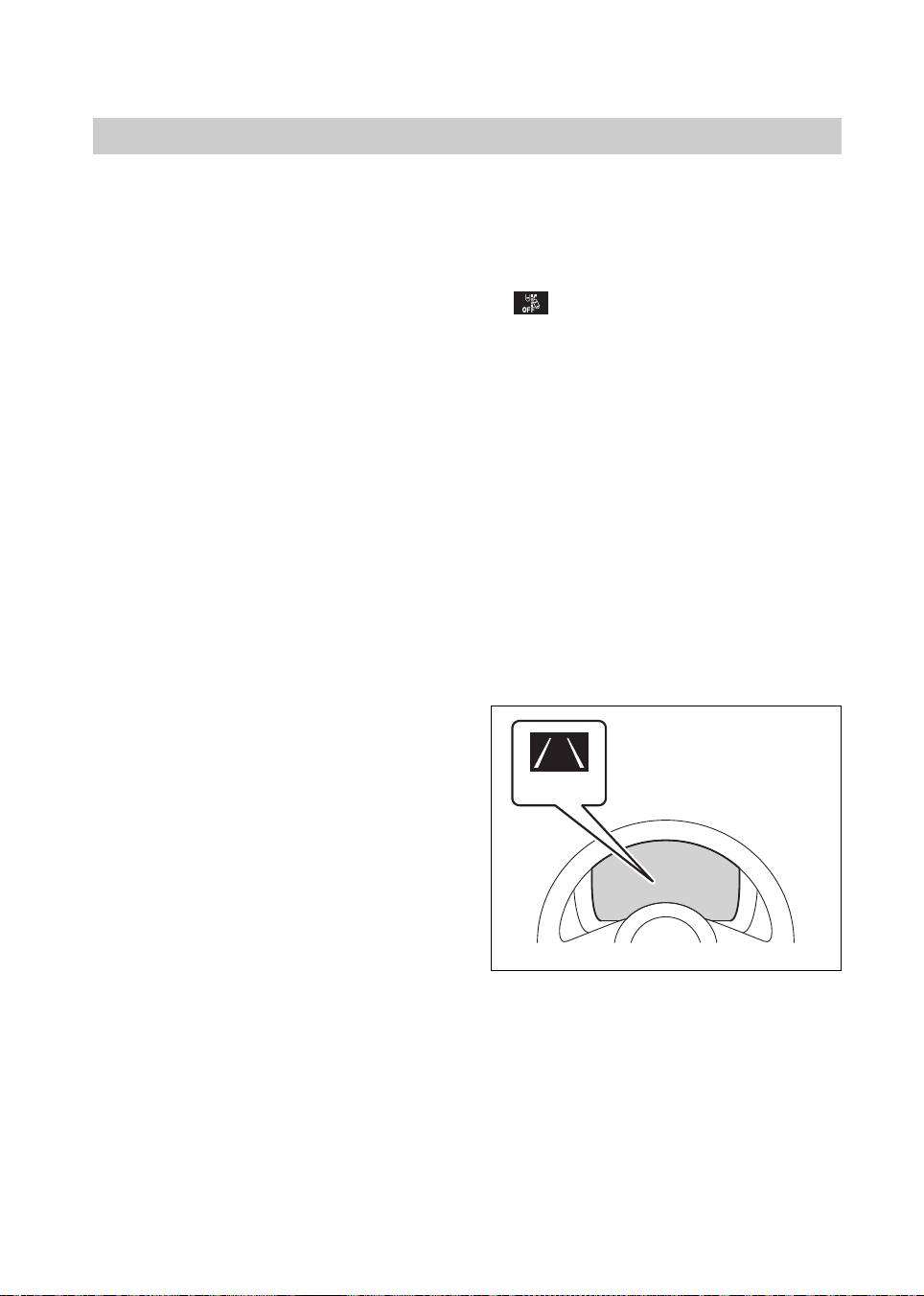
Emergency Lane Keep Assist
149
Operate the center information display to turn on Emergency Lane Keep Assist.
This function is turned on by selecting “ON” on the “Emergency Lane Keeping Assist”
screen of the EyeSight settings.
Page 195
When Emergency Lane Keep Assist is turned on,
(Emergency Lane Keep Assist OFF
indicator) turns off on the combination meter display.
The system can activate when all of the following conditions are met. However even when
all of the following conditions are met, there are cases when Emergency Lane Keep Assist
does not activate because the lane markings or following vehicle cannot be detected.
• Your vehicle speed is between approximately 37 mph (60 km/h) and 90 mph (145 km/h).
• The system is detecting the lane markings.
• The system is detecting the following vehicle.
• BSD/RCTA is not turned off.
• Lane Centering Function is not operating.
• The driver is operating the steering wheel.
• On a road that has a lane width that is between approximately 10 ft (3 m) and 15 ft (4.5 m)
• On a straight road or gentle curve
• Driving near the center of a lane
When the vehicle is about to depart the lane,
Emergency Lane Keep Assist starts to oper-
ate. The lane indicator on the side that the
vehicle is about to cross will blink in yellow.
How to use Emergency Lane Keep Assist
(1) Lane indicator (blinks in yellow on
the side of departure)
H02277
(1)
B8442BE-A.book 149 ページ 2024年10月29日 火曜日 午後6時50分
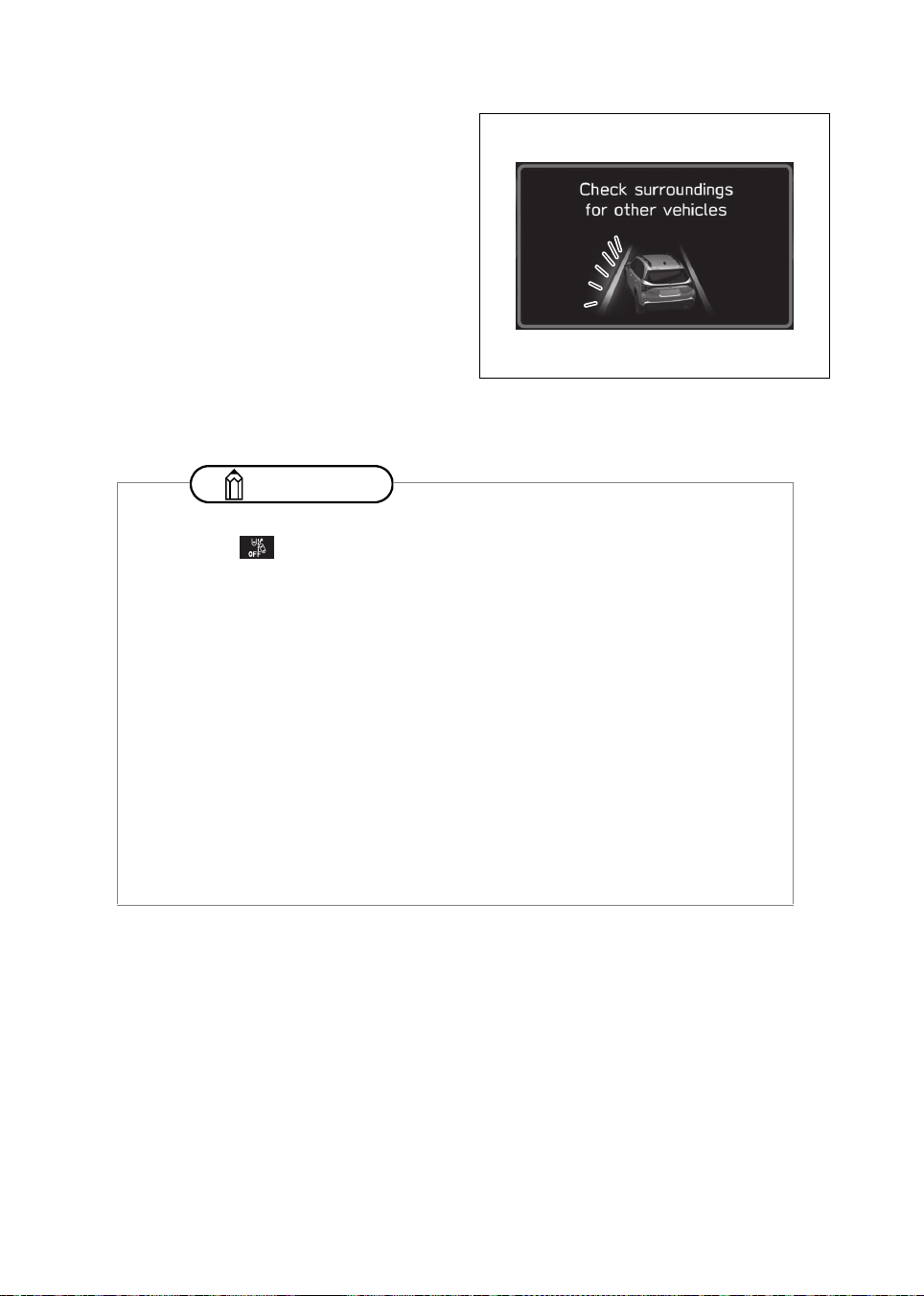
Emergency Lane Keep Assist
150
When the vehicle departs the lane, an inter-
ruption screen shows which side was
crossed, and an alert sounds repeated 3 short
beeps.
*: The illustration depicts a vehicle about to cross the
left line.
NOTE
• Emergency Lane Keep Assist does not operate if BSD/RCTA is turned off. At
this time, (Emergency Lane Keep Assist OFF indicator) illuminates on
the combination meter display.
• Emergency Lane Keep Assist does not operate if the system cannot detect a
following vehicle approaching in the neighboring lane.
• The on/off status of Emergency Lane Keep Assist is restored when you
restart the hybrid system.
• When both Lane Departure Prevention Function and Emergency Lane Keep
Assist are turned on:
- After an activation of Emergency Lane Keep Assist and the following vehi-
cle is no longer detected, if there is still a possibility that your vehicle will
depart the lane, control will switch to Lane Departure Prevention Function.
- If a vehicle is detected nearby while Lane Departure Prevention Function is
active, control will switch to Emergency Lane Keep Assist.
• Emergency Lane Keep Assist does not operate when Lane Centering Func-
tion is active.
H02447
B8442BE-A.book 150 ページ 2024年10月29日 火曜日 午後6時50分

Emergency Lane Keep Assist
151
■ Canceling Emergency Lane Keep Assist
●
Canceling by driver operation
Any of the following operations temporarily cancels Emergency Lane Keep Assist.
• Depressing the brake pedal strongly
• The system determines that the driver operates the steering wheel strongly.
●Automatic cancellation by the system
Under the following conditions, Emergency Lane Keep Assist is temporarily canceled.
• The system does not detect the lane markings.
• The vehicle speed is less than approximately 37 mph (60 km/h) or is more than approxi-
mately 100 mph (160 km/h).
• Vehicle Dynamics Control or Traction Control Function is activated.
• The electronic parking brake is applied.
• Any door (except the rear gate) is opened.
• The driver’s seatbelt is unfastened.
• The select lever is moved to a position other than “D” or “M”.
• Entering a sharp curve
• On a sharp curve
• Due to the road conditions
• Due to another system operating
• The EyeSight system has a malfunction. (EyeSight warning indicator: Yellow)
Page 189
• The EyeSight system has stopped temporarily. (EyeSight temporary stop indicator:
White)
Page 191
• The Emergency Lane Keep Assist system has a malfunction, or the system is temporarily
stopped. (Emergency Lane Keep Assist OFF indicator)
B8442BE-A.book 151 ページ 2024年10月29日 火曜日 午後6時50分
Emergency Lane Keep Assist
152
■ Emergency Lane Keep Assist malfunction and temporary stop
If Emergency Lane Keep Assist temporarily stops,
(Emergency Lane Keep Assist OFF
indicator)
illuminates. When the cause has been resolved, operation returns to normal. This
indicator will also appear in extremely hot or cold environments, and if there is an abnormal-
ity in the battery voltage.
If
(Emergency Lane Keep Assist OFF indicator)
stays illuminated for a long time, the
EyeSight system may have a malfunction. Contact a SUBARU dealer and have the system
inspected.
■ Turning off Emergency Lane Keep Assist
Operate the center information display to turn off Emergency Lane Keep Assist.
This function is turned off by selecting “OFF” on the “Emergency Lane Keeping Assist”
screen of the EyeSight settings.
Page 195
If Emergency Lane Keep Assist is turned off, (Emergency Lane Keep Assist OFF indica-
tor) illuminates on the combination meter display.
●Emergency Lane Keep Assist OFF indicator
This indicator illuminates when the ignition
switch is turned to the ON position, and then
several seconds after the hybrid system
starts, it turns off or remains illuminated
depending on the current status (ON or OFF).
It illuminates when Emergency Lane Keep
Assist is turned off.
H02199
B8442BE-A.book 152 ページ 2024年10月29日 火曜日 午後6時50分
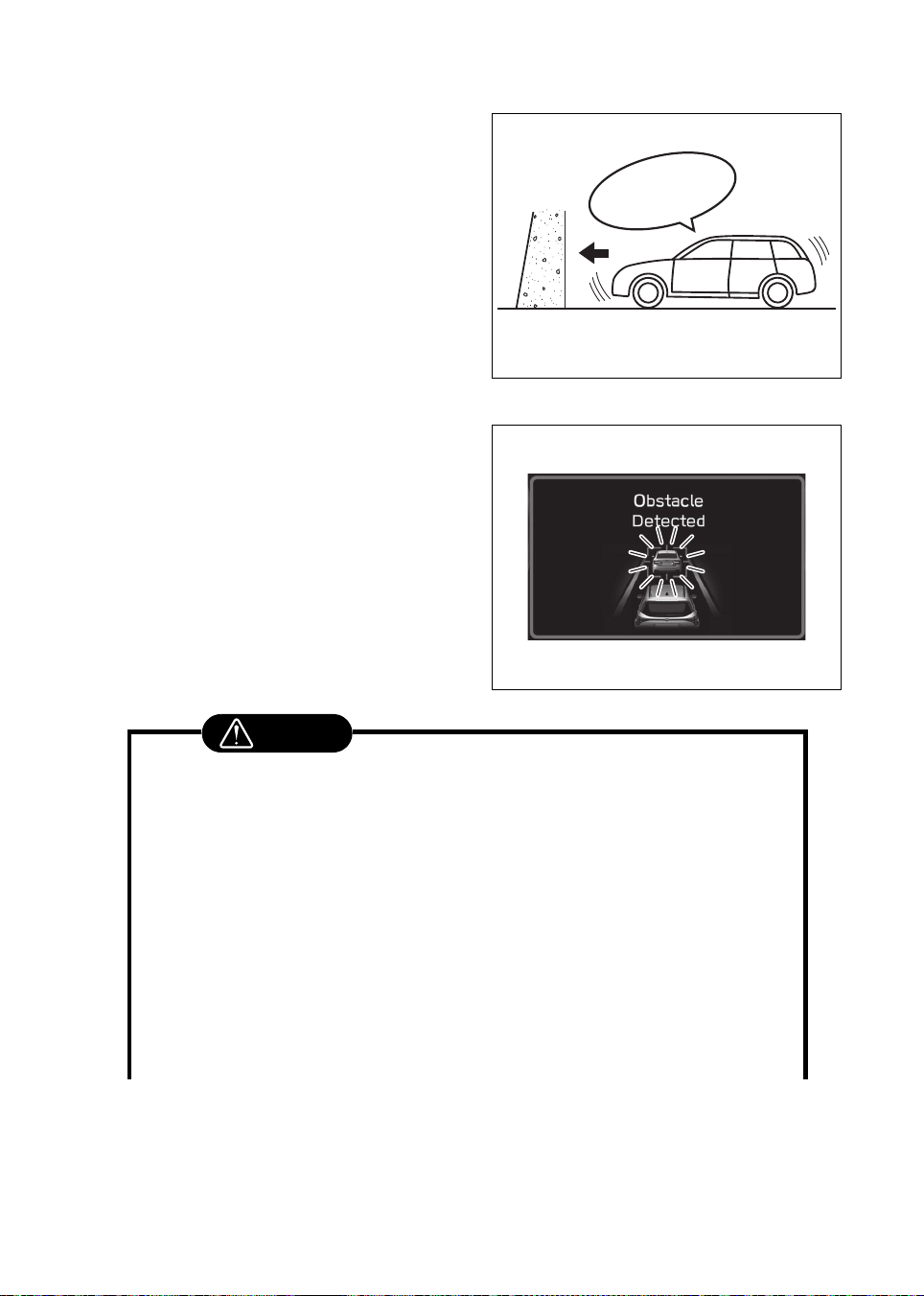
Pre-Collision Throttle Management
153
Pre-Collision Throttle Management
When an obstacle is detected in front of the
vehicle, and the vehicle is stopped or traveling
very slowly, if the system determines that the
accelerator pedal has been depressed by
more than the necessary amount (due to
driver error), it greatly restricts hybrid system
output and ensures that vehicle forward
movement is slower than normal in order to
give the driver additional time to brake or
react.
During system operation, an alert sounds
repeated short beeps and an interruption
screen is displayed.
This function only activates when the select
lever is in the “D” or “M” position.
Continued on next page
WARNING
Do not rely excessively on Pre-Collision Throttle Management. Pre-
Collision Throttle Management is not designed to help you avoid colli-
sions in all situations. Always check the select lever and pedal posi-
tions as well as the surrounding environment before starting and
operating the vehicle. Relying only on Pre-Collision Throttle Manage-
ment could result in an accident.
• Pre-Collision Throttle Management is not designed to maintain the vehicle in
a stopped condition.
• Pre-Collision Throttle Management will not reduce acceleration under all con-
ditions. It is also not designed to prevent collisions.
• Pre-Collision Throttle Management will operate when an obstacle is detected
in front. However, this function will not reduce acceleration in cases where no
obstacle is detected (for example when approaching a cliff, etc.).
H00440
R
e
p
e
a
t
e
d
s
h
o
r
t
b
e
e
p
s
H02448
B8442BE-A.book 153 ページ 2024年10月29日 火曜日 午後6時50分

Pre-Collision Throttle Management
154
Continued from previous page
• Do not intentionally depress the accelerator pedal excessively when there are
obstacles nearby. If the driver relies only on Pre-Collision Throttle Manage-
ment to control acceleration, collisions may occur.
• If your vehicle is trapped on a railroad crossing and you are trying to escape
by driving through the crossing gate, the stereo camera may recognize the
crossing gate as an obstacle and the Pre-Collision Throttle Management sys-
tem may activate. In this case, remain calm and either continue to depress
the accelerator pedal or turn off the Pre-Collision Throttle Management sys-
tem.
Page 159
• Pre-Collision Throttle Management may not activate depending on the follow-
ing conditions:
- The distance between your vehicle and the obstacle, speed difference, and
horizontal offset
- Recognition status of the stereo camera
In particular, the function may not activate in the following cases:
• Bad weather (for example heavy rain, a blizzard or thick fog)
• Visibility is poor due to sand, smoke or water vapor blowing in the wind, or
the front vision is obscured due to water splashes, snow, dirt or dust stir
up generated by the vehicle in front or oncoming traffic.
• In a dark area (indoor parking area, etc.)
• There is an obstacle outside the area illuminated by the headlights.
• Strong light is coming from the front (for example sunlight at sunrise or
sunset headlight beams, etc.).
• The stereo camera’s field of view is obstructed by fogging, snow, dirt,
frost, dust, scratches, or smears on the windshield, or by light reflecting
off the dirt, etc.
• Fluid has not been fully wiped off the windshield during or after washer
use.
• Obstacles cannot be correctly recognized due to water droplets from rain
or the washer, or the wiper blades obstructing the stereo camera’s field of
view.
• The stereo camera’s field of view is obstructed (for example by a canoe
on the roof of the vehicle).
• With low obstacles (low wall, crash barrier, low vehicle, etc.)
• The size and height of an obstacle is smaller than the limitations of the
stereo camera’s recognition capability.
- With small animals or children
- With pedestrians who are sitting or lying down
B8442BE-A.book 154 ページ 2024年10月29日 火曜日 午後6時50分
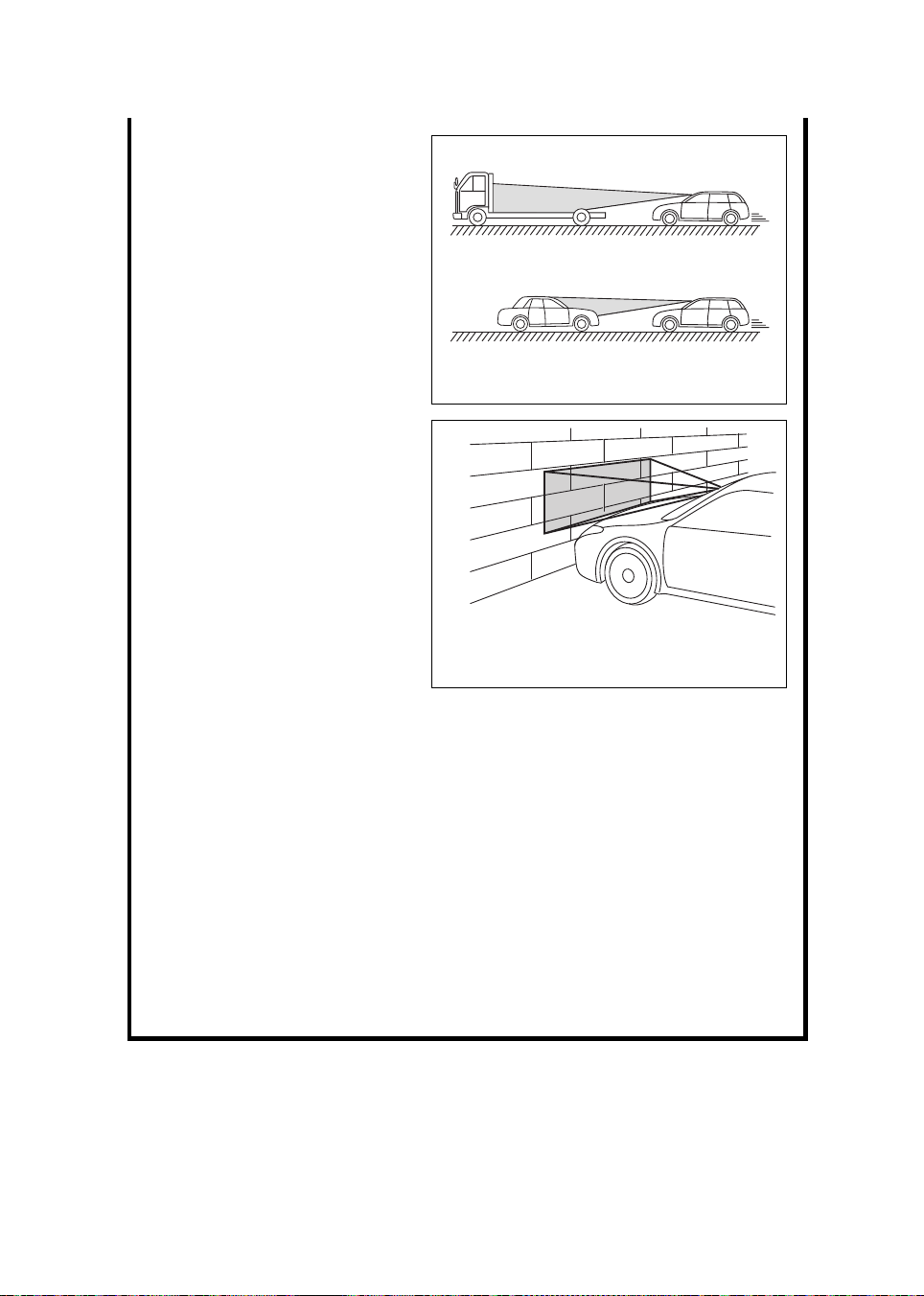
Pre-Collision Throttle Management
155
• The rear portion nearest
your vehicle is too small or
too close (such as a trailer
or oncoming vehicle). The
system may not recognize
the part of that vehicle
which is closest to you.
• There is a fence or wall,
etc., with a uniform pattern
(striped pattern, brick, etc.)
or with no pattern in front.
• There is a wall or door
made of glass or a mirror
in front.
•An
obstacle
(another vehi-
cle, motorcycle, cyclist,
pedestrian, animal or child,
etc.) cuts in from the side
or jumps out suddenly.
• Your vehicle is immedi-
ately behind an obstacle after changing lanes.
• On sharp curves, steep uphill grades or steep downhill grades
• The vehicle is tilted at an extreme angle due to loaded cargo or other fac-
tors.
• The brightness changes such as at a tunnel entrance or exit or when you
drive under an overpass.
• The lead vehicle’s tail lights are not lit at night or in a tunnel.
• It is pitch black and there are no objects in the surrounding area.
• The surrounding area is mostly the same color (for example in a snowy
location).
- The system determines that steering operation by the driver is intended as
evasive action.
• For your safety, do not test Pre-Collision Throttle Management on its own. It
may operate improperly and cause an accident.
S02134
H00996
B8442BE-A.book 155 ページ 2024年10月29日 火曜日 午後6時50分
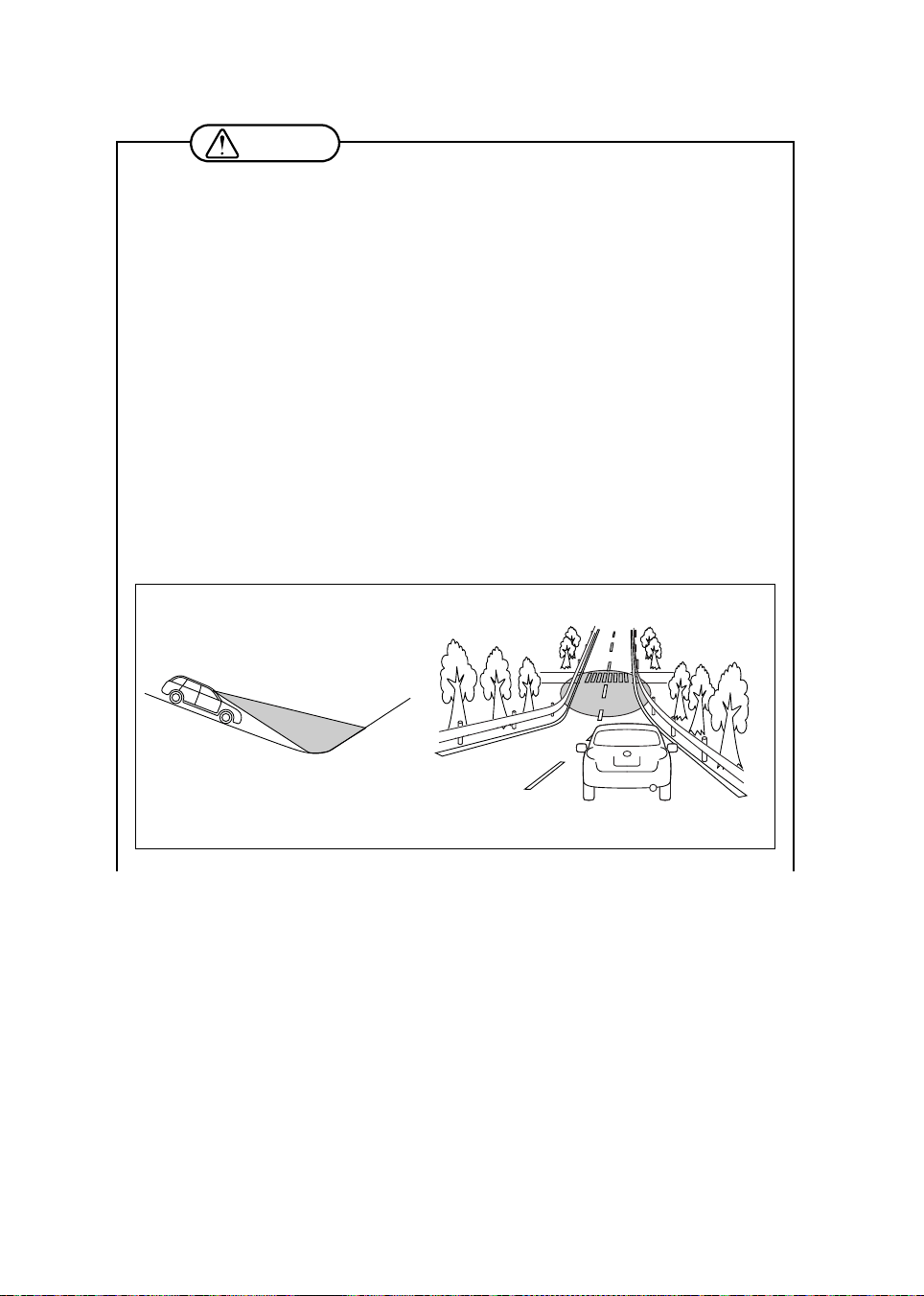
Pre-Collision Throttle Management
156
CAUTION
• In the following situations, turn off Pre-Collision Throttle Management. Other-
wise Pre-Collision Throttle Management may activate unexpectedly.
Page 159
- The vehicle is being towed.
- The vehicle is being loaded onto a carrier.
- A chassis dynamometer, free-rollers or similar equipment is being used.
- A mechanic lifts up the vehicle, starts the hybrid system and allows the
wheels to spin freely.
- Driving on a race track
- Passing hanging banners, flags or branches
- Thick/tall vegetation is touching the vehicle.
• Pre-Collision Throttle Management may activate in the following situations.
Therefore concentrate on safe driving.
- Your vehicle is close to the vehicle in front.
- Passing through an automatic gate
- Reflection or markings on a wall or the road surface in front of your vehicle
is difficult to distinguish from an identified object.
- Your vehicle is in a location where the grade of the road changes rapidly.
S01264
B8442BE-A.book 156 ページ 2024年10月29日 火曜日 午後6時50分
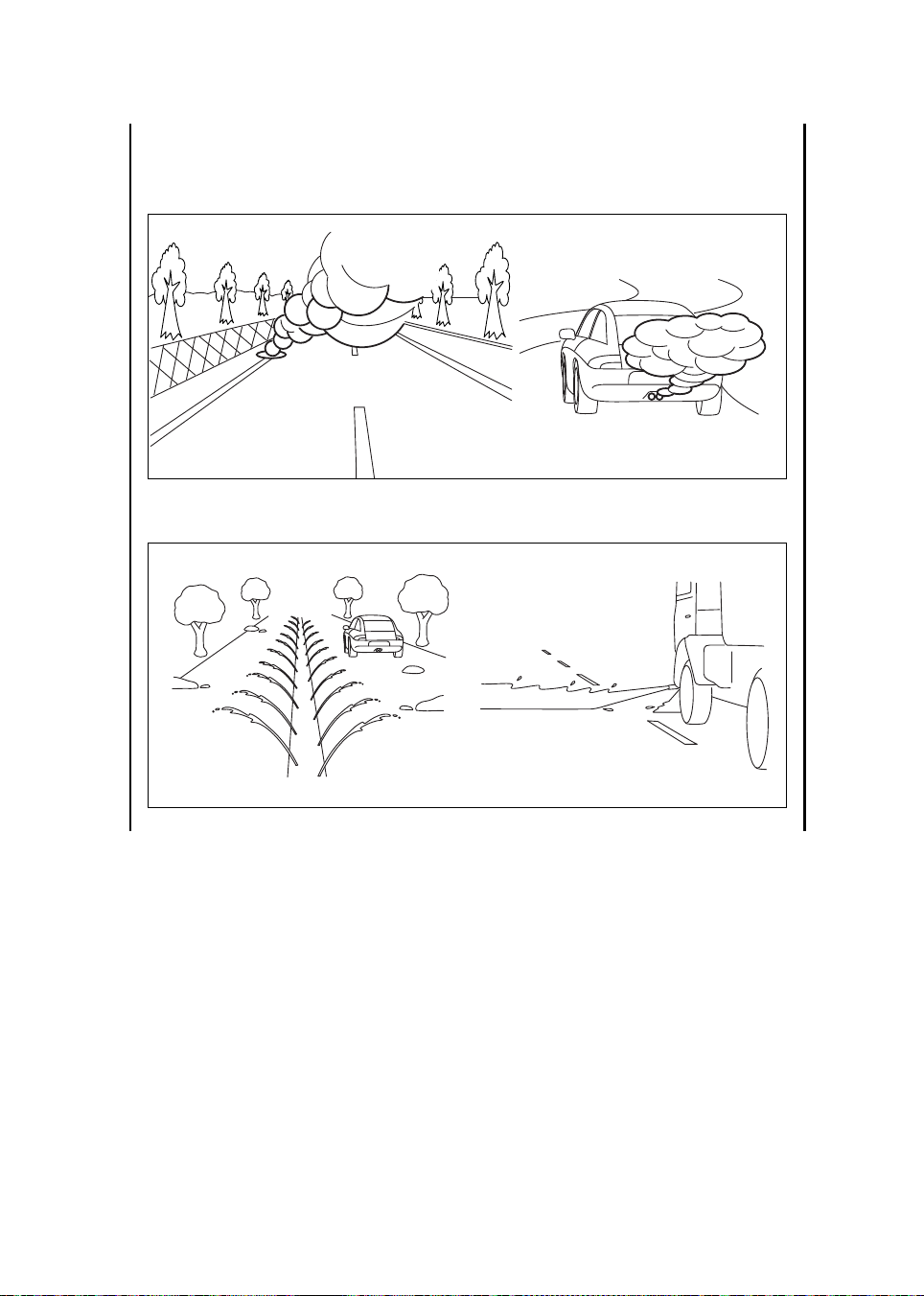
Pre-Collision Throttle Management
157
Continued on next page
- Passing through clouds of steam or smoke
- The exhaust gas emitted by the vehicle in front is clearly visible in cold
weather, etc.
- Passing through water spray from road sprinklers or snow clearing sprin-
klers on the road
S00652
S02636
B8442BE-A.book 157 ページ 2024年10月29日 火曜日 午後6時50分
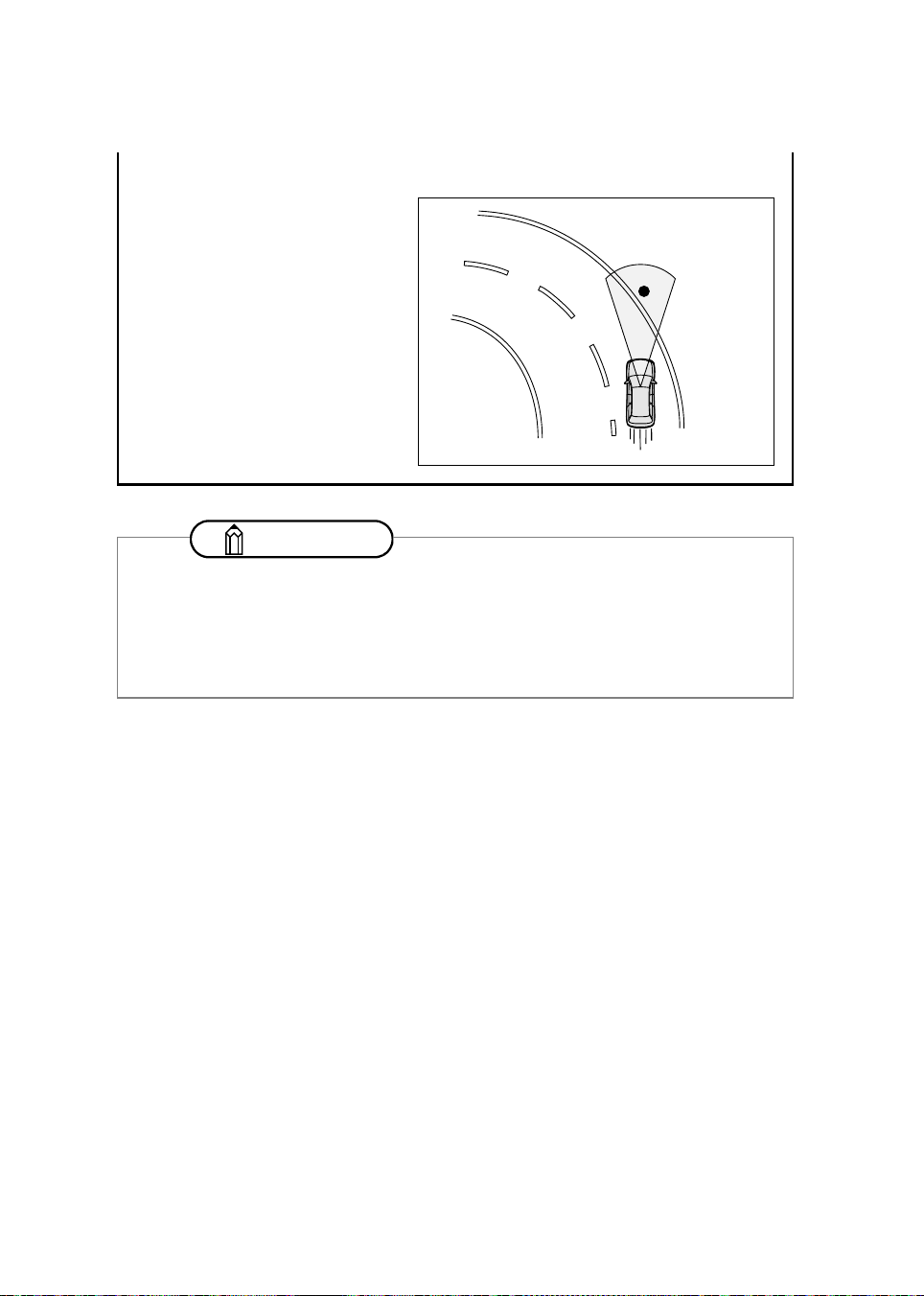
Pre-Collision Throttle Management
158
Continued from previous page
- In adverse weather, such as heavy snow or snowstorms
- There is an obstacle on a
curve or intersection.
- You are passing close to the
side of a vehicle, an obstacle
or vegetation.
- Stopping very close to a wall
or a vehicle in front
NOTE
• When the accelerator pedal is depressed for approximately 3 seconds, Pre-
Collision Throttle Management will be released gradually.
• When Pre-Collision Braking System is turned off, Pre-Collision Throttle Man-
agement is also turned off.
Page 64
S02669
B8442BE-A.book 158 ページ 2024年10月29日 火曜日 午後6時50分
Pre-Collision Throttle Management
159
While the vehicle is stopped, operate the center information display to turn on/off Pre-Colli-
sion Throttle Management.
This function is turned on by selecting “Setting ON” on the “Pre-Collision Braking” screen of
the EyeSight settings.
This function is turned off by selecting “Setting OFF” on the “Pre-Collision Braking” screen
of the EyeSight settings.
Page 195
If Pre-Collision Throttle Management is turned off, (Pre-Collision Braking System OFF
indicator light) illuminates on the combination meter.
If Pre-Collision Throttle Management is turned on, (Pre-Collision Braking System OFF
indicator light) turns off on the combination meter.
Turning on/off Pre-Collision Throttle Management
NOTE
• The on/off setting for Pre-Collision Throttle Management operates in coopera-
tion with Pre-Collision Braking System and Automatic Emergency Steering.
• Even when Pre-Collision Throttle Management is turned off, if the hybrid sys-
tem is turned off and then restarted, Pre-Collision Throttle Management will
be turned on. The system default setting when the vehicle is restarted is on.
• Pre-Collision Braking System cannot be turned off while Lane Centering
Function is operating.
B8442BE-A.book 159 ページ 2024年10月29日 火曜日 午後6時50分
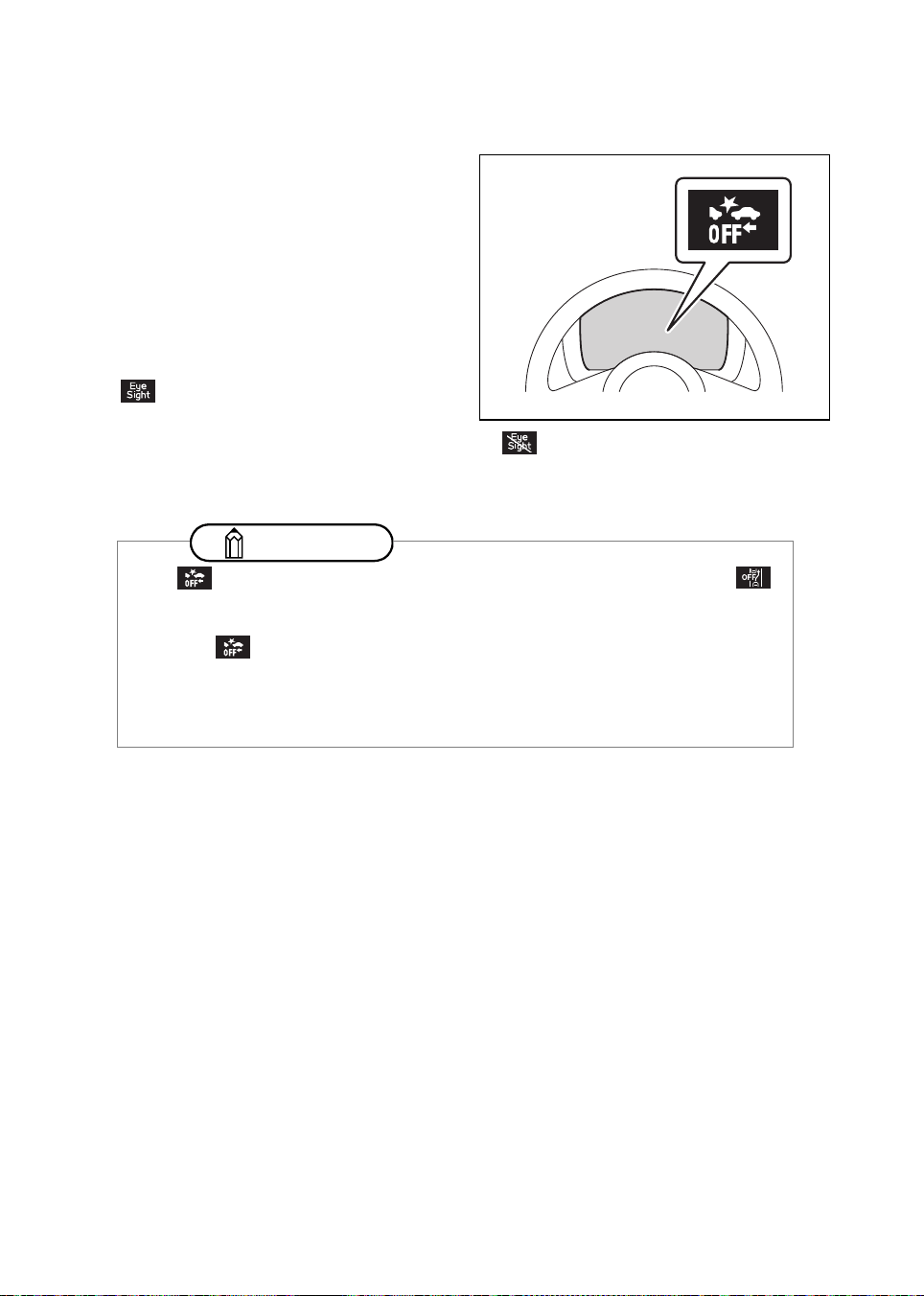
Pre-Collision Throttle Management
160
■ Pre-Collision Braking System OFF indicator light
This indicator light illuminates when the igni-
tion switch is turned to the ON position, and
then turns off several seconds after the hybrid
system starts. It illuminates when Pre-Colli-
sion Braking System and Pre-Collision Throt-
tle Management are turned off.
It also illuminates under the following condi-
tions.
• The EyeSight system has a malfunction.
(EyeSight warning indicator: Yellow)
Page 189
• The EyeSight system has stopped temporarily. (EyeSight temporary stop indicator:
White)
Page 191
NOTE
• If (Pre-Collision Braking System OFF indicator light) illuminates,
(Automatic Emergency Steering OFF indicator) also illuminates.
Page 63
• When (Pre-Collision Braking System OFF indicator light) illuminates,
Pre-Collision Braking System (including the Pre-Collision Braking Assist func-
tion), Automatic Emergency Steering and Pre-Collision Throttle Management
do not operate.
H02200
B8442BE-A.book 160 ページ 2024年10月29日 火曜日 午後6時50分
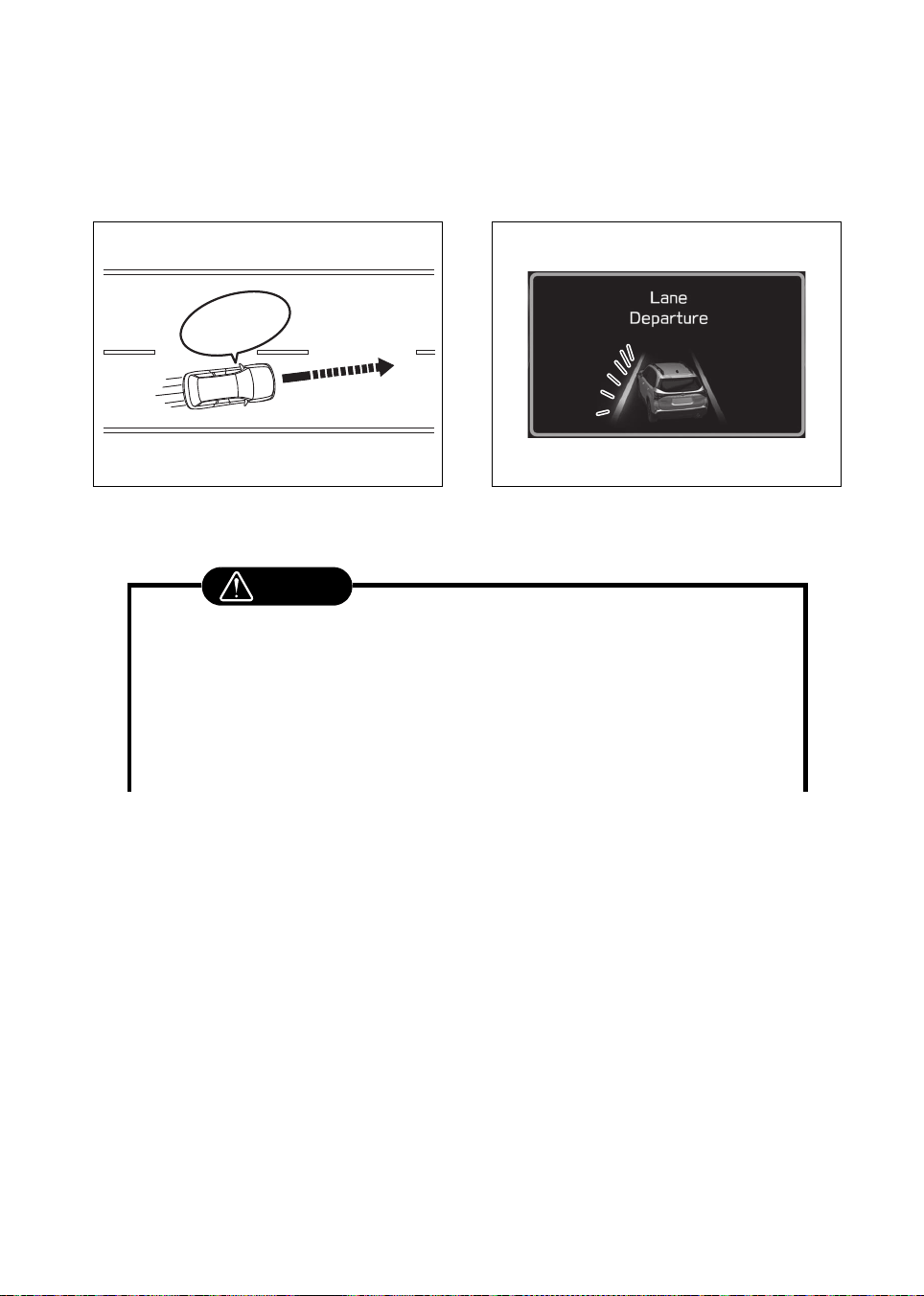
Lane Departure Warning
161
Lane Departure Warning
When vehicle speed is approximately 30 mph (50 km/h) or more, this function warns the
driver if the system detects that the vehicle is likely to depart the traffic lane.
When Lane Departure Warning activates, an alert sounds 3 short beeps and an interruption
screen will be displayed.
*: The illustration depicts a vehicle about to cross
the left line
.
Continued on next page
WARNING
• Lane Departure Warning will not operate in all conditions. It also will not auto-
matically return the vehicle to the original lane. If the driver relies only on Lane
Departure Warning to keep the vehicle in the lane, lane departure may occur,
resulting in an accident.
Lane Departure Warning activates when it detects lane markings. However, it
is not a function which can detect the edge of a road (shoulders or side
ditches, etc.) and warn the driver.
S03878
3
s
h
o
r
t
b
e
e
p
s
H02449
B8442BE-A.book 161 ページ 2024年10月29日 火曜日 午後6時50分
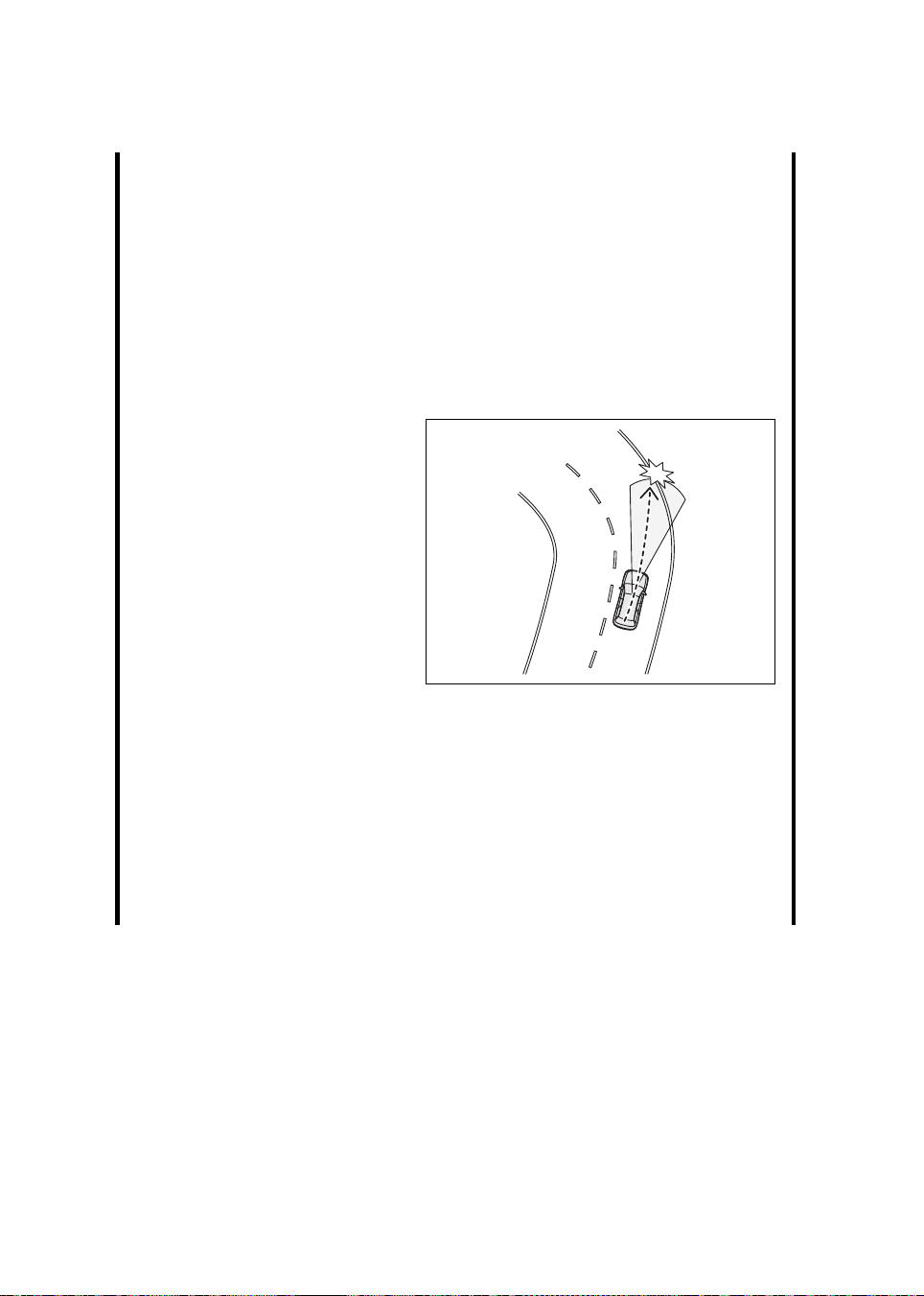
Lane Departure Warning
162
Continued from previous page
• The stereo camera may have difficulty detecting the lane markings under the
following conditions and the system may not operate properly.
- At night or in a tunnel without the headlights on
- In bad weather (for example, rain, snow or thick fog)
- The road surface is wet and shining by reflected light.
- There are other traffic markings on the lane you are driving in (arrows,
words, etc.).
- The distance between your vehicle and the vehicle in front is short, making
it difficult to detect lane markings.
- A vehicle intruded from an adjacent lane or the vehicle in front changed
lanes.
- The shape of a curve in the
road suddenly changes.
- Shadows of guardrails or sim-
ilar objects are overlapped on
the lane markings.
- Strong light is coming from
the front (sunlight or headlight
beams of oncoming traffic,
etc.).
- The width of a lane is either
too narrow or too wide.
- The width of a lane has
changed.
- The stereo camera may have difficulty detecting the lane due to the perfor-
mance of the camera.
• There are no lane markings or they are very worn.
• The lane markings are painted in yellow.
• The lane markings are similar in color to the road surface.
• The lane markings are drawn in double.
• The width of lane markings is narrow.
• Lines that are not lane markings are painted on roads.
• The lane markings are touching the walls and poles.
H00465
B8442BE-A.book 162 ページ 2024年10月29日 火曜日 午後6時50分
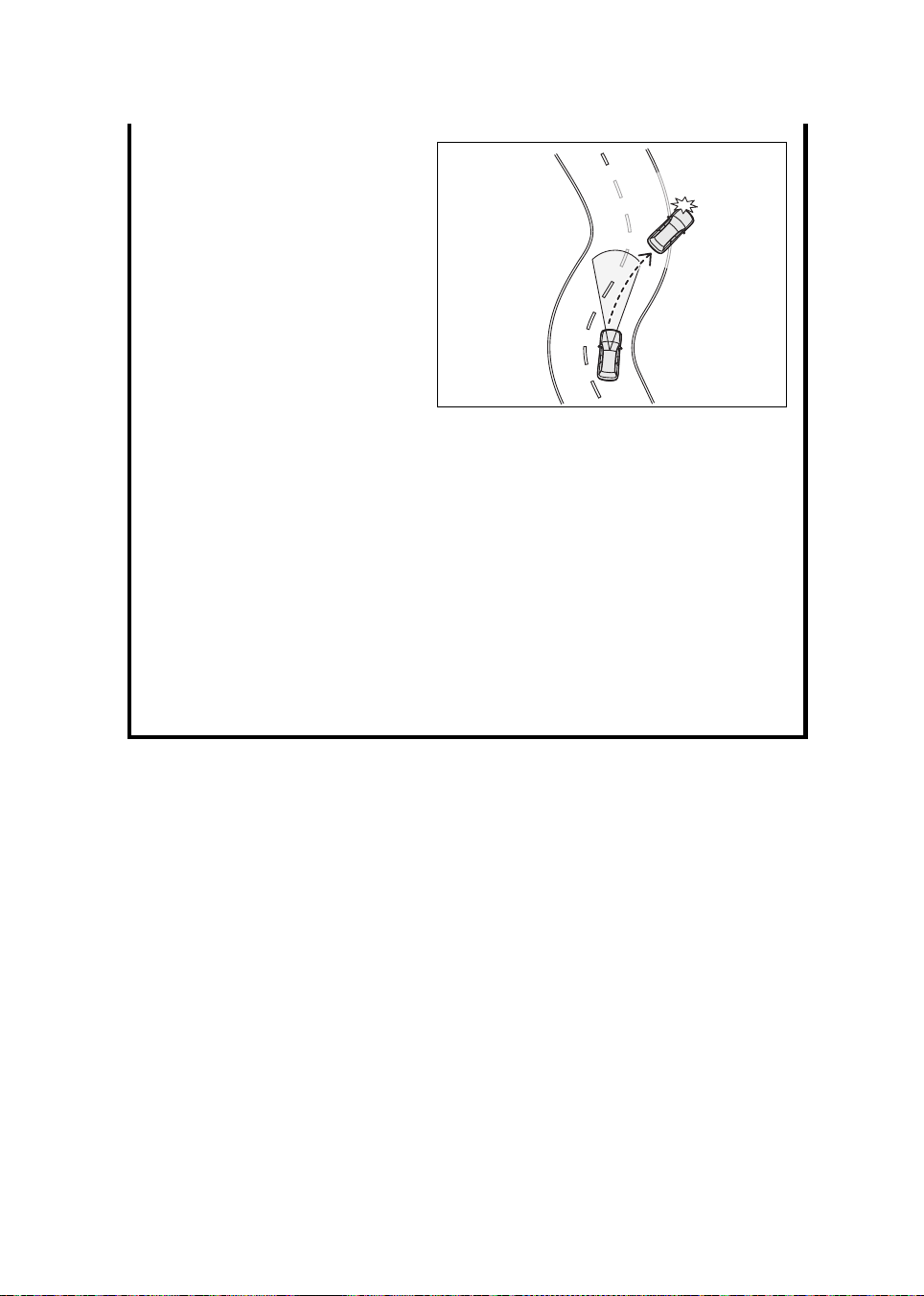
Lane Departure Warning
163
- The shape of lane markings
suddenly changes
(entrance/exit of a curve,
crank and winding road, etc.).
- There is a curb or a side wall
on the road shoulder.
- The brightness changes such
as at a tunnel entrance or exit
or when you drive under an
overpass.
- Fluid has not been fully wiped
off the windshield during or
after washer use.
- The vehicle is tilted at an extreme angle due to loaded cargo or other fac-
tors.
- Snow, puddles or snow melting agents remain on the road surface.
- Visibility is poor due to sand, smoke or water vapor blowing in the wind, or
the front vision is obscured due to water splashes, snow, dirt or dust stir up
generated by the vehicle in front or oncoming traffic.
- The stereo camera’s field of view is obstructed by fogging, snow, dirt, frost,
dust, scratches, or smears on the windshield, or by light reflecting off the
dirt, etc.
- Rain or dirt has not been fully wiped off of the windshield. There is a risk of
that the stereo camera may not detect the lanes or the oncoming vehicle.
- The stereo camera’s field of view is obstructed (for example by a canoe on
the roof of the vehicle).
H00464
B8442BE-A.book 163 ページ 2024年10月29日 火曜日 午後6時50分
Lane Departure Warning
164
CAUTION
Under the following conditions, Lane Departure Warning may not operate:
• Vehicle speed is approximately 30 mph (50 km/h) or less.
• The steering wheel is turned significantly to either side.
• The road grade abruptly changes (uphill or downhill).
• On a sharp curve
• The brake pedal is depressed or immediately after it is depressed.
• The turn signal is operating.
• For approximately 3 seconds after the turn signal lever has returned to its
original position
• The vehicle has not returned to the inside of the lane after Lane Departure
Warning has activated.
NOTE
• The following situations may cause incorrect lane detection and a faulty Lane
Departure Warning to occur.
- There are tire tracks on a wet road or snow-covered road.
- There are boundaries between snow and asphalt, or marks from road
repair, etc.
- There are the shadows of guardrails.
- Lane markings are drawn in double.
- There are some lane markings left from roadwork or markings from the pre-
vious road.
• Lane Departure Warning determines when to activate the warning from vari-
ous factors, such as how fast the vehicle is approaching the lane markings.
Therefore, the position at which the warning is activated may vary.
• When (Lane Departure Warning OFF indicator light) is illuminated, Lane
Departure Warning will not operate.
Page 165
B8442BE-A.book 164 ページ 2024年10月29日 火曜日 午後6時50分
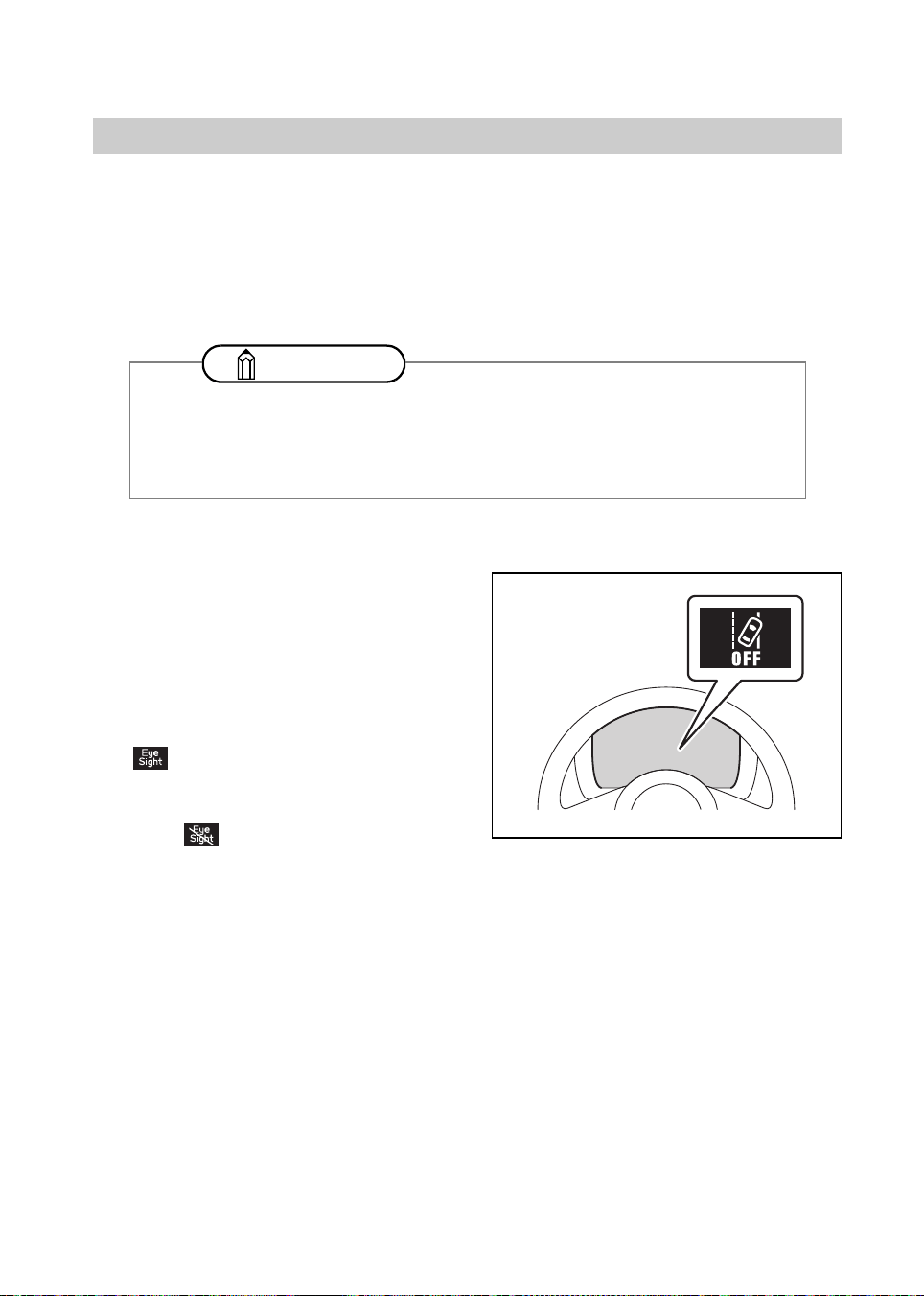
Lane Departure Warning
165
Operate the center information display to turn on/off Lane Departure Warning.
On the “Lane Departure” screen of the EyeSight settings, select “Prevention & Warning”,
and then select “All Functions” or “Warning Buzzer Only” to turn this function on.
On the “Lane Departure” screen of the EyeSight settings, select “Prevention & Warning”,
and then select “Lane Departure Prevention Function Only” or “OFF” to turn this function off.
Page 195
■ Lane Departure Warning OFF indicator light
This indicator light illuminates when the igni-
tion switch is turned to the ON position, and
then turns off several seconds after the hybrid
system starts.
It also illuminates under the following condi-
tions.
• The EyeSight system has a malfunction.
(EyeSight warning indicator: Yellow)
Page 189
• The EyeSight system has stopped tempo-
rarily. (EyeSight temporary stop indi-
cator: White)
Page 191
Turning on/off Lane Departure Warning
NOTE
• The on/off setting for Lane Departure Warning operates in cooperation with
Lane Sway Warning.
• The on/off status of Lane Departure Warning is restored when you restart the
hybrid system.
H02201
B8442BE-A.book 165 ページ 2024年10月29日 火曜日 午後6時50分
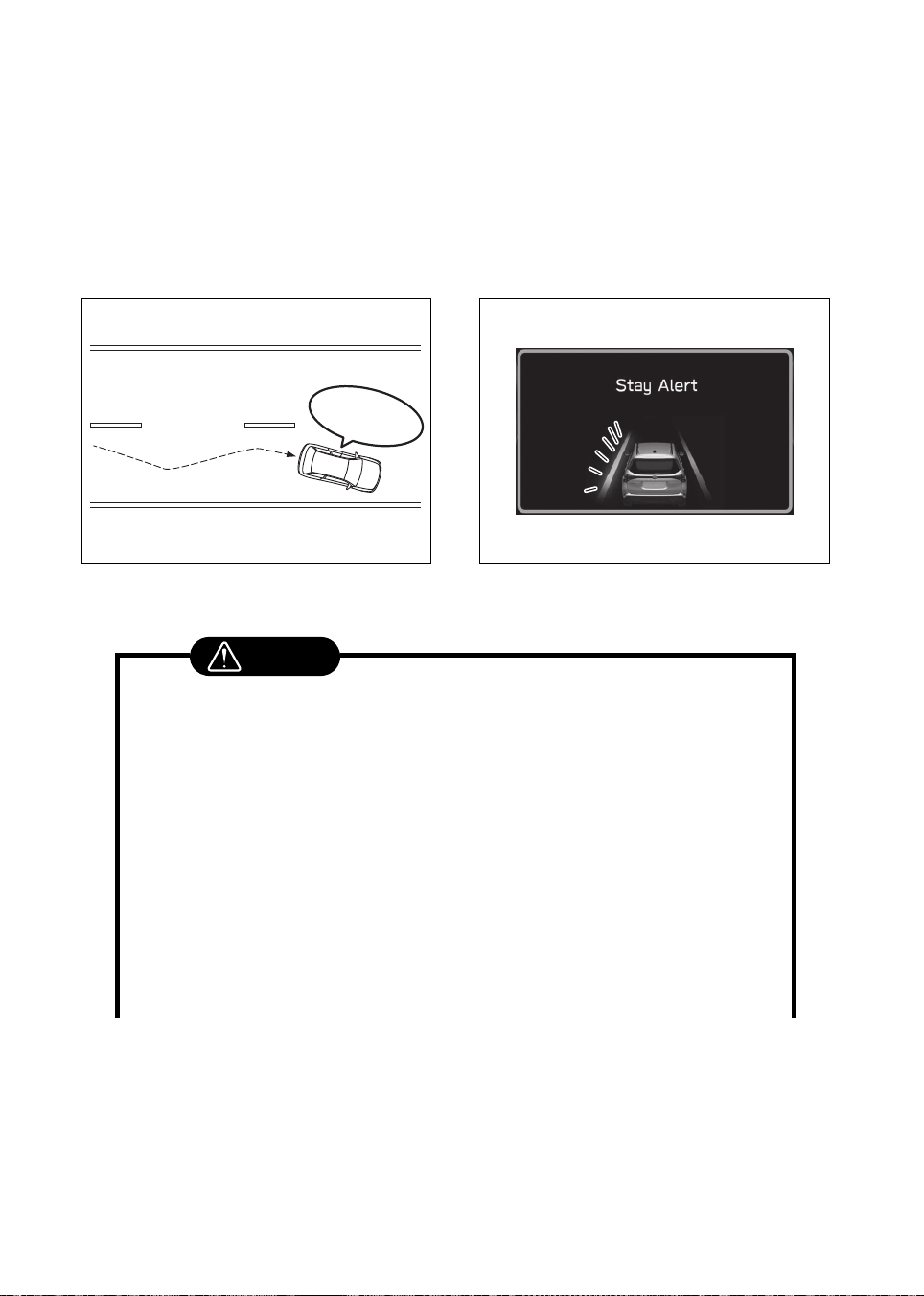
166
Lane Sway Warning
This function detects swaying or drifting within a lane, and warns the driver. When Lane
Sway Warning activates, an alert sounds 3 short beeps and an interruption screen will be
displayed.
This function activates when the vehicle speed exceeds approximately 37 mph (60 km/h)
and deactivates when the vehicle speed falls below approximately 25 mph (40 km/h). The
function will reactivate when the vehicle speed is increased to exceed approximately 37
mph (60 km/h).
*: The lines on the right and left blink alternately.
WARNING
• Lane Sway Warning will not operate in all conditions. It also will not automati-
cally correct swaying. If the driver relies only on Lane Sway Warning to pre-
vent the vehicle from swaying, an accident may occur.
• The stereo camera may have difficulty detecting the lane markings under the
following conditions and the system may not operate properly.
- At night or in a tunnel without the headlights on
- In bad weather (for example, rain, snow or thick fog)
- The road surface is wet and shining by reflected light.
- There are other traffic markings on the lane you are driving in (arrows,
words, etc.).
- The distance between your vehicle and the vehicle in front is short, making
it difficult to detect lane markings.
- A vehicle intruded from an adjacent lane or the vehicle in front changed
lanes.
S03879
3
s
h
o
r
t
b
e
e
p
s
H02450
B8442BE-A.book 166 ページ 2024年10月29日 火曜日 午後6時50分
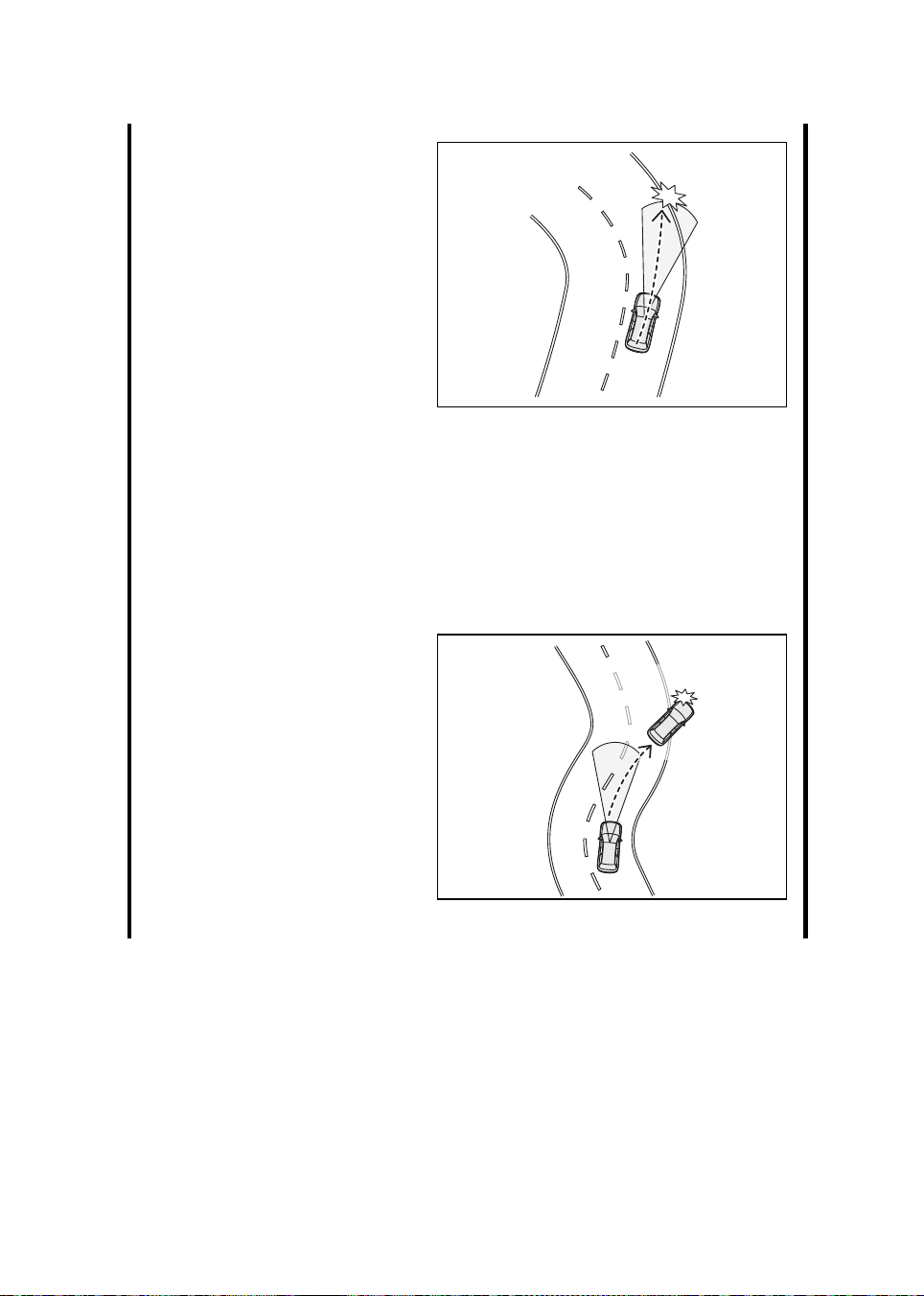
Lane Sway Warning
167
Continued on next page
- The shape of a curve in the
road suddenly changes.
- Shadows of guardrails or sim-
ilar objects are overlapped on
the lane markings.
- Strong light is coming from
the front (sunlight or headlight
beams of oncoming traffic,
etc.).
- The width of a lane is either
too narrow or too wide.
- The width of a lane has
changed.
- The stereo camera may have difficulty detecting the lane due to the perfor-
mance of the camera.
• There are no lane markings or they are very worn.
• The lane markings are painted in yellow.
• The lane markings are similar in color to the road surface.
• The lane markings are drawn in double.
• The width of lane markings is narrow.
• Lines that are not lane markings are painted on roads.
• The lane markings are touching the walls and poles.
- The shape of lane markings
suddenly changes
(entrance/exit of a curve,
crank and winding road, etc.).
- There is a curb or a side wall
on the road shoulder.
- The brightness changes such
as at a tunnel entrance or exit
or when you drive under an
overpass.
- Fluid has not been fully wiped
off the windshield during or
after washer use.
H00465
H00464
B8442BE-A.book 167 ページ 2024年10月29日 火曜日 午後6時50分
Lane Sway Warning
168
Continued from previous page
- The vehicle is tilted at an extreme angle due to loaded cargo or other fac-
tors.
- Snow, puddles or snow melting agents remain on the road surface.
- Visibility is poor due to sand, smoke or water vapor blowing in the wind, or
the front vision is obscured due to water splashes, snow, dirt or dust stir up
generated by the vehicle in front or oncoming traffic.
- The stereo camera’s field of view is obstructed by fogging, snow, dirt, frost,
dust, scratches, or smears on the windshield, or by light reflecting off the
dirt, etc.
- Rain or dirt has not been fully wiped off of the windshield. There is a risk of
that the stereo camera may not detect the lanes or the oncoming vehicle.
- The stereo camera’s field of view is obstructed (for example by a canoe on
the roof of the vehicle).
CAUTION
Under the following conditions, Lane Sway Warning may not operate.
• On a winding road
• The road grade abruptly changes (uphill or downhill).
• The vehicle speed changes greatly.
• Immediately after a lane change
NOTE
• Swaying detection is based on several minutes of prior driving data. Swaying
will not be detected immediately after the vehicle starts to sway. In addition,
the warning may continue for some time even after swaying stops.
• Lane Sway Warning is just a function that warns the driver. When the driver is
tired, not concentrating on the road or not paying adequate attention to driv-
ing, be sure to take rest breaks as often as needed.
• Under the following conditions, Lane Sway Warning will not operate.
- Lane Centering Function is operating.
Page 98
- (Lane Departure Warning OFF indicator light) is illuminated.
Page 165
B8442BE-A.book 168 ページ 2024年10月29日 火曜日 午後6時50分
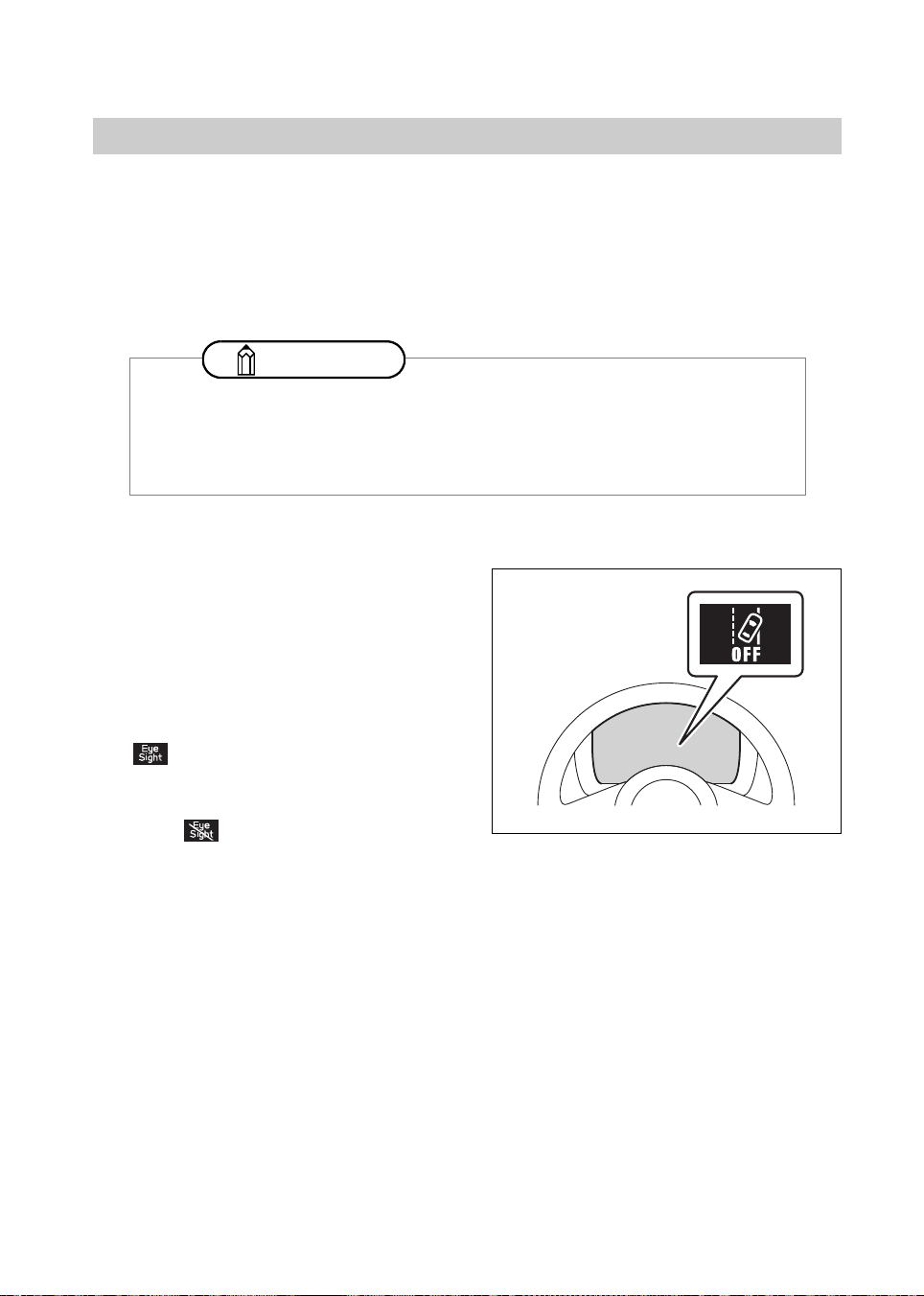
Lane Sway Warning
169
Operate the center information display to turn on/off Lane Sway Warning.
On the “Lane Departure” screen of the EyeSight settings, select “Prevention & Warning”,
and then select “All Functions” or “Warning Buzzer Only” to turn this function on.
On the “Lane Departure” screen of the EyeSight settings, select “Prevention & Warning”,
and then select “Lane Departure Prevention Function Only” or “OFF” to turn this function off.
Page 195
■ Lane Departure Warning OFF indicator light
This indicator light illuminates when the igni-
tion switch is turned to the ON position, and
then turns off several seconds after the hybrid
system starts.
It also illuminates under the following condi-
tions.
• The EyeSight system has a malfunction.
(EyeSight warning indicator: Yellow)
Page 189
• The EyeSight system has stopped tempo-
rarily. (EyeSight temporary stop indi-
cator: White)
Page 191
Turning on/off Lane Sway Warning
NOTE
• The on/off setting for Lane Sway Warning operates in cooperation with Lane
Departure Warning.
• The on/off status of Lane Sway Warning is restored when you restart the
hybrid system.
H02202
B8442BE-A.book 169 ページ 2024年10月29日 火曜日 午後6時50分
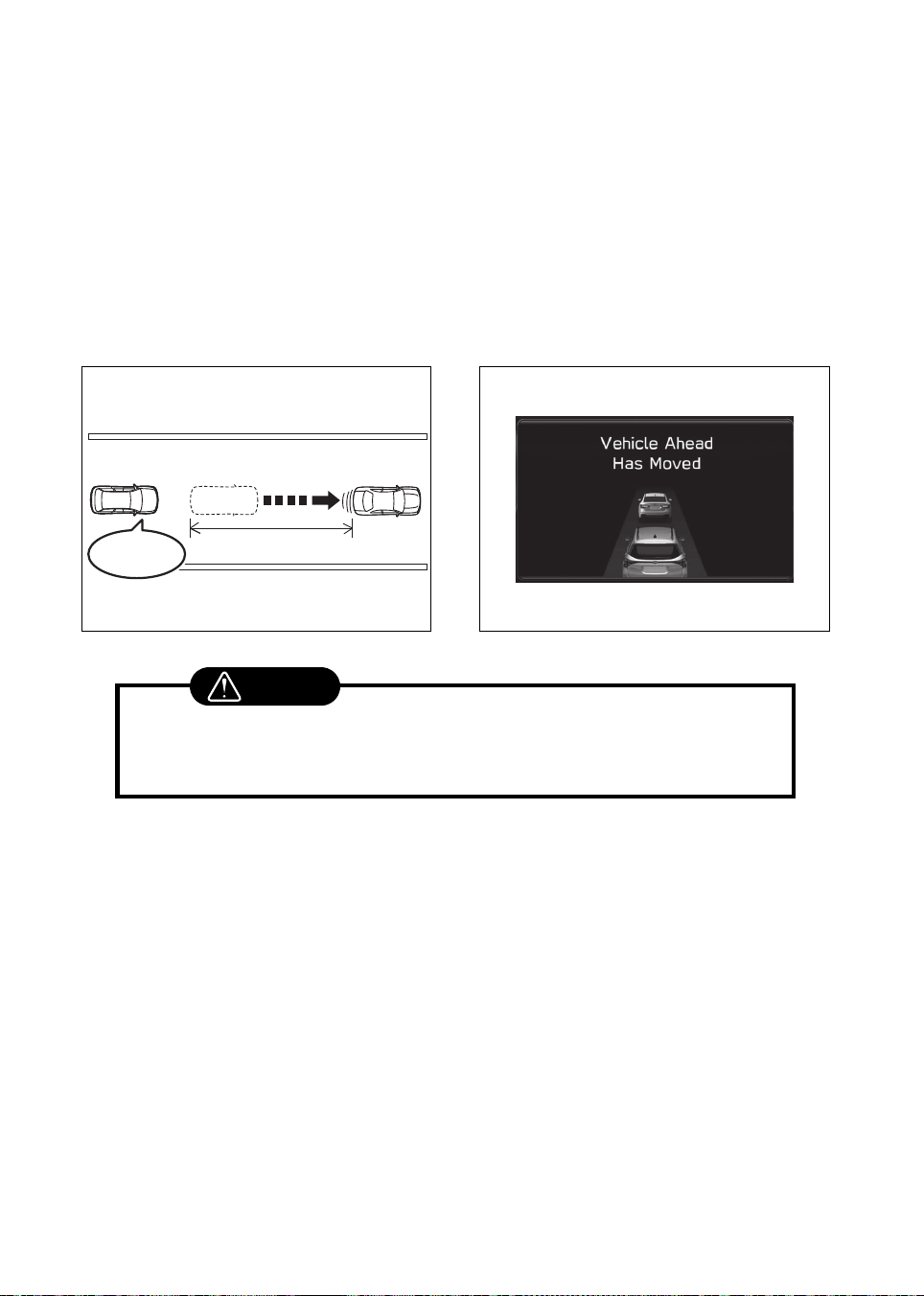
170
Lead Vehicle Start Alert
When the vehicle stopped in front starts to move, Lead Vehicle Start Alert notifies the driver
with an interruption screen on the combination meter display and notification sound. When
the vehicle in front remains stopped continuously (within a following distance of approxi-
mately 39 ft (12 m) and the driver’s vehicle remains stopped for several seconds or longer),
the system continues to detect the vehicle in front and this alert activates if the vehicle in
front advances approximately 13 ft (4 m) or more while the driver’s vehicle remains station-
ary.
This function only activates when the select lever is in the “D”, “M” or “N” position.
When Lead Vehicle Start Alert activates, a notification sounds a two-tone beep and an inter-
ruption screen will be displayed.
WARNING
Even after alerts are given audibly and through an interruption screen, be sure to
carefully check the area surrounding the vehicle before pulling away. Relying
solely on Lead Vehicle Start Alert may result in an accident.
H00462
Lead
vehicle
Lead
vehicle
Two-tone
beep
13 ft (4 m) or more
H02451
B8442BE-A.book 170 ページ 2024年10月29日 火曜日 午後6時50分
Lead Vehicle Start Alert
171
NOTE
• The Lead Vehicle Start Alert setting can be turned on or off.
Page 195
• Under the following conditions, Lead Vehicle Start Alert may activate even
when the vehicle in front has not started to move, or may not activate even
after the vehicle in front has started to move:
- A motorcycle or similar object cuts in between your vehicle and the stopped
vehicle in front.
- Weather or road conditions may interfere with the detection of the vehicle in
front.
- The stereo camera loses detection of the vehicle in front.
• Under the following conditions, Lead Vehicle Start Alert will not activate.
- The EyeSight system has a malfunction. (EyeSight warning indicator:
Yellow)
Page 189
- The EyeSight system has stopped temporarily. (EyeSight temporary
stop indicator: White)
Page 191
B8442BE-A.book 171 ページ 2024年10月29日 火曜日 午後6時50分
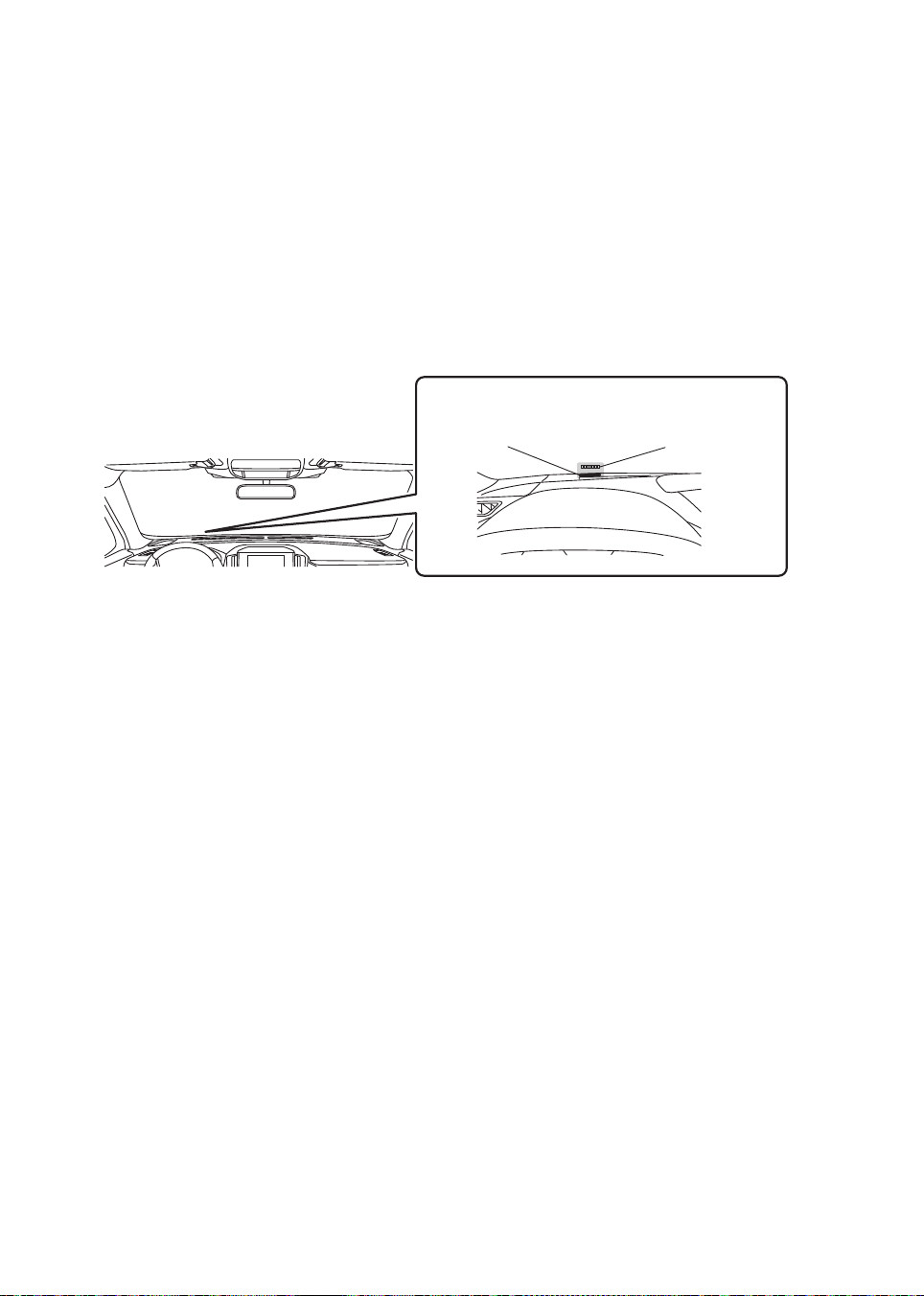
172
EyeSight Assist Monitor (if equipped)
The operating status of the EyeSight system is projected on the lower part of the windshield.
This allows the driver to remain aware of warnings and displayed information without taking
their eyes off the surrounding driving environment.
The LED indicators can be set to ON/OFF.
Page 195
For only the green indicator, the brightness can be adjusted when the illumination bright-
ness control dial is turned. In dark surroundings, the red and yellow indicators dim according
to the adjusted brightness.
Refer to the vehicle Owner’s Manual for details.
H02518
EyeSight
Assist Monitor
LED indicator
(windshield projection)
B8442BE-A.book 172 ページ 2024年10月29日 火曜日 午後6時50分
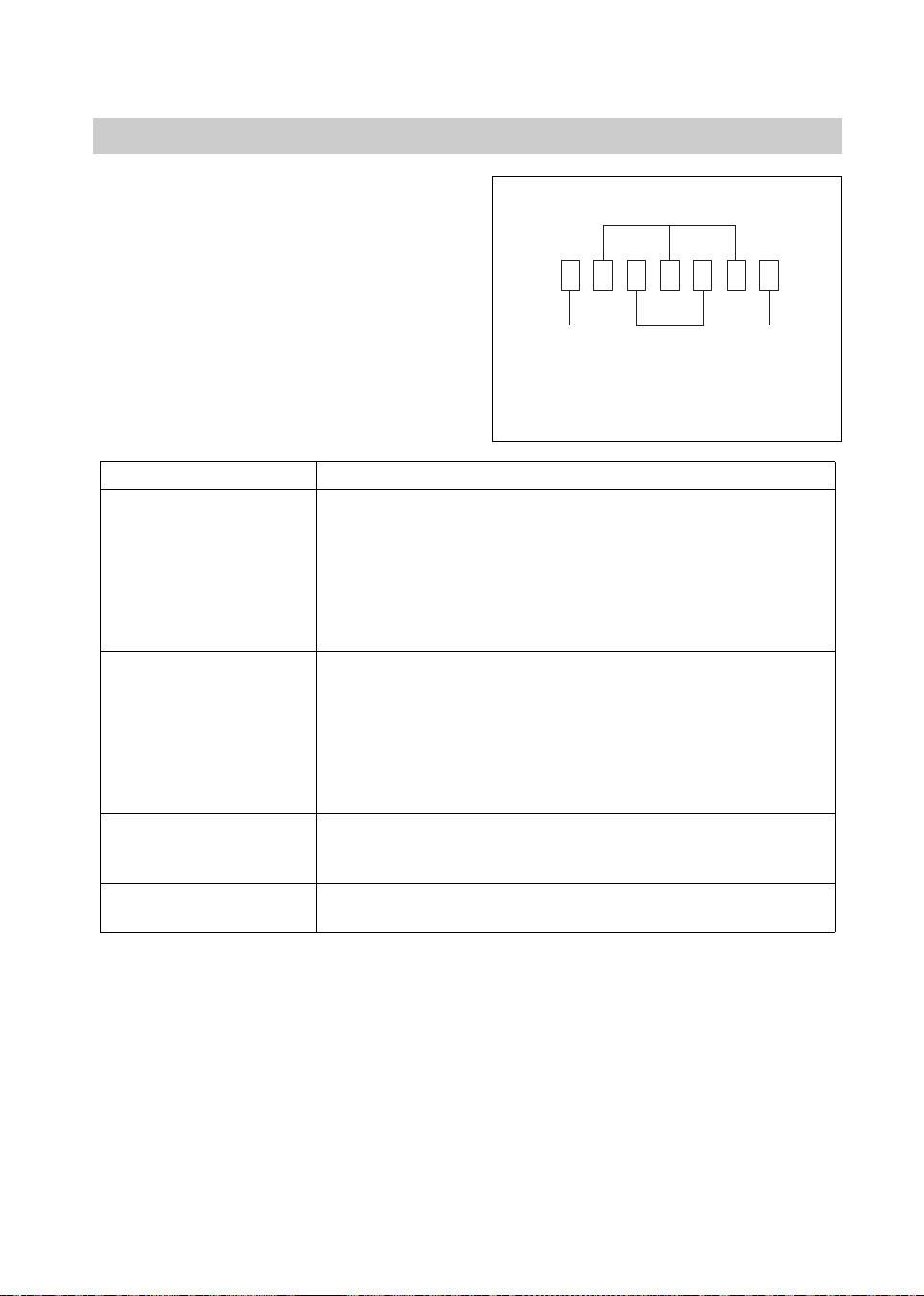
EyeSight Assist Monitor (if equipped)
173
When the ignition switch is turned to the ON
position, the LED indicators will illuminate in
the order of Yellow → Red → Green.
When EyeSight Assist Monitor customization
is turned on, they will illuminate twice.
To inform the driver of the operation condition
of EyeSight while driving, the LED indicators
are illuminated according to the operation
condition of EyeSight and the light they emit is
projected on the lower part of the windshield.
EyeSight Assist Monitor Operation
Display Condition
Red indicators blink
simultaneously
(2 indicators)
• The Following Distance Warning, Pre-Collision Braking
System (first braking or secondary braking), Automatic
Emergency Steering, “Obstacle Detected” warning or Pre-
Collision Throttle Management is operating.
• Lane Centering Function was canceled when there was no
operation of the steering wheel.
• Emergency Stop Assist is operating.
Red indicator blinks
(one side)
• Lane Centering Function is active and the vehicle is likely to
depart the lane. The side where the vehicle has left its lane
blinks, and the side that has not left its lane illuminates.
• Emergency Lane Keep Assist activated. (When the vehicle
departs the lane while detecting a nearby vehicle, the
indicator blinks on the side that was crossed. The indicator
on the other side illuminates.)
Yellow indicator blinks
(one side)
Lane Departure Warning is operating. The side where the vehi-
cle has left its lane blinks, and the side that has not left its lane
illuminates.
Yellow indicators blink
(alternately)
Lane Sway Warning is operating.
H01135
yellow red yellow
green
B8442BE-A.book 173 ページ 2024年10月29日 火曜日 午後6時50分

EyeSight Assist Monitor (if equipped)
174
Yellow indicators blink
simultaneously
• Steering wheel operation is not detected for a certain period
of time while Lane Centering Function or Lane Departure
Prevention Function is operating.
• Lane Centering Function was canceled automatically by the
system (blinking rapidly).
• Lane Departure Prevention Function was canceled
automatically by the system (blinking rapidly).
• The system detects driver inattention or that the driver has
fallen asleep, or is still unable to detect the driver’s state
while Lane Centering Function is operating.
• Driver Monitoring System has a malfunction or has stopped
temporarily when Lane Centering Function is on.
Green indicator
illuminates (center)
A vehicle is detected ahead while Adaptive Cruise Control is
operating.
Green indicators
illuminate (both sides)
Lane Centering Function is operating while keeping your eyes
on the road. These two green indicators illuminate even if illu-
mination of the green indicator is set to off in the EyeSight set-
tings.
Display Condition
B8442BE-A.book 174 ページ 2024年10月29日 火曜日 午後6時50分
Conventional Cruise Control
175
Conventional Cruise Control
Conventional Cruise Control is a driving support system intended to allow more comfortable
driving on expressways, freeways and interstate highways. It can be used to travel at a con-
stant speed by maintaining the vehicle speed set by the driver. Please remember that you
should not exceed posted speed limits.
WARNING
• When Conventional Cruise Control is functioning, the system does not per-
form the following control to maintain a following distance, as when using
Adaptive Cruise Control.
Strive for safe driving and depress the brake pedal to decelerate the vehicle
as necessary in order to ensure a safe following distance from the vehicle in
front.
• Under the following conditions, do not use Conventional Cruise Control.
Doing so may result in an accident.
- Roads with heavy traffic or roads with sharp curves
Maintaining an appropriate speed for such road conditions may be difficult.
- Frozen roads, snow-covered roads or slippery road surfaces
The tires may spin, causing your vehicle to lose control.
- Steep downhill grades
The set vehicle speed may be exceeded.
- On a steep continuous downhill grade
The brakes may overheat.
• When using Conventional Cruise Control, always set the speed according to
the speed limit, traffic flow, road conditions, and other conditions.
CAUTION
When using cruise control, be sure to check the combination meter display to
confirm which cruise control mode is selected: Adaptive Cruise Control or Con-
ventional Cruise Control.
• If Adaptive Cruise Control is selected, (Adaptive Cruise Control indica-
tor) illuminates.
• If Conventional Cruise Control is selected, (Conventional Cruise Control
indicator) illuminates.
B8442BE-A.book 175 ページ 2024年10月29日 火曜日 午後6時50分
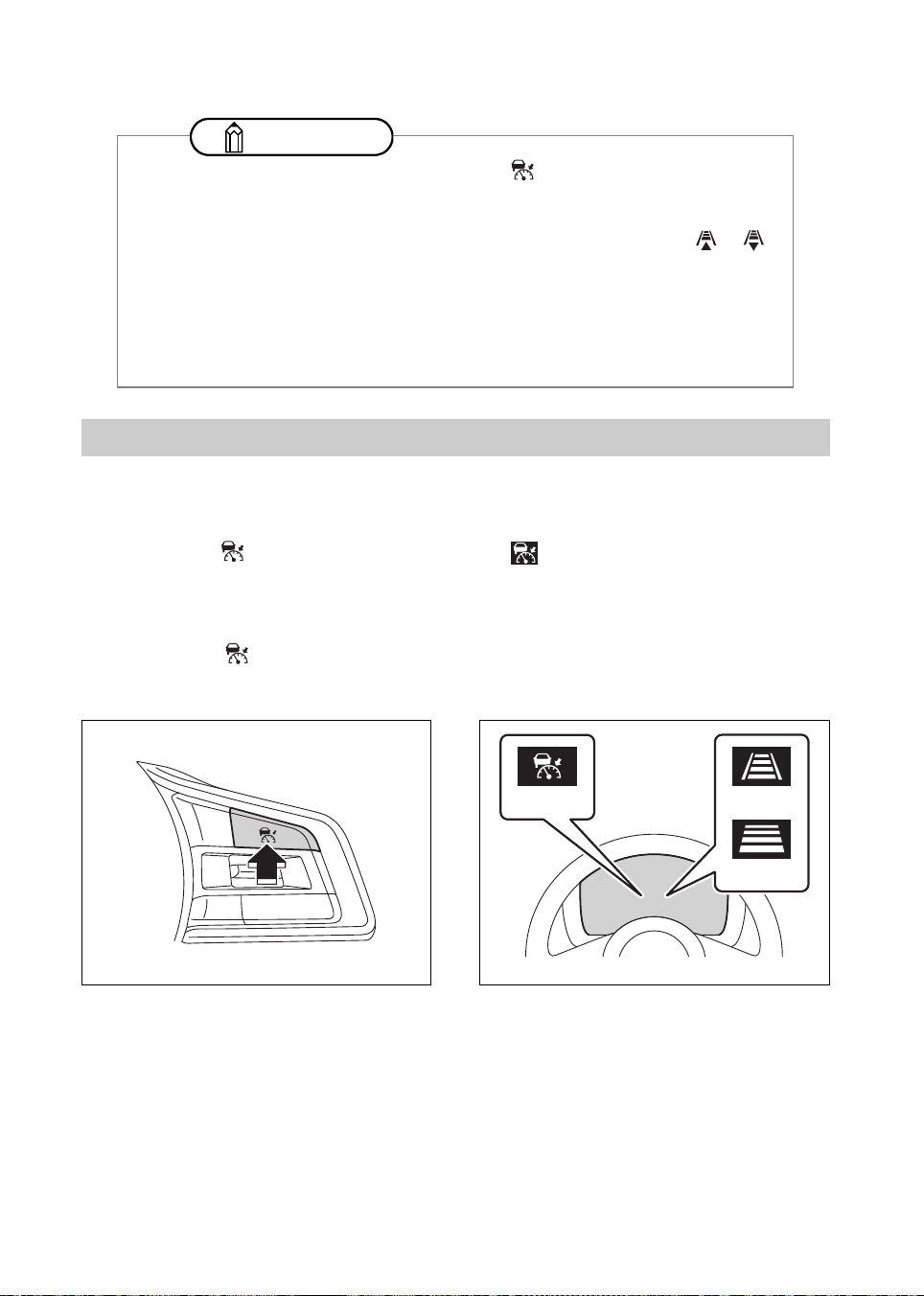
Conventional Cruise Control
176
■ Setting Conventional Cruise Control
1. Setting Adaptive Cruise Control to standby status
Press the (CRUISE) switch. At this time, (Adaptive Cruise Control indicator)
(white), your vehicle indicator and the following distance setting indicator are displayed
on the combination meter display.
The set vehicle speed display will read “- - - MPH (- - - km/h)”.
When the (CRUISE) switch is pressed, the initial cruise control mode is always
Adaptive Cruise Control.
NOTE
• When the main cruise control is off and the (CRUISE) switch is pressed,
Adaptive Cruise Control is activated.
• When the main cruise control is on, switching between Adaptive Cruise Con-
trol and Conventional Cruise Control is possible by pressing the /
(Following distance setting) switch*.
*: To switch to Conventional Cruise Control, press and hold the switch for
approximately 2 seconds or longer.
• Conventional Cruise Control can be used even when EyeSight is temporarily
stopped.
How to use Conventional Cruise Control
(1) Adaptive Cruise Control indicator
(white)
(2) Following distance setting indicator
(12.3-inch display models)
(3) Following distance setting indicator
(4.2-inch display models)
H00541
H02249
(3)
(1)
(2)
B8442BE-A.book 176 ページ 2024年10月29日 火曜日 午後6時50分
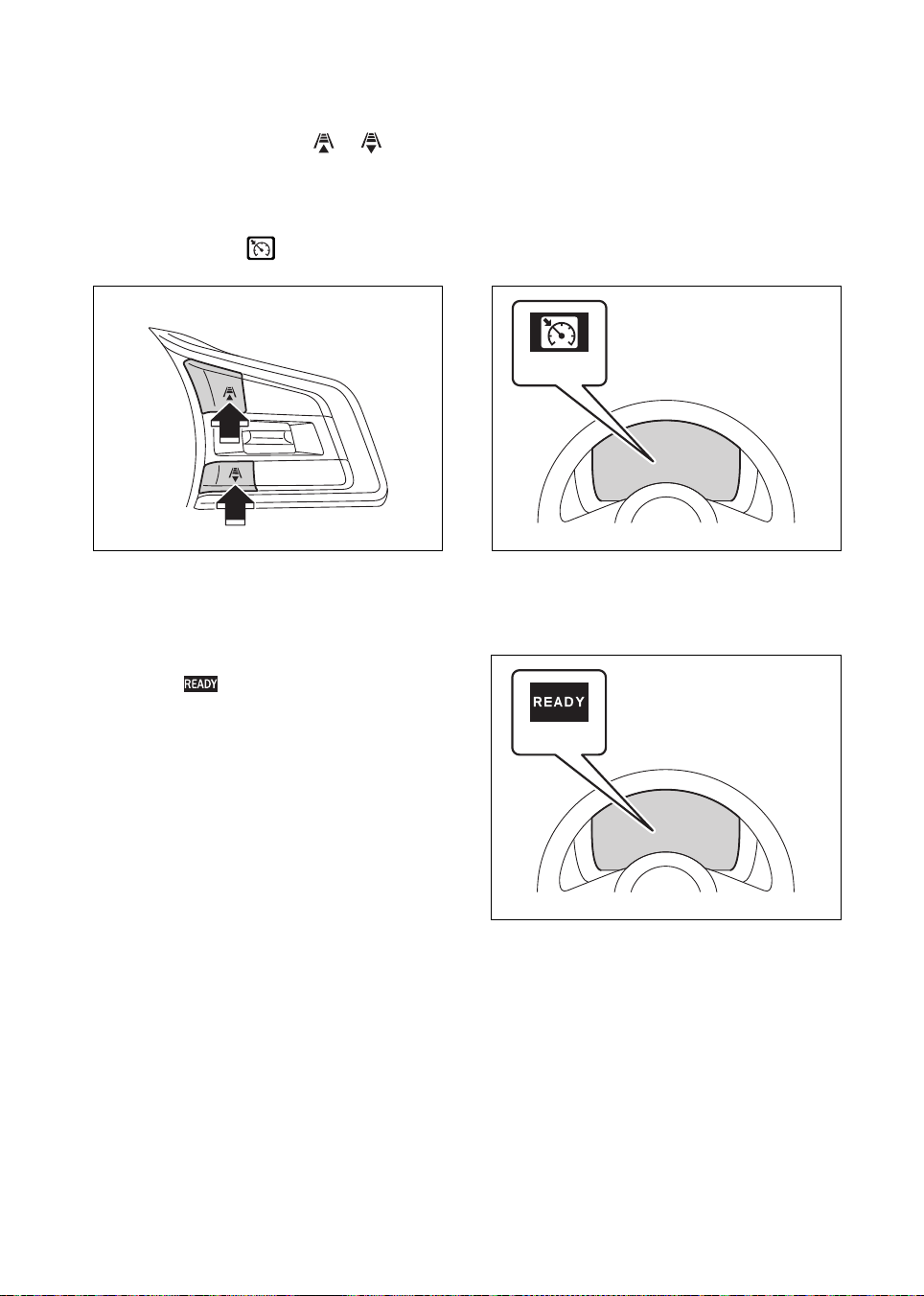
Conventional Cruise Control
177
2. Switch to Conventional Cruise Control.
Press and hold the / (Following distance setting) switch for approximately 2
seconds or longer to switch from Adaptive Cruise Control to Conventional Cruise
Control. A notification sounds 1 short beep.
At this time, the following distance setting indicator on the combination meter display
turns off and (Conventional Cruise Control indicator) (white) is displayed.
To set the ready status:
When all of the following conditions are
met, (READY indicator) is displayed
on the combination meter display, and
Conventional Cruise Control can be acti-
vated.
- All doors (except the rear gate) are
closed.
- The driver’s seatbelt is fastened.
- The electronic parking brake is not
applied. The electronic parking brake
indicator light is off.
- The select lever is in the “D” or “M”
position.
- Gear “1”, “2” or “3” has not been selected with the shift paddles.
- The brake pedal is not depressed.
- The road is not a steep slope.
- The steering wheel has not been turned significantly in either direction.
- The X-MODE is turned off (the X-MODE indicator is off).
(1) Conventional Cruise Control indica-
tor (white)
H00542
H02250
(1)
(1) READY indicator
H02292
(1)
B8442BE-A.book 177 ページ 2024年10月29日 火曜日 午後6時50分
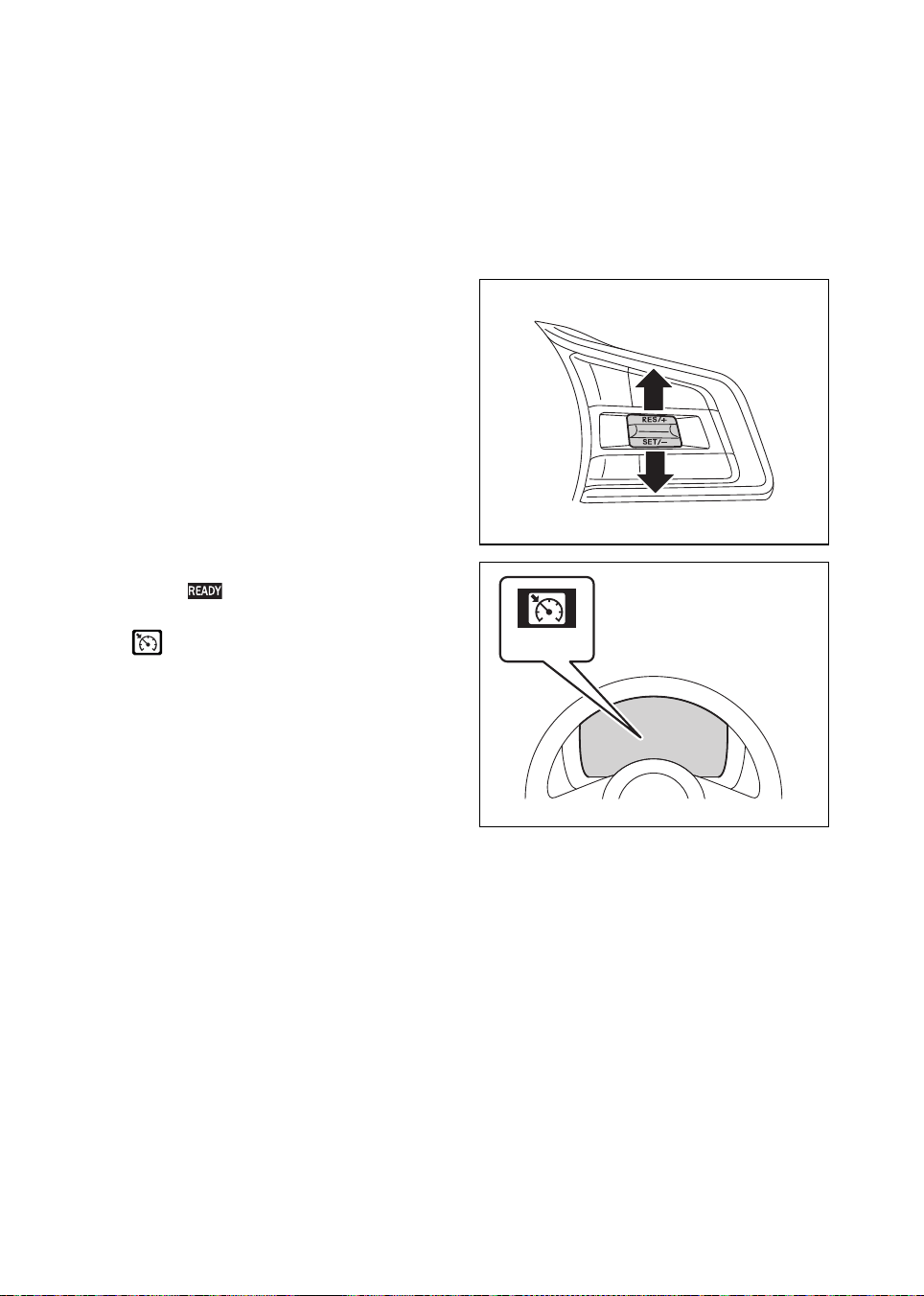
Conventional Cruise Control
178
- The vehicle speed is between approximately 20 mph (30 km/h) and 90 mph (145
km/h).
- The engine is not running at a high rpm.
- Vehicle Dynamics Control or Traction Control Function is not active.
3. Control the accelerator pedal to reach the desired speed.
4. When the vehicle reaches the desired
speed, press the RES/SET switch to the
“RES/+” side or the “SET/-” side.
The vehicle speed at the time the switch is
pressed becomes the set vehicle speed,
and constant speed driving will initiate.
When Conventional Cruise Control is acti-
vated, (READY indicator) turns off,
the set vehicle speed is displayed, and
(Conventional Cruise Control indica-
tor) changes from white to green.
H00907
(1) Conventional Cruise Control indica-
tor (green)
H02252
(1)
B8442BE-A.book 178 ページ 2024年10月29日 火曜日 午後6時50分
Conventional Cruise Control
179
WARNING
• The “Obstacle Detected” warning will not activate while Conventional Cruise
Control is functioning.
• When using Conventional Cruise Control, always set the speed according to
the speed limit, traffic flow, road conditions, and other conditions.
CAUTION
During Conventional Cruise Control use, accelerator and brake control to follow
the vehicle in front is not performed. Operate the accelerator and brake pedals
as necessary.
NOTE
• On a downhill grade, automatic braking may operate in order to maintain the
set vehicle speed.
• When driving on a curve, the vehicle may not accelerate, or may decelerate,
even if the set vehicle speed is higher than the current vehicle speed.
• To return to Adaptive Cruise Control use, cancel Conventional Cruise Control
and then briefly press the / (Following distance setting) switch. A
notification sounds 1 short beep when switching to Adaptive Cruise Control.
B8442BE-A.book 179 ページ 2024年10月29日 火曜日 午後6時50分
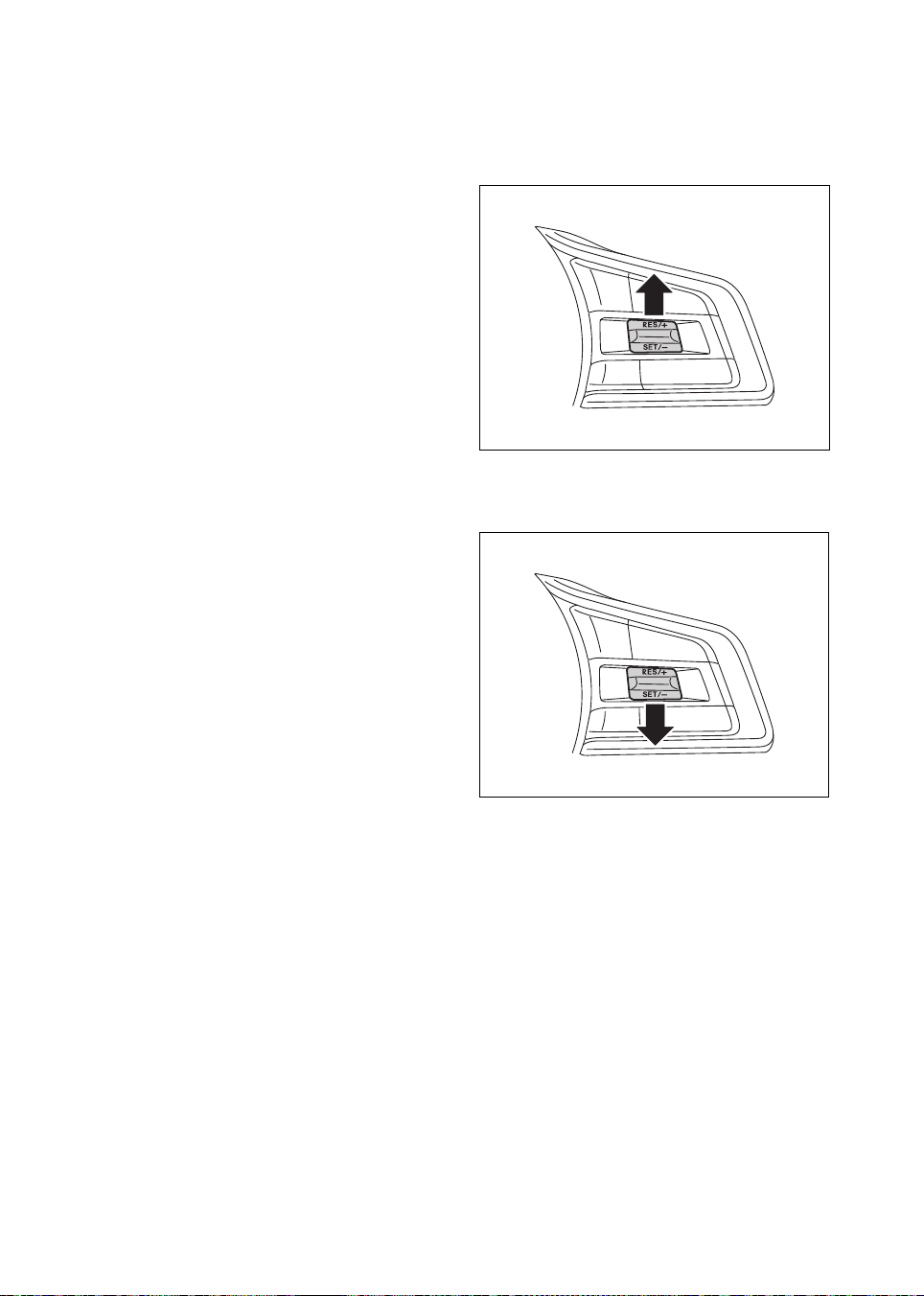
Conventional Cruise Control
180
■ Increasing the set vehicle speed
●
Using the RES/SET switch
• Push to the “RES/+” side briefly.
Every time the switch is pushed, the set
vehicle speed will increase in increments of
1 mph (1 km/h).
• Push to the “RES/+” side continuously.
While the switch is being pushed, the set
vehicle speed will increase in increments of
5 mph (5 km/h).
When operating the switch, the set vehicle
speed changes on the combination meter dis-
play.
●Using the accelerator pedal
1. Depress the accelerator pedal to increase
vehicle speed.
2. When the desired speed is reached, press
the RES/SET switch to the “SET/-” side.
The speed at the time of pressing the
switch will be set as the new set vehicle
speed, and it appears on the combination
meter display.
H00908
H00909
B8442BE-A.book 180 ページ 2024年10月29日 火曜日 午後6時50分
Conventional Cruise Control
181
■ Decreasing the set vehicle speed
●
Using the RES/SET switch
• Push to the “SET/-” side briefly.
Every time the switch is pushed, the set
vehicle speed will decrease in decrements
of 1 mph (1 km/h).
• Push to the “SET/-” side continuously.
While the switch is being pushed, the set
vehicle speed will decrease in decrements
of 5 mph (5 km/h).
When operating the switch, the set vehicle
speed changes on the combination meter dis-
play.
●Using the brake pedal
1. Depress the brake pedal to decrease the vehicle speed.
Conventional Cruise Control will be canceled and (Conventional Cruise Control
indicator) changes from green to white.
2. When the desired speed is reached, press the RES/SET switch to the “SET/-” side.
The speed at the time of pressing the switch will be set as the new set vehicle speed, and
it appears on the combination meter display.
■ Accelerating temporarily
Depress the accelerator pedal to accelerate temporarily.
When the accelerator pedal is released, the vehicle returns to the set vehicle speed.
H00910
B8442BE-A.book 181 ページ 2024年10月29日 火曜日 午後6時50分
Conventional Cruise Control
182
■ Decelerating temporarily
Depress the brake pedal to decelerate tempo-
rarily. When the brake pedal is depressed,
Conventional Cruise Control will be canceled.
While the set vehicle speed remains dis-
played on the combination meter display,
(Conventional Cruise Control indicator)
changes from green to white.
Release the brake pedal and press the
RES/SET switch to the “RES/+” side to
restore the set vehicle speed.
■ Canceling Conventional Cruise Control
●
Canceling by driver operation
Any of the following operations will cancel
Conventional Cruise Control.
(Conventional Cruise Control indicator)
changes from green to white while the set
vehicle speed remains displayed on the com-
bination meter display.
• Depress the brake pedal.
• Press the (CRUISE) switch.
(1) Conventional Cruise Control indica-
tor (white)
H02253
(1)
(1) Conventional Cruise Control indica-
tor (white)
H02254
(1)
H00547
B8442BE-A.book 182 ページ 2024年10月29日 火曜日 午後6時50分
Conventional Cruise Control
183
●Automatic cancellation by the system
Under the following conditions, a notification sounds 1 short beep and 1 long beep, and
Conventional Cruise Control is automatically canceled. (Conventional Cruise Control
indicator) changes from green to white. Also, an interruption screen is displayed on the
combination meter display.
• The select lever is moved to a position other than “D” or “M”.
• Gear “1”, “2” or “3” has been selected with the shift paddles.
• Vehicle speed drops to approximately 16 mph (25 km/h) or less (due to a steep uphill
grade or some other reason).
• The X-MODE is turned on (the X-MODE indicator illuminates).
• Vehicle speed increases to approximately 100 mph (160 km/h) or more.
• Vehicle Dynamics Control or Traction Control Function is activated.
• Any door (except the rear gate) is opened.
• The driver’s seatbelt is unfastened.
• The electronic parking brake is applied.
• The EyeSight system has a malfunction. (EyeSight warning indicator: Yellow)
Page 189
• The steering wheel is turned significantly in either direction.
• The grade of the road is very steep.
• The Pre-Collision secondary braking is activated.
• The accelerator pedal was depressed continuously for a long time.
• The engine speed increased to a high rpm.
After the conditions have been resolved, perform the Conventional Cruise Control set oper-
ation again to reactivate Conventional Cruise Control.
(1) Conventional Cruise Control indica-
tor (white)
H02261
H02255
(1)
B8442BE-A.book 183 ページ 2024年10月29日 火曜日 午後6時50分
Conventional Cruise Control
184
WARNING
Do not use Conventional Cruise Control on slippery roads. Doing so may result
in an accident.
CAUTION
When shifting the select lever to the “N” position, Conventional Cruise Control
will be automatically canceled. Do not shift the lever to the “N” position unless in
an emergency. Otherwise the engine brake may not operate, which could cause
an accident.
NOTE
• If EyeSight is malfunctioning, (EyeSight warning indicator: Yellow) is
displayed on the combination meter display. If this occurs, stop the vehicle in
a safe location and then turn off the hybrid system and restart it. If the indica-
tor remains illuminated after restarting the hybrid system, Conventional
Cruise Control cannot be used. This will not interfere with ordinary driving.
However, contact a SUBARU dealer and have the system inspected.
Page 189
• When operation of Conventional Cruise Control has been automatically can-
celed, perform the set operation again after the condition that caused the can-
cellation has been resolved. If Conventional Cruise Control cannot be
activated even after the condition has been corrected, EyeSight may be mal-
functioning. This will not interfere with ordinary driving. However, contact a
SUBARU dealer and have the system inspected.
B8442BE-A.book 184 ページ 2024年10月29日 火曜日 午後6時50分
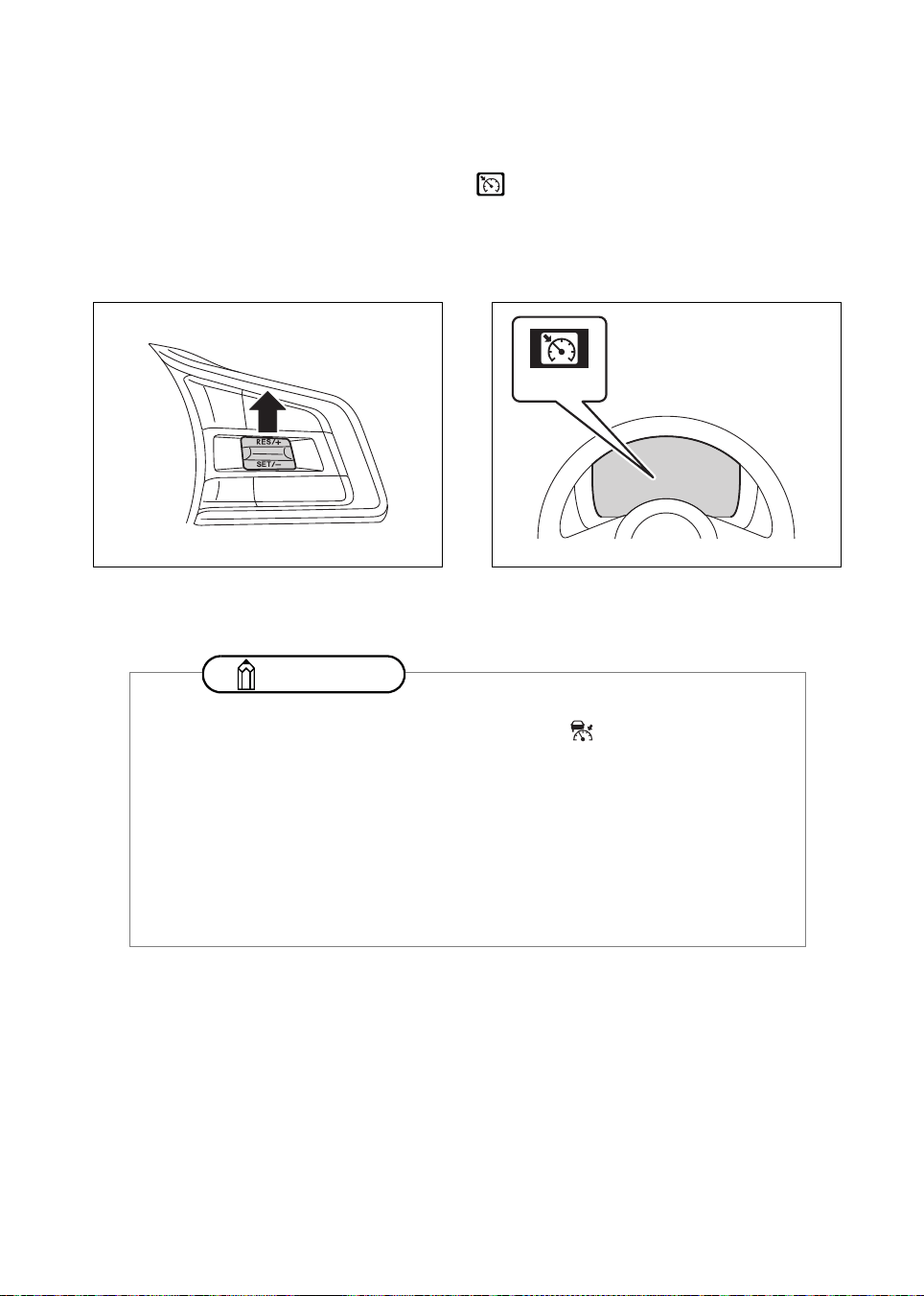
Conventional Cruise Control
185
■ Restoring the previously set vehicle speed
The previously set vehicle speed is stored in memory. To restore that vehicle speed, press
the RES/SET switch to the “RES/+” side. (Conventional Cruise Control indicator)
changes from white to green.
You can restore the set vehicle speed when the previously set vehicle speed has been
stored and the current vehicle speed is approximately 20 mph (30 km/h) or more.
(1) Conventional Cruise Control indica-
tor (green)
NOTE
• The vehicle speed stored in memory is erased in the following circumstances:
- The cruise control is turned off by pressing the (CRUISE) switch.
- The cruise control mode was switched from Conventional Cruise Control to
Adaptive Cruise Control.
• The vehicle drives constantly and correspondingly to the set vehicle speed
between 20 mph (30 km/h) and 90 mph (145 km/h).
• If there is no vehicle speed stored in the memory (previous vehicle speed),
the current vehicle speed is set when the RES/SET switch is pressed to the
“RES/+” side.
Page 176
H00911
H02256
(1)
B8442BE-A.book 185 ページ 2024年10月29日 火曜日 午後6時50分
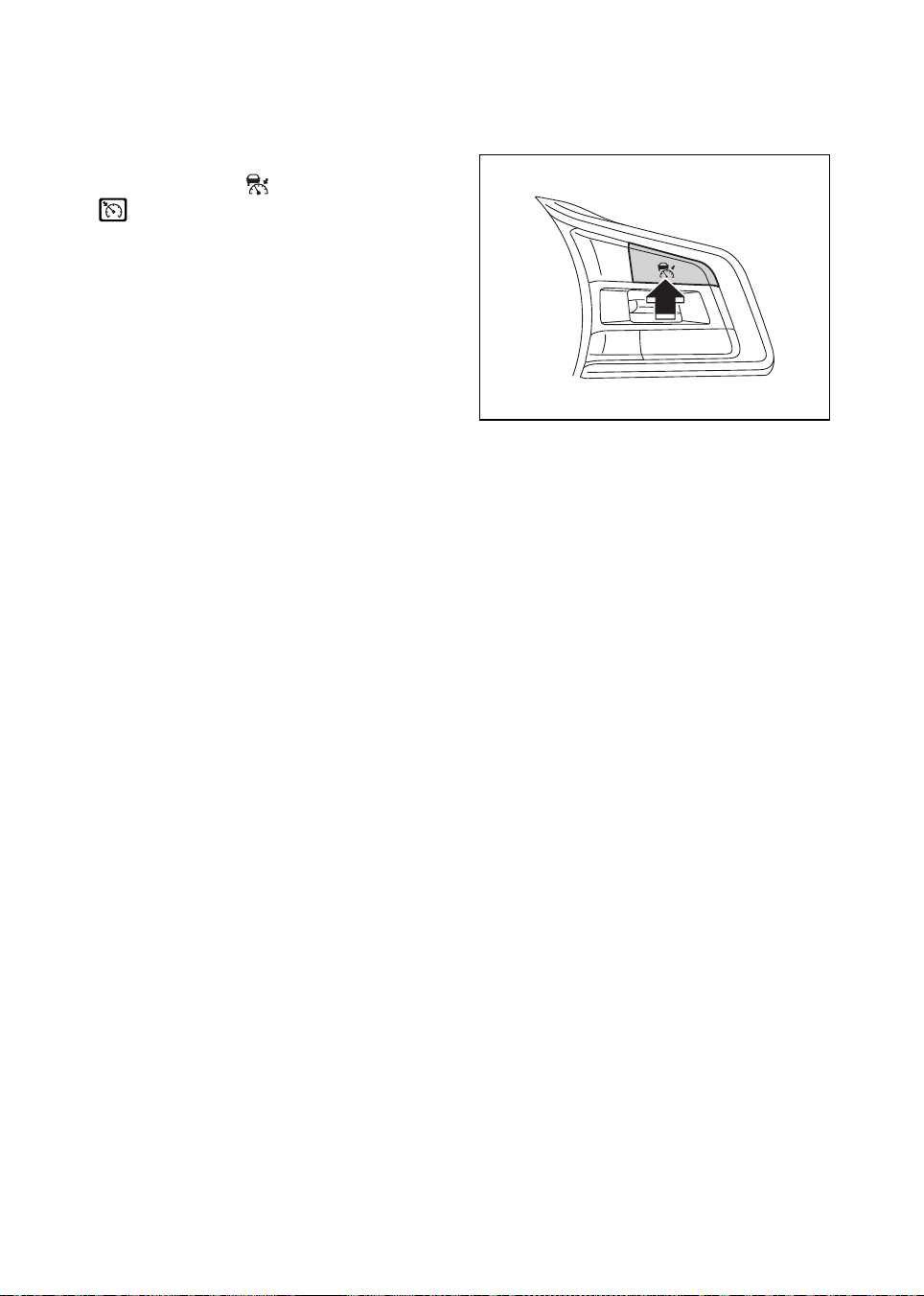
Conventional Cruise Control
186
■ Turning off Conventional Cruise Control
When Conventional Cruise Control is not
active, press the (CRUISE) switch.
(Conventional Cruise Control indicator)
and your vehicle indicator turn off on the com-
bination meter display.
H00549
B8442BE-A.book 186 ページ 2024年10月29日 火曜日 午後6時50分

List of alert/notification sounds
187
List of alert/notification sounds
Alert/notification
sound
Status Reference page
Single
continuous beep
Pre-Collision Braking System:
Secondary Braking is active.
Page 47
Automatic Emergency Steering is active.
Page 52
1 short beep and
1 long beep
Adaptive Cruise Control or Conventional Cruise
Control is canceled automatically.
Pages 92 and
183
The stay-stopped function is canceled and the
electronic parking brake is automatically applied.
Page 92
Lane Centering Function or Lane Departure Pre-
vention Function is canceled automatically.
Pages 110 and
139
1 short beep and
1 long beep
(repeated)
Lane Centering Function is automatically can-
celed during the alert to operate the steering
wheel.
Page 110
Emergency Stop Assist (Lane centering control is
not active.)
Page 117
Repeated short
beeps
Pre-Collision Braking System:
First Braking is active.
Page 47
Pre-Collision Braking System:
The following distance warning is active.
The “Obstacle Detected” warning from Adaptive
Cruise Control is active.
Page 96
Pre-Collision Throttle Management is active.
Page 153
Repeated 2 short
beeps
The system does not detect steering operation by
the driver for a certain period of time when Lane
Centering Function is operating.
Page 110
The system does not detect that the driver’s eyes
are on the road for a certain period of time when
Lane Centering Function is operating. (models
with Driver Monitoring System)
Page 110
B8442BE-A.book 187 ページ 2024年10月29日 火曜日 午後6時50分

List of alert/notification sounds
188
*: The notification that indicates when a lead vehicle is detected or when it is no longer
detected (Lead Vehicle Acquisition Sound), as well as Lead Vehicle Start Alert can be
turned on or off.
Page 195
3 short beeps
Lane Centering Function is active and the vehicle
is likely to depart the lane.
Page 115
Lane Departure Warning is active.
Page 161
Lane Sway Warning is active.
Page 166
Repeated 3 short
beeps
Emergency Lane Keep Assist is active and the
vehicle has departed the lane.
Page 141
1 short beep
Either of the following occurs while Adaptive
Cruise Control is activated.
- A vehicle in front is detected.*
- A vehicle in front is no longer detected.*
Page 77
The cruise control mode (Adaptive Cruise Control
Conventional Cruise Control) is changed.
Page 176
EyeSight is malfunctioning.
Page 189
EyeSight operation is temporarily stopped.
Page 191
Adaptive Cruise Control cannot be used because
Emergency Stop Assist has activated.
Page 125
5 intermittent
beeps, 1 short
beep and 1 long
beep
The stay-stopped function of Adaptive Cruise
Control continues for approximately 10 minutes
and the electronic parking brake is automatically
applied.
Page 89
Two-tone beep Lead Vehicle Start Alert is active.*
Page 170
1 beep and 1
long beep
(repeated)
Emergency Stop Assist (Lane centering control is
active.)
Page 117
Alert/notification
sound
Status Reference page
B8442BE-A.book 188 ページ 2024年10月29日 火曜日 午後6時50分
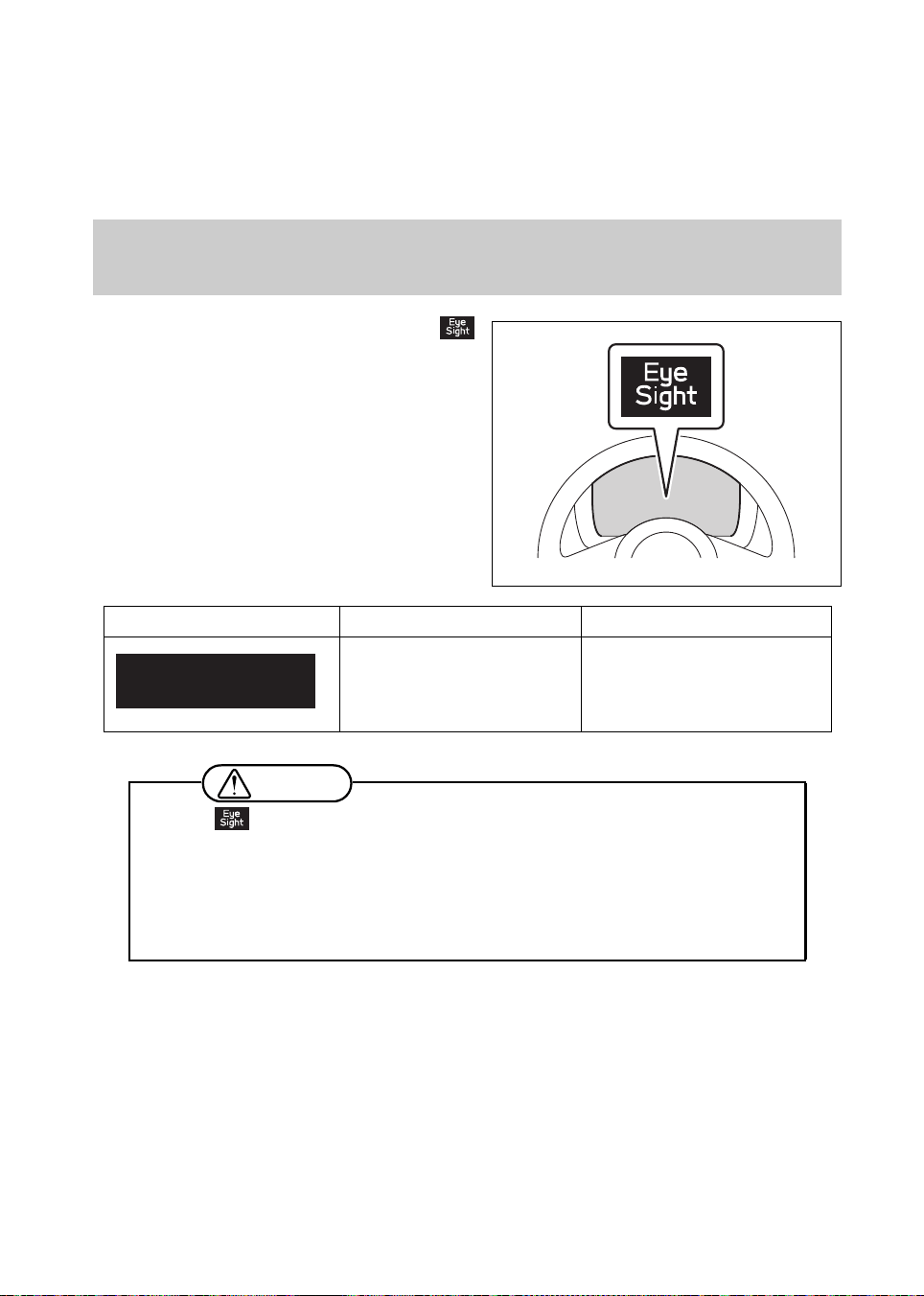
EyeSight malfunction and temporary stop
189
EyeSight malfunction and temporary stop
If a malfunction is detected in the EyeSight system, the indicators and interruption screens
on the combination meter inform the driver of the malfunction. Check the displayed contents
and take the appropriate action.
The alert sounds 1 short beep, and
(EyeSight warning indicator: Yellow) illumi-
nates or blinks. An interruption screen is also
displayed on the combination meter display.
Malfunction (including position/angle misalignment
of stereo camera)
Displayed screen Cause Action
An EyeSight malfunction or
position/angle misalign-
ment of the stereo camera
has occurred.
Inspection and adjustment is
necessary.
Contact a SUBARU dealer.
CAUTION
If both (EyeSight warning indicator: Yellow) and the CHECK ENGINE
warning light/malfunction indicator light/hybrid fail lamp illuminate at the same
time while driving, have your vehicle checked/repaired by a SUBARU dealer as
soon as possible. EyeSight cannot be used if there is an abnormality with the
hybrid system, etc.
Refer to the vehicle Owner’s Manual for details.
H02203
EyeSight Off
Check Manual
S03005
B8442BE-A.book 189 ページ 2024年10月29日 火曜日 午後6時50分
EyeSight malfunction and temporary stop
190
NOTE
• If (EyeSight warning indicator: Yellow) is illuminating or blinking, stop
the vehicle in a safe location, turn off the hybrid system and then restart it.
• If (EyeSight warning indicator: Yellow) continues illuminating or blinking
even after the hybrid system has been restarted, the EyeSight system has a
malfunction. In this case, all EyeSight functions will be stopped. Normal driv-
ing will still be possible. However, contact a SUBARU dealer for an inspec-
tion.
• If (EyeSight warning indicator: Yellow) illuminates or blinks, the Reverse
Automatic Braking (RAB) system will not operate. (models with Reverse Auto-
matic Braking (RAB))
B8442BE-A.book 190 ページ 2024年10月29日 火曜日 午後6時50分
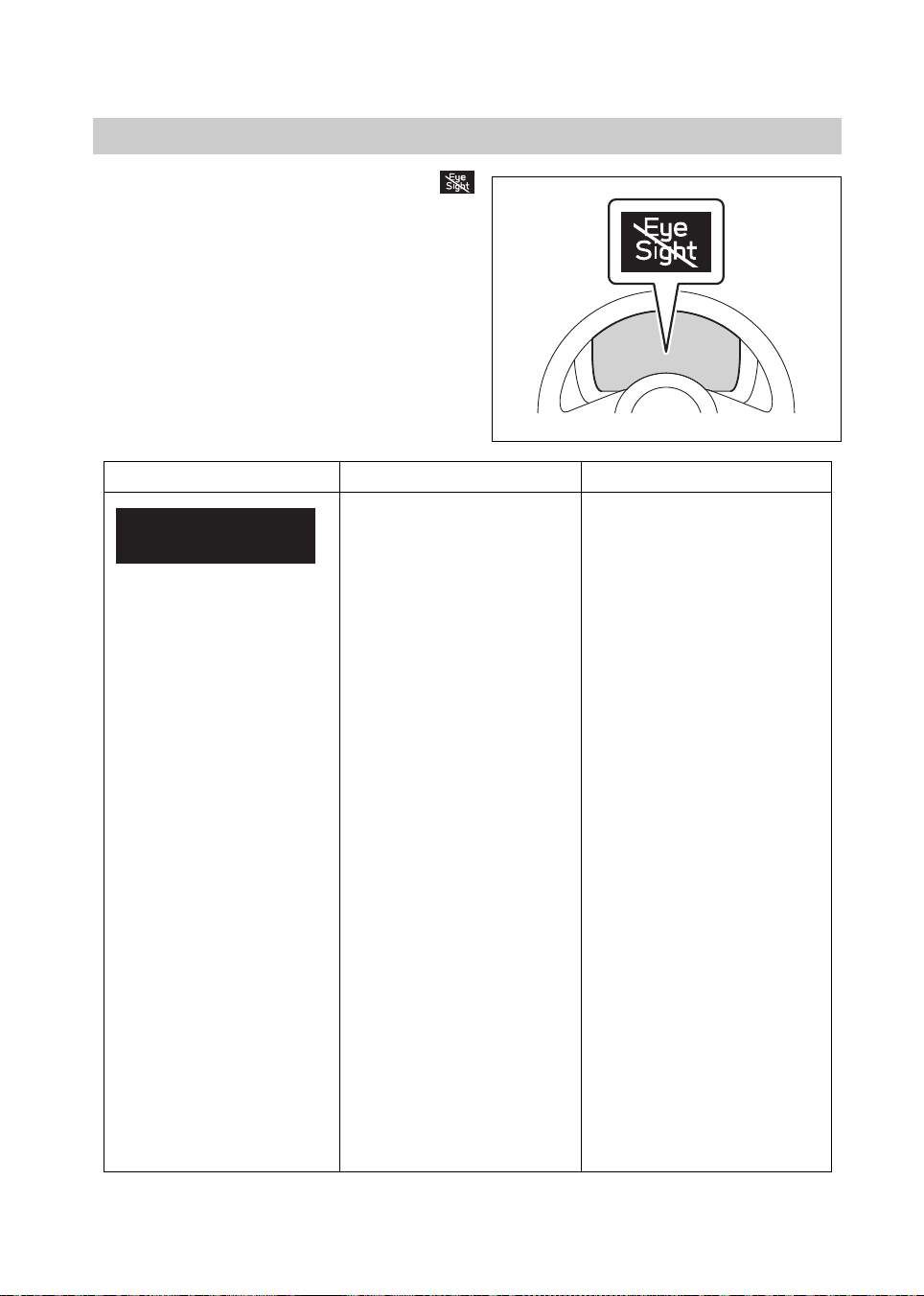
EyeSight malfunction and temporary stop
191
The alert sounds 1 short beep, and
(EyeSight temporary stop indicator: White)
illuminates. An interruption screen is also dis-
played on the combination meter display.
When the cause has been resolved, tempo-
rary stop will be canceled and the EyeSight
system will automatically restart.
Temporary stop
Displayed screen Cause Action
It is difficult for the stereo
camera to detect objects in
front.
• The windshield is dirty or
fogged up.
• Poor weather conditions
• Strong light from the front
• If the outside of the wind-
shield in front of the stereo
camera is dirty or fogged,
clean the windshield.
• If the inside of the wind-
shield in front of the stereo
camera is fogged,
EyeSight will restart after
you have driven your vehi-
cle for a while and condi-
tions improve. Also, the
defroster may be effective
in improving the conditions.
Refer to the vehicle
Owner’s Manual for
details.
• In poor weather conditions
or if there is strong light
from the front, EyeSight
will restart after the condi-
tions have improved and
you have driven your vehi-
cle for a while.
• If the inside of the wind-
shield in front of the stereo
camera or the area around
the camera lenses is dirty
or constantly fogged, con-
tact a SUBARU dealer to
have the vehicle inspected.
H02204
EyeSight
Disabled
No Camera View
S02996
B8442BE-A.book 191 ページ 2024年10月29日 火曜日 午後6時50分

EyeSight malfunction and temporary stop
192
In low or high temperatures The system will restart once
the temperature is within the
operational range of the
EyeSight system.
If the system does not
restart, even when the tem-
perature inside the vehicle is
within the operational range,
contact a SUBARU dealer
for an inspection.
• The EyeSight system is
starting up.
• The system has deter-
mined that the vehicle is
extremely inclined.
• The Pre-Collision second-
ary braking has operated
3 times after the hybrid
system was started.
• Hybrid READY indicator
light turns off.
• The electric power steer-
ing system is in the over-
heating prevention status
because the steering
wheel has been operated
while the vehicle is at a
standstill or driving at an
extremely slow speed.
The system will restart once
the cause has been
resolved. At this time, it may
take some time for the sys-
tem to restart.
If the system does not
restart, even after the condi-
tions have improved and a
period of time has elapsed,
contact a SUBARU dealer
for an inspection.
The Vehicle Dynamics Con-
trol warning light/Vehicle
Dynamics Control opera-
tion indicator light remains
illuminated if the brake
pedal remains depressed
after the hybrid system has
been started.
The system will resume to
normal operation after the
brake pedal is released. If
the system still does not
resume, contact your
SUBARU dealer for an
inspection.
Displayed screen Cause Action
EyeSight
Disabled
Temp Range
S02997
EyeSight
Disabled
Check Manual
S02998
B8442BE-A.book 192 ページ 2024年10月29日 火曜日 午後6時50分
EyeSight malfunction and temporary stop
193
NOTE
• When (EyeSight temporary stop indicator: White) is illuminated, none of
the EyeSight functions can be used except for Conventional Cruise Control.
• When (EyeSight temporary stop indicator: White) is illuminated, the
Reverse Automatic Braking (RAB) system may not operate. (models with
Reverse Automatic Braking (RAB))
B8442BE-A.book 193 ページ 2024年10月29日 火曜日 午後6時50分

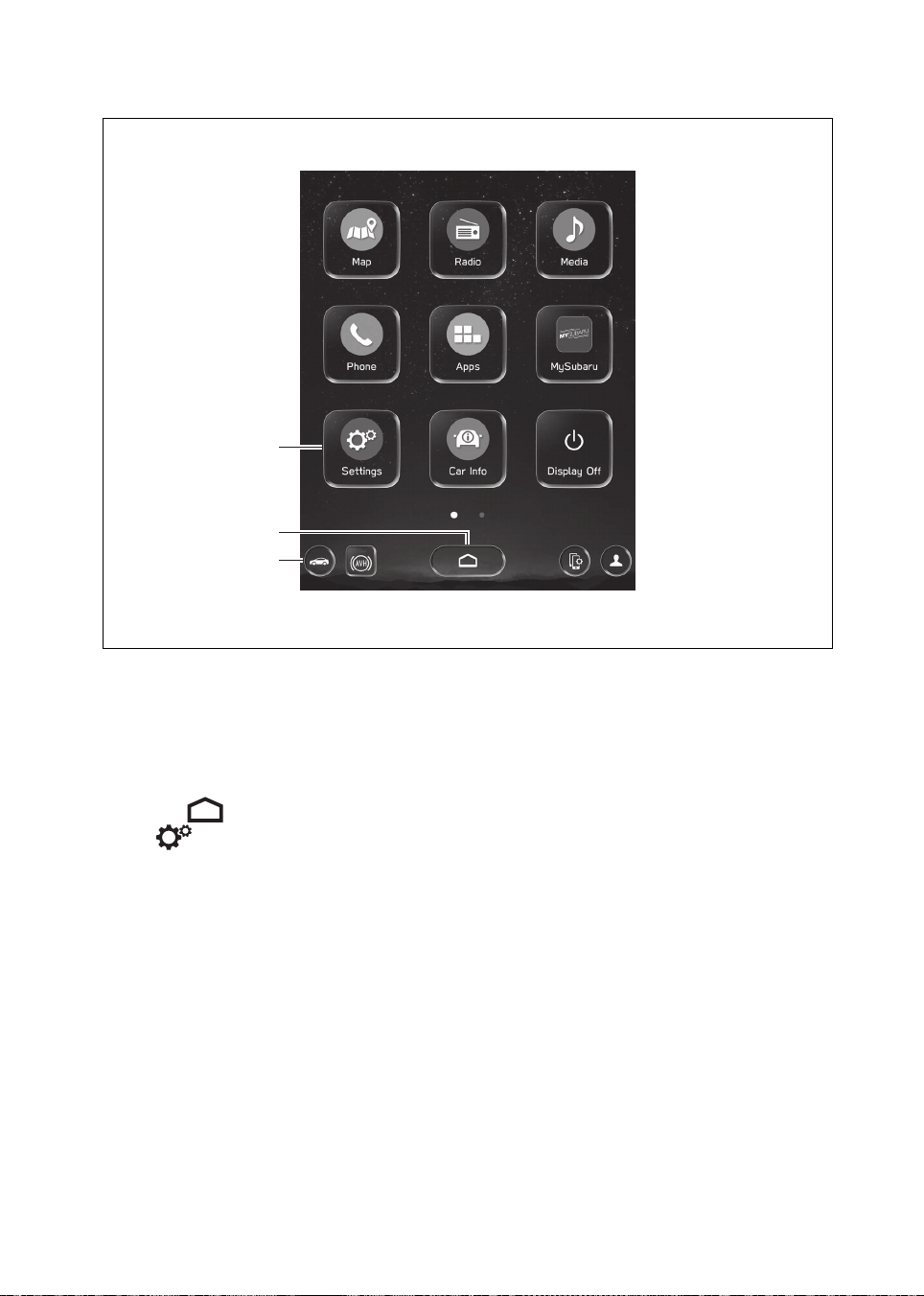
Changing settings
195
Changing settings
Change the EyeSight system setting as follows:
1. Touch (HOME).
2. → (Settings)
3. → “Car”
4. Select the preferred menu.
(1) Settings icon
(2) HOME icon
(3) Car settings icon
H02101
(2)
(3)
(1)
B8442BE-A.book 195 ページ 2024年10月29日 火曜日 午後6時50分

Changing settings
196
The setting adjustments to the following items can be manually changed to meet your per-
sonal requirements.
*: if equipped
Item Setting
EyeSight
Pre-Collision Braking Setting ON/Setting OFF
Forward Collision Warning
Far/
Normal/
Near
Emergency Lane Keeping
Assist
ON/OFF
Lane Depar-
ture
Prevention &
Warning
All Functions/
Lane Departure Prevention
Function Only/
Warning Buzzer Only/
OFF
Warning
Timing
Normal/
Later
Cruise Control Acceleration
Eco/
Comfort/
Standard/
Dynamic
Lead Vehicle Acquisition
Sound
ON/OFF
Lead Vehicle Moving Monitor ON/OFF
Select Drive on Left/Drive
on Right
Right Lane/
Left Lane
EyeSight Assist
Monitor*
Red Indicator ON/OFF
Yellow Indicator ON/OFF
Green Indicator ON/OFF
Warning Volume Min/Mid/Max
B8442BE-A.book 196 ページ 2024年10月29日 火曜日 午後6時50分
Changing settings
197
Touch (Car settings icon) to display the items that are changeable while driving.
Change the EyeSight system setting as follows:
1. Touch (Car settings icon).
2. Select the preferred menu.
Item Setting
Vehicle Control Cruise Control Acceleration
Eco/
Comfort/
Standard/
Dynamic
Driving Assistance
Pre-Collision Braking Setting ON/Setting OFF
Forward Collision Warning
Far/
Normal/
Near
Emergency Lane Keeping
Assist
ON/OFF
Lane Depar-
ture
Prevention &
Warning
All Functions/
Lane Departure Prevention
Function Only/
Warning Buzzer Only/
OFF
Warning
Timing
Normal/
Later
More Settings Warning Volume Min/Mid/Max
B8442BE-A.book 197 ページ 2024年10月29日 火曜日 午後6時50分

Changing settings
198
●Pre-Collision Braking
Pre-Collision Braking System and Pre-Collision Throttle Management can be activated (On)
or deactivated (Off).
●Forward Collision Warning
The timing for when Following Distance Warning activates can be set.
• Far: Following Distance Warning activates earlier than with the Normal setting.
• Normal: This is the standard setting for Following Distance Warning.
• Near: Following Distance Warning activates later than with the Normal setting.
●Emergency Lane Keeping Assist
Emergency Lane Keep Assist can be activated (On) or deactivated (Off).
●Prevention & Warning
Lane Departure Prevention Function and/or the warning buzzer (Lane Departure Warning
and Lane Sway Warning) can be activated (On) or deactivated (Off).
• All Functions: Activates both Lane Departure Prevention Function and the warning
buzzer.
• Lane Departure Prevention Function Only: Activates Lane Departure Prevention Function
only.
• Warning Buzzer Only: Activates the warning buzzer only.
• OFF: Deactivates both Lane Departure Prevention Function and the warning buzzer.
●Warning Timing
The timing for when Lane Departure Warning activates can be set.
• Normal: This is the standard setting for Lane Departure Warning.
• Later: Lane Departure Warning activates later than the Normal setting.
●Cruise Control Acceleration
The Cruise Control Acceleration Characteristics of Adaptive Cruise Control and Conven-
tional Cruise Control system can be set to one of four levels.
• Eco: Mode that focuses on driving with smooth movement and optimum fuel econ-
omy.
• Comfort: Mode that focuses on driving with smooth movement.
• Standard: Mode that focuses on quick response acceleration.
• Dynamic: Mode used when powerful acceleration is required.
Items that can be set
B8442BE-A.book 198 ページ 2024年10月29日 火曜日 午後6時50分
Changing settings
199
●Lead Vehicle Acquisition Sound
The Lead Vehicle Acquisition Sound setting can be activated (On) or deactivated (Off).
●Lead Vehicle Moving Monitor
The Lead Vehicle Start Alert function setting can be activated (On) or deactivated (Off).
●Select Drive on Left/Drive on Right (Driving Lane Customize)
It is possible to switch between driving on the left-hand side of the road and driving on the
right-hand side.
The Adaptive Cruise Control (
page 68) function is adapted to the set traffic lane direc-
tion.
●EyeSight Assist Monitor (if equipped)
The on/off operation assigned to each EyeSight Assist Monitor LED indicator can be set for
color.
Page 173
●Warning Volume
The volume can be set to Min/Mid/Max.
WARNING
If the Driving Lane Customize setting does not match the flow of traffic, full
EyeSight performance may not be available.
B8442BE-A.book 199 ページ 2024年10月29日 火曜日 午後6時50分
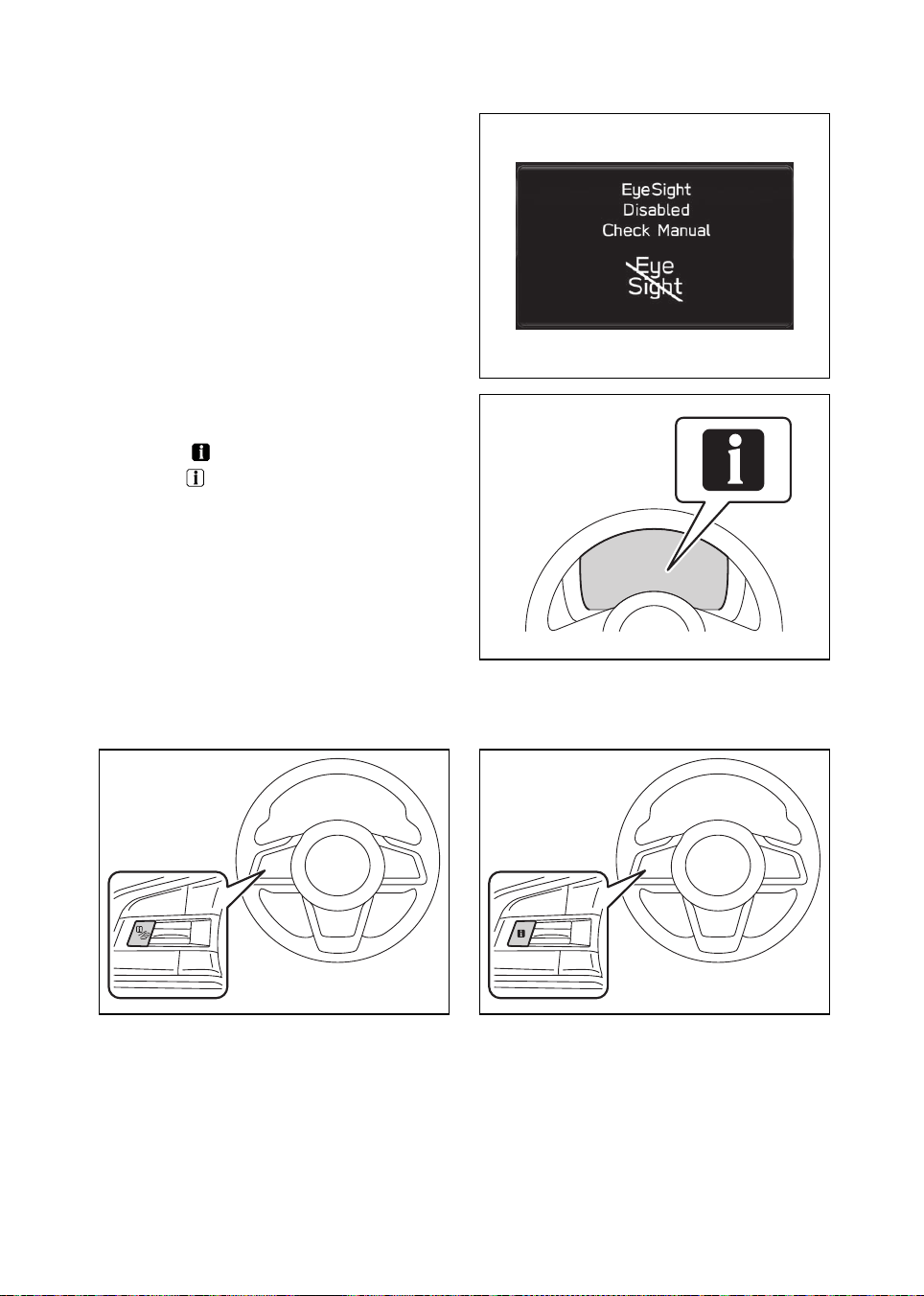
200
Message screen list
If an EyeSight warning or malfunction is
detected, a message will be displayed on the
combination meter display. Depending on the
message, an alert/notification sounds at the
same time.
If a message is displayed, refer to the mes-
sage list and take the appropriate action.
While the mark is illuminated, you can
press the switch to display the message
again.
12.3-inch display models (if equipped) 4.2-inch display models (if equipped)
H02379
H02205
H02131
H00550
B8442BE-A.book 200 ページ 2024年10月29日 火曜日 午後6時50分
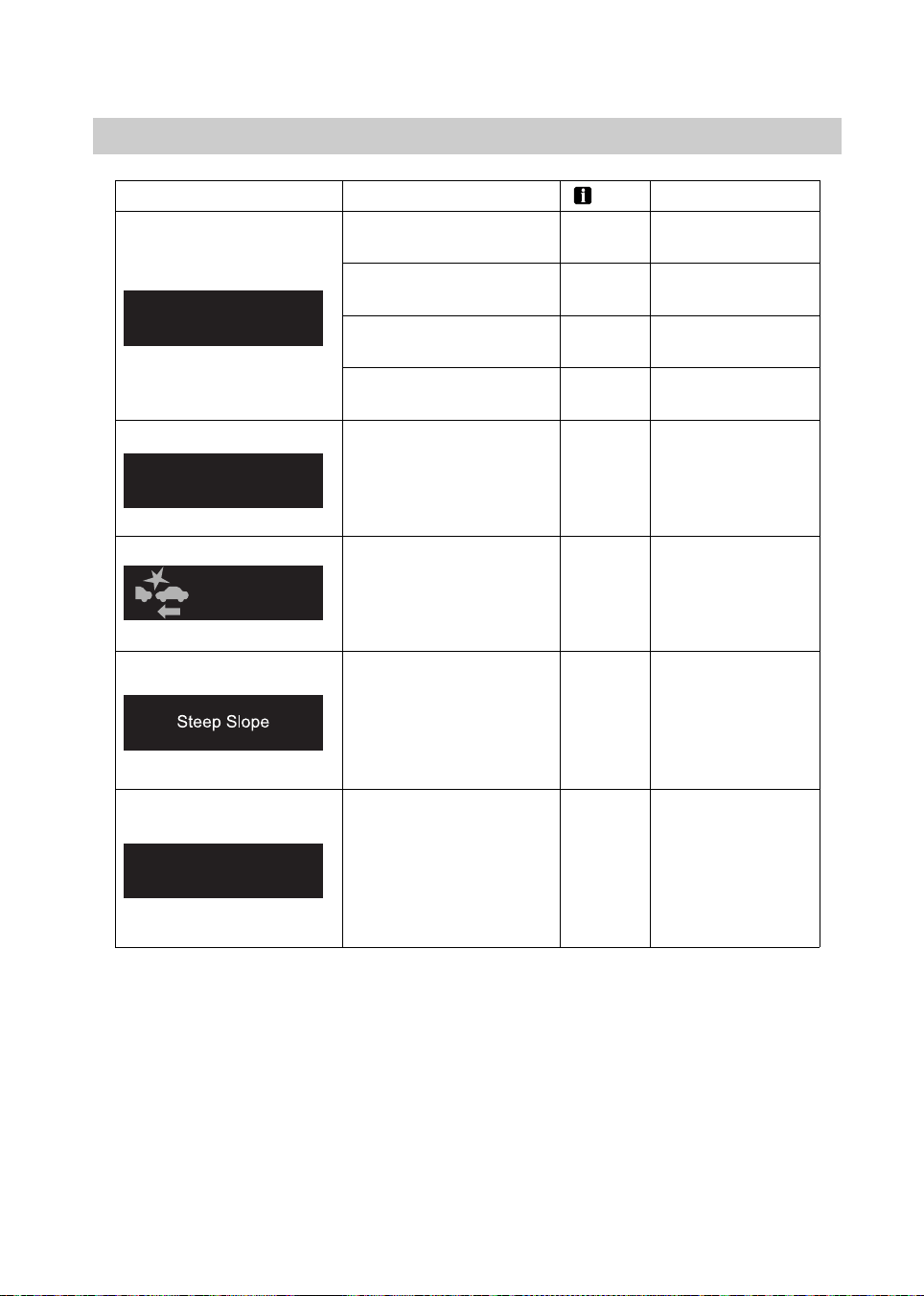
Message screen list
201
Message screen list (precautions and notices)
Displayed screen Item mark Reference page
Pre-Collision Braking
System
None
Page 47
Automatic Emergency
Steering
None
Page 52
The “Obstacle Detected”
warning
None
Page 96
Pre-Collision Throttle
Management
None
Page 153
Apply Brake None
Page 50
Pre-Collision Braking
System operation
None
Page 50
Adaptive Cruise Con-
trol/Conventional Cruise
Control automatic can-
cellation (when the
grade of the road is very
steep)
None
Pages 92 and
183
For models with Driver
Monitoring System, Lane
Centering Function can-
not be used because
Driver Monitoring Sys-
tem has a malfunction or
has stopped temporarily.
None
Page 110
Obstacle
Detected
S02999
Apply Brake
To Hold
Position
S03000
Pre-Collision
Braking System
Activated
S03532
S03722
Lane Centering
Disabled
H01492
B8442BE-A.book 201 ページ 2024年10月29日 火曜日 午後6時50分
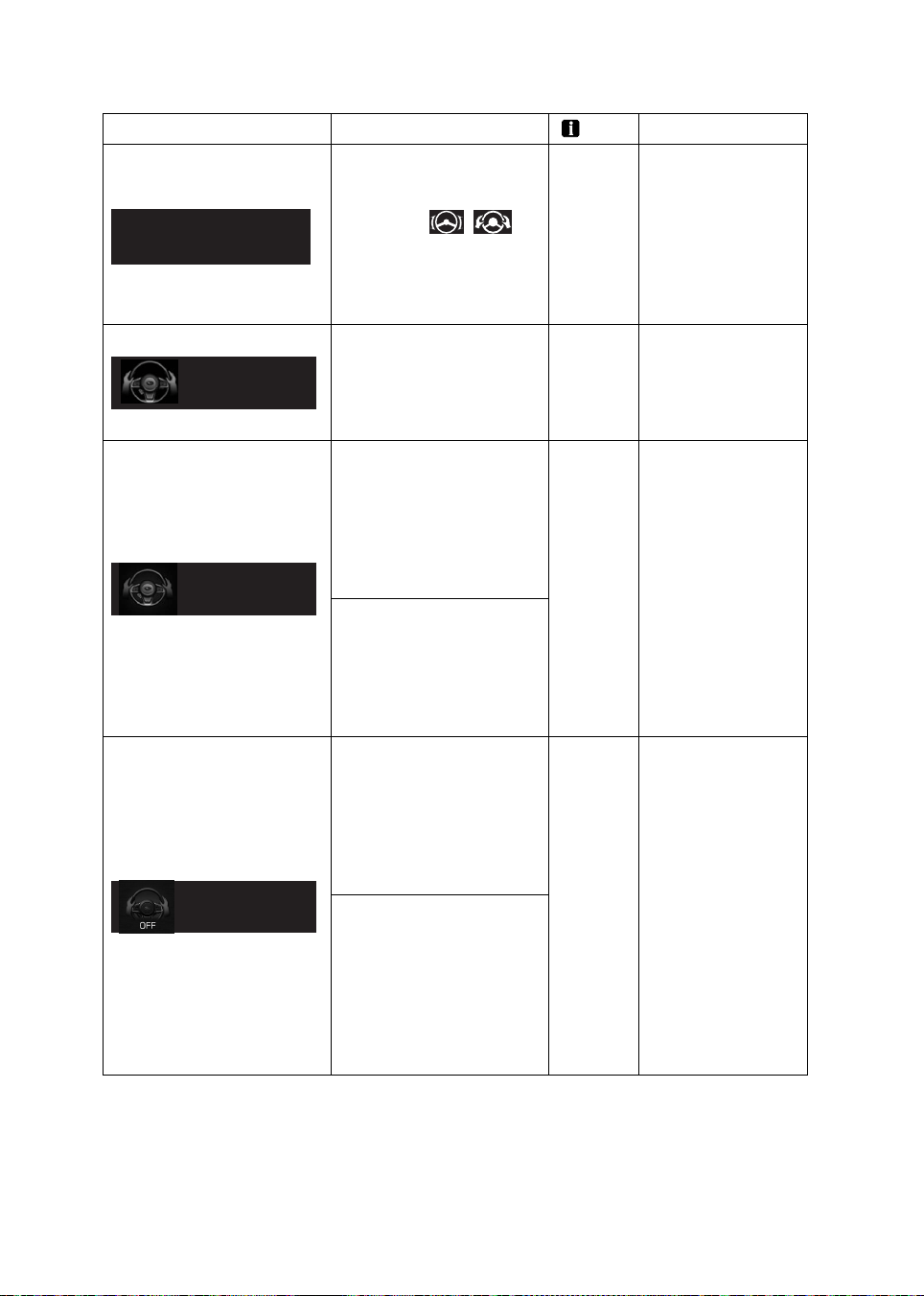
Message screen list
202
Driver Monitoring Sys-
tem (if equipped) starts
to monitor driver’s condi-
tion, when /
(Lane Centering indica-
tor) (white) illuminates
while Adaptive Cruise
Control is operating.
None
Page 110
Steering operation is not
detected by Lane Cen-
tering Function or Lane
Departure Prevention
Function.
None
Pages 110 and
139
The steering wheel has
not been operated for a
certain period of time
when Lane Centering
Function is on.
(The steering wheel illu-
minates in red.)
None
Pages 110 and
115
Lane Centering Func-
tion is active and the
vehicle is likely to depart
the lane.
(The steering wheel illu-
minates in red.)
Lane Centering Func-
tion is automatically can-
celed during the alert to
operate the steering
wheel.
(The steering wheel illu-
minates in red.)
None
Pages 110 and
115
Lane Centering Func-
tion is canceled because
the vehicle is likely to
depart the lane when
Lane Centering Func-
tion is active.
(The steering wheel illu-
minates in red.)
Displayed screen Item mark Reference page
Driver Monitoring
in Use While
System Is Enabled
H01136
Keep Hands On
Steering Wheel
S03314
Keep Hands On
Steering Wheel
S03315
Keep Hands On
Steering Wheel
S03564
B8442BE-A.book 202 ページ 2024年10月29日 火曜日 午後6時50分
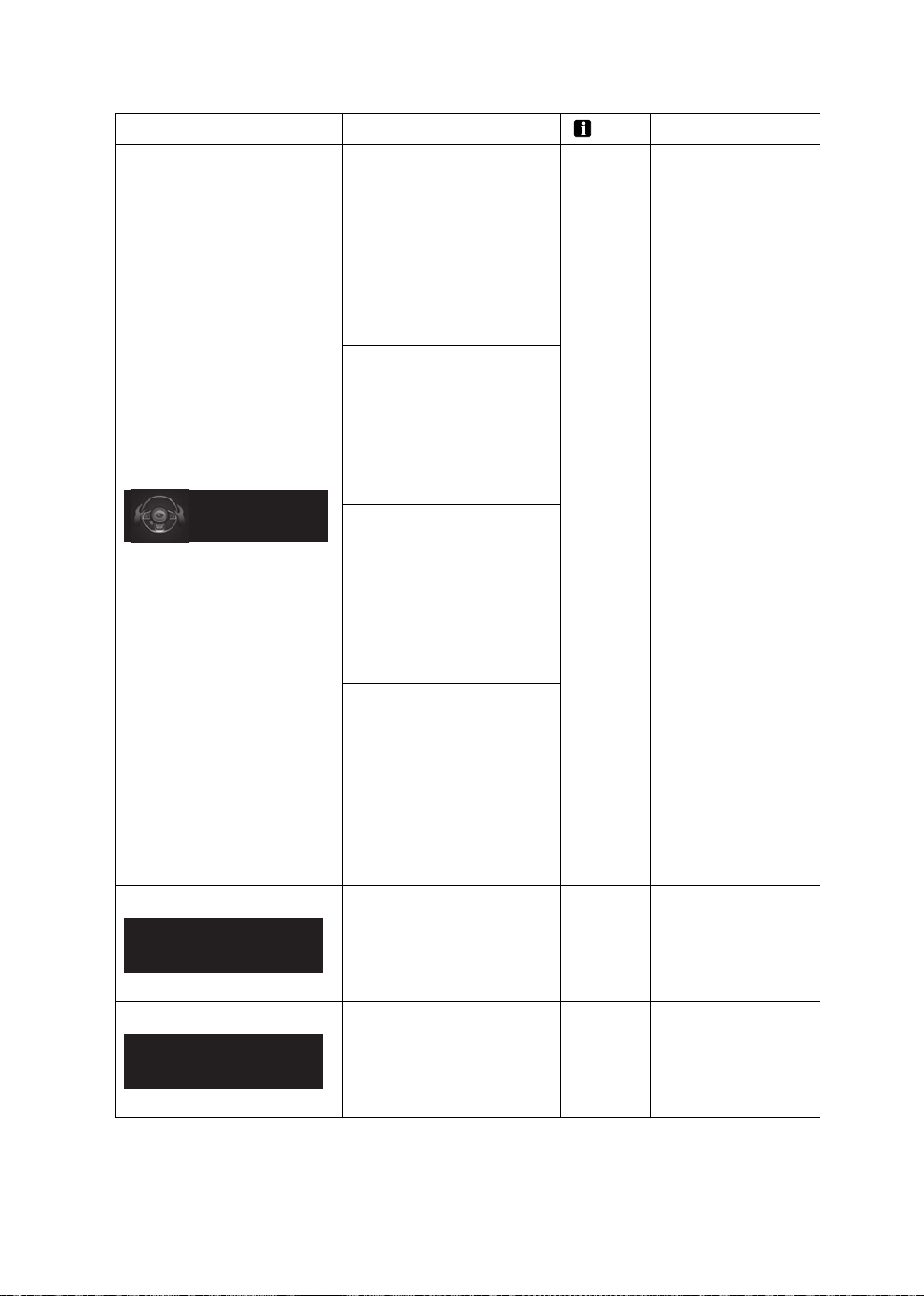
Message screen list
203
For models with Driver
Monitoring System, the
steering wheel has not
been operated for a cer-
tain period of time when
Lane Centering Func-
tion is on.
(The steering wheel illu-
minates in red.)
None
Page 110
For models with Driver
Monitoring System, the
driver is looking away
from the road when Lane
Centering Function is on.
(The steering wheel illu-
minates in red.)
For models with Driver
Monitoring System,
Driver Monitoring Sys-
tem does not detect the
driver’s state when Lane
Centering Function is on.
(The steering wheel illu-
minates in red.)
For models with Driver
Monitoring System,
Driver Monitoring Sys-
tem has a malfunction or
has stopped temporarily
when Lane Centering
Function is on.
(The steering wheel illu-
minates in red.)
Adaptive Cruise Control
cannot be used because
Emergency Stop Assist
has activated.
None
Page 125
Emergency Lane Keep
Assist
None
Page 149
Displayed screen Item mark Reference page
Keep Eyes on
Road and Hands
on Steering
H01491
Function
Unavailable
Turn Engine OFF
H01428
Check surroundings
for other vehicles
S03324
B8442BE-A.book 203 ページ 2024年10月29日 火曜日 午後6時50分
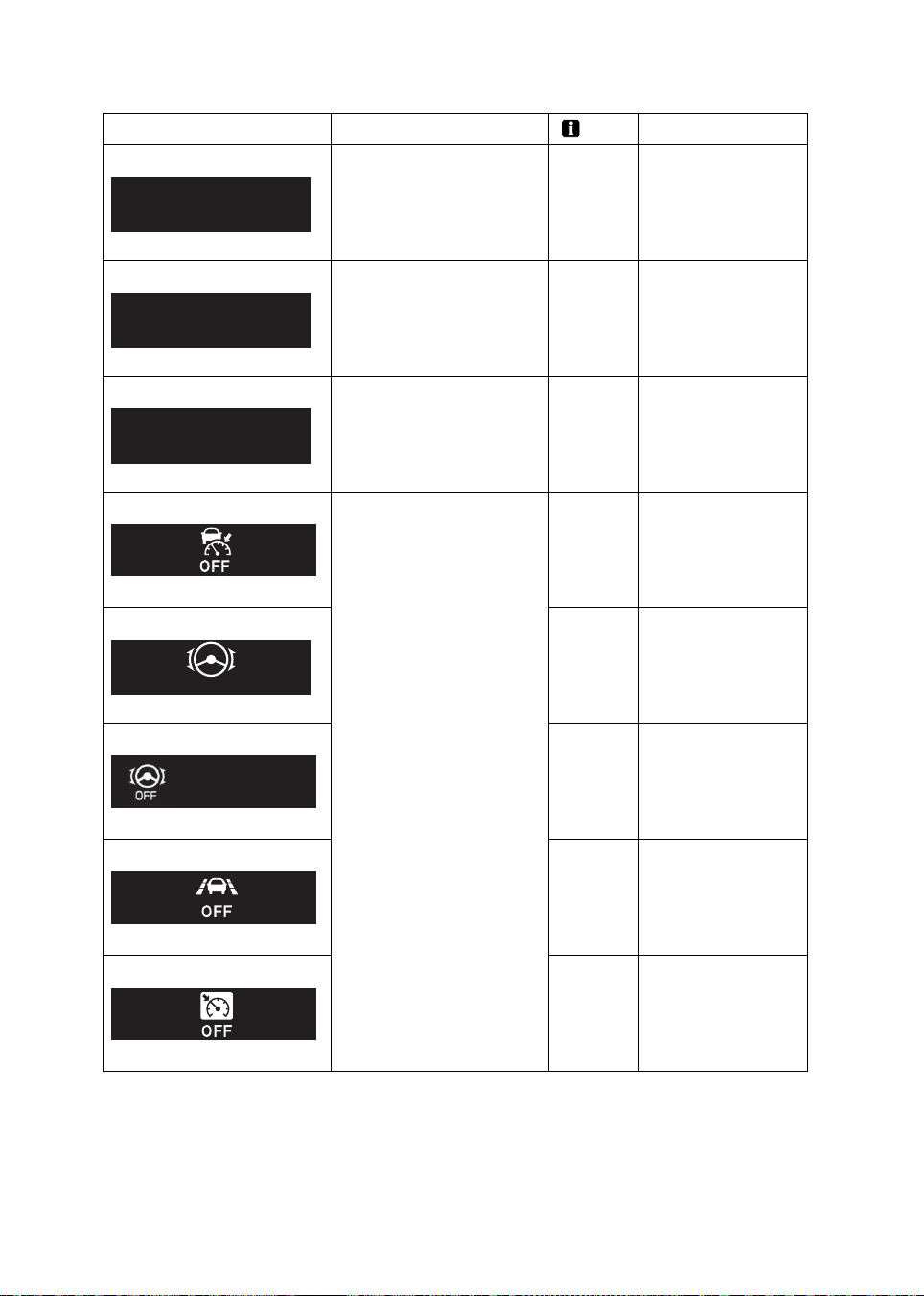
Message screen list
204
Lane Departure Warning None Page 161
Lane Sway Warning None
Page 166
Lead Vehicle Start Alert None
Page 170
EyeSight system auto-
matic cancellation
None
Page 92
None
Page 110
None
Page 110
None
Page 139
None
Page 183
Displayed screen Item mark Reference page
Lane
Departure
S03002
Stay Alert
S03003
Vehicle Ahead
Has Moved
S03004
203196
OFF
S03391
No Driver
Detected
H01143
S03313
203198
B8442BE-A.book 204 ページ 2024年10月29日 火曜日 午後6時50分
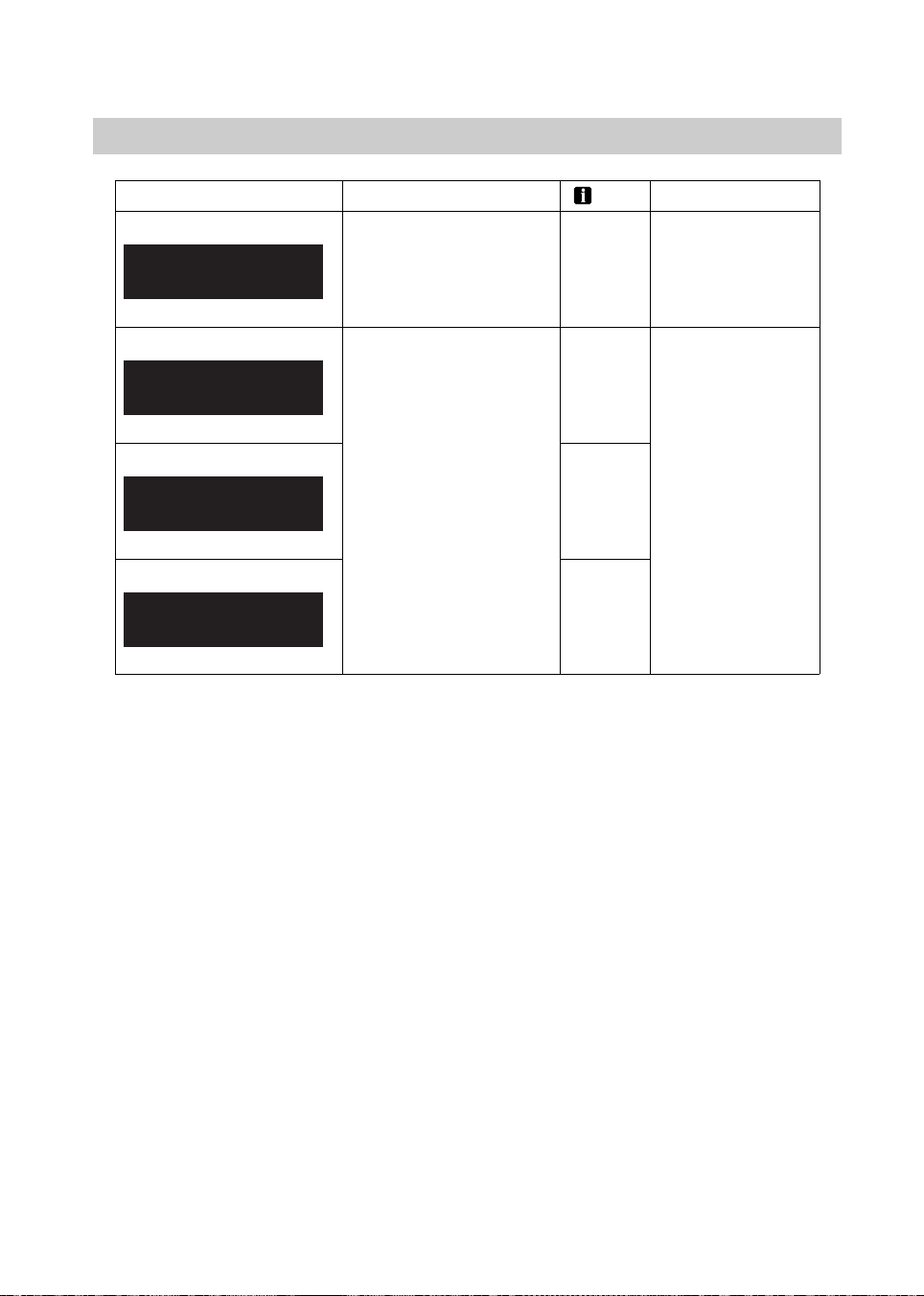
Message screen list
205
Message screen list (malfunction, temporary stop)
Displayed screen Item mark Reference page
EyeSight system mal-
function
Yes
(yellow)
Page 189
EyeSight system tempo-
rary stop
Yes
(white)
Page 191
Yes
(white)
Yes
(white)
EyeSight Off
Check Manual
S03005
EyeSight
Disabled
No Camera View
S02996
EyeSight
Disabled
Temp Range
S02997
EyeSight
Disabled
Check Manual
S02998
B8442BE-A.book 205 ページ 2024年10月29日 火曜日 午後6時50分
206
Troubleshooting
Adaptive Cruise Control cannot be activated.
Did you remember to press the (CRUISE) switch?
If you have not pressed the (CRUISE) switch, (Adaptive Cruise Con-
trol indicator) will not be shown.
Is EyeSight operation temporarily stopped?
When EyeSight is temporarily stopped, (EyeSight temporary stop indicator:
White) is displayed on the combination meter display.
Set Adaptive Cruise Control again after the cause for the temporary stop has been
corrected.
Is (READY indicator) displayed?
Adaptive Cruise Control cannot be activated when (READY indicator) is not
displayed. Set Adaptive Cruise Control when (READY indicator) is displayed.
Has Emergency Stop Assist activated?
Adaptive Cruise Control cannot be activated by pressing the (CRUISE)
switch after Emergency Stop Assist has activated.
Page 125
(READY indicator) is not displayed.
Are the requirements for setting the function met?
For the conditions of (READY indicator) illumination, refer to the following
pages.
Page 77 (Adaptive Cruise Control)
Page 176 (Conventional Cruise Control)
B8442BE-A.book 206 ページ 2024年10月29日 火曜日 午後6時50分
Troubleshooting
207
A vehicle (in front of your vehicle) is not detected, detection is delayed or detec-
tion is lost quickly.
Is the vehicle in front stopped, moving slowly relative to your vehicle or moving
extremely slowly?
Detection of stopped vehicles, vehicle moving slowly relative to your vehicle, and
vehicles moving extremely slowly may be difficult.
Is the windshield dirty or fogged?
If the outside of the windshield in front of the stereo camera is dirty, clean the
windshield. If the area around the camera lenses is dirty or if it is constantly
fogged, contact a SUBARU dealer to have the vehicle inspected.
Is the vehicle in front far away?
The maximum detection distance of the stereo camera is approximately 426 ft
(130 m). Detection is not possible if the vehicle is farther away.
Is the vehicle on a curve?
The detection range is limited in the horizontal directions when the stereo camera
is properly aimed.
Is the vehicle on a road with repeated uphill and downhill grades (such as an over-
pass), or on a banked road?
The detection range is limited in the vertical directions.
Did the vehicle detected in front change?
Detection may be delayed after the vehicle in front has changed.
Have water, snow or other substances been kicked up by the vehicle in front as it
drives?
When water or snow have been kicked up, it may not be possible to detect the
vehicle in front.
While Adaptive Cruise Control is active, brake control is operated even though no
vehicle in front has been detected.
Is there a vehicle in the neighboring lane?
Depending on the road conditions, vehicles in neighboring lanes may be detected
as well as a vehicle directly in front.
Are you driving on or near a curve?
When driving on a curve, braking control may be activated in response to guard-
rails, the angle of the steering wheel, or roadside structures.
B8442BE-A.book 207 ページ 2024年10月29日 火曜日 午後6時50分
Troubleshooting
208
Lead Vehicle Start Alert activates, even though there is no vehicle in front.
Depending on surrounding objects, traffic environment and weather, Lead Vehicle
Start Alert may issue a warning in response to objects other than a vehicle that
appears in front of your vehicle.
EyeSight does not restart after a temporary stop.
Are you driving in the rain with poorly performing wipers or is there a smear on the
windshield?
Replace the wipers with new ones, or clean the smear off the windshield.
Are you driving in poor weather conditions with heavy rain, snow, fog, or dust? In
these cases, EyeSight may temporarily stop operating while visibility is very poor.
Is your vehicle subject to sunlight from the front (sunset or sunrise, etc.) or to
bright headlights from oncoming vehicles at nighttime?
In these cases, EyeSight may temporarily stop operating.
Are you parking in an extremely hot or cold condition? In either of these cases,
EyeSight may temporarily stop operating until the temperature increases or
decreases to a temperature at which the camera is operable.
Is the inside or outside of the windshield in front of the stereo camera dirty or
fogged?
In this case, EyeSight may temporarily stop operating.
• If the outside of the windshield in front of the stereo camera is dirty or
fogged, clean the windshield.
• If the inside of the windshield in front of the stereo camera is fogged,
EyeSight will restart after you have driven your vehicle for a while and con-
ditions improve. Also, the defroster may be effective in improving the con-
ditions.
Refer to the vehicle Owner’s Manual for details.
• If the inside of the windshield in front of the stereo camera or the area
around the camera lenses is dirty or constantly fogged, contact a SUBARU
dealer to have the vehicle inspected.
B8442BE-A.book 208 ページ 2024年10月29日 火曜日 午後6時50分
Troubleshooting
209
The timing of the “Obstacle Detected” warning is sometimes earlier or sometimes
later than what seems to be normal operation.
The “Obstacle Detected” warning sounds when the system determines that more
braking is necessary, based on conditions such as the distance from the vehicle in
front and the difference in speed compared to it. As a result, timing may vary
depending on how the brakes are applied in relation to the vehicle in front, and
your relative speed to that vehicle.
When the vehicle in front has turned off the roadway or the distance from the vehi-
cle in front has increased, acceleration is sometimes slower or faster.
Depending on the timing of when the detection of the vehicle in front is lost,
EyeSight’s ability to react may be slower, causing the start of acceleration to feel
delayed and braking time to feel longer than what seems to be normal operation.
What acceleration level did you select for cruise control*?
Acceleration may vary because the cruise control characteristics vary depending
on the selected mode.
*: Adaptive Cruise Control and Conventional Cruise Control
Cruise control is canceled automatically.
Did you perform one of the following operations?
Page 91 (Adaptive Cruise Control)
Page 182 (Conventional Cruise Control)
Has the EyeSight system temporarily stopped while the Adaptive Cruise Control
function was in use?
B8442BE-A.book 209 ページ 2024年10月29日 火曜日 午後6時50分
Troubleshooting
210
The (Lane Centering) switch was pressed however Lane Centering Function
does not activate.
Is Adaptive Cruise Control activated?
Page 107
Is Pre-Collision Braking System turned on?
Page 107
Does the Driver Monitoring System operation indicator light (green) or Driver Mon-
itoring System OFF indicator light illuminate? (models with Driver Monitoring Sys-
tem)
Page 107
/ (Lane Centering indicator) does not illuminate even though the
(Lane Centering) switch is pressed.
Is Adaptive Cruise Control turned off?
/ (Lane Centering indicator) does not illuminate when Adaptive Cruise
Control is turned off.
Does the Driver Monitoring System warning light (yellow) illuminate? (models with
Driver Monitoring System)
Refer to the vehicle Owner’s Manual for details.
Lane Centering Function and Lane Departure Prevention Function were unex-
pectedly canceled.
Did you take your hands off the steering wheel? Did you just lightly put your hands
on the steering wheel while driving?
If the system does not detect the steering operation of the driver, it will temporarily
cancel Lane Departure Prevention Function.
Did you turn a tight corner?
Lane Centering Function and Lane Departure Prevention Function do not operate
while turning a tight corner.
Did you perform one of the following operations?
Page 109 (Lane Centering Function)
Page 139 (Lane Departure Prevention Function)
B8442BE-A.book 210 ページ 2024年10月29日 火曜日 午後6時50分
Troubleshooting
211
Lane Centering Function and Lane Departure Prevention Function do not operate
even though there are lane markers.
Is the width of the road too narrow or too wide?
To operate Lane Centering Function and Lane Departure Prevention Function, the
width of the road should be between approximately 10 ft (3 m) and 15 ft (4.5 m).
A lead vehicle is driving ahead of my vehicle and the lead vehicle indicator is illu-
minated, however Lane Centering Function does not activate.
Is the width of the lead vehicle too narrow?
Lane Centering Function does not activate when the lead vehicle is a motorcycle
or another 2-wheeled vehicle, super-compact car, or other narrow vehicle.
Is there a speed difference between the lead vehicle and your vehicle? Or is the
lead vehicle not directly in front of your vehicle?
Lane Centering Function may not activate in conditions such as when there is a
speed difference between the lead vehicle and your vehicle (the lead vehicle is
pulling away), or when the lead vehicle is meandering or driving at the edge of the
lane.
When Lane Centering Function is active, the interruption screen “Keep Hands On
Steering Wheel” is displayed on the combination meter display in spite of gripping
the steering wheel.
The system may not be detecting any steering operation even though you are
gripping the steering wheel. Operate the steering wheel until the interruption
screen disappears. If the system continues to not detect any operation, Emer-
gency Stop Assist activates.
If the vehicle is likely to depart the lane when Lane Centering Function is active,
“Keep Hands On Steering Wheel” will be displayed. If Lane Centering Function is
canceled in this state, “OFF” will be displayed. (
page 115)
B8442BE-A.book 211 ページ 2024年10月29日 火曜日 午後6時50分
Troubleshooting
212
When Lane Centering Function is active, the interruption screen “Keep Eyes on
Road and Hands on Steering” is displayed on the combination meter display in
spite of gripping the steering wheel while keeping eyes on the road. (models with
Driver Monitoring System)
The system may not be detecting any steering operation even though you are
gripping the steering wheel. Operate the steering wheel until the interruption
screen disappears. If the system continues to not detect any operation, Emer-
gency Stop Assist activates.
Does Driver Monitoring System have a malfunction, or has it stopped temporarily?
Lane Centering Function cannot be used when Driver Monitoring System has a
malfunction or has stopped temporarily.
For details about Driver Monitoring System, refer to the vehicle Owner’s Manual.
Driver Monitoring System may not detect your state even while you are keeping
your eyes on the road.
If the interruption screen continues to be displayed even while your eyes are on
the road, cancel Lane Centering Function.
Page 109
A noise occurs when automatic braking control activates.
This is the sound of the automatic braking control operating - there are some
mechanical components to the system, and they do occasionally make audible
sounds during automatic braking control. This does not indicate a malfunction.
Braking control activates frequently when driving with Adaptive Cruise Control in
heavy traffic.
When Adaptive Cruise Control is activated, the EyeSight system performs control
based on the movement of vehicles or objects in front. As a result, acceleration
and deceleration may be more frequent while the system adjusts to vehicles or
objects the camera system is detecting. If it is difficult to maintain a consistent fol-
lowing distance under certain conditions (such as in heavy traffic, poor weather or
urban environments, etc.), do not use Adaptive Cruise Control.
B8442BE-A.book 212 ページ 2024年10月29日 火曜日 午後6時50分
Troubleshooting
213
The electronic parking brake is applied automatically while the stay-stopped func-
tion is operating.
The electronic parking brake will be applied in the following cases.
• The stay-stopped function (
page 89) is continuously applied for approxi-
mately 10 minutes.
• Automatic cancel conditions (
page 92) have been met.
The engine does not restart after it has been automatically stopped while the stay-
stopped function of Adaptive Cruise Control has been engaged.
Shift the select lever to the “P” position and start the engine with the brake pedal
depressed.
B8442BE-A.book 213 ページ 2024年10月29日 火曜日 午後6時50分

214
MEMO
B8442BE-A.book 214 ページ 2024年10月29日 火曜日 午後6時50分

215
MEMO
B8442BE-A.book 215 ページ 2024年10月29日 火曜日 午後6時50分

216
MEMO
B8442BE-A.book 216 ページ 2024年10月29日 火曜日 午後6時50分