Operating and installation
instructions
Cooker hood
To prevent the risk of accidents or damage to the appliance, it is
essential to read these instructions before it is installed and used for
the first time.
en-GB M.-Nr. 12 814 390

Contents
2
Warning and Safety instructions ............................................................................... 4
Caring for the environment......................................................................................... 11
Guide to the appliance................................................................................................. 12
Modes of operation ...................................................................................................... 14
Operation........................................................................................................................ 15
Switching the fan on ......................................................................................................
15
Selecting the power level..............................................................................................
15
Run-on .............................................................................................................................
15
Switching the fan off......................................................................................................
15
Switching the hob lighting on/off.................................................................................
15
Energy saving tips......................................................................................................... 16
Cleaning and care ......................................................................................................... 17
Housing............................................................................................................................
17
Grease filters...................................................................................................................
17
Replacing the grease filters ..................................................................................... 19
Charcoal filters................................................................................................................
19
Disposing of charcoal filters.................................................................................... 19
Installation...................................................................................................................... 20
Before installation ..........................................................................................................
20
Installation recommendations......................................................................................
20
Appliance dimensions....................................................................................................
20
Safety distance between hob and cooker hood (S) ..................................................
21
Fitting the furniture front ...............................................................................................
22
Depth adjustment ..........................................................................................................
22
Wall installation ..............................................................................................................
23
Height adjustment..........................................................................................................
24
Connecting to adjacent furniture units/fitting side panels.......................................
25
For extraction mode .......................................................................................................
26
For recirculation mode...................................................................................................
26
Electrical connection .....................................................................................................
26
Electrical connection.................................................................................................... 27
Connection for air extraction...................................................................................... 28
Non-return flap ...............................................................................................................
28
Condensation..................................................................................................................
29
Silencer ............................................................................................................................
29
After sales service and warranty ............................................................................... 30
Contact in the event of a fault......................................................................................
30
Position of the data plate ..............................................................................................
30
Warranty ..........................................................................................................................
30


Warning and Safety instructions
4
This cooker hood complies with all relevant local and national
safety requirements. Inappropriate use can, however, lead to
personal injury and material damage.
Read the operating and installation instructions carefully before
using the cooker hood. They contain important information on its
safety, installation, use and maintenance. This prevents both
personal injury and damage to the cooker hood.
In accordance with standard IEC60335-1, Miele expressly and
strongly advises that you read and follow the instructions in the
chapter on installing the appliance as well as the safety instructions
and warnings.
Miele cannot be held liable for injury or damage caused by non-
compliance with these instructions.
Keep these instructions in a safe place and pass them on to any
future owner.
Correct application
This cooker hood is intended for use in domestic households and
similar working and residential environments.
The cooker hood is not intended for outdoor use.
It must only be used as a domestic appliance to extract vapours
and remove odours from cooking.
Any other usage is not supported by the manufacturer and could be
dangerous.
Where a recirculation cooker hood is fitted above a gas hob, please
ensure that there is an adequate supply of fresh air into the room in
which it is installed. Please seek the advice of a qualified gas fitter
(e.g. GasSafe in the UK) for more information if necessary.
The cooker hood can only be used by people with reduced
physical, sensory or mental capabilities, or lack of experience and
knowledge, if they are supervised whilst using it, or have been shown
how to use it in a safe way and recognise and understand the
consequences of incorrect operation.

Warning and Safety instructions
5
Safety with children
Children under 8 years of age must be kept away from the cooker
hood unless they are constantly supervised.
Children aged 8 and older may only use the cooker hood without
supervision if they have been shown how to use it and are able to do
so in a safe manner. Children must be able to understand and
recognise the possible dangers caused by incorrect operation.
Children must not be allowed to clean or maintain the cooker hood
unsupervised.
Please supervise children in the vicinity of the cooker hood and do
not let them play with it.
The hob lighting is very intensive.
Ensure, in particular, that babies/small children do not look at the
light.
Danger of suffocation! Whilst playing, children may become
entangled in packaging material (such as plastic wrapping) or pull it
over their head with the risk of suffocation. Keep packaging material
away from children.
Technical safety
Unauthorised installation, maintenance and repairs can cause
considerable danger for the user. Installation, maintenance and
repairs must only be carried out by a Miele authorised technician.
A damaged appliance can be dangerous. Check it for visible signs
of damage. Do not use a damaged appliance.
The electrical safety of this appliance can only be guaranteed when
correctly earthed. It is essential that this standard safety requirement
is met. If in any doubt please have the electrical installation tested by
a qualified electrician.
The connection data (voltage and frequency) on the data plate of
the cooker hood must match the mains electricity supply in order to
avoid the risk of damage to the cooker hood
Compare this before connecting the appliance to the mains. Consult
a qualified electrician if in any doubt.

Warning and Safety instructions
6
Temporary or permanent operation on an autonomous power
supply system or a power supply system that is not synchronised
with the mains power supply (e.g. island networks, back-up systems)
is possible. A prerequisite for operation is that the power supply
system complies with the specifications of EN50160 or an
equivalent standard.
The function and operation of the protective measures provided in
the domestic electrical installation and in this Miele product must
also be maintained in isolated operation or in operation that is not
synchronised with the mains power supply, or these measures must
be replaced by equivalent measures in the installation. As described,
for example, in the current version of BS OHSAS 18001–2 ISO
45001.
Do not connect the appliance to the mains electricity supply by a
multi-socket unit or an extension lead. These are a fire hazard and do
not guarantee the required safety of the appliance.
For safety reasons, this appliance may only be used after it has
been built in.
The cooker hood must not be used in a non-stationary location
(e.g. on a ship).
Touching electrical components and tampering with electrical and
mechanical parts is highly dangerous to the user and can cause
operational faults.
Only open the housing as described in the instructions given in the
installation sheet and in the Cleaning and care section of this booklet.
Under no circumstances should any other parts of the housing be
opened.
During installation, maintenance and repair work, the appliance
must be disconnected from the mains electricity supply.
The manufacturer's warranty will be invalidated if the appliance is
not repaired by a Miele authorised technician.
If the electrical connection cable is faulty it must only be replaced
by a Miele authorised technician to protect the user from danger.
The lamps are a built-in component of the lighting. Replacement
lamps may only be fitted by a Miele authorised technician or by the
Miele Customer Service Department.
Warning and Safety instructions
7
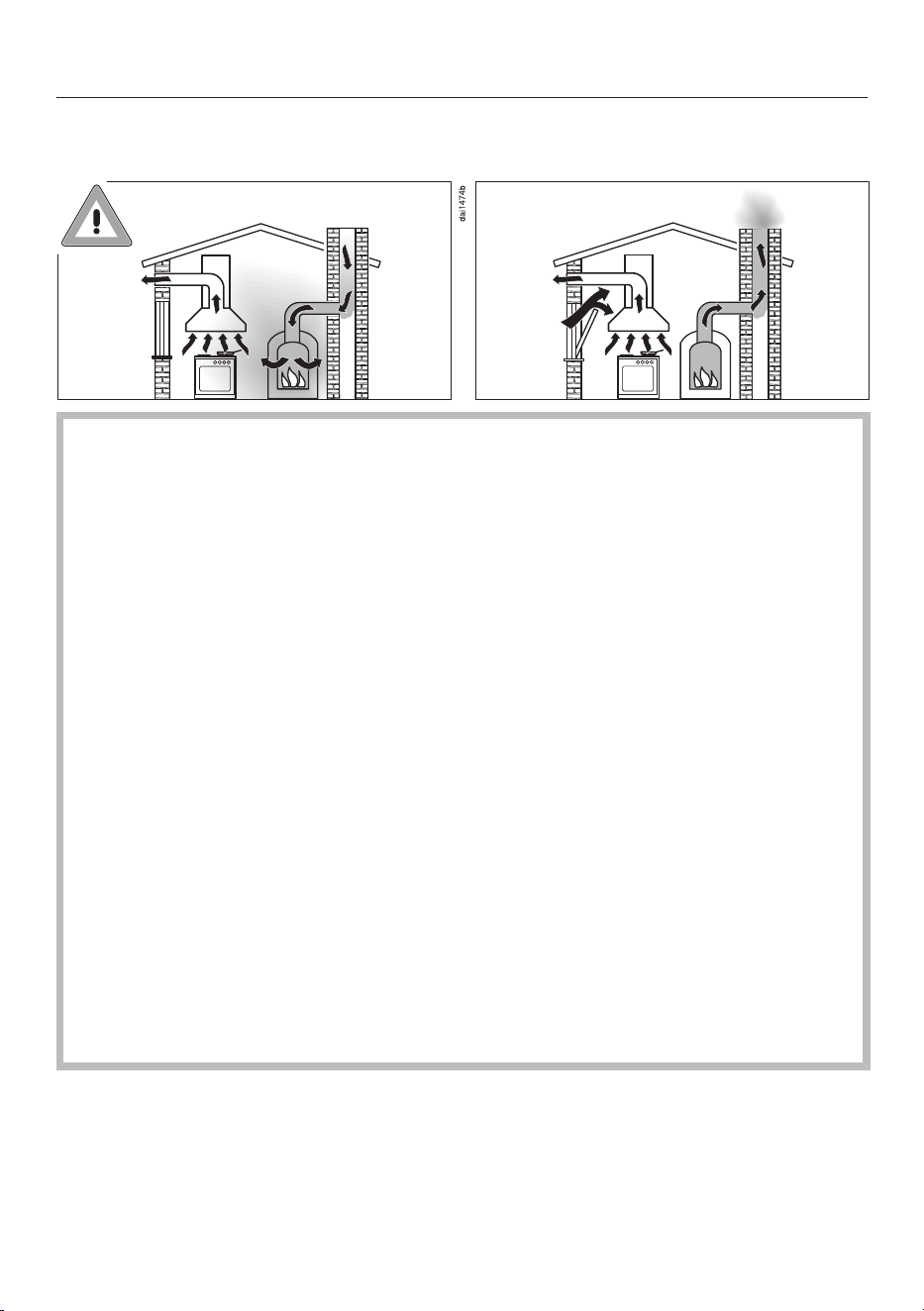
Using at the same time as another heating appliance that depends on the air
from the room
Danger of toxic fumes!
Great care should be taken when using the cooker hood in the
same room or the same area of the house at the same time as
another heating appliance that depends on the air from the room.
Such heating appliances draw in air from the room and duct
exhaust gases out to the open air through a chimney or extraction
ducting. They include gas, oil, wood and coal-fired boilers and
heaters, continuous flow or other water heaters, gas hobs and
ovens.
The cooker hood draws in air from the kitchen and from
neighbouring rooms. This applies to the following modes of
operation:
- extraction mode,
- recirculation mode with a recirculation box installed outside the
room.
If there is insufficient air, an underpressure will occur. The heating
appliance may be starved of oxygen. This impairs combustion.
Harmful gases could be drawn from the chimney or extraction
ducting back into the room.
Risk of death!

Warning and Safety instructions
8
In order to ensure safe operation and to prevent gases given off by
the heating appliance from being drawn back into the room, when
the cooker hood and the heater are both operated simultaneously,
an underpressure in the room of 0.04mbar (4Pa) is the maximum
permissible.
Sufficient ventilation can be maintained by air inlets which cannot
be blocked, e.g. in windows, doors and outside wall vents. The
cross-section of the inlet openings must enable sufficient
ventilation. A ventilation brick alone is not generally sufficient to
ensure safe ventilation.
The overall ventilation condition of the dwelling must be taken into
account. If in any doubt, the advice of a competent builder, or for
gas, a qualified gas fitter should be sought.
If the cooker hood is being operated in recirculation mode, whereby
the air is redirected into the room in which it is installed, the above
restrictions do not apply.
Correct use
Open flames are a fire hazard.
The use of an open flame under the cooker hood is not permitted. To
avoid the danger of fire, do not flambé or grill over an open flame.
When switched on, the cooker hood could draw flames into the filter.
Fat deposits could ignite, presenting a fire hazard.
The cooker hood can become damaged when exposed to
excessive heat.
- When using the cooker hood over a gas hob, ensure that any
burners in use are always covered by a pan. Switch the cooking
zone off when a pan is removed, even for a short time.
- Select a pan which is suitable for the size of the burner.
- Regulate the flame so that it does not burn up the sides of the pan.
- Avoid overheating the pan (e.g. when cooking with a wok).
Always switch the cooker hood on when a cooking zone is in use,
otherwise condensation may collect in the hood, which could cause
corrosion.

Warning and Safety instructions
9
Overheated oil and fat can ignite, causing fire damage to the
cooker hood.
When cooking with oil or fat, chip pans and deep fat fryers, etc, do
not leave the pans unattended. Similarly, never leave an open grill
unattended when grilling.
Do not use the cooker hood without the filters in place. This way
you will avoid the risk of grease and dirt getting into the appliance
and hindering its smooth operation.
The cooker hood can get very hot during cooking due to heat rising
from the hob.
Do not touch the housing or the grease filters until the cooker hood
has cooled down.
Proper installation
To determine whether a cooker hood may be operated above your
cooking appliance, please refer to the information provided by the
appliance’s manufacturer.
Safety regulations prohibit the fitting of a cooker hood over solid
fuel stoves.
An insufficient safety distance between the hob and the cooker
hood can result in damage to the cooker hood.
The minimum safety distances between the top of the hob and the
bottom of the cooker hood given in the “Installation” section of this
manual must be observed, unless the hob manufacturer states that a
greater safety distance is required.
If more than one cooking appliance is fitted beneath the cooker hood,
and they have different minimum safety distances to the cooker
hood, select the greater distance.
The information provided in “Installation” must be observed when
fixing the ventilation hood.
Components can have sharp edges which may cause injury.
Wear gloves to protect your hands from being cut.
Exhaust ducting must be of non-inflammable material. Suitable
material is available from Miele specialist dealers or the Miele Spares
Dept.
The appliance must not be connected to a chimney or flue which is
in use. Neither should it be connected to ducting which ventilates
rooms with fireplaces.

Warning and Safety instructions
10
If exhaust air is to be extracted into a chimney or ventilation duct
no longer used for other purposes, seek professional advice.
Cleaning and care
There is a risk of fire if the cooker hood is not cleaned as described
in these operating instructions.
Do not use a steam cleaning appliance to clean this appliance.
The steam could reach electrical components and cause a short
circuit.
Accessories and spare parts
Only use genuine original Miele accessories and spare parts with
this appliance. Using accessories or spare parts from other
manufacturers will invalidate the warranty and Miele cannot accept
liability.
Miele can only guarantee the safety of the appliance when genuine
original Miele replacement parts are used. Faulty components must
only be replaced by Miele spare parts.
Miele will guarantee to supply functional spare parts for a
minimum of 10years and up to 15years following the discontinuation
of your vapour extraction unit.

Caring for the environment
11
Disposing of the packaging
material
The packaging material is used for
handling and protects the appliance
from transport damage. The packaging
material used is selected from materials
which are environmentally friendly for
disposal and can generally be recycled.
Recycling the packaging material
reduces the use of raw materials. Use
material-specific collection points for
valuable materials and take advantage
of return options. Your Miele dealer will
take the packaging material away.
Disposing of your old appliance
Electrical and electronic appliances
contain many valuable materials. They
also contain certain materials,
compounds and components which
were essential for their correct
functioning and safety. These could be
hazardous to human health and to the
environment if disposed of with
household waste or if handled
incorrectly. Please do not, therefore,
dispose of your old appliance with
household waste.
Instead, please make use of officially
designated collection and disposal
points to dispose of and recycle
electrical and electronic appliances in
your local community, with your dealer
or with Miele, free of charge. By law, you
are solely responsible for deleting any
personal data from the old appliance
prior to disposal. You are legally obliged
to remove any old batteries which are
not securely enclosed by the appliance
and to remove any lamps without
destroying them, where this is possible.
These must be taken to a suitable
collection point where they can be
handed in free of charge. Please ensure
that your old appliance poses no risk to
children while being stored for disposal.
Guide to the appliance
12

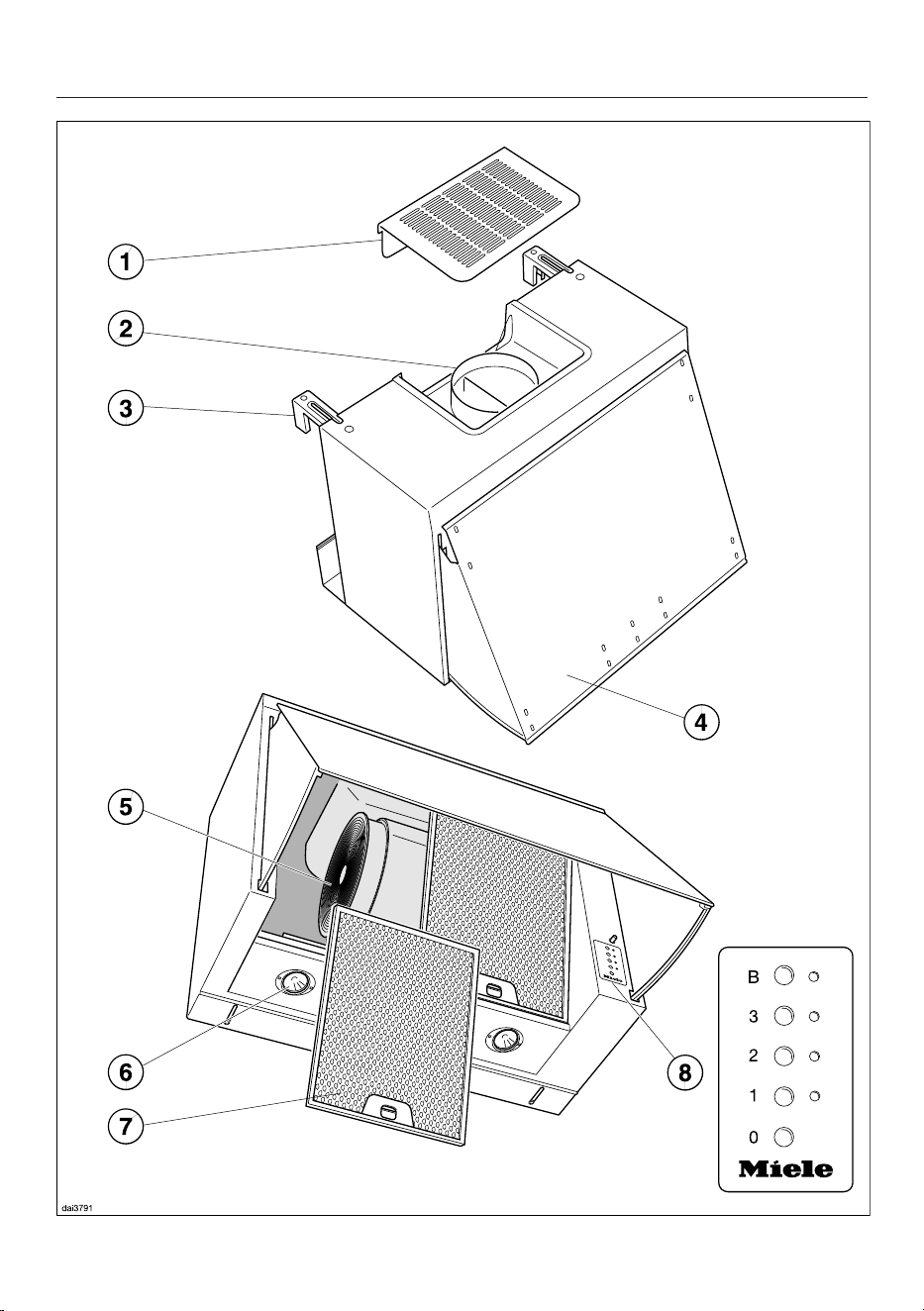
Guide to the appliance
13
a
Recirculation grille
b
Exhaust connection
c
Adjustable bracket
d
Open-out vapour canopy
to which a furniture panel is fitted
e
Charcoal filter
Accessory required for recirculation mode
f
Hob lighting
g
Grease filters
h
Controls
Modes of operation
14
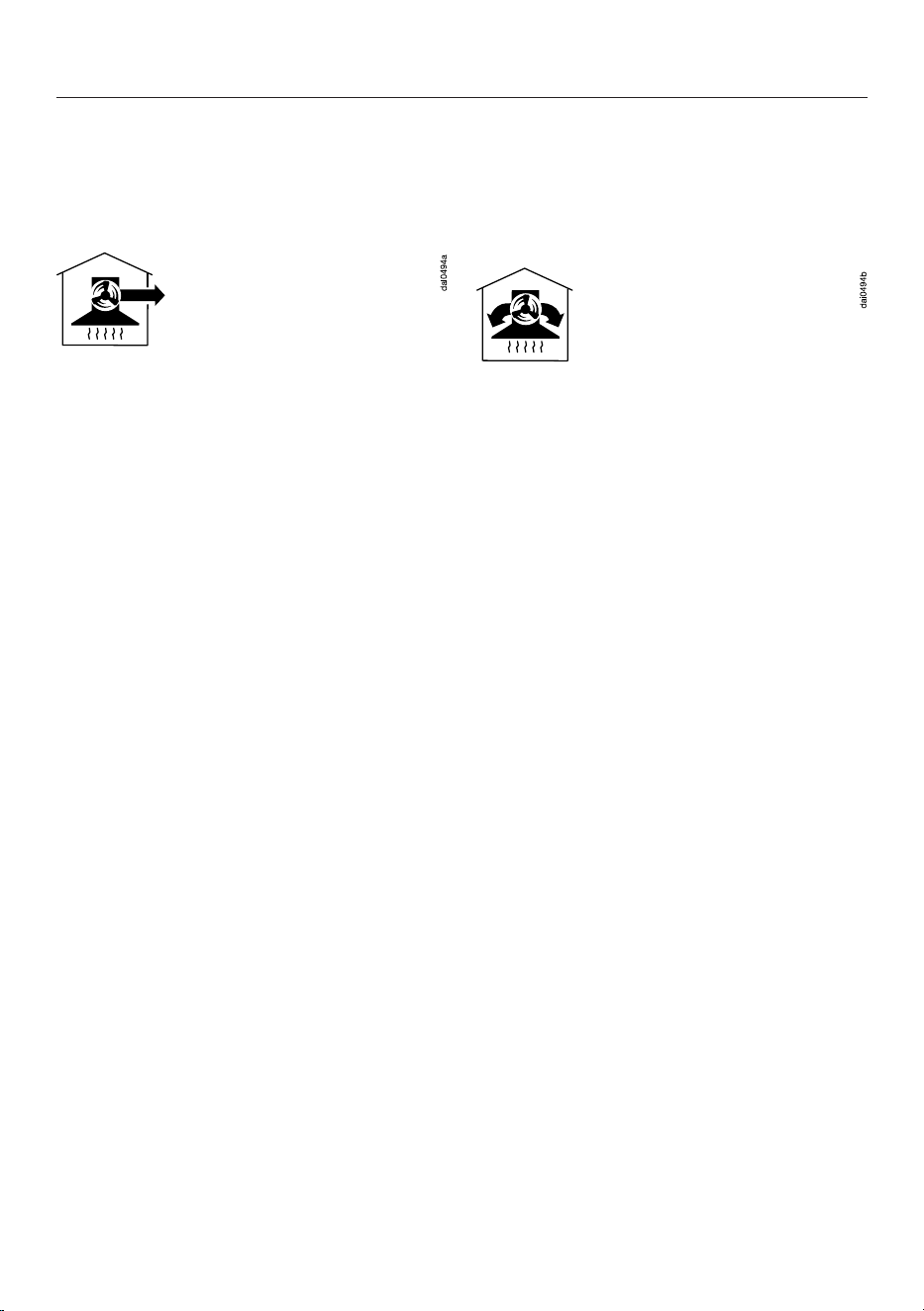
Depending on the model of the cooker
hood, the following options are
available:
Extraction mode
The air is drawn in and cleaned by the
grease filters and directed outside.
Non-return flap
A non-return flap fitted in the vent
system ensures that when the cooker
hood is not in operation the duct is
closed and no exchange of room air and
outside air can take place.
The flap is closed when the cooker hood
is switched off.
When the cooker hood is switched on,
the non-return flap opens for the
cooking vapours to be blown directly
outside.
If the on-site ventilation system does
not have a non-return flap, one is
supplied with the cooker hood. It must
be fitted in the exhaust socket on the
motor unit.
Recirculation mode
Recirculation mode cooker hoods
require charcoal filters. These are
available to purchase: see “Technical
Data”.
The air is drawn in and cleaned first by
the grease filters and then by the
charcoal filters. The cleaned air is then
recirculated back into the kitchen.

Operation
15
Switching the fan on
Switch the fan on as soon as you start
cooking. This is to ensure that vapours
are captured right from the start.
Open the vapour canopy.
The fan will come on at power level2.
Selecting the power level
Select power levels 1 to 3 for light to
heavy cooking vapours, odours or heat.
Increase the power level as the level of
vapours, odours or heat increases.
For short periods of cooking food with
intensive vapours, odours or heat, e.g.
when searing meat, select Booster level
B.
Select the power level required by
pressing a control from 1 to B.
Reducing power down from the
Booster setting
Press theB again to switch the
Booster off.
The fan will switch down to the
previously selected power level.
If you do not switch the Booster
setting off, the fan will automatically
revert to the previously selected power
level after 5minutes.
Run-on
It is advisable to run the fan for a few
minutes after cooking has finished.
This helps to remove any lingering
vapours and odours from the air. It also
reduces the risk of residues
accumulating in the cooker hood and
any resultant odours.
Switching the fan off
To switch the fan off close the vapour
canopy, or press the 0button for
longer.
To switch the fan back on with the
vapour canopy open, press a button
between 1 and 3.
Switching the hob lighting on/
off
You can switch the hob lighting on
and off by opening and closing the
vapour canopy.
If there is an interruption to the power
supply, the fan and the hob lighting will
switch off automatically.
With the vapour canopy open, the fan
will switch back on at power level 2
and the hob lighting will come back on
once the power supply is restored.

Energy saving tips
16
This cooker hood operates very
efficiently and economically. The
following will help you to save even
more energy when using it:
- Ensure that there is sufficient
ventilation in the kitchen when
cooking. In extraction mode, if there is
insufficient air flow the cooker hood
cannot operate efficiently and this
causes increased operating noise
levels.
- Always cook with the lowest possible
setting. This produces fewer cooking
vapours, so you can use a lower
cooker hood power level and therefore
benefit from reduced energy
consumption.
- Check the power level selected on the
cooker hood. A lower power level is
generally sufficient for the majority of
cooking. Only use the Booster setting
when necessary.
- When a large volume of cooking
vapours is being produced, switch to a
high power level in good time. This is
more efficient than operating the
cooker hood for longer to try to
capture cooking vapours which have
already been distributed throughout
the kitchen.
- Make sure that you switch the cooker
hood off after use.
- Clean or change the filters at regular
intervals. Heavily soiled filters reduce
performance, increase the risk of fire
and are unhygienic.
Cleaning and care
17
Before proceeding with any
maintenance or cleaning task, the
cooker hood must be disconnected
from the power supply (see “Warning
and Safety instructions”).
Housing
Removing the canopy
The vapour canopy can be taken off for
better accessibility.
Open the vapour canopy.
Pull the catch downwards to unlock
the vapour canopy and then swing the
canopy forwards.
To refit the canopy fit it back into the
guides at the top and then swing the
canopy back down.
General information
Unsuitable cleaning agents can
damage the surfaces and control
elements.
Do not use any cleaning agents
containing soda, acid, chloride or
solvent.
Do not use any abrasive cleaning
agents, e.g. powder cleaners or
cream cleaners and abrasive
sponges, as well as pot scourers or
sponges which have been used
previously with abrasive cleaning
agents.
Moisture in the cooker hood can
cause damage.
Make sure that water does not get
into the cooker hood.
All external surfaces and control
elements can be cleaned using hot
water with a small amount of
washing-up liquid applied with a well
wrung-out soft sponge or cloth.
After cleaning, wipe the surfaces dry
using a soft cloth.
Important information for the control
elements
If soiling is not removed promptly, it
could cause the control elements to
alter or discolour.
Remove any soiling immediately.
The surface of the control elements
can become damaged if they are
cleaned using stainless steel cleaning
agents.
Do not use stainless steel cleaning
agents on the control elements.
Grease filters
Fire hazard
Oversaturated grease filters are a fire
hazard.
Clean the grease filters at regular
intervals.
The re-usable metal grease filters in the
appliance remove solid particles
(grease, dust, etc.) from the kitchen
vapours, preventing soiling of the cooker
hood.
The grease filters must be cleaned at
regular intervals.
Heavily soiled grease filters hinder air
extraction and will lead to increased
levels of soiling in the cooker hood and
in the kitchen.
Cleaning and care
18
Cleaning interval
Accumulated grease solidifies over a
longer period of time and makes cleaning
more difficult. The grease filters should
therefore be cleaned every 3 to 4 weeks.
Removing a grease filter
When handling a grease filter, be
careful not to drop it.
This can result in damage to the filter
and the hob below.
Make sure you hold the filter securely
at all times when handling it.
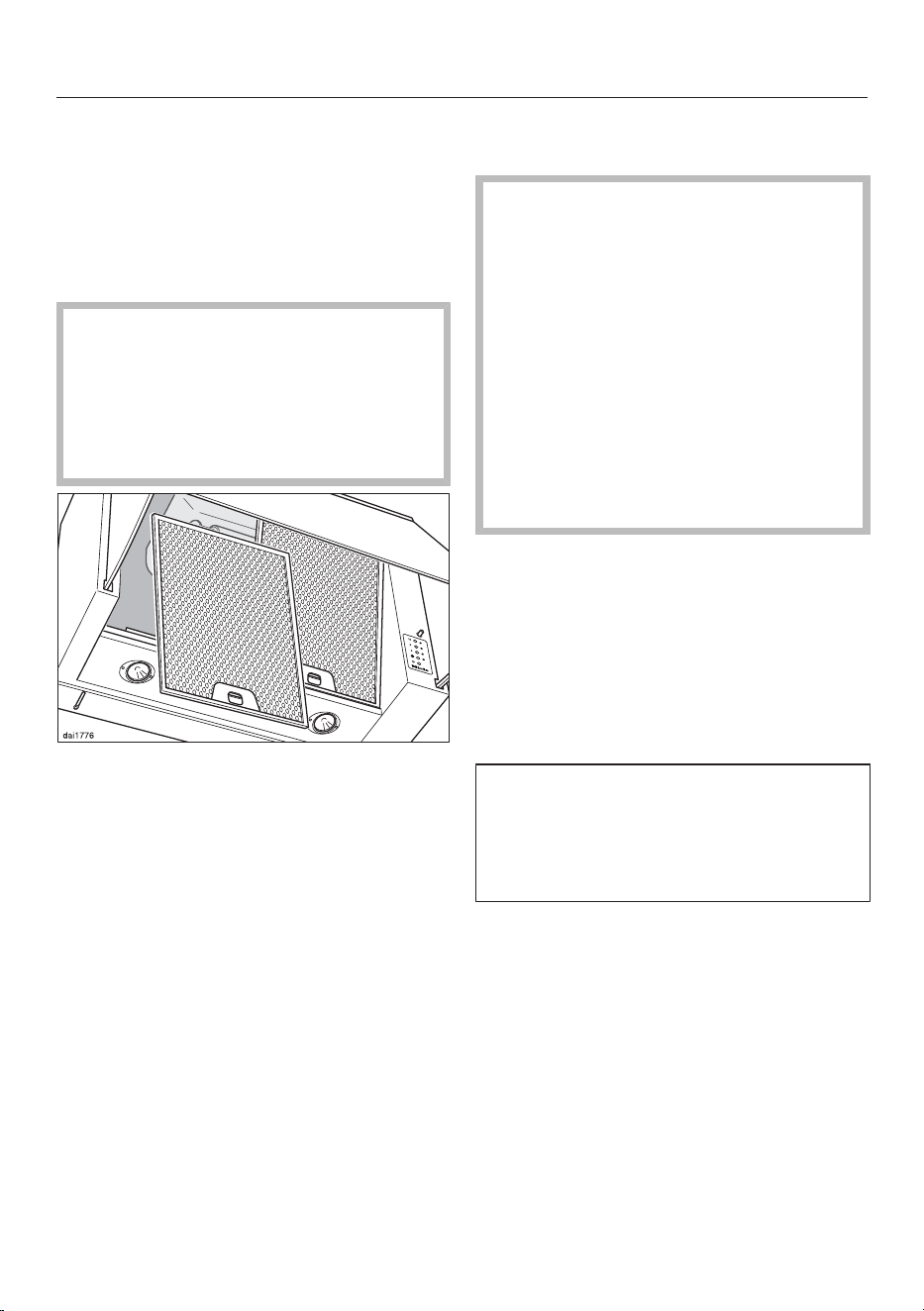
Open the retainer catch for the grease
filter and lower the filter to remove it.
Cleaning the grease filters by hand
Clean the filters with a soft nylon brush
in a mild solution of hot water and a
small amount of washing-up liquid. Do
not use “neat” washing up liquid.
Unsuitable cleaning agents
Unsuitable cleaning agents can cause
damage to the surface of the filters if
used regularly.
Do not use:
- cleaning agents containing descaling
agents
- powder cleaners, cream cleaners
- aggressive multi-purpose cleaning
agents or spray cleaners for grease
- oven sprays
Cleaning the grease filters in the
dishwasher
Risk of damage due to
excessively high temperatures in the
dishwasher.
Excessively high temperatures may
cause the grease filters to become
unusable, if they become deformed,
for example.
Select a programme that does not
exceed the recommended
temperature.
Also follow the information provided
in the operating instructions for the
dishwasher.
Place the grease filters upright or at a
slight angle in the lower basket.
Ensure the spray arm is not
obstructed.
Use a standard household cleaning
detergent.
Select a programme with a maximum
wash temperature of 65°C.
Depending on the detergent used, the
internal filter surfaces may become
discoloured. This will not affect the
functioning of the grease filters in any
way.
After cleaning
After cleaning, leave the filters to dry
on an absorbent surface before
replacing them.
When removing the filters for
cleaning, also clean off any residues
of oil or fat from the now accessible
housing to prevent the risk of these
catching fire.
Replace the grease filters.
Cleaning and care
19
Replacing the grease filters
Regular usage and cleaning can cause
the filter surfaces to become worn.
If you identify any damage, replace the
grease filters.
Grease filters are available to order via
the Miele Customer Service
Department (see end of these operating
instructions for contact details) or from
your Miele dealer.
Charcoal filters
With recirculation mode, two charcoal
filters must be fitted in addition to the
grease filters. These are designed to
absorb cooking odours.
They are fitted either side of the fan.
Charcoal filters are available to order via
the Miele Webshop, the Miele Spare
Parts Department (see end of this
booklet for contact details) or from your
Miele dealer. The type of charcoal filter
required is listed under “Technical data”
at the back of this booklet.
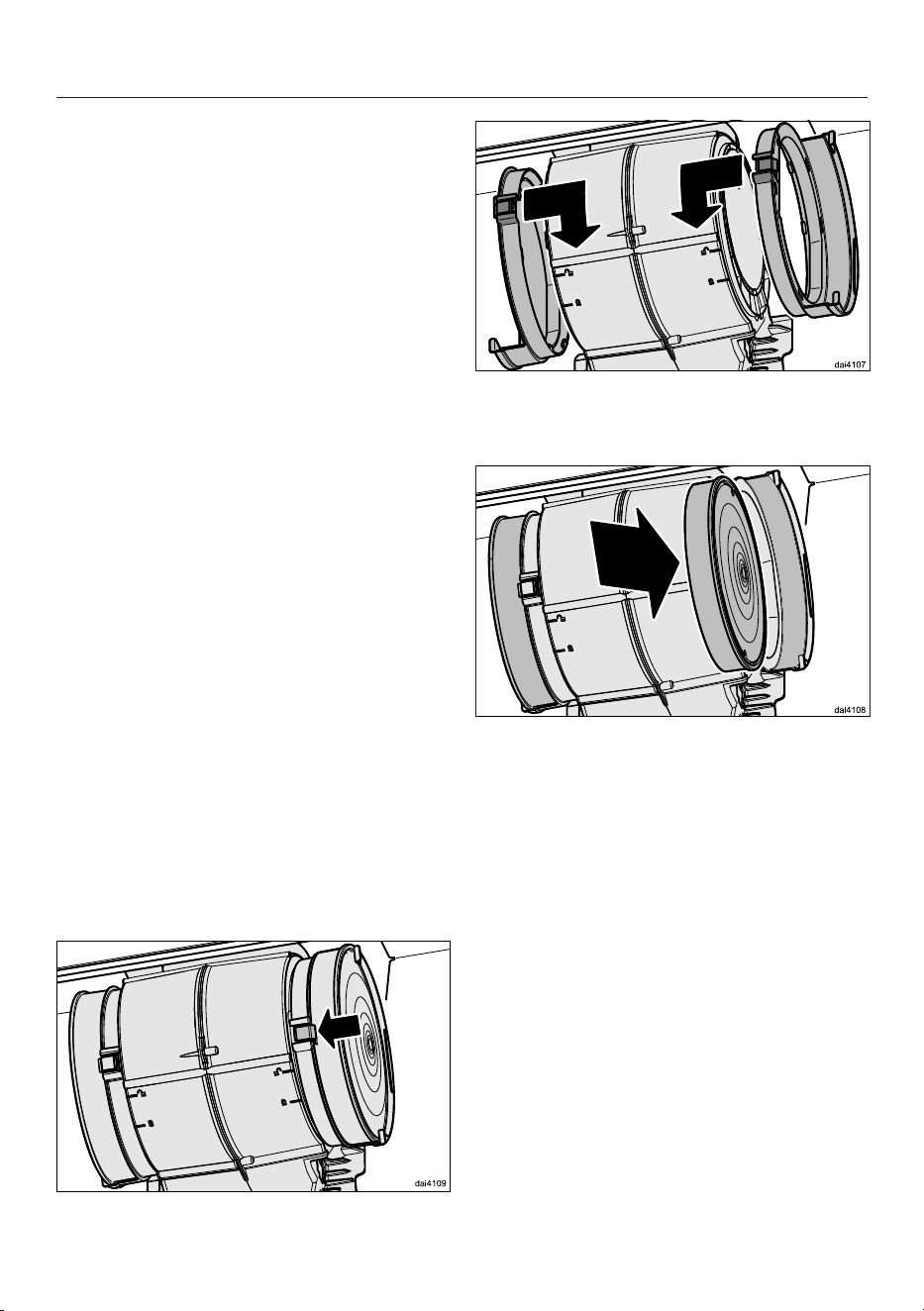
Fitting/replacing charcoal filters
Before fitting or replacing a charcoal
filter, the vapour canopy must be
opened out and the grease filters must
be taken out (see previous section for
instructions on how to do this).
To replace a charcoal filter push the lever
back a little and then take the filter out.
Fitting for the first time: fit an adapter
onto each side of the fan and turn to
secure position in their holders.
Push the charcoal filters into the
adapters until they engage.
Replace the grease filters.
When to change the charcoal filters
Replace the charcoal filters when they
no longer absorb kitchen odours
effectively, and at least every 6months.
Disposing of charcoal filters
Used charcoal filters can be disposed
of with normal household waste.
Installation
*INSTALLATION*
20
Before installation
Before installation, it is important
to read the information given on the
following pages as well as the
“Warning and Safety instructions” at
the beginning of this booklet.
Installation recommendations
- To achieve optimum vapour
extraction, the cooker hood must be
positioned centrally over the hob, not
to the side.
- The hob should be no wider than the
cooker hood, and if possible, it should
be narrower.
- The installation area must be easily
accessible. The cooker hood should
be easily accessible and easy to
dismantle in the event that service is
required. This should be taken into
consideration when planning the
position of cupboards, shelves,
ceilings or features in the vicinity of
the cooker hood.
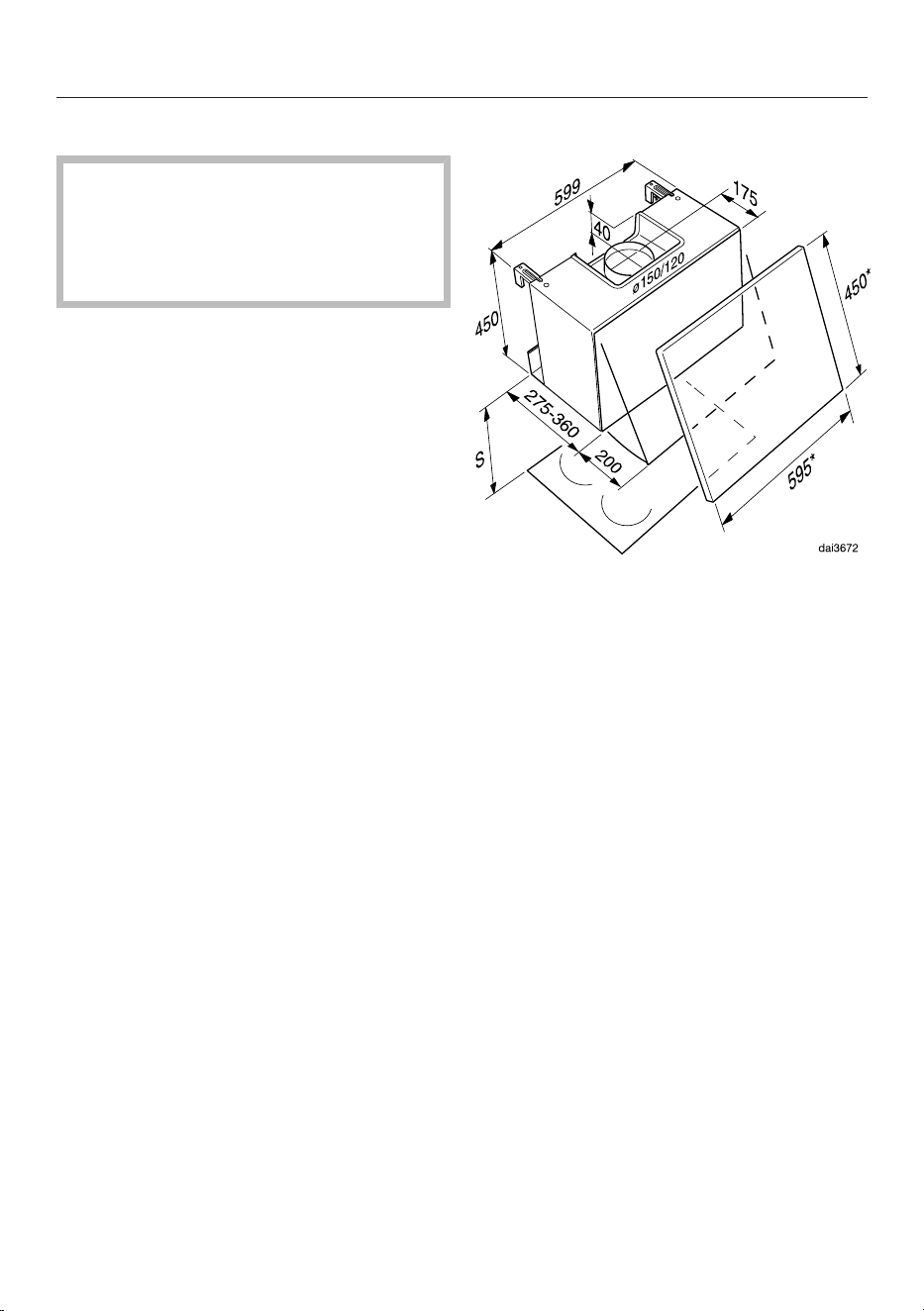
Appliance dimensions
* Cabinet door dimensions
Possible weight of the cabinet door:
max. 10kg
Exhaust duct 150mm, with reducing
collar 120mm
Installation
*INSTALLATION*
21
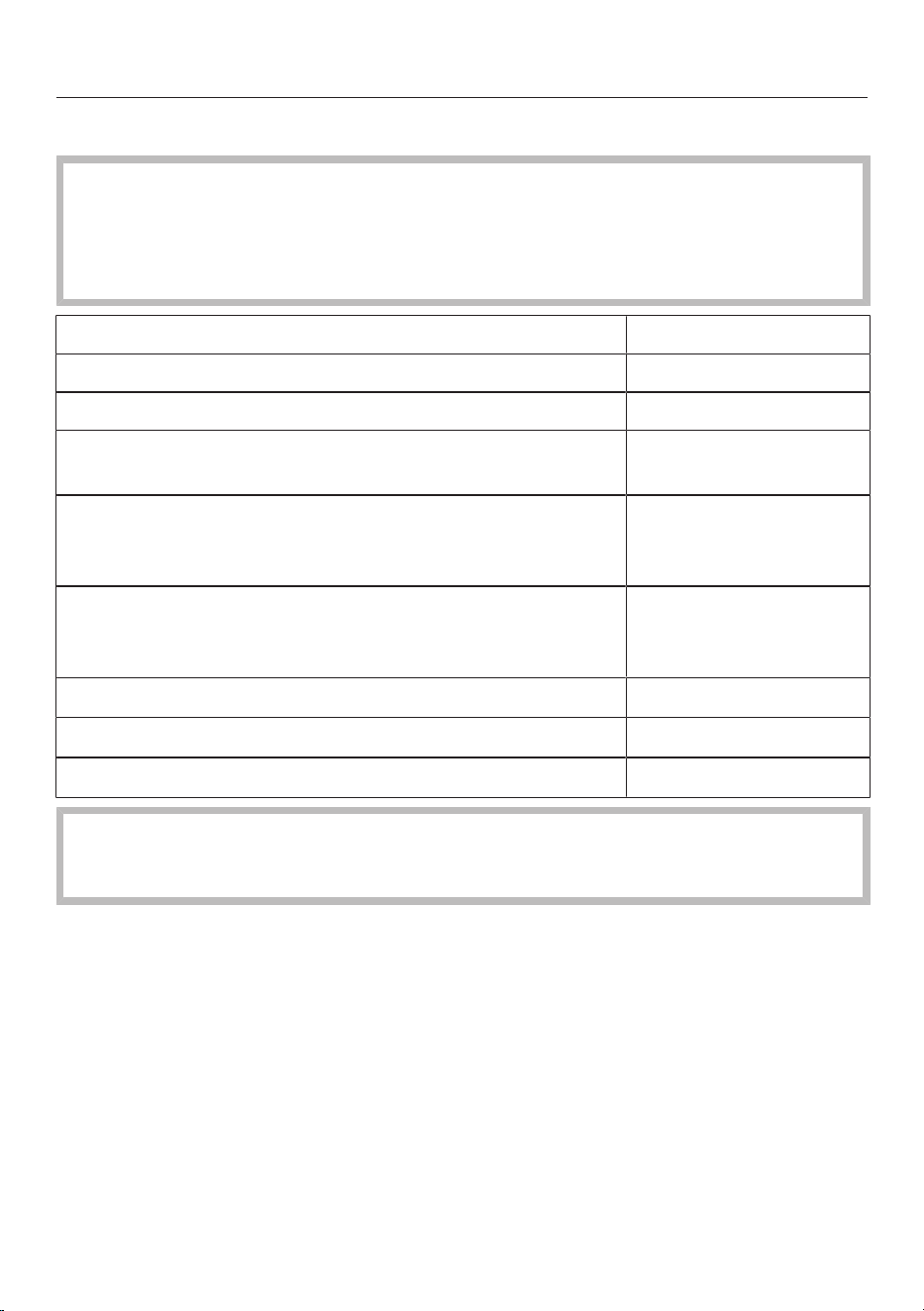
Safety distance between hob and cooker hood (S)
When planning the installation height of your cooker hood, the minimum safety
distance between the top of a cooker or hob and the bottom of the cooker hood
is as follows, unless a greater distance is specified by the manufacturer of your
cooking appliance.
See “Warning and Safety” instructions for further information.
Cooking appliance Minimum distance S
Electric hob 650mm
Electric grill, deep fat fryer (electric) 650mm
Multi-burner gas hob,
total output ≤ 12.6 kW, no burner > 4.5 kW
650mm
Multi-burner gas hob,
total output > 12.6 kW and ≤ 21.6 kW,
no burner > 4.8 kW.
760mm
Multi-burner gas hob,
total output > 21.6 kW,
or multi-burner gas hob where one burner > 4.8 kW.
Not possible
Single burner gas hob, output ≤ 6 kW. 650mm
Single burner gas hob, output > 6 kW and ≤ 8.1 kW. 760mm
Single burner gas hob, output > 8.1 kW Not possible
If you are fitting a front panel made of wood or laminate to the cooker hood,
observe the safety distances given by the hob manufacturer regarding the use of
easily flammable materials.
Installation
*INSTALLATION*
22
Fitting the furniture front
There are several holes on the
appliance's vapour plate for securing
the front panel. A drilling template is
supplied for correct positioning.
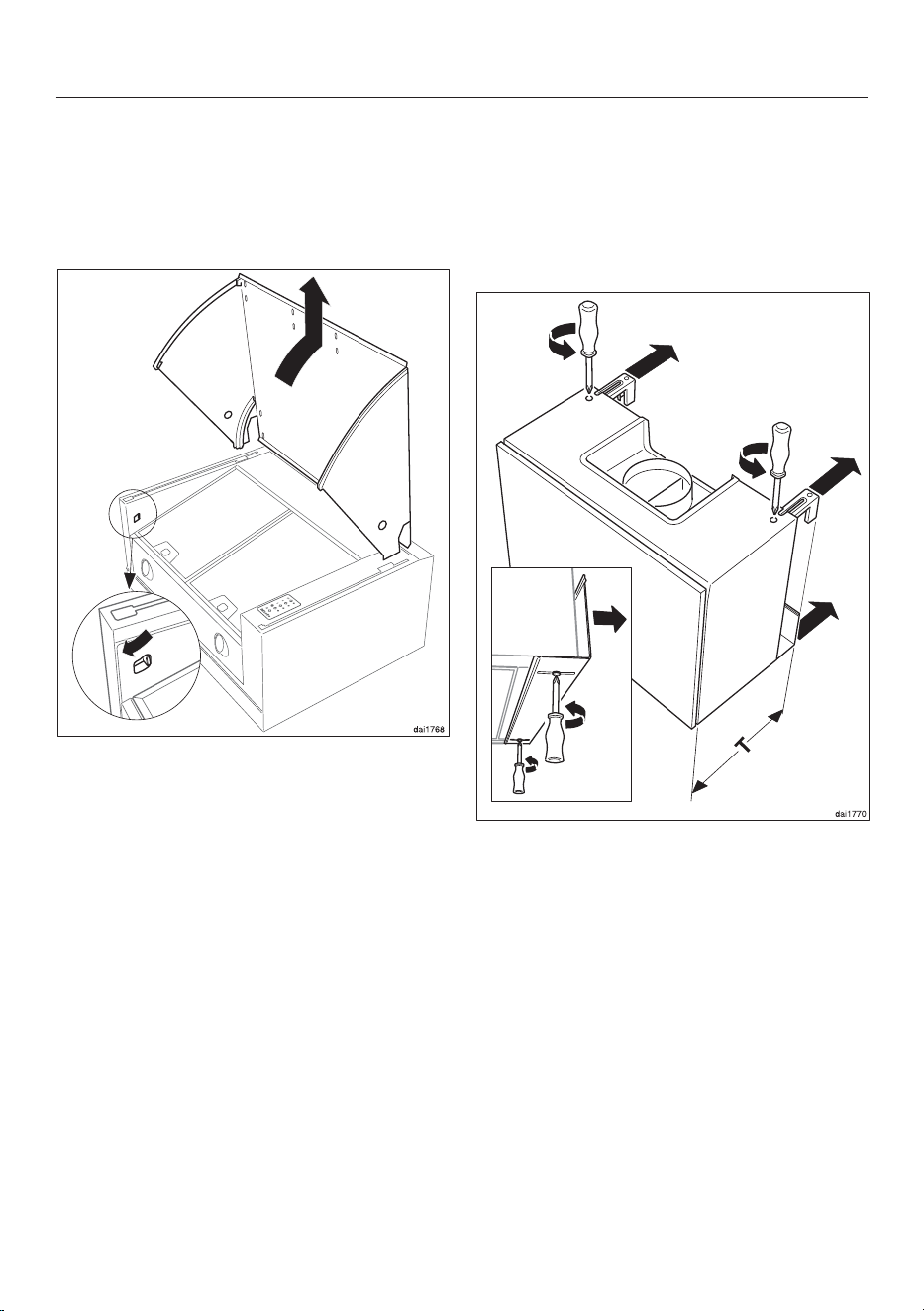
Open the vapour canopy.
Pull the catch forwards for releasing
the canopy and then swing the
canopy upwards.
Cut the drilling template for the front
panel to size and place it on the
reverse of the panel. Drill the
appropriate holes.
Then screw the furniture panel to the
vapour canopy with suitable screws.
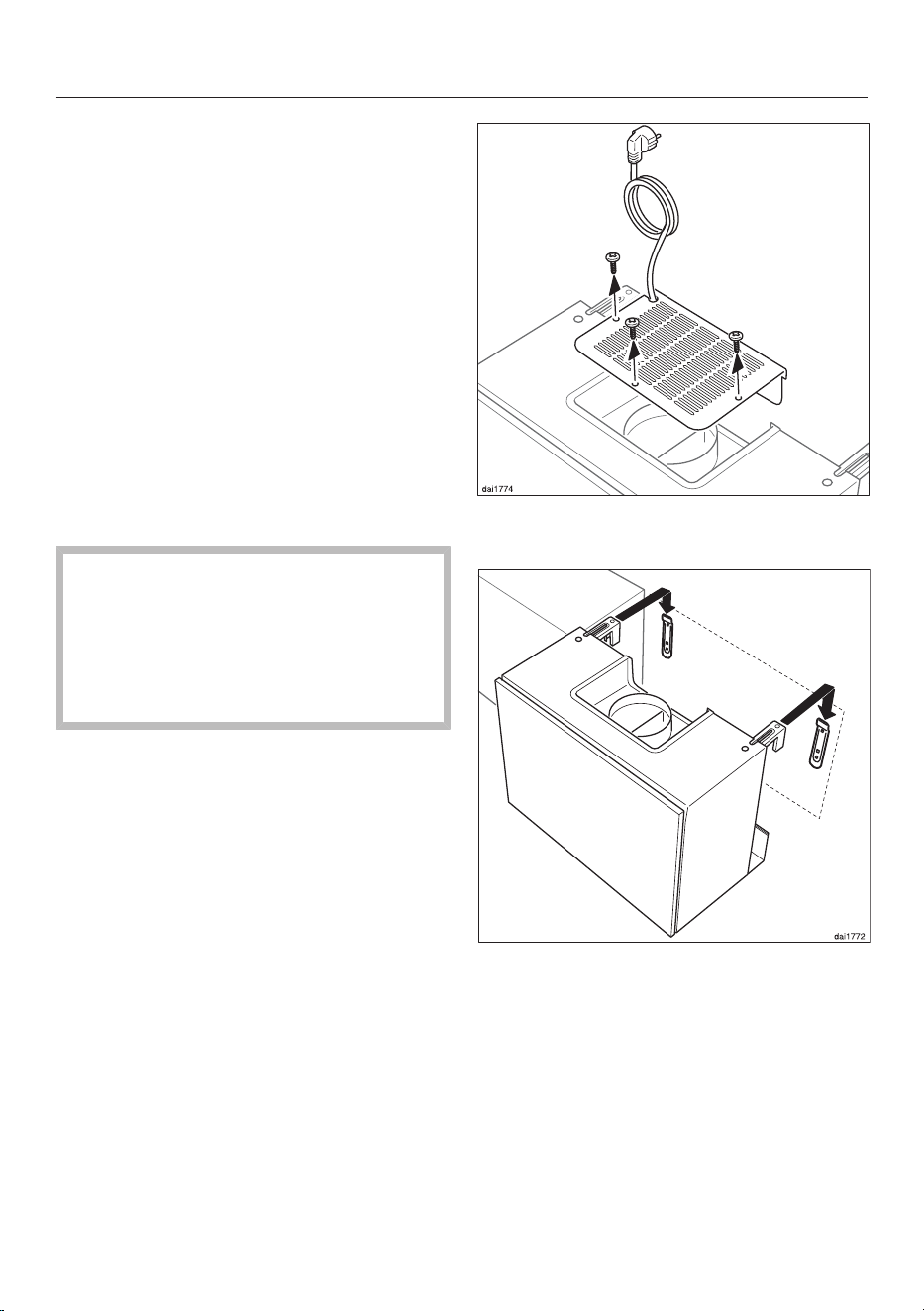
Depth adjustment
There are two adjustable brackets at the
top of the unit and an adjustable trim at
the bottom of the unit for setting the
unit depth T between 275mm and
360mm.
Loosen the screws in the adjustable
brackets.
Extend the brackets to dimension T.
Tighten the screws up.
Loosen the screws in the adjustable
trim.
Adjust the trim to the required depth.
Tighten the screws up.
If the adjustable trim is too short,
unscrew it, turn it around and refit it
to use the longer side.
Installation
*INSTALLATION*
23
Wall installation
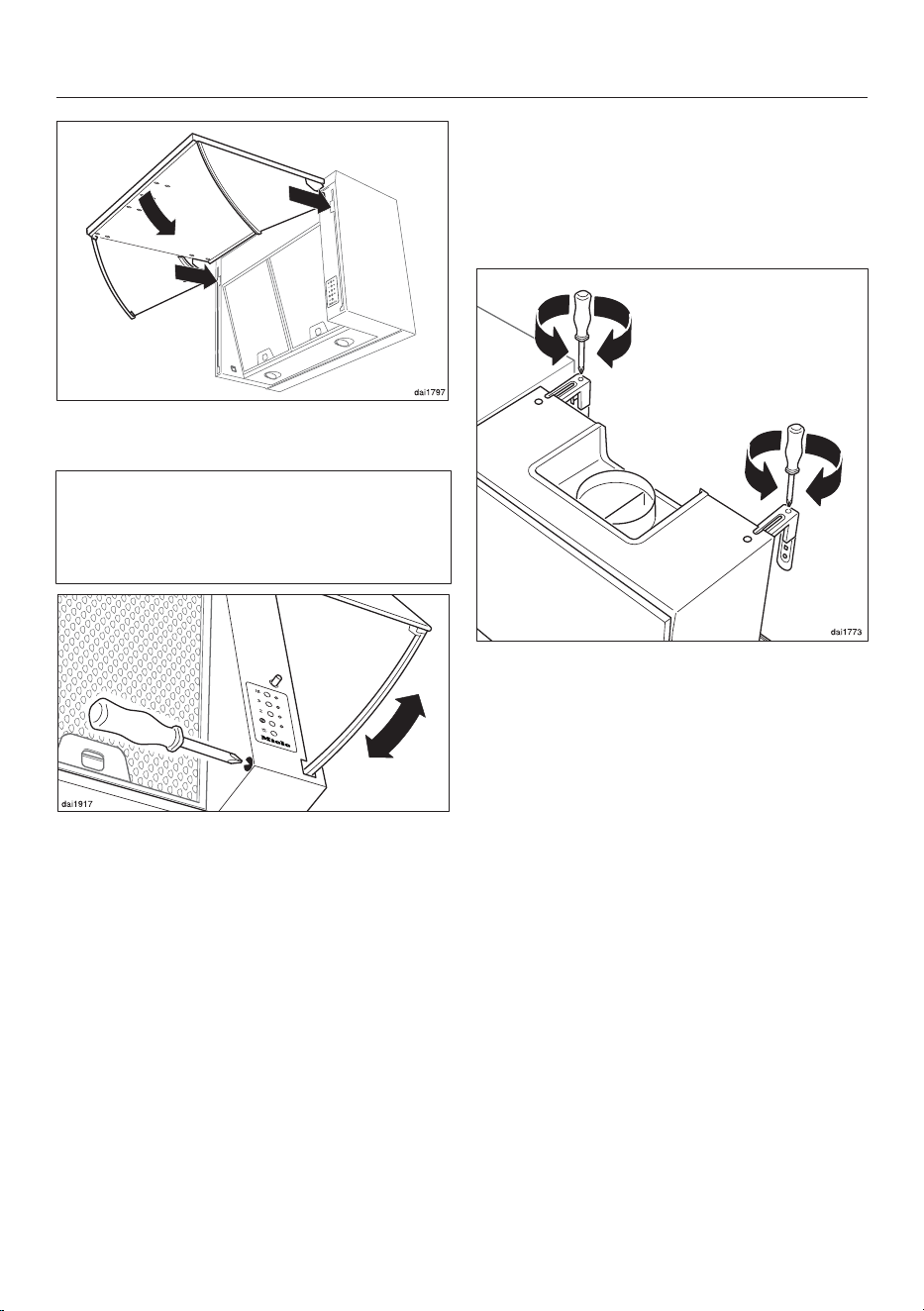
The cooker hood is fitted to the wall
inbetween two wall units. Screws and
plugs are supplied for this.
Cut the drilling template to size and
position against the wall. The top
edge of the template indicates the top
edge of the cooker hood. Please
observe the safety distance (S) to the
hob (see “Appliance dimensions”).
Mark and drill four holes for the fixing
brackets (8mm).
Remove the drilling template.
Secure the fixing brackets to the wall
using the plugs and screws supplied.
The screws and plugs are
designed for use in solid walls only.
For other types of wall construction,
alternative fixings will be required.
Make sure the wall is able to take the
weight of the cooker hood.
Attach the corresponding drilling
template to the adjacent cabinet or
the side panel.
Drill two holes into the adjacent
cabinet or the side panel (2mm).
Remove the recirculation grille for
extraction mode.
Hang the cooker hood into position
using the adjustable brackets.
Installation
*INSTALLATION*
24
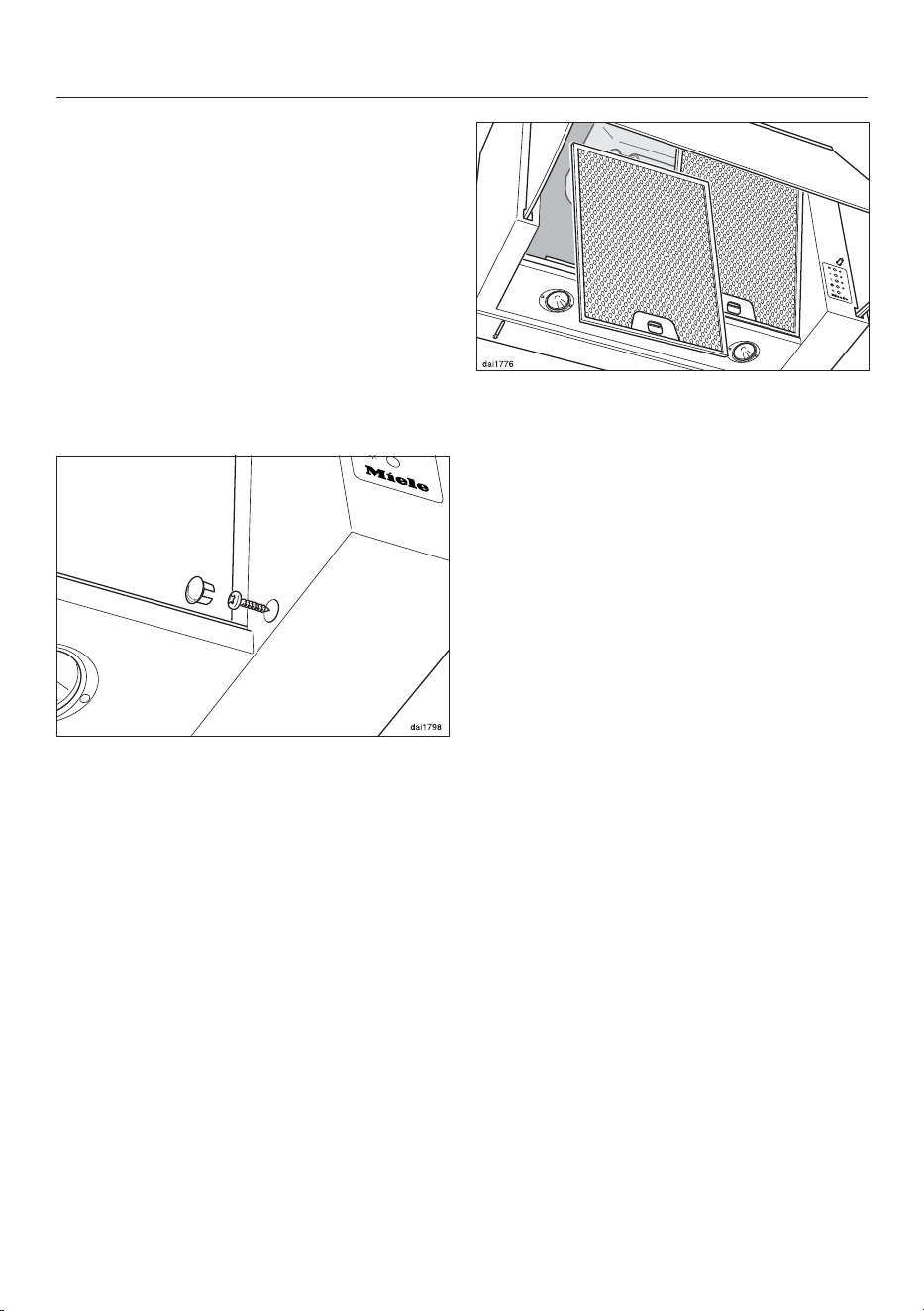
Attach the vapour canopy with
cabinet door fitted and then close it.
It is possible to adjust the movement
of the vapour canopy. This may be
required if a heavy cabinet door is to
be fitted, for example.
Remove the two cover caps which
conceal the adjusting screws at the
front right and left on the lower edge
of the appliance.
Adjust the screws evenly on both
sides using a cross-slotted
screwdriver. Turn clockwise to tighten
the mechanism and anti-clockwise to
loosen the mechanism.
Refit the caps.
Height adjustment
Adjusting screws in the brackets located
at the top of the appliance are used for
aligning the appliance with adjoining
furniture units.
Turning the screws anti-clockwise
raises the appliance and clockwise
lower it.
You may also have to adjust the depth
again.
Installation
*INSTALLATION*
25
Connecting to adjacent
furniture units/fitting side
panels
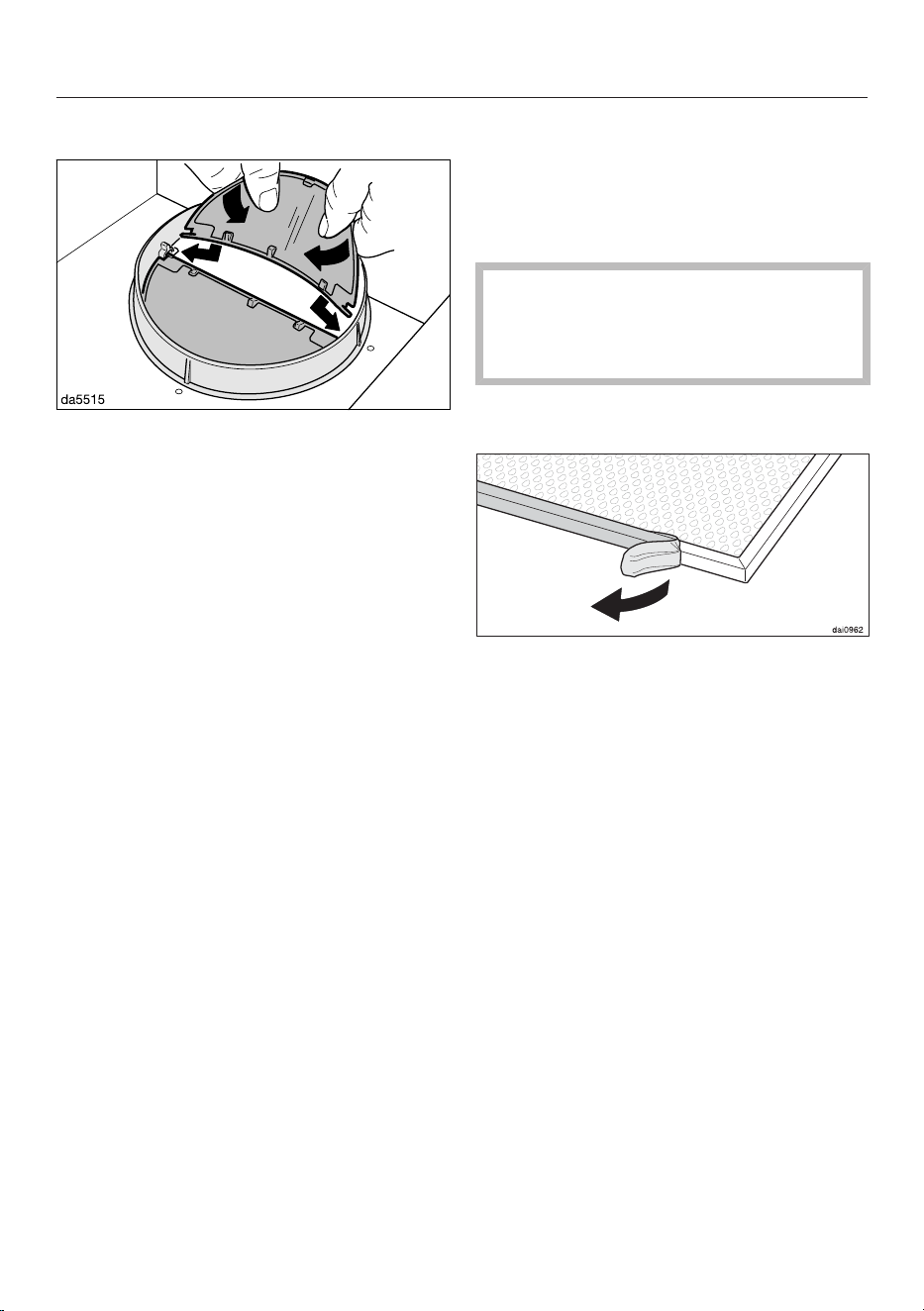
The cooker hood is supplied with two
screws on each side for securing it to
adjacent furniture units or for fitting side
panels.
Remove the vapour canopy.
Remove the grease filters.
Turn the top screws in the adjacent
furniture units or side panels.
Remove the cover caps from the
lower screws.
Screw in the lower screws.
Refit the caps.
Refit the vapour canopy.
Replace the grease filters.
Installation
*INSTALLATION*
26
For extraction mode
If your vented system does not have a
non-return flap, insert the one
supplied with the cooker hood into
the exhaust duct.
Attach the vent ducting, e.g. flexible
hose 150mm, to the exhaust duct
using a hose clip (available as an
optional accessory).
Use the reducing collar supplied with
the cooker hood for vent ducting
120mm.
See “Vent ducting” for more detailed
instructions on fitting the vent
ducting.
For recirculation mode
Fit the charcoal filters (see “Cleaning
and care”).
Electrical connection
Refer to the notes in “Electrical
connection” and “Warning and
Safety instructions” before
connecting to the electricity supply.
Connect the cooker hood to the
electricity supply.
Take the grease filters out and pull the
protective foil off the filter frame.
Then replace the grease filter.

Electrical connection
*INSTALLATION*
27
The cooker hood is supplied with a
mains cable with moulded plug ready
for connection to a suitable earthed
socket.
If the socket is not easily accessible or a
fixed connection is envisaged, ensure
that a suitable means of disconnection
is provided on the installation side for
each pole.
Risk of fire from overheating.
Connecting the cooker hood to multi-
socket adapters or extension cables
can overload the cables.
For safety reasons, do not use an
extension cable or multi-socket
adapter.
The electrical system must comply with
local and national safety regulations
(BS7671 in the UK).
For safety reasons, we recommend
using a type residual current device
(RCD) in the relevant electrical
installation for connecting the cooker
hood.
If the mains connection cable is
damaged, it must only be replaced with
a specific mains connection cable of the
same type (available from the Miele
Customer Service Department). For
safety reasons, such replacement may
only be carried out by a qualified
specialist or the Miele Customer
Service Department.
These operating instructions and the
data plate indicate the nominal power
consumption and the appropriate fuse
rating. Compare this information with
the data of the on-site electrical
connection.
If in any doubt, consult a qualified
electrician.
Temporary or permanent operation on
an autonomous power supply system or
a power supply system that is not
synchronised with the mains power
supply (e.g. island networks, back-up
systems) is possible. A prerequisite for
operation is that the power supply
system complies with the specifications
of EN50160 or an equivalent standard.
The function and operation of the
protective measures provided in the
domestic electrical installation and in
this Miele product must also be
maintained in isolated operation or in
operation that is not synchronised with
the mains power supply, or these
measures must be replaced by
equivalent measures in the installation.
As described, for example, in the current
version of VDE-AR-E 2510-2.
Connection for air extraction
28
If the cooker hood is used at the
same time as a heating appliance
that relies on oxygen from the same
room, there is a risk in certain
circumstances of toxic fumes
building up.
It is essential that the “Warning and
Safety” instructions are observed.
The cooker hood should be installed
according to local and national
building regulations. Seek approval
from the building inspector where
necessary.
Only use smooth pipes or flexible
exhaust ducting made from approved
non-flammable materials for exhaust
ducting.
To achieve the most efficient air
throughput with the lowest noise levels,
please note the following:
- The diameter of the exhaust ducting
must not be smaller than the cross-
section of the exhaust duct (see
“Appliance dimensions”). This applies
in particular when using flat ducting.
- The exhaust ducting should be as
short and straight as possible.
- Only use wide radius bends.
- The exhaust ducting must not be
kinked or compressed.
- All connections must be strong and
airtight.
- If the exhaust ducting has flaps, these
must be opened whenever the cooker
hood is switched on.
Any constriction of the air throughput
will reduce extraction performance
and increase operating noise.
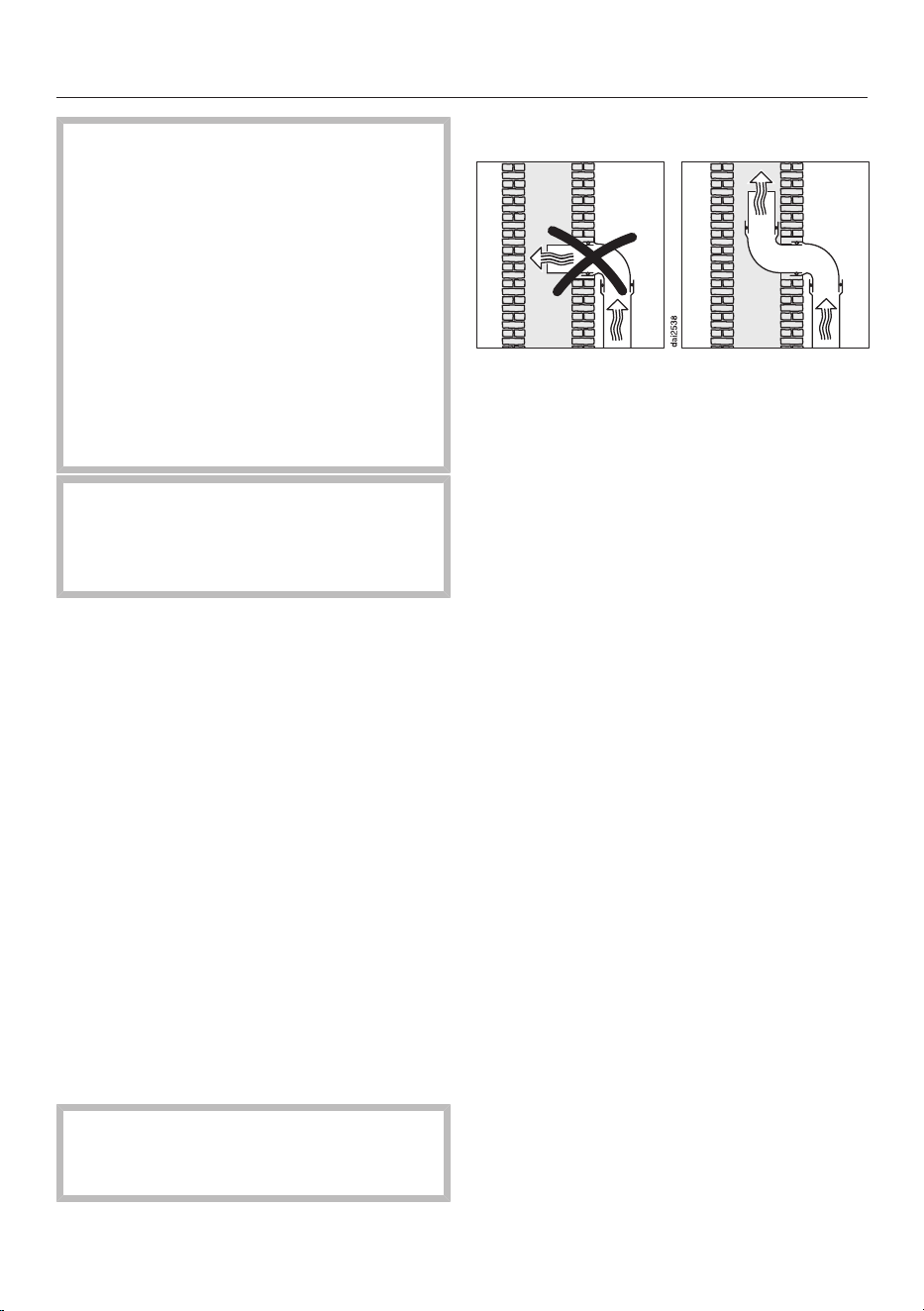
Flue
If the exhaust air is to be ducted into a
flue, the ducting must be directed in the
flow direction of the flue.
If the flue is used by several ventilation
units, the cross-section of the flue must
be large enough.
Non-return flap
Use a non-return flap in the exhaust
system.
A non-return flap ensures that when the
cooker hood is not in operation, the
duct is closed to prevent unwanted
exchange of room air and outside air.
If the exhaust is ducted through an
outside wall, a Miele wall vent or roof
vent (available as an optional accessory)
is recommended. Both of these have a
built-in non-return flap.
If the on-site ventilation system does
not have a non-return flap, one is
supplied with the cooker hood.
The non-return flap is fitted in the
exhaust socket of the fan.
Connection for air extraction
29
Condensation
If the exhaust ducting is to run through
cool rooms or ceiling space, for
example, the significant variations in
temperature between the different
areas can cause condensation to form.
Insulate the exhaust ducting to reduce
temperature variations.
If the exhaust ducting is to be laid
horizontally, it must be laid with a
downwards sloping gradient of at least
1cm per meter. This is to ensure that
condensation cannot drain back into the
cooker hood.
In addition to insulating the exhaust
ducting, it is advisable to also install a
condensate trap for collecting and
evaporating any potential condensation.
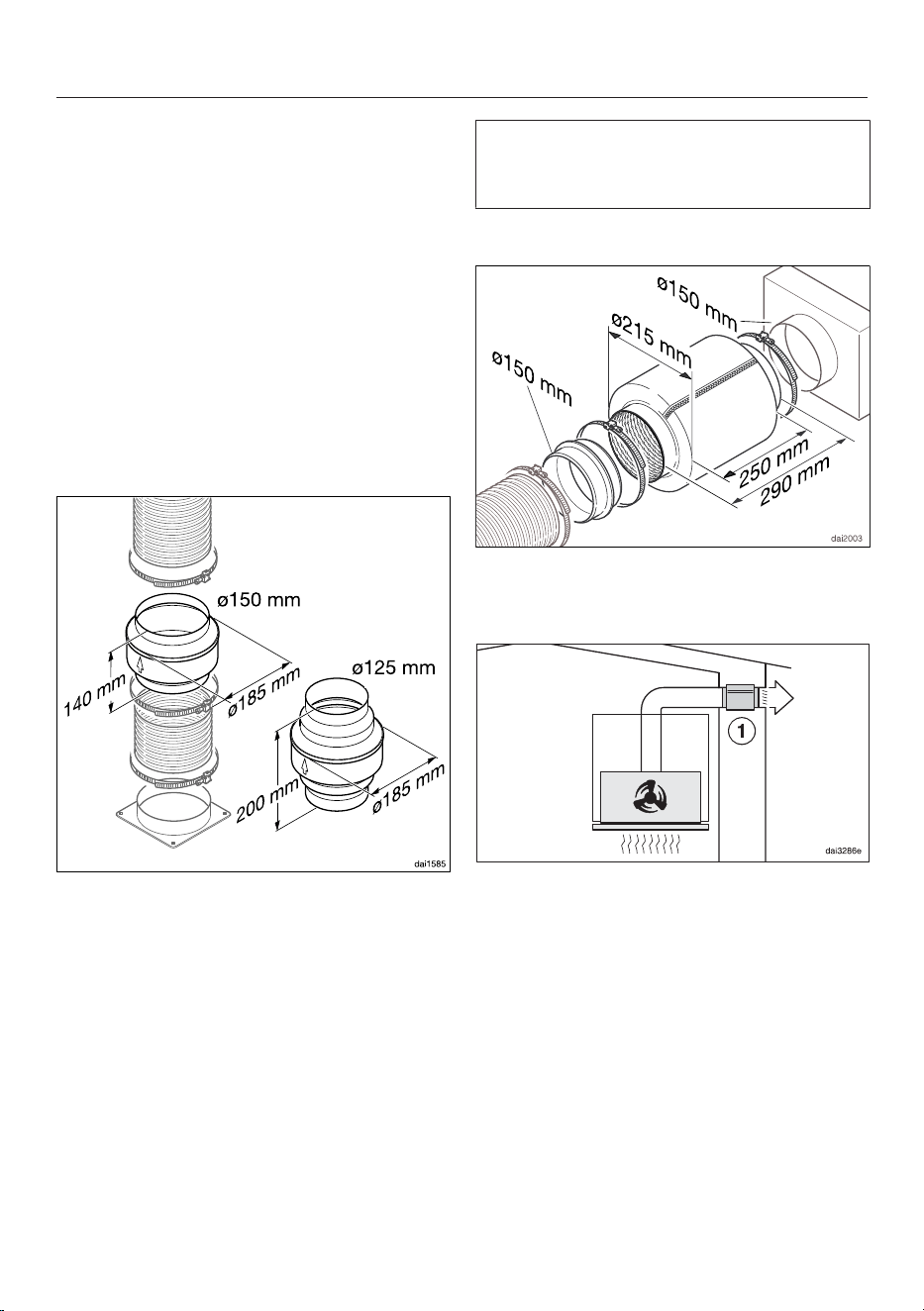
Condensate traps for 125mm or
150mm diameter exhaust ducting are
available as optional accessories.
When installing a condensate trap,
ensure that it is positioned vertically and
as closely as possible to the cooker
hood above the exhaust connection.
The arrow on the casing indicates the
direction of airflow.
Miele shall not accept warranty claims
for any functional defects or damage
caused by inadequate exhaust ducting.
Silencer
To reduce noise levels even further, a
silencer (optional accessory) can be
installed in the exhaust ducting.
In extraction mode, the silencer not only
reduces noise from the fan outside the
house, but also sounds originating
outside reaching the kitchen through the
exhaust ducting (e.g. traffic noise). For
this reason, the silencer must be
positioned as close as possible to the
ducting exit.

After sales service and warranty
30
Information to help you rectify faults
yourself and about Miele spare parts
can be found at www.miele.com/
service.
Contact in the event of a fault
In the event of any faults which you
cannot remedy yourself, please contact
your Miele dealer or the Miele
Customer Service Department.
You can book a Miele Customer
Service Department call-out online at
www.miele.com/service.
Contact information for the Miele
Customer Service Department can be
found at the end of this document.
Please quote the model identifier and
serial number of your appliance (Fabr./
SN/Nr.) when contacting the Miele
Customer Service Department. This
information can be found on the data
plate.
Please note that telephone calls may be
monitored and recorded for training
purposes and that a call-out charge will
be applied to service visits where the
problem could have been resolved as
described in this booklet.
Position of the data plate
The data plate is visible after removing
the grease filters.
Warranty
For information on the appliance
warranty specific to your country please
contact Miele. See back cover for
address.
In the UK, your appliance warranty is
valid for 2 years from the date of
purchase. However, you must activate
your cover by calling 0330 160 6640 or
registering online at www.miele.co.uk.

Technical data
31
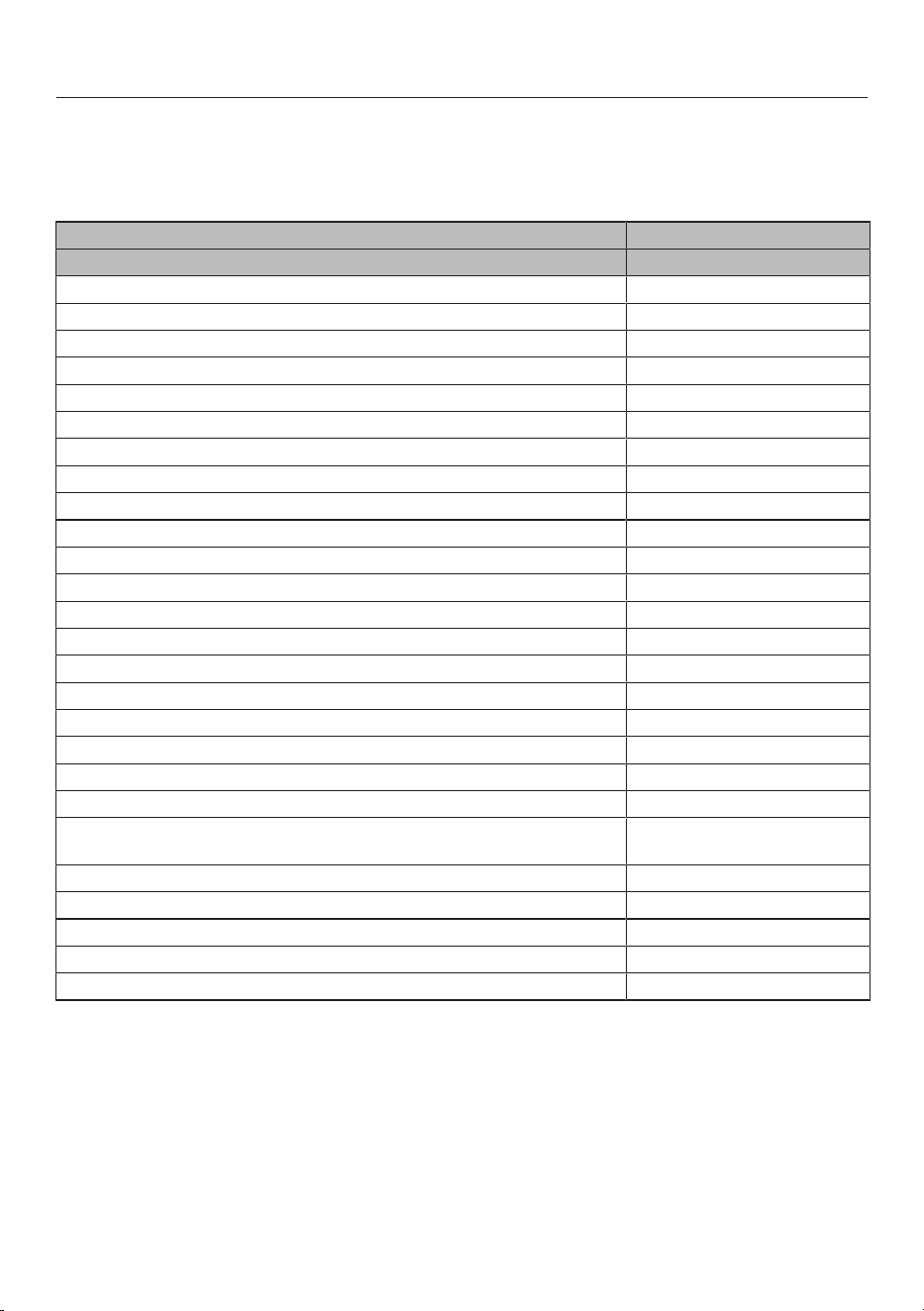
Fan motor 250W
Hob lighting 2x1W
Total rated load 252W
Mains voltage, frequency AC230V, 50Hz
Fuse rating 10A
Length of mains connection cable 1.2m
Weight 11.8kg
Special accessories for recirculation mode
Charcoal filter set DKF14-1. The set contains two active charcoal filters.
Technical data
32
Data sheet for household cooker hoods
In acc. with delegated regulation (EU) No. 65/2014 and regulation (EU) No.
66/2014
MIELE
Model name/identifier DAZ 1620
Annual Energy Consumption (AEC
hood
) 75,9 kWh/year
Energy efficiency class B
Energy efficiency index (EEI
hood
) 64,2
Fluid Dynamic Efficiency (FDE
hood
) 23,9
Fluid Dynamic Efficiency class
A (most efficient) to G (least efficient) B
Lighting Efficiency (LE
hood
) 77,0 lx/W
Lighting Efficiency class
A (most efficient) to G (least efficient) A
Grease Filtering Efficiency 85,1%
Grease Filtering Efficiency class
A (most efficient) to G (least efficient) B
Airflow at best efficiency point 425,0 m
3
/h
Air flow (min. speed) 300 m
3
/h
Air flow (max. speed) 620 m
3
/h
Air flow (intensive or boost setting) 730 m
3
/h
Max. air flow (Q
max
) 730,0 m
3
/h
Air pressure at best efficiency point 375 Pa
Airborne acoustical A-weighted sound power emissions (min. speed) 47 dB
Airborne acoustical A-weighted sound power emissions (max. speed) 64 dB
Airborne acoustical A-weighted sound power emissions (intensive or
boost setting)
68 dB
Electrical power input at best efficiency point 185,0 W
Power consumption in off mode (P
o
) 0,49 W
Nominal power of lighting system 2,2 W
Average illumination of the lighting system on the cooking surface 170 Ix
Time increase factor 1,1



United Kingdom
Miele Co. Ltd., Fairacres, Marcham Road, Abingdon, Oxon, OX14 1TW
Tel: 0330 160 6600, Internet: www.miele.co.uk, E-mail: [email protected]
Australia
Miele Australia Pty. Ltd.
ACN 005 635 398
ABN 96 005 635 398
Level 4, 141 Camberwell Road
Hawthorn East, VIC 3123
Tel: 1300 464 353
E-mail: [email protected]
Internet: www.miele.com.au
Miele Electrical Appliances Co. Ltd.
No. 82, Shimenyi Road, JingAn District
Shanghai, China, P.R.C
Post Code: 200040
Phone: +86 21 6157 3500
Fax: +86 21 6157 3511
E-mail: info@miele.cn
Internet: www.miele.cn
China Mainland
Miele (Hong Kong) Ltd.
41/F - 4101, Manhattan Place
23 Wang Tai Road
Kowloon Bay, Hong Kong
Tel: (852) 2610 1025
Fax: (852) 3579 1404
E-mail:
Website: www.miele.hk
Hong Kong, China
Miele India Pvt. Ltd.
1st Floor, Copia Corporate Suites,
Commercial Plot 9, Mathura Road,
Jasola, New Delhi - 110025
E-mail: customercare@miele.in
Website: www.miele.in
India
Miele Ireland Ltd.
2024 Bianconi Avenue
Citywest Business Campus
Dublin 24
Tel: (01) 461 07 10
Fax: (01) 461 07 97
E-mail: [email protected]
Internet: www.miele.ie
Ireland
Malaysia
Miele Sdn Bhd
Suite 12-2, Level 12
Menara Sapura Kencana
Petroleum
Solaris Dutamas No. 1
Jalan Dutamas 1
50480 Kuala Lumpur, Malaysia
Phone: +603-6209-0288
Fax: +603-6205-3768
Miele New Zealand Limited
IRD 98 463 631
8 College Hill
Freemans Bay, Auckland 1011
Tel: 0800 464 353
Internet: www.miele.co.nz
New Zealand
Miele Pte. Ltd.
29 Media Circle
#11-04 ALICE@Mediapolis
Singapore 138565
Tel: +65 6735 1191
Fax: +65 6735 1161
E-mail: [email protected]
Internet: www.miele.sg
Singapore
Miele (Pty) Ltd.
63 Peter Place, Bryanston 2194
Tel: (011) 875 9000
Fax: (011) 875 9035
E-mail: [email protected]
Internet: www.miele.co.za
South Africa
Miele Appliances Ltd.
Showroom 1, Eiffel 1 Building
P.O. Box 114782 - Dubai
Tel. +971 4 3044 999
Fax. +971 4 3418 852
800-MIELE (64353)
E-mail: [email protected]
Website: www.miele.ae
United Arab Emirates
Manufacturer: Miele & Cie. KG, Carl-Miele-Straße 29, 33332 Gütersloh, Germany
Thailand
Miele Appliances Ltd.
BHIRAJ TOWER at EmQuartier
43rd Floor Unit 4301-4303
689 Sukhumvit Road
North Klongton Sub-District
Vadhana District
Bangkok 10110, Thailand
Sheikh Zayed Road, Umm Al Sheif
E-mail: customercare@miele.co.nz
P.O. Box 69434, Bryanston 2021

M.-Nr. 12 814 390 / 01en-GB
DAZ1620