1
Reading this guide takes less
than 5 minutes and increases
your chances of falling asleep.

2

3

4
THE PROBLEM. Today, there are natural solutions with very
positive results: therapies, sophrology, yoga, meditation.
However, these techniques have not been able to spread
widely given their high cost or time needed.
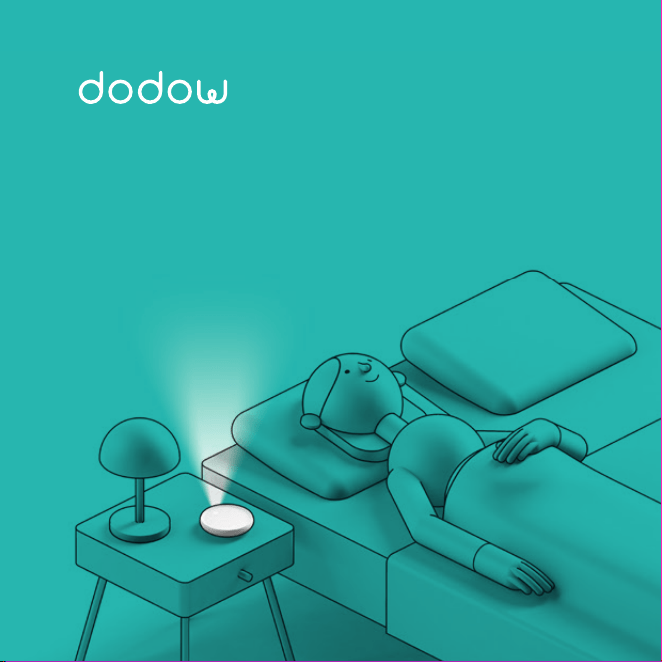
OUR SOLUTION. We took the best of these solutions to
design Dodow, the first light metronome that retrains
your brain to naturally fall asleep on its own again without
medication.
We are Livlab, a team of insomniacs,
designers and entrepreneurs, whose
mission is to improve your sleep.

5
Getting started
Features
Inserting / changing batteries
Turning Dodow on
Brightness settings
Turning Dodow off
Using Dodow
Falling asleep with Dodow
Physiological mechanism
Additional exercises
FAQ
Warranty & disclaimer
6
7
8
9
10
11
12
13
18
20
23
26
Index

6
Getting
started
7
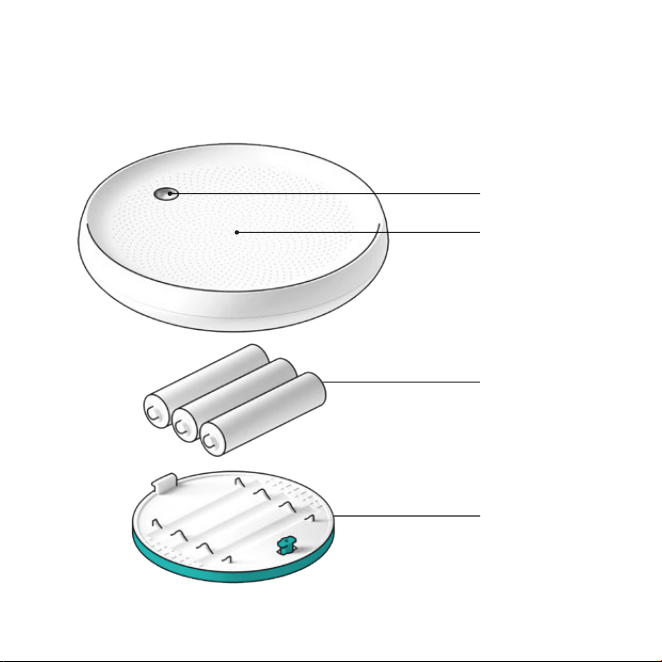
Touchpad
LED
3 AAA LR03
batteries
Lid
Features
8
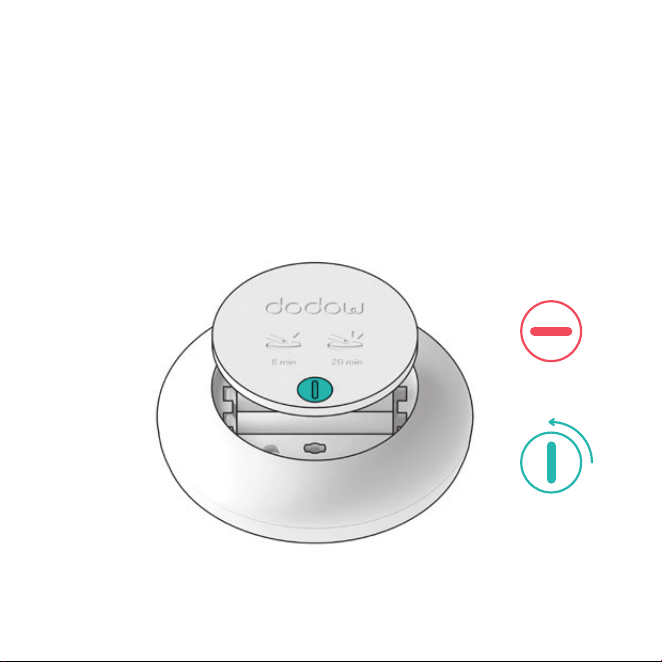
Inserting / changing batteries
Dodow's light flashes when the batteries are dead.
Open
Closed
9
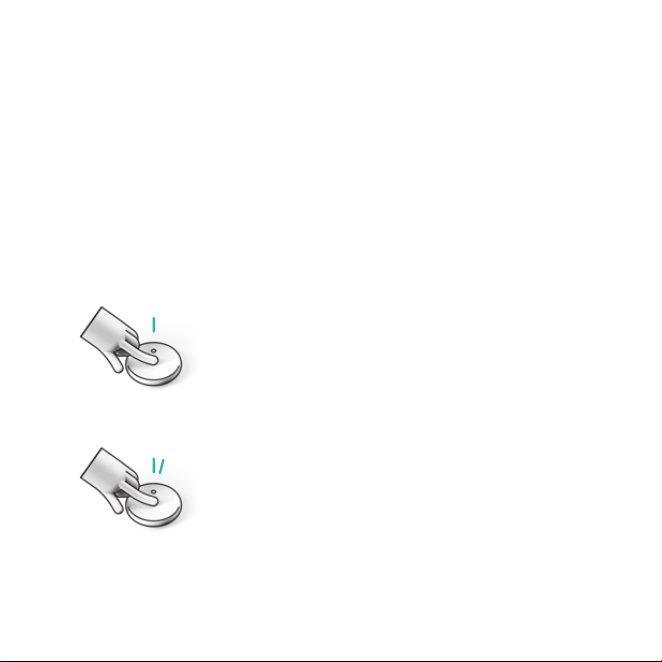
Turning Dodow on
You can choose between two breathing modes.
Here's how you can activate each of them:
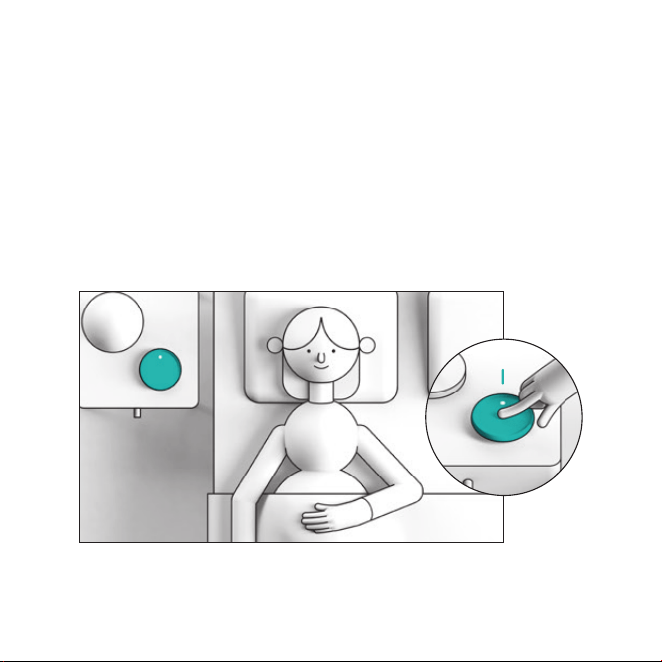
20 MINUTE MODE. Touch the touchpad
twice. During the 8 minute mode, if you
want to run the 20 minute mode with-
out starting the exercise from scratch,
touch the touchpad twice as well.
8 MINUTE MODE.
Touch the touchpad once.
10
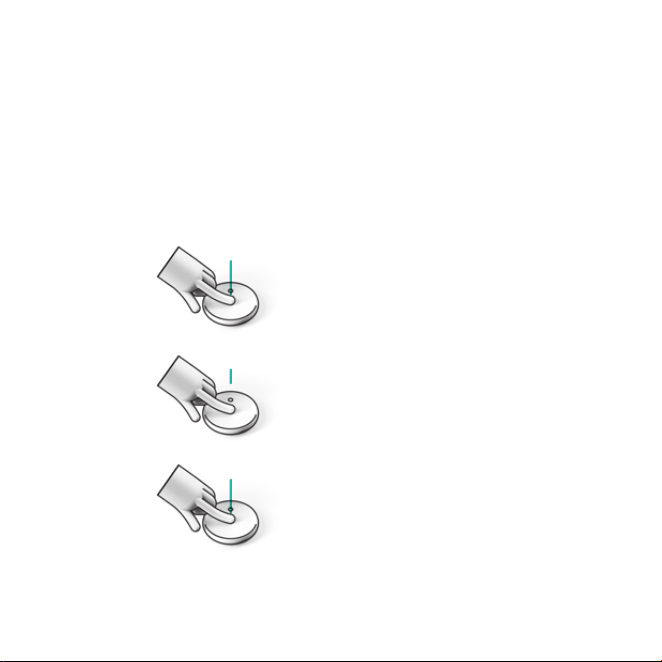
Brightness settings
If the light projected onto the ceiling doesn't suit you,
you can always adjust the brightness settings. Please
first make sure Dodow is off.
ACTIVATE THE SETTINGS MODE. Press
down lightly on the touchpad with
your finger for 3 seconds so that the
LEDs light up. Please note that they
shouldn't be flashing.
CHOOSE BETWEEN THE 3 BRIGHTNESS
SETTINGS. Touch the touchpad to ro-
tate through the settings.
CONFIRM YOUR CHOICE. Press down
on the touchpad with your finger for 3
seconds until the LEDs turn off.
3 sec
3 sec
11
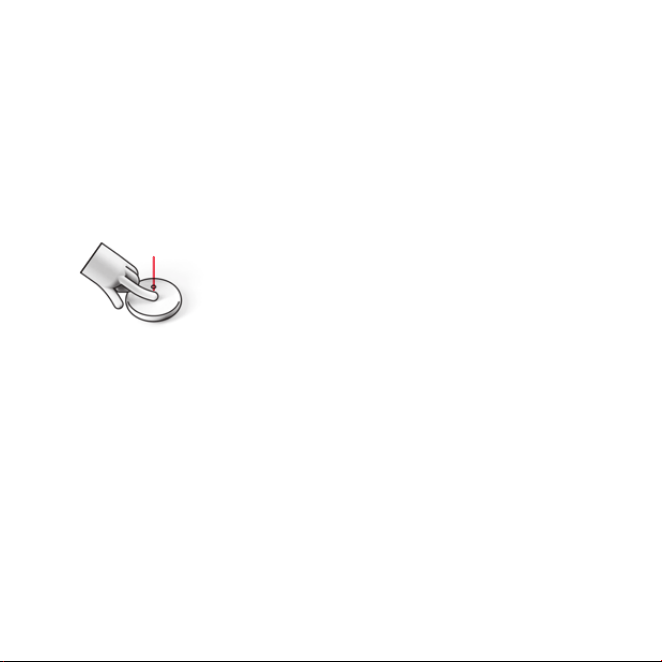
Turning Dodow o
Dodow shuts down automatically
at the end of each exercice.
You can switch it off beforehand by
pressing on the touchpad with your
finger for 3 seconds.
3 sec

12
Using Dodow
13
Falling asleep with Dodow
1. STARTING OFF. Keep Dodow within reach
and activate the 8 or 20 minute mode.
14
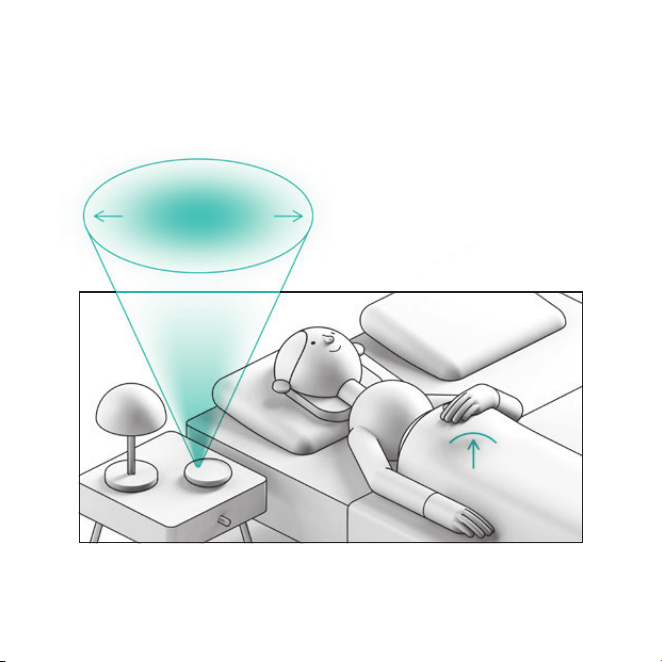
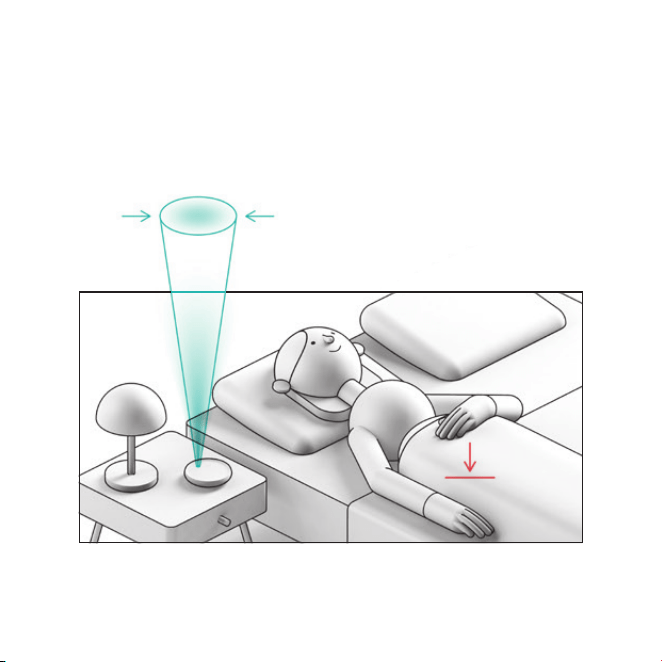
2. BREATHING. Focus on the blue light beam projected
onto the ceiling and gently synchronize your brea-
thing with the light:
Inhale when it expands.
15
Exhale when it retracts.
16
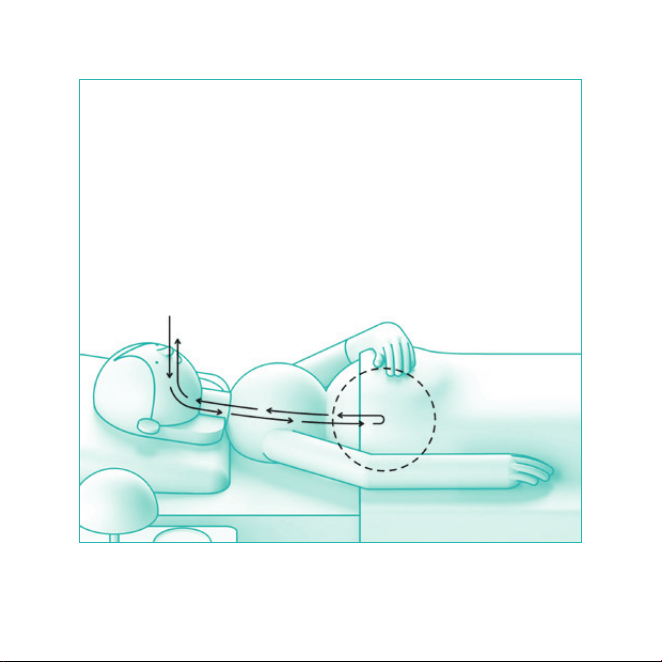
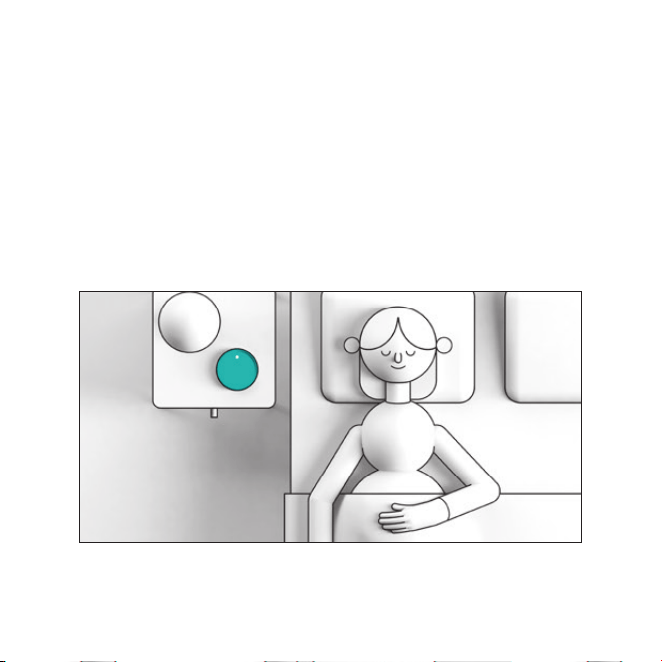
Breathe with your lower abdomen (abdominal brea-
thing). Remain passive and don't force yourself to
sleep: you are able to fall asleep on your own and Do-
dow only speeds up the process. To this end, gently
focus your attention on the lower part of your abdo-
men (below the navel) and try to feel the sensations
in this part of your body.
17
3. FALLING ASLEEP. Sleep will come naturally during or shorlty
after the exercice. Dodow will shut down automatically.
18
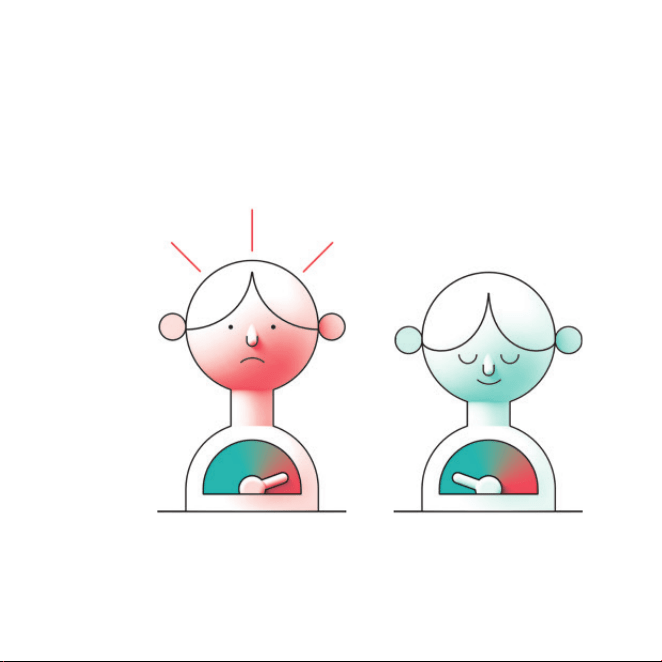
Understanding how something works makes you better
equipped to reap its benefits. Take 30 seconds to read
below or watch our video at mydodow.com/video.
Alert state Rest state
Physiological mechanism

19
1. ALERT STATE. An imbalance in the autonomic nervous
system is responsible for most difficulties when fal-
ling asleep: when disturbed, neurotransmitters like
noradrenaline signal your brain to stay awake.
2. BREATHING. Dodow helps you restore the balance
of the autonomic nervous system thanks to slow
breathing. Following a slow and regular breathing (6
breaths per minute is the optimal rate) helps stimulate
the baroreflex: a physiological mechanism that allows
you to relax.
3. REST STATE. After 8 minutes you will be in the ‘rest and
digest’ state. Your metabolism will slow down, the se-
cretion of neurotransmitters will stop, and your body
will be completely relaxed, leaving you less receptive
to your thoughts and to the ambient noise. Sleep is
not far off...

20
Additional exercises
FOCUSING ON YOUR LOWER ABDOMEN.
When you continually focus your attention on your lower
abdomen, blood flow to this area increases (there is
more blood flowing in this part of your body). The blood
supply to the brain then decreases, leading to slower
brain activity, and helping you to feel less agitated.
While synchronizing your breathing with Dodow's light,
gently focus on the lower part of your abdomen: try to
feel the sensations in this part of your body. This is how
you can order your attention: 50% synchronizing your
breathing with the light, 25% feeling the sensations in
your lower abdomen and 25% focusing on the remaining
sensations, those you are not in ability to control.

21
MENTAL SATURATION.
This exercise is designed for those who think too much.
The objective is to create a diversion to occupy your
mind with something far less stimulating than your
thoughts. You may face difficulties following Dodow's
exercise at first, feel free to practice this exercise
through several sessions.
While synchronizing your breathing with the light, repeat
as clearly and as distinctly as possible (in your head):
"Inhale" when you breathe in and "Exhale" when you
breathe out (if you can't do this, try repeating "1" when
inhaling and "2" when exhaling, or simply repeat "A" for
both). In all cases, the time it takes you to say the words
in your head must be adjusted to match the duration of
inhalation and exhalation. The slower the pace of your
breath, the longer it should take you to silently enunciate
the words.

22
FOCUSING ON THE LIGHT.
This is only for those still struggling with the breathing
exercises after four sessions. The objective is to both
use the hypnotic power of the variation of the luminous
intensity to help you let go, and the visual focus to oc-
cupy your brain.
Don’t try to synchronize your breathing with the rhythm
of the light. Rather, keep your eyes open and try to
focus on the variation of the luminous intensity. Focus
about 70% of your attention on the variation of the light’s
intensity. Feel your pupils widen slightly when the halo
expands and retract when it shrinks. Likewise, feel them
slightly retract when the halo is shrinking. Let your mind
be distracted by the rhythm of the light on the ceiling.
Remember not to concentrate on the light too intently,
so as to avoid headaches.

23
Should I inhale when the halo of light expands or when
it shrinks? You should inhale when the halo expands and
exhale when it retracts.
The exhalation seems longer than the inhalation, is
this normal? Yes, the exhalation is deliberately longer.
Indeed, with slow breathing, and when the exhalation is
longer than the inhalation, more CO2 is released. When
the CO2 concentration in the blood decreases, so does
the size of the cerebral vessels. This phenomenon, called
vasoconstriction, creates a sensation of tiredness which
is conducive to falling asleep.
Where should I focus my attention? Part of your attention
will automatically be focused on the light and the pace
you will be following. You should focus the rest of your at-
FAQ

24
tention on your lower abdomen. You should do so gently,
without exertion and adopt a passive attitude. This exer-
cise is easy to do and requires almost no mental effort.
Should I try stop thinking? No, trying to stop your
thoughts is counter-productive. Furthermore, your
thoughts are not the reason why you can’t fall asleep,
your reaction to them is. Because they are bothering
you, you want to stop them. Since this attempt is doo-
med to fail, it will only leave you feeling more frustrated…
and less likely to fall asleep ! Dodow, after 8 minutes, will
help you let go of your thoughts – they will no longer be
an obstacle to sleep.
I feel tired after a few minutes… can I close my eyes
and change position? Try to do the exercise for as long
as possible, as feeling tired doesn’t necessarily mean
you are going to fall asleep. The more you strive to stay
awake, the quicker you will fall asleep: this is a phenome-
non known as paradoxical intention.

25
Will Dodow disturb the person lying next to me? If the
person’s eyes are closed, they will not be disturbed; if
they do the exercise with you, they will fall asleep very
quickly.
I tried once and it didn’t work, is it normal? Tests have
shown that the first attempt is seldom conclusive. Allow
one or two nights to get used to Dodow.
I am used to falling asleep lying on my side, why should I
lay on my back? Lying on your back makes you more re-
ceptive to the benefits of Dodow. If you do the exercise
lying on your back until the end and then settle in your
usual position if you are still awake, you will fall asleep…
very quickly.
Dodow seems not to function properly or you can’t turn
it on? Try resetting Dodow: simply remove the batteries
and put them back.

26
Warranty & disclaimer
WARRANTY. The Customer benefits from the warranty
against hidden defects during two years. Any return of
the product under the above warranty must be with the
prior agreement of LIVLAB. In the event that a manufactu-
ring defect renders the Product unusable, the Customer
may contact the LIVLAB After Sales Service at support@
mydodow.com. Livlab undertakes to return free of charge
the Product in good working order to the Customer, or a
replacement thereof. Should the product be out of stock
or impossible to repair, the Customer will be offered a
replacement or a refund of the initial Product. Any return
of the product under the above warranty must be with the
prior agreement of LIVLAB. The defective product must
be returned in its original packaging, with all its parts and
together with its accessories. Any product, which is incom-
plete, damaged and/or the original packaging of which has
deteriorated, will not be taken back or exchanged under
this warranty. DISCLAIMER. Consult a physician before using
Dodow for serious medical conditions or following surgery
of the abdomen or thorax. Dodow is not a medical device.
27
Sleep tight!

28
You have an idea, a suggestion, or you just
want to say hello? Feel free to email us.
support@mydodow.com
4 av. du Président Wilson
75008 Paris, France.
Has Dodow saved your nights? please share
your experience and help us improve it.
mydodow.com/feedback
Contact