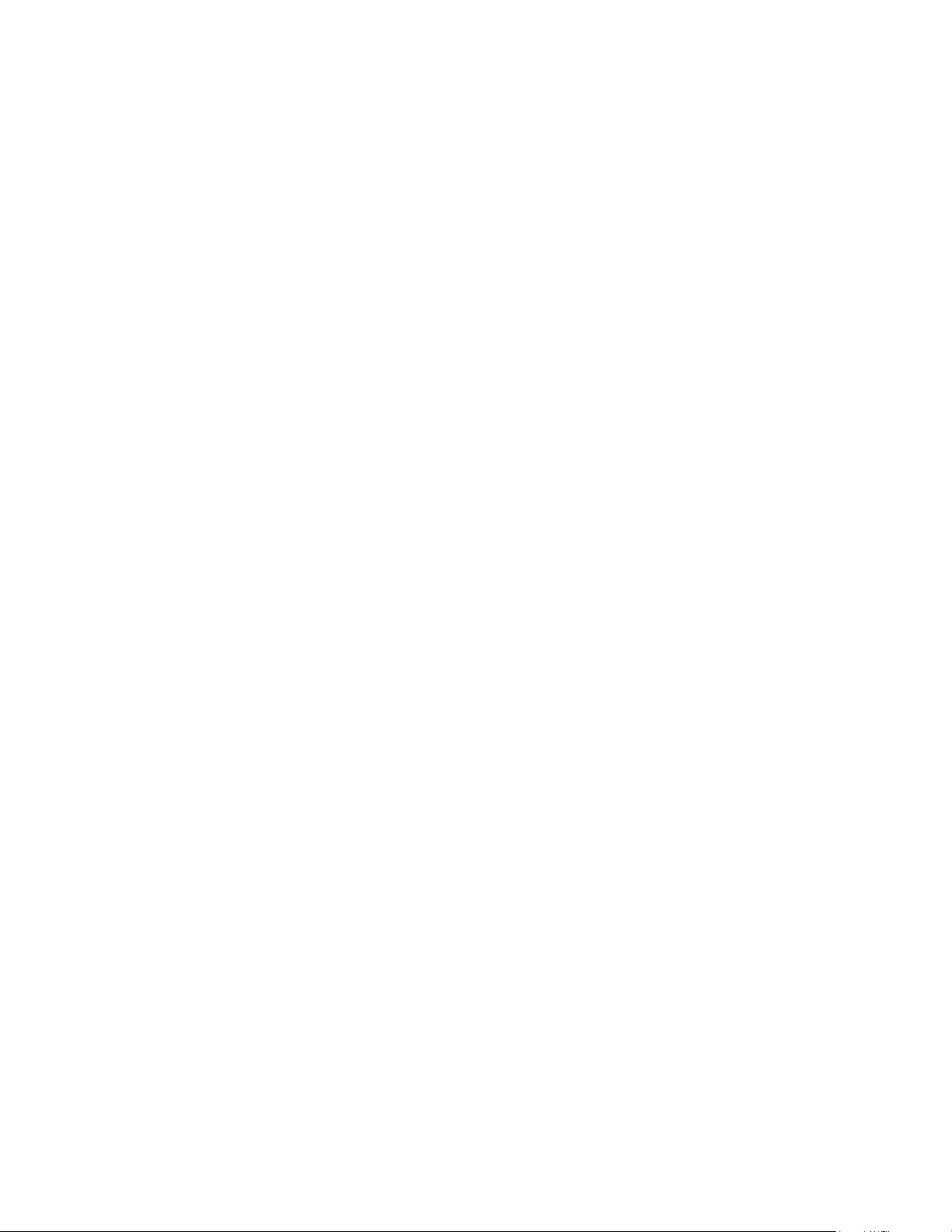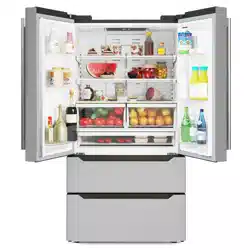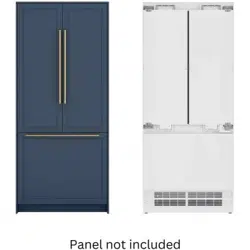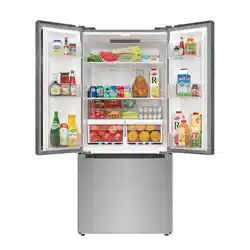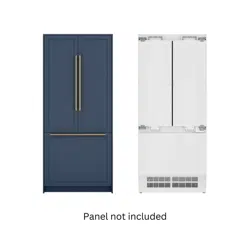
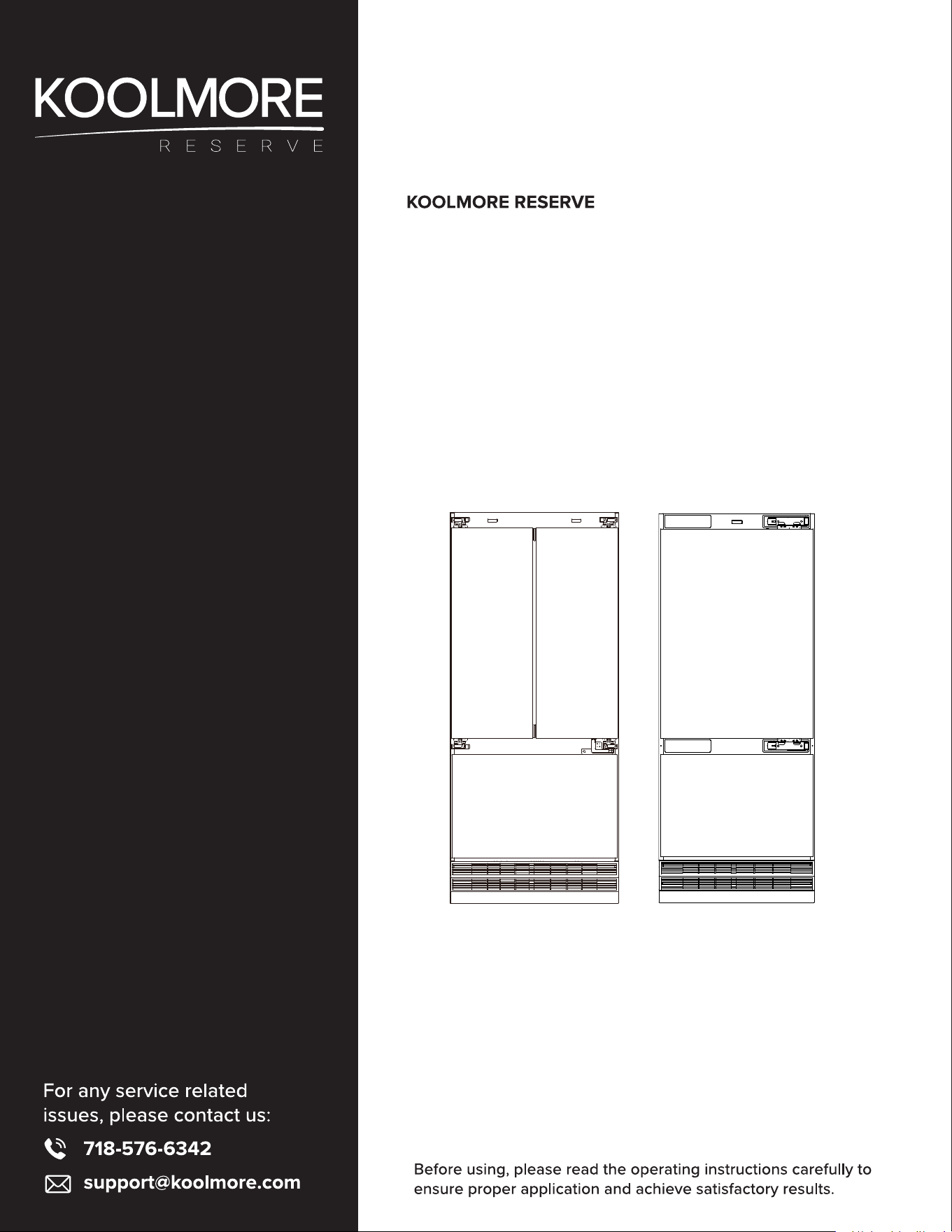
Panel Ready Refrigerator and Freezer
With Ice maker, Water dispenser
Models: KM-RER36-FDPR, KM-RER36-SWPR
USER MANUAL
KM-PRC-F18 KM-PRC-R30
KM-PRC-F24
KM-PRC-R24
KM-PRC-W18
KM-RER36-SWPR
KM-RER36-FDPR
KM-PRC-F18 KM-PRC-R30
KM-PRC-F24
KM-PRC-R24
KM-PRC-W18
KM-RER36-SWPR
KM-RER36-FDPR
Stay informed with the latest information for your
KoolMore Reserve Appliance.
Scan the QR code above to access the most recent user manual
on our website, which is constantly being updated and improved.
If you need any assistance or have questions, our customer support
team is here to help.
P- 718-576-6342 E- Suppor[email protected]
Please write down the model number and serial number below for future reference. Both numbers are located on the
rating label on the back of your unit or inside of the unit and are needed to obtain warranty service. You may also want to
staple your receipt to this manual as it is the proof of your purchase and may also be needed for service under warranty.
Model Number: ______________________________________
Serial Number: _______________________________________
Date of Purchase: ____________________________________
To better serve you, please do the following before contacting customer service:
If you received a damaged product, immediately contact the retailer or dealer that sold you the product.
Read and follow this instruction manual carefully to help you install, use, and maintain your unit.
Refer to the Troubleshooting section of this manual as it will help you diagnose and solve many common issues.

3
Contents
Safety ......................................................................... 4
Parts List .................................................................... 7
Operation ..................................................................... 9
Maintanence .............................................................. 18
Troubleshooting ......................................................... 20
Warranty .................................................................... 22

4
Safety
• This product is suitable for use by children aged 8 and older, and individuals with limited physical,
sensory, or mental capabilities, provided they have received proper instruction on safe usage un-
der supervision with risks mitigated.
• Children must not play with the product. Cleaning and care by children is only permitted under
adult supervision.
• Unplug the product immediately if you notice any failure during operation.
• Do not use the product if it malfunctions; it must be repaired by an authorized service provider to
avoid risk of electric shock.
• Plug the product into a grounded outlet that has a fuse matching the specications on the prod-
uct’s nameplate. Ensure a qualied electrician grounds the product correctly.
• Our company is not responsible for any damages from using the product without proper ground-
ing as per local regulations.
• Always unplug the product when it’s not in use.
• Never clean the product by spreading or pouring water on it to prevent risk of electric shock. Do
not use wet hands to clean or touch the product.
• Do not pull on the cable to unplug the product; always grasp the plug itself.
• Do not connect the refrigerator to a loose wall outlet.
• Avoid connecting your refrigerator to energy-saving devices; they can harm the product.
• Unplug the product before any installation, cleaning, or repair procedures. Only authorized service
providers should install the product and establish its electrical connections.
• The manufacturer is not liable for damages caused by unauthorized repairs.
• Do not consume ice cream or ice cubes directly from the freezer to avoid frostbite. Avoid touching
frozen items with wet hands as they might stick. Do not store bottled or canned beverages in the
freezer as they might burst.
• Never use steam or steam cleaners to clean or defrost the refrigerator. Steam gets into contact
with the live parts in your refrigerator, causing short circuit or electric shock!
• DANGER - Risk of re or explosion. Flammable refrigerant used. Do not use mechanical devices to
defrost refrigerator.
• Do not puncture refrigerant tubing.
• Never use the parts in your refrigerator such as the door and drawer as a means of support or
step. This may cause the product to tip over or damage the parts of it.
• Do not damage the parts where the refrigerant is circulating with drilling or cutting tools. The re-
frigerant that might blow out when the gas channels of the evaporator, pipe extensions or surface
coatings are punctured causes skin irritations and eye injuries.
• Do not cover or block the ventilation holes in your refrigerator with any object.
• Place the beverage with higher proofs tightly closed and vertically.
• Do not use gaseous sprays near the product since there is the risk of re or explosion!
• Flammable items or products that contain ammable gases (e.g., spray) as well as explosive ma-
terials should never be kept in the appliance.
• Do not place vessels lled with liquid onto the product. Spilling water on an electrical part may
cause electric shock or the risk of re.
• Do not store items that need precise temperature adjustment (e.g., vaccines, heat-sensitive medi-
cation, science materials etc.) in the refrigerator.
• If you are not going to use the product for a long time, unplug it and remove the food in it.
5
• If there is a blue light on the refrigerator, do not look at this light with optical tools.
• Exposing the product to rain, snow, sun or wind is dangerous in terms of electrical safety.
• In products with mechanical control (thermostat), wait for 5 minutes to plug in the product again
after unplugging.
• Do not overload the refrigerator. Objects in the refrigerator may fall down when the door is opened,
causing injury or damage. Similar problems may arise if any object is placed onto the product.
• If the product has a door handle, do not pull the handle when re-locating the product. The handle
might be loose.
• Be careful not to jam your hand or any other body part in the moving parts of the refrigerator.
• Do not put your hand or any other foreign materials into the ice machine while it is operating.
Intended Use
This product has been designed for resedential use, it is not suitable for commercial use and it must
not be used out of its intended use.
It must be used only for storing food.
The manufacturer will not take any responsibility for damages resulting from improper use or trans-
port.
Original spare parts will be available for 10 years after the purchase date of the product.
Children’s Safety
CAUTION - To Prevent A Child From Being Entrapped, Keep Out Of Reach Of Children And Not In The
Vicinity Of Freezer (Or Refrigerator).
If there is a lock on the door of the product, the key should be kept out of the reach of children.
Do not let children play with the product.
WARNING:
Risk of child entrapment. Before you throw away your old refrigerator or freezer:
Take off the doors.
Leave the shelves in place so that children may not easily climb inside.
This product has been manufactured from high quality parts and materials which can be reused and
are suitable for recycling.
Therefore, do not dispose the product with normal domestic waste or other waste at the end of its
service life.
Take it to a collection center for recycling electrical and electronic equipment.
Please consult local authorities to learn about the locations of such collection center.
Packaging Information
Packaging materials of the product have been manufactured from recyclable materials in accordance
with our National Environment Regulations.
Do not dispose the packaging materials with normal domestic waste or other types of waste.
Take these materials to a recycling point designated by local authorities.
6
DANGER: Risk of Fire or Explosion
This product uses ammable refrigerant.
Do not use mechanical devices to defrost the refrigerator.
Do not use chemicals for cleaning.
Do not pierce the refrigerant pipe.
If the refrigerant pipe is pierced, it must be repaired only by licensed service personnel.
If the product is damaged, have the refrigerant system repaired before cleaning the product.
All safety instructions must be followed.
Dispose the product according to federal or local regulations.
Hydrocarbon (HC) Warning
• Your product’s cooling system contains R-600a.
• R-600a is ammable.
• Therefore, pay attention not to damage the cooling system or piping during use and transporta-
tion.
• If damaged, keep the product away from potential re sources that may cause it to catch re and
ventilate the room where the product is placed.
If the product is damaged and if you see gas leak, please keep away from the gas. It may cause frost-
bite when it gets into contact with the skin (including R134a). Ignore this warning if the cooling sys-
tem of your product contains R134a.
Type of gas used in the product is stated on the type plate which is on the left wall inside the refriger-
ator.
WARNING: Never throw the product into re for disposal.
For Products with a Water Dispenser/Service Machine
• Operating pressure for cold water inlet is between 1-5.5 bars.
• If your mains water pressure exceeds 80 psi (5.5 bars), install a pressure limiting valve to your
mains water system (if necessary).
• If the mains pressure is lower than 1 bar, you can use an auxiliary pump to compensate the low
pressure.
• If you do not know how to check the water pressure, please consult a professional plumber.
• If there is a risk of water impact in your installation, always use a water impact protection equip-
ment in that installation.
• Please consult professional plumbers if you are not sure there is water impact in your installation.
• Do not make installation on the hot water inlet.
• Take the necessary measures against the freezing risk of the hoses.
• The water temperature operating range must be 0.6°C (33°F) minimum and 38°C (100°F) maxi-
mum.
WARNING: Never connect the product to a cold water mains with a pressure of 5.5 bars (80 psi) and
above
7
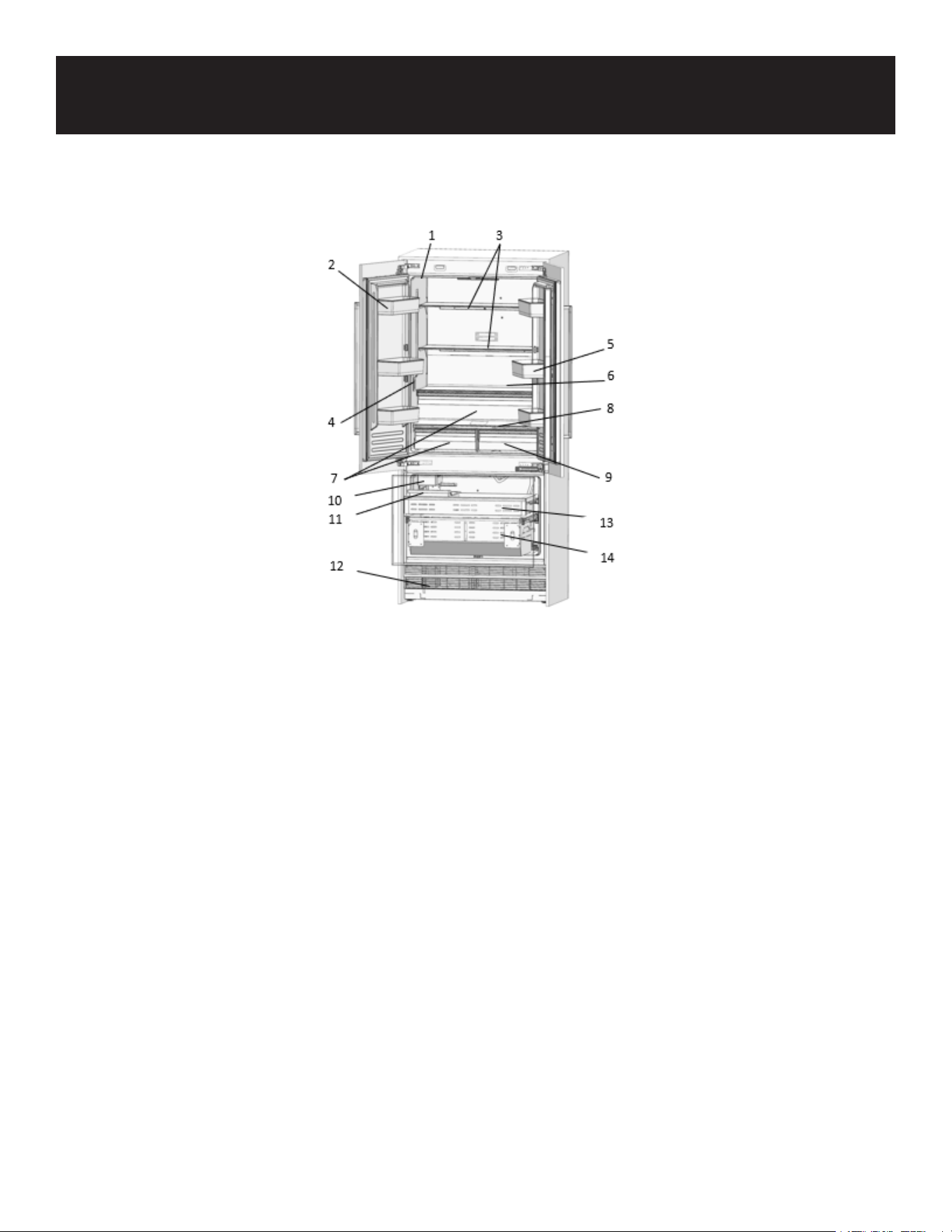
Parts List
1. Water lter (if applicable)
2. Door bin
3. Body shelf (adjustable height)
4. Water dispenser
5. Gallon door bin
6. (adjustable height)
7. Odour lter
8. Crisper
9. Control display
10. Special temperature compartment
11. Ice machine (if applicable)
12. Icebox applies to high spec models
13. Condenser
14. Upper drawer
15. Lower drawer
Note: May not be available in all models
Note: Figures in this user manual are schematic and may not match the product exactly. If your prod-
uct does not have the relevant parts, the information applies to other models.
KM-RER36-FDPR
8
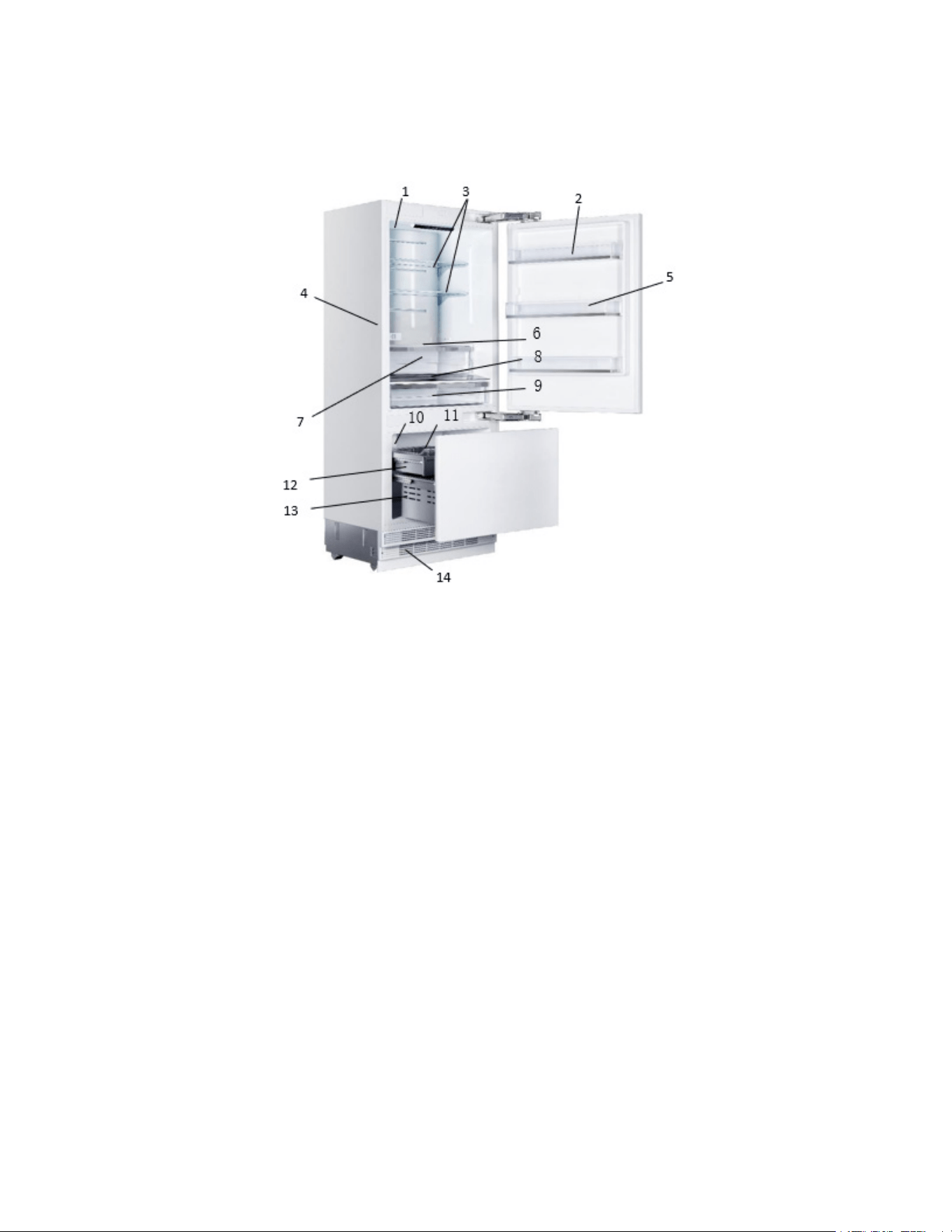
1. Water lter (if applicable)
2. Door bin
3. Body shelf (adjustable height)
4. Water dispenser
5. Gallon door bin (adjustable height)
6. Odour lter
7. Crisper
8. Control display
9. Special temperature compartment
10. Ice machine (if applicable)
11. Icebox applies to high spec models
12. Upper drawer
13. Lower drawer
14. Condenser
KM-RER36-SwPR
9
Operation
Note: May not be available in all models
Note: Figures in this user manual are schematic and may not match the product exactly. If your prod-
uct does not have the relevant parts, the information applies to other models.
10
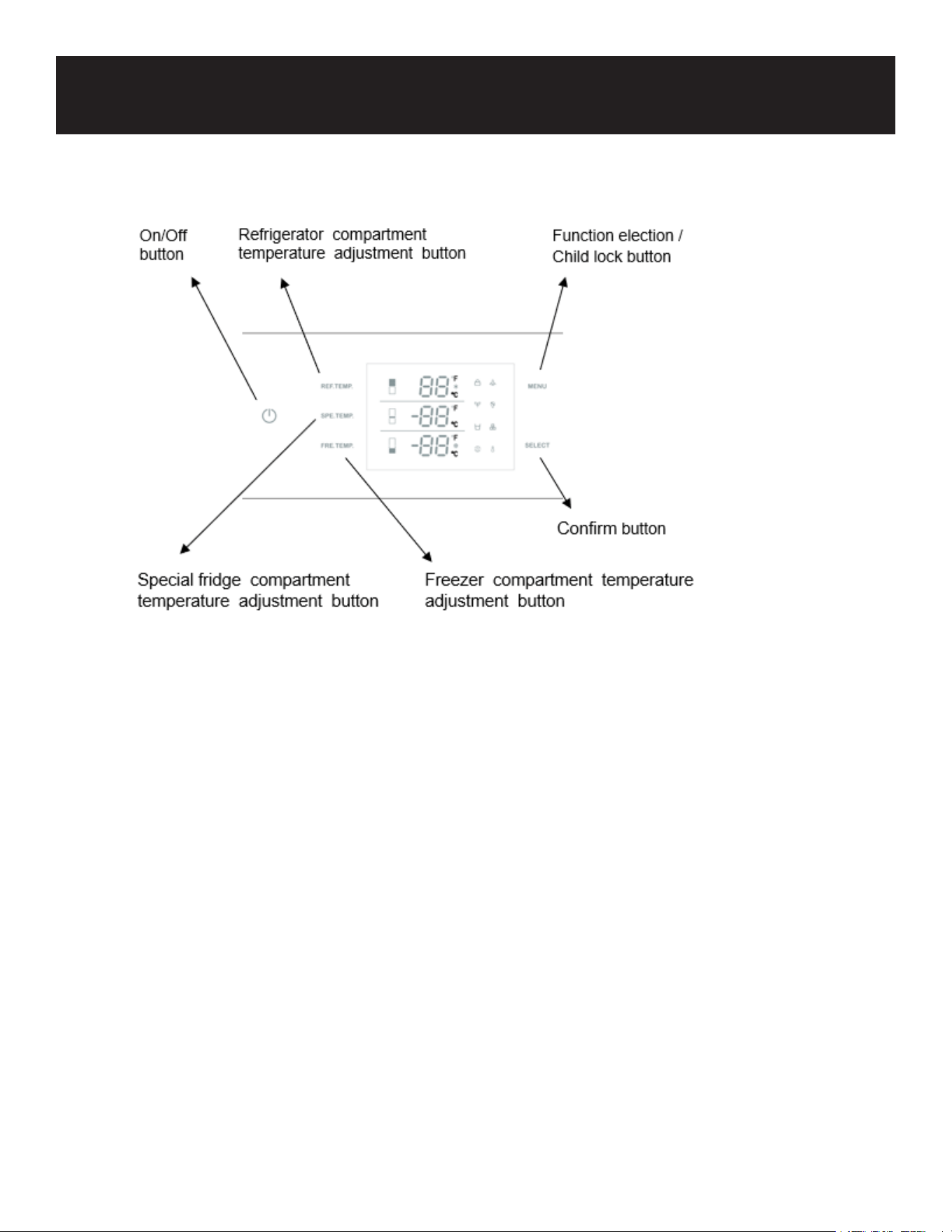
1. On/Off button
Serves to switch the whole appliance On and Off. Press the button to switch on the product, the prod-
uct will be switched on in 5 seconds. Press the on/off button for 1.5 seconds to switch off.
2. Function election / Child lock button
The child lock is a feature for preventing children from changing the product settings. by pressing
MENU button for 3 seconds, you may lock/unlock the control panel.
The lock symbol will illuminate on the display when this function is enabled.
3. Refrigerator compartment temperature adjustment button
Press the REF TEMP button to adjust the temperature from 36°F (2°C) to 46°F (8°C)
The best temperature for fresh food compartment is 39°F (4°C).
4. Special fridge compartment temperature adjustment button
Press the SPE TEMP button to change the special fridge compartment temperature from 30°F (-1°C)
to 41°F (5°C)
5. Freezer compartment adjustment button
Press the FRE TEMP button to change the freezer compartment temperature
from 5°F (-15°C) to -11°F (-24°C)
* Super freezing function will be enabled if keep pressing after -11°F (-24°C) .
When the snow symbol illuminate on the display the super freezer function will be enabled.
NOTE : The defaulted temperature setting is 41°F (5°C) for fridge compartment, 36°F (2°C) for special
fridge compartment and 0°F (-18°C) for freezer compartment
6. Vacation Mode
Press the MENU button till the vacation symbol illuminates, then press the SELECT button to enable
the function.
When the Vacation Mode function is enabled, the fridge temperature will be set at 63°F (17°C) and
freezer temperature set at 0°F (-18°C) automatically.
NOTE: Do not place food in the fresh food compartment when Vacation Mode is enabled.
7. Shabbat Mode
Press the MENU button till the Shabbat mode symbol illuminates, then press the SELECT button to
enable the function. When the Shabbat mode function is enabled, all lights, buzzers, display panels
will be switch off.
8 Eco Mode
Press the MENU button till the Eco Mode illuminates, then press the SELECT
button to enable the function. When the Eco Mode function is enabled, the fridge temperature will be
set at 46 °F (8 °C) and freezer temperature set at 5 °F (-15 °C) automatically
9. Water Dispenser
Press the MENU button till the water dispenser symbol illuminates, then press the SELECT button
to enable the function. When the water dispensing function is enabled, fresh water can be provided
from the dispenser tted on the internal wall.
10. Ice Making
11
Press the MENU button till the ice making symbol illuminates, then press the SELECT button to en-
able the function.
When the ice making function is enabled, ice maker will be automatically operating, and the ice cubes
will be accumulated in the ice tray.
NOTE: Prepare the water lter for use before using the ice. After connecting the refrigerator to a water
source or after replacing the water lter, ll and discard two full containers of ice.
11. Water lter replacement (if applicable)
The water lter symbol ashes and beeps to advise the user to replace the water lter. After the re-
placement is completed, press the SELECT button for 5 seconds to reset. The set replacement time
is 130 days.
12. Celsius and Fahrenheit selection
Press the MENU button till the Celsius and Fahrenheit selection symbol illuminates to change be-
tween Celsius and Fahrenheit. After that press the SELECT button to conrm.
12
Before Using the Refrigerator
Energy Saving Tips
WARNING: Connecting your refrigerator to energy-saving devices can be dangerous and may damage
the appliance.
• Keep the refrigerator doors closed as much as possible. Don’t leave them open for long periods.
• Let hot foods and drinks cool down to room temperature before placing them in the refrigerator.
• Avoid overloading the fridge. Overlling can hinder air circulation and reduce cooling eciency.
• Keep your refrigerator out of direct sunlight.
• Position the refrigerator at least 12 inches away from heat sources like stovetops, ovens, heaters,
and at least 2 inches from electric ovens.
• Store food in sealed containers inside the refrigerator.
• You can remove the drawer shelf in the freezer to maximize space for food storage.
• The energy consumption rating of this refrigerator was determined with the freezer shelf or draw-
er removed and the fridge fully stocked. Adjusting shelves and drawers to accommodate various
food sizes is ne.
• Thaw frozen foods in the fridge compartment; it’s energy-ecient and helps maintain food quality.
• NOTE: The room where your refrigerator is located should be at least 50°F. Operating your refrig-
erator in cooler conditions isn’t recommended for optimal efciency.
• NOTE: Clean the inside of your refrigerator thoroughly on a regular basis.
• NOTE: If you’re installing two refrigerators side by side, keep at least 1.5 inches of space between
them.
Fresh Food Compartment Recommendations
Ensure food doesn’t block the temperature sensor in the fresh food compartment. For the compart-
ment to maintain its ideal storage temperature, the sensor needs to be unobstructed.
Never place hot foods or beverages directly into the refrigerator.
Initial Use
Before you start using your refrigerator, make sure all preparations have been completed according
to the instructions provided in the “Important Instructions Regarding Safety and Environment” and
“Installation Instructions” sections.
Clean the interior of the refrigerator as recommended in the “Maintenance and Cleaning” section.
Before you start the refrigerator, ensure that the interior is dry.
Plug the refrigerator into a grounded outlet. Note that the interior light will turn on when you open the
refrigerator door.
Run the refrigerator for 6 hours without placing any food inside, and avoid opening the door unless
necessary.
You will hear a noise when the compressor starts up. This is normal. The sealed liquids and gases
within the refrigerator system may also generate noise, even when the compressor isn’t running. This
is also normal.
The front edges of the refrigerator might feel warm. This is normal because these areas are designed
to stay warm to prevent condensation.
13
Dual Cooling System
Your refrigerator is equipped with two separate cooling systems to cool the fresh food compartment and
freezer compartment. Thus, the air and odor in the fresh food compartment and the frozen food compart-
ment do not get mixed.
Thanks to these two separate cooling systems, cooling speed is much higher than that of other refrigera-
tors. Also additional power saving is provided since the defrosting is performed separately.
Tips For Freezing Fresh Food
• Wrap the foods or place them in a covered container before putting them in the refrigerator.
• Hot foods and beverages must cool down to room temperature before you put them in the refriger-
ator.
• The foodstuff that you want to freeze must be fresh and in good quality.
• Divide the food into portions according to your family’s daily or meal based consumption needs.
• Pack the foods in an airtight manner to prevent them from drying even if they are going to be
stored for a short time.
• Materials to be used for packaging must be tear-proof and resistant to cold, humidity, odor, oils
and acids and they must also be airtight. Moreover, they must be well closed and they must be
made from easy-to-use materials that are suitable for deep-freezers.
• Frozen food must be used immediately after they are thawed and they should never be re-frozen.
• Do not freeze too large quantities of food at one time. The quality of the food is best preserved
when it is frozen right through to the core as quickly as possible.
• Placing warm food into the freezer compartment causes the cooling system to operate continu-
ously until the food is frozen solid.
Recommendations for Storing Frozen Food
• Frozen foods you purchase must be stored according to the conditions and temperature deter-
mined by the food manufacturer.
• Note the following to ensure that the high quality achieved by the frozen food manufacturer and
the food retailer is maintained:
• Put packages in the freezer as quickly as possible after purchase.
• Make sure that the contents of the package are labeled and dated.
• Check whether the “Use By” or “Best Before” date on the packaging is expired or not.
Feature Highlight
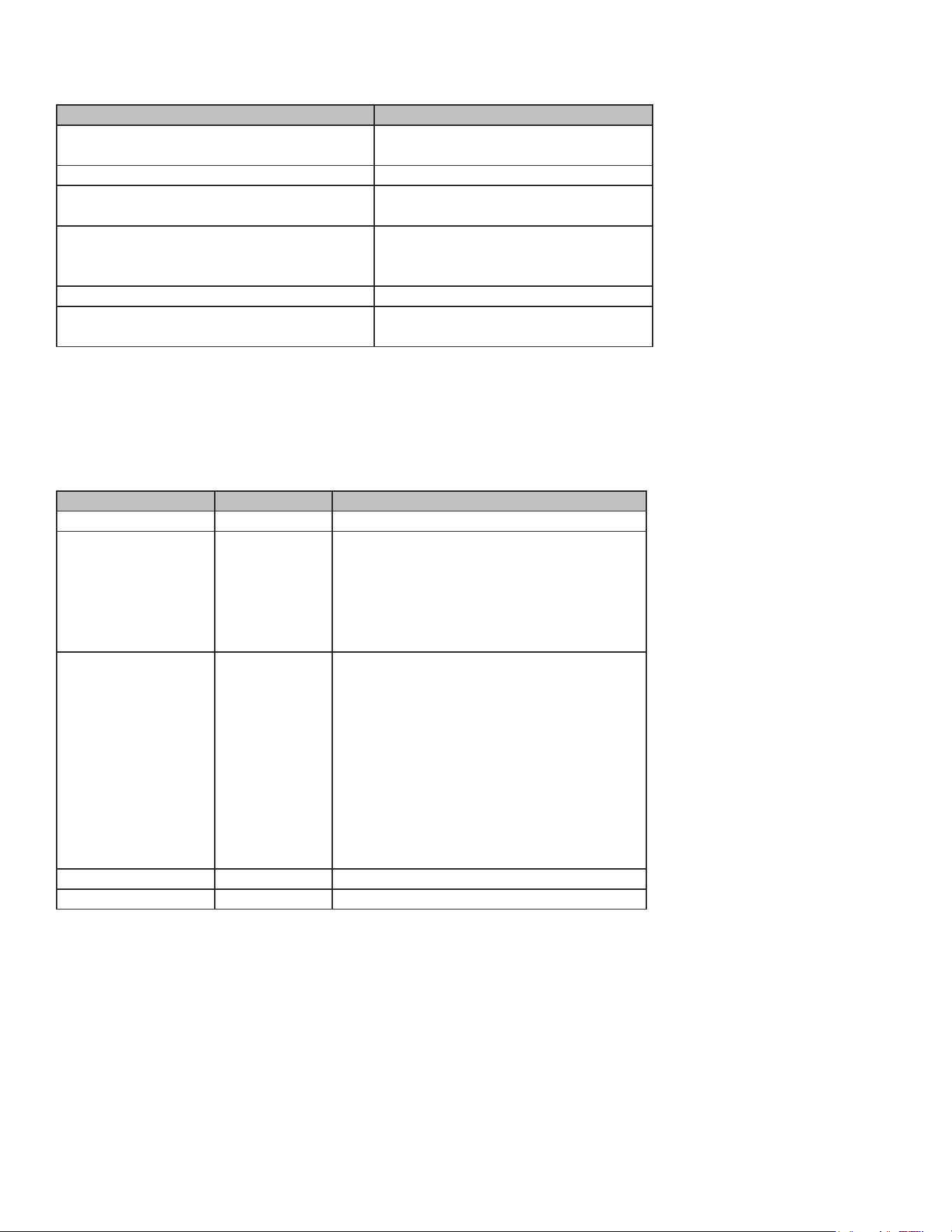
14
Location Recommended for
Freezer compartment shelves Various frozen food such as meat, sh,
ice cream, vegetables etc.
Egg tray Eggs
Fridge compartment shelves Food in pans, covered plates and closed
containers
Door shelves of fridge compartment Small and packaged foods or beverages
(such as milk, fruit juice, beer and etc.)
Crisper Vegetables and fruits
Special fridge compartment Delicatessen products (cheese, butter,
salami etc.)
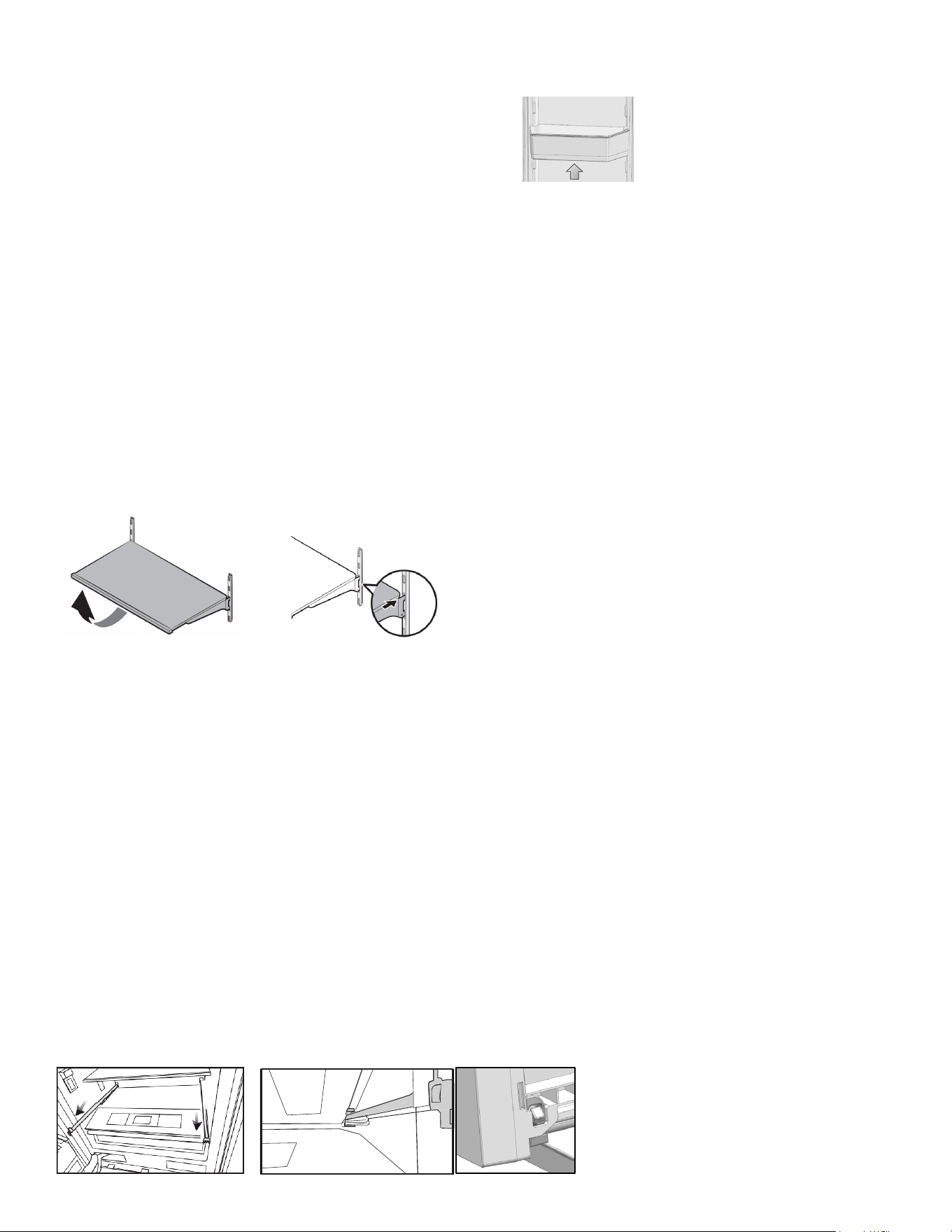
Freezer Fridge Remarks
-18°C / 0°F 4°C / 39°F This is the recommended normal setting.
-20°C / -4°F 3°C / 37°F These settings are recommended when the
ambient temperature is above 30°C (86°F).
Use when you wish to freeze your food in a
short time. Your refrigerator will return to its
previous mode when the process is over.
Quick Freeze 4°C / 39°F Use these settings if you think that your
fridge compartment is not cold enough
because of the hot ambient conditions or
frequent opening and closing of the door.
Use this function when you place too much
food into the fridge compartment or when
you need to cool your food quickly. It is
recommended that you activate Quick Fridge
function 4-8 hours before placing the food.
-24°C / -12°F 2°C / 35°F
-18°C / 0°F or colder QuickFridge
Placing the food
Operating temperature
Recommended Operating Temperature:
Fridge: 4°C / 39°F, Freezer: -18°C / 0°F
15
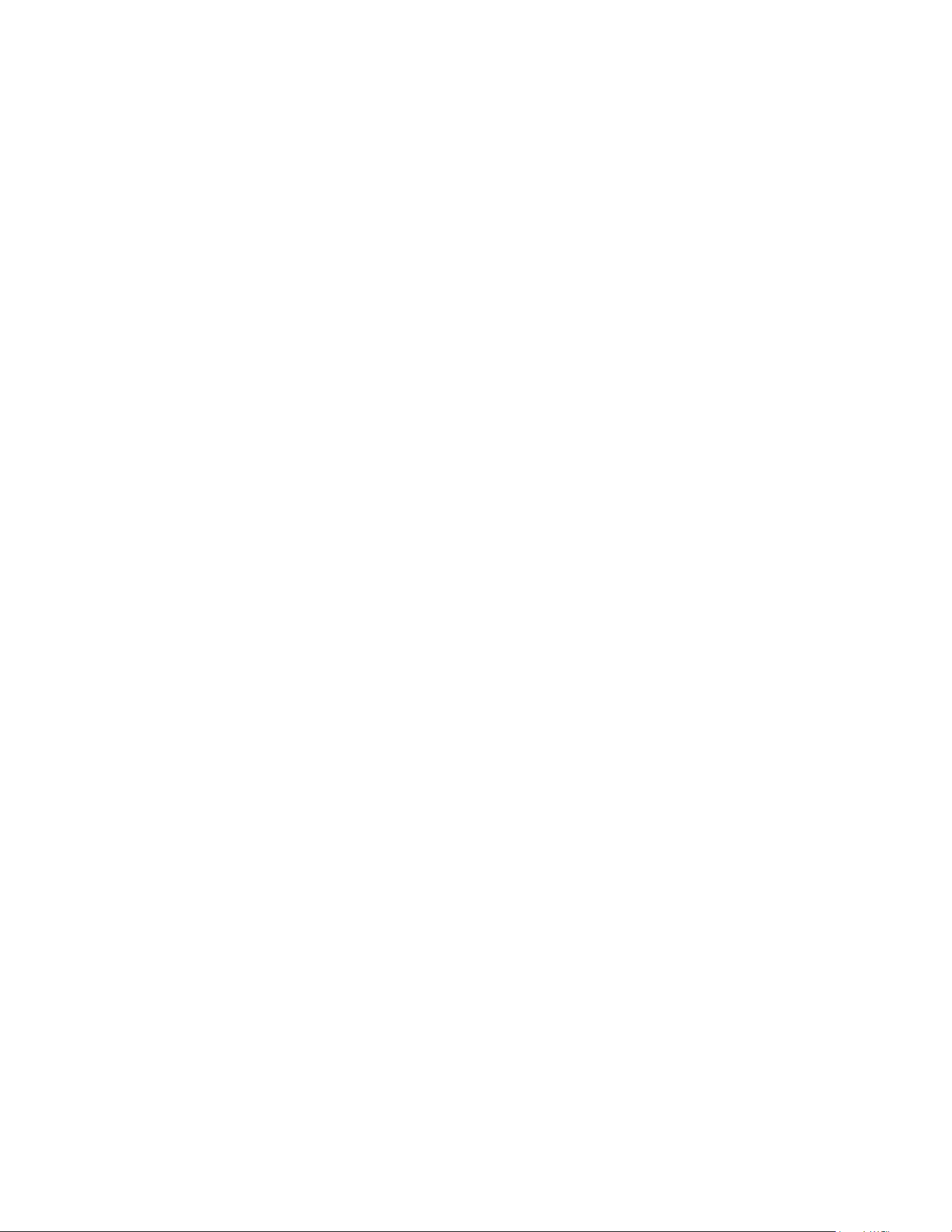
Door bin
To remove, lift up the door bin and then pull out straight.
Glass shelves
To remove a shelf:
1. Fully open the corresponding door.
2. Hold the front of the shelf, and then gently lift up and slide out to release it.
To reinsert:
1. Hold the shelf at an angle so the front is higher than the back, and then insert the top hook into the
top shelf notch.
2. Push down the front slightly.
IMPORTANT NOTE: Use care when handling glass shelves to prevent breakage or scratching the interi-
or.
ATTENTION: Glass shelves must be unloaded.
ATTENTION: You must wait for the glass shelves to reach room temperature before immersing them
in water for cleaning.
ATTENTION: The door may not be closed if the door shelves are positioned at the same level as glass
shelves. Make sure that the door is closed after placing the shelves.
Crisper compartment
To remove the crisper
1. Pull the crisper until it stops.
2. Slightly unclip the front section of the drawer and take it out completely.
To install the crisper
1. Pull the rails completely.
2. Place the gap at the rear corners of the crisper to the detail located at the rear corners of the rails.
3. Push the crisper slowly down until you feel it clip front onto the rails.
16
• Make sure that the details at the right and left-hand sides are xed when installing the crisper.
• Never leave the vegetables in their plastic bags in the crisper. If they are left in their plastic bags
they will rot in a short period of time.
The crisper compartment preserves the humidity of your vegetables, allowing you to store them for a
long time without having to keep them in their bags.
If you do not prefer the vegetables to get into contact with other vegetables due to hygienic reasons,
you can use perforated paper, foam or a similar material instead of plastic bags.
While the vegetables are being replaced, their specic weights should be taken into consideration.
Heavy and hard vegetables must be placed at the bottom of the crisper and light and soft vegetables
must be on the upper part.
Pears, kiwis, tomatoes, cucumbers, apricots, peaches, broccolis, lettuces, cabbages, parsley and spin-
ach are fruits and vegetables that emit ethylene gas.
Do not place them into the same crisper with other fruits and vegetables. The ethylene gas emitted by
these foods cause other fruits and vegetables to ripen sooner and to rot in a shorter span of time.
Do not remove the main body of the crisper from the refrigerator separately unless you have to do so.
Note: Diagrams mentioned in the text have been represented by placeholders since I cannot generate
or display images directly.
Special fridge compartment
You can control the temperature in this section to store your food such as sh, meat, vegetables and
delicatessen products for a long time.
Note: Removal/installation procedures of the special fridge compartment are same as that of the crisp-
er.
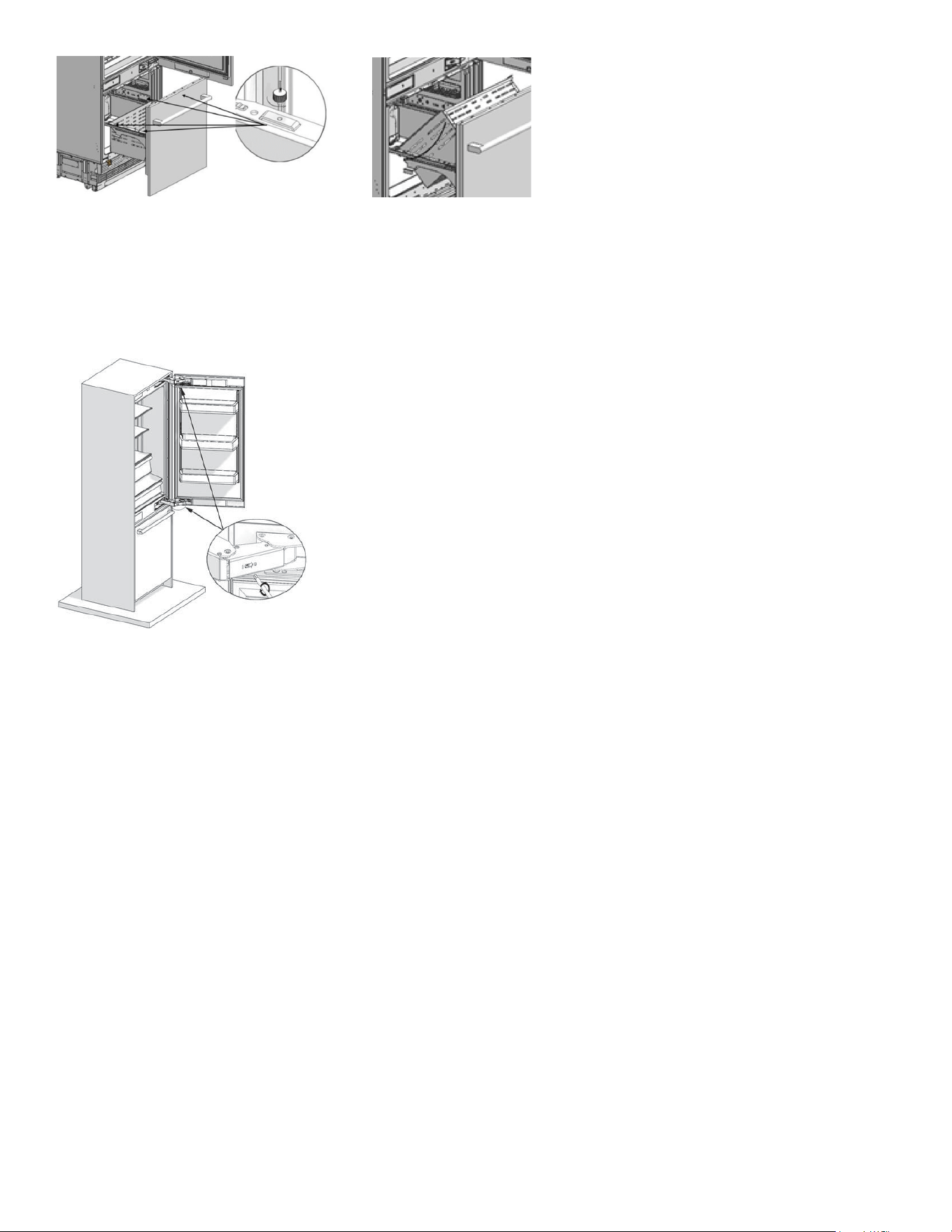
Freezer Crisper
The freezer compartment store your foods at a temperature between -24°C and -18°C to keep them
fresh for a long time.
To remove the crisper
1. Open the freezer door until it stops.
2. Unscrew drawer xing screw and take it out carefully.
To install the crisper
1. Open the freezer door until it stops.
2. Push the crisper slowly down and screw drawer xing bolt.
17
Hinge Adjustment
When adjusting the hardness of the hinge: Hardness of the lower and upper door hinges of the fresh
food compartment is performed with the help of a drill. Set the hinge adjustment screw to position “1”
from position “0”.
Changing the Direction of the Door
Please see the installation instructions provided in the bag.
Note: The diagrams mentioned in the text are represented by placeholders since I cannot generate or
display images directly.

18
Care and Cleaning
Service life of the product will extend and frequently encountered problems will decrease if the prod-
uct is cleaned periodically.
• Never use gasoline, benzene or similar substances for cleaning purposes.
• Never use any sharp abrasive instruments, soap, household cleaners, detergent or wax, polish for
cleaning.
• Dissolve one teaspoon of carbonate in half liter of water. Soak a cloth in the solution and wring it
thoroughly. Wipe the interior of the refrigerator with this cloth and dry thoroughly.
• Make sure that no water enters the lamp housing or other electrical parts.
• If you will not use the refrigerator for a long time, unplug it, remove all food inside, clean it and
leave the door ajar.
• Check regularly that the door gaskets are clean. If not, clean them.
• Take out all items in the product to remove the door and body shelves.
• Remove the door shelves by pulling them up. Slide the shelves downwards to re-install them after
cleaning.
WARNING: Do not use chloric cleaning agents or water to clean outer surfaces or chrome-coated
parts of the product. Chlorine causes abrasion on such metal surfaces.
Avoiding Bad Odors
Materials that may cause odor are not used in the production of our refrigerators. However, odor
may be emitted if foods are stored improperly or if the inner surface of the product is not cleaned as
required.
• Please consider the following to avoid this problem:
• It is important that the refrigerator is kept clean.
• Food residuals, stains, etc. can cause odor.
• For this reason, clean your refrigerator with carbonate solved in water every 15 days. Never use
detergents or soap.
• Keep your foods in closed vessels. Microorganisms emitted from vessels without a cover may
cause unpleasant odors.
• Never keep expired or spoiled foods in your refrigerator.
Protecting the Plastic Surfaces
Do not put liquid oils or oil-cooked meals in your refrigerator in unsealed containers as they damage
the plastic surfaces of your refrigerator.
If oil is spilled or smeared onto the plastic surfaces, clean and rinse the relevant part of the surface
with warm water immediately.
Maintanence
19
WARNING: Switch off the product before cleaning.
WARNING: It is recommended to clean the condenser every six months using gloves. You must not
use vacuum cleaners.
Cleaning the Inner Surface
To clean the inner surfaces and all removable parts, wash them with a mild solution comprising soap,
water and carbonate. Rinse and dry thoroughly.
Prevent the water from contacting the lighting means and control panel.
Stainless Steel Outer Surfaces
Use a stainless steel cleaning agent that is non-abrasive and apply it with a lint-free, soft cloth.
For polishing, wipe the surface softly with a damp microber cloth and use dry wash-leather.
Always follow the strands of the stainless steel.
ATTENTION: Do not use vinegar, rubbing alcohol or other alcohol-based cleaning agents on any of the
inner surfaces.
20
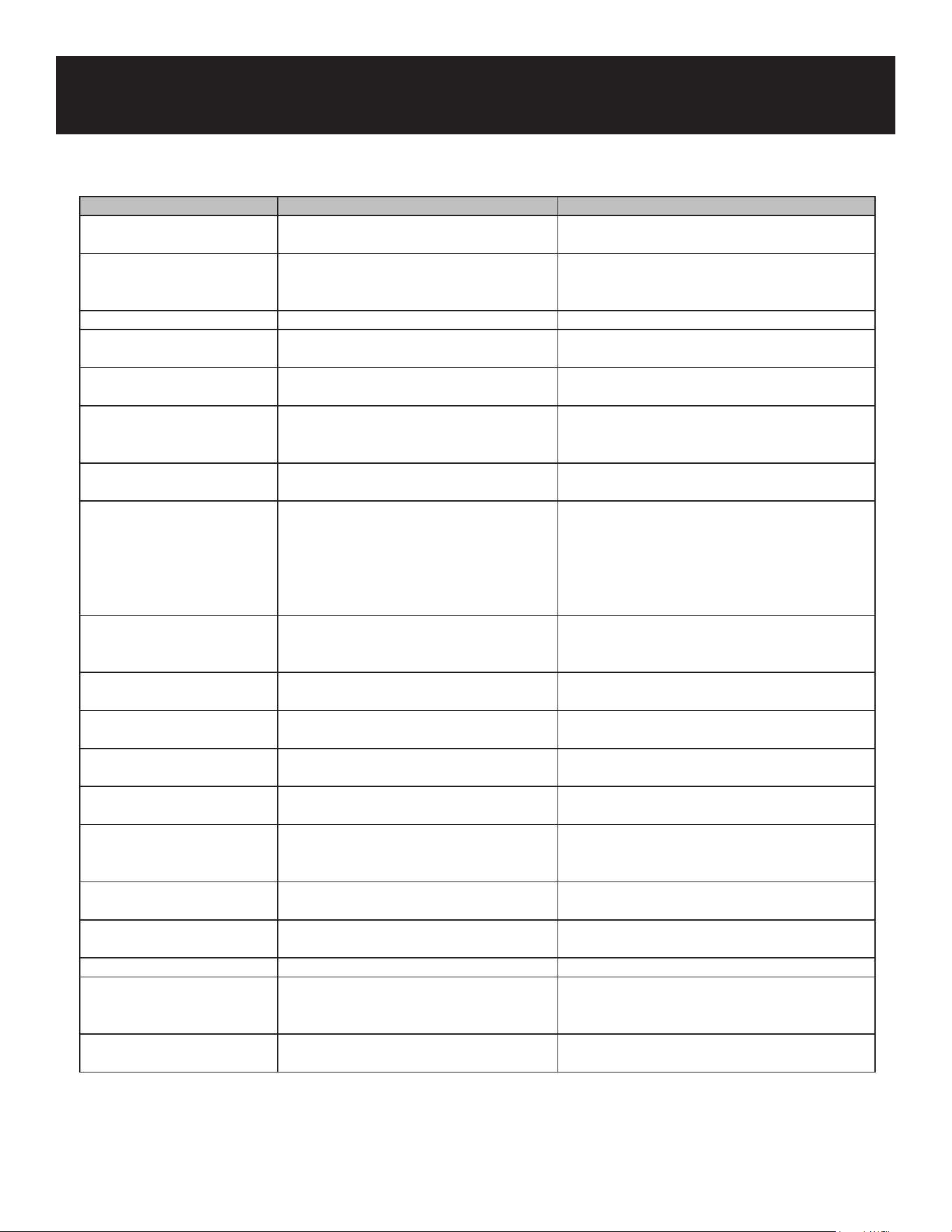
Issue Possible Cause Solution
The refrigerator is not
operating
The refrigerator may not be plugged in
properly.
Plug in the product properly.
The fuse of the socket to which the
refrigerator is connected may have blown.
Check the fuse of the socket.
The main fuse may have blown. Check the main fuse.
Condensation on the
fridge compartment door
The door may have been opened/closed
frequently.
Do not open/close the refrigerator door
frequently.
The environment may be too humid. Do not install the refrigerator at locations with a
very high level of humidity.
Foods containing liquid may have been
placed into the refrigerator in open
vessels.
Place liquid foods in sealed vessels.
The door of the refrigerator may have
been left ajar.
Do not keep the doors of your refrigerator open
for a long time.
The compressor is not
operating
Protective thermal of the compressor will
blow out during sudden power failures
or plug-out/plug-ins as the refrigerant
pressure in the cooling system of the
refrigerator has not been balanced yet.
The refrigerator will start running approximately
after 6 minutes.
The refrigerator will start running
automatically after 6 minutes.
Please call the Authorized Service Provider if
the refrigerator does not start at the end of this
period.
The freezer is in
defrosting cycle
This is normal for a refrigerator that
performs full-automatic defrosting.
Defrosting cycle is performed periodically.
The refrigerator may not
be plugged in
The refrigerator may not be plugged in. Make sure that the plug ts the socket.
Temperature settings may
be incorrect
Temperature settings may be incorrect. Select the correct temperature value.
Possible power failure Possible power failure. The refrigerator will start to operate normally
when power restores.
Operating performance
increases when the
refrigerator is running
This is normal and not a fault. No action required.
Vibration or noise The oor may not be stable or level. If the refrigerator shakes when moved slightly,
feed to balance it.
Objects placed onto the refrigerator may
cause noise.
Make sure that the oor is level and capable of
carrying the refrigerator.
Remove the objects on the refrigerator.
Noises from the
refrigerator like liquid
spilling or spraying
Liquid and gas ows occur in accordance
with the operating principles of the
refrigerator.
This is normal and not a fault.
Whistle is heard from the
refrigerator
There are fans that are used to cool the
refrigerator.
This is normal and not a fault.
Troubleshooting
21
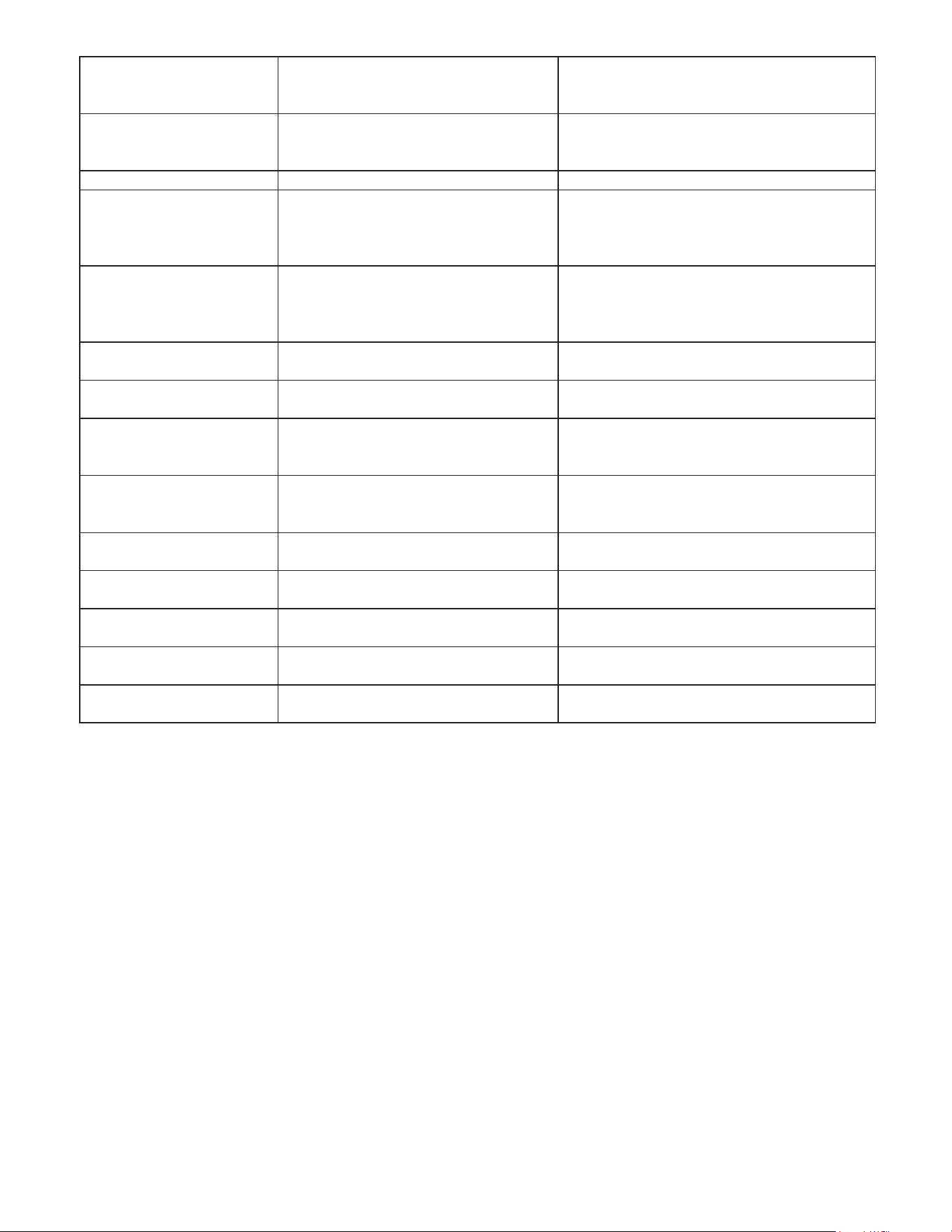
Damp accumulates on the
inner walls of refrigerator
Hot and humid weather increases icing
and condensation.
This is normal and not a fault.
Damp accumulates on the
inner walls of refrigerator
The doors may have been opened
frequently or left ajar for a long time.
Do not open the door frequently. Close the
doors, if open.
The door may have been left ajar. Close the door completely.
Humidity occurs on the
outer surface of the
refrigerator or between
the doors
Air might be humid. This is quite normal in
humid weather.
When the humidity level decreases, the
condensation will disappear.
There might be external condensation
at the section between two doors of the
refrigerator if you use your product rarely.
This is normal. Condensation will disappear
upon frequent use.
There is a bad odour
inside the refrigerator
No regular cleaning may have been
performed.
Clean the inside of the refrigerator sponge,
lukewarm water or carbonated water.
Some vessels or packaging materials may
cause the odour.
Use another vessel or packaging materials from
another brand.
Foods may have been placed into the
refrigerator in open vessels without
covers.
Store the foods in closed vessels.
Microorganisms emitted from vessels
without a cover may cause unpleasant
odors.
Foods may have been left expired or
spoiled.
Take out expired or spoiled foods from the
refrigerator.
The door cannot be closed Food packages may be preventing the
door from closing.
Relocate the packages obstructing the door.
The refrigerator may be unstable on the
oor.
Adjust the refrigerator feet as required.
The oor may not be level or solid. Make sure that the oor is level and capable of
carrying the refrigerator.
Crispers are stuck Foods may be touching the upper wall of
the crisper.
Re-organize the foods in the crisper.
22