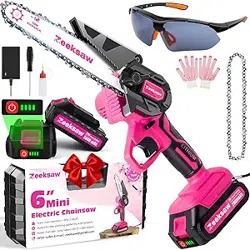
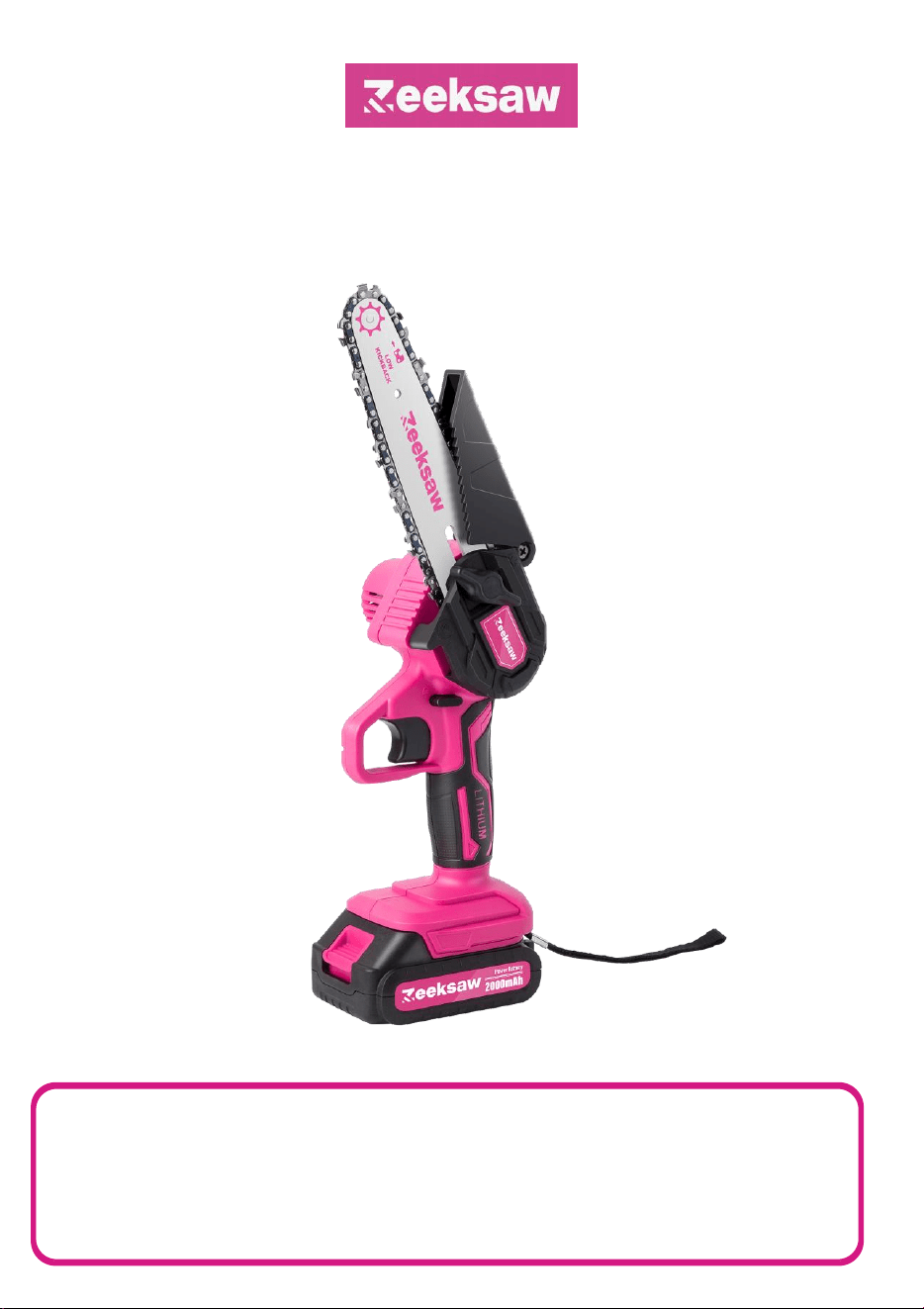
6-INCH MINI CHAINSAW
User Manual
Note: Activate the Warranty and watch Instruction Video as soon as you
receive the mini chainsaw. Instruction is provided next page. Thank you!
The specifications and/or components of this appliance are subject to
changes or improvements without prior notice. By Amazon safe shipping
regulations, so we can only offer empty oil bottles.
2
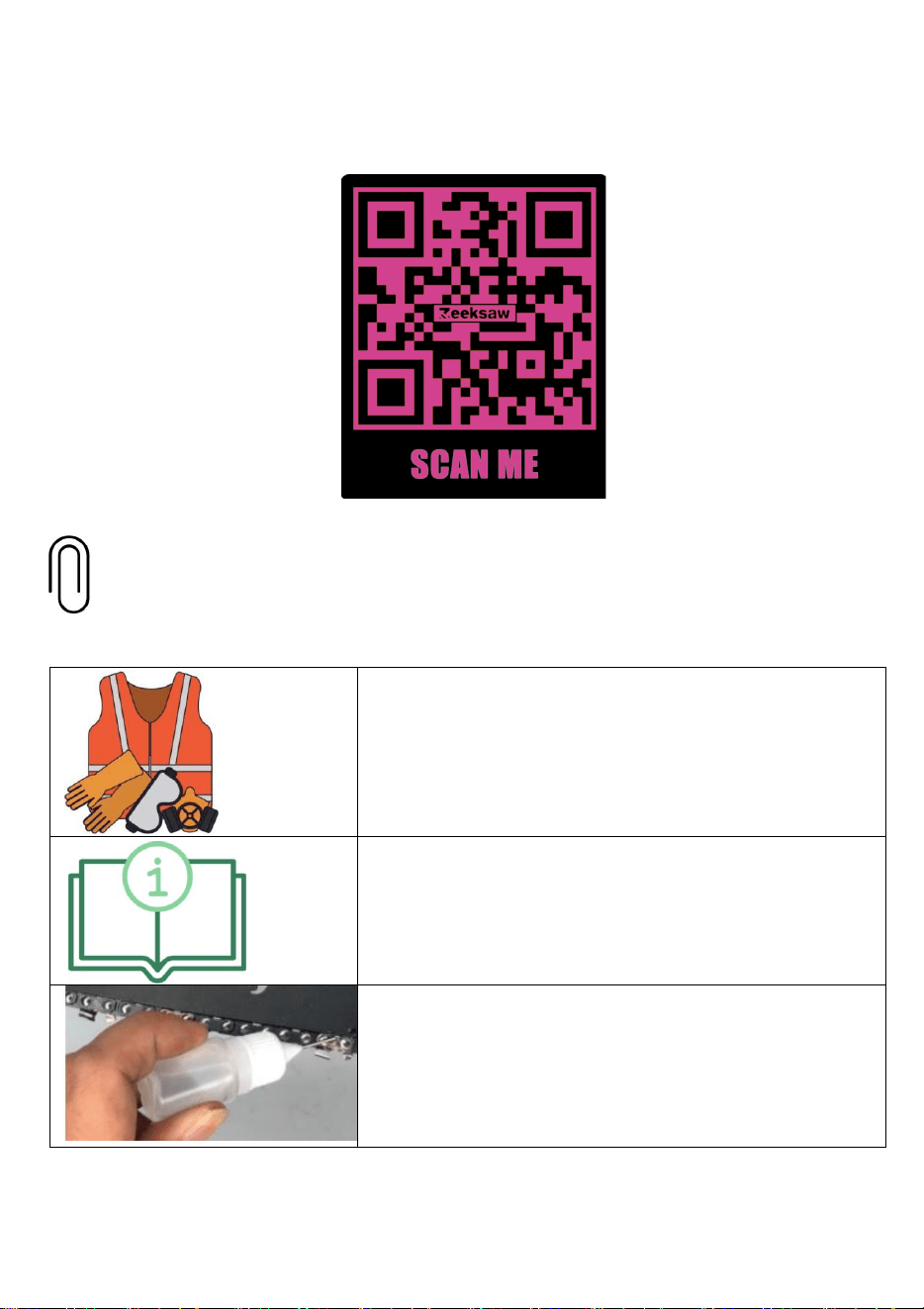
Please activate the warranty and watch the instruction video
now by Email:zeeksaw@gmail.com
Or scan the QR Code below
www.zeeksaw.top
DOs and DON’Ts
DOs
- Wear protective clothing/equipment
during use
- Strictly follow the instruction in this video
or the manual
- Regularly oil up the chain. Bar oil is highly
recommended!
3
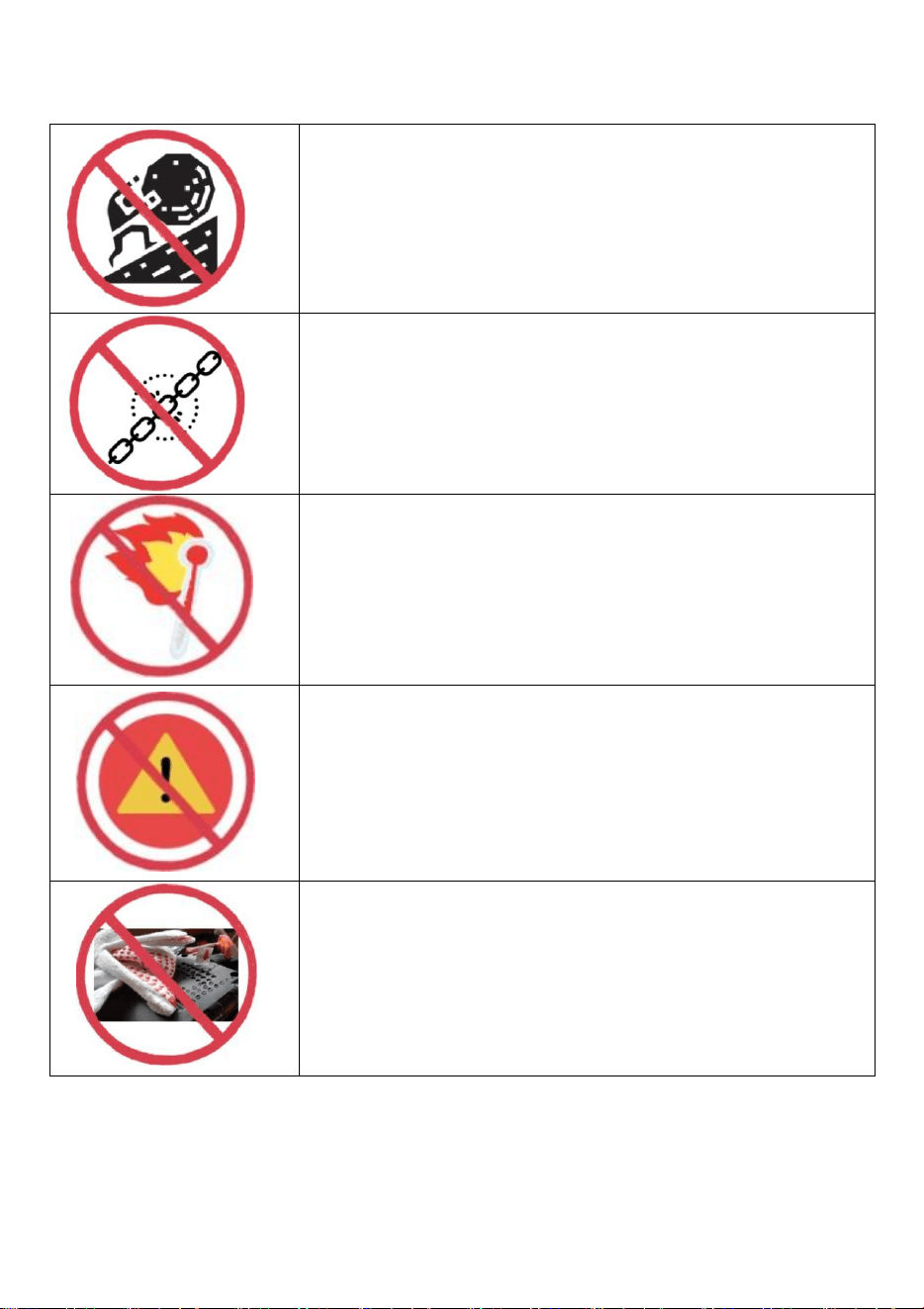
DONTs
- Cut over 6 inch wood/timber, or too hard
materials
- Make the chain too tight
- Overuse the machine - when it gets hot, take
a rest
- Use the chainsaw for non-designated
purposes
- Leave the gloves near any plastic surface.
The plastic dots on the gloves can get burnt at
high temperature

4
General Power Tool Safety Warnings
WARNING
Read all safety warnings and instructions.
Failure to follow the warnings and instructions may result in electric
shock, fire, and/or serious injury. Save all warnings and instructions for
future reference.
The term “power tool” in all of the warnings refers to your mains-operated
(corded) power tool or battery-operated (cordless) power tool.
1. Work area safety
A. Keep work area clean and well lit. Cluttered or dark areas invite
accidents
B. Do not operate power tools in explosive atmospheres, such as in
the presence of flammable liquids, gases or dust. Power tools create
sparks which may ignite the dust or fumes.
C. Keep children and bystanders away while operating a power tool.
Distractions can cause you to lose control.
2. Electrical safety
A. Power tool plugs must match the outlet. Never modify the plug in
any way. Do not use any adapter plugs with earthed (grounded)
power tools. Unmodified plugs and matching outlets will reduce risk of
electric shock.
B. Avoid body contact with earthed or grounded surfaces such as
pipes, radiators, ranges and refrigerators. There is an increased risk
of electric shock if your body is earthed or grounded.
C. Do not expose power tools to rain or wet conditions. Water
entering a power tool will increase the risk of electric shock.
D. Do not abuse the cord. Never use the cord for carrying, pulling or
unplugging the power tool. Keep cord away from heat, oil, sharp
edges or moving parts. Damaged or entangled cords increase the risk
of electric shock.

5
E. When operating a power tool outdoors, use an extension cord
suitable for outdoor use. Use of a cord suitable for outdoor use
reduces the risk of electric shock.
F. If operating a power tool in a damp location is unavoidable, use a
residual current device (RCD) protected supply. Use of an RCD
reduces the risk of electric shock.
3. Personal safety
A. Stay alert, watch what you are doing and use common sense
when operating a power tool. Do not use a power tool while you are
tired or under the influence of drugs, alcohol or medication. A
moment of inattention while operating power tools may result in serious
personal injury
B. Use safety equipment. Always wear eye protection. Safety
equipment such as dust mask, non-skid safety shoes, hard hat, or
hearing protection used for appropriate conditions will reduce personal
injuries.
C. Avoid accidental starting. Ensure the switch is in the off-position
before plugging in. Carrying power tools with your finger on the switch
or plugging in power tools that have the switch on invites accidents.
D. Remove any adjusting key or wrench before turning the power
tool on. A wrench or a key left attached to a rotating part of the power
tool may result in personal injury.
E. Do not overreach. Keep proper footing and balance at all times.
This enables better control of the power tool in unexpected situations.
F. Dress properly. Do not wear loose clothing or jewellery. Keep
your hair, clothing and gloves away from moving parts. Loose
clothes, jewellery, or long hair can be caught in moving parts.
G. If devices are provided for the connection of dust extraction and
collection facilities, ensure these are connected and properly used.
Use of these devices can reduce dust-related hazards.
H. Do not let familiarity gained from frequent use of tools allow you
to become complacent and ignore tool safety principles. A careless
action can cause severe injury within a fraction of a second

6
4. Power tool use and care
A. Do not force the power tool. Use the correct power tool for your
application. The correct power tool will do the job better and safer at the
rate for which it was designed.
B. Do not use the power tool if the switch does not turn it on and off.
Any power tool that cannot be controlled with the switch is dangerous
and must be repaired.
C. Disconnect the plug from the power source and/or the battery
pack from the power tool before making any adjustments, changing
accessories, or storing power tools. Such preventive safety measures
reduce the risk of starting the power tool accidentally.
D. Store idle power tools out of the reach of children and do not
allow persons unfamiliar with the power tool or these instructions
to operate the power tool. Power tools are dangerous in the hands of
untrained users.
E. Maintain power tools. Check for misalignment or binding of
moving parts, breakage of parts and any other condition that may
affect the power tools operation. If damaged, have the power tool
repaired before use. Many accidents are caused by poorly maintained
power tools.
F. Keep cutting tools sharp and clean. Properly maintained cutting
tools with sharp cutting edges are less likely to bind and are easier to
control.
G. Use the power tool, accessories and tool bits etc., in accordance
with these instructions and in the manner intended for the particular
type of power tool, considering the working conditions and the
work to be performed. Use of the power tool for operations different
from those intended could result in a hazardous situation.
H. Keep handles and grasping surfaces dry, clean and free from oil
and grease. Slippery handles and grasping surfaces do not allow for
safe handling and control of the tool in unexpected situations.
5. Battery tool use and care
A. Recharge only with the charger specified by the manufacturer. A
charger that is suitable for one type another battery pack.
B. Use power tools only with specifically designed battery packs.
Use of any other battery packs may create a risk of injury and fire

7
Product Information
C. When battery pack is not in use, keep it away from other metal
objects, like paper clips, coins, keys, nails, screws or other small
metal objects, that can make a connection from one terminal to
another. Shorting the battery terminals together may cause burns
D. Under abusive conditions, liquid may be ejected from the battery;
avoid contact. If contact accidentally occurs, flush with water. If
liquid contacts eyes, additionally seek medical help. Liquid ejected
from the battery may cause irritation or burns.
E. Do not use a battery pack or tool that is damaged or modified.
Damaged or modified batteries may exhibit unpredictable behaviour
resulting in fire, explosion or risk of injury.
F. Do not expose a battery pack or tool to fire or excessive
temperature. Expose to fire or temperature above 130 °C may cause
explosion.
G. Follow all charging instructions and do not charge the battery
pack or tool outside the temperature range specified in the
instructions. Charging improperly or at temperatures outside the
specified range may damage the battery and increase the risk of fire.
6. Service
A. Have your power tool serviced by a qualified repair person using
only identical replacement parts. This will ensure that the safety of the
power tool is maintained.
B. Never service damaged battery packs. Service of battery packs
should only be performed by the manufacturer or authorized service
providers.
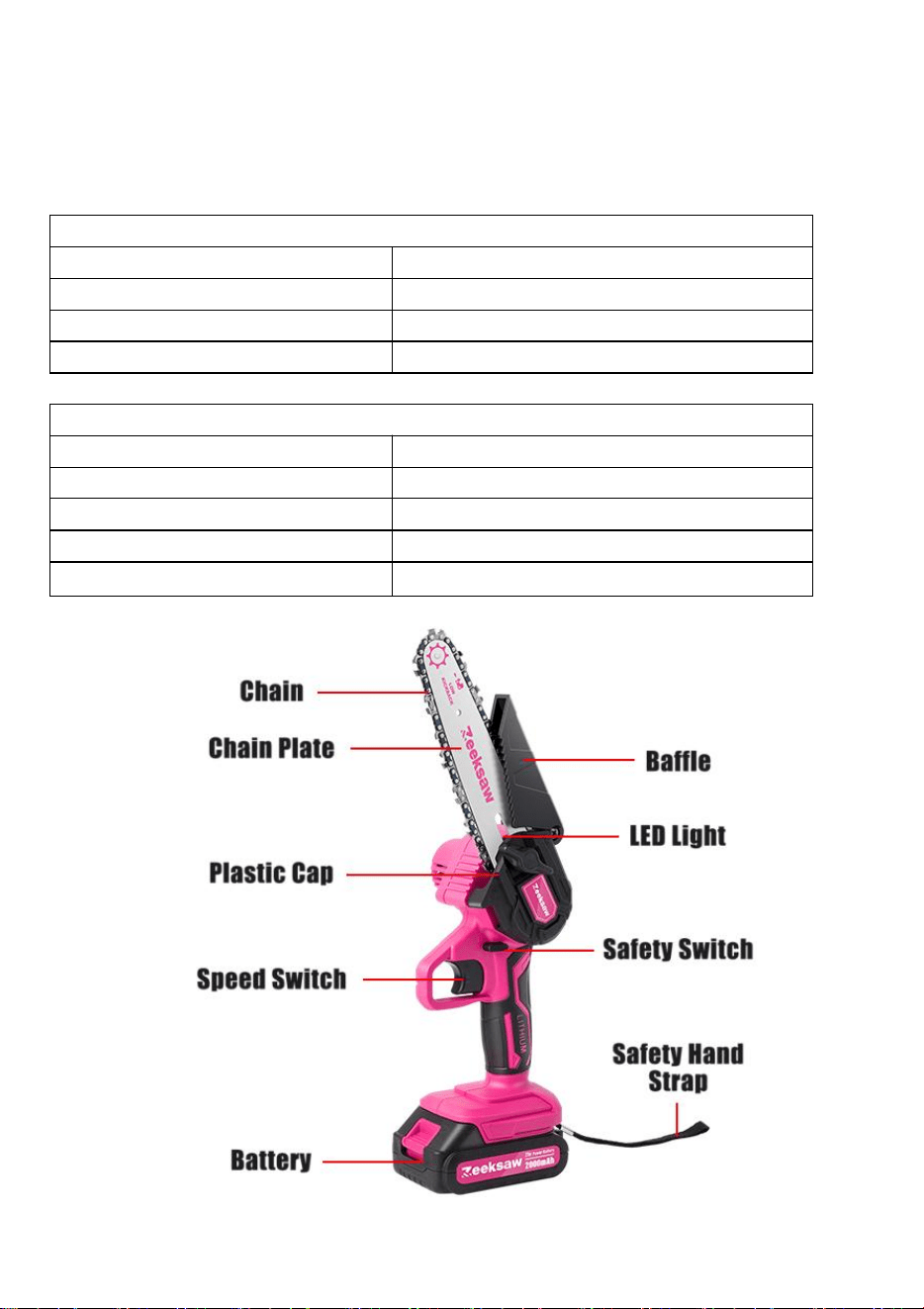
Intended use
This appliance is suitable for gardening pruning, bush pruning, small
branch pruning, wood cutting, widely used in gardens, parks, farms,
highways, pastures, orchards, greenhouses. Any other uses or
modifications to the machine are deemed to be improper usage and may
result in serious physical injury.
8
No liability can be accepted for any damage caused by non-compliance
with these instructions or any other improper use or mishandling of
appliance
Technical Specifications
6 Inch Mini Chainsaw
Model No
Z891
Cutting Diameter
6 Inch
Guide Plate Length
6 Inch
Weight
1.21Kg
Battery Pack
Battery pack type
18650
Voltage
21V
Capacity
2000 mAh
Charging Time
2 hours
Working Time
Variable - Up to 60 mins
9
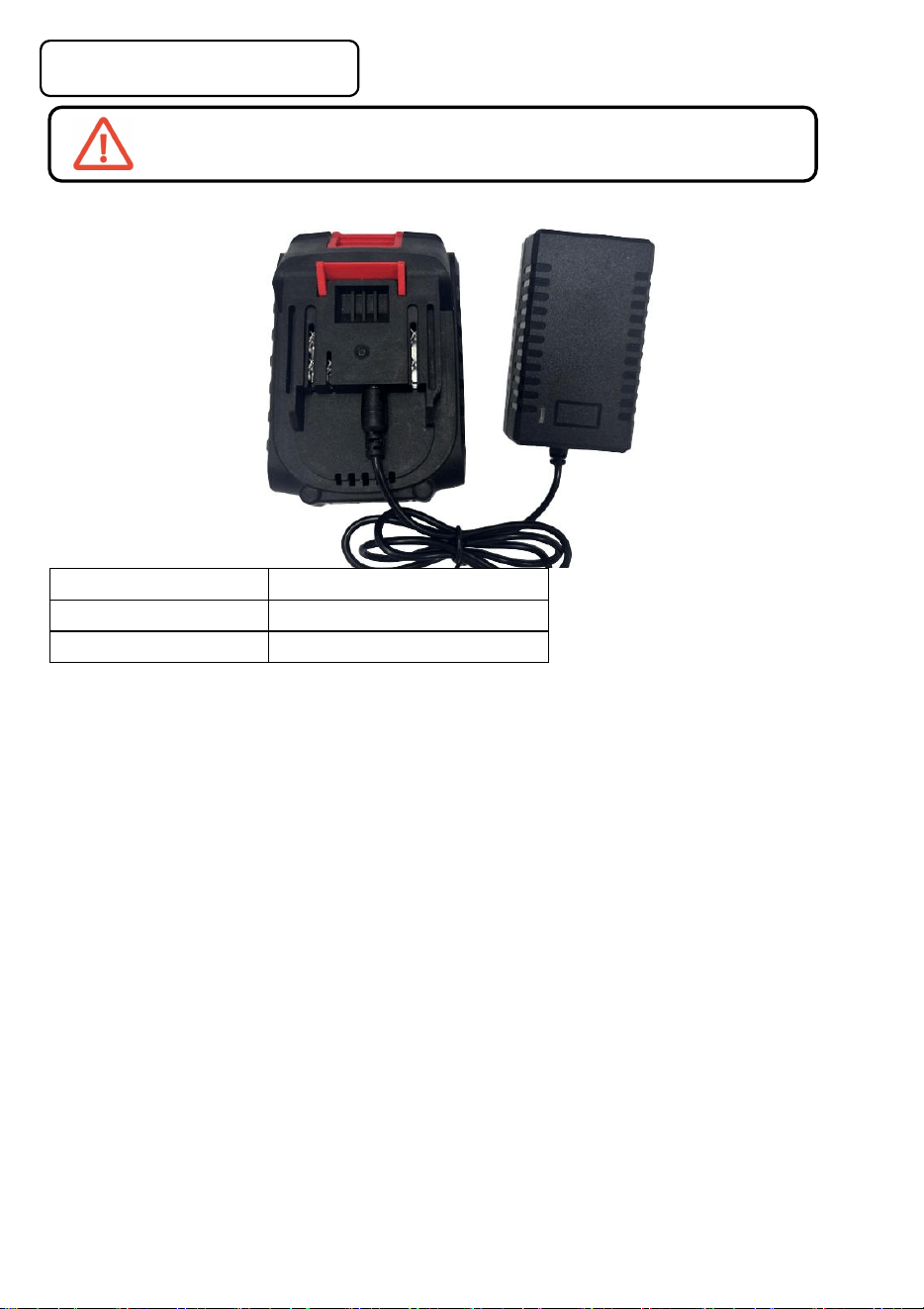
Battery and Charger
Always check that the voltage of the power supply
corresponds to the voltage on the rating plate.
Indicator Light
Status
Red
Charging
Green
Charging Completed
- Before using for the first time, the battery needs to be fully
charged.
- Check that the surface of the battery is clean and dry prior to charging.
- The charger can only be used with batteries of the same voltage. We
recommend to only use the charger provided by us.
- After the battery is fully charged remove the charger plug from the outlet
and remove the battery from the charger.
- When the machine is not being used over a longer period of time it’s
best to store the battery in charged condition. It should be used and
recharged at least once every 3 months.
10
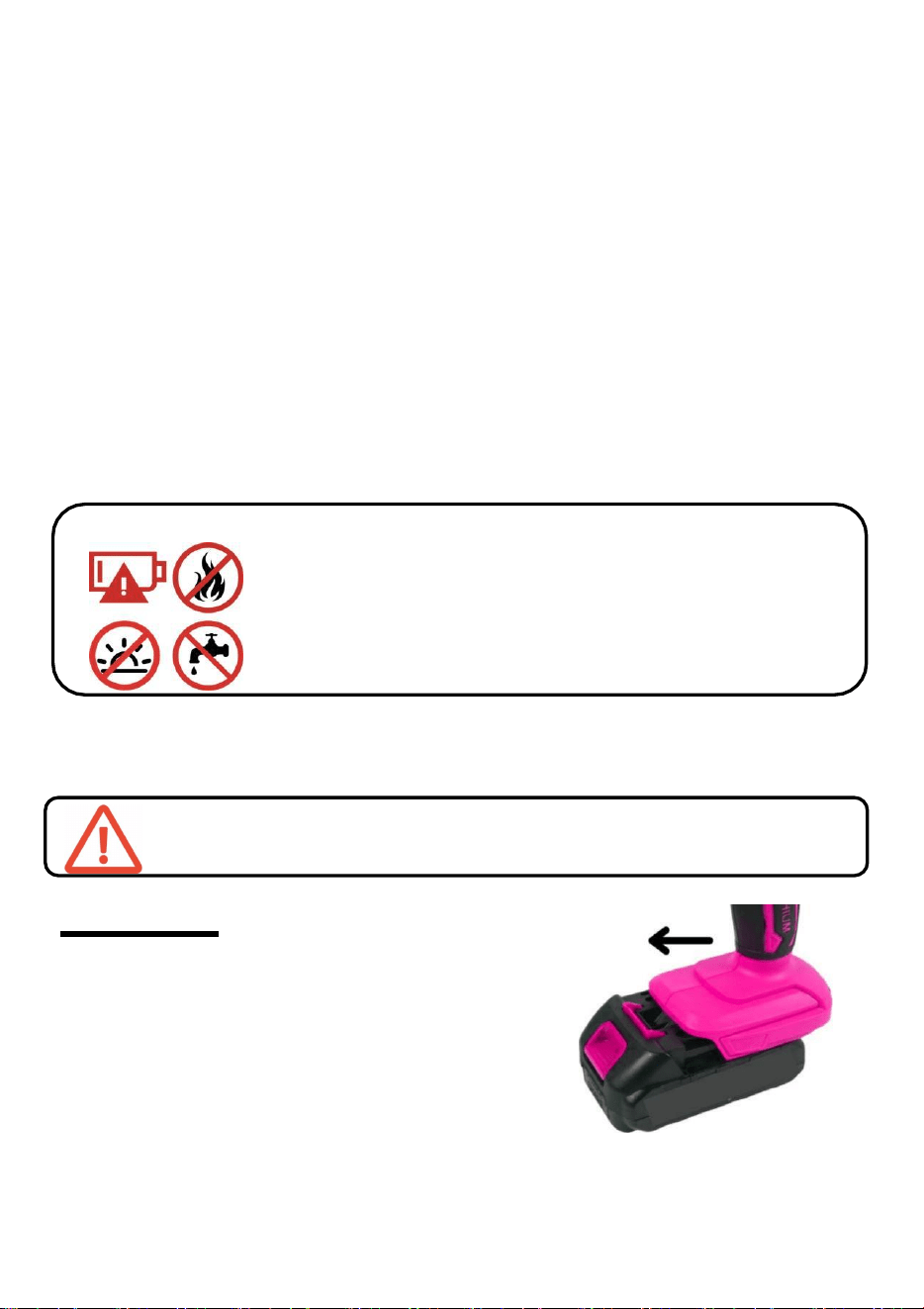
CAUTION! RISK OF EXPLOSION!
Never charge non-rechargeable batteries!
Protect the rechargeable battery from heat, for
example from continuous exposure to sun- light,
fire, water, and moisture.
There is a risk of explosion.
Ensure that the exterior of the battery is clean and dry
before connecting to the charger or machine.
WARNINGs
- DO NOT expose the battery to extreme conditions such as high
temperature or shock. The most suitable temperatures to charge the
battery pack are between 68°F -77°F. During charging, batteries must be
placed in a well-ventilated area.
- DO NOT place tools or chargers near water. For example, near the
sink, washbasin, or toilet.
- DO NOT spill liquid of any kind on the tool or charger. Doing so may
short out parts, causing damage to the product and creating the risk of
fire or electric shock.
- DO NOT let anyone with reduced physical, sensory or mental
capabilities, or lack of experience and knowledge, to use the appliance.
Unless they have been given the right instruction.
- DO NOT let children play with the appliance.
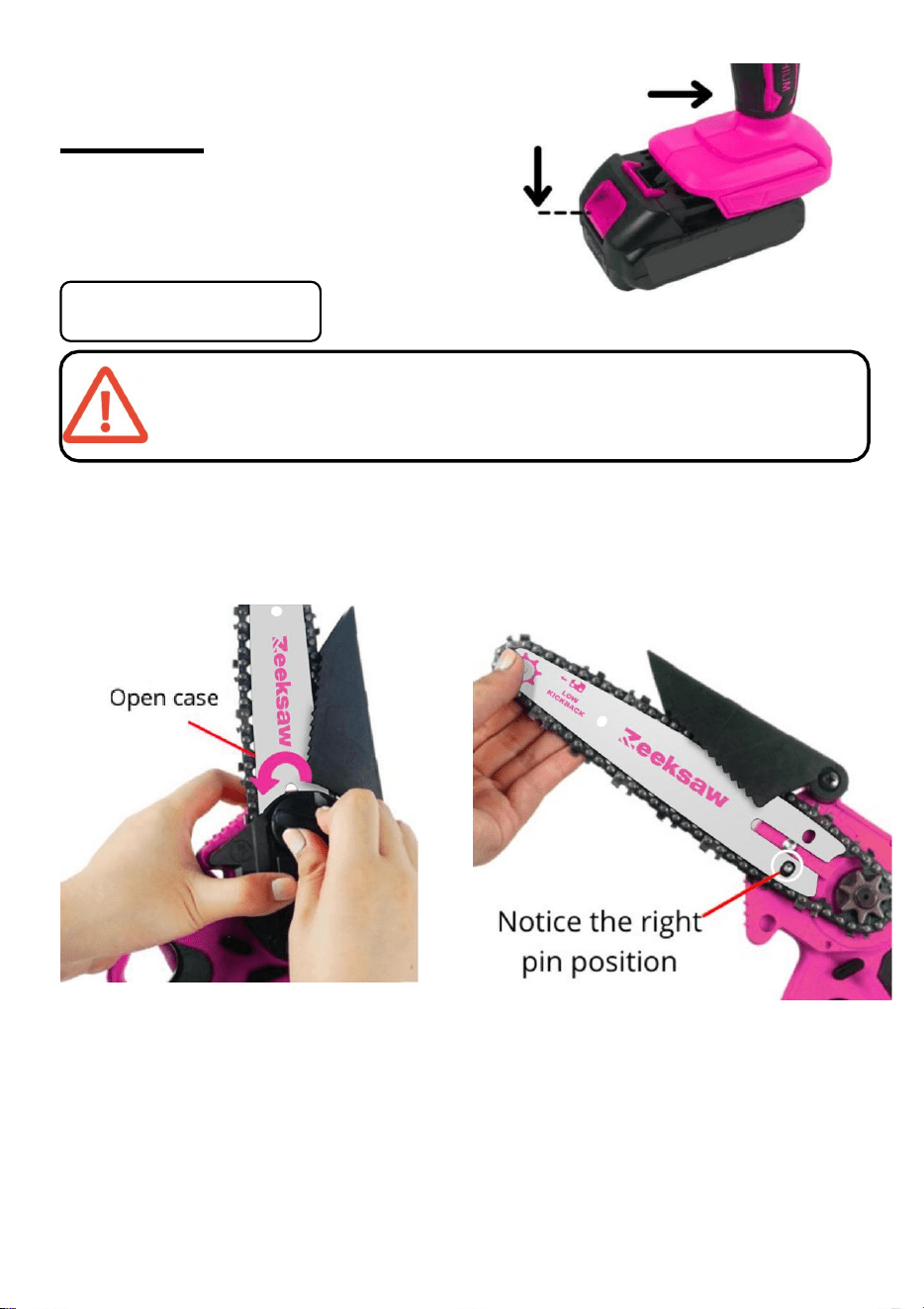
INSTALLING AND REMOVING THE BATTERY
INSTALLING
Insert the battery into the base of the
machine as shown in the picture.
Push the battery further forward until
it clicks into place.
*Pay attention to align the slots and
inserts of the battery
11
Assembly
REMOVING
Push the battery unlock button.
Pull the battery out of the Chainsaw.
Only insert the rechargeable battery once the device is
completely assembled, to avoid the device being
switched on accidentally.
Removing the chain
(1) Turn the cap anti clockwise to
open the case
(2) Remove the guide plate and
chain. Notice the aligned pin and
hole for later installation.
12
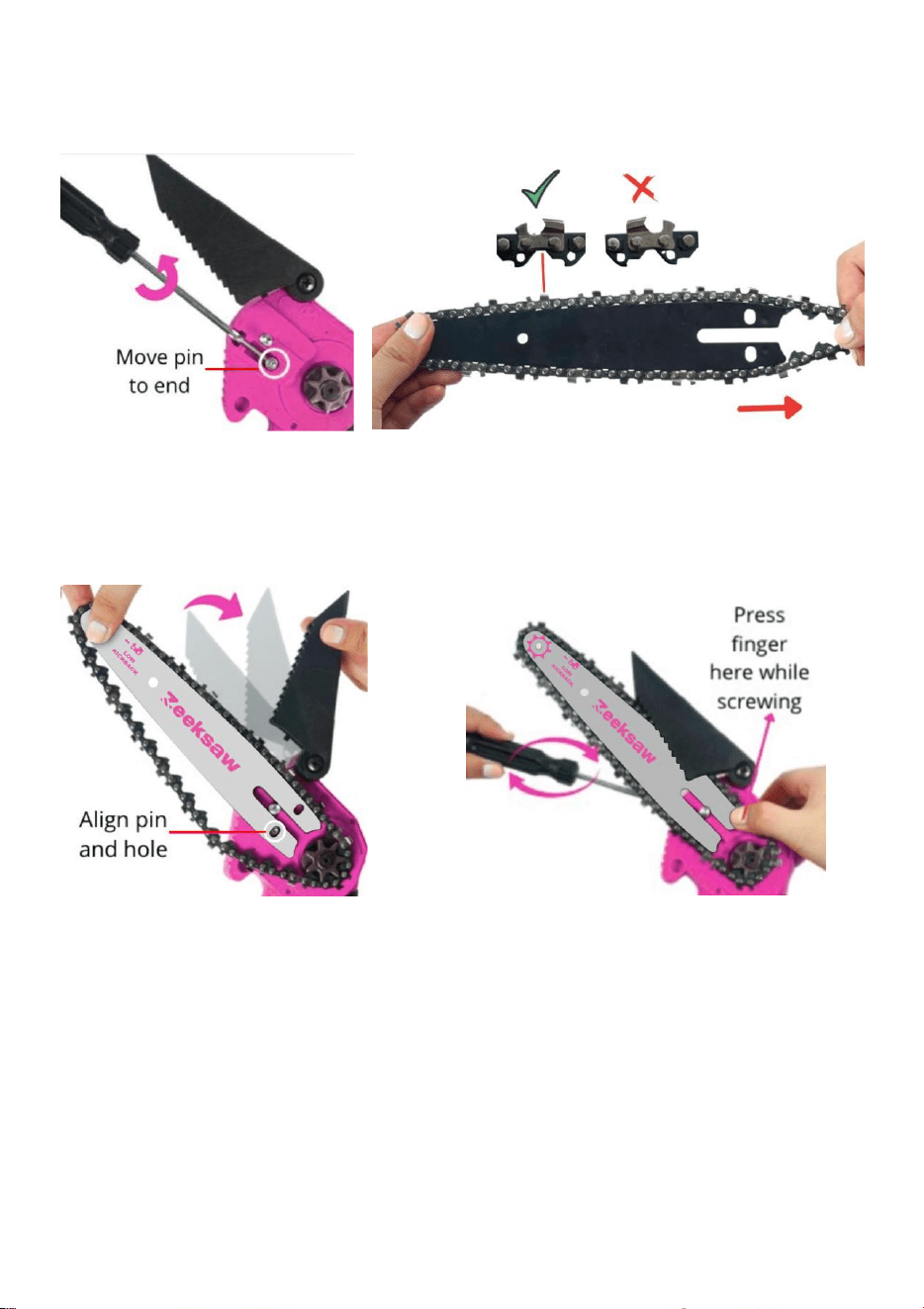
Installing the Chain
(1) Turn screwdriver
anti-clockwise until the
pin is moved to the
innermost
(2) Align chain and chainplate in the
right chain teeth direction
(3)Pull baffle open
=> Put chainplate and chain on
=> Align the chainplate and the
pin
(4)Press the plate in stably
=> Screw clockwise to tighten the
chain
13
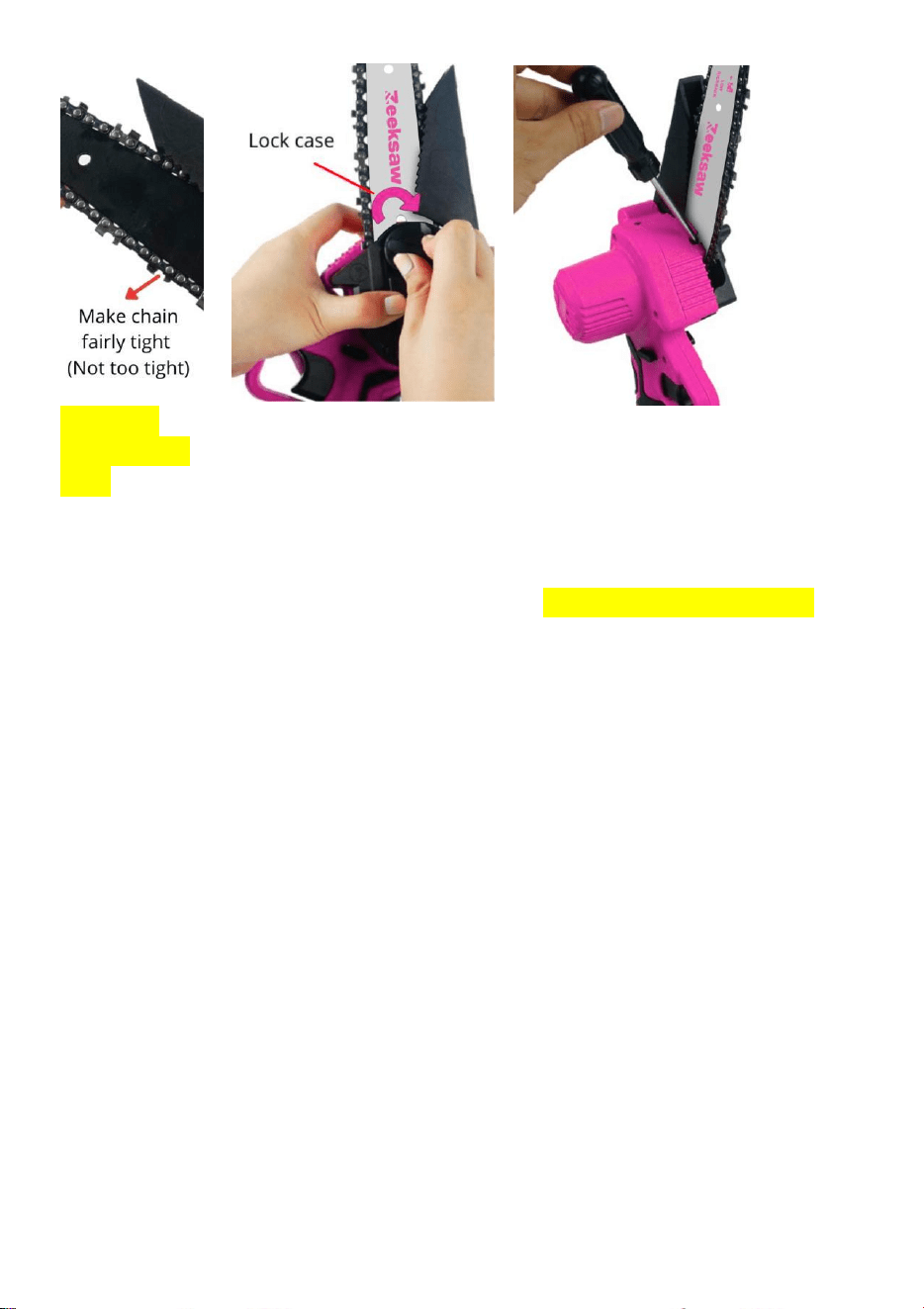
**Do not
make it too
tight
(1) Put the
case on neatly
and twist the cap
clockwise to lock
it.
(2) Adjust the chain
tightness again if needed.
Turn the adjusting screw
clockwise to tension the
chain, counterclockwise
for loosening it.
***Do not make it too tight
Note: Frequently check and adjust the chain tension. A loose chain
is easy to derail, which may lead to rapid wear of the chain and
guide plate.
Cutting
- When the device is running, keep your other hand is at least 6 inches
away from the cutting area of the blade
- To ensure the best service life of the chain saw, please do not overload
the equipment and do not cut branches with a diameter of more than 6
inches
- To protect the battery pack in cold or wet weather, place it under
waterproof clothing.
- Unplug the battery pack after the cutting is completed
- Do not use this equipment under the rain
14
Environment
Faulty and/or discarded electrical or electronic apparatus
have to be collected at the appropriate recycling locations.
Warranty Terms
Maintenance and Cleaning
Before cleaning and maintenance, always switch off
the machine and remove the battery pack from the
machine.
- Clean the chain carefully after each use.
- Wipe the chain with lubricating oil (bar oil or similar types) and spray
with metal protection spray.
- Do not spray the equipment with water
- Clean the machine casing regularly with a soft cloth, preferably after
each use.
- Keep the ventilator, motor room and equipment handle clean.
- Remove persistent dirt using a soft cloth moistened with soapsuds. Do
not use any solvents such as gasoline, alcohol, ammonia, etc. Chemicals
such as these will damage the synthetic components.
Our tool is thoroughly inspected and tested before leaving the factory. It
is warranted to be free of defects from workmanship and materials for the
period of ONE YEAR from the date of original purchase.
This warranty does not apply in the below situations
1. Any natural wear and tear, overload work.
2. Damage caused by lack of daily maintenance.
3. Improper use and other man-made damage.

15
4. A product modified or dismantled by an illegal repairman.
5. Severe impact damage.
6. Use non-original accessories and battery
Should any matters develop during this one year period, please contact
service center. If inspection shows the matter is caused by defective
workmanship or material, Zeeksaw will repair (or at our option, replace)
at our cost.
Please activate the warranty and watch the instruction video
now by Email:zeeksaw@gmail.com
Or scan the QR Code below
www.zeeksaw.top
