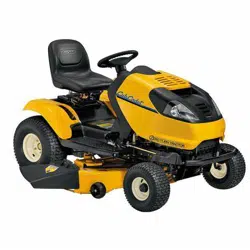
Safe Operation Practices • Assembly & Set-Up • Controls & Operation • Product Care
WARNING
READ AND FOLLOW ALL SAFETY RULES AND INSTRUCTIONS IN THIS MANUAL
BEFORE ATTEMPTING TO OPERATE THIS MACHINE.
FAILURE TO COMPLY WITH THESE INSTRUCTIONS MAY RESULT IN PERSONAL INJURY.
OperatOr’s Manual
Form No. 769-17796D
(May 19, 2021)
Safe Operation Practices ........................................ 2
Assembly & Set-Up .................................................. 8
Controls & Operation .............................................12
Product Care ...........................................................19
Replacement Parts ................................................ 28
Attachments & Accessories .................................. 28
Warranties ..............................................................31
Table of Contents
NOTE: This Operator’s Manual covers several models. Features may vary by model. Not all features in this manual are applicable to all
models and the model depicted may differ from yours.
Pro Z Series
500/700/900
Lapbar
Safe Operation Practices 1
2
Training
1. Read the Operator’s Manual and other
training material. If the operator(s) or
mechanic(s) cannot read English it is the
owner’s responsibility to explain this
material to them.
2. Become familiar with the safe operation
of the machine, operator controls, and
safety signs.
3. All operators and mechanics should
be trained to operate or service the
equipment. The owner is responsible for
training them.
4. Never let children under the age of 16
or untrained people operate or service
the equipment. Local regulations may
further restrict the age of the operator.
5. The owner/operator can prevent and
is responsible for accidents or injuries
occurring to them, other people,
or property.
General Operation
1. Read, understand, and follow all
instructions on the machine and in
the manual(s) before attempting to
assemble and operate. Keep this manual
in a safe place for future and regular
reference by each operator and for
ordering replacement parts.
2. Be familiar with all controls and their
proper operation. Know how to stop
the machine and disengage the
controls quickly.
3. Do not allow anyone to operate or
maintain this machine who has not read
the manual. Never permit children under
the age of 16 to operate this machine.
4. Do not remove any shields, guards,
labels, or safety devices. If a shield,
guard, label, or safety device is damaged
or does not function, repair or replace it
before operating the machine.
5. To help avoid blade contact or a thrown
object injury, keep bystanders, helpers,
children, and pets at least 75 feet (23
meters) from the machine while it is
in operation. Stop machine if anyone
enters the area.
6. Thoroughly inspect the area where the
equipment is to be used. Remove all
stones, sticks, wire, bones, toys, and other
foreign objects that could be picked
up and thrown by the blade(s). Thrown
objects can cause serious personal injury.
7. Evaluate the terrain to determine what
accessories and attachments are needed
to properly and safely perform the job.
Only use accessories and attachments
approved by the machine manufacturer.
8. Plan your mowing pattern to avoid
discharge of material toward roads,
sidewalks, bystanders, and the like. Also,
avoid discharging material against a
wall or obstruction which may cause
discharged material to ricochet back
toward the operator.
9. Always wear appropriate clothing
and personal protective equipment
(e.g. safety glasses, long pants, gloves,
hearing protection, safety shoes, hard
hat) when operating or maintaining
this machine. Long hair, loose fitting
clothing, or jewelry may get entangled
in moving parts. Follow all federal, state,
and local guidelines regarding the use of
personal protective equipment.
10. For extended use of this product,
hearing protection is recommended.
11. Be aware of the mower and attachment
discharge direction and do not point it
at anyone. Do not operate the mower
without the discharge cover or entire
grass catcher in its proper place.
12. Do not put hands or feet near rotating
parts or under the cutting deck. Contact
with the blade(s) can amputate hands
and feet.
13. A missing or damaged discharge cover
can cause blade contact or thrown
object injuries.
14. Stop the blade(s) when crossing gravel
drives, walks, or roads and while not
cutting grass.
15. Watch for traffic when operating near or
crossing roadways. This machine is not
intended for use on any public roadway.
WARNING
This symbol points out important safety instructions which, if not followed, could endanger the personal safety and/or property of yourself and others. Read and follow all instructions in this
manual before attempting to operate this machine. Failure to comply with these instructions may result in personal injury. When you see this symbol. HEED ITS WARNING!
WARNING
California Proposition 65
Engine Exhaust, some of its constituents, and certain vehicle components contain or emit chemicals known to the State of California to cause cancer and birth defects or other reproductive harm.
Battery posts, terminals, and related accessories contain lead and lead compounds, chemicals known to the State of California to cause cancer and reproductive harm. Wash hands
after handling.
DANGER
This machine was built to be operated according to the safe operation practices in this manual. As with any type of power equipment, carelessness or error on the part of the operator can
result in serious injury. This machine is capable of amputating hands and feet and throwing objects. Failure to observe the following safety instructions could result in serious injury or death.
16. Do not operate the machine while under
the influence of alcohol or drugs.
17. Mow only in daylight or good artificial light.
18. Never carry passengers.
19. Back up slowly. Always look down and
behind before and while backing to
avoid a back-over accident.
20. Slow down before turning. Operate the
machine smoothly. Avoid erratic operation
and excessive speed. Be aware of your
direction of travel to avoid accidents.
21. Disengage blade(s), set parking brake,
stop engine, and wait until the blade(s)
come to a complete stop before
removing grass catcher, emptying grass,
unclogging chute, removing any grass or
debris, or making any adjustments.
22. Never leave a running machine
unattended. Always stop on level
ground, turn off blade(s), place drive
speed control levers in neutral, set
parking brake, stop engine, and remove
key before leaving the operator position.
23. Use extra care when loading or
unloading the machine on a trailer or
truck. The machine should not be driven
on unstable, unsecured, or inadequate
ramps because the machine could tip
over causing serious personal injury.
24. Check overhead clearances carefully
before driving under low hanging tree
branches, wires, door openings, etc.,
where the operator and/or ROPS may
be struck which could result in serious
injury and/or machine tip over.
25. Muffler and engine become hot and can
cause a burn. Do not touch.
26. Disengage the blades, set the parking
brake to the ‘on’ position, and make
sure the speed control levers are in the
neutral position before attempting to
start the engine. Only start the engine
from the operator’s position.
27. Do not attempt to mow unusually tall,
dry grass (e.g., pasture) or piles of dry
leaves. Dry grass or leaves may contact
the engine exhaust and/or build up on
the mower deck presenting a potential
fire hazard.

3Section 1 — Safe operation practiceS
28. Do not stop or park the machine over
dry leaves, grass, debris, or other
combustible material.
29. Never attempt to operate the machine
without the mowing deck attached; the
machine could tip over.
30. Keep the machine and especially the
engine exhaust system and hydraulic
components clean and free of grease,
grass, and leaves to reduce the potential
for overheating and fire.
31. Allow the machine to cool at least 5
minutes before storing.
32. Use only accessories and attachments
approved for this machine by the
machine manufacturer. Read,
understand, and follow all instructions
provided with the approved accessory
or attachment.
33. Data indicates that operators, age 65
years and above, are involved in a large
percentage of riding mower-related
injuries. Operators should evaluate their
ability to operate this machine safely
enough to protect themselves and
others from serious injury.
34. Do not operate or start machine if there
are fuel or oil leaks; repair immediately.
35. When looking for oil leaks, never run
your hand over hydraulic hoses, lines,
or fittings. Never tighten or adjust
hydraulic hoses, lines, or fittings
while the system is under pressure. If
high-pressure oil penetrates the skin
seek immediate medical attention or
gangrene and permanent damage may
result. Do not check for hydraulic leaks
with your hands, use paper or cardboard
instead. Wear gloves and safety glasses
when checking for leaks.
36. Do not operate machines that have been
damaged or have not been properly
maintained. If the machine has been
damaged, then have it repaired.
37. When operating this machine in the
forward direction, do not allow the
speed control levers to return to the
neutral position on their own. Always
operate them smoothly and avoid any
sudden movements of the levers when
starting or stopping.
38. If situations occur which are not covered
in this manual use care and good
judgement. Contact your customer
service representative for assistance.
Slope Operation
Slopes are a major factor related to loss of
control and tip-over accidents that can result in
severe injury or death. All slopes require extra
caution. If you cannot back up the slope or if
you feel uneasy on it, do not mow it or drive on
the slope.
For your safety, use the slope gauge included
as part of this manual to measure slopes before
operating this machine on a sloped or hilly
area. If the slope is greater than 15°/25% as
shown on the slope gauge, do not operate
this machine on that area or serious injury
could result.
Do:
1. Mow across slopes, not up and down.
Exercise extreme caution when
changing direction on slopes.
2. Watch for holes, ruts, bumps, rocks, or
other hidden objects. Uneven terrain
could overturn the machine. Tall grass
can hide obstacles.
3. Use slow speed. Choose a low enough
speed so that you will not have to stop
while on the slope. Avoid starting or
stopping on a slope. If the tires are
unable to maintain traction, disengage
the blades and proceed slowly and
carefully straight down the slope.
4. Keep all movements on the slopes
slow and gradual. Do not make sudden
changes in speed or direction. Rapid
acceleration could cause the front of
the machine to lift and rapidly flip over
backwards, which could cause serious
injury or death.
5. Follow the manufacturer’s
recommendations for wheel weights or
counterweights to improve stability.
6. Use extra care with grass catchers or
other attachments. These can change
the stability of the machine.
Do Not:
1. Do not turn on slopes unless necessary;
then turn slowly uphill and use extra care
while turning.
2. Do not mow near drop-offs, ditches,
or embankments. The machine could
suddenly turn over if a wheel is over the
edge of a cliff, ditch, or if an edge caves in.
3. Do not operate on slopes or near the
edge of water such as a lake, pond, river,
or stream where the machine could slip,
tip, or roll-over into the water.
4. Do not try to stabilize the machine by
putting your foot on the ground.
5. Use extra care while operating tractor
with grass catcher or other
attachment(s). They can affect the
stability of the tractor. Do not use grass
catcher on slopes greater than 10° (17%).
6. Do not mow on wet grass. Reduced
traction could cause sliding and/or loss
of control.
7. Do not tow heavy pull behind
attachments (e.g. loaded dump cart,
lawn roller, etc.) on slopes greater than
5°. When going downhill, the extra
weight tends to push the machine and
may cause loss of traction and loss of
control (e.g. machine may speed up,
braking and steering ability are reduced,
attachment may jack-knife, and cause
machine to overturn).
Children
1. Tragic accidents can occur if the
operator is not alert to the presence of
children. Children are often attracted to
the machine and the mowing activity.
They do not understand the dangers.
Never assume that children will remain
where you last saw them.
a. Keep children out of the mowing
area and in watchful care of a
responsible adult other than
the operator.
b. Be alert and turn machine off if a
child enters the area.
c. Always look behind and down for
small children. Use slow speed.
d. Never carry children, even
with the blade(s) shut off. They
may fall off and be seriously
injured or interfere with safe
machine operation.
e. Use extreme care when
approaching blind corners,
doorways, shrubs, trees, or other
objects that may block your
vision of a child who may run into
the path of the machine.
f. To avoid back-over accidents,
always disengage blades before
traveling in reverse.
g. Keep children away from hot or
running engines. They can suffer
burns from a hot muffler.
h. Remove key when machine
is unattended to prevent
unauthorized operation.
2. Never allow children under 16 years of
age to operate this machine. Children 16
and over should read and understand
the instructions and safe operation
practices in this manual and on the
machine and should be trained and
supervised by an adult.
Towing
1. Do not tow heavy tow-behind
attachments (e.g. loaded dump cart, lawn
roller, etc.) on slopes greater than 5°.
2. Tow only with a machine that has a hitch
designed for towing. Do not attach towed
equipment except at the hitch point.
3. Follow the manufacturer’s
recommendation for weight limits for
towed equipment and towing on slopes.
4. Never allow children or others in or on
towed equipment.
5. On slopes, the weight of the towed
equipment may cause loss of traction and
loss of control.
6. Travel slowly and allow extra distance
to stop.
7. Make wide turns to avoid jack knifing.
4 Section 1 — Safe operation practiceS
Transporting Machines
1. This machine is not intended for use on
public roads. Machines operated on public
roads must comply with state & local
ordinances, SAE J137, and ANSI/ASABE
S279 (lighting and marking requirements).
2. Use care when loading or unloading
machines onto trailers and trucks.
3. If ramps are used, they must be full
width, stable, have an adequate capacity
rating, and be secured to the trailer or
truck. Ramp angle should not exceed
15°/25% and trailer or truck should be
parked on level terrain.
4. Machines must be secured onto trailers
and trucks with straps, chains, cables,
ropes, or other means deemed adequate
for that purpose. The front and rear of
the machines must be secured to the
trailer or truck in both the lateral and
vertical directions.
Operator Protective System (OPS)
1. This machine is equipped with an Operator
Protective System (OPS), which includes:
a. A Roll Over Protective
Structure (ROPS) of the fixed or
folding configuration.
b. Seat belt assembly with
retractable function.
2. ROPS are structures designed to
provide a crush-resistant space for the
operator when properly seat-belted
within the designated seating area of
the machine in the event of a machine
tip-over or roll-over. Folding ROPS
shall be used in their fully upright and
locked configurations except in those
circumstances whereby they need to
be momentarily folded-down to avoid
contact with items such as tree limbs,
clothes lines, guy wires, utility poles,
buildings, etc. At other times and
conditions, ROPS shall be in their fully
upright and locked configurations.
DANGER
Damaged ROPS must be replaced prior to operator use.
3. Seat belts shall be used and shall be
properly fastened about the operator’s
waist at all times, except when the
ROPS are:
a. Not properly installed and/
or not properly secured onto
the machine.
b. Damaged in such manner that
their structural integrity has
been compromised.
c. Not in their fully upright and
locked position.
4. Seat belts are attached to the movable
portion of the seat when suspension
seats are utilized, and therefore the
seat-mounting base must be secured
to its pivot means and the pivot means
latched to the frame of the machine.
Seat belts are attached to the seat
or the frame of the machine when
non-suspension (standard) seats are
provided, however, if a suspension kit
is added to a seat, the seat belt must
be attached to the movable portion of
the seat or suspension mechanism, the
seat-mounting base must be secured to
its pivot means, and the pivot means be
latched to the frame of the machine.
DANGER
If ROPS are folded down or missing, seat belts shall not
be fastened. Worn or damaged seat belt assemblies
must be replaced prior to operator use.
5. A brush guard or canopy may deflect
tree limbs, clothes lines, and other
obstacles that otherwise could come
in contact with the ROPS. Contact of
ROPS and/or canopies by items such
as tree limbs, clothes lines, guy wires,
and buildings, could create hazardous
conditions whereby the machine could
experience a tip-over or roll-over. A
canopy may provide protection for the
operator from some environmental
exposure (sunlight, rain, etc.).
6. The ROPS and seat belt are integral
parts of this machine and should not be
tampered with, modified in any manner,
or removed.
7. Inspect the ROPS and seat belt
assemblies on a regular basis for damage
and improper operation. Replace all
components that are damaged or
are not functioning properly with
authorized replacement parts.
8. The ROPS extends above and behind
the operator position, and therefore the
operator must be aware of potential
contact of the ROPS with items such
as trees, buildings, doorways, clothes
lines, utility wires, etc., that could cause
the machine to tip-over or rollover. Use
caution in (or avoid) areas where the
ROPS could come in contact with any
structures, trees, etc.
9. Inspect the ROPS and seat belt
assemblies on a regular basis for damage
and improper operation. Replace all
components that are damaged or
are not functioning properly with
authorized replacement parts.
10. Failure to use the seat belt properly
could result in serious injury or death if
an accidental overturn occurs. In order
for the ROPS to be effective, the seat belt
must be securely fastened around the
operator at all times when the operator
is on the machine. Contact with the
ROPS during an overturn could cause
serious injury or death.
11. The ROPS will not prevent machine from
tip-overs or roll-overs.
12. Do not assume ROPS will protect you
in a tip-over or roll-over. Injuries may
still occur.
Hydraulic Devices & Systems
Hydraulic fluid escaping under pressure may
have sufficient force to penetrate skin and
cause serious injury. If foreign fluid is injected
into the skin or eyes, seek immediate medical
attention or gangrene and permanent damage
may result.
WARNING
Keep body and hands away from pinholes or nozzles
that could inject hydraulic fluid under high pressure.
Use paper or cardboard, not your hands, to search for
leaks! Wear gloves and safety glasses.
Safely relieve all pressure in the system before
performing any work on the system, and make
sure that:
• The ignition switch is OFF.
• The key is removed.
• The engine spark plug wire(s) removed.
• All connections to the negative terminal
of the battery are removed.
• The park brake is set.
• All by-pass valves, if so equipped,
are open.
• Hydraulic controls are actuated to release
pressure on pumps, cylinders, etc. If
“float” positions are available, they should
be used.
After the above operations are completed, it
should be safe to begin disconnecting the lines
or components. It is still a good idea to cover
the connection with a cloth shield and then
gently loosen connections.
WARNING
Make sure all hydraulic fluid connections are tight
and all hydraulic hoses and lines are in good condition
before applying pressure to the system.
5Section 1 — Safe operation practiceS
Service
Safe Handling of Fuel
To avoid personal injury or property damage
use extreme care in handling fuel. Fuel is
extremely flammable and the vapors are
explosive. Serious personal injury can occur
when fuel is spilled on yourself or your clothes
which can ignite. Wash your skin and change
your closes immediately.
• Use only approved containers.
• Never fill containers inside a vehicle or
a truck or trailer bed with a carpeted
or plastic liner. Always place containers
on the ground away from your vehicle
before fueling.
• When practical, remove machines from
the truck or trailer and refuel it on the
ground. If this is not possible, then
refuel equipment on a trailer with a
portable container rather than from a fuel
dispenser nozzle.
• Keep nozzle in contact with the rim of the
fuel tank or container opening at all times
until fueling is complete. Do not use a
nozzle lock-open device.
• Extinguish all cigarettes, cigars, pipes, and
other sources of ignition.
• Never fuel machine indoors or near
ignition sources.
• Never remove fuel cap or add fuel while
the engine is hot or running. Allow engine
to cool at least 5 minutes before refueling.
• Never over fill fuel tank. Fill tank to no
more than 1/2 inch below bottom of filler
neck to allow space for expansion.
• If necessary, use a funnel to avoid spillage.
• Replace fuel cap and tighten securely.
• If fuel is spilled, wipe off the engine
and equipment. Wait 5 minutes before
starting the engine.
• To reduce fire hazards, keep machine free
of grass, leaves, or other debris build-up.
Clean up oil and fuel spillage and remove
any fuel soaked debris.
• Never store the machine or fuel container
inside where there is an open flame,
spark, or pilot light as on a water heater,
space heater, furnace, clothes dryer, or
other gas appliance.
General Service
1. Never run an engine indoors or in a
poorly ventilated area. Engine exhaust
contains carbon monoxide, an odorless
and deadly gas.
2. Before cleaning, repairing, or inspecting,
make certain the blade(s) and all
moving parts have stopped. Disconnect
the spark plug wires and remove
the key from the ignition to prevent
unintended starting.
3. Periodically check to make sure the
blades come to a complete stop within
approximately (7) seven seconds after
operating the blade disengagement
control. If the blades do not stop within
this time frame, your machine should
be serviced.
4. Never tamper with the safety interlock
system or other safety devices.
5. Regularly check the safety interlock
system for proper function, as described
later in this manual. If the safety interlock
system does not function properly, have
your machine serviced.
6. Check brake operation frequently as
it is subjected to wear during normal
operation. Adjust and service as required.
7. Check the blade(s) and engine mounting
bolts at frequent intervals for proper
tightness. Also, visually inspect blade(s)
for damage (e.g., excessive wear, bent,
cracked). Replace the blade(s) with the
original equipment manufacturer’s
(O.E.M.) blade(s) only, listed in this
manual. Use of parts which do not meet
the original equipment specifications
may lead to improper performance and
compromise safety!
8. Mower blades are sharp. Wrap the blade
or wear gloves, and use extra caution
when servicing them.
9. Keep all nuts, bolts, and screws tight to
be sure the equipment is in safe working
condition.
10. After striking a foreign object (or if
abnormal vibration occurs), stop the
blades and engine and thoroughly
inspect the machine for any damage.
Make necessary repairs before
resuming operation.
11. Never attempt to make adjustments or
repairs to the machine while the engine
is running.
12. Grass catcher components and the
discharge cover are subject to wear and
damage which could expose moving
parts or allow objects to be thrown.
For safety protection, frequently check
components and replace immediately
with original equipment manufacturer’s
(O.E.M.) parts only, listed in this manual.
Use of parts which do not meet the
original equipment specifications may
lead to improper performance and
compromise safety!
13. Do not change the engine governor
settings or over-speed the engine. The
governor controls the maximum safe
operating speed of the engine.
14. Maintain or replace safety and
instruction labels, as necessary.
15. Observe proper disposal laws and
regulations for gas, oil, etc. to protect
the environment.
Do not modify engine
To avoid serious injury or death, do not
modify engine in any way. Tampering with
the governor setting can lead to a runaway
engine and cause it to operate at unsafe
speeds. Never tamper with factory setting of
engine governor.
Notice Regarding Emissions
This machine is equipped with an engine that
is certified to federal EPA emission standards
for non-road engines and equipment, and
where applicable to California Air Resources
Board (CARB) emission standards. The engine
owner’s manual is supplied by the engine
manufacturer, and provides additional
information relating to the emission system,
warranty, and maintenance of the engine in
accordance with EPA and/or CARB regulations.
Making any unauthorized alterations or
modifications to the engine, fuel, or venting
systems may violate EPA and CARB regulations.
When required, models are equipped with
low permeation fuel lines and fuel tanks for
evaporative emission control. California models
may also include a carbon canister. Please
contact Customer Support for information
regarding the evaporative emission control
configuration for your model.
This machine is designed to run on regular,
unleaded gasoline, 87 octane or higher. Never
use gasoline containing methanol or gasoline
containing more than 10% ethanol (i.e., E15
or E85 fuels) because the fuel system may
be damaged.
Spark Arrestor
WARNING
This machine is equipped with an internal combustion
engine and should not be used on or near any
unimproved forest-covered, brush-covered, or grass-
covered land unless the engine’s exhaust system is
equipped with a spark arrestor meeting applicable
local or state laws (if any).
If a spark arrestor is used, it should be
maintained in effective working order by
the operator. In the State of California the
above is required by law (Section 4442 of the
California Public Resources Code). Other states
may have similar laws. Federal laws apply on
federal lands.
A spark arrestor for the muffler is available
through your nearest engine authorized
service dealer or contact the service
department, P.O. Box 361131, Cleveland,
Ohio 44136 - 0019.
6 Section 1 — Safe operation practiceS
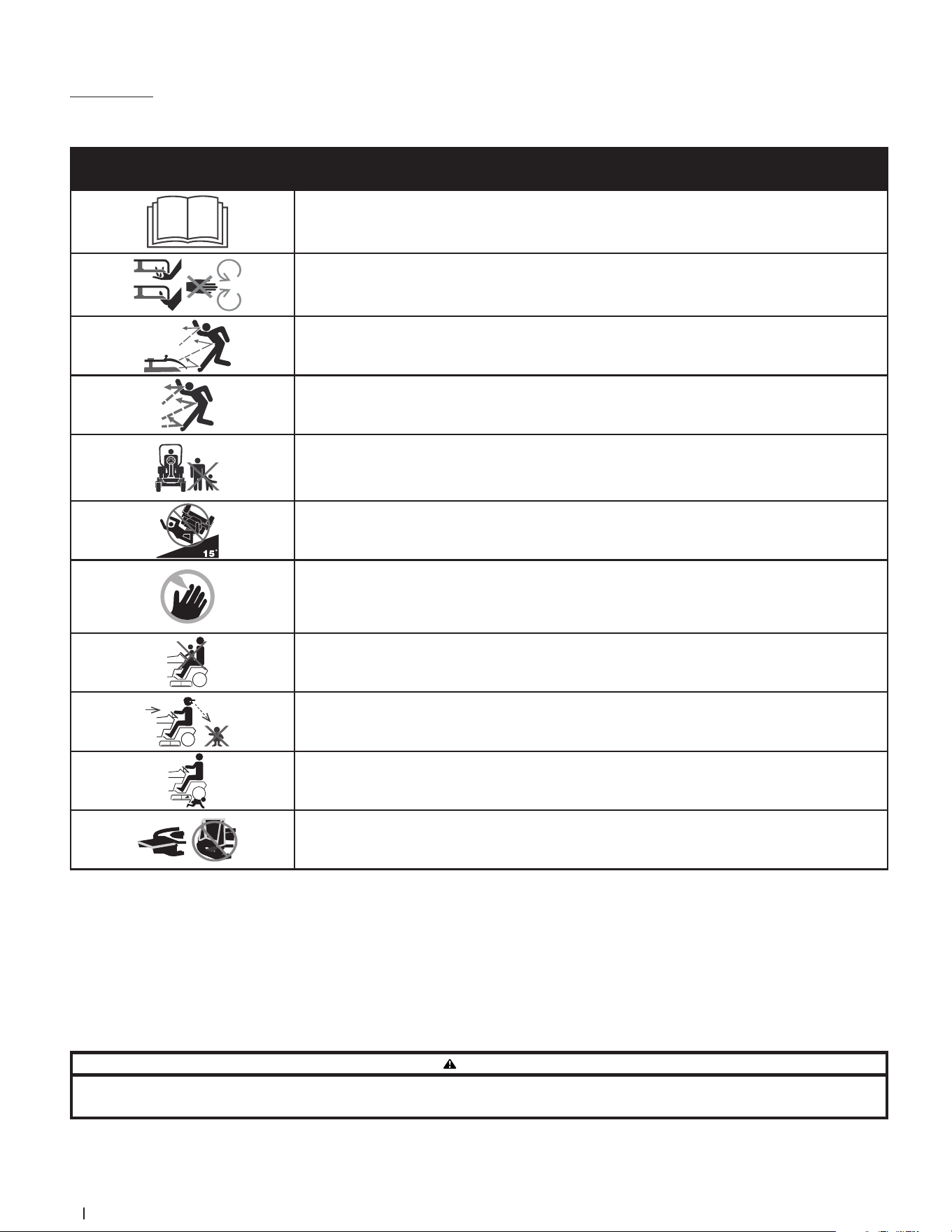
Safety Symbols
This page depicts and describes safety symbols that may appear on this product. Read, understand, and follow all instructions on the machine before
attempting to assemble and operate.
Symbol Description
READ THE OPERATOR’S MANUAL(S)
Read, understand, and follow all instructions in the manual(s) before attempting to assemble and operate.
WARNING — ROTATING BLADES
Do not put hands or feet near rotating parts or under the cutting deck. Contact with the blade(s) can
amputate hands and feet.
WARNING —THROWN OBJECTS
This machine may pick up and throw objects which can cause serious personal injury.
WARNING —THROWN OBJECTS
This machine may pick up and throw objects which can cause serious personal injury.
BYSTANDERS
Keep bystanders, helpers, children, and pets at least 75 feet (23 meters) from the machine while
it is in operation.
MAX
WARNING — SLOPE OPERATION
Do not operate this machine on a slope greater than 15°/25%.
DANGER — ROTATING BLADES
To reduce the risk of injury, keep hands and feet away. Do not operate unless discharge cover or grass catcher is
in its proper place. If damaged, replace immediately.
DANGER — ROTATING BLADES
Never carry passengers. Never carry children, even with the blades off.
DANGER — ROTATING BLADES
Always look behind and down for small children. Use slow speed.
DANGER — ROTATING BLADES
To avoid back-over accidents, keep children away from the machine while it is in operation.
DANGER — SAFETY DEVICES
Keep safety devices (guards, shields, switches, etc.) in place and working.
WARNING
Your Responsibility — Restrict the use of this power machine to persons who read, understand, and follow the warnings and instructions in this manual and on the machine.
SAVE THESE INSTRUCTIONS!
7Section 1 — Safe operation practiceS
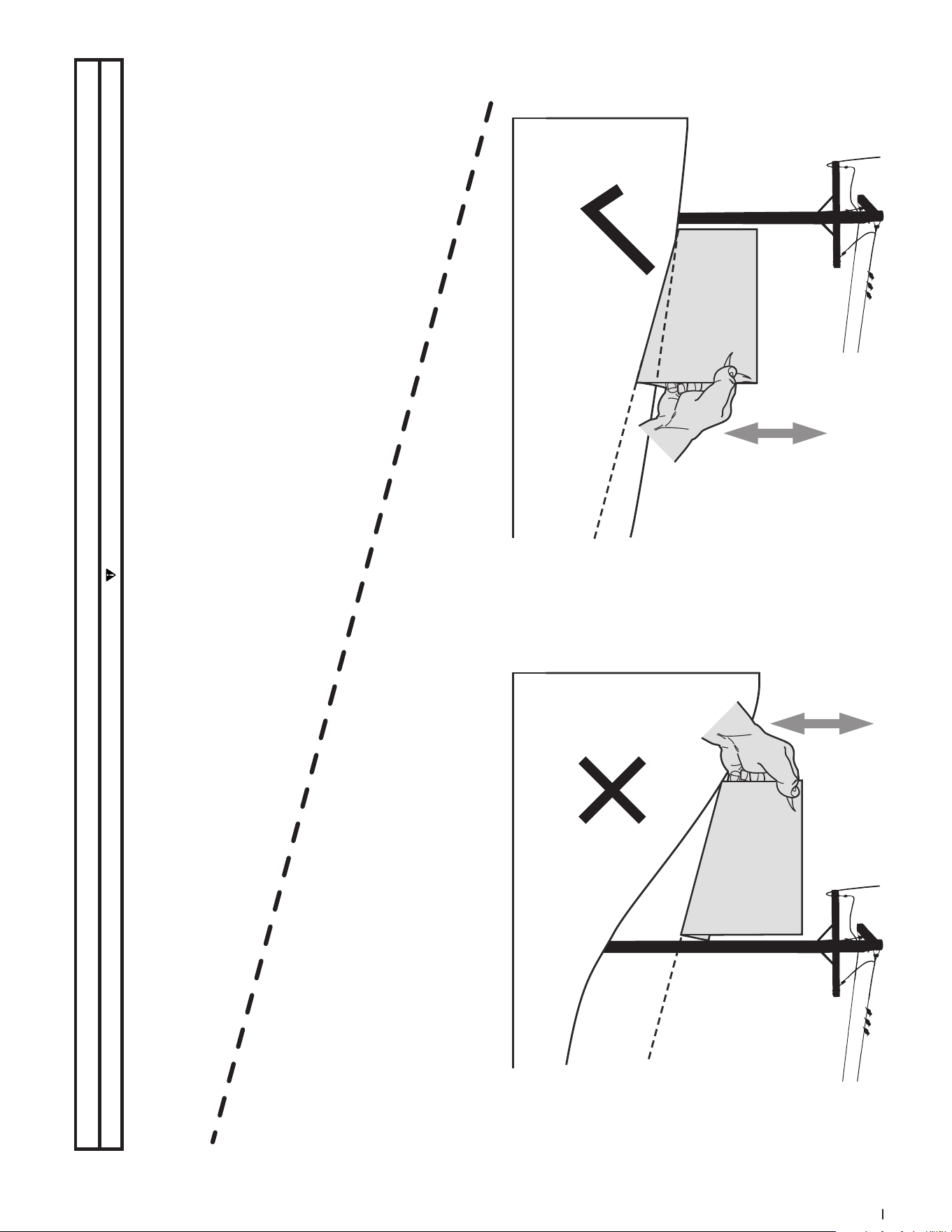
(OK) (TOO STEEP)
USE THIS SLOPE GAUGE TO DETERMINE
IF A SLOPE IS TOO STEEP FOR SAFE OPERATION!
To check the slope, proceed as follows:
1. Remove this page and fold along the dashed line.
2. Locate a vertical object on or behind the slope (e.g. a pole, building, fence, tree, etc.)
3. Align either side of the slope gauge with the object (See Figure 1 and Figure 2 ).
4. Adjust gauge up or down until the left corner touches the slope (See Figure 1 and Figure 2).
5. If there is a gap below the gauge, the slope is too steep for safe operation (See Figure 2 above).
15°/25% dashed line
Slope Gauge
Figure 2Figure 1
15°/25% Slope
15°/25%
Slope
WARNING
DO not operate your tractor on such slopes. Do not mow on inclines with a slope in excess of 15° (25%). A tractor could overturn and cause serious injury. Mow across slopes, not up and down.
Assembly & Set-Up
2
8
Thank you for purchasing this product. It was carefully engineered to provide
excellent performance when properly operated and maintained.
Please read this entire manual prior to operating the equipment. It instructs you
how to safely and easily set up, operate and maintain your machine. Please be
sure that you, and any other persons who will operate the machine, carefully
follow the recommended safety practices at all times. Failure to do so could
result in personal injury or property damage.
All information in this manual is relative to the most recent product information
available at the time. Review this manual frequently to familiarize yourself with the
machine, its features and operation. Please be aware that this Operator’s Manual
may cover a range of product specifications for various models. Characteristics
and features discussed and/or illustrated in this manual may not be applicable to
all models. We reserve the right to change product specifications, designs and
equipment without notice and without incurring obligation.
If applicable, the power testing information used to establish the power rating of
the engine equipped on this machine can be found at www.opei.org or the engine
manufacturer’s web site.
If you have any problems or questions concerning the machine, phone your
local authorized service dealer or contact us directly. We want to ensure your
complete satisfaction at all times.
Throughout this manual, all references to right and left side of the machine are
observed from the operating position.
Thank You
Contents of Carton
• Zero-Turn Tractor (1) • Seat Tilt Knob Assembly & Hardware Pack (1) • Seat Mounting Hardware (1)
• Battery Installation Hardware (1) • Tractor Operator’s Manual (1) • Engine Operator’s Manual (1)
Note: This Operator’s Manual covers several
models. Tractor features may vary by model. Not
all features in this manual are applicable to all
tractor models and the tractor depicted may differ
from yours.
Note: All references in this manual to the left or
right side and front or back of the machine are
from the operating position only. Exceptions, if
any, will be specified.
Tractor Preparation
TOOLS NEEDED: Safety glasses, leather gloves,
wire cutters.
1. Remove the upper crating material from
the shipping pallet, and cut any bands or tie
straps securing the tractor to the pallet.
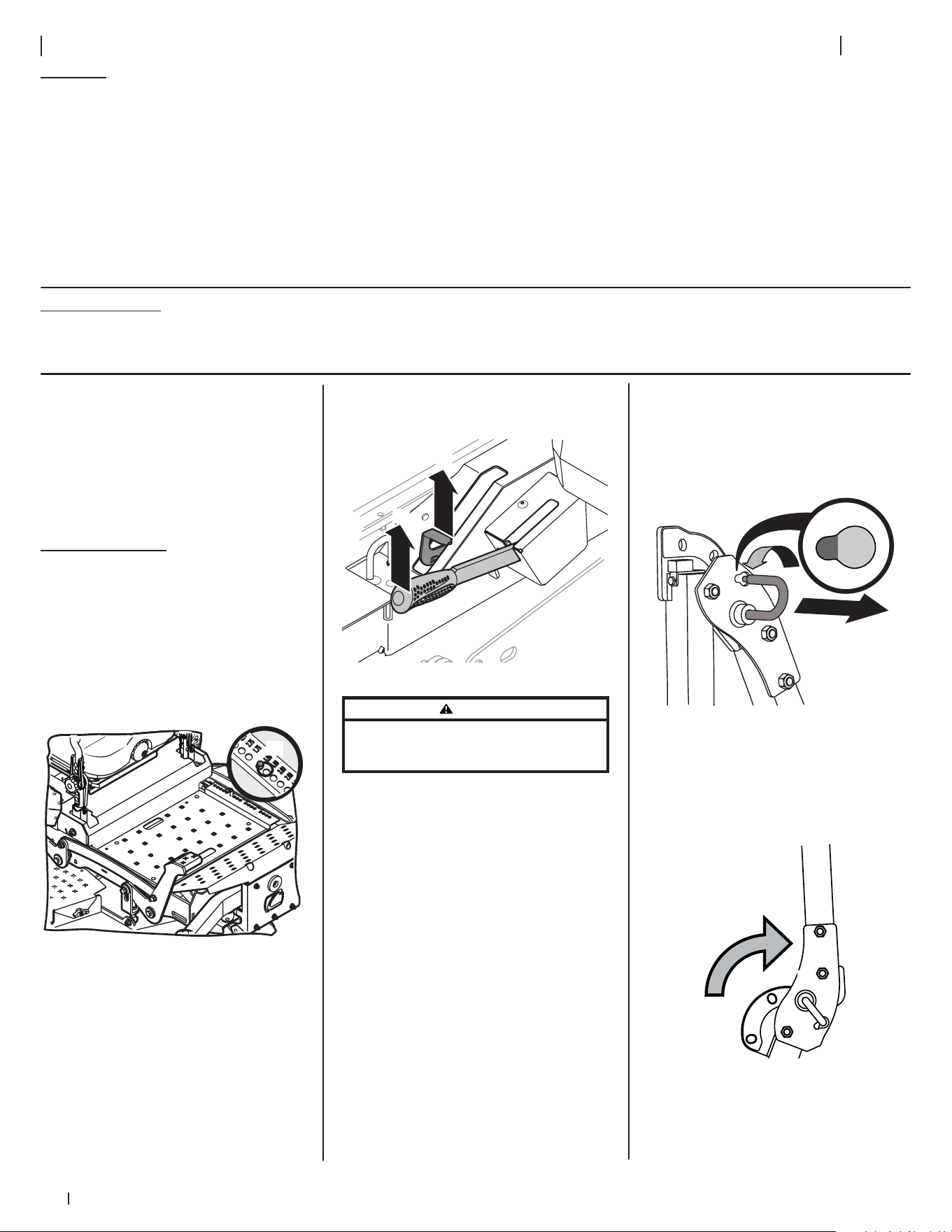
2. Use the deck lift pedal (a) to raise the deck
to its highest position and secure in place
with the clevis pin (b) attached to the
tractor. See Figure 2-1.
(a)
(b)
Figure 2-1
3. The two hydrostatic transmissions are
equipped with a bypass valve that will
allow you to manually move the tractor
short distances.
4. Engage the transmission bypass valves by
pulling the bypass lever (a) outward then
upward and all the way back. See Figure 2-2.
(a)
(b)
Figure 2-2
WARNING
Do not tow the tractor, even with the bypass valves
engaged. Serious transmission damage will result from
doing so.
5. Carefully roll the tractor off the
shipping pallet.
6. To release the bypass lever (a), push the
lever forward. See Figure 2-2.
7. To engage the parking brake, pull back
completely on the parking brake lever (b).
See Figure 2-2.
8. Cut any wire ties holding the chute deflector
up and discard any packing material.
Roll Over Protective System (ROPS)
1. Pull slightly up on the upper ROPS to relieve
any tension on the locking pin (a) and rotate
the locking pin (a) from the LOCKED (b)
position into the ADJUSTMENT (c) position.
See Figure 2-3. Repeat the procedure for the
locking pin on the opposite side.
(c)
(b)
(a)
Figure 2-3
2. When both locking pins are secured in the
ADJUSTMENT position, slowly lift and rotate
the upper ROPS from the TRANSPORT (a)
position, past the TRANSPORT WITH BAGGER
(b) position and into the OPERATION (c)
position. See Figure 2-4.
(a)
(b)
(c)
Figure 2-4
3. Rotate both locking pins into the LOCKED
position. Move the upper ROPS slightly until
the locking pins are fully engaged in the
LOCKED position.
9Section 2 — ASSembly & Set-Up
Adjusting Drive Control Levers
The RH and LH drive control levers can be adjusted
up or down and fore-and-aft for the comfort of
the operator. Proper drive control lever and seat
adjustment will result in the following:
In the neutral position with hands on the
control levers,
• Operator’s upper arms should be relaxed
and approximately vertical.
• Operator’s forearms should be
approximately horizontal.
In the full forward position,
• Operator’s back should stay in contact with
the seat back.
• Control levers should not contact
operator’s legs.
In the full reverse position,
• Control levers should not contact the
operator’s legs or torso.
Set the seat to the preferred operating position.
• Adjustment lever is located under the front
edge of the seat.
Check factory settings of control levers for the
conditions listed above.
Note: If control lever adjustments are required,
height adjustments should be made prior to
angular adjustments.
To adjust the height of the drive control levers:
1. Remove the flange lock nuts (a) that secure
the carriage bolts (b) in the drive control
levers. See Figure 2-5.
(a)
(b)
Figure 2-5
2. Remove the carriage bolts (b) from the drive
control levers and reposition to the second
set of holes in the mounting block. See
Figure 2-5.
3. Reinstall the carriage bolts (b) and flange
lock nuts (a), and tighten to 28-34 ft-lbs. See
Figure 2-5.
4. The same adjustments should be made to
both sides of the mower.
To adjust the front-to-rear angle of the drive
control levers:
1. Loosen the control lever knob (a) to unlock
the drive control levers. See Figure 2-6.
(a)
Figure 2-6
2. Move drive control levers to the desired
angle and retighten the drive control knob (a)
to secure the drive control levers in place.
3. Check the results of any adjustments to the
conditions described above. Repeat any
adjustment procedures as required until all
conditions are met.
Operator’s Seat
1. Remove the two flange lock nuts (b) and
shoulder bolts (a) from the manual bag. See
Figure 2-7.
(a)
(b)
(a)
(b)
Figure 2-7
2. Place the seat into position and secure the
seat into place with the hardware as shown in
Figure 2-7.
3. Remove the shoulder screw (a) and flange lock
nut (b) from manual bag and install the seat
lockout bracket (c) as shown in Figure 2-8.
(c)
(a)
(b)
Figure 2-8
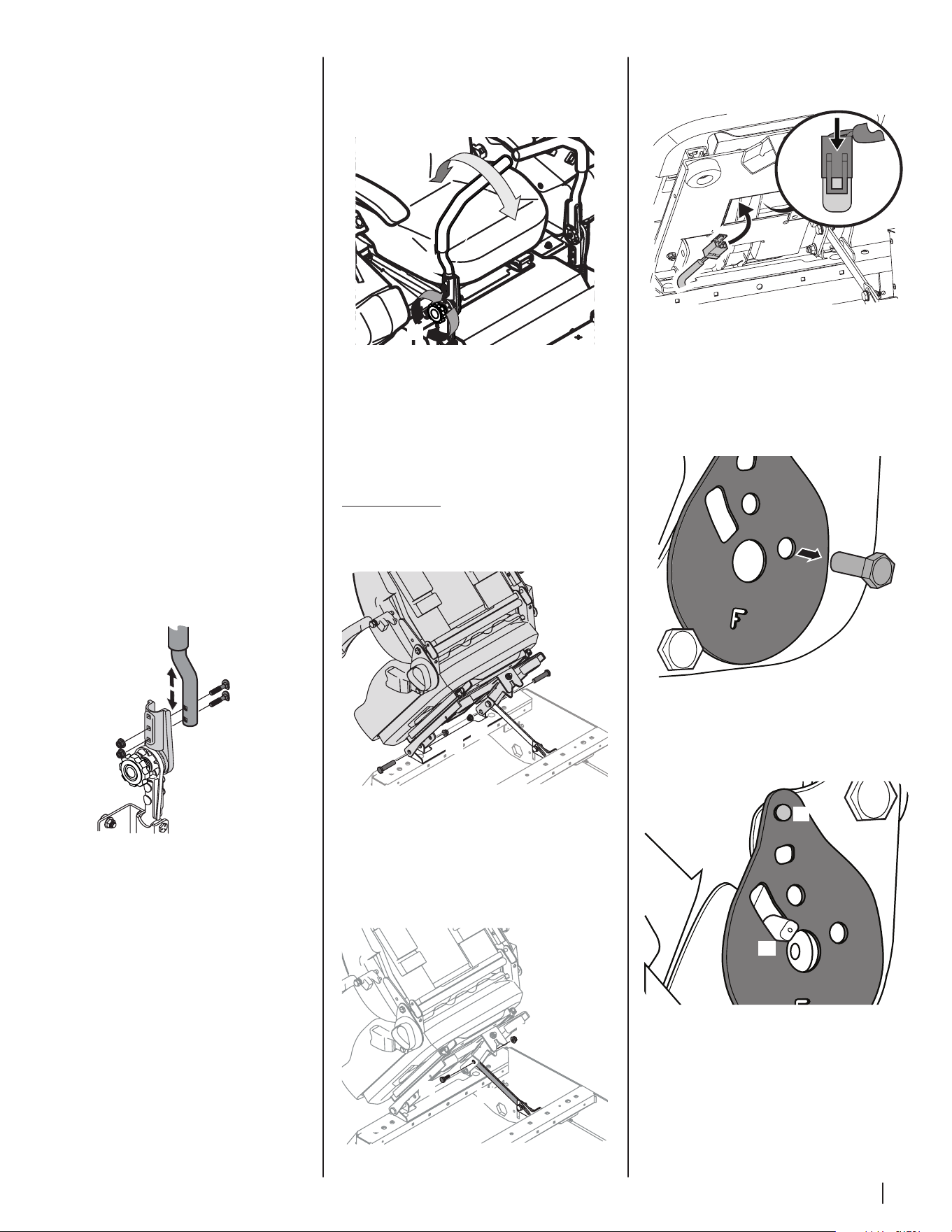
4. Insert the wiring harness (a) into the bottom
of the seat as shown in Figure 2-9.
(a)
(a)
Figure 2-9
Note: When the wiring harness (a) is
connected, be sure to push the excess wire
from the wire harness (a) into the seat box
hole before continuing.
5. Remove the screw (a) securing the recliner
plate in the seat back position. See Figure 2-10.
(a)
Figure 2-10
6. Tilt the seat forward into the full forward
position. Replace the recliner plate with
the clinch-stud (a) and the recliner pin (b)
passing through the recliner plate in the
locations shown in Figure 2-11.
(b)
(a)
Figure 2-11
10 Section 2 — ASSembly & Set-Up
7. Remove the seat tilt knob assembly from
the bag and install as shown in Figure 2-12.
(h)
(c)
(d)
(b)
(f)
(a)
(g)
(e)
Figure 2-12
Note: Be sure to orient the recliner plate
(a) and install the plastic washer (b), spring
washer (c) and metal washer (d) as shown
in Figure 2-12. The plastic washer is on
the inside.
8. Slide the recliner bearing plate (a) onto the
recliner pin (e). Refer to Figure 2-12.
9. Then align the spiral (a) on the inside of the
recliner knob with the recliner pin. Make
sure the hub on the back of the recliner sits
properly into the large holes of the side
plate. See Figure 2-13.
(a)
Figure 2-13
10. Use a wrench to hand tighten the hex screw
(g) until the recliner knob (f) is difficult to
turn. Refer to Figure 2-12.
Note: Do not use power tools to install.
11. Gradually loosen the hex screw (g) until the
recliner knob moves freely. Do not loosen
the hex screw (g) more than one full turn.
12. Securely install the 1/4” nut onto the clinch-
stud (h) and rotate the recliner knob to
check the operation of the seat.
Seat Adjustment
Proper steering column and seat adjustment will
result in the following (to adjust the seat see below):
In the neutral position with hands on the steering
wheel,
• Operator’s upper arms should be relaxed
and approximately vertical.
• Operator’s forearms should be
approximately horizontal.
• Operator’s back should stay in contact with
the seat back.
• Steering column should not contact
operator’s legs.
Check the results of any adjustments to the
conditions described above. Repeat any
adjustment procedures as required until all
conditions are met.
This machine is equipped with an adjustable seat,
which includes a retractable seat belt assembly and
an Operator Presence Sensor (OPS). The OPS, in the
form of a switch, is integrated into the seat bottom
and is connected to the machine electrical system.
The OPS must be connected to the electrical
wiring harness.
The seat can be adjusted forward and backward,
the armrests can be adjusted up and down (700
and 900 series), the mechanical suspension
mechanism weight/ride adjustment controls
can be adjusted for weights between 125- and
275-pounds (500 and 700 series) or air ride
adjustment (900 series), a lumbar support
can be adjusted and the seat can tilt forward
and backward.
Note: The seat base must be secured by the latch,
otherwise, the seat assembly could tilt forward.
To move the seat forward or back, locate the seat
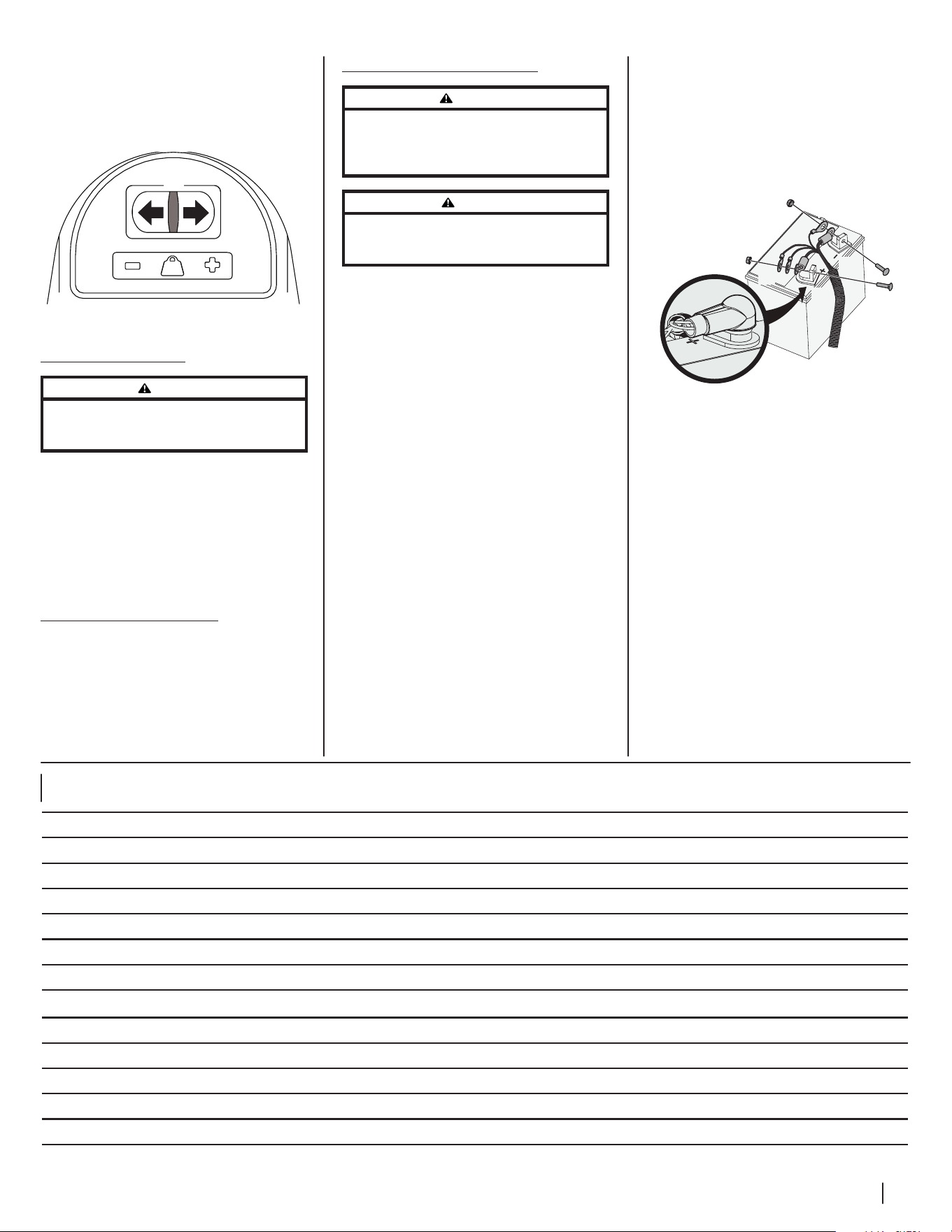
adjustment rod under the seat. Push the rod (a)
to the left, slide the seat forward or back into the
desired position and release the rod (a) when the
seat is in the desired position. See Figure 2-14.
(a)
Figure 2-14
The seat tilt is controlled by the knob on the left
of the seat. Turn the knob rearward to tilt the
seat back, turn the knob forward to tilt the seat
forward. See Figure 2-15.
Figure 2-15
The mechanical suspension mechanism (500 and
700 series) incorporates weight/ride adjustment
controls for operators in the 125 to 275 lb. weight
range. Turn the knob on the front of the seat
clockwise to increase the weight capacity and
counter-clockwise to decrease. See Figure 2-16.
Figure 2-16
To vary the lumbar support (700 and 900 series)
move the lever on the right of the seat up and
down. See Figure 2-17.
Figure 2-17
To adjust the height of the arm rests (700 and 900
series), lift the arm rest and rotate the knob under
the arm rest right or left to increase or decrease the
height. See Figure 2-18.
Figure 2-18
11Section 2 — ASSembly & Set-Up
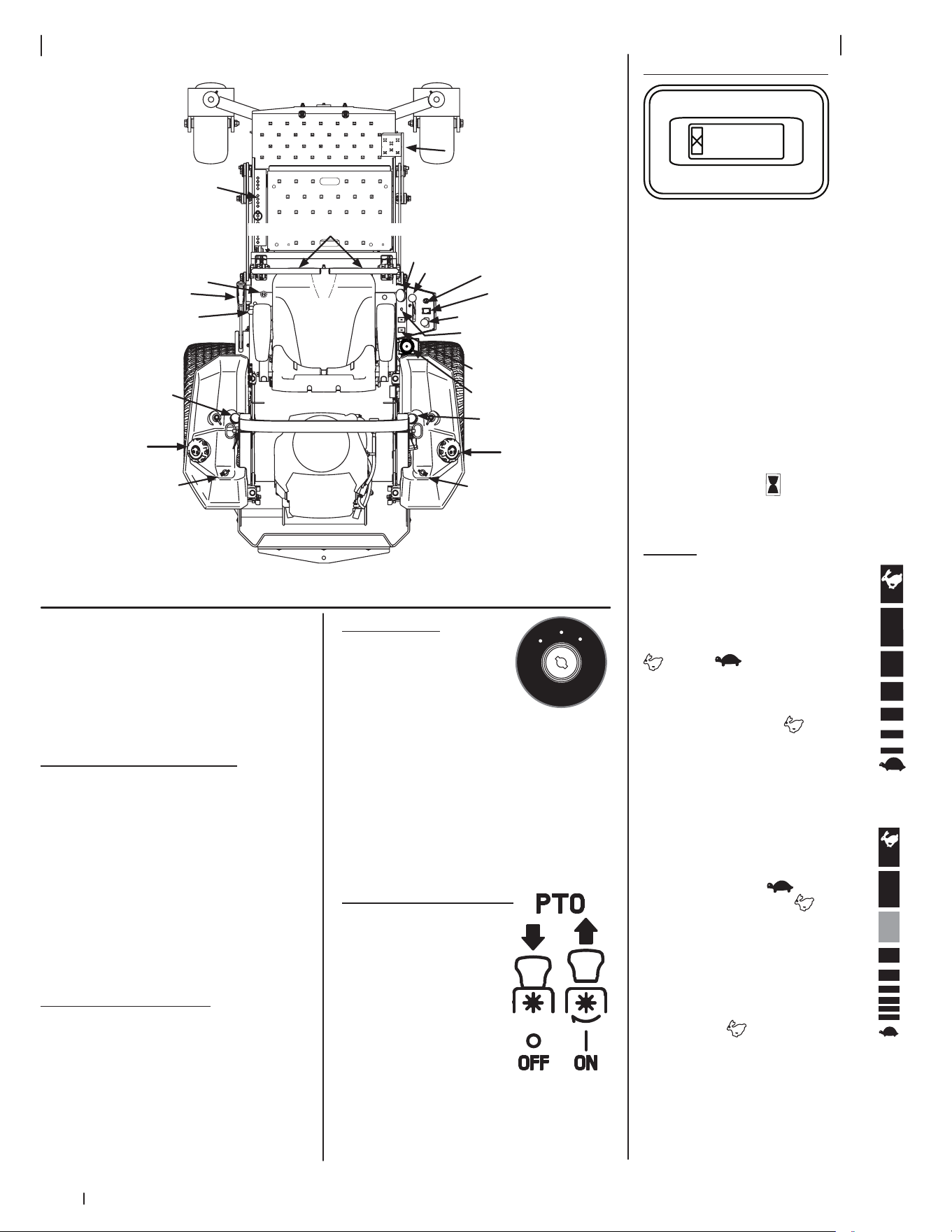
The air ride (900 series) can be adjusted up or
down using the height adjustment lever on the
front of the seat. Press the lever to the left (+) to
raise the height of seat and to the right (-) to lower
the height of the seat. See Figure 2-19.
(a)
Figure 2-19
Checking Tire Pressure
WARNING
Maximum tire pressure under any circumstances is 12 psi
on rear tires and 25 psi on front tires. Equal tire pressure
should be maintained at all times.
Inflation Pressure
Rear Tires — 10-12 psi max
Front Tires — 20-25 psi max
The tires on your tractor may be over-inflated for
shipping purposes. Reduce the tire pressure before
operating the tractor. Recommended operating
tire pressure is 10-12 psi on rear tires and 20-25 psi
on front tires.
Lubrication & Grease Points
Before operating the tractor, refer to the
Product Care section of this manual to check the
lubrication and grease points. Grease and lubricate
if necessary.
Connecting the Battery Cables
WARNING
California PROPOSITION 65: Battery posts, terminals,
and related accessories contain lead and lead compounds,
chemicals known to the State of California to cause cancer
and reproductive harm. Wash hands after handling.
CAUTION
When attaching battery cables, always connect the
POSITIVE (Red) wire to its terminal first, followed by the
NEGATIVE (Black) wire.
For shipping reasons, both battery cables on your
equipment may have been left disconnected from
the terminals at the factory. To connect the battery
cables, proceed as follows:
1. Using the lever on the back of the seat frame, lift
up on the lever and tilt the seat forward locking
it in place with the seat prop. Remove the bolts
and hex nuts from the manual bag.
Note: The positive battery terminal is
marked POS. (+) (a). The negative battery
terminal is marked NEG. (–) (b). See
Figure 2-20.
Note: If the positive cable grouping (c) is
already attached, skip ahead to Step 6. See
Figure 2-20.
2. Locate the cables routed through the
conduit along the inward facing side of
the battery and separate the positive and
negative groupings (each group will be
zip-tied together).
3. Slide the red boot (d), if present, back along
the positive cable grouping. See Figure 2-20.
4. Attach the positive cable grouping (c)
and positive cable for the 12V outlet (if
equipped) to the positive battery terminal
(a) with the bolt (e) and sems nut (f). See
Figure 2-20.
Note: Place the thickest cable closest to the
battery terminal.
(f)
(e)
(e)
(f)
(g)
(d) (a)
(c)
(b)
Figure 2-20
5. Position the red boot (d) over the positive
battery terminal (a) to insulate it and help
protect it from corrosion. See Figure 2-20.
6. Attach the negative cable grouping (g)
and negative cable for the 12V outlet (if
equipped) to the negative battery terminal
(b) with the bolt (e) and sems nut (f). See
Figure 2-20.
Note: Place the thickest cable closest to the
battery terminal.
Note: If the battery is put into service after
the date shown on top/side of battery,
charge the battery prior to operating
the machine.
Notes
Controls & Operation
3
12
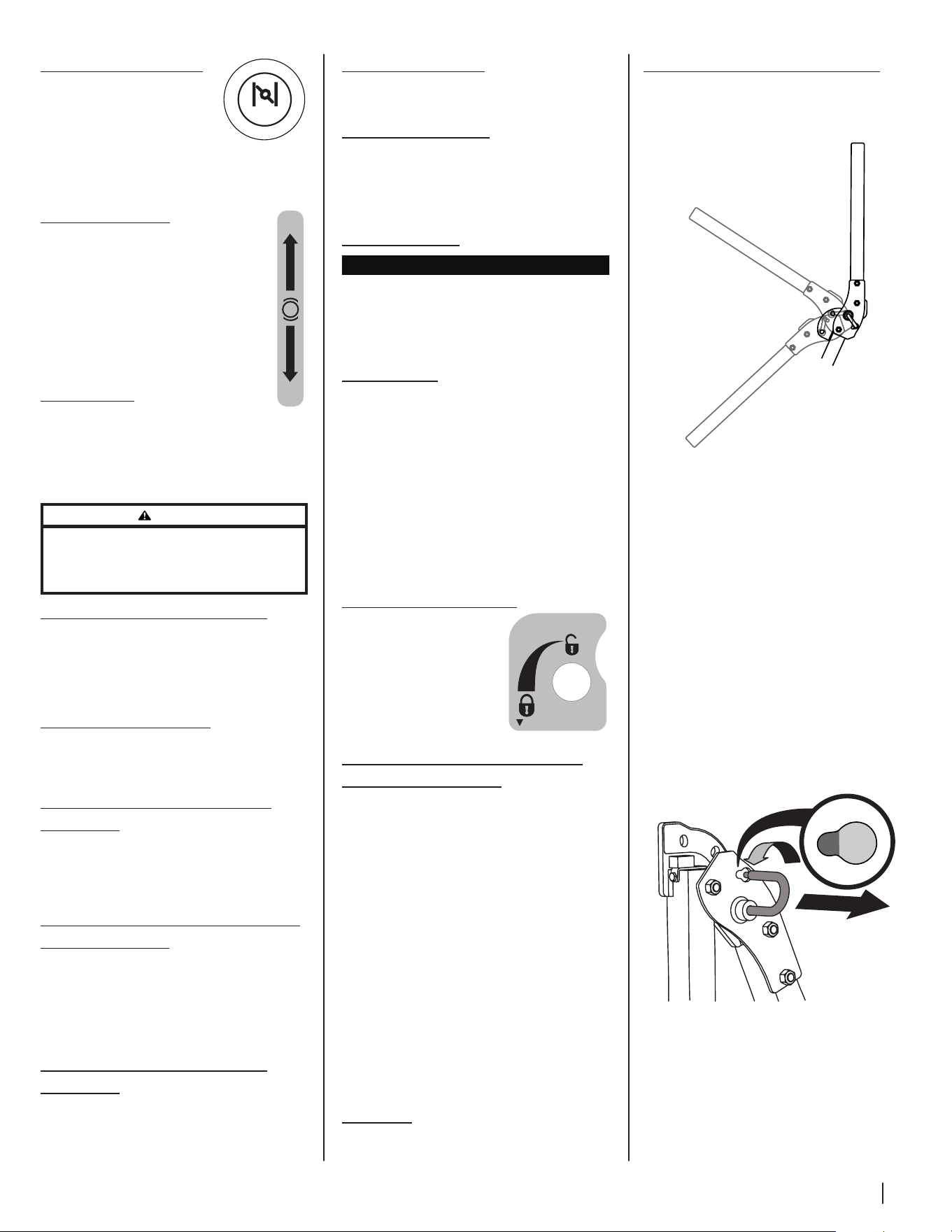
† — If equipped
Choke †
Deck Lift Pedal
Deck Height Index
Parking Brake Lever
Hydrostatic
Bypass Lever
Fuel Gauge †
Fuel Tank Cap
Fuel Tank Cap
Fuel Gauge †
Fuel Gauge †
Throttle †
Ignition
Hour Meter &
Service Minder
PTO Switch
Power Bagger Assist
Receptacle
Accessory Switch
Receptacles
Fuel Valve
Fuel Valve
RH & LH Drive Control Levers
Cup Holder
Figure 3-1
Note: All references in this manual to the left or
right side and front or back of the machine are
from the operating position only. Exceptions, if
any, will be specified.
Note: This Operator’s Manual covers several models.
Tractor features may vary by model. Not all features
in this manual are applicable to all tractor models and
the tractor depicted may differ from yours.
RH and LH Drive Control Levers
The RH and LH control levers are located on
each side of the operator’s seat. These hinged
levers pivot outward to open space to permit
the operator to either sit in the tractor seat, or
to dismount the tractor. The levers must be fully
opened out and in the neutral position to start the
tractor engine.
Each lever controls the respective RH or LH
transmission. These levers control all of the
movements of the tractor. Driving and steering
utilizing these control levers is quite different
from conventional tractors, and will take some
practice to master. Refer to Driving the Tractor for
instructions on using the control levers.
Transmission Bypass Lever
The transmission bypass lever is located next to
the LH console to the left of the operator’s seat.
When engaged the valves open a bypass within
the hydrostatic transmissions. Refer to the
Assembly & Set-Up section for instructions on
using the bypass feature.
Ignition Switch
The ignition switch is located
on the RH console to the rear of
the throttle control. The ignition
switch has three positions
as follows:
OFF — The engine and electrical system are
turned off.
ON — The tractor electrical system is energized.
START — The starter motor will turn over the
engine. Release the key immediately when the
engine starts.
Note: To prevent accidental starting and/or battery
discharge, remove the key from the ignition switch
when the tractor is not in use.
Power Take-Off (PTO) Knob
The PTO knob is located on the
RH console to the right of the
operator’s seat.
The PTO knob operates the
electric PTO clutch mounted
on the bottom of the engine
crankshaft. Pull the knob upward
to engage the PTO clutch, or
push the knob downward to
disengage the clutch.
The PTO knob must be in the
“OFF” position when starting the engine.
O
F
F
O
N
S
T
A
R
T
Hour Meter & Service Minder
0.0
The hour meter and service minder is located
on the RH console to the right of the operator’s
seat. It records the hours that the tractor has
been operated, engine speed (RPM), and service
reminders (oil, lube) in the digital display.
The hour meter and service minder is activated
whenever the ignition switch is turned to the
“ON” position. Keep a record of the actual hours
of operation to assure all maintenance procedures
are completed according to the instructions in
this Operator’s Manual and the Engine Operator’s
Manual. The hour meter and service minder is
equipped with a MODE button that can toggle
between available functions and can be used
to reset service alerts. Press and hold the MODE
button for three (3) seconds while in service alert
mode or when in a service alarm mode to reset.
Note: When the ignition key is out of the STOP
position the hourglass symbol is illuminated/
blinks to indicate it is recording the hours of
tractor operation, regardless of whether the
engine is started.
Throttle
Manual Throttle (If equipped)
The throttle control is located on the RH
console to the right of the operator’s seat.
When set in a given position, a uniform
engine speed will be maintained. The
throttle control moves between the fast
and slow positions.
Push the throttle control handle forward
to increase the engine speed. The tractor
is designed to operate with the throttle
control in the fast position (full throttle)
when the tractor is being driven and the
mower deck is engaged.
Pull the throttle control handle rearward to
decrease the engine speed.
Electronic Throttle (E-Governor) Knob (If equipped)
The electronic throttle (E-governor) knob
is used to control engine speed and RPM’s.
It also helps control fuel efficiency. The
electronic throttle knob can be rotated
between an ECONOMY mode and
a MAXIMUM PERFORMANCE mode.
The Economy mode is used for basic
transportation of the tractor with the PTO
disengaged and uses the least fuel. The
Maximum Performance mode should
be used when the PTO is engaged and
uses the most fuel. The tractor should
be started in the STARTING POSITION,
but should always be in the MAXIMUM
PERFORMANCE mode when the PTO/
deck is being used. The tractor will run in
any position between the two modes, but
mowing quality may suffer if mowing is done at
less than MAXIMUM PERFORMANCE.
F A S T
S L O W
F A S T
SLOW
START
13Section 3 — controlS & operation
Choke Knob (If equipped)
The choke knob is located on the
left side of the mower next to
the operator’s seat. Pull the knob
out to choke the engine; push
the knob in/down to open the
choke. Having the choke in the “ON” position helps
the engine to start during initial start-up. During
normal operation the choke should be “OFF”.
Parking Brake Lever
The parking brake lever is located to the
left of the operator’s seat. When pulled up
it engages the parking brake and when
pushed down it releases the brake.
Note: If the forward or reverse drive pedal
is engaged when engaging the parking
brake, the engine will stop. The parking
brake must be placed in the engaged
position when starting the engine.
Fuel Tank Caps
The fuel tank caps are located on the top of
the fuel tank on the left and right side of the seat.
Turn the fill cap counter-clockwise to remove and
clockwise until it clicks three times to tighten. Always
re-install the fuel cap tightly onto the fuel tank
after removing.
WARNING
Never fill the fuel tank when the engine is running. If
the engine is hot from recently running, allow to cool
for several minutes before refueling. Highly flammable
gasoline could splash onto the engine and cause a fire.
Seat Adjustment Lever (Not shown)
The seat adjustment lever is located below
the front/right of the seat. The lever allows for
adjustment forward or rearward of the operator’s
seat. Refer to the Assembly & Set-Up section for
instructions on adjusting the seat position.
Seat Tilt Knob (Not shown)
The seat tilt knob is located on the left side of the
seat. Refer to the Assembly & Set-Up section for
instructions on adjusting the seat tilt.
Arm Rest Height Knobs (Not shown,
If equipped)
The arm height knobs are located under the seat
arms and can be used to adjust the height of the
arm rests. Refer to the Assembly & Set-Up section
for instructions on adjusting the arm rest position.
Mechanical Suspension Mechanism (Not
shown, if equipped)
The mechanical suspension mechanism is located
on the front of the seat and can adjust the weight/
ride adjustment for operators in the 125- to
275-pound weight range. Refer to the Assembly
& Set-Up section for instructions on adjusting the
mechanical suspension mechanism.
Lumbar Support Lever (Not shown,
if equipped)
The lumbar support lever is located on the right
side of the seat on the seat back. Refer to the
Assembly & Set-Up section for instructions on
adjusting the lumbar support.
CHOKE
ON
OFF
P
Seat Prop (Not shown)
The seat prop is located on the left, rear side of the
operator’s seat. It is used to prop the seat forward.
Seat Latch (Not shown)
The seat latch is located below the rear, center
of the operator’s seat. The latch is used to secure
the seat into the operating position. Lift the latch
and tilt the seat forward to access the area under
the seat.
Deck Height Index
4.50"
3.
5
0"
2.50"
1.
5
0"
4.75"
3.75"
2.75
"
1.75"
5
"
4
"
3"
2"
1"
3.25"
4.25"
2.25
"
1.2
5
"
The deck height index consists of several holes
located on the left of the foot platform. Each hole
corresponds to a 1/4” change in the deck height
position ranging from 1” at the lowest notch to 5”
at the highest notch.
Deck Lift Pedal
The deck lift pedal is located on the right front
corner of the foot platform, and is used to raise
and lower the mowing deck.
To raise the mowing deck to the transport
position, push the pedal all the way forward until
the deck transportation lock snaps into position.
To remove the deck from the transport position
push forward on the deck lift pedal and pull up on
the deck lock rod. To position the deck push the
pedal all the way forward, remove the clevis pin,
reinsert it in the desired cutting height and slowly
release pressure on the pedal until you reach the
clevis pin.
Transport Lock (Not shown)
The transport lock is located
on the left side of the
operator’s seat and is used to
lock the deck in the transport
position. Press down on the
deck lift pedal and lift up on
the deck lift release lever to
release the deck.
Transmission Oil Expansion Reservoir
(Not shown, if equipped)
The 500 series is not equipped with a transmission
oil expansion reservoir, the 700 and 900 series
are equipped with the transmission oil expansion
reservoir. The transmission oil expansion
reservoir is connected by hoses to the RH and LH
transmission assemblies, and is located under the
seat. The function of the reservoir is to hold the
natural expansion of transmission oil that occurs as
the transmission warms up during operation. DO
NOT FILL THE RESERVOIR.
Under normal operating conditions, no oil should
be added to the reservoir. The COLD oil level
should be approximately 1/4” above the bottom of
the reservoir.
Note: Prior to the initial operation of the tractor,
the oil level in the reservoir may be slightly higher
than the maximum due to air in the oil lines.
Operation of the tractor will eventually purge the
air from the lines and the oil level will settle to
the maximum.
Cup Holder
The cup holder is located between the fuel tank
and the control panel to the right of the seat.
TRANSPORT FLOAT
LOCK TRANSPORT
Roll Over Protective Structure (ROPS)
ROPS Positions
Refer to Figure 3-2 and the following descriptions
and uses for the three (3) positions for the ROPS.
Transport Position
Transport with
Bagger Position
Operation Position
Figure 3-2
• TRANSPORT: Only to be used when
transporting the tractor or when they need
to be momentarily folded-down to avoid
contact with items such as tree limbs, clothes
lines, guy wires, utility poles, buildings, etc.
• TRANSPORT WITH BAGGER: Allows for the
ROPS to be lowered for situations outlined
for the TRANSPORT position when the tractor
is equipped with a bagger.
• OPERATION: The ROPS should always be
in this position when operating unless
the situations involved outlined in the
TRANSPORT and TRANSPORT WITH BAGGER
descriptions arise.
1. To change the position of the ROPS, pull
slightly up/push forward on the upper ROPS
to relieve any tension on the locking pin
(a) and rotate the locking pin (a) from the
LOCKED (b) position into the ADJUSTMENT
(c) position. Repeat the procedure for
the locking pin on the opposite side. See
Figure 3-3.
(c)
(b)
(a)
Figure 3-3
2. Move the ROPS into the desired position.
The three positions are TRANSPORT position,
TRANSPORT WITH BAGGER position and
OPERATION position. See Figure 3-2.
3. Rotate both locking pins into the LOCKED
position. Move the upper ROPS slightly until
the locking pins are fully engaged in the
LOCKED position.
14 Section 3 — controlS & operation
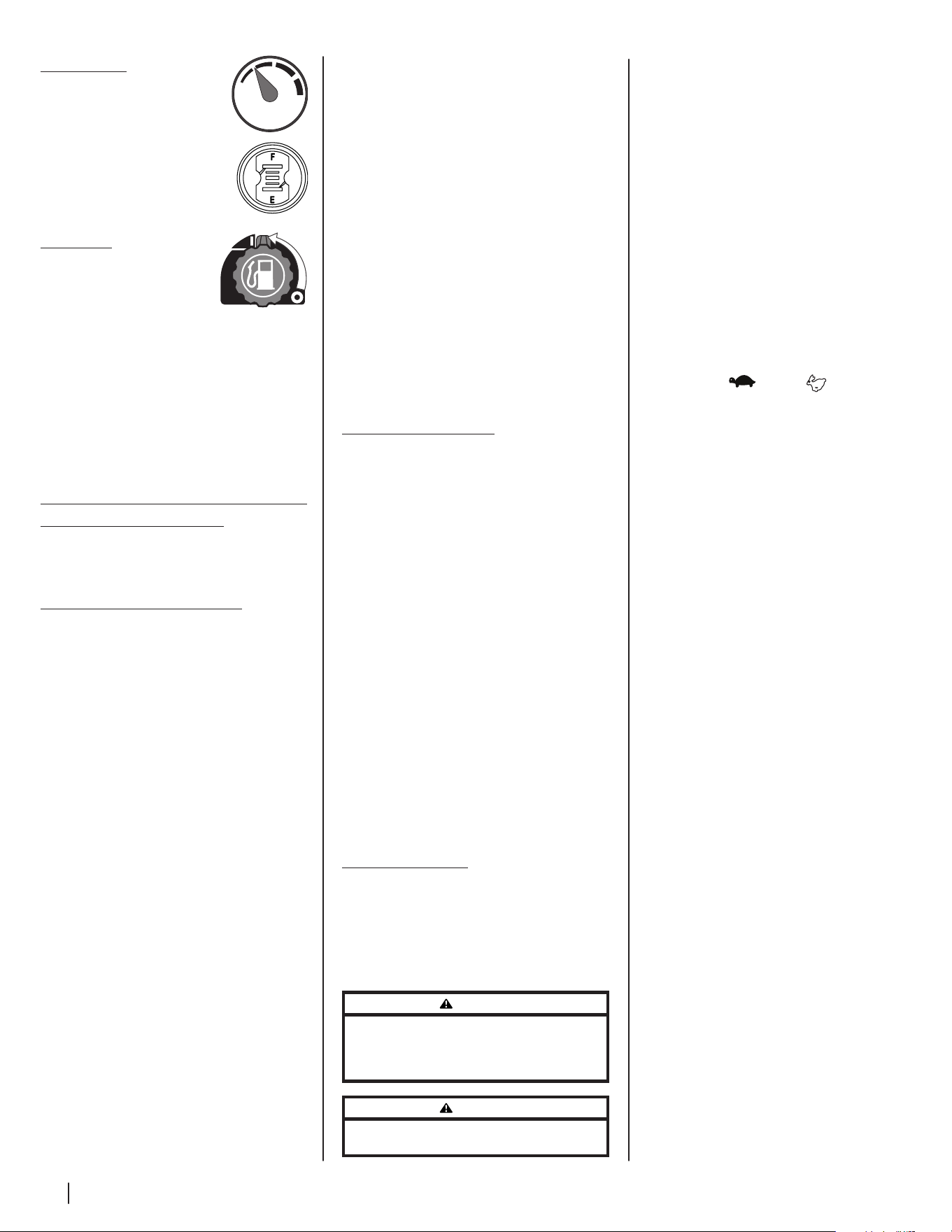
Fuel Gauge(s)
There is a fuel gauge on top of each
of the two fuel tanks or a single
gauge to the right of the operator’s
seat on the RH console. The gauges
measure the fuel level in each tank.
Fuel Valves
The fuel valves are located near
the rear of each fuel tank. The
valve controls the fuel flow from
the right and left tank and also
can shut off fuel flow to the engine. Rotate the
valve counter-clockwise to open the flow from the
tank(s). Rotate the valve clockwise to stop the flow
from the tank(s). The fuel tanks can be operated
together, independently or shut the fuel flow off
completely.
Note: If both tanks are on, and one is empty the
engine will not start. Be certain to make sure both
tanks have fuel or that the empty tank’s fuel valve
is closed.
Accessory Switch/Power Bagger Assist/12
Volt Accessories Receptacles
The receptacles for optional accessories are on the
RH console. See the Attachments & Accessories
section for information.
Before Operating Your Machine
1. Before you operate the tractor, study this
manual carefully to familiarize yourself
with the operation of all the instruments
and controls. It has been prepared to
help you operate and maintain your
machine efficiently.
2. Fill the fuel tank with only clean, fresh,
unleaded gasoline with a pump sticker
octane rating of 87 or higher. When the fuel
reaches 1/2” below the bottom of the fill
neck, stop. DO NOT OVERFILL. Space must
be left for expansion.
3. Never use gasoline containing more than
10% ethanol or methanol.
4. Check the engine oil level as instructed in
the Engine Operator’s manual.
5. Check the transmission oil level. The
transmission oil expansion reservoir is
located beneath the operator’s seat. Always
wipe off the area around the reservoir fill
neck before checking the oil level to prevent
dirt from contaminating the oil. Remove the
cap and make sure the oil level is 1/4” above
the bottom of the reservoir. If the oil level is
low, fill with Castrol™ (Syntec®) Edge™.
6. Check the tire inflation pressures. 10-12 psi
for the rear tires, 20-25 psi for the front tires.
Note: New tires are over-inflated in order to
properly seat the bead to the rim.
7. Check that all nuts, bolts and screws are tight.
8. Check the tension of the deck drive belts.
a. Remove the deck cover.
b. The tension of the deck drive belts are
maintained by a spring mechanism
that adjusts for wear and stretch.
c. Examine the belts for cuts, fraying,
and excessive wear. Replace if any of
these are detected.
d. Replace the deck cover.
9. Check if deck is level. When correctly
adjusted the mower deck should be level
side to side, and the front of the deck should
be approximately 1/4” lower than the rear
of deck. If deck needs to be leveled, refer to
the Product Care section.
10. Lubricate all pivot points listed in the
Product Care section.
11. Adjust the seat for operator’s maximum
comfort, visibility and for maintaining
complete control of the machine. Refer
to the Assembly & Set-Up section for
instructions on adjusting the seat.
Safety Interlock System
This machine is equipped with a safety interlock
system for the protection of the operator. If the
interlock system should ever malfunction, do not
operate the machine. Contact your authorized
service dealer.
• The safety interlock system will prevent the
engine from cranking or starting unless the
RH and LH drive control levers are moved fully
outward in the neutral position, the parking
brake is engaged and the PTO is disengaged.
• To avoid sudden movement when
disengaging the parking brake, the safety
interlock system will shut off the engine if
the RH and/or LH drive control levers are
moved to a position other than fully out in
the neutral position when the parking brake
is engaged.
• The safety interlock system will shut off the
engine if the operator leaves the seat before
engaging the parking brake.
• The safety interlock system will shut off the
engine if the operator leaves the seat with
the PTO engaged, regardless of whether the
parking brake is engaged.
Note: The PTO must be disengaged to restart
the engine.
Starting the Engine
For throttle/choke or throttle/automatic EFI
engines proceed below, for electronic throttle/EFI
engines, skip ahead to the Electronic Throttle/EFI
(Electronic Fuel Injection) Engines section.
Manual Throttle/Choke or Throttle/Automatic EFI
(Electronic Fuel Injection) Engines
WARNING
This machine is equipped with a safety interlock system designed
for protection of the operator. Do not operate the machine if any
part of the interlock system is malfunctioning. Periodically check
the functions of the interlock system for proper operation.
WARNING
For personal safety, the operator must be sitting in the
tractor seat when starting the engine.
1. Open the fuel valve(s).
Note: If both tanks are on, and one is empty
the engine will not start. Be certain to make
sure both tanks have fuel or that the empty
tank’s fuel valve is closed.
2. Operator must be sitting in the tractor seat
with both drive control levers in the neutral/
start position.
3. Engage the parking brake.
4. Make certain the PTO is in the disengaged
(down) position.
5. Lift the choke knob (if equipped) into the
ON position.
Note: If the engine is warmed up, it may not
be necessary to choke the engine.
Note: Some tractors are equipped with EFI
(Electronic Fuel Injection) engines and are
not equipped with a choke.
6. Move the throttle control to midway between
the SLOW and FAST positions.
7. Turn the ignition key clockwise to the START
position and release it as soon as the engine
starts; however, do not crank the engine
continuously for more than 10 seconds at a
time. If the engine does not start within this
time, turn the key to OFF and wait at least 30
seconds to allow the engine’s starter motor
to cool. Try again after waiting. If after a few
attempts the engine fails to start, do not
keep trying to start it with the choke closed
as this will cause flooding and make starting
more difficult.
8. Once the engine starts, push the choke (if
equipped) halfway down and as the engine
warms, push the choke (if equipped) all the
way down.
Electronic Throttle(E-Governor)/EFI (Electronic
Fuel Injection) Engines
1. Open the fuel valve(s).
Note: If both tanks are on, and one is empty
the engine will not start. Be certain to make
sure both tanks have fuel or that the empty
tank’s fuel valve is closed.
Note: To prime a dry fuel system, turn the
ignition switch to the ON position for one
minute. Allow the fuel pump to cycle and
prime the system. Turn the ignition switch
to the OFF position.
2. Operator must be sitting in the tractor seat
with both drive control levers in the neutral/
start position.
3. Engage the parking brake.
4. Make certain the PTO is in the disengaged
(down) position.
5. Place the Electronic Throttle knob in the
START position.
6. Turn the ignition key clockwise to the START
position and release it as soon as the engine
starts; however, do not crank the engine
continuously for more than 10 seconds at a
time. If the engine does not start within this
time, turn the key to OFF and wait at least 60
seconds to allow the engine’s starter motor
to cool. Try again after waiting.
Note: Failure to follow these guidelines can
burn out the starter motor.
Note: Upon start-up, a metallic ticking
may occur. Run engine for five minutes. If
the noise continues, run the engine at the
starting position for 20 minutes. If the noise
persists, take the tractor to your authorized
service dealer.
15Section 3 — controlS & operation
Cold Weather Starting
When starting the engine at temperatures near or
below freezing, ensure the correct viscosity motor
oil is used in the engine and the battery is fully
charged. Start the engine as follows:
1. Be sure the battery is in good condition.
A warm battery has much more starting
capacity than a cold battery.
2. Use fresh winter grade fuel. Winter grade
gasoline has higher volatility to improve
starting. Do not use gasoline left over
from summer.
3. Follow the previous instruction for Starting
the Engine.
Using Jumper Cables to Start Engine
WARNING
Batteries contain sulfuric acid and produce explosive gases.
Make certain the area is well ventilated, wear gloves and eye
protection, and avoid sparks or flames near the battery.
If the battery charge is not sufficient to crank the
engine, recharge the battery. If a battery charger
is unavailable and the tractor must be started, the
aid of a booster battery will be necessary. Connect
the booster battery as follows:
1. Connect the end of one cable to the
disabled tractor battery’s positive terminal;
then connect the other end of that cable to
the booster battery’s positive terminal.
2. Connect one end of the other cable to the
booster battery’s negative terminal; then
connect the other end of that cable to the
frame of the disabled tractor, as far from the
battery as possible.
3. Start the disabled tractor following the
normal starting instructions previously
provided; then disconnect the jumper cables
in the exact reverse order of their connection.
4. Have the tractor’s electrical system checked
and repaired as soon as possible to
eliminate the need for jump starting.
Stopping the Engine
1. Disengage the PTO.
2. Move the RH and LH drive control levers
fully outward in the neutral position.
3. Engage the parking brake.
4. Move the throttle to the SLOW
position and allow the engine to idle for
about one minute.
5. Turn the ignition key to the OFF position and
remove the key from the ignition switch.
Note: Always remove the key from the
ignition switch to prevent accidental
starting or battery discharge if the
equipment is left unattended.
6. Close the fuel shut-off valve(s).
Practice Operation (Initial Use)
Operating a zero-turn tractor is not like operating
a conventional type riding tractor. Although and
because a zero-turn tractor is more maneuverable,
getting used to operating the speed control
pedals and the control levers takes some practice.
It is strongly recommended that you locate a
reasonably large, level and open “practice area”
where there are no obstructions, pedestrians, or
animals. You should practice operating the tractor
for a minimum of 30 minutes.
Carefully move (or have moved) the tractor to
the practice area. When performing the practice
session, the PTO knob should not be engaged. While
practicing, operate the tractor at approximately 1⁄2-3⁄4
throttle and at less than full speed in both forward
and reverse.
Always wear appropriate clothing and personal
protection equipment (e.g. safety glasses,
long pants, gloves, hearing protection, safety
shoes, hard hat) when operating or maintaining
this machine. Follow all federal, state and
local guidelines regarding the use of personal
protective equipment.
WARNING
Hearing protection is required for all operator exposure
exceeding two (2) hours.
Carefully practice maneuvering the machine using
the instructions in the Driving the Tractor section.
Practice until you are confident that you can safely
operate the tractor.
Driving the Tractor
WARNING
Avoid sudden starts, excessive speed, and sudden stops.
1. Turn on the fuel valve(s).
Note: If both tanks are on, and one is empty
the engine will not start. Be certain to make
sure both tanks have fuel or that the empty
tank’s fuel valve is closed.
2. Adjust the operator’s seat to the most
comfortable position that allows you to
operate the controls. Refer to the Assembly &
Set-Up section for instructions on adjusting
the seat.
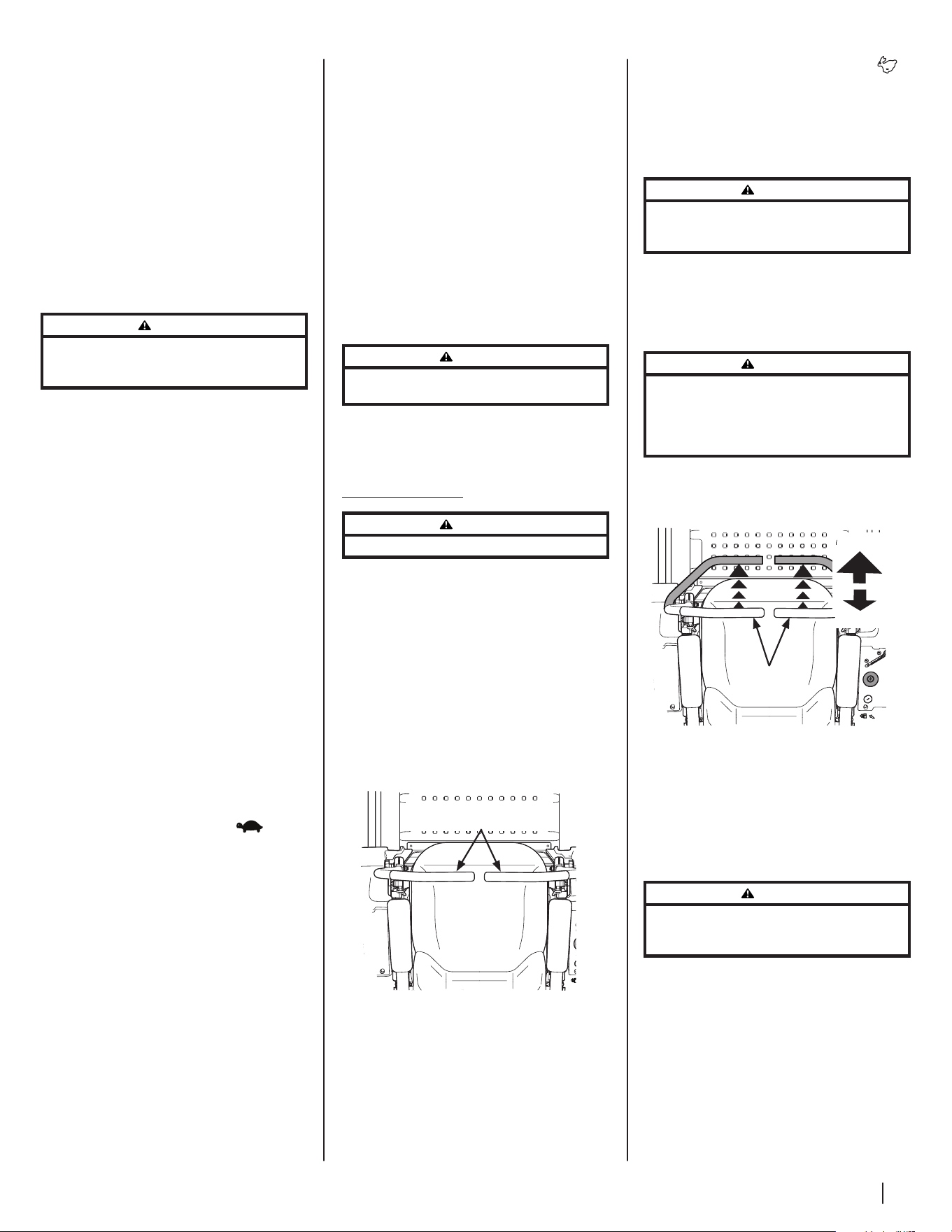
3. Move the RH and LH drive control levers
inward in the neutral position. Refer to
Figure 3-4.
Control Levers Moved
Inward & in Neutral
Figure 3-4
Note: If the control levers are not even in the
neutral position, refer to the Assembly & Set-
Up section for instructions to adjust the levers
so that they are even.
4. Move the throttle control to the FAST
position.
Note: Although the tractor’s engine is
designed to run at full throttle, when
performing a practice session the tractor
must be operated at less than full throttle.
This only applies to practice.
WARNING
Always maintain a firm grip on the control levers. Do not
release the control levers to slow or stop the tractor; move
levers to neutral position using your hands.
5. To drive the tractor, firmly grasp the
respective drive control levers with your
right and left hands and continue with
Driving the Tractor Forward.
Driving the Tractor Forward
WARNING
Keep all movement of the drive control levers slow and
smooth. Abrupt movement of the control levers can affect
the stability of the tractor and could cause the tractor to
flip over, which may result in serious injury or death to
the operator.
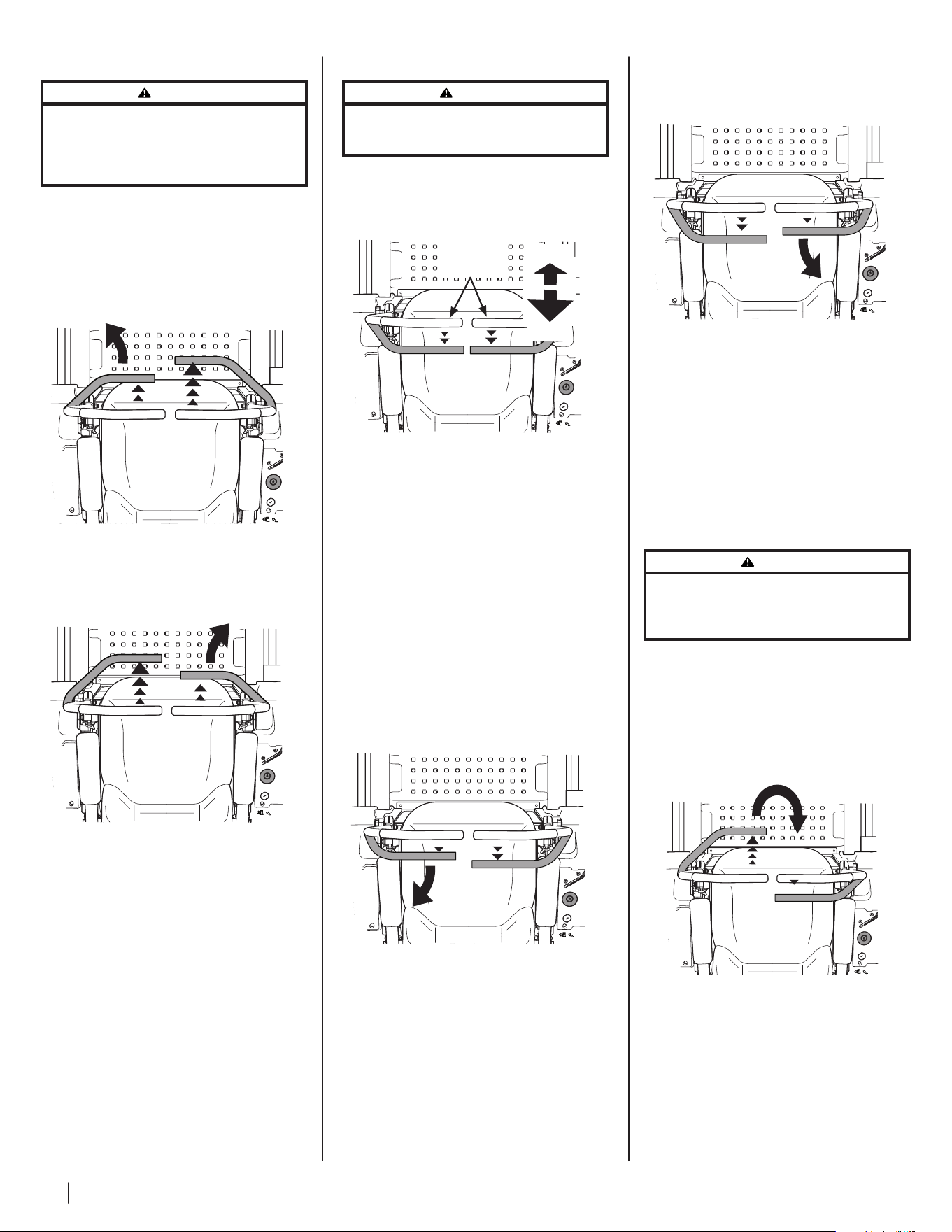
1. Slowly and evenly move both drive control
levers forward. The tractor will start to move
forward. See Figure 3-5.
Driving Forward
Faster
Slower
Neutral
Position
Figure 3-5
2. As the control levers are pushed farther
forward the speed of the tractor
will increase.
3. To slow the tractor move the control levers
rearward to attain the desired speed, or
move the levers to the neutral position to
stop the tractor.
WARNING
Always maintain your grasp on the drive control levers.
Do not release the levers to slow the tractor or to return
to neutral.
16 Section 3 — controlS & operation
Turning the Tractor While Driving Forward
WARNING
When reversing the direction of travel, performing gradual
“U” turns where possible is recommended. Sharper turns
increase the possibility of turf defacement, and could affect
control of the tractor. ALWAYS slow the tractor before making
sharp turns.
To turn the tractor while driving forward, move
the control levers as necessary so that one lever is
rearward of the other. The tractor will turn in the
direction of the rearward control lever.
1. To turn to the left, move the left drive
control lever rearward of the right lever. See
Figure 3-6.
Forward Left Turn
Figure 3-6
2. To turn to the right, move the right drive
control lever rearward of the left lever. See
Figure 3 -7.
Forward Right Turn
Figure 3-7
3. The greater the fore-to-aft distance
between the two levers, the sharper the
tractor will turn.
4. To execute a “pivot turn,” move the turn
side drive control lever to the neutral
position, while moving the other control
lever forward.
Note: Making a “pivot turn” on grass
will greatly increase the potential for
defacement of the turf.
Driving the Tractor In Reverse
WARNING
Always look behind and down on both sides of the tractor
before backing up. Always look behind while traveling in
the reverse direction.
1. Slowly and evenly move both drive
control levers rearward. The tractor will
start to move in the reverse direction. See
Figure 3-8.
Neutral
Position
Slower
Faster
Figure 3-8
2. As the control levers are pushed farther
rearward the speed of the tractor
will increase.
3. To slow the tractor move the control levers
forward to attain the desired speed, or
move the levers to the neutral position to
stop the tractor.
Turning While Driving Rearward
To turn the tractor while driving rearward, move
the control levers as necessary so that one lever
is forward of the other. The tractor will turn in the
direction of the forward control lever.
1. To turn to the left while traveling in reverse,
move the left drive control lever forward of
the right lever. See Figure 3-9.
Rearward Left Turn
Figure 3-9
2. To turn to the right while traveling in reverse,
move the right drive control lever forward of
the left lever. See Figure 3-10.
Rearward Right Turn
Figure 3-10
3. The greater the fore-to-aft distance
between the two levers, the sharper the
tractor will turn.
4. To execute a “pivot turn,” move the turn side
drive control lever to the neutral position,
while moving the other control lever
rearward.
Note: Making a “pivot turn” on grass
will greatly increase the potential for
defacement of the turf.
Executing a Zero Turn
WARNING
When executing a zero turn, the tractor MUST BE STOPPED.
Executing a zero turn while the tractor is moving can
significantly reduce your control of the tractor and will
cause severe turf defacement to occur.
1. Stop the forward or reverse motion of the
tractor by moving the two drive control
levers to neutral.
2. To turn clockwise, move the left control
lever forward while simultaneously moving
the right control lever rearward. See
Fi gure 3-11.
Clockwise Zero Turn
Figure 3-11
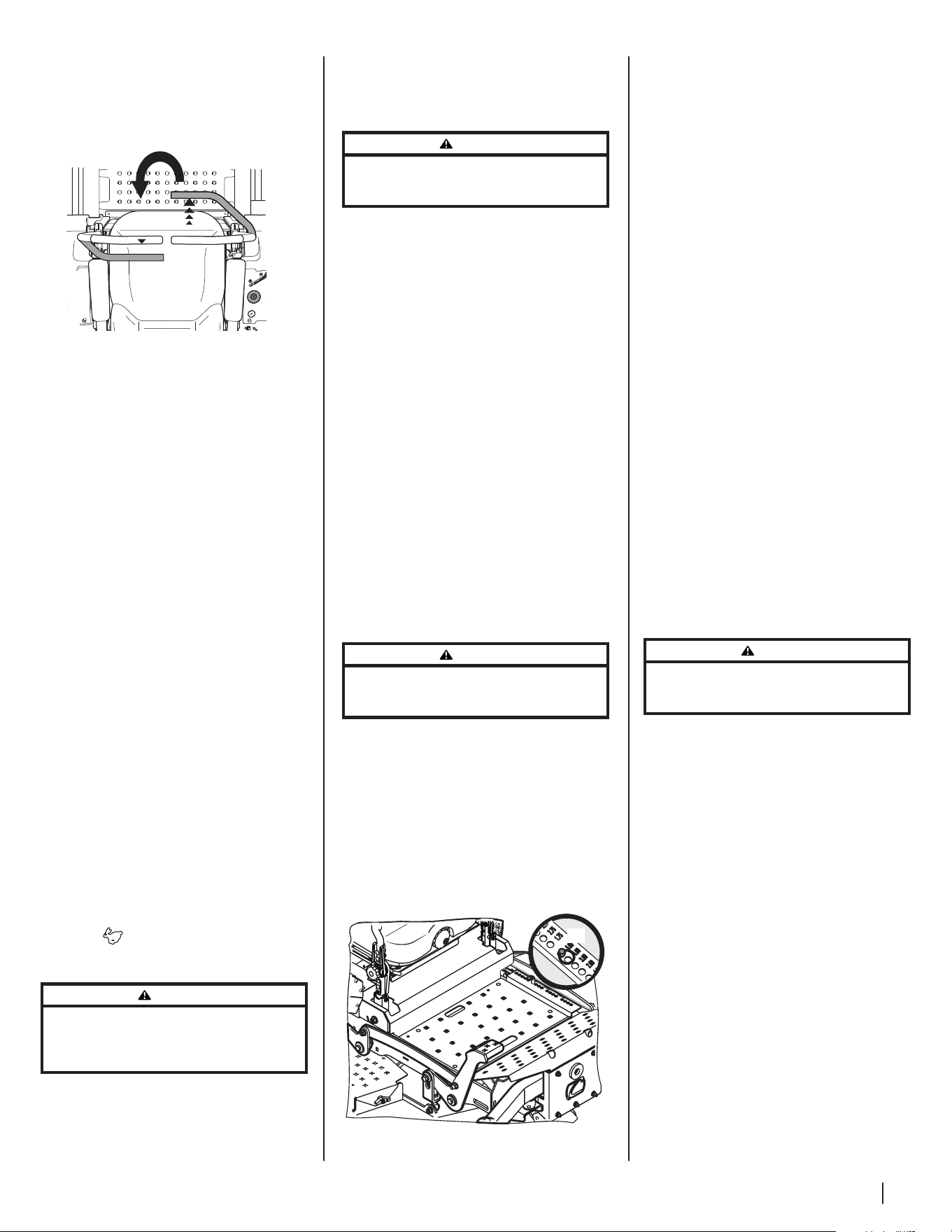
17Section 3 — controlS & operation
3. To turn counter-clockwise, move the right
control lever forward while simultaneously
moving the left control lever rearward. See
Figure 3-12.
Counter-clockwise
Zero Turn
Figure 3-12
Executing a “Y” Manuever
For low traction conditions, follow these
procedures for zero turns (the “Y-manuever”):
To turn clockwise (front of machine moves toward
RIGHT) when traveling FORWARD:
1. Come to a stop.
2. Slowly move both lap bars rearward (no
more than 1/2 maximum reverse speed) to
initiate REVERSE travel.
3. Slowly move the LEFT lap bar forward
while maintaining the RIGHT lap bar in the
rearward travel position.
4. To stop the turn and re-initiate FORWARD
travel, slowly move the RIGHT lap bar from
the REVERSE travel position to a FORWARD
travel position equal to that of the LEFT
lap bar.
5. For counter-clockwise turns, reverse the
above procedure.
Stopping the Tractor
1. Move both drive control levers to the
neutral position to stop the motion of
the tractor.
2. Push the PTO switch downward to the
disengaged position.
3. Use the deck lift pedal to raise the deck to
its highest position and secure in place with
the clevis pin attached to the tractor.
4. If dismounting the tractor, move the drive
control handles fully outward in the neutral
position, engage the parking brake, move
the throttle control lever (if equipped) to the
FAST position, turn the ignition switch
to STOP and remove the ignition key from
the switch.
WARNING
Do not leave the seat of the tractor without disengaging the
PTO, moving drive control levers fully outward in the neutral
position engaging the parking brake. If leaving the tractor
unattended, turn the ignition key OFF and remove.
Driving On Slopes
Refer to the slope gauge in the Safe Operation
Section to help determine slopes where you may
operate safely.
WARNING
Do not operate on inclines with a slope in excess of 15°/25%
(a rise of approximately 4 feet every 10 feet). The machine
could overturn and cause serious injury.
1. Always drive across slopes, never up and
down. Control the speed and direction of
the tractor using primarily the control lever
on the downhill side of the tractor, with the
uphill control lever remaining essentially in
a fixed position.
2. Avoid turning downhill if possible. Start at
the bottom of a slope and work upward.
Always slow down before turning.
3. Use extra care and go slowly when
turning downhill.
Operating the PTO
Operate the PTO as follows:
1. Move the throttle to approximately the mid-
throttle position.
2. Pull the PTO upward to the “ENGAGED”
position.
3. Advance the throttle to the operating speed
(full engine speed).
The operator must remain in the tractor seat at all
times. If the operator should leave the seat without
turning off the power take-off switch, the tractor’s
engine will shut off.
Using the Mower Deck
WARNING
Make certain the area to be mowed is free of debris, sticks,
stones, wire, or other objects that can be thrown by the
rotating blades.
Note: Do not engage the mower deck when
lowered in grass. Premature wear and possible
failure of the “V” belt and PTO clutch will result.
Fully raise the deck or move to a non-grassy area
before engaging the mower deck.
1. Use the deck lift pedal (a) to raise the deck
to its highest position, place the clevis pin
(b) attached to the tractor into the desired
index hole on the deck height index, then
slowly release the deck lift pedal (a). See
Figure 3-13.
(a)
(b)
Figure 3-13
2. Mow across slopes, not up and down. If
mowing a slope, start at bottom and work
upward to ensure turns are made uphill.
3. On the first pass pick a point on the
opposite side of the area to be mowed.
4. Engage the PTO knob and move the throttle
control to the operating speed (full throttle)
position.
5. Remove the clevis pin, raise the deck to the
highest (transport) position, place the clevis
pin in the desired position and secure with
the clevis pin. Lower the mower deck to the
desired height setting.
6. Slowly push the drive control levers forward
to move the tractor forward, and keep
the tractor headed directly toward the
alignment point.
Note: The speed of the tractor will affect
the quality of the mower cut. Mowing at full
speed will adversely affect the cut quality.
Control the ground speed with the drive
control levers.
7. When approaching the other end of the
strip, slow down or stop before turning. A
U-turn is recommended unless a pivot or
zero turn is required.
8. Align the mower with an edge of the
mowed strip and overlap approximately 3”.
9. Direct the tractor on each subsequent strip
to align with a previously cut strip.
10. To prevent rutting or grooving of the turf, if
possible, change the direction that the strips
are mowed by approximately 45° for the next
and each subsequent mowing.
WARNING
Be careful when crossing gravel paths or driveways.
Disengage the PTO knob and raise the deck to the highest/
transport position before crossing.
Note: When stopping the tractor for any
reason while on a grass surface, always:
• Make sure the drive control levers
are in neutral.
• Engage the parking brake.
• Shut engine off and remove the key.
• Doing so will minimize the
possibility of having your lawn
‘‘browned’’ by hot exhaust from your
tractor’s running engine.

18 Section 3 — controlS & operation
Reconfigurable Mower
Inner Baffle
Discharge
Baffle Cutting Blades Gauge Wheels Front Roller Rear Rollers
Standard set-up Installed Installed Hi-lift Low = 3 to 5” Low = 3 to 5” Low = 3 to 5”
Stems (Dandelion, Bahia, Buckhorn, etc.) Removed Installed Hi-lift
High = 1 to 2-1⁄2”
Low = 3 to 5”
High = 1 to 2-1⁄2”
Low = 3 to 5”
High = 1 to 2-1⁄2”
Low = 3 to 5”
Very lush &/or tall grass Removed Installed Hi-lift
High = 1 to 2-1⁄2”
Low = 3 to 5”
High = 1 to 2-1⁄2”
Low = 3 to 5”
High = 1 to 2-1⁄2”
Low = 3 to 5”
Low cut height (1 to 2”) Installed Installed Low-lift High = 1 to 2-1⁄2” High = 1 to 2-1⁄2” High = 1 to 2-1⁄2”
Mulch Installed Removed Hi-lift/Mulch
High = 1 to 2-1⁄2”
Low = 3 to 5”
High = 1 to 2-1⁄2”
Low = 3 to 5”
High = 1 to 2-1⁄2”
Low = 3 to 5”
Material collection Installed Installed Hi-lift
High = 1 to 2-1⁄2”
Low = 3 to 5”
High = 1 to 2-1⁄2”
Low = 3 to 5”
High = 1 to 2-1⁄2”
Low = 3 to 5”
Abrasive (sandy), dry Removed Installed Low-lift
High = 1 to 2-1⁄2”
Low = 3 to 5”
High = 1 to 2-1⁄2”
Low = 3 to 5”
High = 1 to 2-1⁄2”
Low = 3 to 5”
Wet Installed Installed Hi-lift
High = 1 to 2-1⁄2”
Low = 3 to 5”
High = 1 to 2-1⁄2”
Low = 3 to 5”
High = 1 to 2-1⁄2”
Low = 3 to 5”
Table Notes: This table is a general outline of suggested settings, mowing conditions may vary.
Inner Baffle: The inner baffle regulates grass discharge. Remove the inner baffle for high-volume grass and install the inner baffle for precision cutting.
Discharge Baffle: The discharge baffle enhances the grass discharge pattern. The discharge baffle reduces clumping and should be removed for mulching.
Cutting Blades: The cutting blades cut grass, create grass lift and discharge grass through the discharge chute.
Gauge Wheels: The gauge wheels reduce scalping, help with precision cutting and reduce turf defacement during turns.
Front Roller (If equipped): The front roller reduces scalping, helps with precision cutting and reduces turf defacement during turns.
Rear Rollers: The rear rollers reduce scalping and gives grass a striped appearance.
NOTE: To avoid damaging grass, no more than 1⁄3 of the grass height should be removed during a single cutting (i.e. if the grass is 6” tall, cut it to 4”).
Mower Cutting Blades
The blades normally factory installed on a mower
afford the best grass cutting performance on
the majority of grasses and mowing conditions;
however, there will be occasions whereby the grass
type, stage of grass growth, soil conditions and
weather conditions will require different cutting
blade types. Since the mower decks are designed
so that over-lap of the cutting blades generally
exceed 1.5”, there is no need for orientation of one
cutting blade to an adjacent blade (i.e., the blades
do not need to be “timed” nor synchronized).
Hi-lift — These are generally the best cutting
blades for most grasses and mowing conditions.
The Hi-Lift blades are the factory installed blades
on these tractors. These blades will provide extra
“lift” for the thinner leaf grasses, will handle lush
grasses, and will provide maximum grass and
debris discharge. These blades are generally
required for material collection systems. More
horsepower is required for these blades when
compared to others, and they generally produce
the highest noise levels.
Medium-lift — These blades require less
horsepower than the hi-lift, and they generally
work well in wider leaf grasses and some
mulch applications.
Low-lift — These blades require less horsepower
than hi-lift and medium-lift blades, and they generally
work best with wide leaf grasses, sparse grass growth,
and sandy soil conditions. They produce the lowest
noise levels. Low-lift blades are configured without
offset, and with a maximum amount of sharpened
cutting edge.
Mulch — These blades are generally designed for
use in cutting decks equipped with mulch baffles.
The shape of the blade generally produces higher
turbulence in order that the grass can be repeatedly
cut and re-cut into smaller pieces. These blades
generally require more horsepower than other
blades. Mulch blades work best when the grasses are
cut at the highest levels, minimal lengths of grasses
are removed and grass conditions are generally dry.
Note: Refer to the Attachment & Accessories
section for a list of part numbers.

19
Product Care
4
† — After first 300 hours, change hydrostatic fluid and filter in transaxles.
* — Perform more frequently under dusty conditions.
Maintenance Schedule
Before
Each use
Every 25 Hours Every 50 Hours Every 500 Hours After Mowing
Check Gasoline Level
P
Check Hydraulic Hoses for Leaks
P
Check Tires & Tire Pressure
P
Check Deck, Mower & Hydro Drive Belts
P
Check Blades & Blade Bolt Tightness
P
Check Safety Switches for Proper Operation
P
Check Fluid Level in Transmission Oil Expansion Reservoir
P
Check/Clean Engine Intake Screens & Cooling Fans *
P P
Check/Clean Exhaust Manifold, Muer Pipe & Muer Shields *
P P
Check/Clean Top & Underside of Deck, Under & Around Spindle Covers
& Belt Area *
P P
Check/Clean Around Fuses, Wiring & Wiring Harnesses *
P P
Check/Clean Around Transmission, Axle & Fans *
P P
Blow Out/Clean the Pump Control Area Under Floor Pan
P
Blow Out/Clean the Pedal Control Area Under the Foot Rest
P
Lubricate Wear Points (See Chart)
P P
Clean Engine Cooling Fins & External Surfaces *
P
Change Hydrostatic Fluid & Filter in Transaxles †
P
20 Section 4— Product care
Number of Oil Points Description
DAILY
4 Deck Suspension Pivots
4 Height Adjustment Turnbuckle Clevis Pin
2 Height Adjustment Handle Pivots
2 Height Adjustment Stop Pivots
2 Deck Lift Linkage Pivots
2 Transport Handle Pivots
1 Transport Handle Pin
2 Deck Frame Up-and-Down Pivots
WEEKLY
1 Seat Hinge
2 Speed Control Linkage Rod End Bearings
2 Pump Control Lever Pivots
1 Brake Lever Pivot Clevis Pin
1 Brake Lever Control Rod Pivot
1 Brake Control Rod Swivel Joint
4 Brake Rod Clevis Pins
2 Brake Shaft Assembly Pivots
2 Grass Collection System Lid Hinges (If mower is so equipped)
OIL CHART
Apply a few drops of SAE engine oil, grease,
or use a spray lubricant. Apply the oil to both
sides of pivot points. Wipe off any excess. Start
engine and operate mower briefly to insure
that oil spreads evenly.
Engine Oil
• Shell Rotella® T Triple Protection™ 15W40
• Shell Rimula® 15W40
• Reference your engine manual for other approved options
Hydrostatic Fluid
• Cub Drive System Fluid Plus (Shell TT-SB)
• Castrol™ (Syntec®) Edge™ 5W50
General Purpose Lubrication: Use any NLGI Grade 2 multi-purpose
grease. Shell Albida EP2 is recommended. Shell Albida EP 2 is a red-colored
multi-purpose grease designed for heavy-duty bearing applications. It
has high base oil viscosity for mechanical stability, has been formulated
for high load, low-speed applications and has excellent lubrication and
corrosion protection.
Note: This Operator’s Manual covers several
models. Tractor features may vary by model.
Not all features in this manual are applicable to
all tractor models and the tractor depicted may
differ from yours.
Maintenance
WARNING
Before performing any maintenance or repairs,
disengage the PTO, move the drive control levers fully
outward in the neutral position engaging the parking
brake, stop the engine and remove the key to prevent
unintended starting.
Post-Operation Tractor Care
After each operation of the tractor, the
following procedures should be implemented
to extend the life of your tractor and ensure safe
operating conditions.
DANGER
Failure to follow these recommendations may result
in serious injury to yourself or others and may cause
damage to the tractor.
Cleaning the Underside of the Deck
Rinse grass clippings from the deck’s underside
and prevent the buildup of corrosive chemicals.
WARNING
Make certain the tractor’s discharge chute is directed
AWAY from people, your house, garage, parked cars, etc.
1. Disengage the PTO, set the parking
brake and stop the engine.
2. Use a hose to spray the underside of
the deck.
Note: Make sure that the hose is not
routed under the deck and is clear of all
moving parts.
3. After cleaning your deck, return to the
operator’s position and engage the PTO.
Keep the deck running for a minimum of
two minutes, allowing the underside of
the deck to thoroughly dry.
Cleaning the Tractor
WARNING
If the tractor has been recently run, the engine,
muffler, and surrounding metal surfaces will be hot
and can cause burns to the skin. Let the engine cool for
at least five minutes. Exercise caution to avoid burns.
Your tractor should be cleaned after each
use and under certain conditions, i.e. dry
conditions and/or mulching situations,
additional cleaning may be necessary.
One of the best ways to keep your tractor
running efficiently and to reduce fire risk is
to regularly remove debris buildup from the
tractor. Follow the recommendations below
and contact your authorized dealer with
any questions.
• Allow the machine to cool in an open
area before cleaning.
• Do not use water on any part of the
tractor except the underside of the
cutting deck. Doing so can cause
damage to the tractor’s spindle
bearings, electrical system and engine,
leading to premature failures. The use of
compressed air and/or leaf blower will
help keep the tractor clean.
• Clean around the exhaust manifold, fuses,
all wiring and harnesses, muffler pipe,
muffler shield, engine intake screens and
cooling fins, etc. See Figure 4-1.
Figure 4-1
21Section 4 — Product care
• Clean the top of the mower deck, under
the spindle covers and belt area. See
Figure 4-2.
Figure 4-2
• Clean around and near the transmission,
axle and the fan area. See Figure 4-3.
Wheel Not Shown For Clarity
Figure 4-3
• Debris can accumulate anywhere on the
tractor, especially on horizontal surfaces.
Additional cleaning may be necessary
when mowing in dry conditions or
when mulching.
• Fuel leaks/spills, oil leaks/spills and
excess lubrication can also become
collections sites for debris. Immediate
repair and cleaning up oil or fuel spills
can help reduce fire hazards.
• In addition to cleaning the tractor before
operating and storing, do not attempt to
mow unusually tall grass (10” or higher),
dry grass (e.g., pasture) or piles of dry
leaves. Dry grass or leaves may contact
the engine exhaust and/or build up on
the mower deck presenting a potential
fire hazard.
Storing the Tractor
• Allow the machine to cool in an open
area before storing.
• Do not park the tractor near any
flammable materials (wood, cloth or
chemicals) or any open flames or other
potential source of ignition (furnace,
water heater or any other type of heater).
• Remove all combustible materials from
the tractor before storing. Empty cargo
boxes, grass catchers or containers.
• Always shut off fuel flow when storing or
transporting if tractor is equipped with a
fuel shutoff.
• Check the fuel system (lines, tank, cap
and fittings) frequently for cracks or
leaks. Repair and clean as necessary.
Engine
Refer to the Engine Operator’s Manual for all
engine maintenance intervals, procedures,
specifications and instructions.
Changing the Engine Oil
WARNING
If the engine has been recently run, the engine, muffler,
and surrounding metal surfaces will be hot and can
cause burns to the skin. Exercise caution to avoid burns.
Maintain oil level as instructed in Engine
Operator’s Manual. Be careful not to spill oil on
any of the belts.
To complete an oil change, proceed as follows:
1. Run the engine for a short time to warm
the engine oil. The oil will flow more
freely and carry away more impurities.
Use care to avoid burns from hot oil.
2. Locate the oil drain hose on the engine.
See Figure 4-4.
Figure 4-4
3. Remove the hose from the clip securing
it to the frame.
4. Route the free end of the oil drain hose
toward an appropriate oil collection
container with at least a 2.5 quart
capacity, to collect the used oil.
Note: Avoid getting oil on the muffler
when draining.
5. While holding the free end of the
oil drain hose over the oil collection
container, unscrew the square-head
hose plug from the end of the hose. See
Figure 4-4. Drain the engine oil into the
collection container.
6. Remove the oil filter to make sure all the
oil is drained.
7. After draining the oil, wipe any residual
oil from the oil drain hose. Thread the
square head plug into the drain hose
fitting and fully tighten the plug.
8. Replace the oil filter and refill the
engine with new oil as instructed in the
Engine Operator’s Manual. Refer to the
Engine Operator’s Manual for information
regarding the volume and weight of
engine oil.
9. Place the hose back into the clip securing it
to the frame.
Lubrication
Periodically lubricate all pivot points with a
quality lubricating oil.
Tires
Check the tire air pressure after every 50 hours
of operation or weekly. Keep the tires inflated
to the recommended pressures. Improper
inflation will shorten the tire service life and
produce an uneven cut. See the tire side wall
for proper inflation pressures. Observe the
following guidelines:
• Do not inflate a tire above the maximum
pressure shown on the sidewall of the tire.
• Do not reinflate a tire that has been run
flat or seriously under inflated. Have it
inspected and serviced by a qualified
tire mechanic.
Battery Information
WARNING
Should battery acid accidentally splatter into the eyes or
onto the skin, rinse the affected area immediately with
clean cold water. If there is any further discomfort, seek
prompt medical attention.
If acid spills on clothing, first dilute it with clean water,
then neutralize with a solution of ammonia/water or
baking soda/water.
NEVER connect (or disconnect) battery charger clips
to the battery while the charger is turned on, as it can
cause sparks.
Keep all sources of ignition (cigarettes, matches, lighters)
away from the battery. The gas generated during charging
can be combustible.
As a further precaution, only charge the battery in a well
ventilated area.
Always shield eyes and protect skin and clothing when
working near batteries.
Batteries contain sulfuric acid and may emit explosive
gases. Use extreme caution when handling batteries. Keep
batteries out of the reach of children.
Battery Maintenance
• The battery is filled with battery acid and
then sealed at the factory. However, even a
“maintenance free” battery requires some
maintenance to ensure its proper life cycle.
• Spray the terminals and exposed
wire with a battery terminal sealer, or
coat the terminals with a thin coat of
grease or petroleum jelly, to protect
against corrosion.
• Always keep the battery cables and
terminals clean and free of corrosion.
• Avoid tipping. Even a sealed battery will
leak electrolyte when tipped.
WARNING
Batteries contain sulfuric acid and may emit explosive
gases. Use extreme caution when handling batteries.
Keep batteries out of the reach of children.
Battery Storage
1. When storing the tractor for extended
periods, disconnect the negative battery
cable. It is not necessary to remove
the battery.
2. All batteries discharge during storage.
Keep the exterior of the battery clean,
especially the top. A dirty battery will
discharge more rapidly.
3. The battery must be stored with a full
charge. A discharged battery can freeze
sooner than a charged battery. A fully
charged battery will store longer in cold
temperatures than hot.
22 Section 4— Product care
4. Recharge the battery before returning to
service. Although the tractor may start,
the engine charging system may not
fully recharge the battery.
Removing the Battery
1. Flip the seat all the way forward.
2. Unhook the strap (a) holding the battery in
place. See Figure 4-5.
(a)
(b)
(c)
Figure 4-5
3. Remove the hex cap screw and sems nut
securing the negative cable grouping (b)
to the negative battery post (marked NEG).
Move the cable grouping away from the
negative battery post. See Figure 4-5.
4. Remove the hex cap screw and sems nut
securing the positive cable grouping (c)
to the positive battery post (marked POS).
See Figure 4-5.
5. Carefully lift the battery out of the tractor.
6. Install the battery by repeating the
above steps in the reverse order.
Note: Place the thickest cable closest to
the battery terminal.
Using the Transmission Bypass Rods
If for any reason the tractor will not drive or you
wish to move the tractor, the two hydrostatic
transmissions are equipped with a bypass
rod that will allow you to manually move the
tractor short distances.
WARNING
Do not tow the tractor, even with the bypass rod engaged.
Serious transmission damage will result from doing so.
1. Engage the transmission bypass valves
by pulling the bypass lever (a) upward
and all the way back. See Figure 4-6.
(a)
Figure 4-6
2. To release the bypass lever (a), push the
lever forward.
Hydrostatic Transmission (500 Series)
The hydrostatic transmission on the 500 series
is equipped with a filter and dipstick.
To check the transmission oil, locate the
dipstick on both the LH and RH transmission
assemblies. See Figure 4-7.
HH
Full Hot
Full Cold
1/8” up dipstick
(a)
Figure 4-7
Remove the dipstick and check the oil level.
When cold, the level should be no higher
than 1/8” up on the dipstick. When hot the
level should not exceed the “H” mark on the
dipstick. Exceeding these levels could cause
the oil to overflow when hot. See Figure 4-7.
To change the transmission oil:
1. Remove the dipstick.
2. Place a suitable container under the
drain plug (a) on the transmission.
Remove the drain plug (a) and allow the
transmission oil to drain. See Figure 4-8.
(a)
Figure 4-8
3. Using a pair of needle-nose pliers or a
magnet remove the filter.
4. Replace the filter and drain plug
(torque to 115-135 in-lbs) and fill the
transmission assembly to 1/8” up on
the dipstick.
5. Replace the dipstick.
Note: Make sure the dipstick is fully
tightened. If the dipstick is not fully
tightened, transmission oil could leak
and cause damage to the transmission
due to insufficient oil.
Hydrostatic Transmission (700 & 900 Series)
The 700 and 900 series are equipped with dual
integrated hydrostatic pumps/transaxles that
are equipped with a transmission oil expansion
reservoir. Under normal operating conditions,
the oil level in the expansion reservoir does
not need to be checked and no additional oil
is needed. If checking the reservoir oil level,
proceed as follows:
WARNING
Check the oil level ONLY before starting the tractor
when the transmission oil is fully cooled.
1. Pivot the operator’s seat forward and
clean the reservoir cap and the area
around the cap to prevent debris from
contaminating the transmission oil. See
Figure 4-9.
Figure 4-9
2. Turn the reservoir cap counter-clockwise
to remove, then check the oil level in
the reservoir. Oil should be visible at the
bottom of the cup, but the oil level must
NOT be above the “FULL COLD” line. See
Figure 4-9. DO NOT FILL THE RESERVOIR.
3. If necessary to add oil because of some
type of leakage, add only enough oil to
bring the level to the “FULL COLD” line.
Reinstall the cap and fully tighten.
Note: Prior to the initial operation of the
tractor, the oil level in the reservoir may
be slightly higher than the maximum
due to air in the oil lines. Operation of
the tractor will eventually purge the air
from the lines and the oil level will settle
to the maximum.
To change the transmission oil:
1. Remove the cap from the transmission
oil expansion reservoir.
2. Place a suitable container under the
drain plug (a) on the transmission.
Remove the drain plug (a) and allow the
transmission oil to drain. See Figure 4-10.
(a)
Figure 4-10
23Section 4 — Product care
3. Using a pair of needle-nose pliers or a
magnet remove the filter.
4. Replace the filter and drain plug (torque
to 115-135 in-lbs) and fill through the
expansion reservoir slowly until the
“FULL COLD” line. Allow the transmission
oil to move through the system and top
off as necessary.
5. Replace the cap and fully tighten.
Tractor Storage
If your tractor is not going to be operated
for an extended period of time (30 days to
approximately six months), the tractor should
be prepared for storage. Store the tractor in a
dry and protected location. If stored outside,
cover the tractor (including the tires) to protect
it from the elements. The procedures outlined
below should be performed whenever the
tractor is placed in storage.
1. Change the engine oil and filter following
the instructions provided in the
Engine Operator’s Manual packed with
this manual.
WARNING
Never store the tractor with fuel in the tank indoors or
in poorly ventilated enclosures, where fuel fumes may
reach an open flame, spark, or pilot light as on a furnace,
water heater, clothes dryer, etc.
2. If storing the tractor for 30 days or more:
a. To prevent gum deposits from
forming inside the engine’s
carburetor and causing
possible malfunction of
the engine, the fuel system
must be either completely
emptied, or the gasoline must
be treated with a stabilizer to
prevent deterioration.
WARNING
Fuel left in the fuel tank deteriorates and will cause
serious starting problems.
b. Use a fuel stabilizer for storage
between 30 and 90 days:
• Read the product
manufacturer’s
instructions
and recommendations.
• Add to clean, fresh
gasoline the correct
amount of stabilizer
for the capacity
(approximately 3 gallons)
of the fuel system.
• Fill the fuel tank with
treated fuel and run the
engine for 2-3 minutes
to get stabilized fuel into
the carburetor.
c. Emptying the fuel system for
storage of more than 90 days:
• Prior to putting the tractor
in storage, monitor fuel
consumption with the
goal of running the fuel
tank empty.
• Run the engine until it
begins to stall. Use the
choke to keep the engine
running until all fuel
in the carburetor has
been exhausted.
• Referring to the Engine
Operator’s Manual,
drain the fuel from the
carburetor bowl.
3. Clean the engine and the entire
tractor thoroughly.
4. Fully charge the battery, then disconnect
the negative cable at the battery to
prevent possible discharge. Recharge
the battery periodically when in storage.
Note: Remove the battery if exposed
to prolonged periods of sub-freezing
temperatures. Store in a cool, dry location
where temperatures are above freezing.
5. Lubricate all lubrication points.
Note: Using a pressure washer or garden
hose is not recommended for cleaning your
tractor. It may cause damage to electrical
components, spindles, pulleys, bearings or
the engine. The use of water will result in
shortened life and reduce serviceability.
Removing the Tractor from Storage
1. Check the engine oil.
2. Fully charge the battery and inflate the
tires to the recommended pressure.
3. Fill the fuel tank with clean, fresh gasoline.
4. Start the engine and allow to idle for
a few minutes to ensure engine is
operating properly.
5. Drive the tractor without a load to
make certain all the tractor systems are
functioning properly.
Adjustments
WARNING
Shut the engine off, remove the ignition key, and engage
the parking brake before making adjustments. Protect your
hands by using heavy gloves when handling the blades.
Deck Leveling
Note: Check the tractor’s tire pressure before
performing any deck leveling adjustments. Refer
to Tires for information regarding tire pressure.
Always level the deck side-to-side before front
to rear.
Side-to-Side Leveling
1. Park the mower on a flat paved surface,
engage the parking brake, shut off the
engine, remove the key from the ignition
switch, disconnect the spark plug wires,
using the deck lift pedal position the
mowing deck into the 4” height of cut
position (the 4” height of cut position is
recommended in order for one to see and
obtain a measurement. Any height of cut
position is acceptable as long as a proper
measurement can be taken) and rotate
both outside blades so that they are
perpendicular with the tractor.
2. Measure the distance from the outside
of the left blade tip to the ground and
the distance from the outside of the
right blade tip to the ground. Both
measurements taken should be equal. If
they’re not, proceed to the next step.
3. Adjust the eyebolt (a) at the left front of
the deck so that the blade-to-ground
height at the right outside blade tip
matches that of the left outside blade
tip. This is done by loosening the
jam nuts (b) on the eyebolt (a) and
tightening the upper jam nut (b) to raise
the deck and loosening the jam nut (b)
to lower the deck. The right outer blade
tip height is fixed by the right, front
eyebolt (a) so you must adjust the left
outer tip to match it. See Figure 4-11.
(a)
(b)
(b)
Figure 4-11
4. Once the proper adjustment is made,
re-tighten the jam nuts (b).
Front-to-Back Leveling
1. Park the mower on a flat paved surface,
engage the parking brake, shut off the
engine, remove the key from the ignition
switch and disconnect the spark plug
wires. Using the deck lift pedal position
the mowing deck into the 4” height
of cut position (the 4” height of cut
position is recommended in order for
one to see and obtain a measurement.
Any height of cut position is acceptable
as long as a proper measurement can be
taken) and rotate both outside blades so
that they are parallel with the tractor.
2. Measure the blade-to-ground height at
the right rear blade tip. Again be sure
to measure the blade tip at the rear of
the right blade when aligned along the
mower centerline. The blade-to-ground
height at the rear of the blade tip should
be 1/8” to 1/4” higher than the front tip.
This is referred to as blade pitch. The
same height difference should be true
for the left blade, measured front and
back. The pitch should not exceed 1⁄16” if
cut height is below 1-1/2”.
3. Loosen the jam nuts (b) at the rear left
and right of the deck eyebolts (a). Refer
to Figure 4-11.
4. Start at the rear right to raise the rear of
the deck, tighten the upper jam nut (b)
to raise the deck or loosen the upper
jam nut (b) to lower the rear of the deck.
Refer to Figure 4-11.
5. Adjust the jam nut (b) at the rear left to
take the “slack” out of the threaded rod.
Refer to Figure 4-11.
6. Tighten both lower jam nuts (b) to secure
the deck adjustment. Refer to Figure 4-11.
7. The final adjustment would be to take the
“slack” out of the left rear linkage if the
rear of the deck was raised by adjusting
the jam nuts (b) on the eyebolt (a). Loosen
the jam nuts (b) and tighten the upper
jam nut (b) to remove “slack”. Refer to
Fi gure 4 -11.
8. In many cases it will be necessary to
adjust deck height using both eyebolt (a)
adjustments and pitch adjustment to
achieve the correct blade-to-ground
heights. If you remember that the front
right blade tip adjustment is fixed
and you level to that height, adjusting
the decks will be simplified. Refer to
Fi gure 4 -11.
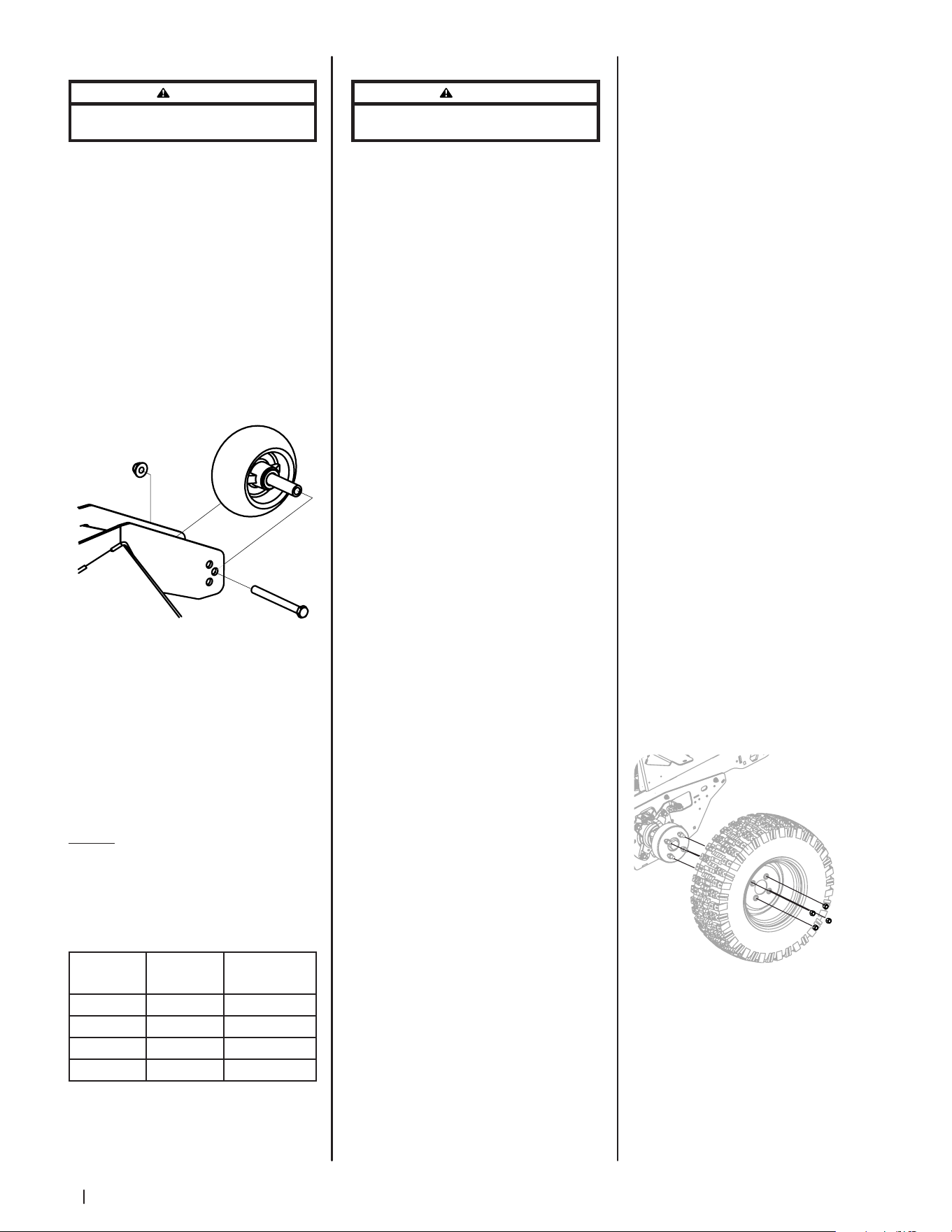
24 Section 4— Product care
Adjusting the Front Gauge Wheels
WARNING
Keep hands and feet away from the discharge opening
of the cutting deck.
The front gauge wheels on the mower deck are
an anti-scalp feature, and should not ride on
the ground. The front gauge wheels should be
approximately 1/4-1/2” above the ground when
the deck is set in the desired height setting.
Using the deck lift handle, set the deck in
the desired height setting, then check the
gauge wheel distance from the ground below.
If necessary adjust the front gauge wheels
as follows:
1. Visually check the distance between the
front gauge wheels and the ground. If
the gauge wheels are near or touching
the ground, they should be raised. If
more than 1/2” above the ground, they
should be lowered.
2. Remove the lock nut (a) securing one of
the front gauge wheels (b) to the deck.
Remove the front gauge wheel (b), hex
screw (c) and spacer (d). See Figure 4-12.
(a)
(b)
(c)
(d)
(e)
Figure 4-12
Note: There are a pair of front gauge
wheels on the nose of the 54” and
60” decks.
3. Insert the hex screw (c) into one of the
three index holes in the front gauge
wheel bracket (e) that will give the front
gauge wheel (b) a 1/4-1/2” clearance
with the ground. See Figure 4-12.
4. Note the index hole of the just adjusted
front gauge wheel (b), and adjust the
other front gauge wheel (b) into the
respective index hole of the other front
gauge wheel bracket (e). See Figure 4-12.
Service
Charging the Battery
Test and, if necessary, recharge the battery after
the tractor has been stored for a period of time.
• A voltmeter or load tester should read
12.6 volts (DC) or higher across the
battery terminals. See Figure 4-13.
Figure 4-13
• Charge the battery with a 12-volt battery
charger at a MAXIMUM rate of 10 amps.
Voltmeter
Reading
State of
Charge
Charging
Time
12.7 100% Full Charge
12.4 75% 90 Min.
12.2 50% 180 Min.
12.0 25% 280 Min.
Jump Starting
WARNING
Failure to use this starting procedure can cause
sparking, and the gases in the battery to explode.
1. Connect the end of one cable to the
disabled machine battery’s positive
terminal; then connect the other end
of that cable to the booster battery’s
positive terminal.
2. Connect one end of the other cable to
the booster battery’s negative terminal;
then connect the other end of that cable
to the frame of the disabled tractor, as
far from the battery as possible.
3. Start the disabled tractor following the
normal starting instructions previously
provided; then disconnect the jumper
cables in the exact reverse order of
their connection.
4. Have the tractor’s electrical system
checked and repaired as soon as
possible to eliminate the need for
jump starting.
Servicing Electrical System
Fuse
There are two fuses located inside the left
console. Lift the seat and look down at the left
console to find the location of the fuses. One
30 amp fuse for the power steering and one
25 amp fuse the ignition, PTO, etc. These are
standard plug-in type automotive fuses. Always
use the same capacity fuse for replacement.
Check the 30 amp fuse if the power steering is
not working and check the 25 amp fuse for all
other electrical problems.
If you have a recurring problem with blown fuses,
have the tractor’s electrical system checked by
your authorized service dealer.
Safety Interlock System & Switch
Operation Checks
The following operational checks should be
made daily:
PTO Switch
1. Sit in the operator’s seat. With the drive
levers in the neutral position and the
parking brake engaged, engage the PTO
switch by pulling up on the knob and try
to start the engine. The engine should
not start. If it does, the PTO switch
must be replaced. See your authorized
service dealer.
2. If the engine does not start, disengage
the PTO by pressing the knob down and
start the engine. Now engage the PTO
and the blades should rotate.
3. If the blades do not turn, the PTO switch
must be replaced, the seat switch must
be replaced or the electric PTO clutch
must be repaired. See your authorized
service dealer.
Parking Brake Switch
1. Sit in the operator’s seat. With the drive
levers in the neutral position and the
PTO disengaged, release the parking
brake and try to start the engine. The
engine should not start.
2. If it does, the parking brake switch must
be repositioned or replaced. See your
authorized service dealer. If the engine
does not start, engage the parking brake
and start the engine.
Seat Switch
1. With the drive in the neutral position,
the parking brake engaged and the
PTO disengaged, start the engine. Now
release the parking brake and raise
up off the seat. Release the operator’s
seat and the engine should stop. If the
engine does not stop, the seat switch
must be replaced. See your authorized
service dealer.
2. With the drive in the neutral position,
the parking brake engaged and the PTO
disengaged, sit in the operator’s seat
and start the engine. Engage the PTO
and the blades should start to rotate.
Raise up slightly off the operator’s seat
and the blades should stop. If the blades
do not stop when you dismount from
the operator’s seat, the seat switch
must be replaced. See your authorized
service dealer.
Electric PTO Clutch
1. This clutch operates when the engine is
running, the operator is in the operator’s
seat and the PTO is engaged. This
electric clutch is a normally trouble free
device. If a problem develops and the
blades do not turn, first check the 25
amp fuse, then investigate the wiring
harness and the connections to the seat
switch, the PTO switch and the electric
blade clutch. Then check the seat switch,
the PTO switch and finally the electric
blade clutch. If the PTO clutch is still not
working properly, see an authorized
service dealer.
Rear Tire Removal/Replacement
1. Remove the four lug nuts (a) to remove
the tire. See Figure 4-14.
(a)
Figure 4-14
2. Reinstall the tires using the four lug nuts.
See Figure 4-14. Torque the lug nuts (a)
to 65-70 ft-lbs.
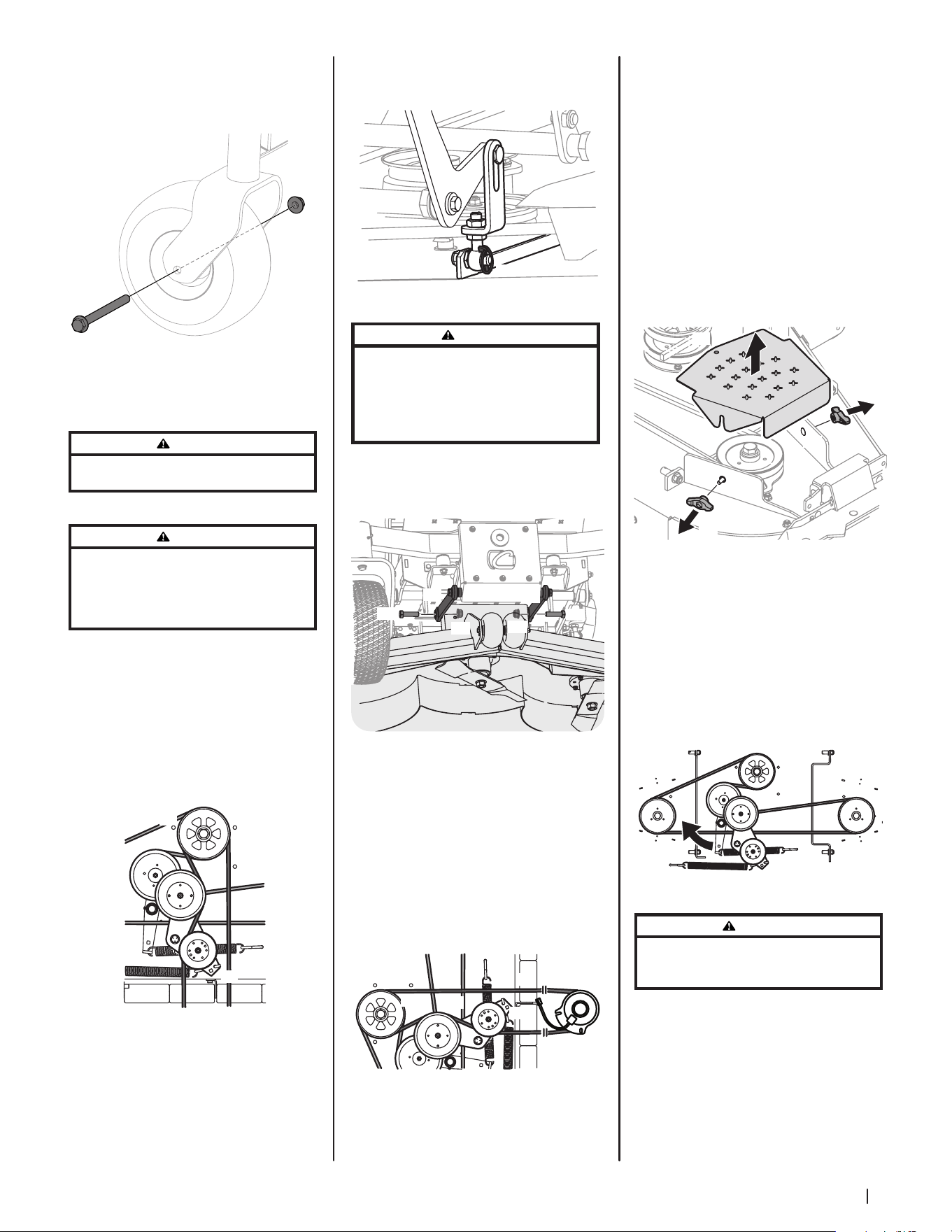
25Section 4 — Product care
Front Tire Removal/Replacement
1. Remove the hex screw (a) and flange lock
nut (b) that secures the front wheel (c) to
the yoke assembly (d). See Figure 4-15.
(a)
(b)
(d)
(c)
Figure 4-15
2. To re-install or replace the front tire,
reverse Step 1. Tighten the hardware to
75-90 ft-lbs. See Figure 4-15.
WARNING
Do not operate the tractor without the wheel weights
in place.
Deck Removal
WARNING
The muffler and any surrounding parts at the rear of the
tractor may be extremely hot, and could cause serious
burns. Use extreme caution when near the muffler. Allow
the muffler to fully cool before removing the belt from the
PTO pulley.
Remove the mower deck from the tractor
as follows:
1. Lower the deck to the ground. Capture
the deck lift by placing the clevis pin
behind the lowest position.
2. Apply the parking brake. Remove
ignition key and the spark plug cap.
3. Using a 1/2” drive in the idler pulley
bracket (a), turn the wrench towards the
right of the tractor and slide the PTO belt
(b) off the PTO pulley (c). See Figure 4-16.
(a)
(b)
(c)
Figure 4-16
4. Remove the four lynch pins (a) that secure
the deck to the deck lift assembly. See
Figure 4 -17.
(a)
Figure 4-17
CAUTION
The spring is under tension due to the weight of the deck.
When removing the lift linkage from the deck the tension
of the springs will go from the deck to the deck lift pedal.
Not capturing the deck lift pedal by placing the clevis
pin behind the lowest position while removing the lift
linkage from the deck will cause it to snap back.
5. Remove the hex screws (a) and flange
lock nuts (b) securing the front deck
control rods (c) to the deck. See
Figure 4-18.
(a)
(a)
(b)
(b)
(c)
(c)
Figure 4-18
6. Turn front wheels as if to make a
pivot turn.
7. Shift the deck toward the right side of the
mower and remove.
8. To install reverse the process.
Replacing the PTO Belt
1. Remove the PTO belt (a) from the deck
as instructed in the Deck Removal
section then remove it from around the
PTO clutch. See Figure 4-19.
(a)
(b)
(c)
(d)
Figure 4-19
2. Route the PTO belt (a) as shown in
Figure 4-19.
3. After routing the belt around the PTO
pulley (b), use a 1/2” drive in the idler
pulley bracket (c) and turn towards the
right of the tractor to finish routing the
belt around the idler pulley (d).
4. Reinstall the deck.
Replacing the Deck Belt
1. Set the parking brake. Remove ignition
key and both spark plug caps.
2. Remove the PTO belt, (refer to
Deck Removal).
3. To remove the belt covers (a), remove
the wing knobs (b) from the carriage
screws (c) securing it to the deck. See
Figure 4-20.
(a)
(b)
(c)
(b)
(c)
Figure 4-20
4. The speed nut should hold the carriage
screw (c) and tab bolt in place, if not
re-install as shown in Figure 4-20.
5. Using a 1⁄2” drive insert the end into the
1⁄2” square opening in the deck idler
assembly (a) and rotate the deck idler
assembly (a) clockwise. See Figure 4-21.
While holding the deck idler assembly
(a), loosen the deck belt from the pulley
and slide the belt away from the pulley.
(a)
Figure 4-21
WARNING
Avoid pinching injuries. Never place your fingers on
the idler spring or between the belt and a pulley while
removing the belt.
6. Route the new belt as shown in Figure
4-21. Then reinstall the deck and
PTO belt.
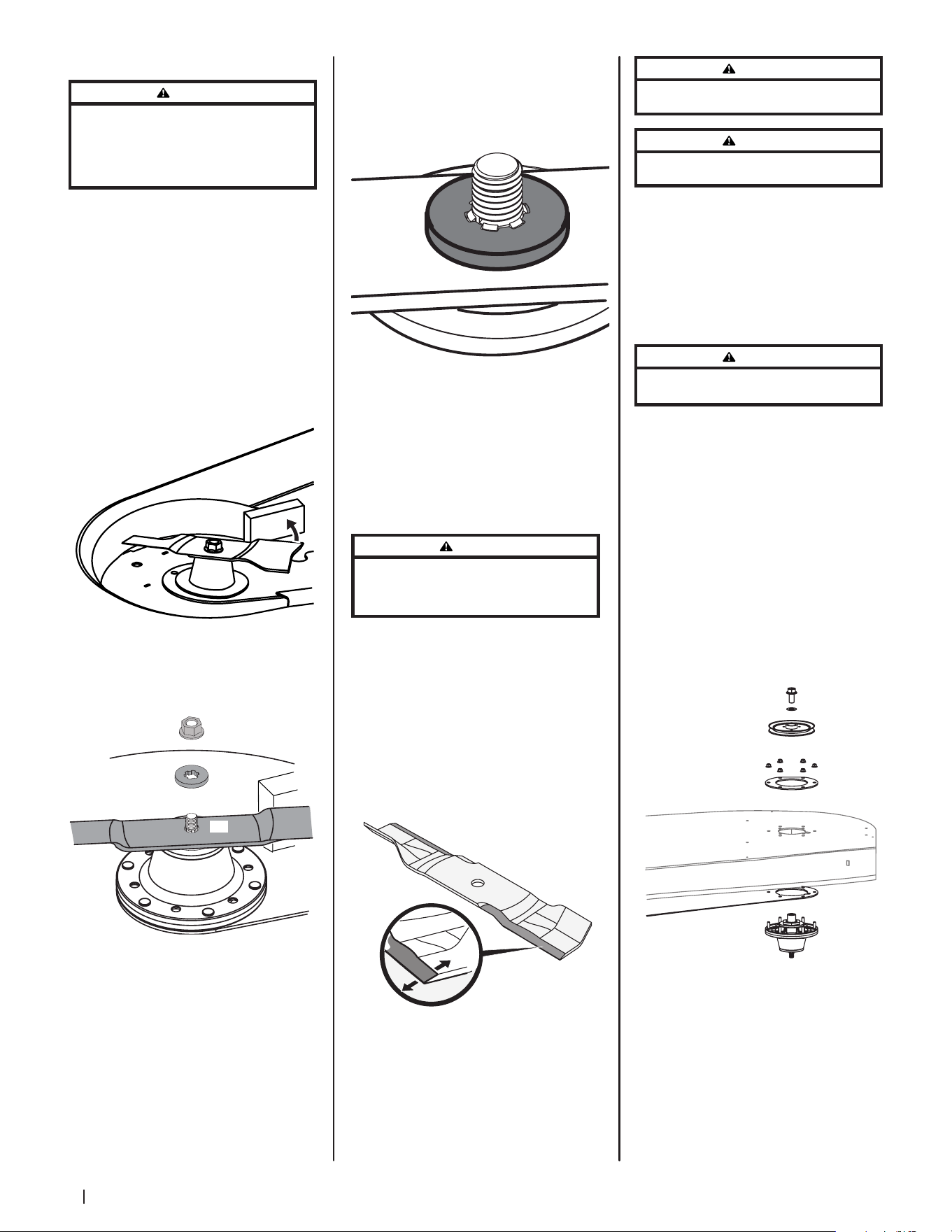
26 Section 4— Product care
Replacing the Blades
WARNING
Before performing any maintenance, disengage the
PTO, engage the parking brake lever, turn the ignition
key to the “OFF” position and remove the key from the
switch. Protect your hands by using heavy gloves when
handling the blades. When servicing the mower deck,
be careful not to cut yourself on the sharpened blades.
1. Remove the deck as instructed in the
Deck Removal section.
2. For easier access, flip the deck over, then
jack up the front of the deck about one
foot and block it in that position.
To remove the blade:
1. Secure the blade from turning counter-
clockwise during service by placing a
block of wood between the blade and
the deck housing, see Figure 4-22, or
wrap a rag around one end of the blade
and wear heavy gloves to grasp the
blade firmly.
Figure 4-22
2. Remove the flange lock nut (a) and flat
washer (b) from the spindle shaft and
remove the blade (c). See Figure 4-23.
(a)
(b)
(c)
Figure 4-23
To replace or reinstall the blade:
1. Put the blade in place on the spindle
shaft. Be sure to install the blade with
the side marked “Bottom”, “Grass
Side” or with a part number stamped
facing the ground when the deck is
reinstalled on the tractor and in the
operating position.
2. Carefully place the flat washer on the
spindle shaft. Be sure that the splines
at the base of the spindle shaft threads
line up with the washer splines. See
Figure 4-24.
Figure 4-24
3. Secure the blade from turning
clockwise when reinstalling the flange
lock nut (the opposite direction of
blade removal).
4. Install the flange lock nut onto the
spindle shaft over the blade and flat
washer. Torque to 100-130 ft-lbs (136-176
N-m).
WARNING
Never mow with dull blades. Blades that are bent should
be replaced. The cutting blades are sharp and can cause
severe injury. Wrap the cutting surface of the blade with
a rag and wear heavy gloves to avoid injury.
Sharpening the Blades
1. Set the parking brake.
2. Clean any debris from the blades. Keep
blades sharp and free of build up at
all times.
3. To properly sharpen the cutting blades,
remove equal amounts of metal from
both ends of the blades along the cutting
edges, parallel to the trailing edge, at a
25°-30° angle. Always grind each cutting
blade edge equally to maintain proper
blade balance. See Figure 4-25.
Figure 4-25
WARNING
If a blade is bent or otherwise damaged, replace the blade
with a new one. Use only original equipment blades.
WARNING
A poorly balanced blade will cause excessive vibration,
may damage the machine and/or result in personal injury.
5. Test the blade’s balance using a blade
balancer. Grind metal from the heavy
side until it balances evenly.
Note: When replacing the blade, be sure
to install the blade with the side of the
blade marked ‘‘Bottom’’ or “Grass Side”
(or with a part number stamped in it)
facing the ground when the mower is in
the operating position.
WARNING
Use a torque wrench to tighten the blade spindle hex
flange nut to between 100 ft-lbs and 120 ft-lbs.
Changing the Spindle Assembly
1. Remove the deck as instructed in the
Deck Removal section.
2. Jack up the front of the mowing
deck about one foot and block it in
that position.
3. Remove the deck cover.
4. Remove the drive belts. See Replacing
the Deck Belt.
5. Remove the blade. See Replacing
the Blades.
6. Remove the hex flange bolts (a) and
flat washers (b) securing the left and
right spindle pulleys (c) to the spindle
assembly (d). See Figure 4-26.
(e)
(g)
(f)
(c)
(d)
(a)
(b)
(h)
Figure 4-26
7. Remove the six (6) flange lock nuts (e)
securing the left and right spindle
assemblies (d) and the support plates (f)
to the deck shell (g). See Figure 4-26.
Note: The deck support plate (h) does
not need to be removed unless all three
spindles are being replaced.
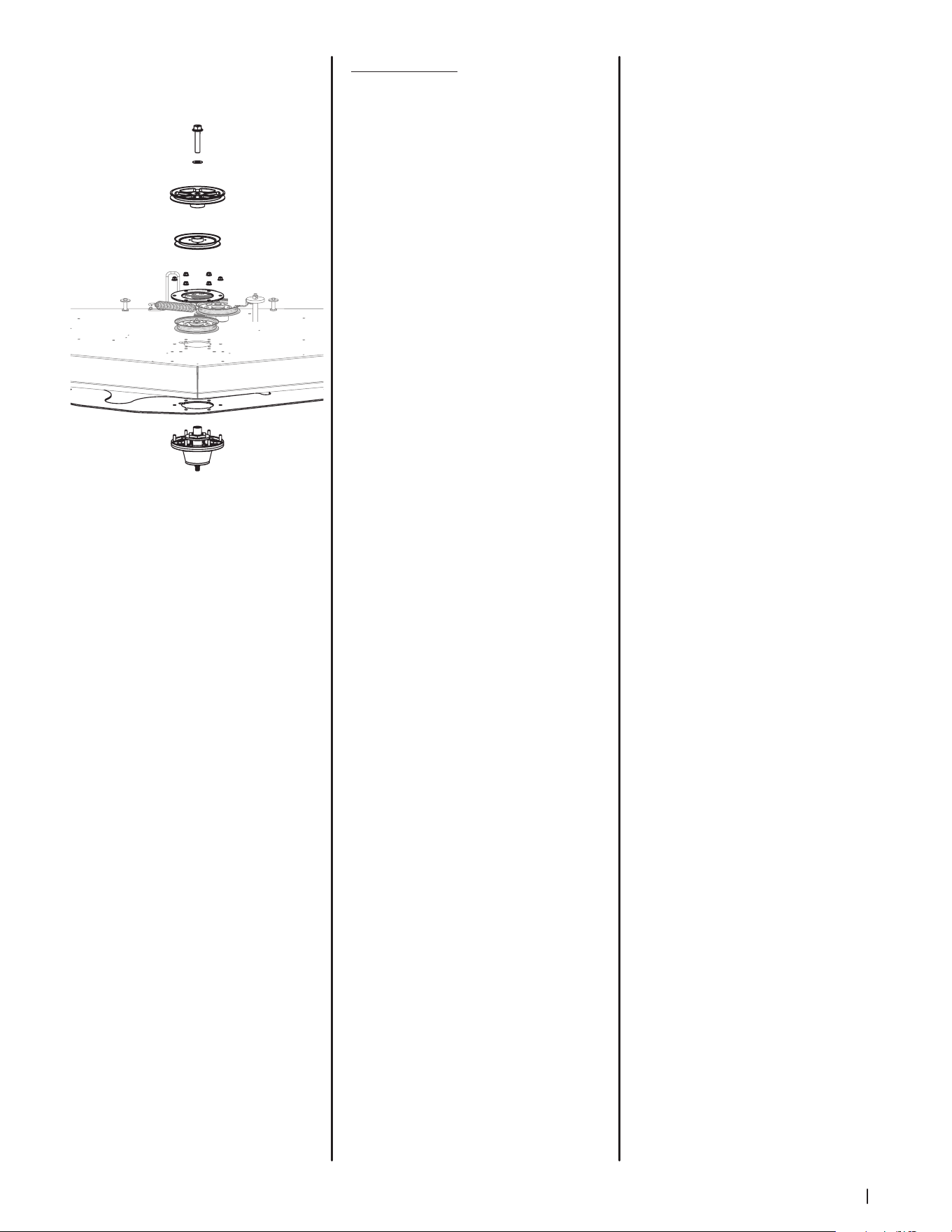
27Section 4 — Product care
8. Remove the hex flange bolt (a) and flat
washer (b) securing the drive pulley (c)
and center spindle pulley (d) to the spindle
assembly (e). See Figure 4-27.
(f)
(e)
(g)
(c)
(d)
(a)
(b)
(h)
(i)
Figure 4-27
9. Remove the six (6) flange lock nuts (f)
securing the center (d) spindle assembly
(e) and the support plates (g) to the deck
shell (h). See Figure 4-27.
Note: The deck support plate (i) does
not need to be removed unless all three
spindles are being replaced.
10. Reverse the process to install the spindle
assembly. When installing the new
spindle assembly be sure to install the
hardware exactly as shown in Figure 4-26.
Torque the hex flange bolts to 250 ft-lbs
and the flange lock nuts to 21-32 ft-lbs.
Changing the Transmission Drive Belt
Several components must be removed
and special tools used in order to change
the tractor’s transmission drive belt. See
your authorized service dealer to have the
transmission drive belt replaced.
Tractor Creeping
Creeping is the slight forward or backward
movement of the mower when the throttle
is on and the drive levers are in the neutral
position. If your mower creeps, see your
authorized service dealer.
Troubleshooting
Excessive vibration
1. Cutting blade loose or unbalanced.
• Tighten blade and spindle.
2. Damaged or bent cutting blade.
• Replace blade.
Uneven cut
1. Deck not properly leveled.
• Perform side-to-side
deck adjustment.
2. Cutting blade dull or damaged.
• Sharpen or replace cutting blade.
3. Uneven tire pressure.
• Check and correct tire pressure in
all four tires.
Mower will not mulch grass.
1. Engine speed too low.
• Place throttle in FAST
(rabbit) position.
2. Wet grass.
• Do not mulch when grass is wet.
3. Excessively high grass.
• Mow once at a high cutting
height, then mow again at
desired height or make a
narrower cutting swath.
4. Dull blade.
• Sharpen or replace blade.
Engine fails to start
1. PTO/Blade engaged.
• Place blade engage lever in
disengaged (OFF) position.
2. Blown fuse.
• Replace fuse(s).
3. Parking brake not engaged.
• Engage parking brake.
4. See Engine Operator’s Manual.

28
Replacement Parts
5
Part Number Description
954-05127
954-04319
Deck Belt (54” Deck)
Deck Belt (60/72” Deck)
954-04327
954-05128
954-05129
PTO Belt (54” Deck)
PTO Belt (60” Deck)
PTO Belt (72” Deck)
954-05037 Drive Belt
942-04416
942- 04415
942- 05179
Hi-Lift Blade, 19.0 (54” Deck)
Hi-Lift Blade, 21.0 (60” Deck)
Hi-Lift Blade, 25.0 (72” Deck)
618-08473 Deck Spindle
634-05451 Deck Wheel
731-11926 Deck Skid Guard
925-1707D Battery
751-15243 Gas Cap
946-05260 Throttle Control Cable (If equipped)
746-05341B Choke Control (If equipped)
925-05908 Ignition Key
946-05103A Park Brake Cable
931-05396C
931-05419
Chute Assembly (54/60” Decks)
Chute Assembly (72” Decks)
634-05228
634-05193
634-05192
Rear Wheel Assembly, 24 x 12-12 (554)
Rear Wheel Assembly, 24 x 12-12 (560/760/772)
Rear Wheel Assembly, 26 x 12-12 (960/972)
634-05429
634-05442
634-05441
Front Wheel Assembly, 13 x 6.5-6 (500 Series)
Front Wheel Assembly, 13 x 6.5-6 (700 Series)
Front Wheel Assembly 15 x 6-6 (900 Series)
02003749 Front Axle Wear Plates, 1.125 x 5.0
741-0941A Front Axle Ball Bearings, 1.0 x 52 x 15
Attachments & Accessories
6
Part Number Description
59A30060150 Triple Bagger
59A30 0 61150 54” Blower Kit
59A30062150 60” Blower Kit
59A30063150 54”/60” Bagger Fan
59B30037150 Front Weight Kit
19B70038100 54” Mulch Kit
19B70039100 60” Mulch Kit
59A30053150 72” Mulch Kit
490-241-0036 Rear Tire Chain Kit
59B30 021150 12V Outlet Receptacle
59B30 011150 Work Light Kit
Part Number Description
59A30018150 Caster Wheel Kit
59A30057150 Ultra Traction Tire, 26 x 12-12
59A30058150 Ultra Traction Tire, 24 x 12-12
59C30052150 Heavy Duty Striping Roller †
490-850-0008 Oil Siphon
490-850-0005 Blade Removal Tool
490-325-0020 Tire Sealant
490-900-0045 Oil Filter Wrench
490-900-0062 Armortek Non-Stick Spray
490-000-0028 Carburetor & Choke Cleaner
† - 500 Series Only. Feature comes standard on 700, 900 models.

29
Notes

30 Notes

CUB CADET LLC -- LIMITED WARRANTY
100016 Rev H (June 18, 2020)
The limited warranty set forth herein is given by Cub Cadet LLC with respect to a new Cub Cadet® product (hereinafter “Product”) purchased and used in the
United States and/or Canada to the Initial Purchaser (as defined herein). This limited warranty does not cover Emission Control Systems and is not a Federal
Emission Control Warranty Statement, as defined by U.S. federal law. Please refer to the Federal Emission Control Warranty Statement in the operator’s manual
for warranties covering Emission Control Systems.
Scope of the Limited Warranty
Cub Cadet LLC warrants that the Product (except with regard to the components and circumstances defined below as “Exclusions”) will be free from defects in
materials and workmanship during the Warranty Period, as defined below. For purposes of this limited warranty, the “Initial Purchaser” is the first person/company
to purchase this new Product from an authorized Cub Cadet dealer, distributor, and/or retailer of such products, including a party for whom said Product was
purchased as a gift. This limited warranty is non-transferrable. During the Warranty Period, Cub Cadet LLC will, at its option, either repair or replace any original
part that is covered by this limited warranty and is determined to be defective in workmanship or material. “Commercial Use” shall be defined as any commercial,
professional, agricultural, institutional, or income-producing use of the Product. See notes below as to Commercial Use Warranty.
Cub Cadet® Warranty Information
Handheld Product* Warranty Period
Chainsaws, Cultivators, Blowers, Brushcutters, Trimmers 3 Year
Wheeled Chore and Snow Product*
Chipper-Shredders, Chipper-Shredder Vacuums, Blowers, Log Splitters, Snow Blowers 3 Year
Tillers, String Trimmers, Lawn Edgers, Pressure Washers CC3224, CC3425 & CC4033 3 Year†
Pressure Washers 2 Year†
Battery Powered Product
60 Volt Max Product Series, CC30E, XT1 LT42E, ZT1 42E 3 Year†
60 Volt Max Product Series, CC30E, XT1 LT42E, ZT1 42E Batteries 4 Year†
Gas Powered Product
Ultima ZTX Series 4 Year/500 hour (whichever comes first)
Z-Force SX 4 Year/500 hour (whichever comes first)
Walk-Behinds, Wide-Area Walk-Behinds, CC30 Riders, XT1 & XT2 Enduro Series, RZT S/SX, Ultima ZT Series,
Z-Force S
3 Year†
23” Walk-Behinds, XT3 Enduro Series 4 Year†
Rotary Spreader 1 Year
Gas Blowers, PRO HW 2 Year
PRO Z 500/700/900, PRO X-600, TANK LZ/SZ 3 Year
PRO Z 100 S 2 Year/NHL (No Hour Limit) or 4 Year/500 hour
(whichever comes first)
Utility Vehicle*
Challenger Series, Volunteer Series 1 Year
Additional Warranty Notes
Lead-Acid Batteries: Are covered by a one (1) year prorated limited warranty against defects in material and workmanship, with 100% replacement during
the first three (3) months, from the date of original purchase by the Initial Purchaser. After three (3) months, the battery replacement credit is based on the
months remaining in the twelve (12) month period, dating back to the date of original purchase by the Initial Purchaser. Any replacement battery will be
warranted only for the remainder of the original warranty period.
Frames: The frame, chassis, and front axle on all XT1, XT2 and XT3 products are covered for “Residential Use” by a five (5) year limited warranty. The frame on
all Ultima ZT and ZTX series products are covered for “Residential Use” by a seven year Limited Lifetime Warranty.
Mowing Decks: 1) Cub Cadet LLC warrants the mowing decks under the warranty of the product it came with unless otherwise stated. 2) When so equipped,
the optional fabricated cutting deck shell (excluding wear parts, etc. thereon) shall be warranted against defects in material and workmanship for the lifetime
of the product, namely for as long as it is owned by its Initial Purchaser or the party for whom it was originally purchased as a gift, or seven (7) years from the
date of its initial sale to an Initial Purchaser, whichever comes first. 3) The deck shell, deck spindles, and deck steel pulleys (collectively the “Deck Assembly”)
on PRO Z 500 / 700 / 900 and PRO X-600 product only, shall also be warranted to be free from defects in material and workmanship for up to an additional
two (2) years (a total of five (5) years from date of purchase) or 1,750 cumulative hours of operation, whichever comes first. For purposes of clarity, no hour
limitation applies during the initial three (3) year period described above.
Snow Blowers: Three-Stage and Two-Stage (excluding 2X 24 models) - Auger gear boxes have a five (5) year limited warranty.
L and S Series: RZT L/LX, Z-Force L/LX/SZ, PRO Z 100 L, Z-Force Commercial (LZ/SZ), and Tank (L/S): Please refer to warranty included with Operator’s
Manual.
Attachments/Accessories: Please refer to warranty with Operator’s Manual.
*Limited Commercial Use Warranty: Handheld products – 90 days; Chipper-Shredder Vacuums, Blowers, Log Splitters, Snow Blowers – 1 year;
Utility Vehicle – 6 month.
† No Commercial Use Warranty: Tillers, String Trimmers, Lawn Edgers, Pressure Washers, Battery Powered Product, Walk Behind Mowers, 60 Volt Max
Product Series, CC30 Riders, Enduro Series, RZT S/SX, Ultima ZT Series, and Z-Force.
The limited warranty is non-transferrable

How to Get Service Under This Limited Warranty
In order to qualify for the limited warranty, as set forth herein, the repairs
made under this warranty must be performed by an authorized Cub Cadet
service provider. To locate a Cub Cadet service provider, contact your
authorized Cub Cadet dealer, distributor, or retailer, or contact Cub Cadet
LLC at P.O. Box 368023, Cleveland, Ohio 44136-0019, or call 1-877-282-8684,
or log on to our Website at www.cubcadet.com. For Canada, contact MTD
Products Limited, 97 Kent Ave, Kitchener, ON N2G 3R2, or call 1-800-668-1238,
or log on to our Website at www.cubcadet.ca. This limited product warranty is
provided by Cub Cadet LLC and is the only product warranty provided by Cub
Cadet LLC for the Product. A COPY OF YOUR SALES RECEIPT IS REQUIRED FOR
WARRANTY SERVICE.
What This Limited Warranty Does Not Cover
This limited warranty does not cover the following (the “Exclusions”):
1. Product purchased outside of the United States or Canada.
2. Emission Control Systems. These items are subject to a separate warranty
under the applicable Federal Emission Control Warranty Statement.
Please refer to the applicable Federal Emission Control Warranty
Statement for terms and conditions relating to Emission Control Systems.
3. Damage due to lack of maintenance and/or improper maintenance, as
described in the operator’s manual.
4. Normal wear and tear resulting from use of the Product.
5. Normal Wear Parts (as defined herein) are warranted to be free from
defects in material and workmanship for a period of thirty (30) days from
the date of original purchase by the Initial Purchaser for residential use,
and for 30 days or 100 hours (whichever occurs first) for Product used
commercially. Depending on Product, Normal Wear Parts include, but
are not limited to items such as: belts, blades, blade adapters, grass bags,
rider deck wheels, seats, shave plates, skid shoes, tines, filters, nozzles,
hoses, O-rings, spray guns, wands, tires, spark plugs, fuses, bump knobs,
outer spools, cutting line, inner belts, starter pulley, starter rope, drive
belts, saw chains, guide bars, and other consumable items.
6. Log splitter pumps, valves, and cylinders are covered for a period of one
(1) year.
7. Use of the product that is not consistent with the intended use thereof,
as described in the operating instructions, including, but not limited
to, abuse, misuse and/or neglect of the Product, or any use inconsistent
with and/or non-compliant with instructions contained in the Operator’s
Manual. This includes operation in sandy and/or corrosive environments.
8. Any Product that has been altered or modified in a manner not
consistent with the original design of the Product or in a manner not
approved by Cub Cadet LLC.
9. Paint repairs or replacements for defective paint (including materials and
application) are covered for a period of three (3) months.
10. Wheel rims (when so equipped) are covered for a period of three (3)
months for manufacturing defects.
This warranty does not cover, and Cub Cadet LLC disclaims any
responsibility for, matters including, but not limited to, the following:
1. Loss of time or loss of use of the Product.
2. Transportation costs and other expenses incurred in connection with the
transport of the Product to and from the authorized Cub Cadet service
provider.
3. Any loss or damage to other equipment or personal items.
4. Damages caused by improper maintenance or the use of other than the
specified fuel, oil, or lubricants, as approved in the operator’s manual.
5. Damage resulting from the installation or use of any accessory or part
not approved by Cub Cadet LLC for use with the Product.
Limitations
1. THERE ARE NO IMPLIED WARRANTIES, INCLUDING, BUT NOT LIMITED
TO, ANY IMPLIED WARRANTY OF MERCHANTABILITY OR FITNESS FOR
A PARTICULAR PURPOSE. NO WARRANTY SHALL APPLY AFTER THE
APPLICABLE WARRANTY PERIOD, AS SET FORTH ABOVE, AS TO THE
PARTS AS IDENTIFIED. NO OTHER EXPRESS WARRANTY OR GUARANTY,
WHETHER WRITTEN OR ORAL, EXCEPT AS MENTIONED ABOVE, GIVEN
BY ANY PERSON OR ENTITY, INCLUDING A DEALER OR RETAILER, WITH
RESPECT TO ANY, PRODUCT SHALL BIND CUB CADET LLC. DURING
THE WARRANTY PERIOD, THE EXCLUSIVE REMEDY IS REPAIR OR
REPLACEMENT OF THE DEFECTIVE PART, AS SET FORTH ABOVE. (SOME
STATES DO NOT ALLOW LIMITATIONS ON HOW LONG AN IMPLIED
WARRANTY LASTS, SO THE ABOVE LIMITATION MAY NOT APPLY TO YOU.)
2. THE PROVISIONS, AS SET FORTH HEREIN, PROVIDE THE SOLE AND
EXCLUSIVE REMEDY ARISING FROM THE SALE. CUB CADET LLC SHALL
NOT BE LIABLE FOR INCIDENTAL OR CONSEQUENTIAL LOSS OR DAMAGES
INCLUDING, WITHOUT LIMITATION, FOR TRANSPORTATION OR FOR
RELATED EXPENSES, OR FOR RENTAL EXPENSES TO TEMPORARILY
REPLACE A WARRANTED PRODUCT. (SOME STATES DO NOT ALLOW
THE EXCLUSION OR LIMITATION OF INCIDENTAL OR CONSEQUENTIAL
DAMAGES, SO THE ABOVE EXCLUSION OR LIMITATION MAY NOT APPLY
TO YOU.)
3. IN NO EVENT SHALL RECOVERY OF ANY KIND BE GREATER THAN THE
AMOUNT OF THE PURCHASE PRICE OF THE PRODUCT SOLD. ALTERATION
OF THE SAFETY FEATURES OF THE PRODUCT SHALL VOID THIS LIMITED
WARRANTY. YOU ASSUME THE RISK AND LIABILITY FOR LOSS, DAMAGE,
OR INJURY TO YOU AND YOUR PROPERTY, AND/OR TO OTHERS AND
THEIR PROPERTY, ARISING OUT OF THE USE OR MISUSE OR INABILITY TO
USE THE PRODUCT.
4. This limited warranty extends to the Initial Purchaser only and, except
as otherwise stated herein, the applicable Warranty Period will begin
on the original date of purchase of the Product. In the event that the
original date of purchase of the Product is indeterminable, then the
Warranty Period shall be established as beginning on the Product’s date
of manufacture, as determined by Cub Cadet LLC, and ending six (6)
months after the applicable Product Warranty Period, as defined above.
In no event shall a Product’s warranty extend beyond the applicable
Warranty Period.
How State Law Relates to This Warranty
This limited warranty gives you specific legal rights, and you may also have
other rights, which vary from state to state.
100016 Rev H (June 18, 2020)