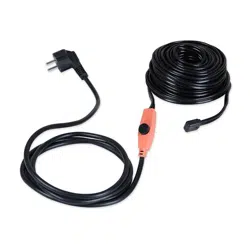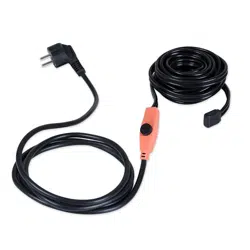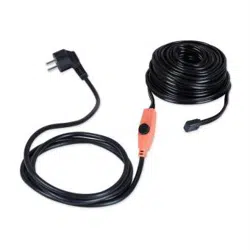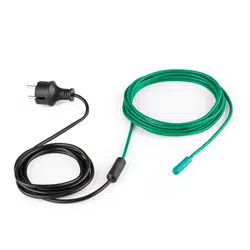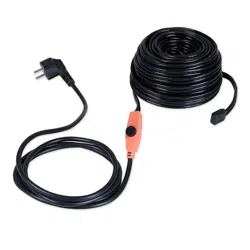

Flow Wire
Frostschutzkabel
Anti-freeze Cable
Cable anticongelante
Câble antigel
Cavo antigelo
10033903 10033905 10033906

3
DE
English 11
Español 17
Français 23
Italiano 29
Sehr geehrter Kunde,
wir gratulieren Ihnen zum Erwerb Ihres Gerätes. Lesen
Sie die folgenden Hinweise sorgfältig durch und befolgen
Sie diese, um möglichen Schäden vorzubeugen. Für
Schäden, die durch Missachtung der Hinweise und
unsachgemäßen Gebrauch entstehen, übernehmen wir
keine Haftung. Scannen Sie den QR-Code, um Zugriff
auf die aktuellste Bedienungsanleitung und weitere
Informationen rund um das Produkt zu erhalten.
INHALTSVERZEICHNIS
Sicherheitshinweise 4
Vor der Installation 5
Installation 6
Bedienung 8
Hinweise zur Entsorgung 8
Spezielle Entsorgungshinweise für Verbraucher in Deutschland 9
TECHNISCHE DATEN
Artikelnummer 10033903, 10033905, 10033906
Stromversorgung 230 V ~ 50/60 Hz
HERSTELLER & IMPORTEUR (UK)
Hersteller:
Chal-Tec GmbH, Wallstraße 16, 10179 Berlin, Deutschland.
Importeur für Großbritannien:
Berlin Brands Group UK Limited
PO Box 42
272 Kensington High Street
London, W8 6ND
United Kingdom
4
DE
SICHERHEITSHINWEISE
Hinweis: Das Frostschutzkabel mit Thermostat wird ausschließlich
zum Schutz von Wasserleitungen aus Metall oder nicht brennbarem
Kunststoff (bis zu einem Durchmesser von 76 mm) vor dem Einfrieren
verwendet. Jede andere Verwendung gilt als unsachgemäß. Im Falle einer
unsachgemäßen Verwendung, Manipulation oder Modikation des Gerätes
erlischt die Garantie und Haftung des Herstellers.
• Die Länge des Frostschutzkabels kann nicht verändert werden. Wird sie
verkürzt, besteht die Gefahr der Überhitzung. Wenn es verlängert wird,
dann liefert es nicht mehr die erforderliche Wärme. Jeder Versuch, das
Frostschutzkabel physisch zu ändern, führt zum Erlöschen der Garantie.
Wird das Frostschutzkabel durchtrennt, kann es nicht mehr repariert
werden.
• Wenn das Frostschutzkabel steif ist (durch die Kälte), rollen Sie es erst
komplett aus und stecken Sie es für einige Minuten in eine Steckdose,
bis es warm und biegsam ist, bevor Sie es auf das Rohr legen. Achten Sie
darauf, dass sich das Frostschutzkabel bei der Verlegung auf mindestens
+5 °C erwärmt hat. Andernfalls kann die Schutzhülle beschädigt werden.
Stecken sie das Frostschutzkabel niemals in die Steckdose, während es
aufgerollt ist. Dadurch könnte sich das Kabel an den Stellen, an denen es
sich selbst berührt, überhitzen und die Außenisolierung schmelzen, so
dass sich das Kabel nicht mehr aufrollen lässt.
• Verlegen Sie das Frostschutzkabel nicht an Rohren, die sich auf über
66°C erwärmen (z. B. Dampeitungen), da hohe Temperaturen das Kabel
beschädigen können.
• Um Brände zu vermeiden, sollte das Frostschutzkabel in einem
Abstand von mindestens 13mm zu allen leicht brennbaren Materialien
(einschließlich brennbarer Isolierung) verlegt werden.
• Eine übermäßige Isolierung des Frostschutzkabels führt zu einer
Überhitzung. Achten Sie darauf, dass die Isolierung feuerfest ist.
• Das Frostschutzkabel muss vor Verschleiß geschützt werden, wenn
es an Orten verlegt wird, an denen Schäden möglich sind (z.B. durch
nagende Tiere, Auswurf aus Rasenmähern, Schneeräumung, herabfallende
Eiszapfen usw.).
• Rollen Sie das Kabel nicht auf, es muss über die gesamte Länge des Rohres
gestreckt bleiben.
• Das Frostschutzkabel darf nicht in Flüssigkeiten eingetaucht werden.
• Verwenden Sie das Kabel nicht in Bereichen, in denen es mechanischen
Belastungen oder Beschädigungen ausgesetzt sein kann. Bei Verwendung
in tierischen Bissgebieten sollte es vor dem Beißen geschützt werden.
• Das Frostschutzkabel darf ohne Zugentlastung nicht belastet werden.

5
DE
• Die Wasserleitungen und alle leitenden Teile, die mit dem
Frostschutzkabel in Berührung kommen, müssen geerdet sein.
• Überprüfen Sie das Frostschutzkabel vor der Installation auf
Beschädigungen. Frostschutzkabel mit beschädigter Ummantelung dürfen
nicht verwendet werden und müssen entsorgt werden.
Hinweis: Achten Sie darauf, dass das Frostschutzkabel keine anderen
Frostschutzkabel berührt oder kreuzt. Dies führt zu einer Überhitzung der
Frostschutzkabel und kann zu Bränden oder Stromschlägen führen.
VOR DER INSTALLATION
Auswahl des Kabels und der Isolierung
• Messen Sie die Länge und den Durchmesser des Rohres.
• Wählen Sie das Kabel, das der Rohrversion am nächsten kommt. Das Kabel
darf nicht mehr als 600 mm kürzer als das Rohr und nicht länger als das
Rohr sein. Es ist möglich, zwei Kabel auf einer Rohrlänge zu verwenden,
die 600 mm überlappen können, wenn sie auf den gegenüberliegenden
Seiten des Rohres verwendet werden.
• Wählen eine geeignete Isolierung aus, die über Frostschutzkabel bzw.
Rohr gelegt werden soll. Es kann eine Schaum- oder Mineralwollisolierung
verwendet werden. Achten Sie darauf, dass die verwendete
Schaumstofsolierung feuerfest ist.

6
DE
INSTALLATION
(1) Vorbereitung des Rohres
Stellen Sie vor der Montage des Frostschutzkabels sicher, dass der Bereich um
das Rohr herum frei zugänglich. Versichern Sie sich, dass sich keine scharfen
Kanten und keine leicht brennbaren Materialien in unmittelbarer Umgebung
benden, um das Risiko einer Beschädigung des Kabels und der angrenzenden
Bereiche so weit wie möglich auszuschließen.
(2) Aufbringen von Aluminiumfolie auf das Kunststoffrohr
Wenn das Frostschutzkabel an einem Kunststoffrohr befestigt ist, empfehlen
wir, das Rohr zuerst in Aluminiumfolie zu wickeln, bevor das Frostschutzkabel
befestigt wird. Die Aluminiumfolie verteilt die Wärme des Frostschutzkabels
gleichmäßig um das Rohr, da Aluminium ein besserer Wärmeleiter ist als
Kunststoff.
(3) Vorbereiten der Stromversorgung
Achten Sie darauf, dass sich in der Nähe eine geerdete Steckdose bendet,
an der Sie das Frostschutzkabel anschließen können. Bilden Sie mit dem
Netzkabel eine „Tropfschleife“, um zu verhindern, dass Kondensat aus dem
Rohr in die Steckdose gelangt. Wird ein Verlängerungskabel benötigt, so
ist nur eines zu verwenden, das VDE- oder TÜV-geprüft ist und über eine
entsprechende Länge und Erdung verfügt.
(4) Sicherungsschutz für das Frostschutzkabel
Jedes Frostschutzkabel ist mit einem separaten Fehlerstromschutzschalter
(RCCB, 30 mA) ausgestattet.
(5) Positionierung des Thermostats
Der Thermostat muss dicht an der Rohrleitung angebracht und mit
einem PVC-Isolierband gesichert werden. Verwenden Sie keine Gurte.
Der Thermostat sollte an dem kältesten Rohrende befestigt werden.
Der Thermostat misst die Temperatur der Rohrleitung und schaltet das
Frostschutzkabel nach Bedarf ein oder aus, um ein Einfrieren der Rohrleitung
zu verhindern und einen efzienten Betrieb zu gewährleisten.
Hinweis: Beachten Sie den minimalen Biegeradius. Das Frostschutzkabel
darf nicht verbogen werden! Der minimal zulässige Biegeradius beträgt
50 mm.
7
DE
(6) Anbringen des Frostschutzkabels
Legen Sie das Frostschutzkabel auf das Rohr und sichern Sie es mit
hochwertigem PVC-Isolierbnd im Abstand von 600 mm.
(7) Isolieren der Rohrs/Frostschutzkabels
Wir empfehlen, die Rohrisolierung über dem Frostschutzkabel anzubringen,
um einen zusätzlichen Schutz bei extrem kalter Witterung zu gewährleisten
und somit Kosten und Energieverbrauch zu minimieren. Das Rohr/
Frostschutzkabel kann mit Mineralwolle oder einer Weichschaumisolierung
isoliert werden. Der Thermostat sollte ähnlich isoliert werden wie das
Rohr/Frostschutzkabel, um sicherzustellen, dass an allen Abschnitten des
Rohres die gleiche Temperatur gehalten wird. Wenn der Thermostat mehr
als der Rest des Rohrs isoliert ist, dauert es länger als erforderlich, bis das
Frostschutzkabel vom Thermostat eingeschaltet wird. Der Thermostat
schaltet das Frostschutzkabel ein, wenn die erfasste Temperatur ca. 6°C
erreicht und schaltet es bei 13°C wieder aus.)
Beachten Sie bei der Verwendung von Dämmstoffen aus Mineralwolle
folgendes: Die Mineralwolledämmung kann durch Feuchtigkeit beschädigt
werden und muss daher mit eine wasserdichte Hülle um die Dämmung
umwickelt werden, um ein Eindringen von Feuchtigkeit zu verhindern. Die
Schaumstofsolierung wird in der Regel durch Feuchtigkeit nicht negativ
beeinusst, so dass hier keine wasserdichte Hülle erforderlich ist.
(8) Markierung der Frostschutzkabel
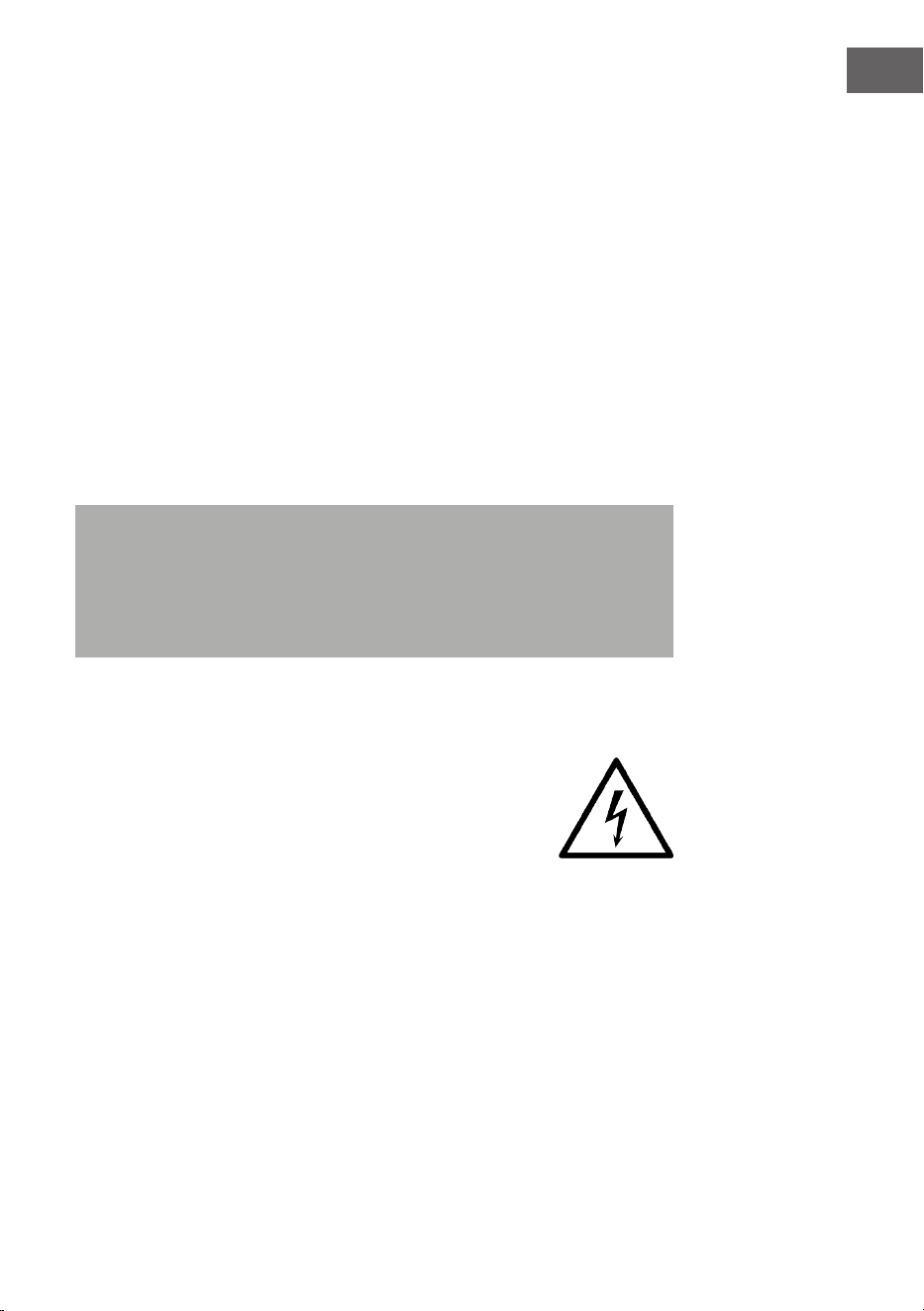
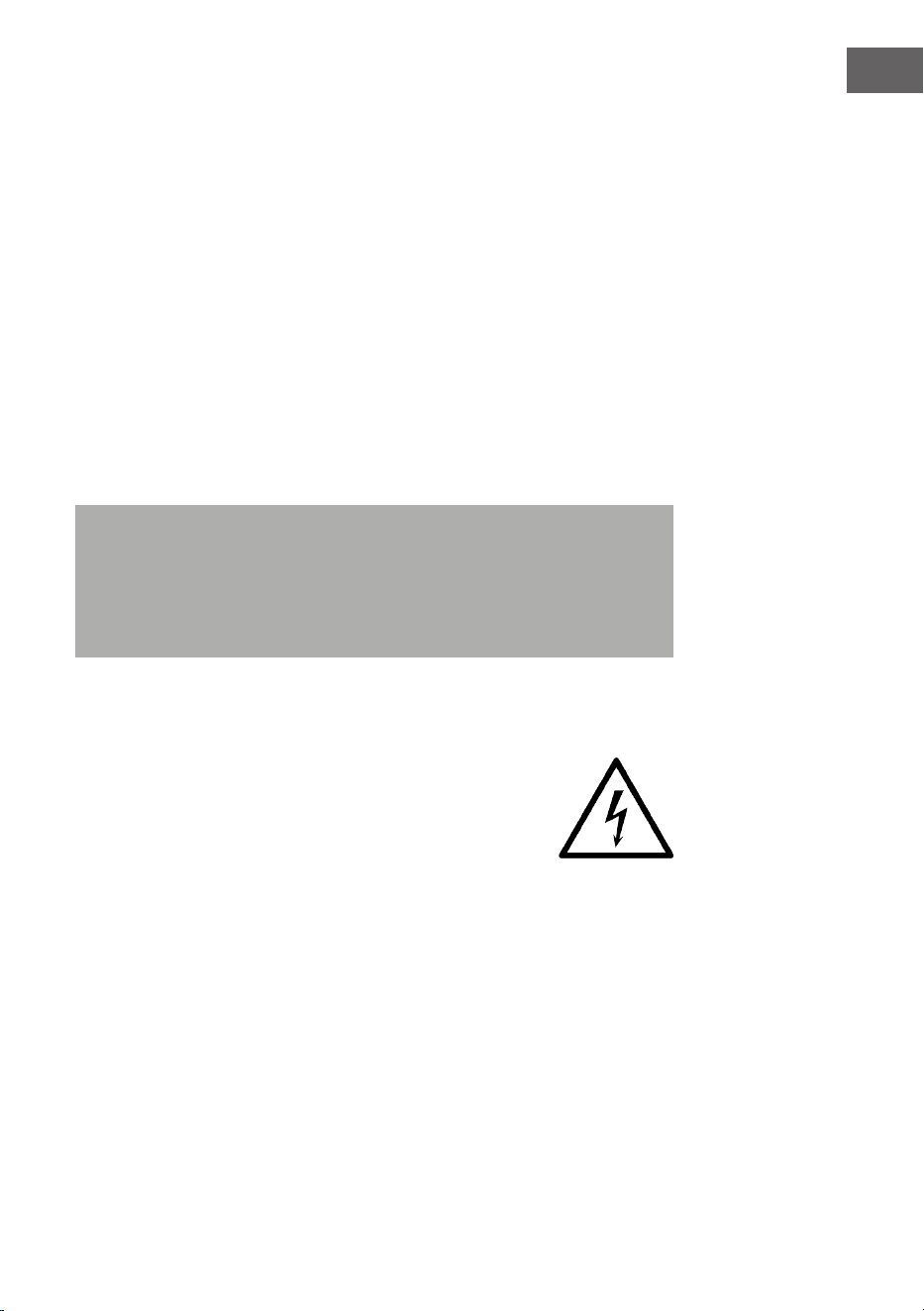
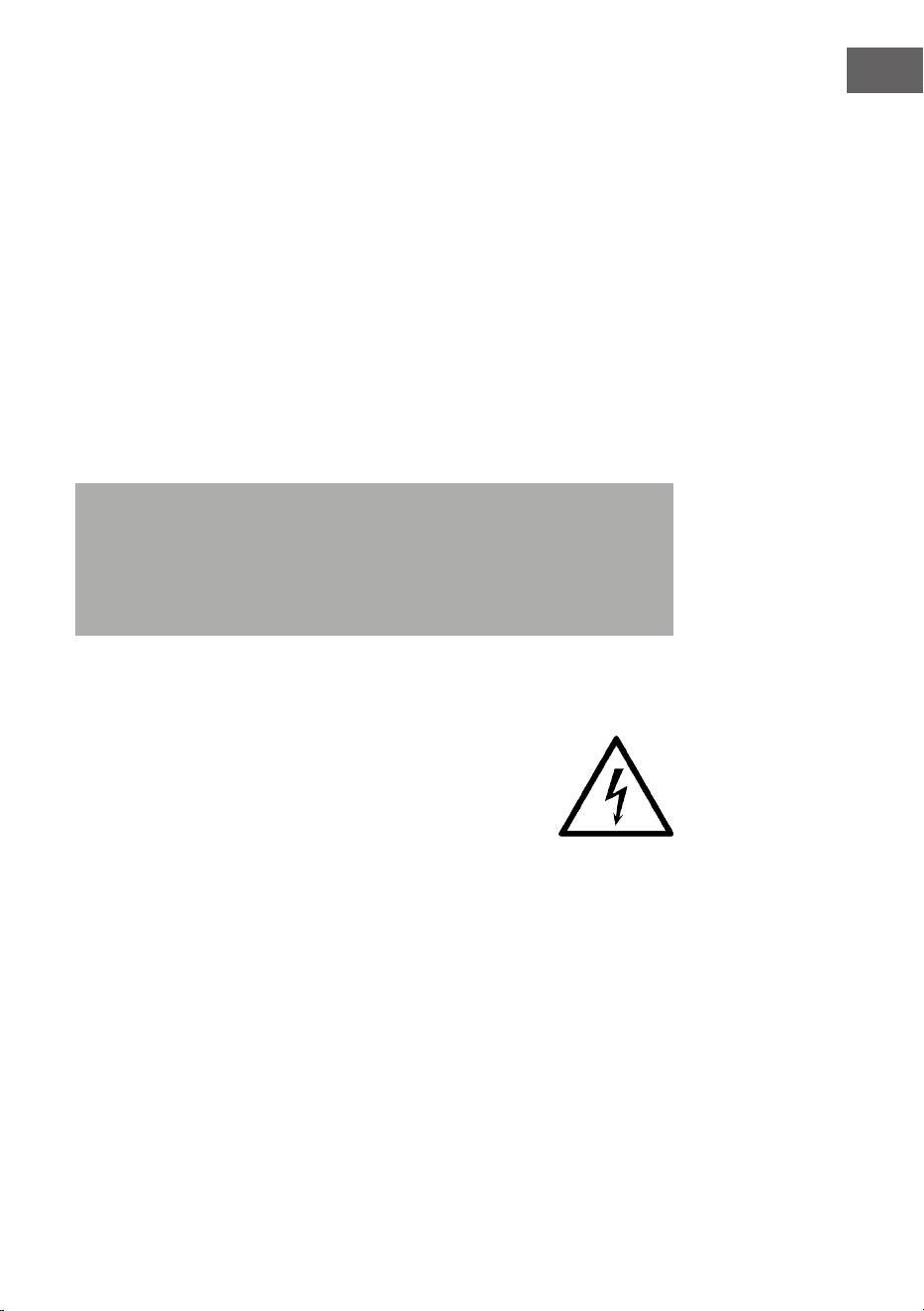
Das Vorhandensein der 230-Volt-Heizleitungen ist
in regelmäßigen Abständen entlang der isolierten
Wasserleitung und an der Steckdose (Schuko-Steckdose) mit
Hochspannungswarnschildern (siehe Bild) zu kennzeichnen.
Der Anschluss der Heizleitungen ist im Sicherungskasten
zu kennzeichnen. Das verwendete Frostschutzkabel ist
ebenfalls in den Schaltplänen zu kennzeichnen.
(9) Einstecken des Netzsteckers
Stecken Sie den Netzstecker zu Beginn der kalten Jahreszeit/Wintermonate
in eine geeignete Steckdose. Informationen hierzu nden Sie im folgenden
Abschnitt „Bedienung“.
8
DE
BEDIENUNG
Das Frostschutzkabel verfügt über einen automatischen Thermostat, der
das Frostschutzkabel bei einer Temperatur (mit abnehmender Tendenz) von
ca. 3 °C einschaltet und bei einer Temperatur (mit zunehmender Tendenz)
von ca. 13 °C wieder ausschaltet. Das Kabelsystem benötigt daher keine
Überwachung.
Nach der Saison (Frühling/Sommer)
Wir empfehlen Ihnen daher, das Frostschutzkabel im Sommer nicht
einzustecken (Netzstecker ziehen).
Vor der Saison (Herbst/Winter)
Überprüfen Sie das Frostschutzkabel vor Beginn der kalten Jahreszeit/
Wintermonate auf Schäden und prüfen Sie auch die Stromversorgung auf
einwandfreie Funktion. Wenn das Frostschutzkabel nicht beschädigt ist und
die Das Netzteil einwandfrei funktioniert, dann kann das Frostschutzkabel in
die Steckdose gesteckt werden.
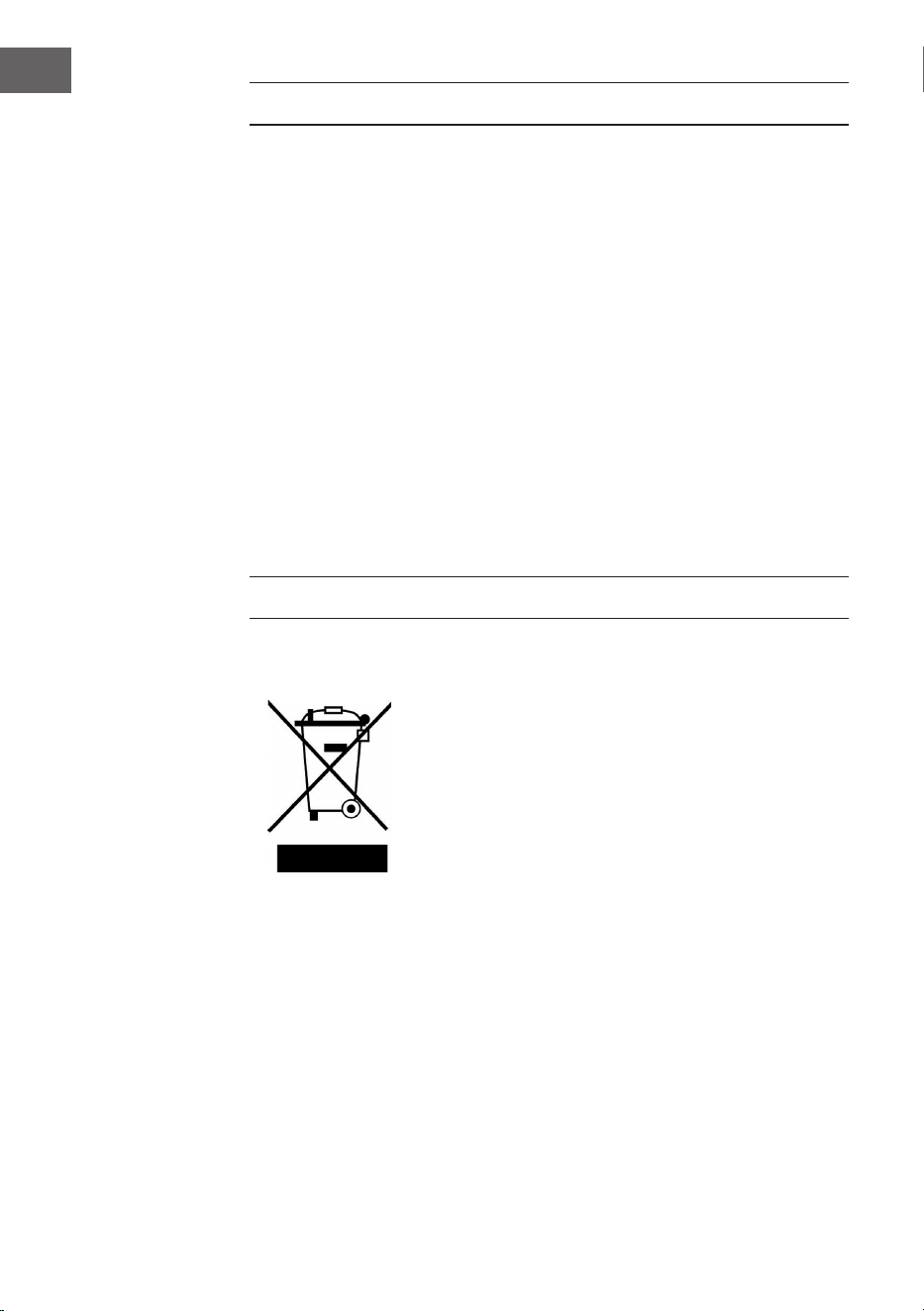
HINWEISE ZUR ENTSORGUNG
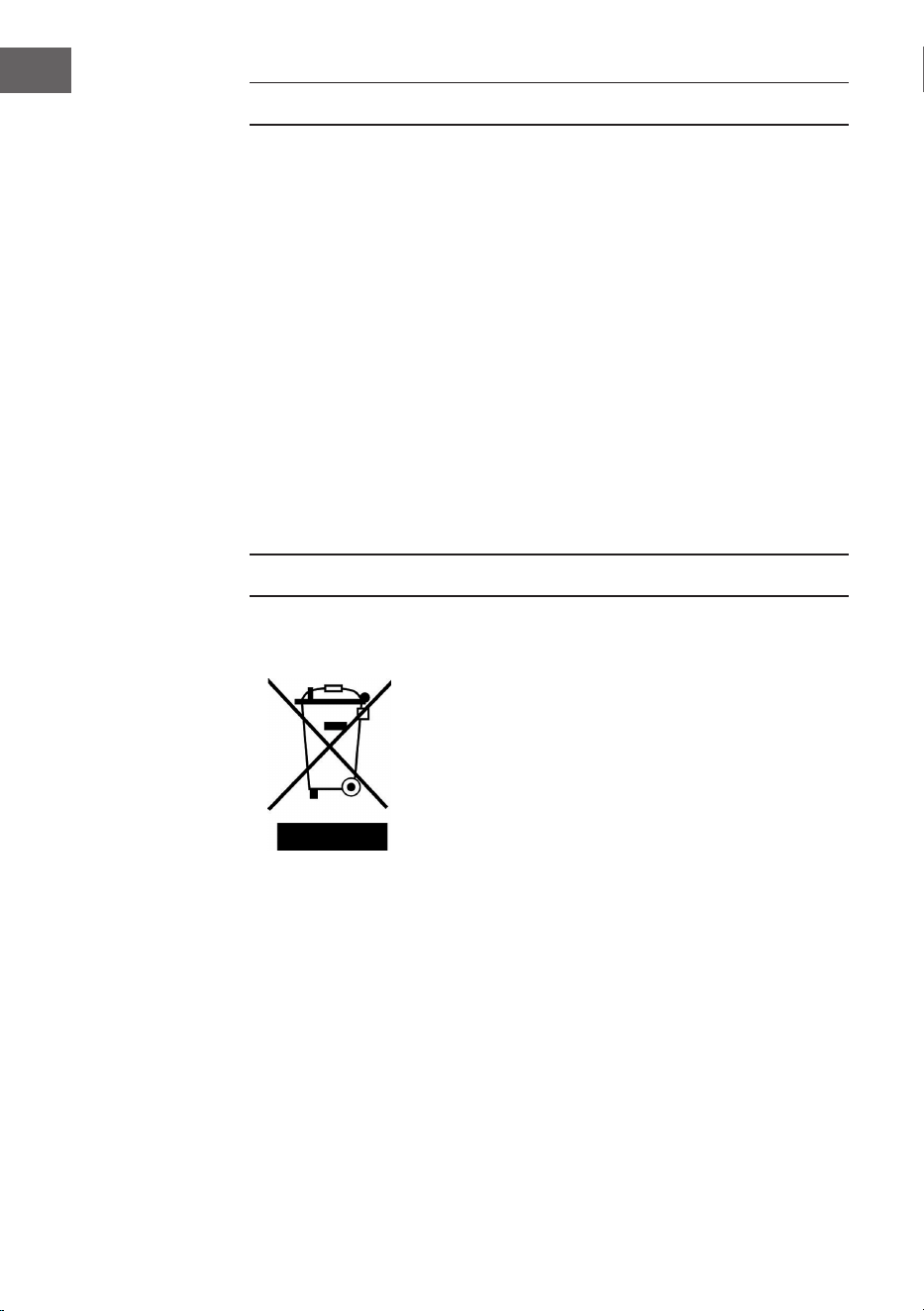
Wenn es in Ihrem Land eine gesetzliche Regelung
zur Entsorgung von elektrischen und elektronischen
Geräten gibt, weist dieses Symbol auf dem Produkt
oder auf der Verpackung darauf hin, dass dieses
Produkt nicht im Hausmüll entsorgt werden darf.
Stattdessen muss es zu einer Sammelstelle für das
Recycling von elektrischen und elektronischen Geräten
gebracht werden. Durch regelkonforme Entsorgung
schützen Sie die Umwelt und die Gesundheit
Ihrer Mitmenschen vor negativen Konsequenzen.
Informationen zum Recycling und zur Entsorgung
dieses Produkts, erhalten Sie von Ihrer örtlichen
Verwaltung oder Ihrem Hausmüllentsorgungsdienst.
9
DE
SPEZIELLE ENTSORGUNGSHINWEISE FÜR
VERBRAUCHER IN DEUTSCHLAND
Entsorgen Sie Ihre Altgeräte fachgerecht. Dadurch wird gewährleistet, dass
die Altgeräte umweltgerecht verwertet und negative Auswirkungen auf die
Umwelt und menschliche Gesundheit vermieden werden. Bei der Entsorgung
sind folgende Regeln zu beachten:
• Jeder Verbraucher ist gesetzlich verpichtet, Elektro- und
Elektronikaltgeräte (Altgeräte) sowie Batterien und Akkus
getrennt vom Hausmüll zu entsorgen. Sie erkennen die
entsprechenden Altgeräte durch folgendes Symbol der
durchgestrichene Mülltonne (WEEE Symbol).
• Sie haben Altbatterien und Altakkumulatoren, die nicht vom Altgerät
umschlossen sind, sowie Lampen, die zerstörungsfrei aus dem Altgerät
entnommen werden können, vor der Abgabe an einer Entsorgungsstelle
vom Altgerät zerstörungsfrei zu trennen.
• Bestimmte Lampen und Leuchtmittel fallen ebenso unter das Elektro- und
Elektronikgesetz und sind dementsprechend wie Altgeräte zu behandeln.
Ausgenommen sind Glühbirnen und Halogenlampen. Entsorgen Sie
Glühbirnen und Halogenlampen bitte über den Hausmüll, sofern Sie nicht
das WEEE Symbol tragen.
• Jeder Verbraucher ist für das Löschen von personenbezogenen Daten auf
dem Elektro- bzw. Elektronikgerät selbst verantwortlich.
Rücknahmepicht der Vertreiber
Vertreiber mit einer Verkaufsäche für Elektro- und Elektronikgeräte von
mindestens 400 Quadratmetern sowie Vertreiber von Lebensmitteln mit einer
Gesamtverkaufäche von mindestens 800 Quadratmetern, die mehrmals im
Kalenderjahr oder dauerhaft Elektro- und Elektronikgeräte anbieten und auf
dem Markt bereitstellen, sind verpichtet,
1 bei der Abgabe eines neuen Elektro- oder Elektronikgerätes an einen
Endnutzer ein Altgerät des Endnutzers der gleichen Geräteart, das
im Wesentlichen die gleichen Funktionen wie das neue Gerät erfüllt,
am Ort der Abgabe oder in unmittelbarer Nähe hierzu unentgeltlich
zurückzunehmen und
2 auf Verlangen des Endnutzers Altgeräte, die in keiner äußeren
Abmessung größer als 25 Zentimeter sind, im Einzelhandelsgeschäft
oder in unmittelbarer Nähe hierzu unentgeltlich zurückzunehmen; die
Rücknahme darf nicht an den Kauf eines Elektro- oder Elektronikgerätes
geknüpft werden und ist auf drei Altgeräte pro Geräteart beschränkt.
10
DE
• Bei einem Vertrieb unter Verwendung von Fernkommunikationsmitteln
ist die unentgeltliche Abholung am Ort der Abgabe auf Elektro- und
Elektronikgeräte der Kategorien 1, 2 und 4 gemäß § 2 Abs. 1 ElektroG,
nämlich „Wärmeüberträger“, „Bildschirmgeräte“ (Oberäche von mehr
als 100 cm²) oder „Großgeräte“ (letztere mit mindestens einer äußeren
Abmessung über 50Zentimeter) beschränkt. Für andere Elektro- und
Elektronikgeräte (Kategorien 3, 5, 6) ist eine Rückgabemöglichkeit in
zumutbarer Entfernung zum jeweiligen Endnutzer zu gewährleisten.
• Altgeräte dürfen kostenlos auf dem lokalen Wertstoffhof oder in
folgenden Sammelstellen in Ihrer Nähe abgegeben werden: www.take-e-
back.de
• Für Elektro- und Elektronikgeräte der Kategorien 1, 2 und 4 an bieten
wir auch die Möglichkeit einer unentgeltlichen Abholung am Ort der
Abgabe. Beim Kauf eines Neugeräts haben sie die Möglichkeit eine
Altgerätabholung über die Webseite auszuwählen.
• Batterien können überall dort kostenfrei zurückgegeben werden, wo sie
verkauft werden (z. B. Super-, Bau-, Drogeriemarkt). Auch Wertstoff- und
Recyclinghöfe nehmen Batterien zurück. Sie können Batterien auch per
Post an uns zurücksenden. Altbatterien in haushaltsüblichen Mengen
können Sie direkt bei uns von Montag bis Freitag zwischen 08:00 und
16:00 Uhr unter der folgenden Adresse unentgeltlich zurückgeben:
Chal-Tec Fulllment GmbH
Norddeutschlandstr. 3
47475 Kamp-Lintfort
• Wichtig zu beachten ist, dass Lithiumbatterien aus Sicherheitsgründen
vor der Rückgabe gegen Kurzschluss gesichert werden müssen (z. B. durch
Abkleben der Pole).
• Finden sich unter der durchgestrichenen Mülltonne auf der Batterie
zusätzlich die Zeichen Cd, Hg oder Pb ist das ein Hinweis darauf, dass die
Batterie gefährliche Schadstoffe enthält. (»Cd« steht für Cadmium, »Pb«
für Blei und »Hg« für Quecksilber).
Hinweis zur Abfallvermeidung
Indem Sie die Lebensdauer Ihrer Altgeräte verlängern, tragen Sie dazu
bei, Ressourcen efzient zu nutzen und zusätzlichen Müll zu vermeiden.
Die Lebensdauer Ihrer Altgeräte können Sie verlängern indem Sie defekte
Altgeräte reparieren lassen. Wenn sich Ihr Altgerät in gutem Zustand bendet,
könnten Sie es spenden, verschenken oder verkaufen.
11
EN
Dear Customer,
Congratulations on purchasing this device. Please read
the following instructions carefully and follow them to
prevent possible damages. We assume no liability for
damage caused by disregard of the instructions and
improper use. Scan the QR code to get access to the
latest user manual and more product information.
CONTENT
Safety instructions 12
Before Installation 13
Installation 14
Operation 16
Hints on Disposal 16
TECHNICAL DATA
Item number
10033903, 10033905, 10033906
Power supply
230 V ~ 50/60 Hz
MANUFACTURER & IMPORTER (UK)
Manufacturer:
Chal-Tec GmbH, Wallstrasse 16, 10179 Berlin, Germany.
Importer for Great Britain:
Berlin Brands Group UK Limited
PO Box 42
272 Kensington High Street
London, W8 6ND
United Kingdom
12
EN
SAFETY INSTRUCTIONS
Note: The anti-freeze cable with thermostat is used exclusively to protect
water pipes made of metal or non-ammable plastic (up to a diameter
of 76 mm) from freezing. Any other use is considered improper. In the
event of improper use, manipulation or modication of the device, the
manufacturer‘s warranty and liability shall lapse.
• The length of the frost protection cable cannot be changed. If it is
shortened, there is a risk of overheating. If it is extended, it will no longer
supply the required heat. Any attempt to physically modify the antifreeze
cable will void the warranty. If the antifreeze cable is cut, it cannot be
repaired.
• If the antifreeze cable is stiff (due to the cold), unroll it completely and plug
it into an electrical outlet for a few minutes until it is warm and exible
before placing it on the pipe. Make sure that the antifreeze cable has
warmed to at least +5°C during installation. Otherwise, the protective
cover may be damaged. Never plug the antifreeze cable into the socket
while it is rolled up. This could cause the cable to overheat where it
touches itself and the outer insulation to melt, preventing the cable from
winding up.
• Do not lay the antifreeze cable on pipes that heat up to above 66 °C (e.g.
steam pipes), as high temperatures can damage the cable.
• To prevent res, the antifreeze cable should be installed at least 13 mm
away from all readily combustible materials (including combustible
insulation).
• Excessive insulation of the antifreeze cable will result in overheating.
Ensure that the insulation is reproof.
• The antifreeze cable must be protected from wear if it is laid in places
where damage is possible (e.g. by gnawing animals, ejected from lawn
mowers, snow clearance, falling icicles, etc.).
• Do not roll up the cable, it must remain stretched over the entire length of
the pipe.
• The antifreeze cable must not be immersed in liquids.
• Do not use the cable in areas where it may be exposed to mechanical
stress or damage. When used in animal bite areas, it should be protected
from biting.
• The frost protection cable must not be loaded without strain relief.

13
EN
• The water pipes and all conductive parts that come into contact with the
frost protection cable must be earthed.
• Check the antifreeze cable for damage before installation. Frost
protection cables with damaged sheathing must not be used and must be
disposed of.
Note: Ensure that the antifreeze cable does not touch or cross other
antifreeze cables. This will cause the antifreeze cables to overheat and may
result in re or electric shock.
BEFORE INSTALLATION
Cable and insulation selection
• Measure the length and diameter of the pipe.
• Select the cable that comes closest to the pipe version. The cable must not
be more than 600 mm shorter than the pipe and no longer than the pipe. It
is possible to use two cables on one pipe length that can overlap 600 mm
when used on the opposite sides of the pipe.
• Select a suitable insulation to be laid over the antifreeze cable or pipe.
Foam or mineral wool insulation can be used. Ensure that the foam
insulation used is reproof.
14
EN
INSTALLATION
(1) Preparation of the pipe
Before installing the antifreeze cable, make sure that the area around the pipe
is freely accessible. Ensure that there are no sharp edges or easily combustible
materials in the immediate vicinity to minimise the risk of damage to the cable
and adjacent areas.
(2) Applying aluminium foil to the plastic pipe
If the antifreeze cable is attached to a plastic tube, we recommend wrapping
the tube in aluminium foil before attaching the antifreeze cable. The
aluminium foil distributes the heat of the antifreeze cable evenly around the
pipe, as aluminium is a better heat conductor than plastic.
(3) Preparing the power supply
Make sure that there is an earthed socket nearby where you can connect
the frost protection cable. Form a „drip loop“ with the power cord to prevent
condensation from entering the outlet. If an extension cord is required, use
only one that is VDE or TÜV approved and has the appropriate length and
grounding.
(4) Fuse protection for the frost protection cable
Each frost protection cable is equipped with a separate residual current circuit
breaker (RCCB, 30 mA).
(5) Positioning the thermostat
The thermostat must be placed close to the pipe and secured with PVC
insulation tape. Do not use straps. The thermostat should be attached to the
coldest end of the pipe. The thermostat measures the temperature of the pipe
and turns the antifreeze cable on or off as needed to prevent the pipe from
freezing and ensure efcient operation.
Note: Observe the minimum bending radius. The frost protection cable
must not be bent! The minimum permissible bending radius is 50 mm.
15
EN
(6) Attaching the antifreeze cable
Place the frost protection cable on the pipe and secure it with high-quality
PVC insulation at a distance of 600 mm.
(7) Insulating the pipe/antifreeze cable
We recommend installing the pipe insulation over the antifreeze cable to
ensure additional protection in extremely cold weather conditions and thus
minimise costs and energy consumption. The pipe/antifreeze cable can be
insulated with mineral wool or soft foam insulation. The thermostat should
be insulated similarly to the pipe/antifreeze cable to ensure that the same
temperature is maintained at all sections of the pipe. If the thermostat is
insulated more than the rest of the pipe, it will take longer than necessary for
the thermostat to turn on the antifreeze cable. The thermostat turns on the
antifreeze cable when the detected temperature reaches approximately 6°C
and turns it off again at 13°C.)
Note the following when using mineral wool insulation materials: The
mineral wool insulation can be damaged by moisture and must therefore
be wrapped around the insulation with a waterproof cover to prevent
moisture from penetrating. The foam insulation is usually not negatively
affected by moisture, so a waterproof cover is not required.
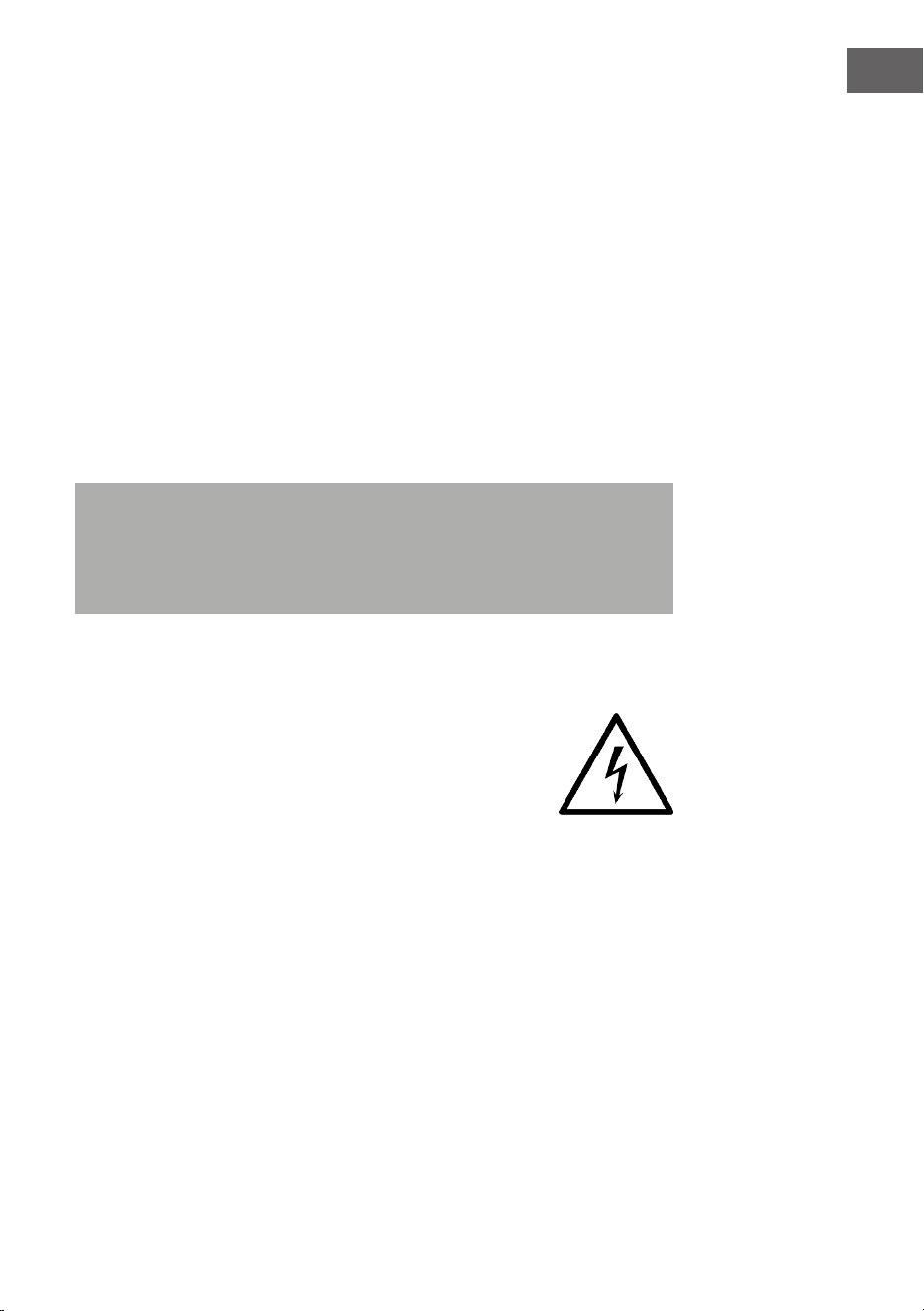
(8) Marking of the frost protection cables
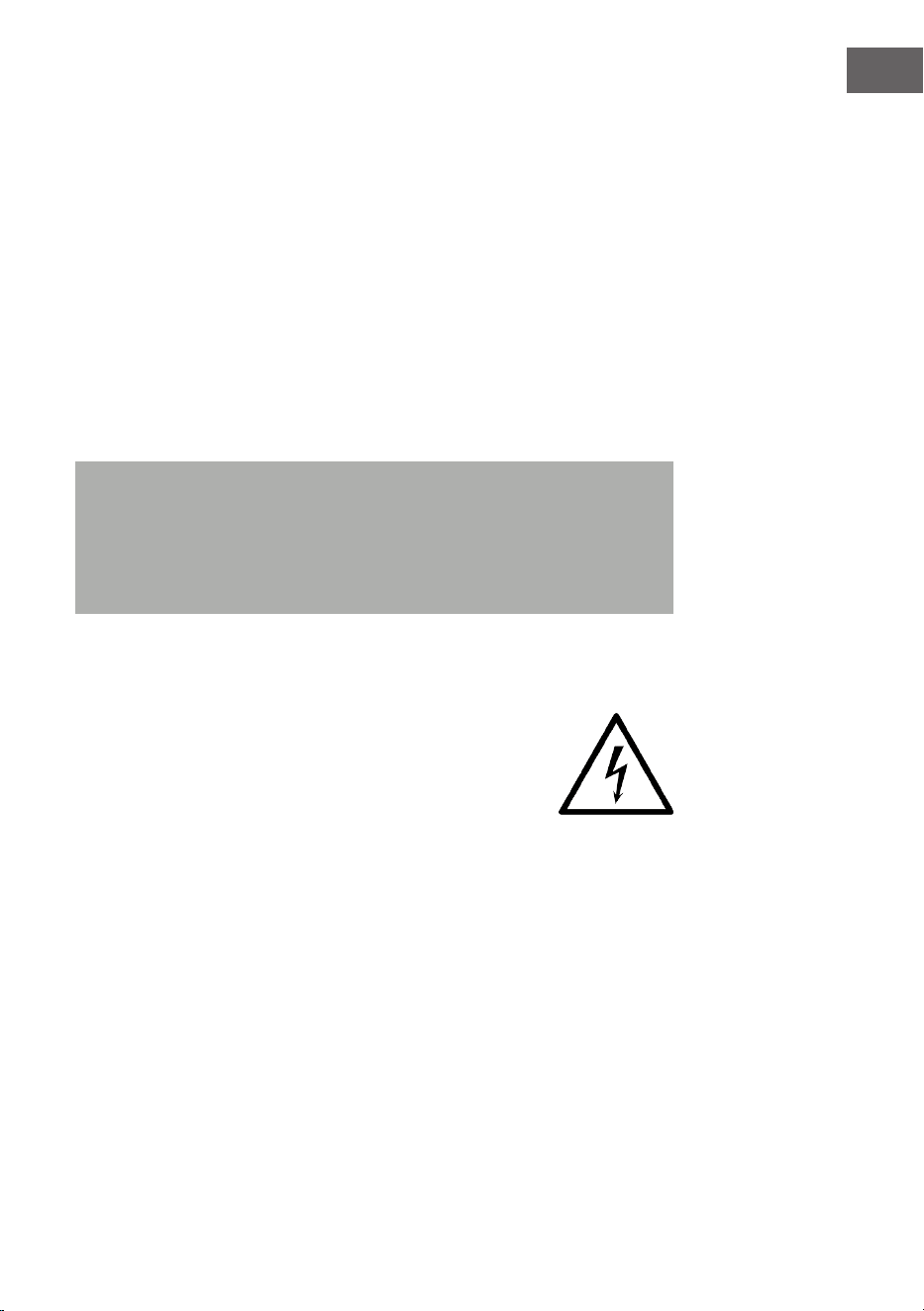
The presence of the 230-volt heating cables must be marked
at regular intervals along the insulated water pipe and at the
socket (Schuko socket) with high-voltage warning labels (see
illustration). The connection of the heating cables must be
marked in the fuse box. The frost protection cable used must
also be marked in the circuit diagrams.
(9) Plugging in the mains plug
Plug the mains plug into a suitable socket at the beginning of the cold season/
winter months. Refer to the „Operation“ section for more information.
16
EN
OPERATION
The antifreeze cable is equipped with an automatic thermostat which switches
the antifreeze cable on at a temperature (with decreasing tendency) of approx.
3 °C and switches it off again at a temperature (with increasing tendency) of
approx. 13 °C. The antifreeze cable is equipped with an automatic thermostat
which switches the antifreeze cable on at a temperature (with decreasing
tendency) of approx. 3 °C and switches it off again at a temperature (with
increasing tendency) of approx. 13 °C. The cable system therefore requires no
monitoring.
After the season (spring/summer)
We therefore recommend that you do not plug in the frost protection cable in
summer (pull the mains plug).
Before the season (autumn/winter)
Check the frost protection cable for damage before the beginning of the
cold season/ winter months and also check the power supply for proper
functioning. If the antifreeze cable is not damaged and the power supply is
working properly, plug the antifreeze cable into the wall socket.
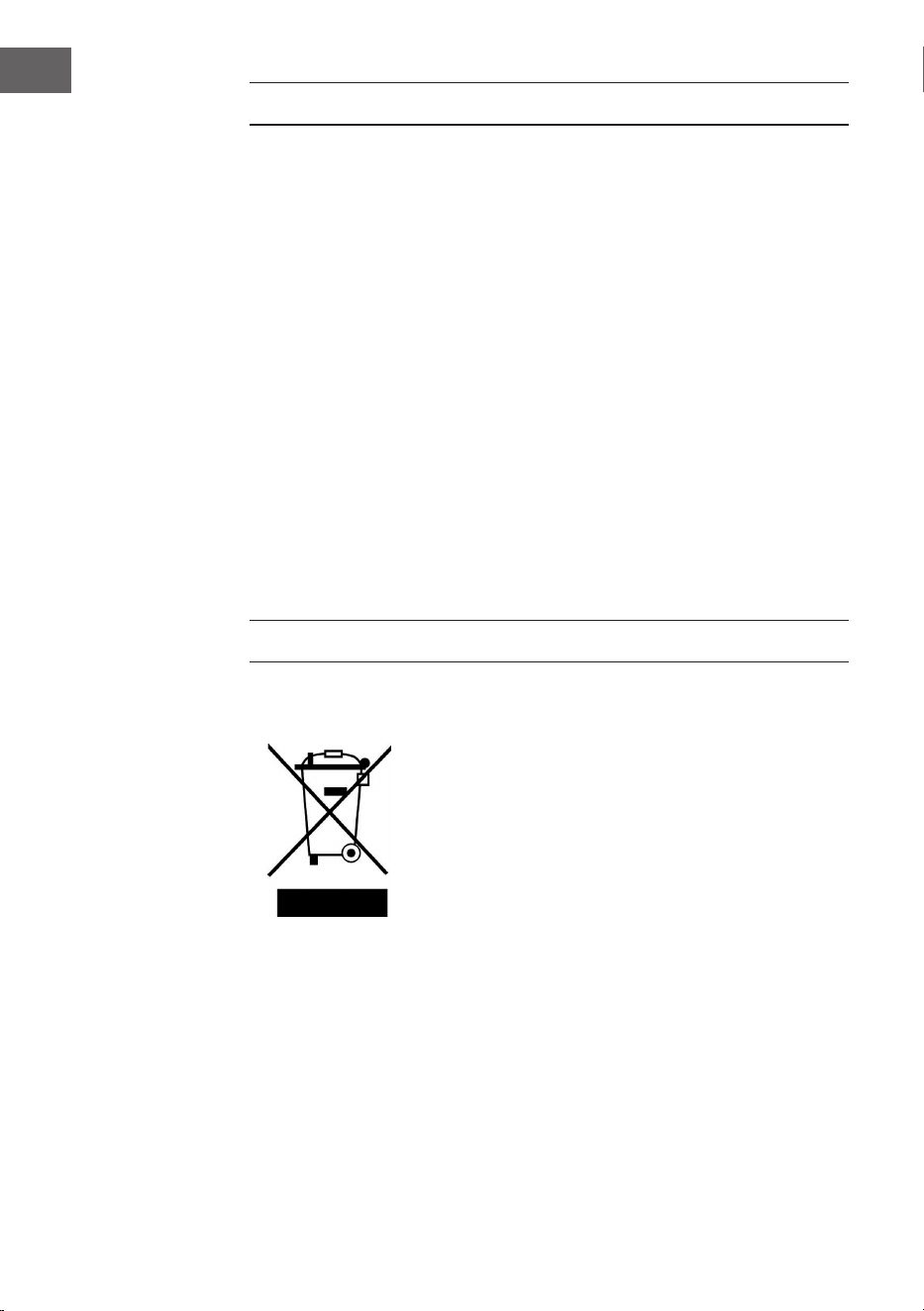
HINTS ON DISPOSAL
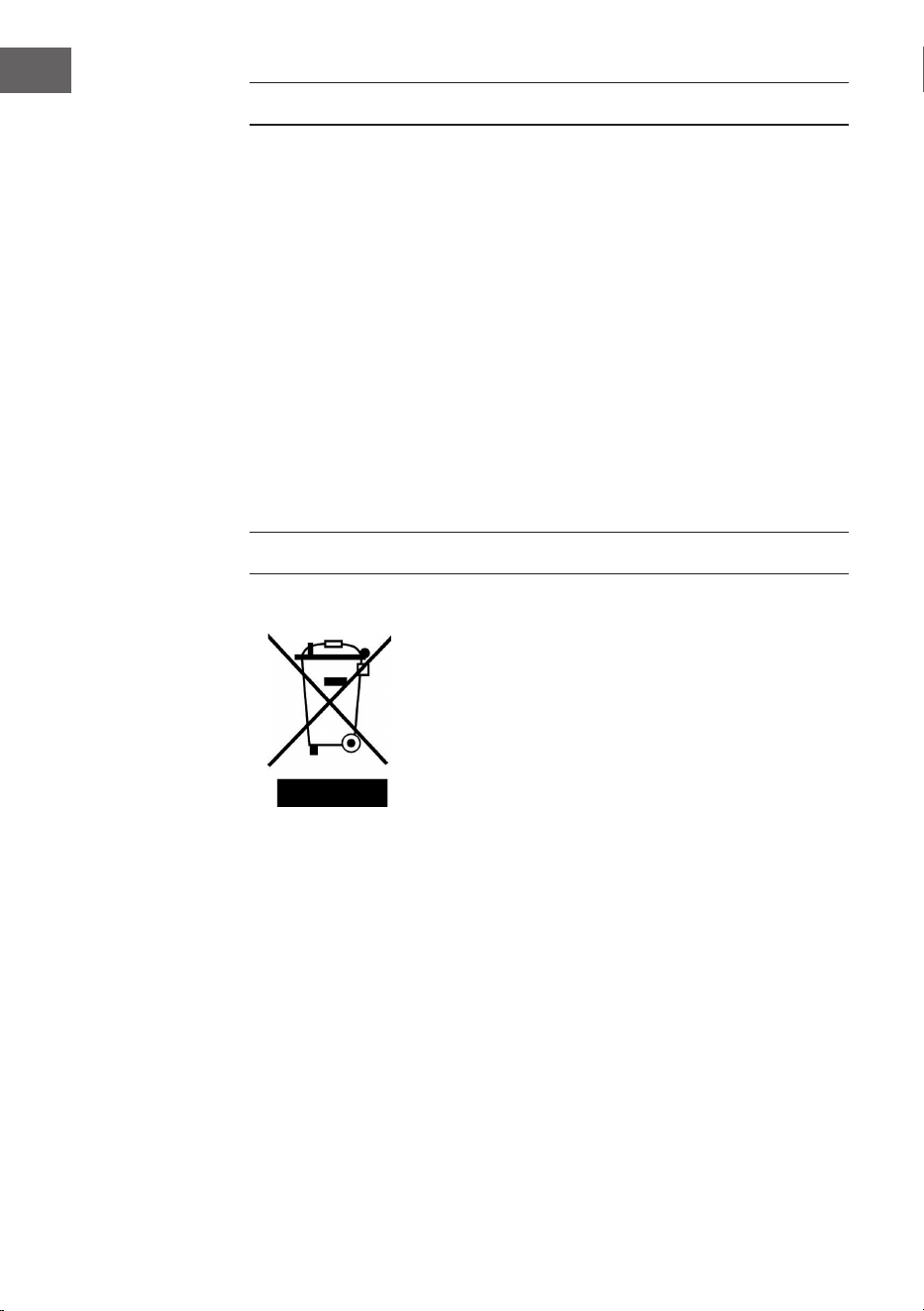
If there is a legal regulation for the disposal of electrical
and electronic devices in your country, this symbol
on the product or on the packaging indicates that this
product must not be disposed of with household waste.
Instead, it must be taken to a collection point for the
recycling of electrical and electronic equipment. By
disposing of it in accordance with the rules, you are
protecting the environment and the health of your
fellow human beings from negative consequences. For
information about the recycling and disposal of this
product, please contact your local authority or your
household waste disposal service.
17
ES
Estimado cliente:
Le felicitamos por la adquisición de este producto. Lea
atentamente el siguiente manual y siga cuidadosamente
las instrucciones de uso con el n de evitar posibles
daños. La empresa no se responsabiliza de los daños
ocasionados por un uso indebido del producto o por haber
desatendido las indicaciones de seguridad. Escanee el
código QR para obtener acceso al manual de usuario más
reciente y otra información sobre el producto.
ÍNDICE
Instrucciones de seguridad 18
Antes de la instalación 19
Instalación 20
Operación 22
Retirada del aparato 22
DATOS TÉCNICOS
Número de artículo
10033903 10033905 10033906
Alimentación eléctrica
230 V ~ 50/60 Hz
FABRICANTE E IMPORTADOR (REINO UNIDO)
Fabricante:
Chal-Tec GmbH, Wallstraße 16, 10179 Berlín, Alemania.
Importador para Gran Bretaña:
Berlin Brands Group UK Limited
PO Box 42
272 Kensington High Street
London, W8 6ND
United Kingdom
18
ES
INSTRUCCIONES DE SEGURIDAD
Nota: El cable anticongelante con termostato se utiliza exclusivamente
para proteger de la congelación las tuberías de agua de metal o de plástico
no inamable (hasta un diámetro de 76 mm). Cualquier otro uso se
considera impropio. En caso de uso indebido, manipulación o modicación
del aparato, la garantía y la responsabilidad del fabricante caducarán.
• La longitud del cable de protección contra heladas no se puede modicar.
Si se acorta, existe el riesgo de sobrecalentamiento. Si se prolonga, ya
no proporcionará el calor necesario. Cualquier intento de modicar
físicamente el cable anticongelante anulará la garantía. Si se corta el cable
anticongelante, no se puede reparar.
• Si el cable anticongelante está rígido (debido al frío), desenróllelo
completamente y enchúfelo en una toma de corriente durante unos
minutos hasta que esté caliente y exible antes de colocarlo en el tubo.
Asegúrese de que el cable anticongelante se haya calentado a una
temperatura de al menos +5°C durante la instalación. De lo contrario,
la cubierta protectora puede resultar dañada. Nunca enchufe el cable
anticongelante en la toma de corriente mientras esté enrollado. Esto
podría causar que el cable se sobrecaliente donde toca a sí mismo y que el
aislamiento exterior se derrita, impidiendo que el cable se enrolle.
• No coloque el cable de protección contra heladas sobre tuberías que se
calienten a más de 66 °C (por ejemplo, tuberías de vapor), ya que las altas
temperaturas pueden dañar el cable.
• Para evitar incendios, el cable anticongelante debe instalarse a una
distancia mínima de 13 mm de cualquier material combustible (incluido el
aislamiento combustible).
• El aislamiento excesivo del cable anticongelante provocará un
sobrecalentamiento. Asegúrese de que el aislamiento sea a prueba de
fuego.
• El cable anticongelante debe protegerse contra el desgaste si se coloca
en lugares donde es posible que se produzcan daños (por ejemplo, por
roedores, expulsados de cortadoras de césped, limpieza de nieve, caída de
carámbanos, etc.).
• No enrolle el cable, debe permanecer estirado en toda la longitud de la
tubería.
• El cable anticongelante no debe sumergirse en líquidos.
• No utilice el cable en áreas donde pueda estar expuesto a esfuerzos
mecánicos o daños. Cuando se usa en áreas de mordeduras de animales,
debe protegerse de las mordeduras.
• El cable de protección contra heladas no debe cargarse sin descarga de
tracción.
19
ES
• Las tuberías de agua y todas las partes conductoras que entran en
contacto con el cable de protección contra heladas deben estar
conectadas a tierra.
• Compruebe que el cable anticongelante no esté dañado antes de
la instalación. Los cables de protección contra las heladas con el
revestimiento dañado no deben utilizarse y deben desecharse.
Nota: Asegúrese de que el cable anticongelante no toque ni cruce ningún
otro cable anticongelante. Esto hará que los cables anticongelantes se
sobrecalienten y puede provocar un incendio o una descarga eléctrica.
ANTES DE LA INSTALACIÓN
• Selección de cables y aislamientos
• Mida la longitud y el diámetro de la tubería.
• Seleccione el cable que más se aproxime a la versión de tubería. El cable no
debe ser más de 600 mm más corto que el tubo ni más largo que el tubo. Es
posible utilizar dos cables en una longitud de tubo que pueden solaparse
600 mm cuando se utilizan en los lados opuestos del tubo.
• Seleccione un aislamiento adecuado para colocar sobre el cable o la
tubería anticongelante. Se puede utilizar aislamiento de espuma o lana
mineral. Asegúrese de que el El aislamiento de espuma es a prueba de
fuego.

20
ES
INSTALACIÓN
(1) Preparación de la tubería
Antes de instalar el cable anticongelante, asegúrese de que el área alrededor
de la tubería sea de libre acceso. Asegúrese de que no haya bordes alados
o materiales fácilmente inamables en las inmediaciones para minimizar el
riesgo de daños en el cable y en las zonas adyacentes.
(2) Aplicación de papel de aluminio en el tubo de plástico
Si el cable anticongelante está conectado a un tubo de plástico, se
recomienda envolver el tubo en papel de aluminio antes de conectar el
cable anticongelante. La lámina de aluminio distribuye el calor del cable
anticongelante uniformemente alrededor de la tubería, ya que el aluminio es
un mejor conductor de calor que el plástico.
(3) Preparación de la fuente de alimentación
Asegúrese de que haya un enchufe con conexión a tierra cerca donde pueda
conectar el cable de protección contra heladas. Forme un „bucle de goteo“
con el cable de alimentación para evitar que la condensación entre en la
toma de corriente. Si se requiere un cable de extensión, utilice sólo uno que
esté aprobado por VDE o TÜV y que tenga la longitud y la conexión a tierra
adecuadas.
(4) Protección de fusible para el cable de protección contra heladas
Cada cable de protección contra heladas está equipado con un disyuntor de
corriente residual separado (RCCB, 30 mA).
(5) Posicionamiento del termostato
El termostato debe ser colocado cerca de la tubería y asegurado con cinta
aislante de PVC. No utilice correas. El termostato debe estar conectado al
extremo más frío de la tubería. El termostato mide la temperatura de la tubería
y conmuta la temperatura del agua. Cable de protección contra heladas según
sea necesario para activar o desactivar la congelación de la tubería y para
asegurar un funcionamiento eciente.
Nota: Observe el radio de curvatura mínimo. El cable de protección contra
heladas no debe doblarse! El radio de curvatura mínimo permitido es de 50
mm.
21
ES
(6) Fijación del cable anticongelante
Coloque el cable de protección contra heladas en la tubería y asegúrelo con
aislamiento de PVC de alta calidad a una distancia de 600 mm.
(7) Aislamiento de la tubería/cable anticongelante
Recomendamos instalar el aislamiento de la tubería sobre el cable
anticongelante para asegurar una protección adicional en condiciones de
frío extremo y minimizar así los costes y el consumo de energía. El cable de
tubería/anticongelante se puede aislar con lana mineral o espuma blanda.
El termostato debe estar aislado de manera similar al cable de tubería/
anticongelante para asegurar que se mantenga la misma temperatura en
todas las secciones de la tubería. Si el termostato tiene más que el resto de la
tubería está aislada, tomará más tiempo del necesario para que el El cable de
protección contra heladas se conecta mediante el termostato. El termostato
enciende el cable de protección contra heladas cuando la temperatura
detectada es de aprox. 6 °C y lo apaga de nuevo a 13 °C.)
Cuando utilice materiales aislantes de lana mineral, tenga en cuenta lo
siguiente: El aislamiento de lana mineral puede ser dañado por la humedad
y por lo tanto debe ser envuelto alrededor del aislamiento con una cubierta
impermeable para evitar que la humedad penetre. El aislamiento de
espuma no suele verse afectado negativamente por la humedad, por lo que
no se requiere una cubierta impermeable.
(8) Marcaje de cables de protección contra heladas
La presencia de los cables calefactores de 230 voltios debe
ser marcada a intervalos regulares a lo largo de la tubería de
agua aislada y en el enchufe (enchufe Schuko) con etiquetas
de advertencia de alta tensión (véase la ilustración). La
conexión de los cables calefactores debe estar marcada en
la caja de fusibles. El cable de protección contra las heladas
utilizado es el siguiente en los esquemas de conexiones.
(9) Conectar la clavija de alimentación
Enchufe la clavija de alimentación al principio de los meses de invierno/
temporada fría en un enchufe adecuado. Para obtener más información,
consulte lo siguiente Sección „Operación“.
22
ES
OPERACIÓN
El cable anticongelante está equipado con un termostato automático
que enciende el cable anticongelante a una temperatura (con tendencia
decreciente) de aprox. 3 °C y lo apaga de nuevo a una temperatura (con
tendencia creciente) de aprox. 13 °C. Por lo tanto, el sistema de cableado no
requiere supervisión.
Después de la temporada (primavera/verano)
Por lo tanto, le recomendamos que no enchufe el cable de protección contra
heladas en verano (desenchufe el cable de alimentación).
Antes de la temporada (otoño/invierno)
Compruebe que el cable de protección contra las heladas no esté dañado
antes del comienzo de la estación fría o de los meses de invierno y compruebe
también el correcto funcionamiento de la fuente de alimentación. Si el
cable anticongelante no está dañado y la fuente de alimentación funciona
correctamente, enchufe el cable anticongelante en la toma de corriente.
RETIRADA DEL APARATO
Si en su país existe una disposición legal relativa a la
eliminación de aparatos eléctricos y electrónicos, este
símbolo estampado en el producto o en el embalaje
advierte que no debe eliminarse como residuo
doméstico. En lugar de ello, debe depositarse en un
punto de recogida de reciclaje de aparatos eléctricos y
electrónicos. Una gestión adecuada de estos residuos
previene consecuencias potencialmente negativas
para el medio ambiente y la salud de las personas.
Puede consultar más información sobre el reciclaje y
la eliminación de este producto contactando con su
administración local o con su servicio de recogida de
residuos.
23
FR
Cher client,
Toutes nos félicitations pour l’acquisition de ce nouvel
appareil. Veuillez lire attentivement les instructions
suivantes de branchement et d’utilisation an d’éviter
d’éventuels dommages. Le fabricant ne saurait être tenu
pour responsable des dommages dus au non-respect
des consignes de sécurité et à la mauvaise utilisation de
l’appareil. Scannez le QR-Code pour accéder à la dernière
version du mode d‘emploi et à d‘autres informations
concernant le produit.
SOMMAIRE
Consignes de sécurité 24
Avant l‘installation 25
Installation 26
Utilisation 28
Conseils pour le recyclage 28
FICHE TECHNIQUE
Numéro d'article
10033903, 10033905, 10033906
Alimentation
230 V ~ 50/60 Hz
FABRICANT ET IMPORTATEUR (UK)
Fabricant :
Chal-Tec GmbH, Wallstraße 16, 10179 Berlin, Allemagne.
Importateur pour la Grande Bretagne :
Berlin Brands Group UK Limited
PO Box 42
272 Kensington High Street
London, W8 6ND
United Kingdom
24
FR
CONSIGNES DE SÉCURITÉ
Remarque : Le câble antigel avec thermostat sert exclusivement à la
protection des canalisations d’eau en métal ou en plastique incombustible
(jusqu’à un diamètre de 76 mm) avant la congélation. Toute autre utilisation
est considérée comme impropre. En cas d‘utilisation impropre, de
manipulation ou de modication inappropriées de l‘appareil, la garantie et
la responsabilité du fabricant seront annulées.
• La longueur du câble antigel ne peut pas être modiée. Si vous le
raccourcissez, il y a risque de surchauffe. Si vous le rallongez, il ne fournira
plus la chaleur nécessaire. Toute tentative de modication physique du
câble antigel annulera la garantie. Si le câble antigel est coupé, il ne peut
pas être réparé.
• Si le câble antigel est raidi (à cause du froid), déroulez-le d‘abord
complètement et branchez-le sur une prise de courant pendant quelques
minutes jusqu‘à ce qu‘il soit chaud et souple avant de le placer sur le tuyau.
Assurez-vous que le câble antigel a été chauffé à au moins +5 °C lors de
l‘installation. Sinon, la housse de protection pourrait être endommagée.
Ne branchez jamais le câble de protection contre le gel dans la prise
lorsqu‘il est enroulé. Cela pourrait provoquer une surchauffe du câble à
l‘endroit où il se superposerait et pourrait faire fondre l‘isolant extérieur,
empêchant ainsi le câble de s‘enrouler à l‘avenir.
• Ne posez pas le câble antigel sur des canalisations atteignant une
température supérieure à 66 °C (conduites de vapeur, par exemple), car les
températures élevées peuvent endommager le câble.
• An d‘éviter les incendies, le câble antigel doit être placé à au moins 13
mm de tout matériau inammable (y compris l‘isolation combustible).
• Une isolation excessive de l‘antigel entraîne une surchauffe. Assurez-vous
que l‘isolation est ignifuge.
• Le câble antigel doit être protégé de l‘usure s‘il est acheminé vers des
endroits où des dommages sont possibles (par exemple, rongé par des
animaux, éjections de tondeuses à gazon, déneigement, chute de glaçons,
etc.).
• Ne pas enrouler le câble, il doit rester tendu sur toute la longueur du tube.
• Le câble de protection antigel ne doit pas être immergé dans des liquides.
• N‘utilisez pas le câble dans des zones où il pourrait être soumis à des
contraintes mécaniques ou à des dommages. Si vous l‘utilisez dans un
endroit où il pourrait subir des morsures d‘animaux, protégez-le contre les
morsures.
• Le câble de protection antigel ne doit pas supporter de poids sans serre-
câble.
• Les conduites d‘eau et toutes les pièces conductrices qui entrent en
contact avec le câble antigel doivent être mises à la terre.
25
FR
• Vériez l‘état du câble antigel avant l‘installation
• Les câbles antigel avec une gaine endommagée ne doivent pas être utilisés
et doivent être éliminés.
Remarque : Assurez-vous que le câble antigel ne touche ni ne croise aucun
autre câble antigel. Cela entraînerait une surchauffe des câbles antigel et
pourrait provoquer un incendie ou un choc électrique.
AVANT L‘INSTALLATION
Choix du câble et de l‘isolant
• Mesurer la longueur et le diamètre du tuyau.
• Sélectionnez le câble le plus proche du tube. Le câble doit être au
maximum plus court de 600 mm par rapport au tuyau et ne doit pas être
plus long que celui-ci. Il est possible d’utiliser deux câbles sur une longueur
de tube pouvant chevaucher de 600 mm lorsqu’ils sont utilisés sur les
côtés opposés du tube.
• Choisissez une isolation appropriée à poser sur un câble ou un tuyau
antigel. Il peut s‘agir d‘une isolation en mousse ou en laine minérale.
Assurez-vous que l‘isolation en mousse utilisée est ignifuge.
26
FR
INSTALLATION
(1) Préparation du tube
Avant d‘installer le câble antigel, assurez-vous que la zone autour du tuyau
est librement accessible. Assurez-vous qu‘il n‘y a pas de bords tranchants et
de matériaux inammables à proximité immédiate an de minimiser le risque
d‘endommager le câble et les zones adjacentes.
(2) Application d‘une feuille d‘aluminium sur le tube en plastique
Si le câble antigel est xé à un tuyau en plastique, il est recommandé de
l‘enrouler dans du papier aluminium avant de le xer. La feuille d‘aluminium
répartit la chaleur du câble antigel uniformément autour du tuyau, car
l‘aluminium est un meilleur conducteur de chaleur que le plastique.
(3) Préparation de l‘alimentation
Assurez-vous qu’il existe une prise de terre où vous pouvez connecter le
câble antigel. Formez une „boucle d‘égouttage“ avec le cordon d‘alimentation
pour empêcher les condensats de pénétrer dans la prise. Si vous avez besoin
d‘une rallonge, utilisez-en une seule qui soit approuvée VDE ou TÜV et de la
longueur appropriée avec mise à la terre.
(4) Protection par fusible du câble antigel
Chaque câble antigel est équipé d‘un dispositif de courant résiduel séparé
(RCCB, 30 mA).
(5) Positionnement du thermostat
Le thermostat doit être monté tout près de la tuyauterie et xé avec un
ruban isolant en PVC. Ne pas utiliser de sangles. Le thermostat doit être xé
à l‘extrémité la plus froide du tuyau. Le thermostat mesure la température
de la canalisation et allume ou éteint le câble antigel selon les besoins pour
empêcher la canalisation de geler et pour assurer un fonctionnement efcace.
Remarque : Notez le rayon de courbure minimum. Le câble antigel ne doit
pas être plié ! Le rayon de courbure minimal admissible est de 50 mm.
27
FR
(6) Installation du câble antigel
Placez le câble antigel sur le tuyau et xez-le avec du ruban isolant en PVC de
haute qualité à une distance de 600 mm.
(7) Isolation du tube /du câble antigel
Nous recommandons d‘installer l‘isolant de tuyau par-dessus le câble antigel
pour offrir une protection supplémentaire par temps très froid, minimisant
ainsi les coûts et la consommation d‘énergie. Le tuyau antigel peut être isolé
avec de la laine minérale ou un isolant en mousse souple. Le thermostat doit
être isolé de la même manière que le tuyau / câble antigel an de garantir
le maintien de la même température sur toutes les sections du tuyau. Si le
thermostat est isolé plus que le reste du tuyau, il faudra plus de temps que
nécessaire pour activer le câble de protection antigel. Le thermostat active le
câble antigel lorsque la température détectée atteint environ 6 °C et l‘éteint à
13 °C.)
Lors de l‘utilisation de matériaux isolants en laine minérale, veuillez noter
les points suivants : l‘isolation en laine minérale peut être endommagée
par l‘humidité et doit donc être entourée d‘une gaine imperméable
pour empêcher la pénétration d‘humidité. L‘isolation en mousse n‘est
généralement pas affectée par l‘humidité, de sorte qu‘aucune coque
imperméable n‘est requise dans ce cas.
(8) Marquage du câble antigel
La présence de câbles chauffants de 230 V doit être signalée
à intervalles réguliers le long de la conduite d‘eau isolée
et au niveau de la prise (prise Schuko) avec des étiquettes
d‘avertissement de haute tension (voir illustration). Le
raccordement des câbles chauffants doit être marqué dans
la boîte à fusibles. Le câble antigel utilisé doit également être
marqué dans les schémas électriques.
(9) Branchement de la che secteur
Branchez le cordon d’alimentation dans une prise appropriée au début de la
saison froide / des mois d’hiver. Voir le chapitre suivant „Utilisation“.
28
FR
UTILISATION
Le câble antigel est doté d‘un thermostat automatique qui l‘enclenche à
une température (à tendance décroissante) d‘environ 3 °C et le débranche
à nouveau à une température (à tendance croissante) d‘environ 13 °C. Le
système de câble ne nécessite donc aucune surveillance.
En n de saison (printemps/été)
Nous vous recommandons donc de ne pas brancher le câble antigel en été
(débranchez la che).
Avant la saison (automne/hiver)
Vériez que le câble antigel n‘est pas endommagé avant le début de la saison
froide / des mois d‘hiver et vériez également que l‘alimentation électrique
fonctionne correctement. Si le câble antigel n‘est pas endommagé et que
l‘alimentation fonctionne correctement, vous pouvez brancher le câble antigel
sur la prise.
CONSEILS POUR LE RECYCLAGE
S‘il existe une réglementation pour l‘élimination ou le
recyclage des appareils électriques et électroniques
dans votre pays, ce symbole sur le produit ou sur
l‘emballage indique que cet appareil ne doit pas
être jeté avec les ordures ménagères. Vous devez le
déposer dans un point de collecte pour le recyclage des
équipements électriques et électroniques. La mise au
rebut conforme aux règles protège l‘environnement
et la santé de vos semblables des conséquences
négatives. Pour plus d‘informations sur le recyclage
et l‘élimination de ce produit, veuillez contacter votre
autorité locale ou votre service de recyclage des
déchets ménagers.
29
IT
Gentile cliente,
La ringraziamo per aver acquistato il dispositivo. La
preghiamo di leggere attentamente le seguenti istruzioni
per l’uso e di seguirle per evitare possibili danni tecnici.
Non ci assumiamo alcuna responsabilità per danni
scaturiti da una mancata osservazione delle avvertenze
di sicurezza e da un uso improprio del dispositivo.
Scansionare il codice QR seguente, per accedere al
manuale d’uso più attuale e per ricevere informazioni sul
prodotto.
INDICE
Avvertenze di sicurezza 30
Prima dell’installazione 31
Installazione 32
Utilizzo 34
Smaltimento 34
DATI TECNICI
Numero articolo
10033903, 10033905, 10033906
Alimentazione
230 V ~ 50/60 Hz
PRODUTTORE E IMPORTATORE (UK)
Produttore:
Chal-Tec GmbH, Wallstraße 16, 10179 Berlino, Germania.
Importatore per la Gran Bretagna:
Berlin Brands Group UK Limited
PO Box 42
272 Kensington High Street
London, W8 6ND
United Kingdom
30
IT
AVVERTENZE DI SICUREZZA
Avvertenza: il cavo antigelo con termostato viene utilizzato
esclusivamente per evitare il congelamento di condotti idrici in metallo
o in plastica non inammabile (no a un diametro di 76 mm). Ogni altro
utilizzo è considerato improprio. In caso di utilizzo improprio, modica o
manipolazione del dispositivo, la garanzia perde validità e il produttore non
si assume alcuna responsabilità.
• La lunghezza del cavo antigelo non può essere modicata. Se viene
accorciato, si corre il rischio di surriscaldamento. Se viene allungato, non è
in grado di fornire il calore necessario. Ogni tentativo di modica sica del
cavo antigelo comporta la perdita validità della garanzia. Se il cavo viene
tagliato, non è possibile ripararlo.
• Se il cavo antigelo è rigido (a causa del freddo), prima di poggiarlo sul
condotto, procedere a srotolarlo completamente e collegarlo per qualche
minuto a una presa elettrica, no a quando è caldo e essibile. Assicurarsi
che il cavo antigelo abbia raggiunto almeno +5 °C prima di posizionarlo,
altrimenti lo strato protettivo potrebbe danneggiarsi. Non collegare mai
il cavo a una presa elettrica mentre è arrotolato, altrimenti potrebbe
surriscaldarsi nei punti in cui c’è contatto tra parti del cavo stesso, con
conseguente scioglimento dello strato isolante esterno e impossibilità di
arrotolare di nuovo il cavo.
• Non posizionare il cavo su condotti che si scaldano oltre 66 °C (ad
es. condotti di vapore), dato che le elevate temperature potrebbero
danneggiarlo.
• Per evitare incendi, il cavo antigelo deve essere posizionato ad almeno
13 mm di distanza da materiali facilmente inammabili (incluso materiale
isolante inammabile).
• Un eccessivo isolamento del cavo antigelo comporta il surriscaldamento.
Assicurarsi che il materiale isolante sia ignifugo.
• Il cavo antigelo deve essere protetto dall’usura, se viene posizionato
in luoghi dove sono possibili danneggiamenti (ad es. a causa di roditori,
scarico di tagliaerba, rimozione della neve, caduta di stalattiti, ecc.).
• Non arrotolare il cavo, deve essere esteso lungo tutto il condotto.
• Non immergere il cavo antigelo in liquidi.
• Non un utilizzare il cavo in aree in cui potrebbe essere esposto a carichi
meccanici o danneggiamenti. Se lo si utilizza in aree con animali che
mordono, deve essere adeguatamente protetto.
• Il cavo antigelo non può sopportare carichi senza scarico di trazione.

31
IT
• I condotti idrici e tutti i componenti che entrano in contatto con il cavo
antigelo devono essere dotati di messa a terra.
• Controllare se il cavo antigelo è danneggiato prima dell’installazione. Un
cavo antigelo con rivestimento danneggiato non può essere utilizzato e
deve essere smaltito.
Avvertenza: assicurarsi che il cavo antigelo non tocchi o incroci altri cavi
antigelo, altrimenti potrebbe surriscaldarsi, con conseguente possibilità di
incendi e folgorazioni.
PRIMA DELL’INSTALLAZIONE
Scegliere cavo e materiale isolante.
• Misurare lunghezza e diametro del condotto.
• Scegliere il cavo che si avvicina di più alla versione del condotto. Il cavo
non può essere più corto di 600 mm rispetto al condotto e non deve essere
più lungo. È possibile utilizzare due cavi sulla lunghezza di un condotto, che
possono coprire 600 mm, ma devono essere posizionati sui lati opposti del
tubo.
• Scegliere un isolamento adeguato da poggiare sul cavo antigelo o sul
condotto. Non utilizzare isolamento in espanso o in lana di roccia.
Assicurarsi che il materiale isolante sia ignifugo.
32
IT
INSTALLAZIONE
(1) Prepara il condotto
Prima di montare il cavo antigelo, assicurarsi che l’area del condotto sia
liberamente accessibile. Assicurarsi che non ci siano bordi taglienti o materiali
facilmente inammabili nelle immediate vicinanze, in modo da limitare al
minimo il rischio di danneggiamenti al cavo e alla zona circostante.
(2) Applicare la pellicola di alluminio sul condotto in plastica
Se il cavo antigelo viene ssato a un condotto in plastica, consigliamo di
avvolgere prima il condotto in una pellicola di alluminio. La pellicola di
alluminio distribuisce omogeneamente il calore del cavo sul condotto, dato che
l’alluminio è un migliore conduttore della plastica.
(3) Preparare l’alimentazione elettrica
Assicurarsi che ci sia nelle vicinanze una presa elettrica con messa a terra,
a cui collegare il cavo antigelo. Con il cavo, creare una sorta di “nodo
antigocciolamento”, in modo da evitare che la condensa dal condotto nisca
nella presa elettrica. Se è necessaria una prolunga, utilizzare solo i modelli
approvati da VDE o TÜV e dotati di lunghezza adeguata e messa a terra.
(4) Fusibile di sicurezza per il cavo antigelo
Ogni cavo antigelo è dotato di interruttore differenziale di sicurezza separato
(RCCB, 30 mA).
(5) Posizionare il termostato
Il termostato deve essere ssato al condotto con nastro isolante in PVC. Non
utilizzare una cinta. Il termostato deve essere montato sul punto più freddo
del condotto. Il termostato misura la temperatura del condotto e attiva il
cavo antigelo, in modo da evitare il congelamento condotto e da garantire un
funzionamento efciente.
Avvertenza: rispettare il raggio di piega minimo. Il cavo antigelo non può
essere piegato! Il raggio di piega minimo consentito è di 50 mm!
33
IT
(6) Montare il cavo antigelo
Poggiare il cavo antigelo sul condotto e ssarlo con nastro isolante in PVC di
alta qualità a intervalli di 600 mm.
(7) Isolare il condotto/cavo antigelo
Consigliamo di applicare l’isolamento del condotto sopra al cavo antigelo, in
modo da offrire ulteriore protezione in caso di freddo estremo e da ridurre
al minimo i costi e i consumi energetici. Il condotto/cavo antigelo può essere
isolato con lana di roccia o un materiale isolante in espanso morbido. Il
termostato deve essere isolato in ugual modo per garantire il mantenimento
di una temperatura costante su tutte le sezioni del condotto. Se il termostato
è più isolato del resto del condotto, è necessario più tempo per permettergli di
attivare il cavo antigelo. Il termostato attiva il cavo antigelo quando rileva una
temperatura di circa 6 °C e si spegne a 13 °C.
Prima di utilizzare materiale isolante in lana di roccia, tenere presente
quanto segue: l’isolamento con lana di roccia può essere danneggiato
dall’umidità e deve essere rivestito con uno strato impermeabile,
per evitare che penetri umidità. Materiali isolanti in espanso non
sono inuenzati negativamente dall’umidità e non necessitano di un
rivestimento.
(8) Segnalare la presenza del cavo antigelo
La presenza dei condotti riscaldanti da 230 V deve essere
segnalata a intervalli regolari lungo il condotto idrico isolato
e sulla presa elettrica (Schuko) con targhette di avvertimento
per alta tensione. Il collegamento dei condotti riscaldanti
deve essere segnalato nel quadro elettrico. Il cavo antigelo
utilizzato deve essere segnalato anche negli schemi elettrici.
(9) Collegare la spina
Collegare la spina all’inizio della stagione fredda/dei mesi invernali a una
presa elettrica adeguata. Informazioni a riguardo sono presenti nel capitolo
successivo “Utilizzo”.
34
IT
UTILIZZO
Il cavo antigelo è dotato di un termostato automatico che lo attiva a una
temperatura (con tendenza decrescente) di circa 3 °C e lo spegne a una
temperatura (con tendenza crescente) di circa 13 °C. Il cavo non necessita
controllo.
Dopo la stagione (primavera/estate)
Consigliamo di lasciare scollegata la spina del cavo antigelo durante l’estate
(staccare la spina).
Prima della stagione (autunno/inverno)
Controllare se il cavo antigelo è danneggiato prima dell’inizio della stagione
fredda/dei mesi invernali e controllare che l’alimentazione funzioni. Se il cavo
non è danneggiato e l’alimentatore funziona, procedere a collegare la spina alla
presa elettrica.
SMALTIMENTO
Se nel proprio paese si applicano le regolamentazioni
inerenti lo smaltimento di dispositivi elettrici ed
elettronici, questo simbolo sul prodotto o sulla
confezione segnala che questi prodotti non possono
essere smaltiti con i riuti normali e devono essere
portati a un punto di raccolta di dispositivi elettrici ed
elettronici. Grazie al corretto smaltimento dei vecchi
dispositivi si tutela il pianeta e la salute delle persone
da possibili conseguenze negative. Informazioni
riguardanti il riciclo e lo smaltimento di questi prodotti
si ottengono presso l’amministrazione locale oppure il
servizio di gestione dei riuti domestici.