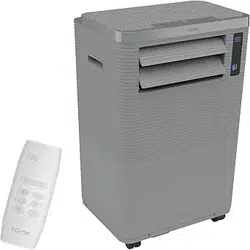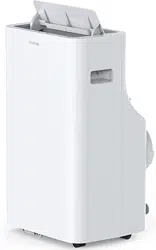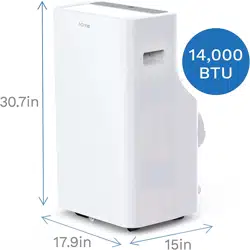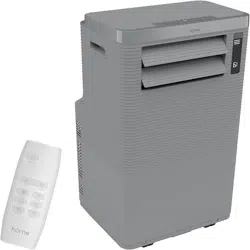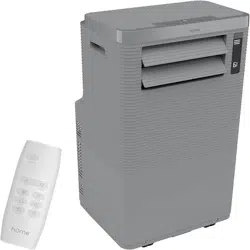
Portable Air Conditioner
HME020519N
HME020520N
HME020521N
Thank you for purchasing our appliance. Please be sure to read the entirety of
this user manual carefully prior to using this appliance. If you have any questions
regarding the use of this product, please call 1 (800) 898-3002.

TABLE OF CONTENTS
Important Safety Instructions ...............6
Description of Parts ............................... 15
Installation ................................................16
Operating Instructions.......................... 20
Cleaning and Maintenance .................. 24
Troubleshooting ..................................... 25
Warranty ................................................... 26
Manufacturing Information ................. 26
Warning .................................................... 26
Contact Us ............................................... 26

on bringing home your new appliance!
Cong ratulations
Don’t forget to register your product at homelabs.com/reg
for updates, coupons, and other relevant information.
Although greatly appreciated, product registration is not
required to activate any warranty.
BEFORE FIRST USE:
To prevent any internal damage, it is very important to keep
refrigeration units (like this one) upright throughout their journey.
Please leave it standing upright and outside the box for 24 HOURS
before plugging it in.
In the event this product malfunctions, or you believe it is
defective, please contact Customer Service at homelabs.com/
chat, 1 (800) 898-3002 or [email protected] and hold onto
the defective product (pending further instruction). A defective
product should be clearly marked or stored where it cannot
be used by mistake. Failure to keep the product in its original
quality from the time of receipt may impede hOme™’s ability
to correct any legitimate problem and may limit the extent to
which hOme™ may provide recourse.
6 7
Important Safety Instructions Important Safety Instructions
Read and follow the safety precautions below to avoid re, electrical shock, injury, or property loss.
• Always operate the product from a power source of the same voltage and frequency as indicated on
the rating label of the unit.
• The appliance is for indoor use only.
• Do not use the unit with a socket under repair or one that is not installed properly. Make sure the
power cord is rmly plugged into the outlet, otherwise it can lead to electrical shock or re.
• Do not use the unit in an area:
– That is near to sources of re;
– Where oil or water is likely to splash;
– Exposed to direct sunlight;
– That is near to a bath, laundry, shower, swimming pool or other sources of water.
• Do not insert ngers or rods into the air outlet. Take special care to warn children of these dangers.
• Always transport your appliance in a vertical position.
• Place the appliance on a stable, level surface during use to locate the compressor properly.
• Always disconnect the appliance before cleaning or maintenance.
• Do not use hazardous chemicals such as wax, thinner, or a strong detergent to clean the unit. Use a
soft cloth to clean the housing to avoid damaging the surface nish.
• Do not use the unit in the presence of an inammable substance or vapor such as alcohol,
insecticide, or gasoline, etc.
• When moving the appliance, always disconnect the power supply rst and move the unit slowly.
• To avoid the risk of re, do not cover the air conditioner.
• All the air conditioner sockets must comply with the local electrical safety requirements.
• Children should be supervised to ensure that they do not play with the appliance.
• If the supply cord is damaged, it must be replaced by the manufacturer, or a similarly qualied
person in order to avoid hazards.
• This appliance is not intended for use by persons (including children) with reduced physical, sensory,
or mental capabilities, or with the lack of experience and knowledge on its use, unless they have
been given supervision or instruction concerning the use of the appliance by a person responsible
for their safety. Children should be supervised to ensure that they do not play with the appliance.
Cleaning and user maintenance shall not be made by children without supervision.
• The appliance shall be used only in a well-ventilated area, with the correct room size as specied for
proper appliance operation.
• Contact an authorized service technician for repair or maintenance of this unit.
• Do not pull, deform, or modify the power cord. Do not immerse the power cord in water. Pulling or
misuse of the power cord can cause damage to the unit and lead to electrical shock.
• Servicing shall only be performed as recommended by the equipment manufacturer. Maintenance
and repair that require the assistance of other skilled personnel shall be carried out under the
supervision of an authorized person competent in using ammable refrigerants.
• Do not operate or stop the unit by inserting or pulling out the power plug as it may cause electrical
shock or re.
• Unplug the unit if you notice strange sounds, smell, or smoke coming from it.
• Exercise caution and provide supervision when this unit is used in the presence of children, the
elderly, or anyone with physical or mental incapacity. Children shall not play with the appliance.
• Switch off and unplug the unit when it is not in use.
Grounding
• Always ensure effective and proper grounding. Incorrect grounding could lead to electrical shock.
• Avoid re hazards or electrical shock. Do not use an extension cord or an adapter plug. Do not
remove the prong from the power cord.
• Only use grounded outlets.
• Do not, under any circumstances, cut, remove, or bypass the grounding prong.
• The power cord is a 3-prong grounded plug and has a current detection feature. Do not replace or x.
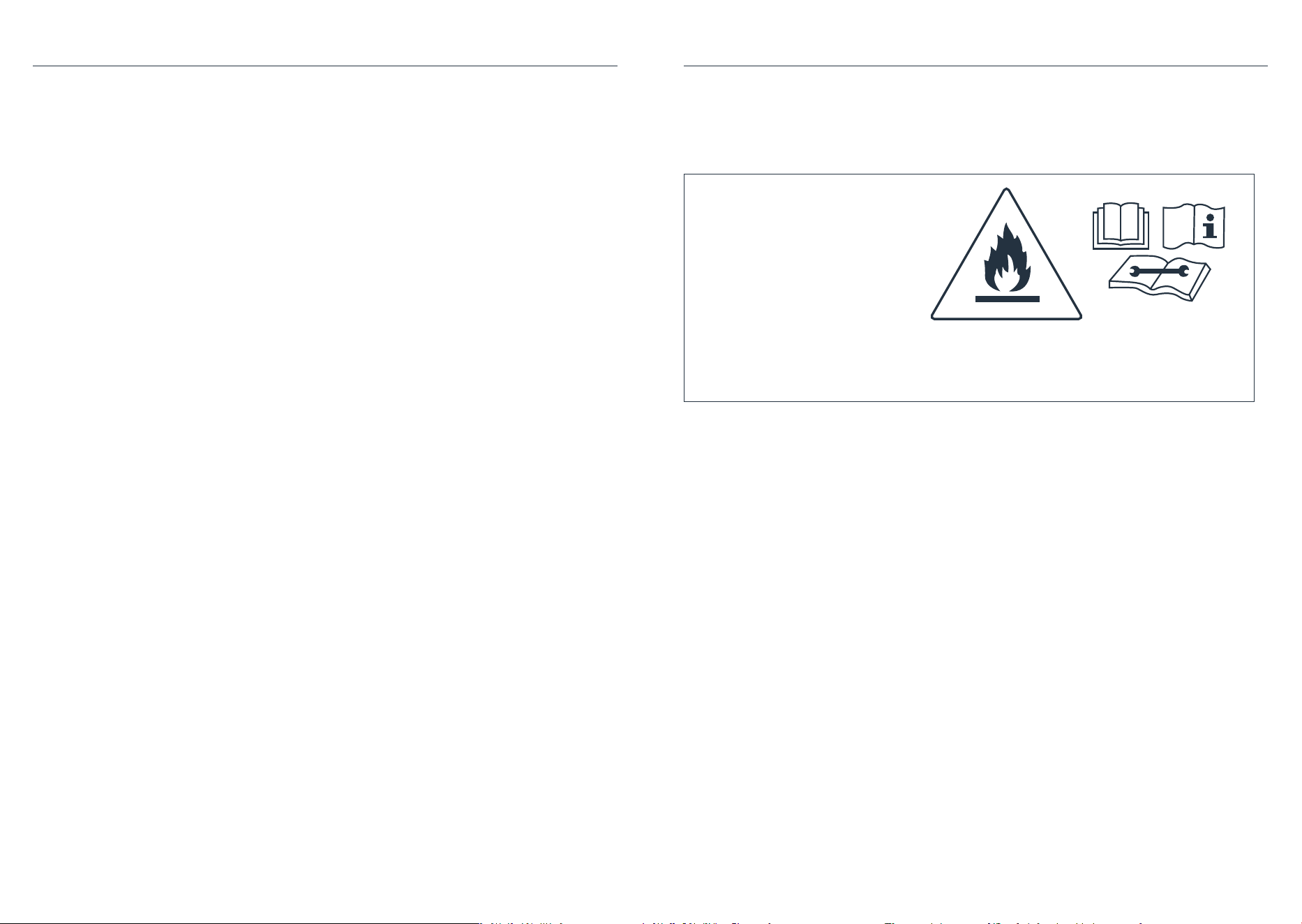
WARNING
Caution: Risk of Fire
The 4 statements on the left are accompanied by the
“Riskof Fire” symbol. This symbol shows a ame in a
triangle (warning symbol W021 of ISO 7010).
Do not accelerate the
defrosting or cleaning process
by any means other than
those recommended by the
manufacturer.
Store this unit in a room
without open ames and
ignition sources such as gas
appliances or electric heaters.
Do not pierce or burn.
Please be aware that
refrigerants may be odorless.
R32 Refrigerant Warnings
• The maximum refrigerant charge amount: 690g for 6K, 400g for 8K, and 900g for 10K.
• If refrigerant gas leaks during installation, ventilate the area immediately. Toxic gas may be produced
if the refrigerant comes into contact with re.
• After completing installation, check for refrigerant gas leakage. Toxic gas may be produced if the
refrigerant gas leaks into the room and comes into contact with a source of re, such as a fan
heater, stove, or cooker.
• This air conditioner should be installed by qualied personnel to eliminate static electricity during
installation.
• When installing or relocating the air conditioner, be sure to bleed the refrigerant circuit to ensure it
is free of air, and use only the specied refrigerant (R32). The presence of air or other foreign matter
in the refrigerant circuit will cause an abnormal rise in pressure, which may result in equipment
damage and even injury.
• Keep any required ventilation openings clear of obstruction.
• Servicing shall be performed only as recommended by the manufacturer.
• The appliance shall be stored in a well-ventilated area where the room size corresponds to the room
area as specied for operation.
• The appliance should be stored in a room without open ames e.g. a continuously operating gas
appliance and without ignition sources e.g. an electric heater.
• The appliance shall be stored properly so as to prevent mechanical damage from occurring.
Specic information regarding appliances with R32 refrigerant gas
• Thoroughly read all of the warnings.
• When defrosting and cleaning the appliance, do not use any tools other than those recommended by
the manufacturer.
• The appliance must be placed in an area without any continuous sources of ignition (for example:
open ames, gas, or electrical appliances in operation).
• Do not puncture or burn.

8 9
Important Safety Instructions
• The appliance must be installed, used, and stored in an area that is greater than 13 m2.
• R32 is a refrigerant gas that complies with European directives on the environment. Do not puncture
any part of the refrigerant circuit.
• If the appliance is installed, operated, or stored in a non-ventilated area, the room must be designed
to prevent the accumulation of refrigerant leaks as accumulation could result in a higher risk of
re or explosion due to refrigerant ignition caused by electric heaters, stoves, or other sources of
ignition.
• The appliance must be stored in such a way as to prevent mechanical failure.
• Individuals who operate or work on the refrigerant circuit must have the appropriate certication
issued by an accredited organization that ensures competence in handling refrigerants according to a
specic evaluation recognized by associations in the industry.
• Repairs must be performed based on the recommendations from the manufacturer.
• Maintenance and repairs that require the assistance of other qualied personnel must be performed
under the supervision of an individual who has the expertise in the use of ammable refrigerants.
• Do not use any means to accelerate the defrosting process or the cleaning process, other than those
recommended by the manufacturer.
• The appliance shall be stored in a room without continuously operating open ames (for example an
operating gas appliance) or other potential ignition sources (for example an operating electric heater,
hot surfaces, etc).
• All personnel handling the refrigeration system should bear valid certication awarded by the
authoritative organization and should also possess the required qualications for dealing with the
refrigeration system recognized by this industry. If there is a need for other technicians to maintain
and repair the appliance, they should be supervised by a person who bears the qualication for using
ammable refrigerant.
• Be aware that refrigerants may be odorless.
• Compliance with national gas regulations shall be observed.
• Keep ventilation openings clear of obstruction.
• The appliance shall be stored in a well-ventilated area where the room size corresponds to the room
area as specied for operation.
• Any person who will work on or break into a refrigerant circuit should hold a valid certicate from an
industry-accredited assessment authority, which authorizes their competence to handle refrigerants
safely in accordance with an industry recognized assessment / certication.
1. Transport of Equipment Containing Flammable Refrigerants
Check the local transport regulations.
2. Marking of Equipment Using Signs
Check the local regulations.
3. Disposal of Equipment Using Flammable Refrigerants
Check the national regulations.
4. Storage of Equipment
The storage of this equipment should be in accordance with the manufacturer's instructions.
5. Information on Servicing
1) Checks to the area
Before working on systems containing ammable refrigerants, it is necessary to ensure that
the risk of ignition is minimized. Comply with the following precautions before working on or
repairing the refrigerating system.
2) Work procedure
Work shall be undertaken under a controlled procedure to minimize the risk of a ammable gas
or vapor being present while the work is being performed.
3) General work area
All maintenance staff and other people working in the local area shall be instructed on the
nature of work being carried out. Work in conned spaces shall be avoided. The area around the
workspace shall be sectioned off. Ensure that the conditions within the area have been made
safe through control of the ammable material.
4) Checking for the presence of refrigerants
The area shall be checked with an appropriate refrigerant detector prior to and during work
to ensure that the technician is aware of potentially ammable atmospheres. Ensure that the
leak detection equipment being used is suitable for use with ammable refrigerants, i.e., non-
sparking, adequately sealed, or intrinsically safe.
5) Presence of a re extinguisher
If any hot work is to be conducted on the refrigeration equipment or any associated parts,
appropriate re extinguishing equipment shall be on hand. Be sure to have a dry powder or CO2
re extinguisher adjacent to the charging area.
6) No ignition sources
No person carrying out work in relation to a refrigeration system which involves exposing any
pipe work that contains or used to contain ammable refrigerant shall use any sources of ignition
in such a manner that may lead to the risk of re or an explosion. All possible ignition sources
including cigarette smoking should be kept at a sufcient distance from the site of installation,
repair, removal, and disposal, during which ammable refrigerant can possibly be released to the
surrounding space. Prior to work taking place, the area around the equipment is to be surveyed
to make sure that there are no ammable hazards or ignition risks. No Smoking signs shall be
displayed.
7) Ventilated area
Ensure that the area is an open space or that it is adequately ventilated before breaking into the
system or conducting any hot work. There should be a degree of continuous ventilation while
the work is being carried out. The ventilation should safely disperse any released refrigerant and
preferably expel it externally into the atmosphere.
8) Checks to the refrigeration equipment
Where electrical components are being changed, they shall be t for the purpose and to the
correct specication. At all times, the manufacturer's maintenance and service guidelines shall
be followed. When in doubt, consult Customer Service for assistance. The following checks shall
be applied to installations using ammable refrigerants:
• The charge size is in accordance with the room size within which the parts containing
refrigerants are installed.
• The ventilation machinery and outlets should operate adequately and should not be
obstructed; ifan indirect refrigerating circuit is being used, the secondary circuit shall be
checked for the presence of refrigerants.
• Any marking to the equipment should continue to be visible and legible. Markings and signs
that are illegible shall be corrected.
• Refrigeration pipes or components are installed in a position where they are unlikely to be
exposed to any substance which may corrode refrigerant containing components, unless the
components are constructed of materials which are inherently resistant to being corroded or
are suitably protected against being corroded.
9) Checks to electrical devices
Repair and maintenance to electrical components shall include initial safety checks and
component inspection procedures. If a fault exists that could compromise safety, then no
electrical supply shall be connected to the circuit until it is satisfactorily dealt with. If the
fault cannot be corrected immediately, but it is necessary to continue operation, an adequate
temporary solution shall be used on the advice of an electrician or our customer service team.
This shall be reported to the owner of the equipment, so all parties are advised.
Initial safety checks shall include:
• Ensuring that capacitors are discharged: this shall be done in a safe manner to avoid possible
sparking;
• Ensuring that no live electrical components and wiring are exposed while charging, recovering,
or purging the system;
• Ensuring that there is continuity of earth bonding;
Important Safety Instructions

10 11
7. Repairs to Sealed Components
1) During repairs to sealed components, all electrical supplies shall be disconnected from the unit
being worked on prior to the removal of sealed covers and other parts (if any). If it is necessary
to have an electrical supply connected to the unit during servicing, then a permanently operating
form of leak detection shall be located at the most critical point to warn of a potentially
hazardous situation.
2) Particular attention shall be paid to the following to ensure that when working on electrical
components, the casing is not altered in such a way that the level of protection is affected. This
shall include damage to the cables, an excessive number of connections, terminals not made to
the original specication, damage to seals, incorrect tting of glands, etc.
Ensure that the unit is mounted securely.
Ensure that the seals or sealing materials have not been degraded to a point that they no longer
serve the purpose of preventing the ingress of ammable atmospheres. Replacement parts shall
be in accordance with the manufacturer's specications.
NOTE: The use of silicon sealant may inhibit the effectiveness of some types of leak detection
equipment. Intrinsically safe components do not have to be isolated prior to working on them.
8. Repair to Intrinsically Safe Components
Do not apply any permanent inductive or capacitive loads to the circuit without ensuring that this will
not exceed the permissible voltage and current for the unit in use. Intrinsically safe components are
the only types that can be worked on while live and in the presence of a ammable atmosphere. The
test apparatus shall be at the correct rating. Replace the components only with parts specied by the
manufacturer. Other parts may result in the ignition of refrigerant in the atmosphere from a leak.
9. Cabling
Check that the cabling will not be subject to wear, corrosion, excessive pressure, vibration, sharp
edges, or any other adverse environmental effects. The check shall also consider the effects of aging or
continual vibration from sources such as compressors or fans.
10. Detection of Flammable Refrigerants
Under no circumstances shall potential sources of ignition be used in searching for or detecting
refrigerant leaks. A halide torch (or any other detector using a naked ame) shall not be used.
11. Leak Detection Methods
The following leak detection methods are deemed acceptable for systems containing ammable
refrigerants:
• Electronic leak detectors shall be used to detect ammable refrigerants, but the sensitivity
may not be adequate, or may need re-calibration. (Detection equipment shall be calibrated in a
refrigerant-free area.)
• Ensure that the detector is not a potential source of ignition and is suitable for the refrigerant
used.
• Leak detection equipment shall be set at a percentage of the LFL of the refrigerant and shall be
calibrated to the refrigerant employed and the appropriate percentage of gas (25 % maximum) is
conrmed.
• Leak detection uids are suitable for use with most refrigerants, but the use of detergents
containing chlorine shall be avoided as the chlorine may react with the refrigerant and corrode the
copper pipework.
• If a leak is suspected, all naked ames shall be removed/ extinguished. If a refrigerant leak is
found (which requires brazing), all refrigerants shall be recovered from the system, or isolated (by
means of shut off valves) in a part of the system that is situated remotely from the leak. Oxygen
free nitrogen (OFN) shall then be purged from the system both before and during the brazing
process.
12. Removal and Evacuation
When breaking into the refrigerant circuit to make repairs or for any other purpose, conventional
procedures shall be used. Considering ammability, follow best practices. Opening of the refrigeration
systems shall not be done by brazing. Adherence to the following procedures is a must:
a) Removing the refrigerant;
b) Purging the circuit with inert gas;
c) Evacuation;
d) Purging again with inert gas;
e) Opening the circuit by cutting or brazing;
The refrigerant charge shall be recovered into the correct recovery cylinders. The system shall be
ushed with OFN to render the unit safe. This process may need to be repeated several times.
Compressed air or oxygen shall not be used for this task.
Flushing shall be achieved by breaking the vacuum in the system with OFN and continuing to ll
until the working pressure is achieved, then venting to the atmosphere, and nally pulling down to a
vacuum. This process shall be repeated until no refrigerant is inside the system. When the nal OFN
charge is used, the system shall be vented down to atmospheric pressure to enable work to take place.
This operation is absolutely vital if brazing operations on the pipework are to take place.
Ensure that the outlet for the vacuum pump is not near any ignition sources and that ventilation is
available.
13. Charging Procedures
In addition to conventional charging procedures, the following requirements shall be followed:
• Ensure that contamination of different refrigerants does not occur when using the charging
equipment. Hoses or lines shall be as short as possible to minimize the amount of refrigerant
contained in them.
• Cylinders shall be kept upright.
• Ensure that the refrigeration system is earthed before charging the system with the refrigerant.
Label the system when the charging is complete (in case it has not been labeled yet).
• Extreme care shall be taken to avoid overlling the refrigeration system.
• Prior to recharging the system, the pressure test with OFN must rst be conducted. The
system leak test shall be performed upon completion of charging, but should be done prior to
commissioning. Afollow up leak test shall be carried out before leaving the site.
14. Decommissioning
Before carrying out this procedure, it is essential that the technician is completely familiar with the
equipment and all necessary details. It is good practice that all refrigerants be recovered safely. Prior
to carrying out this task, an oil and refrigerant sample shall be taken in case analysis is required before
reusing the reclaimed refrigerant. It is essential that electrical power is available before this task
commences.
a) Become familiar with the equipment and its operation.
b) Isolate the system electrically.
c) Before attempting the procedure, ensure that:
Mechanical handling equipment is available, if required, for handling refrigerant cylinders;
Allpersonal protective equipment is available and being used correctly;
The recovery process is always supervised by a competent person and recovery equipment and
cylinders conform to the required standards.
d) Pump down the refrigerant system, if possible.
e) If a vacuum is not possible, make a manifold so that refrigerants can be removed from various
parts of the system.
f) Make sure that the cylinder is situated on the scales before recovery takes place.
g) Start the recovery machine and operate in accordance with the manufacturer's instructions.
h) Do not overll the cylinders. (No more than 80 % volume liquid charge).
i) Do not exceed the maximum working pressure of the cylinder, even temporarily.
j) When the cylinders have been lled correctly and the process is completed, make sure that the
cylinders and the equipment are removed from the site promptly and all isolation valves on the
equipment are closed off.
Important Safety Instructions Important Safety Instructions

12 13
k) Recovered refrigerant shall not be charged into another refrigeration system unless it has been
cleaned and checked.
15. Labeling
The unit shall be labeled stating that it has been decommissioned and emptied of the refrigerant.
The label shall be dated and signed. Ensure that there are labels on the unit stating that it contains
ammable refrigerants.
16. Recovery
When removing the refrigerant from a system, either for servicing or decommissioning, it is
recommended that all refrigerants be removed safely.
When transferring the refrigerant into the cylinders, ensure that only appropriate refrigerant recovery
cylinders are used. Ensure that the correct number of cylinders for holding the total system charge
is available. All cylinders to be used are designated for the recovered refrigerant and labeled for that
refrigerant (i.e., special cylinders refrigerant recovery). Cylinders shall have pressure relief valves and
associated shut-off valves in good working order. Empty recovery cylinders should be evacuated and, if
possible, cooled before the recovery occurs.
The recovery equipment shall be in good working order with a set of instructions concerning the
equipment that is at hand and shall be suitable for the recovery of ammable refrigerants. In addition,
a set of calibrated weighing scales shall be available and in good working order. Hoses shall be
complete with leak-free disconnect couplings and be in good condition. Before using the recovery
machine, check that it is in satisfactory working order, has been properly maintained, and that any
associated electrical components are sealed to prevent ignition if a refrigerant is released. Consult
Customer Service when in doubt.
The recovered refrigerant shall be returned to the refrigerant supplier in the correct recovery cylinder,
and the relevant Waste Transfer Note arranged. Do not mix refrigerants in recovery units and especially
not in cylinders. If the compressors or the compressor oils are to be removed, ensure that they have
been evacuated to an acceptable level so that the ammable refrigerant does not remain within
the lubricant. The evacuation process shall be carried out prior to returning the compressor to the
suppliers. Only electric heating to the compressor body shall be employed to accelerate this process.
When oil is drained from the system, it shall be done in a safe manner.
COMPETENCE OF SERVICE PERSONNEL
General
• Special training in addition to the usual refrigeration equipment repair procedures is required when
equipment with ammable refrigerants is affected.
• In many countries, this training is carried out by national training organizations that are accredited to
teach the relevant national competency standards that may be set in legislation.
• The achieved competence should be documented by a certicate.
Training
The training should include the following:
• Information about the explosive potential of ammable refrigerants to show that ammables may be
dangerous when NOT handled with care.
• Information about potential ignition sources, especially those that are not obvious, such as lighters,
light switches, vacuum cleaners, and electric heaters.
Information about the different safety concepts:
• Unventilated – (see Clause GG.2) Safety of the appliance does not depend on ventilation of the
housing. Switching off the appliance or opening of the housing has no signicant effect on the
safety. Nevertheless, it is possible that leaking refrigerant may accumulate inside the enclosure and
ammable atmosphere will be released when the enclosure is opened.
• Ventilated enclosure – (see Clause GG.4) Safety of the appliance depends on ventilation of the
housing. Switching off the appliance or opening of the enclosure has a signicant effect on the
safety. Care should be taken to ensure sufcient ventilation.
• Ventilated room – (see Clause GG.5) Safety of the appliance depends on room ventilation. Switching
off the appliance or opening of the housing has no signicant effect on the safety. Proper room
ventilation shall remain during repair procedures.
Information about the concept of sealed components and sealed enclosures according to
IEC 60079-15:2010.
Information about the correct working procedures:
a) Commissioning
• Ensure that the oor area is sufcient for the refrigerant charge or that the ventilation duct is
assembled in a correct manner.
• Connect the pipes and carry out a leak test before charging with refrigerant.
• Check safety equipment before putting into service.
b) Maintenance
• Portable equipment shall be maintained or repaired outside or in a workshop specially equipped
for servicing units with ammable refrigerants.
• Ensure that ventilation is sufcient at the place of repair.
• Be aware that equipment malfunction may be caused by refrigerant loss. A refrigerant leak is
possible.
• Discharge capacitors in a way that won’t cause sparking. The standard procedure to short circuit
the capacitor terminals usually creates sparks.
• Reassemble sealed enclosures accurately. If seals are worn, replace them.
• Check safety equipment before putting into service.
c) Repair
• Portable equipment shall be repaired outside or in a workshop specially equipped for servicing
units with ammable refrigerants.
• Ensure that ventilation is sufcient at the place of repair.
• Be aware that equipment malfunction may be caused by refrigerant loss. A refrigerant leak is
possible.
• Discharge capacitors in a way that won’t cause sparking.
When brazing is required, the following procedures shall be carried out in the right order:
• Remove the refrigerant. If the recovery is not required by national regulations, drain the refrigerant
outside, in a proper manner. Do this with care so that the drained refrigerant will not cause any
danger. When in doubt, have one person guard the outlet. Take special care that the drained
refrigerant does not oat back into the building.
• Evacuate the refrigerant circuit.
• Purge the refrigerant circuit with nitrogen for 5 minutes.
• Evacuate again.
• Remove parts to be replaced by cutting, not by ame.
• Purge the braze point with nitrogen during the brazing procedure.
• Carry out a leak test before charging with refrigerant.
• Reassemble sealed enclosures accurately. If seals are worn, replace them.
• Check safety equipment before putting into service.
d) Decommissioning
• If safety is affected when the equipment is put out of service, the refrigerant charge shall be
removed before decommissioning.
• Ensure sufcient ventilation at the equipment location.
Important Safety Instructions Important Safety Instructions
14 15
• Be aware that equipment malfunction may be caused by refrigerant loss. A refrigerant leak is
possible.
• Discharge capacitors in a way that won’t cause sparking.
• Remove the refrigerant. If the recovery is not required by national regulations, drain the refrigerant
outside, in a proper manner. Do this with care so that the drained refrigerant will not cause any
danger. When in doubt, have one person guard the outlet. Take special care that the drained
refrigerant does not oat back into the building.
• Evacuate the refrigerant circuit.
• Purge the refrigerant circuit with nitrogen for 5 minutes.
• Evacuate again.
• Fill with nitrogen up to the required atmospheric pressure..
• Put a label on the equipment that the refrigerant has been removed.
e) Disposal
• Ensure there is sufcient ventilation at the place where preparation for disposal is to take place.
• Remove the refrigerant. If recovery is not required by national regulations, drain the refrigerant
outside, in a proper manner. Do this with care so that the drained refrigerant will not cause any
danger. When in doubt, have one person guard the outlet. Take special care that the drained
refrigerant does not oat back into the building.
• Evacuate the refrigerant circuit.
• Purge the refrigerant circuit with nitrogen for 5 minutes.
• Evacuate again.
• Cut out the compressor and drain the oil.
FCC STATEMENT
The remote control of this air conditioner complies with part 15 of the FCC Rules. Operation is subject
to the following two conditions: (1) the remote control may not cause harmful interference, and (2) the
remote control must accept any interference received, including interference that may cause undesired
operation.
The remote control has been tested and found to comply with the limits for a Class B digital device,
pursuant to part 15 of the FCC Rules. These limits are designed to provide reasonable protection against
harmful interference in a residential installation. The remote control generates, uses, and can radiate radio
frequency energy and, if not installed and used in accordance with the instructions, may cause harmful
interference to radio communications. However, there is no guarantee that interference will not occur
in a particular installation. If the remote control does cause harmful interference to radio or television
reception, which can be determined by turning the equipment off and on, the user is encouraged to try to
correct the interference by one or more of the following measures:
– Reorient or relocate the receiving antenna.
– Increase the distance between the remote control and receiver.
– Connect the equipment into an outlet on a circuit different from that to which the receiver is
connected.
– Consult the dealer or an experienced radio/TV technician for help.
SAVE THESE INSTRUCTIONS
For Indoor Use Only
Important Safety Instructions Description of Parts
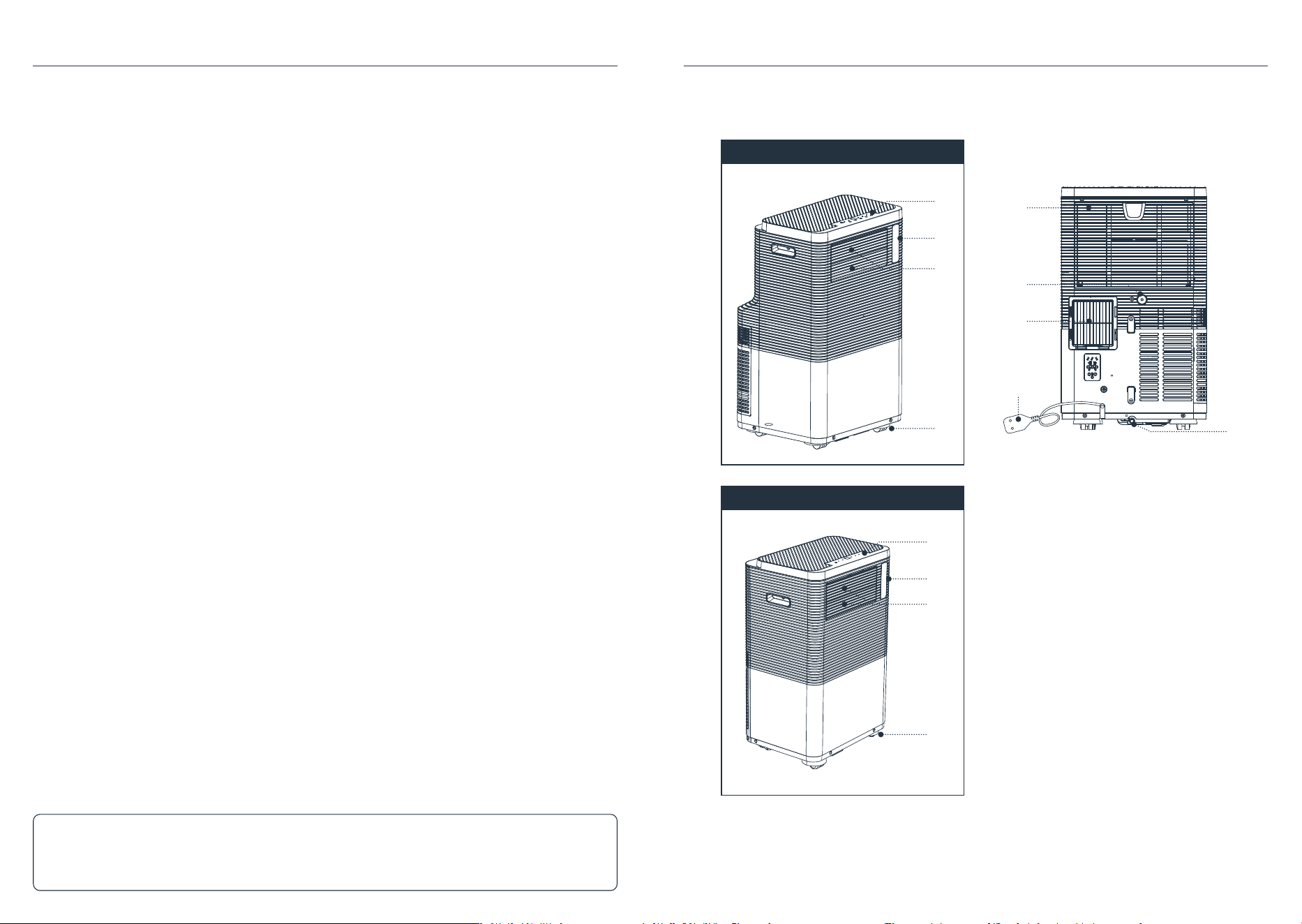
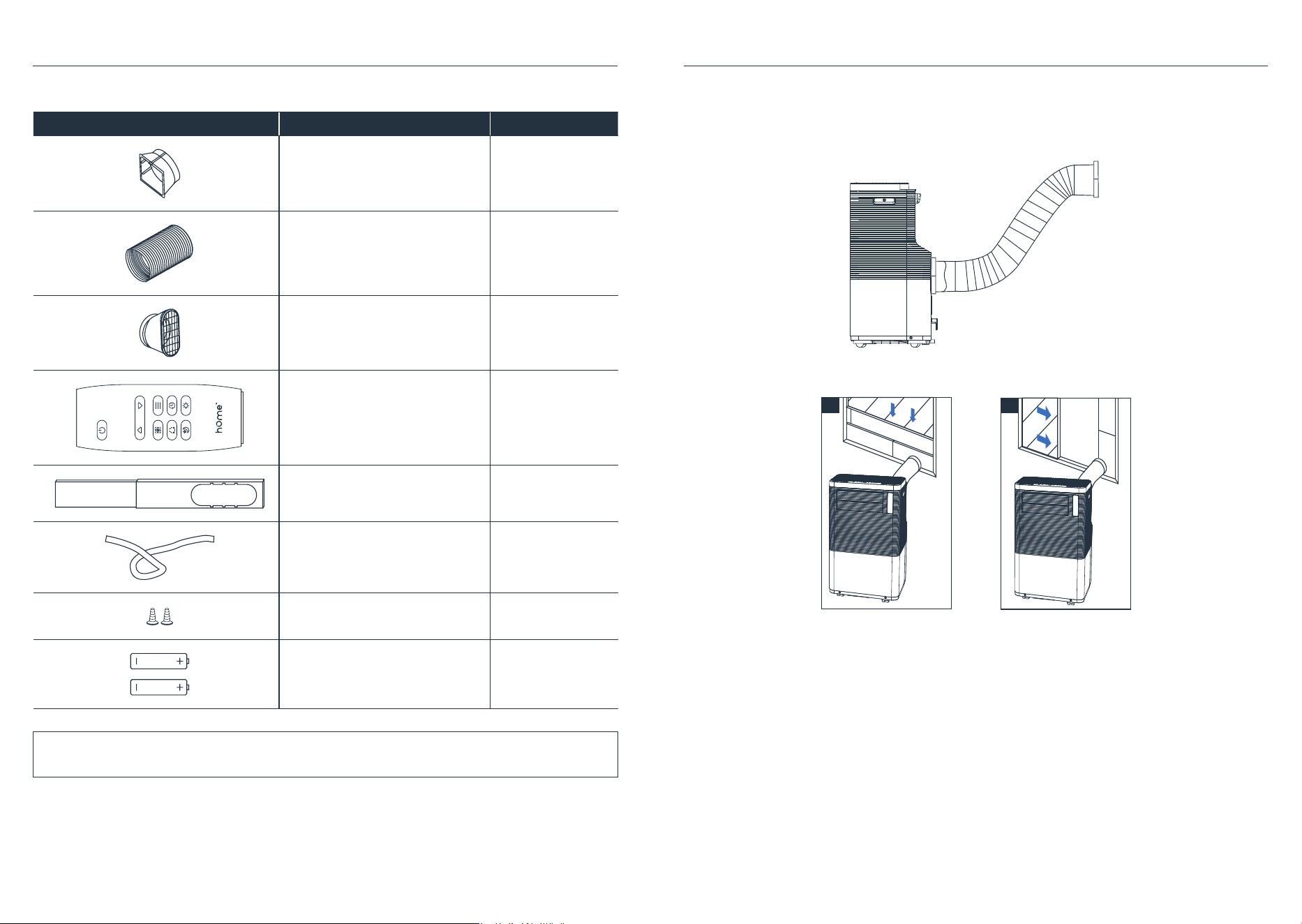
1. Control Panel
2. Auxiliary Display Panel
3. Louver
4. Castor
5. Air Inlet
6. Drainage Outlet
7. Air Outlet
8. Power Cord
9. Drainage Outlet
For HME020521N
1
4
2
3
For HME020519N / HME020520N
1
4
2
3
5
7
8
6
9
16 17
Installation
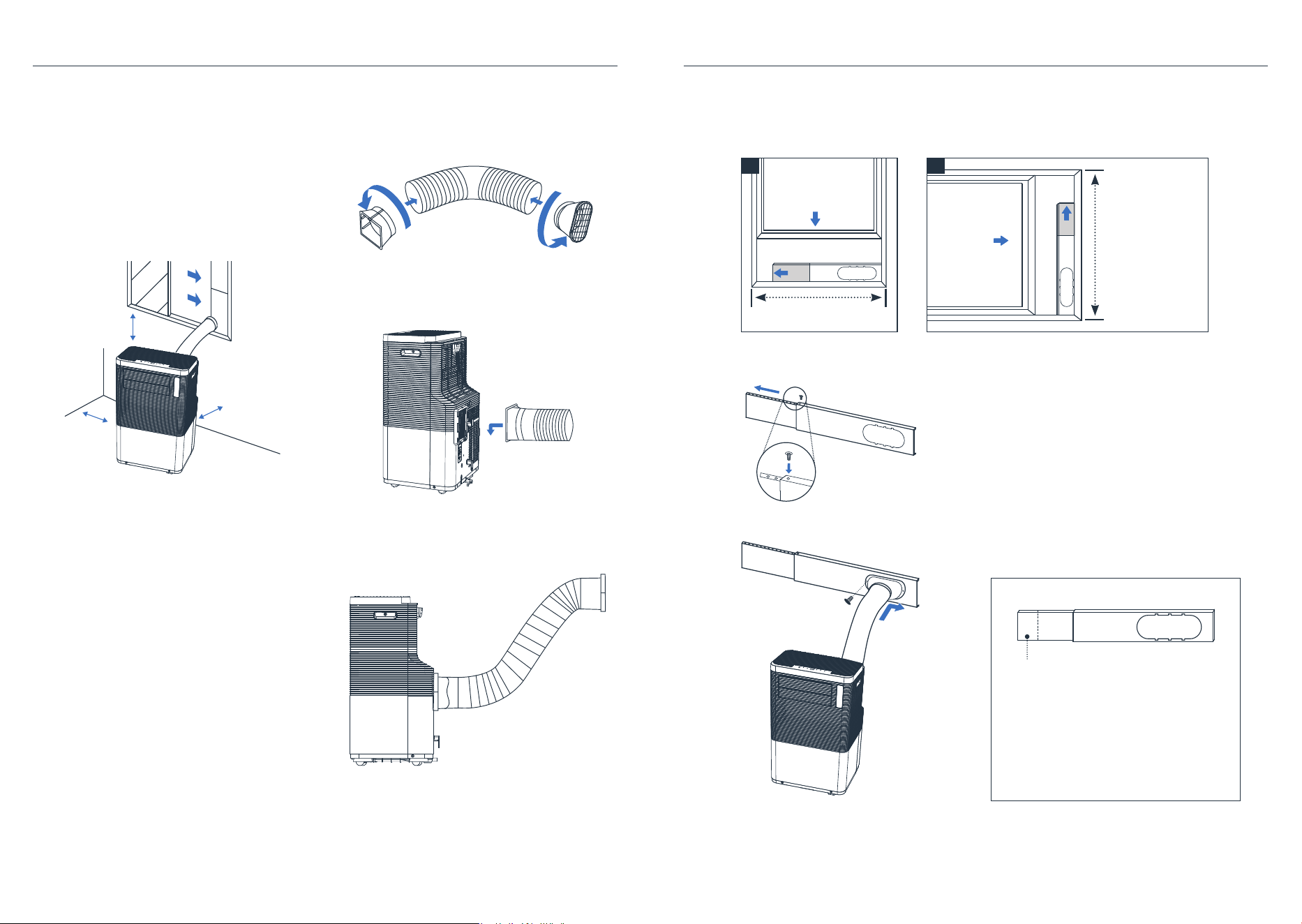
ACCESSORIES
Parts
Parts Name
Quantity
Hose Inlet 1 Pc
Exhaust Hose 1 Pc
Hose Outlet 1 Pc
SPEED
SWING
SLEEP DISPLAY
MODE
TIMER
POWER
UP DOWN
Remote Control 1 Pc
Window Slider Kit 1 Set
Drain Hose 1 Pc
Dowel 2 Pcs
Remote Control Battery (AAA 1.5V) 2 Pcs
Note: All the illustrations in this manual are only for explanatory purposes. Your appliance may be
slightly different. Make sure all accessories are removed from their packing materials before use.
Installation
GENERAL STEPS
1. Find a place where a power supply is nearby.
2. As shown in the gure below, connect the drain hose to the unit.
3. Install the exhaust hose and adjust the hose's position on the window well.
A
B
4. Plug the power cord into a grounded AC socket.
5. Install the drain hose to the drainage outlet if continuous draining is needed. Refer to the Water
Drainage section on this manual for details.
6. Press the POWER button to turn on the unit.
18 19
Installation
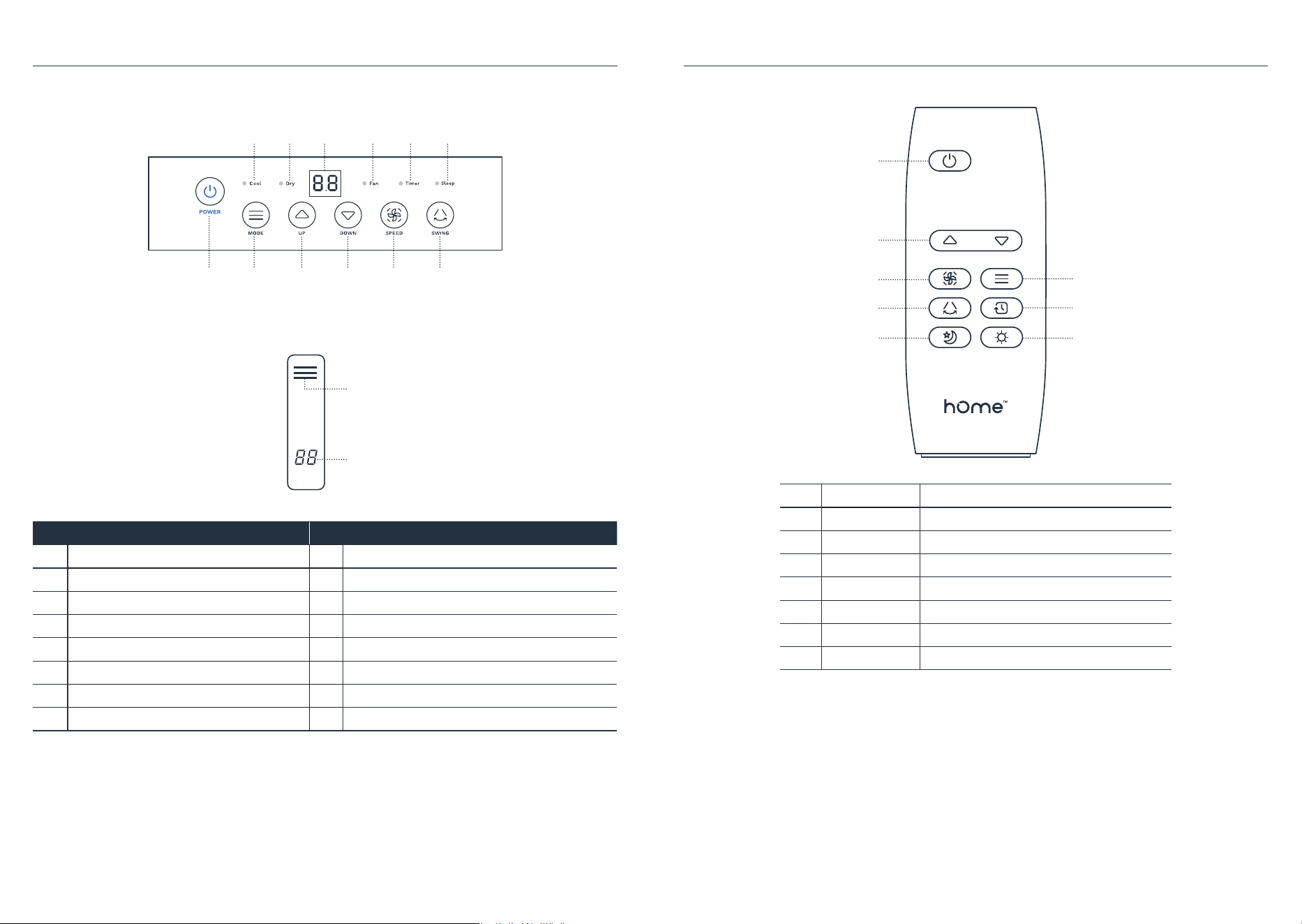
INSTALLATION PREPARATIONS
– The unit should be placed on a at and empty
surface. Leave at least 11.8 inches of space
around the unit.
– Do not block the air outlet.
– Do not install the unit in a wet location such
as in the laundry room.
– The socket wiring should be in accordance
with the local electrical safety requirements.
≥ 11.8"
≥ 11.8"
≥ 11.8"
INSTALLING THE EXHAUST HOSE
1. Attach the hose inlet and the hose outlet to
the ends of the exhaust hose.
2. Insert the xing clip of the hose inlet into the
openings at the back of the unit.
3. Put the other end of the exhaust hose to the
windowsill.
Installation
INSTALLING THE WINDOW KIT
The window slider kit can be installed horizontally or vertically. Check the minimum and maximum size of
the window before the installation.
1. Install the window kit on the window.
Width: 24.5 ~ 46.1"
Height: 24.5 ~ 46.1"
A B
2. Adjust the length of the window slider kit according to the window width or height. Fasten the
window slider kit with the supplied dowel.
3. Insert the hose outlet into the hole of the window kit. Fasten with the supplied screw tightly.
Make a cut on the opposite
side of the hole.
NOTE: Cut the end without the hole
in the window slide kit to the required
length according to the window size.
Never cut out the hole in the window
sliderkit.
20 21
Operating Instructions
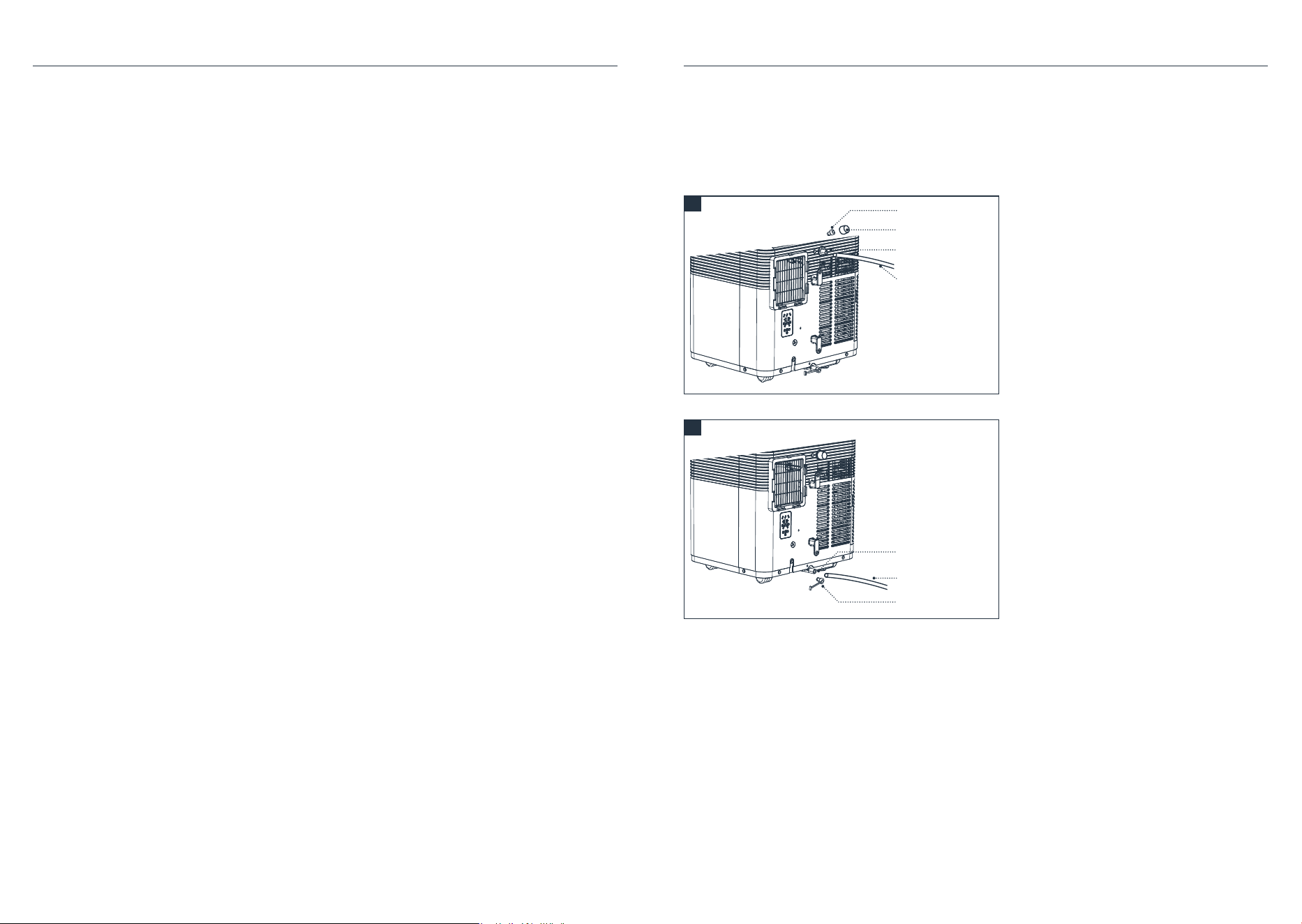
CONTROL PANEL
1
B C D E FA
2 4 5 63
AUXILIARY DISPLAY PANEL
7
8
Indicator / Display
Buon
1
Cool Mode Indicator A
Power Button
2
Dry Mode Indicator B
Mode Button
3
Temperature or Time Display C
Temperature / Time Up
4
Fan Mode Indicator D
Temperature / Time Down
5
Timer Indicator E
Fan Speed Button
6
Sleep Indicator F
Louvre Swing On/Off
7
Fan Speed Display
8
Temperature or Time Display
Operating Instructions
REMOTE CONTROL
SPEED
SWING
SLEEP DISPLAY
MODE
TIMER
POWER
UP DOWN
1
2
3
4
5 6
7
8
1
POWER
Turn the unit on or off.
2
UP / DOWN
Temperature and Time up / down
3
SPEED
Select the fan speed
4
SWING
Turn on or turn off the Louvre swing
5
SLEEP
Activate or Deactivate the Sleep Mode
6
DISPLAY
Turn on or turn off the LED indicators
7
TIMER
Activate or Deactivate the timer
8
MODE
Select the operation mode
Notes:
– Do not drop the remote control.
– Do not submerge the remote control in water.
– Do not place the remote control in a location exposed to direct sunlight.
– Do not mix old and new batteries. Do not mix alkaline, standard (carbon-zinc) or rechargeable
(nickel-cadmium) batteries.
– Do not dispose of batteries in the re. Doing so may cause batteries to explode or leak.
22 23
Operating Instructions
BEFORE USING THE UNIT
Note:
– Check whether the exhaust hose is attached
properly.
– Check if the power supply meets the voltage
and current indicated on the rating label.
– Check if the socket is for AC use.
– Do not share one socket with other appliances.
COOL Mode
• Press the MODE button until the “Cool”
indicator lights up on the control panel.
• Press the UP and DOWN buttons to set the
room temperature between 61°F and 90°F.
• Press the SPEED button to select the fan
speed: Low, Medium, and High.
• Press the SWING button to set the air outlet
angle.
DRY Mode
• Press the MODE button until the “Dry”
indicator lights up on the control panel.
• Press the UP and DOWN buttons to set the
room temperature between 61°F and 90°F.
• Press the SPEED button to select the fan
speed: Low, Medium, and High.
• Press the SWING button to set the air outlet
angle.
FAN Mode
Use this function for room air circulation or to get
rid of stale air. Remember to open the vent when
using this function, but close the vent during the
cooling process for maximum cooling efciency.
You can choose any fan speed you prefer.
• Press the MODE button until the “Fan”
indicator lights up on the control panel.
• Press the SPEED button to select the fan
speed: Low, Medium, and High.
• Press the SWING button to set the air outlet
angle.
Timer Seing (When using the Remote control)
You can set the timer to Auto-on, or Auto-off.
Follow the instructions below to set the timer.
Themaximum time that can be set is 24 hours.
– Programming Startup
When the unit is off, press the TIMER and UP/
DOWN buttons to set the time for the unit to turn
on. “Preset ON Time” will appear on the display.
– Programming Shutdown
When the unit is running, press the TIMER and UP/
DOWN buttons to set the time for the unit to turn
off. “Preset OFF Time” will appear on the display.
Louvre Swing
After turning the unit on, press the SWING
button and the louver will swing up and down
automatically. Tostop the movement of the louver,
just press the SWING button again. Do not move
the louver manually.
SLEEP Mode
• In COOL mode, press the SLEEP and the arrow
buttons to set the temperature. After that,
the temperature will increase 1°F after an
hour and at most increase 2°F after 2hours.
After entering SLEEP mode, all LED indicators
except for the SLEEP indicator will be go out
after 30 seconds.
• To cancel the SLEEP function, just press the
SLEEP button.
Note: The fan speed cannot be set to “High” in
SLEEP mode.
Operating Instructions
Water Drainage
Place the unit on a at and grounded surface. Remove the rubber blockage from the drainage hole in the
middle or at the bottom of the unit. Connect the drain hose to the drainage outlet and make sure there is
no kink in the hose.
Drain Outlet
Drain Cap
Drain Hose
Rubber Blockage
A
Drain Outlet
Rubber Blockage
Drain Hose
B
– Continuous Drainage
Drain the water out if the unit will not be used for a long period. To drain out the water, remove the rubber
blockage from the drainage hole at the unit bottom, then connect a drain hose to the bottom drain outlet.
– Water Full Alarm
There is a safety switch on the water tray to control the water level of the unit. When the water level
reaches the maximum height, the display will give an alarm. Remove the rubber blockage at the bottom of
the unit to drain the water out.
24 25
Cleaning and Maintenance
• Before cleaning, be sure to disconnect the unit from any electrical supply outlet.
• Do not use gasoline or other chemicals to clean the unit.
• Do not wash the unit.
• If the unit is damaged, please contact Customer Service for help.
Cleaning the Housing
You should clean the appliance with a slightly damp cloth, then dry with a dry cloth.
– Never wash the appliance with water. It could damage the appliance or put the user in danger.
– Never use petrol, alcohol, or solvents to clean the appliance.
– Never spray insecticide or other similar liquids.
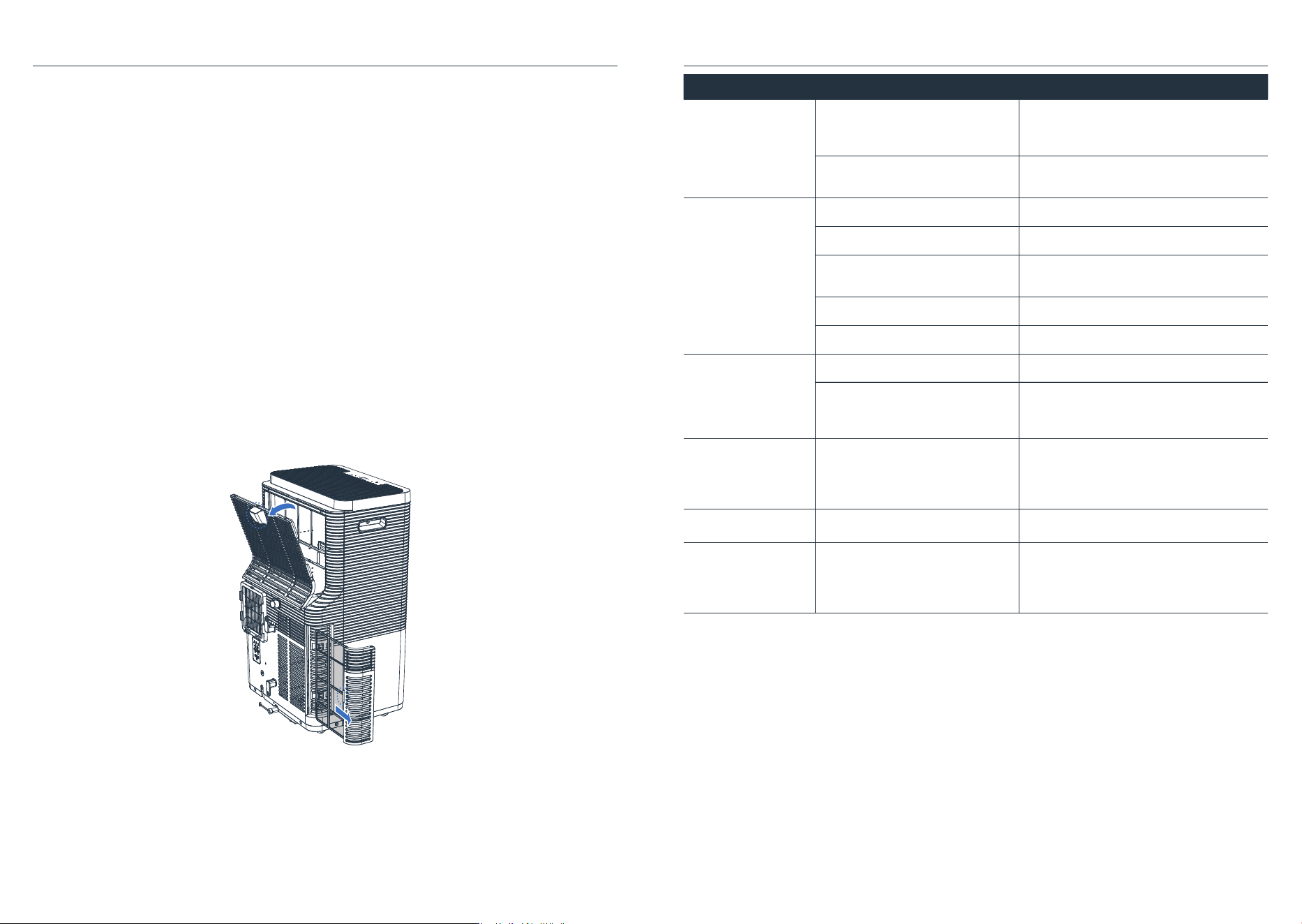
Cleaning the Air Filter
To keep your appliance working efciently, you should clean the lter weekly.
– Open the air inlet grille. Take out the air lter.
– Clean the air lter with neural detergent in lukewarm (104°F) water. Dry it up in the shade.
– Insert the air lter into the inlet grille. Replace the components as they were.
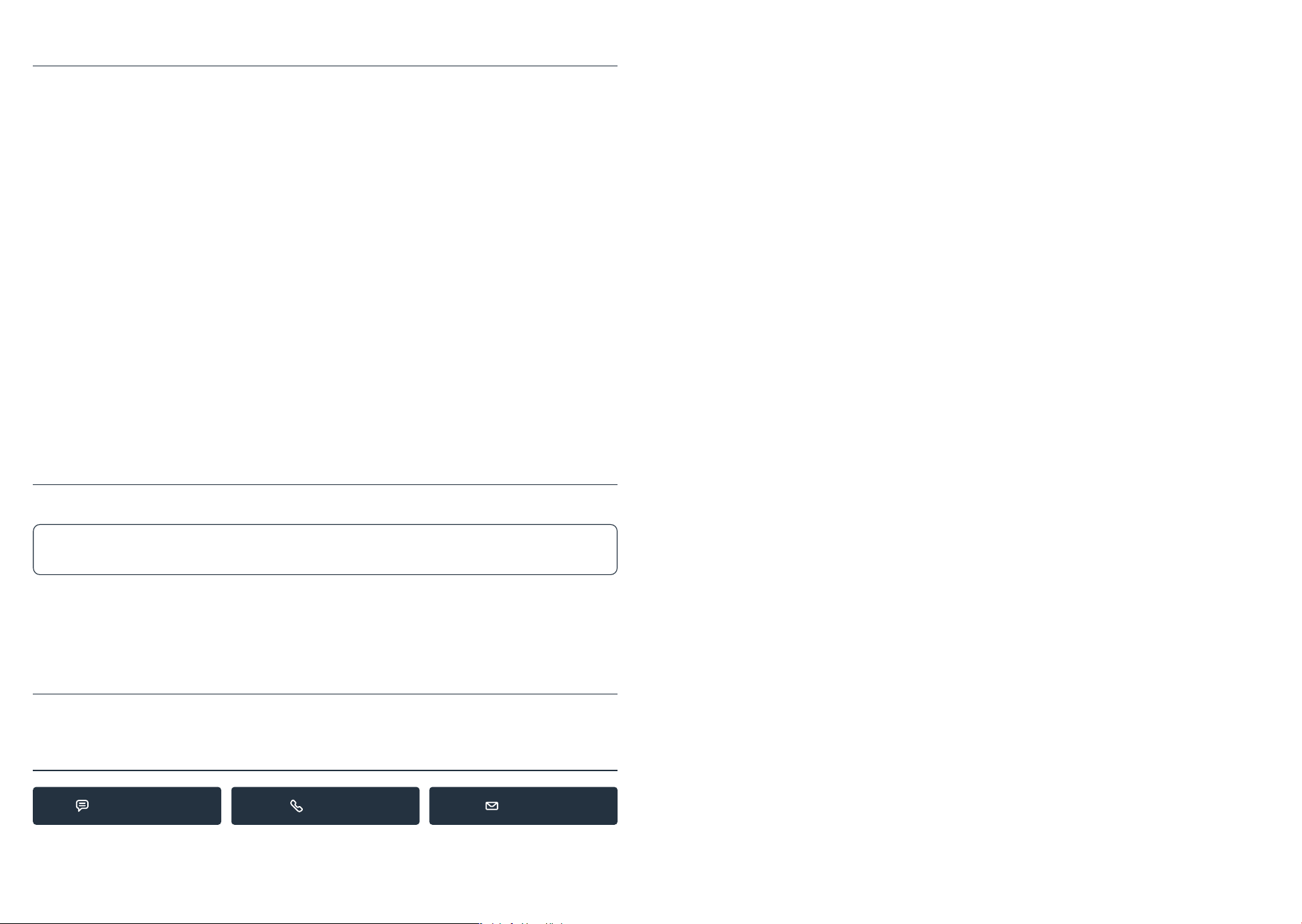
Troubleshooting
PROBLEM
POSSIBLE CAUSES
SOLUTIONS
The unit does not
work
The water tank is full
• Drain the water tank. Refer to the
"Water Drainage" section of this manual
for details
The temperature is set higher than
the room temperature
• Set the temperature lower
The unit does not
provide enough
cooling
The doors or windows are open • Close all the windows and doors
There are heat sources in the room • Remove the heat sources if possible
The exhaust air hose is not
connected, or could be blocked
• Connect, or clean the exhaust air hose
The temperature is set too high • Set the temperature lower
The air inlet is blocked • Remove the obstruction in the air inlet
Noise
The ground or surface is not at • Reposition the unit on at, level ground
The sound comes from the
owing of the refrigerant in the air
conditioner
• It is normal
F1 Code The room temperature sensor fails
• Replace the room temperature sensor.
The unit can also work without the
room temperature sensor, so another
option is to remove it
P7 Code The water tank is full • Empty the water tank
F2 Code
The evaporator temperature sensor
fails
• Replace the evaporator temperature
sensor. The unit can also work without
the evaporator temperature sensor, so
another option is to remove it
26
hOme™ offers a limited one-year warranty (“warranty period”) on all of our products purchased new
and unused from hOme Technologies, LLC or an authorized reseller, with an original proof of purchase
and where a defect has arisen, wholly or substantially, as a result of faulty manufacture, parts, or
workmanship during the one-year warranty period. The warranty does not apply where damage is caused
by other factors, including but without limitation to: (a) normal wear and tear; (b) abuse, mishandling,
accident, or failure to follow operating instructions; (c) exposure to liquid or inltration of foreign particles;
(d) servicing or modications of the product other than by hOme™; (e) commercial or non-indoor use.
The hOme™ warranty covers all costs related to restoring the proven defective product through repair or
replacement of any defective part and necessary labor so that it conforms to its original specications.
A replacement product may be provided instead of repairing a defective product. hOme™’s exclusive
obligation under this warranty is limited to such repair or replacement.
A receipt indicating the purchase date is required for any claim, so please keep all receipts in a safe
place. We recommend that you register your product on our website: homelabs.com/reg. Although greatly
appreciated, the product registration is not required to activate any warranty and product registration
does not eliminate the need for the original proof of purchase. The warranty becomes void if attempts
at repair are made by non-authorized third parties and/or if spare parts, other than those provided by
hOme™, are used. You may also arrange for service after the warranty expires at an additional cost.
These are our general terms for warranty service, but we always urge our customers to reach out to us
with any issue, regardless of warranty terms. If you have an issue with a hOme™ product, please contact
us at 1 (800) 898-3002, and we will do our best to resolve it for you.
This warranty gives you specic legal rights, and you may have other legal rights which vary from state to
state, country to country, or province to province. The customer may assert any such rights at their sole
discretion.
Manufacturing Information
This manual covers all items with these model numbers:
HME020519N HME020520N HME020521N
SKU#: HME020519N HME020520N HME020521N
Rated voltage/Frequency: 115V~ 60Hz
Operation Temperature Range: 64 °F - 95 °F
Warning
Keep all plastic bags away from children.
Contact Us
homelabs.com/chat
1 (800) 898-3002 [email protected]
CHAT W ITH U S
CALL U S
EMAIL U S
Warranty

© 2020 hOmeLabs LLC
37 East 18 Street, 7th Floor
New York, NY 10003
For Indoor Use
Only
1 (800) 898-3002
homelabs.com/help
All rights reserved, hOme
TM
. Printed in China.