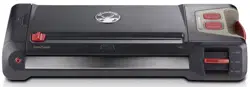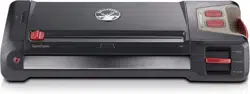
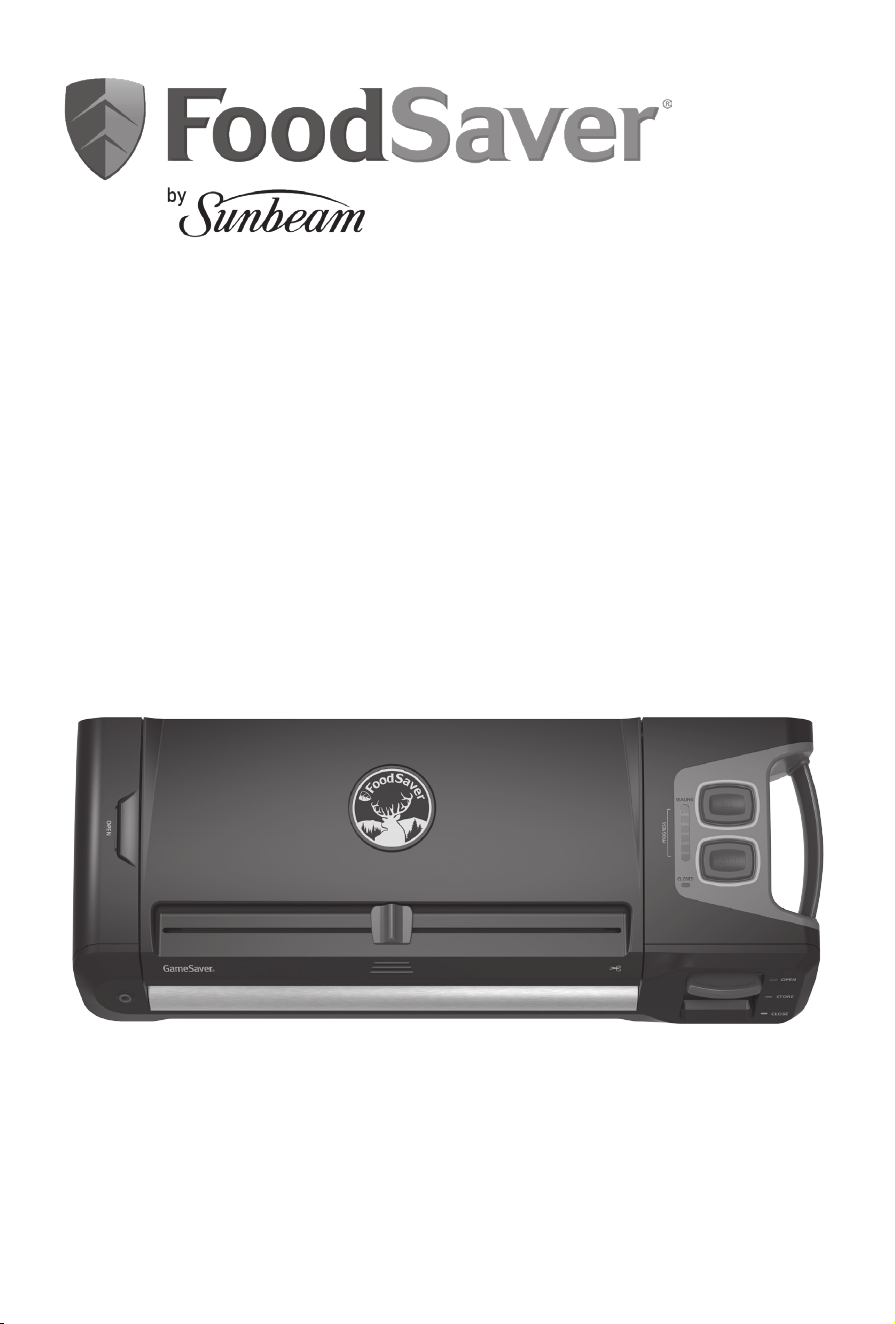
Home Vacuum Packaging System
GameSaver™
User Guide
Need help with your appliance?
Contact our customer service team
or visit our website for information
and tips on getting the most from
your appliance.
Australia | visit www.sunbeam.com.au
phone 1300 881 861
mail Units 5 & 6, 13 Lord Street,
Botany NSW 2019 Australia.
New Zealand | visit www.sunbeam.co.nz
phone 0800 786 232
mail Level 6, Building 5,
Central Park,
660–670 Great South Road,
Greenlane, Auckland.
Sunbeam Corporation Limited | ABN 45 000 006 771
Sunbeam Corporation is a division of GUD Holdings Limited.
Sunbeam is a registered trademark.
EasyClean is a trademark of Sunbeam Corporation.
Made in China to Sunbeam’s specification.
Due to minor changes in design or otherwise,
the product you buy may differ slightly from the one shown here.
Approved by the appropriate electrical regulatory authorities.
©Copyright Sunbeam 2015.
10/15
VS9000
Australia
www.sunbeam.com.au
1300 881 861
Units 5 & 6,
13 Lord Street,
Botany NSW 2019
Australia
New Zealand
www.sunbeam.co.nz
0800 786 232
Level 6, Building 5,
Central Park,
660-670 Great South Road,
Greenlane, Auckland
New Zealand
Contents
Important Safeguards 1
Vacuum Packaging Tips 2
VS9000 FoodSaver
®
GameSaver™ 3
12 Volt Important Instructions 5
Using your FoodSaver
®
GameSaver™ 6
Make a bag with FoodSaver
®
rolls
Vacuum seal with FoodSave
r®
bags
Vacuum seal with FoodSaver
®
accessories
Seal only
Food Preparation & Safety Tips 10
Care and Cleaning Instructions 11
Guidelines for Vacuum Packaging 12
Preservation Guidelines 15
Troubleshooting 17
Home Vacuum Packaging System
GameSaver™
User Guide
Need help with your appliance?
Contact our customer service team
or visit our website for information
and tips on getting the most from
your appliance.
Australia | visit www.sunbeam.com.au
phone 1300 881 861
mail Units 5 & 6, 13 Lord Street,
Botany NSW 2019 Australia.
New Zealand | visit www.sunbeam.co.nz
phone 0800 786 232
mail Level 6, Building 5,
Central Park,
660–670 Great South Road,
Greenlane, Auckland.
Sunbeam Corporation Limited | ABN 45 000 006 771
Sunbeam Corporation is a division of GUD Holdings Limited.
Sunbeam is a registered trademark.
EasyClean is a trademark of Sunbeam Corporation.
Made in China to Sunbeam’s specification.
Due to minor changes in design or otherwise,
the product you buy may differ slightly from the one shown here.
Approved by the appropriate electrical regulatory authorities.
©Copyright Sunbeam 2015.
10/15
VS9000
Australia
www.sunbeam.com.au
1300 881 861
Units 5 & 6,
13 Lord Street,
Botany NSW 2019
Australia
New Zealand
www.sunbeam.co.nz
0800 786 232
Level 6, Building 5,
Central Park,
660-670 Great South Road,
Greenlane, Auckland
New Zealand

Important Safeguards
Read the Instructions Carefully.
For Your Own Safety, Always Follow These Basic Precautions When Using the FoodSaver
®
Appliance:
1
Sunbeam is very safety conscious when
designing and manufacturing consumer
products, but it is essential that the product user
also exercise care when using an electrical
appliance. Listed below are precautions which
are essential for the safe use of an electrical
appliance:
• Read carefully and save all the instructions
provided with an appliance.
• Always turn the power off at the power outlet
before you insert or remove a plug. Remove
by grasping the plug - do not pull on the cord.
• Turn the power off and remove the plug
when the appliance is not in use and before
cleaning.
• Do not use your appliance with an extension
cord unless this cord has been checked and
tested by a qualified technician or service
person.
• Always use your appliance from a power
outlet of the voltage (A.C. only) marked
on the appliance.
• This appliance is not intended for use by
persons (including children) with reduced
physical, sensory or mental capabilities, or
lack of experience and knowledge, unless they
have been given supervision or instruction
concerning use of the appliance by a person
responsible for their safety.
• Children should be supervised to ensure that
they do not play with the appliance.
• The temperature of accessible surfaces may
be high when the appliance is operating.
• Never leave an appliance unattended while
in use.
• Do not use an appliance for any purpose
other than its intended use.
• Do not place an appliance on or near a hot gas
flame, electric element or on a heated oven.
• Do not place on top of any other appliance.
• Do not let the power cord of an appliance
hang over the edge of a table or bench top or
touch any hot surface.
• Do not operate any electrical appliance with
a damaged cord or after the appliance has
been damaged in any manner. If damage is
suspected, return the appliance to the nearest
Sunbeam Appointed Service Centre
for examination, repair or adjustment.
• For additional protection, Sunbeam
recommend the use of a residual current
device (RCD) with a tripping current not
exceeding 30mA in the electrical circuit
supplying power to your appliances.
• Do not immerse the appliance in water
or any other liquid unless recommended.
• Appliances are not intended to be operated
by means of an external timer or separate
remote control system.
• This appliance is intended to be used in
household and similar applications such
as: staff kitchen areas in shops, offices and
other working environments; farm houses; by
clients in hotels, motels and other residential
type environments; bed and breakfast type
environments.
If you have any concerns regarding the performance and use of your appliance,
please visit www.sunbeam.com.au or contact the Sunbeam Consumer Service Line.
Ensure the above safety precautions are understood.

When Vacuum Packaging:
1. Vacuum packaging is NOT a substitute for
refrigeration.
2. Use only FoodSaver
®
bags, rolls and
containers.
3. During the vacuum packaging process,
small amounts of liquids, crumbs or food
particles can be inadvertently pulled into
the Vacuum Channel. Empty the Drip Tray
after each use.
4. You can prevent liquids from being
drawn into the appliance by placing a
folded paper towel at the top of the bag,
but below the seal area, before vacuum
packaging.
5. Do not attempt to create your own side
seals for a FoodSaver
®
Bag. These bags
are manufactured with special side seams
which are sealed all the way to the outer
edge. Creating your own side seams can
actually leave air channels exposed which
will cause leakage and prevent a vacuum
from being formed.
6. Always make sure you leave at least
2.5 cm of extra bag material for each
time you plan to reuse the bag. To avoid
possible illness, do not reuse bags after
storing meats, fish or greasy foods.
7. If you are not sure whether you have
achieved a complete seal, simply seal the
bag again about 1cm above the first seal.
8. Bulky items sometimes make it difficult
to achieve a smooth sealing surface.
Gently stretch the bag flat along the
Sealing Strip before closing the lid.
9. When packaging products with sharp
edges (dry spaghetti, silverware, etc.),
protect the bag from punctures by
wrapping the products in a cushioning
material, such as paper towels, styrofoam,
tissue, etc. Products can also be vacuum
packaged in containers to avoid any
possibility of puncturing a bag.
10. Avoid drawing powdery or fine-grained
products such as, flour, sugar and coffee
grinds into the appliance. This will inhibit
the vacuuming and sealing process and
may clog the unit, preventing it from
drawing a good vacuum. To prevent this
from occurring, avoid overfilling the bags
or alternatively use containers.
11. If using the FoodSaver
®
appliance to
re-seal packets, ensure that these have
been previously commercially heat sealed.
Vacuum Packaging tips
2
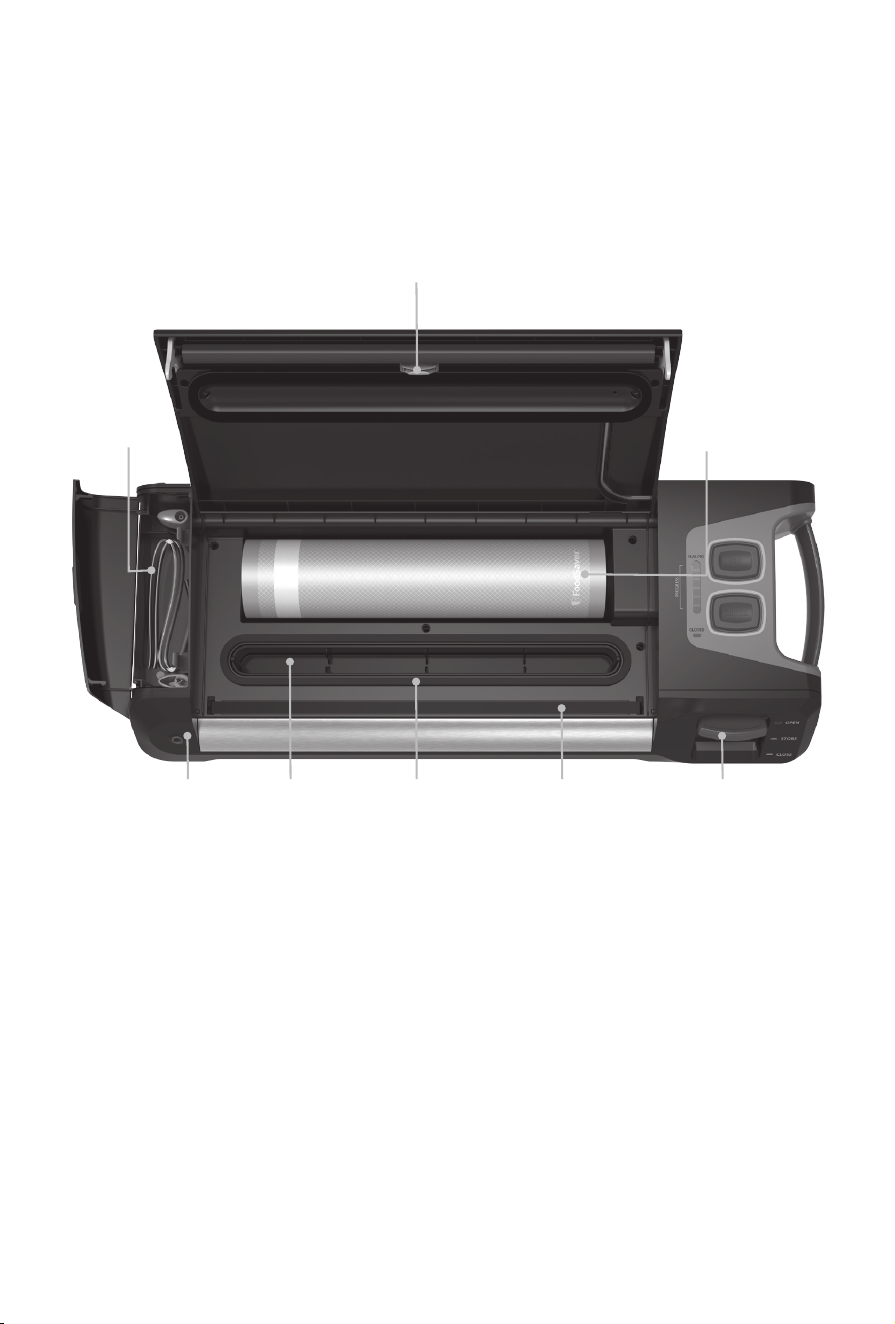
VS9000 FoodSaver
®
GameSaver™
A. Accessory Storage Compartment
–
Stores
Accessory Hose.
B. Bag Cutter on Lid
–
Simplifies making
custom-sized bags.
C. Built-in Roll Storage
–
For storage of
FoodSaver
®
Rolls and Bags.
D. Front Lid Latch
–
Easily Open and Close unit;
also has Store Position.
A
B
C
DEFGH
E. Sealing Strip
–
Provides extra secure, airtight
seal that’s two times wider.
F. Foam Gasket
–
Make sure this is correctly
positioned to ensure proper vacuum sealing.
G. Removable Drip Tray
–
Large size helps to
catch overflow liquids.
H. Accessory Hose Port – Accessory hose can be
used with all FoodSaver
®
Brand Accessories.
3
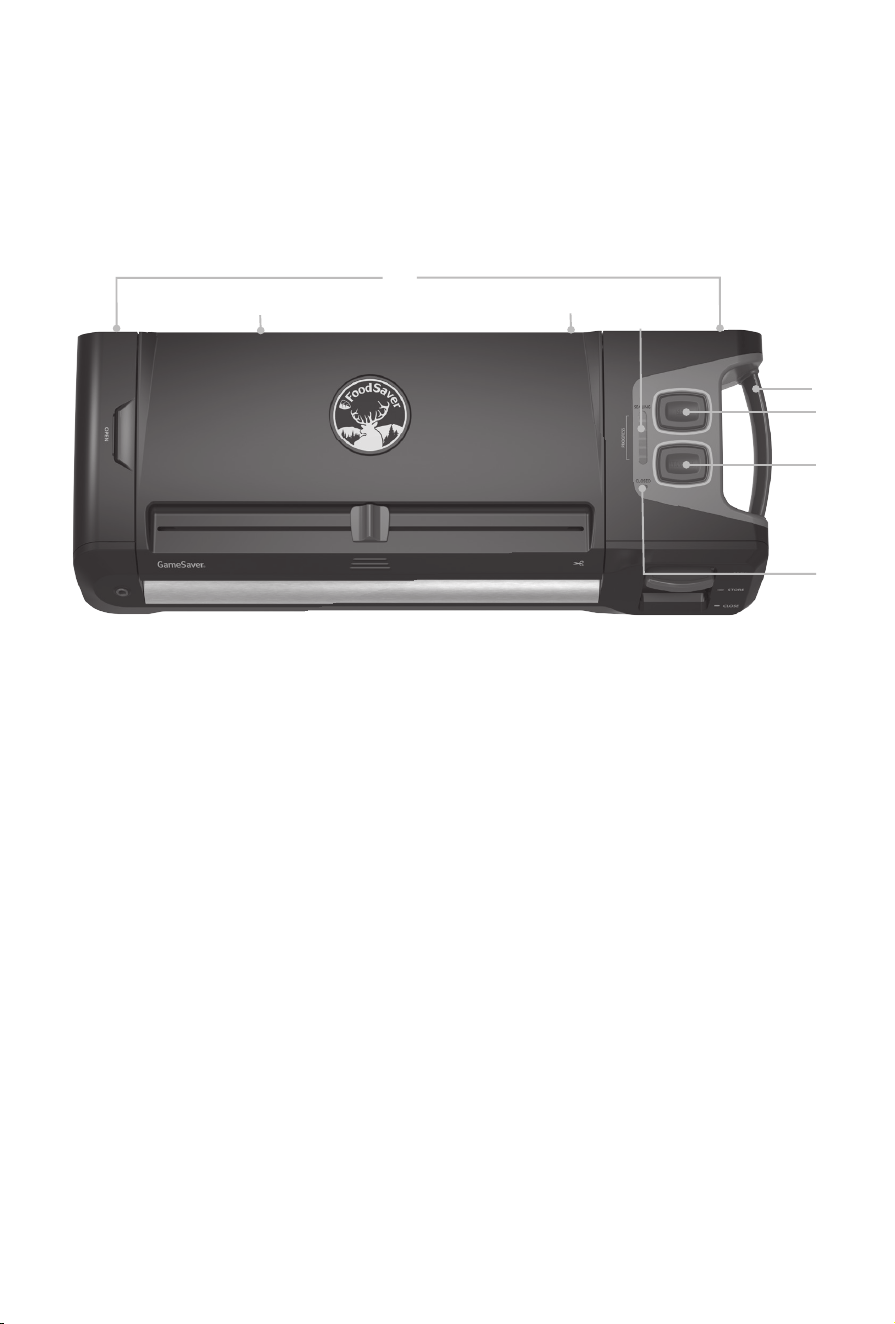
I. Carry Handle
–
Allows
easy transportation
of the appliance.
J. Power Cord Storage
–
On back side of appliance.
K. 12V DC Adaptor Port
–
Allows appliance to
run off 12 Volt DC power.
L. Rubber Feet for Vertical
Storage
–
Space-saving
feature allows appliance to
be stored vertically.
M. Seal Button
–
The Seal button
has three uses:
1. Press to create a seal
when making bags from a
FoodSaver
®
Roll.
2. Press to immediately stop
the vacuum process and
begin sealing the bag. This
prevents crushing delicate
items such as bread, cookies
and pastries.
3. Press to create a seal on
multilayer bags (such as a
potato chip bag) to keep food
sealed airtight.
N. Vac/Seal Button
–
Press to
vacuum package and seal
your food air-tight with a
single touch. Shuts off
automatically, Also can be
used to pause the vacuuming
cycle.
O. Vacuum Progress Display
–
Displays vacuum levels as
the bag/canister/container
is evacuated.
P. Closed Light
–
Comes on
when latch is pushed down
to Close position, which
locks down the lid.
I
J
K
L
M
N
O
P
4

5
1. Make sure vehicle has a 12V receptacle
circuit and fuse has a rating of 10 amps or
higher. Refer to your vehicle’s owners manual.
2. Plug 12 Volt DC adaptor into the
appliance first.
3. Plug 12 Volt DC adaptor into the 12V
power outlet.
4. When appliance is powered by 12 Volt DC,
unit will take slightly longer to vacuum and
seal than using standard 240 volt AC power.
5. Appliance should be placed on flat
surface and have enough room that the
bag and its contents have surface support.
6. When appliance is powered by 12 Volt
DC, make sure vehicle is running and
all electrical items in vehicle are off (air
conditioning, lights, radio, etc.).
Note: Do not plug unit into 12 Volt DC and
wall outlet mains at the same time. Do not
use any external supply not supplied with this
appliance.
Note: This appliance should not be used
outdoors when plugged into the mains supply.
Warning: Do not use the 12 Volt DC Adapter
with the vehicle running in an enclosed space.
Warning: Use only Vehicle Adapter provided
with the appliance.
12 Volt Important Instructions
6
Using your FoodSaver
®
GameSaver™
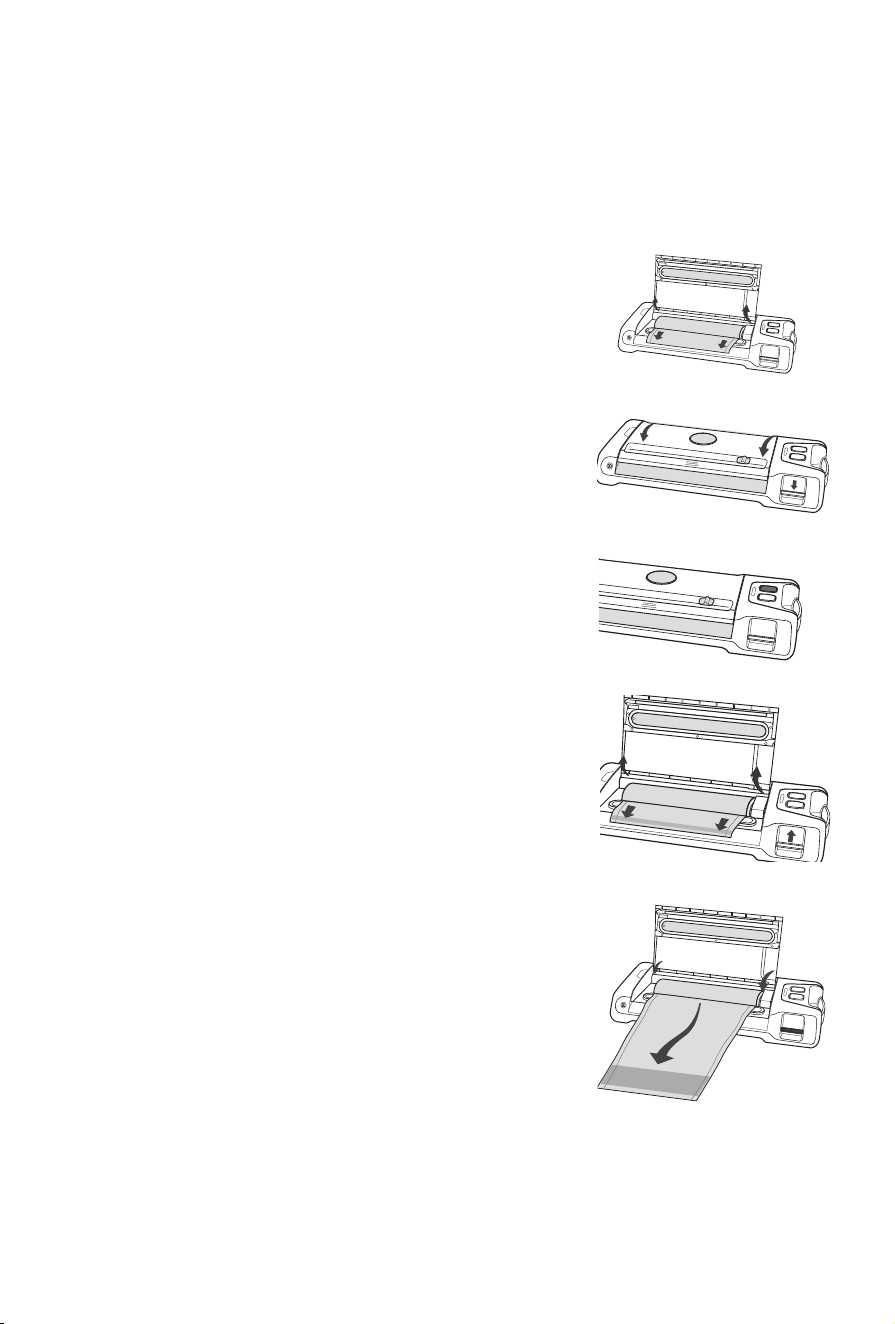
How to make a Bag from a FoodSaver
®
Roll
Fig. 1
1. Open Lid and pull bag material over the Sealing Strip.
(Fig. 1)
Fig. 4
4. When Red Progress Light turns off, sealing is
complete. Unlock latch and lift lid. (Fig.4)
3in (7.6cm)
Fig. 5
5. Pull out desired bag length, Close Appliance Lid, and
slide Bag Cutter across the roll. Make sure you leave 3”
of space at top for room to vacuum seal. (Fig.5)
IMPORTANT TIP:
When making a bag from a roll, make sure end of cut piece
is on Sealing Strip, not over rubber gasket or in Vacuum
Channel.
Fig. 2
2. Close and Latch Lid. (Fig.2)
Fig. 3
3. Press Seal Button. (Fig.3)
How to Vacuum Seal FoodSaver
®
Bags
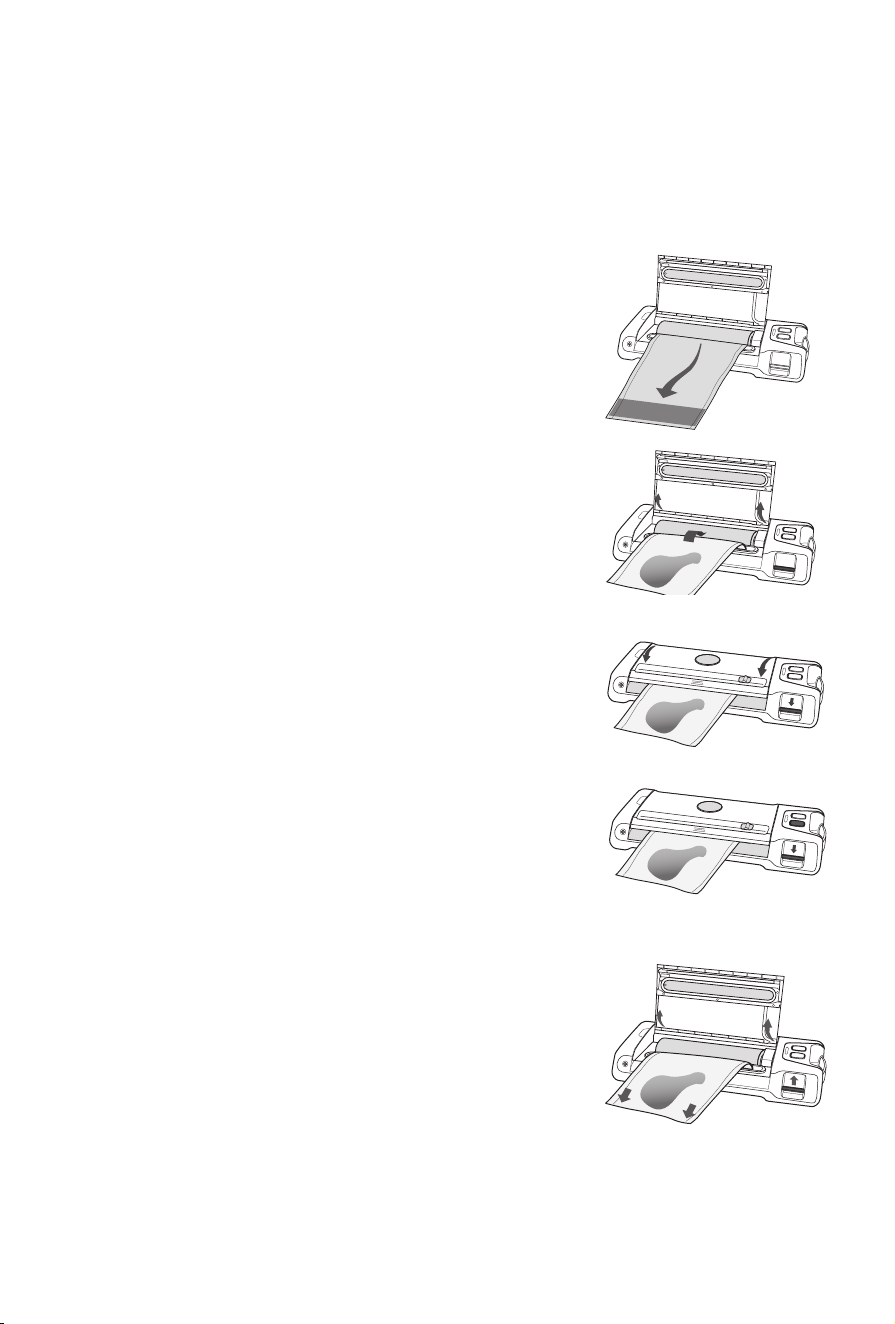
1. Begin with a FoodSaver
®
Bag (or create a bag as described
on page 6).
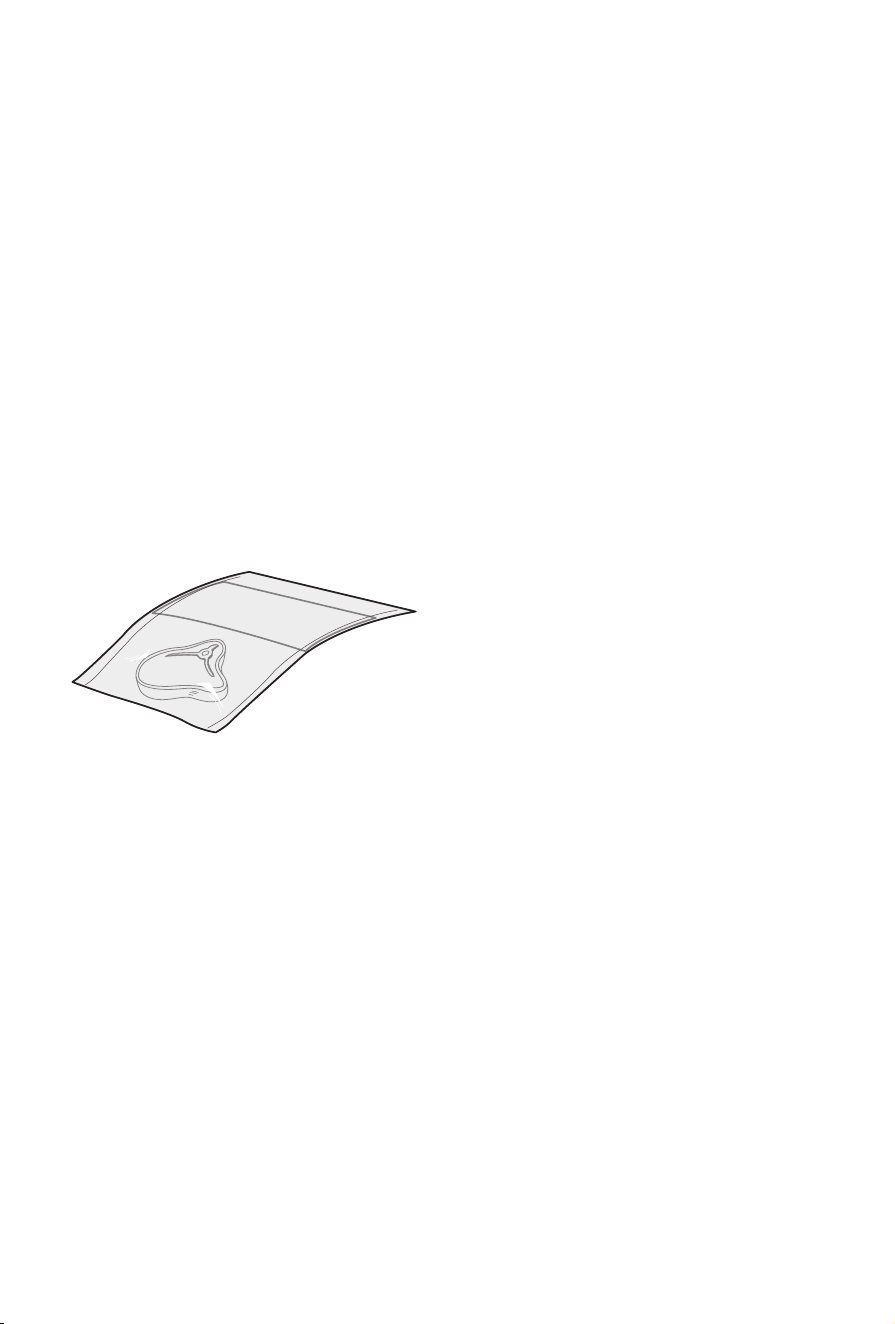
2. Place item(s) in bag, allowing at least 7.5cm of space
between bag contents and top of bag (Fig. 1). The extra
space is required to allow the bag to seal tightly around
contents.
3. Open Appliance Lid and place open end of bag curl side
down into the Drip Tray. (Fig. 2)
4. Close the Lid by pushing latch all the way down past
the Store Position to the Closed Position. (Fig. 3).
5. Press Vac/Seal Button (Fig. 4).
Note: To prevent crushing delicate items, you may press
Seal Button at any time to begin sealing process. During
vacuum process, you can press Vac/Seal Button to pause
the process.
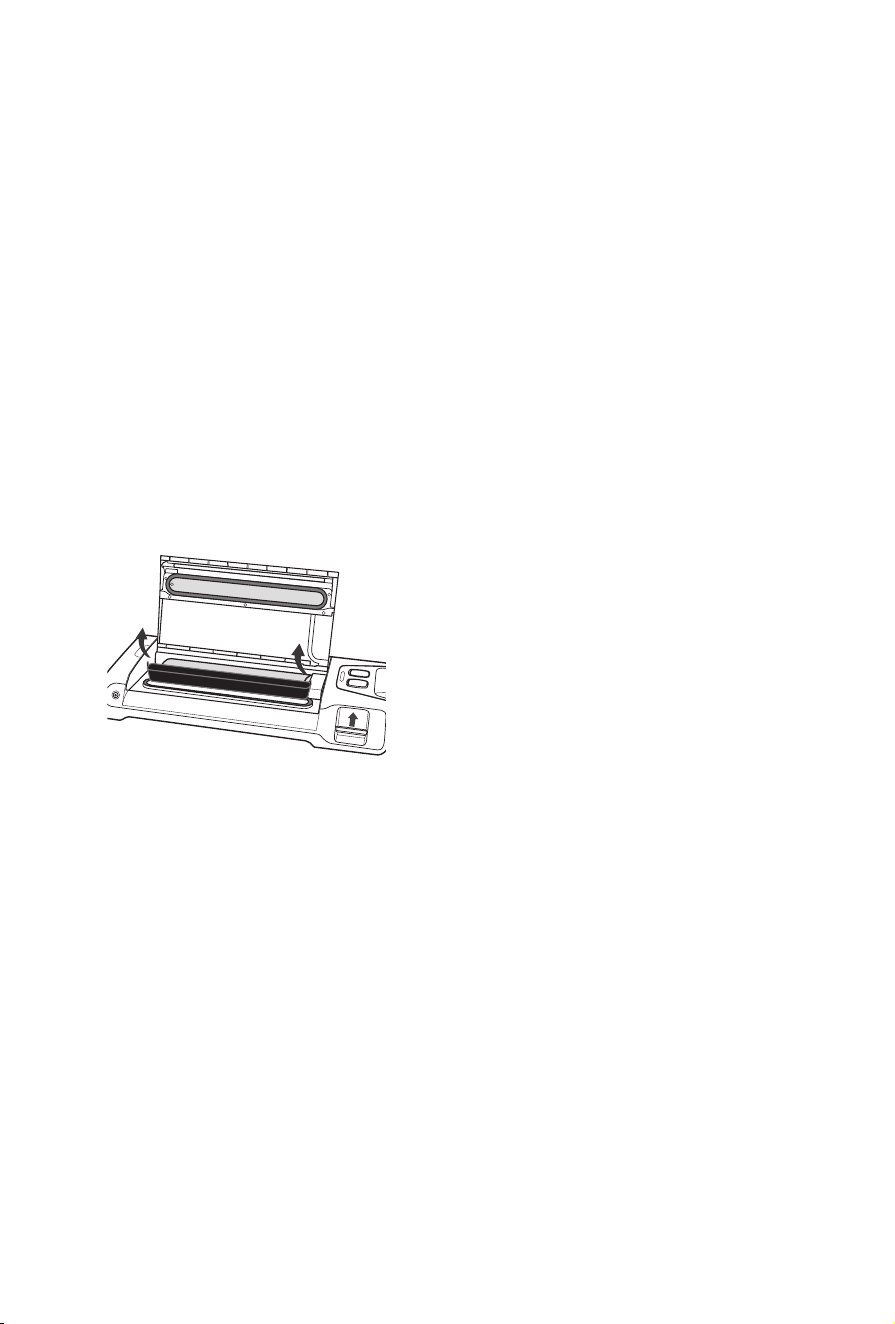
6. When the Red Indicator Light turns off, unlatch,
lift lid, and remove bag. (Fig. 5)
Fig. 5
Fig. 2
Fig. 4
Fig. 3
3in (7.6cm)
Fig. 1
7
8
Using your FoodSaver
®
GameSaver™ continued
Tips on sealing & vacuuming a bag
Make sure you've securely locked the FoodSaver
®
appliance
lid. When making a bag from a roll,
place bag material on the sealing strip, close
and lock the lid.
Prevent moisture or liquid from being pulled into
the Vacuum Channel or trapped in the seal. For
very moist or wet foods either use Seal only,
or pre-freeze for 1-2 hours before vacuum
packaging. Alternatively place a folded paper
towel between food and end of bag to absorb
excess liquids. Just be sure to leave at least
7.5cm between food and end of bag so that
bag seals properly with paper towel inside.
Make sure you give FoodSaver
®
appliance time
to cool down. The FoodSaver
®
GameSaver™ is
able to create up to 50 consecutive vacuum
seals. Under very heavy usage, appliance will
not operate to prevent overheating. If it does,
wait 20 minutes to allow appliance to cool
off.
Vacuum packaging in bulk
To package a large number of bags at one
time, it is recommended to:
- create bag
- place foods in bag
- vacuum & seal
- repeat
Following this process will prevent the
appliance from overheating.
Make sure you've securely locked the
FoodSaver
®
appliance lid. 'When vacuuming
and sealing a bag or container ensure the lid
has been fully closed and lid has locked into
place.
Check for wrinkles in the bag along the Sealing
Strip. Wrinkles in seal may cause leakage and
allow air to come back into bag. Check for
wrinkles in bag along Sealing Strip before
closing lid and vacuum packaging. If you find
wrinkles after sealing bag, simply cut bag
open and vacuum seal again.
If the motor runs for more than 2 minutes
without stopping, consider the following:
- adjust the bag and try again.
- if you are making an initial seal on a piece
of bag material with two open ends, make
sure the bag is placed on the sealing strip.
- if you are vacuum packaging with a bag,
make sure the open end is placed down
inside the vacuum channel.
- ensure the accessory hose is not attached.
FoodSaver
®
Container or Bottle Stoppers
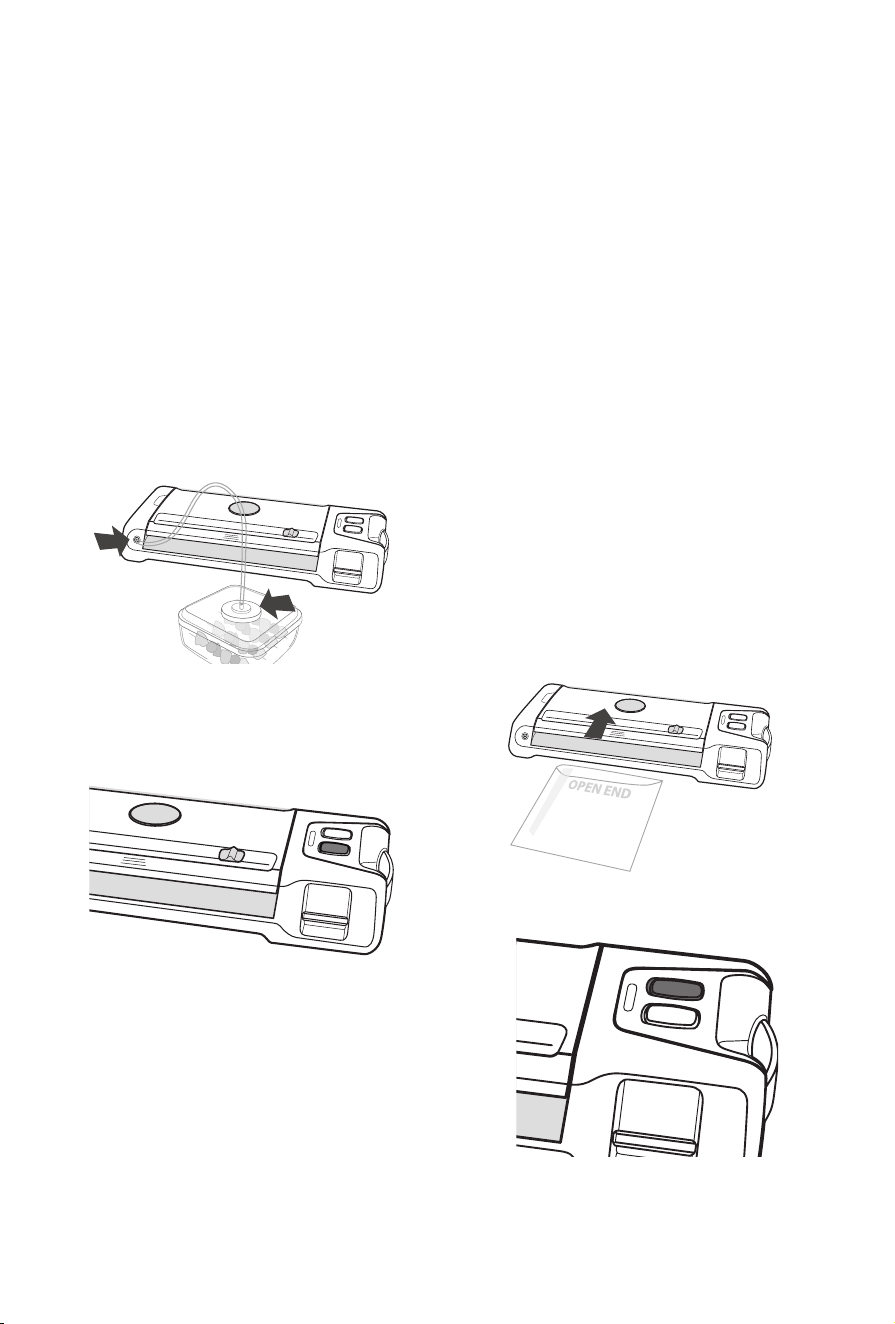
1. Prepare container or bottle stopper
according to FoodSaver
®
Accessory
Guidelines, which are included with
accessory purchases.
2. Insert one end of Accessory Hose into
Accessory Port on appliance. Insert other
end into port on accessory. Twist tab on
Accessory Hose while inserting to ensure a
tight fit. (Fig. 1)
3. Close the Lid by pushing latch all the way
down past the Store Position to the Closed
Position. Press Vac/Seal Button. (Fig. 2)
4. When motor and Indicator Light turn off,
vacuum process is complete. Note that
the appliance will still go through sealing
cycle even when vacuuming an accessory.
You will hear Motor shut off and then the
sealing cycle will begin.
5. Gently twist and remove Accessory Hose
from accessory and appliance.
6. To test vacuum, simply tug on accessory
lid. It should not move.
Note: For important tips on using accessories
with different foods, please refer to the
Preservation Guidelines on page 15 and 16.
How to Open the FoodSaver
®
Container
To open, press and hold down the green
oval button in the centre of the lid. This will
release the vacuum – a hissing sound can be
heard as the air rushes in.
IMPORTANT: Remember to remove the
Accessory Hose from the Accessory Port on
the appliance before you vacuum package in
FoodSaver
®
Bags.
How to seal only
If you want to seal a bag without vacuuming,
use the Seal Button on the Control Panel.
You can even reseal bags such as multilayer
film bags (such as a potato chip bag).
1. Place open end of bag on Sealing Strip,
close lid and use latch to lock. (Fig. 1)
2. Press Seal Button on Control Panel. (Fig. 2)
3. When Motor and Red Indicator Light turn
off, unlock latch, open lid and remove bag.
Vacuum Packaging with
Accessories
Fig. 1
Fig. 2
Fig. 1
Fig. 2
9

10
Food Preparation & Safety Tips
Guidelines for Vacuum Packaging Food
Vacuum packaging is not a substitute for
canning nor can it reverse deteriorating
quality; it can only slow down changes in
quality. It is impossible to predict how long
a specific food will have top-quality flavour,
appearance and texture, because it depends
on the age and condition of the food on the
day it was vacuum packaged. Foods that are
extremely fresh will last longer than foods
that are already deteriorating.
Vacuum packaging extends the life of foods
by removing nearly all the air in a sealed
container, thereby reducing oxidation which
affects nutritional value, flavour and overall
quality. However, most foods contain enough
water to support micro-organisms which
can grow with or without air. While micro-
organisms are present everywhere, only
certain ones cause problems, and only under
certain conditions:
• Mould: Easy to identify because of its
characteristic fuzz. Moulds are virtually
eliminated by vacuum packaging because
they cannot grow in a low oxygen
environment.
• Yeast: Results in fermentation, which can
frequently be identified by smell or taste.
Yeast requires water, sugar and a moderate
temperature to grow, and can grow with or
without air. Refrigeration slows the growth
of yeast, and freezing stops it completely.
• Bacteria: Frequently results in
discolouration, soft or slimy texture,
and/or an unpleasant odour. 'Clostridium
botulinum' (the organism that causes
Botulism) can grow without air under the
right conditions, cannot be detected by
smell or taste, and although extremely rare,
can be very dangerous.
Thawing and Heating Vacuum Packaged Foods
Always thaw foods in either the refrigerator
or microwave – do not leave “perishable”
foods at room temperature to thaw.
To microwave in a FoodSaver
®
Bag, cut a
corner of the bag and place on a microwave-
safe dish.
The combination of vacuum packaging and
freezing will extend food freshness and reduce
the growth of bacteria in perishable foods.
Maintaining low temperatures is a critical
factor in preserving foods safely. Growth of
micro-organisms is significantly reduced at
temperatures of 4°C or below. Freezing at
-17°C does not kill micro-organisms, but
it stops them from growing. For long term
storage, always freeze “perishable” foods
that have been vacuum packaged.
NOTE: Vacuum packaging is NOT a substitute
for refrigeration or freezing. Any “perishable”
foods that require refrigeration prior to vacuum
packaging still must be refrigerated or frozen
after vacuum packaging.
Care and Cleaning Instructions
The FoodSaver
®
Appliance
1. Always unplug the appliance before
cleaning.
2. Clean using a mild dishwashing soap and
a warm, damp cloth. Do not immerse the
appliance in water. Dry thoroughly before
using.
3. Do not use abrasive products or materials
to clean any of the appliance components.
Drip Tray
Remove from appliance for easy clean.
Clean drip tray in warm soapy water.
FoodSaver
®
Bags
IMPORTANT: Do not reuse bags after storing
meats, fish or greasy foods.
1. Wash bags in warm water using a mild
dishwashing soap.
2. Bags can be washed in the dishwasher by
carefully turning the bags inside out and
spreading them over the top rack of the
dishwasher so that all surfaces are exposed
to the washing water.
3. Allow bags to dry thoroughly before reusing.
To avoid possible illness, do not reuse
bags after storing raw meats, fish or greasy
foods. Do not reuse bags that have been
microwaved or simmered.
FoodSaver
®
Accessories
1. All FoodSaver
®
accessories should be
washed in warm water using a mild
dishwashing soap. Dry thoroughly before
using.
2. The FoodSaver
®
Fresh Containers can be
cleaned in the dishwasher but only in
the top shelf. Items washed in bottom
shelves can distort due to the heat from
the dishwasher element. FoodSaver
®
Quick
Marinator lids are NOT dishwasher safe
IMPORTANT: All plastic components
deteriorate through the prolonged use of a
dishwasher for cleaning. Hand washing of
plastic components in warm soapy water is
always recommended.
11

12
Vacuum Packaging and Food Safety
The vacuum packaging process extends the
life of foods by removing most of the air from
the sealed container. This reduces oxidation,
which affects nutritional value, flavour and
overall quality.
Removing air can also inhibit growth of micro
organisms, which can cause problems under
certain conditions such as mould, yeast and
bacteria.
IMPORTANT: Vacuum packaging is NOT a
substitute for refrigeration or freezing
Any perishable foods that require refrigeration
must still be refrigerated or frozen after
vacuum packaging.
Thawing and Reheating Vacuum Packaged Foods
Always thaw foods in either refrigerator or
microwave — do not thaw perishable foods at
room temperature.
Reheating in a microwave
To reheat foods in a microwave in a
FoodSaver
®
Bag, always cut corner of the bag
before placing it on a microwave-safe dish.
However, to avoid hot spots, do not reheat
bone-in meat or greasy foods in microwave
within a FoodSaver
®
Bag.
Reheating in water
You can also reheat foods in FoodSaver
®
Bags
by placing them in water at a low simmer
below 75°C.
Vacuum Packaging Meat and Fish:
For best results, use a FoodSaver
®
bag to
vacuum seal before freezing.
For very moist meat or fish, place a folded
paper towel in the bag, between meat/fish
and top of bag, below seal area. Leave paper
towel in bag to absorb excess moisture and
juices during vacuum packaging process.
Note: Beef may appear darker after vacuum
packaging due to the removal of oxygen.
This is not an indication of spoilage.
Vacuum Packaging Hard Cheeses:
To keep cheese fresh, vacuum package it
after each use. To continue using the same
bag, when initially vacuum packaging the
cheese, ensure the FoodSaver
®
Bag is extra
long. Allow one inch of bag material for each
time you plan to open and reseal the bag in
addition to the 7.5cm space you normally
leave between contents and seal. Simply cut
sealed edge and remove cheese prior to use.
When you’re ready to repackage the cheese,
just drop it in bag and reseal.
IMPORTANT: Due to the risk of anaerobic
bacteria, Soft cheeses should never be vacuum
packaged.
Guidelines for Vacuum Packaging
Guidelines for Vacuum Packaging continued
Vacuum Packaging Vegetables:
It is recommended that vegetables are
blanched before vacuum packaging.
This process stops the enzyme action that
could lead to loss of flavour, colour and
texture.
To blanch vegetables, place them in boiling
water or in the microwave until they are
cooked, but still crisp.
Approximate blanching times:
- 1 to 2 minutes for leafy greens and peas
- 3 to 4 minutes for snap peas, sliced
zucchini or broccoli
- 5 minutes for carrots
- 7 to 11 minutes for corn on the cob.
After blanching, immerse vegetables in cold
water to stop the cooking process.
Dry vegetables on a towel before vacuum
packaging.
Note: All vegetables (including broccoli,
Brussels sprouts, cabbage, cauliflower, kale,
turnips) naturally emit gases during storage.
Therefore, after blanching, they must be
stored in freezer only.
IMPORTANT: Due to the risk of anaerobic
bacteria, Fresh mushrooms, onions, & garlic
should never be vacuum packaged.
Vacuum Packaging Leafy Vegetables:
For best results, use a container to store leafy
vegetables. First wash the vegetables, and
then dry with a towel or salad spinner.
After they are dried, put them in a container
and vacuum package. Store in refrigerator.
Vacuum Packaging Fruits:
For best results, vacuum seal fruit in a
FoodSaver
®
Container to protects the shape of
berries and soft fruits. Alternatively pre-freeze
fruit for 1-2 hours before vacuum sealing to help
maintain the shape and flavour of the food.
If storing in the refrigerator, we recommend
using a FoodSaver
®
Container.
Vacuum Packaging Baked Goods:
To vacuum package soft or airy baked goods,
we recommend using a FoodSaver
®
Container
so they will hold their shape. If using a
bag, pre-freeze for 1-2 hours or until solidly
frozen. To save time, make cookie dough, pie
shells, whole pies, or mix dry ingredients in
advance and vacuum package for later use.
13
14
Guidelines for Vacuum Packaging continued
Vacuum Packaging Coffee and Powdery Foods:
To prevent food particles from being drawn
into vacuum pump, place a coffee filter or
paper towel inside the bag, above the coffee
and below the top of the bag, before vacuum
packaging.
You can also place the food in its original bag
inside a FoodSaver
®
Bag.
Vacuum Packaging Liquids:
Using a FoodSaver
®
Container is the easiest
way to vacuum seal liquids. Pouring liquids
into a FoodSaver
®
bag then using Seal only is
a quick way to prepare liquids for storage.
Alternatively pre-freeze liquids until solid,
remove from freezer and vacuum package in
a FoodSaver
®
bag. Then return to the freezer.
When you’re ready to use, just cut corner of
bag and place in a dish in microwave or drop
into water at a low simmer, below 75°C.
Vacuum Packaging Snack Foods:
Your snack foods will maintain their freshness
longer when you vacuum package them.
For best results, use a FoodSaver
®
Container
for crushable items like crackers.
Vacuum Packaging Non-Food Items
The FoodSaver
®
vacuum packaging system
also protects non-food items from oxidation,
corrosion and moisture. Simply follow the
directions to vacuum package items using
FoodSaver
®
Bags & Containers.
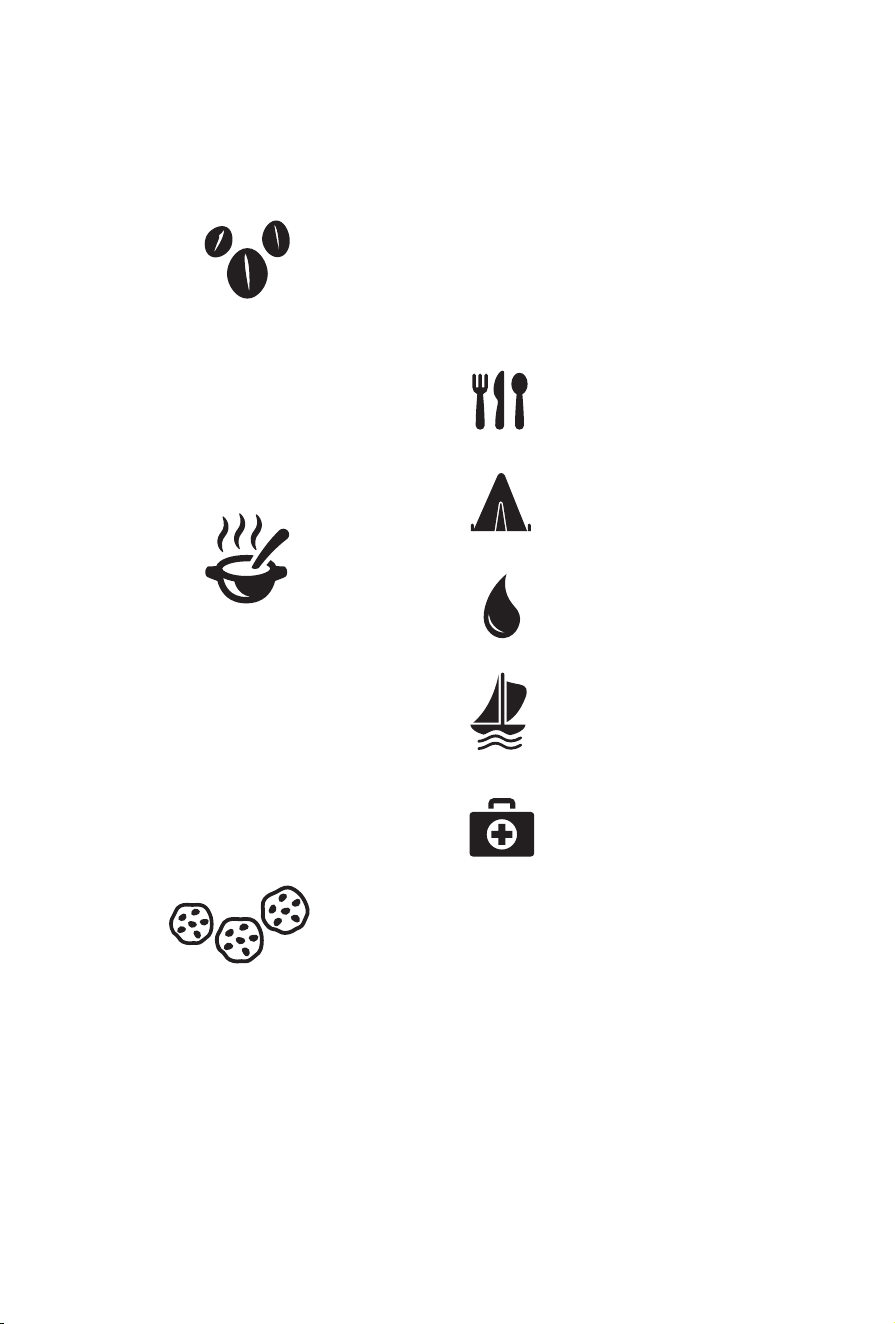
To vacuum package silver, wrap
forks in soft cushioning material,
such as a paper towel,
to avoid puncturing bag.
Your FoodSaver
®
Bags are ideal for
outdoor excursions. For camping
and hiking, keep your matches,
maps and food dry and compact.
To have fresh water for drinking,
simply fill a FoodSaver
®
Bag with
ice, seal it and when needed, let
the ice pack melt.
If you’re going sailing or boating,
vacuum package your food, film
and a dry change of clothes. Just
remember to bring scissors or a
knife to open the bag.
To keep emergency kits safe
and dry, vacuum package flares,
batteries, flashlights, matches,
candles and other necessities.
Your emergency items will stay dry
and organized in your home, car or
boat.
Natural Gases in Foods
The release of natural gases or fermentation
from foods, (such as fresh fruits and
vegetables) can add air back into a vacuum
packaged bag. To prevent this occurring,
vegetables can be blanched prior to vacuum
packing. See page 13 for more details.
Pre-freezing meats prior to vacuum packaging
can prevent natural gases being released.

Preservation Guidelines
Foods
Where to
Store
Recommended
FoodSaver
®
Accessory
Storage Life
with FoodSaver
®
Vacuum
Packaging
System
Normal
Storage Life
Meat
Beef, Pork, Lamb Freezer FoodSaver
®
Bag 2-3 years 6 months
Ground Meat Freezer FoodSaver
®
Bag 1 year 4 months
Poultry Freezer FoodSaver
®
Bag 2-3 years 6 months
Fish Freezer FoodSaver
®
Bag 2 years 6 months
Hard Cheeses
Cheddar, Swiss
Refrigerator FoodSaver
®
Bag, Container 4-8 months 1-2 weeks
Parmesan Refrigerator FoodSaver
®
Bag, Container 4-8 months 1-2 weeks
Vegetables
(Vegetables, excluding leafy types, must be blanched before vacuum sealing.)
Asparagus Freezer FoodSaver
®
Bag 2-3 years 8 months
Broccoli, Cauliflower Freezer FoodSaver
®
Bag 2-3 years 8 months
Cabbage, Brussels
Sprouts
Freezer FoodSaver
®
Bag 2-3 years 8 months
Corn (cob or kernel) Freezer FoodSaver
®
Bag 2-3 years 8 months
Green Beans Freezer FoodSaver
®
Bag 2-3 years 8 months
Lettuce, Spinach Refrigerator FoodSaver
®
Container 2 weeks 3-6 days
Snow Peas, Snap Peas Freezer FoodSaver
®
Bag 2-3 years 8 months
Fruits
Apricots, Plums Freezer FoodSaver
®
Bag 1-3 years 6-12 months
Peaches, Nectarines Freezer FoodSaver
®
Bag 1-3 years 6-12 months
Softer Berries
Raspberries,
Blackberries
Refrigerator FoodSaver
®
Container 1 week 1-3 days
Strawberries Refrigerator FoodSaver
®
Container 1 week 1-3 days
Harder Berries
Blueberries Refrigerator FoodSaver
®
Container 2 weeks 3-6 days
Cranberries Refrigerator FoodSaver
®
Container 2 weeks 3-6 days
15

16
Preservation Guidelines continued
Foods
Where to
Store
Recommended
FoodSaver
®
Accessory
Storage Life
with FoodSaver
®
Vacuum
Packaging
System
Normal
Storage Life
Baked Goods
Bagels, Bread, Pastries Freezer FoodSaver
®
Bag 1-3 years 6-12 months
Nuts
Almonds, Peanuts Pantry FoodSaver
®
Bag, Container 2 years 6 months
Sunflower Seeds Pantry FoodSaver
®
Bag, Container 2 years 6 months
Coffee
Coffee Beans Freezer FoodSaver
®
Bag 2-3 years 6 months
Coffee Beans Pantry FoodSaver
®
Bag, Container 1 year 3 months
Ground Coffee Freezer FoodSaver
®
Bag 2 years 6 months
Ground Coffee Pantry FoodSaver
®
Bag, Container 5-6 months
Prepared Liquids
Sauces, Soups, Stews Freezer FoodSaver
®
Bag 1-2 years 3-6 months
Bottled Liquids
Wine Refrigerator FoodSaver
®
Bottle Stopper 2-4 months 1-3 weeks
Oils Pantry FoodSaver
®
Bottle Stopper 1-1½ years 5-6 months
Dry Foods
Beans, Grains Pantry FoodSaver
®
Bag, Container 1-2 years 6 months
Pasta, Rice Pantry FoodSaver
®
Bag, Container 1-2 years 6 months
Powdery Foods
Dry Milk Pantry FoodSaver
®
Bag, Container 1-2 years 6 months
Dried Coconut Pantry FoodSaver
®
Bag, Container 1-2 years 6 months
Flour Pantry FoodSaver
®
Bag, Container 1-2 years 6 months
Sugar, Brown Sugar Pantry FoodSaver
®
Bag, Container 1-2 years 6 months
Snack Foods
Chips Pantry FoodSaver
®
Container 3-6 weeks 1-2 weeks
Cookies, Crackers Pantry FoodSaver
®
Container 3-6 weeks 1-2 weeks

Troubleshooting
Problem Solution
Red Seal LED
flashing
• Unit is overheated, wait for 20 minutes for unit to cool down
• If trying to seal an end of a roll to make a bag, make sure the bag is on the
seal strip
• If storing unit, make sure that latch is in Store position and not Closed
position. If in Closed position for extended period of time the gaskets become
compressed.
Pump is running
for more than 2
minutes without bag
vacuuming (no visible
air coming out of bag)
• Make sure bag is inserted curl down in the vacuum channel.
• Check to make sure top and bottom gaskets are inserted properly.
• Check to make sure that at least one end of bag is sealed.
• Open unit and check to make sure that there are no foreign objects, dirt
or debris on the top or bottom gasket.
• Make sure there is enough room at top of bag (7.5cm) to fit to middle
of drip tray with lid closed and latched.
• Make sure accessory hose is not attached.
• Make sure the lid is latched down all of the way.
Bag is not sealing
properly
• There is too much liquid in bag, freeze bag contents before vacuuming.
• To prevent wrinkles in the seal, gently stretch bag flat while inserting bag into
vacuum channel and continue to hold bag until vacuum pump starts.
• Create a second seal above the first seal on the bag to ensure a proper seal
when sealing moist foods.
There are no lights on
the control panel
• Make sure unit is plugged in.
• Make sure wall outlet is functional.
• Make sure latch is in Closed position.
Nothing happens
when latch is closed
and Vac/Seal or Seal
button is pressed
• Make sure unit is plugged in.
• Make sure wall outlet is functional.
• Open latch, make sure lid is all the way down, re-latch lid.
• The appliance will shut off automatically if overheated. Allow to cool down for
20 minutes and try again.
DC Power is not
working
• Check if fuse in vehicle power outlet is working.
• Battery of vehicle may be low- start vehicle motor.
• Check if fuse in 12 Volt DC Adapter is working.
17

18
Problem Solution
Air was removed
from the bag, but
has come back into
the bag
• Leaks along the seal can be caused by wrinkles, crumbs, grease or liquids.
Reopen bag, wipe the top inside of the bag and smooth it out along the
sealing strip before resealing.
• The release of natural gases or fermentation from foods, (such as fresh
fruits and vegetables) may have occurred. Most vegetables require
blanching prior to vacuum packing. See page 14 for more details. Open
bag, if you think food has begun to spoil, discard food. Lack of refrigeration
or fluctuating temperatures in the Refrigerator can cause food to spoil.
• Check the bag for a puncture or hole, which may have released the
vacuum. Cushion sharp edges in the contents of the bag with paper towels.
The Bag Melts:
• Should sealing strip overheat and melt the bag, it may be necessary to lift
the lid and allow sealing strip to cool for a few minutes.
• Built-in safety shut-off may shut the appliance off if it becomes overheated.
Allow the unit to cool down for 20 minutes and try again.
The FoodSaver
®
Container will not
vacuum:
• Make sure the rubber gasket on the container lid is free from food materials,
crumbs, coffee grinds, etc.
• Make sure the rim of the container does not have any cracks or scratches.
Any gaps can prevent a vacuum from forming.
• Make sure you aren’t filling the container too full prior to vacuum packaging.
Never fill container past the MAX line marked.
NOTE: For all accessories, make sure the Accessory Hose is completely
inserted into appliance and lid of accessory. Twist grey tab on Accessory Hose
while inserting to ensure a tight fit.
The vacuum indicator
bar lights are flashing
on and off:
• This mean the vacuum/sealing process has been stopped midway.
• Either resume the vacuum/sealing process until complete or open the latch.

Notes
19

20
Notes
Home Vacuum Packaging System
GameSaver™
User Guide
Need help with your appliance?
Contact our customer service team
or visit our website for information
and tips on getting the most from
your appliance.
Australia | visit www.sunbeam.com.au
phone 1300 881 861
mail Units 5 & 6, 13 Lord Street,
Botany NSW 2019 Australia.
New Zealand | visit www.sunbeam.co.nz
phone 0800 786 232
mail Level 6, Building 5,
Central Park,
660–670 Great South Road,
Greenlane, Auckland.
Sunbeam Corporation Limited | ABN 45 000 006 771
Sunbeam Corporation is a division of GUD Holdings Limited.
Sunbeam is a registered trademark.
EasyClean is a trademark of Sunbeam Corporation.
Made in China to Sunbeam’s specification.
Due to minor changes in design or otherwise,
the product you buy may differ slightly from the one shown here.
Approved by the appropriate electrical regulatory authorities.
©Copyright Sunbeam 2015.
10/15
VS9000
Australia
www.sunbeam.com.au
1300 881 861
Units 5 & 6,
13 Lord Street,
Botany NSW 2019
Australia
New Zealand
www.sunbeam.co.nz
0800 786 232
Level 6, Building 5,
Central Park,
660-670 Great South Road,
Greenlane, Auckland
New Zealand

Sunbeam Corporation Pty Ltd
ACN 000 006 771
© 2016 Sunbeam Products Inc. doing business as
Jarden Consumer Solutions. All rights reserved.
FoodSaver
®
is a registered trademark of Sunbeam
Products, Inc. Some images and text are copywrited.
9/16
Distributed by:
Home Vacuum
Packaging System
Automatic Seal
User Guide
Need help with your appliance?
Contact our customer service team
or visit our website for information
and tips on getting the most from
your appliance.
Australia | visit www.sunbeam.com.au
phone 1300 881 861
mail Units 5 & 6, 13 Lord Street,
Botany NSW 2019 Australia.
New Zealand | visit www.sunbeam.co.nz
phone 0800 786 232
mail Level 6, Building 5,
Central Park,
660–670 Great South Road,
Greenlane, Auckland.
Sunbeam Corporation Limited | ABN 45 000 006 771
Sunbeam Corporation is a division of GUD Holdings Limited.
Sunbeam is a registered trademark.
EasyClean is a trademark of Sunbeam Corporation.
Made in China to Sunbeam’s specification.
Due to minor changes in design or otherwise,
the product you buy may differ slightly from the one shown here.
Approved by the appropriate electrical regulatory authorities.
©Copyright Sunbeam 2015.
10/15
VS8000
Australia
www.sunbeam.com.au
1300 881 861
Units 5 & 6,
13 Lord Street,
Botany NSW 2019
Australia
New Zealand
www.sunbeam.co.nz
0800 786 232
Level 6, Building 5,
Central Park,
660-670 Great South Road,
Greenlane, Auckland
New Zealand
is a registered trade mark.