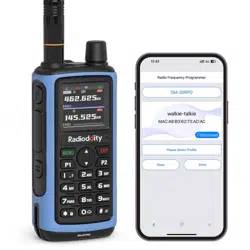

User Manual
GM-30 PRO
PREFACE
Thank you for purchasing this product. which is a dual band/dual display/dual watch. This easy-to-use radio will deliver you
secure, instant and reliable communications at peak efficiency. Please read this manual carefully before use. The information
presented herein will help you to derive maximum performance from your radio.
WARNING!European Users should note that operation of this unit in Transmit mode requires the operator
to have a valid Amateur Radio License from their respective Countries Amateur Radio Licensing Authority for
the Frequencies and Transmitter Power levels that this Radio transmits on. Failure to comply may be unlawful
and liable for prosecution. At this subject, refer to the “EU” specification guide 2014/53/EU.
ATTENTION! When programming the radio, start by reading the factory software data, and then rewrite
this data with your frequency etc., to a new saved code plug, otherwise errors may occur. You can use the
programming cable with a PC to program the authorized frequency, bandwidth, power, etc. your programming
must comply with your FCC (or EU other country) license certification.
ATTENTION!
Before using this product, read the RF Energy Exposure and Product Safety Guide that
ship with the radio which contains instructions for safe usage and RF energy awareness and control for
compliance with applicable standards and regulation.
PMR446, FRS, GMRS, MURS
You may be tempted to use PMR446 (in Europe) or FRS, GMRS, MURS (in the USA) frequencies. Do note
however that there are restrictions on these bands that make this transceiver illegal for use.

Table of Contents
1. GETTING STARTED 5.6 Channel Mode and Channel Selection
1.1 Regulations and Safety Warnings 5.7 Selecting a Zone
1.2 Content of the Packaging 5.8 Making a Call
1.3 Features and Functions 5.9 Using the Flashlight
2. BATTERY INFORMATION 5.10 Emergency Alert
2.1 Charging the Battery Pack 5.11 FM Radio (FM)
2.2 Charger Supplied 5.12 Monitor
2.3 Use Caution with the Li-ion Battery 5.13 Keypad Lock
2.4 How to Charge 5.14 Frequency Reversal
2.5 Using the Type-C Charger 5.15 TX Repeaters Tone
2.6 Battery Maintenance 5.16 Weather Radio/Scan Weather Channel
2.7 Prolonging the Life of Your Battery 6. ADVANCED FEATURES
2.8 How to Store the Battery 6.1 Scanner
3. PREPARATION 6.2 DTMF
3.1 Installing /
Removing the Battery
3.2 Installing / Removing the Antenna 7. MAIN MENU FUNCTIONS
3.3 Installing / Removing the Belt Clip 7.1 Basic Use
3.4 Installing Additional Speaker/Microphone 7.2 Using Short-Cuts
4. RADIO OVERVIEW 7.3 Radio Settings
4.1 Status Indications 7.4 Program Channel
4.2 LCD Icon Summary 7.5 Radio Info
4.3 Main Keypad Controls
5. BASIC OPERATIONS Appendix A. – Trouble Shooting Guide
5.1 Power on the Radio Appendix B. - Technical Specifications
5.2 Adjusting the Volume Appendix C. - Shortcut Menu Operations
5.3 Main Band/Sub Band Switch Appendix D. - DCS Table
5.4 VFO/Channel Switch Appendix E. - CTCSS Table
5.5 Frequency (VFO) Mode
1.1 Regulations and Safety Warnings
FCC Regulatory Conformance
This equipment has been tested and found to comply with the limits for a Class B digital device, pursuant to Part 15 of FCC Rules. These limits
are designed to provide reasonable protection against harmful interference in a residential installation. This equipment generates and can radiate
radio frequency energy. If not installed and used in accordance with the instructions, it may cause harmful interference to radio communications.
However, there is no guarantee that interference will not occur in a particular installation. Verification of harmful interference by this equipment
to radio or television reception can be determined by turning it off and then on. The user is encouraged to try to correct the interference by one or
more of the following measures:
- Reorient or relocate the receiving antenna.
- Increase the separation between the equipment and receiver.
- Connect the equipment into an outlet on a circuit
different from that to which the receiver is connected.
- Consult the dealer or an experienced radio/TV technician for help.
Changes or modifications not expressly approved by the party responsible for compliance could void the user's authority to operate the
equipment.
This device complies with Part 15 of the FCC Rules. Operation is subject to the condition that this device does not cause harmful interference.
WARNING
!
MODIFICATION OF THIS DEVICE TO RECEIVE CELLULAR RADIOTELEPHONE SERVICE
SIGNALS IS PROHIBIITED UNDER FCC RULES AND FEDERRAL LAW.
Compliance with RF Exposure Standards
The radio complies with the following RF energy exposure standards and guidelines:
• United States Federal Communications Commission, Code of Federal Regulations; 47 CFR § 1.1307, 1.1310 and 2.1093
• American National Standards Institute (ANSI) / Institute of Electrical and Electronic Engineers (IEEE) C95.1:2005; Canada RSS102 Issue 5
March 2015
• Institute of Electrical and Electronic Engineers (IEEE) C95.1:2005 Edition
RF Exposure Compliance and Control

Guidelines and Operating Instructions
To control your exposure and ensure compliance with the occupational/ controlled environmental exposure limits, always adhere to the following
procedures.
Guidelines:
• Do not remove the RF Exposure Label from the device.
• User awareness instructions should accompany device when transferred to other users.
• Do not use this device if the operational requirements described herein are not met.
Operating Instructions:
• Transmit no more than the rated duty factor of 50% of the time. To transmit (talk), press the Push-to-Talk (PTT) key. To receive calls, release
the [PTT] key. Transmitting 50% of the time, or less, is important because the radio generates measurable RF energy only when transmitting (in
terms of measuring for standards compliance).
• Keep the radio unit at least 2.5cm away from the face. Keeping the radio at the proper distance is important as RF exposure decreases with
distance from the antenna. The antenna should
be kept away from the face and eyes.
• When worn on the body, always place the radio in an approved holder, holster, case, or body harness or by use of the correct clip for this
product. Use of non-approved accessories may result in exposure levels which exceed the FCC's occupational/ controlled environmental RF
exposure limits.
• Use of non-approved antennas, batteries, and accessories causes the radio to exceed the FCC RF exposure guidelines.
• Contact your local dealer for the product's optional accessories.
■Precautions for Portable Terminals
Operating Prohibitions
To protect you against any property loss, bodily injury or even death, be sure to observe the following safety instructions:
1. Do not operate the product in a location containing fuels, chemicals, explosive atmospheres and other flammable or explosive materials. In
such location, only an approved Ex-protection model is allowed for use, but any attempt to assemble or disassemble it is strictly prohibited.
2. Do not operate the product near or in any blasting area.
3. Do not operate the product near any medical or electronic equipment that is vulnerable to RF signals.
4. Do not hold the product while driving.
5. Do not operate the product in any area where use of wireless communication equipment is completely prohibited.

Important Tips
To help you make better use of the product, be sure to observe the following instructions:
1. Do not use any unauthorized or damaged accessory.
2. Keep the product at least 2.5 centimeters away from your body during transmission.
3. Do not keep the product receiving at high volume for a long time.
4. For vehicles with an air bag, do not place the product in the area over the air bag or in the air bag deployment area.
5. Keep the product and its accessories out of reach of children and pets.
6. Please operate the product within the specified temperature range.
7. Continuous transmission for a long time may lead to heat accumulation within the product. In this case, please keep it at a proper location for
cooling.
8. Handle the product with care.
9. Do not disassemble, modify or repair the product and its accessories without authorization.
■
Precautions for Batteries
Charging Prohibitions
To protect you against any property loss, bodily injury or even death, be sure to observe the following safety instructions:
1. Do not charge or replace your battery in a location containing fuels, chemicals, explosive atmospheres and other flammable or explosive
materials.
2. Do not charge your battery that is wet. Please dry it with a soft and clean cloth prior to charge.
3. Do not charge your battery suffering deformation, leakage and overheat.
4. Do not charge your battery with an unauthorized charger.
5. Do not charge your battery in a location where strong radiation is present.
6. Overcharge shall always be prohibited for it may shorten the life of your battery.
Maintenance Instructions
To help your battery work normally or prolong its life, be sure to observe the following instructions:
1. Accumulated dust on charging connector may affect normal charging. Please use a
clean and dry cloth to wipe it on a regular basis.
2. It is recommended to charge the battery under 5℃~40℃. Violation of the said limit may cause battery life reduction or even battery leakage.
3. To charge a battery attached to the product, turn it off to ensure a full charge.

4. Do not remove the battery or unplug the power cord during charging to ensure a smooth charging process.
5. Do not dispose of the battery in fire.
6. Do not expose the battery to direct sunlight for a long time nor place it close to other heating sources.
7. Do not squeeze and penetrate the battery, nor remove its housing.
Transportation Instructions
1. Damaged batteries must not be transported.
2. To avoid short circuit, separate the battery from metal pars or from each other if two or more batteries are transported in one packaging.
3. The radio must be switched off and secured against switch-on, if the battery is attached.
The content of the shipment must be declared in the shipping documents and by a Battery Shipping Label on the packaging. Contact your hauler
for the local regulations and further information.
1.2 Content of the packaging
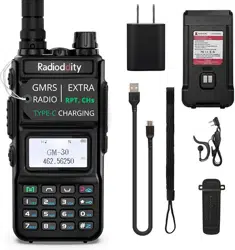
This transceiver comes shipped with the following items in the box:
• 1 Radio
body • 1 Belt Clip • 1 Antenna
• 1 Lithium-Ion battery pack • 1 Adapter • 1 Wrist Belt
• Instruction Manual

1.3 Features and Functions
• 1.77" TFT large screen, full keyboard, fully open menu operation
• Scanner function: VFO scan range setting, three scan recovery methods, channel scan, CTC/DCS scan, scan channel
addition and removal
• 108-136,136-174,220-260,350-390,400-520MHz Multi-band scanning receiver (*Suitable for North American users)
*144-146MHz, 430-440MHz (Applicable to users in EU countries and regions)
• Built-in inp
ut method, allows this device to edit channel name
• NOAA Weather Radio Channel Reception in the United States and Canada
• Frequency step, selectable between 2.5K | 5.0K | 6.25K | 10.0K | 12.5K | 20.0K | 25.0K | 50.0K | 100.0K
• Type-C direct charging and charging stand, more convenient battery life
• Dual-band handheld transceiver. • DTMF encoder and DTMF manual dial
• High Capacity Lithium-Ion battery. • Broa
dcast FM radio receiver 78-108 MHz
• 50 CTCSS tones and 105 DCS codes. • VOX (voice activated transmit).
• 10 zones storage, Up to 1000 named memory channels. • Alarm function.
• High or low power selectable. • Display illumination programmable via keypad.
• Function beep on the keyboard. • Dual watch / Dual reception.
• Programmable repeater offset. • Battery saving function.
• Transmission time-ou
t timer. • Scan mode.
• Busy channel lock out. • Built in CTCSS/DCS tones.
• LED flashlight. • PC programmable.
• Ten (10) levels of Squelch adjustment. • One touch search frequency
• End of transmission tone, aka “Roger Beep”. • Wireless Programming Radio, Read and Write Frequency
2.1 Charging the Battery Pack
The Li-ion battery pack is not charged at the factory; please charge it before use.
Charging the battery pack for the first time after purchase or extended storage (more than 2 months) may not bring the battery pack to its normal
maximum operating capacity. Best operation will require fully charging/discharging the battery two or three times before the operating capacity
will reach its best performance. The battery pack life may be depleted when its operating time decreases even though it has been fully and
correctly charged. If this is the case, replace the battery pack.
2.2 Charger Supplied
Please use the specified charger provided by Radioddity. Other models may cause explosion and personal injury. After installing the battery pack,
and if the radio displays low battery with a red flashing lamp or voice prompt, please charge the battery.
2.3 Use Caution with the Li-ion Battery
(1) Do not short the battery terminals or throw the battery into a fire. Never attempt to remove the casing from the battery pack, as Radioddity
cannot be held responsible for any accident caused by modifying the battery.
(2) The ambient temperature should be between 5
-40 (40˚F - 105˚F) while charging the battery. Charging outside this range may not fully
charge the battery.
(3) Please turn off the radio before inserting it into the charger. It may otherwise interfere with correct charging.
(4) To avoid interfering with the charging cycle, please do not cut off the power or remove the battery during charging until the green light is on.
(5) Do not recharge the battery pack if it is fully charged. This may shorten the life of the battery pack or damage the battery pack.
(6) Do not charge the battery or the radio if it is damp. Dry it before charging to avoid damage.
NOTICE
When keys, ornamental chain or other electric metals contact the battery terminal, the battery may become damage or injure a human. If the
battery terminals are short circuited it will generate a lot of heat. Take care when carrying and using the battery. Remember to put the battery
or radio into an insulated container. Do not put it into a metal container.
2.4 How to Charge
(1) Plug the AC adaptor into the AC outlet, and then plug the cable of the AC adaptor into the DC jack located on the back of the charger. The
indicator light blinks orange and is then ready to charge battery.
(2) Plug the battery or the radio into the charger. Make sure the battery terminals are good in contact with charging terminals. The indicator light
turns to red--- charging begins.
(3) It takes approximately 2-5 hours to fully charge the battery. When the lamp lights green, the charging is completed. Remove the battery or the
radio unit with its battery from socket
NOTICE
when charging a radio (with battery) the indicating lamp will not turn into green to show the fully charged status if the radio is powered on.
Only when the radio is switched off will the lamp indicate normal operation. The radio consumes energy when it is power-on, and the charger
cannot detect the correct battery voltage when the battery has been fully charged. So the charger will charge the battery in constant voltage
mode and fail to indicate correctly when the battery has been fully charged.
(4) LED Indicator
Red LED
Green
LED
Status
Flashing
Steady
Standby (charger empty)
Error (charger with radio)
Steady
Off
Charging
Off
Steady
Charge complete.
The charger and battery are fitted with matching notches so that you can charge your battery on its own! Practical if you have two batteries.
That way you can charge one battery while still using your radio.
Radio should be turned OFF during charge cycle.
2.5 Using the Type-C Charger
The Type-C charger is a handy port that allows you to conveniently charge your Li-on battery pack.
(1) Make sure your radio is turned OFF.
(2) Plug the Type-C cable into the Type-C charging port on your battery. Connect the other end of the Type-C charger to wall power outlet.
(3) An empty battery will be fully charged in 6 hours.
(4) The battery meter on LCD will move to indicate the battery is charging.
2.6 Battery Maintenance
The battery for your radio comes uncharged from the factory; please let it charge for at least four to five hours before you start using your radio.
• Use only batteries approved by the original manufacturer.

• Never attempt to disassemble your battery pack.
• Do not expose your batteries to fire or intense heat
• Dispose of batteries in accordance with local recycling regulations. Batteries do not belong in your trashcan!
2.7 Prolonging the Life of Your Battery
• Only charge batteries in normal room temperatures.
• When charging a battery attached to the radio, turn the radio off for a faster charge.
• Do not unplug the power to the charger or remove the battery and/or radio before it's finished charging.
• Never charge a wet battery.
• Batteries wear out over time. If you notice a considerably shorter operating time with your radio, please consider purchasing a new battery.
• Battery performance will be reduced in temperatures below freezing. When working in cold environments, keep a spare battery on you.
Preferably inside your jacket or in a similar location in order to keep the battery warm.
• Dust can interfere with the contacts on the battery. If
necessary wipe the contacts with a clean cloth to ensure proper contact with radio and
charger.
If your battery has become wet, remove it from the radio, wipe it dry with a towel and put it in a plastic bag with a handful of dry rice. Tie the
bag up and let it sit over night.
The rice will absorb any remaining moisture in the battery.
This method is only effective against minor splashes (light rain for instance). A soaked radio may very well be beyond repair.
2.8 How to Store the Battery
(1) If the battery needs to be stored, keep it in status of 80% discharged.
(2) It should be kept in low temperature and dry environment.
(3) Keep it away from hot places and direct sunlight.
(4) To avoid severe capacity degradation of your battery while in long-term storage, please cycle the battery at least every six (6) months.
NOTICE
• Do not short circuit the battery terminals.
• Never attempt to remove the casing from the battery
pack.
• Never store the battery in unsafe surroundings, as a short may cause an explosion.
• Do not put the battery in a hot environment or throw it into a fire, as it may cause an explosion.
3.1 Installing / Removing the Battery
Installing the Battery Pack
(1) Position the battery pack over the back of the radio.
(2) Engage the battery pack into the radio until battery pack is fully seated into the radio housing.
(3) Tighten the screws using a coin or at object to secure the battery pack to the radio. Do not overtighten.
To Remove Battery Pack from Radio
(1) Loosen the screws on the back of the battery pack.
(2) Lift the bottom of the battery pack slightly to remove it from the radio housing.
(3) Pull the battery pack out of the radio housing.
NOTE:
The Li-ON battery pack can also be charged in the battery charger.
3.2 Installing / Removing the Antenna
(1) Installing the Antenna: Screw the antenna into the connector on the top of the transceiver by holding the antenna at its base and turning it
clockwise until secure.
(2) Removing the Antenna: Turn the antenna counter-clockwise to remove it.
3.3 Installing / Removing the Belt Clip
(1) Installing the Belt Clip: Place the belt clip above the corresponding holes on the back of the radio, and screw it into place clockwise with the
two supplied screws.
(2) Removing the Belt Clip: Unscrew counter-clockwise to remove the belt clip.
3.4 Installing Additional Speaker/Microphone (Optional)
Pry open the rubber MIC-Headset jack cover and then insert the Speaker / Microphone plug into the double jack.
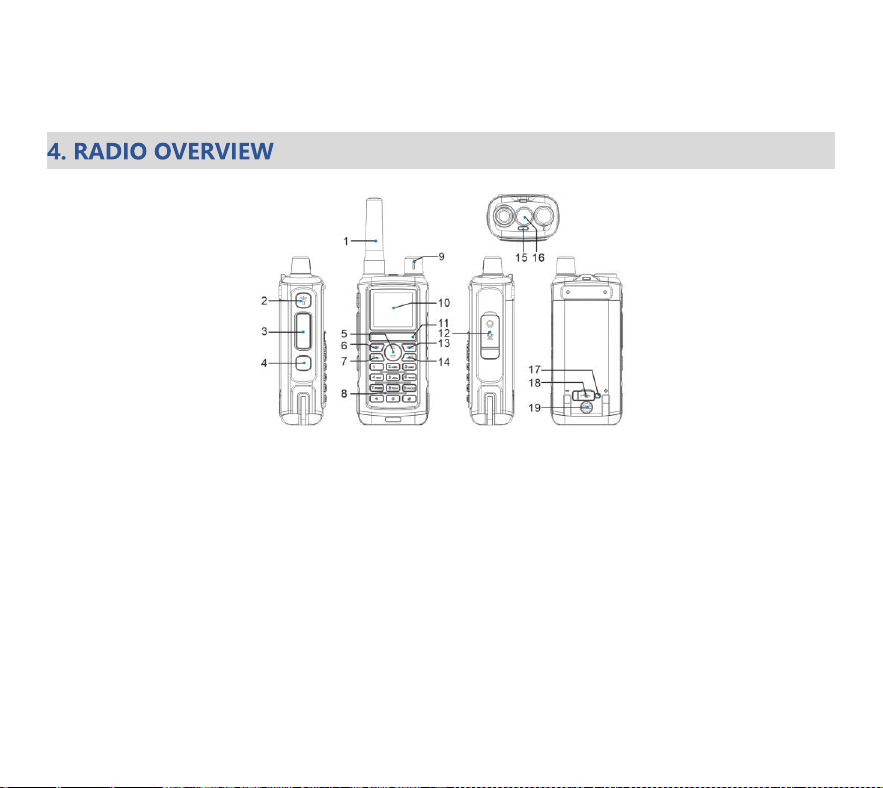
1. Antenna 2. SK1- Flashlight/ Emergency Alert key 3. PTT Key
4. SK2- FM Radio/Monitor Key 5. or Navigation Keys 6. MENU Key
7. P1 key (VFO/MR) 8. Numeric Keypad 9. Power / Volume Knob
10. Color LCD 11. MIC Input 12. Speaker/Mic Jacks
13. EXIT Key 14. P2 key (A/B) 15. LED Status Indicator
16. Flashlight LED 17. Type-C Charging Indicator 18. Type-C charging Port
19. Battery Tightening Screw
"SK2" customization function
Press and hold the SK2 key as the Monitor function. SK2 allows you to set shortcut functions through the CPS programming software or the
radios menu.
• FM RADIO: Quickly turn on or off the FM radio function.
• Scan: Quickly turn on or off the scan function. You can also turn on or off the scan function by hold down the # key.
• SEARCH: Quickly turn on or off the one-touch frequency search function.
• VOX: Quickly turn on or off the VOX function.
• PTTB: Second PTT function
• LAMP: Flashlight
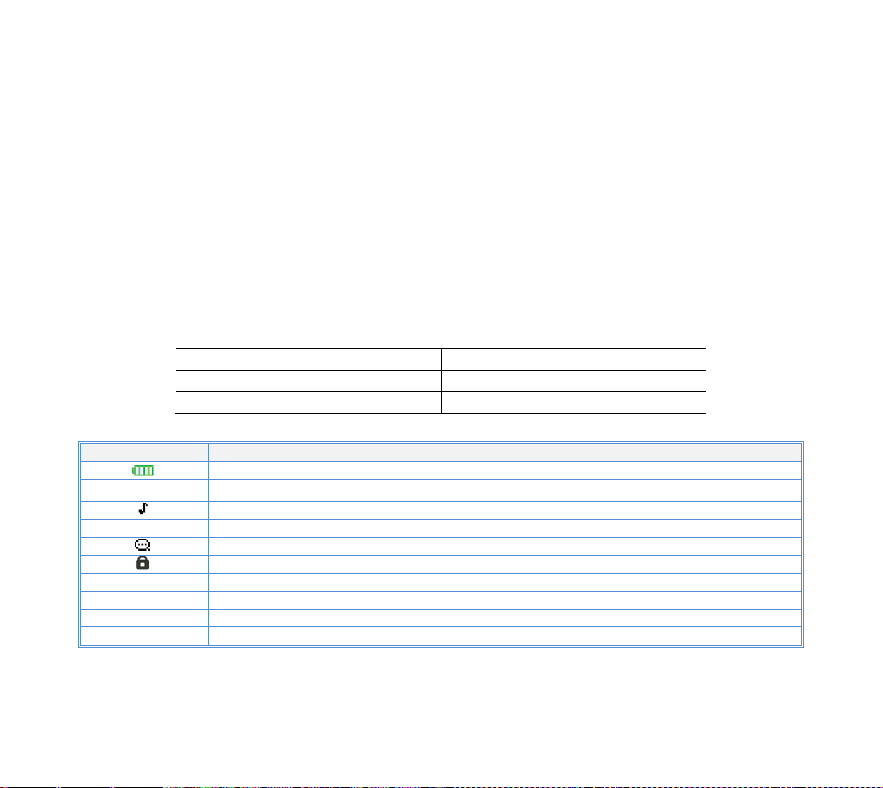
4.1 Status Indications
The top LED will help you to identify the current radio status.
LED Indication
What it Indicates
Constant Green
Receiving Signal
Constant Red
Transmitting signal
4.2 LCD Icon Summary
Icon
Descrip�on
Ba�ery level indicator
RSSI
Opera�ng band signal
Make sure you can hear the DTMF side tone from the radio speaker, set to DT-ST, ANI-ST, DT+ANI.
D
Dual watch enabled
VOX enabled
Keypad lock enabled
Zone01~ Zone10
Indica�on of the current channel's region. Working in storage mode
VFO
In the current working VFO mode. Allow manual frequency input
H
Transmit power level indicator, According to Power High
L
Transmit power level indicator, According to Power Low
DCS enabled
CTCSS enabled
+
Enables access of repeaters in VFO/Frequency Mode. TX will be shi�ed higher in frequency than RX
。
-
Enables access of repeaters in VFO/Frequency Mode. TX will be shi�ed lower in frequency than RX
R
Reverse func�on enabled
T
Talkaround has been ac�vated, off grid at the central turntable. The transmission frequency is equal to the receive
frequency
The confiden�al calling feature is ac�vated
N
Narrowband enabled
4.3 Main Keypad Controls
• MENU key: It is used for activating the MENU, choose each MENU selection and confirm the parameter.
When listening to broadcast FM, the key switches between 65-75 MHz and 76-108 MHz bands.
• P1 key: VFO/MR key, press the key to switch between frequency (VFO) mode and channel (MR) mode.
•▲ key: Press it for more than 2 seconds, the channel and frequency will move upwards rapidly; in SCAN mode, press this control to move the
scanning upwards.
•▼ key: Keep it pressed it for more than 2 seconds, the channel and frequency will move downwards rapidly; in SCAN mode, press this control
to move the scanning downwards.
• EXIT key: Press to exit the Menu and functions.
• P2 key: A/B key, The P2 key switches between A (upper) and B (lower) displays. The frequency or channel on the selected display becomes the
active listening and transmit frequency or channel.
• Numeric keypad
With these keys you can input the information or your selections on the radio. In TX mode, push the number keys to send a corresponding DTMF
code.
•
Key
A short momentary press of the key enables the reverse function.
The radios features a keypad lock that locks out all keys except for the three side keys.
To enable or disable the keypad lock, press and hold the
key for about two seconds.
•
key
When listening to broadcast FM a momentary press will start the scanning. Scanning in broadcast FM will stop as soon as an active station is
found, regardless of scanner resume method.
To enable the scanner, press and hold the
key for about two seconds.
Short press the
key to quickly enter the DTMF dialing.
5.1 Power on the Radio
• Turning the unit on
To turn the unit on, simply rotate the Volume/Power knob clockwise until you hear a "click". If your radio powers on correctly there should be an
audible double beep after about one second and the display will show a message or flash the LCD depending on settings for abo ut one second.
Then it will display a frequency or channel. If the Voice prompt is enabled, the voice will announce "frequency mode" or "channel mode".
• Turning the unit off
Turn the Volume/Power knob counter-clock wise all the way until you hear a "click". The unit is now off.
5.2 Adjusting the Volume
To turn up the volume, turn the volume/power knob clock-wise. To turn the volume down, turn the Volume/Power knob counter-clock-wise. Be
careful not to turn it too far, as you may inadvertently turn your radio off.
By using the monitor
function, enabled from the [FM broadcast/Monitor] key below the PTT, you can more easily adjust your volume by
adjusting it to the un-squelched static.
5.3 Main Band/Sub Band Switch
In standby mode, press the [P2] key to switch between the main frequency band or sub frequency bands.
Those in large font are the main bands and those in small font are the sub-bands.
5.4 VFO/Channel Switch

Press [P1] key to switch between VFO and channel display.
• In channel mode (MR), the channel number will be displayed on the right.
• In frequency mode (VFO), the ‘VFO’ will be displayed on the right.
5.5 Frequency (VFO) Mode
In Frequency (VFO) mode you can navigate up and down the band by using the or keys. Each press will increment or decrement your
frequency according to the frequency step you've set your transceiver to.
You can also input frequencies directly on your numeric keypad with kilohertz accuracy.
The following example assumes the use of a 12.5 kHz frequency step.
Example. Entering the frequency 436.61250 MHz on display A
(1) In standby mode, press [P1] key to switch to the frequency (VFO) mode.
(2) Enter [4][3][6][6][1][2][5] [0] on the numeric keypad.
WARNING!
Just because you can program in a channel does not mean you're automatically authorized to use that frequency. Transmitting on
frequencies you're not authorized to operate on is illegal, and in most jurisdictions a serious offence
. However, it is legal in most jurisdictions
to listen. Contact your local regulatory body for further information on what laws, rules and regulations apply to your area.
5.6 Channel (MR) Mode and Channel Selection
There are two modes of operation: Frequency (VFO) mode, and Channel or Memory (MR) mode.
For everyday use, Channel (MR) mode is going to be a whole lot more practical than Frequency (VFO) mode. However, Frequency (VFO) mode
is very handy for experimentation out in the field. Frequency (VFO) mode is also used for programming channels into memory.
In Channel (MR) mode you can navigate up and down the channel by using the or keys or the encoder.
Ultimately which mode you end up using will depend entirely on your use case.
Press [P1] key to switch the radio between VFO and Channel mode, select Channel mode.
• Operation 1: Press the or navigation key to select the channel.
• Operation 2: Input the channel numbers by the keyboard. For example,
if you want switch to channel 12, input [0][1][2] a total of 3 digits, and
it will switch to channel 12.
When the voice prompt function is enabled, the corresponding channel will be broadcast by voice.

5.7 Selecting a Bank
A bank is a group of channels with the same property. The radio supports up to 10 banks, with a maximum of 100 channels per bank. To select a
bank, do one of the following:
Press [MENU] key go to Menu > Bank, press or navigation key to select a bank, and then press [MENU] key to switch to the selected
bank.
The corresponding regional alias will be displayed at the bottom of the screen.
5.8 Making a Call
press [P1] key to switch between frequency (VFO) mode and channel (MR) mode.
• Channel mode call: After selecting a channel, hold down the [PTT] key to initiate a call to the current channel. Speak into the microphone with
normal tone. Making a call, the red LED is on.
• Frequency mode call: Press [P1] key to switch to the frequency mode, input the working frequency within the allowable frequency range, and
press and hold the [PTT] key to transmit on the current frequency. Speak into
the microphone with normal tone. Making a call, the red LED is
on.
• Receive a call: When you release the [PTT] key, you can answer it without any action.
When receiving a call, the green LED is on.
NOTE: To ensure the best reception volume, keep the distance between the microphone and the mouth at the time of transmission from 2.5
cm to 5 cm.
5.9 Emergency Alert
The Emergency Alert feature can be used to signal members in your group for help.
To activate the emergency alert function, press and hold the [SK1] key for 3 seconds. The radio will send out a loud siren sound and the flashlight
will flash.
Press the [SK1] key to exit the emergency alert function.
WARNING: The Emergency Alert feature should only be used in the even of an actual emergency.
5.10 Using the Flashlight

If you press [SK1] key, the radio turns on the high-intensity LED flashlight on your radio.
• Your radio operates normally when the emergency strobe is activated.
(1) Press [SK1] key once, it will turn on continuously (Always On mode).
(2) And then, press [SK1] key once, the Strobe Light emits the emergency signal (Strobe emergency mode).
(3) And then, press [SK1] key once, the light will be turned off.
5.11 FM Radio (FM)
The frequency ranges to listen to the radio is 65-108MHz. When listening to broadcast FM, press [MENU] key switches between 65-75 MHz and
76-108 MHz band.
(1) In frequency or channel mode, Press [SK2] key to turn on the radio.
(2) Select the desired radio frequency with the or keys or input the frequency. Or
• Press
to automatically search a radio station.
(3) Press [SK2] key to exit FM radio.
Note: while you are listening to the radio, the frequency or channel of A / B receiving signal will automatically switch to the frequency or
channel mode for normal transmitting and receiving.
When the signal disappears the radio will automatically switch again to FM radio mode.
5.12 Monitor
In standby, press and hold the [SK2] key to enter Monitor. When receiving matched carrier but the signaling or the signal is too weak, this
function allows monitor the weak signal.
Stop pressing the [SK2] key to turn off the speakers and return to standby mode.
» If no signal, it will emit noise when press the [SK2] Key.
5.13 Keypad Lock
The radio features a keypad lock that locks out all keys except for the three side keys.
To enable or disable the keypad lock, press and hold
the key for about two seconds.
You can also enable so that the radio automatically locks the keypad after ten seconds from the menu.
5.14 Weather Radio/Scan Weather Channel
Your radio has a NOAA Weather Radio function, to enable the user to receive weather reports from designated NOAA stations. Your radio also
has a NOAA Weather Scan function, to enable the user to scan all 10 channels of the NOAA Weather Radio.
(1) To turn the NOAA Weather Scan on, press and hold the
key for 3 seconds , icon appears. The radio will go to Weather band
mode.
(2) Press and hold the
key for 3 seconds to start automatic scanning of all 10 channels and stop on active channels. Pressing and holding the
key for 3 seconds during a NOAA weather scan will stop the scan.
(3) After stopping NOAA weather scan, it is allowed to manually select the weather channel by press the or key.
(4) To exit the Weather Radio broadcast mode, press the [EXIT] key or [PTT] key.
Weather channel frequencies and names
Channel Number
RX Frequency MHz
Channel Number
RX Frequency MHz
CH-01
162.550
CH-06
162.500
CH-02
162.400
CH-07
162.525
CH-03
162.475
CH-08
161.650
CH-04
162.425
CH-09
161.775
CH-05
162.450
CH-10
163.275
NOTE: Weather Channels Wx 1 Thru 10, Receive-only channels for NOAA and Canadian weather broadcasts. You cannot transmit on these
channels.
5.15 One Touch Frequency Search
(1) Through the CPS program software or the radio menu >> Radio Setting >> Press the SK2 key
to define the SK2 side key as a Search function.
(2) The radio will act as a receiver. Briefly press the preset" Search "key, and the screen will
display “SEARCH SEEK..."
(3) If the transmitter continues to transmit and the unit receives an effective frequency (the
strongest and stable signal), the received frequency will be displayed. If there is a CTCSS or
DCS, the CTCSS or DCS value is displayed, and if there is no CTCSS or DCS, NONE is
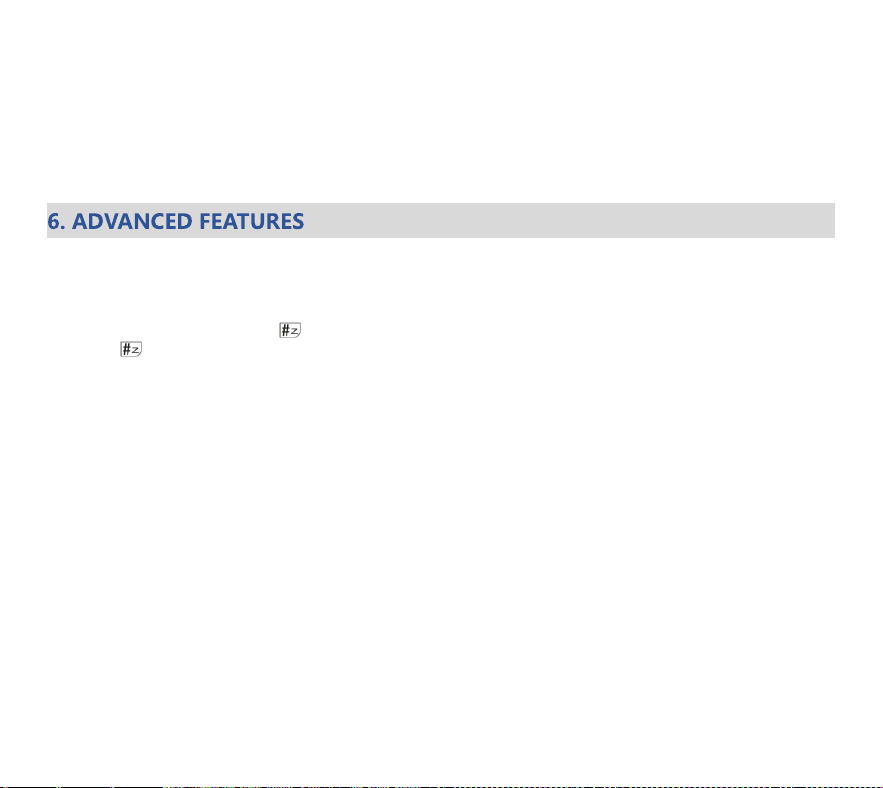
displayed
(4) You can press the MENU key to save the Search frequency and CTCSS or DCS to the channel.
Note: During frequency Search, press the # key on the radio to switch between UHF or VHF bands.
6.1 Scanner
The radios features a built in scanner for the VHF and UHF bands. When in Frequency (VFO) mode it will scan in steps according to your set
frequency step. In Channel (MR) mode it will scan your channels.
To enable the scanner, press and hold the
key for about two seconds. You can change the scanning direction with the or keys. Press
and hold the
key to exit scanning mode.
6.1.1 Frequency Ranger
In frequency mode, the frequency sweep range can be precisely set. Input the start value and end value of the sweep frequency through the
keyboard.
EX: Enter 144146, in frequency mode, scan in the range of 144.000-146.000MHZ. Enter 430440, in frequency mode, scan in the range of
430.000-440.000MHZ.
Note: for VFO frequency Ranger, see Menu>SCAN>Freq Ranger.
6.1.2 Scan Modes
The scanner is configurable to one of three ways of operation: Time, carrier or search, each of which is explained in further details in their
respective section below.
Time operation
In Time Operation (TO) mode, the scanner stops when it detects a signal, and after a factory preset time out, it resumes scanning.
Carrier operation
In Carrier Operation (CO) mode, the scanner stops when it detects a signal, and after a factory preset time with no signal it resumes
scanning.

Search operation
In Search Operation (SE) mode, the scanner stops when it detects a signal.
To resume scanning you must press and hold the
key again.
Note: for Scan mode, see Menu>SCAN>Scan Mode.
6.1.3 Scan Sub-Code
To search for a CTCSS code, do the following:
(1) In VFO mode, enter a known frequency, such as 144.525.
(2) Press [MENU] key to enter menu>>Scan>>3 Scan Sub-Code.
(3) Press or to select CTCSS;
(4) Press the [MENU] key to enter the CTCSS code, and scan the CTCSS code in sequence. When a valid CTCSS code is scanned, it stays on the
CTCSS code and the speaker is turned on.
(5) Press the [MENU] key to store the scanned CTCSS code and exit the scan to return to the previous menu. In standby mode, the
icon will
be displayed on the top line of the screen. Press and hold the PTT key to make a callback.
To search for a DCS code, do the following:
(1) In VFO mode, enter a known frequency, such as 144.525.
(1) Press [MENU] key to enter menu>>Scan>>3 Scan Sub-Code.
(2) Press or to select DCS;
(3) Press the [MENU] key to enter the DCS code scanning, and scan the DCS code in turn. When a valid DCS code is scanned, it stays on the
DCS code and the speaker is turned on.
(4) Press the [MENU] key to store the scanned DCS code and exit the scan to return to the previous menu. In standby mode, the
icon will be
displayed on the top line of the screen. Press and hold the PTT key to make a callback.
6.1.4 Sub-Code Scan Storage
In MR mode or VFO mode, the scanned CTCSS/DCS code can be stored as only TX CTCSS/DCS code, RX CTCSS/DCS code only, TX and RX
CTCSS/DCS code to replace the CTCSS/DCS code setting of the current channel or frequency mode of the radio.
To save the settings of CTCSS/DCS code scan, the operation is as follows:
(1) Press [MENU] key to enter menu >> SCAN >> 4 Scan Memory.
(2) Press the [MENU] key to enter the Scan Memory setting, and press the or key to select:
• ALL: The scanned CTCSS/DCS code will be stored as the received and transmitted CTCSS/DCS code of the current channel or frequency
mode (at the same time as the received and transmitted Sub-Code).
• DECODER: The scanned CTCSS/DCS code will be stored as the receiver CTCSS/DCS code of the current channel or frequency mode
(only replace its receiver RX CTC/DCS).
• ENCODER: The scanned CTCSS/DCS code will be stored as the transmitted CTCSS/DCS code of the current channel or frequency mode
(only replace its transmitted TX CTC/DCS).
(3) Press the [MENU] key to save the settings and return to the previous menu;
Note: Only when a valid CTCSS/DCS code is scanned and stopped, press the [MENU] key to store the CTCSS/DCS code and replace the
corresponding CTCSS/DCS code of the current channel or frequency.
6.2 DTMF
DTMF is an in-band signaling method using dual sinusoidal signals for any given code. Originally developed for telephony systems, it has
proved a very versatile tool in many other areas.
In two-way radio systems, DTMF is most commonly used for automation systems and remote control. A common example would be in amateur
radio repeaters where some repeaters are activated by sending out a DTMF sequence (usually a simple single-digit sequence).
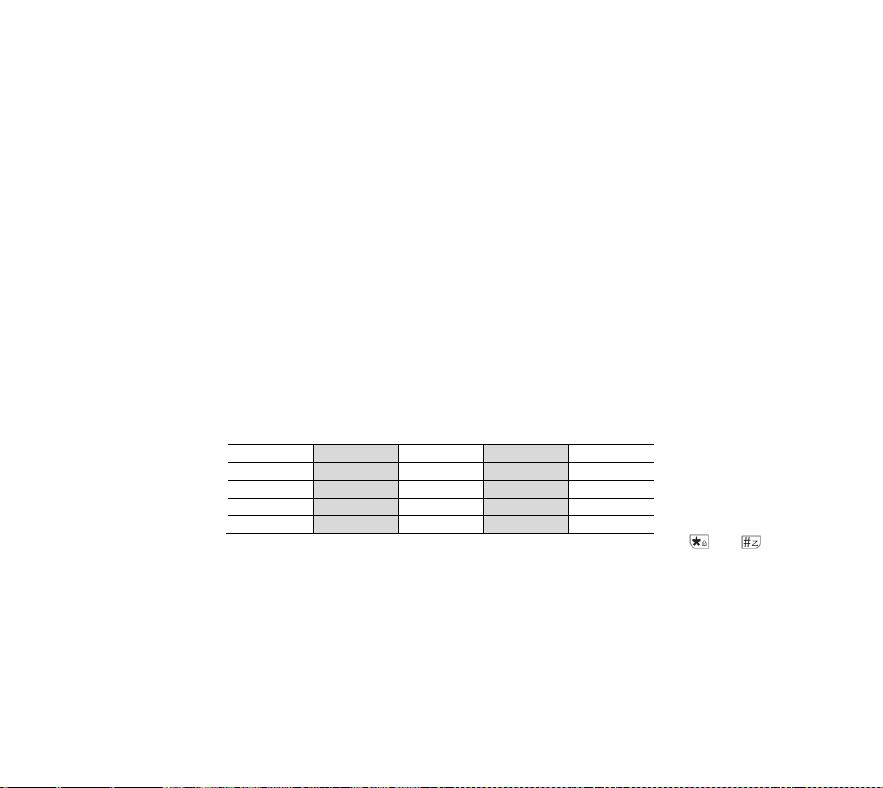
DTMF frequencies and corresponding codes
1209Hz
1336Hz
1477Hz
1633Hz
697Hz
1
2
3
A
770Hz
4
5
6
B
852Hz
7
8
9
C
941Hz
*
0
#
D
The radios has a full implementation of DTMF, including the A, B, C and D codes. The numerical keys, as well as the and keys
correspond to the matching DTMF codes. The A, B, C and D codes are located in the [MENU], , and [EXIT] keys respectively.
To send DTMF codes, press the key(s) corresponding to the message you want to send while holding down the PTT key.
In general, there are two forms of selective calling in two-way radio systems: Group call, and Private call.
Group call, as the name suggest, is a one-to-many form of communication. Every radio in your working group is configured the same way and
any radio will make contact with every other radio in the group.

Private call, some times also known as paging, is a one-to-one form of communication.
Every radio is programmed with a unique ID code. And only by sending out a matching code can you get that radio to open up to your
transmissions.
6.3 Dual Watch
In certain situations, the ability to monitor two channels at once can be a valuable asset. This can be achieved in one of two ways. You can either
have one receiver in your radio and flip-flop between two frequencies at a fixed interval (known as Dual Watch), or you can equip a radio with
two receivers (known as Dual Receive or Dual VFO). The former method is cheaper to implement and far more common than the latter.
The radio features Dual Watch functionality (single receiver) with the ability to lock the transmit frequency to one of the two channels it
monitors.
Enabling or disabling Dual Watch mode
(1) Press the [MENU] key to enter the main menu.
(2) Enter 3 on the numeric keypad to get to Radio Settings.
(3) Press the [
MENU] key to confirm, enter 15 on the numeric keypad to get to 15 Dual Watch.
(4) Press the [MENU] key to select.
(5) Use the or keys to enable or disable.
(6) Press the [MENU] key to confirm.
(7) Press [EXIT] to return to the previous menu.
The dual watch function is turned on, and the icon 'D' is displayed on the top line of the screen.
·
Repeat the above operation, select "OFF", the dual watch function is disabled, and the icon 'D' on the top line of the screen disappears.
Note: When the dual watch function is turned on, the icon 'D' is displayed on the screen, and the "Singal Mode" submenu is automatically
shielded in the radio setting menu.
After the dual watch is turned off, the radio setting menu will automatically add "Singal Mode". After turning on the single display mode, the
radio will display the channel name, frequency and channel sequence on the same screen.
6.4 Manual Programming (Channels Memory)
Memory channels are an easy way to store commonly used frequencies so that they can easily be retrieved at a later date.
The radios features 10 zones /1000 memory channels that each can hold: Receive and transmit frequencies, transmit power, group signaling

information, bandwidth, ANI/ PTT-ID settings and a six character alphanumeric identifier or channel name
1
.
Frequency Mode vs. Channel Mode
In standby mode, press [P1] key to switch between frequency (VFO) mode and channel (MR) mode.
These two modes have different functions and are often confused.
Frequency Mode (VFO): Used for a temporary frequency assignment, such as a test frequency or quick field programming if permitted.
Channel Mode (MR): Used for selecting preprogrammed channels.
Ex. Programming a Simplex Channel with CTCSS tone
EXAMPLE New memory in Channel 100:
RX = 432.6500 MHz
R-CTCSS 123.0
(1) Press the [EXIT] key to switch between menus.
(2) Press [P1] key to set the radio to VFO mode, and the VFO icon is displayed on the right.
(3) [MENU] [5] [MENU] [1][6] [MENU] [1] [0] [0][MENU] [EXIT] Deletes Prior Data in channel (Ex. 100)
(4) [MENU] [5] [MENU] [4] [MENU] 123.0[MENU] [EXIT] Selects desired TX encode tone (Ex 123 CTCSS)
(5) Enter RX frequency (Ex. 43265000) Enter RX
frequency (Ex. 43265000)
(6) [MENU] [5] [MENU] [1][5] [MENU] [1][0] [0][MENU] Enter the same channel (Ex 100)
-->> [EXIT] channel has been added
(7) Press [P1] key to return to the MR mode and the channel number will reappear.
7. MAIN MENU FUNCTIONS
The menu function allows you to perform operations such as selecting Banks, Setting SCAN, Radio Settings, Program Channels, and viewing
Radio Information.
7.1 Basic Use
Use menus with arrow keys
(1) Press the [MENU] key to enter the main menu.
(2) Use the or keys to navigate between menu items.
(3) After finding the desired next menu item, press the [MENU] key again to select the menu item.

(4) Use the or keys to navigate between the next menu items.
(5) After finding the desired next menu item, press the [MENU] key again to select the menu item.
(6) Use the or keys to select the desired parameter.
(7) When you have selected the parameter to be set for a given menu item;
(8) To confirm your selection, press [MENU] and it will save your setting and bring you back to the main menu.
(9) To cancel your changes, press [EXIT] and it will reset that menu item and bring you out of the menu entirely.
(10) To exit out of the menu at any time, press the PTT key.
7.2 Using Short-Cuts
As you may have noticed if you looked at Appendix C, Menu definitions, every menu item has a numerical value associated with it. These
numbers can be used for direct access of any given menu item.
Using the menu with short-cuts
(1) Press the [MENU] key to enter the menu.
(2) Use the numerical keypad to enter the number of the menu item.
(3) To enter the menu item, press [MENU] the key.
(4) For entering the desired parameter you have two options:
a) Use the arrow keys as we did in the previous section; or
b) Use the numerical keypad to enter the numerical short-cut code.
(5) And just as in the previous section;
a) To confirm your selection, press and it will save your setting and bring you back to the main menu.
b) To cancel your changes, press and it will reset that menu item and bring you out of the menu entirely.
(6) To exit out of the menu at any time, press the key.
(7) All further examples and procedures in this manual will use the numerical menu short-cuts.
[MENU] + 1: Quick access to Banks selection, up to 10 banks are stored, each bank stores 100 channels;
[MENU] + 2: Quickly enter the Scan Settings. You will be able to set the VFO frequency range, Scan mode, Scan Sub-Code, Scan Memory;
[MENU] + 3:
Turn Wireless Cps on or off to enable or disable Wireless Cps of the radio.
[MENU] + 4: Quickly enter the Radio settings (general settings of the radio);
[MENU] + 5: Quick access to Program Channel (Alias, TX and RX Frequency, TX Power, Bandwidth, Display mode, Channel Memory and

Channel delete);
[MENU] + 6: Quickly query the radio information (ANI-ID, Firmware version, Hardware version);
7.3 Radio Settings
(1) Step frequency (Step) – MENU + 1
This function lets you select the desired frequency step.
The selectable steps are the following: 2.5K/5.0K/6.25K/10K/12.5K/20K/25K/50K/100K.
Note: in channel mode, this function cannot be modified.
(2) Squelch level (Squelch) – MENU + 2
Thanks to this function you can adjust the squelch in 5 different levels:
• OFF: opened squelch. With this setting, the radios will detect all signals, also the weakest ones, but will also receive the background noise or
undesired signals.
• Levels 1- 5: level 1 (lowest squelch level), level 5 (highest squelch level).
If the squelch is set to the highest level, the radio will receive the strongest signals only.
(3) Power save (Power Save) – MENU + 3
When the radio is in standby, the power saving function reduces battery consumption. Turning on will be
more power efficient, but you may miss
the first few syllables before RX turns on.
(4) VOX Function (Vox Switch) – MENU + 4
The VOX feature allows hands-free calls without using the PTT button. As soon as you speak into the microphone, communication will start
automatically.
ON: Activate the VOX function;
Off: Turns off the VOX function.
(5) VOX Level (Vox Level) – MENU + 5
From this menu, you can select the VOX sensitivity level.
The selection range is from 1 to 9。

Note: Level 1 is the least sensitive, while level 9 is the most sensitive.
The VOX feature is not enabled when the radio is in scan or FM radio mode.
(6) VOX Delay – MENU + 6
When the VOX is enabled, set up the VOX delay to help to extend the transmission time to avoid stopping a transmission too early.
Range 0.5 – 2.0 seconds. Step 0.1 second. Default 1 seconds
(7) Time-Out-Timer (TOT) – MENU + 7
The Time-Out Timer (TOT) sets the duration that the radio can continuously transmit before transmission is automatically terminated. This
feature is used to prevent any single user from occupying a channel for too long.
Range: Off, 15 –180 seconds, Step 15 seconds. Default 60 seconds.
Note: If this option is set to OFF, press and hold the PTT key to keep transmission.
(8) Transmission Overtime Alarm (TOA) – MENU + 8
Allows users to define a duration an alert will be given before terminating the transmission. With the TOA function enabled, if the TOT function
(Time
Out Timer) has been turned on and your transmission reaches the pre-set end-transmission time, the transceiver will warn you and the TX
red indicator starts blinking.
Range 0 – 10 seconds, Step 1 second. Default Off.
(9) Voice prompts function (Voice) – MENU + 9
With this function, you activate a voice that informs you about any operation/ selection you are doing.
(10) Language selection (Language) – MENU + 10
With this function, you can select the language of the LCD display and operation prompt.
(11) Roger beep (ROGER) – MENU + 11
When the PTT is released, the radio will beep to confirm to other users that you have finished your transmission and that they can start talking.
(12) Keypad beep (Beep) – MENU + 12
When this function is enabled, every time a key is pressed, you will hear a beep tone.
(13) Backlight (Backlight) – MENU +13
With this function you can adjust the auto off time of the display backlight.

Always: The backlight is always on.
5S-20S adjustable.
Note: This function is valid when turn off the power save.
(14) Power on image (Power on Display) – MENU + 14
With this function you can set the display mode when the radio is turned on. Available options:
• PICTURE: Display the preset startup picture.
• MESSAGE: Welcome message.
• VOLTAGE: The power voltage is momentarily displayed.
(15) Dual Watch Operation (Dual Watch) – MENU + 15
When this function is activated, you can receive the frequency of channel A and channel B at the same time.
If a signal is detected, the
or pointer will blink on the corresponding channel or frequency.
Note: In Dual Watch operation mode, the 'D' icon will be displayed on the top line of the screen, you can freely change the parameters of AB
channel or frequency.
(16) Auto Keypad Lock (AutoLock) – MENU + 16
When this feature is activated, the keypad will be automatically locked after 10s; this prevents accidental pressure
of any keys.
The keypad lock can be manually activated/deactivated through the keypad: keep pressed
.
(17) Alarm Mode (Alarm Mode) – MENU + 17
This function can set the tone alarm/code alarm/site alarm of the radio.
Keep pressed the [SK1] key for 3 seconds to start the alarm tone.
The following three options can be selected:
• Site: the speaker emits an alarm tone but the radio doesn’t transmit;
• Tone: the speaker emits an alarm tone and the radio transmits it;
• Code: the speaker emits an alarm tone and the radio transmits it followed by ANI-ID code.
(18) Local Alarm Tone (Alarm Tone) – MENU + 18
Whether to emit an alarm whistle locally when the emergency alarm function is triggered.

(19) ANI-ID (ANI-ID) – MENU + 19
Displays the ANI code set by the software. Manual changes are allowed if necessary, and you can edit up to 5 digits.
ANI-ID is sent when alarm is active and menu 16 = SEND CODE.
The ANI-ID will be sent during DTMF signaling calls.
(20) DTMFST (DTMFST) – MENU + 20
Determines when DTMF Side Tones can be heard from the transceiver speaker. You can choose amongst four options:
• Off: No DTMF Side Tones are heard and DTMF optional signaling is turned off.
• DT-ST : Side Tones are heard only from manually keyed DTMF codes.
• ANI-ST: Side Tones are heard only from automatically keyed DTMF codes.
• DT+ANI: All DTMF Side Tones are heard.
(21) PTT-ID (PTT-ID) – MENU + 21
When to Send PTT-ID Codes are sent during either the beginning or ending of a transmission.
With this function you can decide when sending the ANI-ID code in tx mode.
You can choose amongst 4 possibilities.
• Off: Press PTT to turn it
off. That is, the current channel or VFO mode disables DTMF signaling.
• BOT: The code is sent when you press the PTT.
• EOT: The code is sent when the PTT is released.
• BOTH: The code is sent when you press and release the PTT.
(22) Signal code sending delay (PTT-DLY) – MENU + 22
PTT-ID signal code sending delay time setting, range 100-3000ms.
(23) 1750Hz Repeater Tone (ALERT) – MENU + 23
With this function you can select 1000Hz, 1450Hz, 1750Hz, 2100Hz repeater tone. To send out a repeater tone; You hold down the [PTT] +SK2
key.
If you have the keypad lock enabled on your radio, you can still send a 1750Hz tone the regular way without having to unlock your radio.
(24) Squelch tail elimination (TAIL) – MENU + 24

This function is used eliminate squelch tail noise between handhelds that are communicating directly (no repeater). Reception of a 55 Hz or 134.4
Hz tone burst mutes the audio long enough to prevent hearing any squelch tail noise.
(25) SK2 function definition(Press SK2) – MENU + 25
The SK2 key allows users to customize functions:
• FM RADIO: Quickly turn on or off the FM radio function.
• Scan: Quickly turn on or off the scan function. You can also turn on or off the scan function by hold down the # key.
• SEARCH: Quickly turn on or off the one-touch frequency search function.
• VOX: Quickly turn on or off the VOX function.
(26) Scramble function – MENU + 26
• OFF: Close Scramble
• MODE 1-3: Start Scramble
(27) Reset (Reset) – MENU + 27
With this function you can reset the transceiver to the factory-programmed settings and parameters. After that, you can set the desired functions.
There are two types of reset:
• VFO: Menu Reset
• ALL: Menu and channel Reset
7.4 Program Channel
Channel configuration is only applicable to the current channel and will not change the configuration parameters of other channels. It allows to
modify the channel name, Receive or Transmit frequency, Tx_Rx CTCSS/DCS, add the current channel to the scan list, Working Mode, and
channel memory and channel delete.
(1) Channel name (CHNAME) – MENU +1
To set the channel name you have at your disposal 26 letters (A-Z) and 10 numbers (0-9). You can use up to 8 characters for the channel name.
Edit the desired channel name with the keypad and then confirm by pushing
key. To exit the function press key.
(2) RX Frequency – MENU +2
Input the RX frequency by keypad, click the
key to save, press EIXT key to return.

(3) TX Frequency – MENU +3
Input the TX frequency by keypad, click the
key to save, press key to return.
(4) Transmit power (Tx Power) – MENU +4
Set up the TX power for current channel.
(5) Wide/Narrow Bandwidth – MENU +5
Select wideband or narrowband for the current channel.
Wide: 25 KHz; Narrow: 12.5 KHz
(6) Receiving CTCSS (Rx CTCSS) – MENU +6
As DCS codes, the CTCSS codes can be added to the channels for creating new private channels.
Note: there are 50 groups of CTCSS tones.
(7) Receiving DCS (Rx DCS) – MENU + 7
DCS codes are similar to access codes and can be added to channels, so as to create a sort of personal channel. They enable the radio to
communicate with the users that are tuned on the same channel and have set the same DCS code. You can choose amongst:
• Off: Off
• D023N-D754N (Normal DCS), D023I-D754I (Inverse DCS)
Note: In radio there are 208 groups of normal and inverse DCS codes.
(8) Transmitting CTCSS (Tx CTCSS) – MENU +8
In this Menu you can set a CTCSS tone in tx mode.
You
can choose: Off or CTCSS (67.0 to 254.1 Hz)
Note: there are 50 groups of CTCSS tones.
(9) Transmitting DCS (Tx DCS) – MENU+9
In this Menu you activate DCS codes in tx mode. You can choose between normal R-DCS (D023N-D754N) and inverted R-DCS (D023I-D754I)
Note: the groups of DCS codes are 208.
(10) Call Encryption (Encryption) – MENU +10
If the channel is configured with CTCSS/DCS and encryption is turned on, the communication will remain private.

Allows setting CTCSS/DCS code in RX/TX CTCSS/DCS menu.
The encryption icon
will be displayed on the screen when the encryption function is turned on.
(11) Signal code (Signaling) – MENU +11
Selects 1 of 20 DTMF codes. The DTMF codes are programmed with software and are up to 3 digits each.
(12) Working Mode (CH-MDF) – MENU +12
This function is used to set the display mode of the current channel. The radio offers three working modes:
• NAME: Channel name
• FREQ: Frequency Mode
• CH: Channel Mode
NOTE: The channel name allows editing via the CPS programming software and the channel Name in the Program Channel.
(13) Monitor (SP-MUTE) – MENU +13
With this function, the monitor opens if one of these options is detected:
• QT: When radios is set in this mode, the monitor feature is activated only when the radio receives the correct CTCSS tones.
• QT + DTMF: With this option, the monitor is activated when the radio receives the correct CTCSS tone and the correct DTMF code.
• QT*DTMF: The monitor is activated when the radio receives the correct CTCSS
tone or the correct DTMF code.
(14) Scan Add (Scan Add) – MENU+14
In channel mode, to scan the current channel, the channel must be added to the scan group.
• On: Turn on the scan function of the current channel.
• Off: Do not scan the current channel.
(15) Busy Channel Lock (Busy Lock) – MENU+15
When this function is on, it may prevent other radios’ interference. If the selected channel is being used by other radios, when you press key PTT,
your radio cannot transmit.
Release the PTT and transmit as soon as the frequency is no longer busy.
(16) Channel Memory - (CH-Memory) – MENU +16
This menu is used to either create new or modify existing channels (1 through 100) so that they can be accessed from MR/Channel Mode.

The channels already stored are displayed as CH-XXX ("CH" and -channel number), and other channels only display channel numbers.
(17) Channel Delete (CH-Delete) – MENU +17
This menu is used to delete the programmed information from the specified channel (1 through 100) so that it can either be programmed again or
be left empty.
* Differences in menus in frequency mode
(14) Frequency offset (Offset) – MENU + 14
In this menu you can set the deviation between tx and rx. The frequency offset of this radio is 00.000-99.998MHz.
(15) Frequency offset direction (Direction) – MENU + 15
Using this function, you can set the direction of the frequency offset in rx and tx.
You have the following options:
• OFF: No offset.
• Plus: Positive offset(+);
• Minus: Negative offset(-);
7.5 Radio Info
Show the Radio ID, firmware version, Hardware version.
8. Wireless Programming Radio
You can read and write frequency through Wireless Cps. Before Wireless read/write frequency, you need to download and install APP. intercom
operation is as follows:
1. Press menu ,Select [3] to enter Wireless Cps.
2. Press or to select “On”;
Download APP
You can read and write frequency to the terminal through APP. Use your Android phone to download and install APP.
After the APP is opened, allow the Wireless Cps of the cell phone and open the positioning function, select the brand Radioddity in the APP,
select the model of radios GM-30 PRO Series, connect the radios, click radios, prompt the connection success and return to the homepage, then
you can read and write the frequency.(You can contact Radioddity customer service:support@radioddity.com )
Read Frequency: After completing the frequency reading, click the program to enter the program details. In the program details interface you
can program channel information, frequency mode, optional functions.
Save Profile: The programmed scheme allows you to save it as a new profile and name the new profile.
If you choose to replace the program, tap to replace the program and save it.
Write Frequency: Tap Home, select Program, tap Write Frequency to enter Write Frequency, the radio will restart automatically after finishing
Write Frequency.
Apple APP Download: Android Download: https://www.radioddity.com/pages/radioddity-download
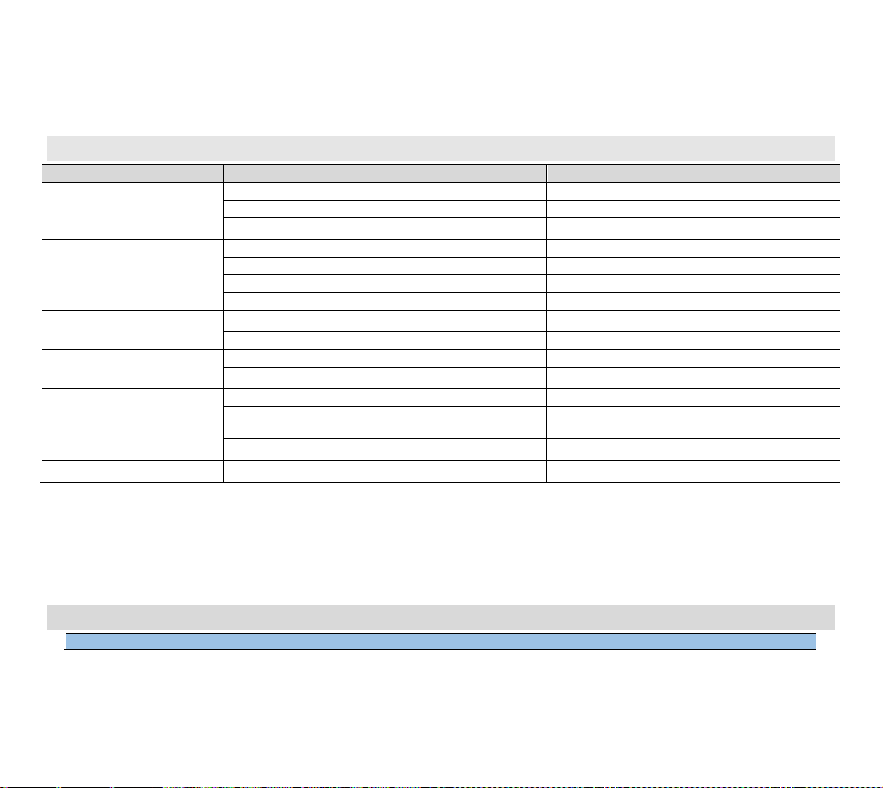
Appendix A. – Trouble shooting guide
Phenomena
Analysis
Solution
You cannot turn on the radio.
The battery may be installed improperly.
Remove and reattach the battery.
The battery power may run out.
Recharge or replace the battery.
The battery may suffer from poor contact caused by dirty or damaged
battery contacts.
Clean the battery contacts or replace the battery.
During receiving, the voice is weak or
intermittent.
The battery voltage maybe low.
Recharge or replace the battery.
The volume level may be low.
Increase the volume.
The antenna maybe loose or maybe installed incorrectly.
Turnoff the radio, and then remove and reattach the antenna.
The speaker maybe blocked.
Clean the surface of the speaker.
You cannot communicate with other
group members.
The frequency or signaling type maybe inconsistent with that of other
members.
Verify that your TX/RX frequency and signaling type are correct.
You may be too far away from other members.
Move towards other members.
You hear unknown voices or noise.
You may be interrupted by radios using the same frequency.
Change the frequency, or adjust the squelch level.
The radio in analog mode maybe set with no signaling.
Request your dealer to set signaling for the current channel to
avoid interference
You are unable to hear anyone because
of too much noise and hiss.
You may be too far away from other members.
Move towards other members.
You may be in an unfavorable position. For example, your
communication may be blocked by high buildings or blocked in an
underground area.
Move to an open and flat area, restart the radio, and try again.
It may be the result of external disturbance (such as electromagnetic
interference).
Stay away from equipment that may cause interference.
The radio keeps transmitting.
VOX may be turned on or the headset is not installed in place
Turn off the VOX function. Check that the headphones are in
place.
NOTE: If the above solutions cannot fix your problems, or you may have some other queries, please contact your dealer for more technical support.
Appendix B. - Technical Specifications
GENERAL
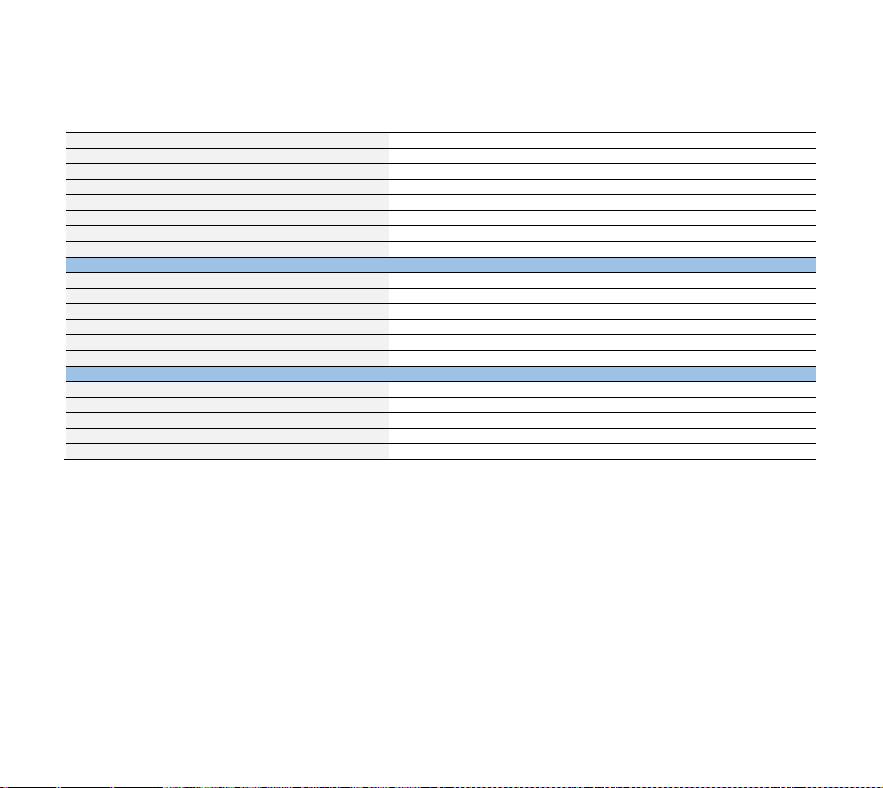
Channel Capacity
1000
Channel Spacing
25.0 KHz/12.5 KHz
Input Voltage
7.4 V DC
Battery Life: 5% TX, 5% RX, 90% Standby
Li-on: 12 hours @5 watts
Operating temperature
-10˚C to 60˚C
Antenna Impedance
50Ω
Radio Dimensions
143mm X 64mm X 41mm (not including antenna)
Radio Weight
298 g (with Li-ON battery)
TRANSMITTER
RF Output Power
5 Watts Max
Modulation
16K0F3E/11K0F3E
Spurious Emission
-16 dBm<1GHz, -16 dBm>1GHz
Frequency Stability
±2.5 ppm
Audio Distortion
≤5%
FM Hum & Noise
40 dB
RECEIVER
Sensitivity: 12 dB SINAD
-120 dBm
Adjacent Channel Selectivity
-60 dBm
Intermodulation and Rejection
-70 dBm
Rated Audio Power Output
0.75 Watts @ 16 Ω
Rated Audio Distortion
≤5%
NOTE: All specifications may be modified without prior notice or liability. Thank you.
WARNING: *This frequency range is the hardware design frequency, the actual usable frequency must strictly comply with the regulatory requirements of your
country and region.
FCC Licensing Information
The FCC ID is indicated on the label of the device. The radio operates on Commercial / Land Mobile frequencies which require a license from the Federal
Communications Commission (FCC) for bus
iness, personal, education and recreational use. To obtain forms, call the FCC forms hotline at: 1-800-418-3676 or go
to http://www. fcc.gov. For questions concerning commercial licensing, contact the FCC at 1-888-CALL-FCC (1-888-225-5322).
European Users should note that operation of this unit in Transmit mode requires the operator to have a valid Amateur Radio License from their respective
Countries Amateur Radio Licensing Authority fo
r the Frequencies and Transmitter Power levels that this Radio transmits on. Failure to comply may be unlawful
and liable for prosecution. At this subject, refer to the “EU”specification guide 2014/53/EU.
Attention in case of use
This transceiver works on frequencies which are not generally permitted. As for the actual usage, the user has to possess an amateur radio license.
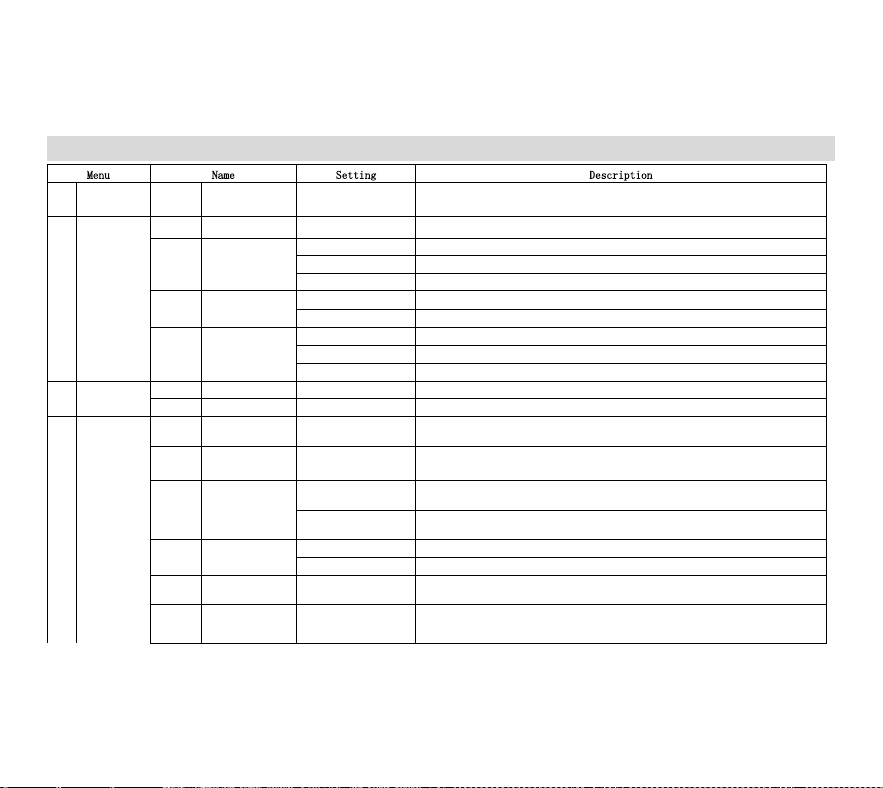
Appendix C. - Shortcut Menu operations
Menu Name Setting Description
1 BANK 1 BANK 1
Channel1-Channel1
00
A Bank is a group of channels grouped together. The radio has 10 Banks. A Bank
can have the maximum of 100 channels.
2 SCAN
1 Freq Ranger NNNNnnn Input VFO range lower and upper frequency
2 Scan Mode
Time
Time Operation - scanning will resume after a fixed time has passed
Carrier
Carrier Operation -scanning will resume after the signal disappears
Search
Search Operation -scanning will not resume
3 Scan SubCode
CTCSS
Search within CTCSS Tone (Rang 67-254.1, A total of 50 groups)
DCS
Search within DCS Code (Rang 023N-754I, A total of 210 groups)
4 Scan Memory
ALL
RX_TX are saved (default is all, encoding and decoding are the same)
DECODER
Save only in Transmitter CTCSS/DCS
ENCODER
Save only in Receiver CTCSS/DCS
3
Wireless
CPS
1
OFF
Turn off Wireless Cps and disable the Wireless programming function
2
ON
Enable Wireless Cps to program the radio via Wireless
4
Radio
Setting
1 Step 2.5-100K
Selects the amount of frequency change in VFO/Frequency mode when scanning or
pressing the or keys.
2 Squelch
OFF,LEVEL1-LEV
EL5
Squelch silences the receiver when there is no signal. Setting the squelch to 0 will
open up the squelch entirely.
3 Power Save
OFF
Turn off radio sleep. The battery consumption is large, and the standby time may be
shortened
ON
Turn on radio sleep. Turning on is more power efficient, but you might miss the first
few syllables before the RX turns on.
4 VOX Switch
OFF
Turn off the radio VOX.
ON
Turn on the radio VOX.
5 VOX Level LEVEL1-LEVEL9
When enabled it is not necessary to push the [PTT] button on the transceiver. Adjust
the gain level to an appropriate sensitivity to allow smooth transmission.
6 VOX Delay 0.5……2.0s
When the VOX is enabled, set up the VOX delay to help to extend the transmission
time to avoid stopping a transmission too early. 0.5s-2s, Step 0.1 second. a total of
16 times offered.
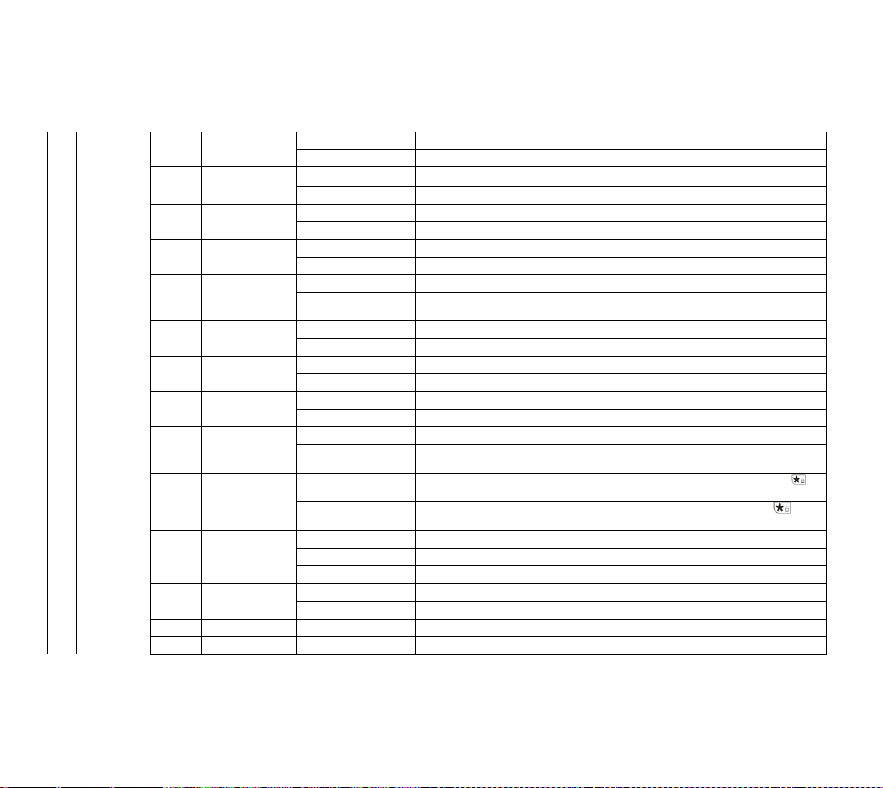
7 TOT
OFF
Allow continuous launch, launch time is not limited
15;30;45…180
Maximum allowed time for transmission while holding down the PTT key.
8 TOA
OFF
Disable TOA function
1……10
Activate TOA function. Range 0 – 10 seconds, Step 1 second.
9 Voice
OFF
Disable voice prompts
ON
Activate voice prompts
10 Language
Chinese
Display menus and voice prompts in Chinese language
English
Display menus and voice prompts in English language
11 ROGER
OFF
Disable ROGER function. Release PTT key without ROGER audio.
ON
Activate the ROGER function. Sends an end-of-transmission tone to indicate to
other stations that the transmission has ended.
12 Beep
OFF
Disable key confirmation tone.
ON
Activation key to confirm tone. Allows audible confirmation of a key press
13 BackLight
ALWAYS ON
The backlight is always on.
5……20
Set the backlight off time in no-operation delay time. 5-20, step value is 5.
14
Power on
Display
PICTURE
Show preset picture when radio is on
VOLTAGE
Display battery voltage when radio is on
15 Dual Watch
OFF
Disable dual table, dual receive.
ON
Monitor [A] and [B] at the same time. The display with the most recent activity ([A]
or [B]) becomes the selected display.
16 AutoLock
OFF
Disable automatic keypad lock. Allow manual keypad lock (press and hold the
key to lock/unlock the keyboard)
ON
When ON, the keypad will be locked if not used in 8 seconds. Pressing the key
for 2 seconds will unlock the keypad.
17 Alarm Mode
On Site
Sounds alarm through your radio speaker only
Send Sound
Transmits a cycling tone over-the-air
Send Code
Transmits '119' (911 in reverse) followed by the ANI code over-the-air
18 Alarm Tone
OFF
The radio speaker blocks the alarm sound.
ON
The radio speaker sounds an alarm
19
ANI-Edit
100
View the ANI ID, and if necessary, will allow to change the ANI ID
20
DTMF-ST
OFF
No DTMF Side Tones are heard
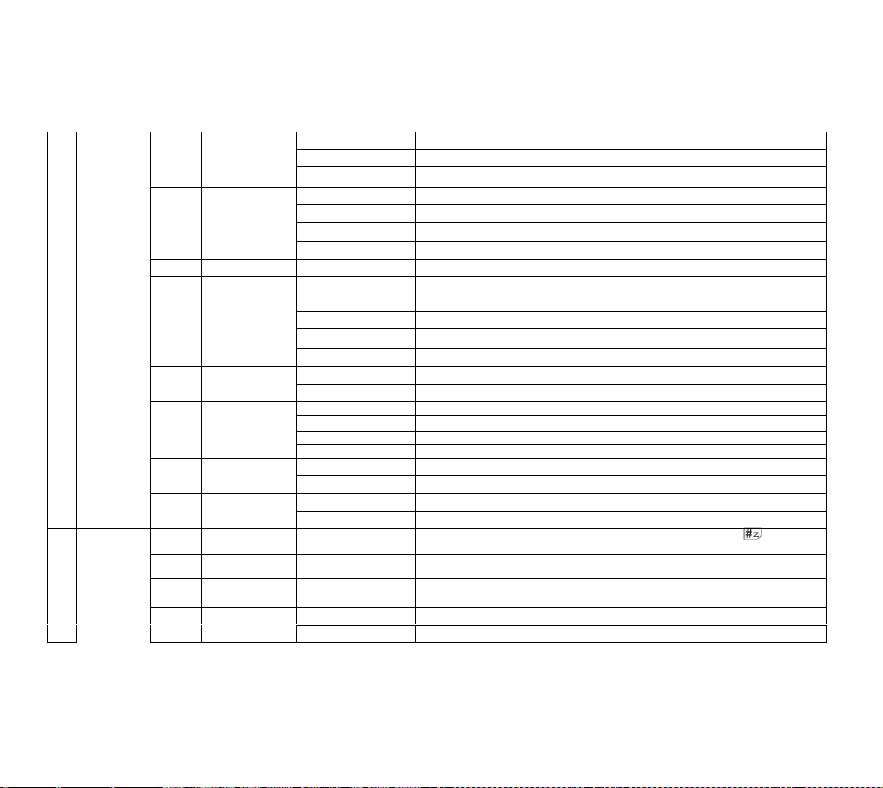
DT-ST
Side Tones are heard only from manually keyed DTMF codes
ANI-ST
Side Tones are heard only from automatically keyed DTMF codes
DT+ANI
All DTMF Side Tones are heard
21 PTT-ID
OFF
No ID is sent.
BOT
The selected S-CODE is sent at the beginning
EOT
The selected S-CODE is sent at the ending
BOTH
The selected S-CODE is sent at the beginning and ending
22
PTT-DLY
100-3000ms
Signal code sending delay. PTT-ID Delay (milliseconds)
23 ALERT
1000Hz
The following configurations will transmit accordingly:
PTT + SK2 = Transmits 1000Hz Tone Burst
1450Hz
PTT + SK2 = Transmits 1450Hz Tone Burst
1750Hz
PTT + SK2 = Transmits 1750Hz Tone Burst
2100Hz
PTT + SK2 = Transmits 2100Hz Tone Burst
24 TAIL
OFF
Disable Squelch Tail Elimination.
ON
Enable Squelch tail elimination. to prevent any squelch tails from being heard.
25 Press SK2
FM Radio
FM radio on/off
Scan
Scan on/off
Search
Search on/off
VOX
VOX on/off
26 Scramble
off
Close Scramble
MODE 1-3
Start Scramble
27 Reset
VFO MODE
Reset the radio's VFO menu to factory defaults (no reset for bank, scan settings)
RESET ALL
Resets the radio to factory defaults, with some exceptions.
5
Program
Channel
1 CH.NAME Channel 1
View channel name, allows to rename the current channel. Press the key to
switch the input method, allowing the input of letters, numbers and symbols.
2 RX Frequency
View the current channel Receiver frequency.
3 TX Frequency
View the current channel Transmitter frequency.
4 Trans Power
High
Selects between HIGH transmitter power when in VFO/Frequency mode.
Low
Selects between LOW transmitter power when in VFO/Frequency mode.
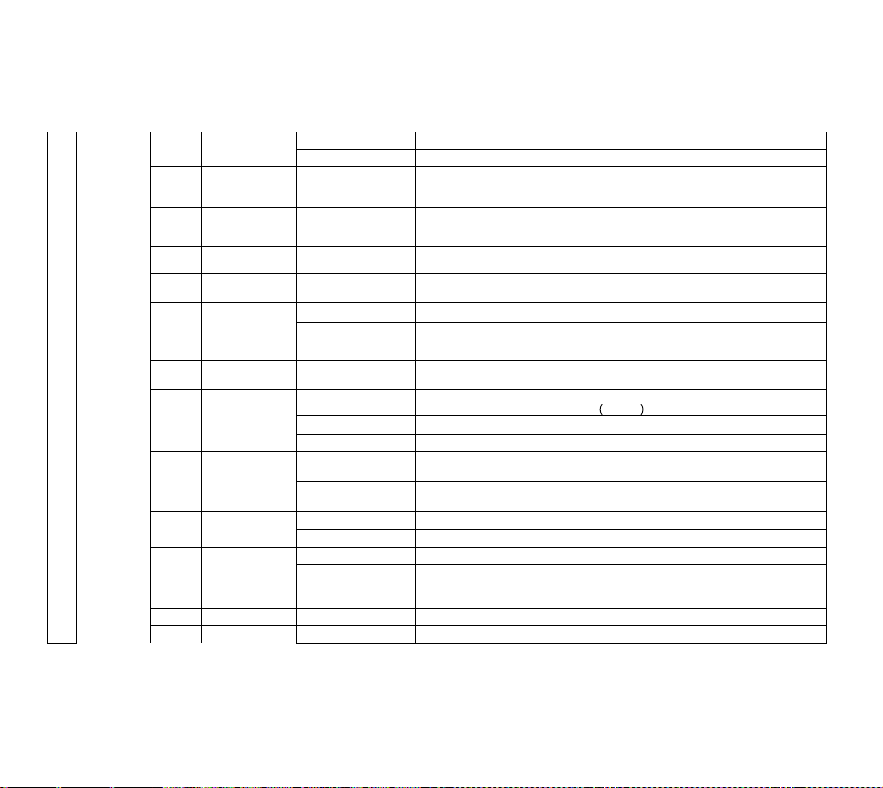
5 Bandwidth
Wide
Wideband (25 kHz bandwidth)
Narrow
Narrowband (12.5 kHz bandwidth)
6 RX CTCSS OFF;67-254.1
Mutes the speaker of the transceiver in the absence of a specific and continuous
sub-audible signal. If the station you are listening to does not transmit this specific
and continuous signal, you will not hear anything.
7 RX DCS OFF;023N-754I
Mutes the speaker of the transceiver in the absence of a specific low-level digital
signal. If the station you are listening to does not transmit this specific signal, you
will not hear anything.
8 TX CTCSS OFF;67-254
Transmits a specific and continuous sub audible signal to unlock the squelch of a
distant receiver (usually a repeater).
9 TX DCS OFF;023N-754I
Transmits a specific low-level digital signal to unlock the squelch of a distant
receiver (usually a repeater).
10 Encryption
OFF
Disable encrypted mode, your conversations are not private.
ON
Activating encryption mode ensures the privacy of your conversations.
To use the Encryption function, the other part of the radio must also have Encryption
activated and must be tuned on the same DCS code.
11 Signaling 1-20
Selects 1 of 20 DTMF codes. The DTMF codes are programmed with software and
are up to 3 digits each.
12 CH-MDF
NAME
MR/Channel mode is displayed in NAME format. Note: NAME allows CPS
program or edit in the channel name Munu 1 .
FREQ
MR/Channel mode is displayed in frequency format.
CH
MR/Channel mode is displayed in CH format.
13
SP-Mute
QT
when radios is set in this mode, the monitor feature is activated only when the radio
receives the correct CTCSS/DCS.
QT*DTMF
• QT*DTMF: the monitor is activated when the radio receives the correct
CTCSS/DCS or the correct DTMF code.
14 SCAN ADD
OFF
Forbid the current channel to join the scan group.
ON
Add the current channel to the scan group.
15 Busy Lockout
OFF
The [PTT] button on the channel is always allowed.
ON
Disables the [PTT] button on a channel that is already in use.
The transceiver will sound a beep tone and will not transmit if the [PTT] button is
pressed when a channel is already in use.
*13
OffSet
Specifies the difference between the TX and RX frequencies
*14
Direction
None
TX = RX (simplex). Disable access to repeaters in VFO/Frequency mode
Plus
Plus frequency shift direction. TX will be shifted higher in frequency than RX
Minus
Minus frequency shift direction. TX will be shifted lower in frequency than RX
16 CH_Memory CH001-CH100
This menu is used to either create new or modify existing channels (1 through 100)
so that they can be accessed from MR/Channel Mode.
17 CH_Delete CH001-CH100
This menu is used to delete the programmed information from the specified channel
(1 through 100) so that it can either be programmed again or be left empty.
6 Radio Info Radio ID\Firmware\Hardware
Displays radio ID, firmware version, hardware version. to check the radio
information.
Appendix D. - DCS Table
DCS CODE LIST
Number
Code
Number
Code
Number
Code
Number
Code
Number
Code
1
D023N
2
D025N
3
D026N
4
D031N
5
D032N
6
D036N
7
D043N
8
D047N
9
D051N
10
D053N
11
D054N
12
D065N
13
D071N
14
D072N
15
D073N
16
D074N
17
D114N
18
D115N
19
D116N
20
D122N
21
D125N
22
D131N
23
D132N
24
D134N
25
D143N
26
D145N
27
D152N
28
D155N
29
D156N
30
D162N
31
D165N
32
D172N
33
D174N
34
D205N
35
D212N
36
D223N
37
D225N
38
D226N
39
D243N
40
D244N
41
D245N
42
D246N
43
D251N
44
D252N
45
D255N
46
D261N
47
D263N
48
D265N
49
D266N
50
D271N
51
D274N
52
D306N
53
D311N
54
D315N
55
D325N
56
D331N
57
D332N
58
D343N
59
D346N
60
D351N
61
D356N
62
D364N
63
D365N
64
D371N
65
D411N
66
D412N
67
D413N
68
D423N
69
D431N
70
D432N
71
D445N
72
D446N
73
D452N
74
D454N
75
D455N
76
D462N
77
D464N
78
D465N
79
D466N
80
D503N
81
D506N
82
D516N
83
D523N
84
D526N
85
D532N
86
D546N
87
D565N
88
D606N
89
D612N
90
D624N
91
D627N
92
D631N
93
D632N
94
D645N
95
D654N
96
D662N
97
D664N
98
D703N
99
D712N
100
D723N
41
203.5
42
206.5
43
210.7
44
218.1
45
225.7
46
229.1
47
233.6
48
241.8
49
250.3
50
254.1
101
D731N
102
D732N
103
D734N
104
D743N
105
D754N
106
D023I
107
D025I
108
D026I
109
D031I
110
D032I
111
D036I
112
D043I
113
D047I
114
D051I
115
D053I
116
D054I
117
D065I
118
D071I
119
D072I
120
D073I
121
D074I
122
D114I
123
D115I
124
D116I
125
D122I
126
D125I
127
D131I
128
D132I
129
D134I
130
D143I
131
D145I
132
D152I
133
D155I
134
D156I
135
D162I
136
D165I
137
D172I
138
D174I
139
D205I
140
D212I
141
D223I
142
D225I
143
D226I
144
D243I
145
D244I
146
D245I
147
D246I
148
D251I
149
D252I
150
D255I
151
D261I
152
D263I
153
D265I
154
D266I
155
D271I
156
D274I
157
D306I
158
D311I
159
D315I
160
D325I
161
D331I
162
D332I
163
D343I
164
D346I
165
D351I
166
D356I
167
D364I
168
D365I
169
D371I
170
D411I
171
D412I
172
D413I
173
D423I
174
D431I
175
D432I
176
D445I
177
D446I
178
D452I
179
D454I
180
D455I
181
D462I
182
D464I
183
D465I
184
D466I
185
D503I
186
D506I
187
D516I
188
D523I
189
D526I
190
D532I
191
D546I
192
D565I
193
D606I
194
D612I
195
D624I
196
D627I
197
D631I
198
D632I
199
D645I
200
D654I
201
D662I
202
D664I
203
D703I
204
D712I
205
D723I
206
D731I
207
D732I
208
D734I
209
D743I
210
D754I
Appendix E. - CTCSS Table
CTCSS CHART (Hz)
Number
Frequency
Number
Frequency
Number
Frequency
Number
Frequency
Number
Frequency
1
67.0
2
69.3
3
71.9
4
74.4
5
77.0
6
79.7
7
82.5
8
85.4
9
88.5
10
91.5
11
94.8
12
97.4
13
100
14
103.5
15
107.2
16
110.9
17
114.8
18
118.8
19
123.0
20
127.3
21
131.8
22
136.5
23
141.3
24
146.2
25
151.4
26
156.7
27
159.8
28
162.2
29
165.5
30
167.9
31
171.3
32
173.8
33
177.3
34
179.9
35
183.5
36
186.2
37
189.9
38
192.8
39
196.6
40
199.5

Disclaimer
The accuracy and completeness of the contents are sought in the process of compilation, but we do not bear any responsibility for the possible errors or omissions. With the
continuous development of technology, we reserve the right to change the design and specification of the product without notice. No copy, modification, translation and
dissemination of this handbook may be made in any form without the prior written authorization of our department.