
ENGLISH j
General-purpose Engine
Owner’s Manual

Black plate (1,1)
SAFETY AWARENESS
Whenever you see the symbols shown below,
heed their instructions! Always follow safe operating
and maintenance practices.
WARNING
This warning symbol identifies special in-
structions or procedures which, if not cor-
rectly followed, could result in personal
injury, or loss of life.
CAUTION
This caution symbol identifies special in-
structions or procedures which, if not strictly
observed, could result in damage to, or de-
struction of equipment.
NOTE
○
This note symbol indicates points of particular in-
terest for more efficient and convenient operation.
READ THE OPERATING INSTRUCTIONS OF THE EQUIPMENT THIS ENGINE POWERS.
© 2009 Kawasaki Heavy Industries, Ltd. (1): Dec. 2010. (M)
Kawasaki Motors, Ltd. (5): Sep. 2012. (M)
Black plate (2,1)
READ THIS FIRST
For your safety, read this Owner's Manual and understand it thoroughly before operating this ENG INE.
WARNING
DO NOT run the engine in a closed area. Exhaust gas contains carbon monoxide, an odorless and
deadly poison.
Gasoline is extremely flammable and can be explosive under certain condition.
Stop engine and allow the engine to cool before refueling.
DO NOT smoke. Make sure area is well ventilated and free from any source of flame or sparks includ-
ing the pilot lamp of any appliance while refueling, servicing fuel system, draining gasoline and/or
adjusting carburetor.
DO NOT fill the tank so the fuel level rises into the filler neck or level surface of level gauge. If the
tank is overfilled, heat may cause the fuel to expand and overflow through the vents in the tank cap.
Wipe off any spilled gasoline immediately.
To prevent fire hazard:
Keep the engine at least 1 m (3.3 ft) away from buildings, obstructions and other burnable objects.
DO NOT place flammable objects close to the engine.
DO NOT explose combustible materials to the engine exhaust.
DO NOT use the engine on any forest covered, brush covered or grass covered unimproved land un-
less spark arrester is installed on the muffler.
To avoid getting an electric shock, DO NOT touch spark plugs, plug caps or spark plug leads during
engine running.
To avoid a serious burn, DO NOT touch a hot engine or muffler. The engine becomes hot during oper-
ation. Before you service or remove parts, stop engine and allow the engine to cool.
DO NOT place hands or feet near moving or rotating parts. Place a protective cover over pulley, V
belt or coupling.
DO NOT run engine at excessive speeds. This may result in injury.
Always remo ve the spark plug caps from spark plugs when servicing the engine to prevent acciden-
tal starting.
Read warning labels which are on the engine and understand them. If any label is missing, damaged, or worn
get a replacement from your Kawasaki engine dealer and install it in the correct position.

Black plate (3,1)
FOREWORD
This Owner's Manual provided to aid yo u in the safe and reliable operation of your Engine. READ AND
UNDERSTAND IT THOROUGHLY BEFORE OPERATING YOUR ENGINE.
READ THE OPERATING INSTRUCTIONS OF THE EQUIPMENT THIS ENGINE POWERS.
To ensure a long, trouble-free life for your Engine, give it proper care and maintenance in accordance with
this Owner's Manual.
Please note that the photographs and illustrations shown in this manual are made based on Model FR730V
as a typical example among other similar models.
All rights reserved. No part of this publication may be reproduced, stored in a retrieval system, or transmitted
in any form or by any means, electronic mechanical photocopying, recording or otherwise, without the prior writ-
ten permission of Kawasaki Heavy Industries, Ltd., Motorcycle & Engine Company. Although every possible
care has been taken to make this manual as complete and accurate as possible, Kawasa ki cannot guarantee
against errors and omissions. Due to improvements in design and performance during production, procedures
and specifications are subject to change without prior notice. Illustrations are provided for general reference
purposes, and may differ from actual product aspects and components.
All rights reserved. No part of this publication may be reproduced, stored in a retrieval system, or transmitted
in any form or by any means, electronic mechanical photocopying, recording or otherwise, without the prior
written permission of Kawasaki Motors, Ltd.. Although every possible care has been taken to make this manual
as complete and accurate as possible, Kawasaki cannot guarantee against errors and omissions. Due to
improvements in design and performance during production, procedures and specifications are subject to
change without prior notice. Illustrations are provided for general reference purposes, and may differ from actual
product aspects and components.

Black plate (4,1)
TABLE OF CONTENTS
GENERAL INFORMATION ................................ 5
Label Location .................................................. 1
Parts Location .................................................. 2
Tune-up Specifications ..................................... 3
Engine Oil Capacity .......................................... 7
FUEL AND OIL RECOMMENDATIONS ............ 8
Fuel ................................................................... 8
Engine Oil ............... ......................... ................. 9
PREPARATION ................................................... 10
Fuel ................................................................... 10
Engine Oil ............... ......................... ................. 10
STARTING .......................................................... 12
Starting the Engine ........................................... 12
OPERATING ....................................................... 14
Warming Up ...................................................... 14
Engine Inclination ............................................. 14
STOPPING .......................................................... 15
Stopping the Engine ......................................... 15
Emergency Stop ..... ....................................... 15
ADJUSTMENT .................................................... 16
Throttle Cable Installation, Adjustment ............ 16
Choke Cable Installation, Adjustment .............. 16
Engine Speed Adjustment ................................ 17
MAINTENANCE ........................................ .......... 18
Periodic Maintenance Chart ............................ 19
Oil Level Check ................................................ 21
Oil Change ....................................................... 21
Oil Filter Change .............................................. 22
Air Cleaner Service .......................................... 23
Paper Element .............................................. 23
Spark Plug Service ........................................... 24
Fuel Filter and Fuel Pump Service ................... 25
Cooling System Cleaning ................................. 26
STORAGE ........................................................... 27
Fuel System Draining ....................................... 27
TROUBLESHOOTING GUIDE ........................... 29
ENVIRONMENTAL PROTECTION .................... 31
SPECIFICATIONS .............................................. 32
WIRING DIAGRAM ............................................. 33
Wiring Diagram ................................................. 33
7
7
8
9
9
10
10
11
12
12
12
14
14
16
16
16
17
17
17
18
18
18
19
20
21
23
23
24
25
25
26
27
28
29
29
31
33
34
35
35
Black plate (5,1)
GENERAL INFORMATION
Label Location
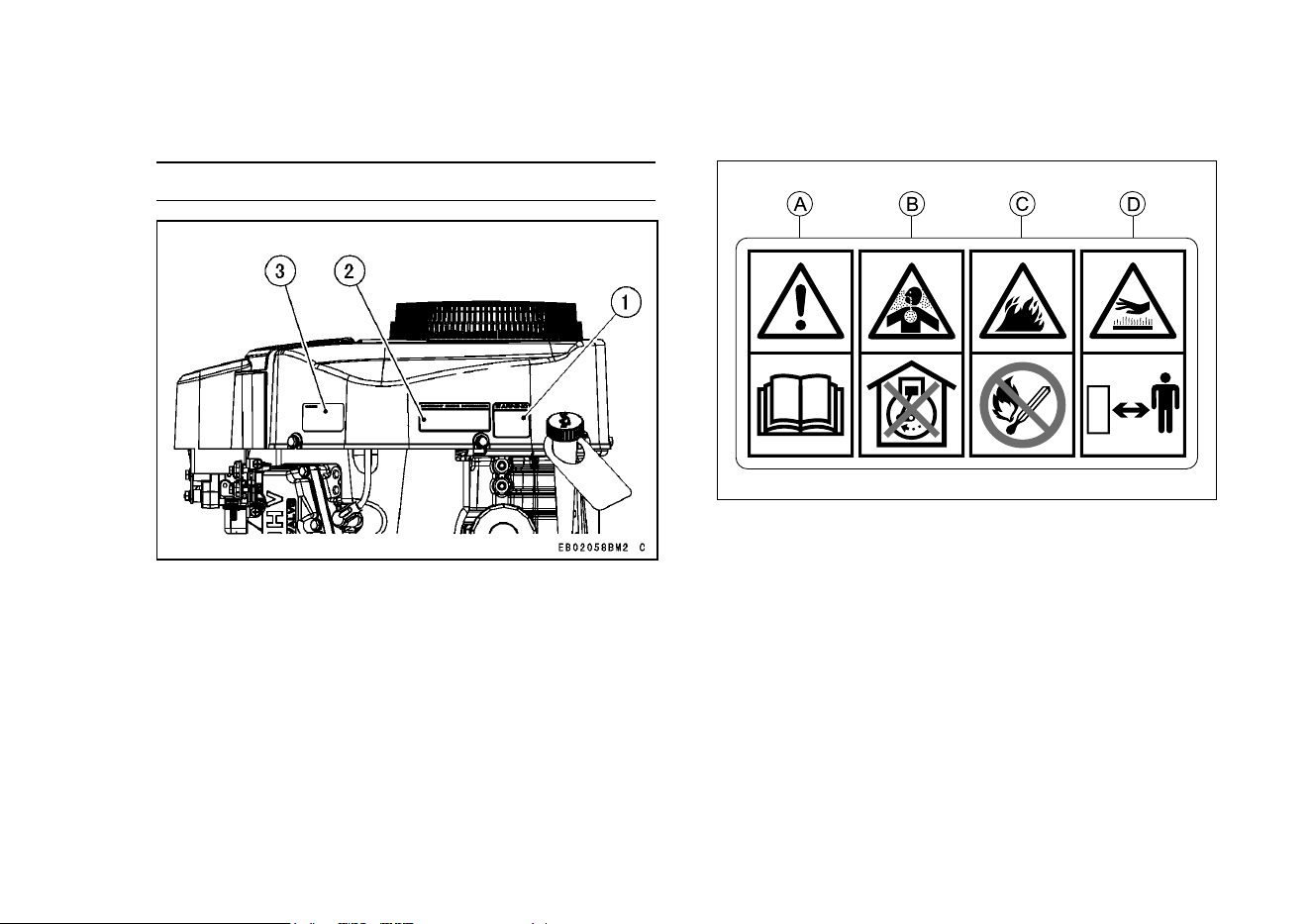
1. Warning Label
2. Important Engine Information Label
3. Engine Serial Number Label
The engine serial number is your only means of
identifying your particular engine from others of the
same model type.
This engine serial number is needed by your deal-
er when ordering parts.
Warning Label
GENERAL INFORMATION 5
7
A.TheOwner’smanualcontainsimportantinformation
onsafeoperation.Readitbeforeoperatingengine.
B.Exhaustgascontainscarbonmonoxide,an
odorlessanddeadlypoison.
DonotrunEngineinanenclosedarea.
C.Gasolineisextremelyammableandexplosive.
Noopenamesorothersourceofignition.
D.Enginescanbecomeextremelyhotduringnormal
operation.Keepawayfromhotpartsoftheengine.
Black plate (6,1)
Parts Location
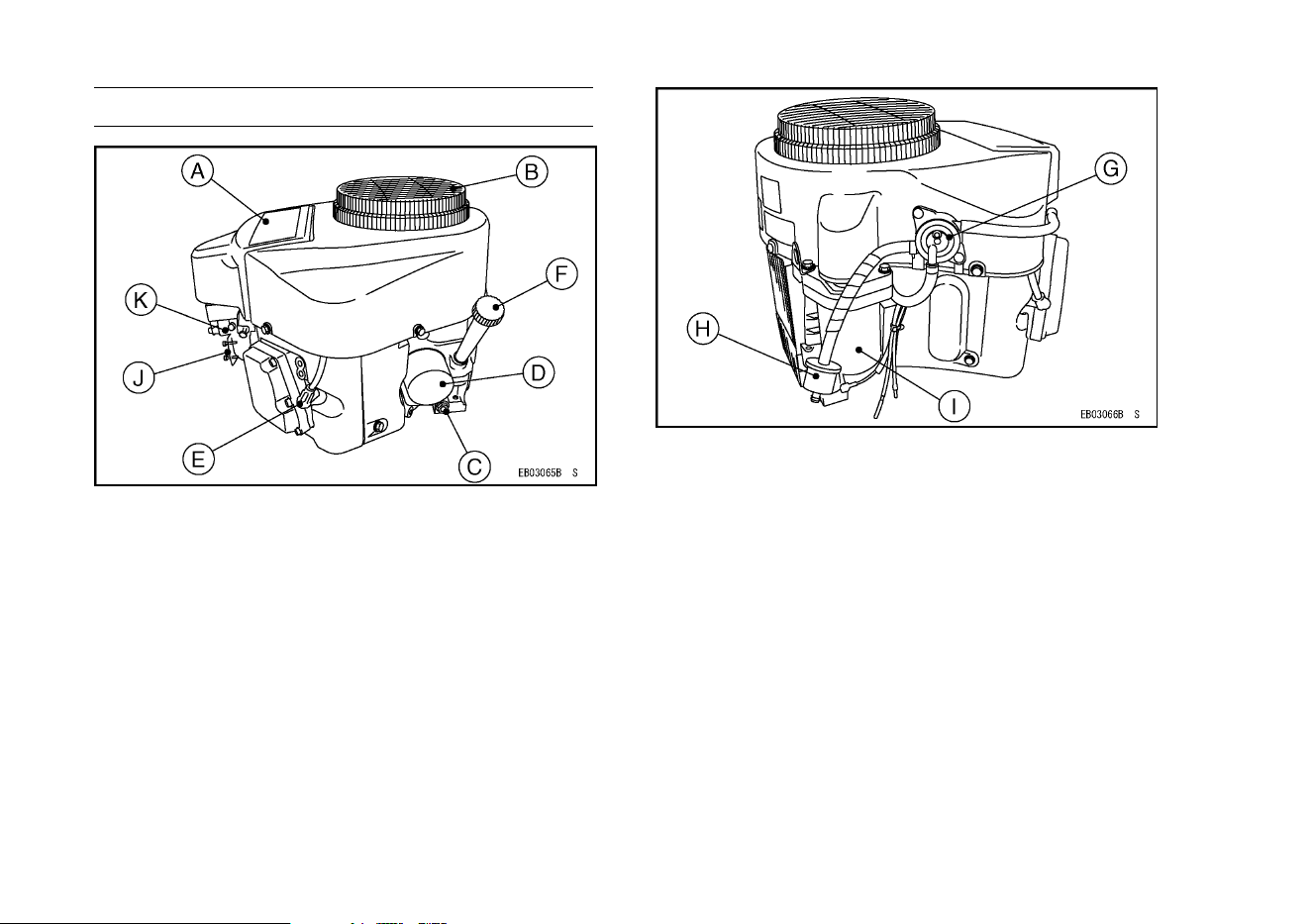
A. Air Cleaner
B. Air Inlet Guard
C. Oil Drain Plug
D. Oil Filter
E. Spark Plugs/Spark Plug Caps
F. Oil Gauge
J. Control Panel
K. Carburetor
G. Fuel Pump
H. Fuel Filter
I. Electric Starter
6 GENERAL INFORMATION
8
Black plate (7,1)
Tune-up Specifications
ITEM Specifications
Ignition Timing Unadjustable
Spark Plugs:
Gap
NGK BPR4ES
0.75 mm (0.030 in)
Low Idle Speed 1 550 r/min (rpm)
High Idle Speed 3 600 r/min (rpm)
Valve Clearance
In 0.10 ~ 0.15 mm
(0.004 ~ 0.006 in)
Ex 0.10 ~ 0.15 mm
(0.004 ~ 0.006 in)
Other Specifications
No other adjustment needed
NOTE
○
High and low idle speeds may vary depending on
the equipment on which the engine is used. Refer
to the equipment specification.
Engine Oil Capacity
Engine Oil Capacity
FR651V
FR691V
FR730V
1.8 L
[when oil filter is not removed]
2.1 L
[when oil filter is removed]
GENERAL INFORMATION 7
9
Black plate (8,1)
FUEL AND OIL RECOMMENDATIONS
Fuel
Use only clean, fresh, unleaded regular grade
gasoline.
CAUTION
Do not mix oil with gasoline.
Octane Rating
The octane rating of a gasoline is a measure of its
resistance to “kno cking”. Using a minimum of 91 oc-
tane by the RON is recommended.
RON = Research Octane Number
NOTE
○
If “knocking or pinging” occurs, use a different
brand of gasoline or higher octane rating.
Oxygenated Fuel
Oxygenates (either ethanol or MTBE) are added
to the gasoline. If you use the oxygenated fuel be
sure it is unleaded and meets the minimum octane
rating requirement.
The following are the EPA approved percentages
of fuel oxygenates.
ETHANOL: (Ethyl or Grai n Alcohol)
You may use gasoline containing up to 10% etha-
nol by volume.
MTBE: (Methyl Tertiary Butyl Ether)
You may use gasoline containing up to 15%
MTBE by volume.
METHANOL: (Methyl or Wood Alcohol) 5% by vol-
ume
You may use gasoline containing up to 5% metha-
nol by volume, as long as it also contains cosolvents
and corrosion inhibitors to protect the fuel system.
Gasoline containing more than 5% methanol by vol-
ume may cause starting and/or performance prob-
lems. It may also damage metal, rubber, and plastic
parts of your fuel system.
8 FUEL AND OIL RECOMMENDATIONS
FUELANDOILRECOMMENDATIONS10
Black plate (9,1)
Engine Oil
The following engine oils are recommended.
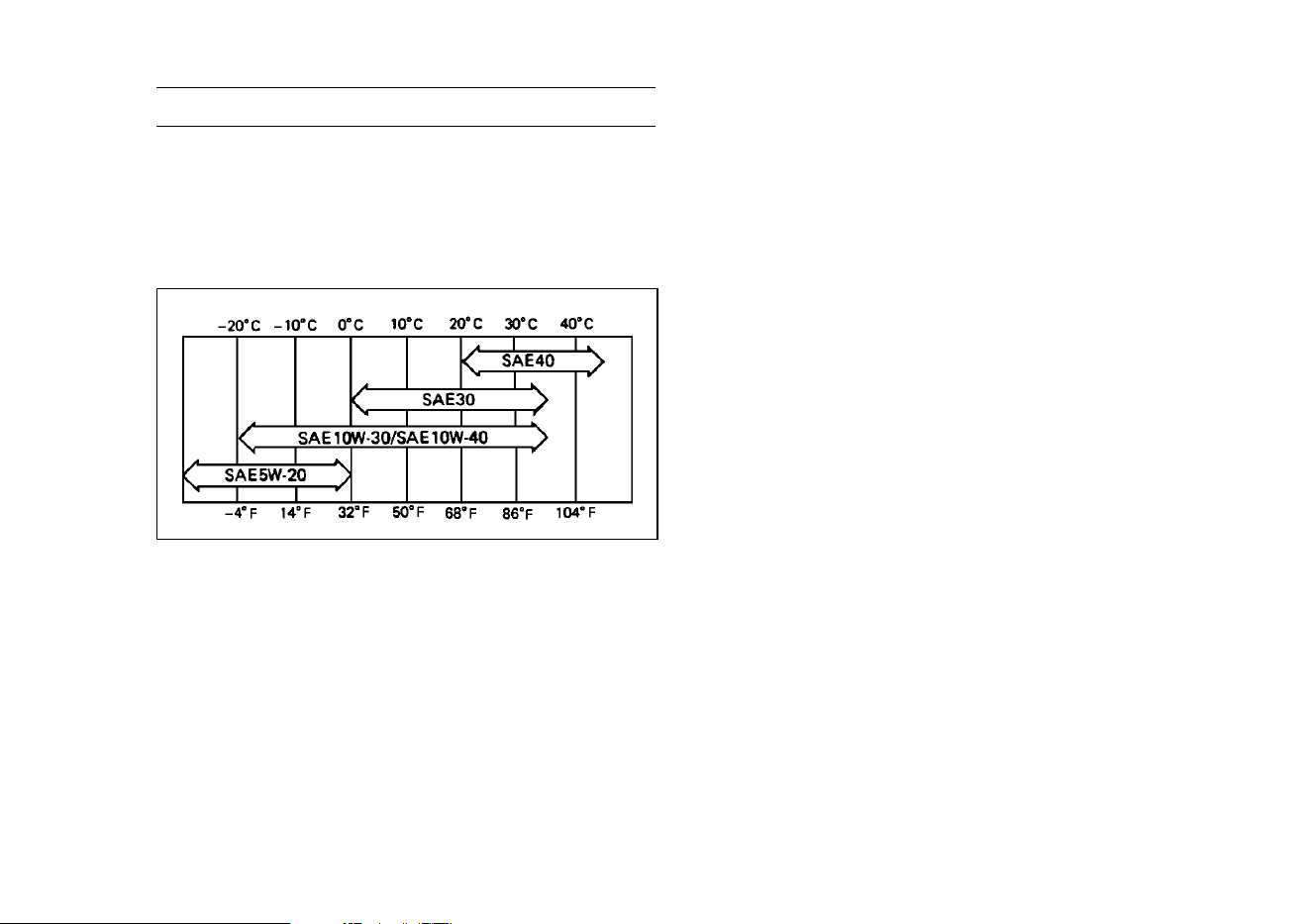
API Service Classification : SF, SG, SH, SJ or SL.
Oil Viscosity
Choose the viscosity according to the temperature
as follows:
NOTE
○
Using multi grade oils (5W-20, 10W-30, and 10W-
40) will increase oil consumption. Check oil level
more frequently when using them.
FUEL AND OIL RECOMMENDATIONS 9
FUELANDOILRECOMMENDATIONS 11
Black plate (10,1)
PREPARATION
Fuel
WARNING
Gasoline is extremely flammable and can be
explosive under certain conditions.
Before refueling, turn the engine switch to
“OFF” position. Do not smoke. Make sure the
area is well ventilated and free from any
source of flame or sparks, including any ap-
pliances with a pilot lamp.
Never fill tank so that fuel level rises into the
filler neck. If tank is overfilled, heat may cause
fuel to expand and overflow through vents in
tank cap.
After refueling make sure tank cap is securely
closed.
If gasoline is spilled, wipe it up immediately.
Engine Oil
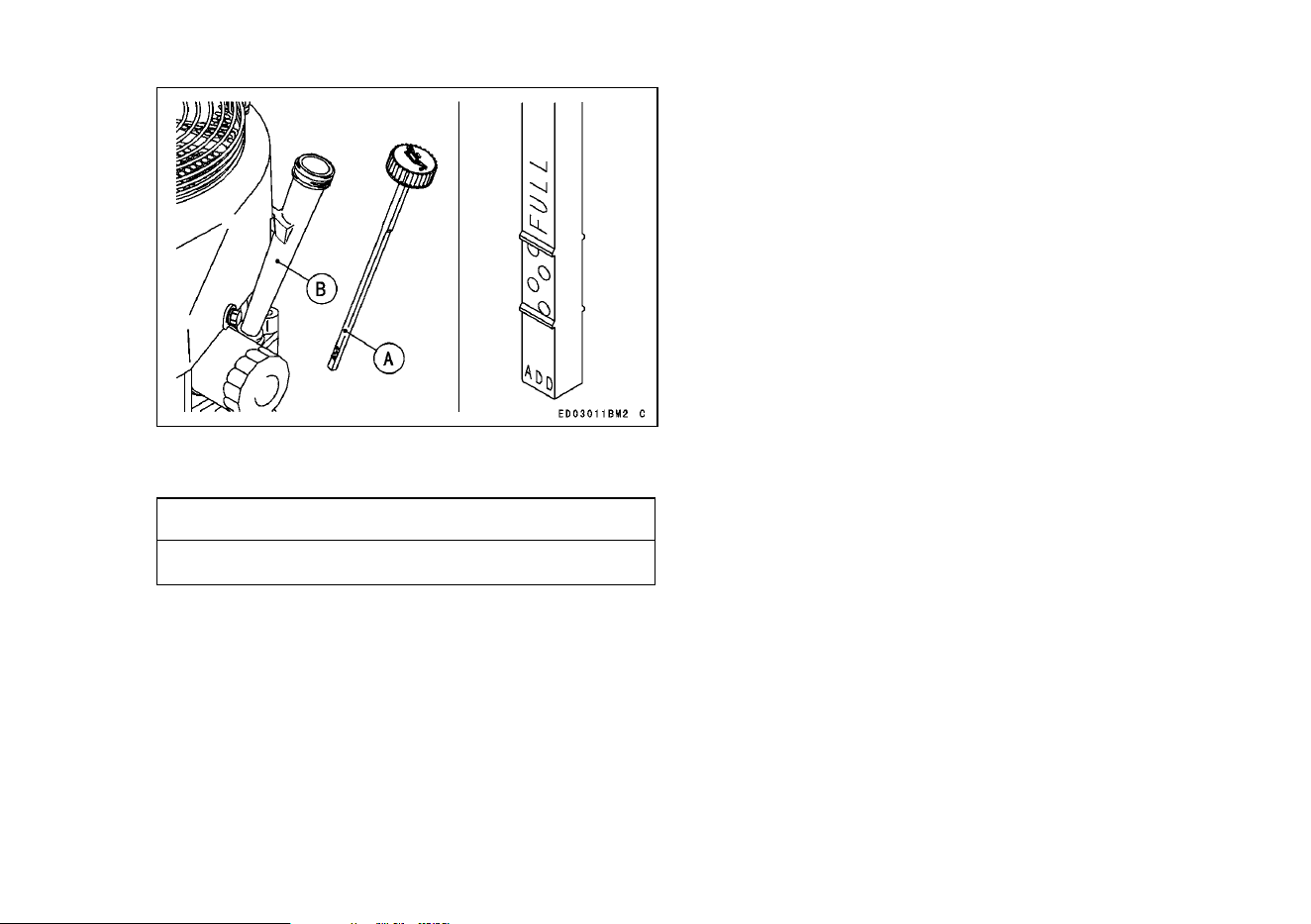
Check the engine oil daily before starting the en-
gine otherwise shortage of the engine oil may cause
serious damage to the engine such as seizure.
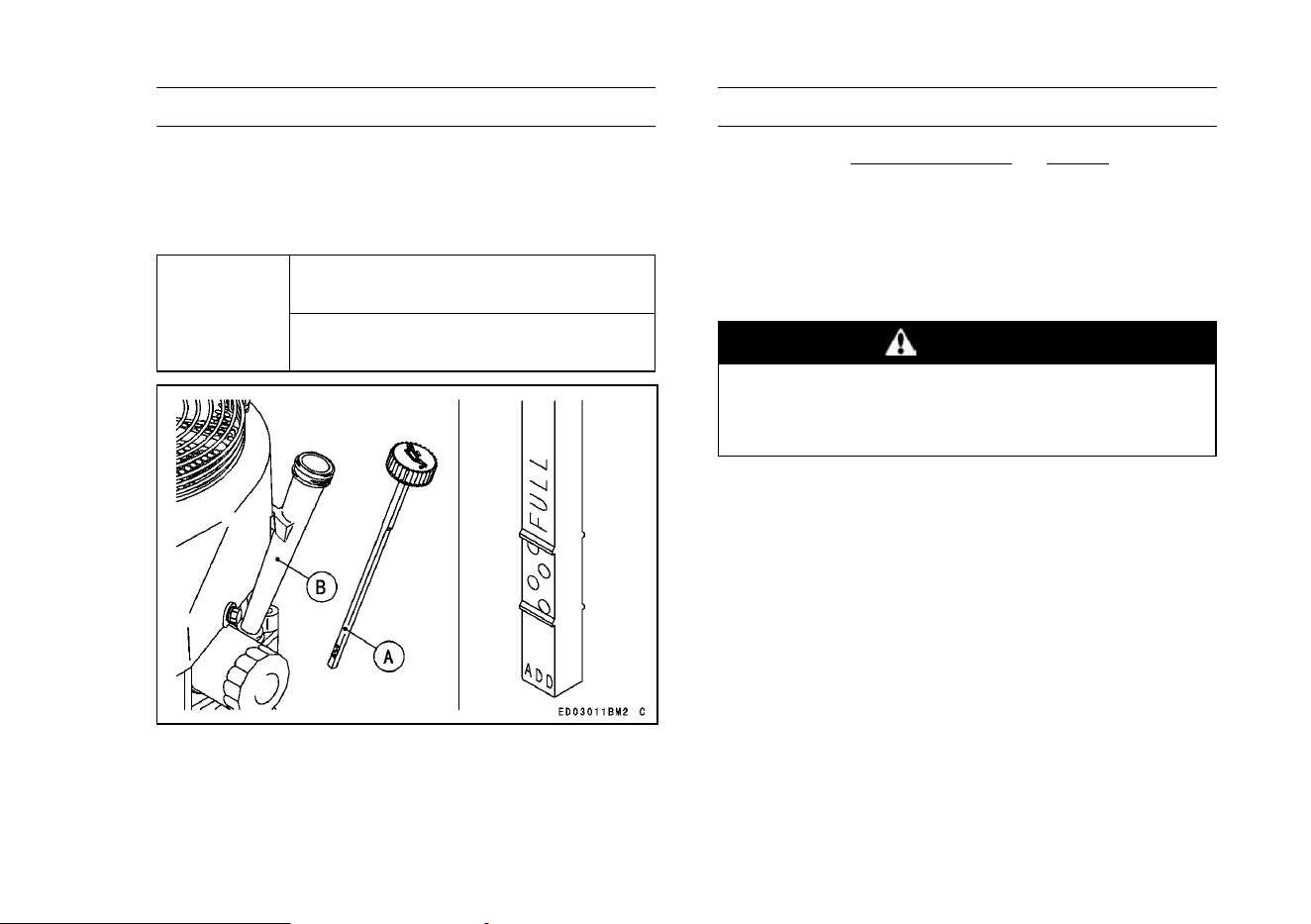
•
Place the engine on level surface. Clean area
around the oil gauge before removing it.
•
Remove the oil gauge (A) and wipe it with a clean
cloth.
•
Pour the oil slowly to “FULL” mark on the oil
gauge.
•
Insert the oil gauge into tube (B) WITHOUT
SCREWING IT IN.
•
Remove the oil gauge (A) to check the oil level.
The level should be between “ADD” and “FULL”
marks. Do not overfill.
•
Install and tight en the oil gauge (A).
CAUTION
Do not fill above the “FULL” mark. Excess oil
will cause a smoking condition, and may
cause the engine to overheat.
Engine Oil Capacity
FR651V
FR691V
FR730V
1.8 L
[when oil filter is not removed]
2.1 L
[when oil filter is removed]
10 PREPARATION
12
Black plate (11,1)
A. Oil Gauge
B. Tube
CAUTION
The engine is shipped without engine oil.
PREPARATION 11
13
Black plate (12,1)
STARTING
Starting the Engine
WARNING
Exhaust gases contain carbon monoxide, a
colorless, odorless, poisonous gas.
Do not operate the unit in enclosed areas.
Provide adequate ventilation at all times.
WARNING
Engine exhaus t may ignite combustible mate-
rials and cause a fire.
Keep the area around the exhaust outlet clear.
Locate the unit so that the exhaust outlet
points toward an open area and is located at
least one meter (3.3 feet) from any obstruc-
tions.
NOTE
○
Be aware of the following in order to start the en-
gine easily in cold weather.
○
Use pr oper oil for expected temperature (See
“FUEL AND OIL RECOMMENDATIONS” chap-
ter).
○
Use fresh gasolin e.
○
Protect the engine or the equipment from direct
exposure to weather when not in operation.
NOTE
○
Follow the operating instructions of the equipment
this engine powers.
•
Before starting the engine, disconnect all possible
external loads.
•
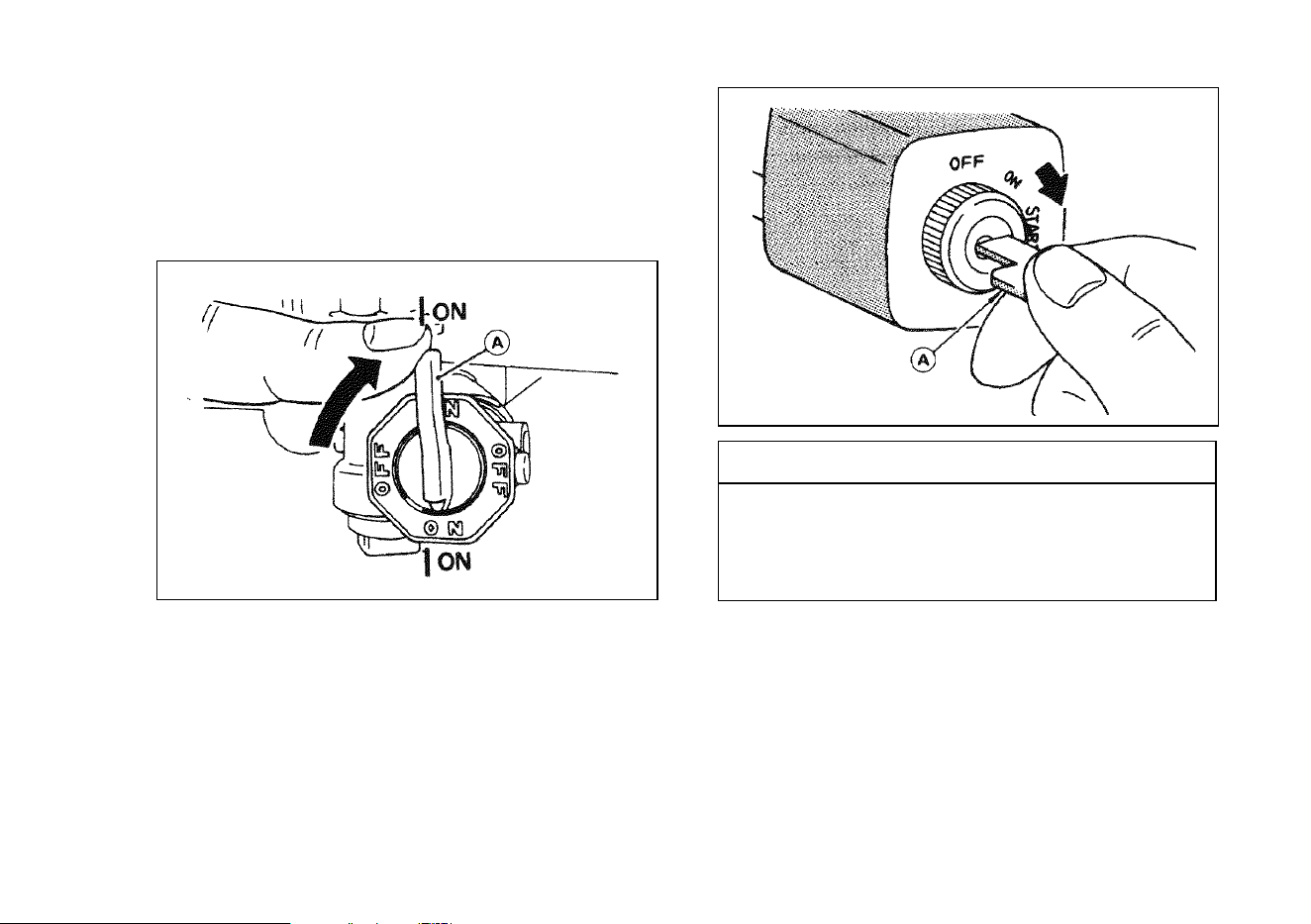
Open the fuel valve (A) on the equipment.
•
Move throttle lever on dash to half throttle posi-
tion.
•
Use full ch oke when the engine is cold, but in hot
weather or
when the engine is already warm, use
half choke or leave the choke fully open.
•
Put the switch key into the engine switch.
•
Turn the switch key to the START position on the
equipment. Usually engine will start within 3 sec-
onds.
CAUTION
Do not run the electric starter continuously
for more than 5 seconds, otherwise the bat-
tery may discharge quickly. If the engine does
not start right away, wait 15 seconds and try
again.
12 STARTING
14
Black plate (13,1)
NOTE
○
When the engine is very warm, or when the en-
gine does not start immediately, DO NOT kee p
trying to start it with the choke closed as this will
cause flooding and make starting more difficult.
○
Instead, fully open the choke and start the engine.
CAUTION
Whenever you start engine, make sure warn-
ing lamp is not illuminated after engine starts.
If warning lamp comes on, stop engine imme-
diately and check oil level (If equipped).
•
After starting the engine, gradually return the
choke lever to the fully open position.
STARTING 13
15
Black plate (14,1)
OPERATING
Warming Up
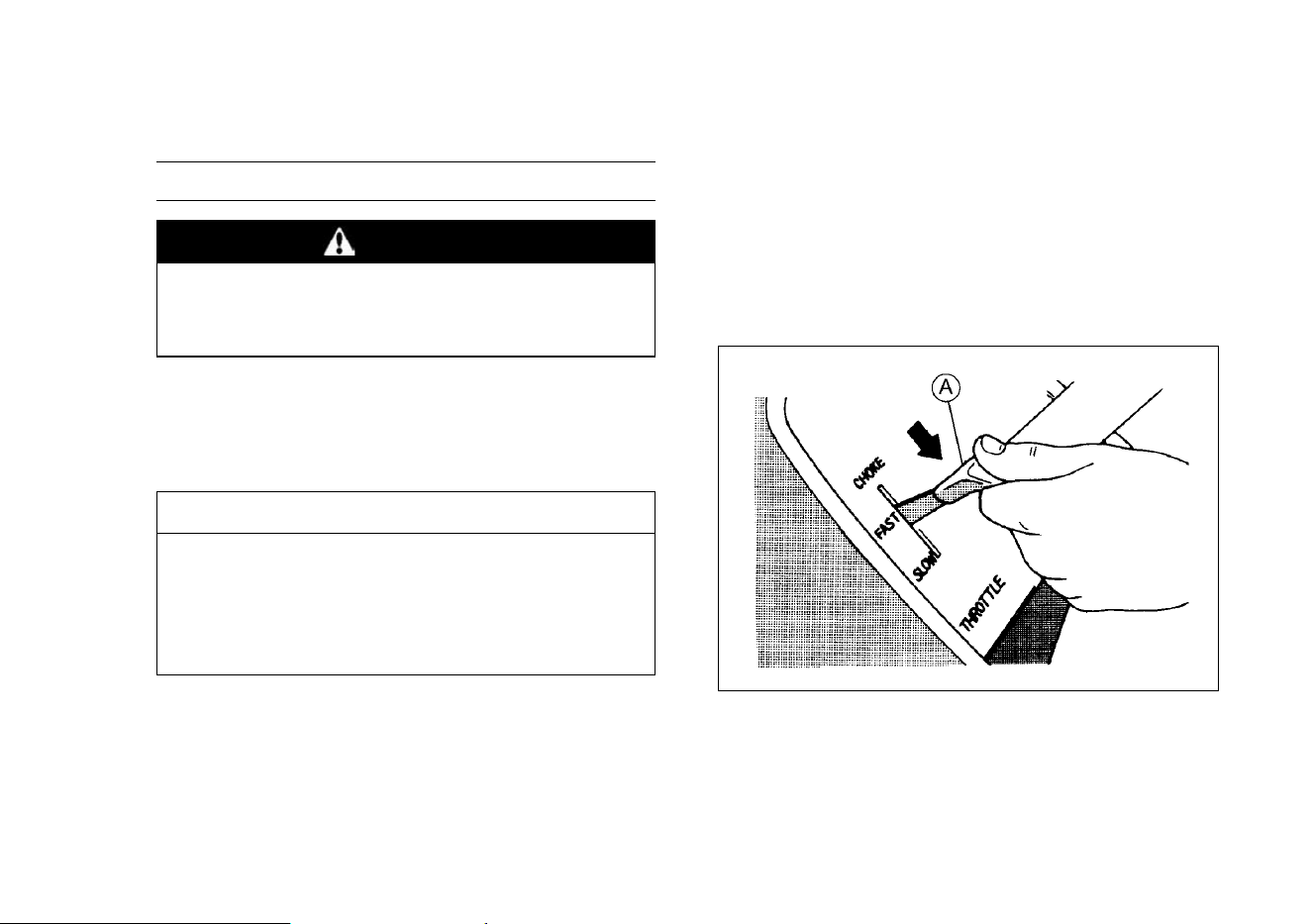
After the engine starts, move the throttle lever (A)
on the equipment to halfway between “FAST” and
“SLOW”.
To warm up the engine, run it for 3 to 5 minut es
with the throttle lever in the same load position (half-
way) before putting the equipment under load.
Then, move the throttle lever (A) on the equipment
to its “FAST” position.
CAUTION
Allow engine to warm up sufficiently (3 to 5
minutes at idle) before applying a load. This
will allow oil to reach all engine parts, and al-
low piston clearance to reach design specifi-
cations.
CAUTION
While warming up the engine, make sure the
warning lamp (oil pressure) on dash is not on.
The warning lamp must not be illuminated
during engine operation (if equipped).
Engine Inclination
This engine will operate continuously at angles up
to 25° in any direction.
Refer to the operating instructions of the equip-
ment this engine powers. Because of equipment de-
sign or application, there may be more stringent
restrictions regarding the angle of operation.
CAUTION
Do not operate this engine continuously at
angles exceeding 25° in any direction. Engine
damage could result from insufficient lubrica-
tion.
14 OPERATING
16
Black plate (15,1)
STOPPING
Stopping the Engine
WARNING
Always remove Engine Key from switch when
leaving equipment unattended or when equip-
ment is not in use.
Ordinary Stop
•
Move the throttle lever (A) to “slow” position.
•
Lower the engine speed to the idle speed. Keep
running at the idle speed for about one minute.
CAUTION
Engine damage can occur from run-on or
after-burning if engine is stopped suddenly
from high speed loaded operation. Reduce
engine speed to idle for one minute before
shutting engine off.
•
Turn the engine switch or the switch key to “OFF”
position.
For Control Panel Switch Typ e, move the throttle
lever against its low speed end to turn the ignition
off.
Emergency Stop
•
Immediately turn the engine switch or the switch
key to “OFF” position.
•
Close the fuel valve on the equipment.
For Control Panel Switch Typ e, move the throttle
lever on the equipment to its low speed end. Moving
the lever to its low speed end turns ignition off.
STOPPING 15
17

Black plate (16,1)
ADJUSTMENT
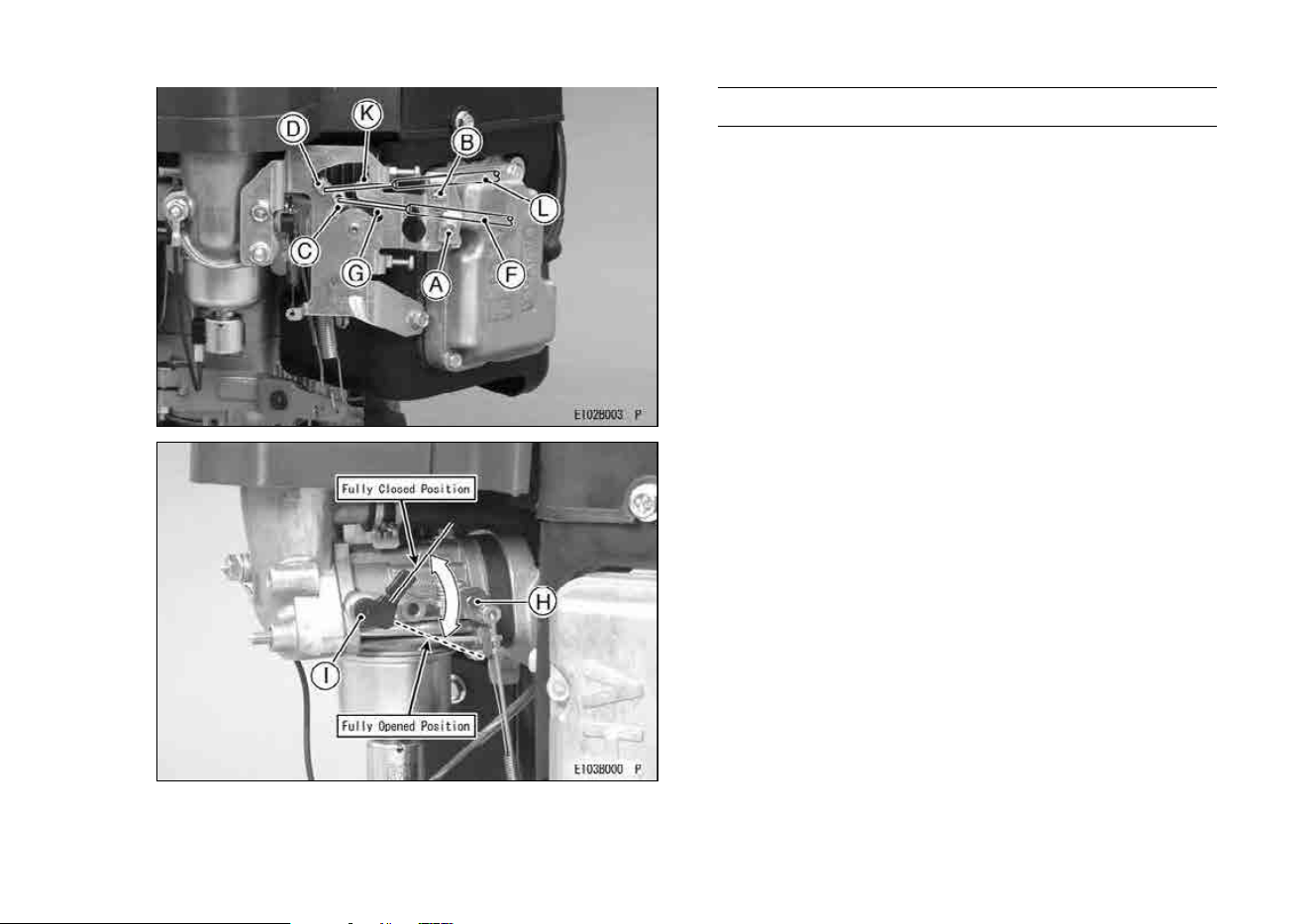
Throttle Cable Installation, Adjustment
•
Link the throttle cable (G) to the speed control lev-
er (C) and loosely clam p the throttle cable outer
housing (F) with the cable clamp bolt (A).
•
Move the throttle lever to “FAST” position.
•
Pull up the outer housing (F) of the throttle cable
until the inner wire (G) has almost no slack, and
tighten the cable clamp bolt (A).
•
Move the throttle lever to “SLOW” position. Make
sure that the carburetor throttle valve (H) is moved
smoothly.
Choke Cable Installation, Adjustment
•
Link the choke cable (K) to the choke control lever
(D), and loosely clamp the choke cable outer
housing (L) with the cable clamp bolt (B).
•
Move the equipment choke control to “OPEN” po-
sition. Make sure that the carburetor choke valve
(I) is fully opened.
•
Pull up the outer housing (L) of the choke cable
until the inner wire (K) has almost no slack, and
tighten the cable clamp bolt (B).
•
Move the equipment choke control to “CHOKE”
position. Make sure that the carburetor choke
valve (I) is completely closed.
•
Make sure that the choke valve turns from fully
closed position to fully opened position when ac-
tuating the equipment choke control.
16 ADJUSTMENT
18
Black plate (17,1)
Engine Speed Adjustment
NOTE
○
Do not tamper with the governor setting or the car-
buretor setting to increase the engine speed.
Every carburetor is adjusted at the factory and a
cap or stop plate is installed on each mixture
screw.
○
If any adjustment is necessary, it must be per-
formed by your authorized Kawasaki Engine deal-
e r.
ADJUSTMENT 17
19

Black plate (18,1)
MAINTENANCE
Maintenance, replacement, or repair of the emission control devices and systems may be performed
by any nonroad engine repair establishment or individual.
18 MAINTENANCE
20
Black plate (19,1)
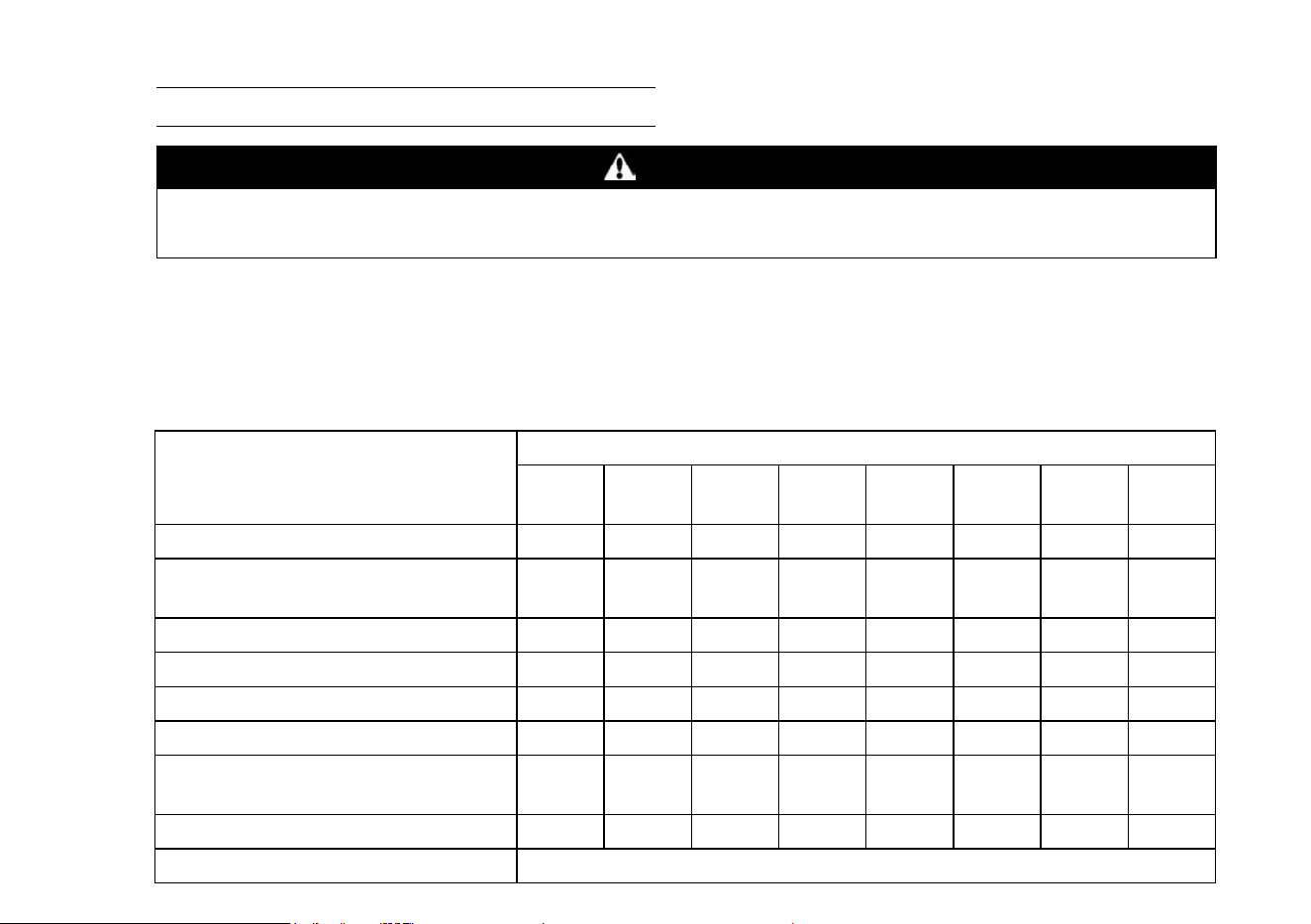
Periodic Maintenance Chart
WARNING
Always remo ve the spark plug caps from spark plugs when servicing the engine to prevent acciden-
tal starting.
NOTE
○
The service intervals can be used as a guide. Service more frequently as necessary by operating conditions.
○
: Service more frequently under dusty conditions.
K: Service to be performed by an authorized Kawasaki dealer.
INTERVAL
MAINTENANCE
Daily
First
8 hr.
Every
25 hr.
Every
50 hr.
Every
100 hr.
Every
200 hr.
Every
250 hr.
Every
300 hr.
Every
500 hr.
Check and add engine oil.
•
Check for loose or lost nuts and
screws.
•
Check for fuel and oil leakage.
•
Check battery electrolyte level.
•
○
Check or clean air inlet screen.
•
○
Clean air cleane r paper element.
•
○
K
Clean dust and dirt from cylinder
and cylinder head fins.
•
Tighten nuts and screws.
•
Change engine oil.
••
MAINTENANCE 19
INTERVAL
MAINTENANCE
Daily
Every
25 hr.
Every
50 hr.
Every
100 hr.
Every
200 hr.
Every
250 hr.
Every
300 hr.
Every
500 hr.
Check and add engine oil.
•
Check for loose or lost nuts and
screws.
•
Check for fuel and oil leakage.
•
Check battery electrolyte level.
•
○
Check or clean air inlet screen.
•
○
Clean air cleaner paper element.
•
○
K
Clean dust and dirt from cylinder
and cylinder head ns.
•
Tighten nuts and screws.
•
Change engine oil.
Every 100 hours or 1 year whichever comes rst
21
Black plate (20,1)
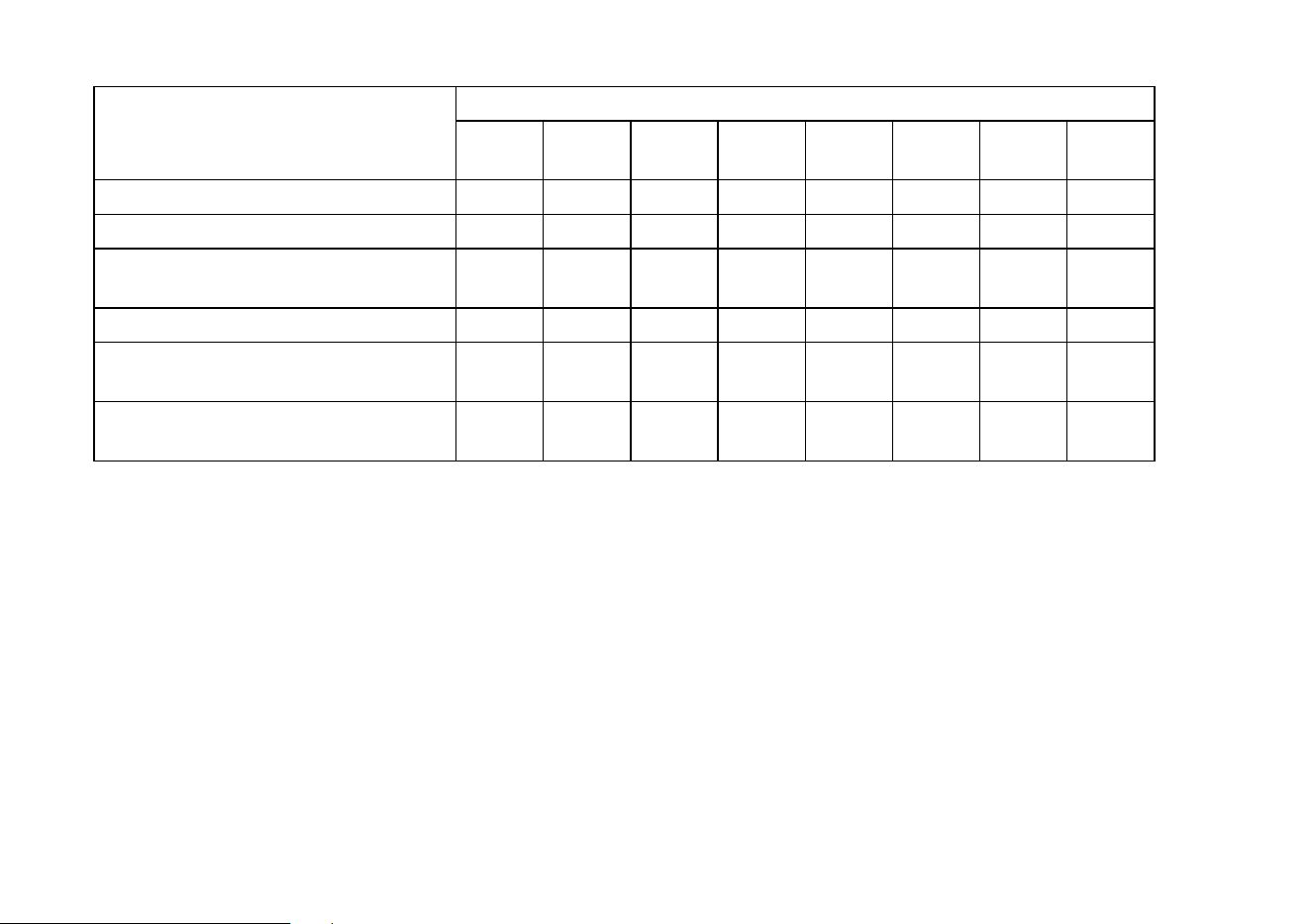
INTERVAL
MAINTENANCE
Daily
First
8 hr.
Every
25 hr.
Every
50 hr.
Every
100 hr.
Every
200 hr.
Every
250 hr.
Every
300 hr.
Every
500 hr.
Clean and regap spark plugs.
•
Change oil filter.
•
○
Replace air cleaner paper ele-
ment
•
K Clean combustion chamber.
•
K
Check and adjust valve clear-
ance.
•
K
Clean and lap valve seating sur-
face.
•
20 MAINTENANCE
INTERVAL
MAINTENANCE
Daily
Every
25 hr.
Every
50 hr.
Every
100 hr.
Every
200 hr.
Every
250 hr.
Every
300 hr.
Every
500 hr.
Clean and regap spark plugs.
•
Change oil lter.
•
○
Replace air cleaner paper ele-
ment
•
K
Clean combustion chamber.
•
K
Check and adjust valve clear-
ance.
•
K
Clean and lap valve seating sur-
face.
•
22
Black plate (21,1)
Oil Level Check
Check oil level daily and before each time of oper-
ation. Be sure oil level is maintained. See “ PREPA-
RATION” chapter.
Engine Oil Capacity
FR651V
FR691V
FR730V
1.8 L
[when oil filter is not removed]
2.1 L
[when oil filter is removed]
Oil Change
Change oil after first 8 hours of operation.There-
after change oil
every 100 hours.
•
Run the engine to warm oil.
•
Be sure the engine (equipment) is level.
•
Stop the engine.
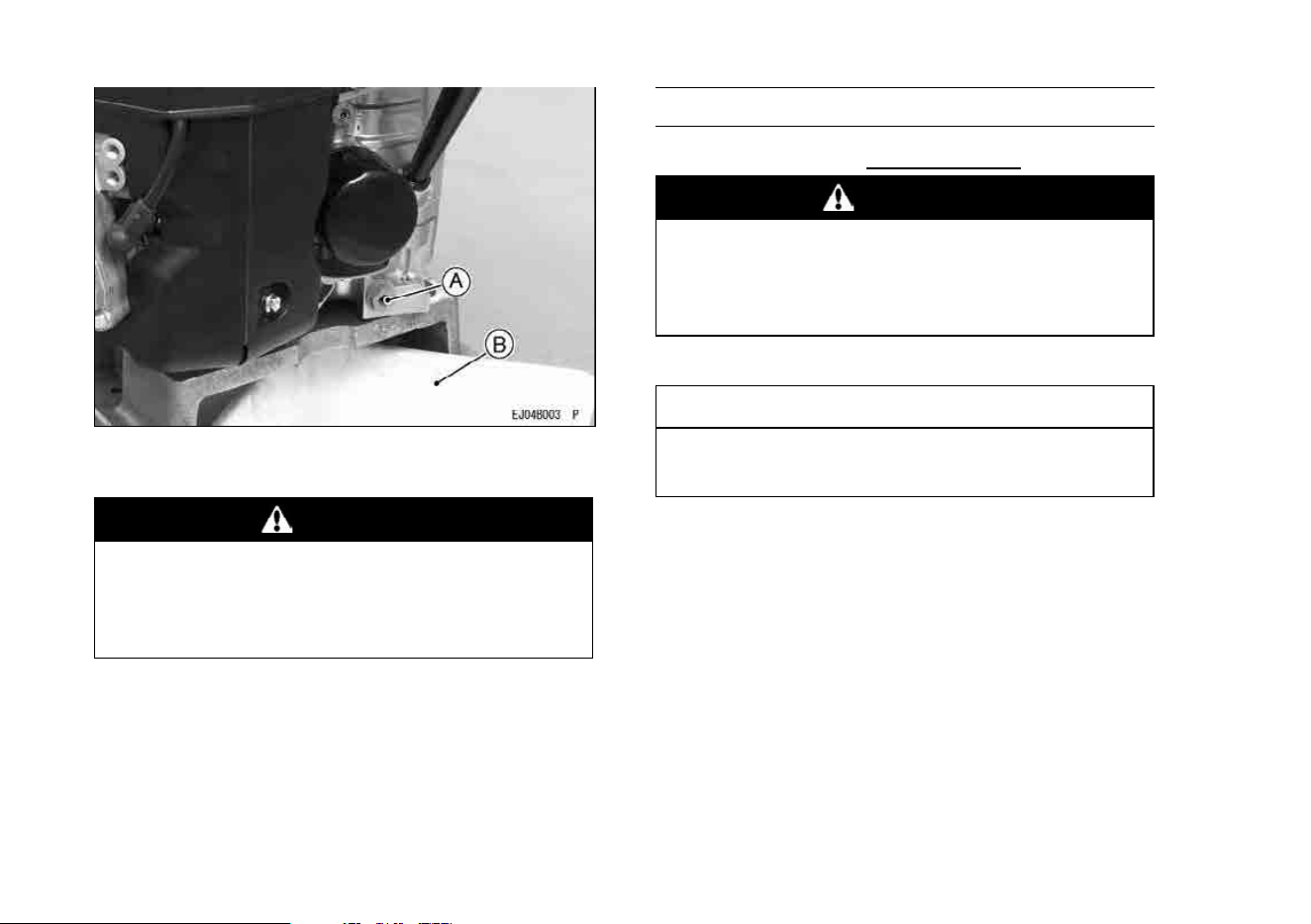
•
Remove the oil drain plugs (A) and drain the oil in-
to suitable container while engine is warm.
WARNING
Hot engine oil can cause severe burns.
Allow engine temperature to drop from hot to
warm level before draining and handling oil.
•
Install the oil drain plugs.
•
Remove oil gauge and refill with fresh oil (See
“FUEL AND OIL RECOMMENDATIONS” chap-
ter).
•
Check the oil level (See “PREPARATION” ch apter
for oil level check).
MAINTENANCE 21
Change oil every 100 hours or 1 year whichever
comes rst.
23
Black plate (22,1)
A. Oil Drain Plug
B. Suitable Container
WARNING
Engine oil is a toxic substance. Dispose of
used oil properly. Contact your local author-
ities for approved disposal methods or possi-
ble recycling.
Oil Filter Change
•
Change the oil filter every 200 hours of operation.
WARNING
Hot engine oil can cause severe burns.
Allow engine temperature to drop from hot to
warm level before attempti ng to remove oil fil-
ter.
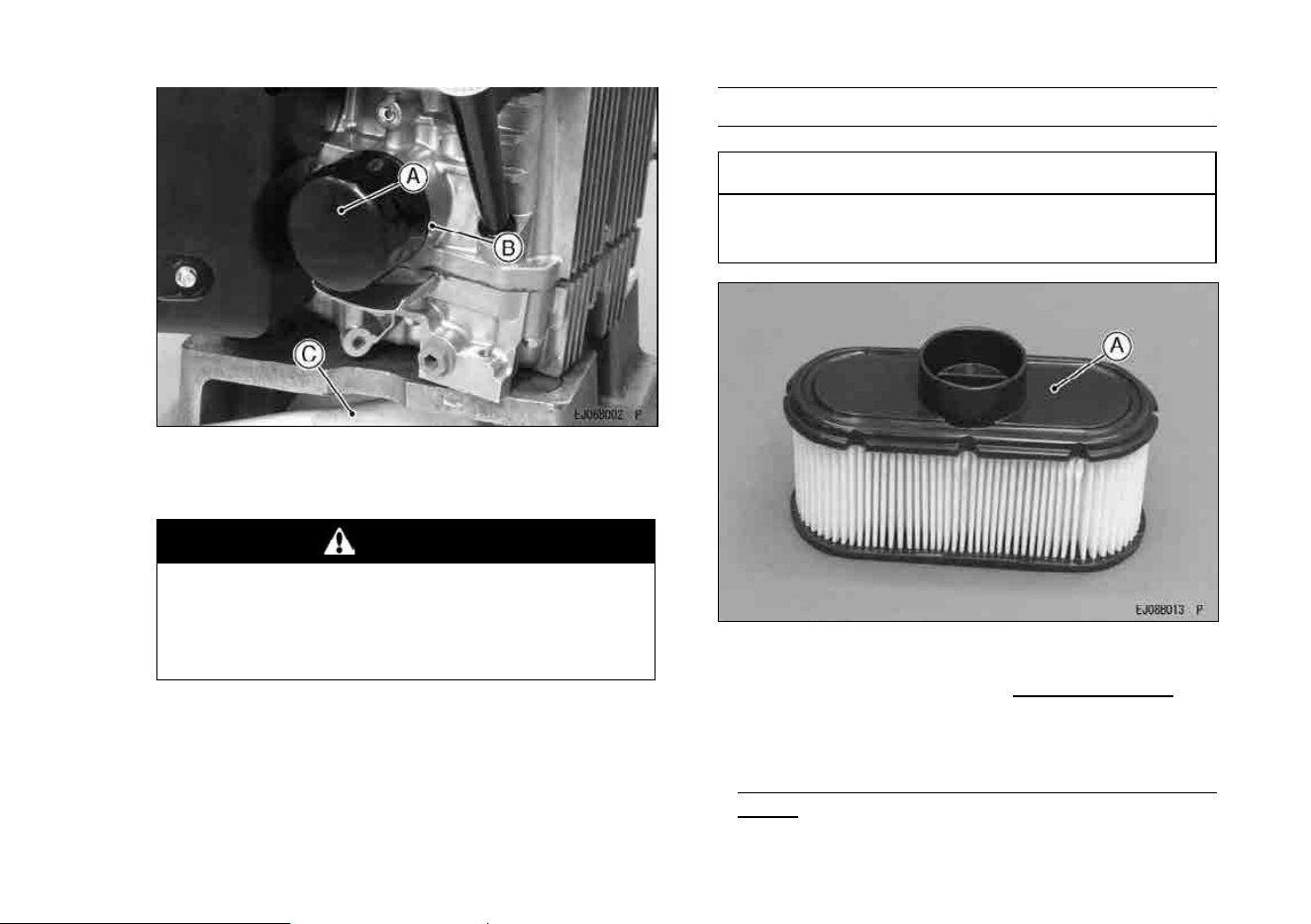
•
Drain engine oil into a suitable container (C).
CAUTION
Before removing the oil filter, place suitable
pan under filter connection.
•
Rotate the oil filter (A) counterclockwise to re-
move it.
•
Coat a film of clean engine oil on seal of new filter.
•
Install new filter rotating it clockwise until seal con-
tacts mounting surface (B). Then rotate filter 3/4
turn more by hand.
•
Supply engine oil as specified.
•
Run the engine for about 3 minutes, stop engine,
and check oil leakage around the filter.
•
Add oil to compensate for oil level drop due to oil
filter capacity (See “PREPARATION” chapter for
oil level check).
22 MAINTENANCE
24
Black plate (23,1)
A. Oil Filter
B. Mounting Surface
C. Suitable Container
WARNING
Engine oil is a toxic substance. Dispose of
used oil properly. Contact your local author-
ities for approved disposal methods or possi-
ble recycling.
Air Cleaner Service
CAUTION
To prevent excessive engine wear, do not run
the engine with the air cleaner remove d.
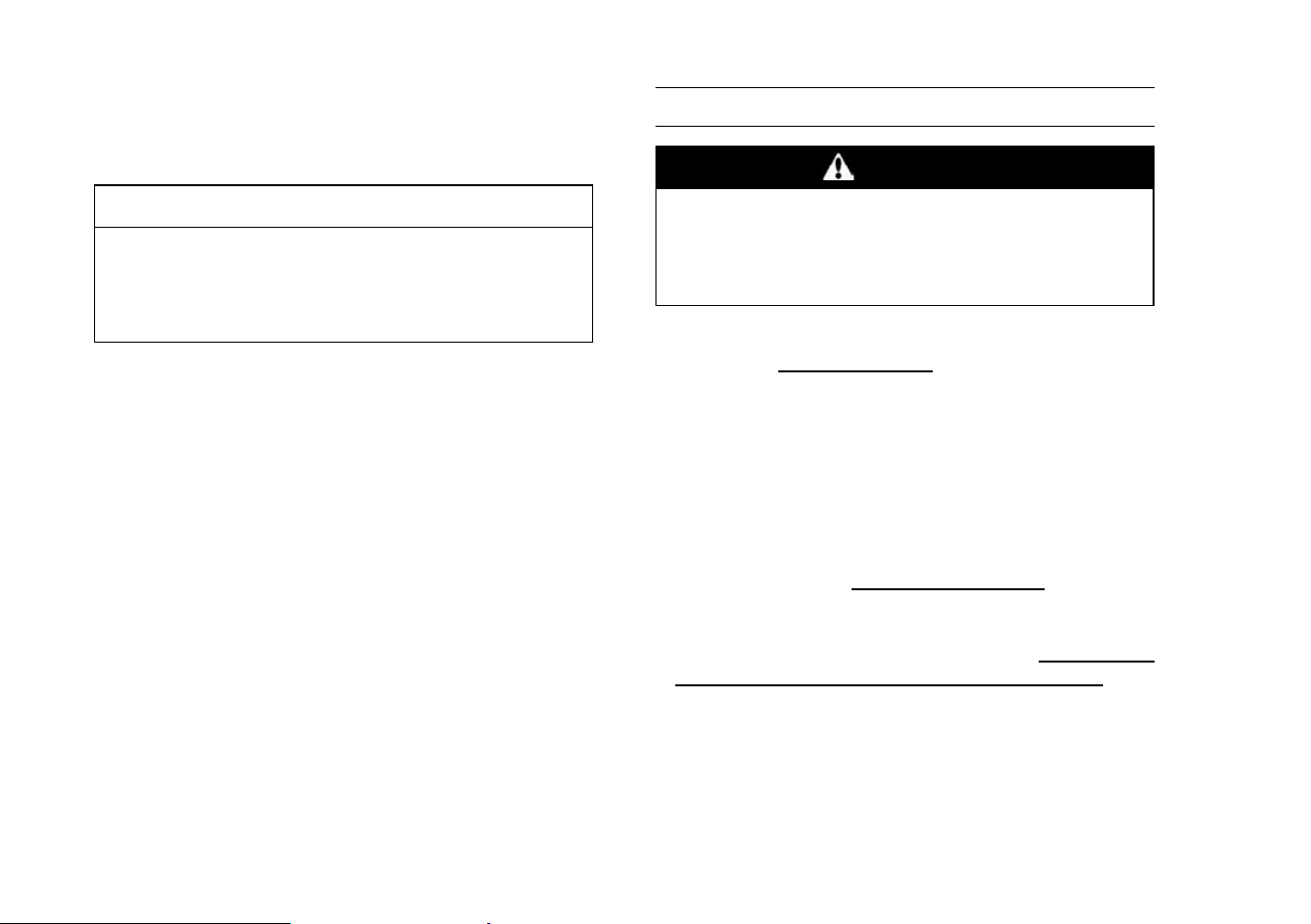
Paper Element
Clean the paper element (A)
every 100 hours.
•
Clean the paper element by tapping gently to re-
move dust. If very dirty, replace the paper element
with a new one.
•
Replace with a new paper element yearly or 200
hours. Whichever comes first.
MAINTENANCE 23
25
Black plate (24,1)
NOTE
○
Operating in dusty condition may require more fre-
quent maintenance than above.
CAUTION
Do not wash paper element.
Do not oil paper element.
Do not use pressurized air to clean paper ele-
ment.
Spark Plug Service
WARNING
Hot engine components can cause severe
burns.
Stop engine and allow it to cool before check-
ing spark plugs.
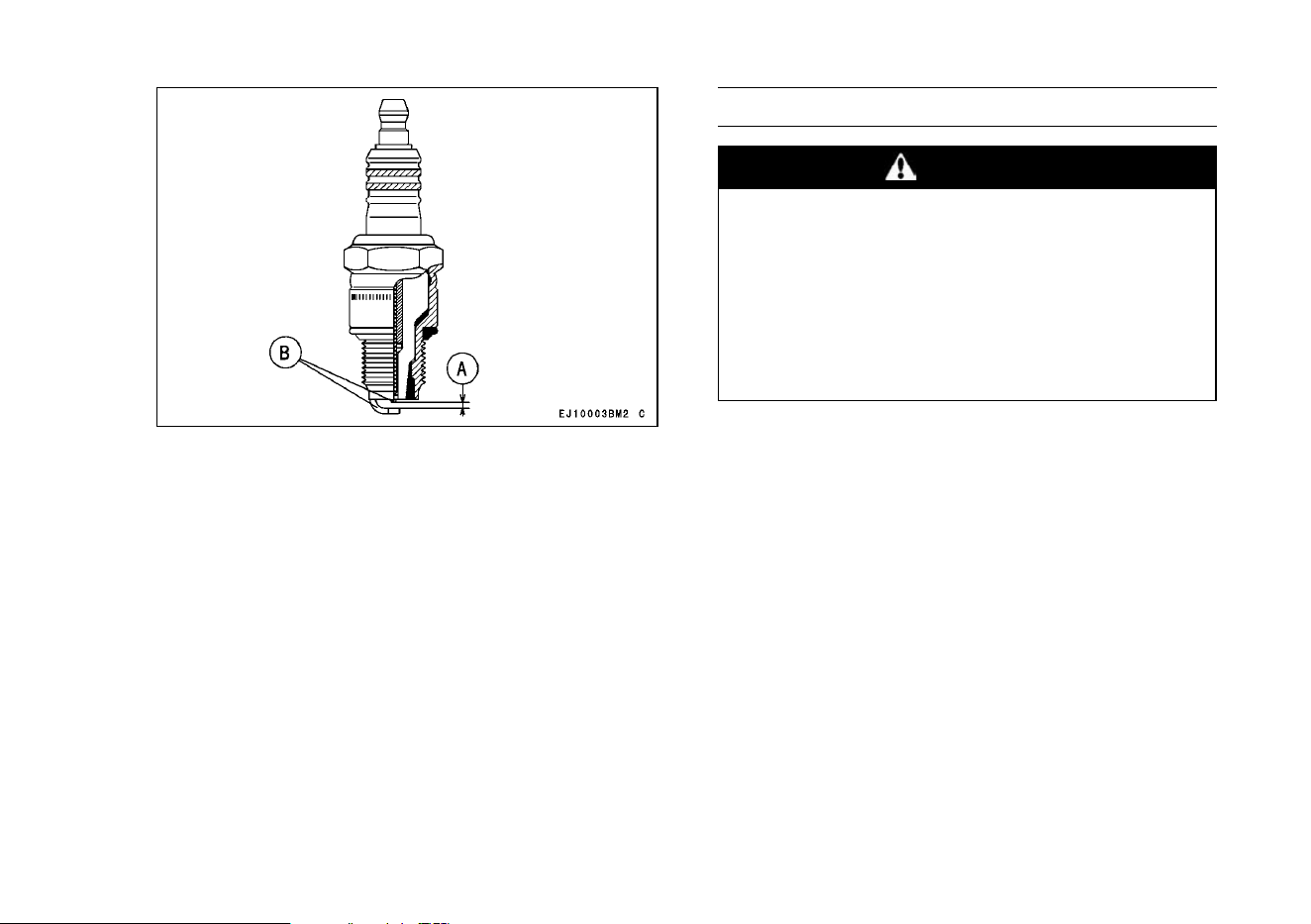
Clean or replace the spark plugs and reset spark
plug gap (A)
every 100 hours of operation.
•
Disconnect the spark plug caps from the spark
plugs and remove the spark plugs.
•
Clean the electrodes (B) by scraping with a wire
brush to remove carbon deposits.
•
Inspect for cracked porcelain or other wear and
damage. Replace the spark plug with a new one if
necessary.
•
Check the spark plug gap and reset if necessary.
The gap must be
0.75 mm (0.030 in). To change
the gap, bend only the side–electrode, using a
spark plug tool.
•
Install and tighten the spark plugs to 22 N·m (2.2
kgf·m, 16 ft·lb). Connect the spark plug caps.
RECOMMENDED SPARK PLUG
NGK ..................................BPR4ES
24 MAINTENANCE
26
Black plate (25,1)
A. Spark Plug Gap
B. Electrodes
Fuel Filter and Fuel Pump Service
WARNING
Improper use of solvents can result in fire or
an explosion.
Do not use gasoline or low flash-point sol-
vents to clean the fuel filter and/or the fuel
pump.
Clean only in a well ventilated area away from
sources of sparks or flame, including any ap-
pliances with a pilot lamp.
•
The fuel filter can not be disassembled. If the fuel
filter gets clogg ed, replace it with a new one.
•
The fuel pump can not be disassembled. If the
fuel pump fails, replace it with a new one.
MAINTENANCE 25
27
Black plate (26,1)
Cooling System Cleaning
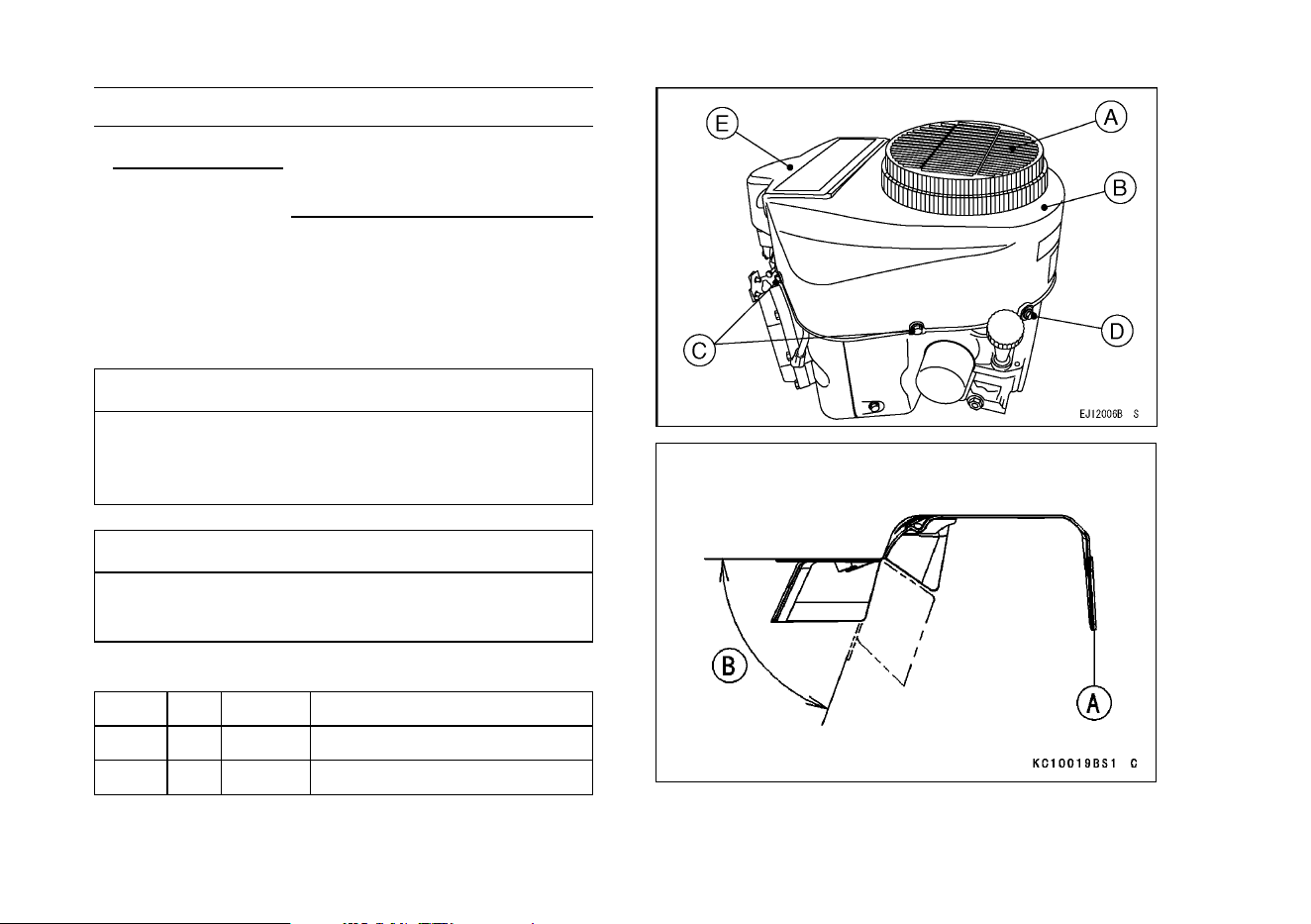
Before each use, check that the air inlet (rotary)
screen (inside A) is free from grass and debris and
clean if necessary.
Every 100 hours of operation,
check and clean the cooling fins and inside of en-
gine shrouds to remove grass, chaff or dirt clogging
the cooling system and causing overheating. Whe n
cleaning, remove the air cleaner (inside E) loosen
the bolts (C), (D), and then, remove the fan housing
(B).
CAUTION
Do not run engine before all cooling system
parts are reinstalled to keep cooling and car-
buretion as inten ded.
CAUTION
Bend the engine shroud (regulator side) [A]
only within the shown range [B] (70°).
[Bolts Size, Tightening Torque]
Bolts Size Length Tightening Torque
C M6 16 mm 8.8 N·m (0.9 kgf·m, 78 in·lb)
D M6 22 mm 8.8 N·m (0.9 kgf·m, 78 in·lb)
[B] = 70°
26 MAINTENANCE
28
Black plate (27,1)
STORAGE
Fuel System Draining
Engines to be stored over 30 days should be com-
pletely drained of fuel to prevent gum deposits form-
ing on essential carburetor parts, fuel filter and fuel
tank.
WARNING
Gasoline is extremely flammable and can be
explosive under certain conditions.
Drain fuel before storing the equipment for
extended periods.
Drain fuel in a well-ventilated area away from
any source of flame or sparks, including any
appliances with a pilo t lamp. Store fuel in an
approved container in safe location.
•
Clean every part of the engine.
•
Be sure that the engi ne switch or switch key is
positioned at “OFF ”.
•
Close the fuel valve and remove the sediment
bowl.
•
Put a pan under the fuel valve to receive the
drained fuel, and open the fuel valve to drain the
fuel from fuel tank completely.
•
Install the sedim ent bowl and open the fuel valve.
To remove the fuel from the carburetor, run the en-
gine to use up the fuel in the carburetor.
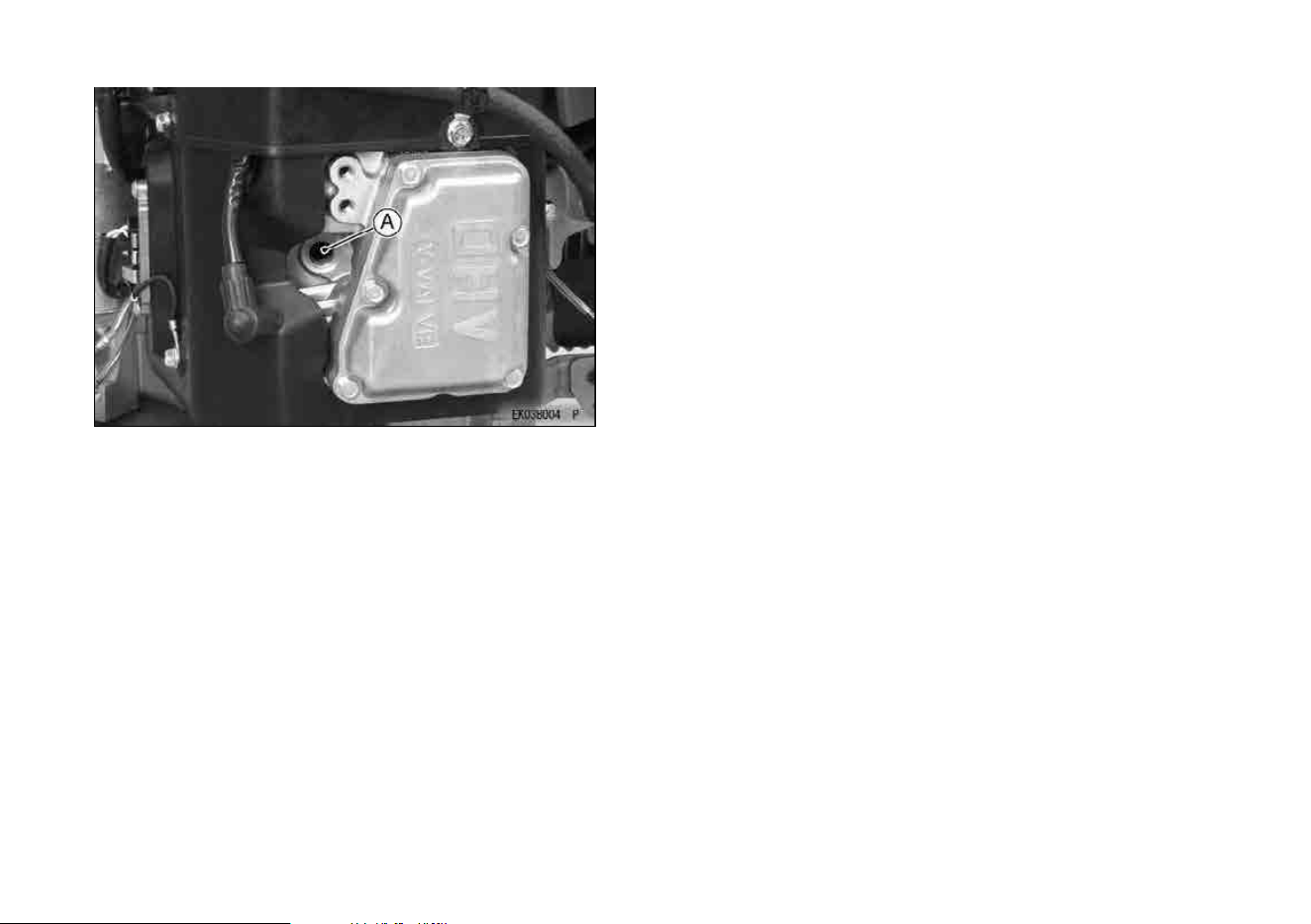
Remove the spark plugs and pour approx. 1 ~ 2
mL (0.06 ~ 0.1 cu. in.) of engine oil through the
spark plug holes (A) and then screw the spark
plugs in after turning the engine a few times.
Slowly turn the engine until you feel compression
and then leave it there. This blocks the air inside
the cylinder and prevents rust inside the engine.
Wipe the body with oily cloth.
Wrap the engine with plastic sheeting and store it
in a dry place.
Change engine oil for next use after period of stor-
age (refer to “Oil Change” section in “MAINTE-
NANCE” chapter).
WARNING
Gasoline is a toxic substance. Dispose of
gasoline properly. Contact your local author-
ities for approved disposal methods.
STORAGE 27
29
Black plate (28,1)
A. Spark Plug Hole
28 STORAGE
30
Black plate (29,1)
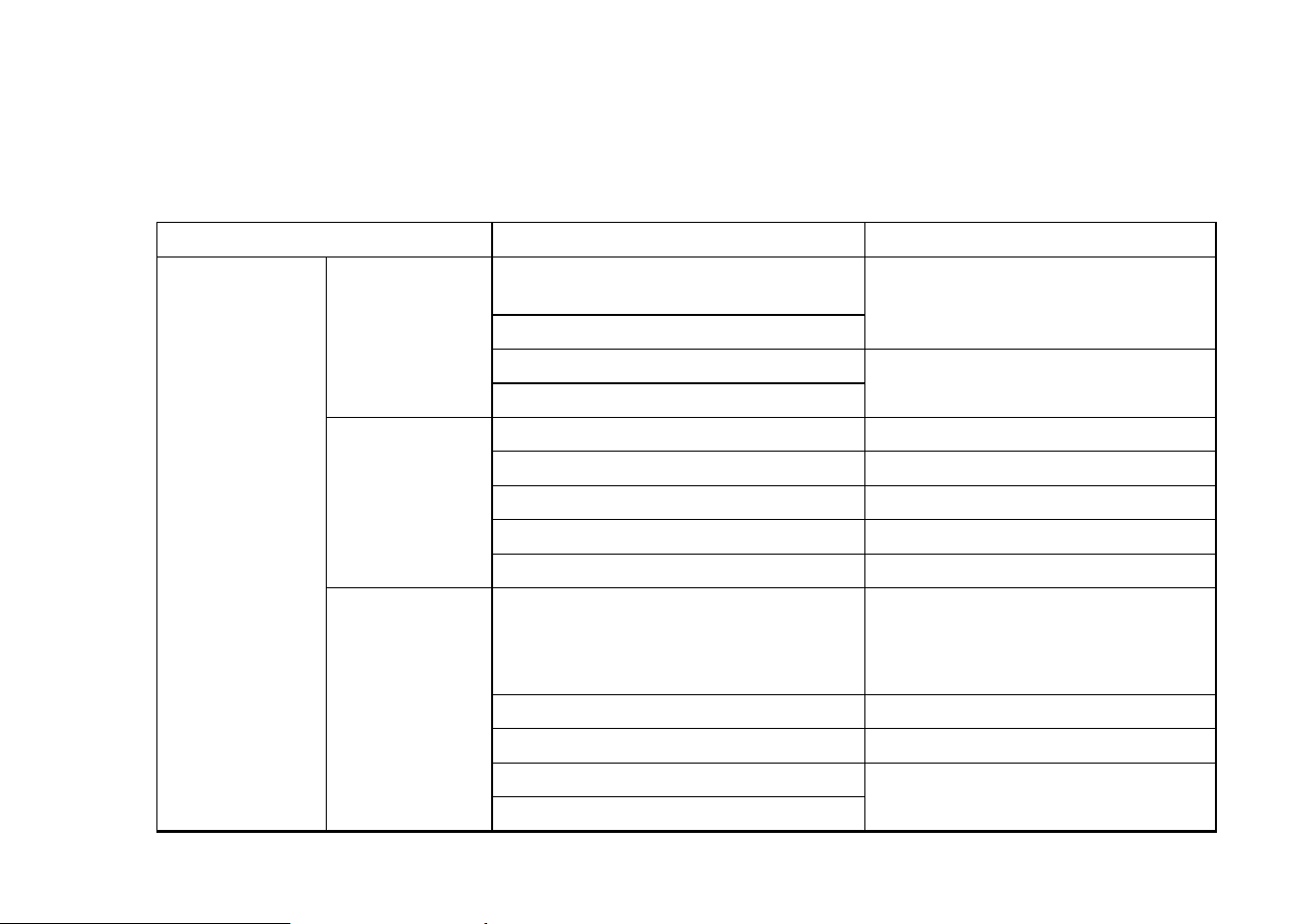
TROUBLESHOOTING GUIDE
If the engine malfunctions, carefully examine the symptoms and the oper ating conditions, and use the table
below as a guide to troubleshooting.
Symptom Probably Cause Remedy
Engine won't
start or output is
low
Insufficient com-
pression
Faulty pistons, cylinders, piston rings,
and head gaskets
K
Faulty valves
Loose spark plugs
Tighten properly
Loose cylinder head bolts
No fuel to com-
bustion cham-
ber
No fuel in fuel tank Fill fuel tank
Fuel valve not in “ON” position Open fuel valve lever.
Blocked fuel filter or tube Change fuel filter or fuel tube
Blocked air vent in tank cap Clean fuel tank cap
Faulty carburetor K
Spark plugs
fouled by fuel
Over rich fuel/air mixture
Open choke.
Rotate engine with spark plugs re-
moved to discharge excess fuel.
Clean spark plugs.
Clogged air cleaner Clean
Faulty carburetor K
Incorrect grade/type of fuel
Change fuel
Water in fuel
TROUBLESHOOTING GUIDE 29
31
Black plate (30,1)
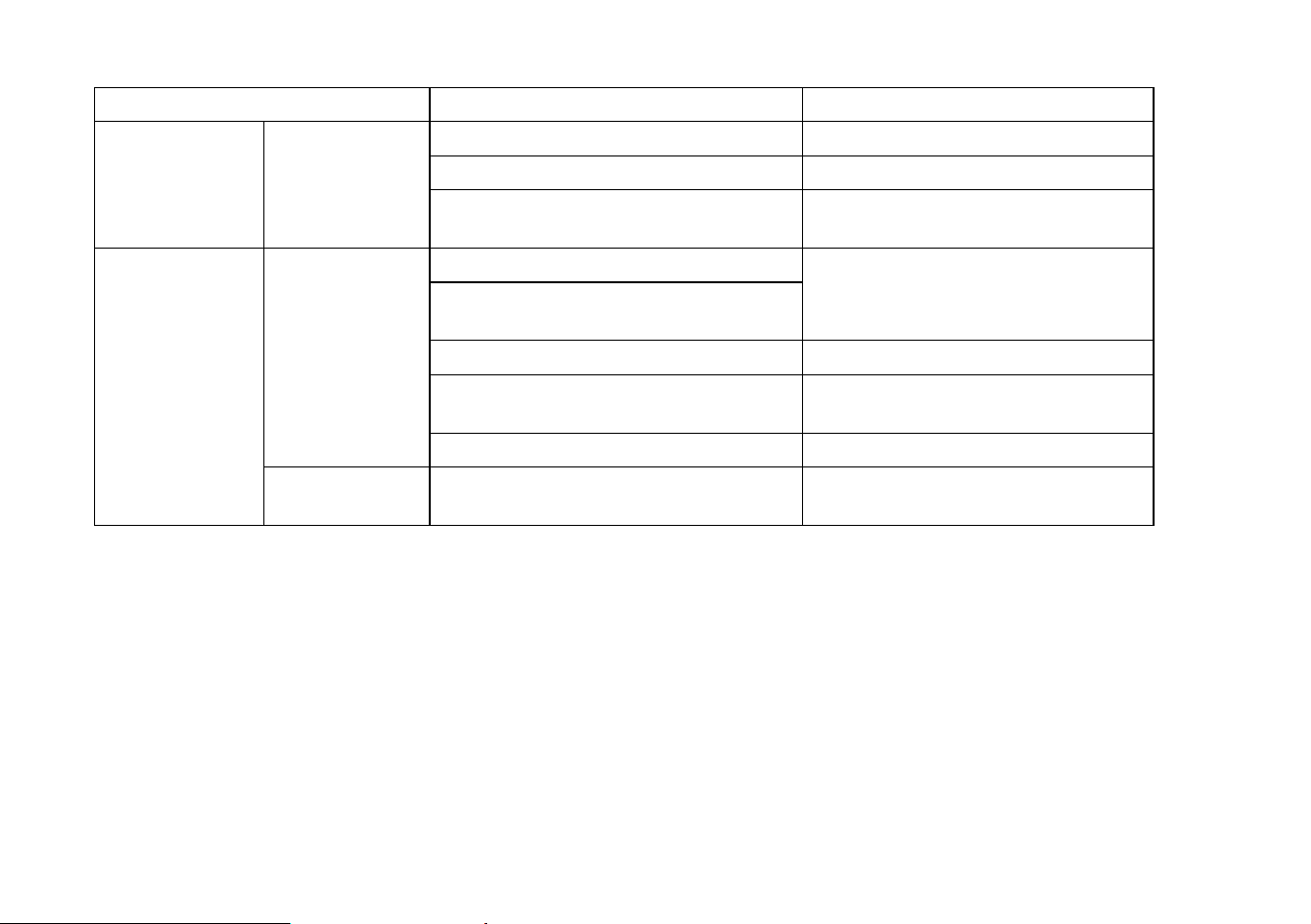
Symptom Probably Cause Remedy
No spark or
weak spark
Faulty spark plugs Replace spark plugs
Faulty ignition coil K
Engine switch left in “OFF” position
Turn engine switch to “START” po-
sition (See M)
Low output Engine over-
heats
Clogged air cleaner
Clean
Air inlet screen or cooling air path
clogged with dirt
Insufficient engine oil Replenish or change oil
Carbon build-up in combustion cham-
ber
K
Poor ventilation around engine Select a better location
Engine speed
won't increase
Faulty governor K
K: Service to be performed by an authorized Kawasaki dealer.
M: For Control Panel Switch Type, move the throttle lever on the equipment away from its low speed end to
turn the engine switch to “START” position.
30 TROUBLESHOOTING GUIDE
32

Black plate (31,1)
ENVIRONMENTAL PROTECTION
To protect our environment, properly discard used batteries, engine oil, gasoline, coolant, or other compo-
nents that you might dispose of in the future.
Consult your authorized Kawasaki engin e dealer or local environmental waste agency for their proper dis-
posal procedure.
ENVIRONMENTAL PROTECTION 31
33
Black plate (32,1)
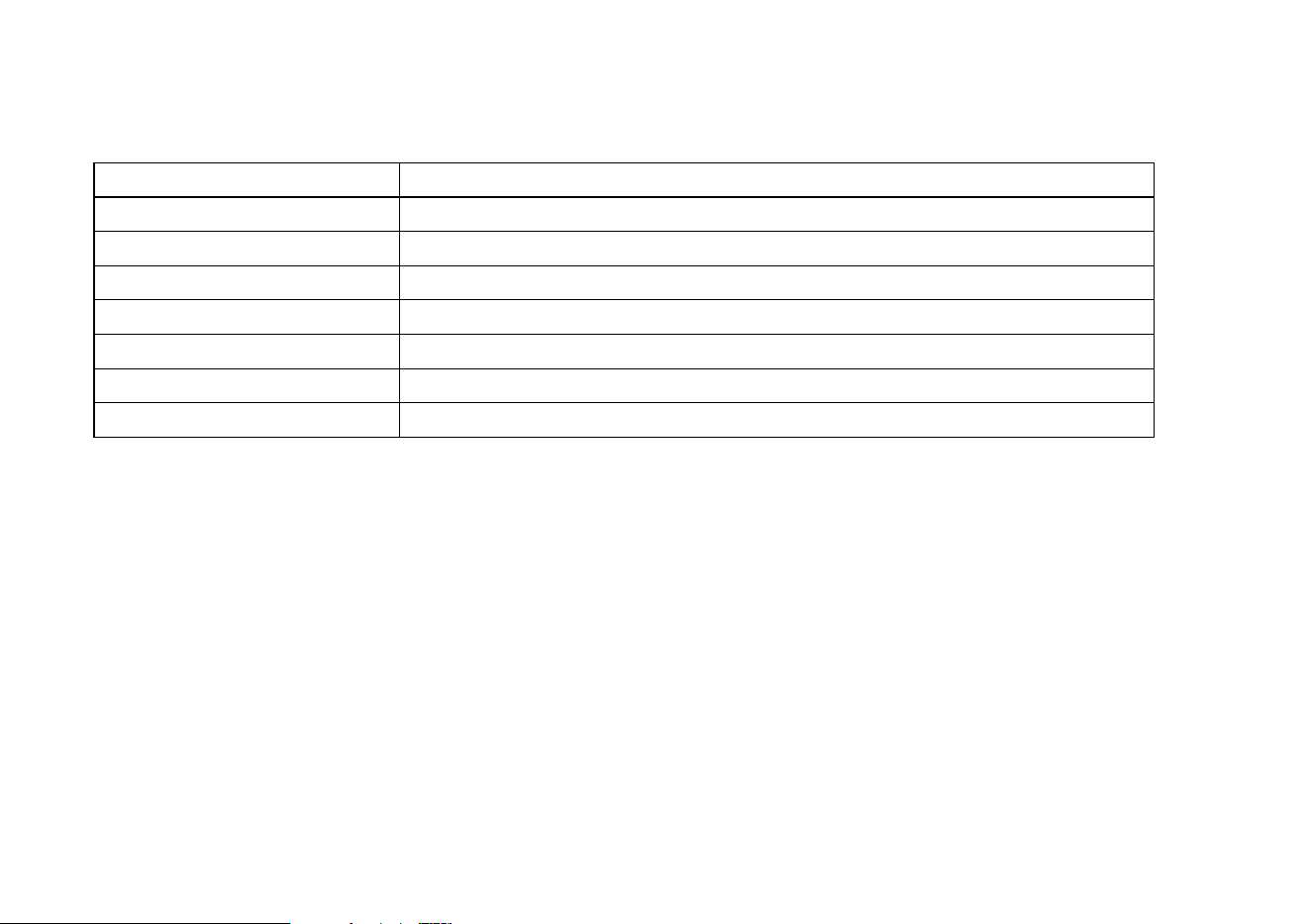
SPECIFICATIONS
FR651V, FR691V, FR730V
Type Air-cooled, 4-stroke OHV, V-twin cylinder, gasoline engine
Bore × Stroke 78 × 76 mm (3.07 × 2.99 in.)
Displacement 726 mL (44.3 cu.in)
Ignition System Solid-state ignition
Direction of Rotation Counterclockwise facing the PTO Shaft
Starting System Electric starter
Dry Weight : kg (lbs) 40 (88.2)
NOTE
○
Specifications are subject to change without no-
tice.
○
Dry weight excludes that of fuel tank and muffler.
32 SPECIFICATIONS
Black plate (32,1)
SPECIFICATIONS
FR651V, FR691V, FR730V
Type Air-cooled, 4-stroke OHV, V-twin cylinder, gasoline engine
Bore × Stroke 78 × 76 mm (3.07 × 2.99 in.)
Displacement 726 mL (44.3 cu.in)
Ignition System Solid-state ignition
Direction of Rotation Counterclockwise facing the PTO Shaft
Starting System Electric starter
Dry Weight : kg (lbs) 40 (88.2)
NOTE
○
Specifications are subject to change without no-
tice.
○
Dry weight excludes that of fuel tank and muffler.
32 SPECIFICATIONS
FR651V, FR691V, FR730V
Type Air-cooled, 4-stroke OHV, V-twin cylinder, gasoline engine
Bore × Stroke 78 × 76 mm (3.07 × 2.99 in.)
Displacement 726 mL (44.3 cu.in)
Ignition System Solid-state ignition
Direction of Rotation Counterclockwise facing the PTO Shaft
Starting System Electric starter
CO2 engine emission https://www.kawasaki-engines.eu/en/support/co2-engine-emission-data/
34
Black plate (33,1)
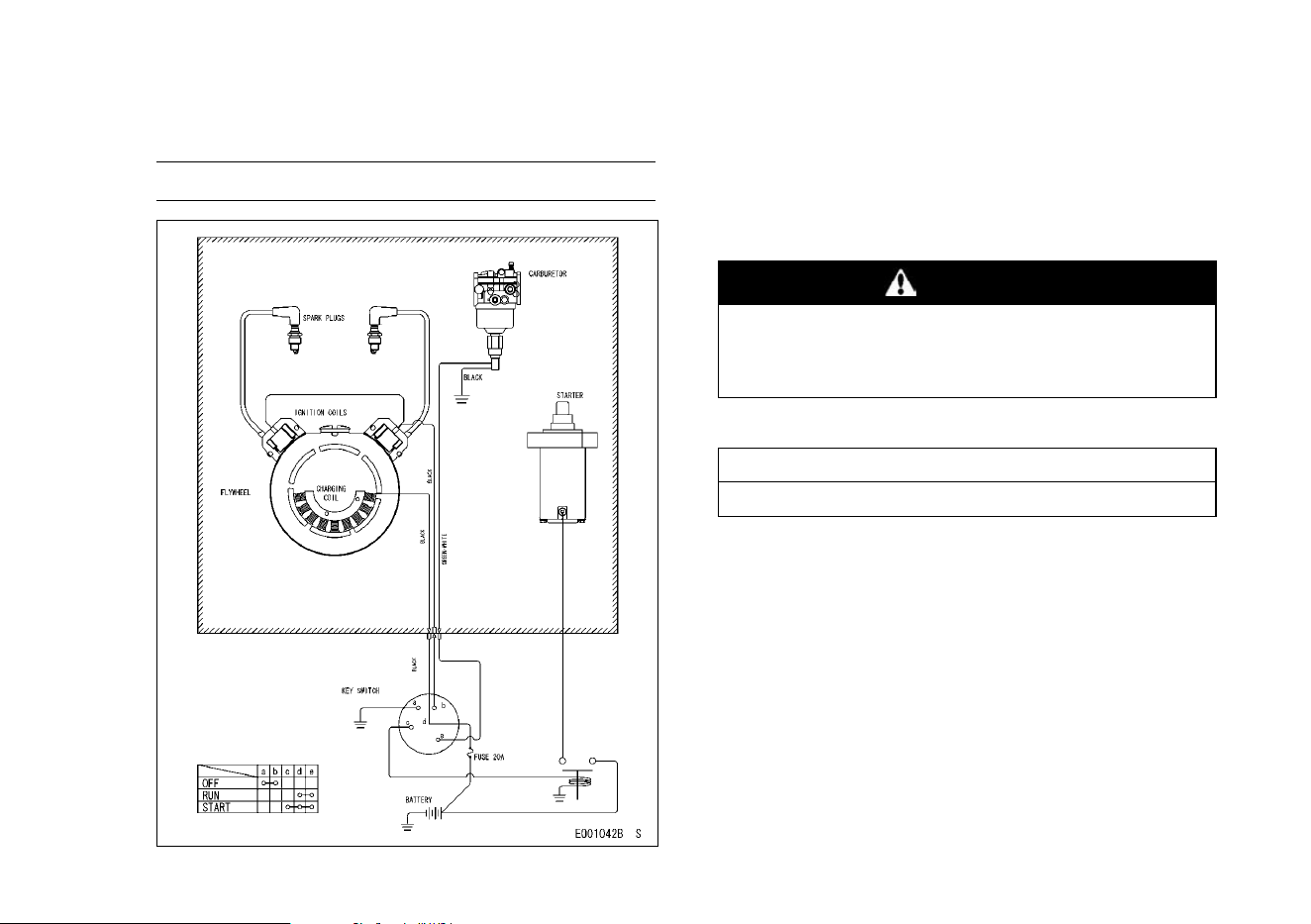
WIRING DIAGRAM
Wiring Diagram
NOTE
○
Portion Surrounded by hatching Shows Kawasaki
Procurement Parts.
WARNING
For electrical safety, always remove cable
from negative (–) side of battery before at-
tempting any rep air or maintenance.
Battery Capacity Recommended
Battery Capacity
12 V 550 CCA Class
WIRING DIAGRAM 33
35