


Introduction .................................... 2
In brief ............................................ 6
Keys, doors and windows ............ 20
Seats, restraints ........................... 38
Storage ........................................ 58
Instruments and controls ............. 75
Lighting ...................................... 110
Climate control ........................... 121
Driving and operating ................. 127
Vehicle care ............................... 174
Service and maintenance .......... 215
Technical data ........................... 218
Customer information ................ 230
Index .......................................... 240
Contents
2 Introduction
Introduction

Introduction 3
Vehicle specific data
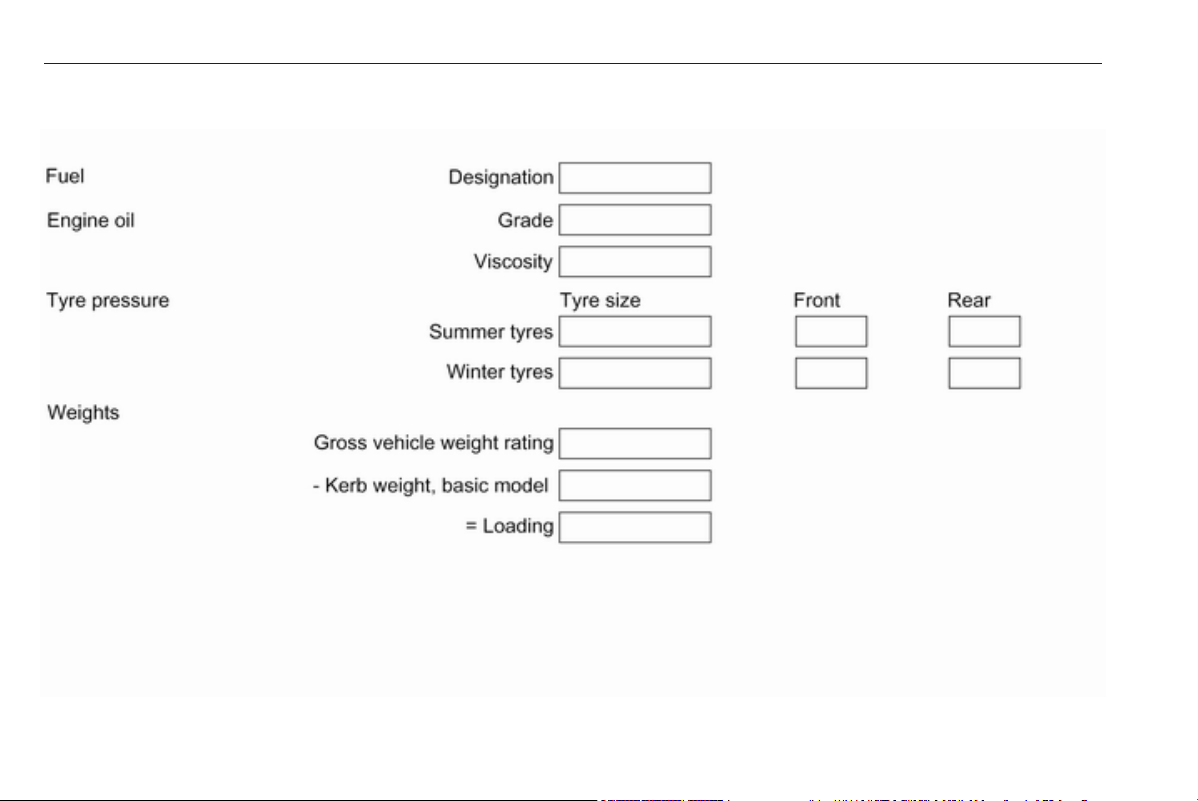
Please enter your vehicle's data on
the previous page to keep it easily
accessible. This information is
available in the sections "Service and
maintenance" and "Technical data"
as well as on the identification plate.
Introduction
Your vehicle is a designed
combination of advanced technology,
safety, environmental friendliness
and economy.
This Owner's Manual provides you
with all the necessary information to
enable you to drive your vehicle
safely and efficiently.
Make sure your passengers are
aware of the possible risk of accident
and injury which may result from
improper use of the vehicle.
You must always comply with the
specific laws and regulations of the
country that you are in. These laws
may differ from the information in this
Owner's Manual.
Disregarding the description given in
this manual may affect your warranty.
When this Owner's Manual refers to a
workshop visit, we recommend your
Vauxhall Authorised Repairer. For
gas vehicles, we recommend a
Vauxhall Authorised Repairer
licensed to service gas vehicles.
All Vauxhall Authorised Repairers
provide first-class service at
reasonable prices. Experienced
mechanics trained by Vauxhall work
according to specific Vauxhall
instructions.
The customer literature pack should
always be kept ready to hand in the
vehicle.
Using this manual
● This manual describes all options
and features available for this
model. Certain descriptions,
including those for display and
menu functions, may not apply to
your vehicle due to model
variant, country specifications,
special equipment or
accessories.
● The "In brief" section will give you
an initial overview.
● The table of contents at the
beginning of this manual and
within each section shows where
the information is located.
● The index will enable you to
search for specific information.
● This Owner's Manual depicts left-
hand drive vehicles. Operation is
similar for right-hand drive
vehicles.
● The Owner's Manual uses the
engine identifier code. The
corresponding sales designation
and engineering code can be
found in the section "Technical
data".
● Directional data, e.g. left or right,
or front or back, always relate to
the direction of travel.
● Displays may not support your
specific language.
● Display messages and interior
labelling are written in bold
letters.

4 Introduction
Danger, Warnings and
Cautions
9 Danger
Text marked 9 Danger provides
information on risk of fatal injury.
Disregarding this information may
endanger life.
9 Warning
Text marked 9 Warning provides
information on risk of accident or
injury. Disregarding this
information may lead to injury.
Caution
Text marked Caution provides
information on possible damage to
the vehicle. Disregarding this
information may lead to vehicle
damage.
Symbols
Page references are indicated with 3.
3 means "see page".
Page references and index entries
refer to the indented headings given
in the section table of content.
Thank you for choosing a Vauxhall.
We wish you many hours of
pleasurable driving.
Your Vauxhall Team

Introduction 5
6 In brief
In brief
Initial drive information
Vehicle unlocking
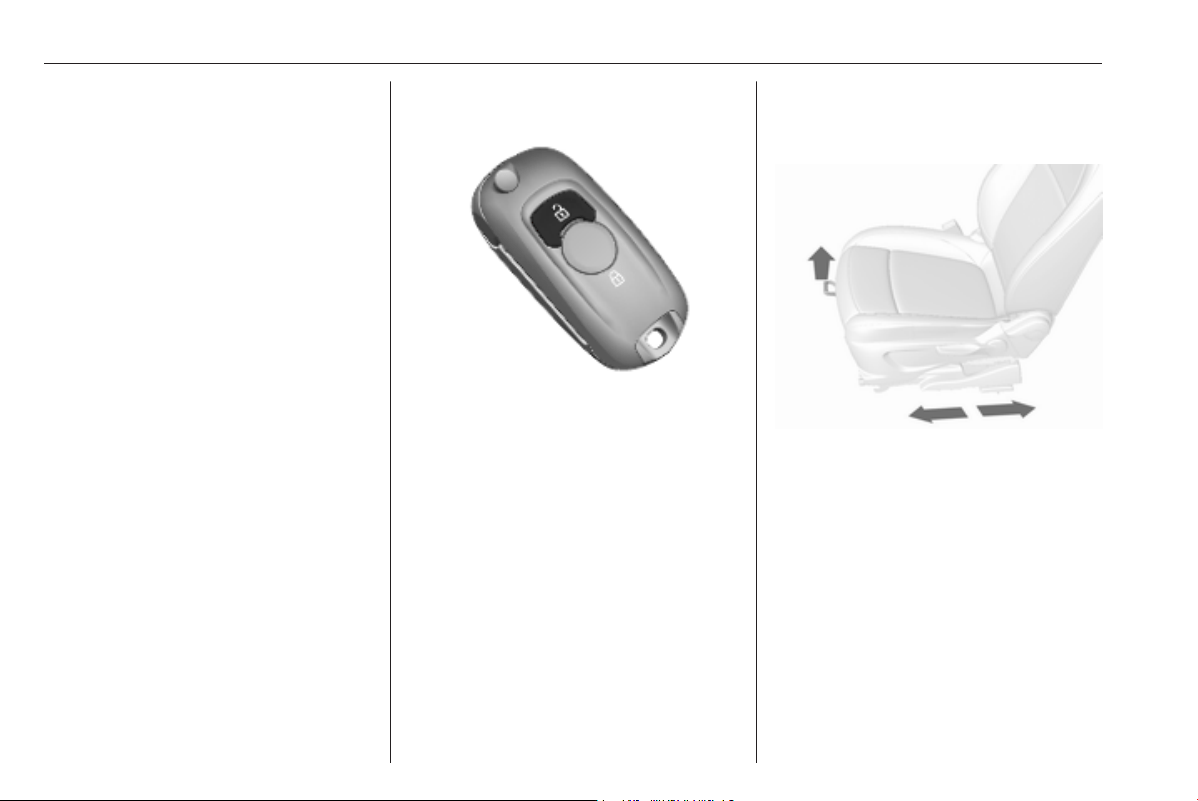
Press c to unlock the doors and load
compartment. Open the doors by
pulling the handles. To open the
tailgate, push the touchpad switch
below the handle.
Radio remote control 3 21.
Central locking system 3 24.
Electronic key system 3 22.
Load compartment 3 29.
Seat adjustment
Longitudinal adjustment
Pull handle, sllde seat, release
handle. Try to move the seat back and
forth to ensure that the seat is locked
in place.
Seat position 3 39.
Seat adjustment 3 40.
In brief 7
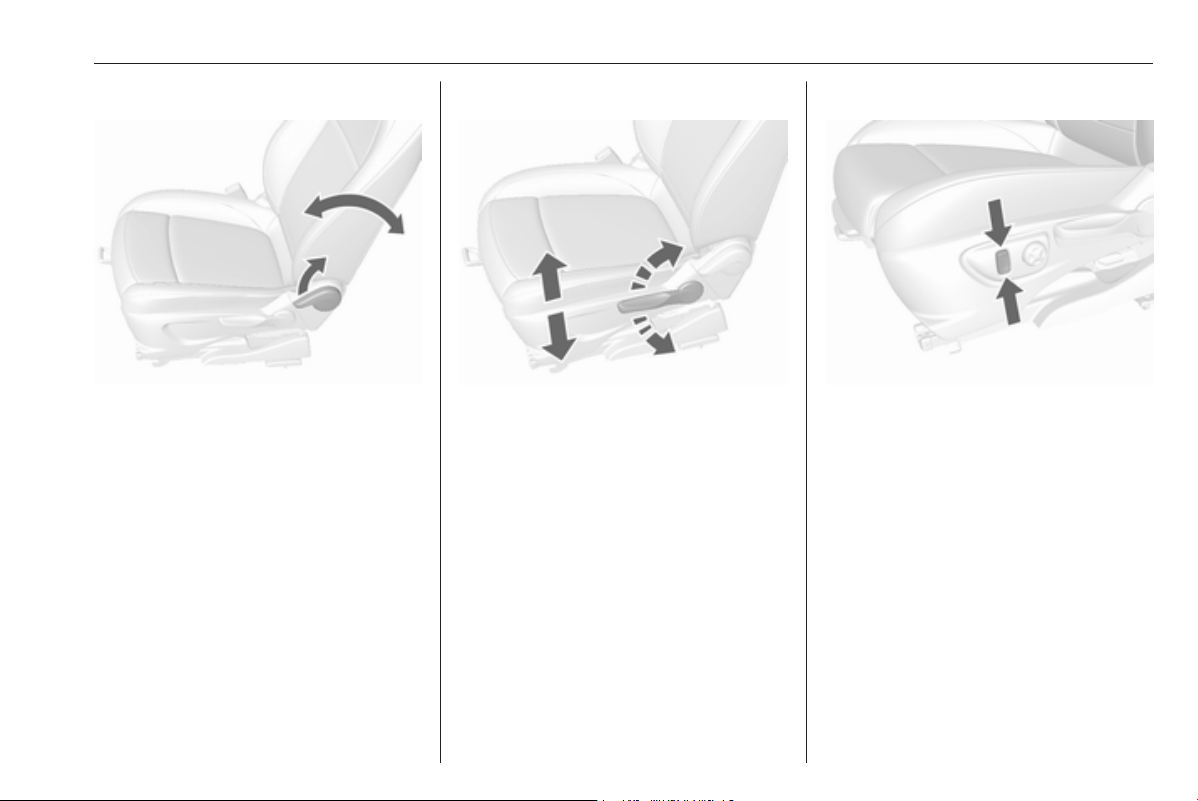
Backrest inclination
Pull lever, adjust inclination and
release lever. Allow the seat to
engage audibly.
Seat position 3 39.
Seat adjustment 3 40.
Seat height
Lever pumping motion
up : seat higher
down : seat lower
Seat position 3 39.
Seat adjustment 3 40.
Seat inclination
Press switch
top : front end higher
bottom : front end lower
Seat position 3 39.
Seat adjustment 3 40.
8 In brief
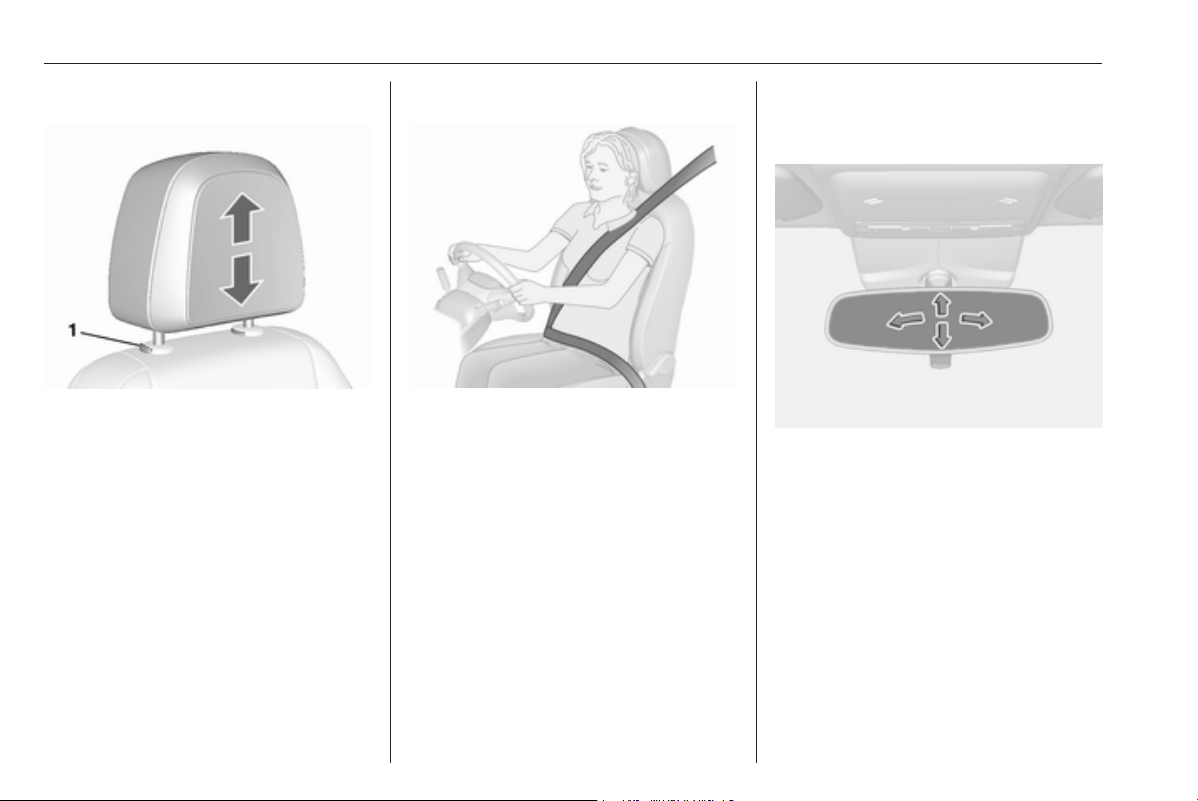
Head restraint adjustment
Pull the head restraint upwards.
Press the catch (1) to release and
push the head restraint downwards.
Head restraints 3 38.
Seat belt
Pull out the seat belt and fasten in belt
buckle. The seat belt must not be
twisted and must fit close against the
body. The backrest must not be tilted
back too far (maximum approx. 25°).
To unfasten belt, press red button on
belt buckle.
Seat position 3 39.
Seat belts 3 43.
Airbag system 3 46.
Mirror adjustment
Interior mirror
To adjust the mirror, move the mirror
housing in the desired direction.
Manual anti-dazzle interior mirror
3 33.
Automatic anti-dazzle interior mirror
3 34.
In brief 9
Exterior mirrors
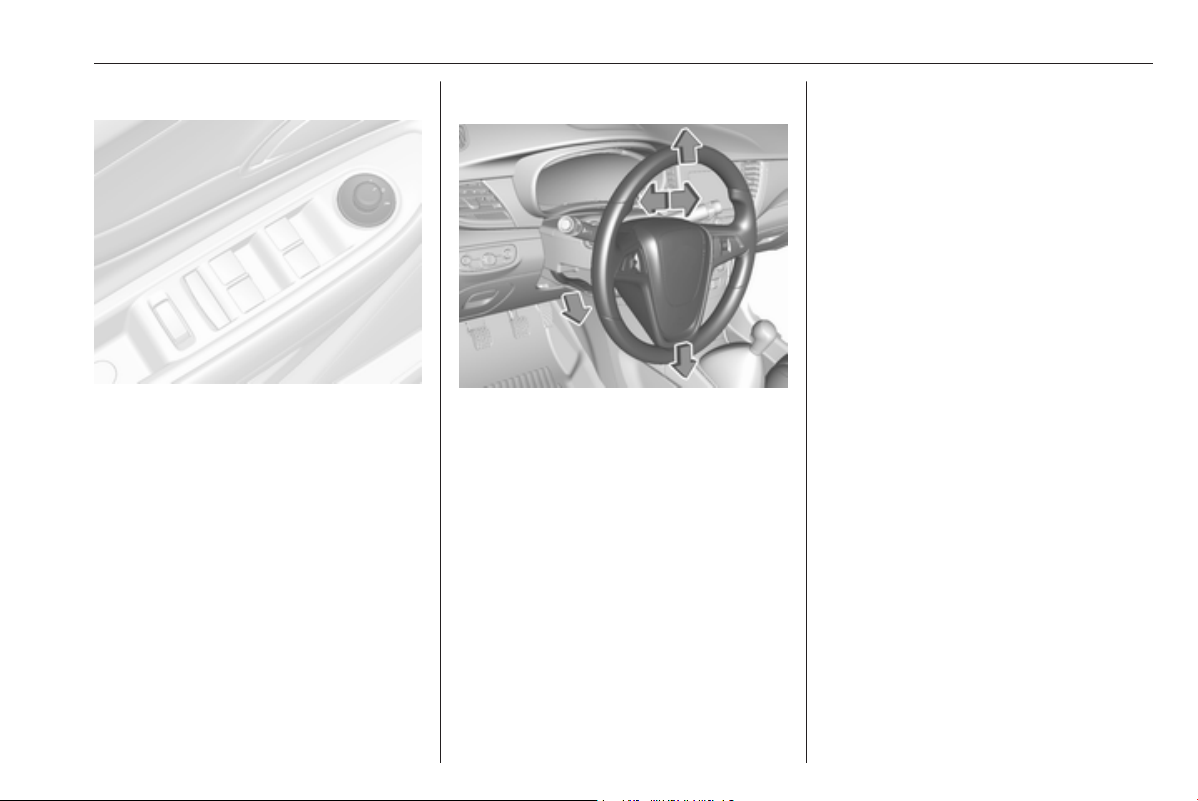
Select the relevant exterior mirror and
adjust it.
Convex exterior mirrors 3 32.
Electric adjustment 3 32.
Folding exterior mirrors 3 32.
Heated exterior mirrors 3 33.
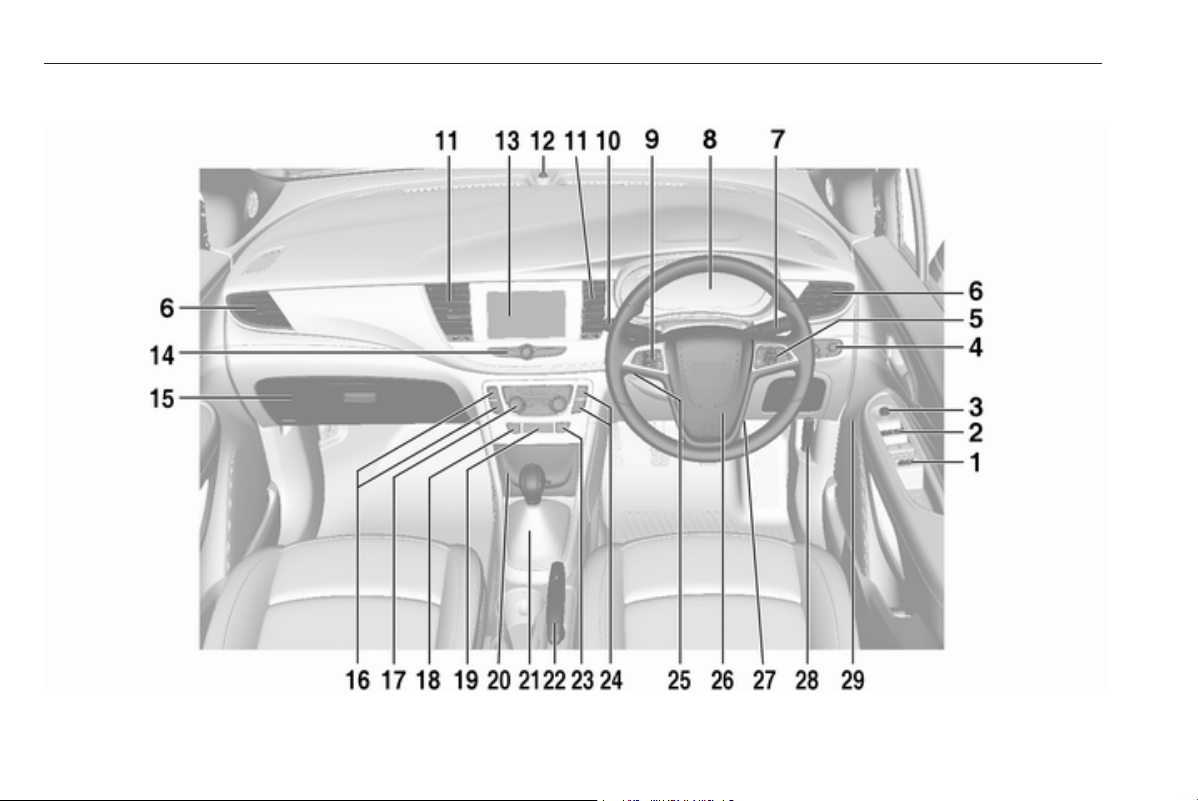
Steering wheel adjustment
Unlock the lever, adjust the steering
wheel, then engage the lever and
ensure it is fully locked.
Do not adjust the steering wheel
unless the vehicle is stationary and
the steering wheel lock has been
released.
Airbag system 3 46.
Ignition positions 3 129.
10 In brief
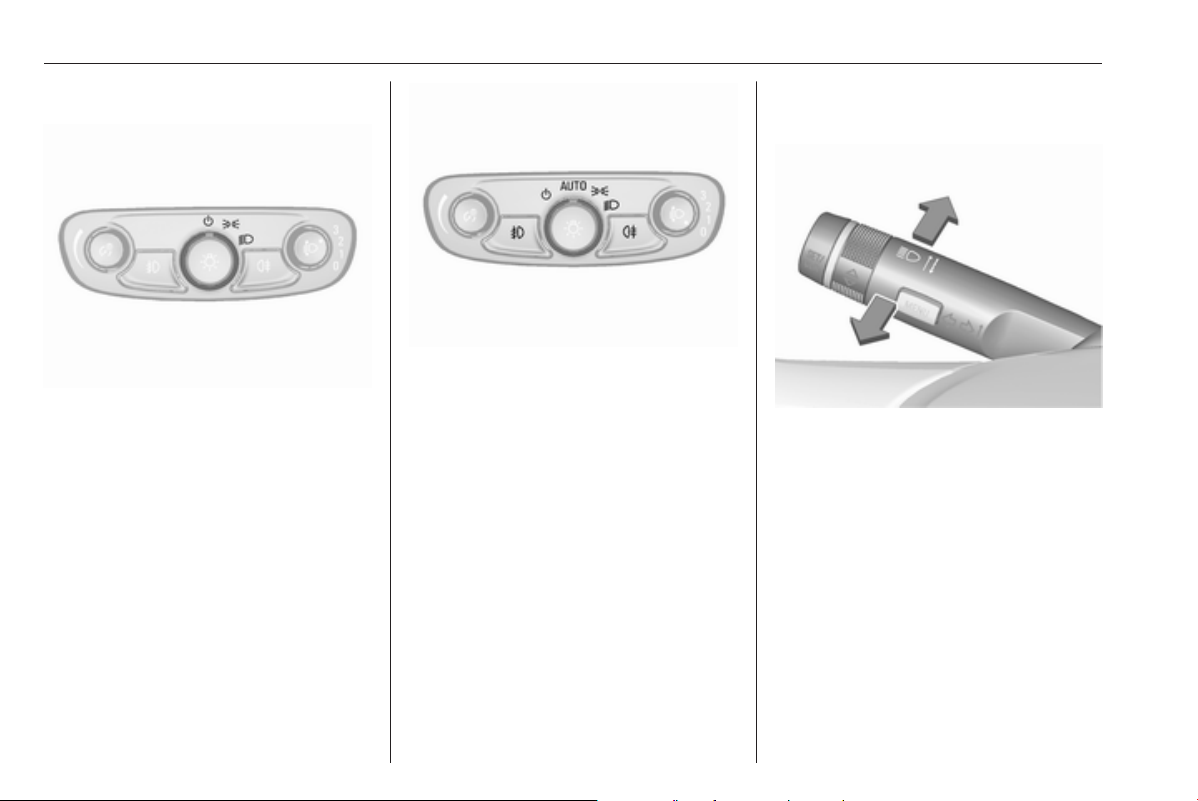
Instrument panel overview

In brief 11
1 Central locking system .......... 24
2 Power windows ..................... 34
3 Exterior mirrors ..................... 32
4 Light switch ......................... 110
5 Cruise control ...................... 149
Speed limiter ....................... 151
Forward collision alert ......... 152
6 Side air vents ...................... 125
7 Turn and lane-change
signals ................................. 117
Headlight flash .................... 112
Low beam and high beam ..111
Buttons for Driver
Information Centre ................ 96
8 Instruments ........................... 83
9 Steering wheel controls ....... 76
10 Windscreen wiper,
windscreen washer system ... 77
Rear window wiper, rear
window washer system ......... 79
11 Centre air vents ................... 125
12 Anti-theft alarm system
status LED ........................... 30
13 Info-Display ........................ 101
14 Controls for Info-Display
operation ............................. 101
15 Glovebox .............................. 58
16 Descent control system ......... 93
Fuel selector ......................... 85
Stop-start system ................ 133
17 Climate control system ........ 121
18 Electronic Stability Control
(ESC) .................................. 147
19 Control indicator for airbag
deactivation .......................... 92
20 Front storage ......................... 59
Power outlet .......................... 82
USB port, AUX input
21 Selector lever, manual
transmission ....................... 143
Selector lever, automatic
transmission ....................... 140
22 Parking brake ...................... 145
23 Hazard warning flashers .... 116
24 Parking assist ..................... 155
Lane departure warning ...... 162
25 Ignition switch with
steering wheel lock ............ 129
Power button ....................... 130
26 Horn ..................................... 77
Driver airbag ........................ 49
27 Steering wheel adjustment ..76
28 Bonnet release lever .......... 176
29 Front storage ......................... 59
Fuse box ............................ 189
12 In brief
Exterior lighting
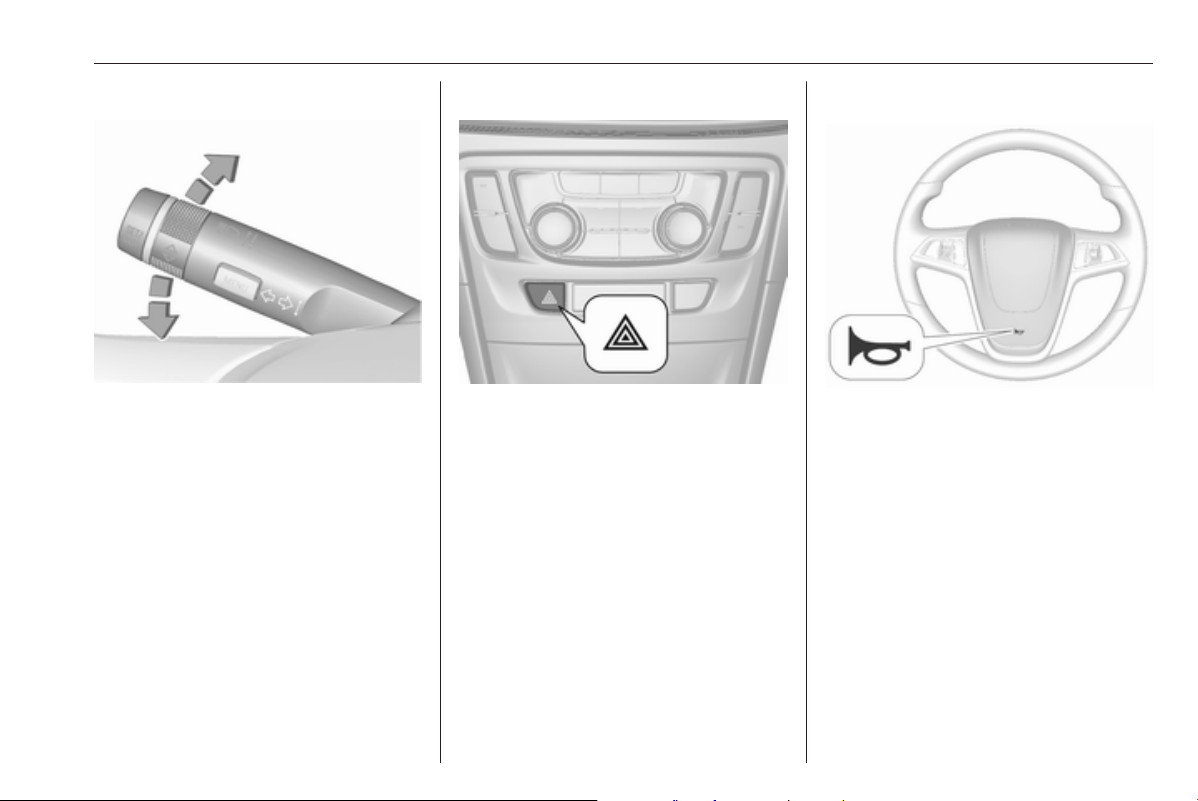
Turn light switch:
m
: lights off
8
: sidelights
9
: low beam
Automatic light control
AUTO : automatic light control:
exterior lighting is switched
on and off automatically
m
: activation or deactivation of
the automatic light control
8
: sidelights
9
: low beam
Fog lights
Press light switch:
>
: front fog lights
ø
: rear fog light
Lighting 3 110.
Headlight flash, high beam and
low beam
headlight flash : pull lever
high beam : push lever
low beam : push or pull lever
Automatic light control 3 111.
High beam 3 111.
Headlight flash 3 112.
Adaptive forward lighting 3 114.
14 In brief
Washer and wiper systems
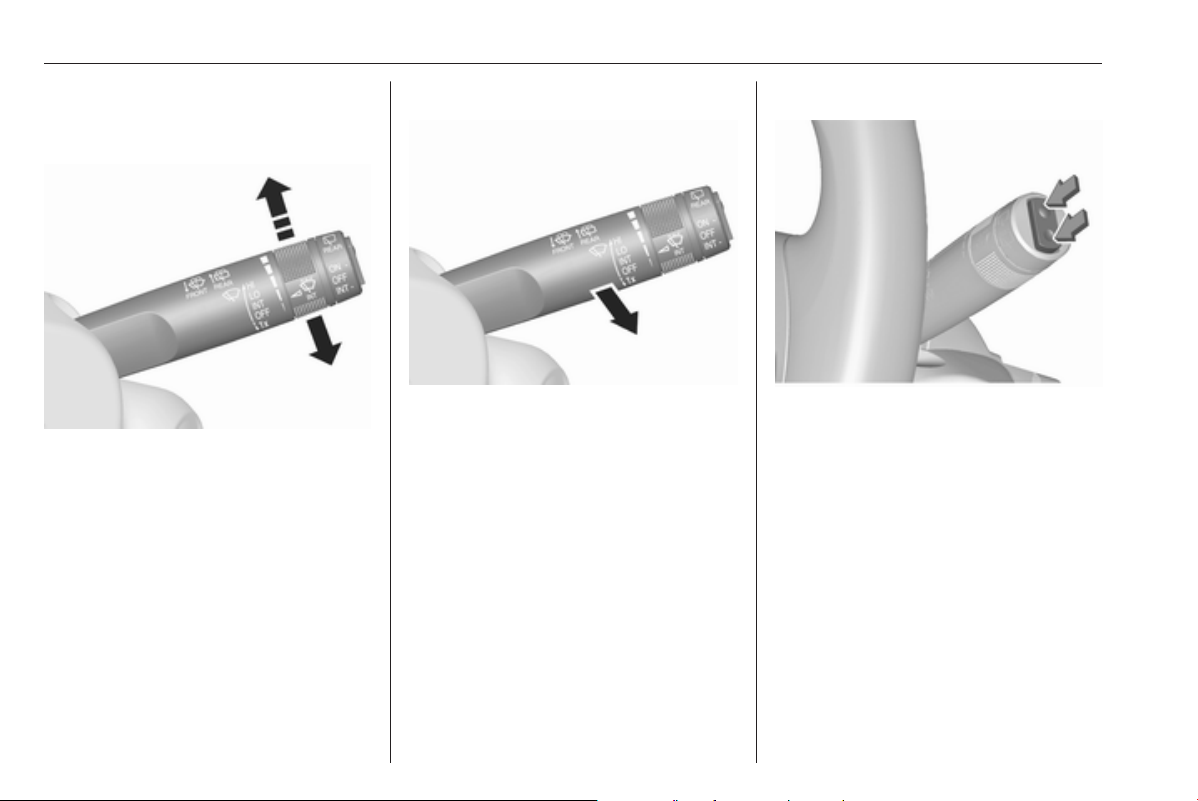
Windscreen wiper
HI : fast
LO : slow
INT : interval wiping or automatic
wiping with rain sensor
OFF : off
For a single wipe when the
windscreen wiper is off, press the
lever down to position 1x.
Windscreen wiper 3 77.
Wiper blade replacement 3 181.
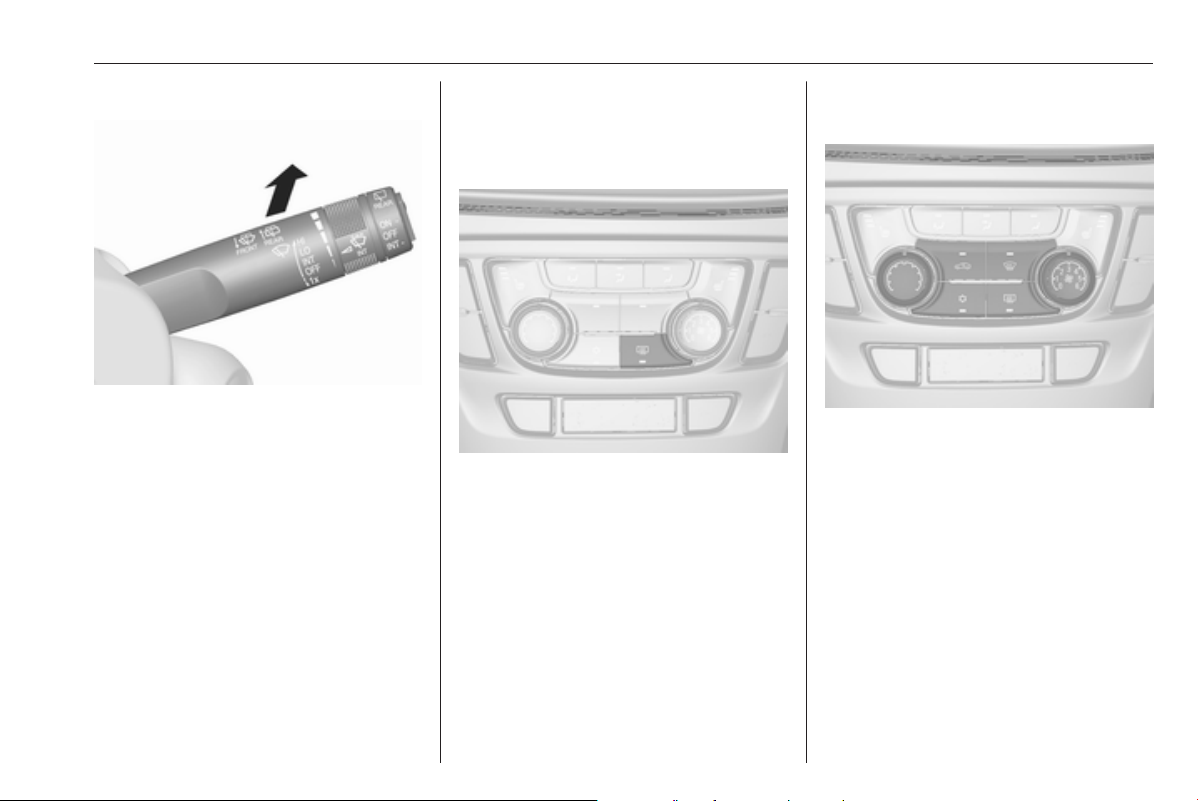
Windscreen washer system
Pull lever.
Windscreen washer system 3 77.
Washer fluid 3 179.
Rear window wiper
Press the rocker switch to activate the
rear window wiper:
upper switch : continuous
operation
lower switch : intermittent
operation
middle position : off
In brief 15
Rear window washer
Push lever.
Washer fluid is sprayed on the rear
window and the wiper wipes a few
times.
Rear window wiper / washer 3 79.
Climate control
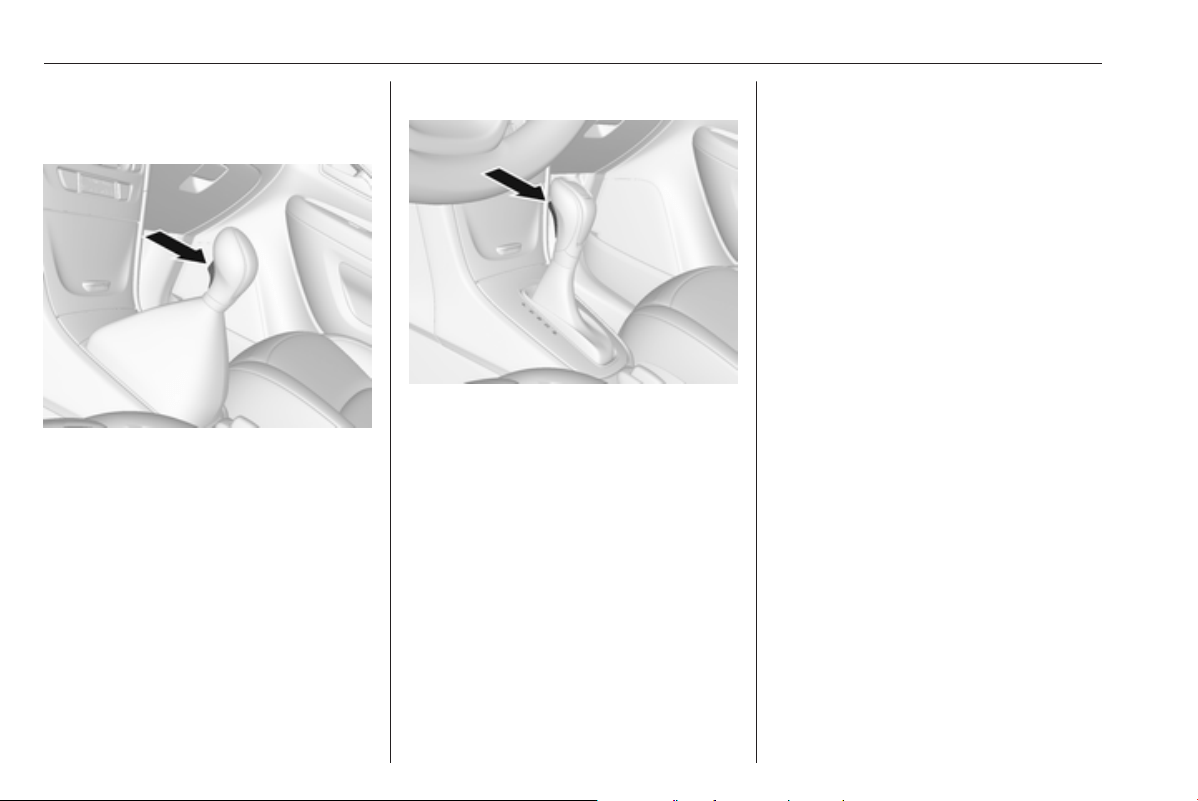
Heated rear window, heated
exterior mirrors
The heating is operated by pressing
Ü.
Heated rear window 3 36.
Demisting and defrosting the
windows
Press V.
Set the temperature control to the
highest level.
Heated rear window Ü on.
Climate control systems 3 121.
16 In brief
Transmission
Manual transmission
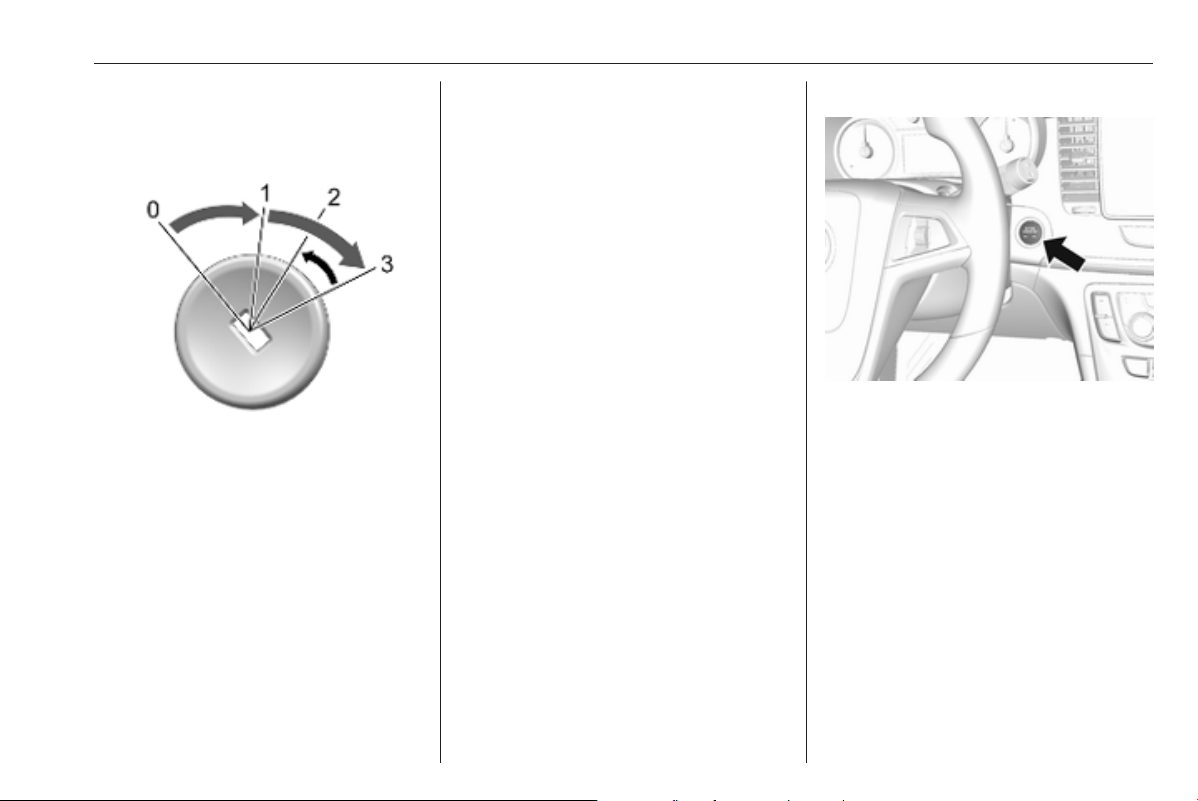
Reverse: with the vehicle stationary,
depress clutch pedal, press the
release button on the selector lever
and engage the gear.
If the gear does not engage, set the
lever to neutral, release the clutch
pedal and depress again, then repeat
gear selection.
Manual transmission 3 143.
Automatic transmission
P : park
R : reverse
N : neutral
D : drive
Manual mode: Move selector lever to
M.
<
: higher gear
]
: lower gear
The selector lever can only be moved
out of P when the ignition is on and
the brake pedal is applied. To engage
P or R, press the release button.
Automatic transmission 3 140.
Starting off
Check before starting off
● Tyre pressure and condition
3 194, 3 229.
● Engine oil level and fluid levels
3 177.
● All windows, mirrors, exterior
lighting and number plates are
free from dirt, snow and ice and
are operational.
● Proper position of mirrors, seats,
and seat belts 3 32, 3 39,
3 44.
● Brake function at low speed,
particularly if the brakes are wet.
In brief 17
Starting the engine
Ignition switch
● Turn key to position 2.
● Move the steering wheel slightly
to release the steering wheel
lock.
● Manual transmission: operate
clutch and brake pedal.
● Automatic transmission: operate
brake pedal and move selector
lever to P or N.
● Do not operate accelerator pedal.
● Diesel engines: wait until control
indicator ! for preheating
extinguishes.
● Turn key to position 3 and
release.
To turn the key back from position 2
to 1 or 0, first push the key all the way
in towards the steering column.
Power button
● Press Engine Start/Stop for a few
seconds until green LED
illuminates.
● Move the steering wheel slightly
to release the steering wheel
lock.
● Manual transmission: operate
clutch and brake pedal.
● Automatic transmission: operate
brake pedal and move selector
lever to P or N.
● Do not operate accelerator pedal.
● Press Engine Start/Stop and
release.
18 In brief
Stop-start system
If the vehicle is at a low speed or at a
standstill and certain conditions are
fulfilled, activate an Autostop as
follows:
● Depress the clutch pedal.
● Shift the selector lever to N.
● Release the clutch pedal.
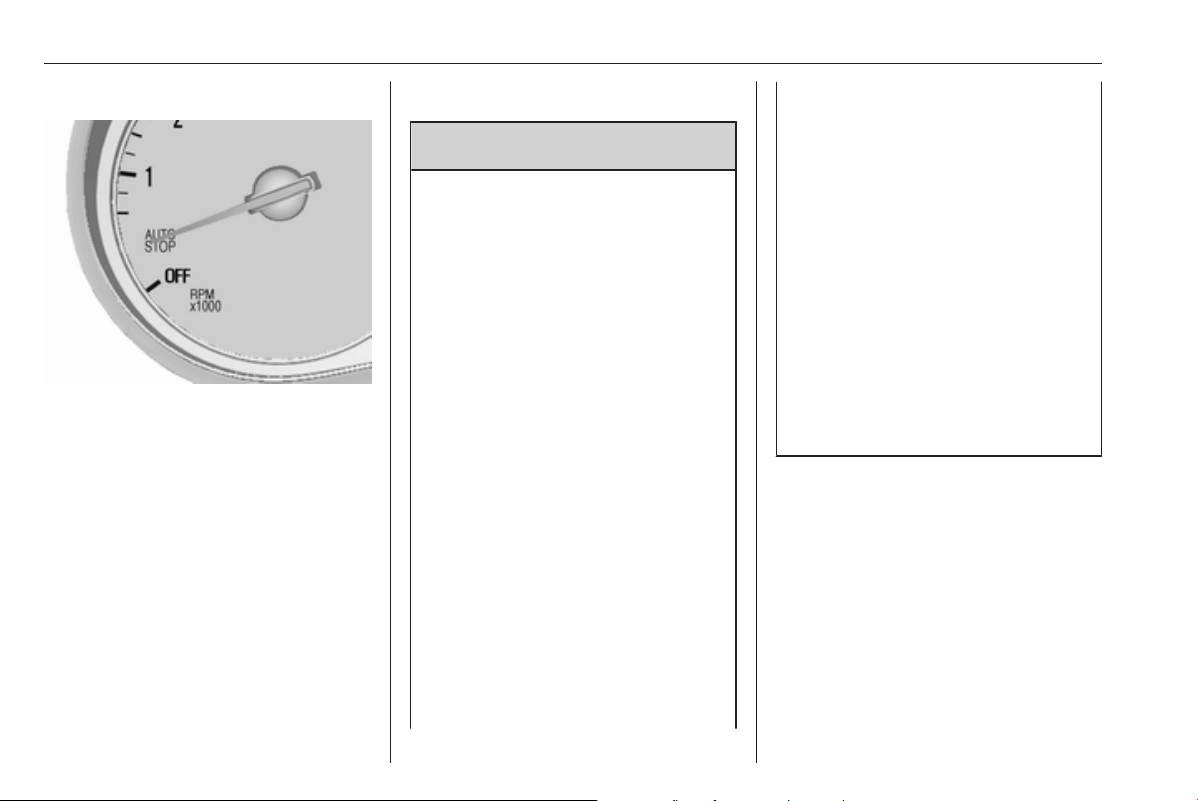
An Autostop is indicated by the
needle at the AUTOSTOP position in
the tachometer.
To restart the engine, depress the
clutch pedal again.
Stop-start system 3 133.
Parking
9 Warning
● Do not park the vehicle on an
easily ignitable surface. The
high temperature of the
exhaust system could ignite the
surface.
● Always apply the parking
brake. Activate the parking
brake without pressing the
release button. Apply as firmly
as possible on a downhill slope
or uphill slope. Depress brake
pedal at the same time to
reduce operating force.
● Switch off the engine.
● If the vehicle is on a level
surface or uphill slope, engage
first gear or set the selector
lever to position P before
removing the ignition key. On
an uphill slope, turn the front
wheels away from the kerb.
If the vehicle is on a downhill
slope, engage reverse gear or
set the selector lever to position
P before removing the ignition
key. Turn the front wheels
towards the kerb.
● Close the windows and the
sunroof.
● Remove the ignition key from
the ignition switch. For vehicles
with automatic transmission,
the key can only be removed
when the selector lever is in
position P.
Turn the steering wheel until
the steering wheel lock is felt to
engage.
●
Lock the vehicle with e on the
radio remote control.
Activate the anti-theft alarm
system 3 30.
● The engine cooling fans may run
after the engine has been
switched off 3 176.


20 Keys, doors and windows
Keys, doors and
windows
Keys, locks ................................... 20
Keys .......................................... 20
Radio remote control ................. 21
Electronic key system ................ 22
Memorised settings ................... 24
Central locking system .............. 24
Delayed locking ......................... 27
Automatic locking ...................... 28
Child locks ................................. 29
Doors ........................................... 29
Load compartment .................... 29
Vehicle security ............................ 30
Anti-theft locking system ........... 30
Anti-theft alarm system .............. 30
Immobiliser ................................ 31
Exterior mirrors ............................ 32
Convex shape ........................... 32
Electric adjustment .................... 32
Folding mirrors .......................... 32
Heated mirrors ........................... 33
Interior mirrors ............................. 33
Manual anti-dazzle .................... 33
Automatic anti-dazzle ................ 34
Windows ...................................... 34
Windscreen ............................... 34
Manual windows ........................ 34
Power windows ......................... 34
Heated rear window .................. 36
Sun visors .................................. 36
Roof ............................................. 36
Sunroof ...................................... 36
Keys, locks
Keys
Caution
Do not attach heavy or bulky items
to the ignition key.
Replacement keys
The key number is specified on a
detachable tag.
The key number must be quoted
when ordering replacement keys as it
is a component of the immobiliser
system.
Locks 3 212.
Central locking 3 24.
Starting the engine 3 131.
Radio remote control 3 21.
Electronic key 3 22.
The code number of the adapter for
the locking wheel nuts is specified on
a card. It must be quoted when
ordering a replacement adapter.
Keys, doors and windows 21
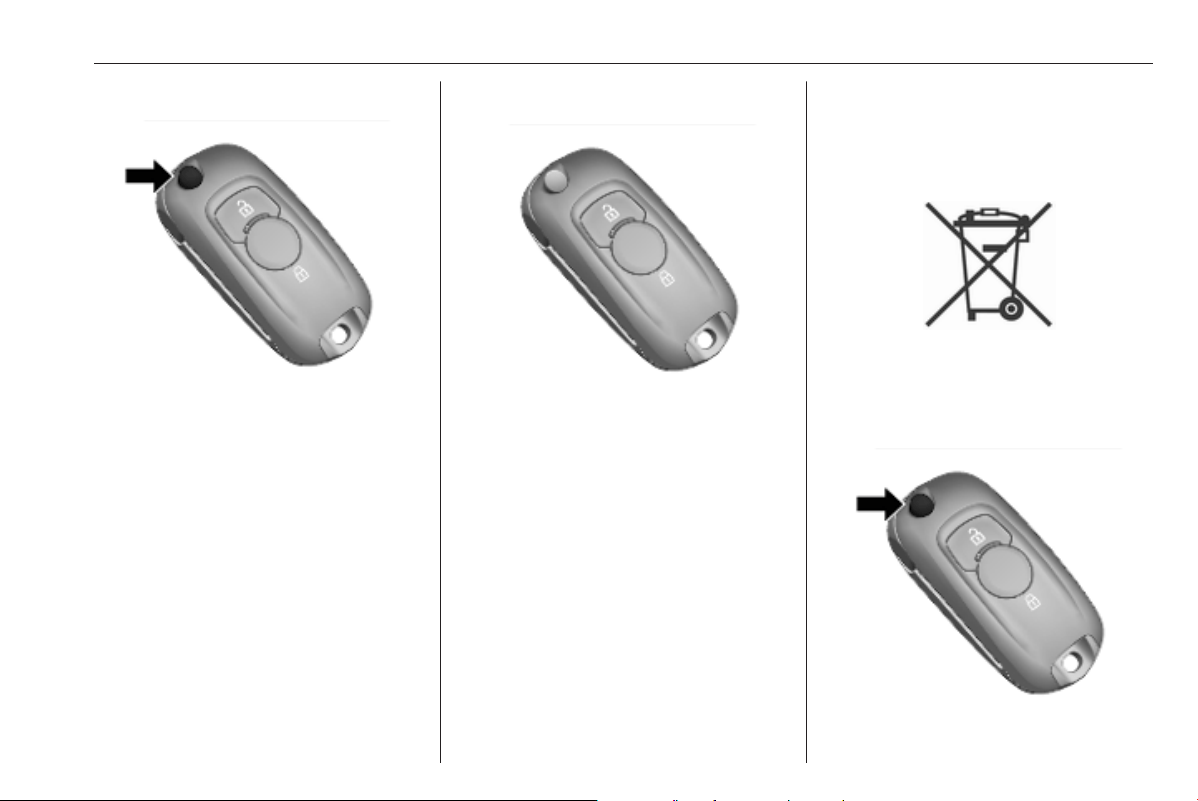
Key with foldaway key section
Press button to extend. To fold the
key, first press the button.
Lock cylinders
Designed to free-wheel if they are
forcefully rotated without the correct
key or if the correct key is not fully
inserted. To reset, turn cylinder with
the correct key until its slot is vertical,
remove key then re-insert it. If the
cylinder still free-wheels, turn the key
through 180° and repeat operation.
Radio remote control
Enables operation of the following
functions via the use of the remote
control buttons:
● central locking system 3 24
● anti-theft locking system 3 30
● anti-theft alarm system 3 30
The radio remote control has a range
of approx. 30 m. It can be restricted
by external influences. The hazard
warning flashers confirm operation.
Handle with care, protect from
moisture and high temperatures and
avoid unnecessary operation.
Radio remote control battery
replacement
Replace the battery as soon as the
range reduces.
Batteries do not belong in household
waste. They must be disposed of at
an appropriate recycling collection
point.
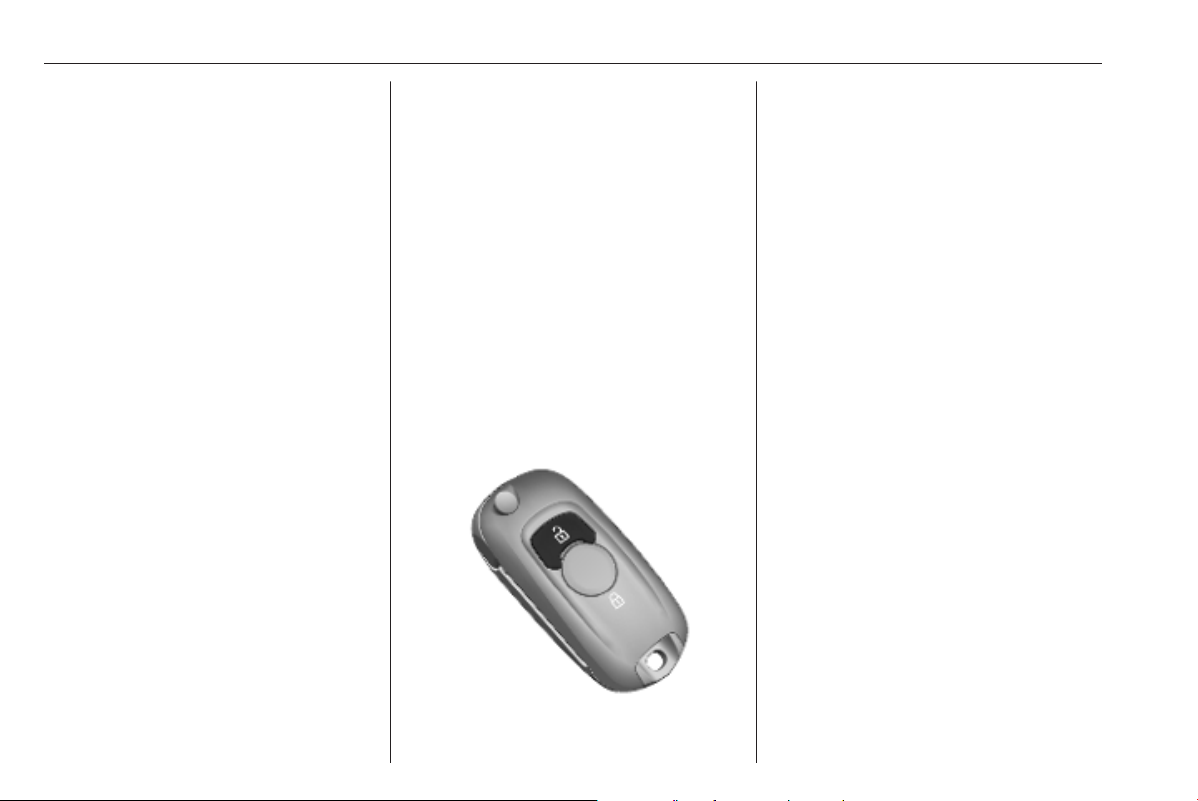
Press button to extend the key.
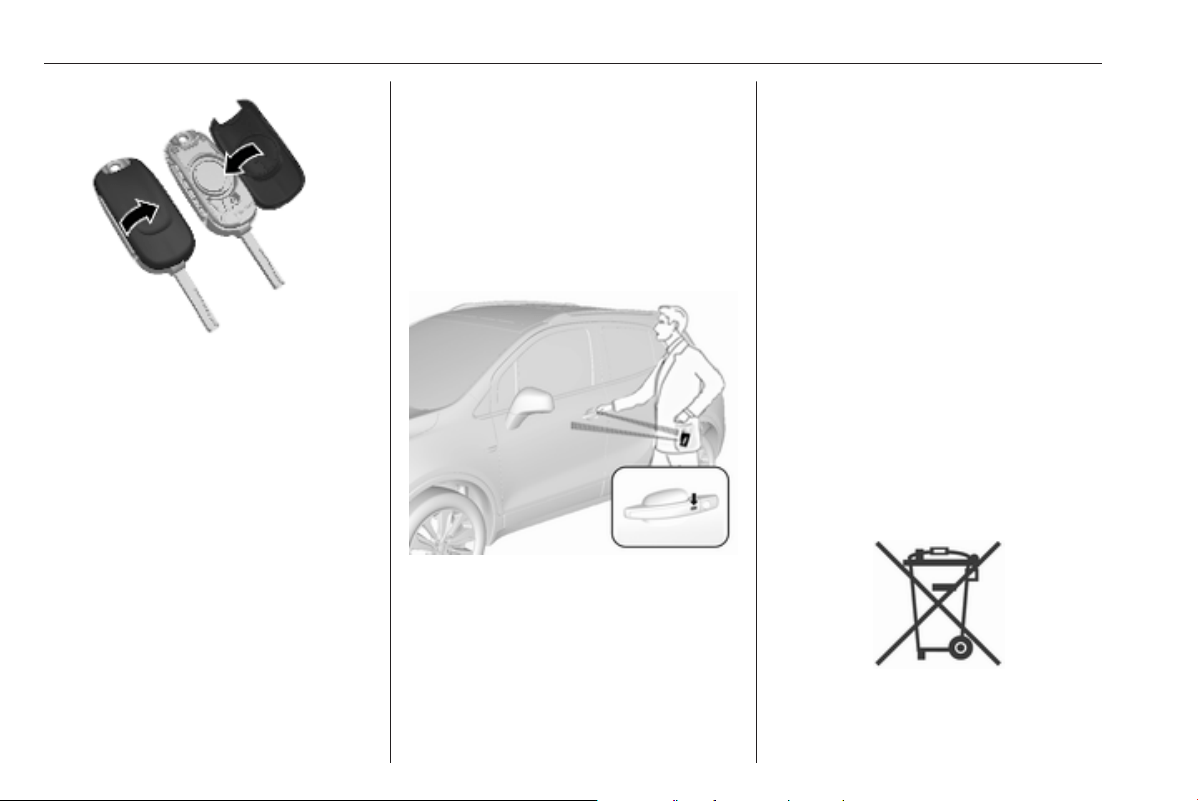
22 Keys, doors and windows
Open the unit. Replace the battery
(battery type CR 2032), paying
attention to the installation position.
Close the unit and synchronise.
Fault
If the central locking system cannot
be operated with the radio remote
control, it may be due to the following:
● The range is exceeded.
● The battery voltage is too low.
● Frequent, repeated operation of
the radio remote control while not
in range, which will require re-
synchronisation.
● Overload of the central locking
system by operating at frequent
intervals, the power supply is
interrupted for a short time.
● Interference from higher-power
radio waves from other sources.
Electronic key system
Enables a keyless operation of the
following functions:
● central locking system 3 24
● starting the engine 3 131
The electronic key simply needs to be
on the driver's person.
Additionally, the electronic key
includes the functionality of the radio
remote control 3 21.
Handle with care, protect from
moisture and high temperatures and
avoid unnecessary operation.
Notice
Do not put the electronic key into the
load compartment or in front of the
Info Display.
Replacing battery in electronic
key
Replace the battery as soon as the
system no longer operates properly
or the range is reduced. The need for
battery replacement is indicated by a
message in the Driver Information
Centre 3 103.
Keys, doors and windows 23
Batteries do not belong in household
waste. They must be disposed of at
an appropriate recycling collection
point.
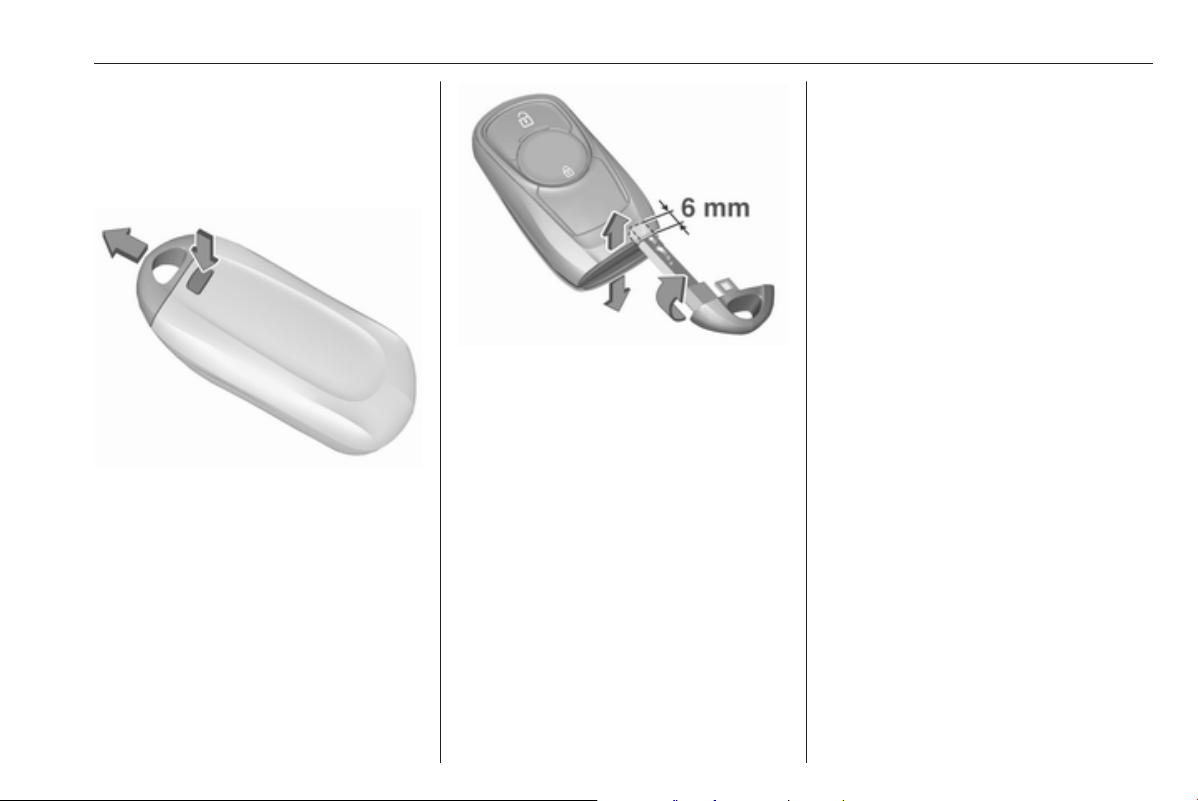
To replace:
1. Press button at the back of the
electronic key unit and extract the
key blade from the housing.
2. Insert the key blade approx. 6 mm
into the housing and turn the key
to open the housing. Further
insertion of the key blade can
damage the housing.
3. Remove and replace battery. Use
CR 2032 or equivalent battery.
Pay attention to the installation
position.
4. Close the housing and insert key
blade.
Batteries do not belong in household
waste. They must be disposed of at
an appropriate recycling collection
point.
Electronic key synchronisation
The electronic key synchronises itself
automatically during every starting
procedure.
Fault
If the central locking cannot be
operated or the engine cannot be
started, the cause may be one of the
following:
● Fault in electronic key.
● Electronic key is out of reception
range.
● The battery voltage is too low.
● Overload of the central locking
system by operating at frequent
intervals, the power supply is
interrupted for a short time.
● Interference from higher-power
radio waves from other sources.
To rectify the cause of the fault,
change the position of the electronic
key.
Manual unlocking 3 24.
24 Keys, doors and windows
Memorised settings
Whenever the ignition is switched off,
some functions of the following
settings may be automatically
memorised by the remote control unit
or the electronic key:
● lighting
● Infotainment system
● central locking system
● comfort settings
A precondition is that Personalization
by driver is activated in the personal
settings of the Info Display. This must
be set for each remote control unit or
electronic key which is used.
Vehicle personalisation 3 105.
Central locking system
Unlocks and locks doors, load
compartment and fuel filler flap.
A pull on an interior door handle
unlocks the respective door. Pulling
the handle again opens the door.
Notice
In the event of an accident in which
airbags or belt pretensioners are
deployed, the vehicle is
automatically unlocked.
Notice
A short time after unlocking with the
remote control the doors are locked
automatically if no door has been
opened. A precondition is that the
setting is activated in the vehicle
personalisation 3 105.
Remote control operation
Unlocking
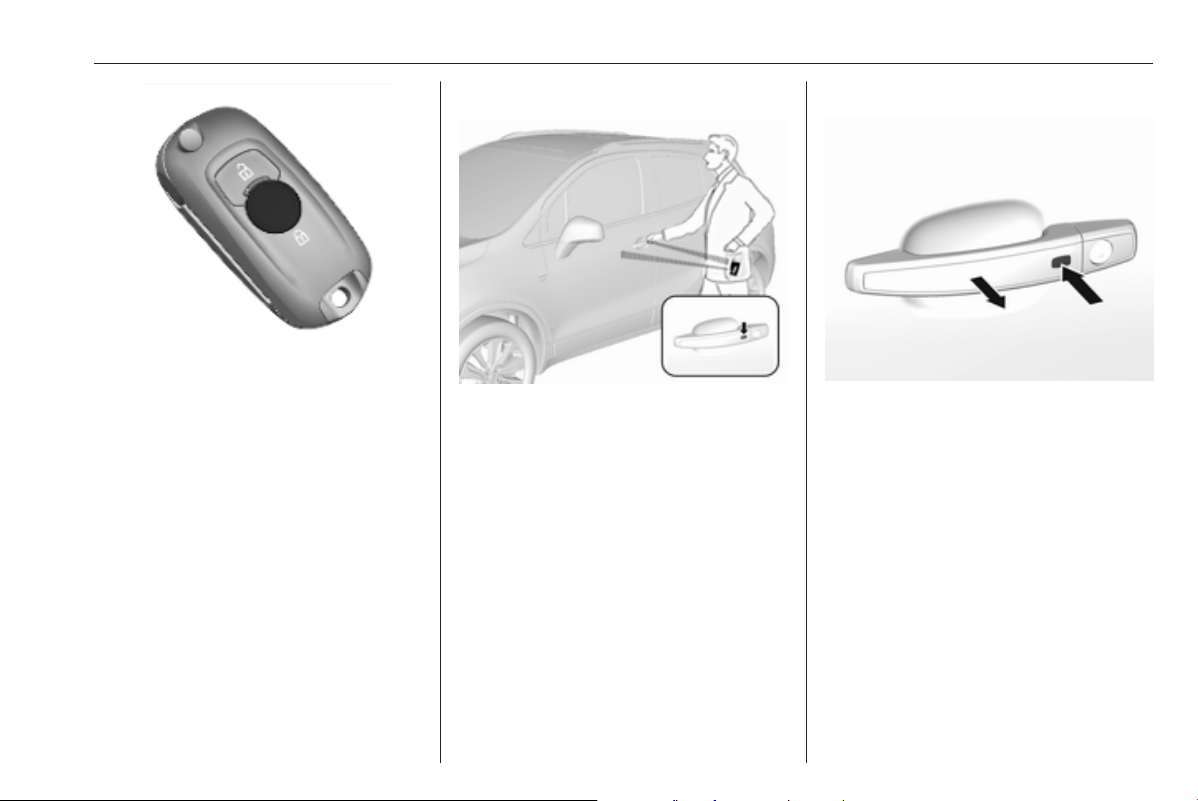
Press c.
Unlocking mode can be set in the
vehicle personalisation menu in the
Info Display. Two settings are
selectable:
● All doors, load compartment and
fuel filler flap will be unlocked by
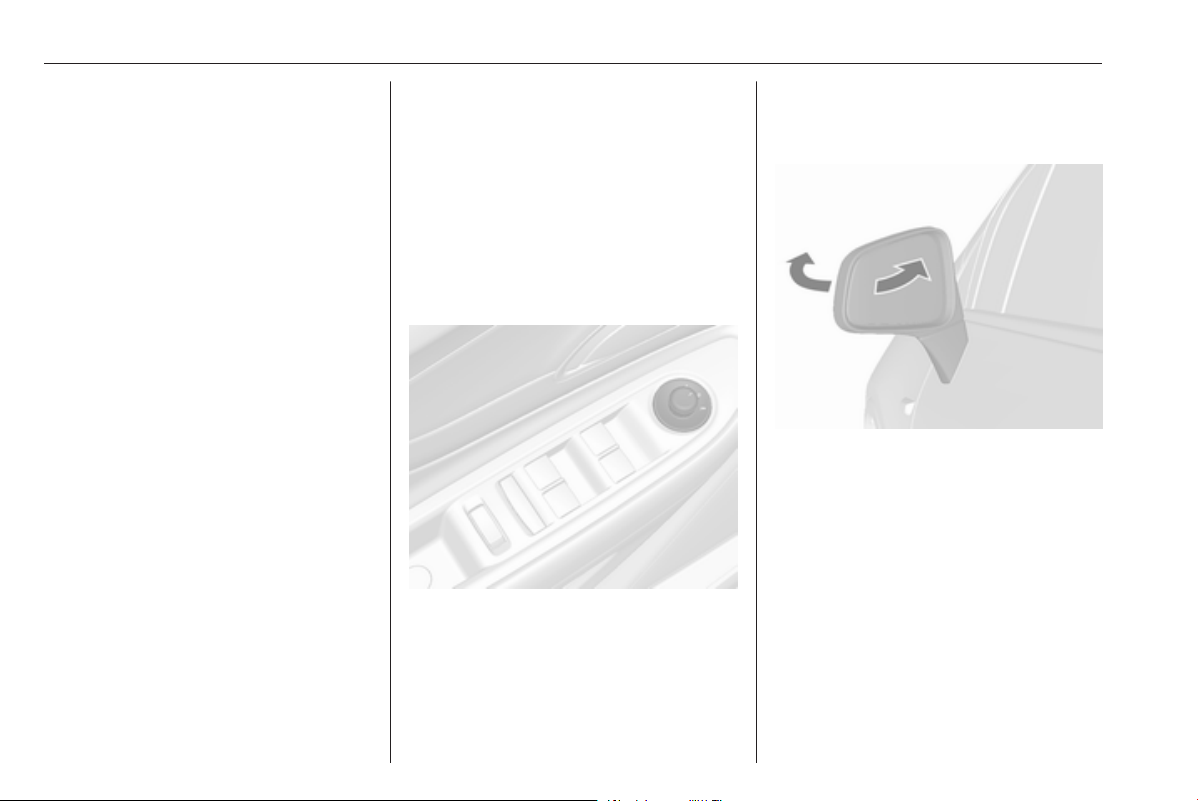
pressing c once.
● Only the driver's door and fuel
filler flap will be unlocked by
pressing c once. To unlock all
doors and load compartment,
press c twice.
Select the relevant setting in the
settings menu in the Info Display.
Vehicle personalisation 3 105.
The setting can be saved for the
remote control being used.
Memorised settings 3 24.
Locking
Close doors, load compartment and
fuel filler flap.
Keys, doors and windows 25
Press e.
If the driver's door is not closed
properly, the central locking system
will not work.
Confirmation
Operation of the central locking
system is confirmed by the hazard
warning flashers. A precondition is
that the setting is activated in the
vehicle personalisation 3 105.
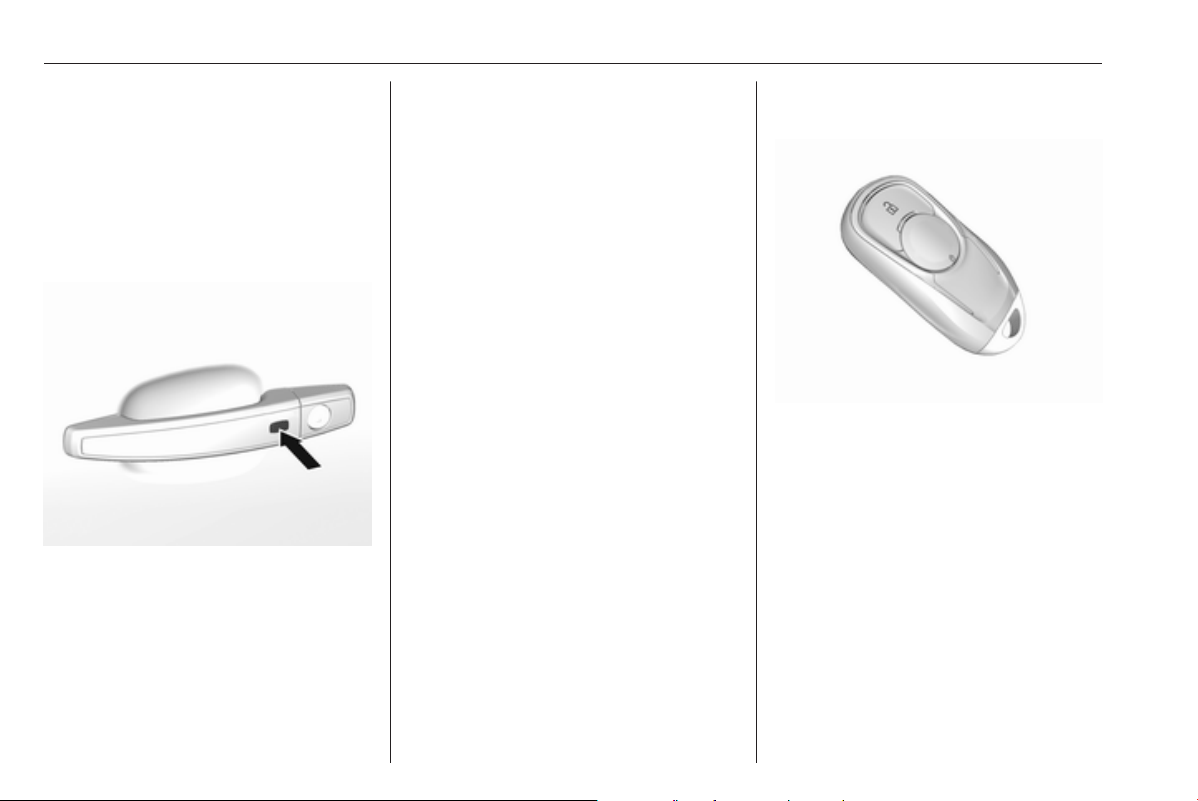
Electronic key system operation
The electronic key must be outside
the vehicle, within a range of approx.
1 m of the relevant door side.
Unlocking
Press the button on the respective
exterior door handle and pull the
handle.
Unlocking mode can be set in the
vehicle personalisation menu in the
Info Display. Two settings are
selectable:
● All doors, load compartment and
fuel filler flap will be unlocked by
pressing the button on any
exterior handle once.
● Only the driver's door and fuel
filler flap will be unlocked by
pressing the button on the
driver's door exterior handle
26 Keys, doors and windows
once. To unlock all doors and
load compartment, press button
twice.
The setting can be changed in the
settings menu in the Info Display.
Vehicle personalisation 3 105.
Locking
Press the button on any exterior door
handle.
All doors, load compartment and fuel
filler flap will be locked.
The system locks if any of the
following occurs:
● It has been more than
five seconds since unlocking.
● The button on an exterior handle
has been pressed twice within
five seconds to unlock the
vehicle.
● Any door has been opened and
all doors are now closed.
If the driver's door is not closed
properly, the electronic key remains in
the vehicle or the ignition is still on,
locking will not be permitted.
If there have been two or more
electronic keys in the vehicle and the
ignition was on once, the doors will be
locked even if just one electronic key
is taken out of the vehicle.
Unlocking and opening the tailgate
The tailgate and the doors can be
unlocked by pressing the button
under the tailgate moulding when the
electronic key is in range.
Operation with buttons on the
electronic key
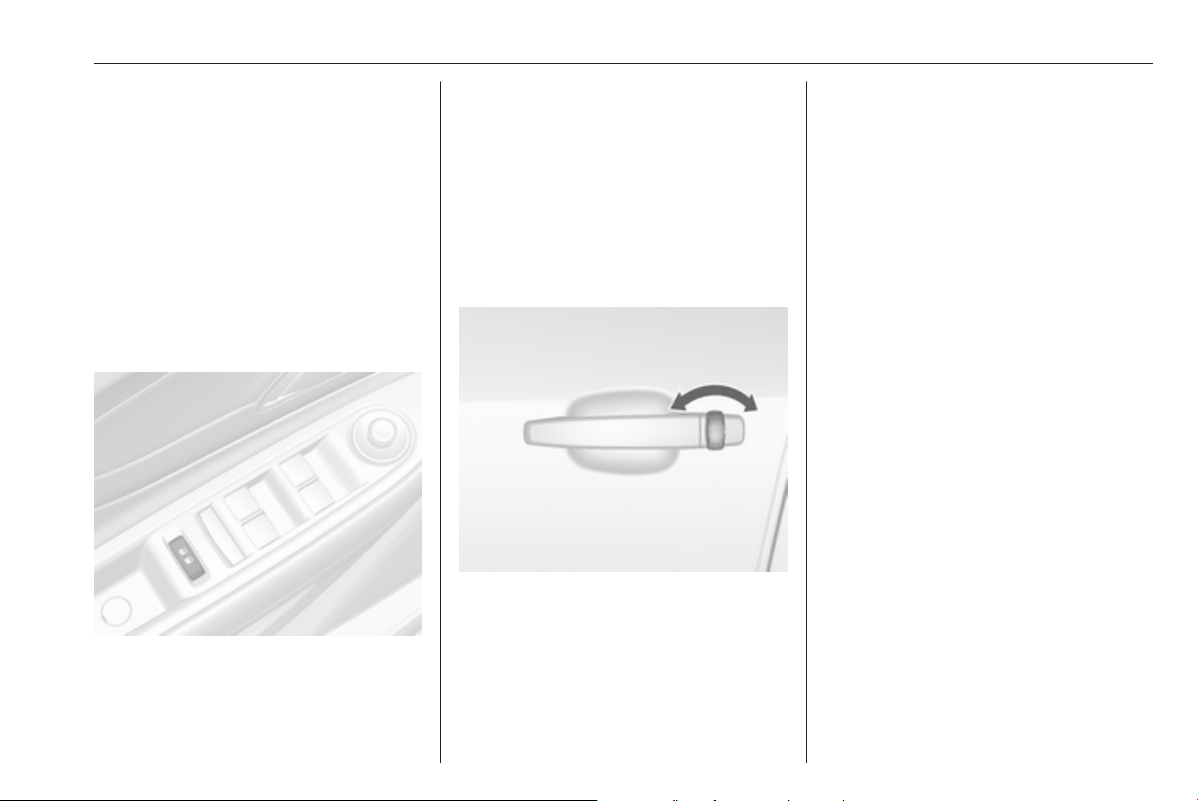
The central locking system can also
be operated with the buttons on the
electronic key.
Press c to unlock.
Press e to lock.
Remote control operation 3 24.
Passive locking
Automatic locking 3 28.
Keys, doors and windows 27
Confirmation
Operation of central locking system is
confirmed by the hazard warning
flashers. A precondition is that the
setting is activated in the vehicle
personalisation 3 105.
Central locking buttons
Locks or unlocks all doors, the load
compartment and fuel filler flap from
the passenger compartment via a
switch in the driver's door panel.
Press e to lock.
Press c to unlock.
Operation with the key in case of
a central locking system fault
In case of a fault, e.g. vehicle battery
or remote control / electronic key
battery is discharged, the driver's
door can be locked or unlocked with
the mechanical key.
Manual unlocking
Manually unlock the driver's door by
inserting and turning the key in the
lock cylinder.
The other doors can be opened by
pulling the interior handle twice or by
pressing c in the driver's door panel.
The load compartment and fuel filler
flap will possibly not be unlocked.
By switching on the ignition, the anti-
theft locking system is deactivated.
Manual locking
Push inside locking knob of all doors
except driver's door or press e in the
driver's door panel. Then close the
driver's door and lock it from the
outside by turning the key in the lock
cylinder. The fuel filler flap and
tailgate are possibly not locked.
Delayed locking
This feature will delay the actual
locking of the doors and arming of the
anti-theft alarm system for
five seconds when the power door
lock switch or radio remote control is
used to lock the vehicle.
This can be changed in the vehicle
settings.
Vehicle personalisation 3 105.

28 Keys, doors and windows
ON: When pressing the central
locking button, three chimes will
sound to signal delayed locking is
activated.
The doors will not lock until
five seconds after the last door is
closed. You can temporarily override
delayed locking by pressing the
central locking button or the locking
button on the radio remote control.
OFF: The doors will lock immediately
when pressing the power lock switch
or e on the radio remote control.
Automatic locking
Automatic locking after driving off
This security feature can be
configured to automatically lock all
doors, load compartment and fuel
filler flap after driving off and
exceeding a certain speed.
When at a standstill after driving, the
vehicle will be unlocked automatically
as soon as the key is removed from
the ignition switch, or with electronic
key system when the ignition is
switched off.
Activation or deactivation of
automatic locking can be set in the
settings menu in the Info Display.
Info Display 3 101.
Vehicle personalisation 3 105.
The setting can be saved for the
remote control or electronic key being
used 3 24.
Automatic relock after unlocking
This feature can be configured to
automatically lock all doors, load
compartment and fuel filler flap a
short time after unlocking with the
remote control or electronic key,
provided no door has been opened.
Activation or deactivation of
automatic relock can be set in the
settings menu in the Info Display.
Info Display 3 101.
Vehicle personalisation 3 105.
The setting can be saved for the
remote control or electronic key being
used 3 24.
Passive locking
On vehicles with electronic key
system, this feature locks the vehicle
automatically after several seconds if
an electronic key has been
recognised previously inside the
vehicle, all doors have then been
closed and the electronic key does
not remain within the vehicle.
If the electronic key remains in the
vehicle or the ignition is still on,
passive locking will not be permitted.
If there have been two or more
electronic keys in the vehicle and the
ignition was on once, the feature
locks the vehicle if just one electronic
key is taken out of the vehicle.
Passive locking can be disabled by
pressing c for a few seconds while
one door is open. It remains disabled
until e is pressed or the ignition is
switched on.
Activation or deactivation of passive
locking can be set in the settings
menu in the Info Display.
Info Display 3 101.
Vehicle personalisation 3 105.
Keys, doors and windows 29
The setting can be saved for the
electronic key being used 3 24.
Child locks
9 Warning
Use the child locks whenever
children are occupying the rear
seats.
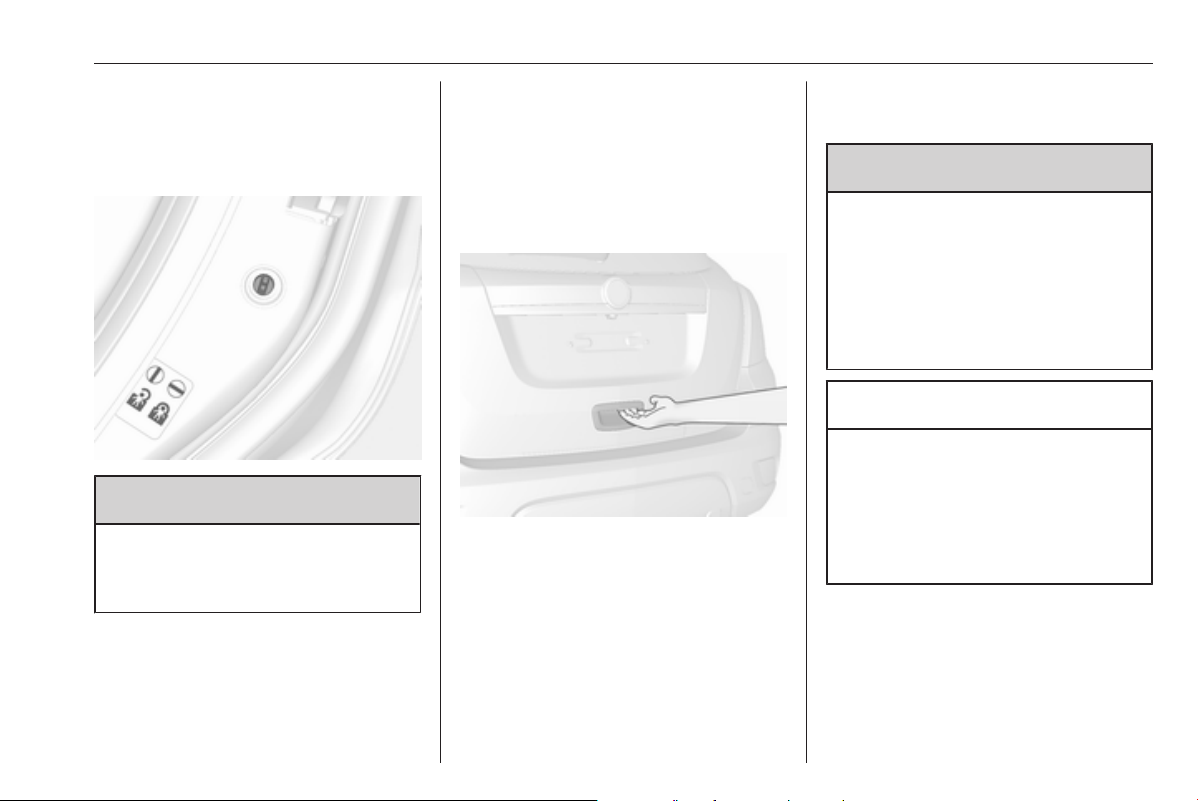
Using a key or suitable screwdriver,
turn the child lock in the rear door to
the horizontal position. The door
cannot be opened from the inside. For
deactivation turn the child lock to the
vertical position.
Doors
Load compartment
Tailgate
Opening
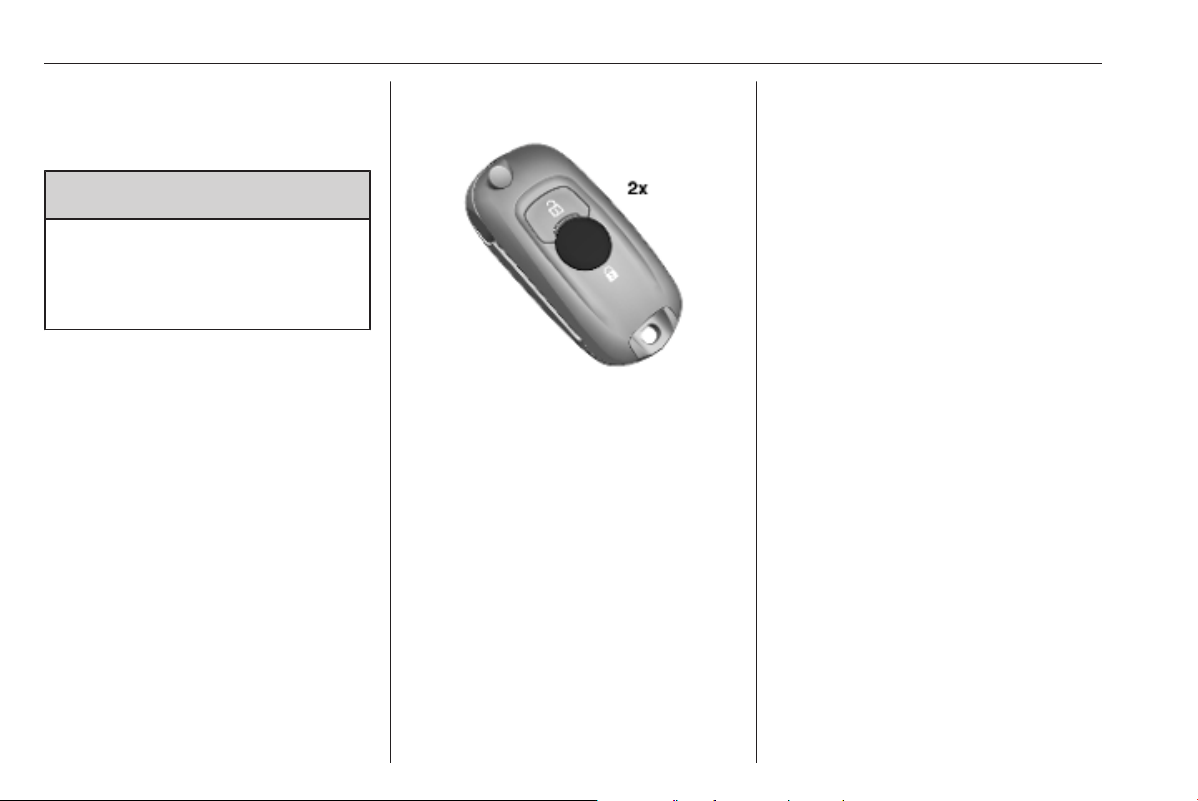
After unlocking, push the touchpad
switch and open the tailgate.
Closing
Use one of the interior handles.
Do not push the touchpad switch or
the brand emblem whilst closing as
this will unlock the tailgate again.
Central locking system 3 24.
General hints for operating
tailgate
9 Danger
Do not drive with the tailgate open
or ajar, e.g. when transporting
bulky objects, since toxic exhaust
gases, which cannot be seen or
smelled, could enter the vehicle.
This can cause unconsciousness
and even death.
Caution
Before opening the tailgate, check
overhead obstructions, e.g. a
garage door, to avoid damage to
the tailgate. Always check the
moving area above and behind the
tailgate.
Notice
The installation of certain heavy
accessories onto the tailgate may
affect its ability to remain open.
30 Keys, doors and windows
Vehicle security
Anti-theft locking system
9 Warning
Do not use the system if there are
people in the vehicle! The doors
cannot be unlocked from the
inside.
The system deadlocks all the doors.
All doors must be closed otherwise
the system cannot be activated.
Unlocking the vehicle disables the
mechanical anti-theft locking system.
This is not possible with the central
locking button.
Activating
Press e on the radio remote control
twice within five seconds.
Anti-theft alarm system
The anti-theft alarm system is
combined with the central locking
system.
It monitors:
● doors, load compartment, bonnet
● ignition
Unlocking the vehicle deactivates the
anti-theft alarm system.
Activation
All doors must be closed and the
electronic key of the electronic key
system must not remain in the
vehicle. Otherwise the system cannot
be activated.
● Radio remote control: self-
activated 30 seconds after
locking the vehicle by pressing e
once.
● Electronic key system: self-
activated 30 seconds after
locking the vehicle by pressing
the button on any exterior door
handle.
● Radio remote control or
electronic key: directly by
pressing e twice within
five seconds.
● Electronic key system with
passive locking enabled: briefly
activated after passive locking
occurs.
Keys, doors and windows 31
Notice
Changes to the vehicle interior, e.g.
the use of seat covers, and open
windows, could impair the function
of passenger compartment
monitoring.
Status LED
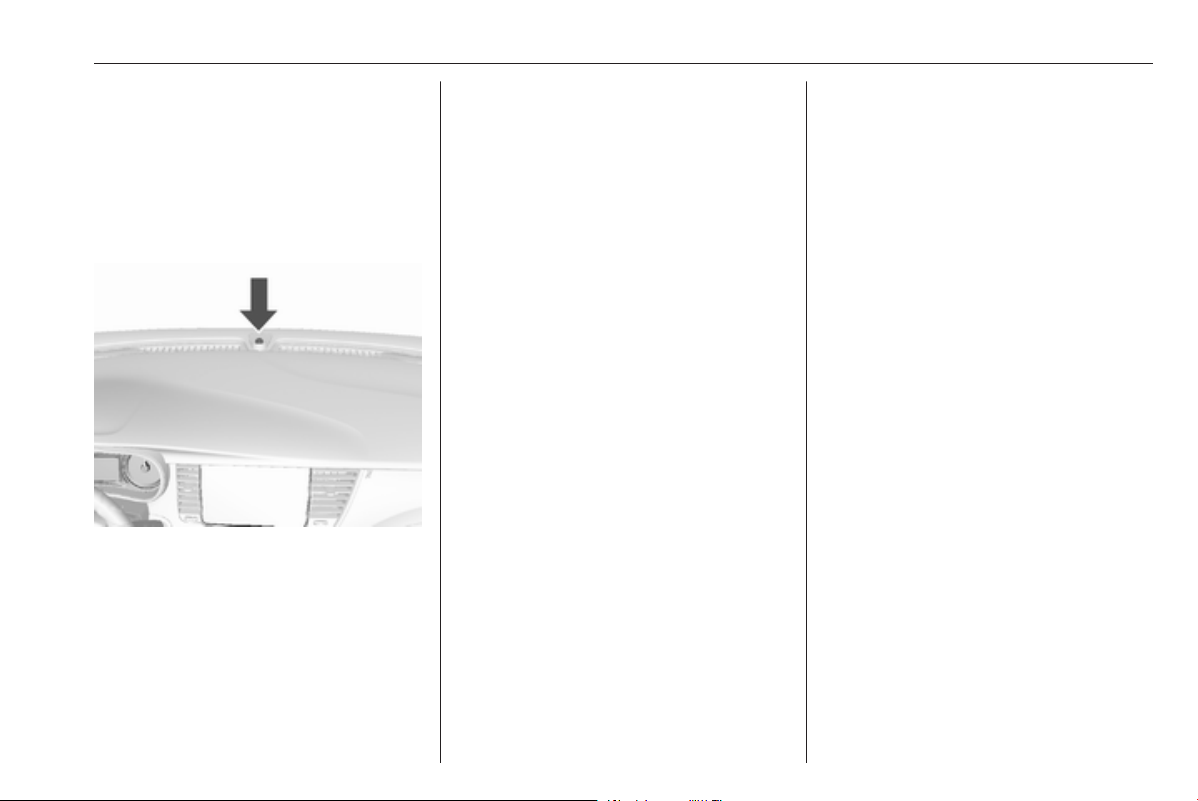
Status LED is integrated in the sensor
on top of the instrument panel.
Status during the first 30 seconds of
anti-theft alarm system activation:
LED illuminates : test, arming delay
LED flashes
quickly
: doors, tailgate or
bonnet not
completely closed,
or system fault
Status after system is armed:
LED flashes
slowly
: system is armed
Seek the assistance of a workshop in
the event of faults.
Deactivation
Radio remote control: Unlocking the
vehicle by pressing c deactivates the
anti-theft alarm system.
Electronic key system: Unlocking the
vehicle by pressing the button on any
exterior door handle deactivates the
anti-theft alarm system.
The electronic key must be outside
the vehicle, within a range of approx.
1 m of the relevant door side.
The system is not deactivated by
unlocking the driver's door with the
key or with the central locking button
in the passenger compartment.
Alarm
The alarm can be silenced by
pressing any button on the radio
remote control or by switching on the
ignition.
The anti-theft alarm system can be
deactivated by pressing e or
switching on the ignition.
Immobiliser
The system is part of the ignition
switch and checks whether the
vehicle is allowed to be started with
the key being used.
The immobiliser is activated
automatically after the key has been
removed from the ignition switch.
If the control indicator d flashes when
the ignition is on, there is a fault in the
system. The engine cannot be
started. Switch off the ignition and
repeat the start attempt.
If the control indicator continues
flashing, attempt to start the engine
using the spare key and seek the
assistance of a workshop.
32 Keys, doors and windows
Notice
The immobiliser does not lock the
doors. You should always lock the
vehicle after leaving it and switch on
the anti-theft alarm system 3 24,
3 30.
Control indicator d 3 95.
Exterior mirrors
Convex shape
The shape of the mirror makes
objects appear smaller, which will
affect the ability to estimate
distances.
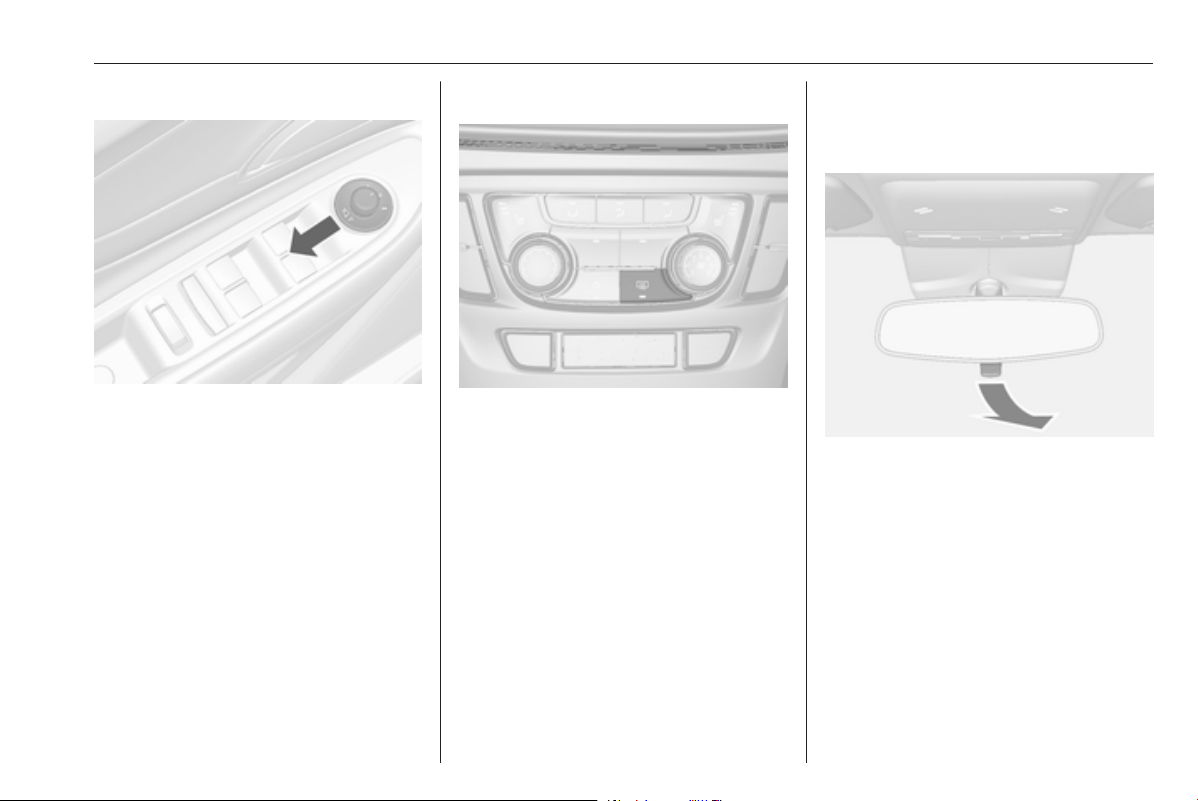
Electric adjustment
Select the relevant exterior mirror by
turning the control to left (L) or right
(R). Then swivel the control to adjust
the mirror.
In position 0 no mirror is selected.
Folding mirrors
Manual folding
For pedestrian safety, the exterior
mirrors will swing out of their normal
mounting position if they are struck
with sufficient force. Reposition the
mirror by applying slight pressure to
the mirror housing.
Keys, doors and windows 33
Electric folding
Turn control to 0, then push the
control backwards. Both exterior
mirrors will fold in.
Push the control backwards again -
both exterior mirrors return to their
original position.
Heated mirrors
Operated by pressing Ü.
Heating functions with the engine
running and is switched off
automatically after a short time.
Interior mirrors
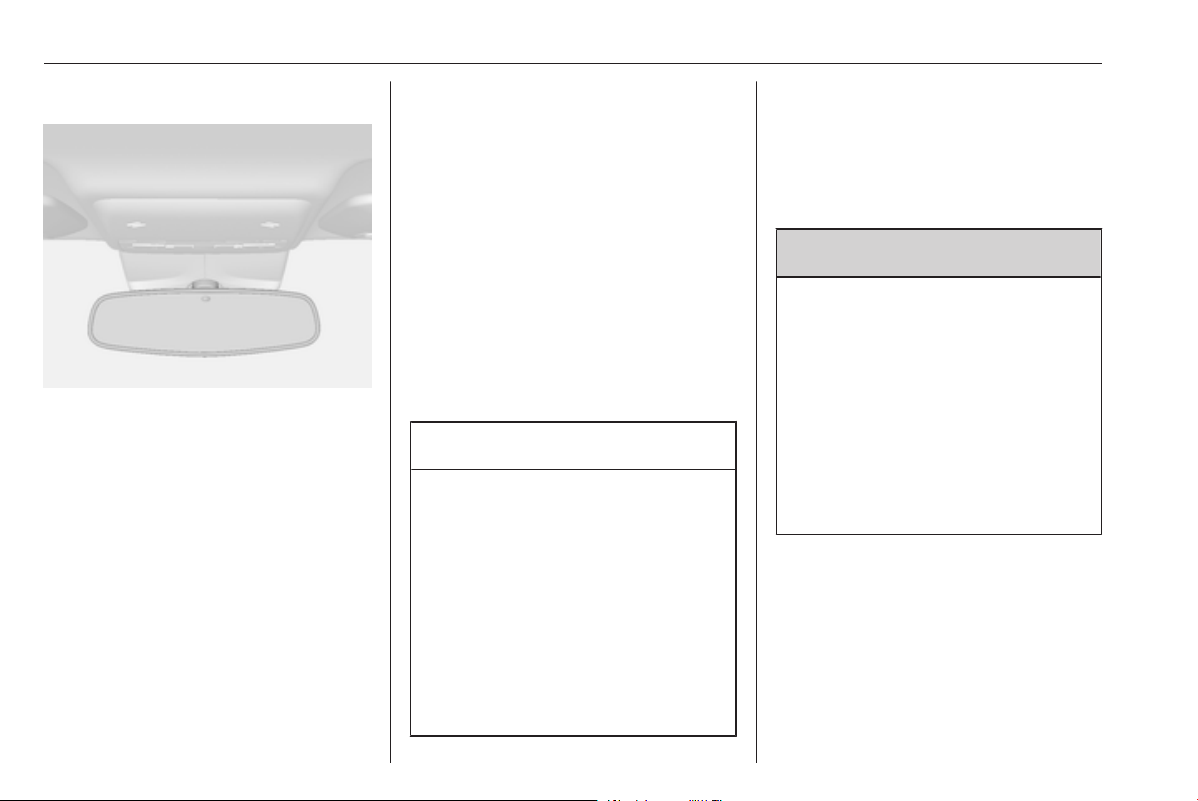
Manual anti-dazzle
To reduce dazzle, adjust the lever on
the underside of the mirror housing.
34 Keys, doors and windows
Automatic anti-dazzle
Dazzle from following vehicles is
automatically reduced, when driving
in the dark.
Windows
Windscreen
Windscreen stickers
Do not attach stickers such as toll
road stickers or similar on the
windscreen in the area of the interior
mirror. Otherwise the detection zone
of the sensor and the view area of the
camera in the mirror housing could be
restricted.
Windscreen replacement
Caution
If the vehicle has a front-looking
camera sensor for the driver
assistance systems, it is very
important that any windscreen
replacement is performed
accurately according to Vauxhall
specifications. Otherwise, these
systems may not work properly
and there is a risk of unexpected
behaviour and / or messages from
these systems.
Manual windows
The door windows can be opened or
closed with the window cranks.
Power windows
9 Warning
Take care when operating the
power windows. Risk of injury,
particularly to children.
If there are children on the rear
seats, switch on the child safety
system for the power windows.
Keep a close watch on the
windows when closing them.
Ensure that nothing becomes
trapped in them as they move.
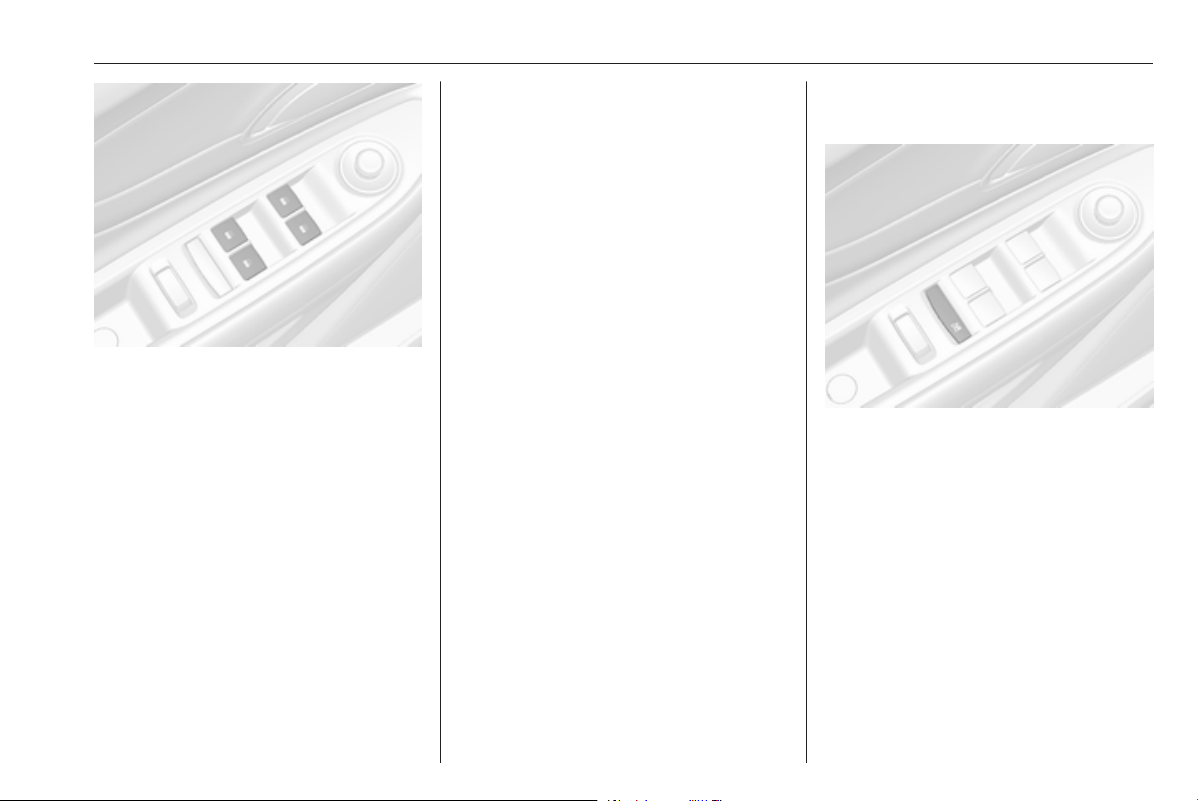
Switch on ignition to operate power
windows.
Keys, doors and windows 35
Operate the switch for the respective
window by pushing to open or pulling
to close.
Pushing or pulling gently to the first
detent: window moves up or down as
long as the switch is operated.
Pushing or pulling firmly to the second
detent and then releasing: window
moves up or down automatically with
safety function enabled. To stop
movement, operate the switch once
more in the same direction.
Safety function
If the window glass encounters
resistance above the middle of the
window during automatic closing, it is
immediately stopped and opened
again.
Override safety function
In the event of closing difficulties due
to frost or the like, switch on the
ignition, then pull the switch to the first
detent and hold. The window moves
up without safety function enabled.
To stop movement, release the
switch.
Child safety system for rear
windows
Press z to deactivate rear power
windows.
To activate, press z again.
Overload
If the windows are repeatedly
operated within short intervals, the
window operation is disabled for
some time.
36 Keys, doors and windows
Initialising the power windows
If the windows cannot be closed
automatically (e.g. after
disconnecting the vehicle battery),
activate the window electronics as
follows:
1. Close doors.
2. Switch on ignition.
3. Pull switch until the window is
closed and keep pulling for
additional two seconds.
4. Repeat for each window.
Heated rear window
Operated by pressing Ü.
The LED in the button indicates
activation.
Heating works with the engine
running and is switched off
automatically after a short time.
Sun visors
The sun visors can be folded down or
swivelled to the side to prevent
dazzling.
The sun visors mirror covers should
be closed when driving.
If the sun visors have a vanity mirror
lamp, the lamp will illuminate when
opening the vanity mirror cover.
Roof
Sunroof
9 Warning
Take care when operating the
sunroof. Risk of injury, particularly
to children.
Keep a close eye on the movable
parts when operating them.
Ensure that nothing becomes
trapped in them as they move.
Switch on ignition to operate the
sunroof.

Keys, doors and windows 37
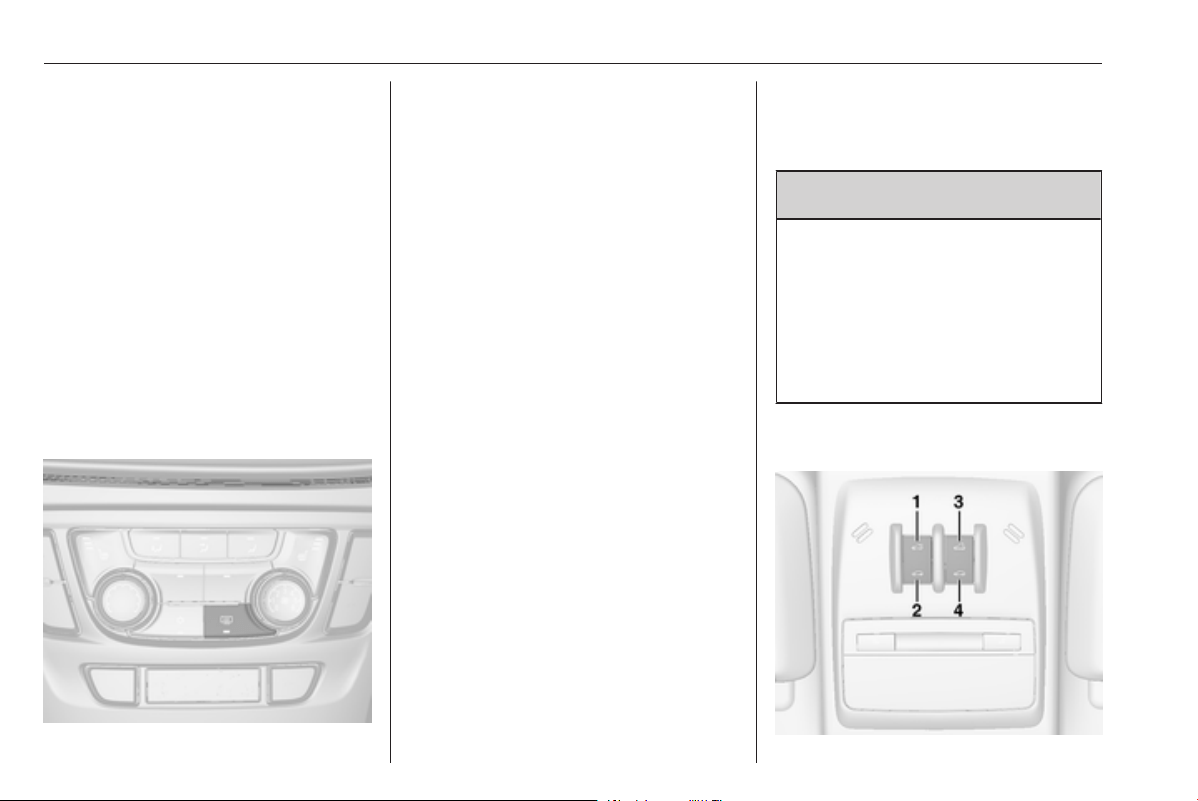
Open or close
Press switch 1 or switch 2 gently to
the first detent: sunroof is opened or
closed as long as the switch is
operated.
Press switch 1 or switch 2 firmly to the
second detent and then release: the
sunroof is opened or closed
automatically with safety function
enabled. To stop movement, operate
the switch once more.
Raise or close
Press switch 3 or switch 4: sunroof is
raised or closed automatically with
safety function enabled.
If the sunroof is raised, it can be
opened in one step by pressing
switch 1.
Sunblind
The sunblind is operated manually.
Close or open the sunblind by sliding.
When the sunroof is open, the
sunblind is always open.
Dirt and debris may collect on the
sunroof seal or in the track that could
cause an issue with sunroof
operation, noise or plug the water
drainage system. Periodically open
the sunroof and remove any
obstacles or loose debris. Wipe the
sunroof seal and roof sealing area
using a clean cloth, mild soap, and
water. Do not remove grease from the
sunroof.
General hints
Safety function
If the sunroof encounters resistance
during automatic closing, it is
immediately stopped and opened
again.
Override safety function
In the event of closing difficulties due
to frost or the like, press and hold
switch 2. The sunroof closes without
safety function enabled. To stop
movement, release the switch.
Initialising after a power failure
After a power failure, it may only be
possible to operate the sunroof to a
limited extent. Have the system
initialised by your workshop.
38 Seats, restraints
Seats, restraints
Head restraints ............................ 38
Front seats ................................... 39
Seat position .............................. 39
Seat adjustment ........................ 40
Heating ...................................... 42
Seat belts ..................................... 43
Three-point seat belt ................. 44
Airbag system .............................. 46
Front airbag system ................... 49
Side airbag system .................... 50
Curtain airbag system ............... 50
Airbag deactivation .................... 51
Child restraints ............................. 52
Child restraint systems .............. 52
Child restraint installation
locations ................................... 55
Head restraints
Position
9 Warning
Only drive with the head restraint
set to the proper position.
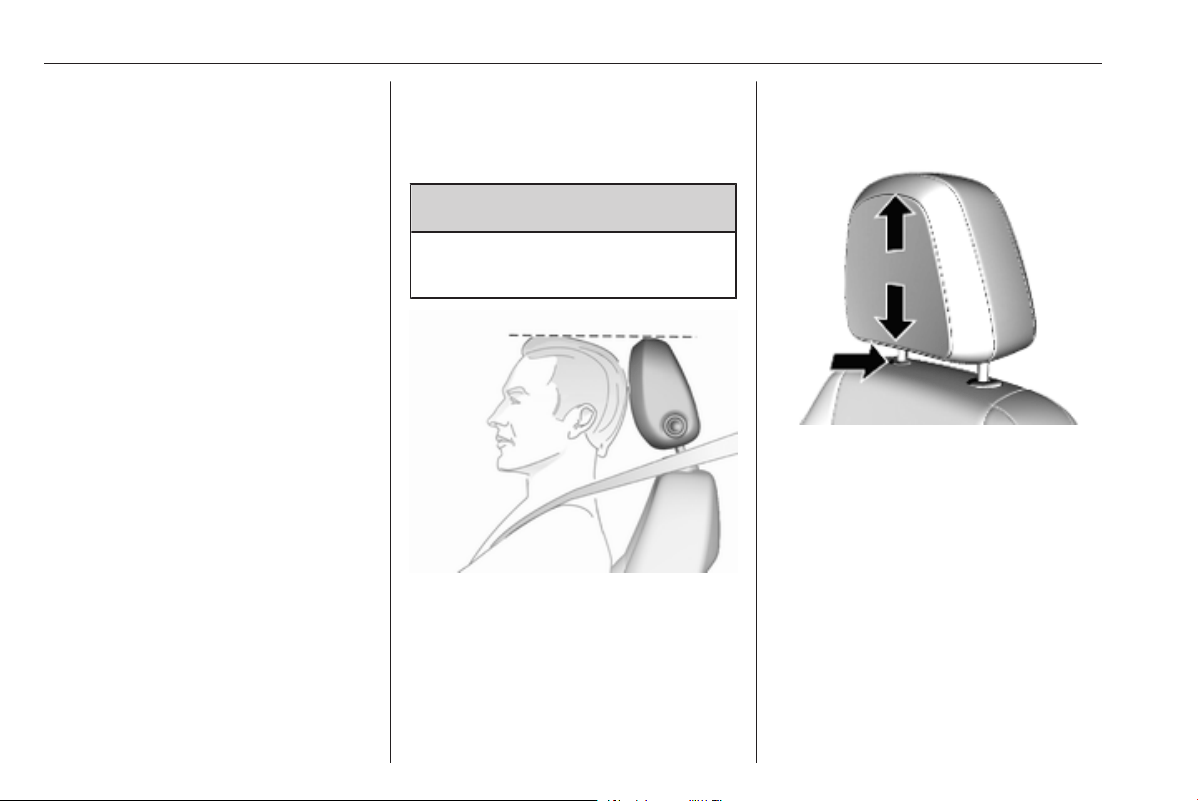
The upper edge of the head restraint
should be at upper head level. If this
is not possible for extremely tall
people, set to highest position, and
set to lowest position for small people.
Adjustment
Head restraints on front seats
Height adjustment
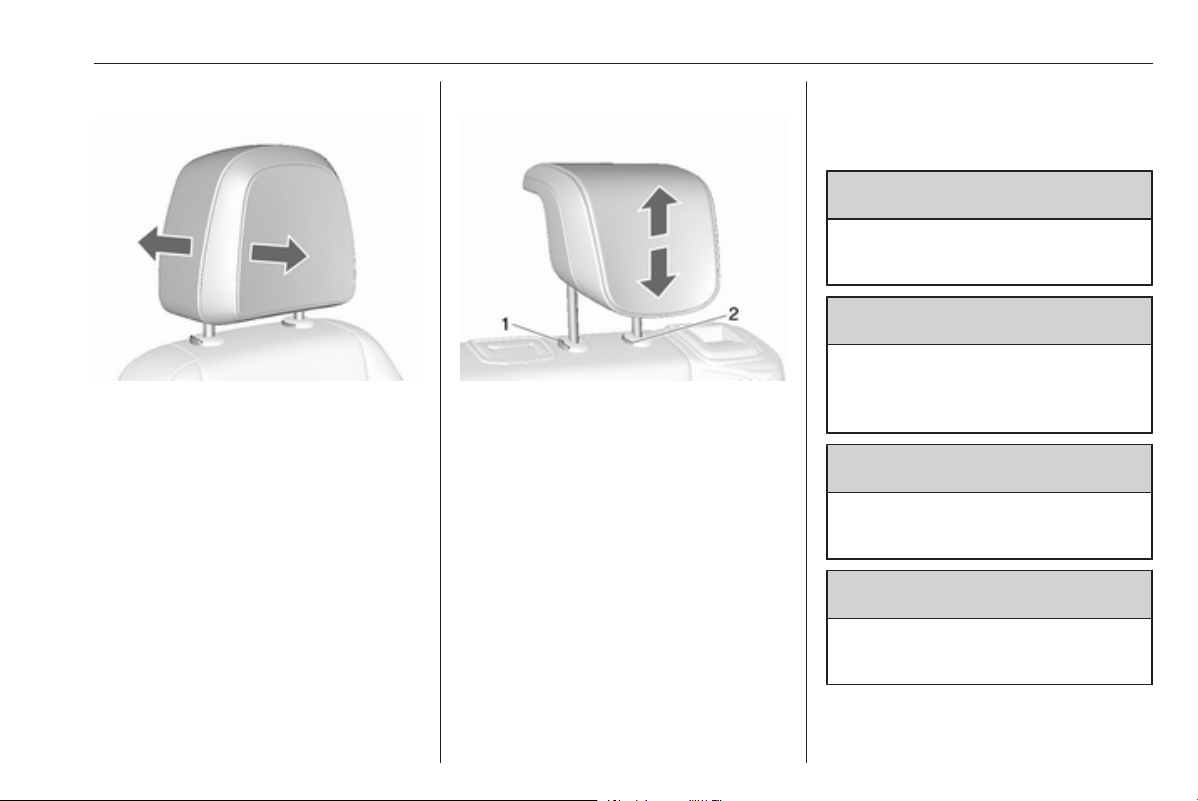
To raise the head restranint, pull it
upwards. Try to move the head
restraint to make sure that it is locked
in place.
To lower the head restraint, press the
catch and push the head restraint
down. Try to move the head restraint
after the button is released to make
sure that it is locked in place.
Seats, restraints 39
Horizontal adjustment
To adjust horizontally, pull the head
restraint forwards. It engages in three
positions.
To return to its rearmost position, pull
fully forwards and release.
Head restraints on rear seats
Height adjustment
Pull the head restraint upwards.
To move down, press the catch (1)
and push the head restraint
downwards.
Removal
Raise head restraint to its full height.
Press the catches (1) and (2) at the
same time.
Pull up the head restraint.
Front seats
Seat position
9 Warning
Only drive with the seat correctly
adjusted.
9 Danger
Do not sit closer than 25 cm to the
steering wheel, to permit safe
airbag deployment.
9 Warning
Never adjust seats while driving as
they could move uncontrollably.
9 Warning
Never store any objects under the
seats.
40 Seats, restraints
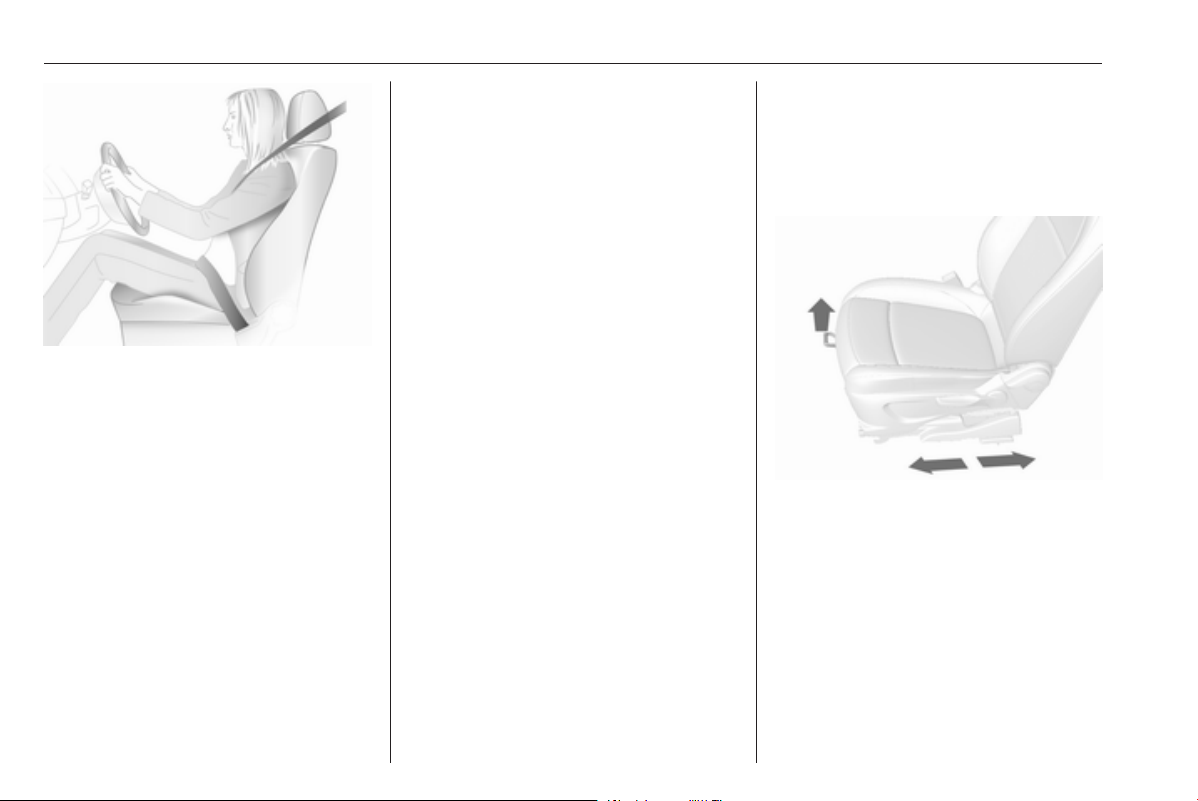
● Sit with buttocks as far back
against the backrest as possible.
Adjust the distance between the
seat and the pedals so that legs
are slightly angled when fully
pressing the pedals. Slide the
front passenger seat as far back
as possible.
● Set seat height high enough to
have a clear field of vision on all
sides and of all display
instruments. There should be at
least one hand of clearance
between head and the
headlining. Your thighs should
rest lightly on the seat without
pressing into it.
● Sit with shoulders as far back
against the backrest as possible.
Set the backrest rake so that it is
possible to easily reach the
steering wheel with arms slightly
bent. Maintain contact between
shoulders and the backrest when
turning the steering wheel. Do
not tilt the backrest too far back.
We recommend a maximum rake
of approx. 25°.
● Adjust seat and steering wheel in
a way that the wrist rests on top
of the steering wheel while the
arm is fully extended and
shoulders on the backrest.
● Adjust the steering wheel 3 76.
● Adjust the head restraint 3 38.
● Adjust the height of the seat belt
3 44.
● Adjust the thigh support so that
there is a space approx. two
fingers wide between the edge of
the seat and the hollow of the
knee.
● Adjust the lumbar support so that
it supports the natural shape of
the spine.
Seat adjustment
Drive only with engaged seats and
backrests.
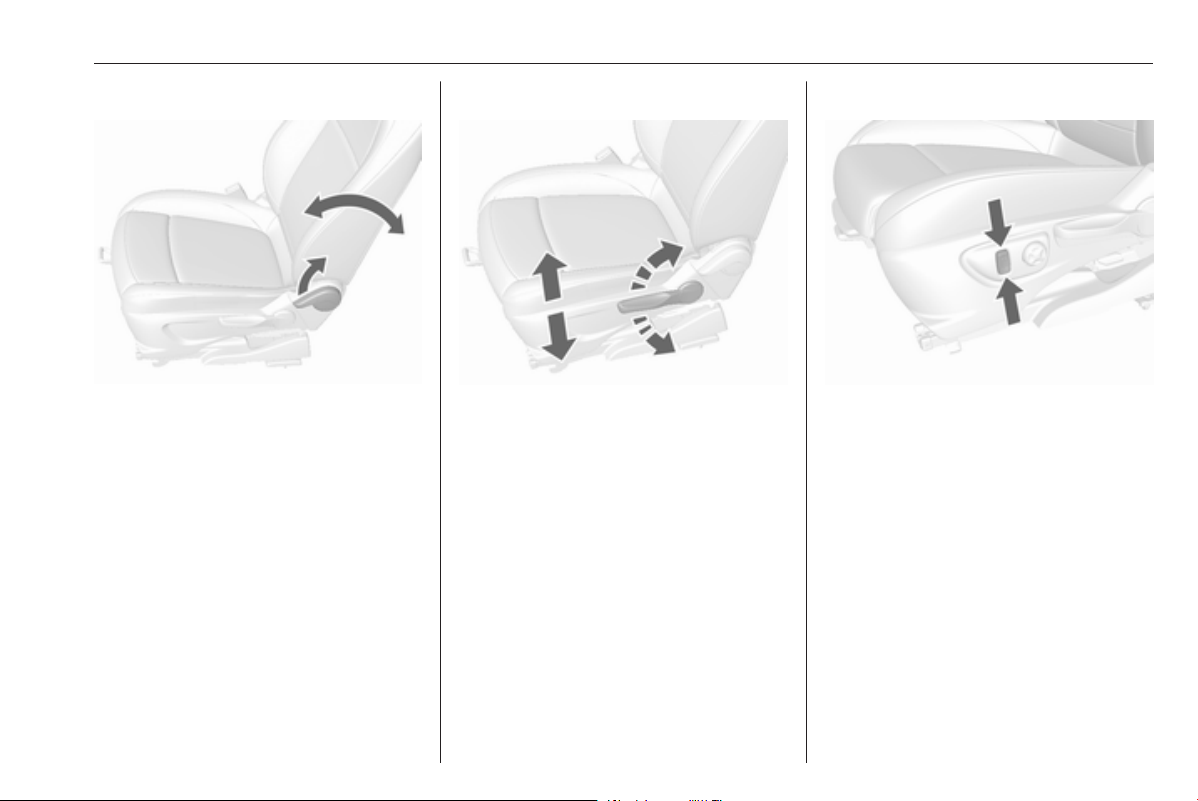
Longitudinal adjustment
Pull handle, slide seat, release
handle. Try to move the seat back and
forth to ensure that the seat is locked
in place.
Seats, restraints 41
Backrest inclination
Pull lever, adjust inclination and
release lever. Allow the backrest to
engage audibly.
Seat height
Lever pumping motion
up : seat higher
down : seat lower
Seat inclination
Press switch
top : front end higher
bottom : front end lower
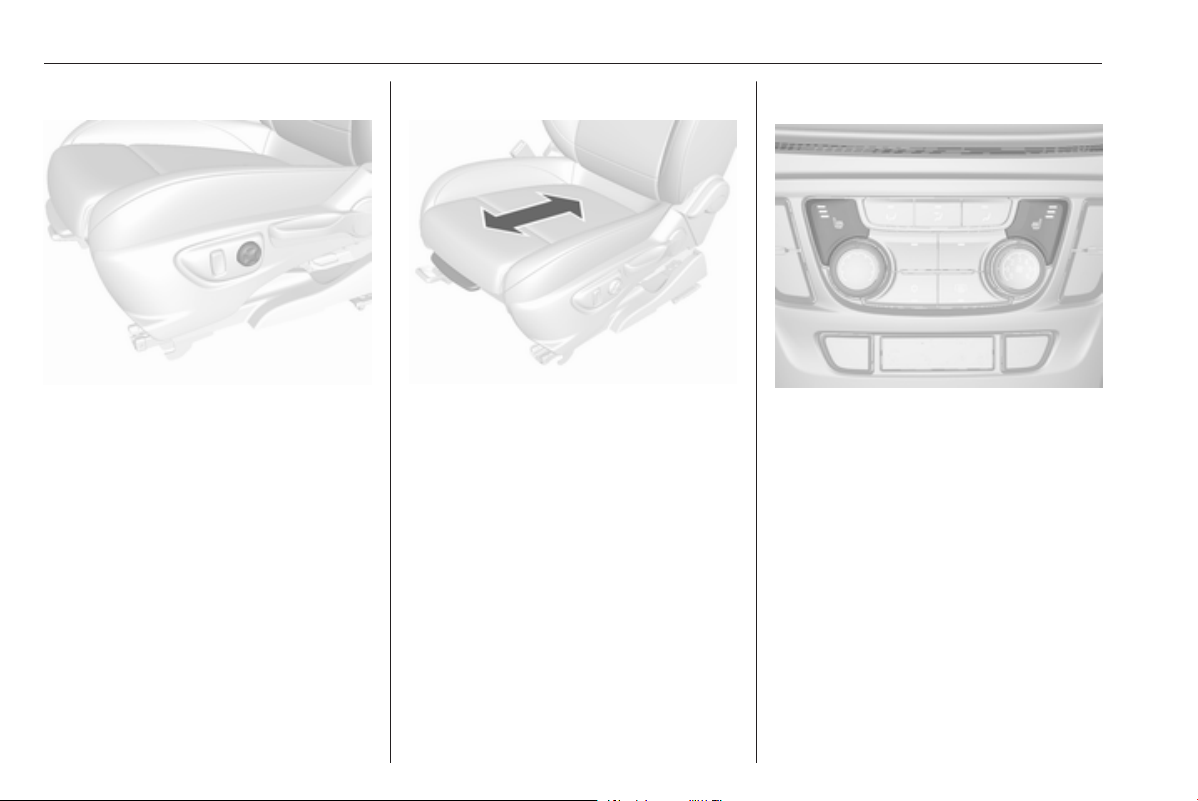
42 Seats, restraints
Lumbar support
Adjust lumbar support using the four-
way switch to suit personal
requirements.
Moving support up and down: push
switch up or down.
Increasing and decreasing support:
push switch forwards or backwards.
Adjustable thigh support
Pull the lever and slide the thigh
support.
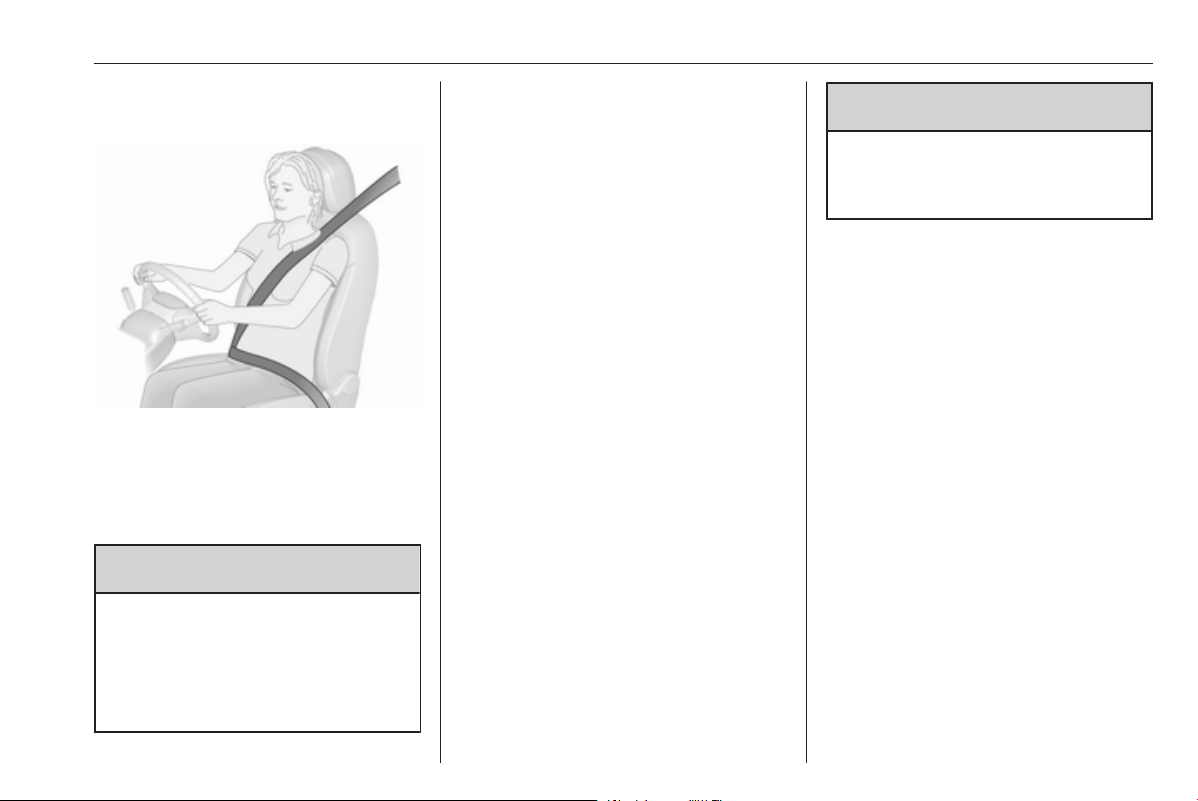
Heating
Adjust heating to the desired setting
by pressing ß for the respective seat
one or more times. The LED in the
button indicates the setting.
Prolonged use of the highest setting
for people with sensitive skin is not
recommended.
Seat heating is operational when
engine is running and during an
Autostop.
Stop-start system 3 133.
Seats, restraints 43
Seat belts
The seat belts are locked during
heavy acceleration or deceleration of
the vehicle, holding the occupants in
the seat position. Therefore the risk of
injury is considerably reduced.
9 Warning
Fasten seat belt before each trip.
In the event of an accident, people
not wearing seat belts endanger
their fellow occupants and
themselves.
Seat belts are designed to be used by
only one person at a time. Child
restraint system 3 52.
Periodically check all parts of the belt
system for damage, soiling and
proper functionality.
Have damaged components
replaced. After an accident, have the
belts and triggered belt pretensioners
replaced by a workshop.
Notice
Make sure that the belts are not
damaged by shoes or sharp-edged
objects or are trapped. Prevent dirt
from getting into the belt retractors.
Seat belt reminder X 3 91.
Belt force limiters
On the front seats, stress on the body
is reduced by the gradual release of
the belt during a collision.
Belt pretensioners
In the event of a head-on or rear-end
collision of a certain severity, the front
seat belts are tightened.
9
Warning
Incorrect handling (e.g. removal or
fitting of belts) can trigger the belt
pretensioners.
Deployment of the belt pretensioners
is indicated by continuous illumination
of control indicator v 3 91.
Triggered belt pretensioners must be
replaced by a workshop. Belt
pretensioners can only be triggered
once.
Notice
Do not affix or install accessories or
other objects that may interfere with
the operation of the belt
pretensioners. Do not make any
modifications to belt pretensioner
components as this will invalidate
the operating permit of your vehicle.
44 Seats, restraints
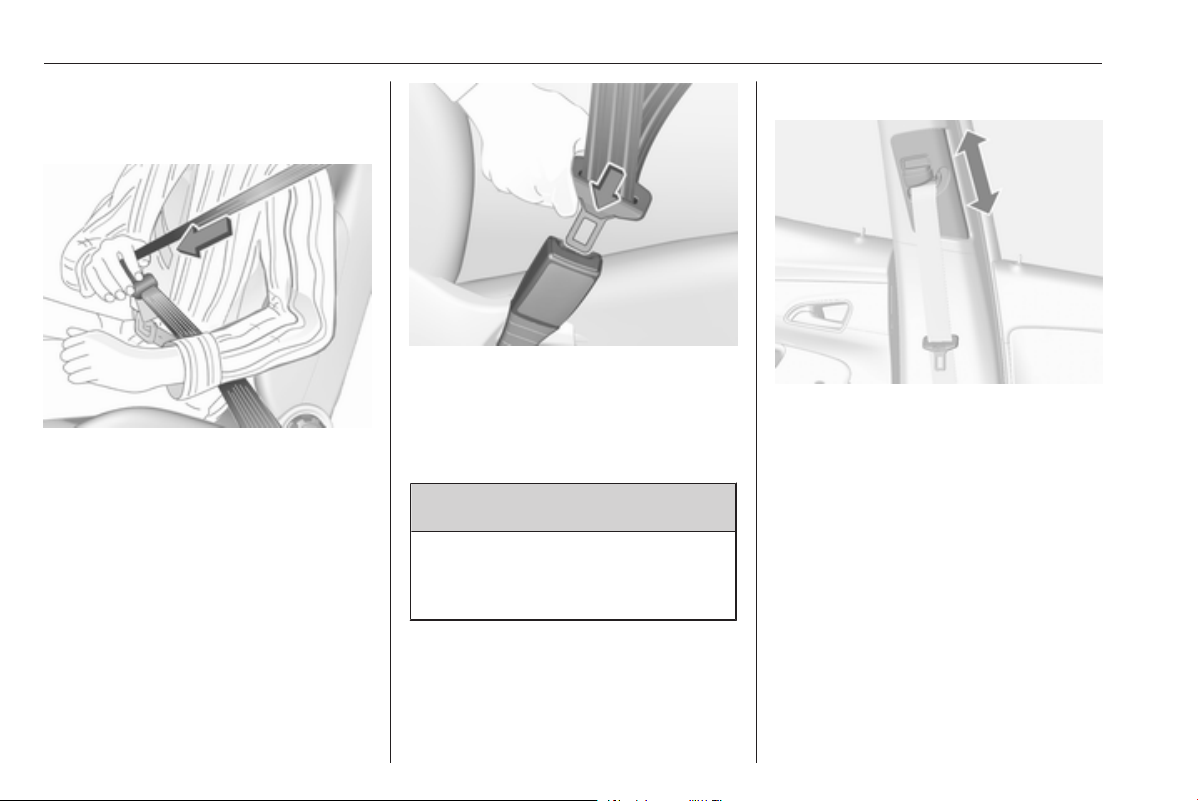
Three-point seat belt
Fasten
Withdraw the belt from the retractor,
guide it untwisted across the body
and insert the latch plate into the
buckle.
Tighten the lap belt regularly whilst
driving by pulling the shoulder belt.
Loose or bulky clothing prevents the
belt from fitting snugly. Do not place
objects such as handbags or mobile
phones between the belt and your
body.
9 Warning
The belt must not rest against hard
or fragile objects in the pockets of
your clothing.
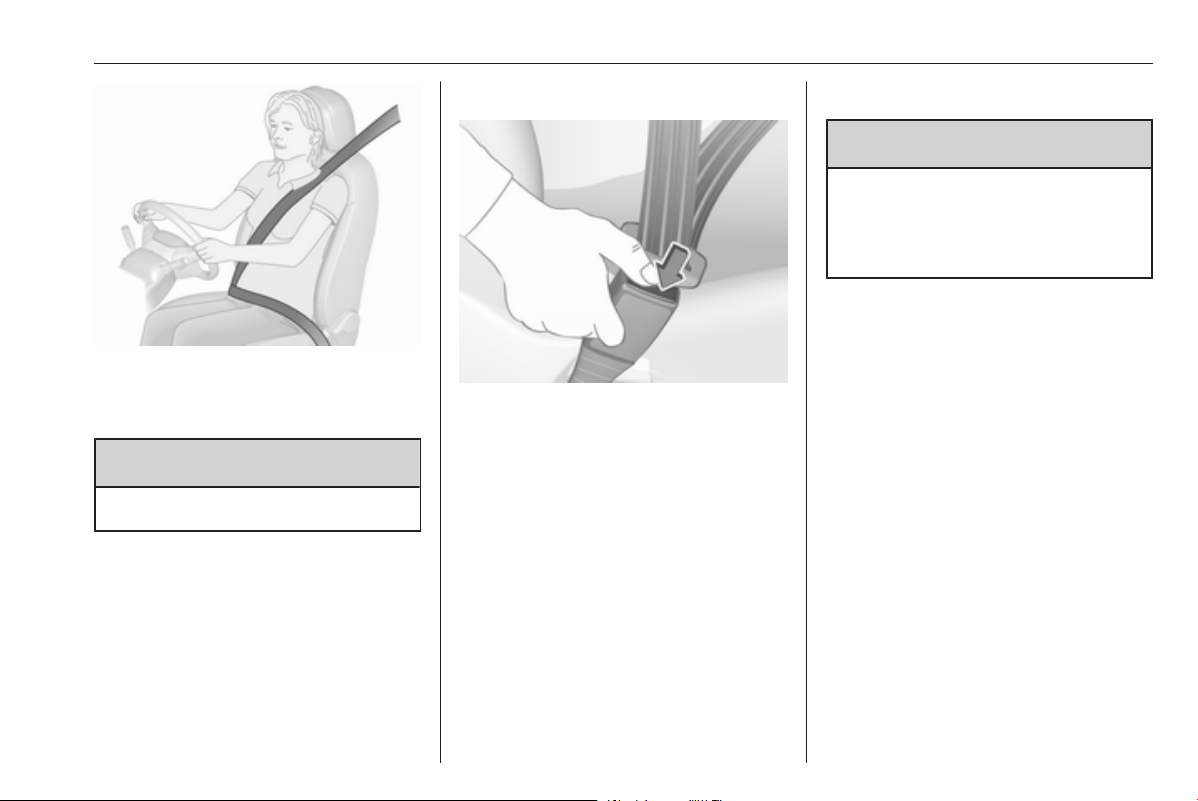
Height adjustment
1. Pull belt out slightly.
2. Shift the height adjuster upwards
or press button to disengage and
push the height adjuster
downwards.
Seats, restraints 45
Adjust the height so that the belt lies
across the shoulder. It must not lie
across the throat or upper arm.
9 Warning
Do not adjust while driving.
Unfasten
To release belt, press red button on
belt buckle.
Seat belts on the rear seats
The seat belt for the rear centre seat
can only be withdrawn from the
retractor if the backrest is engaged in
upright position.
Using seat belt during pregnancy
9 Warning
The lap belt must be positioned as
low as possible across the pelvis
to prevent pressure on the
abdomen.
46 Seats, restraints
Airbag system
The airbag system consists of a
number of individual systems
depending on the scope of
equipment.
When triggered, the airbags inflate
within milliseconds. They also deflate
so quickly that it is often unnoticeable
during the collision.
9 Warning
The airbag system deploys in an
explosive manner, repairs must be
performed by skilled personnel
only.
9 Warning
Adding accessories that change
the vehicle's frame, bumper
system, height, front end or side
sheet metal, may keep the airbag
system from working properly. The
operation of the airbag system can
also be affected by changing any
parts of the front seats, seat belts,
airbag sensing and diagnostic
module, steering wheel,
instrument panel, inner door seals
including the speakers, any of the
airbag modules, ceiling or pillar
trim, front sensors, side impact
sensors or airbag wiring.
Notice
The airbag systems and belt
pretensioner control electronics are
located in the centre console area.
Do not put any magnetic objects in
this area.
Do not affix any objects onto the
airbag covers and do not cover them
with other materials. Have damaged
covers replaced by a workshop.
Each airbag is triggered only once.
Have deployed airbags replaced by
a workshop. Furthermore, it may be
necessary to have the steering
wheel, the instrument panel, parts of
the panelling, the door seals,
handles and the seats replaced.
Do not make any modifications to
the airbag system as this will
invalidate the vehicle operating
permit.
Control indicator v for airbag systems
3 91.
Child restraint systems on front
passenger seat with airbag
systems
Warning according to ECE R94.02:
EN: NEVER use a rearward-facing
child restraint on a seat protected by
an ACTIVE AIRBAG in front of it;
DEATH or SERIOUS INJURY to the
CHILD can occur.
DE: Nach hinten gerichtete
Kindersitze NIEMALS auf einem Sitz
verwenden, der durch einen davor
befindlichen AKTIVEN AIRBAG

Seats, restraints 47
geschützt ist, da dies den TOD oder
SCHWERE VERLETZUNGEN DES
KINDES zur Folge haben kann.
FR: NE JAMAIS utiliser un siège
d'enfant orienté vers l'arrière sur un
siège protégé par un COUSSIN
GONFLABLE ACTIF placé devant lui,
sous peine d'infliger des
BLESSURES GRAVES, voire
MORTELLES à l'ENFANT.
ES: NUNCA utilice un sistema de
retención infantil orientado hacia
atrás en un asiento protegido por un
AIRBAG FRONTAL ACTIVO. Peligro
de MUERTE o LESIONES GRAVES
para el NIÑO.
RU: ЗАПРЕЩАЕТСЯ
устанавливать детское
удерживающее устройство лицом
назад на сиденье автомобиля,
оборудованном фронтальной
подушкой безопасности, если
ПОДУШКА НЕ ОТКЛЮЧЕНА! Это
может привести к СМЕРТИ или
СЕРЬЕЗНЫМ ТРАВМАМ
РЕБЕНКА.
NL: Gebruik NOOIT een achterwaarts
gericht kinderzitje op een stoel met
een ACTIEVE AIRBAG ervoor, om
DODELIJK of ERNSTIG LETSEL van
het KIND te voorkomen.
DA: Brug ALDRIG en bagudvendt
autostol på et forsæde med AKTIV
AIRBAG, BARNET kan komme i
LIVSFARE eller komme ALVORLIGT
TIL SKADE.
SV: Använd ALDRIG en bakåtvänd
barnstol på ett säte som skyddas med
en framförvarande AKTIV AIRBAG.
DÖDSFALL eller ALLVARLIGA
SKADOR kan drabba BARNET.
FI: ÄLÄ KOSKAAN sijoita taaksepäin
suunnattua lasten turvaistuinta
istuimelle, jonka edessä on
AKTIIVINEN TURVATYYNY, LAPSI
VOI KUOLLA tai VAMMAUTUA
VAKAVASTI.
NO: Bakovervendt
barnesikringsutstyr må ALDRI brukes
på et sete med AKTIV
KOLLISJONSPUTE foran, da det kan
føre til at BARNET utsettes for
LIVSFARE og fare for ALVORLIGE
SKADER.
PT: NUNCA use um sistema de
retenção para crianças voltado para
trás num banco protegido com um
AIRBAG ACTIVO na frente do
mesmo, poderá ocorrer a PERDA DE
VIDA ou FERIMENTOS GRAVES na
CRIANÇA.
IT: Non usare mai un sistema di
sicurezza per bambini rivolto
all'indietro su un sedile protetto da
AIRBAG ATTIVO di fronte ad esso:
pericolo di MORTE o LESIONI
GRAVI per il BAMBINO!
EL: ΠΟΤΕ μη χρησιμοποιείτε παιδικό
κάθισμα ασφαλείας με φορά προς τα
πίσω σε κάθισμα που προστατεύεται
από μετωπικό ΕΝΕΡΓΟ ΑΕΡΟΣΑΚΟ,
διότι το παιδί μπορεί να υποστεί
ΘΑΝΑΣΙΜΟ ή ΣΟΒΑΡΟ
ΤΡΑΥΜΑΤΙΣΜΟ.
PL: NIE WOLNO montować fotelika
dziecięcego zwróconego tyłem do
kierunku jazdy na fotelu, przed
którym znajduje się WŁĄCZONA
PODUSZKA POWIETRZNA.
Niezastosowanie się do tego
zalecenia może być przyczyną
ŚMIERCI lub POWAŻNYCH
OBRAŻEŃ u DZIECKA.

48 Seats, restraints
TR: Arkaya bakan bir çocuk emniyet
sistemini KESİNLİKLE önünde bir
AKTİF HAVA YASTIĞI ile
korunmakta olan bir koltukta
kullanmayınız. ÇOCUK ÖLEBİLİR
veya AĞIR ŞEKİLDE
YARALANABİLİR.
UK: НІКОЛИ не використовуйте
систему безпеки для дітей, що
встановлюється обличчям назад,
на сидінні з УВІМКНЕНОЮ
ПОДУШКОЮ БЕЗПЕКИ, інакше це
може призвести до СМЕРТІ чи
СЕРЙОЗНОГО ТРАВМУВАННЯ
ДИТИНИ.
HU: SOHA ne használjon hátrafelé
néző biztonsági gyerekülést előlről
AKTÍV LÉGZSÁKKAL védett ülésen,
mert a GYERMEK HALÁLÁT vagy
KOMOLY SÉRÜLÉSÉT okozhatja.
HR: NIKADA nemojte koristiti sustav
zadržavanja za djecu okrenut prema
natrag na sjedalu s AKTIVNIM
ZRAČNIM JASTUKOM ispred njega,
to bi moglo dovesti do SMRTI ili
OZBILJNJIH OZLJEDA za DIJETE.
SL: NIKOLI ne nameščajte otroškega
varnostnega sedeža, obrnjenega v
nasprotni smeri vožnje, na sedež z
AKTIVNO ČELNO ZRAČNO
BLAZINO, saj pri tem obstaja
nevarnost RESNIH ali SMRTNIH
POŠKODB za OTROKA.
SR: NIKADA ne koristiti bezbednosni
sistem za decu u kome su deca
okrenuta unazad na sedištu sa
AKTIVNIM VAZDUŠNIM
JASTUKOM ispred sedišta zato što
DETE može da NASTRADA ili da se
TEŠKO POVREDI.
MK: НИКОГАШ не користете детско
седиште свртено наназад на
седиште заштитено со АКТИВНО
ВОЗДУШНО ПЕРНИЧЕ пред него,
затоа што детето може ДА ЗАГИНЕ
или да биде ТЕШКО ПОВРЕДЕНО.
BG: НИКОГА не използвайте
детска седалка, гледаща назад,
върху седалка, която е защитена
чрез АКТИВНА ВЪЗДУШНА
ВЪЗГЛАВНИЦА пред нея - може да
се стигне до СМЪРТ или
СЕРИОЗНО НАРАНЯВАНЕ на
ДЕТЕТО.
RO: Nu utilizaţi NICIODATĂ un scaun
pentru copil îndreptat spre partea din
spate a maşinii pe un scaun protejat
de un AIRBAG ACTIV în faţa sa;
acest lucru poate duce la DECESUL
sau VĂTĂMAREA GRAVĂ a
COPILULUI.
CS: NIKDY nepoužívejte dětský
zádržný systém instalovaný proti
směru jízdy na sedadle, které je
chráněno před sedadlem AKTIVNÍM
AIRBAGEM. Mohlo by dojít k
VÁŽNÉMU PORANĚNÍ nebo ÚMRTÍ
DÍTĚTE.
SK: NIKDY nepoužívajte detskú
sedačku otočenú vzad na sedadle
chránenom AKTÍVNYM AIRBAGOM,
pretože môže dôjsť k SMRTI alebo
VÁŽNYM ZRANENIAM DIEŤAŤA.
LT: JOKIU BŪDU nemontuokite atgal
atgręžtos vaiko tvirtinimo sistemos
sėdynėje, prieš kurią įrengta AKTYVI
ORO PAGALVĖ, nes VAIKAS GALI
ŽŪTI arba RIMTAI SUSIŽALOTI.
LV: NEKĀDĀ GADĪJUMĀ
neizmantojiet uz aizmuguri vērstu
bērnu sēdeklīti sēdvietā, kas tiek
aizsargāta ar tās priekšā uzstādītu
AKTĪVU DROŠĪBAS SPILVENU, jo
pretējā gadījumā BĒRNS var gūt
SMAGAS TRAUMAS vai IET BOJĀ.
Seats, restraints 49
ET: ÄRGE kasutage tahapoole
suunatud lapseturvaistet istmel, mille
ees on AKTIIVSE TURVAPADJAGA
kaitstud iste, sest see võib
põhjustada LAPSE SURMA või
TÕSISE VIGASTUSE.
MT: QATT tuża trażżin għat-tfal li
jħares lejn in-naħa ta’ wara fuq sit
protett b’AIRBAG ATTIV quddiemu;
dan jista’ jikkawża l-MEWT jew
ĠRIEĦI SERJI lit-TFAL.
GA:Ná húsáid srian sábháilteachta
linbh cúil RIAMH ar shuíochán a
bhfuil mála aeir ag feidhmiú os a
chomhair. Tá baol BÁIS nó GORTÚ
DONA don PHÁISTE ag baint leis.
Beyond the warning required by
ECE R94.02, for safety reasons
never use a forward-facing child
restraint system on the passenger
seat with an active front airbag.
9 Danger
Do not use a child restraint system
on the passenger seat with active
front airbag.
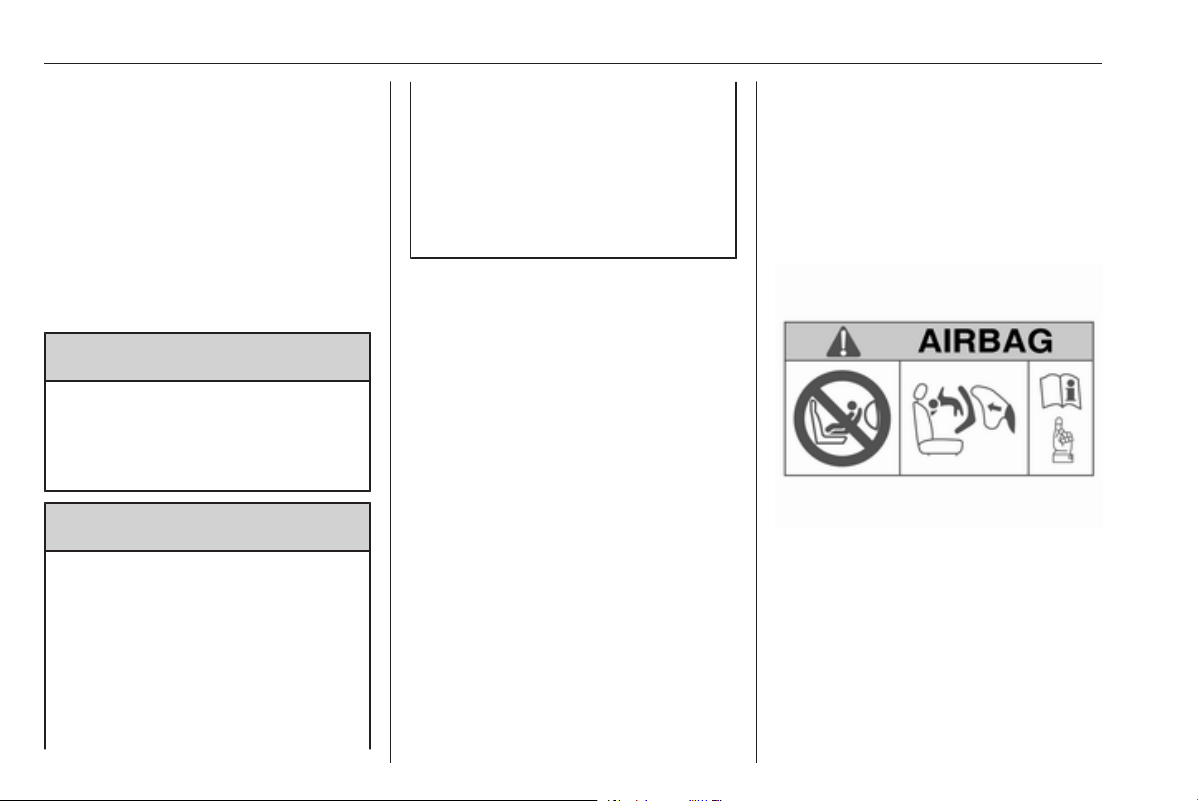
The warning label is located on both
sides of the front passenger sun visor.
Airbag deactivation 3 51.
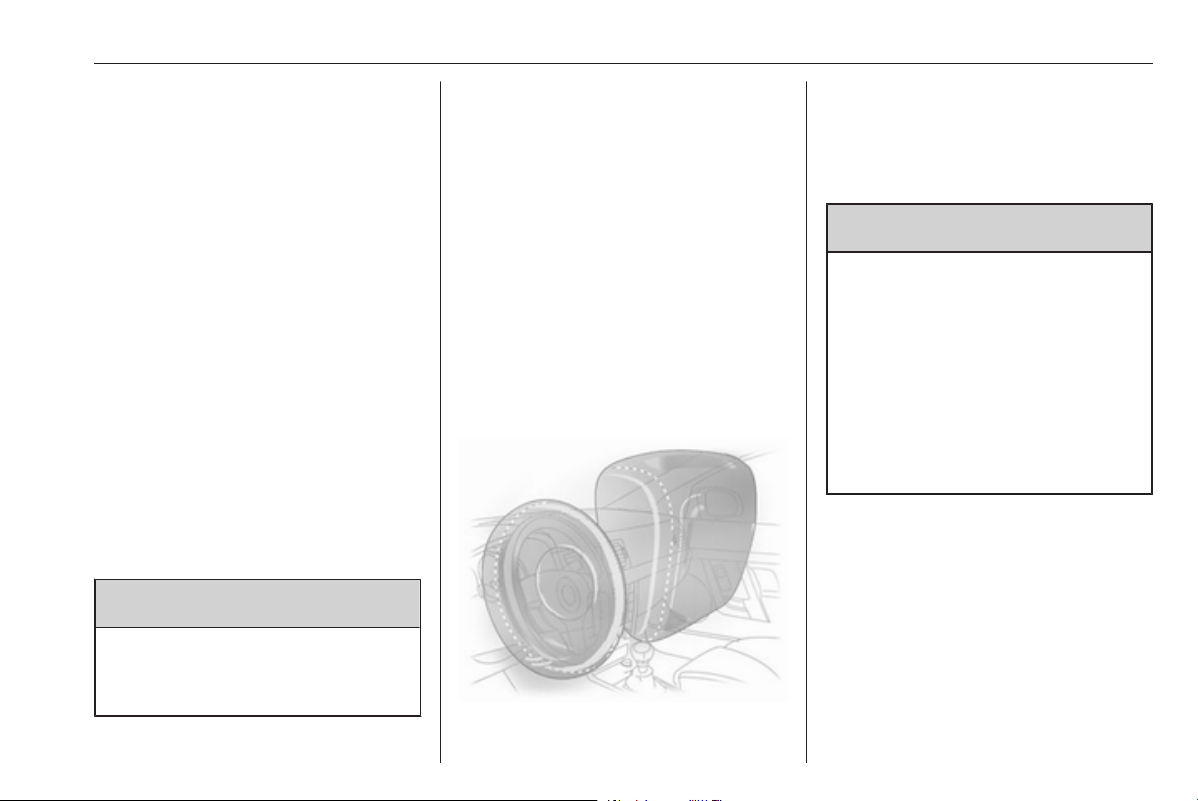
Front airbag system
The front airbag system consists of
one airbag in the steering wheel and
one in the instrument panel on the
front passenger side. These can be
identified by the word AIRBAG.
The front airbag system is triggered in
the event of a front-end impact of a
certain severity. The ignition must be
switched on.
The inflated airbags cushion the
impact, thereby reducing the risk of
injury to the upper body and head of
the front seat occupants
considerably.
9 Warning
Optimum protection is only
provided when the seat is in the
proper position.
Seat position 3 39.
Keep the area in which the airbag
inflates clear of obstructions.
Fit the seat belt correctly and
engage securely. Only then is the
airbag able to protect.
50 Seats, restraints
Side airbag system
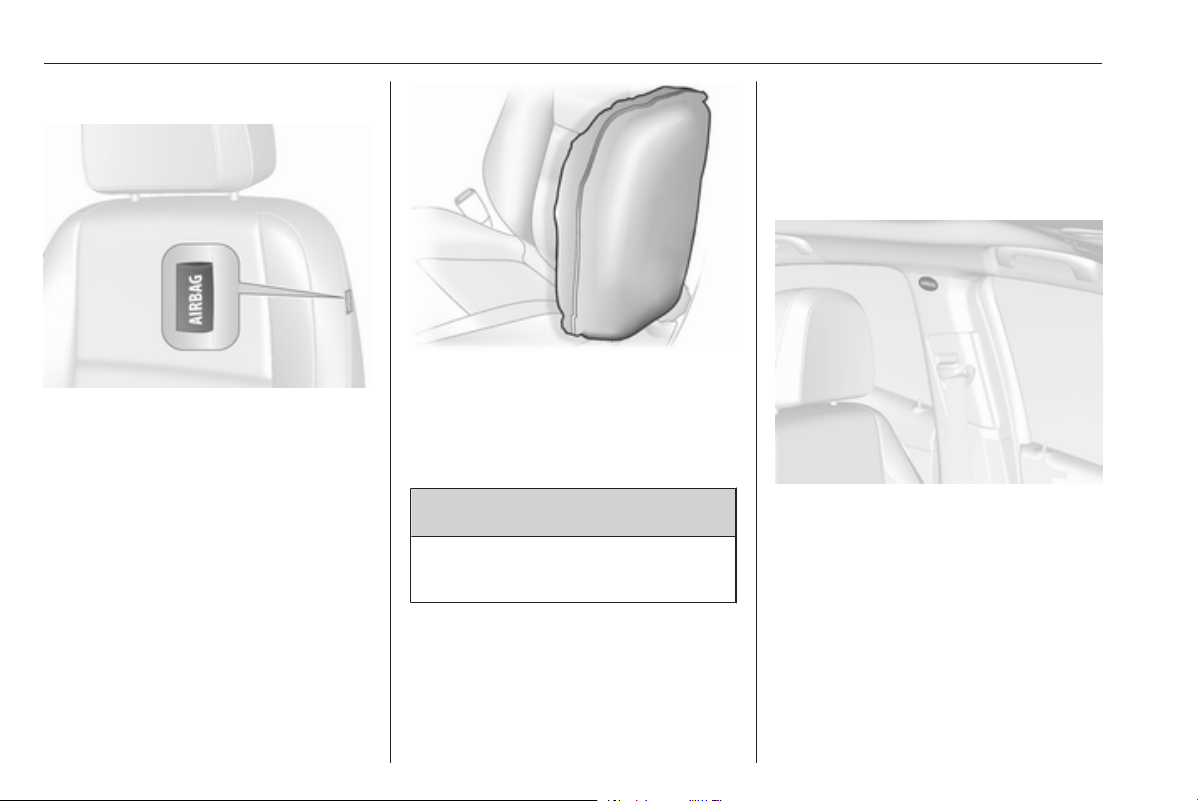
The side airbag system consists of an
airbag in each front seat backrest.
This can be identified by the word
AIRBAG.
The side airbag system is triggered in
the event of a side impact of a certain
severity. The ignition must be
switched on.
The inflated airbags cushion the
impact, thereby reducing the risk of
injury to the upper body and pelvis in
the event of a side-on collision
considerably.
9 Warning
Keep the area in which the airbag
inflates clear of obstructions.
Notice
Only use protective seat covers that
have been approved for the vehicle.
Be careful not to cover the airbags.
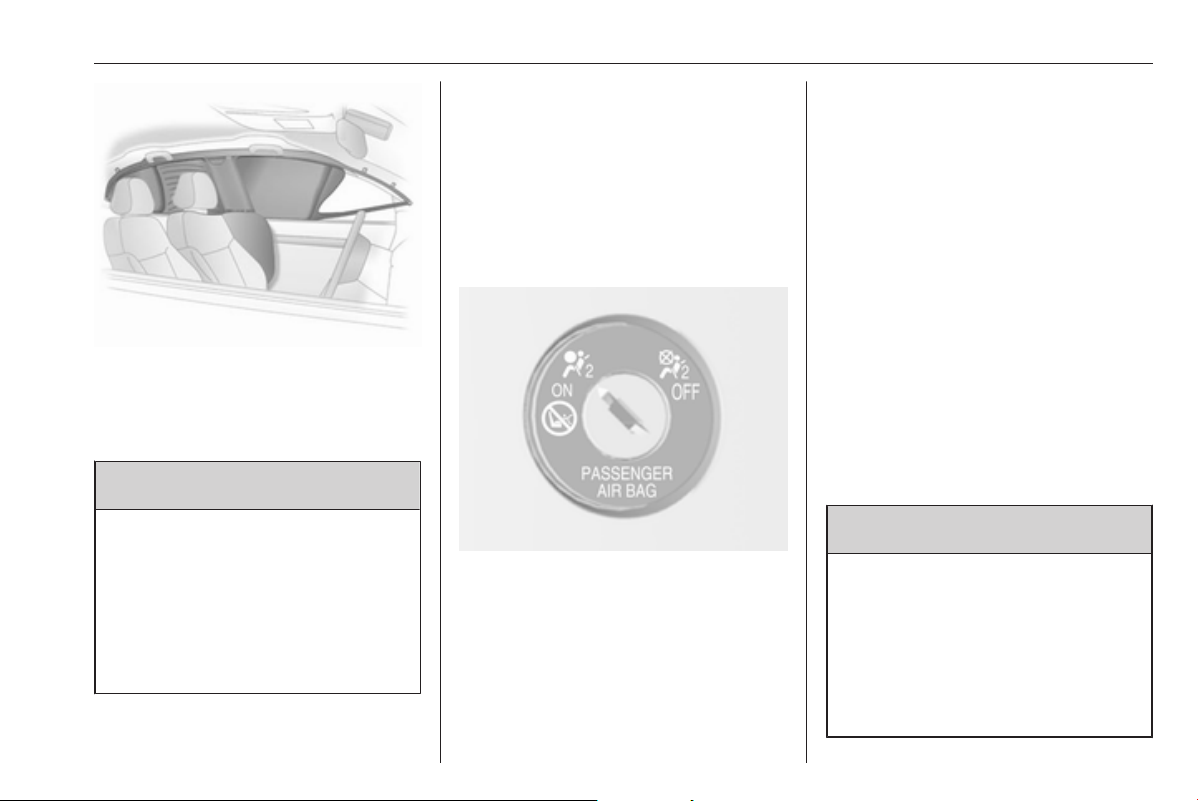
Curtain airbag system
The curtain airbag system consists of
an airbag in the roof frame on each
side. This can be identified by the
word AIRBAG on the roof pillars.
The curtain airbag system is triggered
in the event of a side-on impact of a
certain severity. The ignition must be
switched on.
Seats, restraints 51
The inflated airbags cushion the
impact, thereby reducing the risk of
injury to the head in the event of a
side-on impact considerably.
9 Warning
Keep the area in which the airbag
inflates clear of obstructions.
The hooks in the roof frame are
only suitable for hanging up light
articles of clothing, without coat
hangers. Do not keep any items in
these clothes.
Airbag deactivation
The front passenger airbag system
must be deactivated if a child restraint
system is to be fitted on this seat. The
side airbag and curtain airbag
systems, the belt pretensioners and
all driver airbag systems will remain
active.
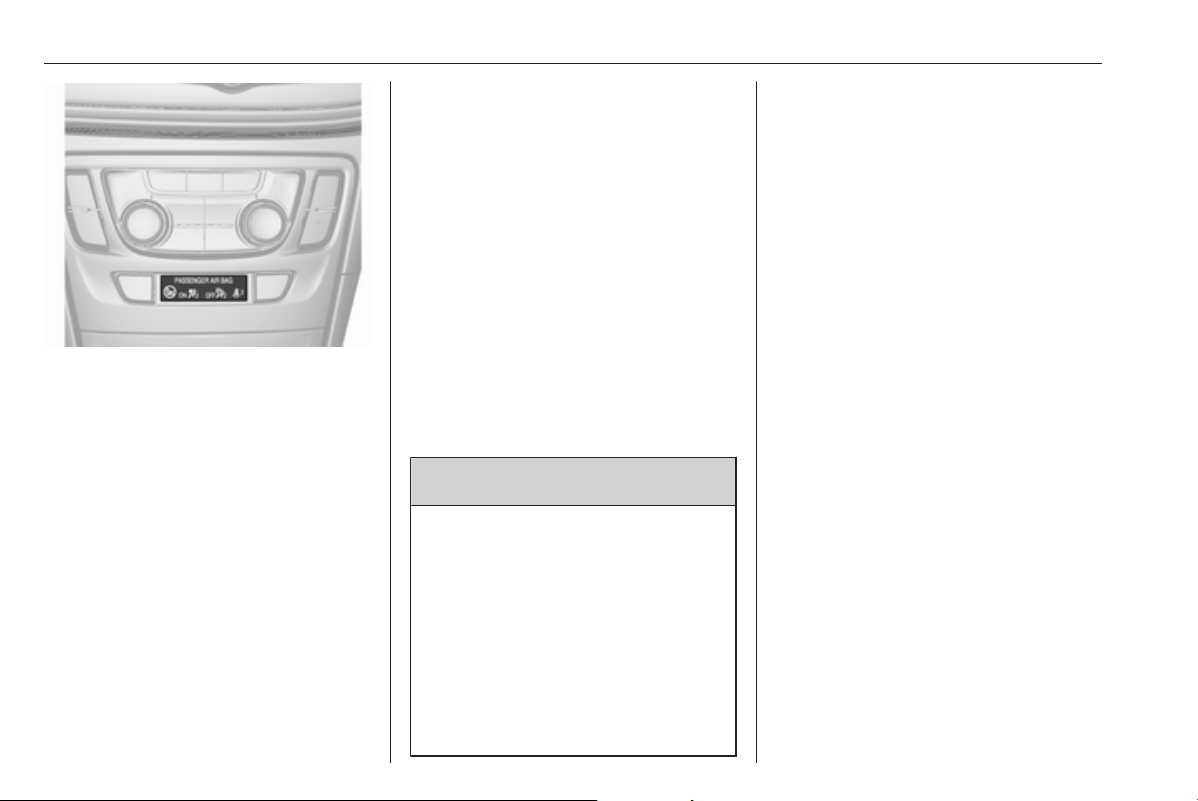
The front passenger airbag system
can be deactivated via a key-
operated switch on the passenger
side of the instrument panel.
Use the ignition key to choose the
position:
c
: front passenger airbags are
deactivated and will not inflate
in the event of a collision.
Control indicator c
illuminates continuously in the
centre console. A child
restraint system can be
installed in accordance with
the chart Child restraint
installation locations 3 55.
No adult person is allowed to
occupy the front passenger
seat.
d
: front passenger airbags are
active. A child restraint system
must not be installed.
9 Danger
Risk of fatal injury for a child using
a child restraint system on a seat
with activated front passenger
airbag.
Risk of fatal injury for an adult
person on a seat with deactivated
front passenger airbag.
52 Seats, restraints
As long as the control indicator c is
not illuminated, the front passenger
airbag system will inflate in the event
of a collision.
Change status only when the vehicle
is stopped with the ignition off.
Status remains until the next change.
Control indicator for airbag
deactivation 3 92.
Child restraints
Child restraint systems
We recommend the Vauxhall child
restraint system which is tailored
specifically to the vehicle.
When a child restraint system is being
used, pay attention to the following
usage and installation instructions
and also those supplied with the child
restraint system.
Always comply with local or national
regulations. In some countries, the
use of child restraint systems is
forbidden on certain seats.
9 Warning
When using a child restraint
system on the front passenger
seat, the airbag systems for the
front passenger seat must be
deactivated. If not, the triggering of
the airbags poses a risk of fatal
injury to the child.
This is especially the case if rear-
facing child restraint systems are
used on the front passenger seat.
Airbag deactivation 3 51.
Airbag label 3 46.
Selecting the right system
The rear seats are the most
convenient location to fasten a child
restraint system.
Children should travel facing
rearwards in the vehicle as long as
possible. This makes sure that the
child's backbone, which is still very
weak, is under less strain in the event
of an accident.
Suitable are restraint systems that
comply with valid UN ECE
regulations. Check local laws and
regulations for mandatory use of child
restraint systems.
Ensure that the child restraint system
to be installed is compatible with the
vehicle type.
Ensure that the mounting location of
the child restraint system within the
vehicle is correct, see following
tables.
Allow children to enter and exit the
vehicle only on the side facing away
from the traffic.
Seats, restraints 53
When the child restraint system is not
in use, secure the seat with a seat belt
or remove it from the vehicle.
Notice
Do not affix anything on the child
restraint systems and do not cover
them with any other materials.
A child restraint system which has
been subjected to stress in an
accident must be replaced.
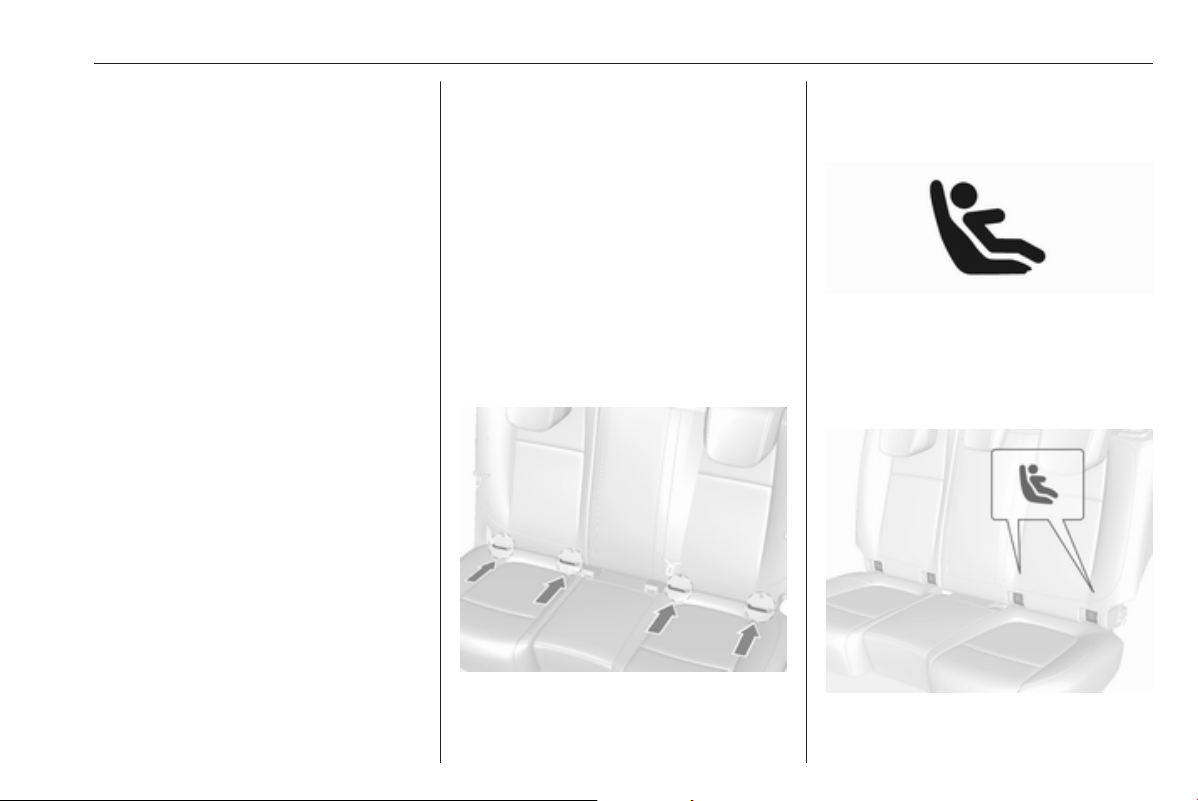
Child restraint systems can be
fastened with:
● Three-point seat belt
● ISOFIX brackets
● Top-tether anchor
Three-point seat belt
Child restraint systems can be
fastened by using a three-point seat
belt. Depending on the size of the
used child restraint systems, up to
three child restraint systems can be
attached to the rear seats. After
fastening the child restraint system
the seat belt has to be tightened
3 55.
ISOFIX child restraint systems
For the installation of ISOFIX child
restraint systems, two variants are
available:
● Installation of ISOFIX child
restraint systems without
permanent guide
● Installation of ISOFIX child
restraint systems with permanent
guide
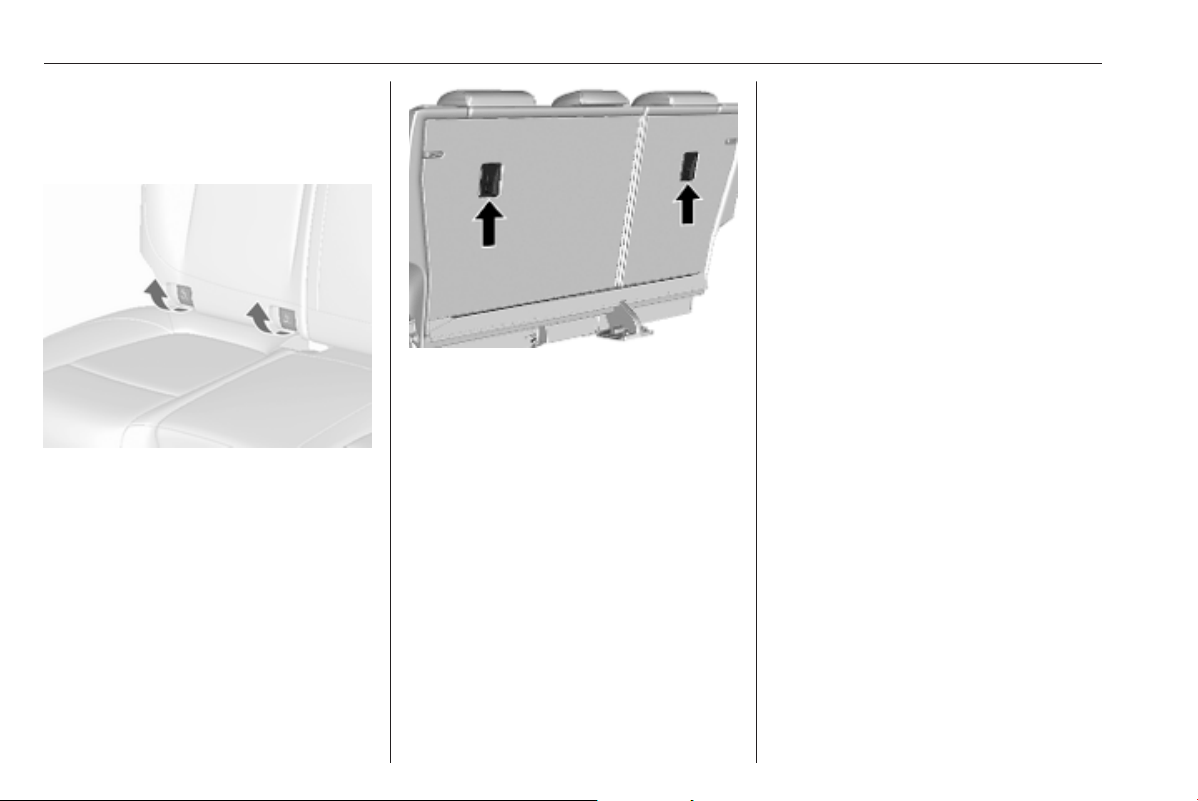
Installation of ISOFIX child restraint
systems without permanent guide
Fasten vehicle-approved ISOFIX
child restraint systems to the ISOFIX
mounting brackets. Specific vehicle
ISOFIX child restraint system
positions are marked in the table by
IL.
ISOFIX mounting brackets are
indicated by a label on the backrest.
Installation of ISOFIX child restraint
systems with permanent guide
54 Seats, restraints
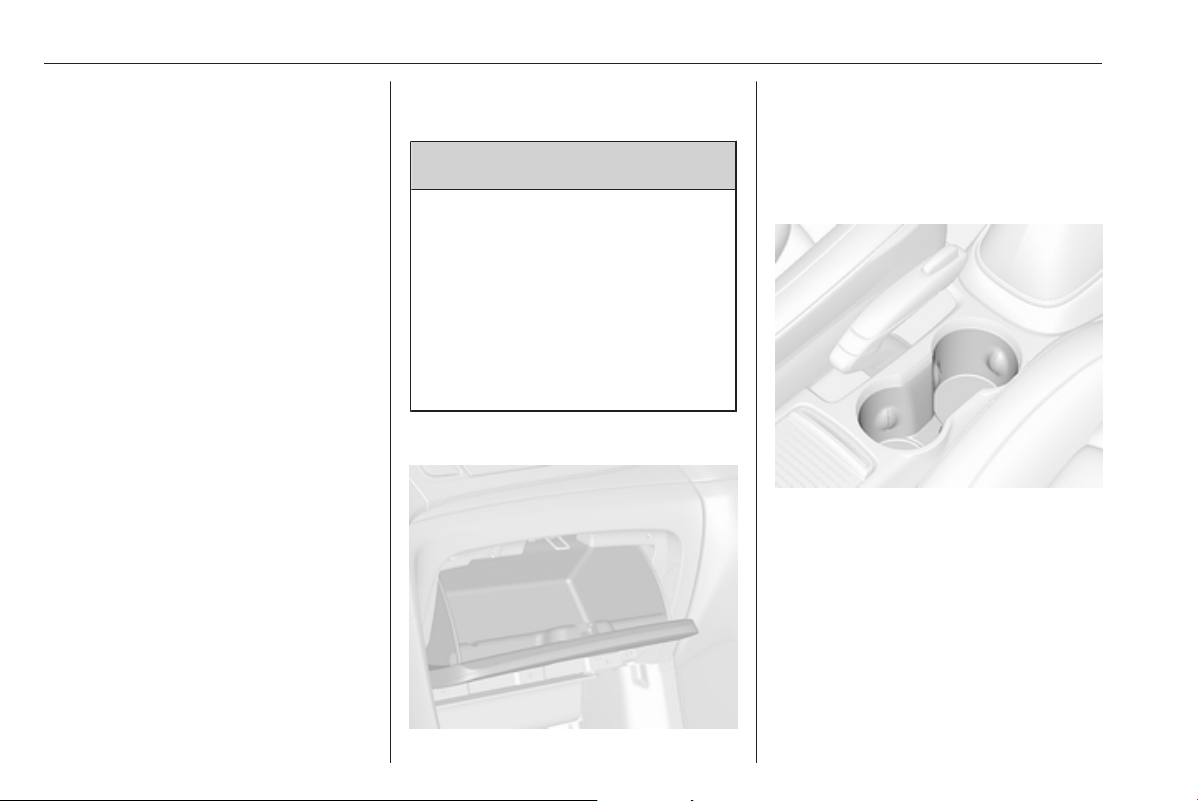
The vehicle might be equipped with
guides in front of the mounting
brackets to support the installation of
the child restraint system.
The covers of the guides will swivel
backwards automatically when
attaching the child restraint system.
Top-tether anchors
Depending on country specific
equipment, the vehicle might have
two or three fastening eyes.
Top-Tether anchors are marked with
the symbol : for a child restraint.
For non-ISOFIX child restraints,
fasten the Top-Tether strap to the
Top-Tether anchors.
For ISOFIX child restraints, fasten the
Top-Tether strap to the Top-Tether
anchors in addition to the ISOFIX
mounting.
ISOFIX child restraint systems of
universal category positions are
marked in the table by IUF.

Seats, restraints 55
Child restraint installation locations
Permissible options for fitting a child restraint system
Weight class
On front passenger seat
On rear outboard seats On rear centre seatactivated airbag deactivated airbag
Group 0: up to 10 kg X
U
1
U
2
U
2
Group 0+: up to 13 kg X
U
1
U
2
U
2
Group I: 9 to 18 kg X
U
1
U
2
U
2
Group II: 15 to 25 kg X X
U
2
U
2
Group III: 22 to 36 kg X X
U
2
U
2
1
: if the child restraint system is being secured using a three-point seat belt, move seat height adjustment to uppermost
position and ensure that vehicle seat belt runs forwards from the upper anchorage point. Adjust seat backrest
inclination as far as necessary to a vertical position to ensure that the belt is tight on the buckle side.
2
: move the head restraint to uppermost position. If it interferes with the proper installation of the child restraint system,
remove the head restraint 3 38.
U : universal suitability in conjunction with three-point seat belt.
X : no child restraint system permitted in this weight class.

56 Seats, restraints
Permissible options for fitting an ISOFIX child restraint system
Weight class Size class Fixture On front passenger seat On rear outboard seats On rear centre seat
Group 0: up to 10 kg E ISO/R1 X
IL
1
X
Group 0+: up to 13 kg E ISO/R1 X
IL
1
X
D ISO/R2 X
IL
1
X
C ISO/R3 X
IL
1
X
Group I: 9 to 18 kg D ISO/R2 X
IL
1
X
C ISO/R3 X
IL
1
X
B ISO/F2 X IL, IUF X
B1 ISO/F2X X IL, IUF X
A ISO/F3 X IL, IUF X
Group II: 15 to 25 kg X IL X
Group III: 22 to 36 kg X IL X
1
: move front passenger seat to the foremost position or adjust front seat backrest inclination as far as necessary to
a vertical position to ensure that there is no interference between child restraint system and front seat backrest.
IL : suitable for particular ISOFIX restraint systems of the "specific-vehicle", "restricted" or "semi-universal" categories.
The ISOFIX restraint system must be approved for the specific vehicle type.
IUF : suitable for ISOFIX forward-facing child restraint systems of universal category approved for use in this weight class.
X : no ISOFIX child restraint system approved in this weight class.

Seats, restraints 57
ISOFIX size class and seat device
A – ISO/F3 : forward-facing child restraint system for children of maximum size in the weight class 9 to 18 kg
B – ISO/F2 : forward-facing child restraint system for smaller children in the weight class 9 to 18 kg
B1 – ISO/F2X : forward-facing child restraint system for smaller children in the weight class 9 to 18 kg
C – ISO/R3 : rear-facing child restraint system for children of maximum size in the weight class up to 18 kg
D – ISO/R2 : rear-facing child restraint system for smaller children in the weight class up to 18 kg
E – ISO/R1 : rear-facing child restraint system for young children in the weight class up to 13 kg
58 Storage
Storage
Storage compartments ................ 58
Glovebox ................................... 58
Cupholders ................................ 58
Front storage ............................. 59
Underseat storage ..................... 59
Centre console storage ............. 60
Rear carrier system ................... 60
Load compartment ....................... 70
Load compartment cover ........... 71
Rear floor storage cover ............ 72
Lashing eyes ............................. 72
Warning triangle ........................ 72
First aid kit ................................. 72
Roof rack system ......................... 73
Roof rack ................................... 73
Loading information ..................... 73
Storage compartments
9 Warning
Do not store heavy or sharp
objects in the storage
compartments. Otherwise, the
storage compartment lid could
open and vehicle occupants could
be injured by objects being thrown
around in the event of hard
braking, a sudden change in
direction or an accident.
Glovebox
To open, pull the handle.
The glovebox should be closed while
driving.
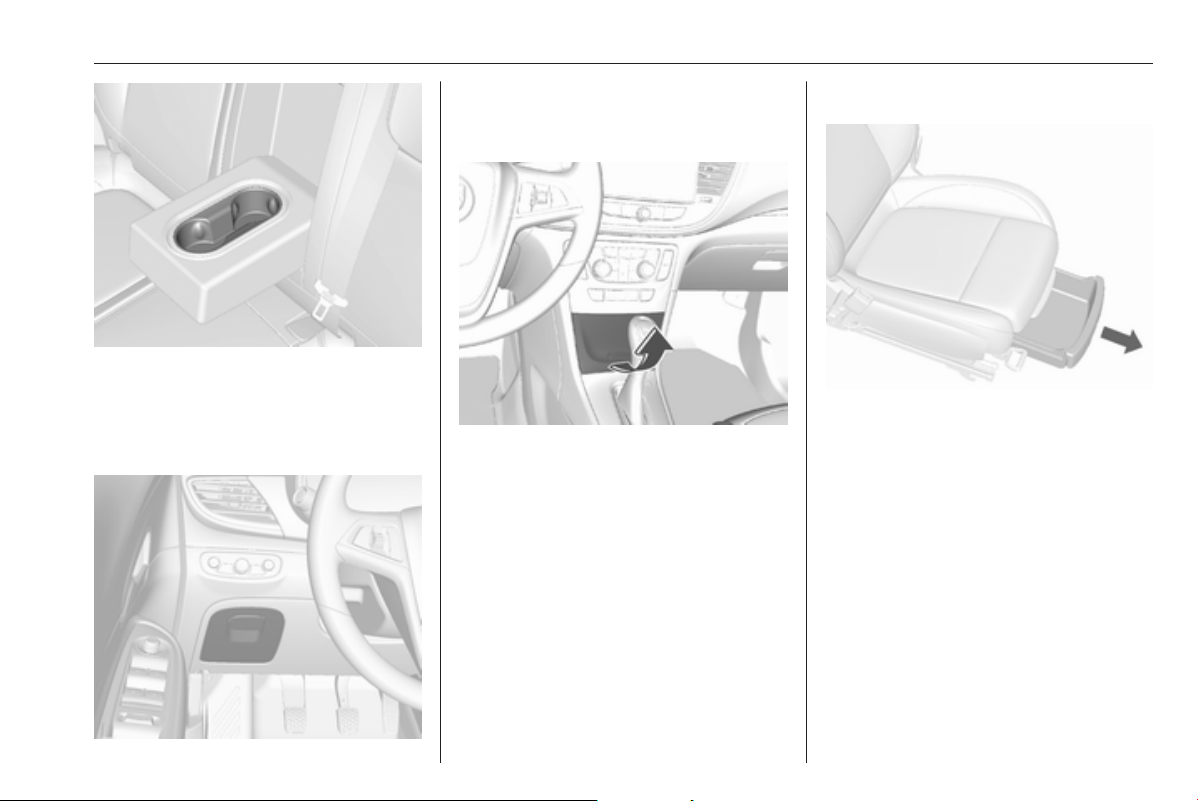
Cupholders
The cupholders are located in the
centre console and rear part of the
centre console.
Storage 59
To use the rear seat cupholder, fold
down the rear seat armrest.
Front storage
A storage compartment is located
next to the steering wheel. Pull the
handle to open.
A further storage compartment is
located in the centre console.
To open, press the button.
The covers of the storage
compartments should be closed while
driving.
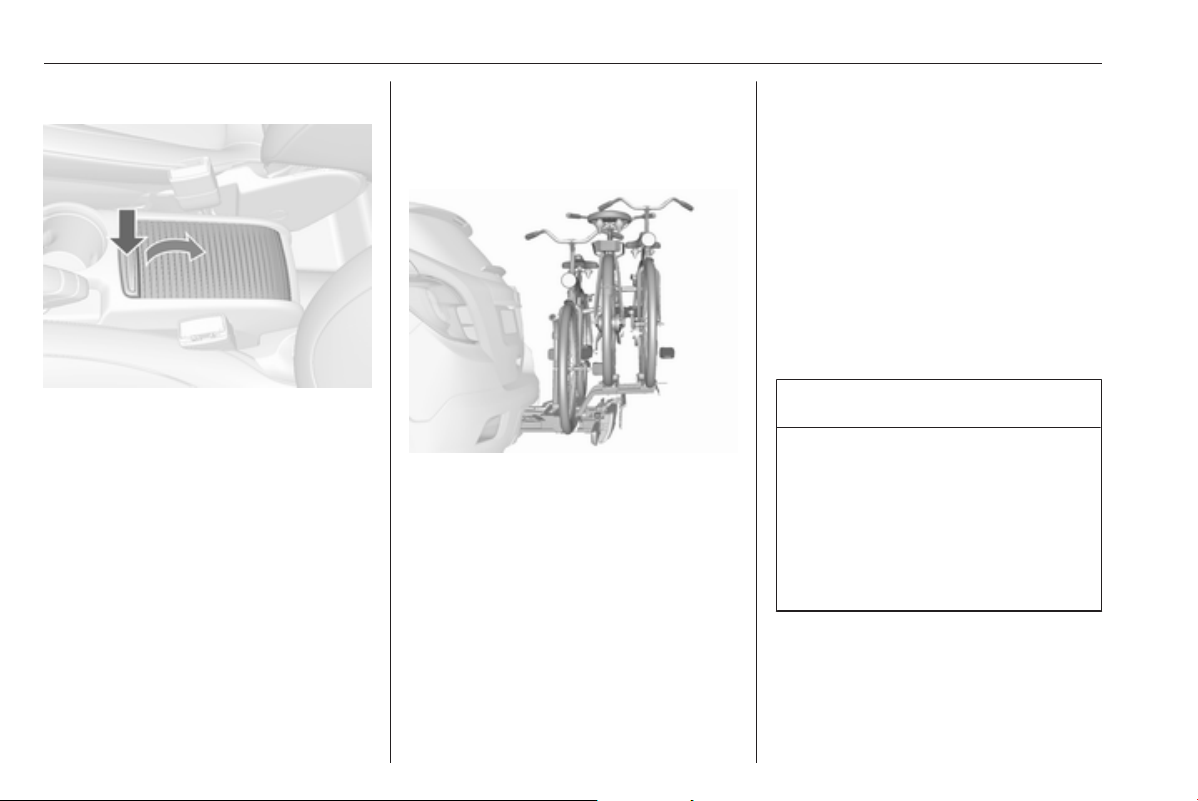
Underseat storage
Lift drawer at the front and pull out. To
close, push the drawer in and
engage.
60 Storage
Centre console storage
Push down the button and slide cover
backwards.
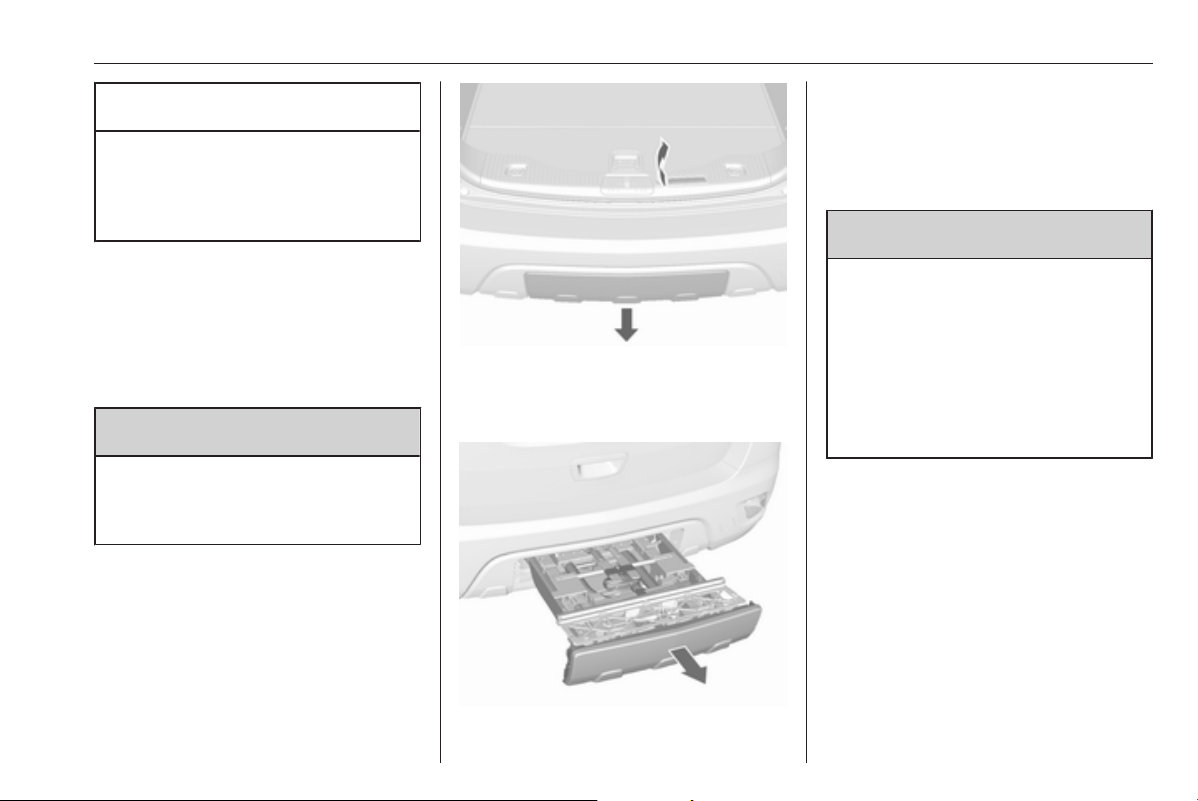
Rear carrier system
Rear carrier system for three
bicycles
The rear carrier system (Flex-Fix
system) allows one bicycle to be
attached to an extendable carrier
integrated into the vehicle floor. It is
possible to attach two further bicycles
on an adapter. The transportation of
other objects is not permitted.
The maximum load of the rear carrier
system is 60 kg with attached adapter
and 30 kg without attached adapter.
This allows the attachment of an
electrically-powered bicycle to the
rear carrier system. The maximum
load per bicycle on the adapter is
20 kg.
The wheelbase of a bicycle must not
exceed 1.15 m. Otherwise the secure
fastening of a bicycle is not possible.
If not in use, the rear carrier system
must be slid back into the vehicle
floor.
There must not be any objects on the
bicycles that could become loose
during transportation.
Caution
If the rear carrier system is
extended and the vehicle is fully
loaded, the ground clearance will
be reduced.
Drive carefully whenever the road
has a steep inclination or when
driving over a ramp, bump, etc.
Storage 61
Caution
Consult your bicycle dealer before
attaching bicycles with carbon
frames. The bicycles may get
damaged.
Notice
The tail lights of the vehicle will be
deactivated if the tail lights of the
rear carrier system are installed.
Extending
Open the tailgate.
9 Warning
No-one should be in the extension
zone of the rear carrier system,
risk of injury.
Pull release lever up. The rear carrier
system disengages and travels
quickly out of the rear bumper.
Completely pull out the rear carrier
system until you hear it engage.
Ensure that it is not possible to push
in the rear carrier system without
pulling the release lever again.
9 Warning
It is only permissible to fit objects
to the rear carrier system if the
system has been correctly
engaged. If the rear carrier system
will not engage correctly, do not fit
objects to the system and slide the
system back. Seek the assistance
of a workshop.
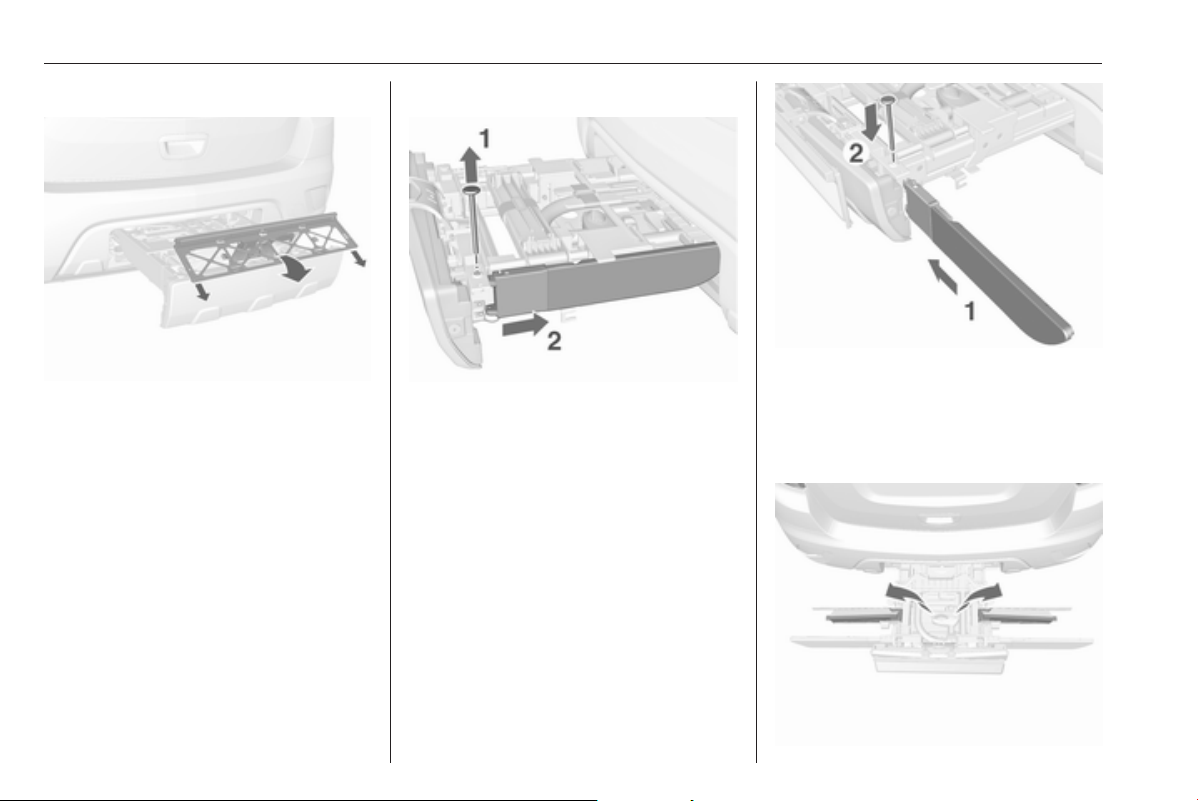
62 Storage
Unfold number plate holder
Lift the number plate holder and fold
it backwards.
Affix the number plate before first use
of the rear carrier system.
Fold out tail lights
To install the tail lights, remove both
pins (1). Pull tail lights out of the
retainer towards the front (2) and
downwards and swivel them to the
side.
Push the tail lights into the retainer
(1) and reinstall pins (2) all the way to
attach the lights.
Fold out wheel recess
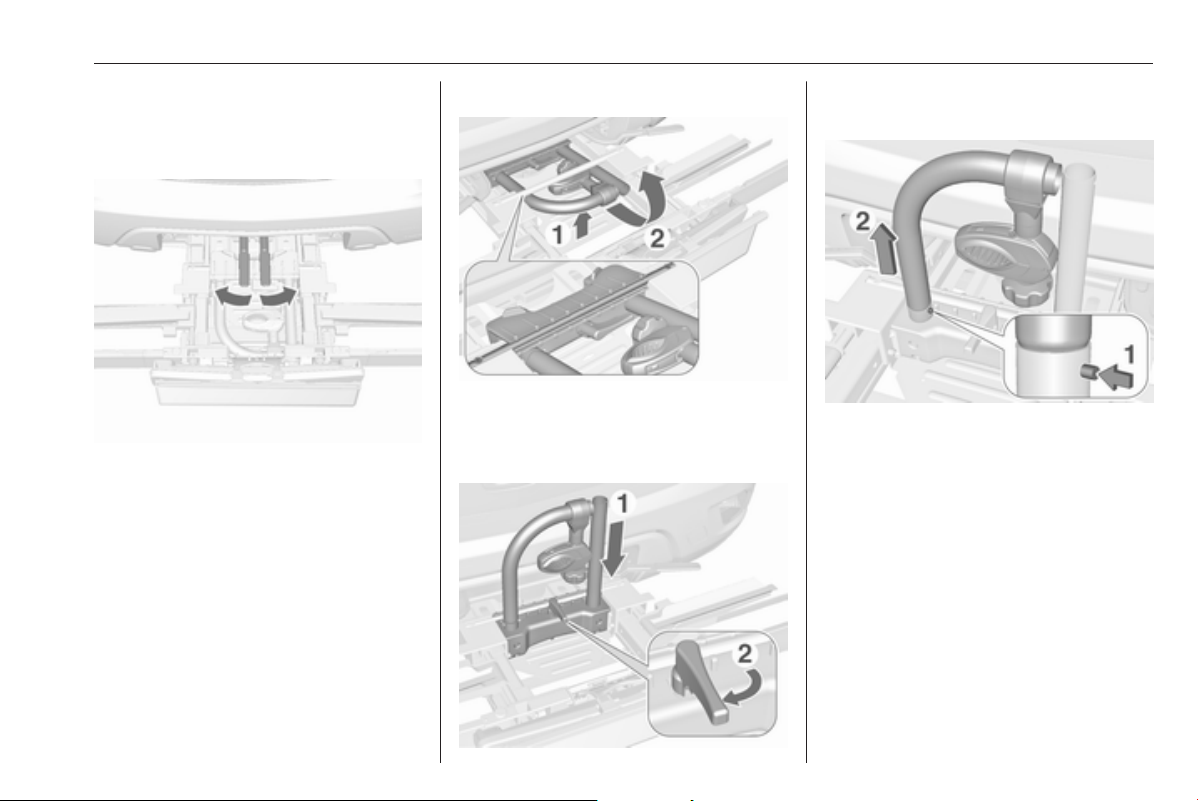
Storage 63
Remove strap and fold out the wheel
recess.
Lock the rear carrier system
Remove strap and swivel both
clamping levers sideways as far as
they will go.
Otherwise safe functionality is not
guaranteed.
Assembling the bicycle rack
Lift the rack at the rear (1) and pull it
backwards.
Fold up the rack (2).
Push down the rack (1) and swivel
handle (2) backwards to engage.
Press button (1) and remove left part
of rack (2).
Press button (1) and insert left part of
rack into the right part (2).
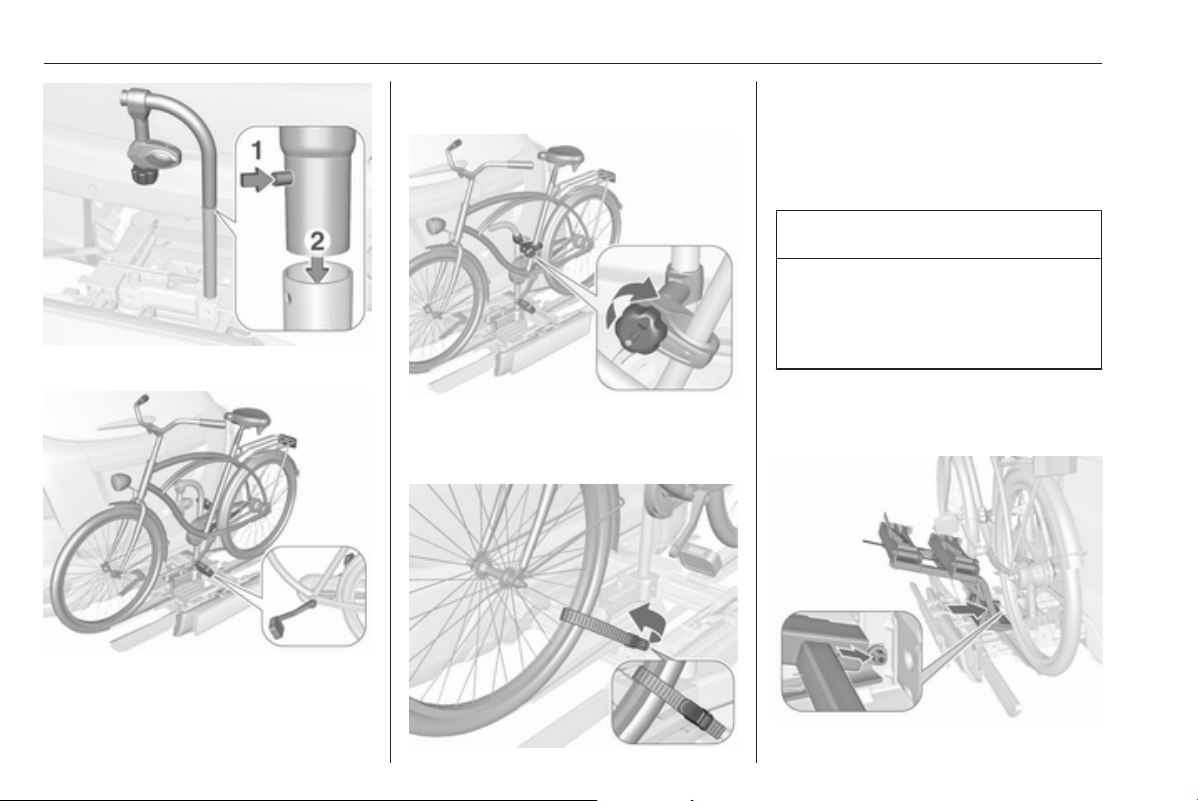
64 Storage
Attaching a bicycle
1. Rotate the pedals into position, as
shown in the illustration, and put
the bicycle on the wheel recess.
Make sure that the bicycle stands
centrally on the wheel recesses.
2. Attach the short mounting bracket
to the bicycle frame. Turn the
knob clockwise to fasten.
3. Secure both bicycle wheels to the
wheel recesses using the strap
retainers.
4. Check the bicycle to make sure it
is secure.
Caution
Ensure gap between bicycle and
vehicle is at least 5 cm. If
necessary, loosen handlebar and
swivel sideways.
Attaching the adapter
When carrying more than one bicycle,
the adapter must be fixed.
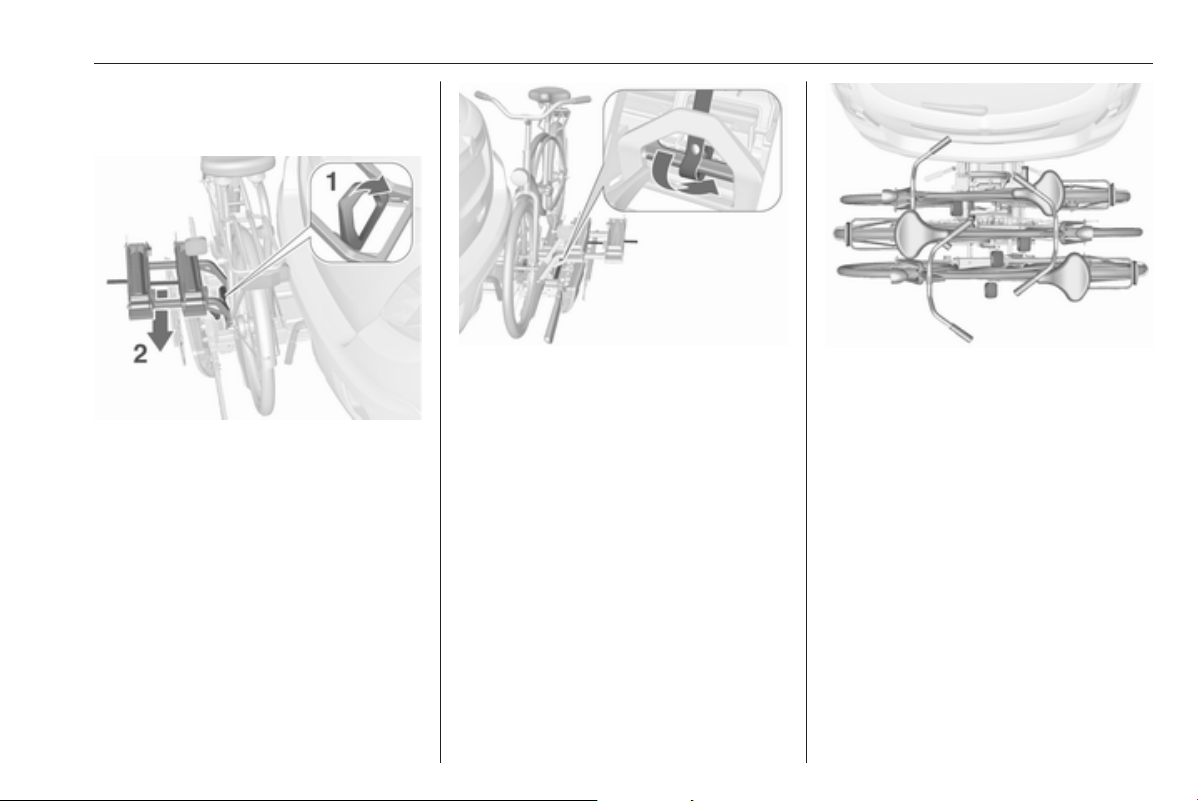
Storage 65
1. Apply the adapter to the rear
carrier system, as shown in the
illustration.
2. Turn the lever (1) forwards and
hold it, then lower the adapter (2)
at the rear.
3. Release lever and check if the
adapter is engaged securely.
4. Guide the strap attached to the
adapter underneath the lever
when folding back the rear carrier
system. Fasten the strap.
Attaching further bicycles
The attachment of further bicycles is
similar to the attachment of the first
bicycle. Additionally, some steps
must be considered:
1. Before putting on the bicycle,
always unfold the wheel recesses
for the next bicycle if necessary.
2. Always rotate the pedals into an
appropriate position before
putting on the bicycle.
3. Position the bicycles on the rear
carrier system alternately aligned
to the left and to the right.
4. Align the bicycles with the one
attached previously. The wheel
hubs of the bicycles must not
touch each other.
5. Attach the bicycles with mounting
brackets and strap retainers as
described for the first bicycle. The
mounting brackets should be
fixed in parallel.
Use the long mounting bracket to
attach the second bicycle to the
rack.
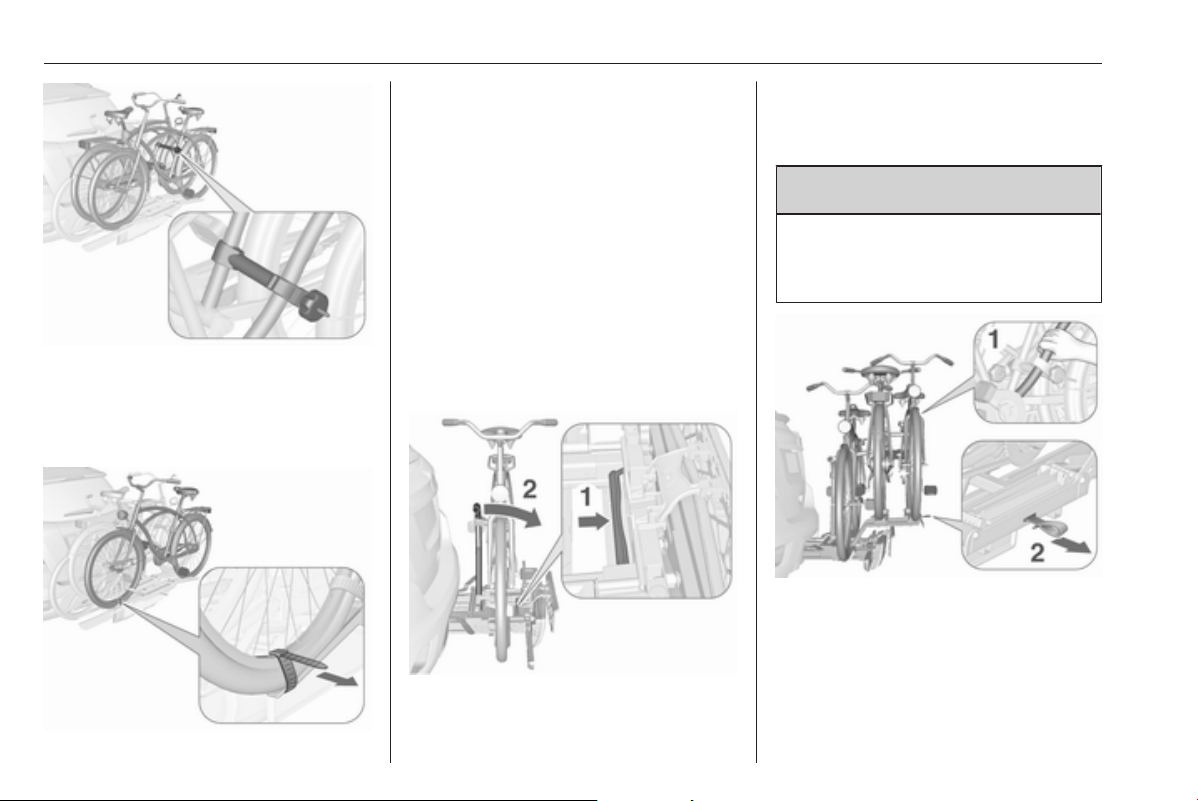
66 Storage
Use the short accessory mounting
bracket to attach the third bicycle.
The bracket must be fixed
between the frames of the second
and third bicycle.
6. Additionally, secure both bicycle
wheels of the third bicycle to the
wheel recesses using the
tensioning straps.
It is recommended to attach a
warning sign to the rearmost bicycle,
to increase visibility.
Fold the rear carrier system
backwards
The rear carrier system can be folded
backwards to gain access to the load
compartment.
● Without attached adapter:
Push the lever (1) to disengage
and hold it.
Pull the rack (2) backwards to
fold the rear carrier system.
● With attached adapter:
9 Warning
Take care when disengaging the
rear carrier system as it will tilt
backwards. Risk of injury.
Hold frame (1) of rearmost
bicycle with one hand and pull the
loop (2) to disengage.
Hold rearmost bicycle with both
hands and fold the rear carrier
system backwards.
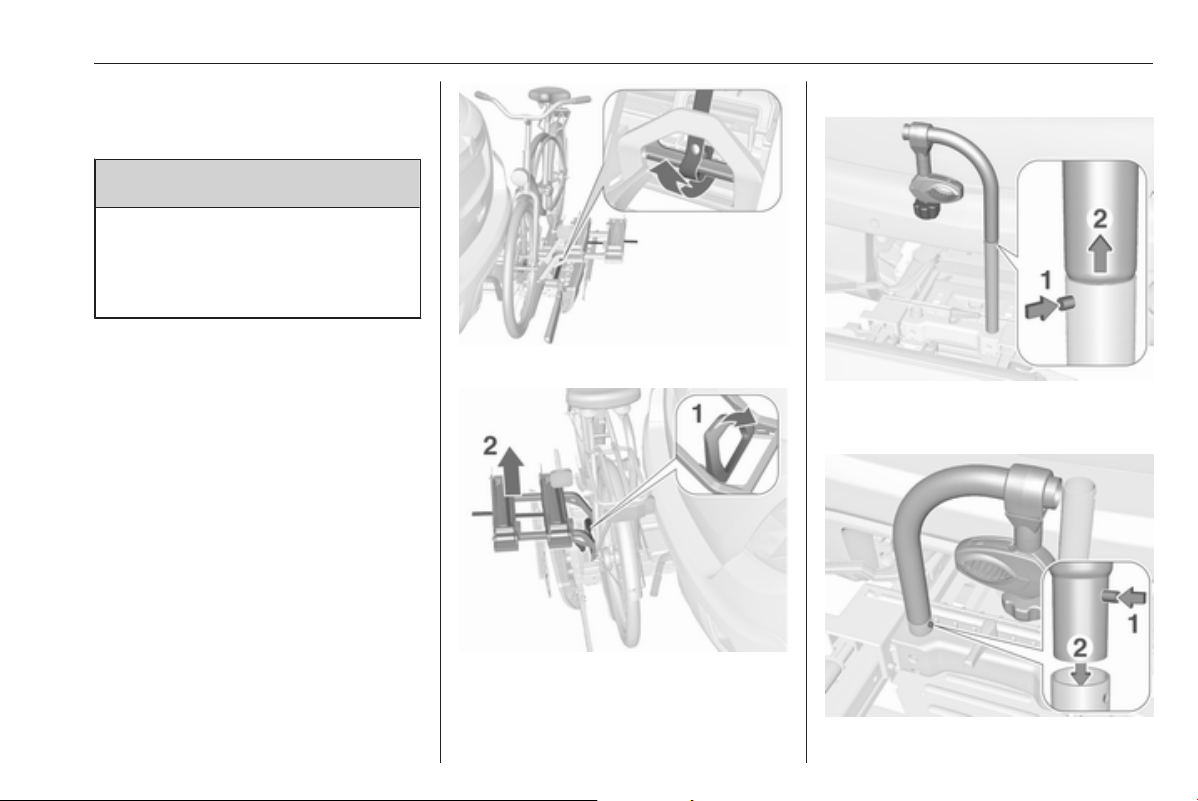
Storage 67
To increase visibility, the tail lights of
the vehicle are activated when the
rear carrier system is folded back.
9 Warning
When folding the rear carrier
system forwards again, ensure
that the system is engaged
securely.
Removing bicycles
Undo strap retainers on both bicycle
tyres.
Turn knob anticlockwise and remove
mounting brackets.
Detaching adapter
Detach the adapter before removing
the bicycle on the rear carrier system.
1. Fold in wheel recesses.
2. Unbutton the strap.
3. Turn the lever (1) forwards and
hold it.
4. Lift the adapter (2) at the rear and
remove.
Disassembling the bicycle rack
Press button (1) and remove upper
part of rack (2).
Press button (1) and reinstall rack (2).
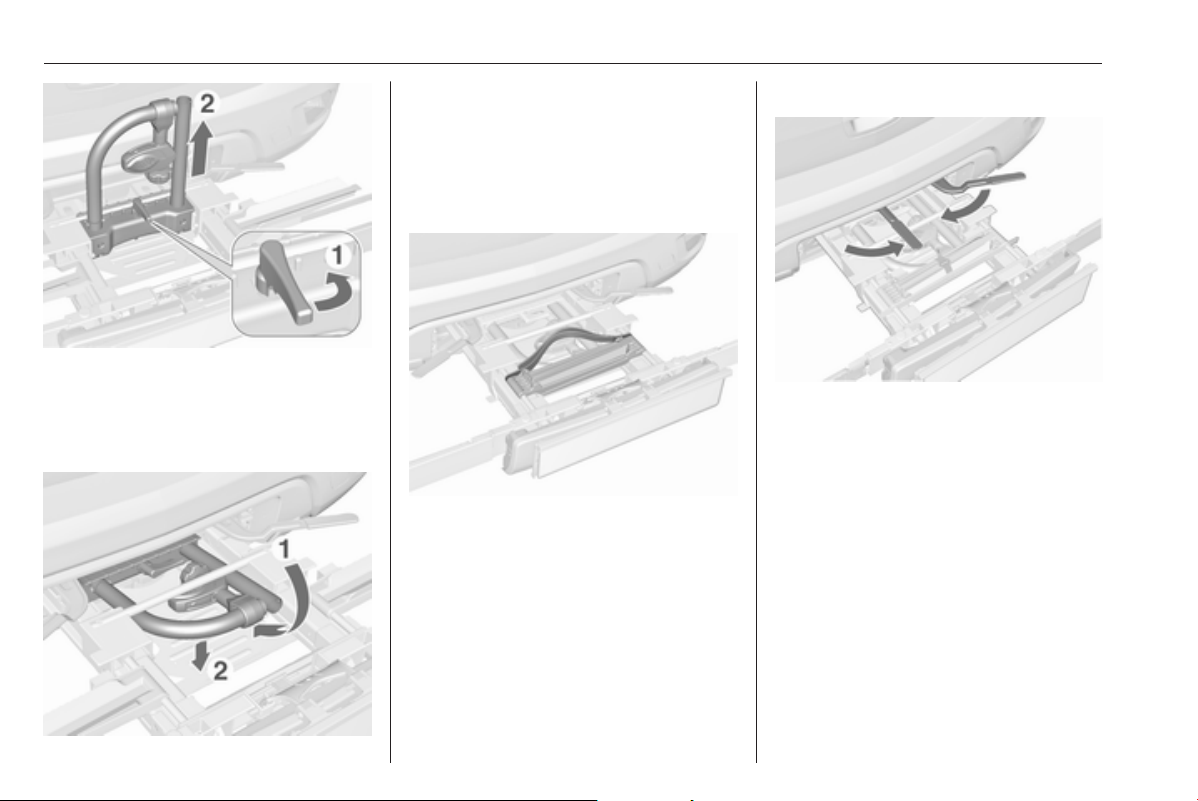
68 Storage
Arrange mounting brackets as shown
in the illustration.
Swivel handle (1) sideways to
disengage and lift the rack (2).
Fold the rack backwards, then push
forwards until it stops (1).
Press the rack down at the rear (2).
Fold in wheel recess
Fold in wheel recess. Fasten strap.
Stow the strap retainers accurately.
Unlock the rear carrier system
Swivel both clamping levers inwards
as far as they will go. Fasten strap.
Fold in tail lights
Remove both pins. Pull tail lights out
of the retainer and put them in the
position to be stored in.
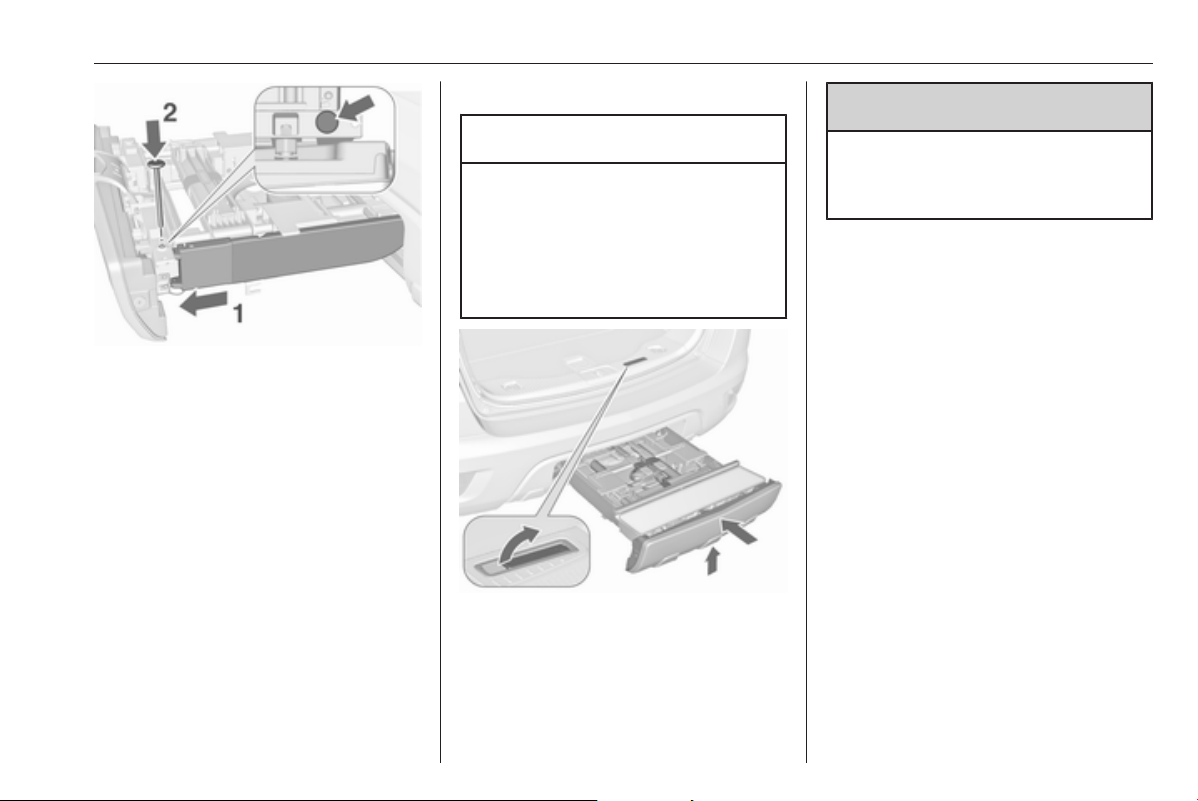
Storage 69
Push the tail lights into the retainer
(1). Insert pins into the designated
holes of the retainer and the tail lights
(2).
Notice
Check that the tail lights of the
vehicle are working properly.
Fold in number plate holder
Lift the number plate holder and fold
it forwards.
Retracting the rear carrier system
Caution
Ensure that all foldable parts, e.g.
wheel recesses and mounting
brackets, are stowed correctly.
Otherwise the rear carrier system
may get damaged when trying to
retract it.
Push the release lever up and hold it.
Lift the system slightly and push it into
the bumper until it engages.
Release lever must return to original
position.
9
Warning
If the system cannot be correctly
engaged, seek the assistance of a
workshop.
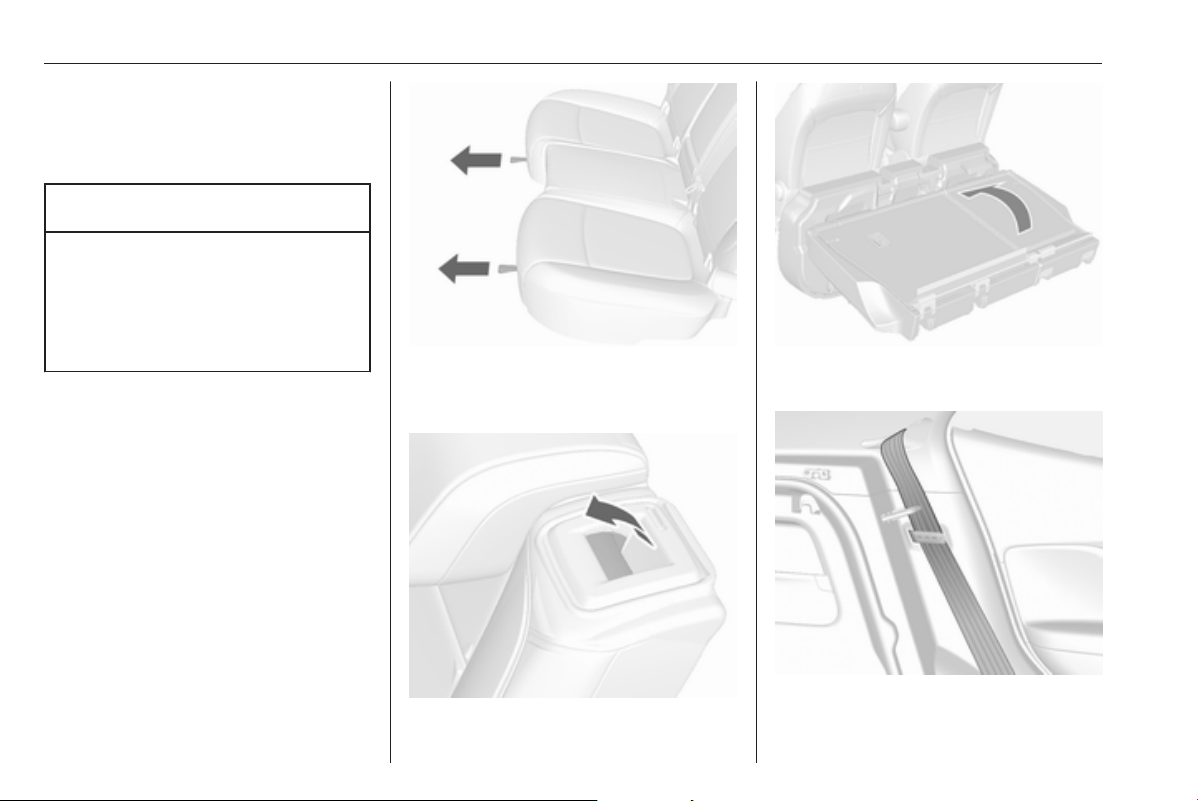
70 Storage
Load compartment
Load compartment extension
Caution
First fold down the rear seat
cushion before folding the rear
seat backrest.
Disregard may lead to damage to
the rear seat.
1. Push head restraints down by
pressing the catch.
Notice
To ensure sufficient room for rear
seat cushion operation, slide the
front seat forward and move the front
seat backrest upright.
2. Pull the loop under the seat
cushion and fold down the seat
cushion.
3. Pull the release lever on top of the
rear backrest.
4. Fold the backrest forward and
down.
5. Put the seat belts for the outboard
seats into the belt guides.
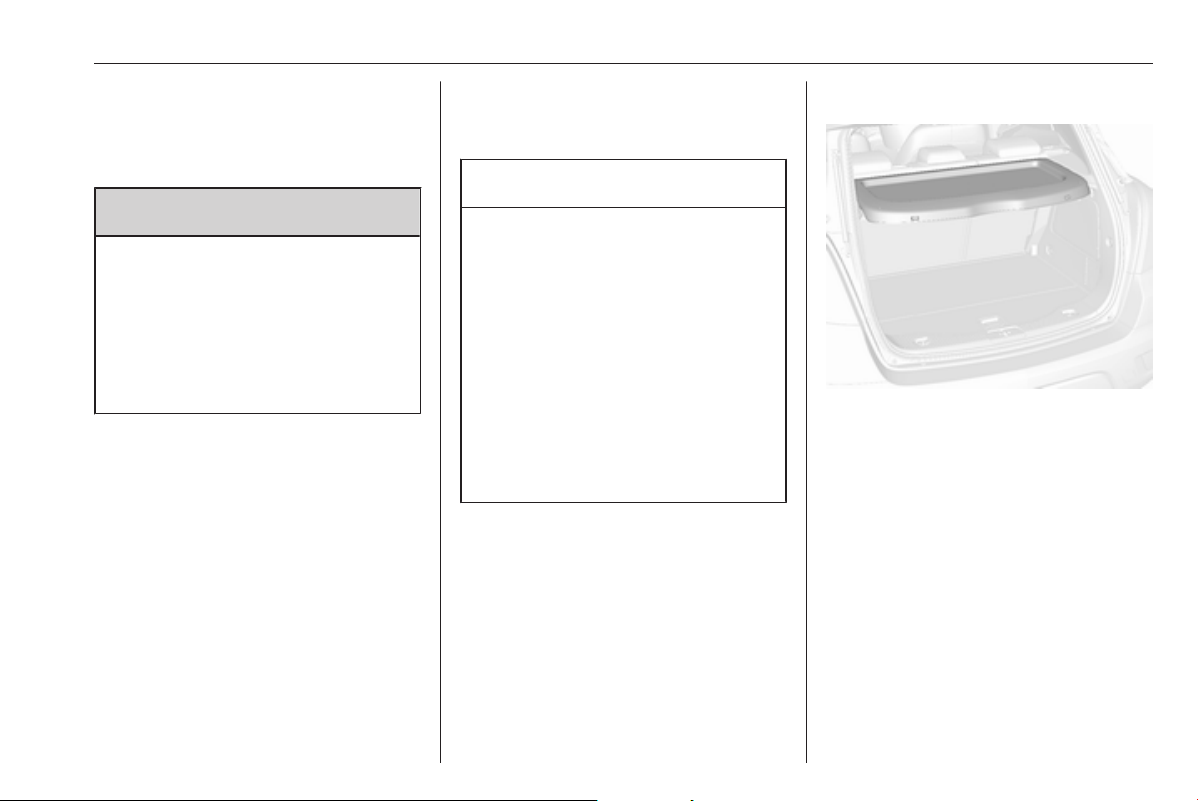
Storage 71
To return the backrest to the original
position, pull out the seat belt from the
belt guides and lift backrest up.
Push backrest firmly into place.
9 Warning
When folding up, ensure that
backrests are securely engaged in
position before driving. Failure to
do so may result in personal injury
or damage to the load or vehicle in
the event of hard braking or a
collision.
Ensure the seat belts are not pinched
by the latch.
The centre rear seat belt may lock
when you raise the backrest. If this
happens, allow the belt go back all the
way and repeat operation.
If the seat belt is still locked, fold down
the seat cushion and try again.
To return the rear seat cushion, put
the rear part of the seat cushion in its
original position ensuring that the
seat belt buckle straps are not twisted
or caught under the seat cushion,
then push the front part of the seat
cushion firmly down until it latches.
Caution
When returning rear seat backrest
to the upright position, place the
rear seat belt and buckles
between the rear seat backrest
and one cushion. Make sure the
rear seat belt and buckles do not
get pinched under the rear seat
cushion.
Ensure the seat belts are not
twisted or caught in the seat
backrest and are arranged in their
proper position.
Load compartment cover
Do not place any objects on the cover.
Removing
Unhook retaining straps from tailgate.
Lift cover at the rear and push it
upwards at the front.
Remove the cover.
Fitting
Engage cover in side guides and fold
downwards.
Attach retaining straps to tailgate.
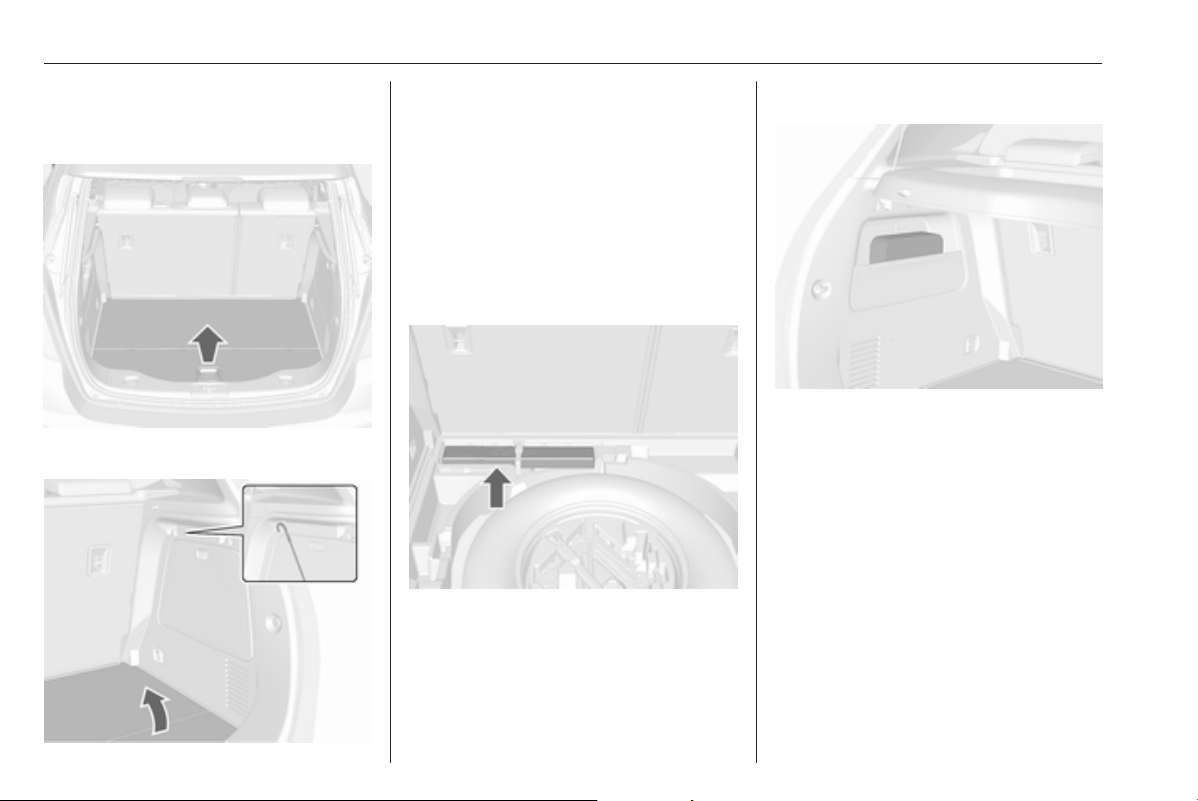
72 Storage
Rear floor storage cover
Rear floor cover
Grasp the handle and lift the cover.
Mount the cover to the hook at the
sidewall.
Lashing eyes
The lashing eyes are designed to
secure items against slippage, e.g.
using lashing straps or luggage net.
Warning triangle
Stow the warning triangle below the
floor cover in the load compartment.
Secure it with the strap.
First aid kit
Stow the first aid kit in the storage
compartment at the left sidewall of the
load compartment.
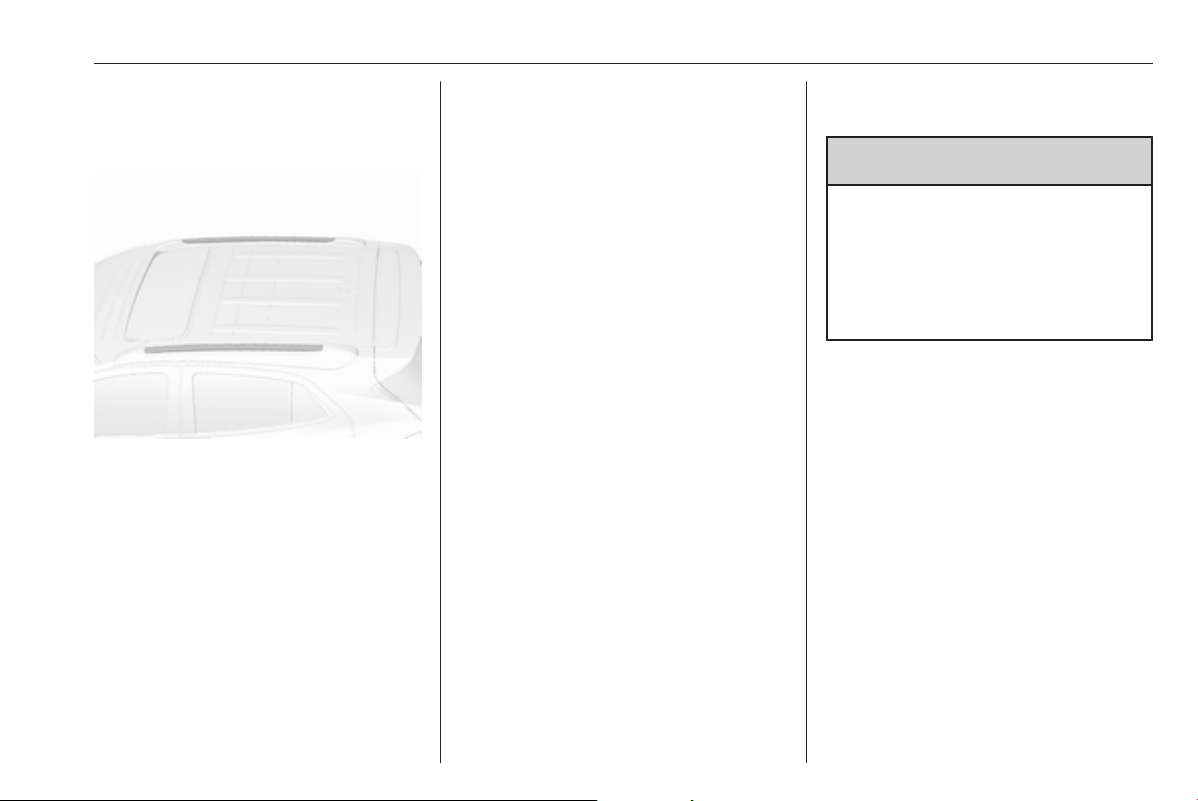
Storage 73
Roof rack system
Roof rack
The roof rack has side rails attached
to the roof.
For safety reasons and to avoid
damage to the roof, the vehicle
approved roof rack system is
recommended. For further
information contact your workshop.
Loading information
● Heavy objects in the load
compartment should be placed
against the seat backrests.
Ensure the backrests are
securely engaged. If objects can
be stacked, the heavier objects
should be placed at the bottom.
● Prevent sliding of loose objects
by securing them with straps
attached to the lashing eyes
3 72.
● Do not allow the load to protrude
above the upper edge of the
backrests.
● Do not place any objects on the
load compartment cover or the
instrument panel, and do not
cover the sensor on top of the
instrument panel.
● The load must not obstruct the
operation of the pedals, parking
brake and gear selector, or
hinder the freedom of movement
of the driver. Do not place any
unsecured objects in the interior.
● Do not drive with an open load
compartment.
9 Warning
Always make sure that the load in
the vehicle is securely stowed.
Otherwise objects can be thrown
around inside the vehicle and
cause personal injury or damage
to the load or vehicle.
● The payload is the difference
between the permitted gross
vehicle weight (Identification
plate 3 218) and the EC kerb
weight.
To calculate the payload, enter
the data for your vehicle in the
weights table at the front of this
manual.
The EC kerb weight includes
weights for the driver (68 kg),
luggage (7 kg) and all fluids (fuel
tank 90% full).
Optional equipment and
accessories increase the kerb
weight.

74 Storage
● Driving with a roof load increases
the sensitivity of the vehicle to
cross-winds and has a
detrimental effect on vehicle
handling due to the vehicle's
higher centre of gravity.
Distribute the load evenly and
secure it properly with retaining
straps. Adjust the tyre pressure
and vehicle speed according to
the load conditions. Check and
retighten the straps frequently.
Do not drive faster than 75 mph.
● The permissible roof load is
75 kg. The roof load is the
combined weight of the roof rack
and the load.

Instruments and controls 75
Instruments and
controls
Controls ....................................... 76
Steering wheel adjustment ........ 76
Steering wheel controls ............. 76
Heated steering wheel ............... 76
Horn ........................................... 77
Windscreen wiper and washer ..77
Rear window wiper and
washer ...................................... 79
Outside temperature .................. 79
Clock ......................................... 80
Power outlets ............................. 82
Warning lights, gauges and indi‐
cators ........................................... 83
Speedometer ............................. 83
Odometer .................................. 83
Trip odometer ............................ 83
Tachometer ............................... 84
Fuel gauge ................................ 84
Fuel selector .............................. 85
Engine coolant temperature
gauge ....................................... 86
Service display .......................... 86
Control indicators ...................... 87
Turn lights .................................. 91
Seat belt reminder ..................... 91
Airbag and belt tensioners ......... 91
Airbag deactivation .................... 92
Charging system ....................... 92
Malfunction indicator light .......... 92
Brake and clutch system ........... 92
Antilock brake system (ABS) ..... 93
Gear shifting .............................. 93
Descent control system ............. 93
Lane departure warning ............ 93
Electronic Stability Control off ...93
Electronic Stability Control and
Traction Control system ........... 93
Traction Control system off ....... 94
Preheating ................................. 94
AdBlue ....................................... 94
Tyre pressure monitoring
system ...................................... 94
Engine oil pressure .................... 94
Low fuel ..................................... 94
Immobiliser ................................ 95
Exterior light .............................. 95
High beam ................................. 95
High beam assist ....................... 95
Adaptive forward lighting ........... 95
Front fog lights ........................... 95
Rear fog light ............................. 95
Cruise control ............................ 95
Vehicle detected ahead ............. 96
Speed limiter ............................. 96
Traffic sign assistant .................. 96
Door open .................................. 96
Displays ....................................... 96
Driver Information Centre .......... 96
Info Display .............................. 101
Vehicle messages ...................... 103
Warning chimes ....................... 104
Battery voltage ........................ 104
Vehicle personalisation .............. 105
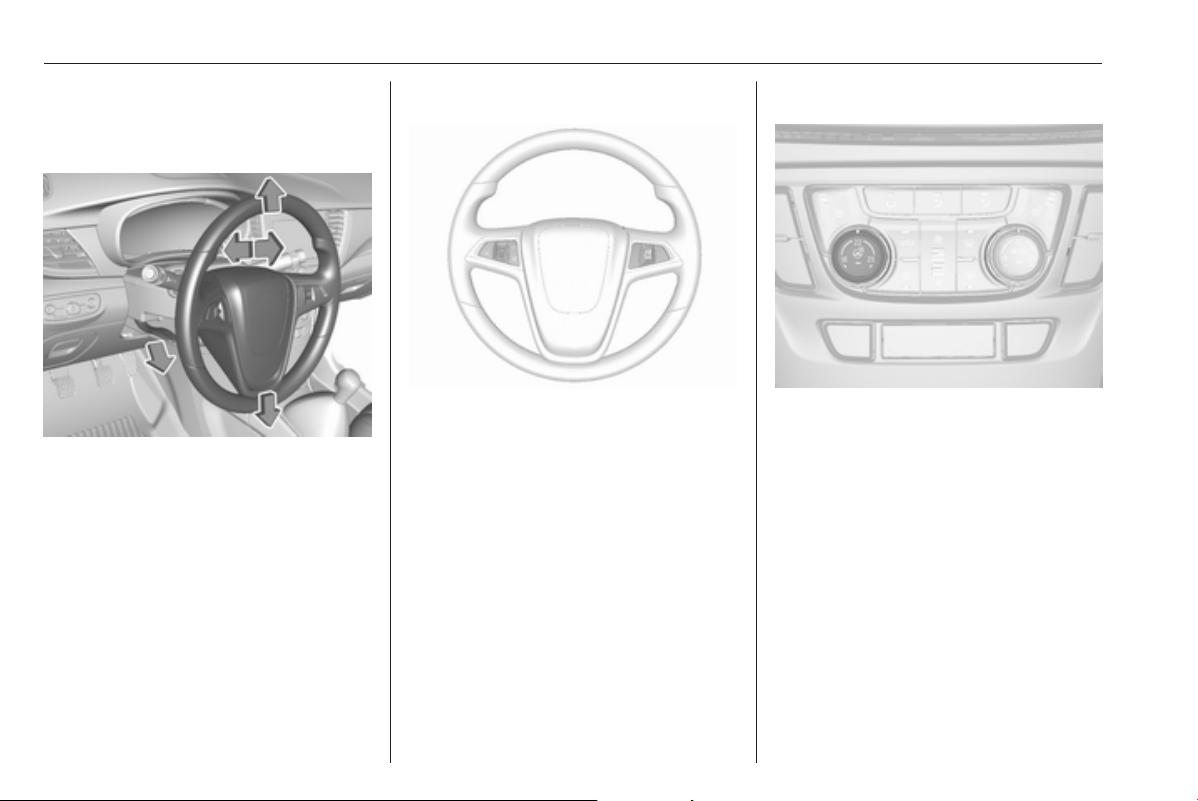
76 Instruments and controls
Controls
Steering wheel adjustment
Unlock lever, adjust steering wheel,
then engage lever and ensure it is
fully locked.
Do not adjust steering wheel unless
vehicle is stationary and steering
wheel lock has been released.
Steering wheel controls
Cruise control and speed limiter are
operated via the controls on the left
side of the steering wheel.
Additionally, forward collision alert
can be set by using the controls on the
left side of the steering wheel.
Infotainment system can be operated
via the controls on the right side of the
steering wheel.
Driver assistance systems 3 149.
Further information is available in the
Infotainment manual.
Heated steering wheel
Activate heating by pressing *.
Activation is indicated by the LED in
the button.
Heating is operational when the
engine is running.
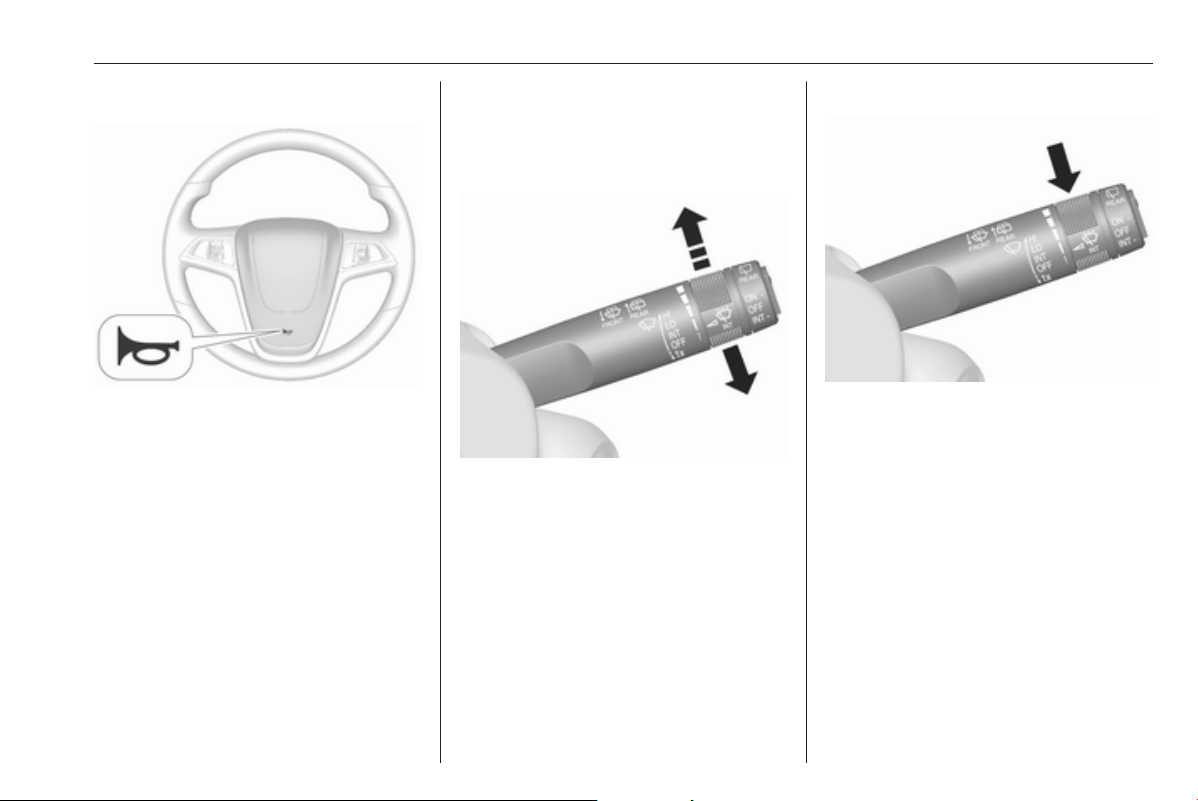
Instruments and controls 77
Horn
Press j.
Windscreen wiper and
washer
Windscreen wiper
HI : fast
LO : slow
INT : interval wiping or automatic
wiping with rain sensor
OFF : off
For a single wipe when the
windscreen wiper is off, press the
lever down to position 1x.
Do not use if the windscreen is frozen.
Switch off in car washes.
Adjustable wiper interval
Wiper lever in position INT.
Turn the adjuster wheel to adjust the
desired wipe interval:
short interval : turn adjuster
wheel upwards
long interval : turn adjuster
wheel downwards
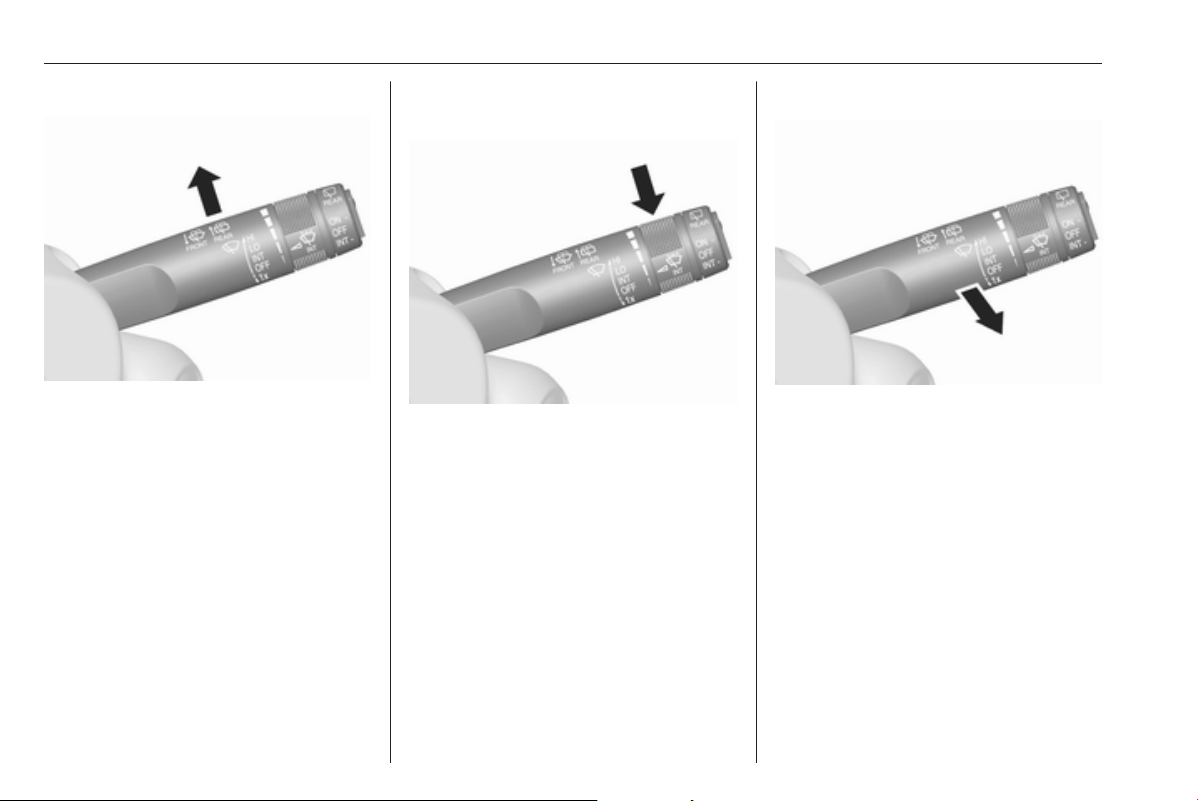
78 Instruments and controls
Automatic wiping with rain sensor
INT : automatic wiping with rain
sensor
The rain sensor detects the amount of
water on the windscreen and
automatically regulates the frequency
of the windscreen wiper.
Adjustable sensitivity of the rain
sensor
Turn the adjuster wheel to adjust the
sensitivity:
low sensitivity : turn adjuster
wheel downwards
high sensitivity : turn adjuster
wheel upwards
Keep the sensor free from dust, dirt
and ice.
Windscreen washer
Pull lever. Washer fluid is sprayed
onto the windscreen and the wiper
wipes a few times.
Washer fluid 3 179
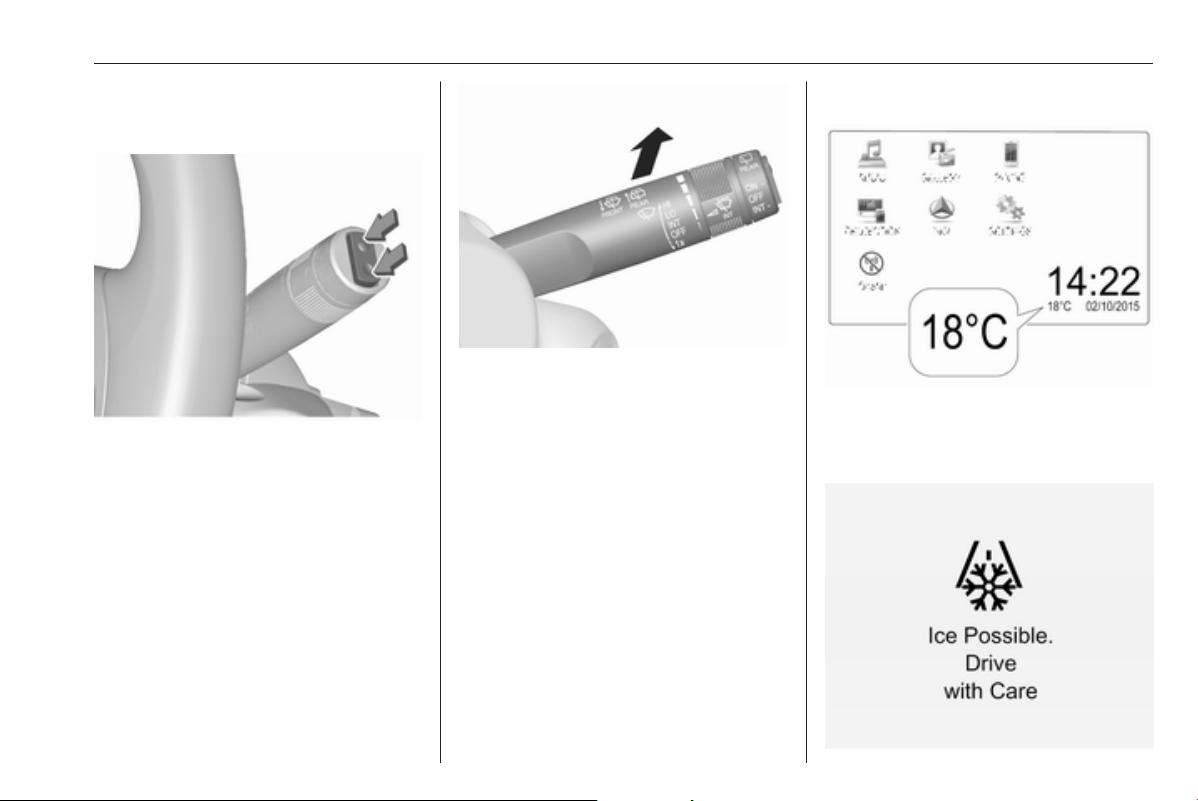
Instruments and controls 79
Rear window wiper and
washer
Press the rocker switch to activate the
rear window wiper:
upper switch : continuous
operation
lower switch : intermittent
operation
middle position : off
Push lever. Washer fluid is sprayed
onto the rear window and the wiper
wipes a few times.
Do not use if the rear window is
frozen.
Switch off in car washes.
The rear window wiper comes on
automatically when the windscreen
wiper is switched on and reverse gear
is engaged.
Activation or deactivation of this
function can be changed in the menu
Settings in the Info Display.
Washer fluid 3 179.
Vehicle personalisation 3 105.
Outside temperature
A drop in temperature is indicated
immediately and a rise in temperature
after a time delay.
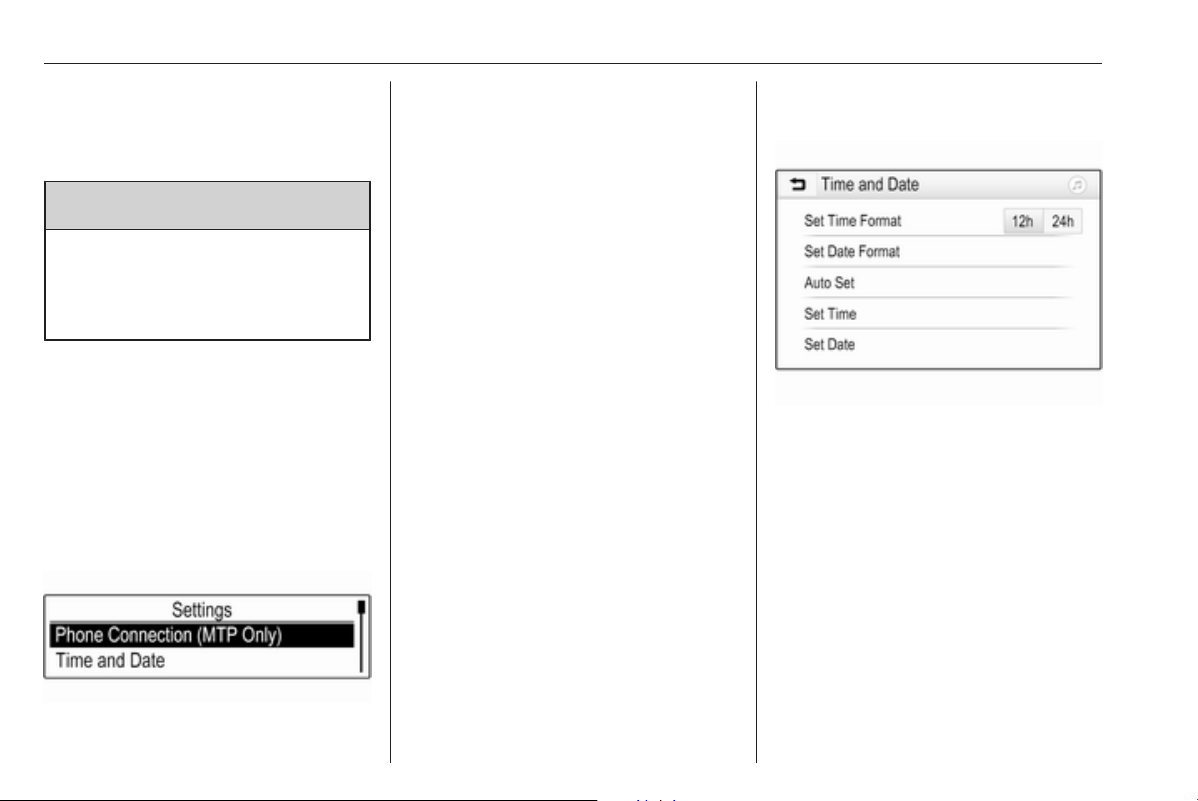
80 Instruments and controls
If outside temperature drops to
0.5 °C, a warning message is
displayed in the Driver Information
Centre.
9 Warning
The road surface may already be
icy even though the display
indicates a few degrees above 0
°C.
Clock
Date and time are shown in the
Info Display.
Info Display 3 101.
Graphic Info Display
Press MENU to open the respective
audio menu.
Select Time and Date.
Set Time
Select Set Time to enter the
respective submenu.
Select Auto Set at the bottom of the
screen. Activate either On - RDS or
Off (Manual).
If Off (Manual) is selected, adjust
hours and minutes.
Repeatedly select 12-24 HR at the
bottom of the screen to choose a time
mode.
If the 12-hour mode is selected, a
third column for AM and PM selection
is displayed. Select the desired
option.
Set Date
Select Set Date to enter the
respective submenu.
Select Auto Set at the bottom of the
screen. Activate either On - RDS or
Off (Manual).
If Off (Manual) is selected, adjust the
date settings.
7'' Colour Info Display
Press ; and then select Settings.
Select Time and Date to display the
respective submenu.
Set Time Format
To select the desired time format,
touch the screen buttons 12 h or 24 h.
Set Date Format
To select the desired date format,
select Set Date Format and choose
between the available options in the
submenu.
Auto Set
To choose whether time and date are
to be set automatically or manually,
select Auto Set.
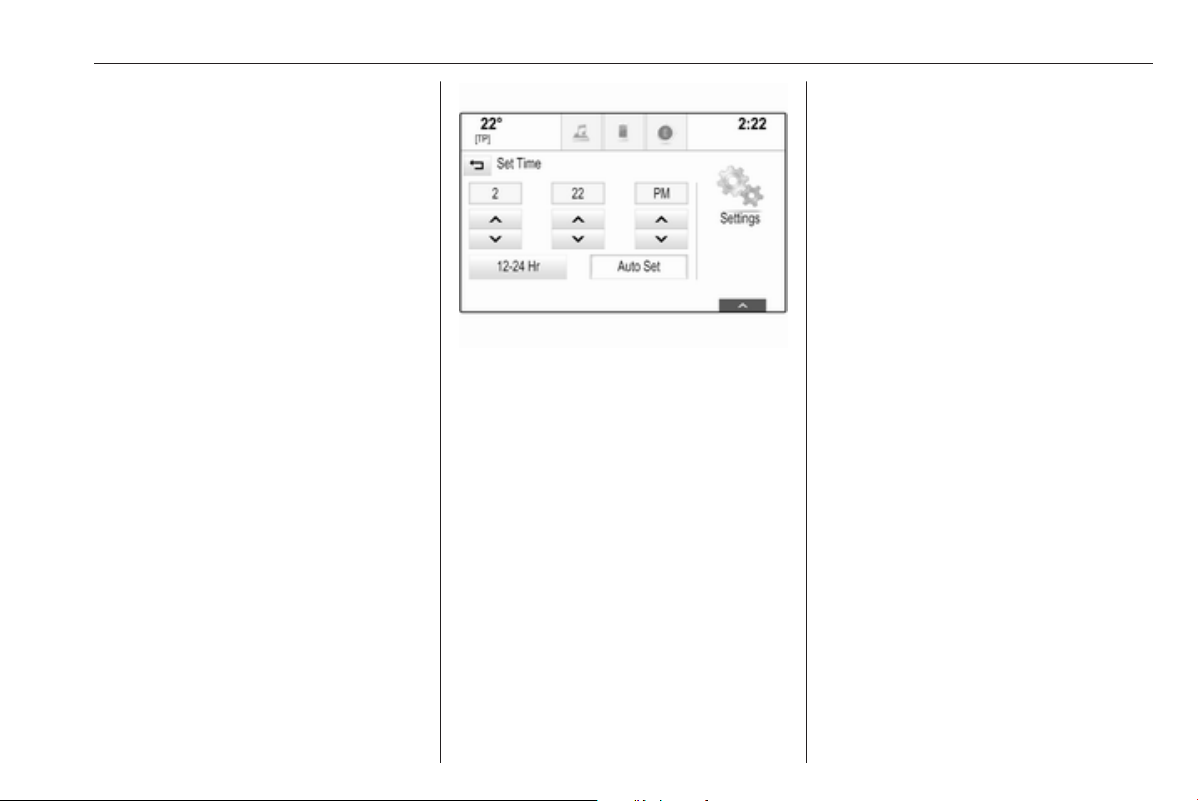
Instruments and controls 81
For time and date to be set
automatically, select On - RDS.
For time and date to be set manually,
select Off - Manual. If Auto Set is set
to Off - Manual, the submenu items
Set Time and Set Date become
available.
Set time and date
To adjust the time and date settings,
select Set Time or Set Date.
Touch + or - to adjust the settings.
8'' Colour Info Display
Press ; and then select the
Settings icon.
Select Time and Date.
Set time
Select Set Time to enter the
respective submenu.
Select Auto Set at the bottom of the
screen. Activate either On - RDS or
Off - Manual.
If Off - Manual is selected, adjust
hours and minutes by touching n or
o.
Touch 12-24 Hr on the right side of the
screen to select a time mode.
If 12-hour mode is selected, a third
column for AM and PM setting is
displayed. Select the desired option.
Set date
Select Set Date to enter the
respective submenu.
Notice
If date information is automatically
provided, this menu item is not
available.
Select Auto Set at the bottom of the
screen. Activate either On - RDS or
Off - Manual.
If Off - Manual is selected, adjust the
date by touching n or o.
Clock display
Select Clock Display to enter the
respective submenu.
To turn off the digital clock display in
the menus, select Off.
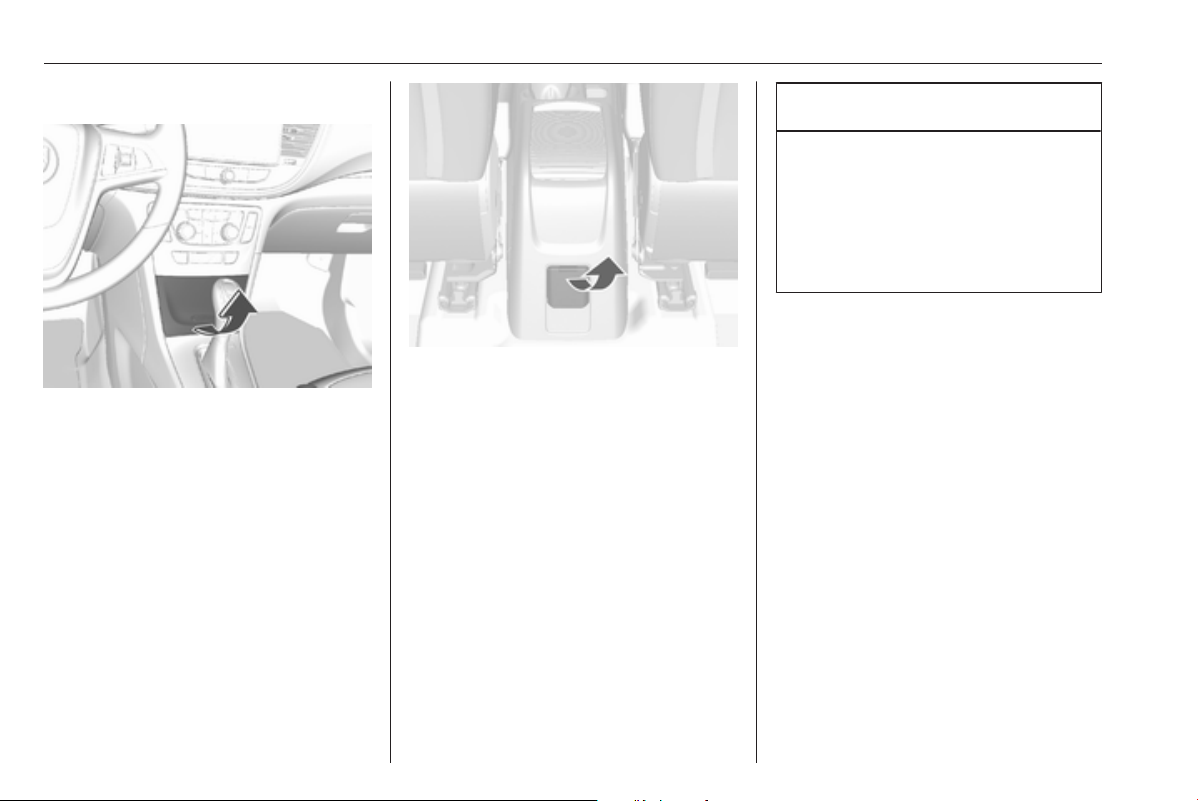
82 Instruments and controls
Power outlets
A 12 V power outlet is located in the
front console behind the cover. To
open, push the button.
A further 12 V power outlet may be
located in the rear centre console.
Do not exceed the maximum power
consumption of 120 W.
Depending on equipment, a 230 V
power outlet is located in the rear
centre console.
Do not exceed the maximum power
consumption of 150 W.
With ignition off the power outlet is
deactivated.
Additionally the power outlet is
deactivated in the event of low battery
voltage.
Electrical accessories that are
connected must comply with the
electromagnetic compatibility
requirements laid down in
DIN VDE 40 839.
Caution
Do not connect any current
delivering accessories, e.g.
electrical charging devices or
batteries.
Do not damage the outlets by
using unsuitable plugs.
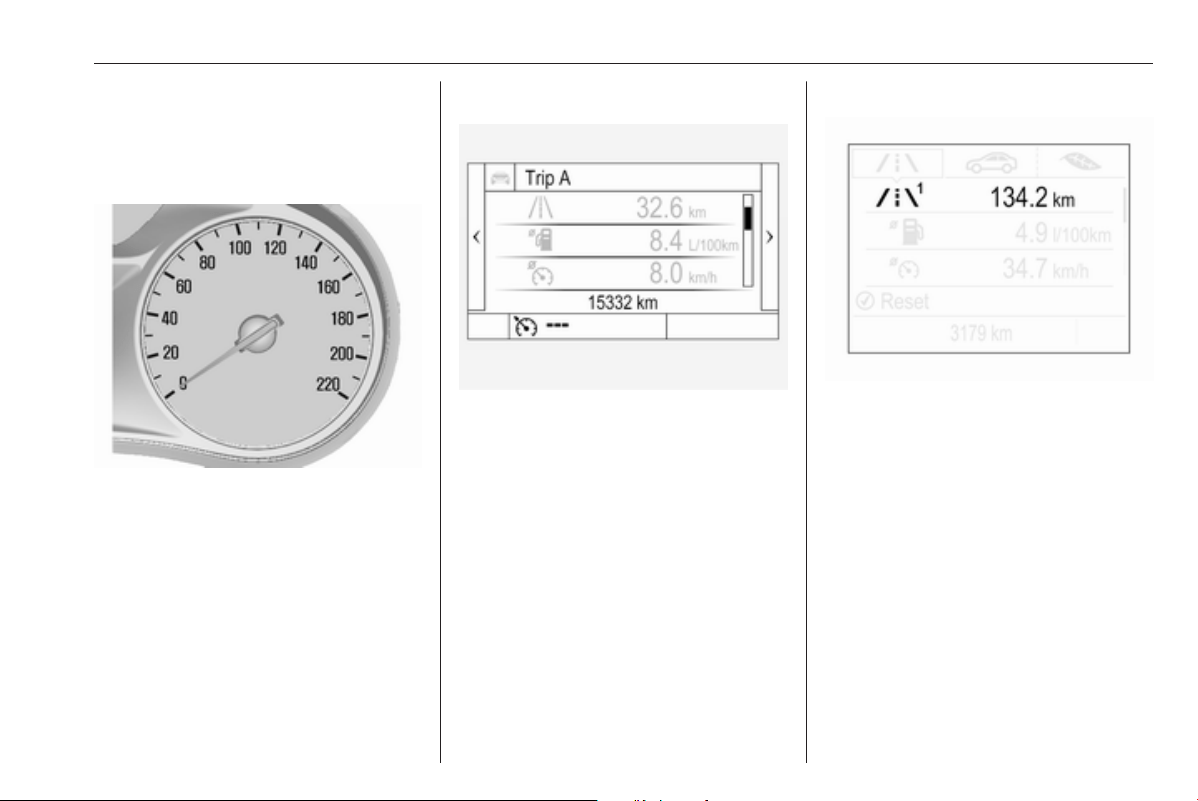
Instruments and controls 83
Warning lights, gauges
and indicators
Speedometer
Indicates vehicle speed.
Odometer
The total recorded distance is
displayed in miles.
Trip odometer
The recorded distance since the last
reset is displayed on the trip computer
page.
Trip odometer counts up to
9,999 miles and then restarts at 0.
Two trip odometer pages are
selectable for different trips.
Midlevel instrument cluster
Select ; by pressing Menu on the
turn signal lever. Turn adjuster wheel
and select ;1 or ;2. Each trip
odometer page can be reset
separately by pressing SET/CLR on
the turn signal lever for a few seconds
on the respective menu.
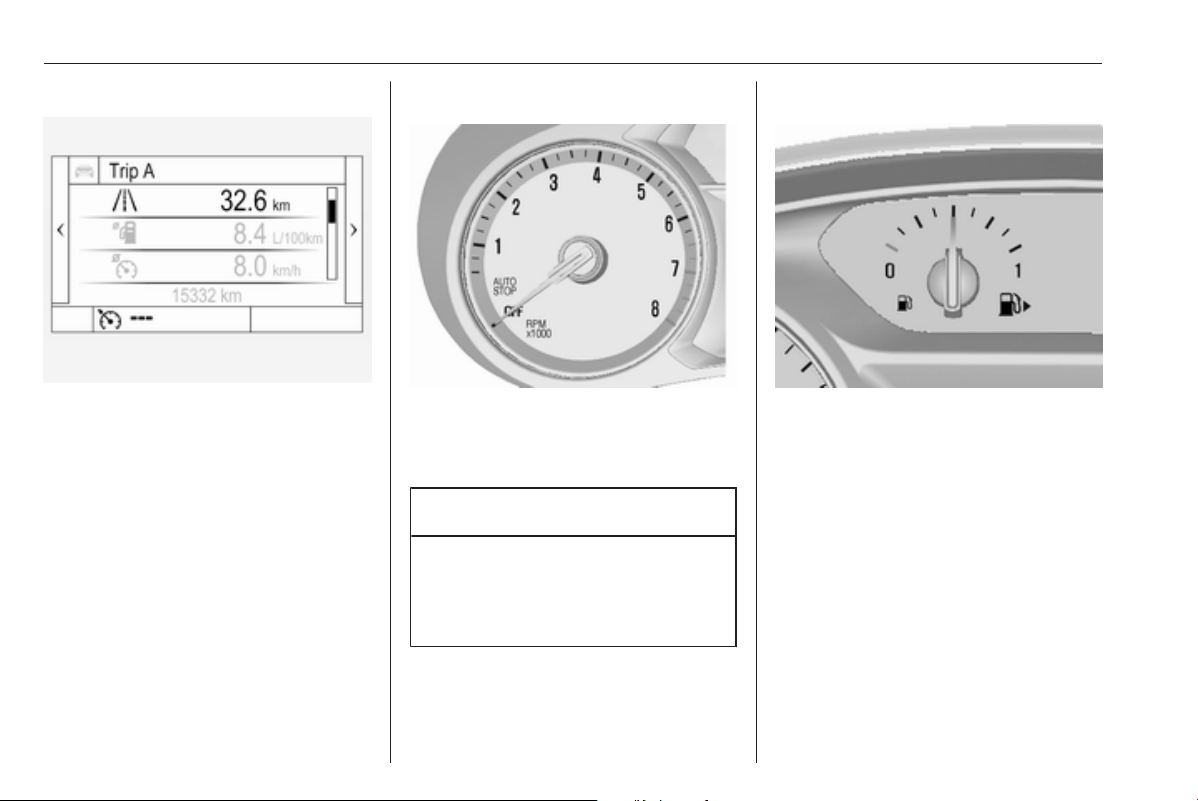
84 Instruments and controls
Uplevel instrument cluster
Select Info page Q by pressing Menu.
Choose page Trip A or Trip B by
turning adjuster wheel on the turn
signal lever.
Each trip odometer page can be reset
separately by pressing SET/CLR on
the turn signal lever for a few seconds
on the respective menu.
Driver Information Centre 3 96.
Tachometer
Displays the engine speed.
Drive in a low engine speed range for
each gear as much as possible.
Caution
If the needle is in the red warning
zone, the maximum permitted
engine speed is exceeded. Engine
at risk.
Fuel gauge
Displays the level in the fuel or gas
tank depending on the operation
mode.
The arrow indicates the vehicle side
where the fuel filler flap is located.
Control indicator Y illuminates if the
level in the tank is low. Refuel
immediately if it flashes.
During liquid gas operation, the
system automatically switches over to
petrol operation when gas tanks are
empty 3 85.
Never run fuel tank dry.
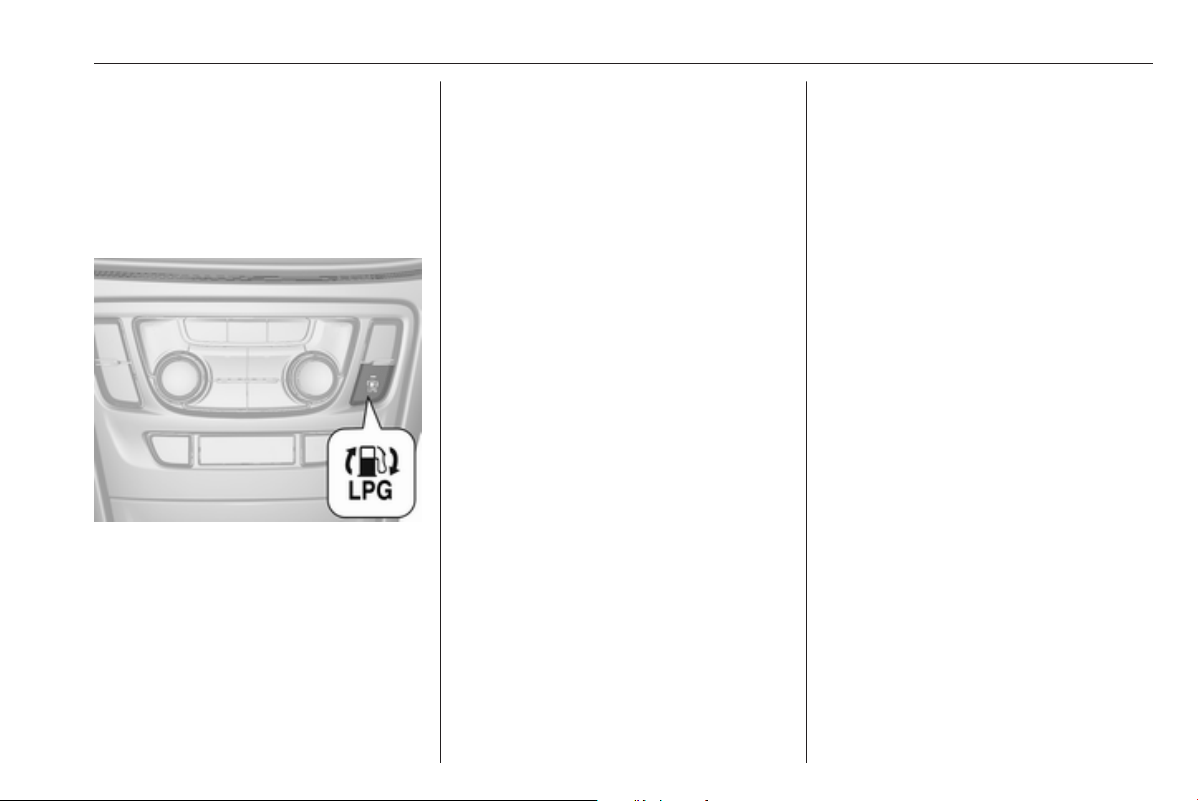
Instruments and controls 85
Because of the fuel remaining in the
tank, the top-up quantity may be less
than the specified tank capacity.
Fuel selector
Liquid gas operation, LPG
Pressing LPG switches between
petrol and liquid gas operation as
soon as the required parameters
(coolant temperature, gas
temperature and minimum engine
speed) have been reached. The
requirements are usually fulfilled after
approximately 60 seconds
(depending on exterior temperature)
and the first firm press on the
accelerator. The LED status shows
the current operating mode when
egnine is running.
LED off : petrol operation
LED
flashes
: checking conditions for
fuel transition to liquid
gas operation.
Illuminates if conditions
are fulfilled.
LED illu‐
minates
: liquid gas operation
LED
flashes
five
times
and
extin‐
guishes
: liquid gas tank is empty
or failure in liquid gas
system. A message is
displayed in the Driver
Information Centre. The
vehicle is in petrol
operation.
The selected fuel mode is stored and
reactivated at the next ignition cycle if
conditions allow.
As soon as the liquid gas tank is
empty, a warning message is
displayed in the Driver Information
Centre and the LED in the button
flashes rapidly. Petrol operation is
automatically engaged.
When switching automatically
between petrol or gas operation, a
brief delay of engine tractive power
may be noticeable.
When petrol fuel tank is empty, the
engine will not start.
Every six months, run the petrol tank
down until control indicator Y
illuminates, then refuel. This helps
maintain fuel quality and system
function for petrol operation.
Fill the tank completely at regular
intervals to prevent corrosion in the
tank.
Faults and remedies
If gas mode is not possible, check the
following:
● Is there enough liquid gas
present?
● Is there enough petrol present for
starting?
Due to extreme temperatures in
combination with the gas
composition, it may take slightly
longer before the system switches
from petrol to gas mode.
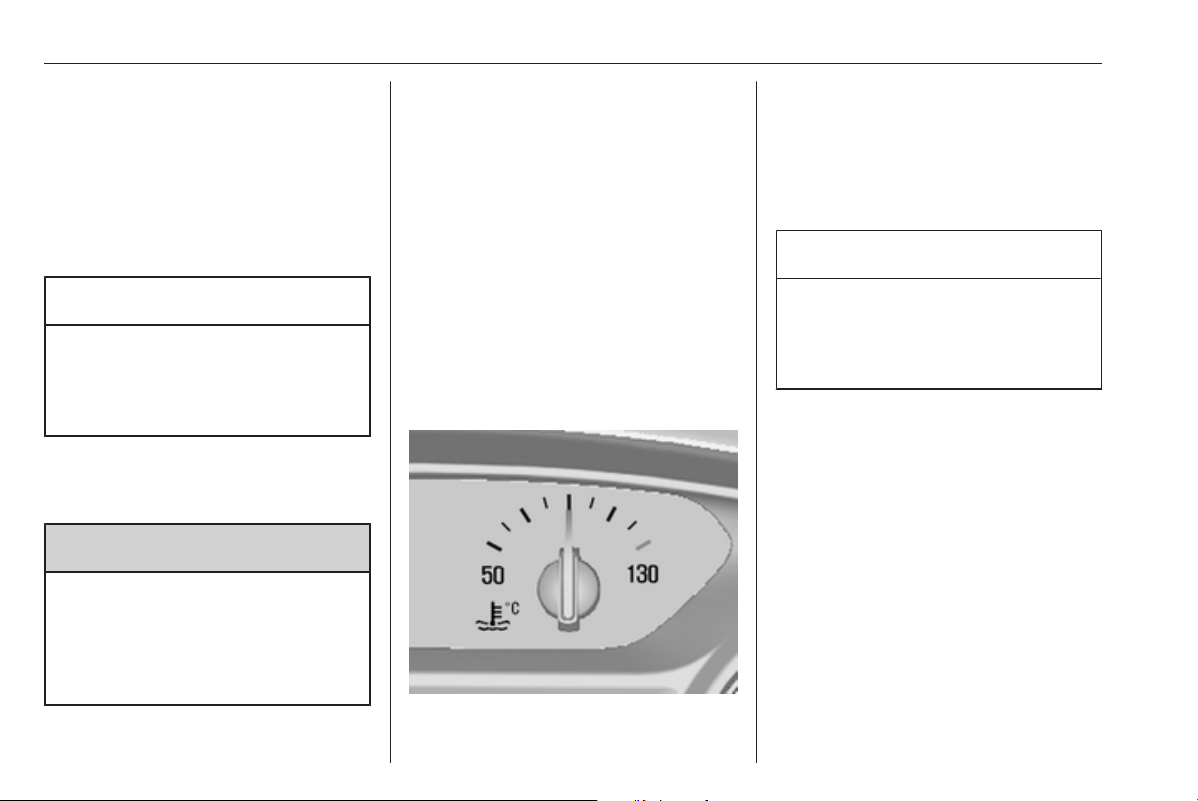
86 Instruments and controls
In extreme situations, the system may
also switch back to petrol mode if the
minimum requirements are not
fulfilled. If conditions allow, it may be
possible to manually switch back to
liquid gas operation.
Seek the assistance of a workshop in
the event of all other faults.
Caution
Repairs and adjustments may only
be made by trained specialists in
order to maintain the safety and
warranty on the LPG system.
Liquid gas is given a particular odour
(odorised) so that any leaks can be
detected easily.
9 Warning
If you smell gas in the vehicle or in
the immediate vicinity, switch to
petrol mode immediately. No
smoking. No naked flames or
ignition sources.
If the gas odour persists, do not start
the engine. Have the cause of the
fault remedied by a workshop.
When using underground car parks,
follow the instructions of the operator
and local laws.
Notice
In the event of an accident, switch off
the ignition.
Fuel for liquid gas operation 3 165.
Engine coolant temperature
gauge
Displays the coolant temperature.
50 : engine operating
temperature not yet
reached
central
area
: normal operating
temperature
130 : temperature too high
Caution
If engine coolant temperature is
too high, stop vehicle, switch off
engine. Danger to engine. Check
coolant level.
Service display
The engine oil life system informs
when to change the engine oil and
filter. Based on driving conditions, the
interval at which an engine oil and
filter change will be indicated can vary
considerably.
When the system has calculated that
engine oil life has diminished, a
warning message appears in the
Driver Information Centre. Have
engine oil and filter changed by a
workshop within one week or
300 miles (whichever occurs first).
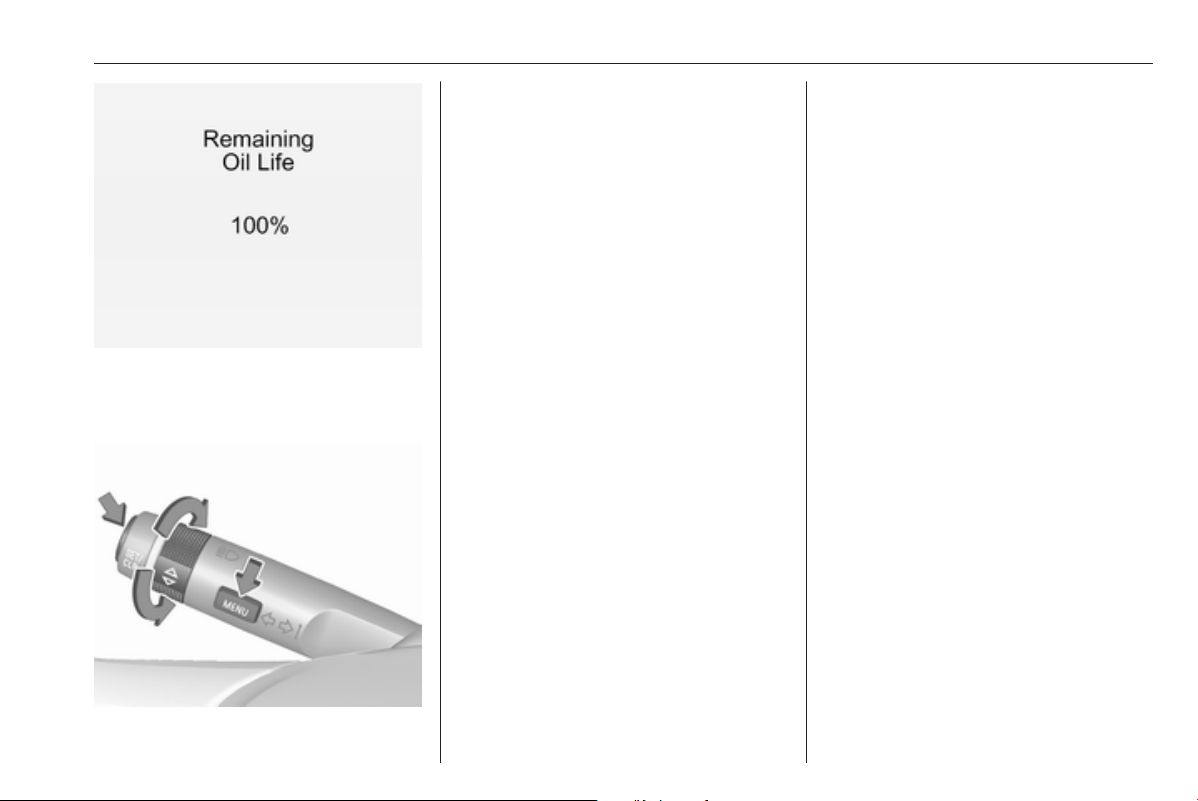
Instruments and controls 87
The remaining oil life duration menu
is displayed in the Driver Information
Centre 3 96.
On Midlevel display select the
Option ? Menu by pressing
MENU on the turn signal lever. Turn
the adjuster wheel to select the
Remaining Oil Life page.
On Uplevel display select the Info Q
Menu by pressing MENU on the turn
signal lever. Turn the adjuster wheel
to select Oil Life page.
Remaining oil life duration is indicated
in percentage.
Reset
Press SET/CLR on turn signal lever
for several seconds to reset. The
engine oil life page must be active.
The ignition must be switched on but
engine not running.
The system must be reset every time
the engine oil is changed to allow
proper functionality. Seek the
assistance of a workshop.
Next service
A message appears in the Driver
Information Centre, when
maintenance of the vehicle is
required. Have maintenance work
carried out by a workshop within one
week or 300 miles, whichever occurs
first.
Service information 3 215.
Control indicators
The control indicators described are
not present in all vehicles. The
description applies to all instrument
versions. Depending on the
equipment, the position of the control
indicators may vary. When the
ignition is switched on, most control
indicators will illuminate briefly as a
functionality test.
The control indicator colours mean:
red : danger, important reminder
yellow : warning, information, fault
green : confirmation of activation
blue : confirmation of activation
white : confirmation of activation
Control indicators in the
instrument cluster
Depending on the version, two
instrument clusters are available:
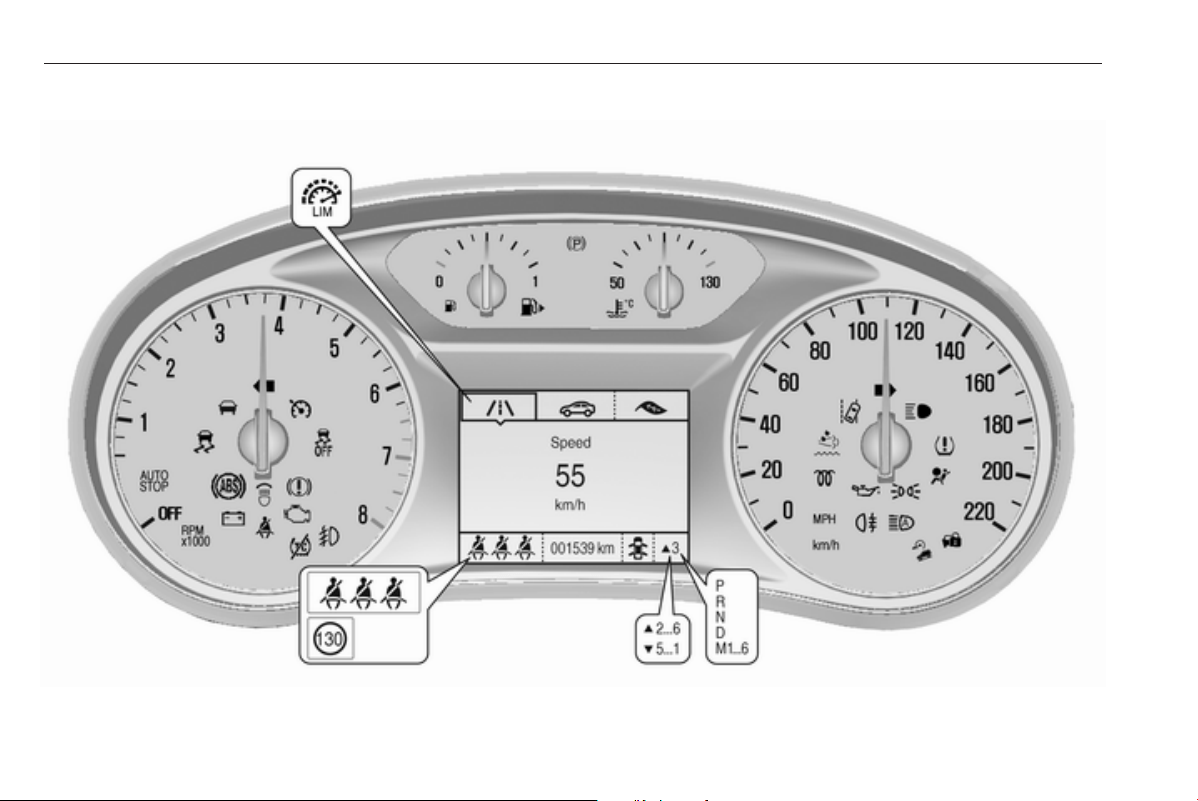
88 Instruments and controls
Midlevel instrument cluster
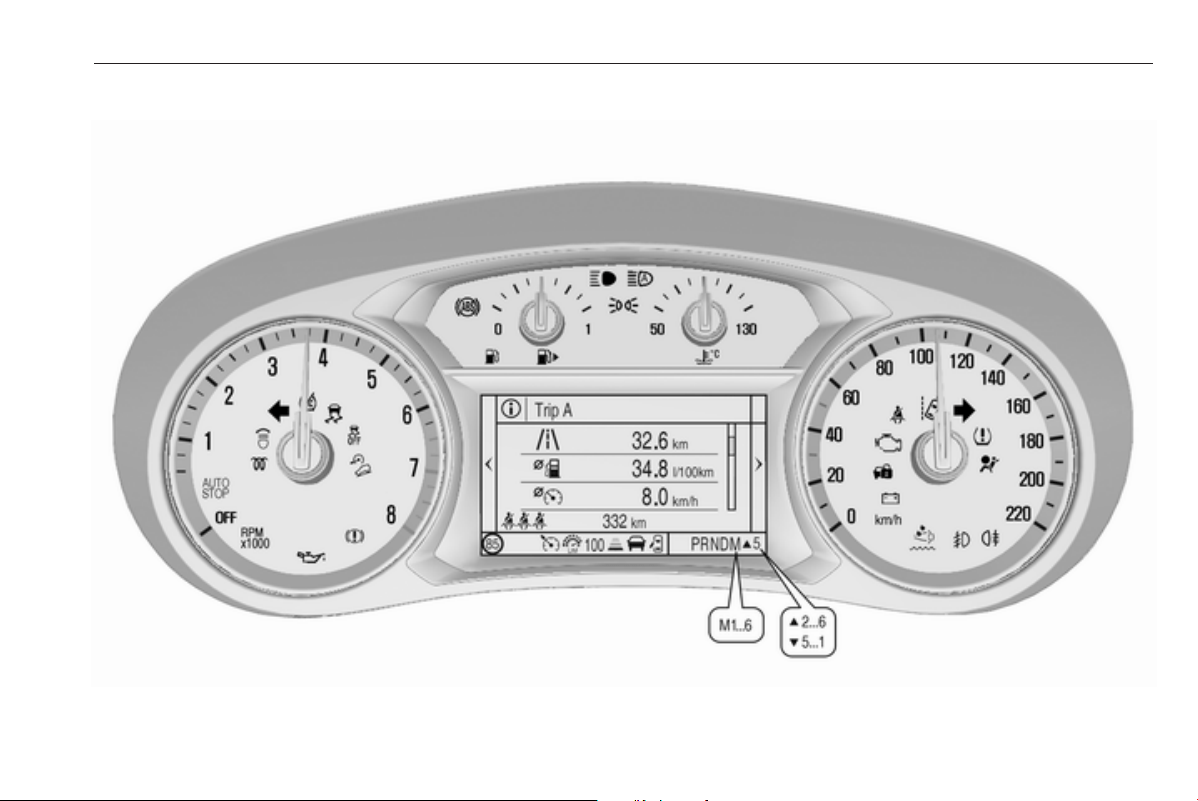
Instruments and controls 89
Uplevel instrument cluster
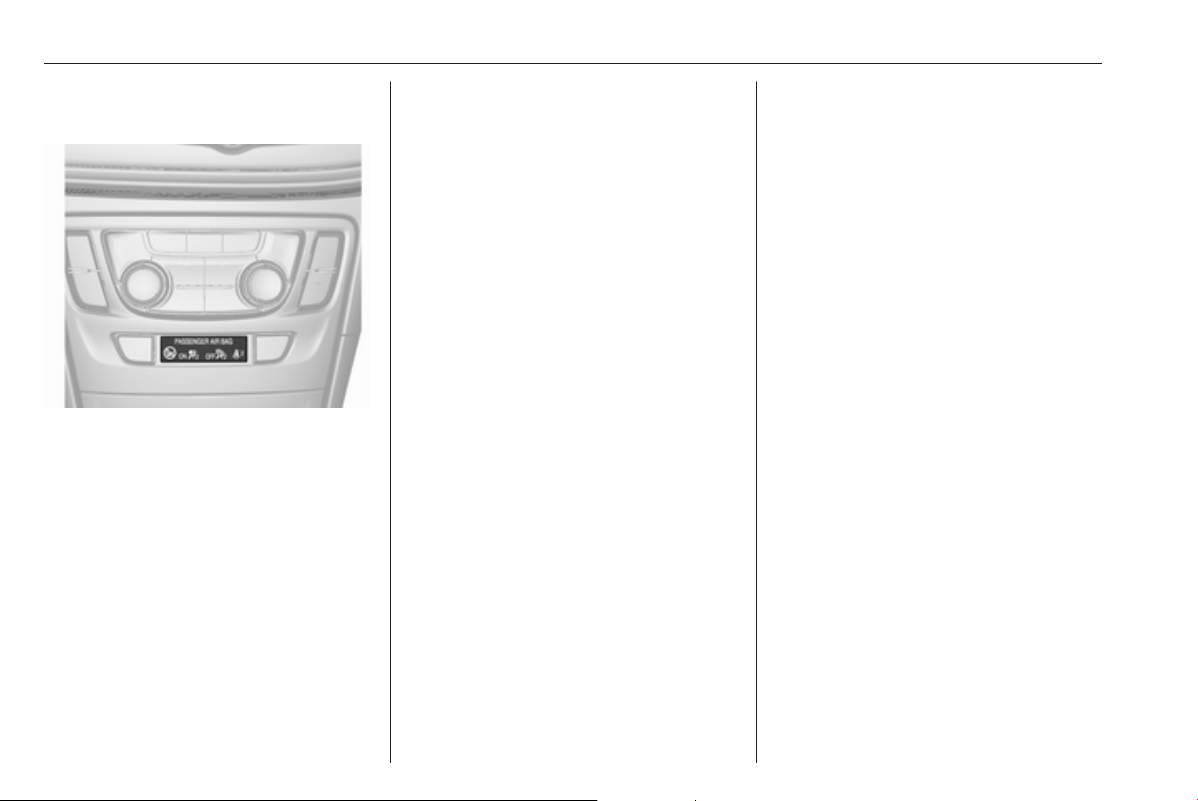
90 Instruments and controls
Control indicators in the centre
console
Overview
O
Turn signal 3 91
X
Seat belt reminder, driver
3 91
k
Seat belt reminder, front
passenger 3 91
v
Airbag and belt tensioners
3 91
V /
*
Airbag deactivation 3 92
p
Charging system 3 92
Z
Malfunction indicator light
3 92
R
Brake and clutch system
3 92
u
Antilock brake system (ABS)
3 93
R
Gear shifting 3 93
u
Descent control system
3 93
)
Lane departure warning
3 93
n
Electronic Stability Control off
3 93
b
Electronic Stability Control
and Traction Control system
3 93
k
Traction Control system off
3 94
!
Preheating 3 94
ù
AdBlue 3 94
w
Tyre pressure monitoring
system 3 94
I
Engine oil pressure 3 94
Y
Low fuel 3 94
d
Immobiliser 3 95
8
Exterior light 3 95
C
High beam 3 95
f
High beam assist 3 95
f
Adaptive forward lighting
3 95
>
Fog light 3 95
r
Rear fog light 3 95
m
Cruise control 3 95
A
Vehicle detected ahead
3 96
L
Speed limiter 3 96
L
Traffic sign assistant 3 96
h
Door open 3 96

Instruments and controls 91
Turn lights
O illuminates or flashes green.
Illuminates briefly
The parking lights are switched on.
Flashes
A turn signal or the hazard warning
flashers are activated.
Rapid flashing: failure of a turn light or
associated fuse, failure of turn light on
trailer.
Bulb replacement 3 182.
Fuses 3 187.
Turn lights 3 117.
Seat belt reminder
Seat belt reminder on front seats
X for driver's seat illuminates or
flashes red in the instrument cluster.
k for front passenger seat illuminates
or flashes red in the centre console
when seat is occupied.
Illuminates
After the ignition has been switched
on until the seat belt has been
fastened.
Flashes
After having started the engine until
the seat belt has been fastened.
Seat belt status on rear seats
(vehicles with Midlevel display)
X illuminates or flashes white or >
illuminates white in the Driver
Information Centre for a certain time,
after the ignition has been switched
on.
X illuminates
Until the seat belt has been fastened.
> illuminates
When the seat belt has been
fastened.
X flashes
When fastened seat belt has been
unfastened.
Seat belt status on rear seats
(vehicles with Uplevel display)
X illuminates grey or flashes red in
the Driver Information Centre for a
certain time, after the ignition has
been switched on.
Illuminates grey
Until the seat belt has been fastened.
Flashes red
When fastened seat belt has been
unfastened.
Fastening the seat belt 3 44.
Airbag and belt tensioners
v illuminates red.
When the ignition is switched on, the
control indicator illuminates for a few
seconds. If it does not illuminate,
does not go out after a few seconds
or illuminates whilst driving, there is a
fault in the airbag system. Seek the
assistance of a workshop. The
airbags and belt pretensioners may
fail to trigger in the event of an
accident.

92 Instruments and controls
Deployment of the belt pretensioners
or airbags is indicated by continuous
illumination of v.
9 Warning
Have the cause of the fault
remedied immediately by a
workshop.
Belt pretensioners 3 43.
Airbag system 3 46.
Airbag deactivation
V illuminates yellow.
The front passenger airbag is
activated.
* illuminates yellow.
The front passenger airbag is
deactivated 3 51.
9 Danger
Risk of fatal injury for a child using
a child restraint system together
with activated front passenger
airbag.
Risk of fatal injury for an adult
person with deactivated front
passenger airbag.
Charging system
p illuminates red.
Illuminates when the ignition is
switched on and extinguishes shortly
after the engine starts.
Illuminates when the engine is
running
Stop, switch off engine. Battery is not
charging. Engine cooling may be
interrupted. The brake servo unit may
cease to be effective. Seek the
assistance of a workshop.
Malfunction indicator light
Z illuminates or flashes yellow.
Illuminates when the ignition is
switched on and extinguishes shortly
after the engine starts.
Illuminates when the engine is
running
Fault in the emission control system.
The permitted emission limits may be
exceeded. Seek the assistance of a
workshop immediately.
Flashes when the engine is
running
Fault that could lead to catalytic
converter damage. Ease up on the
accelerator until the flashing stops.
Seek the assistance of a workshop
immediately.
Brake and clutch system
R illuminates red.
The brake and clutch fluid level is too
low, when manual parking brake is
not applied 3 179.

Instruments and controls 93
9 Warning
Stop. Do not continue your
journey. Consult a workshop.
Illuminates when the manual parking
brake is applied and ignition is
switched on 3 145.
Antilock brake system
(ABS)
u illuminates yellow.
Illuminates for a few seconds after the
ignition is switched on. The system is
ready for operation when the control
indicator extinguishes.
If the control indicator does not
extinguish after a few seconds, or if it
illuminates while driving, there is a
fault in the ABS. The brake system
remains operational but without ABS
regulation.
Antilock brake system 3 145.
Gear shifting
R or S with the number of a higher or
lower gear is indicated, when up- or
downshifting is recommended for fuel
saving reasons.
Descent control system
u illuminates or flashes green.
Illuminates green
The system is ready for operation.
Flashes green
The system is in operation.
Lane departure warning
) illuminates green or flashes yellow.
Illuminates green
System is switched on and ready to
operate.
Flashes yellow
System recognises an unintended
lane change.
Lane departure warning 3 162.
Electronic Stability Control
off
n illuminates yellow.
The system is deactivated.
Electronic Stability Control
and Traction Control system
b illuminates or flashes yellow.
Illuminates
A fault in the system is present.
Continued driving is possible. Driving
stability, however, may deteriorate
depending on road surface
conditions.
Have the cause of the fault remedied
by a workshop.
Flashes
The system is actively engaged.
Engine output may be reduced and
the vehicle may be braked
automatically to a small degree.
Electronic Stability Control 3 147.
Traction Control system 3 146.

94 Instruments and controls
Traction Control system off
k illuminates yellow.
The system is deactivated.
Preheating
! illuminates yellow.
Preheating of diesel engine is
activated. Only activates when
outside temperature is low.
AdBlue
ù flashes yellow.
AdBlue level is low. Refill AdBlue
soon to avoid prevention of the
engine start.
AdBlue 3 138.
Tyre pressure monitoring
system
w illuminates or flashes yellow.
Illuminates
Tyre pressure loss. Stop immediately
and check tyre pressure.
Flashes
Fault in system or tyre without
pressure sensor mounted (e.g. spare
wheel). After 60-90 seconds the
control indicator illuminates
continuously. Consult a workshop.
Tyre pressure monitor system
3 195.
Engine oil pressure
I illuminates red.
Illuminates when the ignition is
switched on and extinguishes shortly
after the engine starts.
Illuminates when the engine is
running
Caution
Engine lubrication may be
interrupted. This may result in
damage to the engine and/or
locking of the drive wheels.
1. Depress clutch.
2. Select neutral gear, set selector
lever to N.
3. Move out of the flow of traffic as
quickly as possible without
impeding other vehicles.
4. Switch off ignition.
9 Warning
When the engine is off,
considerably more force is needed
to brake and steer. During an
Autostop the brake servo unit will
still be operational.
Do not remove key until vehicle is
stationary, otherwise the steering
wheel lock could engage
unexpectedly.
Keep engine turned off and let the
vehicle be towed to a workshop
3 177.
Low fuel
Y illuminates or flashes yellow.
Illuminates
Level in fuel tank is too low.

Instruments and controls 95
Flashes
Fuel used up. Refuel immediately.
Never run the tank dry.
Refuelling 3 166.
Catalytic converter 3 137.
Bleeding the diesel fuel system
3 181.
Immobiliser
d flashes yellow.
Fault in the immobiliser system. The
engine cannot be started.
Have the cause of the fault remedied
by a repairer.
Exterior light
8 illuminates green.
The exterior lights are on 3 110.
High beam
C illuminates blue.
Illuminates when high beam is on or
during headlight flash 3 111, or when
high beam is on with high beam
assist, adaptive forward lighting
3 114.
High beam assist
f illuminates green.
The high beam assist is activated
3 114.
Adaptive forward lighting
f illuminates or flashes yellow.
Illuminates
The adaptive forward lighting system
needs a service.
Seek the assistance of a workshop.
Adaptive forward lighting 3 114.
Flashes
System switched to symmetrical low
beam.
Control indicator f flashes for approx.
4 seconds after the ignition is
switched on as a reminder that the
system has been activated 3 113.
Automatic light control 3 111.
Front fog lights
> illuminates green.
The front fog lights are on 3 117.
Rear fog light
r illuminates yellow.
The rear fog light is on 3 117.
Cruise control
m illuminates white or green.
Illuminates white
The system is on.
Illuminates green
Cruise control is active.
Cruise control 3 149.

96 Instruments and controls
Vehicle detected ahead
A illuminates green or yellow.
Illuminates green
A vehicle ahead is detected in the
same lane.
Illuminates yellow
The distance to a preceding moving
vehicle gets too small or when
approaching another vehicle too
rapidly.
Forward collision alert 3 152.
Speed limiter
L illuminates white or green.
Illuminates white
The system is on.
Illuminates green
Speed limiter is active. Set speed is
indicated near L symbol.
Speed limiter 3 151.
Traffic sign assistant
L displays detected traffic signs as a
control indicator.
Traffic sign assistant 3 159.
Door open
h illuminates red.
A door or the tailgate is open.
Displays
Driver Information Centre
The Driver Information Centre is
located in the instrument cluster.
Depending on the version and the
instrument cluster, the Driver
Information Centre is available as
Midlevel display or Uplevel display.
Driver Information Centre indicates
depending on the equipment:
● overall and trip odometer
● vehicle information
● trip / fuel information
● driving economy information
● vehicle and warning messages
● vehicle settings
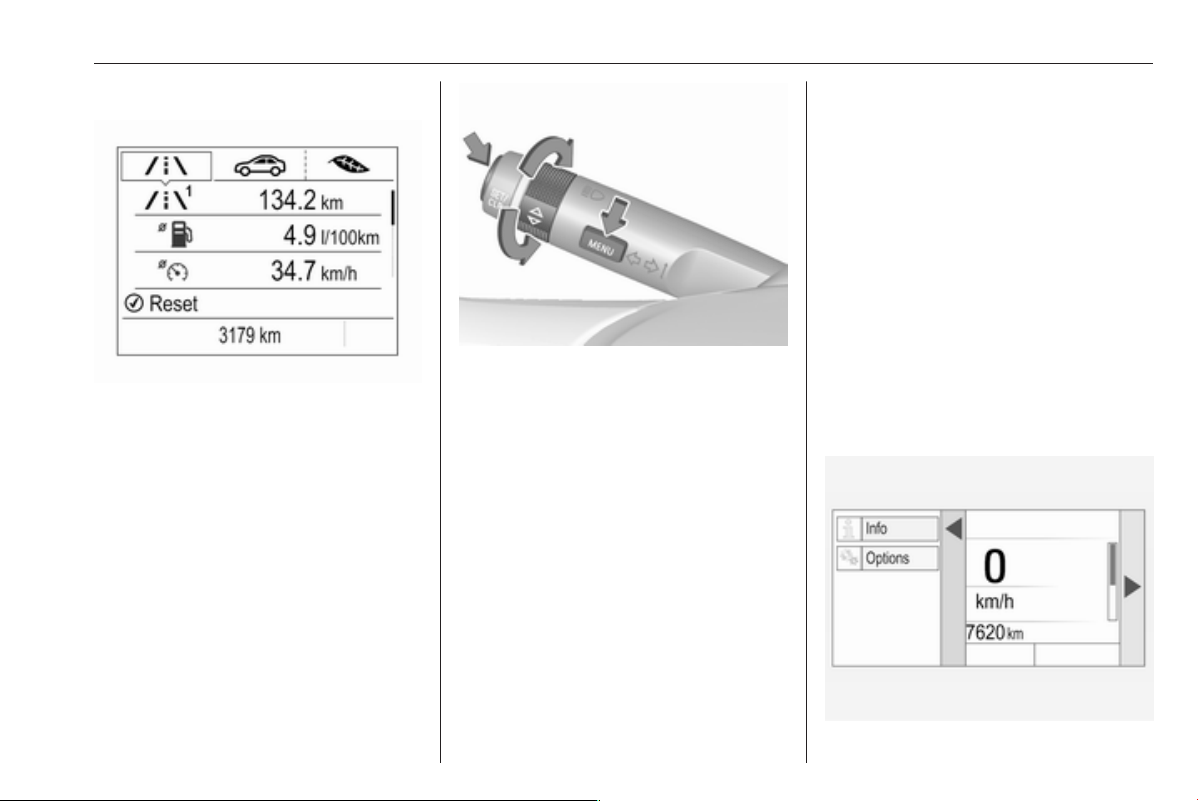
Instruments and controls 97
Midlevel display
Selecting menus and functions
The menus and functions can be
selected via the buttons on the turn
signal lever.
Press MENU to switch between the
main menus or to return from a
submenu to the next higher menu
level.
Turn the adjuster wheel to select a
submenu of the main menu or to set
a numeric value.
Press SET/CLR to select and confirm
a function.
Vehicle and service messages are
popped up in the Driver Information
Centre if required. Confirm messages
by pressing SET/CLR.
Vehicle messages 3 103.
Main menu
Main menus are:
● Trip / fuel information, displayed
by ;, see description below.
● Vehicle information, displayed
by ?, see description below.
● Eco information, displayed by
@, see description below.
Some of the displayed functions differ
when the vehicle is being driven or at
a standstill and some functions are
only active when the vehicle is being
driven.
Uplevel display
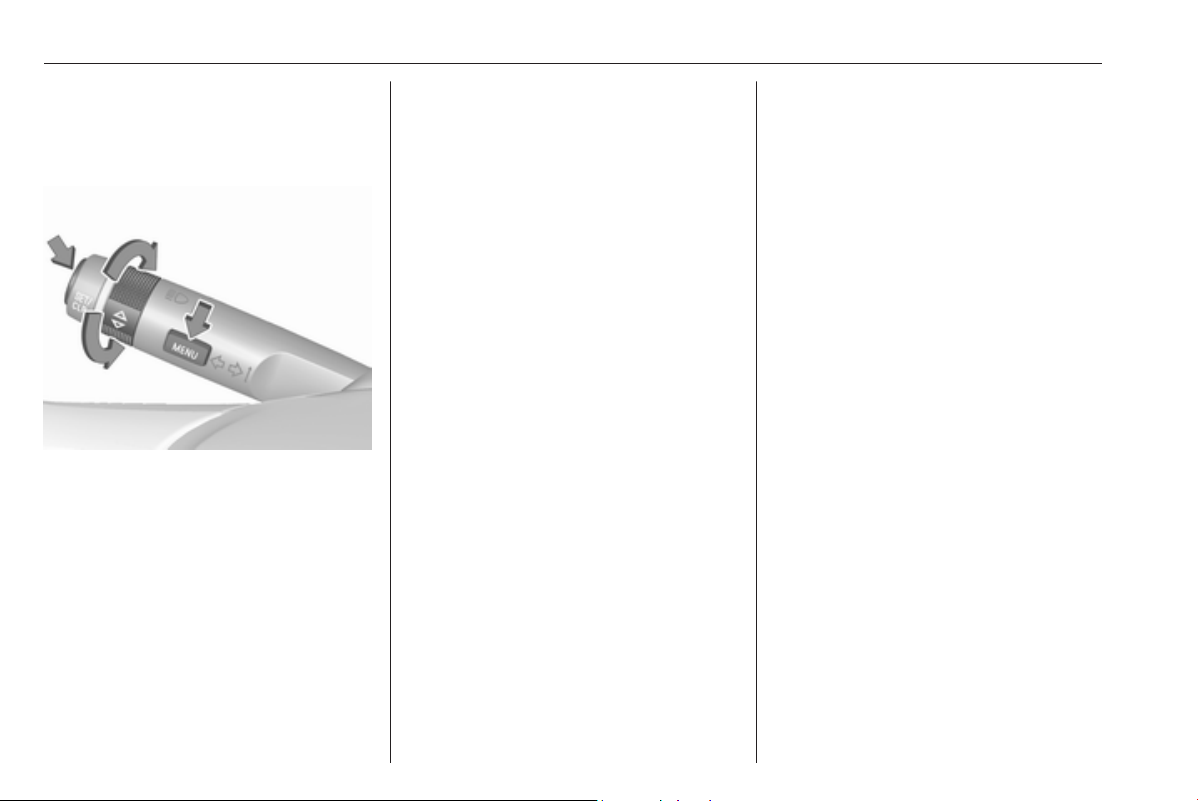
98 Instruments and controls
Selecting menus and functions
The menus and functions can be
selected via the buttons on the turn
signal lever.
Press MENU to switch between the
main menus or to return from a
submenu to the next higher menu
level.
Turn the adjuster wheel to select a
submenu of the main menu or to set
a numeric value.
Press SET/CLR to select and confirm
a function.
Vehicle and service messages are
popped up in the Driver Information
Centre if required. Confirm messages
by pressing SET/CLR.
Vehicle messages 3 103.
Main menu
Main menus are:
● Trip / fuel information, displayed
by Info Q, see description below.
● Vehicle information, displayed by
Options L, see description
below.
Some of the displayed functions differ
when the vehicle is being driven or at
a standstill and some functions are
only active when the vehicle is being
driven.
Trip / fuel information menu, ;
or Info Q
The following list contains all possible
Info Menu pages. Some may not be
available for your particular vehicle.
Depending on the display, some
functions are symbolised.
Turn the adjuster wheel to select a
page:
● Trip odometer 1/2 or A/B
● Average fuel consumption
● Average speed
● Digital speed
● Fuel range
● Instantaneous fuel consumption
● Remaining oil life
● Tyre pressure
● Traffic sign assistant
● Following distance
● Timer
● AdBlue level
On Midlevel display the pages
Remaining Oil Life, Tyre Pressure,
Traffic Sign Assistant and Following
Distance are displayed in the Vehicle
information menu, select ?.
Trip odometer 1/2 or A/B
Trip odometer displays the current
distance since a certain reset.
Trip odometer counts up to a distance
of 9,999 miles then restarts at 0.

Instruments and controls 99
To reset press SET/CLR for a few
seconds.
The information of trip odometer page
1/A and 2/B can be reset separately
while the respective display is active.
Average Fuel Consumption
Display of average consumption. The
measurement can be reset at any
time and starts with a default value.
To reset press SET/CLR for a few
seconds.
Average speed
Display of average speed. The
measurement can be reset at any
time.
To reset press SET/CLR for a few
seconds.
Digital speed
Digital display of the instantaneous
speed.
Fuel range
Range is calculated from current fuel
level and current consumption. The
display shows average values.
After refuelling, the range is updated
automatically after a brief delay.
When the level in the fuel tank is low,
a message appears on the display
and the control indicator Y in the fuel
gauge illuminates.
When the fuel tank must be refuelled
immediately, a warning message
appears and remains on the display.
Additionally, the control indicator Y in
the fuel gauge flashes 3 94.
Instantaneous Fuel Consumption
Display of the instantaneous
consumption.
Remaining Oil Life
Indicates an estimate of the oil's
useful life. The number in percentage
means the remainder of current oil life
3 86.
Tyre Pressure
Checks tyre pressure of all wheels
during driving 3 195.
Traffic sign assistant
Displays the detected traffic signs for
the current route section 3 159.
Following Distance
Displays the distance in seconds to a
preceding moving vehicle 3 154.
Timer
To start and stop follow the
instructions on the display. To reset,
press SET/CLR.
AdBlue
Displays the AdBlue level.
Additionally the AdBlue range can be
displayed.
Eco information menu, @
● Top consumers
● Economy trend
● Eco index
On Uplevel display the pages Top
Consumers, Economy Trend and Eco
index, are displayed in the Trip/fuel
information menu, select Info.
Top Consumers
List of top comfort consumers
currently switched on is displayed in
descending order. Fuel saving
potential is indicated.
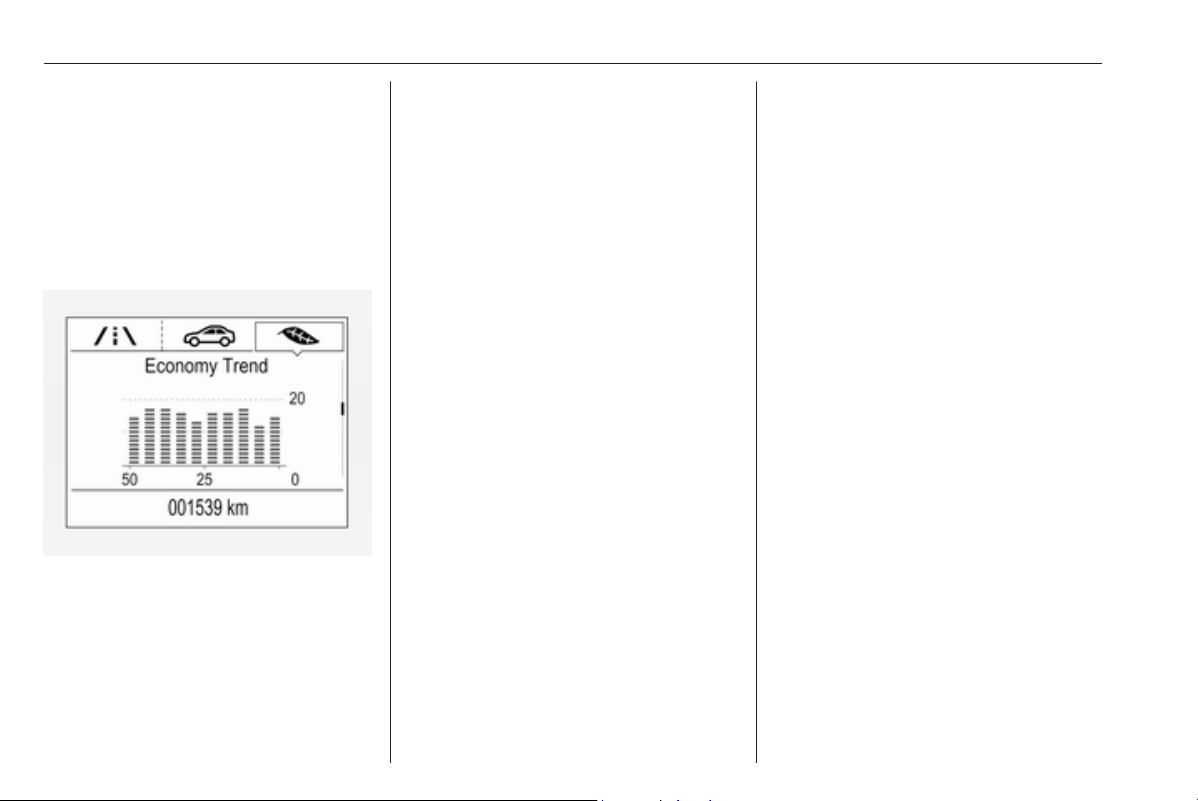
100 Instruments and controls
During sporadic driving conditions,
the engine will activate the heated
rear window automatically to increase
the engine load. In this event, the
heated rear window is indicated as
one of the top consumers, without
activation by the driver.
Economy Trend
Displays the average consumption
development over a distance of
31 miles. Filled segments display the
consumption in 3.1 mile steps and
shows the effect of topography or
driving behaviour on fuel
consumption.
Economy index
The current fuel consumption is
indicated on an economic scale. For
economical driving, adapt driving
style to keep the filled segments
within the Eco area. The more
segments are filled, the higher the
fuel consumption.
Simultaneously the average
consumption value is indicated.
Vehicle information menu, ? or
Options L
The following list contains all possible
Options Menu pages. Some may not
be available for your particular
vehicle. Depending on the display
some functions are symbolised.
Turn the adjuster wheel to select a
page and follow the instructions given
in the submenus:
● Units
● Info pages
● Speed warning
● Tyre loading
Units
Press SET/CLR while units is
displayed. Select imperial or metric
units by turning adjuster wheel.
Confirm by pressing SET/CLR.
Info pages
Press SET/CLR while Info pages is
displayed. A list of all items in the Info
Menu is displayed. Select the
functions to be displayed in the Info
page by turning the adjuster wheel
and confirm by pressing SET/CLR.
Selected pages have a 9 in a
checkbox. Non-viewable functions
have a blank checkbox. See Info
Menu above.
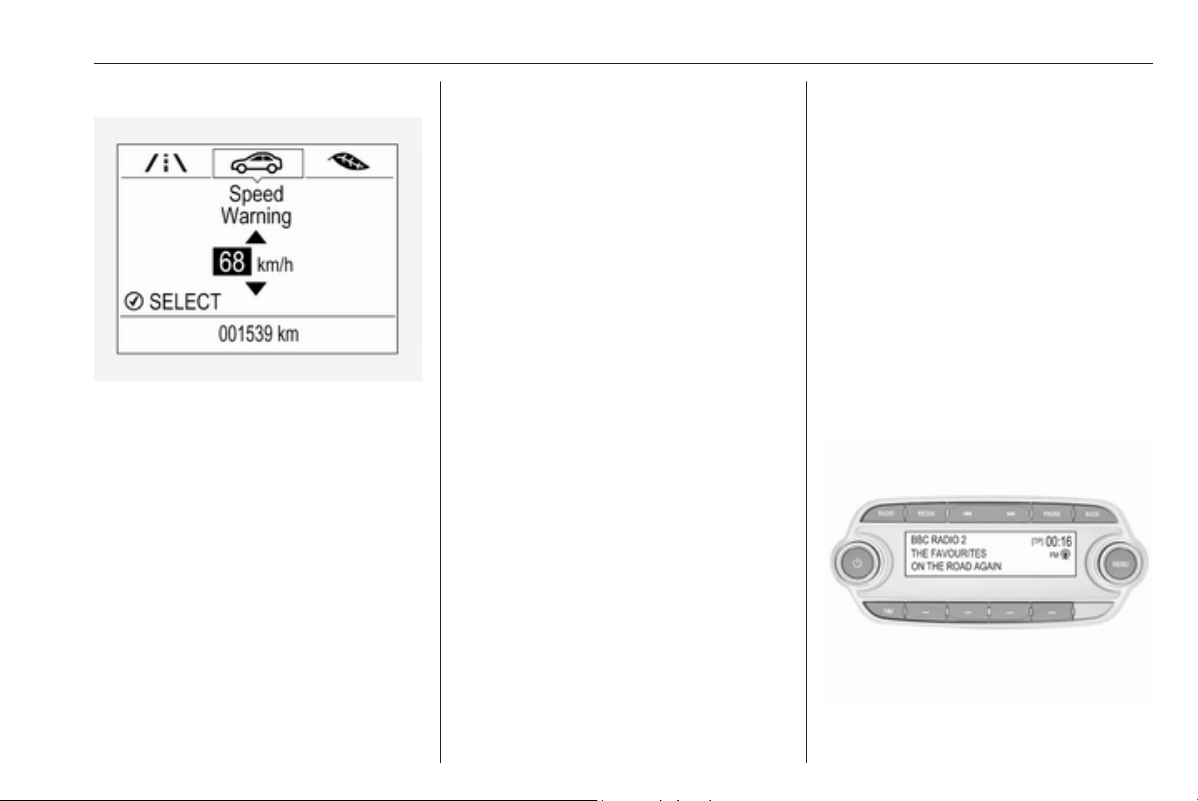
Instruments and controls 101
Speed warning
The speed warning function alerts the
driver when a set speed is exceeded.
To set the speed warning, press
SET/CLR while the page is displayed.
Turn the adjuster wheel to select and
adjust the value. Press SET/CLR to
set the speed. Once the speed is set,
this feature can be turned off by
pressing SET/CLR while viewing this
page. If the selected speed limit is
exceeded, a pop-up warning is
displayed with a chime.
Tyre Load
The tyre pressure category according
to the actual tyre inflation pressure
can be selected 3 195. Turn the
adjuster wheel to select a category
Light ,Eco or Max.
Press SET/CLR to confirm category.
Info Display
The Info Display is located in the
instrument panel near the instrument
cluster.
Depending on the vehicle
configuration the vehicle has a
● Graphic Info Display
or
● 7'' Colour Info Display with
touchscreen functionality
or
● 8'' Colour Info Display with
touchscreen functionality
The Info Displays can indicate:
● time 3 80
● outside temperature 3 79
● date 3 80
● Infotainment system, see
description in the Infotainment
manual
● indication of rear view camera
3 157
● indication of parking assist
instructions 3 155
● navigation, see description in the
Infotainment manual
● system messages
● settings for vehicle
personalisation 3 105
Graphic Info Display
Press X to switch on the display.
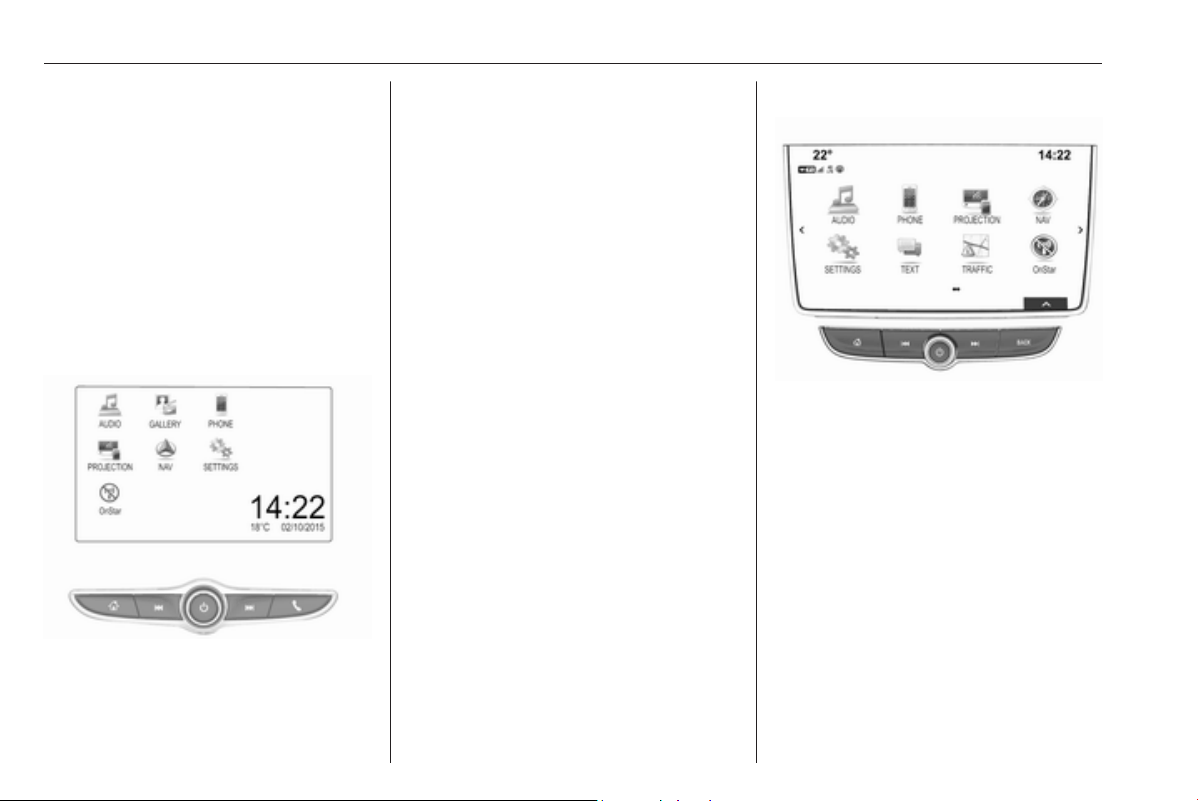
102 Instruments and controls
Press MENU to select main menu
page.
Turn MENU to select a menu page.
Press MENU to confirm a selection.
Press BACK to exit a menu without
changing a setting.
7'' Colour Info Display
Selecting menus and settings
Menus and settings are accessed via
the display.
Press X to switch on the display.
Press ; to display the homepage.
Touch required menu display icon
with the finger.
Touch a respective icon to confirm a
selection.
Touch 9 to return to the next higher
menu level.
Press ; to return to the homepage.
For further information, see
Infotainment manual.
Vehicle personalisation 3 105.
8'' Colour Info Display
Selecting menus and settings
There are three options to operate the
display:
● via buttons below the display
● by touching the touchscreen with
the finger
● via speech recognition
Button operation
Press X to switch on the display.
Press ; to display the homepage.
Turn MENU to select a menu display
icon or a function or to scroll a
submenu list.
Press MENU to confirm a selection.
Press BACK to exit a menu without
changing a setting.
Press ; to return to the homepage.
For further information, see
Infotainment manual.
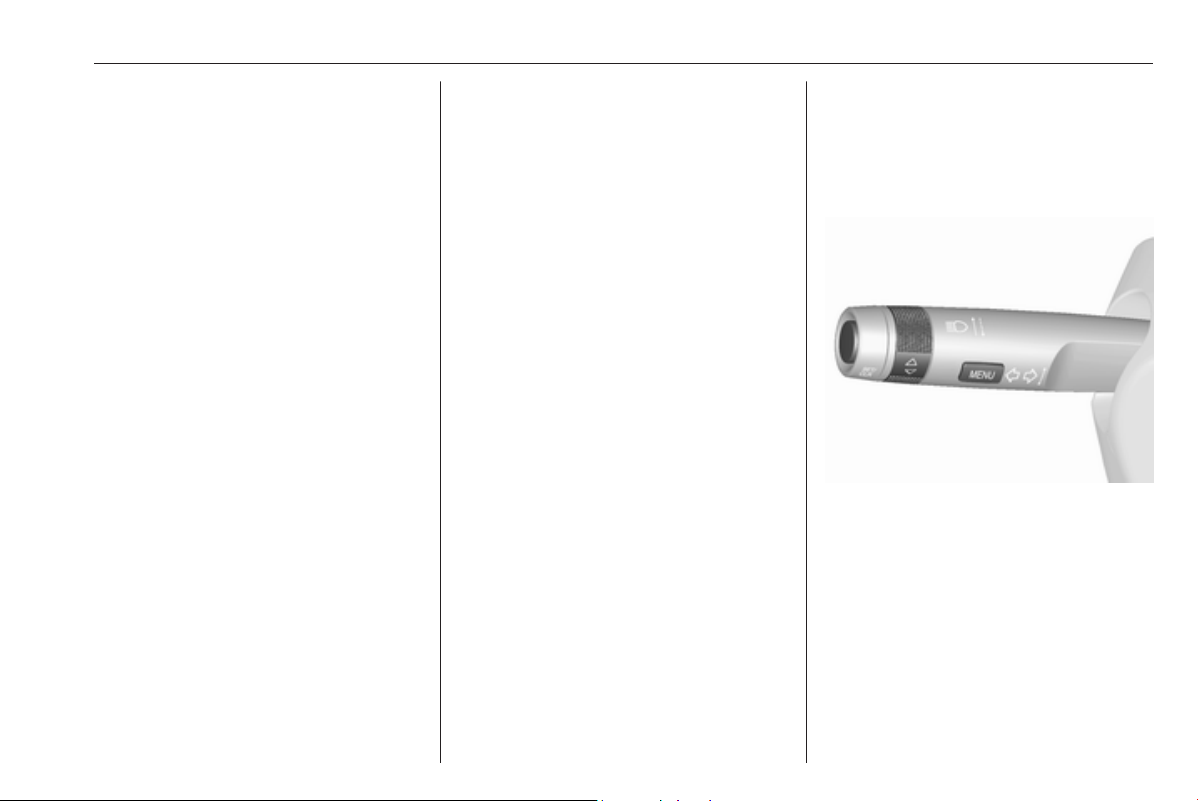
Instruments and controls 103
Touchscreen operation
Display must be switched on by
pressing X. Press ; to select
homepage.
Touch required menu display icon or
a function with the finger.
Scroll a longer submenu list with the
finger up or down.
Confirm a required function or
selection by touching.
Touch q on the display to exit a
menu without changing a setting.
Press ; to return to the homepage.
For further information, see
Infotainment manual.
Speech recognition
Description see Infotainment manual.
Vehicle personalisation 3 105.
Valet mode
Some functions of the Driver
Information Centre and the Info
Display can be limited for some
drivers.
Activation or deactivation of valet
mode can be set in the menu
Settings in the vehicle personalisation
menu.
Vehicle personalisation 3 105.
For more information see
Infotainment manual.
Vehicle messages
Messages are indicated mainly in the
Driver Information Centre, in some
cases together with a warning chime.
Press SET/CLR on the turn signal
lever to confirm a message.
Vehicle and service messages
The vehicle messages are displayed
as text. Follow the instructions given
in the messages.

104 Instruments and controls
Warning chimes
If several warnings appear at the
same time, only one warning chime
will sound.
When starting the engine or whilst
driving
The warning chime regarding
unfastened seat belts has priority
over any other warning chime.
● If a door, the tailgate or bonnet is
open.
● If seat belt is not fastened.
● If a certain speed is exceeded
with parking brake applied.
● If a programmed speed or speed
limit is exceeded.
● If a warning message appears in
the Driver Information Centre.
● If approaching a vehicle ahead
too closely.
● If the electronic key is not in the
passenger compartment.
● If an unintended lane change
occurs.
● If the parking assist detects an
object.
● If the fuel level is low.
When the vehicle is parked and/or
the driver's door is opened
● With exterior lights on.
During an Autostop
● If the driver's door is opened.
● If any condition for an autostart is
not fulfilled.
Battery voltage
When the battery voltage is running
low, a warning message or warning
code 174 will appear in the Driver
Information Centre.
1. Switch off immediately any
electrical consumers which are
not required for a safe ride, e.g.
seat heating, heated rear window
or other main consumers.
2. Charge the battery by driving
continuously for a while or by
using a charging device.
The warning message or warning
code will disappear after the engine
has been started twice consecutively
without a voltage drop.
If the battery cannot be recharged,
have the cause of the fault remedied
by a workshop.
Instruments and controls 105
Vehicle personalisation
The vehicle's behaviour can be
personalised by changing the settings
in the Info Display.
Depending on vehicle equipment and
country-specific regulations some of
the functions described below may
not be available.
Some functions are only displayed or
active when the engine is running.
Personal settings
Graphic Info Display
Press MENU to open the respective
menu.
Select Settings, scroll through the list
and select Vehicle Settings
In the corresponding submenus the
following settings can be changed:
Vehicle Settings
● Climate and Air Quality
Auto Fan Max Speed: Modifies
the level of the cabin airflow of the
climate control in automatic
mode.
Auto Heated Seats:
Automatically activates the seat
heating.
Auto Demist: Activates or
deactivates auto demist.
Auto Rear Demist: Activates the
heated rear window
automatically.
● Park Assist / Collision Detection
Park Assist: Activates or
deactivates the ultrasonic
sensors.
● Comfort Settings
Chime Volume: Changes the
volume of warning chimes.
Personalisation by Driver:
Activates or deactivates the
personalisation function.
Rear Auto Wipe in Reverse:
Activates or deactivates
automatic switching on of the
rear window wiper when reverse
gear is engaged.
● Exterior Ambient Lighting
Exterior lighting by unlocking:
Activates or deactivates the entry
lighting.
Duration upon exit of vehicle:
Activates or deactivates and
changes the duration of exit
lighting.
Left or Right Hand Traffic:
Changes between lighting for left
or right-hand traffic.
Adaptive Forward Lighting:
Changes the settings of the
functions of the LED headlights.
● Power Door Locks
Stop door lock if door open:
Activates or deactivates the door
locking function while a door is
open.
Auto Door Lock: Activates or
deactivates the automatic door
locking function after switching
on ignition.
106 Instruments and controls
Delayed Door Lock: Activates or
deactivates the delayed door
locking function.
● Remote Lock, Unlock, and Start
Remote Unlock Feedback:
Activates or deactivates the
hazard warning flasher feedback
whilst unlocking.
Remote Lock Feedback:
Changes what kind of feedback
is given when locking the vehicle.
Remote Door Unlock: Changes
the configuration to unlock only
the driver's door or the whole
vehicle whilst unlocking.
Auto Relock Doors: Activates or
deactivates the automatic relock
function after unlocking without
opening the vehicle.
Remote Window Operation:
Activates or deactivates the
operation of power windows with
remote control.
Passive Door Unlock: Changes
the configuration to unlock only
the driver's door or the whole
vehicle whilst unlocking.
Passive Door Lock: Activates or
deactivates the passive locking
function. This feature locks the
vehicle automatically after
several seconds if all doors have
been closed and an electronic
key has been removed from the
vehicle.
Remote Left in Vehicle Alarm:
Activates or deactivates the
warning chime when the
electronic key remains in the
vehicle.
● Restore Factory Settings:
Resets all settings to the default
settings.
● Valet Mode:
See infotainment manual.
Personal settings
7" Colour Info Display
Press ;, select Settings and then
Vehicle on the Info Display.
In the corresponding submenus the
following settings can be changed:
Vehicle
● Climate & Air Quality
Auto Fan Max Speed: Modifies
the level of the cabin airflow of the
climate control in automatic
mode.
Auto Heated Seats:
Automatically activates the seat
heating.
Auto Defog: Activates or
deactivates auto demist.

Instruments and controls 107
Auto Rear Defog: Activates the
heated rear window
automatically.
● Collision / Detection Systems
Rear View Camera Guidelines:
Activates or deactivates the rear
view camera guidelines on the
Info Display.
Park Assist: Activates or
deactivates the ultrasonic
sensors.
● Comfort and Convenience
Chime Volume: Changes the
volume of warning chimes.
Personalization By Driver:
Activates or deactivates the
personalisation function.
Auto Wipe in Reverse Gear:
Activates or deactivates
automatic switching on of the
rear window wiper when reverse
gear is engaged.
● Lighting
Vehicle Locator Lights: Activates
or deactivates the entry lighting.
Exit Lighting: Activates or
deactivates and changes the
duration of exit lighting.
Left or Right Hand Traffic:
Changes between lighting for left
or right-hand traffic.
Adaptive Forward Lighting:
Changes the settings of the
functions of the LED headlights.
● Power Door Locks
Unlocked Door Anti Lock Out:
Activates or deactivates the door
locking function while a door is
open.
Auto Door Lock: Activates or
deactivates the automatic door
locking function after switching
on ignition.
Delayed Door Lock: Activates or
deactivates the delayed door
locking function.
● Remote Lock, Unlock, Start
Remote Unlock Light Feedback:
Activates or deactivates the
hazard warning flasher feedback
whilst unlocking.
Remote Lock Feedback:
Changes what kind of feedback
is given when locking the vehicle.
Remote Door Unlock: Changes
the configuration to unlock only
the driver's door or the whole
vehicle whilst unlocking.
Relock Remotely Unlocked
Doors: Activates or deactivates
the automatic relock function
after unlocking without opening
the vehicle.
Remote Window Operation:
Activates or deactivates the
operation of power windows with
remote control.
Passive Door Unlock: Changes
the configuration to unlock only
the driver's door or the whole
vehicle whilst unlocking.
Passive Door Lock: Activates or
deactivates the passive locking
function. This feature locks the
vehicle automatically after
several seconds if all doors have
been closed and an electronic
key has been removed from the
vehicle.
108 Instruments and controls
Remote Left in Vehicle Alert:
Activates or deactivates the
warning chime when the
electronic key remains in the
vehicle.
Personal settings
8" Colour Info Display
Press ; then select the SETTINGS
icon.
In the corresponding submenus the
following settings can be changed:
Vehicle
● Climate and Air Quality
Auto Fan Speed: Modifies the
level of the cabin airflow of the
climate control in automatic
mode.
Auto Heated Seats:
Automatically activates the seat
heating.
Auto Demist: Activates or
deactivates auto demist.
Auto Rear Demist: Activates the
heated rear window
automatically.
● Collision / Detection Systems
Park Assist: Activates or
deactivates the ultrasonic
sensors.
● Comfort and Convenience
Chime Volume: Changes the
volume of warning chimes.
Personalisation by Driver:
Activates or deactivates the
personalisation function.
Auto Wipe in Reverse Gear:
Activates or deactivates
automatic switching on of the
rear window wiper when reverse
gear is engaged.
● Lighting
Vehicle Locator Lights: Activates
or deactivates the entry lighting.
Exit Lighting: Activates or
deactivates and changes the
duration of exit lighting.
Left or Right Hand Traffic:
Changes between lighting for left
or right-hand traffic.
Adaptive Forward Lighting:
Changes the settings of the
functions of the LED headlights.
● Power Door Locks
Unlocked Door Anti-Lockout:
Activates or deactivates the door
locking function while a door is
open.
Auto Door Lock: Activates or
deactivates the automatic door
locking function after switching
on ignition.
Delayed Door Lock: Activates or
deactivates the delayed door
locking function. This feature

Instruments and controls 109
delays the actual locking of the
doors until all doors are closed.
● Remote Lock, Unlock, Start
Remote Unlock Light Feedback:
Activates or deactivates the
hazard warning flasher feedback
whilst unlocking.
Remote Lock Feedback:
Changes what kind of feedback
is given when locking the vehicle.
Remote Door Unlock: Changes
the configuration to unlock only
the driver's door or the whole
vehicle whilst unlocking.
Relock Remote Unlocked Doors:
Activates or deactivates the
automatic relock function after
unlocking without opening the
vehicle.
Remote Window Operation:
Activates or deactivates the
operation of power windows with
remote control.
Passive Door Unlock: Changes
the configuration to unlock only
the driver's door or the whole
vehicle whilst unlocking.
Passive Door Lock: Activates or
deactivates the passive locking
function. This feature locks the
vehicle automatically after
several seconds if all doors have
been closed and an electronic
key has been removed from the
vehicle.
Remote Left in Vehicle Alert:
Activates or deactivates the
warning chime when the
electronic key remains in the
vehicle.
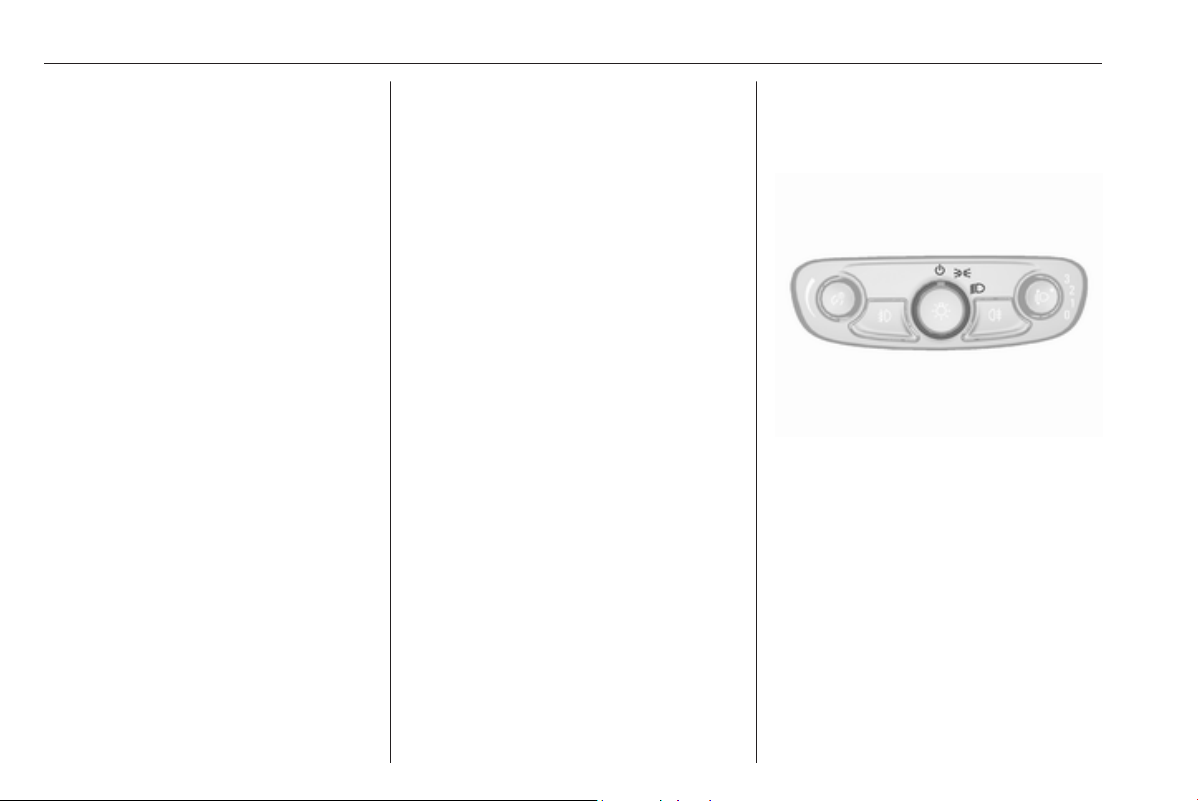
110 Lighting
Lighting
Exterior lighting .......................... 110
Light switch .............................. 110
Automatic light control ............. 111
High beam ............................... 111
High beam assist ..................... 112
Headlight flash ......................... 112
Headlight range adjustment ....113
Headlights when driving
abroad .................................... 113
Daytime running lights ............. 114
Adaptive forward lighting ......... 114
Hazard warning flashers .......... 116
Turn lights ................................ 117
Front fog lights ......................... 117
Rear fog light ........................... 117
Reversing lights ....................... 117
Misted light covers ................... 118
Interior lighting ........................... 118
Instrument panel illumination
control ..................................... 118
Interior lights ............................ 118
Reading lights .......................... 119
Glove box lighting .................... 119
Sunvisor lights ......................... 119
Lighting features ........................ 119
Entry lighting ............................ 119
Exit lighting .............................. 120
Battery discharge protection .... 120
Exterior lighting
Light switch
Turn light switch:
m
: lights off
8
: sidelights
9
: low beam
Control indicator 8 3 95.
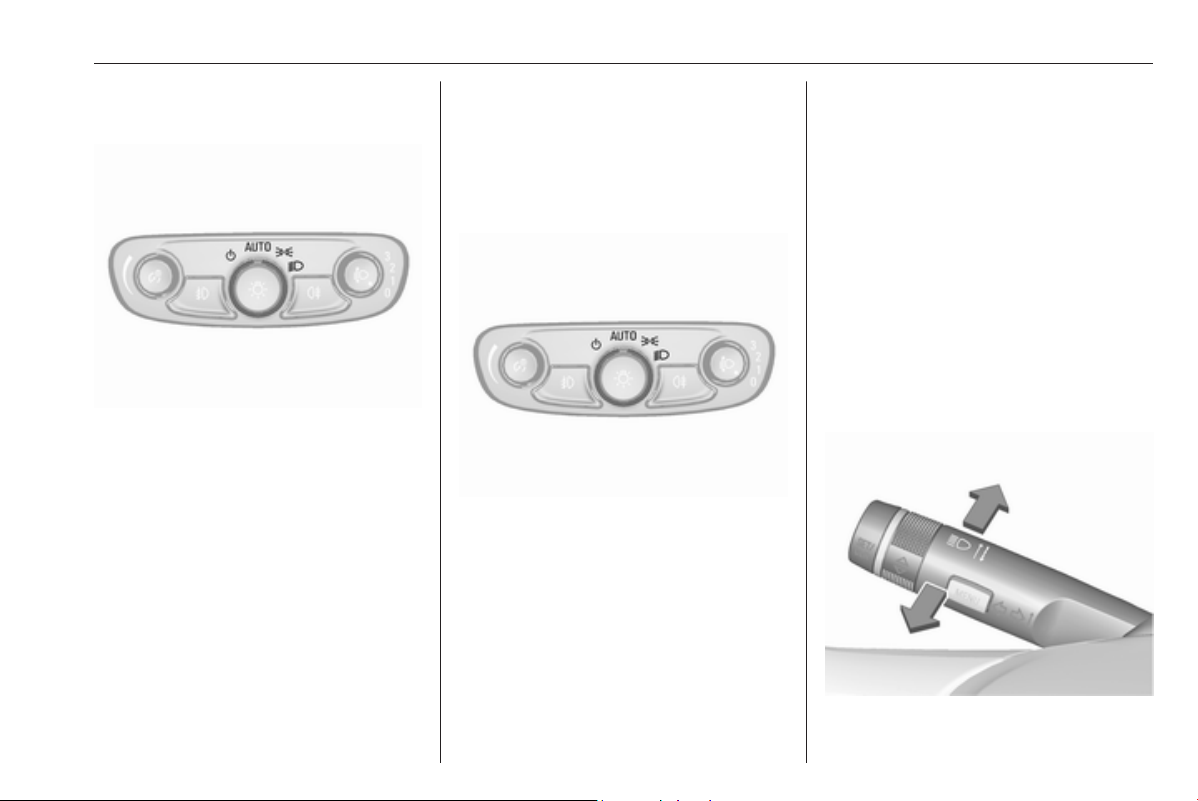
Lighting 111
Light switch with Automatic light
control
Turn light switch:
AUTO : automatic light control:
exterior lighting is switched
on and off automatically
depending on external
lighting conditions
m
: activation or deactivation of
the automatic light control.
Switch turns back to AUTO
8
: sidelights
9
: low beam
Tail lights
Tail lights are illuminated together
with low beam and sidelights.
Automatic light control
When the automatic light control
function is switched on and the
engine is running, the system
switches between daytime running
lights and headlights automatically
depending on the external lighting
conditions and information given by
the rain sensor system.
Daytime running light 3 114.
Automatic headlight activation
During poor lighting conditions the
headlights are switched on.
Additionally, headlights are switched
on if the windscreen wipers have
been activated for several wipes.
Tunnel detection
When a tunnel is entered headlights
are switched on immediately.
Adaptive forward lighting 3 114.
High beam
Push lever to switch from low to high
beam.
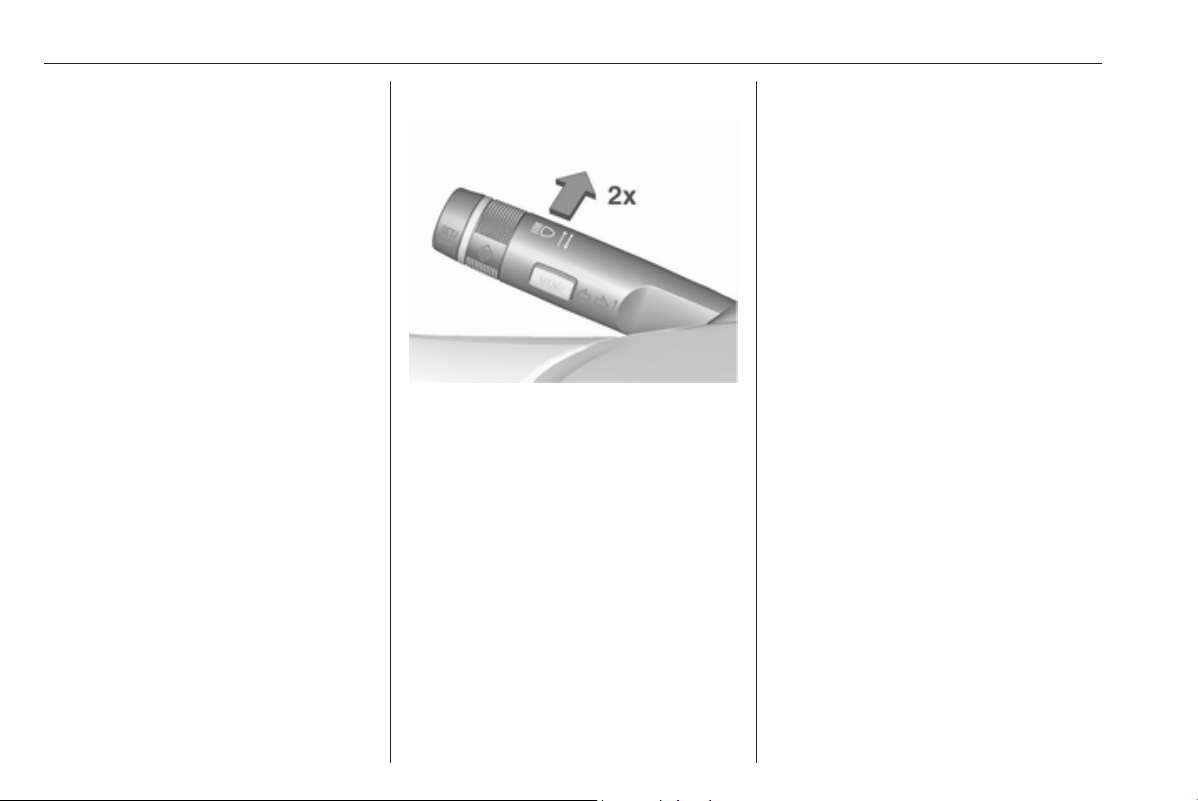
112 Lighting
Pull lever to deactivate high beam.
High beam assist 3 114.
High beam assist
This feature automatically activates
the high beam at night when vehicle
speed is faster than 25 mph.
It switches automatically back to low
beam when:
● The camera or a sensor in the
windscreen detects the lights of
oncoming or preceding vehicles.
● The vehicle speed drops below
12 mph.
● It is foggy or snowy.
● Driving in urban areas.
If there are no restrictions detected,
the system switches back to high
beam.
Activation
The high beam assist is activated by
pushing the indicator lever twice. The
high beam is switched on
automatically at a speed above
25 mph.
The green control indicator f
illuminates continuously when the
assist is activated, the blue one 7
illuminates when high beam is on.
Control indicator f 3 95.
Deactivation
Push indicator lever once. It is also
deactivated when front fog lights are
switched on.
If a headlight flash is activated when
the high beam is on, the high beam
assist will be deactivated.
If a headlight flash is activated when
the high beam is off, the high beam
assist will remain activated.
The latest setting of the high beam
assist will remain after the ignition is
switched on again.
Headlight flash
Pull lever to activate the headlight
flash.
Pulling lever deactivates high beam.
AFL-LED headlights 3 114.
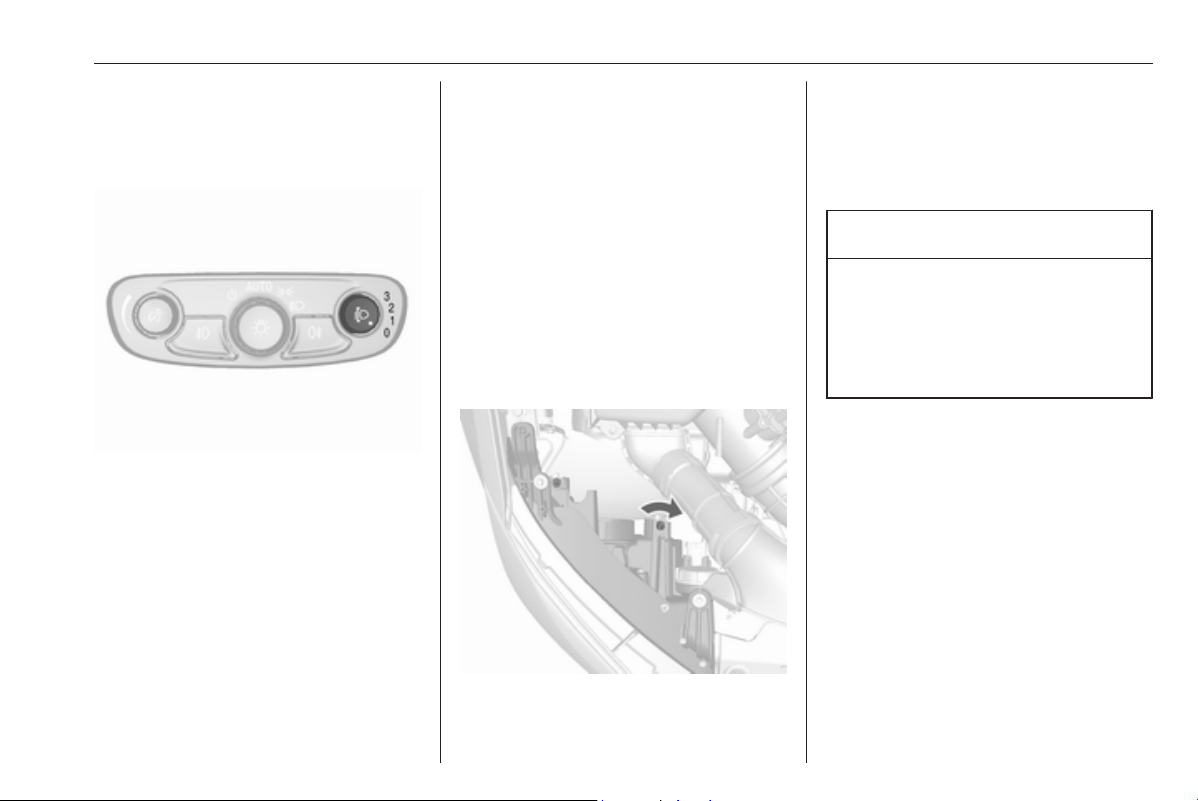
Lighting 113
Headlight range adjustment
Manual headlight range
adjustment
To adapt headlight range to the
vehicle load to prevent dazzling: turn
thumb wheel ? to required position.
0 : front seats occupied
1 : all seats occupied
2 : all seats occupied and load
compartment laden
3 : driver's seat occupied and load
compartment laden
Dynamic automatic headlight
levelling 3 114.
Headlights when driving
abroad
The asymmetrical headlight beam
extends visibility at the edge of the
road at the passenger side.
However, when driving in countries
where traffic drives on the opposite
side of the road, adjust the headlights
to prevent dazzling of oncoming
traffic.
Vehicles with halogen headlight
system
The adjusting screws are located
above the headlight.
Turn the adjusting screws with the
screwdriver clockwise by half a turn.
To reset to left-hand traffic mode, turn
adjuster elements on both headlight
housings anticlockwise by half a turn.
Caution
Have the adjustment of the
headlights checked after
deactivation.
We recommend consulting a
workshop.
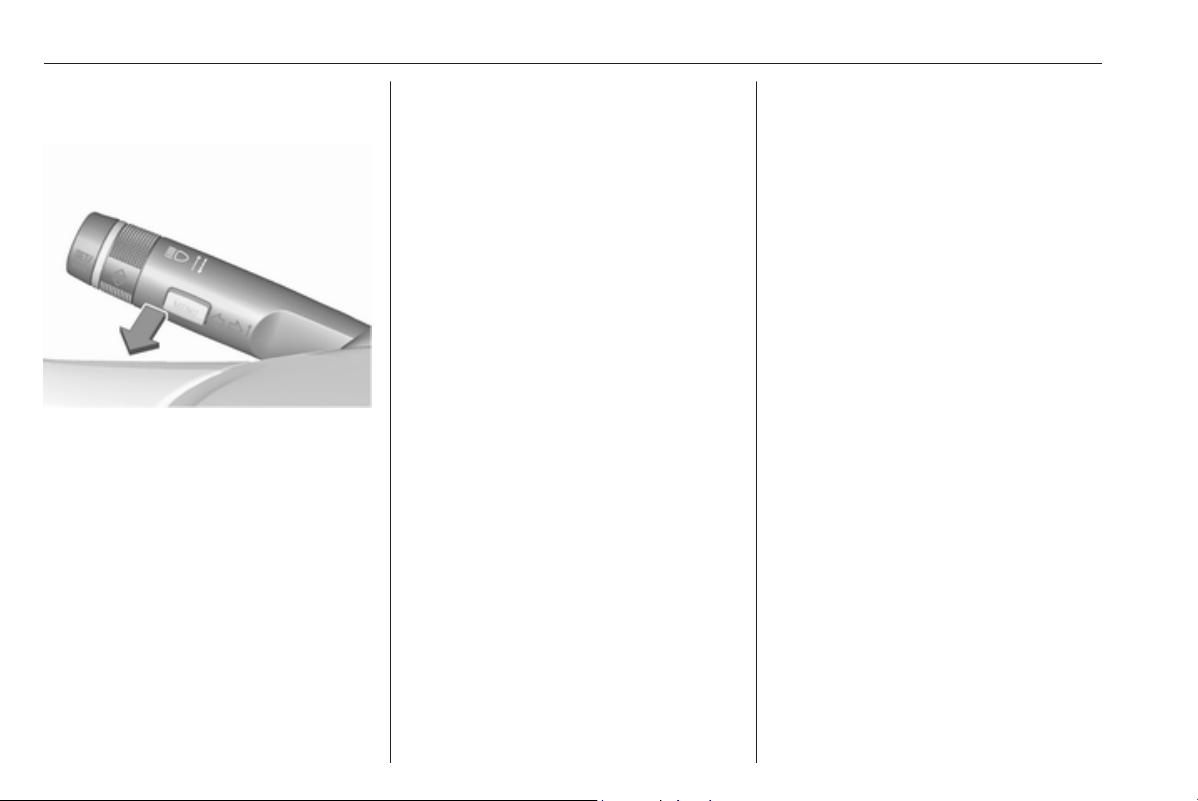
114 Lighting
Vehicles with adaptive forward
lighting system
1. Key in ignition switch.
2. Pull turn signal lever and hold
(headlight flash).
3. Switch on ignition.
4. After approx. five seconds the
control indicator f starts flashing
and an acoustic signal sounds.
On another version the headlights are
adjusted for driving on the opposite
side of the road via the vehicle
personalisation menu. Select the
relevant setting in Settings, I Vehicle.
Vehicle personalisation 3 105.
Every time the ignition is switched on,
control indicator f flashes as a
reminder for approx. four seconds.
For deactivation, operate the same
procedure as described above.
Control indicator f will not flash when
function is deactivated.
Control indicator f 3 95.
Daytime running lights
Daytime running lights increase
visibility of the vehicle during daylight.
They are switched on automatically
during daytime when engine is
running.
The system switches between
daytime running lights and headlights
automatically, depending on the
lighting conditions.
Automatic light control 3 111.
Adaptive forward lighting
The Adaptive forward lighting
functions are only available with LED
headlights for low and high beam.
Light range, light distribution and
intensity of light are variably triggered
depending on the lighting conditions,
road type and driving situation.
LED headlights for low and high
beam
LED headlights for low and high beam
ensure better visibility under all
conditions.
Operation is the same as for halogen
headlights.
Light switch 3 110.
High beam 3 111.
Headlight flash 3 112.
Headlights when driving abroad
3 113.
Automatic light control 3 111.
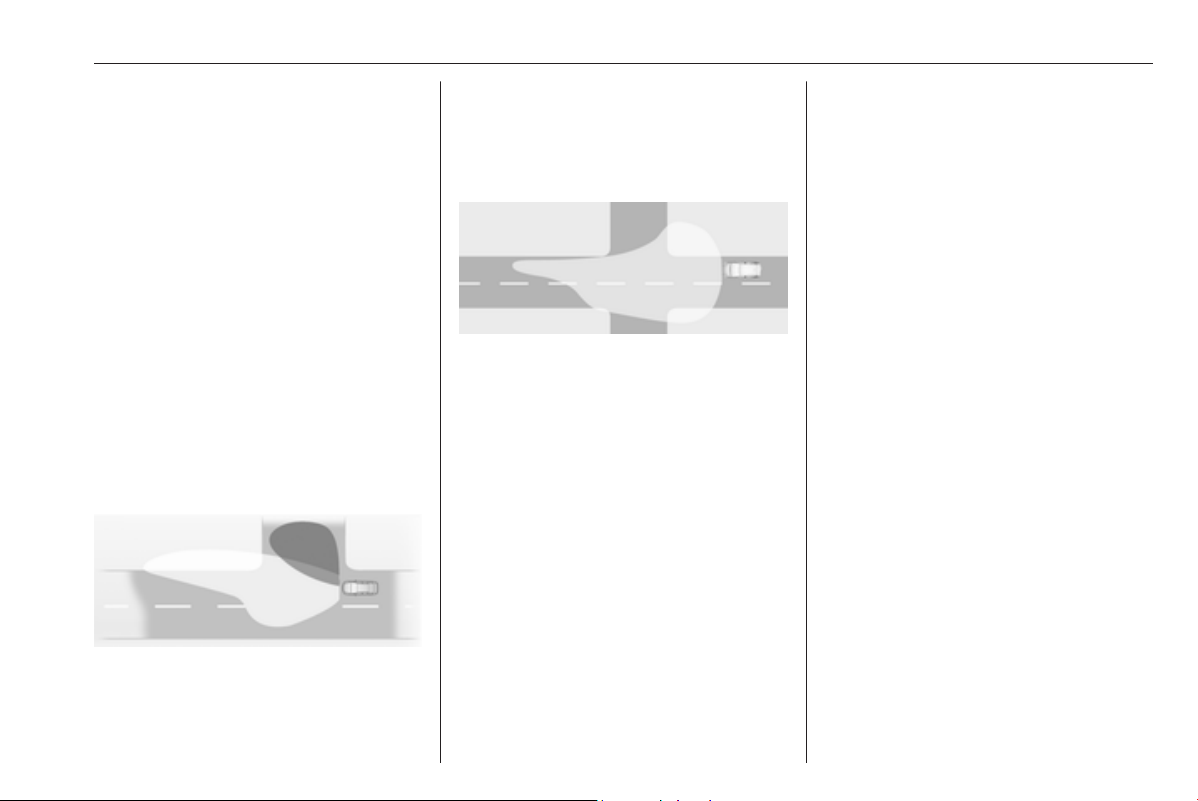
Lighting 115
AFL-LED lighting functions
AFL-LED lighting functions are active
automatically with light switch in
position AUTO. AFL-LED includes
following functions:
● curve and cornering lights
● town light
● country light
● motorway light
● high beam assist
● reverse parking function
● eco mode
● dynamic automatic headlight
levelling
Curve and cornering lights
On tight bends or when turning off,
depending on the steering angle or
the indicator light signal, an additional
left or right reflector is switched on
which illuminates the road in the
direction of travel. It is activated up to
a speed of 43 mph.
Town light
Activated automatically at a speed up
to approx. 34 mph. In situations with
exterior ambient light both cornering
lights are switched on with reduced
intensity. The light is wide and
symmetrical.
Country light
Activated automatically at a speed of
approx. 33 mph. The beam of light
and the brightness is different
between the left and the right side.
High beam assist
This feature allows high beam to
function as the main driving light at
night and when vehicle speed
exceeds 25 mph.
It switches automatically to low beam
when:
● The camera or a sensor in the
windscreen detects the lights of
oncoming or preceding vehicles.
● The vehicle speed drops below
12 mph.
● It is foggy or snowy.
● Driving in urban areas.
If there are no restrictions detected,
the system switches back to high
beam.
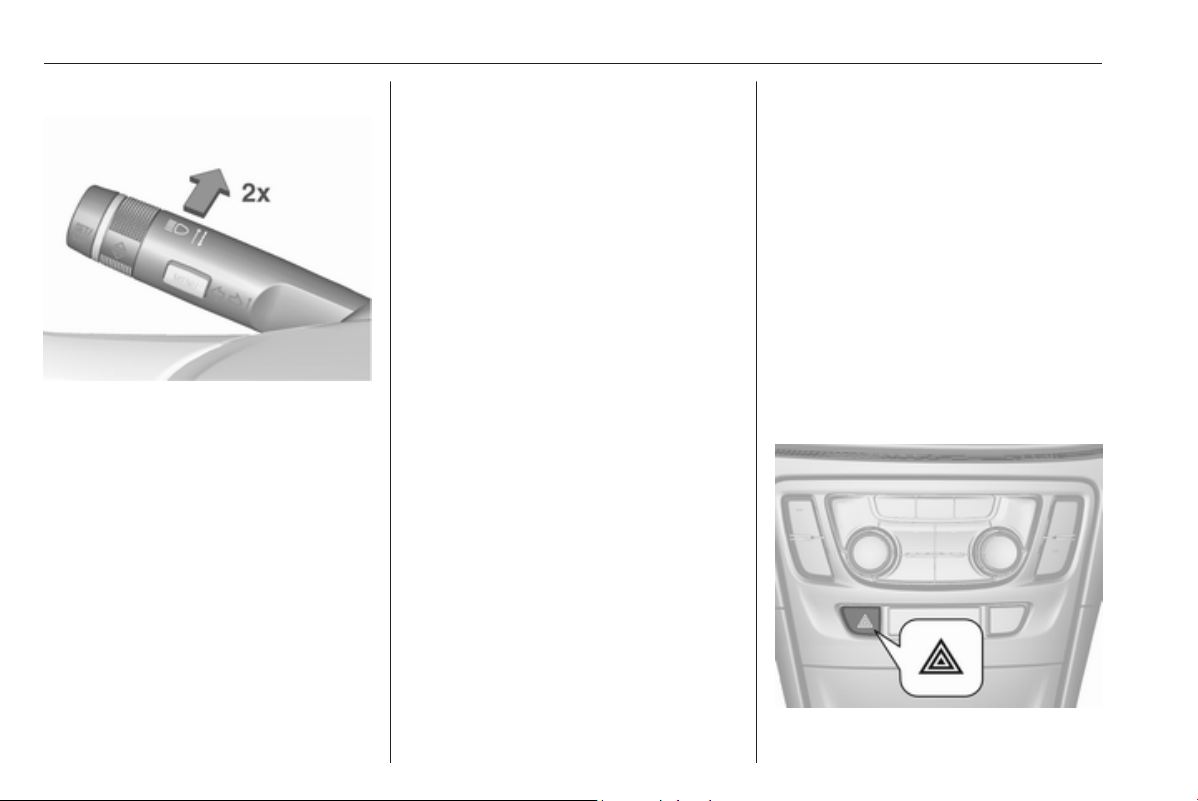
116 Lighting
Activation
The high beam assist is activated by
pushing the indicator lever twice. The
high beam is switched on
automatically at a speed above
25 mph.
The green control indicator f
illuminates continuously when the
assist is activated, the blue one 7
illuminates when high beam is on.
Control indicator f 3 95.
Deactivation
Push indicator lever once. It is also
deactivated when front fog lights are
switched on.
If a headlight flash is activated when
the high beam is on, the high beam
assist will be deactivated.
If a headlight flash is activated when
the high beam is off, the high beam
assist will remain activated.
The latest setting of the high beam
assist will remain after the ignition is
switched on again.
Reverse parking function
To assist driver's orientation when
parking, both corner lights and
reversing light illuminate when
headlights are on and reverse gear is
engaged. They remain illuminated for
a short time after disengaging reverse
gear or until driving faster than
4 mph in a forward gear.
Eco mode
If the vehicle stops, e. g. due to traffic
lights, an energy saving mode for
headlights is activated.
Dynamic automatic headlight
levelling
To prevent oncoming traffic from
being dazzled, headlight levelling is
automatically adjusted based on
vehicle inclination information.
Fault in AFL-LED lighting system
When the system detects a failure in
the LED headlight system, f
illuminates and a warning is displayed
in the Driver Information Centre.
Hazard warning flashers
Operated by pressing ¨.
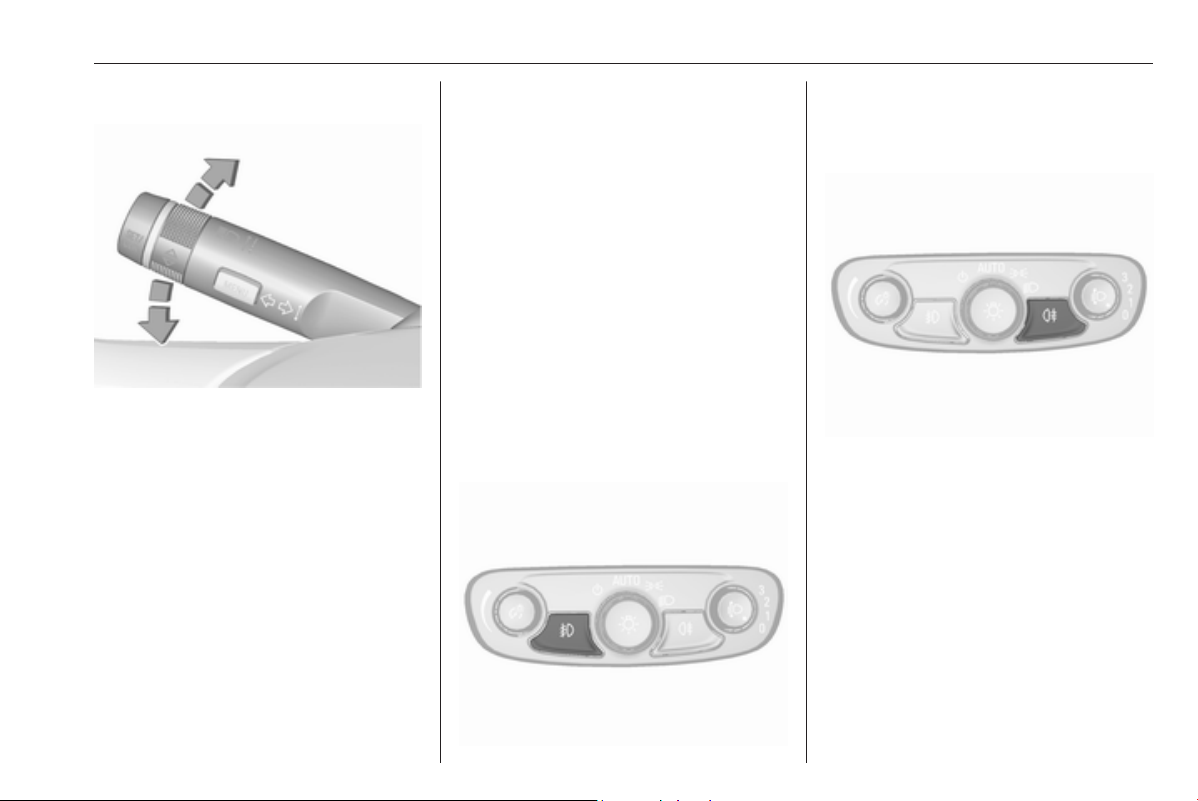
Lighting 117
Turn lights
lever up : right turn signal
lever down : left turn signal
A resistance point can be felt when
moving the lever.
Constant flashing is activated when
the lever is being moved beyond the
resistance point. It is deactivated
when the steering wheel is moved in
the opposite direction or lever is
manually moved back to its neutral
position.
Activate temporary flashing by
holding the lever just before the
resistance point. Turning lights will
flash until lever is being released.
To activate three flashes, tap the
lever briefly without passing the
resistance point.
With a trailer connected, turn signal
flashes six times and tone frequency
changes when pressing the lever until
resistance is felt and then releasing.
Move the lever to the resistance point
and hold for flashing until lever is
released.
Front fog lights
Operated by pressing >.
Rear fog light
Operated by pressing ø.
Light switch in position AUTO:
switching on rear fog light will switch
headlights on automatically.
Light switch in position 8: rear fog
light can only be switched on with
front fog lights.
Reversing lights
The reversing light comes on when
the ignition is on and reverse gear is
selected.
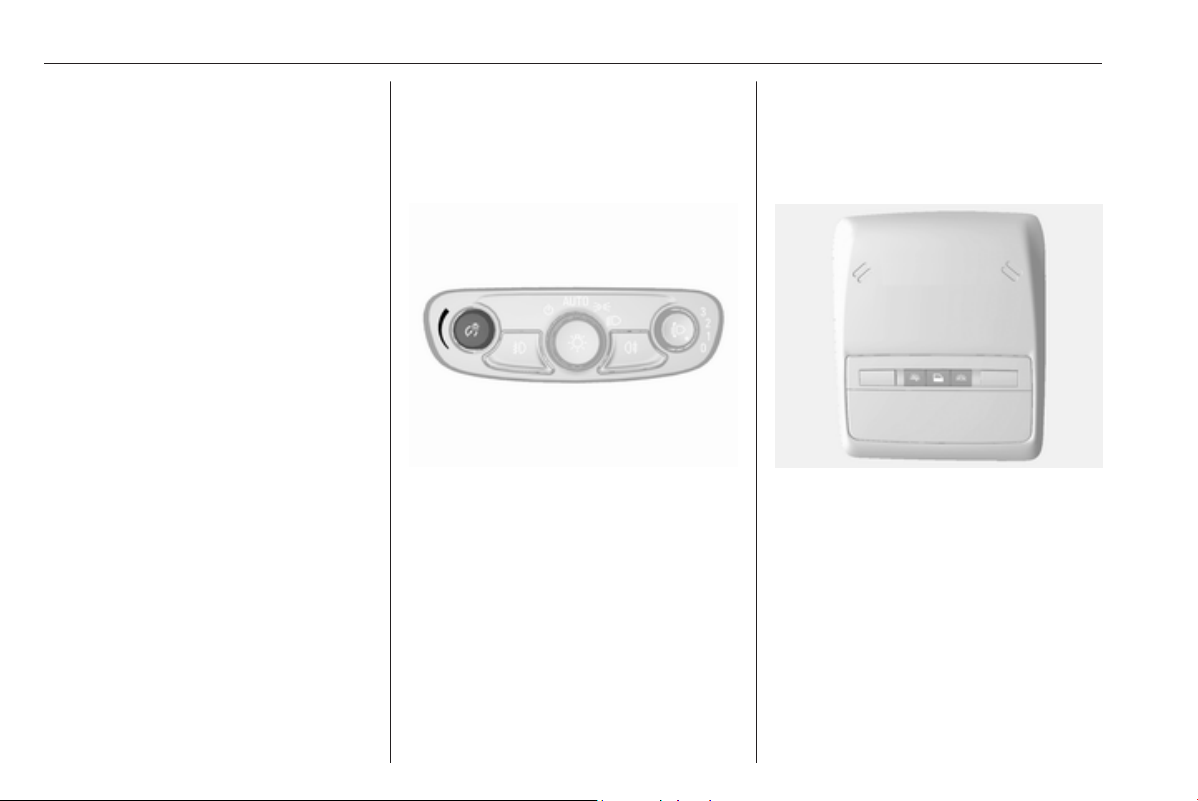
118 Lighting
Misted light covers
The inside of the light housing may
mist up briefly in poor, wet and cold
weather conditions, in heavy rain or
after washing. The mist disappears
quickly by itself. To help, switch on the
headlights.
Interior lighting
Instrument panel
illumination control
Brightness of the following lights can
be adjusted when the exterior lights
are on:
● instrument panel illumination
● steering wheel controls
Turn thumb wheel A and hold until
the desired brightness is obtained.
Interior lights
Courtesy light
Front
press v : off
w
: automatic switching on
and off
press u : on
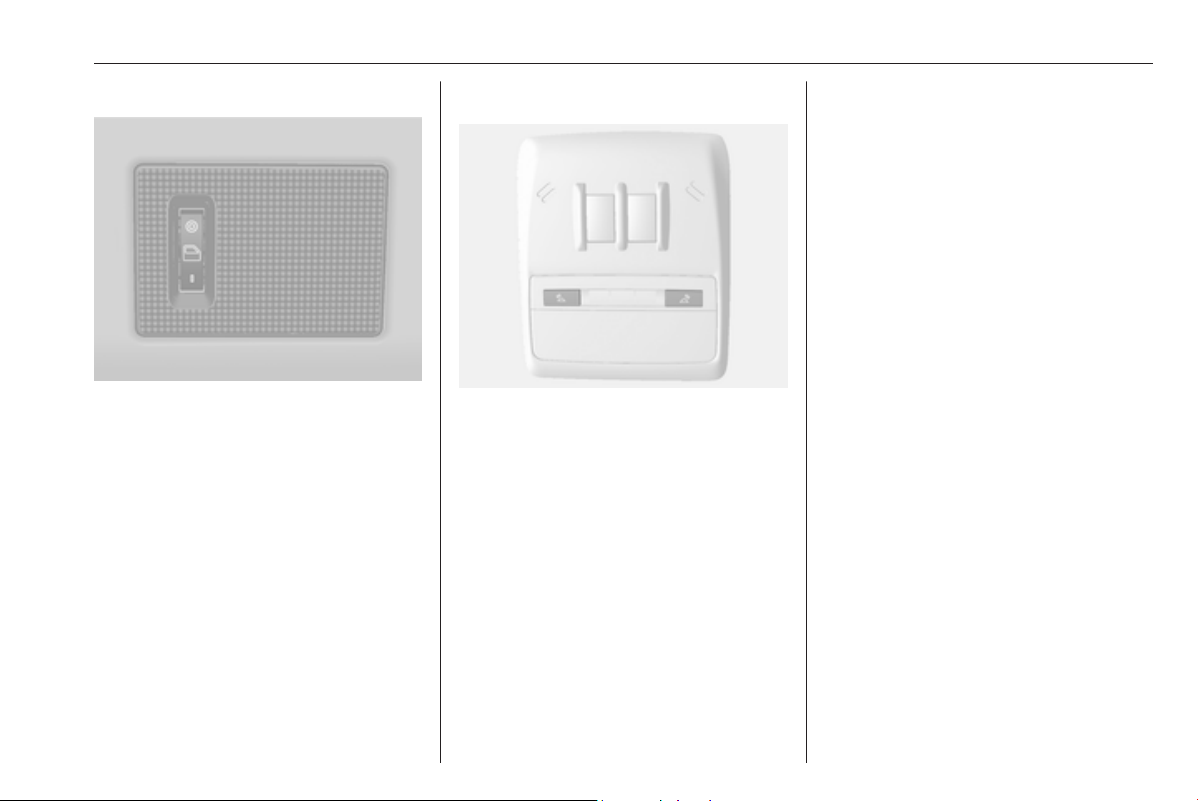
Lighting 119
Rear
: on
w
: automatic switching on and off
§
: off
Reading lights
The front reading lights are located in
the overhead console.
Press s and t to turn each light on
or off.
Glove box lighting
Illuminates when the glovebox is
opened.
Sunvisor lights
Illuminates when the cover is opened.
Lighting features
Entry lighting
Welcome lighting
Following lights are switched on for a
short time by unlocking the vehicle
with the radio remote control:
● low beam
● sidelights
● tail lights
● number plate lights
● instrument panel light
● interior lights
This function works only in the dark
and facilitates locating the vehicle.
Activation or deactivation of this
function can be changed in the
vehicle settings.
Vehicle personalisation 3 105.
The following lights will additionally
switch on when driver's door is
opened:
● illumination of some switches
● some interior lights
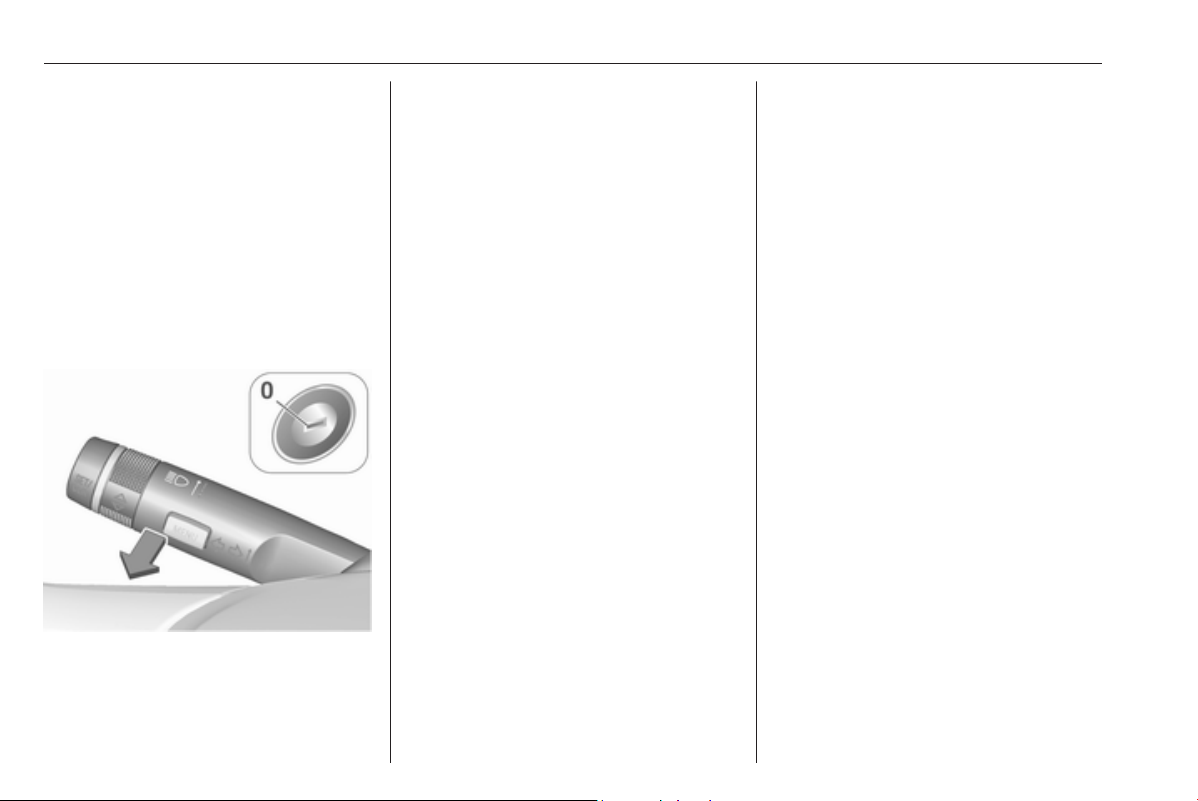
120 Lighting
Exit lighting
Low beam, sidelights and tail lights
illuminate the surrounding area for an
adjustable time after leaving the
vehicle.
Switching on
Activation, deactivation and duration
of lighting of this function can be
changed in the vehicle settings.
Vehicle personalisation 3 105.
1. Switch off ignition.
2. Remove ignition key.
3. Open driver's door.
4. Pull turn signal lever.
5. Close driver's door.
If the driver's door is not closed the
lights switch off after a few seconds.
The lighting is switched off
immediately if the turn signal lever is
pulled while the driver's door is open.
Battery discharge protection
To prevent discharge of the battery
when the ignition is switched off,
some interior lights are switched off
automatically after some time.
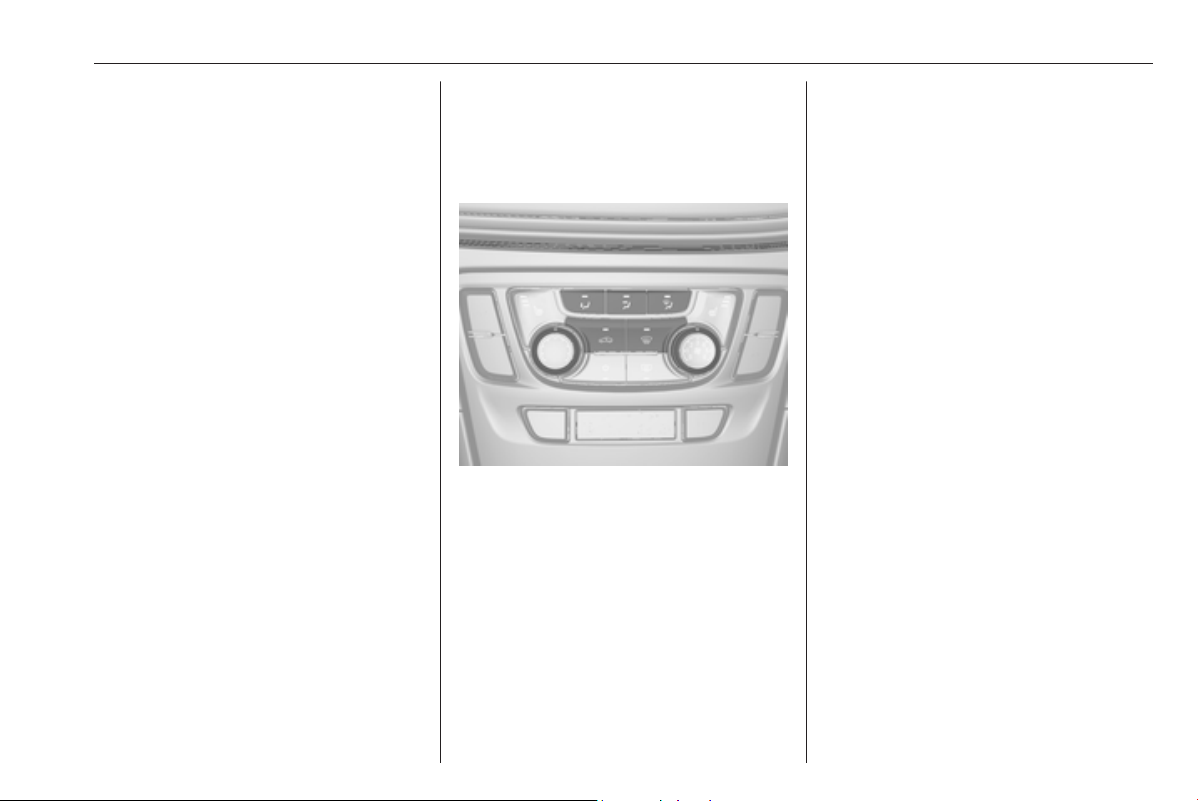
Climate control 121
Climate control
Climate control systems ............. 121
Heating and ventilation system 121
Air conditioning system ........... 122
Electronic climate control
system .................................... 123
Auxiliary heater ........................ 125
Air vents ..................................... 125
Adjustable air vents ................. 125
Fixed air vents ......................... 126
Maintenance .............................. 126
Air intake ................................. 126
Air conditioning regular
operation ................................ 126
Service .................................... 126
Climate control systems
Heating and ventilation
system
Controls for:
● air distribution
● temperature
● fan speed
● demisting and defrosting
Heated rear window Ü 3 36.
Temperature
red : warm
blue : cold
Heating will not be fully effective until
the engine has reached normal
operating temperature.
Air distribution
l
: to windscreen and front door
windows
M
: to head area
K
: to foot well and windscreen
Combination settings are possible.
Fan speed
Adjust the air flow by switching the fan
to the desired speed.
Demisting and defrosting
●
Press V: fan automatically
switches to higher speed, the air
distribution is directed towards
the windscreen.
● Set temperature control to
warmest level.
●
Switch on heated rear window Ü.
● Open side air vents as required
and direct them towards the door
windows.
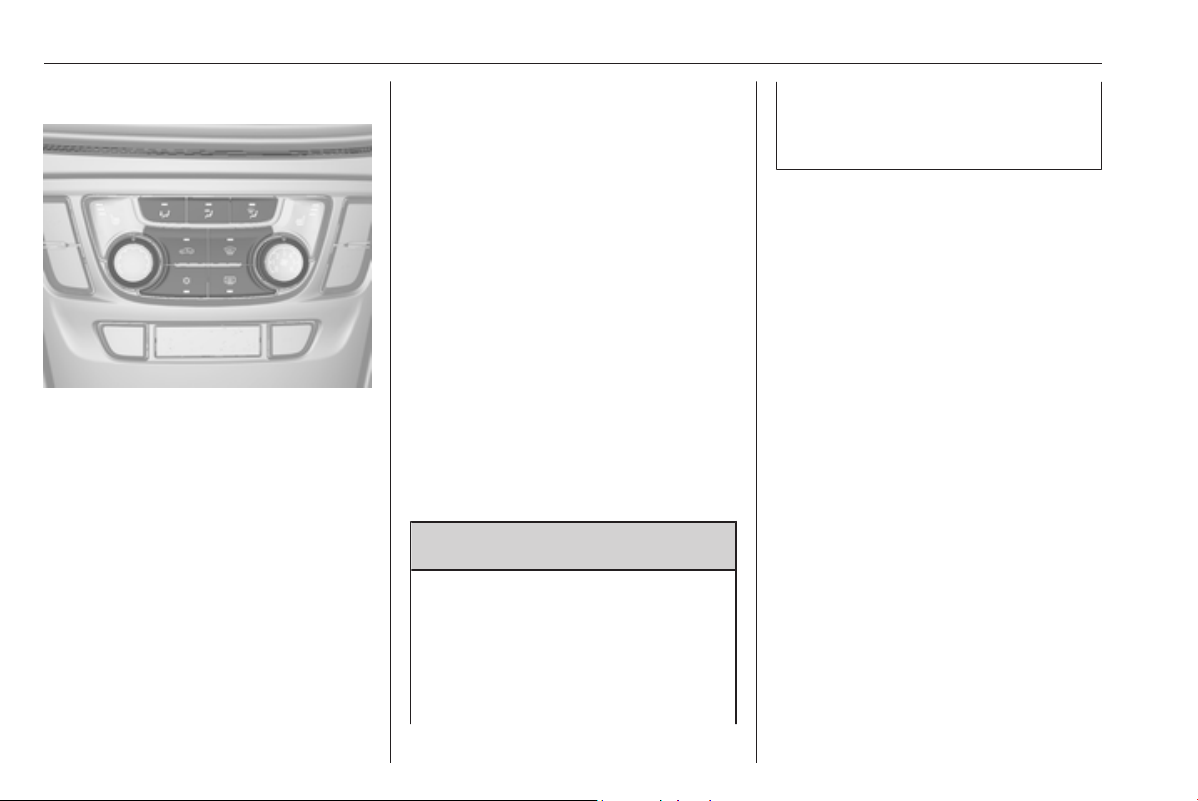
122 Climate control
Air conditioning system
In addition to the heating and
ventilation system, the air
conditioning system has controls for:
n
: cooling
4
: air recirculation
Cooling n
Press n to switch on cooling. The
LED in the button illuminates to
indicate activation. Cooling is only
functional when the engine is running
and climate control fan is switched on.
Press n again to switch off cooling.
The air conditioning system cools and
dehumidifies (dries) as soon as the
outside temperature is above a
specific level. Therefore
condensation may form and drip from
under the vehicle.
If no cooling or drying is required,
switch off the cooling system for fuel
saving reasons. Activated cooling
may inhibit Autostops.
Stop-start system 3 133.
Air recirculation system 4
Press 4 to activate air recirculation
mode. The LED in the button
illuminates to indicate activation.
Press 4 again to deactivate air
recirculation mode.
9 Warning
The exchange of fresh air is
reduced in air recirculation mode.
In operation without cooling the air
humidity increases, so the
windows may mist up from inside.
The quality of the passenger
compartment air deteriorates,
which may cause the vehicle
occupants to feel drowsy.
In warm and very humid ambient air
conditions, the windscreen may mist
up from outside when cold air is
directed towards it. If windscreen
mists up from outside, activate
windscreen wiper and deactivate l.
Maximum cooling
Briefly open the windows so that hot
air can disperse quickly.
●
Switch on cooling n.
●
Air recirculation system 4 on.
●
Press air distribution switch M.
● Set temperature control to
coldest level.
● Set fan speed to highest level.
● Open all vents.
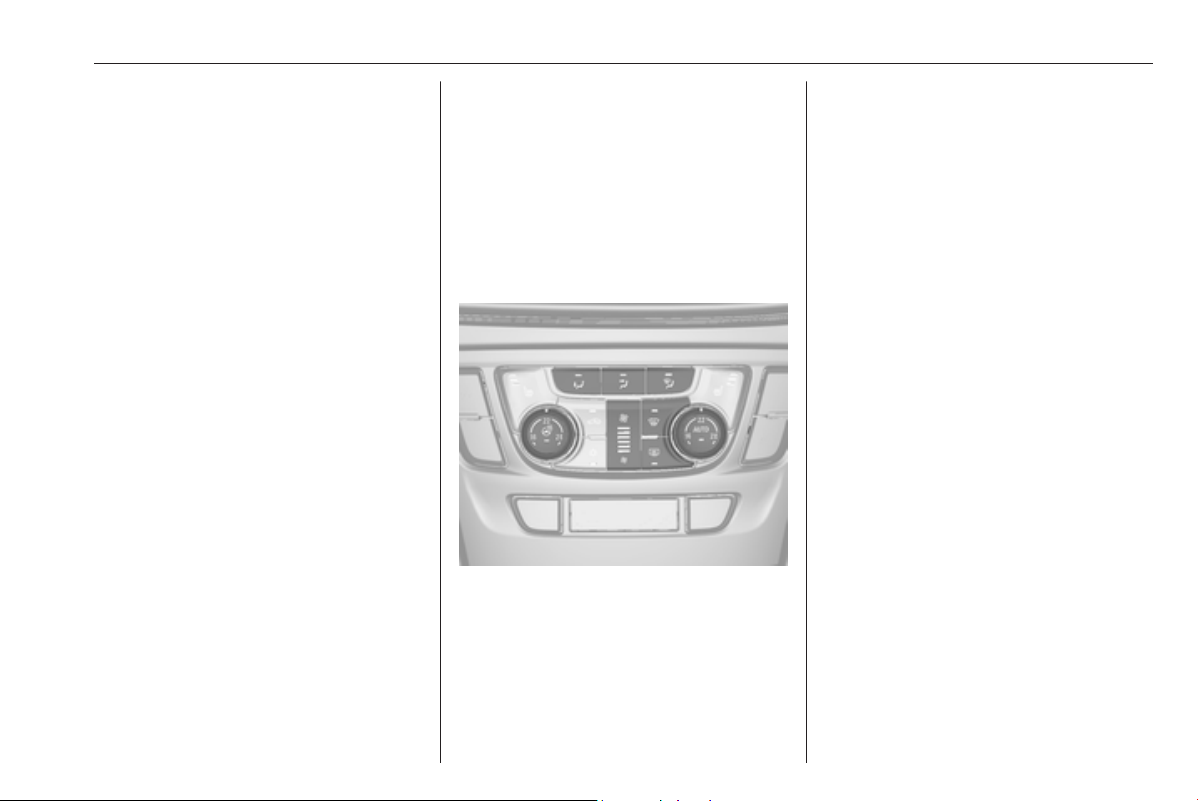
Climate control 123
Demisting and defrosting the
windows V
●
Press V: fan automatically
switches to higher speed, the air
distribution is directed towards
the windscreen.
● Set temperature control to
warmest level.
●
Switch on heated rear window Ü.
● Open side air vents as required
and direct them towards the door
windows.
Notice
If V is pressed while the engine is
running, an Autostop will be inhibited
until V is pressed again.
If l is pressed with the fan switched
on and the engine running, an
Autostop will be inhibited until l is
pressed again or until the fan is
switched off.
If V is pressed while the engine is
in an Autostop, the engine will restart
automatically.
If
l is pressed with the fan switched
on while the engine is in an
Autostop, the engine will restart
automatically.
Stop-start system 3 133.
Electronic climate control
system
Controls for:
● air distribution
● temperature
● fan speed
AUTO : automatic mode
4
: manual air recirculation
V
: demisting and defrosting
Heated rear window Ü 3 36.
The preselected temperature is
automatically regulated. In automatic
mode, the fan speed and air
distribution automatically regulate the
air flow.
The system can be manually adapted
via the use of air distribution and air
flow controls.
Each change of settings is shown in
the Info Display for a few seconds.
The electronic climate control system
is only fully operational when the
engine is running.
Automatic mode AUTO
Basic setting for maximum comfort:
● Press AUTO: the air distribution
and fan speed are regulated
automatically.
● Open all air vents.
●
Press n to switch on cooling.
● Set the desired temperature.

124 Climate control
Temperature preselection
Temperatures can be set to the
desired value.
If the minimum temperature is set, the
climate control system runs at
maximum cooling.
If the maximum temperature is set,
the climate control system runs at
maximum heating.
Notice
If the temperature is to be reduced
for climate comfort reasons, an
Autostop may be inhibited or the
engine will restart automatically
when cooling is switched on.
Stop-start system 3 133.
The temperature can be adjusted
separately for driver and front
passenger side.
Demisting and defrosting the
windows V
●
Press V.
● Temperature and air distribution
are set automatically and the fan
runs at high speed.
●
Switch on heated rear window Ü.
● To return to previous mode:
press V, to return to automatic
mode: press AUTO.
Notice
If V is pressed while the engine is
running, an Autostop will be inhibited
until V is pressed again.
If l is pressed with the fan switched
on and the engine running, an
Autostop will be inhibited until l is
pressed again or until the fan is
switched off.
If V is pressed while the engine is
in an Autostop, the engine will restart
automatically.
If l is pressed with the fan switched
on while the engine is in an
Autostop, the engine will restart
automatically.
Stop-start system 3 133.
Manual settings
Climate control system settings can
be changed by activating the buttons
and rotary knobs as follows.
Changing a setting will deactivate the
automatic mode.
Fan speed Z
The selected fan speed is indicated
with x and a number in the display. If
the fan is switched off, the air
conditioning is also deactivated.
To return to automatic mode: Press
AUTO.
Air distribution l,
M
,
K
Press appropriate button for desired
adjustment. The LED in the button
illuminates to indicate activation.
l
: to windscreen and front door
windows (air conditioning is
activated in the background to
help prevent windows from
fogging)
M
: to head area
K
: to foot well and windscreen
Combination of settings are possible.
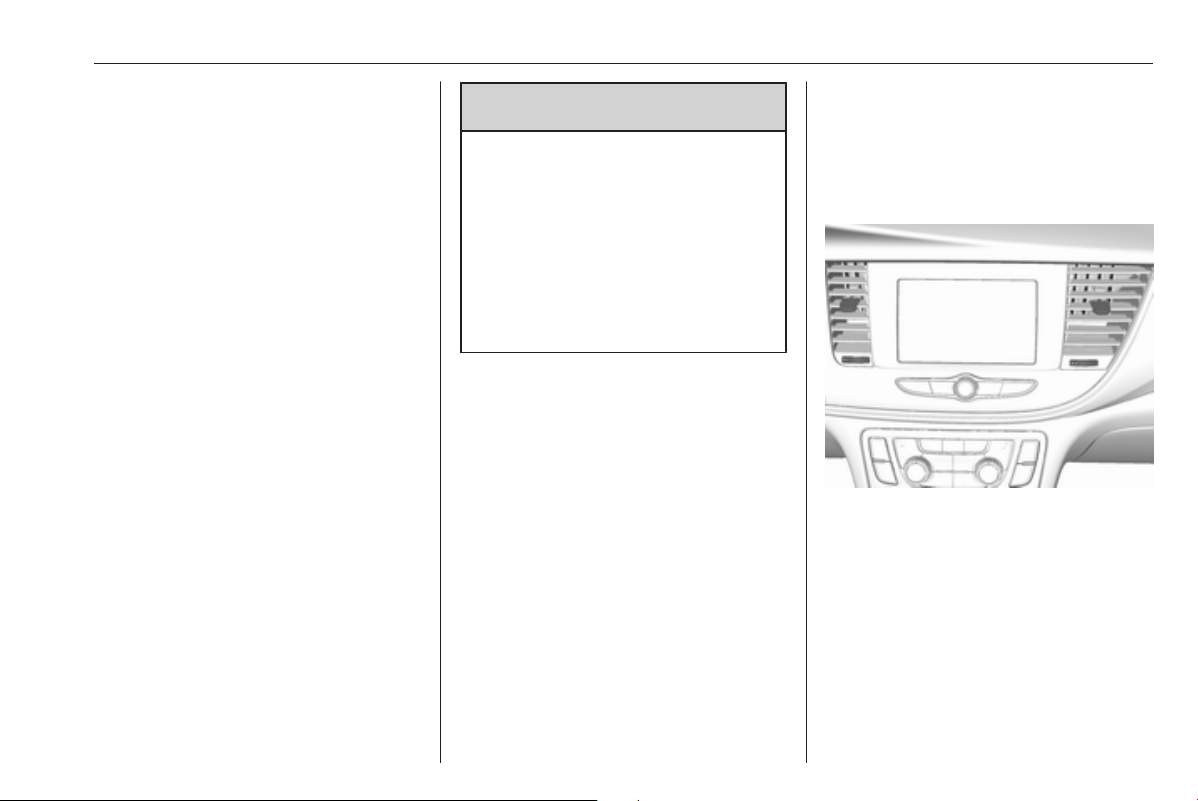
Climate control 125
Return to automatic air distribution:
Deactivate corresponding setting or
press AUTO.
Cooling n
Press n to switch on cooling. The
LED in the button illuminates to
indicate activation. Cooling is only
functional when the engine is running
and climate control fan is switched on.
Press n again to switch off cooling.
The air conditioning system cools and
dehumidifies (dries) when outside
temperature is above a specific level.
Therefore condensation may form
and drip from under the vehicle.
If no cooling or drying is required,
switch off the cooling system for fuel
saving reasons. Activated cooling
may inhibit an Autostop.
Stop-start system 3 133.
Eco appears in the display when
cooling is deactivated.
Air recirculation mode 4
Press 4 once to activate the
manual air recirculation mode.
9
Warning
The exchange of fresh air is
reduced in air recirculation mode.
In operation without cooling the air
humidity increases, so the
windows may mist up from inside.
The quality of the passenger
compartment air deteriorates,
which may cause the vehicle
occupants to feel drowsy.
Air conditioning with the engine
not running
When ignition is off, the residual heat
or cooling in the system can be used
for climate control in passenger
compartment.
Auxiliary heater
Air heater
Quickheat is an electric auxiliary air
heater which automatically warms up
the passenger compartment more
quickly.
Air vents
Adjustable air vents
At least one air vent must be open
while the cooling is on.
To open the vent, turn the adjuster
wheel to the right. Adjust the air
amount at the vent outlet by turning
the adjuster wheel.
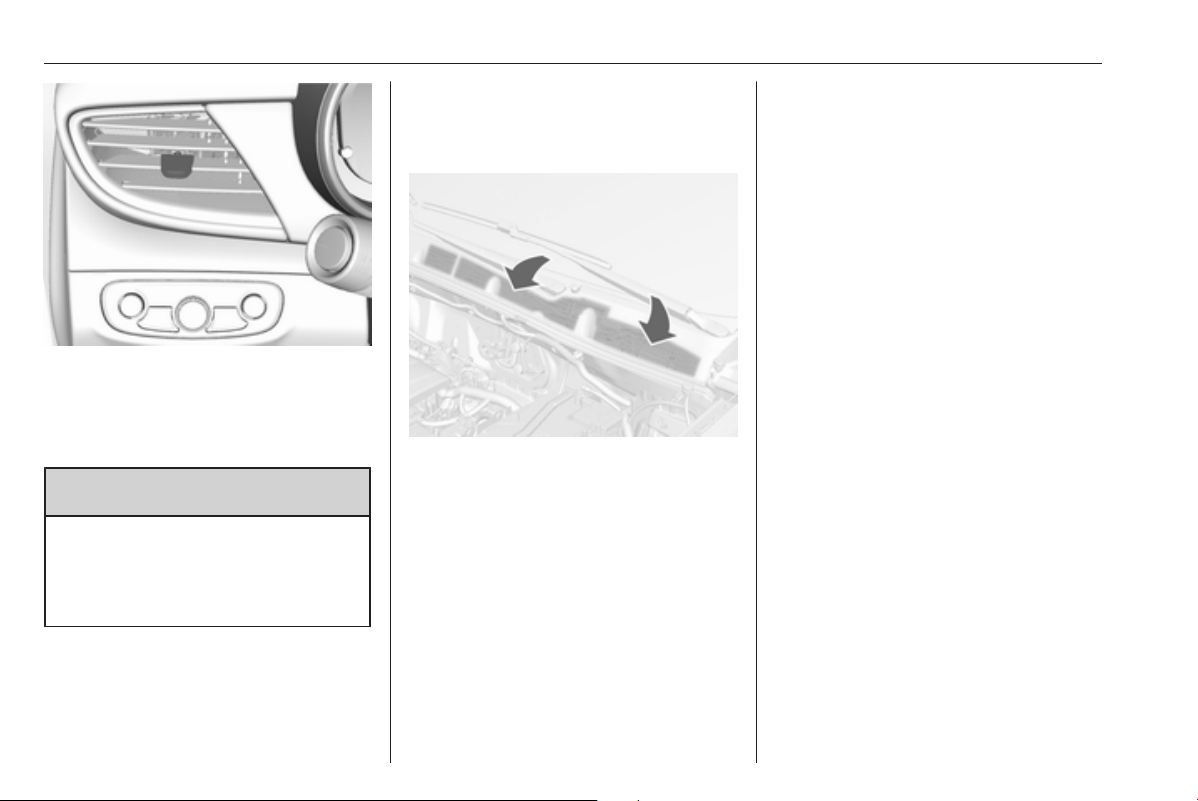
126 Climate control
Direct the flow of air by tilting and
swivelling the slats.
To close the vent, turn the adjuster
wheel to the left.
9 Warning
Do not attach any objects to the
slats of the air vents. Risk of
damage and injury in case of an
accident.
Fixed air vents
Additional air vents are located
beneath the windscreen and door
windows and in the foot wells.
Maintenance
Air intake
The air intake in front of the
windscreen in the engine
compartment must be kept clear to
allow air intake.
Remove any leaves, dirt or snow.
Air conditioning regular
operation
In order to ensure continuously
efficient performance, cooling must
be operated for a few minutes once a
month, irrespective of the weather
and time of year. Operation with
cooling is not possible when the
outside temperature is too low.
Service
For optimal cooling performance, it is
recommended to annually check the
climate control system, starting
three years after initial vehicle
registration, including:
● functionality and pressure test
● heating functionality
● leakage check
● check of drive belts
● cleaning of condenser and
evaporator drainage
● performance check
Notice
Refrigerant R-134a contains
fluorinated greenhouse gases.

Driving and operating 127
Driving and
operating
Driving hints ............................... 128
Control of the vehicle ............... 128
Steering ................................... 128
Starting and operating ............... 128
New vehicle running-in ............ 128
Ignition switch positions ........... 129
Power button ........................... 130
Retained power off .................. 131
Starting the engine .................. 131
Overrun cut-off ........................ 133
Stop-start system .................... 133
Parking .................................... 135
Engine exhaust .......................... 136
Exhaust filter ............................ 136
Catalytic converter ................... 137
AdBlue ..................................... 138
Automatic transmission .............. 140
Transmission display ............... 140
Selector lever .......................... 141
Manual mode ........................... 142
Electronic driving programmes 142
Fault ........................................ 142
Interruption of power supply .... 143
Manual transmission .................. 143
Drive systems ............................ 144
All-wheel drive ......................... 144
Brakes ........................................ 145
Antilock brake system ............. 145
Parking brake .......................... 145
Brake assist ............................. 146
Hill start assist ......................... 146
Ride control systems ................. 146
Traction Control system .......... 146
Electronic Stability Control ...... 147
Descent control system ........... 148
Driver assistance systems ......... 149
Cruise control .......................... 149
Speed limiter ........................... 151
Forward collision alert ............. 152
Following distance indication ... 154
Parking assist .......................... 155
Rear view camera ................... 157
Traffic sign assistant ................ 159
Lane departure warning .......... 162
Fuel ............................................ 163
Fuel for petrol engines ............. 163
Fuel for diesel engines ............ 165
Fuel for liquid gas operation .... 165
Refuelling ................................ 166
Trailer hitch ................................ 170
General information ................. 170
Driving characteristics and
towing tips .............................. 170
Trailer towing ........................... 171
Towing equipment ................... 171

128 Driving and operating
Driving hints
Control of the vehicle
Never coast with engine not
running (except during Autostop)
Many systems will not function in this
situation (e.g. brake servo unit, power
steering). Driving in this manner is a
danger to yourself and others. All
systems function during an Autostop,
but there will be a controlled reduction
in power steering assist and vehicle
speed is reduced.
Stop-start system 3 133.
Pedals
To ensure the pedal travel is
uninhibited, there must be no mats in
the area of the pedals.
Use only floor mats, which fit properly
and are fixed by the retainers on the
driver side.
Steering
If power steering assist is lost
because the engine stops or due to a
system malfunction, the vehicle can
be steered but may require increased
effort.
A vehicle message will be displayed
in the Info Display.
Caution
Vehicles equipped with hydraulic
power steering:
If the steering wheel is turned until
it reaches the end of its travel, and
is held in that position for more
than 10 seconds, damage may
occur to the power steering
system and there may be loss of
power steering assist.
Starting and operating
New vehicle running-in
Do not brake unnecessarily hard for
the first few journeys.
During the first drive, smoke may
occur because of wax and oil
evaporating off the exhaust system.
Park the vehicle in the open for a
while after the first drive and avoid
inhaling the fumes.
During the running-in period fuel and
engine oil consumption may be
higher and the cleaning process of
the exhaust filter may take place more
often. Autostop may be inhibited to
allow for charging the battery.
Exhaust filter 3 136.
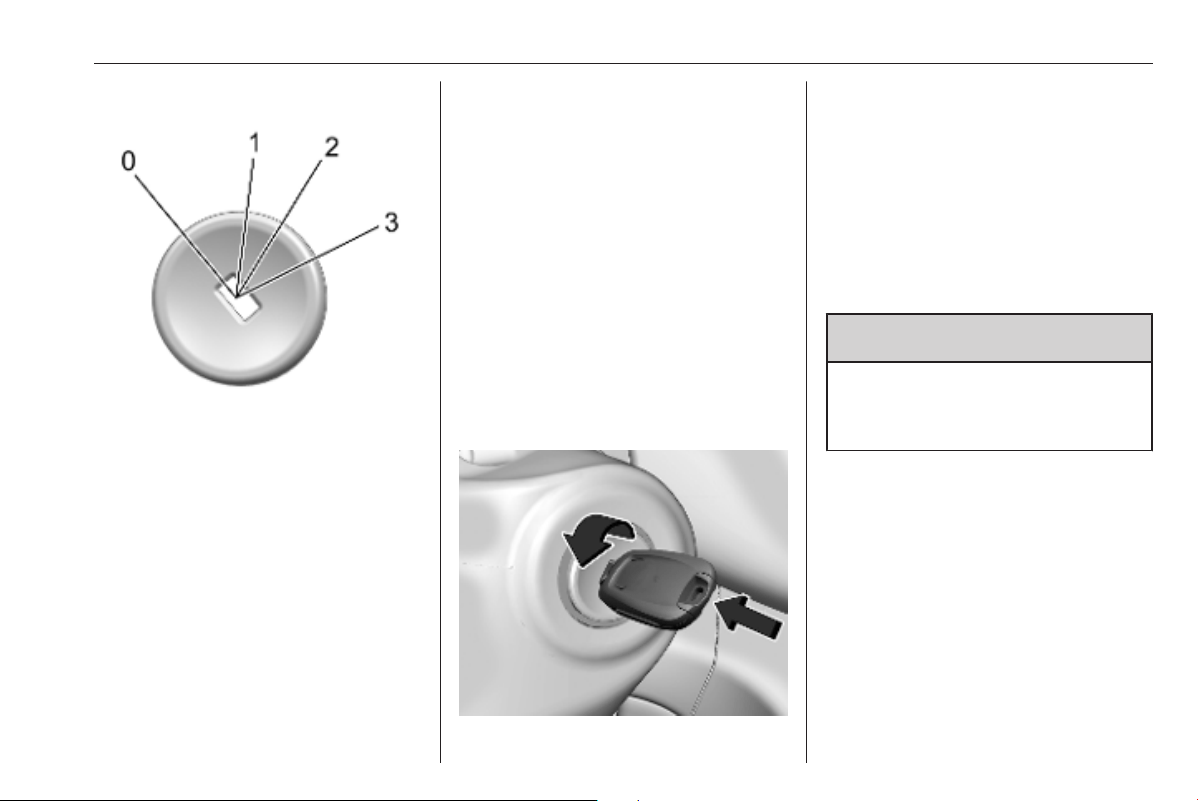
Driving and operating 129
Ignition switch positions
0 : ignition off: Some functions
remain active until key is
removed or driver's door is
opened, provided the ignition was
on previously
1 : accessory power mode: Steering
wheel lock released, some
electrical functions are operable,
ignition is off
2 : ignition on power mode: Ignition
is on, diesel engine is preheating.
Control indicators illuminate and
most electrical functions are
operable. To turn the key from
position 2 to 1 or 0, first push the
key all the way in towards the
steering column
3 : engine start: Release key after
starting procedure begins
To turn off the vehicle:
1. Make sure the vehicle is stopped.
2. If the vehicle is equipped with an
automatic transmission, set the
selector lever to position P.
3. Push the key all the way in
towards the steering column, then
turn the key to position 0.
4. Remove the key.
5. Apply the parking brake.
Steering wheel lock
The steering wheel is automatically
locked when the key is removed.
9 Danger
Never remove the key from
ignition switch during driving as
this will cause steering wheel lock.
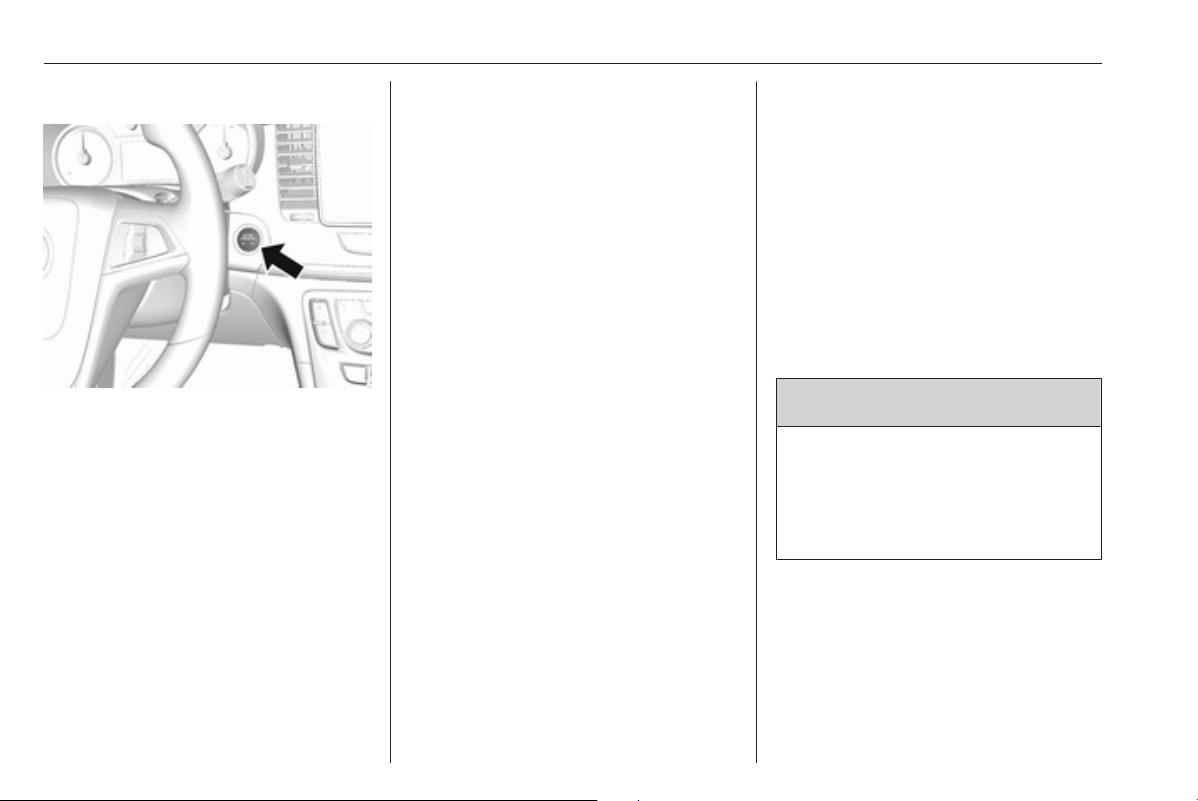
130 Driving and operating
Power button
Electronic key must be inside the
vehicle.
Accessory power mode
Press Engine Start/Stop once without
operating clutch or brake pedal. The
yellow LED in the button illuminates.
Steering wheel lock is released and
some electrical functions are
operable, ignition is off.
Ignition on power mode
Press and hold Engine Start/Stop for
six seconds without operating clutch
or brake pedal. The green LED in the
button illuminates, diesel engine is
preheating. Control indicators
illuminate and most electrical
functions are operable.
Engine start
Operate clutch pedal (manual
transmission), the brake pedal and
press Engine Start/Stop once more.
Release button after starting
procedure begins.
Ignition off
Press Engine Start/Stop briefly in
each mode or when engine is running
and vehicle is stationary. Some
functions remain active until driver's
door is opened, provided the ignition
was on previously.
Emergency shut off during driving
Press Engine Start/Stop for longer
than two seconds or press twice
briefly within five seconds 3 131.
Steering wheel lock
The steering wheel lock activates
automatically when:
● The vehicle is stationary.
● The ignition has been switched
off.
● The driver's door is opened.
To release steering wheel lock, open
and close driver's door and switch on
accessory mode or start the engine
directly.
9 Warning
If the vehicle battery is discharged,
the vehicle must not be towed,
tow-started or jump-started as the
steering wheel lock cannot be
disengaged.
Operation on vehicles with
electronic key system in case of
failure
If either the electronic key fails or the
battery of the electronic key is weak,
the Driver Information Centre may
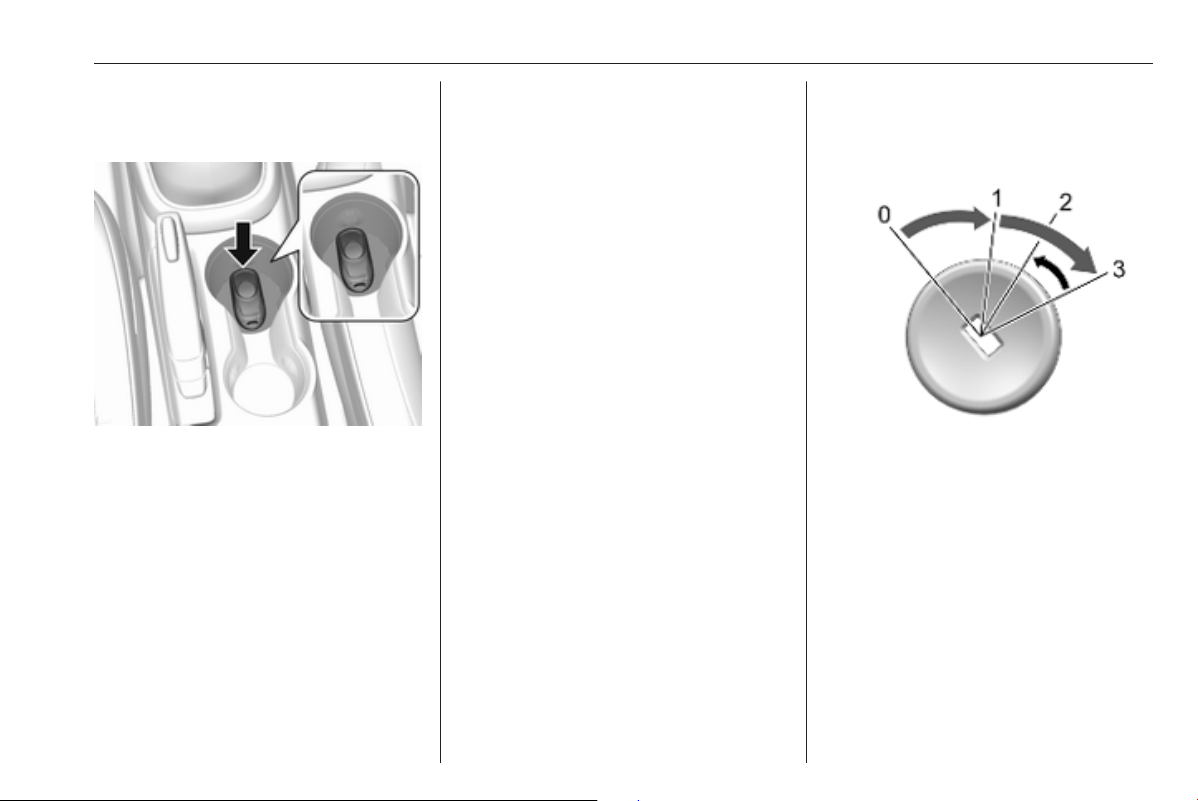
Driving and operating 131
display No Remote Detected or
Replace Battery in Remote Key when
you try to start the vehicle.
1. Place the electronic key in the
front cupholder of the centre
console. Place the electronic key
solely centred in the transmitter
area in longitudinal direction flat
with buttons upside as shown in
the illustration.
2. With the vehicle in P (Park) or N
(Neutral), operate the brake pedal
and press Engine Start/Stop.
Replace the transmitter battery as
soon as possible.
Retained power off
The following electronic systems can
work up to ten minutes after the
engine is turned off
● Power windows
● Sunroof
● Audio system
The power windows and sunroof will
continue to work for up to ten minutes
or until any door is opened. The radio
will work in ignition on power mode
and accessory power mode. Once
the ignition is turned off, the radio will
continue to work for ten minutes, or
until the driver's door is opened.
Starting the engine
Vehicles with ignition switch
Turn key to position 1 to release the
steering wheel lock.
Manual transmission: depress clutch
and brake pedal.
Automatic transmission: depress
brake pedal and move the selector
lever to P or N.
Do not depress the accelerator pedal.
Diesel engine: turn the key to position
2 for preheating and wait until control
indicator ! extinguishes.
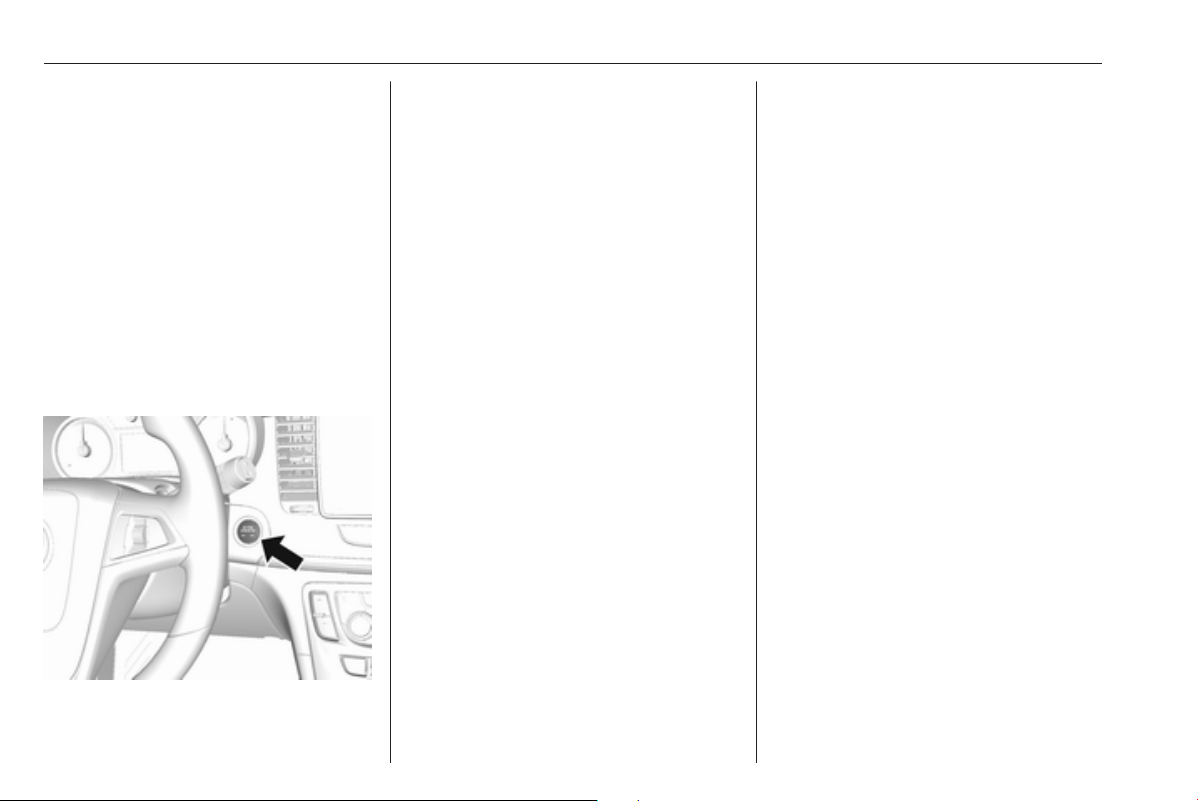
132 Driving and operating
Turn the key briefly to position 3 and
release: an automatic procedure
operates the starter with a short delay
as long as the engine is running, see
'Automatic Starter Control'.
Manual transmission: during an
Autostop, the engine can be restarted
by depressing the clutch pedal
3 133.
Automatic transmission: during an
Autostop, the engine can be restarted
by releasing the brake pedal 3 133.
Vehicles with power button
Manual transmission: operate clutch
and brake pedal.
Automatic transmission: operate
brake pedal and move selector lever
to P or N.
Do not operate accelerator pedal.
Press and release Engine Start/Stop:
an automatic procedure operates the
starter with a short delay until the
engine is running, see 'Automatic
Starter Control'.
Before restarting or to switch off the
engine when vehicle is stationary,
press Engine Start/Stop once more
briefly.
To start the engine during an
Autostop:
● Manual transmission: during an
Autostop, the engine can be
started by depressing the clutch
pedal 3 133.
● Automatic transmission: during
an Autostop, the engine can be
started by releasing the brake
pedal 3 133.
Key lock release
Some vehicles with an automatic
transmission are equipped with an
electronic key lock release system.
The key lock release is designed to
prevent ignition key removal unless
the selector lever is in P.
Starting the vehicle at low
temperatures
Starting the engine without additional
heaters is possible down to -25 °С for
diesel engines and -30 °C for petrol
engines. Required is an engine oil
with the correct viscosity, the correct
fuel, performed services and a
sufficiently charged vehicle battery.
With temperatures below -30 °C, the
automatic transmission requires a
warming phase of approx.
five minutes. The selector lever must
be in position P.
Automatic Starter Control
This function controls the engine
starting procedure. The driver does
not need to hold the key in position 3
or to hold Engine Start/Stop pressed.
Once applied, the system will go on
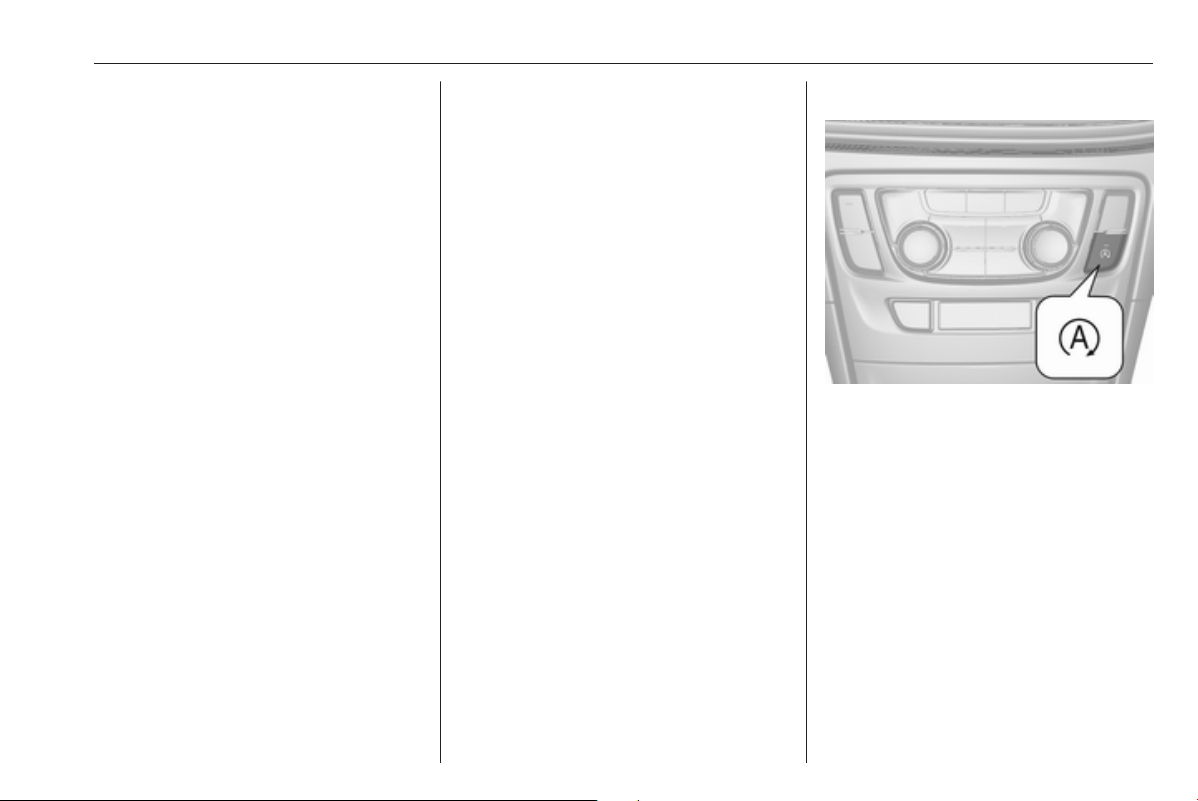
Driving and operating 133
starting automatically until the engine
is running. Because of the checking
procedure, the engine starts running
after a short delay.
Possible reasons for a non-starting
engine:
● Clutch pedal not depressed
(manual transmission).
● Brake pedal not depressed or
selector lever not in P or N
(automatic transmission).
● Timeout occurred
Turbo engine warm-up
Upon start-up, engine available
torque may be limited for a short time,
especially when the engine
temperature is cold. The limitation is
to allow the lubrication system to fully
protect the engine.
Overrun cut-off
The fuel supply is automatically cut off
during overrun, i.e. when the vehicle
is driven with a gear engaged but
accelerator pedal is released.
Depending on driving conditions, the
overrun cut-off may be deactivated.
Stop-start system
The stop-start system helps to save
fuel and to reduce the exhaust
emissions. When conditions allow, it
switches off the engine as soon as the
vehicle is at a low speed or at a
standstill, e.g. at a traffic light or in a
traffic jam. It starts the engine
automatically as soon as the clutch is
depressed. A battery sensor ensures
that an Autostop is only performed if
the battery is sufficiently charged for
a restart.
Activation
The stop-start system is available as
soon as the engine is started, the
vehicle starts-off and the conditions
as stated below in this section are
fulfilled.
Deactivation
Deactivate the stop-start system
manually by pressing Ï.
Deactivation is indicated when the
LED in the button extinguishes.
Autostop
If the vehicle is at a low speed or at a
standstill, activate an Autostop as
follows:
● Depress the clutch pedal.
● Move the selector lever to
neutral.
● Release the clutch pedal.
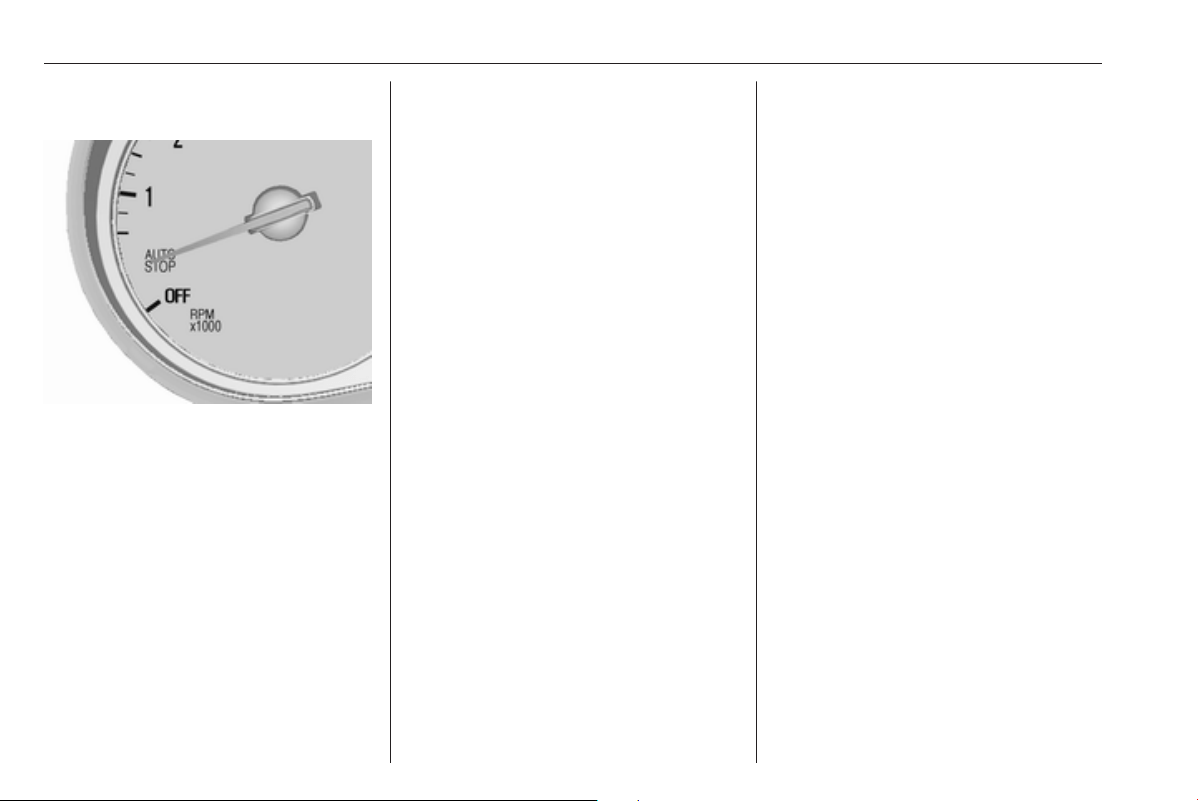
134 Driving and operating
The engine will be switched off while
the ignition stays on.
An Autostop is indicated by the
needle at the AUTOSTOP position in
the tachometer.
During an Autostop, the heating
performance, power steering and
brake performance will be
maintained.
Conditions for an Autostop
The stop-start system checks if each
of the following conditions is fulfilled:
● The stop-start system is not
manually deactivated.
● The bonnet is fully closed.
● The driver's door is closed or the
driver's seat belt is fastened.
● The vehicle battery is sufficiently
charged and in good condition.
● The engine is warmed up.
● The engine coolant temperature
is not too high.
● The engine exhaust temperature
is not too high, e.g. after driving
with high engine load.
● The ambient temperature is
above -5 °C.
● The climate control system
allows an Autostop.
● The brake vacuum is sufficient.
● The self-cleaning function of the
exhaust filter is not active.
● The vehicle was driven at least at
walking speed since the last
Autostop.
Otherwise an Autostop will be
inhibited.
Certain settings of the climate control
system may inhibit an Autostop.
Climate control 3 122.
Immediately after motorway driving
an Autostop may be inhibited.
New vehicle running-in 3 128.
Vehicle battery discharge protection
To ensure reliable engine restarts,
several battery discharge protection
features are implemented as part of
the stop-start system.
Power saving measures
During an Autostop, several electrical
features such as auxiliary electric
heater or rear window heating are
disabled or switched into a power
saving mode. The fan speed of the
climate control system is reduced to
save power.
Restart of the engine by the driver
Depress the clutch pedal to restart the
engine.
The engine start is indicated by the
needle at the idle speed position in
the tachometer.
If the selector lever is shifted out of
neutral before depressing the clutch
first, - with a message is shown in
the Driver Information Centre.

Driving and operating 135
Restart of the engine by the stop-
start system
The selector lever must be in neutral
to enable an automatic restart.
If one of the following conditions
occurs during an Autostop, the
engine will be restarted automatically
by the stop-start system:
● The stop-start system is
manually deactivated.
● The bonnet is opened.
● The driver's seat belt is
unfastened and the driver's door
is opened.
● The engine temperature is too
low.
● The charging level of the vehicle
battery is below a defined level.
● The brake vacuum is not
sufficient.
● The vehicle is driven at least at
walking speed.
● The climate control system
requests an engine start.
● The air conditioning is manually
switched on.
If the bonnet is not fully closed, a
warning message is displayed in the
Driver Information Centre.
If an electrical accessory, e.g. a
portable CD player, is connected to
the power outlet, a brief power drop
during engine restart might be
noticeable.
Parking
9 Warning
● Do not park the vehicle on an
easily ignitable surface. The
high temperature of the
exhaust system could ignite the
surface.
● Always apply the parking
brake. Activate the parking
brake without pressing the
release button. Apply as firmly
as possible on a downhill slope
or uphill slope. Depress brake
pedal at the same time to
reduce operating force.
● Switch off the engine.
● If the vehicle is on a level
surface or uphill slope, engage
first gear or set the selector
lever to position P before
removing the ignition key. On
an uphill slope, turn the front
wheels away from the kerb.
If the vehicle is on a downhill
slope, engage reverse gear or
set the selector lever to position
P before removing the ignition
key. Turn the front wheels
towards the kerb.
● Close the windows and the
sunroof.
● Remove the ignition key from
the ignition switch. For vehicles
with automatic transmission,
the key can only be removed
when the selector lever is in
position P.
Turn the steering wheel until
the steering wheel lock is felt to
engage.
● Lock the vehicle.
● Activate the anti-theft alarm
system.

136 Driving and operating
Notice
In the event of an accident with
airbag deployment, the engine is
turned off automatically if the vehicle
comes to a standstill within a certain
time.
Engine exhaust
9 Danger
Engine exhaust gases contain
poisonous carbon monoxide,
which is colourless and odourless
and could be fatal if inhaled.
If exhaust gases enter the interior
of the vehicle, open the windows.
Have the cause of the fault
rectified by a workshop.
Avoid driving with an open load
compartment, otherwise exhaust
gases could enter the vehicle.
Exhaust filter
The exhaust filter is a particle filter for
diesel and gasoline engines.
Automatic cleaning process
The exhaust filter system filters
harmful soot particles out of the
exhaust gases. The system includes
a self-cleaning function that runs
automatically during driving without
any notification. The filter is cleaned
by periodically burning off the soot
particles at high temperature. This
process takes place automatically
under set driving conditions and may
take up to 25 minutes. Typically it
needs between seven and twelve
minutes. Autostop is not available
and fuel consumption may be higher
during this period. The emission of
smells and smoke during this process
is normal.
System requires manual cleaning
process
Under certain driving conditions, e.g.
driving short distances, the system
cannot clean itself automatically.
If cleaning of the filter is required and
if previous driving conditions did not
enable automatic cleaning, it will be

Driving and operating 137
indicated by illumination of % and a
warning message in the Driver
Information Centre.
% illuminates along with a warning
message illuminates when exhaust
filter is full. Start cleaning process as
soon as possible.
% flashes along with a warning
message when exhaust filter has
reached the maximum filling level.
Start cleaning process immediately to
avoid damage to the engine.
Activate manual cleaning process
To activate cleaning process,
continue driving, keep engine speed
above 2000 rpm. Shift down if
necessary. Exhaust filter cleaning is
then started.
Cleaning takes place quickest at high
engine speeds and loads.
Control indicator % extinguishes as
soon as the self-cleaning operation is
complete. Keep on driving until self-
cleaning operation is complete.
Caution
If possible, do not interrupt
cleaning process. Drive until
cleaning is completed to avoid the
need for service or repair by a
workshop.
Cleaning process not possible
If cleaning is not possible for any
reasons, control indicator Z
illuminates and a warning message
appears in the Driver Information
Centre. Engine power may be
reduced. Seek the assistance of a
workshop immediately.
Catalytic converter
The catalytic converter reduces the
amount of harmful substances in the
exhaust gases.
Caution
Fuel grades other than those listed
on pages 3 163, 3 223 could
damage the catalytic converter or
electronic components.
Unburnt petrol will overheat and
damage the catalytic converter.
Therefore avoid excessive use of
the starter, running the fuel tank
dry and starting the engine by
pushing or towing.
In the event of misfiring, uneven
engine running, a reduction in engine
performance or other unusual
problems, have the cause of the fault
rectified by a workshop as soon as
possible. In an emergency, driving
can be continued for a short period,
keeping vehicle speed and engine
speed low.

138 Driving and operating
AdBlue
General information
The selective catalytic reduction
(BlueInjection) is a method to
substantially reduce the nitrogen
oxides in the exhaust emission. This
is achieved by injecting a Diesel
Exhaust Fluid into the exhaust
system. The ammonia released by
the fluid reacts with nitrous gases
(NO
x
) from the exhaust and turns it
into nitrogen and water.
The designation of this fluid is AdBlue
®
. It is a non-toxic, non-flammable,
colourless and odourless fluid which
consists of 32% urea and 68% water.
9 Warning
Avoid contact of your eyes or skin
with AdBlue.
In case of eye or skin contact,
rinse off with water.
Caution
Avoid contact of the paintwork with
AdBlue.
In case of contact, rinse off with
water.
AdBlue freezes at a temperature of
approx. -11 °C. As the vehicle is
equipped with an AdBlue pre-heater,
the emissions reduction at low
temperatures is ensured. The AdBlue
pre-heater works automatically.
The typical AdBlue consumption is
approx. 2 l per 600 miles, but can also
be higher depending on driving
behaviour (e.g. high load or towing).
AdBlue tank
The AdBlue tank level can be found in
the display menu.
Level warnings
Depending on the calculated range of
AdBlue, different messages are
displayed in the Driver Information
Centre. The messages and the
restrictions are a legal requirement.
The first possible warning is AdBlue
Range: 1500 mi.
This warning will show up once briefly
with the calculated range. Driving is
possible without any restrictions.
The next warning level is entered with
a range below 1090 miles. The
message with the current range will
always be displayed when ignition is
switched on and needs to be
confirmed 3 96. Refill AdBlue before
entering the next warning level.
At an AdBlue range below 560 miles,
the following warning messages are
alternately displayed and cannot be
dismissed:
● AdBlue Low Refill Now
● Engine Restart Prevented in 560
miles.
Additionally, control indicator Y
flashes continuously.
Notice
In case of high AdBlue consumption,
the Driver Information Centre may
display this warning without the
previous warning stages.

Driving and operating 139
The last warning level is entered
when the AdBlue tank is empty.
Restart of the engine is not possible.
The following warning messages are
alternately displayed and cannot be
dismissed:
● AdBlue Empty Refill Now
● Engine Will Not Restart.
Additionally, control indicator Y
flashes continuously.
With active prevention of an engine
start, the following message will be
displayed:
Refill AdBlue To Start Vehicle.
The tank must be refilled completely
with AdBlue, otherwise restarting of
the engine is not possible.
3 227
High emission warnings
If the exhaust emission rises above a
certain value, warnings similar to the
range warnings will be displayed in
the Driver Information Centre.
Requests to have the exhaust system
checked and finally the
announcement of the prevention of
an engine restart are displayed.
These restrictions are a legal
requirement.
Consult a workshop for assistance.
Refilling AdBlue
Caution
Only use AdBlue that complies
with European standards
DIN 70 070 and ISO 22241-1.
Do not use additives.
Do not dilute AdBlue.
Otherwise the selective catalytic
reduction system could be
damaged.
Notice
Whenever a filling pump with a
nozzle for passenger cars is not
available at a filling station, use only
AdBlue bottles or canisters with a
sealed refill adapter for refilling, to
prevent splashback and overspill,
and in order to ensure that the fumes
from the tank are captured and do
not emerge. AdBlue in bottles or
canisters is available in many filling
stations and can be purchased e.g.
at Vauxhall dealers and other retail
outlets.
Since AdBlue has a limited
durability, check the date of expiry
before refilling.
Notice
When unscrewing the protective cap
from the filler neck, ammonia fumes
may emerge. Do not inhale as the
fumes have a pungent smell. The
fumes are not harmful by inhalation.
The AdBlue tank should be filled
completely. This must be done if the
warning message regarding
prevention of an engine restart is
already displayed.
The vehicle must be parked on a level
surface.
The filler neck for AdBlue is located
behind the fuel filler flap, which is
located at right rear side of the
vehicle.
The fuel filler flap can only be opened
if the vehicle is unlocked.
1. Remove key from ignition switch.
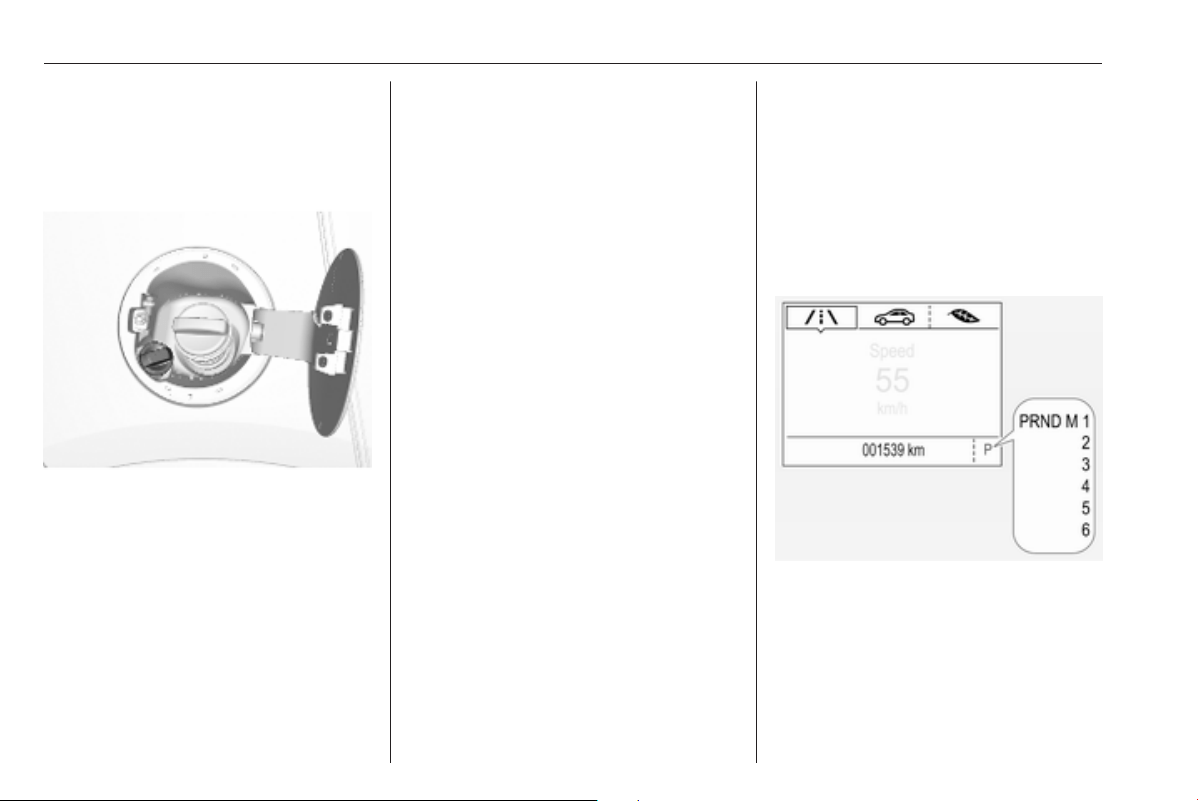
140 Driving and operating
2. Close all doors to avoid ammonia
fumes entering the interior of the
vehicle.
3. Release the fuel filler flap by
pushing the flap 3 166.
4. Unscrew protective cap from the
filler neck.
5. Open AdBlue canister.
6. Mount one end of the hose on the
canister and screw the other end
on the filler neck.
7. Lift the canister until it is empty, or
until the flow from the canister has
stopped. This can take up to
5 minutes.
8. Place the canister on the ground
to empty the hose, wait
15 seconds.
9. Unscrew the hose from the filler
neck.
10. Mount the protective cap and turn
clockwise until it engages.
Notice
Dispose of AdBlue canister
according to environmental
requirements. To reuse the hose
flush it with clear water after usage.
Automatic transmission
The automatic transmission permits
automatic gearshifting (automatic
mode) or manual gearshifting
(manual mode).
Transmission display
The mode or selected gear is shown
in the Driver Information Centre.
In automatic mode, the driving
programme is indicated by D.
In manual mode, M and the number
of the selected gear is indicated.
R indicates reverse gear.
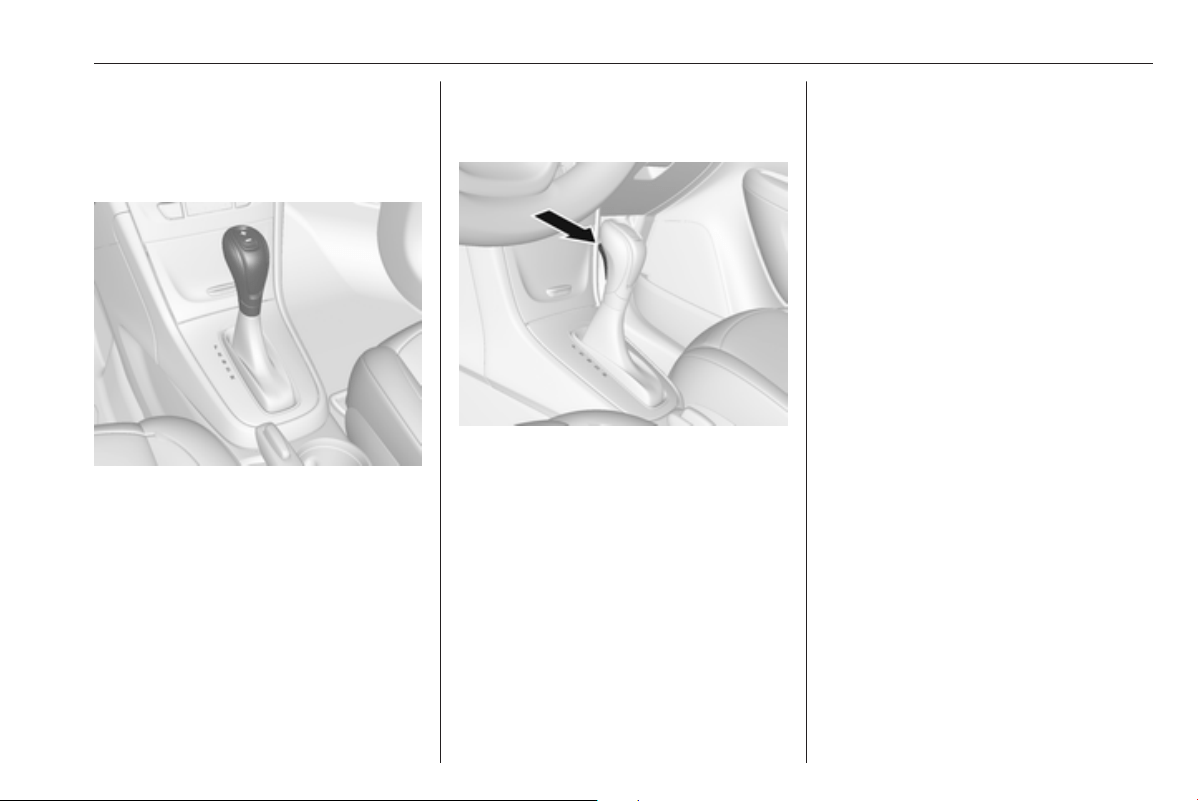
Driving and operating 141
N indicates neutral position.
P indicates park position.
Selector lever
P : park position, wheels are locked,
engage only when the vehicle is
stationary and the parking brake
is applied
R : reverse gear, engage only when
the vehicle is stationary
N : neutral
D : automatic mode
M : manual mode
<
: upshift in manual mode
]
: downshift in manual mode
The selector lever is locked in P and
can only be moved when the ignition
is on and the brake pedal is applied.
To engage P or R, press the release
button.
The engine can only be started with
the lever in position P or N. When
position N is selected, press the brake
pedal or apply the parking brake
before starting.
Do not accelerate while engaging a
gear. Never depress the accelerator
pedal and brake pedal at the same
time.
When a gear is engaged, the vehicle
slowly begins to creep when the
brake is released.
Engine braking
To utilise the engine braking effect,
select a lower gear in good time when
driving downhill, see manual mode.
Rocking the vehicle
Rocking the vehicle is only
permissible if the vehicle is stuck in
sand, mud or snow. Move the selector
lever between D and R in a repeat
pattern. Do not race the engine and
avoid sudden acceleration.
Parking
Apply the parking brake and engage
P.
The ignition key can only be removed
when the selector lever is in position
P.
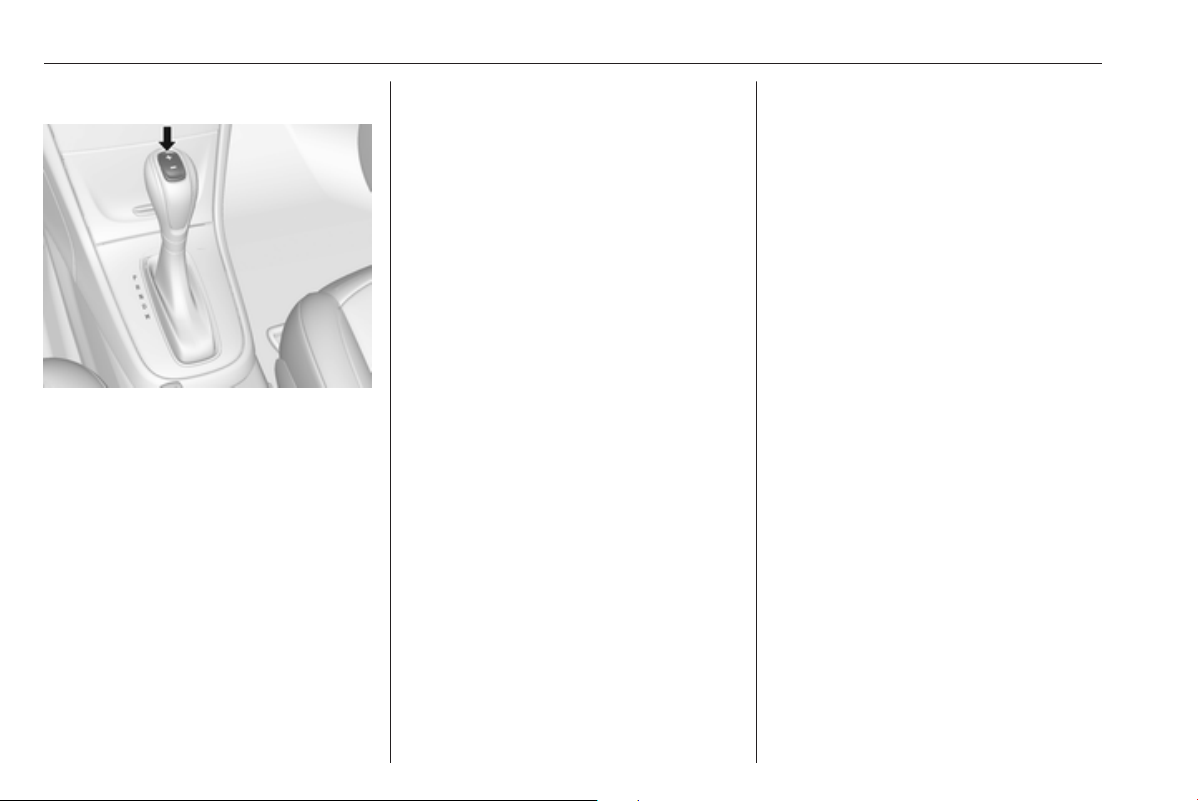
142 Driving and operating
Manual mode
Move selector lever to position M.
Press button on the selector lever:
<
: shift to a higher gear
]
: shift to a lower gear
If a higher gear is selected when
vehicle speed is too low, or a lower
gear when vehicle speed is too high,
the shift is not executed. This can
cause a message in the Driver
Information Centre.
In manual mode no automatic shifting
to a higher gear takes place at high
engine revolutions.
Gear shift indication
The symbol R with a number beside
it is indicated when gearshifting is
recommended for fuel saving
reasons.
Shift indication appears only in
manual mode.
Electronic driving
programmes
Special programmes automatically
adapt the shifting points when driving
up inclines or down hills.
Automatic transmission
adaptation feature
This feature adapts transmission
operation during constant driving or
gear shifting. It increases durability
and keeps best shift quality over the
life cycle. You may perceive shifting
at initial mileage as uncomfortable,
but this is normal. Shift quality will be
improved gradually by constant
driving at each gear and gear shifting.
Kickdown
Pressing down the accelerator pedal
beyond the kickdown detent will lead
to maximum acceleration
independent of selected driving
mode. The transmission shifts to a
lower gear depending on engine
speed.
Fault
In the event of a fault, a vehicle
message is displayed in the Driver
Information Centre. Vehicle
messages 3 103.
The transmission no longer shifts
automatically. Continued travel is
possible with manual shifting.
Only the highest gear is available.
Depending on the fault, second gear
may also be available in manual
mode. Shift only when vehicle is at a
standstill.
Have the cause of the fault remedied
by a workshop.
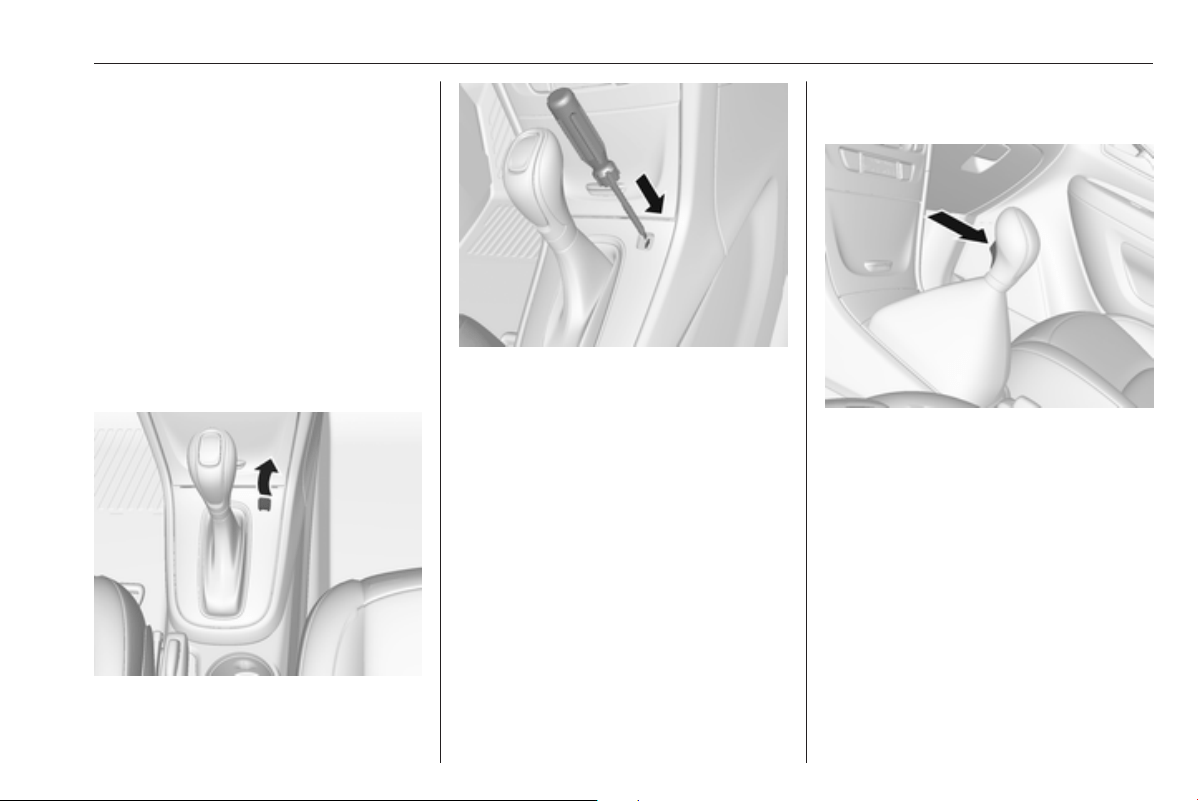
Driving and operating 143
Interruption of power supply
In the event of an interruption of
power supply, the selector lever
cannot be moved out of the P
position. The ignition key cannot be
removed from the ignition switch.
If the battery is discharged, start the
vehicle using jump leads 3 208.
If the battery is not the cause of the
fault, release the selector lever.
1. Keep the brake pedal depressed
and pull the parking brake lever
up.
2. Remove the cap on the console
with a thin object such as a
screwdriver.
3. Insert a screwdriver into the
opening as far as it will go.
4. Shift selector lever to N.
5. Remove the screwdriver from the
slot.
6. Reinstall the cap.
7. Have the cause of the power
supply interruption remedied by a
workshop.
Manual transmission
To engage reverse, with the vehicle
stationary, depress clutch pedal,
press the release button on the
selector lever and engage the gear.
If the gear does not engage, set the
lever to neutral, release the clutch
pedal and depress again, then repeat
gear selection.
Do not slip the clutch unnecessarily.
When operating, depress the clutch
pedal completely. Do not use the
pedal as a foot rest.

144 Driving and operating
Caution
It is not advisable to drive with the
hand resting on the selector lever.
Gear shift indication 3 93.
Stop-start system 3 133.
Drive systems
All-wheel drive
The All-Wheel Drive (AWD) system
enhances driving characteristics and
stability, and helps to achieve the best
possible driveability regardless of
ground surface. The system is always
active and cannot be deactivated.
The torque is distributed steplessly
between the wheels of the front and
rear axle, depending on the driving
conditions. Additionally the torque
between the rear wheels is distributed
depending on the surface.
For optimum system performance,
the vehicle's tyres should not have
varying degrees of wear.
When using a temporary spare
wheel, the AWD system is
automatically disabled.
The AWD system will also be
temporarily disabled to protect the
system from overheating if there is
excessive wheel spin. When the
system cools down, AWD will be
restored.
The deactivation of the AWD system
will be indicated by a message on the
Driver Information Centre.
If a service message or warning
code S73 is displayed on the Driver
Information Centre, there is a
malfunction in the AWD system. Seek
the assistance of a workshop.
Vehicle messages 3 103.
Towing the vehicle 3 209.

Driving and operating 145
Brakes
The brake system comprises two
independent brake circuits.
If a brake circuit fails, the vehicle can
still be braked using the other brake
circuit. However, braking effect is
achieved only when the brake pedal
is depressed firmly. Considerably
more force is needed for this. The
braking distance is extended. Seek
the assistance of a workshop before
continuing the journey.
When the engine is not running, the
support of the brake servo unit
disappears once the brake pedal has
been depressed once or twice.
Braking effect is not reduced, but
braking requires significantly greater
force. It is especially important to bear
this in mind when being towed.
Control indicator R 3 92.
Antilock brake system
Antilock brake system (ABS)
prevents the wheels from locking.
ABS starts to regulate brake pressure
as soon as a wheel shows a tendency
to lock. The vehicle remains
steerable, even during hard braking.
ABS control is made apparent
through a pulse in the brake pedal
and the noise of the regulation
process.
For optimum braking, keep the brake
pedal fully depressed throughout the
braking process, despite the fact that
the pedal is pulsating. Do not reduce
the pressure on the pedal.
After starting-off the system performs
a self-test which may be audible.
Control indicator u 3 93.
Adaptive brake light
During full braking, all three brake
lights flash for the duration of ABS
control.
Fault
9 Warning
If there is a fault in the ABS, the
wheels may be liable to lock due
to braking that is heavier than
normal. The advantages of ABS
are no longer available. During
hard braking, the vehicle can no
longer be steered and may
swerve.
Have the cause of the fault remedied
by a workshop.
Parking brake
146 Driving and operating
9 Warning
Always apply parking brake firmly
without operating the release
button, and apply as firmly as
possible on a downhill or uphill
slope.
To release the parking brake, pull
the lever up slightly, press the
release button and fully lower the
lever.
To reduce the operating forces of
the parking brake, depress the
brake pedal at the same time.
Control indicator R 3 92.
Brake assist
If the brake pedal is depressed
quickly and forcefully, maximum
brake force is automatically applied
(full braking).
Maintain steady pressure on the
brake pedal for as long as full braking
is required. Maximum brake force is
automatically reduced when the
brake pedal is released.
Hill start assist
The system helps prevent unintended
movement when driving away on
inclines.
When releasing the brake pedal after
stopping on an incline, the brakes
remain on for a further two seconds.
The brakes release automatically as
soon as the vehicle begins to
accelerate.
The hill start assist is not active during
an Autostop.
Stop-start system 3 133.
Ride control systems
Traction Control system
The Traction Control system (TC) is a
component of the Electronic Stability
Control (ESC) 3 147.
TC improves driving stability when
necessary, regardless of the type of
road surface or tyre grip, by
preventing the drive wheels from
spinning.
As soon as the drive wheels starts to
spin, engine output is reduced and
the wheel spinning the most is braked
individually. This considerably
improves the driving stability of the
vehicle on slippery road surfaces.
TC is operational after each engine
start as soon as the control indicator
b extinguishes.
When TC operates b flashes.
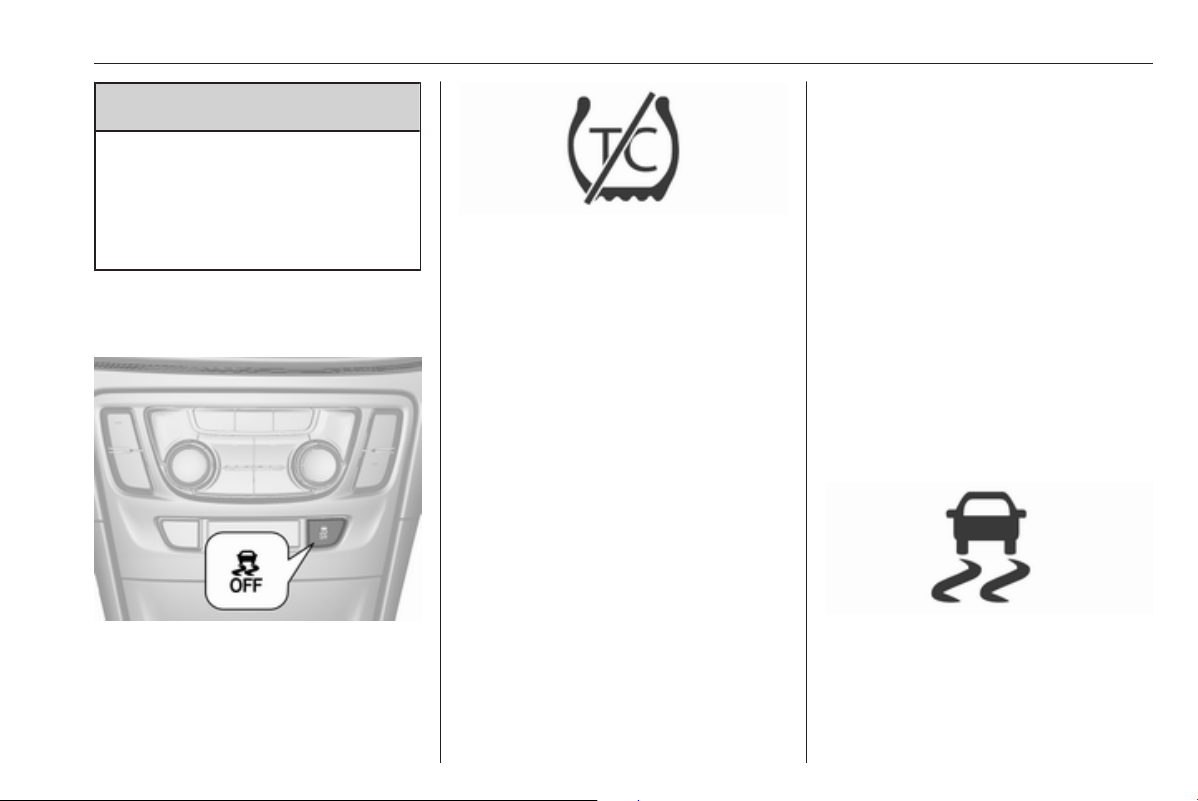
Driving and operating 147
9 Warning
Do not let this special safety
feature tempt you into taking risks
when driving.
Adapt speed to the road
conditions.
Control indicator b 3 93.
Deactivation
TC can be switched off when spinning
of drive wheels is required: press b
briefly.
Control indicator k illuminates.
A status message appears in the
Driver Information Centre when TC is
deactivated.
When TC is deactivated, ESC
remains active but with higher control
threshold.
TC is reactivated by pressing b
again. A status message pops up in
the Driver Information Centre when
TC is reactivated.
TC is also reactivated the next time
the ignition is switched on.
Fault
If there is a fault in the system the
control indicator b illuminates
continuously and a message appears
in the Driver Information Centre. The
system is not operational.
Have the cause of the fault remedied
by a workshop.
Electronic Stability Control
Electronic Stability Control (ESC)
improves driving stability when
necessary, regardless of the type of
road surface or tyre grip.
As soon as the vehicle starts to
swerve (understeer / oversteer),
engine output is reduced and the
wheels are braked individually.
ESC operates in combination with the
Traction Control system (TC). It
prevents the drive wheels from
spinning.
ESC is operational after each engine
start as soon as the control indicator
b extinguishes.
When ESC operates b flashes.
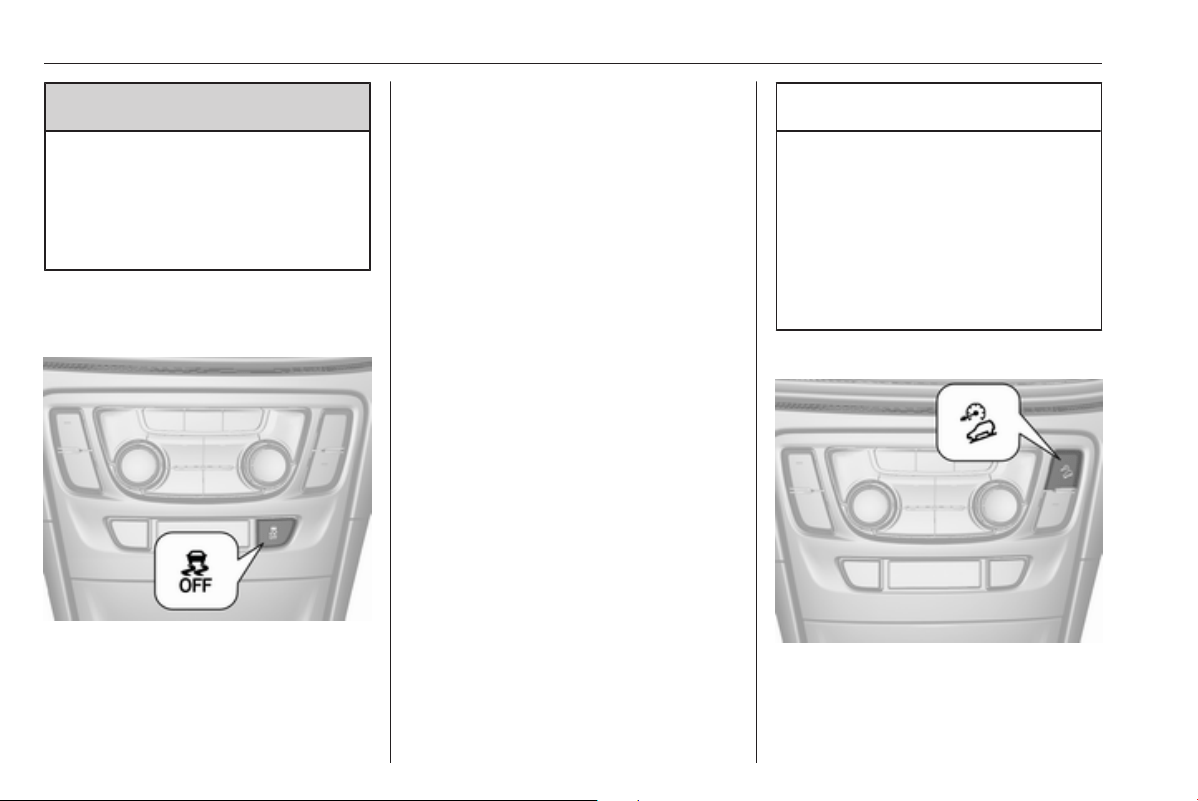
148 Driving and operating
9 Warning
Do not let this special safety
feature tempt you into taking risks
when driving.
Adapt speed to the road
conditions.
Control indicator b 3 93.
Deactivation
ESC can be deactivated: press and
hold t for approx. 5 s.
Control indicators k and n illuminate.
ESC is reactivated by pressing t
again. If the TC system was
previously disabled, both TC and
ESC are reactivated.
ESC is also reactivated the next time
the ignition is switched on.
Fault
If there is a fault in the system the
control indicator b illuminates
continuously and a message appears
in the Driver Information Centre. The
system is not operational.
Have the cause of the fault remedied
by a workshop.
Descent control system
The Descent control system (DCS)
allows the vehicle to travel at a low
speed without depressing the brake
pedal. The vehicle will automatically
decelerate to a low speed and remain
at that speed when the system is
activated. Some noise or vibration
from the brake system may be
apparent when the system is active.
Caution
Use only when descending steep
grades while driving off-road. Do
not use when driving on normal
road surfaces. Unnecessary
usage of the DCS function, such
as while driving on normal roads,
may damage the brake system
and the ESC function.
Activation
At speeds below approx. 25 mph,
press u. The green control indicator
u flashes in the instrument cluster, to
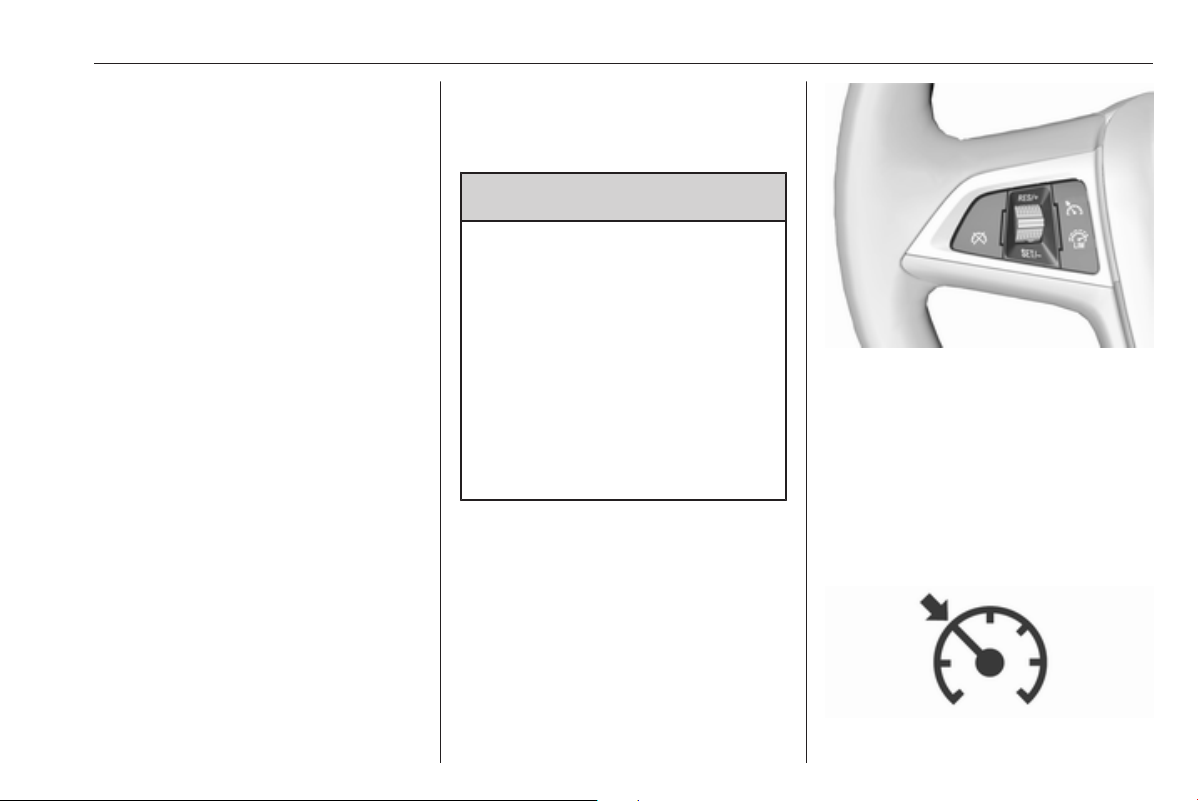
Driving and operating 149
show DCS is in operation. DCS will
not activate at speeds above
30 mph, even if the button is pressed.
Deactivation
Press u again. The green control
indicator u extinguishes. Depressing
the foot brake or accelerator will also
cause the system to be deactivated.
Fault
If the green control indicator u does
not illuminate or flash after pressing
the button, there is a fault in the
system.
Seek the assistance of a workshop.
DSC control indicators u 3 93.
Driver assistance
systems
9 Warning
Driver assistance systems are
developed to support the driver
and not to replace the driver's
attention.
The driver accepts full
responsibility when driving the
vehicle.
When using driver assistance
systems, always take care
regarding the current traffic
situation.
Cruise control
The Cruise control can store and
maintain speeds of approx. 20 to
120 mph. Deviations from the stored
speeds may occur when driving uphill
or downhill.
For safety reasons, the cruise control
cannot be activated until the brake
pedal has been operated once.
Activating in first gear is not possible.
Do not use the cruise control if it is not
advisable to maintain a constant
speed.
With automatic transmission, only
activate cruise control in automatic
mode.
Control indicator m 3 95.
Switching on the system
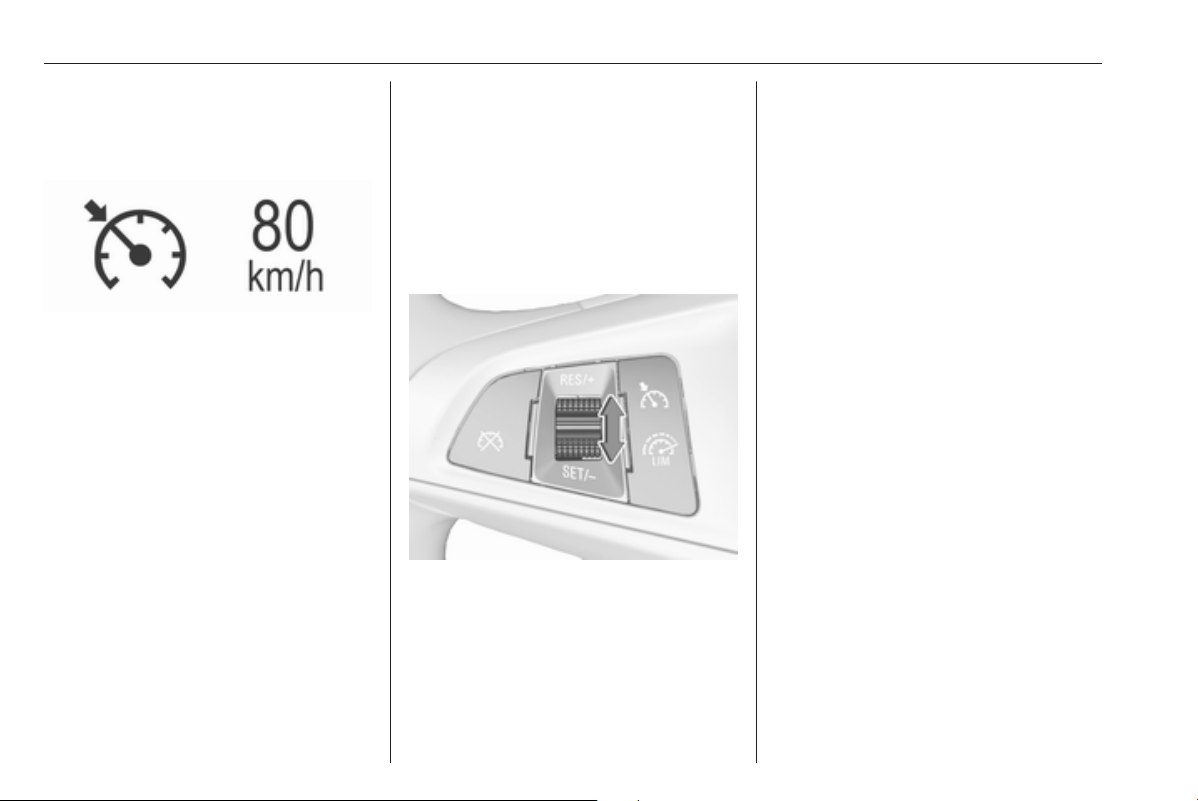
150 Driving and operating
Press m: control indicator m in
instrument cluster illuminates white.
Activation of the functionality
Accelerate to the desired speed and
turn thumb wheel to SET/-: the
current speed is stored and
maintained. Control indicator m in
instrument cluster illuminates green.
On Uplevel display m illuminates
green and set speed is indicated.
Accelerator pedal can be released.
Vehicle speed can be increased by
depressing the accelerator pedal.
When the accelerator pedal is
released, the previously stored speed
is resumed.
Cruise control remains activated
while gearshifting.
Increase speed
With cruise control active, hold thumb
wheel turned to RES/+ or briefly turn
to RES/+ repeatedly: speed
increases continuously or in small
increments.
Alternatively accelerate to the desired
speed and store by turning to SET/-.
Reduce speed
With cruise control active, hold thumb
wheel turned to SET/- or briefly turn to
SET/- repeatedly: speed decreases
continuously or in small increments.
Deactivation of the functionality
Press y: control indicator m in
instrument cluster illuminates white.
On Uplevel display m changes to
white.
Cruise control is deactivated, but not
switched off. Last stored speed
remains in memory for later speed
resume.
Automatic deactivation:
● Vehicle speed is below approx.
20 mph.
● Vehicle speed drops more than
15 mph below the set speed.
● The brake pedal is depressed.
● The clutch pedal is depressed for
a few seconds.
● Selector lever is in N.
● Engine speed is in a very low
range.
● The Traction Control system (TC)
or Electronic Stability Control
(ESC) is operating.
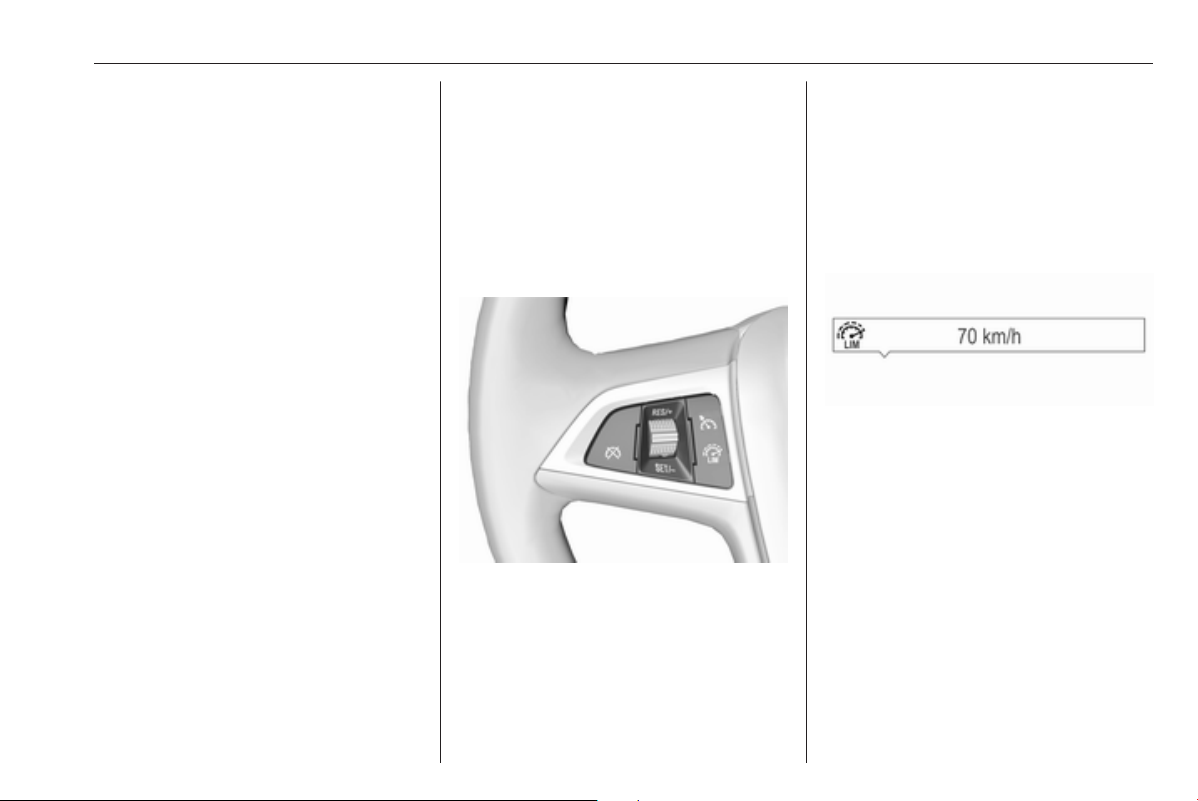
Driving and operating 151
● Parking brake is applied.
● Simultaneous pressing RES/+
and brake pedal deactivates
cruise control and will delete
stored speed.
Resume stored speed
Turn thumb wheel to RES/+ at a
speed above 20 mph. The stored
speed will be resumed.
Switching off the system
Press m: control indicator m in
instrument cluster extinguishes. The
stored speed is deleted.
Pressing L for activating speed
limiter or switching off the ignition also
switches off cruise control and
deletes the stored speed.
Speed limiter
The speed limiter prevents the
vehicle exceeding a preset maximum
speed.
The maximum speed can be set at a
speed above 15 mph.
The driver can only accelerate up to
the preset speed. Deviations from the
limited speed may occur when driving
downhill.
The preset speed limit is displayed in
the Driver Information Centre when
the system is active.
Switching on the system
Press L, symbol L illuminates in the
Driver Information Centre.
If cruise control has been activated
before, it is switched off when speed
limiter is activated and the control
indicator m extinguishes.
Set speed limit
Accelerate to the desired speed and
briefly turn thumb wheel to SET/-: the
current speed is stored as maximum
speed.
On Midlevel display L and the speed
limit is displayed.
On Uplevel display L changes to
green.
Change speed limit
With speed limiter active, turn thumb
wheel to RES/+ to increase or SET/-
to decrease the desired maximum
speed.
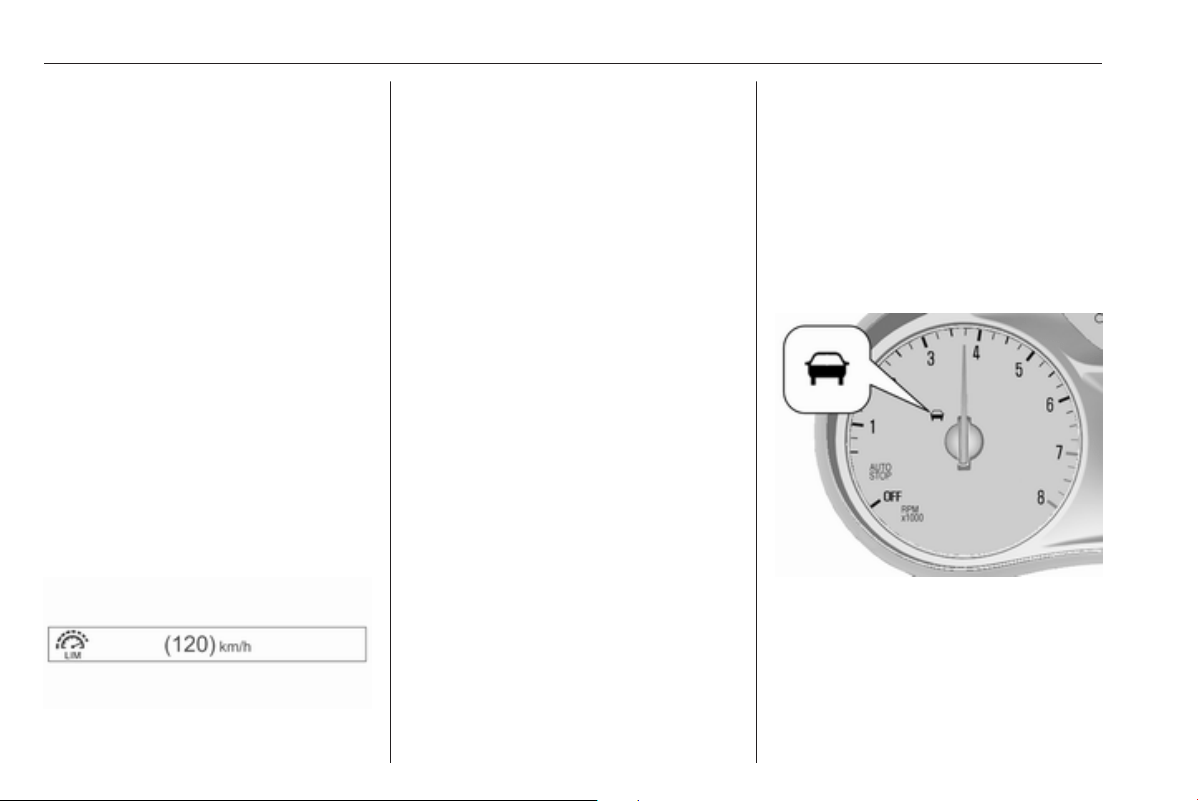
152 Driving and operating
Exceeding the speed limit
When exceeding the limited speed
without driver input, the speed will
flash in the Driver Information Centre
and a chime sounds during this
period.
In the event of an emergency, it is
possible to exceed the speed limit by
depressing the accelerator pedal
firmly nearly to the final point. In this
case no chime appears.
Release the accelerator pedal and
the speed limiter function is
reactivated once a speed lower than
the limit speed is obtained.
Deactivation of the functionality
Press y: speed limiter is deactivated
and the vehicle can be driven without
speed limit.
On Midlevel display the stored limited
speed is indicated in brackets.
On Uplevel display L changes to
white.
Additionally, a corresponding
message appears.
Speed limiter is deactivated, but not
switched off. Last stored speed
remains in memory for later speed
resume.
Resume limit speed
Turn thumb wheel to RES/+. The
stored speed limit will be obtained
and is indicated without brackets in
the Driver Information Centre.
Switching off the system
Press L, the speed limit indication
extinguishes in the Driver Information
Centre. The stored speed is deleted.
By pressing m to activate cruise
control, speed limiter is also
deactivated and the stored speed is
deleted.
By switching off the ignition, speed
limiter is also deactivated, but the
speed limit will be stored for next
speed limiter activation.
Forward collision alert
The forward collision alert may help to
avoid or reduce the harm caused by
front-end crashes.
A vehicle ahead is indicated by the
control indicator A.
If a vehicle directly ahead is
approached too quickly, a warning
chime is provided.
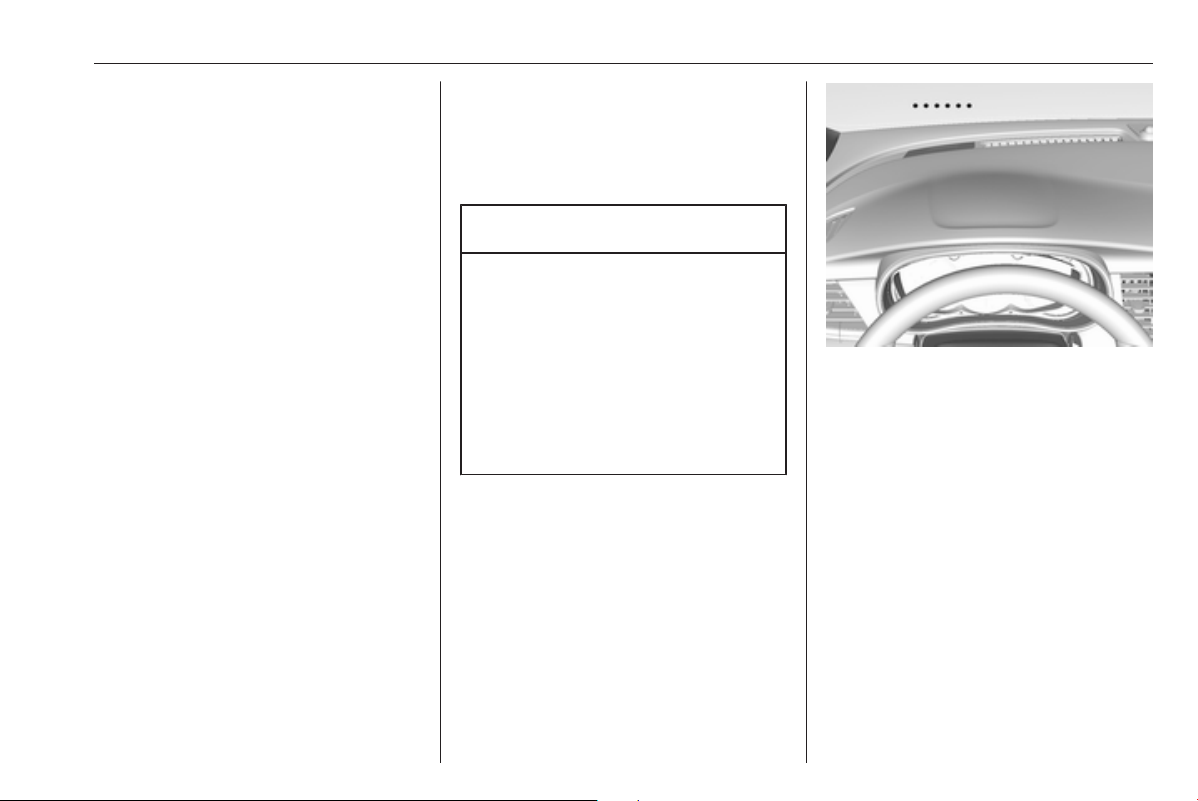
Driving and operating 153
Additionally the driver gets notified by
a flashing red LED stripe which is
projected on the windscreen in the
driver's field of view.
A precondition is that forward collision
alert is not deactivated by pressing
V on the steering wheel.
Activation
Forward collision alert uses the front
camera system in the windscreen to
detect a vehicle directly ahead, in
your path, within a distance of approx.
60 m.
Forward collision alert operates
automatically above 25 mph, if it is not
deactivated by pressing V, see
below.
Alerting the driver
The vehicle ahead control indicator
A illuminates green in the instrument
cluster when the system has detected
a vehicle in the driving path.
The control indicator A changes to
yellow when the distance to a
preceding moving vehicle gets too
small or when approaching another
vehicle too rapidly.
Caution
The colour lighting of this control
indicator does not correspond to
local traffic laws on following
distance. The driver bears full
responsibility for maintaining safe
following distance according to
applicable traffic rules, weather
and road conditions etc. at all
times.
When the time to a potential collision
with a vehicle in front gets too small
and a collision is imminent, the driver
gets notified by a flashing red LED
stripe which is projected on the
windscreen in the driver's field of
view.
Simultaneously a warning chime
sounds. Depress the brake pedal and
steer the vehicle, if it is required by the
situation.
Selecting the alert sensitivity
The alert sensitivity can be set to
near, medium or far.
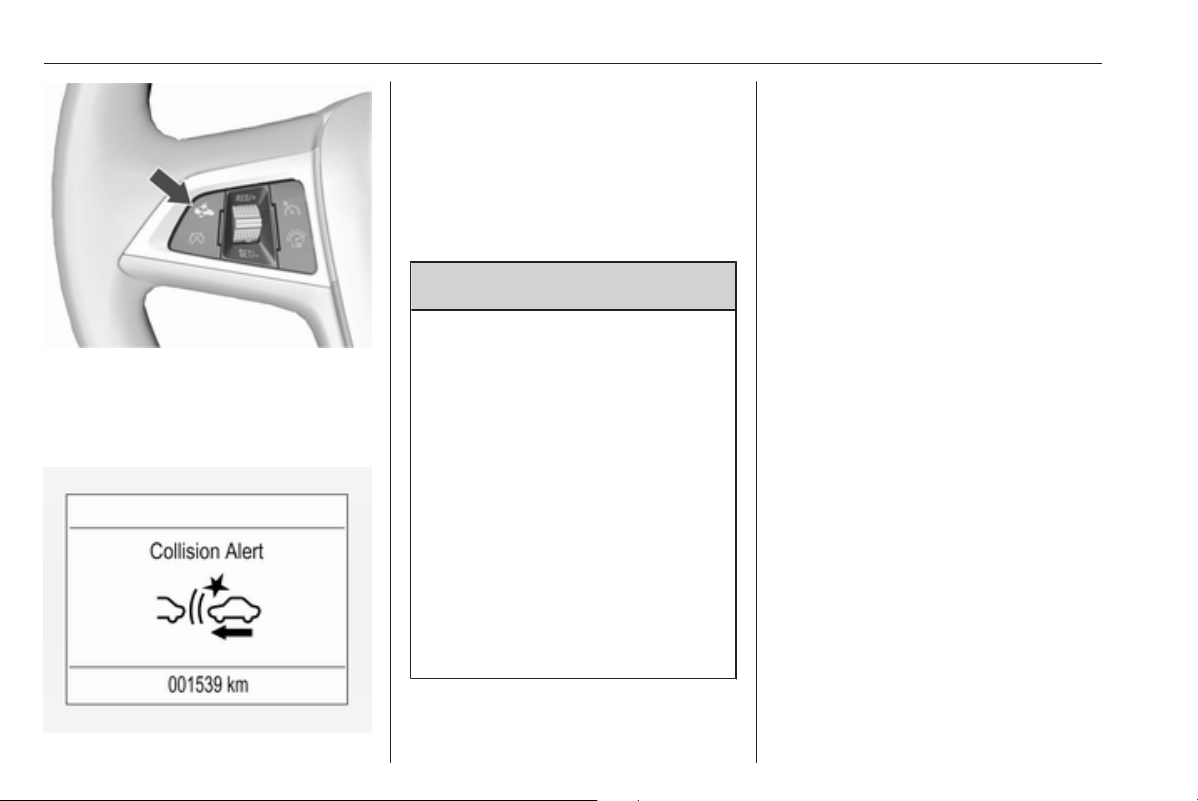
154 Driving and operating
Press V, the current setting is shown
in the Driver Information Centre.
Press V again to change the alert
sensitivity.
Dectivation
The system can be deactivated.
Press V repeatedly until Forward
Collision Alert Off appears in the
Driver Information Centre.
General information
9 Warning
Forward collision alert is just a
warning system and does not
apply the brakes. When
approaching a vehicle ahead too
rapidly, it may not provide you
enough time to avoid a collision.
The driver accepts full
responsibility for the appropriate
following distance based on traffic,
weather and visibility conditions.
The complete attention of the
driver is always required while
driving. The driver must always be
ready to take action and apply the
brakes.
System limitations
Forward collision alert is designed to
warn on vehicles only, but may react
also to other objects.
In the following cases, forward
collision alert may not detect a vehicle
ahead or sensor performance is
limited:
● on winding roads
● when weather limits visibility,
such as fog, rain, or snow
● when the sensor is blocked by
snow, ice, slush, mud, dirt,
windscreen damage or affected
by foreign items, e.g. stickers
Following distance
indication
The following distance indication
displays the distance to a preceding
moving vehicle. The system uses the
front camera in the windscreen to
detect the distance of a vehicle
directly ahead in your lane. It is active
at speeds above 25 mph.
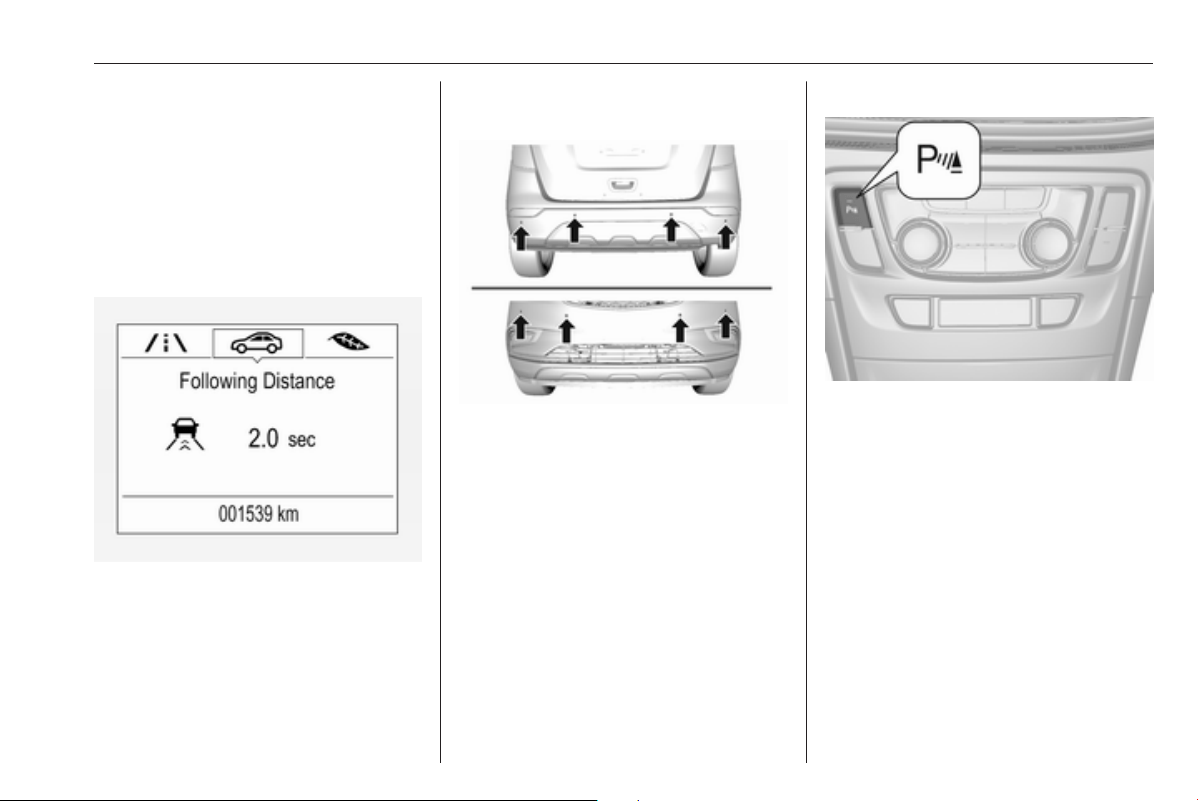
Driving and operating 155
When a preceding vehicle is detected
ahead, the distance is indicated in
seconds, displayed on a page in the
Driver Information Centre 3 96. Press
MENU on the turn signal lever to
select Vehicle Information
Menu ? and turn the adjuster
wheel to choose following distance
indication page.
The minimum indicated distance is
0.5 s.
If there is no vehicle ahead or the
vehicle ahead is out of range, two
dashes will be displayed: -.- s.
Parking assist
The parking assist makes parking
easier by measuring the distance
between the vehicle and obstacles,
and giving acoustic signals. It is the
driver, however, who bears full
responsibility for the parking
manoeuvre.
The system consists of four ultrasonic
parking sensors in the rear bumper. If
the vehicle is equipped with a front
parking assist the system consists of
four additional ultrasonic parking
sensors in the front bumper.
Activation
After ignition is switched on, the rear
parking assist is activated.
The front parking assist can also be
activated at a low speed by pressing
r.
An illuminated LED in the parking
assist button indicates that the
system is ready to operate.
An obstacle is indicated by a buzzing
sound. The interval between the
sounds becomes shorter as the
vehicle gets closer to the obstacle.
When the distance is less than
30 cm, the buzzing is continuous.

156 Driving and operating
If r is pressed once within an
ignition cycle, the front parking assist
is reactivated if the vehicle speed
goes below a certain value and if the
vehicle speed has not exceeded
16 mph beforehand.
Deactivation
Deactivate the system by pressing
r.
The LED in the button will go out and
a message will be displayed in the
Driver Information Centre.
If the parking assist is deactivated
manually, it will be reactivated
automatically the next time the
ignition is switched on.
The system is deactivated
automatically at a certain speed.
Fault
In the event of a fault in the system, a
vehicle message is displayed in the
Driver Information Centre.
Additionally, a vehicle message is
displayed in the Driver Information
Centre if a malfunction of the system
due to temporary conditions, e.g.
snow covered sensors is detected.
Vehicle messages 3 103.
Important hints for using the
parking assist systems
9 Warning
Under certain circumstances,
various reflective surfaces on
objects or clothing as well as
external noise sources may cause
the system to fail to detect
obstacles.
Special attention has to be paid to
low obstacles which can damage
the lower part of the bumper. If
such obstacles leave the detection
area of the sensors during
approach of the vehicle, a
continuous warning tone will
sound.
Caution
Performance of the system can be
reduced when sensors are
covered, e.g. by ice or snow.
Performance of the parking assist
system can be reduced due to
heavy loading.
Special conditions apply if there
are taller vehicles in the vicinity
(e.g. off-road vehicles, mini vans,
vans). Object identification and
correct distance indication in the
upper part of these vehicles
cannot be guaranteed.
Objects with a very small reflection
cross-section, e.g. objects of
narrow size or soft materials, may
not be detected by the system.
Parking assist systems do not
detect objects outside the
detection range.
Notice
The parking assist system
automatically detects factory-fitted
towing equipment. It is deactivated
when the connector is plugged in.
The sensor may detect a non-
existent object (echo disturbance)
caused by external acoustic or
mechanical disturbances.
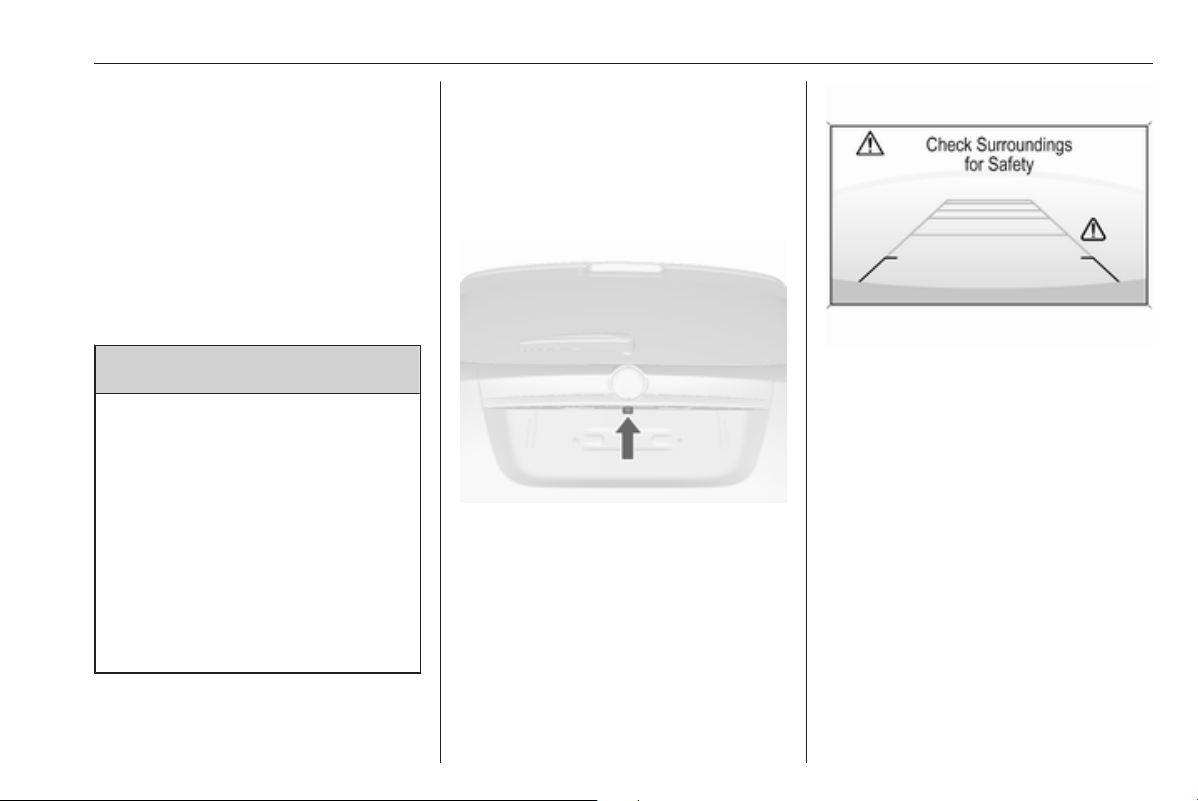
Driving and operating 157
Notice
The parking assist is deactivated
when the rear carrier system is
extended.
Rear view camera
The rear view camera assists the
driver when reversing by displaying a
view of the area behind the vehicle.
The view of the camera is displayed
in the Info Display.
9 Warning
The rear view camera does not
replace driver vision. Note that
objects that are outside the
camera's field of view and the
parking assist sensors, e.g. below
the bumper or underneath the
vehicle, are not displayed.
Do not reverse or park the vehicle
using only the rear view camera.
Always check the surrounding of
the vehicle before driving.
Activation
Rear view camera is automatically
activated when reverse gear is
engaged.
Functionality
The camera is mounted in the tailgate
handle and has a viewing angle of
130°.
Due to the high position of the
camera, the rear bumper can be seen
on the display as a guide to position.
The area displayed by the camera is
limited. The distance of the image that
appears on the display differs from
the actual distance.
Guiding lines
Dynamic guiding lines are horizontal
lines at 1 m intervals projected on the
picture to define the distance to
displayed objects.
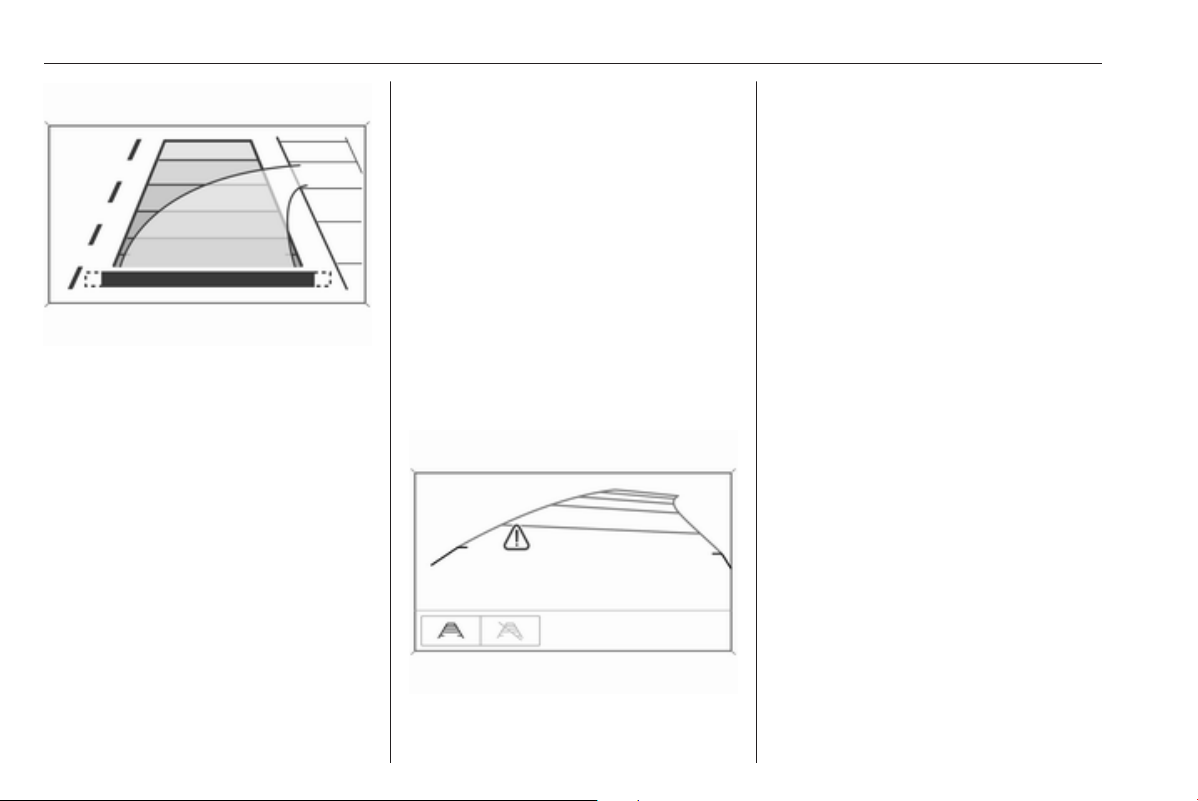
158 Driving and operating
Trajectory lane of the vehicle is
shown in accordance with the
steering angle.
Warning symbols
Warning symbols are indicated as
triangles 9 on the picture which show
obstacles detected by the rear
sensors of the advanced parking
assist.
Additionally 9 appears on the top line
of the Info Display with the warning to
check the vehicle surrounding.
Deactivation
The camera is deactivated when a
certain forward speed is exceeded or
if reverse gear is not engaged for
approx. 10 s.
Rear view camera can be manually
deactivated in the vehicle
personalisation menu in the Info
Display. Select the relevant setting in
Settings.
Vehicle personalisation 3 105.
Deactivation of guiding lines and
warning symbols
7'' Colour Info Display: Activation or
deactivation of the visual guiding lines
and the warning symbols can be
changed via touch buttons in the
lower zone of the display.
8'' Colour Info Display: Activation or
deactivation of the visual guiding lines
and the warning symbols can be
changed in the Settings menu in the
Info Display.
Info Display 3 101.
Vehicle personalisation 3 105.
Fault
Fault messages are displayed with a
9 on the top line of the Info Display.
The rear view camera may not
operate properly when:
● The surrounding is dark.
● The sun or the beam of
headlights is shining directly into
the camera lens.
● Ice, snow, mud, or anything else
covers the camera lens. Clean
the lens, rinse it with water, and
wipe it with a soft cloth.
● The vehicle is towing a trailer.
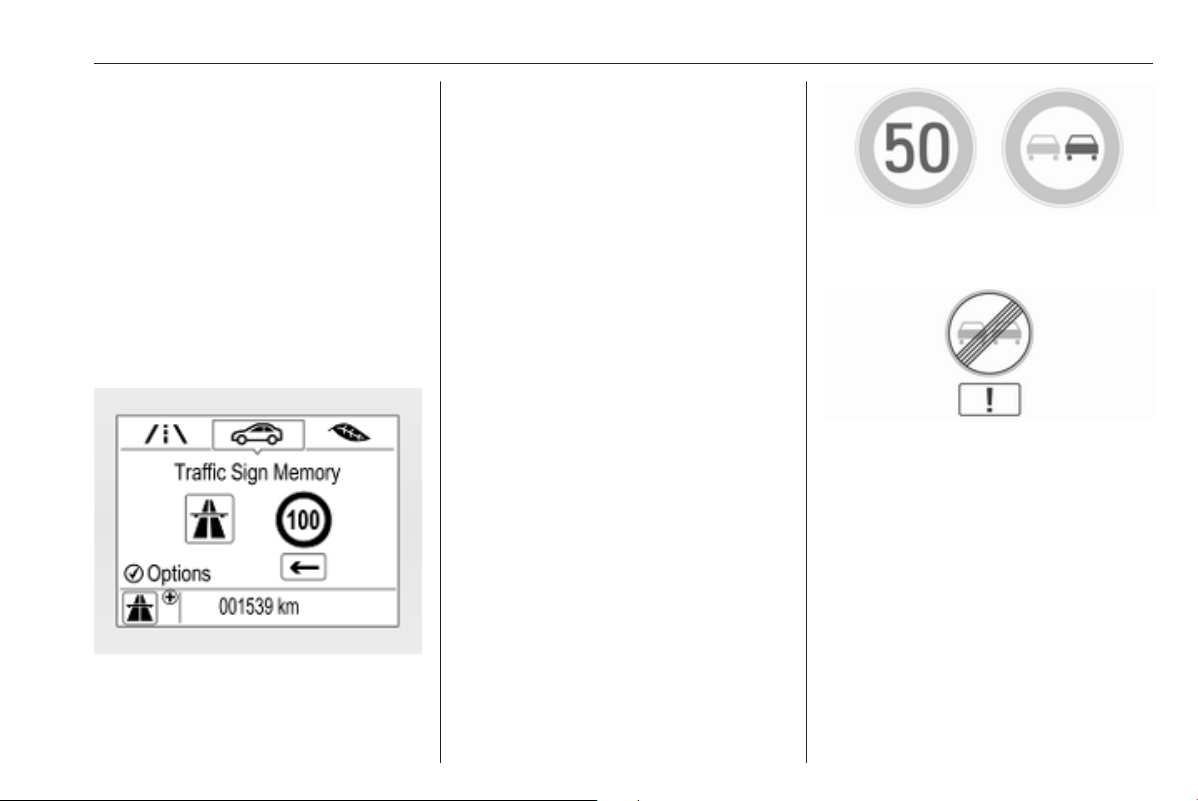
Driving and operating 159
● The vehicle had a rear end
accident.
● There are extreme temperature
changes.
Traffic sign assistant
Functionality
The traffic sign assistant system
detects designated traffic signs via a
front camera and displays them in the
Driver Information Centre.
Traffic signs which will be detected
are:
Limit and no passing signs
● speed limit
● no passing
● end of speed limit
● end of no passing
Road signs
Beginning and end of:
● city regions (country specific)
● motorways
● A-roads
● play streets
Add-on signs
● additional hints to traffic signs
● restriction of trailer towing
● tractor constraints
● wet warning
● ice warning
● direction arrows
Speed limit signs are displayed in the
Driver Information Centre until the
next speed limit sign or end of speed
limit is detected or up to a defined sign
timeout.
Combinations of multiple signs in the
display are possible.
An exclamation mark in a frame
indicates that there is an additional
sign detected which is not recognised
by the system.
The system operates without loss of
performance up to a speed of
125 mph depending on the lighting
conditions. At night the system is
active up to a speed of 100 mph.
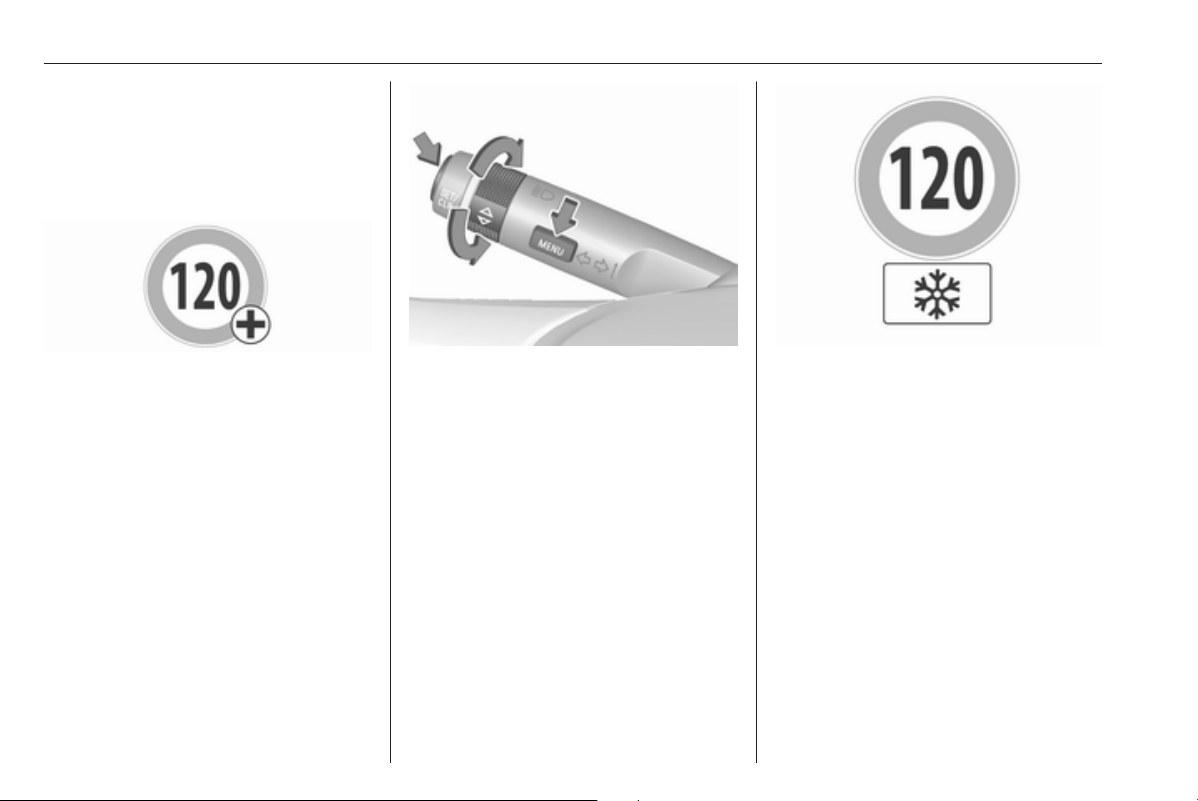
160 Driving and operating
Display indication
Information about the currently valid
traffic signs is available on the
designated traffic sign assistant page
in the Driver Information Centre.
Additionally, the currently valid speed
limit is displayed permanently in the
lower line of the Driver Information
Centre. In case a speed limit with
addon is available, a + symbol is
displayed in this area.
Choose ? via MENU and select
traffic sign assistant page with the
adjuster wheel on the turn signal lever
3 96.
When another page on the Driver
Information Centre menu was
selected and then traffic sign
assistant page is chosen again, the
last recognised traffic sign will be
displayed.
Alert function
The alert function can be activated or
deactivated in the setting menu of the
traffic sign assistant page.
Once activated and when the traffic
sign detection page is currently not
displayed, newly detected speed limit
and no passing signs are displayed
as popup alerts in the Driver
Information Centre.
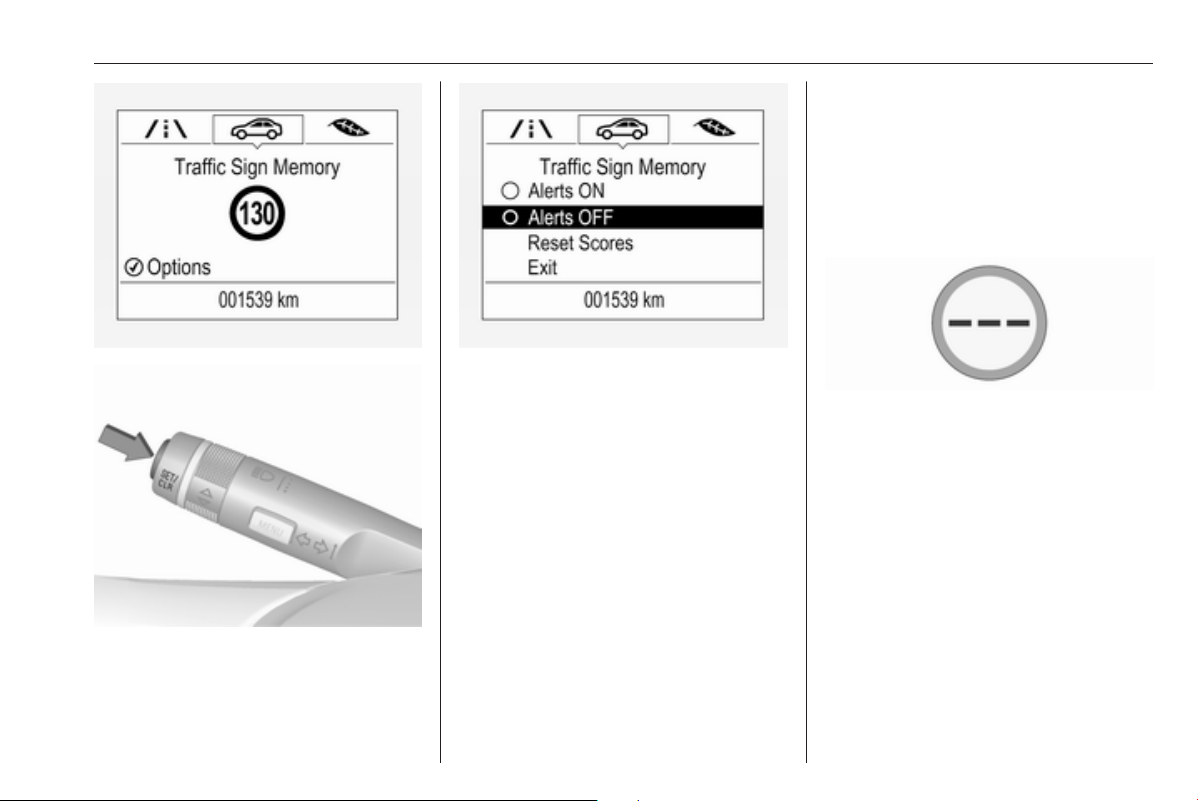
Driving and operating 161
When traffic sign assistant page is
displayed, press SET/CLR on the turn
signal lever.
Select Alerts ON or Alerts OFF by
turning the adjuster wheel and press
SET/CLR.
Pop-up alert is displayed for approx.
eight seconds in the Driver
Information Centre.
System reset
The content of the traffic sign memory
can be cleared in the setting menu of
the traffic sign assistant page by
selecting Reset and confirm by
pressing SET/CLR on the turn signal
lever.
Alternatively, SET/CLR can be
pressed for three seconds to clear the
content of the page.
Upon successful reset, a chime will
sound and the following “Default
Sign” is indicated until the next traffic
sign is detected.
In some cases, traffic sign assistant is
cleared up automatically by the
system.
Clearing of traffic signs
There are different scenarios that
lead to clearing the currently
displayed traffic signs. After clearing,
the “Default Sign” is displayed in the
Driver Information Centre.
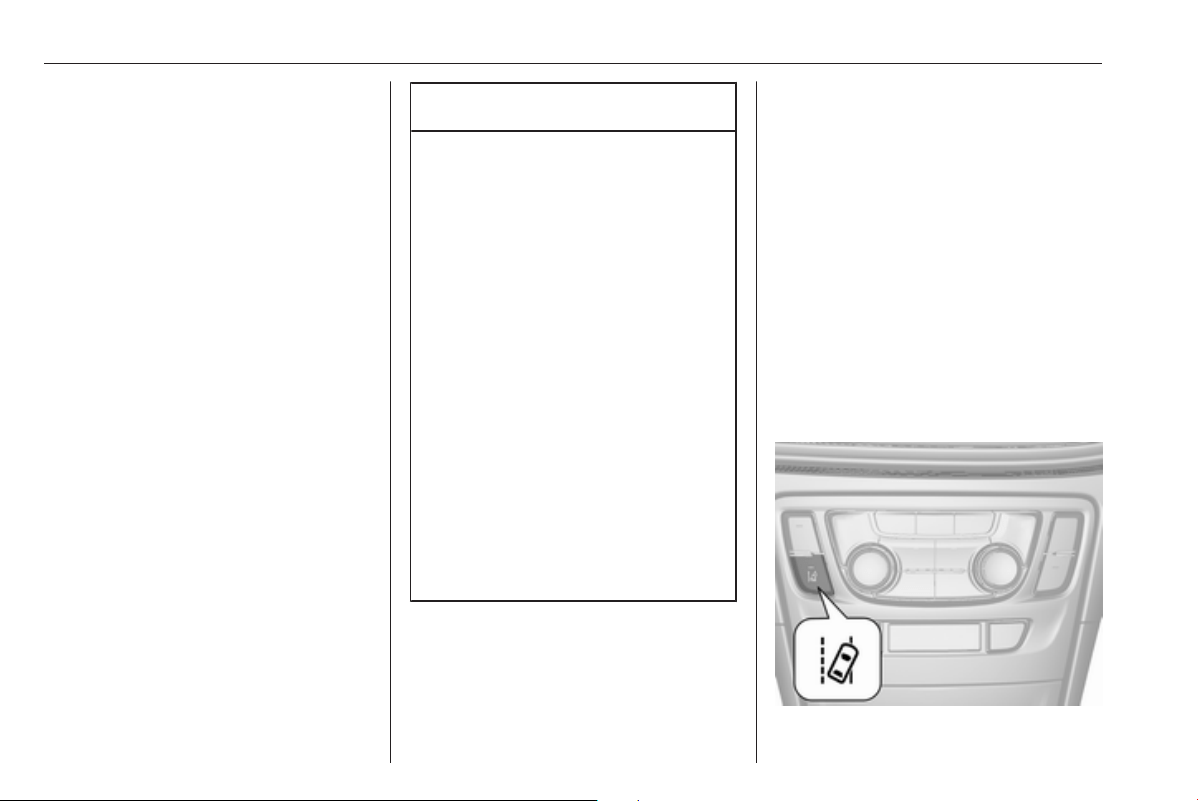
162 Driving and operating
Reasons for signs being cleared:
● A predefined distance was driven
or time has elapsed (differs for
each sign type)
● Vehicle drives through a turn
● The speed becomes slower than
32 mph (city entry detection)
Fault
The traffic sign assistant system may
not operate correctly if:
● The area of the windscreen,
where the front camera is
located, is not clean or affected
by foreign items, e.g. stickers.
● Traffic signs are completely or
partially covered or difficult to
discern.
● There are adverse environmental
conditions, e.g. heavy rain, snow,
direct sunlight or shadows.
● Traffic signs are incorrectly
mounted or damaged.
● Traffic signs do not comply with
the Vienna Convention on traffic
signs.
Caution
The system is intended to help the
driver within a defined speed
range to discern certain traffic
signs. Do not ignore traffic signs
which are not displayed by the
system.
The system does not discern any
other than the conventional traffic
signs that might give or end a
speed limit.
Do not let this special feature
tempt you into taking risks when
driving.
Always adapt speed to the road
conditions.
The driver assistance systems do
not relieve the driver from full
responsibility for vehicle
operation.
Lane departure warning
The lane departure warning system
observes the lane markings between
which the vehicle is driving via a front
camera. The system detects lane
changes and warns the driver in the
event of an unintended lane change
via visual and acoustic signals.
Criteria for the detection of an
unintended lane change are:
● no operation of turn signals
● no brake pedal operation
● no active accelerator operation or
speeding-up
● no active steering
If the driver is active, no warning will
be issued.
Activation
Driving and operating 163
The lane departure warning system is
activated by pressing ). The
illuminated LED in the button
indicates that the system is switched
on.
When the control indicator ) in the
instrument cluster illuminates green,
the system is ready to operate.
The system is only operable at
vehicle speeds above 35 mph and if
lane markings are available.
When the system recognises an
unintended lane change, the control
indicator ) changes to yellow and
flashes. Simultaneously a chime
sound is activated.
Deactivation
The system is deactivated by
pressing ), the LED in the button
extinguishes.
At speeds below 35 mph the system
is inoperable.
Fault
The lane departure warning system
may not operate properly when:
● the windscreen is not clean
● there are adverse environmental
conditions like heavy rain, snow,
direct sunlight or shadows
The system can not operate when no
lane marking is detected.
Fuel
Fuel for petrol engines
Only use unleaded fuel that complies
with European standard EN 228 or
equivalent.
The engine is capable of running with
fuel that contains up to 10% ethanol
(e.g. named E10).
Use fuel with the recommended
octane rating. A lower octane rating
can reduce engine power and torque
and slightly increases fuel
consumption.

164 Driving and operating
Caution
Do not use fuel or fuel additives
that contain metallic compounds
such as manganese-based
additives. This may cause engine
damage.
Caution
Use of fuel that does not comply to
EN 228 or equivalent can lead to
deposits or engine damage.
Caution
Use of fuel with a lower octane
rating than the lowest possible
rating could lead to uncontrolled
combustion and engine damage.
The engine-specific requirements
regarding octane rating are given in
the engine data overview 3 223. A
country-specific label at the fuel filler
flap can supersede the requirement.
Fuel additive
Fuel should contain detergent
additives that help prevent engine
and fuel system deposits from
forming. Clean fuel injectors and
intake valves will allow the emission
control system to work properly. In
certain countries fuel does not
contain sufficient quantities of
additive to keep fuel injectors and
intake valves clean. In these
countries a fuel additive is required for
some engines to make up for this lack
of detergency. Only use fuel additive
approved for the vehicle.
Adding fuel additive to the filled fuel
tank is required at least every 10,000
miles or after one year, whichever
occurs first. For further information,
contact your workshop.
Prohibited fuels
Fuels containing oxygenates such as
ethers and ethanol, as well as
reformulated fuel, are available in
some cities. If these fuels comply with
the previously described
specification, then they are
acceptable to use. However, E85
(85% ethanol) and other fuels
containing more than 15% ethanol
must be used only in FlexFuel
vehicles.
Caution
Do not use fuel containing
methanol. It can corrode metal
parts in the fuel system and also
damage plastic and rubber parts.
This damage would not be
covered by the vehicle warranty.
Some fuels, mainly high octane
racing fuels, can contain an octane
enhancing additive called
methylcyclopentadienyl manganese
tricarbonyl (MMT). Do not use fuels or
fuel additives with MMT as they can
reduce spark plug life and affect
emission control system
performance. The malfunction
indicator light Z may illuminate 3 92.
If this occurs, seek the assistance of
a workshop.
Driving and operating 165
Fuel for diesel engines
Only use diesel fuel that complies
with EN 590 and which has a sulphur
concentration of max. 10 ppm.
Fuels with a biodiesel (compliant with
EN 14214) content of max. 7% by
volume may be used (e.g. named
B7).
If travelling in countries outside the
European Union occasional use of
Euro-Diesel fuel with a sulphur
concentration below 50 ppm is
possible.
Caution
Frequent usage of diesel fuel
containing more than 15 ppm
sulphur will cause severe engine
damage.
Caution
Use of fuel that does not comply to
EN 590 or similar can lead to
engine powerloss, increased wear
or engine damage.
Do not use marine diesel oils, heating
oils, Aquazole and similar diesel-
water emulsions. Diesel fuels must
not be diluted with fuels for petrol
engines.
Low temperature operation
At temperatures below 0 °C, some
diesel products with biodiesel blends
may clog, freeze or gel, which may
affect the fuel supply system. Starting
and engine operation may not work
properly. Make sure to fill winter
grade diesel fuel at ambient
temperatures below 0°C.
Arctic grade diesel fuel can be used
in extreme cold temperatures below
--20 °C. Using this fuel grade in warm
or hot climates is not recommended
and may cause engine stalling, poor
starting or damage on the fuel
injection system.
Fuel for liquid gas operation
Liquid gas is known as LPG
(Liquefied Petroleum Gas) or under
its French name GPL (Gaz de Pétrole
Liquéfié). LPG is also known as
Autogas.
LPG consists mainly of propane and
butane. The octane rating is between
105 and 115, depending on the
butane proportion. LPG is stored as a
liquid at a pressure of approx. five to
ten bar.
The boiling point depends on the
pressure and the mixing ratio. At
ambient pressure, it is between
-42 °C (pure propane) and -0.5 °C
(pure butane).
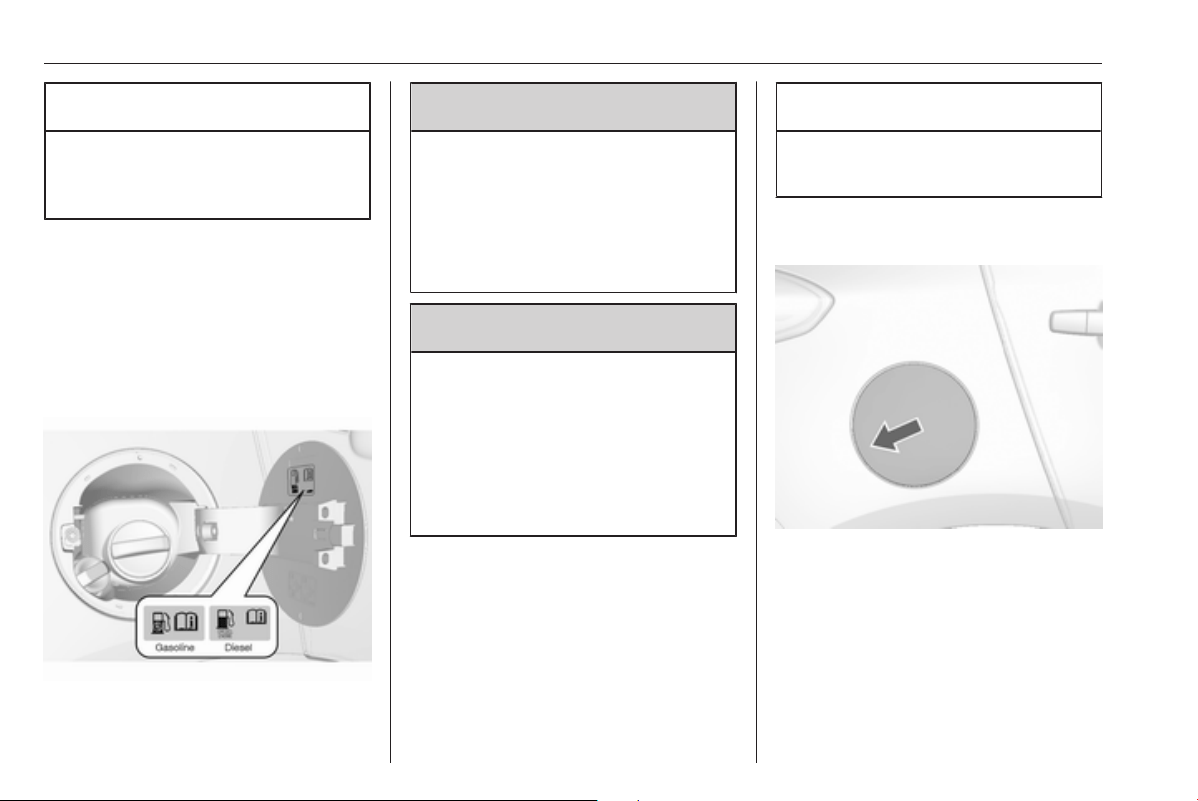
166 Driving and operating
Caution
The system works at an ambient
temperature of approx. -8 °C to
100 °C.
Full functioning of the LPG system
can only be guaranteed with liquid
gas which complies with the minimum
requirements of DIN EN 589.
Fuel selector 3 85.
Refuelling
9 Danger
Before refuelling, switch off
ignition and any external heaters
with combustion chambers.
Follow the operating and safety
instructions of the filling station
when refuelling.
9 Danger
Fuel is flammable and explosive.
No smoking. No naked flames or
sparks.
If you can smell fuel in your
vehicle, have the cause of this
remedied immediately by a
workshop.
A label with symbols at the fuel filler
flap is indicating the allowed fuel
types. In Europe the pump nozzles of
the filling stations are marked with
these symbols. Refuel only the
allowed fuel type.
Caution
In case of misfuelling, do not
switch on ignition.
Fuel filler flap is located at right rear
side of vehicle.
The fuel filler flap can only be opened
if the vehicle is unlocked. Release the
fuel filler flap by pushing the flap.
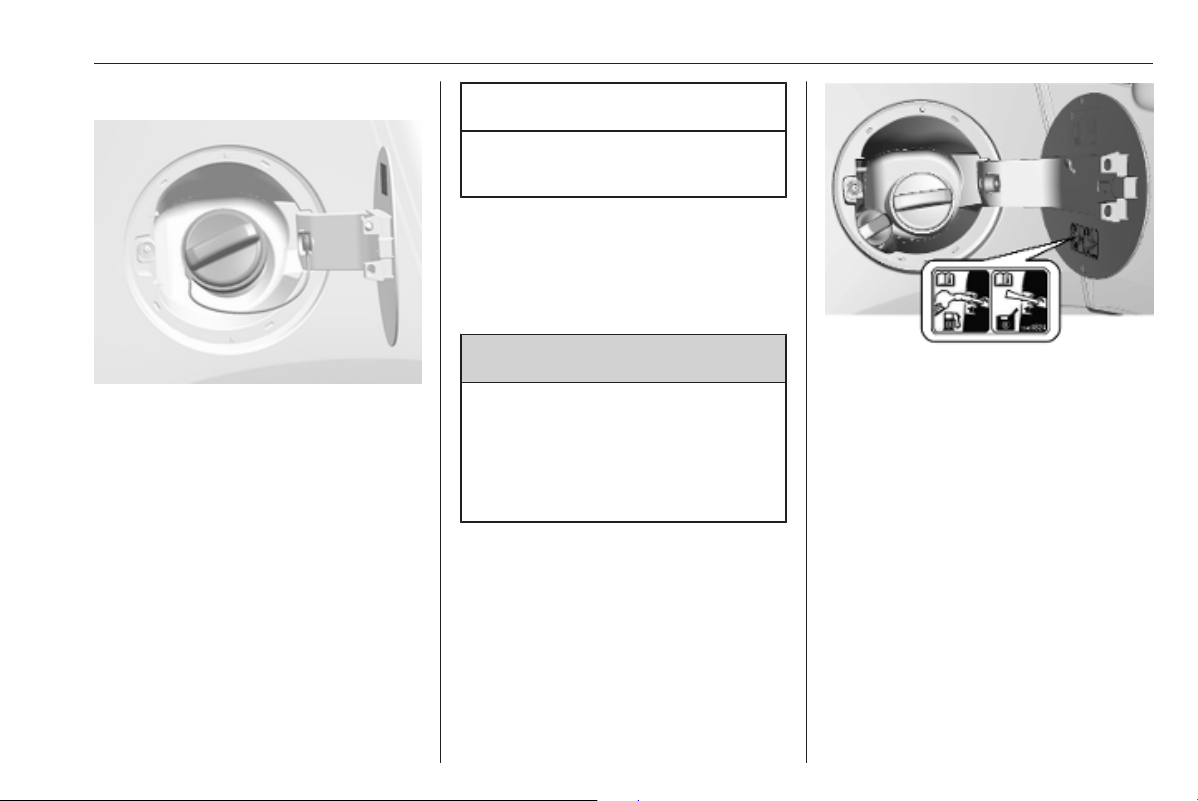
Driving and operating 167
Petrol and Diesel refuelling
To open, turn the cap slowly
anticlockwise.
The fuel filler cap can be retained in
the bracket on the fuel filler flap.
Place the nozzle in straight position to
the filler neck and press with slight
force to insert.
To refuel, switch on pump nozzle.
After automatic cut-off, the tank can
be topped up by operating the pump
nozzle a maximum of two more times.
Caution
Wipe off any overflowing fuel
immediately.
To close, turn the fuel filler cap
clockwise until it clicks.
Close the flap and allow it to engage.
Misfuel inhibitor
9 Warning
Do not try to open the flap of the
fuel filler neck manually on
vehicles with misfuel inhibitor.
Disregarding this could lead to
trapping of the fingers.
Diesel vehicle is equipped with a
misfuel inhibitor.
The misfuel inhibitor ensures that the
flap of the fuel filler neck can only be
opened by using the suitable fuel
nozzle or a funnel for emergency
refilling.
In case of an emergency, refill with a
canister. A funnel must be used to
open the cap of the filler neck.
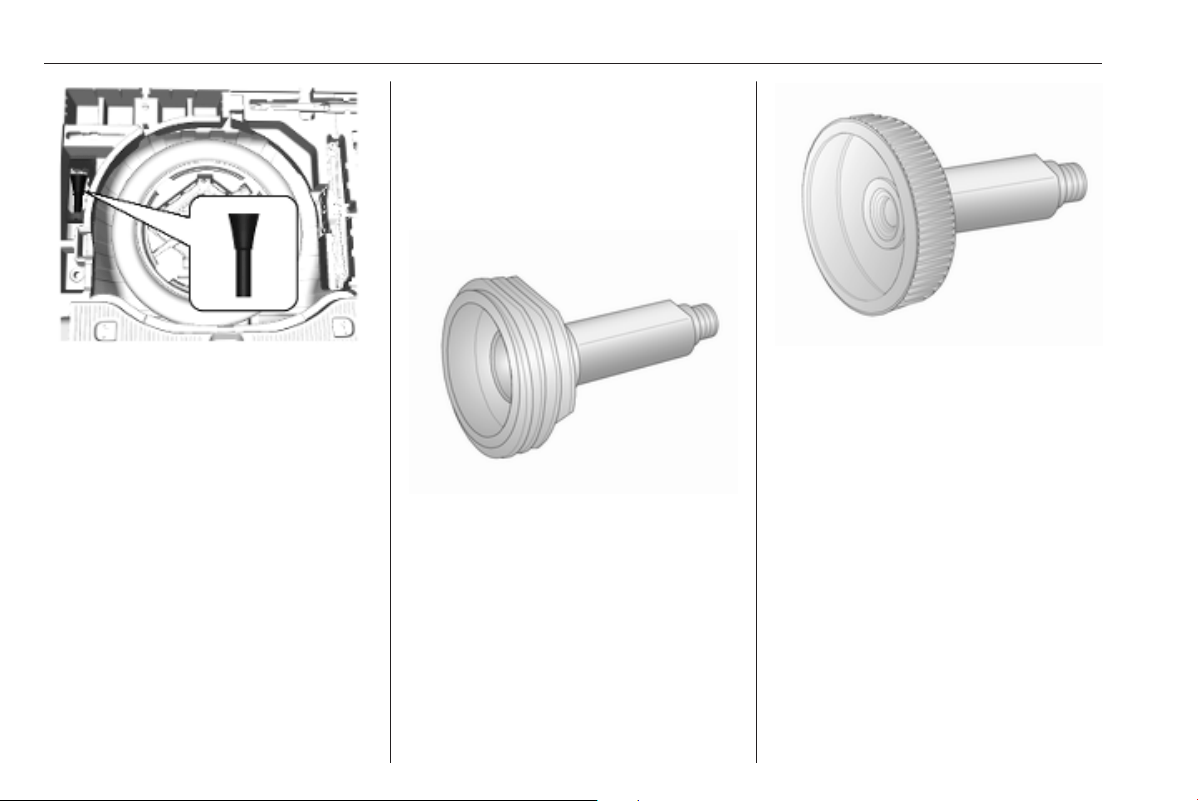
168 Driving and operating
The funnel is stowed in the load
compartment.
Place the funnel in storage bin and
store into polybag.
Use the funnel to fill in the fuel into the
filler neck.
After topping-up, stow the funnel into
polybag in the load compartment.
Liquid gas refuelling
Follow the operating and safety
instructions of the filling station when
refuelling.
Filling adapter
As filling systems are not
standardised, different adapters are
required which are available from
Vauxhall Distributors and from
Vauxhall Authorised Repairers.
ACME adapter: Belgium, Germany,
Ireland, Luxembourg, Switzerland
DISH adapter: Austria, Bosnia-
Herzegovina, Bulgaria, Czech
Republic, Croatia, Denmark, Estonia,
France, Greece, Hungary, Italy,
Latvia, Lithuania, Macedonia,
Poland, Portugal, Romania, Serbia,
Slovakia, Slovenia, Sweden,
Switzerland, Turkey, Ukraine
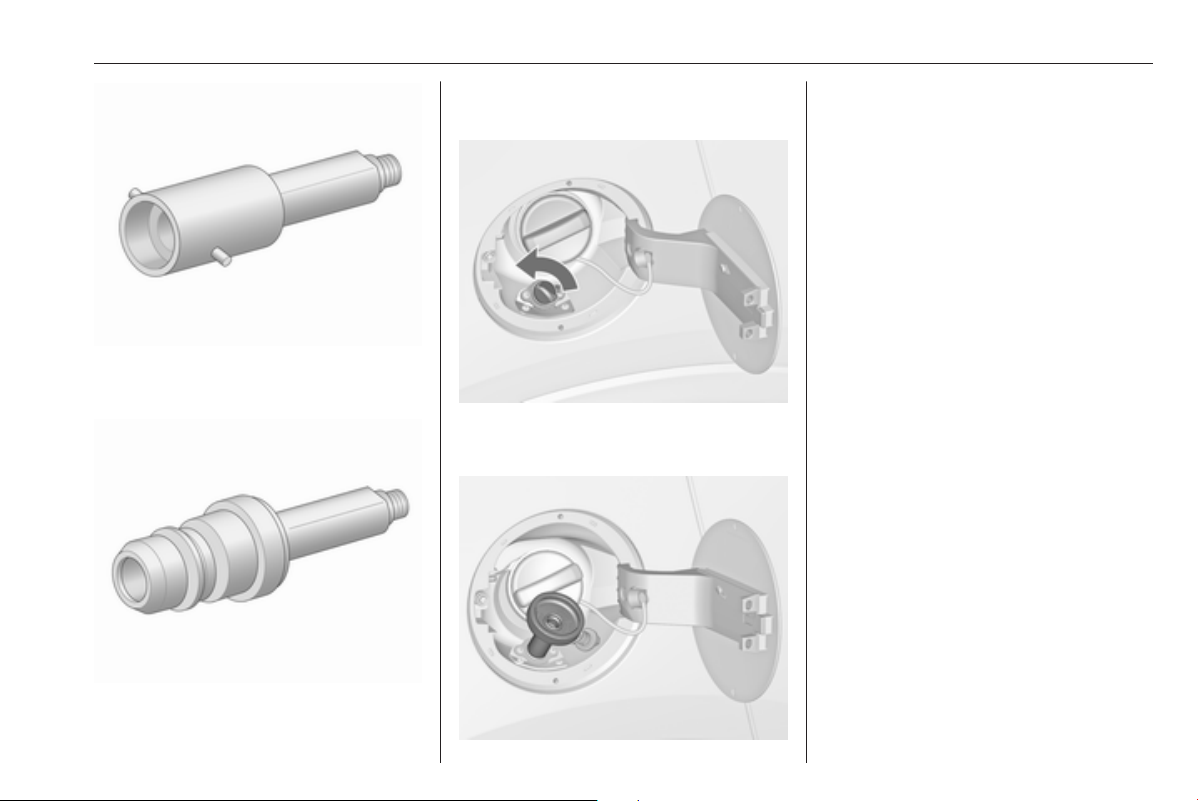
Driving and operating 169
Bayonet adapter: Netherlands,
Norway, Spain, United Kingdom
EURO adapter: Spain
The filling valve for the liquid gas is
behind the fuel filler cap.
Unscrew protective cap from the filler
neck.
Screw the required adapter hand-
tight onto the filler neck.
ACME adapter: Screw the nut of the
filling nozzle onto the adapter.
Engage the locking lever of the filler
nozzle.
DISH adapter: Place the filler nozzle
into the adapter. Engage the locking
lever of the filler nozzle.
Bayonet adapter: Place filler nozzle
on the adapter and turn one quarter
turn. Engage the locking lever of the
filler nozzle.
EURO adapter: Press the filler nozzle
onto the adapter. Engage the locking
lever of the filler nozzle.
Press the button at the liquid gas
supply point. The filling system stops
or begins to run slowly when 80% of
the tank volume is reached
(maximum fill level).
Release button on filling system and
the filling process stops. Release the
locking lever and remove the filler
nozzle. A small quantity of liquid gas
may escape.
Remove adapter and stow in vehicle.

170 Driving and operating
Fit protective cap to prevent the
penetration of foreign bodies into the
filler opening and the system.
9 Warning
Due to the system design, an
escape of liquid gas after
releasing the locking lever is
unavoidable. Avoid inhaling.
9 Warning
The liquid gas tank should only be
filled to 80% capacity, for safety
reasons.
The multivalve on the liquid gas tank
automatically limits the fill quantity. If
a larger quantity is added, we
recommend not exposing the vehicle
to the sun until the excess amount
has been used up.
Fuel filler cap
Only use genuine fuel filler caps.
Diesel-engined vehicles have special
fuel filler caps.
Trailer hitch
General information
Only use towing equipment that has
been approved for your vehicle.
Entrust retrofitting of towing
equipment to a workshop. It may be
necessary to make changes that
affect the cooling system, heat
shields or other equipment.
The bulb outage detection function for
trailer brake light cannot detect a
partial bulb outage. E.g. in case of
four bulbs with a power of 5 W each,
the function only detects lamp outage
when only a single 5 W lamp remains
or none remain.
Fitting of towing equipment could
cover the opening of the towing eye.
If this is the case, use the coupling ball
bar for towing. Always keep the
coupling ball bar in the vehicle when
not in use.
Driving characteristics and
towing tips
Before attaching a trailer, lubricate
the coupling ball. However, do not do
so if a stabiliser, which acts on the
coupling ball, is being used to reduce
snaking movements.
For trailers with low driving stability
and caravan trailers with a permitted
gross vehicle weight of more than
1000 kg, a speed of 50 mph must not
be exceeded. The use of a stabiliser
is recommended.
If the trailer starts snaking, drive more
slowly, do not attempt to correct the
steering and brake sharply if
necessary.
When driving downhill, drive in the
same gear as if driving uphill and
drive at a similar speed.
Adjust tyre pressure to the value
specified for full load 3 229.

Driving and operating 171
Trailer towing
Trailer loads
The permissible trailer loads are
vehicle and engine-dependent
maximum values which must not be
exceeded. The actual trailer load is
the difference between the actual
gross weight of the trailer and the
actual coupling socket load with the
trailer coupled.
The permissible trailer loads are
specified in the vehicle documents. In
general, they are valid for gradients
up to max. 12%.
The permitted trailer loads apply up to
the specified incline and up to an
altitude of 1000 m above sea level.
Since engine power decreases as
altitude increases due to the air
becoming thinner, therefore reducing
climbing ability, the permissible gross
train weight also decreases by 10%
for every 1000 m of additional
altitude. The gross train weight does
not have to be reduced when driving
on roads with slight inclines (less than
8%, e.g. motorways).
The permissible gross train weight
must not be exceeded. This weight is
specified on the identification plate
3 218.
Vertical coupling load
The vertical coupling load is the load
exerted by the trailer on the coupling
ball. It can be varied by changing the
weight distribution when loading the
trailer.
The maximum permissible vertical
coupling load (75 kg) is specified on
the towing equipment identification
plate and in the vehicle documents.
Always aim for the maximum load,
especially in the case of heavy
trailers. The vertical coupling load
should never fall below 25 kg.
Rear axle load
The permissible axle loads (see
identification plate or vehicle
documents) must not be exceeded.
Towing equipment
Caution
When operating without a trailer,
remove the coupling ball bar.
Stowage of coupling ball bar
The bag with the coupling ball bar is
stowed in the rear stowage
compartment on the floor.
Place the strap through the lashing
eye, wrap around twice and tighten
the strap to secure the bag.
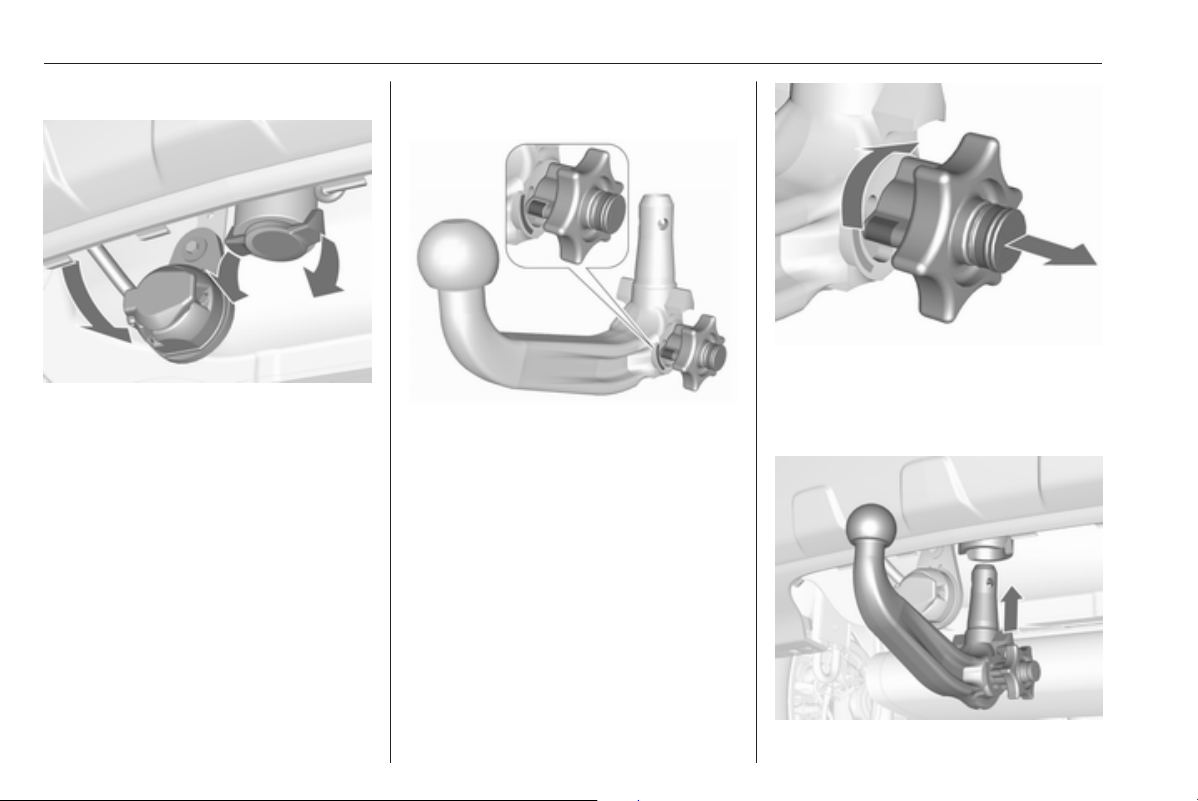
172 Driving and operating
Fitting the coupling ball bar
Disengage and fold down the socket.
Remove the sealing plug from the
opening for the coupling ball bar and
stow it.
Checking the tensioning of the
coupling ball bar
● Red marking on rotary knob must
point towards green marking on
coupling ball bar.
● The gap between the rotary knob
and the coupling ball bar must be
approx. 6 mm.
●
The key must be in position c.
Otherwise, the coupling ball bar must
be tensioned before being inserted:
● Unlock coupling ball bar by
turning key to position c.
● Pull out rotary knob and turn
clockwise as far as it will go.
Inserting the coupling ball bar
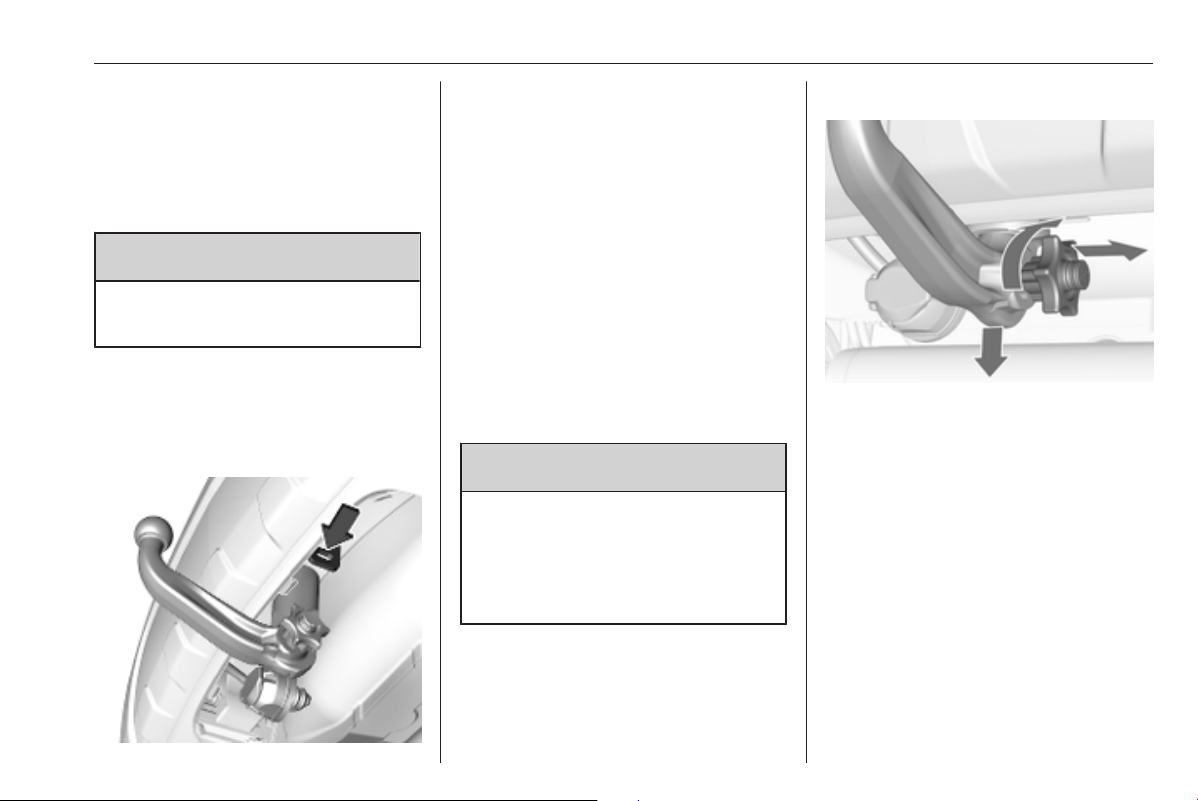
Driving and operating 173
Insert the tensioned coupling ball bar
in the opening and push firmly
upwards until it audibly engages.
The rotary handle snaps back into its
original position resting against the
coupling ball bar without a gap.
9 Warning
Do not touch rotary handle during
insertion.
Lock the coupling ball bar by turning
the key to position e. Remove the key
and close the protective flap.
Eye for break-away stopping cable
Attach breakaway stopping cable to
eye.
Check that the coupling ball bar is
correctly installed
● Green marking on rotary knob
must point towards green
marking on coupling ball bar.
● There must be no gap between
the rotary handle and the
coupling ball bar.
● The coupling ball bar must be
firmly engaged in the opening.
● The coupling ball bar must be
locked and the key removed.
9 Warning
Towing a trailer is permitted only
when a coupling ball bar is fitted
correctly. If the coupling ball bar
does not engage correctly, seek
the assistance of a workshop.
Dismounting the coupling ball bar
Open the protective flap and turn the
key to position c to unlock the
coupling ball bar.
Pull out rotary handle and turn
clockwise as far as it will go. Pull out
coupling ball bar downwards.
Insert sealing plug in opening. Fold
away socket.

174 Vehicle care
Vehicle care
General Information ................... 174
Accessories and vehicle
modifications .......................... 174
Vehicle storage ........................ 175
End-of-life vehicle recovery ..... 175
Vehicle checks ........................... 176
Performing work ...................... 176
Bonnet ..................................... 176
Engine oil ................................. 177
Engine coolant ......................... 178
Power steering fluid ................. 178
Washer fluid ............................ 179
Brakes ..................................... 179
Brake fluid ............................... 179
Vehicle battery ......................... 180
Diesel fuel system bleeding ..... 181
Wiper blade replacement ........ 181
Bulb replacement ....................... 182
Halogen headlights .................. 183
Front fog lights ......................... 184
Tail lights ................................. 185
Number plate light ................... 186
Rear fog light ........................... 186
Electrical system ........................ 187
Fuses ....................................... 187
Engine compartment fuse box . 188
Instrument panel fuse box ....... 189
Load compartment fuse box .... 191
Vehicle tools .............................. 192
Tools ........................................ 192
Wheels and tyres ....................... 193
Winter tyres ............................. 193
Tyre designations .................... 193
Tyre pressure .......................... 194
Tyre pressure monitoring
system .................................... 195
Tread depth ............................. 199
Changing tyre and wheel size . 199
Wheel covers ........................... 199
Tyre chains .............................. 200
Tyre repair kit .......................... 200
Wheel changing ....................... 203
Spare wheel ............................ 204
Jump starting ............................. 208
Towing ....................................... 209
Towing the vehicle ................... 209
Towing another vehicle ........... 211
Appearance care ....................... 212
Exterior care ............................ 212
Interior care ............................. 214
General Information
Accessories and vehicle
modifications
We recommend the use of genuine
parts and accessories and factory
approved parts specific for your
vehicle type. We cannot assess or
guarantee reliability of other products
- even if they have a regulatory or
otherwise granted approval.
Any modification, conversion or other
changes made to standard vehicle
specifications (including, without
limitation, software modifications,
modifications of the electronic control
units) may invalidate the warranty
offered by Vauxhall. Furthermore,
such changes may affect driver
assistance systems, fuel
consumption, CO
2
emissions and
other emissions of the vehicle. They
may also invalidate the vehicle
operating permit.

Vehicle care 175
Caution
When transporting the vehicle on
a train or on a recovery vehicle, the
mud flaps might be damaged.
Vehicle storage
Storage for a long period of time
If the vehicle is to be stored for several
months:
● Wash and wax the vehicle.
● Have the wax in the engine
compartment and underbody
checked.
● Clean and preserve the rubber
seals.
● Fill up fuel tank completely.
● Change the engine oil.
● Drain the washer fluid reservoir.
● Check the coolant antifreeze and
corrosion protection.
● Adjust tyre pressure to the value
specified for full load.
● Park the vehicle in a dry, well
ventilated place. Engage first or
reverse gear or set selector lever
to P. Prevent the vehicle from
rolling.
● Do not apply the parking brake.
● Open the bonnet, close all doors
and lock the vehicle.
● Disconnect the clamp from the
negative terminal of the vehicle
battery. Beware that all systems
are not functional, e.g. anti-theft
alarm system.
Putting back into operation
When the vehicle is to be put back into
operation:
● Connect the clamp to the
negative terminal of the vehicle
battery. Activate the electronics
of the power windows.
● Check tyre pressure.
● Fill up the washer fluid reservoir.
● Check the engine oil level.
● Check the coolant level.
● Fit the number plate if necessary.
End-of-life vehicle recovery
Information on end-of-life vehicle
recovery centres and the recycling of
end-of-life vehicles is available on our
website, where legally required. Only
entrust this work to an authorised
recycling centre.
Gas vehicles must be recycled by a
service centre authorised for gas
vehicles.
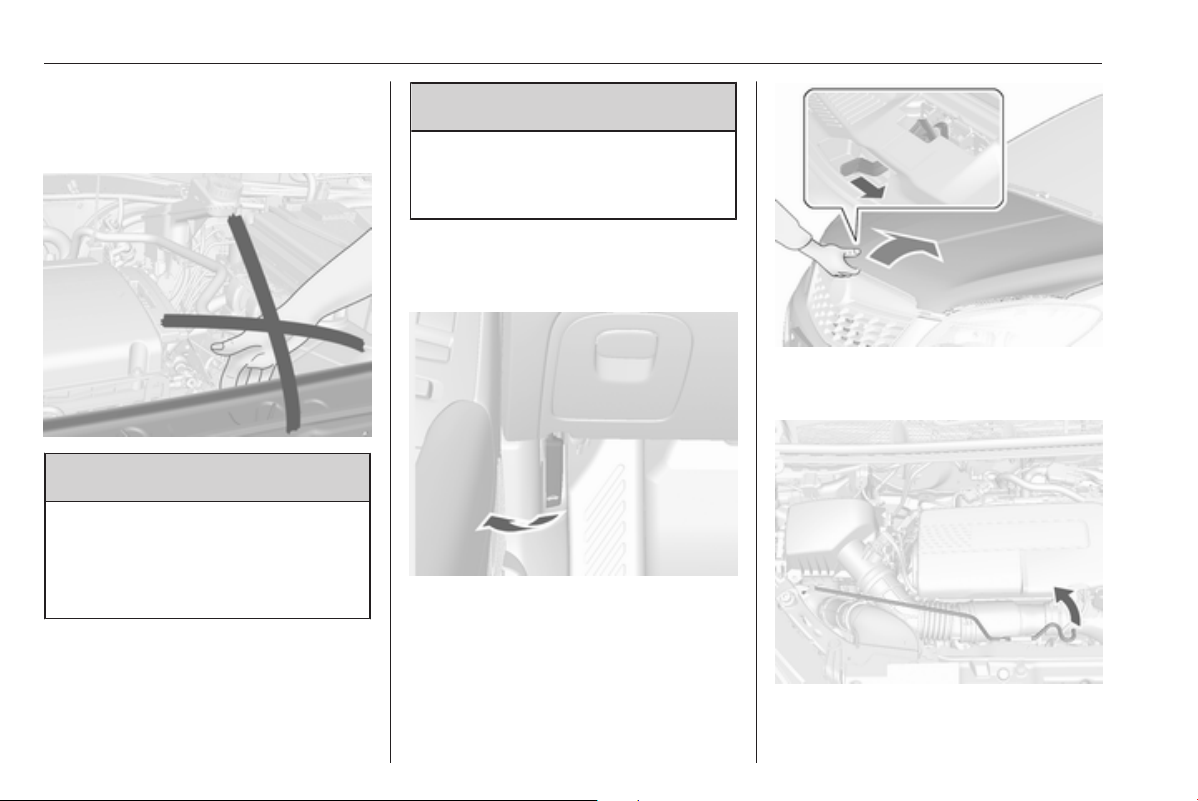
176 Vehicle care
Vehicle checks
Performing work
9 Warning
Only perform engine compartment
checks when the ignition is off.
The cooling fan may start
operating even if the ignition is off.
9 Danger
The ignition system and Xenon
headlights use extremely high
voltage. Do not touch.
Bonnet
Opening
Pull the release lever and return it to
its original position.
Move the safety catch sideways to the
left vehicle side and open the bonnet.
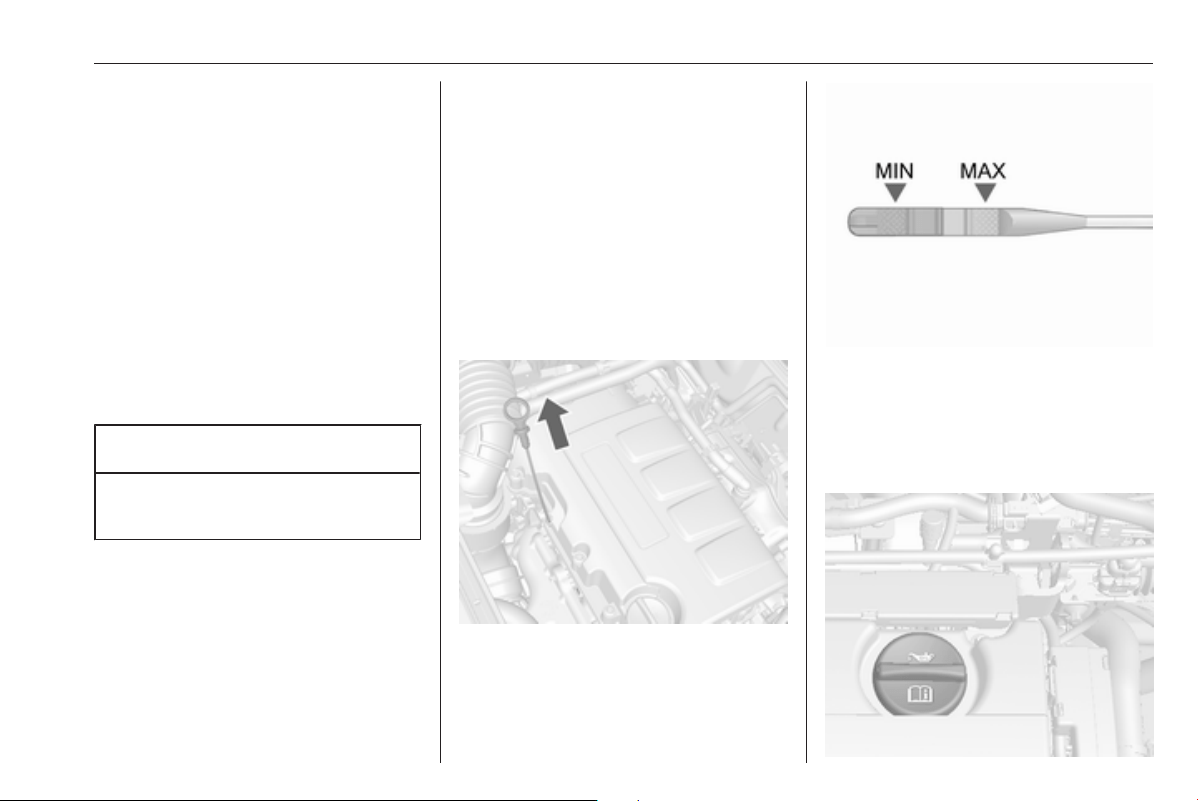
Vehicle care 177
Pull up the support rod lightly from the
holder. And then secure it at the left
side hook on the bonnet.
If the bonnet is opened during an
Autostop, the engine will be restarted
automatically for safety reasons.
Closing
Before closing the bonnet, press the
support into the holder.
Lower the bonnet and allow it to fall
into the latch from a low height
(20-25 cm). Check that the bonnet is
engaged.
Caution
Do not press the bonnet into the
latch, to avoid dents.
Engine oil
Check the engine oil level manually
on a regular basis to prevent damage
to the engine. Ensure that the correct
specification of oil is used.
Recommended fluids and lubricants
3 216.
The maximum engine oil
consumption is 0.6 l per 600 miles.
Check with the vehicle on a level
surface. The engine must be at
operating temperature and switched
off for at least 5 min.
Pull out the dipstick, wipe it clean,
insert it to the stop on the handle, pull
out and read the engine oil level.
Insert dipstick to the stop on the
handle.
When the engine oil level has
dropped to the MIN mark, top up
engine oil.
We recommend the use of the same
grade of engine oil that was used at
last change.
The engine oil level must not exceed
the MAX mark on the dipstick.
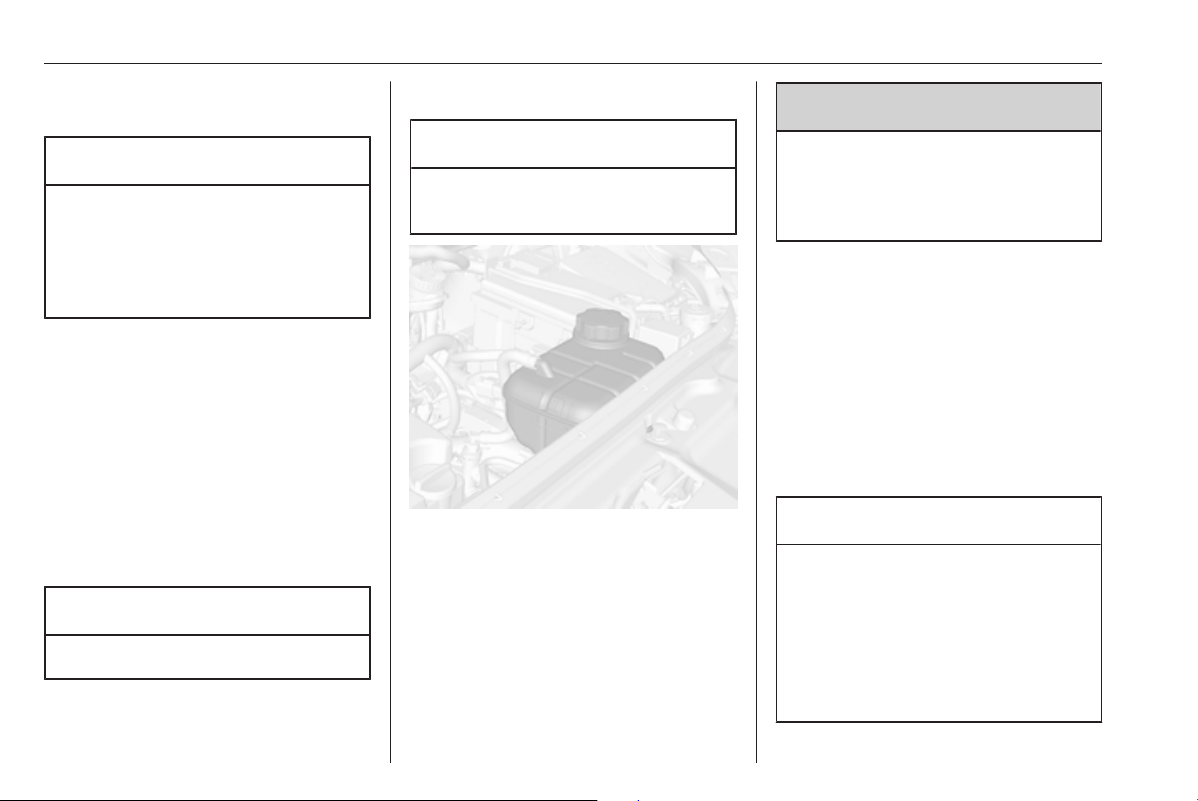
178 Vehicle care
The engine oil filler cap is located on
the camshaft cover.
Caution
Overfilled engine oil must be
drained or suctioned out. If the oil
exceeds the maximum level, do
not start the vehicle and contact a
workshop.
Capacities 3 227.
Fit the cap on straight and tighten it.
Engine coolant
The coolant provides freeze
protection down to approx. -30 °C. In
northern countries with very low
temperatures the factory filled coolant
provides frost protection down to
approx. -40 °C.
Caution
Only use approved antifreeze.
Coolant and antifreeze 3 216.
Coolant level
Caution
Too low a coolant level can cause
engine damage.
If the cooling system is cold, the
coolant level should be above the
filling line mark. Top up if the level is
low.
9 Warning
Allow the engine to cool before
opening the cap. Carefully open
the cap, relieving the pressure
slowly.
To top up use a 1:1 mixture of
released coolant concentrate mixed
with clean tap water. If no coolant
concentrate is available, use clean
tap water. Install the cap tightly. Have
the coolant concentration checked
and have the cause of the coolant
loss remedied by a workshop.
Power steering fluid
Caution
Extremely small amounts of
contamination can cause steering
system damage and cause it to not
work properly. Do not allow
contaminates to contact the fluid
side of the reservoir cap / dipstick
or from entering the reservoir.
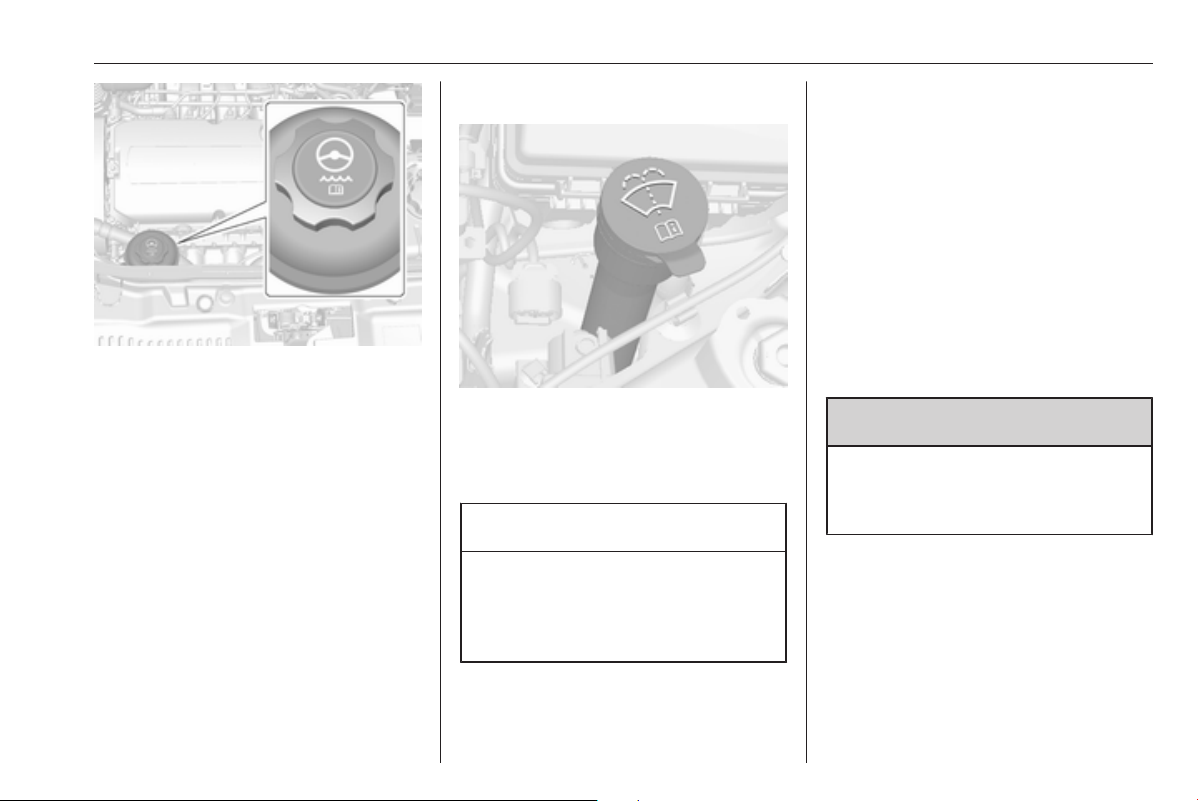
Vehicle care 179
Power steering fluid level normally
does not need to be checked. If an
unusual noise sounds during steering
or the power steering reacts
conspicuously, seek the assistance of
a workshop.
Washer fluid
Fill with clean water mixed with a
suitable quantity of approved
windscreen washer fluid which
contains antifreeze.
Caution
Only washer fluid with a sufficient
antifreeze concentration provides
protection at low temperatures or
a sudden drop in temperature.
Washer fluid 3 216.
Brakes
In the event of minimum thickness of
the brake lining, a squealing noise
sounds during braking.
Continued driving is possible but
have the brake lining replaced as
soon as possible.
Once new brake linings are installed,
do not brake unnecessarily hard for
the first few journeys.
Brake fluid
9 Warning
Brake fluid is poisonous and
corrosive. Avoid contact with eyes,
skin, fabrics and painted surfaces.
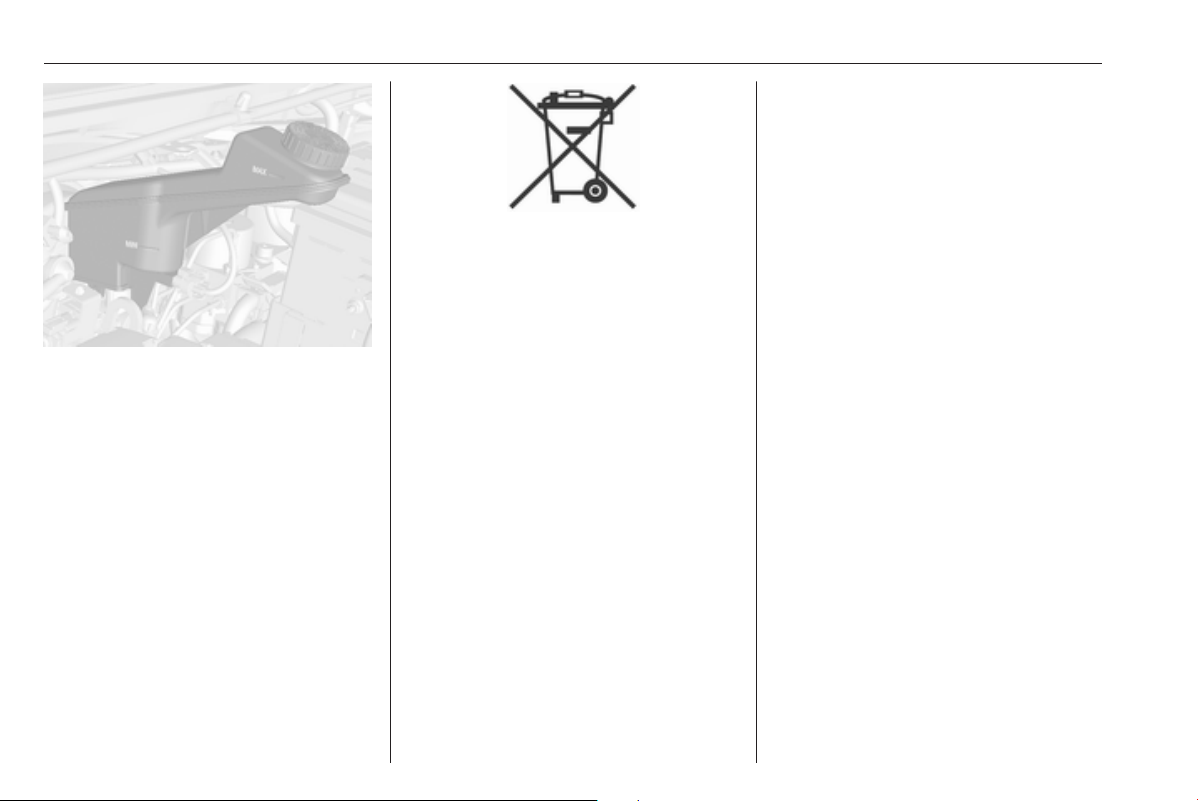
180 Vehicle care
The brake fluid level must be between
the MIN and the MAX marks.
If fluid level is below MIN seek the
assistance of a workshop.
Brake and clutch fluid 3 216.
Vehicle battery
The vehicle battery is maintenance-
free provided that the driving profile
allows sufficient charging of the
battery. Short-distance-driving and
frequent engine starts can discharge
the battery. Avoid the use of
unnecessary electrical consumers.
Batteries do not belong in household
waste. They must be disposed of at
an appropriate recycling collection
point.
Laying up the vehicle for more than
four weeks can lead to battery
discharge. Disconnect the clamp from
the negative terminal of the vehicle
battery.
Ensure the ignition is switched off
before connecting or disconnecting
the vehicle battery.
The anti-theft alarm siren must be
deactivated as follows: Switch the
ignition on then off, disconnect the
vehicle's battery within 15 seconds.
Vehicle battery discharge protection
3 120.
Replacing the vehicle battery
Notice
Any deviation from the instructions
given in this section may lead to
temporary deactivation or
disturbance of the stop-start system.
When the vehicle battery is being
replaced, please ensure that there
are no open ventilation holes in the
vicinity of the positive terminal. If a
ventilation hole is open in this area, it
must be closed off with a dummy cap,
and the ventilation in the vicinity of the
negative terminal must be opened.
Only use vehicle batteries that allow
the fuse box to be mounted above the
vehicle battery.
Ensure that the battery is always
replaced by the same type of battery.
We recommend that you have the
vehicle battery replaced by a
workshop.
Stop-start system 3 133.
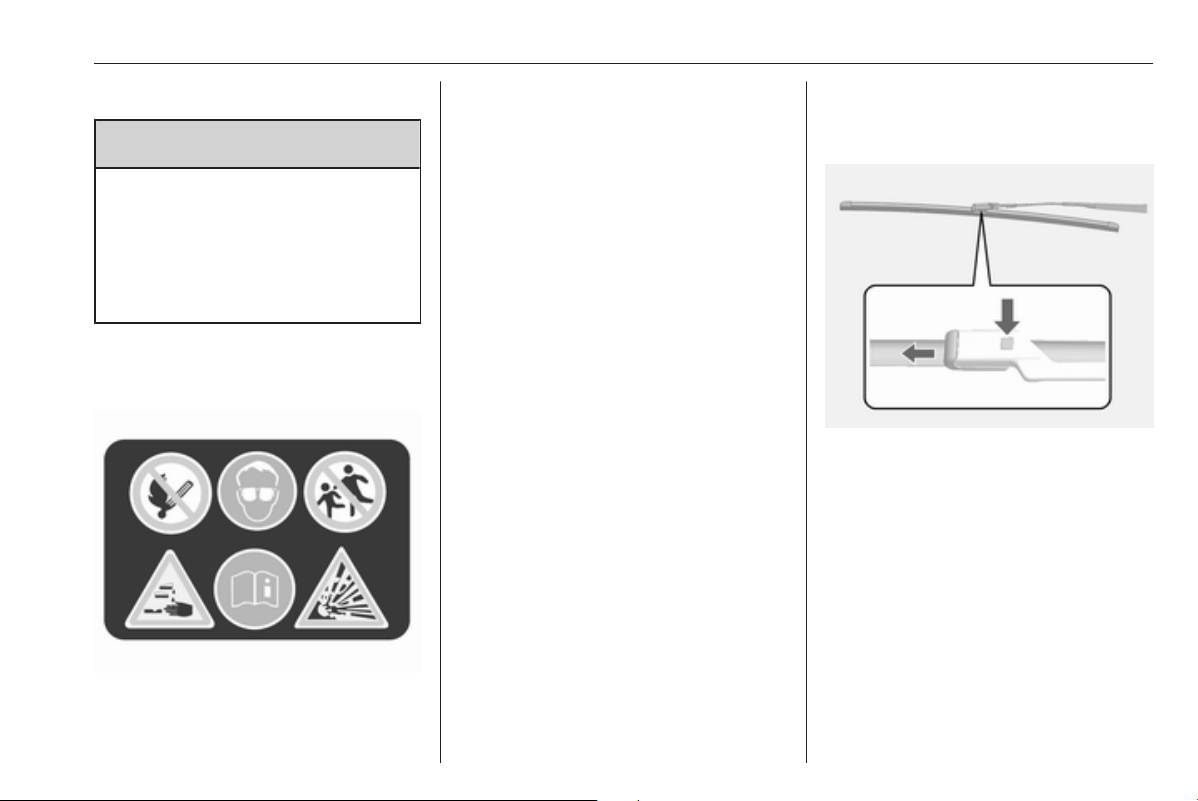
Vehicle care 181
Charging the vehicle battery
9 Warning
On vehicles with stop-start
system, ensure that the charging
potential does not exceed 14.6 V
when using a battery charger.
Otherwise the vehicle battery may
be damaged.
Jump starting 3 208.
Warning label
Meaning of symbols:
● No sparks, naked flames or
smoking.
● Always shield eyes. Explosive
gases can cause blindness or
injury.
● Keep the vehicle battery out of
reach of children.
● The vehicle battery contains
sulphuric acid which could cause
blindness or serious burn
injuries.
● See the Owner's Manual for
further information.
● Explosive gas may be present in
the vicinity of the vehicle battery.
Diesel fuel system bleeding
If the tank has been run dry, the diesel
fuel system must be bled. Switch on
the ignition three times for
15 seconds at a time. Then crank the
engine for a maximum of
40 seconds. Repeat this process after
no less than 5 seconds. If the engine
fails to start, seek the assistance of a
workshop.
Wiper blade replacement
Windscreen
Lift the wiper arm, press button to
disengage the wiper blade and
remove.
Attach the wiper blade slightly angled
to the wiper arm and push until it
engages.
Lower wiper arm carefully.
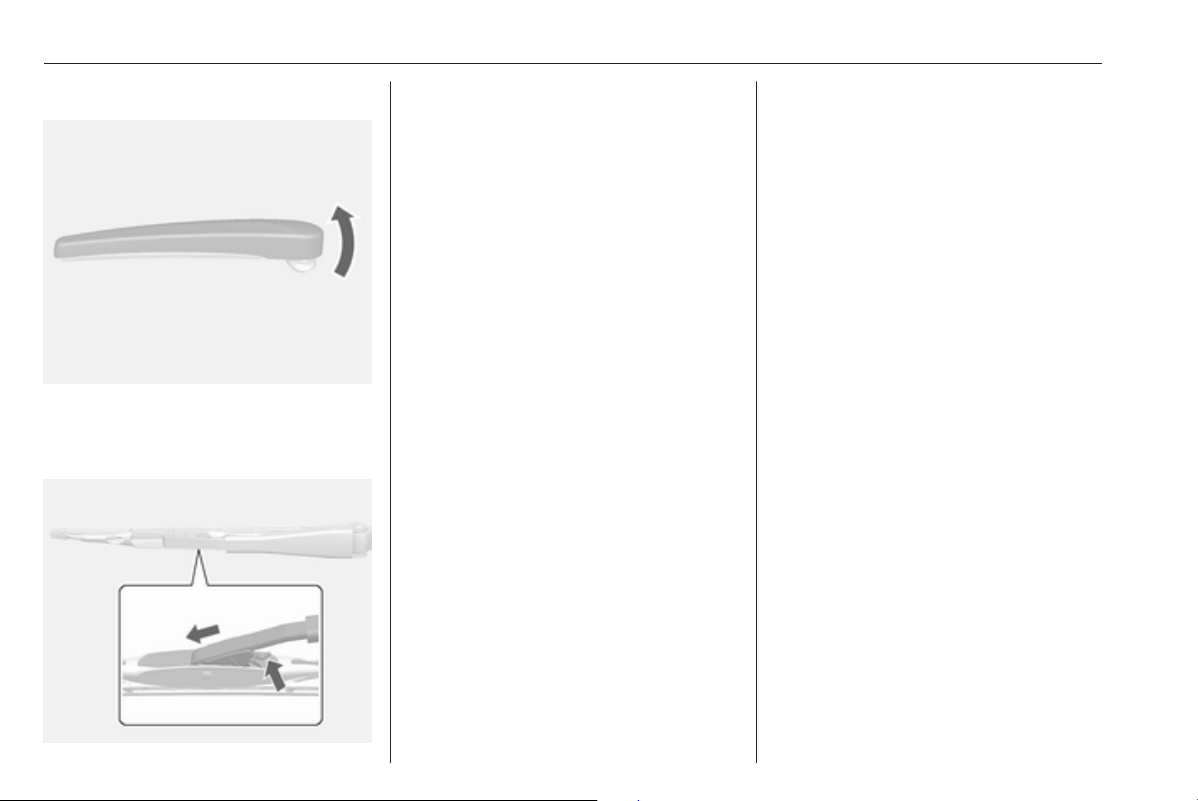
182 Vehicle care
Rear window
1. Remove the wiper cover from the
wiper assembly.
2. Lift wiper blade.
3. Press slider holder pin.
4. Pull wiper blade out.
Bulb replacement
Switch off the ignition and turn off the
relevant switch or close the doors.
Only hold a new bulb at the base. Do
not touch the bulb glass with bare
hands.
Use only the same bulb type for
replacement.
Replace headlight bulbs from within
the engine compartment.
Notice
After driving in heavy rain or after
washing, some exterior light lenses
could appear frosty.
This condition is caused by the
temperature difference between the
inside and outside of the light.
This is similar to the condensation
on your windows inside your vehicle
during the rain and doesn't indicate
a problem with your vehicle.
If the water leaks into the light bulb
circuitry, have the vehicle checked
by your authorised workshop.
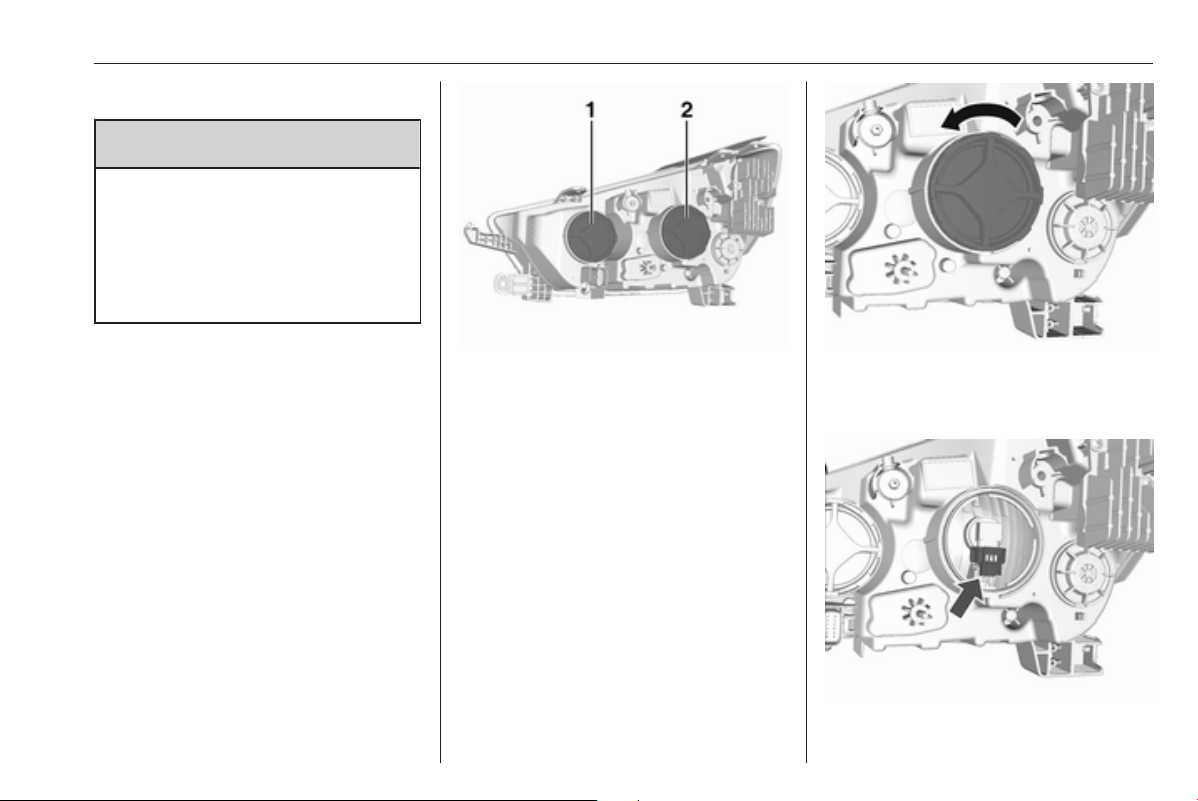
Vehicle care 183
Halogen bulbs
9 Warning
Halogen bulbs have pressurized
gas inside and can burst if you
drop or scratch the bulb. You or
others could be injured. Be sure to
read and follow the instructions on
the bulb package.
LED lighting
This vehicle has several LED lights.
For replacement of any LED lighting
assembly, contact a workshop.
Halogen headlights
Baselevel headlight assembly
The base model vehicle has halogen
high beam and low beam headlights,
LED turn lights, a sidelight and
daytime running lights on the
headlight assembly.
Passenger side shown, driver side
similar.
On the driver side remove the
windscreen washer bottle filler neck,
before changing a bulb.
1. High beam headlights
2. Low beam headlights
High beam and low beam headlights
1. Open the bonnet.
Bonnet 3 176.
2. Remove the protective cover.
3. Turn the bulb anticlockwise and
pull straight back.
4. Disconnect the wiring harness
connector from the bulb.
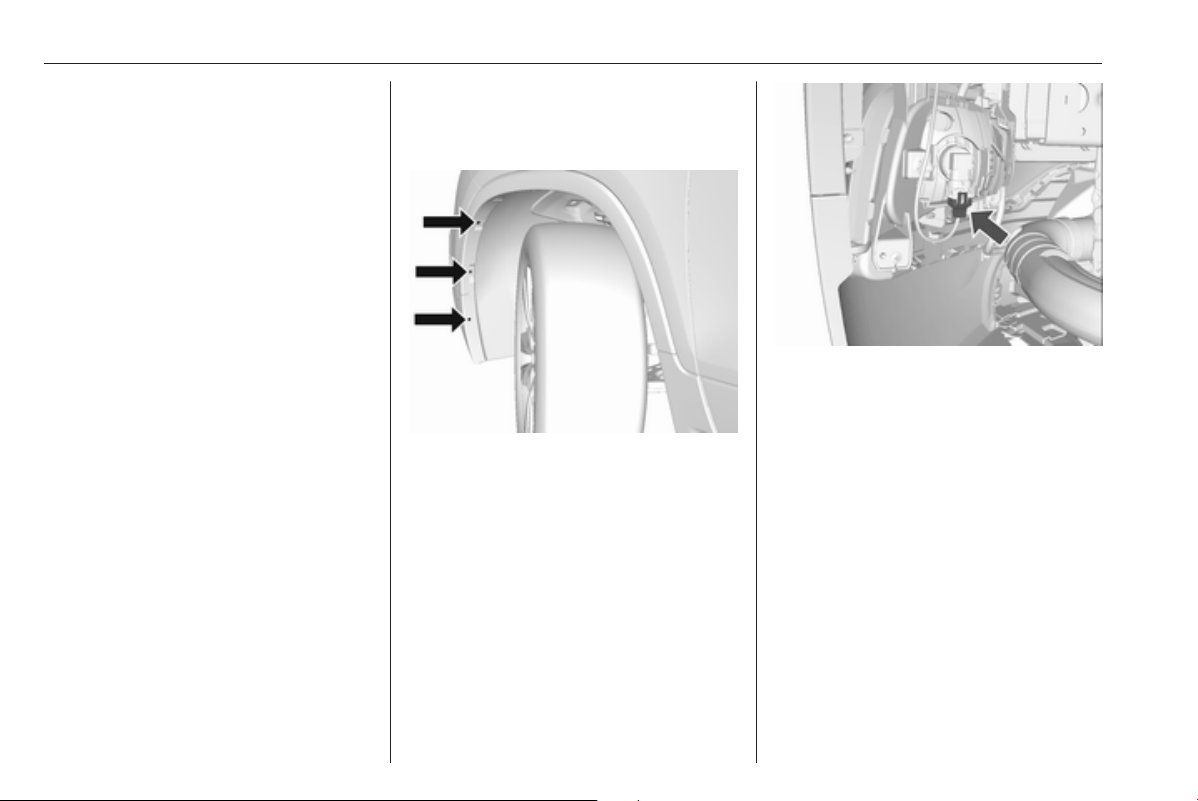
184 Vehicle care
5. Install the new bulb in the
headlight assembly by turning
clockwise.
6. Reconnect the wiring harness
connector.
7. Install the protective cover.
For the driver side, reinstall the
windscreen washer bottle filler neck
by firmly pushing it straight into the
bottle. Ensure that the filler neck clip
engages into the underhood electrical
centre retainer.
Uplevel headlight assembly
The uplevel model vehicle has LED
high beam and low beam headlights,
turn lights, a sidelight and daytime
running lights on the headlight
assembly.
Front fog lights
The bulbs are accessible from the
underside of the vehicle
1. Turn the respective wheel inside
to get better access and remove
three torx screws on outside of
wheel house.
Vehicle tools 3 192.
2. Pull and hold lining to get access
to the bulb holder.
3. Pull the retaining rib outwards and
remove plug connector from the
bulb socket.
4. Turn the bulb holder anticlockwise
and remove it from the reflector.
5. Remove and replace the bulb
socket with bulb and attach the
plug connector.
6. Insert the bulb socket into the
reflector by turning clockwise and
engage.
7. Re-assemble the lining and fasten
the three torx screws.
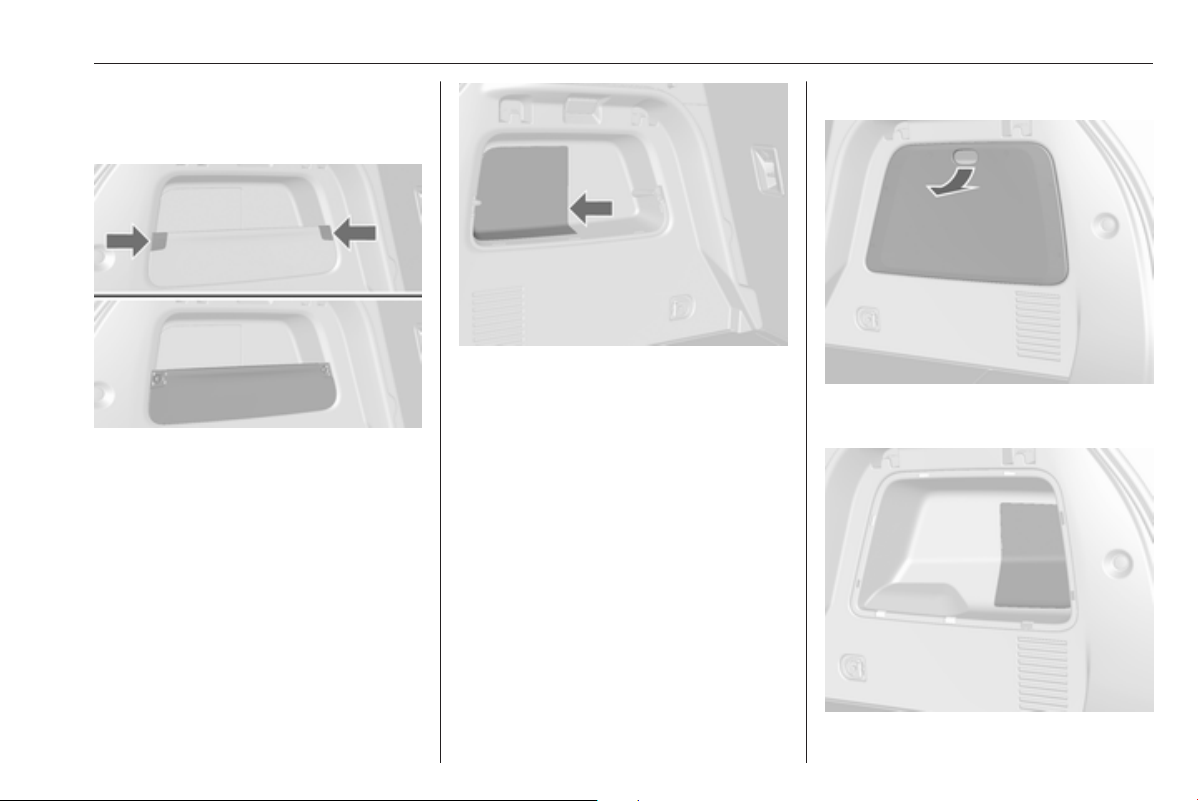
Vehicle care 185
Tail lights
Left-hand side
1. Disengage both covers at the
respective outer side by inserting
a screwdriver. Remove both
covers and unscrew screws.
Remove the panel.
2. First disengage cover by inserting
a screwdriver at the recess. Then
disengage cover at the front and
upper side. Remove cover.
Right-hand side
1. Remove the storage door and the
tyre repair kit.
2. Remove the cover.
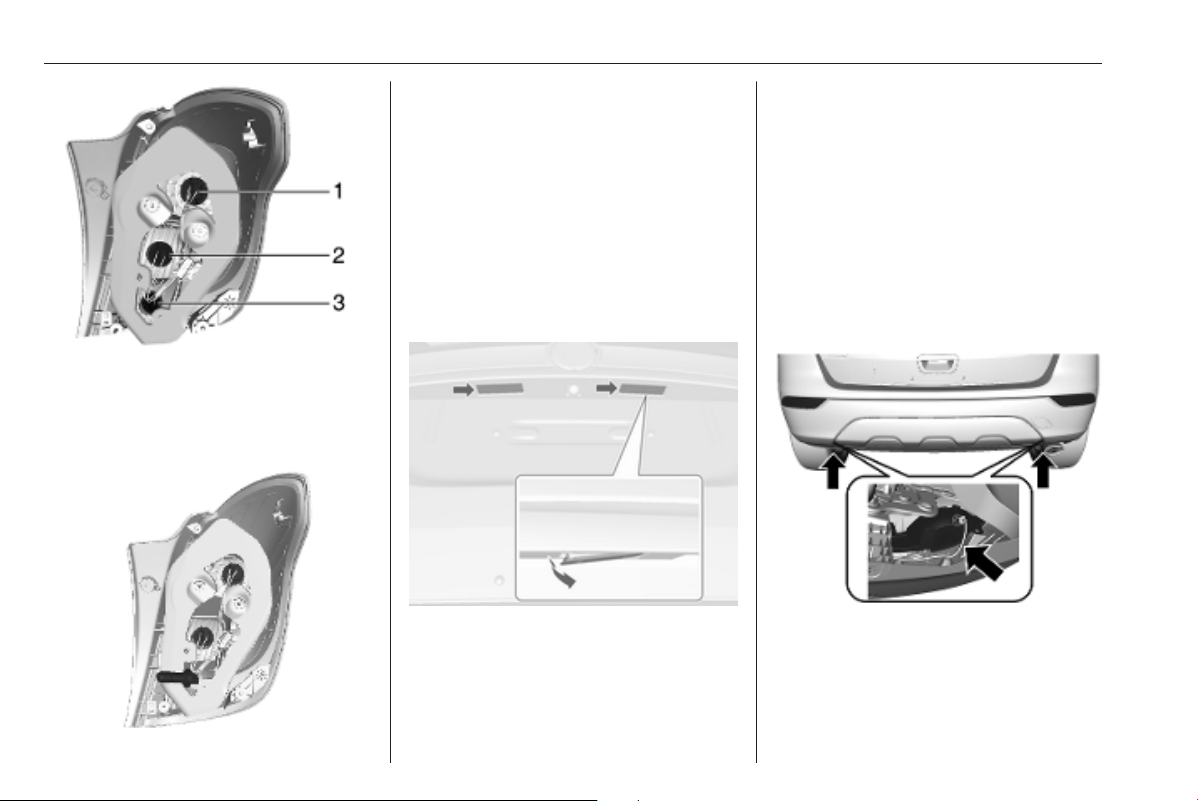
186 Vehicle care
3. Tail / stop light, if not equipped
with LEDs (1)
Turn light (2)
Back-up light (3)
4. Remove bulb holder. Remove
and renew bulb.
5. Insert bulb holder into the tail light
assembly. Install tail light
assembly in body and tighten.
Close covers and engage.
6. Switch on ignition, operate and
check all lights.
Number plate light
1. Prise the light out with a
screwdriver.
2. Remove bulb housing
downwards, taking care not to pull
on the cable.
Rotate bulb holder anticlockwise
to disengage.
3. Remove bulb from holder and
renew bulb.
4. Insert bulb holder in bulb housing
and rotate clockwise.
5. Insert bulb housing and secure
using a screwdriver.
Rear fog light
The bulbs are accessible from the
underside of the vehicle.
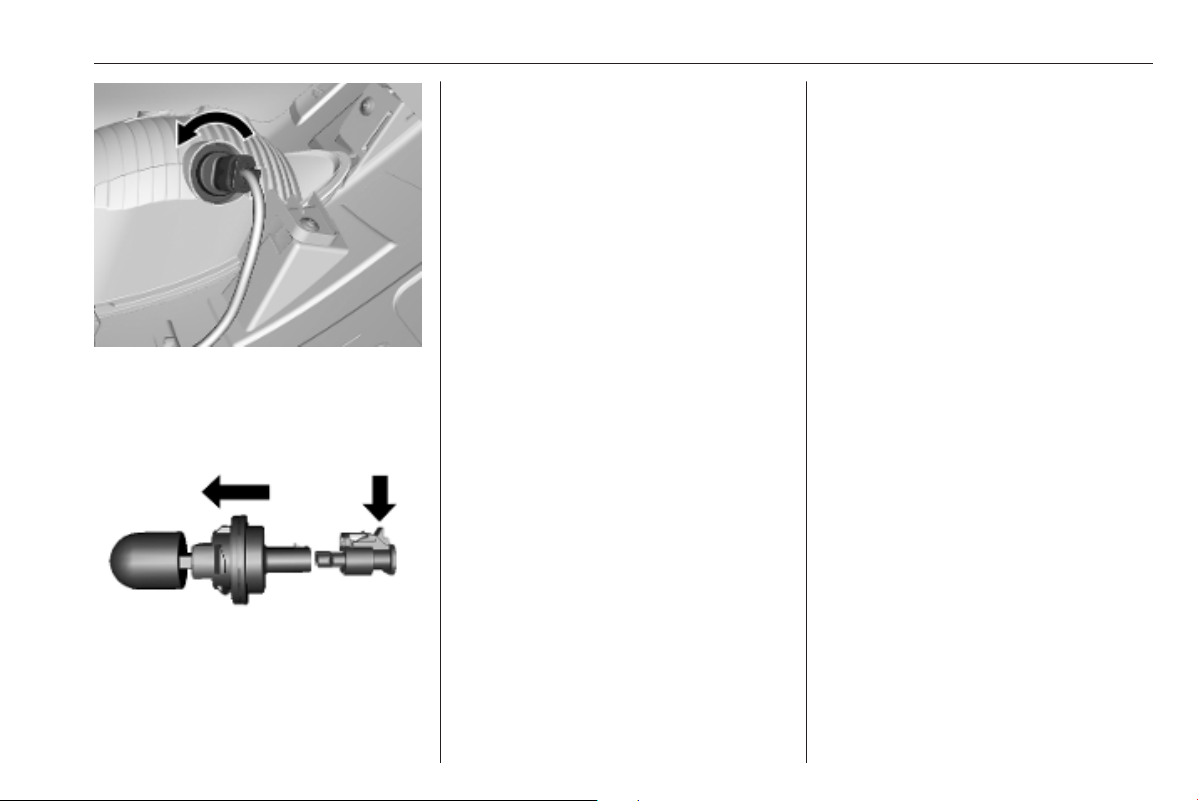
Vehicle care 187
1. Turn the bulb holder anticlockwise
and remove it from reflector.
2. Disengage the bulb socket from
the plug connector by pressing
the retaining lug.
3. Remove and replace the bulb
socket with bulb and attach the
plug connector.
4. Insert the bulb socket into the
reflector and turn clockwise to
engage.
Electrical system
Fuses
Data on the replacement fuse must
match the data on the defective fuse.
In a box above the positive terminal of
the battery are some main fuses. If
necessary have them changed by a
workshop.
Before replacing a fuse, turn off the
respective switch and the ignition.
A blown fuse can be recognised by its
melted wire. Do not replace the fuse
until the cause of the fault has been
remedied.
Some functions are protected by
several fuses.
Fuses may also be inserted without
existence of a function.
Notice
Not all fuse box descriptions in this
manual may apply to your vehicle.
When inspecting the fuse box, refer
to the fuse box label.
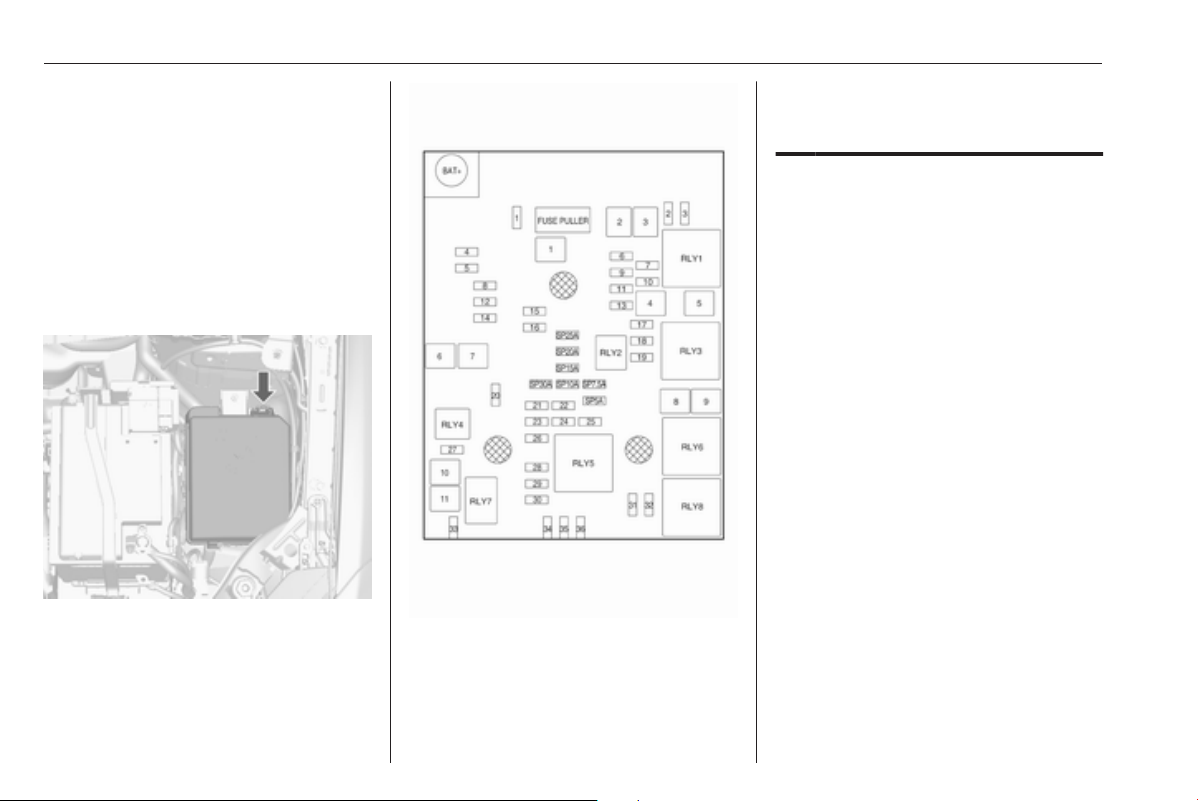
188 Vehicle care
Fuse extractor
A fuse extractor may be located in the
fuse box in the engine compartment.
Place the fuse extractor on the
various types of use from the top or
side, and withdraw fuse.
Engine compartment fuse
box
The fuse box is in the engine
compartment.
Disengage the cover, lift it upwards
and remove.
Mini Fuses
No. Circuit
1 Sunroof
2 Exterior mirror switch / Rain
sensor / Power window DRV
3 –
4 –
5 Electrical brake control module
6 Intelligent battery sensor
7 Steering column lock
8 Transmission control module
9 –
10 Rear view camera / Interior rear
view mirror / Headlight switch /
Headlight
11 Rear window wiper
12 Heated rear window
13 Seat, lumbar support
14 Heated exterior mirrors
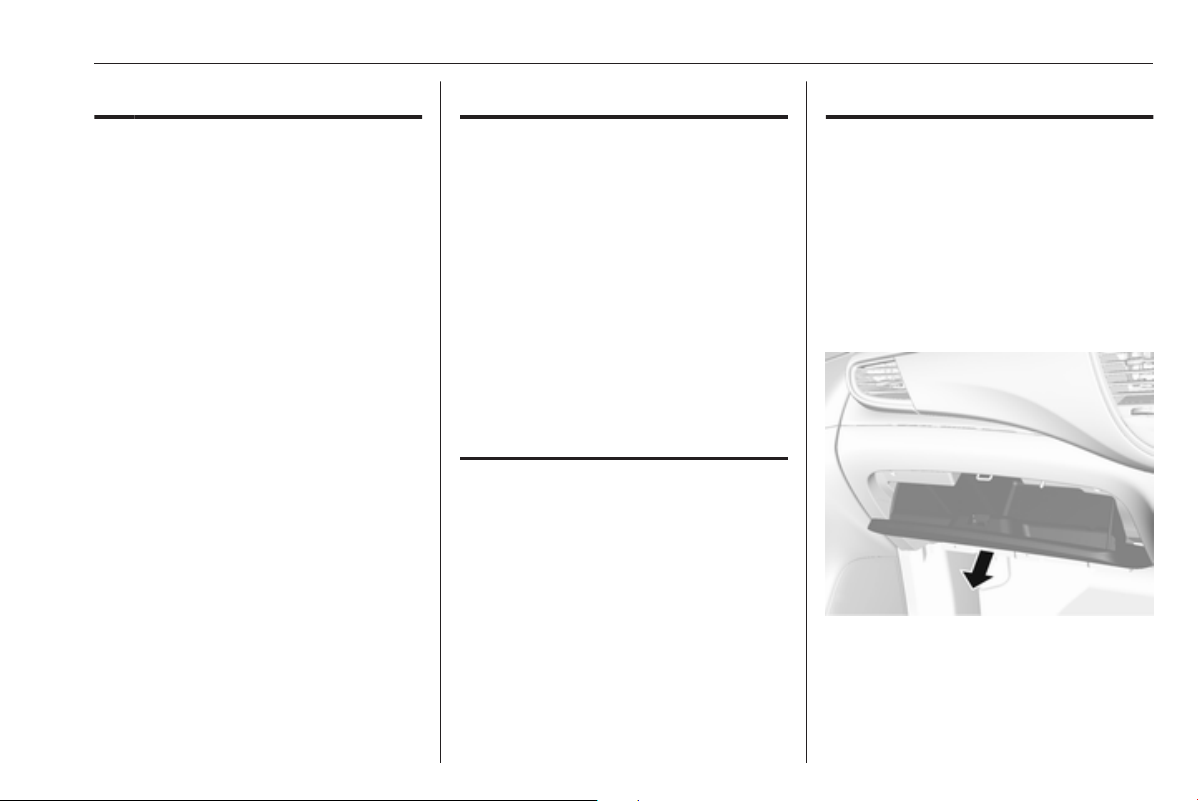
Vehicle care 189
No. Circuit
15 LPG module / Fuel system
control module
16 Seat heating
17 Transmission control module R/
C / Water pump / Auxiliary
heater
18 Engine control module R/C
19 Fuel pump
20 –
21 Cooling fan
22 –
23 Ignition coil / Injectors
24 Washer pump
25 Headlamp actuator
26 Engine control sensors
27 –
28 Ignition
29 Ignition 1/2
No. Circuit
30 Exhaust system
31 Left-hand high beam
32 Right-hand high beam
33 Engine control module
34 Horn
35 Air conditioning system
36 Front fog light
J-cases Fuses
No. Circuit
1 Electrical brake control module
2 Front wiper
3 Linear power module
4 Power terminal of instrument
panel fuse box
5 –
6 Fuel heater
7 Starter
No. Circuit
8 Cooling fan
9 Cooling fan
10 Engine control module / Glow
plug
11 Starter
Instrument panel fuse box
In right-hand drive vehicles, the
interior fuse box is located behind a
cover in the glovebox on the
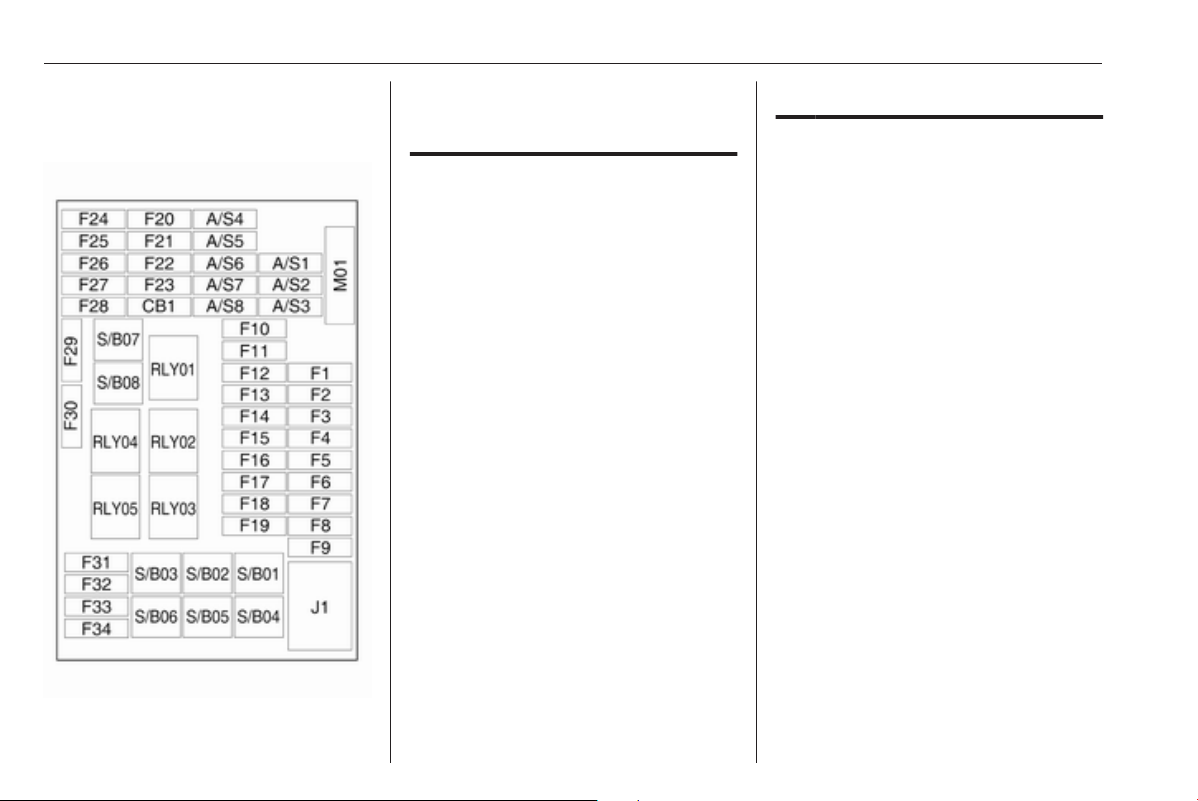
190 Vehicle care
passenger side. To access the fuses,
open the glovebox, then open the
cover, fold it down and pull it.
Mini Fuses
No. Circuit
1 Body control module
2 Body control module
3 Body control module
4 Body control module
5 Body control module
6 Body control module
7 Body control module
8 Body control module
9 Ignition switch
10 Safety diagnosis module
11 Data link connector
12 Climate control
13 Tailgate
14 Central gateway module
15 Lane departure warning / Inte‐
rior mirror
No. Circuit
16 Adaptive forward lighting
17 Column lock
18 Ultrasonic park assist module
19 Body control module / Regu‐
lated voltage control
20 Steering wheel
21 –
22 Cigarette lighter / DC accessory
power outlet (front)
23 Cigarette lighter / DC accessory
power outlet (rear center
console)
24 Spare
25 Telematics service module
26 Heated steering wheel
27 Instrument panel cluster / Info‐
tainment system / Auxiliary
heater switch
28 Trailer socket
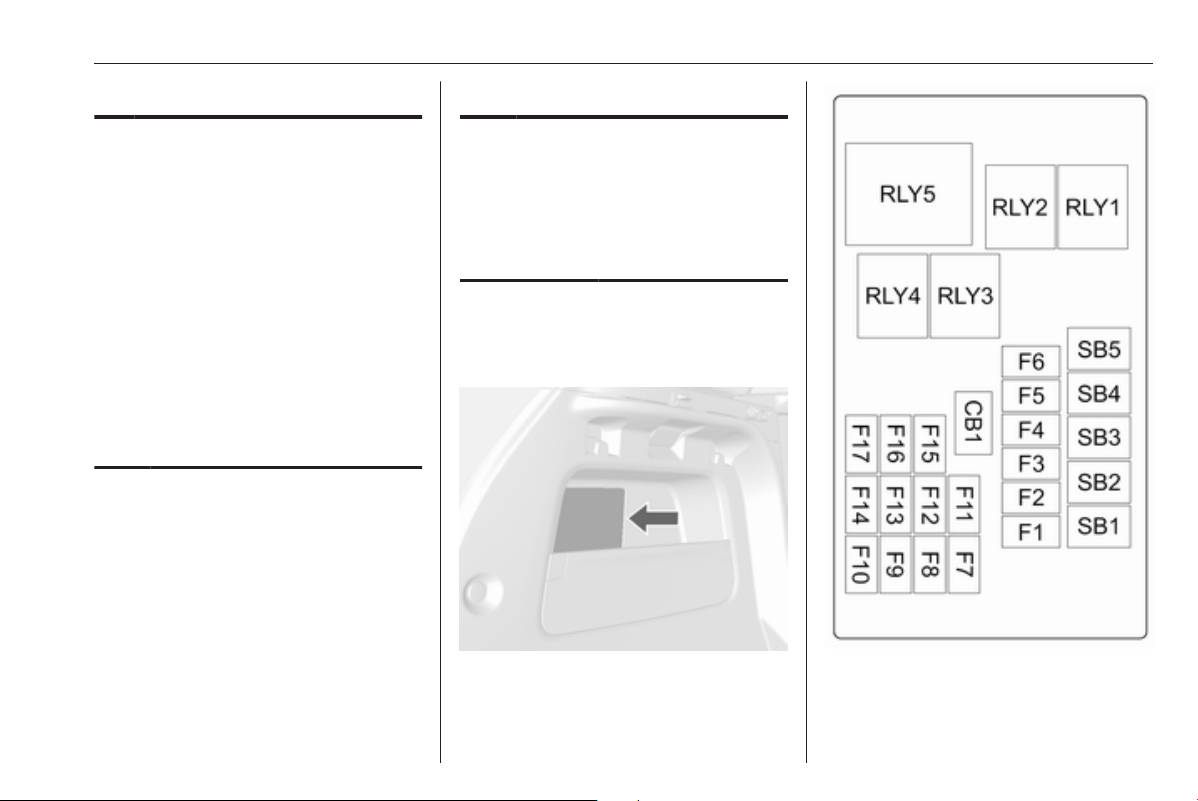
Vehicle care 191
No. Circuit
29 Info Display / Infotainment
system
30 Transmission control module
31 Instrument panel cluster
32 Infotainment system
33 Trailer socket
34 Passive entry / Passive start
module
S/B Fuses
No. Circuit
01 Power seat switch
02 Spare
03 Power windows front
04 Power windows rear
05 Logistic mode
06 Power seat switch
No. Circuit
07 Spare
08 Spare
Midi Fuse
No. Circuit
M01 PTC
Load compartment fuse box
Located in the left side of rear
compartment.
To access the fuses, remove the
cover.
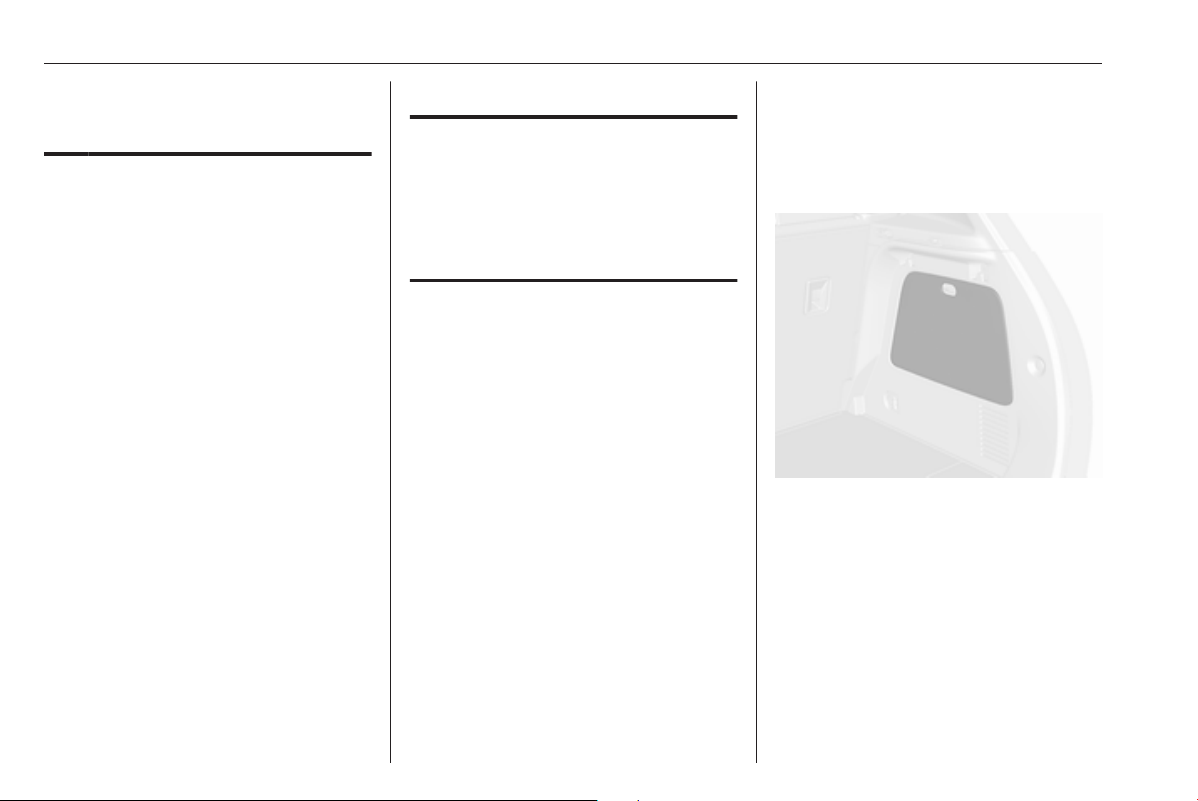
192 Vehicle care
Mini Fuses
No. Circuit
1 Amplifier
2 All-wheel drive
3 –
4 Selective catalytic reduction
5 Selective catalytic reduction
6 Selective catalytic reduction
7 Selective catalytic reduction
8 Spare
9 Spare
10 Spare
11 –
12 Spare
13 –
14 –
15 Spare
16 –
No. Circuit
17 –
18 –
S/B Fuses
No. Circuit
1 DC/DC 400W transformer
2 DC/DC 400W transformer
3 –
4 –
5 –
6 –
7 –
8 –
9 –
Vehicle tools
Tools
Vehicles with tyre repair kit
The tools and tyre repair kit are in the
right side of the load compartment.
Tyre repair kit 3 200.
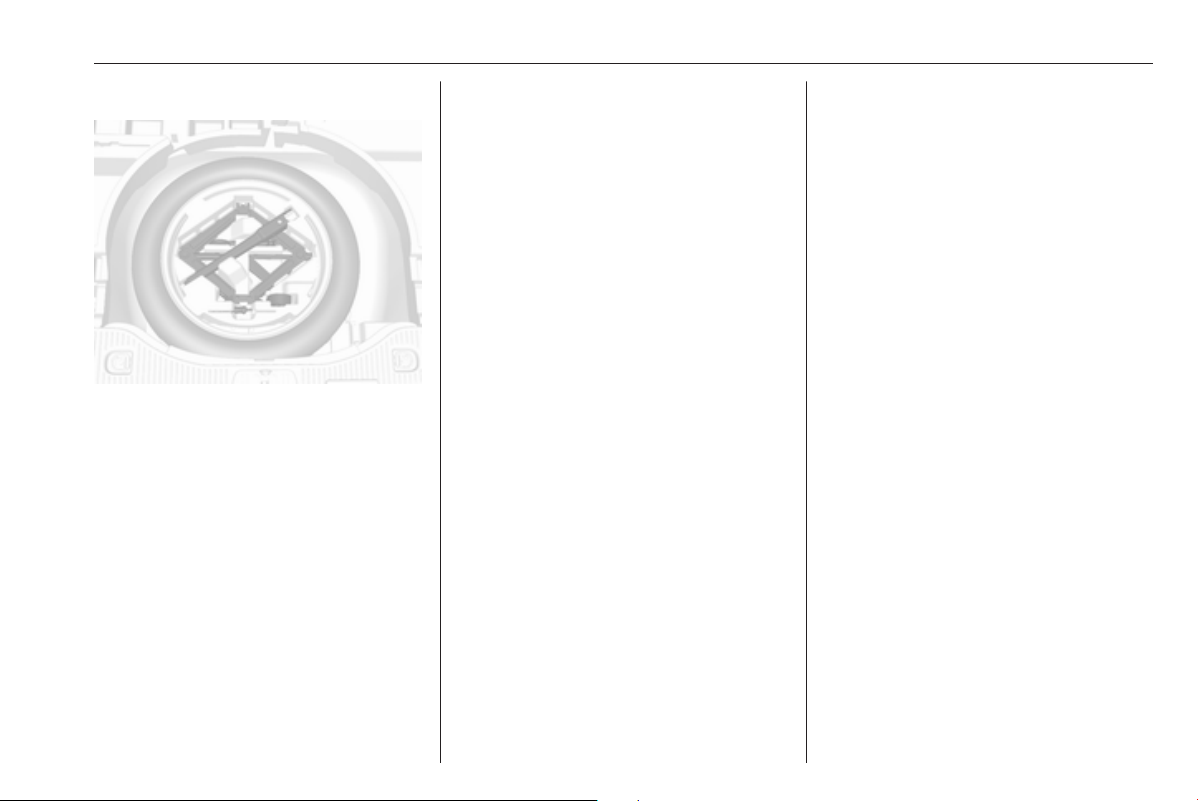
Vehicle care 193
Vehicles with spare wheel
The jack and the tools are in a storage
compartment in the load
compartment above the spare wheel.
Wheel changing 3 203.
Spare wheel 3 204.
Wheels and tyres
Tyre condition, wheel condition
Drive over edges slowly and at right
angles if possible. Driving over sharp
edges can cause tyre and wheel
damage. Do not trap tyres on the kerb
when parking.
Regularly check the wheels for
damage. Seek the assistance of a
workshop in the event of damage or
unusual wear.
Winter tyres
Winter tyres improve driving safety at
temperatures below 7 °C and should
therefore be fitted on all wheels.
All tyre sizes are permitted as winter
tyres 3 229.
In accordance with country-specific
regulations, affix the speed sticker in
the driver's field of view.
Using winter tyres may result in
decreased dry road traction,
increased road noise and shorter
tread life. After changing to winter
tyres, be alert for changes in vehicle
handling and braking.
If using winter tyres, make sure to use
● tyres of the same brand and tread
type on all four wheel positions.
● only radial ply tyres of the same
size, load range and speed rating
as the tyres originally fitted at the
factory.
Winter tyres with the same speed
rating as the tyres originally fitted at
the factory may not be available for H,
V, W, Y and ZR speed rated tyres. If
using winter tyres with a lower speed
rating, never exceed the tyre's
maximum speed capability.
Tyre designations
E.g. 215/60 R 16 95 H
215 : tyre width, mm
60 : cross-section ratio (tyre height
to tyre width), percentage
R : belt type: Radial
RF : type: RunFlat
16 : wheel diameter, inches
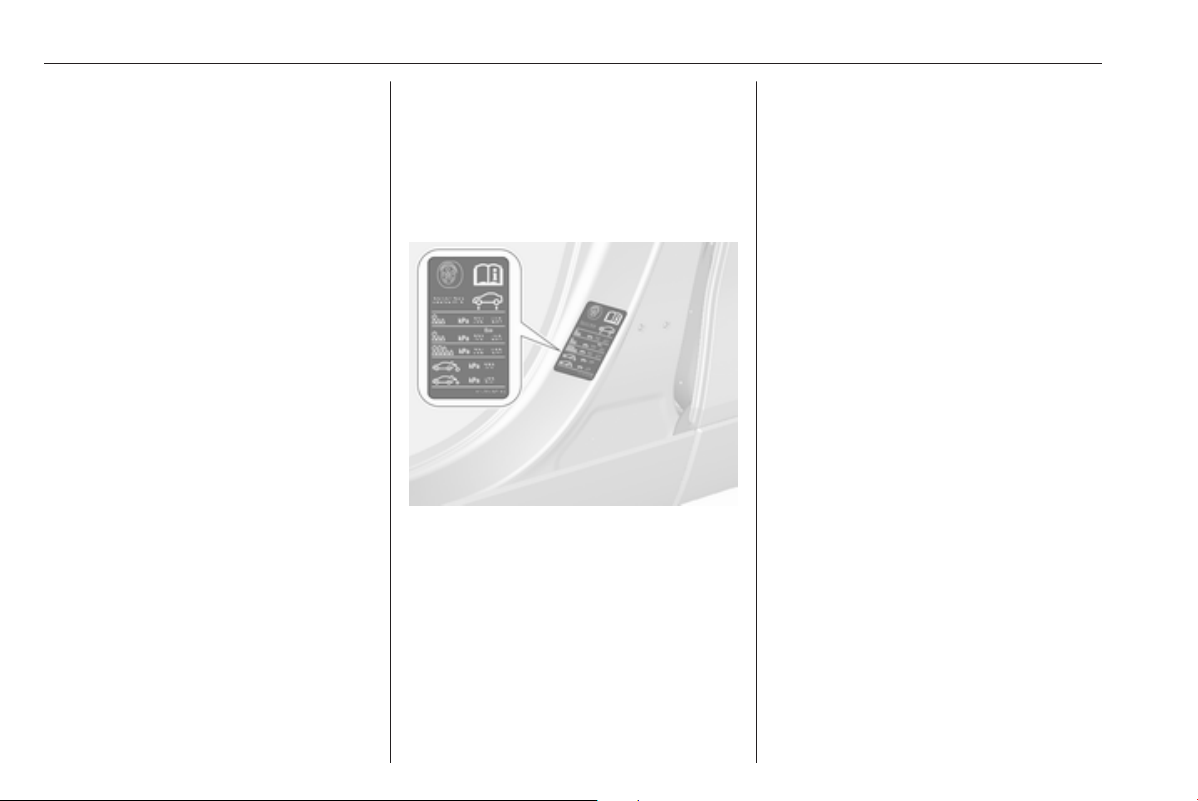
194 Vehicle care
95 : load index e.g. 95 is equivalent
to 690 kg
H : speed code letter
Speed code letter:
Q : up to 100 mph
S : up to 112 mph
T : up to 118 mph
H : up to 130 mph
V : up to 150 mph
W : up to 168 mph
Choose a tyre appropriate for the
maximum speed of your vehicle.
The maximum speed is achievable at
kerb weight with driver (75 kg) plus
125 kg payload. Optional equipment
could reduce the maximum speed of
the vehicle.
Performance 3 225.
Directional tyres
Fit directional tyres such that they roll
in the direction of travel. The rolling
direction is indicated by a symbol
(e.g. an arrow) on the sidewall.
Tyre pressure
Check the pressure of cold tyres at
least every 14 days and before any
long journey. Do not forget the spare
wheel. This also applies to vehicles
with tyre pressure monitoring system.
Tyre pressure 3 229.
The tyre pressure information label
on the left or right door frame
indicates the original equipment tyres
and the correspondent tyre
pressures.
For countries outside the European
Union, the tyre pressure is
independent of the tyre load.
The tyre pressure data refers to cold
tyres. It applies to summer and winter
tyres.
Always inflate the spare tyre to the
pressure specified for full load.
The ECO tyre pressure serves to
achieve the smallest amount of fuel
consumption possible.
Incorrect tyre pressures will impair
safety, vehicle handling, comfort and
fuel economy and will increase tyre
wear.
Tyre pressures differ depending on
various options. For the correct tyre
pressure value, follow the procedure
below:
1. Identify the engine identifier code.
Engine data 3 223.
2. Identify the respective tyre.
The tyre pressure tables show all
possible tyre combinations 3 229.
For the tyres approved for your
vehicle, refer to the EEC Certificate of
Conformity provided with your vehicle
or other national registration
documents.
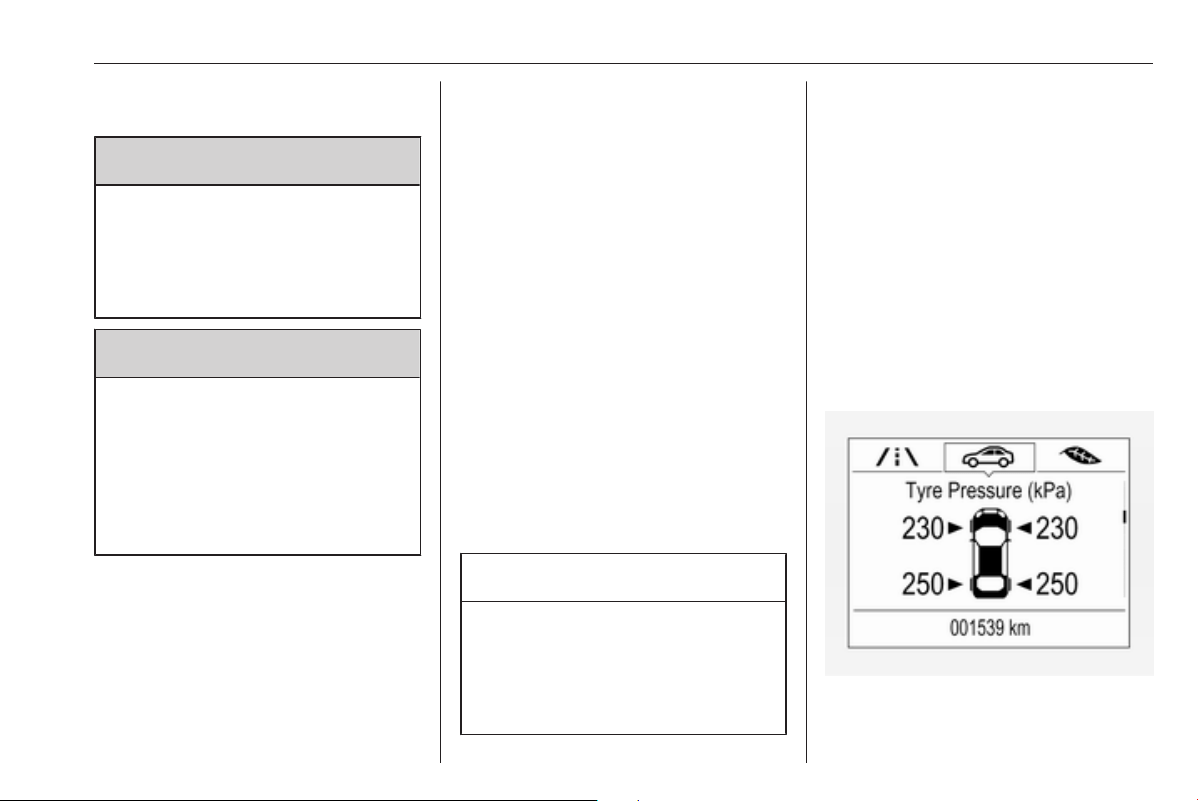
Vehicle care 195
The driver is responsible for correct
adjustment of tyre pressure.
9 Warning
If the pressure is too low, this can
result in considerable tyre warm-
up and internal damage, leading to
tread separation and even to tyre
blow-out at high speeds.
9 Warning
For specific tyres the
recommended tyre pressure as
shown in the tyre pressure table
may exceed the maximum tyre
pressure as indicated on the tyre.
Never exceed the maximum tyre
pressure as indicated on the tyre.
Temperature dependency
The tyre pressure depends on the
temperature of the tyre. During
driving, tyre temperature and
pressure increase. Tyre pressure
values provided on the tyre
information label and tyre pressure
chart are valid for cold tyres, which
means at 20 °C.
The pressure increases by nearly
1.5 psi for a 10 °C temperature
increase. This must be considered
when warm tyres are checked.
The tyre pressure value displayed in
the Driver Information Centre shows
the real tyre pressure. A cooled down
tyre will show a decreased value,
which does not indicate an air leak.
Tyre pressure monitoring
system
The tyre pressure monitoring system
checks the pressure of all four tyres
once a minute when vehicle speed
exceeds a certain limit.
Caution
Tyre pressure monitoring system
warns only about low tyre pressure
condition and does not replace
regular tyre maintenance by the
driver.
All wheels must be equipped with
pressure sensors and the tyres must
have the prescribed pressure.
Notice
In countries where the tyre pressure
monitoring system is legally
required, the use of wheels without
pressure sensors will invalidate the
vehicle operating permit.
The current tyre pressures can be
shown in the Driver Information
Centre.
Midlevel display:
Select the Tyre pressure page under
the Vehicle Information Menu ? in
the Driver Information Centre 3 96.
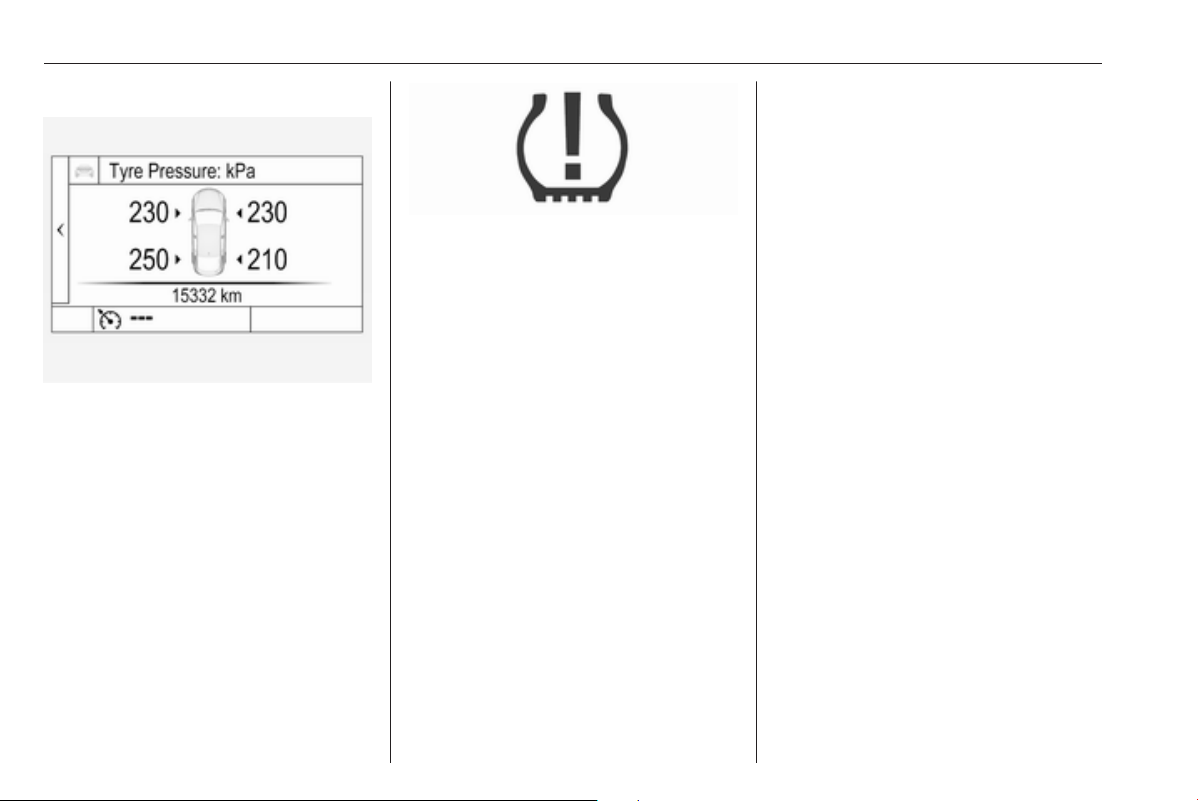
196 Vehicle care
Uplevel display:
Select the Tyre pressure page under
the Info Menu in the Driver
Information Centre 3 96.
System status and pressure warnings
are displayed by a message
indicating the corresponding tyre in
the Driver Information Centre.
The system considers the tyre
temperature for the warnings.
Temperature dependency 3 194.
A detected low tyre pressure
condition is indicated by the control
indicator w 3 94.
If w illuminates, stop as soon as
possible and inflate the tyres as
recommended 3 229.
If w flashes for 60-90 seconds and
then illuminates continuously, there is
a fault in the system. Consult a
workshop.
After inflating, some driving may be
required to update the tyre pressure
values in the Driver Information
Centre. During this time w may
illuminate.
If w illuminates at lower temperatures
and extinguishes after driving, this
could be an indicator for approaching
a low tyre pressure condition. Check
tyre pressure.
Vehicle messages 3 103.
If the tyre pressure must be reduced
or increased, switch off ignition.
Only mount wheels with pressure
sensors, otherwise the tyre pressure
will not be displayed and w
illuminates continuously.
A spare wheel or temporary spare
wheel is not equipped with pressure
sensors. The tyre pressure
monitoring system is not operational
for these tyres. Control indicator w
illuminates. For the further three
tyres, the system remains
operational.
The use of commercially-available
liquid tyre repair kits can impair the
function of the system. Factory-
approved repair kits can be used.
Operating electronic devices or being
close to facilities using similar wave
frequencies could disrupt the tyre
pressure monitoring system.
Each time the tyres are replaced, tyre
pressure monitoring system sensors
must be dismounted and serviced.
For the screwed sensor, replace
valve core and sealing ring. For the
clipped sensor, replace complete
valve stem.
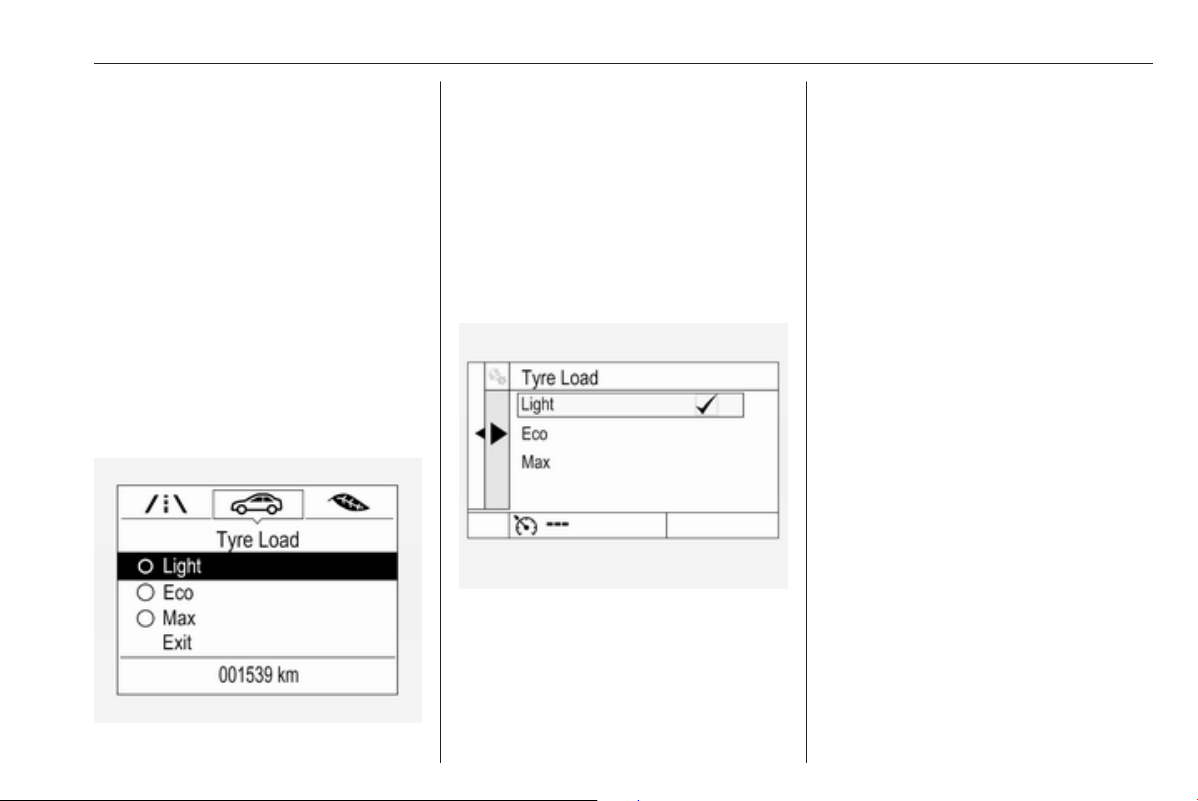
Vehicle care 197
Vehicle loading status
Adjust tyre pressure to load condition
according to tyre information label or
tyre pressure chart 3 229, and select
the appropriate setting in the menu
Tyre Load in the Driver Information
Centre,Vehicle Information Menu
3 96. This setting is the reference for
the tyre pressure warnings.
The Tyre load menu only appears
when the vehicle is at a standstill and
the parking brake is applied. On
vehicles with automatic transmission
the selector lever must be in P.
Midlevel display:
Select the Tyre load page under the
Vehicle Information Menu ? in the
Driver Information Centre 3 96.
● Light for comfort pressure up to
three people.
● Eco for Eco pressure up to three
people.
● Max for full loading.
Uplevel display:
Select the Tyre load page under the
Options Menu in the Driver
Information Centre 3 96.
● Light for comfort pressure up to
three people.
● Eco for Eco pressure up to three
people.
● Max for full loading.
Tyre pressure sensor matching
process
Each tyre pressure sensor has a
unique identification code. The
identification code must be matched
to a new wheel position after rotating
the wheels or exchanging the
complete wheel set and if one or more
tyre pressure sensors were replaced.
The tyre pressure sensor matching
process should also be performed
after replacing a spare wheel with a
road wheel containing a tyre pressure
sensor.
The malfunction light w and the
warning message should extinguish
at the next ignition cycle. The sensors
are matched to the wheel positions,
using a relearn tool, in the following
order: left side front wheel, right side
front wheel, right side rear wheel and
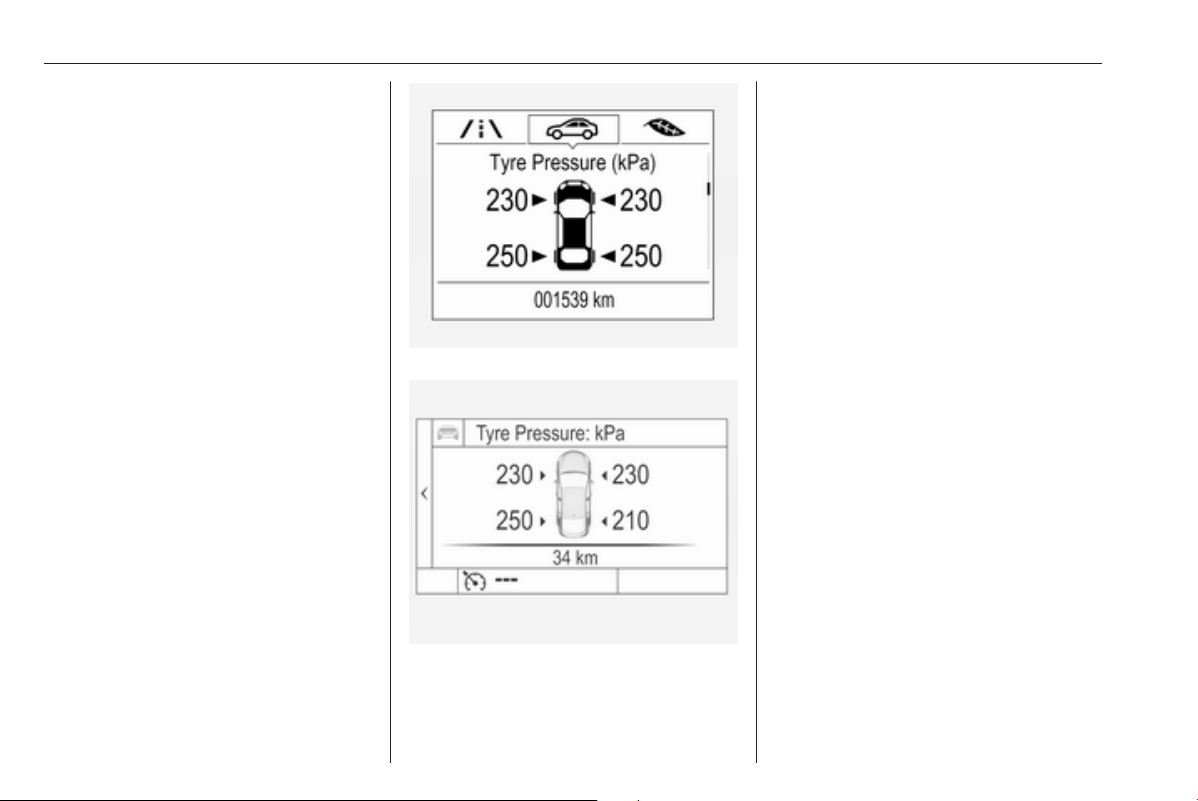
198 Vehicle care
left side rear wheel. The turn signal
light at the current active position is
illuminated until sensor is matched.
Consult a workshop for service. There
are two minutes to match the first
wheel position, and five minutes
overall to match all four wheel
positions. If it takes longer, the
matching process stops and must be
restarted.
The tyre pressure sensor matching
process is:
1. Apply the parking brake.
2. Turn the ignition on.
3. On vehicles with automatic
transmission: set the selector
lever to P.
On vehicles with manual
transmission: select neutral.
4. Press MENU on the turn signal
lever to select the Vehicle
Information Menu in the Driver
Information Centre.
5. Turn the adjuster wheel to scroll to
the tyre pressure menu.
Midlevel display:
Uplevel display:
6. Press SET/CLR to begin the
sensor matching process. A
message requesting acceptance
of the process should be
displayed.
7. Press SET/CLR again to confirm
the selection. The horn sounds
twice to signal that the receiver is
in relearn mode.
8. Start with the left side front wheel.
9. Place the relearn tool against the
tyre sidewall, near the valve stem.
Then press the button to activate
the tyre pressure sensor. A horn
chirp confirms that the sensor
identification code has been
matched to this tyre and wheel
position.
10. Proceed to the right side front
wheel, and repeat the procedure
in Step 9.
11. Proceed to the right side rear
wheel, and repeat the procedure
in Step 9.
12. Proceed to the left side rear
wheel, and repeat the procedure
in Step 9. The horn sounds twice
to indicate the sensor
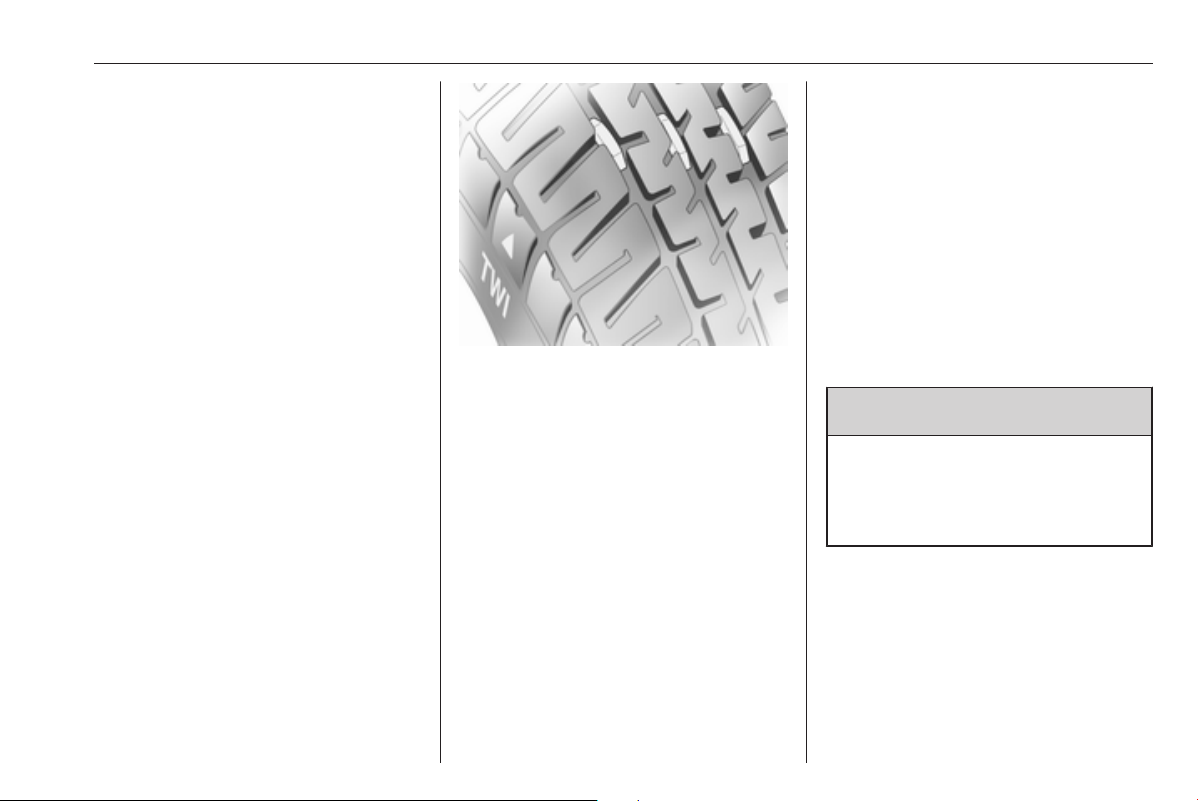
Vehicle care 199
identification code has been
matched to the left side rear
wheel, and the tyre pressure
sensor matching process is no
longer active.
13. Turn off the ignition.
14. Set all four tyres to the
recommended air pressure level
as indicated on the tyre pressure
information label.
15. Ensure the tyre loading status is
set according to the selected tyre
pressure 3 96.
Tread depth
Check tread depth at regular
intervals.
Tyres should be replaced for safety
reasons at a tread depth of 2-3 mm
(4 mm for winter tyres).
For safety reasons it is recommended
that the tread depth of the tyres on
one axle should not vary by more than
2 mm.
The legally permissible minimum
tread depth (1.6 mm) has been
reached when the tread has worn
down as far as one of the tread wear
indicators (TWI). Their position is
indicated by markings on the
sidewall.
If there is more wear at the front than
the rear, swap round front wheels and
rear wheels. Ensure that the direction
of rotation of the wheels is the same
as before.
Tyres age, even if they are not used.
We recommend tyre replacement
every six years.
Changing tyre and wheel
size
If tyres of a different size than those
fitted at the factory are used, it may be
necessary to reprogramme the
nominal tyre pressure and make
other vehicle modifications.
After converting to a different tyre
size, have the label with tyre
pressures replaced and the tyre
pressure monitoring system
reinitialised. 3 195
9 Warning
The use of unsuitable tyres or
wheels may lead to accidents and
will invalidate the vehicle
operating permit.
Wheel covers
Wheel covers and tyres that are
factory-approved for the respective
vehicle and comply with all of the
relevant wheel and tyre combination
requirements must be used.
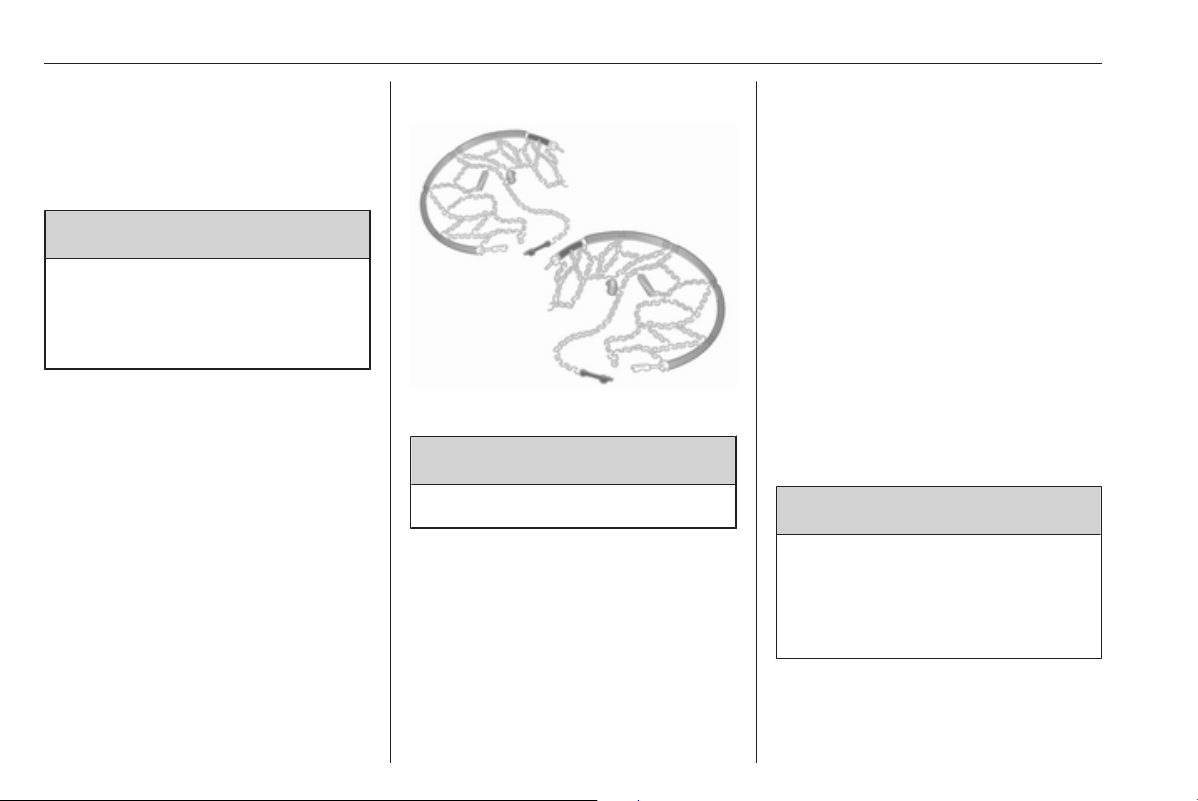
200 Vehicle care
If the wheel covers and tyres used are
not factory-approved, the tyres must
not have a rim protection ridge.
Wheel covers must not impair brake
cooling.
9 Warning
Use of unsuitable tyres or wheel
covers could lead to sudden
pressure loss and thereby
accidents.
Vehicles with alloy wheels: When
mounting steel wheels with alloy
wheel nuts, e.g. when changing to
winter tyres, the wheel covers cannot
be attached to the steel wheels.
Tyre chains
Use tyre chains only on front wheels.
9 Warning
Damage may lead to tyre blowout.
Tyre chains are permitted on tyres of
size 215/65 R16, 215/60 R17 and
215/55 R18.
On tyres of size 215/65 R16 and
215/60 R17 always use fine mesh
chains suitable for sport utility
vehicles that add no more than
9 mm to the tyre tread and the inboard
sides (including chain lock).
On tyres of size 215/55 R18 only use
special snow chains which are
permitted for Vauxhall Mokka and
tyres of these sizes. For further
information contact a workshop.
The use of tyre chains is not permitted
on the temporary spare wheel.
Tyre repair kit
Minor damage to the tyre tread can be
repaired with the tyre repair kit.
Do not remove foreign bodies from
the tyres.
Tyre damage exceeding 4 mm or that
is at tyre's sidewall cannot be repaired
with the tyre repair kit.
9 Warning
Do not drive faster than 50 mph.
Do not use for a lengthy period.
Steering and handling may be
affected.
If you have a flat tyre:
Apply the parking brake and engage
first gear, reverse gear or P.
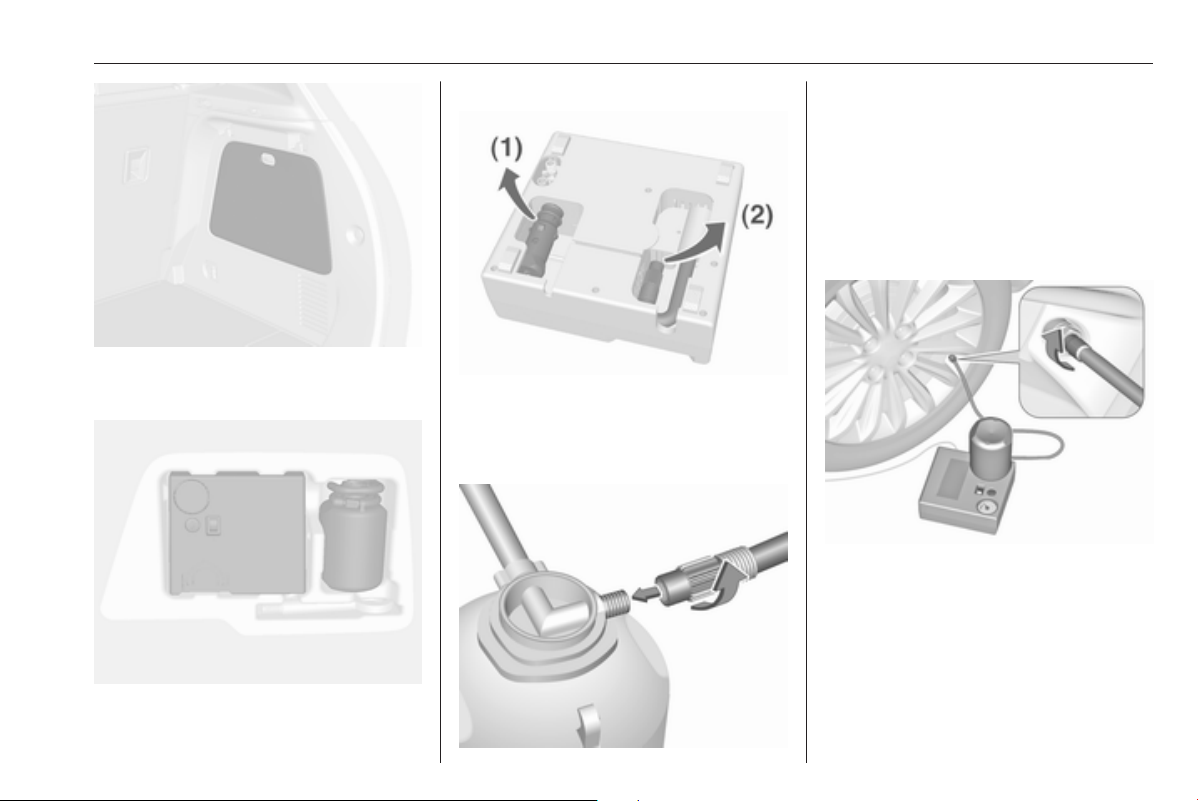
Vehicle care 201
The tyre repair kit is located in the
right side of rear compartment.
1. Take the tyre repair kit from the
compartment.
2. Remove the compressor.
3. Remove the electrical connection
cable (1) and air hose (2) from the
stowage compartments on the
underside of the compressor.
4. Screw the compressor air hose to
the connection on the sealant
bottle.
5. Fit the sealant bottle into the
retainer on the compressor.
Set the compressor near the tyre
in such a way that the sealant
bottle is upright.
6. Unscrew valve cap from defective
tyre.
7. Screw the filler hose to the tyre
valve.
8. The switch on the compressor
must be set to J.
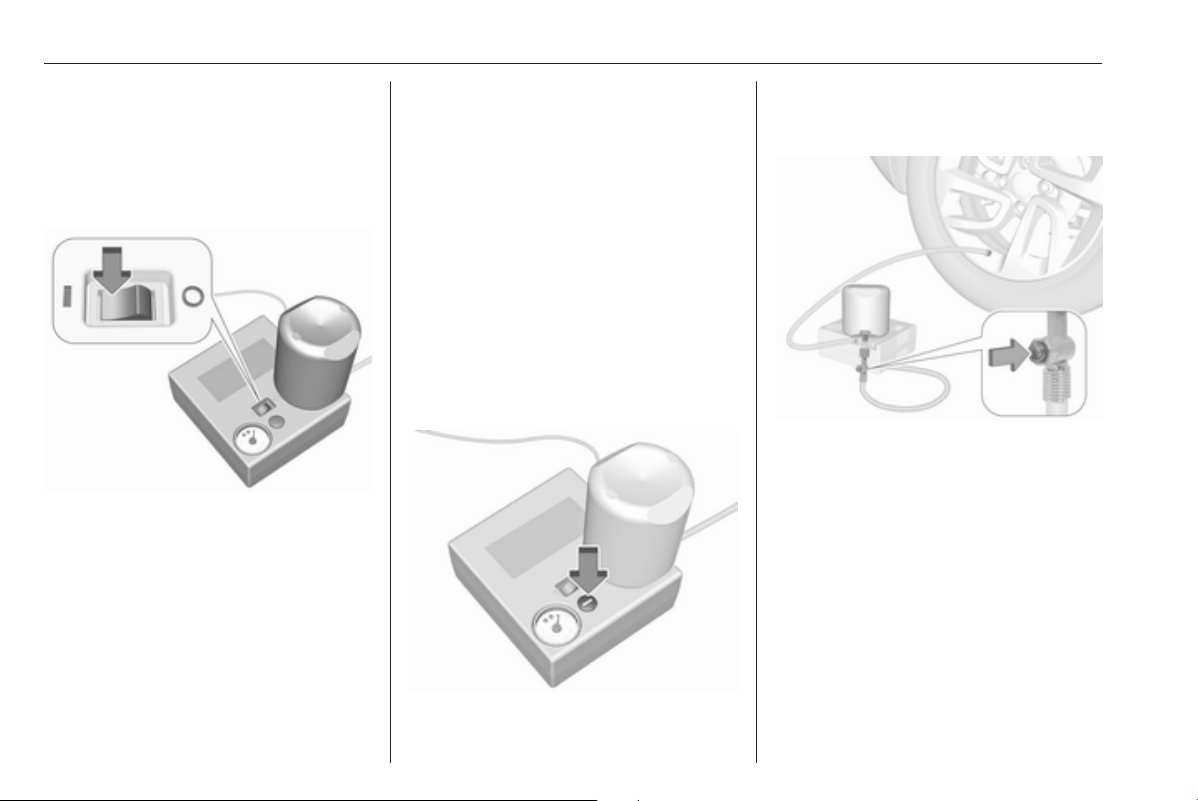
202 Vehicle care
9. Connect the compressor plug to
the power outlet or cigarette
lighter socket.
To avoid discharging the battery,
we recommend running the
engine.
10. Set the rocker switch on the
compressor to I. The tyre is filled
with sealant.
11. The compressor pressure gauge
briefly indicates up to 6 bar whilst
the sealant bottle is emptying
(approx. 30 s). Then the pressure
starts to drop.
12. All of the sealant is pumped into
the tyre. Then the tyre is inflated.
13. The prescribed tyre pressure
should be obtained within 10 min.
Tyre pressure 3 229. When the
correct pressure is obtained,
switch off the compressor.
If the prescribed tyre pressure is
not obtained within 10 min,
remove the tyre repair kit. Move
the vehicle one tyre rotation.
Reattach the tyre repair kit and
continue the filling procedure for
10 min. If the prescribed tyre
pressure is still not obtained, the
tyre is too badly damaged. Seek
the assistance of a workshop.
Drain excess tyre pressure with
the button over the pressure
indicator.
Depending on version the button
can be located on the air hose.
Do not run the compressor longer
than 10 min.
14. Detach the tyre repair kit. Push
catch on bracket to remove
sealant bottle from bracket. Screw
the tyre inflation hose to the free
connection of the sealant bottle.
This prevents sealant from
escaping. Stow tyre repair kit in
load compartment.
15. Remove any excess sealant
using a cloth.
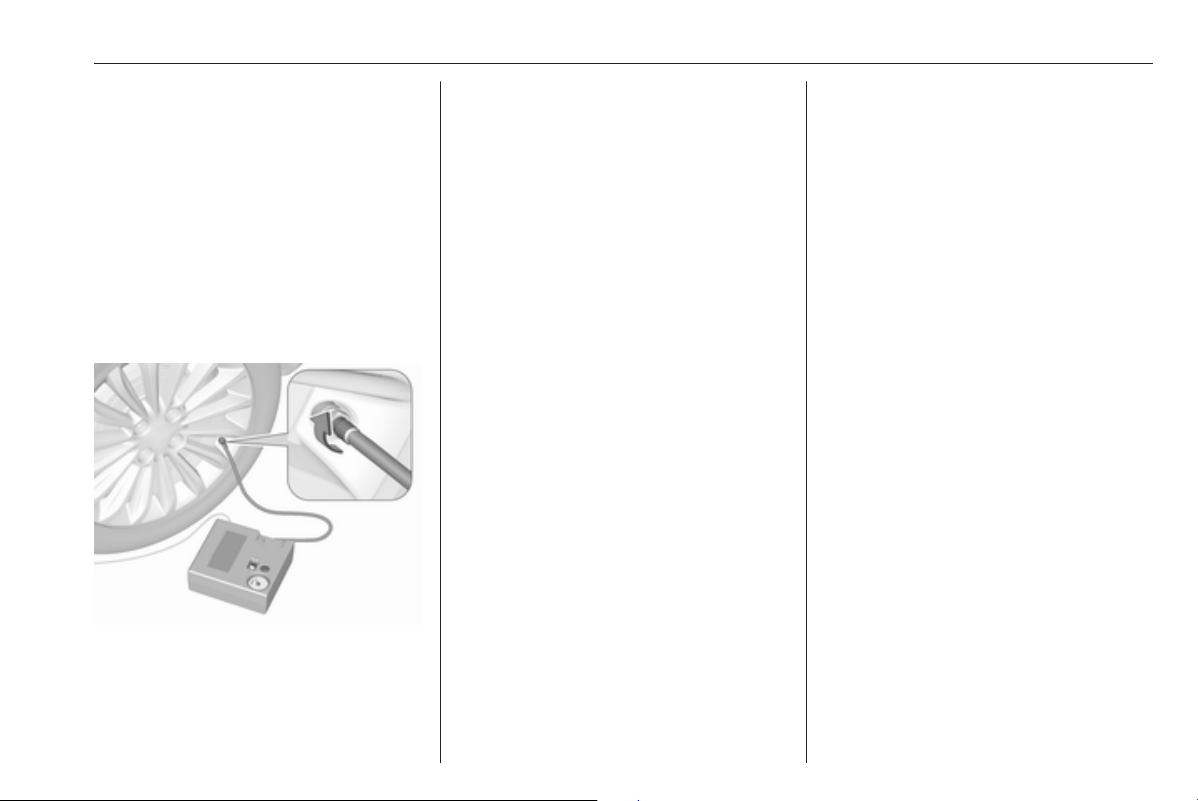
Vehicle care 203
16. Take the label indicating
maximum permitted speed from
the sealant bottle and affix in the
driver's field of view.
17. Continue driving immediately so
that sealant is evenly distributed
in the tyre. After driving approx.
6 miles (but no more than 10 min),
stop and check tyre pressure.
Screw compressor air hose
directly onto tyre valve and
compressor when doing this.
If tyre pressure is more than
1.3 bar, set it to the correct value.
Repeat the procedure until there
is no more loss of pressure.
If the tyre pressure has fallen
below 1.3 bar, the vehicle must
not be used. Seek the assistance
of a workshop.
18. Stow away tyre repair kit in load
compartment.
Notice
The driving characteristics of the
repaired tyre are severely affected,
therefore have this tyre replaced.
If unusual noise is heard or the
compressor becomes hot, turn
compressor off for at least 30 min.
The built-in safety valve opens at a
pressure of 7 bar (102 psi).
Note the expiry date of the kit. After
this date its sealing capability is no
longer guaranteed. Pay attention to
storage information on sealant
bottle.
Replace the used sealant bottle.
Dispose of the bottle as prescribed
by applicable laws.
The compressor and sealant can be
used from approx. -30 °C.
The adapters possibly supplied can
be used to pump up other items e.g.
footballs, air mattresses, inflatable
dinghies etc. They can be located on
the underside of the compressor. To
remove, screw on compressor air
hose and withdraw adapter.
Wheel changing
Some vehicles are equipped with a
tyre repair kit instead of a spare wheel
3 200.
Make the following preparations and
observe the following information:
● Park the vehicle on a level, firm
and non-skid surface. The front
wheels must be in the straight-
ahead position.
● Apply the parking brake and
engage first gear, reverse gear or
P.
● Remove the spare wheel 3 204.
● Never change more than one
wheel at a time.
● Use the jack only to change
wheels in case of puncture, not
for seasonal winter or summer
tyre change.
● The jack is maintenance-free.
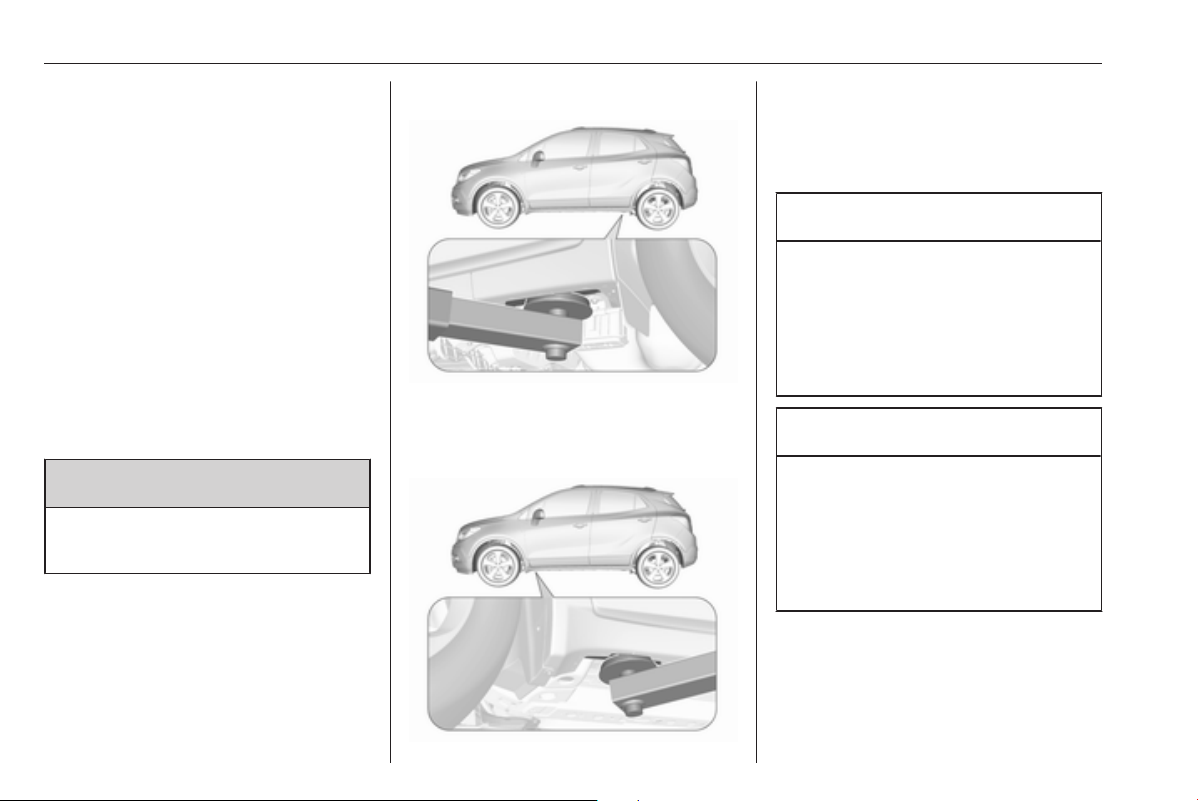
204 Vehicle care
● If the ground on which the vehicle
is standing is soft, a solid board
(max. 1 cm thick) should be
placed under the jack.
● Take heavy objects out of the
vehicle before jacking up.
● No people or animals may be in
the vehicle when it is jacked-up.
● Never crawl under a jacked-up
vehicle.
● Do not start the vehicle when it is
raised on the jack.
● Clean wheel nuts and thread with
a clean cloth before mounting the
wheel.
9 Warning
Do not grease wheel bolt, wheel
nut and wheel nut cone.
Have the defective tyre renewed or
repaired as soon as possible.
Jacking position for lifting platform
Rear arm position of the lifting
platform centrically under the recess
of the sill.
Front arm position of the lifting
platform at the underbody.
Spare wheel
Caution
The use of a spare wheel that is
smaller than the other wheels or in
combination with winter tyres
could affect driveability. Have the
defective tyre replaced as soon as
possible.
Caution
The use of a spare wheel that is
smaller than the other wheels or in
combination with winter tyres
could affect driveability. Have the
defective tyre replaced as soon as
possible.
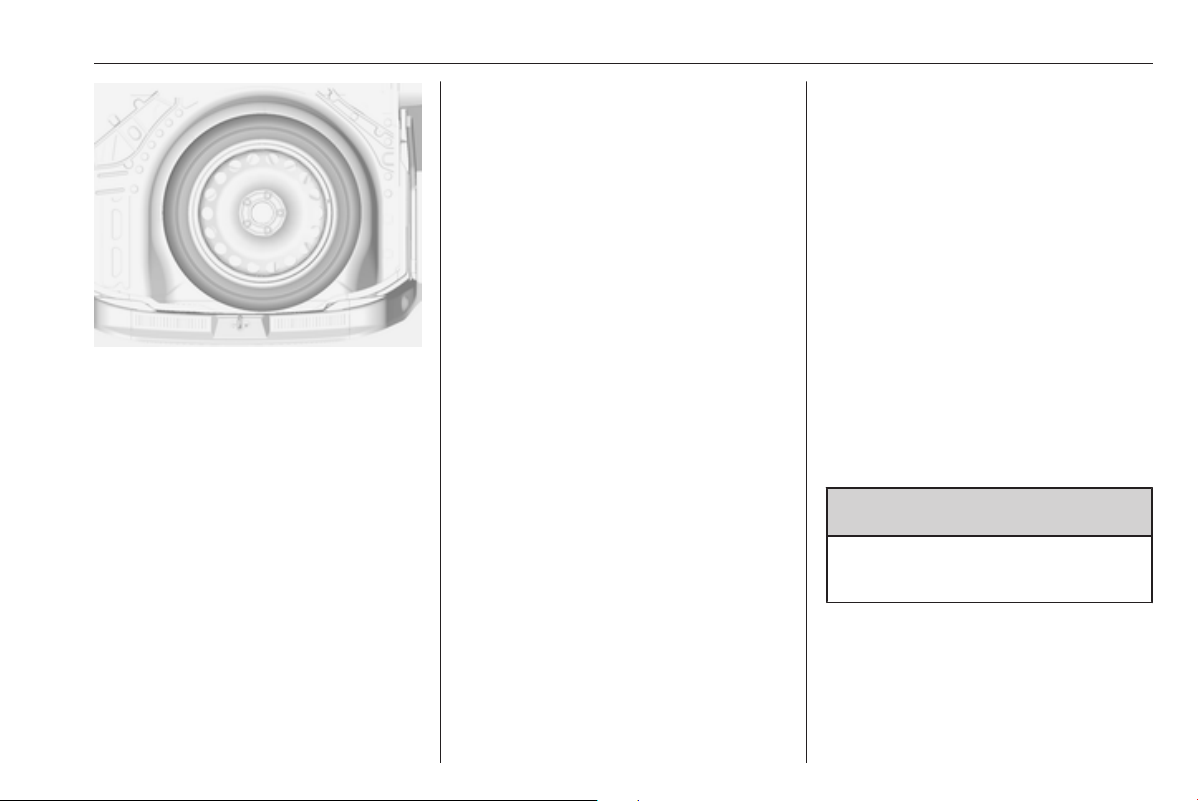
Vehicle care 205
The spare wheel is located in the load
compartment beneath the floor
covering. It is secured with a wing nut.
Spare wheel with directional tyre
If possible, fit directional tyres such
that they roll in the direction of travel.
The rolling direction is indicated by a
symbol (e.g. an arrow) on the
sidewall.
The following applies to tyres fitted
opposing the rolling direction:
● Driveability may be affected.
Have the defective tyre renewed
or repaired as soon as possible
and fit it instead of the spare
wheel.
● Drive particularly carefully on wet
and snow-covered road
surfaces.
Fitting the spare wheel
Make the following preparations and
observe the following information:
● Park the vehicle on a level, firm
and non-skid surface. The front
wheels must be in the straight-
ahead position.
● Apply the parking brake and
engage first gear, reverse gear or
P.
● Remove the spare wheel 3 204.
● Never change more than one
wheel at a time.
● Use the jack only to change
wheels in case of puncture, not
for seasonal winter or summer
tyre change.
● The jack is maintenance-free.
● If the ground on which the vehicle
is standing is soft, a solid board
(max. 1 cm thick) should be
placed under the jack.
● Take heavy objects out of the
vehicle before jacking up.
● No people or animals may be in
the vehicle when it is jacked-up.
● Never crawl under a jacked-up
vehicle.
● Do not start the vehicle when it is
raised on the jack.
● Clean wheel nuts and thread with
a clean cloth before mounting the
wheel.
9 Warning
Do not grease wheel bolt, wheel
nut and wheel nut cone.
1. Disengage wheel nut caps with a
screwdriver and remove. Pull off
the wheel cover.
Alloy wheels: Disengage wheel
nut caps with a screwdriver and
remove. To protect the wheel,
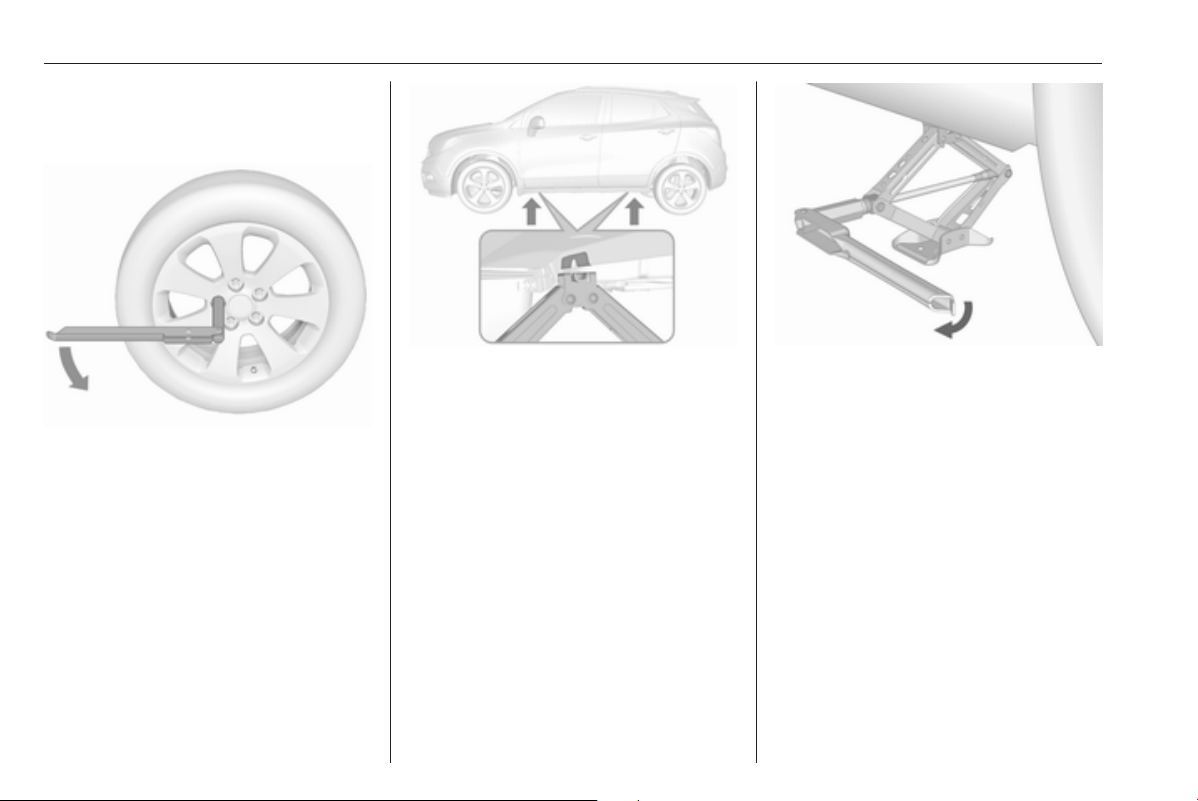
206 Vehicle care
place a soft cloth between the
screwdriver and the alloy wheel.
Vehicle tools 3 192.
2. Fold out the wheel wrench and
install ensuring that it is located
securely and loosen each wheel
nut by half a turn.
3. Ensure the jack is correctly
positioned under the relevant
vehicle jacking point.
Depending on the equipment, first
remove the covers from the
jacking points.
4. Set the jack to the necessary
height. Position it directly below
the jacking point in a manner that
prevents it from slipping.
Attach wheel wrench and with the
jack correctly aligned rotate wheel
wrench until wheel is clear of the
ground.
5. Unscrew the wheel nuts.
6. Change the wheel.
Spare wheel 3 204.
7. Screw on the wheel nuts.
8. Lower the vehicle and remove
jack.
9. Install the wheel wrench ensuring
that it locates securely and tighten
each nut in a crosswise
sequence. Tightening torque is
140 Nm.
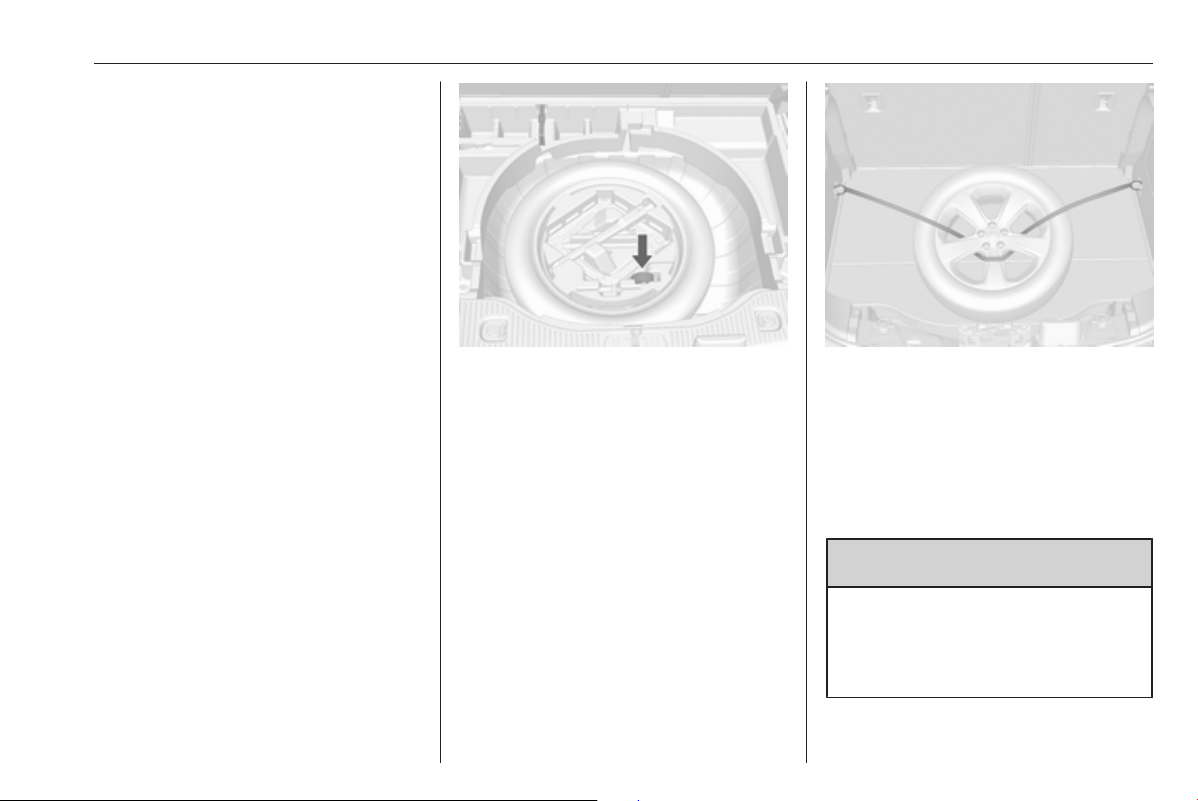
Vehicle care 207
10. Align the valve hole in the wheel
cover with the tyre valve before
installing.
Install wheel nut caps.
Install centre cap on alloy wheels.
11. Install vehicle jacking point cover
on versions with sill panels.
12. Stow the replaced wheel 3 204
and the vehicle tools 3 192.
13. Check the tyre pressure of the
installed tyre and the wheel nut
torque as soon as possible.
Have the defective tyre renewed or
repaired as soon as possible.
Stowing a damaged full size
wheel in the load compartment
The spare wheel well is not designed
for other tyre sizes than the spare
wheel.
A damaged full size wheel must be
stowed in the load compartment and
secured with a strap.
Vehicle tools 3 192.
To secure the wheel:
1. Position the wheel in the middle of
the load compartment.
2. Place the loop end of the strap
through the lashing eye on one
side.
3. Place the hook end of the strap
through the loop and pull it until
the strap is fastened securely to
the lashing eye.
4. Insert the strap through the
spokes of the wheel as shown in
the illustration.
5. Mount the hook to the opposite
lashing eye.
6. Tighten the strap and secure it
using the buckle.
9 Danger
Always drive with folded up and
engaged rear seat backrests when
stowing a damaged full size wheel
in the load compartment.
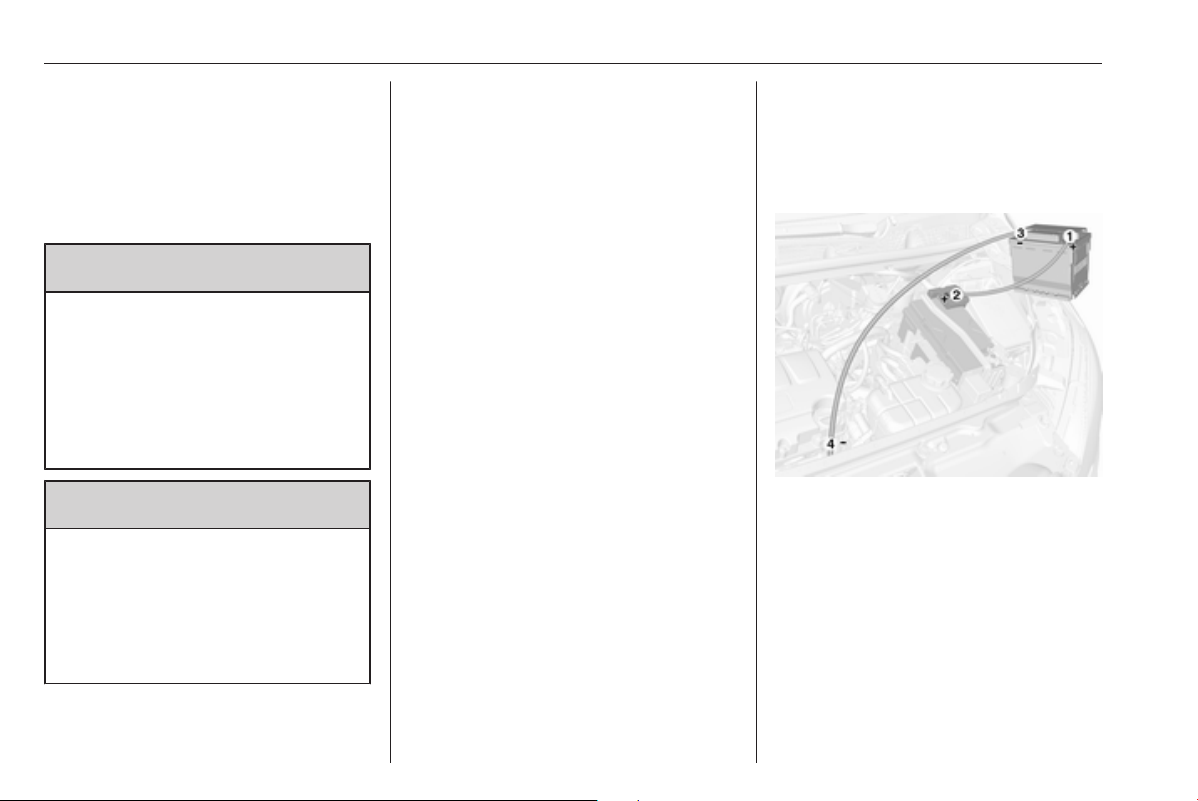
208 Vehicle care
Jump starting
Do not start with a quick charger.
A vehicle with a discharged battery
can be started using jump leads and
the battery of another vehicle.
9 Warning
Be extremely careful when starting
with jump leads. Any deviation
from the following instructions can
lead to injuries or damage caused
by battery explosion or damage to
the electrical systems of both
vehicles.
9 Warning
Avoid contact of the battery with
eyes, skin, fabrics and painted
surfaces. The fluid contains
sulphuric acid which can cause
injuries and damage in the event
of direct contact.
● Never expose the battery to
naked flames or sparks.
● A discharged battery can already
freeze at a temperature of 0 °C.
Defrost the frozen battery before
connecting jump leads.
● Wear eye protection and
protective clothing when
handling a battery.
● Use a booster battery with the
same voltage (12 V). Its capacity
(Ah) must not be much less than
that of the discharged battery.
● Use jump leads with insulated
terminals and a cross section of
at least 16 mm
2
(25 mm
2
for
diesel engines).
● Do not disconnect the discharged
battery from the vehicle.
● Switch off all unnecessary
electrical consumers.
● Do not lean over the battery
during jump starting.
● Do not allow the terminals of one
lead to touch those of the other
lead.
● The vehicles must not come into
contact with each other during
the jump starting process.
● Apply the parking brake,
transmission in neutral,
automatic transmission in P.
● Open the positive terminal
protection caps of both batteries.
Lead connection order:
1. Connect the red lead to the
positive terminal of the booster
battery.
2. Connect the other end of the red
lead to the positive terminal of the
discharged battery.

Vehicle care 209
3. Connect the black lead to the
negative terminal of the booster
battery.
4. Connect the other end of the black
lead to a vehicle grounding point,
such as the engine block or an
engine mounting bolt. Connect as
far away from the discharged
battery as possible, however at
least 60 cm.
Route the leads so that they cannot
catch on rotating parts in the engine
compartment.
To start the engine:
1. Start the engine of the vehicle
providing the jump.
2. After 5 min, start the other engine.
Start attempts should be made for
no longer than 15 s at an interval
of 1 min.
3. Allow both engines to idle for
approx. three minutes with the
leads connected.
4. Switch on electrical consumers
(e.g. headlights, heated rear
window) of the vehicle receiving
the jump start.
5. Reverse above sequence exactly
when removing leads.
Towing
Towing the vehicle
Wrap a cloth around the tip of a flat
screwdriver to prevent paint damage.
Insert the screwdriver in the slot at the
lower part of the cap. Release the cap
by carefully moving the screwdriver
downwards.
The towing eye is stowed with the
vehicle tools 3 192.
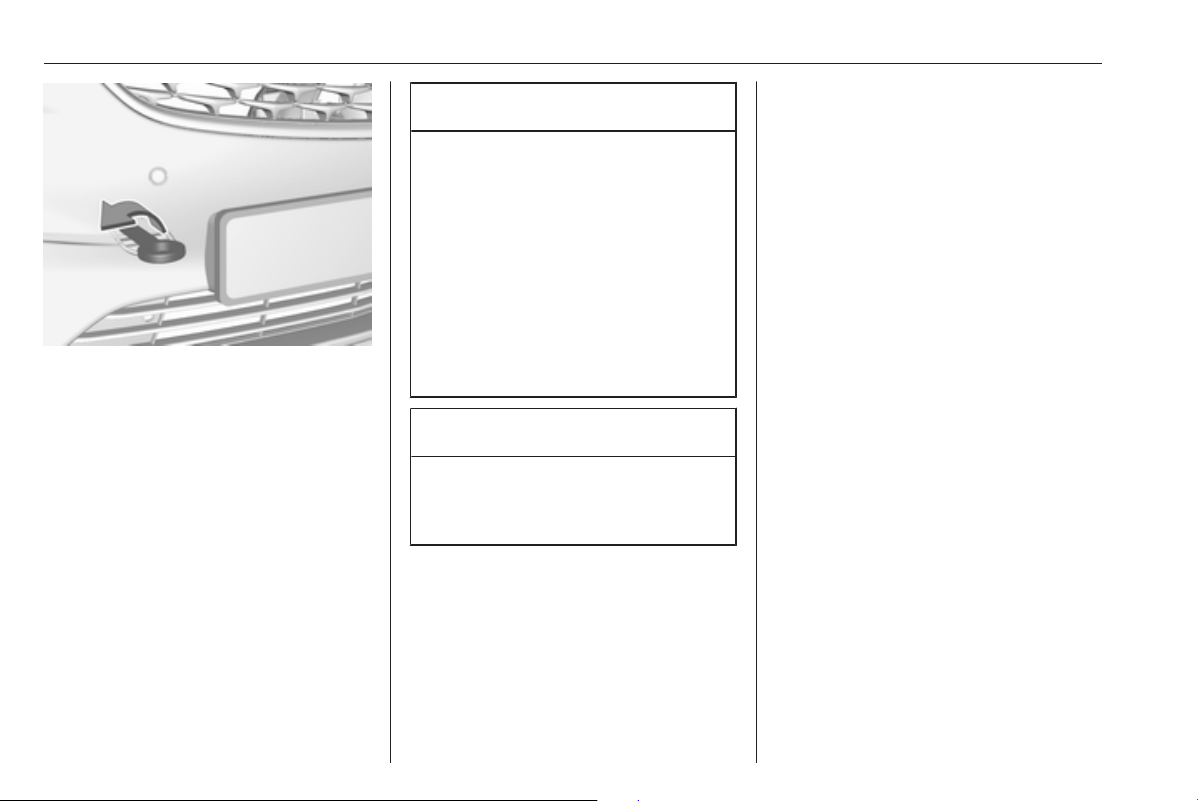
210 Vehicle care
Screw in the towing eye as far as it will
go until it stops in a horizontal
position.
Attach a tow rope – or better still a tow
rod – to the towing eye.
The towing eye must only be used for
towing and not for recovering the
vehicle.
Switch on ignition to release steering
wheel lock and to permit operation of
brake lights, horn and windscreen
wiper.
Switch the selector lever to neutral.
Release the parking brake.
Caution
Never tow a vehicle equipped with
All Wheel Drive (AWD) with the
front or rear tyres on the road. If
you tow a vehicle equipped with
AWD while the front or rear tyres
are rolling on the road, the drive
system in the vehicle could be
severely damaged. When towing
vehicles equipped with AWD, all
four tyres must not be in contact
with the road.
Caution
Drive slowly. Do not drive jerkily.
Excessive tractive force can
damage the vehicle.
When the engine is not running,
considerably more force is needed to
brake and steer.
To prevent the entry of exhaust gases
from the towing vehicle, switch on the
air recirculation system 3 122 and
close the windows.
Vehicles with manual transmission:
The vehicle must be towed facing
forwards. The maximum speed is
50 mph. In all other cases, and when
the transmission is defective, the front
axle must be raised off the ground.
Vehicles with automatic transmission:
Do not tow the vehicle using a towing
eye. Towing with a tow rope could
cause severe automatic transmission
damage. When towing vehicles with
automatic transmission, use flat bed
or wheel lift equipment.
Seek the assistance of a workshop.
After towing, unscrew the towing eye.
Insert cap and close cap.
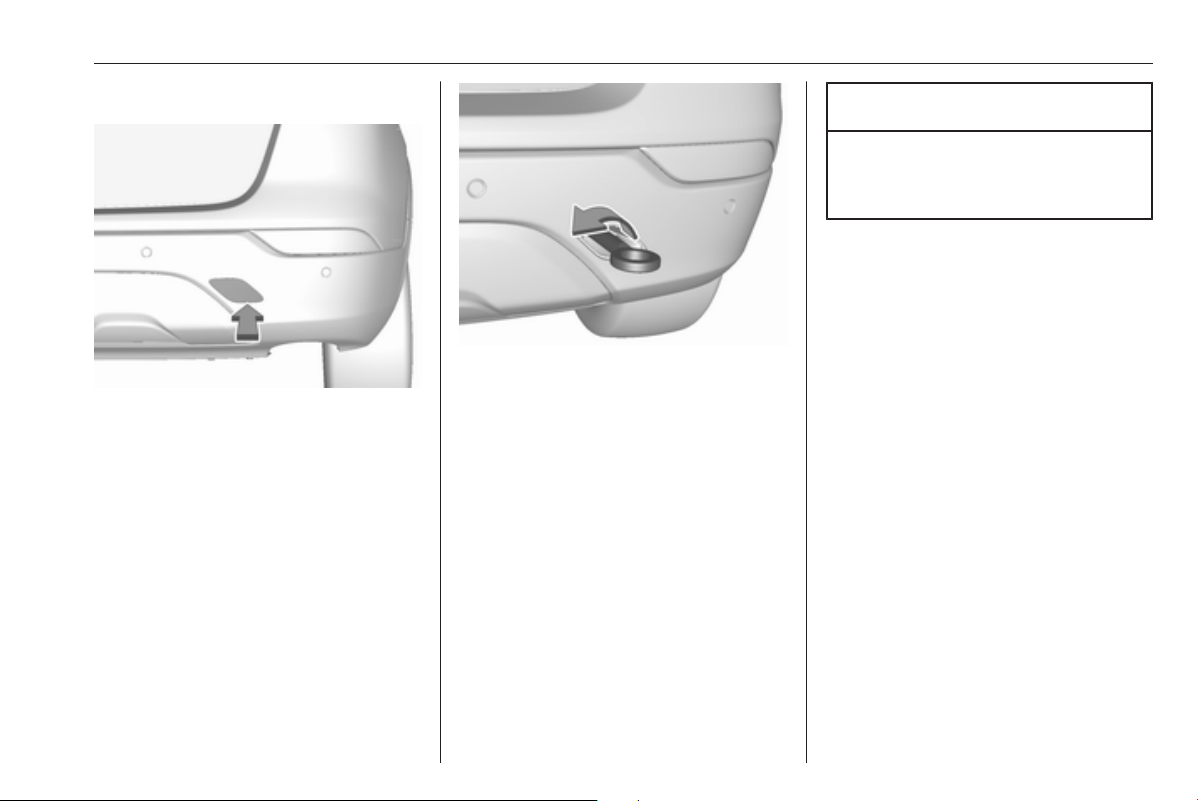
Vehicle care 211
Towing another vehicle
Wrap a cloth around the tip of a flat
screwdriver to prevent paint damage.
Insert the screwdriver in the slot at the
lower bend of the cap. Release the
cap by carefully moving the
screwdriver downwards.
The towing eye is stowed with the
vehicle tools 3 192.
Screw in the towing eye as far as it will
go until it stops in a horizontal
position.
The lashing eye at the rear
underneath the vehicle must never be
used as a towing eye.
Attach a tow rope – or even better a
tow bar – to the towing eye.
The towing eye must only be used for
towing and not for recovering a
vehicle.
Caution
Drive slowly. Do not drive jerkily.
Excessive tractive force can
damage the vehicle.
After towing, unscrew the towing eye.
Insert cap at the bottom and engage
cap.

212 Vehicle care
Appearance care
Exterior care
Locks
The locks are lubricated at the factory
using a high quality lock cylinder
grease. Use de-icing agent only when
absolutely necessary, as this has a
degreasing effect and impairs lock
function. After using a de-icing agent,
have the locks regreased by a
workshop.
Washing
The paintwork of your vehicle is
exposed to environmental influences.
Wash and wax your vehicle regularly.
When using automatic vehicle
washes, select a programme that
includes waxing.
Bird droppings, dead insects, resin,
pollen and the like should be cleaned
off immediately, as they contain
aggressive constituents which can
cause paint damage.
If using a vehicle wash, comply with
the vehicle wash manufacturer's
instructions. The windscreen wiper
and rear window wiper must be
switched off. Remove antenna and
external accessories such as roof
racks etc.
If you wash your vehicle by hand,
make sure that the insides of the
wheel housings are also thoroughly
rinsed out.
Clean edges and folds on opened
doors and the bonnet as well as the
areas they cover.
Caution
Always use a cleaning agent with
a pH value of 4 to 9.
Do not use cleaning agents on hot
surfaces.
Have the door hinges of all doors
greased by a workshop.
Do not clean the engine compartment
with a steam-jet or high-pressure jet
cleaner.
Thoroughly rinse and leather-off the
vehicle. Rinse leather frequently. Use
separate leathers for painted and
glass surfaces: remnants of wax on
the windows will impair vision.
Exterior lights
Headlight and other light covers are
made of plastic. Do not use any
abrasive or caustic agents, do not use
an ice scraper, and do not clean them
dry.
Polishing and waxing
Wax the vehicle regularly (at the
latest when water no longer beads).
Otherwise, the paintwork will dry out.
Polishing is necessary only if the paint
has become dull or if solid deposits
have become attached to it.
Paintwork polish with silicone forms a
protective film, making waxing
unnecessary.
Plastic body parts must not be treated
with wax or polishing agents.

Vehicle care 213
Windows and windscreen wiper
blades
Switch off wipers before handling in
their areas.
Use a soft lint-free cloth or chamois
leather together with window cleaner
and insect remover.
When cleaning the rear window from
inside, always wipe in parallel to the
heating element to prevent damage.
For mechanical removal of ice, use a
sharp-edged ice scraper. Press the
scraper firmly against the glass so
that no dirt can get under it and
scratch the glass.
Clean smearing wiper blades with a
soft cloth and window cleaner.
Remove dirt residues from smearing
wiper blades by using a soft cloth and
window cleaner. Also make sure to
remove any residues such as wax,
insect residues and similar from the
window.
Ice residues, pollution and continuous
wiping on dry windows will damage or
even destroy the wiper blades.
Wheels and tyres
Do not use high-pressure jet
cleaners.
Clean rims with a pH-neutral wheel
cleaner.
Rims are painted and can be treated
with the same agents as the body.
Paintwork damage
Rectify minor paintwork damage with
a touch-up pen before rust forms.
Have more extensive damage or rust
areas repaired by a workshop.
Underbody
Some areas of the vehicle underbody
have a PVC undercoating while other
critical areas have a durable
protective wax coating.
After the underbody is washed, check
the underbody and have it waxed if
necessary.
Bitumen / rubber materials could
damage the PVC coating. Have
underbody work carried out by a
workshop.
Before and after winter, wash the
underbody and have the protective
wax coating checked.
Liquid gas system
9 Danger
Liquid gas is heavier than air and
can collect in sink points.
Take care when performing work
at the underbody in a pit.
For painting work and when using a
drying booth at a temperature above
60 °C, the liquid gas system must be
completely evacuated.
Do not make any modifications to the
liquid gas system.
Towing equipment
Do not clean the coupling ball bar with
a steam-jet or high-pressure jet
cleaner.
Rear carrier system
Clean the rear carrier system with a
steam-jet or high-pressure jet cleaner
at least once a year.

214 Vehicle care
Operate the rear carrier system
periodically if not in regular use, in
particular during winter.
Interior care
Interior and upholstery
Only clean the vehicle interior,
including the instrument panel fascia
and panelling, with a dry cloth or
interior cleaner.
Clean the leather upholstery with
clear water and a soft cloth. In case of
heavy soiling, use leather care.
The instrument cluster and the
displays should only be cleaned using
a soft damp cloth. If necessary use a
weak soap solution.
Clean fabric upholstery with a
vacuum cleaner and brush. Remove
stains with an upholstery cleaner.
Clothing fabrics may not be
colourfast. This could cause visible
discolourations, especially on light-
coloured upholstery. Removable
stains and discolourations should be
cleaned as soon as possible.
Clean seat belts with lukewarm water
or interior cleaner.
Caution
Close Velcro fasteners as open
Velcro fasteners on clothing could
damage seat upholstery.
The same applies to clothing with
sharp-edged objects, e.g. zips,
belts or studded jeans.
Plastic and rubber parts
Plastic and rubber parts can be
cleaned with the same cleaner as
used to clean the body. Use interior
cleaner if necessary. Do not use any
other agent. Avoid solvents and petrol
in particular. Do not use high-
pressure jet cleaners.

Service and maintenance 215
Service and
maintenance
General information ................... 215
Service information .................. 215
Recommended fluids, lubricants
and parts .................................... 216
Recommended fluids and
lubricants ................................ 216
General information
Service information
In order to ensure economical and
safe vehicle operation and to
maintain the value of your vehicle, it
is of vital importance that all
maintenance work is carried out at the
proper intervals as specified.
The detailed, up-to-date service
schedule for your vehicle is available
at the workshop.
Service display 3 86.
European service intervals
Maintenance of your vehicle is
required every 20,000 miles or after
one year, whichever occurs first,
unless otherwise indicated in the
service display.
A shorter service interval can be valid
for severe driving behaviour, e.g. for
taxis and police vehicles.
The European service intervals are
valid for the following countries:
Andorra, Austria, Belgium, Bosnia-
Herzegovina, Bulgaria, Croatia,
Cyprus, Czech Republic, Denmark,
Estonia, Finland, France, Germany,
Greece, Greenland, Hungary,
Iceland, Ireland, Italy, Latvia,
Liechtenstein, Lithuania,
Luxembourg, Macedonia, Malta,
Monaco, Montenegro, Netherlands,
Norway, Poland, Portugal, Romania,
San Marino, Serbia, Slovakia,
Slovenia, Spain, Sweden,
Switzerland, United Kingdom.
Service display 3 86.
International service intervals
Maintenance of your vehicle is
required every 10,000 miles or after
one year, whichever occurs first.
Additional engine oil and filter change
is indicated by the engine oil life
system, when required earlier than
maintenance.
Severe operating conditions exist if
one or more of the following
circumstances occur frequently: Cold
starting, stop and go operation, trailer
operation, mountain driving, driving
on poor and sandy road surfaces,

216 Service and maintenance
increased air pollution, presence of
airborne sand and high dust content,
driving at high altitude and large
variations of temperature. Under
these severe operating conditions,
certain service work may be required
more frequently than the regular
service interval.
The international service intervals are
valid for the countries which are not
listed in the European service
intervals.
Service display 3 86.
Confirmations
Confirmation of service is recorded in
the Service and warranty booklet.
The date and mileage is completed
with the stamp and signature of the
servicing workshop.
Make sure that the Service and
warranty booklet is completed
correctly as continuous proof of
service is essential if any warranty or
goodwill claims are to be met, and is
also a benefit when selling the
vehicle.
Recommended fluids,
lubricants and parts
Recommended fluids and
lubricants
Only use products that meet the
recommended specifications.
9 Warning
Operating materials are
hazardous and could be
poisonous. Handle with care. Pay
attention to information given on
the containers.
Engine oil
Engine oil is identified by its quality
and its viscosity. Quality is more
important than viscosity when
selecting which engine oil to use. The
oil quality ensures e.g. engine
cleanliness, wear protection and oil
aging control, whereas viscosity
grade gives information on the oil's
thickness over a temperature range.
Dexos is the newest engine oil quality
that provides optimum protection for
gasoline and diesel engines. If it is
unavailable, engine oils of other listed
qualities have to be used.
Recommendations for gasoline
engines are also valid for
Compressed Natural Gas (CNG),
Liquified Petroleum Gas (LPG) and
Ethanol (E85) fuelled engines.
Select the appropriate engine oil
based on its quality and on the
minimum ambient temperature
3 220.
Topping up engine oil
Caution
In case of any spilled oil, wipe it up
and dispose it properly.
Engine oils of different manufacturers
and brands can be mixed as long as
they comply with the required engine
oil quality and viscosity.

Service and maintenance 217
Use of engine oils for all petrol
engines with only ACEA quality is
prohibited, since it can cause engine
damage under certain operating
conditions.
Select the appropriate engine oil
based on its quality and on the
minimum ambient temperature
3 220.
Additional engine oil additives
The use of additional engine oil
additives could cause damage and
invalidate the warranty.
Engine oil viscosity grades
The SAE viscosity grade gives
information of the thickness of the oil.
Multigrade oil is indicated by two
figures, e.g. SAE 5W-30. The first
figure, followed by a W, indicates the
low temperature viscosity and the
second figure the high temperature
viscosity.
Select the appropriate viscosity grade
depending on the minimum ambient
temperature 3 220.
All of the recommended viscosity
grades are suitable for high ambient
temperatures.
Coolant and antifreeze
Use only organic acid type-long life
coolant (LLC) antifreeze approved for
the vehicle. Consult a workshop.
The system is factory filled with
coolant designed for excellent
corrosion protection and frost
protection down to approx. -28 °C. In
northern countries with very low
temperatures the factory filled coolant
provides frost protection down to
approx. -37 °C. This concentration
should be maintained all year round.
The use of additional coolant
additives that intend to give additional
corrosion protection or seal against
minor leaks can cause function
problems. Liability for consequences
resulting from the use of additional
coolant additives will be rejected.
Washer fluid
Use only washer fluid approved for
the vehicle to prevent damage of
wiper blades, paintwork, plastic and
rubber parts. Consult a workshop.
Brake and clutch fluid
Over time, brake fluid absorbs
moisture which will reduce braking
effectiveness. The brake fluid should
therefore be replaced at the specified
interval.
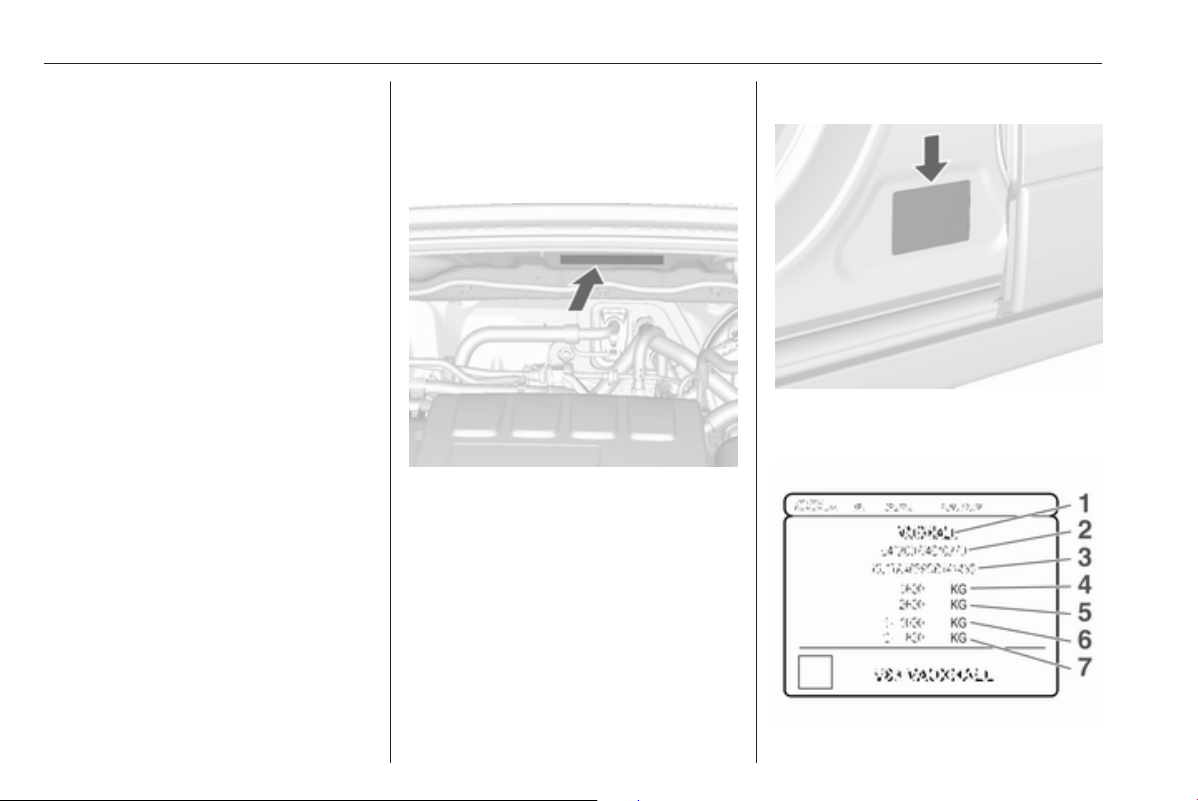
218 Technical data
Technical data
Vehicle identification .................. 218
Vehicle Identification Number .. 218
Identification plate ................... 218
Engine identification ................ 219
Vehicle data ............................... 220
Recommended fluids and
lubricants ................................ 220
Engine data ............................. 223
Performance ............................ 225
Vehicle weight ......................... 226
Vehicle dimensions ................. 227
Capacities ................................ 228
Tyre pressures ........................ 229
Vehicle identification
Vehicle Identification
Number
The Vehicle Identification Number is
located in the engine compartment.
The Vehicle Identification Number
may be embossed on the instrument
panel, visible through the windscreen.
Identification plate
The identification plate is located on
the front left or right door frame.

Technical data 219
Information on identification label:
1 : manufacturer
2 : type approval number
3 : vehicle Identification Number
4 : permissible gross vehicle weight
rating in kg
5 : permissible gross train weight
in kg
6 : maximum permissible front axle
load in kg
7 : maximum permissible rear axle
load in kg
Engine identification
The technical data tables show the
engine identifier code.
Engine data 3 223.
To identify the respective engine,
refer to the engine power in the EEC
Certificate of Conformity provided
with your vehicle or other national
registration documents.
The Certificate of Conformity shows
the engine identifier code, other
national publications may show the
engineering code. Check piston
displacement and engine power to
identify the respective engine.

220 Technical data
Vehicle data
Recommended fluids and lubricants
European service schedule
Required engine oil quality
All European countries with European service interval 3 215
Engine oil quality Petrol engine
B14NET
All other petrol engines
(including CNG, LPG, E85)
Diesel engines
dexos1 Gen2 ✔ – –
dexos2 – ✔ ✔
All engines except B14NET: In case dexos quality is unavailable, you may use max. 1 l engine oil quality ACEA C3 once
between each oil change.
Engine oil viscosity grades
All European countries with European service interval 3 215
Ambient temperature Petrol engines Diesel engines
down to -25 °C SAE 0W-30 or SAE 0W-40
SAE 5W-30 or SAE 5W-40
SAE 0W-20, SAE 0W-30 or SAE 0W-40
SAE 5W-30 or SAE 5W-40
below -25 °C SAE 0W-30 or SAE 0W-40 SAE 0W-20, SAE 0W-30 or SAE 0W-40

Technical data 221
International service schedule
Required engine oil quality
All countries with international service interval 3 215
Engine oil quality Petrol engine
B14NET
All other petrol engines
(including CNG, LPG, E85)
Diesel engines
dexos1 Gen2 ✔ – –
dexos2 – ✔ ✔
In case dexos quality is unavailable you may use the oil qualities listed below:
All countries with international service interval 3 215
Engine oil quality Petrol engine
B14NET
All other petrol engines
(including CNG, LPG, E85)
Diesel engines
ACEA A3/B4 – ✔ ✔
ACEA C3 – ✔ ✔

222 Technical data
Engine oil viscosity grades
All European countries with European service interval 3 215
Ambient temperature Petrol engines Diesel engines
down to -25 °C SAE 0W-30 or SAE 0W-40
SAE 5W-30 or SAE 5W-40
SAE 0W-20, SAE 0W-30 or SAE 0W-40
SAE 5W-30 or SAE 5W-40
below -25 °C SAE 0W-30 or SAE 0W-40 SAE 0W-20, SAE 0W-30 or SAE 0W-40
down to -20 °C
SAE 10W-30
1)
or SAE 10W-40
1)
SAE 10W-30
1)
or SAE 10W-40
1)
1)
Permitted, but usage of oils with dexos quality is recommended.

Technical data 223
Engine data
Engine identifier code D14NET D14NEL A18XER
Sales designation 1.4 1.4 1.8
Engineering code D14NET D14NEL A18XER
Piston displacement [cm
3
]
1364 1364 1796
Engine power [kW] 103 88 103
at rpm 4900-6000 4800-6000 6200
Torque [Nm] 200 200 178
at rpm 1850-4900 1850-4900 3800
Fuel type Petrol Petrol Petrol
Octane rating RON
2)
recommended 95 95 95
possible 98 98 98
possible 91 91 91
Additional fuel type – – –
2)
A country-specific label at the fuel filler flap can supersede the engine-specific requirement.

224 Technical data
Engine identifier code D16DTHD16DTI
Sales designation 1.61.6
Engineering code D16DTHD16DTI
Piston displacement [cm
3
]
15981598
Engine power [kW] 10081
at rpm 3500-40003500
Torque [Nm] 320300
at rpm 2000-22501750-2000
Fuel type DieselDiesel
Octane rating RON
2)
recommended
possible
possible
Additional fuel type ––
2)
A country-specific label at the fuel filler flap can supersede the engine-specific requirement.

Technical data 225
Performance
Engine D14NET D14NEL A18XER
Maximum speed [mph]
Manual transmission
121/115
3)
115 112
Automatic transmission 118 – 112
34)
Vehicles with All-wheel drive system.Vehicles with All-wheel drive system.
Engine D16DTI D16DTH
Maximum speed [mph]
Manual transmission
111 118/116
3)4)
Automatic transmission – 117
34)
Vehicles with All-wheel drive system.Vehicles with All-wheel drive system.

226 Technical data
Vehicle weight
Kerb weight, basic model without any optional equipment
Engine Manual transmission Automatic transmission
[kg] D14NET
1394/1445
4)
1409
D14NEL 1394 –
A18XER 1380 1467
D16DTI 1474 –
D16DTH
1374/1529
3)4)
1487
34)
Vehicles with All-wheel drive system.Vehicles with All-wheel drive system.
Optional equipment and accessories increase the kerb weight.
Loading information 3 73.

Technical data 227
Vehicle dimensions
Length [mm] 4275
Width without exterior mirrors [mm] 1781
Width with two exterior mirrors [mm] 2038
Height (without antenna) [mm]
1659/1746
5)
Length of load compartment floor [mm] 731
Length of load compartment with folded rear seats [mm] 1428
Load compartment width [mm] 914
Load compartment height [mm] 808
Wheelbase [mm] 2555
Turning circle diameter [m]
10.9/11.3
5)
5)
Depending on wheel size and equipment.

228 Technical data
Capacities
Engine oil
Engine D14NET D14NEL A18XER D16DTH,
D16DTI
including filter [l] 4.0 4.0 4.5 5.0
between MIN and MAX [l] 1.0 1.0 1.0 1.0
Fuel tank
Petrol, refilling quantity [l] 53
Diesel, refilling quantity [l] 52
AdBlue tank
AdBlue, refilling quantity [l] 9.8

Technical data 229
Tyre pressures
Comfort with up to 3 people ECO with up to 3 people With full load
Engine Tyres front rear front rear front rear
[kPa/bar]
([psi])
[kPa/bar]
([psi])
[kPa/bar]
([psi])
[kPa/bar]
([psi])
[kPa/bar]
([psi])
[kPa/bar]
([psi])
D14NET,
D14NEL ,
A18XER
215/60 R17, 220/2.2 (32) 220/2.2 (32) 270/2.7 (39) 280/2.8 (41) 270/2.7 (39) 300/3.0 (44)
215/55 R18
215/65 R16 200/2.0 (29) 200/2.0 (29) 270/2.7 (39) 280/2.8 (41) 270/2.7 (39) 300/3.0 (44)
225/45 R19 240/2.4 (35) 240/2.4 (35) 270/2.7 (39) 280/2.8 (41) 270/2.7 (39) 280/2.8 (41)
D16DTI,
D16DTH
215/60R17, 240/2.4 (35) 240/2.4 (35) 270/2.7 (39) 280/2.8 (41) 270/2.7 (39) 300/3.0 (44)
215/55 R18
215/65 R16 220/2.2 (32) 220/2.2 (32) 270/2.7 (39) 280/2.8 (41) 270/2.7 (39) 300/3.0 (44)
225/45 R19 240/2.4 (35) 240/2.4 (35) 270/2.7 (39) 280/2.8 (41) 270/2.7 (39) 280/2.8 (41)
All Temporary spare
wheel
125/70 R16
420/4.2 (60) 420/4.2 (60) – – 420/4.2 (60) 420/4.2 (60)
For countries outside the European Union, the tyre pressure is independent of the tyre load.

230 Customer information
Customer
information
Customer information ................ 230
Declaration of conformity ......... 230
REACH .................................... 233
Software acknowledgement .... 233
Registered trademarks ............ 234
Vehicle data recording and pri‐
vacy ........................................... 235
Event data recorders ............... 235
Radio Frequency Identification
(RFID) ..................................... 238
Customer information
Declaration of conformity
Transmission systems
This vehicle has systems that
transmit and / or receive radio waves
subject to Directive 2014/53/EU. The
manufacturers of the systems listed
below declare conformity with
Directive 2014/53/EU. The full text of
the EU declaration of conformity for
each system is available at the
following internet address:
www.opel.com/conformity.
Importer is
Opel / Vauxhall, Bahnhofsplatz,
65423 Ruesselsheim am Main,
Germany.
Immobiliser
Robert Bosch GmbH
Robert Bosch Platz 1, 70839
Gerlingen, Germany
Operation frequency: 125 kHz
Maximum output:
5.1 dBµA/m @ 10 m
Infotainment system R 4.0 / Navi 4.0
LG Electronics European Shared
Service Center B.V.
Krijgsman 1, 1186 DM Amstelveen,
The Netherlands
Operation
frequency (MHz)
Maximum output
(dBm)
2400.0 - 2483.5 4
2400.0 - 2483.5 13
5725.0 - 5850.0 13
Infotainment system R300 BT
Humax Automotive Co. Ltd.
2, Yeongmun-ro, Cheoin-gu, Yong-
in-si, Gyeonggi-do, Korea
Operation frequency:
2402 - 2480 MHz
Maximum output: 4 dBm
Infotainment system Navi 900
IntelliLink
Robert Bosch Car Multimedia GmbH
Robert-Bosch-Straße 200, 31139
Hildesheim, Germany
Delphi Deutschland GmbH

Customer information 231
Delphiplatz 1, 42367 Wuppertal,
Germany
Operation
frequency (MHz)
Maximum output
(mW)
2400 - 2480 10
2400 - 2480 20
Antenna module
Laird
Daimlerring 31, 31135 Hildesheim,
Germany
Operation frequency: N/A
Maximum output: N/A
Electronic key receiver
Denso Coperation
Waldeckerstraße 11, 64546
Mörfelden-Walldorf, Germany
Operation frequency: 125 kHz
Maximum output: -0.14 dBm
Electronic key transmitter
Denso Coperation
1-1, Showa-cho, Kariya-shi, Aichi-
ken 448-8661, Japan
Operation frequency: 433.92 MHz
Maximum output: -5.88 dBm
Radio remote control transmitter
Continental Automotive GmbH
Siemensstraße 12, 93055
Regensburg, Germany
Operation frequency: 433.92 MHz
Maximum output: -5.7 dBm
Radio remote control transmitter
Robert Bosch GmbH
Robert Bosch Platz 1, 70839
Gerlingen, Germany
Operation frequency: 433.92 MHz
Maximum output: -4 dbm
Radio remote control receiver
Robert Bosch GmbH
Robert Bosch Platz 1, 70839
Gerlingen, Germany
Operation frequency: N/A
Maximum output: N/A
Tyre pressure sensors
Schrader Electronics Ltd.
11 Technology Park, Belfast Road,
Antrim BT41 1QS, Northern Ireland,
United Kingdom
Operation frequency: 433.92 MHz
Maximum output: 10 mW
Parking heater remote control
receiver
Eberspächer Climate Control
Systemse GmbH & Co. KG
Eberspächerstraße 24, 73730
Esslingen, Gemany
Operation frequency: N/A
Maximum output: N/A
Parking heater remote control
transmitter
Eberspächer Climate Control
Systemse GmbH & Co. KG
Eberspächerstrasse 24, 73730
Esslingen, Gemany
Operation frequency: 434,6 MHz
Maximum output: 10 dBm
232 Customer information
Jack

Customer information 233
REACH
Registration, Evaluation,
Authorisation and Restriction of
Chemicals (REACH) is a European
Union regulation adopted to improve
the protection of human health and
the environment from the risks that
can be posed by chemicals. Visit
www.opel.com/reach for further
information and for access to the
Article 33 communication.
Software acknowledgement
Certain components include libcurl
and unzip software and other third
party software. Below are the notices
and licenses associated with libcurl
and unzip and for other third party
software please see http://
www.lg.com/global/support/
opensource/index.
libcurl
Copyright and permission notice
Copyright (c) 1996 - 2010, Daniel
Stenberg, <[email protected]>.
All rights reserved.
Permission to use, copy, modify, and
distribute this software for any
purpose with or without fee is hereby
granted, provided that the above
copyright notice and this permission
notice appear in all copies.
The software is provided "as is",
without warranty of any kind, express
or implied, including but not limited to
the warranties of merchantability,
fitness for a particular purpose and
noninfringement of third party rights.
In no event shall the authors or
copyright holders be liable for any
claim, damages or other liability,
whether in an action of contract, tort
or otherwise, arising from, out of or in
connection with the software or the
use or other dealings in the software.
Except as contained in this notice, the
name of a copyright holder shall not
be used in advertising or otherwise to
promote the sale, use or other
dealings in this Software without prior
written authorization of the copyright
holder.
unzip
This is version 2005-Feb-10 of the
Info-ZIP copyright and license. The
definitive version of this document
should be available at ftp://ftp.info-
zip.org/pub/infozip/license.html
indefinitely.
Copyright (c) 1990-2005 Info-ZIP. All
rights reserved.
For the purposes of this copyright and
license, “Info-ZIP” is defined as the
following set of individuals:
Mark Adler, John Bush, Karl Davis,
Harald Denker, Jean-Michel Dubois,
Jean-loup Gailly, Hunter Goatley, Ed
Gordon, Ian Gorman, Chris Herborth,
Dirk Haase, Greg Hartwig, Robert
Heath, Jonathan Hudson, Paul
Kienitz, David Kirschbaum, Johnny
Lee, Onno van der Linden, Igor
Mandrichenko, Steve P. Miller, Sergio
Monesi, Keith Owens, George
Petrov, Greg Roelofs, Kai Uwe
Rommel, Steve Salisbury, Dave
Smith, Steven M. Schweda, Christian
Spieler, Cosmin Truta, Antoine
Verheijen, Paul von Behren, Rich
Wales, Mike White.

234 Customer information
This software is provided “as is,”
without warranty of any kind, express
or implied. In no event shall Info-ZIP
or its contributors be held liable for
any direct, indirect, incidental, special
or consequential damages arising out
of the use of or inability to use this
software.
Permission is granted to anyone to
use this software for any purpose,
including commercial applications,
and to alter it and redistribute it freely,
subject to the following restrictions:
1. Redistributions of source code
must retain the above copyright
notice, definition, disclaimer, and
this list of conditions.
2. Redistributions in binary form
(compiled executables) must
reproduce the above copyright
notice, definition, disclaimer, and
this list of conditions in
documentation and/or other
materials provided with the
distribution. The sole exception to
this condition is redistribution of a
standard UnZipSFX binary
(including SFXWiz) as part of a
self-extracting archive; that is
permitted without inclusion of this
license, as long as the normal
SFX banner has not been
removed from the binary or
disabled.
3. Altered versions--including, but
not limited to, ports to new
operating systems, existing ports
with new graphical interfaces, and
dynamic, shared, or static library
versions--must be plainly marked
as such and must not be
misrepresented as being the
original source. Such altered
versions also must not be
misrepresented as being Info-ZIP
releases--including, but not
limited to, labeling of the altered
versions with the names “Info-
ZIP” (or any variation thereof,
including, but not limited to,
different capitalizations), “Pocket
UnZip,” “WiZ” or “MacZip” without
the explicit permission of Info-ZIP.
Such altered versions are further
prohibited from misrepresentative
use of the Zip-Bugs or Info-ZIP e-
mail addresses or of the Info-ZIP
URL(s).
4. Info-ZIP retains the right to use
the names “Info-ZIP,” “Zip,”
“UnZip,” “UnZipSFX,” “WiZ,”
“Pocket UnZip,” “Pocket Zip,” and
“MacZip” for its own source and
binary releases.
Registered trademarks
Apple Inc.
Apple CarPlay™ is a trademark of
Apple Inc.
App Store
®
and iTunes Store
®
are
registered trademarks of Apple Inc.
iPhone
®
, iPod
®
, iPod touch
®
, iPod
nano
®
, iPad
®
and Siri
®
are registered
trademarks of Apple Inc.
Bluetooth SIG, Inc.
Bluetooth
®
is a registered trademark
of Bluetooth SIG, Inc.
DivX, LLC
DivX
®
and DivX Certified
®
are
registered trademarks of DivX, LLC.

Customer information 235
EnGIS Technologies, Inc.
BringGo
®
is a registered trademark of
EnGIS Technologies, Inc.
Google Inc.
Android™ and Google Play™ Store
are trademarks of Google Inc.
Stitcher Inc.
Stitcher™ is a trademark of Stitcher,
Inc.
Verband der Automobilindustrie e.V.
AdBlue
®
is a registered trademark of
the VDA.
Vehicle data recording
and privacy
Event data recorders
Electronic control units are installed in
your vehicle. Control units process
data which is received by vehicle
sensors, for example, or which they
generate themselves or exchange
amongst themselves. Some control
units are necessary for the safe
functioning of your vehicle, others
assist you while you drive (driver
assistance systems), while others
provide comfort or infotainment
functions.
The following contains general
information about data processing in
the vehicle. You will find additional
information as to which specific data
is uploaded, stored and passed on to
third parties and for what purpose in
your vehicle under the key word Data
Protection closely linked to the
references for the affected functional
characteristics in the relevant owner's
manual or in the general terms of
sale. These are also available online.
Operating data in the vehicle
Control units process data for
operation of the vehicle.
This data includes, e.g.:
● vehicle status information (e.g.
speed, movement delay, lateral
acceleration, wheel rotation rate,
"seat belts fastened" display)
● ambient conditions (e.g.
temperature, rain sensor,
distance sensor)
As a rule such data is transient, not
stored for longer than an operational
cycle, and only processed on board
the vehicle itself. Control units often
include data storage (including the
vehicle key). This is used to allow
information to be documented
temporarily or permanently on vehicle
condition, component stress,
maintenance requirements and
technical events and errors.

236 Customer information
Depending on technical equipment
level, the data stored is as follows:
● system component operating
states (e.g. fill level, tyre
pressure, battery status)
● faults and defects in important
system components (e.g. lights,
brakes)
● system reactions in special
driving situations (e.g. triggering
of an airbag, actuation of the
stability control systems)
● information on events damaging
the vehicle
● for electric vehicles the amount of
charge in the high-voltage
battery, estimated range
In special cases (e.g. if the vehicle
has detected a malfunction), it may be
necessary to save data that would
otherwise just be volatile.
When you use services (e.g. repairs,
maintenance), the operating data
saved can be read together with the
vehicle identification number and
used where necessary. Staff working
for the service network (e.g. garages,
manufacturers) or third parties (e.g.
breakdown services) can read the
data from the vehicle. The same
applies to warranty work and quality
assurance measures.
Data is generally read via the OBD
(On-Board Diagnostics) port
prescribed by law in the vehicle. The
operating data which is read out,
documents the technical condition of
the vehicle or individual components
and assists with fault diagnosis,
compliance with warranty obligations
and quality improvement. This data,
in particular information on
component stress, technical events,
operator errors and other faults, is
transmitted to the manufacturer
where appropriate, together with the
vehicle identification number. The
manufacturer is also subject to
product liability. The manufacturer
potentially also uses operating data
from vehicles for product recalls. This
data can also be used to check
customer warranty and guarantee
claims.
Fault memories in the vehicle can be
reset by a service company when
carrying out servicing or repairs or at
your request.
Comfort and infotainment
functions
Comfort settings and custom settings
can be stored in the vehicle and
changed or reset at any time.
Depending on the equipment level in
question, these include
● seat and steering wheel position
settings
● chassis and air conditioning
settings
● custom settings such as interior
lighting
You can input your own data in the
infotainment functions for your
vehicle as part of the selected
features.
Depending on the equipment level in
question, these include
● multimedia data such as music,
videos or photos for playback in
an integrated multimedia system
● address book data for use with an
integrated hands-free system or
an integrated navigation system

Customer information 237
● input destinations
● data on the use of online services
This data for comfort and
infotainment functions can be stored
locally in the vehicle or be kept on a
device that you have connected to the
vehicle (e.g. a smartphone, USB stick
or MP3 player). Data that you have
input yourself can be deleted at any
time.
This data can only be transmitted out
of the vehicle at your request,
particularly when using online
services in accordance with the
settings selected by you.
Smartphone integration, e.g.
Android Auto or Apple CarPlay
If your vehicle is equipped
accordingly, you can connect your
smartphone or another mobile device
to the vehicle so that you can control
it via the controls integrated in the
vehicle. The smartphone image and
sound can be output via the
multimedia system in this case. At the
same time, specific information is
transmitted to your smartphone.
Depending on the type of integration,
this includes data such as position
data, day / night mode and other
general vehicle information. For more
information, please see the operating
instructions for the vehicle /
infotainment system.
Integration allows selected
smartphone apps to be used, such as
navigation or music playback. No
further integration is possible
between smartphone and vehicle, in
particular active access to vehicle
data. The nature of further data
processing is determined by the
provider of the app used. Whether
you can define settings, and if so
which ones, is dependent on the app
in question and your smartphone's
operating system.
Online services
If your vehicle has a radio network
connection, this allows data to be
exchanged between your vehicle and
other systems. The radio network
connection is made possible by
means of a transmitter device in your
vehicle or a mobile device provided
by you (e.g. a smartphone). Online
functions can be used via this radio
network connection. These include
online services and applications /
apps provided to you by the
manufacturer or other providers.
Proprietary services
In the case of the manufacturer's
online services, the relevant functions
are described by the manufacturer in
an appropriate location (e.g. Owner's
Manual, the manufacturer's website)
and the associated data protection
information is provided. Personal
data may be used to provide online
services. Data exchange for this
purpose takes place via a protected
connection, e.g. using the
manufacturer's IT systems provided
for the purpose. Collection,

238 Customer information
processing and use of personal data
for the purposes of preparation of
services take place solely on the
basis of legal permission, e.g. in the
case of a legally prescribed
emergency communication system or
a contractual agreement, or by virtue
of consent.
You can activate or deactivate the
services and functions (which are
subject to charges to some extent)
and, in some cases, the vehicle's
entire radio network connection. This
does not include statutory functions
and services such as an emergency
communication system.
Third party services
If you make use of online services
from other providers (third parties),
these services are subject to the
liability and data protection and usage
conditions of the provider in question.
The manufacturer frequently has no
influence over the content exchanged
in this regard.
Therefore, please note the nature,
scope and purpose of the collection
and use of personal data within the
scope of third party services provided
by the service provider in question.
Radio Frequency
Identification (RFID)
RFID technology is used in some
vehicles for functions such as tyre
pressure monitoring and immobiliser.
It is also used in connection with
conveniences such as radio remote
controls for door locking/unlocking
and starting. RFID technology in
Vauxhall vehicles does not use or
record personal information or link
with any other Vauxhall system
containing personal information.

Customer information 239

240
Index
A
Accessories and vehicle
modifications .......................... 174
Adaptive forward lighting ..... 95, 114
AdBlue.................................. 94, 138
Adjustable air vents ................... 125
Airbag and belt tensioners ........... 91
Airbag deactivation ................ 51, 92
Airbag label................................... 46
Airbag system .............................. 46
Air conditioning regular
operation ................................ 126
Air conditioning system .............. 122
Air intake .................................... 126
Air vents...................................... 125
All-wheel drive ........................... 144
Antilock brake system ................ 145
Antilock brake system (ABS) ....... 93
Anti-theft alarm system ................ 30
Anti-theft locking system .............. 30
Appearance care........................ 212
Automatic anti-dazzle .................. 34
Automatic light control ............... 111
Automatic locking ........................ 28
Automatic transmission ............. 140
Autostop..................................... 133
Auxiliary heater........................... 125
B
Battery discharge protection ...... 120
Battery voltage ........................... 104
Bicycle rack.................................. 60
BlueInjection............................... 138
Bonnet ....................................... 176
Brake and clutch fluid................. 216
Brake and clutch system ............. 92
Brake assist ............................... 146
Brake fluid .................................. 179
Brakes ............................... 145, 179
Breakdown.................................. 209
Bulb replacement ....................... 182
C
Capacities .................................. 228
Catalytic converter ..................... 137
Central locking system ................ 24
Centre console storage ............... 60
Changing tyre and wheel size ...199
Charging system .......................... 92
Child locks ................................... 29
Child restraint installation
locations ................................... 55
Child restraints.............................. 52
Child restraint systems ................ 52
Climate control ............................. 15
Climate control systems............. 121
Clock............................................. 80
Code........................................... 103

241
Control indicators.......................... 87
Control of the vehicle ................. 128
Controls........................................ 76
Convex shape .............................. 32
Coolant and antifreeze............... 216
Cruise control ...................... 95, 149
Cupholders .................................. 58
Curtain airbag system .................. 50
D
Danger, Warnings and Cautions ...4
Daytime running lights ............... 114
Declaration of conformity............ 230
DEF............................................ 138
Delayed locking............................ 27
Descent control system ....... 93, 148
Diesel exhaust fluid.................... 138
Diesel fuel system bleeding ....... 181
Door open .................................... 96
Doors............................................ 29
Driver assistance systems.......... 149
Driver Information Centre............. 96
Driving characteristics and
towing tips .............................. 170
Driving hints................................ 128
E
Electric adjustment ...................... 32
Electrical system......................... 187
Electronic climate control system 123
Electronic driving programmes ..142
Electronic key system................... 22
Electronic Stability Control.......... 147
Electronic Stability Control and
Traction Control system............ 93
Electronic Stability Control off....... 93
End-of-life vehicle recovery ....... 175
Engine compartment fuse box ... 188
Engine coolant ........................... 178
Engine coolant temperature
gauge ....................................... 86
Engine data ............................... 223
Engine exhaust .......................... 136
Engine identification................... 219
Engine oil ................... 177, 216, 220
Engine oil pressure ...................... 94
Entry lighting .............................. 119
Event data recorders.................. 235
Exhaust filter............................... 136
Exit lighting ................................ 120
Exterior care .............................. 212
Exterior light ................................. 95
Exterior lighting .................... 12, 110
Exterior mirrors............................. 32
F
Fault ........................................... 142
First aid kit ................................... 72
Fixed air vents ........................... 126
Flex-Fix system............................ 60
Folding mirrors ............................. 32
Following distance indication...... 154
Forward collision alert................. 152
Front airbag system ..................... 49
Front fog lights ............. 95, 117, 184
Front seats.................................... 39
Front storage................................ 59
Fuel............................................. 163
Fuel for diesel engines .............. 165
Fuel for liquid gas operation....... 165
Fuel for petrol engines ............... 163
Fuel gauge ................................... 84
Fuel selector ................................ 85
Fuses ......................................... 187
G
Gauges......................................... 83
Gear shifting................................. 93
General information ................... 170
Glovebox ..................................... 58
Glove box lighting....................... 119
H
Halogen headlights .................... 183
Hand brake................................. 145
Hazard warning flashers ............ 116
Headlight flash ........................... 112
Headlight range adjustment ...... 113
Headlights when driving abroad 113
Head restraint adjustment ............. 8
Head restraints ............................ 38
Heated mirrors ............................. 33

242
Heated rear window ..................... 36
Heated steering wheel ................. 76
Heating ........................................ 42
Heating and ventilation system . 121
High beam ........................... 95, 111
High beam assist.................. 95, 112
Hill start assist ........................... 146
Horn ....................................... 13, 77
I
Identification plate ..................... 218
Ignition switch positions ............. 129
Immobiliser ............................ 31, 95
Indicators...................................... 83
Info Display................................. 101
Information displays...................... 96
Initial drive information.................... 6
Instrument panel fuse box ......... 189
Instrument panel illumination
control .................................... 118
Instrument panel overview ........... 10
Interior care ............................... 214
Interior lighting............................ 118
Interior lights .............................. 118
Interior mirrors.............................. 33
Interruption of power supply ...... 143
Introduction .................................... 3
J
Jump starting ............................. 208
K
Key, memorised settings.............. 24
Keys ............................................. 20
Keys, locks................................... 20
L
Lane departure warning....... 93, 162
Lashing eyes ............................... 72
Lighting features......................... 119
Light switch ................................ 110
Load compartment ................ 29, 70
Load compartment cover ............. 71
Load compartment fuse box ...... 191
Loading information ..................... 73
Low fuel ....................................... 94
LPG.............................. 85, 165, 220
M
Malfunction indicator light ............ 92
Manual anti-dazzle ...................... 33
Manual mode ............................. 142
Manual transmission .................. 143
Manual windows .......................... 34
Memorised settings...................... 24
Midlevel display............................ 96
Mirror adjustment ........................... 8
Misted light covers ..................... 118
N
New vehicle running-in .............. 128
Number plate light ..................... 186
O
Object detection systems........... 155
Odometer ..................................... 83
Oil, engine.......................... 216, 220
Outside temperature .................... 79
Overrun cut-off ........................... 133
P
Parking ................................ 18, 135
Parking assist ............................ 155
Parking brake ............................ 145
Particulate filter........................... 136
Performance .............................. 225
Performing work ........................ 176
Power button.............................. 130
Power outlets ............................... 82
Power steering fluid.................... 178
Power windows ............................ 34
Preheating ................................... 94
Puncture..................................... 203
R
Radio Frequency Identification
(RFID)..................................... 238
Radio remote control ................... 21
REACH....................................... 233
Reading lights ............................ 119
Rear carrier system...................... 60
Rear floor storage cover .............. 72
Rear fog light ............... 95, 117, 186
Rear view camera ...................... 157

243
Rear window wiper and washer ..79
Recommended fluids and
lubricants ........................ 216, 220
Refuelling ................................... 166
Registered trademarks............... 234
Retained power off..................... 131
Reversing lights ......................... 117
Ride control systems.................. 146
Roof.............................................. 36
Roof load...................................... 73
Roof rack ..................................... 73
S
Seat adjustment ....................... 6, 40
Seat belt ........................................ 8
Seat belt reminder ....................... 91
Seat belts ..................................... 43
Seat heating................................. 42
Seat position ................................ 39
Selective catalytic reduction....... 138
Selector lever ............................. 141
Service ....................................... 126
Service display ............................ 86
Service information .................... 215
Side airbag system ...................... 50
Software acknowledgement....... 233
Spare wheel ............................... 204
Speed limiter......................... 96, 151
Speedometer ............................... 83
Starting and operating................ 128
Starting off ................................... 16
Starting the engine .................... 131
Steering...................................... 128
Steering wheel adjustment ...... 9, 76
Steering wheel controls ............... 76
Stop-start system........................ 133
Storage compartments................. 58
Sunroof ........................................ 36
Sunvisor lights ........................... 119
Sun visors .................................... 36
Symbols ......................................... 4
T
Tachometer ................................. 84
Tail lights ................................... 185
Three-point seat belt .................... 44
Tools .......................................... 192
Tow bar....................................... 170
Towing................................ 170, 209
Towing another vehicle ............. 211
Towing equipment ..................... 171
Towing the vehicle ..................... 209
Traction Control system ............. 146
Traction Control system off........... 94
Traffic sign assistant............. 96, 159
Trailer towing ............................. 171
Transmission ............................... 16
Transmission display ................. 140
Tread depth ............................... 199
Trip odometer .............................. 83
Turn lights ............................ 91, 117
Tyre chains ................................ 200
Tyre designations ...................... 193
Tyre pressure ............................ 194
Tyre pressure monitoring
system............................... 94, 195
Tyre pressures ........................... 229
Tyre repair kit ............................. 200
U
Ultrasonic parking assist............. 155
Underseat storage ....................... 59
Upholstery.................................. 214
Uplevel display............................. 96
Using this manual .......................... 3
V
Valet mode................................. 101
Vehicle battery ........................... 180
Vehicle checks............................ 176
Vehicle data................................ 220
Vehicle data recording and
privacy..................................... 235
Vehicle detected ahead................ 96
Vehicle dimensions .................... 227
Vehicle Identification Number .... 218
Vehicle jack................................ 192
Vehicle messages ..................... 103
Vehicle personalisation ............. 105
Vehicle security............................ 30
Vehicle specific data ...................... 3

244
Vehicle storage........................... 175
Vehicle tools............................... 192
Vehicle unlocking ........................... 6
Vehicle weight ........................... 226
Ventilation................................... 121
W
Warning chimes ......................... 104
Warning lights............................... 83
Warning triangle .......................... 72
Washer and wiper systems ......... 14
Washer fluid ............................... 179
Wheel changing ......................... 203
Wheel covers ............................. 199
Wheels and tyres ....................... 193
Windows....................................... 34
Windscreen................................... 34
Windscreen wiper and washer .... 77
Winter tyres ............................... 193
Wiper blade replacement .......... 181

Copyright by Vauxhall Motors Ltd.
The information contained in this publication is effective as of the date indicated below. Vauxhall Motors Ltd. reserves the right to make changes to the technical specifications,
features and design of the vehicles relative to the information contained in this publication, as well as changes to the publication itself.
Edition: January 2019, Vauxhall Motors Ltd.
Printed on chlorine-free bleached paper.
*ID-VMKAORIE1901-EN*
ID-VMKAORIE1901-en