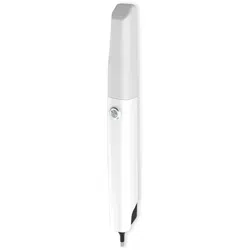

Intraoral Digital Impression Instrument
Product Specification
MODEL:PANDA P3




1. General Information
2. Product Information
3. Product Composition
4. Main Dimension
5. Intended Use and Contraindication
5.1 Intended Use
5.2 Users
5.3 Contraindication
6. Environmental Requirements
7. Working Power Requirements
8. Safety Information
8.1 Prerequisites
8.2 Mechanical Hazards
8.3 Explosion Hazards
8.4 Electrical Safety
8.5 Laser Safety
8.6 Cautions
1
2
3
4
5
5
5
6
7
7
8
8
10
11
11
13
14
CONTENTS

9. Product Hardware Installation Instructions
10. Product Software Description
10.1 Software Operation Configuration Requirements
10.2 Software Basic Information
10.3 Software Installation Method
10.4 Main Software Interface
11. Application Method
11.1 Operating Steps
11.2 Scan Technique
11.3 Calibration
12. Care and Maintenance Methods
13. Transport and Storage Life
14. Parts List
15. Revision History
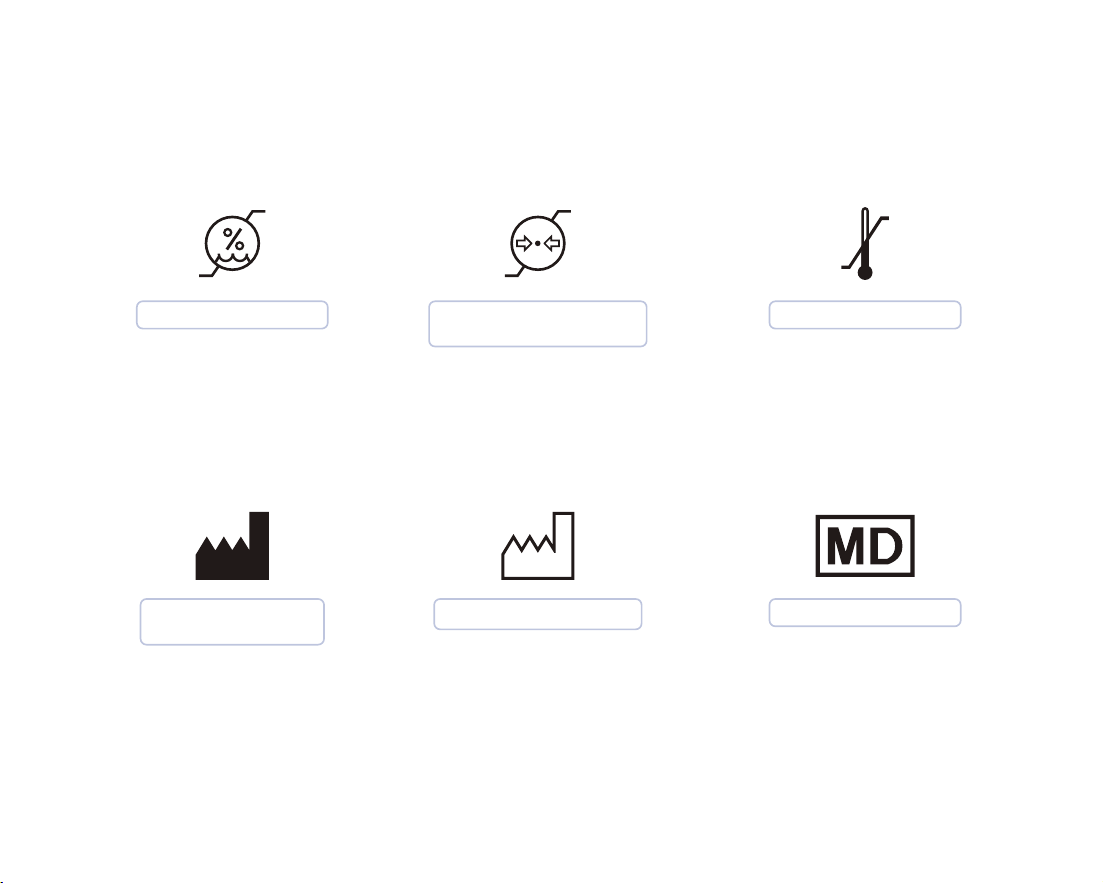
16. Legend of Labels and Symbols
17. Other Contents
17.1 Liability of the Manufacturer
17.2 Warranty Description
18. About EMC Descriptions and Risk Warning
15
17
17
18
19
19
20
20
20
22
23
26
27
28
28
31
31
31
33
1. General Information
The symbols used in this document imply the following:
1
Be sure to observe all warnings!
Please observe all safety information and warnings to prevent personal
injury material damage or damage to your instrument.
Safety information and warnings are highlighted in this guide using the
words WRNING, CAUTION.
CAUTION
CAUTION
Warnings regarding situations where a risk of injury to person exists if
the information is not observed.
Safety information where hazards such as:loss of data, invalidation of
warranty or service contract, risk of property damage, damage to the
instrument exist if the information is not observed.
WARNING
2. Product Information
2
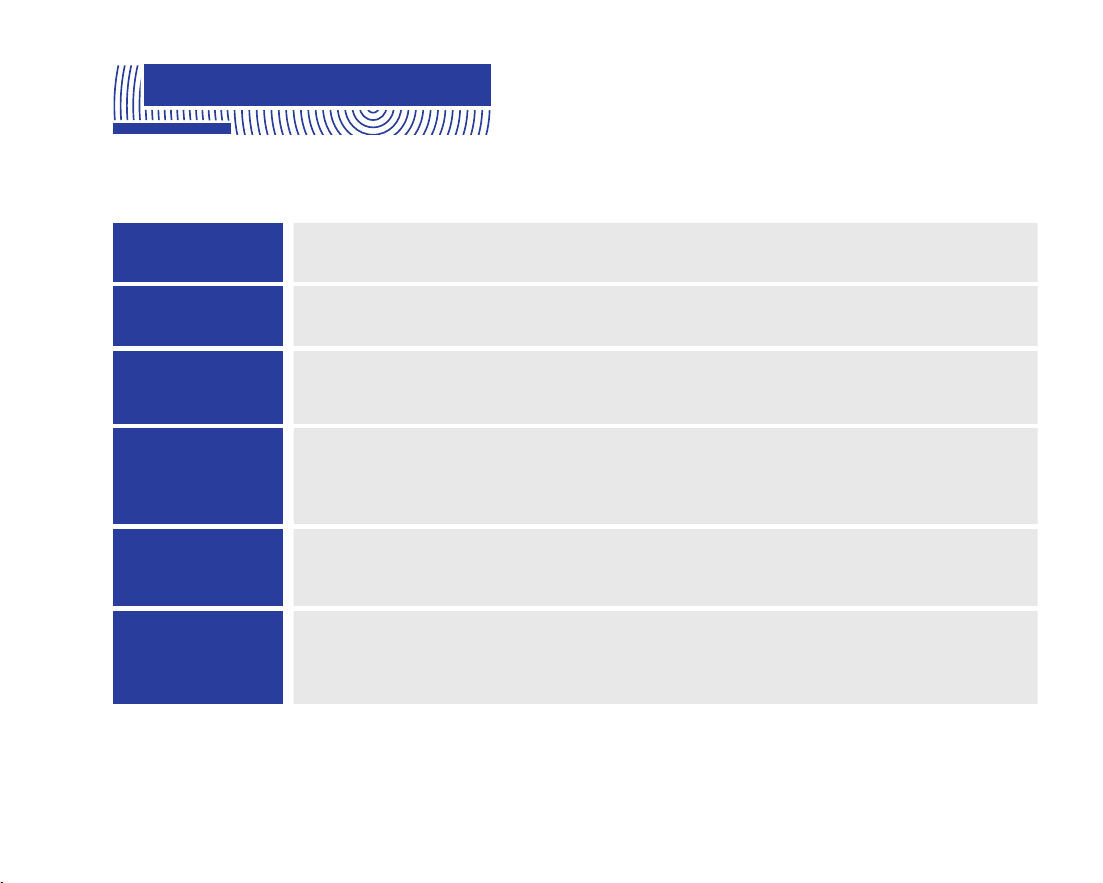
Product Name
Model
Manufacturer
Address
Manufacturer
Name
Manufacturer
Contact
Classification
Intraoral Digital lmpression Instrument
PANDA P3
Ziyang Freqty Medical Equipment Co.,Ltd.
Floor 2-3, unit 7, building 3, No. 222, West Section 3, outer ring road,
Yanjiang District, Ziyang City, 641300, Sichuan Province, P.R.China
The product is energized from an external electrical power source is
classified as CLASS I. The APPLIED PARTS is classified as TYPE B.
Tel: +86-028-26577388 | E-mail: sales@freqty.com
3. Product Composition
3
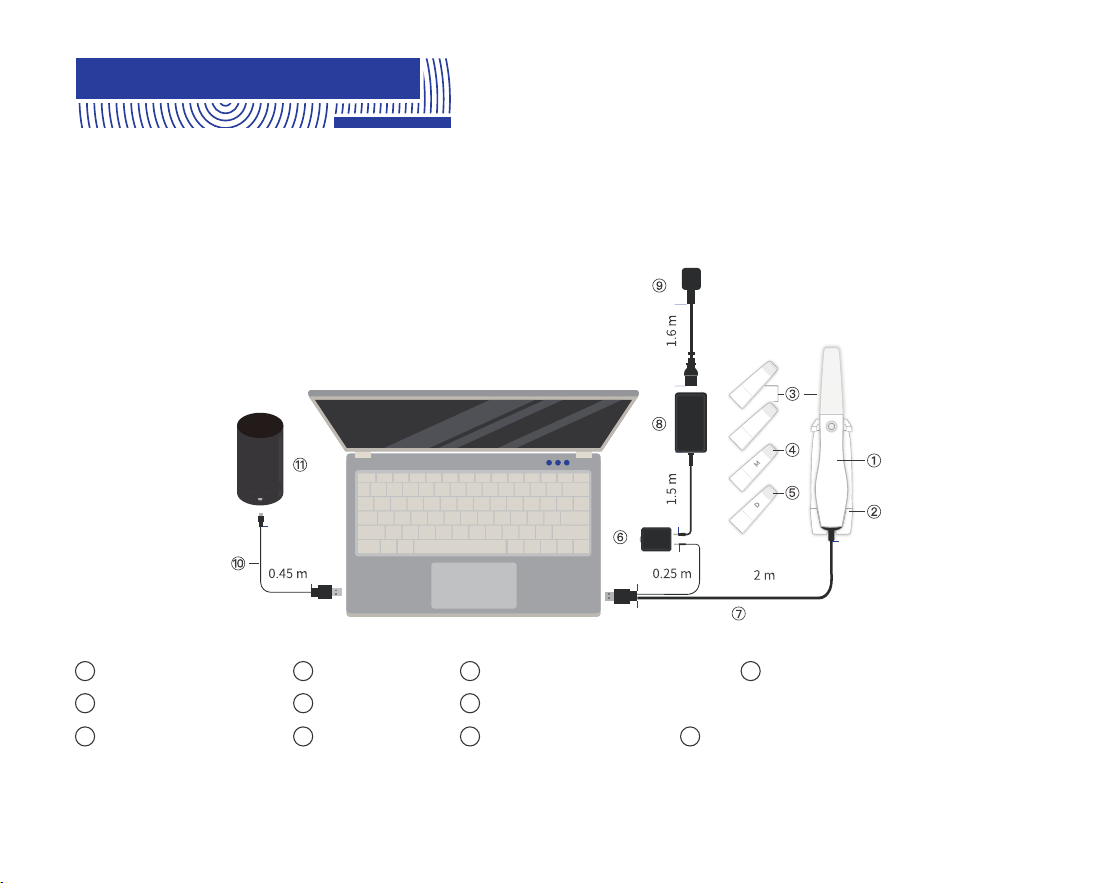
The product is composed of the probe, the power adapter, the calibrator, electric switch box, the
supporting software (release version: P3V1) and the probe bracket. The probe includes the probe
body and probe head assembly (include Normal probe, D probe, M probe).
The probe head assembly is applied part.
The structure of PANDA P3 is showed as below Fig.
Probe Head Assembly D Power Switch Date Cable (cannot be separated with the scanner)
Probe Head Assembly Normal*3 Probe Head Assembly MProbe Bracket
Probe Body
AC Power Cable Calibration Data Line Calibrator
Power Adapter Socket
1 2 3
4
5 6 7
8 9 10 11
4. Main Dimension
4
Size of probe head assembly(length, width and height)
Normal Probe
D Probe
M Probe
Total size
83*19*14mm,window:18*16mm
81*21*17mm,window:18*18mm
88*21*17mm,window:18*18mm
216mm (L) *40mm (W) * 36mm

5. Intended Use and
Contraindication
5
WARNING
Unintended use of instrument can results in physical injury to patients,
operators and damage to the product.
This product uses the optical scanning method to obtain the three-dimensional shape feature
data of the surfaces of teeth, gums and other tissue. It output the three-dimensional digital
impression data which can be used in the CAD / CAM denture design and processing.
The product may be operated only by trained dental professionals and qualified personnel.
5.1 Intended Use
5.2 User

6
Patients with the following contraindications are not suitable for intraoral digital impressions.
These contraindications include but are not limited to:
1. Patients have oral mucosal disease; patients have mental illness; patients have Parkin-
son's disease; patients have ADHD (Attention Deficit and Hyperactivity Disorder); patients
have epilepsy.
2. Spray optical shading powder on smoked areas when patients have very severe black
smoke stains that are not conducive to optical scanning. If the special shading powder
need to be sprayed, these diseases need to avoid dust are contraindications, mainly
including Not limited to: allergic or multi-drug allergic; severe respiratory diseases, asthma
patients, etc.
3. It should not be used on patients who have or have had photobiological reactions
(including those with excessive sun exposure or porphyria) or who have been treated with
photosensitive drugs (including methoxsalen or chlortetracycline).
5.3 Contraindication
7
6. Environmental Requirements
7. Working Power Requirements
Operating
Temperature
Storage
Temperature
Atmospheric
Pressure
Operating
Environment
Operating
Humidity
Storage
Humidity
5℃ ~ 30℃
-10℃ ~ 55℃
700hPa ~ 1060hPa
Home healthcare environment and professional healthcare facility environment.
Indoor operation, prevent direct sunlight and strong lights, and keep away from
electromagnetic sources, cold and heat sources, and vibration sources.
≤80%
≤93%
Powered by a power adapter:
Certified by IEC60601-1:2005+ A1:2012
Model: UES48-120333SPA3
Input: 100-240V~ 50/60Hz,1.1A
Output: 12V⎓3.33A
8
8. Safety Information
8.1 Prerequisites
Read all instructions carefully including all warnings and cautions. You must comply
with the warnings in the manual to prevent injury to persons and damage to
equipment. Proper functionality and safety can only be guaranteed if the safety
precautions in this safety guide and on the instrument are observed.
CAUTION
WARNING
No modification of this equipment is allowed.
Preventive inspection before use of the system.
Modification
Please examine the instrument for any mechanical damage on:
All enclosures;
All cables
Safety can only be guaranteed if NO DAMAGE on the instrument is observed.
CAUTION
9
Approved software only
In case of equipment failure
Install only approved software to prevent interference with the runtime reliability of
the system and programs within it.
CAUTION
WARNING
If at any time the instrument malfunctions, or if you suspect in any way that the
instrument is not working correctly:
Remove the scanner from contact with the patient.
Unplug the probe and make sure it cannot be used before it is checked.
Contact your reseller.
DO NOT attempt to open any covers on the instrument.
10
8.2 Mechanical Hazards
Dropped or damaged equipment
If you drop a probe head assembly on the floor, you MUST dispose of it immedi-
ately and NOT use the same assembly again for scanning.
There is high risk that the mirror in the probe head assembly has become
dislodged and can fall out.
If the probe body is dropped or bumped it should immediately be calibrated before
further use. If calibration fails, please contact your technical service provider. See
this guide instructions on Calibrating the probe.
CAUTION
CAUTION
11
8.3 Explosion Hazards
8.4 Electrical Safety
Environment
Distance to the patient
WARNING
The product is not designed to be used in environments that are potentially
explosive such as in close proximity to flammable liquids or gases or in
oxygen-enriched atmospheres.
WARNING
There is a potential explosion hazard if the product is operated in the presence of
flammable anesthetic.
Ensure a grounded/ earth connection
WARNING
To avoid the risk of electric shock, the product must only be connected to a supply
mains with protective earth.
12
Stress on cables
All externally connected cables such as power cable, data cable must never be
subjected to pulling stress.
CAUTION
Electrical shock
WARNING
There is a risk of electrical if you attempt to access the inside of any part of the
product. Only authorized and qualified service personnel may access the inside of
any part of the system.
Spilled Liquids
WARNING
Do not bring liquids such as beverages near the product.
Do not spill liquids on the product.
13
8.5 Laser Safety
Disconnected from mains
WARNING
The power ON/OFF switch is on the electric switch box.Do not position the
product so that it is difficult to operate the electric switch box.
This product uses a visible laser light.
WARNING
Do not look into the visible laser beam in the process of use, and prohibit the
beam of the scan window (laser window) from directly hitting the operator and the
patient's eyes.
The laser wavelengths used by the product are 450nm and 520nm.Both beam divergence angles
(Parallel) are 9°, beam divergence angle (Perpendicular) are 44° and 49°. The pulse width is 60μs.
The repetition frequency is 15Hz, and the maximum power is less than 0.5mW. The warning label
related laser product has been affixed to the external surface of the product which can be clearly
seen. After use, please place the probe on the probe bracket with the scanning window facing down.
14
8.6 Cautions
WARNING
The patient should wear goggles before starting scanning.
The requirements for goggles are as follows: protection wavelength 200-540nm, OD4+
(transmittance of 0.01%), visible light transmittance of 60%. Goggles should be kept properly
after use, for example, put them in a glasses case.
This product is a precision optical measuring instrument and must not be impacted during use.
This product meets the requirements for electromagnetic compatibility of medical devices in use, but
it is not recommended to use it in environments with strong magnetic fields, strong switches and
strong light sources, otherwise it may affect the performance of the product.
This product can only be connected to the USB interface of UL/CSA 60950-1 (or GB4943.1) certified
computer equipment.
After the product is used at the end of its life, the product should be disposed of in accordance with
the requirements of local laws and regulations, or contacted by the manufacturer for recycling and
centralized disposal in accordance with local laws and regulations.

15
The product label has two parts, including the label on the body of the product and the label
on the electric switch box, the serial number on the product label (e.g. IS027E50820ZY) and
the number on the electric switch box label (e.g. IS027E50820ZY-1) is actually the same, but
in order to distinguish the two labels, -1 is added after the number of the electric control
switch box as the distinction mark, -1 is only used for the distinction between the two and has
no other meaning.
This product is a precision optical equipment. Manufacturers and distributors shall not be liable
for the loss of product safety and reliability and performance if the operator do not operate in
accordance with the instructions, or if they do not use the product in a collision and fall due to
improper use. After falling, please check the product function and calibrate the product with a
calibrator. If the calibration fails, please contact the manufacturer for repair.
9. Product Hardware
Installation Instructions

This product is a precision optical measuring instrument and must not be impacted during use.
This product meets the requirements for electromagnetic compatibility of medical devices in use, but
it is not recommended to use it in environments with strong magnetic fields, strong switches and
strong light sources, otherwise it may affect the performance of the product.
This product can only be connected to the USB interface of UL/CSA 60950-1 (or GB4943.1) certified
computer equipment.
After the product is used at the end of its life, the product should be disposed of in accordance with
the requirements of local laws and regulations, or contacted by the manufacturer for recycling and
centralized disposal in accordance with local laws and regulations.
16
Installation step:
When the probe is not scanned, it should be placed on the probe bracket and on the horizon-
tal operating table as a whole to avoid falling damage caused by improper placement.
Connect the power supply cord to the adapter.
Insert the adapter into the power adapter socket on the electric switch box.
Insert the probe power supply line into the probe power socket on the electric
switch box.
Connect the USB 3.0 of the probe data cable to the USB 3.0 port of the user's
computer.
Plug the power cord into the SUPPLY MAINS.
Turn on the power switch on the electric switch box, and the green indicator
light will turn on.
Run the scanning software and scan according to the requirements of the
scanning operation. During normal scanning, light is projected from the
scanning window.
After scanning, power should be turned off.
1
2
3
4
5
6
7
8
17
10. Product Software
Description
10.1 Software Operation Configuration Requirements
This product can only be used by installing software on the computer. The requirement for the recom-
mended configuration of computer hardware is no less than the following configuration:
CPU
RAM
Hard disk
GPU
Operating system
Intel i7-12700H/Intel i7-11800H or above
16G/32G
SSD 512G or above
RTX2060/RTX3060 or above
Windows10/11 64bit
18
10.2 Software Basic Information
Software Name
Release Version
Software
Security Level
Intraoral Digital Impression Instrument Scan Software
P3V1
A
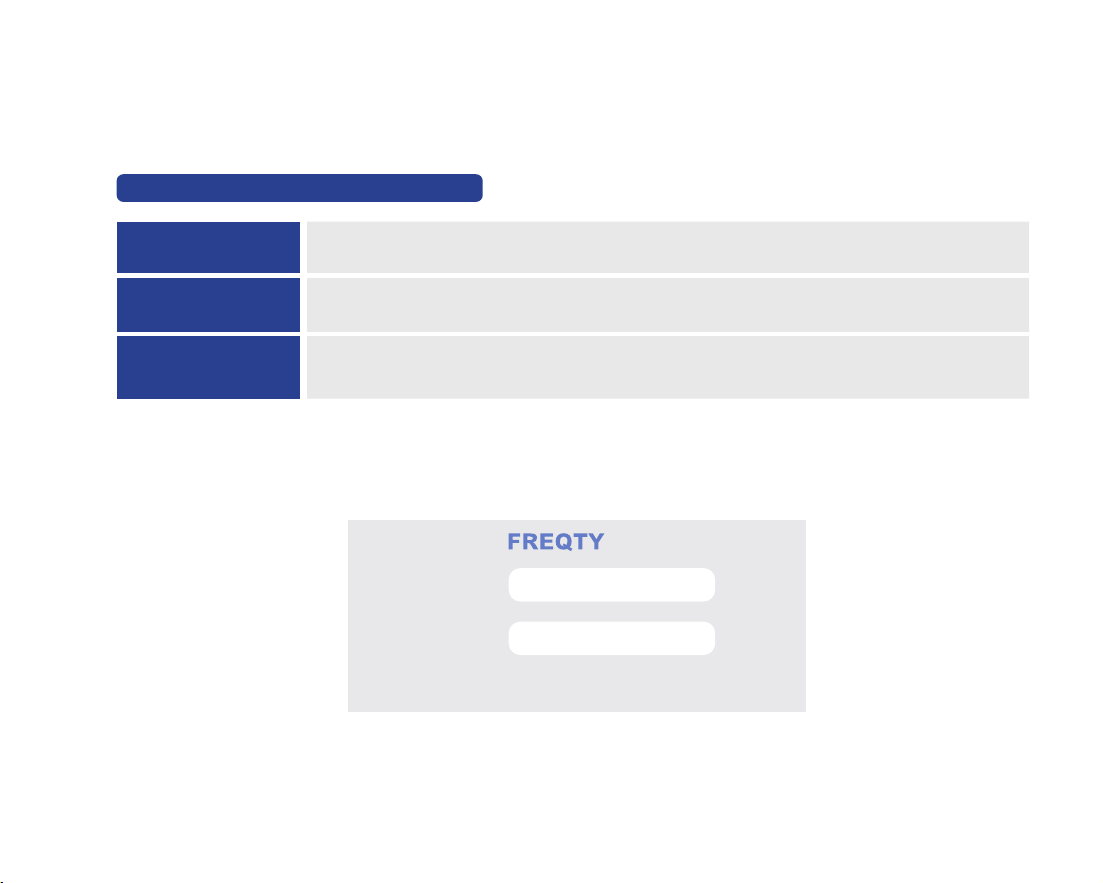
Network security: User access control can choose to use user name and password for identity authenti-
cation. The user type is ordinary user. Ordinary users can use the instrument normally and view data results.
The login interface is shown in the figure below:
Data saving format: standard STL, PLY format and PTY format defined by our company.
Account:
Password:
Login Logout
19
10.3 Software Installation Method
See Intraoral Digital Impression Instrument Software Operation Manual.
10.4 Main Software Interface
The specific method of use of the software is provided by the company with training materials
and operation manuals.

20
11. Application Method
11.1 Operating Steps
11.2 Scan technique
Follow the instructions for Product Hardware Installation in Chapter 9.
Open the software and scan after the startup is complete. During the scanning process, the
function button can be used to control the start, pause and end of the scan.
Hold the probe body in the same way as a pen while scanning, Due to the limitation of the
actual space in the mouth, it is necessary to ensure that the head window of the probe is as
close to the tooth surface as possible (it is recommended to keep it within 2mm) for
scanning, and the operation mode of suddenly far and suddenly near should be avoided.
In general, a normal probe is used for scanning, which can be used for partial or full
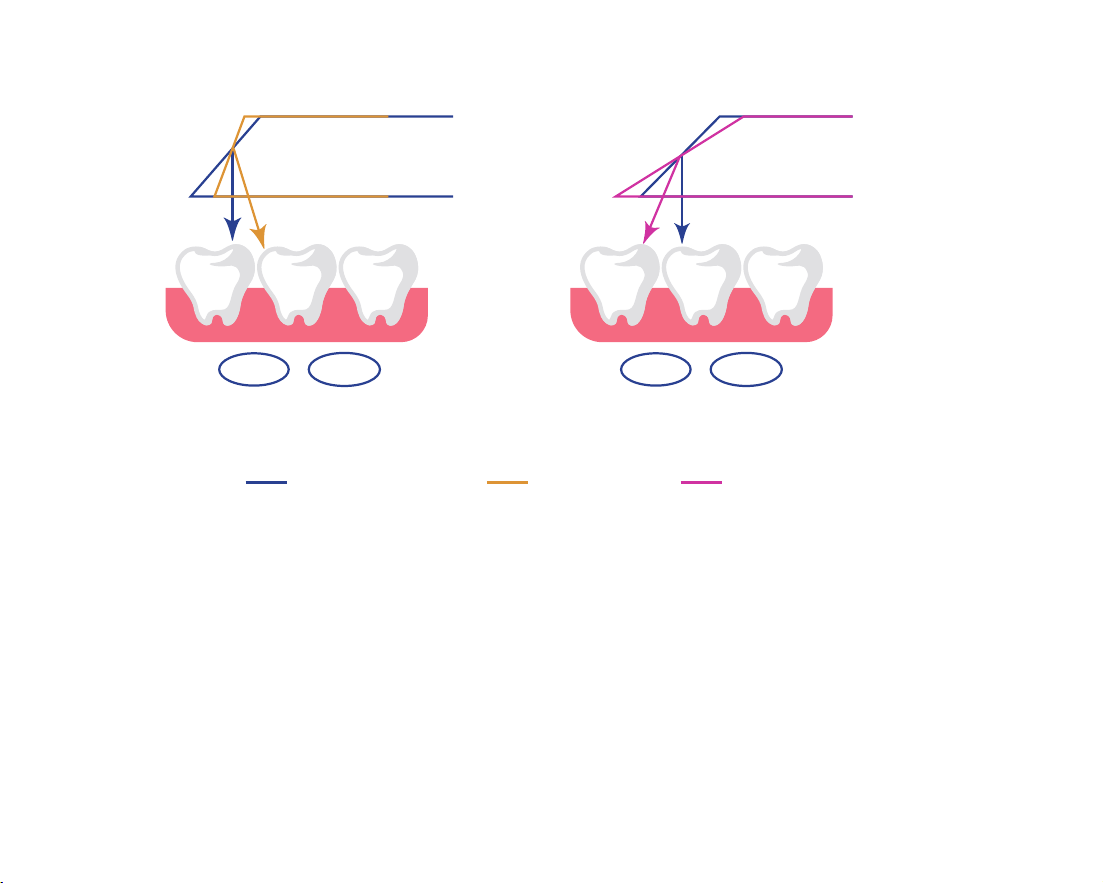
scanning operations. For some special cases (such as insufficient mouth opening, or severe
occlusion between teeth), D probe can be used to supplement the missing area of the distal
surface, or the M probe can be used to supplement the missing area of the mesial surface.
Please refer to the following figure to select the probe.
21
Axial drag of the probe was the main scanning method, and radial drag of the probe was used in the
scanning of the front teeth and occlusion points. Start scanning from the end teeth, first scan the
oeclusal data, then scan part of the buccal and lingual data, and drag from oeclusal to mesial to scan
the next tooth, and follow the same operation to complete the frame scan of the posterior tooth area.
When entering the lingual surface of the anterior tooth area, drag the probe radial direction left and
right to scan the lingual surface and incisal data, and then scan part of the labial surface data after the
lingual surface is completed.
Distal
Mesial
Distal
Mesial
complementary scan for Distal by D probe complementary scan for Mesial by M probe
Normal probe D probe M probe
22
11.3 Calibration
According to the usage, it is recommended to use the calibrator to calibrate the product
once a week. The product has not been used for three months, it is recommended to
calibrate before use. When the device is impacted, or the product is moved or vibrated
greatly, or in order to maintain the accuracy of the scanning accuracy, the scanner needs to
be calibrated. Refer to "Operation Manual" for the calibration method.
The calibrator of the product should be properly kept. Once the calibrator is
defaced, the performance of the product will be degraded.
CAUTION
23
Recommended sterilization method:
12. Care and
Maintenance Methods
The product is not expected to have long and frequent oral contact with patients. It is recom-
mended to sterilize the probe head assembly by means of moist heat steam sterilization (121°C,
15min or 134°C, 6min).
The probe head should be replaced when the appearance is damaged or the times of sterilizations is
20. The probe head assembly can be purchased separately from the seller or manufacturer.
Clean the probe head assembly with soapy water and a soft brush, then place it under
running water for rinsing.
Wipe the water stain on the surface of the probe head assembly with medical gauze and wipe
it thoroughly with absolute alcohol. Pay special attention to whether there are stains or water
stains on the head mirror. If there is, use another medical gauze to draw the absolute alcohol
and carefully wipe the head mirror. The sample was allowed to stand for two minutes after
wiping.
WARNING
In order to ensure the normal performance of the product, it is recommended
that the times of repeated sterilization of the probe head assembly shall not
more than 20.

24
Keep the outside of the product clean.
If the probe head reflective glass smudging, can dipping a small amount of anhydrous alcohol
with skimmed cotton, from the center to gently wipe the rotation. If the glass is scratched, it
needs to be replaced.
In the course of equipment, software errors and warnings can be self-healed by the software.
Serious problems may require shutting down the software and restarting. General hardware
errors can be restored by turning off the power and then turning the power back on. If some-
thing cannot be recovered, contact the manufacturer or the seller.
The maintenance personnel must take laser protective measures during the inspection process,
such as wearing goggles.
Place the probe head assembly which had been cleaned into 90* 260mm Self-sealing
sterilization pouch (materials: Medical high-temperature dialysis paper and medical
CPP/PET complex film) and seal the sterilization pouch. Then place the packaged
probe head assembly into sterilizing instrument tray.
Place the sterilizing instrument tray into a small pressure steam sterilizer and set the
sterilization parameters according to the instructions of the small steam sterilizer:
temperature 121° C, 15min, or temperature 134° C, 6min.
25
Replacement equipment parts must be obtained from the manufacturer or manufacturer
approved dealer.
Disclaimer: We can provide the necessary information for maintenance equipment to the
users with corresponding maintenance qualifications.
The parts that not supplied by the manufacturer may reduce the accuracy and
safety of the equipment.
CAUTION
WARNING
During the inspection, ensure that there is no person in the direction of laser
irradiation.
13. Transport and
Storage Life
26
Temperature -10℃~55℃, relative humidity ≤93%, and an atmospheric pressure
700hPa~1060hPa, not rain drop.
Should be stored at ambient temperature of -10℃~55℃, relative humidity not exceed 93% and
an atmospheric pressure 700hPa~1060hPa, well-ventilated, non-corrosive gas chamber.
Prevent moisture, corrosion, avoid direct sunlight.
Five years. Over period of use, the degradation of the product's main electronic and optical
components may reduce product performance.
Transport Conditions:
Expected service life:
Storage:
27
14. Parts List
Parts Name Quantity
Probe body
Probe bracket
Calibrator
Power adapter
Electric switch box
Power supply cord
Calibrator cable
Probe head assembly
Specification
Qualified label
Warranty card
1
1
1
1
1
1
1
5
1
1
1
15. Revision History
28
16. Legend of Labels
and Symbols
Revision Revision Content Date
A.00 First Release 2022.03.01
Caution
General Warning
EU Authorized
Representative
Type B Application Part
Refer to instruction
manual/ booklet
Serial Number
29
The device should be sent to the specialized
agencies according to local regulations for
separate collection after its useful life.
CE marking in conformity with
Regulation (EU) 2017/745
Indicates a medical devices
that needs to be protected
from moisture.
Laser Categories
and Warnings.
Laser Parameters
and Standards
30
Atmospheric Pressure
Limitation
Humidity Limitation Temperature Limit
Medical Device
Manufacturer
Information
Date of Manufacture

31
17. Other Contents
17.1 Liability of the Manufacturer
17.2 Warranty Description
The Installation, adjustment, modification, and repair of this product are performed by
persons or organizations approved by the manufacturer or distributor. And the manufacturer
must be able to ensure the safety of the product in accordance with the electrical, environ-
mental, storage, maintenance and operation requirements of the manual. Responsibility for
reliability and performance.
(1) Non-user subjective destruction within the warranty period, product failure caused only
by product quality;
(2) Product failure caused by force majeure (such as earthquake, flood, typhoon, etc.)
during the warranty period.
The warranty period for this product is one year, calculated from the date of sale (according to
the date of sales invoice).
One of the following cases the company provides free maintenance:

32
(1) Failure of the product due to non-subjective damage by the user during the warranty period;
(2) Failure of the product after the warranty period but within the service period.
(1) The product has been used for more than six years;
(2) Product failure caused by subjective destruction of users.
One of the following cases the company provides paid maintenance:
We no longer provide maintenance in one of the following situations:

33
18. About EMC Descriptions
and Risk Warning
WARNING
Portable RF communications equipment (including peripherals such as antenna
cables and external antennas) should be used no closer than 30 cm(12inches) to
any part of the product including cables specified by the manufacturer. Otherwise,
degradation of the performance of this equipment could result.
This product has passed the electromagnetic compatibility test and meets the requirements of
EN 60601-1-2 Medical electrical equipment - Part 1-2: General requirements for basic safety
and essential performance - Collateral Standard: Electromagnetic disturbance -Requirements
and tests.
The following application requirements shall be strictly observed during use, otherwise it may
cause electromagnetic interference to other devices or reduce the anti-electromagentic
interference capability of the therapeutic device, or even lose the basic performance.
This product belongs to the Group 1 Class B equipment specified in IEC/CISPR 11, non-perma-
nent installation equipment, non-living support equipment, and belongs to equipment that is
expected to be directly connected to the public power grid.

34
No. Name Cable length (m) If the shield Remarks
1
2
3
4
1.6
1.5
2.0
0.3
No
No
No
Yes
Power Supply Cord
DC Power Supply Line
Data Cable
Probe Power Supply Line
\
\
\
With a magnetic
loop
The cable information of this product is as shown in the following table. If there is fault in the
connection cable, please contact our company for maintenance or replacement. Other-wise it may
cause excessive electromagnetic interference. If there is something wrong with this product, please
contact our company promptly. Do not repair or replace the components yourself, or it may cause
excessive electromagnetic interference.
35
WARNING
The use of accessories or cables outside of the regulation together with equip-
ment and systems may result in increased emissions or reduced immunity of the
equipment or system.
WARNING
This product should not be used near or stacked with other devices. If it must be
used close to or stacked, it should be observed and verified to work properly
under its configuration.
Free from distortion in an image or error of a displayed. In the test, the communication was normal during
the continuous scanning process, and the image of the tooth model could be obtained normally.
Pass and Fail Criteria
The device is powered on, connected to the test software, set to continuous scan mode, a dental plaster
model is placed on the front end of the probe for continuous scanning.
Test Method
36
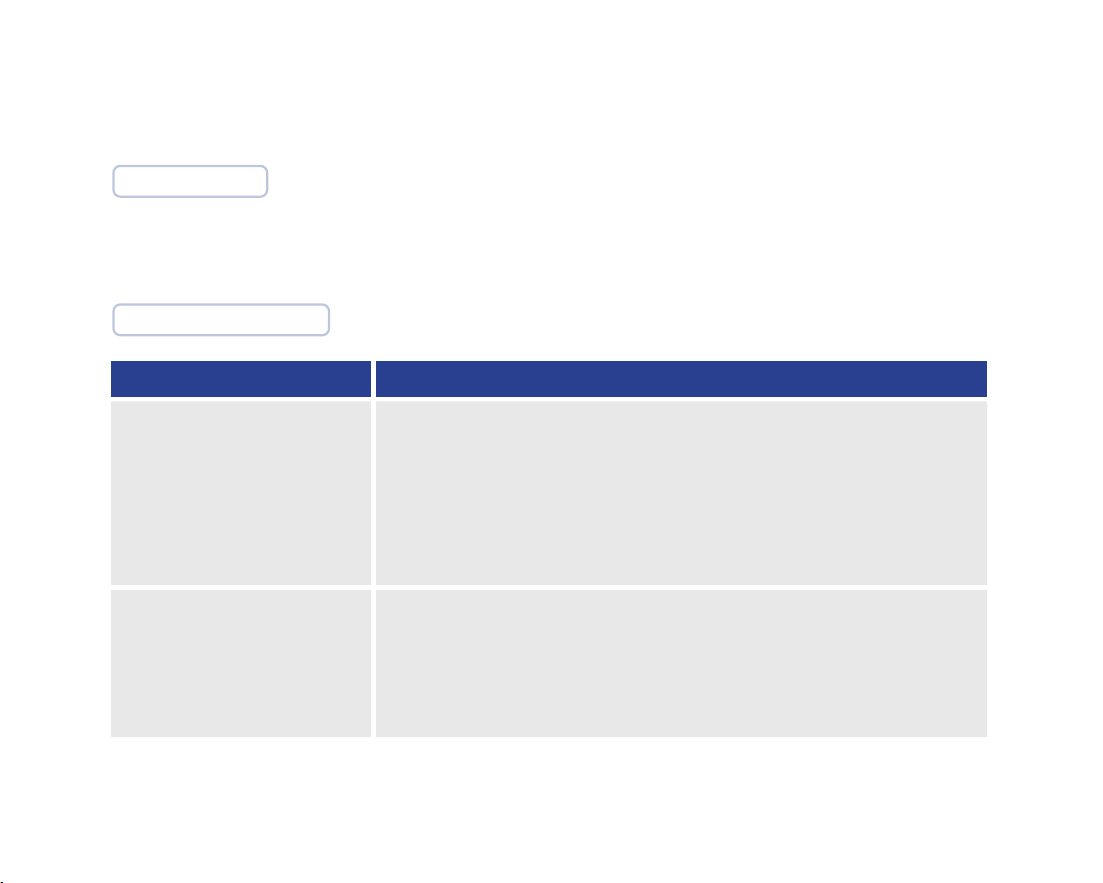
Issue Solution
No image display in
2D image area
2D image flicker
- Make sure the device's USB interface is properly connected
to the computer's USB 3.0 interface.
- Restart the software and scanning device to check if the
image can be displayed normally.
- Check if the modulator is connected properly.
- Replace the USB port of the device with the computer.
- Connect your computer to the Internet.
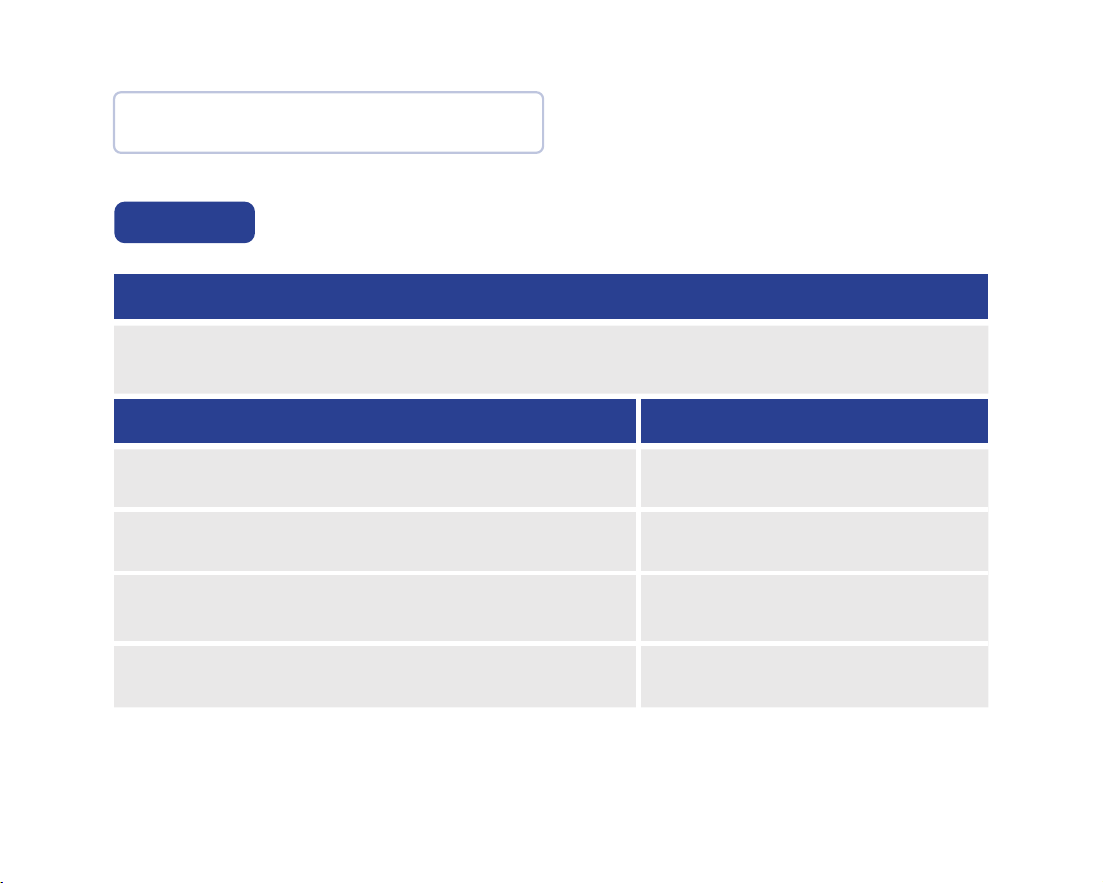
Continuous scan mode. After the device is connected to the power test software, for
continuous scanning.
Work Mode
Trouble Shooting

37
Issue Solution
Scans are easily inter-
rupted and not smooth
Out-sync of data
between 2D and 3D
- Inappropriate scan brightness. For plaster model scanning,
choose 1/2, for resin model scanning, choose 3, for the
intraoral scanning, choose 4, 5 is suitable for patients with
darker teeth in the mouth.
- During scanning, confirm that A above the image area is
blue. If it is black, use the keyboard A key to switch.
- Standardize scanning methods. Ensure coverage of
scanned data with existing data.
- Confirm whether the computer configuration meets the
requirements (higher than or equal to our recommended
configuration).
- Delays caused by too many scans (single jaw scans should
be completed within 3 minutes).
- Uninstall antivirus software or add scanning software to the
whitelist of antivirus software.
- Check the status of windows update. If the update is in
progress or has failed, please restart the computer after
the update is completed before using the scanning software.

38
Solution
Issue Solution
Difficulty for scan
relocation
No 3D data when
scanning
Abnormal interrupt
during scanning
- Ensure that the scanning direction is consistent with the
previous scanning when repositioning
- Avoid long scans.
- Check the status of windows update. If the update is in
progress or has failed, please restart the computer after
the update is completed before using the scanning software.
- Check whether the remaining storage space of drive C is
sufficient.
- Turn off or uninstall anti-virus software.
- Recalibration
39
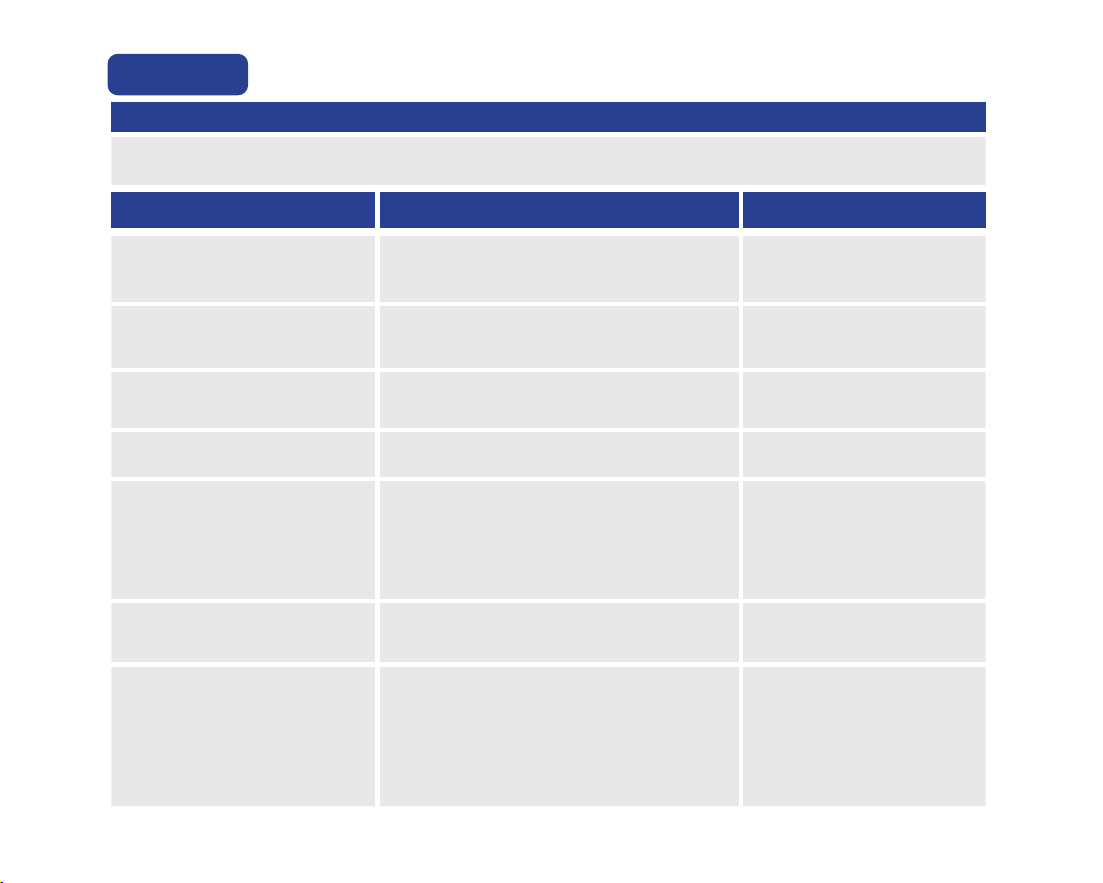
This product declaration meets
Table 1, Table 2, Table 3 of Contents.
The product intended for use in the electromagnetic environment specified below.
The customers or users should ensure that it is used in such an environment.
RF emission
CISPR 11
Group 1
RF emission
CISPR 11
Class B
Harmonic emission
IEC 61000-3-2
Voltage fluctuations/ flicker emission
IEC 61000-3-3
Complies
Complies
Manufacturer's Declaration - Electromagnetic Emissions
Emission Measurement Conformity
Table 1
40
electrostatic discharge
IEC 61000-4-2
Contact:
±8 kV.
Air:
±2kV, ±4kV, ±8kV, ±15 kV.
3 V/m
80 MHz – 2,7 GHz
80 % AM at 1 kHz
3 V/m
80 MHz – 2,7 GHz
80 % AM at 1 kHz
Contact:
±8 kV.
Air:
±2kV, ±4kV, ±8kV, ±15 kV.
Conducted disturbances
included by RF fields
IEC 61000-4-3
Electrical fast
transient/burst IEC
61000-4-4
Surge
IEC 61000-4-5
Conducted RF
IEC 61000-4-6
Power frequency
magnetic field (50Hz)
IEC 61000-4-8
Power input line voltage dips,
short interruptions and voltage
variations
IEC 61000-4-11
3 Vrms:
0,15 MHz – 80 MHz
6 Vrms:
in ISM and amateur radio
bands between
0,15 MHz and 80 MHz
80 % AM at 1 kHz
0% UT, 0.5 cycle
At 0°, 45°, 90°, 135°, 180°, 225°,
270° and 315°
0% UT, 1 cycle and 70%UT, 25/30
cycles
Single phase: at 0°
0% UT, 250/300 cycles
0% UT, 0.5 cycle
At 0°, 45°, 90°, 135°, 180°,
225°, 270° and 315°
0% UT, 1 cycle and 70%UT,
25/30 cycles
Single phase: at 0°
0% UT, 250/300 cycles
30A/m. 30A/m.
3 Vrms:
0,15 MHz – 80 MHz
6 Vrms:
in ISM and amateur radio
bands between
0,15 MHz and 80 MHz
80 % AM at 1 kHz
±2 kV for power supply lines.
± 1 kV line(s) to line(s).
± 2 kV line(s) to earth.
± 1 kV line(s) to line(s).
± 2 kV line(s) to earth.
±2 kV for power supply lines.
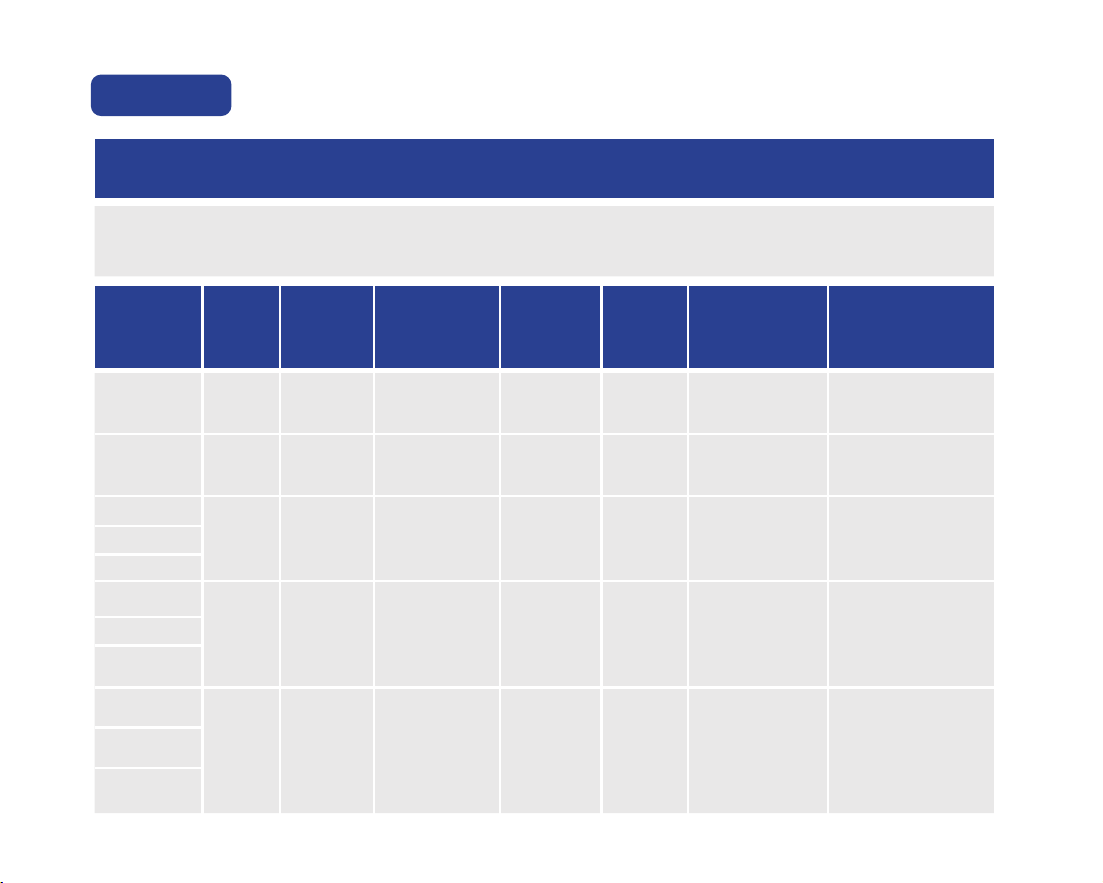
Manufacturer's Declaration - Electromagnetic Immunity
Immunity Test IEC 60601 Test Level Guidelines Compliance level
Table 2
The product intended for use in the electromagnetic environment specified below.
The customers or users should ensure that it is used in such an environment.
41
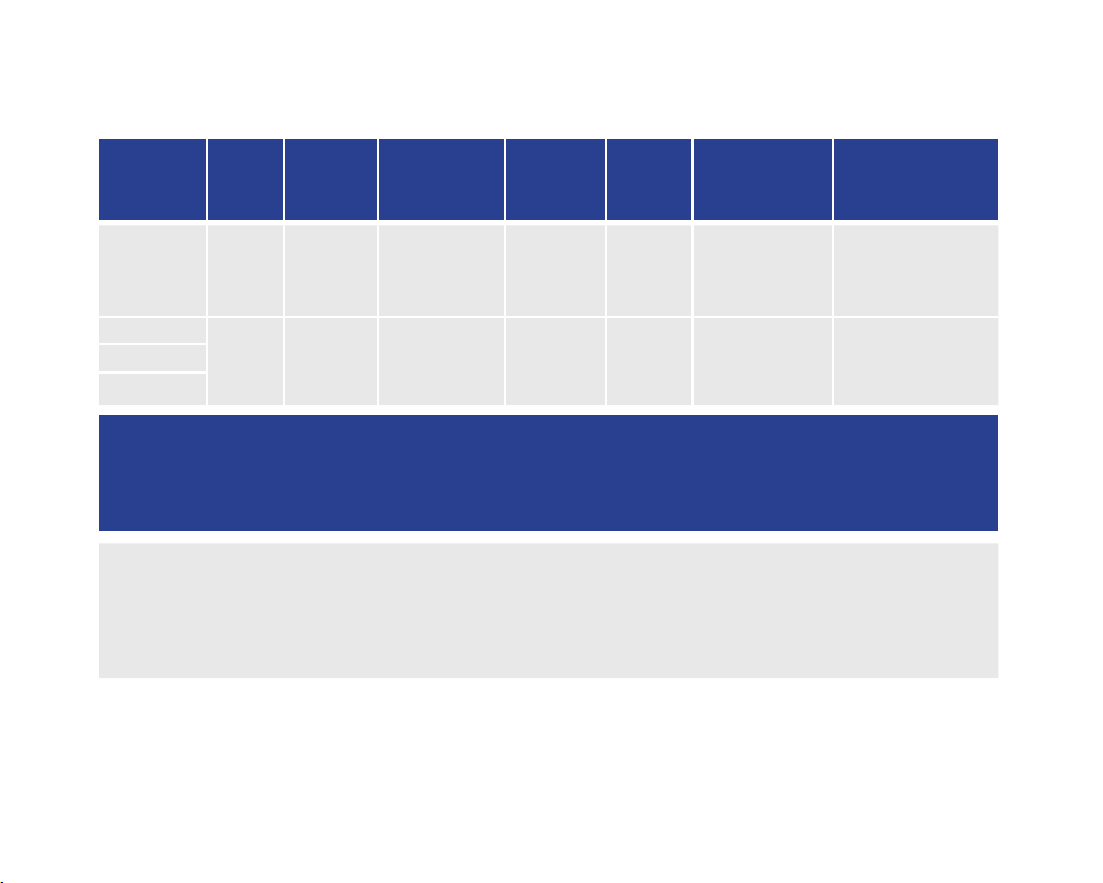
Manufacturer’s declaration-electromagnetic immunity
Test specifications for ENCLOSURE PORT IMMUNITY to RF wireless communications equipment
Test
Frequency
(MHz)
Band
a)
(MHz)
Service
a)
Modulation
b)
Maximum
Power
(W)
Distance
(m)
Immunity Test
Level
(V/m)
Compliance Level
(V/m)
(For professional
healthcare)
Table 3
The PANDA P3 is intended for use in the electromagnetic environment (for professional healthcare)
specified below.
The customer or the user of the PANDA P3 should assure that it is used in such an environment.
385 380-390 TETRA 400
Pulse
modulation
b)
18 Hz
1,8 0,3 27 27
450 430-470
GMRS 460,
FRS 460
FM c)
±5 kHz
deviation
2 0,3 28 28
710
745
780
704-787
LTE
Band 13,
17
Pulse
modulation
b)
217 Hz
0,2 0,3 9 9
810
870
930
800-960
GSM
800/900,
TETRA 800,
iDEN 820,
CDMA 850,
LTE Band 5
Pulse
modulation
b)
18 Hz
2 0,3 28 28
1720
1845
1970
1700-
1990
GSM 1800;
CDMA
1900;
GSM 1900;
DECT;
LTE Band 1,
3,
Pulse
modulation
b)
217 Hz
2 0,3 28 28
42
NOTE: If necessary to achieve the IMMUNITY TEST LEVEL, the distance between the transmitting
antenna and the ME EQUIPMENT or ME SYSTEM may be reduced to 1 m. The 1 m test distance is
permitted by IEC 61000-4-3.
a) For some services, only the uplink frequencies are included.
b) The carrier shall be modulated using a 50 % duty cycle square wave signal.
c) As an alternative to FM modulation, 50 % pulse modulation at 18 Hz may be used because while it does
not represent actual modulation, it would be worst case.
Test
Frequency
(MHz)
Band
a)
(MHz)
Service
a)
Modulation
b)
Maximum
Power
(W)
Distance
(m)
Immunity Test
Level
(V/m)
Compliance Level
(V/m)
(For professional
healthcare)
2450
2400-
2570
Bluetooth,
WLAN,
802.11 b/g/n,
RFID 2450,
Pulse
modulation
b)
217 Hz
2 0,3 28 28
5240
5500
5785
5100-
5800
WLAN
802.11
a/n
Pulse
modulation
b)
217 Hz
0,2 0,3 9 9

Manufacturer Information
Manufacture: Ziyang Freqty Medical Equipment Co., Ltd.
Address: Floor 2-3, unit 7, building 3, No. 222, West Section 3, outer ring road,
Yanjiang District, Ziyang City, 641300, Sichuan Province, P.R. China
Tel: +86-028-26577388
Email: sales@freqty.com
Website: http://www.freqty.com/
European Authorized Representative
Company:SUNGO Europe B.V.
Address:Olympisch Stadion 24, 1076DE Amsterdam
Contact: SUNGO Secretary
Tel /Fax: +31(0)2021 11106
E-mail: ec.rep@sungogroup.com