INSTALLATION GUIDE
INTEGRATED
DD60SI9, DD60STI9, DD60SHI9
DD60SHTI9
SINGLE DISHDRAWER™ DISHWASHER
NZ AU UK IE

3
SAFETY AND WARNINGS
!
WARNING!
Electric Shock Hazard
Failure to follow this advice may result in
electrical shock or death.
• Fitting an integrated panel requires access to
electrical service areas. This must be performed
by a Fisher & Paykel trained and supported
service technician or qualified person.
• Before fitting the front panel, the dishwasher
must be disconnected from the power supply.
• After installing the front panel, the installer
must ensure that the following components
are electrically earthed: the panel bracket and
any custom metal component (e.g. handle) that
extends past the rubber seal.
• This appliance must be earthed. In the event of a
malfunction or breakdown, earthing will reduce
the risk of electric shock by providing a path of
least resistance for electric current. This appliance
is equipped with a cord having an equipment-
earthing conductor and an earthing plug.
• Before installing the DishDrawer™ Dishwasher,
remove the house fuse or open the circuit breaker.
• The plug must be plugged into an appropriate
outlet that is installed and earthed in accordance
with all local codes and ordinances.
• Do not modify the power supply plug provided
with the appliance – if it will not fit the outlet,
have a proper outlet installed by a qualified
electrician. Do not use an extension cord, adapter
plug or multiple outlet box.
• The dishwasher must be completely enclosed at
the time of installation.
!
WARNING!
Electric Shock Hazard
Failure to follow this advice may result in
electrical shock or death.
• WARNING – Improper connection of the
equipment-earthing conductor can result in a
risk of electric shock. Check with a qualified
electrician or service representative if you
are in doubt as to whether the appliance is
properly earthed.
!
WARNING!
Cut Hazard
Failure to use caution could result in injury.
• Take care – panel edges are sharp.

4
SAFETY AND WARNINGS
WARNING!
To reduce the risk of fire, injury to persons or damage when using the appliance, follow the
important safety instructions listed below. Read all the guidance before using the appliance.
Servicing
z
Do not repair or replace any part of the appliance unless specifically recommended in
this guide. All other servicing should be undertaken by a Fisher & Paykel trained and
supported service technician or qualified person.
Installation
z
Installation of this DishDrawer™ Dishwasher requires basic mechanical and
electrical skills.
z
Installation must comply with your local building and electricity regulations.
z
Remove all packaging materials supplied with the dishwasher.
z
Be sure to leave these Instructions with the Customer.
z
At the completion of the installation, the Installer must perform the Final Checklist.
z
This dishwasher is manufactured for indoor use only.
z
Ensure all water connections are turned OFF. It is the responsibility of the plumber and
electrician to ensure that each installation complies with all Codes and Regulations.
z
The DishDrawer™ Dishwasher MUST be installed to allow for future removal from the
enclosure if service is required.
z
The switched power outlet must be outside the dishwasher cavity, so that it is
accessible after installation.
z
Care should be taken when the appliance is installed or removed to reduce the
likelihood of damage to the power supply cord and hoses.
z
If the DishDrawer™ Dishwasher is relocated from one installation site to another it must
be kept upright to avoid damage from water spillage.
z
Ensure only supplied hoses are used for connection. Old hoses should not be reused.
z
Failure to install correctly could invalidate any warranty or liability claims.
z
If the product is installed in a motor vehicle, boat or similar mobile facility, you must
bring the vehicle, boat or mobile facility containing the product to the service shop at
your expense or pay the service technician’s travel to the location of the product.
SAVE THESE INSTRUCTIONS
The models shown in this installation guide may not be available in all markets and are subject to
change at any time. For current details about model and specification availability in your country,
please go to our website www.fisherpaykel.com or contact your local Fisher&Paykel dealer.
5
TOOLS AND COMPONENTS
z
Keep all packing materials until the unit has been inspected.
z
Inspect the product to ensure there is no shipping damage. If any damage is detected
contact the dealer or retailer you bought the product from to report the damage.
z
Fisher & Paykel is not responsible for shipping damage.
*Optional | **Comes fitted to the product
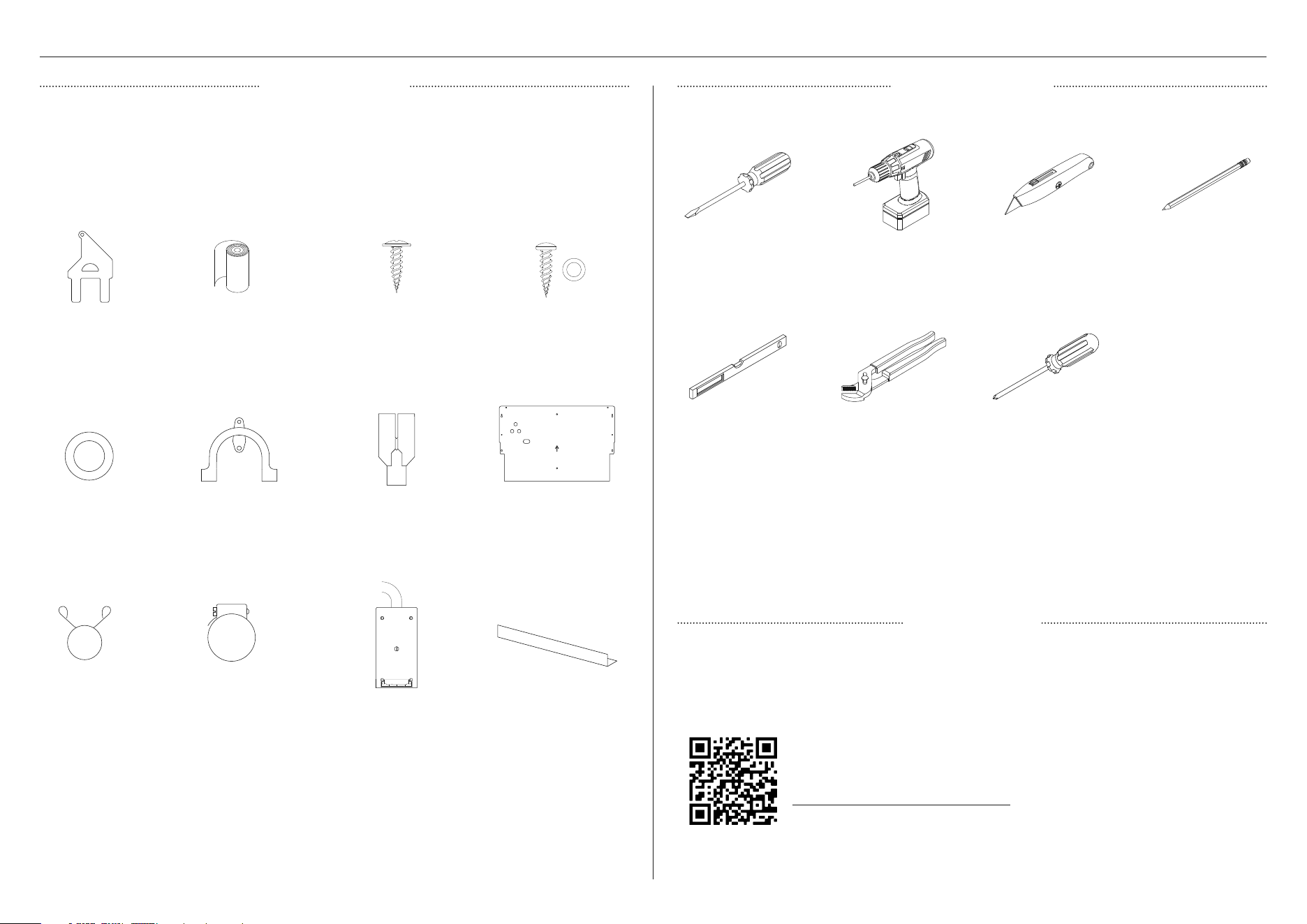
Supplied
PARTS SUPPLIED TOOLS REQUIRED
INSTALL VIDEO
Side mounting bracket
kits (2)*
Drain hose support (1)
38mm bottom fixing
screws and washers (2)
Drain hose joiner (1)
Moisture protection
tape (1)
Wire clip (1) External venting kit (1) Trim bracket*
16mm Phillips screws (16)
Clamp (1)
Panel bracket kits (1)**
Inlet hose rubber washer
(1)**
To access installation videos
Scan the QR code with your smartphone or watch online at:
fisherpaykel.com/dishdrawer-install
This video provides an overview of what is needed to install a DishDrawer™ Dishwasher. It is
intended as an overview only of the installation process and is not intended to be used as a
standalone guide on how to install a DishDrawer™ Dishwasher yourself. Installation should be
undertaken by a Fisher & Paykel trained and supported service technician or qualified person.
Flat-blade screwdriver
Level
Powered driver
Pliers
Box cutter Pencil
Not supplied
Phillips screwdriver
6
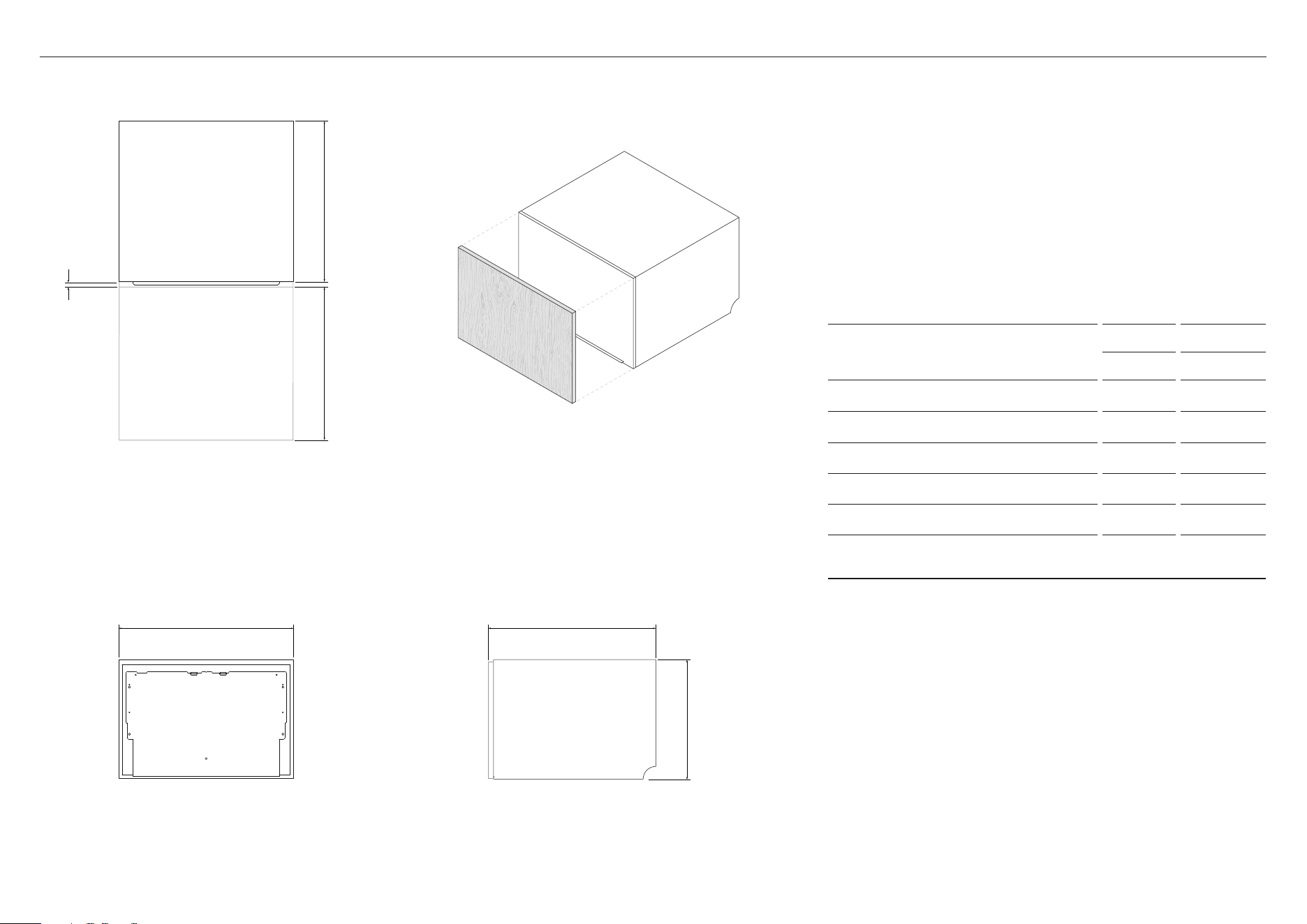
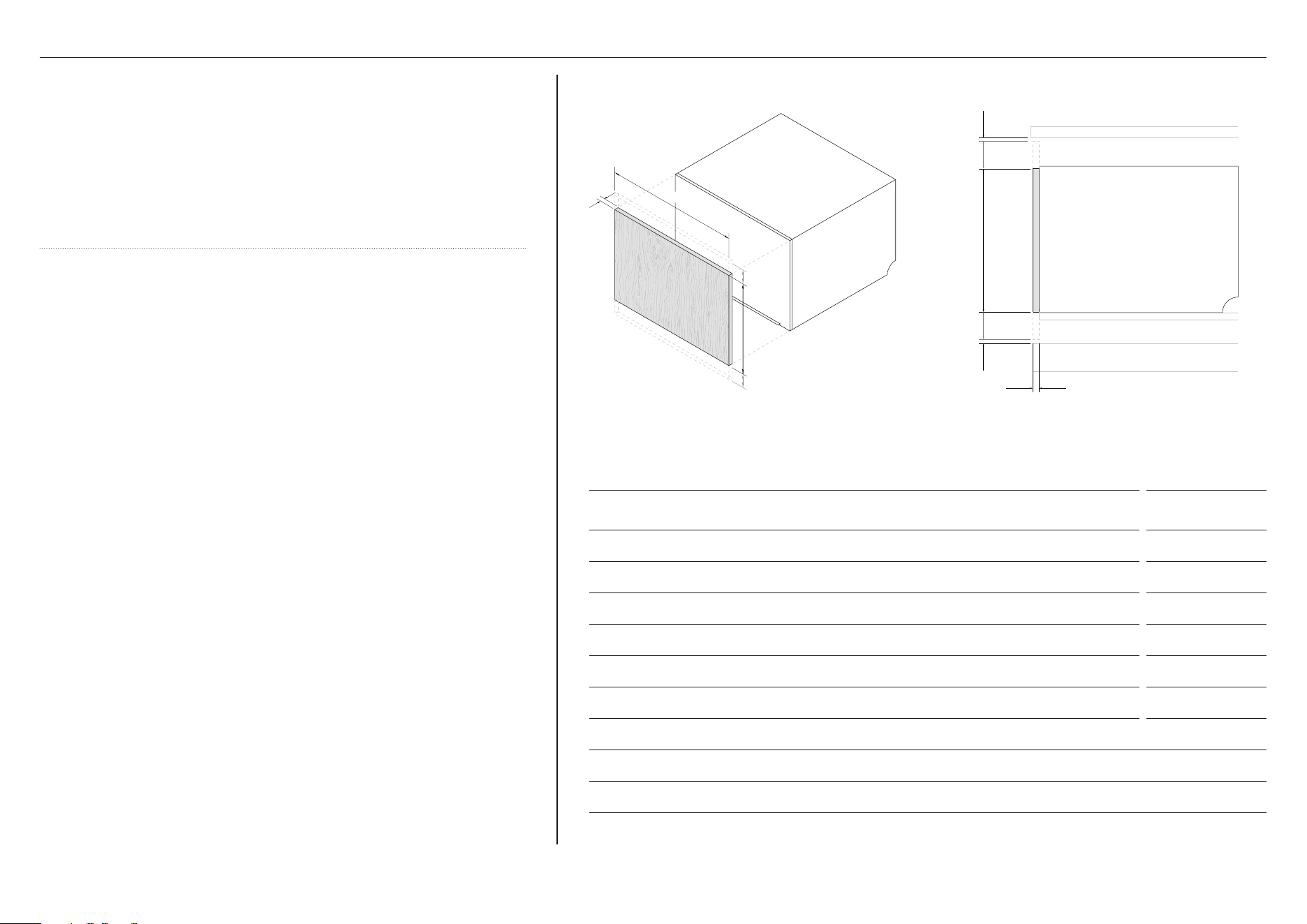
PRODUCT DIMENSIONS – DD60SI MODELS
Actual product dimensions may vary by ± 2 mm
PRODUCT DIMENSIONS
DD60SI DD60STI
MM MM
A Overall height 410 454
B Overall width 599 599
C Overall depth* 571 571
D Depth of chassis 553 553
E Front panel depth** 16 – 20 16 – 20
F Max. drawer extension*** 527 527
*based on front panel thickness of 18mm
**refer to 'Custom panel dimensions' for more information
***excluding custom panel and handle
PLAN ISOMETRIC
PROFILEFRONT
A
C
b
f
D
e
7
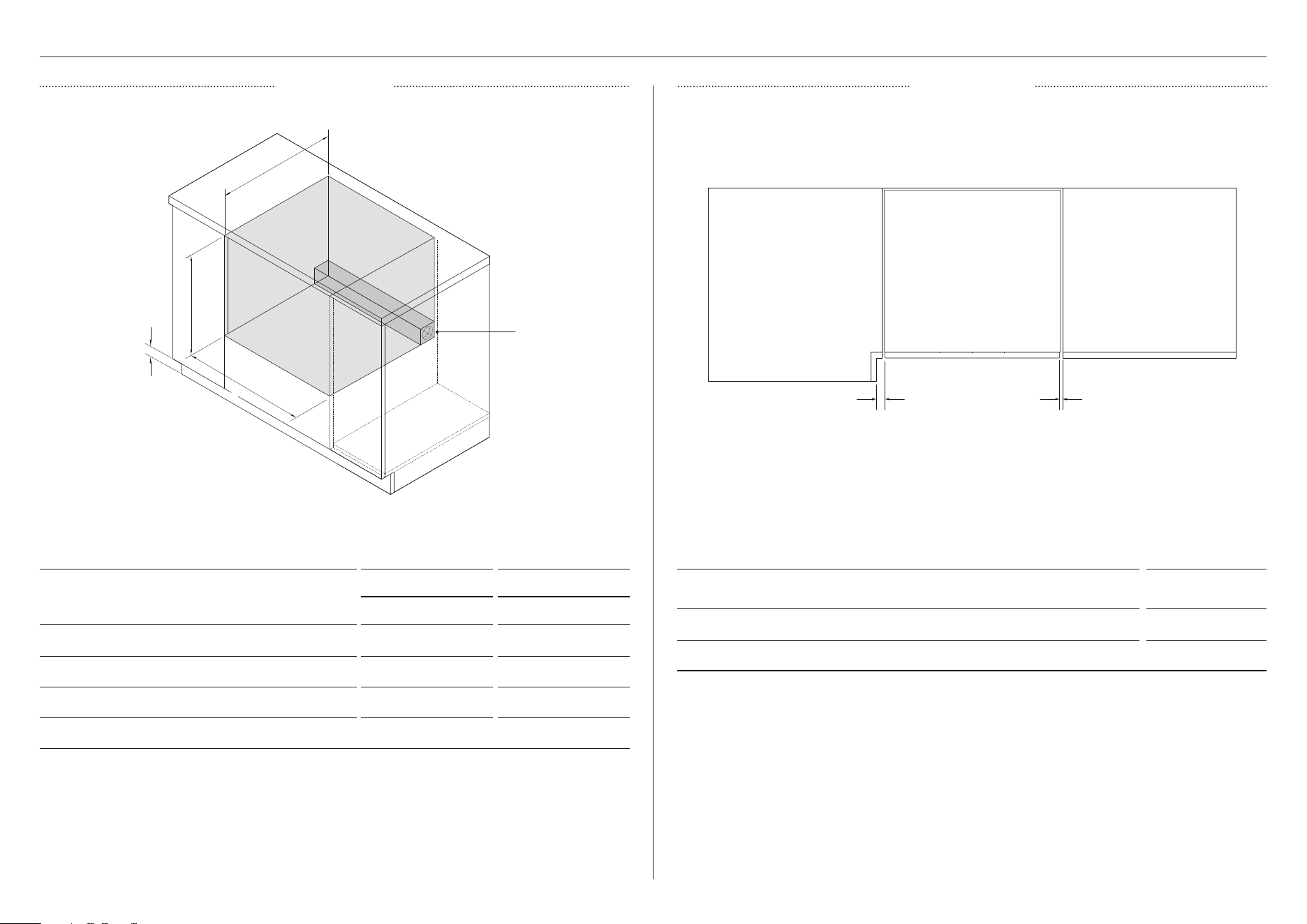
CUSTOM PANEL DIMENSIONS
CUSTOM PANEL CONSIDERATIONS MM
A Minimum panel height
z
Tall models 452
z
Standard models 408
B Minimum panel width 596
C Panel depth 16 – 20
D Minimum clearance between base of door panel and cabinetry 2
E Minimum clearance between top of door panel and countertop 2
Maximum weight of each drawer panel (including handle)
9kg
*Core panel dimension. Panel can be extended or lowered to suit installation
ISO PROFILE
A
A
D
e
C
B
C
Material specifications
z
Maximum weight of panel must not exceed 9kg (including handle)
z
The panel should be adequately sealed to withstand moisture (50°C @
80% RH). The back and sides of the panel should be completely sealed
with a waterproof vapour barrier, such as polyurethane, to prevent damage.
z
The back of the panel should be completely flush so that the seal between
the panel and the rubber trim is maintained.
z
Installation outside these specifications may result in condensation on
cabinetry surfaces.
8
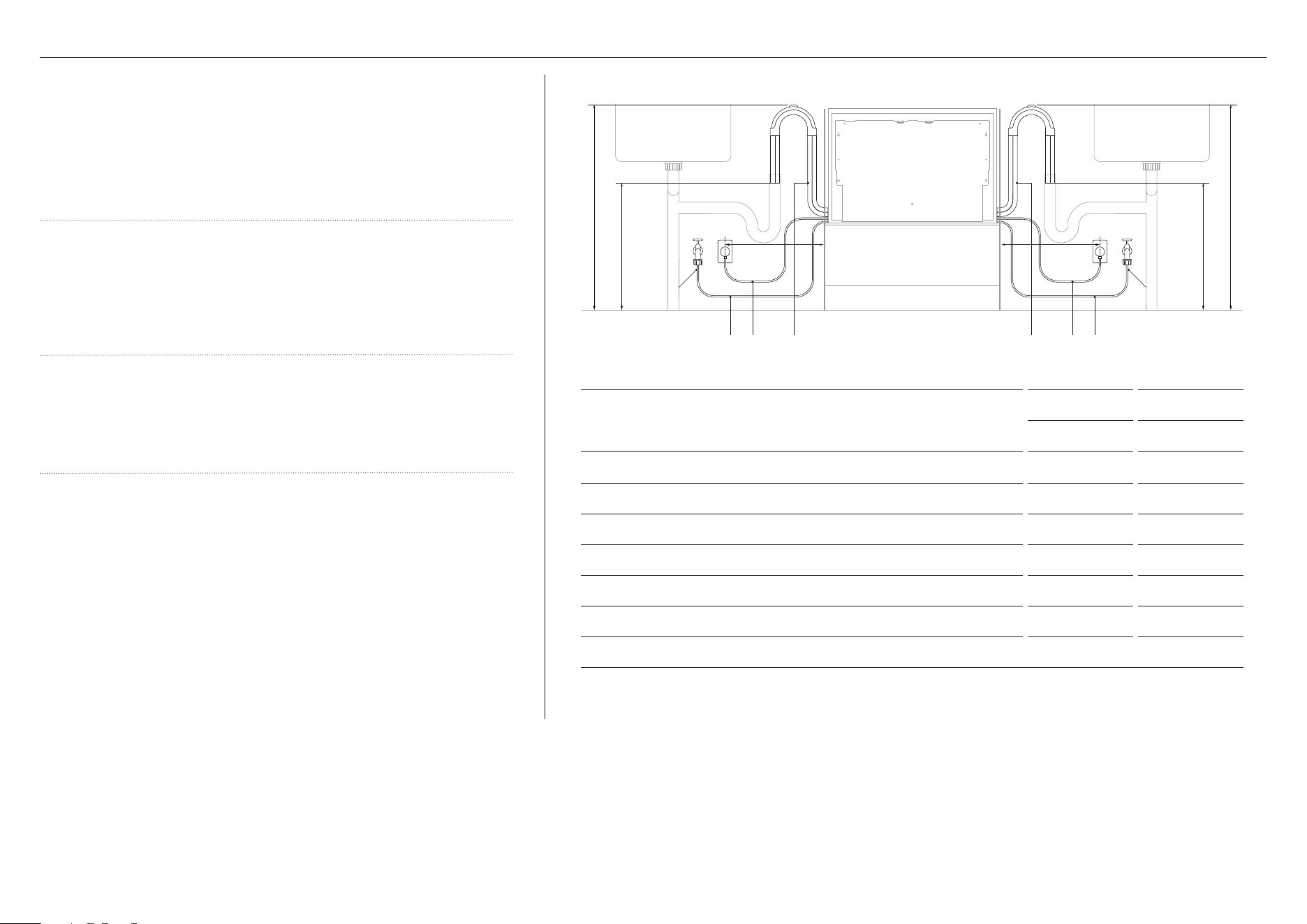
CABINETRY
CABINETRY DIMENSIONS
STD MODELS TALL MODELS
MM MM
A Minimum inside height min. 412 min. 456
B Inside width 600 – 610 600
C Minimum overall depth* 579 579
D Minimum toe kick height** 100 100
*including 19mm door panels on adjacent cabinetry
**when venting through the same or adjacent cabinet. Refer to 'External venting preparation' for more information.
***for more information on service requirements, refer to 'Plumbing & electrical considerations' and 'Cabinetry preparation'.
CABINETRY CLEARANCES MM
A Minimum clearance to adjacent cupboard door 2
B Minimum clearance to corner cupboard 13
DIMENSIONS CLEARANCES
B A
ISOMETRIC
PLAN
A
C
B
D
Connections can
be located in an
adjacent cabinet
on either side of
the DishDrawer™
Dishwasher***
9
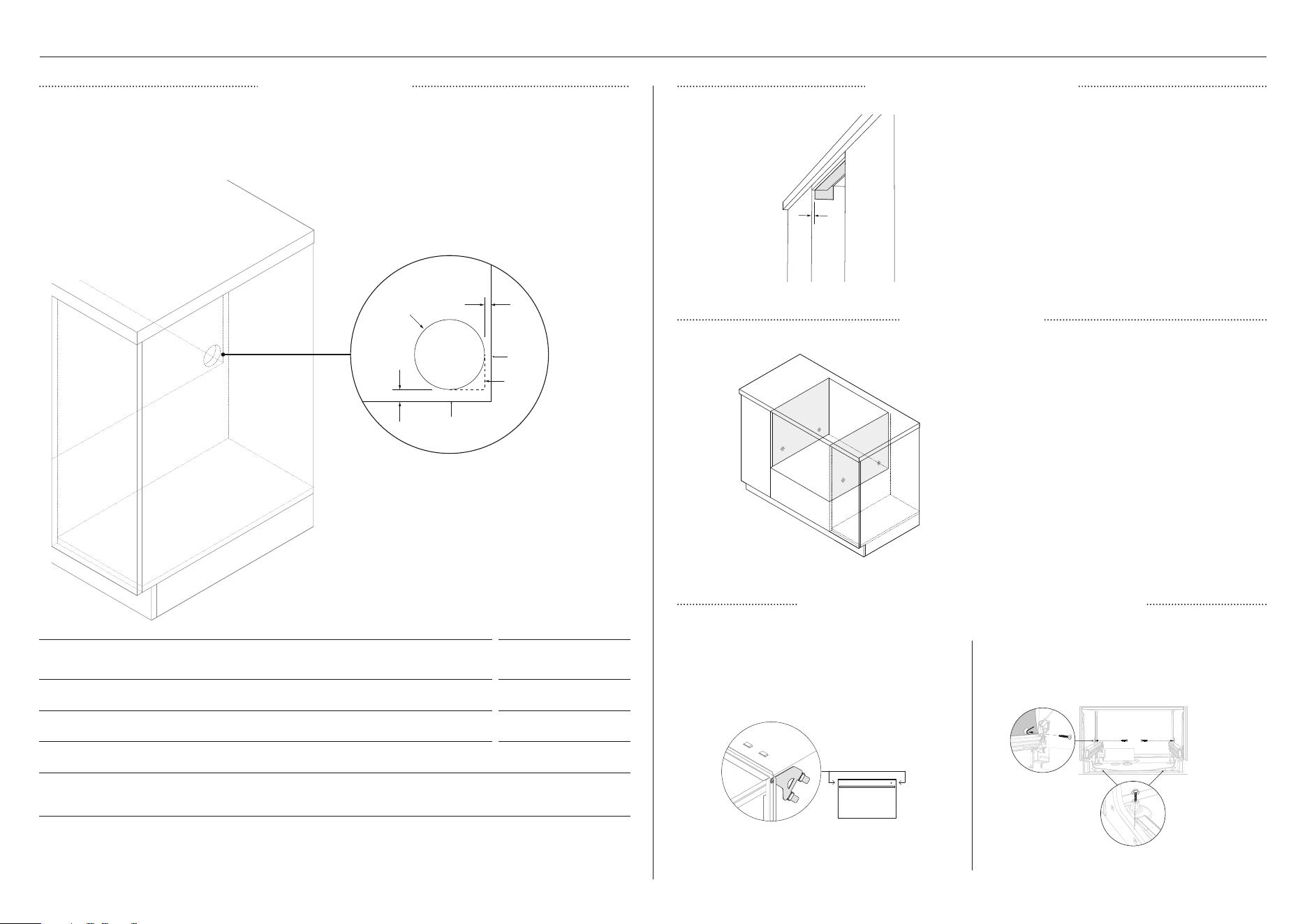
PLUMBING & ELECTRICAL CONSIDERATIONS
SERVICE DIMENSION
LEFT SIDE* RIGHT SIDE*
MM MM
A Length of drain hoses 2000 1800
B Length of power cord** 1650 1650
C Length of inlet hose 1650 1250
D Distance from floor to top of hose support 750 – 883 750 – 883
E Minimum distance from floor to end of drain hoses*** 500 500
F Minimum inlet hose radius 200 200
G Maximum distance from cabinetry centre of electrical outlet 450 450
*dimensions taken from the chassis edge where applicable
**excluding plug
***standpipe install illustrated. Distance is the same for all plumbing installs.
a a b cbc
d d
e e
f f
Hose and cord lengths
z
Your services can be installed to either the left-hand or right-hand side
of the product in an adjacent cabinet. Refer to 'Cabinetry preparation'
for service access requirements.
z
If the drain hoses supplied are not long enough to reach your services,
you may purchase a Fisher & Paykel drain hose extension kit which will
extend the drain hoses by 3.6m (part number 525798).
Water connection
z
Recommended water temperature: Cold (maximum 60°C)
z
3/4” BSP (GB20) to suit flat washer
z
Ensure water connection complies with local plumbing regulations.
Water pressure
z
Water softener models: max. 1 MPa (145 psi), min. 0.1 MPa (14.5 psi)
z
Non-water softener models: max. 1 MPa (145 psi), min. 0.03 MPa (4.3 psi)
Electrical requirements
z
220 – 240V min 4.2A
10
CABINETRY PREPARATION
SERVICE ACCESS
SERVICE HOLE DIMENSIONS MM
A Maximum distance between rear of cavity and service hole 5
B Maximum distance between shelf* and service hole 10
C Minimum diameter of service hole 57
D If venting through the adjacent cabinetry, the rear edge of the service hole should be
enlarged by cutting out the bottom corner
*For assisted opening installations, maximum distance should be referenced from the top of the spacer blocks
REAR
WALL
SHELF*
PROFILE
A
B
C
D
z
Service holes can be created on either side of the DishDrawer™ Dishwasher cavity as
shown below.
z
If the hole is created through wood, ensure the edges are smooth and rounded.
z
If the hole is created through metal, ensure the edge protector is fitted.
Align the supplied moisture protection
tape to the cabinetry as illustrated
Ensure this area is free of debris
before carefully applying the tape to
the surface.
1
MOISTURE PROTECTION
10mm
SIDE PARTITION
SELECT CABINETRY SECURING METHOD
1
Recommended method*
*Frameless cabinetry only
METHOD A
Secure to cabinetry via brackets
METHOD B
Secure via drawer removal
If securing via the drawer removal method,
ensure the marked locations provide adequate
support.
If there are no side partitions, construct timber
bracing to secure the fixings to.
11
EXTERNAL VENTING PREPARATION
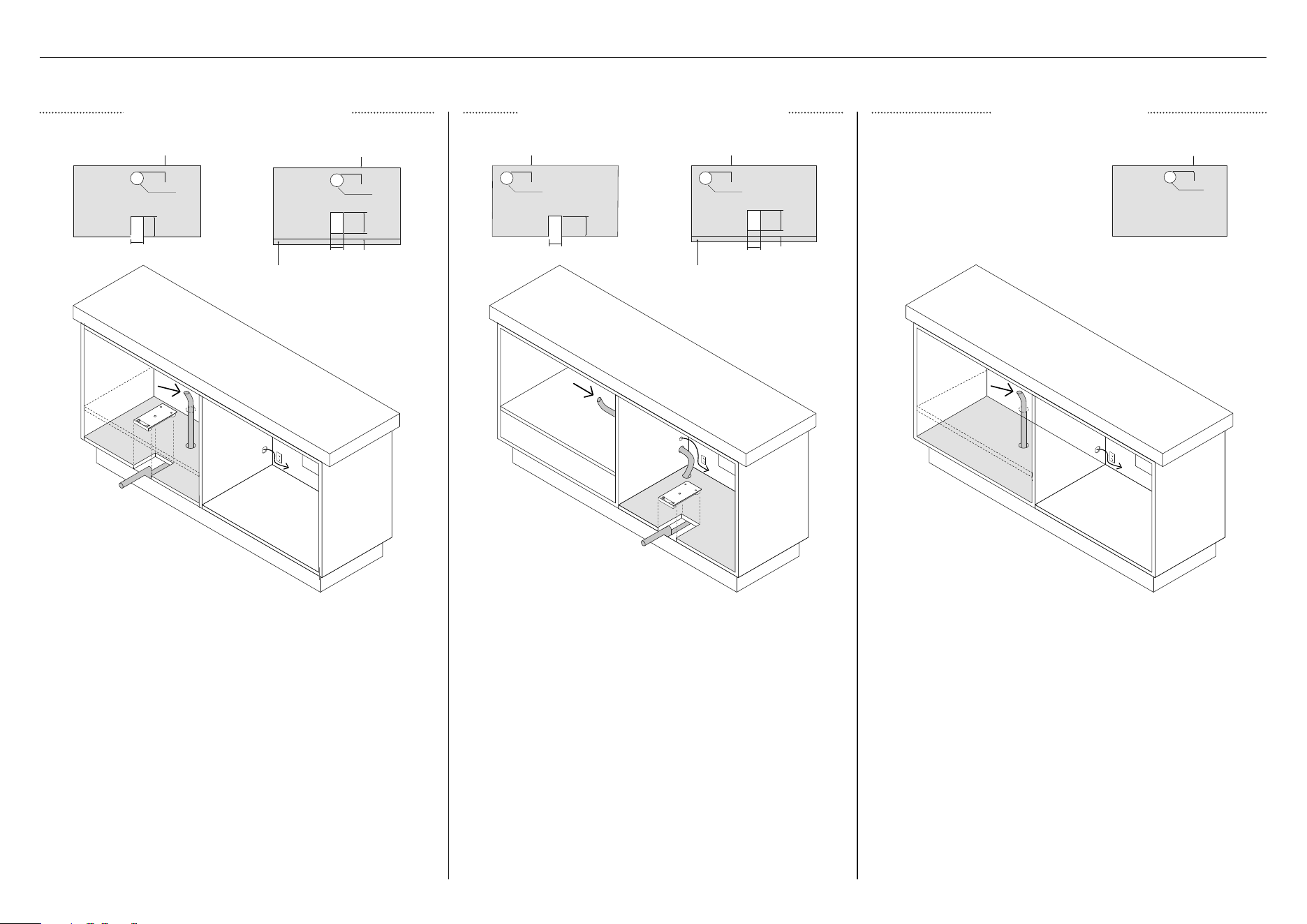
To prevent the build up of condensation produced by your DishDrawer™ Dishwasher, the external venting kit must be installed via one of the following options:
THROUGH SAME CABINET THROUGH ADJACENT CABINET THROUGH FLOOR
z
There is no minimum toe kick height for venting
the DishDrawer™ Dishwasher through the floor
below the cabinetry, the space below the floor
however, must be a sub-area of the house and have
adequate airflow.
z
A Ø57mm service hole should be created through
the side wall following the guidance under 'Cabinetry
preparation'. In addition to this, a Ø57mm service
hole must be also be created through the shelf, the
base of the cavity and the floor to route the venting
hose through.
z
The duct is not required for this venting method.
z
Ensure all cutout edges are smooth and rounded and
the supplied edge protector is fitted if required.
z
Ensure cutout in the floor is sealed adequately.
z
A toe kick height of at least 100mm is required.
z
A Ø57mm service hole should be created through
the side wall following the guidance under 'Cabinetry
preparation'. In addition to this, a second Ø57mm
service hole must be also be created through the
shelf and the base of the cavity to route the venting
hose through.
z
Frameless cabinetry: A 100mm x 200mm cutout
must be created at the front of the cabinetry base to
secure the duct to.
z
Framed cabinetry: A toe kick depth of at least 60mm
is required. In addition, a 100mm x 200mm cutout
must be created within the adjacent cabinetry base
to secure the duct to. This cutout should be set
back a minimum of 25mm from the frame edge for
optimal venting.
z
A toe kick height of at least 100mm is required.
z
A notched-out Ø57mm service hole should be
created through the side wall following the guidance
under 'Cabinetry preparation'.
z
Frameless cabinetry: A 100mm x 200mm cutout
must be created in the base of the adjacent cabinetry
to secure the duct to.
z
Framed cabinetry: A toe kick depth of at least 60mm
is required. In addition, a 100mm x 200mm cutout
must be created within the adjacent cabinetry base
to secure the duct to. This cutout should be set
back a minimum of 25mm from the frame edge for
optimal venting.
FRAMED FRAMED FRAMED & FRAMELESSFRAMELESS
ISO* ISO* ISO
FRAMELESS
25
25
200
200
200
200
100
100
100
100
Ø57
Ø57
Ø57 Ø57
Ø57
5 5 5 5
5
custom framed edge custom framed edge
*Frameless install illustrated *Frameless install illustrated
12
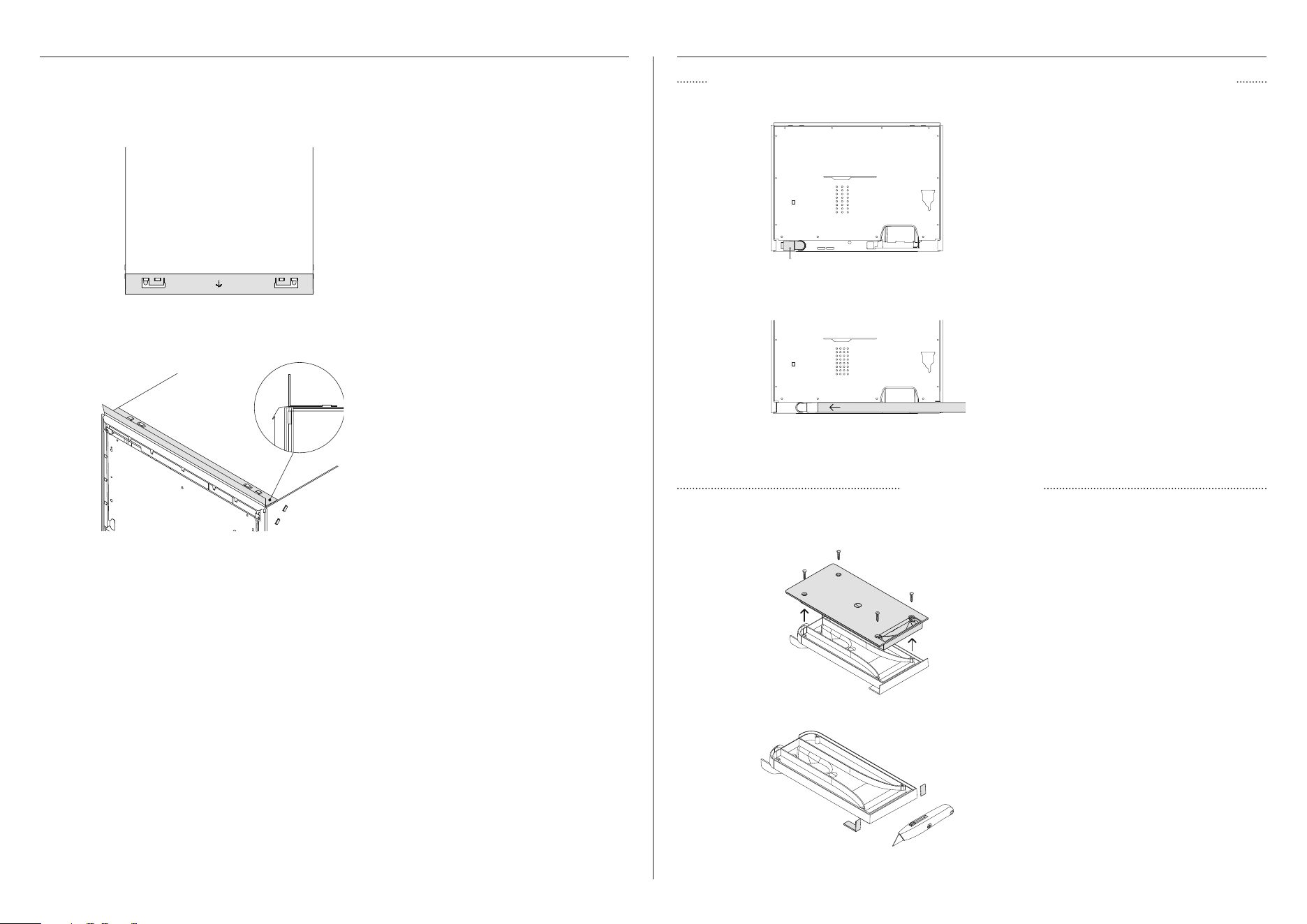
FIT THE TRIM BRACKET PREPARE EXTERNAL VENTING
2
Check the trim seal is facing forward
and sitting flat under the bracket.
1
Align the bracket to the chassis ensuring
the arrow is facing forward and firmly
slot the tabs into place to secure.
Ensure the ends of the tabs are not
pushed into the chassis.
Rotate the elbow at the rear of the
product to either the left or right
depending on your venting location.
Push the vent hose onto the elbow
firmly to secure.
We recommend fitting the trim bracket when installing your DishDrawer™ Dishwasher into a
480mm cavity to conceal any visible gap left between the countertop and chassis.
FIT THE VENTING HOSE TO THE DISHDRAWER™ DISHWASHER
TRIM THE DUCT
On a protected surface, carefully cut
and remove the clips from the vent as
shown. Refit the top cover.
Unscrew the top cover from the vent
and set aside.
2
2
1
1
Framed cabinetry only
elbow
13
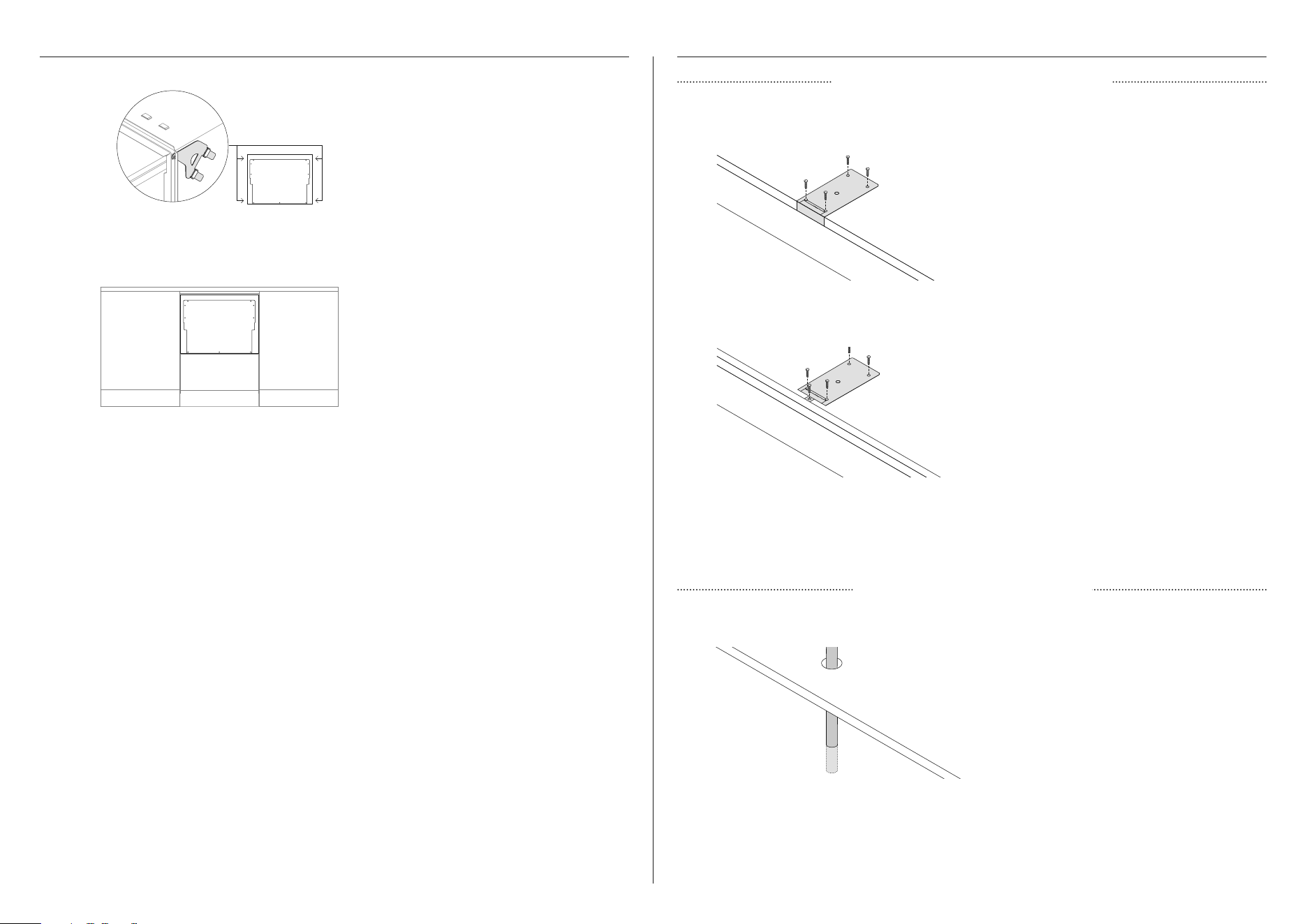
If securing via bracket method:
Secure all four side brackets to the
DishDrawer™ Dishwasher, aligning
bracket A with slot A and bracket B
with slot B.
Ensure the ends of the brackets are not
pushed into the chassis.
Route the venting hose through
the floor. Ensure any excess hose
is removed.
Unframed cabinetry
Route the venting hose to the cutout
and push onto the duct firmly to secure.
Push the duct onto the cabinetry and
secure using the four provided screws.
Framed cabinetry
Route the venting hose to the cutout
and push onto the duct firmly to secure.
Place duct into cutout and insert the
bracket into vent slot. Secure using the
five provided screws.
1
2
Push the product into the cavity, pulling
the hoses through as you push to avoid
crushing or twisting them.
PUSH THE PRODUCT INTO THE CAVITY SECURE THE VENTING HOSE TO CABINETRY
VENTING THROUGH FLOOR
VENTING THROUGH CABINETRY
AAB B
14
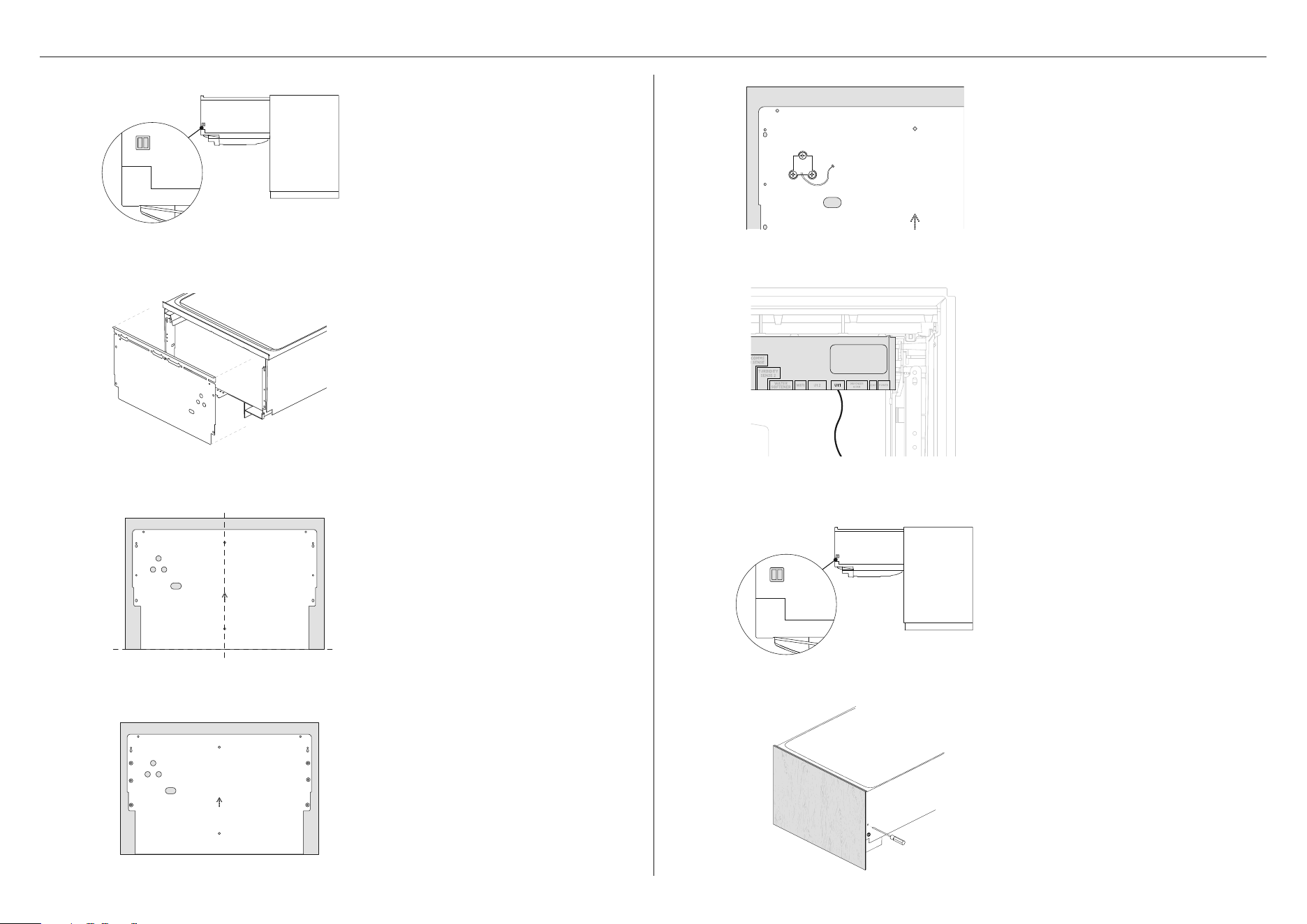
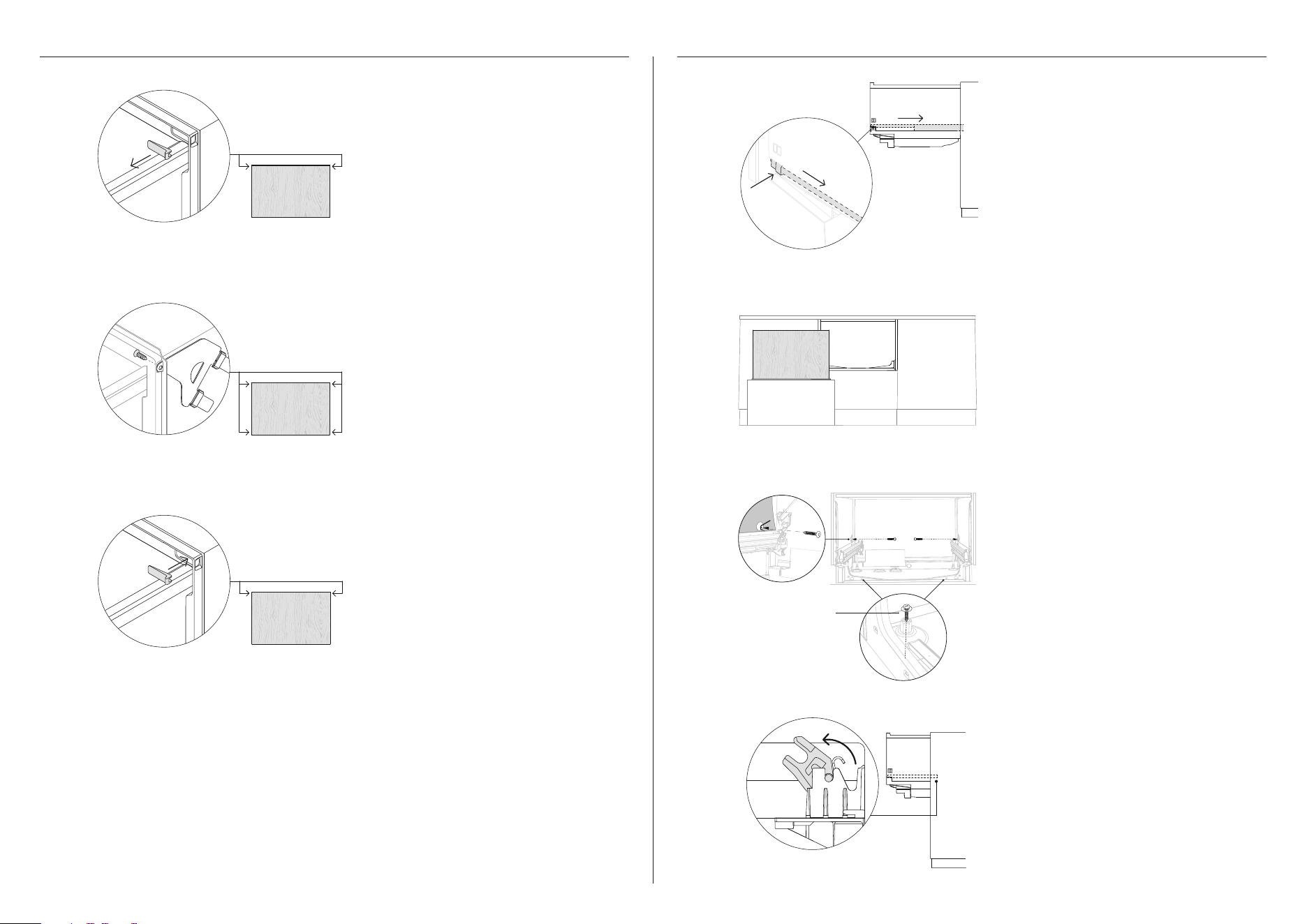
FIT THE CUSTOM PANEL
2
6
3
7
4 8
Carefully pull the bracket down and
out from DishDrawer™ Dishwasher and
unplug the Knock-to-Pause module and
earth wire.
Remove the Knock-to-Pause module
from the back of the bracket.
Attach the Knock-to-Pause module to
the panel as shown.
Ensure the Knock-to-Pause module is
oriented correctly and is not in contact
with the bracket before securing.
On the back of the panel, mark the
centre and align the base of the bracket
with the base of the panel.
Re-insert both side pins to each drawer.
Secure the bracket to the panel using a
minimum of 3 screws on either side.
Insert a Phillips screwdriver into the
hole above the side pin and rotate to
adjust the panel alignment. There is a
maximum travel distance of ± 2mm.
Repeat on the other side if required.
Ensure the minimum clearance gap of
2mm is maintained.
1
5
Remove both side pins.
Reconnect the Knock-to-Pause module
to the UI 1 slot on the wash controller as
shown. Reconnect the earth wire to the
panel bracket before fitting the panel to
the product.
Electric shock hazard:
To earth the panel bracket, connect the
earth wire from the product to one of
the tabs. Any custom metal components
(e.g. handle) that extend past the
rubber seal must be earthed also.
15
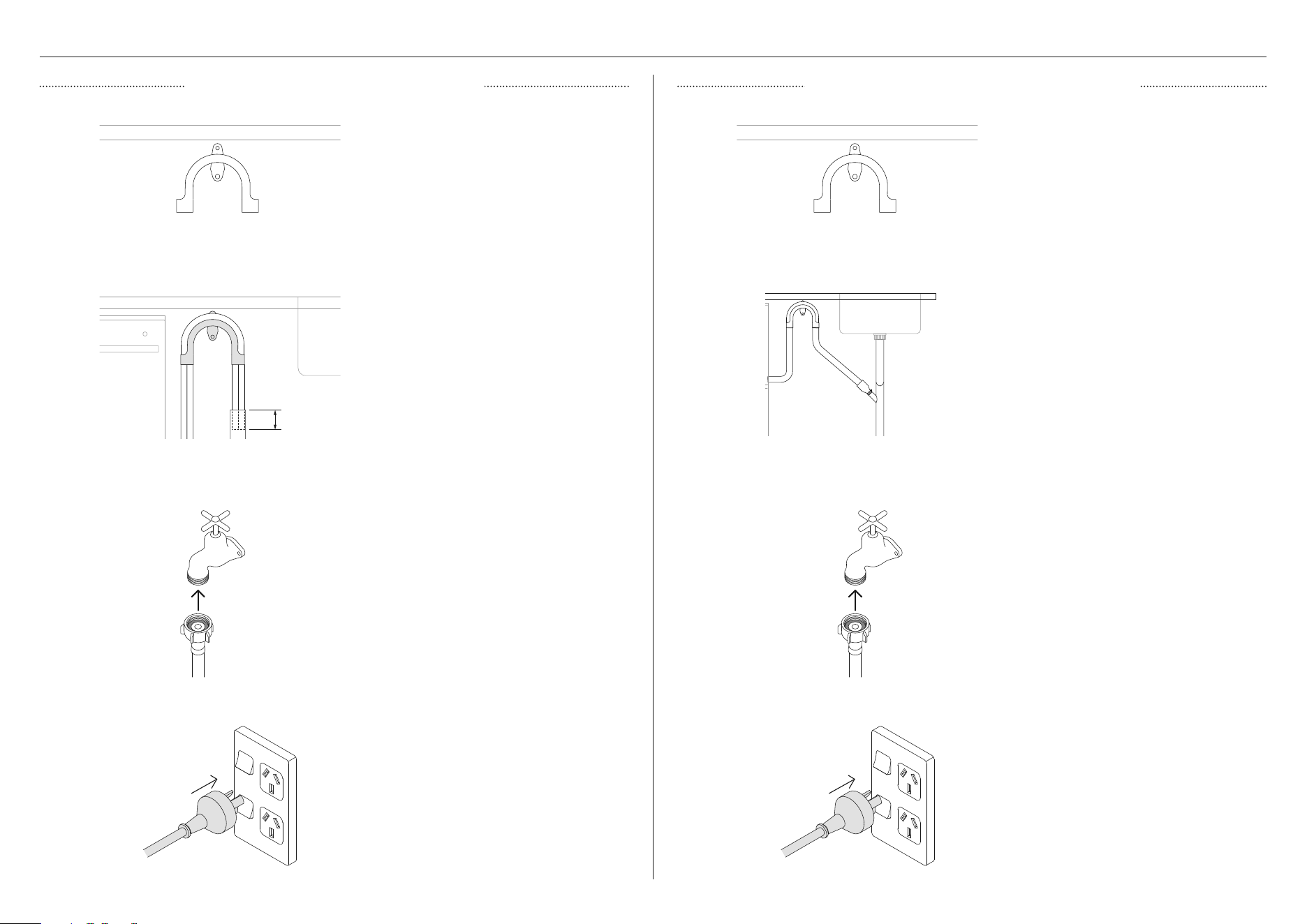
SECURE TO CABINETRY VIA BRACKETS (METHOD A) SECURE TO CABINETRY VIA DRAWER REMOVAL (METHOD B)
Secure to cabinetry via the brackets.
Pre-drilling a pilot hole may be required
depending on the cabinetry material.
2
3
Replace the trim cover and repeat for
the remaining brackets.
Secure to cabinetry via all three fixing
locations in the chassis.
Ensure sound insulation is
replaced correctly.
3
1
2
4
Open the drawer and press both
locking tabs back to release.
Before refitting the drawer, ensure the
hoses are not twisted.
Refit the drawer to the runners and
clip into place via both locking tabs.
Partially open the drawer and remove
the first screw cover from the
trim moulding.
1
Lift the drawer off the runners and
carefully set aside on a protected
surface. Push runners back in.
Take care not to pull drawer out
too far to prevent any strain on the
hoses. Where possible, protect the
base of the tub to prevent damage.
38mm screw
and large washer
16
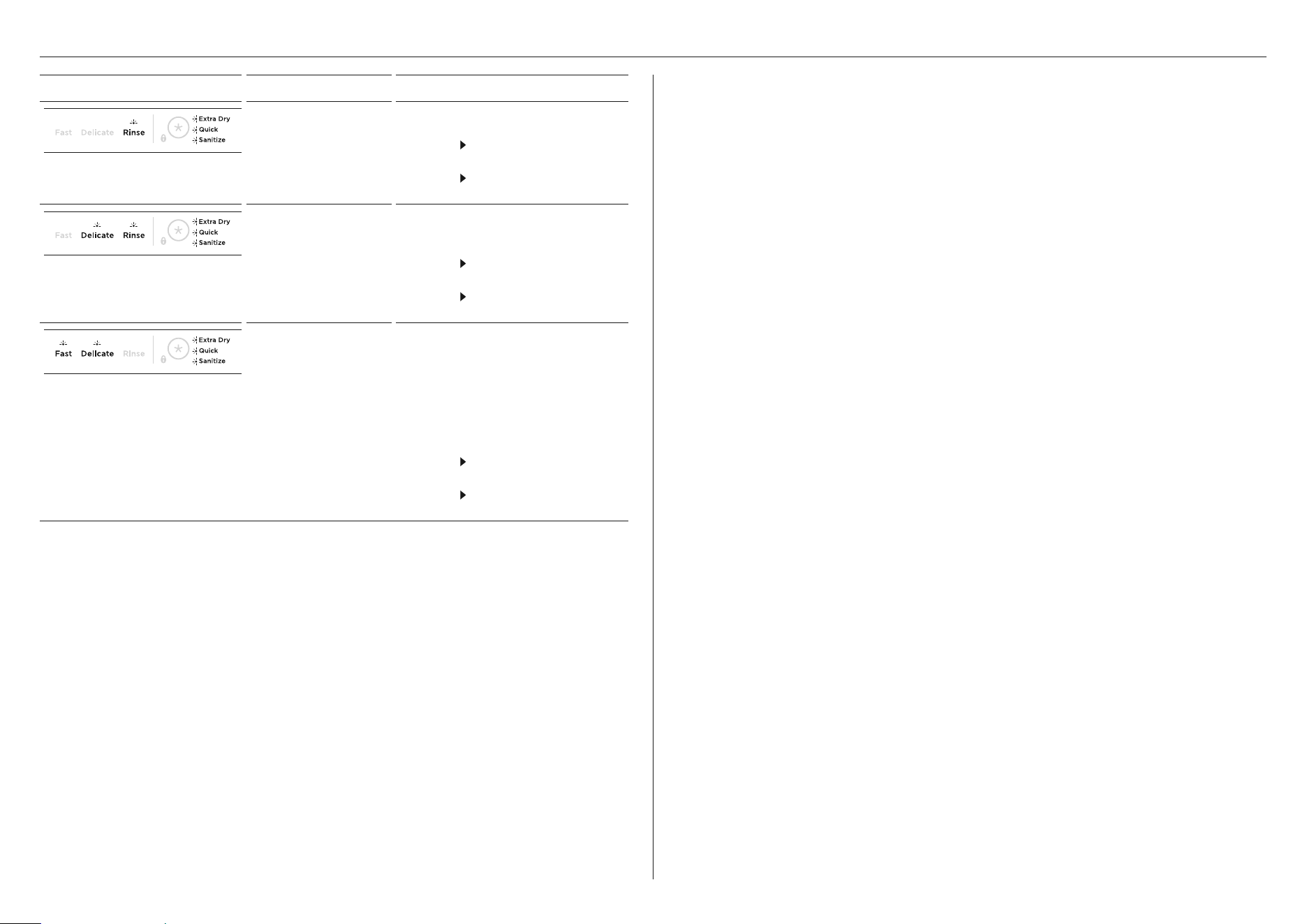
PLUMBING & ELECTRICAL CONNECTION
Install the drain hose support to the
back wall, as close to the underside of
the countertop as possible. Refer to
'Plumbing & electrical considerations' for
minimum install heights.
Install the drain hose support to the
back wall, as close to the underside of
the countertop as possible. Refer to
'Plumbing & electrical considerations' for
minimum install heights.
Pull the hose through the support guide
and rest in standpipe.
Ensure the drain hose does not extend
into water retained in the trap; an air
gap is required to prevent waste water
from siphoning back into the tub.
Pull the hose through the drain hose
support before threading the wire
clip on to the hose and fitting to the
supplied hose joiner. Secure using the
wire clips.
Ensure hose is routed straight to the
joiner, removing excess drain hose if
necessary. Do not shorten the inlet hose.
Unplug or drill out the waste tee before
securing joiner to sink trap or waste tee.
Plug product in. Plug product in.
Ø38MM STANDPIPE INSTALLATION SINK TRAP/WASTE TEE INSTALLATION
1 1
2
2
3 3
4 4
Ensure the supplied rubber washer is
fitted to the coupling before connecting
the inlet hose to tap. Hand-tighten
into place.
Using a spanner or pliers, turn a further
180° to secure. Avoiding over-tightening.
Do not turn water supply on. The
DishDrawer™ Dishwasher must be
powered on for the flood protection
feature to be enabled.
Ensure the supplied rubber washer is
fitted to the coupling before connecting
the inlet hose to tap. Hand-tighten
into place.
Using a spanner or pliers, turn a further
180° to secure. Avoiding over-tightening.
Do not turn water supply on. The
DishDrawer™ Dishwasher must be
powered on for the flood protection
feature to be enabled.
min.
120mm

17
TO BE COMPLETED BY THE INSTALLER
Check all parts are installed correctly and are secure.
Ensure DishDrawer™ Dishwasher is securely fastened to the cabinetry and drawer opens
and closes freely with no resistance.
Ensure panel is fitted correctly to the DishDrawer™ Dishwasher
Ensure any packaging or tape securing the racks and spray arm is removed.
Check the spray arm is in place, mounted correctly and rotate freely.
Ensure knock-to-pause module is fitted securely and operating correctly.
Ensure all electrical tests have been conducted in accordance with local regulations.
Electrical
Installation
Ensure any knock-outs or plugs in drain connection have been drilled out and drain
connection has been made.
The drain hose joiner must not support the weight of excess hose material. Keepdrain
hose as fully extended as possible to prevent sagging. Any excess length of drain hose
should be kept on the dishwasher side of the highloop.
Ensure inlet hose has supplied rubber washer fitted, and that it’s tightened.
If connecting the drain hose to the sink trap, ensure the highloop is a minimum 150mm
higher than the drain hose joiner.
Water softener models: adjust the water softener setting from the default setting to suit
the water hardness of the area. Refer to your user guide.
Ensure water supply is turned off until power is connected and turned on. The
DishDrawer™ Dishwasher must be powered on for the flood protection feature to
be enabled.
Plumbing
Turn on the power and water supplies, then open the drawer. You should hear a beep
and see a program indicator light up on the control panel.
Add three cups of water into the drawer.
Navigate to RINSE and start the program.
Repeat for the other drawer.
After the Rinse cycle has finished, ensure the dishwasher has run and drainedcorrectly.
Check the water supply has been shut off correctly.
Check drainage connections for leaks.
If site is left without power after installation is complete, ensure water supply is
turned off to prevent flooding.
Test operation
INSTALLER CHECKLIST
18
TROUBLESHOOTING
The DishDrawer is beeping continuously
z
Refer to the ‘Fault codes’ section of your User guide
No program indicator lights up when the drawer is opened
z
Ensure power is connected and is switched on.
z
AUTO POWER-ON may need to be activated. Refer to your User guide for details.
Drawer doesn’t close properly
z
Ensure nothing is obstructing the drawer from closing such as hoses or drawer latches.
Water appears around water supply and drain connections
z
Check hoses, connections and existing plumbing for leaks.
z
Check rubber washer and hose clamp are correctly fitted.
Product is tipping
z
Ensure the product is secured to the cabinetry.
Front panels are misaligned to surrounding cabinetry
z
Check the cabinetry is square. Check and relevel product. Unscrew the product from the
cabinetry. Adjust the feet to level the product, then re-secure to the cabinetry.
z
If a problem occurs that is not listed, refer to your user guide for additional troubleshooting
If after checking these points, you still need assistance, please refer to the Service &
Warranty book for warranty details or contact us through our website fisherpaykel.com
DISPLAY POSSIBLE CAUSE WHAT TO DO
RINSE + all modifiers
A1: Water Supply fault. 1 Ensure the water supply is
turned on.
2 Press
once to stop the beeping,
then again to clear the fault.
3 Press
to resume the
wash program.
DELICATE, RINSE + all modifiers
A3: Drawer cannot
drain. The drainage
hose may be
blocked or kinked,
or the connection to
drainage pipe may
be blocked.
1 Ensure the drainage hose
and connection to pipes are
not blocked.
2 Press
once to stop the beeping,
then again to clear the fault.
3 Press
to resume the
wash program.
FAST, DELICATE + all modifiers
A6: The spray arm has
loosened or come off
its mounting, or water
pressure is too low, or
a combination of low
water pressure and
excessive foaming.
1 Open the drawer and check the
spray arm.
2 If the spray arm has loosened
or come off its mounting,
re-fit it. Check that it is firmly
seated and turns freely.
Refer to ‘Maintenance’ in your
user guide.
3 Press
once to stop the beeping,
then again to clear the fault.
4 Press
to resume the
wash program.

592335A 07.21
FISHERPAYKEL.COM
© Fisher & Paykel Appliances 2021. All rights reserved.
The models shown in this guide may not be available in all markets
and are subject to change at any time.
The product specifications in this guide apply to the specific products and
models described at the date of issue. Under our policy of continuous product
improvement, these specifications may change at any time.
For current details about model and specification availability in your country,
please go to our website or contact your local Fisher&Paykel dealer.