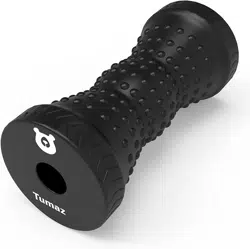

Foot Roller

Get to Know
Compression Socks
Get to know more about your newly purchased
compression socks in this chapter. How do they
work? Who needs them? Are compression socks
only for relieving foot pain? Read on to find out!
1

2
Compression socks, as the name implies, are a
type of socks that apply pressure to your foot.
Namely, they “compress” your feet. These socks
are designed to squeeze your foot slightly
(albeit how “slightly” depends on which
compression level you choose), increasing blood
flow and hence improve your blood circulation.
As a result, many people find wearing
compression socks an effective way to reduce
foot pain.
Another benefit of compression socks is foot arch
support. Since they apply pressure on your ankle
and foot arch, these socks provide anatomical
support to your foot, especially to those with fallen
foot arches.
There are many kinds of compression socks.
Some, like Tumaz, are made ankle-length while
others are made to cover the calves or even the
thighs. You can always grab a pair at your local
drugstore or purchase them online. That being
said, we suggest you consult a doctor first and
find out which compression level best suits you.
How Do
Compression Socks Work?
3
Who Needs
Compression Socks?
People suffering from plantar fasciitis or edema
People with flat feet or in need of foot arch
support
People with jobs that require long periods of
standing
Athletes or runners
Expectant mothers
Frequent travelers
People with tired, achy feet or sore muscles
Compression socks, as we mentioned earlier, are
great tools for relieving foot pain. They are easy
to obtain and don’t cost much, making them a
popular choice for people who seek to alleviate
muscle soreness or plantar fasciitis pain
(we will elaborate on plantar fasciitis in the next
chapter).
Another common use of compression socks can
be found among athletes or frequent runners.
While wearing them won’t exactly boost your
performance, quite a few people have claimed
that wearing compression socks after a run helps
them recover smoother and faster.

4
Who Needs
Compression Socks?
Additionally, many people wear them to work as
well—nurses, medical workers, teachers, flight
attendants, or anyone whose job requires them
to stand for long periods can benefit from wearing
compression socks. Other uses of compression
socks include improving blood circulation for
expectant mothers or frequent travelers who spend
a lot of time sitting on a plane.
Generally speaking, compression socks are safe to
wear as long as you don’t have sensitive skin,
allergies, open wounds, or any severe injuries or
diseases. However, keep in mind that compression
socks are not completely risk-free and may not be
suitable for everyone.
It is best to ask a doctor to evaluate your situation
before you decide to wear them.

5
How Do I Wear
Compression Socks?
When wearing compression socks, there are a few
things you should keep in mind. First, make sure
they are the correct size. Compression socks are
designed to fit snugly against your skin, they aren’t
supposed to slip, sag, or roll down when you wear
them. Secondly, do not overstretch your socks
(e.g. pulling a pair of ankle-length socks up to your
calves).
If your compression socks are too short or too long,
you should change to the correct length. Lastly, do
not fold compression socks when wearing.
This may affect the compression level and cause
harm to your feet.
As long as you wear compression socks the right
way, you may wear them with any kind of
shoes—feel free to slip on your favorite sneakers,
sports shoes, sandals, or slippers. If you’re tired of
their plain looks, you may also pull a pair of regular
socks over them. Stay stylish, stay comfortable,
and enjoy a pain-free life with compression socks!
We strongly suggest against wearing compression socks if you have
open wounds, sensitive skin, or severe injuries or diseases.
Should you feel any discomfort when wearing the socks, take them
off immediately. Please note that these socks only provide temporary
relief, they do not have any preventive or curative effects.
CAUTION!

Struggling with
Muscle Pain?
Do you work out frequently? Does your job require
strenuous, repeated muscle movements?
Do you often feel muscle strain after a long day’s
work? Since you’ve purchased a foot roller from us,
chances are that you are currently dealing with
some sort of muscle pain. In this chapter, we will
tackle two of the most common muscle disorders
people encounter in daily life:
Myofascial Pain Syndrome and plantar fasciitis.
6
Let’s Talk About
Myofascial Pain
Syndrome
Myofascial Pain Syndrome (MPS) is a disorder that
causes inflammation and chronic pain in muscles
or soft tissues.
In fact, the term “myofascial” derives from “myo”
and “fascia”: the former word borrowed from
ancient Greek meaning muscle, and the latter
borrowed from Latin meaning band or bandage.
There are many causes of MPS, some of the most
major ones being excessive workout, repetitive
muscle motions during work, and surprisingly, lack
of physical activity.
Common signs of MPS include deep, persistent
muscle pain, muscle knots, or trigger points.
Those who suffer from MPS often report having
sleeping problems as well ─ due to the persistent
pain, people may have trouble finding a comfortable
sleeping position or accidentally aggravate trigger
points through movements during sleep.
7
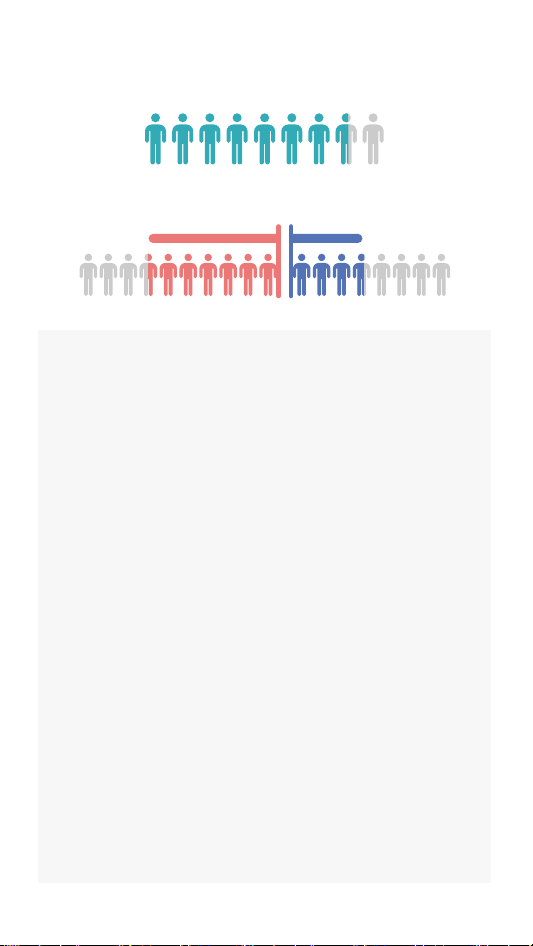
This syndrome is quite prevalent among the general
population as people exercise more nowadays.
Researches have shown that almost 85% of the
population can be affected by the syndrome at
some point in their lives. MPS is mostly prevalent
among adults between 30 and 60 years old.
Studies also show that this condition is more
common among women than men; 65% of women
suffer from this syndrome while only 37% of men
are afflicted by it.
The human foot is more likely to suffer from this
syndrome since it’s capable of handling hundreds
of tons of force for the whole body. Besides, the
foot itself is a fairly complicated structure ─ it has
42 muscles, 26 bones, 33 joints, and over 50
ligaments and tendons ─ making it more
injury-prone compared to other parts of the human
body.
85%
of the population can be
aected by MPS
65%
of women suer
from MPS
37%
of men suer
from MPS
8
9
Get to Know
Plantar Fasciitis
Another typical muscle disorder is plantar fasciitis.
It is a very common foot problem that causes pain
on the bottom of your heel. Usually, plantar
fasciitis involves inflammation of a thick band of
tissue called plantar fascia, which runs from the
heel bone to the toes.
Plantar fascia is like a shock absorber.
It relieves the impact of our body weight and
movement on the feet. However, overpressure or
repetitive strain to your foot may cause
inflammation to the plantar fascia and eventually
lead to plantar fasciitis.
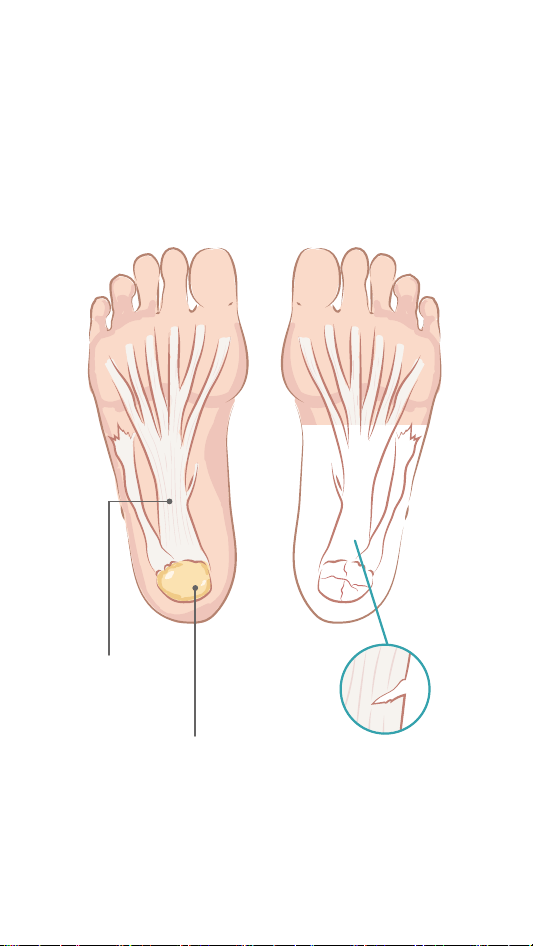
Inflamed
plantar fascia
Heel bone
Plantar
fascia
Plantar FasciitisHealthy foot
10

Symptoms of
Plantar Fasciitis
A typical plantar fasciitis patient will experience
sharp or dull pain on the bottom of the foot or
somewhere near the heel.
The pain is usually worse in the morning when
getting out of bed and eases away after a few
walks. However, in most cases, the pain comes
back after prolonged activities and gradually gets
worse over time. In some cases, patients won’t
experience pain while performing activities, but
would feel it later on when the body cools down.
Occurs at the bottom
of the foot or near
the heel
More severe
in the morning
11
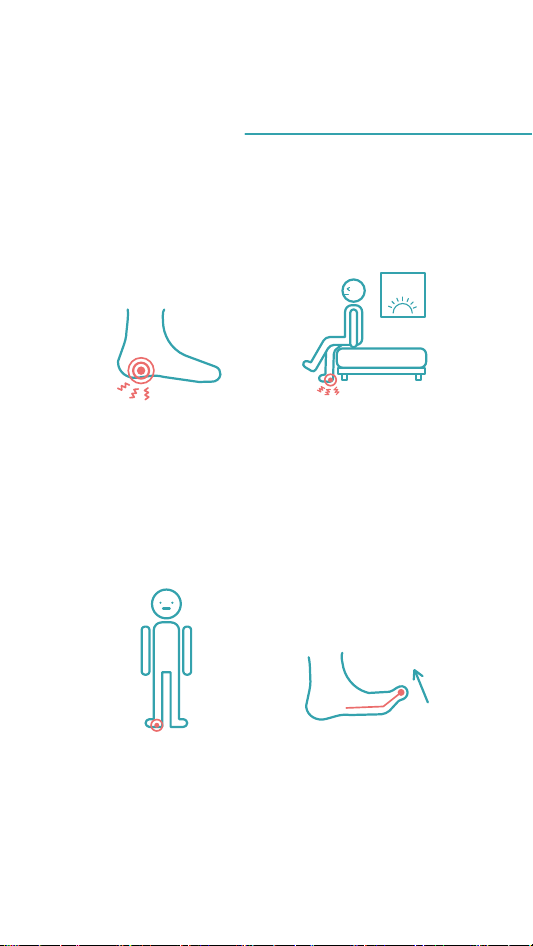
Symptoms of
Plantar Fasciitis
Pain near the heel Most pain occurs in
the morning when
getting out of bed
Prolonged standing
or excessive walking
may aggravate the
pain
Stretching the toes
or pressing on the
arch of the foot hurts
12
What Causes
Plantar Fasciitis?
As mentioned in the previous pages, plantar
fasciitis results from overpressure and repetitive
strain on the foot. Repetitive strain will cause
repeated microtrauma, which disrupts the repair
process and leads to chronic inflammation.
There are numerous factors that can cause
repetitive strain. Here, we listed some common
risk factors you should be aware of:
Prolonged standing or exercising on a hard
surface
Overweight or being pregnant: a higher
bodyweight means more pressure on your feet
Aging: the plantar fascia gradually loses its
elasticity as you age, leading to a decline in its
cushioning function. People over age 40 are
high-risk groups
Other foot issues: such as tight Achilles
tendons or flat feet
13
How Do I Treat
Plantar Fasciitis?
There are several ways to treat this kind of
syndrome, including medication, trigger point
injection, and physical therapy.
Regarding medication, pain relievers such as
ibuprofen and naproxen sodium may ease the pain
and inflammation. Be sure to follow the prescription
before taking any medicine or treatment.
Trigger point injection may be done at a clinic
where a doctor injects anesthetic or saline into the
patient’s trigger point. It is a fairly effective way of
treatment if you’re looking for a quick relief.
It is worth noting that physical therapy is said to be
the best method. This kind of treatment is simple
and very accessible, you may even try it in your
own home.
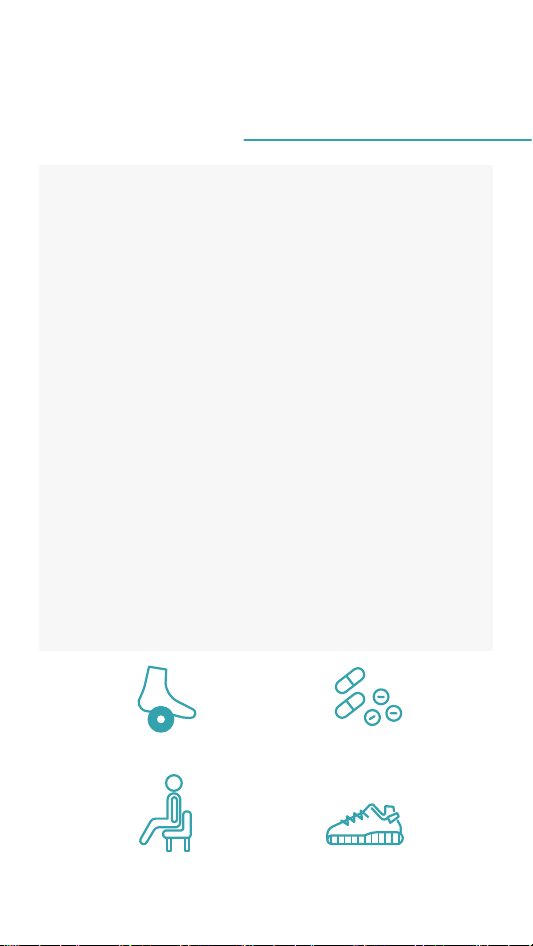
Rehabilitation exerciese
Rest
Wear comfortable trainers
Anti- inflammatory
medication
14

Physical therapy includes many methods like
muscle-building and massage. Building up your
muscles to keep them strong will ensure that they
remain elongated and won’t shorten or tighten up,
which in turn decreases the risk of muscle injury.
You can start by working on your core muscles like
belly, thighs, back, or any particular part of your
body.
It’s also important to do stretching exercises before
and after your workouts as stretching helps to
reduce the pain in the affected muscles.
Keep in mind that if your muscle pain won’t go
away, you should make an appointment with your
doctor immediately before it gets worse.
15

How Can Massage Relieve
Plantar Fasciitis?
Massage can relieve pain, tension and stiffness
in the muscles. With repeated pressure and
manipulation of nerve endings, this easy remedy
can help to clear blocked channels by stimulating
blood flow and nerve impulses.
Applying massage is a good way to relieve
plantar fascia fibrosis and reduce foot pressure.
When your muscles have sufficient blood supply,
it heals quickly and improves your health ultimately.
Next, we will introduce you some massage and
stretching tips for foot pain.
16

How to Use
Tumaz Foot Roller
There are several ways to massage.
Some people like to massage using their own
hands while others prefer to use equipment for
support which helps save some effort.
In the following chapter, we will show you some
tips for using a foot roller. With your brand new
Tumaz Foot Roller, you will be able to massage
your muscles in comfortable and simple ways!
17
I. Let’s Roll
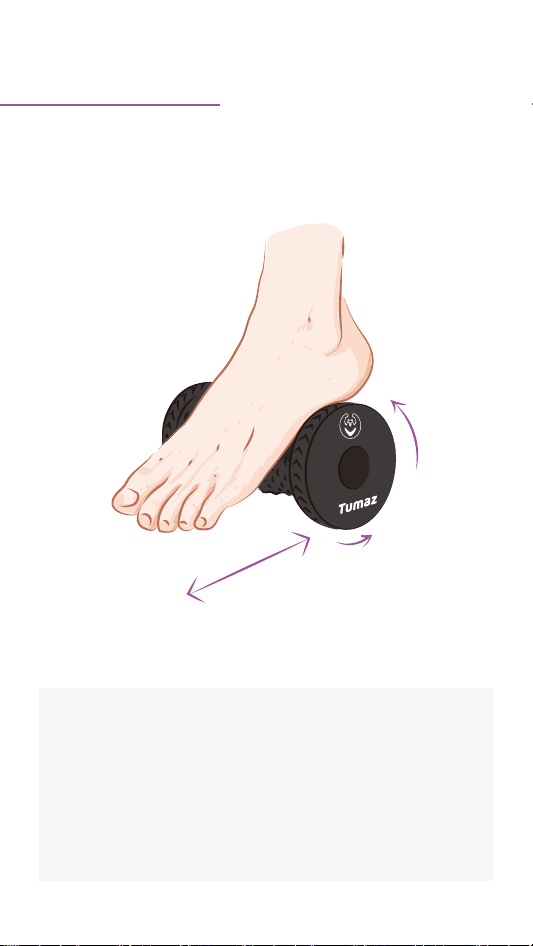
Roll the foot roller under your foot
This is the easiest way to use a foot roller.
Place the foot roller under your foot, then roll it
back and forth slowly while adding a little pressure.
Alternatively, you may also substitute the roller with
a tennis ball.
18
II. Step It Up
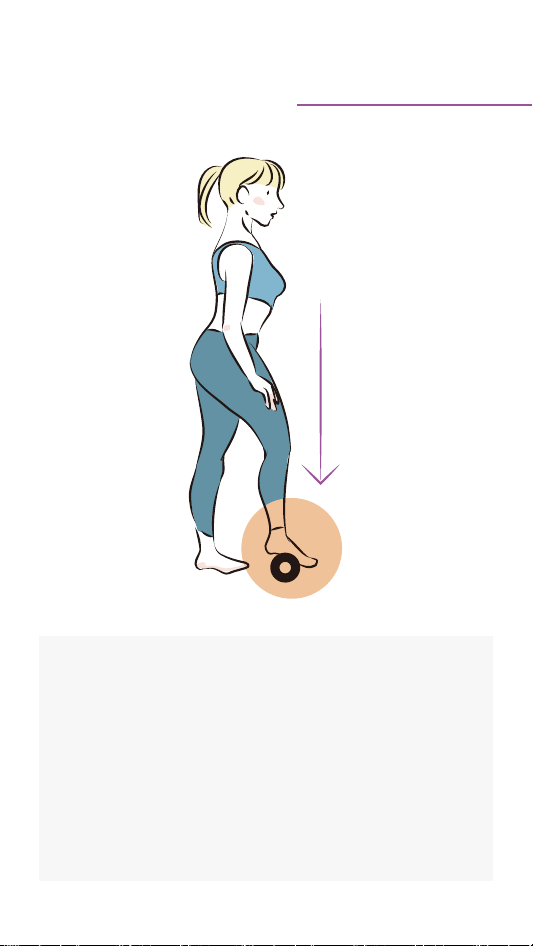
Step on the foot roller
If the previous ways are not up to par or if you’re
looking for something more intense, you may try
stepping on the roller. This method utilizes your
entire bodyweight and allows you to massage the
deep tissues of the arch of your foot. Although,
you must remember to hold on to something to
avoid falling down!
19
20
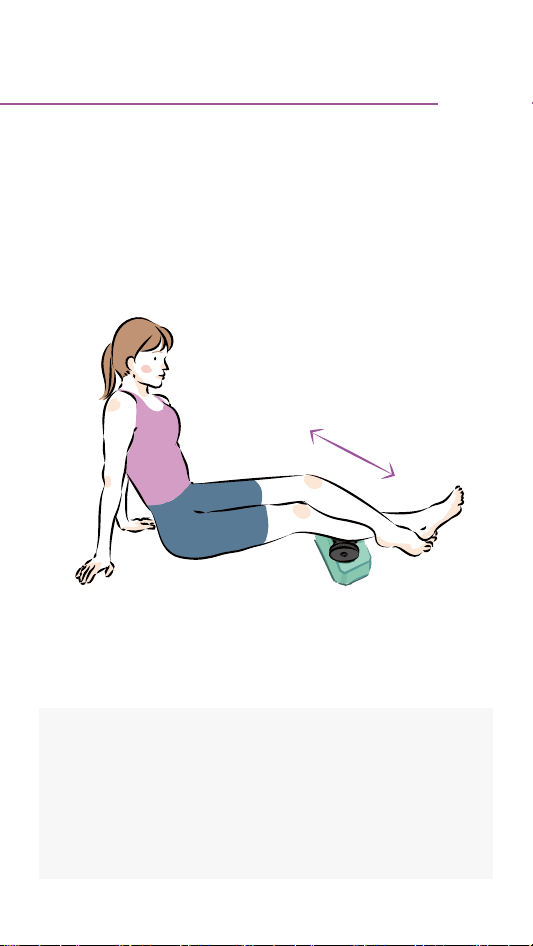
III. Don’t Forget Your Calves!
Place the foot roller under your calf
Your calves need some massage too! Sit on the
floor and place the foot roller under your calf.
Cross your legs and utilize the weight of both legs
to massage your calves.
21
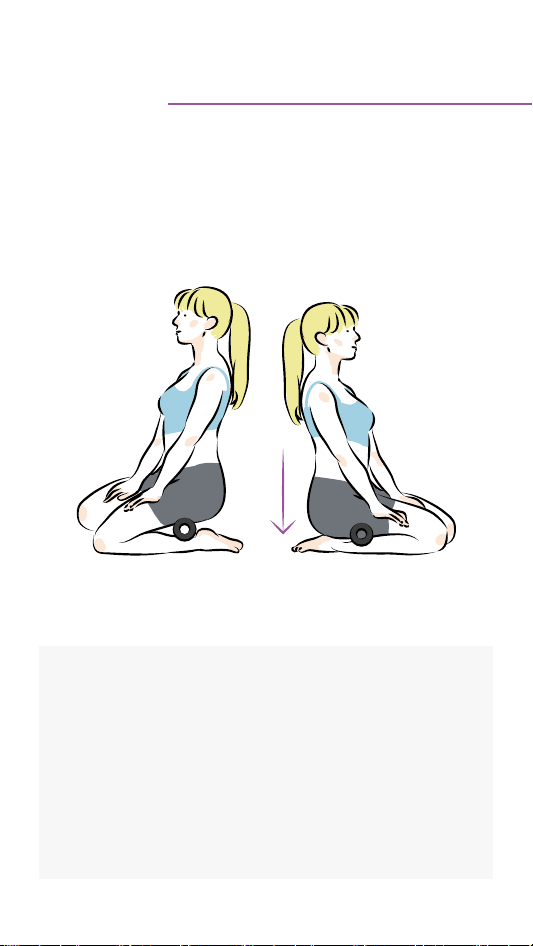
IV. An Alternative Way
Place the foot roller between your calves and
thighs
This is an upgraded version of the previous method.
Put the roller on your calves and simply sit on your
heels. This way of massage utilizes your upper
body weight, it can massage the deep tissues
around your butt, thighs and calves.

Bonus: Easy
Exercises for
Plantar Fasciitis
and Foot Pain
In the following chapter, we will introduce you 7
ways to stretch your muscles and relieve muscle
pain. These methods are simple and can be done
at home. However, if your condition causes severe
pain or other problems, we suggest that you
discuss with a doctor before starting any new
exercises.
22
23
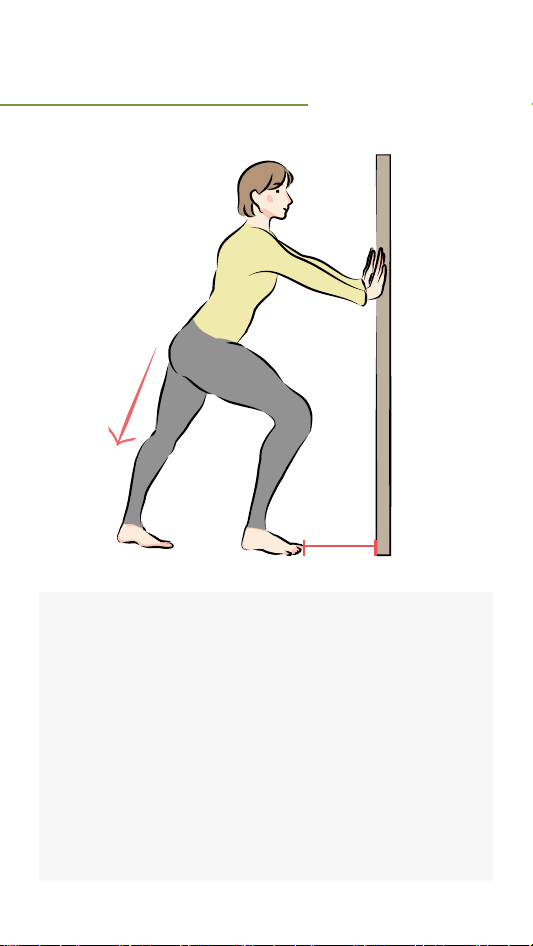
I. Standing Stretch
1. Face a wall and put your hands upon it, then
move one leg behind the other.
2. Slowly bend your front knee until you feel your
calf muscles tighten up.
3. Maintain the position for 30 seconds, then
switch legs.
This exercise will stretch your calf muscles and
connective tissues, such as the Achilles tendon.
A step away
from the wall
24
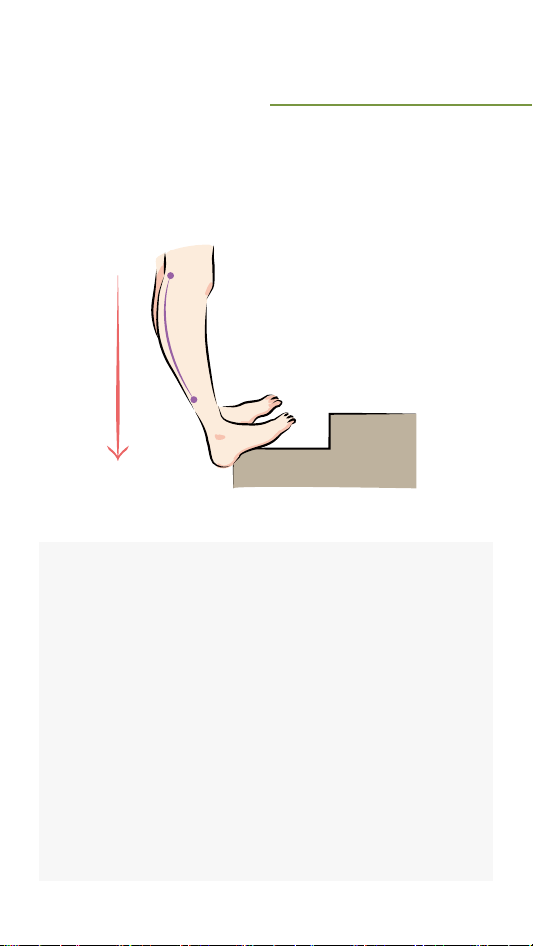
II. Step Stretch
1. Stand on a step with both heels hanging off the
edge.
2. Lower your heels down until your calf muscles
tighten up.
3. Hold the position for 30 seconds. Take a rest
and repeat 2~3 times
Step Stretch is an upgraded version of Standing
Stretch, it has a higher intensity, but also more
strenuous. Make sure you hold a handrail to avoid
accidents.
25
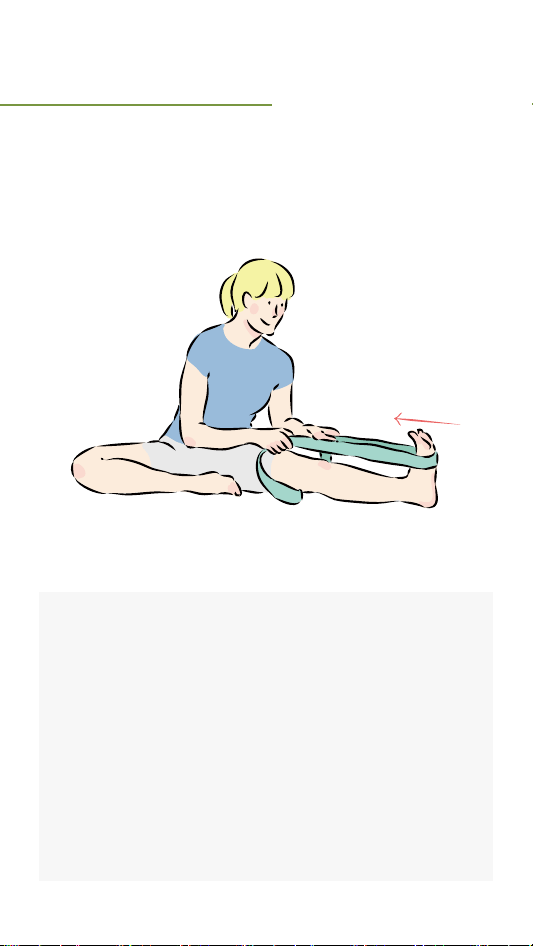
1. Sit down on the floor with legs straight.
2. Put a towel or strap around your foot and slowly
pull toward your body.
3. Hold the strap for 30 seconds and repeat 2
times with each foot.
Since the Strap Stretch can be easily done on a
bed, it is an ideal way for you to reduce morning
foot pain.
III. Strap Stretch
26
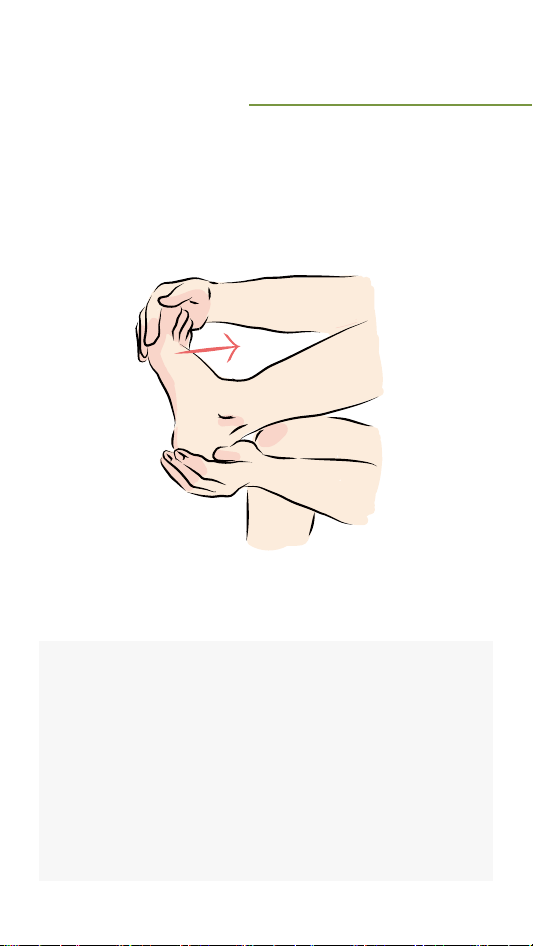
1. Sit in a chair and put one of your ankles on your
knee (opposite side).
2. Grab your toes and gently bend them backward
until you feel a stretch in the toes and ball of
your foot.
3. Hold the position for 30 seconds and repeat it
2~3 times with each foot.
IV. Toe Extension
27
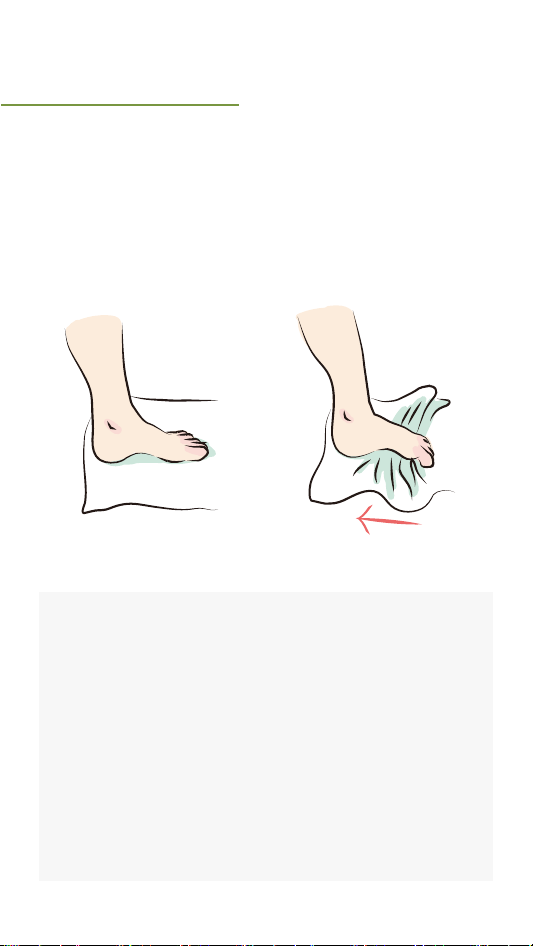
1. Place a towel on the floor.
2. Sit down in a chair with your foot resting on the
towel.
3. Curl the towel with your toes and keep your heel
on the ground during the whole process.
This exercise increases the foot's flexibility and
overall strength. It's simple and can be done easily
at home.
V. Towel Curl
28
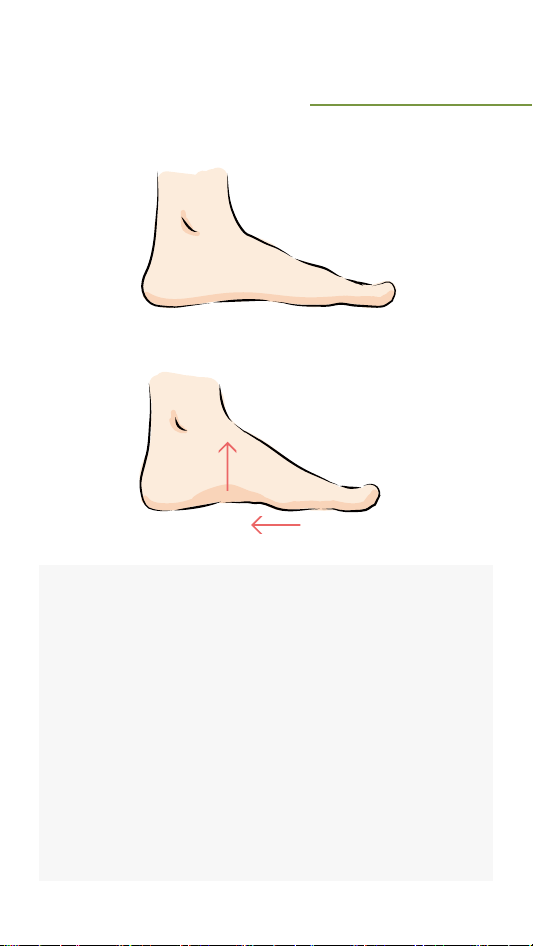
VI. Arch Lift
1. Sit in a chair with your foot flat on the floor.
2. Slide the ball of your foot back toward the heel.
Try to keep your toes straight, your heel should
remain on the floor during the whole process.
3. Hold the position for 5 seconds and repeat it 3~5
times with each foot.
Arch Lift exercise trains the smaller muscles that
are deep inside your foot. It is a bit difficult for
newbies but can improve arch strength effectively.
29
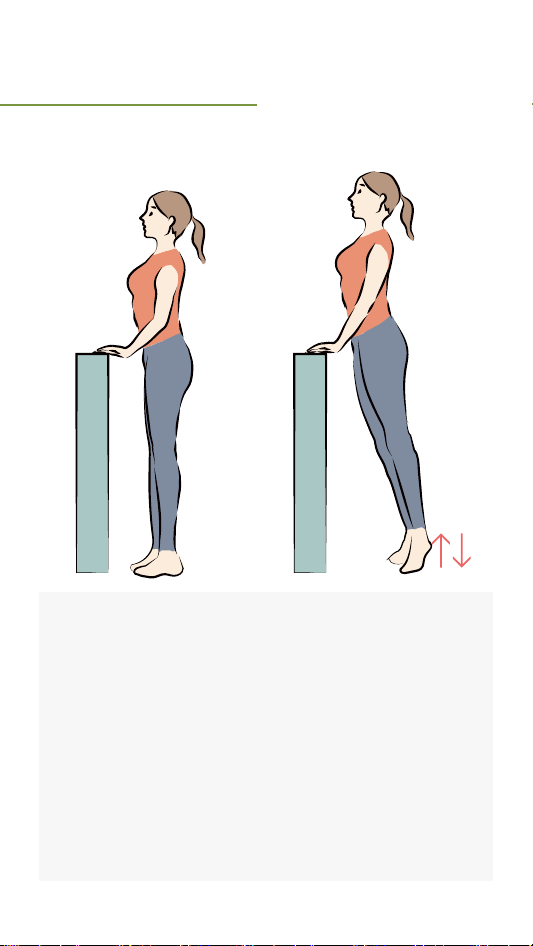
1. Face a low wall and put your hands upon it.
2. Stand straight with feet shoulder-width apart.
3. Raise your heels off the ground and hold the
position for 2~3 seconds.
4. Repeat 10 times in a set and do a maximum of
2~3 sets.
Heel Raise exercise can strengthen your calves,
which are important muscles in arch support.
VII. Heel Raise

When doing workouts, we tend to believe that no
pain, no gain. However, this is NOT true when it
comes to massage.
Excessive pain will only add more tension to your
muscles rather than helping them relax.
The correct amount of pressure should make you
feel comfortable, not painful.
Pay attention to your body and take some time to
find the most suitable way for yourself.
Take one step at a time, you’ll get there eventually!
www.amazon.com/tumaz
www.tumazsport.com
f
tumaz.sport