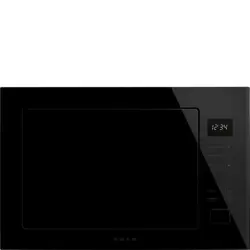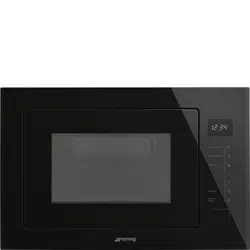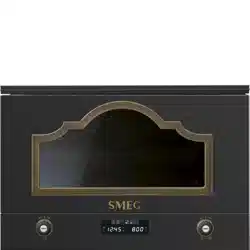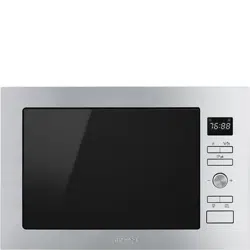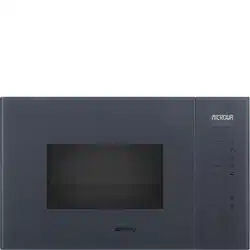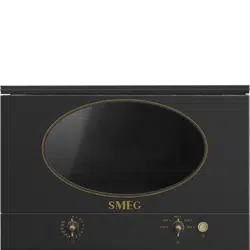

INSTRUCTION MANUAL
Microwave
EN
GEBRAUCHSANWEISUNG
Mikrowelle
DE
MANUEL D’UTILISATION
Micro-ondes
FR

EN
Dear Customer,
Thank you for choosing this SMEG product.
We ask you to read the instructions in this booklet very carefully as this will allow you to get the best
results from using it.
KEEP THE DOCUMENTATION OF THIS PRODUCT FOR FUTURE REFERENCE.
Always keep the instruction manual handy. If you lend the appliance to someone else give
them the manual as well!
The user manual is also available for download at www smeg com
DE
Sehr geehrter Kunde,
Danke dass Sie sich für dieses SMEG Gerät entschieden haben.
Wir bitten Sie, die in diesem Heft enthaltenen Anweisungen aufmerksam durchzulesen,die helfen
Ihnen, bei der Nutzung Ihres Gerätes die besten Ergebnisse zu erzielen.
BEWAHREN SIE DIE DOKUMENTATION DIESES GERÄTES AUF, UM KÜNFTIG IN IHR
NACHSCHLAGEN ZU KÖNNEN.
Halten Sie die Gebrauchsanleitung immer griffbereit. Falls Sie das Gerät Dritten überlassen, stellen
Sie ihnen auch die entsprechende Betriebsanleitung zur Verfügung!
Die Gebrauchsanweisung ist auch auf unserer Homepage verfügbar www smeg com
FR
Cher client,
Merci d’avoir choisi ce produit SMEG.
Veuillez lire très attentivement les instructions de cette notice, afin d’obtenir les meilleurs résultats de
son utilisation.
CONSERVEZ CETTE NOTICE POUR TOUTE RÉFÉRENCE ULTÉRIEURE.
Gardez toujours le manuel d’utilisation à portée de main. Si vous prêtez cet appareil à quelqu’un,
n’oubliez pas de donner aussi le manuel!
Vous pouvez aussi télécharger le manuel d’utilisation sur www smeg com

3 / EN
Contents
1. Instructions ..................................................................................................................................... 4
1.1. Safety Information ................................................................................................................... 4
1.2. Disposal .................................................................................................................................... 9
1.3. This user manual ..................................................................................................................... 9
1.4. How to read the user manual .................................................................................................. 9
2. Description .................................................................................................................................... 10
2.1. General Description............................................................................................................... 10
2.2. Control Panel ......................................................................................................................... 11
2.3. Discription .............................................................................................................................. 11
3. Use ................................................................................................................................................. 12
3.1. Advantages of the microwave oven ..................................................................................... 12
3.2. Instructions ............................................................................................................................ 13
3.3. What kind of ovenware can be used? .................................................................................. 13
3.4. First use .................................................................................................................................. 15
3.5. Using the oven ....................................................................................................................... 15
3.6. Cooking Functions ................................................................................................................ 15
3.7. When the oven is working… ................................................................................................. 16
3.8. Recommended cooking tables ............................................................................................. 17
4. Cleaning and Maintenance ........................................................................................................... 21
4.1. Instructions ............................................................................................................................ 21
4.2. Cleaning the surfaces ........................................................................................................... 21
4.3. Ordinary daily cleaning ......................................................................................................... 21
4.4. Food stains and residues ..................................................................................................... 21
4.5. Cleaning the oven .................................................................................................................. 21
4.6. Front surface .......................................................................................................................... 22
4.7. Extraordinary maintenance .................................................................................................. 22
4.8. Substitution of light bulb ...................................................................................................... 22
4.9.What should I do if the oven doesn’t work? ......................................................................... 22
5. Installation ..................................................................................................................................... 23
5.1. Before installation ................................................................................................................. 23
5.2. After installation .................................................................................................................... 23
2.3. Beschreibung ......................................................................................................................... 32
6. Installation Images ....................................................................................................................... 68

4 / EN
Instructions
1.1. Safety Information
Before the installation and use of the appliance, carefully read the
supplied instructions. The manufacturer is not responsible if an
incorrect installation and use causes injuries and damages. Always
keep the instructions with the appliance for future reference.
CHILDREN AND VULNERABLE PEOPLE SAFETY
Warning! Risk of suffocation, injury or permanent disability.
• This appliance can be used by children aged from 8 years and
above and persons with reduced physical, sensory or mental
capabilities or lack of experience and knowledge if they are
supervised by an adult or a person who is responsible for their
safety.
• Do not let children play with the appliance.
• Keep all packaging away from children.
• WARNING: Keep children away from the appliance when it
operates or when it cools down. Accessible parts are hot.
• If the appliance has a child safety device, we recommend that you
activate it. Children under 3 years must not be left unsupervised in
the vicinity of the appliance.
• Cleaning and user maintenance shall not be made by children
without supervision.
GENERAL SAFETY
• This appliance is intended to be used in household and similar
applications such as:
– staff kitchen areas in shops, offices and other working
environments;
– farm houses;
– by clients in hotels, motels and other residential environments;
– bed and breakfast type environments.
• Internally the appliance becomes hot when in operation. Do not
touch the heating elements that are in the appliance. Always use
oven gloves to remove or put in accessories or ovenware.
• WARNING: Do not heat liquids and other foods in sealed
containers. They are liable to explode.

5 / EN
Instructions
• Only use utensils that are suitable for use in microwave ovens.
• When heating food in plastic or paper containers, keep an eye on
the appliance due to the possibility of ignition.
• The appliance is intended for heating food and beverages. Drying
of food or clothing and heating of warming pads, slippers, sponges,
damp cloth and similar may lead to risk of injury, ignition or fire.
• Warning! The oven cannot be used if:
- The door is not closed correctly;
- The door hinges are damaged;
- The surfaces of the contact between the door and the oven front
are damaged;
- The door window glass is damaged;
- There is frequent electrical arcing inside the oven even though
there is no metal object inside.
• The oven can only be used again after it has been repaired by a
Technical Assistance Service technician.
• If smoke is emitted, switch off or unplug the appliance and keep
the door closed in order to stifle any flames.
• Microwave heating of beverages can result in delayed eruptive
boiling. Care must be taken when handling the container.
• The contents of feeding bottles and baby food jars shall be stirred
or shaken and the temperature checked before consumption, in
order to avoid burns.
• Eggs in their shell and whole hard-boiled eggs should not be
heated in the appliance since they may explode, even after
microwave heating has ended.
• Warning! Do not heat pure alcohol or alcoholic drinks in the
microwave. FIRE RISK!
• Beware! To avoid food overheating or burning it is very important
not to select long time periods or power levels that are too high
when heating small quantities of food. For example, a bread roll
can burn after 3 minutes if the power selected is too high.
6 / EN
Instructions
• For toasting, use just the grilling function and watch the oven all
the time. It you use a combined function to toast bread it will catch
fire in a very short time.
• Make sure you never catch the power cables of other electrical
appliances in the hot door or the oven. The cable insulation may
melt. Danger of short-circuiting!
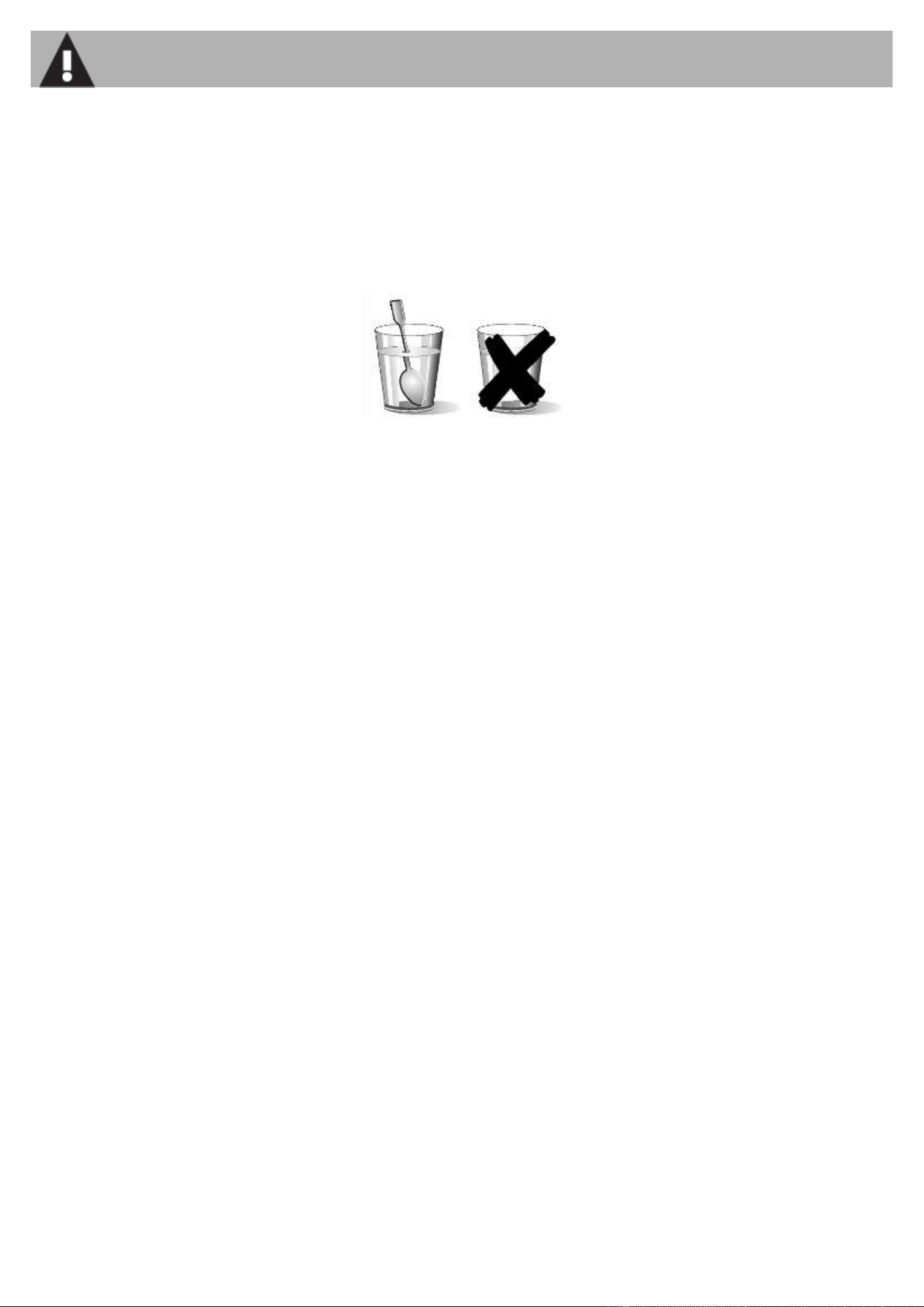
• Take care when heating liquids!
When liquids (water, coffee, tea, milk, etc.) are nearly at boiling
point inside the oven and are taken out suddenly, they may spurt
out of their containers.
DANGER OF INJURIES AND BURNS!
To avoid that type of situation when heating liquids, put a teaspoon
or glass rod inside the container.
INSTALLATION
• The electrical installation is to be set up so that the appliance can
be isolated from the mains with a minimum 3mm all-pole contact
separation. Suitable separation devices include e.g. cutouts,
RCD’s and contactors. This installation must comply with current
regulations.
• If the electrical connection is done through a plug and this remains
accessible after installation, then it is not necessary to provide the
mentioned separation device.
• Protection against electric shock must be provided by the electrical
installation
• Warning: The oven must be earthed.
CLEANING
• The appliance should be cleaned regularly and any food deposits
removed.
• Do not use a steam cleaner to clean the appliance.

7 / EN
Instructions
• Failure to maintain the appliance in a clean condition could lead to
deterioration of the surface that could adversely affect the life of
the appliance and possibly result in a hazardous situation.
• Do not use harsh abrasive cleaners or sharp metal scrapers to
clean the glass door since they can scratch the surface, which may
result in shattering of the glass.
• The door contact surfaces (the front of the cavity and the inside
part of the doors) must be kept very clean in order to ensure the
oven functions correctly.
• Please follow the instructions regarding cleaning in the section
"Oven Cleaning and Maintenance".
REPAIRS
• WARNING: Before maintenance cut the power supply.
• WARNING: Only a competent person can carry out any service or
repair operation that involves the removal of a cover which
• gives protection against exposure to microwave energy.
• WARNING: If the door or door seals are damaged, the appliance
must not be operated until it has been repaired by a competent
person.
• If the power cable is damaged it should be substituted by the
manufacturer, authorized agents or technicians qualified for this
task in order to avoid dangerous situations. Furthermore, special
tools are required for this task.
• Repair and maintenance work, especially of current carrying parts,
can only be carried out by technicians authorized by the
manufacturer.
Avoid damaging the oven or other dangerous situations by
following these instructions:
• Never switch on the microwave when it is empty. If there is no food
inside there may be an electrical overcharge and the oven could
be damaged. RISK OF DAMAGE!

8 / EN
Instructions
• For carrying out oven programming tests put a glass of water inside
the oven. The water will absorb the microwaves and the oven will
not be damaged.
• Do not cover or obstruct the ventilation openings.
• Use only dishes suitable for microwaves. Before using dishes and
containers in the microwave, check that these are suitable (see the
section on types of dishes).
• Never remove the mica cover on the ceiling of the oven interior!
This cover stops fat and pieces of food damaging the microwave
generator.
• Do not keep any inflammable object inside the oven as it may burn
if the oven is switched on.
• Do not use the oven as a pantry.
• Do not use the oven for frying as it is impossible to control the
temperature of oil heated by microwaves.
• The ceramic base and the grills can bear a maximum load of 8 kg.
To avoid damaging the oven, do not exceed this load.
9 / EN
Instructions
1.2. Disposal
Eliminating the packaging
The packaging carries the Green Dot. Use the right
bins when discarding all of the packaging materials,
such as the cardboard, styrene and plastic films.
This will ensure that the packaging materials are
recycled.
Disposal of old electrical appliances
The European Directive 2012/19/EU on Waste
Electrical and Electronic Equipment (WEEE),
requires that old household electrical appliances
must not be disposed of in the normal unsorted
municipal waste stream. Old appliances must be
collected separately in order to optimise the
recovery and recycling of the materials they contain
and reduce the impact on human health and the
environment.
The crossed out “wheeled bin” symbol on the
product reminds you of your obligation, that when
you dispose of the appliance it must be separately
collected.
Consumers should contact their local authority or
retailer for information concerning the correct
disposal of their old appliance.
Before you dispose of your appliance, remove the
power cable, cut it and dispose of it.
1.3. This user manual
This user manual is an integral part of the
appliance and must therefore be kept in its entirely
and whithin the user’s reach for the whole working
life of the appliance.
• Read this user manual carefully before using
the appliance.
1.4. How to read the user manual
This user manual uses the following reading
conventions:
Instructions
General Information on this user
manual, on safety and final disposal.
Description
Discription of the appliance and its
accessories.
Use
Information on the use of the
appliance and its accessories,
cooking advice.
Cleaning and Maintenance
Information for proper cleaning and
maintenance of the appliance.
Installation
Information for the qualified
thecnician: Installation, operation
and inspection.
Safety Instructions
Information
Advice
10 / EN
Description
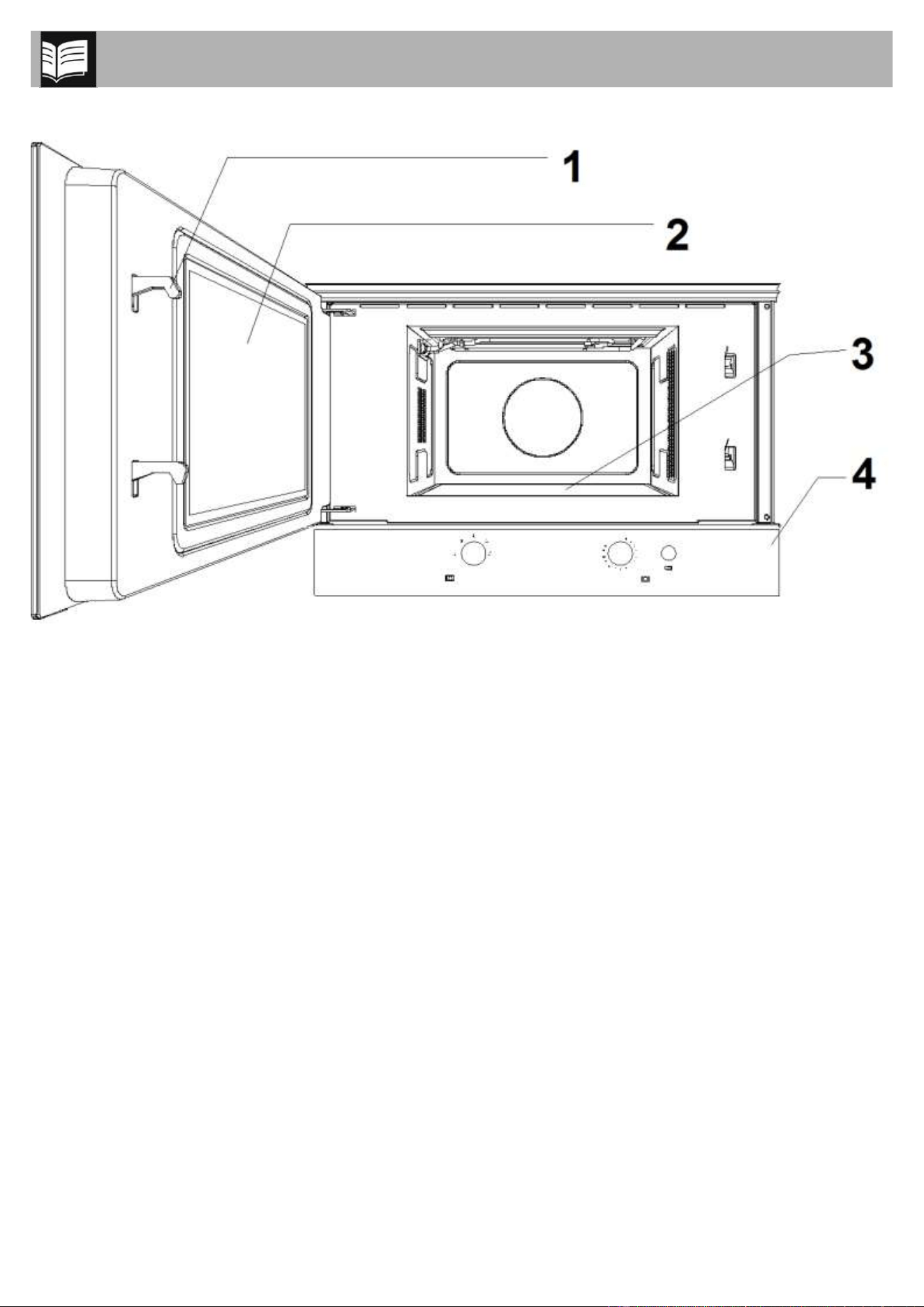
2.1. General Description
1.
Catches
2.
Door window glass
3.
Ceramic base
4.
Control panel
11 / EN
Description
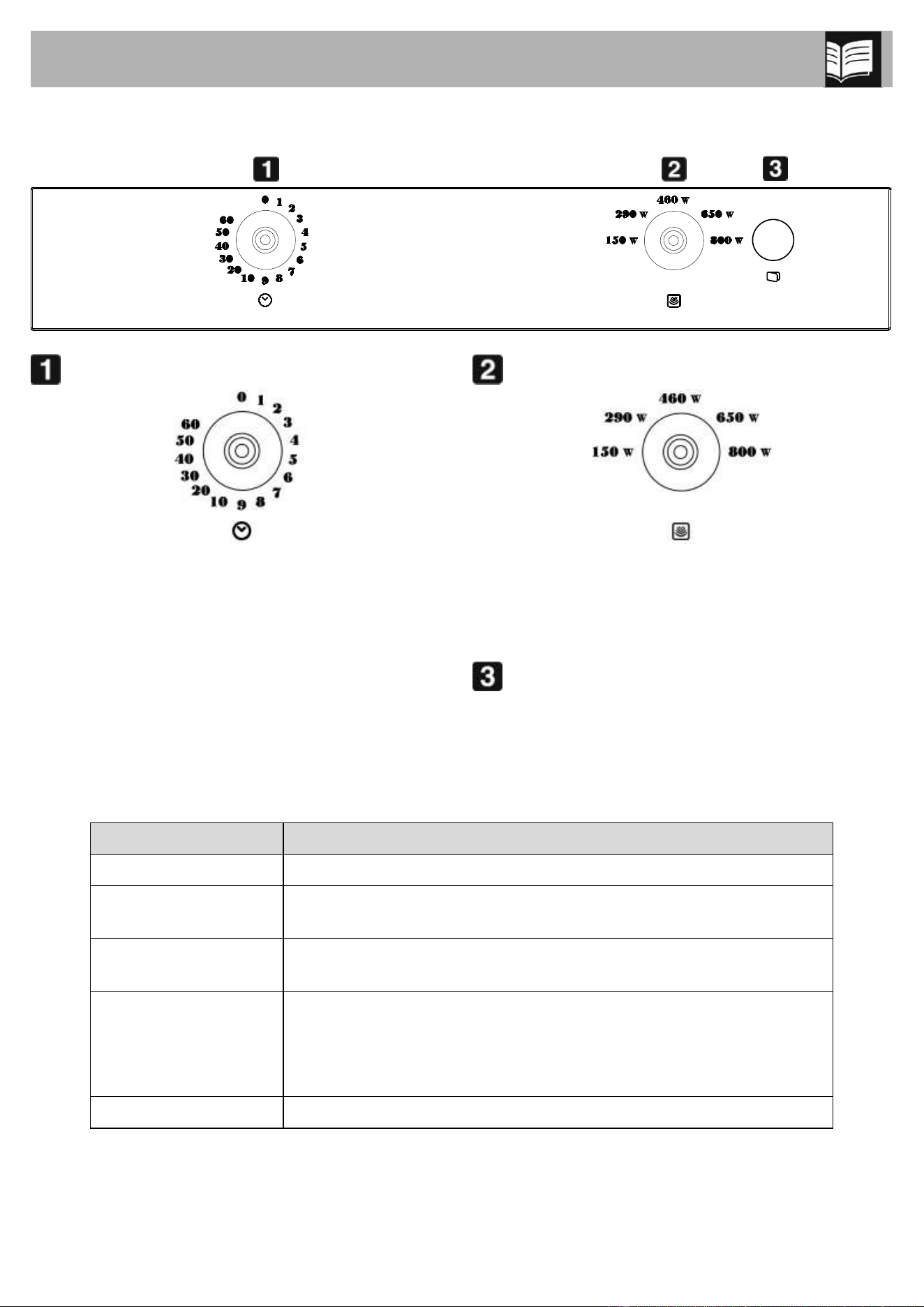
2.2. Control Panel
Time Selector knob
This knob allows you to:
• Select the cooking duration
For instructions on how to use it correctly, see the
next chapters.
Power Selector knob
This knob allows:
• Select the cooking power
Door Open key
2.3. Power Level Discription
Power
Foods
150W
Slow defrosting for delicate foods, keeping food hot
290W
Cooking at low heat, boiling rice
Fast defrosting
460W
Melting butter
Heating baby food
650W
Cooking vegetables and other foods
Cooking and heating carefully,
Heating and cooking small quantities
Heating delicate foods
800W
Cooking and heating liquids and other foods fast
12 / EN
3.1. Advantages of the microwave oven
In a conventional cooker, the heat that is radiated
through the resistances or gas burners slowly
penetrates the foods from the outside in. Therefore,
there is a great loss of energy in heating the air, the
oven components and the containers holding the
food.
In the microwave, the heat is generated by the
foods themselves, i.e. the heat goes from the inside
out. There is no loss of heat to the air, the walls of
the cavity or the containers (as long as they are
microwave-safe containers). This means that only
the food is heated.
To sum up, microwave ovens have the following
advantages:
1. Savings in cooking time; in general, there is a ¾
reduction in time compared to conventional
cooking.
2. Ultra fast defrosting of foods, thus reducing the
danger of bacteria developing.
3. Energy-saving.
4. Conservation of the nutritional value of foods due
to the reduction in cooking time.
5. Easy cleaning.
Microwave oven operating mode
The microwave oven contains a high voltage valve
called a Magnetron, which converts the electrical
energy into microwave energy. These
electromagnetic waves are channelled towards the
inside of the oven by a wave guide and distributed
using a metallic disperser or a rotating plate.
Inside the oven, the microwaves are propagated in
all directions and reflected by the metallic walls,
thus uniformly penetrating the foods.
Why the food is heated
Most foods contain water and the water molecules
vibrate with the microwaves.
The friction between the molecules generates heat,
which raises the temperature of the foods,
defrosting or cooking them or keeping them hot.
Because heat is formed inside the foods:
• The foods may be cooked without any liquids
or oils, or with very little of these;
• Defrosting, heating or cooking in the
microwave oven is faster than in a
conventional oven;
• The vitamins, minerals and nutritious
substances are conserved;
• Neither the natural colour nor the aroma are
altered.
The microwaves go through porcelain, glass,
cardboard or plastic, but not trough metal. For this
reason, metallic containers or containers with
metallic parts should not be used in the microwave
oven.
Microwaves are reflected by metal...
... they go through glass and porcelain...
... and are absorbed by the foods.
Use
13 / EN
Use
3.2. Instructions
High temperature inside the
oven during use
Danger of fire or explosion
• Do not spray any products near the oven.
• Do not use or leave flammable materials
near the oven.
• Do not use plastic kitchenware to cook food
(except with the microwave function).
• Do not put sealed tins or containers in the
oven.
• Do not leave the oven unattended during
cooking operations where fats or oils could
be released.
• Remove all trays and racks which are not
required during cooking
3.3. What kind of ovenware can be
used?
Microwave function
For the microwave function, keep in mind that
microwaves are reflected by metal surfaces. Glass,
china, clay, plastic, and paper let microwaves pass.
For this reason, metal pans and dishes or
containers with metal parts or decorations
cannot be used in the microwave. Glass ware
and clay with metallic decoration or content (e.g.
lead crystal) cannot be used in microwave ovens.
The ideal materials for use in microwave ovens are
glass, refractory china or clay, or heat resistant
plastic. Very thin, fragile glass or china should only
be used for short period of times (e.g. heating).
Hot food transmits heat to the dishes which can
become very hot. You should, therefore, always
use an oven glove!
Test the dishes
Put the item you want to use in the oven for 20
seconds at maximum microwave power. After that
time, if it is cold and just slightly warm, it is suitable
to use. However, if it heats up a lot or causes
electric arcing it is not suitable for microwave use.
Aluminium containers and foils
Precooked foods in aluminium containers or
wrapped in aluminium foil may be placed in the
microwave oven if the following instructions are
followed:
• Pay attention to the manufacturer’s
instructions that are printed on the packaging,
• Aluminium containers should not be higher
than 3 cm and they should not come into
contact with the walls of the cavity (minimum
distance 3 cm). The aluminium lid should be
removed.
• Place the aluminium container directly on the
ceramic base. If the grille is used, the
container should be placed on a porcelain
plate. Never put the container directly on the
grille!
• The cooking time will be longer because the
microwaves only enter the food from above.
In case of doubt, only use microwave-safe
dishes.
• Aluminium foil may be used to reflect the
microwaves during the defrosting process.
Delicate foods, such as poultry or minced
meat, may be protected from excessive heat
by covering the respective ends.
• Important: the aluminium foil must not come
into contact with the walls of the cavity, as this
could cause an electrical arch.
Lids
We recommend you use glass or plastic lids or cling
film since: ONLY FOR THE MICROWAVE
FUNCTION.
1. They prevent excessive evaporation
(especially in very long cooking periods);
2. The cooking process is faster;
3. The food does not go dry;
4. The aroma is preserved.
The lid should have holes or openings so that no
pressure develops. Plastic bags must also be
opened. Baby feeding bottles or jars with baby food
and similar containers can only be heated without
their tops / lids otherwise they can burst.
14 / EN
The following table gives general guidelines on the
type of dishes that are suitable for each situation.
Table – dishware
Operating mode
Type of dish
Microwave
Defrost / heat
Cook
Glass and porcelain 1)
Domestic, non fire-resistant, may be
washed in dishwasher
yes
yes
Glazed ceramic
Fire-resistant glass and porcelain
yes
yes
Ceramic, earthenware dishes
unglazed
glazed without metallic decorations
yes
yes
Earthenware dishes
glazed
unglazed
yes
no
yes
no
Plastic dishes 2)
heat-resistant up to 100°C
heat-resistant up to 250°C
yes
yes
no
yes
Plastic films 3)
Cling film
Cellophane
no
yes
no
yes
Paper, cardboard, parchment 4)
yes
no
Metal
Aluminium foil
Aluminium containers 5)
Accessories
yes
no
no
no
yes
no
1. No golden or silver edges and no lead glass.
2. Remember the manufacturer’s tips!
3. Do not use metal clips to close the bags.
Perforate the bags. Use films only to cover
foods.
4. Do not use paper plates.
5. Only shallow aluminium containers without
lids. The aluminium must not come into contact
with the walls of the cavity.
Use
15 / EN
Use
3.4. First use
1. Remove any protective film from the outside
or inside of the appliance, including
accessories.
2. Remove any labels (apart from the rating
plate) from the accessories and from the
oven cavity.
3. Remove and wash all the appliance
accessories (see 4 Cleaning and
Maintenance).
3.5. Using the oven
Opening the door
To open the door the Door Open Key.
3.6. Cooking Functions
Microwave
Given that they penetrate directly into the food,
microwaves allow cooking to take place in a very
short period of time and with a considerable saving
of energy. They are suitable for cooking without fat
and also for defrosting and re-heating food while
maintaining its original appearance and fragrance.
1. Set the Power Selector knob to the position that
corresponds to the desired power level (see table
“Description”).
2. Turn the Timer knob to the desired operating
time. For times under 2 minutes, turn the Timer
knob to a higher time and then go down to the
desired time.
3. Close the door. The oven will start to operate.
If the door is opened then cooking will
stop.
16 / EN
3.7. When the oven is working…
Interrupting a cooking cycle
You can stop the cooking process at any time by
pressing the Door Open button.
In this case:
▪ Microwave emission is stopped
immediately.
▪ The timer stops automatically, indicating the
operating time that is left.
If you wish, at this time you can:
▪ Turn or stir the food to ensure it will be evenly
cooked.
▪ Alter the cooking parameters.
▪ Cancel the process as described below.
To restart the process, close the door.
Modifying parameters
The operating parameters (time and temperature)
can only be altered when the cooking process has
been interrupted by proceeding as follows:
▪ To alter the time, turn the Timer knob. The
new time defined is immediately valid.
▪ To alter the power, turn the Power Selector
to a new position. The new power level will
be applied within 30 seconds.
Cancelling a cooking cycle
If you wish to cancel the cooking process, turn the
Timer Button to ZERO.
Warning!
• When you finish using the oven, always
turn the Timer Button to zero, because
otherwise the oven will start to function
when you close the door and may be
damaged if it functions when empty.
End of a cooking cycle
At the end of the process you will hear a bell and
the Timer Button points at ZERO.
Warning!
• When you finish using the oven, always
turn the Timer Button to zero, because
otherwise the oven will start to function
when you close the door and may be
damaged if it functions when empty.
Use
17 / EN
Use
3.8. Recommended cooking tables
Cooking with Microwaves
Warning!
• Read the section “Safety Information”
before cooking with your microwave
Follow these recommendations when cooking with
microwaves:
▪ Before heating or cooking foods with peel or
skin (e.g. apples, tomatoes, potatoes,
sausages) prick them so that they do not burst.
Cut the food up before starting to prepare it.
▪ Before using a container or dish make sure that
it is suitable for microwave use (see the section
on types of ovenware).
▪ When cooking food with very little moisture
(e.g. defrosting bread, making popcorn, etc.)
evaporation is very quick. The oven then works
as if it was empty and the food may burn. The
oven and the container may be damaged in
such a situation. You should therefore set just
the cooking time necessary and you must keep
a close eye on the cooking process.
▪ It is not possible to heat large quantities of oil
(frying) in the microwave.
▪ Remove pre-cooked food from the containers
they come in since these are not always heat
resistant. Follow the food manufacturer’s
instructions.
▪ If you have several containers, such as cups,
for example, set them out uniformly on the
ceramic base.
▪ Do not close plastic bags with metal clips. Use
plastic clips instead. Prick the bags several
times so that the steam can escape easily.
▪ When heating or cooking foods, check that they
reach at least a temperature of 70°C.
▪ During cooking, steam may form on the oven
door window and may start to drip. This
situation is normal and may be more noticeable
if the room temperature is low. The oven’s safe
working is not affected by this. After you have
finished cooking, clean up the water coming
from the condensation
▪ When heating liquids, use containers with a
wide opening, so that the steam can evaporate
easily.
Prepare the foods as per the instructions and keep
in mind the cooking times and power levels
indicated in the tables.
Keep in mind that the figures given are only
indicative and can vary depending on the initial
state, temperature, moisture and type of food. It is
advisable to adjust the times and power levels to
each situation. Depending on the exact
characteristics of the food you may need to
increase or shorten the cooking times or increase
or decrease the power levels.
Cooking with microwaves...
1. The greater the amount of food, the longer the
cooking time. Keep in mind that:
▪ Double the quantity » double the time
▪ Half the quantity » half the time
2. The lower the temperature, the longer the
cooking time.
3. Foods containing a lot of liquid heat up more
quickly.
4. Cooking will be more uniform if the food is evenly
distributed on the ceramic base. If you put dense
foods on the outside part of the plate and less dense
ones on the centre of the plate, you can heat up
different types of food simultaneously.
5. You can open the oven door at any time. When
you do this the oven switches off automatically. The
microwave will only start working again when you
close the door and press the start key.
6. Foods that are covered require less cooking time
and retain their characteristics better. The lids used
must let microwaves pass through and have small
holes that allow steam to escape.
18 / EN
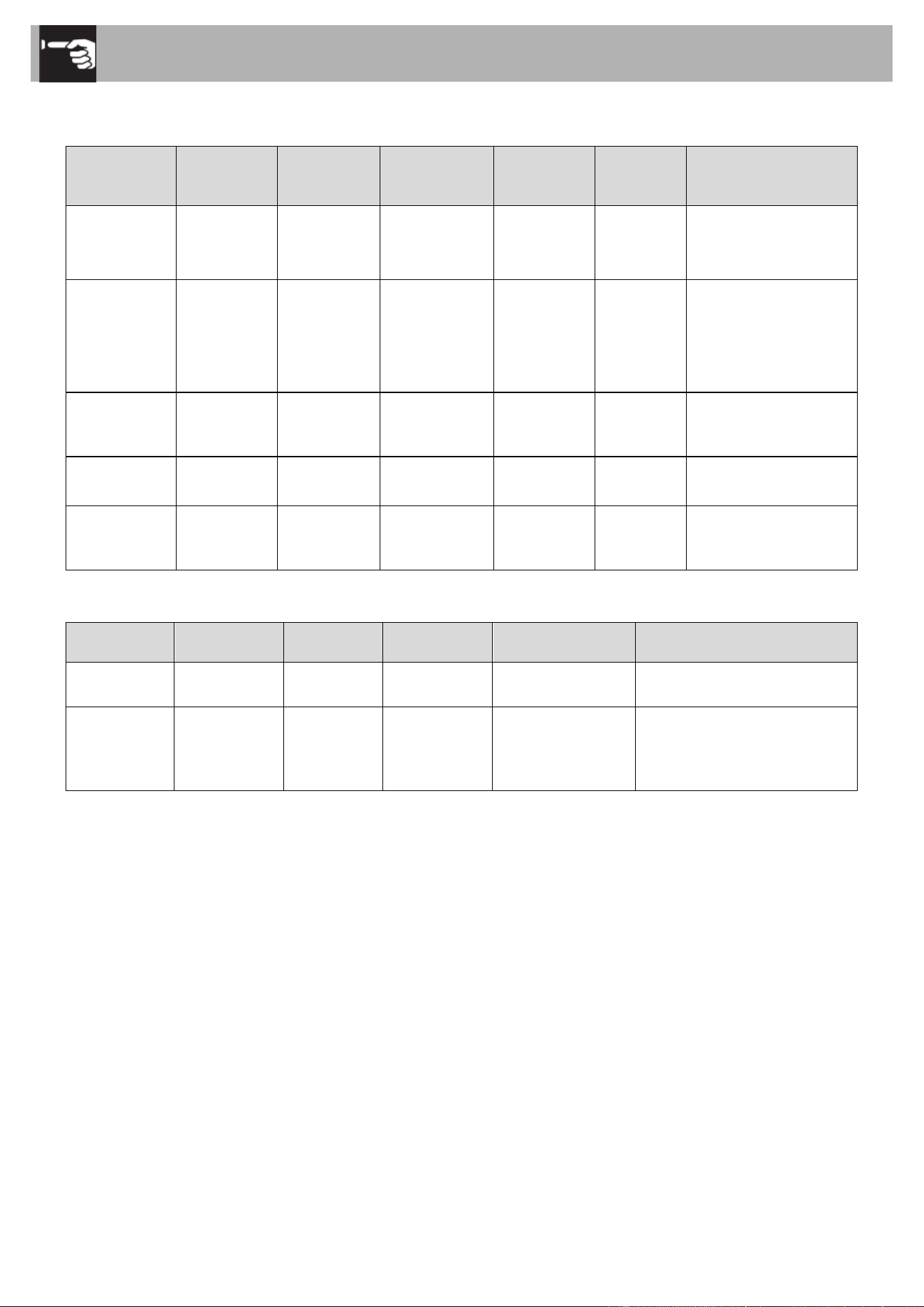
Cooking vegetables
Food
Quantity
(gr)
liquids
Addition
Power
(W)
Time
(min.)
Standing
Time
(min.)
Instructions
Cauliflower
Broccoli
Mushrooms
500
300
250
100 ml
50 ml
25 ml
850
850
850
9-11
6-8
6-8
2-3
2-3
2-3
Cut into slices.
Keep covered.
Peas,
carrots
Frozen
carroTS
300
250
100 ml
25 ml
850
850
7-9
8-10
2-3
2-3
Cut into chunks or
slices. Keep
covered.
Potatoes
250
25 ml
850
5-7
2-3
Peel and cut into
equal sized pieces.
Keep covered.
Paprika
Leek
250
250
25 ml
50 ml
850
850
5-7
5-7
2-3
2-3
Cut into chunks or
slices Keep covered.
Frozen
Brussel
sprouts
300
50 ml
850
6-8
2-3
Keep covered.
Cooking fish
Food
Quantity (g)
Power
(W)
Time (min.)
Standing Time
(min.)
Instructions
Fish fillets
500
600
10-12
3
Cook covered over. Turn
after half of cooking time.
Whole fish
800
850
360
2-3
7-9
2-3
Cook covered over. Turn
after half of cooking time.
You may wish to cover up
the small edges of the fish.
Defrosting with Microwaves
General instructions for defrosting:
1. When defrosting, use only dishes that are
appropriate for microwaves (china, glass, suitable
plastic).
2. The defrost function by weight and the tables
refer to the defrosting of raw food.
3. The defrosting time depends on the quantity and
thickness of the food. When freezing food keep the
defrosting process in mind. Distribute the food
evenly in the container.
4. Distribute the food as best as possible inside the
oven. The thickest parts of fish or chicken
drumsticks should be turned towards the outside.
You can protect the most delicate parts of food with
pieces of aluminium foil. Important: The aluminium
foil must not come into contact with the oven cavity
interior as this can cause electrical arcing.
5. Thick portions of food should be turned several
times.
6. Distribute the frozen food as evenly as possible
since narrow and thin portions defrost more quickly
than the thicker and broader parts.
Use
19 / EN
7. Fat-rich foods such as butter, cream cheese and
cream should not be completely defrosted. If they
are kept at room temperature they will be ready to
be served in a few minutes. With ultra-frozen
cream, if you find small pieces of ice in it, you
should mix these in before serving.
8. Place poultry on an upturned plate so that the
meat juices can run off more easily.
9. Bread should be wrapped in a napkin so that it
does not become too dry.
10 Turn the food at regular intervals.
11. Remove frozen food from its wrapping and do
not forget to take off any metal twist-tags. For
containers that are used to keep frozen food in the
freezer and which can also be used for heating and
cooking, all you need to do is take off the lid. For all
other cases you should put the food into containers
that are suitable for microwave use.
12. The liquid resulting from defrosting, principally
that from poultry, should be discarded. In no event
should such liquids be allowed to come into contact
with other foods.
13. Do not forget that by using the defrosting
function you need to allow for standing time until the
food is completely defrosted.
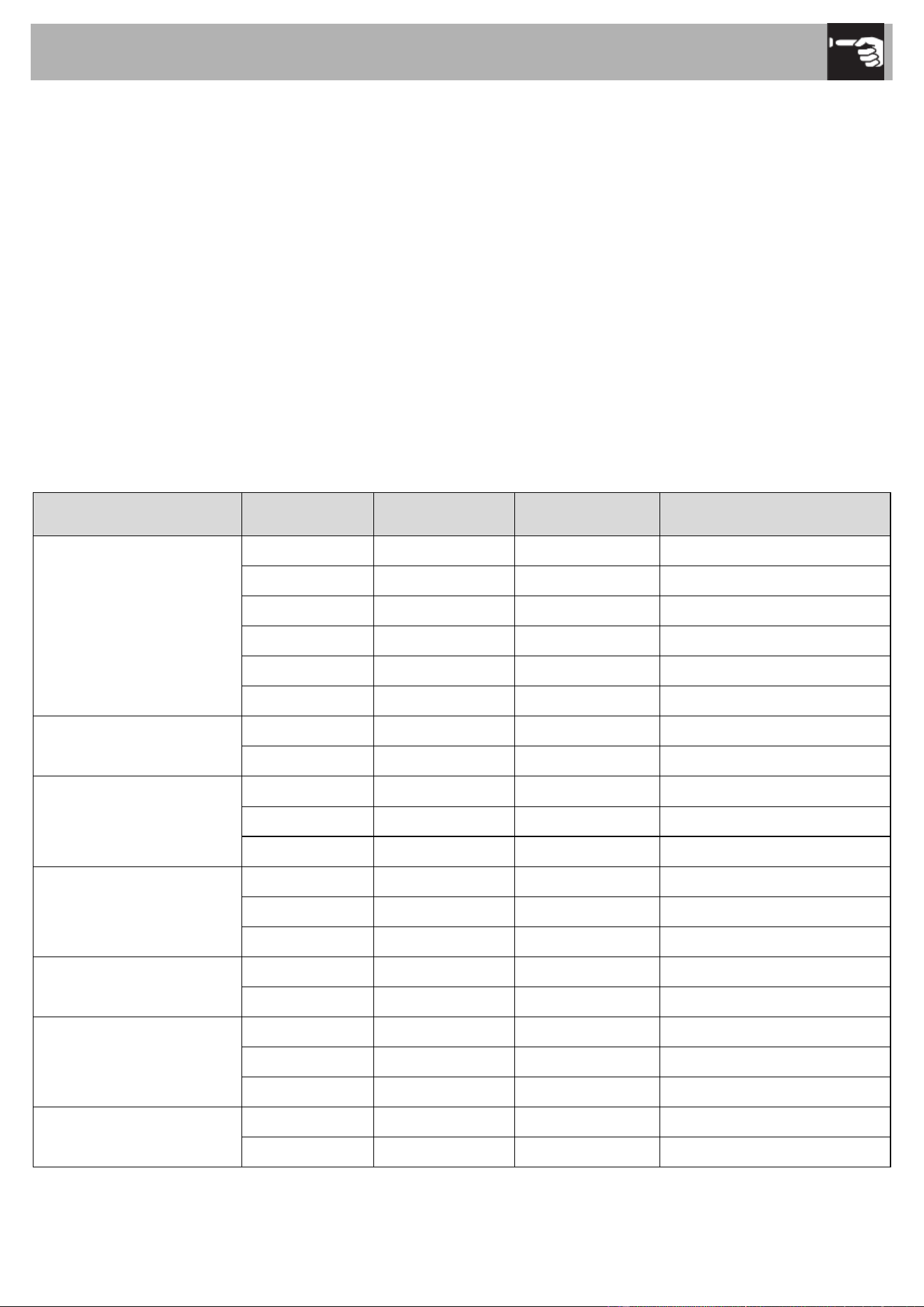
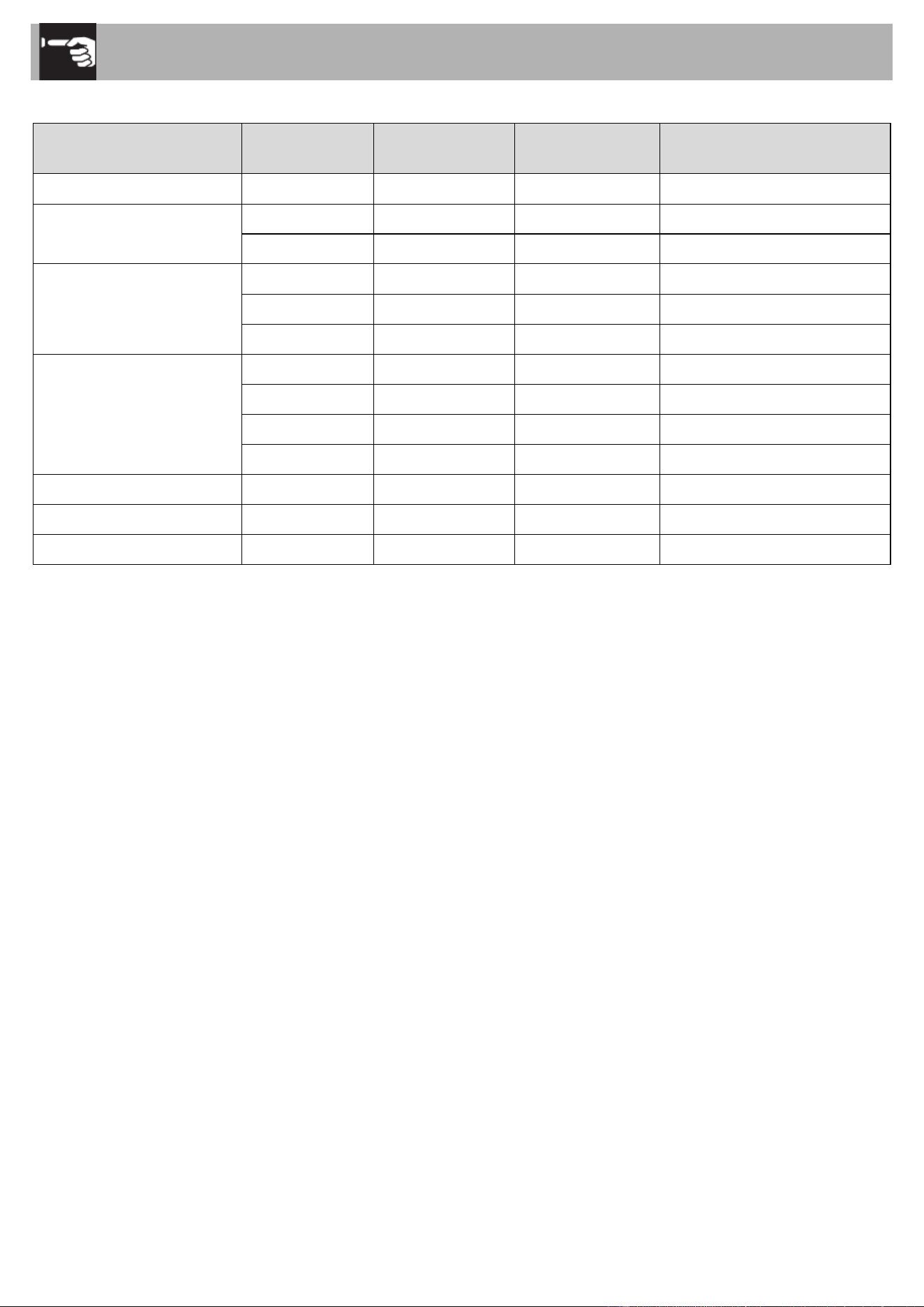
The table below shows different defrosting and
standing times (in order to ensure the food
temperature is evenly distributed) for different types
and weights of food, plus recommendations.
Food
Weight
Defrosting
Time
Resting time
Comment
Pieces of meat, veal,
beef, pork
100 g
3-4 min
5-10 min
Turn once
200 g
6-7 min
5-10 min
Turn once
500 g
14-15 min
10-15 min
Turn twice
700 g
20-21 min
20-25 min
Turn twice
1000 g
29-30 min
25-30 min
Turn twice
1500 g
42-45 min
30-35 min
Turn three times
Stewed meat
500 g
12-14 min
10-15 min
Turn twice
1000 g
24-25 min
25-30 min
Turn three times
Minced meat
100 g
4-5 min
5-6 min
Turn twice
300 g
8-9 min
8-10 min
Turn three times
500 g
12-14 min
15-20 min
Turn once
Sausage
125 g
3-4 min
5-10 min
Turn twice
250 g
8-9 min
5-10 min
Turn once
500 g
15-16 min
10-15 min
Turn twice
Poultry, poultry parts
200 g
7-8 min
5-10 min
Turn three times
500 g
17-18 min
10-15 min
Turn once
Chicken
1000 g
34-35 min
15-20 min
Turn once
1200 g
39-40 min
15-20 min
Turn once
1500 g
48-50 min
15-20 min
Turn twice
Fish
100 g
3-4 min
5-10 min
Turn once
200 g
6-7 min
5-10 min
Turn once
Use
20 / EN
Food
Weight
Defrosting
Time
Resting time
Comment
Trout
200 g
6-7 min
5-10 min
Turn twice
Shrimps
100 g
3-4 min
5-10 min
Turn once
500 g
12-15 min
10-15 min
Turn once
Fruit
200 g
4-5 min
5-8 min
Turn twice
300 g
8-9 min
10-15 min
Turn once
500 g
12-14 min
15-20 min
Turn once
Bread
100 g
2-3 min
2-3 min
Turn twice
200 g
4-5 min
5-6 min
Turn twice
500 g
10-12 min
8-10 min
Turn twice
800 g
15-18 min
15-20 min
Turn three times
Butter
250 g
8-10 min
10-15 min
Turn once, keep covered
Cottage cheese
250 g
6-8 min
5-10 min
Turn once, keep covered
Cream
250 g
7-8 min
10-15 min
Remove the lid
Use
21 / EN
Cleaning and Maintenance
4.1. Instructions
High temperature inside the
oven after use
Danger of burns
• Perform cleaning only after letting the
appliance cool down.
Improper use
Risk of damage to surfaces
• Do not use a steam jet to clean the
appliance.
• Do not use cleaning products containing
chlorine, ammonia or bleach on steel parts or
parts with metallic finishes on the surface
(e.g. anodizing, nickel or chromium-plating).
• Do not use abrasive or corrosive detergents
on glass parts (e.g. powder products, stain
removers and metallic sponges).
• Do not use rough or abrasive materials or
sharp metal scrapers.
• Failure to clean the oven could adversely
affect the life of the appliance and pose a
hazard.
• Always remove food residues from the oven
compartment.
Improper user
Danger of explosion/ burns
• Do not use detergents with high alcohol
content or which can release inflammable
vapours. Subsequent heating could set off
an explosion inside the appliance.
Before cleaning the microwave,
ENSURE THAT THE PLUG IS NOT IN
THE SOCKET.
4.2. Cleaning the surfaces
To keep the surfaces in a good condition, they
should be cleaned regularly after use. Let them
cool first.
4.3. Ordinary daily cleaning
Always use only specific products that do not
contain abrasive or chlorine-based acids.
Pour the product onto a damp cloth and wipe the
surface, rinse thoroughly and dry with a soft cloth
or a microfiber cloth.
4.4. Food stains and residues
Do not use metallic sponges or sharp scrapers as
they will damage the surfaces.
Use ordinary non-abrasive products with the aid of
wooden or plastic utensils if necessary. Rinse
thoroughly and dry with a soft cloth or a microfiber
cloth.
4.5. Cleaning the oven
Cleaning is the only maintenance normally
required.
After each time the oven is used, clean the inside
walls with a damp cloth since this is the easiest way
to remove splashes or spots of food that may have
stuck to the inside.
To remove dirt that is harder to shift, use a non-
aggressive cleaning product. Do not use oven
sprays or other aggressive or abrasive cleaning
products.
Always keep the door and the oven front very clean
to ensure that the door opens and closes properly.
Make sure water does not enter the microwave
ventilation holes.
Regularly take out the ceramic base and the
respective support and clean the cavity base,
especially after any liquid spillage.
Do not switch on the microwave without the
ceramic base in place.
If the oven cavity is very dirty, put a glass of water
on the ceramic base and switch on the microwave
oven for 2 or 3 minutes at maximum power. The
steam released will soften the dirt which can then
be cleaned easily using a soft cloth.
Unpleasant odours (e.g. after cooking fish) can be
eliminated easily. Put a few drops of lemon juice in
a cup with water. Put a spoonful of coffee in the cup
to avoid the water boiling over. Heat the water for 2
to 3 minutes at maximum microwave power.
22 / EN
Cleaning and Maintenance
4.6. Front surface
Normally you just need to clean the oven with a
damp cloth. If it is very dirty, add a few drops of
dishwashing liquid to the cleaning water.
Afterwards, wipe the oven with a dry cloth.
Immediately remove lime, fat, starch or egg white
stains. Corrosion can occur under these stains.
4.7. Extraordinary maintenance
Occasionally, the oven will require minor servicing
procedures or the replacement of parts subject to
wear and tear, such as gaskets, light bulbs, etc.
The specific operations for each procedure of this
kind are provided below.
Before carrying out any operation
involving access to live parts, disconnect
the appliance from the electricity supply.
4.8. Substitution of light bulb
If the light bulb needs substitution call the Technical
Assistance since it is necessary to uninstall the
oven to replace it.
4.9. What should I do if the oven doesn’t
work?
Warning!
• Any type of repair must only be done by a
specialised technician. Any repair done by a
person not authorised by the manufacturer is
dangerous.
You do not need to contact Technical Assistance to
resolve the following questions:
The oven does not work! Check if:
• The plug is correctly fitted in the socket.
• The oven’s power is switched on.
• The door is completely closed. The door
should close with an audible click.
• There are any foreign bodies between the
door and the cavity front.
When the oven is operating I can hear some
strange noises! Check if:
• There is an electrical arcing inside the oven
caused by foreign metallic objects (see
section on type of ovenware).
• The ovenware is touching the oven walls.
• There are any loose items of cutlery or
cooking tools inside the oven.
The food doesn’t heat up or heats very slowly!
Check if:
• You have inadvertently used metal ovenware.
• You have selected the correct operating times
and power level.
• The food you have put inside the oven is a
larger amount or colder than you usually put
in.
The food is too hot, dried out or burnt!
• Check if you selected the correct operating
time and power level.
The oven switches on but the interior light does
not go on!
• If all the functions work properly it is probable
that the lamp has blown. You can keep on
using the oven.
I hear some noises when the door is open!
• This is not a problem. The cooling fan keeps
on working while the door is open.
The oven door doesn’t open.
• Make sure the oven is plugged in. The oven
door only opens when the oven is connected
to the mains.
If the problem has not been resolved or
in the case of other types of fault,
contact your local technical support
centre.
All repairs must be performed by
specialised technicians.
23 / EN
5.1. Before installation
Check that the input voltage indicated on the
characteristics plate is the same as the voltage of
the power outlet you are going to use.
Open the oven door and take out all the
accessories and remove the packing material.
Warning!
• The front surface of the oven may be
wrapped with a protective film. Before using
the oven for the first time, carefully remove
this film, starting on the inside.
Make sure that the oven is not damaged in any
way. Check that the oven door closes correctly and
that the interior of the door and the front of the oven
opening are not damaged. If you find any damage
contact the Technical Assistance Service.
DO NOT USE THE OVEN if the power cable or the
plug are damaged, if the oven does not function
correctly or if it has been damaged or dropped.
Contact the Technical Assistance Service.
Put the oven on a flat and stable surface. The oven
must not be put close to any sources of heat, radios
or televisions.
During installation, make sure that the power
cable does not come into contact with any
moisture or objects with sharp edges behind
the oven. High temperatures can damage the
cable.
Warning!
• After the oven is installed you must make
sure you can access the plug.
5.2. After installation
The oven is equipped with a power cable and a plug
for single phase current.
If the oven is to be installed on a permanent
basis it should be installed by a qualified
technician. In such a case, the oven should be
connected to a circuit with an all-pole circuit breaker
with a minimum separation of 3 mm between
contacts.
Warning!
• The oven must be earthed.
The manufacturer and retailers do not accept
responsibility for any damage that may be caused
to people, animals or property if these installation
instructions are not observed.
The oven only functions when the door is closed
correctly.
After the first use, clean the inside of the oven and
the accessories, following the cleaning instructions
given in the section “Oven cleaning and
maintenance”.
Installation
68 / FR
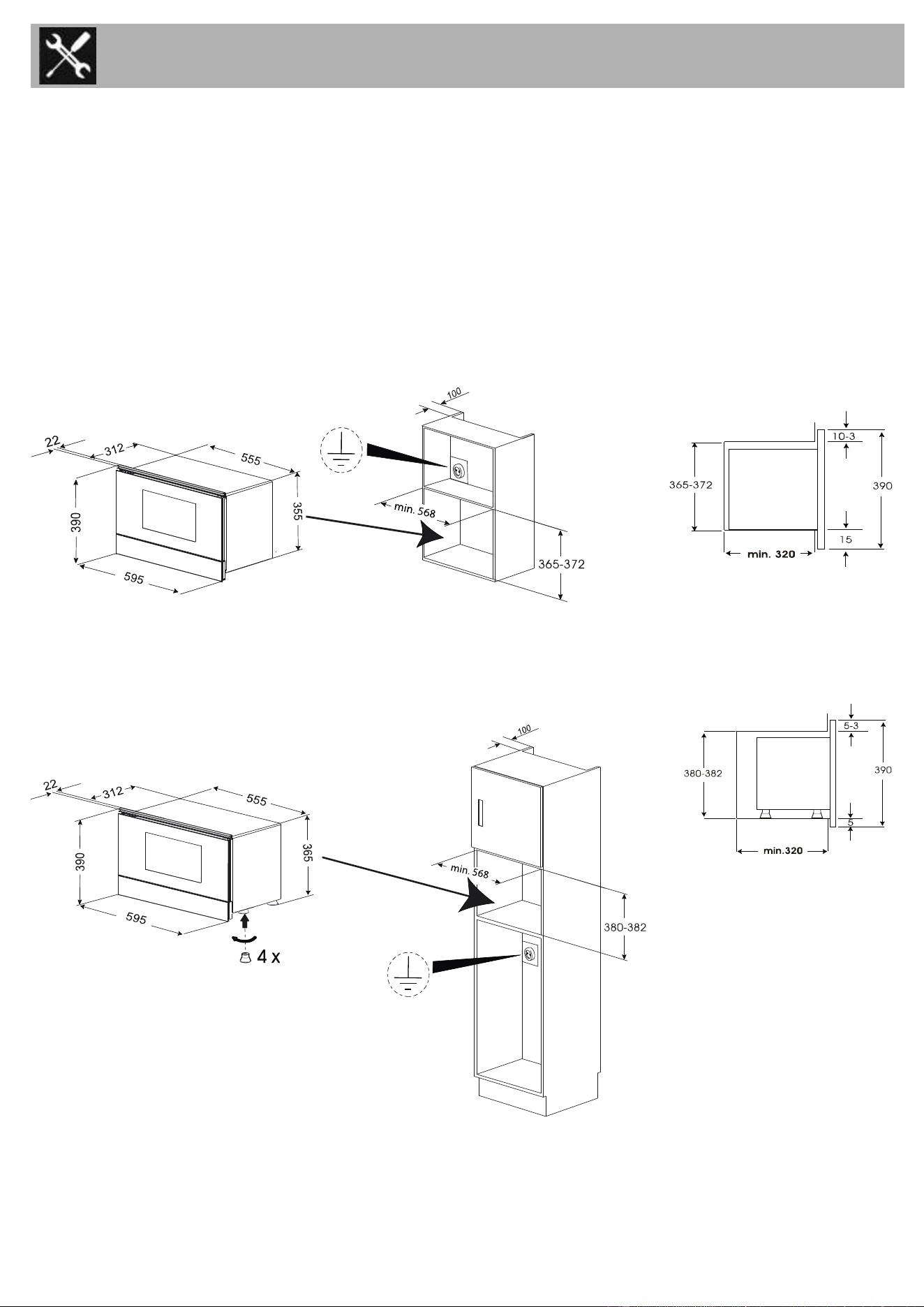
EN This microwave is designed to be installed above 850mm from floor level. This microwave cannot
be installed under a worktop or below another oven, in order to avoid liquid spillage.
DE Diese Mikrowelle ist darauf ausgelegt, auf mehr als 85 cm Höhe über dem Boden installiert zu
werden. Diese Mikrowelle darf nicht unter einer Arbeitsplatte oder unter einem anderen Ofen installiert
werden, damit keine Flüssigkeiten darauf auslaufen können.
FR Le micro-ondes est conçu pour une installation à plus de 850 mm au-dessus du sol. Le micro-
ondes ne peut pas être installé sous un plan de travail ni sous un autre four afin d’éviter les projections
de liquides.
Installation Images/ Installations-Images / Installation
Images
69
Installation Images/ Installations-Images
EN
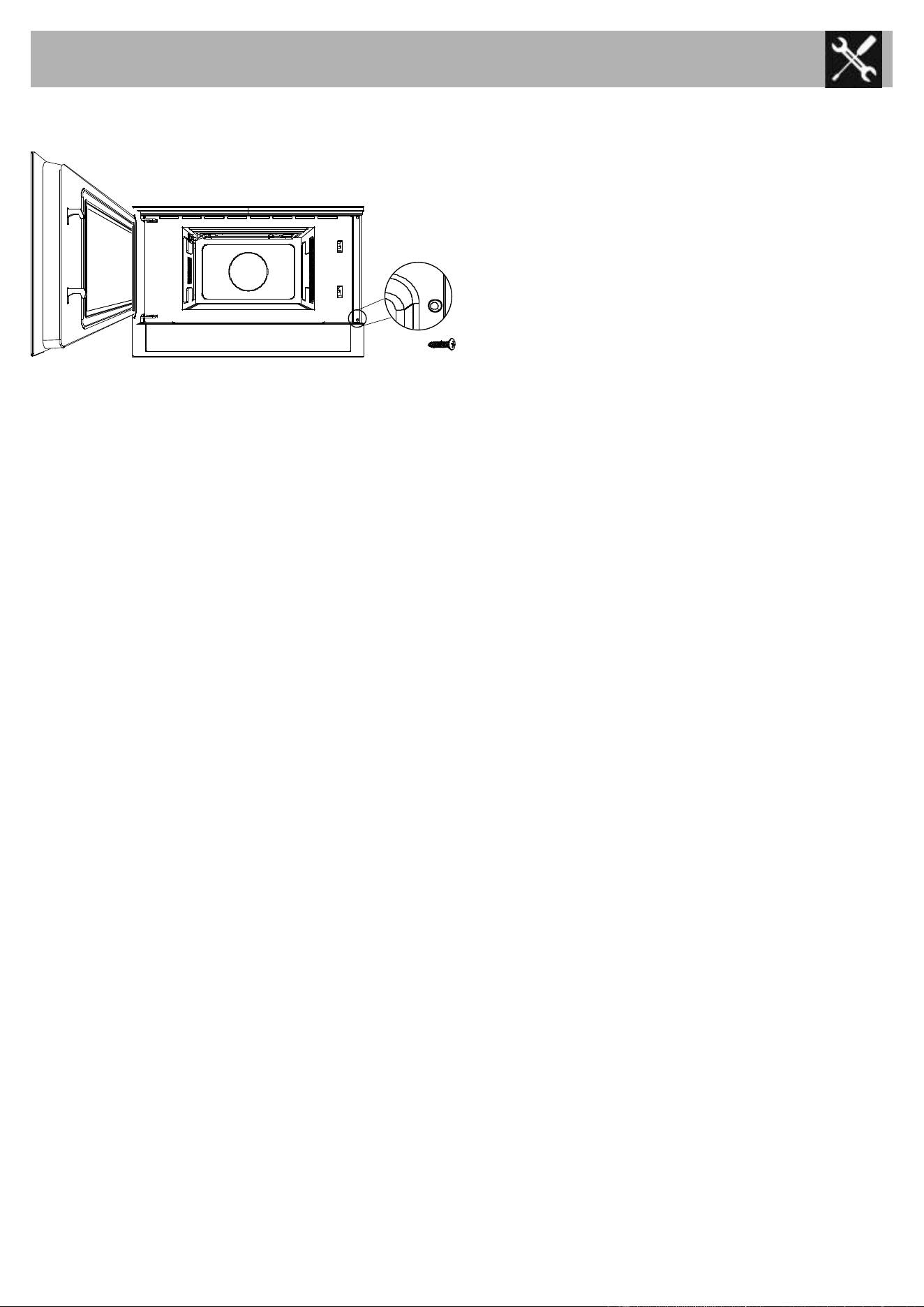
• Push oven completely into the cabinet and centre
it.
• Open microwave door and fasten the appliance
to the cabinet using the four screws provided.
DE
• Die Mikrowelle in die Nische einschieben und
entsprechend anpassen.
• Die Tür der Mikrowelle öffnen und das Gerät mit
den vier mitgelieferten Schrauben am
Küchenmöbel wie im Bild dargestellt befestigen.
FR
• Introduisez le four dans le meuble jusqu'à ce que
la partie avant de celui-ci butte sur le bois et
alignez-le.
• Ouvrez la porte du four et fixez ce dernier aux
parois latérales du meuble au moyen des 4 vis
fournies. Introduisez-les dans les trous prévus à
cet effet. Insert the screws through the front
holes
4x