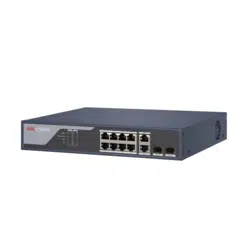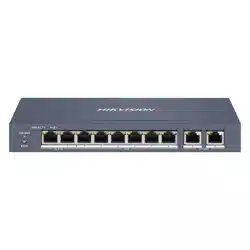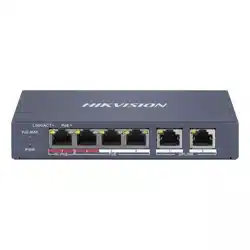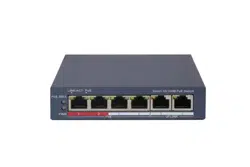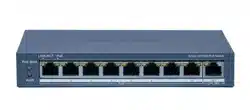

Smart Managed Switch Web
User Manual

Legal Informaon
About this Document
●
This Document includes instrucons for using and managing the Product. Pictures, charts,
images and all other
informaon hereinaer are for descripon and explanaon only.
●
The
informaon contained in the Document is subject to change, without noce, due to
rmware updates or other reasons. Please nd the latest version of the Document at the
Hikvision website ( hps://www.hikvision.com ). Unless otherwise agreed, Hangzhou Hikvision
Digital Technology Co., Ltd. or its aliates (hereinaer referred to as "Hikvision") makes no
warranes, express or implied.
●
Please use the Document with the guidance and assistance of professionals trained in
supporng the Product.
About this Product
This product can only enjoy the aer-sales service support in the country or region where the
purchase is made.
Acknowledgment of Intellectual Property Rights
●
Hikvision owns the copyrights and/or patents related to the technology embodied in the
Products described in this Document, which may include licenses obtained from third pares.
●
Any part of the Document, including text, pictures, graphics, etc., belongs to Hikvision. No part
of this Document may be excerpted, copied, translated, or modied in whole or in part by any
means without
wrien permission.
●
and other Hikvision's trademarks and logos are the properes of Hikvision in
various
jurisdicons.
●
Other trademarks and logos menoned are the properes of their respecve owners.
LEGAL DISCLAIMER
●
TO THE MAXIMUM EXTENT PERMITTED BY APPLICABLE LAW, THIS DOCUMENT AND THE
PRODUCT DESCRIBED, WITH ITS HARDWARE, SOFTWARE AND FIRMWARE, ARE PROVIDED "AS
IS" AND "WITH ALL FAULTS AND ERRORS". HIKVISION MAKES NO WARRANTIES, EXPRESS OR
IMPLIED, INCLUDING WITHOUT LIMITATION, MERCHANTABILITY, SATISFACTORY QUALITY, OR
FITNESS FOR A PARTICULAR PURPOSE. THE USE OF THE PRODUCT BY YOU IS AT YOUR OWN RISK.
IN NO EVENT WILL HIKVISION BE LIABLE TO YOU FOR ANY SPECIAL, CONSEQUENTIAL,
INCIDENTAL, OR INDIRECT DAMAGES, INCLUDING, AMONG OTHERS, DAMAGES FOR LOSS OF
BUSINESS PROFITS, BUSINESS INTERRUPTION, OR LOSS OF DATA, CORRUPTION OF SYSTEMS, OR
LOSS OF DOCUMENTATION, WHETHER BASED ON BREACH OF CONTRACT, TORT (INCLUDING
NEGLIGENCE), PRODUCT LIABILITY, OR OTHERWISE, IN CONNECTION WITH THE USE OF THE
Smart Managed Switch Web User Manual
i

PRODUCT, EVEN IF HIKVISION HAS BEEN ADVISED OF THE POSSIBILITY OF SUCH DAMAGES OR
LOSS.
●
YOU ACKNOWLEDGE THAT THE NATURE OF THE INTERNET PROVIDES FOR INHERENT SECURITY
RISKS, AND HIKVISION SHALL NOT TAKE ANY RESPONSIBILITIES FOR ABNORMAL OPERATION,
PRIVACY LEAKAGE OR OTHER DAMAGES RESULTING FROM CYBER-ATTACK, HACKER ATTACK,
VIRUS INFECTION, OR OTHER INTERNET SECURITY RISKS; HOWEVER, HIKVISION WILL PROVIDE
TIMELY TECHNICAL SUPPORT IF REQUIRED.
●
YOU AGREE TO USE THIS PRODUCT IN COMPLIANCE WITH ALL APPLICABLE LAWS, AND YOU ARE
SOLELY RESPONSIBLE FOR ENSURING THAT YOUR USE CONFORMS TO THE APPLICABLE LAW.
ESPECIALLY, YOU ARE RESPONSIBLE, FOR USING THIS PRODUCT IN A MANNER THAT DOES NOT
INFRINGE ON THE RIGHTS OF THIRD PARTIES, INCLUDING WITHOUT LIMITATION, RIGHTS OF
PUBLICITY, INTELLECTUAL PROPERTY RIGHTS, OR DATA PROTECTION AND OTHER PRIVACY
RIGHTS. YOU SHALL NOT USE THIS PRODUCT FOR ANY PROHIBITED END-USES, INCLUDING THE
DEVELOPMENT OR PRODUCTION OF WEAPONS OF MASS DESTRUCTION, THE DEVELOPMENT OR
PRODUCTION OF CHEMICAL OR BIOLOGICAL WEAPONS, ANY ACTIVITIES IN THE CONTEXT
RELATED TO ANY NUCLEAR EXPLOSIVE OR UNSAFE NUCLEAR FUEL-CYCLE, OR IN SUPPORT OF
HUMAN RIGHTS ABUSES.
●
IN THE EVENT OF ANY CONFLICTS BETWEEN THIS DOCUMENT AND THE APPLICABLE LAW, THE
LATTER PREVAILS.
© Hangzhou Hikvision Digital Technology Co., Ltd. All rights reserved.
Smart Managed Switch Web User Manual
ii
Preface
Applicable Models
This manual is applicable to smart managed switches.
About Defaults
●
Default administrator account: admin
●
Super IP address: 10.180.190.200
Note
●
The default user name admin needs to be acvated for rst-me login.
●
The default IP address of the switch is dynamically assigned.
●
The super IP address cannot be modied. If the switch is directly connected to a PC, the super IP
address can be used to access the switch for device management.
Symbol Convenons
The symbols that may be found in this document are dened as follows.
Symbol
Descripon
Danger
Indicates a hazardous situaon which, if not avoided, will or could
result in death or serious injury.
Cauon
Indicates a potenally hazardous situaon which, if not avoided, could
result in equipment damage, data loss, performance degradaon, or
unexpected results.
Note
Provides addional informaon to emphasize or supplement
important points of the main text.
Smart Managed Switch Web User Manual
iii

Contents
Chapter 1 Introducon ............................................................................................................... 1
Chapter 2 Acvaon and Login ................................................................................................... 2
Chapter 3 Device Informaon ..................................................................................................... 5
3.1 Device Overview .................................................................................................................... 5
3.2 Port Status .............................................................................................................................. 9
3.3 Network Status .................................................................................................................... 10
Chapter 4 Device Conguraon ................................................................................................ 13
4.1 Port Conguraon ................................................................................................................ 13
4.1.1
Congure Port Aributes ............................................................................................ 13
4.1.2 Congure Link Aggregaon ......................................................................................... 14
4.1.3 Congure Port Isolaon .............................................................................................. 15
4.1.4
Congure Port Mirroring ............................................................................................. 15
4.1.5 Congure Long-Range Mode ...................................................................................... 17
4.1.6 Congure High-Priority Port ........................................................................................ 17
4.2 PoE
Conguraon ................................................................................................................ 18
4.3 VLAN Conguraon .............................................................................................................. 19
4.3.1 Add VLAN .................................................................................................................... 19
4.3.2
Congure Port VLAN ................................................................................................... 20
4.4 STP Conguraon ................................................................................................................. 21
4.5 LLDP Conguraon .............................................................................................................. 22
Chapter 5 System Management ................................................................................................ 24
5.1 Network
Conguraon ........................................................................................................ 24
5.2 Time Synchronizaon ........................................................................................................... 27
5.3 System Maintenance ............................................................................................................ 28
5.4 Log Management ................................................................................................................. 30
Smart Managed Switch Web User Manual
iv

Chapter 1 Introducon
Smart managed switches support management via web, supporng funcons such as acvaon
and login, device overview, network conguraon, device conguraon, and system maintenance.
Note
The funcons supported vary with device models. If there are dierences between the gures
shown in this manual and the actual interfaces of your device, the laer prevails.
Smart Managed Switch Web User Manual
1
Chapter 2 Acvaon and Login
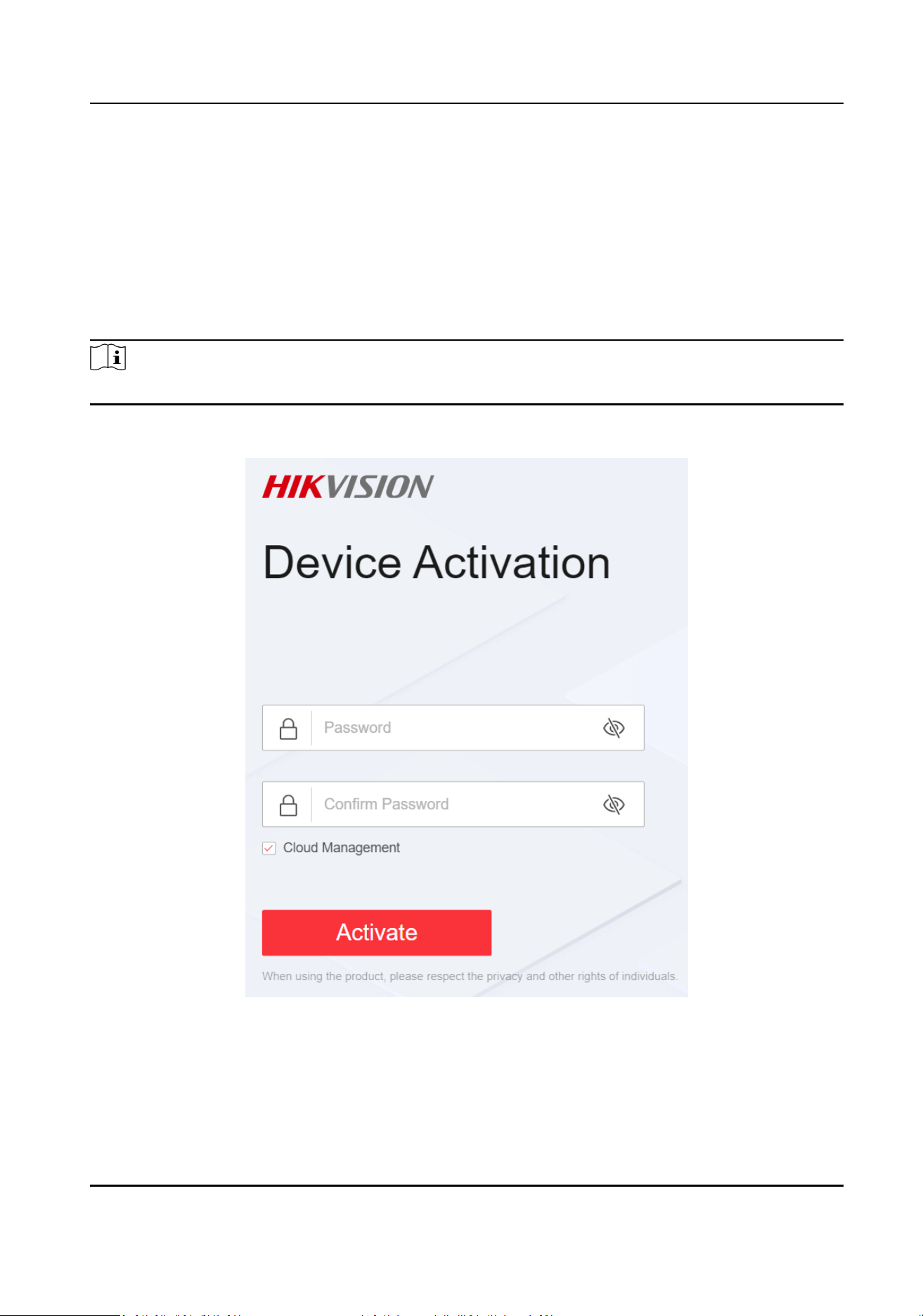
If you use the switch for the rst me, you need to acvate it and congure the password.
Before You Start
Ensure that your computer and switch are on the same network segment.
Steps
Note
All gures in this manual are for illustraon purpose only.
1.
Enter the default IP address of the switch in the address bar of a web browser, and press Enter.
Figure 2-1 Acvate Device
Smart Managed Switch Web User Manual
2
Note
●
You can obtain the default IP address of the switch using the SADP tool.
●
You are recommended to use the following web browsers: Microso Edge 89 or later, Google
Chrome 89 or later, and Firefox 78 or later.
2.
Set a password and conrm the password.
Note
●
The password should contain 8 to 16 characters, including at least two types of the following
categories: uppercase leers, lowercase leers, digits, and special characters.
●
The password cannot contain user name, '123', or 'admin' (case-insensive), 4 or more
consecuvely increasing or decreasing digits (such as '1234' and '4321'), or 4 or more idencal
characters (such as '1111' and 'aaaa').
●
The password cannot be a common risky password.
3.
Oponal: Check Cloud Management.
The Hik-Connect service is enabled.
4.
Click OK.
The network conguraon page is displayed.
5.
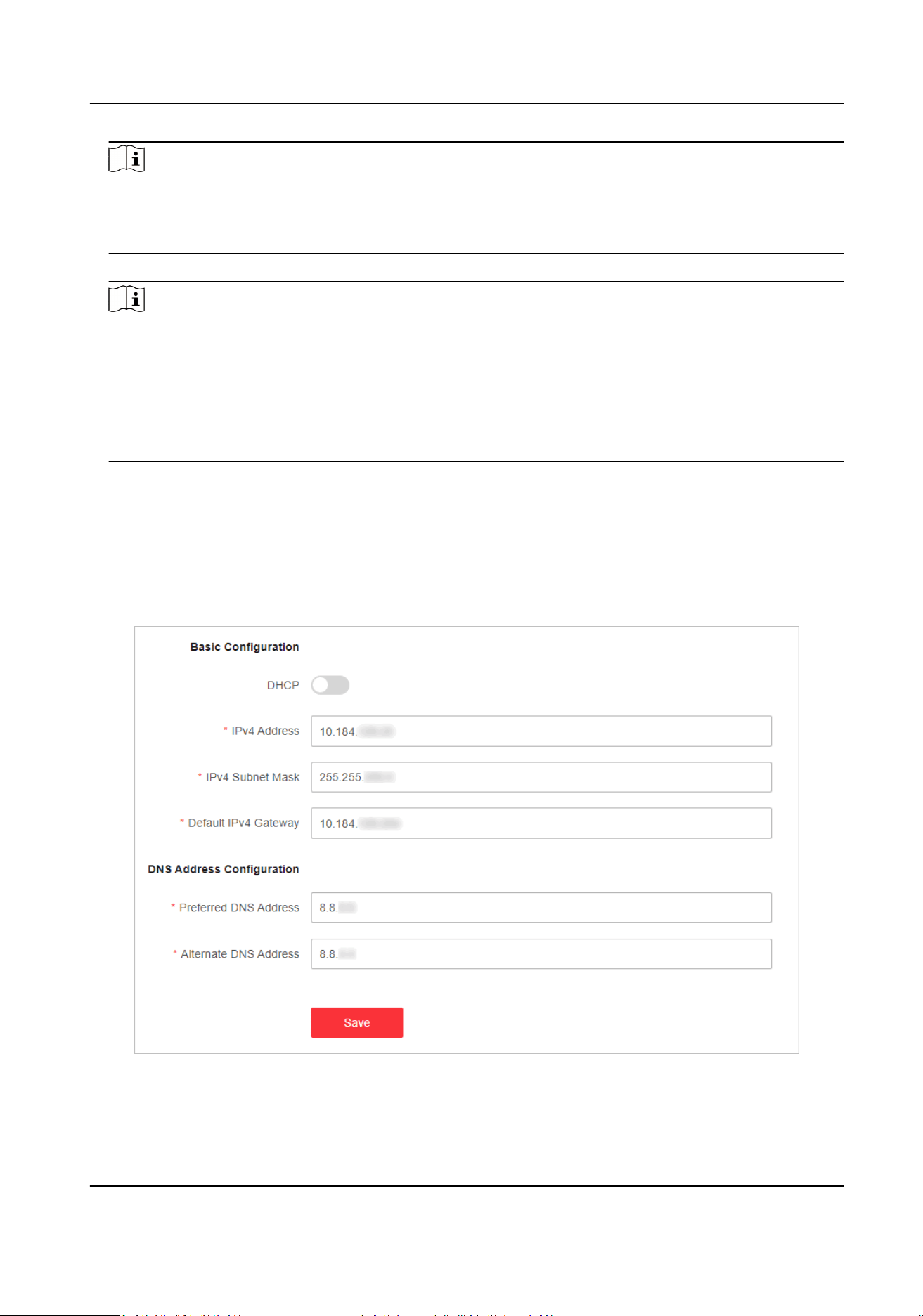
Oponal: Modify the network conguraons.
1) Go to System Management → Network Conguraon → Network Conguraon .
Figure 2-2 Modify Network Parameters
Smart Managed Switch Web User Manual
3
2) Modify the IPv4 address, IPv4 subnet mask, default IPv4 gateway, preferred DNS address, and
alternate DNS address as required, or enable DHCP for automac IP address assignment.
Note
You are recommended to modify the network conguraons to beer manage your switch.
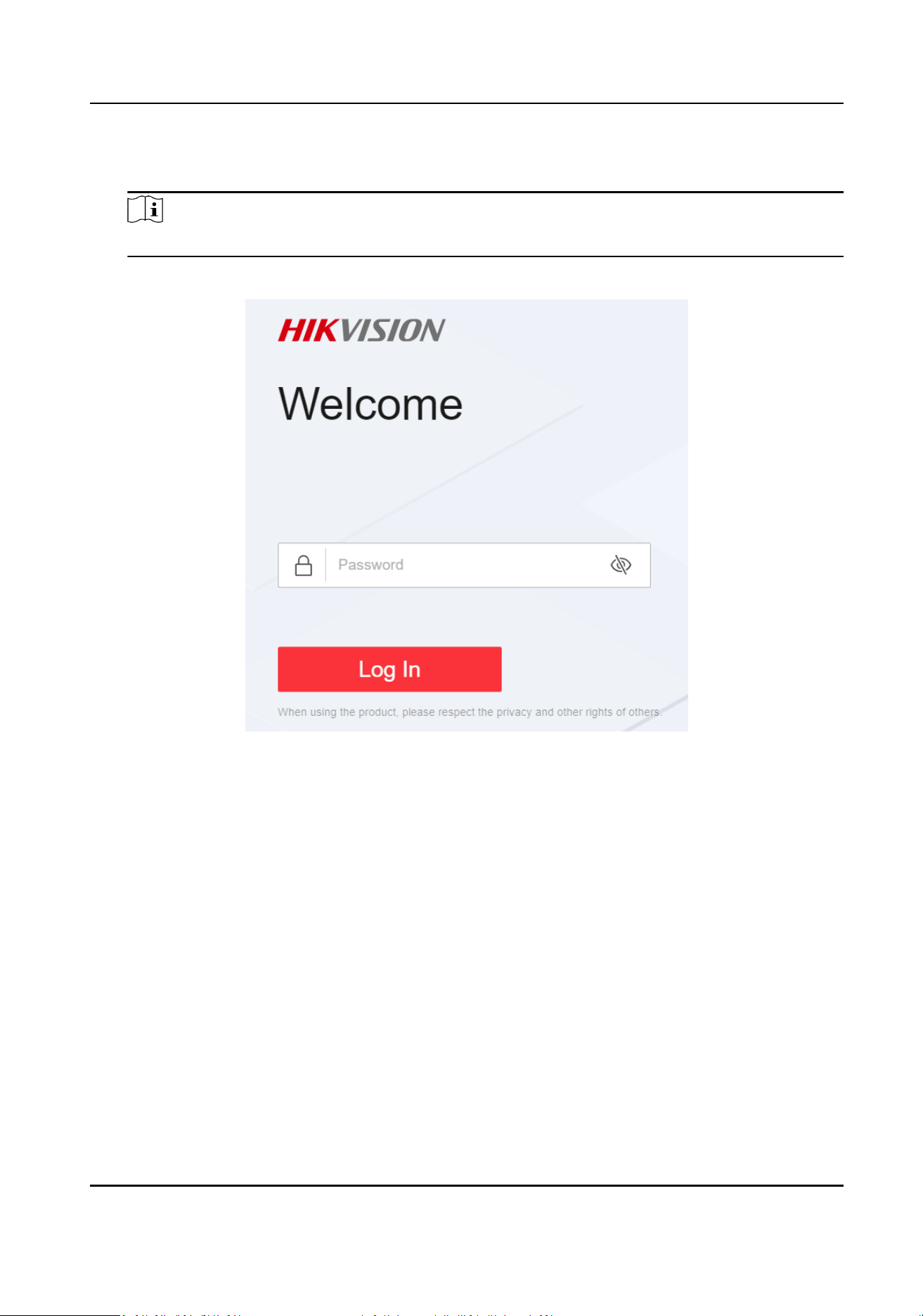
3) Log in to the switch web again with the new IP address aer modicaon.
Figure 2-3 Log In
Smart Managed Switch Web User Manual
4

Chapter 3 Device Informaon
Aer logging in to the switch web, you can obtain detailed informaon about the switch, including
the device overview
informaon, port status informaon, and network status informaon.
3.1 Device Overview
You can view or edit the device overview
informaon on the Overview page.
Basic Device Informaon
You can view the device model, soware version, serial number, IP and MAC addresses, as well as
CPU and memory usage of the switch in the lower right corner of the Overview page.
Smart Managed Switch Web User Manual
5
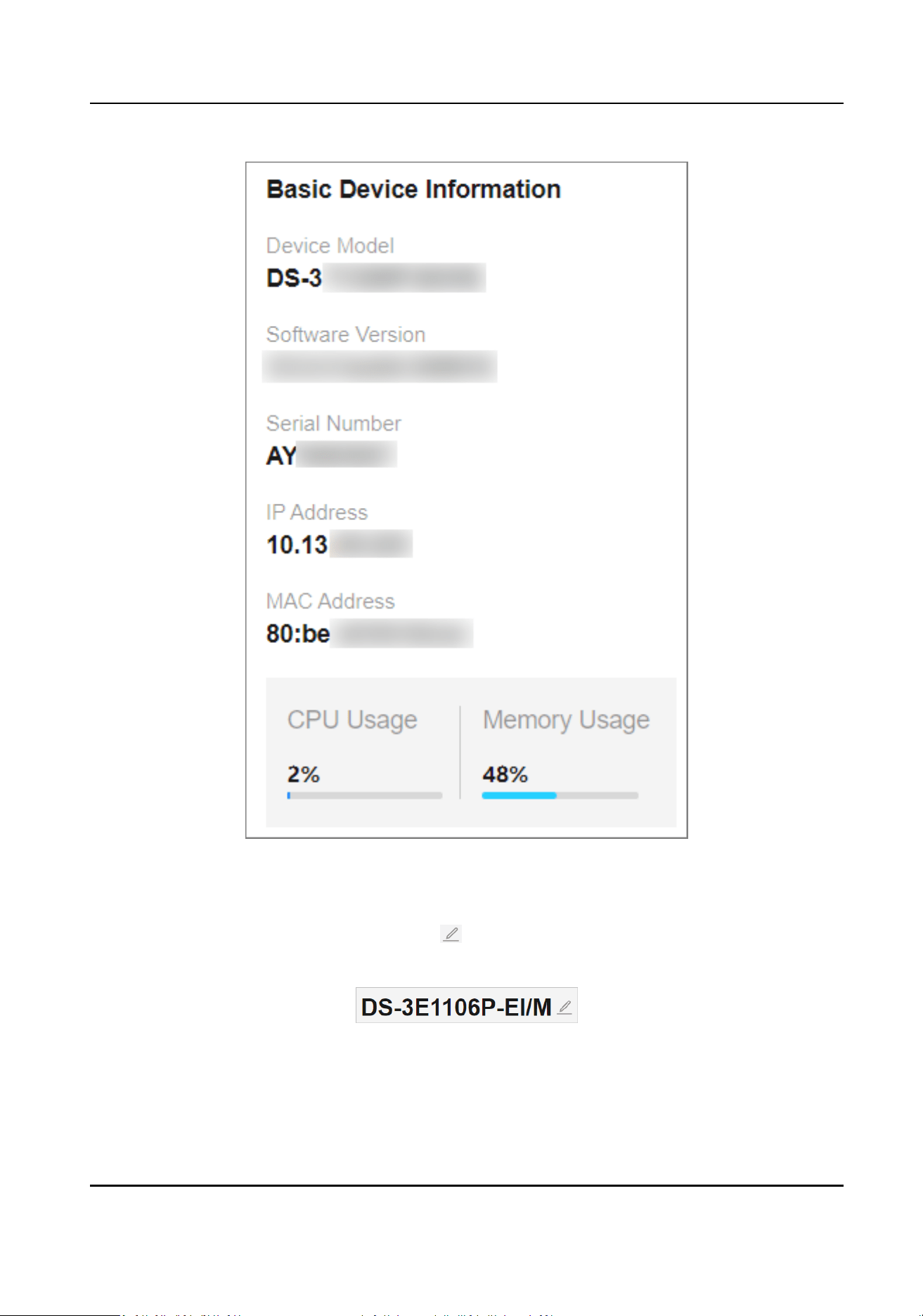
Figure 3-1 View Basic Device Informaon
Device Name
You can view the current device name or click next to it to customize the device name on the
Overview page.
Figure 3-2 Edit Device Name
System Upme
You can also view the device's system upme in the upper right corner of the Overview page.
Smart Managed Switch Web User Manual
6
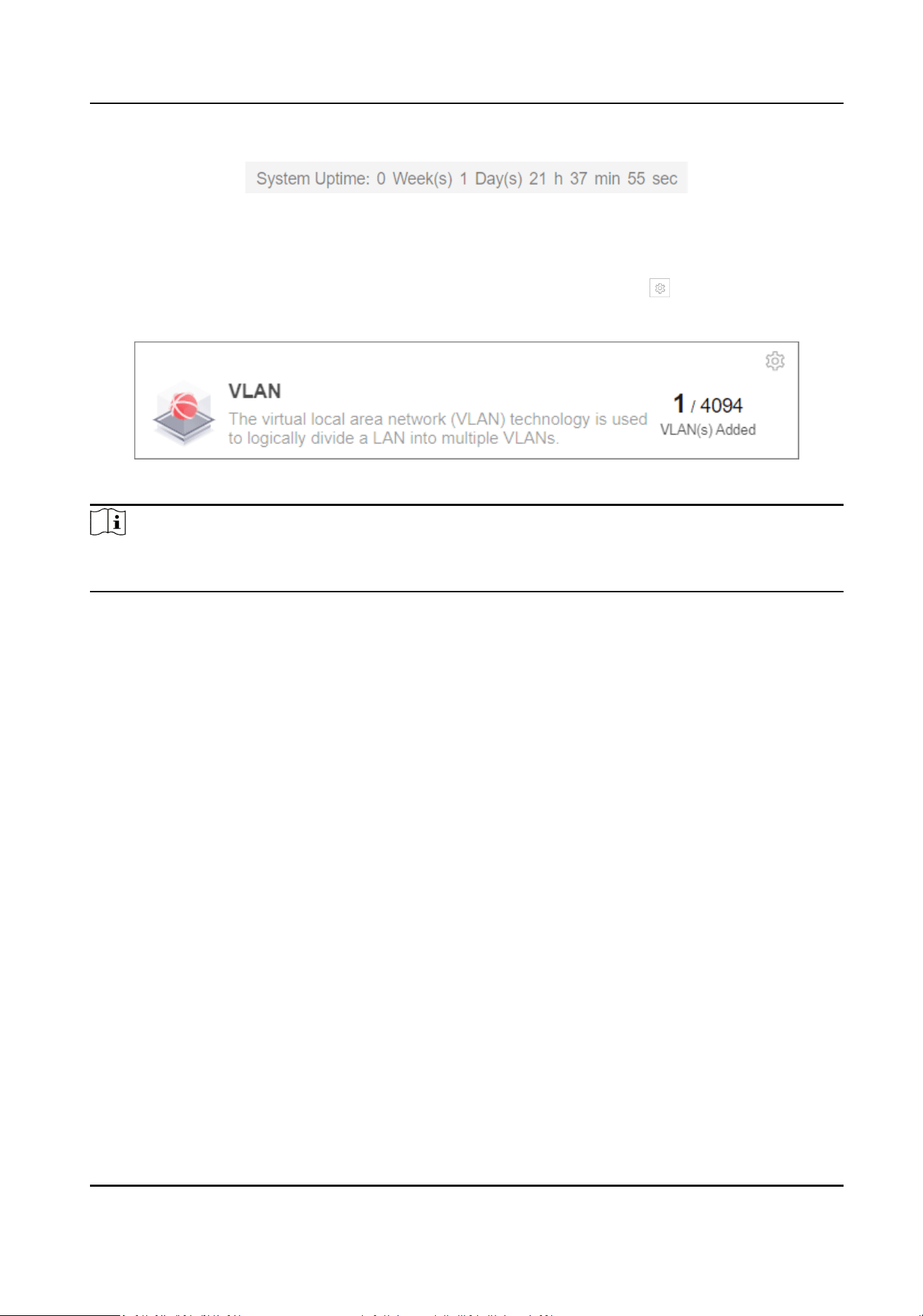
Figure 3-3 View System Upme
VLANs Added
You can quickly view the number of VLANs that have been added, or click to go to the VLAN
Management page for VLAN conguraon.
Figure 3-4 View Number of VLANs Added
Note
You can also view the maximum number of VLANs allowed by the device, for example, 4094 in the
gure above. The maximum number of VLANs allowed by a device varies with device models.
Cloud Plaorm Connecon Status
The Cloud Plaorm module shows whether the device is connected to Hik-Connect.
●
If the cloud
plaorm is connected, scan the QR code to add the device to Hik-Partner Pro app for
remote management.
Smart Managed Switch Web User Manual
7
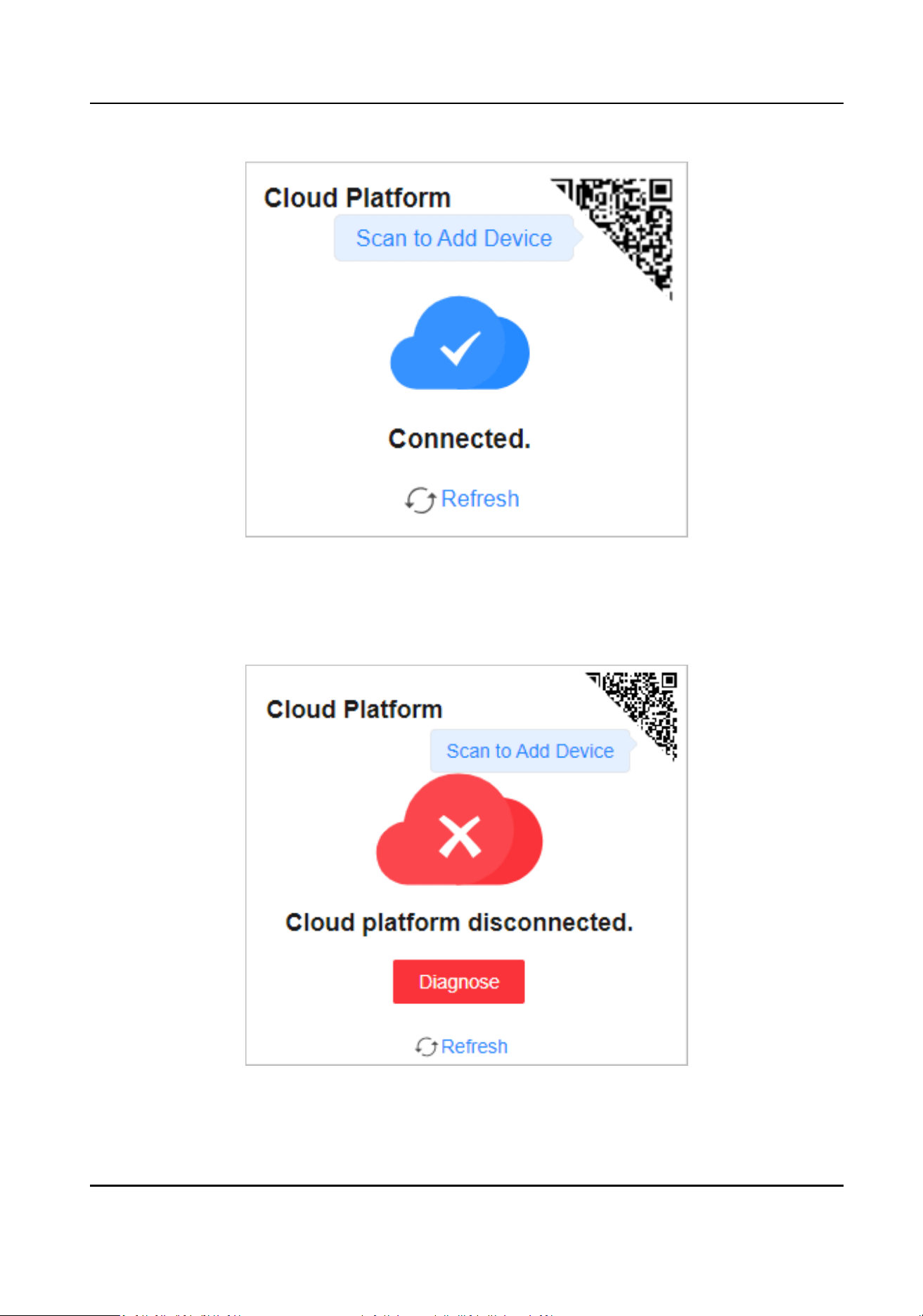
Figure 3-5 View Cloud Plaorm Connecon Status (Connected)
●
If the cloud plaorm is disconnected, click Refresh to reconnect, or click Diagnose to nd out
the cause of the connecon failure and go to the cloud plaorm conguraon page as prompted
for cloud
plaorm conguraon.
Figure 3-6 View Cloud Plaorm Connecon Status (Disconnected)
Smart Managed Switch Web User Manual
8
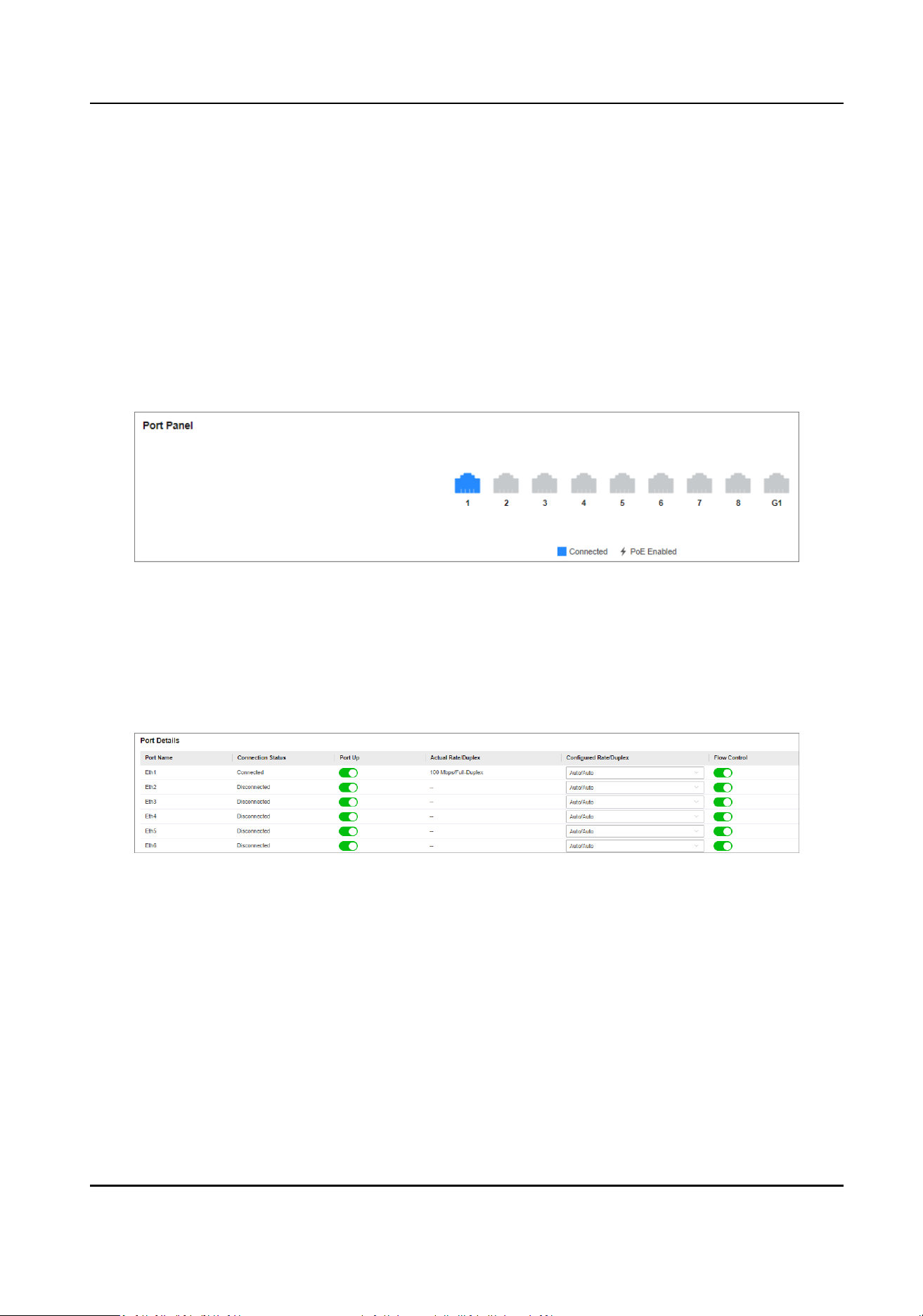
3.2 Port Status
The Overview page provides a visual representaon of the physical ports and shows the
connecon or power supply status of each port, making it easier for users to manage switch ports.
Port Panel
The Port Panel module displays the connecon and power supply status of each port. When you
hover the mouse over a port, the port name, connecon status, rate/duplex, ow control status,
and packet receiving/sending rate are displayed. If the port is a PoE port, you can view the PoE
power of the port.
Figure 3-7 View Port Panel
Port Details
The Port Details module lists the status parameters of each port. You can also congure the port
status, rate/duplex, and ow control of each port, and view the port name, connecon status, and
actual rate/duplex of each port.
Figure 3-8 View Port Details
Connecon Status
The connecon status of a port: Connected or Disconnected.
Port Up
Enable a port (port up) or disable a port (port down). By default, a port is in the up state.
Actual Rate/Duplex
The actual rate and duplex mode of a port.
Congured Rate/Duplex
Smart Managed Switch Web User Manual
9
Congure the rate and duplex mode of a port. The default value is Auto/Auto. You can select
dierent combinaons of rates and duplex modes as required.
Flow Control
Enable or disable ow control of a port. By default, ow control is enabled. Enabling ow
control can eecvely reduce the impact of large amounts of data on the network and maintain
the stability of the network.
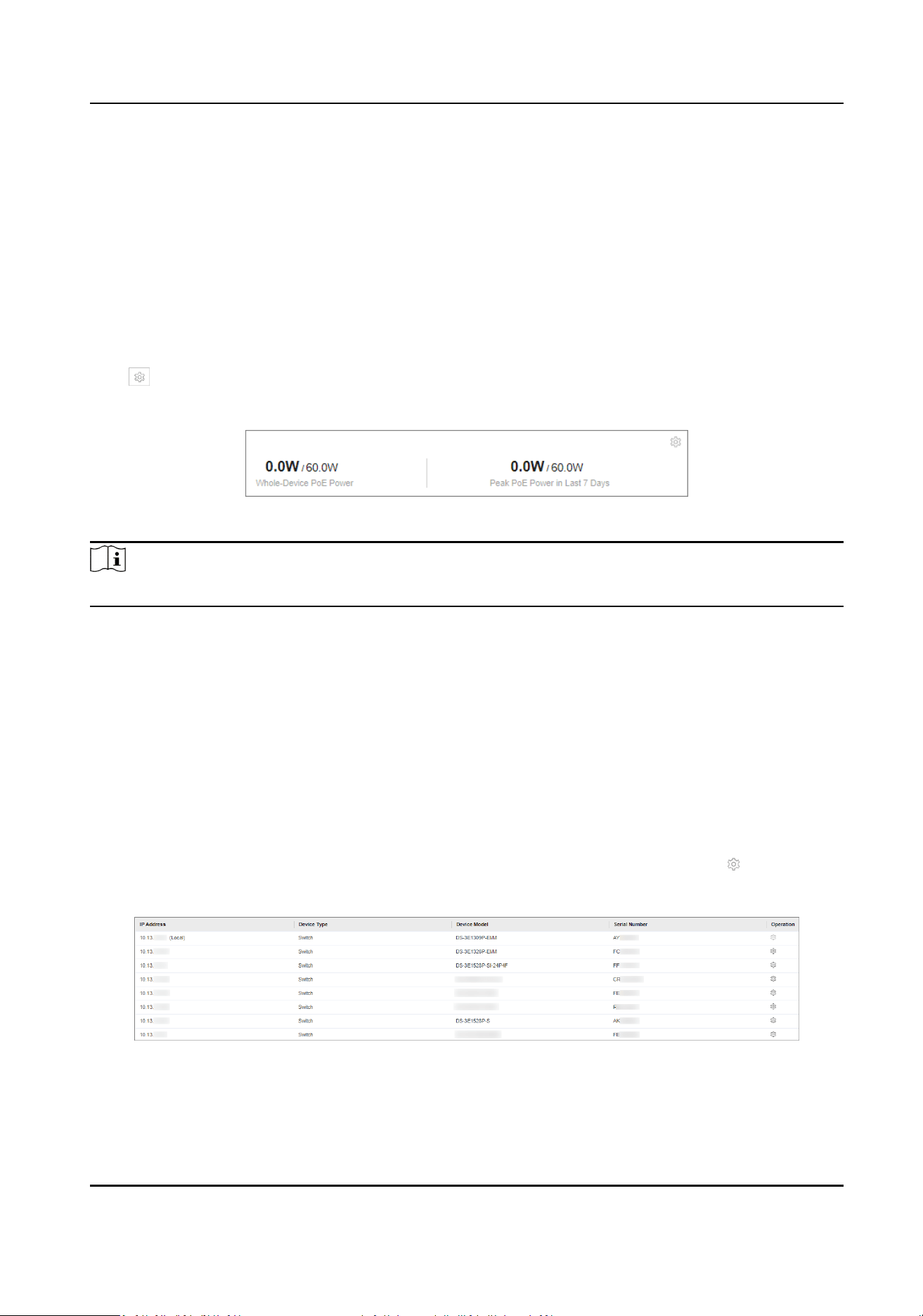
PoE Power
You can view the whole device PoE power and peak PoE power in last seven days of the switch.
Click in the upper right corner of the module to go to the PoE Management page for PoE
funcon conguraon.
Figure 3-9 View PoE Power
Note
PoE power display is only available for switches supporng PoE.
3.3 Network Status
Network Monitoring allows you to view the same-LAN network device informaon, MAC
addresses learned by ports, port
stascs, and cable status.
Find Network Devices
Network Device Discovery is a funcon that automacally detects transmission devices in the
same LAN with the switch and displays informaon about these devices. Go to Network
Monitoring → Network Device Discovery , and you can view the device IP address, type, model,
and serial No. of the network device(s) found. You can also select a device and click
in the
Operaon column to go to the web conguraon page of the device.
Figure 3-10 Find Network Devices
Smart Managed Switch Web User Manual
10
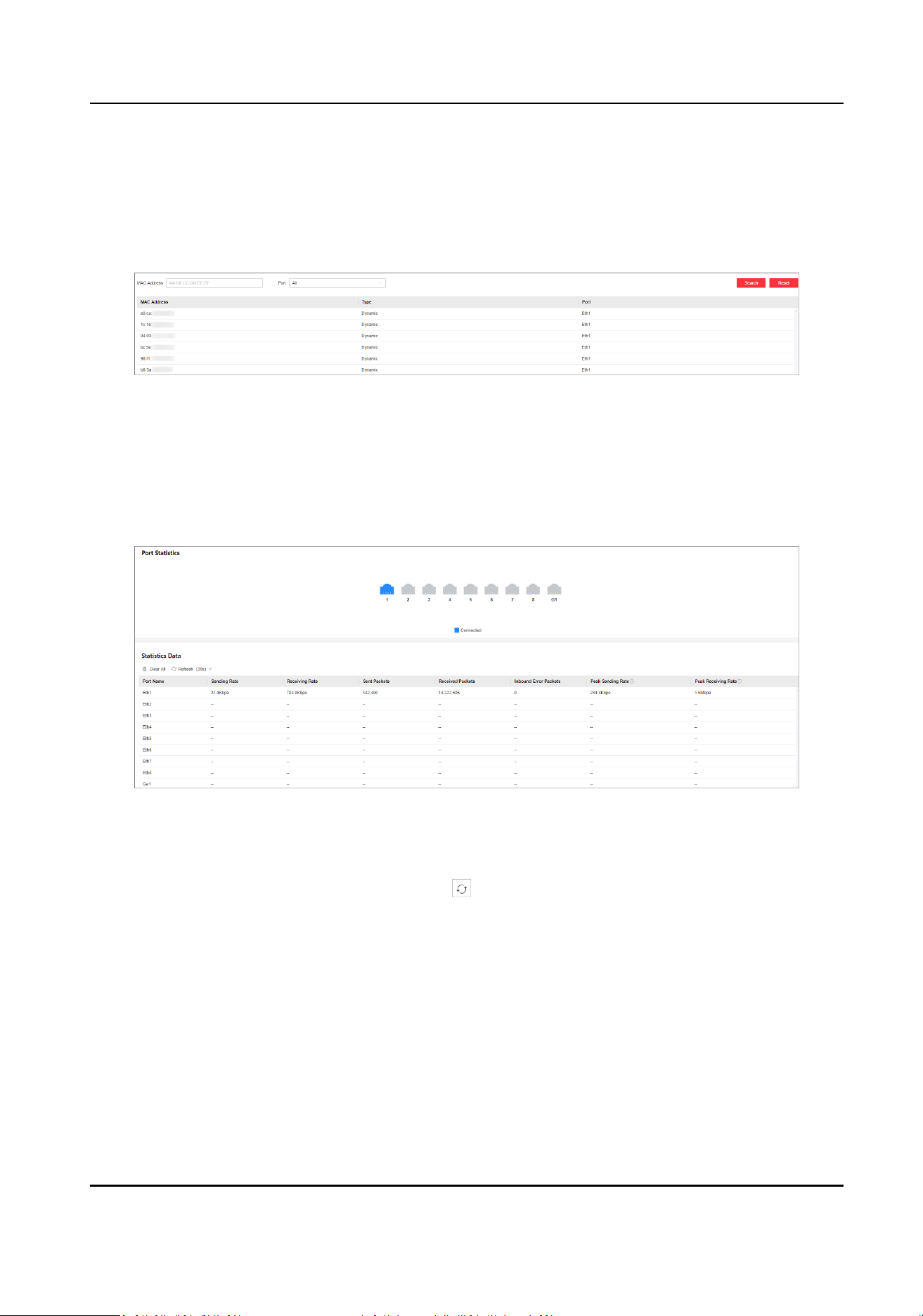
Query Port MAC Address
You can query the MAC address(es) learned by each port. Go to Network Monitoring → MAC
Address , select the desired port from the Port drop-down list, and click Search. The MAC
address(es) learned by the port and type(s) of the MAC address(es) are displayed in the list below.
Figure 3-11 Query Port MAC Addresses
View Port Stascs
You can monitor and collect stascs on the transmied data of device ports. Go to Network
Monitoring → Port Stascs , and you can view the current connecon status of each port and the
data transmied by each port in the stascs list.
Figure 3-12 View Port Stascs
You can also perform the following
operaons:
●
Clear port stascs: You can click Clear All to clear all the port stascs.
●
Manually refresh port stascs: You can click to manually refresh the port stascs.
●
Auto refresh port stascs: You can set the interval for automacally refreshing port stascs:
30 seconds or 60 seconds.
Detect Cable Status
Cable Detecon is a funcon that detects the statuses of Ethernet port cables, for example, to
check whether there is a short circuit or an open circuit in the receiving or sending direcon of a
cable, and if any, to locate the faulty cable. Go to Network Monitoring → Cable
Detecon , select
the desired port on the le port panel, and click Detect to view the detecon result.
Smart Managed Switch Web User Manual
11
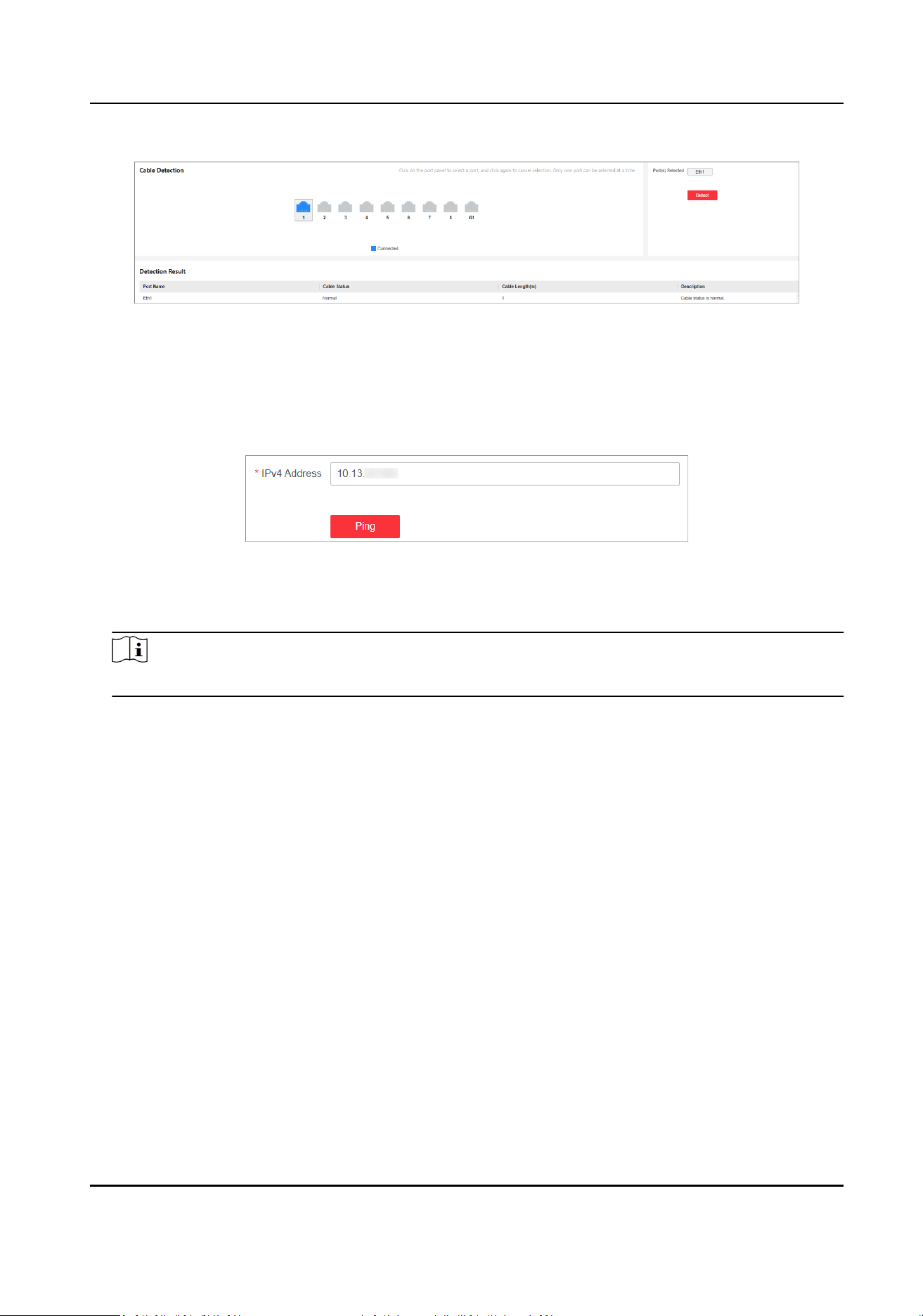
Figure 3-13 Detect Cable Status
Diagnose Network
Ping is a funcon that helps to diagnose network connecvity and quickly locate network faults.
1. Click Network Monitoring → Ping .
Figure 3-14 Ping
2. Enter a network server address in the IPv4 address eld.
3. Click Ping.
Note
The network diagnosis result is displayed in the Ping Result area.
Smart Managed Switch Web User Manual
12
Chapter 4 Device Conguraon
4.1 Port Conguraon
4.1.1 Congure Port Aributes
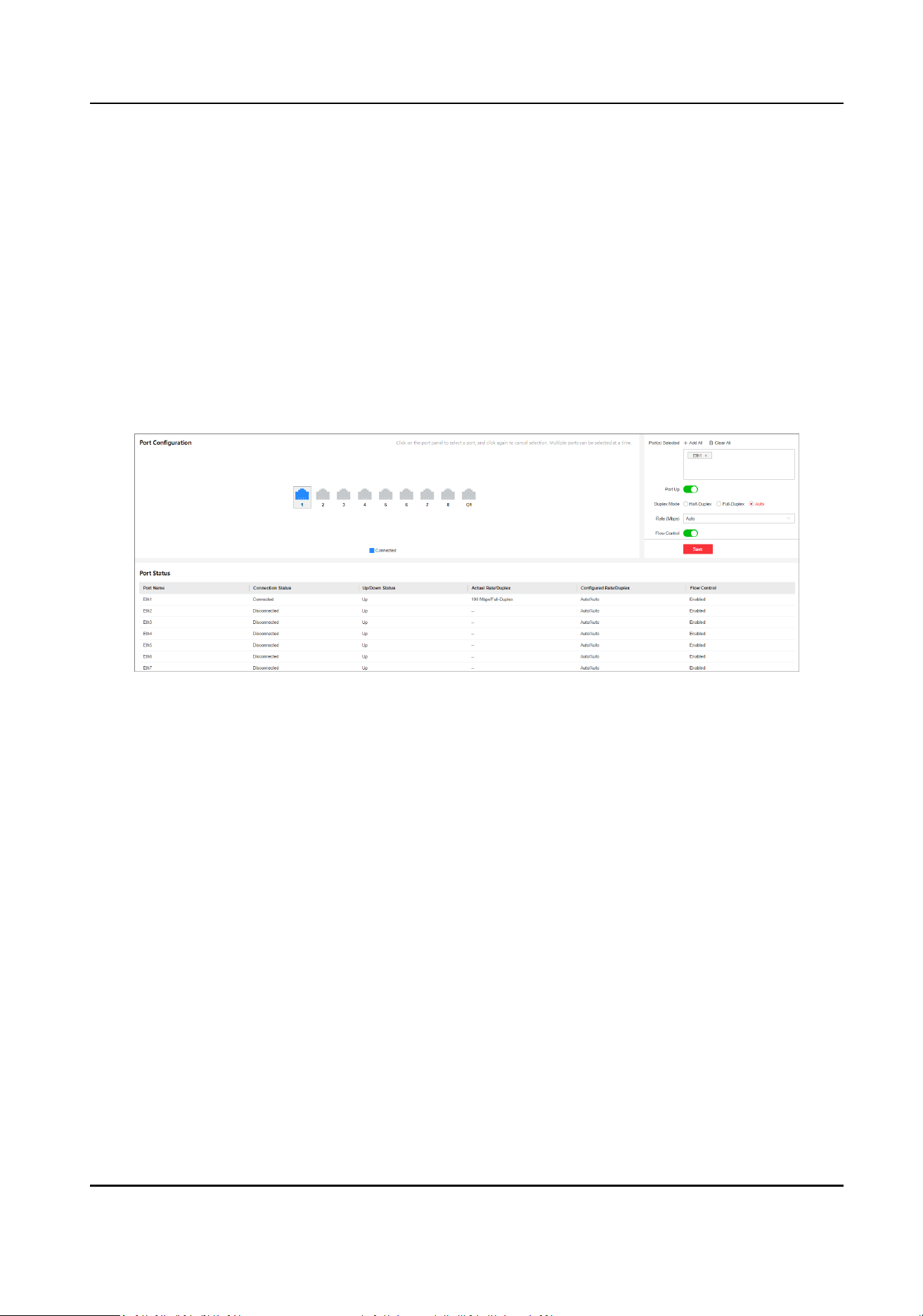
The basic aributes can inuence the working status of a port. Set the parameters as required.
Steps
1.
Go to L2 Conguraon → Port Aributes .
Figure 4-1 Congure Port Aributes
2.
Select the desired port(s) and congure the parameters.
Port Up
Enable or disable the selected port(s). If a port is enabled, it is in the up state; if a port is
disabled, it is in the down state. No data will be
transmied on a "down" port.
Duplex Mode
The duplex mode of a port. The congurable duplex modes of ports include Half-Duplex, Full-
Duplex, and Auto, which may vary with device models.
Rate (Mbps)
The data transmission speed of a port of a port. The
congurable rates of ports include 10M,
100M, 1000M, and Auto, which may vary with device models.
Flow Control
Enable or disable ow control of a port. Enabling ow control can prevent data loss in data
transmission.
3.
Click Save.
4.
Oponal: View the port aributes in the port status list.
Smart Managed Switch Web User Manual
13
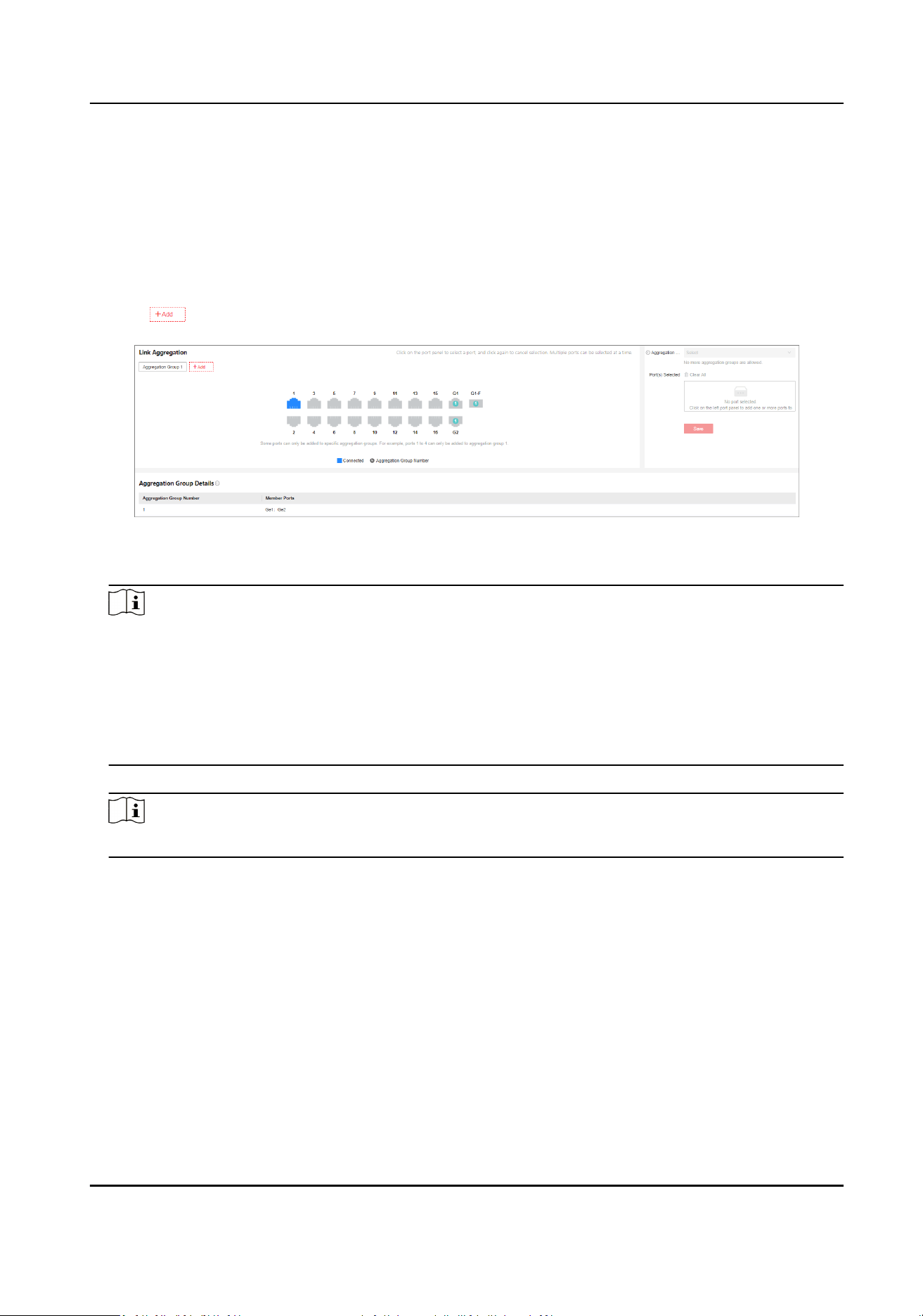
4.1.2 Congure Link Aggregaon
Link aggregaon is used to combine mulple physical links together to make a logical high-
bandwidth data path, which provides a stronger and faster network
connecon.
Steps
1.
Go to L2 Conguraon → Link Aggregaon .
2.
Click .
Figure 4-2 Congure Link Aggregaon
3.
Select at least two desired ports.
Note
●
Only the selectable ports can be added to an aggregaon group.
●
2 to 4 ports are allowed for each link aggregaon group.
●
Some ports can only be added to a specic aggregaon group. Please refer to the actual
situaon.
●
The rate, duplex mode,
ow control, long-range mode, and VLAN conguraons of ports in
one
aggregaon group should be the same.
4.
Set Aggregaon Group Number.
Note
The number of aggregaon groups allowed varies.
5.
Click Save.
6.
Oponal: Edit the aggregaon group.
1) Click an
exisng aggregaon group, for example, "Aggregaon Group 1".
2) Select the desired port(s) on the le port panel to add to the group, or deselect the desired
port(s) on the right to delete from the group.
3) Click Edit to save the
modicaon.
7.
Oponal: Delete the aggregaon group.
1) Click an
exisng aggregaon group, for example, "Aggregaon Group 1".
2) Click Delete on the right.
8.
Oponal: View the member ports of each aggregaon group in the list below.
Smart Managed Switch Web User Manual
14
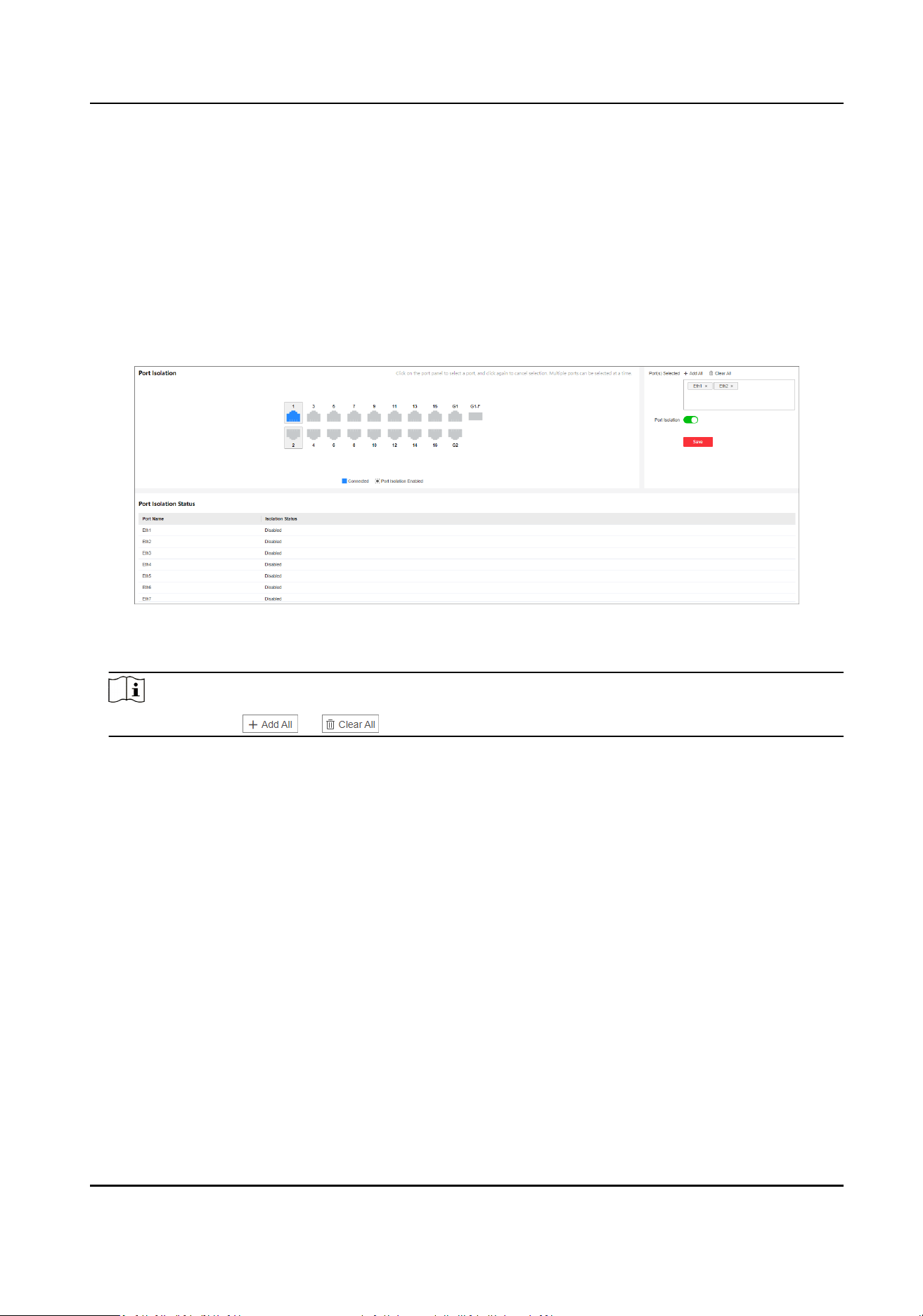
4.1.3 Congure Port Isolaon
Port isolaon is a feature to add mulple ports to an isolaon group so that ports in the same
isolaon group cannot communicate with each other. For example, by using port isolaon funcon,
you can achieve the goal of prevenng PCs under dierent ports communicang with each other
without conguring VLANs.
Steps
1.
Go to Security → Port
Isolaon .
Figure 4-3 Congure Port Isolaon
2.
Select the desired port(s) on the port panel.
Note
You can also click or on the right to batch select or deselect all ports.
3.
Enable or disable Port Isolaon as required.
4.
Click Save.
5.
Oponal: View the port isolaon status of each port in the Port Isolaon Status list.
4.1.4
Congure Port Mirroring
Port mirroring is a feature in network switches that allows administrators to monitor trac on one
port (mirrored port) and replicate this data to another port (mirroring port) for analysis. This
replicaon occurs in real-me, allowing an administrator to view a "mirror" or exact duplicate of
the
trac moving on the mirrored port.
Steps
1.
Go to L2 Conguraon → Port Mirroring .
Smart Managed Switch Web User Manual
15
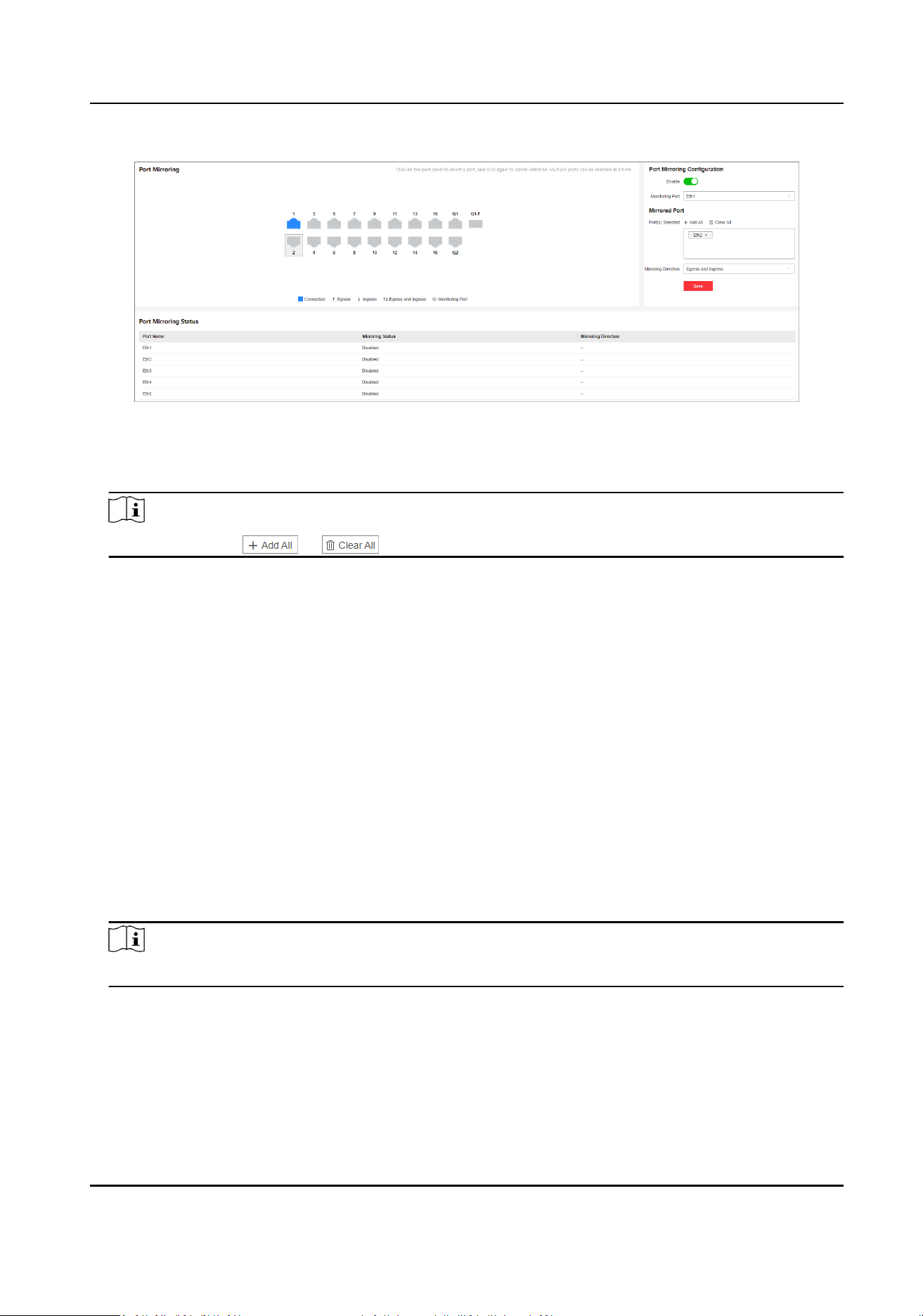
Figure 4-4 Congure Port Mirroring
2.
Select the desired port(s) on the port panel as the mirrored port(s), and set the parameters as
required.
Note
You can also click or on the right to batch select or deselect all ports.
Enable
Enable or disable port mirroring of the selected port(s).
Monitoring Port
Only one port can be set as the monitoring port (mirroring port).
Mirroring Direcon
Ingress
The data received by the source port will be under monitoring.
Egress
The data sent by the source port will be under monitoring.
Egress and Ingress
Both the data received by and the data sent from the source port will be under
monitoring.
3.
Click Save.
Note
The latest conguraon will overwrite the previous conguraon.
4.
Oponal: View the mirroring status of each port in the Port Mirroring Status list.
Smart Managed Switch Web User Manual
16
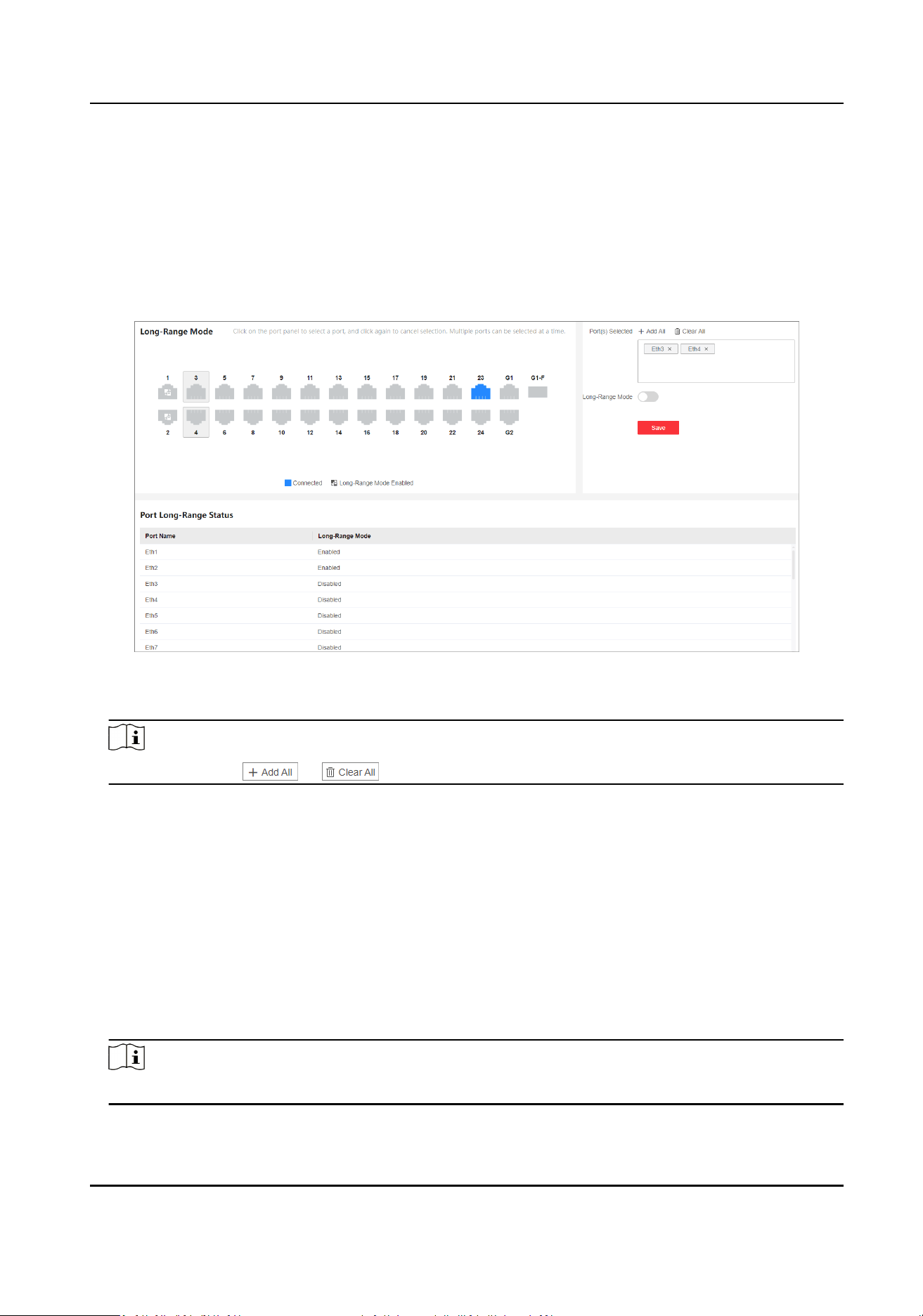
4.1.5 Congure Long-Range Mode
Aer the long-range mode is enabled for a port, the transmission distance of the port can reach
300 meters at a rate of 10 Mbps.
Steps
1.
Go to L2
Conguraon → Long-Range Mode .
Figure 4-5 Congure Long-Range Mode
2.
Select the desired port(s) on the port panel.
Note
You can also click or on the right to batch select or deselect all ports.
3.
Enable or disable Long-Range Mode as required.
4.
Click Save.
5.
Oponal: View the long-range status of each port in the Port Long-Range Status list.
4.1.6
Congure High-Priority Port
High-priority ports are idened by a red area on the device front panel. In the case of uplink
congeson, the data of ports in this area is preferenally transmied.
Steps
1.
Go to Service Quality → High-Priority .
Note
High-priority port conguraon is only supported when the switch has high-priority ports.
Smart Managed Switch Web User Manual
17
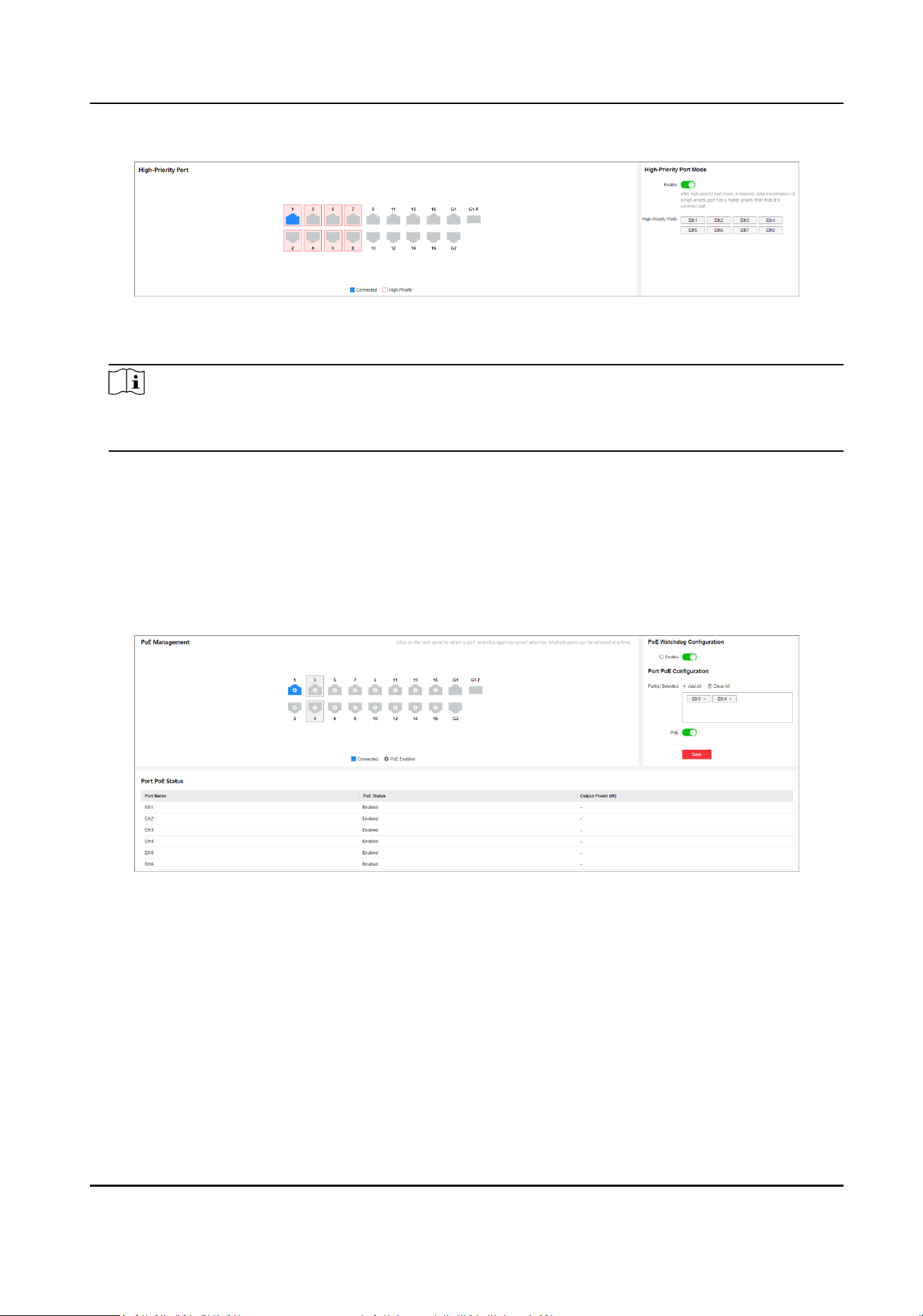
Figure 4-6 Congure High-Priority Port
2.
In High-Priority Port Mode, toggle on Enable to batch enable high-priority ports.
Note
The number of high-priority ports varies with dierent device models. Please refer to the actual
situaon.
All high-priority ports of the switch are enabled, with a higher data transmission priority than
common ports.
4.2 PoE
Conguraon
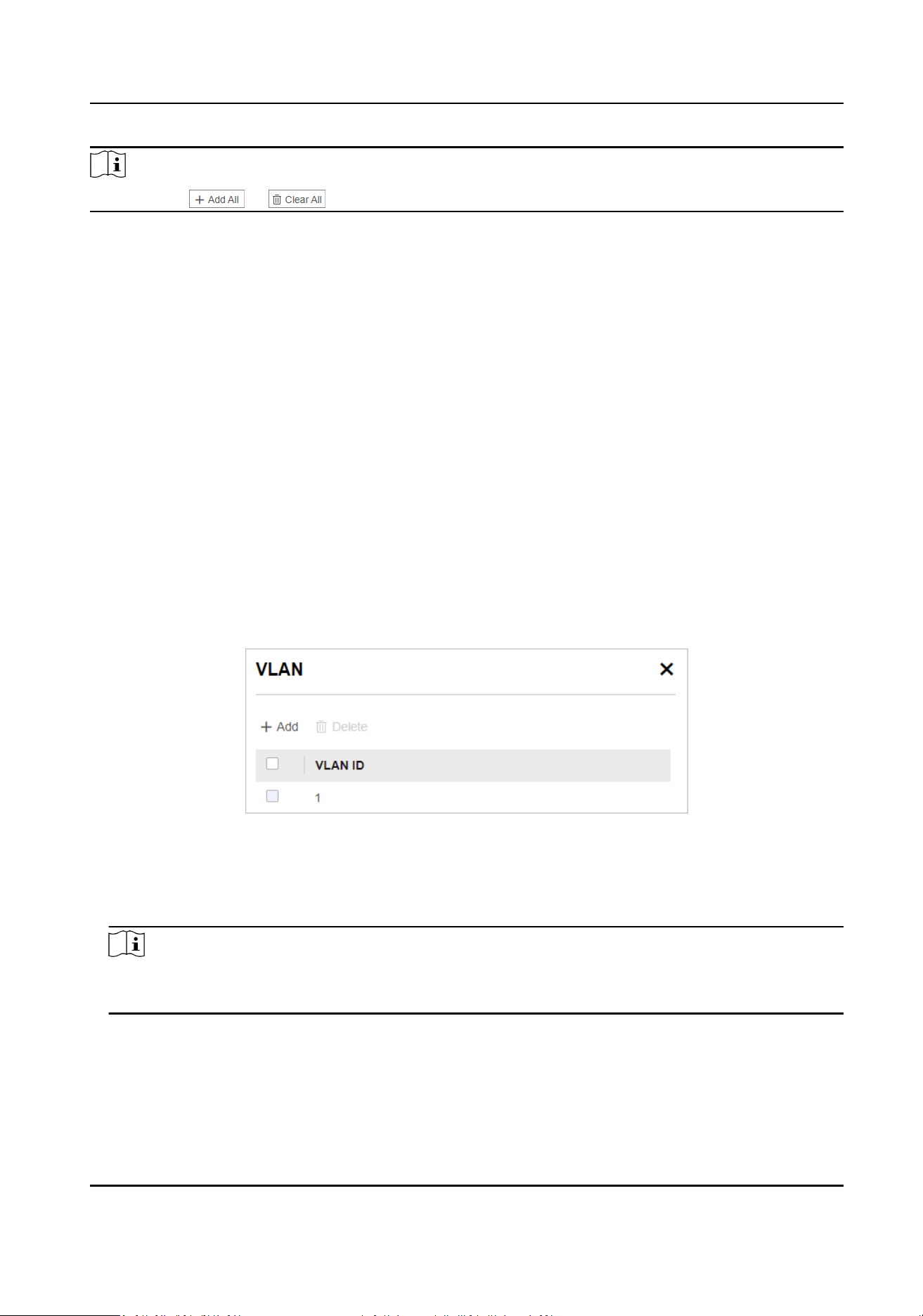
Click PoE Management in the le navigaon pane.
Figure 4-7 Congure PoE
PoE Watchdog
Enable PoE watchdog to auto-detect and restart IP cameras that do not respond.
Port PoE
Conguraon
Select the desired port(s) on the port panel and enable PoE to supply power to the powered
device(s) connected to the port(s).
Smart Managed Switch Web User Manual
18
Note
You can click or to batch select or deselect all ports.
PoE Status
View the PoE enabling status and output power of PoE ports in the Port PoE Status list.
4.3 VLAN Conguraon
Virtual Local Area Networks (VLANs) separate an exisng physical network into mulple logical
networks. Thus, each VLAN creates its own broadcast domain. With VLANs congured on a switch,
users in the same VLAN can communicate with each other, while users in dierent VLANs are
isolated. In this way,
dierent broadcast domains are isolated, enhancing network security.
4.3.1 Add VLAN
Steps
1.
Click VLAN Management in the
le navigaon pane.
2.
In Global VLAN Conguraon, click Edit.
3.
Click Add.
Figure 4-8 Add VLAN(s)
4.
Select an adding mode.
-
Single: Only one VLAN is added at a
me.
-
Batch: Mulple VLANs are added in a batch.
Note
The maximum number of VLANs that can be added in a batch varies with device models. Please
refer to the actual situaon.
5.
Set VLAN ID.
-
Single: Enter a VLAN ID.
-
Batch: Enter the start VLAN ID and end VLAN ID.
Smart Managed Switch Web User Manual
19
Note
●
The VLAN ID should be an integer between 1 and the maximum number of VLANs allowed
by the device. For example, if the maximum number of VLANs allowed is 4094, the VLAN ID
should be integer between 1 and 4094.
●
The end VLAN ID should be greater than the start VLAN ID.
●
The number of VLANs to be batch added should be no more than the maximum number of
VLANs that can be added in a batch. For example, in the case that the maximum number of
VLANs that can be added in a batch is 128, if you set the start VLAN ID to 1, the end ID
cannot be greater than 128.
6.
Click Save.
7.
Oponal: Select the desired VLAN(s) and click Delete to delete one or more VLANs.
Note
The default VLAN 1 cannot be deleted.
4.3.2 Congure Port VLAN
Steps
1.
Select the desired port(s) on the port panel.
Note
●
You can also click or on the right to batch select or deselect all ports.
●
VLAN conguraon is not allowed for ports in an aggregaon group.
2.
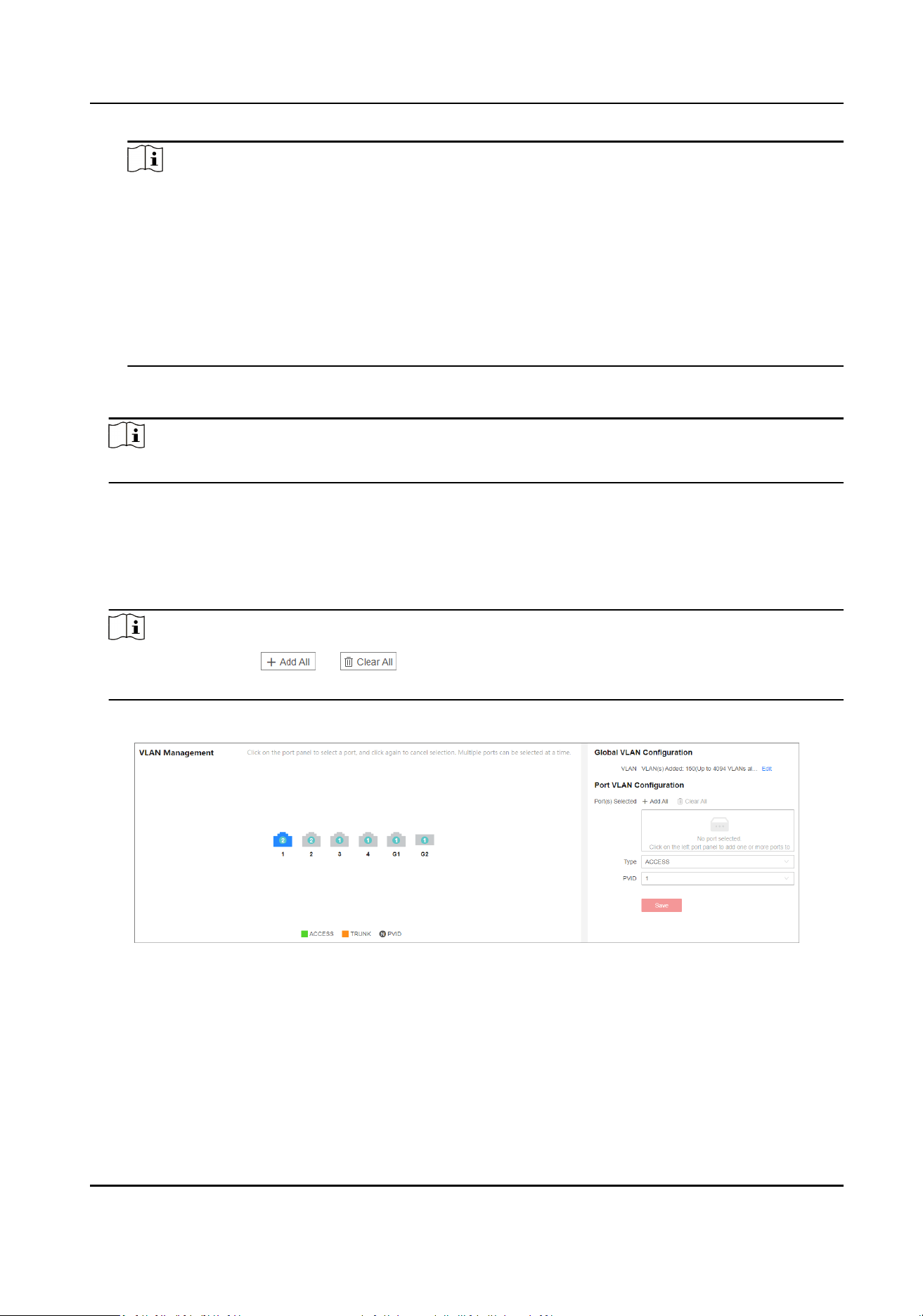
Congure the port VLAN type.
Figure 4-9 Congure Port VLAN
-
ACCESS: An ACCESS port can have only one VLAN congured on the interface, and it can carry
trac for only one VLAN, usually the default VLAN (VLAN 1). Select Type as ACCESS, and set
PVID.
-
TRUNK: A TRUNK port can have two or more VLANs congured on the interface, and it can
carry
trac for several VLANs simultaneously. Select Type as TRUNK, set PVID, and enter
Accessible VLANs.
Smart Managed Switch Web User Manual
20
3.
Click Save.
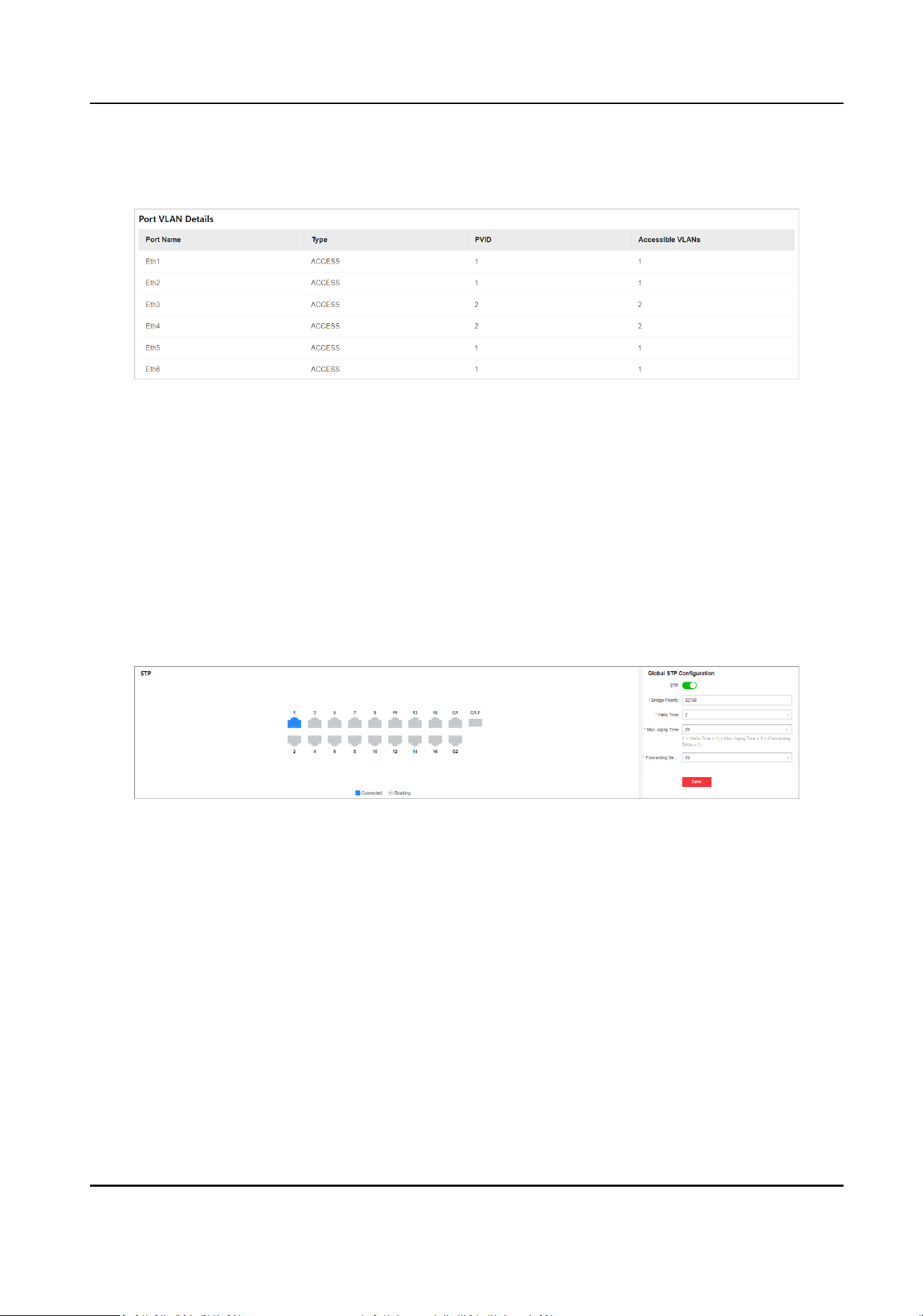
4.
Oponal: View the VLAN conguraon informaon of each port in the port VLAN details list.
Figure 4-10 Port VLAN Details
4.4 STP Conguraon
Spanning Tree Protocol (STP) is a layer-2 link management protocol that provides path redundancy
and prevents loops in a network topology. STP uses a spanning-tree algorithm to select one switch
as the root of a spanning tree, and determines the network topology by transming Bridge
Protocol Data Unit (BPDU) packets between devices, helping to create a stable network.
Steps
1.
Go to L2
Conguraon → STP .
Figure 4-11
Congure STP
2.
In Global STP Conguraon, enable STP.
3.
Set STP parameters as required.
Smart Managed Switch Web User Manual
21
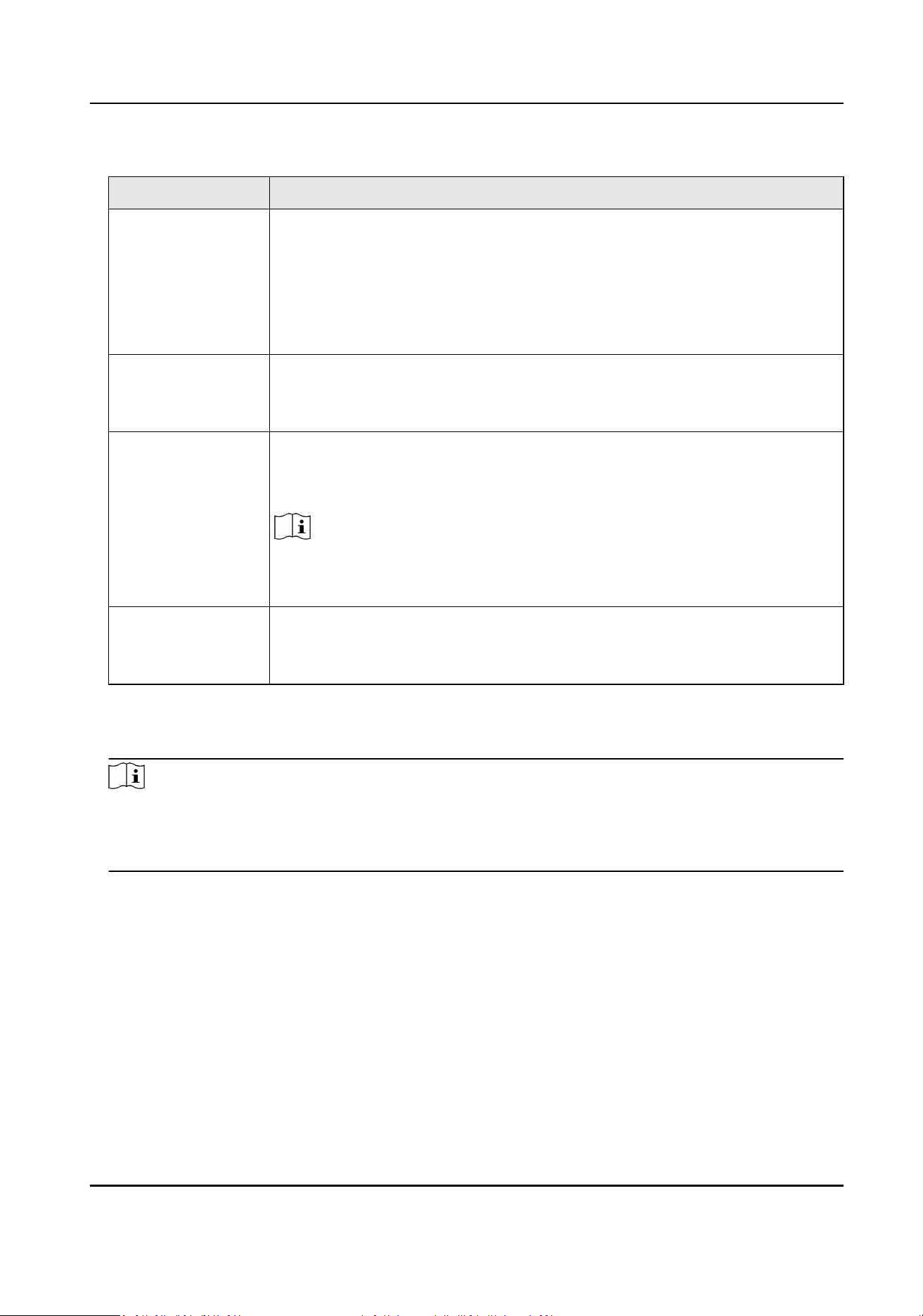
Table 4-1 STP Parameters
Parameter Descripon
Bridge Priority
●
The value ranges from 0 to 61440, in an increment of 4096. The default
value is 32768. Valid values are 0, 4096, 8192, 12288, 16384, …, and
61440.
●
The smaller the value, the higher the bridge priority of a switch. A
switch with higher bridge priority is more likely to become the root
bridge.
Hello Time The interval between each BPDU that is sent on a port, which is used for
port link diagnosis. The value ranges from 1 to 10 seconds. The default
value is 2 seconds.
Max. Aging Time The maximum length of me interval that a STP-enabled switch port saves
its conguraon BPDU informaon. The value ranges from 6 to 40
seconds. The default value is 20 seconds.
Note
The Max. aging me must meet the following condions: 2 × (Hello Time
+ 1) ≤ Max. Aging Time ≤ 2 × (Forwarding Delay – 1)
Forwarding Delay The me interval that is spent in the listening and learning state when the
topology changes. The value ranges from 4 to 30 seconds. The default
value is 15 seconds.
4.
Click Save.
5.
Oponal: Click Port Status or STP Status to view the STP status of each port or global STP
conguraon.
Note
●
The Port Status informaon includes the port name, path cost, port role, and port status.
●
The STP Status informaon includes the bridge ID, root bridge ID, as well as hello me, Max.
aging me, and forwarding delay of the root bridge.
4.5 LLDP Conguraon
Link Layer Discovery Protocol (LLDP) is a layer 2 neighbor discovery protocol that allows devices to
adverse device informaon to their directly connected peers/neighbors. With LLDP enabled,
network devices can send LLDP data units (LLDPDUs) to inform other devices of their status. LLDP
helps to draw network topology and detect improper
conguraons in a network.
Steps
1.
Go to L2 Conguraon → LLDP .
2.
Enable or disable LLDP.
Smart Managed Switch Web User Manual
22
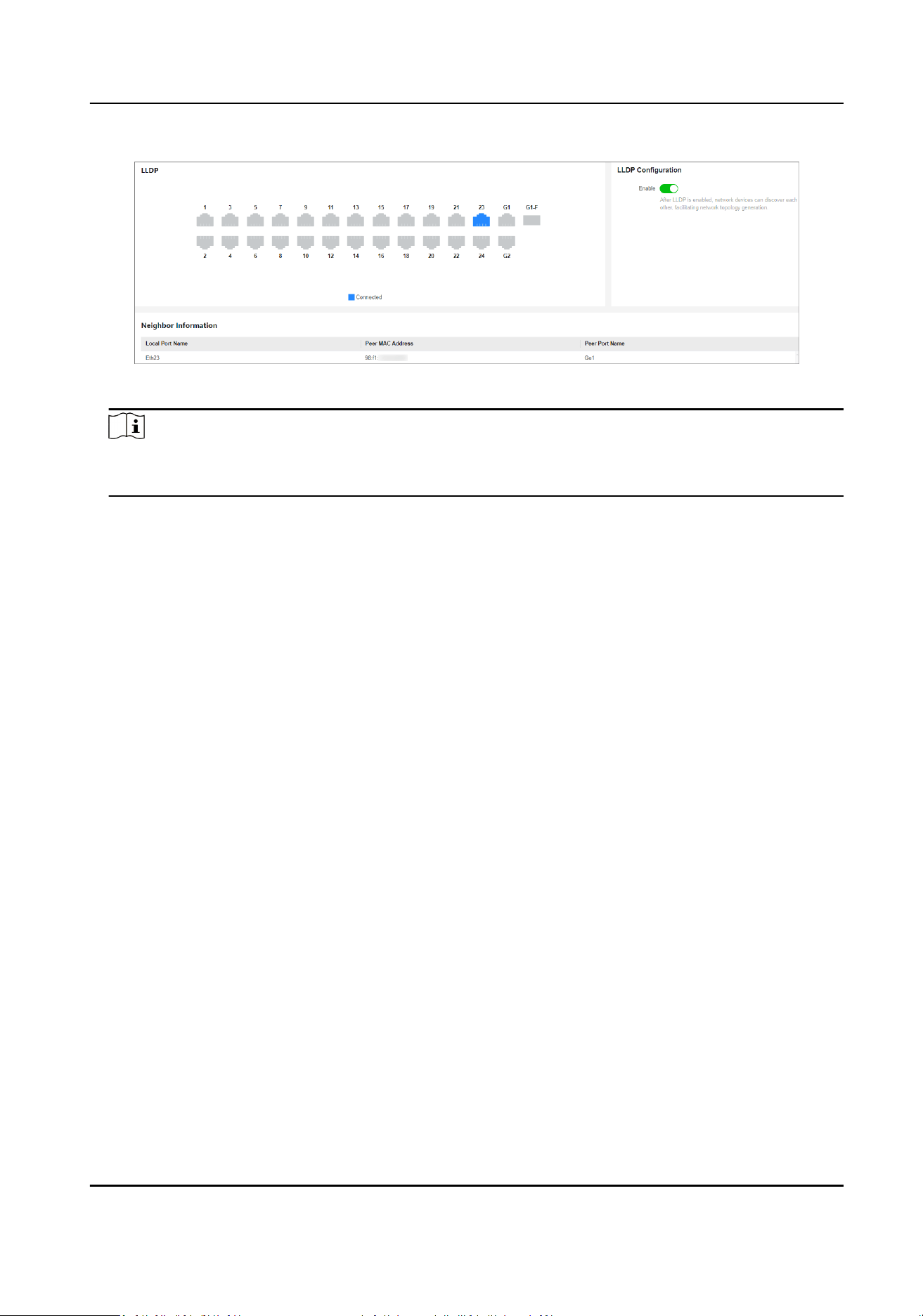
Figure 4-12 Congure LLDP
Note
Aer LLDP is enabled, network devices can discover each other, facilitang network topology
drawing.
3.
Oponal: View the local port(s), MAC address(es) of peer device(s), and peer port(s) in the
Neighbor Informaon list.
Smart Managed Switch Web User Manual
23
Chapter 5 System Management
5.1 Network Conguraon
You can click on the home page to check Hik-Connect connecon status, or go to System
Management → Network Conguraon for network conguraon, cloud plaorm conguraon,
and SADP conguraon.
Network Conguraon
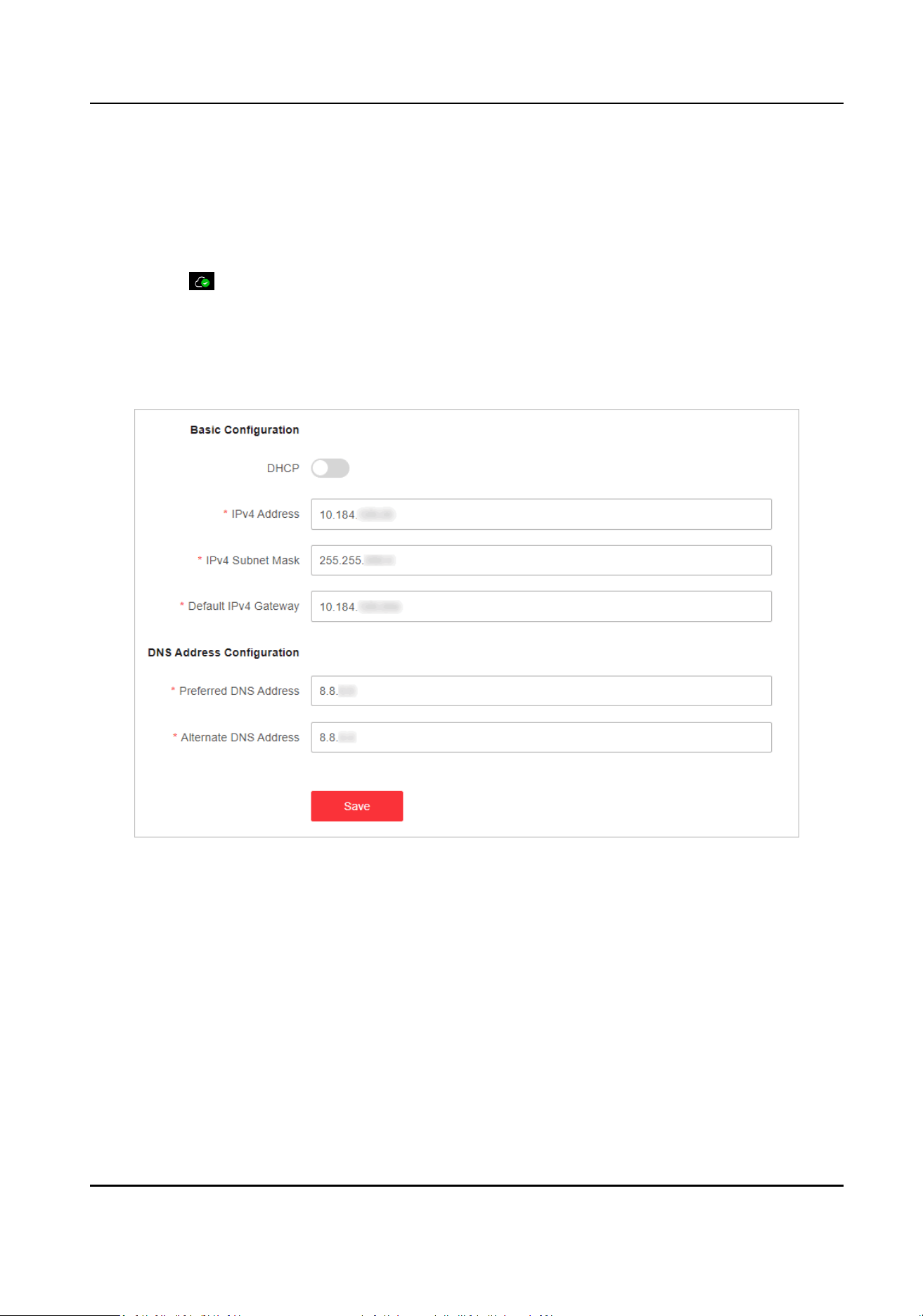
Figure 5-1 Congure Network
Set the IPv4 address, IPv4 subnet mask, default IPv4 gateway, preferred DNS address, and alternate
DNS address as required, or enable DHCP for automac IP address assignment.
Cloud
Plaorm Conguraon
If the device is displayed as oine when you add it to Hik-Partner Pro, you need to modify the DNS
server address and
congure Hik-Connect parameters.
Go to System Management → Network Conguraon → Cloud Plaorm Conguraon , and
ensure that Hik-Connect is enabled. You can also check the operaon code, and bind the device to
your cloud account on Hik-Partner Pro app.
Smart Managed Switch Web User Manual
24
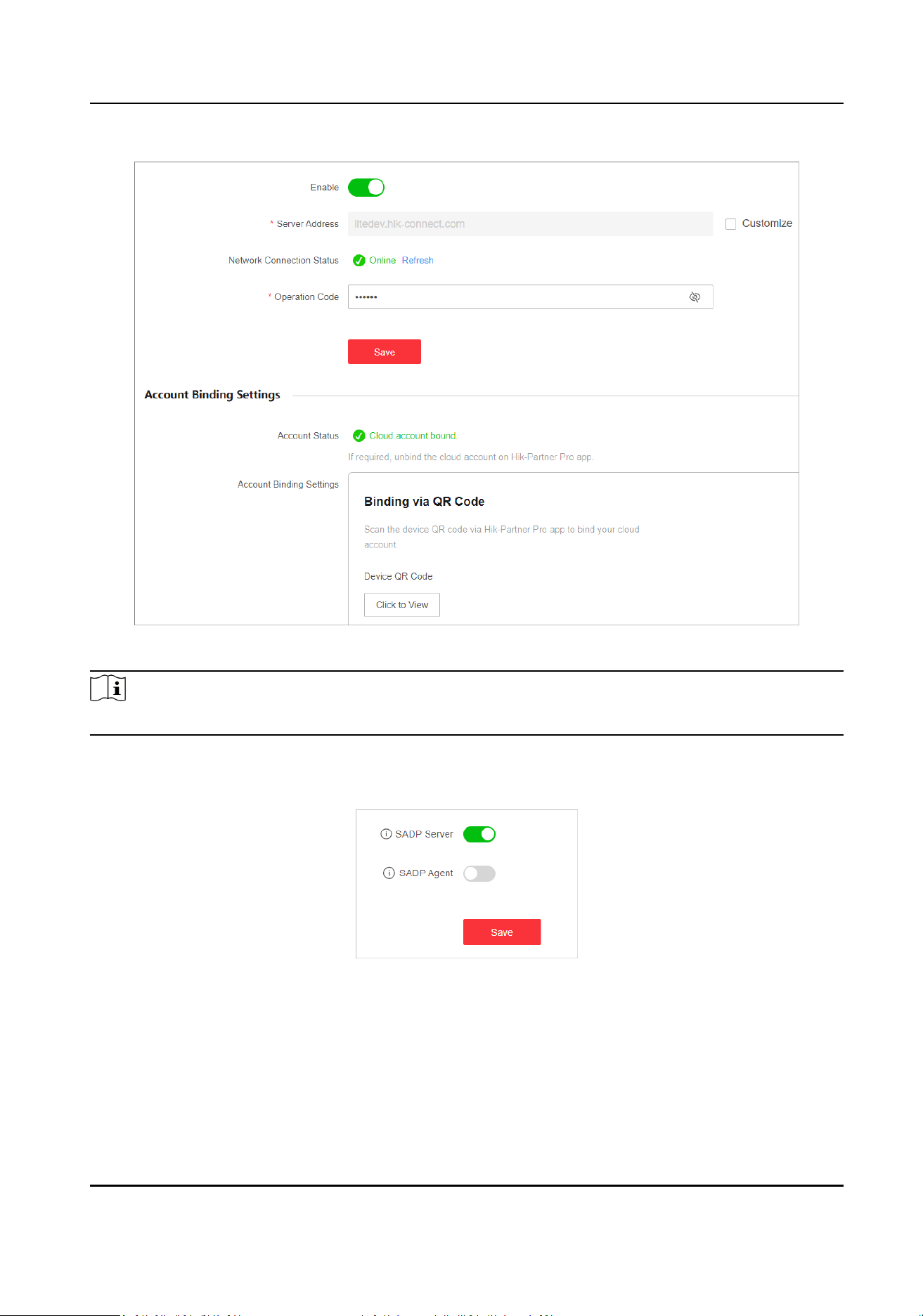
Figure 5-2 Congure Cloud Plaorm
Note
It takes several minutes for reconnecng to Hik-Connect service.
SADP Conguraon
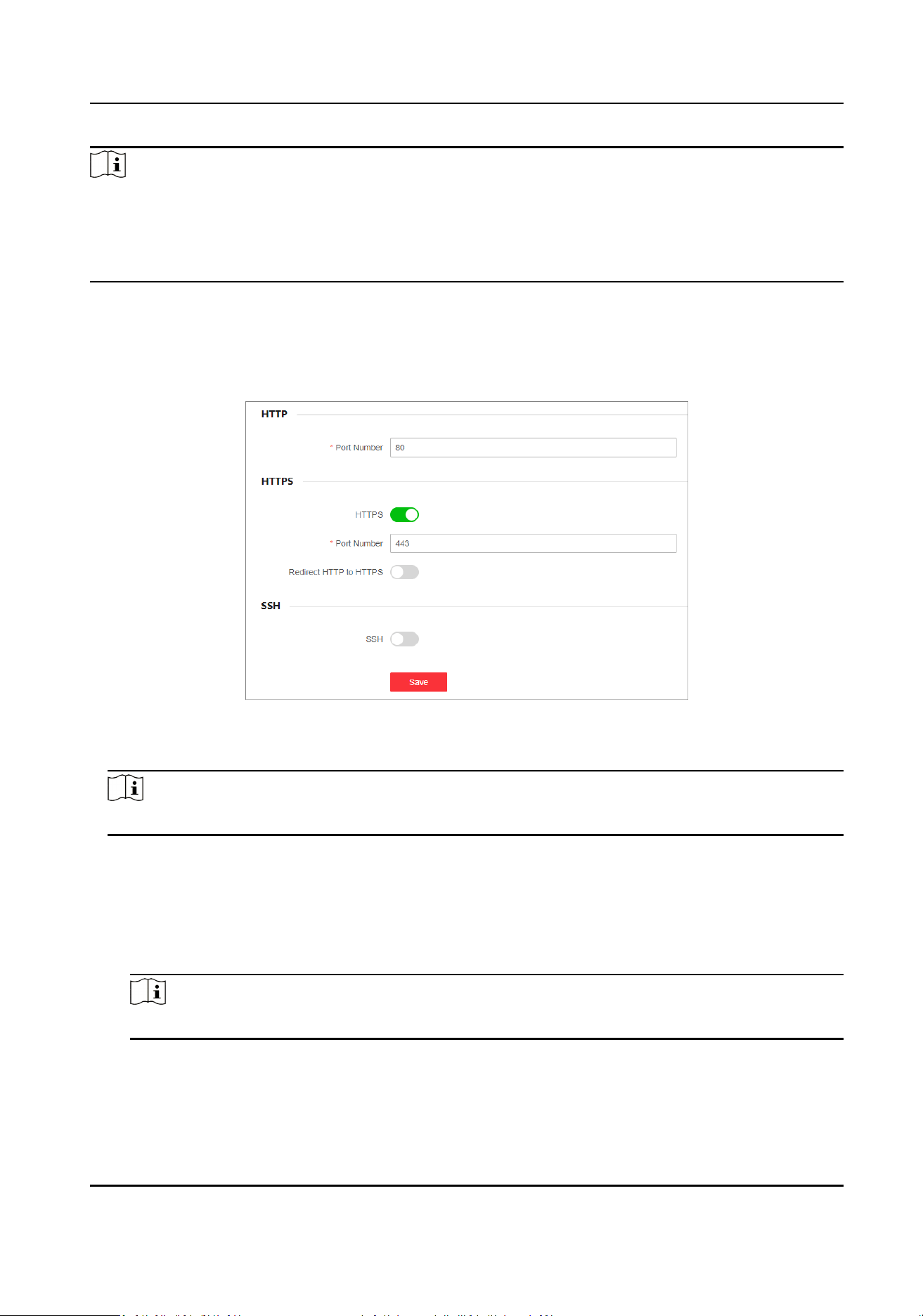
Figure 5-3 Congure SADP
Enable SADP Server or SADP Agent as required.
Smart Managed Switch Web User Manual
25
Note
●
Aer SADP server is enabled, devices supporng SADP can be searched and informaon about
the devices is displayed.
●
Aer SADP agent is enabled, query requests are sent to the LAN periodically (every minute) for
network topology drawing.
Remote Management
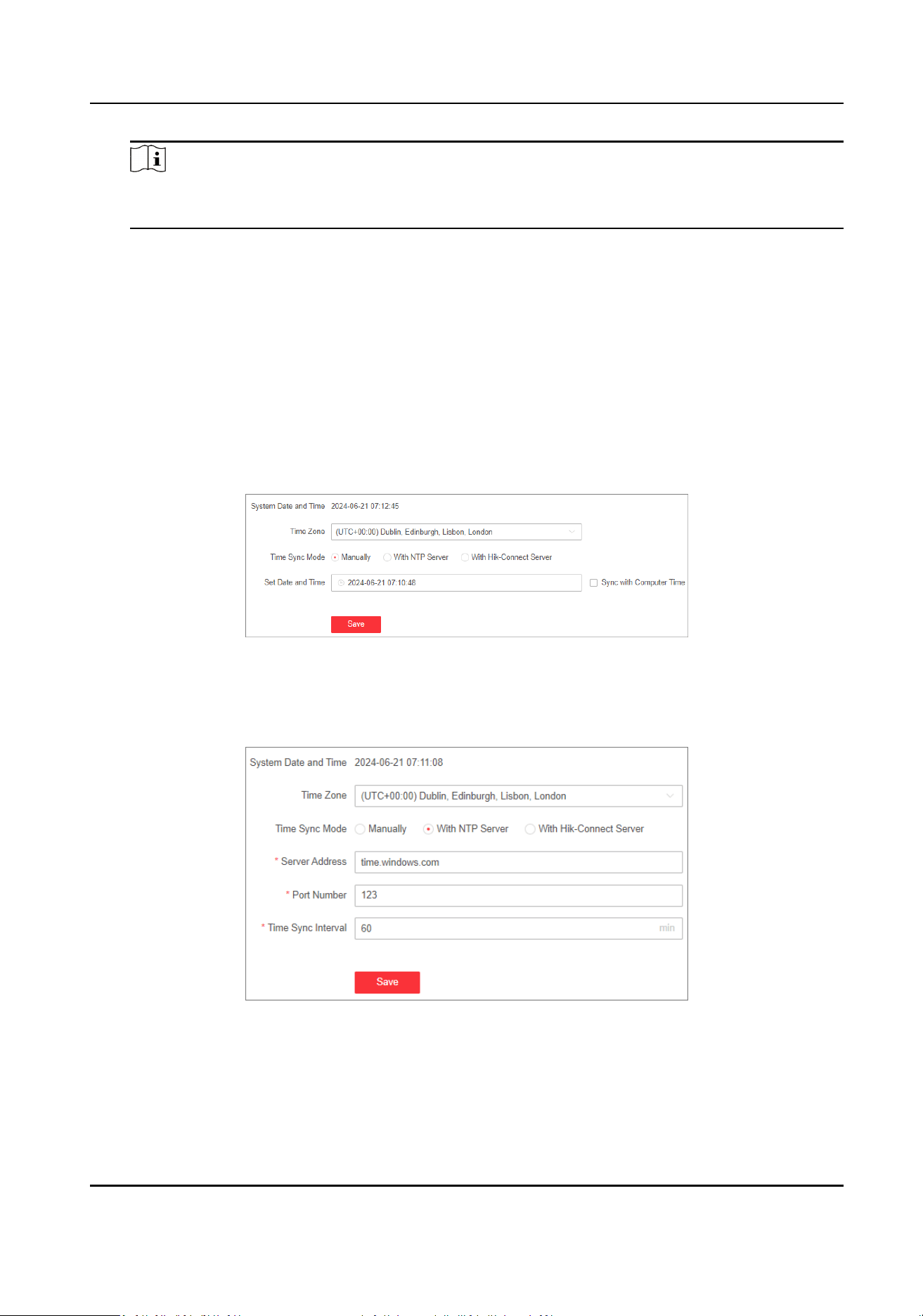
Go to System Management → Network Conguraon → Remote Management for remote device
management via HTTP or HTTPS.
Figure 5-4 Manage Device Remotely
●
HTTP: Set Port Number and click Save.
Note
The HTTP port number should be an integer between 2000 and 65535, or 80 by default.
●
HTTPS: Set the parameters as required and click Save.
HTTPS
Enable or disable HTTPS.
Port Number
If HTTPS is enabled, set the HTTPS port number.
Note
The HTTPS port number should be an integer between 2000 to 65535, or 443 by default.
Redirect HTTP to HTTPS
Enable or disable Redirect HTTP to HTTPS.
Smart Managed Switch Web User Manual
26
Note
If Redirect HTTP to HTTPS is enabled, trac accessed through port 80 will be automacally
redirected to port 443.
●
SSH: SSH is used for fault locang by technical support, and is not available to users.
5.2 Time Synchronizaon
Steps
1.
Go to System Management → Time Conguraon .
2.
Set Time Zone.
3.
Set Time Sync Mode.
-
Manually: Manually set the date and me, or check Sync with Computer Time to synchronize
the system date and
me.
Figure 5-5 Congure Time Manually
-
With NTP Server: Enter the NTP server address, port number, and me sync interval for
automac me synchronizaon.
Figure 5-6 Congure Time with NTP Server
-
With Hik-Connect Server: Use the Hik-Connect server for automac me calibraon and
synchronizaon. You do not need to congure any parameters.
Smart Managed Switch Web User Manual
27
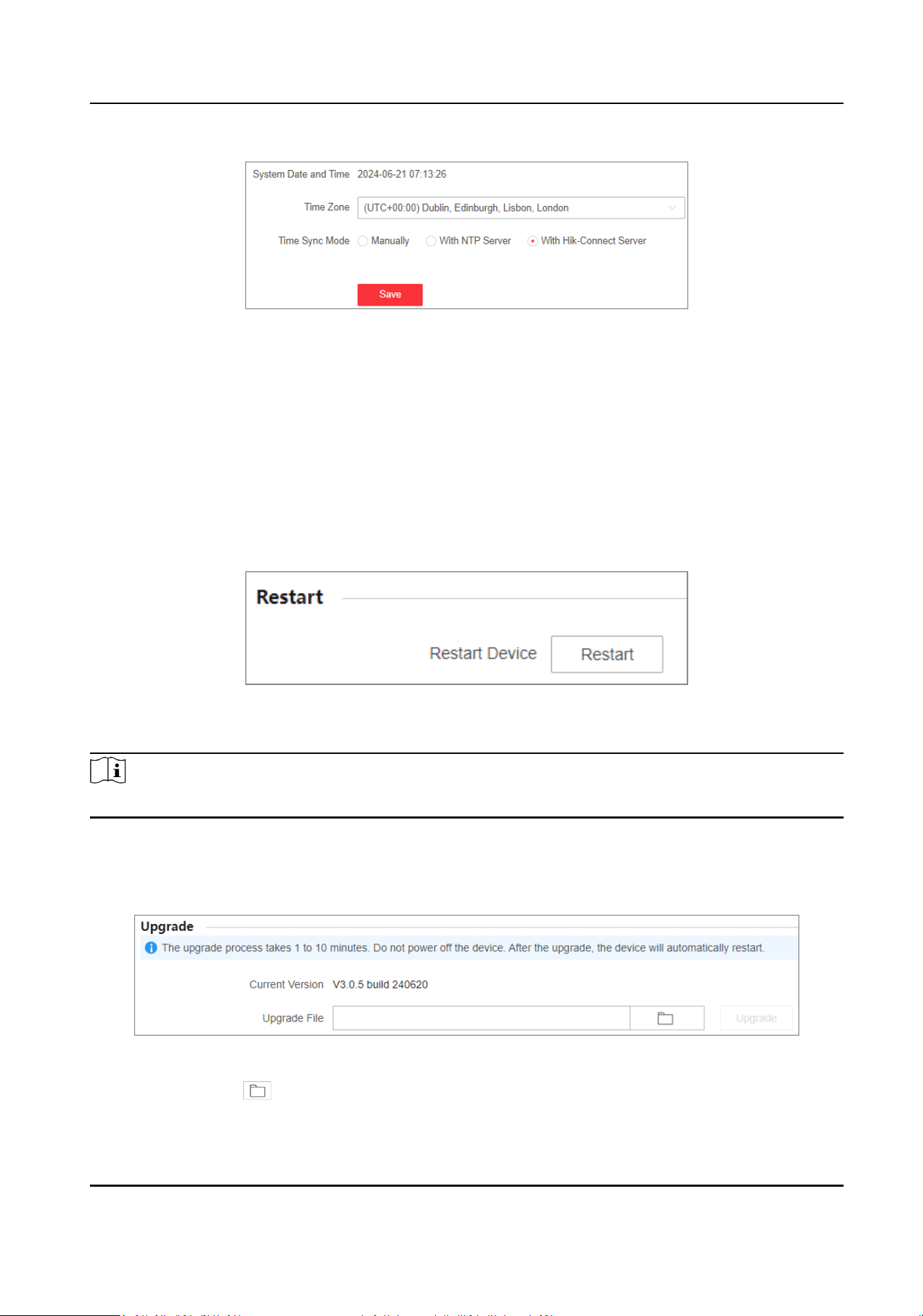
Figure 5-7 Congure Time with Hik-Connect Server
4.
Click Save.
5.3 System Maintenance
Go to System Management → System Maintenance to restart, upgrade, back up, or reset the
device.
Restart Device
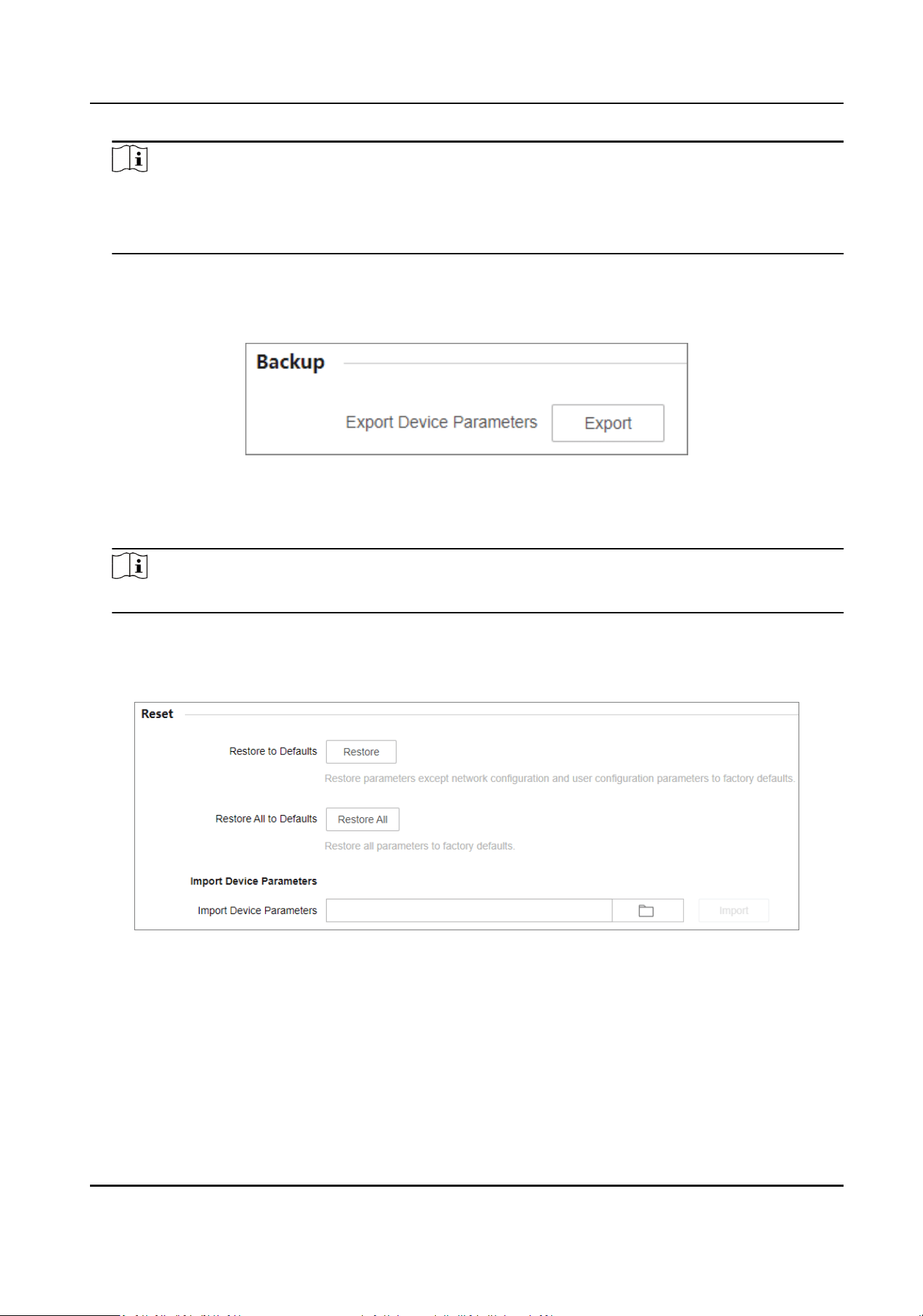
Figure 5-8 Restart
In Restart, click Restart to remotely restart the switch.
Note
You will enter the login page automacally aer the device is restarted.
Upgrade Device
Upload an upgrade le to upgrade the switch.
Figure 5-9 Upgrade
1. In Upgrade, click to select an upgrade patch le.
2. Click Upgrade.
Smart Managed Switch Web User Manual
28
Note
-
If upgrading failed or the device cannot funcon, please contact our technical support
engineers.
-
The device will restart automacally to enter the login page aer upgrade is completed.
Back Up Device
Export the conguraon le for local backup.
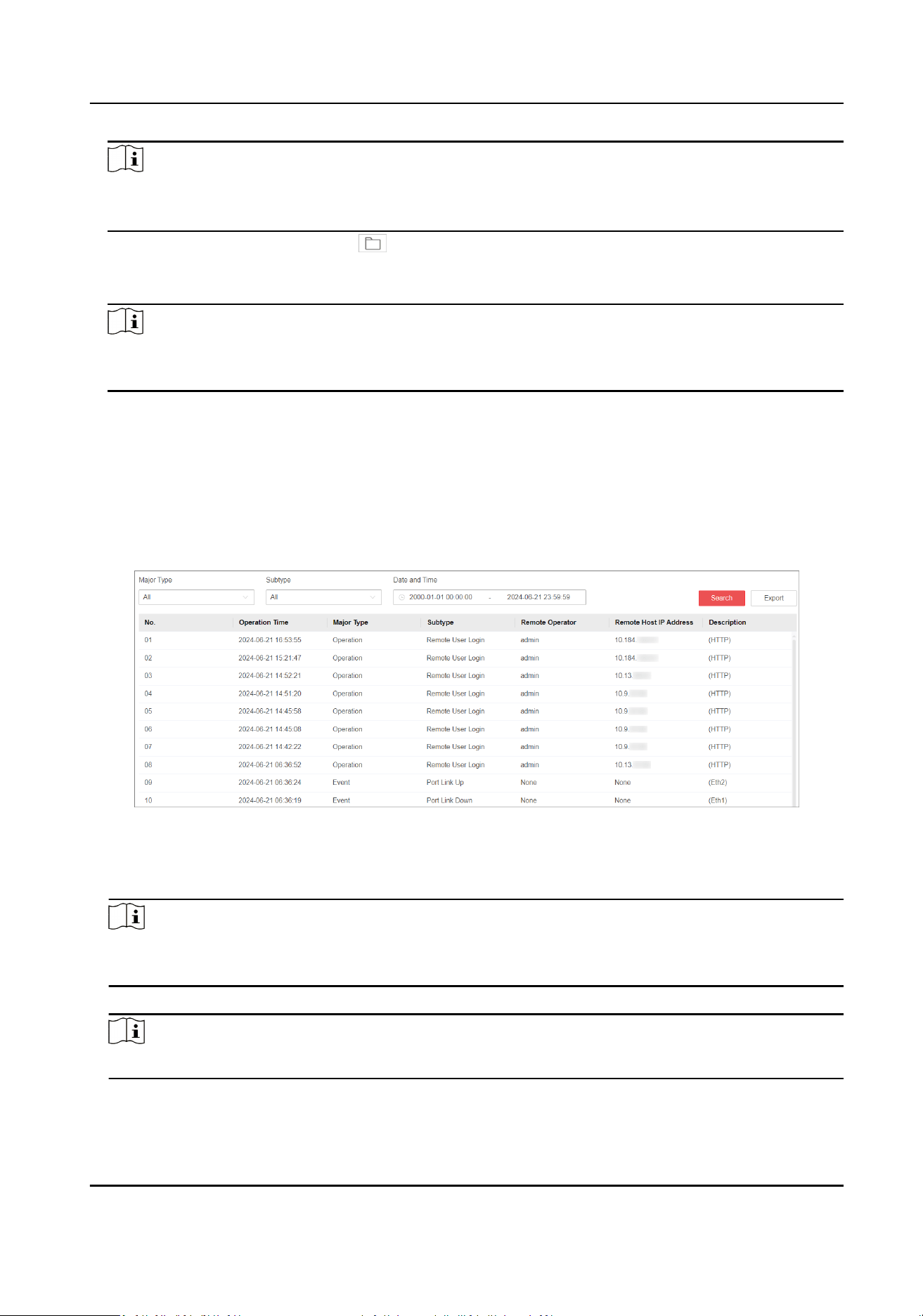
Figure 5-10 Back Up
1. In
Backup, click Export to export the
conguraon le containing device parameters.
2. Set a password and conrm the password for le encrypon.
Note
Remember the password as it is required when imporng device parameters.
3. Click OK.
Reset Device
Figure 5-11 Reset
●
Restore to Defaults: Click Restore to restore parameters except network conguraon and user
conguraon parameters to factory defaults.
●
Restore All to Defaults: Click Restore All to restore all parameters to factory defaults.
Smart Managed Switch Web User Manual
29
Note
○
The device parameters cannot be recovered once being restored to factory defaults.
○
The device will restart automacally aer being restored to factory defaults.
●
Import Device Parameters: Click to select the conguraon le containing device
parameters, click Import, enter the password for
le decrypon, and then click OK to import the
conguraon le for fast device conguraon.
Note
The device will restart automacally to enter the login page aer the conguraon le is
imported.
5.4 Log Management
System operaon logs can be searched and exported for backup.
Steps
1.
Go to System Management → System Maintenance → Log Management .
Figure 5-12 Manage Logs
2.
Set search condions, including Major Type, Subtype, and Date and Time.
3.
Click Search.
Note
A maximum of 1024 search results can be displayed. Please narrow down the search scope if
there are too many search results.
4.
Oponal: Click Export to export all the search results.
Note
Logs can be exported as a TXT le. A prompt will pop up aer logs are exported successfully.
Smart Managed Switch Web User Manual
30

UD33916B