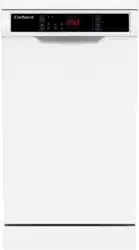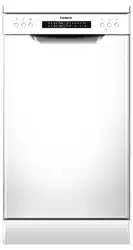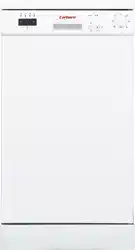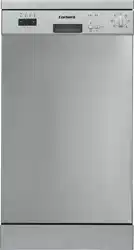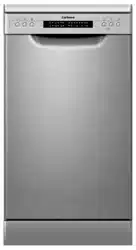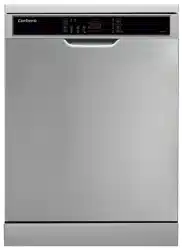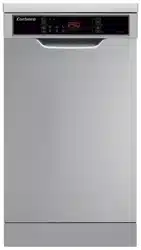
CLVV4522X / / CLVV4522W
EN
EN
Dishwasher / User Manual
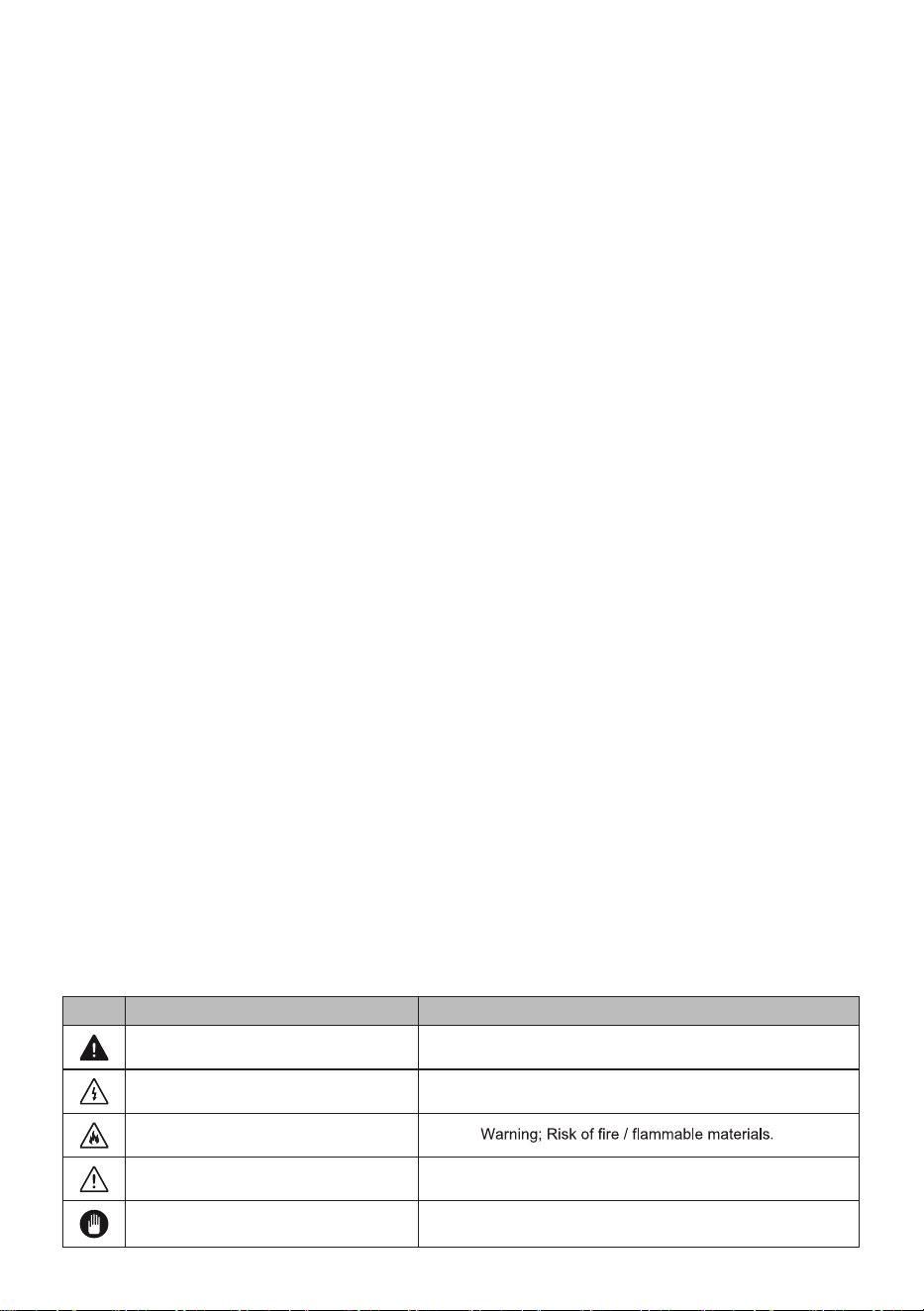
Icon Type Meaning
WARNING Serious injury or death risk
RISK OF ELECTRIC SHOCK Dangerous voltage risk
FIRE
CAUTION Injury or property damage risk
IMPORTANT / NOTE Operating the system correctly
Thank you for choosing this product.
This User Manual contains important information on safety and instructions intended to
assist you in the operation and maintenance of your appliance.
Please take the time to read this User Manual before using your appliance and keep this
book for future reference.

CONTENTS
1.SAFETY INSTRUCTIONS ................................................................................................ 1
1.1. General Safety Warnings ..............................................................................................1
1.2. Installation Warnings .....................................................................................................2
1.3. During Use.....................................................................................................................3
2.INSTALLATION ................................................................................................................. 6
2.1. Machine Positioning .....................................................................................................6
2.2. Water Connection .......................................................................................................... 6
2.3. Water Inlet Hose ............................................................................................................ 6
2.4. Electrical Connection ....................................................................................................7
3.TECHNICAL SPECIFICATIONS ....................................................................................... 8
3.1. General Appearance......................................................................................................8
3.2. Technical Specifications ................................................................................................8
4.BEFORE USING THE APPLIANCE ................................................................................. 9
4.1. Preparing your Dishwasher for first use .......................................................................9
4.2. Salt usage......................................................................................................................9
4.4. Test Strip ...................................................................................................................10
4.5. Water Hardness Table .................................................................................................10
4.6. Water Softener System ...............................................................................................10
4.7. Setting ...................................................................................................................10
4.8. Detergent Usege .........................................................................................................10
4.9. Filling the Detergent .................................................................................................... 11
4.10. Using Combined Detergents ..................................................................................... 11
4.11. Rinse-aid Usege ........................................................................................................ 11
4.12. Filling the Rinse-aid and Setting ................................................................................ 11
5.LOADING YOUR DISHWASHER ....................................................................................13
5.1. Recommendations....................................................................................................... 13
5.2. Alternative Basket Loads .............................................................................................15
6.PROGRAMME TABLE .................................................................................................... 16
7.THE CONTROL PANEL .................................................................................................. 17
7.1. Changing a Programme .............................................................................................17
7.2. Cancelling a Programme .............................................................................................18
7.3. Switching the Machine Off ...........................................................................................18
4.3. Fill the salt ....................................................................................................................9

8.
CLEANING AND MAINTENANCE ................................................................................. 20
8.1. Filters ...........................................................................................................................20
8.2. Spray Arms ..................................................................................................................20
9.
TROUBLESHOOTING .................................................................................................... 22
8.3. Drain Pump ..................................................................................................................21
EN - 1
1. SAFETY INSTRUCTIONS
1. General Safety Warnings
• Read these instructions carefully before using your
appliance and keep this manual for future reference.
Please check the packaging of your machine
before installation and the outer surface of the
machine once the packaging has been removed. Do
not operate the machine if it appears damaged or if
the packaging has been opened.
• Packaging materials protect your machine from any
damage that might occur during transportation. The
packaging materials are environmentally friendly
as they are recyclable. Use of recycled material
reduces raw material consumption and decreases
waste production.
This appliance can be used by children aged from
8 years and above, and by persons with reduced
physical, sensory or mental capabilities or lack of
experience and knowledge if they have been given
supervision or instruction concerning the use of the
appliance in a safe way and understand hazards
involved. Children should not be allowed to play with
the appliance.
Remove packaging and keep it out of reach of
children.
Keep children away from detergents and rinse
aids.
There may be some residue left in the machine
after washing. Keep children away from the machine
when it is open.
EN - 2
2. Installation Warnings
• Choose a suitable and safe place to install your
machine.
• Only original spare parts should be used with the
machine.
Unplug the machine before installation.
Your machine must only be installed by an
authorised service agent. Installation by anyone other
than an authorised agent may cause your warranty to
be void.
Check that the indoor electrical fuse system is
connected in line with safety regulations.
All electrical connections must match the values on
the plate.
Ensure the machine does not stand on the
electrical supply cable.
Never use an extension cord or a multiple socket
connection.
The plug should be accessible after the machine is
installed.
• After installation, run your machine unloaded for the
first time.
The machine must not be plugged in during
positioning.
Always use the coated plug supplied with your
machine.
If the electrical cable is damaged, it should only
be replaced by a qualified electrician.
• Connect the hose directly to the water inlet tap. The
pressure supplied by the tap should be a minimum
of 0.03 MPa and a maximum of 1 MPa. If the
EN - 3
pressure exceeds 1 MPa, a pressure relief valve
must be fitted between the connection.
3. During Usage
• This machine is for domestic use only; do not use
• it for other purposes. Commercial use will void the
guarantee.
Do not stand, sit or place loads on the open door of
the dishwasher.
Only use detergents and rinse aids produced
specifically for dishwashers. Our company is not
responsible for any damage that may occur due to
misuse.
Do not drink water from the machine.
Due to the danger of explosion, do not place any
chemical dissolving agents into the machine’s washing
section.
• Check the heat-resistance of plastic items before
washing them in the machine.
Only put items in the machine which are suitable for
dishwashing, and take care not to overfill the baskets.
Do not open the door while the machine is in
operation, hot water may spill out. Safety devices
ensure the machine stops if the door is opened.
The machine door should not be left open. It may
cause accidents.
Place knives and other sharp objects in the cutlery
basket in a blade-down position.
For models with the automatic door-opening
system, when the EnergySave option is active, the
door will open at the end of a program. To prevent
damage to your dishwasher, do not attempt to close
EN - 4
• Some machine components and packaging consist of recyclable materials.
• Plastics are marked with the international abbreviations:(>PE<, >PP<, etc. )
• The cardboard parts consist of recycled paper. They can be put into waste paper
containers for recycling.
• Material unsuitable for domestic waste must be disposed of at recycling centres.
• Contact a relevant recycling centre to obtain information about disposal of different
materials.
PACKAGING AND THE ENVIRONMENT
• Packaging materials protect your machine from damage that may occur during
transportation. The packaging materials are environmentally friendly as they are
recyclable. The use of recycled material reduces raw material consumption and
therefore decreases waste production.
RECYCLING
the door for one minute after it has opened. For
effective drying, keep the door open for 30 minutes
after a programme has ended. Do not stand in front of
the door after the auto-open signal sounds.
In the case of a malfunction, repair should only
be performed by an authorised service company,
otherwise the warranty will be void.
Before repair
work, the machine should be
disconnected from the mains. Do not pull the cable to
unplug the machine. Switch of
f the water tap.
Operation at a low voltage will cause a decline in
performance levels.
For safety
, disconnect the plug once
a program has
finished.
T
o avoid an electric shock, do not unplug the
machine with wet hands.
Pull the plug to disconnect the machine from the
mains, never pull on the cord.

CE Declaration of Conformity
We declare that our products meet the applicable European Directives, Decisions and
Regulations and the requirements listed in the standards referenced.
Disposal of your old machine
The symbol on the product or on its packaging indicates that this product
may not be treated as household waste. Instead, it shall be handed over to
the applicable collection point for the recycling of electrical and electronic
equipment. By ensuring this product is disposed of correctly, you will help
prevent potential negative consequences for the environment and human
health, which could otherwise be caused by inappropriate waste handling of
this product. For more detailed information about recycling of this product,
please contact your local city office, your household waste disposal service or the shop
where the product was purchased.
EN - 5
EN - 6
2. INSTALLATION
2.1. Machine positioning
When positioning the machine, place it in
an area where dishes can be easily loaded
and unloaded. Do not put the machine in an
area where the ambient temperature falls
below 0°C.
Read all warnings located on the packaging
before removing the packaging and
positioning the machine.
Place the machine close to a water tap
and drain. Take into consideration that the
connections will not be altered once the
machine is in position.
Do not hold the machine by its door or
panel.
Leave an adequate distance around the
machine to allow ease of movement when
cleaning.
Ensure the water inlet and outlet
hoses are not squeezed or trapped
and that the machine does not stand
on the electrical cable while positioning.
Adjust the feet so the machine is level and
balanced. The machine should be placed
on flat ground otherwise it will be unstable
and the door of the machine will not close
properly.
2.2. Water connection
We recommend fitting a filter to your water
inlet supply in order to prevent damage to
your machine due to contamination (sand,
rust, etc.) from indoor plumbing. This will
also help prevent yellowing and deposit
formation after washing.
Note printing on the water inlet hose!
If models are marked with 25°, the water
temperature may be max. 25 °C (cold
water).
For all other models:
Cold water preferred; hot water max.
temperature 60 °C.
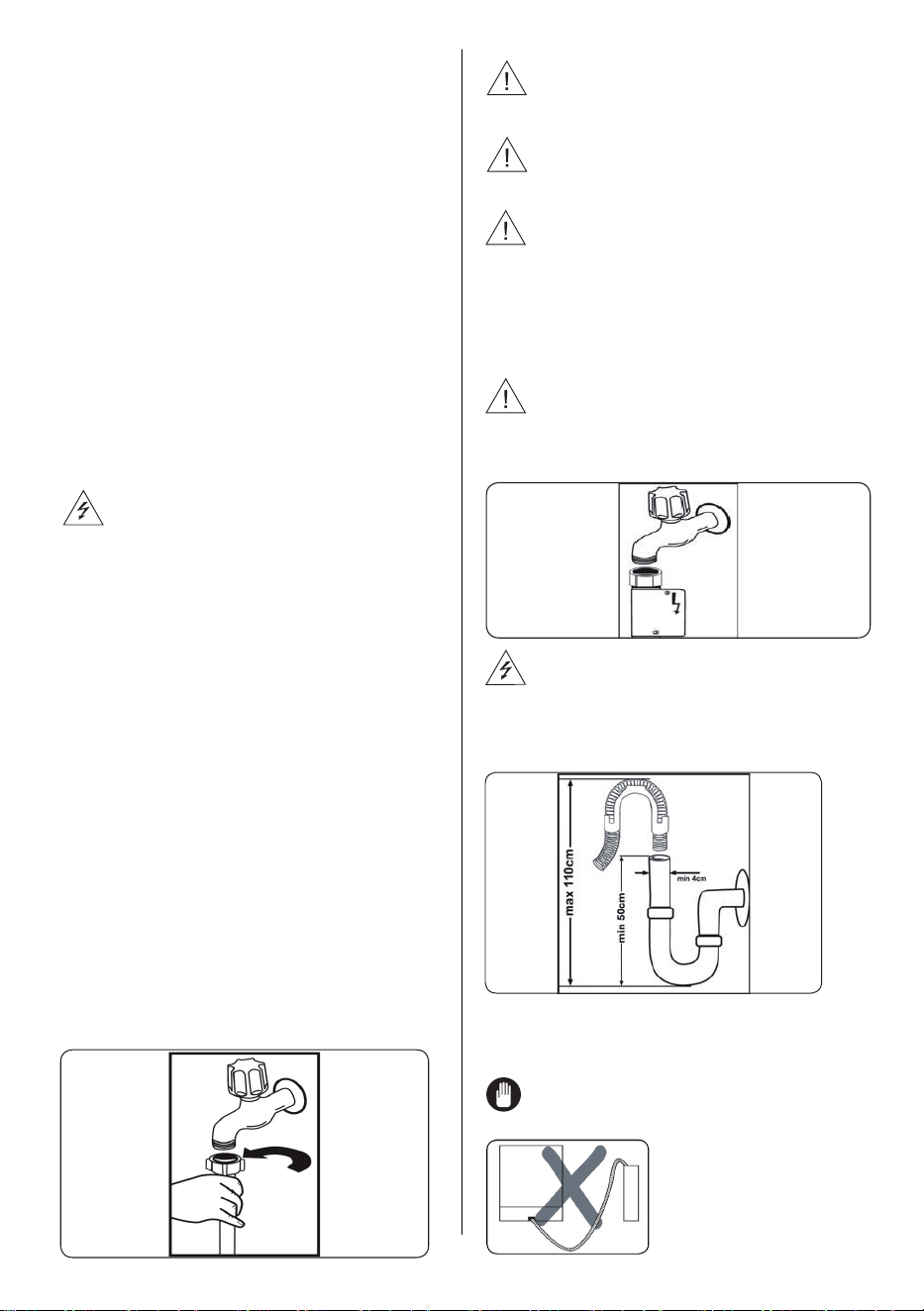
WARNING: Use the new water inlet
hose supplied with your machine, do not
use an old machine’s hose.
WARNING: Run water through the
new hose before connecting.
WARNING: Connect the hose
directly to the water inlet tap. The pressure
supplied by the tap should be a minimum
of 0.03 MPa and a maximum of 1 MPa. If
the pressure exceeds 1 MPa, a pressure
relief valve must be fitted between the
connection.
WARNING: After the connections are
made, turn the tap on fully and check
for water leaks. Always turn off the
water inlet tap after a wash program has
finished.
An Aquastop water spout is available
with some models. Do not damage it
or allow it to become kinked or
twisted.
2.3. Water inlet hose
2.4. Drain Hose
Connect the water drain hose directly to
water drain hole or to the sink outlet spigot.
This connection should be minimum 50 cm
and maximum 110 cm from flor plane.
IMPORTANT: Items will not wash
properly if a drain hose longer than 4
m is used.
EN - 7
In the absence of earthing
installation, an authorised
electrician should carry out an
earthing installation. In the case of use
without earthing installed, we will not be
responsible for any loss of use that may
occur.
The plug on this appliance may
incorporate 13A fuse depending on
the target country. (For Example UK,
Saudi Arabia)
2.5. Electrical connection
WARNING: Your machine is set to
operate at 220-240 V. If the mains voltage
supply to your machine is 110 V, connect a
transformer of 110/220 V and 3000 W
between the electrical connection.
Connect the product to a
grounded outlet protected by a fuse
complying with the values in the
"Technical Specifications" table".
The earthed plug of the
machine must be connected
to an earthed outlet supplied by
suitable voltage and current.
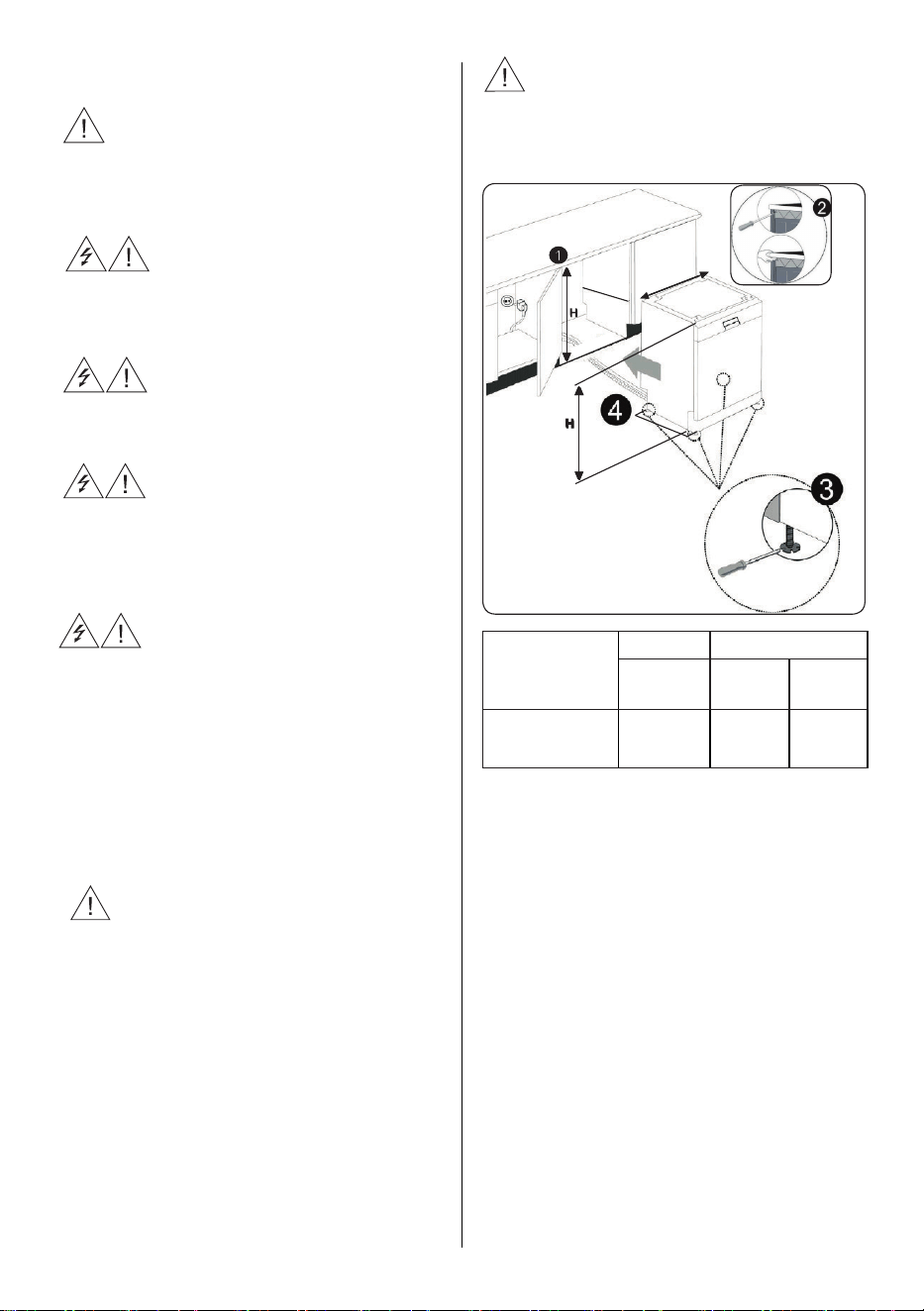
2.6. Fitting the machine undercounter
If you wish to fit your machine undercounter,
there must be sufficient space to do so and
the wiring-plumbing must be suitable to do
so (1). If the space under the countertop is
suitable for fitting your machine, remove the
worktop as shown in the illustration (2).
WARNING: The countertop, of which
the machine will be placed under, must be
stable in order to prevent imbalance.
The top panel of the dishwasher must
be removed to fit the machine under the
countertop.
To remove the top panel, remove the screws
that hold it on, located at the rear of the
machine. Then, push the panel 1 cm from
the front towards the rear and lift it. Adjust
the machine feet according to the slope of
the floor (3).
Fit your machine by pushing it under the
counter taking care not to crush or bend the
hoses (4).
WARNING:
After removing the top
panel of your dishwasher, the machine
should be placed in a space of the
dimensions shown in the figure below.
448
460
Min 598
598
A B
All
Products
B
1
B
2
Product’s Height
(±2 mm) 820 mm 825 mm 835 mm
EN - 8
3. TECHNICAL SPECIFICATIONS
3.2. Technical specifications
Capacity
10 place
settings
Dimensions
(mm)
Height
Width
Depth
850(mm)
450(mm)
598(mm)
Net weight 36 kg
Operating
voltage /
frequency
220-240V
50 Hz,
Total current
(A)
10(A)
Total power
(W)
1900(W)
Water supply
pressure
Maximum:
1 (Mpa)
Minimum:
0.03 (Mpa)
13
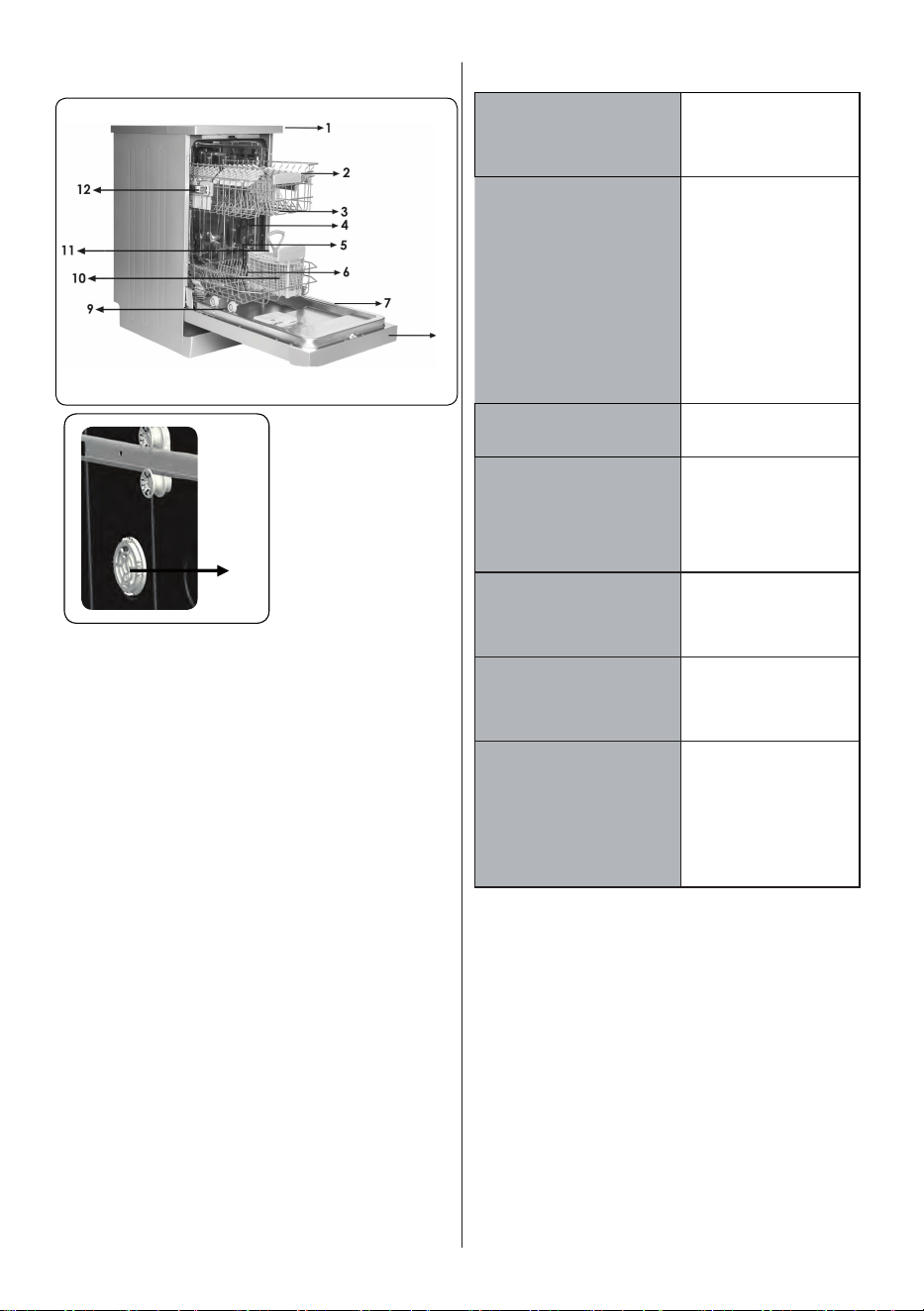
3.1. General appearance
1. Worktop
2. Upper basket with racks
3. Upper spray arm
4. Lower basket
5. Lower spray arm
6. Filters
7. Rating plate
8. Control panel
9. Detergent and rinse-aid dispenser
10. Cutlery basket
11. Salt dispenser
12. Upper basket track latch
13. Süper Drying Unit: This system
enhances the drying performance of
your dishes.
8
EN - 9
4. BEFORE USING
THE APPLIANCE
4.1. Preparing your
dishwasher for first use
• Make sure the electricity and supply
water specifications match the values
indicated in the installation instructions
for the machine.
• Remove all packaging material inside
the machine.
• Set the water softener level.
• Fill the rinse aid compartment.
4.2. Salt usage (IF AVAILABLE)
For a good washing function, the
dishwasher needs soft, i.e. less calcareous
water. Otherwise, White lime residues
will remain on the dishes and the interior
equipment. This will negatively affect your
machine’s washing, drying and shining
performance. When water flows through
the softener system, the ions forming the
hardness are removed from the water
and the water reaches the softness
required to obtain the best washing result.
Depending on the level of hardness of the
inflowing water, these ions that harden
the water accumulate rapidly inside the
softener system. Therefore, the softener
system has to be refreshed so that it
operates with the same performance
also during the next wash. For this
purpose, dishwasher salt is used.
Machine can only be used by special
dishwasher salt to soften the water.
Do not use any small grained or
powdered type of salts which can
easily soluble. Using any other type
of salt can damage your machine.
4.3 Fill the salt (IF AVAILABLE)
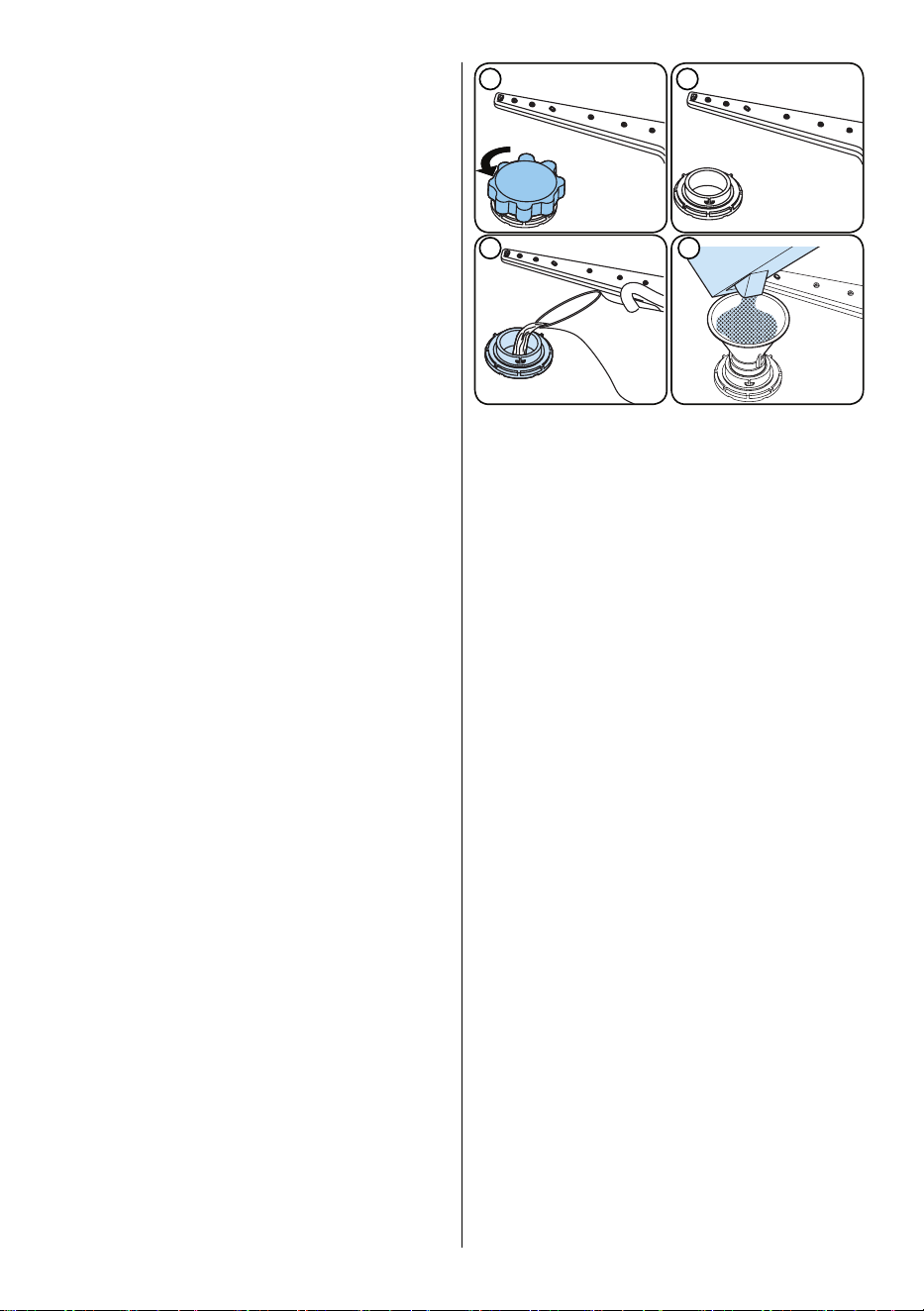
To add softener salt, open the salt
compartment cap by turning it counter
clockwise. (1) (2) At first use, fill the
compartment with 1 kg salt and water (3)
until it is almost overflowing. If available,
using a funnel (4) will make filling easier.
Replace the cap and close it. After every
20-20-30 Cycles add salt into your mach
until it fills up (approx. 1 kg).
3 4
1 2
SALT
Fill the salt compartment with water the
first time you fill the salt compartment
only.
Use softener salt specifically produced for
use in dishwashers.
When you start your dishwasher, the salt
compartment is filled with water, therefore
put the softener salt in prior to starting your
machine.
If the softener salt has overflowed and you
do not start the machine immediately, run
a short washing program to protect your
machine against corrosion.
4.8. Detergent usage
Only use detergents specifically designed for domestic dishwashers. Keep your detergents
in cool, dry places out of reach of children.
EN - 10
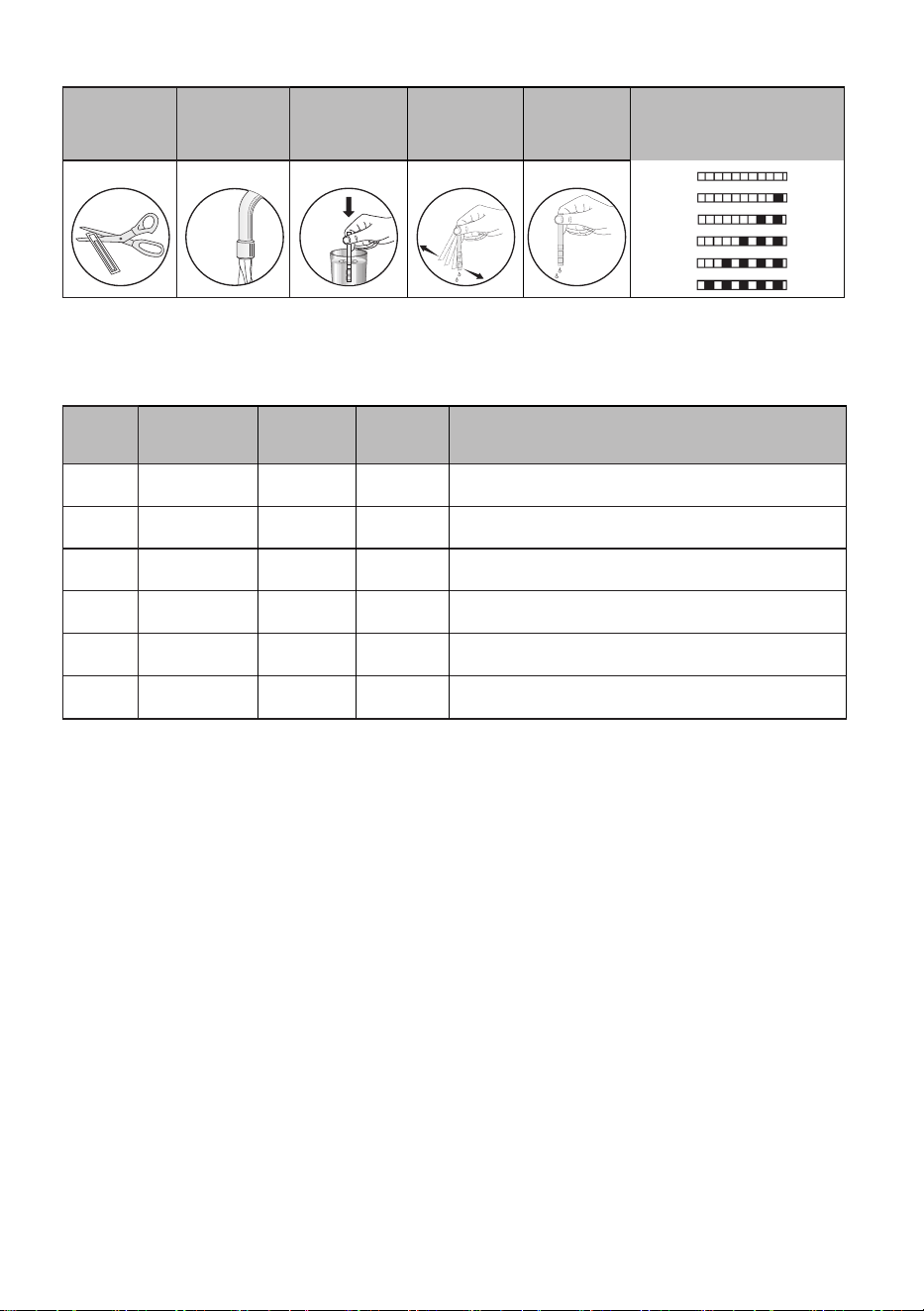
4.4 Test Strip
Run water
through the
tap (1min.)
Keep the
strip in the
water (1sec)
Shake the
strip.
Wait
(1min.)
Set the hardness level of
your machine.
1
2
3
4
5
6
1
munite
1
second
1
munite
NOTE: The level is set to 3 as default. If the water is well water or has a hardness level
above 90 dF, we recommend that you use filter and refinement devices.
4.5 Water Hardness Table
Level German dH
French
dF
British
dE
Indicator
1 0-5 0-9 0-6 L1 is seen on the display.
2 6-11 10-20 7-14 L2 is seen on the display.
3 12-17 21-30 15-21 L3 is seen on the display.
4 18-22 31-40 22-28 L4 is seen on the display.
5 23-31 41-55 29-39 L5 is seen on the display.
6 32-50 56-90 40-63 L6 is seen on the display.
4.6 Water Softener System
The dishwasher is equipped with a water softener which reduces the hardness in the
mains water supply. To find out the hardness level of your tap water, contact your water
company or use the test strip (if available).
4.7 Setting
• Turn on the machine by pressing the On/Off button.
• Press the Program button for at least 3 seconds immediately after the machine is
turned on.
• Release the Program button when “SL” is shown. Next, the last setting level is
displayed.
• Press the program button to set the desired level. Each press of the program button
increases the level. Once level 6 has been reached, the next press returns the level to
1.
• The last selected water hardness level is stored in the memory by turning the machine
off with the On/Off button.
EN -11
Add the proper detergent for the selected
program to ensure the best performance.
The amount of detergent needed depends
on the cycle, load size, and soil level of
dishes.
Do not fill detergent into the detergent
compartment more than required; otherwise
you can see whitish streaks or bluish layers
on glass and dishes and may cause glass
corrosion. Continued use of too much
detergent may cause machine damage.
Using little detergent can result in poor
cleaning and you can see whitish streaksin
hard water.
See the detergent manufacturer’s
instructions for a further information.
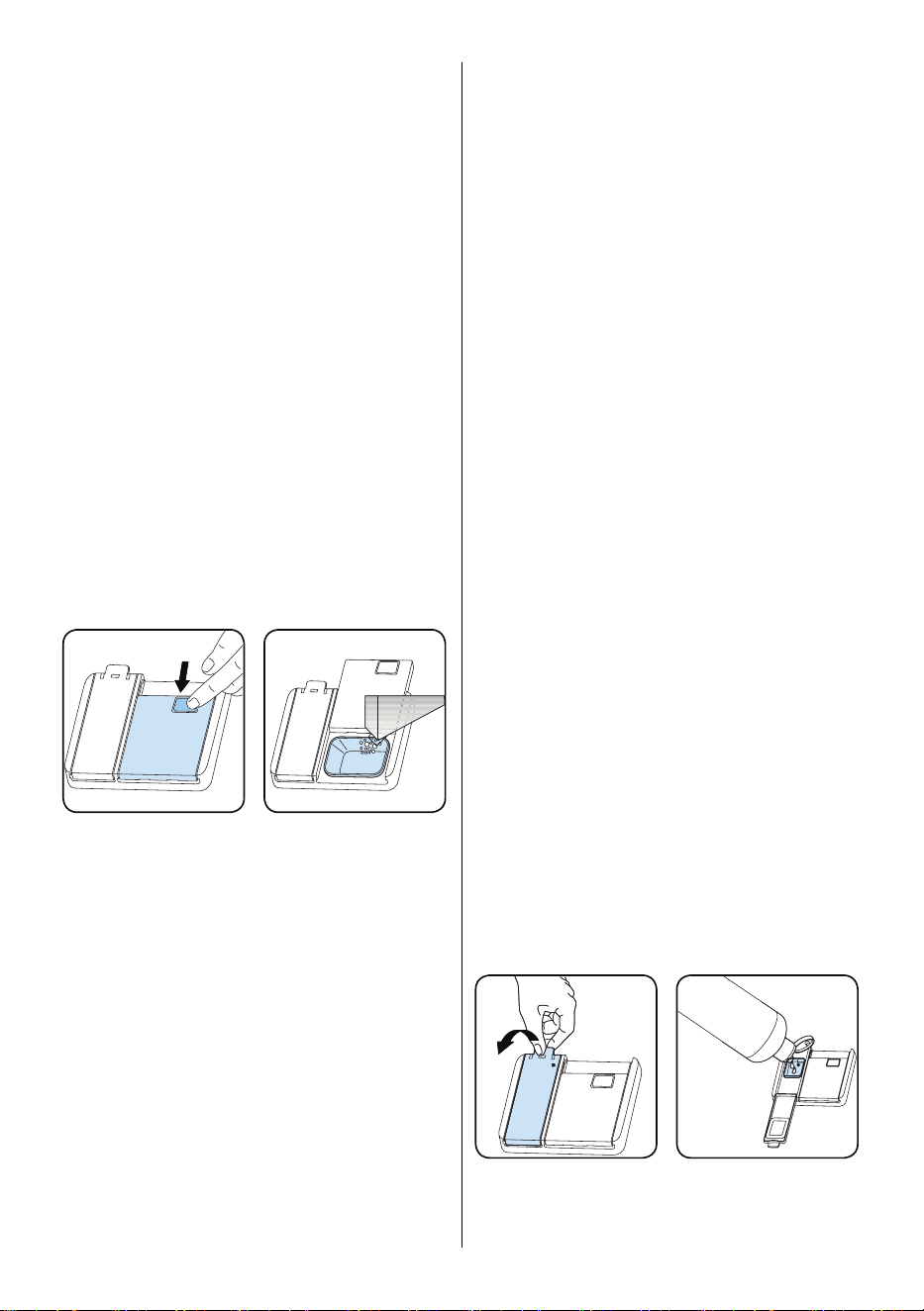
4.9 Filling the detergent
Push the latch to open the dispenser and
pour in the detergent.
Close the lid and press it until it locks in
place. The dispenser should be refilled just
before the start of each programme. If the
dishes are heavily soiled, place additional
detergent in the pre-wash detergent
chamber.
DETERGENT
4.10 Using combined detergents
These products should be used according
to the manufacturer’s instructions.
Never put combined detergents into the
interior section or the cutlery basket.
Combined detergents contain not only
the detergent but also rinse-aid, salt
replacement substances and additional
components depending on the combination.
We recommend you do not use combined
detergents in short programmes.
Please use powder detergents in such
programmes.
If you encounter problems when using
combined detergents, please contact the
detergent manufacturer.
When you stop using combined detergents,
make sure that water hardness and rinse
aid settings are set to the correct level.
4.11 Rinse-aid usage
The rinse aid helps to dry the dishes without
streaks and stains. Rinse-aid is required for
stain-free utensils and clear glasses. The
rinse aid is automatically released during
the hot rinse phase. If rinse aid dosage
setting set too low, whitish stains remains
on dishes and dishes do not dry and
washed clean.
If rinse aid dosage setting set too height,
you can see bluish layers on glass and
dishes.
4.12 Filling the rinse-aid and setting
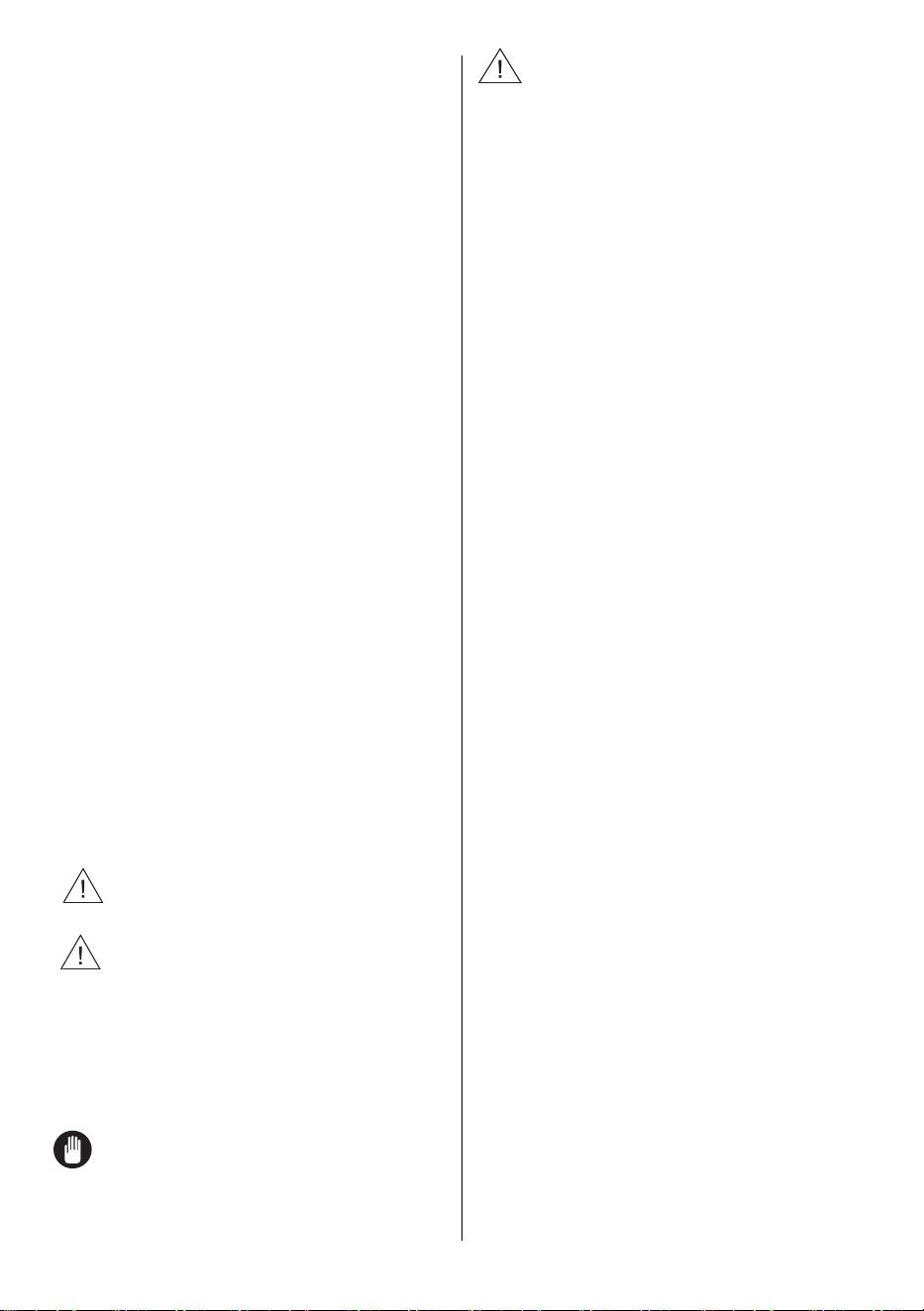
To fill the rinse aid compartment, open
the rinse-aid compartment cap. Fill the
compartment with rinse aid to the MAX level
and then close the cap. Be careful not to
overfill the rinse aid compartment and wipe
up any spills.
In order to change the rinse aid level,
follow the below steps before turning on
the machine:
If the dishes are not drying properly or are
spotted, increase the level. If blue stains
form on your dishes, decrease level.
• Push the programme button and hold it
down.
•
•
Turn the machine on.
Hold down the programme button until
“rA” disappears from the display. Rinse
aid setting follows water hardness
setting.
•
•
The machine will display the last setting.
Set the level by pushing the programme
button.
• Switch off the machine to save the
setting.
• The factory setting is “4”.

Level Brightener Dose Indicator
1 Rinse-aid not
dispensed
r1 is shown on the
display.
2 1 dose is
dispensed
r2 is shown on the
display.
3 2 doses are
dispensed
r3 is shown on the
display.
4 3 doses are
dispensed
r4 is shown on the
display.
5 4 doses are
dispensed
r5 is shown on the
display.
EN -12
EN - 13
WARNING: To avoid any possible
injuries, place long-handle and sharp-
pointed knives with their sharp points facing
down or horizontally on the baskets.
5. LOADING YOUR
DISHWASHER
For best results, follow these loading
guidelines.
Loading the household dishwasher up to
the capacity indicated by the manufacturer
will contribute to energy and water savings.
Manual pre-rinsing of tableware items leads
to increased water and energy
consumption and is not recommended
You can place cups, glasses, stemware,
small plates, bowls, etc. in upper basket.
Do not lean long glasses against one
another or they cannot remain steady and
may receive damage.
When placing long stem glasses and
goblets, lean them against the basket edge
or rack and not against other items.
Place all containers such as cups, glasses
and pots into the dishwasher with the
opening facing downwards otherwise water
can collect on items.
If there is cutlery basket in machine, you
are recommended to use the cutlery grid in
order to obtain the best result. Place all
large (pots, pans, lids, plates, bowls etc.)
and very dirty items in the lower rack.
Dishes and cutlery should not be placed
above each other.
WARNING: Take care not to obstruct
the rotation of spray arms.
WARNING: Make sure after loading
the dishes do not prevent opening the
detergent dispenser.
5.1. Recommendations
Remove any coarse residue on dishes
before placing the dishes in the machine.
Start the machine with full load.
Do not overload the drawers or place
dishes in the wrong basket.
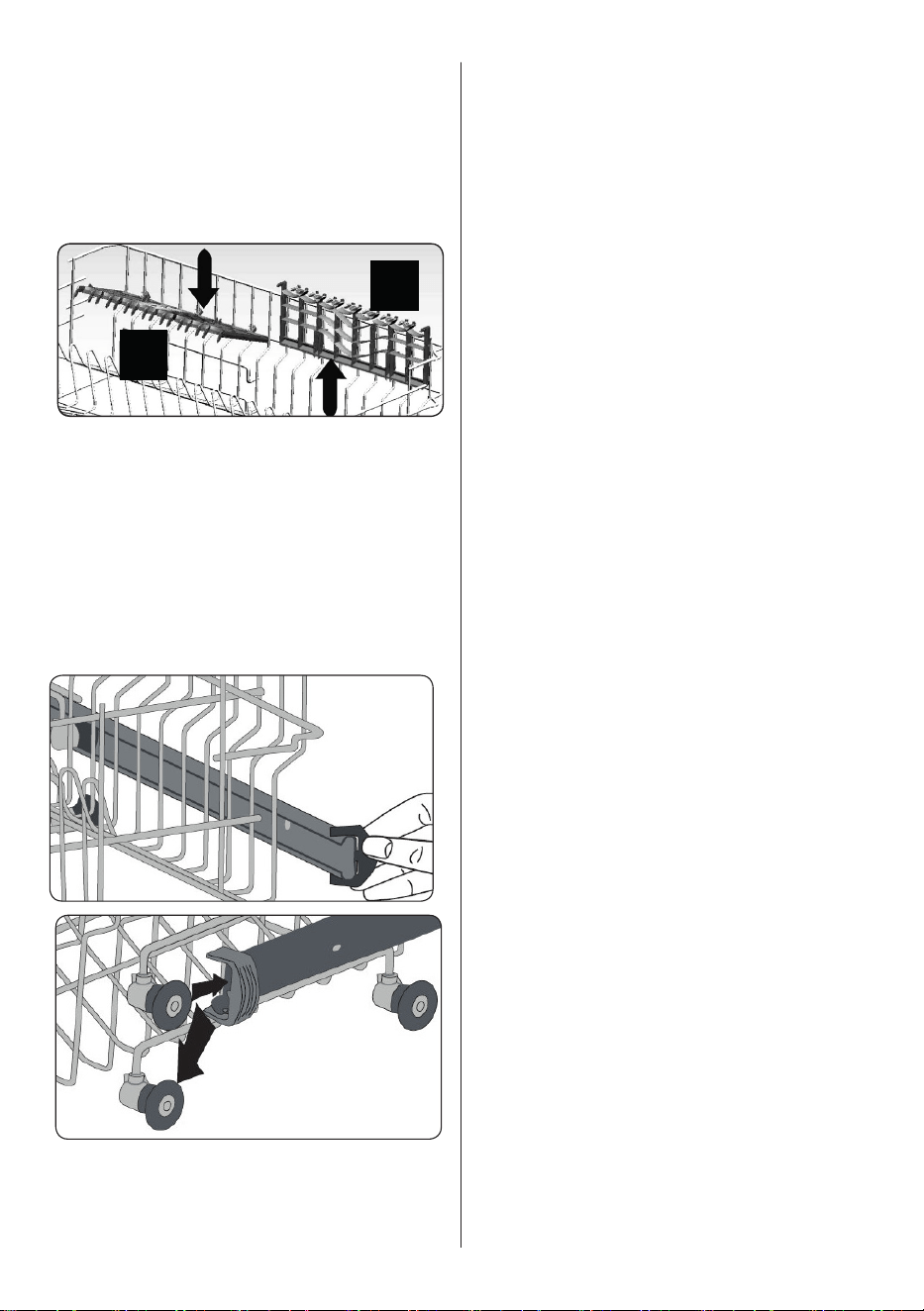
EN - 14
Upper Basket
Height adjustment
Turn the Rail Stop Clips, at the ends of the
rails, to the sides to open them (as shown in
the image below), then pull out and remove
the basket. Change the position of the
wheels, then reinstall the basket to the rail,
making sure to close the Rail Stop Clips.
When the upper basket is in the higher
position, large items such as pans can be
placed on the lower basket.
.
Top basket
Fixed Rack
Upper basket racks have two positions:
open (a) and closed (b). You can place cups
on the racks to be washed. You can also
place long forks, knives and spoons on the
racks laterally.
a
b
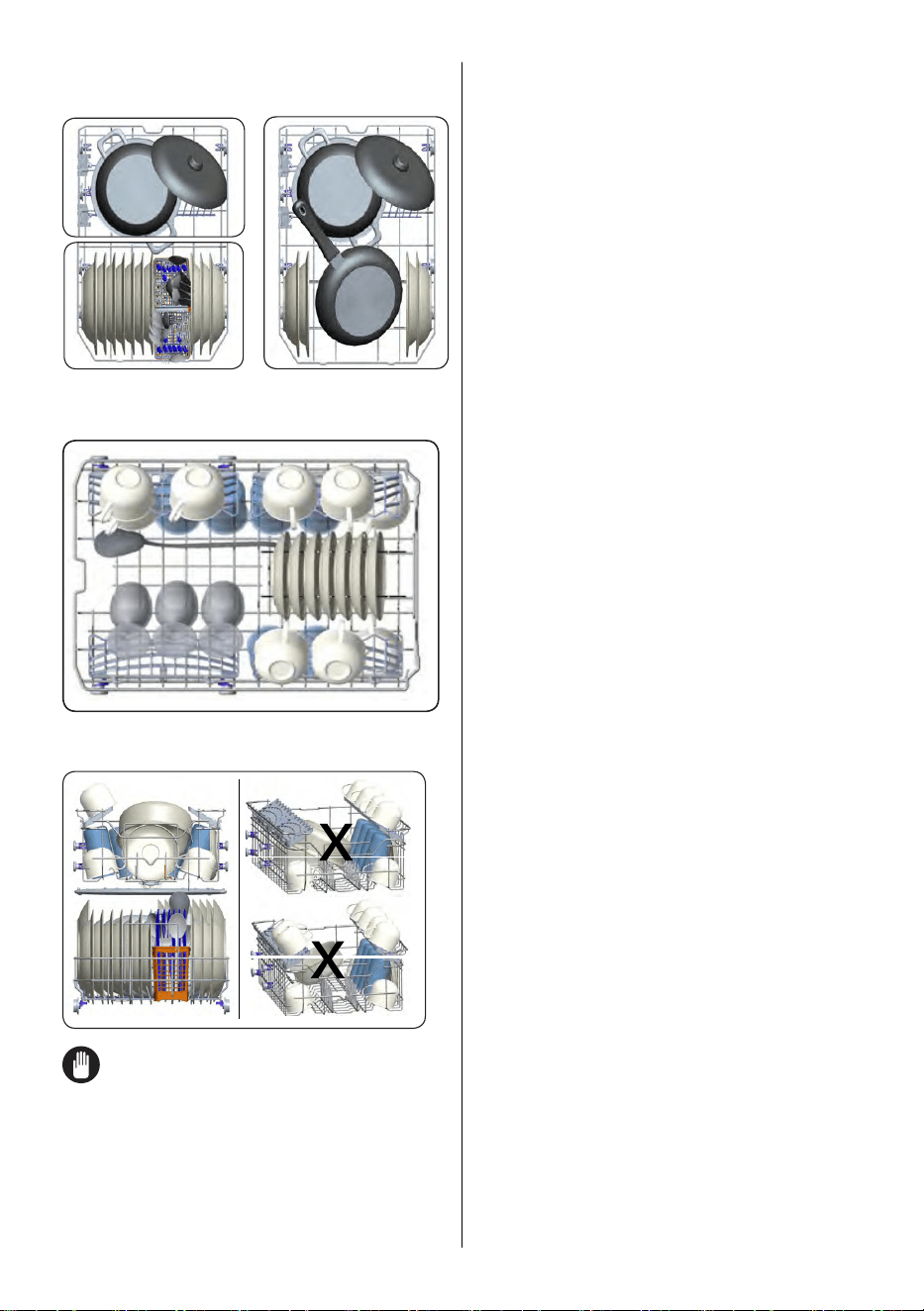
EN - 15
5.2 Alternative Basket Loads
Lower Basket
Top Basket
Incorrect Loads
Important Note for Test Laboratories
For detailed information required for tests
according to EN normatives and a softcopy
of the manual, please send the model
name and serial number to the following
address:
Incorrect Loads
Incorrect loading can cause poor washing
and drying performance. Please follow the
manufacturer's recommendations for a good
performans result.
EN - 16
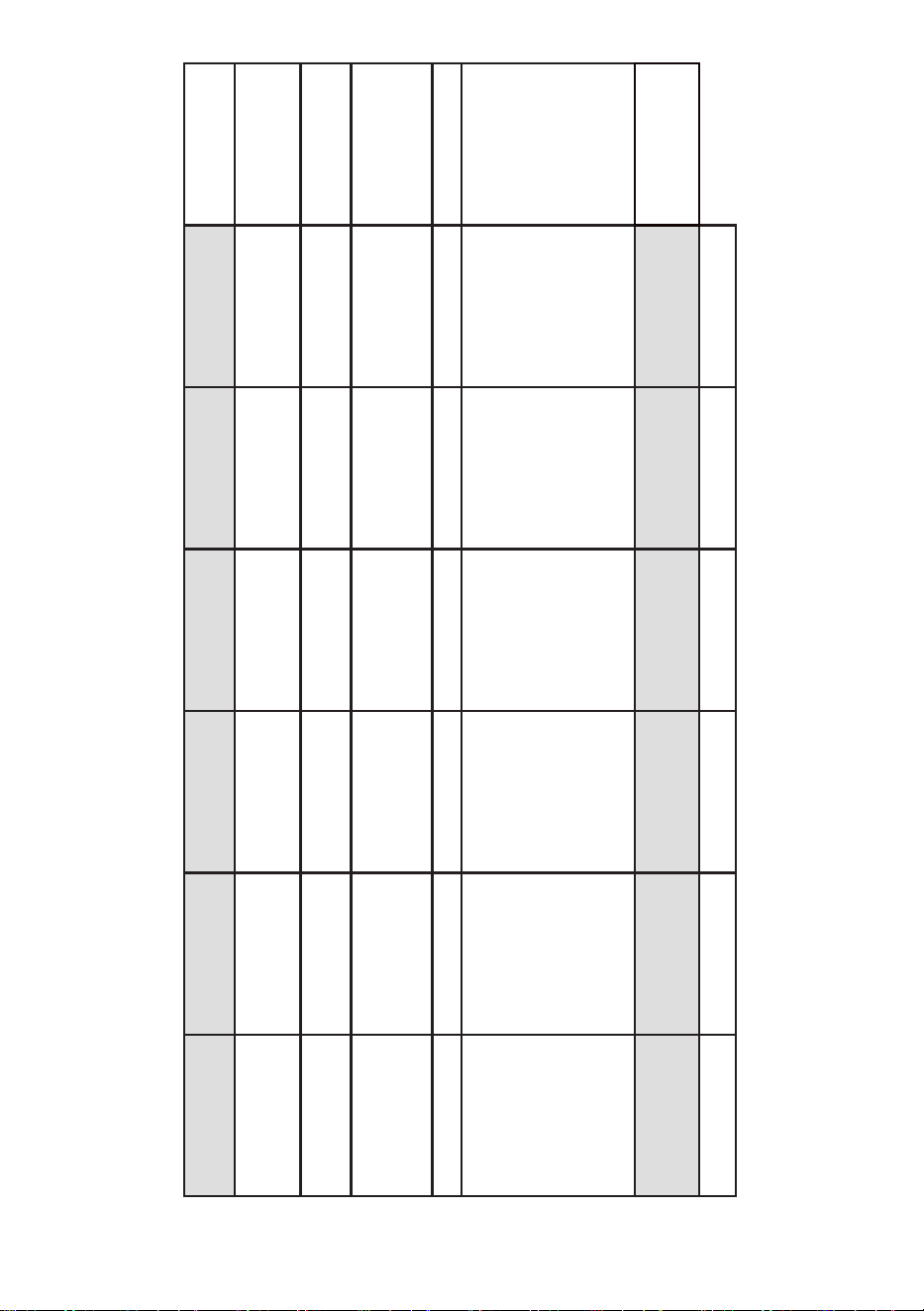
6. PROGRAMME TABLE
P1 P2 P3 P4 P5 P6
Program Name: Prewash Quick 30’ Eco Super 50’ Intensive 65°C Hygiene 70°C
Type of Soil:
Suitable to rinse
dishes that you plan
to wash later.
Suitable for lightly
soiled dishes and
quick wash.
Standard program
for normally soiled
daily using dishes
with reduced
energy and water
consumptions.
Suitable for normally
soiled daily dishes
with faster program.
Suitable for heavily
soiled dishes.
Suitable for heavily
soiled dishes
requiring hygienic
washing
Level of Soil: Light Light Medium Medium Heavy Heavy
Amount of
Detergent:
A: 25 cm3
B: 15 cm3”
- A A A A A
Program Duration
(h:min)
00:15 00:30 03:42 00:50 01:57 02:04
Electiricity
consumption
(kWh/cycle)
0.020 0.740 0.755 1.100 1.700 1.900
Water consumption
(l/cycle)
3.8 10.2 9.0 11.2 17.8 15.1

• The program duration may change according to the amount of dishes, the water
temperature, the ambient temperature and selected additional functions.
• Values given for programmes other than the eco programme are indicative only
• Eco programme is suitable to clean normally soiled tableware, that for this use, it is the
most efficient programme in terms of its combined energy and water consumption, and
that it is used to assess compliance with the EU ecodesign legislation.
• Washing tableware in a household dishwasher usually consumes less energy and
water in the use phase than hand dishwashing when the household dishwasher is used
according to the manufacturer’s instructions.
• Only use powder detergent for short programs.
• Short programs do not include drying.
• To assist drying, we recommend slightly opening the door after a cycle is complete.
• You can access the product database where the model information is stored by reading
the QR code on the energy label.
NOTE: According to regulations 1016/2010 and 1059/2010, Eco program energy
consumption values may differ. This table is in line with regulations 2019/2022 and
2017/2022.
EN - 17
EN - 18
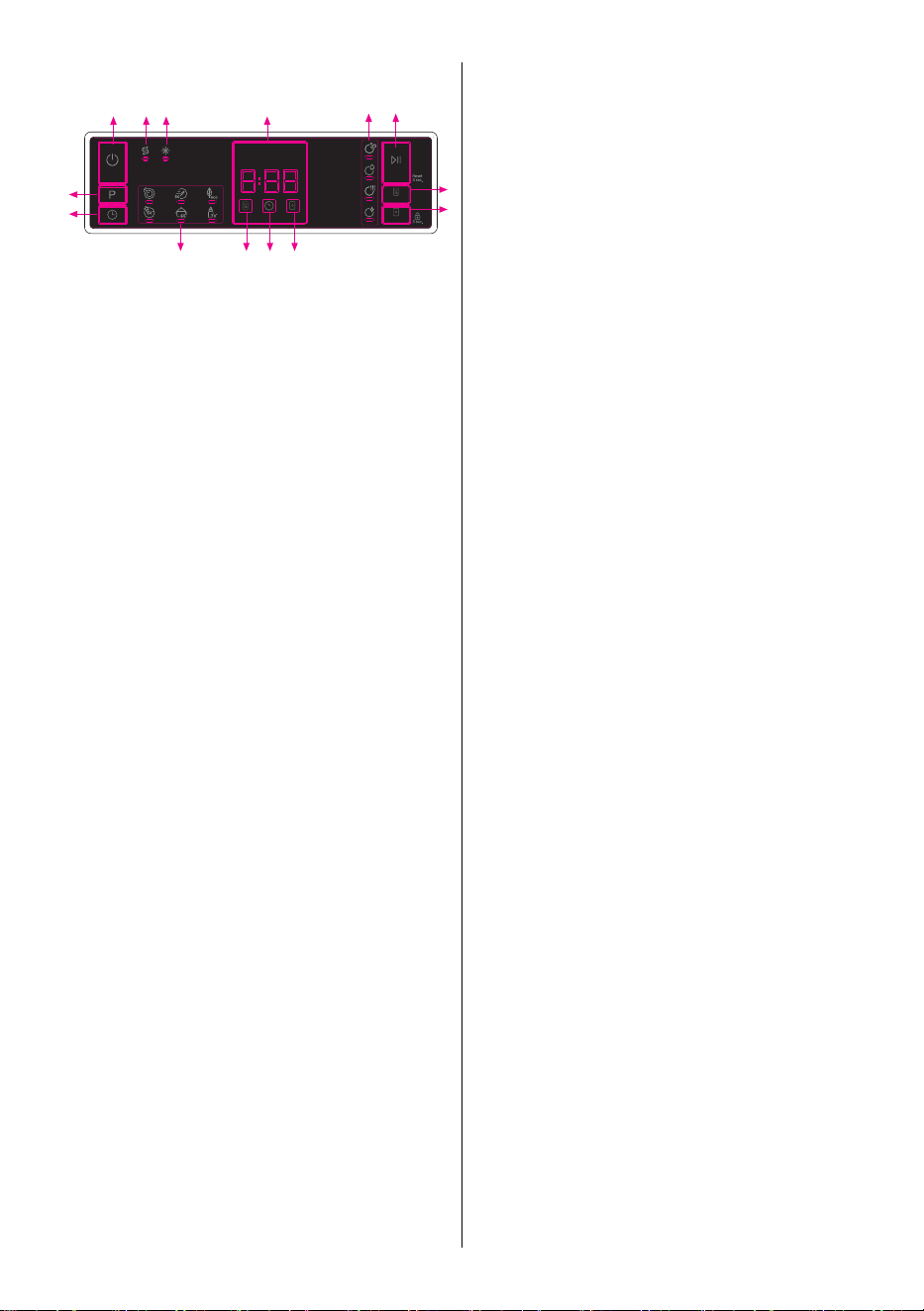
7. THE CONTROL PANEL
1
2
3
2.1
98 4107
6
5
6.1 3.1 5.1
1. On/Off Button
2. Program Selection Button
2.1. Program Indicators
3. Delay Button
3.1. Delay Indicator
4. Remaining Time Indicator
5. Tablet Button
5.1. Tablet Indicator
6. Half Load Button
6.1. Half Load Indicator
7. Start/Pause Button
8. Rinse Aid Indicator
9. Salt Indicator
10. Washing Step Indicators
a- Washing Step Indicator
b- Rinse Step Indicator
c- Drying Step Indicator
d- End Step Indicator
1. On/Off Button
Switch the machine on by pressing the
On/Off button.
2. Program Selection Button
Select a suitable programme by pressing
Program Selection button. The selected
program indicator (2.1) will be on. For the
details of the programs refer to section
Program Table.
3. Delay Button
You can delay the start time of the
programme for 1-2...24 hours by pressing
the Delay button before the programme
starts. To activate the delay time, press
Start/Pause button (7). The delay indicator
(3.1) will be on. If you want to
change the delay time, first press the Start/
Pause button (7) and then the delay button
to select a new delay time. To activate the
new delay time, press the Start/Pause
button (7) again. To cancel the delay, you
need to switch to 0 hour by pressing the
Delay button.
If you switch off the machine after selecting
and activating the delay time, the delayed
time is cancelled.
4. Remaining Time Indicator
Programme flow can be monitored via the
Wash, Rinse, Dry, End indicators (10) and
Remaining Time Indicator.
5. Tablet Button
Press the Tablet button to activate the
Tablet option when using combined
detergent that contains salt and rinse aid.
Tablet indicator (5.1) will be on.
6. Half Load Button
Thanks to the half load function in your
machine, you can shorten the durations of
the programmes that you have selected and
reduce the energy and water consumption
by using half load electricity and water.
Half Load indicator (6.1) will be on.
7. Start/Pause Button
Press the Start/Pause button to start the
selected programme. The wash led turns on
and the Remaining Time Indicator shows
the programme duration. It also indicates
the remaining time during the programme
flow. If you open the door of your machine
when the programme is running the
duration of the programme pauses, and
related washing step indicator blinks.
8. Rinse Aid Indicator
When the rinse aid level is low, the rinse
aid lack warning indicator turns on and you
should fill the rinse aid chamber.
9. Salt Indicator
When there is insufficient softening salt, the
salt lack warning indicator turns on and you
should fill up the salt chamber.
10. Washing Step Indicators
You can monitor the programme flow with
the Washing Step Indicators on the control
panel. While the Dry indicator is on, the
machine remains silent for about 15-50
minutes with respect to the flow of the prog-
ram you have selected.
• Wash
• Rinse
• Dry
• End
EN - 19
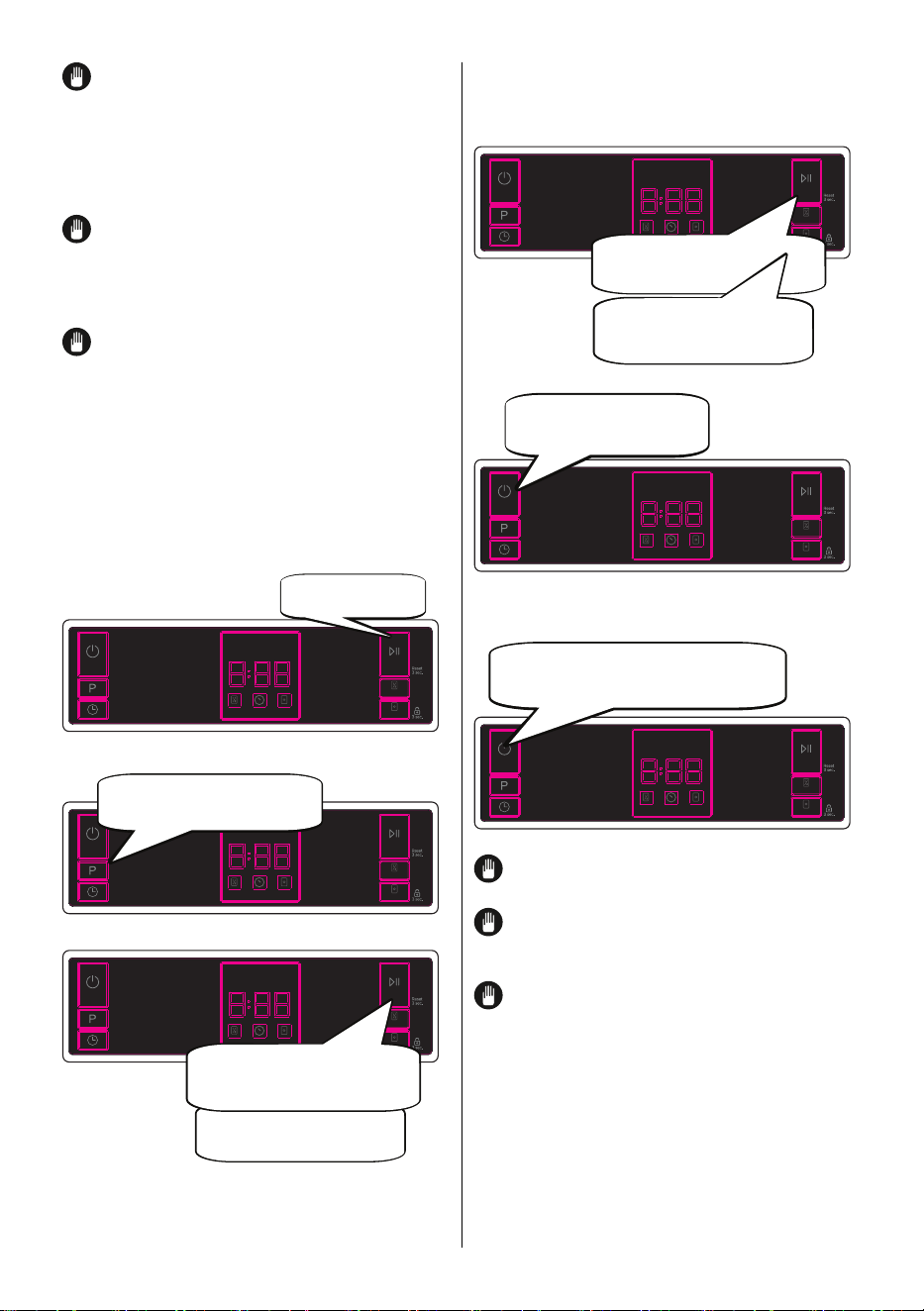
NOTE: Child lock is activated/deacti-
vated by pressing the Tablet button (5) for
about 3 seconds. When it is activated, all
leds blink and “CL” is shown on the
Remaining Time Indicator (4) once. When it
is deactivated, all leds and “CL” blink twice.
NOTE: To save any program as favou-
rite program, press Program (2) and Delay
(3) buttons at the same time. To select
favou rite program, press Program (2) button
for 3 seconds.
NOTE: If an extra option has been used
on the latest washing programme, this opti-
on will remain active on the newly selected
programme until the machine turns off. To
cancel this option on the newly selected
wash programme, press the related option
button.
7.1. Changing a programme
If you would like to change the programme
when the machine is already running.
Press the Start/
Pause button.
After the programme stops, select
your desired programme by pressing
Program Selection button.
Start newly selected programme by
pressing the Start/Pause button.
The new programme will resume
the course of the old programme.
7.2. Cancelling a programme
If you would like to cancel a programme
when it is running.
Press the Start/Pause
button for 3 seconds.
During cancellation, the Dry led is
on. The machine discharges the
water inside it in about 30 seconds.
When the End led turns on,
switch your machine off by
pressing the On/Off button.
7.3. Switching the Machine Off
Switch your machine off with On/Off button after
the programme has ended and the End led turns
on. Pull the plug out of the outlet. Turn off the
water tap.
NOTE: Do not open the door before the
programme ends.
NOTE: At the end of the washing
programme, you can leave the door of your
machine ajar to hasten the drying.
NOTE: If the door of the machine is
opened or power is cut off during washing,
the programme will continue when the door
is closed or the power is restored.

EN -20
Buzzer Sound Control
(Model Depending)
To change the buzzer sound level, follow
the below steps:
1. Open the door and press Half Load (6)
and Tablet (5) buttons at the same time for
3 seconds.
2. When sound setting is recognized,
buzzer gives a long sound and machine will
display last set level, from “S0” to “S3”.
3. To decrease sound level press Tablet
button (5). To increase sound level, press
Half Load button (6).
4. To save the selected sound level, turn off
the machine.
’’S0’’ level means all voices are off. Factory
setting is “S3”.
Save Power Mode
To activate or deactivate save power mode,
follow the below steps:
1. Open the door and press Program (2)
and Half Load (6) buttons at the same time
for 3 seconds.
2. After 3 seconds, the machine will display
last Setting, “IL1” or “IL0”.
3. When Save Power Mode is activated,
“IL1” will be displayed. On this mode,
interior lights (if avaliable) will turn off 2
minutes after the door is opened, and
the machine will turn off automatically 15
minutes after any intervention in order to
save energy.
4. When Save Power Mode is deactivated
“IL0” will be displayed. If Save Power Mode
is deactive, interior lights will be on as long
as the door is open, and the machine will
always be on unless it is turned off by user.
5. To save the selected setting, turn off the
machine.
In factory setting, Save Power Mode is
active.
EN - 21
8. CLEANING AND
MAINTENANCE
Cleaning your dishwasher is important to
maintain the machine’s service life
Make sure that the water softening setting
(If available) is done correctly and correct
amount of detergent is used to prevent
limescale accumulation. Refill the salt
compartment when the salt sensor light
comes on.
Oil and limescale may build up in your
Dishwasher over time. If this occurs:
• Fill the detergent compartment
but do not load any dishes. Select
a programme which runs at high
temperature and run the Dishwasher
empty. If this does not clean your
Dishwasher sufficiently, use a
cleaning agent designed for use with
dishwashers.
• To extend the life of your dishwasher,
clean the appliance regularly on each
month
• Wipe the door seals regularly with a
damp cloth to remove any accumulated
residue or foreign objects.
8.1. Filters
Clean the filters and spray arms at least
once a week. If any food waste remains
or foreign objects on the coarse and
fine filters, remove them and clean them
thoroughly with water.
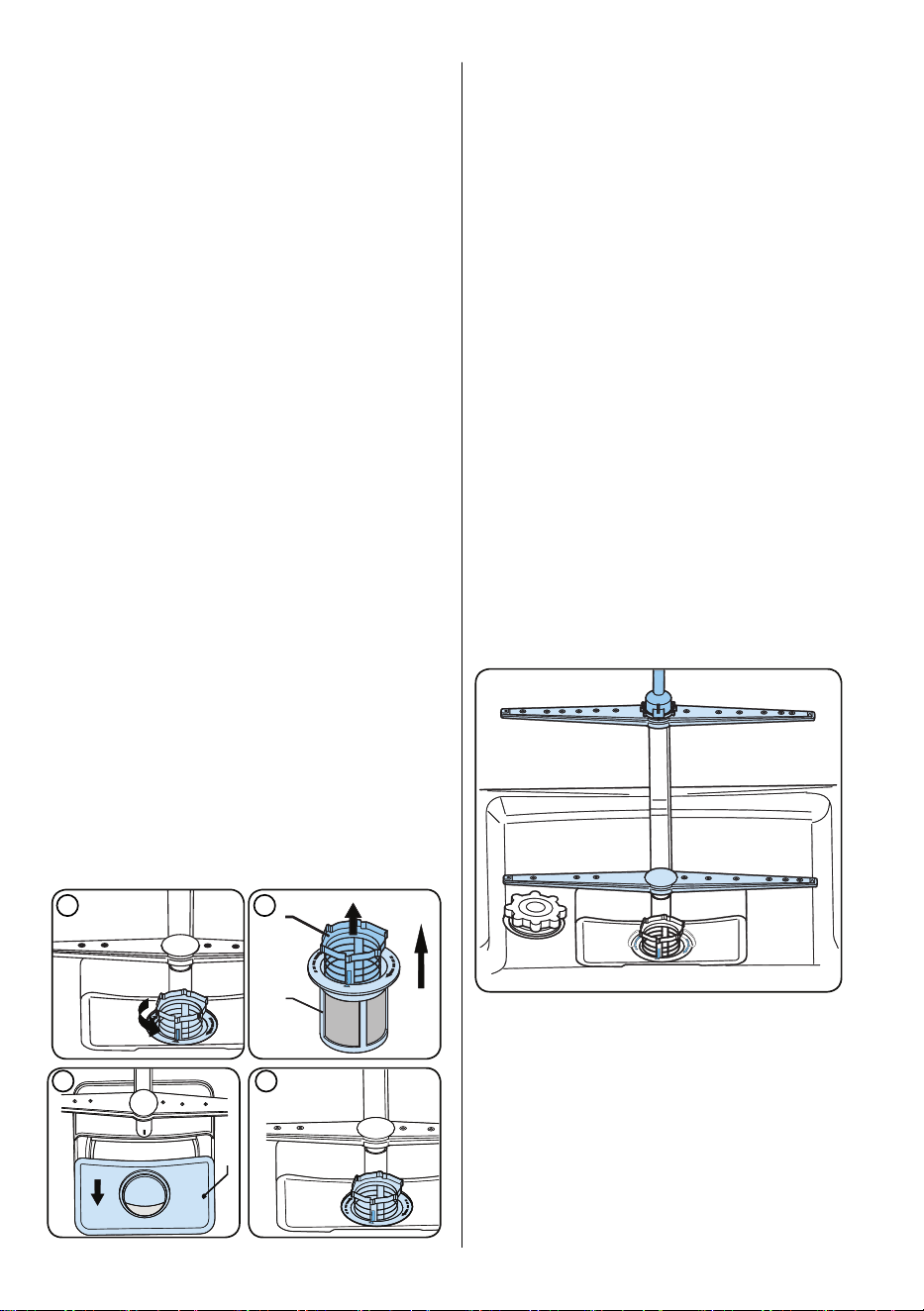
a)
Micro Filter b) Coarse Filter
c) Metal Filter
To remove and clean the filter combination,
turn it counter clockwise and remove it by
lifting it upwards (1).Pull the coarse filter out
of the micro filter (2).Then pull and remove
the metal filter (3).Rinse the filter with lots of
water until it is free of residue. Reassemble
the filters. Replace the filter insert, and
rotate it clockwise (4).
• Never use your dishwasher without a
filter.
• Incorrect fitting of the filter will reduce
the washing effectiveness.
• Clean filters are necessary for proper
running of the machine.
8.2. Spray arms
Make sure that the spray holes are not
clogged and that no food waste or foreign
object is stuck to the spray arms. If there is
any clogging,remove the spray arms and
clean them under water. To remove the
upper spray arm undo the nut holding it in
position by turning it clockwise and pulling
it downwards. Make sure that the nut is
properly tightened when refitting the upper
spray arm.
3 4
1 2
a
c
b

EN - 22
8.3 Drain Pump
Large food residues or foreign objects
which were not captured by the filters may
block the waste water pump. The rinsing
water will then be above the filter.
Warning Risk of cuts!
When cleaning the waste water pump,
ensure that you do not injure yourself
on pieces of broken glass or pointed
implements.
In this case:
1. First always disconnect the appliance
from the power supply.
2. Take out baskets.
3. Remove the filters.
4. Scoop out water, use a sponge if
required.
5.Check the area and remove any foreign
objects.
6. Install filters.
7. Re-insert baskets.
EN - 23
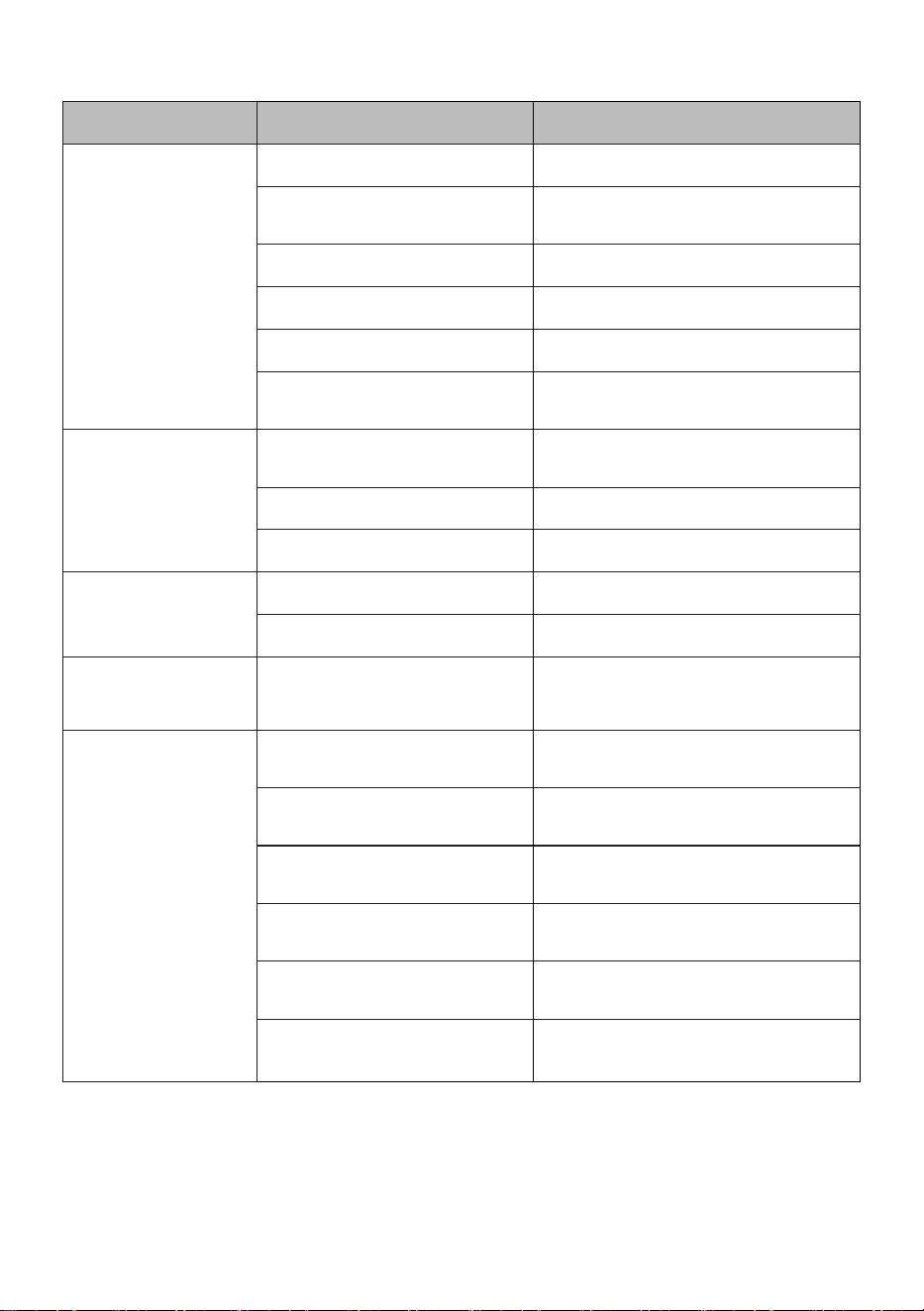
9. TROUBLESHOOTING
FAULT POSSIBLE CAUSE TROUBLESHOOTING
The programme does
not start.
Your Dishwasher is not plugged in. Plug your Dishwasher in.
Your Dishwasher is not switched on.
Switch your Dishwasher on by pressing the
On/Off button.
Fuse blown. Check your indoor fuses.
Water inlet tap is closed. Turn on the water inlet tap.
Your Dishwasher door is open. Close the Dishwasher door.
Water inlet hose and machine filters
are clogged.
Check the water inlet hose and machine
filters and make sure they are not clogged.
Water remains inside
the machine.
Water drain hose is clogged or
twisted.
Check the drain hose, then either clean or
untwist it.
The filters are clogged. Clean the filters.
The programme is not finished yet. Wait until the programme is finished.
Machine stops during
washing.
Power failure. Check mains power.
Water inlet failure. Check water tap.
Shaking and hitting
noises are heard during
a wash operation.
The spray arm is hitting the dishes in
the lower basket.
Move or remove items blocking the spray
arm.
Partial food wastes
remain on the dishes.
Dishes placed incorrectly, sprayed
water not reaching affected dishes.
Do not overload baskets.
Dishes leaning each another.
Place dishes as instructed in the section on
loading your dishwasher.
Not enough detergent used.
Use the correct amount of detergent, as
instructed in the programme table.
Wrong wash programme selected.
Use the information in the programme table
to select the most appropriate programme.
Spray arms clogged with food waste.
Clean the holes in the spray arms with thin
objects.
Filters or water drain pump clogged
or filter misplaced.
Check the drain hose and filters are
correctly fitted.
EN - 24
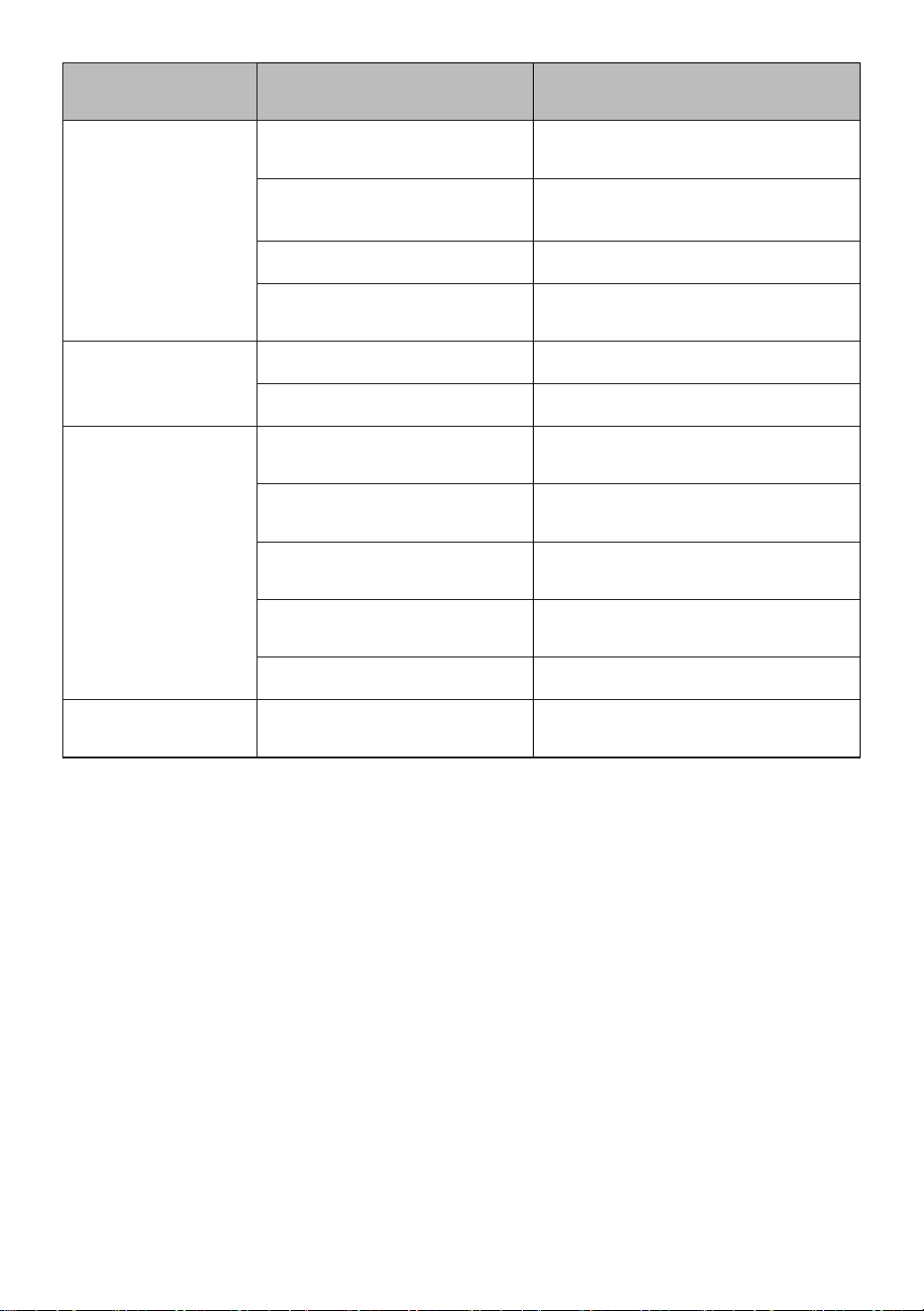
FAULT POSSIBLE CAUSE TROUBLESHOOTING
Whitish stains remains
on dishes.
Not enough detergent used.
Use the correct amount of detergent, as
instructed in the programme table.
Rinse aid dosage and/or water
softener setting set too low.
Increase rinse aid and/or water softener
level.
High water hardness level. Increase water softerner level and add salt.
Salt compartment cap not closed
properly.
Check that the salt compartment cap is
closed properly.
Dishes do not dry.
Drying option is not selected. Select a programme with a drying option.
Rinse aid dosage set too low. Increase rinse aid dosage setting.
Rust stains form on the
dishes.
Stainless-steel quality of the dishes
is insufficient.
Use only dishwasher-proof sets.
High level of salt in wash water.
Adjust the water hardness level using water
hardness table.
Salt compartment cap not closed
properly.
Check that the salt compartment cap is
closed properly.
Too much salt spilled in the
Dishwasher while filling it with salt.
Use funnel while filling salt to the
compartment to avoid spillage.
A poor mains grounding. Consult a qualified electrician immediately.
Detergent remains in the
detergent compartment.
Detergent was added when the
detergent compartment was wet.
Make sure detergent compartment is dry
before use.
EN - 25
The installation and repairing procedures should always carried out by the Authorised
Service Agent in order to avoid possible risks. The manufacturer shall not be held liable
for damages that may arise from procedures carried out by unauthorised persons. Repairs
may be carried out by technicians only. If a component has to be replaced, ensure that only
original spare parts are used.
Improper repairs or use of non-original spare parts may cause considerable damage and
put the user at considerable risk.
Contact information for your customer service can be found on the back of this document.
Function-relevant genuine spare parts according to the corresponding Ecodesign order can
be obtained from Customer Service for a period of at least 10 years from the date on which
your appliance was placed on the market within the European Economic Area.
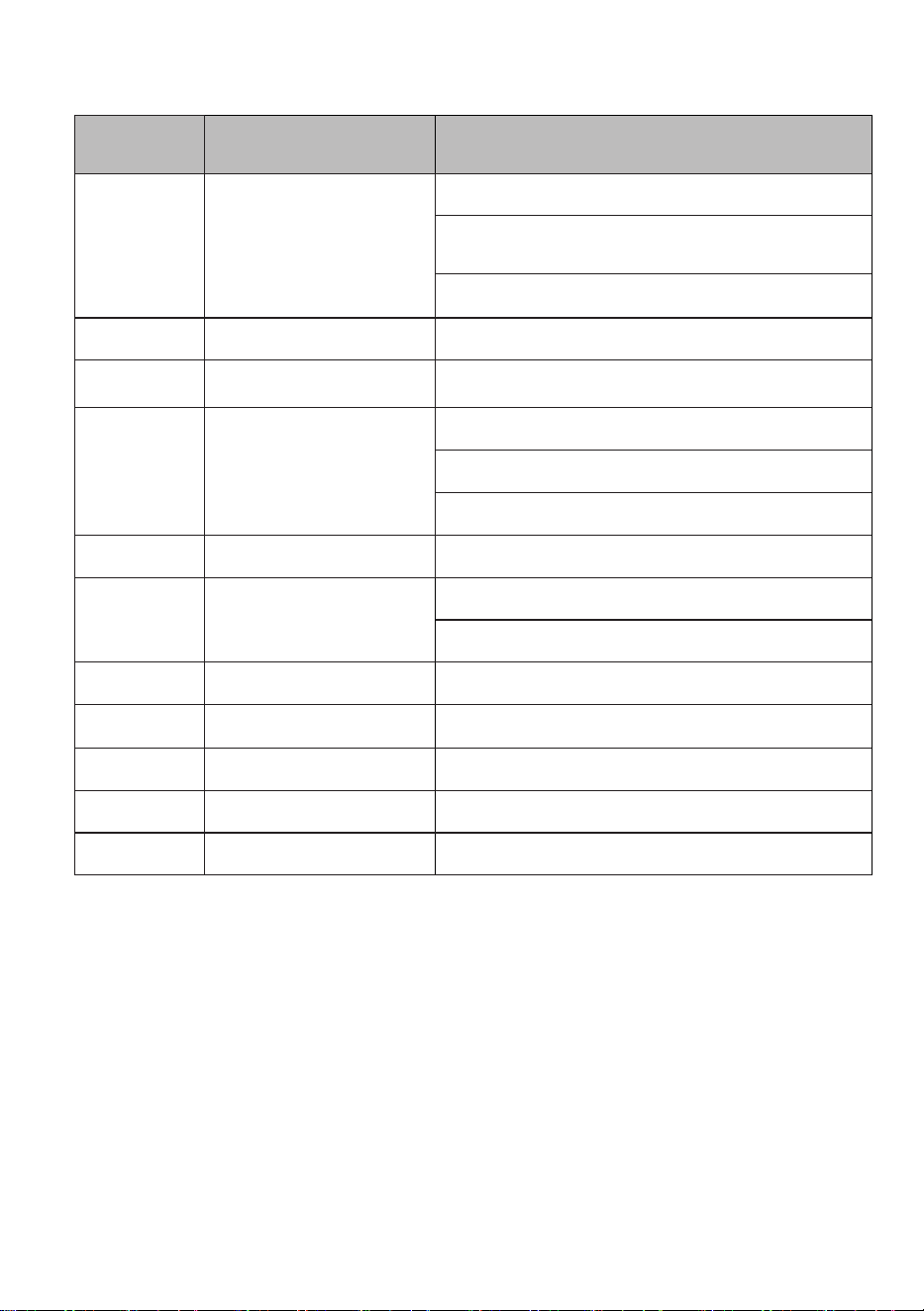
AUTOMATIC FAULT WARNINGS AND WHAT TO DO
TROUBLE
CODE
POSSIBLE FAULT WHAT TO DO
FF
Water inlet system failure
Make sure the water inlet tap is open and water is flowing.
Separate the inlet hose from the tap and clean the filter of
the hose.
Contact for service if the error continues.
F5
Pressure system failure
Contact for service.
F3
Continuous water input
Close the tap and contact for service.
F2
Inability to discharge water
Water discharge hose and filters may be clogged.
Cancel the program.
If the error continues, contact for service.
F8
Heater error
Contact for service.
F1 Overflow
Unplug the machine and close the tap.
Contact for service.
FE Faulty electronic card Contact for service.
F7 Overheating Contact for service.
F6 Faulty heater sensor Contact for service.
HI High voltage failure Contact for service.
LO Low voltage failure Contact for service.

52253525 R35
WWW.CORBERO.ES