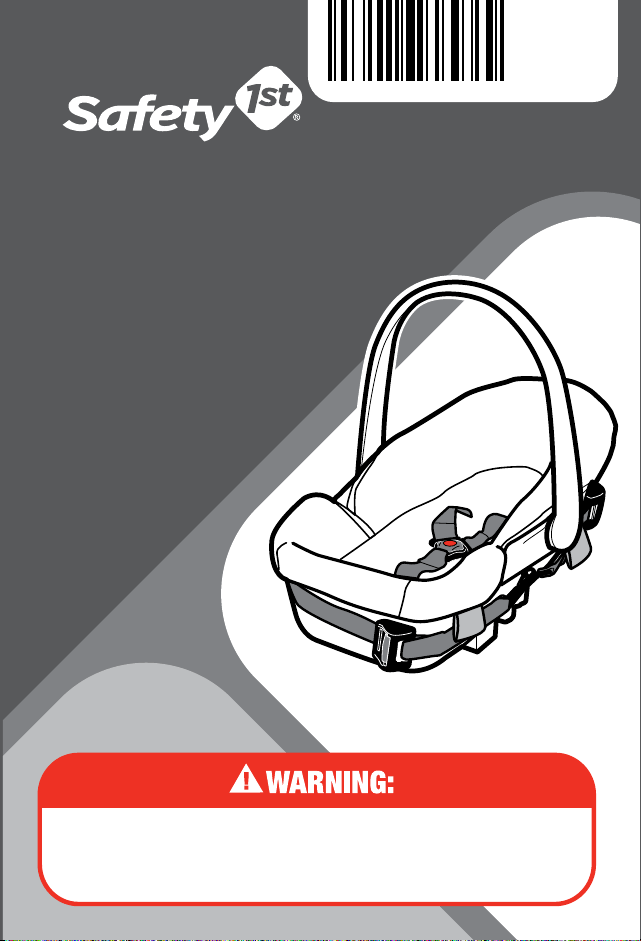
Failure to follow the warnings on the labels and in the
instruction manual can result in serious injury or death
to your child.
Dream Ride LATCH
Infant Car Bed
5-20 lb (2.3-9 kg) and
26 in. (66 cm) or less
Read all instructions
before using this
car bed.
KEEP INSTRUCTIONS
FOR FUTURE USE.
4358-6748E
12.1.22
®
Buckle Assembly
Belt Loop
Seat Pad Set
“S” Clip
LATCH Belt
Instructions
Locking Clip
If requested color is not available,
similar color will be substituted.
Applicable tax and shipping &
handling will also be added.
For parts availability and questions,
Call: 1-800-544-1108
Text:
1-812-652-2525
Chat: www.safety1st.com
If you already know which parts you need,
you may complete your order with a credit card
by calling us at 1-800-544-1108.
We accept Visa or MasterCard.
Hours of Operation:
M-TH: 8:00 AM - 6:00 PM EST
FRI: 8:00 AM - 4:30 PM EST
Replacement Parts List
37

Table of Contents
Getting Started ........................................................ 1
Parts of the Car Bed ................................................ 1
Securing Infant in Car Bed ....................................... 3
Adusting Buckle ...................................................... 6
Adjusting Harness Straps .......................................... 8
General Use ............................................................. 10
Carrier Use ............................................................. 10
Removing Seat Pad for Cleaning ............................... 12
Moving LATCH/Vehicle Belt Loops and LATCH Belts .... ......
14
Safety Information ................................................... 18
Car Bed Use ............................................................ 18
Vehicle Seating Position ........................................... 19
Installation in Vehicle ............................................... 19
Vehicle Information .................................................. 20
Understanding Your Vehicle ...................................... 20
Choosing LATCH or Vehicle Belts .............................. 21
Knowing Your Vehicle Belts ....................................... 22
Aircraft Information ................................................. 24
Safety Tips .............................................................. 24
Side Facing .............................................................. 25
LATCH Installation ............................................. 26
Vehicle Belt Installation...................................... 29
General Information ................................................. 31
Using a Locking Clip ................................................ 31
Dorel Juvenile Group Information... ........................... 33
Registration and Safety Notices ................................ 34
Warranty ................................................................. 35
Replacement and Expiration of Car Seat .................... 36
Replacement Parts List ............................................ 37

Table of Contents
Getting Started ........................................................ 1
Parts of the Car Bed ................................................ 1
Securing Infant in Car Bed ....................................... 3
Adusting Buckle ...................................................... 6
Adjusting Harness Straps .......................................... 8
General Use ............................................................. 10
Carrier Use ............................................................. 10
Removing Seat Pad for Cleaning ............................... 12
Moving LATCH/Vehicle Belt Loops and LATCH Belts .... ......
14
Safety Information ................................................... 18
Car Bed Use ............................................................ 18
Vehicle Seating Position ........................................... 19
Installation in Vehicle ............................................... 19
Vehicle Information .................................................. 20
Understanding Your Vehicle ...................................... 20
Choosing LATCH or Vehicle Belts .............................. 21
Knowing Your Vehicle Belts ....................................... 22
Aircraft Information ................................................. 24
Safety Tips .............................................................. 24
Side Facing .............................................................. 25
LATCH Installation ............................................. 26
Vehicle Belt Installation...................................... 29
General Information ................................................. 31
Using a Locking Clip ................................................ 31
Dorel Juvenile Group Information... ........................... 33
Registration and Safety Notices ................................ 34
Warranty ................................................................. 35
Replacement and Expiration of Car Seat .................... 36
Replacement Parts List ............................................ 37
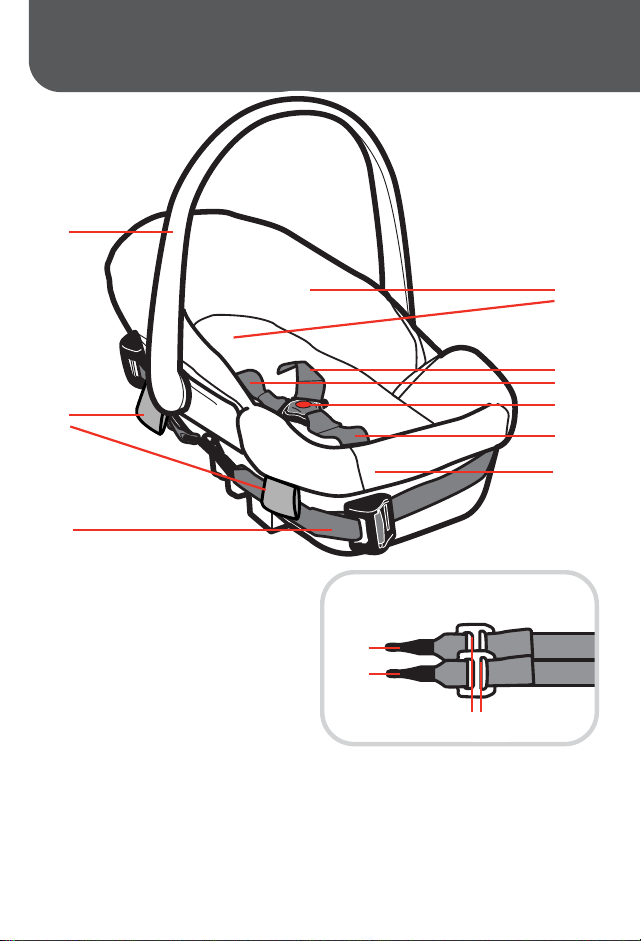
Parts of the Car Bed
A. Carry Handle
B. LATCH/Vehicle
Belt Loops (2)
C. LATCH Belt (2)
D. Foam Inserts
(under seat pad)
E. Harness Straps
F. Buckle
G. Buckle Strap
H. Buckle Strap
Adjustment Slides
(under Car Bed)
I. LATCH Hooks
J. LATCH Adjusters
1 2
Front View
B.
A.
C.
E.
D.
F.
G.
H.
K. Harness
Adjustment
Slides
(under pad)
L. Harness Strap End
M. Instruction Manual
Storage
Back View
L.
M.
K.
LATCH System Detail
I.
J.
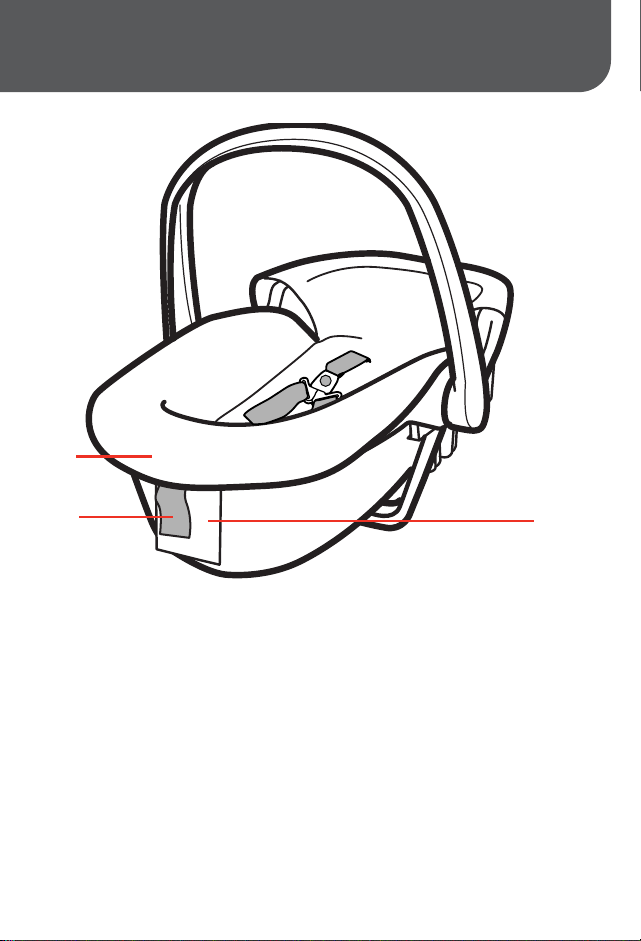
Parts of the Car Bed
A. Carry Handle
B. LATCH/Vehicle
Belt Loops (2)
C. LATCH Belt (2)
D. Foam Inserts
(under seat pad)
E. Harness Straps
F. Buckle
G. Buckle Strap
H. Buckle Strap
Adjustment Slides
(under Car Bed)
I. LATCH Hooks
J. LATCH Adjusters
1 2
Front View
B.
A.
C.
E.
D.
F.
G.
H.
K. Harness
Adjustment
Slides
(under pad)
L. Harness Strap End
M. Instruction Manual
Storage
Back View
L.
M.
K.
LATCH System Detail
I.
J.
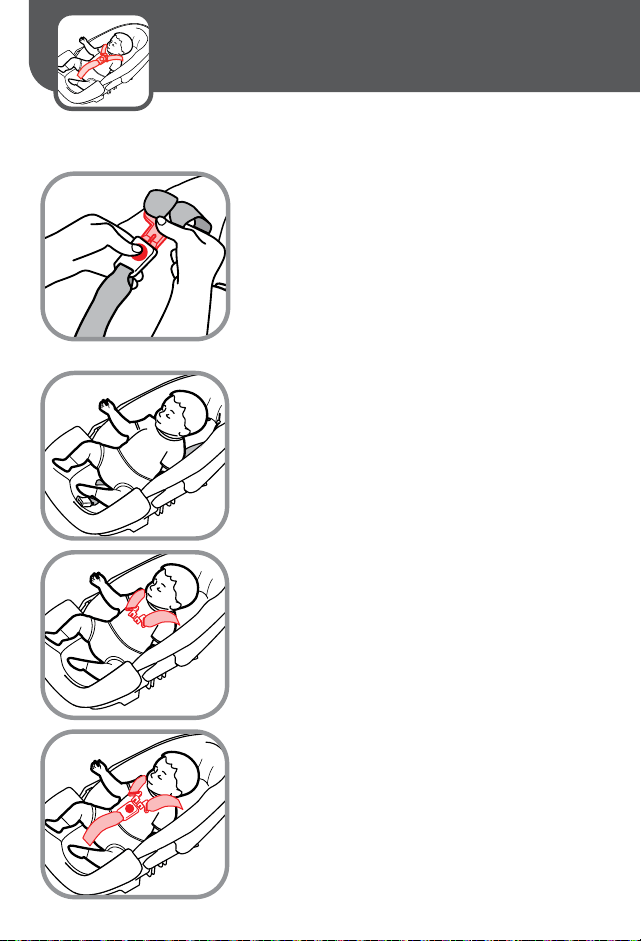
Securing Infant in Car Bed
1. Unbuckle Harness
Press in towards the top of the red
button.
Pull buckle tongues out.
Place harness straps and buckle
strap out of the way.
TOP
BOTTOM
3 4
2. Place Infant in Car Bed
5.
Buckle Harness
Fit top buckle plate over bottom
buckle plate.
Hold buckle tongues with one
hand and buckle with the other.
Push buckle tongues into buckle
until you hear a “click.”
3.
Position Harness Straps Over
Shoulders
6.
Check Harness and Buckle
Strap Lengths
The buckle should lay at mid-
chest (even with armpits) and
away from the infant’s neck.
Try to pinch the harness at the
shoulders vertically between
index finger and thumb as
shown.
If your fingers slip off, the
harness is tight enough.
4.
Pull Buckle Strap Up Between
the Legs
TOP
BOTTOM
TOP
BOTTOM
TOP
BOTTOM
TOP
BOTTOM
TOP
BOTTOM
TOP
BOTTOM
TOP
BOTTOM
Always secure infants on their backs unless your doctor advises
you to place the infant on their stomach.
If you can pinch the harness strap, you will need to tighten
the harness strap.
continued on next page.
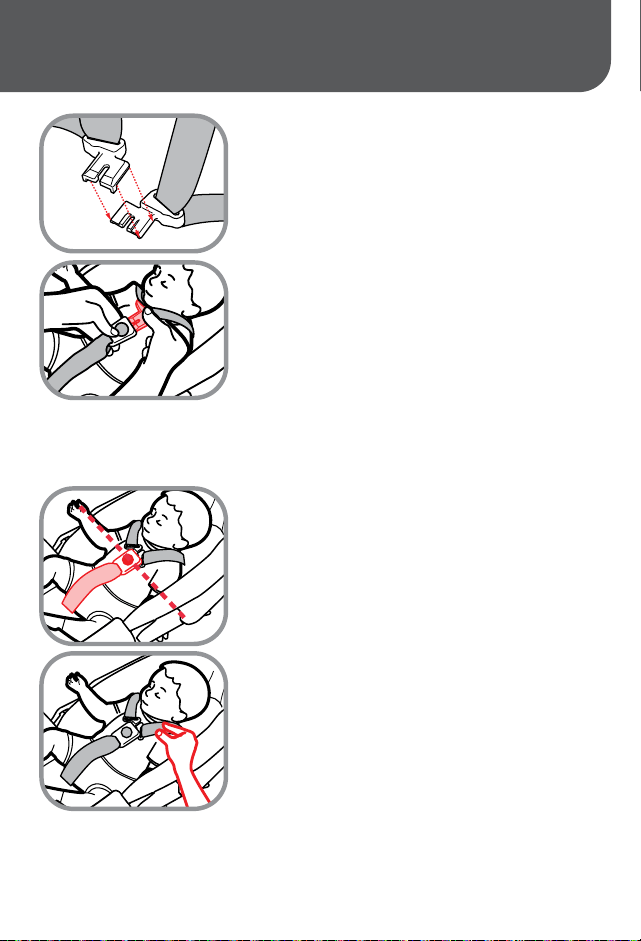
Securing Infant in Car Bed
1. Unbuckle Harness
Press in towards the top of the red
button.
Pull buckle tongues out.
Place harness straps and buckle
strap out of the way.
TOP
BOTTOM
3 4
2. Place Infant in Car Bed
5.
Buckle Harness
Fit top buckle plate over bottom
buckle plate.
Hold buckle tongues with one
hand and buckle with the other.
Push buckle tongues into buckle
until you hear a “click.”
3.
Position Harness Straps Over
Shoulders
6.
Check Harness and Buckle
Strap Lengths
The buckle should lay at mid-
chest (even with armpits) and
away from the infant’s neck.
Try to pinch the harness at the
shoulders vertically between
index finger and thumb as
shown.
If your fingers slip off, the
harness is tight enough.
4.
Pull Buckle Strap Up Between
the Legs
TOP
BOTTOM
TOP
BOTTOM
TOP
BOTTOM
TOP
BOTTOM
TOP
BOTTOM
TOP
BOTTOM
TOP
BOTTOM
Always secure infants on their backs unless your doctor advises
you to place the infant on their stomach.
If you can pinch the harness strap, you will need to tighten
the harness strap.
continued on next page.
Adjusting Buckle
6
continued on next page.
5
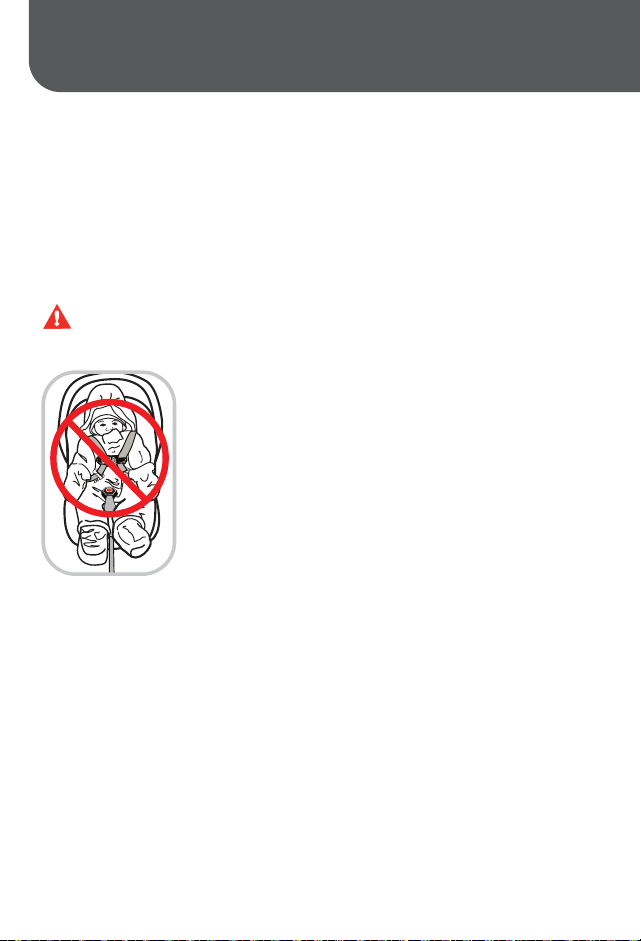
WARNINGS: Failure to fasten and tighten the harness
system correctly can result in serious injury or death.
DO NOT put snowsuits or bulky garments
on your infant when placing them in the car
bed.
Bulky clothing can prevent the harness
straps from being tightened properly.
To keep infant warm, buckle your infant
in the car bed and place a blanket around
the infant or place the infant’s coat on
backwards after securing infant in the car bed. Make sure
blanket or coat does not cover the infant’s face in any way.
Failure to follow these steps can result in serious injury or
death.
TOP
BOTTOM
To Remove Infant From Car Bed
1. Unbuckle Harness
2. Move Harness Away
3. Remove Infant
1. Locate Buckle Strap
Adjustment Slides on the
Bottom of the Shell
2. Unlace Free End of Buckle Strap
from Adjustment Slides
3.
To Shorten
Move the adjustment slides
closer to shell.
To Lengthen
Move the adjustment slides
away from shell.
Snug harness straps should not allow any slack. They lie in a
relatively straight line without sagging. They do not press on
the infant’s flesh or push the infant’s body into an unnatural
position.
To adjust the buckle, see pages 6-7.
To adjust the harness straps, see pages 8-9.
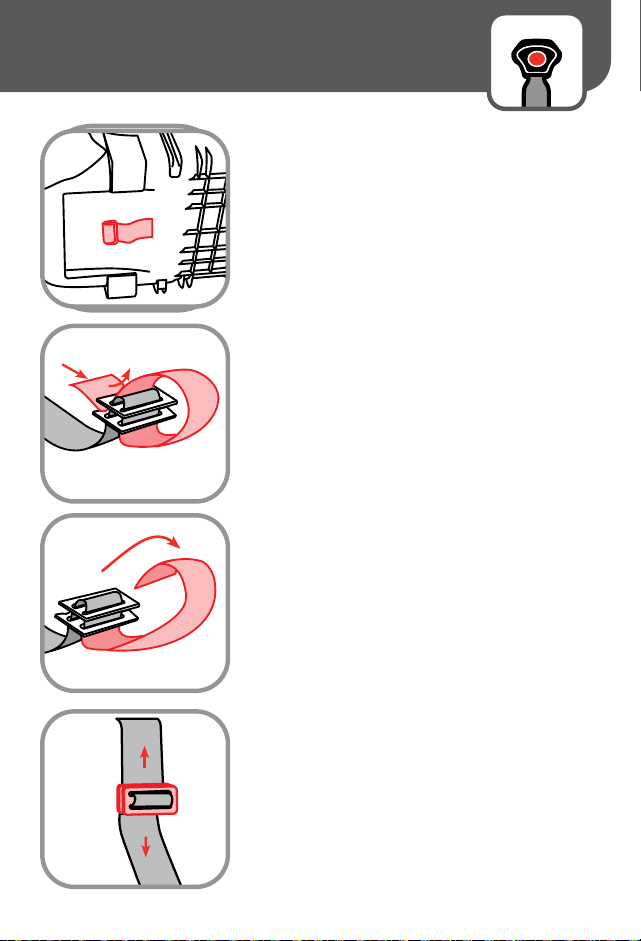
Adjusting Buckle
6
continued on next page.
5
WARNINGS: Failure to fasten and tighten the harness
system correctly can result in serious injury or death.
DO NOT put snowsuits or bulky garments
on your infant when placing them in the car
bed.
Bulky clothing can prevent the harness
straps from being tightened properly.
To keep infant warm, buckle your infant
in the car bed and place a blanket around
the infant or place the infant’s coat on
backwards after securing infant in the car bed. Make sure
blanket or coat does not cover the infant’s face in any way.
Failure to follow these steps can result in serious injury or
death.
TOP
BOTTOM
To Remove Infant From Car Bed
1. Unbuckle Harness
2. Move Harness Away
3. Remove Infant
1. Locate Buckle Strap
Adjustment Slides on the
Bottom of the Shell
2. Unlace Free End of Buckle Strap
from Adjustment Slides
3.
To Shorten
Move the adjustment slides
closer to shell.
To Lengthen
Move the adjustment slides
away from shell.
Snug harness straps should not allow any slack. They lie in a
relatively straight line without sagging. They do not press on
the infant’s flesh or push the infant’s body into an unnatural
position.
To adjust the buckle, see pages 6-7.
To adjust the harness straps, see pages 8-9.
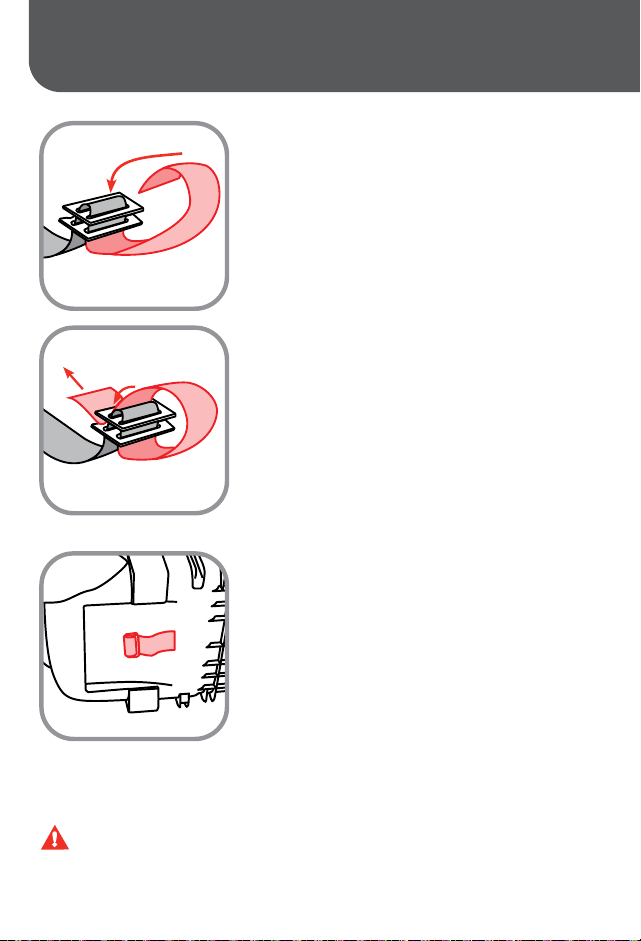
Adjusting Harness Straps
8
continued on next page.
4. Relace Free End of Buckle
Strap Between Slides
5.
Pull Buckle Strap Tight So Ad-
justment Slides Are Flush Against
the Shell
WARNING: Failure to reattach the buckle strap
correctly can result in serious injury or death.
1.
Locate Harness Strap
Adjustment Slides Under the Pad
2.
Unlace Free End of Harness
Strap from Adjustment Slides
3.
To Shorten
Move the adjustment slides
closer to shell.
To Lengthen
Move the adjustment slides
away from shell.
7
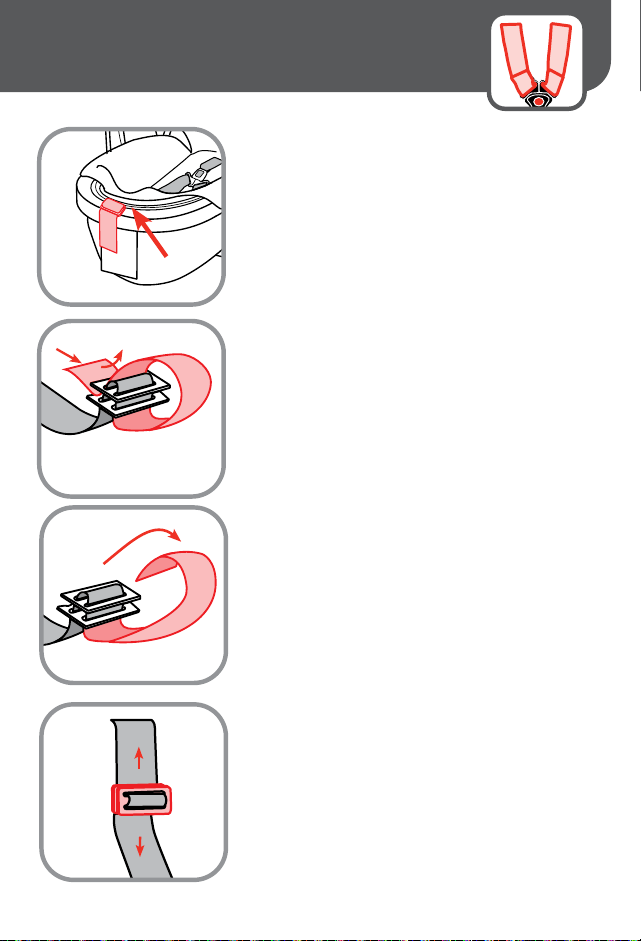
Adjusting Harness Straps
8
continued on next page.
4. Relace Free End of Buckle
Strap Between Slides
5.
Pull Buckle Strap Tight So Ad-
justment Slides Are Flush Against
the Shell
WARNING: Failure to reattach the buckle strap
correctly can result in serious injury or death.
1.
Locate Harness Strap
Adjustment Slides Under the Pad
2.
Unlace Free End of Harness
Strap from Adjustment Slides
3.
To Shorten
Move the adjustment slides
closer to shell.
To Lengthen
Move the adjustment slides
away from shell.
7
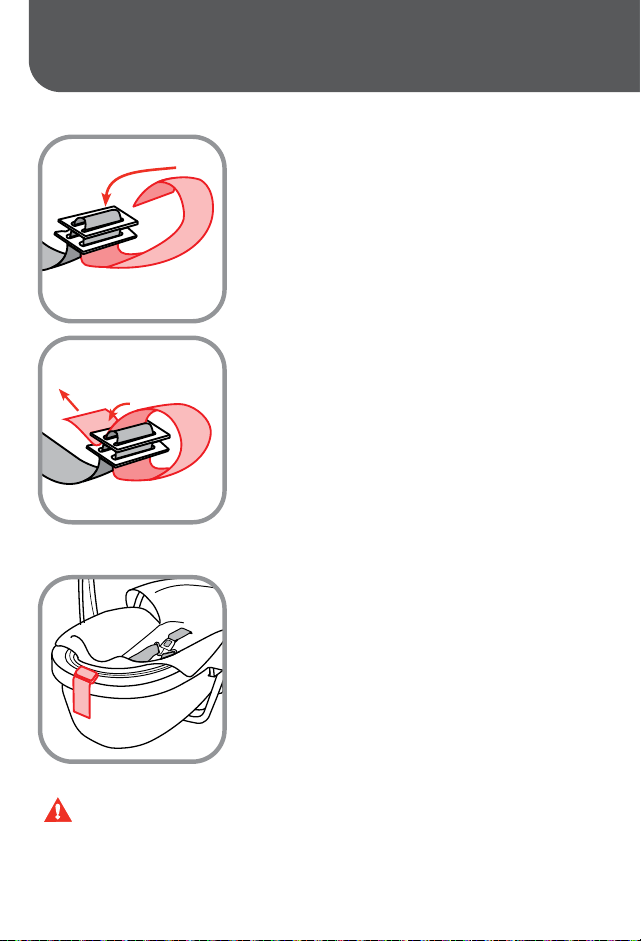
10
continued on next page.
4. Relace Free End of Harness
Strap Between Slides
5.
Pull Harness Strap Tight So
Adjustment Slides Are Flush
Against the Shell
WARNING: Failure to reattach the harness strap
correctly can result in serious injury or death.
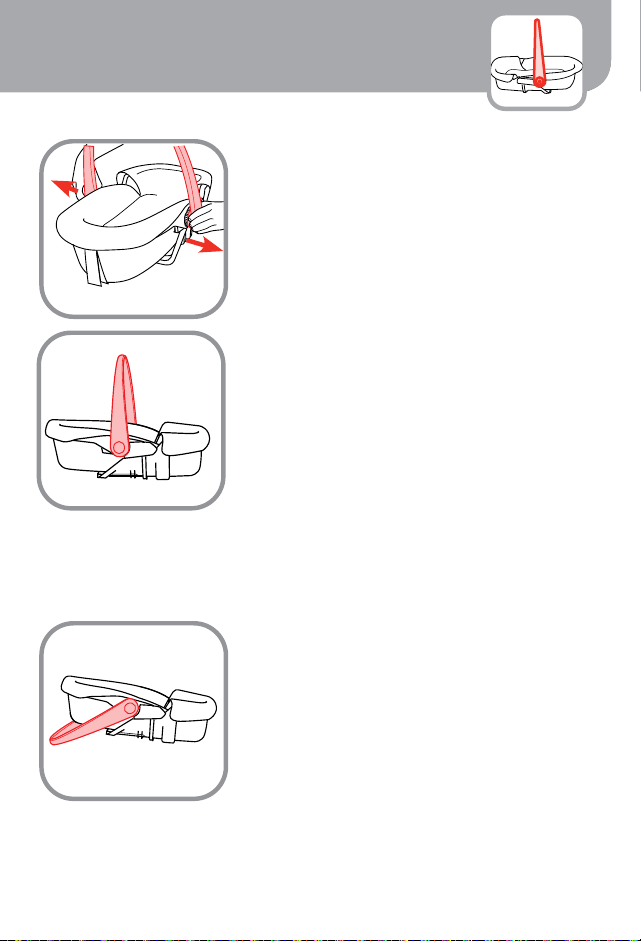
To Adjust Carrying Handle
Pull handle out from shell on
both sides. Rotate up or down to
desired location. Make sure both
sides of handle are locked before
using.
Handle MUST be upright AND
locked when carrying and
when installed in the vehicle.
Rocker
Rotate the handle all the way
back to put the seat in the
rocking mode.
Do NOT use this position when
installed in the vehicle.
9
Carrier Use
10
continued on next page.
4. Relace Free End of Harness
Strap Between Slides
5.
Pull Harness Strap Tight So
Adjustment Slides Are Flush
Against the Shell
WARNING: Failure to reattach the harness strap
correctly can result in serious injury or death.
To Adjust Carrying Handle
Pull handle out from shell on
both sides. Rotate up or down to
desired location. Make sure both
sides of handle are locked before
using.
Handle MUST be upright AND
locked when carrying and
when installed in the vehicle.
Rocker
Rotate the handle all the way
back to put the seat in the
rocking mode.
Do NOT use this position when
installed in the vehicle.
9
Carrier Use
Removing Seat Pad for Cleaning
12
continued on next page.
WARNINGS:
Read ALL instructions before using car bed as a carrier.
NEVER
use carrier unless child is properly secured.
Use only as a carrier by children weighing 5-20 pounds
(2.3-9 kg) and 26 inches (66 cm) or less tall.
NEVER
leave child unattended. Always keep child within
arm’s reach.
Suffocation Hazard:
Infant carrier can roll over on soft
surfaces and suffocate child.
NEVER
place carrier on beds,
sofas or other soft surfaces.
Strangulation Hazard:
Children have
STRANGLED
in loose
or partially buckled harness straps. Fully restrain the child
even when carrier is used outside the vehicle.
Fall Hazard: Child’s activity can move
carrier. NEVER place carrier on counter
tops, tables or other elevated surfaces.
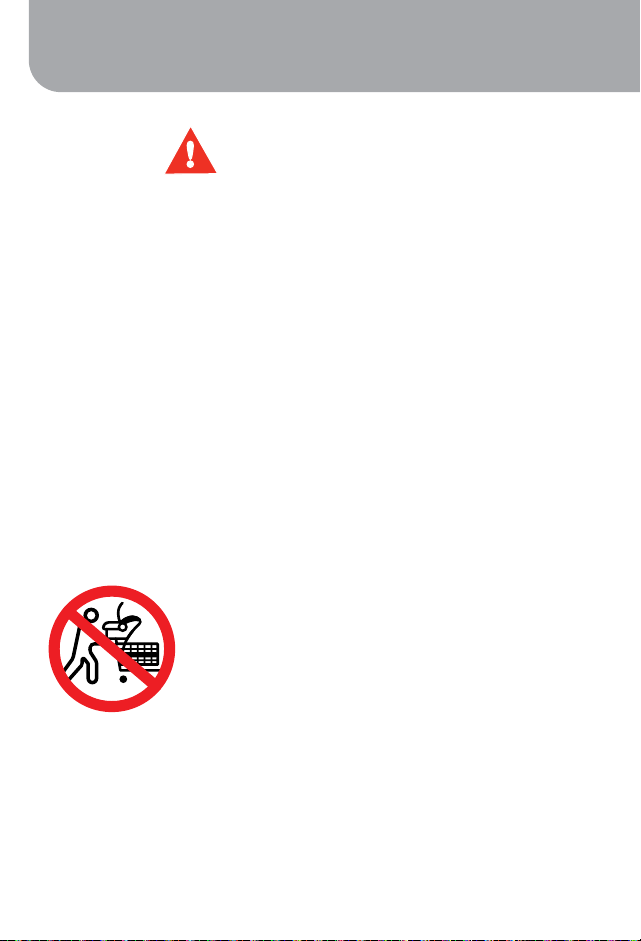
The carrier can fall from the shopping
cart. Do not use on shopping cart.
Do not use the carrier if it is damaged or
broken, or if any parts are missing.
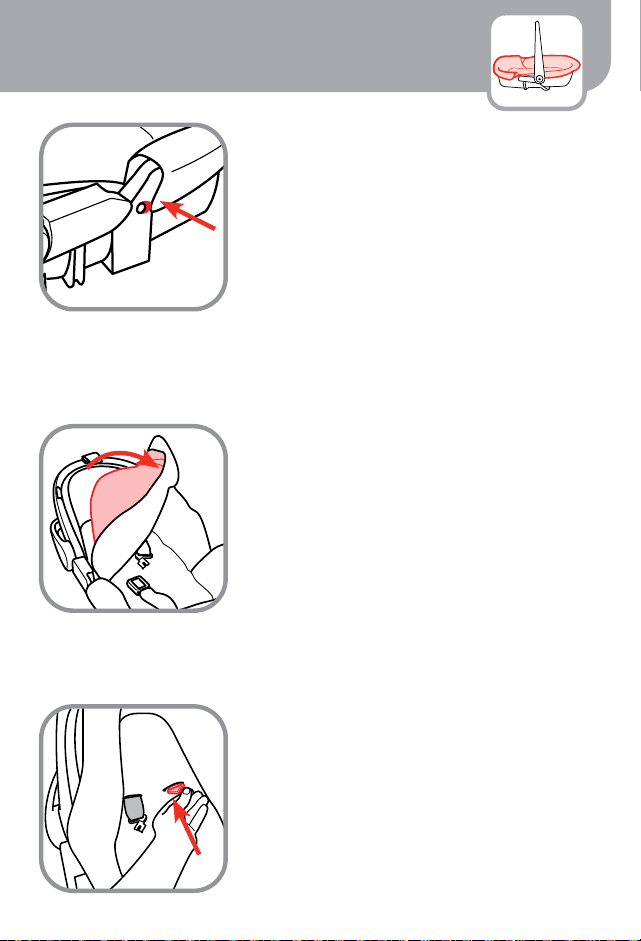
1. Release Elastic Straps from
Plastic Button on Each Side of
Shell
2. Pull Pad Off Top of Shell
3.
Push Buckle Tongues Through
Pad
11
Removing Seat Pad for Cleaning
12
continued on next page.
WARNINGS:
Read ALL instructions before using car bed as a carrier.
NEVER
use carrier unless child is properly secured.
Use only as a carrier by children weighing 5-20 pounds
(2.3-9 kg) and 26 inches (66 cm) or less tall.
NEVER
leave child unattended. Always keep child within
arm’s reach.
Suffocation Hazard:
Infant carrier can roll over on soft
surfaces and suffocate child.
NEVER
place carrier on beds,
sofas or other soft surfaces.
Strangulation Hazard:
Children have
STRANGLED
in loose
or partially buckled harness straps. Fully restrain the child
even when carrier is used outside the vehicle.
Fall Hazard: Child’s activity can move
carrier. NEVER place carrier on counter
tops, tables or other elevated surfaces.
The carrier can fall from the shopping
cart. Do not use on shopping cart.
Do not use the carrier if it is damaged or
broken, or if any parts are missing.
1. Release Elastic Straps from
Plastic Button on Each Side of
Shell
2. Pull Pad Off Top of Shell
3.
Push Buckle Tongues Through
Pad
11
Moving LATCH/Vehicle Belt Loops
and LATCH Belts
14
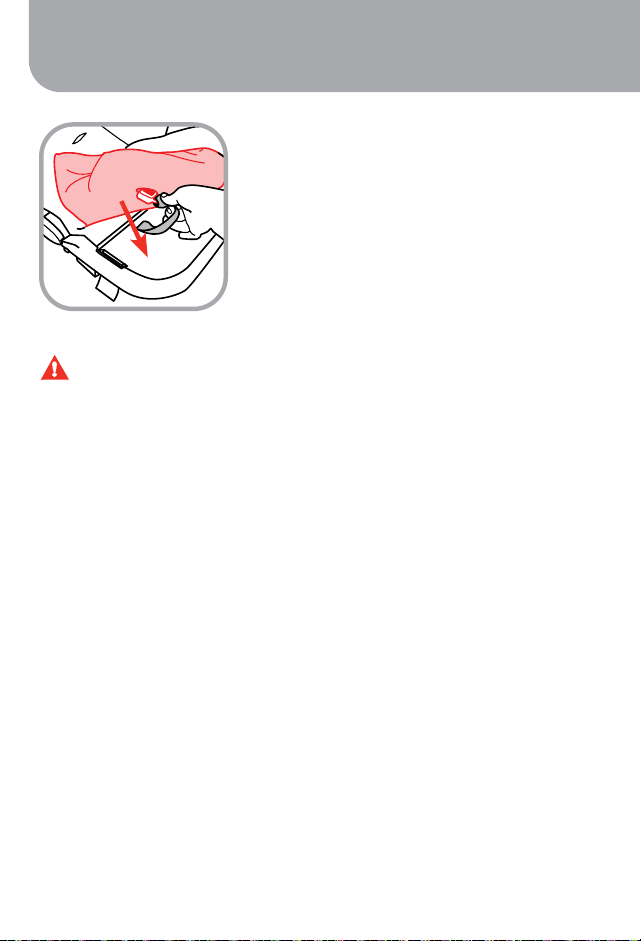
4. Pull Pad Off Bottom of Shell
Pull buckle through pad.
Remove pad.
Cleaning Pad
Machine wash separately with cold water on a gentle cycle. Do
not use bleach. Tumble dry separately for 10-12 minutes on low
heat. Remove immediately.
Cleaning Harness Straps, LATCH Belts, LATCH/Vehicle Belt
Loops
Spot clean using warm sudsy water and damp cloth.
Replace Pad
Place foam inserts in shell if they have been removed. Starting
from bottom of car bed, slip pad on shell. Pull buckle through
pad. Pull buckle tongues through pad and wrap pad around top
of shell. Make sure harness and buckle straps are not twisted.
Reattach elastic to plastic buttons on sides of shell.
WARNINGS: Do not use the car bed without the
seat pad or foam inserts.
Failure to do this can result in serious injury or death.
1. Pull Corners of Pad Off Shell
2. Lift Metal Clips Up and Pull
Belt Loops Out of Slots in Shell
13
If needed, the LATCH/Vehicle belt loops can be moved to either
side of the car bed.
Both belt loops must be on the same side as vehicle seat back.
The LATCH belt and LATCH/Vehicle belt loops CANNOT be
threaded into the same slots in the shell. When you move the
belt loops, you MUST also move the LATCH belts.
continued on next page.
Moving LATCH/Vehicle Belt Loops
and LATCH Belts
14
4. Pull Pad Off Bottom of Shell
Pull buckle through pad.
Remove pad.
Cleaning Pad
Machine wash separately with cold water on a gentle cycle. Do
not use bleach. Tumble dry separately for 10-12 minutes on low
heat. Remove immediately.
Cleaning Harness Straps, LATCH Belts, LATCH/Vehicle Belt
Loops
Spot clean using warm sudsy water and damp cloth.
Replace Pad
Place foam inserts in shell if they have been removed. Starting
from bottom of car bed, slip pad on shell. Pull buckle through
pad. Pull buckle tongues through pad and wrap pad around top
of shell. Make sure harness and buckle straps are not twisted.
Reattach elastic to plastic buttons on sides of shell.
WARNINGS: Do not use the car bed without the
seat pad or foam inserts.
Failure to do this can result in serious injury or death.
1. Pull Corners of Pad Off Shell
2. Lift Metal Clips Up and Pull
Belt Loops Out of Slots in Shell
13
If needed, the LATCH/Vehicle belt loops can be moved to either
side of the car bed.
Both belt loops must be on the same side as vehicle seat back.
The LATCH belt and LATCH/Vehicle belt loops CANNOT be
threaded into the same slots in the shell. When you move the
belt loops, you MUST also move the LATCH belts.
continued on next page.
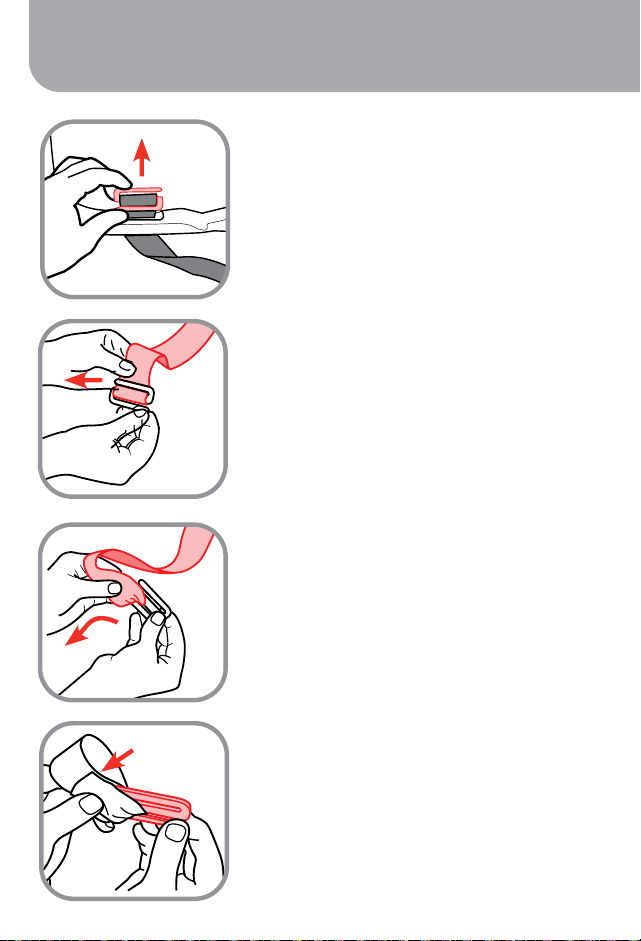
15
continued on next page.
16
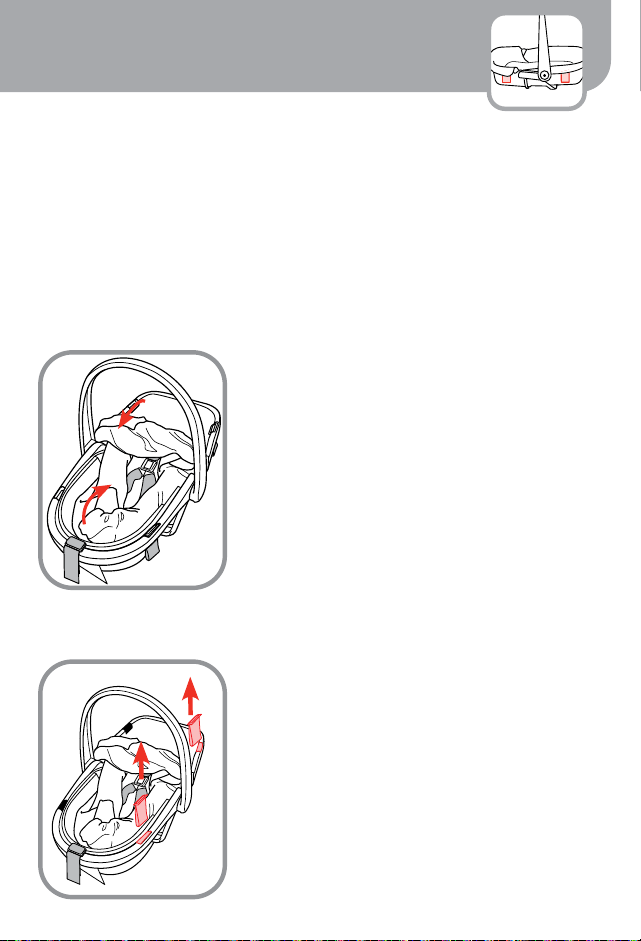
4. Lift up Inside Corner of “S” Clip
Pull clip and LATCH strap away
from shell.
3.
Pull “S” Clip and LATCH Strap
Out of Slots in Shell
5. Unhook LATCH Belt Loop from the
“S” Clip
Bunch the LATCH belt to one side
as far as possible.
6.
Slide Top of Clip Inside the LATCH
Belt Loop
8. Pull LATCH Belts Out of Slots
9. Thread LATCH/Vehicle Belt
Loops into Slots
10. Thread LATCH Belts into
Slots on Opposite Side of
Vehicle Belt Loops
7. Pull “S” clip free from LATCH
Belt Loop
Repeat steps for other LATCH
belt.
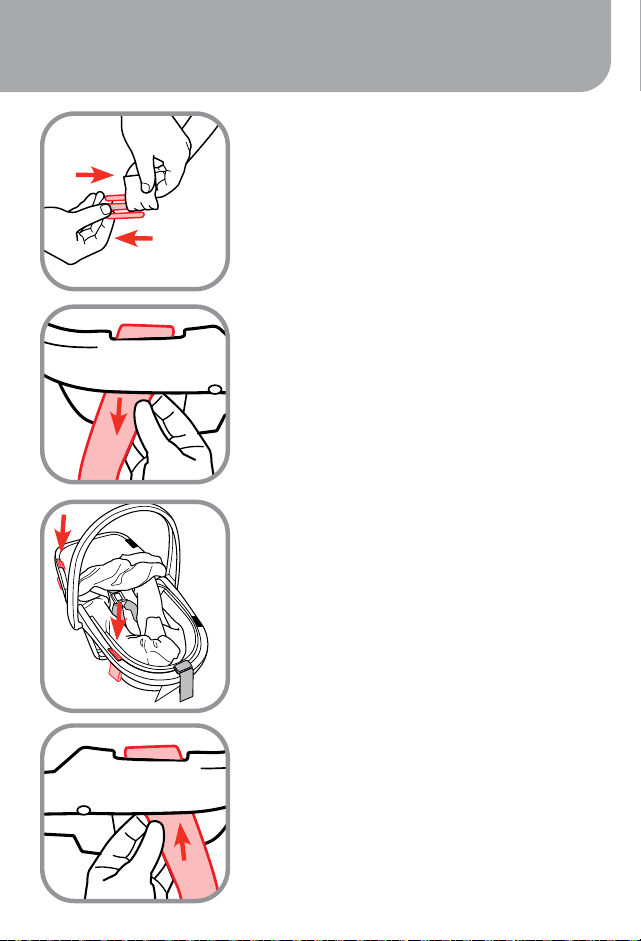
15
continued on next page.
16
4. Lift up Inside Corner of “S” Clip
Pull clip and LATCH strap away
from shell.
3.
Pull “S” Clip and LATCH Strap
Out of Slots in Shell
5. Unhook LATCH Belt Loop from the
“S” Clip
Bunch the LATCH belt to one side
as far as possible.
6.
Slide Top of Clip Inside the LATCH
Belt Loop
8. Pull LATCH Belts Out of Slots
9. Thread LATCH/Vehicle Belt
Loops into Slots
10. Thread LATCH Belts into
Slots on Opposite Side of
Vehicle Belt Loops
7. Pull “S” clip free from LATCH
Belt Loop
Repeat steps for other LATCH
belt.
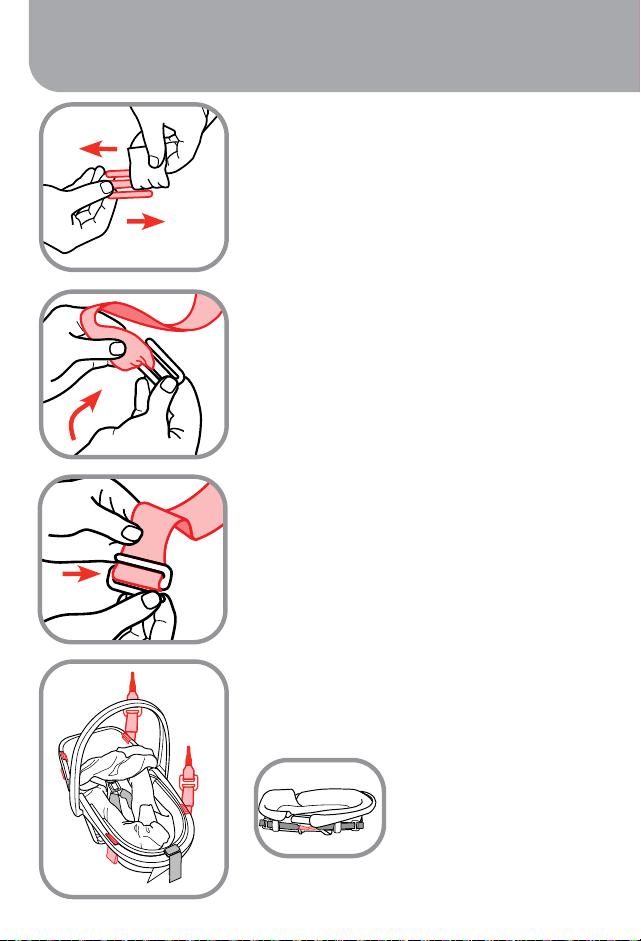
a. Slide LATCH belt loop across the
“S” clip until it bunches up on “S”
clip and the top bar of “S” clip is
free from the LATCH belt loop.
b. Slide LATCH belt loop back
across “S” clip until LATCH belt
loop is centered, making sure top
and bottom bar is on the outside
of the LATCH belt loop.
17 18
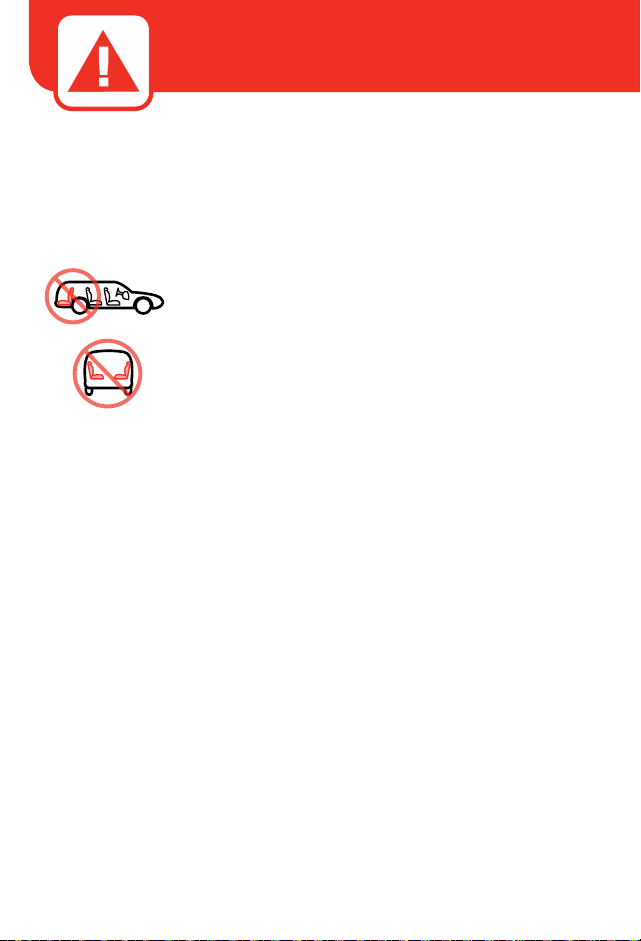
Do not use this car bed unless the infant is 5-20 lb (2.3-9
kg) and 26 in. (66 cm) or less.
Do not use additional padding in the head area or place
blankets near the infant’s face. Watch the infant closely.
Never take your infant out of the car bed while the vehicle
is moving.
Never leave infant unattended.
Placing your infant in a hot car bed may result in burns.
Do not use a car bed with damaged or missing parts.
Do not use cut, frayed or damaged harnesses.
Do not substitute parts or try to modify the car bed in any
way.
Do not lubricate buckles and fasteners.
Do not use any car bed accessory except those approved
by Dorel Juvenile Group.
Never allow any child to play with this car bed; it is not a
toy.
Do not remove or cover up any of the warning labels or
other labels on the car bed.
Read all instructions for additional warnings.
11. Attach “S” clip to LATCH Belt
Loop
Insert 2 of the 3 bars on “S” clip
into the loop at the end of the
LATCH belt.
12. Finished
Make sure all metal clips are
flush against the shell.
Store LATCH as
shown when not in
use.
Car Bed Use

a. Slide LATCH belt loop across the
“S” clip until it bunches up on “S”
clip and the top bar of “S” clip is
free from the LATCH belt loop.
b. Slide LATCH belt loop back
across “S” clip until LATCH belt
loop is centered, making sure top
and bottom bar is on the outside
of the LATCH belt loop.
17 18
Do not use this car bed unless the infant is 5-20 lb (2.3-9
kg) and 26 in. (66 cm) or less.
Do not use additional padding in the head area or place
blankets near the infant’s face. Watch the infant closely.
Never take your infant out of the car bed while the vehicle
is moving.
Never leave infant unattended.
Placing your infant in a hot car bed may result in burns.
Do not use a car bed with damaged or missing parts.
Do not use cut, frayed or damaged harnesses.
Do not substitute parts or try to modify the car bed in any
way.
Do not lubricate buckles and fasteners.
Do not use any car bed accessory except those approved
by Dorel Juvenile Group.
Never allow any child to play with this car bed; it is not a
toy.
Do not remove or cover up any of the warning labels or
other labels on the car bed.
Read all instructions for additional warnings.
11. Attach “S” clip to LATCH Belt
Loop
Insert 2 of the 3 bars on “S” clip
into the loop at the end of the
LATCH belt.
12. Finished
Make sure all metal clips are
flush against the shell.
Store LATCH as
shown when not in
use.
Car Bed Use
Vehicle Seating Position
Installation in Vehicle
19 20
Always place this car bed sideways with the infant’s head
toward the center of the vehicle.
Check the vehicle owner’s manual for more information
about air bag/car bed use.
Use the car bed only on vehicle seats that
face forward.
Do not use on seats that face the sides or
rear of the vehicle.
For vehicles without a back seat, refer to
your vehicle owner’s manual.
If you are not sure where to place the child restraint in your vehicle,
consult your vehicle owner’s manual, contact Dorel Juvenile Group
Consumer Care Department, or visit your local Child Passenger Inspec-
tion Station. Go to http://www.safercar.gov/cpsApp/cps/index.htm to
find your closest station.
Check the vehicle belt or LATCH belt before each use. Use
only if the belt is tightened properly and securely.
This car bed should be securely belted in the vehicle even
when not in use. In a crash or sudden stop, an unsecured
car bed could injure occupants.
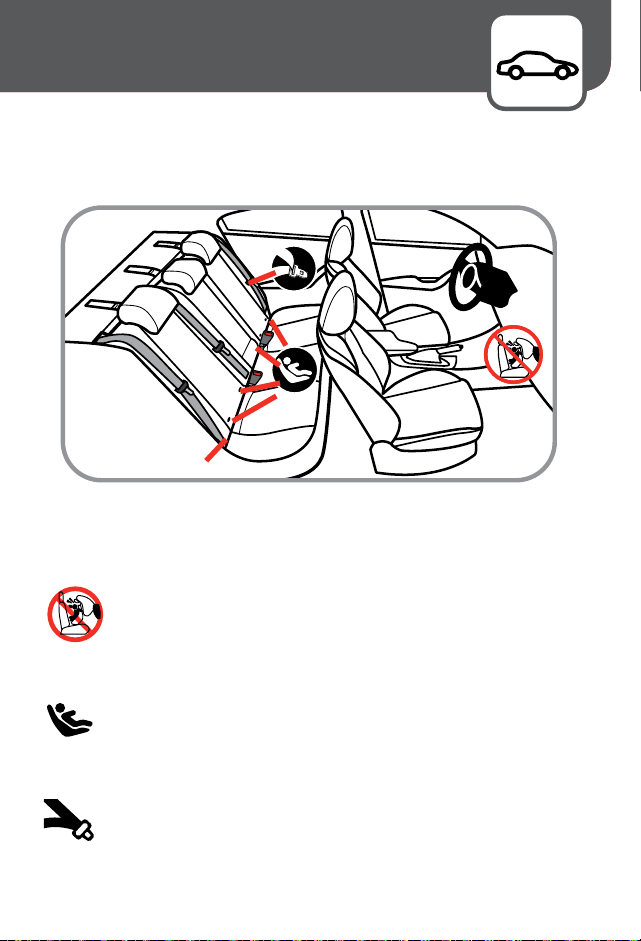
Air Bags
LATCH Anchors
Located in the seat bight.
Vehicle Seat Belts
Your vehicle’s features may be considerably different than those
pictured here.
Seat Bight
Consult your vehicle owner’s manual to help identify your
vehicle’s specific features and locations.
Understanding Your Vehicle
Vehicle Seating Position
Installation in Vehicle
19 20
Always place this car bed sideways with the infant’s head
toward the center of the vehicle.
Check the vehicle owner’s manual for more information
about air bag/car bed use.
Use the car bed only on vehicle seats that
face forward.
Do not use on seats that face the sides or
rear of the vehicle.
For vehicles without a back seat, refer to
your vehicle owner’s manual.
If you are not sure where to place the child restraint in your vehicle,
consult your vehicle owner’s manual, contact Dorel Juvenile Group
Consumer Care Department, or visit your local Child Passenger Inspec-
tion Station. Go to http://www.safercar.gov/cpsApp/cps/index.htm to
find your closest station.
Check the vehicle belt or LATCH belt before each use. Use
only if the belt is tightened properly and securely.
This car bed should be securely belted in the vehicle even
when not in use. In a crash or sudden stop, an unsecured
car bed could injure occupants.
Air Bags
LATCH Anchors
Located in the seat bight.
Vehicle Seat Belts
Your vehicle’s features may be considerably different than those
pictured here.
Seat Bight
Consult your vehicle owner’s manual to help identify your
vehicle’s specific features and locations.
Understanding Your Vehicle
Choosing LATCH or Vehicle Belts Knowing Your Vehicle Belts
21 22
continued on next page.
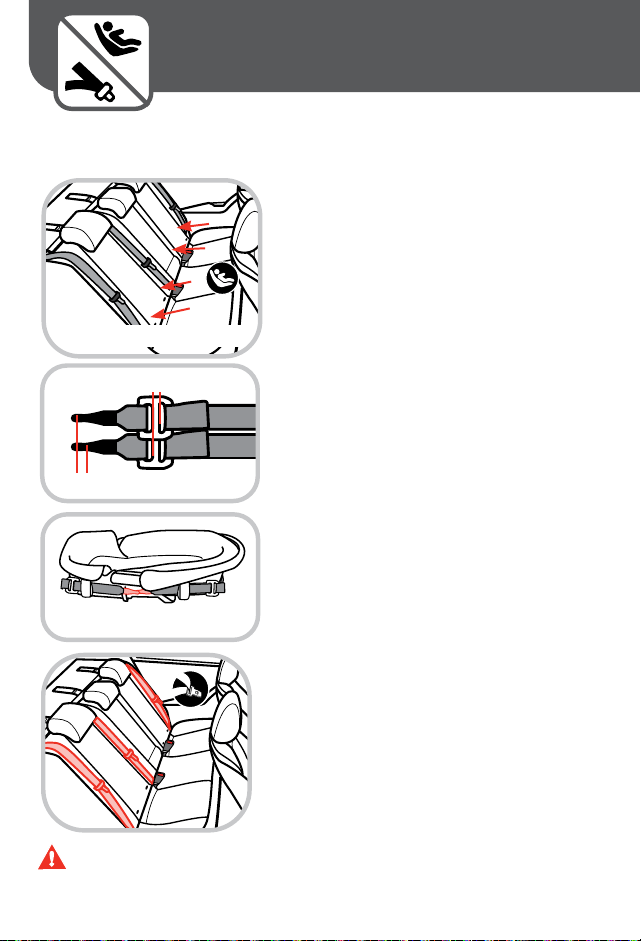
The LATCH System
LATCH (Lower Anchors and Tethers
for CHildren) is a universal system for
installing child restraints without using
vehicle seat belts.
The LATCH system can ONLY be
used in vehicles that have the LATCH
anchor bars installed and designated
LATCH seating positions. Most vehicles
manufactured after September 2002
are equipped with LATCH. Check your
vehicle owner’s manual to see which
seating positions may be equipped with
the LATCH system.
To store LATCH on this car bed: Fully
loosen the LATCH belts and pull belts
around to the opposite side of the
shell and attach the hooks together as
shown. Gently pull to remove slack.
Vehicle Belts
If LATCH is not an option, you must use
the vehicle seat belt system to install
the car bed. There are some vehicle
belts that will not work with a car
bed or will require special attention.
Check your vehicle owner’s manual for
specific instructions.
WARNING: Do not use both the LATCH belt and vehicle
belt at the same time.
LATCH Anchor Bars
LATCH Hooks
Adjuster
LATCH Storage
When used correctly the LATCH or Vehicle Belts are equally
safe.
Review your vehicle owner’s manual for vehicle seat belt use with
car beds. This is your best source for information concerning your
vehicle.
Not all vehicle belts will work with this car bed. This car bed must
be tightly locked in place at all times. You must determine if your
vehicle’s belts are compatible with this car bed.
Vehicle Belts
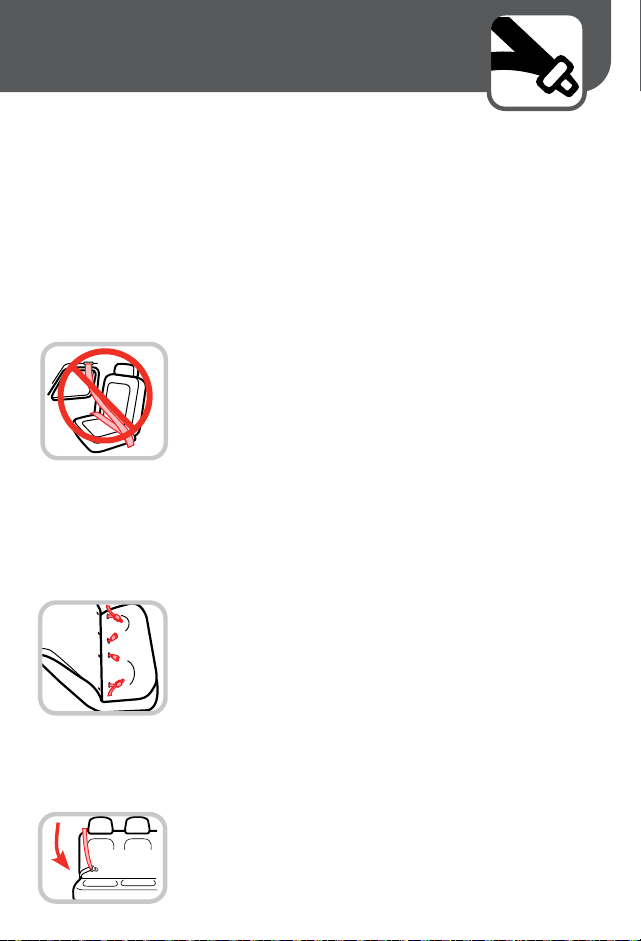
• Automatic/Passive vehicle seat belts
You MUST have a lap belt to install any car bed.
An automatic (passive) shoulder belt may or may
not have a separate lap belt.
• Do not use with inflatable seat belts
You may need to move the car bed to another
seating location or use LATCH belts only.
• Vehicle belts in center of the door or side panel
You must move the car bed to another seating location.
• Vehicle belts that are in front of the seat bight
You may need to move the car bed to another seating location.
• ELR (Emergency Locking Retractor) vehicle
belts
These lap and shoulder belts only lock in a sud-
den stop or crash, and do not properly secure a
car bed alone.
To determine if you have this type of belt,
gently pull the belt all the way out of the retractor (spool), let it return
several inches, then pull on it again. If it moves freely, it is an ELR
belt. If it is locked and will not allow any more belt to come out, it is a
switchable retractor.
If you have an ELR lap and shoulder belt, review
the “Vehicle Latch Plate” section on page 23 to
see if you need a locking clip.
Choosing LATCH or Vehicle Belts Knowing Your Vehicle Belts
21 22
continued on next page.
The LATCH System
LATCH (Lower Anchors and Tethers
for CHildren) is a universal system for
installing child restraints without using
vehicle seat belts.
The LATCH system can ONLY be
used in vehicles that have the LATCH
anchor bars installed and designated
LATCH seating positions. Most vehicles
manufactured after September 2002
are equipped with LATCH. Check your
vehicle owner’s manual to see which
seating positions may be equipped with
the LATCH system.
To store LATCH on this car bed: Fully
loosen the LATCH belts and pull belts
around to the opposite side of the
shell and attach the hooks together as
shown. Gently pull to remove slack.
Vehicle Belts
If LATCH is not an option, you must use
the vehicle seat belt system to install
the car bed. There are some vehicle
belts that will not work with a car
bed or will require special attention.
Check your vehicle owner’s manual for
specific instructions.
WARNING: Do not use both the LATCH belt and vehicle
belt at the same time.
LATCH Anchor Bars
LATCH Hooks
Adjuster
LATCH Storage
When used correctly the LATCH or Vehicle Belts are equally
safe.
Review your vehicle owner’s manual for vehicle seat belt use with
car beds. This is your best source for information concerning your
vehicle.
Not all vehicle belts will work with this car bed. This car bed must
be tightly locked in place at all times. You must determine if your
vehicle’s belts are compatible with this car bed.
Vehicle Belts
• Automatic/Passive vehicle seat belts
You MUST have a lap belt to install any car bed.
An automatic (passive) shoulder belt may or may
not have a separate lap belt.
• Do not use with inflatable seat belts
You may need to move the car bed to another
seating location or use LATCH belts only.
• Vehicle belts in center of the door or side panel
You must move the car bed to another seating location.
• Vehicle belts that are in front of the seat bight
You may need to move the car bed to another seating location.
• ELR (Emergency Locking Retractor) vehicle
belts
These lap and shoulder belts only lock in a sud-
den stop or crash, and do not properly secure a
car bed alone.
To determine if you have this type of belt,
gently pull the belt all the way out of the retractor (spool), let it return
several inches, then pull on it again. If it moves freely, it is an ELR
belt. If it is locked and will not allow any more belt to come out, it is a
switchable retractor.
If you have an ELR lap and shoulder belt, review
the “Vehicle Latch Plate” section on page 23 to
see if you need a locking clip.
Aircraft Information
23 24
This car bed is not certified for aircraft use.
WARNING: ELR lap-only belts MUST NOT be used
with this car bed.
• Switchable Retractor
These belts switch from ELR to ALR (Automatic Locking Retractor). You
MUST have the vehicle belts in the locking mode to use them.
With a switchable retractor, pull the shoulder belt all the way out to
switch the retractor into the ALR mode before tightening.
Feed the slack back into the retractor while tightening.
• ALR (Automatic Locking Retractor)
These belts lock after pulling the webbing out and letting the belt go
back into the retractor an inch or two.
With an ALR belt, pull the belt all the way out before threading through
the car bed.
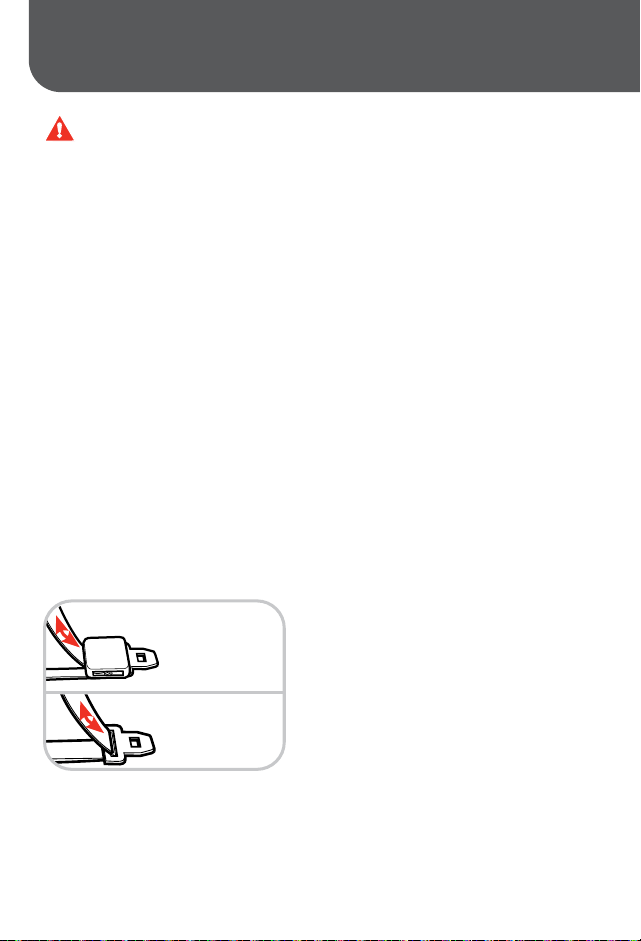
Vehicle Latch Plates
• Check Latch Plates
Grasp the tongue portion of the latch plate (the part that goes inside
the buckle) and pull straight out, in line with the lap belt.
If the latch plate does not slide up
and down the vehicle belt, you have
a locking latch plate. You should not
need to use a locking clip.
If the latch plate slides up and down
on the belt, and you have an ELR
retractor, you MUST use a locking
clip to install the car bed. See pages
31-32.
You may not need to use the locking clip with a switchable or ALR
retractor.
Locking Latch
Plate
Sliding Latch
Plate
Children are safer when
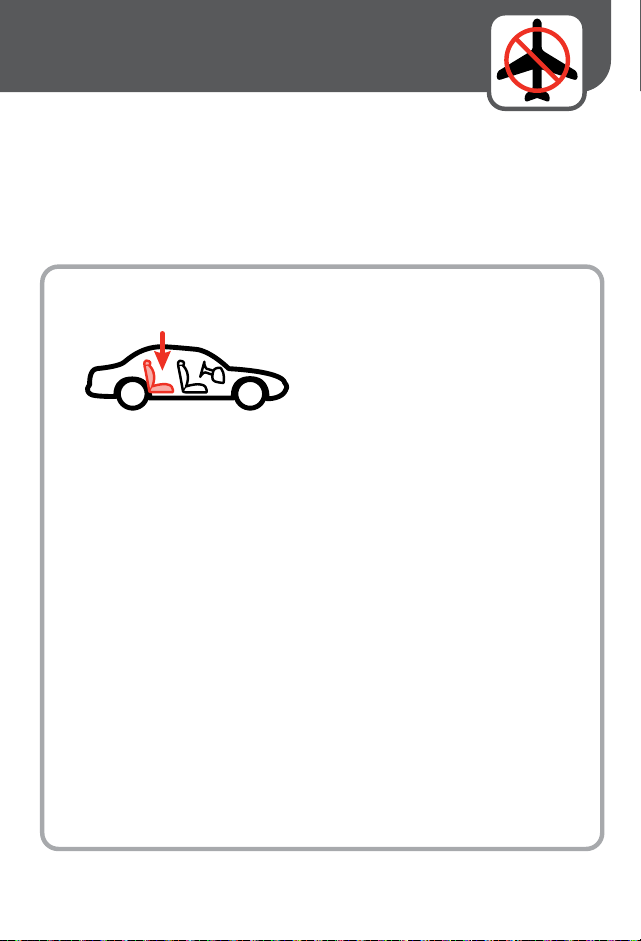
properly restrained in rear
seating positions than in the
front seating positions.
According to National Highway Traffic Safety Adminis-
tration information, children in rear seating positions
are statistically safer, whether you have air bags,
advanced air bags, or no air bags at all.
To avoid your child being seriously burned, take the
following precautions:
1. Park in the shade or where sun does not directly hit the
car bed.
2. Cover the
car bed with a sheet or blanket when not in
use.
3. Check for hot seat and buckles before placing child in
car bed.
To help protect your vehicle seat’s upholstery from damage,
use a single layered towel underneath and behind the
car
bed.
Aircraft Information
23 24
This car bed is not certified for aircraft use.
WARNING: ELR lap-only belts MUST NOT be used
with this car bed.
• Switchable Retractor
These belts switch from ELR to ALR (Automatic Locking Retractor). You
MUST have the vehicle belts in the locking mode to use them.
With a switchable retractor, pull the shoulder belt all the way out to
switch the retractor into the ALR mode before tightening.
Feed the slack back into the retractor while tightening.
• ALR (Automatic Locking Retractor)
These belts lock after pulling the webbing out and letting the belt go
back into the retractor an inch or two.
With an ALR belt, pull the belt all the way out before threading through
the car bed.
Vehicle Latch Plates
• Check Latch Plates
Grasp the tongue portion of the latch plate (the part that goes inside
the buckle) and pull straight out, in line with the lap belt.
If the latch plate does not slide up
and down the vehicle belt, you have
a locking latch plate. You should not
need to use a locking clip.
If the latch plate slides up and down
on the belt, and you have an ELR
retractor, you MUST use a locking
clip to install the car bed. See pages
31-32.
You may not need to use the locking clip with a switchable or ALR
retractor.
Locking Latch
Plate
Sliding Latch
Plate
Children are safer when
properly restrained in rear
seating positions than in the
front seating positions.
According to National Highway Traffic Safety Adminis-
tration information, children in rear seating positions
are statistically safer, whether you have air bags,
advanced air bags, or no air bags at all.
To avoid your child being seriously burned, take the
following precautions:
1. Park in the shade or where sun does not directly hit the
car bed.
2. Cover the
car bed with a sheet or blanket when not in
use.
3. Check for hot seat and buckles before placing child in
car bed.
To help protect your vehicle seat’s upholstery from damage,
use a single layered towel underneath and behind the
car
bed.
Side Facing LATCH Installation
25 26
continued on next page.
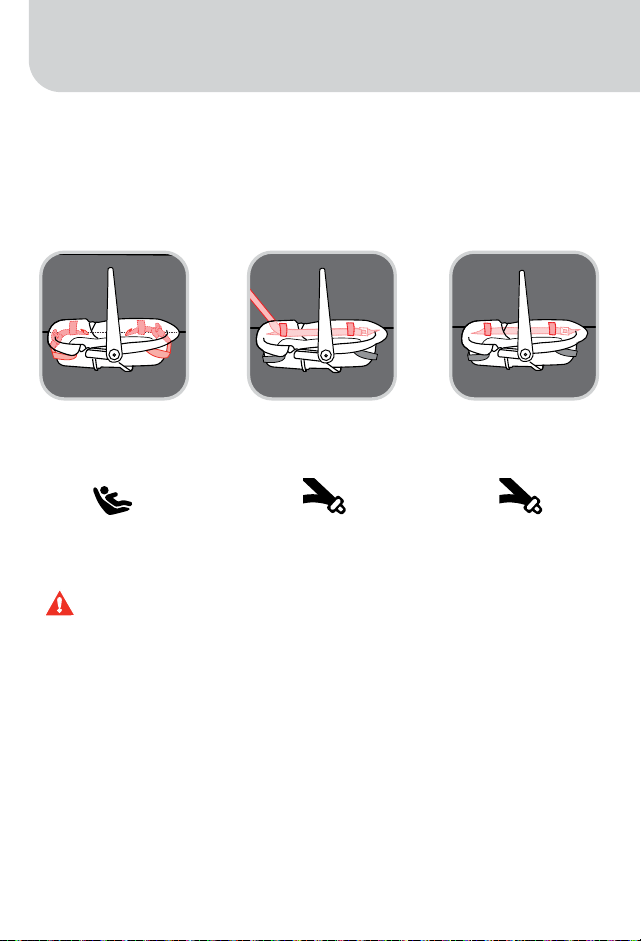
Lap/Shoulder BeltLATCH Belt
WARNINGS: Failure to place this car bed side-facing
with the child’s head toward center of vehicle seat can
result in serious injury or death.
Install side-facing. The back seat is preferred; however,
the front passenger seat is acceptable, even with an
airbag, as long as the car bed does not interfere with
vehicle operation and the passenger seat is moved back
as far as possible away from the airbag.
Check vehicle owner’s manual for more information about
airbag/car bed use.
5-20 lb (2.3-9 kg), 26 in. (66 cm) or less, and under 1 year of age.
Lap Belt
Make sure harness and buckle fit your child correctly
before installing the car bed. See pages 3-4.
WARNINGS: Do not use LATCH along with the vehicle
lap or lap/shoulder belt.
Check LATCH belt before each use. Use only if the belt can
be tightened properly and securely.
Failure to follow these warnings can result in serious
injury or death.
Review your vehicle owner’s manual for LATCH belt use.
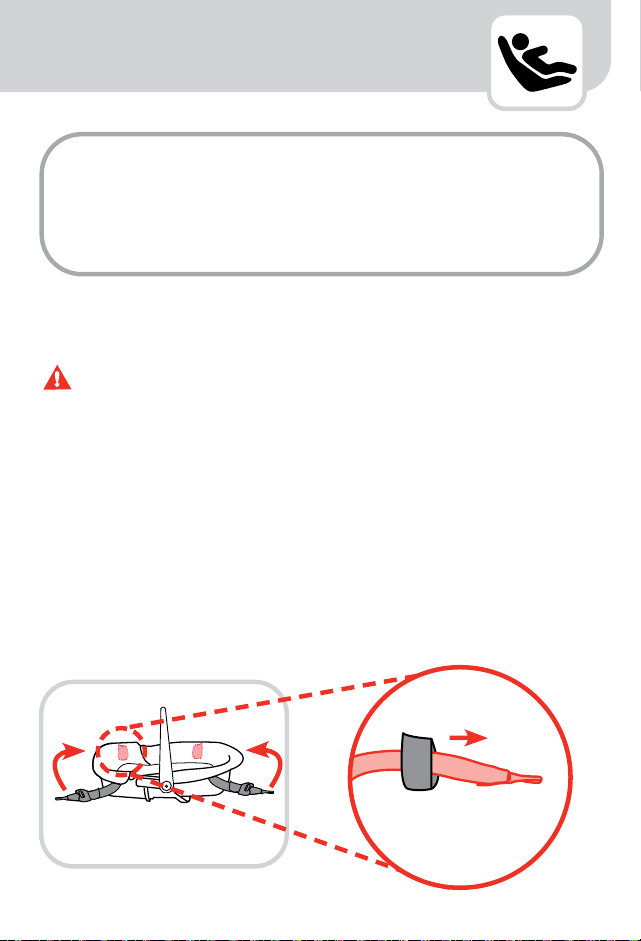
1. Thread Left LATCH Belt Through Left Belt Loop As
Shown
Repeat for right side. Do not twist belt.
Side Facing LATCH Installation
25 26
continued on next page.
Lap/Shoulder BeltLATCH Belt
WARNINGS: Failure to place this car bed side-facing
with the child’s head toward center of vehicle seat can
result in serious injury or death.
Install side-facing. The back seat is preferred; however,
the front passenger seat is acceptable, even with an
airbag, as long as the car bed does not interfere with
vehicle operation and the passenger seat is moved back
as far as possible away from the airbag.
Check vehicle owner’s manual for more information about
airbag/car bed use.
5-20 lb (2.3-9 kg), 26 in. (66 cm) or less, and under 1 year of age.
Lap Belt
Make sure harness and buckle fit your child correctly
before installing the car bed. See pages 3-4.
WARNINGS: Do not use LATCH along with the vehicle
lap or lap/shoulder belt.
Check LATCH belt before each use. Use only if the belt can
be tightened properly and securely.
Failure to follow these warnings can result in serious
injury or death.
Review your vehicle owner’s manual for LATCH belt use.
1. Thread Left LATCH Belt Through Left Belt Loop As
Shown
Repeat for right side. Do not twist belt.
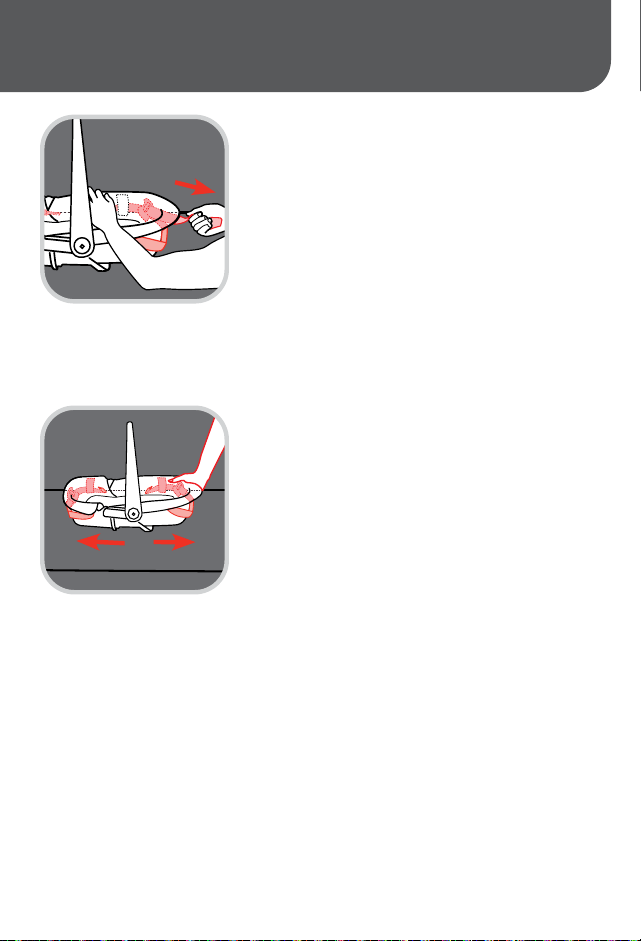
5. Check Belt Tightness
Hold the car bed at the belt
path with your weakest hand.
Push and pull from side to
side.
If it moves more than 1 in.
(2.5 cm), try reinstalling the
car bed, try another seating
location, or try using the
vehicle belt.
3.
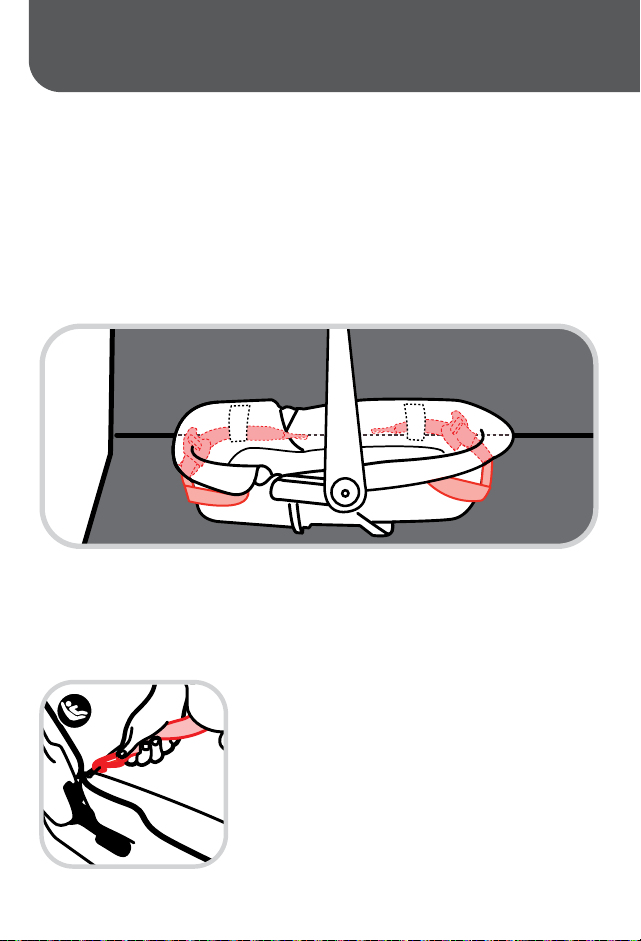
Hook LATCH to Vehicle LATCH
Anchor
Fasten one LATCH belt hook to
the anchor located in the vehicle
seat bight.
Repeat for other side of car bed.
4.
Tighten Belt
Lay your forearm across the
car bed while pulling up on
free end of LATCH belt to
tighten.
Repeat for other LATCH belt.
27 28
2. Place Car Bed Side Facing in the Back Seat with Child’s
Head Towards the Center of Vehicle Seat
LATCH/Vehicle belt loops must be on the side of the car
bed that is against the vehicle seat back as shown.
To move the belt loops and LATCH belts, see pages 14-17.
Handle MUST be upright AND locked when installed in the
vehicle.
5. Check Belt Tightness
Hold the car bed at the belt
path with your weakest hand.
Push and pull from side to
side.
If it moves more than 1 in.
(2.5 cm), try reinstalling the
car bed, try another seating
location, or try using the
vehicle belt.
3.
Hook LATCH to Vehicle LATCH
Anchor
Fasten one LATCH belt hook to
the anchor located in the vehicle
seat bight.
Repeat for other side of car bed.
4.
Tighten Belt
Lay your forearm across the
car bed while pulling up on
free end of LATCH belt to
tighten.
Repeat for other LATCH belt.
27 28
2. Place Car Bed Side Facing in the Back Seat with Child’s
Head Towards the Center of Vehicle Seat
LATCH/Vehicle belt loops must be on the side of the car
bed that is against the vehicle seat back as shown.
To move the belt loops and LATCH belts, see pages 14-17.
Handle MUST be upright AND locked when installed in the
vehicle.
Vehicle Belt Installation
2. Thread Vehicle Belt
Thread the vehicle lap or lap/
shoulder belt combination through
belt loops as shown.
Review pages 22-23 and your
vehicle owner’s manual to
determine what kind of vehicle
belts you have.
Buckle vehicle belt.
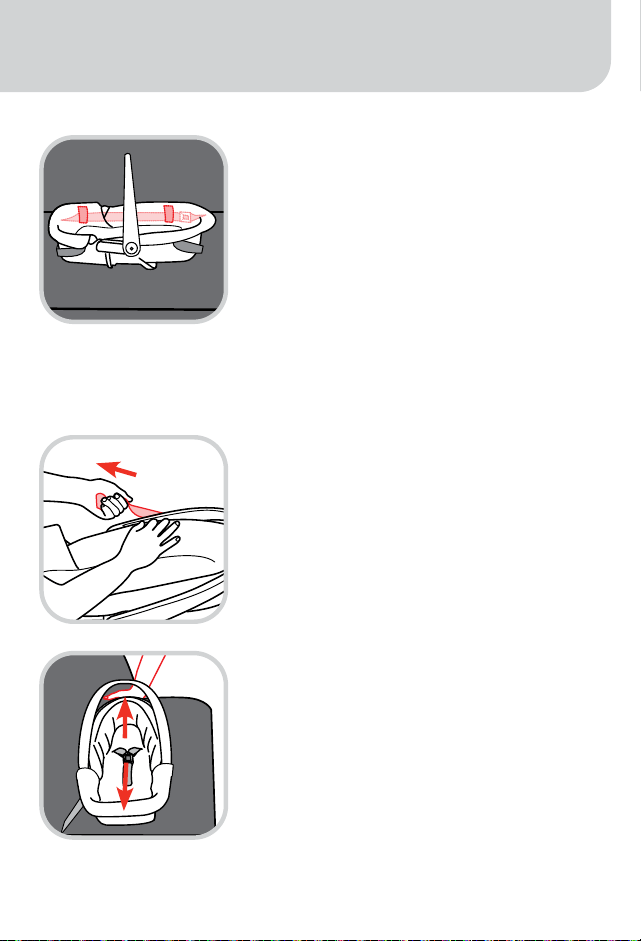
3. Tighten Belt
Lay your forearm across the car
bed while pulling up on shoulder
belt or free end of lap belt to
tighten.
1.
Place Car Bed Side Facing in
the Back Seat with Child’s Head
Towards the Center of Vehicle Seat
LATCH/Vehicle belt loops must be
on the side of the car bed that is
against the vehicle seat back as
shown.
To move the belt loops and LATCH
belts, see pages 14-17.
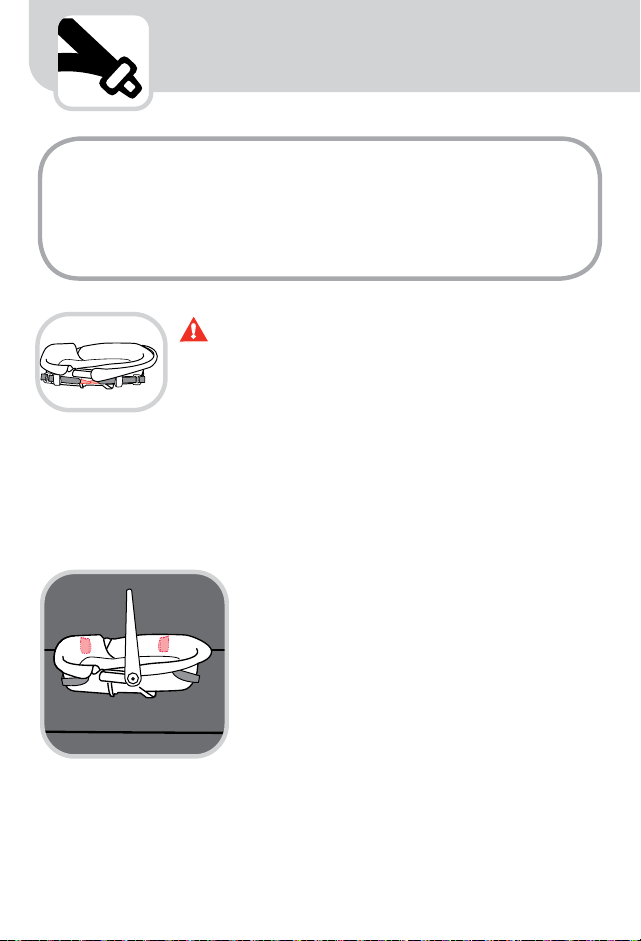
4. Check Belt Tightness
Hold the car bed at the belt path
with your weakest hand.
Push and pull from side to side.
If it moves more than 1 in. (2.5
cm), try reinstalling the car bed,
try another seating location, or try
using the LATCH belts.
29 30
Make sure harness and buckle fit your child correctly
before installing the car bed. See pages 3-4.
WARNINGS: Do not use LATCH along
with the vehicle lap or lap/shoulder belt.
Store LATCH when using vehicle belts as
shown.
Check vehicle belt before each use. Use only if belt can be
tightened properly and securely.
Failure to follow these warnings can result in serious injury
or death.
Handle MUST be
upright AND locked
when installed in the
vehicle.
Vehicle Belt Installation
2. Thread Vehicle Belt
Thread the vehicle lap or lap/
shoulder belt combination through
belt loops as shown.
Review pages 22-23 and your
vehicle owner’s manual to
determine what kind of vehicle
belts you have.
Buckle vehicle belt.
3. Tighten Belt
Lay your forearm across the car
bed while pulling up on shoulder
belt or free end of lap belt to
tighten.
1.
Place Car Bed Side Facing in
the Back Seat with Child’s Head
Towards the Center of Vehicle Seat
LATCH/Vehicle belt loops must be
on the side of the car bed that is
against the vehicle seat back as
shown.
To move the belt loops and LATCH
belts, see pages 14-17.
4. Check Belt Tightness
Hold the car bed at the belt path
with your weakest hand.
Push and pull from side to side.
If it moves more than 1 in. (2.5
cm), try reinstalling the car bed,
try another seating location, or try
using the LATCH belts.
29 30
Make sure harness and buckle fit your child correctly
before installing the car bed. See pages 3-4.
WARNINGS: Do not use LATCH along
with the vehicle lap or lap/shoulder belt.
Store LATCH when using vehicle belts as
shown.
Check vehicle belt before each use. Use only if belt can be
tightened properly and securely.
Failure to follow these warnings can result in serious injury
or death.
Handle MUST be
upright AND locked
when installed in the
vehicle.
Using a Locking Clip
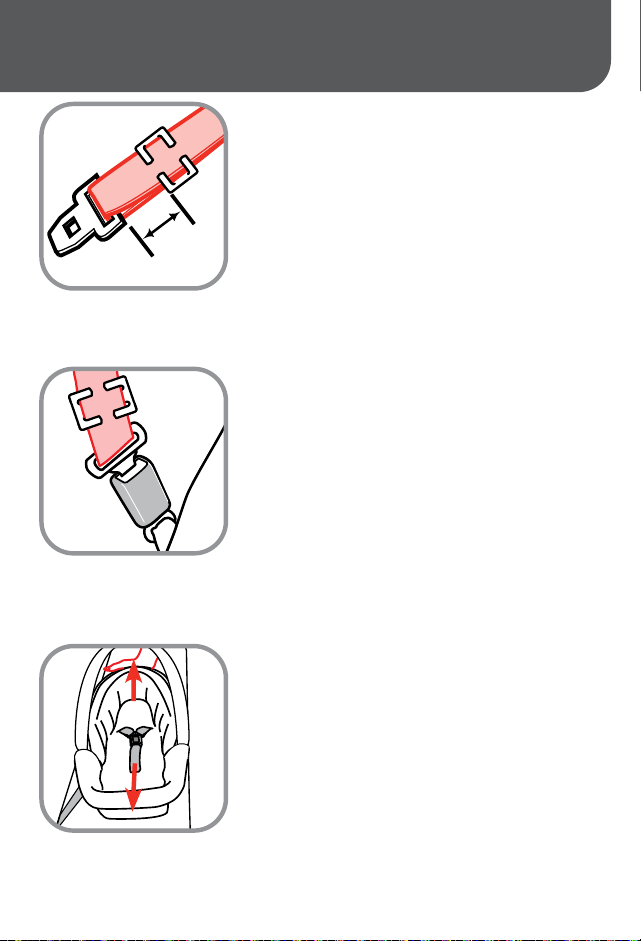
1. Determine Locking Clip Position
Grasp both vehicle belts together
just behind the latch plate to
mark the position for locking clip.
Unbuckle the belt.
NOTE: If the latch plate ends up
just at the belt path opening so you
cannot grasp the vehicle belt at the latch plate, grasp the
vehicle belts on the opposite side of the car bed, as close to the
latch plate as possible.
1 in.
(2.5 cm)
1 in.
(2.5 cm)
1 in.
(2.5 cm)
1 in.
(2.5 cm)
1 in.
(2.5 cm)
31
2. Attach Locking Clip
Thread both portions of the vehicle
belt onto the locking clip, as close
to the latch plate as possible.
3. Position Locking Clip
It should be about 1 in. (2.5 cm)
from vehicle belt’s latch plate.
4. Rebuckle Vehicle Belt
5. Check Belt Tightness
Hold the car bed at the belt path
with your weakest hand.
Push and pull from side to side.
If it moves more than 1 in. (2.5
cm), try reinstalling the car bed or
try another seating location.
32
You will rarely need to use a locking clip except in some older
vehicles.
Built-in child restraint locking systems have been required in
vehicles since 1996, and many vehicles had these features
even earlier. Review pages 22-23 and your vehicle owner’s
manual to determine if your vehicle belts require a locking clip.
A locking clip will not fix all types of seat belt problems. You
MUST have a lap and shoulder belt to use a locking clip.
For Side Facing installation, follow Pages 29-30 Warnings
and Steps 1-3 before starting locking clip installation.
Remove the locking clip when the seat belt is not being
used with a car bed.
Using a Locking Clip
1. Determine Locking Clip Position
Grasp both vehicle belts together
just behind the latch plate to
mark the position for locking clip.
Unbuckle the belt.
NOTE: If the latch plate ends up
just at the belt path opening so you
cannot grasp the vehicle belt at the latch plate, grasp the
vehicle belts on the opposite side of the car bed, as close to the
latch plate as possible.
1 in.
(2.5 cm)
1 in.
(2.5 cm)
1 in.
(2.5 cm)
1 in.
(2.5 cm)
1 in.
(2.5 cm)
31
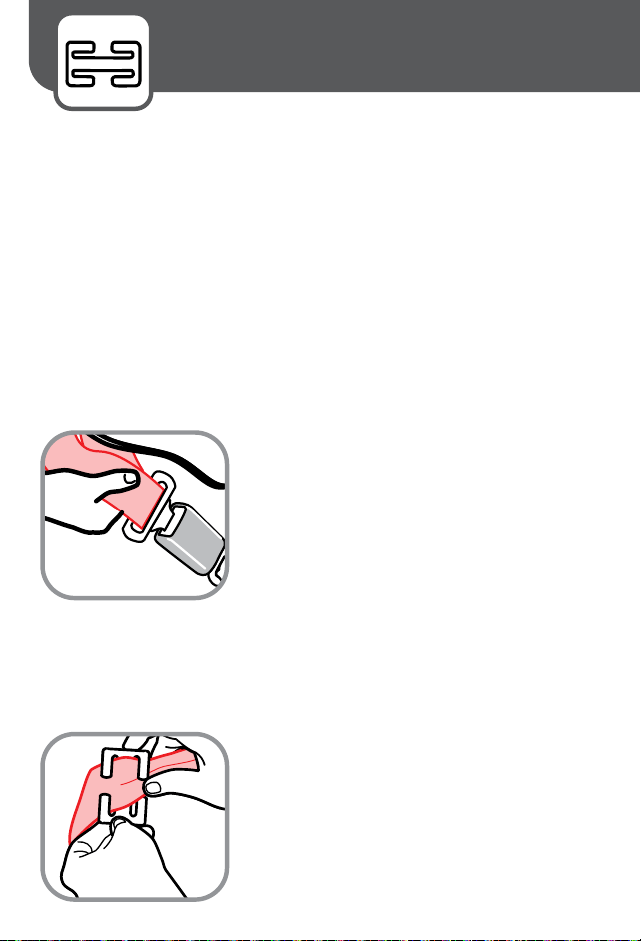
2. Attach Locking Clip
Thread both portions of the vehicle
belt onto the locking clip, as close
to the latch plate as possible.
3. Position Locking Clip
It should be about 1 in. (2.5 cm)
from vehicle belt’s latch plate.
4. Rebuckle Vehicle Belt
5. Check Belt Tightness
Hold the car bed at the belt path
with your weakest hand.
Push and pull from side to side.
If it moves more than 1 in. (2.5
cm), try reinstalling the car bed or
try another seating location.
32
You will rarely need to use a locking clip except in some older
vehicles.
Built-in child restraint locking systems have been required in
vehicles since 1996, and many vehicles had these features
even earlier. Review pages 22-23 and your vehicle owner’s
manual to determine if your vehicle belts require a locking clip.
A locking clip will not fix all types of seat belt problems. You
MUST have a lap and shoulder belt to use a locking clip.
For Side Facing installation, follow Pages 29-30 Warnings
and Steps 1-3 before starting locking clip installation.
Remove the locking clip when the seat belt is not being
used with a car bed.
Dorel Juvenile Group Information
33 34
Thank you for choosing this car bed. The DJG family is committed to
creating child restraints with the most comfort and convenience avail-
able today.
Remember, parents are a child’s first teachers and examples. If you
always buckle your seat belt, your child will think it is the natural thing
to do. Make it a firm rule that the vehicle does not go until everyone is
buckled up. Make no exceptions.
No one can predict if use of a child restraint will prevent injury or death
in a particular crash. However, when combined with careful driving,
proper use of a child restraint can lower a child’s risk of injury or death
in most crashes.
Your child’s safety is worth the time it will take to read and follow
these instructions. After reading, if you still have questions or have any
concerns with this car bed, please contact our Consumer CareDepart-
ment at:
Call: 1-800-544-1108
Text:
1-812-652-2525
Website: www.
safety1st.com
Hours of Operation:
M-TH: 8:00 AM - 6:00 PM EST
FRI: 8:00 AM - 4:30 PM EST
Registration and Safety Notices
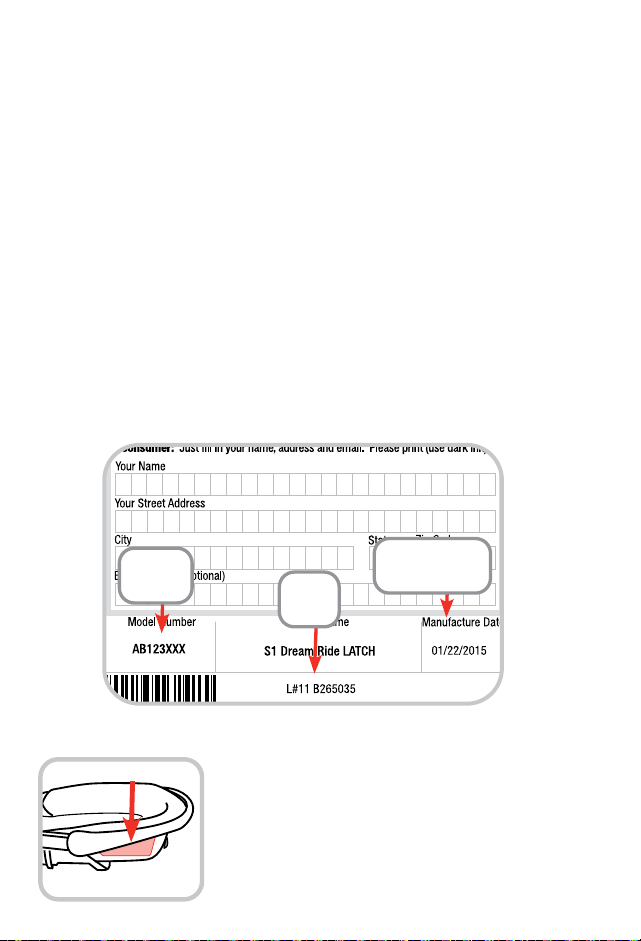
If you don’t have the card or if your
address changes, you will find the
model number, manufacture date, and
line code on the label located on side
of shell.
Example of model number, manufacture date, and line code.
Please complete the postage-paid registration card that came with your
child restraint, and send it to us. Child restraints could be recalled for
safety reasons. You must register this restraint to be reached in a recall.
Send your name, address, e-mail address if available and the restraint’s
model number and manufacturing date to:
Dorel Juvenile Group
2525 State Street
Columbus, IN 47201
or call 1-800-544-1108 or register online at
www.djgusa.com/registration/carseat/us.
For recall information, call the U.S. Government’s Vehicle
Safety Hotline at 1-888-327-4236 (TTY: 1-800-424-9153),
or go to www.NHTSA.gov.
Model
Number
Line Code
Manufacture
Date
Dorel Juvenile Group Information
33 34
Thank you for choosing this car bed. The DJG family is committed to
creating child restraints with the most comfort and convenience avail-
able today.
Remember, parents are a child’s first teachers and examples. If you
always buckle your seat belt, your child will think it is the natural thing
to do. Make it a firm rule that the vehicle does not go until everyone is
buckled up. Make no exceptions.
No one can predict if use of a child restraint will prevent injury or death
in a particular crash. However, when combined with careful driving,
proper use of a child restraint can lower a child’s risk of injury or death
in most crashes.
Your child’s safety is worth the time it will take to read and follow
these instructions. After reading, if you still have questions or have any
concerns with this car bed, please contact our Consumer CareDepart-
ment at:
Call: 1-800-544-1108
Text:
1-812-652-2525
Website: www.
safety1st.com
Hours of Operation:
M-TH: 8:00 AM - 6:00 PM EST
FRI: 8:00 AM - 4:30 PM EST
Registration and Safety Notices
If you don’t have the card or if your
address changes, you will find the
model number, manufacture date, and
line code on the label located on side
of shell.
Example of model number, manufacture date, and line code.
Please complete the postage-paid registration card that came with your
child restraint, and send it to us. Child restraints could be recalled for
safety reasons. You must register this restraint to be reached in a recall.
Send your name, address, e-mail address if available and the restraint’s
model number and manufacturing date to:
Dorel Juvenile Group
2525 State Street
Columbus, IN 47201
or call 1-800-544-1108 or register online at
www.djgusa.com/registration/carseat/us.
For recall information, call the U.S. Government’s Vehicle
Safety Hotline at 1-888-327-4236 (TTY: 1-800-424-9153),
or go to www.NHTSA.gov.
Model
Number
Line Code
Manufacture
Date

Warranty
Dorel Juvenile Group, Inc. (DJG) warrants this product to the original retail
purchaser as follows:
This product is warranted against defective materials or workmanship for
one year from the date of original purchase.
An original receipt is re-
quired to validate your warranty.
DJG will, at its option, provide replace-
ment parts or replace this product. DJG reserves the right to substitute if
the part or model has been discontinued.
To make a claim under this warranty you may email us at
[email protected]; fax us at 1-800-207-8182 24 hours a day; write
to DJG, Consumer CareDepartment, P. O. Box 2609, Columbus, IN 47202-
2609; or call 1-800-544-1108 from 8:00 a.m. to 6:00 p.m. EST Monday
through Thursday and from 8:00 a.m. to 4:30 p.m. on Friday.
Proof of purchase is required and shipping charges are the respon-
sibility of the consumer.
Warranty Limitations:
This warranty does not include damages which
arise from misuse or abuse of this product.
Limitation of Damages:
The warranty and remedies as set forth are
exclusive and in lieu of all others, oral or written, expressed or implied. In
no event will DJG or the dealer selling this product be liable to you for any
damages, including incidental or consequential damages, arising out of the
use or inability to use this product.
Limitation of warranties and other warranty terms and state law
rights:
Any implied warranties, including implied warranties of the merchantability
and fitness for a particular purpose, shall be limited to the duration and
terms of the express written warranty. Some states do not allow limitations
as to how long an implied warranty lasts or the exclusion or limitation of
incidental or consequential damages, so the above limitations may not
apply to you.
This warranty gives you specific legal rights, and you may have other rights,
which vary from state to state. Neither DJG nor the dealer selling this
product authorized any person to create for it any other warranty, obligation,
or liability in connection with this product.
35 36
Replacement and Expiration of Car Seat
Do not risk your child’s safety.
To keep your child as safe as possible, Dorel Juvenile Group strongly
recommends replacing the car seat even after a minor crash;
even if it was not occupied at the time.
Replacement After a Minor Crash
The National Highway Traffic Safety Administration states that for a
crash to be considered minor ALL of the following must be true:
• Vehicle able to drive away from the crash site; AND
• Vehicle door nearest the car seat was not damaged; AND
• No passengers were injured; AND
• Airbags did not deploy; AND
• There is no visible damage to the car seat.
If the crash your car seat was involved in meets ALL the criteria,
you may not need to replace the car seat.
If one or more of these criteria are not true or if you are uncertain
of any of your answers, replace the car seat immediately.
Replacement After a Moderate to Severe Crash
You must replace this car seat if it has been in a
moderate to severe car crash.
This car seat is intended to protect a child in a single crash.
During a crash, the car seat and all of its parts absorb crash energy
which can deform or weaken it. Damage is not always visible.
A damaged car seat must be replaced immediately.
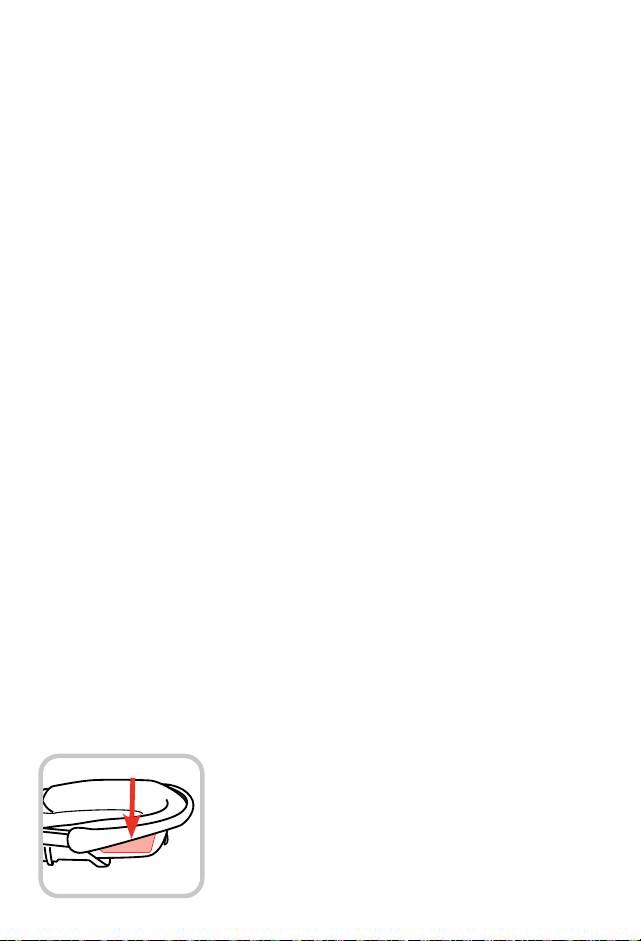
Expiration
On the side of the car seat there is a date of
manufacture label as shown.
Do not use this car seat more than 8 years after
the date of manufacture.
Warranty
Dorel Juvenile Group, Inc. (DJG) warrants this product to the original retail
purchaser as follows:
This product is warranted against defective materials or workmanship for
one year from the date of original purchase.
An original receipt is re-
quired to validate your warranty.
DJG will, at its option, provide replace-
ment parts or replace this product. DJG reserves the right to substitute if
the part or model has been discontinued.
To make a claim under this warranty you may email us at
[email protected]; fax us at 1-800-207-8182 24 hours a day; write
to DJG, Consumer CareDepartment, P. O. Box 2609, Columbus, IN 47202-
2609; or call 1-800-544-1108 from 8:00 a.m. to 6:00 p.m. EST Monday
through Thursday and from 8:00 a.m. to 4:30 p.m. on Friday.
Proof of purchase is required and shipping charges are the respon-
sibility of the consumer.
Warranty Limitations:
This warranty does not include damages which
arise from misuse or abuse of this product.
Limitation of Damages:
The warranty and remedies as set forth are
exclusive and in lieu of all others, oral or written, expressed or implied. In
no event will DJG or the dealer selling this product be liable to you for any
damages, including incidental or consequential damages, arising out of the
use or inability to use this product.
Limitation of warranties and other warranty terms and state law
rights:
Any implied warranties, including implied warranties of the merchantability
and fitness for a particular purpose, shall be limited to the duration and
terms of the express written warranty. Some states do not allow limitations
as to how long an implied warranty lasts or the exclusion or limitation of
incidental or consequential damages, so the above limitations may not
apply to you.
This warranty gives you specific legal rights, and you may have other rights,
which vary from state to state. Neither DJG nor the dealer selling this
product authorized any person to create for it any other warranty, obligation,
or liability in connection with this product.
35 36
Replacement and Expiration of Car Seat
Do not risk your child’s safety.
To keep your child as safe as possible, Dorel Juvenile Group strongly
recommends replacing the car seat even after a minor crash;
even if it was not occupied at the time.
Replacement After a Minor Crash
The National Highway Traffic Safety Administration states that for a
crash to be considered minor ALL of the following must be true:
• Vehicle able to drive away from the crash site; AND
• Vehicle door nearest the car seat was not damaged; AND
• No passengers were injured; AND
• Airbags did not deploy; AND
• There is no visible damage to the car seat.
If the crash your car seat was involved in meets ALL the criteria,
you may not need to replace the car seat.
If one or more of these criteria are not true or if you are uncertain
of any of your answers, replace the car seat immediately.
Replacement After a Moderate to Severe Crash
You must replace this car seat if it has been in a
moderate to severe car crash.
This car seat is intended to protect a child in a single crash.
During a crash, the car seat and all of its parts absorb crash energy
which can deform or weaken it. Damage is not always visible.
A damaged car seat must be replaced immediately.
Expiration
On the side of the car seat there is a date of
manufacture label as shown.
Do not use this car seat more than 8 years after
the date of manufacture.

Failure to follow the warnings on the labels and in the
instruction manual can result in serious injury or death
to your child.
Dream Ride LATCH
Infant Car Bed
5-20 lb (2.3-9 kg) and
26 in. (66 cm) or less
Read all instructions
before using this
car bed.
KEEP INSTRUCTIONS
FOR FUTURE USE.
4358-6748E
12.1.22
®
Buckle Assembly
Belt Loop
Seat Pad Set
“S” Clip
LATCH Belt
Instructions
Locking Clip
If requested color is not available,
similar color will be substituted.
Applicable tax and shipping &
handling will also be added.
For parts availability and questions,
Call: 1-800-544-1108
Text:
1-812-652-2525
Chat: www.safety1st.com
If you already know which parts you need,
you may complete your order with a credit card
by calling us at 1-800-544-1108.
We accept Visa or MasterCard.
Hours of Operation:
M-TH: 8:00 AM - 6:00 PM EST
FRI: 8:00 AM - 4:30 PM EST
Replacement Parts List
37
