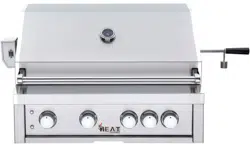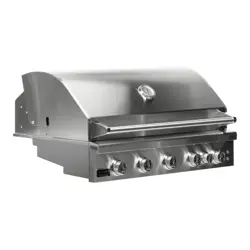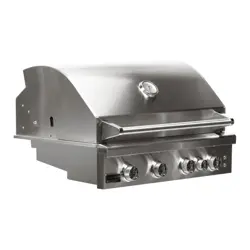
HEAT Instructional Book
Page | 1
Version 1.0
USE & CARE GUIDE
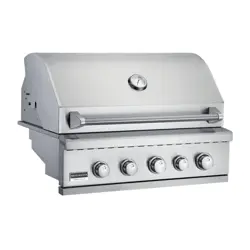
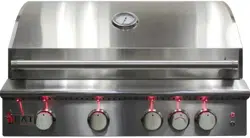
GAS GRILLS HTS-325 (NG/LP), HTS-432 (NG/LP)
HTS-540(NG/LP)
ATTENTION:
INSTALLER: PLEASE LEAVE THESE INSTRUCTIONS WITH THE CONSUMER.
CONSUMER: PLEASE READ & RETAIN THESE INSTRUCTIONS FOR FUTURE REFERENCE AND BEFORE
INSTALLING
OR OPERATING.
- CONTACT INFORMATION -
Heat Outdoor Living P.O. Box 16262, Philadelphia PA 19114
877-397-5144 or CustomerService@Heat-OutdoorLiving.com
www.Heat-OutdoorLiving.com
DANGER - IF YOU SMELL GAS:
I) Shut off the gas supply to the appliance at its source.
2) Extinguish any open flames.
3) Open grill hood to release any accumulation of gas
vapor.
4) If a gas odor persists, keep away from your
appliance and contact your gas supplier or fire
department immediately.
WARNING
I) Do not store or use gasoline or other flammable
liquids or vapor in the vicinity of this or any other
appliance.
2) An LP cylinder not connected for use shall not be
stored in the vicinity of this or any other appliances.

HEAT Instructional Book
Page | 2
Version 1.0
Table of Contents
I. BBQ Specifications 4-8
II. General Safety and Installation Warnings 8-12
i. Location of Appliance 12-14
III. Electrical Safety and Installation Warnings 15
IV. Gas Safety and Installation Warnings 16-17
i. Checking for Gas Leaks 17-19
ii. Unpacking Unit 20
V. Gas Connections 21
i. Natural Gas Requirements 21
ii. Liquid Propane Gas and Tank Requirements 21
iii. Transporting and Storing LP Gas 22-23
VI. Installing the Appliance in a BBQ Island 24
i. Outdoor Kitchen Ventilation 25-27
ii. Building BBQ Specifications + Instruction Diagrams 28-29
VII. First Time Operation 30
i. Lighting the Appliance 30
ii. Manually Lighting the Appliance 31-32
iii. Flame Adjustment 33

HEAT Instructional Book
Page | 3
Version 1.0
VIII. Cleaning your Appliance 33-34
IX. Optional Infrared Sear Burner 35
i. How to Replace Conventional Burner with Infrared Sear Burner 35
ii. Preheating the Infrared Burner 35
iii. Infrared Burner Cleaning 35
X. Fuel Conversion 36
i. Gas Regulator 36-37
ii. Main Burner 38
iii. Rear Burner 38
XI. Warranty Registration 39
XII. Grill Parts 40-41
XIII. Product Serial Number 42
XIV. HEAT Product Registration 43
HEAT Instructional Book
Page | 4
Version 1.0
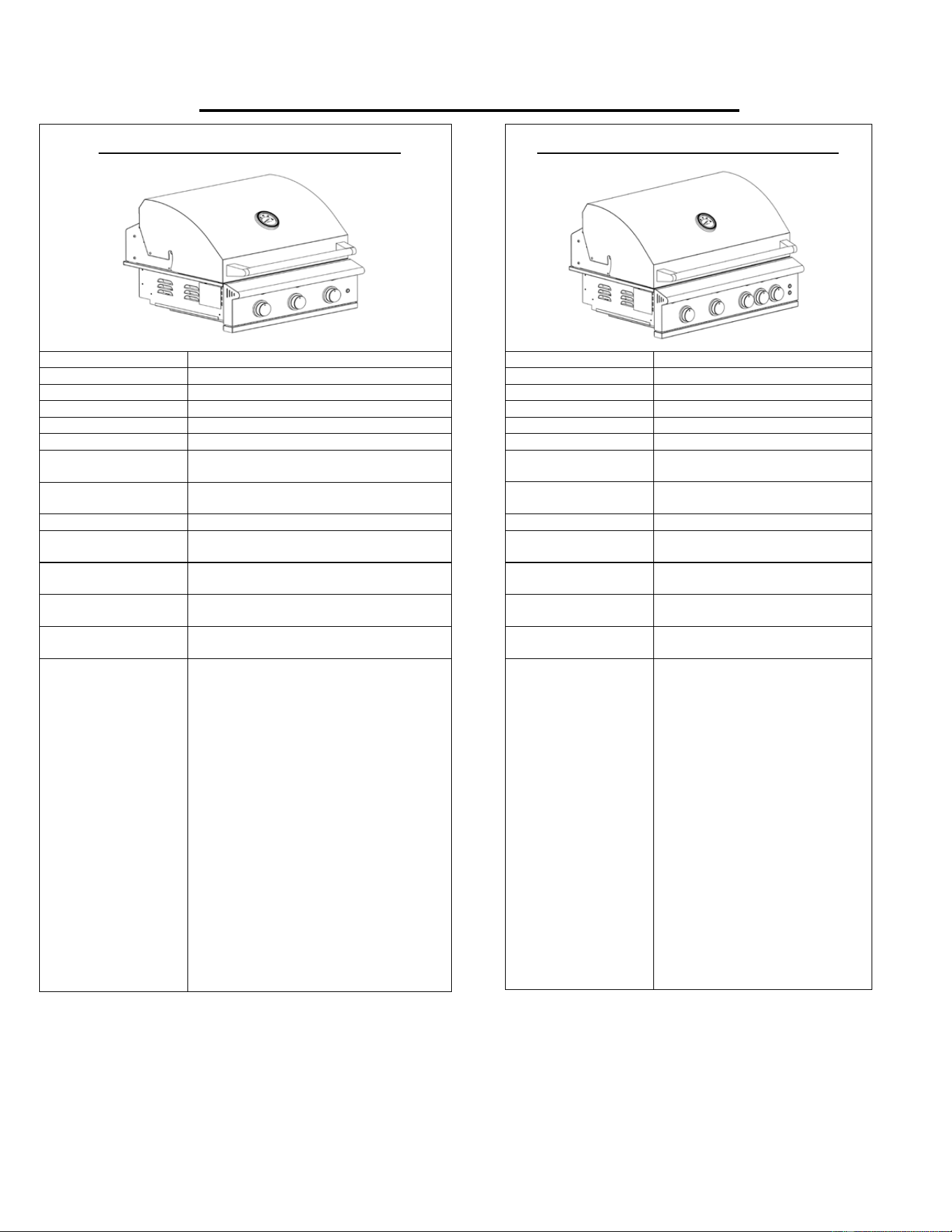
THIS MANUAL APPLIES TO THE FOLLOWING HEAT GRILLS:
Model: HTS-325-NG & HTS-325-LP 3 BURNER
Cutout Dimensions
23 1/4”W x 21 1/4”D x 8 1/2”H
BTU Output
14,000 BTU per Burner x3
Infrared Back Burner
None
Total BTU
42,000
Primary Ignition
Push N’ Turn Flame Thrower
Secondary Ignition
Flash Tube
Cooking Grid
Dimensions
22 3/8" X 18"
Total Cooking Area
558sq.in
(includes warming rack)
Flame Tamer
Flame Stabilizer Grid
Zone Cooking
Removable Heat Zone
Separators
Rotisserie Kit
(Motor & Forks)
Optional (4 burner kit available for use
with this model)
Burner
Commercial Quality Cast
Stainless Steel
Gas Type
Each grill contains an NG/LP
Conversion Kit
Warranty
*Lifetime – Defects in manufacturing
and workmanship. Cooking grids,
stainless housing as well as the
stainless burners against rust- through.
*15 Years – Control valves
*5 Years- Flame Tamers and Heat Zone
Separators
*1 Year – all other components
*Appliances must be registered within
30 days of purchase to validate this
warranty.
*See warranty section for
details.
Model: HTS-432-NG & HTS-432-LP 4 BURNER
Cutout Dimensions
30 5/8”W x 21 1/4”D x 8 1/2”H
BTU Output
14,000 BTU per Burner x4
Infrared Back Burner
10,000 BTU
Total BTU
68,000
Primary Ignition
Push N’ Turn Flame Thrower
Secondary Ignition
Flash Tube
Cooking Grid
Dimensions
29 1/2" X 17 7/8"
Total Cooking Area
748sq.in
(includes warming rack)
Flame Tamer
Flame Stabilizer Grid
Zone Cooking
Removable Heat Zone
Separators
Rotisserie Kit
(Motor & Forks)
Optional
Burner
Commercial Quality Cast
Stainless Steel
Gas Type
Each grill contains an NG/LP
Conversion Kit
Warranty
*Lifetime – Defects in
manufacturing and
workmanship. Cooking grids,
stainless housing as well as the
stainless burners against rust-
through.
*15 Years – Control valves
*5 Years- Flame Tamers and
Heat Zone Separators
*1 Year – all other components
*Appliances must be registered
within 30 days of purchase to
validate this warranty.
*See warranty section for
details.
HEAT Instructional Book
Page | 5
Version 1.0
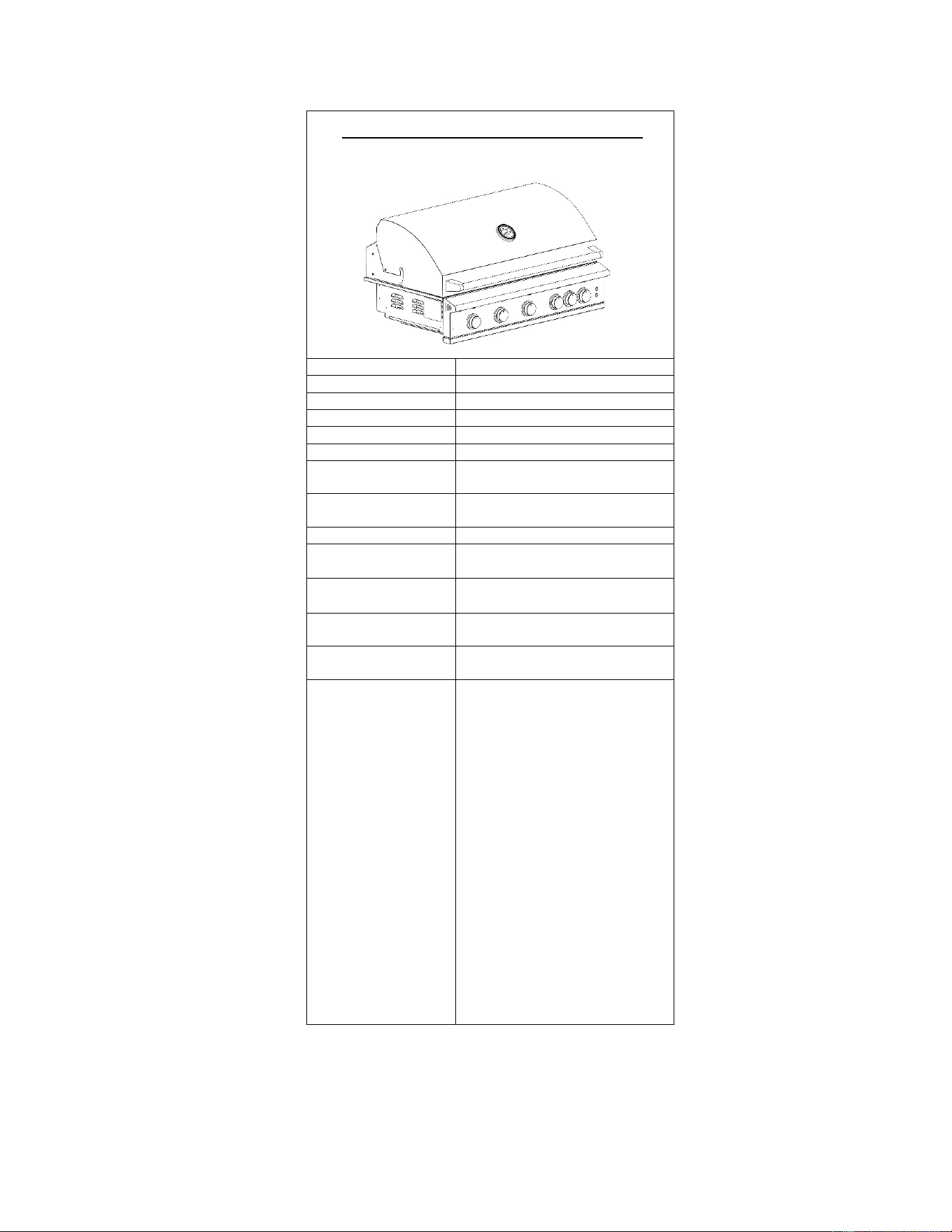
Model: HTS-540-NG & HTS-540-LP 5 BURNER
Cutout Dimensions
38 3/8”W x 21 1/4"D x 8 1/2”H
BTU Output
14,000 BTU per Burner x5
Infrared Back Burner
10,000 BTU
Total BTU
82,000
Primary Ignition
Push N’ Turn Flame Thrower
Secondary Ignition
Flash Tube
Cooking
Grid
37" X 18"
Total Cooking Area
915sq.in
(includes warming rack)
Flame Tamer
Flame Stabilizer Grid
Zone Cooking
Removable Heat
Zone Separators
Rotisserie Kit
(Motor &
Forks)
Optional
Burner
Commercial Quality
Cast Stainless Steel
Gas Type
Each grill contains an
NG/LP Conversion Kit
Warranty
*Lifetime – Defects in
manufacturing and
workmanship. Cooking grids,
stainless housing as well as
the stainless burners against
rust- through.
*15 Years – Control valves
*5 Years- Flame Tamers and
Heat Zone Separators
*1 Year – all other components
*Appliances must be
registered within 30 days of
purchase to validate this
warranty.
*See warranty section
for details.
HEAT Instructional Book
Page | 6
Version 1.0
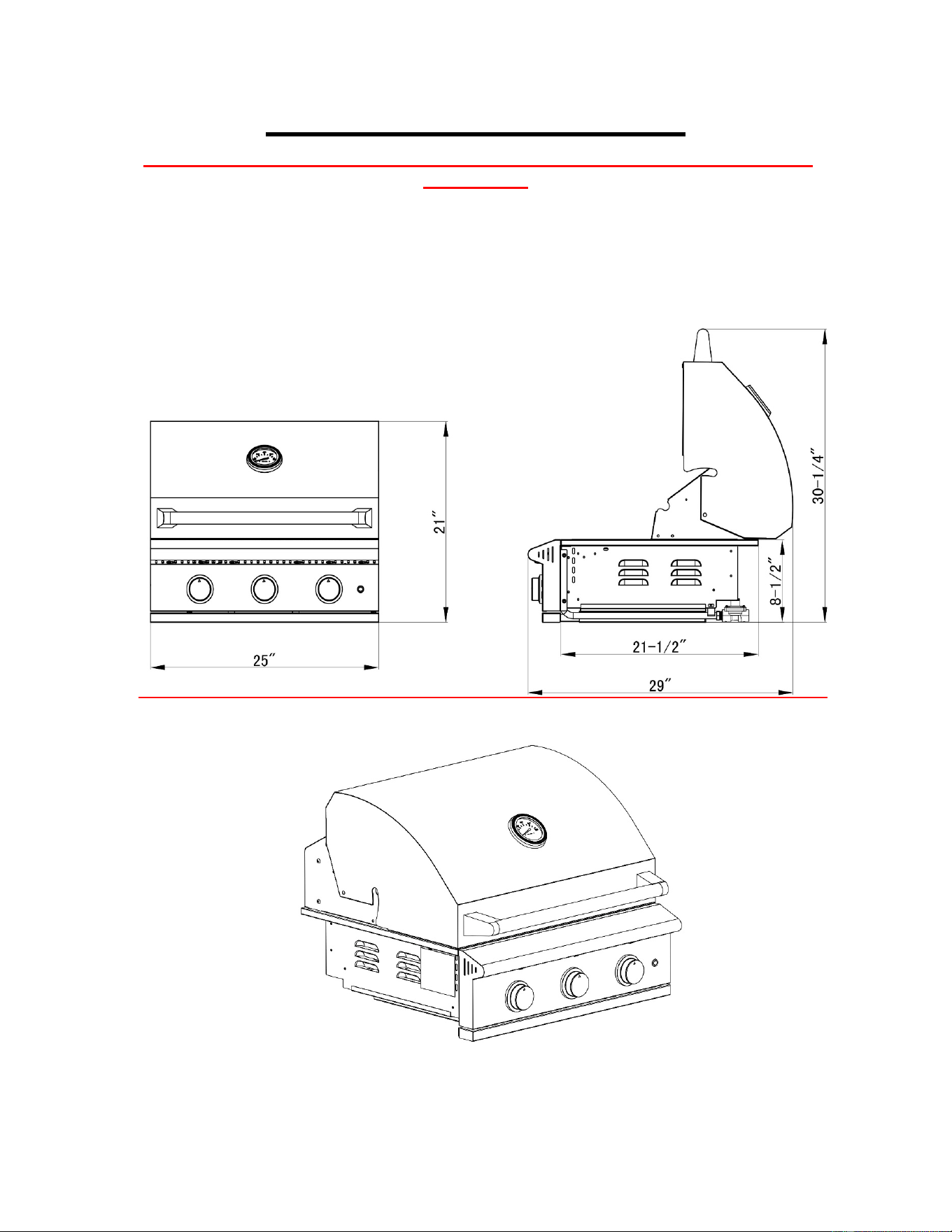
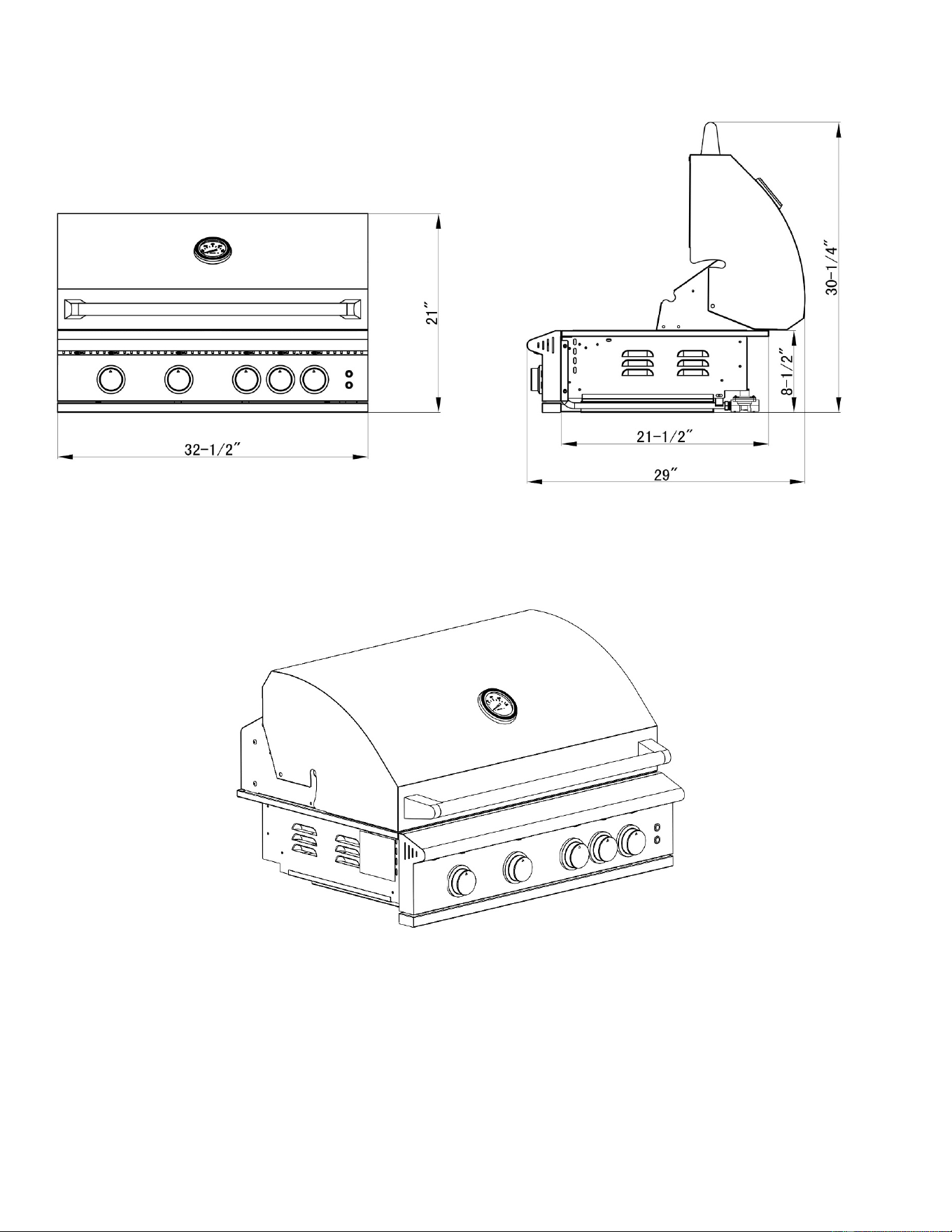
BBQ SPECIFICATIONS
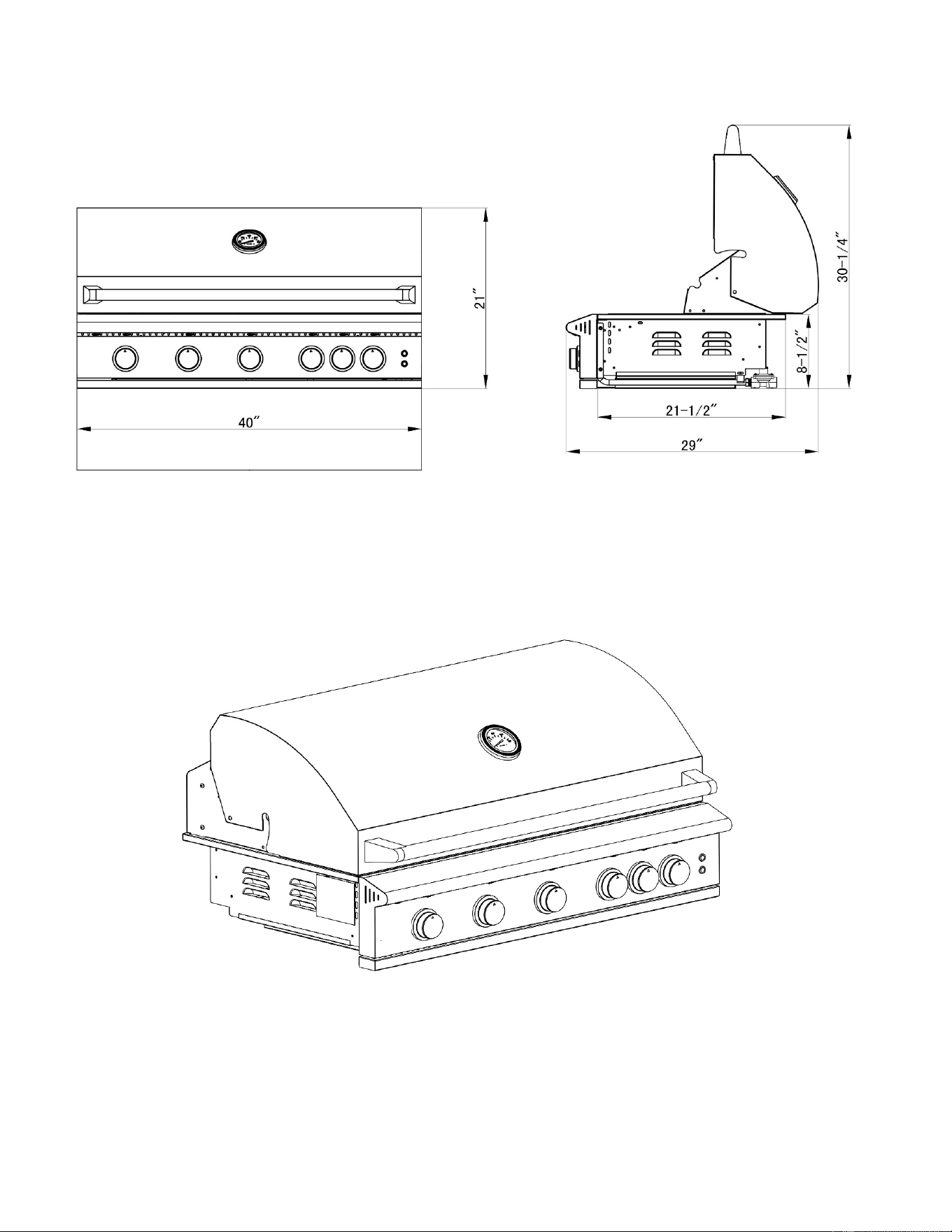
NOTE: ALWAYS have equipment measured by Contractor before beginning
any project.
3 Burner
HEAT Instructional Book
Page | 7
Version 1.0
4 Burner
HEAT Instructional Book
Page | 8
Version 1.0
5 Burner
HEAT Instructional Book
Page | 9
Version 1.0
IMPORTANT SAFETY INFORMATION
Please read this manual carefully and before using your HEAT GRILL to ensure proper operation,
installation, servicing and to reduce the risk of fire, burn hazard and or other injury. This manual
should be retained for your information
NOTE:
Improper installation and service or maintenance may cause property damage, injury or death.
Do not operate this appliance without having read this manual.
All gas installations and gas conversions must be performed by a qualified technician or authorized service
agent.
NOTE: This appliance is not intended for commercial use.
FOR YOUR SAFETY
If you smell gas:
1. Shut off gas to the appliance.
2. Extinguish any open flame.
3. If odor continues, immediately
call your gas supplier or your fire department.
General Safety and Installation Warnings
Safe operation of the HEAT GRILL depends upon its proper installation.
Only a qualified professional installer
and service technician must perform adjustments and service of the grill. Proper location and proper use is
essential to insure safe and continued trouble-free operation.
Any non-approved alterations made to the
appliance will void the product’s warranty.
NOTE: The manufacturer cannot be held responsible for damage or injury caused by improper use of this
appliance.
HEAT Instructional Book
Page | 10
Version 1.0
When using your HEAT appliance, please read and follow these basic precautions:
To reduce the risk of fire, electric shock, or injury, read and follow these basic precautions before
installing/operating your
appliance.
WARNING: Improper installation, adjustment, alteration, service or maintenance can cause injury or property
damage. Read the installation, operating and maintenance instructions thoroughly before installing or servicing
this equipment.
EXPLOSION HAZARD
Do not use the appliance as storage area for flammable materials. Keep area clear and free from combustible
materials, gasoline, and other flammable vapors and liquids. Failure to do so can result in death, explosion, or fire.
In Massachusetts: All gas products must be installed using a “Massachusetts” licensed plumber or gasfitter. A
“T” handle type manual gas valve must be installed in the gas supply line to this appliance. This applies to
permanently installed natural gas and propane installations.
This does not apply to propane portable
installations using a 20 pound tank.
APPLIANCE
INSTALLATION
This gas appliance must be installed in accordance with all local codes.
If
installation
is
planned
in
an
area
with
no
local
codes,
the
gas
appliance
must
be
installed
in
accord
with
the
National
Fuel
Gas
Code
ANSI
Z223.1
and
storage
and
handling
of
liquefied
petroleum
gases,
ANSI/NFPA
58
or
CSA
B149.1
natural
gas
and
propane
installation
code.
CALIFORNIA
PROPOSITION
65
WARNING
The
burning
of
gas
cooking
fuel
generates
some
by-products
which
are
on
the
list
of
substances
which
are
known
by
the
State
of
California
to
cause
cancer
or
reproductive
harm.
California
law
requires
businesses to
warn
customers
of
potential
exposure
to
such
substances.
To
minimize
exposure
to
these
substances,
always operate
the
unit
according
to
the
use
and
care
manual,
ensuring
you
provide
good
ventilation
when
cooking.
HEAT Instructional Book
Page | 11
Version 1.0
Have an ABC Fire Extinguisher accessible at all times. Never attempt to extinguish a grease fire
with water or other liquids.
IMPORTANT: Consult the AHJ (Authority Having Jurisdiction) or local contractor of any uncertainty.
This unit is for outdoor use only!
Do not operate in a building, garage or any other enclosed areas. This could result in carbon monoxide buildup
which
could result in injury or death.
For proper operation, burners must be aligned with the valve orifice and seated in the bracket slot. This is
accomplished by first placing the burner tube shutter hole securely over the valve orifice and ensuring the male post
on the rear of the burner rests in the opening in the grill chassis. Failure to do so could result in a fire and injury.
BEWARE OF SPIDERS
CAUTION: BURNER TUBES MUST BE INSPECTED AND CLEANED BEFORE EACH USE.
S
piders and small insects occasionally spin webs or make nests in the burner tubes. These webs can lead to a gas flow obstruction, which
c
ould result in a fire in and around the burner tubes. This type of fire is known as “FLASH-BACK” and can cause serious damage to your
app
liance and create an unsafe operating condition for the user. Although an obstructed burner tube is not the only cause of “FLASH-
BA
CK” it is the most common cause, and frequent inspection and cleaning of the burner tubes is necessary.
HEAT Instructional Book
Page | 12
Version 1.0
Do not attempt to heat unopened containers on the grill as pressure may build up and
cause the container to explode.
Never use charcoal or any other solid fuel in the grill.
Never cook without the drip pan in place.
Never operate this grill while under the influence of alcohol or drugs.
Location of Appliance
Most importantly, this is an outdoor appliance. Ensure your appliance is positioned safely away from
anything that can catch fire. Under no circumstance is this appliance to be used indoors. This includes
garages or any other enclosed area. This outdoor cooking gas appliance is not approved to be installed in
or on any recreational vehicles and /or boats. HEAT Grills are for single family/residential use only.
When determining a suitable location take into account concerns such as exposure to wind, proximity to
traffic paths and keeping any gas supply lines as short as possible.
Do not store combustible materials,
gasoline or flammable liquids or vapors around the appliance.
This HEAT GRILL must be located outdoors only. As with any gas appliance, harmful carbon monoxide
is produced during the combustion process that should not be allowed to accumulate in a confined
space.
Please note since hot air rises above the HEAT GRILL while in operation, covered locations
FOR YOUR SAFETY
NOTE: Check with City and Fire department for Local Building Codes. A Permit may be
required for outdoor kitchen construction.

HEAT Instructional Book
Page | 13
Version 1.0
should be avoided. Do not locate the HEAT GRILL where an overhang or awning may cover it.
DO NOT obstruct the flow of combustion and ventilation air to this appliance.
Keep any electrical supply cords and the fuel supply hoses away from any heated surfaces and/or sharp and
aggressive edges.
Non-Combustible Enclosure: The HEAT GRILL must be installed in a NON-COMBUSTIBLE ENCLOSURE
ONLY. The determination of whether a location is combustible or non-combustible construction is made by
the local fire marshal, building inspector or the local safety authority having jurisdiction.
Clearance from Combustibles: Ensure your appliance remains at a distance of at least 14” from sides
& 16” from back from any
combustible material such as wood, gyprock, paper and plants. Do not store
combustible materials,
gasoline or flammable liquids or vapors around the appliance.
Adequate Ventilation: Ensure there is adequate ventilation for both the appliance, grill cart and/or
island cavity. This is required not only for proper combustion, but also to prevent gas build up. While
the amount of venting required varies on a case by case basis, consult with your local licensed
professional and local code for adequate venting requirements.
Firm Level Surface: Use your appliance only on a firm level surface. This appliance is not designed for
recreational vehicles, and should not be installed on a boat or marine craft.
Protection from Weather: Keep the appliance protected from adverse weather, including rain and winds.
Wind, particularly coming into the rear of the grill, can affect the exhaust from escaping from the
grill. This can back up the heat behind the control panel potentially creating a gas leak, damage to
the product, and injury.
Maintenance Access: When your appliance is installed, you should be able to access the gas supply
line including the gas piping or hose, gas regulator, gas cylinder and any shut off valves. Allow clear
access to the entire gas supply hose and regulator.
Partial Enclosures: Many backyards have areas that are partially closed off, such as balconies and
pergolas. In some cases, it is hard to decide whether these partially enclosed areas should be classified
as
indoor areas, particularly in terms of permanent (non-closable) ventilation. Consult the AHJ (Authority
Having Jurisdiction) or local contractor of any uncertainty.
Please read all instructions before installing or operating your gas appliance to prevent injury and
appliance
damage.
All gas appliances will get hot during use. Use extreme caution when operating the appliance.
Do not touch hot surfaces. Always use the handle to open or close the appliance.
Close supervision is necessary when this or any appliance is used near children. Keep children away
from the appliance during operation and until the appliance has cooled off.

HEAT Instructional Book
Page | 14
Version 1.0
Do not store any LP cylinder or tank not connected for use with the appliance, in the area of this
appliance or any other appliance. Never store an LP cylinder or tank indoors, or within the reach of
children.
Never test the appliance for gas leaks using a lighted match or any other open flame; see leak test
procedures using soap/water solutions – see section on Leak Testing.
The use of accessories, regulators, or components not recommended by the appliance manufacturer
may cause injuries and will void warranty.
Never light the appliance with the hood closed and be certain that the burners are positioned and seated
over the gas valves and on the burner support.
Never lean over the cooking surface when lighting or operating the appliance.
Use cooking utensils with wood handles and insulated oven mitts when operating the appliance.
Do not store anything in the appliance. Make sure food is not forgotten in the appliance; forgotten items
could melt or catch fire when the appliance is turned on.
To prevent injuries, do not use accessories that are not recommended by the manufacturer.
Before cleaning the appliance, disconnect the rotisserie and "trip" the circuit breaker.
Never use the appliance in windy conditions. If located in a consistently windy area (oceanfront,
mountaintop, etc.) a wind break will be required. Winds blowing into or across the back hood gap, can
cause poor performance and / or cause the control panel to get dangerously hot.
Always open the appliance hood carefully, using only the handle - the hood may be hot.
Children should not be left alone or unattended in an area where any appliance is in use. They should
never be allowed to touch, sit or stand on any part of the appliance.
Do not store items of interest to children in cabinets above the appliance or in the appliance. Children
climbing on the appliance to reach these items could be seriously injured.
Wear proper clothing when operating this appliance. Loose-fitting or hanging garments should never be
worn while using the appliance.
Do not leave the appliance unattended while in use.
Do not use water on grease fires! A violent steam explosion may result. Instead, smother the fire with a
multipurpose ABC extinguisher.

HEAT Instructional Book
Page | 15
Version 1.0
Electrical Safety and Installation Warnings
Extension cords may be used if care is exercised in their use.
If
an extension cord is used:
The marked electrical rating of the cord set or extension cord should be at least as great as the electrical
rating of the appliance.
The cord should be arranged so that it will not touch hot surfaces, sharp edges or drape over the
countertop or tabletop (where it can be pulled or tripped over unintentionally).
Outdoor extension cords should be used with products suited for outdoor use. They are surface marked with
suffix letters "W" or "W-A" and with a tag stating "Suitable for Use with Outdoor Appliances".
To protect against electrical shock, the power cord and plug should be kept dry and off of the ground.
Do
not clean this product with water spray; do not spray cleaners into the lamp socket area.
Gasoline, lighter fluid or other flammable liquids and vapors should never be stored in the area of this appliance
or any other appliance.
Before installation or service, disconnect the power supply to the work area by removing the fuse, "tripping" the
circuit breaker, or unplugging the unit.
Keep any electrical supply cord and fuel supply hose away from any heated surfaces, sharp edges and
dripping
grease.
Be certain your appliance is properly installed and grounded by a qualified technician in accordance with
applicable codes. To guarantee the electrical safety of this appliance, continuity must exist between the
appliance and an effective grounding system. It is imperative that this basic safety requirement be met. The
manufacturer cannot be held responsible for damages caused by the lack or inadequacy of an effective
grounding system.
Do not operate any appliance with a damaged power cord or power plug, and do not operate any appliance
after
the appliance malfunctions or has been damaged in any manner. If this should occur, return the appliance
to the
nearest authorized service facility for examination, repair or adjustment.
Be certain your appliance is properly installed and grounded by a qualified technician in accordance with
applicable codes. To guarantee the electrical safety of this appliance, continuity must exist between the
appliance and an effective grounding system. It is imperative that this basic safety requirement be met.
The
manufacturer cannot be held responsible for damages caused by the lack or inadequacy of an effective
grounding system.
This appliance conforms to all uniform electrical safety codes and electrical grounding regulations. Install
unit
according to I.A.W. local codes or with National Electrical Code ANSI/NFPA 70 or CSA C22.1 in their
absence.
HEAT Instructional Book
Page | 16
Version 1.0
Gas Safety and Installation Warnings
•
All gas connections should be made by a Professional qualified technician and in accordance with local
codes and ordinances. The installation must conform with local codes or, in the absence of
local codes, with either the national Fuel Gas Code, ANSI Z223.1/NFPA 54, or CAN/CGA-B149.1,
Natural Gas Installation Code or CAN/CGA-B149.2, Propane Installation Code.
•
Always check the Rating Plate to make sure the gas supply you are hooking up to is the gas type
the
appliance is manufactured for.
•
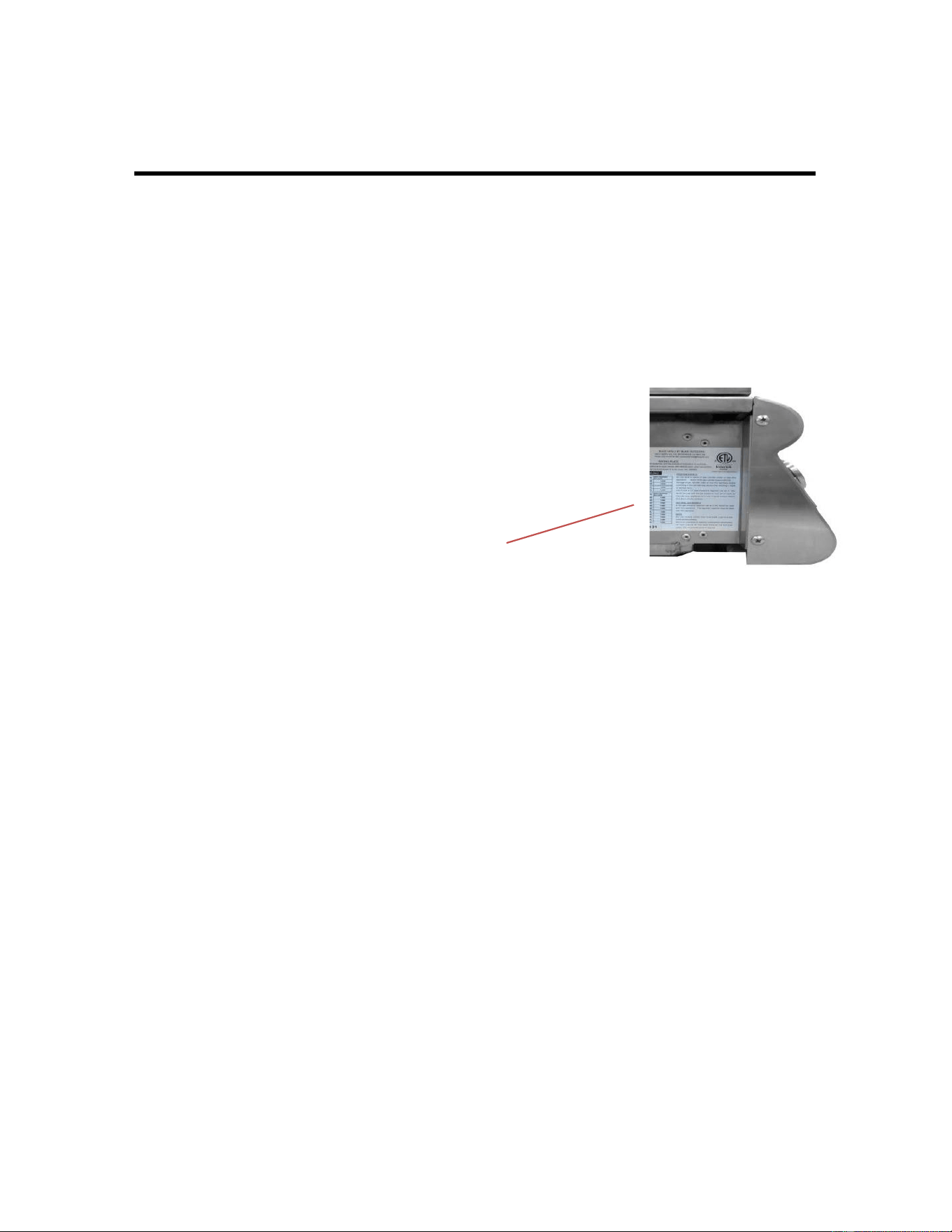
Check the rating label on the left hand outside of the unit.
•
Do not twist the gas supply hose.
•
Before each use, visually inspect the gas supply hose for cracks, cuts or excessive wear. Replace
the
hose if necessary. Check for gas leaks.
•
Gas Specifications: Be sure that the gas supplied to the appliance conforms to the model you
purchased. A Natural Gas appliance requires natural gas to operate; an LP appliance requires liquid
propane gas to operate.
•
Never connect the appliance to an unregulated gas supply line. Appliances operated without a regulator
are
unsafe and will not be serviced until installed properly and safely. Unsafe operation without a gas
regulator
will void the warranty of the appliance.
•
Appliances operated with NG (natural gas) gas must be installed with the NG regulator supplied with the
unit and set to 4.0" water column pressure.
•
Appliances operated with LP (liquid propane) gas must be installed with an LP regulator set to 11" water
column pressure.
•
Please contact your dealer and use a licensed contractor or installer to convert your appliance to the
different gas type.
•
CHECK TO ENSURE THAT THE GAS SUPPLY HOSE DOES NOT COME IN CONTACT WITH ANY
HOT SURFACE, SHARP OR ROUGH EDGES OF THE GRILL OR OUTDOOR KITCHEN
CONSTRUCTION. DO NOT KINK THE GAS LINE WHEN INSTALLING.
RATING PLATE LOCATION

HEAT Instructional Book
Page | 17
Version 1.0
The self-contained LP system appliance is design certified to be used with a standard 20 lb., 12 1/4" diameter;
18"
high cylinder with right handed connection threads and this is the maximum size LP tank to be used. The
cylinder
must be marked in accordance with the latest U.S. Department of Transportation specifications for LP
gas cylinders.
(DOT. CFR49 or National Standards of Canada CAN/CSA-B359 Cylinders, Spheres and Tubes for
the
Transportation of Dangerous Goods a Propane Tank with an ODP Overfill Prevention Device must be used
at all
times.)
IMPORTANT: Never connect the appliance to an unregulated gas supply.
The installation of this appliance must conform with local codes or in the absence of local codes, to the national
fuel
gas code, ANSI Z223.1a-1998. Installation in Canada must be in accordance with the standard CAN/CGA-
B149.2,
Propane Installation Code.
A licensed contractor or local gas company representative must perform all natural gas connections.
Ensure that the service supplying the appliance is fitted with a shut off valve conveniently positioned near the
appliance and giving ease of access.
The appliance and its individual shutoff valve must be disconnected from the gas supply piping system during
any
pressure testing of that system.
GAS LEAK WARNINGS
Finding and/or fixing a gas leak is NOT a “DO-IT-YOURSELF” procedure – ONLY USE A
PROFESSIONAL.
NEVER USE THE GRILL WITHOUT FIRST LEAK TESTING THE GAS CONNECTIONS INCLUDING
ALL OF THE VALVES, FITTINGS, LINES ETC. (ANY GAS CONNECTION SHOULD BE CHECKED)
WARNING: DO NOT USE OPEN FLAME TO CHECK FOR LEAKS. USE OF AN OPEN FLAME
COULD RESULT IN A FIRE, EXPLOSION AND BODILY HARM.
DO NOT SMOKE WHILE PERFORMING THE LEAK TEST. Any Open Flame will Ignite the gas.
To prevent fire or explosion hazard, Perform leak test outdoors only.

HEAT Instructional Book
Page | 18
Version 1.0
Check to ensure that flexible hoses do not have any cuts and wear that may affect the safety before
each use. Only the factory supplied hose and regulator must be used. Use only replacement regulator
and hose assemblies specified by HEAT GRILLS.
Checking for Gas Leaks
Perform a leak test before each use. In
addition, whenever the gas cylinder is connected to the regulator or
whenever any part of the gas system is
disconnected or replaced, perform a leak test.
As a safety precaution, remember to always leak test your appliance outdoors in a well-ventilated area. Never
smoke or permit sources of ignition in the area while doing a leak test. Do not use a flame, such as a lighted
match to test for leaks. Use a solution of soapy water.
Prepare a leak testing solution of soapy water by mixing in a spray bottle one part liquid soap to one
part
water.
Make sure all the control knobs are in the OFF position.
Turn on the gas.
o
On Natural Gas systems, turn the main feed valve to the appliance.
o
On LP systems, turn the cylinder valve knob counter clockwise one turn to open.
Apply the leak-testing solution by spraying it on joints of the gas delivery system. This includes all
valves, pipe connections, joints, lines and every point from the gas source to the burners.
Blowing bubbles in the soap solution and/or there is a faint gas smell (Typically Gas has an Egg Smell)
indicates that a leak is present. Do not attempt to ignite the grill.
Turn all control knobs back to the full OFF position.
Stop a leak by tightening the loose joint and/or resealing with thread sealant or Teflon tape, removing
sealant or
tape in the event of a flared connection or by replacing the faulty part with a replacement part
recommended by the manufacturer. Do not attempt to repair the cylinder valve if it is damaged. The
cylinder must be discarded to a proper LP tank location and then replaced.
If you are unable to stop a leak turn all control knobs back to the full OFF position, shut off the gas
supply to the appliance and release pressure in the hose and manifold by pushing in and turning any
of
the control valves one quarter turn counter-clockwise.
On LP systems, remove the cylinder from the appliance.
Call an authorized gas appliance service technician or an LP gas dealer.
Do not use the appliance until the leak is corrected.
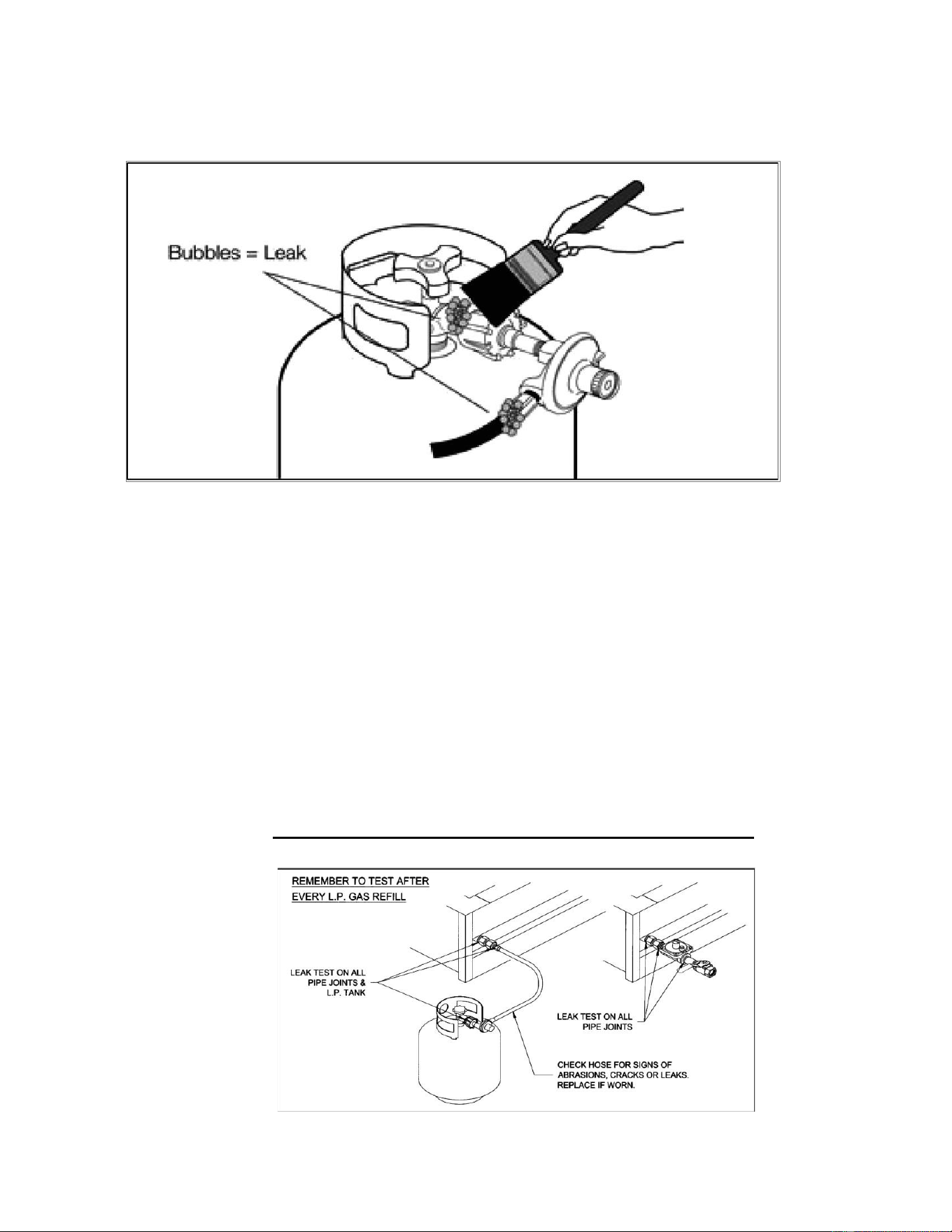
The below diagram is intended to show what a leaking connection would look like. These two locations
HEAT Instructional Book
Page | 19
Version 1.0
are not the only points to check nor the only potential areas for a gas leak to be present.
Leak Testing
All gas piping and connections must be tested for leaks after installation or service along with before each
use.
This includes all valves, pipe connections, joints, lines and every point from the gas
source to the burners.
All leaks must be corrected
immediately. Remember-before exchanging an empty bottle for a new one; make
sure all control valves are in
the “off” position. This can create a low flow of gas through the grill. This would
require the tank to be disconnected from the regulator, and then reconnected to reset the regulator.
Open the valve (shut-off or ‘ON’ LP tank). Test for leaks by applying liquid soap solution to all joints. Bubbles forming
indicate gas leak.
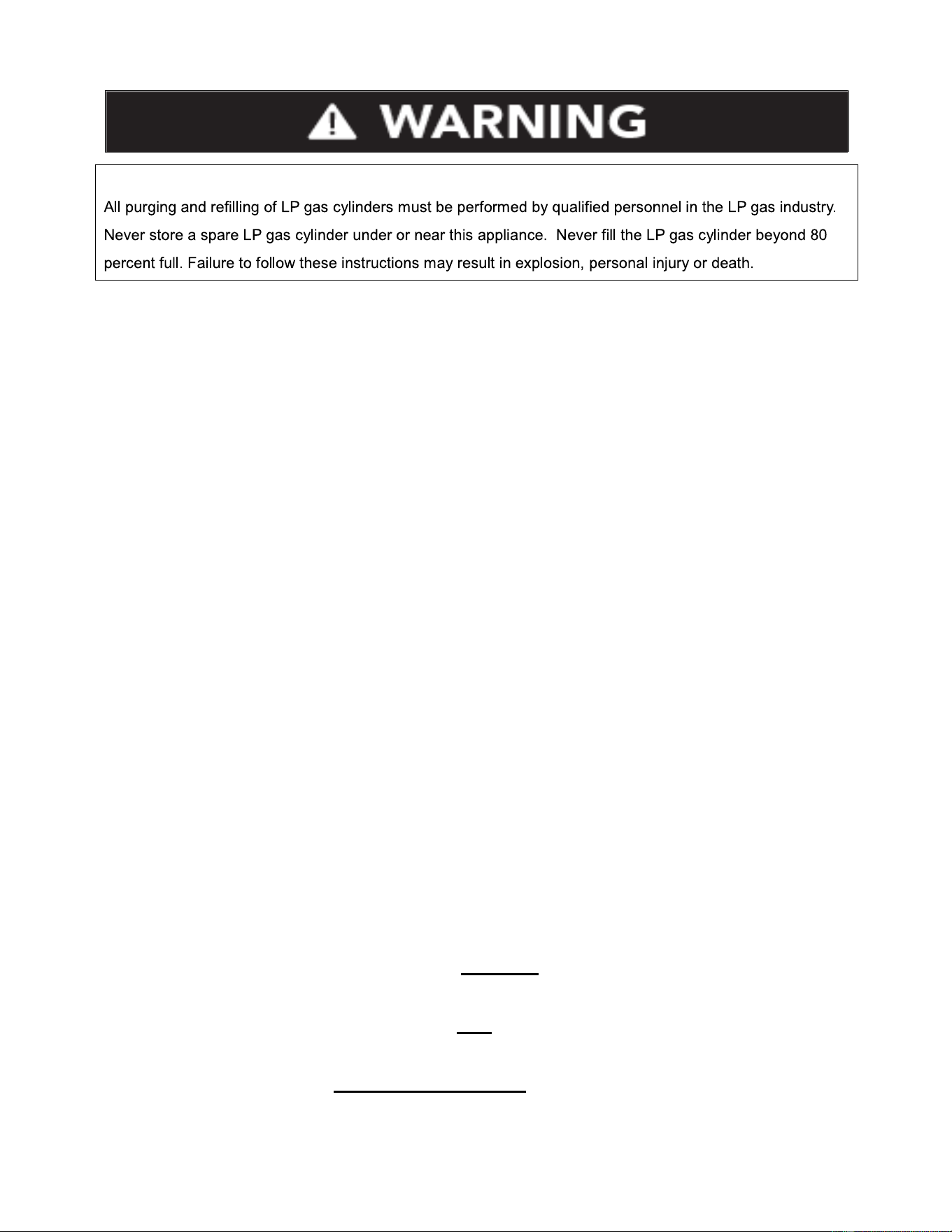
The following diagram is for informational purposes only. These locations are not the only points to
check nor the only potential areas for a gas leak to be present. Ensure the leak test includes all
valves, pipe connections, joints, lines and every point from the gas source to the burners.
NEVER USE AN OPEN FLAME TO CHECK FOR LEAKS.

HEAT Instructional Book
Page | 20
Version 1.0
UNPACKING UNIT:
Product Inspection:
A final inspection of your product occurs at the factory to ensure a quality product is
packaged. Please re-check for possible shipping damage immediately after unpacking your grill. If the appliance is
found to have some damage, contact your dealer immediately as often the shipping carrier will have a timeframe to
report damage. Please also save the packaging material the product came with as that is at times inspected by the
shipping carrier.
Caution: Do not leave the unit under the sun with the protective film on for a long period of time as it will make
the film difficult to remove and/or leave markings on the materials which are not covered by the warranty.
Your HEAT Series Appliance comes pre-assembled and requires very little setup. We do however; recommend
the use of professional help during the installation of your unit as improper installation may affect your warranty.
Remove the unit from the box along with all accessories and check that no damage has occurred to the unit or
any parts. Remove all packaging materials, labels and protective plastic film before you start cooking.
Burners: Check the burner tubes and remove any obstructions that may be in the ports or holes. Using cold
water
and a brush will be sufficient. Make sure all foreign particles are removed from the burner before use.
Make sure
the air shutter on the burners is slightly opened (to about 1/8" for NG and 1/4" for LP). When finished ensure that
the burners are aligned with the valve orifice and seated in the bracket slot. This is accomplished by first
placing the burner tube shutter hole securely over the valve orifice and ensuring the male post on the grill chassis
rests in the corresponding slot in the rear of the burner. Failure to do so could result in a fire and injury.

HEAT Instructional Book
Page | 21
Version 1.0
Gas Connections
Natural Gas Requirements
Connect a suitable natural gas flex connector to the grill regulator located on the rear right corner of the
appliance. It is recommended to use a flex connector with a minimum of a ½” diameter or larger.
Sealing all non-flared fittings with thread sealant or Teflon tape.
Ensure the flex connector is protected from sharp edges, heat, aggressive surfaces, and kinking.
Check the appliance controls to ensure all control valves are in the full OFF position.
Turn on the main gas supply and check all connections for leaks using soapy water as described in the
leak
testing procedure section.
The regulator used must be set for 4” water column and is for use with Natural gas only. Note: Most low
pressure regulators have a directional arrow indicating the direction in which the gas must travel. Ensure
the arrow is pointing in the direction of the grill.
An installer supplied gas shutoff valve must be installed in an accessible place.
Liquid Propane (LP) Gas and Tank Requirement
If your HEAT Grill is for a Liquid Propane application, an LP regulator set for 11” WC must be used and is for
use with LP gas only.
The regulator and hose supplied must be used with a 20 lb. LP cylinder.
A collar to protect the cylinder threads on the customer supplied tank.
An arrangement for gas vapor withdrawal.
A safety relief device having direct communication with the vapor space of the cylinder.
A method of mounting.
The gas supply must be turned off at the LP Gas supply cylinder and the LP Gas supply cylinder must be
disconnected from the regulator when this outdoor cooking gas appliance is not in use.
Always sit the cylinder in an upright position so that the cylinder valve is at the top. This will ensure proper
vapor withdrawal.
The cylinder should not be stored in a building, garage, or any other enclosed area. It should be stored
outdoors in a protected, cool, and dry location out of reach of children.
Never store any spare or extra gas cylinder(s) around or in the outdoor kitchen containing the HEAT GRILL
or any other open flame, heat-producing appliance(s) or heat source.
HEAT Instructional Book
Page | 22
Version 1.0
Turn control knobs and cylinder valve to the OFF position. Unscrew valve.
Remove cylinder and have it filled at your local qualified propane dealer.
Once filled, carefully connect the valve and make sure it is secure and not leaking.
With the control knobs in the OFF position, turn on the cylinder valve.
If you smell gas or hear a hiss of gas escaping from the tank, get away from the tank and do not attempt to
correct
the problem yourself. Call the Fire Department immediately.
If your appliance has no leak at the cylinder, then re-check for loose connections and retest for leaks using the
method detailed in the following pages with soapy solution.
Do not subject your LP gas cylinder to excessive heat, and always store the cylinder in an upright position.
Never
store your LP cylinders indoors.
Make sure that when attaching components, all connections are secured and fully tightened to prevent leakage.
Always check for leaks before every use.
If one is not already available, it is recommended that an ON-OFF shutoff valve be installed at the gas supply
source,
and that the gas supply be turned off when either Natural Gas or LP Gas appliances are not in use.
Transporting and Storing LP Gas
Transport only one cylinder at a time. Ensure the cylinder is secured in an upright position with the control valve
turned off and the dust cap in place. Store cylinders outdoors and out of the reach of children. Do not store
cylinders
in a building, garage, or any other enclosed area.
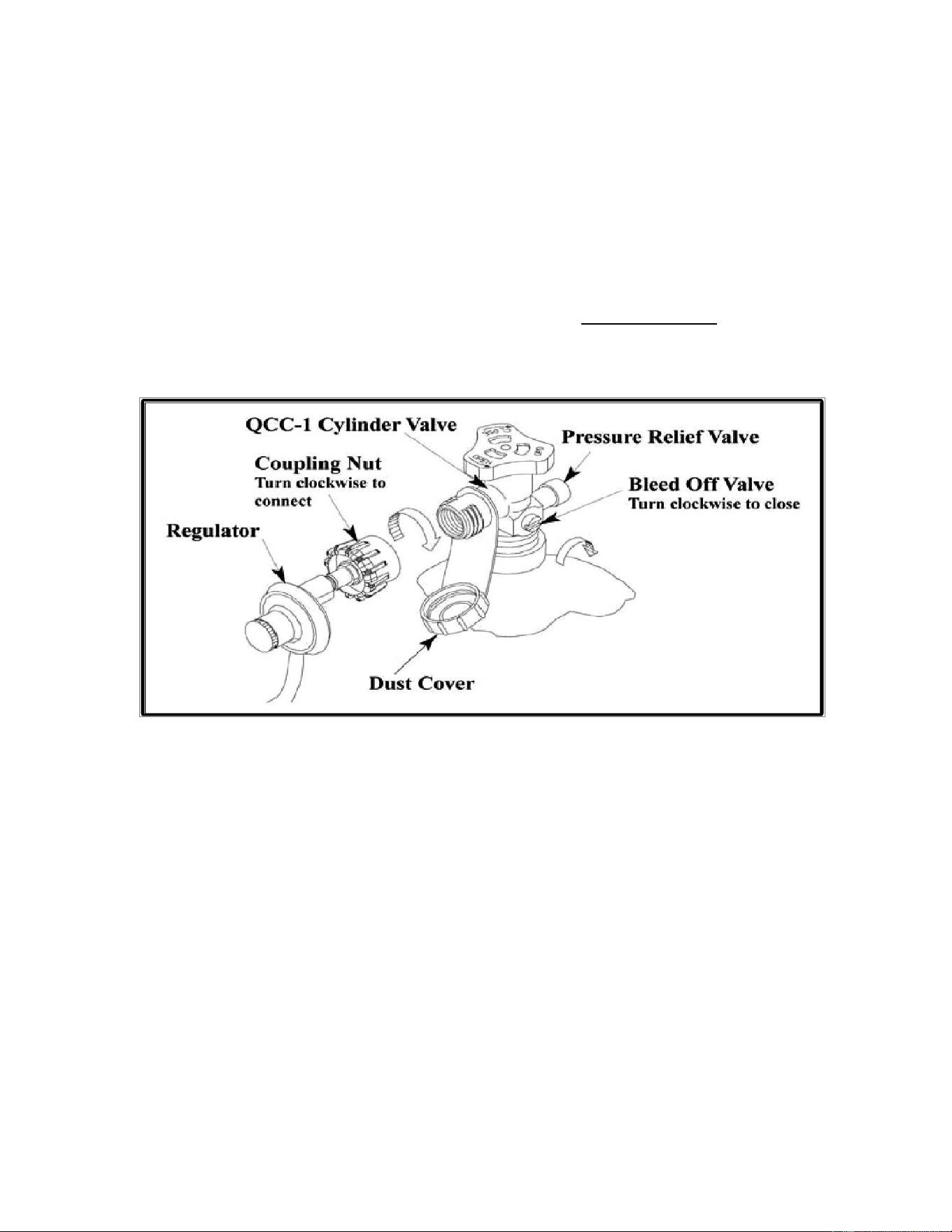
Procedure for LP Gas Cylinder Connection (20 lbs)
1. Turn the “Hand Wheel” on cylinder clockwise until it stops to ensure the Cylinder Valve is fully
closed.
2. Turn all of the burner knobs to the OFF position.
3. Connect the 3/8” Flare end of the hose to the 3/8” Flare end of the brass coupling on the unit using
a 3/4” open wrench.
Do not apply pipe sealant. (These are flared fittings). Note: remember the
rubber line on the hose and regulator must be protected from sharp edges, hot surfaces, aggressive
Filling and Refilling LP Gas Cylinders:
HEAT Instructional Book
Page | 23
Version 1.0
building materials that could cut, melt, or damage the line. A separate approved gas line might be
needed to go between the hose and regulator and the grill to position the rubber line in a safe location.
4. Connect the regulator to the LP cylinder. Only hand-tighten the regulator.
5. Check for leaks using a soapy water solution by spraying on all connections, including all of the
valves, fittings, lines etc. (any and all gas connections have the ability leak and therefore it is critical to
check for leaks before each use)
6. To disconnect after you have used the appliance, turn the burner knobs to the OFF position.
7. Close the Cylinder Valve by turning the Hand Wheel counter-clockwise until it stops.
8. Disconnect the regulator from the LP cylinder after use.
HEAT Instructional Book
Page | 24
Version 1.0
Installing the Appliance in a BBQ Island
You will need a second person to help you avoid damaging the appliance or your appliance island.
Ensure all clearances to combustibles are maintained. See page 28
The island must be made out of non-combustible material. In the event it is combustible, the use of an
insulation jacket is REQUIRED.
A distance of 5” will be needed behind the grill for the lid to open and close. Remember that should
combustible materials (such as a combustible wall) be located behind the grill that the needed 5” for lid
clearance doesn’t satisfy the distance required from a combustible surface.
Protection from Weather: Keep the appliance protected from adverse
weather, including rain and wind. Wind, particularly coming into the
rear of the grill, can affect the exhaust from escaping from the grill.
This can back up the heat behind the control panel potentially creating
a gas leak, damage to the product, and injury. A wind block behind the
grill may be necessary.
NOTE: Check with City and Fire department for Local Building Codes. A Permit may be
required for outdoor kitchen construction.

HEAT Instructional Book
Page | 25
Version 1.0
Outdoor Kitchen Ventilation
WARNING
Failure to adequately vent your outdoor
kitchen cavity could result in an explosion or
fire.
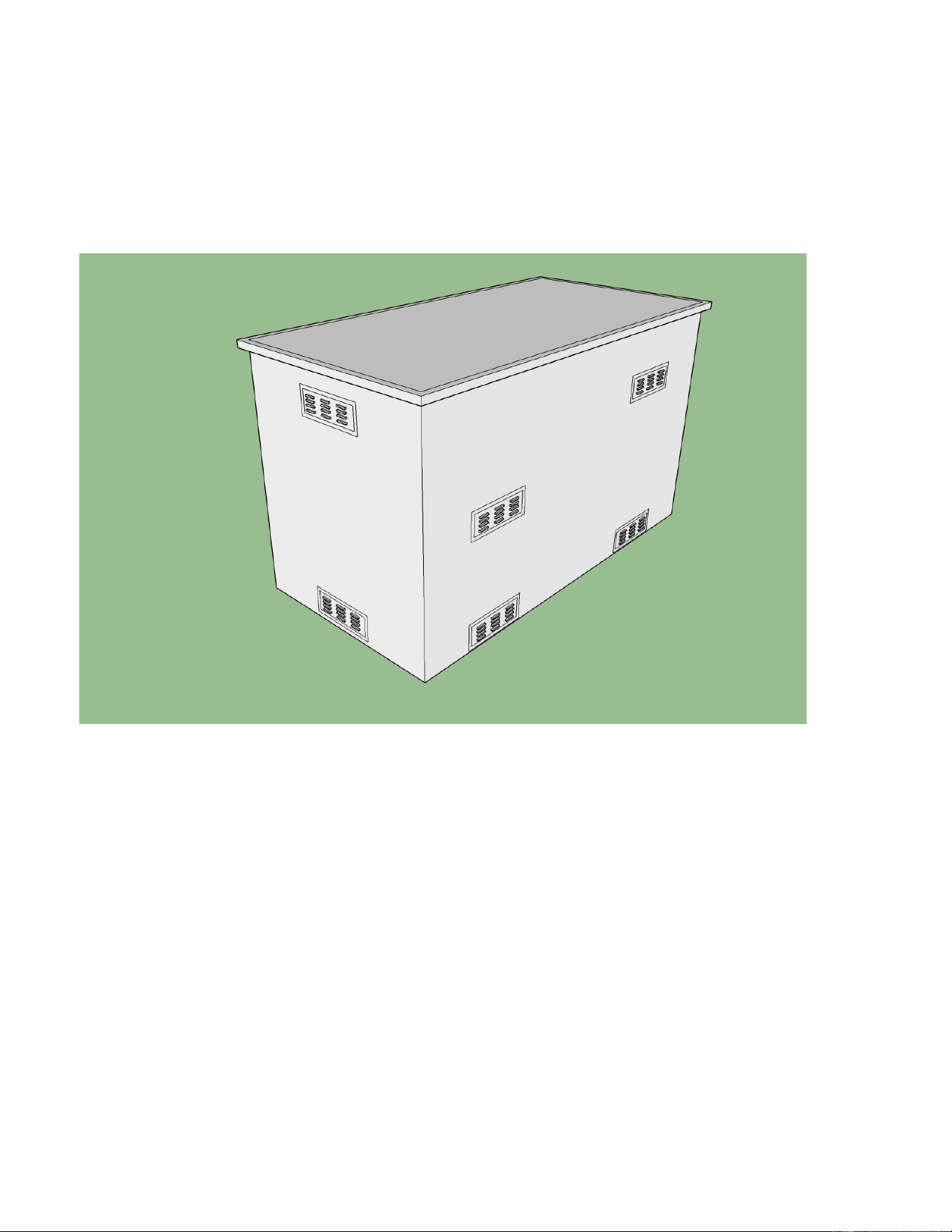
When building a gas grill into an outdoor kitchen, it is necessary to provide adequate ventilation for the
island cavity underneath. This is necessary for not only proper combustion, but also to prevent a buildup of
gas. While the amount of venting required for your island will vary due to the variety of differing local
codes, inner framework and design of an outdoor kitchen, the amount of gas products installed and their
locations, etc, all built in grill islands should be ventilated in some way. Your local contractor and/or your
local code authority can determine adequate ventilation for each installation. Stainless Steel vent panels
are available from your dealer to cover the island venting.
The following information is important to consider when adhering to your local code requirements.
LP/Propane Gas: LP gas is heavier than air and will settle to the lowest levels of the outdoor kitchen. It is
imperative to provide adequate cross ventilation for the areas where gas can accumulate at these lower
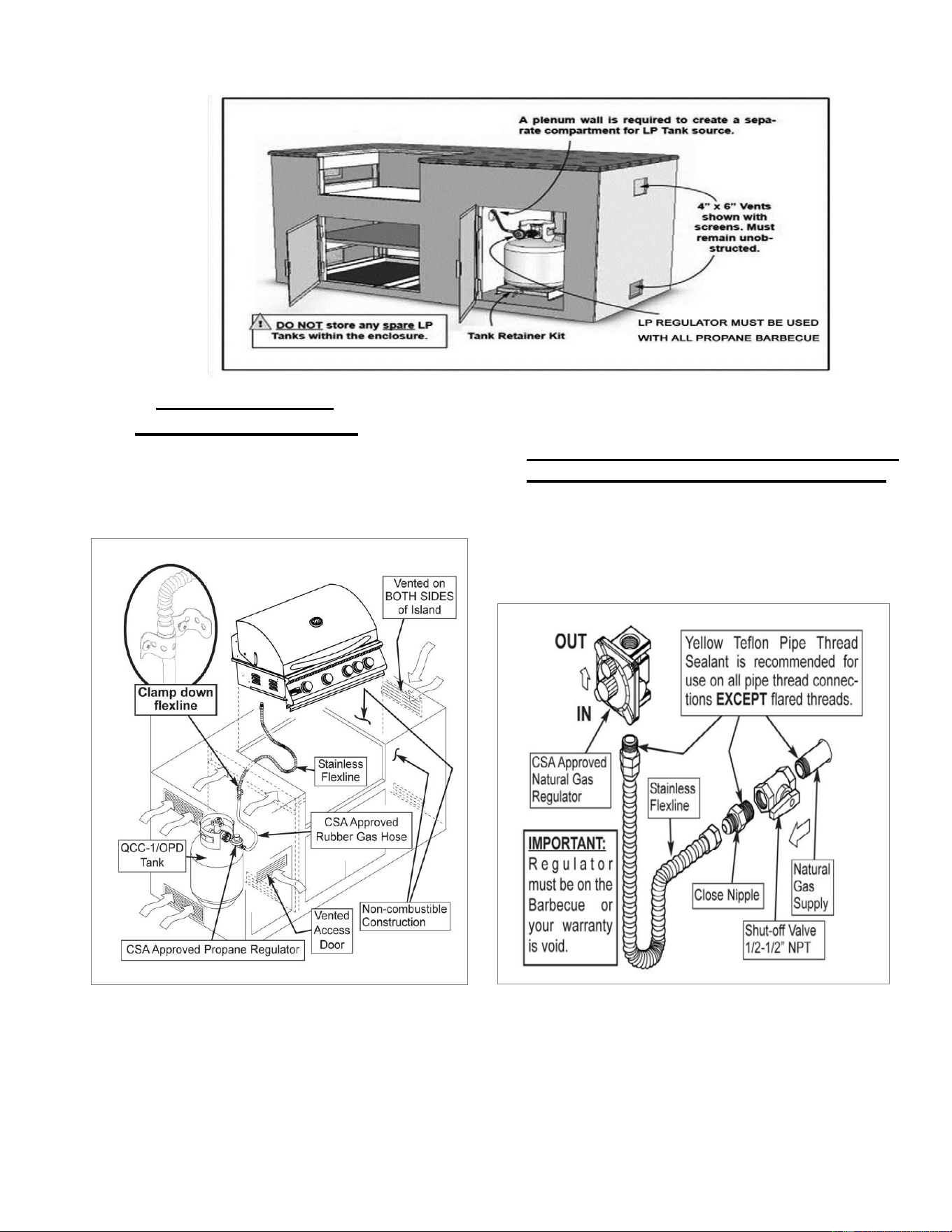
levels of the island cavity. Should the Propane cylinder be located in the outdoor kitchen itself, a plenum
wall is required to separate the gas source from the other areas of the outdoor kitchen (picture shown in
owner’s manual), and both the cabinets containing the gas appliances and the gas tank should be ventilated
appropriately. If a plenum wall is undesirable, HEAT offers a Propane tank drawer as an alternative.
NG/Natural Gas: Natural gas is lighter than air and will rise to the highest levels of the outdoor kitchen. It is
imperative to provide adequate cross ventilation for the areas where gas can accumulate at these higher
levels of the island cavity.
HEAT Instructional Book
Page | 26
Version 1.0
The following diagram shows a variety of examples of venting locations and configurations for an outdoor
kitchen. These are not the only possible options for venting but instead simply some examples of the more
common configurations found. Notice the middle set of vents being positioned lower on the island cavity
for LP gas.
ALL GAS CONNECTION POINTS SHOULD BE TESTED FOR LEAKS AFTER INSTALLATION PRIOR
TO FIRST USE OF THE GAS APPLIANCE(S).
Before installing an appliance in any island cut out, make sure that the opening is not bigger than the outside
frame of
the appliance unit. The appliance should rest on the lip of the frame.
Pay careful attention to the location of the gas line. It should be routed away from sources of heat, sharp edges
, and
aggressive surfaces
and should make as few bends as possible.

HEAT Instructional Book
Page | 27
Version 1.0
Ensure the gas line connection will be accessible when appliance is installed. A safety shutoff valve is required at
this gas connection point. Before installing the grill into the island cutout, the main burner cotter pins may be
removed for convenience of service, adjustments, and maintenance in the future. These are accessible from the
outside rear of the grill.
If the main burner cotter pins are removed before installing, the main burners must be double checked for the correct
placement in the grill before operation. When finished ensure that the burners are aligned with the valve orifice and
seated in the bracket slot. This is accomplished by first placing the burner tube shutter hole securely over the
valve orifice and ensuring the male post on the rear of the burner rests in the corresponding slot in the grill chassis.
Failure to do so could result in a fire and injury.
If the outdoor kitchen countertop will overhang the face of the island, notching out the two front countertop edges will
be necessary to allow the grill to slide flush against the outer front wall to the outdoor kitchen. Due to differing personal
preferences of the size of the notch out, this is recommended to be done at the point of installation so that the
consumer can dictate their preference.
• Slide the appliance into the cut
out and then attach the gas line.
• Be very careful not to kink the gas line when lowering the appliance into the cut out.
• Keep your fingers away from where the appliance will be supported on counter. Your fingers could
become
trapped and serious injury could occur.
• Check to make sure the appliance is level and is supported around the entire outside edge. If the
appliance is
not level or is unstable, use non-combustible shims under the outside lip to stabilize it.
• Perform the leak test procedure as described earlier in this manual.
HEAT Instructional Book
Page | 28
Version 1.0
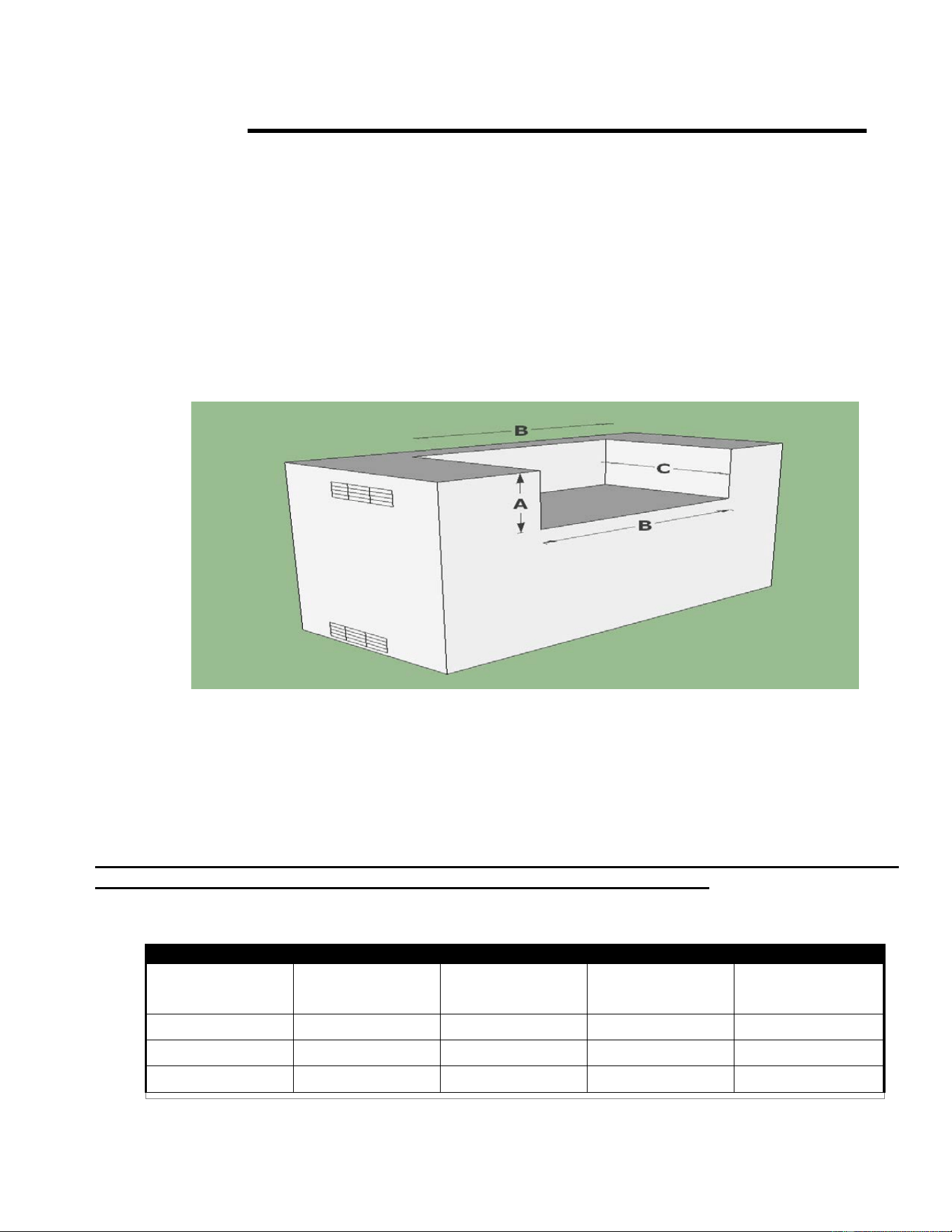
BUILDING BBQ SPECIFICATIONS
*Ensure your island cavity is adequately vented. Number of vents shown in
diagram is for informational
purposes only. Consult your local licensed professional for adequate
requirements.
*Ensure your outdoor kitchen is constructed out of non-combustible materials.
*If your outdoor kitchen is constructed of combustible materials, an insulated
jacket is REQUIRED.
ALL BBQ ISLANDS MUST BE MANUFACTURED FROM “NON-COMBUSTIBLE” MATERIAL.
Maintain minimum clearance to adjacent combustible construction at 14” from sides & 16”
from back. If non-combustible, ensure 5” of lid clearance behind grill.
MODEL DESCRIPTION HEIGHT (A) WIDTH (B) DEPTH (C)
HTS-325
25” 3 Burner
8 1/2”
23 1/4”
21 1/4”
HTS-432
32” 4 Burner
8 1/2”
30 5/8”
21 1/4”
HTS-540
40” 5 Burner
8 1/2”
38 3/8”
21 1/4”
HEAT Instructional Book
Page | 29
Version 1.0
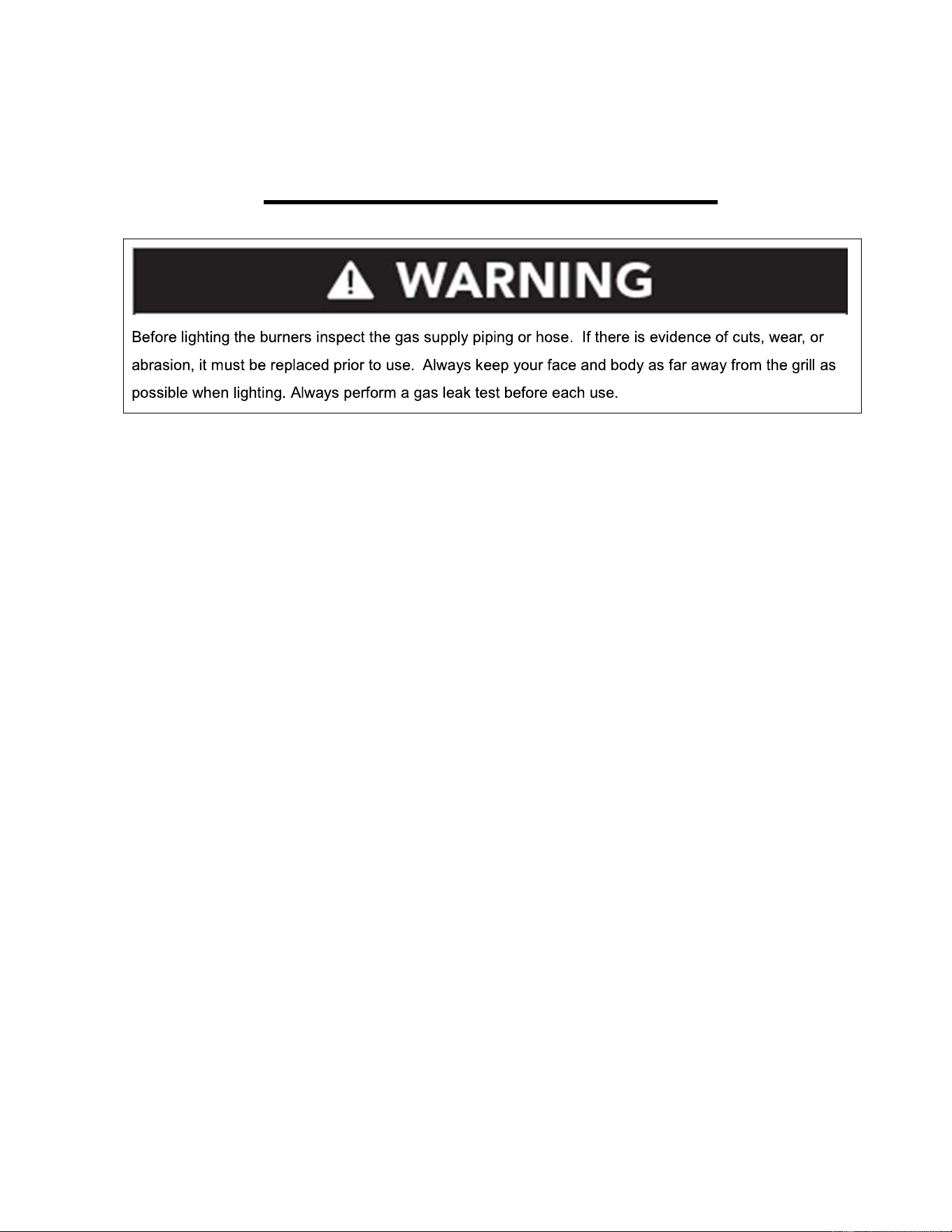
Installation Diagram
(5 Gallon LP tank shown)
Installation Method for Low Pressure Gas
Source- ( Natural Gas Regulator shown )
HEAT Instructional Book
Page | 30
Version 1.0
FIRST TIME OPERATION
- Caution: Never operate the appliance unattended. The surface is extremely hot and
someone can touch the hot surface and get seriously burned. All gas appliances should be
attended at all times.
Prior to using your appliance, verify that all of the following is correct:
The burner tube is free of any debris or obstruction.
Installation of the proper gas type and regulator settings.
The proper gas connection is complete.
Check for gas leaks.
Minimum clearances are maintained.
All packaging has been removed.
All parts and components are properly in place.
An installer-supplied manual gas shut-off valve is fully accessible.
LP hose is clean and inspected for cuts, wear, abrasion, or leaks. Replace if necessary with a
suitable
UL, ETL or CSA Listed part with internally threaded connector.
Lighting the Appliance
1.
Open the hood.
2.
Use caution when lighting burners by standing as far away from the burners as possible. Do not put
your hands, arms, head or any body parts close to the grill when lighting.
3.
To ignite burners, push the burner knob in and slowly rotate counter-clockwise to the high position.
4.
You will hear a loud click as the electronic lighter produces a spark. Listen for the sound of the gas
HEAT Instructional Book
Page | 31
Version 1.0
igniting
and look for a flame through the cooking grids. If the burner does not light on the first try, repeat
immediately. (For rear burner, a slower turn of the knob is necessary. This allows gas to accumulate in
the
rear burner to achieve ignition. Never use the rear burner with the warming rack in place.)
5.
If the burner does not light in 5 seconds, turn the burners off and wait five minutes with the lid open until
the gas clears before attempting to light
it again. Repeat the procedure or try the manual lighting
procedure below.
6.
If the burner does not light after several attempts, immediately close all gas valves and consult an
authorized service technician.
7.
Upon successful lighting, repeat the process on the other burners you wish to light.
8.
To shut off the burners, rotate the knob and turn to OFF. It is normal to hear a popping sound when the
burners are turned off.
9.
Close the valve at the gas supply.
Manually Lighting the Main Burners
WARNING: Do not use standard size matches or cigarette lighters to perform match-lighting procedures. Serious
burns can occur and lighters can explode.
1.
Open the hood.
2.
If you have just attempted to light the burner, allow five minutes for any accumulated gas to dissipate.
Use caution by standing as far away from the burners as possible. Do not put your hands, arms, head
or any body parts close to the grill when lighting.
3.
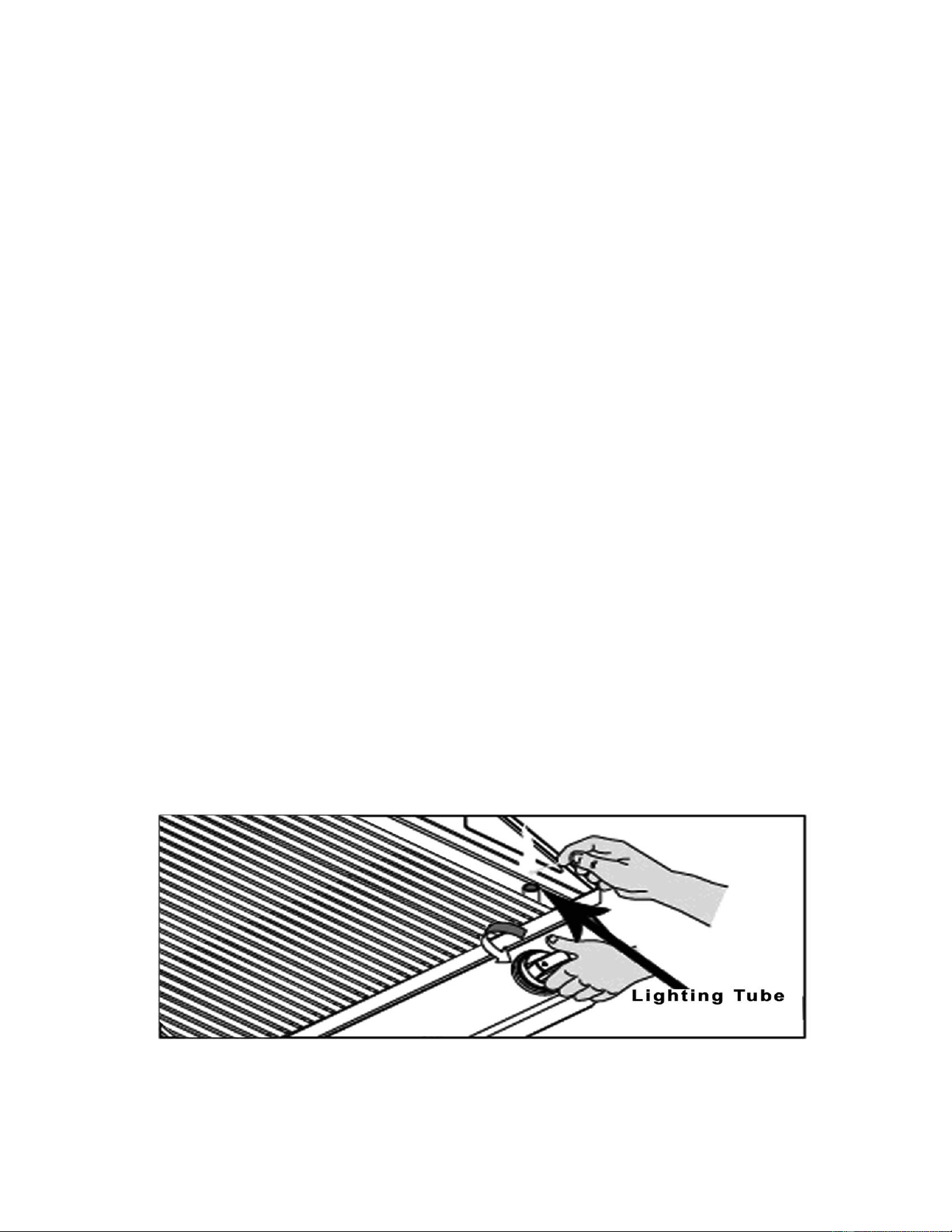
Hold your open flame to the top of the Lighting Tube. See below picture.
4.
Push in and turn the control knob to HIGH.

HEAT Instructional Book
Page | 32
Version 1.0
5.
If the burner does not light after five seconds, turn the control knobs to the OFF position.
6.
Wait five minutes until the gas clears before attempting to light it again.
7.
If the burner does not light after several attempts, immediately close all gas valves and consult an
authorized
service technician.
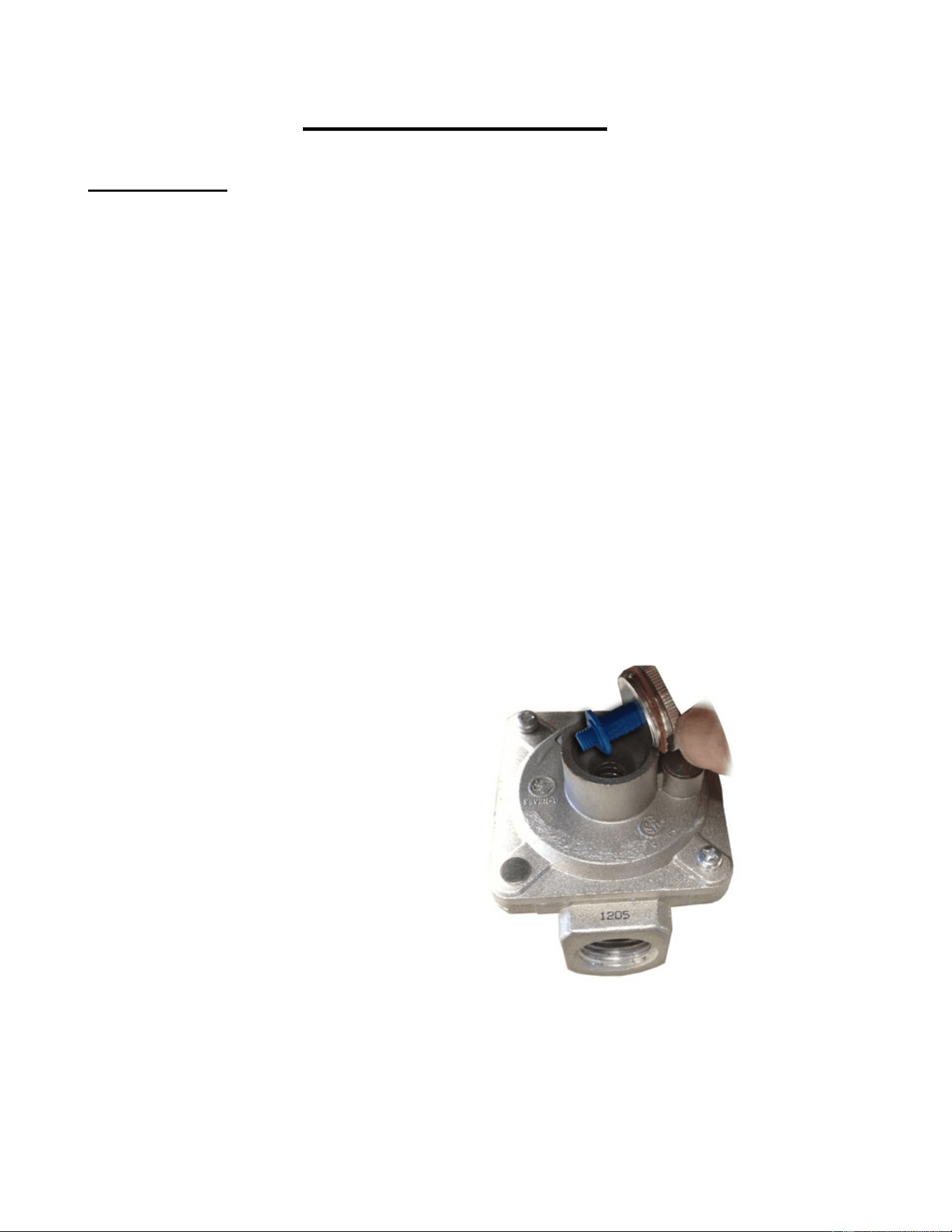
“FLASHBACK” may occur in or around the burner tubes. Flashback exhibits a characteristic
“whooshing/jet like”
sound. If this should occur, immediately turn off your burners, then remove and clean them
with soap, water and a brush until all foreign objects are removed.
Before cooking with your appliance for the first time, burn off any foreign matter and rid the unit of any odors by
burning the main burners only on HIGH with the lid down for about 10 minutes. When lit, the flame should have a
mostly blue
color to it. It may have a tint of yellow and adjustment to the air shutters can be made to obtain a blue
flame and
proper gas glow (see flame adjustment) . This appliance should be preheated before cooking with the
main burner control settings on
HIGH for five minutes with the hood closed.
Manually Lighting the Rear Burner (4 + 5 burner grills)
1. Open the hood. Never use the rear burner with the warming rack in place.
2. If you have just attempted to light the burner, allow five minutes for any accumulated gas to dissipate.
Use caution by standing as far away from the burners as possible. Do not put your hands, arms, head
or any body parts close to the grill when lighting.
3. Hold your open flame to the right side of the rear burner.
4. Push in and turn the control knob to HIGH.
5. If the burner does not light after five seconds, turn the control knobs to the OFF position.
6. Wait five minutes until the gas clears before attempting to light it again.
7. If the burner does not light after several attempts, immediately close all gas valves and consult an
authorized
service technician.
HEAT Instructional Book
Page | 33
Version 1.0
Flame Adjustment
a. Become familiar with the safety instructions at the front of this manual. Do not smoke while lighting the
appliance or checking the gas supply connections.
b. Make sure that all gas connections are securely tightened and have been leak-tested with a soapy
water solution - never with a flame!
c. With the cooking grids and flame tamers removed, light the main burners and run them on the high
setting.
d. Inspect burners for proper flame appearance. The ideal flame appearance is one that is mostly blue
and not lifting off of the burner surface. There is an air shutter found at the end of the burner (close to
the valve) which can be either opened or closed to make adjustments to the flame's appearance. To
adjust, remove the burner from the appliance and loosen the phillips head screw holding the air shutter
to the burner. If the flame is yellow, open the air shutter to make the flame bluer. If the flame is lifting off
of the burner surface, slightly close the air shutter. Re-tighten the phillips head screw and re-install the
burner to recheck the flame appearance. Repeat if necessary.
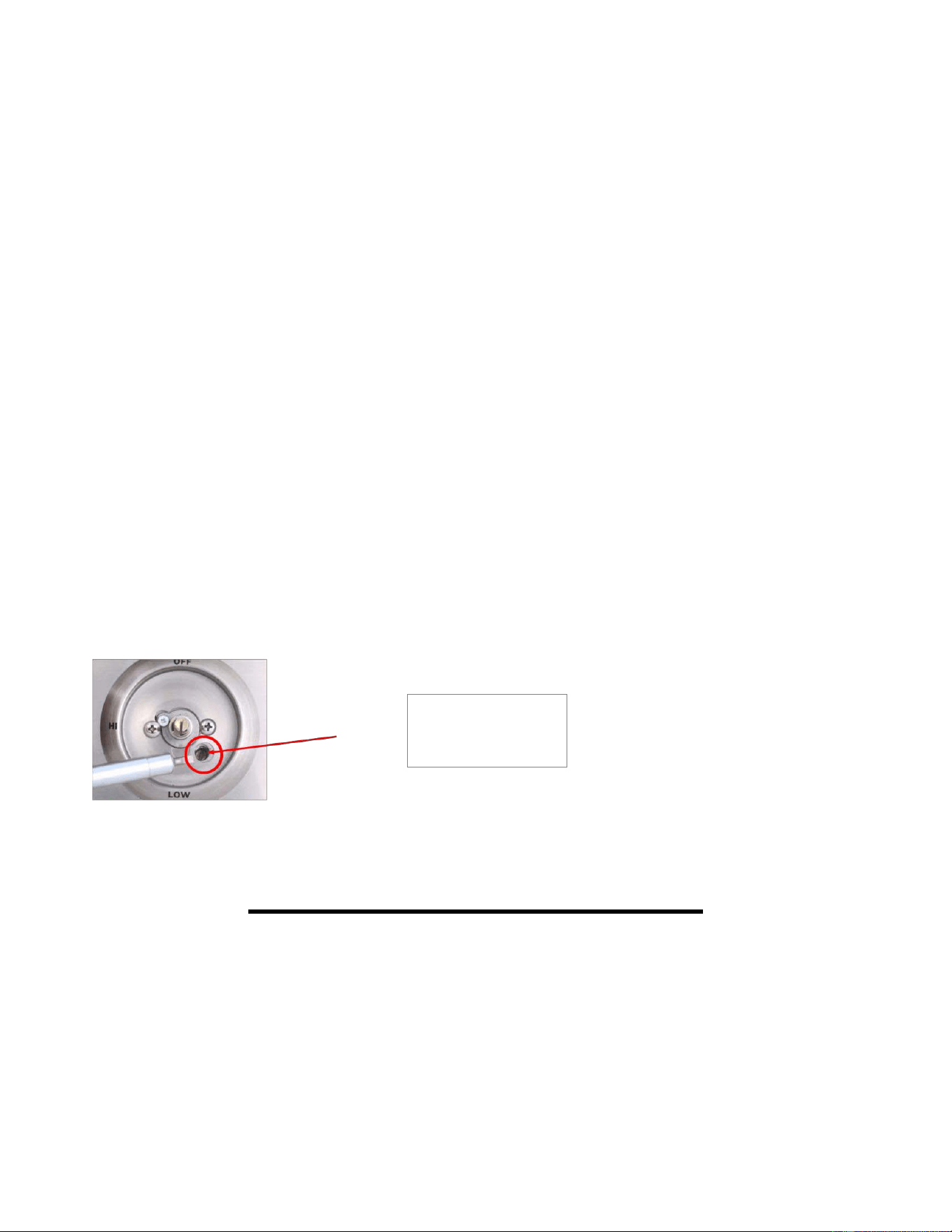
e. Turn burners to low flame setting and test for proper flame height. Flame should stand between ¼” –
½” on LOW. (To adjust the LOW flame setting simply light the appliance on the LOW setting and adjust
the
screw located under the knob on the front of the valve using a flat head screwdriver as seen in the
diagram
below.)
Cleaning Your Appliance
NOTE: You should clean your appliance after each use to maintain the overall appearance over the life of your
appliance. After the first use, it is normal for your appliance to become discolored in certain areas from the heat
produced by the burners.
Low flame setti
ng
screw

HEAT Instructional Book
Page | 34
Version 1.0
Exterior Cleaning
When cleaning your appliance, always scrub and polish in the direction of the stainless steel grain. Wipe down
the
exterior of the appliance to remove any splatter or grease. Do not use harsh abrasives. Use a stainless
steel
cleaner to clean the exterior surface for a polished look. To remove baked-on foods, use a fine to medium
grit non-
metallic abrasive pad with a stainless steel cleaner to avoid specks of grease collecting in the grain
causing the
appearance of rust. Before installing the cover, always allow the surface to dry. DO NOT cover a
damp appliance.
Drip Tray
Clean the drip tray after each use. Failure to do so could result in a fire. Once the appliance has cooled
completely, remove the tray by pulling it all the way out until it comes free. Clean the tray with hot soapy water
and
re-install. If using an oven cleaning agent, be sure to carefully follow the manufacturer’s instructions to
avoid
damage to the stainless steel.
Heat Separators, Flame Tamers, Grilling and Warming Racks
To clean ( should clean after each use ), turn the main burners on HIGH for 10-15 minutes with the hood
closed. This allows any
food particles or grease drippings to burn away. Brush components with a stainless steel
bristle brush to remove any remaining charred materials.
Cast Stainless Steel Burners
The appliance must be completely cooled before proceeding. Make sure the gas supply is off and all control
knobs are in the “OFF” position. You must remove all cooking grids and flame tamers to expose the main
burners
in the appliance. On the bottom rear of each burner is a cotter pin. Remove cotter pin (unless they were removed
prior to installation into an outdoor kitchen). To remove
burner, pull rod upwards and slide burner toward the rear of
the appliance. Repeat for each burner. To clean the
burners, use a wire brush to clean the exterior of the burner.
Free all clogged ports of obstructions with a small
metal object. Clean out any debris through the air shutter and
inspect the burner inlet to ensure it is free of any
obstructions. Use a rod or pipe cleaner to remove any debris within
the burner if necessary.
NOTE: Make sure each burner is properly placed after cleaning. It is very important to ensure the end of the
burner is installed appropriately onto the gas valve to ensure gas flows safely into the burner. Failure to meet
these conditions can cause dangerous conditions that can cause personal injury and/or property damage.

HEAT Instructional Book
Page | 35
Version 1.0
Optional Infrared Sear Burner
How to Replace Conventional Burner with Infrared Sear Burner.
1. To install the optional infrared burner, begin by removing the far left cooking grid, flame stabilizing grid
and zone divider.
2. Remove conventional burner by first removing the cotter pin that holds it in place
(unless they were
removed prior to installation into an outdoor kitchen)
, located on the
bottom rear of the burner. With
the cotter pin removed, remove the conventional burner.
3. Remove crossfire by removing the fastener in the middle that holds it in place. With the
crossfire
removed, place the infrared burner in place, leaving off the crossfire and flame tamer.
4. Replace the heat zone divider and cooking grid. Do not use this burner with the flamer tamer
reinstalled above the burner.
Note: It is critical that the end of the infrared burner is installed appropriately onto the gas valve to ensure gas
flows safely into the burner. For additional information, contact us at 877-397-5144 or go to www.Heat-
OutdoorLiving.com.
Preheating the Infrared Burner
Always preheat the entire appliance before cooking. If the appliance is already hot from cooking, you should still
preheat the infrared burner for 3 minutes. Never place food over the burner until it is fully preheated to avoid
clogging the tiny ports and damaging the burner from grease drippings and food particles.
Infrared Burner Cleaning
To keep your infrared burner operating at maximum performance after each use, turn it on HIGH for 5-7 minutes
with the hood open. This allows any food particles or grease drippings to burn away. Once your appliance has
cooled completely, use a soft brush or vacuum to remove any ash accumulation on the burner if necessary.
HEAT Instructional Book
Page | 36
Version 1.0
Fuel Conversion
Gas Regulator :
Currently all Natural gas grills are supplied with a regulator which is appropriate for use with Natural Gas
or
Propane.
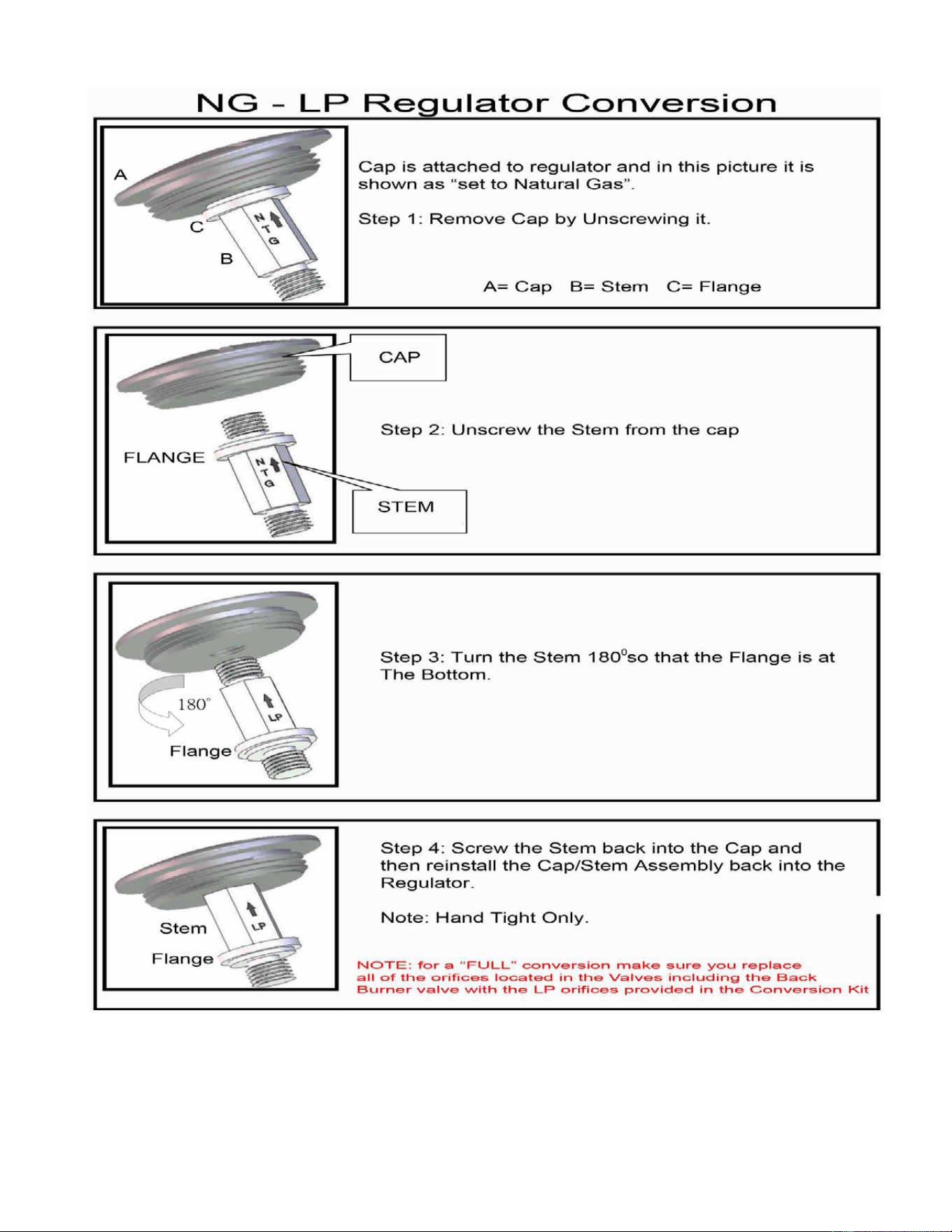
1. When converting to Propane Gas, the most common Propane canister used is a smaller sized portable
canister (typically 5 gallons or 20 pounds).The pre-installed regulator will need to be converted to
LP gas (see below) and add a secondary low pressure hose and
regulator with an outbound
pressure set to approximately 11" of water column pressure. If an individual
is intending on using
Propane provided from a larger tank permanently installed on location, the
regulator included with
the appliance will only need to be converted for use with LP fuel (see NG-LP Regulator
Conversion
below). Please be aware that this included regulator can only withstand an inbound pressure of
.5 PSI or
roughly 14 inches of water column pressure. Any higher pressure on location will have
to be further
regulated before connecting to the regulator on the appliance. Please consult your local
Propane gas
provider to confirm the gas pressure on the supply line feeding the appliance.
2. If converting to Natural Gas, a low pressure regulator with an outbound pressure set to 4” of Water
Column pressure must be used.
3. With either setup,
remember to always check for gas leaks after the job is complete (see checking for
gas leaks).
HEAT Instructional Book
Page | 37
Version 1.0

HEAT Instructional Book
Page | 38
Version 1.0
Fuel (Gas) Conversion Instructions for HEAT Gas grills.
CAUTION: This should only by performed by a licensed gas professional.
Main Burners:
1.
You must remove all cooking grids and flame tamers to expose the main burners in the appliance.
2.
On the bottom rear of each burner is a cotter pin. Remove cotter pin. (unless they were removed prior to
installation into an outdoor kitchen)
3.
To remove burner, pull rod upwards and slide burner toward the rear of the appliance. Repeat for each
burner.
4.
Where the burner was previously located, connecting to the main valve through the hole in the basin should
now be empty space.
5.
Inside the space you will find the end of the valve (toward the front of appliance), with an orifice (brass
fitting), screwed into the end of the valve stem.
6.
Carefully remove the orifice with a 6mm socket set and extension. (These are extremely fragile! When
unscrewing, be extremely gentle, for you could easily break the brass fitting and have to replace the valve).
7.
Once the old orifice is removed, replace it with the new orifice, (repeat for all burners). When re-installing
the orifice, do not over tighten or you will strip the brass fitting. Little pressure is needed!!!
8.
Inspect burners for proper flame appearance. The ideal flame appearance is one that is mostly blue and not
lifting off of the burner surface. There is an air shutter found at the end of the burner (close to the valve)
which can be either opened or closed to make adjustments to the flame's appearance. To adjust, remove
the burner from the appliance and loosen the phillips head screw holding the air shutter to the burner. If the
flame is yellow, open the air shutter to make the flame bluer. If the flame is lifting off of the burner surface,
slightly close the air shutter. Re-tighten the phillips head screw and re-install the burner to recheck the flame
appearance. Repeat if necessary.
Rear Burner
For the HEAT 4 & 5 Burner, replace the back burner orifice by removing the plate on the rear of the BBQ and
carefully removing the fitting. Replace with the provided conversion back burner orifice – large brass fitting
(differs
from small BBQ burner orifice).

HEAT Instructional Book
Page | 39
Version 1.0
Warranty Registration
If you have purchased a HEAT Series Grill you must register your product within 30 days of purchase to validate
the warranty and maintain your original receipt to get parts for the appliance. You may register your appliance by
filling out page 42-43 and mail to the address located at the bottom of the form. The warranty is for original owners
only and cannot be transferred to new owners. You must retain your sales slip or invoice. Proof of purchase
required for warranty repairs.
Installation, repair and maintenance work should be performed by an authorized service technician. Work by
unqualified persons could be dangerous and will void the warranty. All Natural and LP Gas appliances must
have a qualified installer complete the installation for the warranty to be in effect. The incorrect installation of the
HEAT gas appliance will void the warranty. Please call HEAT for more information on correct
installation of the
gas appliance.
HEAT products shall not be liable under this or any implied warranty for incidental or consequential
damages
and HEAT liability is limited to the purchase price of the appliance only. This
warranty gives you specific
legal rights, and you may also have other rights, which may vary from state to state.
This warranty is applicable
in the United States and Canada only. No one else is authorized to perform any
obligations under this warranty.
High cooking temperatures, improper maintenance, excessive humidity, chlorine, fertilizers, lawn
pesticides and salt can affect
the Stainless Steel components and for these reasons, the limited warranties
DO NOT COVER
DISCOLORATION OR RUST, unless there is a loss of structural integrity on the appliance
components.
WARRANTY ON PARTS:
Main Burners - Lifetime
Cooking Grids - Lifetime
Valves - 15 years
Flame Tamers and Heat Zone Separators- 5 years
Exterior Construction - Lifetime
All other parts - 1 year
Contact HEAT Outdoor Products directly for all warranty parts and questions. Consumers are responsible for all
labor and shipping cost associated with warranty parts. Please make sure to have your sales receipt information
and product serial number located inside the appliance on the left side panel.
All replacement parts can be purchased through your local stocking dealer.
HEAT Instructional Book
Page | 40
Version 1.0
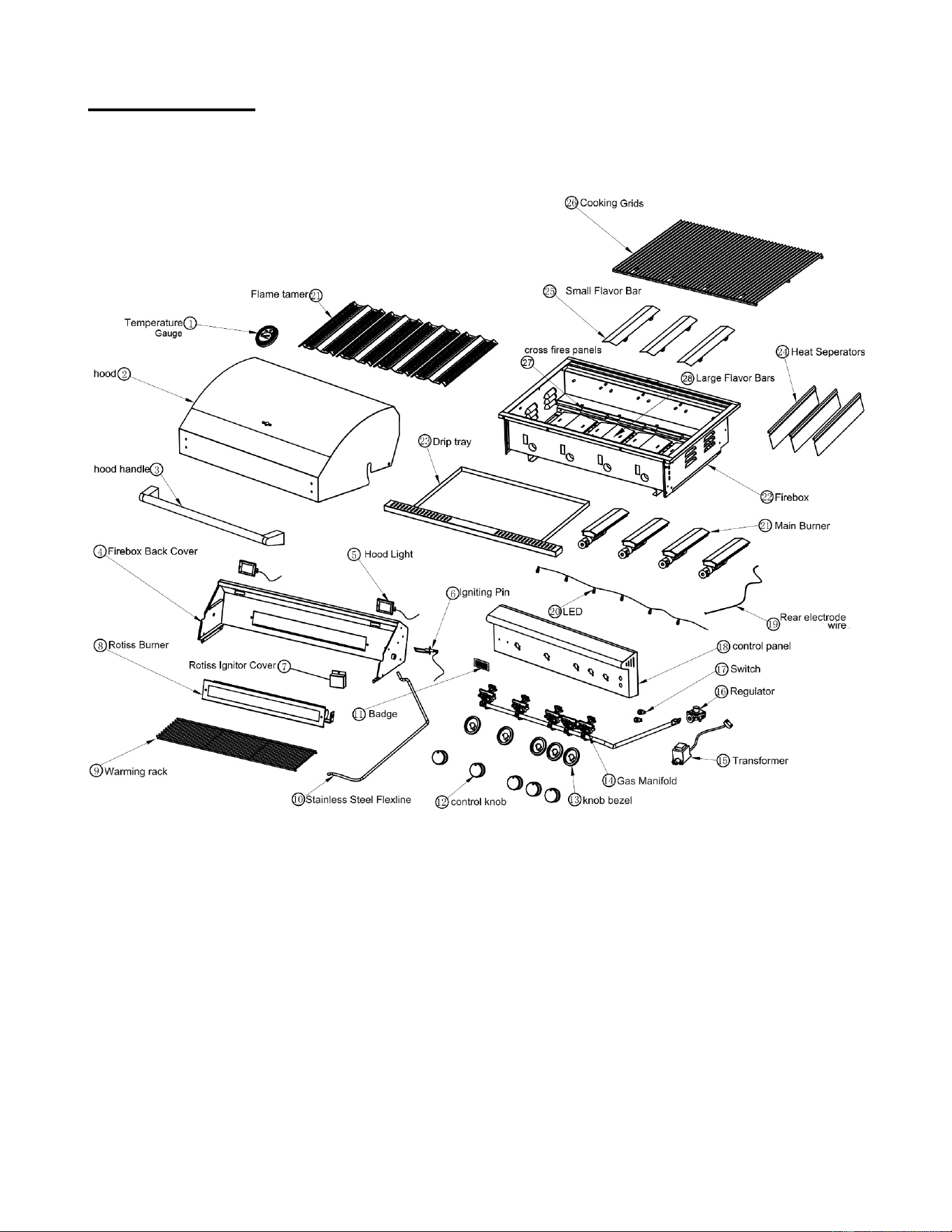
GRILL PARTS
Assemble Back Panel Cover
XLS-32-082
3 Burner Hood Handle
XLS-25-001
Cast Stainless Steel Burner
XLS-32-043
4 Burner Hood Handle
XLS-32-001
Control Knob
XLS-32-037
5 Burner Hood Handle
XLS-40-001
3 Burner Control Panel
XLS-25-005
Hood Roller Bearing
XLS-32-048
4 Burner Control Panel
XLS-32-003
Hood Rubber Pad
XLS-32-012
5 Burner Control Panel
XLS-40-032
Hood Spacer for firebox and hood
XLS-32-004
Cooking Grid
XLS-32-034
Control Knob Bezel
XLS-32-038
Crossfire Panel
XLS-32-044
Grill Badge
XLS-32-075
Flavor Bar
XLS-32-008
Regulator NG/LP
XLS-32-050
3 Burner Drip Tray
XLS-25-022
4 Burner Rotis Burner
XLS-32-041
4 Burner Drip Tray
XLS-32-022
5 Burner Rotis Burner
XLS-40-041
5 Burner Drip Tray
XLS-40-022
Rotis Valve
XLS-32-029
Electrode Wire Rear Burner
XLS-32-042
Stainless Steel Flame Tamer
XLS-32-064
Flashtube
XLS-32-058
Stainless Steel Flex line
XLS-32-039
3 Burner Firebox Cover
XLS-25-006
Temperature Gauge
XLS-32-035
4 Burner Firebox Cover
XLS-32-006
Valve
XLS-32-028
5 Burner Firebox Cover
XLS-40-006
3 Burner Warming Rack
XLS-25-033
Temperature Gauge Bezel
XLS-32-035B
4 Burner Warming Rack
XLS-32-033
3 Burner Hood
XLS-25-002
5 Burner Warming Rack
XLS-40-033
4 Burner Hood
XLS-32-002
Heat Zone Separator
XLS-32-052
5 Burner Hood
XLS-40-002
Main Burner Orifice NG
XLS-32-056
Rear Burner Orifice NG
XLS-32-055
Main Burner Orifice LP
XLS-32-057
Rear Burner Orifice LP
XLS-32-054
Valve Grommet
XLS-32-053
Rotis Ignitor Cover
XLS-32-016
Rear Burner Orifice Elbow
XLS-32-080
Burner Cotter Pin
XLS-32-074
Burner Air Shutters
XLS-32-040
Peg for Flame Tamer
XLS-32-061
HEAT Instructional Book
Page | 41
Version 1.0
HEAT 4 & 5 Burner
Note: Add one burner, one flame tamer, one heat separator and one grid for the HEAT 5 Burner.

HEAT Instructional Book
Page | 42
Version 1.0
Locating the Product Serial Number:
The serial number for your HEAT appliance is located on the left hand outside of the Firebox (see picture on
page 12.) You will need this
number to properly register your appliance and activate coverage. Write this
information in the space provided
below for your records
Appliance model:
Appliance serial number:
Type of fuel being used:
□ Propane
□ Natural Gas
Date purchased:
Date installed:
HEAT dealer’s name & address:
HEAT dealer’s phone number:
HEAT Instructional Book
Page | 43
Version 1.0
HEAT Product Registration
Please take a minute to let us know what you bought. This makes sure we keep you up to date and have your
info ready if you ever need warranty help!
Name
First Last
Email
Phone
Street Address
Address Line 2
City
State / Province / Region
Zip / Postal Code Country
What is the model number of the HEAT Product purchased?
What is the serial number on the HEAT product (only on grills and side burners)?
Where did you buy your HEAT product?
Mail To:
Heat Outdoor Living P.O. Box 16262, Philadelphia, PA 19114