Installation and User Guide
Carbon Monoxide Alarm 10 Year Life
Model
W2-CO-10X
Drawing No: GN5541
Revision: 2
Drawn By: D1
Tschaka RM, June 2019
FireAngel Safety Technology Limited Artwork Information
Ensure that you are printing / manufacturing from the original artwork file and not a preview
CONFIDENTIAL: The information provided in this document is proprietary to FireAngel Safety Technology Limited and
as such should only be used/shared for the exclusive manufacture of those products specified.
Title/Description:
User Manual
Material:
60GSM Wood Free Paper
Used On / Used For:
W2-CO-10X
Size:
W - 124mm / H - 110mm
Supplier:
PACE
Print Colours:
BLACK
TEST YOUR ALARM WEEKLY
2
Features 4
Positioning 4
Installation 6
Wireless Interlink 7
Alarm Test 9
Sleep Easy
TM
9
What to do in the
Event of an Alarm 10
Note: This user manual is also available in large text and other formats
Please email: technicalsupport@fireangeltech.com
or call 0330 094 5830 for further information
CONTENTS
UK Gas Emergency Service Helpline: 0800 111 999
Technical Support: 0330 094 5830 / EIRE dial 1-800 523171
Email: technicalsupport@fireangeltech.com / Web: www.fireangeltech.com
Fire & Rescue customers: 0800 141 2561
FireAngel Safety Technology Limited
Vanguard Centre, Coventry CV4 7EZ UK
EN 50291-1: 2010 +
A1:2012
EN 50291-2:2010
KM 551504
Model No W2-CO-10X
GN5541R2
W2-CO-10X Carbon Monoxide Alarm
EN 301 489-1
EN 301 489-3
EN 300 220-2
Max RF power: +10dBm
Frequency: 868MHz
With the present declaration, FireAngel Safety Technology Limited confirms that the W2-CO-10X
conforms to the essential requirements and other relevant measures of the 2014/53/EU Directive The
Declaration of Conformity can be accessed on the website: http://spru es/W2-CO-10X

3
Features 4
Positioning 4
Installation 6
Wireless Interlink 7
Alarm Test 9
Sleep Easy
TM
9
What to do in the
Event of an Alarm 10
Note: This user manual is also available in large text and other formats
Please email: technicalsupport@fireangeltech.com
or call 0330 094 5830 for further information
CONTENTS
Carbon Monoxide: How it
Can Affect You and Your Family 10
Product Indicators 13
Maintenance 13
Disposal 14
Warranty 14
UK Gas Emergency Service Helpline: 0800 111 999
Technical Support: 0330 094 5830 / EIRE dial 1-800 523171
Email: technicalsupport@fireangeltech.com / Web: www.fireangeltech.com
Fire & Rescue customers: 0800 141 2561
4
FEATURES
• Wi-Safe 2 technology, enabling wireless
interlinking between other Wi-Safe 2
alarms
• An advanced electrochemical sensor
designed to accurately measure levels of
carbon monoxide (CO) providing an early
warning of toxic CO levels in your home
• Detects carbon monoxide continuously
• Resistant to false alarms caused by
normal household contaminants
• Sounds a loud 85dB alarm (3 m) to alert
you in case of an emergency
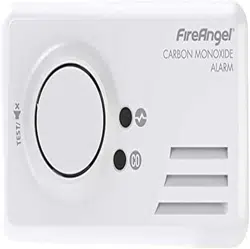
• Test/Silence button
• Regular self-check to ensure alarm is
operating correctly
• Certified to the European Carbon Monoxide
Alarm Standard
EN 50291-1: 2010 + A1:2012 and
EN 50291-2: 2010
• Storage and transportation conditions:
-20°C to +60°C 30-90% RH
(non condensing)
• 5 year warranty
POSITIONING
This CO alarm is suitable for use in domestic
premises as well as caravans, motor
caravans and boats
The following advice, from BS EN 50292-2013
is applicable to all intended applications,
there are special instructions at the end of
this section relating to positioning in caravan
holiday homes
WARNING: This alarm will only indicate
the presence of carbon monoxide gas at
the sensor Carbon monoxide gas may be
present in other areas
IN WHICH ROOM SHOULD THE ALARM
BE INSTALLED?
Ideally, an alarm should be installed in every
room containing a fuel-burning appliance
and every sleeping room Additional alarms
may be installed to ensure that adequate
warning is given for occupants in other
rooms, in which they spend considerable
time whilst awake and from which they may
not be able to hear an alarm in another part
of the premises
CO alarms should also be installed in any
room which a flue passes through, even if
the flue is fully enclosed or concealed
However, if there is a fuel-burning appliance
in more than one room and the number
of alarms is limited, the following points
should be considered when deciding where
best to put the alarm:
• Locate the alarm in a room containing a
flueless or open-flued appliance
• Locate the alarm in a room where the
occupant(s) spend most time
• If the domestic premises is a bedsit (a
single room serving as both sitting and
bedroom) then the alarm should be put as
far from the cooking appliances as possible
and near to where the person sleeps
• If the appliance is in a room not normally
used (for example a boiler room), the
alarm should be put just outside the room
so that it may be heard more easily
WHERE IN THE ROOM SHOULD I PLACE
THE ALARM?
For alarms located in the same room as a fuel-
burning appliance (for both wall and ceiling
mounted alarms) the following applies:
• The alarm should be at a horizontal
distance of between 1 m and 3 m from the
potential source

5
POSITIONING
This CO alarm is suitable for use in domestic
premises as well as caravans, motor
caravans and boats
The following advice, from BS EN 50292-2013
is applicable to all intended applications,
there are special instructions at the end of
this section relating to positioning in caravan
holiday homes
WARNING: This alarm will only indicate
the presence of carbon monoxide gas at
the sensor Carbon monoxide gas may be
present in other areas
IN WHICH ROOM SHOULD THE ALARM
BE INSTALLED?
Ideally, an alarm should be installed in every
room containing a fuel-burning appliance
and every sleeping room Additional alarms
may be installed to ensure that adequate
warning is given for occupants in other
rooms, in which they spend considerable
time whilst awake and from which they may
not be able to hear an alarm in another part
of the premises
CO alarms should also be installed in any
room which a flue passes through, even if
the flue is fully enclosed or concealed
However, if there is a fuel-burning appliance
in more than one room and the number
of alarms is limited, the following points
should be considered when deciding where
best to put the alarm:
• Locate the alarm in a room containing a
flueless or open-flued appliance
• Locate the alarm in a room where the
occupant(s) spend most time
• If the domestic premises is a bedsit (a
single room serving as both sitting and
bedroom) then the alarm should be put as
far from the cooking appliances as possible
and near to where the person sleeps
• If the appliance is in a room not normally
used (for example a boiler room), the
alarm should be put just outside the room
so that it may be heard more easily
WHERE IN THE ROOM SHOULD I PLACE
THE ALARM?
For alarms located in the same room as a fuel-
burning appliance (for both wall and ceiling
mounted alarms) the following applies:
• The alarm should be at a horizontal
distance of between 1 m and 3 m from the
potential source
• If there is a partition in a room, the alarm
should be located on the same side of the
partition as the potential source
• Carbon monoxide alarms in rooms with
sloped ceilings should be located at the
high side of the room
In addition to the above the following must
be observed if the alarm is located on a wall:
• It should be located close to the ceiling
• It should be located at a height greater
than the height of any door or window
• It should be at least 150 mm from
the ceiling
If the alarm is located on the ceiling:
• It should be at least 300 mm from any wall
and any ceiling obstruction e g light fittings
Alarms located in sleeping rooms and in
rooms remote from a fuel-burning appliance
should be located relatively close to the
breathing zone of the occupants
CARAVANS AND BOATS
Caravans and boats may have additional risks of
carbon monoxide admission through air vents,
due to the nearby presence of other vehicles,
engines, generators or barbecues, however
this does not change the basic guidance on the
location of the alarm Caravans and boats should
be fitted with an alarm in the same room as any
6
combustion appliance(s), located in accordance
with previous advice in this section If the
caravan or boat has a single living space which
incorporates the sleeping accommodation, it
can be considered to be equivalent to a bedsit,
and a single alarm is sufficient However, any
sleeping accommodation which is in a separate
room from the combustion appliance(s) should
also contain an alarm, located in accordance
with previous advice in this section It is not
always possible to find an optimum location
for an alarm, for example, a small caravan
may not have suitable vertical surfaces
available Nevertheless, when fitting an alarm
in such situations, the two most important
considerations when selecting an appropriate
location are:
• Not mounting the alarm directly above a
source of heat or steam
• Mounting the alarm at a distance of 1-3 m
from the nearest edge of the potential
source
INSTALLATION
DO: Ensure this alarm is installed by a
competent person who feels able to install it
according to the instructions
DO NOT: Tamper with the alarm, for risk of
electric shock or malfunction
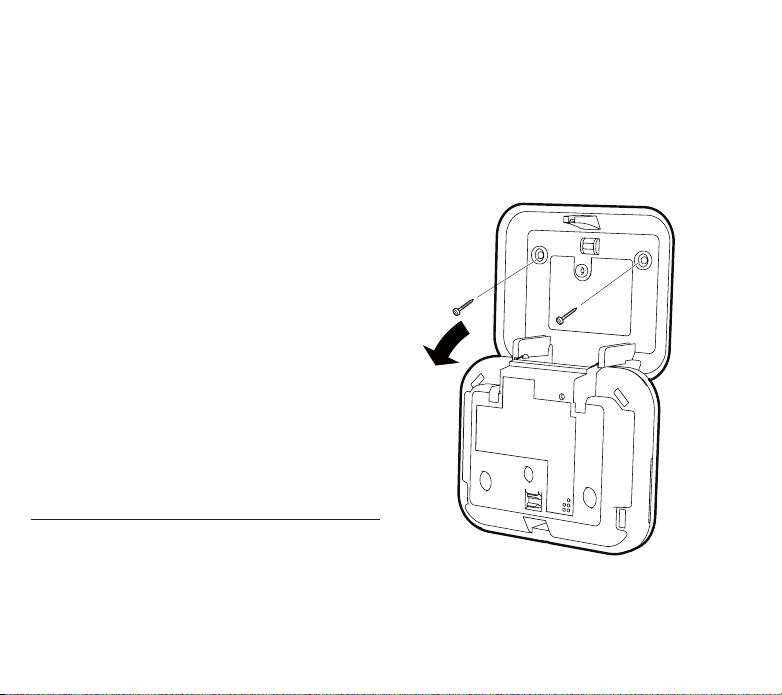
To mount on a wall or ceiling:
Please ensure that you use the screws
provided, as they were chosen specifically
for use with this product Drill holes into the
wall Insert the plastic wall plugs Using a
screwdriver push out the blanking plastics to
enable you to put the screws through to
secure the bracket in place
To place on a shelf:
The base of the alarm has been designed to
allow it to stand freely on a shelf
IMPORTANT: When placing on a shelf, please
follow the recommendations for positioning
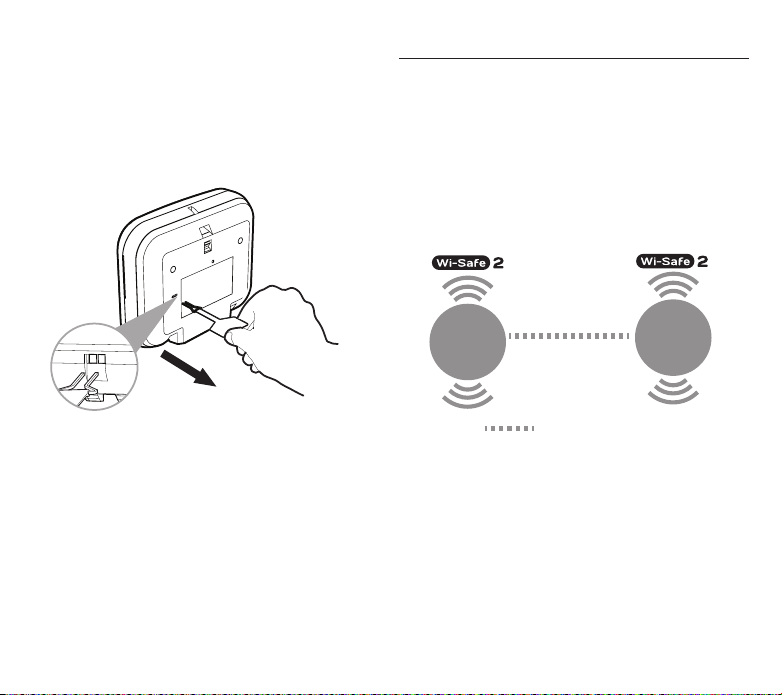
ACTIVATING YOUR CO ALARM
Your CO alarm has an integrated power pack
To activate the alarm you need to remove the
disabling clip by pulling it out of the alarm
Retain the disabling tab for future use
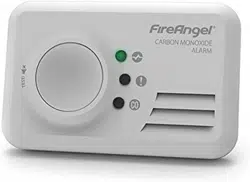
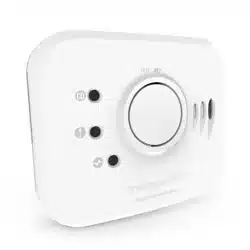
When the alarm is activated the Power LED
will begin to flash green once every minute
to indicate that the alarm is fully operational
Test the sounder, power pack and circuitry by
pressing and holding the centre of the Test/
Silence button briefly to confirm that the
alarm is operating correctly The sounder will
sound as soon as the button is pressed, and
the Alarm LED will illuminate red indicating
that the sounder is working and the power
pack is providing power to the unit
7
To mount on a wall or ceiling:
Please ensure that you use the screws
provided, as they were chosen specifically
for use with this product Drill holes into the
wall Insert the plastic wall plugs Using a
screwdriver push out the blanking plastics to
enable you to put the screws through to
secure the bracket in place
To place on a shelf:
The base of the alarm has been designed to
allow it to stand freely on a shelf
IMPORTANT: When placing on a shelf, please
follow the recommendations for positioning
ACTIVATING YOUR CO ALARM
Your CO alarm has an integrated power pack
To activate the alarm you need to remove the
disabling clip by pulling it out of the alarm
Retain the disabling tab for future use
When the alarm is activated the Power LED
will begin to flash green once every minute
to indicate that the alarm is fully operational
Test the sounder, power pack and circuitry by
pressing and holding the centre of the Test/
Silence button briefly to confirm that the
alarm is operating correctly The sounder will
sound as soon as the button is pressed, and
the Alarm LED will illuminate red indicating
that the sounder is working and the power
pack is providing power to the unit
WIRELESS INTERLINK
The W2-CO-10X is designed to be wirelessly
interlinked with up to 50 products within the
Wi-Safe 2 product range The W2-CO-10X is
not designed to communicate with wireless
alarms from other ranges or manufacturers
W2-CO-10X alarms need to be ‘learned-in’ or
interlinked in order to communicate with
each other If one alarm activates, all other
interlinked alarms will also sound
Wi-Safe 2 enables wireless communication
with any other product with Wi-Safe 2
technology inside A wireless transceiver
inside every alarm communicates with
others by continuously sending and
receiving wireless signals otherwise
known as a ‘meshed network’ When one
alarm detects CO the wireless module
inside sends a radio frequency signal
to all the connected alarms, ensuring almost
= Wireless Interlink
8
instantaneous reaction across the entire
network
How to ‘learn-in’ two wireless alarms into a
network:
Install Alarm 1 as described earlier
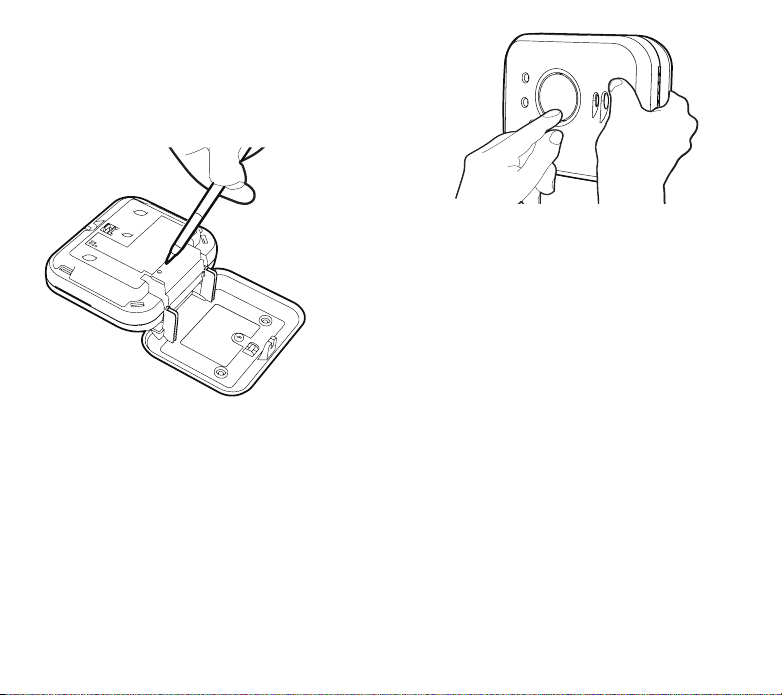
Using a ballpoint pen, briefly push and
release the ‘learn button’ on the back of
Alarm 2 The red LED next to the learn
button will flash briefly then light up for
approximately five seconds
During these five seconds you need to briefly
press the test button on Alarm 1 to wirelessly
interlink the two alarms Alarm 1 will give an
audible sound consisting of two cycles of
four loud beeps
The red LED on Alarm 2 will flash to indicate
that it has been ‘learned-in’ successfully
If the test button is not pressed quickly
enough, the ‘learn-in’ process will fail If this
happens, repeat the process To complete the
installation fit Alarm 2 into position
When ‘learning-in’ additional alarms, any
alarm already in the network, can be used as
‘Alarm 1’ This means that you can ‘learn-in’
the additional alarm to any alarm already in
the network It will then become part of the
whole network You do not have to ‘learn-in’
to every alarm in the network
UNLEARNING AN ALARM FROM A
NETWORK
To remove an alarm from the network you
will need to perform a button press sequence
consisting of a short press followed by a
long press
Using a ball point pen in the circular ‘learn-in’
hole in the back of the alarm, briefly push and
release and then push and hold the ‘learn-in’
button The red LED will remain illuminated
during this process When the red LED goes
out, release the button, it will then flash
twice, followed by three further flashes to
illustrate that the alarm has successfully
been ‘un-learnt’ from the network
When removing an alarm from any Wi-Safe
2 network it is generally good practice to
“unlearn” every alarm (in the same way as
mentioned above) and rebuild the network
once again by following the “learn-in”
process on page 7
Please note: It is important not to rush the
Wi-Safe 2 system and is also good practice
to allow several minutes after un-learning
the system before rebuilding the network
once again
ALARM TEST
Test the sounder, power pack and circuitry by
pressing and releasing the Test/Silence
button to confirm that the alarm is operating
properly The alarm should sound as soon as
the Test button is pressed, and the Alarm LED
will illuminate red indicating that the
sounder is working and the power pack is
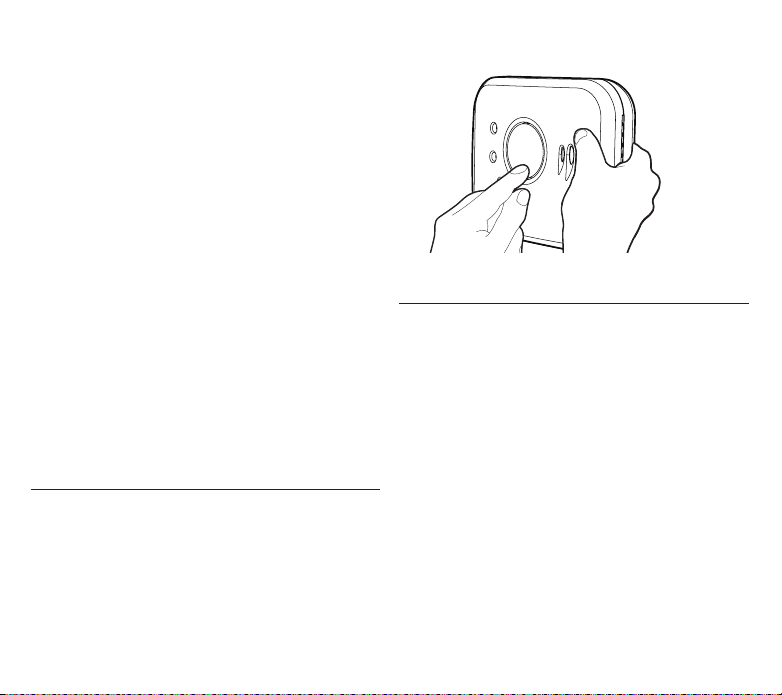
9
instantaneous reaction across the entire
network
How to ‘learn-in’ two wireless alarms into a
network:
Install Alarm 1 as described earlier
Using a ballpoint pen, briefly push and
release the ‘learn button’ on the back of
Alarm 2 The red LED next to the learn
button will flash briefly then light up for
approximately five seconds
During these five seconds you need to briefly
press the test button on Alarm 1 to wirelessly
interlink the two alarms Alarm 1 will give an
audible sound consisting of two cycles of
four loud beeps
The red LED on Alarm 2 will flash to indicate
that it has been ‘learned-in’ successfully
If the test button is not pressed quickly
enough, the ‘learn-in’ process will fail If this
happens, repeat the process To complete the
installation fit Alarm 2 into position
When ‘learning-in’ additional alarms, any
alarm already in the network, can be used as
‘Alarm 1’ This means that you can ‘learn-in’
the additional alarm to any alarm already in
the network It will then become part of the
whole network You do not have to ‘learn-in’
to every alarm in the network
UNLEARNING AN ALARM FROM A
NETWORK
To remove an alarm from the network you
will need to perform a button press sequence
consisting of a short press followed by a
long press
Using a ball point pen in the circular ‘learn-in’
hole in the back of the alarm, briefly push and
release and then push and hold the ‘learn-in’
button The red LED will remain illuminated
during this process When the red LED goes
out, release the button, it will then flash
twice, followed by three further flashes to
illustrate that the alarm has successfully
been ‘un-learnt’ from the network
When removing an alarm from any Wi-Safe
2 network it is generally good practice to
“unlearn” every alarm (in the same way as
mentioned above) and rebuild the network
once again by following the “learn-in”
process on page 7
Please note: It is important not to rush the
Wi-Safe 2 system and is also good practice
to allow several minutes after un-learning
the system before rebuilding the network
once again
ALARM TEST
Test the sounder, power pack and circuitry by
pressing and releasing the Test/Silence
button to confirm that the alarm is operating
properly The alarm should sound as soon as
the Test button is pressed, and the Alarm LED
will illuminate red indicating that the
sounder is working and the power pack is
providing power to the unit This test should
be performed on a weekly basis
SLEEP EASY
Low battery warnings often start at night
or when it may be inconvenient to replace
your alarm You can silence the audible ‘low
battery’ chirp for a period of eight hours by
pressing the test button After this period the
audible chirp will start again This process
can be repeated for a maximum of 10 times
Your alarm will still detect CO during this
time, however you must replace your alarm
within 30 days, as it may have insufficient
power to warn you of a CO leak after this
time

10
WHAT TO DO IN THE
EVENT OF AN ALARM
WARNING: A loud alarm is a warning that
potentially lethal levels of carbon monoxide
are present Never ignore this alarm, further
exposure can be fatal Immediately check
residents for symptoms of carbon monoxide
poisoning, and contact the proper authorities
to resolve all CO problems NEVER IGNORE
ANY ALARM
Please carefully review this guide to ensure
that you know what actions to take in the
event of an alarm
WHAT TO DO DURING AN ALARM:
• Keep calm and open the doors and windows
to ventilate the property
• Stop using all fuel-burning appliances and
ensure, if possible, that they are turned off
• Evacuate the property leaving the doors and
windows open
• Ring your gas or other fuel supplier on their
emergency number; keep the number in a
prominent place
• Do not re-enter the property until the alarm
has stopped When exposed to fresh air it can
take up to 10 minutes for the sensor to clear
and the alarm to stop depending on the level
of carbon monoxide detected
• Get medical help immediately for anyone
suffering the effects of carbon monoxide
poisoning (headache, nausea), and advise that
carbon monoxide poisoning is suspected
• Do not use the appliances again until they
have been checked by an expert In the case
of gas appliances the engineer must be
registered on the Gas Safe register
WARNING: Alarms conforming to this
standard may not protect people who are at
special risk from carbon monoxide exposure
by reason of age, pregnancy or medical
condition If in doubt, consult your doctor
CARBON MONOXIDE:
HOW IT CAN AFFECT
YOU AND YOUR FAMILY
Carbon monoxide is a dangerous, poisonous
gas that kills and injures hundreds of people
each year It is often referred to as the silent killer
because it has no odour or taste and cannot be
seen Like oxygen, CO enters the body through
the lungs during the normal breathing process
It competes with oxygen by replacing it in the
red blood cells, thereby reducing the flow of
oxygen to the heart, brain and other vital organs
In high concentrations, CO can kill in minutes
Many cases of reported carbon monoxide
poisoning indicate that while victims are
aware they are not feeling well, they become
disorientated and unable to save themselves
by either exiting the building or calling for
assistance Exposure during sleep is particularly
dangerous because the victim may not wake up
SYMPTOMS OF CARBON MONOXIDE
(CO) POISONING:
• Mild Exposure: Slight headache, nausea,
vomiting, fatigue (often described as ‘flu-like’
symptoms)
• Medium Exposure: Severe throbbing head-
ache, drowsiness, confusion, fast heart rate
• Extreme Exposure: Unconsciousness,
convulsions, cardiorespiratory failure, death
Your CO alarm monitors the level of CO as
parts per million (ppm) in the atmosphere
surrounding the alarm:
• 35 ppm - The maximum allowable
concentration for continuous exposure
for healthy adults in any 8 hour period, as
recommended by the Occupational Safety
and Health Administration (OSHA)
• 200ppm - Slight headache, fatigue, dizziness,
nausea after 2 - 3 hours
• 400ppm - Frontal headaches within 1 - 2
hours, life threatening after three hours
• 800ppm - Dizziness, nausea and convulsions
within 45 minutes Unconsciousness within
two hours Death within 2 - 3 hours

11
• Get medical help immediately for anyone
suffering the effects of carbon monoxide
poisoning (headache, nausea), and advise that
carbon monoxide poisoning is suspected
• Do not use the appliances again until they
have been checked by an expert In the case
of gas appliances the engineer must be
registered on the Gas Safe register
WARNING: Alarms conforming to this
standard may not protect people who are at
special risk from carbon monoxide exposure
by reason of age, pregnancy or medical
condition If in doubt, consult your doctor
CARBON MONOXIDE:
HOW IT CAN AFFECT
YOU AND YOUR FAMILY
Carbon monoxide is a dangerous, poisonous
gas that kills and injures hundreds of people
each year It is often referred to as the silent killer
because it has no odour or taste and cannot be
seen Like oxygen, CO enters the body through
the lungs during the normal breathing process
It competes with oxygen by replacing it in the
red blood cells, thereby reducing the flow of
oxygen to the heart, brain and other vital organs
In high concentrations, CO can kill in minutes
Many cases of reported carbon monoxide
poisoning indicate that while victims are
aware they are not feeling well, they become
disorientated and unable to save themselves
by either exiting the building or calling for
assistance Exposure during sleep is particularly
dangerous because the victim may not wake up
SYMPTOMS OF CARBON MONOXIDE
(CO) POISONING:
• Mild Exposure: Slight headache, nausea,
vomiting, fatigue (often described as ‘flu-like’
symptoms)
• Medium Exposure: Severe throbbing head-
ache, drowsiness, confusion, fast heart rate
• Extreme Exposure: Unconsciousness,
convulsions, cardiorespiratory failure, death
Your CO alarm monitors the level of CO as
parts per million (ppm) in the atmosphere
surrounding the alarm:
• 35 ppm - The maximum allowable
concentration for continuous exposure
for healthy adults in any 8 hour period, as
recommended by the Occupational Safety
and Health Administration (OSHA)
• 200ppm - Slight headache, fatigue, dizziness,
nausea after 2 - 3 hours
• 400ppm - Frontal headaches within 1 - 2
hours, life threatening after three hours
• 800ppm - Dizziness, nausea and convulsions
within 45 minutes Unconsciousness within
two hours Death within 2 - 3 hours
The Alarm will sound:
• Between 60 and 90 minutes when exposed to
50ppm of CO
• Between 10 and 40 minutes when exposed to
100ppm of CO
• Within 3 minutes when exposed to 300ppm
or more of CO
Should you suspect CO may be affecting you
or your family, open the doors and windows
of your property to ventilate, turn off your
appliances and evacuate the premises At
this time the authorities should be contacted
to locate the source of the carbon monoxide
before re-entering the building Medical
attention should be sought for anyone
suffering the effects of CO poisoning
COMMON SOURCES OF CO:
• Oil and gas boilers
• Portable generators
• Oil or solid fuel cookers
• Gas or paraffin heaters
• Barbecues
• Clogged chimneys
• Wood or gas fireplaces
• Cigarette smoke
• Gas appliances
• Any fossil fuel-burning appliance

12
WARNING:
This carbon monoxide alarm is
not a combustible gas detector, nor a smoke
detector Please install the proper alarms to
detect combustible gases, or smoke
This CO alarm should not be seen as a
substitute for the proper installation, use
and maintenance of fuel-burning appliances
(including appropriate ventilation and
exhaust systems), nor the sweeping of
chimneys
WARNING: Variables relating to your fuel-
burning appliances can change at any point
eg the flue or chimney could suddenly
become blocked or damaged, appliances
may stop running correctly or circumstances
in neighbouring properties may change
resulting in the presence of carbon monoxide
For this and other reasons do not use this
carbon monoxide alarm on an intermittent
basis, or as a portable alarm for trying to trace
one source of the spillage of combustion
products from fuel-burning appliances or
from chimneys
PRODUCT INDICATORS
Mode Green LED Red LED Amber LED Chirp
Normal
Operation
Flashes once per
minute
- - -
Alarm -
Flashes once every
five seconds
-
Four audible ‘chirps’
repeated
Low battery /
End of sensor
life
- -
Flashes once per
minute
Chirps once per minute
at the same time as the
amber LED flashes
Sensor fault - - Double flashes
Chirps at a different time
to the amber LED flashes
IMPORTANT: The selected power pack was chosen to provide power beyond the lifetime of the product, in
particular the sensor (under normal operating conditions) The sensor life is 10 years For this reason, the alarm
should be replaced after 10 years from the date of installation
The Alarm LED
(red) is flashing
If the red LED is flashing every second and the alarm is sounding, a carbon monoxide leak
has been detected Keep calm and open the doors and windows to ventilate the property
Stop using all fuel burning appliances and ensure, if possible, that they are turned off
Evacuate the property leaving the doors and windows open Contact your gas or other
fuel supplier on their emergency number
The Fault LED
(amber) is
illuminated
and the alarm
is making a
“chirping” sound
If the amber LED is flashing once per minute and at around the same time as the chirp, this
indicates a low battery condition and the alarm should be replaced as soon as possible
and certainly within 30 days If this fault occurs at night, when it may be inconvenient to
replace your alarm, please refer to the ‘Sleep Easy
TM
’ feature If the amber LED is flashing
once per minute but at a different time to the chirp, this indicates a fault and the alarm
should be replaced immediately

13
PRODUCT INDICATORS
Mode Green LED Red LED Amber LED Chirp
Normal
Operation
Flashes once per
minute
- - -
Alarm -
Flashes once every
five seconds
-
Four audible ‘chirps’
repeated
Low battery /
End of sensor
life
- -
Flashes once per
minute
Chirps once per minute
at the same time as the
amber LED flashes
Sensor fault - - Double flashes
Chirps at a different time
to the amber LED flashes
IMPORTANT: The selected power pack was chosen to provide power beyond the lifetime of the product, in
particular the sensor (under normal operating conditions) The sensor life is 10 years For this reason, the alarm
should be replaced after 10 years from the date of installation
The Alarm LED
(red) is flashing
If the red LED is flashing every second and the alarm is sounding, a carbon monoxide leak
has been detected Keep calm and open the doors and windows to ventilate the property
Stop using all fuel burning appliances and ensure, if possible, that they are turned off
Evacuate the property leaving the doors and windows open Contact your gas or other
fuel supplier on their emergency number
The Fault LED
(amber) is
illuminated
and the alarm
is making a
“chirping” sound
If the amber LED is flashing once per minute and at around the same time as the chirp, this
indicates a low battery condition and the alarm should be replaced as soon as possible
and certainly within 30 days If this fault occurs at night, when it may be inconvenient to
replace your alarm, please refer to the ‘Sleep Easy
TM
’ feature If the amber LED is flashing
once per minute but at a different time to the chirp, this indicates a fault and the alarm
should be replaced immediately
14
MAINTENANCE
Your CO alarm will alert you to potentially
hazardous CO concentrations in your home
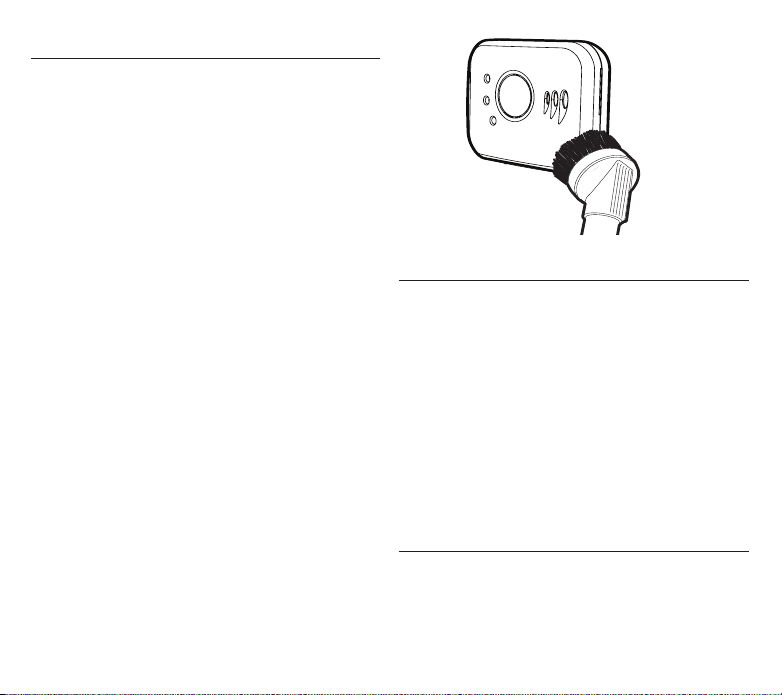
when maintained properly Keep the alarm
free from dust by gently vacuuming the case
with a soft brush attachment every 3 months
To prevent the possibility of contaminating
the sensor in your alarm and thus affecting
its reliability:
• Never use cleaning solutions on your alarm
Simply wipe with a slightly damp cloth
• Do not paint the alarm
• Do not spray aerosols on or near the alarm
• Do not use any solvent based products near
the alarm
• Do not attempt to repair your CO alarm
• Do not remove any screws or open the main
casing of your CO alarm Any attempt to do so
may cause malfunction and will invalidate the
warranty
DISPOSAL
Waste electrical products should not be disposed of
with your other household waste The alarm is ideally
suited for disposal within the waste electronic and
electrical equipment (WEEE) recycling scheme Please
recycle where facilities exist Check with your local
authority, retailer or contact our Technical Support team
for recycling/disposal advice, as regional variations
apply
WARNING: Do not burn or dispose of
in fire
WARNING: If your alarm is dropped or damaged, as a
precaution, it should be removed from the building
WARRANTY
FireAngel Safety Technology Limited warrants to the
original purchaser that its enclosed CO alarm be free
from defects in materials and workmanship under
normal residential use and service for a period of 5
years from the date of purchase Provided product
is sent back to FireAngel Safety Technology Limited
with proof and date of purchase, FireAngel Safety
Technology Limited hereby warrants that during the
5 year period commencing from the date of purchase
FireAngel Safety Technology Limited, at its discretion,
agrees to replace the unit free of charge
The warranty on any replacement W2-CO-10X alarm,
will last for the remainder of the period of the original
warranty in respect of the alarm originally purchased –
that is from the date of original purchase and not from
the date of receipt of the replacement product FireAngel
Safety Technology Limited reserves the right to offer an
alternative product similar to that being replaced if the
original model is no longer available or in stock This
warranty applies to the original retail purchaser from the
date of original retail purchase and is not transferable
Proof of purchase is required This warranty does
not cover damage resulting from accident, misuse,
disassembly, abuse or lack of reasonable care of the
product, or applications not in accordance with the user
guide It does not cover events and conditions outside
of FireAngel Safety Technology Limited’s control, such
as Acts of God (fire, severe weather etc ) It does not
apply to retail stores, service centres or any distributors
or agents FireAngel Safety Technology Limited will not
recognise any changes to this warranty by third parties
FireAngel Safety Technology Limited shall not be liable
for any incidental or consequential damages caused by
the breach of any expressed or implied warranty Except
to the extent prohibited by applicable law, any implied
warranty of merchantability or fitness for a particular
purpose is limited in duration for 5 years This warranty
does not affect your statutory rights Except for death
or personal injury, FireAngel Safety Technology Limited
shall not be liable for any loss of use, damage, cost or
expense relating to this product or for any indirect or

15
MAINTENANCE
Your CO alarm will alert you to potentially
hazardous CO concentrations in your home
when maintained properly Keep the alarm
free from dust by gently vacuuming the case
with a soft brush attachment every 3 months
To prevent the possibility of contaminating
the sensor in your alarm and thus affecting
its reliability:
• Never use cleaning solutions on your alarm
Simply wipe with a slightly damp cloth
• Do not paint the alarm
• Do not spray aerosols on or near the alarm
• Do not use any solvent based products near
the alarm
• Do not attempt to repair your CO alarm
• Do not remove any screws or open the main
casing of your CO alarm Any attempt to do so
may cause malfunction and will invalidate the
warranty
DISPOSAL
Waste electrical products should not be disposed of
with your other household waste The alarm is ideally
suited for disposal within the waste electronic and
electrical equipment (WEEE) recycling scheme Please
recycle where facilities exist Check with your local
authority, retailer or contact our Technical Support team
for recycling/disposal advice, as regional variations
apply
WARNING: Do not burn or dispose of
in fire
WARNING: If your alarm is dropped or damaged, as a
precaution, it should be removed from the building
WARRANTY
FireAngel Safety Technology Limited warrants to the
original purchaser that its enclosed CO alarm be free
from defects in materials and workmanship under
normal residential use and service for a period of 5
years from the date of purchase Provided product
is sent back to FireAngel Safety Technology Limited
with proof and date of purchase, FireAngel Safety
Technology Limited hereby warrants that during the
5 year period commencing from the date of purchase
FireAngel Safety Technology Limited, at its discretion,
agrees to replace the unit free of charge
The warranty on any replacement W2-CO-10X alarm,
will last for the remainder of the period of the original
warranty in respect of the alarm originally purchased –
that is from the date of original purchase and not from
the date of receipt of the replacement product FireAngel
Safety Technology Limited reserves the right to offer an
alternative product similar to that being replaced if the
original model is no longer available or in stock This
warranty applies to the original retail purchaser from the
date of original retail purchase and is not transferable
Proof of purchase is required This warranty does
not cover damage resulting from accident, misuse,
disassembly, abuse or lack of reasonable care of the
product, or applications not in accordance with the user
guide It does not cover events and conditions outside
of FireAngel Safety Technology Limited’s control, such
as Acts of God (fire, severe weather etc ) It does not
apply to retail stores, service centres or any distributors
or agents FireAngel Safety Technology Limited will not
recognise any changes to this warranty by third parties
FireAngel Safety Technology Limited shall not be liable
for any incidental or consequential damages caused by
the breach of any expressed or implied warranty Except
to the extent prohibited by applicable law, any implied
warranty of merchantability or fitness for a particular
purpose is limited in duration for 5 years This warranty
does not affect your statutory rights Except for death
or personal injury, FireAngel Safety Technology Limited
shall not be liable for any loss of use, damage, cost or
expense relating to this product or for any indirect or
consequential loss, damages or costs incurred by you
or any other user of this product

(UK) technicalsupport@fireangeltech com
(DE) technik@fireangeltech com
(FR) supporttechnique@fireangeltech com
(NL) klantenservice@fireangeltech com
(INT) Internationalsupport@fireangeltech com