INSTRUCTION MANUAL
REFRIGERATOR
MANUEL D'UTILISATION
RÉFRIGÉRATEUR
GEBRAUCHSANWEISUNG
KÜHLSCHRANK
GEBRUIKSAANWIJZING
KOELKAST
MANUAL DE USO
FRIGORÍFICO
MANUAL DE UTILIZAÇÃO
FRIGORÍFICO
BRUKSANVISNING
KYLSKÅP
РУКОВОДСТВО ПО ЭКСПЛУАТАЦИИ
ХОЛОДИЛЬНИК
INSTRUKCJA UŻYTKOWNIKA
CHŁODZIARKA
BRUKSANVISNING
KJØLESKAP
KÄYTTÖOPAS
JÄÄKAAPPI
BRUGERVEJLEDNING
KØLESKAB
MANUALE D’USO
FRIGORIFERO
IT
ESES
NO
FI
ENEN
FRFR
DEDE
NLNL
PTPT
SVSV
RU
ELDA
PL
Contents
27
ENEN
1 Instructions 28
1.1 General safety instructions 28
1.2 Manufacturer liability 29
1.3 Appliance purpose 29
1.4 Disposal 29
1.5 Identification plate 30
1.6 This user manual 30
1.7 How to read the user manual 30
1.8 Daily use instructions 31
2 Description 32
2.1 General description 32
2.2 Multi-Temperature Zone 33
2.3 Control panel 34
3 Use 35
3.1 Instructions 35
3.2 Preliminary operations 35
3.3 First use 35
3.4 Using the accessories 36
3.5 Using the control panel 37
3.6 Using the refrigerator compartments 41
3.7 Temperature setting recommendation 42
3.8 Impact on food storage 42
3.9 Food storage advice 42
4 Cleaning and maintenance 45
4.1 Instructions 45
4.2 Cleaning the appliance 45
4.3 Defrosting 45
4.4 Trouble shooting... 46
5 Installation 47
5.1 Electrical connection 47
5.2 Positioning 47
We advise you to read this manual carefully, which contains all the instructions for
maintaining the appliance's aesthetic and functional qualities.
For further information on the product: www.smeg.com
Instructions
28
1 Instructions
1.1 General safety instructions
Risk of personal injury
• Never touch the heating elements
during use.
• Keep children under eight years of
age at a safe distance if they are not
constantly supervised.
• Children must never play with the
appliance.
• Switch the appliance off immediately
after use.
• Never try to put out a fire or flames
with water: turn off the appliance
and smother the flames with a fire
blanket or other appropriate cover.
• The appliance must never be
cleaned by unsupervised children.
• Have qualified personnel carry out
installation and assistance
interventions according to the
standards in force.
• Do not modify this appliance.
• Do not insert pointed metal objects
(cutlery or utensils) into the slots in the
appliance.
• Do not try to repair the appliance
yourself or without the intervention of
a qualified technician.
• If the power supply cable is
damaged, contact technical support
immediately and they will replace it.
Risk of damaging the appliance
• Never place sharp metallic objects
such as knives, forks, spoons and lids
on the appliance during use.
• Do not use abrasive or corrosive
detergents on glass parts (e.g.
powder products, stain removers
and metallic sponges).
• Do not sit on the appliance.
• Do not use steam jets for cleaning the
appliance.
• Do not obstruct ventilation openings
and heat dispersal slots.
• Do not use electrical appliances
inside food storage compartments
unless these are of the type
recommended by the manufacturer.
• Do not use the appliance to cool
rooms for any reason.
• Always disconnect the appliance
from the power grid in the event of a
breakdown, maintenance, when
replacing the light bulb or during
cleaning.
Instructions
29
ENEN
For this appliance
• Ensure that the appliance is switched off
and disconnected from the power
supply network before replacing the
bulb.
• Do not rest any weight or sit on the open
door.
• Take care that no objects are stuck in the
doors.
• The appliance contains a small quantity
of isobutane (R600a), make sure not to
damage the cooling circuit during
transport, installation and cleaning.
• In the event of damage to the cooling
circuit, avoid the use of naked flames
and ventilate the area properly.
1.2 Manufacturer liability
The manufacturer declines all liability for
damage to persons or property caused by:
• use of the appliance other than the one
envisaged;
• non-observance of the user manual
provisions;
• tampering with any part of the
appliance;
• use of non-original spare parts.
1.3 Appliance purpose
• This appliance is for refrigeration and
conservation of fresh and frozen foods in
the home. Every other use is considered
improper.
• This appliance may be used by children
aged at least 8 and by people of
reduced physical and mental capacity,
or lacking in experience in the use of
electrical appliances, as long they are
supervised or instructed by adults who
are responsible for their safety.
• The appliance is not designed to
operate with external timers or with
remote-control systems.
1.4 Disposal
This appliance must be disposed of
separately from other waste
(Directives 2002/95/EC, 2002/
96/EC, 2003/108/EC). The appliance
does not contain substances in quantities
sufficient to be considered hazardous to
health and the environment, in accordance
with current European directives.
To dispose of the appliance:
• Cut the power supply cable and remove
it along with the plug.
• Consign the appliance to the
appropriate selective collection centres
for electrical and electronic equipment
waste, or deliver it back to the retailer
when purchasing an equivalent product,
on a one for one basis.
Power voltage
Danger of electrocution
• Disconnect the main power supply.
• Disconnect the power cable from the
electrical system.
Instructions
30
Our appliances are packed in
non-polluting and recyclable materials.
• Consign the packing materials to the
appropriate selective collection centres.
1.5 Identification plate
The identification plate bears the technical
data, serial number and brand name of the
appliance. Do not remove the identification
plate for any reason.
1.6 This user manual
This user manual is an integral part of the
appliance and must therefore be kept in its
entirety and in an accessible place for the
whole working life of the appliance.
Read this user manual carefully before using
the appliance.
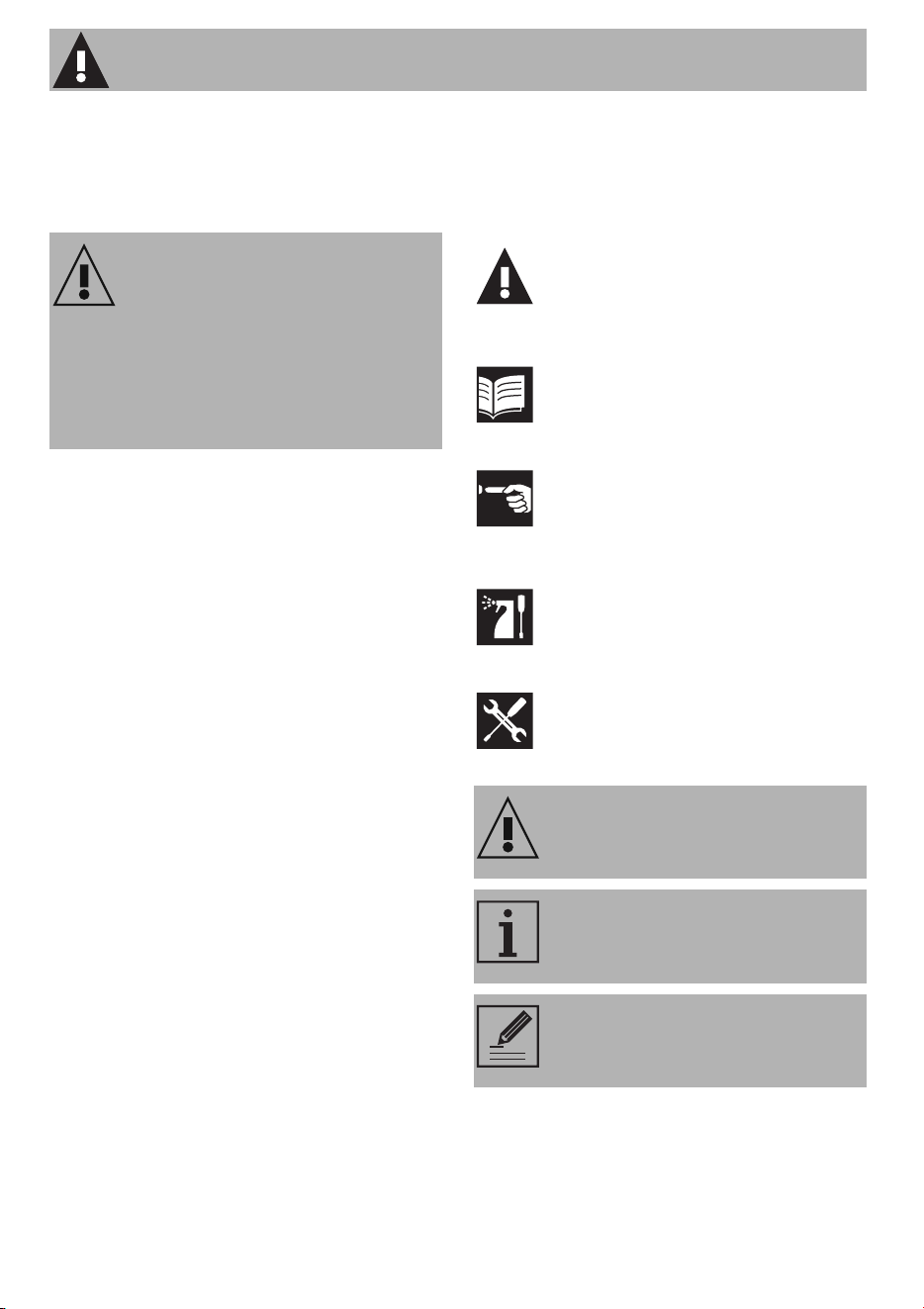
1.7 How to read the user manual
This user manual uses the following reading
conventions:
1. Use instruction sequence.
• Single use instruction.
Plastic packaging
Danger of suffocation
• Do not leave the packaging or any part
of it unattended.
• Do not let children play with the
packaging plastic bags.
Instructions
General information on this user
manual, on safety and final
disposal.
Description
Description of the appliance and its
accessories.
Use
Information on the use of the
appliance and its accessories,
cooking advice.
Cleaning and maintenance
Information for proper cleaning and
maintenance of the appliance.
Installation
Information for the qualified
technician: installation, operation
and inspection.
Safety instructions
Information
Advice
Instructions
31
ENEN
1.8 Daily use instructions
• Do not put hot food on the plastic parts
in the appliance.
• Do not place food products directly
against the rear wall.
• Frozen food must not be re-frozen once
it has been thawed out.*
• Store pre-packed frozen food in
accordance with the frozen food
manufacture’s instructions.*
• Appliance’s manufactures storage
recommendations should be strictly
adhered to refer to relevant instructions.
• Do not place carbonated or fizzy drinks
in the freezer compartment as it creates
pressure on the container, which may
cause it to explode, resulting in damage
to the appliance.*
• Ice lollies can cause frost burns if
consumed straight from the appliance. *
• To avoid contamination of food, please
respect the following instructions.
• Opening the door for long periods can
cause a significant increase of the
temperature in the compartments of the
appliance.
• Clean regularly surfaces that can come
in contact with food and accessible
drainage systems.
• Clean water tanks if they have not been
used for 48h; flush the water system
connected to a water supply if water has
not been drawn for 5 days.
• Store raw meat and fish in suitable
containers in the refrigerator, so that it is
not in contact with or drip onto other
food.
• Two-star frozen-food compartments
(if they are presented in the appliance)
are suitable for storing pre-frozen food,
storing or making ice-cream and making
ice cubes.
• One-, two- and three -star compartments
(if they are presented in the appliance)
are not suitable for the freezing of fresh
food.
• If the appliance is left empty for long
periods, switch off, defrost, clean, dry
and leave the door open to prevent
mount developing within the appliance.
* If there is a freezer compartment
Description
32
2 Description
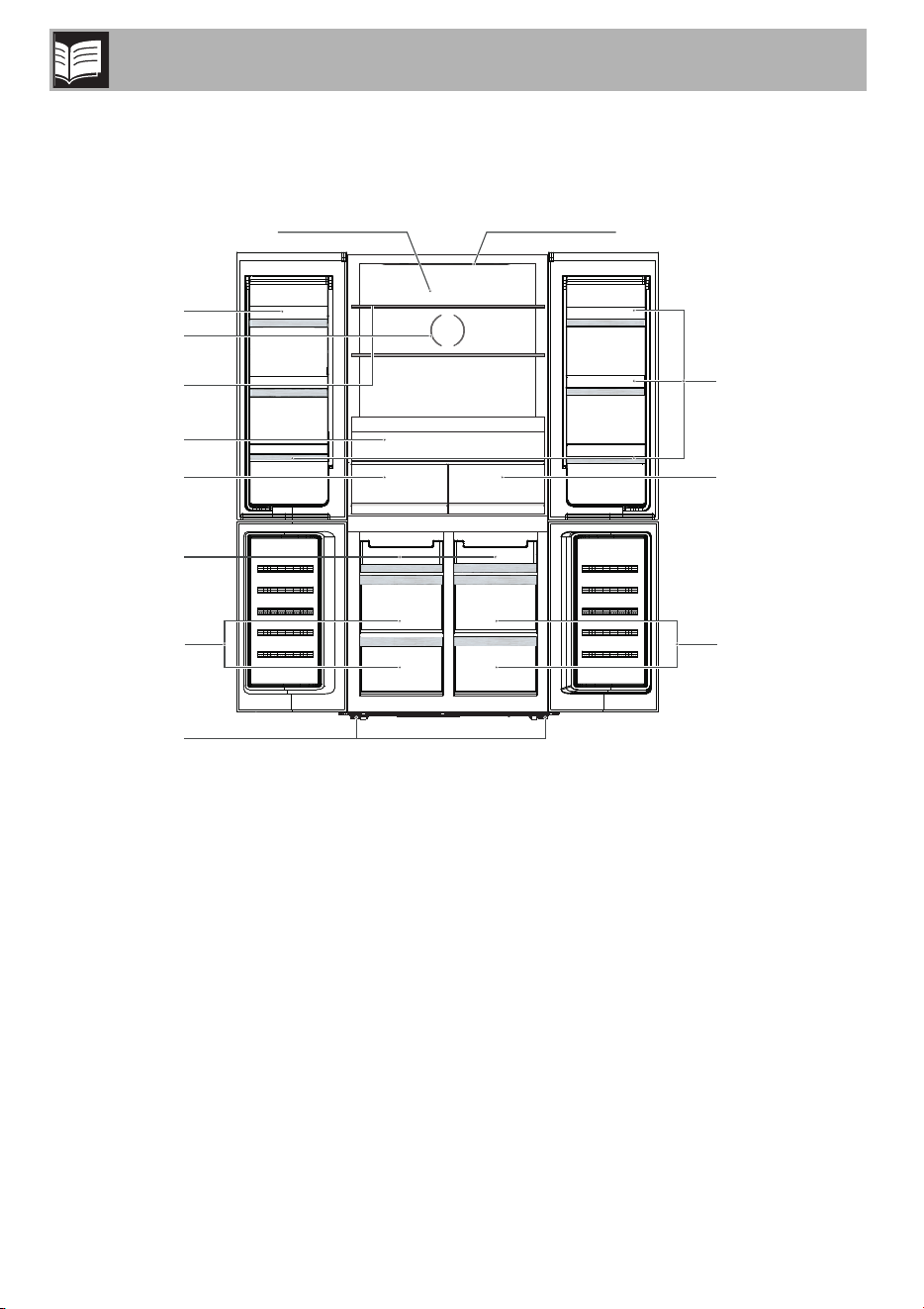
2.1 General description
1 Metal air duct
2 Door balcony
3 Catalyst sterilization device
4 Refrigerator shelves
5 Crisper zone
6 High moisture drawer
7 Sliding tray
8 Freezer drawer
9 Levelling feet
10 LED light
11 Fresh zone (Zero Star Zone)
12 Convertible zone (Multizone)
110
2
2
11
12
4
5
6
7
8
9
3
Description
33
ENEN
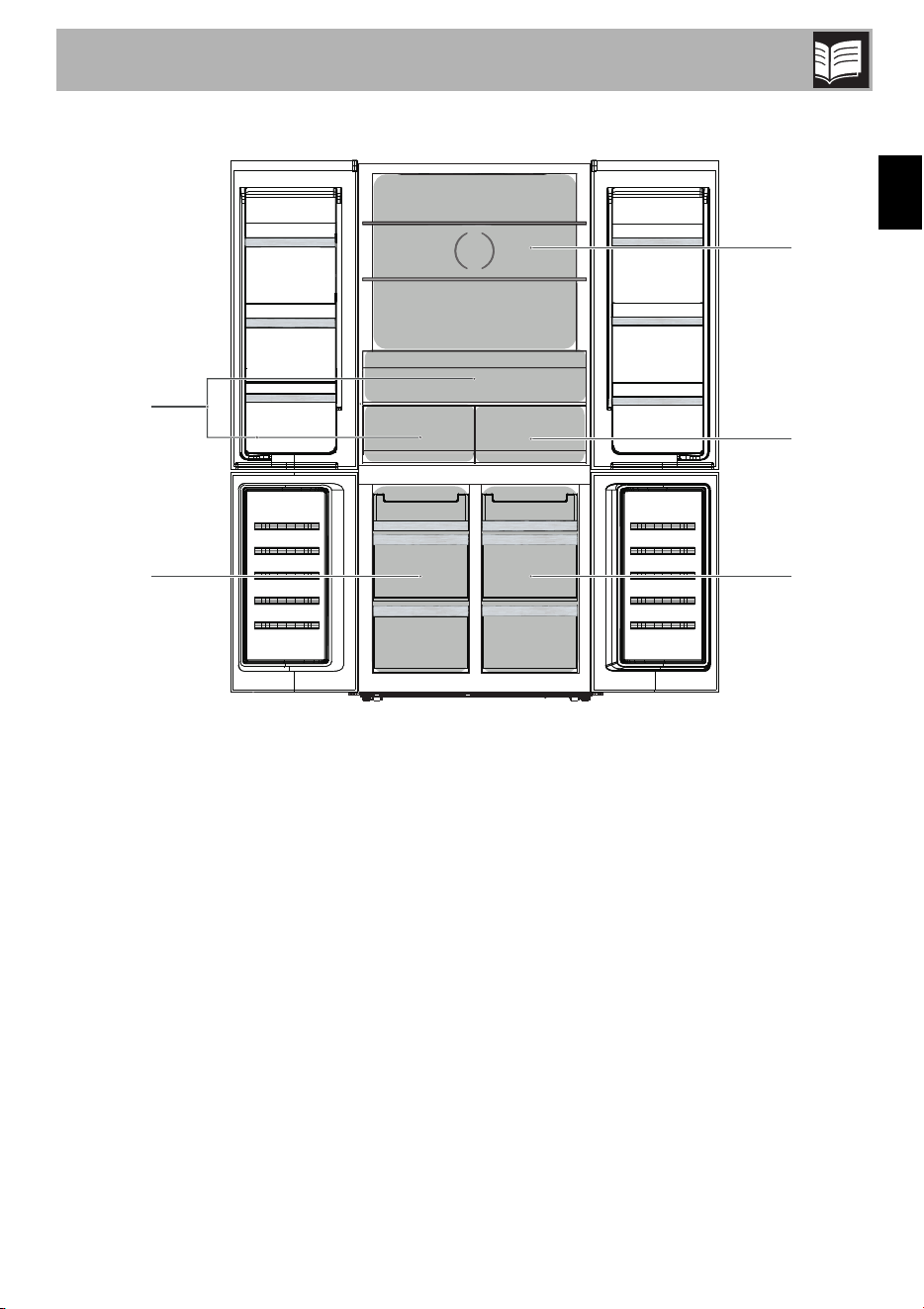
2.2 Multi-Temperature Zone
1 Fridge temp. 2°C~8°C/ Off
Controlled by operating display panel
2 Fresh temp. 2°C~8°C
3 Fresh zone (Zero Star Zone) temp. 3°C,
0°C, -3°C
4 Freezer temp. -22°C~-14°C
Controlled by operating display panel
5 Convertible zone (Multizone) temp.
-20°C~5°C/Off
Controlled by operating display panel
5
3
1
4
2
Use
34
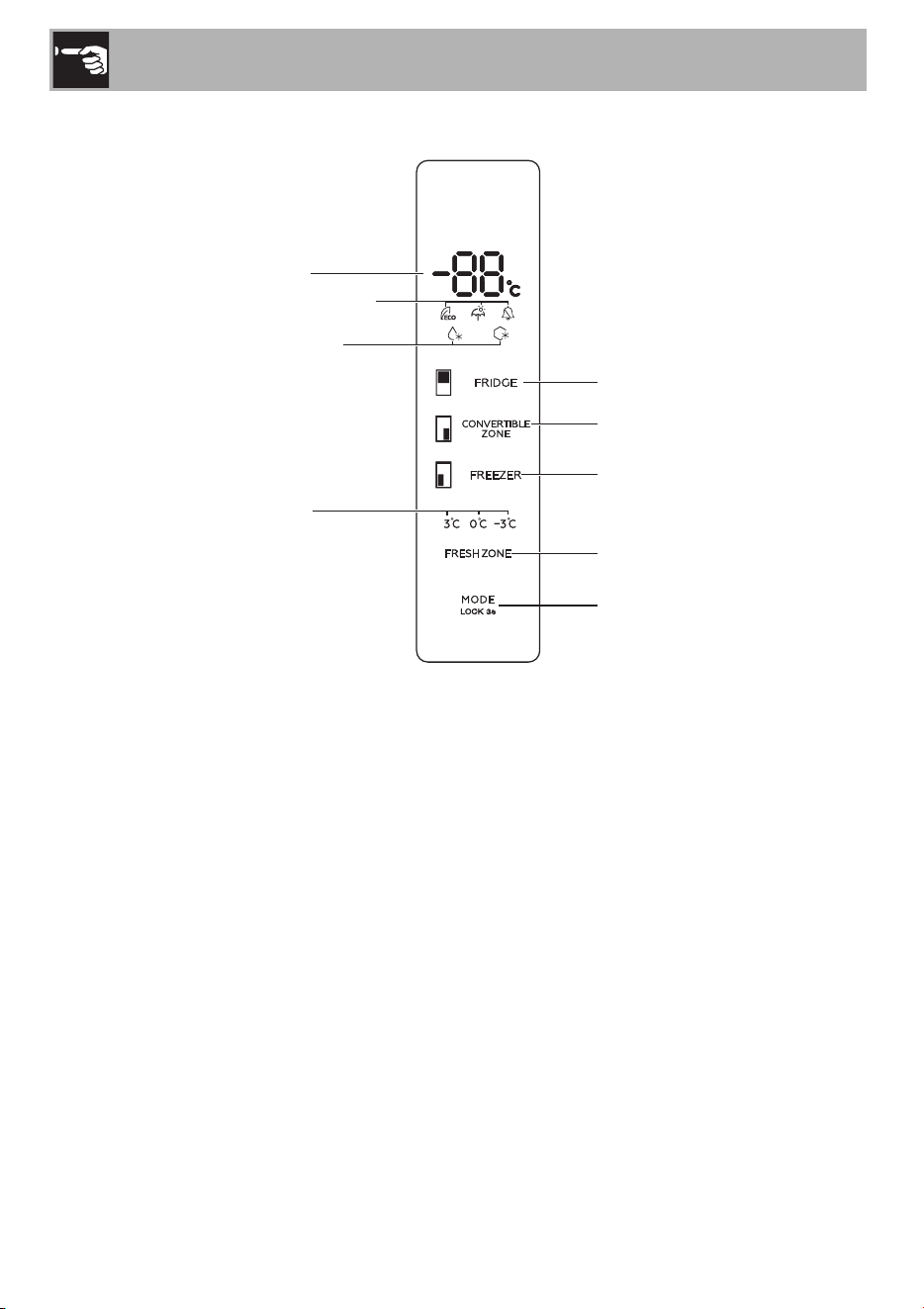
2.3 Control panel
Function icon:
1 Setting temperature
2 ECO mode
3 Holiday mode
4 Silent mode
5 Quick cooling mode
6 Super freezing mode
7 Fresh zone (Zero Star Zone) Temp.
Setting
Key operation:
8 Fridge temp. setting
9 Convertible zone (Multizone) temp.
setting
10 Freezer temp. setting
11 Fresh zone (Zero Star Zone) temp.
setting
12 Mode setting, Locking/Unlocking
setting
8
5
6
2
3
4
1
9
10
7
11
12
Use
35
ENEN
3 Use
3.1 Instructions
3.2 Preliminary operations
1. Remove any protective film from the
outside or inside of the appliance,
including accessories.
2. Remove any labels (apart from the
technical data plate) from the
accessories and shelves.
3. Remove and wash all the appliance
accessories (see 3.7 Temperature setting
recommendation).
3.3 First use
Freezing fresh food
The freezer compartment is suitable for
freezing fresh food and storing frozen and
deep-frozen food for long time.
Place the fresh food to be frozen in the
freezer compartment.
The maximum amount of food that can be
frozen in 24 hours is specified on the rating
plate. The freezing process lasts 24 hours:
during this period do not add other food to
be frozen.
Storing frozen food
When first starting-up or after a period out
of use, before putting the product in the
compartment let the appliance run at least
2 hours on the higher settings.
Improper use
Risk of damages to the appliance
• Do not use sharp objects when
removing ice and frost in order not to
damage the appliance's walls.
• Do not sit or lean on the door or any
open drawers.
• Do not touch the heating elements on
the outside of the appliance.
• Do not store inflammable, explosive or
volatile substances.
• Organic compounds, acids and
essential oils can corrode the seals and
plastic surfaces if left in contact with
them for extended periods.
• Bottles containing strong alcoholic
drinks must be tightly closed and stored
vertically.
ln the event of accidental
defrosting, for example the power
has been off for longer than the
value shown in the technical
characteristics chart under “rising
time”, the defrosted food must be
consumed quickly or cooked
immediately and then re-frozen
(after cooked).
Use
36
Thawing
Deep-frozen or frozen food, prior to be
used, can be thawed in the fridge
compartment or at room temperature,
depending on the time available for this
operation.
Small pieces may even be cooked still
frozen, directly from the freezer. ln this case,
cooking will take longer.
Ice-cube
This appliance may be equipped with one
or more ice-cube tray to produce ice.
3.4 Using the accessories
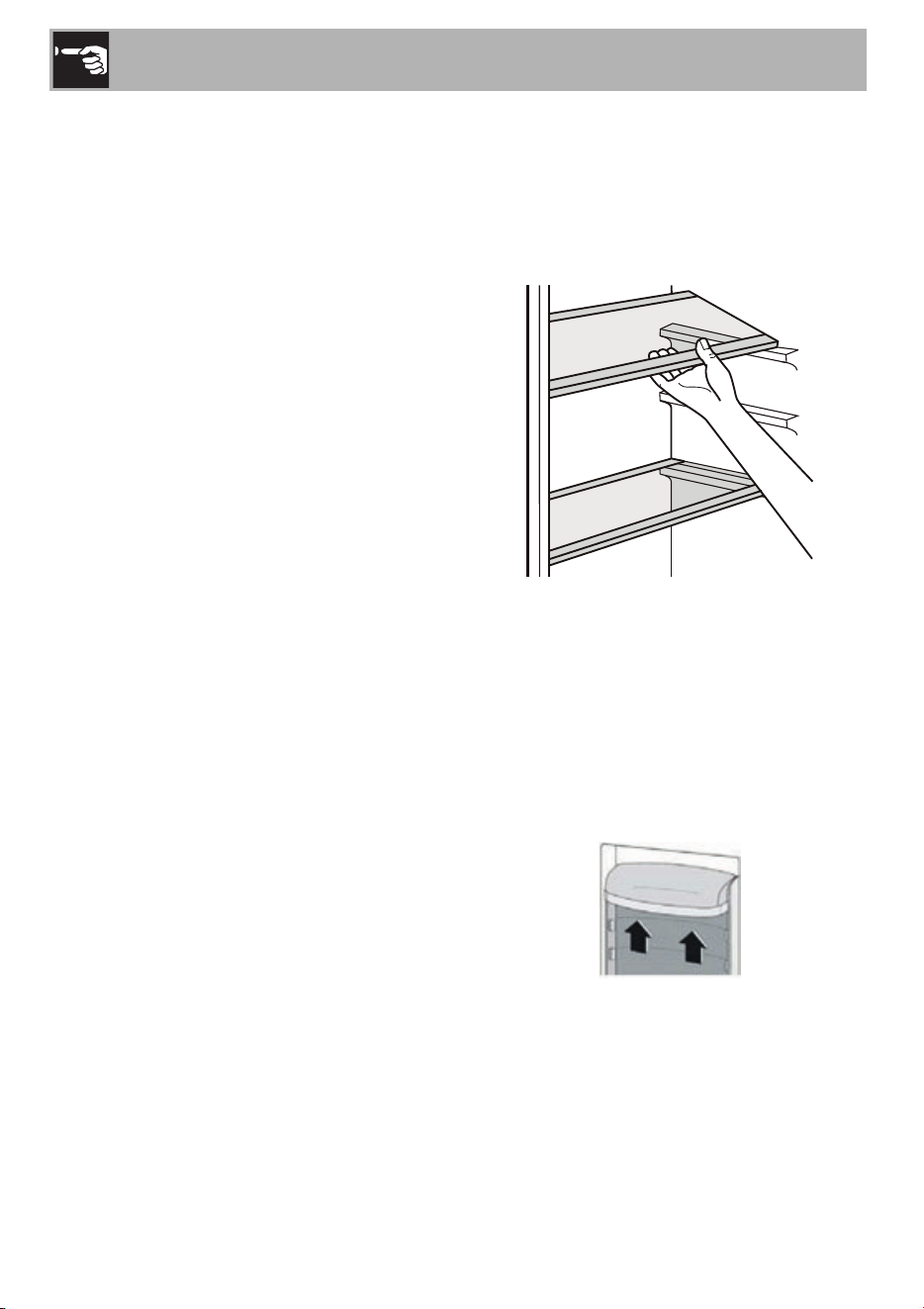
Movable shelves
The walls of the refrigerator are equipped
with a series of runners so that the shelves
can be positioned as desired.
Positioning the door balconies
To permit storage of food packages of
various sizes, the door balconies can be
placed at different heights. To make these
adjustments proceed as follows: gradually
pull the balcony in the direction of the
arrows until it comes free, then reposition as
required.
Use
37
ENEN
3.5 Using the control panel
Initial power-on state
The display will be fully lit for 3 seconds,
display and operate according to the status
(mode, set temperature) before power off.
Locking / Unlocking
1. Unlock
In the locked state, keep pressing the (12)
key until you hear a long beep from the
buzzer and then release it, and the display
will be unlocked. In the unlocked state, you
can hear the buzzer “ding” by clicking any
button. The button responds with a sound
and performs corresponding temperature
or function switching.
2. Lock
In the unlocked state, keep pressing the
(12) key until you hear a long beep from
the buzzer and then release it, and the
display will be locked. In the locked state,
you can hear the buzzer “ding ding” by
clicking any button, the key operation will
not be executed.
Mode selection
In the unlocked state, press the (12) key
continuously, and the working mode of the
refrigerator will cycle between “ECO-
Holiday-Silent-Quick Cooling- Super
freezing -User Setting Mode (no mode icon
displayed)”.
1. ECO mode
Press the (12) key to select ECO mode,
and the ECO mode icon lights up; In ECO
mode, the set temperature of the
refrigerator compartment is 5°C, and the
set temperature of the freezer compartment
is -18°C; exit the ECO mode (you can exit
the ECO if any of the following conditions
are met):
• Press (12) key in unlocked state to switch
to other modes.
• In the unlocked state, press (8) or (10) to
adjust the set temperature of the
refrigerator or freezer, and it will enter
the user-set mode.
Use
38
2. Holiday mode
You can choose this mode when you go on
vacation. This mode can ensure the basic
cooling needs of the refrigerator and take
into account the energy saving effect.
Press the (12) key to select holiday mode,
and the holiday mode icon lights up.
In holiday mode, the set temperature of the
refrigerator compartment is 8°C, and the
set temperature of the freezer compartment
is -15°C; exit holiday mode (you can exit
holiday mode if any of the following
conditions are met):
• In unlocked state, press the (12) key to
switch to other modes.
• In unlocked state, press (8) or (10) to
adjust the set temperature of the
refrigerator or freezer, and it will enter
the user-set mode.
3. Silent mode
You can use this mode when you want to
reduce the operating noise of the
refrigerator.
Press the (12) key to select silent mode, and
the silent mode icon lights up.
• In silent mode: the refrigerator
automatically reduces operating noise.
• Exit silent mode: Press (12) key in
unlocked state to switch to other modes.
To ensure the basic performance
of the refrigerator, the silent mode
will be temporarily exited when the
ambient temperature is too high or
the load temperature in the
refrigerator is too high. When the
ambient temperature and load
temperature in the box return to
normal, the silent mode will be
automatically restored.
Use
39
ENEN
4. Quick cooling mode
You can use this mode when you want the
food that has just been placed in the
refrigerator to cool down quickly.
In the quick cooling mode, the set
temperature of the refrigerator compartment
is 2°C;Exit quick cooling mode (you can
exit quick cooling mode if any of the
following conditions are met):
• Press (12) key in unlocked state to switch
to other modes.
• Quick cooling time reaches 6 hours.
• Press (8) button to adjust the set
temperature of the refrigerator
compartment in the unlocked state, and
it will enter the user-set mode.
5. Super freezing mode
You can use this mode when you want the
food that has just been placed in the freezer
to be frozen quickly.
In Super freezing mode, the set temperature
of the freezer compartment of the
refrigerator is -24°C.
Exit Super freezing mode (you can exit
Super freezing mode if any of the following
conditions are met):
• Press (12) key in unlocked state to switch
to other modes.
• Super freezing time reaches 50 hours.
• In the unlocked state, press the (10) key
to adjust the freezer compartment
temperature setting, and it will enter the
user-set mode.
• If the user needs to put a large amount of
fresh food into the freezer at one time,
please turn on the Super freezing
function 24 hours in advance, and it is
recommended that the amount of fresh
food put into the freezer at one time
should not be too much.
6. User-set mode (no mode icon
displayed)
In the “user setting” mode, the Fridge,
Convertible zone (Multizone) temperature,
and freezer temperatures can be freely
adjusted according to the following rules.
Refrigerator temperature adjustment
(press (8) key).
• In the user-set mode, press the (8) button
continuously, and the set temperature of
the refrigerator will change cyclically
between “2°C to 8°C”. After selection,
it will light up for 5 seconds and then be
confirmed.
Convertible zone (Multizone)
temperature adjustment (press (9) key).
After the freezer exits the Super
freezing mode, it operates
according to the set temperature
and mode before entering the
Super freezing mode.
Use
40
• In the user self-setting mode, press the
(9) button continuously, and the set
temperature of the Convertible zone
(Multizone) will change cyclically
between “5°C to -20°C”. After
selection, it will light up for 5 seconds
and then be confirmed.
Freezer temperature adjustment (press
(10) key).
• In the user self-setting mode, press the
(10) key continuously, and the freezer
temperature will change cyclically
between “-16°C to -24°C”. After
selection, it will light up for 5 seconds
and then be confirmed.
7. Fresh zone (Zero Star Zone)
temperature adjustment
In the unlocked state, press the (11) key
continuously, and the icon will cycle
through “3°C”, “0°C”, and “-3°C”; after
selection, it will light up for 5 seconds and
then be confirmed.
Temperature display
Displays the chamber temperature at which
the temperature was last adjusted.
Door Open Alarm
If the door is opened for more than
120 seconds, the buzzer will sound
“Ding----” 5 times every 30 seconds until
the door is closed.
Power off memory function
When there is a power outage, the working
status before the power outage is
memorized, and the setting work before the
power outage will be automatically
restored after a power on.
Delay protection function
The product is equipped with a compressor
delay protection function. The time interval
between two operations of the compressor
at any time is not less than 5 minutes.
Fault prompt
When “UC”, “rS”, “FS”, “Fd”, “ES”, “Ed”,
“dr”, “CS”, and “BS” appear in the
refrigeration temperature area of the
display, it means that there is a malfunction
in the refrigerator. The refrigerator can still
cool under some fault conditions, but you
should contact maintenance as soon as
possible to achieve optimal operation of the
refrigerator.
Use
41
ENEN
3.6 Using the refrigerator compartments
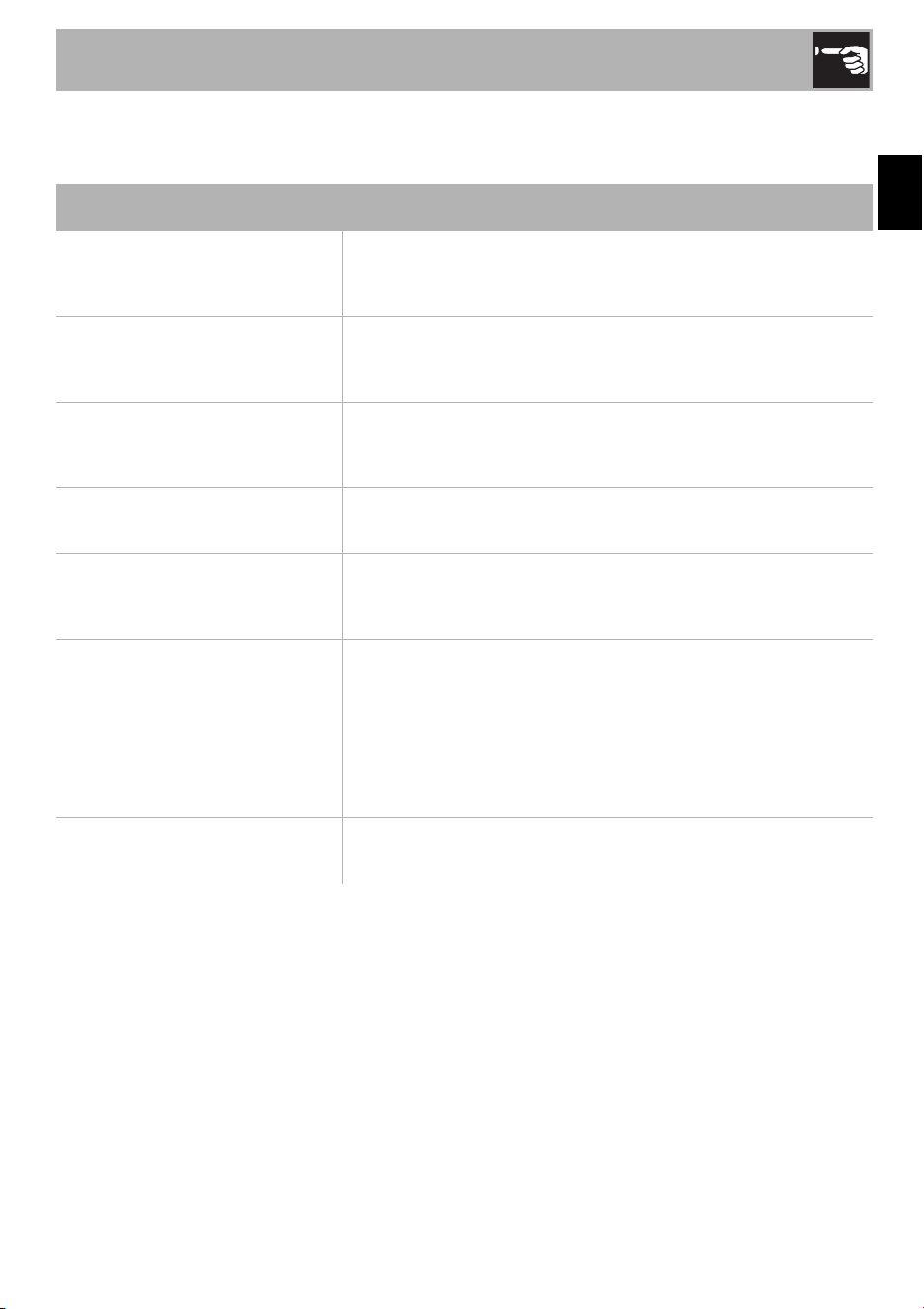
Position different food in different compartments according to the below table:
Refrigerator compartments Type of food
Door or balconies of fridge
compartment
• Food with natural preservatives, such as jams, juices, drinks,
condiments.
• Do not store perishable food.
Crisper zone
• Fruits, herbs and vegetables should be placed separately in the
crisper bin.
• Do not store bananas, onions, potatoes, garlic in the refrigerator.
Fridge shelf
• Dairy food, eggs, cakes, pasta, pizza
• Foods that do not need cooking, such as ready-to-eat foods, deli
meats, leftovers.
High moisture drawer
• Locking humidity & fresh. Prolong preservation time.
• Fresh fruit and vegetables.
Fresh zone (Zero Star Zone)
• 3°C,0°C, -3°C, independent storage & hyper fresh.
• Chilling foods for short-term storage, such as raw meat, fish, seafood
and chilling baked goods.
Convertible zone (Multizone)
• -20°C~5°C, wide range variable temperature.
• 3°C~5°C: fresh fruit, vegetables.
• 0°C~2°C: drinks, beer, red wine, treasure.
• -7°C~-1°C: chilling foods for short-term storage, such as raw meat,
fish, seafood, dumplings.
• -20°C~-8°C: chilling foods for long-term storage, such as raw
meat, fish, seafood, dumplings.
Freezer compartment
• Foods for long-term storage.
• Seafood, fish, meat, dumplings, frozen baked goods.
Use
42
3.7 Temperature setting
recommendation
Information above give users
recommendation of temperature setting.
Convertible zone (Multizone)
temperature adjustment
Temperature of convertible zone
(Multizone) setting depends on food
leading.
• If you want to turn the convertible
compartment into a fridge compartment,
the recommended setting is 5°C.
• If you want to turn the convertible
compartment into a chill compartment,
the recommended setting is 2°C.
• If you want to turn the convertible
compartment into a freezer
compartment, the recommended setting
is -18°C.
Fresh zone (Zero Star Zone) temperature
adjustment
3°C, 0°C, and -3°C: set temperature
according to customer needs.
3.8 Impact on food storage
• Under Recommended setting, the best
storage time of fridge is no more than
3 days.
• Under Recommended setting, the best
storage time of freezer is no more than
1 month.
• The best storage time may reduce under
other settings.
3.9 Food storage advice
Practical energy saving advice
• Correct use of the appliance, correct
packaging of foodstuffs, a constant
temperature and food hygiene have
significant effects on the quality of
storage.
• Don't put hot food in the appliance;
• Don't pack food close together as this
prevents air circulating.
• Make sure food don't touch the back of
the compartment(s).
• Reduce the number of times that the
doors are opened and the length of time
they remain open to prevent the
compartments from heating up
excessively.
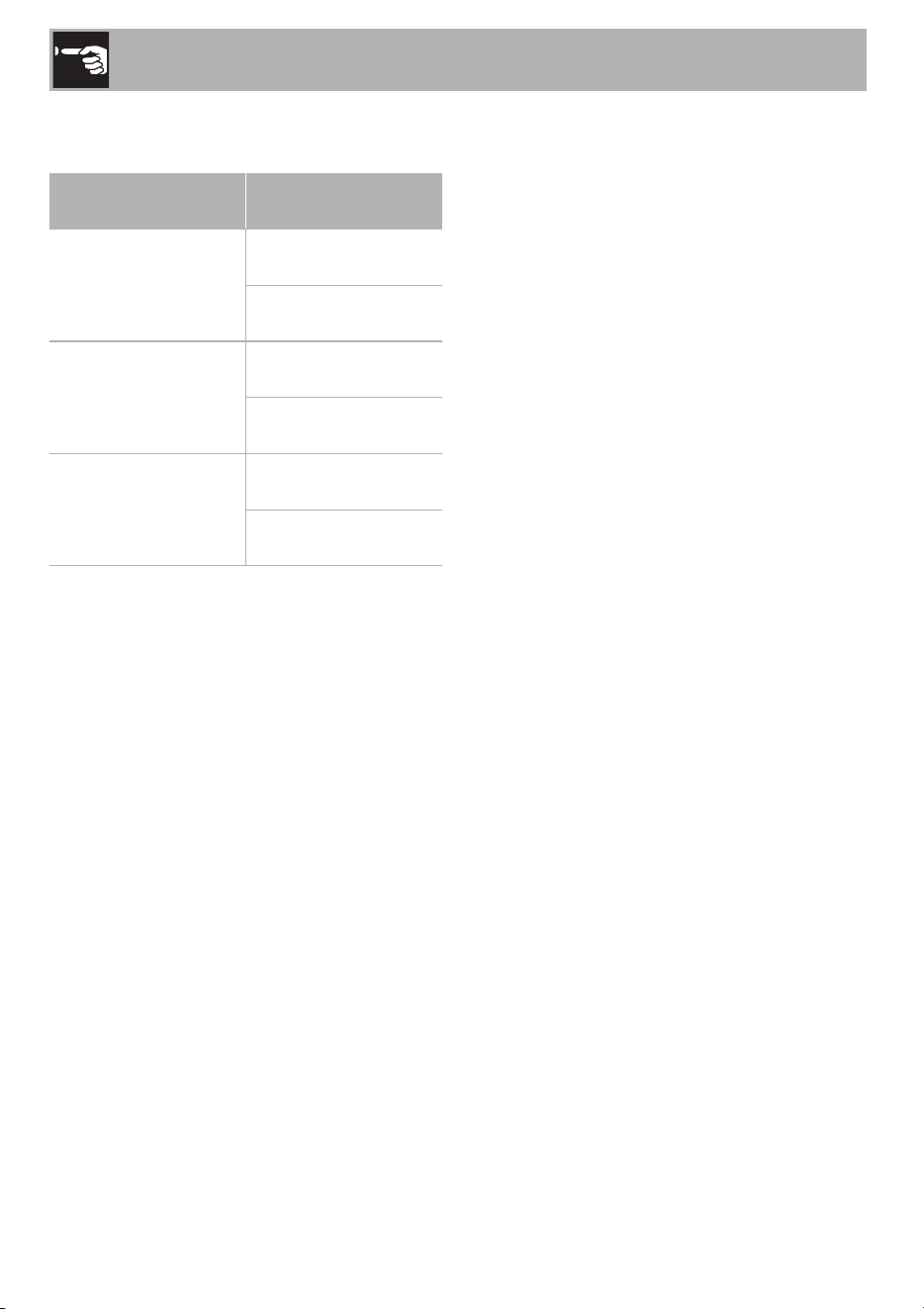
Environment
temperature
Temperature
setting
Warm
32°C-43°C
Fridge set
on °4C
Freezer set
on -18°C
Normal
21°C-31°C
Fridge set
on 4°C
Fridge set
on -18°C
Cold
10°C-20°C
Fridge set
on 4°C
Freezer set
on -18°C
Use
43
ENEN
• If electricity goes off, don't open the
door(s).
• Don't set the thermostat on exceeding
cold temperatures.
• All accessories, such as drawers, shelves
balconies, should be kept there for lower
energy consumption.
General advice
• Always check the expiry date on the
food packaging.
• The foodstuffs must be stored in closed or
pre-packaged containers and must not
be able to emit or absorb moisture and
odours.
• Remove perishable products from the
appliance if you are going away for a
long period.
• The maximum quantity of food which can
be frozen in 24 hrs. is shown on the
rating plate.
• The freezing process takes 24 hours. No
further food to be frozen should be
added during this period.
• Only freeze top quality, fresh and
thoroughly cleaned, foodstuffs.
• Prepare food in small portions to enable
it to be rapidly and completely frozen
and to make it possible subsequently to
thaw only the quantity required.
• Wrap up the food in aluminium foil or
polythene and make sure that the
packages are airtight.
• Do not allow fresh, unfrozen food to
touch food which is already frozen, thus
avoiding a rise in temperature of the
latter.
• Lean foods store better and longer than
fatty ones; salt reduces the storage life of
food.
• Water ices, if consumed immediately
after removal from the freezer
compartment, can possibly cause the
skin to be freeze burnt.
• It is advisable to show the freezing in
date on each individual pack to enable
you removal from the freezer
compartment, can possibly cause the
skin to be freeze burnt.
• It is advisable to show the freezing in
date on each individual pack to enable
you to keep tab of the storage time.
Use
44
Refrigerator compartment
• Do not store warm food or evaporating
liquids in the refrigerator.
• Do cover or wrap the food, particularly if
it has a strong flavour.
• Cooked foods, cold dishes, etc...: these
should be covered and may be placed
on any shelf.
• Fruit and vegetables: these should be
thoroughly cleaned and placed in the
special drawer(s) provided.
• Butter and cheese: these should be
placed in special airtight containers or
wrapped in aluminum foil or polythene
bags to exclude as much air as possible.
• Milk bottle: these should have a cap and
should be stored in the balconies on the
door.
• Bananas, potatoes, onions and garlic, if
not packed, must not be kept in the
fridge.
Freezer compartment
• Make sure that the commercially frozen
foodstuffs were adequately stored by
the retailer.
• Make sure that frozen foodstuffs are
transferred from the food store to the
freezer in the shortest possible time;
• Do not open the door frequently or leave
it open longer than absolutely
necessary.
• Once defrosted, food deteriorates
rapidly and cannot be re-frozen;
• Do not exceed the storage period
indicated by the food manufacturer.
Cleaning and maintenance
45
ENEN
4 Cleaning and maintenance
4.1 Instructions
4.2 Cleaning the appliance
For hygienic reasons the appliance interior,
including interior accessories, should be
cleaned regularly.
• Remove the food from the freezer. Store
them in a cool place, well covered.
• Clean the appliance and the interior
accessories with a cloth and lukewarm
water. After cleaning wipe with fresh
water and rub dry.
• After everything is dry place the
appliance back into service.
4.3 Defrosting
Defrost Description (No Frost)
• It is a total no frost refrigerator-freezer
which will be defrosted automatically.
• Do not use sharp objects to remove frost
from the appliance. Use a plastic
scraper.
• Regularly examine the drain in the
refrigerator for defrosted water. If
necessary, clean the drain. If the drain is
blocked, water will collect in the bottom
of the appliance.*
* If there is a fresh-food storage compartment.
Improper use
Risk of damage to surfaces
• Do not use steam jets for cleaning the
appliance.
• Do not use cleaning products containing
chlorine, ammonia or bleach on steel
parts or parts with metallic finishes on
the surface (e.g. anodizing, nickel- or
chromium-plating).
• Do not use abrasive or corrosive
detergents on glass parts (e.g. powder
products, stain removers and metallic
sponges).
• Do not allow substances such as
ethereal oils and organic solvents to
come into contact the appliance parts
(e.g. lemon juice or the juice form
orange peel, butyric acid, cleanser that
contain acetic acid).
• Do not use rough or abrasive materials
or sharp metal scrapers.
Power voltage
Danger of electrocution
• Turn off the appliance and unplug it from
the mains before cleaning.
• Do not pull the cable to remove the
plug.
Cleaning and maintenance
46
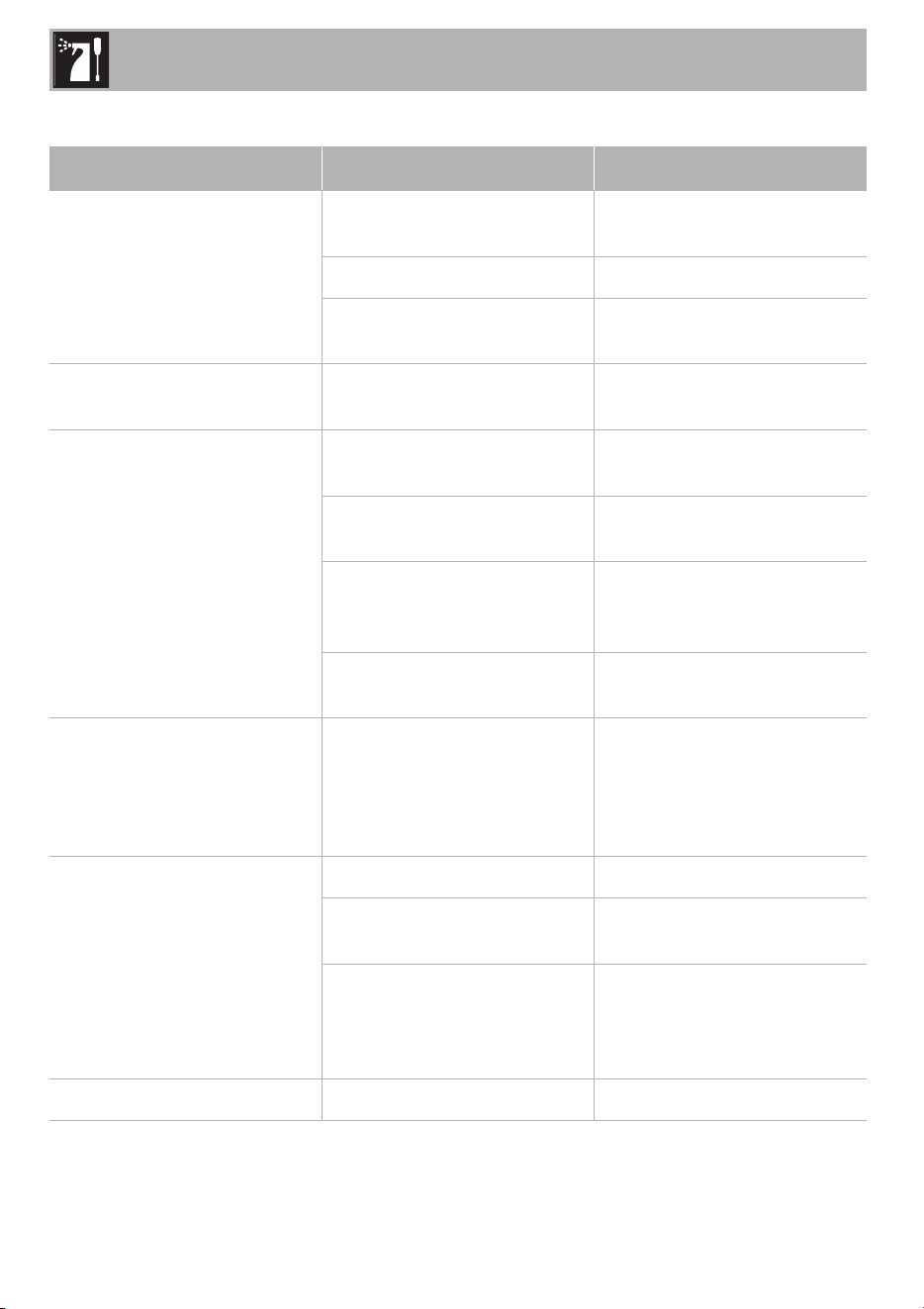
4.4 Trouble shooting...
If the malfunction shows again, contact the Service Center.
Problem Possibile cause Solution
Appliance does not work.
Mains plug is not plugged in or is
loose.
Insert mains plug.
Fuse has blown or is defective. Check fuse, replace if necessary.
Socket is defective.
Mains malfunctions are to be
corrected by an electrician.
Appliance freezes or cools too
much.
Temperature is set too cold or the
appliance runs at SUPER modes.
Turn the temperature regulator to a
warmer setting temporarily.
The food is not frozen enough.
Temperature is not properly
adjusted.
Please look in the initial Temperature
Setting section.
Door was open for an extended
period.
Open the door only as long as
necessary.
A large quantity of warm food was
placed in the appliance within the
last 24 hours.
Turn the temperature regulation to a
colder setting temporarily.
The appliance is near a heat source.
Please look in the installation
location section.
Heavy build up of frost on the door
seal.
Door seal is not air tight.
Carefully warm the leaking sections
of the door seal with a hair dryer (on
a cool setting). At the same time
shape the warmed door seal by
hand such that it sits correctly.
Unusual noises
Appliance is not level. Re-adjust the feet.
The appliance is touching the wall or
other objects.
Move the appliance slightly.
A component, e.g. a pipe, on the
rear of the appliance is touching
another part of the appliance or the
wall.
If necessary, carefully bend the
component out of the way.
Water on the fIoor Water drain hoIe is bIocked. See the CIeaning and Care section.
Installation
47
ENEN
5 Installation
5.1 Electrical connection
General information
• Unpack the appliance and check if there
are damages on it. Do not connect the
appliance if it is damaged. Report
possible damages immediately to the
place you bought it. In that case retain
packing.
• It is advisable to wait at least four hours
before connecting the appliance to
allow the oil to flow back in the
compressor.
• Before plugging in, ensure that the
voltage and frequency shown on the
rating plate correspond to your domestic
power supply.
• lf the domestic power supply socket is
not earthed, connect the appliance to a
separate earth in compliance with
current regulations, consulting a qualified
electrician.If it is necessary to replace the
power cable, this must be performed
by an authorised technician from
Technical Support Service.
• This appliance complies with EU
Directives and Regulations.
5.2 Positioning
Power voltage
Danger of electrocution
• The appliance must be connected to
earth in compliance with electrical
system safety standards.
• Do not pull the cable to remove the
plug.
Heavy appliance
Danger of crush injuries
• Position the appliance with the aid of a
second person.
Pressure on the open door
Risk of damages to the appliance
• Never use the open door to lever the
appliance into place when fitting.
• Avoid exerting too much pressure on the
door when open.
• The appliance must not be exposed to
direct sunlight.
• The appliance must not be installed near
heat sources. If this is not possible,
suitable insulation must be used.
• Do not use the appliance outdoors.
Installation
48
Choice of location
Always install the refrigerator in a dry place
with satisfactory ventilation. Depending on
its climate class (stated on the nameplate
inside the refrigerator compartment), the
appliance can be used in different
temperature conditions.
• This refrigerating appliance is not
intended to be used as a built-in
appliance.
• The appliance must not be installed near
heat sources. If this is not possible,
suitable insulation must be used.
• If installed underneath wall units, at least
5 cm clearance must be left.
• Ensure that the appliance is located with
sufficient space for the door to open and
for the internal drawers and shelves to
be removed, if necessary.
• Make sure that the mains plug is
accessible after the installation of the
appliance.
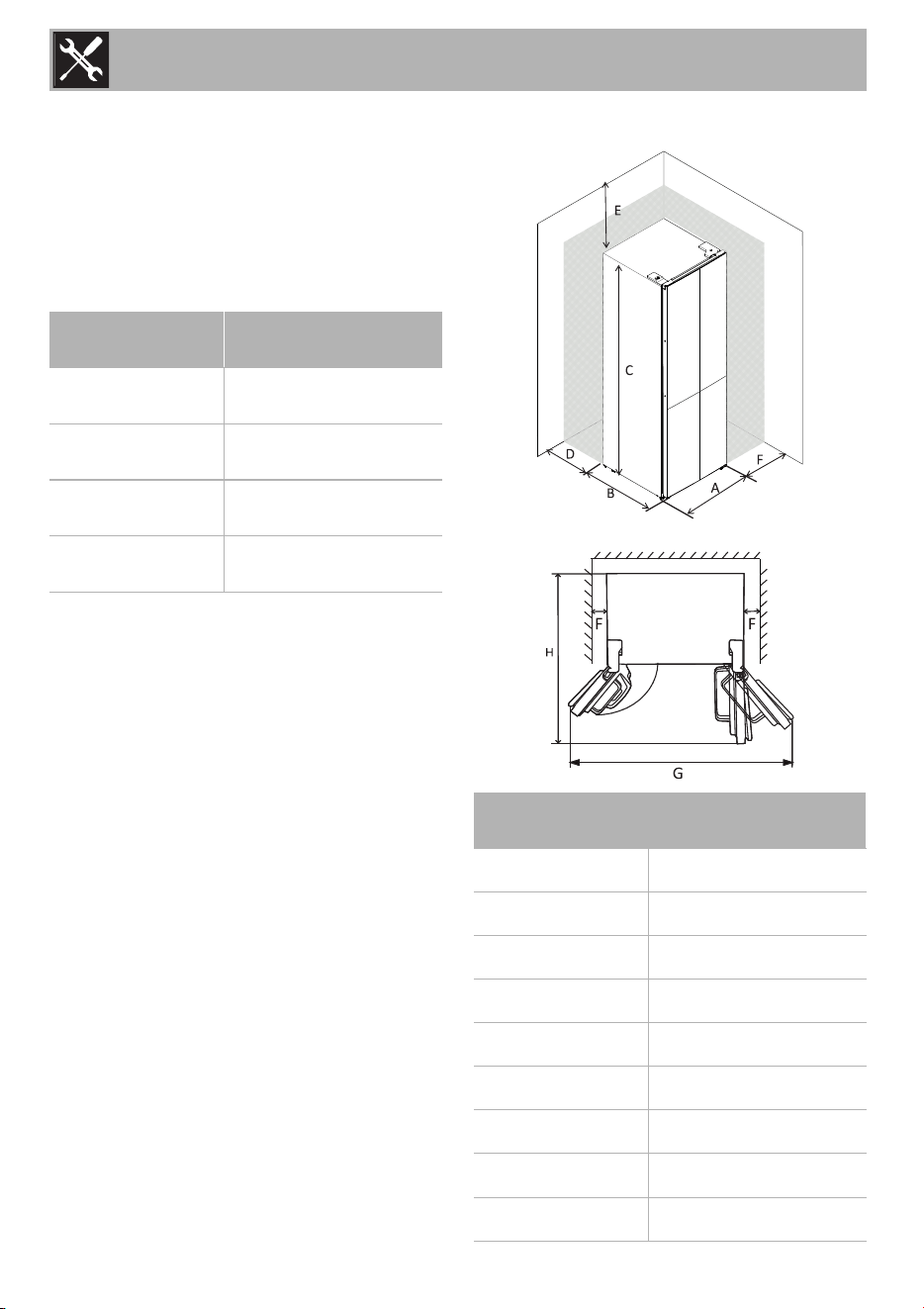
Positioning
Class Room temperature
Extended temperate
SN (Subnormal)
+ 10°C to + 32°C
Temperate
N (Normal)
+ 16°C to + 32°C
ST (Subtropical) + 16°C to + 38°C
T (Tropical) + 16°C to + 43°C
Space requirement dimensions
A 910
B 690
C 1905
Dmin = 50
Emin = 50
Fmin = 50
G 1515
H 1062
L 130°
L
Installation
49
ENEN
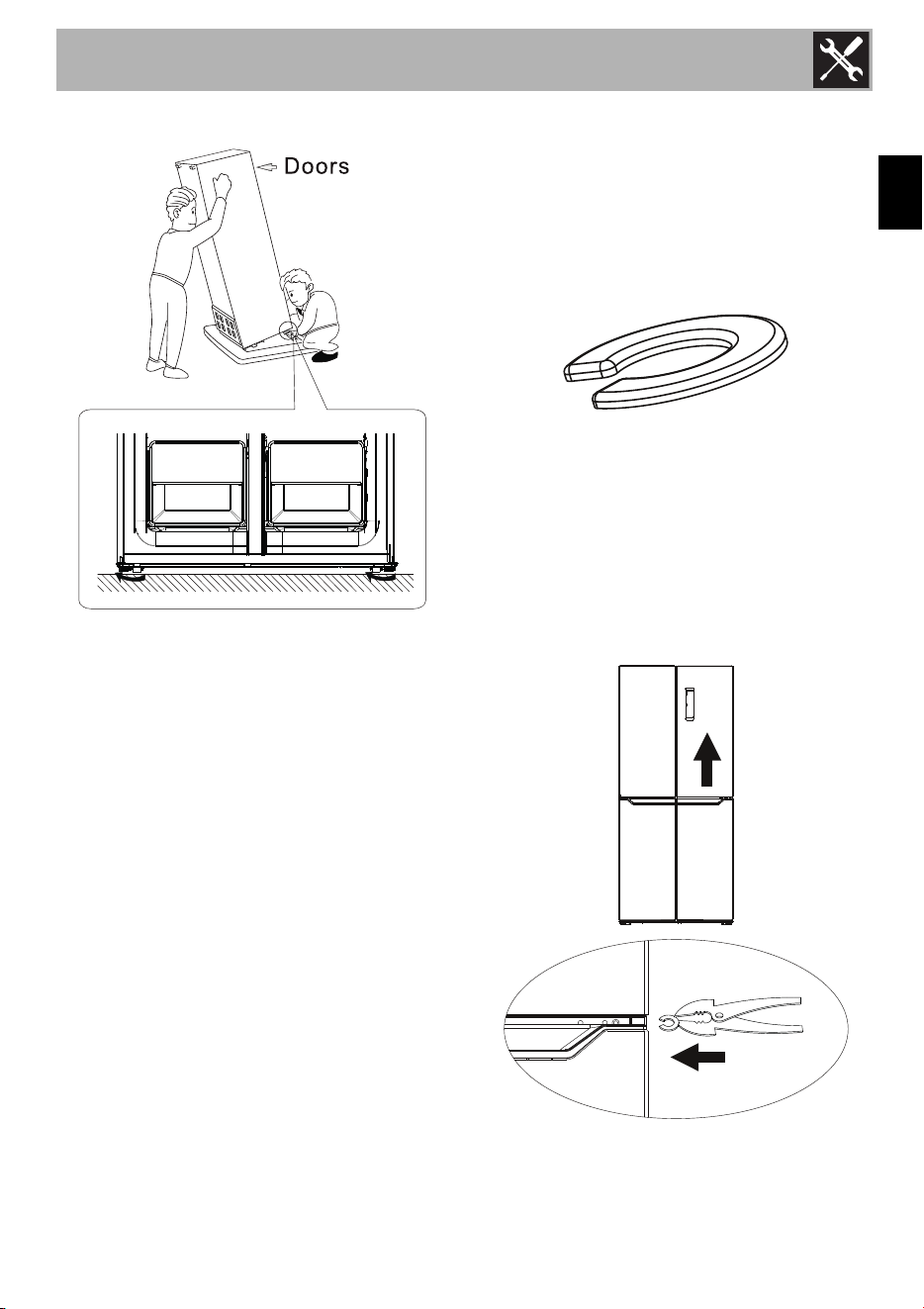
Levelling the unit
Levelling and anchor the refrigerator by
adjusting the feet:
• Clockwise rotate feet to heighten them
by hand.
• Anticlockwise rotate feet to lower them
by hand.
Level doors
After transportation or door balconies are
loaded by food or beverage, upper two
doors may not be aligned. There are 3 C
type washers which are used to adjust
doors. Please follow below procedure to
level doors.
1. Before checking the alignment of doors,
please make sure the appliance stands
levelly.
2. If the top of upper two doors looks not in
a line, please slightly lift the lower door
and insert a pieces of C type washer by
a clip between the bottom of the door
and the middle hinge.
Installation
50
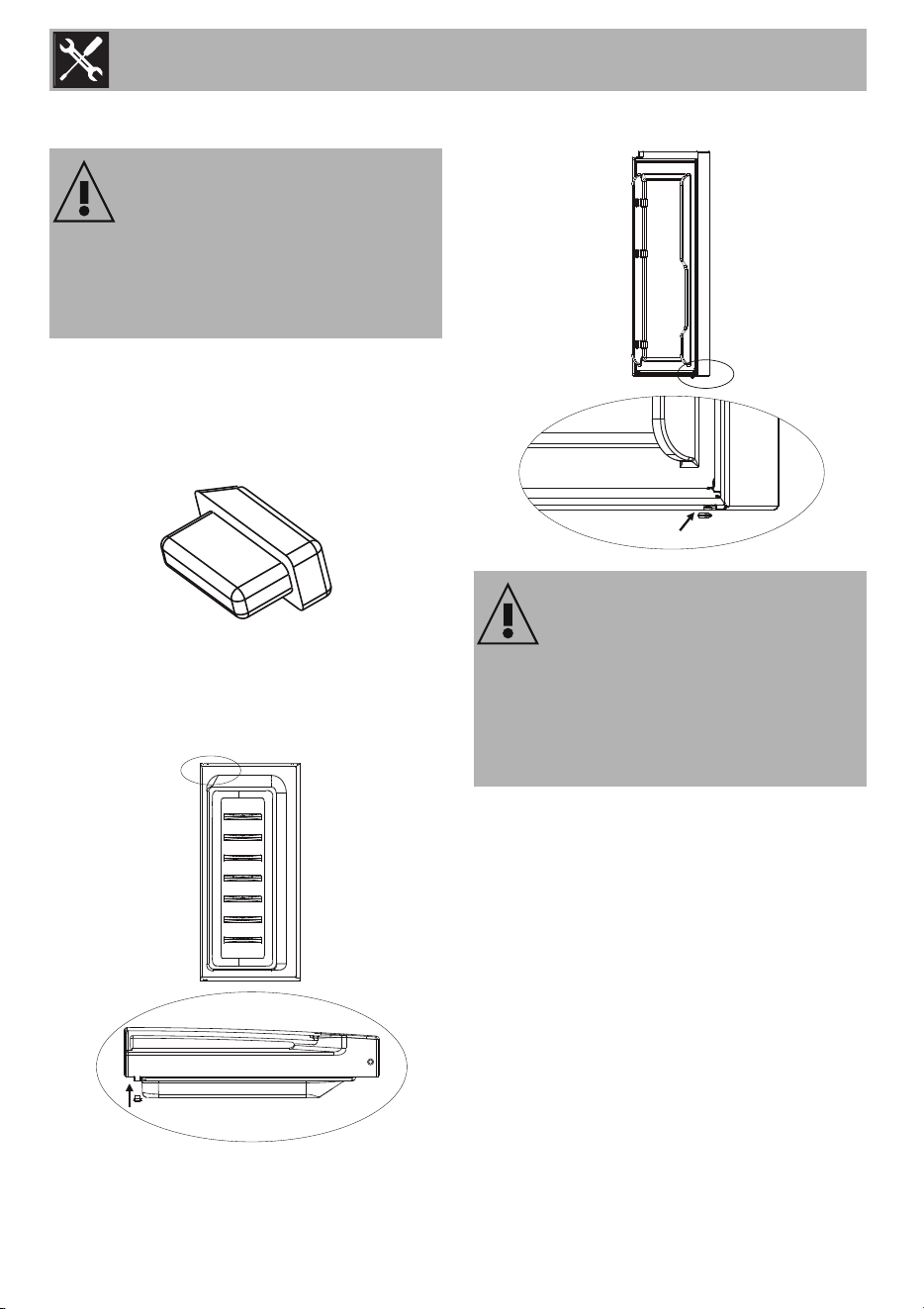
Rubber blocks
There is one rubber block on each door.
They function as spring to relieve impact
when the door closes.
Please do not pull the rubber blocks. If they
are absent from the doors, please take one
from accessory bag and insert it into the
hole of the door.
Heavy appliance
Danger of crush injuries
• Please be careful to avoid fingers are
clipped by the door. Tools are required
for installation.
Accessories
Danger of suffocation
• Please keep C type washers and rubber
blocks far away from children to avoid
them are swallowed by children. They
are small parts.