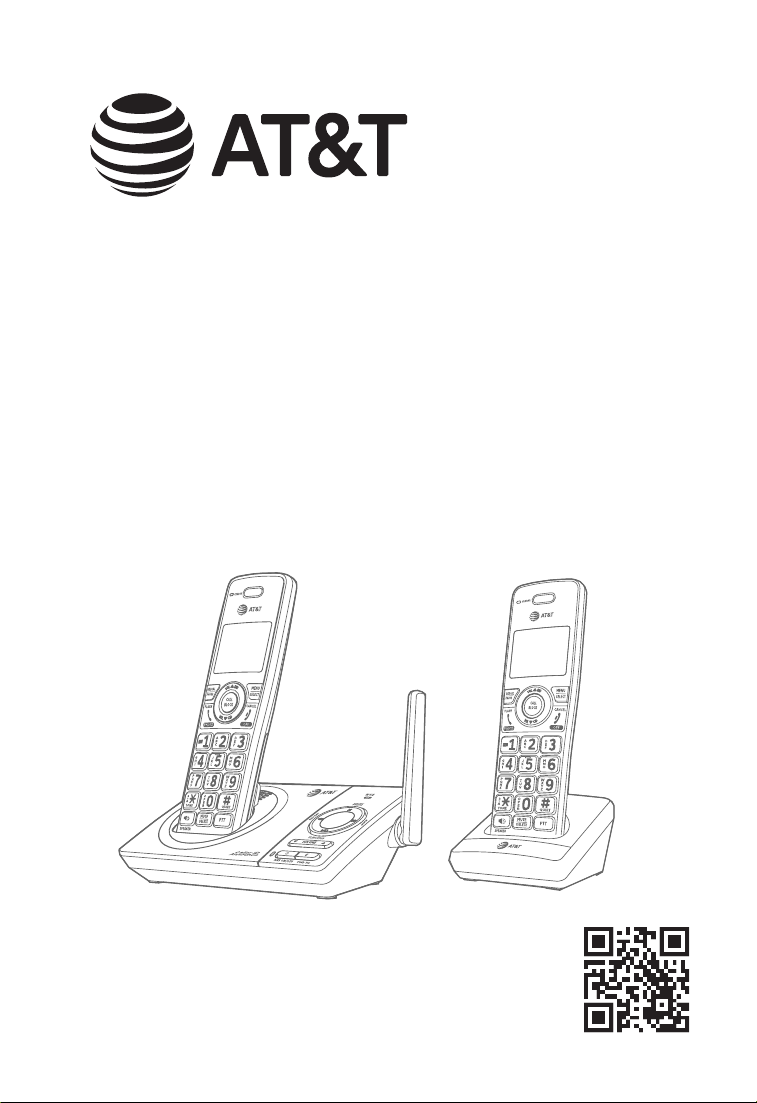
Complete user’s manual
CL82219/CL82229/CL82319/
CL82419/CL82519
DECT 6.0 cordless telephone/
answering system with caller ID/
call waiting
Scan the QR code for
support information

Congratulations
on your purchase of this AT&T product. Before using this AT&T
product, please read the Important safety information section
on pages 1-3 of this manual. Please thoroughly read this
user’s manual for all the feature operations and troubleshooting
information necessary to install and operate your new AT&T
product. You can also visit our website at
https://telephones.att.com or call 1 (800) 222-3111.
In Canada, dial 1 (866) 288-4268.
This telephone meets the California Energy Commission regulations for energy
consumption. Your telephone is set up to comply with the energy-conserving
standards right out of the box. No further action is necessary.
This telephone system is compatible with certain AT&T DECT 6.0 cordless
headsets and speakerphones. Visit
https://telephones.att.com/accessories for a list of
compatible cordless headsets and speakerphones.
Model number: CL82219/CL82229 (two handsets)
CL82319 (three handsets)
CL82419 (four handsets)
CL82519(vehandsets)
Type: DECT 6.0 cordless telephone/answering system with
caller ID/call waiting
Serial number:
Purchase date:
Place of purchase:
Both the model and serial numbers of your AT&T product can be found on
the bottom of the telephone base.
Save your sales receipt and original packaging in case it is necessary to
return your telephone for warranty service.
©
2019-2022 Advanced American Telephones. All Rights Reserved. AT&T and
the AT&T logo are trademarks of AT&T Intellectual Property licensed to
Advanced American Telephones, San Antonio, TX 78219. Printed in China.
Telephonesidentiedwiththislogohavereducednoiseandinterference
when used with most T-coil equipped hearing aids and cochlear implants.
The TIA-1083 Compliant Logo is a trademark of the Telecommunications
Industry Association. Used under license.
The ENERGY STAR® program (www.energystar.gov) recognizes and
encourages the use of products that save energy and help protect our
environment. We are proud to mark this product with the ENERGY STAR®
labelindicatingitmeetsthelatestenergyeciencyguidelines.
Parts checklist
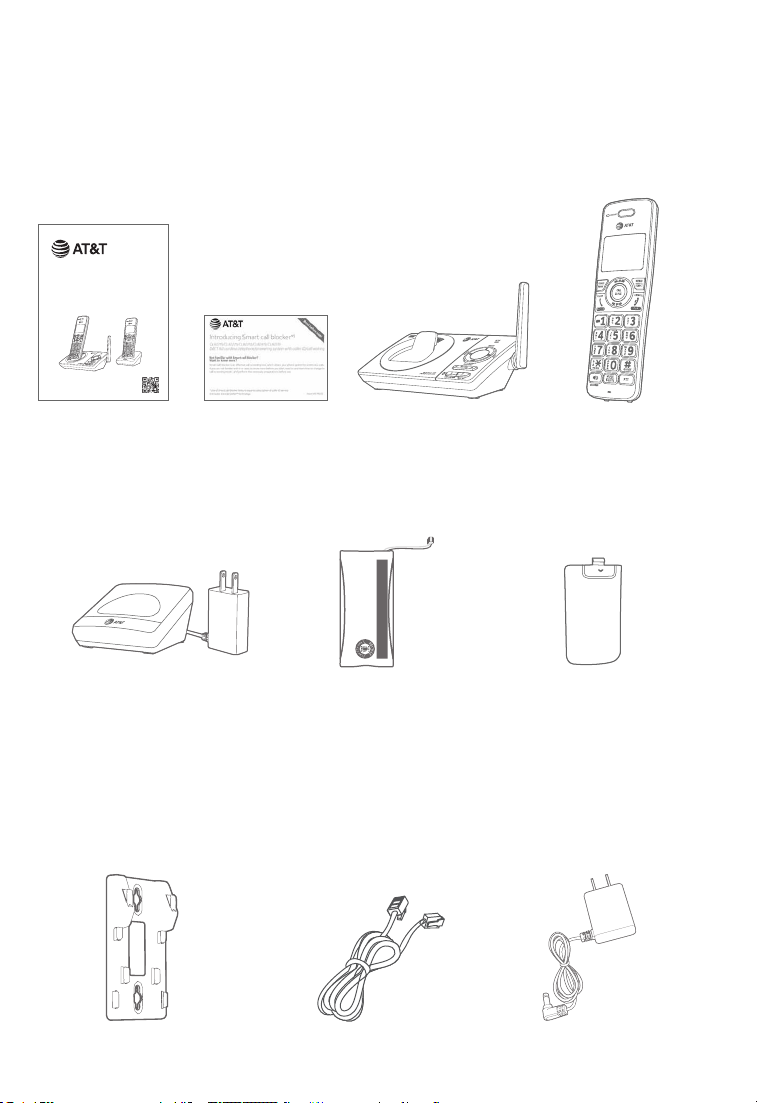
Your telephone package contains the following items. Save your
sales receipt and original packaging in the event warranty service is
necessary.
Telephone base
Cordless handset
(2 for
CL82219/CL82229)
(3 for CL82319)
(4 for CL82419)
(5 for CL82519)
Telephone line cord
Power adapter for
telephone base
Wall-mount bracket
Charger for cordless
handset with power
adapter installed
(1 for
CL82219/CL82229)
(2 for CL82319)
(3 for CL82419)
(4 for CL82519)
Battery for cordless
handset
(2 for CL82219/CL82229)
(3 for CL82319)
(4 for CL82419)
(5 for CL82519)
Battery compartment
cover
(2 for CL82219/CL82229)
(3 for CL82319)
(4 for CL82419)
(5 for CL82519)
THIS SIDE UP / CE CÔTÉ VERS LE HAUT
Battery Pack / Bloc-piles :
BT183342/BT283342 (2.4V 400mAh Ni-MH)
WARNING / AVERTISSEMENT :
DO NOT BURN OR PUNCTURE BATTERIES.
NE PAS INCINÉRER OU PERCER LES PILES.
Made in China / Fabriqué en chine CR1535
Quick start guide
Smart call
blockerleaet
Quick start guide
CL82219/CL82229/CL82319/
CL82419/CL82519
DECT 6.0 cordless telephone/
answering system with
caller ID/call waiting
Scan the QR code for
support information

Complete user’s manual
CL82219/CL82229/CL82319/
CL82419/CL82519
DECT 6.0 cordless
telephone/ answering system
with caller ID/call waiting
Table of contents
Getting started
Important safety
information ........................................1
Safety information ..................1
Especially about cordless
telephones ................................... 2
Precautions for users
of implanted cardiac
pacemakers .................................3
ECO mode .....................................3
Especially about telephone
answering systems .................3
Quick reference guide -
handset ................................................ 5
Quick reference guide -
telephone base .............................10
Telephone base and
charger installation .....................11
Telephone base
installation ...................................11
Charger installation .............12
Battery installation and
charging .............................................13
Battery installation and
charging .............................................14
Initial setups .................................... 16
Installation options ....................18
Tabletop to wall-mount
installation .................................. 18
Wall-mount to tabletop
installation ..................................19
Telephone settings
Handset settings ........................ 20
Ringer volume ..........................21
Ringer tone ................................22
Set date/time ..........................23
LCD language .......................... 24
Caller ID announce ................25
Set speed dial voicemail
number .........................................27
Voicemail (visual message
waiting) indicator ..................27
Clear voicemail
indication....................................28
Rename handset ...................29
Use caller ID to
automatically set date
and time ...................................... 30
Key tone ......................................30

Home area code .....................31
Dial mode ....................................32
QUIET mode ..............................33
Telephone operation
Telephone operation ............... 34
Making a call .............................34
On hook dialing
(predialing) ................................34
Answering a call .....................34
Ending a call ..............................34
Autoo .......................................34
Temporary ringer
silencing .......................................35
Handset speakerphone .....35
Last number redial ................35
Equalizer......................................36
Options while on calls ..............37
Volume control........................37
Call waiting ................................. 37
Mute ...............................................38
Chain dialing ............................. 39
Temporary tone dialing .... 40
Blind transfer ............................ 41
Multiple handset use
Multiple handset use ................42
Handset locator .....................42
Join a call in progress .........42
Intercom ...........................................43
Answer an incoming call
during an intercom call ..... 44
Call transfer using
intercom ...........................................45
Push-to-talk (PTT) .....................46
TurnPTTonoro ................ 46
PTT call to a single
device ............................................ 47
PTT call to multiple
devices .........................................48
Answer a PTT call ..................49
Change a one-to-one PTT
call to an intercom call ...... 49
Answer an incoming call
during a PTT call ....................50
Make an outgoing call
during PTT call ........................50
End or leave a PTT call........51
Directory
About the directory ...................52
Shared directory ....................52
Capacity .......................................52
Create directory entries .........53
Create a new directory
entry ...............................................53
Add a predialed telephone
number to the
directory ..................................... 54
Review the directory ................. 55
Review directory entries...55
Search the directory ................ 56
Search by name ..................... 56
Dial, delete or edit directory
entries .................................................57
Display dial .................................57
Delete a directory entry....57
Dial, delete or edit directory
entries ................................................ 58
Edit a directory entry ......... 58
Speed dial ........................................ 59
Assign a speed dial
number ........................................ 59
Assign your voicemail
speed dial number ...............60

Reassign a speed dial
number ........................................60
Delete a speed dial
number .........................................61
Make a call using speed
dial ................................................... 62
Check your voicemail
using speed dial ..................... 62
Caller ID
About caller ID .............................. 63
Information about caller
ID with call waiting ............... 63
Caller ID log ....................................64
How the caller ID log
works.............................................64
Missed (new) call
indicator ......................................64
Caller ID operation ..................... 65
Memory match ....................... 65
Review the caller ID log ....66
View dialing options............ 67
Dial a caller ID log entry ...68
Delete caller ID log
entries ..........................................68
Save a caller ID log entry
to the directory ......................69
Save a caller ID log entry
to the allow list ....................... 70
Save a caller ID log entry
to the block list ...................... 70
Save a caller ID log entry
to the star name list ............ 71
Reasons for missing caller
ID information ...............................72
Smart call blocker
About Smart call blocker* .....73
Call categories .........................74
Call controls ............................... 75
Call block settings ....................... 77
Set Smart call blocker
on/o ............................................. 77
Setprole ...................................77
Block list ...................................... 79
Allow list ...................................... 84
Star name list .......................... 89
Screening
announcements .................... 93
Allowed calls ..................................96
Blocked calls ...................................97
Screen unknown calls ..............98
Screened call options ........99
Screen robocalls ........................101
Option while on a call ............103
Answering system
Answering system
settings ...........................................104
Announcement ....................104
Answeron/o .......................106
Voice guide..............................107
Call screening ........................108
Number of rings ..................109
Remote access code .........110
Message alert tone ............ 111
Message recording
time ............................................... 112
Answering system and
voicemail indicators ........... 113
Using the answering
machine and voicemail
together .....................................114
Message capacity ................ 115

Voice prompts .......................115
Call screening .........................116
Call intercept ..........................117
Base ringer ............................... 117
Temporarilyturningo
the message alert tone ...117
Message playback .....................118
Options during
playback .....................................119
Delete all old
messages ................................. 120
Recording and playing
memos ..............................................121
Record a memo ....................121
Play back a memo ............... 121
Base message counter
displays ............................................ 122
Message counter
displays ...................................... 122
Remote access ........................... 123
Appendix
Adding and registering
handsets/headsets/
speakerphones .......................... 125
Register a handset to the
telephone base .................... 125
Deregistering handsets ........127
Deregister all handsets
from the telephone
base ...............................................127
Alert tones and lights ............129
Handset screen icons ......129
Handset alert tones ..........130
Telephone base alert
tones ...........................................130
Lights ...........................................131
Screen display messages .... 132
Screen messages................ 132
Troubleshooting........................136
Maintenance ................................148
For C-UL compliance .............. 149
Mesures de sécurité
importantes ...........................149
FCC Part 68 and ACTA ........... 153
FCC Part 15 .................................... 155
California Energy Commission
battery charging testing
instructions ..................................156
Limited warranty .......................157
Technicalspecications .......160
DECT 6.0 digital
technology ..............................160
Telephone operating
range ...........................................160
Redeninglongrange
coverage and clarity .........160
HD audio ...................................160
Simulated full-duplex
handset speakerphone ...160
Index
Index ................................................... 161

1
Important safety information
Getting started
This symbol is to alert you to important operating or servicing instructions
that may appear in this user’s manual. Always follow basic safety precautions
whenusingthisproducttoreducetheriskofinjury,re,orelectricshock.
Safety information
f Read and understand all instructions in the user’s manual. Observe all markings on
the product.
f Avoid using a telephone during a thunderstorm. There may be a slight chance of
electric shock from lightning.
f Do not use a telephone in the vicinity of a gas leak. Under certain circumstances,
a spark may be created when the adapter is plugged into the power outlet, or
when the handset is replaced in its cradle. This is a common event associated with
the closing of any electrical circuit. In an inadequately ventilated environment,
the user should not plug the phone into a power outlet, nor put a charged
handsetintothecradlewherethereareconcentrationsofammableorame-
supportinggases.Asparkinsuchanenvironmentcouldcreateareorexplosion.
Such environments might include: medical use of oxygen without adequate
ventilation; industrial gases (cleaning solvents; gasoline vapors; etc.); a leak of natural
gas; etc.
f Do not use this product near water or when you are wet. For example, do not use
it in a wet basement or shower, nor next to a swimming pool, bathtub, kitchen sink
and laundry tub. Do not use liquids or aerosol sprays for cleaning. If the product
comes in contact with any liquid, unplug any line or power cord immediately. Do not
plug the product back in until it has dried thoroughly.
f Install this product in a protected location where no one can trip over any line or
power cords. Protect cords from damage or abrasion.
f If this product does not operate normally, see the Troubleshooting section
on pages 136-147 of this user’s manual. If you cannot solve the problem,
or if the product is damaged, refer to the Limited warranty section on
pages 157-159. Do not open this product except as directed in your user’s
manual. Opening the product or reassembling it incorrectly may expose you to
hazardous voltages or other risks.
f Replace batteries only as described in your user’s manual (pages 13-15). Do
not burn or puncture batteries — they contain caustic chemicals.
f Thispoweradapterisintendedtobecorrectlyorientedinaverticaloroormount
position. The prongs are not designed to hold the plug in place if it is plugged into a
ceiling or an under-the-table/cabinet outlet.
f For pluggable equipment, the socket-outlet shall be installed near the equipment
and shall be easily accessible.
CAUTIONS:
f Use only the power adapter provided with this product. To obtain a replacement,
visit our website at https://telephones.att.com or call
1 (800) 222-3111. In Canada, dial 1 (866) 288-4268.

2
CAUTION:Topreventriskofreorbatteryexplosion,replacewiththecorrect
battery type. Dispose of used batteries according to the instructions.
f Disconnect the telephone line from the equipment before open the battery door.
Do not use the battery in following conditions:
f High or low extreme temperature during use, storage or transportation.
f Replacement of a battery with an incorrect type that can defeat a safeguard.
f Disposal of a battery into fire or a hot oven, or mechanically crushing or
cutting of a battery, that can result in an explosion.
f Leaving a battery in an extremely high temperature surrounding environment
that can result in an explosion or the leakage of flammable liquid or gas.
f Abatterysubjectedtoextremelylowairpressurethatcanresultinan
explosion or the leakage of flammable liquid or gas.
f U
se only the supplied rechargeable battery or replacement battery (model
BT183342/
BT283342).
To order, visit our website at
https://telephones.att.com, or call 1 (800) 222-3111. In
Canada, dial 1 (866) 288-4268.
f The applied nameplate is located at the bottom or near of the product.
Especially about cordless telephones
f Privacy: The same features that make a cordless telephone convenient create
some limitations. Telephone calls are transmitted between the telephone base and
the handset by radio waves, so there is a possibility that your cordless telephone
conversations could be intercepted by radio receiving equipment within range of
the cordless handset. For this reason, you should not think of cordless telephone
conversations as being as private as those on corded telephones.
f Electrical power: The telephone base of this cordless telephone must be
connected to a working electrical outlet which is not controlled by a wall switch.
Calls cannot be made from the handset if the telephone base is unplugged,
switchedooriftheelectricalpowerisinterrupted.
f Potential TV interference: Some cordless telephones operate at frequencies that
may cause interference to TVs and VCRs. To minimize or prevent such interference,
do not place the telephone base of the cordless telephone near or on top of a TV
or VCR. If interference is experienced, moving the cordless telephone farther away
fromtheTVorVCRwilloenreduceoreliminatetheinterference.
f Rechargeable batteries: This product contains nickel-metal hydride rechargeable
batteries. Exercise care in handling batteries in order not to create a short
circuit with conductive material such as rings, bracelets, and keys. The battery or
conductor may overheat and cause harm. Observe proper polarity between the
battery and the battery charger.
f Nickel-metal hydride rechargeable batteries: Dispose of these batteries in a safe
manner. Do not burn or puncture. Like other batteries of this type, if burned or
punctured, they could release caustic material which could cause injury.
Important safety information
Getting started
i

3
The RBRC Seal means that the manufacturer is voluntarily
participating in an industry program to collect and recycle nickel-
metal hydride rechargeable batteries when taken out of service
within the United States. These batteries may be taken to a
participating local retailer of replacement batteries or recycling
center. You may call 1-800-8-BATTERY® for locations accepting
spent Ni-MH batteries.
The RBRC Seal and 1-800-8-BATTERY® are registered trademarks of
Call2recycle, Inc.
Precautions for users of implanted cardiac pacemakers
Cardiac pacemakers (applies only to digital cordless telephones):
Wireless Technology Research, LLC (WTR), an independent research entity, led
a multidisciplinary evaluation of the interference between portable wireless
telephones and implanted cardiac pacemakers. Supported by the U.S. Food and Drug
Administration, WTR recommends to physicians that:
Pacemaker patients:
f Should keep wireless telephones at least six inches from the pacemaker.
f Should NOT place wireless telephones directly over the
pacemaker, such as in a breast pocket, when it is turned ON.
f Should use the wireless telephone at the ear opposite the
pacemaker.
WTR’s evaluation did not identify any risk to bystanders with pacemakers from other
persons using wireless telephones.
ECO mode
This power conserving technology reduces power consumption for optimal battery
performance. The ECO mode activates automatically whenever the handset is syn-
chronized with the telephone base.
Especially about telephone answering systems
Two-wayrecording: Thisunitdoesnotsoundwarningbeepstoinformtheother
party that the call is being recorded. To ensure that you are in compliance with any
federal or state regulations regarding recording a telephone call, you should start
the recording process and then inform the other party that you are recording the
conversation.
SAVE THESE INSTRUCTIONS
Important safety information
Getting started

4
Installation
Install the telephone base close to a telephone jack and a power outlet
notcontrolledbyawallswitch.Thetelephonebasecanbeplacedonaat
surface or vertically mounted on the wall (see page 18). For optimum
range and better reception, place the telephone base in a central and open
location.
If you subscribe to high-speed Internet service (DSL - digital subscriber line)
throughyourtelephoneline,youmustinstallaDSLlterbetweenthetelephone
line cord and the telephone wall jack (see page 11).Thelterpreventsnoise
and caller ID problems caused by DSL interference. Please contact your DSL
serviceproviderformoreinformationaboutDSLlters.
Your product may be shipped with protective stickers covering the handset
and telephone base displays - remove them before use.
For customer service or product information, visit our website at
https://telephones.att.com or call 1 (800) 222-3111. In
Canada, dial 1 (866) 288-4268.
Avoid placing the telephone base and charger too close to:
f Communication devices such as television sets, VCRs, or other cordless
telephones.
f Excessive heat sources.
f Noisesourcessuchasawindowwithtracoutside,motors,microwave
ovens,refrigerators,oruorescentlighting.
f Excessive dust sources such as a workshop or garage.
f Excessive moisture.
f Extremely low temperature.
f Mechanical vibration or shock such as on top of a washing machine or
workbench.
Getting started
See pages
13-15 for
easy instructions.
You must install and
charge the battery
before using the
telephone.
STOP!
5
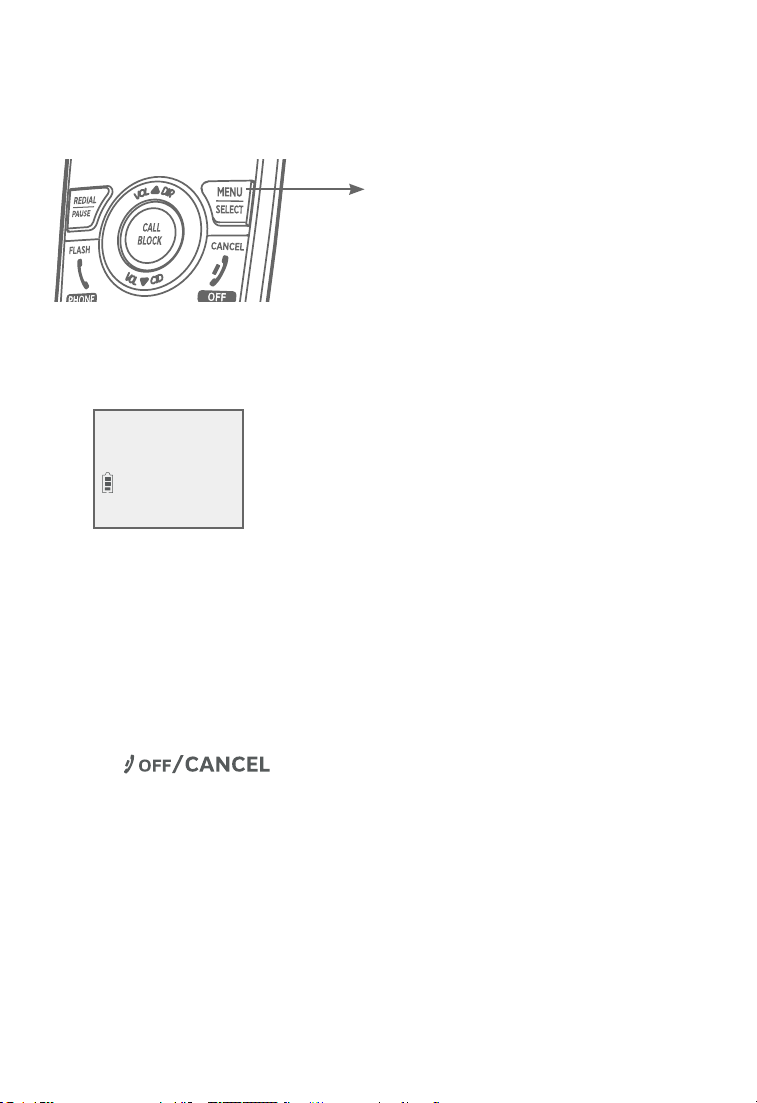
Getting started
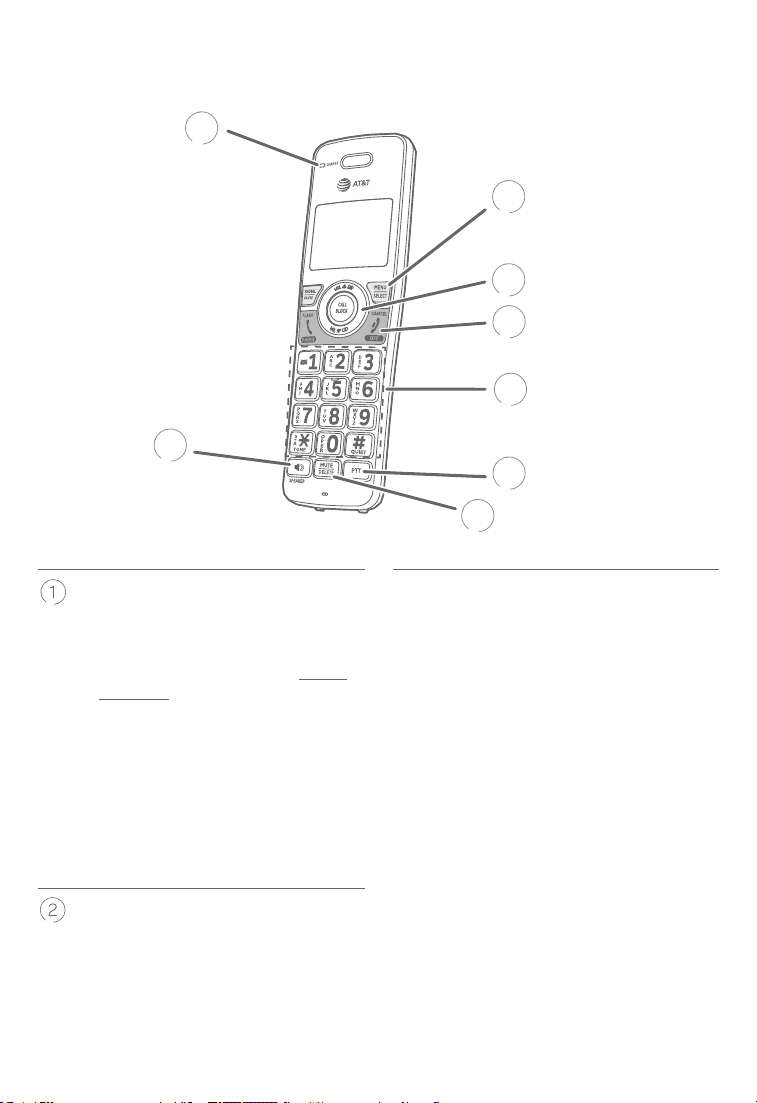
Quick reference guide - handset
REDIAL/PAUSE
f Press repeatedly to view the last
ten numbers dialed (page 35).
f While entering numbers, press
and hold to insert a dialing pause
(page 53).
MENU/SELECT
f When the handset is not in use,
press to show the menu.
f While in the menu, press to
select an item or save an entry
or setting.
VOL p DIR
f Press pDIR to show directory
entries when the handset is not
in use (page 55).
f Press to scroll up while in menus.
1
3
2
4
5
8
6
7
f While entering names or
numbers, press to move the
cursor to the right.
f Press to increase the listening
volume when on a call (page
37), or to increase the
message playback volume (page
119).
CALL BLOCK
f Press to block the incoming call
when the telephone is ringing
(page 73).
f When on a call, press to block
the call (page 103).
f When the handset is not in use,
press to show the Smart call
blocker menu (page 77).
Quick reference guide - handset
Getting started
6
1
3
2
4
5
8
6
7
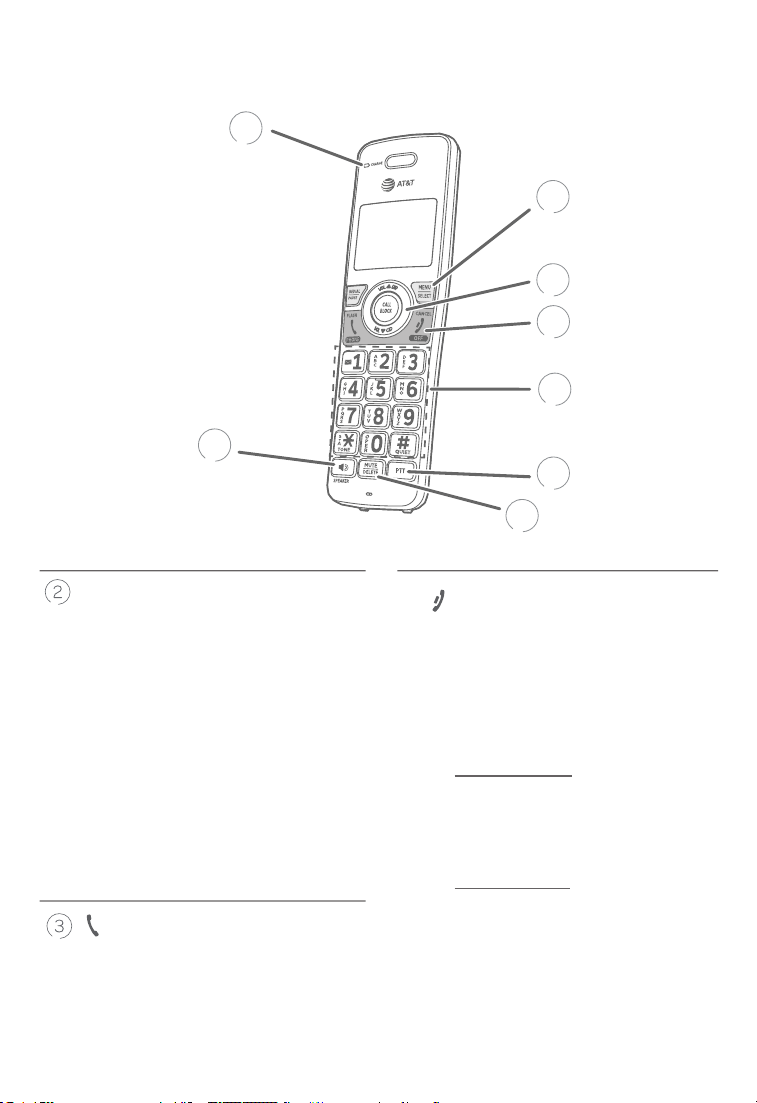
VOL q CID
f Press qCID to show caller ID
log when the handset is not in
use (page 66).
f Press to scroll down while in
menus.
f While entering names or
numbers, press to move the
cursortothele.
f Press to decrease the listening
volume when on a call (page
37), or to decrease the
message playback volume (page
119).
PHONE/FLASH
f Press to make or answer a call
(page 34).
f During a call, press to answer
an incoming call when you
receive a call waiting alert
(page 37).
OFF/CANCEL
f During a call, press to hang up
(page 34).
f While in a menu, press to cancel
an operation.
f Press to return to the previous
menu.
f Press and hold to exit menu
display completely.
f When the handset is ringing,
press to mute the ringer
temporarily (page 35).
f Press and hold while the
telephone is not in use to erase
the missed call indicator (page
64).
Getting started
7
Quick reference guide - handset
1
3
2
4
5
8
6
7
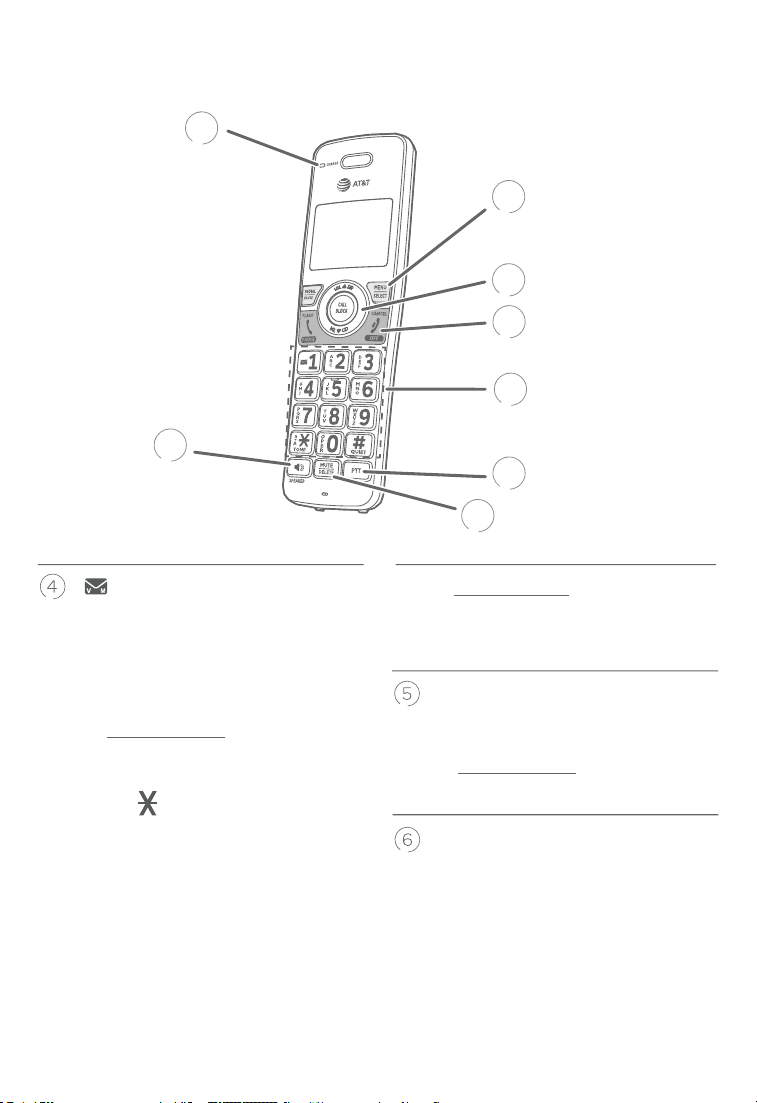
1
f While reviewing a caller ID
log entry, press repeatedly to
add or remove 1 in front of
the telephone number before
dialing or saving it in the
directory (page 67).
f Press and hold to set (page
27) or to dial your voicemail
number (page 62).
TONE /a>A
f Press to switch to tone dialing
temporarily during a call if you
have pulse service (page 40).
f While entering names, press to
change the next letter to upper
or lower case (page 53).
QUIET# (pound key)
f Press repeatedly to display
other dialing options when
reviewing a caller ID log entry
(page 67).
f Press and hold to enter the
QUIET mode setting screen,
or to deactivate QUIET mode
(page 33).
PTT
f Press to initiate a one-to-one or
one-to-group broadcast.
f Press and hold to broadcast to
a group of system devices.
MUTE/DELETE
f During a call, press to mute the
microphone (page 38).
f When the handset is ringing,
press to mute the ringer
temporarily (page 35).
f While reviewing the caller ID log,
directory, redial memory, block list,
allow list, or star name list, press to
delete an individual entry.
f While predialing, press to delete
digits.
8
Getting started
Quick reference guide - handset
Getting started
1
3
2
4
5
8
6
7
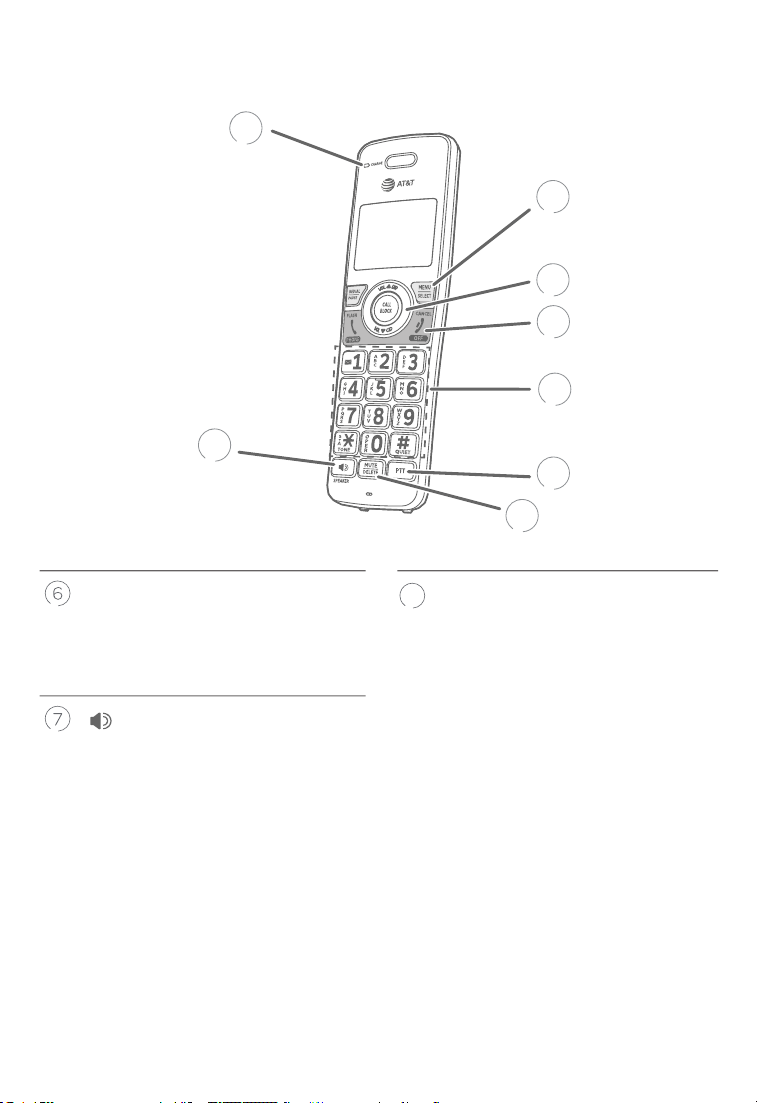
f During message or
announcement playback,
press to delete the playing
message or the recorded
announcement.
/SPEAKER
f Press to make or answer a call
using the speakerphone (page
34).
f Press to switch between the
speakerphone and the handset
(page 35).
CHARGE light
f On when the handset is
charging in the telephone base
or charger.
8
Getting started
9
Quick reference guide - handset
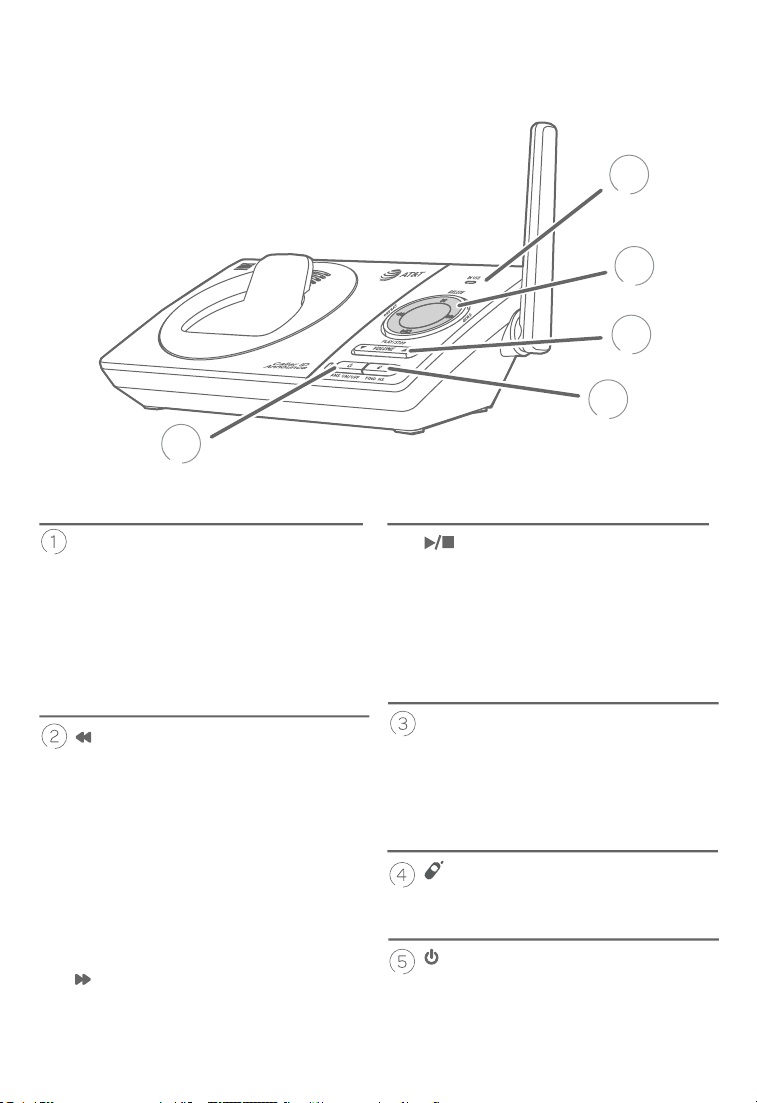
Main menu
f Play messages (page 118)
f Answering sys (page 104)
f Smart call blk (page 73)
f Directory (page 52)
f Caller ID log (page 63)
f Intercom (page 43)
f Ringers (page 21)
f Set date/time (page 23)
f Settings (page 24)
Using menus:
f Press MENU/SELECT to show the menu.
f Press qCID or pDIR to scroll through menu items.
f Press MENU/SELECTtoconrmorsavechangestoahighlighted
menu item.
f Press
to cancel an operation, back up to the
previous menu, or exit the menu display.
The > symbol highlights
a menu item.
>Play messages
Answering sys
Main menu
10
Getting started
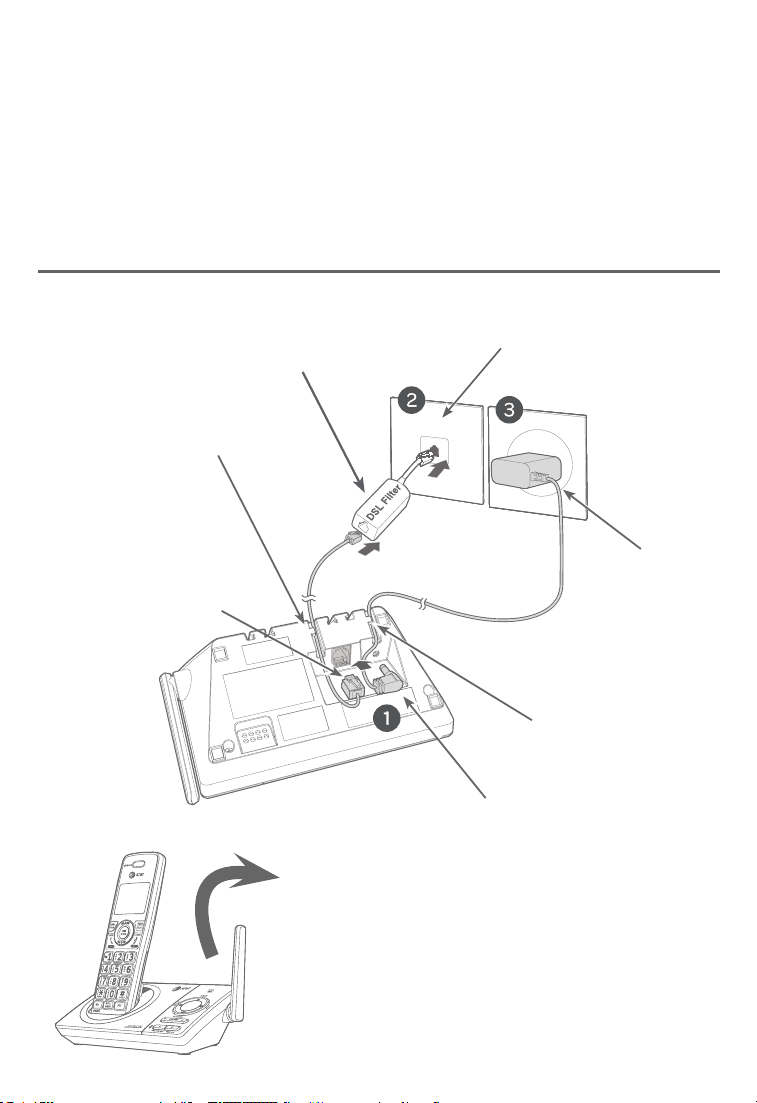
Quick reference guide - telephone base
IN USE indicator
f On when the handset is in use,
or when the answering system is
answering an incoming call.
f Flashes when another telephone
is in use on the same line.
f Flashes when there is an
incoming call.
/REPEAT
f Press to repeat a message.
f Press twice to play the previous
message (page 119).
X/DELETE
f Press to delete the message
currently playing (page 119).
f Press twice to delete all old
messages when the phone is not
in use (page 120).
/SKIP
f Press to skip a message (page
119).
1
2
3
4
5
/PLAY/STOP
f Press to start or stop message
playback (page 118).
Message counter
f Shows the number of messages
or other answering system
information.
q VOLUME p
f During message playback, press
to adjust the listening volume
(page 119).
f While in idle mode, press to
adjust the base ringer volume.
FIND HS
f While the phone is idle, press to
page all handsets (page 42).
/ANS ON/OFF
f Press to turn the built-in
answeringsystemonoro
(page 106).
Getting started
11
Telephone base and charger installation
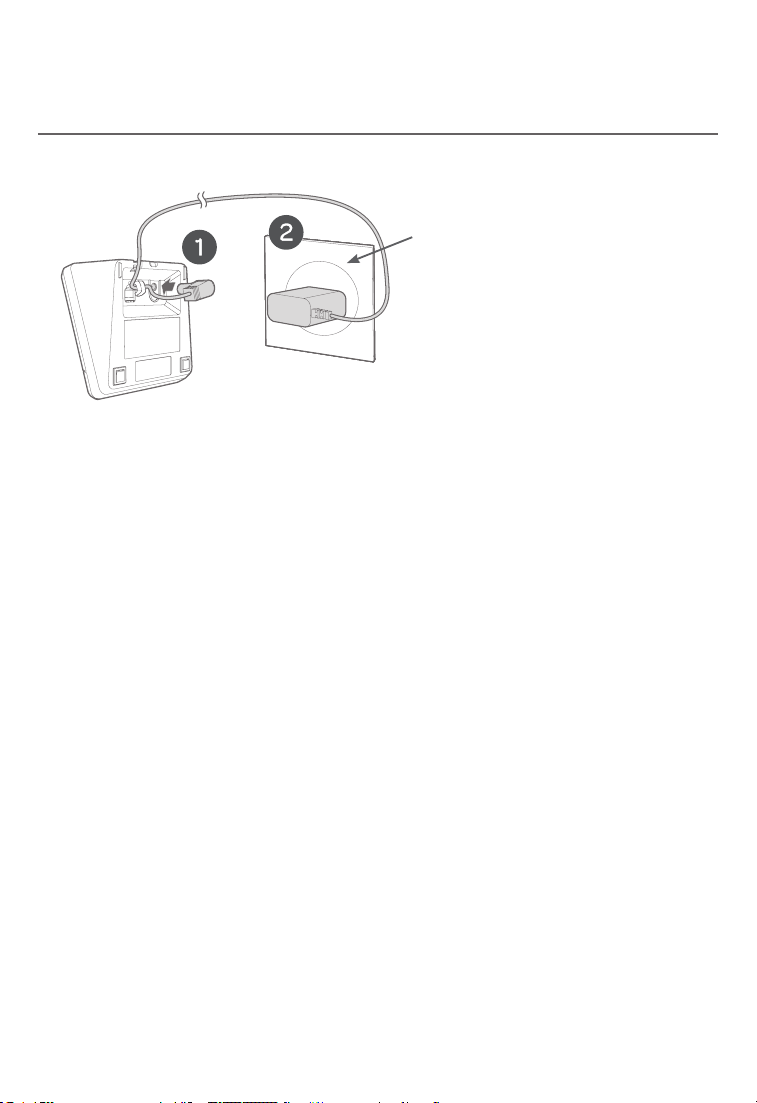
Install the telephone base and charger, as shown below.
The telephone base is ready for tabletop use. If you want to change
to wall-mounting, see Installation options on page 18 for
details.
Telephone base installation
Raise the antenna.
Plug the large end
of the telephone
base power
adapter into a
power outlet not
controlled by a
wall switch.
Plug one end of the telephone
line cord into a telephone jack
oraDSLlter.
If you have DSL high-speed
Internetservice,aDSLlter
(not included) is required.
Route the telephone line
cord through this slot.
Plug the other end of
the telephone line cord
into the telephone
jack on the back of the
telephone base.
Plug the small end of the
telephone base power
adapter into the power
adapter jack on the back
of the telephone base.
Route the power
adapter cord through
this slot.
12
Getting started
IMPORTANT INFORMATION
f Use only the power adapter(s) supplied with this product. To
order a replacement power adapter, visit our website at
https://telephones.att.com or call 1 (800) 222-3111. In
Canada, dial 1 (866) 288-4268.
f The power adapters are intended to be correctly oriented in a
verticaloroormountposition.Theprongsarenotdesigned
to hold the plug in place if it is plugged into a ceiling, under-the-
table or cabinet outlet.
Charger installation
Telephone base and charger installation
Plug the power adapter into a
power outlet not controlled by a
wall switch.
Getting started
13
Battery installation and Battery installation and chargingcharging
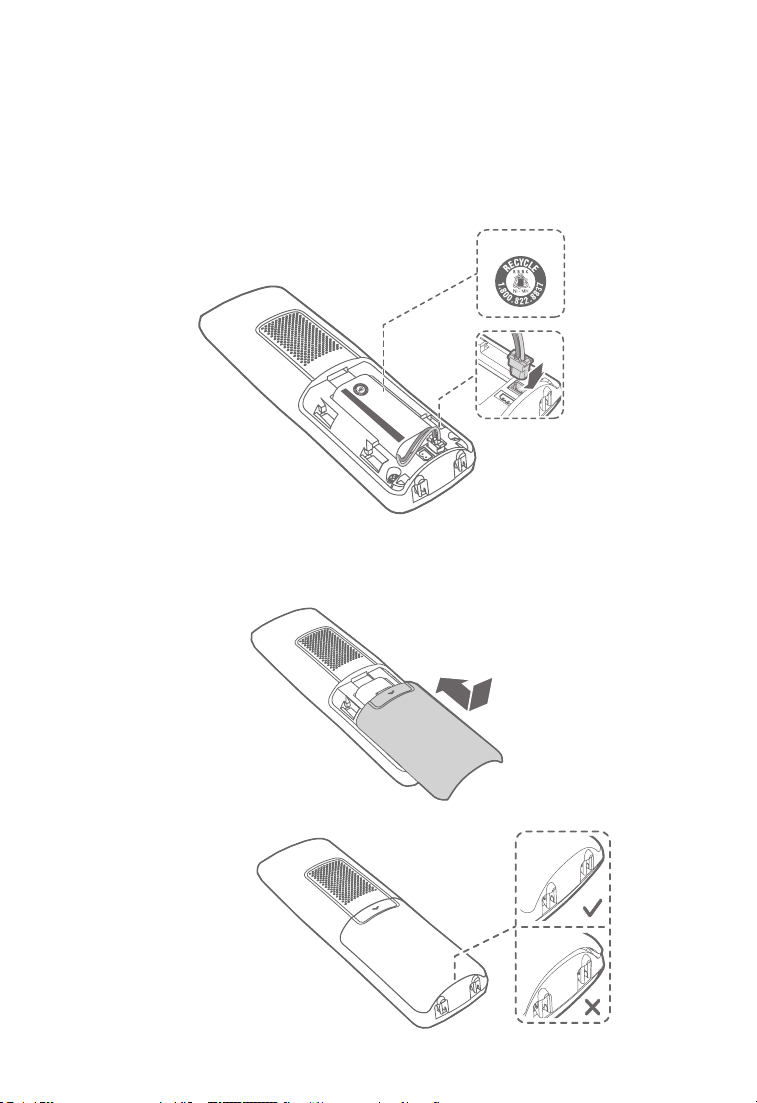
Install the battery, as shown below. Once you have installed the Install the battery, as shown below. Once you have installed the
battery, the screen indicates the battery status (see the following battery, the screen indicates the battery status (see the following
table). If necessary, place the handset in the telephone base or table). If necessary, place the handset in the telephone base or
charger to charge the battery. For best performance, keep the charger to charge the battery. For best performance, keep the
handset in the telephone base or charger when not in use. The handset in the telephone base or charger when not in use. The
batteryisfullychargedaertenhoursofcontinuouscharging.Seebatteryisfullychargedaertenhoursofcontinuouscharging.See
the table on page 160 for battery operating times.the table on page 160 for battery operating times.
If the screen shows If the screen shows Place in charger Place in charger and and ashesashes, you need to , you need to
charge the handset without interruption for at least 30 minutes to charge the handset without interruption for at least 30 minutes to
give the handset enough charge to use the telephone for a short give the handset enough charge to use the telephone for a short
time. The following table summarizes the battery charge indicators time. The following table summarizes the battery charge indicators
and actions to take.and actions to take.
Battery indicators Battery status Action
The screen is blank, or
shows Place in charger
and
(ashing).
Battery has no or
very little charge. The
handset cannot be used.
Charge without
interruption
(at least 30 minutes).
The screen shows
Low battery and
(ashing).
Battery has enough
charge to be used for a
short time.
Charge without
interruption
(at least 30 minutes).
The screen shows
HANDSET X.
Battery is charged. To keep the battery
charged, place it in
the telephone base or
charger when not in use.
Note: If you are on a phone call in low battery mode, you hear four short beeps every minute.
14
Getting started
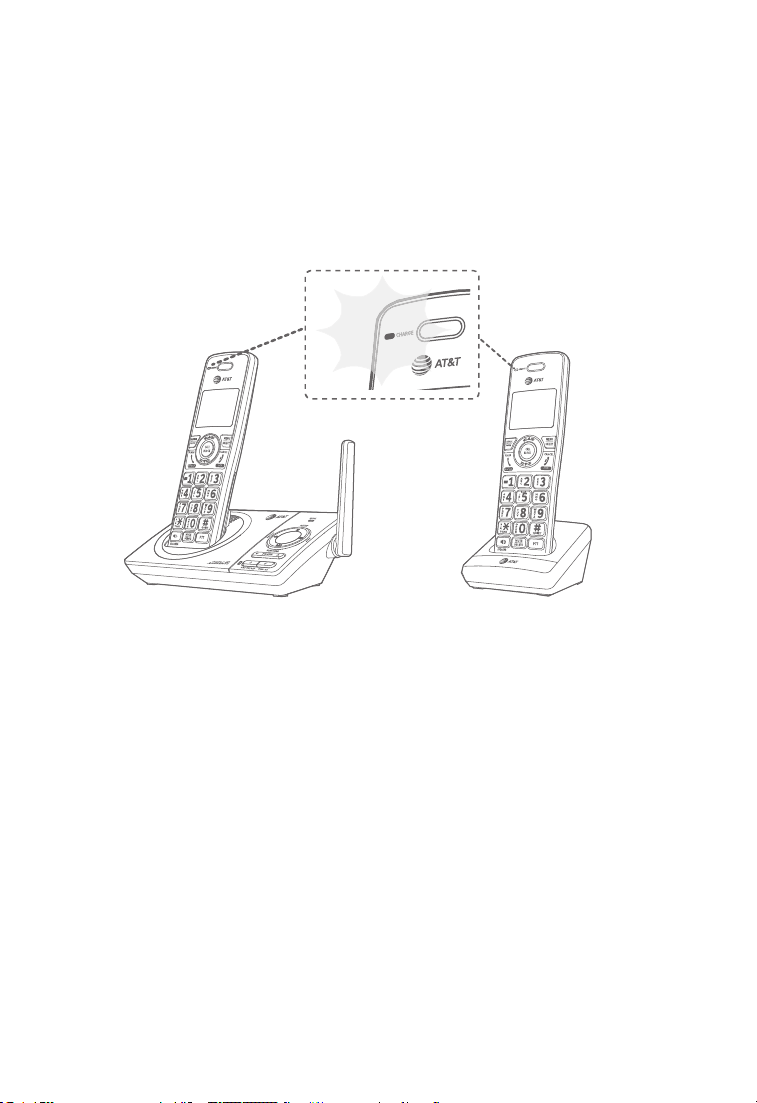
Step 1
Plug the battery connector securely into the socket inside the
handset battery compartment. Insert the supplied battery with the
label THIS SIDE UP facing up, as indicated.
Step 2
Alignthecoveratagainstthebatterycompartment,thenslideit
upwards until it clicks into place.
Battery installation and chargingBattery installation and charging
THIS SIDE UP / CE CÔTÉ VERS LE HAUT
Battery Pack / Bloc-piles :
BT183342/BT283342 (2.4V 400mAh Ni-MH)
WARNING / AVERTISSEMENT :
DO NOT BURN OR PUNCTURE BATTERIES.
NE PAS INCINÉRER OU PERCER LES PILES.
Made in China / Fabriqué en chine CR1349
THIS SIDE UP
Getting started
15
Battery installation and charging
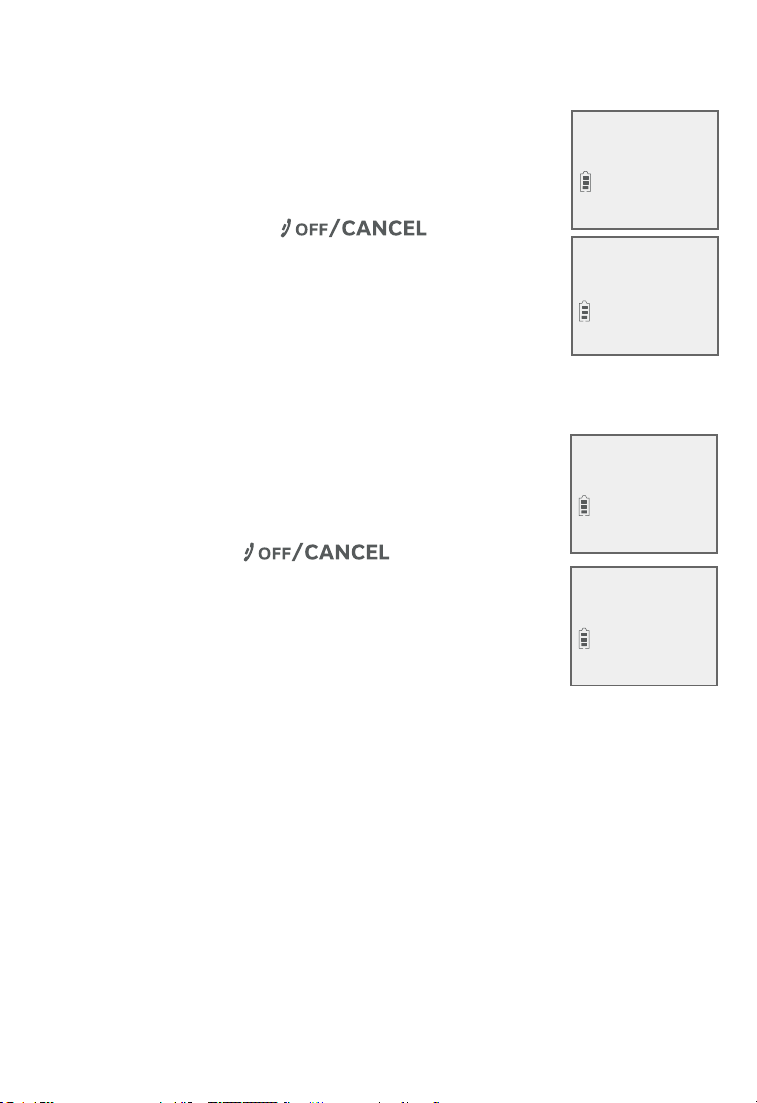
Step 3
Charge the handset by placing it face forward in the telephone
base or charger. The CHARGE light on the handset is on during
charging.
IMPORTANT INFORMATION
f Use only the supplied rechargeable battery or replacement battery
(model BT183342/BT283342). To order, visit our website at
https://telephones.att.com or call 1 (800) 222-3111. In
Canada, dial 1 (866) 288-4268.
f If you do not use the handset for a long time, disconnect and
remove the battery to prevent possible leakage.
16
Getting started
Initial setups
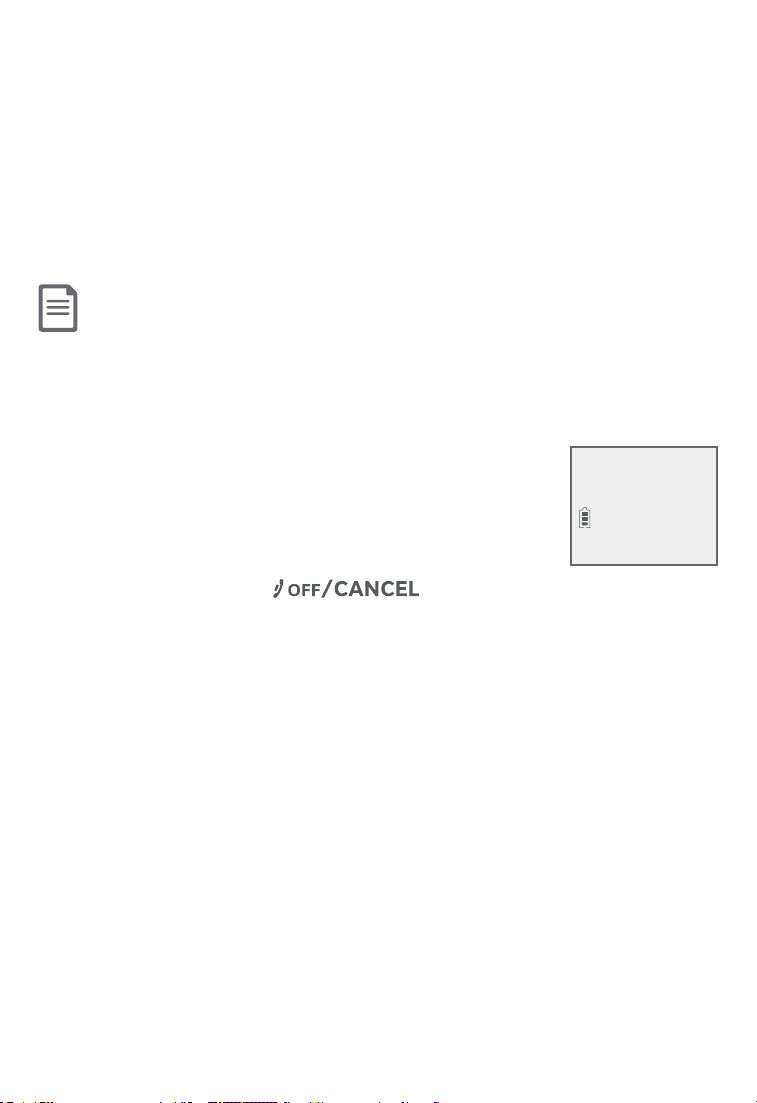
Aeryouinstallyourtelephoneorpowerreturns
following a power outage, the handset will prompt
you to set the date and time. For instructions,
see Set date/time on page 23. To skip setting
the date and time, press on the
handset.
SET DATE
MM/DD/YY
SET TIME
HH:MM --
Aerthedateandtimesettingisdoneorskipped,
the handset then prompts if you want to set Smart
call blocker. Press MENU/SELECT on the handset to
start the Smart call blocker setup via voice guide. To
skip the setup, press on the handset.
Voice guide to set Smart call blocker:
If you choose to set Smart call blocker via voice
guide, you hear a voice prompt, “Hello! This voice
guide will assist you with the basic setup of Smart
call blocker...”. Listen to the instructions and then
choose one of the following options.
On the handset:
f Press 1 if you want to screen calls with telephone numbers that
are not saved in your directory, allow list or star name list; or
f Press 2 if you do not want to screen calls, and want to allow all
incoming calls to get through.
Voice guide set
Smart call blk?
Setting up
Smart call blk
...
Getting started
17
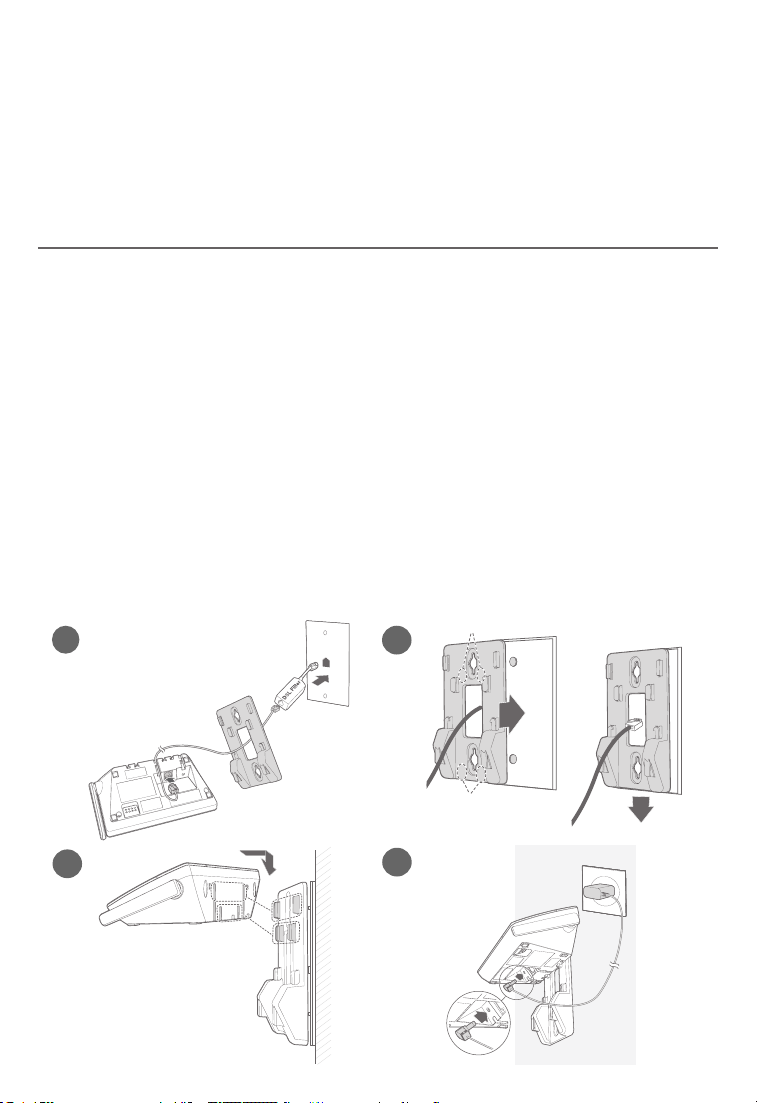
AertheSmartcallblockersettingisdoneor
skipped, the handset will prompt if you want to set
up the answering system. Press MENU/SELECT to
start the answering system setup via voice guide.
For more details, see Voice guide on page 107.
To skip the setup, press
on the
handset.
Voice guide to
set up Ans sys?
If you select option 1 to screen all incoming calls, we recommend that
you add the phone numbers of your family members and friends,
and desired businesses to your Directory (see page 53) or Allow
list (see page 84), or add their names to the Star name list (see
page 89). This will avoid Smart call blocker to screen their calls.
For more details on Smart call blocker, see page 73.
Note: You can restart the voice guide to set Smart call blocker by resetting your handset
power.
Initial setups
18
Getting started
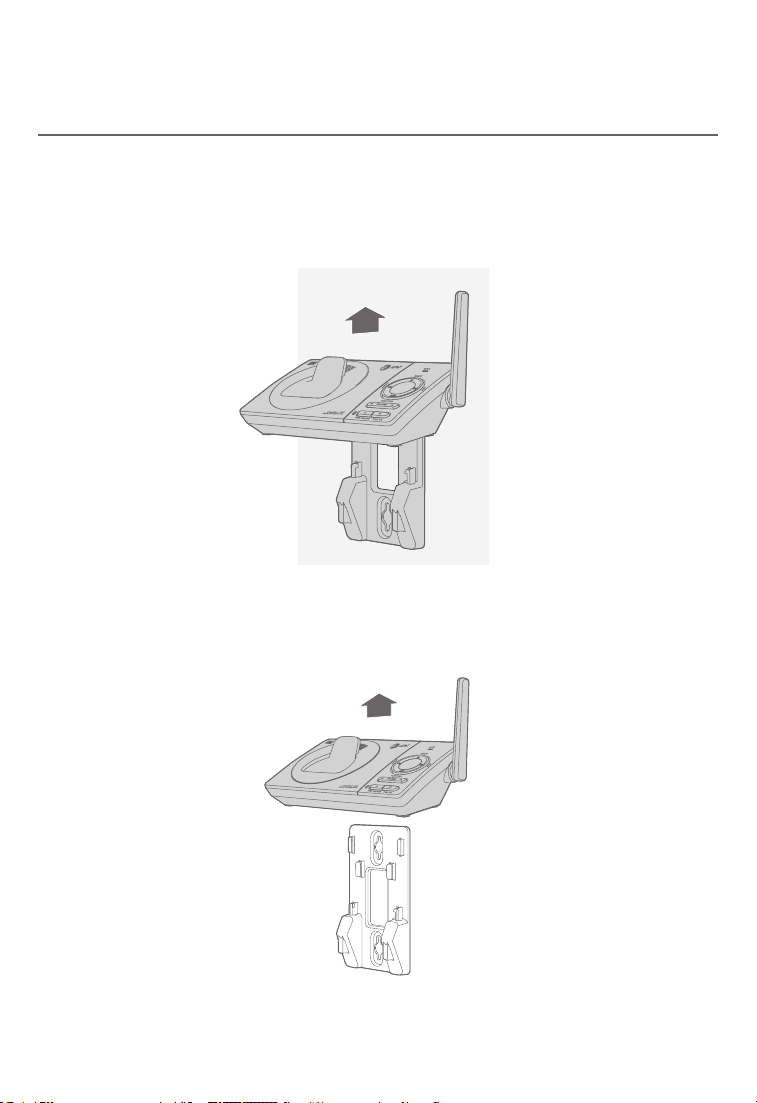
1. Plug the telephone line into the telephone base. If you are using
aDSLlter,plugtheotherendofthetelephonelineintothe
lter.Routethetelephonelinecord(orDSLlter)throughthe
wall-mount bracket hole.
2. Align the holes on the wall-mount bracket with the standard
wall plate and slide the wall-mount bracket down until it locks
securely.
3. Position the telephone base, as shown below. Insert the
extended tabs (marked B) of the wall-mount bracket into the
slots on the back of the telephone base. Push the telephone
base down until it is securely in place.
4. Plug the power adapter into a power outlet not controlled by
a wall switch. Plug the other end of the power adapter into
the telephone base. Bundle the telephone line cord and power
adapter cord neatly with twist ties.
Installation options
Your telephone base is ready for tabletop use. If you want to mount
your telephone on a wall, follow the steps to connect the telephone
base with a standard dual-stud telephone wall-mounting plate. You
may need a professional to install the mounting plate.
Tabletop to wall-mount installation
B
A
1
2
3
4
Getting started
19
Installation options
Wall-mount to tabletop installation
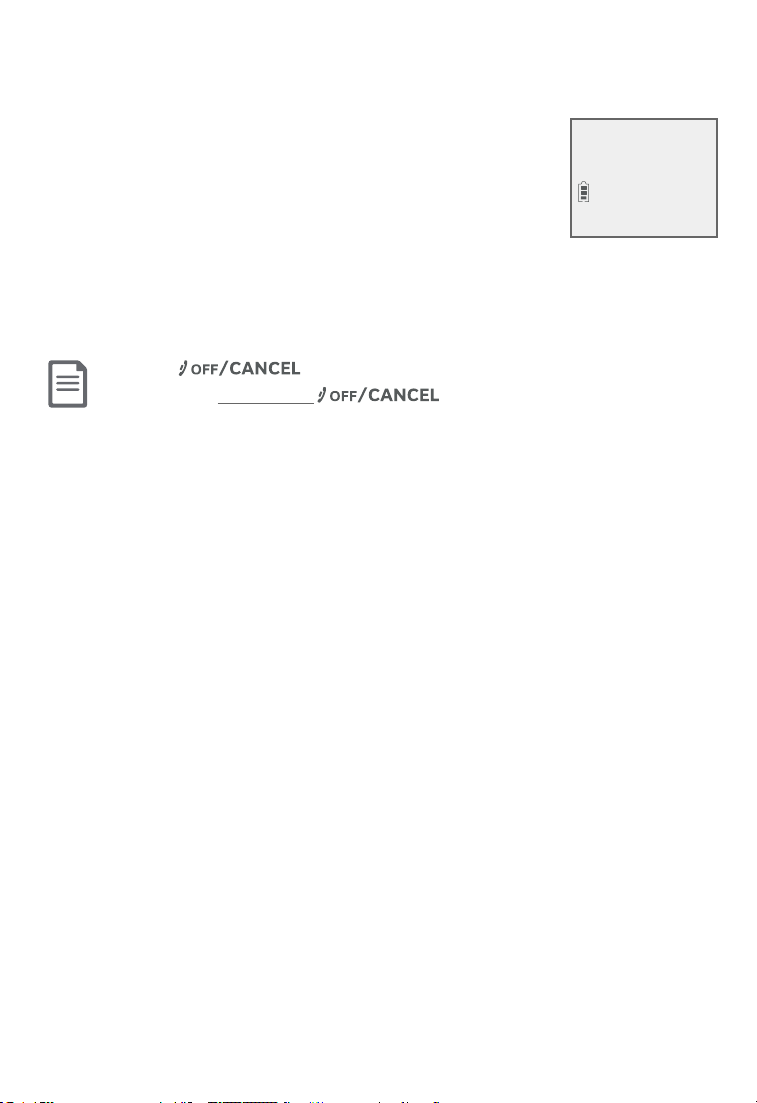
1. Unplug the large end of the power adapter from the electrical outlet.
2. If the telephone line cord and power adapter cord are bundled,
untiethemrst.Slidethewall-mountbracketupandremoveit
from the wall-mounting plate.
3.UnplugthetelephonelinecordortheDSLlterfromthe
telephone wall jack. Push the telephone base up and away from
the wall-mount bracket to detach it from the wall-mount bracket.
4. See Telephone base and charger installation on page 11.
20
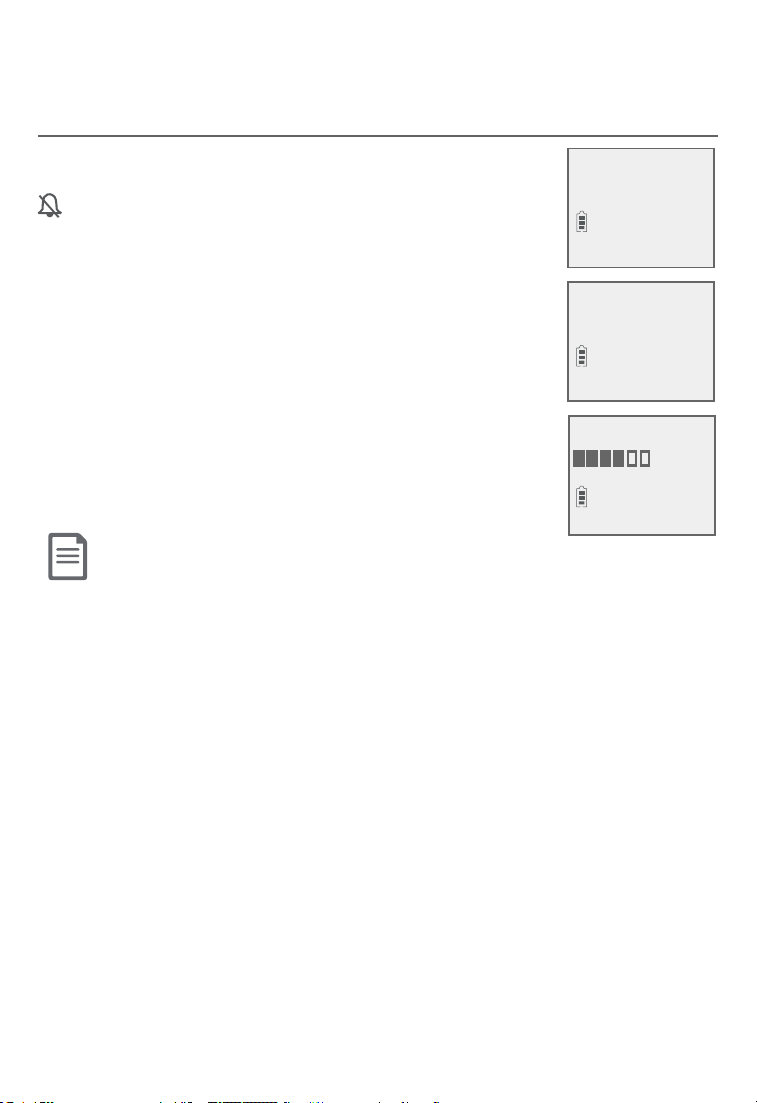
Handset settings
Use the menu to change the telephone settings.
1. Press MENU/SELECT on the handset when it is
not in use to enter the main menu.
2. Press qCID or pDIR to scroll to the feature to be
changed. When scrolling through the menu, the
> symbol indicates the selected menu item.
3. Press MENU/SELECT to select the highlighted item.
Note: Press to cancel an operation, back up to the previous menu or exit
the menu display. Press and hold to return to idle mode.
Telephone settings
>Play messages
Answering sys
Telephone settings
21
Handset settings
Ringer volume
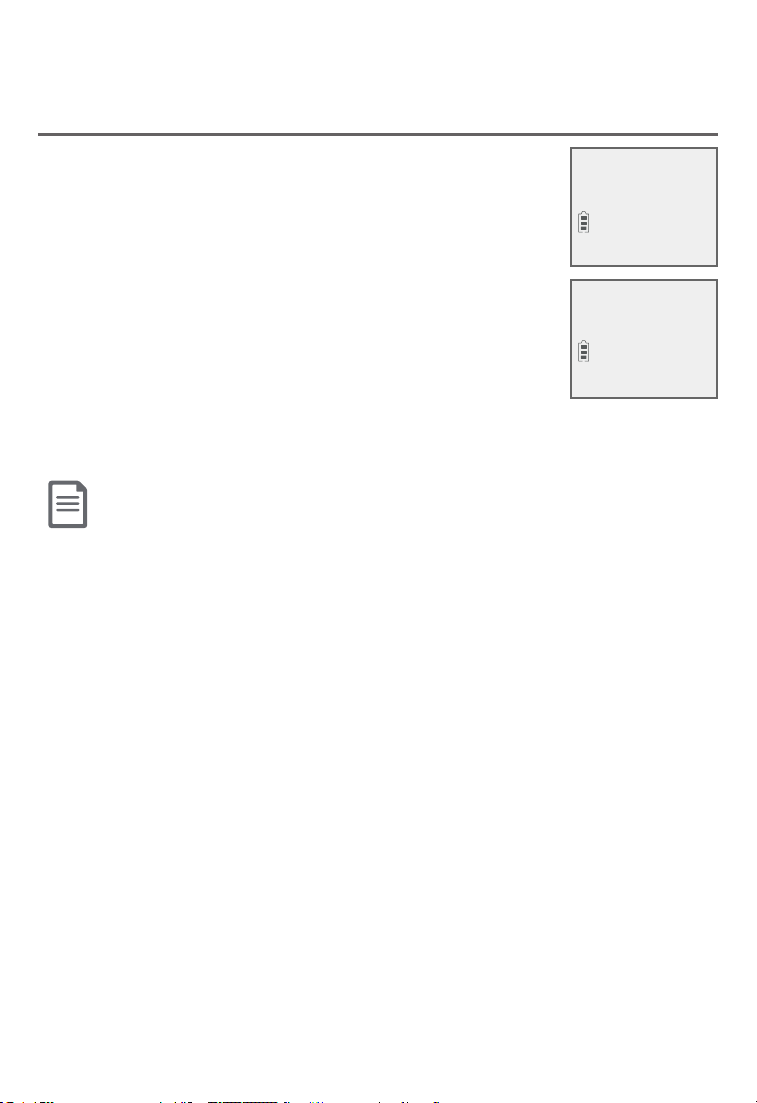
You can set the ringer volume level to one of six
levelsorturntheringero.Whentheringeriso,
appears on the screen.
1. Press MENU/SELECT in idle mode to enter the
main menu.
2. Use qCID or pDIR to scroll to Ringers, then press
MENU/SELECT.
3. Press MENU/SELECT again to select
Ringer volume.
4. Press qCID or pDIR to sample each volume level.
5. Press MENU/SELECT to save your preference. There
isaconrmationtoneandthescreenreturnstothe
previous menu.
Notes:
f The handset ringer volume also determines the ringer volume for intercom calls.
f If the ringer volume is set to off, that handset is silenced for all incoming calls except paging tone.
f If the ringer volume is set to off, the caller ID will not be announced and the screen will briefly
display Caller ID won’t be announced.
>
Ringer volume
Ringer tone
>Ringers
Intercom
RINGER VOLUME
Telephone settings
22
Handset settings
Ringer tone
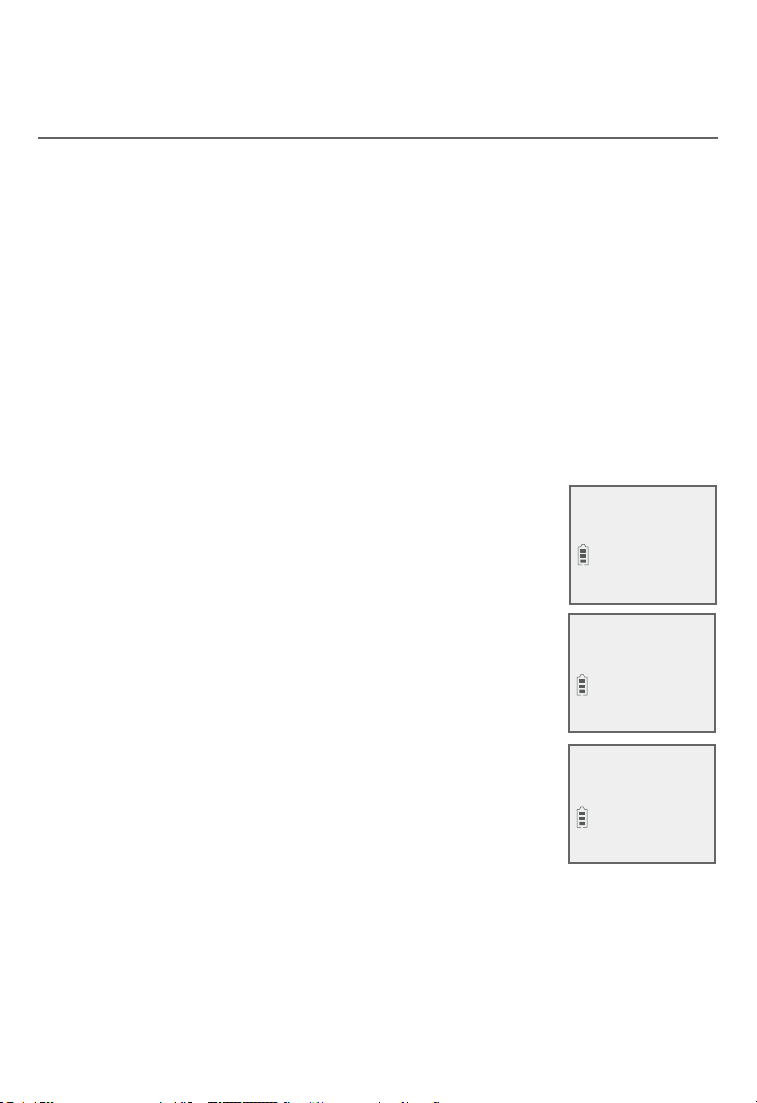
You can choose one of ten ringer tones.
1. Press MENU/SELECT in idle mode to enter the
main menu.
2. Use qCID or pDIR to scroll to Ringers, then press
MENU/SELECT.
3. Press qCID or pDIR to scroll to Ringer tone, then
press MENU/SELECT.
4. Press qCID or pDIR to sample each ringer tone.
5. Press MENU/SELECT to save your preference.
There is a confirmation tone and the screen returns to the
previous menu.
Note: If you turn off the ringer volume, you will not hear ringer tone samples.
RINGER TONE
>
Tone 1
>
Ringer tone
Ringer volume
Telephone settings
23
Handset settings
Set date/time
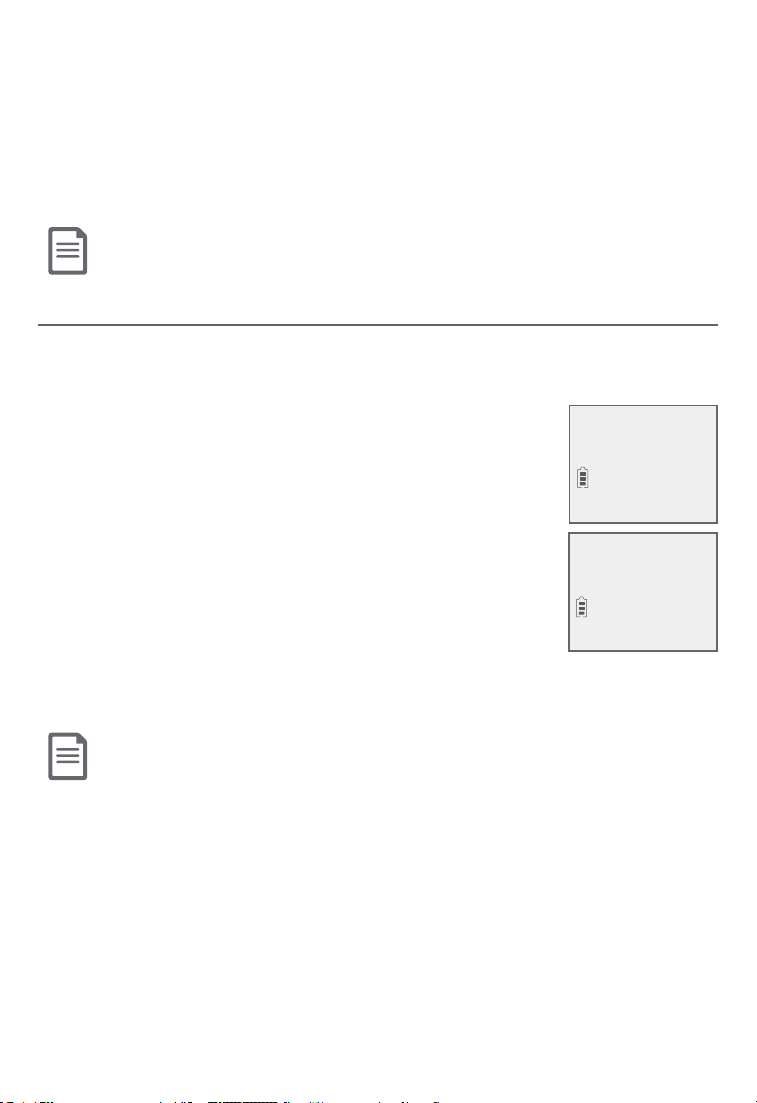
The answering system announces the day and time of each
message prior to playing it. Before using the answering system,
set the date and time as follows. If you subscribe to caller ID
service, the day, month and time are set automatically with each
incoming call. The year must be set so that the day of the week
canbecalculatedfromthecallerIDinformation.Youcanturno
the date and time settings of the caller ID service and set the date
and time manually (see Use caller ID to automatically set date
and time on page 30).
Aerapowerfailureorhandsetregistration,thesystemprompts
you to set the date and time.
To set the date and time manually:
1. When the handset is in idle mode, press
MENU/SELECT to enter the main menu.
2. Press qCID or pDIR to scroll to Set date/time
and then press MENU/SELECT.
3. Press qCID or pDIR to select the month, then
press MENU/SELECT, or enter the number using
the dialing keys.
4. Press qCID or pDIR to select the day, then press
MENU/SELECT, or enter the number using the
dialing keys.
5. Press qCID or pDIR to select the year, or enter the
number using the dialing keys, then press
MENU/SELECT to move on to set the time.
6. Press qCID or pDIR to select the hour, then press
MENU/SELECT, or enter the number using the dialing keys.
7. Press qCID or pDIR to select the minute, then press
MENU/SELECT, or enter the number using the dialing keys.
SET DATE
MM/DD/YY
SET TIME
HH:MM --
Ringers
>Set date/time
Telephone settings
24
8. Press qCID or pDIR to highlight AM or PM, or press 2 for AM or
7 for PM. Press MENU/SELECTtoconrm.Thereisaconrmation
tone and the screen returns to the previous menu.
Note: If the clock is not set when a message is recorded, the system announces, “Time and day not
set,” before it plays the message.
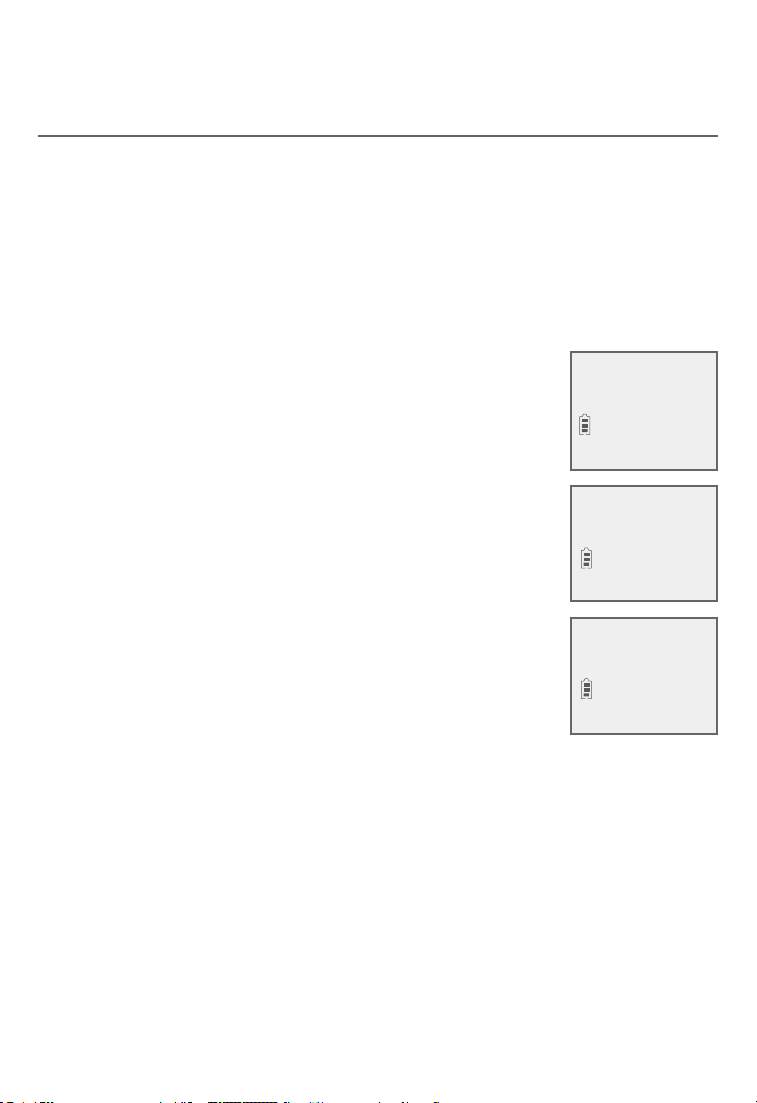
LCD language
You can select the language used for all screen displays.
1. Press MENU/SELECT in idle mode to enter the main menu.
2. Use qCID or pDIR to scroll to Settings, then
press MENU/SELECT.
3. Press MENU/SELECT to choose LCD language.
4. Press qCID or pDIR to highlight English,
Français or Español, then press MENU/SELECT.
The screen prompts Set English/Français/
Español as LCD language?.
5. Press MENU/SELECT to save your preference.
Thereisaconrmationtoneandthescreen
returns to the previous menu.
Note: If you accidentally change the LCD language to French or Spanish, you can reset it back
to English without going through the French or Spanish menus. Press MENU/SELECT on the
handset in idle mode, then enter 364#. There is a confirmation tone.
LCD LANGUAGE
>
English
Set Francais as
LCD language?
Handset settings
Telephone settings
25
Handset settings
Caller ID announce
The caller ID announce feature lets you know who’s calling without
having to look at the display. When you have an incoming call, the
handset and/or base speaks “Call from...” and the name of the caller
based on the directory or caller ID information. If the caller’s name is
private or unknown, the phone number up to the last 11 digits will be
announced. If the caller’s phone number is also private or unknown, no
information will be announced. The default setting is On.
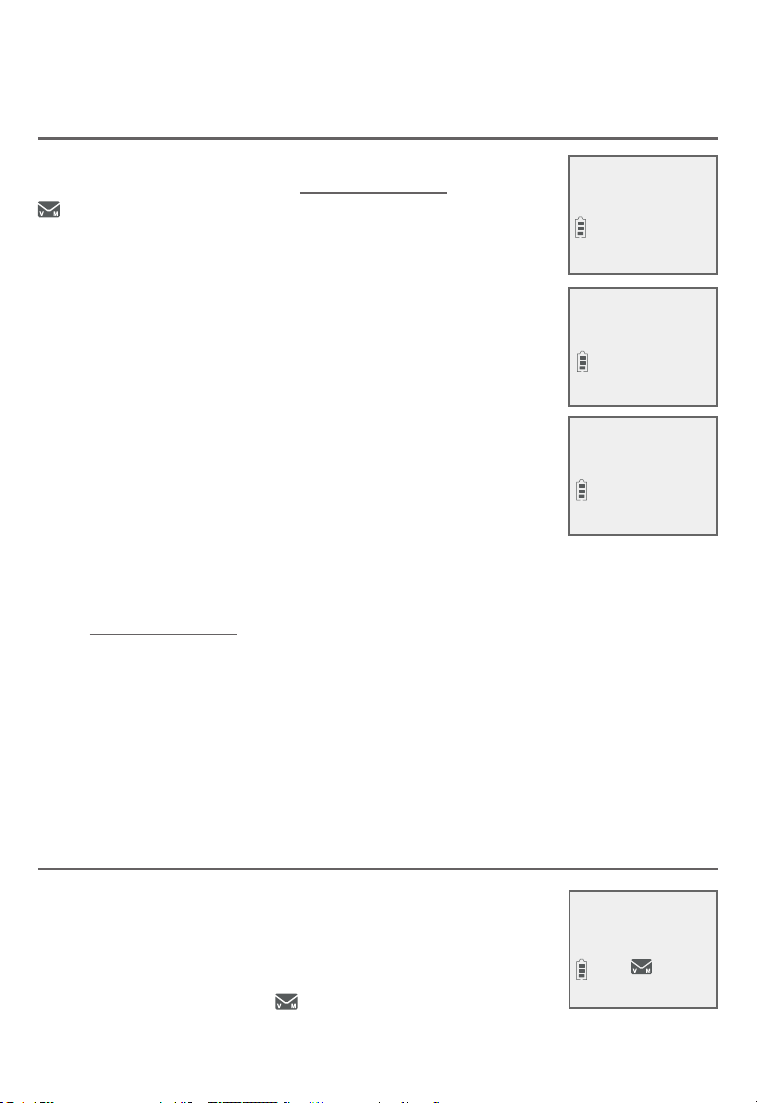
To turn on or o the caller ID announce feature:
1. Press MENU/SELECT in idle mode to enter the
main menu.
2. Use qCID or pDIR to scroll to Settings, then press
MENU/SELECT.
3. Use qCID or pDIR to scroll to Caller ID annc,
then press MENU/SELECT.
4. Use qCID or pDIR to highlight the desired option,
then press MENU/SELECT.
f Set all On/O - Change the setting for the
base and all handsets.
f Local handset - Change the setting for that
handset only.
f Base - Change the setting for the telephone
base only.
5. Use qCID or pDIR to highlight On or Off, then press
MENU/SELECT. There is a confirmation tone and the screen
returns to the previous menu. If you change the setting to Set
all On/Off, the screen shows CID Annc ON/OFF on all HS & BS.
The caller ID announce feature has been turned on or off on all
handsets and on the telephone base.
HS CID ANNOUNCE
>On
CALLER ID ANNC
>Local handset
LCD language
>Caller ID annc

Telephone settings
26
Handset settings
Notes:
f To use the caller ID announce feature, you must subscribe to caller ID service from your telephone
service provider.
f When there are up to five handsets registered, the telephone system supports caller ID announce
for all handsets. If six or more devices are registered, the system supports caller ID announce for
the first four registered handsets only.
f This feature does not announce information for call waiting calls.
f It takes at least two rings for the phone to receive caller ID information and announce it. If the
phone is answered before the end of the second ring, the phone won’t have time to announce the
caller’s information.
f Pronunciation of names may vary with this feature. Not all names may be pronounced correctly.
f Caller ID announce is available in English only.
f If you have paired an AT&T TL80133 DECT 6.0 cordless speakerphone to the telephone base, the
caller ID announce setting for all devices also applies to the cordless speakerphone. When the
setting is On, the cordless speakerphone speaks “Call from...” and the name of the caller based on
the directory or caller ID information during an incoming call. If the caller’s name is unavailable, the
phone number up to the last 11 digits will be announced.
Telephone settings
27
Handset settings
Set speed dial voicemail number
This feature lets you save your voicemail number
for easy access when you press and hold the
1 key.
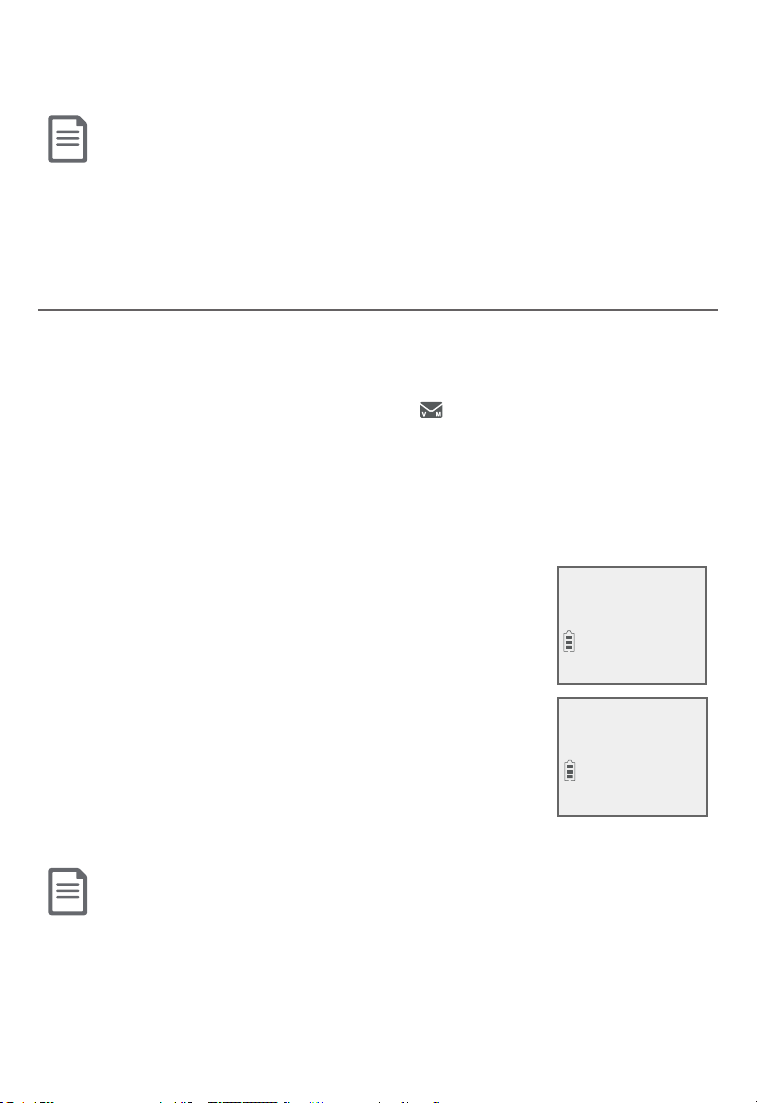
To save your voicemail number:
1. Press MENU/SELECT in idle mode to enter the
main menu.
2. Use qCID or pDIR to scroll to Settings, then
press MENU/SELECT.
3. Use qCID or pDIR to scroll to Voicemail #, then
press MENU/SELECT.
4. Use the dialing keys to enter the voicemail access
number provided by your telephone service
provider (up to 30 digits) when prompted.
f Press
qCID or pDIRtomovethecursortotheleorright.
f Press MUTE/DELETE on the handset to erase a digit.
f Press and hold MUTE/DELETE on the handset to erase all
digits.
f Press REDIAL/PAUSE to enter a three-second dialing pause (a
p appears).
5. Press MENU/SELECTtosave.Thereisaconrmationtoneand
the screen displays Voicemail # saved, then returns to the
previous menu.
Voicemail (visual message waiting) indicator
If you subscribe to a voicemail serviceoered
by your telephone service provider, this feature
provides a visual indication when you have new
voicemail messages.
New voicemail and the icon appear on the
handset screen.
Caller ID annc
>Voicemail #
VOICEMAIL #
800-222-3111_
Voicemail #
saved
AM
HANDSET 1
New voicemail
10:21PM
2/11
Telephone settings
28
Handset settings
Notes:
f This feature does not indicate new messages recorded on your phone’s built-in answering system.
f For more information about the difference between your answering system and voicemail, see
page 113.
Clear voicemail indication
Use this feature when the telephone indicates that you have new
voicemail but there is none. For example, when you have accessed
yourvoicemailwhileawayfromhome.Thisfeatureonlyturnso
the displayed New voicemail and the
icon; it does not delete
your voicemail messages. As long as you have new voicemail
messages, your telephone service provider continues to send the
signal to turn on the indicators.
To manually turn o the new voicemail indicators:
1. Press MENU/SELECT when in idle mode to enter
the main menu.
2. Use qCID or pDIR to scroll to Settings, then
press MENU/SELECT.
3. Use qCID or pDIR to scroll to Clr voicemail,
then press MENU/SELECT. The screen shows
Reset Voicemail Indicator?.
4. Press MENU/SELECT again to turn the
voicemailindicationo.Thereisa
conrmationtoneandthescreenreturnsto
the previous menu.
Notes:
f Your telephone service provider voicemail may alert you to new messages with a stutter (broken)
dial tone. Contact your telephone service provider for more details.
f For information about using your voicemail service, contact your telephone service provider.
>
Clr voicemail
Rename handset
Reset Voicemail
Indicator?

Telephone settings
29
Handset settings
Rename handset
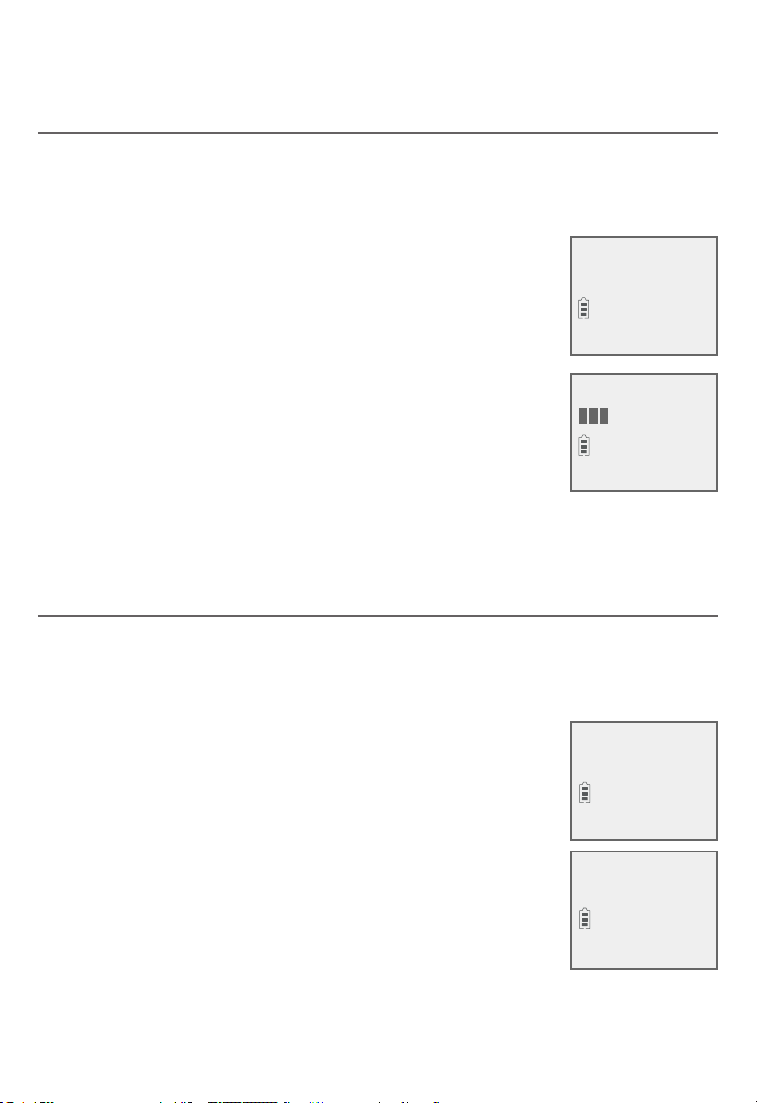
You can edit the handset name for each system
handset.
1. When the handset is idle, press MENU/SELECT.
2. Use qCID or pDIR to scroll to Settings, then
press MENU/SELECT.
3. Use qCID or pDIR to scroll to Rename handset,
then press MENU/SELECT.
4. Change the handset name when prompted.
f Press
qCID or pDIR to move the cursor to the
leorright.
f Use the dialing keys to enter a name (up to 11 characters).
Each time you press a key, a character on that key appears.
Additional key presses produce other characters on that key.
See the chart on page 54.
f Press MUTE/DELETE to backspace and delete a character.
f Press and hold MUTE/DELETE to delete all characters.
5. Press MENU/SELECT to save the setting and return to the
previousmenu.Thereisaconrmationtone.
Clr voicemail
>
Rename handset
RENAME HANDSET
HANDSET____
Telephone settings
30
Handset settings
Key tone
The handset is set to beep with each key press. You can adjust the
keytonevolumeorturnito.Ifyouturnothekeytone,thereare
no beeps when you press keys.
1. Press MENU/SELECT in idle mode to enter the
main menu.
2. Use qCID or pDIR to scroll to Settings, then
press MENU/SELECT.
3. Use qCID or pDIR to scroll to Key tone, then
press MENU/SELECT.
4. Use qCID or pDIR to select the desired volume
or O.
5. Press MENU/SELECT to save your preference.
Thereisaconrmationtoneandthescreen
returns to the previous menu.
Rename handset
>
Key tone
KEY TONE
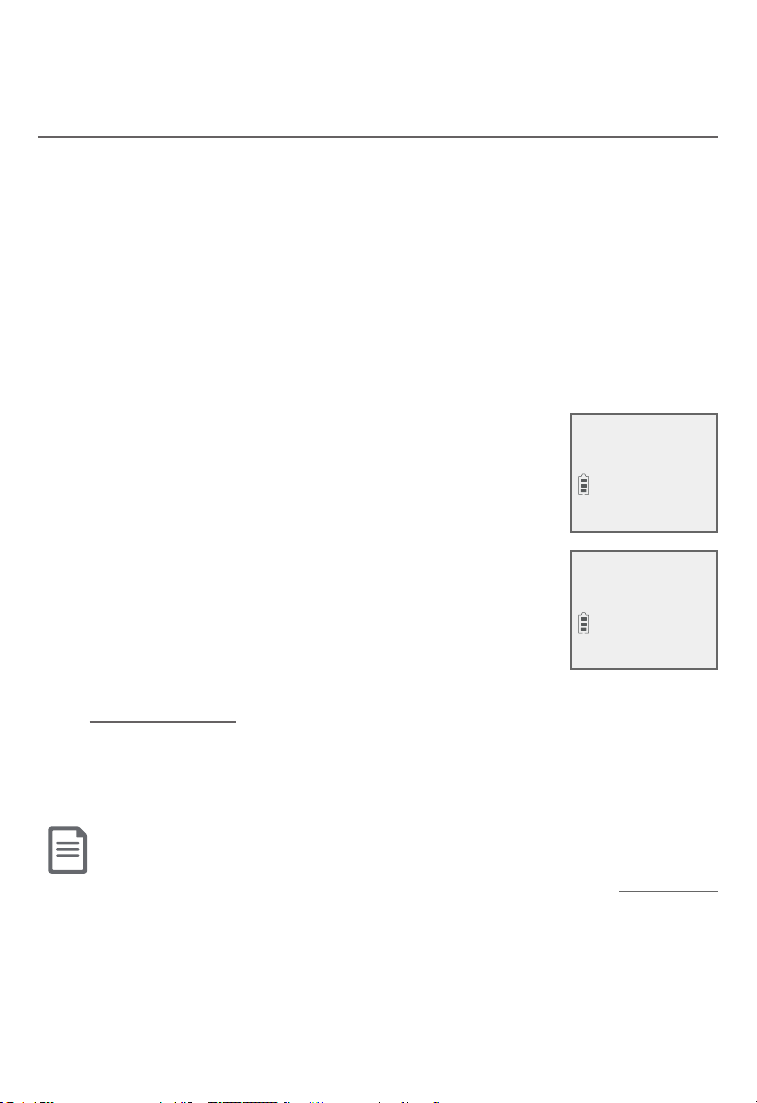
Use caller ID to automatically set date and time
If you subscribe to caller ID service, the day, month and time are
set automatically with each incoming call. Follow the steps to turn
the CID time syncfeatureonoro.ThedefaultsettingisOn.
1. When the handset is in idle mode, press
MENU/SELECT to enter the main menu.
2. Press qCID or pDIR to scroll to Settings, then
press MENU/SELECT.
3. Press qCID or pDIR to scroll to CID time sync,
then press MENU/SELECT.
4. Press qCID or pDIR to highlight On or Off,
then press MENU/SELECT to save. There is a
confirmation tone and the screen returns to the
previous menu.
Key tone
>CID time sync
CID TIME SYNC
>On
Telephone settings
31
Handset settings
Home area code
If you dial seven digits to make a local call (no area code required),
enter your area code into the telephone as the home area code.
When you receive a call from within your home area code, the caller
ID log only displays the seven digits of the telephone number.
This feature makes it easy for you to place a call from the caller ID
log. If you dial ten digits to make a local phone call, do not use this
home area code feature. If you do, you cannot place local calls from
your caller ID log, as they will have only seven digits.
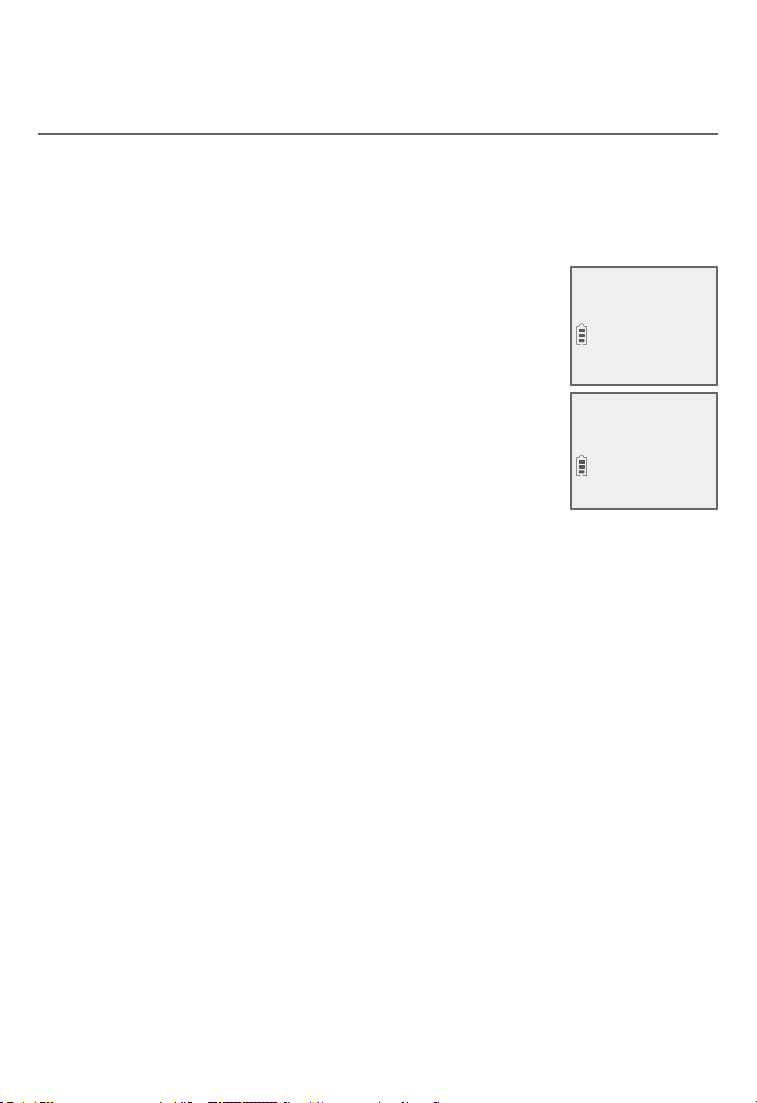
To set the home area code:
1. Press MENU/SELECT in idle mode to enter the
main menu.
2. Use qCID or pDIR to scroll to Settings, then
press MENU/SELECT.
3. Use qCID or pDIR to scroll to Home area code,
then press MENU/SELECT.Thescreenbriey
shows Only for 7digit dial from CID.
4. Use the dialing keys to enter a three-digit home
area code.
f Press MUTE/DELETE to delete a digit.
f Press and hold MUTE/DELETE to delete all digits.
5. Press MENU/SELECTtosave.Thereisaconrmationtoneand
the screen shows Area code will not show in CIDbrieybefore
returning to the previous menu.
Note: If in the future, your telephone service provider requires you to dial ten digits to make
a local call (area code plus telephone number), you need to delete your home area code
and dial out locally from the call ID log. With the home area code displayed, press and hold
MUTE/DELETE until the digits are deleted, and then press MENU/SELECT. The home area
code is now restored to its default setting of _ _ _ (empty).
CID time sync
>Home area code
HOME AREA CODE
___
Telephone settings
32
Handset settings
Dial mode
The dial mode is preset to tone dialing. If you have pulse (rotary)
service, you must change the dial mode to pulse dialing before using
the telephone.
To set the dial mode:
1. Press MENU/SELECT in idle mode to enter the
main menu.
2. Use qCID or pDIR to scroll to Settings, then
press MENU/SELECT.
3. Use qCID or pDIR to scroll to Dial mode, then
press MENU/SELECT.
4. Use qCID or pDIR to highlight Touch-tone or
Pulse, then press MENU/SELECT. There is a
confirmation tone and the screen returns to the
previous menu.
Home area code
>Dial mode
DIAL MODE
>Touch-tone

Telephone settings
33
Handset settings
QUIET mode
When QUIET mode is turned on, the telephone silences all sounds
during the set period of time (1-12 hours). However, the handset
locator paging tone and any sound-generating operations initiated
by users, such as making calls using the speakerphone or setting
ringervolume,willsoundasnormal.AeryouturnonQUIET mode,
this feature activates immediately and the answering system turns
on automatically. When QUIET mode is on, the answering system
takes calls and records messages without broadcasting them.
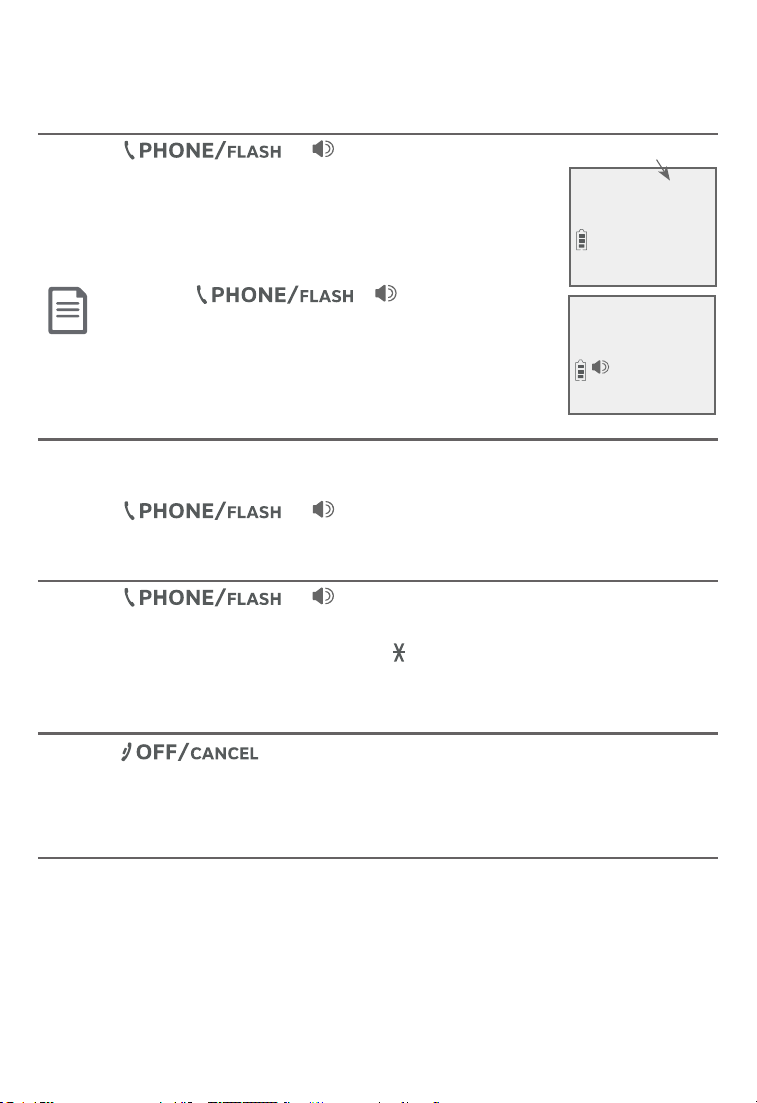
To turn QUIET mode on:
1. Press and hold QUIET # in idle mode to enter the QUIET mode
setting screen. The screen shows Quiet: _ _ hours (1-12 hours).
2. Use the dialing keys to enter the desired number of hours (1-12)
you would like to turn on QUIET mode, then press MENU/SELECT.
YourscreenbrieyshowsAnswering sys is ON and then Quiet
mode on.
To turn QUIET mode o:
f While QUIET mode is on, press and hold QUIET #. The screen
then shows Quiet mode is oandyouhearaconrmationtone.
Notes:
f If you change the base ringer, handset ringer, ringer volume, key tone, or caller ID announce
features when QUIET mode is on, the sample plays but the feature is still muted after saving the
setting.
f After QUIET mode is turned off or the set period of time has expired, all muted features will be
activated again.
f The PTT function is not available when QUIET mode is on.
f Intercom is available during QUIET mode, but the handset will not ring.
f When QUIET mode is on, and Smart call blocker is on and in screening mode, all screened calls will
be sent to the answering system after screening. For more information on Smart call blocker, see
page 73.
34
Telephone operation
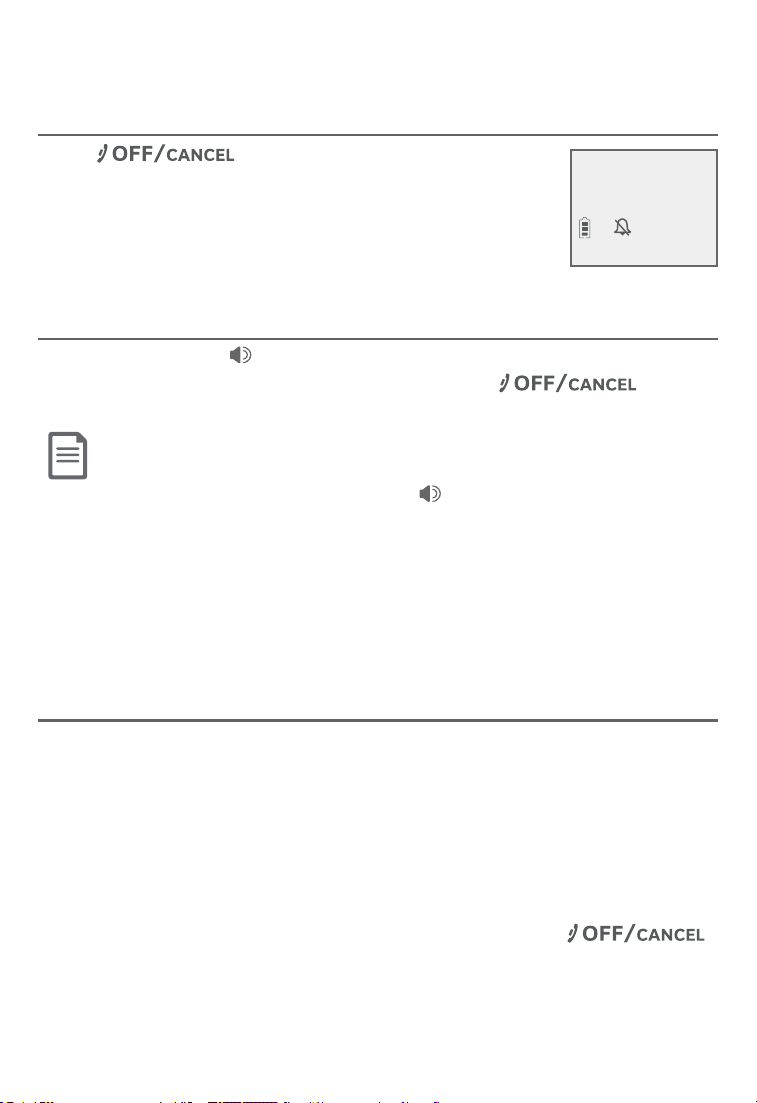
Making a call
f Press
or /SPEAKER, then
enter the telephone number.
The screen displays the elapsed time as you talk
(in hours, minutes and seconds).
Note: Pressing or /SPEAKER to access
services from your telephone service provider does not affect the
elapsed time.
On hook dialing (predialing)
1. Enter the telephone number. Press MUTE/DELETE to make
corrections when entering the phone number.
2. Press
or /SPEAKER to dial.
Answering a call
f Press
or /SPEAKER.
-OR-
f Press any dialing key (0-9, TONE or #).
Ending a call
f Press
or return the handset to the telephone base
or charger.
Auto o
A call ends automatically when you put the handset in the
telephone base or charger.
Telephone operation
Elapsed time
Phone 0:00:30
6:30
AM
8/06
6:30
AM
8/06
Speaker 0:00:30
Telephone operation
35
Telephone operation
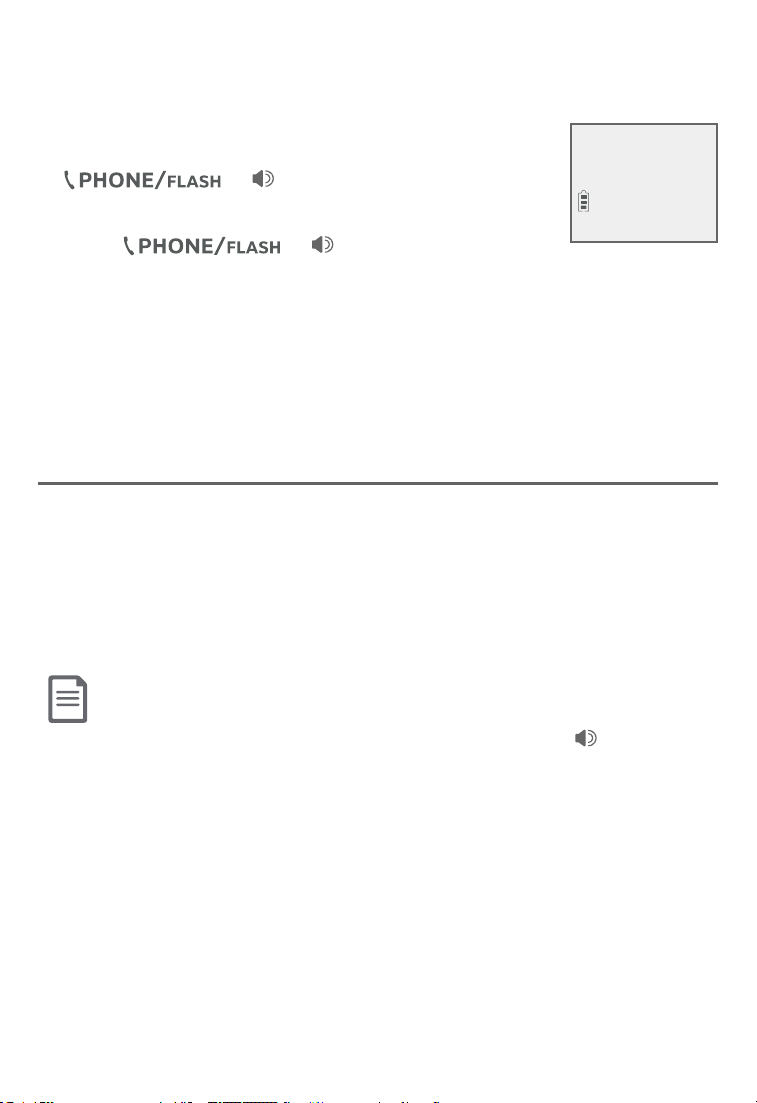
Temporary ringer silencing
Press
or MUTE/DELETE while
the telephone is ringing to silence the ringer
temporarilyonthathandsetonly.Thisturnso
the ringer without disconnecting the call. The next
incoming call rings normally at the preset volume.
Handset speakerphone
During a call, press
/SPEAKER to switch between handsfree
speakerphone and normal handset use. Press or
return the handset to the telephone base or charger to hang up.
Notes:
f When you use the speakerphone, the key pad and the
/SPEAKER button on the handset are
lit.
f The speakerphone uses more power than the normal handset. If the handset battery becomes very
low while you are using the speakerphone, the call remains in speakerphone mode until you hang
up or the battery becomes depleted.
f After installing a battery into the handset, the screen may show Low battery. If you use the
speakerphone at this time, the battery may become depleted. Follow the instructions in the
Battery installation and charging section on pages 13-15.
Last number redial
Each handset stores the last ten telephone numbers dialed (up to
30 digits).
To view the ten most recently dialed numbers:
f To display the most recently called number, press REDIAL/PAUSE.
f To view up to ten recently called numbers, press REDIAL/PAUSE, then
qCID, pDIR or REDIAL/PAUSE repeatedly.
The handset beeps twice at the end of the list. Press
to exit.
Ringer muted
Telephone operation
36
Telephone operation
To redial a number:
f To dial the displayed number, press
or /SPEAKER.
-OR-
f Press
or /SPEAKER, then
press REDIAL/PAUSE repeatedly to view the redial memory. Press
MENU/SELECT to dial the displayed number.
To delete a redial entry:
f While the screen displays the desired number, press
MUTE/DELETE to delete the number from the redial memory.
Equalizer
The handset equalizer enables you to change the quality of the
audio to best suit your hearing.
While on a call or intercom call, press MENU/SELECT to select the
equalizer setting Treble 1, Treble 2, Bass or Natural (the default
setting). The current setting is shown on the handset screen for
two seconds.
Notes:
f If you switch the call between the handset and the speakerphone by pressing
/SPEAKER, the
audio setting remains unchanged.
f The current equalizer setting remains unchanged until a new setting is selected.
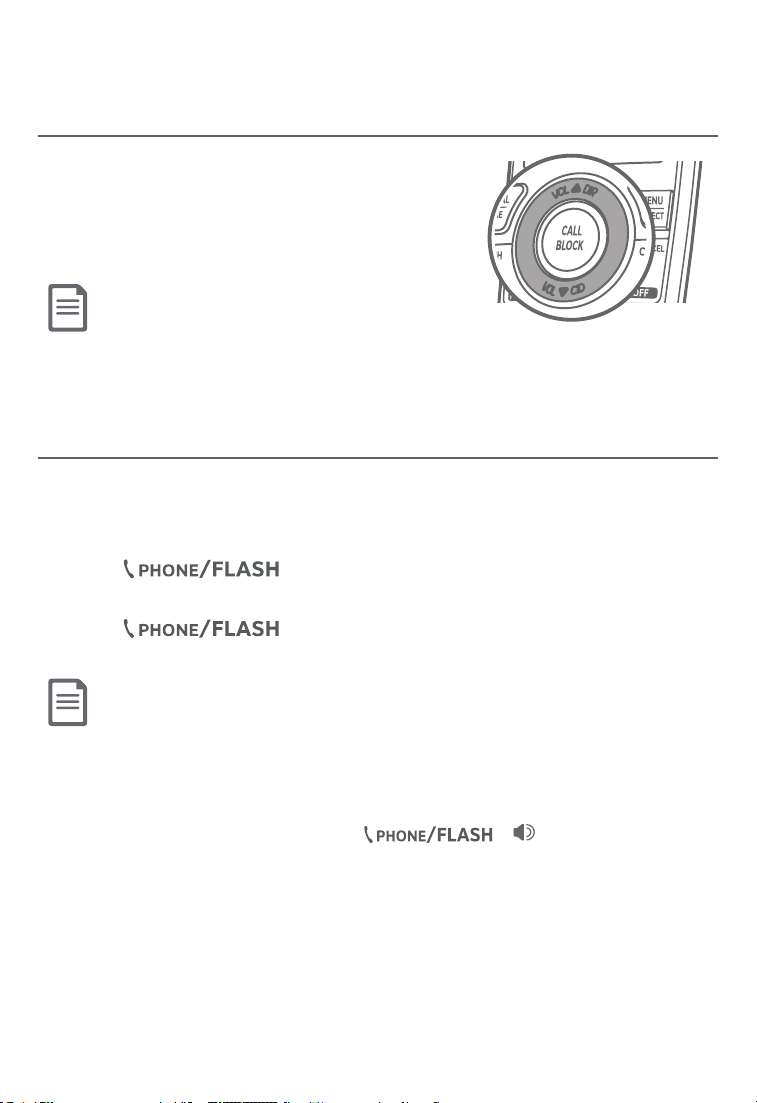
Redial #1/10
888-883-2445
Telephone operation
37
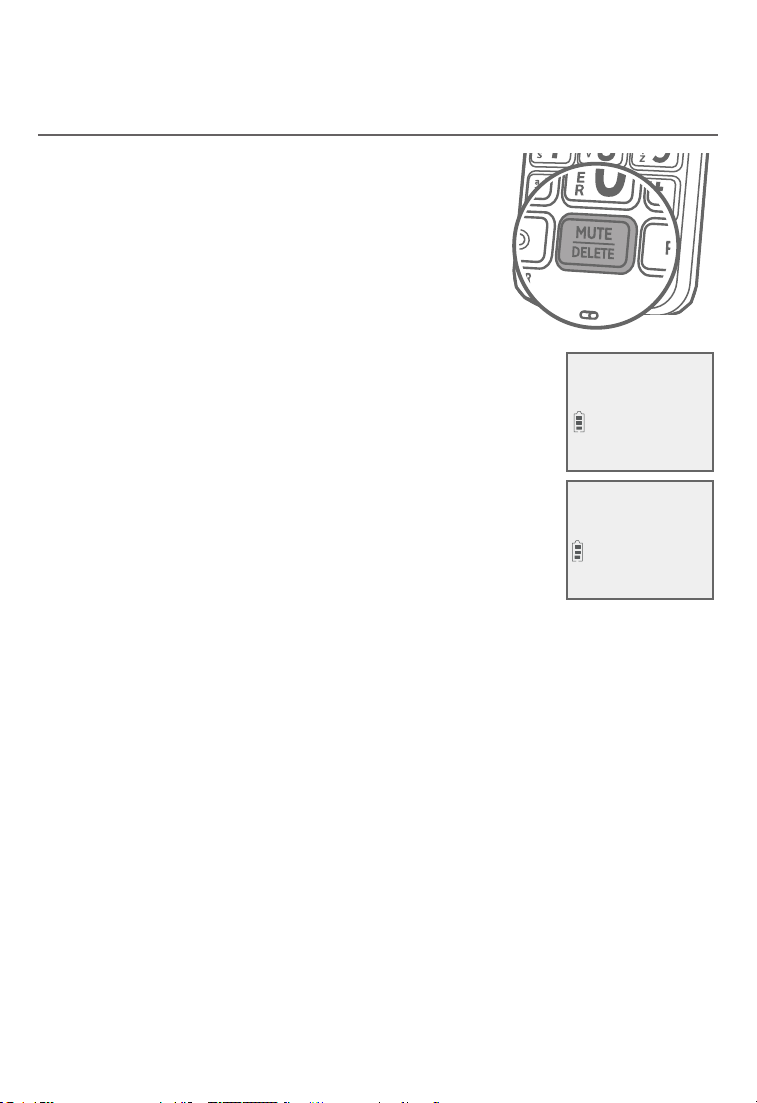
Volume control
You can set the listening volume to one of
six levels. While on a call, press
VOL q CID to decrease or press
VOL p DIR to increase the listening
volume.
Notes:
f Handset and speakerphone volume settings are independent.
f When the volume reaches the minimum or maximum setting, you hear two beeps.
Call waiting
If you subscribe to call waiting service from your telephone service
provider, and someone calls while you are already on a call, you
hear two beeps.
f Press on the handset to put your current call on
hold and take the new call.
f Press
on your handset at any time to switch back
and forth between calls.
Note:
f If the Smart call blocker feature is on and in screening mode, and you receive a call waiting call:
- If you have already picked up a screened call, the telephone checks whether the call waiting
call’s number can be found in the directory, block list or allow list. It also checks whether the
caller name is in the star name list. After that, the telephone displays the caller ID information
or Blocked call accordingly. You can press
or /SPEAKER to take the new
call, or press CALL BLOCK on the handset to block it.
- If the telephone is screening a call, the call waiting call will be ignored and logged as missed call
in the caller ID log.
Options while on calls
Telephone operation
38
Options while on calls
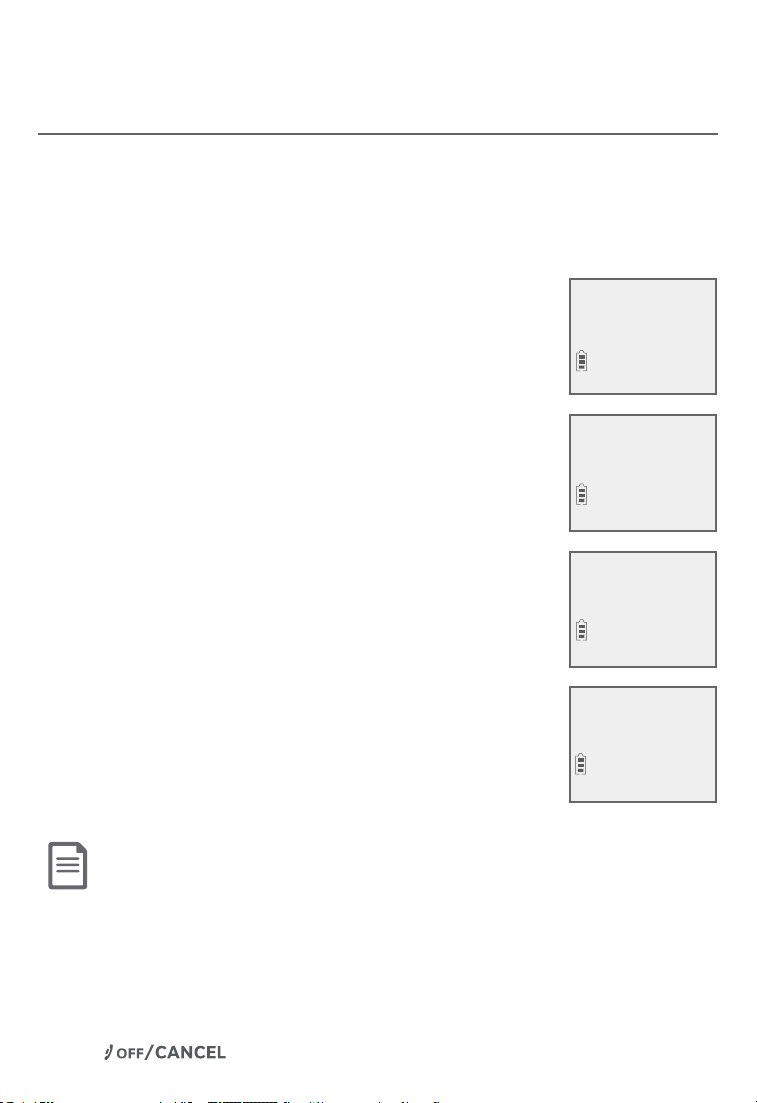
Mute
Usethemutefunctiontoturnothe
microphone. You can hear the caller, but
the caller cannot hear you.
To mute a call:
f While on a call, press MUTE/DELETE.
When mute is on, the handset shows
Muted for a few seconds and MUTE icon
displaysuntilyouturnomute.
To end mute a call:
f Press MUTE/DELETE again. When
muteiso,Microphone ON appears
temporarily on the handset.
38
Microphone ON
6:30
AM
8/06
Muted
MUTE
6:30
AM
8/06
Telephone operation
3939
Options while on calls
Chain dialing
Use this feature to initiate a dialing sequence from the numbers in
the directory, caller ID log or redial memory while you are on a call.
Chain dialing is useful when you wish to access other numbers
(such as bank account numbers or access codes) from the
directory, caller ID log or redial list.
To access the directory while on a call:
1. Press MENU/SELECT.
2. Press qCID or pDIR to scroll to Directory and
then press MENU/SELECT.
3. Press qCID or pDIR to scroll to the desired number.
4. Press MENU/SELECT to dial the number shown.
To access the caller ID log while on a call:
1. Press MENU/SELECT.
2. Press qCID or pDIR to scroll to Caller ID log, then
press MENU/SELECT.
3. Press qCID or pDIR to scroll to the desired number.
4. Press MENU/SELECT to dial the number shown.
To access the redial list while on a call:
1. Press REDIAL/PAUSE to show the most recently
dialed number.
2. Press qCID or pDIR to scroll to the desired
number, or press REDIAL/PAUSE repeatedly to
find the desired number. Press MENU/SELECT to
dial the number shown.
Notes:
f You cannot edit a directory entry while on a call. For more details about the directory, see pages
52-62.
f You cannot copy a caller ID entry into the directory while on a call. For more details about the caller
ID log, see pages 63-72.
f If you press REDIAL/PAUSE while on a call, you can only view the ten most recently dialed numbers
but you cannot erase the entries. For more details about the redial memory, see
page 35.
f Press on the handset to exit redial, directory or caller ID log when on a call.
REDIAL #1/10
800-360-4121
Phone 0:01:20
Charlie Johnson
6:30
AM
8/06
888-883-2445
Charlie Johnson
>Directory
Answering sys

Telephone operation
40
Options while on calls
Temporary tone dialing
If you have pulse (rotary) service only, you can switch from pulse to
touch-tone dialing temporarily during a call. This is useful if you need
to send touch-tone signals to access your telephone banking or long
distance services.
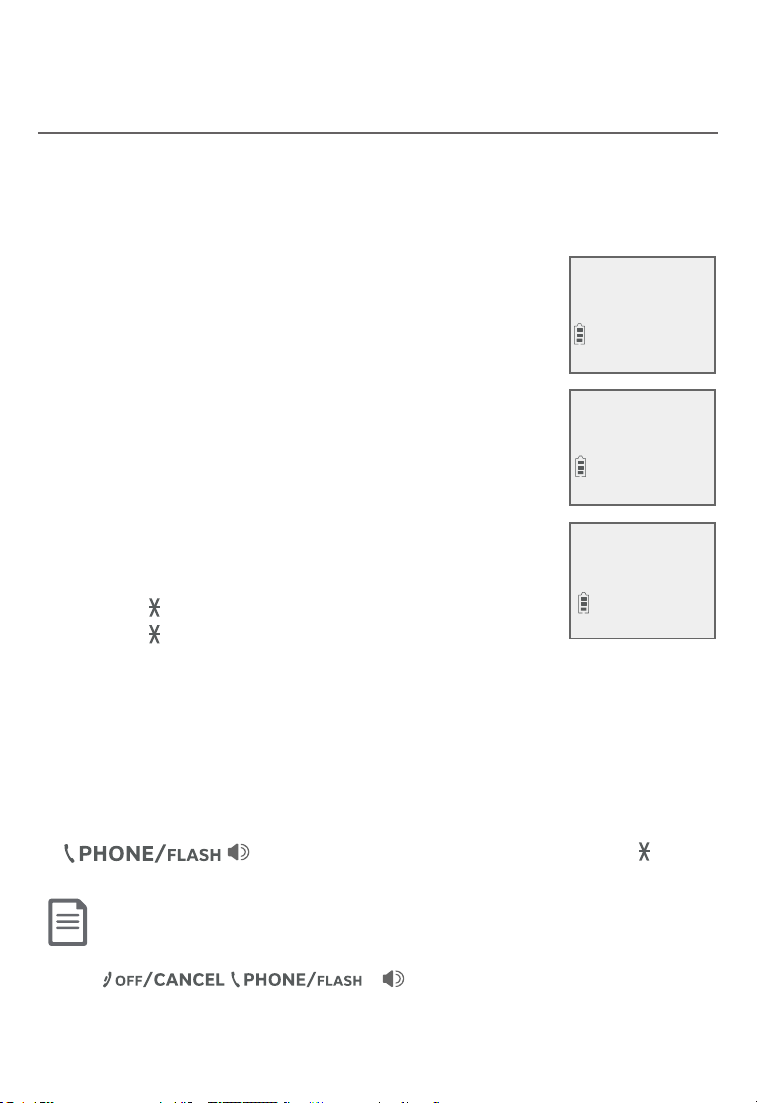
1. During a call, press TONE .
2. Use the dialing keys to enter the desired number. The telephone
sends touch-tone signals.
3. The telephone automatically returns to pulse dialing after you
end the call.
Telephone operation
41
Options while on calls
Blind transfer
Whileonanoutsidecall,youcantransferthecalltoaspecic
device or any device without notifying them.
To transfer an outside call directly without notifying the
desired device:
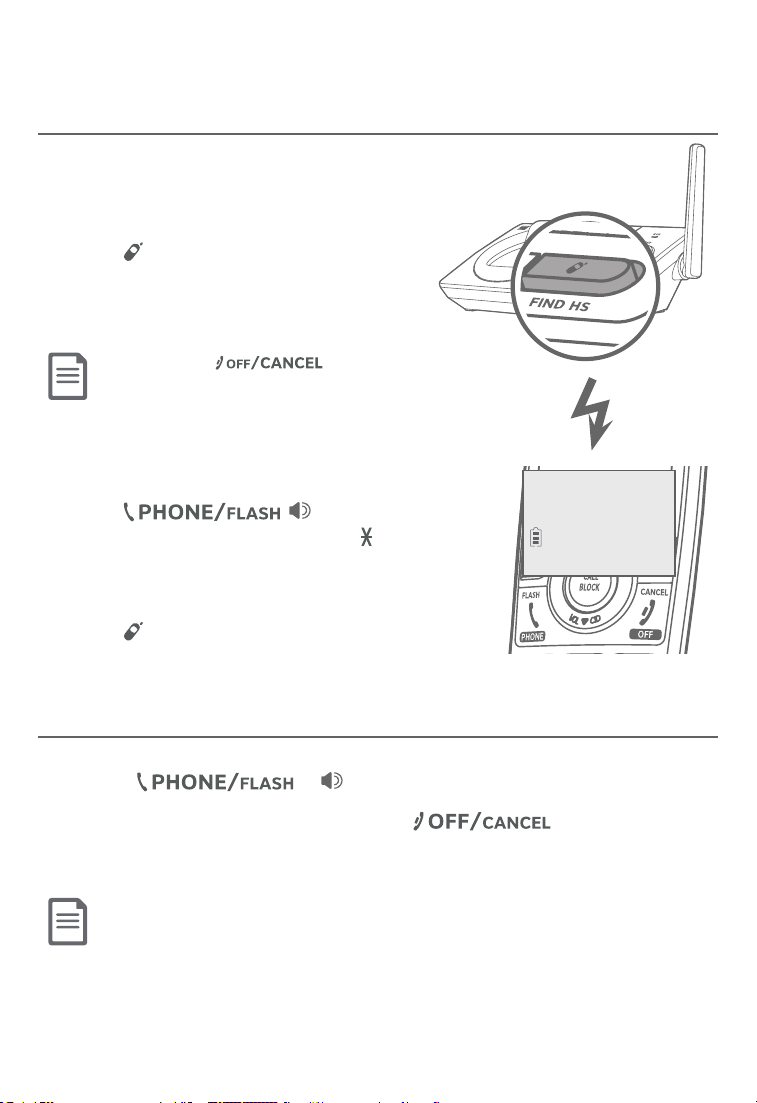
1. During the call, press MENU/SELECT.
2. Press
qCID or pDIR to scroll to Transfer and then
press MENU/SELECT.
f If you have a two-handset system and no other
registered devices, the outside call is put onhold
and your handset shows Transferring call....
The other handset rings and shows Transfer
from other handset.
f If you have other registered device(s) or
more than two handsets, your screen shows
TRANSFER TO:. Use the dialing keys to enter
a specific device number (1-9 for handsets 1-9,
TONE
followed by 0-2 for handsets 10-12, or
TONE followed by # for all devices), or press
qCID or pDIR to scroll to the desired device and press
MENU/SELECT. The outside call is put on hold and your
handset screen shows Transferring call... or Transferring
call to all.... The other device rings and shows Transfer from
HANDSET X (HANDSET represents the handset name, X
represents the handset number).
3. To answer the call on the destination handset, press
, /SPEAKER, or any dialing key (0-9, TONE or #).
The initiating handset shows Call transferred and goes to idle mode.
Notes:
f To cancel the transfer and return to the external call before the blind transfer call is answered,
press , or /SPEAKER on your handset.
f If the other device does not answer the transfer within 30 seconds, the transfer ends and the
initiating device rings while showing No response to transfer. If it does not pick up within 30
seconds, the device returns to idle mode and the outside call ends.
Phone 0:00:12
6:30
AM
8/06
>Equalizer
Transfer
TRANSFER TO:
>Handset 2
Multiple handset use
42
Multiple handset use
Handset locator
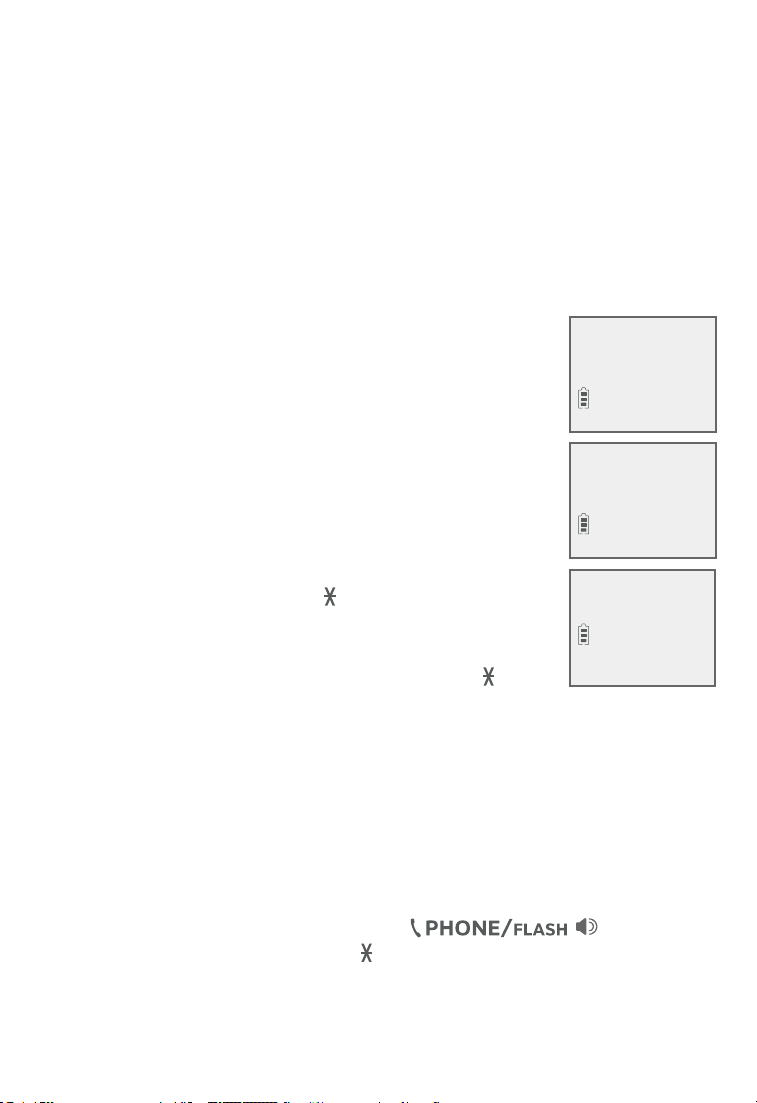
The handset locator feature is useful if
you misplace any handsets.
To start the paging tone:
f Press
FIND HS on the telephone
base to start the paging tone on all
handsets for 60 seconds.
Note: If you press or
MUTE/DELETE on a handset, the ringer of that
handset stops, but the paging to the rest of the
handsets continues.
To stop the paging tone:
f Press
, /SPEAKER,
or any dialing key (0-9, TONE or #)
on the handset(s).
-OR-
f Press
FIND HS on the telephone
base.
Join a call in progress
When a handset is already on a call and you would like to join the
call, press
or /SPEAKER on your handset.
To end the call using a handset, press
or place the
handset in the telephone base or charger. The call does not end
until all handsets hang up.
Notes:
f If you have registered a cordless headset or cordless speakerphone to the telephone base, you can
also join a call in progress using the registered device. Refer to the user’s manuals of your cordless
headset or speakerphone for more information.
f You can use up to four system handsets at the same time on an outside call.
42
**Paging**
Multiple handset use
43
Intercom
Use the intercom feature for conversations between two handsets,
or a handset and a cordless headset/speakerphone (sold separately).
You can purchase expansion handsets (AT&T model CL80119),
cordless headsets, and speakerphones (AT&T model TL80133) for this
telephone base to expand your telephone system (up to 12 handsets,
cordless headsets or speakerphones).
Using a handset to initiate intercom calls:
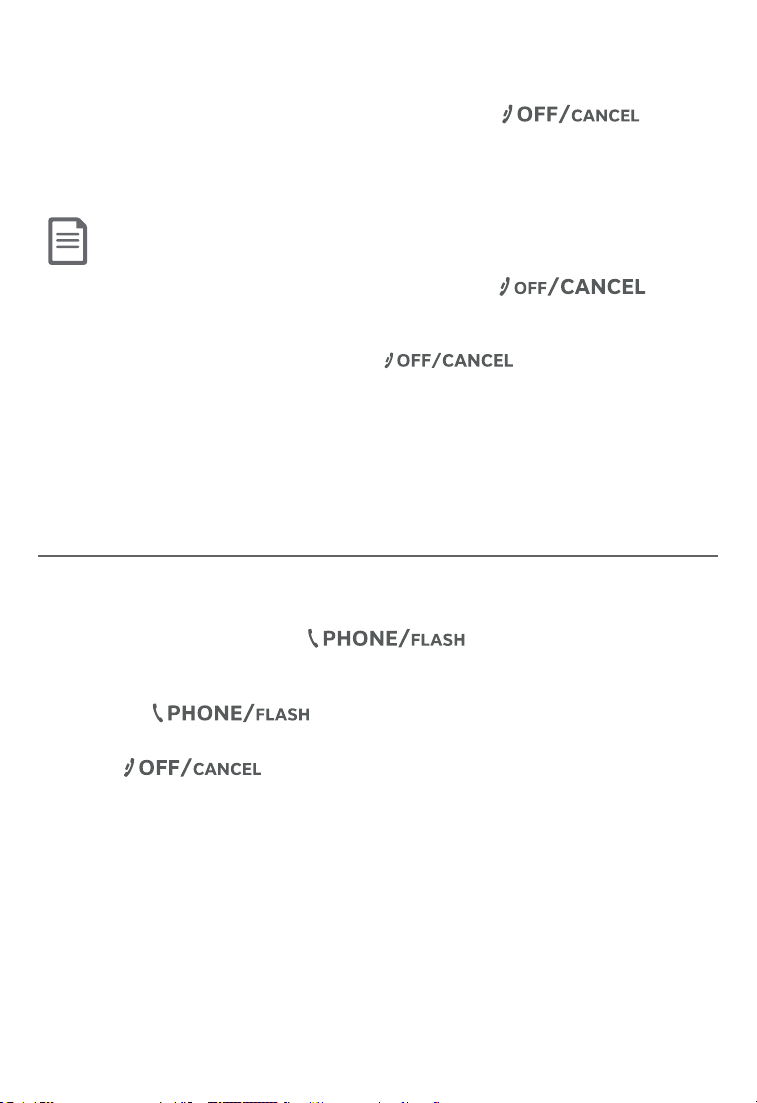
1. Press MENU/SELECT in idle mode to enter the main
menu. Press qCID or pDIR to scroll to Intercom,
then press MENU/SELECT.
f If you have a two-handset system and no
other registered devices, the handset shows
Calling other handset.
f If you have more than two handsets and/
or cordless headset(s)/speakerphone(s), the
handset shows INTERCOM TO:. Use the dialing
keys to enter a specific device number (1-9
for handsets 1-9, TONE
followed by 0-2
for handsets 10-12,
#
for a single headset/
speakerphone,
#
followed by 1 or 2 for
headset/speakerphone 1 or 2, or TONE
followed by
#
for all devices), or press qCID or
pDIR to scroll to the desired handset and press MENU/SELECT.
Your handset screen shows Calling HANDSET X or Calling all
handsets.
The destination handset(s) rings and shows Other handset
is calling, HANDSET X is calling or HANDSET X is calling all
(HANDSET represents the handset name, X represents the
handset number).
2. To answer the intercom call, press
, /SPEAKER
or any dialing key (0-9, TONE , or
#
) on the called device. Both
devices now show Intercom.
Calling
HANDSET X
HANDSET X
is calling
Intercom
11:35
AM
12/02
Multiple handset use
44
Answer an incoming call during an intercom call
If you receive an outside call during an intercom call, there is a
two-beep call waiting tone.
f To answer the call, press
. The intercom call ends
automatically. The party on the intercom call hears four beeps.
Other system devices can also answer the incoming call by
pressing .
f To end the intercom call without answering the incoming call,
press
on the handset.
3. To end the intercom call, one party presses , or
place the handset back in the telephone base or charger. The
other party hears four beeps. Both devices display
Intercom ended.
Notes:
f Before the intercom call is answered, you can cancel it by pressing .
f If the called party does not answer within 100 seconds or if the handset is in use, on a call or out of
range, the initiating device shows No answer. Try again.
f To temporarily silence the intercom ringer, press
or MUTE/DELETE.
f You can only use one pair of handsets at a time to make intercom calls.
f For cordless headsets and speakerphones, refer to the corresponding user’s manual on how to
answer and end an intercom call.
f If a total of two cordless headset(s) and/or speakerphone(s) are registered to the telephone base,
they appear as HEADSET 1 and HEADSET 2, respectively.
Intercom

Multiple handset use
45
Call transfer using intercom
Use the intercom feature to transfer an outside call to another
system device. You can also share an outside call with another
system device.
To transfer or share an outside call using intercom:
1. During the call, press MENU/SELECT.
2. Press qCID or pDIR to scroll to Intercom and press
MENU/SELECT.
3. If you have a two-handset system and no other registered
devices, your handset screen shows Calling other handset.
-OR-
If you have more than two handsets and/or cordless headset(s)/
speakerphone(s), your screen shows INTERCOM TO:. Use the
dialing keys to enter a specific device number (1-9 for handsets
1-9, TONE
followed by 0-2 for handsets 10-12, or TONE
followed by
#
for all devices), or press qCID or pDIR to scroll
to the desired handset and press MENU/SELECT. Your handset
screen shows Calling HANDSET X, or Calling all handsets.
4. When the destination handset picks up, your handset shows
Intercom and the outside call is put on hold. You have the
following options:
f You can transfer the call. Press
MENU/SELECT, then press
qCID or pDIR to scroll to Transfer. Press MENU/SELECT again.
The handset shows Call transferred. The other handset
automatically connects to the outside call.
f You can let the other handset join you on the outside call in
a three-way conversation. Press MENU/SELECT. Press qCID or
pDIR to highlight Share call, then press MENU/SELECT.
f You can end the intercom call and continue the outside call
with your handset. Press
on your handset (the
ended intercom call party hears four beeps).
Multiple handset use
46
Push-to-talk (PTT)
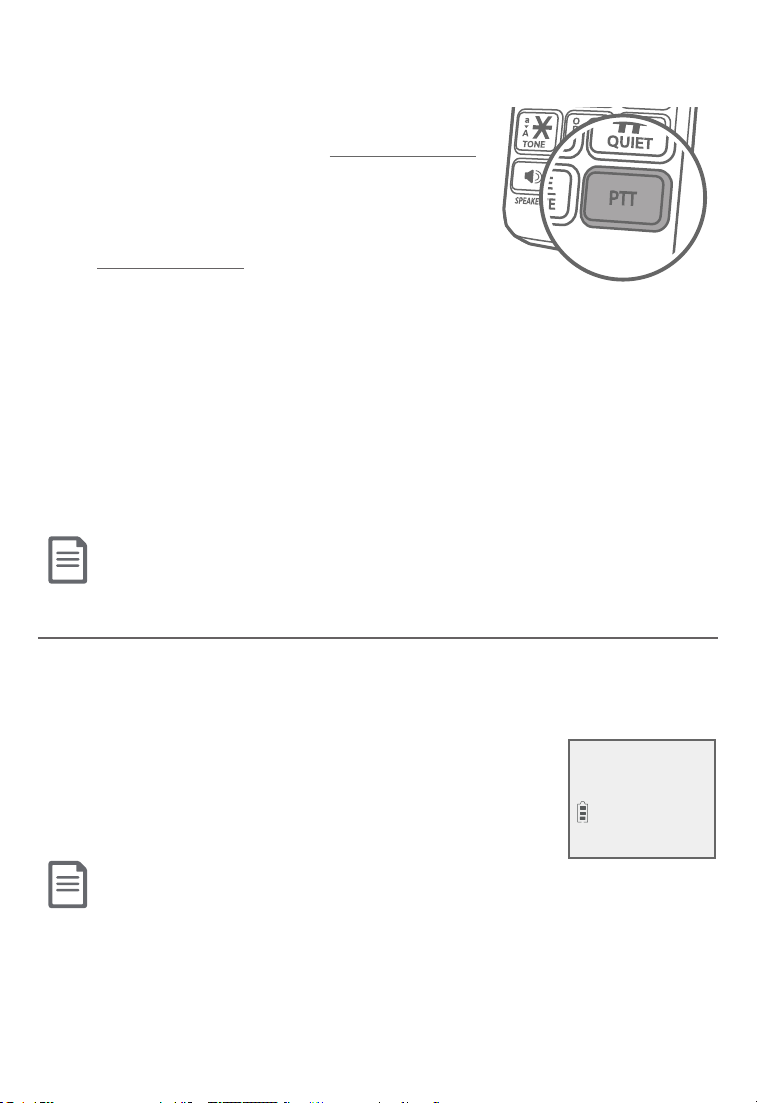
You can directly broadcast messages to the
speakerphone of any device. Press and hold
PTT on a handset to begin
two-way communication.
f Only one device can talk at a time. To do
so, press and hold PTT.
f You must release
PTT, so the other person
can respond.
f Only one PTT session can be active at a time.
f While PTT is in use between two devices, other devices cannot
use the intercom feature but can access the answering system.
f When you attempt to place a PTT call to another device which is
accessing the answering system or on an intercom call or outside
call, your device screen shows Not available at this time.
Note: The PTT function is not available when QUIET mode is on or if you have only one
handset.
Turn PTT on or o
1.
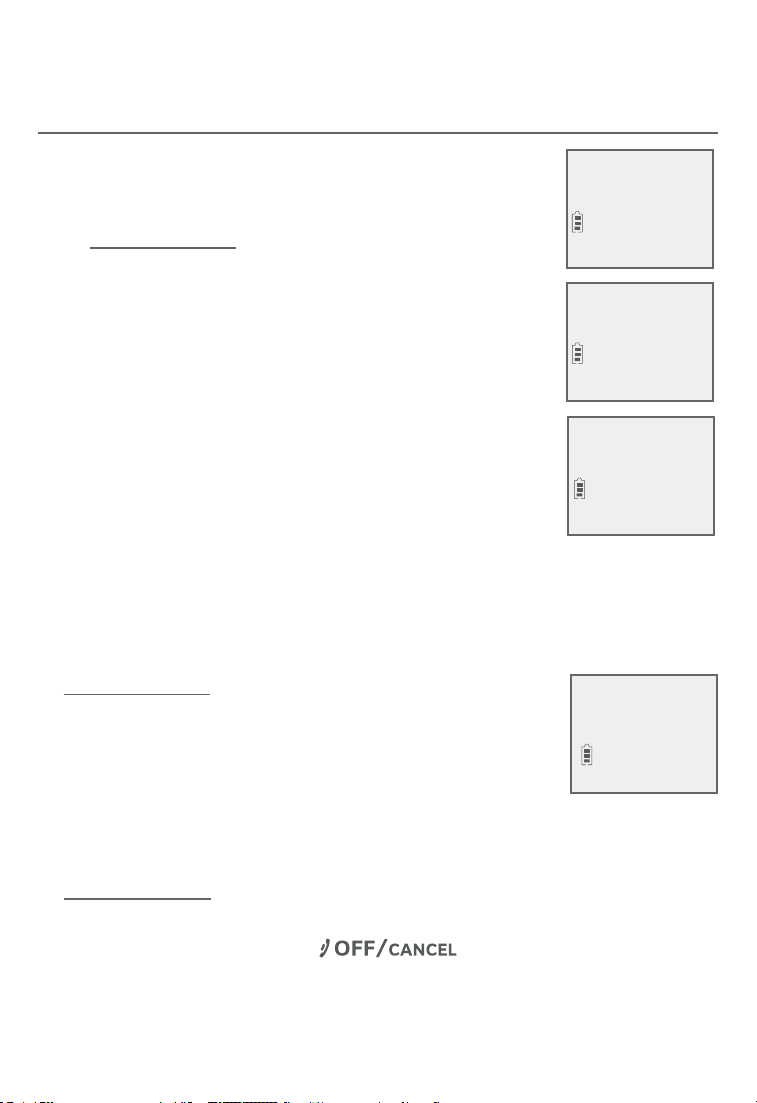
Press PTT when the handset is not in use. The PUSH TO TALK
menu displays.
2.
Press qCID or pDIR to highlight PTT On/O, then press
MENU/SELECT.
3.
Press qCID or pDIR to choose On or O, then
press MENU/SELECT.
Note: The handset screen displays No Incoming PTT when PTT is turned
off.
PUSH TO TALK
>PTT On/Off
Multiple handset use
47
Push-to-talk (PTT)
PTT call to a single device
1. There are a few ways to begin a PTT call to a
single device. When the handset is not in use:
f If you have a two-handset system,
press and hold PTT.
f If you have more than two handsets:
w Press
PTT on the handset, then use the
dialing keys to enter the destination device
number.
-OR-
w Press PTT on the handset. Press qCID or
pDIR to highlight the destination device
number, then press MENU/SELECT or PTT.
The handset shows Connecting to HANDSET
X...
(HANDSET represents the handset name,
X represents the destination handset number).
When the
connection is made, both your and the destination device
screens display
Press and hold [PTT] to talk.
2. Press and hold PTT. A chirp indicates your
microphone is on. Speak towards the device. Your
voice is broadcast to the destination device.
While you are speaking, your handset shows
PTT To handset: X.
3. Release PTT after speaking. Both devices beep once again and
the screens show Press and hold [PTT] to talk, then you can
press and hold PTT to continue speaking or the destination
device can respond (see Answer a PTT call on page 49).
4. To end the PTT call, press
or place the handset in
the telephone base or charger. The handset shows
Push to talk Ended.
PUSH TO TALK
>HANDSET X
Connecting to
HANDSET X...
Press and hold
[PTT] to talk
PTT To
handset: X

Multiple handset use
48
Push-to-talk (PTT)
PTT call to multiple devices
When there are multiple handsets registered to the phone system,
PTT supports one-to-group calls. PTT supports a maximum of
one-to-fourcallswhenonetovehandsetsareregistered,and
a maximum of one-to-three calls when six or more handsets are
registered.Therstfourregisteredhandsetswillbeabletousethis
feature. Other handsets can only use PTT for one-to-one calls.
To call multiple devices:
1. You have three ways to call multiple devices. When the handset is
not in use:
f Press and hold PTT until the handset shows
Connecting to group....
f Press
PTT. Press qCID or pDIR to choose Group. Press
MENU/SELECT or press PTT and your handset shows
Connecting to group....
f Press
PTT. Press TONE followed by # (pound key). The
handset shows Connecting to group....
When the connection is made, both the caller and the destination
parties hear a beep. The speakerphones on all other devices
automatically activate.
2. You need to press and hold PTT when you want to speak. Speak
towards the handset. Your voice is broadcast to all devices.
3. Release PTT after speaking.
4. Any extension can reply (see Answer a PTT call on page 49).
Note: After PTT on the handset is released, the PTT call remains open for a short time. If no
one presses PTT on the handset within ten seconds, the PTT call ends automatically.

Multiple handset use
49
Push-to-talk (PTT)
Answer a PTT call
You can respond to a PTT call, as described below.
1. When your device receives a PTT call, it beeps and shows Press
and hold [PTT] to talk.
2. When the other party is speaking, your speakerphone light is
on, and your device shows PTT From HS X To HS X(therst
X represents the initiating handset number, and the second X
represents your handset number; a maximum of four handset
numbers appear).
3. Whenyourspeakerphonelightiso(thescreenshowsPress
and hold [PTT] to talk), press and hold PTT on your handset.
You will hear a chirp. Speak towards the device.
f While you are speaking, your device shows PTT To handset: X
(X represents the handset numbers of one or more
destination handsets; a maximum of four handset numbers
appear).
f Your voice is broadcast to all destination devices.
Aerspeaking,releasePTT.Yourdevicewillbeep.Aerthe
beep,ifyourspeakerphonelightiso,youcanpress and hold
PTT to continue speaking.
Change a one-to-one PTT call to an intercom call
You can convert a one-to-one PTT session to an intercom call.
1. When your device shows Press and hold [PTT] to talk, press
MENU/SELECT. The screen shows Intercom.
2. Press MENU/SELECT. Your device displays Calling other handset
or Calling HANDSET X.Thedestinationdevicebrieyshows
Push to talk Ended and then Other handset is calling or
HANDSET X is calling. The destination device rings.
3. Press
or any dialing keys (0-9,
#
or TONE ) on
the destination device to answer the intercom call. Both devices
now show Intercom.
4. To end the intercom call, press on your handset
or place the handset in the telephone base or charger. Both
screens show Intercom ended.
Multiple handset use
50
Push-to-talk (PTT)
Answer an incoming call during a PTT call
When you receive an outside call during PTT, there is an alert tone.
f During a one-to-one PTT, press on the initiating
or destination handset. The PTT call ends automatically and the
outside call is answered.
f During a one-to-group PTT call, press
on the
initiating handset. The PTT call ends automatically and the
outside call is answered.
f During a one-to-group PTT call, press
on any one
of the destination handsets. That device answers the outside
call. The PTT call continues for the rest of the PTT participants.
f To leave the PTT call without answering the incoming call, press
. The telephone continues to ring.
Make an outgoing call during PTT call
f During a one-to-one PTT call, press
to get a dial
tone. The PTT call ends automatically.
f During a one-to-group PTT call, press
on the
initiating handset. The PTT call ends automatically and you get a
dial tone.
f During a one-to-group PTT call, press
on any one
of the destination handsets. That device gets a dial tone. The
PTT call continues for the rest of the PTT participants.

Multiple handset use
51
Push-to-talk (PTT)
End or leave a PTT call
For one-to-one PTT calls, both initiating and destination devices
can end the PTT call. For PTT calls to multiple devices, the initiating
device can end the PTT call. If any one of the destination devices
leaves the PTT call, the call continues until all participants or the
initiator hangs up.
Press on the handset. The screen shows
Push to talk Ended.
-OR-
Place the handset in the telephone base or charger, then the
handset returns to idle mode.
Note: After PTT is released, the PTT call remains open for a short time. If no one presses PTT
within ten seconds, the PTT call ends automatically.

About the directory
Shared directory
The directory is shared by all handsets. Changes
made to the directory from any device apply to all.
Note:
f Only one handset can review the directory at a time. If another device
tries to enter the directory, the screen shows Not available at this time.
f Directory entries can also be saved to the allow list or block list. See Allow list on page 84 and
Block list on page 79.
f When Smart call blocker is on, calls with numbers saved in the directory will get through and ring
on your telephone. If a number saved in the directory is also saved in the block list, calls from this
number will be blocked.
Capacity
The directory can store up to 50 entries, with a maximum of 15
alphanumeric characters (including spaces) for names and 30
digits for telephone numbers. A convenient search feature can
helpyoundanddialnumbersquickly(page 56).
If you try to save an entry when there are already 50 entries, the
screen shows Directory full. You cannot store a new number until
you delete one.
Directory
Charlie Johnson
888-883-2445
52
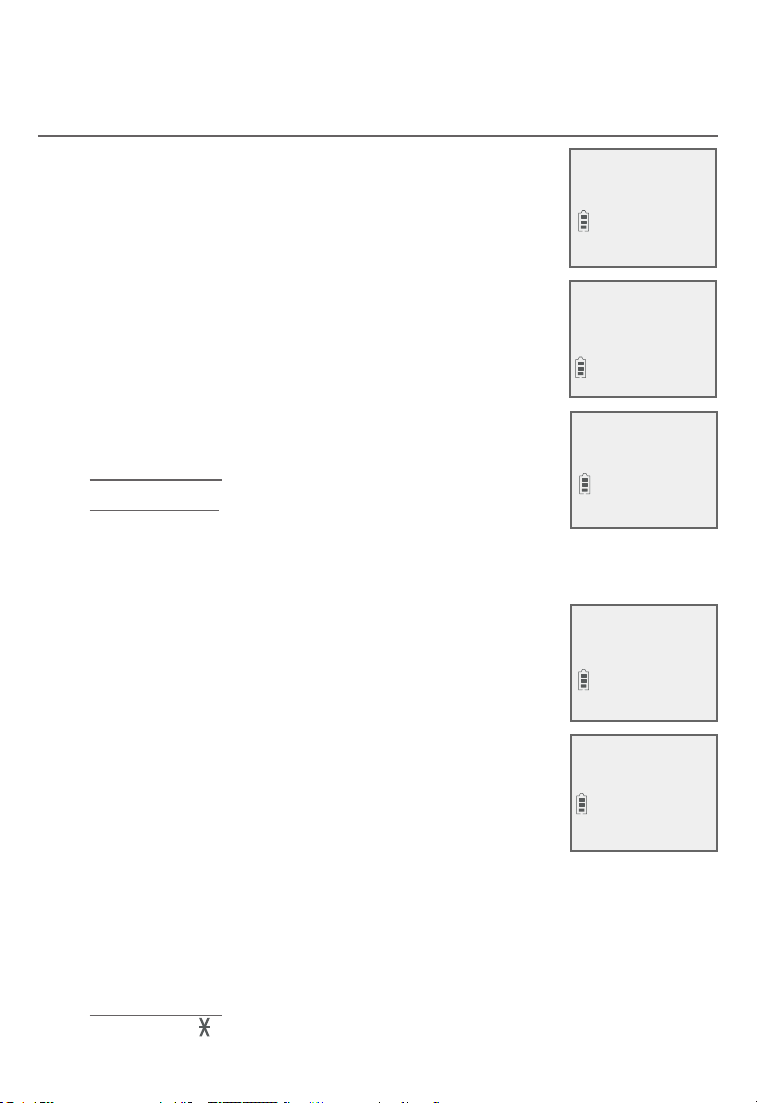
Directory
53
Create directory entries
Create a new directory entry
1. Press MENU/SELECT in idle mode to enter the main
menu.
2. Press
qCID or pDIR to scroll to Directory, then press
MENU/SELECT.
3. Press
qCID or pDIR to highlight Add contact.
4. Press MENU/SELECT.
5. Use the dialing keys to enter a telephone number (up
to 30 digits) when prompted.
f Press qCID or pDIRtomovethecursortothele
or right.
f Press MUTE/DELETE to erase a digit.
f Press and hold MUTE/DELETE to erase all digits.
f Press and hold REDIAL/PAUSE to enter a
three-second dialing pause (a p appears).
-OR-
Copy a number from the redial list by pressing
REDIAL/PAUSE, then
qCID or pDIR, or pressing
REDIAL/PAUSE repeatedly to locate the number. Press
MENU/SELECT to copy the number.
6. Press MENU/SELECT to move on to the name.
f The screen shows Number already saved if the
number is already in the directory. You cannot save
the same number twice.
7. Use the dialing keys to enter a name (up to 15
characters) when prompted. Each time you press a
key, the character on that key appears. Additional key
presses produce other characters on that key. See the chart on next
page.
f Press qCID or pDIRtomovethecursortotheleorright.
f Press 0 to add a space.
f Press MUTE/DELETE to erase a character.
f Press and hold MUTE/DELETE to erase all characters.
f Press TONE
to change the next letter to upper or lower case.
Smart call blk
>Directory
Review
>Add contact
ENTER NUMBER
888-883-2445
_
Saved
ENTER NAME
Robert Brown_
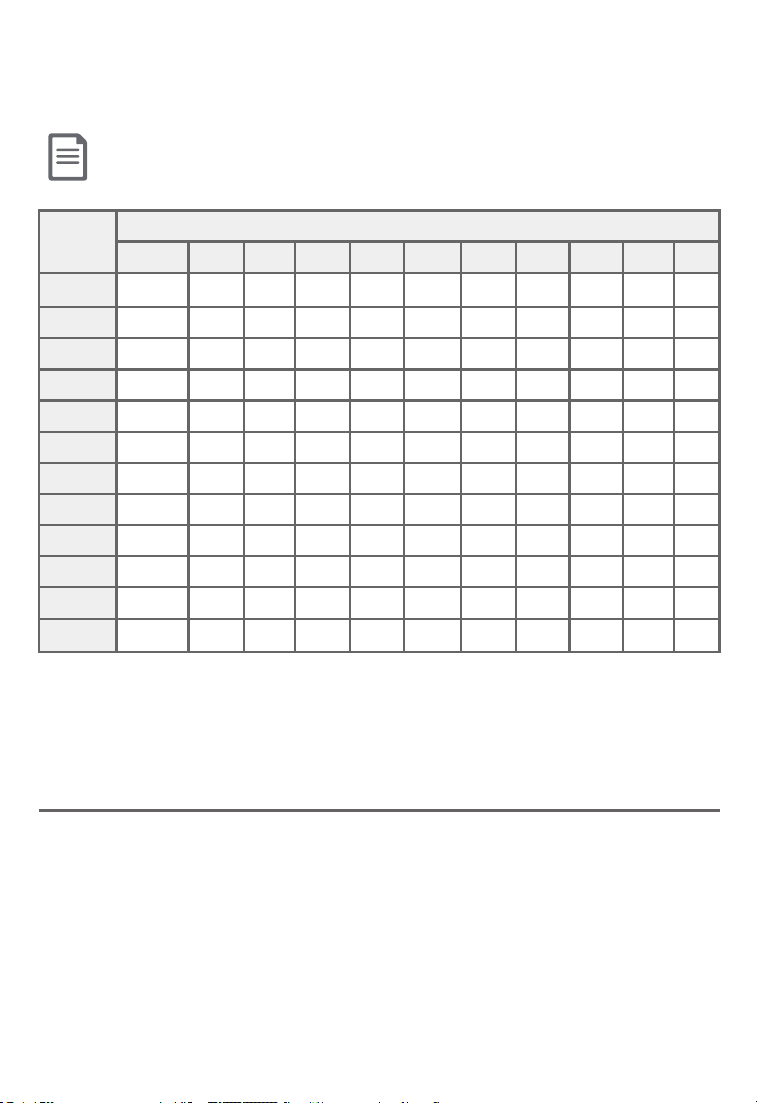
Directory
54
Create directory entries
Note: The first letter of every word is a capital letter. The remaining letters in a word start as lower
case letters, as shown in the chart below.
8. Press MENU/SELECT to store your new directory entry. There is a
conrmationtoneandthescreenshowsSaved to directory. To change
the entry later, see page 58.
Add a predialed telephone number to the directory
You can save a predialed telephone number to the directory.
1. Enter the telephone number when in idle mode.
2. Follow the steps in Edit a directory entry on page 58.
Dialing
keys
Characters by number of key presses
1 2 3 4 5 6 7 8 9 10 11
1
1 . - ‘ ( ) * # & / ,
2 A B C a b c 2
3 D E F d e f 3
4 G H I g h i 4
5 J K L j k l 5
6 M N O m n o 6
7 P Q R S p q r s 7
8 T U V t u v 8
9 W X Y Z w x y z 9
0 space 0
*
#

Directory
55
Review the directory
Review directory entries
1. Press pDIR when in idle mode. The summary screen shows
brieyandthentherstentryinthedirectoryshows.
-OR-
Press MENU/SELECT when in idle mode, then press qCID or pDIR
to scroll to Directory. Press MENU/SELECT twice.
2. Press qCID or pDIR to browse through the directory. Entries
appearalphabeticallybytherstletterinthename.
Notes:
f If the telephone number in the directory exceeds 15 digits, <
appears in front of the telephone
number. Press TONE to move towards the end of the telephone number or press # (pound key) to
move towards the beginning of the telephone number.
f If there are no directory entries when you press pDIR in idle mode, Directory empty appears
briefly on the screen, followed by Add contact?. If you would like to add a new contact, press
MENU/SELECT and refer to page 53 for instructions on creating a new directory entry. Otherwise,
press
to cancel.

Directory
56
Search the directory
Search by name
1. Press pDIRinidlemodetoshowtherstlistinginthedirectory.
2. When an entry appears, press the dialing keys (0-9) to start a
namesearch.Thedirectoryshowstherstnamebeginningwith
therstletterassociatedwiththedialingkey,ifthereisanentry
in the directory beginning with that letter. Press qCID or pDIR to
scroll through the directory.
3. To see other names starting with the letters on the same
dialing key, keep pressing the key. The names appear in
alphabetical order.
For example, if you have the names Jennifer, Jessie, Kevin and
Linda in your directory:
f If you press 5 (JKL) once, you see Jennifer. Press qCID and
you see Jessie.
f If you press 5 (JKL) twice, you see Kevin.
f If you press 5 (JKL) three times, you see Linda.
f If you press 5 (JKL) four times, you see 5 and then the
directory entry beginning with 5 or the next closest entry
after 5.
f If you press 5 (JKL) five times, you see Jennifer again.
Notes
f If there is no name matching the first letter of the key you press, the directory shows a name
matching the following letters of the key.
f If you press a key (0-9) and no name starts with any of the letters on that key, the directory shows
the entry matching the next letter in the directory.
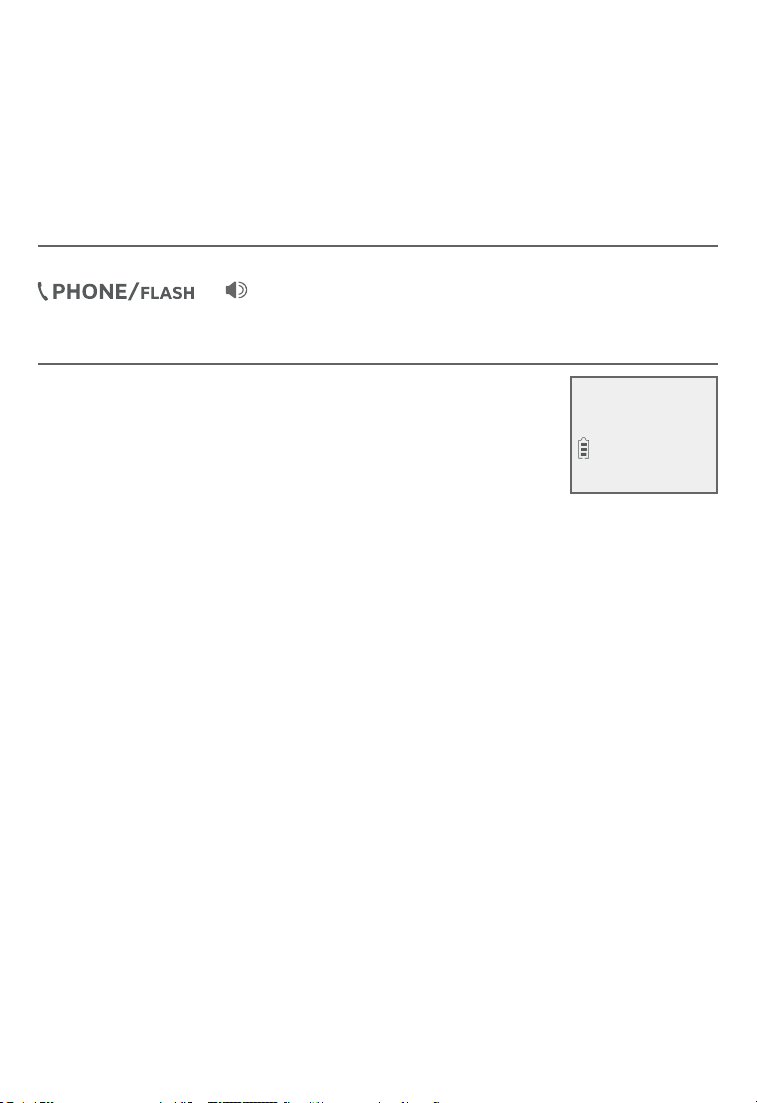
Directory
57
Dial, delete or edit directory entries
To dial, delete or edit a directory entry (name and number), the
entry must be displayed on the screen. Use Review the directory
(page 55) or Search by name (page 56) to show an entry.
Display dial
To dial a displayed number from the directory, press
or /SPEAKER.
Delete a directory entry
To delete the displayed directory entry, press
MUTE/DELETE. Press MENU/SELECTtoconrm.
Thereisaconrmationtoneandthescreen
shows Contact deleted. You cannot retrieve a
deleted entry.
Robert Brown
Delete contact?
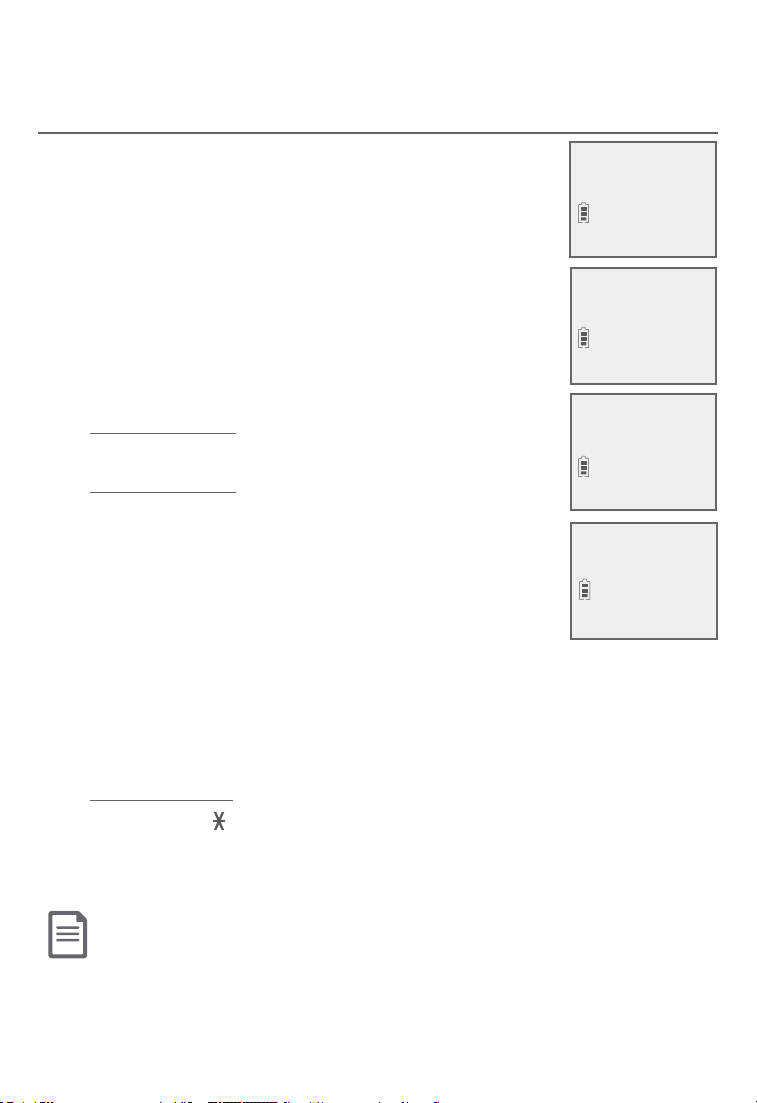
Directory
58
Dial, delete or edit directory entries
Edit a directory entry
1. When a directory entry displays, press
MENU/SELECT. The screen shows EDIT NUMBER
along with the phone number to be edited. If you
only want to edit the name, skip to Step 3.
2. To edit the number:
f Press the dialing keys to add digits.
f Press qCID or pDIR to move the cursor to the
leorright.
f Press MUTE/DELETE to erase a digit.
f Press and hold MUTE/DELETE to erase
all digits.
f Press and hold REDIAL/PAUSE to add a
three-second dialing pause (a p appears).
3. Press MENU/SELECT to move on to the name.
The screen shows EDIT NAME along with the
name to be edited.
4. To edit the name:
f Press the dialing keys to add characters (page 54).
f Press qCID or pDIRtomovethecursortotheleorright.
f Press 0 to add a space.
f Press MUTE/DELETE to erase a character.
f Press and hold MUTE/DELETE to erase all characters.
f Press TONE
to change the next letter to upper or lower case.
5. Press MENU/SELECT tosavetheentry.Thereisaconrmation
tone and the screen shows Saved to directory.
Note: If the telephone number has more than 11 digits, EDIT NUMBER will not be displayed on
the screen.
Linda Miller
888-722-7702
EDIT NUMBER
888-883-2445_
EDIT NAME
Robert Brown_
Robert Brown
888-883-2445
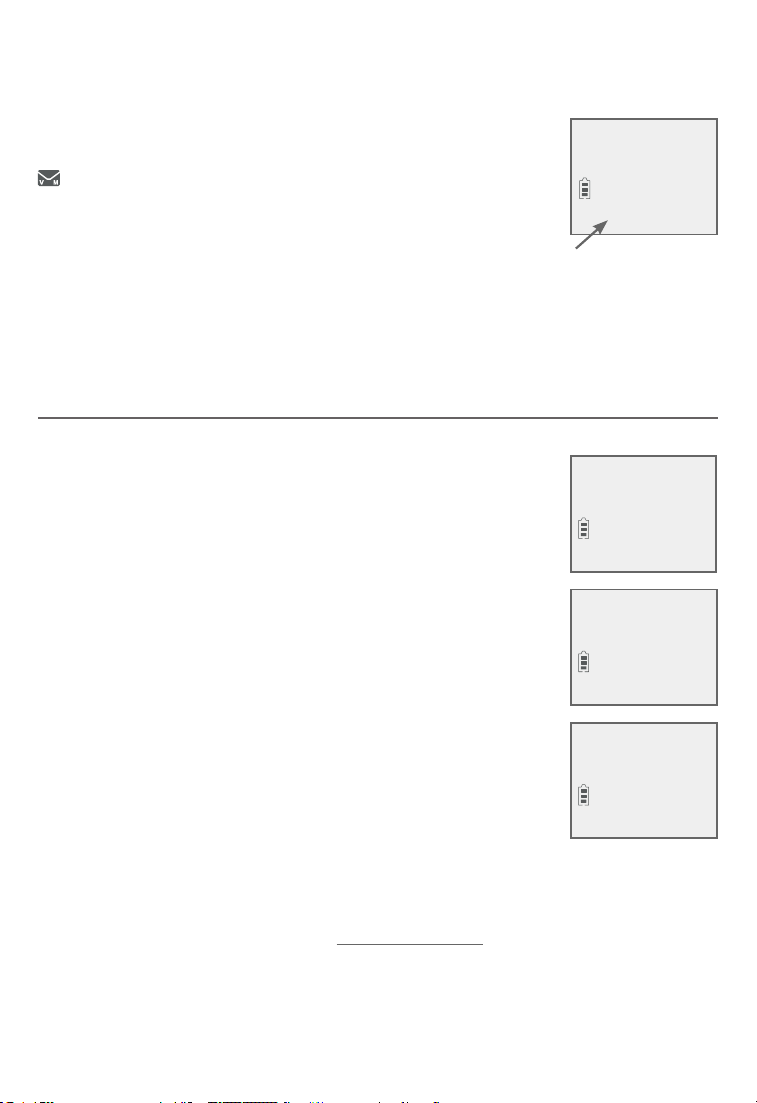
Directory
59
Speed dial
The telephone system has nine speed dial
locations (2-9, 0) and a voicemail access location
1 where you can store the telephone numbers
you wish to dial more quickly. You can store up to
30 digits in each location. Speed dial assignments
can only be selected from the existing directory
entries. The voicemail access number must
be manually entered. In the directory, speed dial locations are
indicated by their number on the bottom of the screen.
Assign a speed dial number
1. When the telephone is idle, press MENU/SELECT.
2. Press qCID or pDIR to scroll to Directory. Press
MENU/SELECT.
3. Press qCID or pDIR to scroll to Speed dial. Press
MENU/SELECT.
4. Press qCID or pDIR to choose your desired
speed dial location (0 or 2-9), then press
MENU/SELECT. The screen briefly shows Copy
from Directory... and then displays the directory
list.
5. Press qCID or pDIR to scroll to the phone
number you wish to assign to the selected speed
dial location.
6. Press MENU/SELECT to save the setting
and return to the previous menu. There is a
confirmation tone and the screen returns to the speed dial list.
-OR-
1. When the telephone is idle, press and hold any dialing keys (0 or
2-9).
2. Press qCID or pDIR to choose your desired speed dial location (0
or 2-9), then press MENU/SELECT. The screen briefly shows Copy
from Directory... and then displays the directory list.
Speed dial location
Robert Brown
888-883-2445
2
Smart call blk
>Directory
Add contact
>Speed dial
>2:Robert Brown
3:<Unassigned>
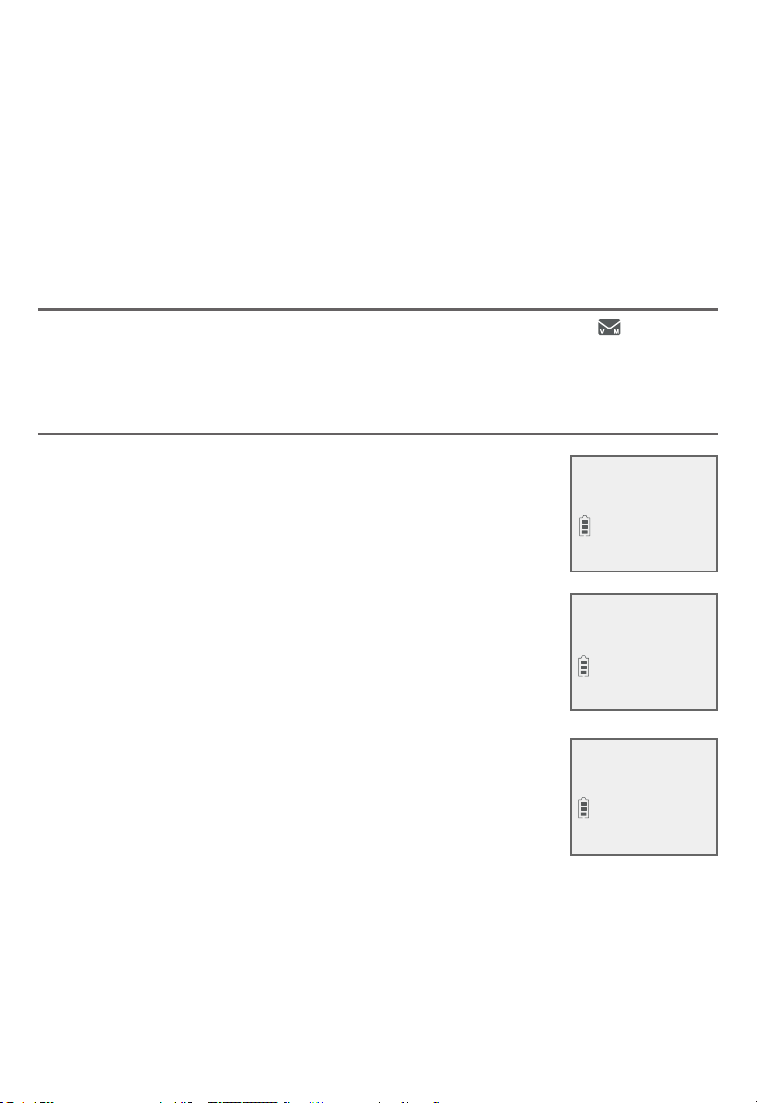
Directory
60
Speed dial
3. Press qCID or pDIR to scroll to the phone number you wish to
assign to the selected speed dial location.
4. Press MENU/SELECT to save the setting and return to the
previous menu. There is a confirmation tone and the screen
returns to the speed dial list.
Assign your voicemail speed dial number
To assign your voicemail speed dial number to location 1, see
page 27.
Reassign a speed dial number
1. When the telephone is idle, press MENU/SELECT.
2. Press qCID or pDIR to scroll to Directory. Press
MENU/SELECT.
3. Press qCID or pDIR to scroll to Speed dial. Press
MENU/SELECT.
4. Press qCID or pDIR to choose the location you
wish to reassign, then press MENU/SELECT to
show the directory entry.
5. Press MENU/SELECT again.
6. Scroll to Change SD and then press
MENU/SELECT. The screen briefly shows
Copy from Directory... and then displays the
directory list.
7. Press qCID or pDIR to scroll to the phone number
you wish to reassign to the selected speed dial
location.
8. Press MENU/SELECT to save the setting and return to the speed
dial list. There is a confirmation tone.
Robert Brown
888-883-2445
2
Copy from
Directory...
Linda Miller
888-722-7702
2
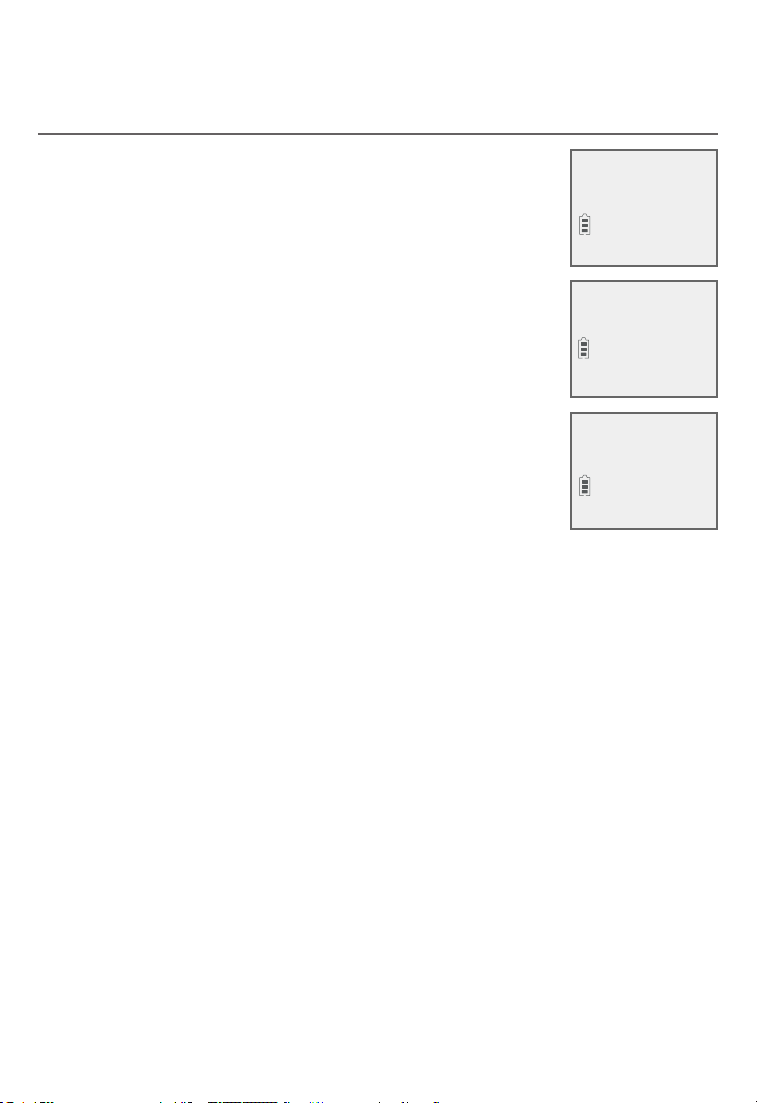
Directory
61
Speed dial
Delete a speed dial number
1. When the telephone is idle, press MENU/SELECT.
2. Press qCID or pDIR to scroll to Directory. Press
MENU/SELECT.
3. Press qCID or pDIR to scroll to Speed dial. Press
MENU/SELECT.
4. Press qCID or pDIR to scroll to the location you
wish to delete the speed dial number from, then:
f Press MUTE/DELETE to delete the displayed
speeddialnumber.Thereisaconrmation
tone and the screen shows Speed dial empty
before returning to the speed dial list.
-OR-
i. Press MENU/SELECT to show the
directory entry.
ii. Press MENU/SELECT again.
iii. Scroll to Clear SD and then press MENU/SELECT to delete the
displayed speed dial number. There is a confirmation tone
and the screen shows Speed dial empty before returning to
the speed dial list.
Linda Miller
888-722-7702
2
Speed dial
empty
>2:<Unassigned>
3:<
Unassigned
>
Directory
62
Speed dial
Make a call using speed dial
When in idle mode, press and hold the dialing key (0 or 2-9)
corresponding to the assigned location you wish to call.
-OR-
1.
Press MENU/SELECT when in idle mode.
2.
Press qCID or pDIR to scroll to Directory, then press
MENU/SELECT.
3.
Press qCID or pDIR to scroll to Speed dial, then press
MENU/SELECT.
4.
Press qCID or pDIR to scroll to the desired location (0 or 2-9)
and then press or /SPEAKER.
Check your voicemail using speed dial
When in idle mode, press and hold 1 to dial the voicemail
number you have set. See page 27 to set your voicemail speed
dial number.
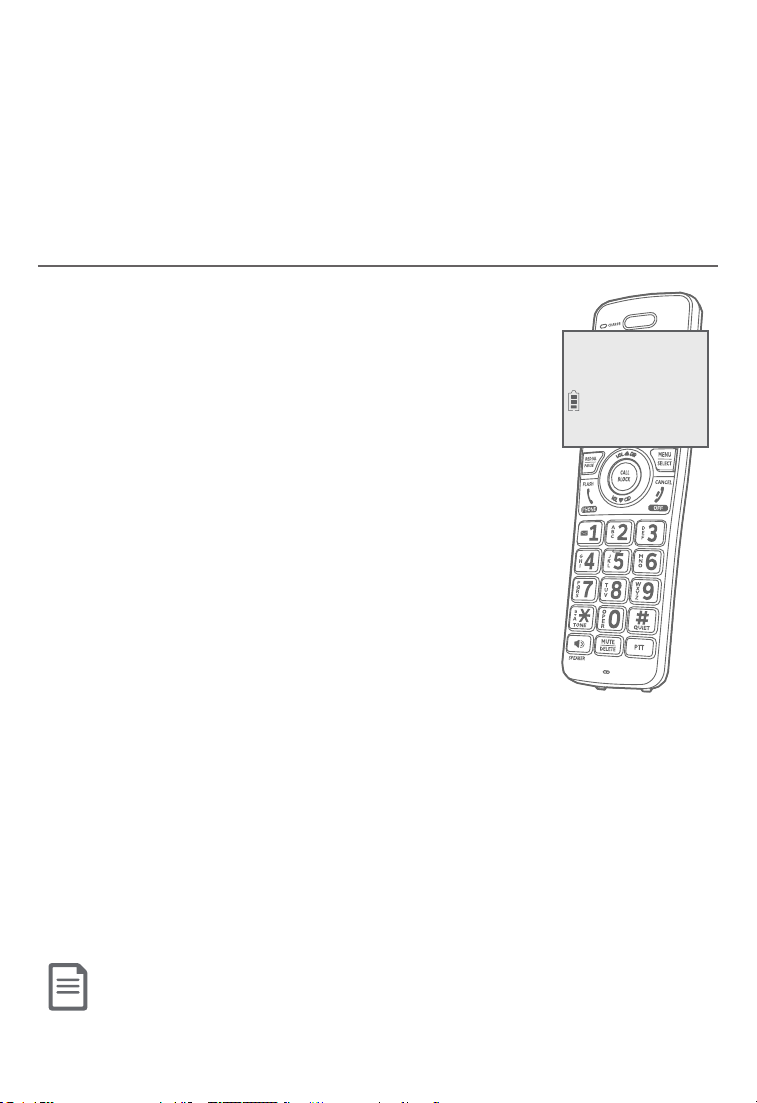
Caller ID
63
About caller ID
ThisproductsupportscallerIDservicesoeredbymosttelephone
service providers. Caller ID allows you to see the name, number, date
andtimeofcalls.TheavailablecallerIDinformationwillappearaer
therstorsecondring.
Information about caller ID with call waiting
Caller ID with call waiting lets you see the name
and telephone number of the caller before
answering the call, even while on another call.
It may be necessary to change your telephone
service to use this feature. Contact your
telephone service provider if:
f You have both caller ID and call waiting, but as
separate services (you may need to combine
these services).
f You have only caller ID service, or only call
waiting service.
f You don’t subscribe to caller ID or call waiting
services.
There are fees for caller ID services. In addition,
services may not be available in all areas.
This product can provide information only if both
youandthecallerareinareasoeringcallerID
service and if both telephone service providers use compatible
equipment. The time and date, along with the call information, are
from the telephone service provider.
Caller ID information may not be available for every incoming call.
Callers may intentionally block their names and/or telephone
numbers. You can only view a maximum of 15 digits of every caller ID
log entry. To view caller ID log entries with numbers between 16 and
24 digits, you must save the entry to the directory (see page 69).
Note: You can use this product with regular caller ID service, or you can use this product’s
other features without subscribing to caller ID or combined caller ID with call waiting service.
Caller ID
CHRISTINE SMITH
888-883-2445
NEW
10/15
10:01
AM
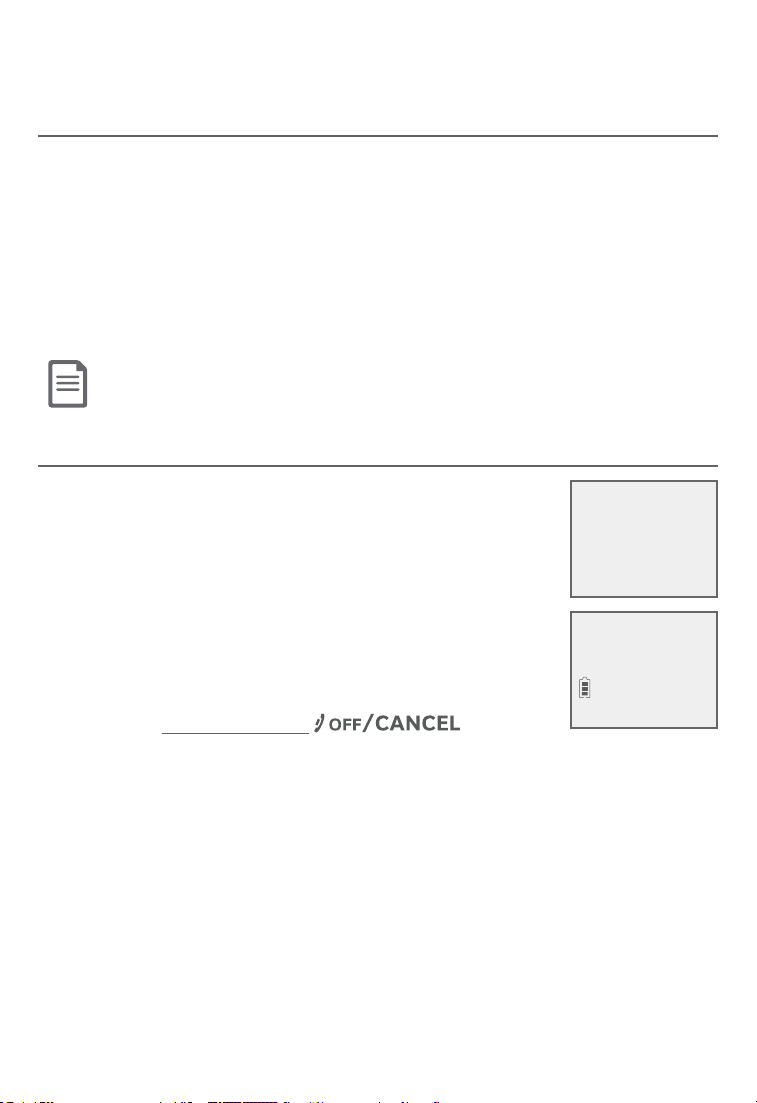
Caller ID
64
Caller ID log
How the caller ID log works
The telephone stores caller ID information about the last 50
incoming calls. Entries are stored in reverse chronological order.
The phone deletes the oldest entry when the log is full to make
room for new calls. This information is common to all handsets, so
changesmadeusinganyhandsetarereectedinallotherdevices.
If you answer a call before the information appears on the screen,
it does not show in the caller ID log.
Note: Each entry may have up to 24 digits for the phone number and 15 characters for the
name.
Missed (new) call indicator
When a handset is in idle mode and has new or
missed calls, its screen shows XX Missed calls.
All new and missed entries are counted as missed
calls. Each time you review a new caller ID log entry
(indicated by NEW on the screen), the number of
missed calls decreases by one.
If you do not want to review the missed calls one
by one, but still want to keep them in the caller ID
log, you can press and hold for four
secondswhenthehandsetisidle.Youwillhearaconrmationtone.
All the entries in the caller ID log become old (reviewed already),
and the missed calls message goes away.
HANDSET 1
10/15
6 Missed calls
10:01
AM
10/15
HANDSET 1
Robert Brown
888-883-2445
NEW
10/15
09:30
AM
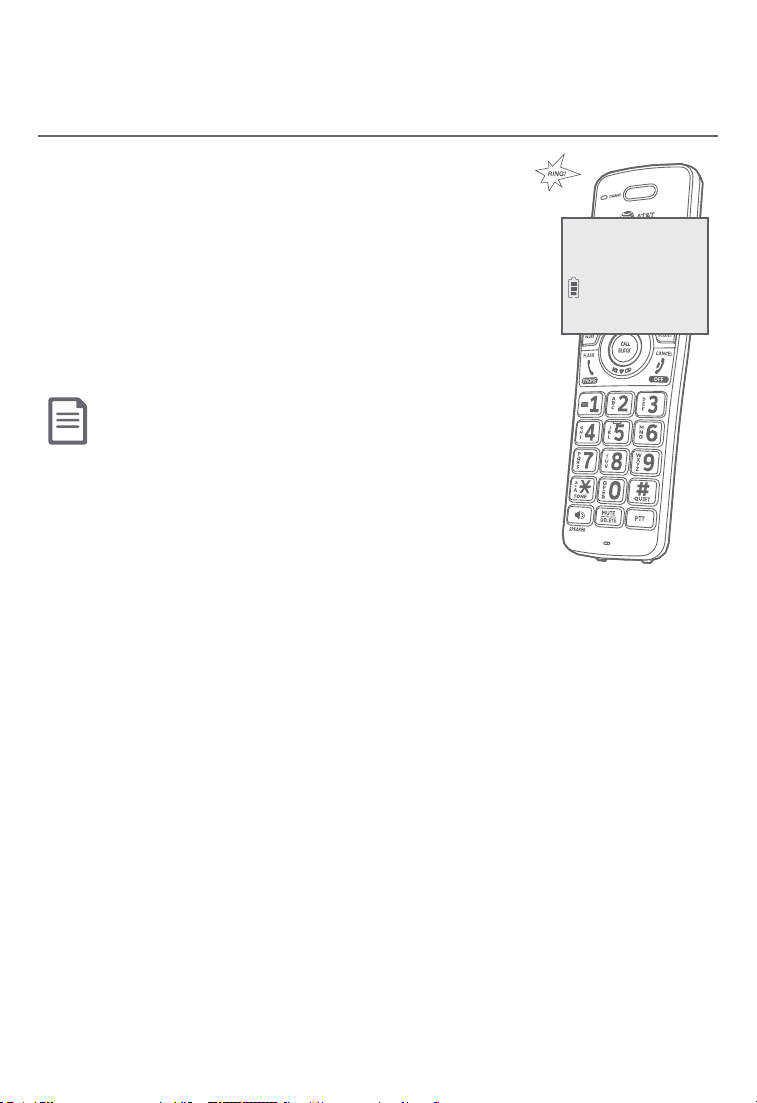
Caller ID
65
Caller ID operation
Memory match
If the incoming telephone number matches
the last 7 digits of a telephone number in your
directory, the name that appears on the screen
matches the corresponding name in your
directory.
For example, if Christine Smith calls, her name
appears as Chris if this is how you entered it
into your directory.
Note: The number shown in the caller ID log will be in the
format sent by the telephone service provider. The telephone
service provider usually delivers ten-digit phone numbers (area
code plus telephone number). If the telephone number of the
caller does not match a number in your directory, the name will
appear as it is delivered by the telephone service provider.
Chris
888-883-2445
NEW
10/15
10:01
AM
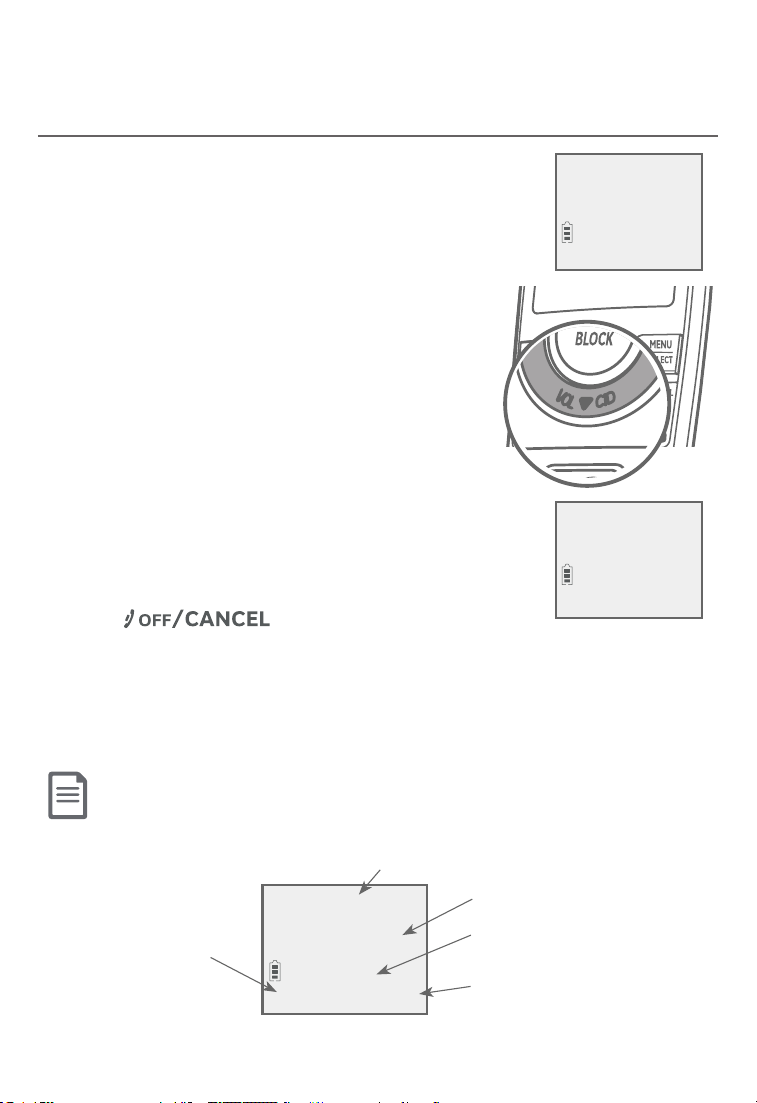
Caller ID
66
Caller ID operation
Review the caller ID log
ReviewthecallerIDlogtondoutwho
called, to return the call, or to copy the
caller’s name and number into your
directory. Caller ID log empty appears if
there are no records in the caller ID log.
1. When the handset is in idle mode,
press qCID to review the caller ID log
in reverse chronological order starting
with the most recent call.
-OR-
Review the caller ID log by pressing
MENU/SELECT. Press qCID or pDIR to
scroll to Caller ID log, then press
MENU/SELECT twice to select Review.
2. Press qCID or pDIR to scroll through
the list.
3. Press
to exit the caller ID
log.
You hear a double beep when the list reaches the beginning or end
of the caller ID log.
Note: Only one handset can review the caller ID log at a time. If another device tries to enter
the directory or caller ID log, it shows Not available at this time.
CHRISTINE SMITH
888-883-2445
NEW
10:01
AM
10/15
Caller’s name
Caller’s number
Appears if it is a new or
missed call.
Date of call
Time of call
HANDSET 1
6 Missed calls
10:01
AM
10/15
Directory
>Caller ID log
Caller ID
67
Caller ID operation
View dialing options
The incoming caller ID log entries have 10 digits
(the area code plus the seven-digit number).
You can add 1 in front of the telephone number
before you dial in the caller ID log or store to the
directory.
While reviewing the caller ID log, press # (pound
key) or 1 repeatedly if you need to add or
remove 1 in front of the telephone number
before dialing or saving it in the directory.
When the number is in the correct format for dialing, press
or /SPEAKER to call the number.
To save the number to the directory, allow list, block list or star name
list, see page 69, page 86, page 81 and page 90.
888-883-2445
1-888-883-2445
888-883-2445
1-888-883-2445
Press # (pound key)
or press 1
Caller ID
68
Caller ID operation
Dial a caller ID log entry
1. When in the caller ID log, press qCID or pDIR to browse.
2. Press
or /SPEAKER to dial the displayed entry.
Delete caller ID log entries
To delete an entry:
f Press MUTE/DELETE to delete the shown entry.
To delete all entries:
1. Press MENU/SELECT when in idle mode.
2. Press qCID or pDIR to scroll to Caller ID log,
then press MENU/SELECT.
3. Press qCID or pDIR to scroll to Del all calls, then press MENU/
SELECT.
4. When the screen shows Delete all calls?, press MENU/SELECT to
confirm. There is a confirmation tone and the screen returns to
the previous menu.
Review
>Del all calls

Caller ID
69
Caller ID operation
Save a caller ID log entry to the directory
1. When in the caller ID log, press
qCID or pDIR to browse.
2. When the desired entry displays, press MENU/SELECT.
3. Press MENU/SELECT to choose Directory.
4. When the screen displays EDIT NUMBER, use the dialing keys to
edit the number.
f Press
qCID or pDIR to move the cursor to the left or right.
f Press MUTE/DELETE to backspace and erase a digit.
f Press and hold MUTE/DELETE to erase the entire entry.
f Press and hold REDIAL/PAUSE to insert a three-second dialing
pause (a p appears).
5. Press MENU/SELECT to move to the name.
6. When the screen displays EDIT NAME, use the dialing keys (page
54) to edit the name.
f Press
qCID or pDIR to move the cursor to the left or right.
f Press 0 to add a space.
f Press MUTE/DELETE to erase a character.
f Press and hold MUTE/DELETE to erase all characters.
f Press # (pound key) to move the last word to the front. For
example, Johnson Charlie becomes Charlie Johnson when
you press # (pound key).
f Press
TONE to change the next letter to upper or lower case.
7. Press MENU/SELECT when done. The screen shows Saved to
directory.
Notes:
f You may need to change how a caller ID number is dialed if the entry does not appear in the
correct format (see View dialing options on page 67).
f If the caller’s name you received from the telephone service provider is all in capital letters, the first
letter of every word remains a capital letter, while other letters become lower case. However, the
next letter after the prefix “Mac”, “Mc”, “D’”, “C’” or “O’”, is kept as a capital letter. For example, the
“D” in “MacDonald” is kept as a capital letter. Another exception is that “VAN DER” will be changed
to “Van der”.
f If the telephone number from the caller ID information has already been saved in the directory
under a different name, the new name will overwrite the old one.
f If you save a blocked number in the caller ID log to the directory, the original name from the caller
ID information will be saved.

Caller ID
70
Caller ID operation
Save a caller ID log entry to the allow list
1. When in the caller ID log, press
qCID or pDIR to browse.
2. When the desired entry displays, press MENU/SELECT.
3. Press
qCID or pDIR to choose Allow list, then press
MENU/SELECT.
4. When the screen displays EDIT NUMBER, use the dialing keys to
edit the number.
f Press
qCID or pDIR to move the cursor to the left or right.
f Press MUTE/DELETE to backspace and erase a digit.
f Press and hold MUTE/DELETE to erase the entire entry.
f Press and hold REDIAL/PAUSE to insert a three-second dialing
pause (a p appears).
5. Press MENU/SELECT to move to the name.
6. When the screen displays EDIT NAME, use the dialing keys (page
54) to edit the name.
f Press qCID or pDIR to move the cursor to the left or right.
f Press 0 to add a space.
f Press MUTE/DELETE to erase a character.
f Press and hold MUTE/DELETE to erase all characters.
f Press # (pound key) to move the last word to the front. For
example, Johnson Charlie becomes Charlie Johnson when
you press # (pound key).
f Press
TONE to change the next letter to upper or lower case.
7. Press MENU/SELECT when done. The screen shows Saved to
allow list.
Save a caller ID log entry to the block list
1. When in the caller ID log, press
qCID or pDIR to browse.
2. When the desired entry displays, press MENU/SELECT.
3. Press
qCID or pDIR to choose Block list, then press
MENU/SELECT.
4. When the screen displays EDIT NUMBER, use the dialing keys to
edit the number.

Caller ID
71
Caller ID operation
f Press qCID or pDIR to move the cursor to the left or right.
f Press MUTE/DELETE to backspace and erase a digit.
f Press and hold MUTE/DELETE to erase the entire entry.
f Press and hold REDIAL/PAUSE to insert a three-second dialing
pause (a p appears).
5. Press MENU/SELECT to move to the name.
6. When the screen displays EDIT NAME, use the dialing keys (page
54) to edit the name.
f Press
qCID or pDIR to move the cursor to the left or right.
f Press 0 to add a space.
f Press MUTE/DELETE to erase a character.
f Press and hold MUTE/DELETE to erase all characters.
f Press # (pound key) to move the last word to the front. For
example, Johnson Charlie becomes Charlie Johnson when
you press # (pound key).
f Press
TONE to change the next letter to upper or lower case.
7. Press MENU/SELECT when done. The screen shows Saved to
block list.
Save a caller ID log entry to the star name list
1. When in the caller ID log, press
qCID or pDIR to browse.
2. When the desired entry displays, press MENU/SELECT.
3. Press
qCID or pDIR to choose Star name list,
then press MENU/SELECT.
4. When the screen displays Star this name?
and the caller’s name, press MENU/SELECT
toconrm.ThescreenshowsSaved to star
name list.
Star this name?
Bayriver Eleme
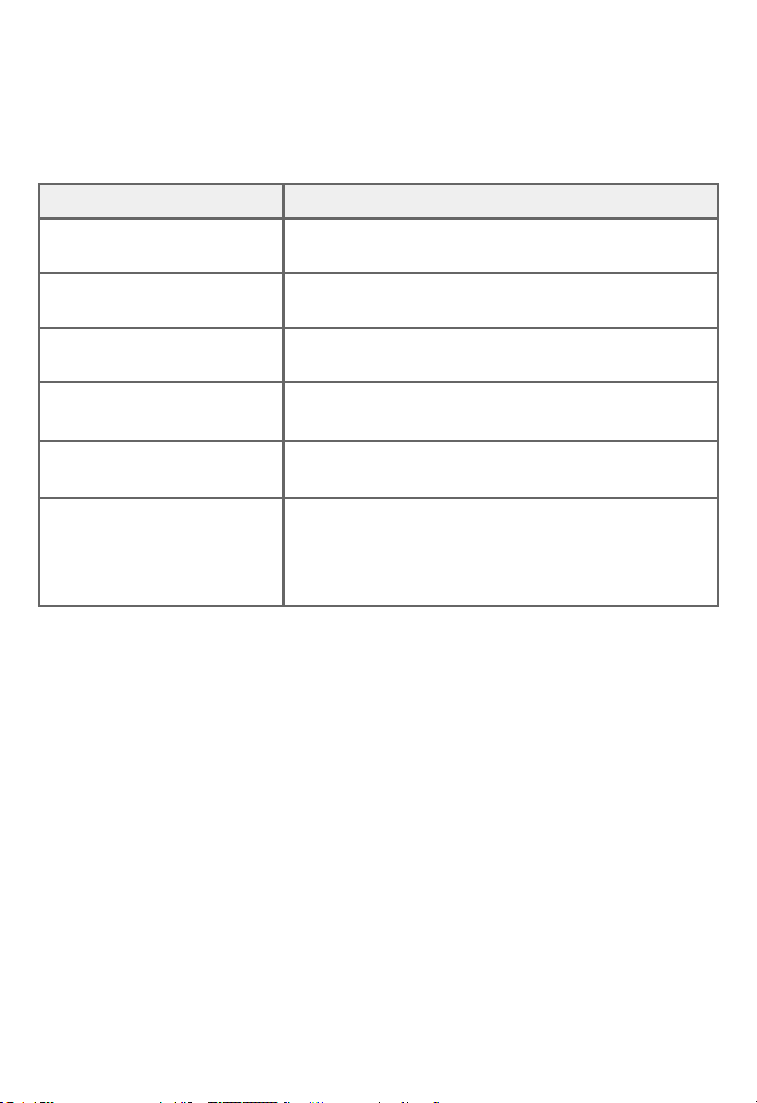
Caller ID
72
Reasons for missing caller ID information
There are occasions when other information or no information
shows for various reasons:
On-screen message Reason
PRIVATE NUMBER
The caller prefers not to show the phone number.
PRIVATE NAME
The caller prefers not to show the name.
PRIVATE CALLER
The caller prefers not to show the phone number
and name.
UNKNOWN NUMBER
Your telephone service provider cannot determine
the caller’s number.
UNKNOWN NAME
Your telephone service provider cannot determine
the caller’s name.
UNKNOWN CALLER
Your telephone service provider cannot determine
the caller’s name and telephone number.
Calls from other countries may also generate this
message.

Smart call blocker
73
About Smart call blocker*
If you have subscribed to caller ID service, then you can use Smart
callblockertolterrobocalls,telemarketingcallsandunwantedcalls,
while allowing welcome calls to get through.
You can set up your lists of welcome callers and unwelcome callers.
Smart call blocker allows calls from your welcome callers to get
through, and it blocks calls from your unwelcome callers.
For other unknown calls, you can allow these calls, block these calls,
or forward these calls to the answering system.
Withsomeeasycongurations,youcansettoonlylterrobocallsby
asking the callers to press the pound key (#) before the calls are put
through to you.
You can also set Smart call blocker to screen incoming calls by
asking the callers to record their names and press the pound key
(#).Aeryourcallercompletestherequest,yourtelephonerings
and announces the caller’s name. You can then choose to block or
answer the call, or you can forward the call to the answering system.
If the caller does not respond or record his/her name, the call is
blocked from ringing through. When you add your welcome callers
to your directory or allow list, they will bypass all screening and ring
directly to your handsets.
Notes:
f Smart call blocker is on, once you install your telephone. It allows all incoming calls to get through
and ring by default. You can change the Smart call blocker settings to screen incoming calls. For
more details, see Set prole (page 77).
f With call screening active, Smart call blocker screens and lters all incoming calls from numbers or
names that are not yet saved in your directory, allow list, block list, or star name list. You can easily
add incoming phone numbers to your allow list and block list. This allows you to build up your lists
of allowed and blocked numbers, and Smart call blocker will know how to deal with these calls
when they come in again.
f To turn o Smart call blocker, see Set Smart call blocker on/o on page 77.
* Includes licenced Qaltel
TM
technology.
Qaltel
TM
is a trademark of Truecall Group Limited.

Smart call blocker
74
About Smart call blocker
Call categories
Callsareclassiedintofourcategories:
Welcome calls
Welcome calls are calls with telephone numbers saved in your
allow list or directory, and not in your block list. Welcome calls also
include calls with caller names saved in your star name list.
Note: There are many organizations like schools, medical oces, and pharmacies that use
robocalls to communicate important information to you. Robocall uses an autodialer to deliver
pre-recorded messages. By entering the name of the organizations into the star name list, it
ensures these calls will ring through when you only know the caller names but not their numbers.
Unwelcome calls
Unwelcome calls are calls with telephone numbers saved in your
block list, and you want to block their calls.
Calls without numbers
Calls without numbers are calls that are “out of area“ or with
numbers set to “Private“.
Uncategorized calls
Uncategorized calls include calls with absent caller ID number, calls
with numbers that are not in your directory, allow list, or block list,
or calls with caller ID names that are not in your star name list.
Note: The allow list stores up to 200 entries, the block list stores up to 1,000 entries, and the
star name list stores up to 10 names.
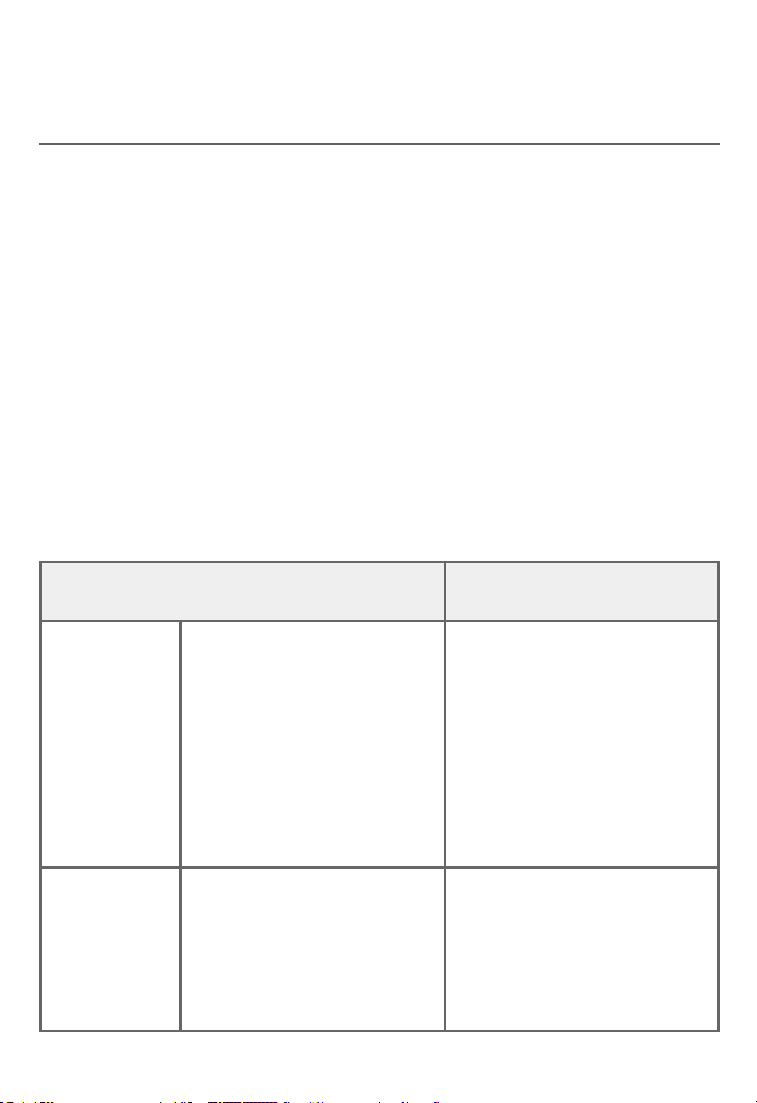
Smart call blocker
75
About Smart call blocker
Call controls
f Smart call blocker is set to on, and to allow all incoming calls
bydefault.WhenSmartcallblockerison,therstringofall
incoming calls will be muted.
f If your directory, allow list, star name list and block list are empty
when Smart call blocker is on, and you have set to screen calls,
the telephone will screen all incoming calls and asks callers to
announce their names or press the pound key (#).
f IfSmartcallblockeriso,allincomingcallsring,including
numbers saved in the block list.
f If QUIET mode is on, and Smart call blocker is on and in screening
mode, all screened calls will be sent to the answering system
aerscreening.
Smart call blocker handles calls in the following ways:
Call category Call handling /
Set prole options
Welcome
calls
f Numbers saved in
allow list.
f Numbers saved in
directory.
f Numbers not found
in block list.
f Caller ID names saved
in star name list.
The telephone rings when
there is an incoming call
with number saved in
your allow list or directory,
but not in your block
list. Robocalls with caller
names saved in your star
name list will also ring.
Unwelcome
calls
f Numbers saved in
block list.
The telephone does not
ring when there is an
incoming call with number
saved in your block
list, and the call will be
rejected.
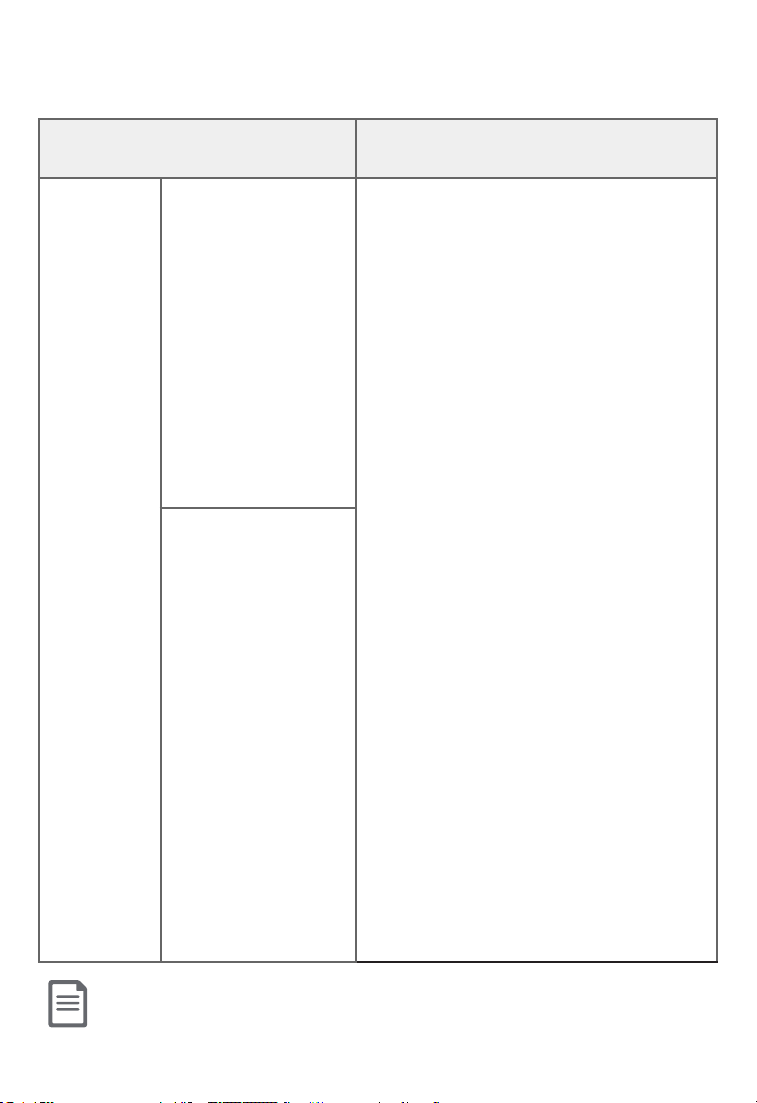
Smart call blocker
76
About Smart call blocker
Call category Call handling /
Set prole options
Unknown
calls
f Calls without
numbers
− Numbers that
are “out of
area“ or set to
“Private“.
You can select one of the following
veproleoptionsforhandlingall
unknown calls.
Screen unknown
The telephone plays the screening
announcement, and then ask the
caller to say his/her name before
the call rings on your telephone.
You can then answer the call, and
hear the caller’s name announced.
You can decide whether to accept
or reject the call, or to forward the
call to the answering system.
Screen robot
The telephone plays the screening
announcement, and then ask
the caller to press the pound key
(#) before the call rings on your
telephone. You can then answer the
call.
Allow unknown (default settings)
The telephone allows these calls to
get through and ring. The caller’s
number, even if it is available, will
not be saved to the allow list.
Unknown to answering system
The telephone forwards these calls
to the answering system without
ringing.
Block unknown
The telephone rejects these calls
with block announcement without
ringing. The caller’s number, even
if it’s available, will not be saved to
the block list.
f Uncategorized
calls
− With absent
caller ID
number.
− Numbers
not found in
directory.
− Numbers not
found in allow
list.
− Numbers not
found in block
list.
− With caller ID
names not
found in star
name list
Note: You can set to screen, allow, or block all unknown calls without numbers, or unknown
calls with numbers not saved in your Directory, Allow list or Star name list. You can also send
these calls to the answering system. Allow unknown is the default prole setting. To change
the setting, see Set prole on page 77.
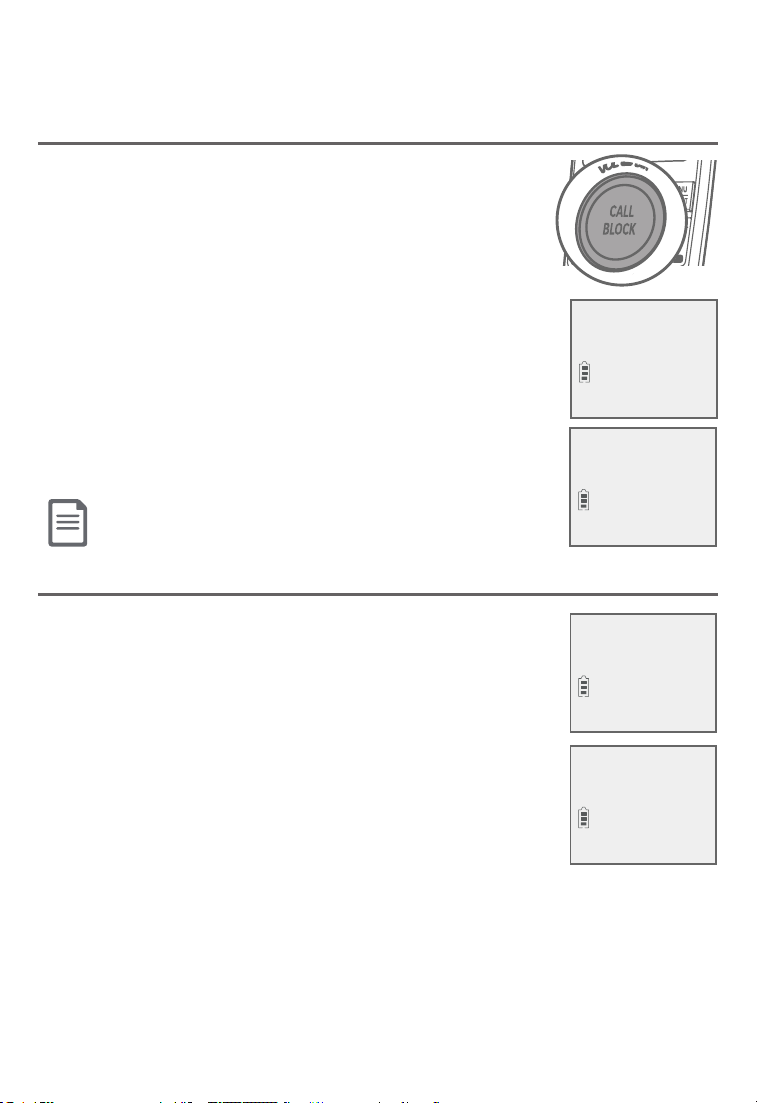
Smart call blocker
77
Call block settings
Set Smart call blocker on/o
The Smart call blocker feature is set to on by default.
1. Press CALL BLOCK on the handset when it is
not in use, and then press MENU/SELECT to
select SCB On/Off.
-OR-
Press MENU/SELECT to enter the main menu
when the handset is not in use. Press qCID or
pDIR to scroll to Smart call blk, then press
MENU/SELECT twice.
2. Press qCID or pDIR to highlight On or Off,
then press MENU/SELECT to save the setting.
You hear a confirmation tone.
Note: If you set SCB On/O to O, all settings under Set prole
(see below) will be invalid.
Set prole
Thereareveprolesettingoptions,whichallows
you to quickly set up Smart call blocker.
1. Press CALL BLOCK in idle mode.
-OR-
Press MENU/SELECT to enter the main menu when
the handset is not in use. Press qCID or pDIR to
scroll to Smart call blk, then press MENU/SELECT.
2. Press qCID or pDIR to scroll to Set profile, then
press MENU/SELECT.
3. Press qCID or pDIR to select one of the following
options, then press MENU/SELECT.
f Screen unknown - screen any calls without numbers or with
numbers not saved in the Directory, Allow list, or Star name list.
− Thisprolesettingsetsthetelephonetoscreenallunknowncallsandasks
the callers to say their names before putting the calls through to you. See
Screen unknown calls on page 98.
Star name list
>Set profile
>Screen unknown
Screen robot
Answering sys
>Smart call blk
>SCB On/Off
Block list

Smart call blocker
78
Call block settings
f Screen robot - screen robocalls.
− Thisprolesettingsetsthetelephonetoscreenallunknowncallsandasks
the callers to press the pound key (#) before putting the calls through to
you. See Screen robocalls on page 101.
f Allow unknown (default setting) - allow all unknown calls to
ring, except calls with numbers saved in the block list.
− Thisprolesettingsetsthetelephonetoallowallunknowncallstoget
through and ring. Calls with numbers saved in the block list will be rejected.
f UnknownToAns.S - forward all unknown calls to the
answering system.
− Thisprolesettingsetsthetelephonetoforwardallunknowncallstothe
answering system.
f Block unknown - block all unknown calls.
− Thisprolesettingsetsthetelephonetoblockallunknowncalls.
After selecting a profile setting, make sure you have not turned
off Smart call blocker. Refer to the Set Smart call blocker on/off
section (page 77) to turn it on.
Notes:
f If you set SCB On/Off to Off, selected setting under Set profile will be invalid, and all incoming
calls will ring, including calls with numbers in your block list.
f There may be robocalls that you do not want to miss. For example, robocalls with announcements
or notices from schools or pharmacies. You can set up your star name list with these caller names
to allow their calls to get through to you. See Star name list on page 89.

Smart call blocker
79
Call block settings
Block list
Add numbers that you want to prevent their calls from ringing
through. The block list stores up to 1,000 entries.
Add a block entry:
1. Press CALL BLOCK on the handset when it is not in use.
-OR-
Press MENU/SELECT to enter the main menu when the handset
is not in use. Press qCID or pDIR to scroll to Smart call blk, then
press MENU/SELECT.
2. Press qCID or pDIR to scroll to Block list, and then press
MENU/SELECT.
3. Press qCID or pDIR to scroll to Add new entry, then press
MENU/SELECT.
4. When the screen displays ENTER NUMBER, use the dialing keys
to enter a number (up to 30 digits).
f Press
qCID or pDIR to move the cursor to the
leorright.
f Press MUTE/DELETE to erase a digit.
f Press and hold MUTE/DELETE to erase all
digits.
f Press and hold REDIAL/PAUSE to enter a three-second dialing
pause (a p appears).
-OR-
Copy a number from the redial list by pressing REDIAL/PAUSE.
Then, press qCID, pDIR or REDIAL/PAUSErepeatedlytondthe
desired number. Press MENU/SELECT to copy the number.
5. Press MENU/SELECT to move on to the name.
f The screen shows Number already saved if the number is
already in the block list. You cannot save the same number
twice.
ENTER NAME
Salesman_
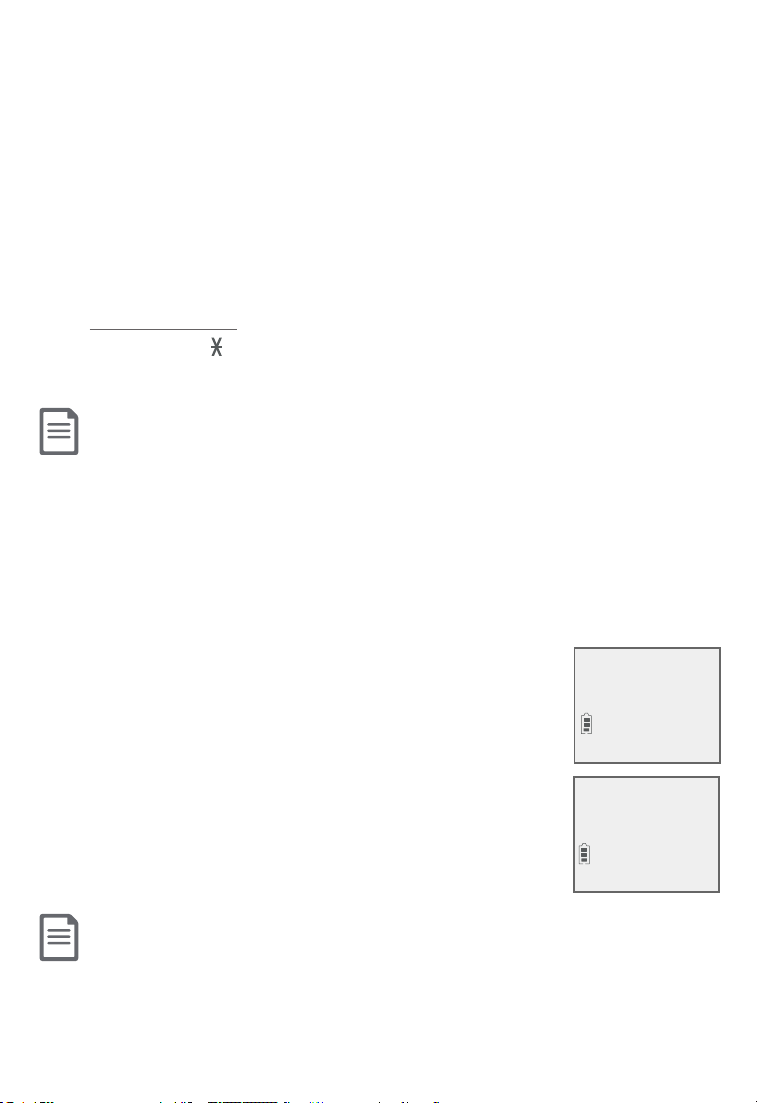
Smart call blocker
80
Call block settings
6. When the screen displays ENTER NAME, use the dialing keys to
enter a name (up to 15 characters). Press a key repeatedly until
thedesiredcharacterappears.Therstcharacterofeveryword
is capitalized.
f Press qCID or pDIRtomovethecursortotheleorright.
f Press 0 to add a space.
f Press MUTE/DELETE to erase a character.
f Press and hold MUTE/DELETE to erase all characters.
f Press TONE
to change the next letter to upper or lower case.
7. Press MENU/SELECT to store your block entry.
Notes:
f Numbers saved in your directory can also be saved to the block list.
f If you save a block entry that has already been saved to the allow list, the entry in the allow list will
be removed.
Review block list:
1. Press CALL BLOCK on the handset when it is not in use.
-OR-
Press MENU/SELECT to enter the main menu
when the handset is not in use. Press qCID or
pDIR to scroll to Smart call blk, then press
MENU/SELECT.
2. Press qCID or pDIR to scroll to Block list, and
then press MENU/SELECT.
3. Press MENU/SELECT to choose Review.
4. Press qCID or pDIR to browse through the block
entries.
Note: Block list is empty appears if there are no block entries.
>Review
Add new entry
Salesman
888-883-2445

Smart call blocker
81
Call block settings
Save a caller ID log entry to block list:
1. Search for the desired caller ID log entry (see Review the caller
ID log on page 66).
2. When the desired entry displays, press MENU/SELECT.
3. Press qCID or pDIR to scroll to Block list, then press
MENU/SELECT.
4. The handset displays EDIT NUMBER. Use the dialing keys to edit
the number, when necessary.
f Press
qCID or pDIRtomovethecursortotheleorright.
f Press MUTE/DELETE on the handset to backspace and erase
a digit.
f Press and hold MUTE/DELETE to erase the entire entry.
f Press and hold REDIAL/PAUSE to insert a three-second dialing
pause (a p appears).
5. Press MENU/SELECT to move to the name. The screen displays
EDIT NAME.
6. Use the dialing keys to add or edit the name.
f Press qCID or pDIRtomovethecursortotheleorright.
f Press 0 to add a space.
f Press MUTE/DELETE to erase a character.
f Press and hold MUTE/DELETE to erase all characters.
f Press # (pound key) to move the last word to the front. For
example, Johnson Charlie becomes Charlie Johnson when
you press # (pound key).
f Press
TONE to change the next letter to upper or lower case.
7. Press MENU/SELECT when done and the screen shows Saved to
block list.
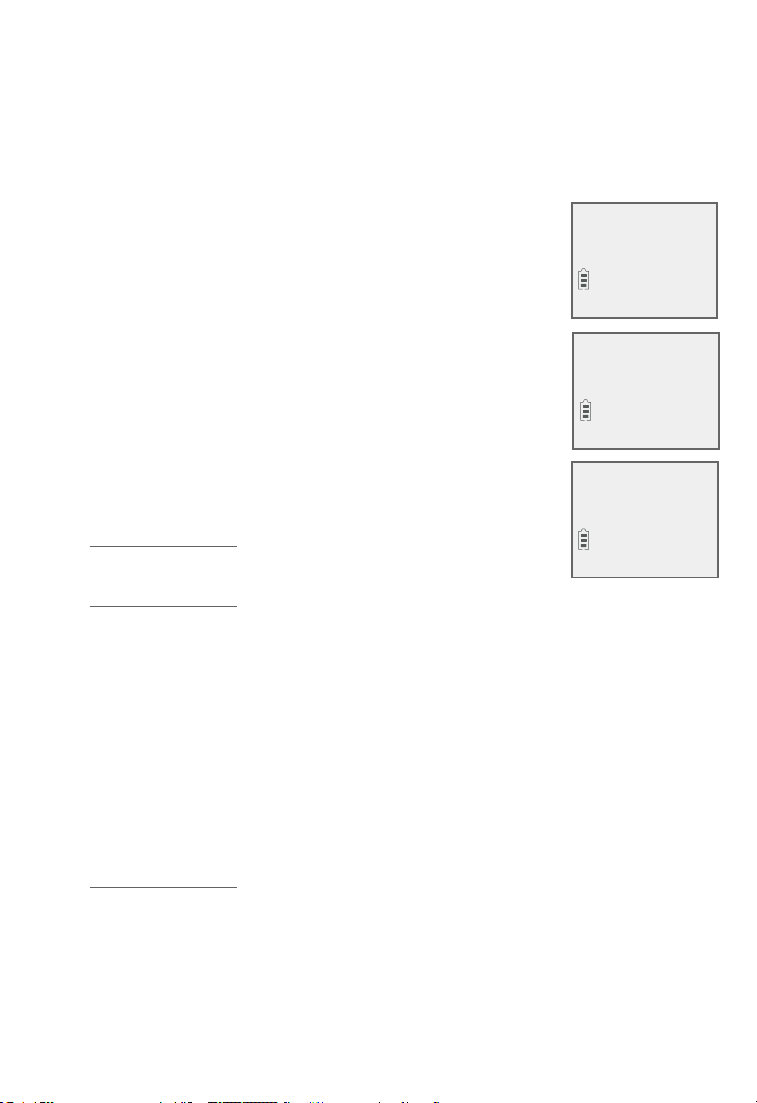
Smart call blocker
82
Call block settings
Edit a block entry:
1. Search for the desired entry in the block list (see Review block
list on page 80).
2. When the desired entry displays, press
MENU/SELECT. The screen displays
EDIT NUMBER along with the phone number to
be edited. If you only want to edit the name, skip
to Step 4.
3. To edit the number:
f Use the dialing keys to enter digits.
f Press qCID or pDIR to move the cursor to the
leorright.
f Press MUTE/DELETE on the handset to erase
a digit.
f Press and hold MUTE/DELETE to erase
all digits.
f Press and hold REDIAL/PAUSE to enter a
three-second dialing pause (a p appears).
4. Press MENU/SELECT to move on to the name. The screen
displays EDIT NAME along with the name to be edited.
5. To edit the name:
f Use the dialing keys to enter characters.
f Press qCID or pDIRtomovethecursortotheleorright.
f Press 0 to add a space.
f Press MUTE/DELETE to erase a character.
f Press and hold MUTE/DELETE to erase all characters.
6. Press MENU/SELECT to save the entry. The screen displays Saved
to block list.
Salesman
888-883-2445
EDIT NUMBER
888-883-2445_
EDIT NAME
TV Salesman_

Smart call blocker
83
Call block settings
Delete a block entry:
1. Search for the desired entry in the block list (see Review block
list on page 80).
2. When the desired entry displays, press MUTE/DELETE on the
handset. The screen shows Delete entry?.
3. Press MENU/SELECT to confirm. The screen show Entry deleted,
and the next entry displays. You cannot retrieve a deleted entry.
Delete all block entries:
1. Press CALL BLOCK on the handset when it is not in use.
-OR-
Press MENU/SELECT to enter the main menu when the handset
is not in use. Press qCID or pDIR to scroll to Smart call blk, then
press MENU/SELECT.
2
. Press qCID or pDIR to scroll to Block list, and then press
MENU/SELECT.
3.
Press qCID or pDIR to highlight Delete all, then press
MENU/SELECT. The screen shows Delete all in block list?.
4. Press MENU/SELECT again to confirm. The screen displays
Deleted. There is a confirmation tone.

Smart call blocker
84
Call block settings
Allow list
Add numbers that you want to allow their calls to get through to
you. The allow list stores up to 200 entries.
Add an allow entry:
1. Press CALL BLOCK on the handset when it is not in use.
-OR-
Press MENU/SELECT to enter the main menu when the handset
is not in use. Press qCID or pDIR to scroll to Smart call blk, then
press MENU/SELECT.
2. Press qCID or pDIR to scroll to Allow list, and then press
MENU/SELECT.
3. Press qCID or pDIR to scroll to Add new entry, then press
MENU/SELECT.
4. When the screen displays ENTER NUMBER, use the dialing keys
to enter a number (up to 30 digits).
f Press
qCID or pDIRtomovethecursortotheleorright.
f Press MUTE/DELETE to erase a digit.
f Press and hold MUTE/DELETE to erase all digits.
f Press and hold REDIAL/PAUSE to enter a three-second dialing
pause (a p appears).
-OR-
Copy a number from the redial list by pressing REDIAL/PAUSE.
Then, press qCID, pDIR or REDIAL/PAUSErepeatedlytondthe
desired number. Press MENU/SELECT to copy the number.
5. Press MENU/SELECT to move on to the name.
f The display shows Number already saved if the number is
already in the allow list. You cannot save the same number
twice.
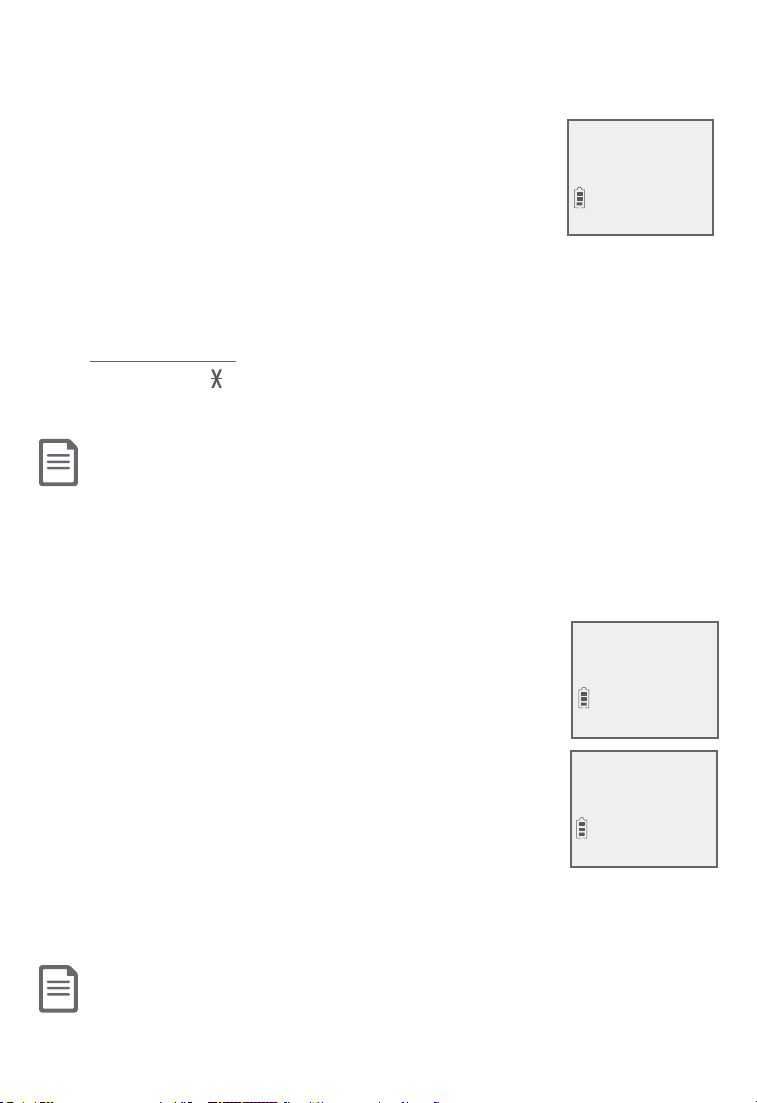
Smart call blocker
85
Call block settings
6. When the screen displays ENTER NAME, use the
dialing keys to enter a name (up to 15 characters).
Press a key repeatedly until the desired character
appears.Therstcharacterofeverywordis
capitalized.
f Press qCID or pDIRtomovethecursortotheleorright.
f Press 0 to add a space.
f Press MUTE/DELETE to erase a character.
f Press and hold MUTE/DELETE to erase all characters.
f Press TONE
to change the next letter to upper or lower case.
7. Press MENU/SELECT to store your allow entry.
Notes:
f Numbers saved in your directory can also be saved to the allow list.
f If you save an allow entry that has already been saved to the block list, the entry in the block list
will be removed.
Review allow list:
1. Press CALL BLOCK on the handset when it is
not in use.
-OR-
Press MENU/SELECT to enter the main menu
when the handset is not in use. Press qCID or
pDIR to scroll to Smart call blk, then press
MENU/SELECT.
2. Press qCID or pDIR to scroll to Allow list, and
then press MENU/SELECT.
3. Press MENU/SELECT to choose Review.
4. Press qCID or pDIR to browse through the allow entries.
Note: Allow list is empty appears if there are no allow entries.
>Review
Add new entry
Chris
888-883-2445
ENTER NAME
Chris_

Smart call blocker
86
Call block settings
Save a caller ID log entry to allow list:
1. Search for the desired caller ID log entry (see Review the caller
ID log on page 66).
2. When the desired entry displays, press MENU/SELECT.
3. Press qCID or pDIR to scroll to Allow list, then press
MENU/SELECT.
4. The handset displays EDIT NUMBER. Use the dialing keys to edit
the number, when necessary.
f Press
qCID or pDIRtomovethecursortotheleorright.
f Press MUTE/DELETE on the handset to backspace and erase
a digit.
f Press and hold MUTE/DELETE to erase the entire entry.
f Press and hold REDIAL/PAUSE to insert a three-second dialing
pause (a p appears).
5. Press MENU/SELECT to move to the name. The screen displays
EDIT NAME.
6. Use the dialing keys to add or edit the name.
f Press qCID or pDIRtomovethecursortotheleorright.
f Press 0 to add a space.
f Press MUTE/DELETE to erase a character.
f Press and hold MUTE/DELETE to erase all characters.
f Press # (pound key) to move the last word to the front. For
example, Johnson Charlie becomes Charlie Johnson when
you press # (pound key).
f Press
TONE to change the next letter to upper or lower case.
7. Press MENU/SELECT when done and the screen shows Saved to
allow list.
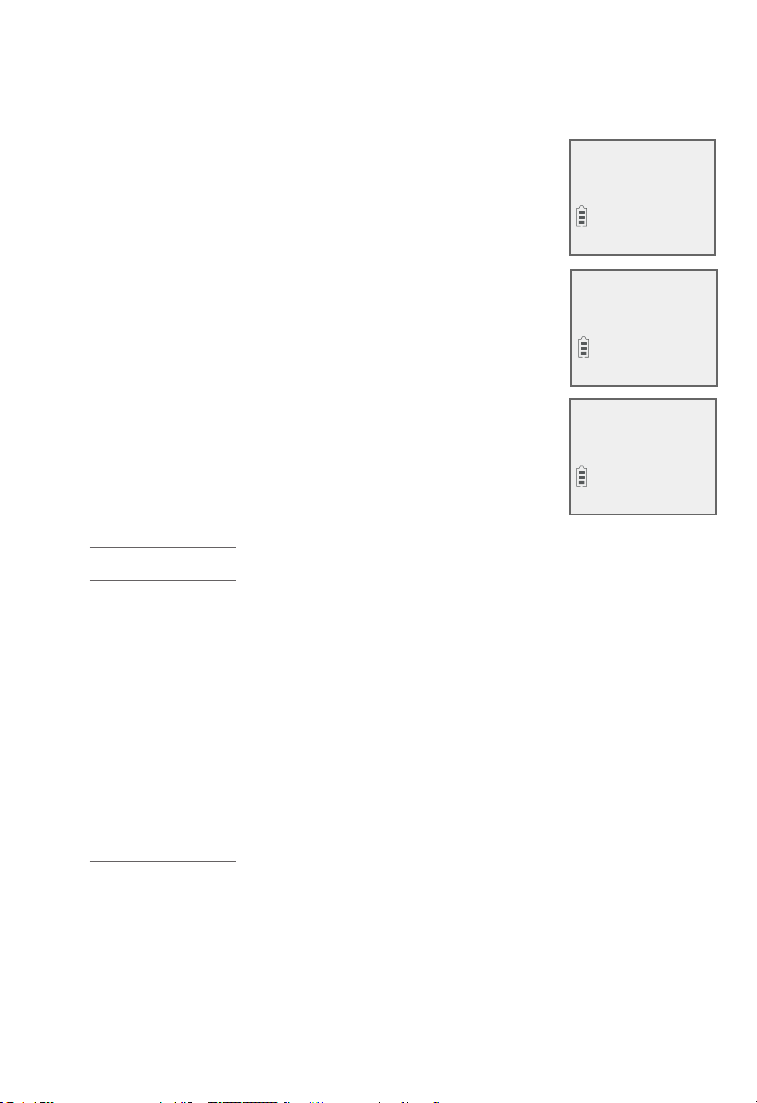
Smart call blocker
87
Call block settings
Edit an allow entry:
1. Search for the desired entry in the allow list (see
Review allow list on page 85).
2. When the desired entry displays, press
MENU/SELECT. The screen displays EDIT
NUMBER along with the phone number to be
edited. If you only want to edit the name, skip to
Step 4.
3. To edit the number:
f Use the dialing keys to enter digits.
f Press qCID or pDIR to move the cursor to the
leorright.
f Press MUTE/DELETE on the handset to erase
a digit.
f Press and hold MUTE/DELETE to erase all digits.
f Press and hold REDIAL/PAUSE to enter a three-second dialing
pause (a p appears).
4. Press MENU/SELECT to move on to the name. The screen
displays EDIT NAME along with the name to be edited.
5. To edit the name:
f Use the dialing keys to enter characters.
f Press qCID or pDIRtomovethecursortotheleorright.
f Press 0 to add a space.
f Press MUTE/DELETE to erase a character.
f Press and hold MUTE/DELETE to erase all characters.
6. Press MENU/SELECT to save the entry. The screen displays Saved
to allow list.
Chris
888-883-2445
EDIT NUMBER
888-883-2445_
EDIT NAME
Chris Smith_

Smart call blocker
88
Call block settings
Delete an allow entry:
1. Search for the desired entry in the allow list (see Review allow
list on page 85).
2. When the desired entry displays, press MUTE/DELETE on the
handset. The screen shows Delete entry?.
3. Press MENU/SELECT to confirm. The screen show Entry deleted,
and the next entry displays. You cannot retrieve a deleted entry.
Delete all allow entries:
1. Press CALL BLOCK on the handset when it is not in use.
-OR-
Press MENU/SELECT to enter the main menu when the handset
is not in use. Press qCID or pDIR to scroll to Smart call blk, then
press MENU/SELECT.
2
. Press qCID or pDIR to scroll to Allow list, and then press
MENU/SELECT.
3.
Press qCID or pDIR to highlight Delete all, then press
MENU/SELECT. The screen shows Delete all in allow list?.
4. Press MENU/SELECT again to confirm. The screen displays
Deleted. There is a confirmation tone.

Smart call blocker
89
Call block settings
Star name list
There are many organizations like schools, medical offices,
and pharmacies that use robocalls to communicate important
information to you. Robocall uses an autodialer to deliver pre-
recorded messages. By entering the name of the organizations
into the star name list, it ensures these calls will ring through
when you only know the caller names but not their numbers.
If the first 15 characters of the incoming caller ID’s name match
a name saved in your star name list, the call will get through and
ring. The star name list stores up to 10 names.
Add a star name entry:
1. Press CALL BLOCK on the handset when it is not in use.
-OR-
Press MENU/SELECT to enter the main menu when the handset
is not in use. Press qCID or pDIR to scroll to Smart call blk, then
press MENU/SELECT.
2. Press qCID or pDIR to scroll to Star name list, and then press
MENU/SELECT.
3. Press qCID or pDIR to scroll to Add new entry, then press
MENU/SELECT.
4. When the screen displays ENTER NAME, use
the dialing keys to enter a name (up to 15
characters). Press a key repeatedly until the
desiredcharacterappears.Therstcharacterof
every word is capitalized.
f Press
qCID or pDIRtomovethecursortotheleorright.
f Press 0 to add a space.
f Press MUTE/DELETE to erase a character.
f Press and hold MUTE/DELETE to erase all characters.
f Press TONE
to change the next letter to upper or lower case.
5. Press MENU/SELECT to store your star name entry. The display
shows Name already saved if the name is already in the star
name list. You cannot save the same name twice.
ENTER NAME
Bayriver Eleme_
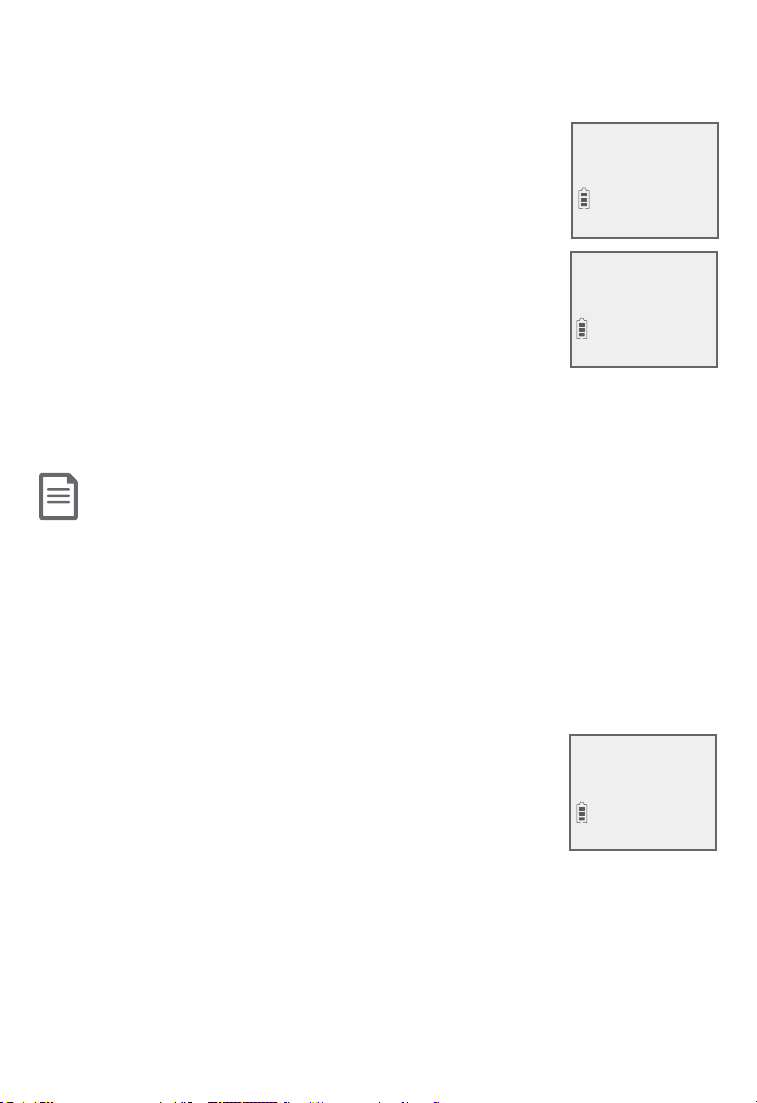
Smart call blocker
90
Call block settings
Review star name list:
1. Press CALL BLOCK on the handset when it is
not in use.
-OR-
Press MENU/SELECT to enter the main menu
when the handset is not in use. Press qCID or
pDIR to scroll to Smart call blk, then press
MENU/SELECT.
2. Press qCID or pDIR to scroll to Star name list,
and then press MENU/SELECT.
3. Press MENU/SELECT to choose Review.
4. Press qCID or pDIR to browse through the star name entries.
Note: Star name list is empty appears if there are no star name entries.
Save a caller ID log entry to star name list:
1. Search for the desired caller ID log entry (see Review the caller
ID log on page 66).
2. When the desired entry displays, press MENU/SELECT.
3. Press qCID or pDIR to scroll to Star name list, then press
MENU/SELECT.
4. The handset displays Star this name?, and the
caller ID name of the caller.
5. Press MENU/SELECT, and the screen shows
Saved to star name list.
>Review
Add new entry
Bayriver Elemen
Star this name?
Bayriver Elemen

Smart call blocker
91
Call block settings
Edit a star name entry:
1. Search for the desired entry in the star name list
(see Review star name list on page 90).
2. When the desired entry displays, press
MENU/SELECT. The screen displays EDIT NAME
along with the name to be edited.
3. To edit the name:
f Use the dialing keys to enter characters.
f Press qCID or pDIR to move the cursor to the
leorright.
f Press 0 to add a space.
f Press MUTE/DELETE to erase a character.
f Press and hold MUTE/DELETE to erase all characters.
4. Press MENU/SELECT to save the entry. The screen displays Saved
to star name list.
Delete a star name entry:
1. Search for the desired entry in the star name list (see Review
star name list on page 90).
2. When the desired entry displays, press MUTE/DELETE on the
handset. The screen shows Delete entry?.
3. Press
MENU/SELECT to confirm. The screen show Entry deleted,
and the next entry displays. You cannot retrieve a deleted entry.
Bayriver Elemen
EDIT NAME
Bay River Elem_

Smart call blocker
92
Call block settings
Delete all star name entries:
1. Press CALL BLOCK on the handset when it is not in use.
-OR-
Press MENU/SELECT to enter the main menu when the handset
is not in use. Press qCID or pDIR to scroll to Smart call blk, then
press MENU/SELECT.
2
. Press qCID or pDIR to scroll to Star name list, and then press
MENU/SELECT.
3.
Press qCID or pDIR to highlight Delete all, then press
MENU/SELECT. The screen shows Delete all in star name list?.
4. Press MENU/SELECT again to confirm. The screen displays
Deleted. There is a confirmation tone.

Smart call blocker
93
Call block settings
Screening announcements
Ifyouhavesetproletoscreenallunknowncalls(Screen
unknown) or screen robocalls (Screen robot), the callers of
the following incoming call categories will hear a screening
announcement.
f Calls that are “out of area“ or with numbers set to “Private“.
f Calls with numbers that are not on your directory, allow list, or
block list, or with absent caller ID number.
f Calls with caller ID names that are not on your star name list.
The are two default screening announcements for screening
unknown calls and screening robocalls.
Screening with caller name - “Hello. Calls to this number are being
screened by Smart call blocker. Please say your name aer the tone,
then press pound.”
− Thisdefaultannouncementisplayedifyouhavesetproletoscreenall
unknown calls.
-OR-
Screening without caller name - “Hello. Calls to this number are
being screened by Smart call blocker. If you’re a family member, friend
or invited caller, please press pound to be connected. If you’re a solicitor,
please hang up now.”
− Thisdefaultannouncementisplayedifyouhavesetproletoscreenrobocalls.
You can use these announcements, or record your own name to
replace “this number” in the announcements. Please refer to Record
your name for all screening announcements on page 95.
Note: For details of Smart call blocker’s profile setting, see Set prole on page 77.
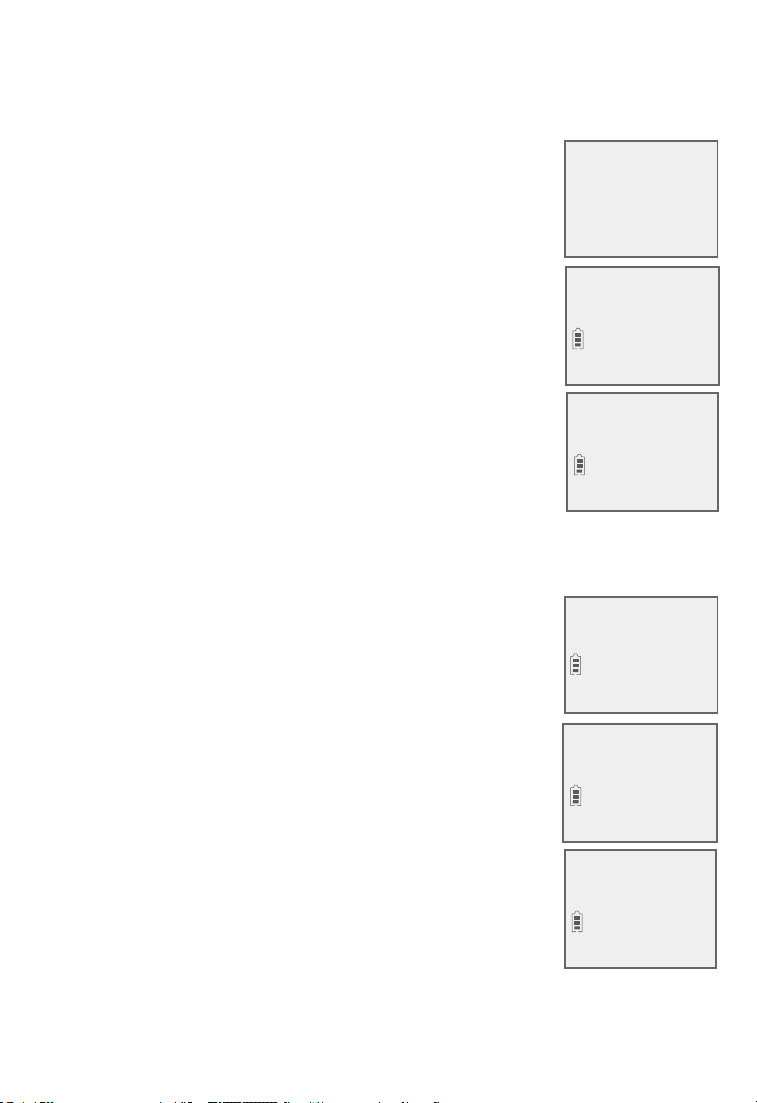
Smart call blocker
94
Call block settings
Play your current announcement of screening with caller name:
1. Press CALL BLOCK on the handset when it is
not in use.
-OR-
Press MENU/SELECT to enter the main menu
when the handset is not in use. Press qCID or
pDIR to scroll to Smart call blk, then press
MENU/SELECT.
2. Press qCID or pDIR to scroll to Screening annc,
then press MENU/SELECT.
3. Press qCID or pDIR to scroll to Play annc, then
press MENU/SELECT.
4. Press MENU/SELECT again to select w/ Caller
name.
Play your current announcement of screening without caller
name:
1. Press CALL BLOCK on the handset when it is
not in use.
-OR-
Press MENU/SELECT to enter the main menu
when the handset is not in use. Press qCID or
pDIR to scroll to Smart call blk, then press
MENU/SELECT.
2. Press qCID or pDIR to scroll to Screening annc,
then press MENU/SELECT.
3. Press qCID or pDIR to scroll to Play annc, then
press MENU/SELECT.
4. Press qCID or pDIR to scroll to w/o Caller
name, then press MENU/SELECT.
PLAY ANNC
>w/ Caller name
Rec your name
>Play annc
Uncategorized
>Screening annc
Uncategorized
>Screening annc
PLAY ANNC
>w/o Caller name
Rec your name
>Play annc

Smart call blocker
95
Call block settings
Record your name for all screening announcements:
1. Press CALL BLOCK on the handset when it is not in use.
-OR-
Press MENU/SELECT to enter the main menu when the handset
is not in use. Press qCID or pDIR to scroll to Smart call blk, then
press MENU/SELECT.
2. Press qCID or pDIR to scroll to Screening annc, then press
MENU/SELECT.
3. Press MENU/SELECT to select Rec your name. The system
announces, “Record after the tone. Press 5 when you are done.”
4. Speak towards the handset to record your name. Press 5 to end
recording.
To listen to the announcement with your recorded name again,
scroll to Play annc and press MENU/SELECT.
Reset all your screening announcements:
1. Press CALL BLOCK on the handset when it is not in use.
-OR-
Press MENU/SELECT to enter the main menu when the handset
is not in use. Press qCID or pDIR to scroll to Smart call blk, then
press MENU/SELECT.
2. Press qCID or pDIR to scroll to Screening annc,
then press MENU/SELECT.
3. Press qCID or pDIR to scroll to Reset annc, then
press MENU/SELECT. The screen shows Reset
to default annc?. Press MENU/SELECT again
toconrm.ThescreenshowsAnnc. reset to
default before returning to the previous menu.
-OR-
While an announcement is playing, press
MUTE/DELETE. The screen shows Annc. Deleted
before returning to the previous menu.
Your name will be deleted from all the screening announcements,
and the telephone will use the default screening announcements
described on page 93.
Uncatergorized
>Screening annc
Play annc
>Reset annc

Smart call blocker
96
Allowed calls
If Smart call blocker is on, the following types of incoming calls can
get through to you and ring on your telephone system:
f Calls with numbers saved in your allow list.
f Calls with numbers saved in your directory, but
not on your block list.
f Calls with caller ID names saved in your star
name list.
Notes:
f When Smart call blocker is off, all incoming calls will ring on your telephone system, including calls
with numbers saved in the block list.
f Allow unknown is the default prole setting. If you have not selected another prole, all unknown
calls will ring. However, the caller’s numbers, if available, will not be saved to the allow list. If you
want to save the caller’s number to your allow list or block list, you can retrieve the number from
caller ID log and save it to the allow list or block list. See Save a caller ID log entry to the block
list on page 81 and Save a caller ID log entry to the allow list on page 86. If you want to
retrieve the name from caller ID log and save it to the star name list. See Save a caller ID log entry
to the star name list on page 90.
Chris
888-883-2445
NEW
10/15
10:01
AM

Smart call blocker
97
Blocked calls
If Smart call blocker is on, incoming calls with
numbers saved in your block list will not ring. The
telephone plays the block announcement “Calls
to this number are being screened by Smart call
blocker. The number you are calling is not accepting
your call. Please hang up.” to the caller, and the call
will be terminated.
Notes:
f When Smart call blocker is off, all incoming calls will ring on your telephone system, including calls
with numbers saved in the block list.
f If you have set prole to Block unknown, all unknown calls will be rejected. However, the caller’s
numbers, if available, will not be saved to the block list. If you want to save the caller’s number to
the block list, you can retrieve the number from caller ID log and save it to the block list. See Save
a caller ID log entry to the block list on page 81. You can also retrieve the number and save
it to your allow list. See Save a caller ID log entry to the allow list on page 86. If you want to
retrieve the name from caller ID log and save it to the star name list. See Save a caller ID log entry
to the star name list on page 90.
f The telephone can respond to remote access code while it is playing the block announcement.
This allows you to access your answering system from an unknown number remotely. See Remote
access on page 123.
Blocked call
888-883-2445
NEW
10/15
10:01
AM
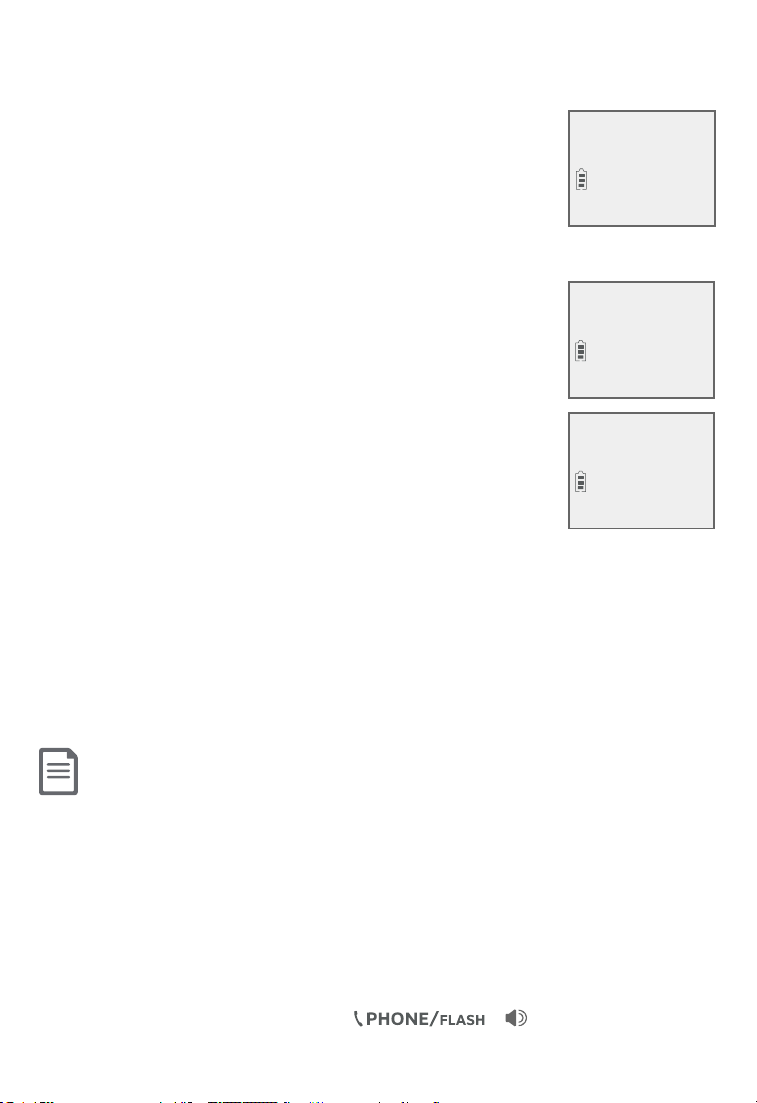
Smart call blocker
98
Screen unknown calls
IfSmartcallblockerison,andyouhavesetprole
to screen unknown calls, the telephone plays
a screening announcement to the caller when
receiving the following incoming calls. It asks the
caller to respond before putting the call through to
you.
f Incoming calls with numbers that are “out of
area“ or with numbers set to “Private“;
f Incoming calls with absent caller ID numbers;
f Incoming calls with numbers that are not in your
directory, allow list, nor block list; or
f Incoming calls with names that are not in your
star name list.
Screen calls and ask for caller names
When screening a call, the telephone announces
to the caller, “Hello. Calls to this number are being
screened by Smart call blocker. Please say your
name aer the tone, then press pound.” Aerthecallercompletes
the request, the telephone announces to the caller “Please wait a
moment while your call is connected.”. The telephone starts ringing
and announces the caller’s name. The telephone screen displays
Screened call and you can pick up the call. The telephone will then
ask whether you want to answer or reject the call, or to forward the
call to the answering system.
Notes:
f You can set Smart call blocker to screen and filter all unknown calls. You can easily add incoming
phone numbers to your allow list and block list. This allows you to build up your lists of allowed and
blocked numbers, and Smart call blocker will know how to deal with these calls when they come in
again.
f The telephone announces to the caller with “Hello. Calls to this number are being screened by
Smart call blocker...” If you have recorded your name in the screening announcements, your record-
ed name will replace “this number” in the announcements. See Screening announcement on page
93.
f If the caller hangs up before the call is screened, or without leaving his/her name while the call is
being screened, the call will be logged as missed call in the caller ID log.
f While a call is being screened, you can press
or /SPEAKER to stop
screening and answer the call.
Smart call blk
Screening...
10/15
10:01
AM
Screened call
PRIVATE CALLER
10/15
10:01
AM
Screened call
888-883-2445
10/15
10:01
AM
Smart call blocker
99
Screen unknown calls
f After the telephone screened a call, and is ringing and announcing the caller’s name, you can press
OFF/CANCEL to mute the ringer, or press CALL BLOCK to reject the call directly.
f After you picked up a screened call and the telephone is announcing the screening options, you can
press
OFF/CANCEL to hang up the call.
f If Smart call blocker is on and you receive a call waiting call:
- Smart call blocker will not screen a call waiting call without number while on a call. You can
press
or /SPEAKER to take the new call.
- After you have picked up a screened call, the telephone checks whether the call waiting number
is in the directory, block list or allow list. It also checks whether the caller name is in the star
name list. After that, The telephone then displays the caller ID information or “Blocked call”
accordingly. You can press or /SPEAKER to take the new call, or press
CALL BLOCK on the handset to block it.
- While the telephone is screening a call, the new call will be ignored and logged as missed call in
the caller ID log.
f Robocalls are unable to respond to the screening announcement, and therefore, will not get
through and ring. If you want to allow some robocalls to get through, save their names in the star
name list. See page 89.
f The telephone can respond to remote access code while it is playing the screening announcement.
This allows you to access your answering system from an unknown number remotely. See Remote
access on page 123.
Screened call options
After the telephone screen a call and starts ringing, the screen
displays Screened call. Press
or /SPEAKER to
pick up the call.
After you pick up the call, the telephone announces “Call from...” and
the caller’s name, and then announces, “To answer the call, press 1. To
answer and always allow this number, press 2. To block this number,
press 3. To send this call to the answering system, press 4. To repeat
these options, press *”.
Allow this call once:
f Press 1 to answer the call. The telephone number will not be
added to your allow list.
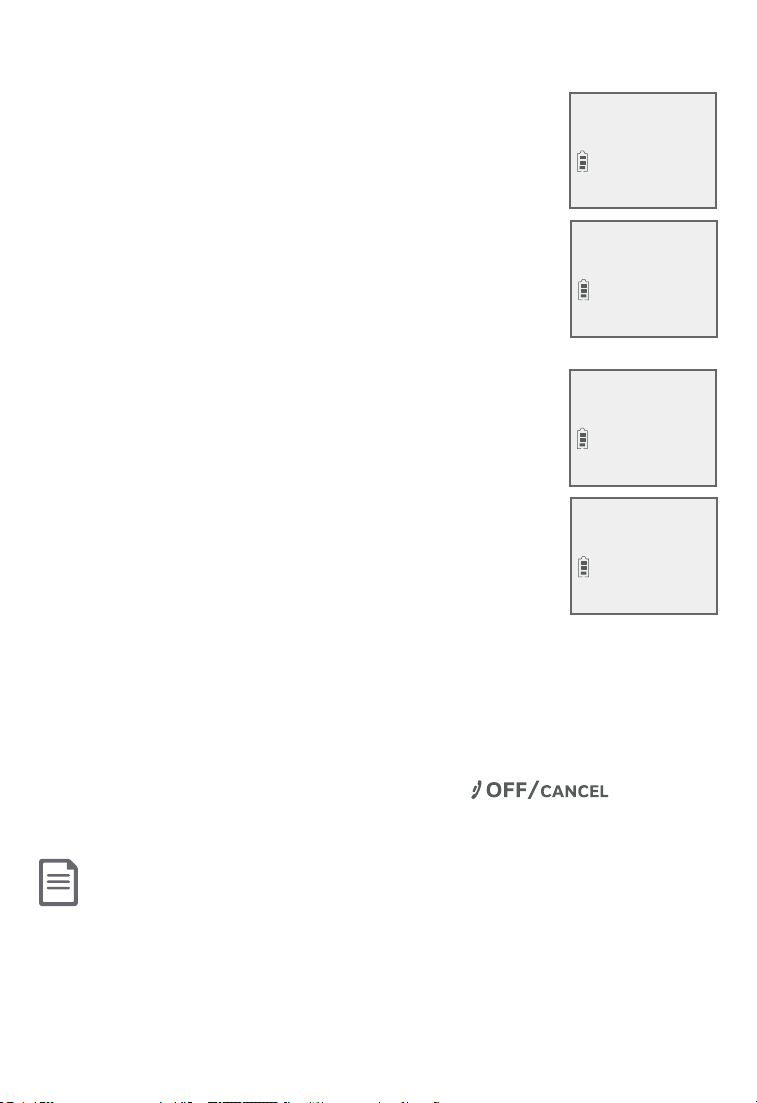
Smart call blocker
100
Screen unknown calls
Always allow this call:
f Press 2 to answer the call. The telephone
number will be added to your allow list.
Block this call:
f Press 3 or CALL BLOCK to block the call. The
telephone plays the block announcement “The
number you are calling is not accepting your call.
Please hang up.” to the caller. The telephone
number will be added to your block list.
Send this call to the answering system:
f Press 4 to forward the call to the answering system.
End this call:
f If you do not want to take the call, press
to end
the call.
Notes:
f For calls that are “out of area”, “Private”, or without caller ID, only options 1 and 4 will be available.
The telephone announces “To answer the call, press 1. To send this call to the answering system,
press 4. To repeat these options, press *”.
f If you select option 4 to send the call to the answering system, the caller can leave a message even
if the answering system is off.
Screened call
888-883-2445
10/15
10:01
AM
Added to
Allow list
10/15
10:01
AM
Screened call
888-883-2445
10/15
10:01
AM
Added to
Block list
10/15
10:01
AM
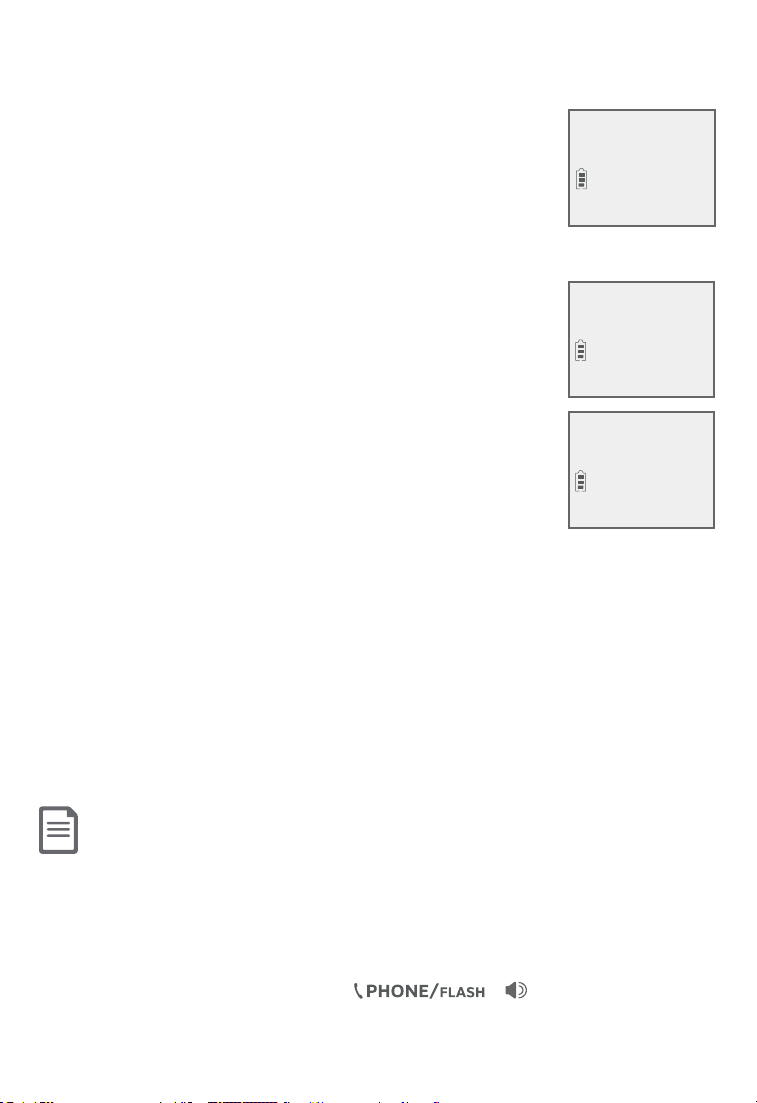
Smart call blocker
101
Screen robocalls
If Smart call blocker is on, and you have set
proletoscreenrobocalls,thetelephoneplays
a screening announcement to the caller when
receiving the following incoming calls. It asks the
caller to press the pound key (#) before putting the
call through to you.
f Incoming calls with numbers that are “out of
area“ or with numbers set to “Private“;
f Incoming calls with absent caller ID numbers;
f Incoming calls with numbers that are not in your
directory, allow list, nor block list; or
f Incoming calls with names that are not in your
star name list.
Screen calls without asking for caller names
When screening a call, the telephone announces
to the caller, “Hello. Calls to this number are being
screened by Smart call blocker. If you’re a family member, friend or
invited caller, please press pound to be connected. If you’re a solicitor,
please hang up now.” Aerthecallerpressesthepoundkey(#), the
telephone announces to the caller “Please wait a moment while
your call is connected.”. The telephone starts ringing, and you can
answer the call.
Thisoptionissuitableforyoutoltercallsthatusesautodialers
to deliver pre-recorded messages, for example, robocalls and
telemarketing calls.
Notes:
f The telephone announces to the caller with “Hello. Calls to this number are being screened by
Smart call blocker...” If you have recorded your name in the screening announcements, your record-
ed name will replace “this number” in the announcements. See Screening announcement on page
93.
f If the caller hangs up before the call is screened, or without leaving his/her name while the call is
being screened, the call will be logged as missed call in the caller ID log.
f While a call is being screened, you can press
or /SPEAKER to stop
screening and answer the call.
Smart call blk
Screening...
10/15
10:01
AM
Screened call
PRIVATE CALLER
10/15
10:01
AM
Screened call
888-883-2445
10/15
10:01
AM

Smart call blocker
102
Screen robocalls
f If Smart call blocker is on and you receive a call waiting call:
- Smart call blocker will not screen a call waiting call without number while on a call. You can
press
or /SPEAKER to take the new call.
- After you have picked up a screened call, the telephone checks whether the call waiting number
is in the directory, block list or allow list. It also checks whether the caller name is in the star
name list. After that, The telephone then displays the caller ID information or “Blocked call”
accordingly. You can press or /SPEAKER to take the new call, or press
CALL BLOCK on the handset to block it.
- While the telephone is screening a call, the new call will be ignored and logged as missed call in
the caller ID log.
f Robocalls are unable to respond to the screening announcement, and therefore, will not get
through and ring. If you want to allow some robocalls to get through, save their names in the star
name list. See page 89.
f The telephone can respond to remote access code while it is playing the screening announcement.
This allows you to access your answering system from an unknown number remotely. See Remote
access on page 123.
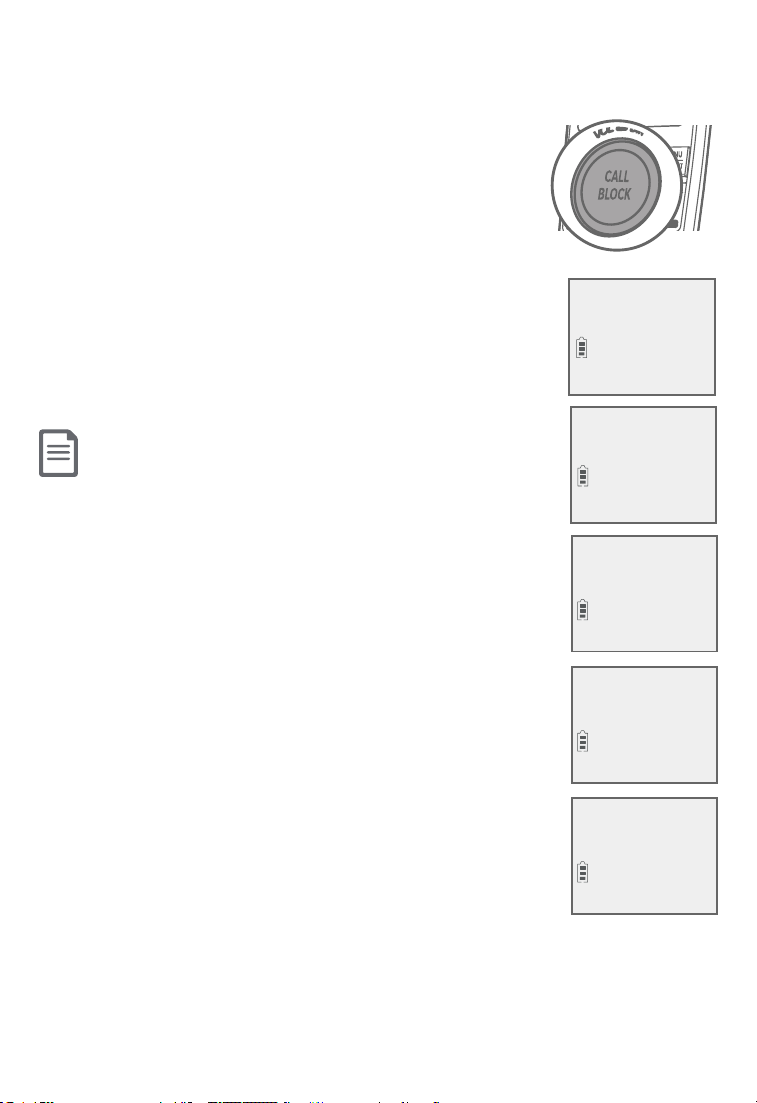
Smart call blocker
103
Option while on a call
When you are on a call and speaking to the
caller, and you do not want to continue the call,
you can press the CALL BLOCK button on the
handset to end the call. The telephone plays
the block announcement “The number you are
calling is not accepting your call. Please hang up.”
to the caller, and the call will be terminated. The
caller’s number will be added to your block list.
f Press CALL BLOCK on the handset. The screen
displays Block and end? and the caller’s number,
if available. Press MENU/SELECT to end the call.
Notes:
f The caller’s number, if available, will be saved to the block list. The screen
displays Added to block list after pressing CALL BLOCK on the
handset. If caller’s number is not available, the screen displays No number
to block..
f You can press CALL BLOCK on the handset to end the call even if Smart
call blocker is turned off.
No number
to block.
10/15
10:01
AM
Phone 0:00:01
10/15
10:01
AM
Block and end?
Private caller
10/15
10:01
AM
Blocking call...
10/15
10:01
AM
Ended 0:00:30
10/15
10:01
AM

104
Answering system settings
Use the answering system menu of a system
handset to set up the announcement message, turn
onorotheansweringsystemormessagealert
tone, activate call screening, or change the number
of rings, remote access code or message recording
time.Ifyouturnotheansweringsystemandyouchangeany
setting in the answering system setup menu, the answering system
automatically turns on again.
1. When the device is in idle mode, press MENU/SELECT to enter the
main menu.
2. Press qCID or pDIR to scroll to Answering sys, then press
MENU/SELECT.
Announcement
Your outgoing announcement plays when calls are answered by
the answering system.
The telephone has a default outgoing announcement, “Hello. Please
leave a message aer the tone.” You can use this announcement, or
record your own.
You can record an announcement up to 90 seconds. The system
does not record any announcement shorter than two seconds.
To play your current outgoing announcement:
1. When the handset is in idle mode, press
MENU/SELECT to enter the main menu.
2. Press qCID or pDIR to scroll to Answering sys,
then press MENU/SELECT.
3. Press MENU/SELECT again to select
Announcement.
4. Press qCID or pDIR to scroll to Play annc, then
press MENU/SELECT.
Answering system
Play messages
>Answering sys
>
Announcement
Delete all old
Record annc
>Play annc

Answering system
105
Answering system settings
To record a new outgoing announcement:
1. When the handset is in idle mode, press MENU/SELECT to enter
the main menu.
2. Press qCID or pDIR to scroll to Answering sys, then press
MENU/SELECT.
3. Press MENU/SELECT again to select
Announcement.
4. Press MENU/SELECT to select Record annc. The
system announces, “Record after the tone. Press 5
when you are done.”
5. Speak towards the handset to record your announcement. Press
5 to end recording. Your recorded announcement plays.
To listen to the recorded announcement again, scroll to Play annc
and press MENU/SELECT.
To reset your outgoing announcement:
1. When the handset is in idle mode, press MENU/SELECT to enter
the main menu.
2. Press qCID or pDIR to scroll to Answering sys, then press
MENU/SELECT.
3. Press MENU/SELECT again to select Announcement.
4. Press qCID or pDIR to scroll to Reset annc, then press
MENU/SELECT. The screen shows Reset to default annc?.
PressMENU/SELECTagaintoconrm.Thescreenshows
Annc. reset to default before returning to the previous menu.
-OR-
Press qCID or pDIR to scroll to Play annc, then press
MENU/SELECT. While the announcement is playing, press
MUTE/DELETE to delete the announcement. The screen shows
Annc. Deleted before returning to the previous menu.
When your announcement is deleted, the system answers calls with
the default announcement described on page 104. You cannot
delete the default announcement.
>Record annc
Play annc
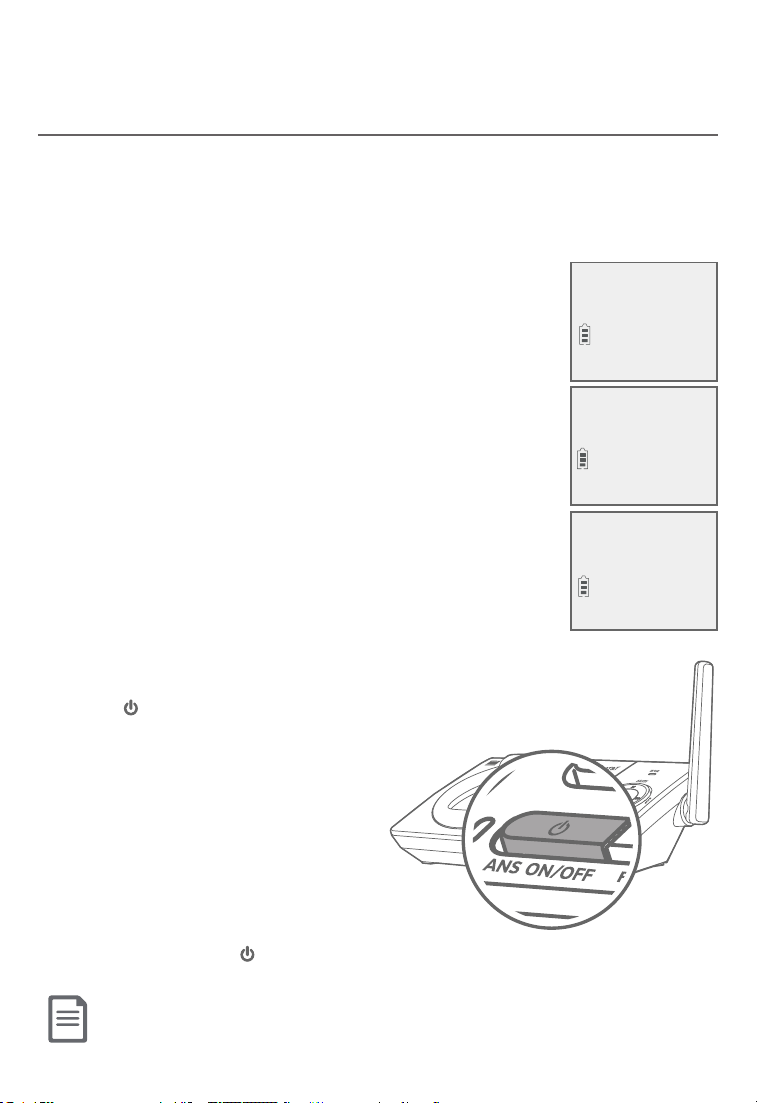
Answering system
106
Answering system settings
Answer on/o
By default, the answering system is on and ready to record
messages.Youcanturntheansweringsystemo,butifyoudoso,
the answering system does not answer calls and record incoming
messages.
To turn the answering system on or o:
Using a cordless handset:
1. When the handset is in idle mode, press
MENU/SELECT to enter the main menu.
2. Press qCID or pDIR to scroll to Answering sys,
then press MENU/SELECT.
3. Press qCID or pDIR to scroll to Answer ON/OFF,
then press MENU/SELECT.
4. Press qCID or pDIR to highlight On or Off, then
press MENU/SELECT to save the setting. You hear
a confirmation tone.
When the answering system is on, the handset
shows ANS ON.
Using the telephone base:
f Press
/ANS ON/OFF to turn
the answering system on or
o.Iftheansweringsystem
is turned on, it announces,
“Calls will be answered.” If the
answering system is turned
o,itannounces,“Calls will not
be answered.”
When the answering system is
on, the light next to
/ANS ON/OFF will be on.
Note: If the answering system is off and there is an incoming call, the system answers after
ten rings and announces, “Please enter your remote access code.” For more information about
remote access, see page 123.
Play messages
>Answering sys
Record memo
>Answer ON/OFF
ANSWER ON/OFF
>On
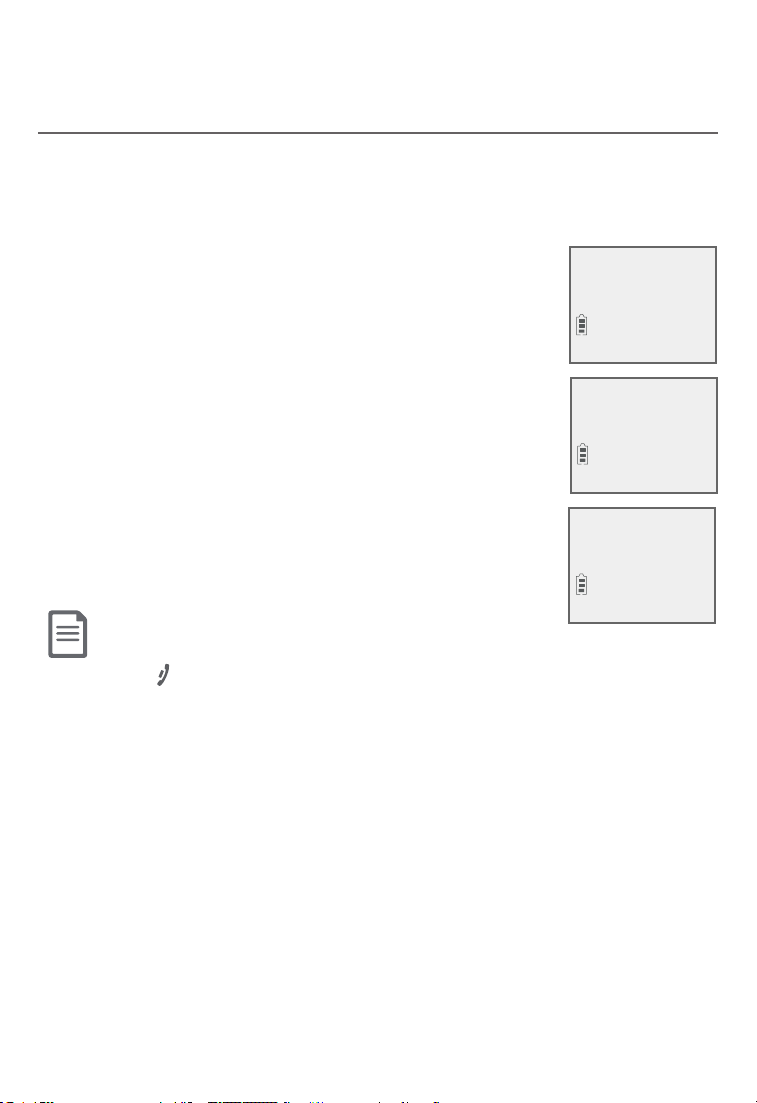
Answering system
107
Answering system settings
Voice guide
This feature is an alternative way for you to do the basic setup of
the answering system. You can follow the voice guide to record
your own announcement, set the number of rings, and set the
message alert tone.
This feature is only available on the cordless handset.
1. Press MENU/SELECT on the handset when it is not
in use.
2. Press
qCID or p to scroll to Answering sys, then
press MENU/SELECT.
3. Press
qCID or pDIR to scroll to Voice guide, then
press MENU/SELECT. You hear a voice prompt,
“This voice guide will assist you with the basic
setup of your answering system.“
4. Setup your answering system by inputting
designated numbers, as instructed in the voice
guide.
Notes:
f You can press
OFF/CANCEL to quit the voice guide at any time.
f If the system does not receive any input, it will announce “Sorry, I still have not received any input.
If you want to restart the voice guide, please enter the menu and select Voice guide under Answering
system. Good bye.”
f After a power outage, the handset prompts you to set the date and time, and Smart call blocker.
After these settings are done or skipped, the handset prompts if you want to set up the answering
system via voice guide. Press MENU/SELECT to start the setup.
f If the answering system is off and there is an incoming call, the system answers after ten rings and
announces, “Please enter your remote access code.” For more information about remote access, see
page 123.
Play messages
>Answering sys
Answer ON/OFF
>Voice guide
Setting up
Answering sys...
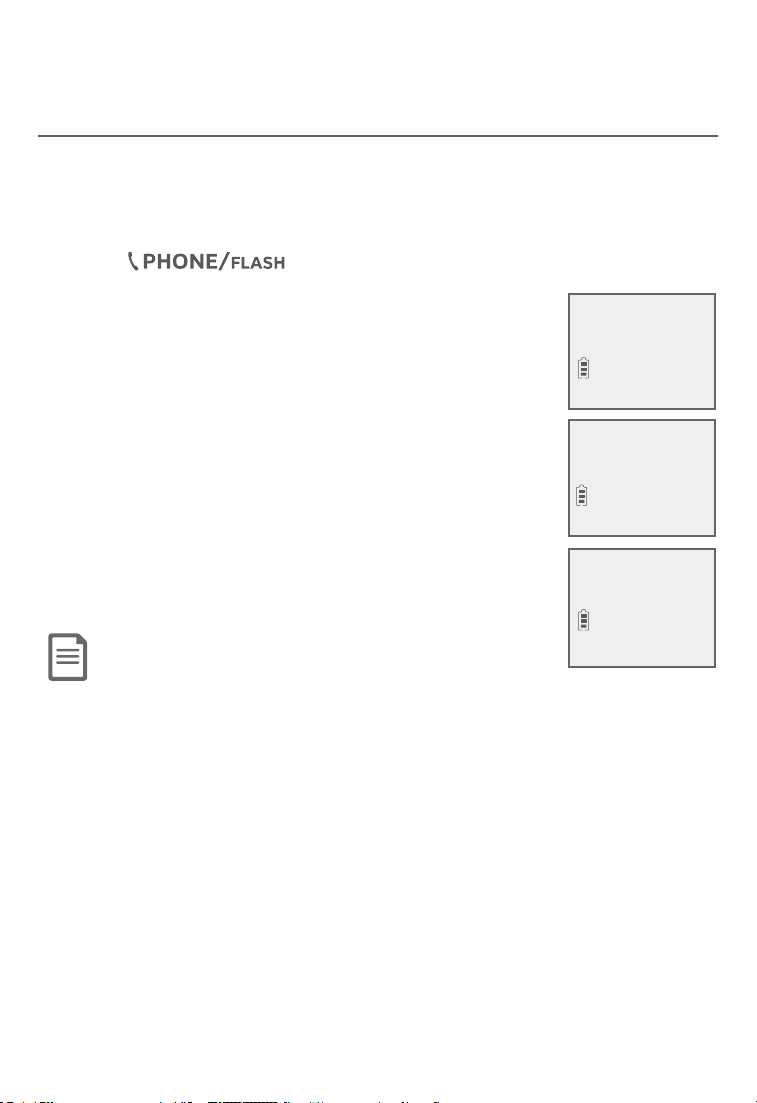
Answering system
108
Answering system settings
Call screening
Use this feature to choose whether incoming messages can be
heard over the speaker when they are being recorded. If you
turn call screening on, you hear the incoming message. While
monitoring an incoming message, you can answer the call by
pressing
on the handset.
To change the setting:
1. When the handset is in idle mode, press
MENU/SELECT to enter the main menu.
2. Press qCID or pDIR to scroll to Answering sys,
then press MENU/SELECT.
3. Press qCID or pDIR to scroll to Ans sys setup,
then press MENU/SELECT.
4. Press MENU/SELECT to select Call screening.
5. Press qCID or pDIR to choose On or Off.
6. Press MENU/SELECT to save the setting. You hear
a confirmation tone.
Note: For more information on call screening, see page 108.
Voice guide
>Ans sys setup
>
Call screening
# of rings
CALL SCREENING
>On
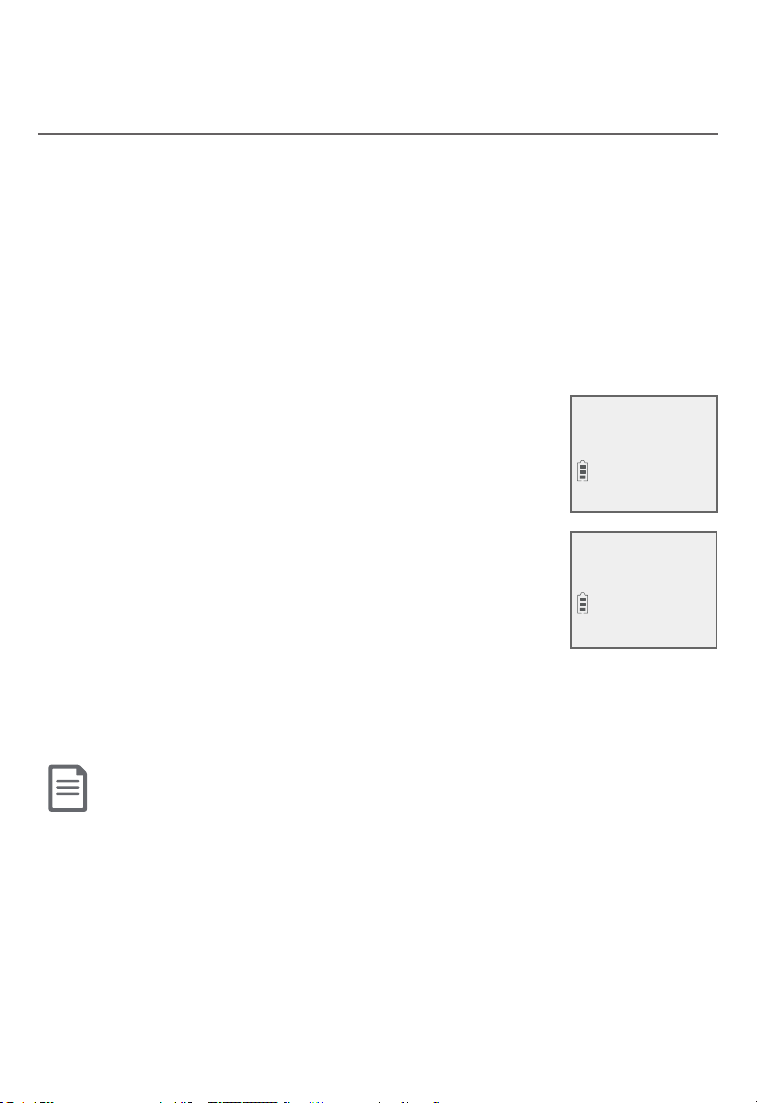
Answering system
109
Answering system settings
Number of rings
Youcansettheansweringsystemtoansweranincomingcallaer
two,three,four,veorsixrings.Youcanalsoselecttollsaver.Iftoll
saverisselected,theansweringsystemanswersacallaertwo
ringswhenyouhavenewmessages,andaerfourringswhenthere
are no new messages. This feature allows you to check for new
messages and avoid paying long distance charges when calling from
out of your local area. By default, the answering system answers an
incomingcallaerfourrings.
To set the number of rings:
1. When the handset is in idle mode, press
MENU/SELECT to enter the main menu.
2. Press qCID or pDIR to scroll to Answering sys,
then press MENU/SELECT.
3. Press qCID or pDIR to scroll to Ans sys setup,
then press MENU/SELECT.
4. Press qCID or pDIR to scroll to
#
of rings, then
press MENU/SELECT.
5. Press qCID or pDIR to choose among 2, 3, 4, 5, 6
or Toll saver.
6. Press MENU/SELECTtosavethesetting.Youhearaconrmation
tone.
N
otes:
f If you subscribe to voicemail service through your telephone service provider, see Answering
system and voicemail indicators on page 113.
f If you set the number of rings for the answering system as two or three rings, the caller ID
announce feature may not have enough time to announce the caller’s full information.
f If Smart call blocker is on, the first ring of all incoming calls will be muted.
Call screening
># of rings
# OF RINGS
>4
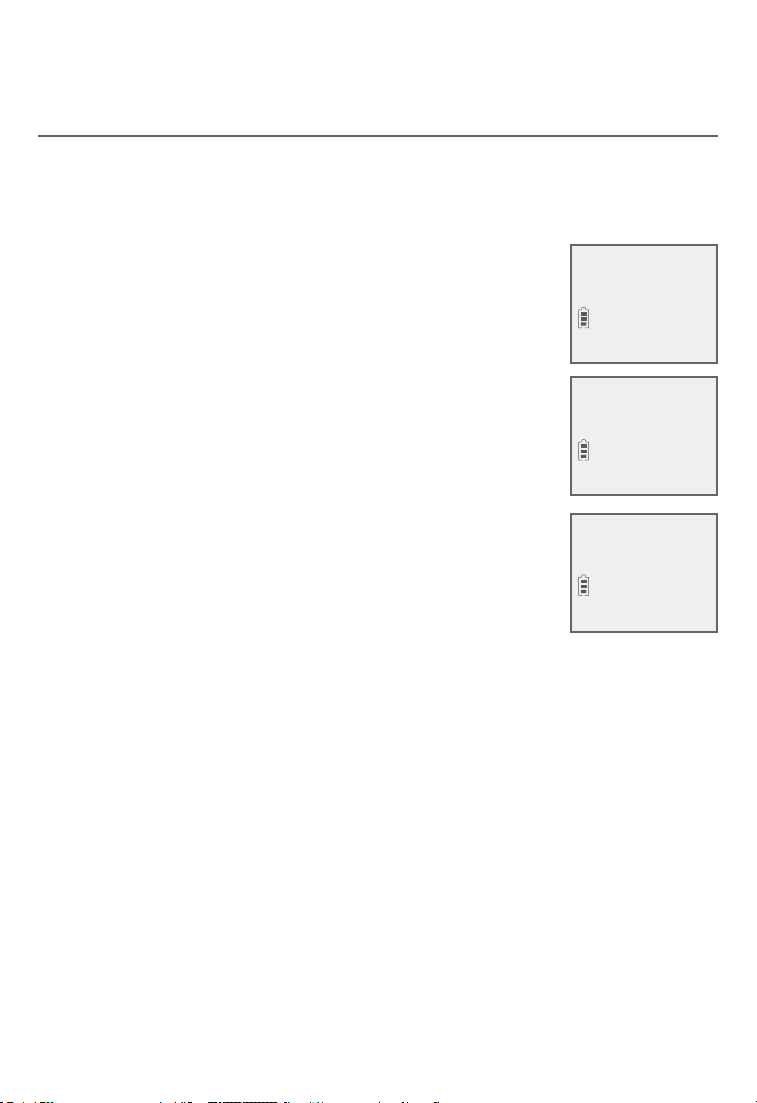
Answering system
Answering system settings
Remote access code
To access your answering system remotely from any touch-tone
phone, you need to enter a two-digit number (00-99). By default,
the remote access code is 19.
To change the remote access code:
1. When the handset is in idle mode, press
MENU/SELECT to enter the main menu.
2. Press qCID or pDIR to scroll to Answering sys,
then press MENU/SELECT.
3. Press qCID or pDIR to scroll to Ans sys setup,
then press MENU/SELECT.
4. Press qCID or pDIR to scroll to Remote code,
then press MENU/SELECT.
5. Use the dialing keys to enter a two-digit number.
Press MUTE/DELETE to backspace and delete a
digit.
6. Press MENU/SELECT to save the setting. You hear a
confirmation tone.
Play messages
>Answering sys
Voice guide
>Ans sys setup
REMOTE CODE
19
110
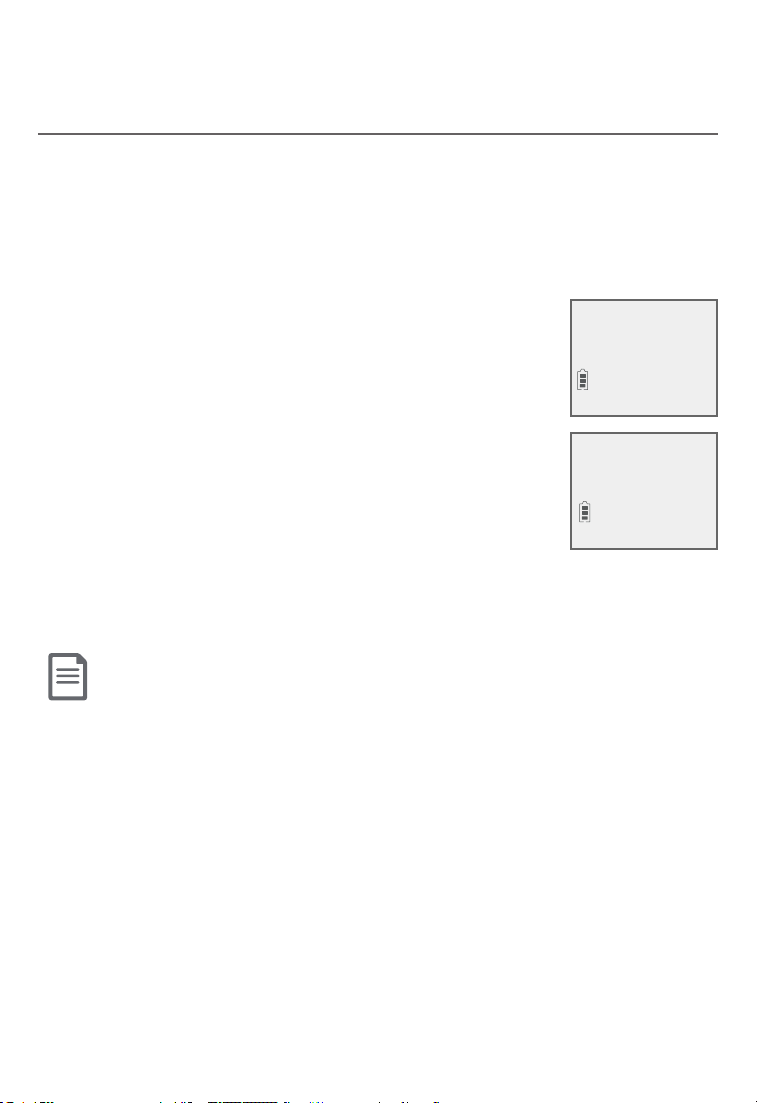
Answering system
Answering system settings
Message alert tone
When the message alert tone is set to On, and there is at least one
new message, the telephone base beeps every ten seconds. By
default,themessagealerttoneissettoo.
There is no audible alert at the handset.
To change the setting:
1. When the handset is in idle mode, press
MENU/SELECT to enter the main menu.
2. Press qCID or pDIR to scroll to Answering sys,
then press MENU/SELECT.
3. Press qCID or pDIR to scroll to Ans sys setup,
then press MENU/SELECT.
4. Press qCID or pDIR to scroll to Msg alert tone,
then press MENU/SELECT.
5. Press qCID or pDIR to choose On or Off.
6. Press MENU/SELECT to save the setting. You hear a
confirmation tone.
Notes:
f The message alert tone beeps only if all the following conditions are met:
- Answering system is on.
- Message alert tone setting is on.
- There are new messages.
f To temporarily turn off the message alert tone, see page 117.
Remote code
>
Msg alert tone
MSG ALERT TONE
>On
111
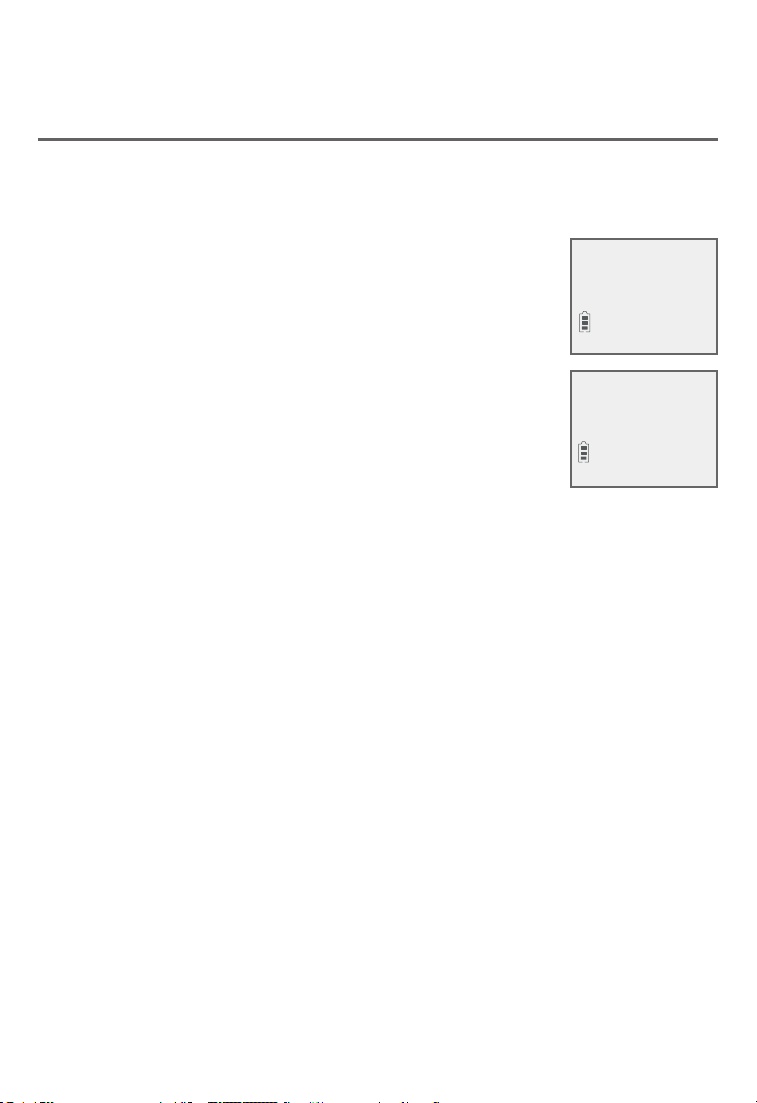
Answering system
112112
Answering system settings
Message recording time
You can set the recording time allowed for incoming messages. The
message length is three minutes by default.
To change the setting:
1. When the handset is in idle mode, press
MENU/SELECT to enter the main menu.
2. Press qCID or pDIR to scroll to Answering sys,
then press MENU/SELECT.
3. Press qCID or pDIR to scroll to Ans sys setup,
then press MENU/SELECT.
4. Press qCID or pDIR to scroll to Recording time,
then press MENU/SELECT.
5. Press qCID or pDIR to choose 3 minutes,
2 minutes or 1 minute, then press MENU/SELECT to save the
setting. You hear a confirmation tone.
>Recording time
Msg alert tone
RECORDING TIME
>3 minutes
Answering system
113
About the answering system
Answering system and voicemail indicators
Yourtelephonehasseparateindicatorsfortwodierenttypesof
voicemessages:thoseleonitsbuilt-indigitalansweringsystem
andthoseleatyourtelephoneserviceprovider’svoicemail(fees
may apply). Your telephone’s built-in digital answering system
messages and voicemail messages are separate. Each alerts you to
newmessagesdierently.
f If
and XX New messages
show on the handset and the
message window, there are
new messages in the built-in
answering system. To listen to
messages recorded on your
digital answering system, press
/ PL AY/S TO P on the
telephone base (page 118).
f If
and New voicemail display
on the handset, your telephone
service provider is indicating
that it has new voicemail for you.
To listen to your voicemail, dial
an access number provided by
your telephone service provider,
followed by a security code or
PIN.
Some telephone service
providers bundle or combine multiple services like voicemail and
call waiting, so you may not be aware that you have voicemail. To
check what services you have and how to access them, contact
your telephone service provider.
To use your voicemail service rather than the answering system,
turnotheansweringsystem.Tousetheansweringsystem
rather than your voicemail service, contact your telephone service
provider to deactivate your voicemail service.
Note: After reviewing all new messages, the number of old messages appears on the message
counter.
HANDSET 1
1 New message
10/15
10:01
AM
ANS ON

Answering system
114
About the answering system
Using the answering machine and voicemail together
You can also use your telephone answering system and voicemail
together by setting your built-in answering system to answer
before voicemail answers, as described below. To learn how to
program your voicemail settings, contact your telephone service
provider. If you are on a call, or the answering system is busy
recording a message and you receive another call, the second
caller can leave a voicemail message.
Set your answering system to answer calls at least two rings
earlier than your voicemail is set to answer. For example, if your
voicemailanswersaersixrings,setyouransweringsystemto
answeraerfourrings.Somevoicemailprovidersmayprogram
the delay before answering calls in seconds instead of rings. In this
case, allow six seconds per ring when determining the appropriate
setting.

Answering system
115
About the answering system
Message capacity
The answering system can record up to 99 messages, depending
on the length of each message. Individual messages can be up to
three minutes, and the maximum recording time is approximately
22 minutes. The actual recording time depends on individual
message characteristics. Messages remain available for replay until
you delete them.
When there are new messages (including memos) on the
answering system, the number of messages stored shows in the
message counter.
If the answering system has less than three minutes of recording
timele,itannounces,“Less than three minutes to record,” before
message playback at the handset or the telephone base. Rec mem
low displays on the device screen in idle mode. When you turn on
the answering system at the telephone base, it announces, “Calls
will be answered. Less than three minutes to record.”
If the memory is full, the answering system announces, “Memory
is full,” before message playback. The device screen displays Rec
mem full in idle mode. Once the memory is full, you cannot turn
theansweringsystembackonifithasbeenturnedo,norcanyou
record new messages until old ones have been deleted. Memory
full displays if you want to turn on the answering system on the
handset but there is no memory.
Voice prompts
The system provides voice prompts to guide you through the setup
procedures on your handsets, message playback, remote access
and recording outgoing announcements. The system also provides
basic answering system setup via voice guide to record your own
announcement, set the number of rings, and set the message alert
tone.

Answering system
116
About the answering system
Call screening
To screen a call at the telephone base:
If the answering system and call screening are on (see Call screening
on page 108), the announcement and the incoming message
broadcast at the telephone base when a call is answered by the
answering system.
Options while a message is being recorded:
f Press
qVOLUME or pVOLUME on the telephone base to adjust
the call screening volume.
f Press
/ PL AY/S TO P to temporarily silence the call screening.
f Press
/ PL AY/S TO P to temporarily turn on the call screening if
callscreeningissettoo.
To screen a call at the handset:
While a message is being recorded, the handset shows
To screen call, press [SELECT]. Press MENU/SELECT to screen the
call.
Options while a message is being recorded:
f Press VOL
qCID or VOLpDIR on the handset to adjust the call
screening volume.
f Press
to temporarily silence the call screening.
f Press MENU/SELECT to temporarily turn on the call screening if call
screeningissettoo.
f Press
/SPEAKER to broadcast the announcement and the
incoming message through the speakerphone. Press again to turn
othespeakerphone.

Answering system
117
About the answering system
Call intercept
While screening a call, you can stop recording and speak to the caller by
pressing
.
Base ringer
Press pVOLUME or q
VOLUME
on the telephone base to adjust
the ringer volume when the telephone is not in use.
You hear a sample of the ringer while adjusting the volume. The
telephone base announces, “Base ringer is o,” when you set the
volume to 0.
Temporarily turning o the message alert tone
If the message alert tone is turned on, the telephone base beeps
every ten seconds when there are new messages. Pressing any
telephone base key (except
FIND HS) temporarily silences the
message alert tone.
However, if you press a key at the telephone base to silence the
message alert tone, the telephone base will also perform the
corresponding key function. For example, if you press X/DELETE
wheninidlemodetotemporarilyturnothemessagealerttone,
there is a voice prompt directing you to press X/DELETE again
to delete all old messages. The message alert tone is temporarily
o.OnlypressX/DELETE a second time if you wish to erase all old
messages in your answering system.
The message alert tone resumes when you receive another
message.
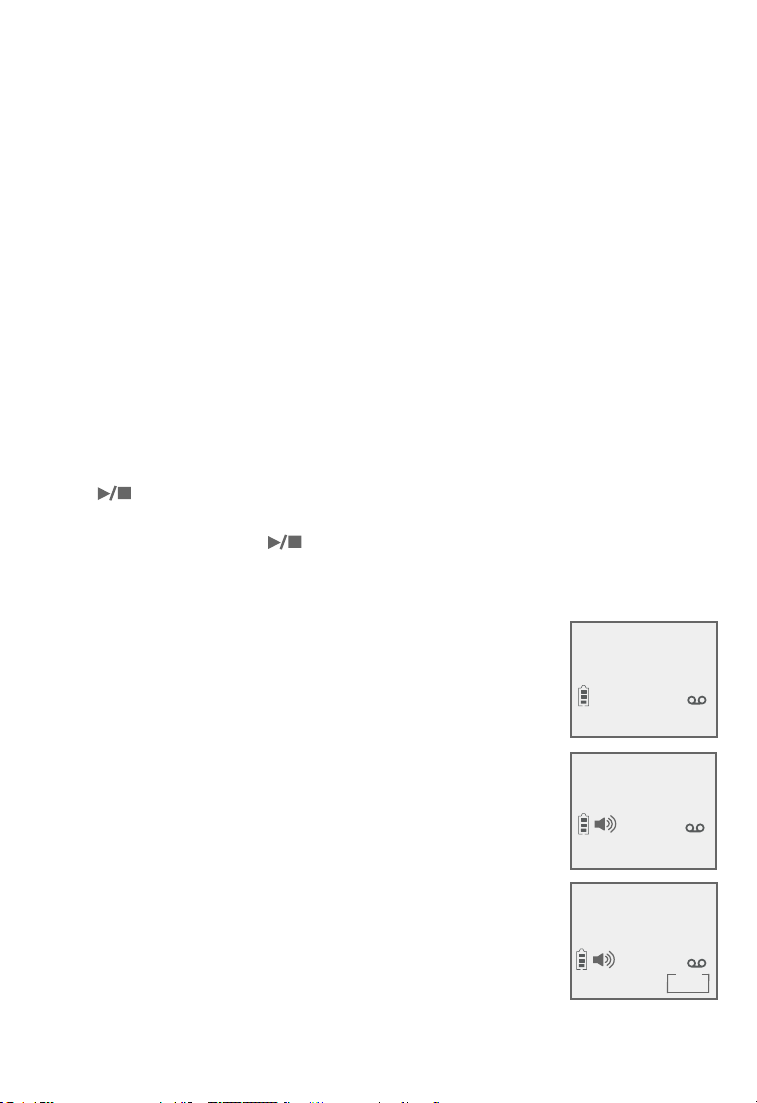
Answering system
118
Message playback
If you have new messages, you hear only the new messages in
chronological order. If there are no new messages, the system plays
back all old messages (in chronological order). If there are both new
and old messages, you have the option of playing the new or old
messagesonthecordlesshandset.Themessagecounterashes
indicating the number of new messages saved.
When playback begins, the total number of messages is announced.
Before each message, you hear the day and time of the recording.
If the date and time are not set, you hear, “Time and date not
set,” beforeplayback.Aerthelastmessage,youhear,“End of
messages.” If the recording time is less than three minutes, you
hear, “Less than three minutes to record” before playback (see
Message capacity on page 115).
To listen to messages at the telephone base:
Press /PLAY/STOP on the telephone base to listen to the
messages. The system announces the number of messages, then
begins playback. Press /PLAY/STOP again to end the message
playback.
To listen to messages on a cordless handset:
1. When the handset is in idle mode, press
MENU/SELECT to enter the main menu.
2. Press MENU/SELECT again to select
Play messages.
f If there are new and old messages, press
qCID or pDIR to select Play new msgs or
Play old msgs, then press MENU/SELECT.
f If there are only new or only old messages,
they will play automatically.
The system announces the number of messages,
then begins playback. The message sequence is
shown on the handset. If there are no recorded
messages, the handset shows No messages and
you hear, “You have no message.”
>Play new msgs
Play old msgs
ANS ON
3 New messages
ANS ON
You have:
Charlie Johnson
4-Repeat 6-Skip
MSG#
1/3
10:01
AM
NEW
ANS ON
Answering system
119
Message playback
Options during playback
When a message is playing, you can adjust the playback volume,
skip, repeat, pause or delete the message.
When messages are playing on the telephone base:
f Press pVOLUME or q
VOLUME to adjust the message playback
volume.
f Press
/SKIP to skip to the next message.
f Press
/REPEAT to repeat the message. Press twice to hear the
previous message.
f Press X/DELETE to delete the message.
f Press
/PLAY/STOP to stop the playback.
When messages are playing on the handset:
f Press VOL q CID or VOL p DIR to adjust the message playback
volume.
f Press 6 to skip to the next message.
f Press 4 to repeat the message. Press twice to hear the previous
message.
f Press MUTE/DELETE to delete the message.
f Press 5 or
to stop the playback.
f Press
/SPEAKER to switch between speakerphone mode and
handset mode.
f Press
to stop playback. The screen shows
Call back?, then press MENU/SELECT or to call
back the caller if the caller’s number is available. If the dialing
format used is not correct, then use the following option to
choose the correct dialing format before calling back the caller.
f Press MENU/SELECT to pause playback and show the caller ID
information if available. From here, you can press
to resume playback, or press # (pound key) repeatedly to show
the desired dialing option (page 67), then press MENU/SELECT
or to call back the caller. If you do not call back
within ten seconds, message playback resumes automatically.
Note: The current equalizer settings remains unchanged until a new setting is selected.
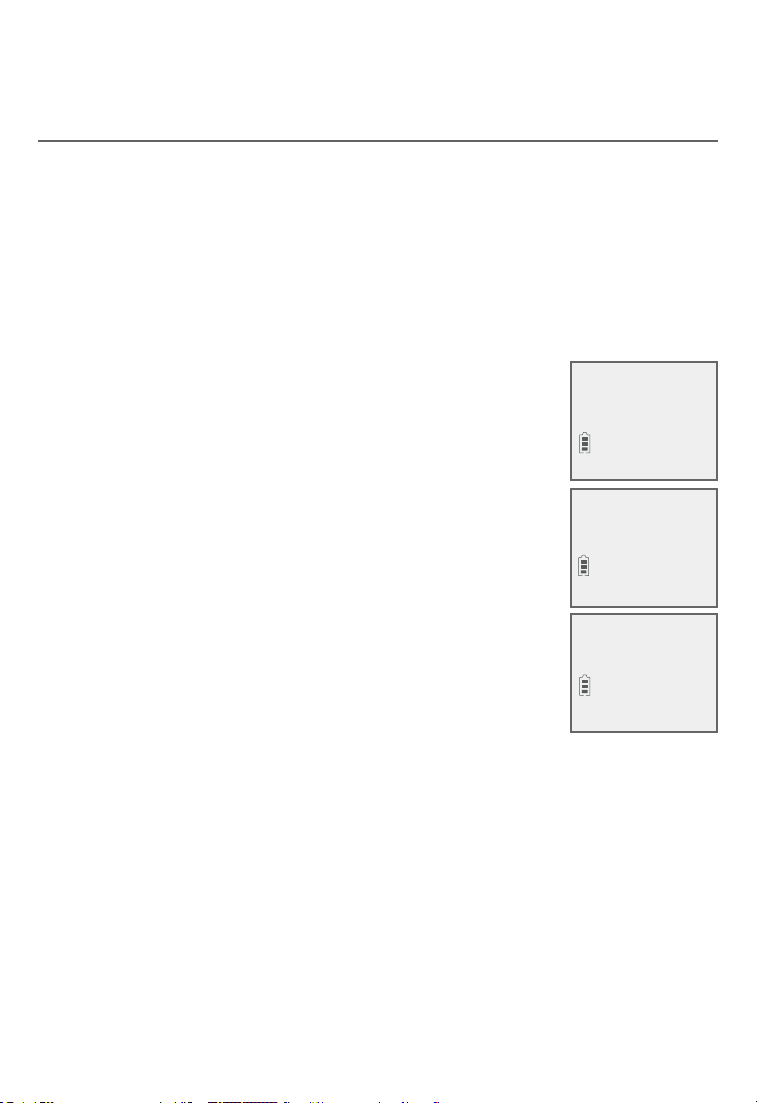
Answering system
120
Message playback
Delete all old messages
You can only delete old (reviewed) messages. You cannot delete
new messages until you review them. You cannot retrieve deleted
messages.
To delete all old messages on the telephone base:
1. When the telephone is idle, press X/DELETE. The
system announces, “To delete all old messages, press DELETE
again.”
2. Press X/DELETE again. The system announces,
“All old messages deleted.”
To delete all old messages on the handset:
1. Press MENU/SELECT when in idle mode to enter
the main menu.
2. Press qCID or pDIR to scroll to Answering sys.
Press MENU/SELECT.
3. Press qCID or pDIR to highlight Delete all old,
then press MENU/SELECT. The screen shows
Delete all old messages?.
4. Press MENU/SELECT again to confirm. The screen
displays Deleting... and then All old msgs
deleted!. There is a confirmation tone.
Announcement
>Delete all old
Delete all
old messages?
Deleting...
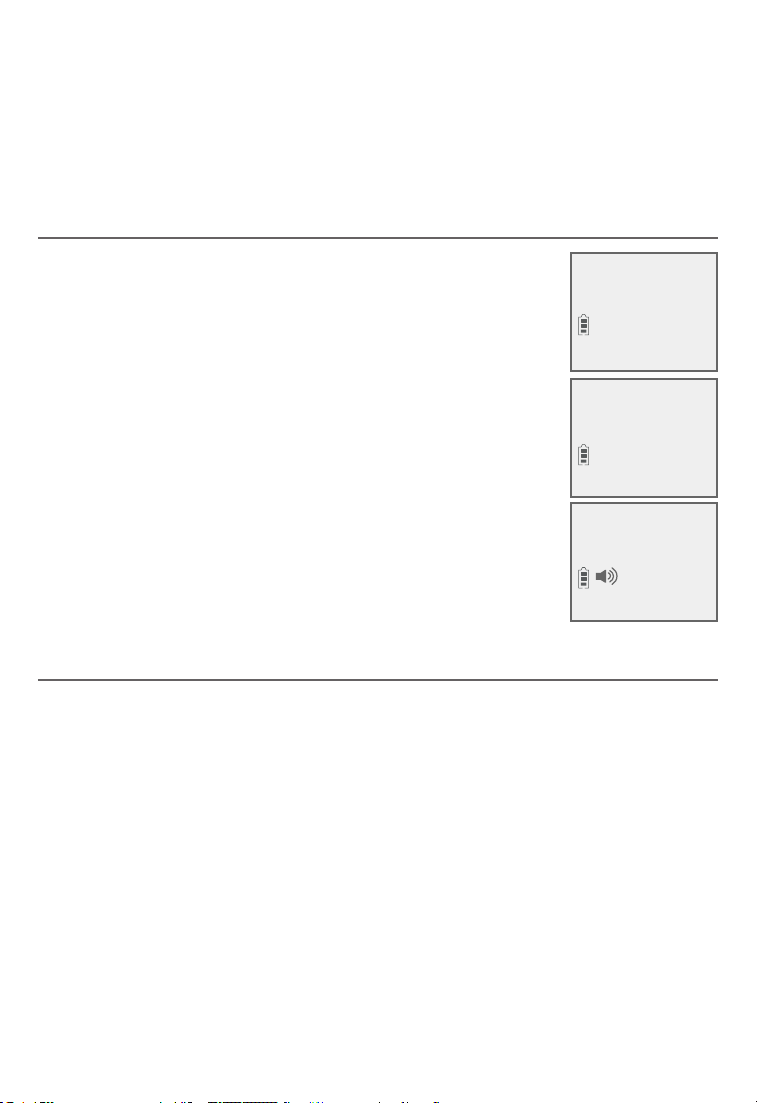
Answering system
121
Recording and playing memos
Memos are your own recorded messages used as reminders for
yourself or others using the same answering system. Play and
delete them in the same way as incoming messages.
Record a memo
1. When the handset is in idle mode, press
MENU/SELECT to enter the main menu.
2. Press qCID or pDIR to scroll to Answering sys.
Press MENU/SELECT.
3. Press qCID or pDIR to highlight Record
memo, then press MENU/SELECT. The system
announces, “Record after the tone. Press 5 when
you are done.” You can record a memo for up to
four minutes.
4. Speak towards the handset to record a memo.
5. Press 5 to stop recording. The system
announces, “Recorded.” The system does not
save memos shorter than two seconds.
Play back a memo
Play memos the same way as messages. See Message playback on
page 118.
Play messages
>Answering sys
>Record memo
Delete all old
5-Stop
RECORD MEMO...
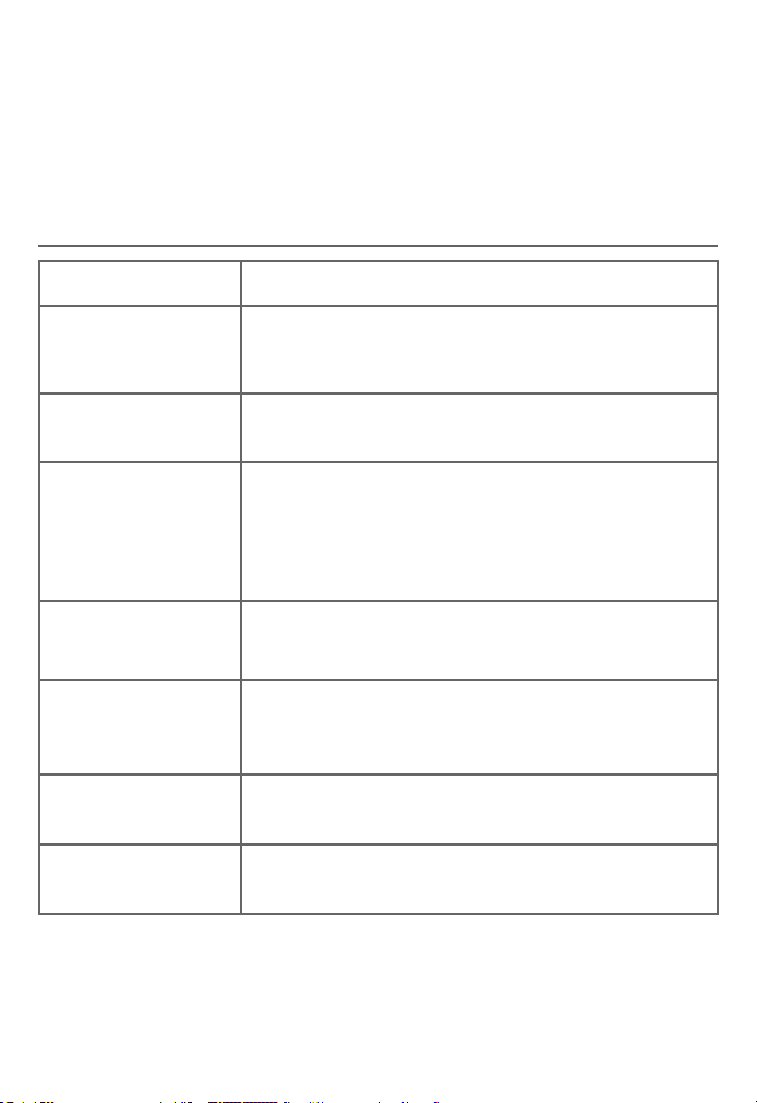
Answering system
122
Base message counter displays
The base message counter shows the total number of answering
system messages. See the following table for other message
counter displays.
Message counter displays
0
No messages.
0
(ashing)
You need to set the date and time (page 23).
1-99
Total number of old messages and memos, or message
number currently playing during old message playback.
1-99
(ashing)
Total number of messages and memos. The number
asheswhentherearenewormissedmessages.
Aerapowerfailure,thenumberinthemessage
counterashestoindicatethatyouneedtoset
the clock.
1-99 & F
(alternating)
Memory is full. You must delete some messages before
recording new messages.
--
The system is answering a call, recording a message or
memo, or is being reached remotely.
The telephone line is in use.
0-6
Shows for two seconds while adjusting the telephone
base ringer volume.
1-8
Shows for two seconds while adjusting the telephone
base speaker volume.
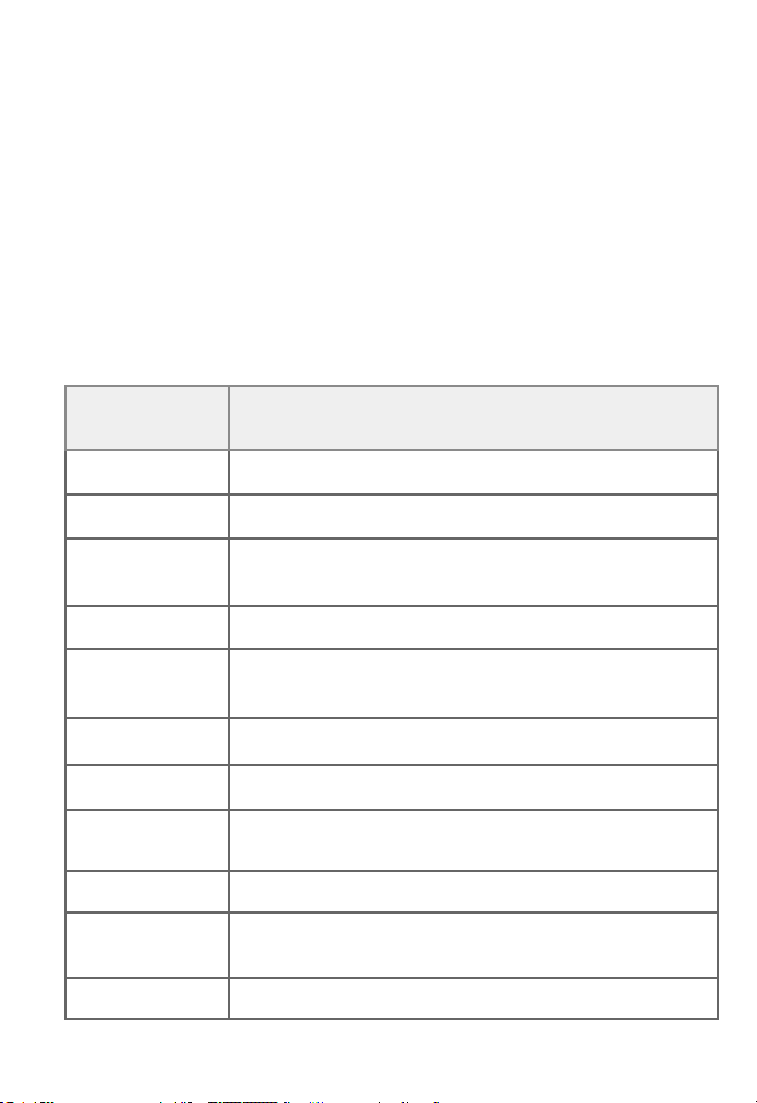
Answering system
123
Remote access
You can reach your answering system remotely by dialing your
home telephone number from any touch-tone telephone.
To remotely reach your answering system:
1. Dial your telephone number from any touch-tone telephone.
2. When the system answers, enter the two-digit remote access
code (19 is the default code. See page 110 to change it).
f The system automatically announces the number of new or
old messages (if any), and then begins to play them.
3. You can also enter the following remote commands:
Remote
commands
Actions
1
Press to listen to all messages.
2
Press to listen to new messages only.
3
Press to delete the current message
(during playback).
33
Press twice to delete all old messages.
4
Press to repeat the current message
(during playback).
5
Press to stop any operation (including recording).
*
5
Press to listen to a list of remote commands.
6
Press to skip to the next message
(during playback).
*
7
Press to record a new announcement.
8
Press to end remote access
(the call will be terminated).
0
Presstoturntheansweringsystemonoro.
4. Hang up or press 8 to end the calls.

Answering system
124
Remote access
Cut out and carry the remote access wallet card at the back of this
user’s manual for quick reference.
Notes:
f If you do not enter a valid remote access code, the system answers the call automatically.
f If you pause for more than four seconds during remote access, you hear a help menu listing all
features and commands. If there is no command for another 20 seconds, the call ends
automatically.
f If the memory is full, the answering system answers after ten rings and announces, “Memory is
full. Enter the remote access code.” Enter your remote access code to access the messages and
announcements.
f The telephone can respond to remote access code while it is playing the screening announcement
or block announcement. This allows you to access your answering system from an unknown
number remotely. See Smart call blocker on pages 73-103.
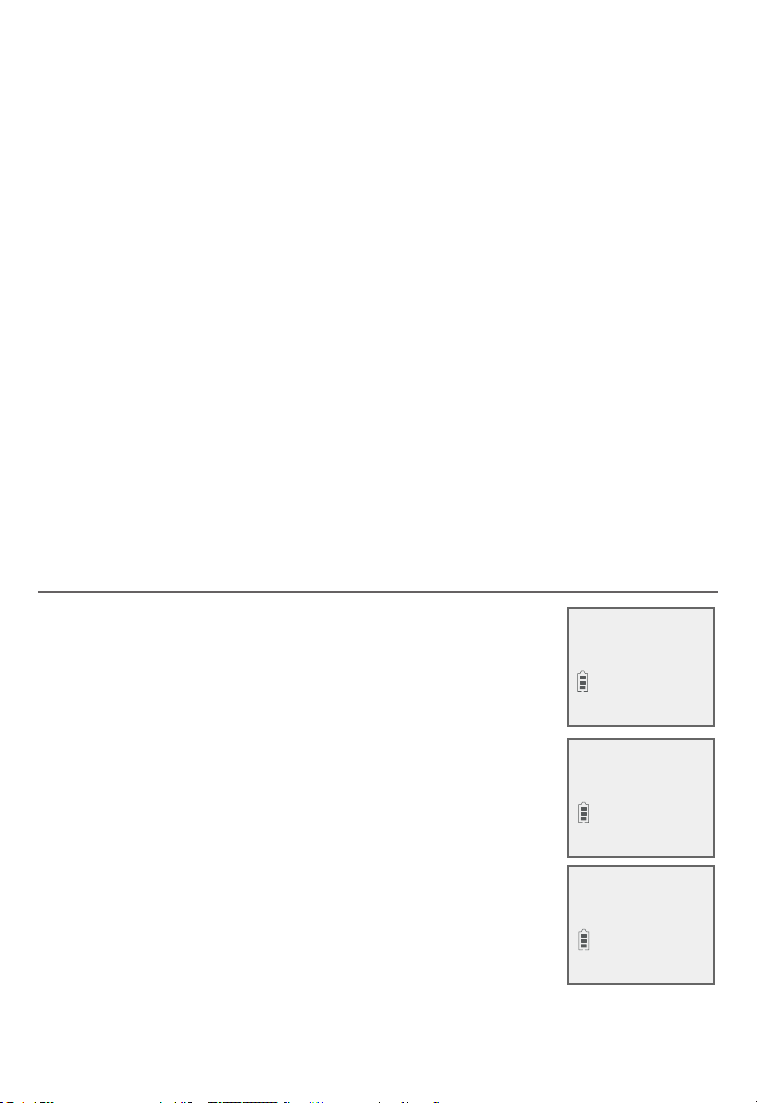
Adding and registering handsets/headsets/
speakerphones
Your telephone can support up to 12 DECT 6.0 cordless handsets,
headsets or speakerphones. You can purchase additional
handsets (AT&T model CL80119, sold separately) or up to ten
cordless handsets and two cordless headsets or speakerphones
(sold separately). Visit https://telephones.att.com/
accessories for a list of compatible DECT 6.0 cordless headsets or
speakerphones. Each new handset, headset or speakerphone must
be registered to the telephone base before use. You must register
each handset, headset or speakerphone separately.
To register a cordless headset or speakerphone to this telephone
system, please refer to the corresponding user’s manual for details.
To register a cordless handset, see below.
The handsets provided within your product box are already
registered as HANDSET 1, and so forth. Additional handsets are
assigned numbers in the sequential order they are registered (up to
HANDSET 12).
Register a handset to the telephone base
1. Before you begin registration, make sure the
handset is out of the telephone base or charger
and shows To register HS, see manual.
2. Put the handset you wish to register on the
telephone base cradle.
3. The handset shows Registering.... Please wait
and the IN USE light on the telephone base
turns on. HANDSET X Registered appears
on the handset screen (HANDSET represents
the handset name, X represents the handset
number). The handset beeps and the IN USE
lightturnso.Thehandsetisnowregistered
with the telephone base.
Appendix
To register HS,
see manual.
Registering...
Please wait
HANDSET X
Registered
125
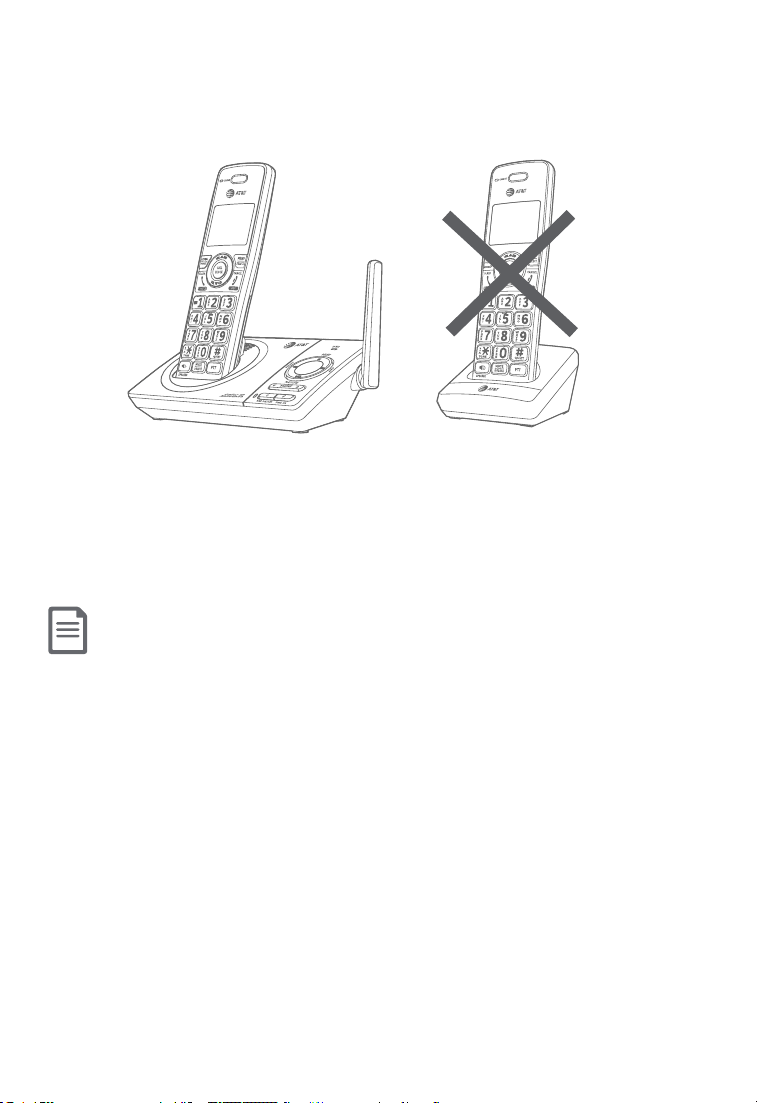
Appendix
126
Adding and registering handsets/headsets/
speakerphones
If registration fails, the system will automatically try to register
again.Ifregistrationfailsaerthethirdtry,Registration failed
appears on the screen for a few seconds, and then To register HS,
see manual.Thismaytakeuptoveminutestooccur.Pleasestart
again from Step 1.
N
ote: You cannot register a handset if any other system handset is in use.
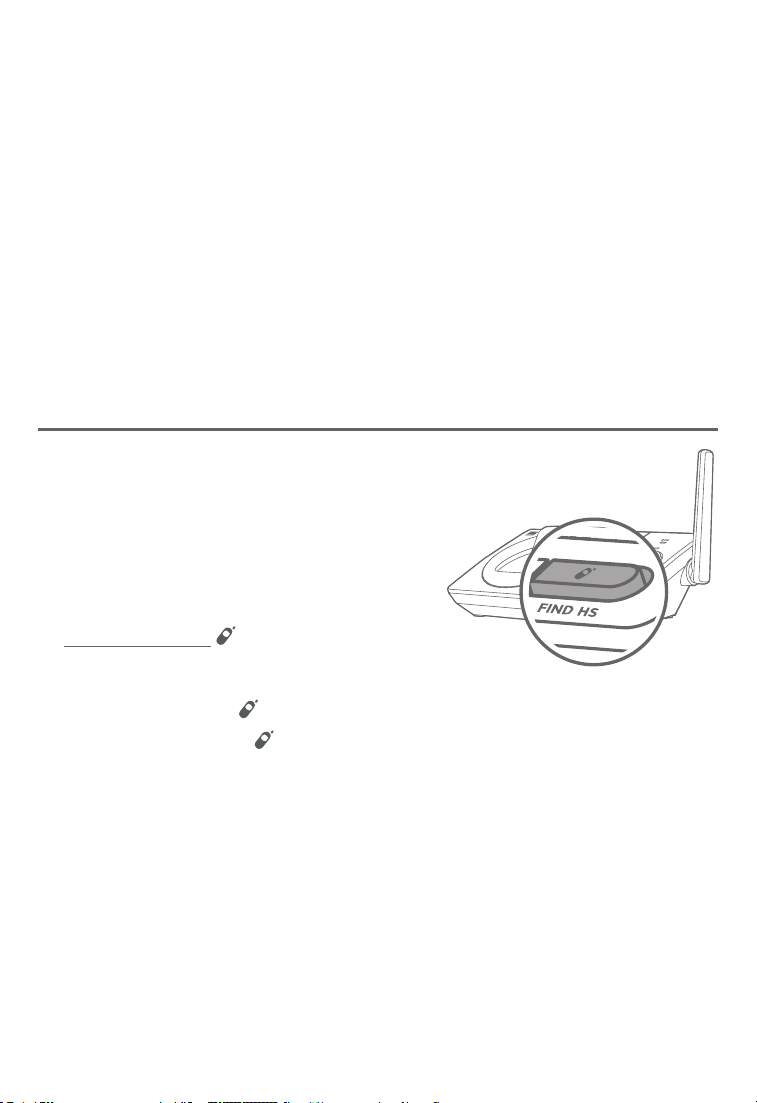
Appendix
127
Deregistering handsets
You may need to deregister your handsets if:
f You have 12 registered handsets and need to replace a handset.
-OR-
f You wish to change the designated handset number of your
registered handsets.
YoumustrstderegisterALLhandsets,andthenregistereach
handset you wish to use again, one at a time.
Please read carefully through all the instructions on this page
before beginning the deregistration process.
Deregister all handsets from the telephone base
In addition to the cordless handsets,
this operation will also deregister all
cordless headsets or speakerphones
registered to your telephone base.
1. Make sure that all handsets are out
of the telephone base and chargers
before you begin deregistration.
2. Press and hold
FIND HS on the
telephone base for about ten
seconds (until the IN USE light starts
toash).Release
FIND HS.
3. Immediately press
FIND HS while the IN USE light is still
ashing.(Ifthelightstopsashing,startagainwithStep1.)
4. It takes up to ten seconds to complete the deregistration
process. Before registering the handset again, wait for the
cordless handset screen to display To register HS, see manual.
5. To register the handset(s) to the telephone base again, follow
the registration instructions on pages 125-126.

Appendix
128
Deregistering handsets
Notes:
f If the deregistration process fails, you may need to reset the system and try again. To reset, unplug
the power from the telephone base and plug it back in.
f You cannot deregister the handsets if any other system handset is in use.
f Even if the battery is depleted, you can still deregister the handsets by following the steps
mentioned above. After the handset is charged for at least ten minutes, the screen shows To
register HS, see manual.
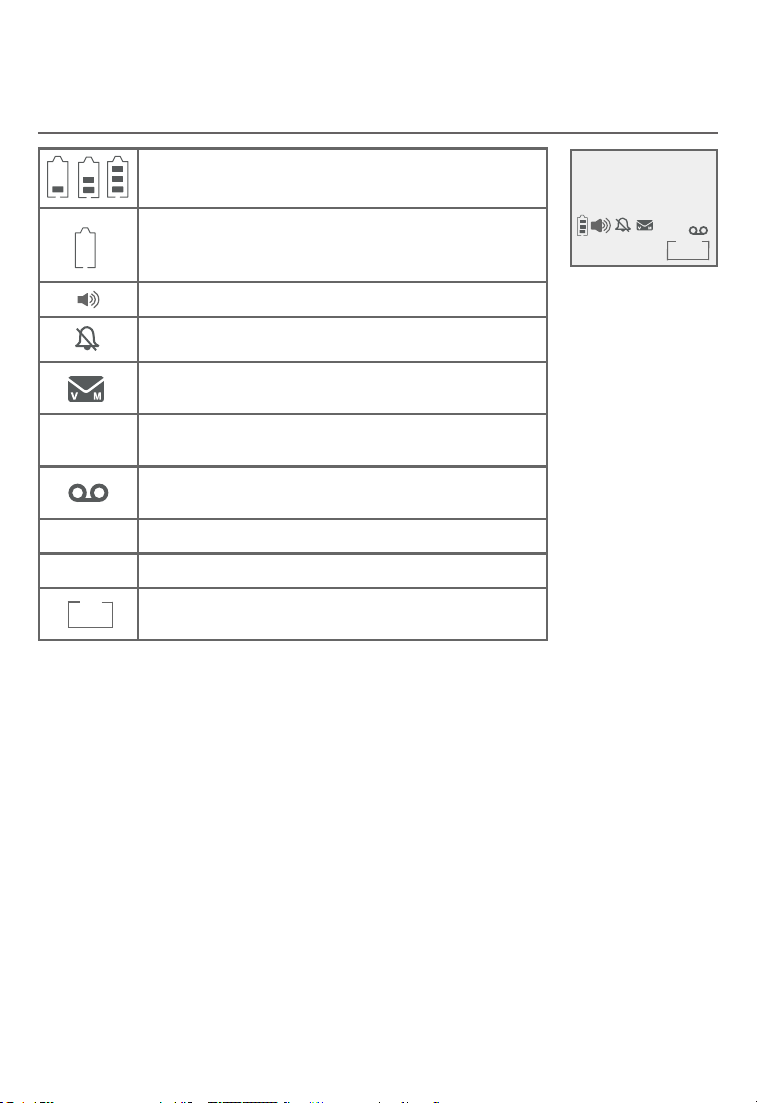
Appendix
129
Alert tones and lights
Handset screen icons
Battery status - battery is charging
(animated display).
Battery status-lowbattery(ashing);
place the handset in telephone base or charger
to recharge.
Speakerphone - the speakerphone is in use.
Ringer o-thehandsetringeriso.
New voicemail - you have new voicemail from
your telephone service provider.
ANS ON
Answering system on - the answering system
is turned on to answer calls.
Message - new message in the built-in
answering system.
NEW
New caller ID log - new and missed calls.
MUTE
MUTE-thehandsetmicrophoneiso.
Message counter - number of message
playing/total number of messages.
MSG#
1/3
10:01
AM
NEW
ANS ON
MUTE
MSG #
1/2
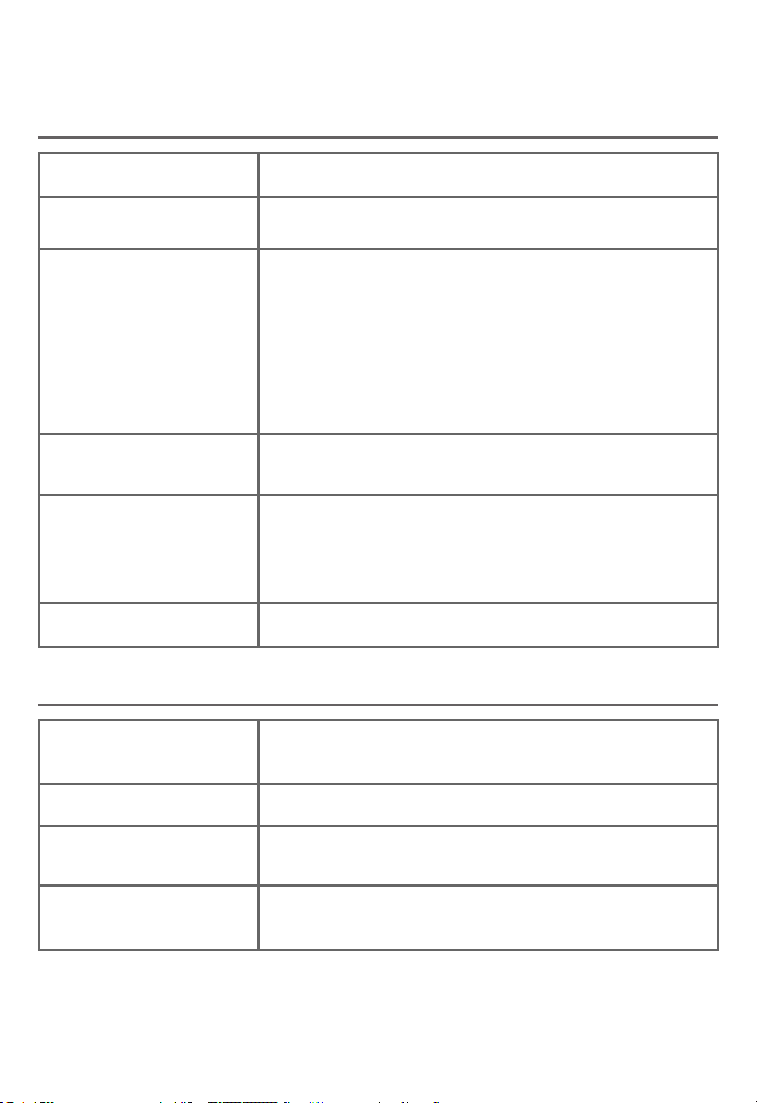
Appendix
130
Alert tones and lights
Handset alert tones
One short beep Tone of each key press, if key tone is turned on.
One long beep
Indication to begin recording a message, memo or
announcement.
Two short beeps
You are pressing qCID or pDIR on a cordless handset
when the volume is already at its highest or lowest
setting.
-OR-
Call waiting tone.
-OR-
Error tone.
Conrmation tone
(three rising tones)
The system has completed the command successfully.
Four beeps
The other party has ended your intercom call.
-OR-
The handset has gone out of range from the base
during a call.
Four short beeps Low battery warning.
Telephone base alert tones
One long beep
Indicates the start of message recording during call
screening or the end of a message playback session.
Four short beeps Registration failure tone.
Beeps every
ten seconds
Message alert.
Fast ringer tone
You are setting the ringer volume by pressing the
pVOLUME or q
VOLUME
key on the telephone base.
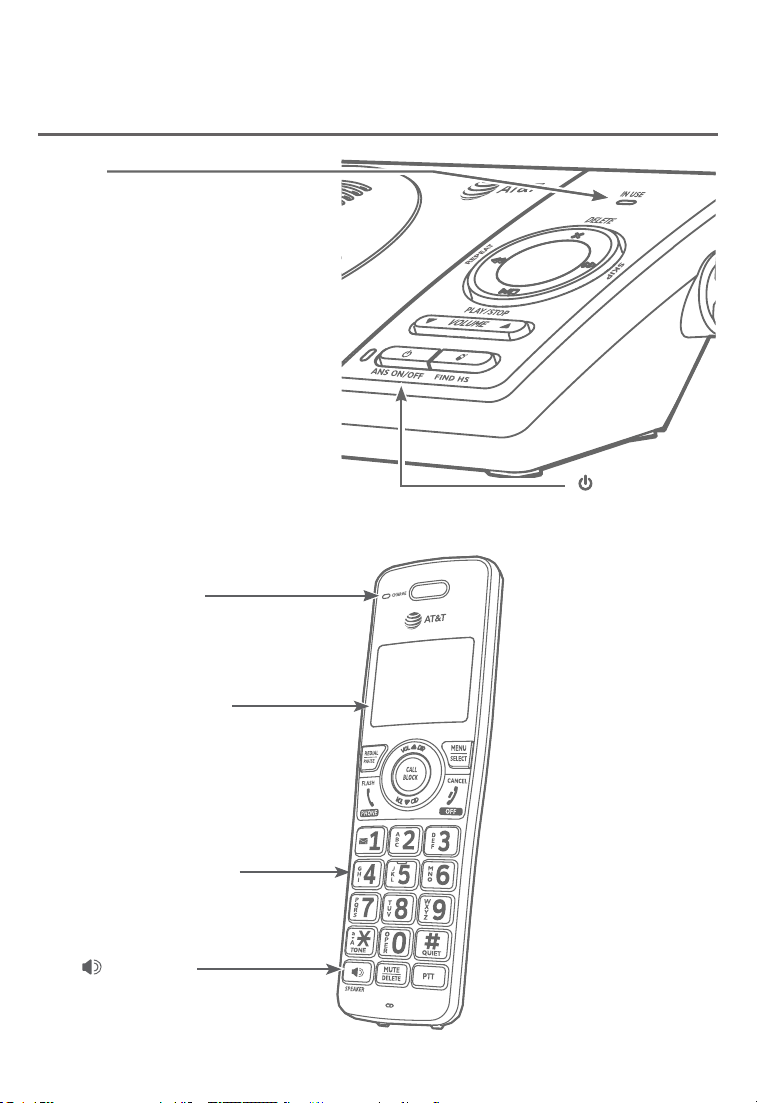
Appendix
131
Alert tones and lights
Lights
/ANS ON/OFF
On when the
answering
system is on.
IN USE
f On when the handset is in
use, or when the answering
system is answering an
incoming call.
f On when a handset is
being registered.
f Flashes quickly when
there is an incoming call
or when handsets are
being deregistered.
f Flashes when another
telephone is in use on the
same line.
CHARGE light
On when the handset is
charging in the telephone
base or charger.
Big lighted buttons
/SPEAKER
On when the
speakerphone is
on.
Extra large display
Appendix
132
Screen display messages
Screen messages
Added to
allow list
An entry has been added to the allow list.
Added to
block list
An entry has been added to the block list.
Added to
star name list
An entry has been added to the star name list.
Allow unknown
calls to ring
You have selected the Allow unknownprole
option in Smart call blocker.
Block all
unknown calls
You have selected the Block unknownprole
option in Smart call blocker.
Block list
is empty
There are no block list entries.
Blocked call
An incoming call is blocked.
Call
transferred
You have transferred an outside call to another
device.
Caller ID log
empty
There are no entries in the caller ID log.
Calling
HANDSET X (for systems
with 3 or more handsets)
The handset is calling another handset (for
intercom calls).
The handset is transferring an outside call to
another handset.
Calling other
handset (for systems
with 2 handsets)
The handset is calling the other handset (for
intercom calls).
CID Annc ON/OFF
on all HS and BS
The caller ID announce features has been turned
onoroonallhandsetsandonthetelephone
base.
Contact deleted
A directory entry is deleted.
Directory empty
There are no directory entries.
Directory full
The directory is full. You cannot save any new
entries unless you delete some current entries.
Ended
You have just ended a call.
Forward unknown
calls to AnsSys
You have selected the UnknownToAns.Sprole
option in Smart call blocker.
Appendix
133
Screen display messages
Screen messages
HANDSET X
is calling (for
systems with 3 or more
handsets)
Another system handset is calling.
Incoming call
There is a call coming in
Intercom
The device is on an intercom call.
Intercom ended
The intercom call has just ended.
INTERCOM TO: (for
systems with 3 or more
handsets)
You have started the intercom process, and need
to enter the number of the device you wish to call.
Line in use
An extension phone, or one of the devices is in use.
Low battery
The battery is low. You should charge the battery.
Microphone ON
Muteisosotheotherpartycanhearyourvoice.
Muted
Themicrophoneiso.Theotherpartycannothear
you.
New voicemail
There are new voicemail messages from your
telephone service provider.
No answer. Try
again
The device(s) you are trying to transfer a call to is
outofrange,ohook,orhasnopower.
No battery
The handset in the charger has no battery
installed.
No caller info
The caller information is unavailable.
No Incoming PTT
TheincomingPTTfunctionisturnedo.The
handset will not receive PTT calls.
No line
There is no telephone line connection.
Not available
at this time
Someone else is already using the directory or
caller ID log.
Number already
saved
The telephone number you have entered is already
in the directory or call block list.
Out of range OR
No pwr at base
The telephone base has lost power, or the handset
is out of range.
Appendix
134
Screen display messages
** Paging **
The cordless handset is paged by the telephone
base.
Phone
The handset is on a call.
Place in charger
The battery is very low. The handset should be
charged.
Quiet mode on
QUIET mode is on.
Quiet mode is off
QUIETmodeisturnedo.
Rec mem full
The system recording time is full.
Rec mem low
The system recording time is low.
Registering...
Please wait
The handset is registering to the telephone base.
Registration failed
The handset registration is not successful.
Ringer off
Theringeristurnedo.
Ringer muted
Theringerisotemporarilywhilethedeviceis
ringing.
Saved to
directory
An entry has been successfully saved to the
directory.
Screen all
Robocalls
You have selected the Screen robotproleoption
in Smart call blocker.
Screen all
unknown calls
You have selected the Screen Unknownprole
option in Smart call blocker.
Screened call
The Smart call blocker feature of the telephone
has screened a call and is putting the call through
to you.
Setting up
Ans sys...
The handset is playing voice guide to set up the
answering system.
Smart call blk
screening
The telephone is screening an incoming call.
Speaker
The handset speakerphone is in use.
Screen messages
Appendix
135
Screen display messages
Screen messages
Voice guide set
Smart call blk?
Aeryouinstallyourtelephoneorpowerreturns
following a power outage, the handset will prompt
youtosetthedateandtime.Aerthedateand
time setting is done or skipped, the handset will
then prompt if you want to set up the Smart call
blocker feature via voice guide.
TRANSFER TO: (for
systems with 3 or more
handsets)
You have started transferring a call, and need to
enter the desired device number or choose all
devices.
Transferring
call...
The handset is transferring an outside call to the
other handset.
To register HS,
see manual.
Screen display before handset registration.
To screen call,
press [SELECT]
Press MENU/SELECT to activate call screening.
Unable to call.
Try again
You try to join a call when there are already four handsets
on that call.
You try to make an outside call when another
device is transferring a call with the intercom
feature.
XX Missed calls
There are new calls in the caller ID log.
XX New messages
There are new messages in the answering system.

Appendix
136
Troubleshooting
Ifyouhavedicultywithyourphone,pleasetrythefollowing
suggestions. For Customer Service, visit our website at
https://telephones.att.com or call 1 (800) 222-3111. In
Canada, dial 1 (866) 288-4268.
My telephone doesn’t work at all.
f Make sure the power cord is securely plugged in.
f Make sure you plug the battery connector securely into the
cordless handset.
f Makesureyouplugthetelephonelinecordsecurelyandrmly
into the telephone base and the telephone wall jack.
f Charge the battery in the cordless handset for at least ten hours.
For optimum daily performance, return the cordless handset to
the telephone base or charger when not in use.
f If the battery is depleted, it may take approximately 30 minutes
to charge the handset before it shows Low battery. See page
13 for details.
f Reset the telephone base. Unplug the electrical power. Wait for
approximately 15 seconds, then plug it back in. Allow up to one
minute for the cordless handset and telephone base to reset.
f You may need to purchase a new battery. Please refer to
Battery installation and charging in this user’s manual on
pages 13-15.
The display shows No line. I cannot get a dial tone.
f Try all the suggestions, as mentioned above.
f If the previous suggestions do not work, disconnect the
telephone line cord from your telephone and connect the
telephone line cord to another telephone.
f If there is no dial tone on that other telephone either, your
telephone line cord may be defective. Install a new telephone
line cord.
f If changing the telephone line cord does not help, the wall jack
(or the wiring to this wall jack) may be defective. Try using a
dierentwalljackinyourhometoconnectyourCL82219/
CL82229/CL82319/CL82419/CL82519 telephone, or contact
your telephone service provider (charges may apply).

Appendix
137
Troubleshooting
I cannot dial out.
f Try all the suggestions, as mentioned above.
f Make sure you have a dial tone before dialing. The cordless
handsetmaytakeasecondortwotondthetelephonebase
and produce a dial tone. This is normal. Wait an extra second
before dialing.
f Eliminate any background noise. Noise from a television, radio or
other appliances may cause the phone to not dial out properly. If
youcannoteliminatethebackgroundnoise,rsttrymutingthe
cordless handset before dialing, or dialing from another room
with less background noise.
f If other phones in your home are having the same problem,
contact your telephone service provider (charges may apply).
My cordless handset isn’t performing normally.
f Make sure you plug the power cord securely into the telephone
base.Plugthepoweradapterintoadierentworkingelectrical
outlet without a wall switch.
f Move the cordless handset closer to the telephone base. You
may have moved out of range.
f Reset the telephone base. Unplug the electrical power. Wait for
15 seconds, then plug it back in. Allow up to one minute for the
cordless handset and telephone base to reset.
f Other electronic products such as HAM radios and other DECT
phones, can cause interference with your cordless phone. Try
installing your phone as far away as possible from these types of
electronic devices.
Out of range OR No pwr at base appears on my cordless
handset.
f Ensure you plug the telephone base in properly and the power
is on.
f Place the cordless handset in the telephone base for one minute
to allow the cordless handset and base to synchronize.
f Move the cordless handset closer to the telephone base. You
may have moved out of range.

Appendix
138
Troubleshooting
f Reset the telephone base. Unplug the electrical power. Wait for
15 seconds, then plug it back in. Allow up to one minute for the
cordless handset and telephone base to reset.
f Other electronic products such as HAM radios and other DECT
phones, can cause interference with your cordless phone. Try
installing your phone as far away as possible from these types of
electronic devices.
The batteries do not hold a charge.
f If the cordless handset is in the telephone base or charger and
the charge light is not on, refer to The charge light is o
(page 141).
f Charge the battery in the cordless handset for at least ten hours.
For optimum daily performance, return the cordless handset to
the telephone base or charger when not in use.
f If the battery is depleted, it may take approximately 30 minutes
to charge the handset before it shows Low battery. Refer to the
table on page 13 for details.
f You may need to purchase a new battery. Please refer to
Battery installation and charging in this user’s manual on
pages 13-15.

Appendix
139
Troubleshooting
I get noise, static, or weak signals even when I’m near the
telephone base.
f If you subscribe to high-speed Internet service (DSL - digital
subscriber line) through your telephone line, you must install a
DSLlterbetweenthetelephonelinecordandthetelephone
wall jack (page 11).ThelterpreventsnoiseandcallerID
problems as a result of DSL interference. Please contact your
DSLserviceproviderformoreinformationaboutDSLlters.
f You may be able to improve the performance of your cordless
phone by installing your new telephone base as far as possible
from any other existing cordless telephone system that may
already be installed.
f Other electronic products such as HAM radios and other DECT
phones, can cause interference with your cordless phone. Try
installing your phone as far away as possible from these types of
electronic devices.
f Do not install this phone near a microwave oven or on the same
electrical outlet. You may experience decreased performance
while the microwave oven is operating.
f If you plug your phone in with a modem or a surge protector,
plugthephone(ormodem/surgeprotector)intoadierent
location. If this does not solve the problem, relocate your phone
ormodemfartherapartfromoneanother,oruseadierent
surge protector.
f Move your phone to a higher location. The phone may have
better reception in a high area.
f If other phones in your home are having the same problem,
contact your telephone service provider (charges may apply).

Appendix
140
Troubleshooting
I experience poor sound quality when using the handset
speakerphone.
f For increased sound quality while using the handset
speakerphone,placethehandsetonaatsurfacewiththedial
pad facing up.
I hear other calls while using my phone.
f Disconnect the telephone base from the telephone jack, and
pluginadierenttelephone.Ifyoustillhearothercalls,callyour
telephone service provider.
My cordless handset does not ring when I receive a call.
f Makesurethattheringerisnoto.RefertoRinger volume on
page 21 in this user’s manual.
f Make sure you plug in the telephone line cord securely into the
telephone base and the telephone jack. Make sure you plug in the
power cord securely.
f The cordless handset may be too far from the telephone base.
f Charge the battery in the cordless handset for at least ten hours.
For optimum daily performance, return the cordless handset to
the telephone base or charger when not in use.
f You may have too many extension phones on your telephone
line to allow all of them to ring simultaneously. Try unplugging
some of the other phones.
f Thelayoutofyourhomeorocemaybelimitingtheoperating
range. Try moving the telephone base to another location,
preferably to a higher location.
f If other phones in your home are having the same problem,
contact your telephone service provider (charges may apply).
f Test a working phone at the phone jack. If another phone has
the same problem, contact your telephone service provider
(charges may apply).
f Other electronic products can cause interference with your
cordless phone. Try installing your phone as far away as possible
from electronic devices such as television sets, VCRs, or other
cordless telephones.

Appendix
141
f Remove the battery. Install the battery again and place the
cordless handset into the telephone base. Wait for the cordless
handset to reestablish its connection with the telephone base.
Allow up to one minute for this to take place.
f Your line cord may be defective. Try installing a new line cord.
My calls cut in and out while I’m using my cordless handset.
f Other electronic products such as HAM radios and other DECT
phones, can cause interference with your cordless phone. Try
installing your phone as far away as possible from these types of
electronic devices.
f Do not install this phone near a microwave oven or on the same
electrical outlet. You may experience decreased performance
while the microwave oven is operating.
f If you plug your phone in with a modem or surge protector, plug
thephone(ormodem/surgeprotector)intoadierentlocation.
If this does not solve the problem, relocate your phone or
modemfartherapartfromoneanother,oruseadierent
surge protector.
f Move your telephone base to a higher location. The phone may
have better reception when installed in a high area.
f If other phones in your home are having the same problem,
contact your telephone service provider (charges may apply).
The charge light is o.
f Make sure you plug the power and line cords in correctly and
securely.
f Unplug the electrical power. Wait for 15 seconds, then plug it
back in. Allow up to one minute for the cordless handset and
telephone base to reset.
f Clean the cordless handset, charger and telephone base
charging contacts each month with a pencil eraser or cloth.
f The battery may not be connected to the handset or is missing
completely. Ensure that the battery is installed properly.
Troubleshooting

Appendix
142
My caller ID isn’t working.
f Caller ID is a subscription service. You must subscribe to this
service from your telephone service provider for this feature to
work on your phone.
f The caller may not be calling from an area that supports caller ID.
f Both your and your caller’s telephone service providers must use
caller ID compatible equipment.
f If you subscribe to high-speed Internet service (DSL - digital
subscriber line) through your telephone line, you must install a
DSLlterbetweenthetelephonelinecordandthetelephone
wall jack (page 11).ThelterpreventsnoiseandcallerID
problems resulting from DSL interference. Please contact your
DSLserviceproviderformoreinformationaboutDSLlters.
System does not receive caller ID when on a call.
f Make sure you subscribe to caller ID with call waiting features
from your telephone service provider. Caller ID features works
onlyifbothyouandthecallerareinareasoeringcallerID
service, and if both telephone service providers use compatible
equipment.
System screens all my incoming calls.
f You may have selected the Screen unknown or Screen robot
prolesettingforSmartcallblocker(seepage 73). The
telephone asks callers to announce their names or press the
pound key (#). We recommend that you add the phone numbers
of your family members and friends, and desired businesses to
your Directory (see page 52) or Allow list (see page 84), or
add their names to the Star name list (see page 89). This will
avoid Smart call blocker to screen their calls.
f ToturnSmartcallblockero,seeSet Smart call blocker on/o
on page 77.
Troubleshooting

Appendix
143
Troubleshooting
While screening a call, the telephone suddenly stops screening
and connects to the call.
f Another handset may have picked up the screening call.
f If you have other telephone system sharing the same telephone
line, and someone picks up the call on the other telephone
system while the screening is in progress, the screening process
will be terminated and connect you to the caller.
My telephone blocks calls from someone I know.
f You may have saved the caller’s number in your block list. To
remove the number from the block list, see Delete a block
entry on page 83.
Blocking all unknown calls.
f If you want to block all unknown calls without numbers and calls
with numbers or names that are not in your directory, allow list
or star name list, select the Block unknownprolesetting.See
Set prole on page 77.
Forwarding all unknown calls to the answering system.
f If you want to forward all unknown calls without numbers and
calls with numbers or names that are not in your directory,
allow list or star name list to the answering system, select the
UnknownToAns.Sprolesetting.SeeSet prole on page 77.
Incomplete messages.
f If a caller leaves a very long message, part of it may be lost when
thesystemdisconnectsthecallaerthemaximumrecording
time you have set.
f If the caller pauses for longer than seven seconds, the system
stops recording and disconnects the call.
f If the system’s memory becomes full during a message, the
system stops recording and disconnects the call.
f Ifthecaller’svoiceisveryso,thesystemmaystoprecording
and disconnect the call.

Appendix
144
Troubleshooting
Diculty hearing messages.
f Press pVOLUME to increase the telephone base speaker
volume.
f Press VOL p DIR to adjust the message playback volume on a
handset.
System does not answer aer the correct number of rings.
f Make sure that the answering system is on. ANS ON should
show on the handset and the
/ANS ON/OFF light on the tele-
phone base should be on.
f If toll saver is activated, the number of rings changes to two
when you have new messages stored (page 109).
f Ifthememoryisfullorthesystemiso,thesystemwillanswer
aertenrings.
f Insomecases,theansweringsystemisaectedbytheringing
system used by your telephone service provider.
f If you subscribe to voicemail service, change the number of rings
so that your answering system answers before your voicemail
(page 109). To determine how many rings activate your
voicemail, contact your telephone service provider.
f If there is a fax machine connected to the same telephone line,
try disconnecting the fax machine. If that solves the problem,
consult your fax machine documentation for information on
compatibility with answering systems.
System does not respond to remote commands.
f Make sure to enter your remote access code correctly (page
110).
f Make sure you are calling from a touch-tone phone. When you
dial a number, you should hear tones. If you hear clicks, the
phone is not a touch-tone telephone and cannot activate the
answering system.
f The answering system may not detect the remote access code
while your announcement or message is playing. Try waiting
until the announcement or message is over, or press command
code 5 to stop the operation before entering other codes.

Appendix
145
Troubleshooting
f There may be interference on the phone line you are using. Press
dialingkeysrmly.
System does not record messages.
f Make sure the answering system is on. ANS ON should show on
the handset and the
/ANS ON/OFF light on the telephone
base should be on.
f Make sure the memory of the answering system is not full.
f If you subscribe to voicemail service, change the number of rings
so that your answering system answers before your voicemail
(page 109). To determine how many rings activate your
voicemail, contact your telephone service provider.
f If there is a fax machine connected to the same telephone line,
try disconnecting the fax machine. If that solves the problem,
consult your fax machine documentation for information on
compatibility with answering systems.
System announces, “Time and day not set.”
f You need to reset the system clock (page 23).
Outgoing announcement is not clear.
f When you record your announcement, make sure you speak in a
normal tone of voice, about nine inches from the handset.
f Make sure there is no background noise (TV, music, etc.)
while recording.
New voicemail and
show on the screens, and I don’t know why.
f Your telephone has both a built-in answering system and
voicemail indication. If New voicemail and
appear on the
screens, then your telephone has received a signal from your
telephone service provider that you have a voicemail message
waiting for you to retrieve from them. Contact your telephone
service provider for more information on how to access your
voicemail.

Appendix
146
I cannot retrieve voicemail messages.
f Your telephone has both a built-in answering system and
voicemail indication. They are independent features and each
alertsyoutonewmessagesdierently(page 113). If you
subscribe to voicemail service from your telephone service
provider, contact your telephone service provider for more
information on how to access your voicemail.
I’ve set my LCD language to Spanish or French and I don’t know
how to change it back to English.
f Press MENU/SELECT on your handset in idle mode, then enter
364#.Youhearaconrmationtone.
I subscribe to a nontraditional telephone service that uses my
computer to establish connections, and my telephone doesn’t
work.
f Make sure your computer is powered on.
f Make sure your Internet connection is working properly.
f Makesurethatthesowareisinstalledandrunningforyour
nontraditional telephone service.
f Make sure to plug your USB telephone adapter into a dedicated
USB port on your computer. Do not plug it into a multiple port
USB hub (USB splitter) that is not powered.
f In a few rare instances, the USB port on your computer may not
have enough power. Try using a USB hub with its own external
power supply.
f Ifyouareusingarewall,itmaypreventaccesstoyour
nontraditional telephone service provider. Contact your service
provider for more information.
Troubleshooting

Appendix
147
Troubleshooting
Common cure for electronic equipment.
If the telephone does not seem to be responding normally, try
putting the cordless handset in the telephone base or charger. If it
doesnotxtheproblem,dothefollowing(intheorderlisted):
1. Disconnect the power to the telephone base.
2. Disconnect the cordless handset battery.
3. Wait a few minutes.
4. Connect power to the telephone base.
5. Remove the battery. Replace the battery and place the cordless
handset into the telephone base or charger.
6. Wait for the cordless handset to reestablish its connection with
the telephone base. Allow up to one minute for this to take
place.

Appendix
148
Maintenance
Taking care of your telephone
f Your cordless telephone contains sophisticated electronic parts,
so you must treat it with care.
f Avoid rough treatment.
f Place the handset down gently.
f Save the original packing materials to protect your telephone if
you ever need to ship it.
Avoid water
f You can damage your telephone if it gets wet. Do not use the
handset in the rain, or handle it with wet hands. Do not install the
telephone base near a sink, bathtub or shower.
Electrical storms
f Electrical storms can sometimes cause power surges harmful to
electronic equipment. For your own safety, take caution when
using electric appliances during storms.
Cleaning your telephone
f Your telephone has a durable plastic casing that should retain
itslusterformanyyears.Cleanitonlywithasoclothslightly
dampened with water or mild soap.
f Do not use excess water or cleaning solvents of any kind.
Remember that electrical appliances can cause serious injury if used when you
are wet or standing in water. If the telephone base should fall into water, DO
NOT RETRIEVE IT UNTIL YOU UNPLUG THE POWER CORD AND TELEPHONE LINE
CORDS FROM THE WALL. Pull the unit out by the unplugged cords.

Appendix
149
For C-UL compliance
In compliance with the bilingual requirements for safety, caution, and warning
markings of Canadian Federal and Provincial/Territorial statutes and regulations, the
French version of Important safety information is included.
Mesures de sécurité importantes
Ce symbole vous alertera d’informations importantes ou d’instructions
d’entretien pouvant apparaître dans ce guide d’utilisation. Respectez
toujours les mesures de sécurité et de sécurité de base lorsque vous utilisez
ceproduit,anderéduirelesrisquesdeblessures,d’incendie,ou
d’électrocution.
Information relative à la sécurité
f Veuillez lire et comprendre toutes les instructions de ce guide d’utilisation. Relectez
toutes les inscriptions apparaissant sur le produit.
f Évitez d’utiliser le téléphone pendant un orage. Il pourrait y avoir un faible risque
d’électrocution.
f N’utilisez pas un téléphone près d’une fuite de gaz. Dans certaines circonstances,
uneammèchepourraitseproduirelorsquel’adaptateurestbranchéàune
prise de courant, ou lorsque le combiné est déposé sur son chargeur. Ceci est un
événement fréquent associé avec la fermeture d’un circuit électrique. L’utilisateur
ne devrait pas brancher un téléphone dans une prise de courant, et ne devrait
pas déposer un combiné chargé dans le chargeur, si le téléphone se trouve dans
unenvironnementcomportantuneconcentrationdegazinammablesou
ignifuges,àmoinsdesetrouverdansunendroitoùlaventilationestadéquate.
Uneammèchedansdetelsenvironnementspourraitprovoqueruneexplosion.
Detelsenvironnementspeuventcomprendre:lesendroitsoùdel’oxygèneàdes
nsmédicalesestutilisésansventilationadéquate;desendroitsoùsetrouvent
des gaz industriels (dissolvants de nettoyage, des vapeurs de gazoline, etc.), une
fuite de gaz naturel, etc.
f N’utilisez pas ce produit près de l’eau ou lorsque vous êtes mouillés. Par
exemple, ne l’utilisez pas dans des sous-sols humides ou sous la douche, ou
près d’une piscine, d’un bain, d’un évier de cuisine, ou d’une cuve de lavage.
N’utilisez pas de liquides, ou de vaporisateurs aérosol de nettoyage. Si le
produitentreencontactavecduliquide,débranchezimmédiatementlel
téléphonique ou le cordon d’alimentation. Ne rebranchez pas le produit avant
qu’il soit complètement sec.
f Installezcetappareildansunendroitprotégéoùpersonnenepeuttrébuchersur
les cordons d’alimentation ou la ligne téléphonique. Protégez les câbles contre
les dommages ou l’abrasion.
f Si le produit ne fonctionne pas correctement, consultez la section Dépannage
(Troubleshooting) du guide d’utilisation. Si vous ne pouvez pas régler le
problème, ou si le produit est endommagé, consultez la section Garantie limitée
(Limited warranty) des
pages 157-159. N’ouvrez pas ce produit, sauf tel
qu’indiqué dans le guide d’utilisation. L’ouverture du produit ou le remontage
inadéquatpourraitvousexposeràdestensionsdangereusesouautresdangers.

Appendix
150
f Remplacez les piles uniquement tel que décrit dans votre guide d’utilisation
(pages 13-15). N’incinérez pas et ne percez pas les piles — elles contiennent
des produits chimiques caustiques.
f L’adaptateur de courant est conçu pour être orienté verticalement ou installé
sur le plancher. Les broches ne sont pas conçues pour se maintenir en place si la
cheestbranchéedansuneprisedecourantauplafond,souslatableousous
une armoire.
f Pourlesproduitsàbrancheràuneprisedecourant,laprisedecourantdoitêtre
installéeprèsduproduit,and’assureruneaccessibilitésécuritaireàlaprisede
courant.
MISES EN GARDE:
f N’utilisez seulement l’adaptateur inclus avec ce produit. Pour obtenir une pièce
de rechange, visitez notre site Web au
https://telephones.att.com ou composez le
1-800-222-3111. Au Canada, composez le 1-866-288-4268.
ATTENTION:
Andeprévenirlesrisquesd’incendieoud’explosiondela
pile, replacez la pile avec une pile du même type. Jetez les piles épuisées en
respectant les instructions.
f Débrancher les lignes téléphoniques avant le remplacement des piles.
Évite d’utiliser la batterie dans les conditions suivantes:
f des températures extrêmes faibles ou élevées auxquelles une batterie peut
être soumise pendant l’utilisation, le stockage ou le transport.
f remplacement d’une batterie par un type incorrect pouvant supprimer une
protection.
f mise au rebut d’une batterie dans un feu ou dans un four chaud, ou
écrasement mécanique ou coupure d’une batterie, susceptible de provoquer
une explosion.
f maintiend’unebatteriedansunenvironnementàtrèshautetempérature
pouvant provoquer une explosion ou la fuite de liquide ou de gaz
inflammables.
f batteriesoumiseàunepressiondel’airextrêmementfaiblepouvant
provoquer une explosion ou la fuite de liquide ou de gaz inflammables.
f N’utilisez que la pile de rechargeable incluse ou une pile de rechange (modèle
BT183342/BT283342). Pour commander, visitez notre site Web
https://telephones.att.com ou composez le
1-800-222-3111. Au Canada, composez le 1-866-288-4268.
f Laplaquesignalétiqueappliquéeestsituéeaubasouàproximitéduproduit.
i

Appendix
151
For C-UL compliance
Spéciquement en rapport avec les téléphones sans l
f Condentialité:Lesmêmescaractéristiquesquirendentlestéléphonessansl
si pratiques créent également des restrictions. Les appels téléphoniques sont
transmis entre le socle du téléphone et le combiné par le biais d’ondes radio, et
il se peut que vos conversations téléphoniques soient interceptées par d’autres
équipements de réception d’ondes radio au sein de la portée du téléphone sans
l.Pourcetteraison,vousnedevezpasconsidérerlesconversationssurun
téléphonesanslcommeétantaussicondentiellesquecellesd’untéléphoneà
cordon.
f Alimentationélectrique:Labasedecetéléphonesansldoitêtrebranchéeà
une prise de courant électrique fonctionnelle. La prise électrique ne doit pas être
contrôléeparuninterrupteurmural.Lesappelsnepeuventpasêtreeectuésà
partir du combiné si la base n’est pas branchée, si elle est hors fonction ou si le
courant électrique est coupé.
f Interférencespotentiellesauxtéléviseurs:Certainstéléphonessansl
fonctionnent sur des fréquences pouvant causer des interférences aux téléviseurs
et magnétoscopes. Pour réduire ou prévenir de tels parasites, ne pas déposer
labasedutéléphonesanslàproximitéd’untéléviseuroumagnétoscope,ni
directementsurcelui-ci.Sivotretéléviseurachedesinterférences,éloignezle
téléphonesansldecelui-cianderéduirelesparasites.
f Pilesrechargeables:Ceproduitcomportedespilesrechargeablesàl’hydrure
métallique de nickel. Usez de prudence lorsque vous manipulez de telles piles et
veillezànepaslescourt-circuiteravecdesmatériauxconducteurs,telsquedes
bagues,braceletsetclés.Lapileouleconducteurpeutsurchaueretvousbrûler.
Respectez la polarité adéquate entre les piles et le chargeur de piles.
f Pilesrechargeablesàl’hydruremétalliquedenickel:Jetezcespilesdemanière
sécuritaire. N’incinérez pas et ne peercez pas les piles. Comme pour les autres
pilesdumêmetype,siellessontbrûléesoupercées,desmatièrescorrosives
peuvents’enéchapper,cequirisquedecauserdesbrûluresouautresblessures
corporelles.
Lesceaudel’organismederecyclageRBRCsurlespilesàl’hydrure
métalliquedenickelsigniequelefabricantdecetappareilparticipe
volontairementauprogrammeindustrielvisantàreprendreetrecycler
ce type de piles lorsqu’elles ne servent plus, au sein du territoire
des États-Unis et du Canada. Vous devez apporter ces piles chez
un détaillant participant ou le centre de recyclage le plus près de
chez vous. Ou vous pouvez composer le 1-800-8-BATTERY
MD
ande
connaîtrelesendroitsquiacceptentlespilesàl’hydruremétalliquede
nickel mortes.
RBRC Seal et 1-800-8-BATTERY
MD
sont des marques déposées de
Call2recycle, Inc.

Appendix
152
Mesures préventives pour les utilisateurs de stimulateurs cardi-
aques implantés dans l’organisme
Stimulateurscardiaques(nes’appliquequ’auxtéléphonessanslnumériques):
L’organisme‘WirelessTechnologyResearch,LLC(WTR)’,unermederecherche
indépendante, a mené une évaluation pluridisciplinaire des interférences entre
lestéléphonessanslportatifsetlesstimulateurscardiaquesimplantésdans
l’organisme. Appuyée par l’Administration des aliments et drogues (FDA) des États-
unis,larmeWTRrecommandeauxmédecins:
Avis aux détenteurs de stimulateurs cardiaques:
f Ilsdoiventtenirletéléphonesanslàunedistanced’aumoinssixpoucesdu
stimulateur cardiaque.
f IlsnedoiventPASplacerletéléphonesansldirectementsurlestimulateur
cardiaque, tel que dans une poche de chemise, lorsque celui-ci est en fonction.
f Ilsdoiventutiliserletéléphonesanslenl’appuyantsurl’oreillequisetrouve
dans la direction opposée au stimulateur cardiaque.
L’étudeeectuéeparl’organismeWRSn’apasidentiéderisquepourlesdétenteurs
desimulateurscardiaquescauséparlesgensquiutilisentuntéléphonesanslà
proximité de ceux-ci.
Mode ECO
Lorsque le socle communique avec le combiné, le mode ECO sera activé
automatiquement. Ceci réduit la consommation d’énergie selon la distance entre le
socle du téléphone et le combiné.
Spéciquement en rapport avec les répondeurs téléphoniques
Enregistrement deux voies : Cet appareil n’émet pas de bips d’avertissement qui
permettent de prévenir l’autre partie que vous enregistrez la conversation. Pour
assurer votre conformité aux règlements fédéraux ou provinciaux en rapport avec
les enregistrements des conversations téléphoniques, vous devriez informer l’autre
partie lorsque vous activez l’enregistrement.
CONSERVEZ CES INSTRUCTIONS
For C-UL compliance

Appendix
153
FCC Part 68 and ACTA
This equipment complies with Part 68 of the FCC rules and with technical requirements
adopted by the Administrative Council for Terminal Attachments (ACTA). The label on
thebackorbottomofthisequipmentcontains,amongotherthings,aproductidentier
intheformatUS:AAAEQ##TXXXX.Thisidentiermustbeprovidedtoyourtelephone
service provider upon request.
The plug and jack used to connect this equipment to premises wiring and the
telephone network must comply with the applicable Part 68 rules and technical
requirements adopted by ACTA. A compliant telephone cord and modular plug is
provided with this product. It is designed to be connected to a compatible modular
jack that is also compliant. An RJ11 jack should normally be used for connecting to a
single line and an RJ14 jack for two lines. See the installation instructions in the user’s
manual.
The Ringer Equivalence Number (REN) is used to determine how many devices you
may connect to your telephone line and still have them ring when you are called.
The REN for this product is encoded as the 6th and 7th characters following the US:
intheproductidentier(e.g.,if##is03,theRENis0.3).Inmost,butnotallareas,the
sumofallRENsshouldbeve(5.0)orless.Formoreinformation,pleasecontactyour
telephone service provider.
This equipment must not be used with Party Lines. If you have specially wired alarm
dialing equipment connected to your telephone line, ensure the connection of this
equipment does not disable your alarm equipment. If you have questions about what
willdisablethealarmequipment,consultyourtelephoneserviceprovideroraqualied
installer.
If this equipment is malfunctioning, it must be unplugged from the modular jack until
the problem has been corrected. Repairs to this telephone equipment can only be
made by the manufacturer or its authorized agents. For repair procedures, follow the
instructions outlined under the Limited warranty.
If this equipment is causing harm to the telephone network, the telephone service
provider may temporarily discontinue your telephone service. The telephone service
provider is required to notify you before interrupting service. If advance notice is not
practical,youwillbenotiedassoonaspossible.Youwillbegiventheopportunityto
correct the problem and the telephone service provider is required to inform you of
yourrighttoleacomplaintwiththeFCC.Yourtelephoneserviceprovidermaymake
changesinitsfacilities,equipment,operation,orproceduresthatcouldaectthe
proper functioning of this product. The telephone service provider is required to notify
you if such changes are planned.
If this product is equipped with a corded or cordless handset, it is hearing aid
compatible.
If this product has memory dialing locations, you may choose to store emergency
telephonenumbers(e.g.,police,re,medical)intheselocations.Ifyoudostoreortest
emergency numbers, please:
f Remainonthelineandbrieyexplainthereasonforthecallbeforehangingup.
f Performsuchactivitiesino-peakhours,suchasearlymorningorlateevening.

Appendix
154
FCC Part 68 and ACTA
Industry Canada
This device contains licence-exempt transmitter(s)/receiver(s) that comply with
Innovation, Science and Economic Development Canada’s licence-exempt RSS(s).
Operation is subject to the following two conditions:
(1) This device may not cause interference.
(2) This device must accept any interference, including interference that may cause
undesired operation of the device.
Privacy of communications may not be ensured when using this telephone.
Theterm‘’IC:‘’beforethecertication/registrationnumberonlysigniesthatthe
IndustryCanadatechnicalspecicationsweremet.
The Ringer Equivalence Number (REN) for this terminal equipment is 0.1. The REN
indicates the maximum number of the maximum number of devices allowed to be
connected to a telephone interface. The termination of an interface may consist of
any combination of devices subject only to the requirement that the sum of the RENs
ofallthedevicesnotexceedve.
This product meets the applicable Innovation, Science and Economic Development
Canadatechnicalspecications.

Appendix
155
FCC Part 15
NOTE: This equipment has been tested and found to comply with the requirements
for a Class B digital device under Part 15 of the Federal Communications
Commission (FCC) rules. These requirements are intended to provide reasonable
protection against harmful interference in a residential installation. This equipment
generates, uses and can radiate radio frequency energy and, if not installed and
used in accordance with the instructions, may cause harmful interference to radio
communications. However, there is no guarantee that interference will not occur in
a particular installation. If this equipment does cause harmful interference to radio
ortelevisionreception,whichcanbedeterminedbyturningtheequipmentoand
on, the user is encouraged to try to correct the interference by one or more of the
following measures:
f Reorient or relocate the receiving antenna.
f Increase the separation between the equipment and receiver.
f Connecttheequipmentintoanoutletonacircuitdierentfromthattowhich
the receiver is connected.
f Consult the dealer or an experienced radio/TV technician for help.
WARNING:Changesormodicationstothisequipmentnotexpresslyapprovedby
the party responsible for compliance could void the user’s authority to operate the
equipment.
This device complies with Part 15 of the FCC Rules. Operation is subject to the
following two conditions: (1) this device may not cause harmful interference, and (2)
this device must accept any interference received, including interference that may
cause undesired operation. Privacy of communications may not be ensured when
using this telephone.
To ensure safety of users, the FCC/ISEDC has established criteria for the amount
of radio frequency energy that can be safely absorbed by a user or bystander
according to the intended usage of the product. This product has been tested
and found to comply with the FCC/ISEDC criteria. The handset may be safely held
against the ear of the user. The telephone base shall be installed and used such
that parts of the user’s body other than the hands are maintained at a distance of
approximately 20 cm (8 inches) or more.
This Class B digital apparatus complies with Canadian requirement:
CAN ICES-3 (B)/NMB-3(B)

Appendix
156
California Energy Commission battery charging
testing instructions
This telephone is set up to comply with the energy-conserving standards right out of the
box. These instructions are intended for California Energy Commission (CEC) compliance
testing only. When the CEC battery charging testing mode is activated, all telephone
functions, except battery charging, will be disabled.
To activate the CEC battery charging testing mode:
1. Unplug the telephone base power adapter from the power outlet. Make sure all
handsets are inserted with charged batteries before proceeding.
2. While you press and hold
FIND HS, plug the telephone base power adapter back to
the power outlet.
3. Aerabout20seconds,whentheIN USElightstartsashing,release
FIND HS and
then press it again within two seconds.
The process takes up to one minute to complete. When the phone successfully enters the CEC battery
charging testing mode, the IN USE light turns o and all handsets display To register HS, see manual.
You hear a conrmation tone.
When the phone fails to enter this mode, repeat the steps mentioned above.
Note: The telephone base will be powered up as normal if you fail to press
FIND HS within
two seconds in Step 3.
To deactivate the CEC battery charging testing mode:
1. Unplug the telephone base power adapter from the power outlet, then plug it
back in. The telephone base is powered up as normal.
2. Register your handsets back to the telephone base. See pages 125-126 for
handset registration instructions.

Appendix
Limited warranty
The AT&T brands are used under license. This product is covered by a one-year
limited warranty. Any replacement or warranty service, and all questions about this
product, should be directed to our website at
https://telephones.att.com or call 1 (800) 222-3111. In
Canada, dial 1 (866) 288-4268.
1. What does this limited warranty cover?
The manufacturer of this AT&T Product, Advanced American Telephones,
warrants to the holder of a valid proof of purchase (“Consumer” or “you”) that
the Product and all accessories provided by Advanced American Telephones
in the sales package (“Product”) are free from material defects in material and
workmanship, pursuant to the following terms and conditions, when installed
and used normally and in accordance with operation instructions. This limited
warranty extends only to the Consumer for Products purchased and used in the
United States of America and Canada.
2. What will Advanced American Telephones do if the Product is not free from
material defects in materials and workmanship during the limited warranty
period (“Materially Defective Product”)?
During the limited warranty period, Advanced American Telephones’ authorized
service representative will replace, at Advanced American Telephones’ option,
without charge, a Materially Defective Product. If we choose to replace this
Product, we may replace it with a new or refurbished Product of the same or
similar design. Advanced American Telephones will return replacement Products
to you in working condition.
Advanced American Telephones will retain defective parts, modules, or
equipment. Replacement of Product, at Advanced American Telephones’ option, is
your exclusive remedy. You should expect the replacement to take approximately
30 days.
3. How long is the limited warranty period?
The limited warranty period for SynJ® and Syn248® products is TWO (2) YEARS
from the date of purchase, while all other products limited warranty period is ONE
(1) YEAR from the date of purchase. If we replace a Materially Defective Product
under the terms of this limited warranty, this limited warranty also applies
to replacement Products for a period of either (a) 90 days from the date the
replacement Product is shipped to you or (b) the time remaining on the original
one-year limited warranty, whichever is longer.
157

Appendix
158
4. What is not covered by this limited warranty?
This limited warranty does not cover:
f Product that has been subjected to misuse, accident, shipping or other
physical damage, improper installation, abnormal operation or handling,
neglect,inundation,re,waterorotherliquidintrusion;or
f Productthathasbeendamagedduetorepair,alterationormodication
by anyone other than an authorized service representative of Advanced
American Telephones; or
f Product to the extent that the problem experienced is caused by signal
conditions, network reliability or cable or antenna systems; or
f Product to the extent that the problem is caused by use with non-Advanced
American Telephones electrical accessories; or
f Product whose warranty/quality stickers, Product serial numbers plates or
electronic serial numbers have been removed, altered or rendered illegible; or
f Product purchased, used, serviced, or shipped for repair from outside the
United States, or used for commercial or institutional purposes (including but
not limited to Products used for rental purposes); or
f Product returned without valid proof of purchase (see 2 below); or
f Charges for installation or set up, adjustment of customer controls, and
installation or repair of systems outside the unit.
5. How do you get warranty service?
To obtain warranty service in the United States of America, visit
https://telephones.att.com or call 1 (800) 222-3111. In
Canada, dial 1 (866) 288-4268.
NOTE: Before calling for service, please check the user’s manual. A check of the
Product controls and features may save you a service call.
Except as provided by applicable law, you assume the risk of loss or damage
during transit and transportation and are responsible for delivery or handling
charges incurred in the transport of Product(s) to the service location. Advanced
American Telephones will return replaced Product under this limited warranty to
you, transportation, delivery or handling charges prepaid. Advanced American
Telephones assumes no risk for damage or loss of the Product in transit.
Limited warranty

Appendix
159
6. What must you return with the PRODUCT to get warranty service?
1. Return the entire original package and contents including the Product to the
Advanced American Telephones service location along with a description of
themalfunctionordiculty;
2. Include “valid proof of purchase” (sales receipt) identifying the Product pur-
chased (Product model) and the date of purchase or receipt; and
3. Provide your name, complete and correct mailing address and telephone
number.
7. Other limitations
This warranty is the complete and exclusive agreement between you and Ad-
vanced American Telephones. It supersedes all other written or oral communica-
tions related to this Product. Advanced American Telephones provides no other
warranties for this Product. The warranty exclusively describes all of Advanced
American Telephones’ responsibilities regarding the Product. There are no other
expresswarranties.Nooneisauthorizedtomakemodicationstothislimited
warrantyandyoushouldnotrelyonanysuchmodication.
State/Provincial Law Rights:Thiswarrantygivesyouspeciclegalrights,and
you may also have other rights which vary from state to state.
Limitations:Impliedwarranties,includingthoseoftnessforaparticular
purposeandmerchantability(anunwrittenwarrantythattheProductistfor
ordinary use) are limited to one year from date of purchase. Some states/prov-
inces do not allow limitations on how long an implied warranty lasts, so the above
limitation may not apply to you.
In no event shall Advanced American Telephones be liable for any indirect, spe-
cial, incidental, consequential, or similar damages (including, but not limited to
lostprotsorrevenue,inabilitytousetheProduct,orotherassociatedequip-
ment, the cost of substitute equipment, and claims by third parties) resulting
from the use of this Product. Some states/provinces do not allow the exclusion
or limitation of incidental or consequential damages, so the above limitation or
exclusion may not apply to you.
Please retain your original sales receipt as proof of purchase.
Limited warranty
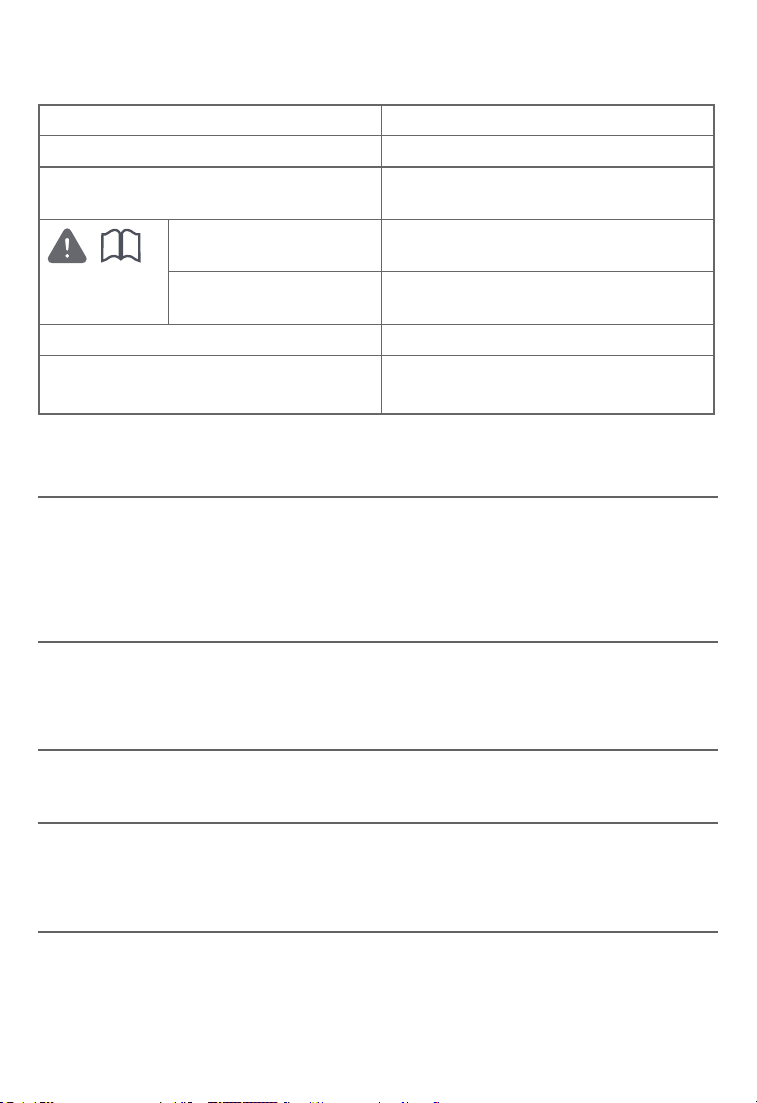
Appendix
160
Technical specications
* Operating times vary depending on your actual use and the age of the battery.
DECT 6.0 digital technology
TheAT&TDECT6.0productsoerunsurpassedrangeperformanceandsound
clarity. This is achieved through a unique antenna design and advances in noise-
lteringtechnology.AnindependentlaboratoryhasconrmedthatAT&TDECT6.0
products perform up to 45% better in range competitions against similarly equipped
phones of the leading competition. Now, calls can be taken in the basement,
backyard and garage with exceptional sound quality.
Telephone operating range
This cordless telephone operates within the maximum power allowed by the Federal
Communications Commission (FCC). Even so, this handset and telephone base can
communicate over a certain distance — which can vary with the locations of the
telephonebaseandhandset,theweather,andtheconstructionofyourhomeoroce.
Redening long range coverage and clarity
This telephone base comes with an antenna which gives much better clarity and
covers a longer range than before.
HD audio
HD audio improves sound quality by expanding and rebuilding frequencies that
are lost with traditional phone calls. There is no additional telephone service
requirement to use HD audio. It is designed to work with standard telephone service.
Your system will automatically enhance all received sound with HD audio.
Simulated full-duplex handset speakerphone
The simulated full-duplex speakerphone on your handset allows both ends of a call
to speak and be heard at the same time. Optimal performance is subject to external
factors and individual usage.
RF frequency band 1921.536MHz — 1928.448MHz
Channels 5
Telephone base voltage
(AC voltage, 60Hz)
96 — 130 Vrms
i
Telephone base voltage
(AC adapter output)
6VDC @0.4A
Max. PS1 or LPS
Charger voltage
(AC adapter output)
6VDC @0.4A
Max. PS1 or LPS
Handset battery 2.4V Ni-MH battery
Operating times* Talk time (handset): up to 7 hours
Standby: up to 5 days

Index
Index
A
Alert tones
handset 130
telephone base 130
Allow list 84–88
Announcement 104
Answer an incoming call
during an intercom call 44
during PTT 50, 51
Answering calls 34
Answering system 104–124
Assign a speed dial number 59
Autoo34
B
Battery charging 13
Battery installation 13, 14
Blind transfer 41
Block list 79–83
C
Call transfer 45
Caller ID announce 25
Caller ID (CID)
add entries to phone
directory 69, 70
delete entries 68
dial entries 68
review entries 66
Calls without numbers 76
Chain dialing 39
Charger installation 11, 12
Clear voicemail indication 28
Clock 23
D
Day and time 23
Delete
a caller ID log entry 68
a directory entry 57
a speed dial number 61, 62
Dialing
from a record in the caller ID
history 68
from the directory 57
Directory
dial a number 57
edit entries 58
name search 56
new entries 53
Display dial 57
DSL 11, 18
E
Ending a call 34
H
Handset
handset locator 42
quick reference guide 5–8
ringer tone 22
ringer volume 21
screen icons 129
speakerphone 35
temporary ringer silencing 35
voicemail indicator 27
HD audio 160
161

162
Index
Index
I
Important safety
information 1–3
Installation 1, 2, 3, 4
Intercom 43–45
L
Last number redial 35
LCD language
reset LCD language 24
Lights 131
Limited warranty 157–159
M
Maintenance 148
Make an outgoing call during
PTT 50
Making calls 34
Memory match 65
Message
alert tone 111
counter display 122
playback 118–120
Mute 38
N
Names
enter into directory 53
search 56
Number of rings 109
O
On-hook dialing (predialing) 34
Outgoing announcement 104
P
Paging tone 42
Power adapter 12
Predialing 34
Push-to-talk 46–51
Q
Quick reference guide 5–10
Quiet mode 33
R
Reassign a speed dial
number 60
Receiving calls 34
Recharging 15
Redial 35
Remote access 123–124
Ringer silencing 35
Ring tone options 22
S
Screen display
messages 132–134
Screen robocalls 101–102
Screen unknown calls 98–100
Smart call blocker 73–103
allowed calls 96
allow list 84–88
blocked calls 97
block list 79–83
option while on a call 103
screening
announcement 93–95
screen robocalls 101–102

163
Index
Index
screen unknown calls 98–100
Setprole77–78
set Smart call blocker
on/o77
star name list 89–92
Speakerphone 35
Speed dial
delete a number 61, 62
edit a number 60
enter a number 59
Star name list 89–92
T
Technicalspecications160
Telephone base
quick reference guide 10
Temporary ringer silencing 35
Time 23
Troubleshooting 136–147
U
Uncategorized calls 76
Unknown calls 76
Unwelcome calls 75
V
Visual message waiting
indicator 27
Voice guide 17, 107
Voicemail 27, 113
quick access 60, 62
Voice prompts 115
Volume control
handset 21, 37, 38, 118
telephone base 118
W
Wall-mount installation 18
Warranty 157–159
Welcome calls 75

Use the following wallet card to help you remember commands to
control your answering system from any touch-tone telephone.
Fold here.
Cut along dotted line.
Action Remote command
Play all messages.....................1
Play new messages ................2
Delete the message ..............3
Delete all old messages ...... 33
Repeat or go back ...................4
Stop ..................................................5
Help menu ....................................
*
5
Skip the message ....................6
Record announcement........
*
7
End remote access call .......8 (or hang up)
Turn system off or on ..........0
Call your phone number,
then enter your two-digit
access code (preset to 19).
Models:
CL82219/CL82229/CL82319/CL82419/CL82519
Type: DECT 6.0 cordless telephone/answering system with caller ID
call waiting
©
2019-2022 Advanced American Telephones. All Rights Reserved.
AT&T and the AT&T logo are trademarks of AT&T Intellectual Property
licensed to Advanced American Telephones, San Antonio, TX 78219.
Printed in China.
Remote access wallet card

©
2019-2022 Advanced American Telephones. All Rights Reserved.
AT&T and the AT&T logo are trademarks of AT&T Intellectual Property licensed to
Advanced American Telephones, San Antonio, TX 78219.
Qaltel
TM
is a trademark of Truecall Group Limited.
SynJ® and Syn248® are trademarks of Advanced American Telephones.
The RBRC Seal and 1-800-8-BATTERY® are registered trademarks of Call2recycle, Inc.
Printed in China. Issue 3.0 AT&T 10/22.
https://telephones.att.com
Company: Advanced American Telephones
Address: 9020 SW Washington Square Road - Ste 555 Tigard, OR 97223, United States.
Phone: 1 (800) 222-3111 in the U.S. or 1 (866) 288-4268 in Canada