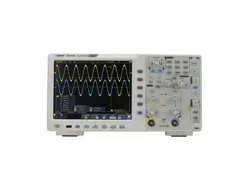

XDS2000 Dual-Channel Series
Digital Storage Oscilloscopes
User Manual
www.owon.com.cn

Apr. 2018 edition V1.0.0
Copyright © LILLIPUT Company. All rights reserved.
The LILLIPUT's products are under the protection of the patent rights, including ones which have
already obtained the patent rights and those which are applied for. The information in this manual will
replace all materials published.
The information in this manual was correct at the time of printing. However, LILLIPUT will continue
to improve products and reserves the rights to change specification at any time without notice.
is the registered trademark of the LILLIPUT Company.
Fujian LILLIPUT Optoelectronics Technology Co., Ltd.
No. 19, Heming Road
Lantian Industrial Zone, Zhangzhou 363005 P.R. China
Tel: +86-596-2130430 Fax: +86-596-2109272
Web:
www.owon.com.cn E-mail: info@owon.com.cn

General Warranty
OWON warrants that the product will be free from defects in materials and workmanship
for a period of 3 years from the date of purchase of the product by the original purchaser
from the OWON Company. The warranty period for accessories such as probes is 12
months. This warranty only applies to the original purchaser and is not transferable to a
third party.
If the product proves defective during the warranty period, OWON will either repair the
defective product without charge for parts and labour, or will provide a replacement in
exchange for the defective product. Parts, modules and replacement products used by
OWON for warranty work may be new or reconditioned like new. All replaced parts,
modules and products become the property of OWON.
In order to obtain service under this warranty, the customer must notify OWON of the
defect before the expiration of the warranty period. Customer shall be responsible for
packaging and shipping the defective product to OWON's designated service centre, a
copy of the customers proof of purchase is also required.
This warranty shall not apply to any defect, failure or damage caused by improper use or
improper or inadequate maintenance and care. OWON shall not be obligated to furnish
service under this warranty a) to repair damage resulting from attempts by personnel other
than OWON representatives to install, repair or service the product; b) to repair damage
resulting from improper use or connection to incompatible equipment; c) to repair any
damage or malfunction caused by the use of non-OWON supplies; or d) to service a
product that has been modified or integrated with other products when the effect of such
modification or integration increases the time or difficulty of servicing the product.
Please contact the nearest OWON's Sales and Service Offices for services or a complete
copy of the warranty statement.
For better after-sales service, please visit www.owon.com.cn and register the purchased
product online.
Excepting the after-sales services provided in this summary or the applicable warranty
statements, OWON will not offer any guarantee for maintenance definitely declared or hinted,
including but not limited to the implied guarantee for marketability and special-purpose
acceptability. OWON should not take any responsibilities for any indirect, special or consequent
damages.

i
Table of Contents
1. General Safety Requirements .......................................................................................... 1
2. Safety Terms and Symbols ............................................................................................... 2
3. Junior User Guidebook ................................................................................................... 4
Introduction to the Structure of the Oscilloscope ..................................................................... 5
Front Panel ............................................................................................................................................... 5
Front Panel Menu Buttons ........................................................................................................................ 6
Rear Panel ................................................................................................................................................ 6
Control Area ............................................................................................................................................. 7
User Interface Introduction ........................................................................................................ 8
How to Implement the General Inspection ............................................................................. 10
How to Implement the Function Inspection ............................................................................ 10
How to Implement the Probe Compensation .......................................................................... 11
How to Set the Probe Attenuation Coefficient ........................................................................ 12
How to Use the Probe Safely..................................................................................................... 13
How to Implement Self-calibration .......................................................................................... 13
Introduction to the Vertical System ......................................................................................... 14
Introduction to the Horizontal System .................................................................................... 15
Introduction to the Trigger System ......................................................................................... 16
4. Advanced User Guidebook ............................................................................................ 17
How to Set the Vertical System ................................................................................................ 18
Use Mathematical Manipulation Function ............................................................................. 20
Waveform math ...................................................................................................................................... 21
User defined function ............................................................................................................................. 22
Digital Filter ........................................................................................................................................... 22
Using FFT function ................................................................................................................................ 22
Use Vertical Position and Scale Knobs .................................................................................... 25
How to Set the Horizontal System ........................................................................................... 25
Zoom the Waveform .............................................................................................................................. 26
How to Set the Trigger/Decoding System ................................................................................ 26
Single Trigger ......................................................................................................................................... 27
Alternate Trigger (Trigger mode: Edge) ................................................................................................ 35
Logic Trigger.......................................................................................................................................... 35
Bus Trigger ............................................................................................................................................. 36
Bus Decoding ......................................................................................................................................... 42
How to Operate the Function Menu ........................................................................................ 46
How to Implement Sampling Setup ....................................................................................................... 46
How to Set the Display System .............................................................................................................. 48

ii
How to Save and Recall a Waveform ..................................................................................................... 50
How to Record/Playback Waveforms .................................................................................................... 57
How to Clone a waveform ...................................................................................................................... 61
How to Implement the Auxiliary System Function Setting .................................................................... 63
How to Update your Instrument Firmware............................................................................................. 67
How to Measure Automatically.............................................................................................................. 68
How to Measure with Cursors ................................................................................................................ 72
How to Use Autoscale ............................................................................................................................ 75
How to Use Built-in Help ....................................................................................................................... 77
How to Use Executive Buttons............................................................................................................... 77
How to Print the Screen Image ............................................................................................................... 79
5. Communication with PC ............................................................................................... 80
Using USB Port .......................................................................................................................... 80
Using LAN Port ......................................................................................................................... 81
Connect directly ..................................................................................................................................... 81
Connect through a router ........................................................................................................................ 82
6. Demonstration ............................................................................................................... 85
Example 1: Measurement a Simple Signal .............................................................................. 85
Example 2: Gain of a Amplifier in a Metering Circuit .......................................................... 86
Example 3: Capturing a Single Signal ..................................................................................... 87
Example 4: Analyze the Details of a Signal ............................................................................. 88
Example 5: Application of X-Y Function ................................................................................ 90
Example 6: Video Signal Trigger ............................................................................................. 91
7. Troubleshooting ............................................................................................................. 93
8. Technical Specifications ................................................................................................ 94
Trigger .................................................................................................................................................... 96
General Technical Specifications ............................................................................................. 98
9. Appendix ........................................................................................................................ 99
Appendix A: Enclosure ............................................................................................................. 99
Appendix B: General Care and Cleaning ............................................................................... 99

1.General Safety Requirements
1
1. General Safety Requirements
Before use, please read the following safety precautions to avoid any possible bodily
injury and to prevent this product or any other connected products from damage. In
order to avoid any contingent danger, ensure this product is only used within the
range specified.
Only the qualified technicians can implement the maintenance.
To avoid Fire or Personal Injury:
Connect the probe correctly. The grounding end of the probe corresponds to the
grounding phase. Please don't connect the grounding end to the positive phase.
Use Proper Power Cord. Use only the power cord supplied with the product and
certified to use in your country.
Connect or Disconnect Correctly. When the probe or test lead is connected to a
voltage source, please do not connect and disconnect the probe or test lead at random.
Product Grounded. This instrument is grounded through the power cord grounding
conductor. To avoid electric shock, the grounding conductor must be grounded. The
product must be grounded properly before any connection with its input or output
terminal.
When powered by AC power, it is not allowed to measure AC power source
directly, because the testing ground and power cord ground conductor are
connected together, otherwise, it will cause short circuit.
Check all Terminal Ratings. To avoid fire or shock hazard, check all ratings and
markers of this product. Refer to the user's manual for more information about ratings
before connecting to the instrument.
Do not operate without covers. Do not operate the instrument with covers or panels
removed.
Use Proper Fuse. Use only the specified type and rating fuse for this instrument.
Avoid exposed circuit. Do not touch exposed junctions and components when the
instrument is powered.
Do not operate if in any doubt. If you suspect damage occurs to the instrument, have
it inspected by qualified service personnel before further operations.
Use your Oscilloscope in a well-ventilated area. Make sure the instrument installed
with proper ventilation, refer to the user manual for more details.
Do not operate in wet conditions.
Do not operate in an explosive atmosphere.
Keep product surfaces clean and dry.
2.Safety Terms and Symbols
2
2. Safety Terms and Symbols
Safety Terms
Terms in this manual. The following terms may appear in this manual:
Warning: Warning indicates the conditions or practices that could result in
injury or loss of life.
Caution: Caution indicates the conditions or practices that could result in
damage to this product or other property.
Terms on the product. The following terms may appear on this product:
Danger: It indicates an injury or hazard may immediately happen.
Warning: It indicates an injury or hazard may be accessible potentially.
Caution: It indicates a potential damage to the instrument or other property might occur.
Safety Symbols
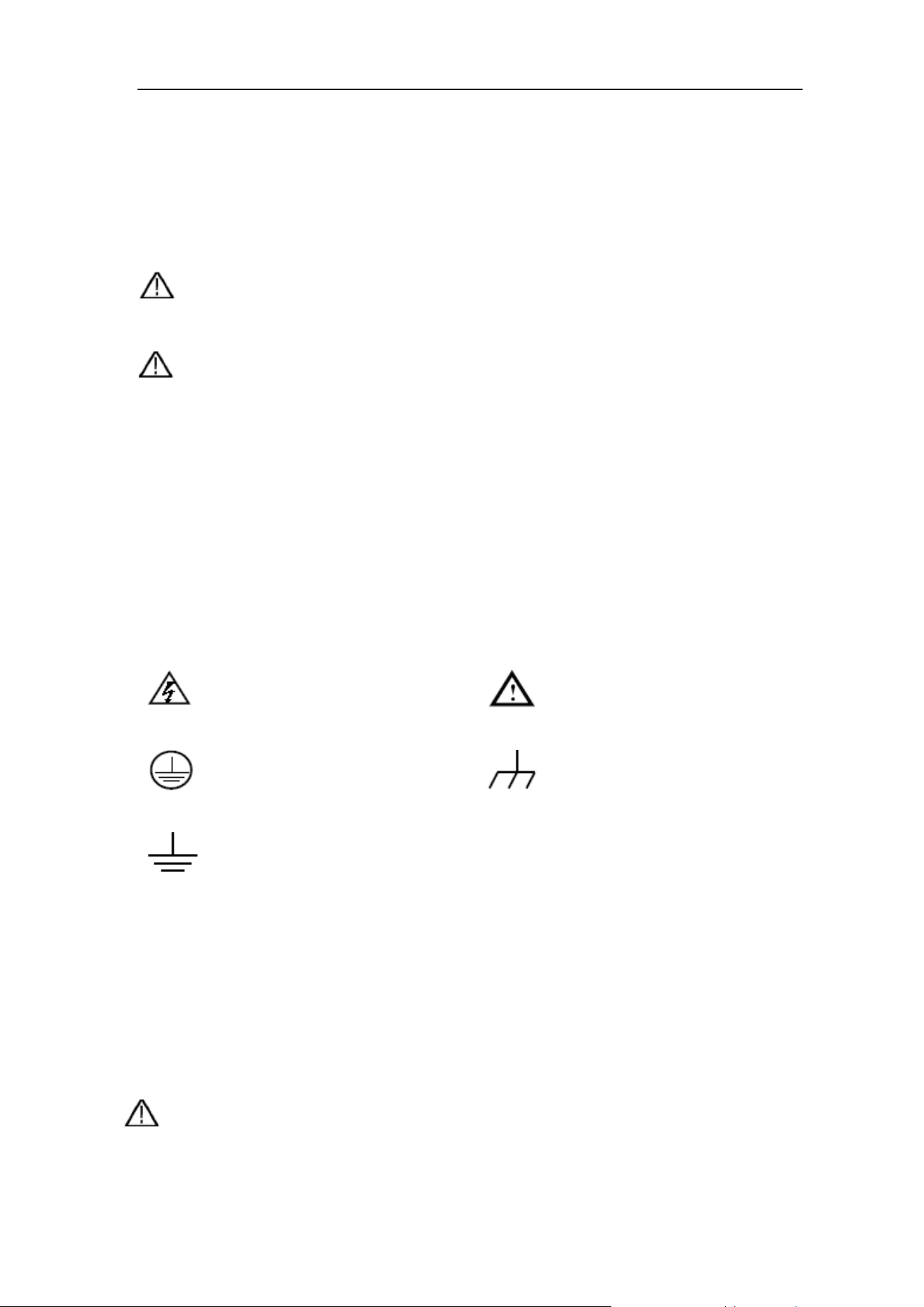
Symbols on the product. The following symbol may appear on the product:
Hazardous Voltage
Refer to Manual
Protective Earth Terminal
Chassis Ground
Test Ground
To avoid body damage and prevent product and connected equipment damage, carefully
read the following safety information before using the test tool. This product can only be
used in the specified applications.
Warning:
The two channels of the oscilloscope are not electrically isolated. The channels should
adopt a common ground during measuring. To prevent short circuits, the 2 probe
2.Safety Terms and Symbols
3
grounds must not be connected to 2 different non-isolated DC levels.
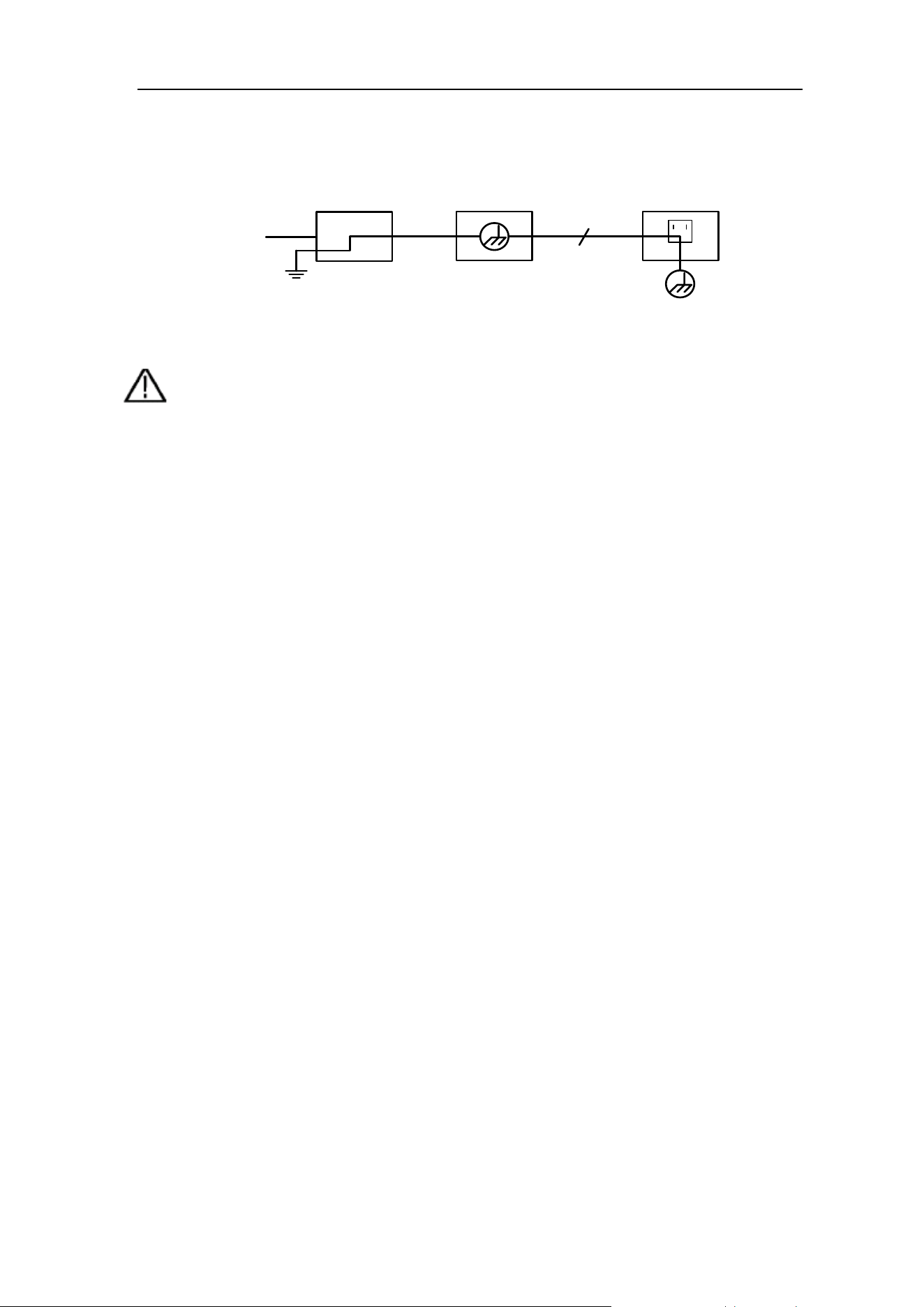
The diagram of the oscilloscope ground wire connection:
Ground Clip
Signal Input
Oscilloscope
Electrical Outlet
Probe
Power Cord
It is not allowed to measure AC power when the oscilloscope is AC powered.
Warning:
To avoid fire or electrical shock
, when the oscilloscope input signal
connected
is more than
42V peak (30Vrms) or on circuits of more than
4800VA
, please take note of below items:
Only use accessory insulated voltage probes and test lead.
Check the accessories such as probe before use and replace it if
there are any damages.
Remove probes, test leads and other accessories immediately after
use.
Remove USB cable which connects oscilloscope and computer.
Do
not apply input voltages above the rating of the instrument
because the probe tip voltage will directly transmit to the
oscilloscope. Use with caution when the probe is set as 1:1.
Do not use exposed metal BNC or banana plug connectors.
Do not insert metal objects into connectors.

3.Junior User Guidebook
4
3. Junior User Guidebook
This chapter deals with the following topics mainly:
Introduction to the structure of the oscilloscope
Introduction to the user interface
How to implement the general inspection
How to implement the function inspection
How to make a probe compensation
How to set the probe attenuation coefficient
How to use the probe safely
How to implement an auto-calibration
Introduction to the vertical system
Introduction to the horizontal system
Introduction to the trigger system
3.Junior User Guidebook
5
Introduction to the Structure of the Oscilloscope
This chapter makes a simple description of the operation and function of the front panel of
the oscilloscope, enabling you to be familiar with the use of the oscilloscope in the
shortest time.
Front Panel
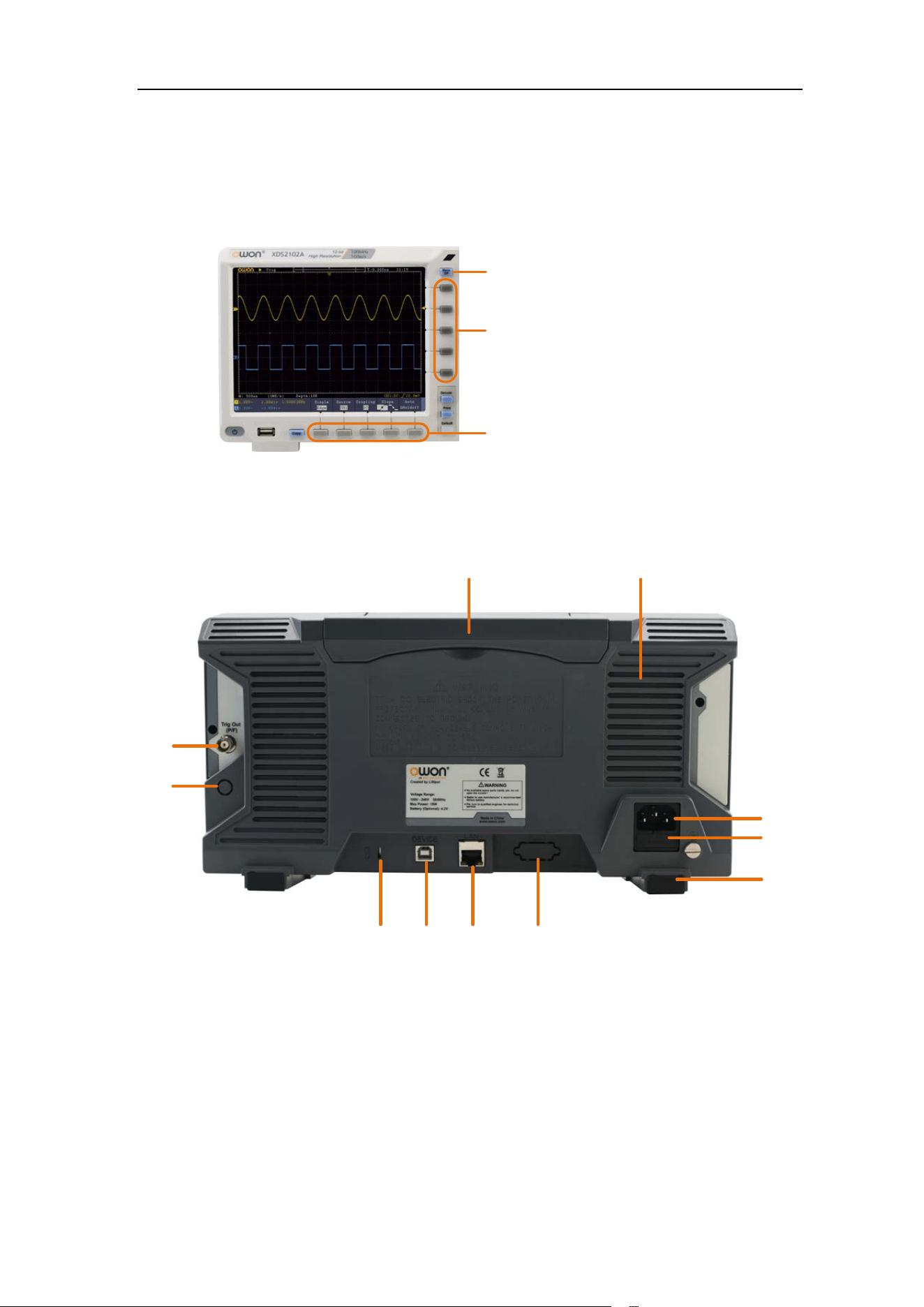
The front panel has knobs and function buttons. The 5 buttons in the column on the right
side of the display screen or in the row under the display screen are menu selection
buttons, through which, you can set the different options for the current menu. The other
buttons are function buttons, through which, you can enter different function menus or
obtain a specific function application directly.
8
2
5
3
7
4
6
1
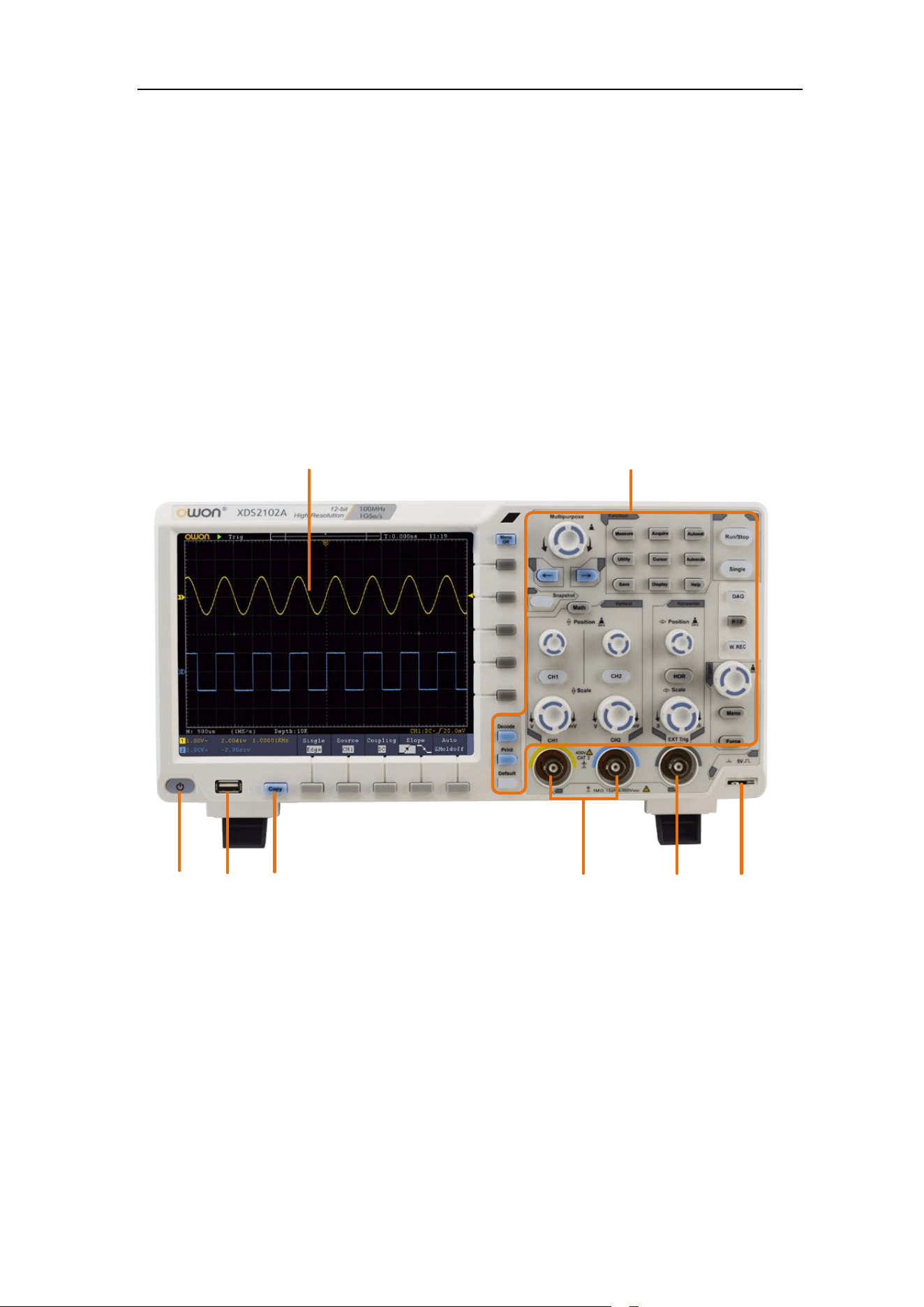
Figure 3-1 Front panel
1. Display area
2. Control (button and knob) area
3. Probe Compensation: Measurement signal (5V/1kHz) output.
4. EXT Trigger Input
5. Signal Input Channel
6. Copy button: You can save the waveform by just pressing this button in any user
interface.
7. USB Host port: It is used to transfer data when external USB equipment connects to
the oscilloscope regarded as "host device". For example: Saving the waveform to USB
flash disk needs to use this port.
3.Junior User Guidebook
6
8. Power on/off
Backlight of this button:
Red light: The oscilloscope is turned off (connects with AC Power);
Green light: The oscilloscope is turned on (powered by AC Power).
Front Panel Menu Buttons
Select the right menu item
Select the bottom menu item
Remove the left and right menu
Figure 3-2 Menu Buttons
Rear Panel
9
8
7 6
11
1
2
5
3
4
10
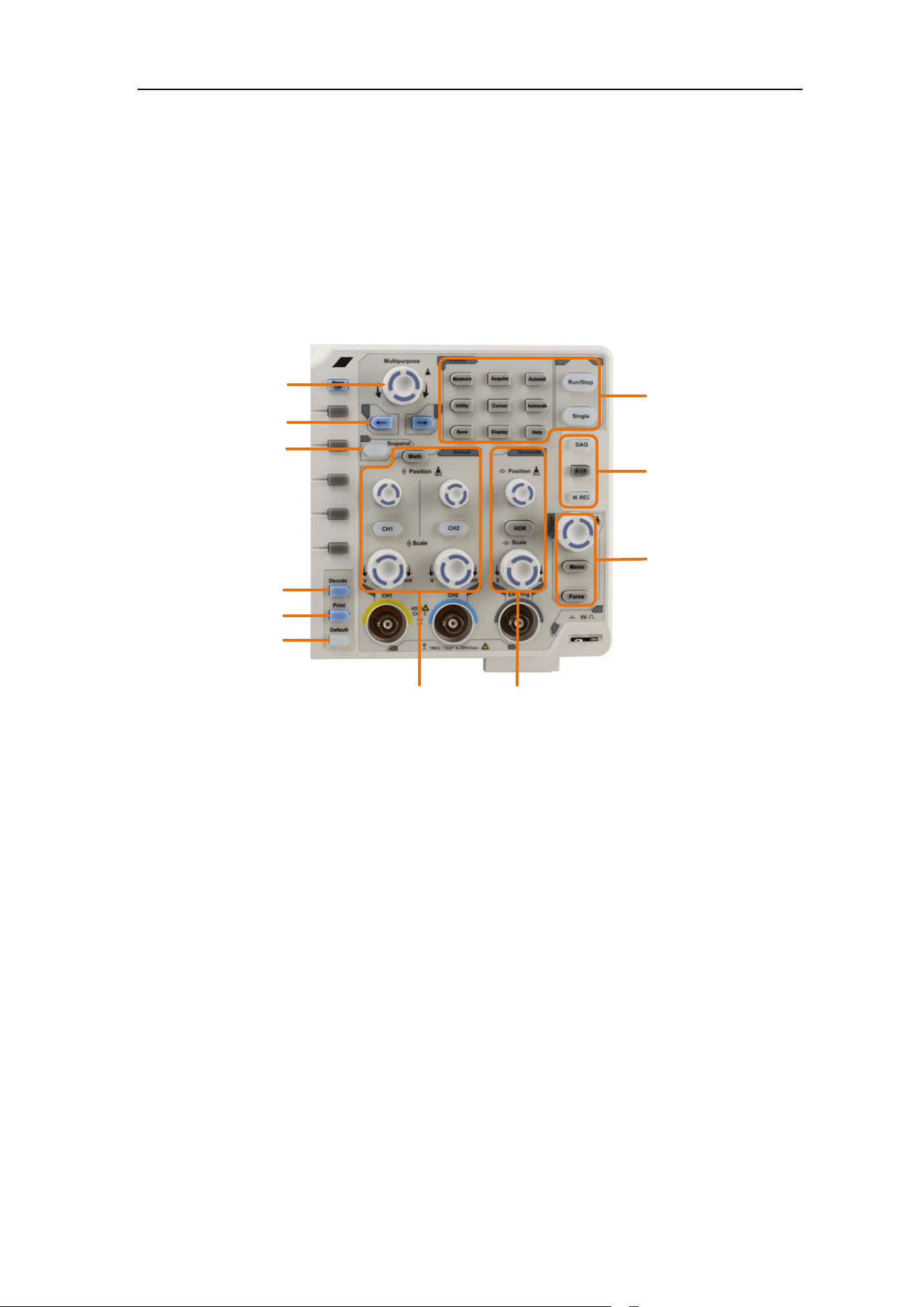
Figure 3-3 Rear Panel
1. Handle
2. Air vents
3. AC power input jack
4. Fuse
5. Foot stool: Adjust the tilt angle of the oscilloscope.
6. VGA port: To connect the oscilloscope with a monitor or a projector as VGA output
(optional).
7. LAN port: the network port which can be used to connect with PC.
3.Junior User Guidebook
7
8. USB Device port: It is used to transfer data when external USB equipment connects to
the oscilloscope regarded as "slave device". For example: to use this port when
connect PC to the oscilloscope by USB.
9. Lock Hole: You can lock the oscilloscope to a fixed location using the security lock
(please buy it yourself) to secure the oscilloscope.
10. AV Port: AV signal output port (optional).
11. Trig Out(P/F) port: Trigger signal output or Pass/Fail output.
Control Area
8
7
6
1
2
3
11
10
5
4
9
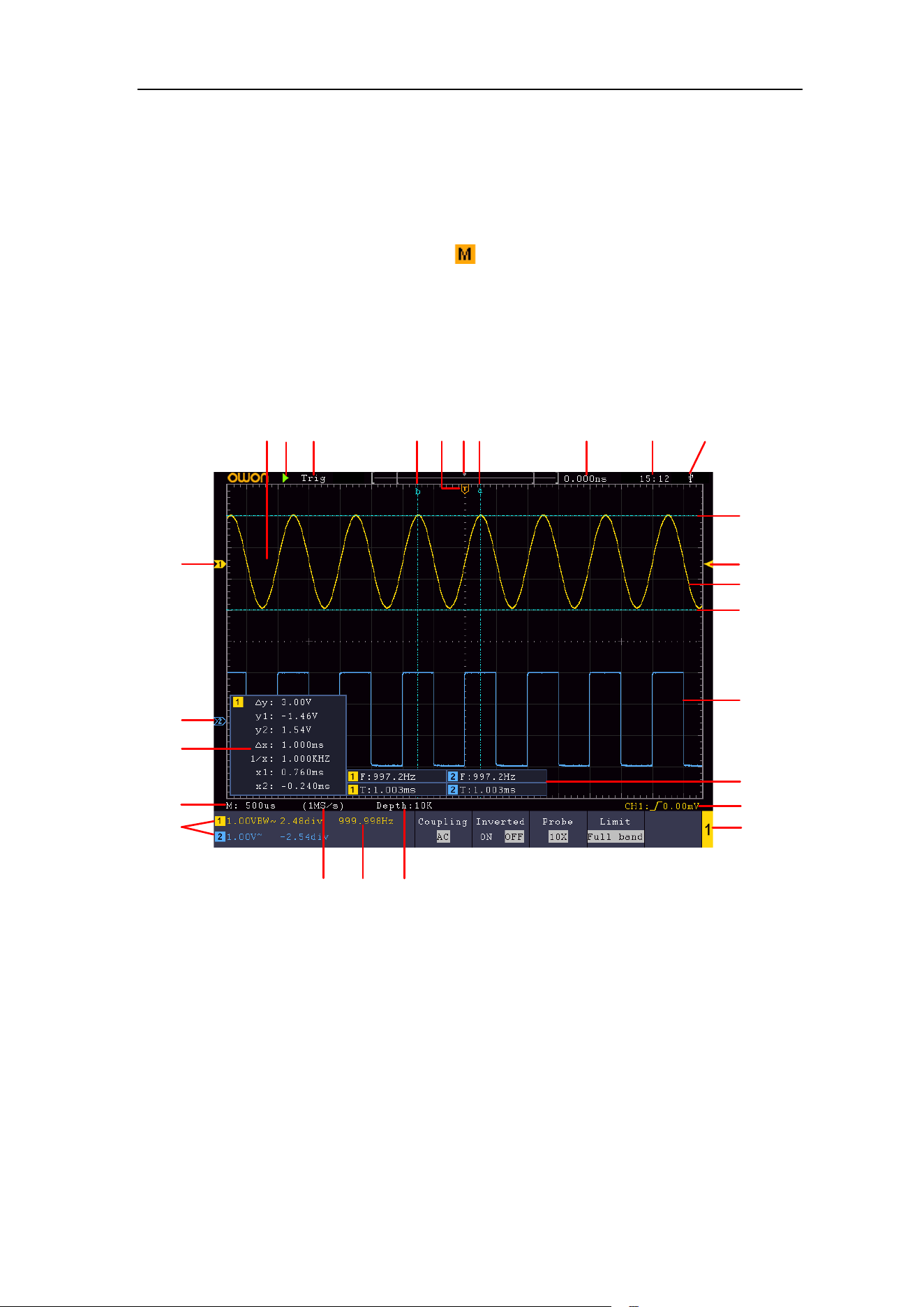
Figure 3-4 Control Area Overview
1. Function button area: Total 11 buttons
2. DAQ: Multimeter Recorder (This function is not available in XDS2000 series.)
P/F: Pass/Fail
W.REC: Waveform Record
3. Trigger control area with 2 buttons and 1 knob.
The Trigger Level knob is to adjust trigger voltage. Other 2 buttons refer to trigger
system setting.
4. Horizontal control area with 1 button and 2 knobs.
"HOR" button refer to horizontal system setting menu, "Horizontal Position" knob
control trigger position, "Horizontal Scale" control time base.
5. Vertical control area with 3 buttons and 4 knobs.
"CH1" and "CH2 " correspond to setting menu in CH1 and CH2, "Math" button refer
to math menu, the math menu consists of six kinds of operations, including CH1-CH2,
CH2-CH1, CH1+CH2, CH1*CH2, CH1/CH2 and FFT. Two "Vertical Position" knob
control the vertical position of CH1/CH2, and two "Scale" knob control voltage scale
of CH1, CH2.
3.Junior User Guidebook
8
6. Default: Call out the factory settings.
7. Print
8. Turn on/off Decode function.
9. Snapshot
10. Direction key: Move the cursor of the focused parameter.
11. M knob (Multipurpose knob): when a symbol appears in the menu, it indicates
you can turn the M knob to select the menu or set the value. You can push it to close
the menu on the left and right.
User Interface Introduction
1
3
15
10
23
20
6
7
8
9
12
13
16
17
18
22
24
5
14
21
2
4
19
11
4
12
Figure 3-5 Illustrative Drawing of Display Interfaces
1. Waveform Display Area.
2. Run/Stop
3. The state of trigger, including:
Auto: Automatic mode and acquire waveform without triggering.
Trig: Trigger detected and acquire waveform.
Ready: Pre-triggered data captured and ready for a trigger.
Scan: Capture and display the waveform continuously.
Stop: Data acquisition stopped.
4. The two blue dotted lines indicates the vertical position of cursor measurement.

3.Junior User Guidebook
9
5. The T pointer indicates the horizontal position for the trigger.
6. The pointer indicates the trigger position in the record length.
7. It shows present triggering value and displays the site of present window in
internal memory.
8. It shows setting time.
9. It indicates that there is a USB disk connecting with the oscilloscope.
10. The pointer shows the trigger level position.
11. The waveform of CH1.
12. The two blue dotted lines indicate the horizontal position of cursor measurement.
13. The waveform of CH2.
14. It indicates the measured type and value of the corresponding channel. "T" means
period, "F" means frequency, "V" means the average value, "Vp" the peak-peak
value, "Vr" the root-mean-square value, "Ma" the maximum amplitude value,
"Mi" the minimum amplitude value, "Vt" the Voltage value of the waveform's
flat top value, "Vb" the Voltage value of the waveform's flat base, "Va" the
amplitude value, "Os" the overshoot value, "Ps" the Preshoot value, "RT" the rise
time value, "FT" the fall time value, "PW" the +width value, "NW" the -Width
value, "+D" the +Duty value, "-D" the -Duty value, "PD" the Delay A->B
value, "ND" the Delay A->B value, "TR" the Cycle RMS, "CR" the Cursor
RMS, "WP" the Screen Duty, "RP" the Phase, "+PC" the +Pulse count, "-PC"
the - Pulse count, "+E" the Rise edge count, "-E" the Fall edge count, "AR" the
Area, "CA" the Cycle area.
15. The icon shows the selected trigger type, e.g. represents triggering on the
rising edge for an Edge trigger. The reading shows the trigger level value of the
corresponding channel.
16. Channel identifier of current bottom menu.
17. The readings show the record length.
18. The frequency of the trigger signal.
19. The readings show current sample rate.
20. The readings indicate the corresponding Voltage Division and the Zero Point
positions of the channels. "BW" indicates bandwidth limit.
The icon shows the coupling mode of the channel.
"—" indicates direct current coupling
"~" indicates AC coupling
" " indicates GND coupling
21. The reading shows the setting of main time base.
22. It is cursor measure window, showing the absolute values and the readings of the
cursors.
23. The blue pointer shows the grounding datum point (zero point position) of the
waveform of the CH2 channel. If the pointer is not displayed, it means that this
channel is not opened.
24. The yellow pointer indicates the grounding datum point (zero point position) of

3.Junior User Guidebook
10
the waveform of the CH1 channel. If the pointer is not displayed, it means that
the channel is not opened.
How to Implement the General Inspection
After you get a new oscilloscope, it is recommended that you should make a check on the
instrument according to the following steps:
1. Check whether there is any damage caused by transportation.
If it is found that the packaging carton or the foamed plastic protection cushion has
suffered serious damage, do not throw it away first till the complete device and its
accessories succeed in the electrical and mechanical property tests.
2. Check the Accessories
The supplied accessories have been already described in the "Appendix A: Enclosure"
of this Manual. You can check whether there is any loss of accessories with reference
to this description. If it is found that there is any accessory lost or damaged, please get
in touch with the distributor of OWON responsible for this service or the OWON's
local offices.
3. Check the Complete Instrument
If it is found that there is damage to the appearance of the instrument, or the
instrument can not work normally, or fails in the performance test, please get in touch
with the OWON's distributor responsible for this business or the OWON's local
offices. If there is damage to the instrument caused by the transportation, please keep
the package. With the transportation department or the OWON's distributor
responsible for this business informed about it, a repairing or replacement of the
instrument will be arranged by the OWON.
How to Implement the Function Inspection
Make a fast function check to verify the normal operation of the instrument, according to
the following steps:
1. Connect the power cord to a power source. Long press the
button on the
bottom left of the instrument.
The instrument carries out all self-check items and shows the Boot Logo. Push the
Utility button, select Function in the bottom menu. Select Adjust in the left menu,
select Default in the bottom menu. The default attenuation coefficient set value of the
probe in the menu is 10X.
2. Set the Switch in the Oscilloscope Probe as 10X and Connect the Oscilloscope
with CH1 Channel.
Align the slot in the probe with the plug in the CH1 connector BNC, and then tighten
3.Junior User Guidebook
11
the probe with rotating it to the right side.
Connect the probe tip and the ground clamp to the connector of the probe
compensator.
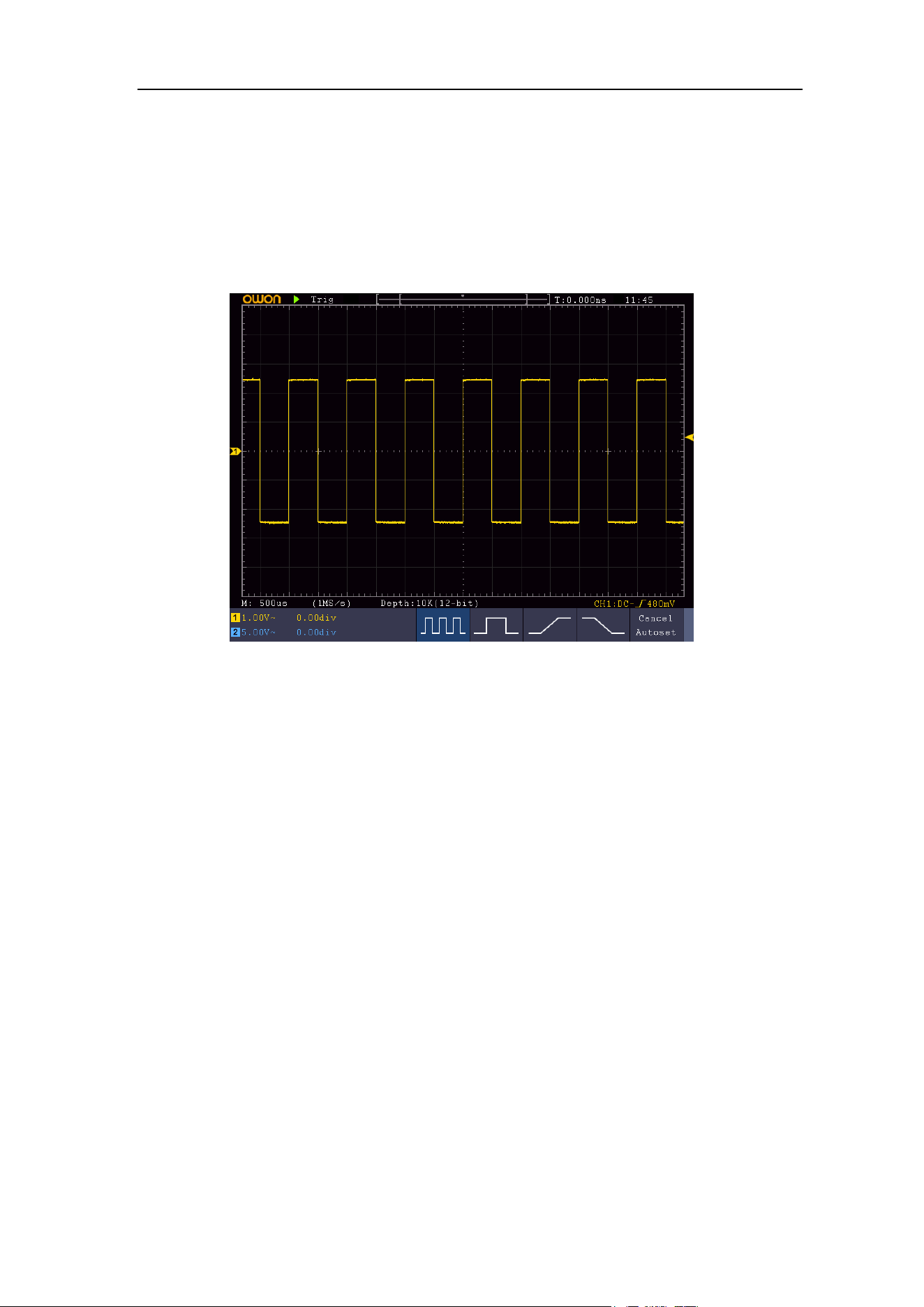
3. Push the Autoset Button on the front panel.
The square wave of 1 KHz frequency and 5V peak-peak value will be displayed in
several seconds (see Figure 3-6).
Figure 3-6 Auto set
Check CH2 by repeating Step 2 and Step 3.
How to Implement the Probe Compensation
When connect the probe with any input channel for the first time, make this adjustment to
match the probe with the input channel. The probe which is not compensated or presents a
compensation deviation will result in the measuring error or mistake. For adjusting the
probe compensation, please carry out the following steps:
1. Set the attenuation coefficient of the probe in the menu as 10X and that of the switch
in the probe as 10X (see "How to Set the Probe Attenuation Coefficient" on P12), and
connect the probe with the CH1 channel. If a probe hook tip is used, ensure that it
keeps in close touch with the probe. Connect the probe tip with the signal connector
of the probe compensator and connect the reference wire clamp with the ground wire
connector of the probe connector, and then push the Autoset button on the front
panel.
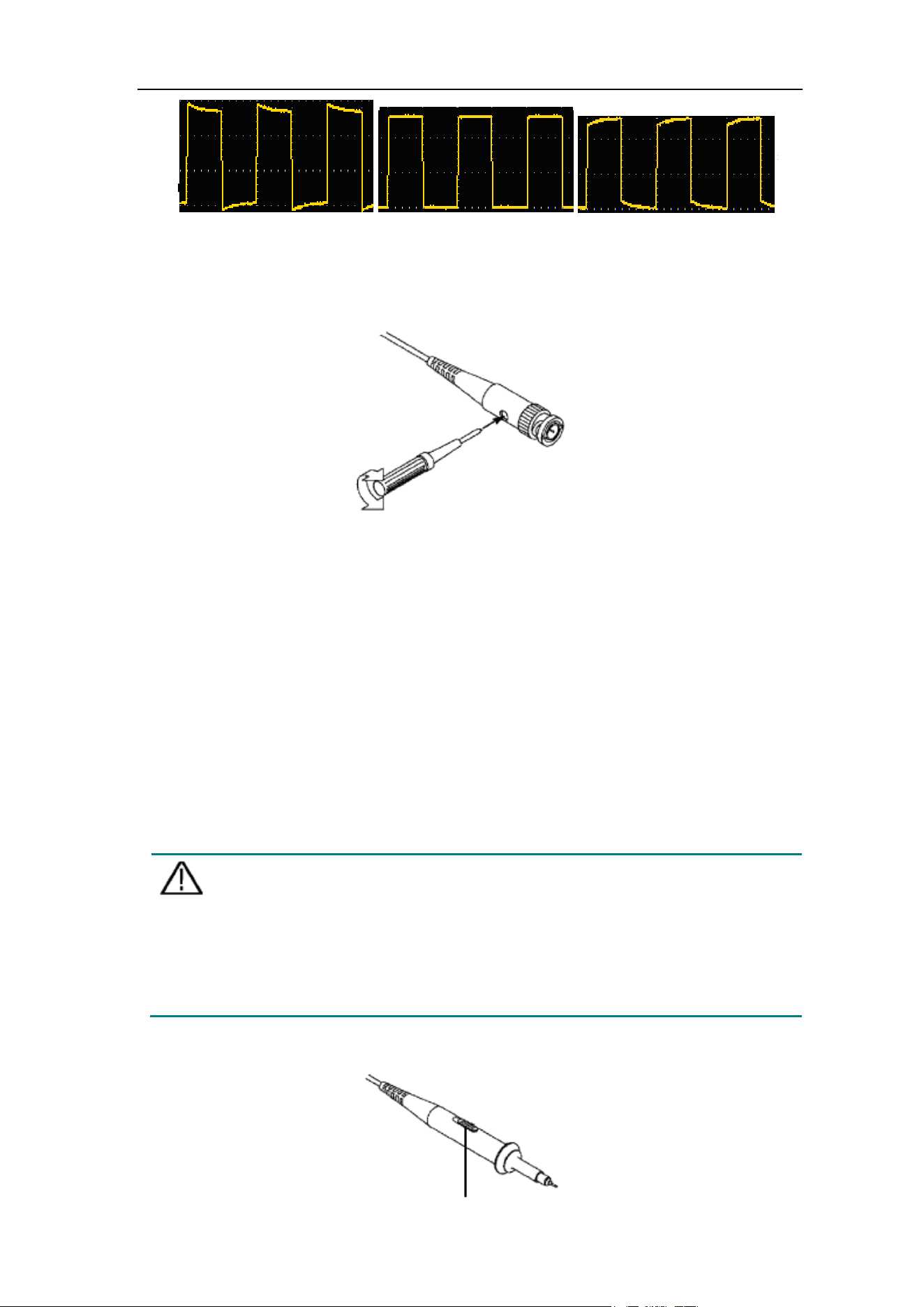
2. Check the displayed waveforms and regulate the probe till a correct compensation is
achieved (see Figure 3-7 and Figure 3-8).
3.Junior User Guidebook
12
Overcompensated Compensated correctly Under compensated
Figure 3-7 Displayed Waveforms of the Probe Compensation
3. Repeat the steps mentioned if needed.
Figure 3-8 Adjust Probe
How to Set the Probe Attenuation Coefficient
The probe has several attenuation coefficients, which will influence the vertical scale
factor of the oscilloscope.
To change or check the probe attenuation coefficient in the menu of oscilloscope:
(1) Push the function menu button of the used channels (CH1 or CH2 button).
(2) Select Probe in the bottom menu; select Attenu in the right menu, turn the M knob to
select the proper value corresponding to the probe.
This setting will be valid all the time before it is changed again.
Caution:
The default attenuation coefficient of the probe on the instrument is preset to
10X.
Make sure that the set value of the attenuation switch in the probe is the
same as the menu selection of the probe attenuation coefficient
in the
oscilloscope.
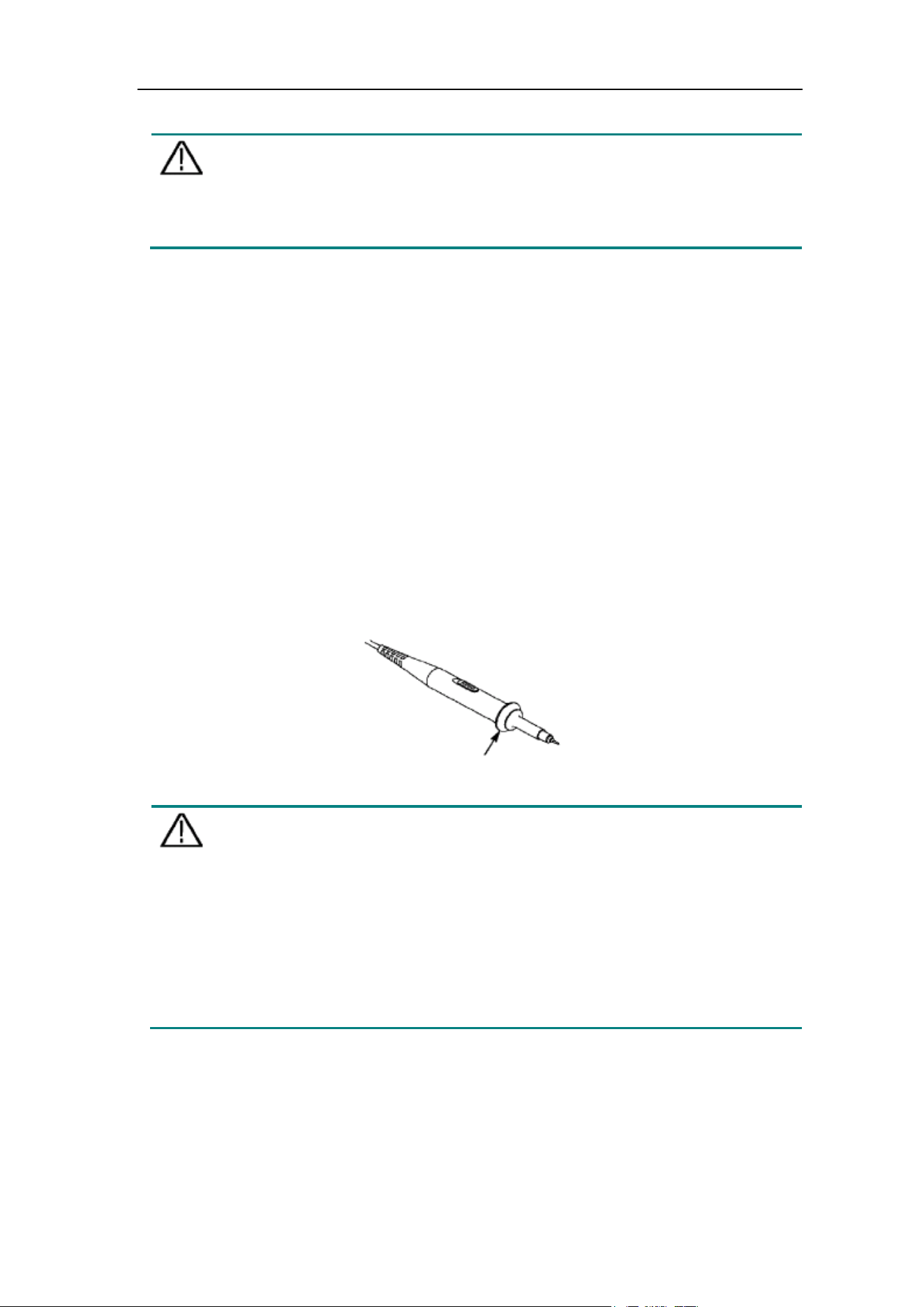
The set values of the probe switch are 1X and 10X (see Figure 3-9).
3.Junior User Guidebook
13
Figure 3-9 Attenuation Switch
Caution:
When the attenuation switch is set to 1X, the probe will limit the bandwidth
of the oscilloscope in 5MHz. To use the full bandwidth of the oscilloscope,
the switch must be set to 10X.
Identify the Probe Attenuation Coefficient Automatically
The oscilloscope can identify the probe attenuation coefficient of the 100:1 (impedance
5K±20%) or 10:1 (impedance 10K±20%) probe with the identifying pin. When you
attach the probe, the oscilloscope set the attenuation automatically on the oscilloscope
vertical menu for the channel to match the probe.
For example, if you attach a 10:1 probe with the identifying pin, the screen will prompt
"The probe attenuation factor is X10", and set the attenuation to 10X automatically on the
oscilloscope vertical menu for the channel.
How to Use the Probe Safely
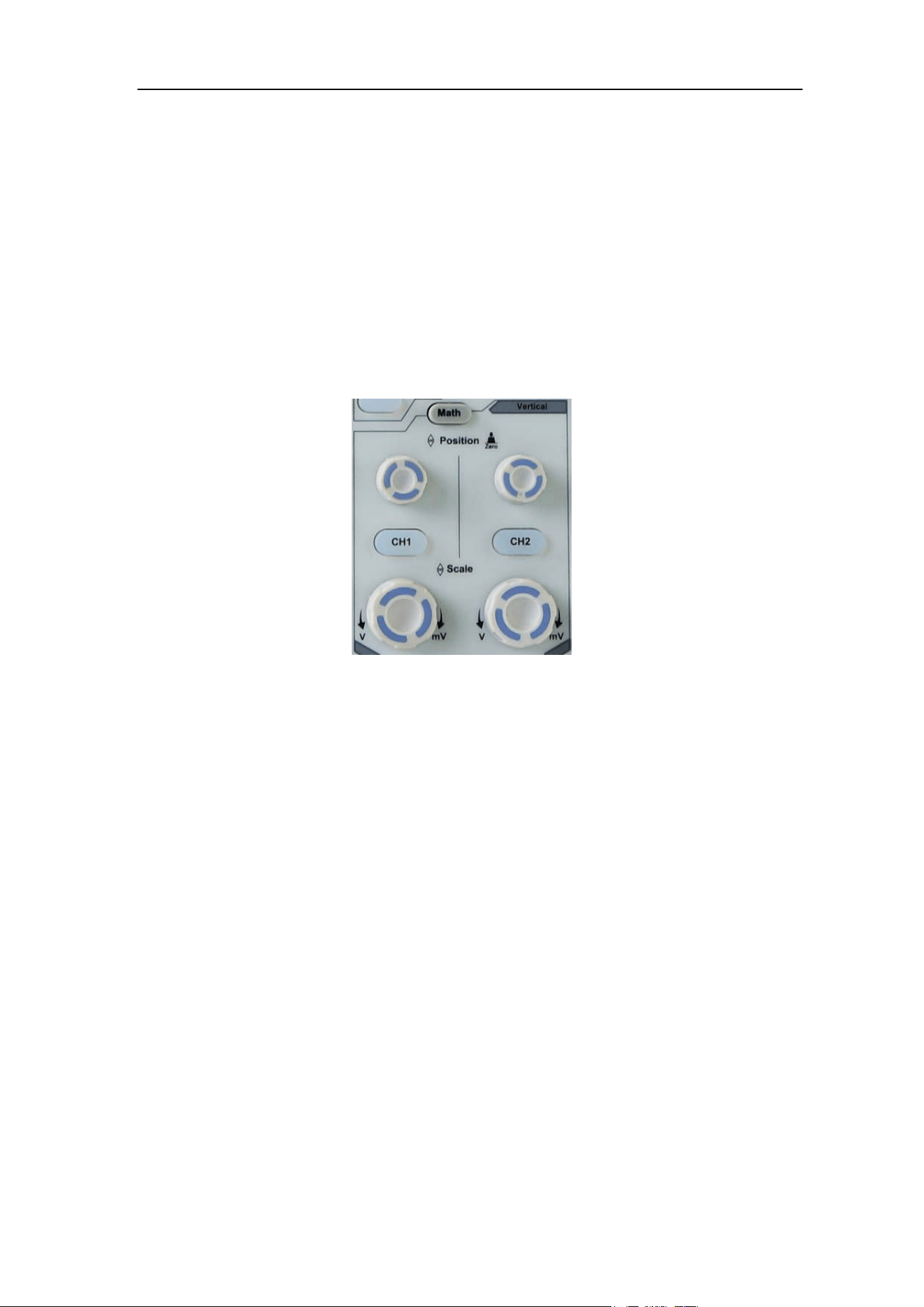
The safety guard ring around the probe body protects your finger against any electric
shock, shown as Figure 3-10.
Figure 3-10 Finger Guard
Warning:
To avoid electric shock, always keep your finger behind the safety guard
ring of the probe during the operation.
To protect you from suffering from the electric shock, do not touch any
metal part of the probe tip when it is connected to the power supply.
Before making any measurements, always
connect the probe to the
instrument and connect the ground terminal to the earth.
How to Implement Self-calibration
The self-calibration application can make the oscilloscope reach the optimum condition
rapidly to obtain the most accurate measurement value. You can carry out this application
program at any time. This program must be executed whenever the change of ambient
3.Junior User Guidebook
14
temperature is 5℃ or over.
Before performing a self-calibration, disconnect all probes or wires from the input
connector. Push the Utility button, select Function in the bottom menu, select Adjust. in
the left menu, select Self Cal in the bottom menu; run the program after everything is
ready.
Introduction to the Vertical System
As shown in Figure 3-11, there are a few of buttons and knobs in Vertical Controls. The
following practices will gradually direct you to be familiar with the using of the vertical
setting.
Figure 3-11 Vertical Control Zone
1. Use the Vertical Position knob to show the signal in the center of the waveform
window. The Vertical Position knob functions the regulating of the vertical display
position of the signal. Thus, when the Vertical Position knob is rotated, the pointer
of the earth datum point of the channel is directed to move up and down following
the waveform.
Measuring Skill
If the channel is under the DC coupling mode, you can rapidly measure the DC
component of the signal through the observation of the difference between the wave
form and the signal ground.
If the channel is under the AC mode, the DC component would be filtered out. This
mode helps you display the AC component of the signal with a higher sensitivity.
Vertical offset back to 0 shortcut key
Turn the Vertical Position knob to change the vertical display position of channel
and push the position knob to set the vertical display position back to 0 as a shortcut
key, this is especially helpful when the trace position is far out of the screen and want
it to get back to the screen center immediately.
2. Change the Vertical Setting and Observe the Consequent State Information Change.
3.Junior User Guidebook
15
With the information displayed in the status bar at the bottom of the waveform
window, you can determine any changes in the channel vertical scale factor.
Turn the Vertical Scale knob and change the "Vertical Scale Factor (Voltage
Division)", it can be found that the scale factor of the channel corresponding to
the status bar has been changed accordingly.
Push buttons of CH1, CH2 and Math, the operation menu, symbols, waveforms
and scale factor status information of the corresponding channel will be displayed
in the screen.
Introduction to the Horizontal System
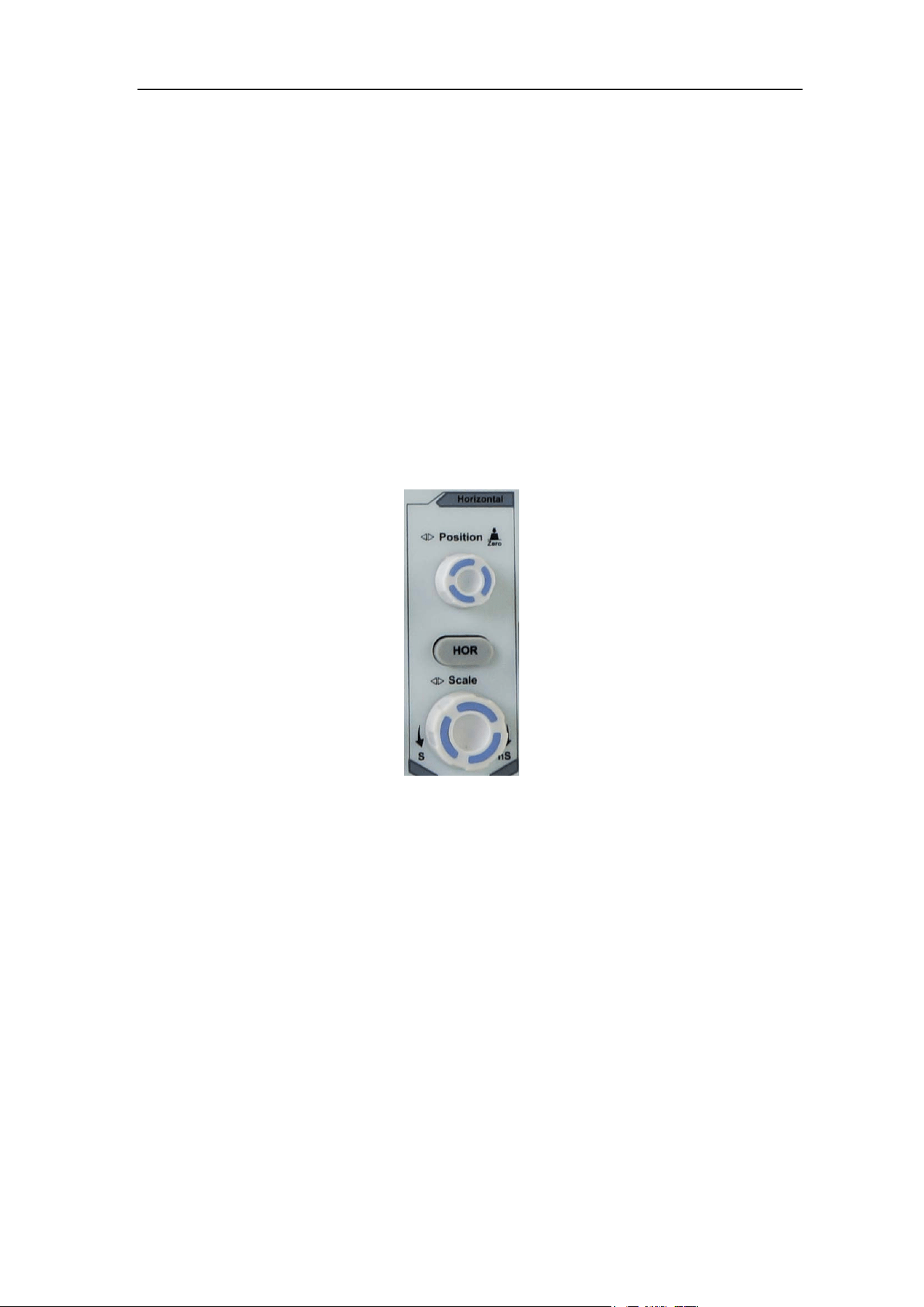
Shown as Figure 3-12, there are a button and two knobs in the Horizontal Controls. The
following practices will gradually direct you to be familiar with the setting of horizontal
time base.
Figure 3-12 Horizontal Control Zone
1. Turn the Horizontal Scale knob to change the horizontal time base setting and
observe the consequent status information change. Turn the Horizontal Scale knob to
change the horizontal time base, and it can be found that the Horizontal Time Base
display in the status bar changes accordingly.
2. Use the Horizontal Position knob to adjust the horizontal position of the signal in the
waveform window. The Horizontal Position knob is used to control the triggering
displacement of the signal or for other special applications. If it is applied to
triggering the displacement, it can be observed that the waveform moves horizontally
with the knob when you rotate the Horizontal Position knob.
Triggering displacement back to 0 shortcut key
Turn the Horizontal Position knob to change the horizontal position of channel and
push the Horizontal Position knob to set the triggering displacement back to 0 as a
shortcut key.
3. Push the Horizontal HOR button to switch between the normal mode and the wave
3.Junior User Guidebook
16
zoom mode.
Introduction to the Trigger System
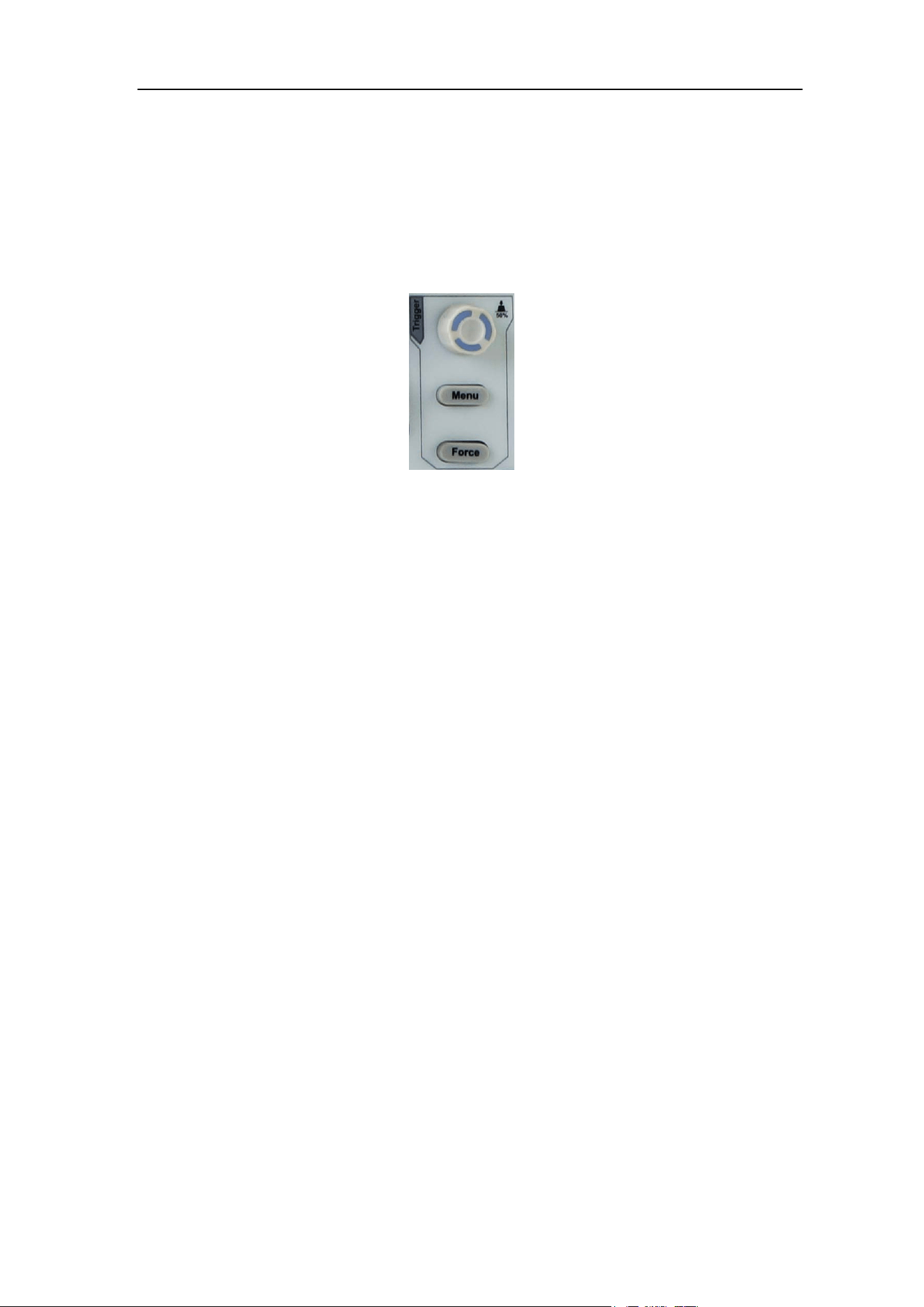
As shown in Figure 3-13, there are one knob and three buttons make up Trigger Controls.
The following practices will direct you to be familiar with the setting of the trigger system
gradually.
Figure 3-13 Trigger Control Zone
1. Push the Trigger Menu button and call out the trigger menu. With the operations of
the menu selection buttons, the trigger setting can be changed.
2. Use the Trigger Level knob to change the trigger level setting.
By turning the Trigger Level knob, the trigger indicator in the screen will move up
and down. With the movement of the trigger indicator, it can be observed that the
trigger level value displayed in the screen changes accordingly.
Note: Turning the Trigger Level knob can change trigger level value and it is also
the hotkey to set trigger level as the vertical mid point values of the amplitude of the
trigger signal.
3. Push the Force button to force a trigger signal, which is mainly applied to the
"Normal" and "Single" trigger modes.

4.Advanced User Guidebook
17
4. Advanced User Guidebook
Up till now, you have already been familiar with the basic operations of the function areas,
buttons and knobs in the front panel of the oscilloscope. Based the introduction of the
previous Chapter, the user should have an initial knowledge of the determination of the
change of the oscilloscope setting through observing the status bar. If you have not been
familiar with the above-mentioned operations and methods yet, we advise you to read the
section of Chapter 3 "Junior User Guidebook".
This chapter will deal with the following topics mainly:
How to Set the Vertical System
How to Set the Horizontal System
How to Set the Trigger/Decoding System
How to Implement the Sampling Setup
How to Set the Display System
How to Save and Recall Waveform
How to Record/Playback Waveforms
How to Clone a waveform
How to Implement the Auxiliary System Function Setting
How to Update your Instrument Firmware
How to Measure Automatically
How to Measure with Cursors
How to Use Autoscale
How to Use Built-in Help
How to Use Executive Buttons
How to Print the Screen Image
It is recommended that you read this chapter carefully to get acquainted the various
measurement functions and other operation methods of the oscilloscope.
4.Advanced User Guidebook
18
How to Set the Vertical System
The VERTICAL CONTROLS includes three menu buttons such as CH1, CH2 and
Math, and four knobs such as Vertical Position, Vertical Scale for each channel.
Setting of CH1 and CH2
Each channel has an independent vertical menu and each item is set respectively based on
the channel.
To turn waveforms on or off (channel, math)
Pushing the CH1, CH2, or Math buttons have the following effect:
• If the waveform is off, the waveform is turned on and its menu is displayed.
• If the waveform is on and its menu is not displayed, its menu will be displayed.
• If the waveform is on and its menu is displayed, the waveform is turned off and its menu
goes away.
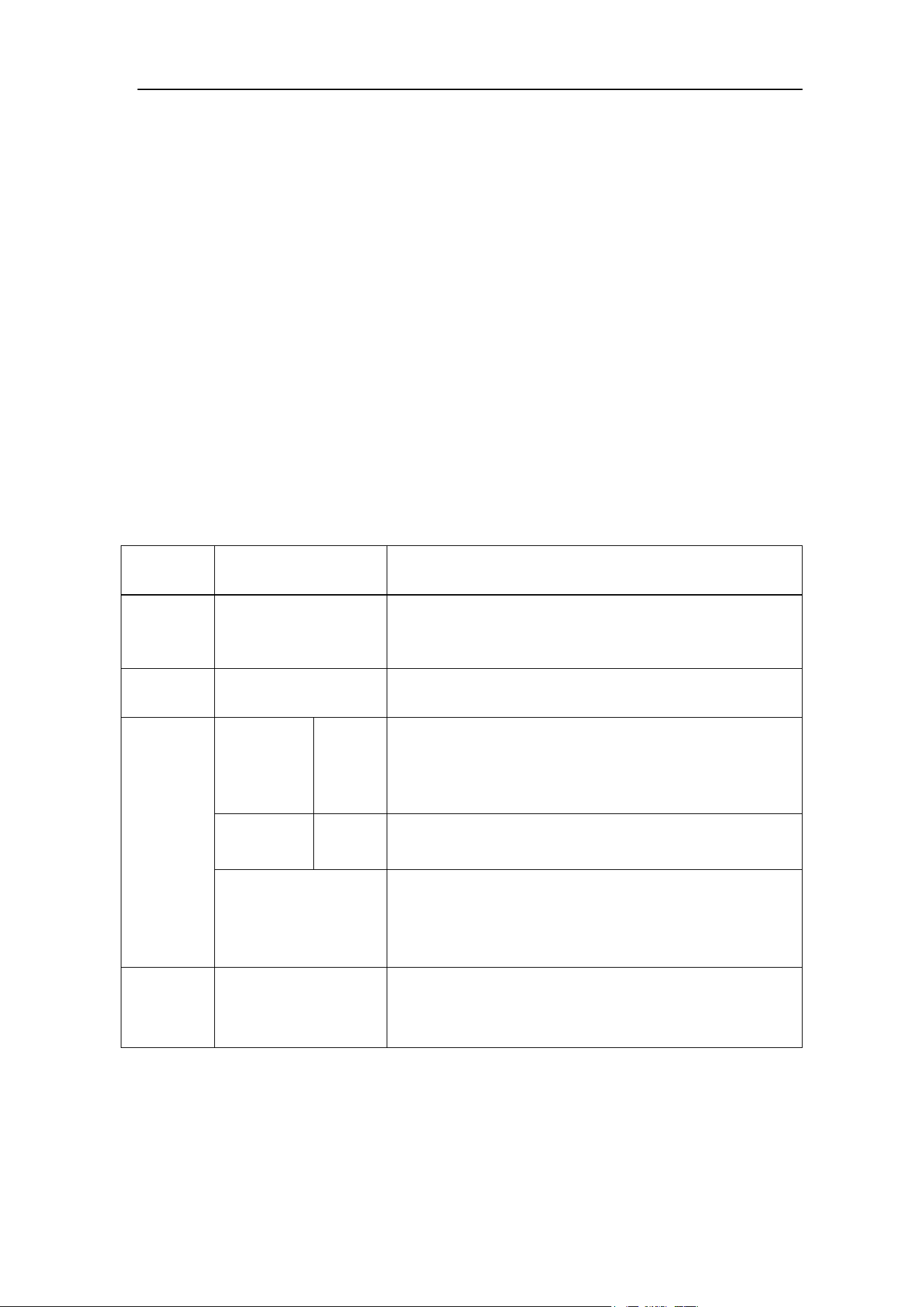
The description of the Channel Menu is shown as the following list:
Function
Menu
Setting
Description
Coupling
DC
AC
GROUND
Pass both AC and DC components of the input signal.
Block the DC component of the input signal.
Disconnect the input signal.
Inverted
ON
OFF
Display inverted waveform.
Display original waveform.
Probe
Attenu
0.001X
to
1000X
Step by 1 – 2 – 5. Match this to the probe attenuation
factor to have an accurate reading of vertical scale.
MeasCurr
YES
NO
If you are measuring current by probing the voltage
drop across a resistor, choose YES.
A/V (mA/V)
V/A (mV/A)
Turn the M knob to set the Amps/Volts ratio. The
range is 100 mA/V - 1 KA/V.
Amps/Volts ratio = 1/Resistor value
Volts/Amp ratio is automatically calculated.
Limit
Full band
20M
Get full bandwidth.
Limit the channel bandwidth to 20MHz to reduce
display noise.
1. To set channel coupling
Taking the Channel 1 for example, the measured signal is a square wave signal containing
the direct current bias. The operation steps are shown as below:
(1) Push the CH1 button to show the CH1 SETUP menu.
(2) Select Coupling in the bottom menu.

4.Advanced User Guidebook
19
(3) Select DC in the right menu. Both DC and AC components of the signal are passed.
(4) Select AC in the right menu. The direct current component of the signal is blocked.
2. To adjust the probe attenuation
For correct measurements, the attenuation coefficient settings in the operating menu of the
Channel should always match what is on the probe (see "How to Set the Probe Attenuation
Coefficient" on P12). If the attenuation coefficient of the probe is 1:1, the menu setting of
the input channel should be set to X1.
Take the Channel 1 as an example, the attenuation coefficient of the probe is 10:1, the
operation steps are shown as follows:
(1) Push the CH1 button to show the CH1 SETUP menu.
(2) Select Probe in the bottom menu. Select Attenu in the right menu, turn the M knob to
set it as 10×.
3. To measure current by probing the voltage drop across a resistor
Take the Channel 1 as an example, if you are measuring current by probing the voltage
drop across a 1Ω resistor, the operation steps are shown as follows:
(1) Push the CH1 button to show CH1 SETUP menu.
(2) Select Probe in the bottom menu. In the right menu, set MeasCurr as YES, the A/V
radio menu will appear below. Select it; turn the M knob to set the Amps/Volts ratio.
Amps/Volts ratio = 1/Resistor value. Here the A/V radio should be set to 1.
4. To invert a waveform
Waveform inverted: the displayed signal is turned 180 degrees against the phase of the
earth potential.
Taking the Channel 1 for example, the operation steps are shown as follows:
(1) Push the CH1 button to show the CH1 SETUP menu.
(2) Select Inverted in the bottom menu, switch to ON. the waveform is inverted. Push
again to switch to OFF, the waveform goes back to its original one.
5. To set bandwidth limit
When high frequency components of a waveform are not important to its analysis, the
bandwidth limit control can be used to reject frequencies above 20 MHz.
Taking the Channel 1 for example, the operation steps are shown as below:
(1) Push the CH1 button to show CH1 SETUP menu.
(2) Select Limit in the bottom menu.
(3) Select Full band in the right menu. The high frequency of the signal will be allowed
to pass.
(4) Select 20M in the right menu. The bandwidth is limited to 20 MHz. The frequencies
above 20MHz will be rejected.
4.Advanced User Guidebook
20
Use Mathematical Manipulation Function
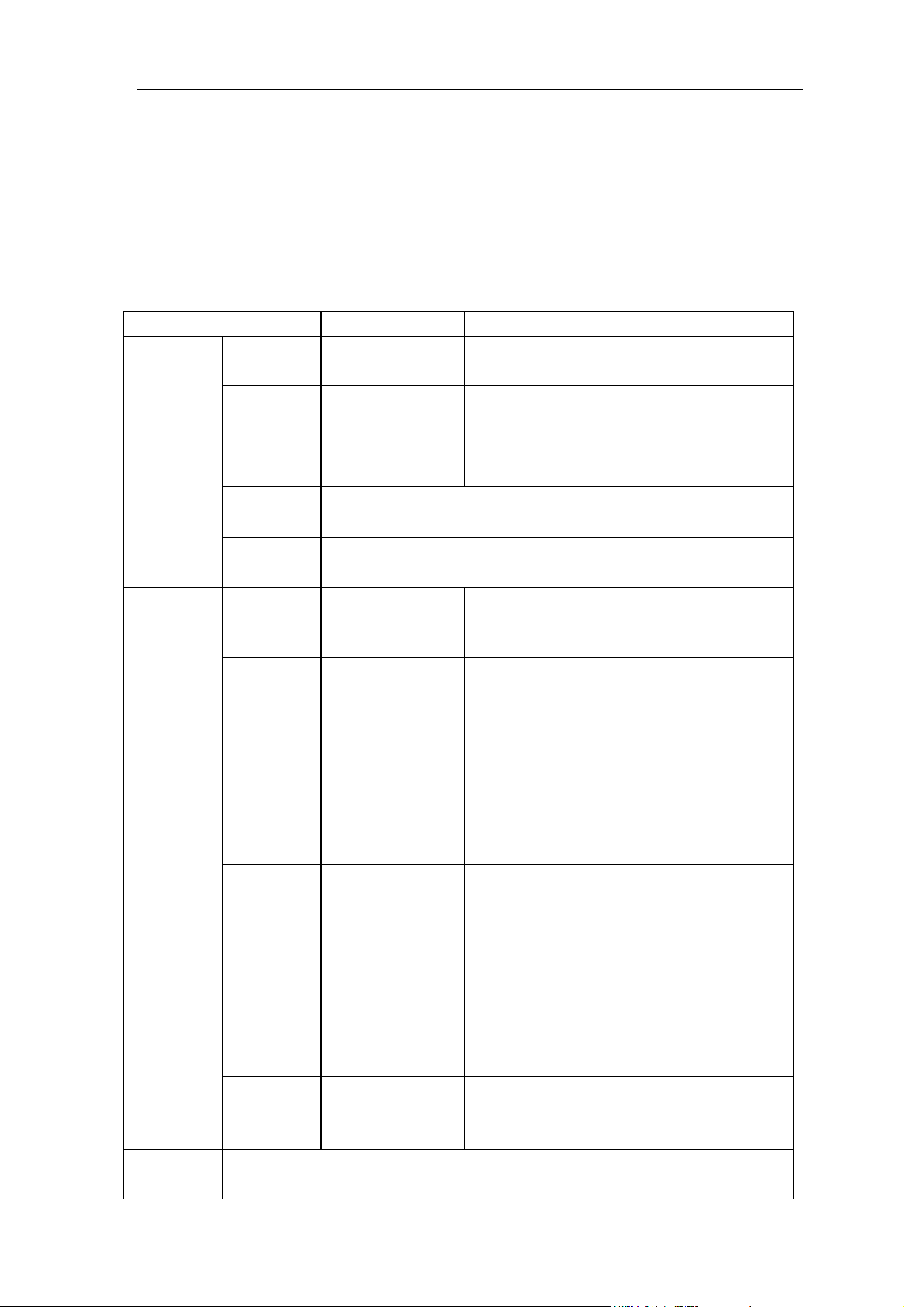
The Mathematical Manipulation function is used to show the results of the addition,
multiplication, division and subtraction operations between two channels, the FFT
operation for a channel, advanced math feature including Intg, Diff, Sqrt, user defined
function, and digital filter. Press the Math button to display the menu on the bottom.
The Waveform Calculation menu:
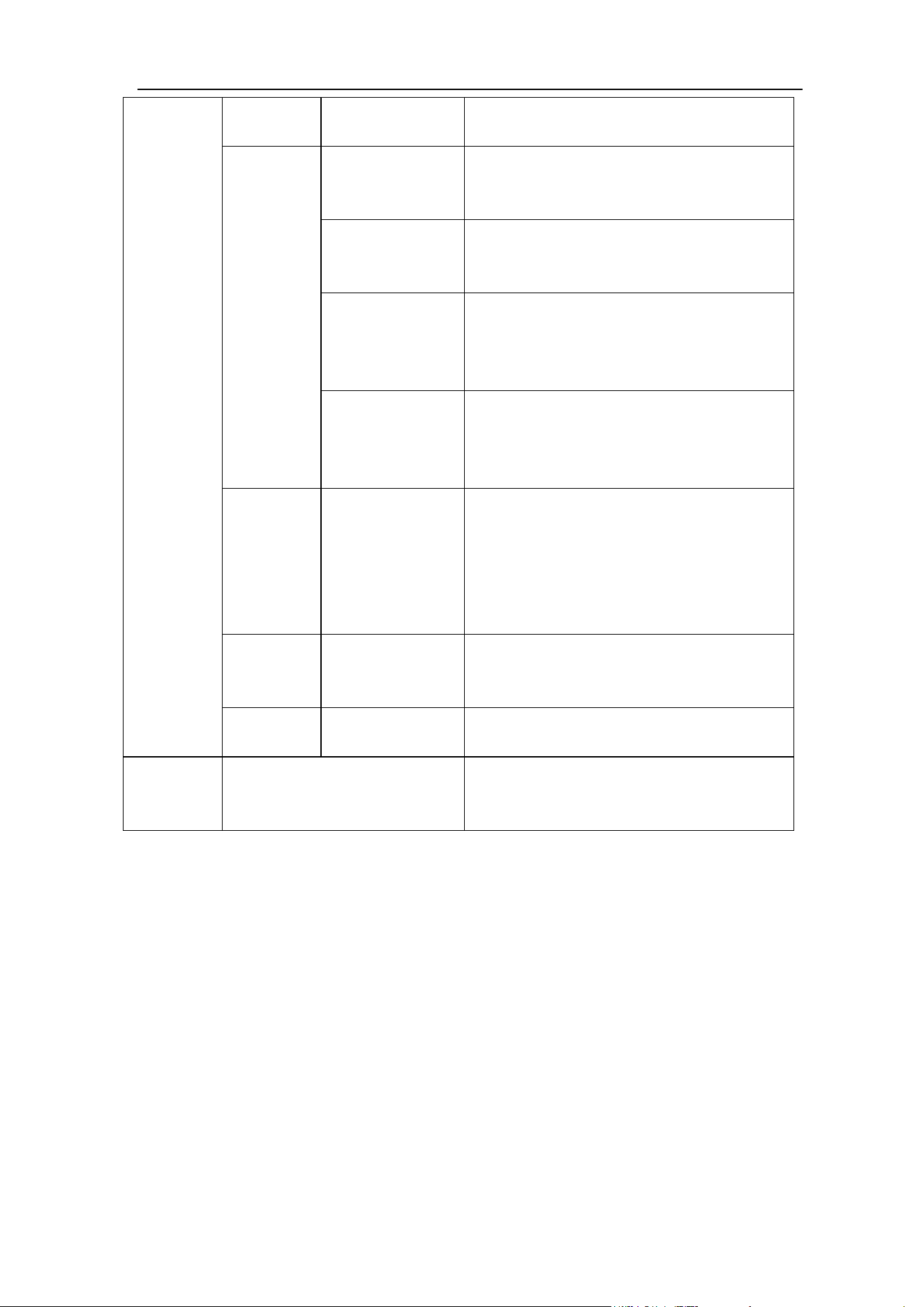
Function Menu
Setting
Description
Dual Wfm
Math
Factor1
CH1
CH2
Select the signal source of the factor1
Sign + - * / Select the sign of mathematical manipulation
Factor2
CH1
CH2
Select the signal source of the factor2
Vertical
(div)
Turn the M knob to adjust
the vertical position of the Math
waveform
Vertical
(V/div)
Turn the M knob to adjust the vertical division of the Math
waveform
FFT
Source
CH1
CH2
Select CH1 as FFT source.
Select CH2 as FFT source.
Window
Hamming
Rectangle
Blackman
Hanning
Kaiser
Bartlett
Select window for FFT.
Format
V RMS
Decibels
Radian
Degrees
V RMS and Decibels are
Hori (Hz)
Position value
Time base value/
Switch to select the horizontal position or
time base of the FFT waveform, turn the
M knob to adjust it
Vertical
Position value
Division value/
Switch to select the vertical position or
vertical
division of the FFT waveform,
turn the M knob to adjust it
User
Function
Intg, Diff, Sqrt, and user defined function
4.Advanced User Guidebook
21
DIR
channel
CH1
CH2
Select channel
type
low-pass
Only the signals whose frequencies are
lower than the current cut-off frequency
can pass the filter.
high-pass
Only the signals whose frequencies are
greater than the current cutoff frequency
can pass the filter.
band-pass
Only the signals whose frequencies are
greater than the cutoff frequency down
and lower than the current cutoff
frequency upper can pass the filter.
band-reject
Only the signals whose frequencies are
lower than the current cutoff frequency
down
or greater than the current cutoff
frequency upper can pass the filter.
window
Retangular
Tapered
Triangular
Hanning
Hamming
Blackman
Select window for digital filter
cut-off fre
or
upper down
Turn the M knob to set cut-off frequency
Vertical
(div)
Turn the M knob to adjust the vertical
position of Math waveform
FFT Peak
ON
OFF
Enable or disable FFT peak search.
Dynamic marker ▽ marks the FFT
peak.
Waveform math
Taking the additive operation between Channel 1 and Channels 2 for example, the
operation steps are as follows:
1. Press the Math button to display the math menu in the bottom. The pink M waveform
appears on the screen.
2. Select Dual Wfm Math in the bottom menu.
3. In the right menu, select Factor1 as CH1.
4. Select Sign as + in the right menu.
5. In the right menu, select Factor2 as CH2.
6. Select Vertical (div) in the right menu, turn the M knob to adjust the vertical position
of Math waveform.
4.Advanced User Guidebook
22
7. Select Vertical (V/div) in the right menu, turn the M knob to adjust the vertical division
of Math waveform.
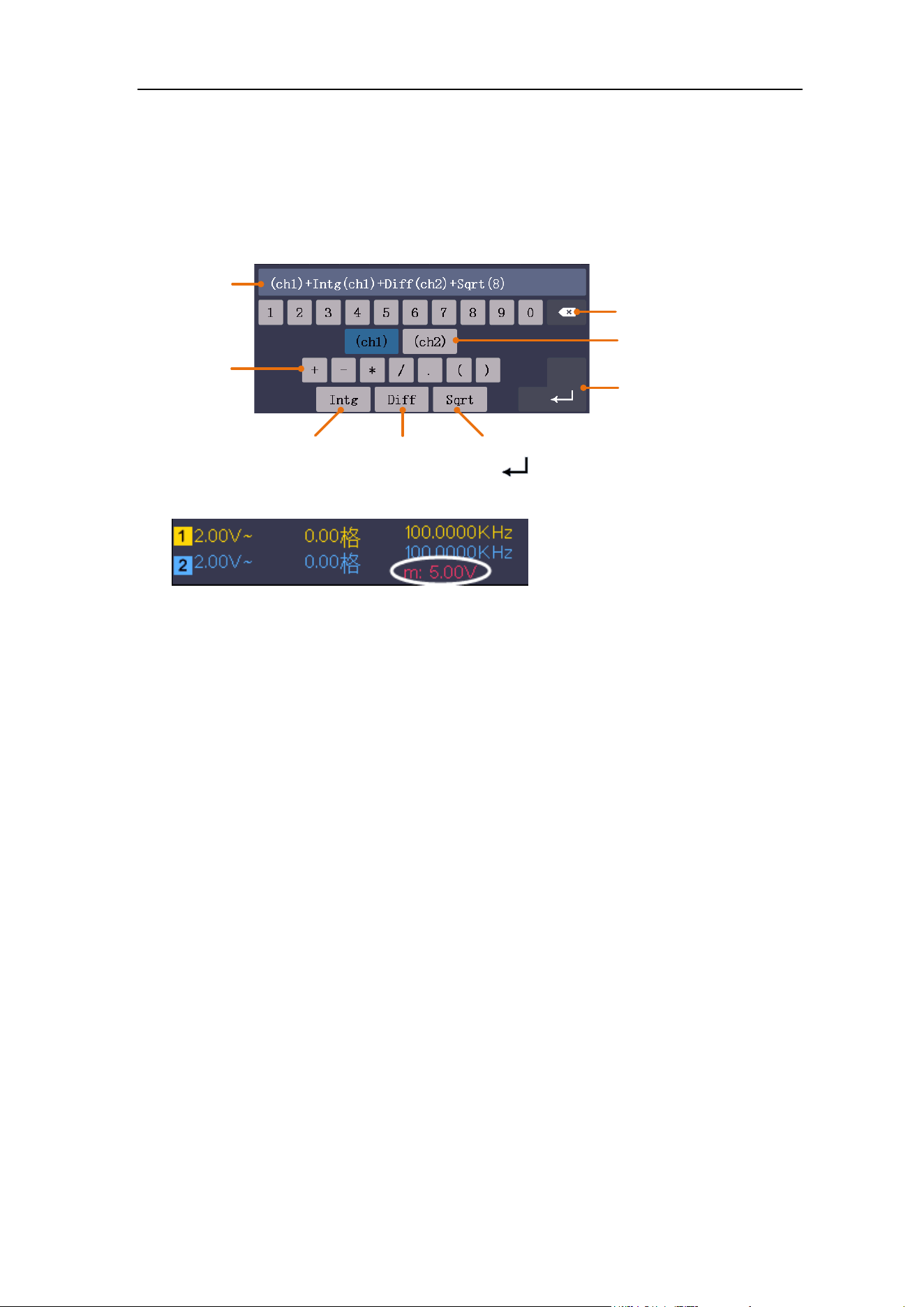
User defined function
1. Press the Math button to display the math menu in the bottom.
2. Select User Function in the bottom menu, an expression input keyboard pops up.
Channel
Confirm
Clear
Operators
Integral
Differential
Square root
Expression
3. Create an expression. When done, choose
in the keyboard to confirm
. The
division of Math waveform is displayed at the left bottom of screen.
Digital Filter
Digital filter provides 4 types of filters (low pass, high pass, band pass and band reject).
The specified frequencies can be filtered by setting the cut-off frequency.
1. Press the Math button to display the math menu in the bottom.
2. Select DIR in the bottom menu.
3. In the right menu, select channel as CH1 or CH2.
4. In the right menu, select type, select the desired filter type.
5. In the right menu, select window, select the desired window.
6. When low-pass or high-pass type is selected, select cut-off fre in the right menu.
When band-pass or band-reject type is selected, select upper or down in the right
menu. Turn M knob to adjust the frequency.
7. In the right menu, select Vertical (div), turn M knob to adjust the vertical position of
Math waveform. The voltage division of Math waveform is the same as the selected
channel.
Note: On the Scan format, digital filter is disabled.
Using FFT function
The FFT (fast Fourier transform) math function mathematically converts a time-domain
waveform into its frequency components. It is very useful for analyzing the input signal on
Oscilloscope. You can match these frequencies with known system frequencies, such as
system clocks, oscillators, or power supplies.
4.Advanced User Guidebook
23
FFT function in this oscilloscope transforms 8192 data points of the time-domain signal
into its frequency components mathematically (the record length should be 10K or above).
The final frequency contains 4096 points ranging from 0Hz to Nyquist frequency.
Taking the FFT operation for example, the operation steps are as follows:
1. Press the Math button to display the math menu in the bottom.
2. Select FFT in the bottom menu.
3. In the right menu, select Source as CH1.
4. In the right menu, select Window. In the left menu, turn the M knob to select the
proper window type.
5. In the right menu, select Format. In the left menu, turn the M knob to select
amplitude unit (V RMS, Decibels) or phase unit (Radian, Degrees).
6. Select Hori (Hz) in the right menu; select repeatedly to make the symbol in front
of the horizontal position value (the upper one), turn the M knob to adjust the
horizontal position of FFT waveform; then select to make the symbol in front of
the time base value below, turn the M knob to adjust the time base of FFT waveform.
7. Select Vertical in the right menu; do the same operations as above to set the vertical
position and vertical division.
To select the FFT window
■ There are 6 FFT windows. Each one has trade-offs between frequency resolution and
magnitude accuracy. What you want to measure and your source signal characteristics
help you to determine which window to use. Use the following guidelines to select the
best window.
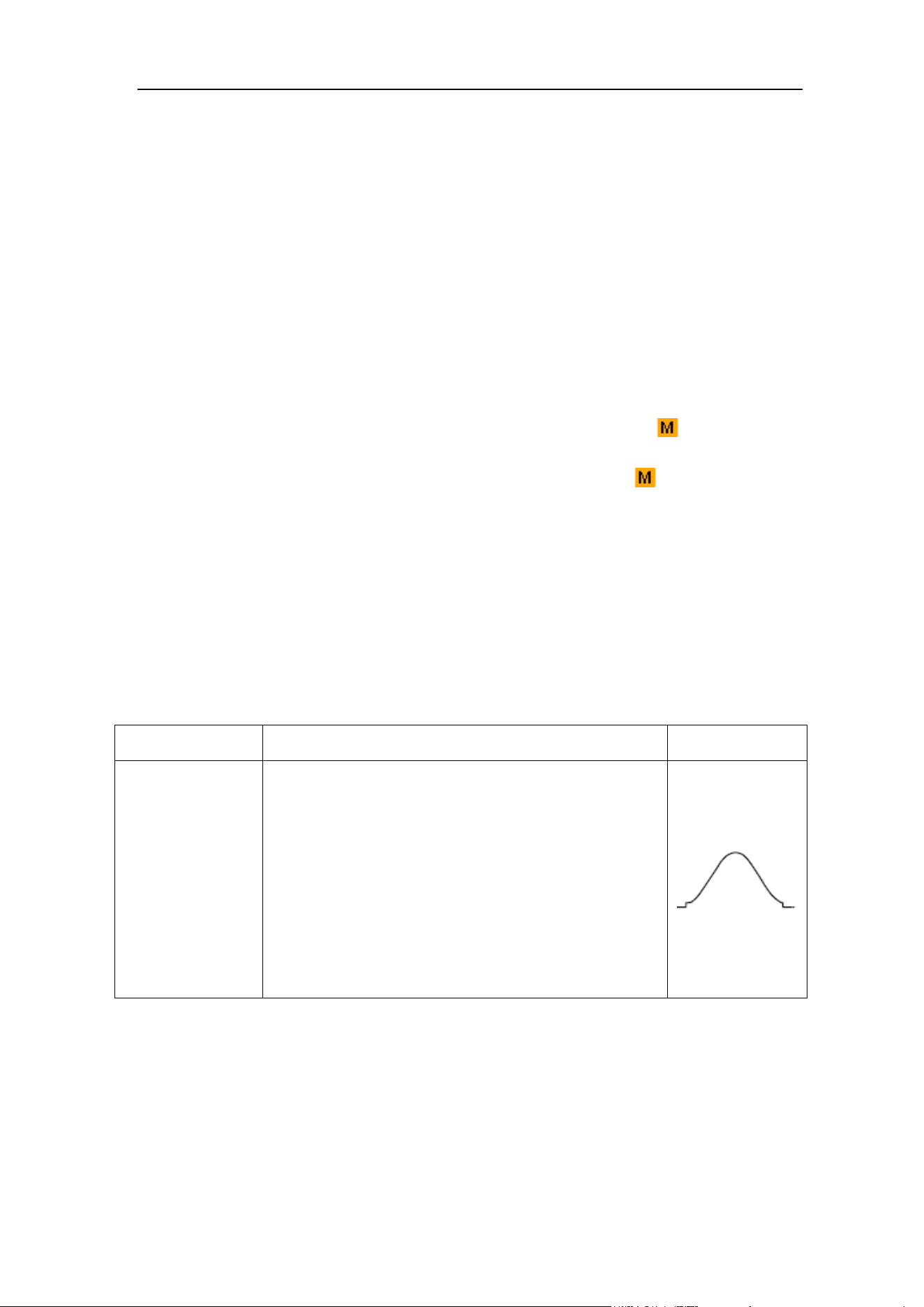
Type Characteristics Window
Hamming
Better solution for magnitude than Rectangle, and
good for frequency as well.
It has slightly better
frequency resolution than Hanning.
Recommend to use for:
Sine, periodic and narrow band random noise.
Transients or bursts where the signal levels
before and after the event are significantly
different.
4.Advanced User Guidebook
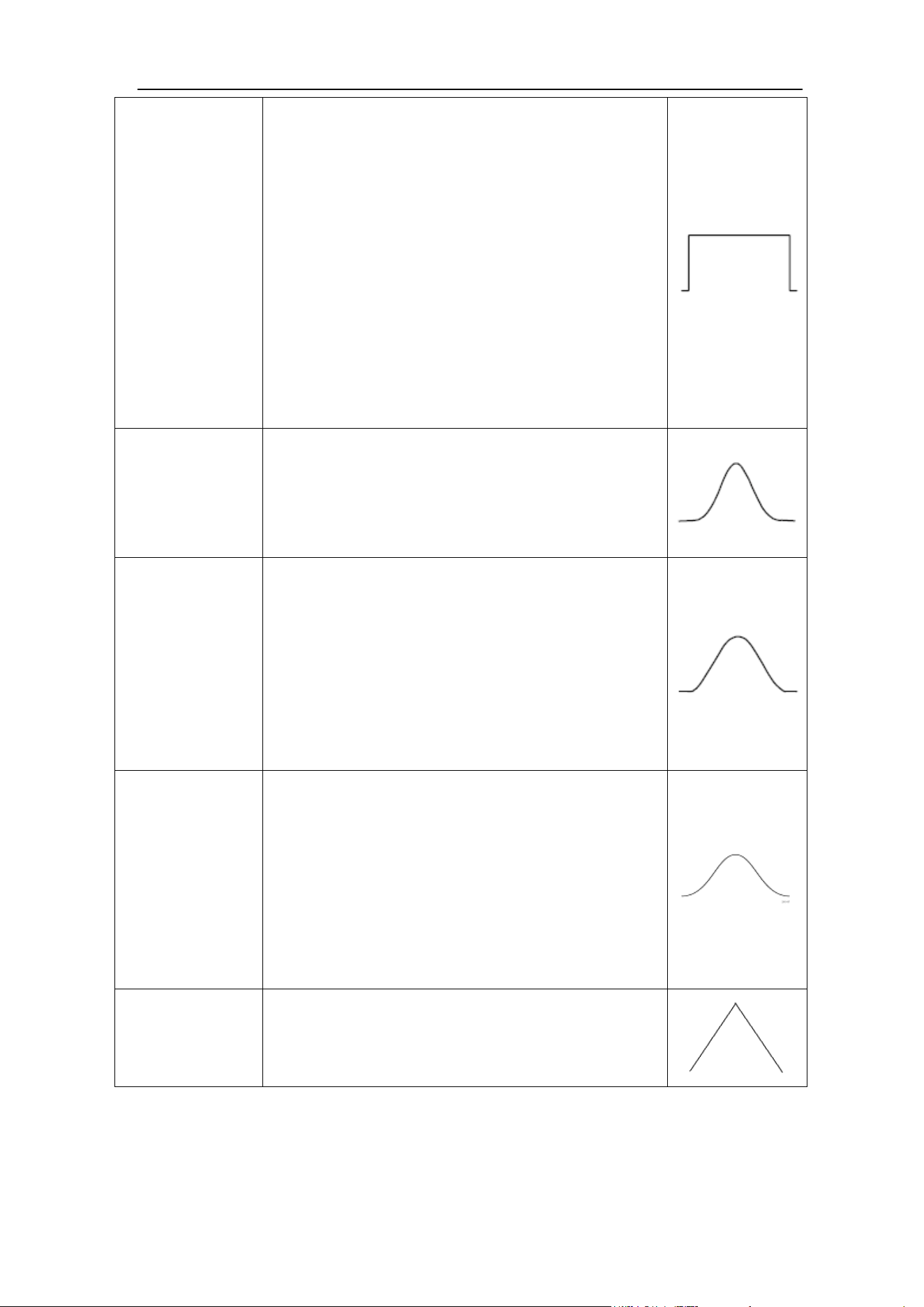
24
Rectangle
Best solution for frequency, worst for magnitude.
Best type for measuring the frequency spectrum of
non
repetitive signals and measuring frequency
components near DC.
Recommend to use for:
Transients or bursts, the signal level before and
after the event are nearly equal.
Equal-amplitude sine waves with frequencies
those are very close.
Broadband random noise with a relatively slow
varying spectrum.
Blackman
Best solution for magnitude, worst for frequency.
Recommend to use for:
Single frequency waveforms, to find higher
order harmonics.
Hanning
Good for magnitude, but poorer frequency
resolution than Hamming.
Recommend to use for:
Sine, periodic and narrow band random noise.
Transients or bursts where the signal levels
before and after the event are significantly
different.
Kaiser
The frequency resolution when using the Kaiser
window is fair; the spectral leakage and amplitude
accuracy are both good.
The Kaiser window is best used when frequencies
are very close to the same value but have widely
differing amplitudes (the side lobe level and shape
factor are closest to the traditional Gaussian RBW).
This window is also good for random signals.
Bartlett
The Bartlett window is a slightly narrower variant
of the triangular window, with zero weight at both
ends.
Notes for using FFT
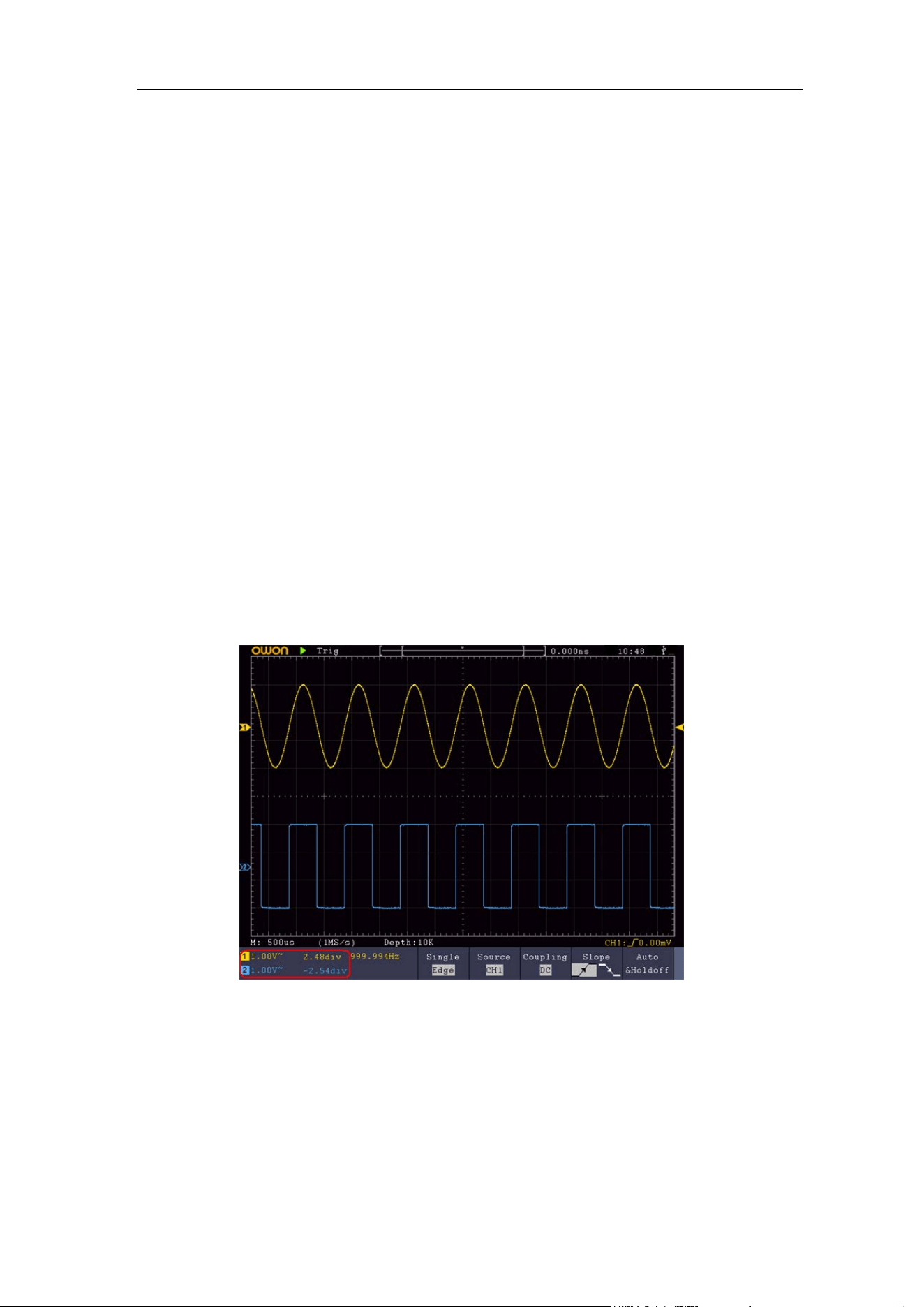
Use the default dB scale for details of multiple frequencies, even if they have very
different amplitudes. Use the Vrms scale to compare frequencies.
4.Advanced User Guidebook
25
DC component or offset can cause incorrect magnitude values of FFT waveform. To
minimize the DC component, choose AC Coupling on the source signal.
To reduce random noise and aliased components in repetitive or single-shot events, set
the oscilloscope acquisition mode to average.
What is Nyquist frequency?
The Nyquist frequency is the highest frequency that any real-time digitizing oscilloscope
can acquire without aliasing. This frequency is half of the sample rate. Frequencies above
the Nyquist frequency will be under sampled, which causes aliasing. So pay more
attention to the relation between the frequency being sampled and measured.
Use Vertical Position and Scale Knobs
1. The Vertical Position knob is used to adjust the vertical positions of the
waveforms.
The analytic resolution of this control knob changes with the vertical division.
2. The Vertical Scale knob is used to regulate the vertical resolution of the wave
forms. The sensitivity of the vertical division steps as 1-2-5.
The vertical position and vertical resolution is displayed at the left bottom corner of
the screen (see Figure 4-1).
Figure 4-1 Information about Vertical Position
How to Set the Horizontal System
The HORIZONTAL CONTROLS includes the Horizontal HOR button and such
knobs as Horizontal Position and Horizontal Scale.
1. Horizontal Position knob: this knob is used to adjust the horizontal positions of
4.Advanced User Guidebook
26
all channels (include those obtained from the mathematical manipulation), the
analytic resolution of which changes with the time base.
2. Horizontal Scale knob: it is used to set the horizontal scale factor for setting the
main time base or the window.
3. Horizontal HOR button: push it to switch between the normal mode and the
wave zoom mode. For more detailed operations, see the introductions below.
Zoom the Waveform
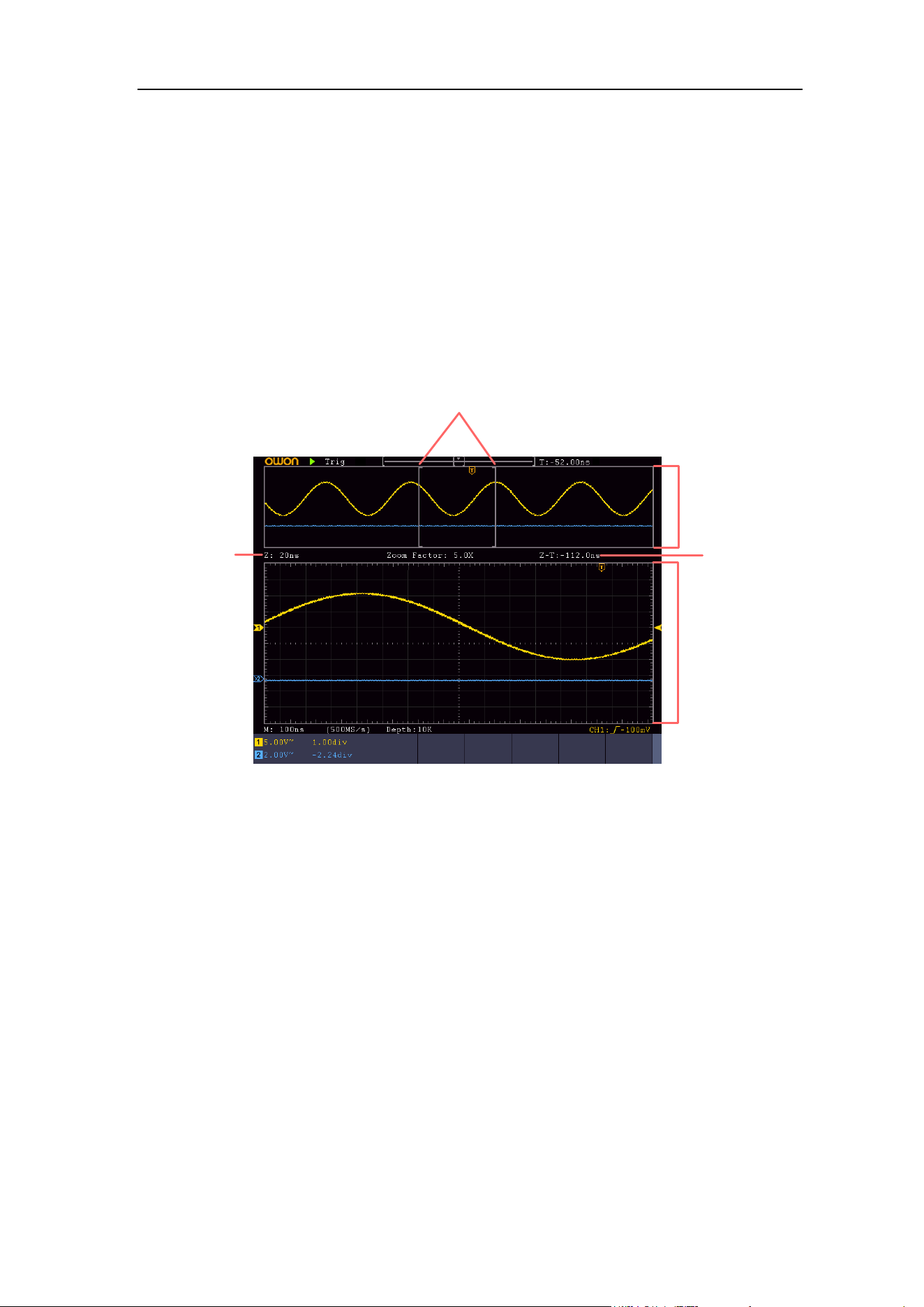
Push the Horizontal HOR button to enter wave zoom mode. The top half of the
display shows the Main window and the bottom half displays the Zoom window. The
Zoom window is a magnified portion of the Main window.
Main Window
Time base of
Zoom window
Selected portion
Horizontal position of
Zoom window
Zoom Window
In normal mode, the Horizontal Position and Horizontal Scale knobs are used to
adjust the horizontal position and time base of the Main window.
In wave zoom mode, the Horizontal Position and Horizontal Scale knobs are used
to adjust the horizontal position and time base of the Zoom window.
How to Set the Trigger/Decoding System
Trigger determines when DSO starts to acquire data and display waveform. Once
trigger is set correctly, it can convert the unstable display to meaningful
waveform.
When DSO starts to acquire data, it will collect enough data to draw waveform
on left of trigger point. DSO continues to acquire data while waiting for trigger
condition to occur. Once it detects a trigger it will acquire enough data
continuously to draw the waveform on right of trigger point.
Trigger control area consists of 1 knob and 2 menu buttons.
Trigger Level: The knob that set the trigger level; push the knob and the level

4.Advanced User Guidebook
27
will be set as the vertical mid point values of the amplitude of the trigger
signal.
Force: Force to create a trigger signal and the function is mainly used in
"Normal" and "Single" mode.
Trigger Menu: The button that activates the trigger control menu.
Trigger Control
The oscilloscope provides four trigger types: single trigger, alternate trigger, logic
trigger and bus trigger. Each type of trigger has different sub menus.
Two ways to enter trigger mode:
Key operation: Press Trigger Menu panel button, then bottom menu Trigger Type,
select Single, ALT, Logic or Bus Trigger on the popup right
menus, rotate M knob to choose different trigger types.
Single trigger: Use a trigger level to capture stable waveforms in two channels
simultaneously.
Alternate trigger: Trigger on non-synchronized signals.
Logic trigger: Trigger the signal according to the condition of logic relationship.
Bus trigger: Set bus timing trigger.
The Single Trigger, Alternate Trigger, Logic Trigger and Bus Trigger menus
are described respectively as follows:
Single Trigger
Single trigger has eight types: edge trigger, video trigger, slope trigger, pulse trigger,
runt trigger, windows trigger, timeout trigger and Nth edge trigger.
Edge Trigger: It occurs when the trigger input passes through a specified voltage
level with the specified slope.
Video Trigger: Trigger on fields or lines for standard video signal.
Slope Trigger: The oscilloscope begins to trigger according to the signal rising or
falling speed.
Pulse Trigger: Find pulses with certain widths.
Runt Trigger: Trigger pulses that pass through one trigger level but fail to pass
through the other trigger level.
Windows Trigger: Provide a high trigger level and low trigger level, the oscilloscope
triggers when the input signal passes through the high trigger level or
the low trigger level.
Timeout Trigger: The oscilloscope triggers when the time interval from when the
rising edge (or the falling edge) passes through the trigger level to
when the neighbouring falling edge (or the rising edge) passes
4.Advanced User Guidebook
28
through the trigger level is greater than the timeout time set.
Nth Edge Trigger: The oscilloscope triggers on the Nth edge that appears on the
specified idle time.
The eight trigger modes in Single Trigger are described respectively as follows:
1. Edge Trigger
An edge trigger occurs on trigger level value of the specified edge of input signal.
Select Edge trigger mode to trigger on rising edge or falling edge.
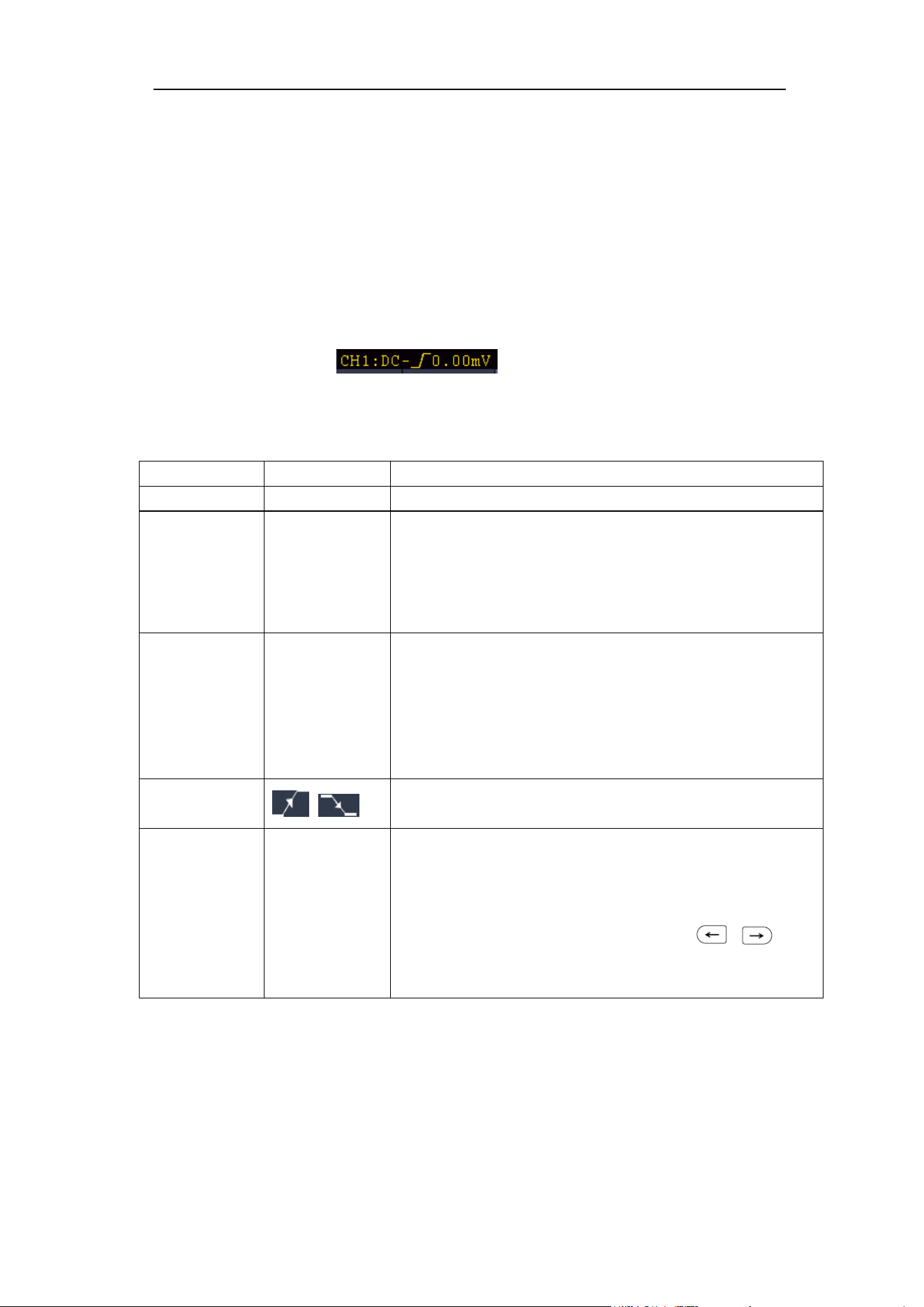
In Edge Trigger mode, the trigger setting information is displayed on bottom right of
the screen, for example, ,indicates that trigger type is edge,
trigger source is CH1, coupling is DC, and trigger level is 0.00mV.
Edge menu list:
Menu
Settings
Instruction
Single Mode
Edge
Set vertical channel trigger type as edge trigger.
Source
CH1
CH2
EXT
EXT/5
AC Line
Channel 1 as trigger signal.
Channel 2 as trigger signal.
External trigger as trigger signal
1/5 of the external trigger signal as trigger signal.
AC power line as trigger signal.
Coupling
AC
DC
HF
LF
Block the direct current component.
Allow all component pass.
Block the high-frequency signal, only low-frequency
component pass.
Block the low-frequency signal, only high-frequency
component pass. (LF menu is only for certain models)
Slope
Trigger on rising edge
Trigger on falling edge
Mode
Holdoff
Auto
Normal
Single
Holdoff
Reset
Acquire waveform even no trigger occurs
Acquire waveform when trigger occurs
When trigger occurs, acquire one waveform then stop
100 ns - 10 s, turn the M
knob to set time interval
before another trigger occur, press panel
button to move cursor to choose which digit to be set.
Set Holdoff time as default value (100 ns).
Trigger Level: trigger level indicates vertical trig position of the channel, rotate trig
level knob upward and downward to move trigger level, during setting, an orange red
dotted line displays to show trig position, and the value of trigger level changes at the
right corner, after setting, dotted line disappears.
2. Video Trigger
Choose video trigger to trigger on fields or lines of NTSC, PAL or SECAM standard
video signals.
4.Advanced User Guidebook
29
In Video Trigger mode, the trigger setting information is displayed on bottom right of
the screen, for example, ,indicates that trigger type is Video, trigger
source is CH1, and Sync type is Even.
Video Trigger menu list:
MENU
SETTING
INSTRUCTION
Single Mode
Video
Set vertical channel trigger type as video trigger
Source
CH1
CH2
Select CH1 as the trigger source
Select CH2 as the trigger source
Modu
NTSC
PAL
SECAM
Select video modulation
Sync
Line
Field
Odd
Even
Line NO.
Synchronic trigger in video line
Synchronic trigger in video field
Synchronic trigger in video odd filed
Synchronic trigger in video even field
Synchronic trigger in designed video line, turn the M
knob to set the line number
Mode
Holdoff
Auto Acquire waveform even no trigger occurred
3. Slope Trigger
Slope trigger sets the oscilloscope as the positive/negative slope trigger within the
specified time.
In Slope Trigger mode, the trigger setting information is displayed on bottom right of
the screen, for example, ,indicates that trigger type is slope,
trigger source is CH1, slope is rising, 0.00mV is the differential between up level and
low level threshold.
Slope trigger menu list:
MENU
SETTING
INSTRUCTION
Single
Mode
Slope Set vertical channel trigger type as slope trigger.
Source
CH1
CH2
Select CH1 as the trigger source.
Select CH2 as the trigger source.
When
slope
Slope selecting
Set slope condition; turn the M
knob to set slope
time, press panel button to move cursor to
choose which digit to be set.
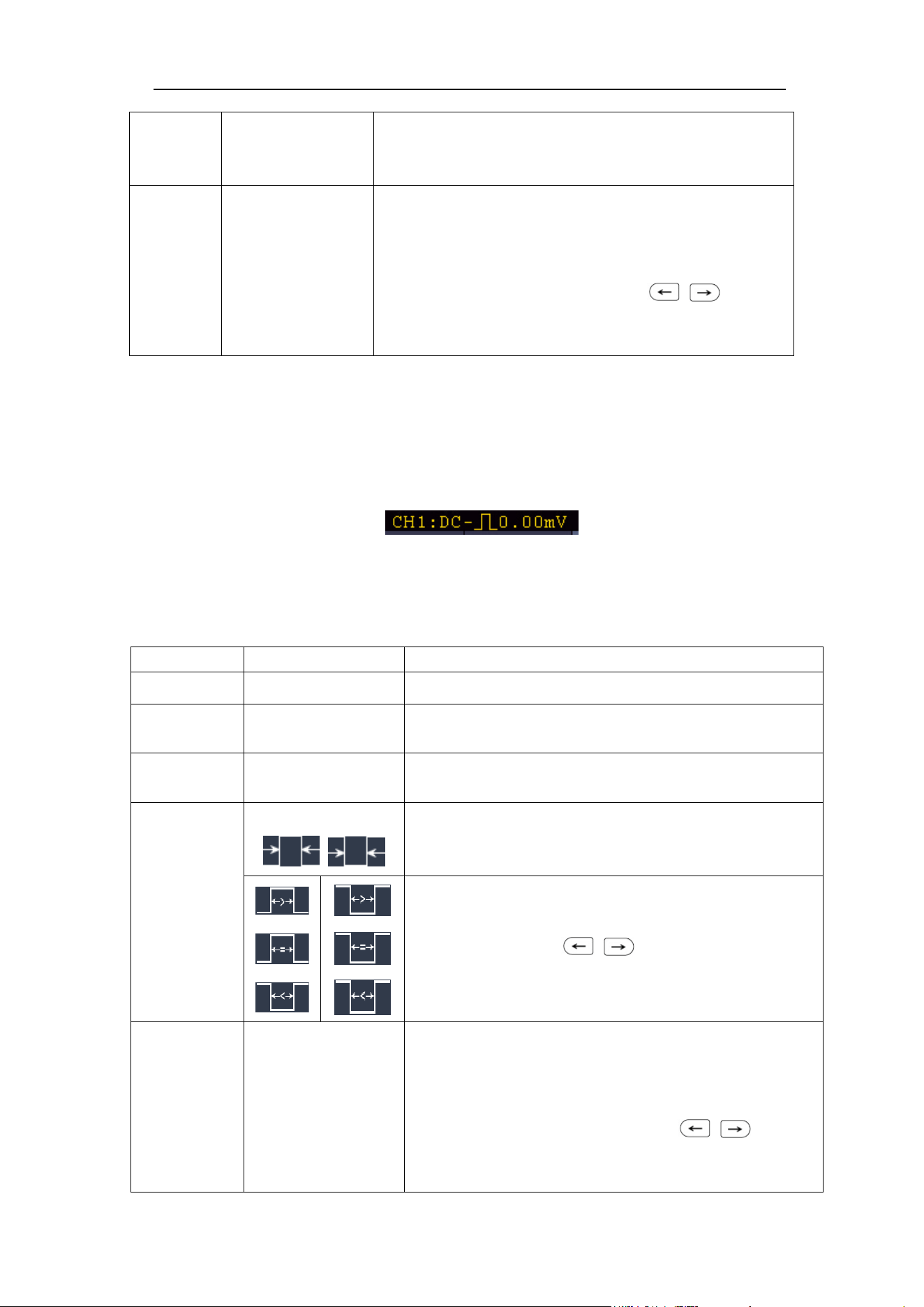
4.Advanced User Guidebook
30
Threshold
&SlewRate
High level
Low level
Slew rate
Adjust M knob to set the High level upper limit.
Adjust M knob to set Low level lower limit.
Slew rate = (High level - Low level) / Settings
Mode
Holdoff
Auto
Normal
Single
Holdoff
Reset
Acquire waveform even no trigger occurred
Acquire waveform when trigger occurred
When trigger occurs, acquire one waveform then stop
100 ns – 10 s, turn the M knob to set time interval
before another trigger occur, press panel
button to move cursor to choose which digit to be set.
Set Holdoff time as 100 ns
4. Pulse Width Trigger
Pulse trigger occurs according to the width of pulse. The abnormal signals can be
detected through setting up the pulse width condition.
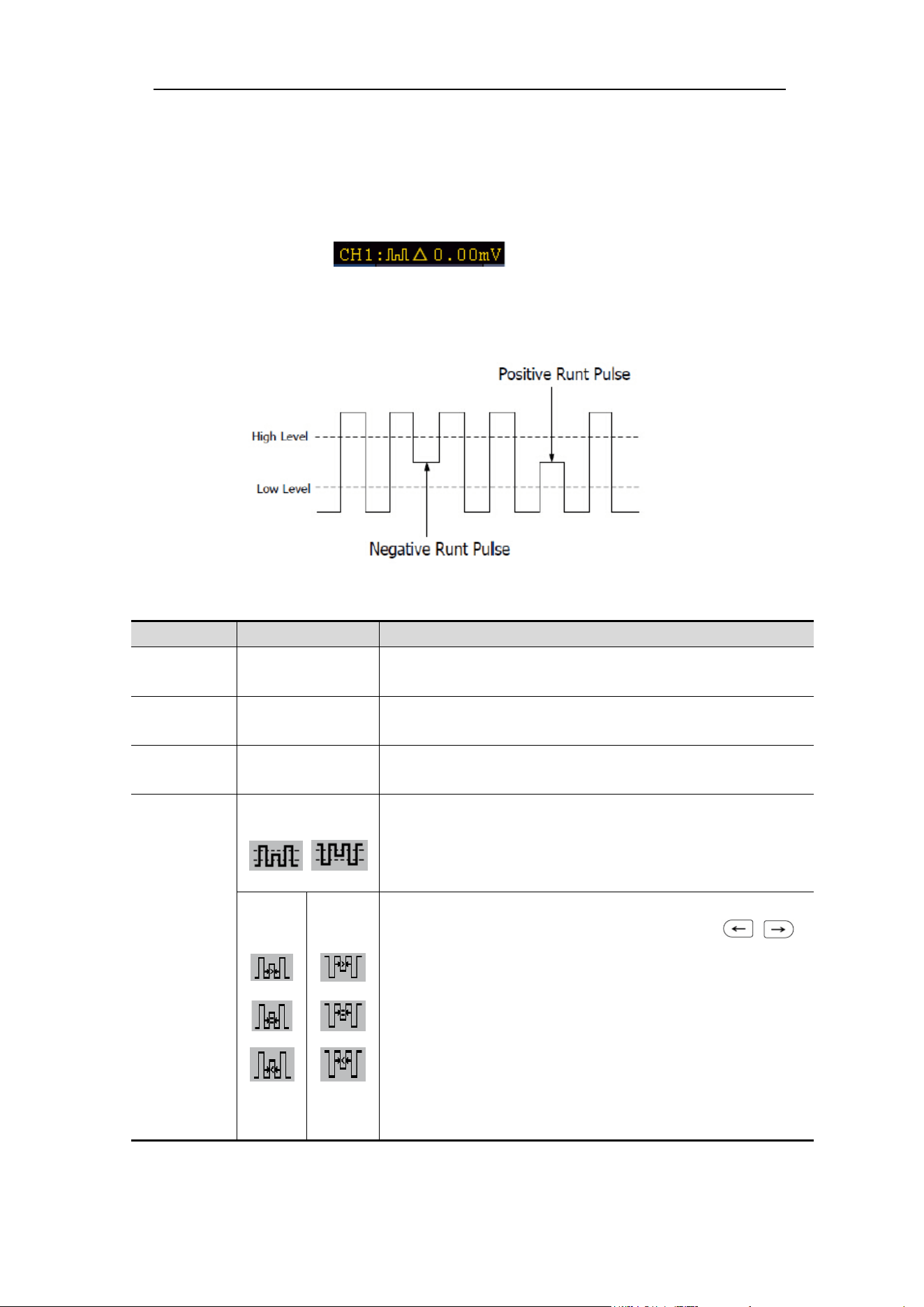
In Pulse Width Trigger mode, the trigger setting information is displayed on bottom
right of the screen, for example, ,indicates that trigger type
is pulse width, trigger source is CH1, coupling is DC, polarity is positive, and trigger
level is 0.00mV.
Pulse Width Trigger menu list:
MENU
SETTING
INSTRUCTION
Single Mode Pulse
Set vertical channel trigger type as pulse trigger.
Source
CH1
CH2
Select CH1 as the trigger source.
Select CH2 as the trigger source.
Coupling
AC
DC
Not allow DC portion to pass.
Allow all portion pass.
when
Polarity
Choose the polarity
Select pulse width condition and adjust the M knob
to set time, press panel button to move
cursor to choose which digit to be set.
Mode
Holdoff
Auto
Normal
Single
Holdoff
Reset
Acquire waveform even no trigger occurred
Acquire waveform when trigger occurred
When trigger occurs, acquire one waveform then stop
100 ns - 10 s, adjust M knob to set time interval
before another trigger occur, press panel
button to move cursor to choose which digit to be set.
Set Holdoff time as 100 ns
4.Advanced User Guidebook
31
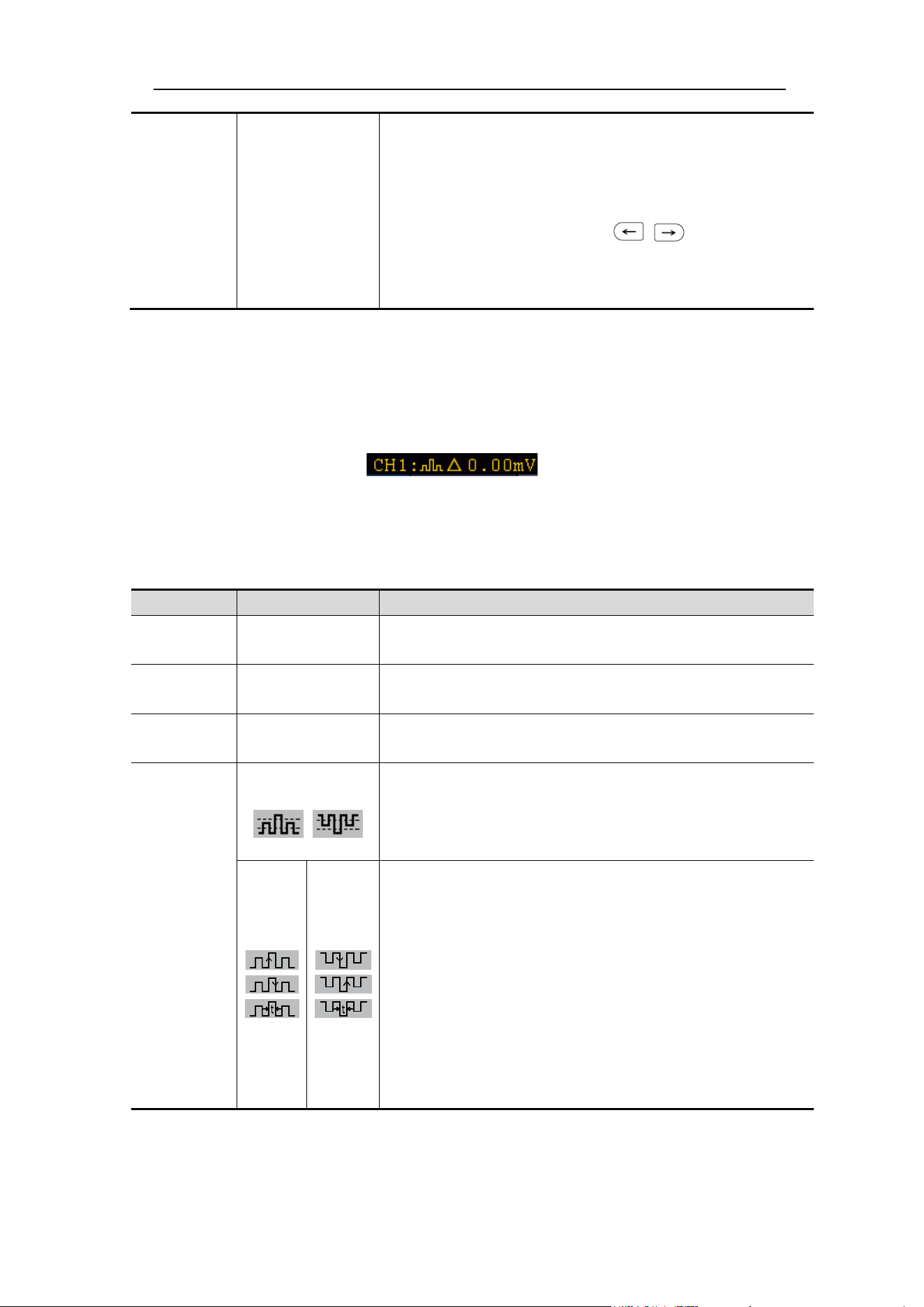
5.Runt Trigger
Trigger pulses that pass through one trigger level but fail to pass through the other
trigger level. Shown as below figure,
In Runt Trigger mode, the trigger setting information is displayed on bottom right of
the screen, for example, ,indicates that trigger type is runt,
trigger source is CH1, polarity is positive, 0.00mV is the differential between up level
and low level threshold.
Runt Trigger
Runt Trigger menu list:
MENU
SETTING
INSTRUCTION
Single
Mode
Runt
Set vertical channel trigger type as runt trigger.
Source
CH1
CH2
Select CH1 as the trigger source.
Select CH2 as the trigger source.
Threshold
Up Level
Low Level
Adjust the M knob to set the up level threshold.
Adjust the M knob to set the low level threshold.
Condition
Polarity
Positive Polarity, the oscilloscope triggers on the
positive runt pulse.
Negative Polarity, the oscilloscope triggers on the
negative runt pulse.
Adjust the M knob to set pulse width, press
panel button to move cursor to choose which digit to be
set.
Trigger when runt pulse is greater than the set pulse
width.
Trigger when runt pulse equals to the set pulse width.
Trigger when runt pulse is lower than the set pulse
width.
4.Advanced User Guidebook
32
Mode
Holdoff
Auto
Normal
Single
Holdoff
Reset
Acquire waveform even no trigger occurred
Acquire waveform when trigger occurred
When trigger occurs, acquire one waveform then stop
100 ns - 10 s, adjust M knob to set time interval before
another trigger occur, press panel button to
move cursor to choose which digit to be set.
Set Holdoff time as 100 ns
6.Windows Trigger
Provide a high trigger level and low trigger level, the oscilloscope triggers when the
input signal passes through the high trigger level or the low trigger level.
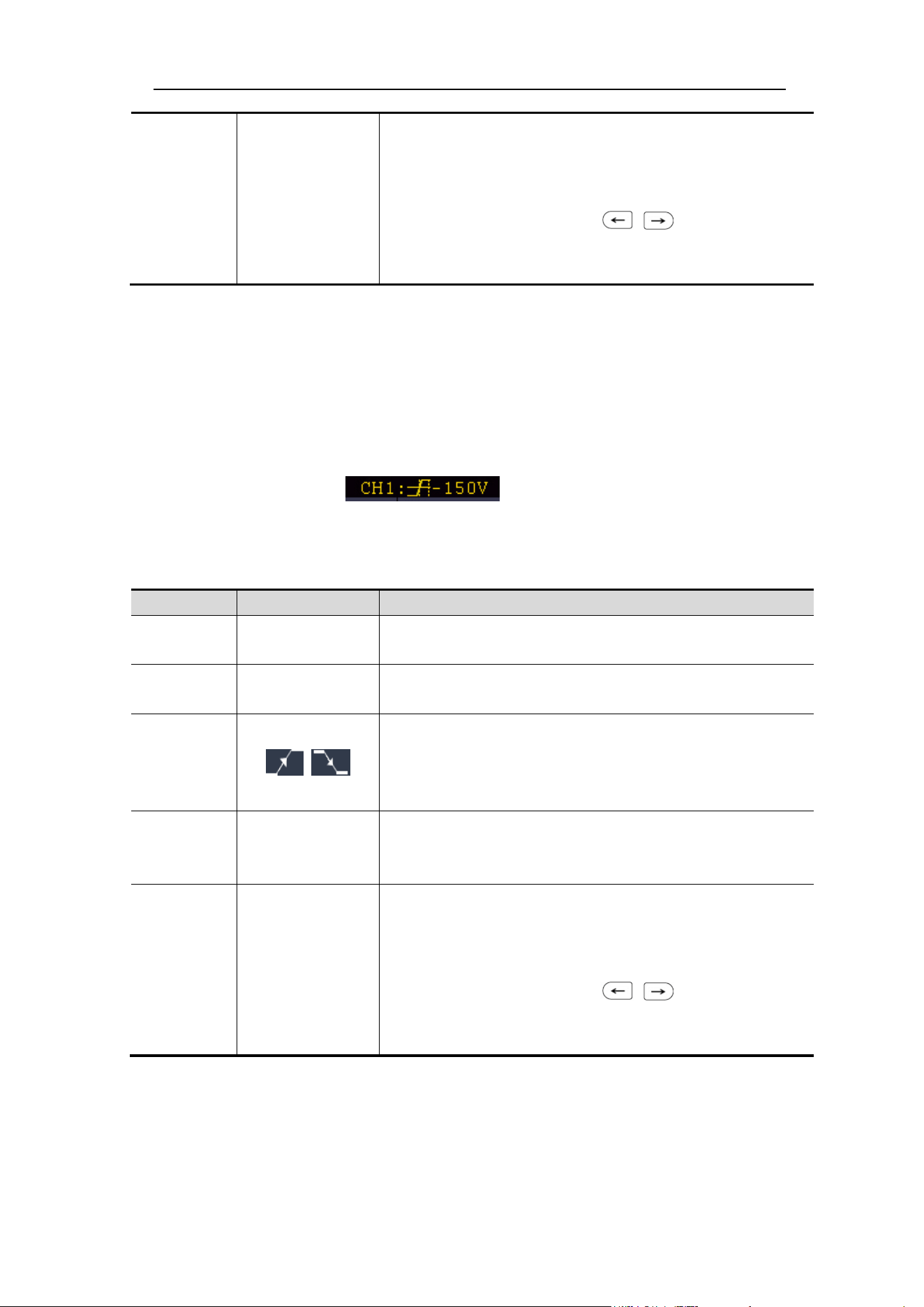
In Windows Trigger mode, the trigger setting information is displayed on bottom right
of the screen, for example, ,indicates that trigger type is
windows, trigger source is CH1, polarity is positive, 0.00mV the differential between
up level and low level threshold.
Windows Trigger menu list:
MENU
SETTING
INSTRUCTION
Single
Mode
Windows
Set vertical channel trigger type as Windows trigger.
Source
CH1
CH2
Select CH1 as the trigger source.
Select CH2 as the trigger source.
Threshold
Up Level
Low Level
Adjust the M knob to set the up level threshold.
Adjust the M knob to set the low level threshold.
Condition
Polarity
Positive Polarity, the oscilloscope triggers on the
positive Windows pulse.
Negative Polarity, the oscilloscope triggers on the
negative Windows pulse.
Enter: Triggers when the trigger signal enters the
specified trigger level range.
Exit: Triggers when the trigger signal exits the
specified trigger level range.
Time: Specify the hold time of the input signal after
entering the specified trigger level. The oscilloscope
triggers when the accumulated hold time is greater than
the windows time. Available range is 30ns-10s, default
100ns.
4.Advanced User Guidebook
33
Mode
Holdoff
Auto
Normal
Single
Holdoff
Reset
Acquire waveform even no trigger occurred
Acquire waveform when trigger occurred
When trigger occurs, acquire one waveform then stop
100 ns - 10 s, adjust M knob to set time interval before
another trigger occur, press panel button to
move cursor to choose which digit to be set.
Set Holdoff time as 100 ns
7.Timeout Trigger
The oscilloscope triggers when the time interval from when the rising edge (or the
falling edge) passes through the trigger level to when the neighbouring falling edge
(or the rising edge) passes through the trigger level is greater than the timeout time
set.
In Timeout Trigger mode, the trigger setting information is displayed on bottom right
of the screen, for example, ,indicates that trigger type is Timeout,
trigger source is CH1, edge is positive, 0.00mV is up level or low level threshold.
Timeout Trigger menu list:
MENU
SETTING
INSTRUCTION
Single
Mode
Timeout
Set vertical channel trigger type as Timeout trigger.
Source
CH1
CH2
Select CH1 as the trigger source.
Select CH2 as the trigger source.
Edge
Edge
Start timing when the rising edge of the input signal
passes through the trigger level.
Start timing when the falling edge of the input signal
passes through the trigger level.
Configure Idle Time
Set idle time. Idle time means the minimum time of idle
clock before searching data that can meet trigger
conditions. Available range is 30ns-10s, default 100ns.
Mode
Holdoff
Auto
Normal
Single
Holdoff
Reset
Acquire waveform even no trigger occurred
Acquire waveform when trigger occurred
When trigger occurs, acquire one waveform then stop
100 ns - 10 s, adjust M knob to set time interval before
another trigger occur, press panel button
move cursor to choose which digit to be set.
Set Holdoff time as 100 ns
8.Nth Edge trigger
The oscilloscope triggers on the Nth edge that appears on the specified idle time. As
figure shown below, the oscilloscope should trigger on the second falling edge after
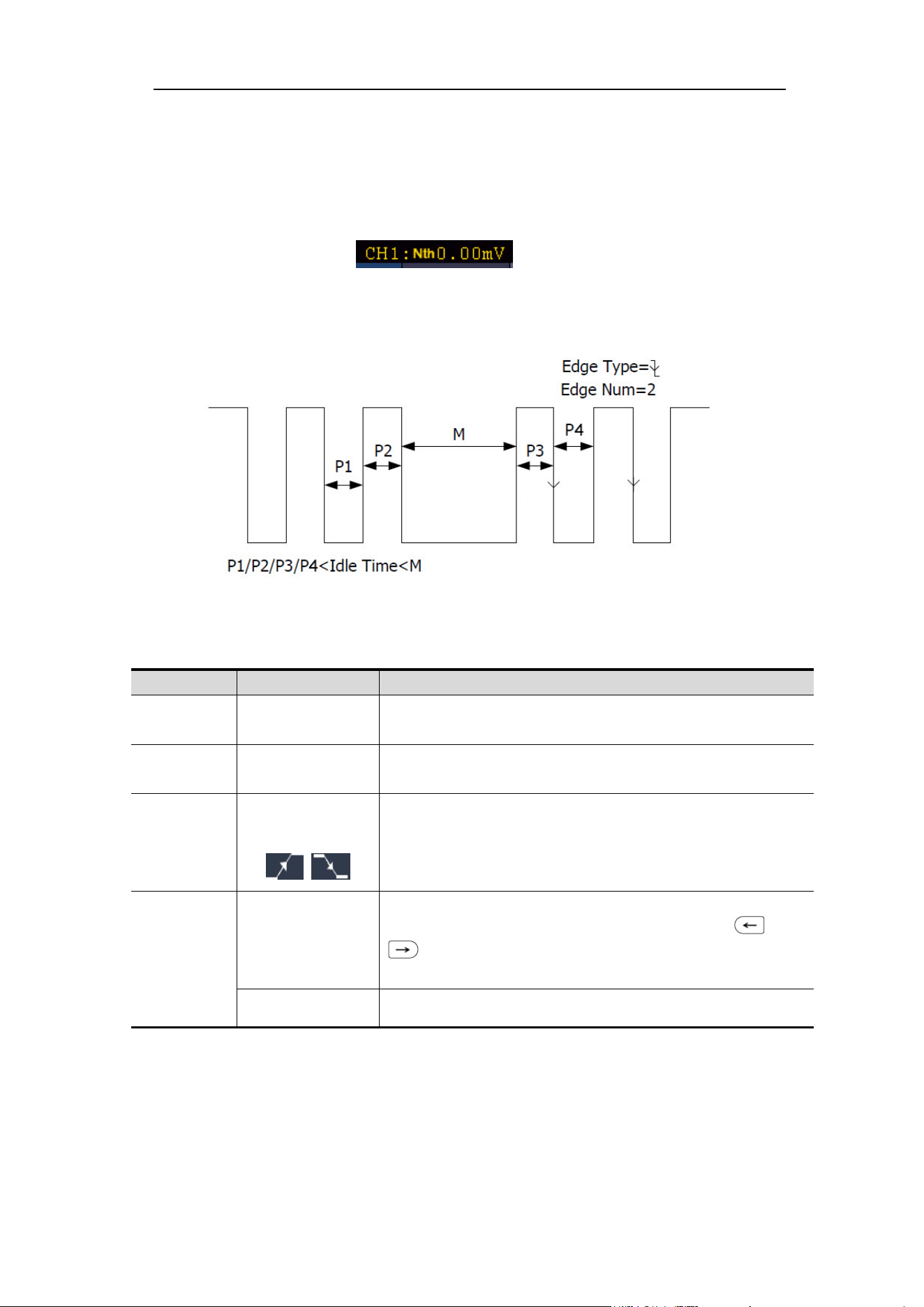
4.Advanced User Guidebook
34
the specified idle time and the idle time should be set to P1/P2/P3/P4 < Idle Time < M.
Wherein, M, P1, P2, P3 and P4 are positive or negative pulse width participating in
the counting.
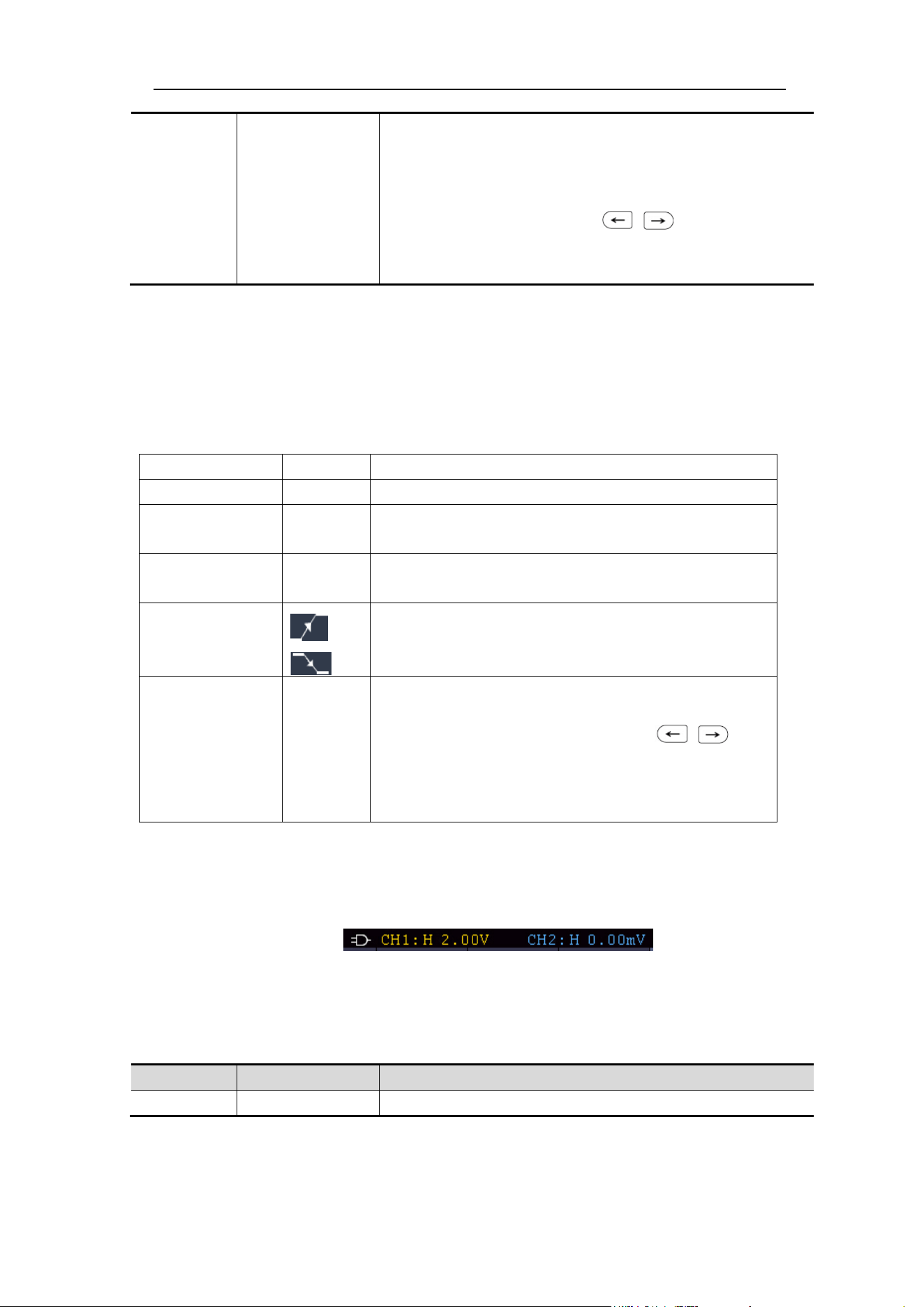
In Nth Edge Trigger mode, the trigger setting information is displayed on bottom right
of the screen, for example, ,indicates that trigger type is Nth
Edge, trigger source is CH1, -150V is up level or low level threshold.
Nth Edge Trigger
Nth Edge Trigger menu list:
MENU
SETTING
INSTRUCTION
Single
Mode
Nth Edge Set vertical channel trigger type as Nth Edge trigger.
Source
CH1
CH2
Select CH1 as the trigger source.
Select CH2 as the trigger source.
Edge
Edge
Trigger on the rising edge of the input signal when
voltage level meets the specified trigger level.
Trigger on the falling edge of the input signal when
voltage level meets the specified trigger level.
Configure
Idle Time
Set idle time before the edge counting in Nth Edge
Trigger. Adjust M knob to set idle time press
panel button to move cursor to choose which digit
to be set. Available range is 30ns-10s, default 100ns.
Edge Num
Set the edge number value of “N” in Nth Edge trigger.
4.Advanced User Guidebook
35
Mode
Holdoff
Auto
Normal
Single
Holdoff
Reset
Acquire waveform even no trigger occurred
Acquire waveform when trigger occurred
When trigger occurs, acquire one waveform then stop
100 ns - 10 s, adjust M knob to set time interval before
another trigger occur, press panel button
move cursor to choose which digit to be set.
Set Holdoff time as 100 ns
Alternate Trigger (Trigger mode: Edge)
Trigger signal comes from two vertical channels when alternate trigger is on. This
mode is used to observe two unrelated signals. Trigger mode is edge trigger.
Alternate trigger (Trigger Type: Edge) menu list:
Menu
Settings
Instruction
Alternate Mode
Edge
Set vertical channel trigger type as edge trigger.
Source
CH1
CH2
Channel 1 as trigger signal.
Channel 2 as trigger signal.
Coupling
AC
DC
Block the direct current component.
Allow all component pass.
Slope
Trigger on rising edge
Trigger on falling edge
Mode
Holdoff
Auto
Holdoff
Reset
Acquire waveform even no trigger occurs
100 ns - 10 s, turn the M knob to set time interval
before another trigger occur, press panel
button to move cursor to choose which digit to be
set.
Set Holdoff time as default value (100 ns).
Logic Trigger
Trigger according to logic relation.
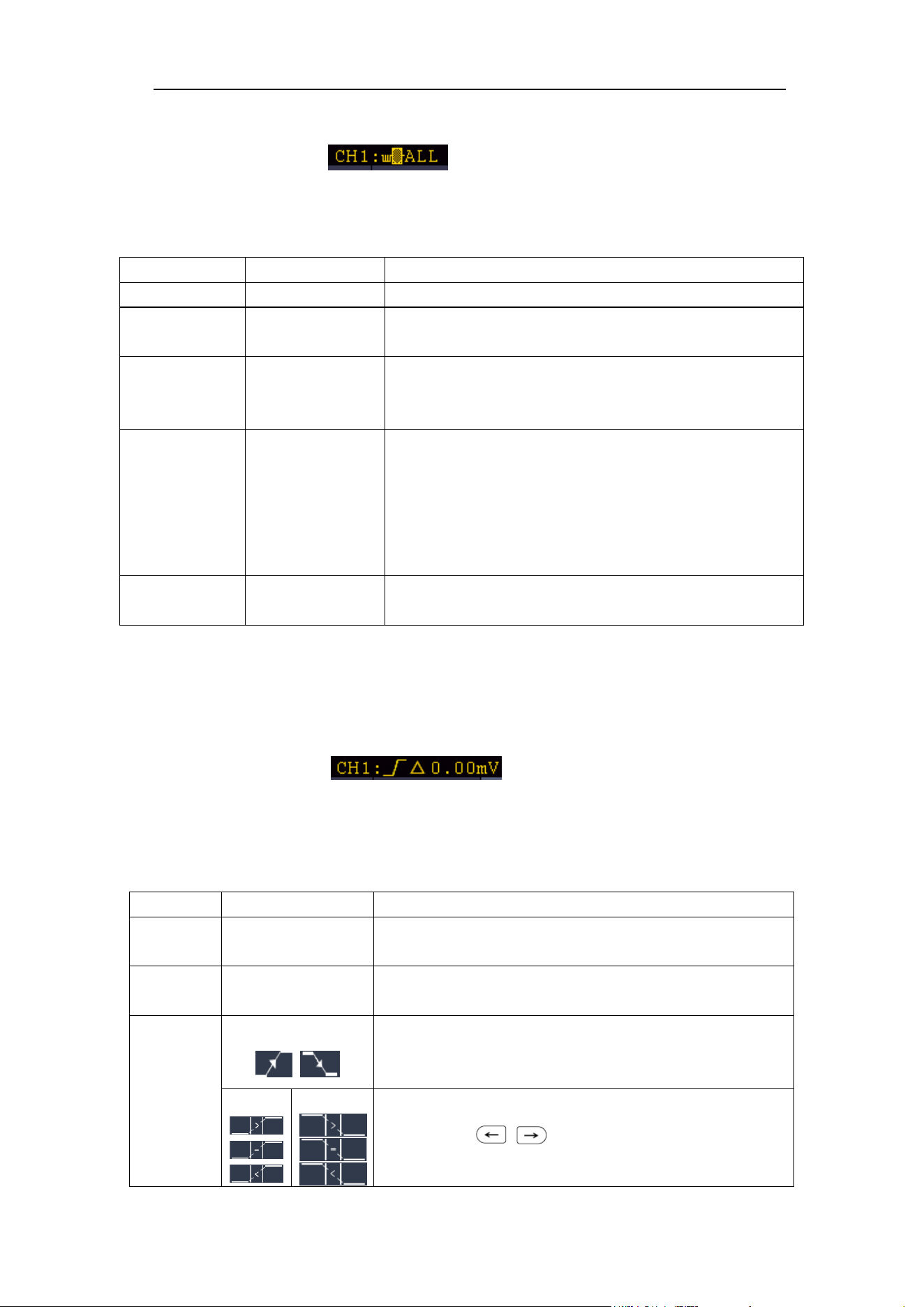
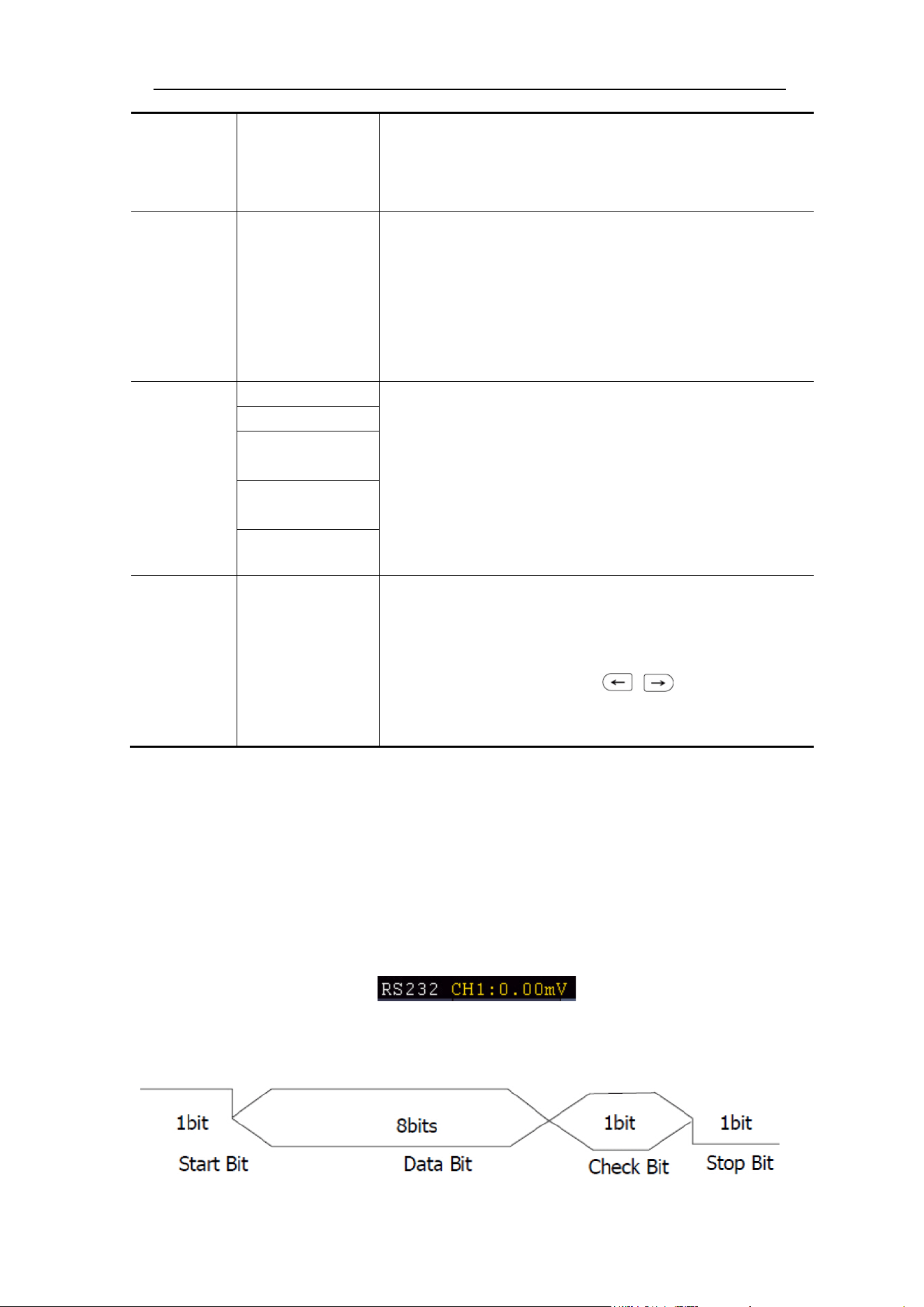
In Logic Trigger mode, the trigger setting information is displayed on bottom right of
the screen, for example, , indicates that
trigger type is Logic, logic mode is AND, CH1 high level and trigger level is 0.00mV,
CH2 high level and trigger level is 0.00mV.
Logic Trigger menu list:
MENU
SETTING
INSTRUCTION
Mode
Logic
Set vertical channel trigger type as Logic trigger.
4.Advanced User Guidebook
36
Logic
Mode
AND
OR
XNOR
XOR
Set logic mode as AND.
Set logic mode as OR.
Set logic mode as XNOR.
Set logic mode as XOR.
Input Mode
CH1
CH2
Set CH1 as High Level, Low level, high or low level,
Rise and Fall.
Set CH2 as High Level, Low level, high or low level,
Rise and Fall.
Note
:
When input mode of one channel is set as Rise or
Fall, the other channel could not be set as Rise and Fall
at the same time.
Out Mod
Goes True
Trigger when condition turns True from False.
Trigger when condition turns False from True.
Trigger when the time of true condition is more than
the set time
Trigger when the time of true condition is lower than
the set time
Trigger when the time of true condition is equal to the
set time
Goes False
Is True >
Is True <
Is True =
Mode
Holdoff
Auto
Normal
Single
Holdoff
Reset
Acquire waveform even no trigger occurred
Acquire waveform when trigger occurred
When trigger occurs, acquire one waveform then stop
100 ns - 10 s, adjust M knob to set time interval before
another trigger occur, press panel button
move cursor to choose which digit to be set.
Set Holdoff time as 100 ns
Bus Trigger
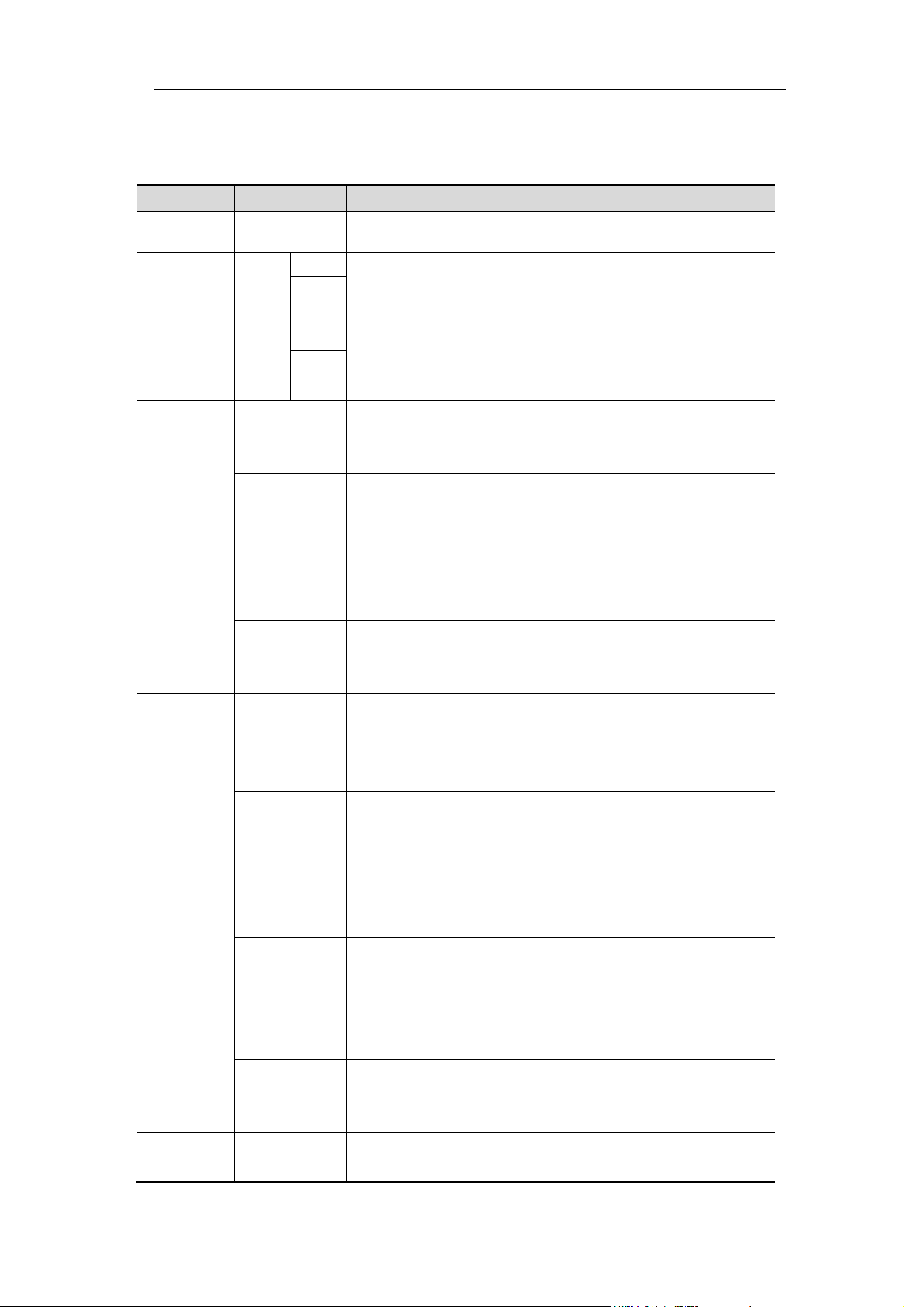
1. RS232 Trigger
RS232 is a serial communication mode used in the data transmission between PCs or
between PC and Terminal. A character is transmitted as a frame of data which consist
of 1bit start bit, 5-8bits data bits, 1bit check bit and 1-2 stop bits.
In RS232 bus trigger mode, the trigger setting information is displayed on bottom
right of the screen, for example, ,indicates that trigger type
is RS232, CH1 trigger level is 0.00mV.
Format as shown in the figure below,
4.Advanced User Guidebook
37
RS232 Trigger
RS232 Trigger menu list:
MENU
SETTING
INSTRUCTION
Bus Type RS232 Set vertical channel bus type as RS232 trigger.
Input
Sour
ce
CH1
Select CH1 as the trigger source.
Select CH2 as the trigger source.
CH2
Pola
rity
Nor
mal
Select polarity of data transmission as Normal. Select
polarity of data transmission as Inverted.
Inve
rted
When
Start
Trigger on the start frame of position. After choosing
this condition, press Configure to enter detailed
settings.
Error
Trigger when error frame is detected. After choosing
this condition, press Configure to enter detailed
settings.
Chk Error
Trigger when Chk Error is detected. After choosing
this condition, press Configure to enter detailed
settings.
Data
Trigger on the last bit of the preset data. After
choosing this condition, press Configure to enter
detailed settings.
Configure
Start
Common Baud: adjust M knob to choose common
baud.
Custom Baud: adjust M knob to choose baud, ranges
from 50 to 10,000,000.
Error
Stop Bit
:
Select “1”or ”2”.
Parity: “NO””EVEN””ODD”
Common Baud: adjust M knob to choose common
baud.
Custom Baud: adjust M knob to choose baud, ranges
from 50 to 10,000,000.
Chk Error
Even-Odd
:
Select Even or Odd.
Common Baud: adjust M knob to choose common
baud.
Custom Baud: adjust M knob to choose baud, ranges
from 50 to 10,000,000.
Data
Data Bits
:
Set as 5
、
6
、
7
、
8 bits.
Data:Set data according to data bits, ranges from 0-31,
0-63, 0-127 or 0-255.
Mode
Auto
Normal
Acquire waveform even no trigger occurred
Acquire waveform when trigger occurred
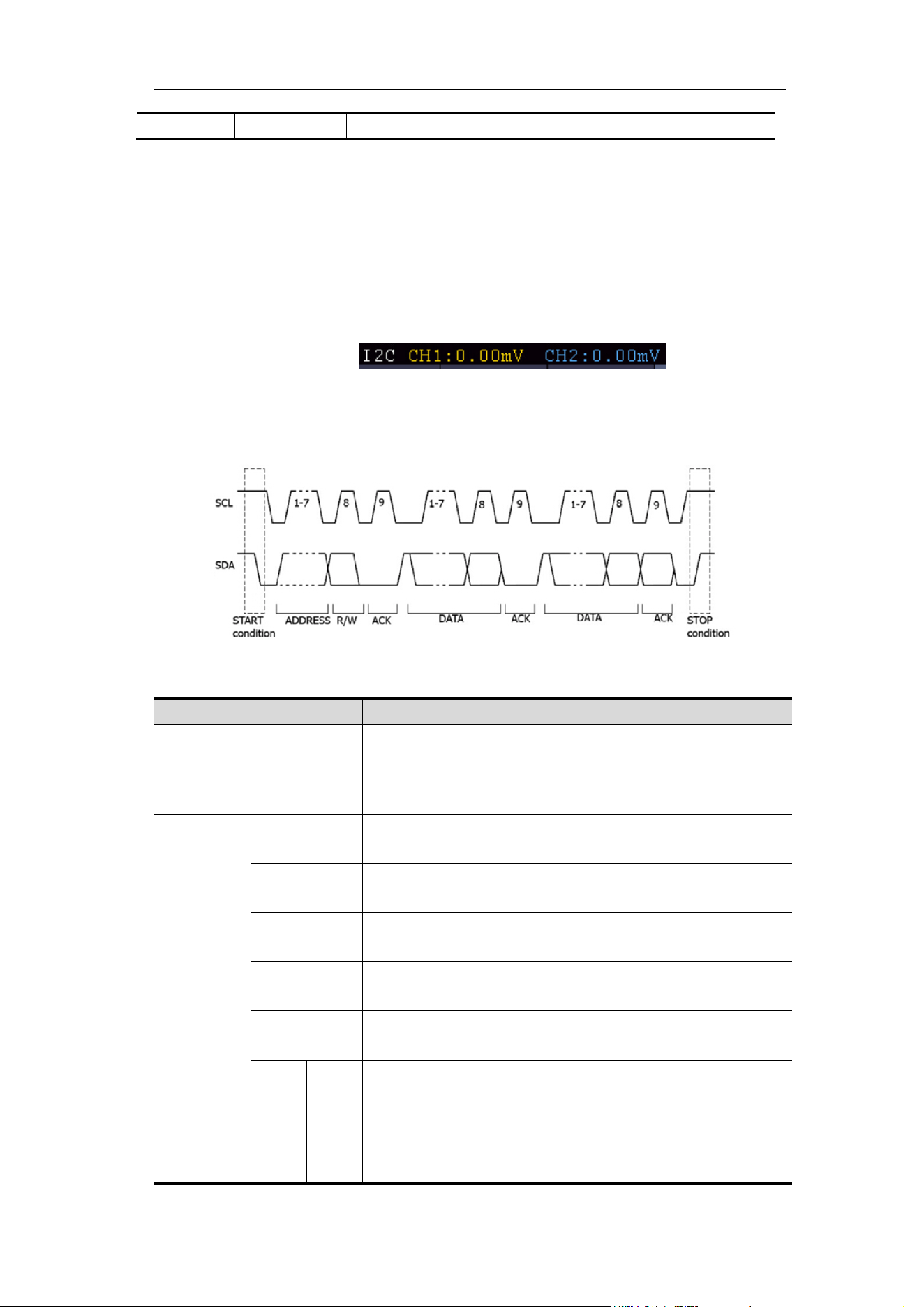
4.Advanced User Guidebook
38
Holdoff
Single
When trigger occurs, acquire one waveform then stop
2. I2C Trigger
The I2C serial bus consists of SCL and SDA. The transmission rate is determined by
SCL, and the transmission data is determined by SDA. As shown in below figure,
oscilloscope can trigger on the start, restart, stop, ack lost, specific device address or
data value, also device address and data value at the same time.
In I2C bus trigger mode, the trigger setting information is displayed on bottom right
of the screen, for example, ,indicates that
trigger type is I2C, CH1 trigger level is 0.00mV, CH2 trigger level is 0.00mV.
I2C Trigger menu list:
MENU
SETTING
INSTRUCTION
Bus Type I2C Set vertical channel bus type as I2C trigger.
Source
CH1
CH2
Set CH1 as SCL or SDA.
Set CH2 as SCL or SDA.
When
Start
Trigger when SDA data transitions from high to low
while SCL is high.
Restart
When another start condition occurs before a stop
condition.
Stop
Trigger when SDA data transitions from low to high
while SCL is high.
Ack Lost
Trigger when SDA data is high during any
acknowledgement of SCL clock position.
Address
Trigger on the read or write bit when the preset
address is met.
Adr
For
mat
Addr
Bits
Set Address Bits to be “7”
、
“8”or“10”.
Set address according to the preset address bits,
address range is 0-127, 0-255, 0-1023 respectively.
Set Data Direction to be Read or Write.
Addr
ess
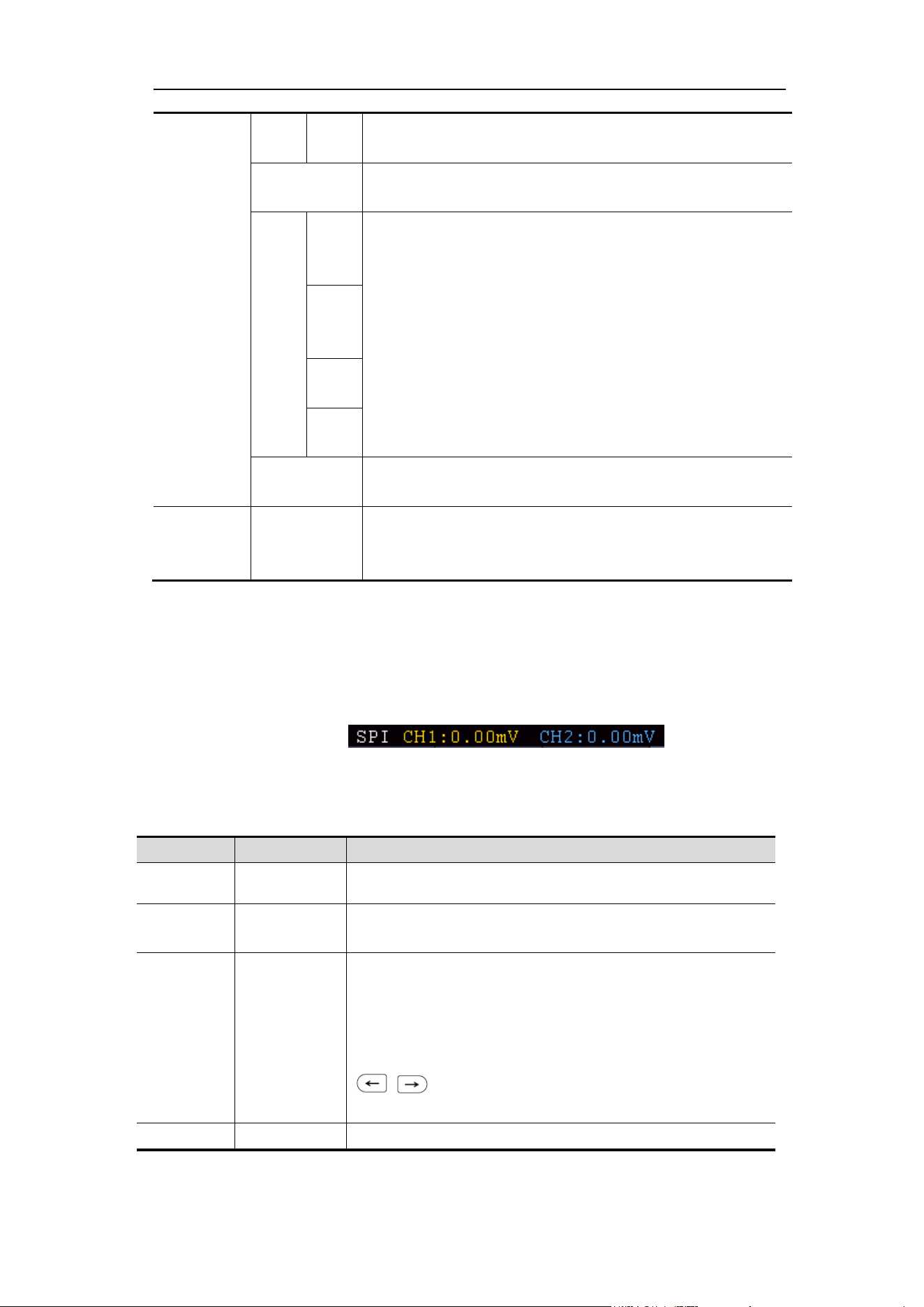
4.Advanced User Guidebook
39
Dire
ction
Note: The set is not available when Address bits is set
to “8”.
Data
Search for the preset data value on SDA and trigger on
the dump edge of SCL of the last bit of the data area.
DatF
orma
t
Byte
lengt
h
Set data byte length, available range 1-5 bytes. Adjust
M knob to set byte length.
Select the data bit, ranges from 0 to (byte length*8 -1).
Set data to be H, L or X (H or L)
Set all the data bits to be the specified value in Data
Curr
entB
it
Data
All
Bits
Addr / Data
Trigger when Address and Data conditions are met at
the same time .
Mode
Holdoff
Auto
Normal
Single
Acquire waveform even no trigger occurred
Acquire waveform when trigger occurred
When trigger occurs, acquire one waveform then stop
3. SPI Trigger
Trigger on the specified data when the timeout condition is meet. When using SPI
trigger, you need to specify the SCL and SDA data sources.
In SPI bus trigger mode, the trigger setting information is displayed on bottom right
of the screen, for example, ,indicates that
trigger type is SPI, CH1 trigger level is 0.00mV, CH2 trigger level is 0.00mV.
SPI Trigger menu list:
MENU
SETTING
INSTRUCTION
Bus Type SPI Set vertical channel bus type as SPI trigger.
Source
CH1
CH2
Set CH1 as SCL or SDA.
Set CH2 as SCL or SDA.
Time Out Time out
Set the minimum time that SCL must be idle, that is a
period of SCL, available range 100ns-10s. Time out
means SCL keeps idle for a specified time before
oscilloscope starts to search for the data(SDA) on
which to trigger. adjust M knob to set time out, press
panel button move cursor to choose which
digit to be set.
ClockEdg
Clock Edge
Set Edge Clock as Rising edge or Falling edge. Means
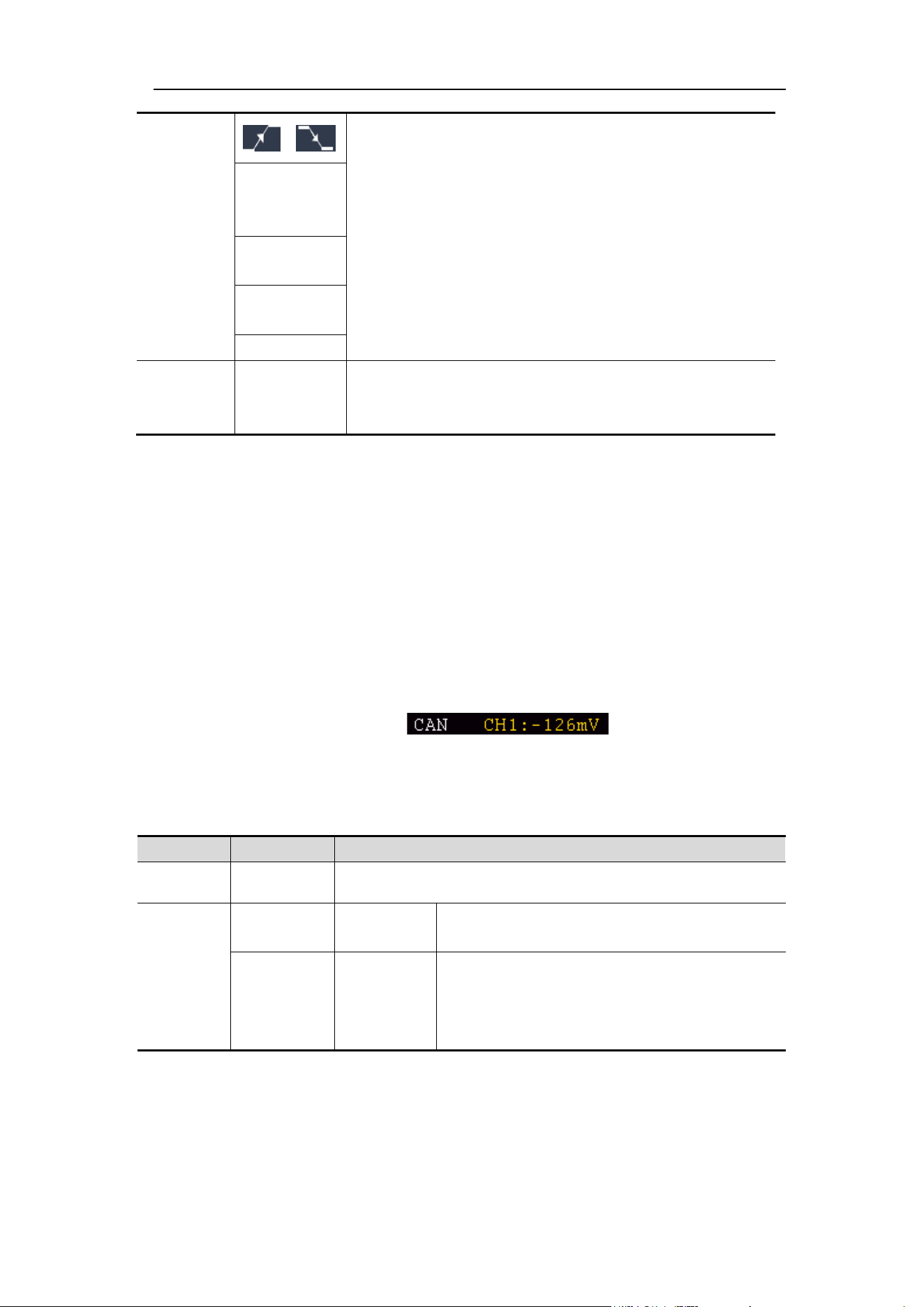
4.Advanced User Guidebook
40
e&Data
sample the SDA data on the rising edge or falling edge
of the clock.
Set the number of bits of the serial data character
string. It can be set to any integer between 4-32. adjust
M knob to set Data Bits.
Set the number of the data bits, ranges from 0-31,
adjust M knob to set Current Bit.
Set the value of the current data bit as H,L or X (H or
L).
Set all the data bits to be the specified value in Data.
Data Bits
Current Bit
Data
All Bits
Mode
Holdoff
Auto
Normal
Single
Acquire waveform even no trigger occurred
Acquire waveform when trigger occurred
When trigger occurs, acquire one waveform then stop
4. CAN Trigger
CAN (Controller Area Network) is a serial communication protocol of the ISO
international standardization.
By using the CAN bus trigger, you can trigger on Start of Frame, Type of Frame,
Identifier, Data, ID & Data, End of Frame, Missing Ack, or Bit Stuffing Error.
You need to specify the signal source, trigger signal type, sample point, and signal
rate of the CAN signal.
In CAN bus trigger mode, the trigger setting information is displayed on bottom
right of the screen, for example, ,indicates that trigger
type is CAN, CH1 trigger level is -126 mV.
CAN Trigger menu list:
MENU
SETTING
INSTRUCTION
Bus Type CAN Set vertical channel bus type as CAN trigger.
Input
Source
CH1
CH2
Select CH1 as the trigger source.
Select CH2 as the trigger source.
Type
CAN_H
CAN_L
TX
RX
Actual CAN_H bus signal.
Actual CAN_L bus signal.
Transmission signal on the CAN signal line.
Received signal on the CAN signal line.
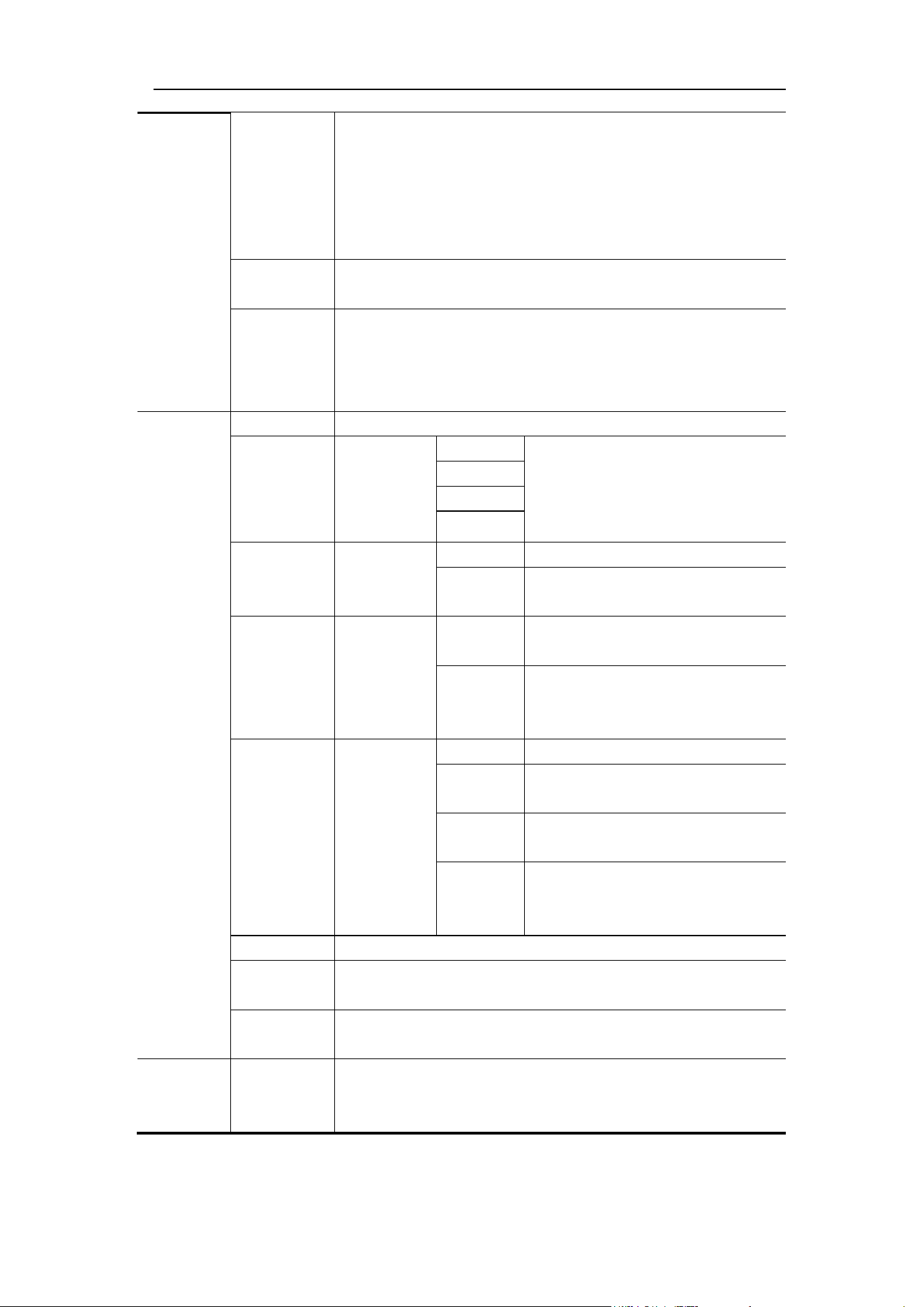
4.Advanced User Guidebook
41
Sample
Point
Turn the M knob to set the Sample point, which is a point
within a bit’s time. The oscilloscope samples the bit level
at this point. “Sample point” is represented by the
percentage of “the time from the start of the bit’s time to
the sample point time” in the “bit’s time”. The range is
5% to 95%.
Common
Baud
Turn the M knob to select from the Baud list on the left.
Custom
Baud
Turn the M knob to set the Baud. The range is 10,000 to
1,000,000.
Tip: You can select the nearest value in Common Baud,
and then adjust it in this menu.
Condition
Start
Trigger on the start frame of the data frame.
Type
Type
(Bottom
menu)
Data
Trigger on the selected frame.
Remote
Error
Overload
ID
Configure
(Bottom
menu)
Format
Select Standard or Extended.
ID
Use the M knob and Direction
key on the front panel to set.
Data
Configure
(Bottom
menu)
Byte
Length
Set the number of bytes with the
M knob. The range is 1 to 8.
Data
Set the data with the M knob
and Direction key on the front
panel.
ID&Data
Configure
(Bottom
menu)
Format
Select Standard or Extended.
ID
Use the M knob and Direction
key on the front panel to set.
Byte
Length
Set the number of bytes with the
M knob. The range is 1 to 8.
Data
Set the data with the M knob
and Direction key on the front
panel.
End
Trigger on the end frame of the data frame.
Missing
Ack
Trigger on Missing Ack.
Bit
Stuffing
Trigger on Bit Stuffing Error.
Mode
Holdoff
Auto
Normal
Single
Acquire waveform even no trigger occurred
Acquire waveform when trigger occurred
When trigger occurs, acquire one waveform then stop
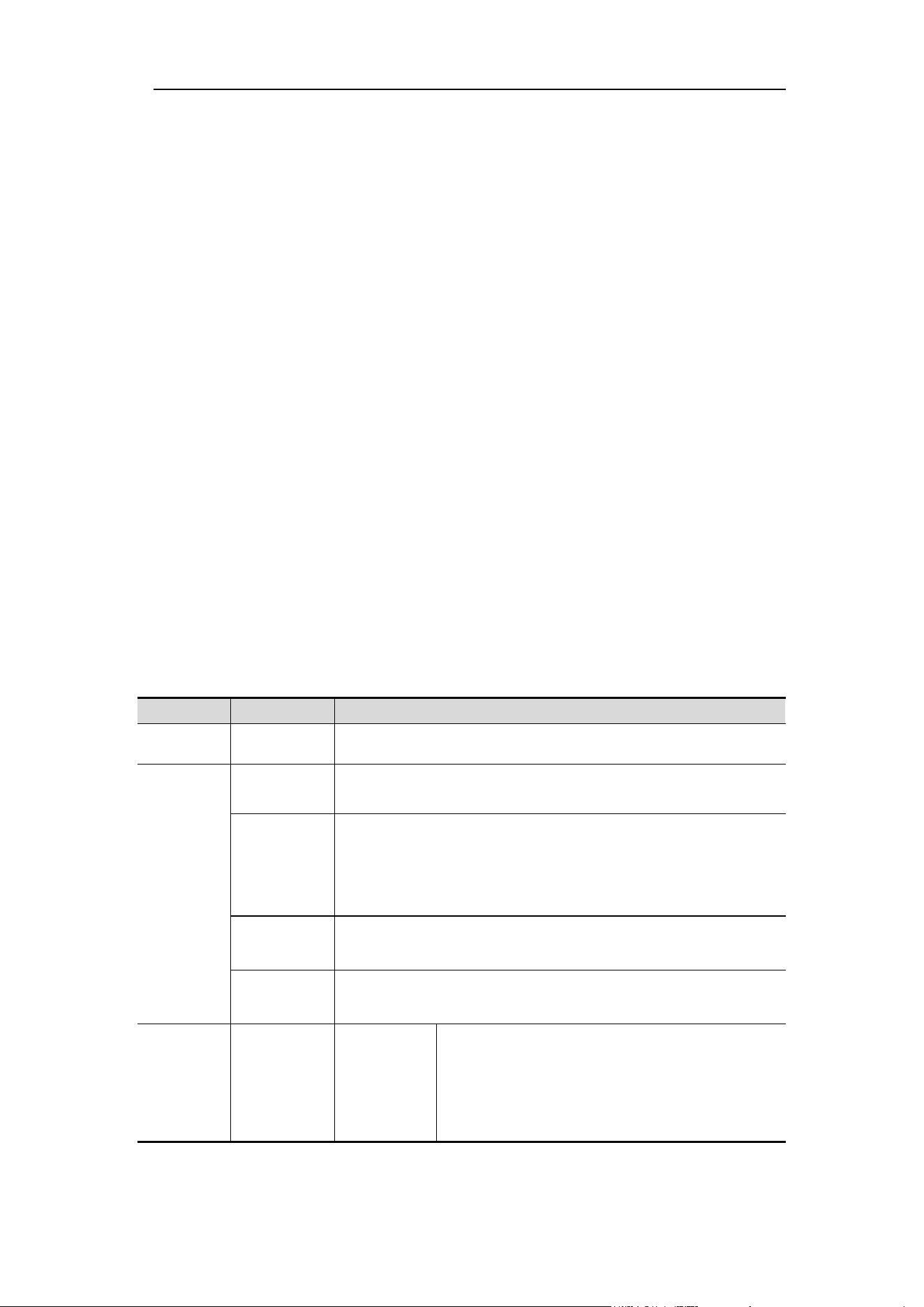
4.Advanced User Guidebook
42
Bus Decoding
1. RS232 Decoding
To decode RS232 signal:
(1) Connect the RS232 signal to the Signal Input Channel of the oscilloscope.
(2) Adjust to the proper time base and voltage division.
(3) In trigger menu, select Bus trigger, and select bus type as RS232, set parameters
based on the characteristics of the signal, trigger the signal correctly and obtain
stable display. Refer to "RS232 Trigger" on page 36.
(4) Push the Decode button on the front panel. Select bus type as RS232. set
parameters based on the characteristics of the signal. When the parameters are set
correctly, the information carried by the signal will be displayed.
Tip: If there are repetitive menu items in both trigger menu and decoding menu, you
can set anyone of them, the other will be changed synchronously.
Note:
Use the Trigger Level knob to adjust the thresholds of bus trigger and bus
decoding.
When decoding, if "Parity" is not set to "None", and the check bit error is
detected, two red error marks will be displayed in the corresponding position in
the waveform.
RS232 Decoding menu list:
MENU
SETTING
INSTRUCTION
Bus Type RS232 Set bus type of decoding as RS232.
Configure
Common
Baud
Turn the M knob to select from the Baud list on the left.
Custom
Baud
Turn the M knob to set the Baud. The range is 50 to
10,000,000.
Tip: You can select the nearest value in Common Baud,
and then adjust it in this menu.
Data Bits
Set the data width of each frame to match the signal. It
can be set to 5, 6, 7 or 8.
Parity
set the even-odd check mode
to match the polarity used
by the signal.
Display Format
Binary
Decimal
Hex
ASCII
Set the display format of the bus.
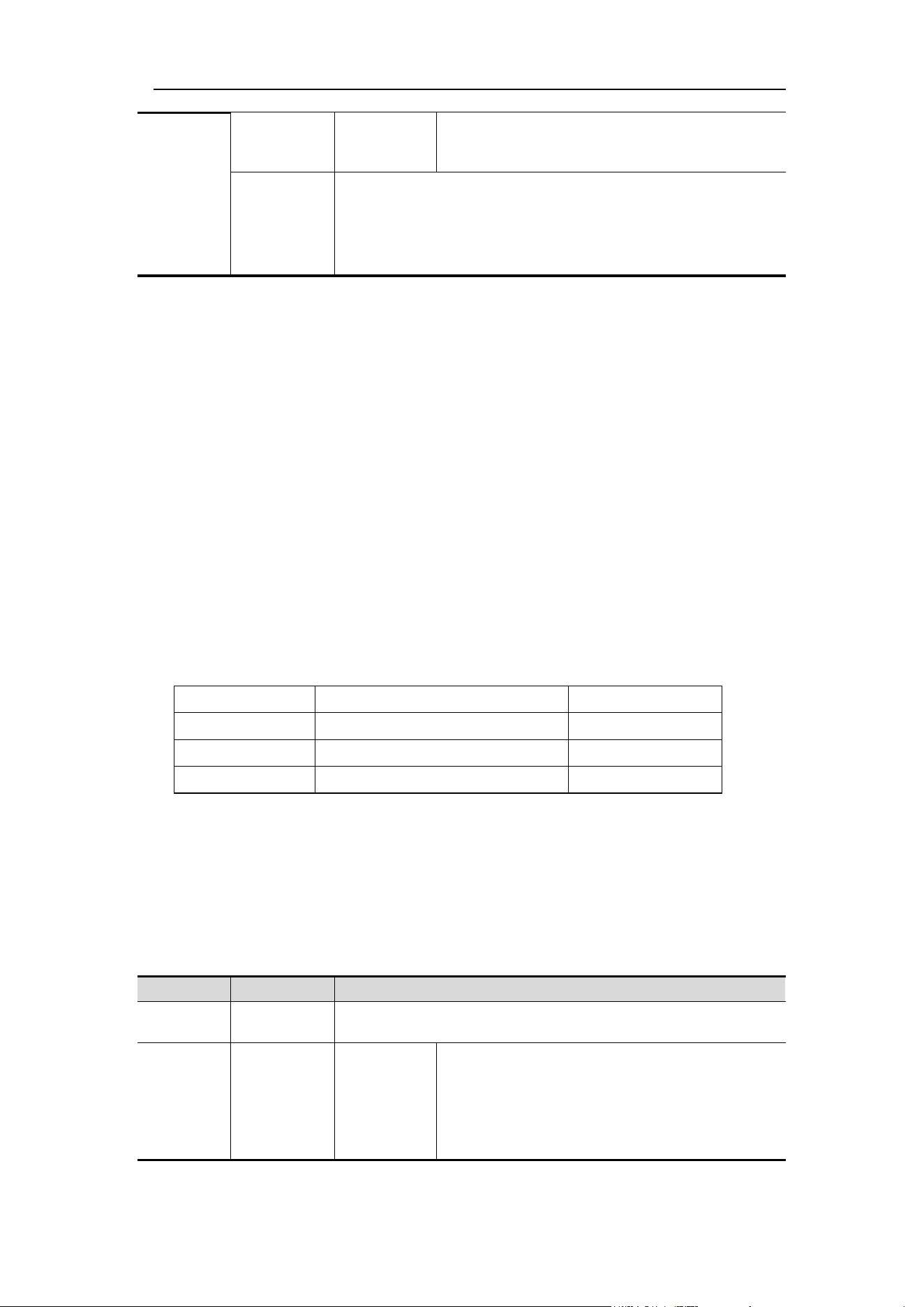
4.Advanced User Guidebook
43
EventTable
ON
OFF
Select "ON" to display the event table.
Save
EventTable
If a USB storage device is currently connected to the
instrument, save the event table data
in a .csv
(spreadsheet) formatted file on the external USB storage
device.
2. I2C Decoding
To decode I2C signal:
(1) Connect the clock line (SCLK) and the data line (SDA) of the I2C signal to the
Signal Input Channels of the oscilloscope.
(2) Adjust to the proper time base and voltage division.
(3) In trigger menu, select Bus trigger, and select bus type as I2C, set parameters
based on the characteristics of the signal, trigger the signal correctly and obtain
stable display. Refer to "I2C Trigger" on page 38.
(4) Push the Decode button on the front panel. Select bus type as I2C. set parameters
based on the characteristics of the signal. When the parameters are set correctly,
the information carried by the signal will be displayed.
Tip: If there are repetitive menu items in both trigger menu and decoding menu, you
can set anyone of them, the other will be changed synchronously.
Decoded information interpretation:
Information
Abbreviation
Background
Read Address
R, Read, or do not display
Green
Write Address
W, Write, or do not display
Green
Data
D, Data, or do not display
Black
Note:
Use the Trigger Level knob to adjust the thresholds of bus trigger and bus
decoding.
When the ACK (ACKnowledge Character) is not met, two red error marks will be
displayed in the corresponding position in the waveform.
I2C Decoding menu list:
MENU
SETTING
INSTRUCTION
Bus Type I2C Set bus type of decoding as I2C.
Display Format
Binary
Decimal
Hex
ASCII
Set the display format of the bus.
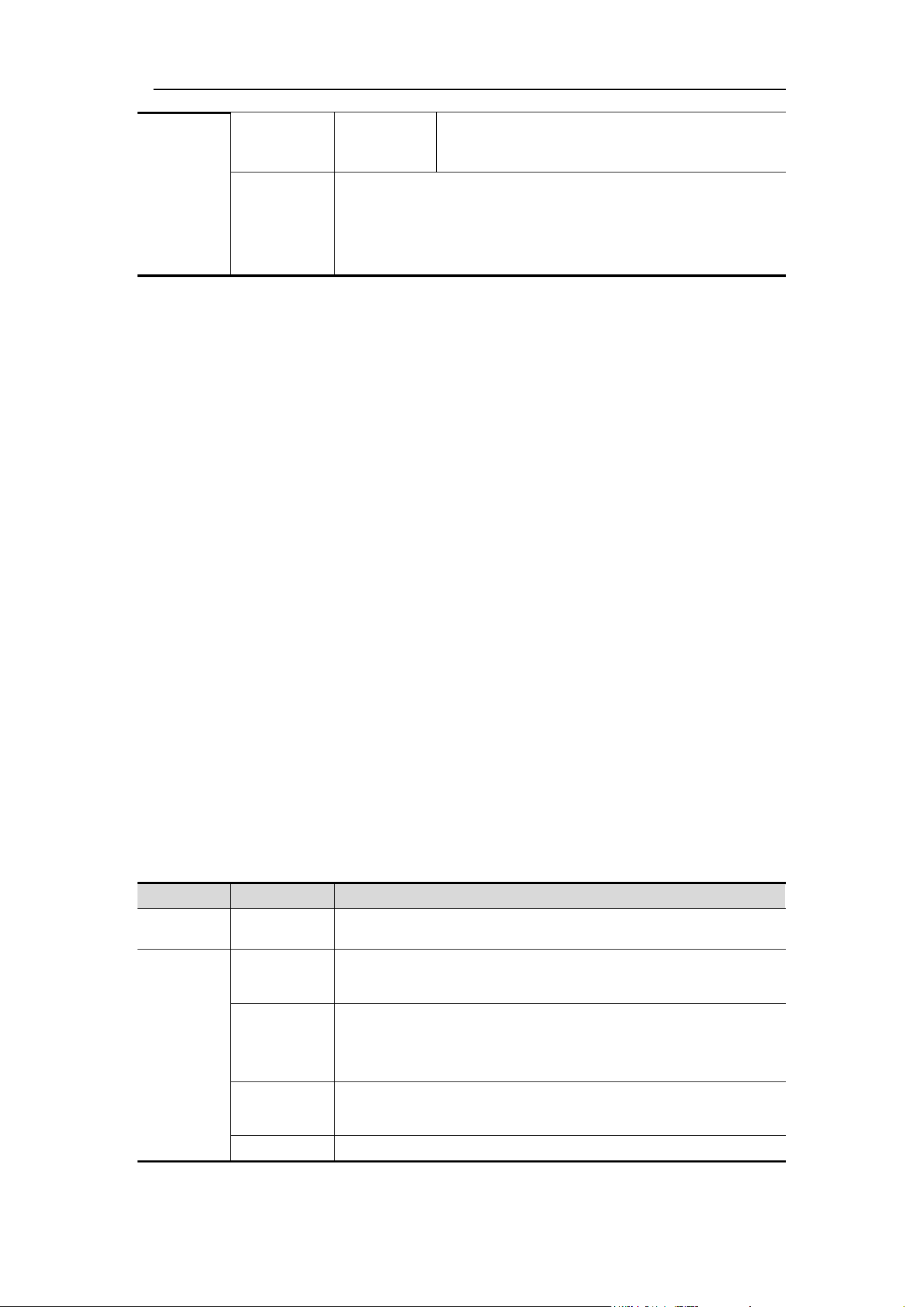
4.Advanced User Guidebook
44
EventTable
ON
OFF
Select "ON" to display the event table.
Save
EventTable
If a USB storage device is currently connected to the
instrument, save the event table data
in a .csv
(spreadsheet) formatted file on the external USB storage
device.
3. SPI Decoding
To decode SPI signal:
(1) Connect the clock line (SCLK) and the data line (SDA) of the SPI signal to the
Signal Input Channels of the oscilloscope.
(2) Adjust to the proper time base and voltage division.
(3) In trigger menu, select Bus trigger, and select bus type as SPI, set parameters
based on the characteristics of the signal, trigger the signal correctly and obtain
stable display. Refer to "SPI Trigger" on page 39.
(4) Push the Decode button on the front panel. Select bus type as SPI. set parameters
based on the characteristics of the signal. When the parameters are set correctly,
the information carried by the signal will be displayed.
Tip: If there are repetitive menu items in both trigger menu and decoding menu, you
can set anyone of them, the other will be changed synchronously.
Note:
Use the Trigger Level knob to adjust the thresholds of bus trigger and bus
decoding.
LS First in Bit Order menu item (Least Significant Bit First) means that the least
significant bit will arrive first: hence e.g. the hexadecimal number 0x12, will
arrive as the sequence 01001000 in binary representation, will be decoded as the
reversed sequence 00010010.
SPI Decoding menu list:
MENU
SETTING
INSTRUCTION
Bus Type SPI Set bus type of decoding as SPI.
Configure
SCLK
Select the clock edge to match the signal,
sample the
SDA data on the rising or falling edge of the clock.
Time Out
Set the minimum time that the clock (SCL) signal must
be idle before the oscilloscope starts to search for the data
(SDA) on which to trigger. The range is 30 ns to 10 s.
Data Bits
Set the data width of each frame to match the signal. It
can be set to any integer between 4 and 32.
Bit Order
Select LS First or MS First to match the signal.
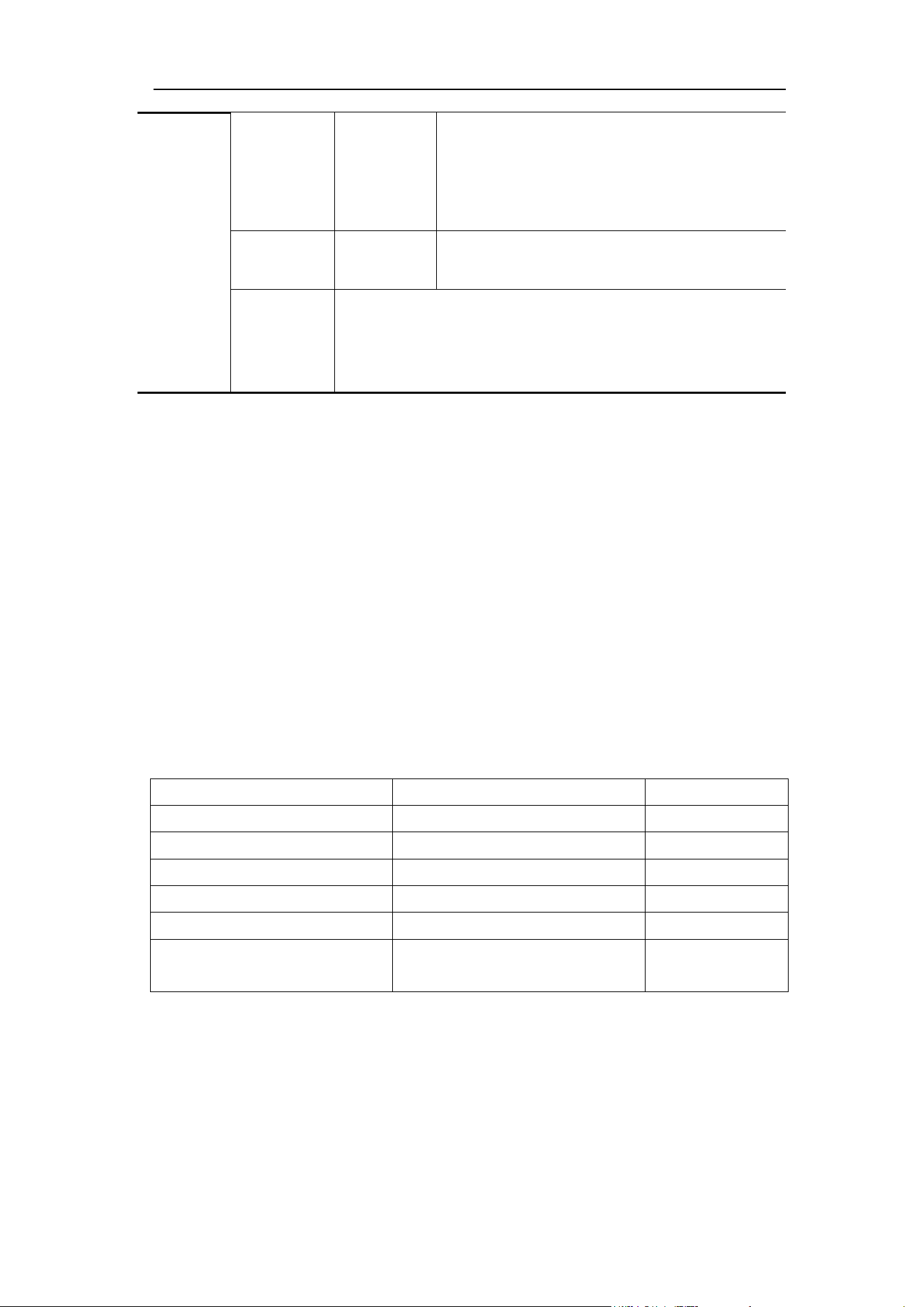
4.Advanced User Guidebook
45
Display
Format
Binary
Decimal
Hex
ASCII
Set the display format of the bus.
EventTable
ON
OFF
Select "ON" to display the event table.
Save
EventTable
If a USB storage device is currently connected to the
instrument, save the event table data
in a .csv
(spreadsheet) formatted file on the external USB storage
device.
4. CAN Decoding
To decode CAN signal:
(1) Connect the CAN signal to the Signal Input Channel of the oscilloscope.
(2) Adjust to the proper time base and voltage division.
(3) In trigger menu, select Bus trigger, and select bus type as CAN, set parameters
based on the characteristics of the signal, trigger the signal correctly and obtain
stable display. Refer to "CAN Trigger" on page 40.
(4) Push the Decode button on the front panel. Select bus type as CAN. set
parameters based on the characteristics of the signal. When the parameters are set
correctly, the information carried by the signal will be displayed.
Tip: If there are repetitive menu items in both trigger menu and decoding menu, you
can set anyone of them, the other will be changed synchronously.
Decoded information interpretation:
Information
Abbreviation
Background
Identifier
I, ID, or do not display
Green
Overload Frame
OF
Green
Error Frame
EF
Green
Data Length code
L, DLC, or do not display
Blue
Data
D, Data, or do not display
Black
Cyclic Redundancy Check C, CRC, or do not display
Valid: Purple
Error: Red
Note:
Use the Trigger Level knob to adjust the thresholds of bus trigger and bus
decoding.
When the ACK (ACKnowledge Character) of Data Frame or Remote Frame is
not met, two red error marks will be displayed in the corresponding position in
the waveform.
Error Frame, Remote Frame, and Overload Frame will be identified in the "Data"
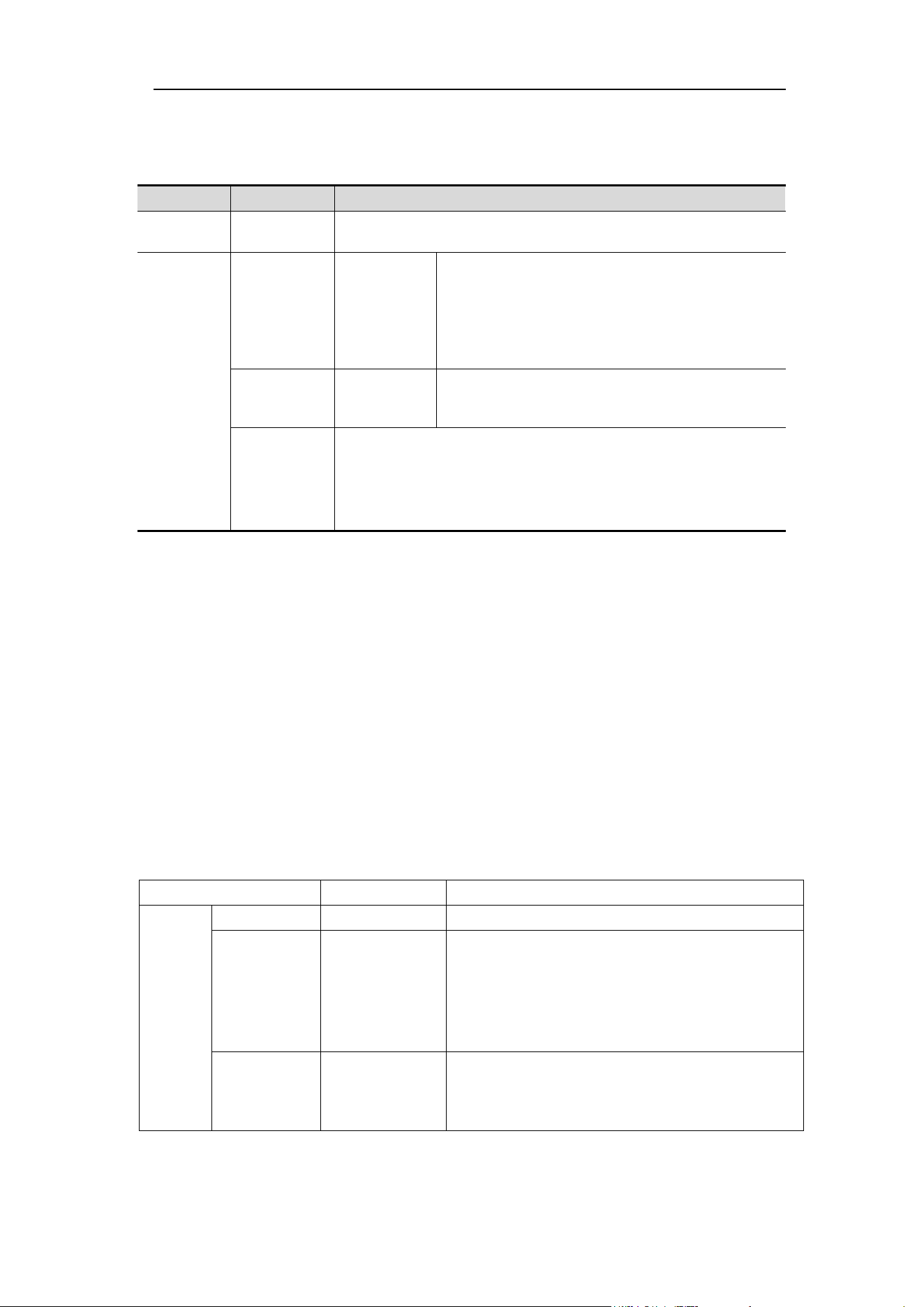
4.Advanced User Guidebook
46
column in the event table (Data Frame will not be identified).
CAN Decoding menu list:
MENU
SETTING
INSTRUCTION
Bus Type CAN Set bus type of decoding as CAN.
Display
Format
Binary
Decimal
Hex
ASCII
Set the display format of the bus.
EventTable
ON
OFF
Select "ON" to display the event table.
Save
EventTable
If a USB storage device is currently connected to the
instrument, save the event table data
in a .csv
(spreadsheet) formatted file on the external USB storage
device.
How to Operate the Function Menu
The function menu control zone includes 8 function menu buttons: Measure, Acquire,
Utility, Cursor, Autoscale, Save, Display, Help and 3 immediate-execution buttons:
Autoset, Run/Stop, Single.
How to Implement Sampling Setup
Push the Acquire button, Acqu Mode, Length, PERF Mode and Intrpl is shown in
the bottom menu.
The description of the Acqu Mode menu is shown as follows:
Function Menu
Setting
Description
Acqu
Mode
Sample
Normal sampling mode.
Peak Detect
Use to capture maximal and minimal
samples. Finding highest and lowest points
over adjacent intervals.
It is used for the
detection of the jam
ming burr and the
possibility of reducing the confusion.
Average 4, 16, 64, 128
It is used to reduce the random and don't-care
noises, with the optional number of averages.
The description of the Record Length menu is shown as follows:
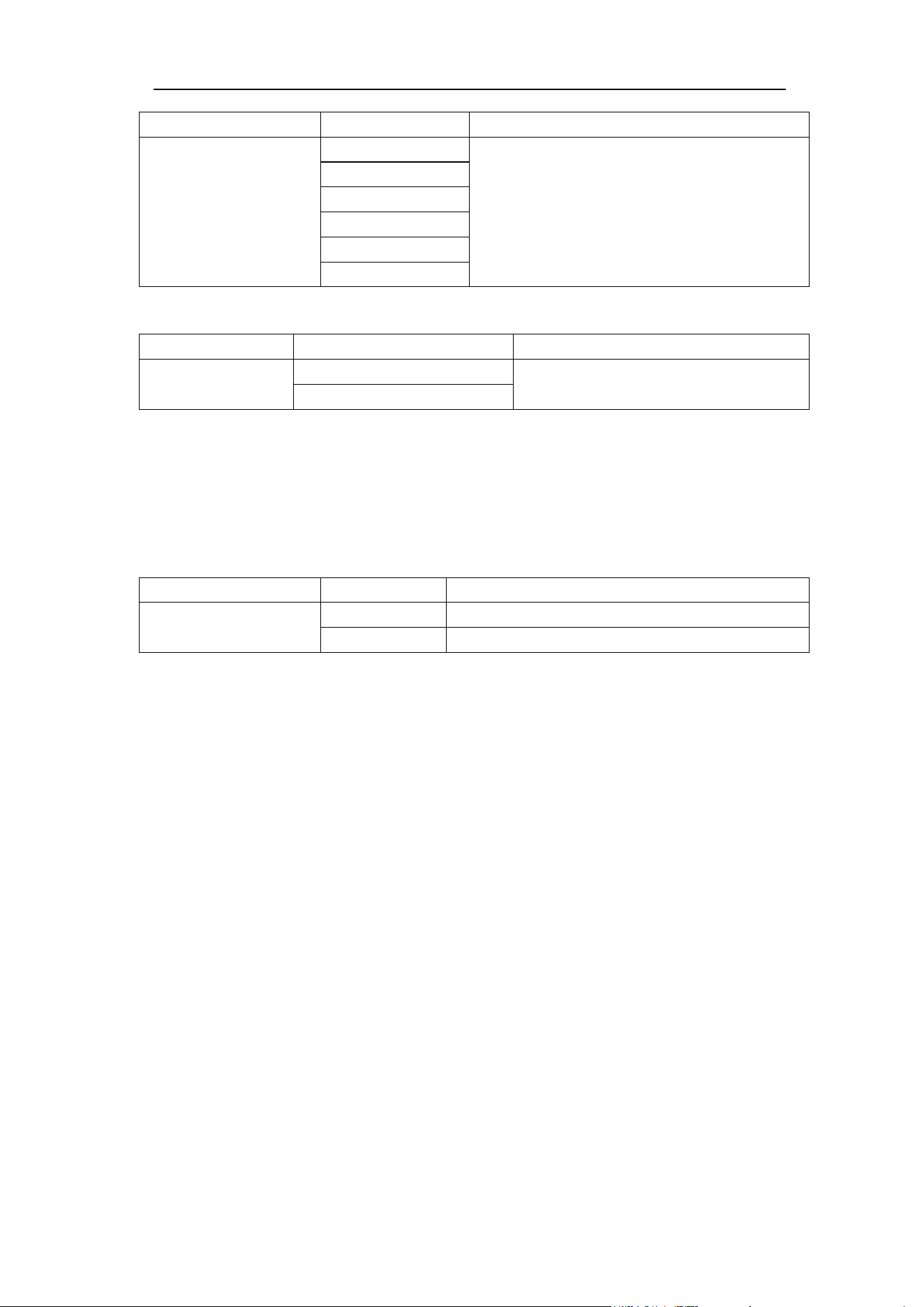
4.Advanced User Guidebook
47
Function Menu
Setting
Description
Length
1000
Choose the record length
10K
100K
1M
10M
20M (Single CH)
The description of PERF Mode menu is shown as follows:
Function Menu
Setting
Description
PERF Mode
8-bit
Set the vertical resolution (A/D)
12-bit
When the sample rate <=250MS/s, ADC resolution is set to 12-bit by default;
When the sample rate >250MS/s, and both channels are turned on, ADC resolution is
set to 8-bit by default;
When the sample rate <250MS/s, and only one channel is turned on, ADC resolution
can be set to 8-bit or 12-bit in this menu.
The description of the Intrpl menu is shown as follows:
Function Menu
Setting
Description
Intrpl
Sinx/x
Use sine(x)/x interpolation
x
Use linear interpolation
Interpolation method is a processing method to connect the sampled points, using
some points to calculate the whole appearance of the waveform. Select the appropriate
interpolation method according to the actual signal.
Sine(x)/x interpolation: Connect the sampled points with curved lines.
Linear interpolation: Connect the sampled points with straight lines. This method is
suitable to rebuild the straight-edged signals, such as square or pulse wave.
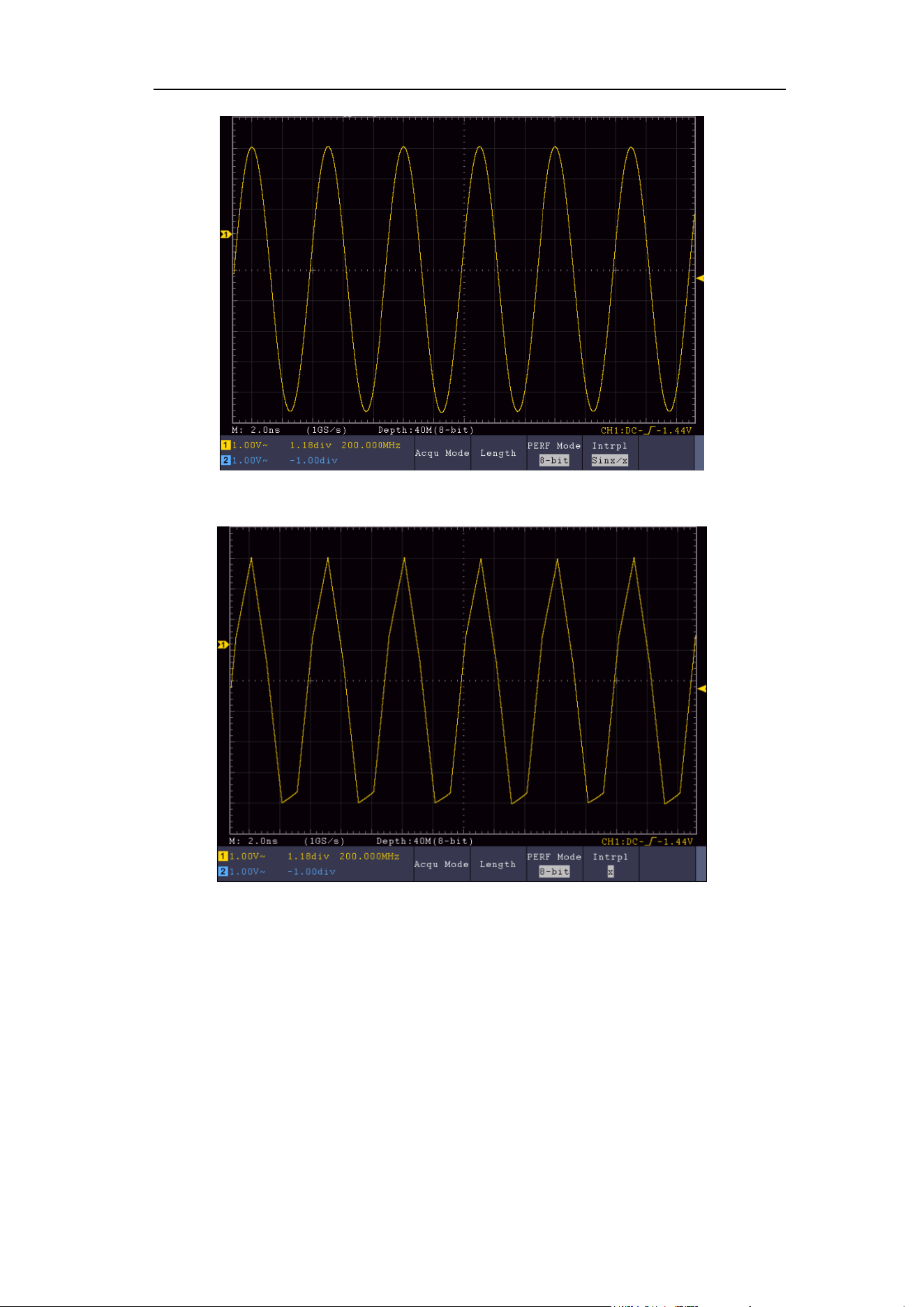
4.Advanced User Guidebook
48
Sine(x)/x interpolation
Linear interpolation
How to Set the Display System
Push the Display button and the Display menu is shown as follows:
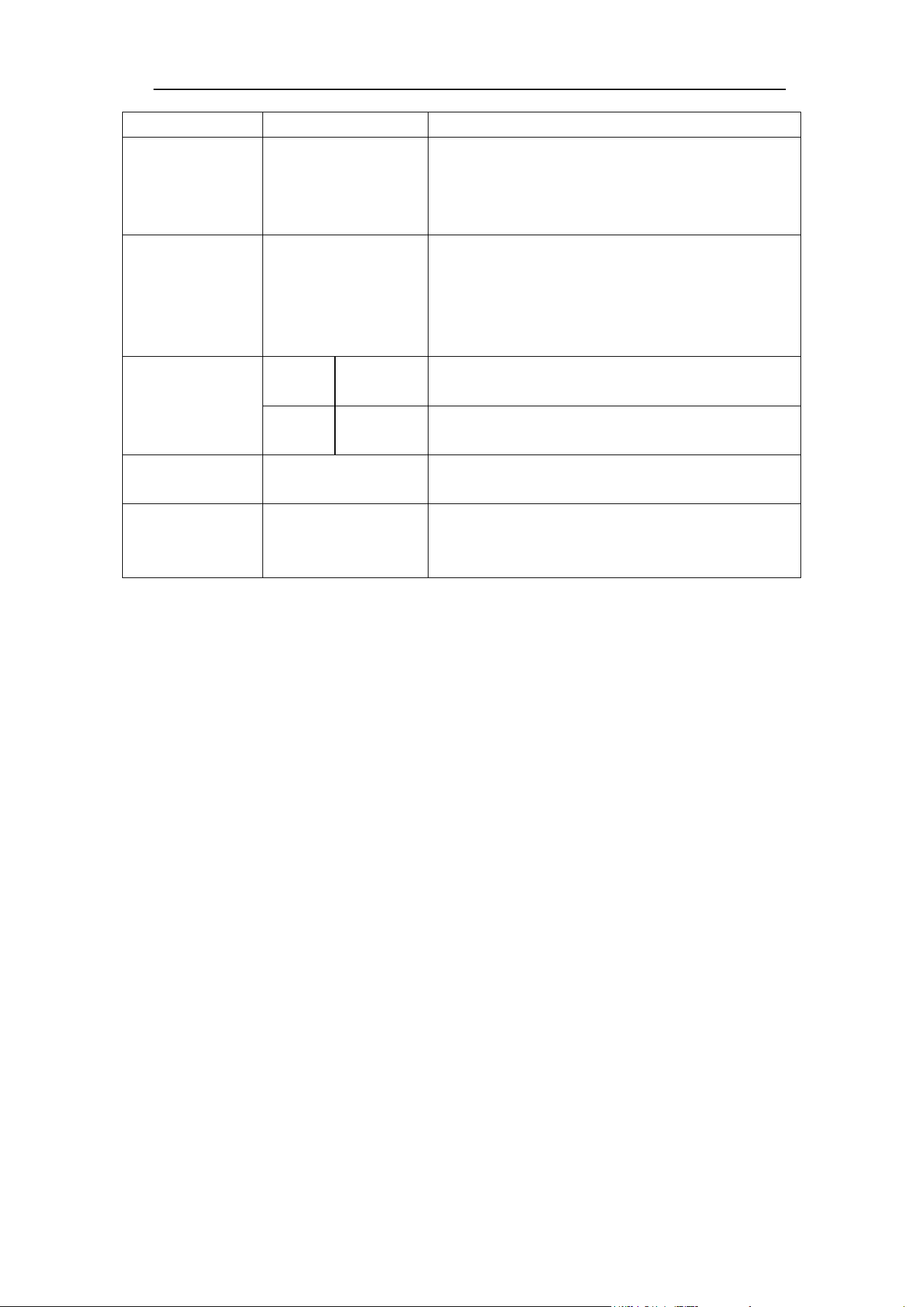
4.Advanced User Guidebook
49
Persist
When the Persist function is used, the persistence display effect of the picture tube
oscilloscope can be simulated. The reserved original data is displayed in fade color
and the new data is in bright color.
(1) Push the Display button.
(2) Select Persist in the bottom menu.
(3) In the Time menu, select the persist time, including OFF, 1 Second, 2 Seconds,
5 Seconds and Infinity. When the "Infinity" option is set for Persist Time, the
measuring points will be stored till the controlling value is changed. Select OFF
to turn off persistence and clear the display.
(4) Select Clear in the bottom menu to erase the results of previous acquisitions from
the display. The oscilloscope will start to accumulate acquisitions again.
XY Format
This format is only applicable to Channel 1 and Channel 2. After the XY display
format is selected, Channel 1 is displayed in the horizontal axis and Channel 2 in the
vertical axis; the oscilloscope is set in the un-triggered sample mode: the data are
displayed as bright spots.
The operations of all control knobs are as follows:
The Vertical Scale and the Vertical Position knobs of Channel 1 are used to set
Function Menu
Setting
Description
Type
Dots
Vect
Only the sampling points are displayed.
The space between the adjacent sampling
points in the display is filled with the vector
form.
Persist
OFF
1 Second
2 Seconds
5 Seconds
Infinity
Set the persistence time
XY Mode
Enable
ON
OFF
Turn on/off XY display function
Full
Screen
ON
OFF
Turn on/off the full screen view in XY mode
Counter
ON
OFF
Turn on/off counter
Clear
Erase the results of previous acquisitions from
the display. The oscilloscope will start to
accumulate acquisitions again.
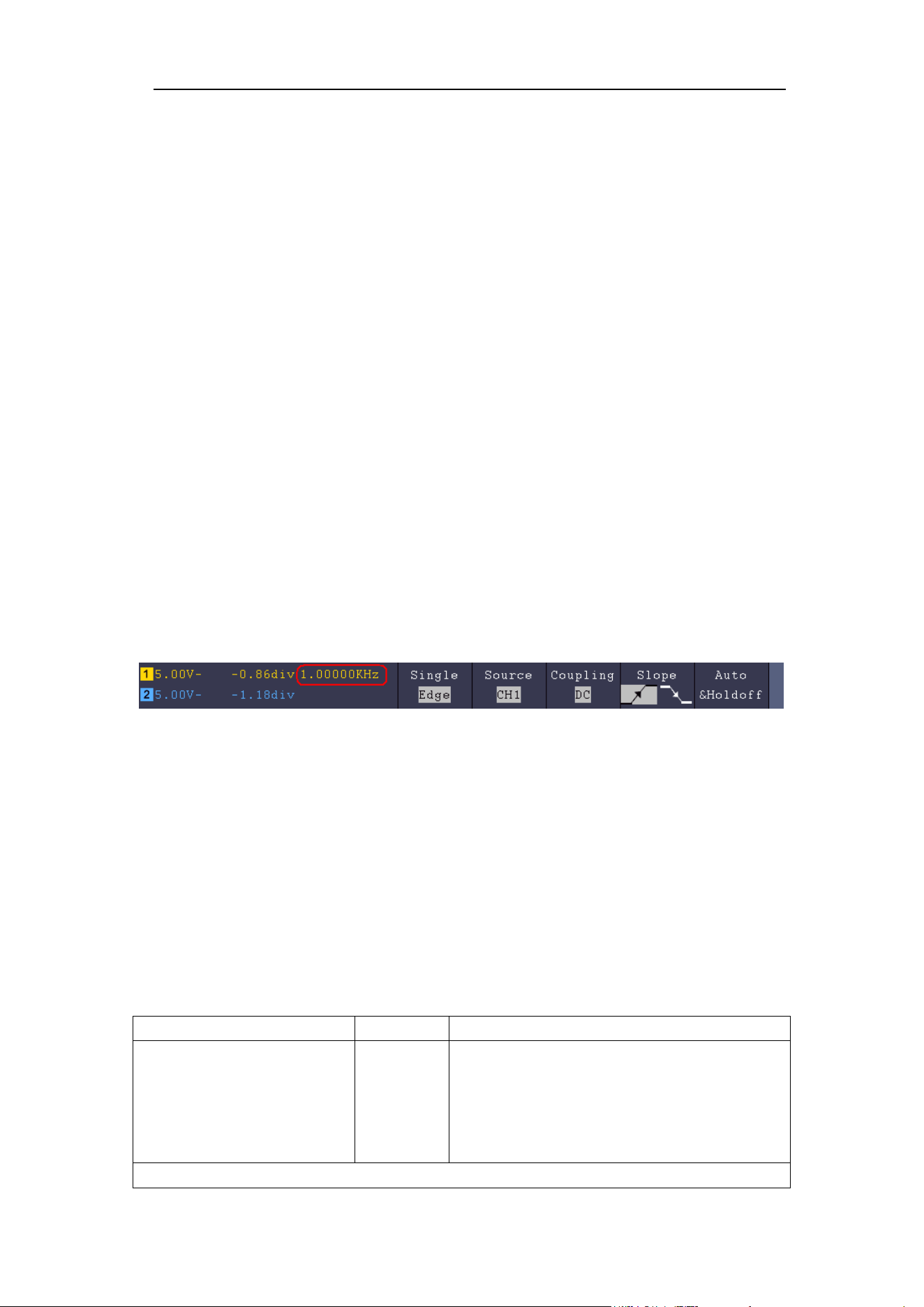
4.Advanced User Guidebook
50
the horizontal scale and position.
The Vertical Scale and the Vertical Position knobs of Channel 2 are used to set
the vertical scale and position continuously.
The following functions can not work in the XY Format:
Reference or digital wave form
Cursor
Trigger control
FFT
Operation steps:
1. Push the Display button.
2. Select XY Mode in the bottom menu. Select Enable as ON in the right menu.
3. To make the XY view full screen, select Full Screen as ON in the right menu.
Counter
It is a 6-digit single-channel counter. The counter can only measure the frequency of
the triggering channel. The frequency range is from 2Hz to the full bandwidth. Only if
the measured channel is in Edge mode of Single trigger type, the counter can be
enabled. The counter is displayed at the bottom of the screen.
Operation steps:
1. Push Trigger Menu button, set the trigger type to Single, set the trigger mode to
Edge, select the signal source.
2. Push the Display button.
3. Select Counter as ON or OFF in the bottom menu.
How to Save and Recall a Waveform
Push the Save button, you can save the waveforms, configures, screen images, record
or clone the waveform.
The description of the Save Function Menu is shown as the following table:
Function Menu
Setting
Description
Type
Wave
Configure
Image
Record
Clone
Choose the saving type.
About the Record type, see "How to
Record/Playback Waveforms" on P57.
About the Clone type, see “How to Clone
a waveform” on P61.
When the type is Wave, the menu shows as following:
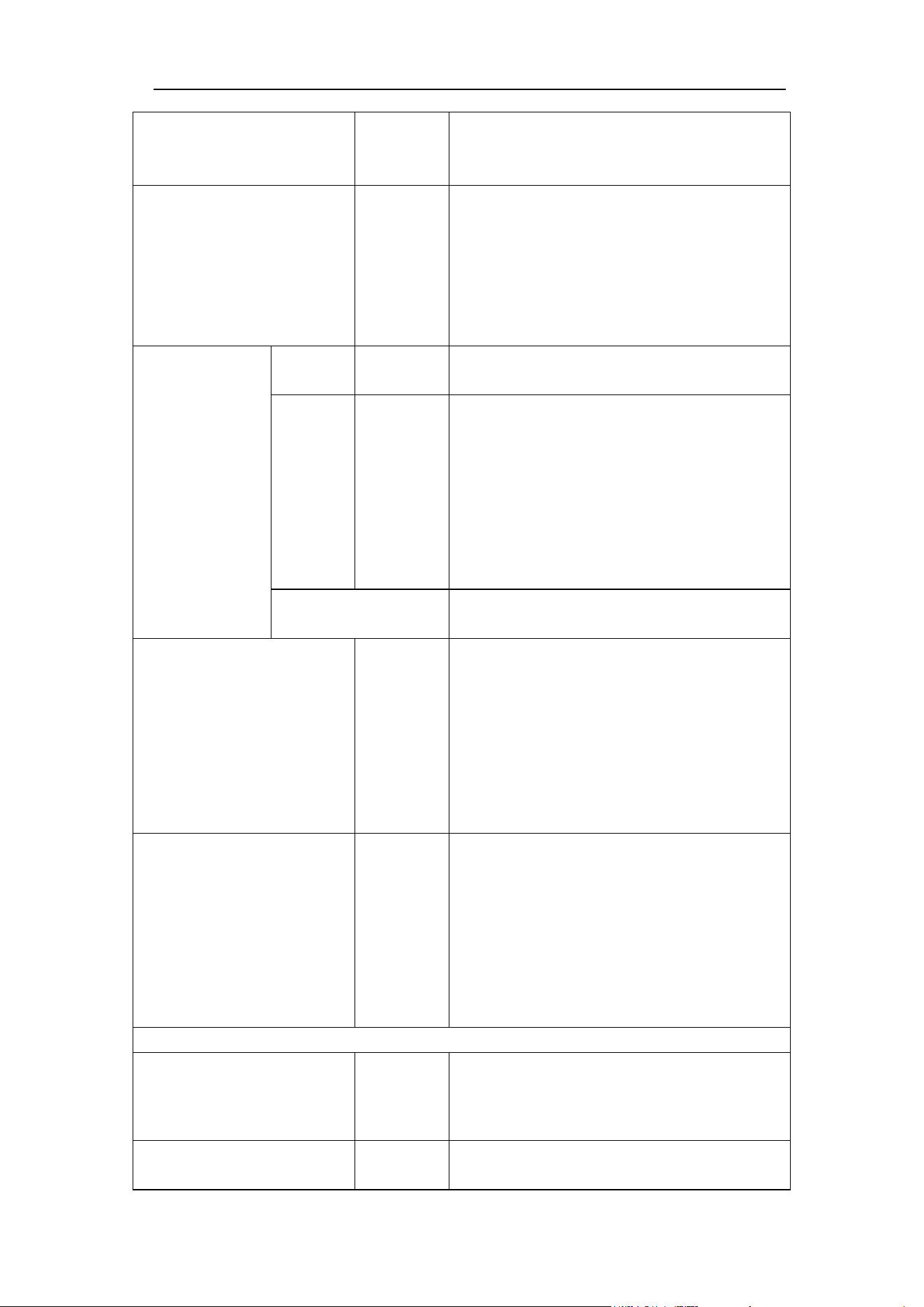
4.Advanced User Guidebook
51
Type
Wave
Format
(Right
menu)
For internal storage, only BIN can be
selected. For external storage, the format
can be BIN, TXT or CSV.
Source
CH1
CH2
Math
All
Choose the waveform to be saved. (If
certain channel is off, the corresponding
menu item will be disabled.)
(Choose All to save all the waveforms that
are turned on. You can save in
to the
current internal object address, or into USB
storage as a single file.)
Object & Show
Object 0 - 49
Choose the address which the waveform is
saved to or recall from.
Show
ON
OFF
Recall or close the waveform stored in the
current object address.
When the show is
ON, if the current object address has been
used, the stored waveform will be shown,
the address number and relevant
information will be displayed at the top left
of the screen; if the address is empty, it
will prompt "None is saved".
Close All
Close all the waveforms stored in the
object address.
Save
Save the waveform of the source to the
selected address. Whatever the Type of
save menu is set, you can save the
waveform by just pressing the Copy panel
button in any user interface.
Select Type in the bottom menu,
in the
right Format
menu, you can select the
storage format.
Storage
Internal
External
Save to internal storage or USB storage.
When External is selected, save the
waveform according to the current record
length (see "Record Length menu" on P46);
the file name is editable. The BIN
waveform file could be open
by OWON
waveform analysis software (on the
supplied CD).
When the type is Configure, the menu shows as following:
Configure
Setting0
…..
Setting19
The setting address
Save
Save the current oscilloscope configure to
the internal storage
4.Advanced User Guidebook
52
Load
Recall the configure from the selected
address
When the type is Image, the menu shows as following:
Save
Save the current display screen. The file
can be only stored in a USB storage, so a
USB storage must be connected first. The
file name is editable. The file is stored in
BMP format.
Save and Recall the Waveform
The oscilloscope can store 50 waveforms, which can be displayed with the current
waveform at the same time. The stored waveform called out can not be adjusted.
In order to save the waveform of CH1, CH2 and Math into the address 1, the
operation steps should be followed:
1. Turn on CH1, CH2 and Math channels.
2. Push the Save button.
3. Saving: Select Type in the bottom menu, select Wave in the left menu.
4. Select Storage in the bottom menu, select Internal in the right menu.
5. Select Source in the bottom menu, select All in the right menu for Source.
6. Select Object & Show in the bottom menu, select 1 as object address in the left
menu.
7. Select Save in the bottom menu to save the waveform.
8. Recalling: Select Object & Show in the bottom menu, select 1 in the left menu.
In the right menu, select Show as ON, the waveform stored in the address will be
shown, the address number and relevant information will be displayed at the top
left of the screen.
In order to save the waveform of CH1 and CH2 into the USB storage as a BIN file,
the operation steps should be followed:
1. Turn on CH1 and CH2 channels, turn off the Math channel.
2. Push the Save button.
3. Saving: Select Type in the bottom menu, select Wave in the left menu.
4. Select Storage in the bottom menu, select External in the right menu.
5. Select Type in the bottom menu, select BIN in the right menu as the storage
format.
6. Select Source in the bottom menu, select All in the right menu for Source.

4.Advanced User Guidebook
53
7. Select Save in the bottom menu, an input keyboard used to edit the file name will
pop up. The default name is current system date and time. Select the key in
the keyboard to confirm.
8. Recalling: The BIN waveform file could be open by OWON waveform analysis
software (on the supplied CD).
Tip:
Whatever the Type of save menu is set, you can save the waveform by just pressing
the Copy panel button in any user interface. If the Storage of the save menu is set as
"External", you should install the USB disk. Please refer to the contents below to
install the USB disk and name the file to be saved.
Save the current screen image:
The screen image can only be stored in USB disk, so you should connect a USB disk
with the instrument.
1. Install the USB disk: Insert the USB disk into the "USB Host port" of "Figure
3-1 Front panel". If an icon appears on the top right of the screen, the USB
disk is installed successfully. If the USB disk cannot be recognized, format the
USB disk according to the methods in "USB disk Requirements" on P53.
2. After the USB disk is installed, push the Save panel button, the save menu is
displayed at the bottom of the screen.
3. Select Type in the bottom menu, select Image in the left menu.
4. Select Save in the bottom menu, an input keyboard used to edit the file name will
pop up. The default name is current system date and time. Select the key in
the keyboard to confirm.
USB disk Requirements
The supported format of the USB disk: FAT32 file system, the allocation unit size
cannot exceed 4K, mass storage USB disk is also supported. If the USB disk doesn't
work properly, format it into the supported format and try again. Follow any of the
following two methods to format the USB disk: using system-provided function and
using the formatting tools. (The USB disk of 8 G or 8 G above can only be formatted
using the second method – using the formatting tools.)
Use system-provided function to format the USB disk
1. Connect the USB disk to the computer.
2. Right click Computer- Manage to enter Computer Management interface.
3. Click Disk Management menu, and information about the USB disk will display
on the right side with red mark 1 and 2.
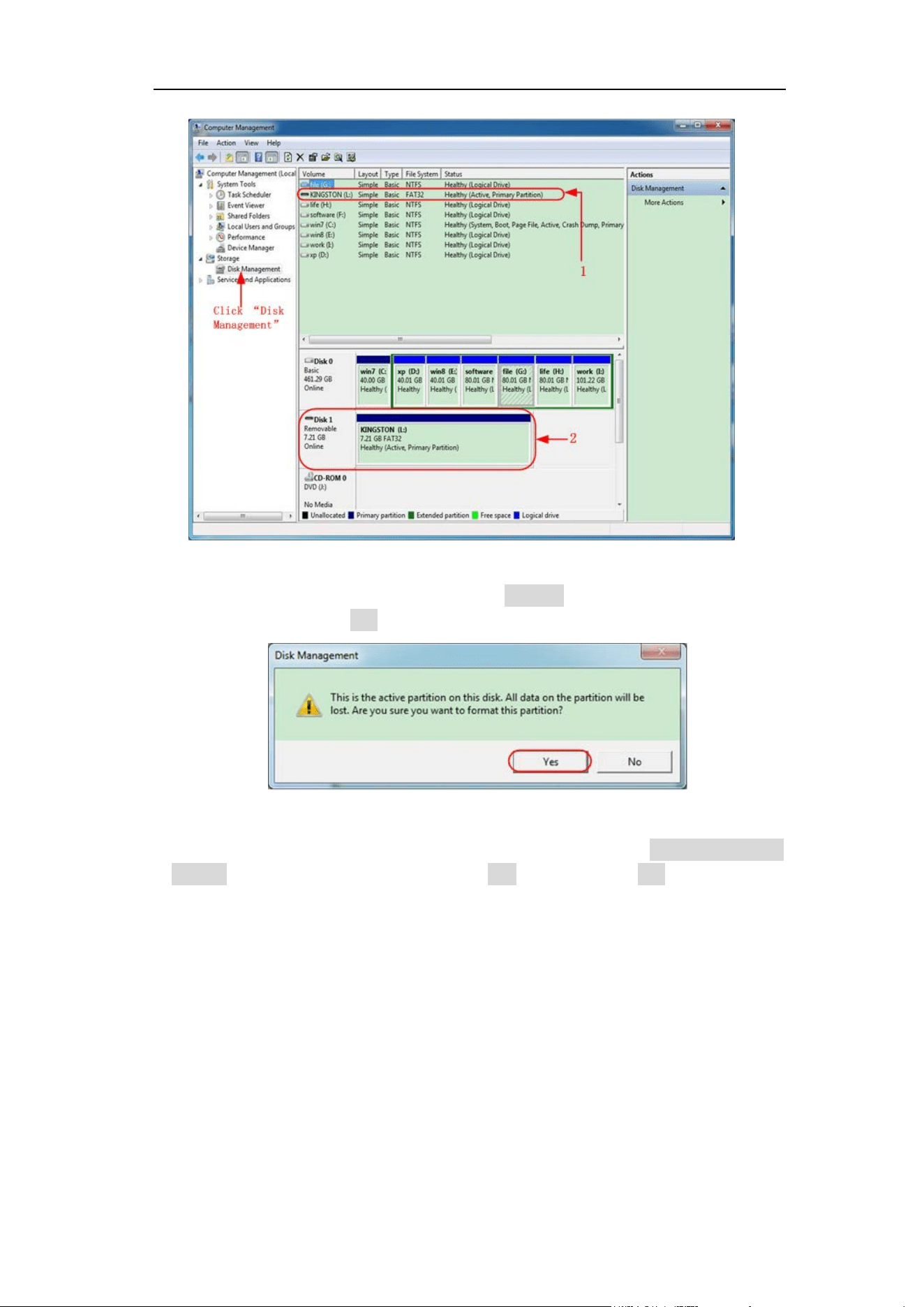
4.Advanced User Guidebook
54
Figure 4-2: Disk Management of computer
4. Right click 1 or 2 red mark area, choose Format. And system will pop up a
warning message, click Yes.
Figure 4-3: Format the USB disk warning
5. Set File System as FAT32, Allocation unit size 4096. Check "Perform a quick
format" to execute a quick format. Click OK, and then click Yes on the warning
message.
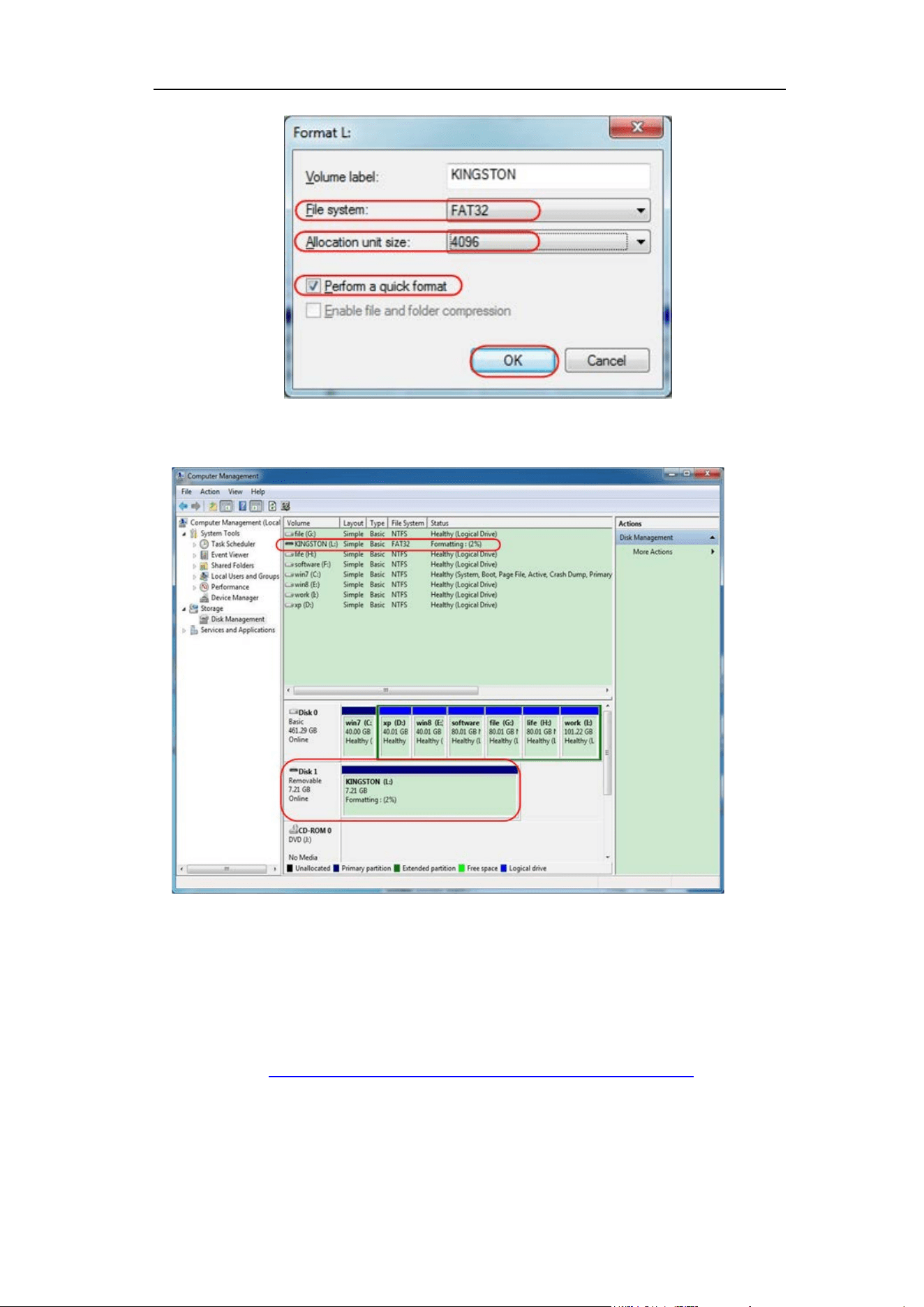
4.Advanced User Guidebook
55
Figure 4-4: Formatting the USB disk setting
6. Formatting process.
Figure 4-5: Formatting the USB disk
7. Check whether the USB disk is FAT32 with allocation unit size 4096 after
formatting.
Use Minitool Partition Wizard to format
Download URL: http://www.partitionwizard.com/free-partition-manager.html
Tip: There are many tools for the USB disk formatting on the market, just take
Minitool Partition Wizard for example here.
1. Connect the USB disk to the computer.
2. Open the software Minitool Partition Wizard.
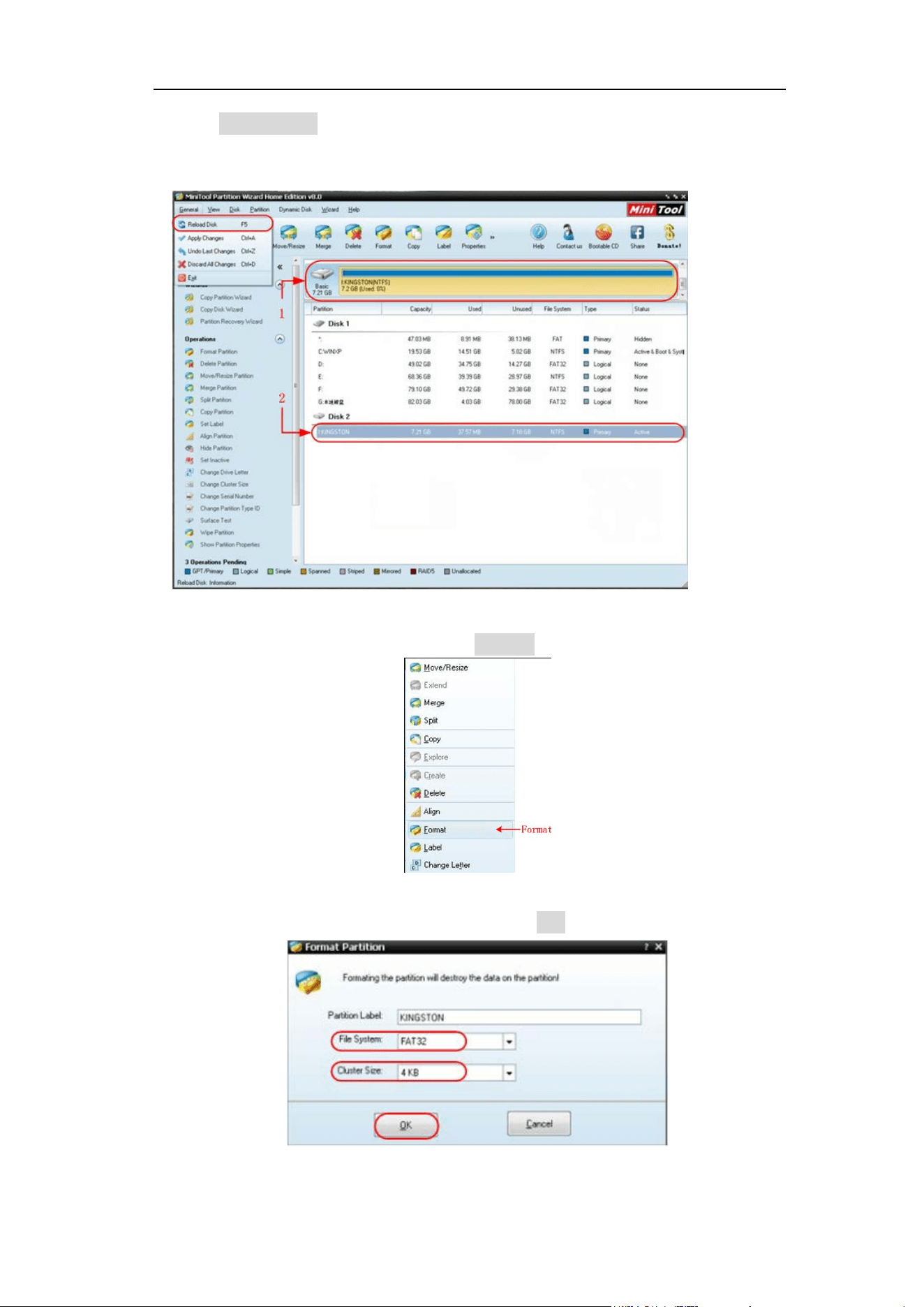
4.Advanced User Guidebook
56
3. Click Reload Disk on the pull-down menu at the top left or push keyboard F5,
and information about the USB disk will display on the right side with red mark 1
and 2.
Figure 4-6: Reload Disk
4. Right click 1 or 2 red mark area, choose Format.
Figure 4-7: Choose format
5. Set File System FAT32, Cluster size 4096. Click OK.
Figure 4-8: Format setting
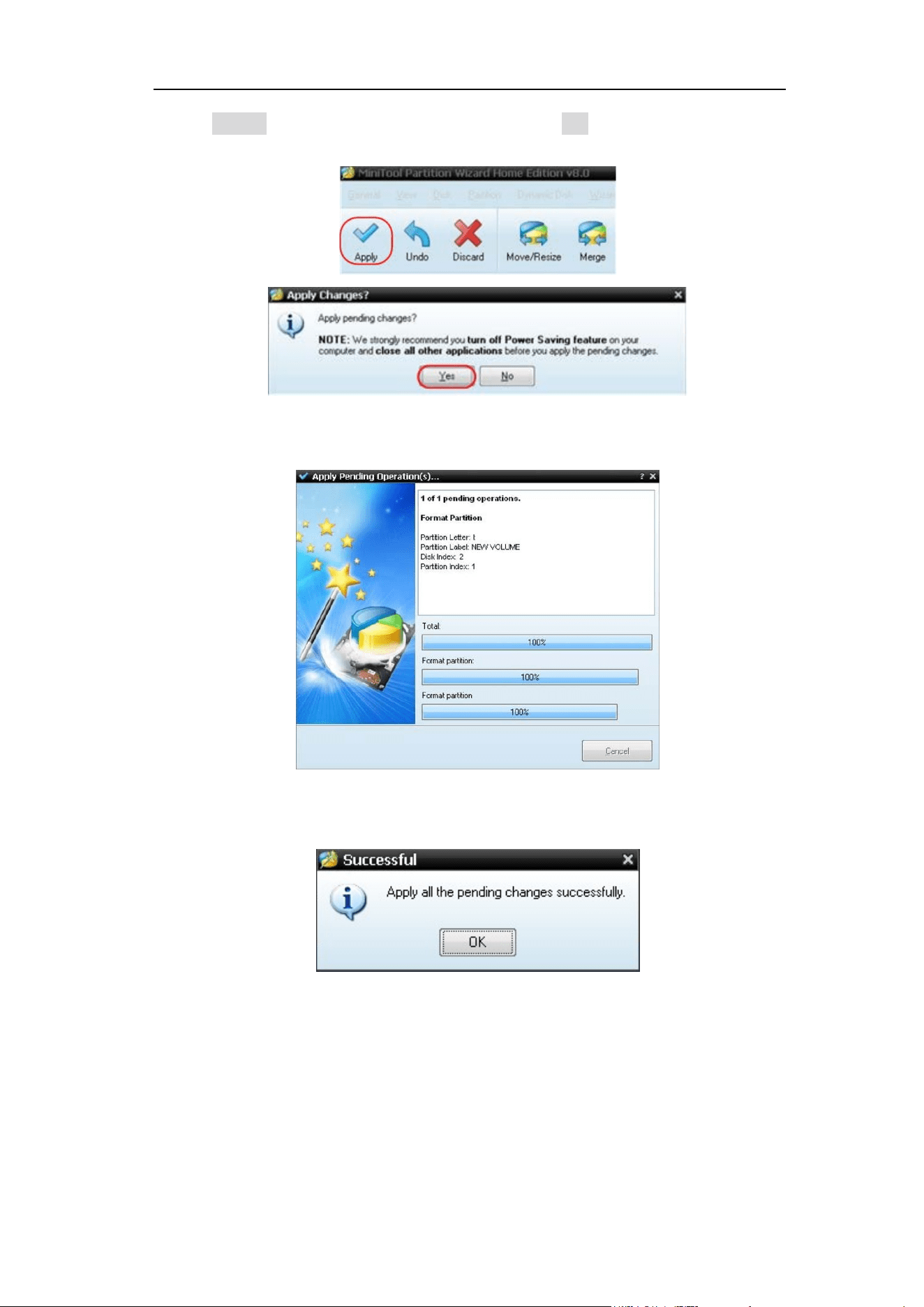
4.Advanced User Guidebook
57
6. Click Apply at the top left of the menu. Then click Yes on the pop-up warning to
begin formatting.
Figure 4-9: Apply setting
7. Formatting process
Figure 4-10: Format process
8. Format the USB disk successfully
Figure 4-11: Format successfully
How to Record/Playback Waveforms
Wave Record function can record the input current wave. You can set the interval
between recorded frames in the range of 10 ms - 10 s. The max frame number reaches
1000, and you can get better analysis effect with playback and storage function. The
storage medium contains two kinds: Internal and External.
When the storage medium is Internal, Wave Record contains four modes: OFF,
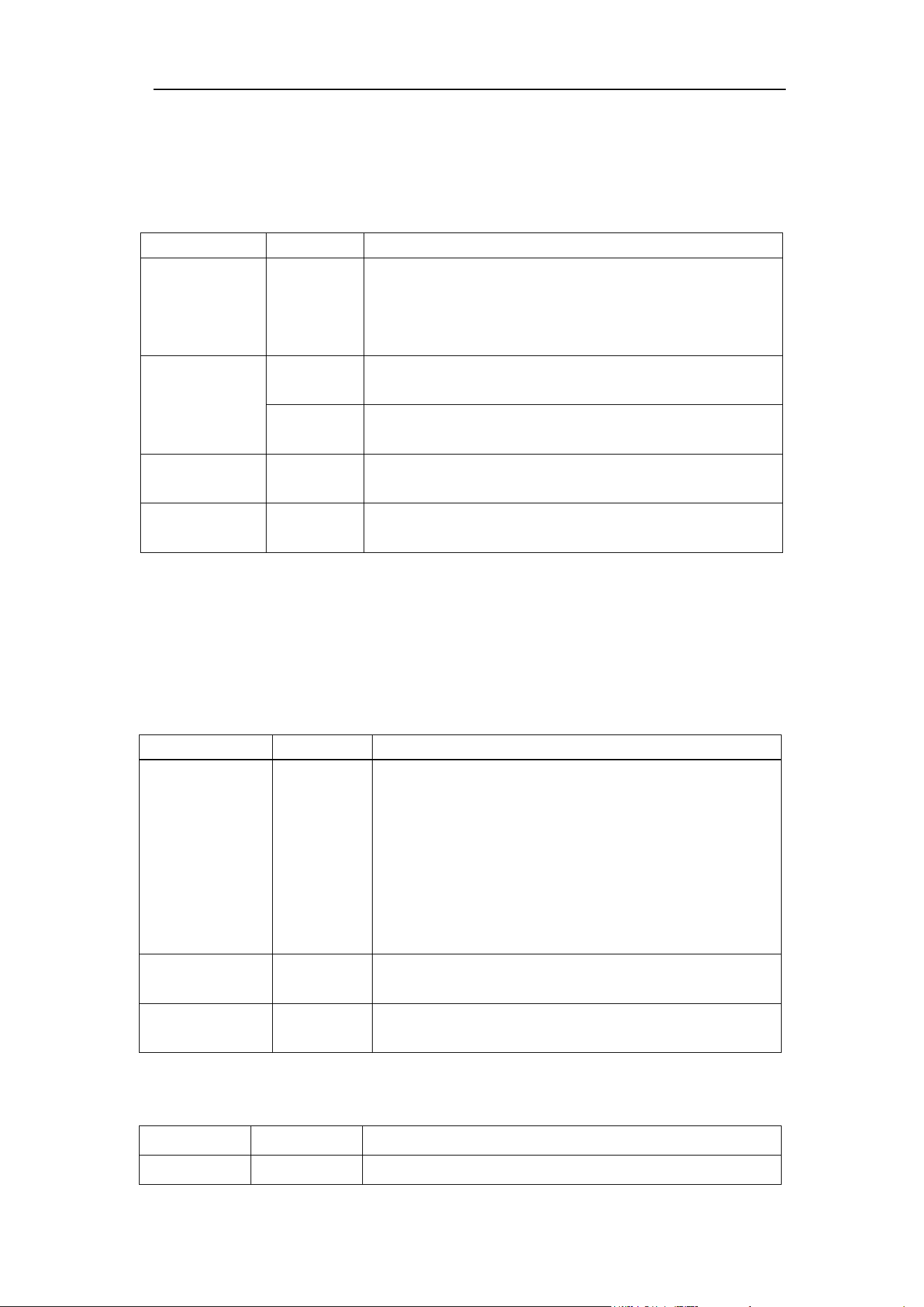
4.Advanced User Guidebook
58
Record, Playback and Storage.
When storage medium is External, Wave Record contains two modes: OFF, Record.
Record: To record wave according to the interval until it reaches the end frame set.
Record menu (Internal Storage) shows as follows:
Menu
Setting
Instruction
Mode
OFF
Record
Playback
Storage
Close wave record function
Set record menu
Set playback menu
Set storage menu
Record mode
FrameSet
End frame
Turn the M knob to select the number of frames to
record (1 - 1000)
Interval
Turn the M knob to select the interval between
recorded frames (10ms - 10s)
Refresh
ON
OFF
Refresh wave during recording
Stop refreshing
Operate
Play
Stop
Begin to record
Stop recording
Note:
Both of the waveforms of Channel 1 and Channel 2 will be recorded. If a Channel is
turned off while recording, the waveform of the channel is invalid in the playback
mode.
Playback: Play back the wave recorded or saved.
Playback menu shows as follows:
Menu
Setting
Instruction
Playback Mode
FrameSet
Start frame
End frame
Cur frame
Interval
Turn the M knob to select the number of start frame
to playback (1 - 1000)
Turn the M knob to select the number of end frame
to playback (1 - 1000)
Turn the M knob to select the number of current
frame to playback (1 - 1000)
Turn the M knob to select the interval between
played back frames (10ms - 10s)
Play mode
Loop
Once
Play back the wave continuously
Play back the wave just one time
Operate
Play
Stop
Begin to record
Stop recording
Storage: Save the current wave according to the start frame and end frame set.
Storage menu shows as follows:
Menu
Setting
Instruction
Storage
Start frame
Turn the M knob to select the number of start frame
4.Advanced User Guidebook
59
Mode
Frame Set
to store (1 - 1000)
End frame
Turn the M knob to select the number of end frame to
store (1 - 1000)
Save
Save the waveform record file to the internal memory
Load
Load the waveform record file from the memory
To use wave record function, do as follows:
(1) Push Save button.
(2) Select Type in the bottom menu, in the left menu, turn the M knob to select
Record.
(3) Select Mode in the bottom menu, select OFF in the right menu.
(4) In the bottom menu, select Storage as Internal.
(5) Select Mode in the bottom menu, select Record in the right menu.
(6) Select FrameSet in the bottom menu, set End frame and Interval in the right
menu.
(7) In the bottom menu, set Refresh.
(8) In the bottom menu, select Operate as Play.
(9) Select Mode in the bottom menu, select Playback in the right menu. Set
FrameSet and Playmode, select Operate as Play.
(10) To save the wave recorded, select Mode in the bottom menu, select Storage in
the right menu. Select FrameSet in the bottom menu to set the range of frames to
store, select Save in the bottom menu.
(11) To load the waveform from the internal memory, select Load in the bottom menu,
then enter the Playback of the Mode to analyze the wave.
Note: When playbacking the waveform, the sampling, trigger, or display function is
not available.
When storage medium is External, Wave Record contains two modes: OFF,
Record.
Record menu (External Storage) shows as follows:
Menu
Setting
Instruction
Mode
OFF
Record
Close wave record function
Set record menu
Record mode
FrameSet
End frame
Turn the M knob to select the number of frames to
record (1
–
900,000)
Interval
Turn the M knob to select the interval between
recorded frames (10ms - 10s)
Infinity
Record infinitely until the storage medium is full
Refresh
ON
OFF
Refresh wave during recording
Stop refreshing
Operate
Play
Stop
Begin to record
Stop recording
Note:
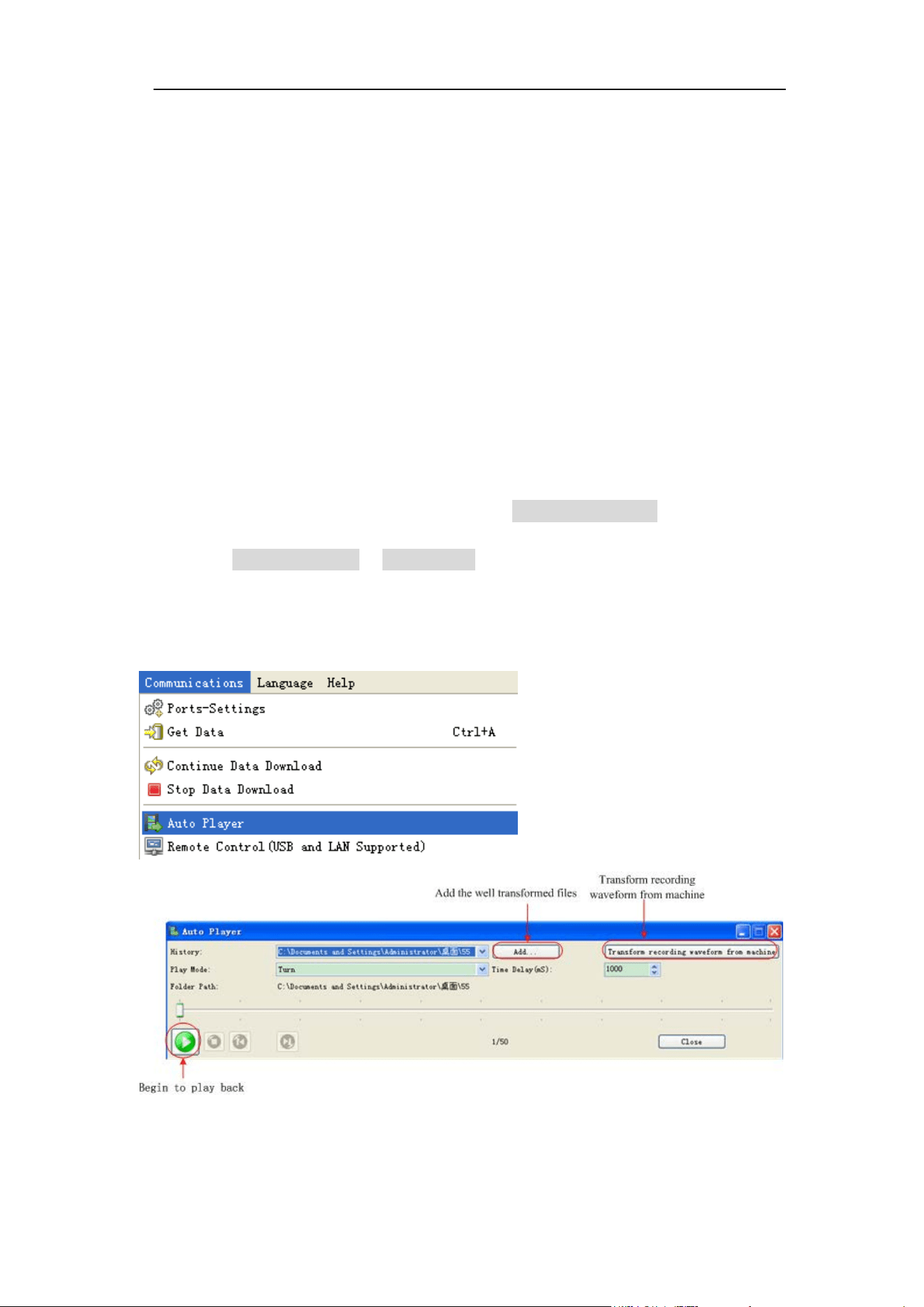
4.Advanced User Guidebook
60
Both of the waveforms of Channel 1 and Channel 2 will be recorded. If a Channel is
turned off while recording, the waveform of the channel is invalid in the playback
mode.
To use wave record to external, do as follows:
1. Push Save button.
2. Select Type in the bottom menu, in the left menu, turn the M knob to select
Record.
3. Select Mode in the bottom menu, select OFF in the right menu.
4. In the bottom menu, select Storage as External.
5. Select Mode in the bottom menu, select Record in the right menu.
6. Select FrameSet in the bottom menu, set End frame and Interval in the right
menu. If you want to record wave to external infinitely, select Infinity in the right
menu, the End frame will display “-”.
7. In the bottom menu, set Refresh.
8. In the bottom menu, select Operate as Play.
Connect external device to the computer, and wave_record_0.bin is the recorded
file. Open the software, and do as follows to play back the waveform.
1. Choose Communications Auto Player.
2. Transform recording waveform from machine.
3. Add the well transformed files.
4. Set play mode and time delay.
5. Click the green button on the left corner to begin playing back the waveform.
Figure 4-12: Play back waveform by software
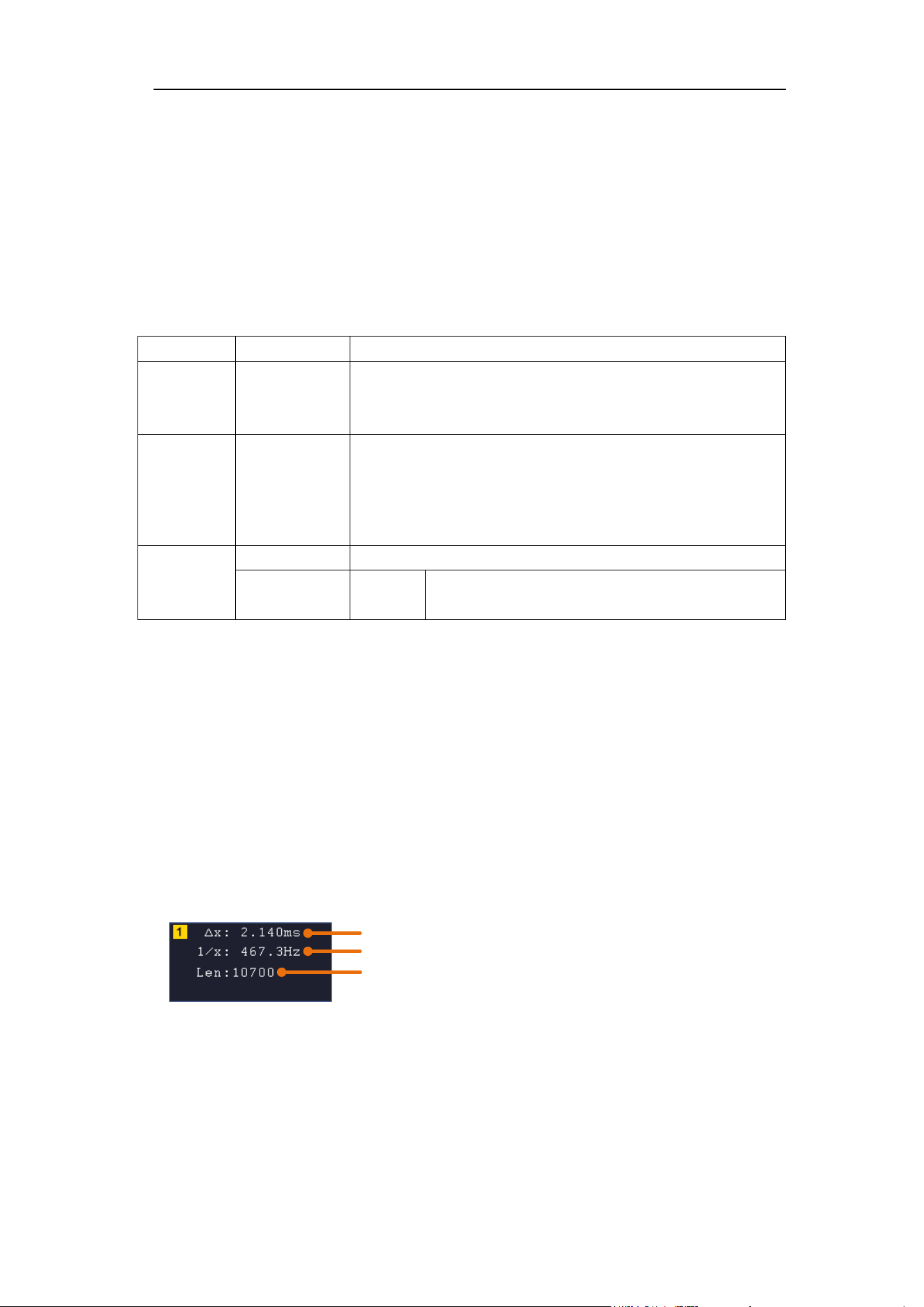
4.Advanced User Guidebook
61
How to Clone a waveform
You can clone the waveform of one or both channels between two cursors, and save it
in the internal memory or on a USB memory device. You can save four cloned
waveforms in the instrument internal memory. The waveform files saved to a USB
memory device are saved with the extension "ota".
You can also use OWON AG1022F or AG2052F signal generator to read *.ota files
and recall the cloned waveforms.
Clone Wave menu shows as follows:
Menu
Setting
Instruction
Source
CH1
CH2
CH1&CH2
Clone the waveform of CH1
Clone the waveform of CH2
Clone the waveform of CH1 and CH2
Line
a
b
ab
x
Turn the M knob to move line a.
Turn the M knob to move line b.
Two cursors are linked. Turn the M knob to move the
pair of cursors.
Set the cursors to select the entire screen automatically.
Save
Save
Save the waveform between two cursors
Memory
Internal
USB
Select the memory location
To clone waveform and save to the internal/USB memory:
(1) Push Save button.
(2) Select Type in the bottom menu, in the left menu, turn the M knob to select
Clone.
(3) Select Source in the bottom menu, select one channel (CH1/CH2) or two
channels (CH1&CH2) in the right menu for Source.
(4) Select Line in the bottom menu. If a or b is selected, turn the M knob to move the
cursor. If ab is selected, turn the M knob to move the pair of cursors. If x is
selected, the entire screen will be selected automatically. The waveform
information is displayed at the left bottom corner of the screen.
Length
Frequency
Time
Note: If "Out Of Limits" appears in the information or a message "Waveform
points beyond the limit." appears on the screen, that means the length of the
cloned waveform exceeds the limit. When the source is CH1 or CH2, the
maximum length is 2M; When the source is CH1&CH2, the maximum length is
1M. Push the Acquire button, select Length in the bottom menu, and set the
record length to a smaller value.
(5) Select Save in the bottom menu.
4.Advanced User Guidebook
62
To save the waveform to internal memory, select Storage in the right menu
as Internal. Turn the M knob to select an object in the left menu, select Save
in the right menu.
To save the waveform onto a USB memory device, insert a USB memory
device into the port on the front panel. If the icon appears on the top right
of the screen, the USB memory device is installed successfully. If the USB
memory device cannot be recognized, format the USB memory device
according to the methods in "USB disk Requirements" on P53. Select Storage
in the right menu as External. Select Save in the right menu. An input
keyboard used to edit the file name will pop up. The name is default as current
system date and time. Turn the M knob to select the keys, push the knob to
input. Select the key in the keyboard to confirm. The cloned waveform
will be saved onto the USB memory device as a file with the ota suffix.
Data format description of OTA waveform file
If the source is CH1 or CH2, OTA file consists of two parts: the file header and the data. If the
source is CH1&CH2, OTA file consists of three parts: file header, CH1data, and CH2 data. The
file header represents the parameter of file data, which is expressed in "parameter name + value".
Each parameter name is a case-sensitive string of 4 bytes. The parameter value is at least 4 bytes.
1.Format description of the file header:
1) HEAD
Parameter name Meaning Value Comment
HEAD Header size 4 bytes int
2) TYPE
Parameter name Meaning Value Comment
TYPE Model 12 bytes char
3) BYTE
Parameter name Meaning Value Comment
BYTE Data length in bit 4 bytes int
4) SIZE
Parameter name Meaning Value Comment
SIZE File size 4 bytes int Used to check the file
integrity
5) VOLT
Parameter name Meaning Value Comment
VOLT Voltage division,
divided by 400 is
ADC resolution.
(When the source is
CH1&CH2, it is CH1
voltage division.)
4 bytes float The value indicates voltage
(the unit is mV), such as 200
mV.
6) SAMP
Parameter name Meaning Value Comment
4.Advanced User Guidebook
63
SAMP Sample rate 4 bytes float The unit is Sa/s.
7) ADCB
Parameter name Meaning Value Comment
ADCB ADC bit, ADC
resolution
4 bytes int 8-bit or 12-bit
8) CHAN
Parameter name Meaning Value Comment
CHAN Number of channels 4 bytes int 1 or 2
9) VOL2
Parameter name Meaning Value Comment
VOL2 Voltage division,
divided by 400 is
ADC resolution.
(When the source is
CH1&CH2, it is CH2
voltage division.)
4 bytes float The value indicates voltage
(the unit is mV), such as 200
mV.
2.Data
The data type is signed integer. You can determine the data type (char, short int or int) based on
the BYTE parameter. The valid range is determined by the ADCB parameter, e.g. the valid range
for 8-bit ADC is -127 to +127.
How to Implement the Auxiliary System Function Setting
●Config
Push the Utility button, select Function in the bottom menu, select Configure in
the left menu.
The description of Configure Menu is shown as the follows:
●Display
Push the Utility button, select Function in the bottom menu, select Display in the
Function Menu
Setting
Description
Language
Choose the display language of the operating
system.
Set Time
Display
ON
OFF
On/Off the date display
Hour Min
Setting Hour/Minute
Day Month
Setting Date/Month
Year
Setting Year
KeyLock
Lock all keys. Unlock method: push Trigger
Menu button in trigger control area, then push
Force button, repeat 3 times.
About
Version number and serial number showing
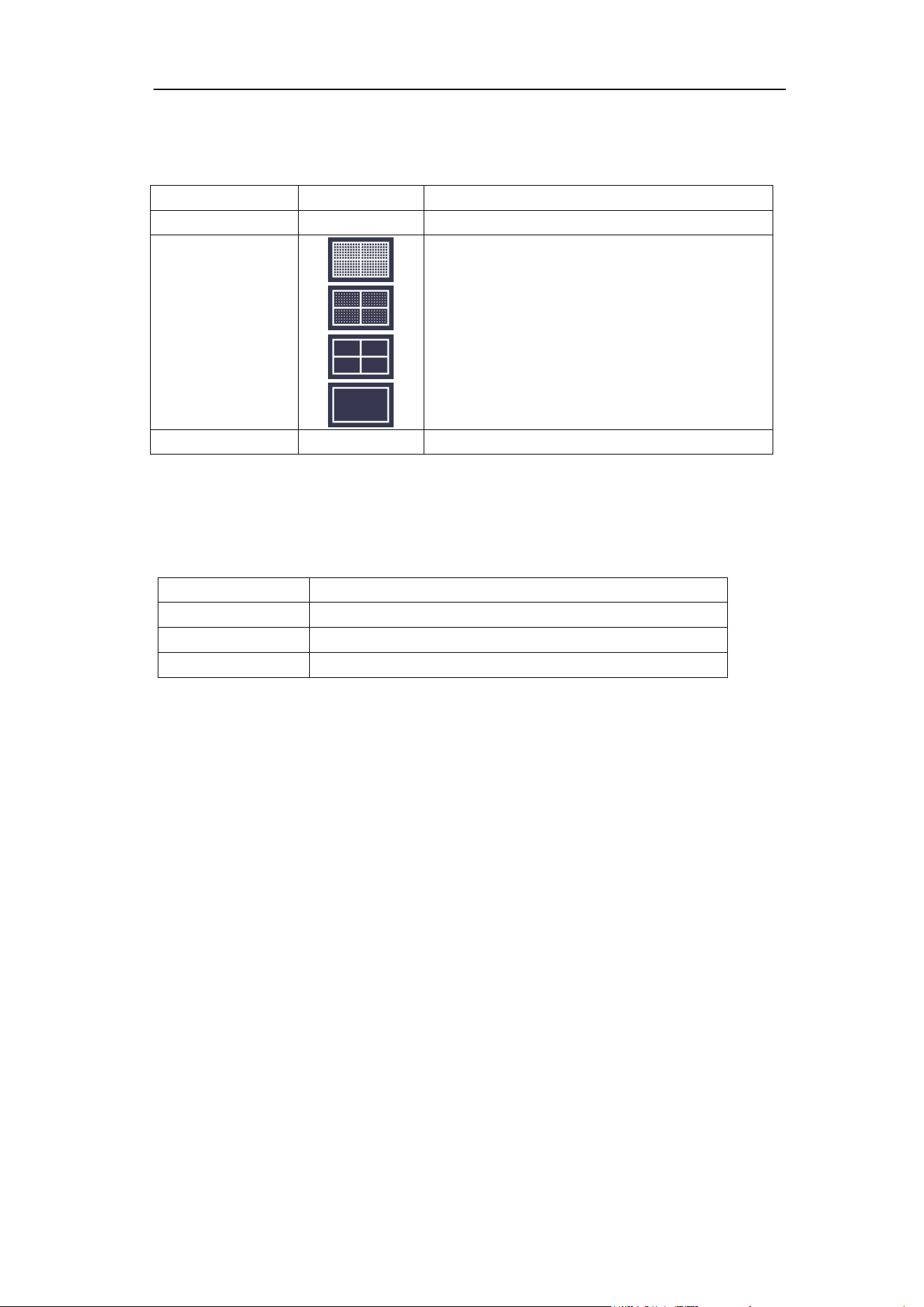
4.Advanced User Guidebook
64
left menu.
The description of Display Menu is shown as the follows:
●Adjust
Push the Utility button, select Function in the bottom menu, select Adjust in the
left menu.
The description of Adjust Menu is shown as the follows:
Function Menu
Description
Self Cal
Carry out the self-calibration procedure.
Default
Call out the factory settings.
ProbeCh.
Check whether probe attenuation is good.
Do Self Cal (Self-Calibration)
The self-calibration procedure can improve the accuracy of the oscilloscope under
the ambient temperature to the greatest extent. If the change of the ambient
temperature is up to or exceeds 5℃, the self-calibration procedure should be
executed to obtain the highest level of accuracy.
Before executing the self-calibration procedure, disconnect all probes or wires from
the input connector. Push the Utility button, select Function in the bottom menu,
the function menu will display at the left, select Adjust. If everything is ready,
select Self Cal in the bottom menu to enter the self-calibration procedure of the
instrument.
Probe checking
To check whether probe attenuation is good. The results contain three circumstances:
Overflow compensation, Good compensation, Inadequate compensation. According to
the checking result, users can adjust probe attenuation to the best. Operation steps are
as follows:
1. Connect the probe to CH1, adjust the probe attenuation to the maximum.
2. Push the Utility button, select Function in the bottom menu, select Adjust in the
left menu.
3. Select ProbeCh. in the bottom menu, tips about probe checking shows on the
Function Menu
Setting
Description
BackLight
0% - 100%
Turn the M knob to adjust the backlight.
Graticule
Select the grid type
Menu Time
OFF, 5s - 30s
Set the disappear time of menu
4.Advanced User Guidebook
65
screen.
4. Select ProbeCh. again to begin probe checking and the checking result will occur
after 3s; push any other key to quit.
● Pass/Fail
The Pass/Fail function monitors changes of signals and output pass or fail signals by
comparing the input signal that is within the pre-defined mask.
Push the Utility button, select Function in the bottom menu, select Pass/fail in the
left menu.
The description of Pass/fail Menu is shown as the follows:
Pass/Fail test:
Detect whether the input signal is within the limits of the rule, if it exceeds limits of
the rule, it is "Fail"; otherwise it is "Pass". Also it can output fail or pass signal by
built-in and configurable output port. To run the test, read the following steps:
1. Push the Utility button, select Function in the bottom menu, select Pass/fail in the
left menu.
2. Enable switch on: Select Operate in the bottom menu, select Enable in the right
menu as ON.
3. Create rule: Select Rule in the bottom menu. Select Source in the right menu,
select the source in the left menu. Set Horizontal tolerance and Vertical tolerance
in the right menu. Select Create in the right menu to create the rule.
4. Set output type: Select Output in the bottom menu to enter output option setting.
Choose any one or two of the options "Pass", "Fail" or "Beep". "Pass" and "Fail"
are mutually exclusive options, which could not be chosen simultaneously. "Stop"
means stop once the condition satisfies your setting.
5. Begin to test: Select Operate in the bottom menu, select Operate in the right
Function Menu
Setting
Description
operate
Enable
Operate
Control enable switch
Control operate switch
Output
Pass
Fail
Beep
Stop
Info
Signal tested corresponds with the rule
Signal tested not correspond with the rule
Beep when it satisfies the rule
Stop once satisfying the rule
Control the display status of info frame
Rule
Source
Horizontal
Vertical
Create
Select source CH1, CH2 or Math
Change the Horizontal tolerance value by turning the
M knob
Change the Vertical tolerance value by turning the M
knob
Use the rule set as testing rule
SaveRule
Number
Save
Load
Select any one from Rule1 - Rule8 as your rule name
Select Save to save the rule
Load some rule as the testing rule
4.Advanced User Guidebook
66
menu as Start, the test will begin.
6. Save rule: Select SaveRule in the bottom menu. Select the save location in the
left menu, and then select Save in the right menu to save the rules, which could be
called up at once when need. Select Load to call up the rule saved.
Note:
1. When Pass/Fail is ON, if XY or FFT is ready to run, then Pass/Fail will be closed;
under the mode of XY or FFT, Pass/Fail is unable.
2. Under the mode of Factory, Auto Scale and Auto Set, Pass/Fail will be closed.
3. When no save setting left in the rule save, tip will be given to show "NO RULE
SAVED".
4. Under the status of stop, data comparing will stop, and when it goes on running,
the number of Pass/Fail will increase from the former number, not from zero.
5. When the waveform playback mode is on, Pass/Fail is used to test the
played-back waveform specially.
● Output
Push the Utility button, select Function in the bottom menu, select Output in the left
menu.
Output menu item in the bottom menu sets the output type of Trig Out(P/F) port in
Figure 3-3 Rear Panel on P6. In the bottom menu, select Output. The description of
Output menu is shown as the follows:
Video menu item in the bottom menu sets the output port of video. In the bottom
menu, select Video. The description of Video menu is shown as the follows:
Device and Print Setup menu items set the print output, refer to "How to Print the
Screen Image" on page 79.
● LAN Set
Using the LAN port, the oscilloscope can be connected with a computer. Refer to
"Communication with PC" on page 80 for the operation steps.
Function
Menu
Setting Description
Type
Trig level
Output trig signal synchronously
Pass/fail
Output High Level when Pass , and Low Level when Fail
Function
Menu
Setting Description
Video
OFF
VGA
AV
Turn off video output
Connect the VGA or AV port to an external monitor or
projector. Select the port in this menu, the oscilloscope
display can be shown on an external monitor or projector.
4.Advanced User Guidebook
67
● Update
Use the front-panel USB port to update your instrument firmware using a USB
memory device. Refer to "How to Update your Instrument Firmware" on page 67.
How to Update your Instrument Firmware
Use the front-panel USB port to update your instrument firmware using a USB
memory device.
USB memory device requirements: Insert a USB memory device into the USB port
on the front panel. If the icon appears on the top right of the screen, the USB
memory device is installed successfully. If the USB memory device cannot be
detected, format the USB memory device according to the methods in "USB disk
Requirements" on P53.
Caution: Updating your instrument firmware is a sensitive operation, to prevent
damage to the instrument, do not power off the instrument or remove the USB
memory device during the update process.
To update your instrument firmware, do the following:
1. Push the Utility button, select Function in the bottom menu, select Configure in
the left menu, select About in the bottom menu. View the model and the currently
installed firmware version.
2. From a PC, visit www.owon.com.cn and check if the website offers a newer
firmware version. Download the firmware file. The file name must be *.update.
The file name can be up to 15 characters long (including the suffix). Copy the
firmware file onto your USB memory device.
3. Insert the USB memory device into the front-panel USB port on your instrument.
4. Push the Utility button, select Function in the bottom menu, select Update in the
left menu.
5. Select Open in the bottom menu, the instrument lists a directory of the folders on
the USB memory device. Turn the M knob to select a folder, select Open in the
bottom menu to enter the folder. Navigate to the folder where the firmware file is,
and select the file with the .update suffix.
6. In the bottom menu, select Open, the messages below will be shown.
7.
In the bottom menu, select Start again, the interfaces below will be displayed in
sequence. The update process will take up to three minutes. After completion, the
instrument will be shut down automatically.
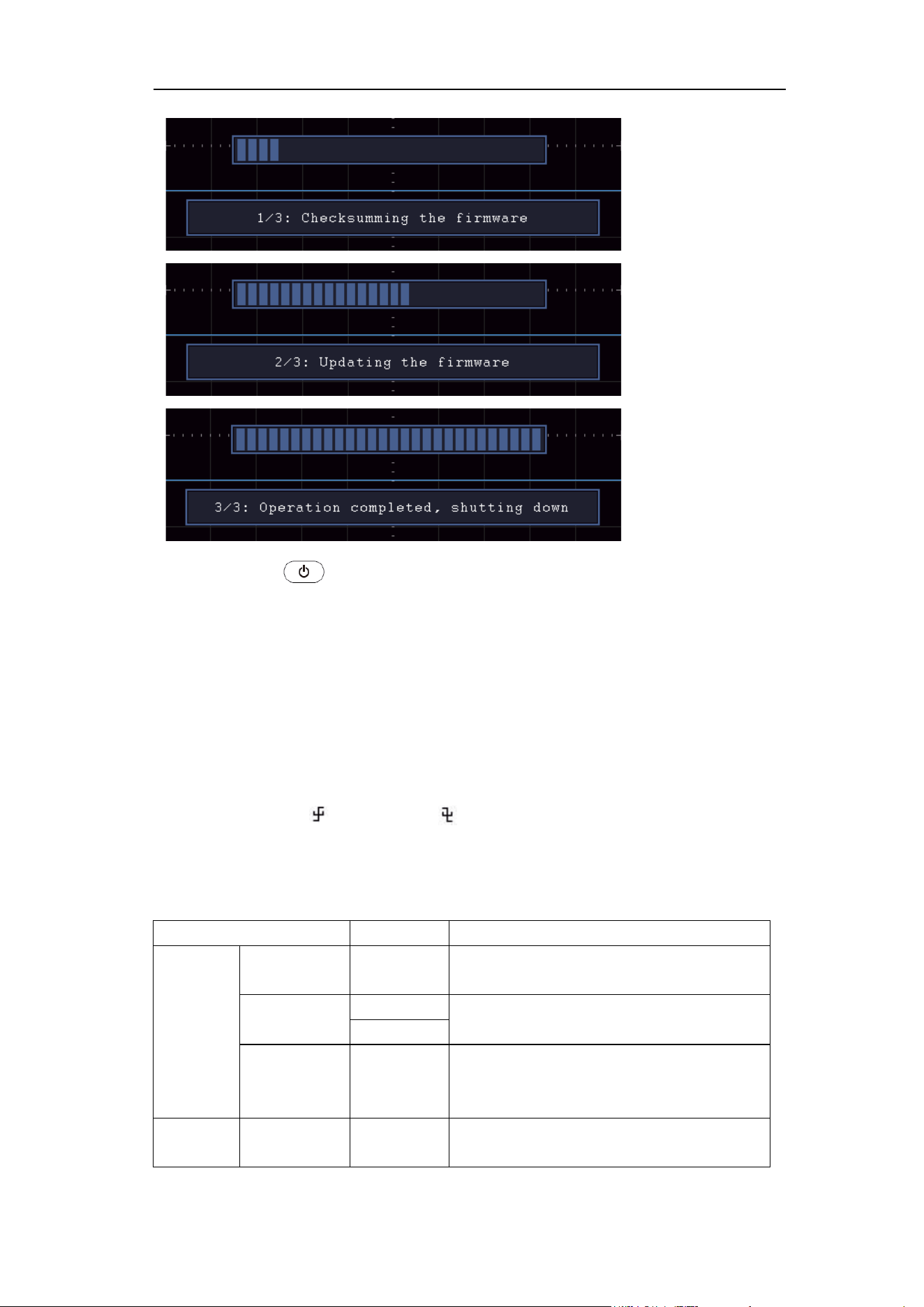
4.Advanced User Guidebook
68
8.
Long press the
button to power on the instrument.
How to Measure Automatically
Push the Measure button to display the menu for the settings of the Automatic
Measurements. At most 8 types of measurements could be displayed on the bottom
left of the screen.
The oscilloscopes provide 30 parameters for auto measurement, including Period,
Frequency, Mean, PK-PK, RMS, Max, Min, Top, Base, Amplitude, Overshoot,
Preshoot, Rise Time, Fall Time, +PulseWidth, -PulseWidth, +Duty Cycle, -Duty
Cycle, Delay A→B , Delay A→B
,
Cycle RMS, Cursor RMS, Screen Duty,
Phase, +PulseCount, -PulseCount, RiseEdgeCnt, FallEdgeCnt, Area, and Cycle
Area.
The "Automatic Measurements" menu is described as the following table:
Function Menu
Setting
Description
Add
Meas Type
(left menu)
Select the measure types
Source
CH1
Select the source
CH2
Add
Add the selected measure types (shown
at the left bottom, you could only add 8
types at most)
Remove
Meas Type
(left menu)
Select the types need to be deleted.
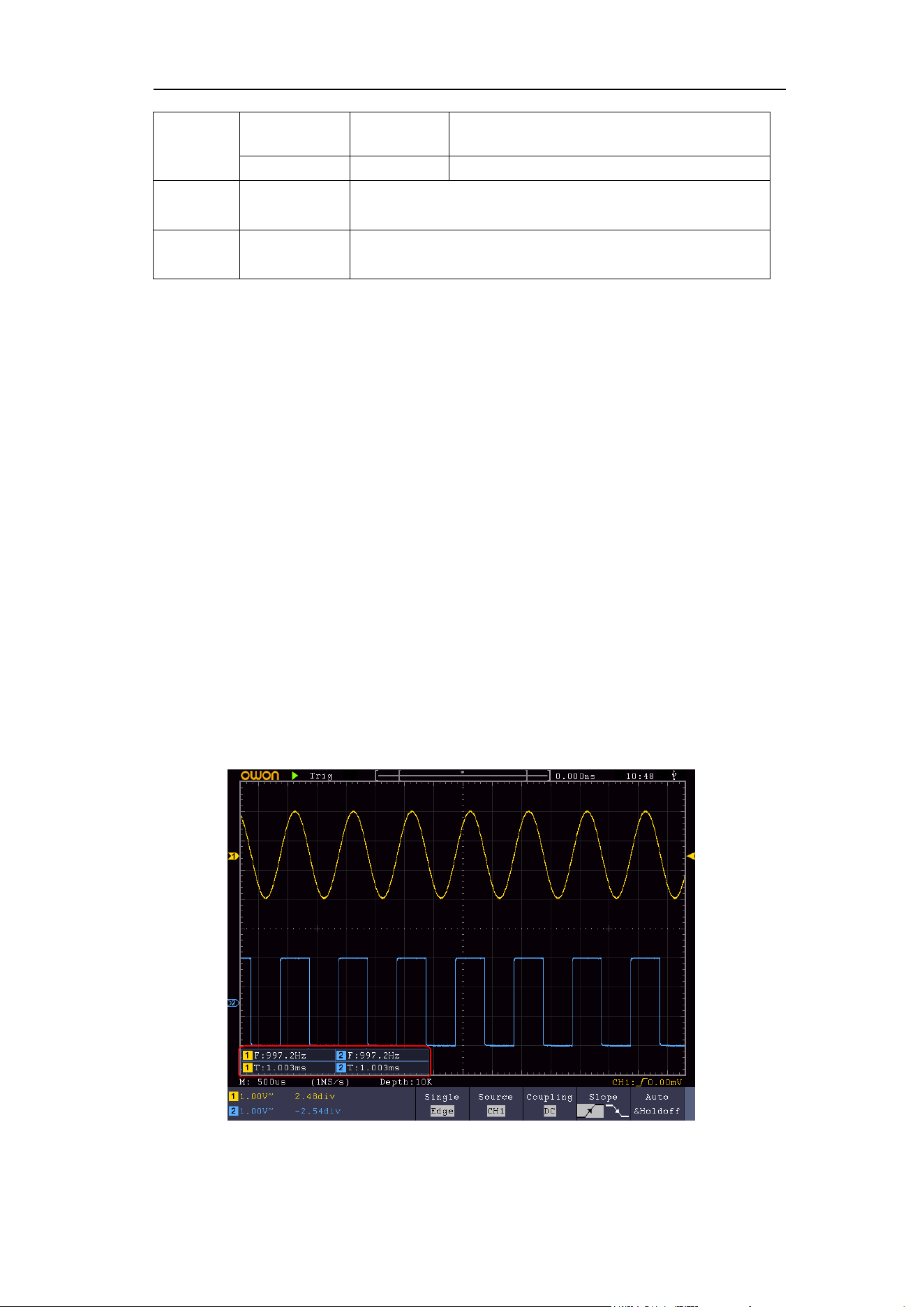
4.Advanced User Guidebook
69
Remove Remove the chosen measure type
Remove All
Remove all the measures
Show
CH1
ON
OFF
Show all the measures of CH1 on the screen
Hide the window of CH1 measures
Show
CH2
ON
OFF
Show all the measures of CH2 on the screen
Hide the window of CH2 measures
Measure
Only if the waveform channel is in the ON state, the measurement can be performed.
The automatic measurement can not be performed in the following situation: 1) On
the saved waveform. 2) On the Dual Wfm Math waveform. 3) On the Video trigger
mode.
On the Scan format, period and frequency can not be measured.
Measure the period, the frequency of the CH1, following the steps below:
1. Push the Measure button to show the automatic measurement function menu.
2. Select Add in the bottom menu.
3. In the right menu, select CH1 in the Source menu item.
4. In the left Type menu, turn the M knob to select Period.
5. In the right menu, select Add. The period type is added.
6. In the left Type menu, turn the M knob to select Frequency.
7. In the right menu, select Add. The frequency type is added.
The measured value will be displayed at the bottom left of the screen automatically
(see Figure 4-13).
Figure 4-13 Automatic measurement
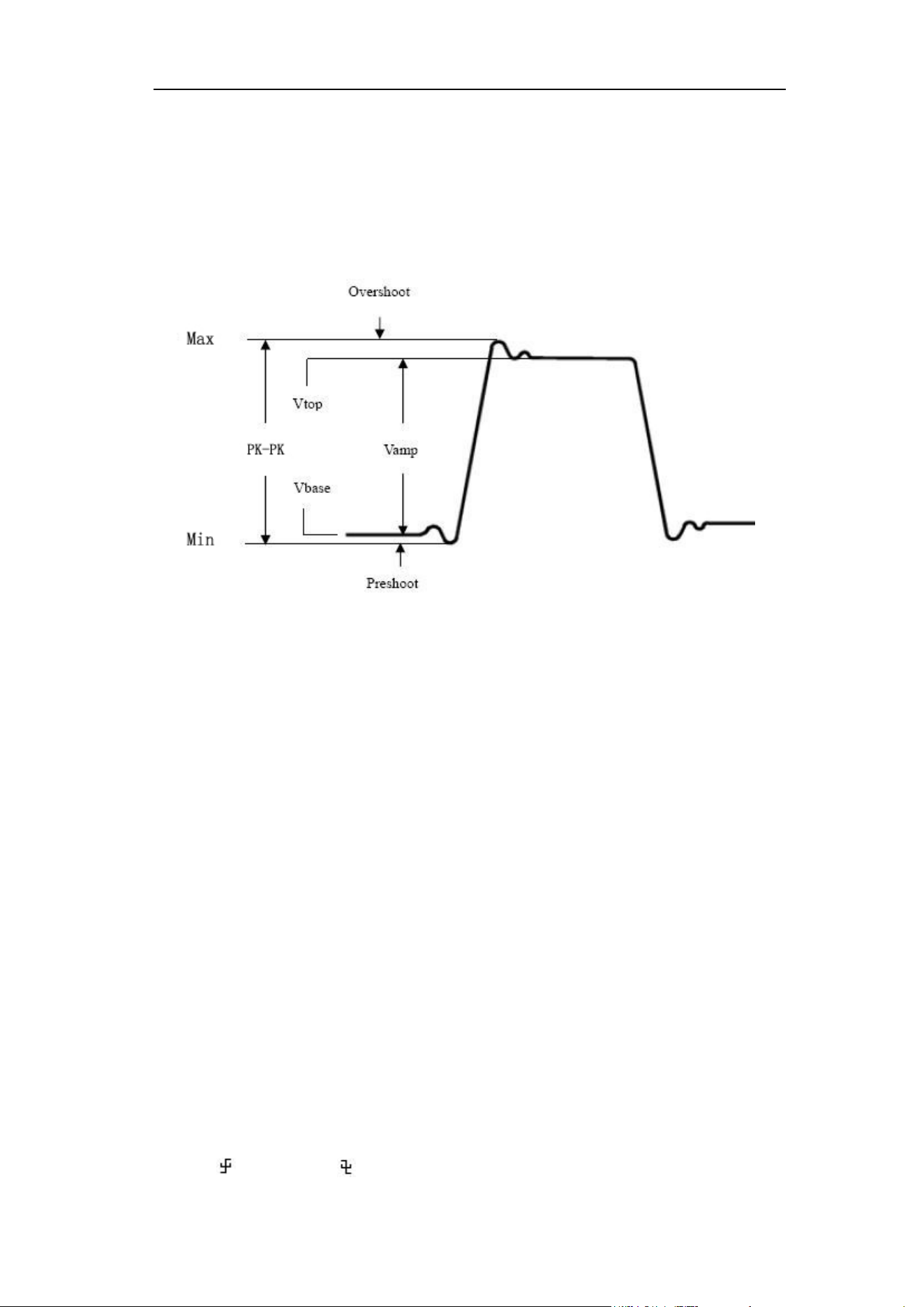
4.Advanced User Guidebook
70
The automatic measurement of voltage parameters
The oscilloscopes provide automatic voltage measurements including Mean, PK-PK,
RMS, Max, Min, Vtop, Vbase, Vamp, OverShoot, PreShoot, Cycle RMS, and
Cursor RMS. Figure 4-14 below shows a pulse with some of the voltage
measurement points.
Figure 4-14
Mean: The arithmetic mean over the entire waveform.
PK-PK: Peak-to-Peak Voltage.
RMS: The true Root Mean Square voltage over the entire waveform.
Max: The maximum amplitude. The most positive peak voltage measured over the
entire waveform.
Min: The minimum amplitude. The most negative peak voltage measured over the
entire waveform.
Vtop: Voltage of the waveform's flat top, useful for square/pulse waveforms.
Vbase: Voltage of the waveform's flat base, useful for square/pulse waveforms.
Vamp: Voltage between Vtop and Vbase of a waveform.
OverShoot: Defined as (Vmax-Vtop)/Vamp, useful for square and pulse
waveforms.
PreShoot: Defined as (Vmin-Vbase)/Vamp, useful for square and pulse
waveforms.
Cycle RMS: The true Root Mean Square voltage over the first entire period of the
waveform.
Cursor RMS: The true Root Mean Square voltage over the range of two cursors.
The automatic measurement of time parameters
The oscilloscopes provide time parameters auto-measurements include Period,
Frequency, Rise Time, Fall Time, +D width, -D width, +Duty, -Duty, Delay
A→B , Delay A→B , and Duty cycle.
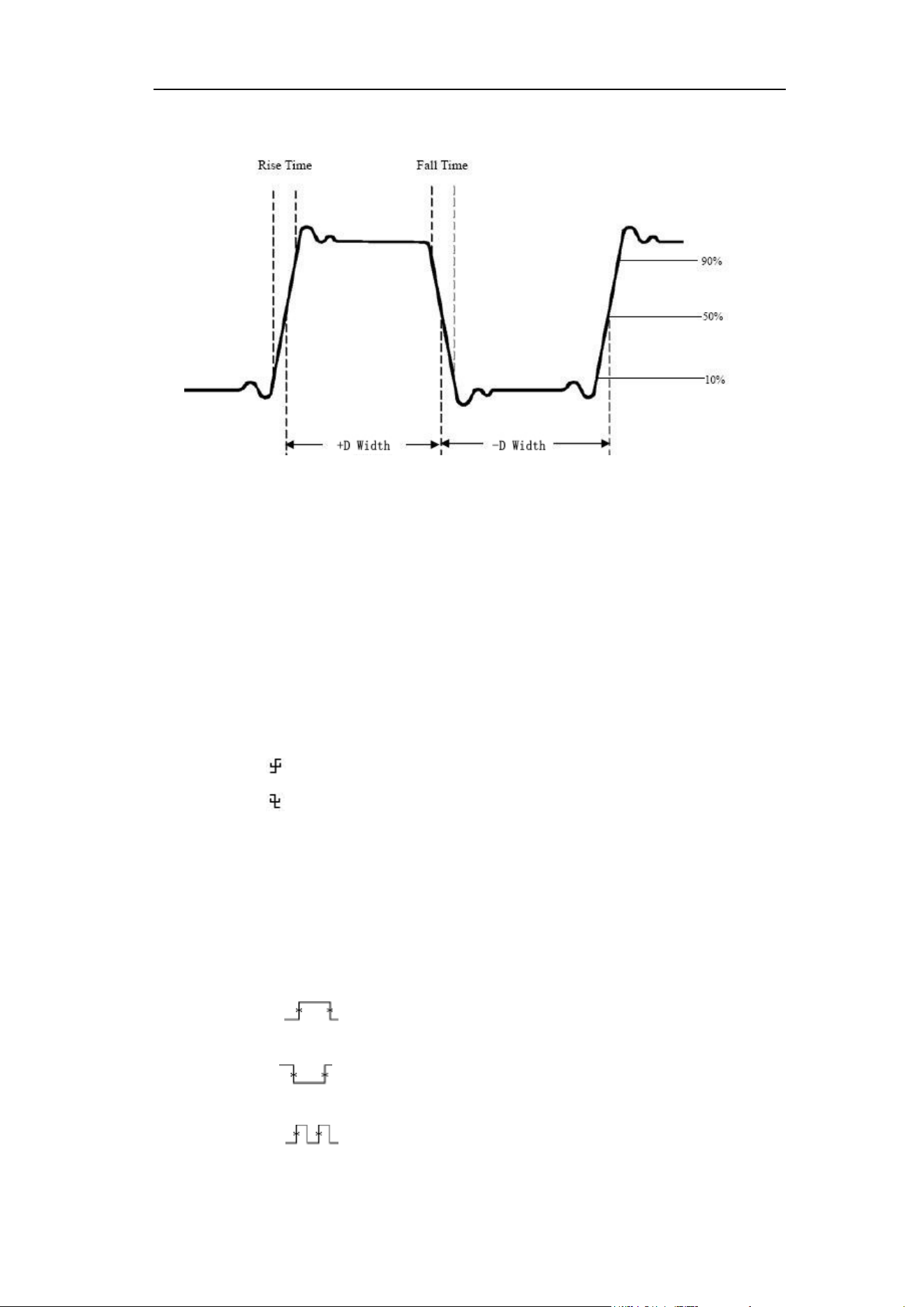
4.Advanced User Guidebook
71
Figure 4-15 shows a pulse with some of the time measurement points.
Figure 4-15
Rise Time: Time that the leading edge of the first pulse in the waveform takes to
rise from 10% to 90% of its amplitude.
Fall Time: Time that the falling edge of the first pulse in the waveform takes to
fall from 90% to 10% of its amplitude.
+D width: The width of the first positive pulse in 50% amplitude points.
-D width: The width of the first negative pulse in the 50% amplitude points.
+Duty: +Duty Cycle, defined as +Width/Period.
-Duty:-Duty Cycle, defined as -Width/Period.
Delay A→B : The delay between the two channels at the rising edge.
Delay A→B : The delay between the two channels at the falling edge.
Screen Duty: Defines as (the width of the positive pulse)/(Entire period)
Phase: Compare the rising edge of CH1 and CH2, calculate phase difference of
two channels.
Phase difference=(Delay between channels at the rising edge÷Period)×360
°
.
Other measurements
+PulseCount : The number of positive pulses that rise above the mid
reference crossing in the waveform.
-PulseCount
: The number of negative pulses that fall below the mid
reference crossing in the waveform.
RiseEdgeCnt
: The number of positive transitions from the low reference
value to the high reference value in the waveform.
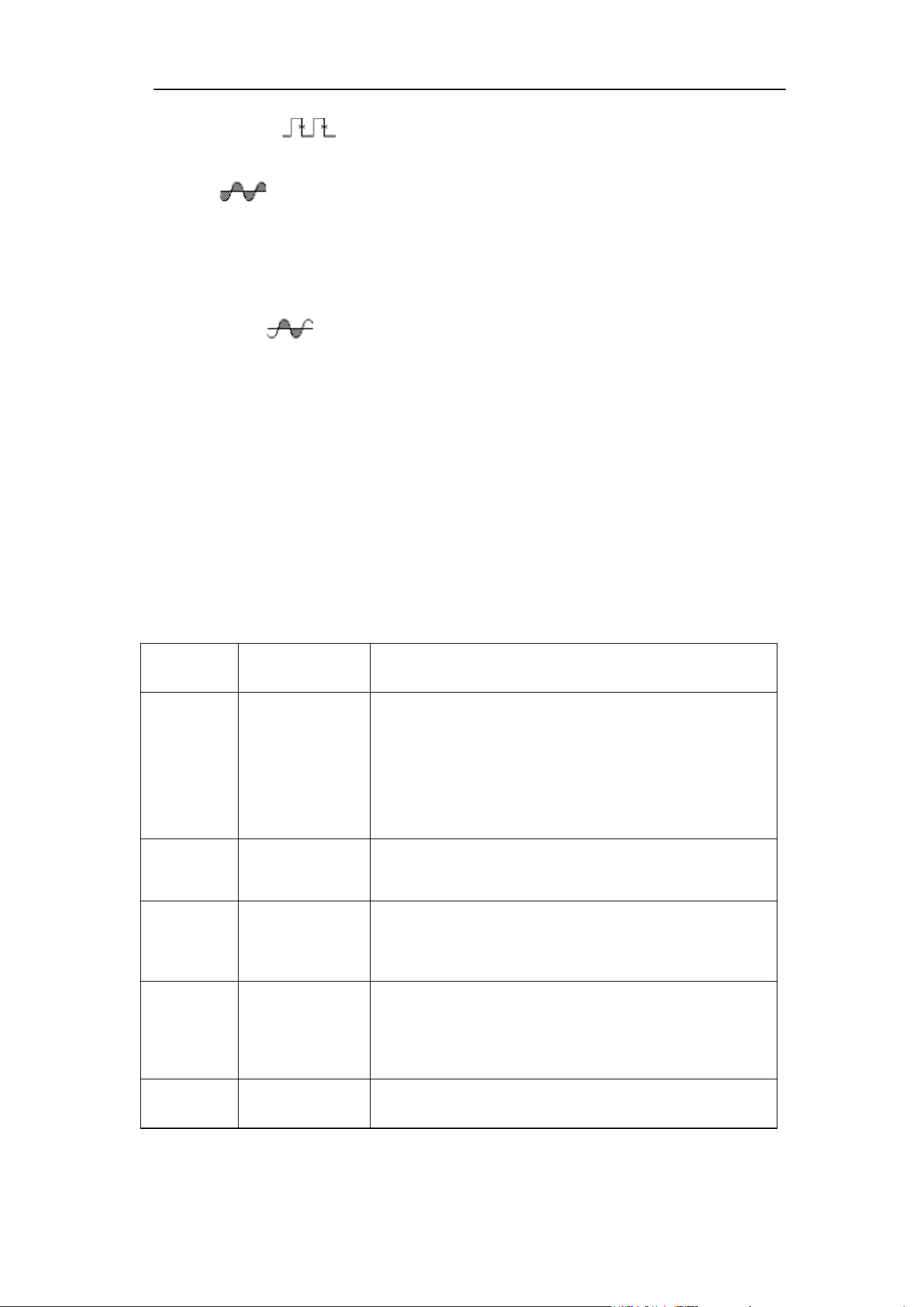
4.Advanced User Guidebook
72
FallEdgeCnt
: The number of negative transitions from the high
reference value to the low reference value in the waveform.
Area : The area of the whole waveform within the screen and the unit is
voltage-second. The area measured above the zero reference (namely the vertical
offset) is positive; the area measured below the zero reference is negative. The
area measured is the algebraic sum of the area of the whole waveform within the
screen.
Cycle Area : The area of the first period of waveform on the screen and
the unit is voltage-second. The area above the zero reference (namely the vertical
offset) is positive and the area below the zero reference is negative. The area
measured is the algebraic sum of the area of the whole period waveform.
Note: When the waveform on the screen is less than a period, the period area
measured is 0.
How to Measure with Cursors
Push the Cursor button to turn cursors on and display the cursor menu. Push it
again to turn cursors off.
The Cursor Measurement for normal mode:
The description of the cursor menu is shown as the following table:
Function
Menu
Setting Description
Type
Voltage
Time
Time&Voltage
AutoCursr
Display the voltage measurement cursor and menu.
Display the time measurement cursor and menu.
Display the time and voltage measurement cursor
and menu.
The horizontal cursors are set as the intersections of
the vertical cursors and the waveform
Line Type
(Time&Vol
tage type)
Time
Voltage
Makes the vertical cursors active.
Makes the horizontal cursors active.
Window
(Wave
zoom
mode)
Main
Extension
Measure in the main window.
Measure in the extension window.
Line
a
b
ab
Turn the M knob to move line a.
Turn the M knob to move line b.
Two cursors are linked. Turn the M knob to move
the pair of cursors.
Source
CH1
CH2
Display the channel to which the cursor
measurement will be applied.
Perform the following operation steps for the time and voltage cursor measurement
of the channel CH1:
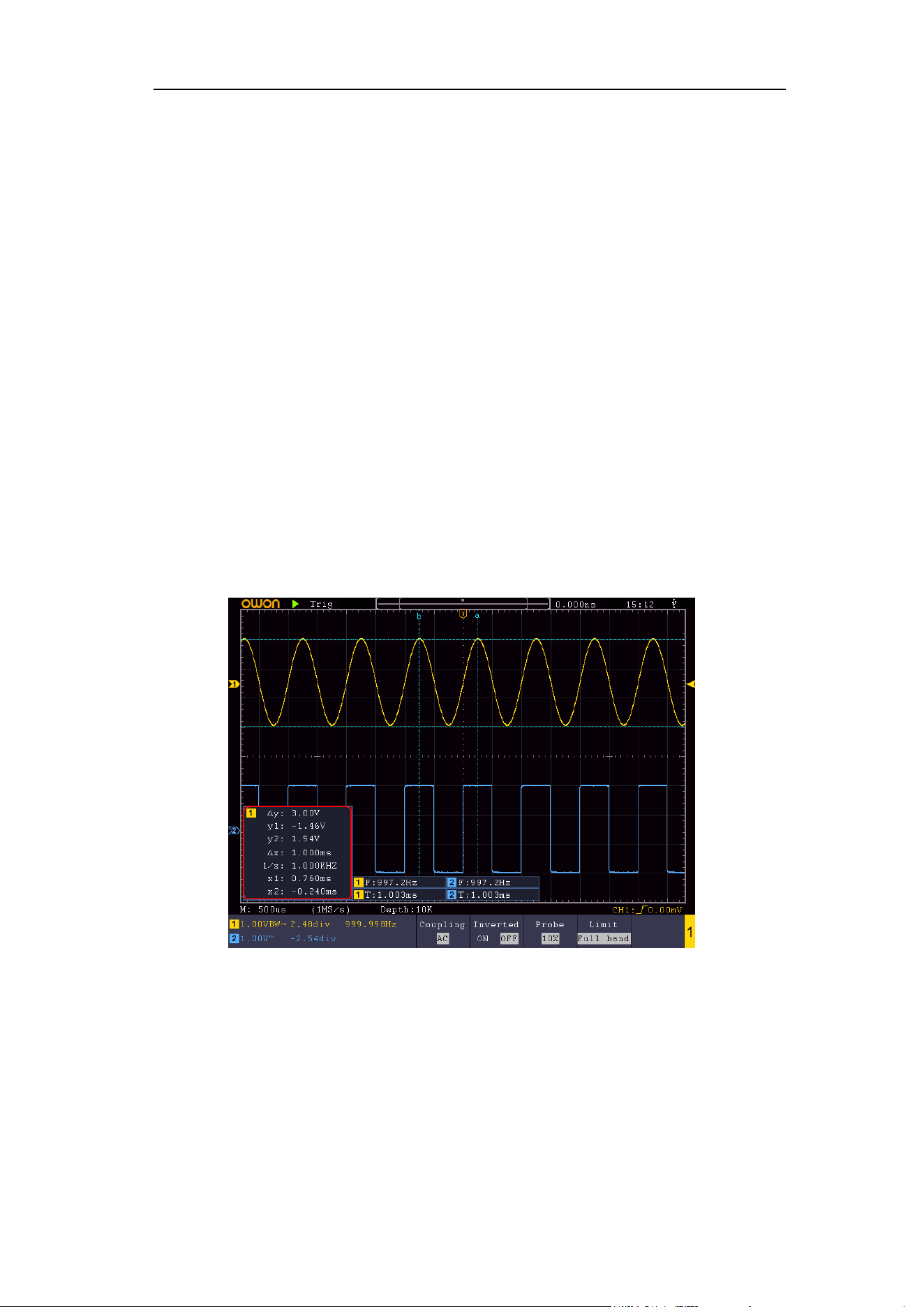
4.Advanced User Guidebook
73
1. Push Cursor to display the cursor menu.
2. In the bottom menu, select Source as CH1.
3. Select the first menu item in the bottom menu, the Type menu will display at
the right of the screen. In the right menu, select Time&Voltage for Type,
two blue dotted lines displayed along the horizontal direction of the screen,
two blue dotted lines displayed along the vertical direction of the screen.
Cursor measure window at the left bottom of the screen shows the cursor
readout.
4. In the bottom menu, select Line Type as Time to make the vertical cursors
active. If the Line in the bottom menu is select as a, turn the M knob to move
line a to the right or left. If b is selected, turn the M knob to move line b.
5. In the bottom menu, select Line Type as Voltage to make the horizontal
cursors active. Select Line in the bottom menu as a or b, turn the M knob to
move it.
6. Push the Horizontal HOR button to enter wave zoom mode. In the bottom
cursor menu, select Window as Main or Extension to make the cursors
shown in the main window or zoom window.
Figure 4-16 Time&Voltage Cursor Measurement
Auto Cursor
For the AutoCursr type, the horizontal cursors are set as the intersections of the
vertical cursors and the waveform.
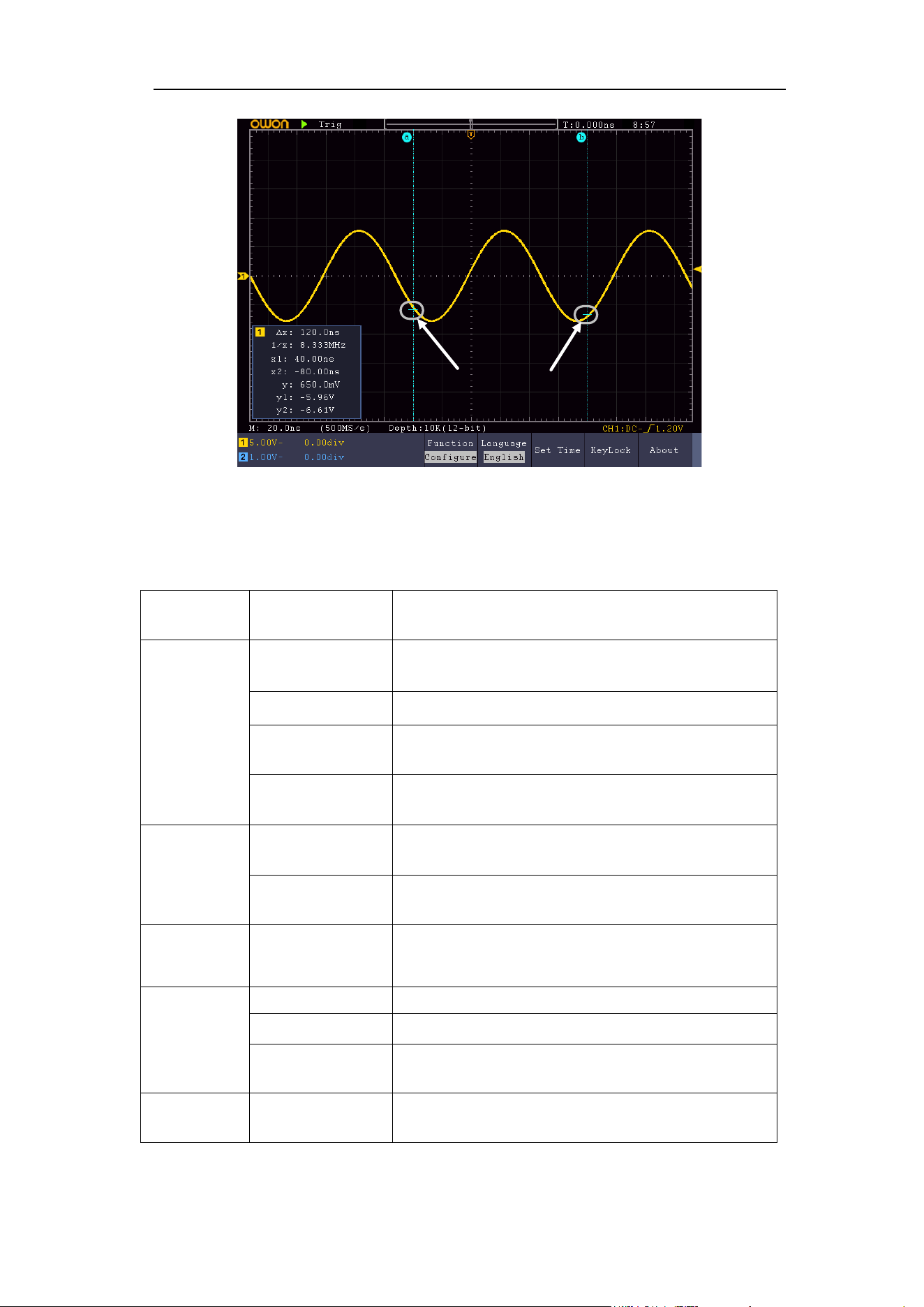
4.Advanced User Guidebook
74
Auto Cursor
The Cursor Measurement for FFT mode
In FFT mode, push the Cursor button to turn cursors on and display the cursor menu.
The description of the cursor menu in FFT mode is shown as the following table:
Function
Menu
Setting Description
Type
Vamp (or Phase)
Display the Vamp (or Phase) measurement
cursor and menu.
Freq
Display the Freq measurement cursor and menu.
Freq&Vamp
(or Freq&Phase)
Display the corresponding measurement cursor
and menu.
AutoCursr
The horizontal cursors are set as the intersections
of the vertical cursors and the waveform
Line Type
(Freq&Vamp
or
Freq&Phase
type)
Freq Makes the vertical cursors active.
Vamp (or Phase) Makes the horizontal cursors active.
Window
(Wave zoom
mode)
Main
Extension
Measure in the main window.
Measure in the FFT extension window.
Line
a
Turn the M knob to move line a.
b
Turn the M knob to move line b.
ab
Two cursors are linked. Turn the M knob to
move the pair of cursors.
Source Math FFT
Display the channel to which the cursor
measurement will be applied.
Perform the following operation steps for the amplitude and frequency cursor
measurement of math FFT:
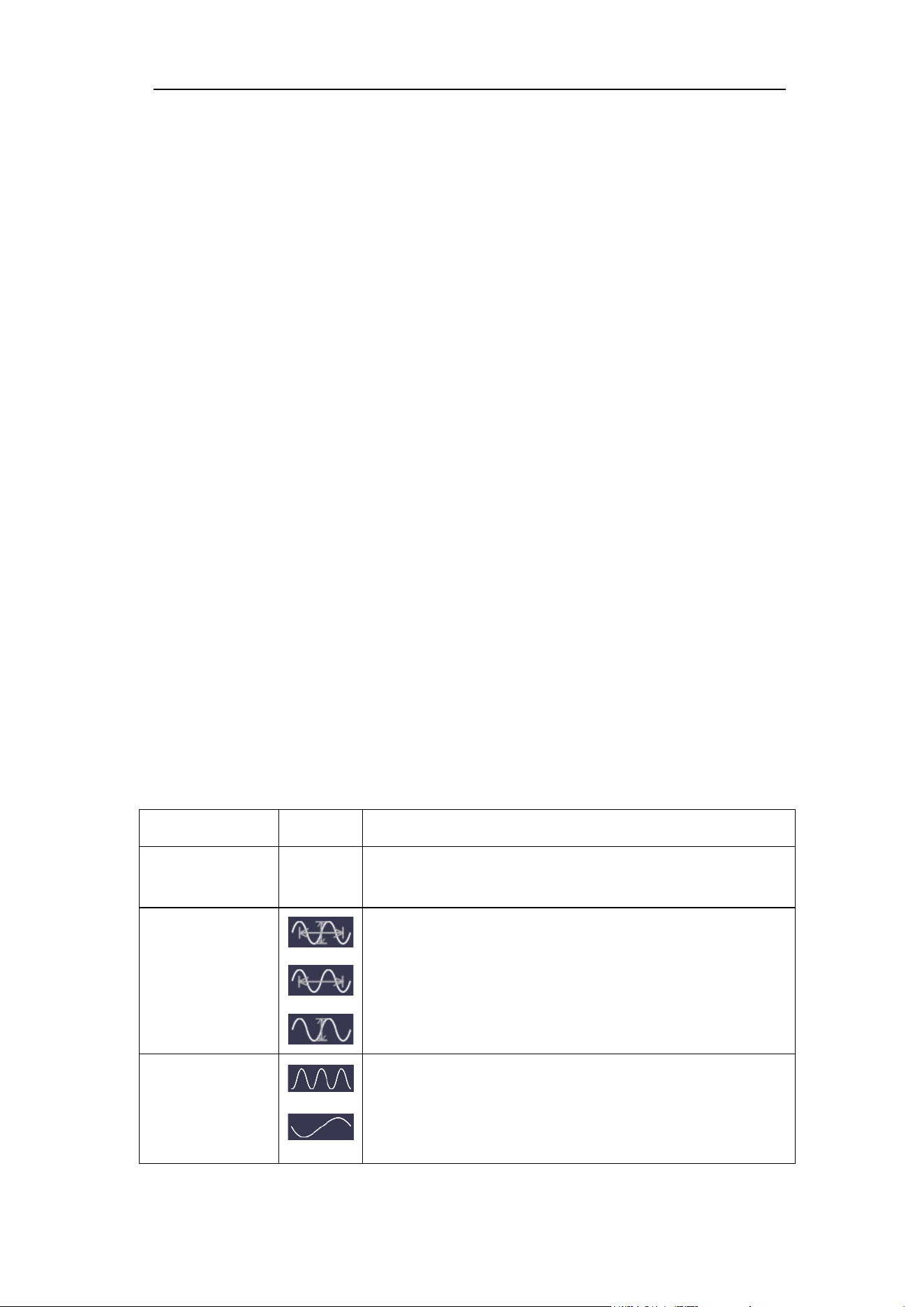
4.Advanced User Guidebook
75
1. Press the Math button to display the math menu in the bottom. Select FFT.
In the right menu, select Format. In the left menu, turn the M knob to select
amplitude unit (V RMS or Decibels).
2. Push Cursor to display the cursor menu.
3. In the bottom menu, select Window as Extension.
4. Select the first menu item in the bottom menu, the Type menu will display at
the right of the screen. In the right menu, select Freq&Vamp for Type, two
blue dotted lines displayed along the horizontal direction of the screen, two
blue dotted lines displayed along the vertical direction of the screen. Cursor
measure window at the left bottom of the screen shows the cursor readout.
5. In the bottom menu, select Line Type as Freq to make the vertical cursors
active. If the Line in the bottom menu is select as a, turn the M knob to move
line a to the right or left. If b is selected, turn the M knob to move line b.
6. In the bottom menu, select Line Type as Vamp to make the horizontal
cursors active. Select Line in the bottom menu as a or b, turn the M knob to
move it.
7. In the bottom cursor menu, you can select Window as Main to make the
cursors shown in the main window.
How to Use Autoscale
This is a very useful function for first time users to carry out a simple and quick test
on the input signal. The function is applied to follow-up signals automatically even if
the signals change at any time. Autoscale enables the instrument to set up trigger
mode, voltage division and time scale automatically according to the type, amplitude
and frequency of the signals.
The menu is as follows:
Function Menu Setting Instruction
Autoscale
ON
OFF
Turn on
Autoscale.
Turn off Autoscale.
Mode
Follow-up and adjust both vertical and horizontal
settings.
Follow-up and only adjust horizontal scale.
Follow-up and only adjust vertical scale.
Wave
Show Multi-period waveforms.
Only show one or two periods.
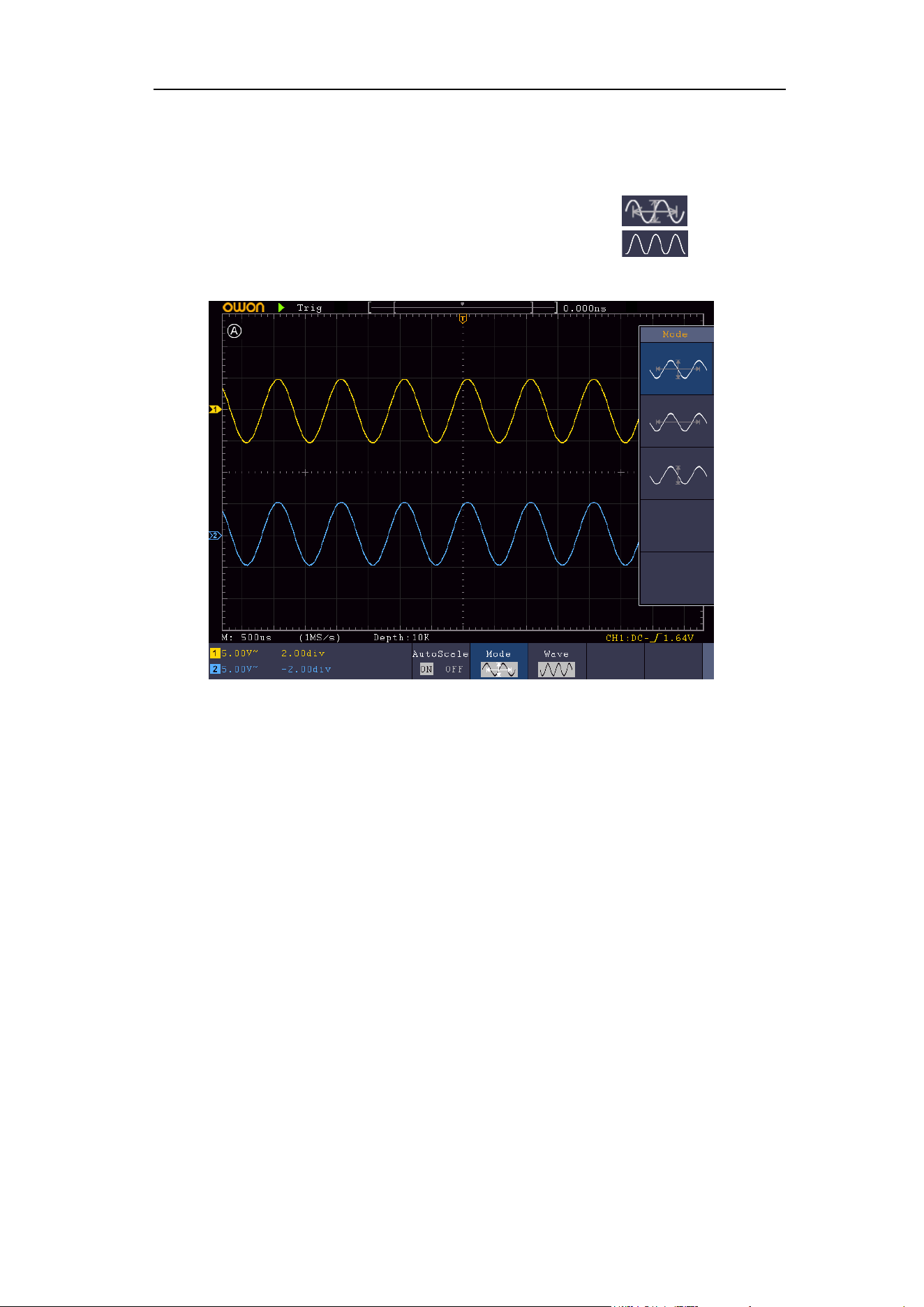
4.Advanced User Guidebook
76
If you want to measure the two-channel signal, you can do as the follows:
1. Push the Autoscale button, the function menu will appear.
2. In the bottom menu, select ON in the Autoscale menu item.
3. In the bottom menu, Select Mode. In the right menu, select
.
4. In the bottom menu, Select Wave. In the right menu, select
.
Then the wave is displayed in the screen, shown as Figure 4-17.
Figure 4-17 Autoscale Horizontal-Vertical multi-period waveforms
Note:
1. Entering into Autoscale function and the symbol
○
A will be flickering on the top
left of the screen.
2. In the mode of Autoscale, the oscilloscope can self-estimate Trigger Mode (Edge,
Video). At this point, the trigger menu is not available.
3. At the mode of XY and STOP status, when entering into Autoscale, DSO switches
to YT mode and AUTO triggering.
4. At the mode of Autoscale, DSO is always set as DC coupling with AUTO
triggering.
5. At the mode of Autoscale, if adjust the vertical position, voltage division, trigger
level or time scale of CH1 or CH2, the oscilloscope will turn off Autoscale
function. To back to Autoscale, Push Autoset.
6. Turn off the submenu at the Autoscale menu, the Autoscale is off and turn on the
submenu still enters into the function.
7. When video triggering, the horizontal time scale is 50us. If one channel is
showing edge signal, the other channel is showing video one, the time scale refers
to 50us as video one as standard.
8. While the Autoscale is working, the settings below will be made forcibly:
The DSO will switch from the wave zoom mode to the normal mode.

4.Advanced User Guidebook
77
How to Use Built-in Help
1. Push Help button, the catalog will display in the screen.
2. In the bottom menu, press Prev Page or Next Page to choose help topic, or just
turn the M knob to choose.
3. Press OK to view the details about the topic, or just push the M knob.
4. Press Quit to exit the help, or just do other operations.
How to Use Executive Buttons
Executive Buttons include Autoset, Run/Stop, Single, Copy.
Autoset
It's a very useful and quick way to apply a set of pre-set functions to the incoming
signal, and display the best possible viewing waveform of the signal and also
works out some measurements for user as well.
The details of functions applied to the signal when using Autoset are shown as
the following table:
Function Items
Setting
Vertical Coupling
Current
Channel Coupling
Current
Vertical Scale
Adjust to the proper division.
Bandwidth
Full
Horizontal Level
Middle or
±
2 div
Horizontal Sale
Adjust to the proper division
Trigger Type
Slope or Video
Trigger Source
CH1 or CH2
Trigger Coupling
DC
Trigger Slope
Current
Trigger Level
3/5 of the waveform
Trigger Mode
Auto
Display Format
YT
Force
Stop
Help
Exit
Pass/Fail
Off
Inverted
Off
Zoom Mode
Exit
Judge waveform type by Autoset
Five kinds of types: Sine, Square, video signal, DC level, Unknown signal.
Menu as follow:
Sine: (Multi-period, Single-period, FFT, Cancel Autoset)
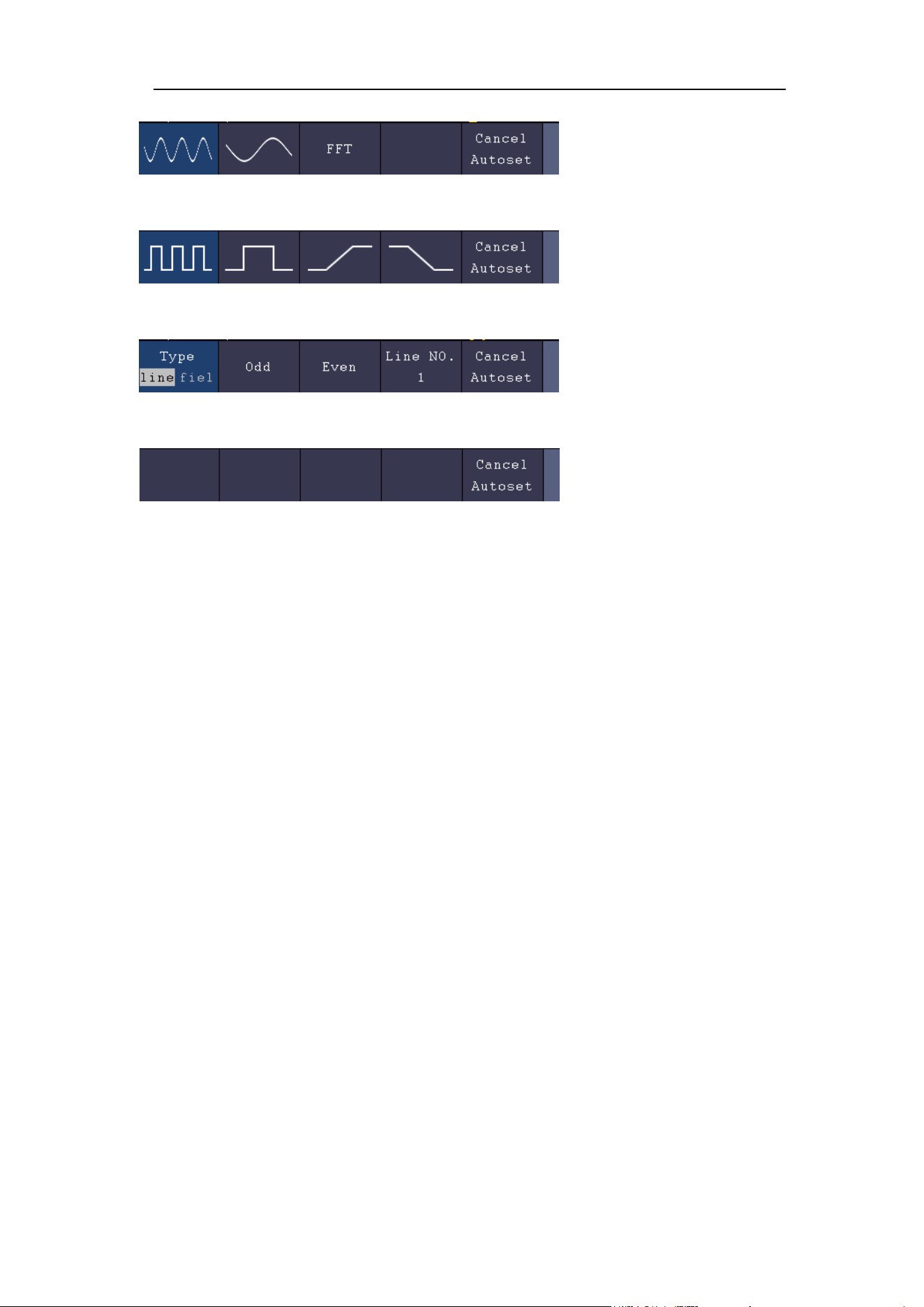
4.Advanced User Guidebook
78
Square: (Multi-period, Single-period, Rising Edge, Falling Edge, Cancel Autoset)
Video signal:
DC level, Unknown signal:
Description for some icons:
Multi-period: To display multiple periods
Single-period: To display single period
FFT: Switch to FFT mode
Rising Edge: Display the rising edge of square waveform
Falling Edge: Display the falling edge of square waveform
Cancel Autoset:Go back to display the upper menu and waveform information
Note: The Autoset function requires that the frequency of signal should be no lower
than 20Hz, and the amplitude should be no less than 5mv. Otherwise, the Autoset
function may be invalid.
Run/Stop: Enable or disable sampling on input signals.
Notice: When there is no sampling at STOP state, the vertical division and
the horizontal time base of the waveform still can be adjusted within a
certain range, in other words, the signal can be expanded in the horizontal or
vertical direction.
When the horizontal time base is ≤50ms, the horizontal time base can be
expanded for 4 divisions downwards.
Single: Push this button you can set the trigger mode as single directly, so when
trigger occurs, acquire one waveform then stop.
Copy: You can save the waveform by just pushing the Copy panel button in any
user interface. The source wave and the storage location are according to
the settings of the Save function menu when the Type is Wave. For more
details, please see "Save Function Menu" on P50.

4.Advanced User Guidebook
79
How to Print the Screen Image
To print an image of what appears on the oscilloscope screen, do as the follows:
(1) Connect the printer to the USB Device port on the rear panel of the oscilloscope.
Note: The USB Device port supports PictBridge compatible printers.
(2) Push the Utility button, select Function in the bottom menu, select Output in the
left menu.
(3) In the bottom menu, select Device as PICT. (When PC is selected, you can get
an image by Oscilloscope software.)
(4) In the bottom menu, select Print Setup. In the right menu, set up print parameters.
The On selection of Ink Saver will print out a copy with a white background.
(5) Once you have connected a printer to your oscilloscope and set up print
parameters, you can print current screen images with a single push of the Print
button on the front panel.
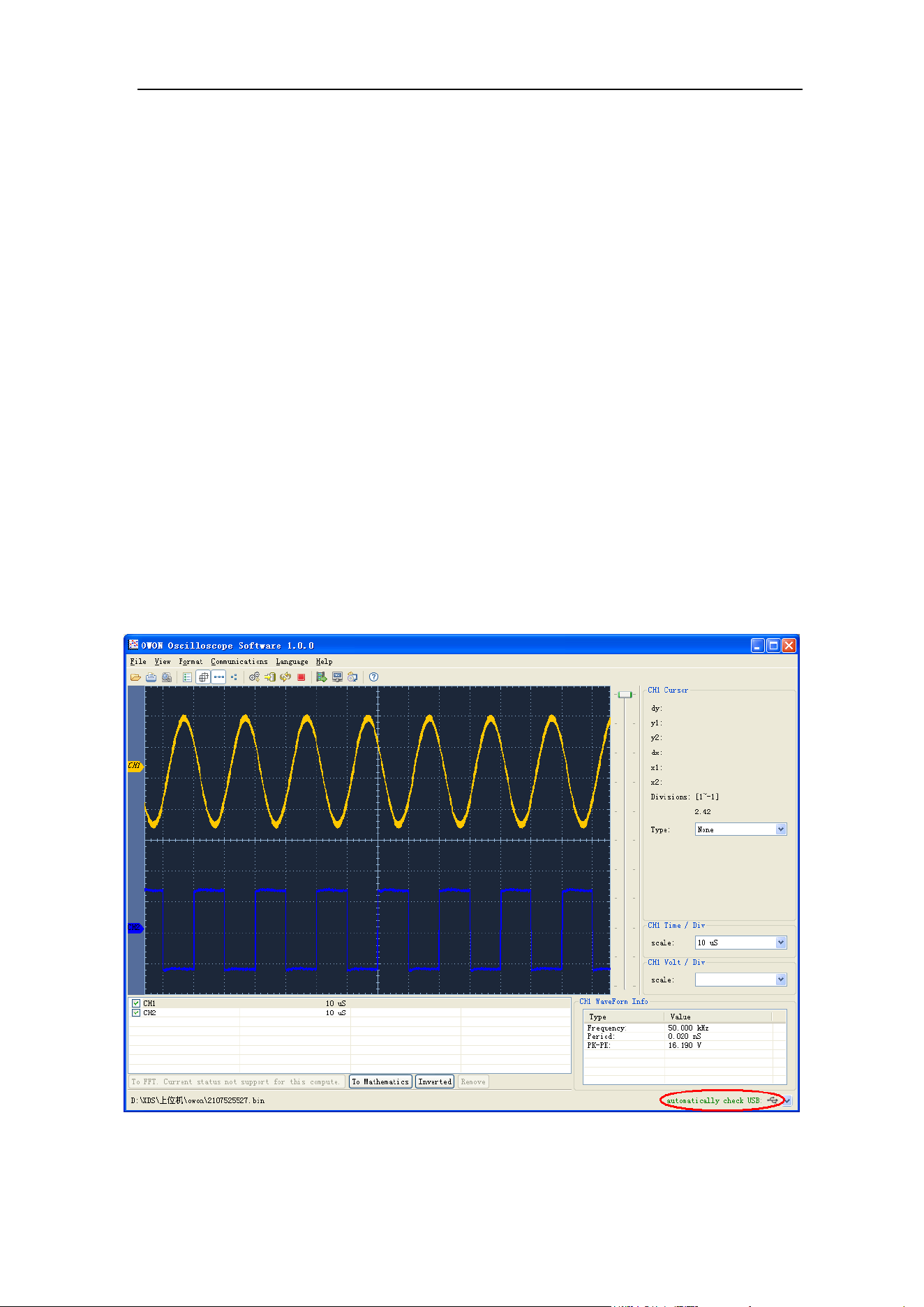
5.Communication with PC
80
5. Communication with PC
The oscilloscope supports communications with a PC through USB or LAN port. You can
use the Oscilloscope communication software to store, analyze, display the data and
remote control.
To learn about how to operate the software, you can push F1 in the software to open the
help document.
Here is how to connect with PC. First, install the Oscilloscope communication software on
the supplied CD. Then there are several ways of connection to choose from.
Using USB Port
(1) Connection: Use a USB data cable to connect the USB Device port in the right panel
of the Oscilloscope to the USB port of a PC.
(2) Install the driver: Run the Oscilloscope communication software on PC, push F1 to
open the help document. Follow the steps of title "I. Device connection" in the
document to install the driver.
(3) Port setting of the software: Run the Oscilloscope software; click
"Communications" on the menu bar, choose "Ports-Settings", in the setting dialog,
choose "Connect using" as "USB". After connect successfully, the connection
information in the bottom right corner of the software will turn green.
Figure 5-1 Connect with PC through USB port
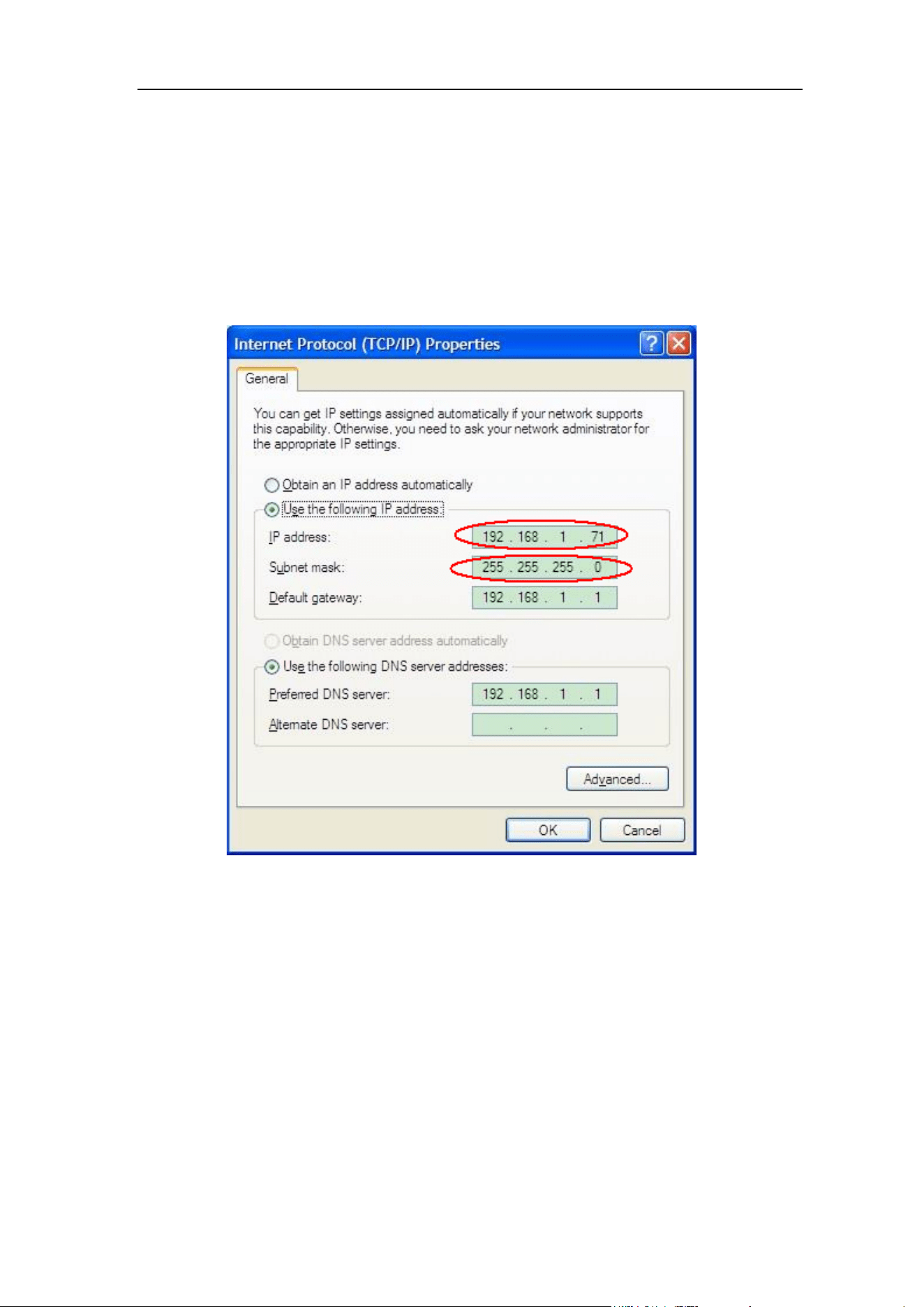
5.Communication with PC
81
Using LAN Port
Connect directly
(1) Connection. Plug in the LAN cable to the LAN port in the back of the oscilloscope;
plug the other end into the LAN interface of the computer.
(2) Set the network parameters of the computer. Since the oscilloscope can not
support obtaining an IP address automatically, you should assign a static IP address.
Here we set the IP address to 192.168.1.71.
Figure 5-2 Set the network parameters of the computer
(3) Set the network parameters of the OWON Oscilloscope Software. Run the
software on the computer; choose the "Ports-settings" of the "Communications" menu
item. Set "Connect using" to LAN. About the IP, the first three bytes is same as the IP
in the step (2), the last byte should be different. Here, we set it to 192.168.1.72. The
range of the port value is 0 - 4000, but the port which under 2000 is always used, so it
is suggested to set it to the value above 2000. Here, we set it to 3000.
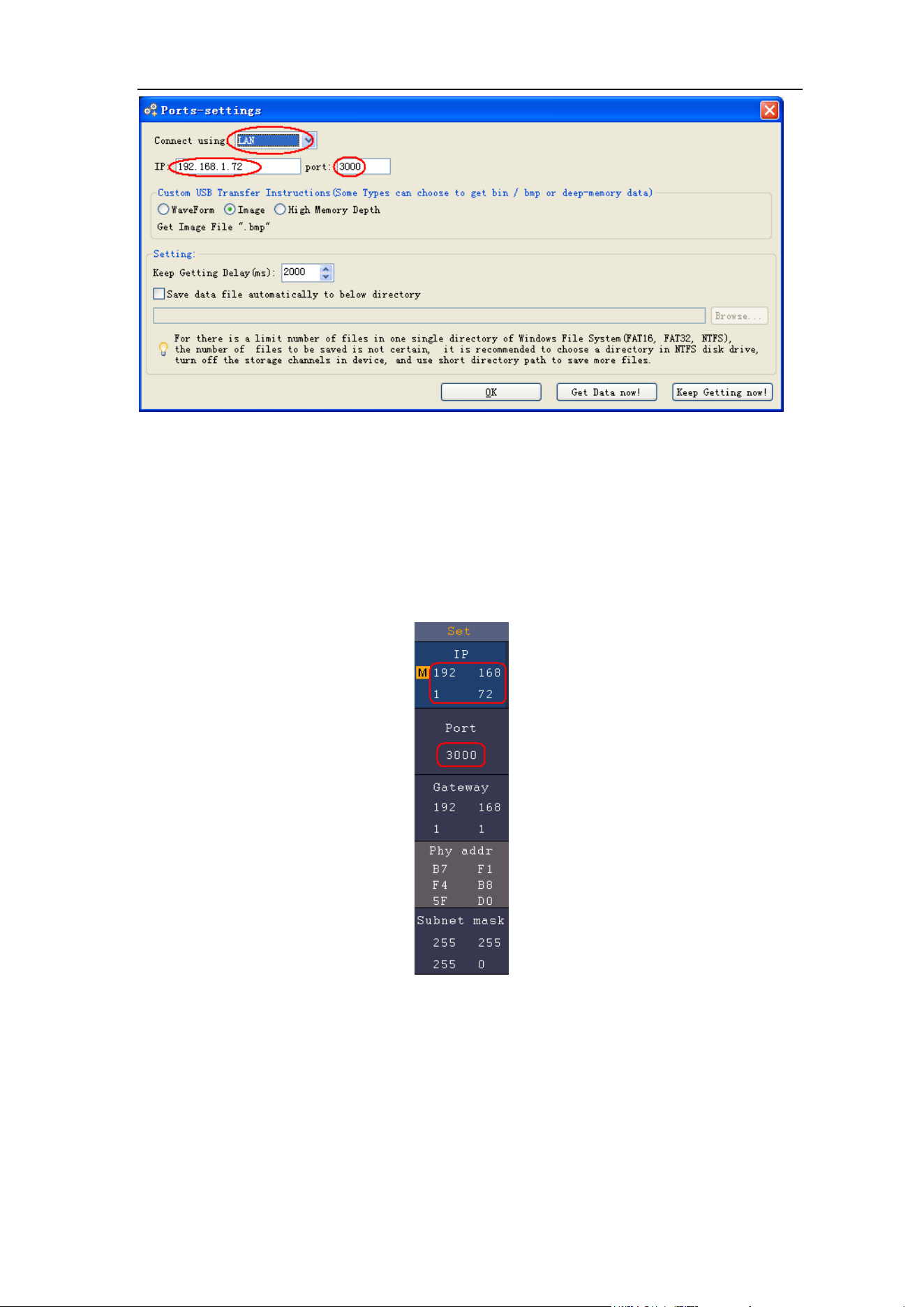
5.Communication with PC
82
Figure 5-3 Set the network parameters of the OWON Oscilloscope Software
(4) Set the network parameters of the oscilloscope. In the oscilloscope, push the Utility
button. Select Function in the bottom menu. Select LAN Set in the left menu. In the
bottom menu, set the Type item as LAN, and select Set. In the right menu, set IP and
Port to the same value as the "Ports-settings" in the software in step (3). Select Save
set in the bottom menu, it prompts "Reset to update the config". After resetting the
oscilloscope, if you can get data normally in the oscilloscope software, the connection
is successful.
Figure 5-4 Set the network parameters of the oscilloscope
Connect through a router
(1) Connection. Use a LAN cable to connect the oscilloscope with a router, the LAN port
of the oscilloscope is in the right side panel; the computer should be connected to the
router too.
(2) Set the network parameters of the computer. Since the oscilloscope can not
support obtaining an IP address automatically, you should assign a static IP address.
The Default gateway and Subnet mask should be set according to the router. Here we
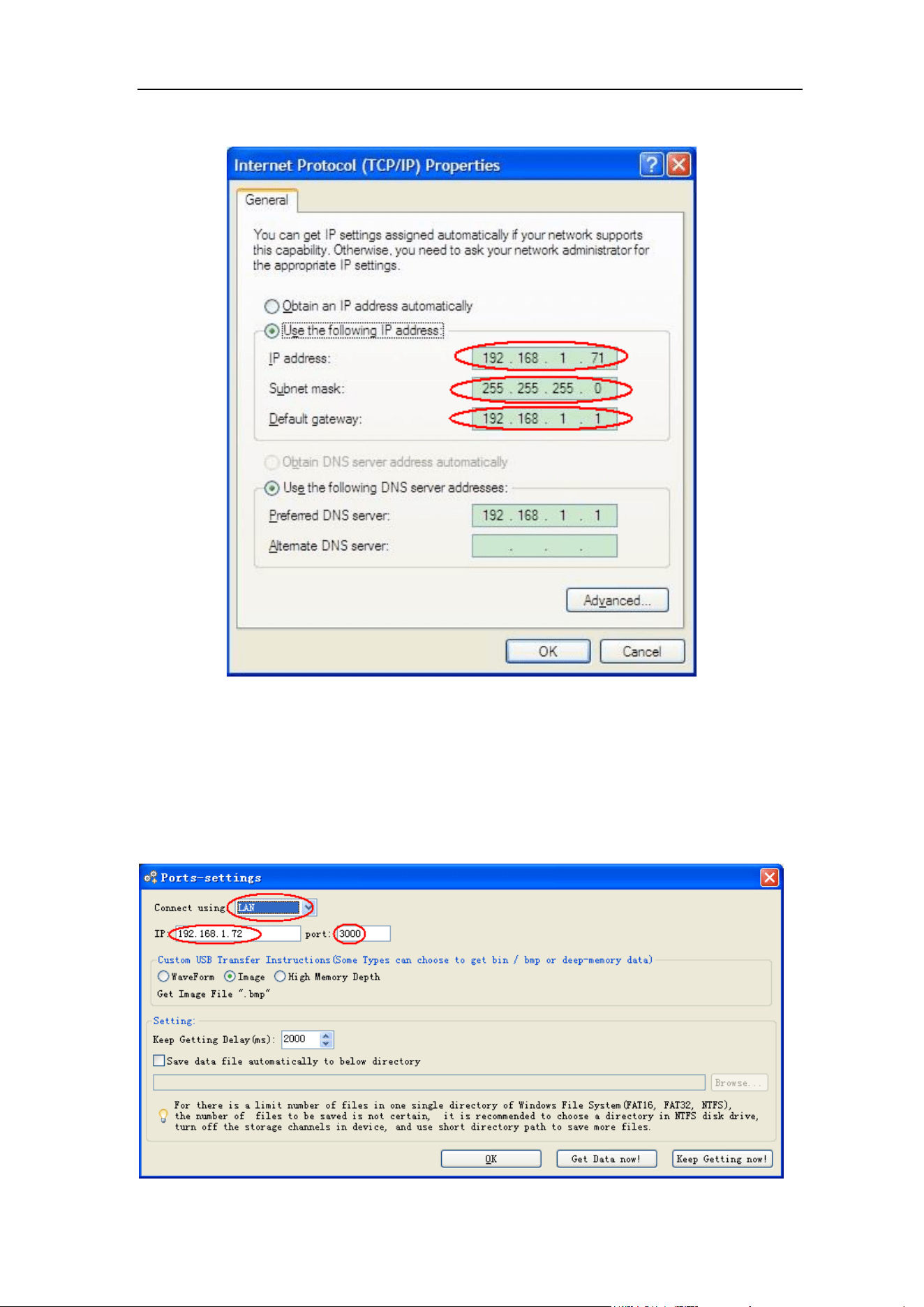
5.Communication with PC
83
set the IP address to 192.168.1.71, Subnet mask is 255.255.255.0, Default gateway is
192.168.1.1.
Figure 5-5 Set the network parameters of the computer
(3) Set the network parameters of the OWON Oscilloscope Software. Run the
software on the computer; choose the "Ports-settings" of the "Communications" menu
item. Set "Connect using" to LAN. About the IP, the first three bytes is same as the IP
in the step (2), the last byte should be different. Here, we set it to 192.168.1.72. The
range of the port value is 0 - 4000, but the port which under 2000 is always used, so it
is suggested to set it to the value above 2000. Here, we set it to 3000.
Figure 5-6 Set the network parameters of the OWON Oscilloscope Software
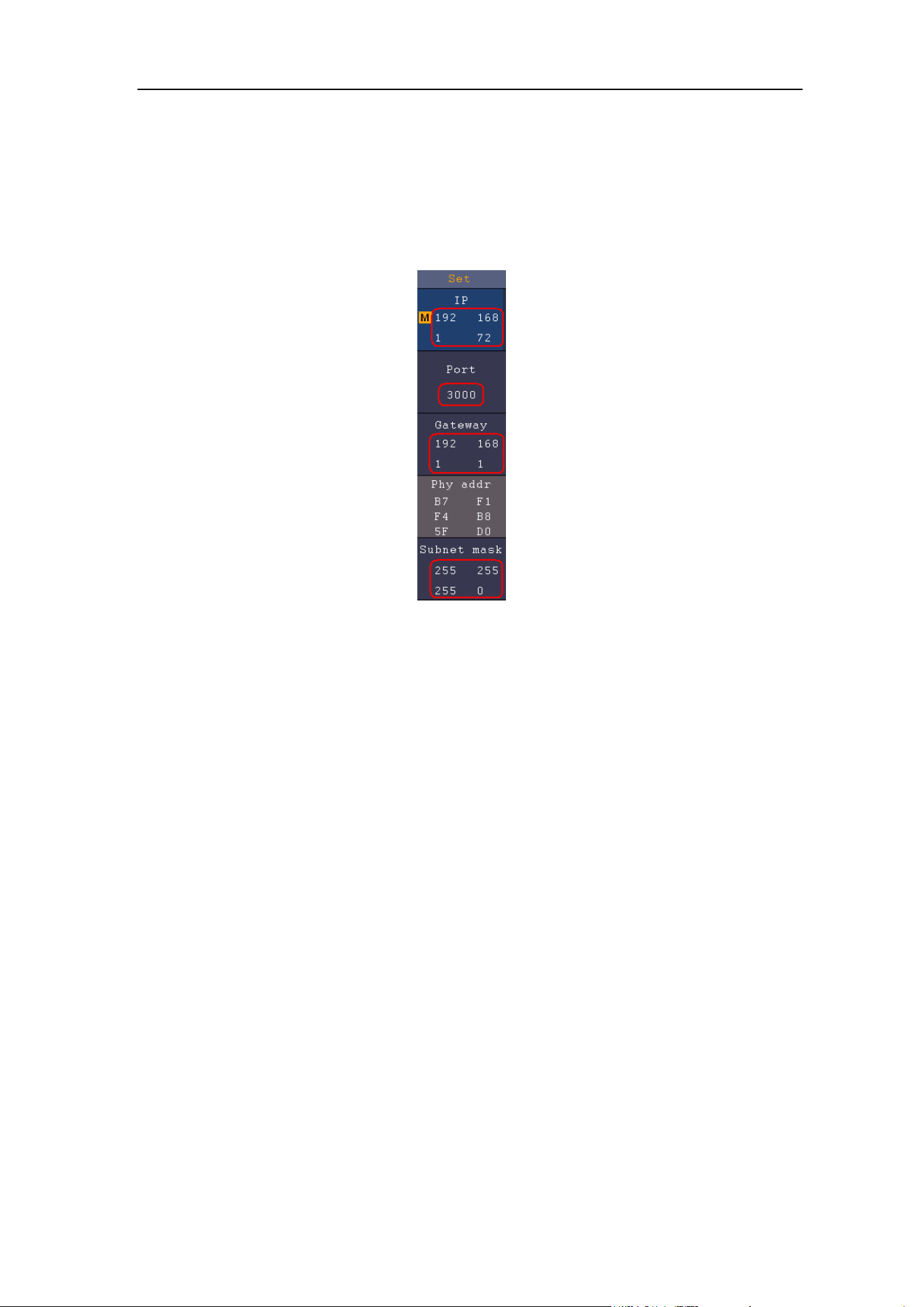
5.Communication with PC
84
(4) Set the network parameters of the oscilloscope. In the oscilloscope, push the Utility
button. Select Function in the bottom menu. Select LAN Set in the left menu. In the
bottom menu, set the Type item as LAN, and select Set. In the right menu, set IP and
Port to the same value as the "Ports-settings" in the software in step (3). The Netgate
and Net mask should be set according to the router. Select Save set in the bottom
menu, it prompts "Reset to update the config". After resetting the oscilloscope, if you
can get data normally in the oscilloscope software, the connection is successful.
Figure 5-7 Set the network parameters of the oscilloscope

6.Demonstration
85
6. Demonstration
Example 1: Measurement a Simple Signal
The purpose of this example is to display an unknown signal in the circuit, and
measure the frequency and peak-to-peak voltage of the signal.
1. Carry out the following operation steps for the rapid display of this signal:
(1) Set the probe menu attenuation coefficient as 10X and that of the switch in the
probe switch as 10X (see "How to Set the Probe Attenuation Coefficient" on P12).
(2) Connect the probe of Channel 1 to the measured point of the circuit.
(3) Push the Autoset button.
The oscilloscope will implement the Autoset to make the waveform optimized, based
on which, you can further regulate the vertical and horizontal divisions till the
waveform meets your requirement.
2. Perform Automatic Measurement
The oscilloscope can measure most of the displayed signals automatically. To
measure the period, the frequency of the CH1, following the steps below:
(1) Push the Measure button to show the Measure menu.
(2) Select Add in the bottom menu.
(3) In the right menu, select CH1 in the Source menu item.
(4) In the left Type menu, turn the M knob to select Period.
(5) In the right menu, select Add. The period type is added.
(6) In the left Type menu, turn the M knob to select Frequency.
(7) In the right menu, select Add. The frequency type is added.
The measured value will be displayed at the bottom left of the screen automatically
(see Figure 6-1).
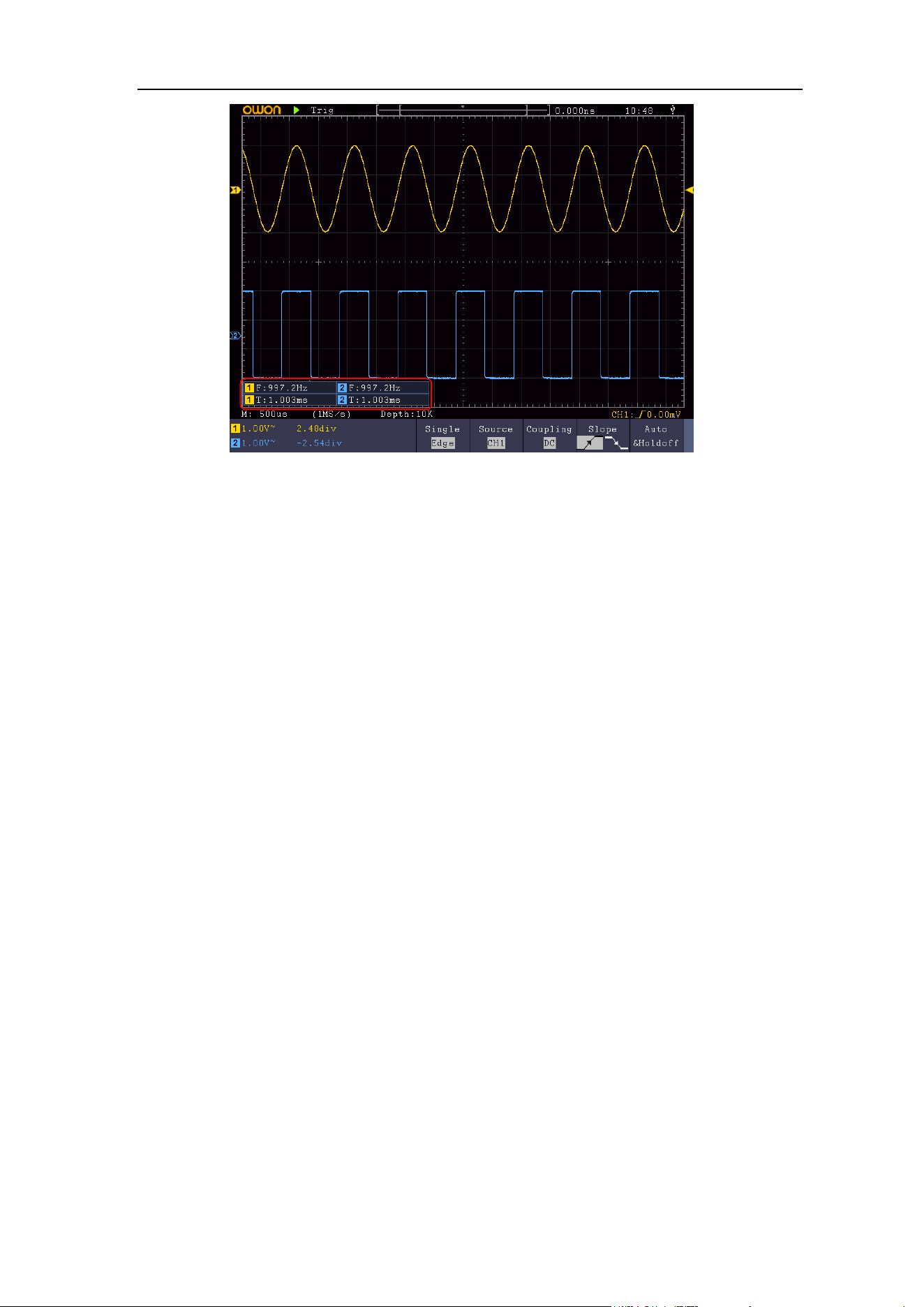
6.Demonstration
86
Figure 6-1 Measure period and frequency value for a given signal
Example 2: Gain of a Amplifier in a Metering Circuit
The purpose of this example is to work out the Gain of an Amplifier in a Metering
Circuit. First we use Oscilloscope to measure the amplitude of input signal and output
signal from the circuit, then to work out the Gain by using given formulas.
Set the probe menu attenuation coefficient as 10X and that of the switch in the probe
as 10X (see "How to Set the Probe Attenuation Coefficient" on P12).
Connect the oscilloscope CH1 channel with the circuit signal input end and the CH2
channel to the output end.
Operation Steps:
(1) Push the Autoset button and the oscilloscope will automatically adjust the
waveforms of the two channels into the proper display state.
(2) Push the Measure button to show the Measure menu.
(3) Select Add in the bottom menu.
(4) In the right menu, select CH1 in the Source menu item.
(5) In the left Type menu, turn the M knob to select PK-PK.
(6) In the right menu, select Add. The peak-to-peak type of CH1 is added.
(7) In the right menu, select CH2 in the Source menu item.
(8) In the left Type menu, turn the M knob to select PK-PK.
(9) In the right menu, select Add. The peak-to-peak type of CH2 is added.
(10) Read the peak-to-peak voltages of Channel 1 and Channel 2 from the bottom left
of the screen (see Figure 6-2).
(11) Calculate the amplifier gain with the following formulas.
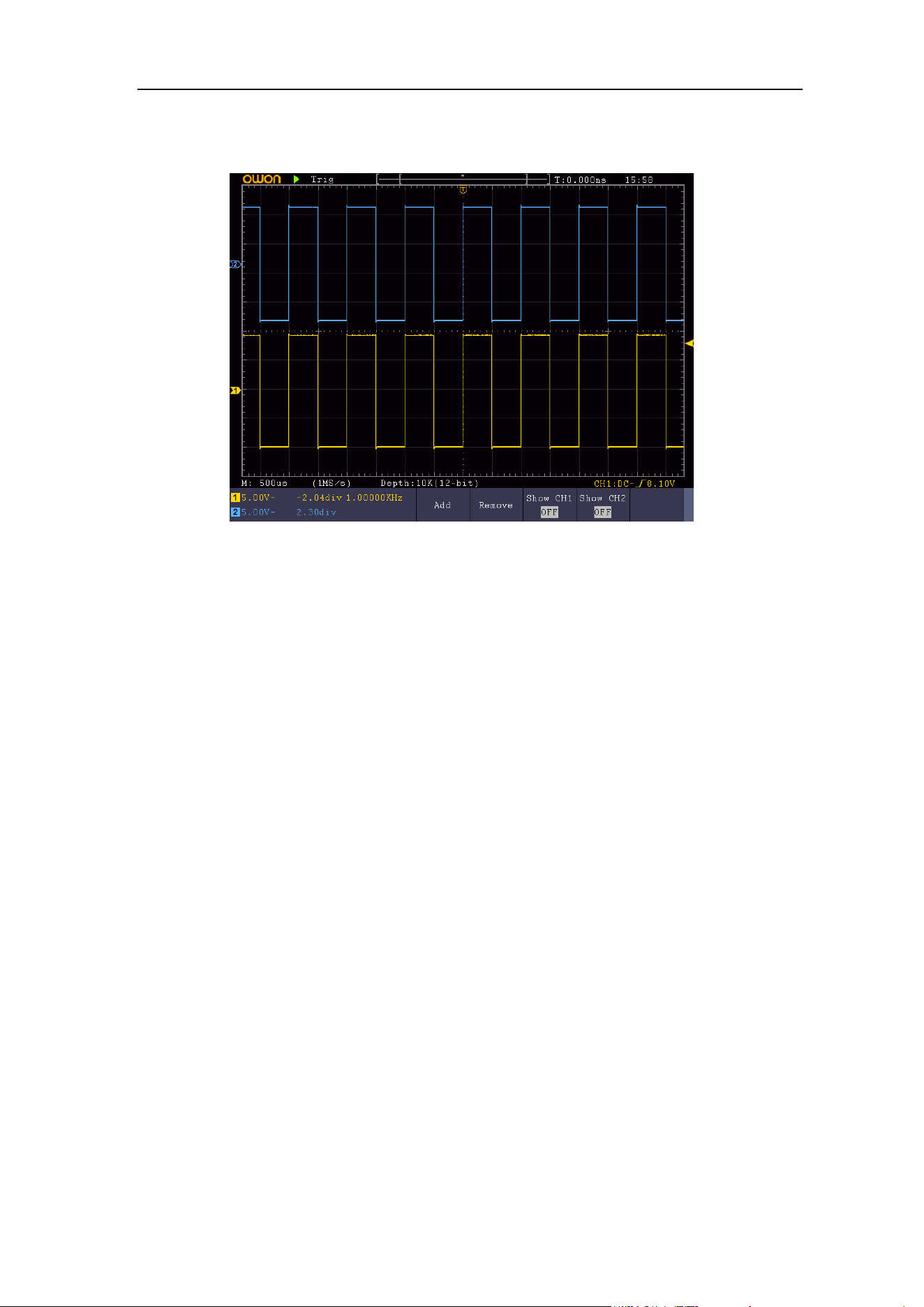
6.Demonstration
87
Gain = Output Signal / Input signal
Gain (db) = 20×log (gain)
Figure 6-2 Waveform of Gain Measurement
Example 3: Capturing a Single Signal
It's quite easy to use Digital Oscilloscope to capture non-periodic signal, such as a
pulse and burr etc. But the common problem is how to set up a trigger if you have no
knowledge of the signal? For example, if the pulse is the logic signal of a TTL level,
the trigger level should be set to 2 volts and the trigger edge be set as the rising edge
trigger. With various functions supported by our Oscilloscope, user can solve this
problem by taking an easy approach. First to run your test using auto trigger to find
out the closest trigger level and trigger type, this helps user to make few small
adjustments to achieve a proper trigger level and mode. Here is how we achieve this.
The operation steps are as follows:
(1) Set the probe menu attenuation coefficient to 10X and that of the switch in the
probe to 10X (see "How to Set the Probe Attenuation Coefficient" on P12).
(2) Adjust the Vertical Scale and Horizontal Scale knobs to set up a proper vertical
and horizontal ranges for the signal to be observed.
(3) Push the Acquire button to display the Acquire menu.
(4) Select Acqu Mode in the bottom menu. Select Peak Detect in the right menu.
(5) Push the Trigger Menu button to display the Trigger menu.
(6) Select the first menu item in the bottom menu. Select Single in the right menu.
(7) In the left menu, select Edge as the mode.
(8) Select Source in the bottom menu. Select CH1 in the right menu.
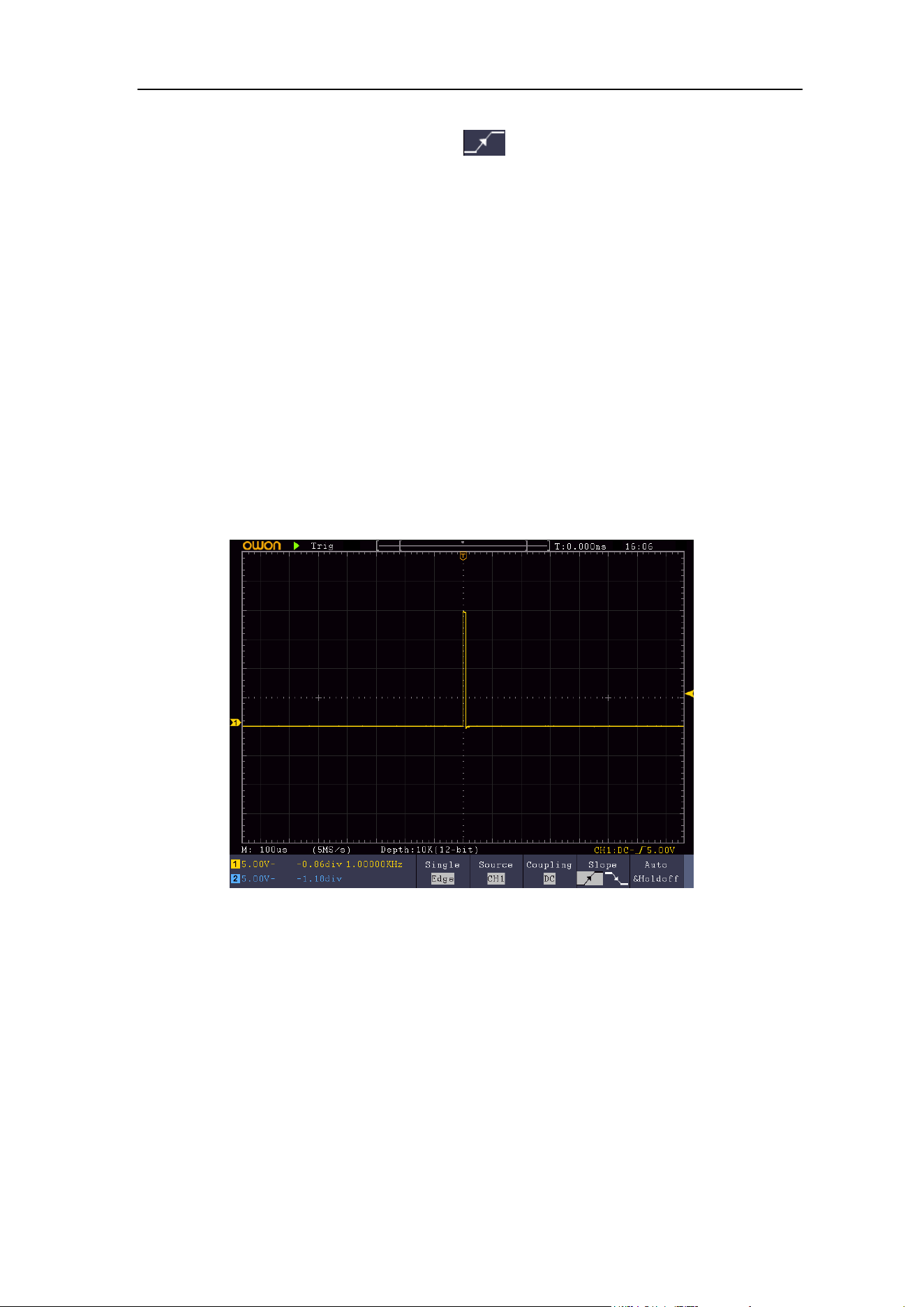
6.Demonstration
88
(9) Select Coupling in the bottom menu. Select DC in the right menu.
(10) In the bottom menu, select Slope as (rising).
(11) Turn the Trigger Level knob and adjust the trigger level to the roughly 50% of
the signal to be measured.
(12) Check the Trigger State Indicator on the top of the screen, if it is not Ready, push
down the Run/Stop button and start acquiring, wait for trigger to happen. If a
signal reaches to the set trigger level, one sampling will be made and then
displayed in the screen. By using this approach, a random pulse can be captured
easily. For instance, if we want to find a burst burr of high amplitude, set the
trigger level to a slightly higher value of the average signal level, push the
Run/Stop button and wait a trigger. Once there is a burr occurring, the instrument
will trigger automatically and record the waveform during the period around the
trigger time. By turning the Horizontal Position knob in the horizontal control
area in the panel, you can change the horizontal triggering position to obtain the
negative delay, making an easy observation of the waveform before the burr
occurs (see Figure 6-3).
Figure 6-3 Capturing a Single Signal
Example 4: Analyze the Details of a Signal
Noise is very common inside most of the electronic signal. To find out what's inside
the noise and reduce the level of noise is very important function our oscilloscope is
capable to offer.
Noise Analysis
The level of noise sometime indicates a failure of electronic circuit. The Peak Detect
functions acts an important role to help you to find out the details of these noise. Here
is how we do it:
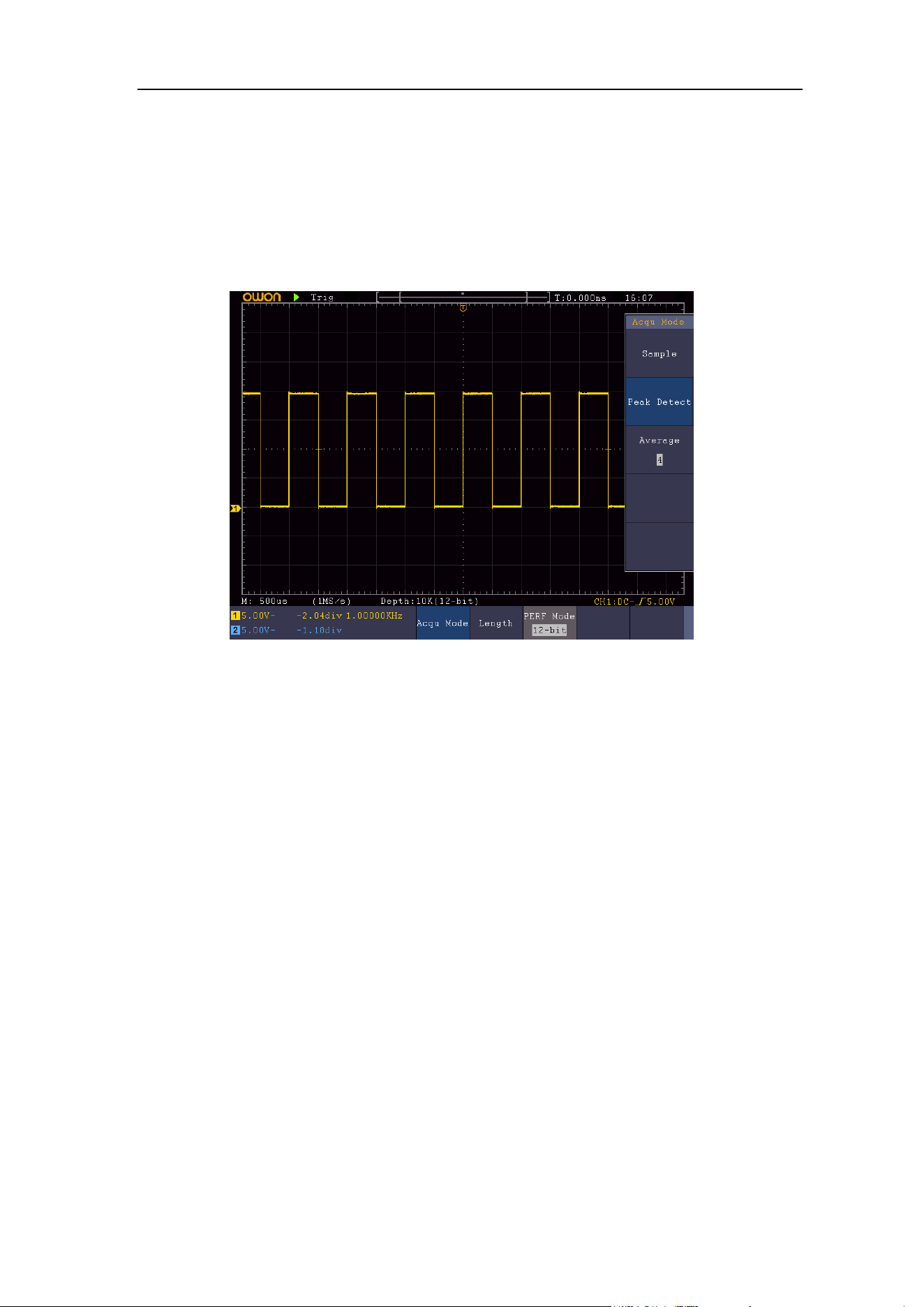
6.Demonstration
89
(1) Push the Acquire button to display the Acquire menu.
(2) Select Acqu Mode in the bottom menu.
(3) Select Peak Detect in the right menu.
The signal displayed on the screen containing some noise, by turning on Peak Detect
function and changing time base to slow down the incoming signal, any peaks or burr
would be detected by the function (see Figure 6-4).
Figure 6-4 Signal with Noises
Separate Noises from the Signal
When focusing on signal itself, the important thing is to reduce the noise level as
lower as possible, this would enable user to have more details about the signal. The
Average function offered by our Oscilloscope can help you to achieve this.
Here are the steps for how to enable Average function.
(1) Push the Acquire button to display the Acquire menu.
(2) Select Acqu Mode in the bottom menu.
(3) Select Average in the right menu, turn the M knob and observe the waveform
obtained from averaging the waveforms of different average number.
User would see a much reduced random noise level and make it easy to see more
details of the signal itself. After applying Average, user can easily identify the burrs
on the rising and falling edges of some part of the signal (see Figure 6-5).
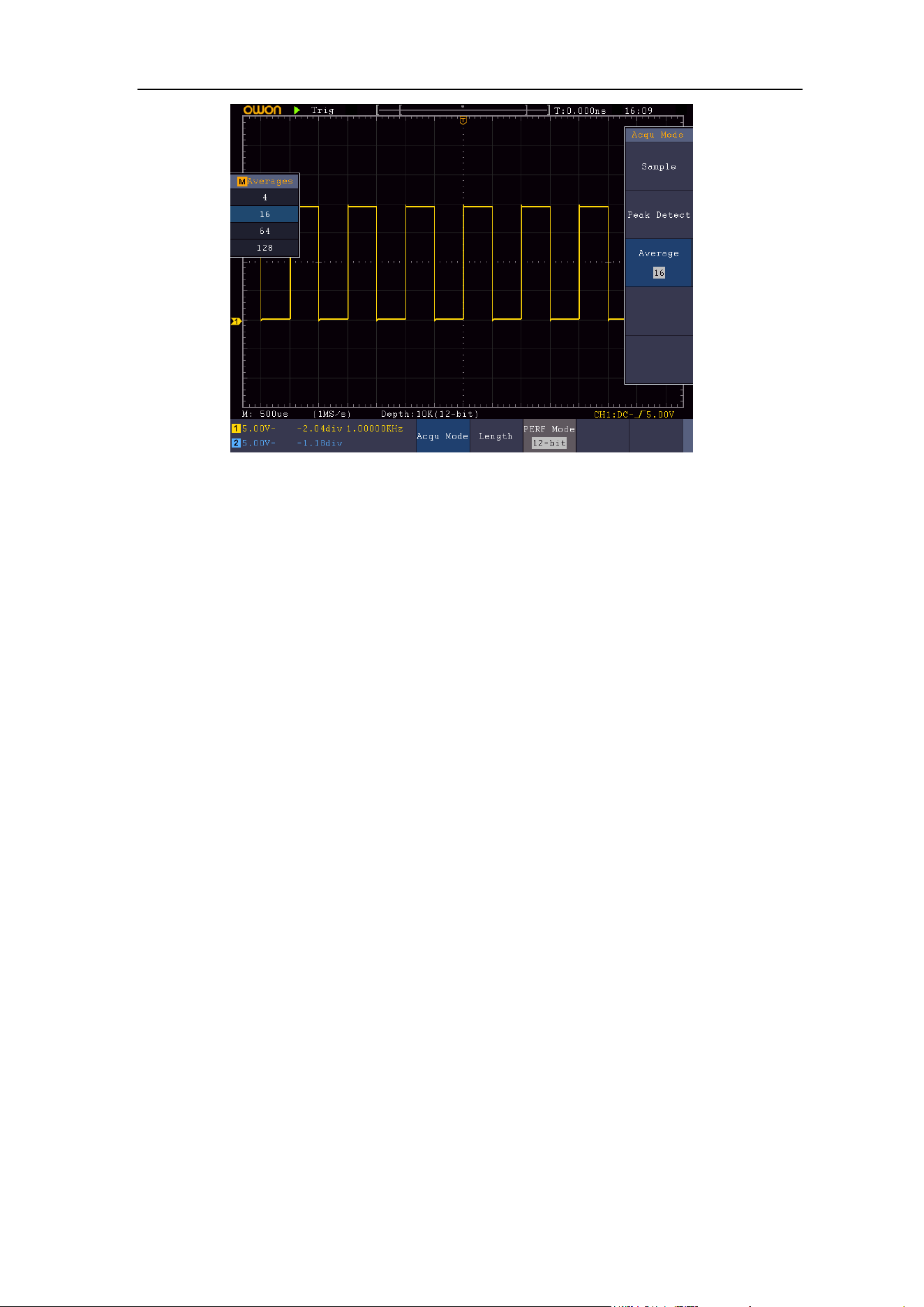
6.Demonstration
90
Figure 6-5 Reduce Noise level by using Average function
Example 5: Application of X-Y Function
Examine the Phase Difference between Signals of two Channels
Example: Test the phase change of the signal after it passes through a circuit network.
X-Y mode is a very useful when examining the Phase shift of two related signals.
This example takes you step by step to check out the phase change of the signal after
it passes a specified circuit. Input signal to the circuit and output signal from circuit
are used as source signals.
For the examination of the input and output of the circuit in the form of X-Y
coordinate graph, please operate according to the following steps:
(1) Set the probe menu attenuation coefficient for 10X and that of the switch in the
probe for 10X (see "How to Set the Probe Attenuation Coefficient" on P12).
(2) Connect the probe of channel 1 to the input of the network and that of Channel 2
to the output of the network.
(3) Push the Autoset button, with the oscilloscope turning on the signals of the two
channels and displaying them in the screen.
(4) Turn the Vertical Scale knob, making the amplitudes of two signals equal in the
rough.
(5) Push the Display button and recall the Display menu.
(6) Select XY Mode in the bottom menu. Select Enable as ON in the right menu.
The oscilloscope will display the input and terminal characteristics of the network
in the Lissajous graph form.
(7) Turn the Vertical Scale and Vertical Position knobs, optimizing the waveform.
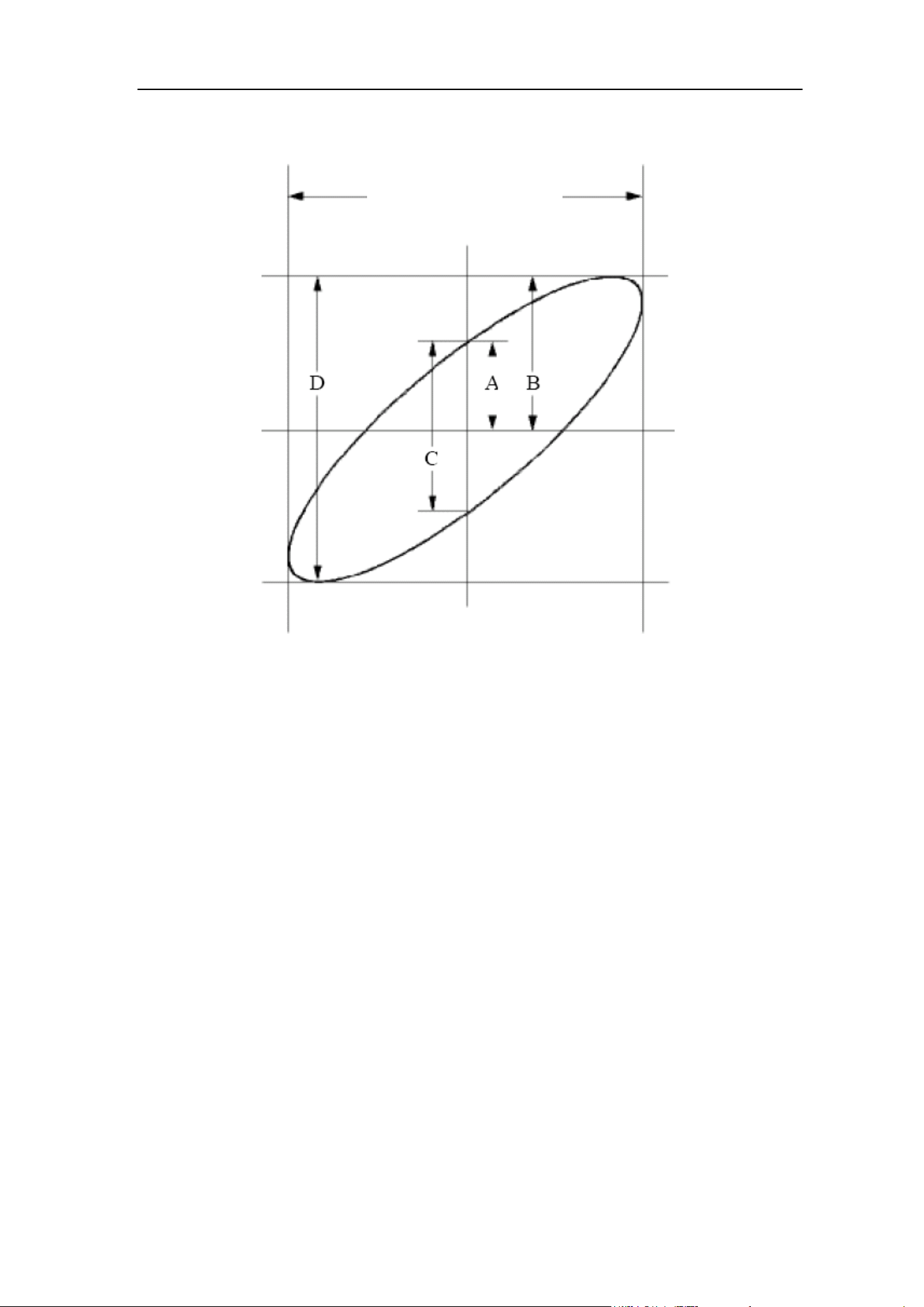
6.Demonstration
91
(8) With the elliptical oscillogram method adopted, observe and calculate the phase
difference (see Figure 6-6).
Figure 6-6 Lissajous Graph
Based on the expression sin (q) =A/B or C/D, thereinto, q is the phase difference
angle, and the definitions of A, B, C, and D are shown as the graph above. As a result,
the phase difference angle can be obtained, namely, q =± arcsin (A/B) or ± arcsin
(C/D). If the principal axis of the ellipse is in the I and III quadrants, the determined
phase difference angel should be in the I and IV quadrants, that is, in the range of
(0 - π /2) or (3π / 2 - 2π). If the principal axis of the ellipse is in the II and IV
quadrants, the determined phase difference angle is in the II and III quadrants, that is,
within the range of (π / 2 - π) or (π - 3π /2).
Example 6: Video Signal Trigger
Observe the video circuit of a television, apply the video trigger and obtain the stable
video output signal display.
Video Field Trigger
For the trigger in the video field, carry out operations according to the following
steps:
(1) Push the Trigger Menu button to display the trigger menu.
(2) Select the first menu item in the bottom menu. Select Single in the right menu.
The signal must be
centered and kept in the
horizontal direction.
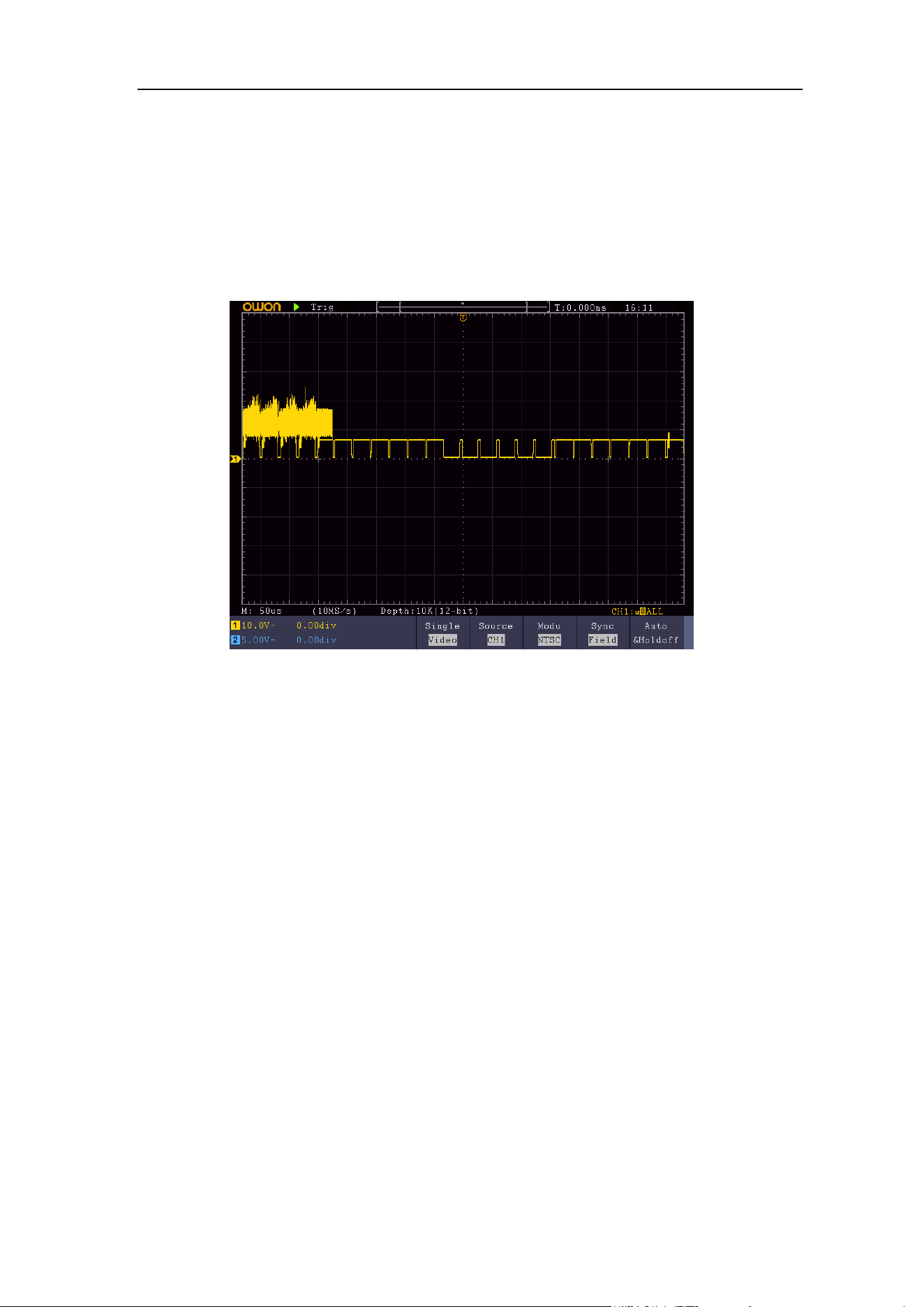
6.Demonstration
92
(3) In the left menu, select Video as the mode.
(4) Select Source in the bottom menu. Select CH1 in the right menu.
(5) Select Modu in the bottom menu. Select NTSC in the right menu.
(6) Select Sync in the bottom menu. Select Field in the right menu.
(7) Turn the Vertical Scale, Vertical Position and Horizontal Scale knobs to obtain
a proper waveform display (see Figure 6-7).
Figure 6-7 Waveform Captured from Video Field Trigger

7.Troubleshooting
93
7. Troubleshooting
1. Oscilloscope is powered on but no Display.
Check whether the power connection is connected properly.
Check whether the fuse which is beside the AC power input jack is blew (the
cover can be pried open with a straight screwdriver).
Restart the instrument after completing the checks above.
If the problem persists, please contact OWON and we will be under your service.
2. After acquiring the signal, the waveform of the signal is not displayed in the
screen.
Check whether the probe is properly connected to the signal connecting wire.
Check whether the signal connecting wire is correctly connected to the BNC
(namely, the channel connector).
Check whether the probe is properly connected with the object to be measured.
Check whether there is any signal generated from the object to be measured (the
trouble can be shot by the connection of the channel from which there is a signal
generated with the channel in fault).
Make the signal acquisition operation again.
3. The measured voltage amplitude value is 10 times or 1/10 of the actual value.
Look at the attenuation coefficient for the input channel and the attenuation ration of
the probe, to make sure they are match (see "How to Set the Probe Attenuation
Coefficient" on P12).
4. There is a waveform displayed, but it is not stable.
Check whether the Source item in the TRIG MODE menu is in conformity with
the signal channel used in the practical application.
Check on the trigger Type item: The common signal chooses the Edge trigger
mode for Type and the video signal the Video. If Alternate trigger is selected,
both of the channel 1 and channel 2 trigger levels should be adjusted to the
proper position. Only if a proper trigger mode is applied, the waveform can be
displayed steadily.
Try to change the trigger coupling into the high frequency suppress and the low
frequency suppress to smooth the high frequency or low frequency noise
triggered by the interference. (Only for the models that have this function.)
5. No Display Responses to the Push-down of Run/Stop.
Check whether Normal or Single is chosen for Polarity in the TRIG MODE menu and
the trigger level exceeds the waveform range.
If it is, make the trigger level is centered in the screen or set the trigger mode as Auto.
In addition, with the Autoset button pressed, the setting above can be completed
automatically.
6. The displaying of waveform seems getting slow after increasing AVERAGE value
in Acqu Mode (see "How to Implement Sampling Setup" on P46 ), or a longer
duration is set in the Persist in Display (see "Persist" on P49).
It's normal as the Oscilloscope is working hard on many more data points.
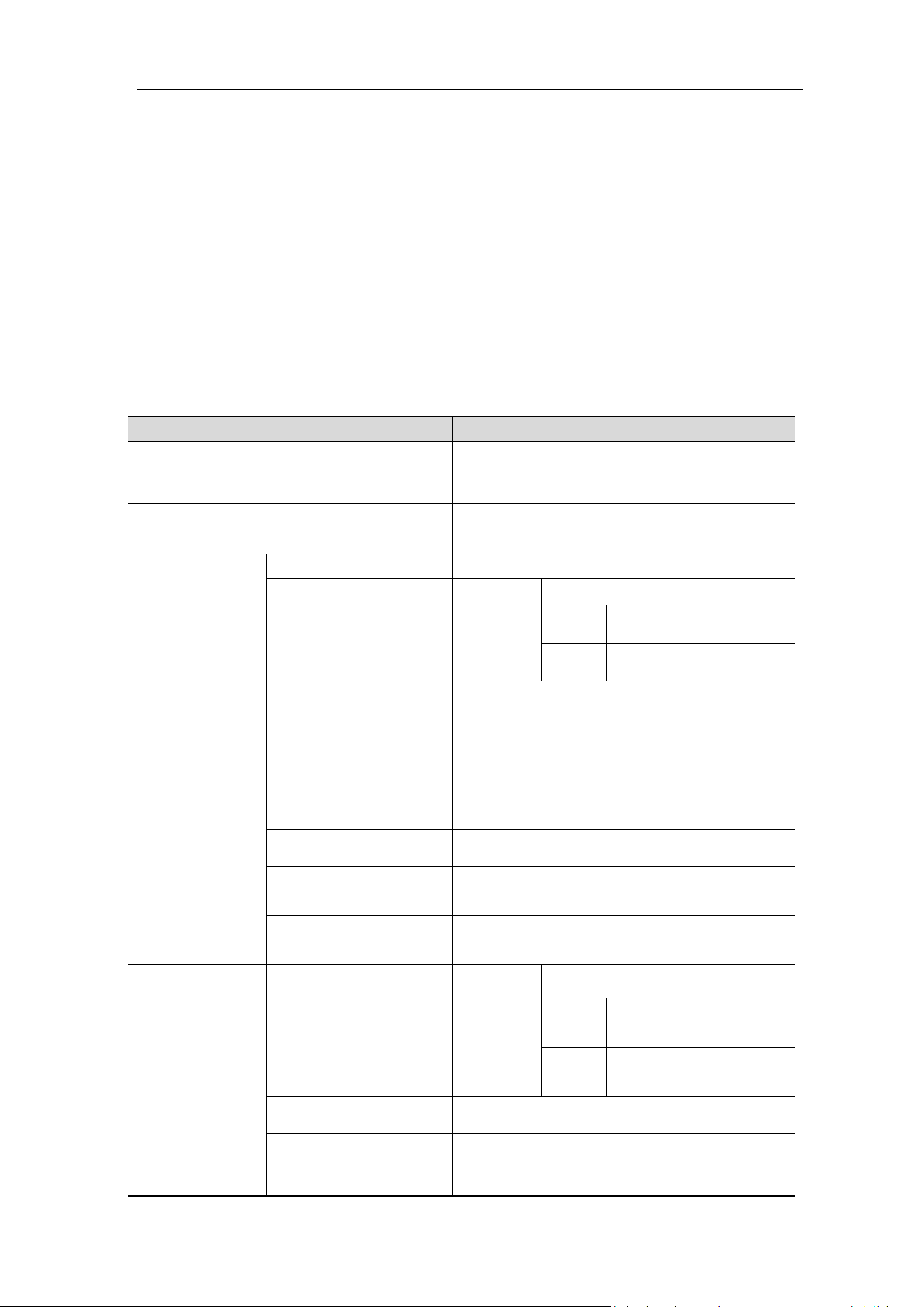
8.Technical Specifications
94
8. Technical Specifications
Unless otherwise specified, the technical specifications applied are for XDS2000
dual-channel series only, and Probes attenuation set as 10X. Only if the oscilloscope
fulfills the following two conditions at first, these specification standards can be
reached.
This instrument should run for at least 30 minutes continuously under the
specified operating temperature.
If change of the operating temperature is up to or exceeds 5℃, do a
"Self-calibration" procedure (see "How to Implement Self-calibration" on P13).
All specification standards can be fulfilled, except one(s) marked with the word
"Typical".
Performance Characteristics
Instruction
Bandwidth 100 MHz
Vertical Resolution (A/D) 12 bits
Channel
2 + 1 (External)
Waveform Refresh Rate
55,000 wfms/s
Acquisition
Mode
Normal, Peak detect, Averaging
Sample rate
(real time)
Dual CH
500 MS/s
Single CH
8 bits
mode
1 GS/s
12 bits
mode
500 MS/s
Input
Input coupling DC, AC , Ground
Input impedance
1 MΩ±2%, in parallel with 15 pF±5 pF
Input coupling
0.001X - 1000X, step by 1 – 2 - 5
Max input voltage 1MΩ:≤300 Vrms
Bandwidth limit 20 MHz, full bandwidth
Channel –channel
isolation
50Hz: 100 : 1
10MHz: 40 : 1
Time delay between
channel(typical)
150ps
Horizontal
System
Sampling rate range
Dual CH
0.05 S/s~500 MS/s
Single CH
8 bits
mode
0.05 S/s - 1 GS/s
12 bits
mode
0.05 S/s - 500 MS/s
Interpolation (Sinx)/x, x
Record length
2 channels ON: max 10M;
1 channel ON: max 20M.
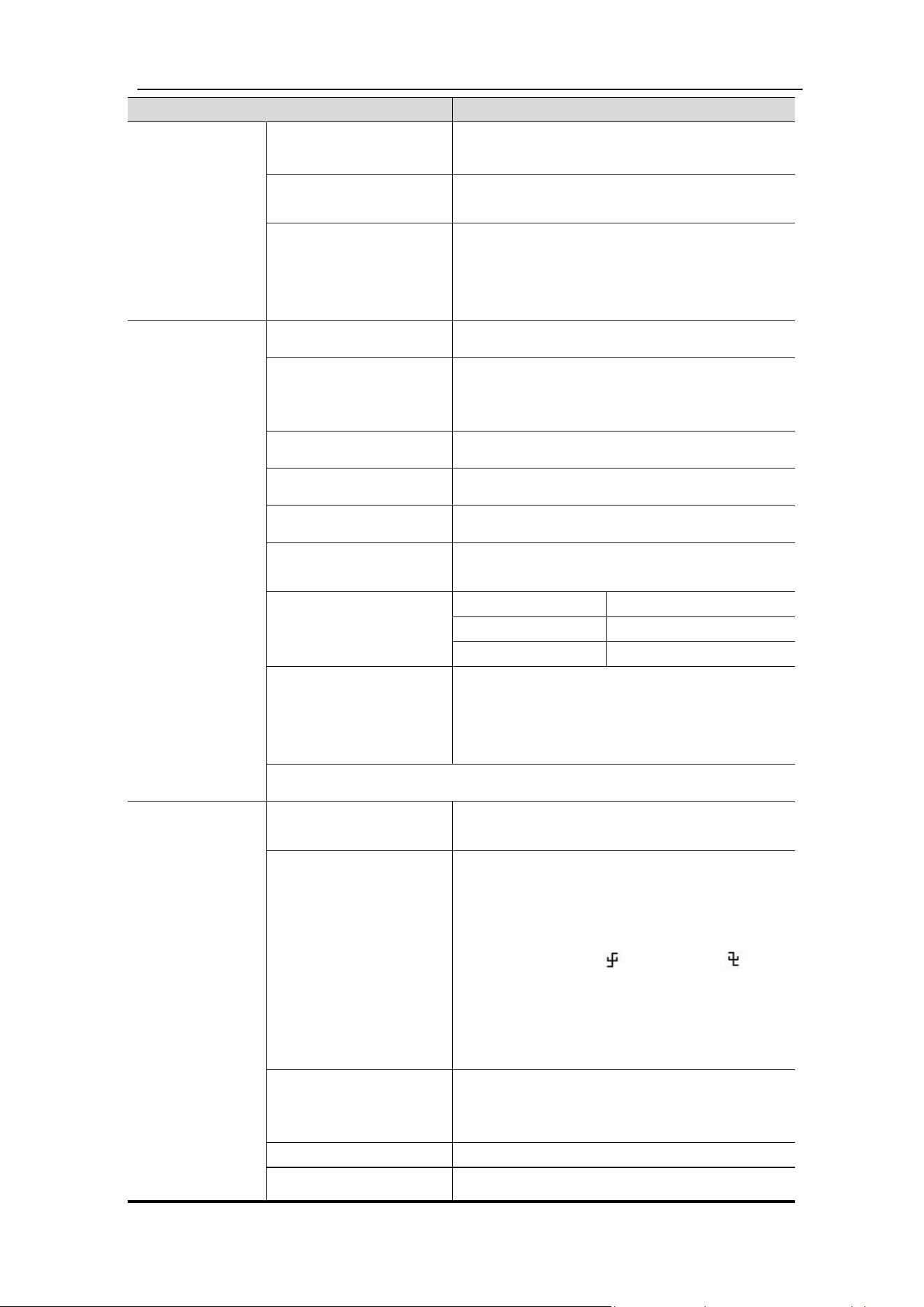
8.Technical Specifications
95
Performance Characteristics
Instruction
Scanning speed (S/div) 2ns/div - 1000s/div, step by 1 – 2 - 5
Sampling rate / relay
time accuracy
±1 ppm (Typical, Ta = +25℃)
Interval(△T) accuracy
(DC - 100MHz)
Single
:
±(1 interval time+1 ppm×reading+0.6 ns);
Average>16:
±
(1 interval time +1 ppm×reading+0.4 ns)
Vertical system
Sensitivity
1 mV/div~10 V/div
Displacement
±2 V (1 mV/div – 50 mV/div);
±20 V (100 mV/div – 1 V/div);
±200 V (2 V/div – 10 V/div)
Analog bandwidth 100 MHz
Single bandwidth
Full bandwidth
Low Frequency
≥10 Hz (at input, AC coupling, -3 dB)
Rise time (at input,
Typical)
≤ 3.5 ns
DC gain accuracy
1 mV
3%
2 mV
2%
≥ 5 mV
1.5%
DC accuracy (average)
Delta Volts between any two averages of
≥16 waveforms acquired with the same
scope setup and ambient conditions (△V):
±(3% rdg + 0.05 div)
Waveform inverted ON/OFF
Measurement
Cursor
△
V,
△
T,
△
T&
△
V between cursors,
auto cursor
Automatic
Period, Frequency, Mean, PK-PK, RMS,
Max, Min, Top, Base, Amplitude, Overshoot,
Preshoot, Rise Time, Fall Time, +Pulse
Width, -Pulse Width, +Duty Cycle, -
Duty
Cycle, Delay A→B , Delay A→B
, Cycle
RMS, Cursor RMS, Screen Duty, Phase,
+Pulse Count, -Pulse Count, Rise
Edge
Count, Fall Edge Count
, Area, and Cycle
Area.
Waveform Math
+
,
-
, *, / ,FFT, FFTrms, Intg, Diff, Sqrt,
User Defined Function, digital filter (low
pass, high pass, band pass, band reject)
Decoding Type
RS232, I2C, SPI, CAN
Waveform storage 50 waveforms
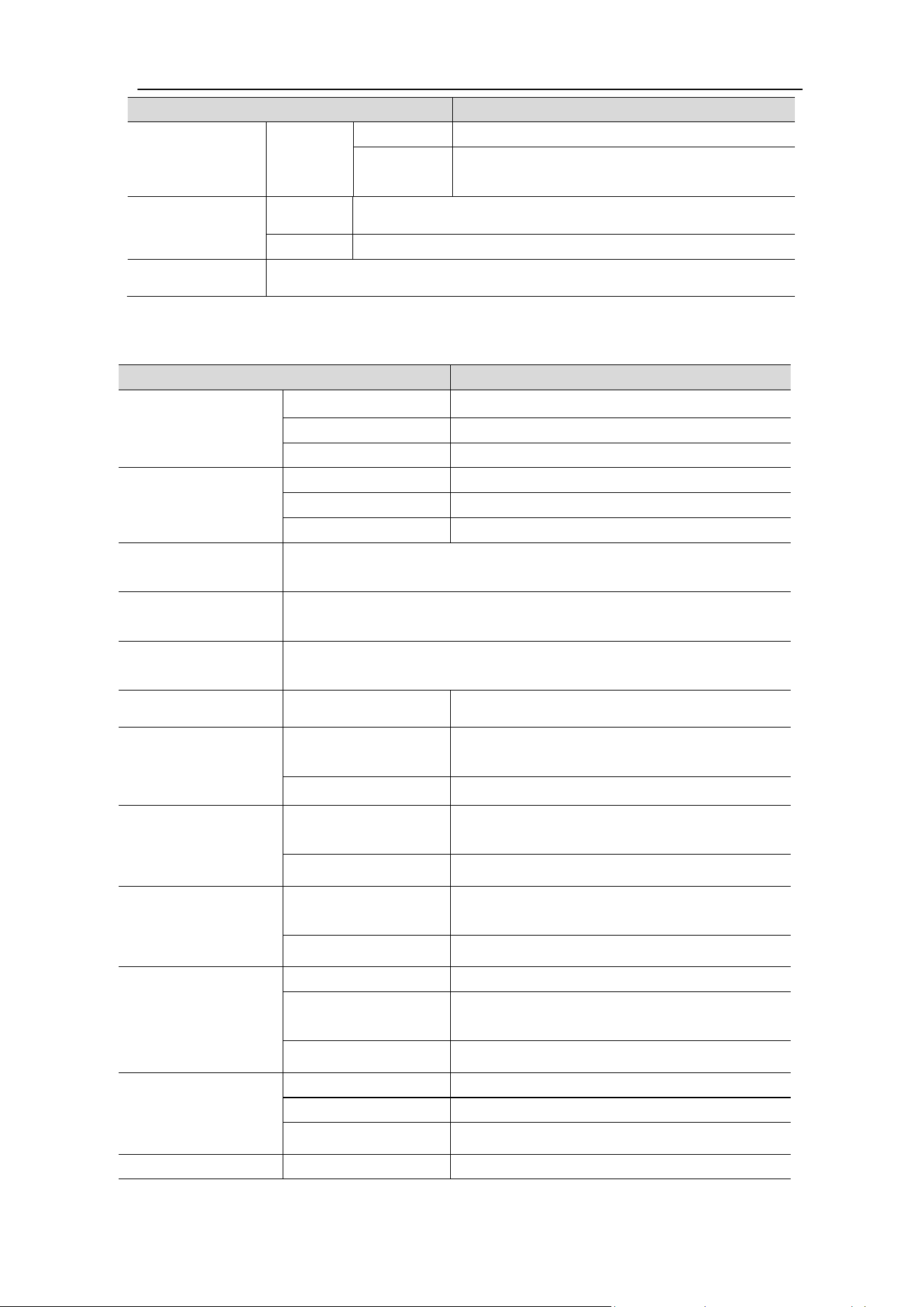
8.Technical Specifications
96
Performance Characteristics
Instruction
Lissajous
figure
Bandwidth
Full bandwidth
Phase
difference
±3 degrees
Communication
port
Standard
USB, USB Host (USB storage);Trig Out(P/F);LAN port
Optional
VGA port and AV port
Counter Support
Trigger
Performance Characteristics
Instruction
Trigger level range
Internal ±5 div from the screen center
EXT
±2 V
EXT/5
±10 V
Trigger level
Accuracy (typical)
Internal
±0.3 div
EXT
± (10 mV + 6% of Set Value)
EXT/5
± (50 mV +6% of Set Value)
Trigger
displacement
According to Record length and time base
Trigger Holdoff
range
100 ns – 10 s
50% level setting
(typical)
Input signal frequency ≥ 50 Hz
Edge trigger slope
Rising, Falling
Video Trigger
Modulation
Support standard NTSC, PAL and SECAM
broadcast systems
Line number range 1-525 (NTSC) and 1-625 (PAL/SECAM)
Pulse trigger
Trigger condition
Positive pulse
:>
,
<
,
=
Negative pulse
:>
,
<
,
=
Pulse Width range
30 ns to 10 s
Slope Trigger
Trigger condition
Positive pulse
:>
,
<
,
=
Negative pulse
:>
,
<
,
=
Time setting
30 ns to 10 s
Runt Trigger
Polarity
Positive, Negative
Pulse Width
Condition
>, =, <
Pulse Width Range
30 ns to 10 s
Windows Trigger
Polarity
Positive, Negative
Trigger Position
Enter, Exit, Time
Windows Time
30 ns to 10 s
Timeout Trigger
Edge Type
Rising, Falling
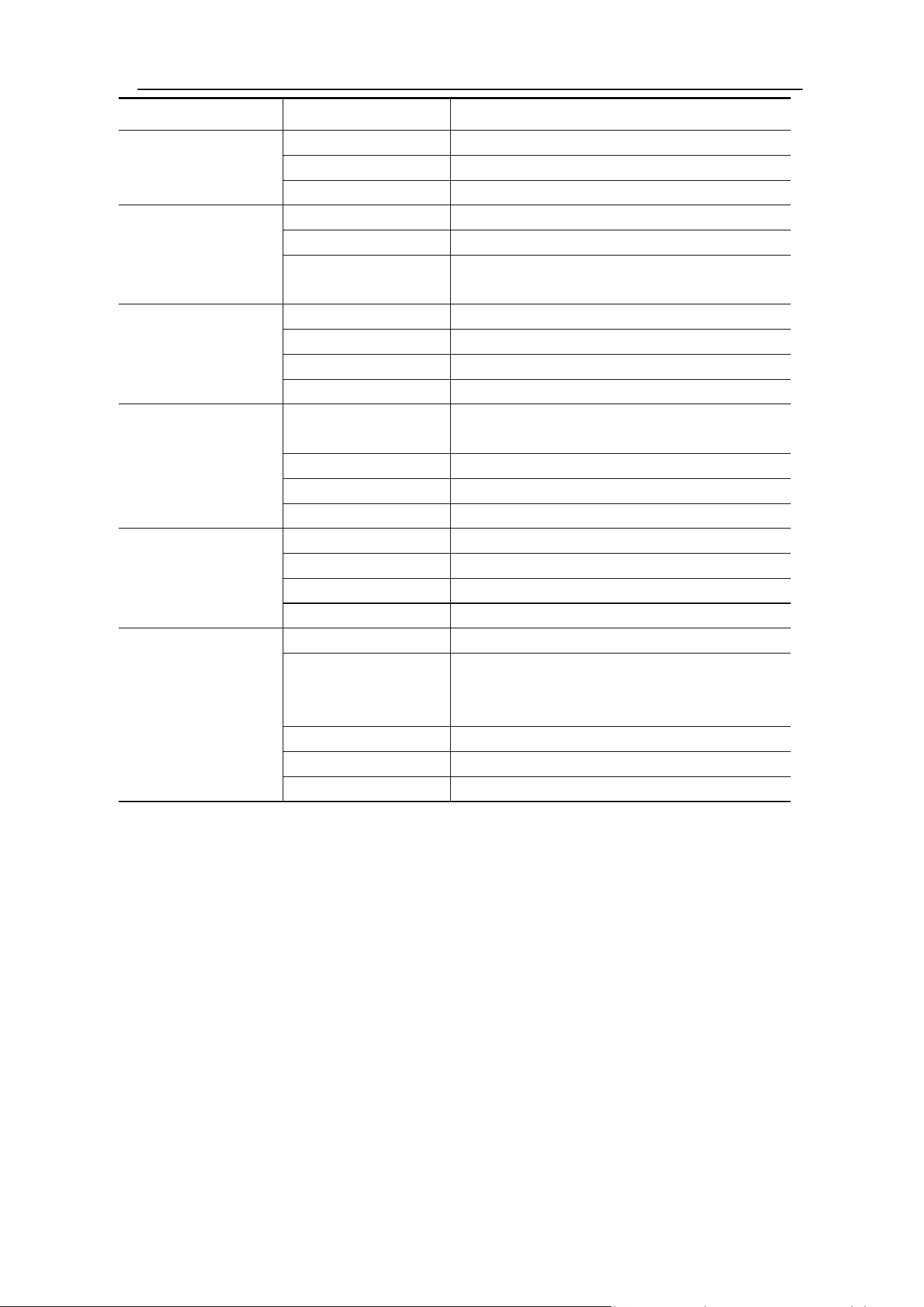
8.Technical Specifications
97
Idle Time
30 ns to 10 s
Nth Edge Trigger
Edge Type
Rising, Falling
Idle Time
30 ns to 10 s
Edge Number
1 to 128
Logic Trigger
Logic Mode
AND, OR, XNOR, XOR
Input Mode
H, L, X, Rising, Falling
Output Mode
Goes True, Goes False, Is True >,
Is True <, Is True =
RS232 Trigger
Polarity
Normal, Inverted
Trigger Condition
Start, Error, Check Error, Data
Baud Rate
Common, Custom
Data Bits
5 bit, 6 bit, 7 bit, 8 bit
I2C Trigger
Trigger Condition
Start, Restart, Stop, ACK Lost, Address,
Data, Addr/Data
Address Bits
7 bit, 8 bit, 10 bit
Address Range
0 to 127, 0 to 255, 0 to 1023
Byte Length
1 to 5
SPI Trigger
Trigger Condition
Timeout
Timeout Value
30 ns to 10 s
Data Bits
4 bit to 32 bit
Data Line Setting
H, L, X
CAN Trigger
Signal Type
CAN_H, CAN_L, TX, RX
Trigger Condition
Start of Frame, Type of Frame, Identifier,
Data, ID & Data, End of Frame, Missing
Ack, Bit Stuffing Error
Baud Rate
Common, Custom
Sample Point
5% to 95%
Frame Type
Data, Remote, Error, Overload
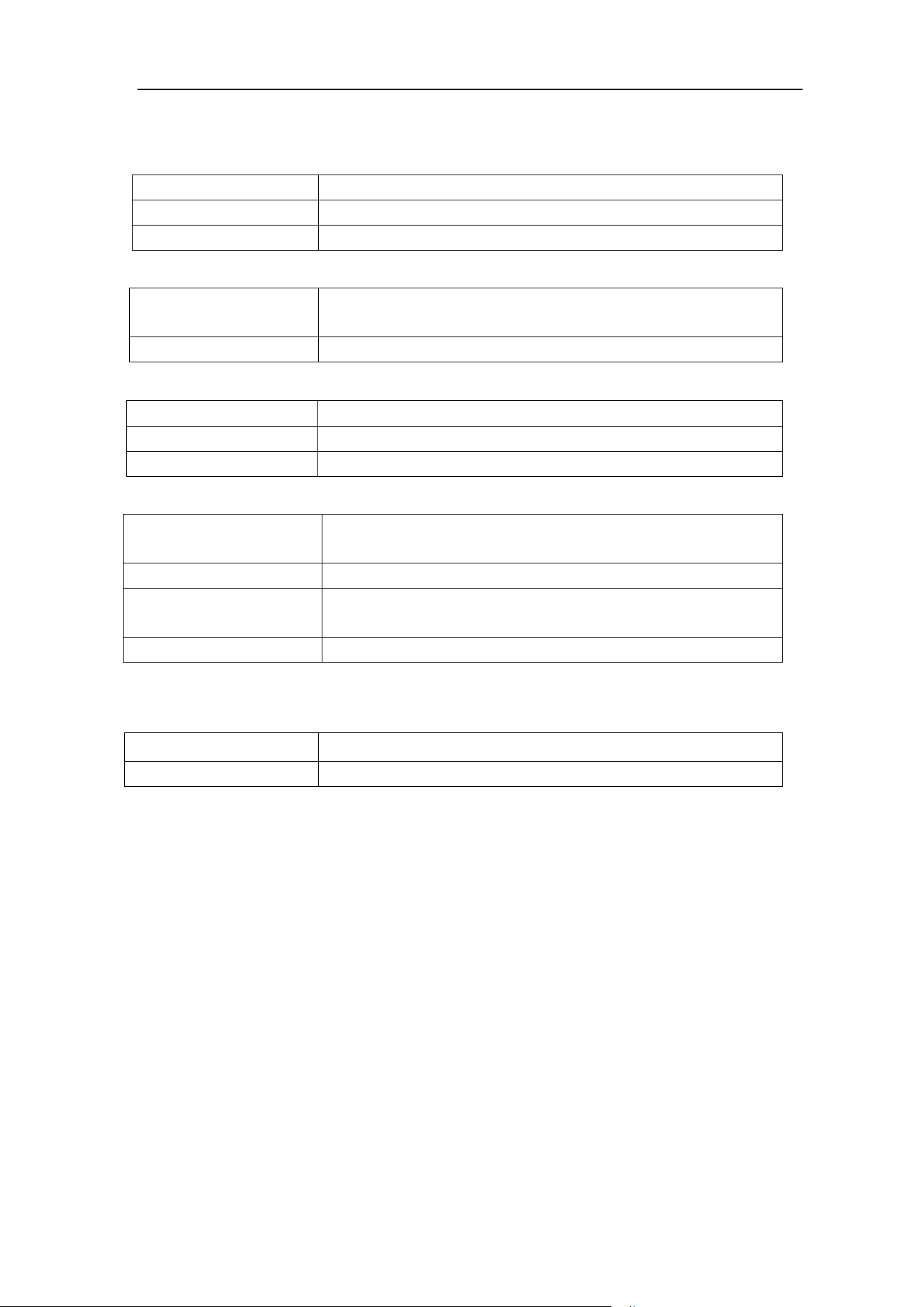
8.Technical Specifications
98
General Technical Specifications
Display
Display Type
8" Colored LCD (Liquid Crystal Display)
Display Resolution
800 (Horizontal) × 600 (Vertical) Pixels
Display Colors
65536 colors, TFT screen
Output of the Probe Compensator
Output Voltage
(Typical )
About 5 V, with the Peak-to-Peak voltage ≥1 MΩ.
Frequency (Typical )
Square wave of 1 KHz
Power
Mains Voltage
100V - 240 VACRMS, 50/60 Hz, CAT Ⅱ
Power Consumption
< 15 W
Fuse
2 A, T class, 250 V
Environment
Temperature
Working temperature: 0
℃
- 40
℃
Storage temperature: -20
℃
- 60
℃
Relative Humidity
≤ 90%
Height
Operating: 3,000 m
Non-operating: 15,000 m
Cooling Method
Fan cooling
Mechanical Specifications
Dimension
340 mm× 177 mm×90 mm (L*H*W)
Weight
Approx. 2.6 kg (without accessories)
Interval Period of Adjustment:
One year is recommended for the calibration interval period.
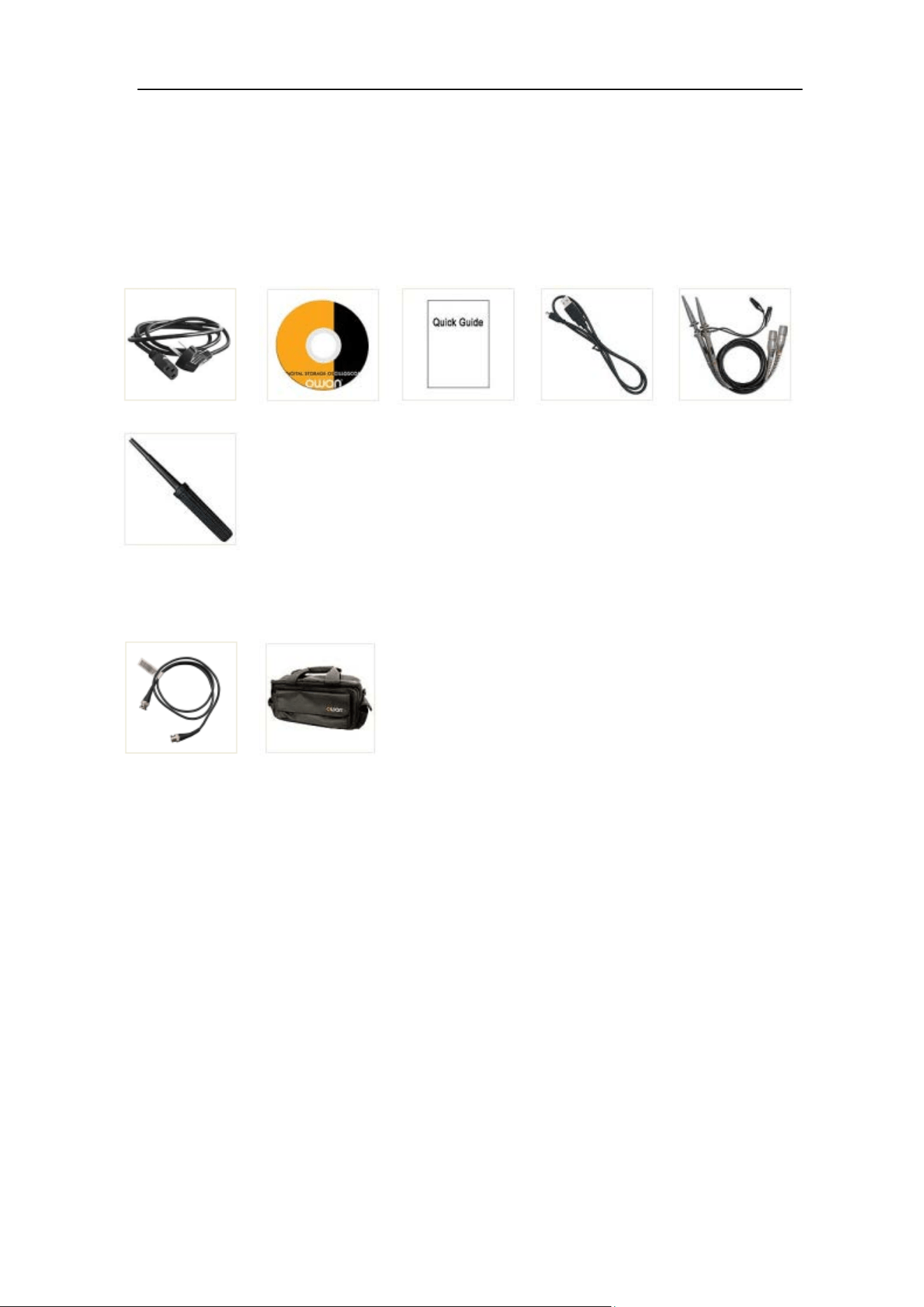
9.Appendix
99
9. Appendix
Appendix A: Enclosure
(The accessories subject to final delivery.)
Standard Accessories:
Power Cord
CD Rom
Quick Guide
USB Cable
Probe
Probe Adjust
Options:
Q9
Soft Bag
Appendix B: General Care and Cleaning
General Care
Do not store or leave the instrument where the liquid crystal display will be exposed
to direct sunlight for long periods of time.
Caution: To avoid any damage to the instrument or probe, do not exposed it to any
sprays, liquids, or solvents.
Cleaning
Inspect the instrument and probes as often as operating conditions require.
To clean the instrument exterior, perform the following steps:
1. Wipe the dust from the instrument and probe surface with a soft cloth. Do not
make any scuffing on the transparent LCD protection screen when clean the LCD
screen.
9.Appendix
100
2. Disconnect power before cleaning your Oscilloscope. Clean the instrument with a
wet soft cloth not dripping water. It is recommended to scrub with soft detergent
or fresh water. To avoid damage to the instrument or probe, do not use any
corrosive chemical cleaning agent.
Warn
ing:
Before power on again for operation, it is required to confirm that
the instrument has already been dr
ied completely, avoiding any
electrical short circuit or bodily injury resulting form the moisture.