Sears, Roebuck and Co.
Dear Homemaker:
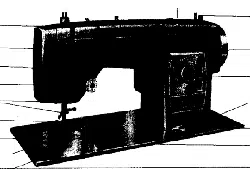
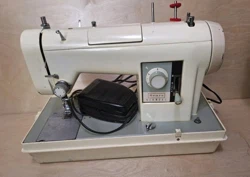
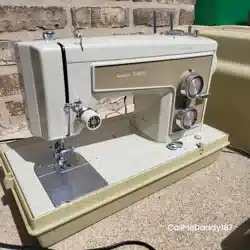
This booklet has been written for you, to help you use and enjoy fully your KENMORE
Automatic Zigzag Sewing Machine.
We urge you to read pp. 2-24 before using your machine. This section explains the
operation of the special controls that allow you to do many tedious tasks automatically.
The following pages offer suggestions and instructions for specific controls that allow
you to do many tedious tasks automatically. The following pages offer suggestions and
instructions for specific ornament and time saving operations. See p. 24 before using the
automatic patterns or zigzag stitch.
We feel the KENMORE Automatic Zigzag Sewing Machine is the finest of its kind and
we are happy to offer help with any questions you may have regarding the machine.
Sincerely,
Jean Shaw, Director
Home Economics Laboratory
Department 817
Sears, Roebuck and Co.
Chicago 7, Illinois
Downloaded from www.ManualsFile.com manuals search engine

Adjusting for Good Stitches………………………. 32
Adjusting Pressure of Presser Foot……………… 18
Adjusting Tensions………………………………12-13
Applique…………………………………………….. 22
Basting………………………………………………. 11
Blind Stitching………………………………………. 19
Buttonholes…………………………………………. 19
Changing the Presser Foot……………………….. 15
Cleaning & Oiling………………………………...27-29
Connecting Machine……………………………….. 4
Darning……………………………………………… 18
Decorative Stitching..………………………………. 15
Double Needle……………………………………24-25
Fastening a Seam………………………………….. 11
Feed Dog Control………………………………….. 15
Identification, Head Parts………………………….2, 3
Inserting Bobbin into Bobbin Case………………… 8
Inserting Disc……………………………………….. 16
Inserting and Removing Material…………………. 14
Installing Machine Head…………………………… 4
Needle & Thread Chart………………………………… 5
TABLE OF
CONTENTS
Needle Size……………………………………………… 5
Overcasting…………………………………………….. 23
Parts List………………………………………………… 33
Picking up Bobbin Thread…………………………….. 10
Placement of Needle…………………………………… 5
Removing Bobbin Case from Shuttle………………… 6
Reverse Stitching………………………………………. 11
Replacement of Belt…………………………………… 27
Setting Stitch Length…..………………………………. 11
Setting Stitch Width…………………………………… 16
Sewing Light……………………………………………. 4
Sewing on Buttons…………………………………….. 19
Sewing on Lace………………………………………… 22
Sewing on Plastic Films……………………………….. 26
Straight or Three-Cornered Tear……………………… 22
Synthetics……..………………………………………… 26
Threading Upper Machine……….…………….……… 9
Turning a Corner..……………………………………… 15
What to Do…………………………………………...11, 14
Winding the Bobbin…………………………………….. 7
Writing & Monogramming……………………………… 23
Downloaded from www.ManualsFile.com manuals search engine
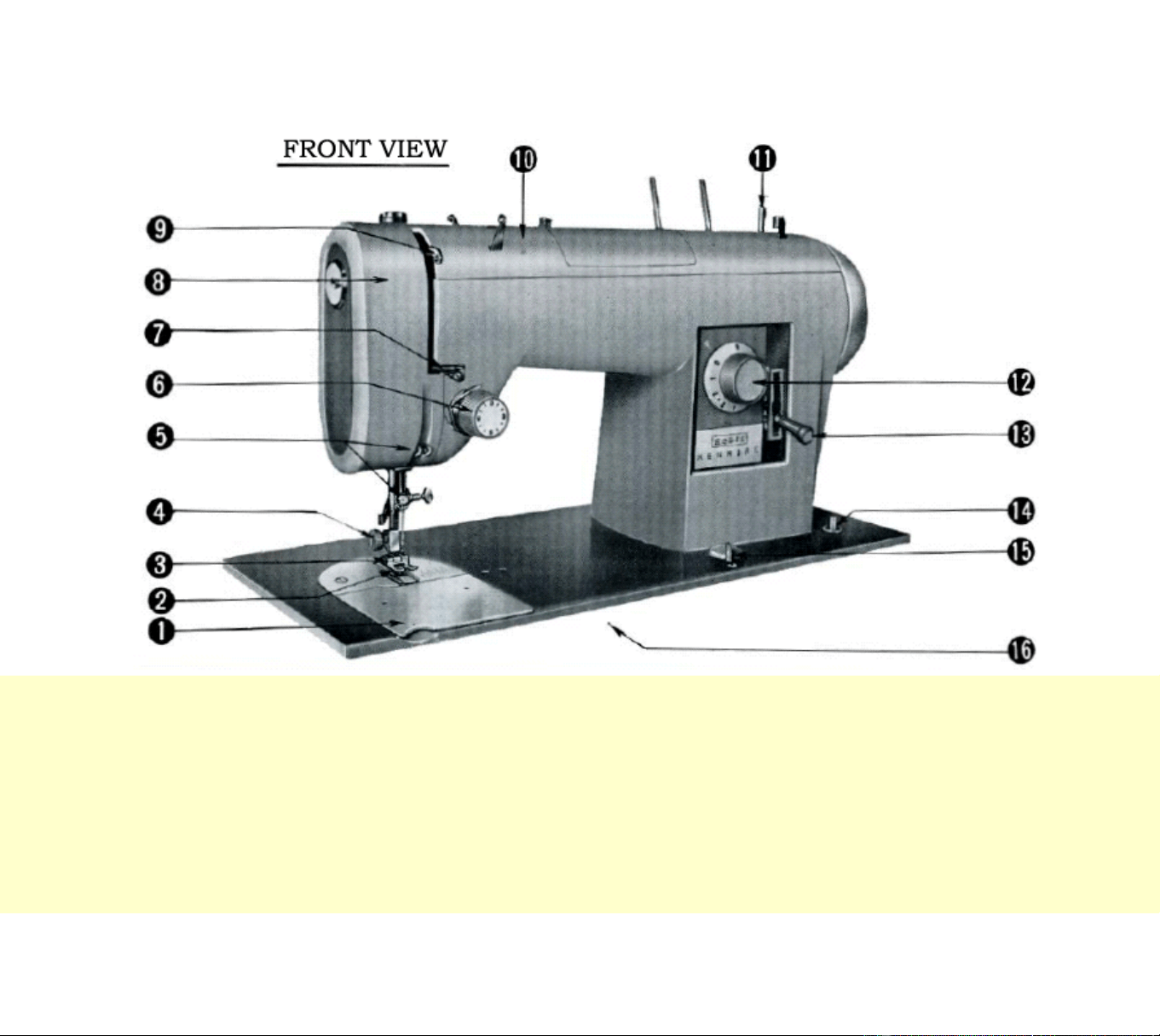
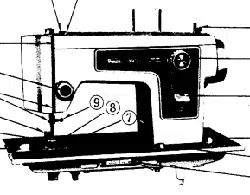
1. Hand Hole Cover Plate
2. Feed Dog
3. Presser Foot
4. Presser Foot Thumb Screw
5. Thread Guides
6. Thread Tension Assembly
7. Thread Guide
8. Face Cover Plate
9. Thread Take-up
10. Arm Cover Plate
11. Bobbin Winder Mechanism
12. Stitch Width and Buttonhole
Control Knob
13. Stitch Length Control Knob
14. Light Switch
15. Feed Dog Control Knob
16. Nomenclature Plate
2
Downloaded from www.ManualsFile.com manuals search engine
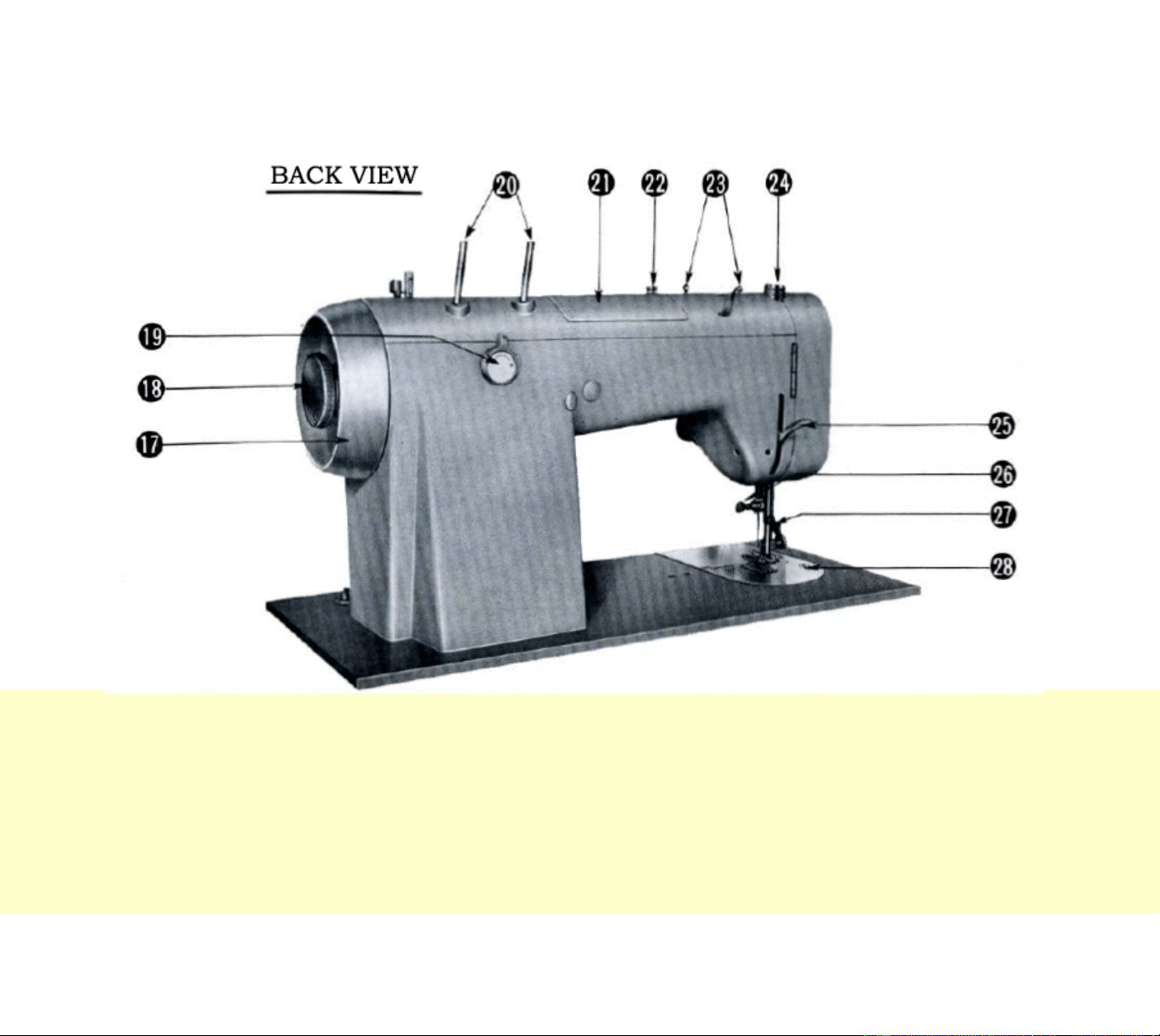
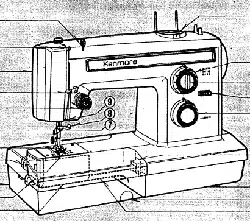
17. Hand Wheel
18. Clutch Knob
19. Buttonhole Reverse Stitch Length Control
20. Upper Thread Spool Pins
21. Pattern Disc Shaft Cover
22. Bobbin Winder Tension Disc
23. Upper Thread Guides
24. Presser Foot Knob
25. Presser Foot Lever
26. Needle Clamp Screw
27. Thread Cutter
28. Needle Plate
3
Downloaded from www.ManualsFile.com manuals search engine
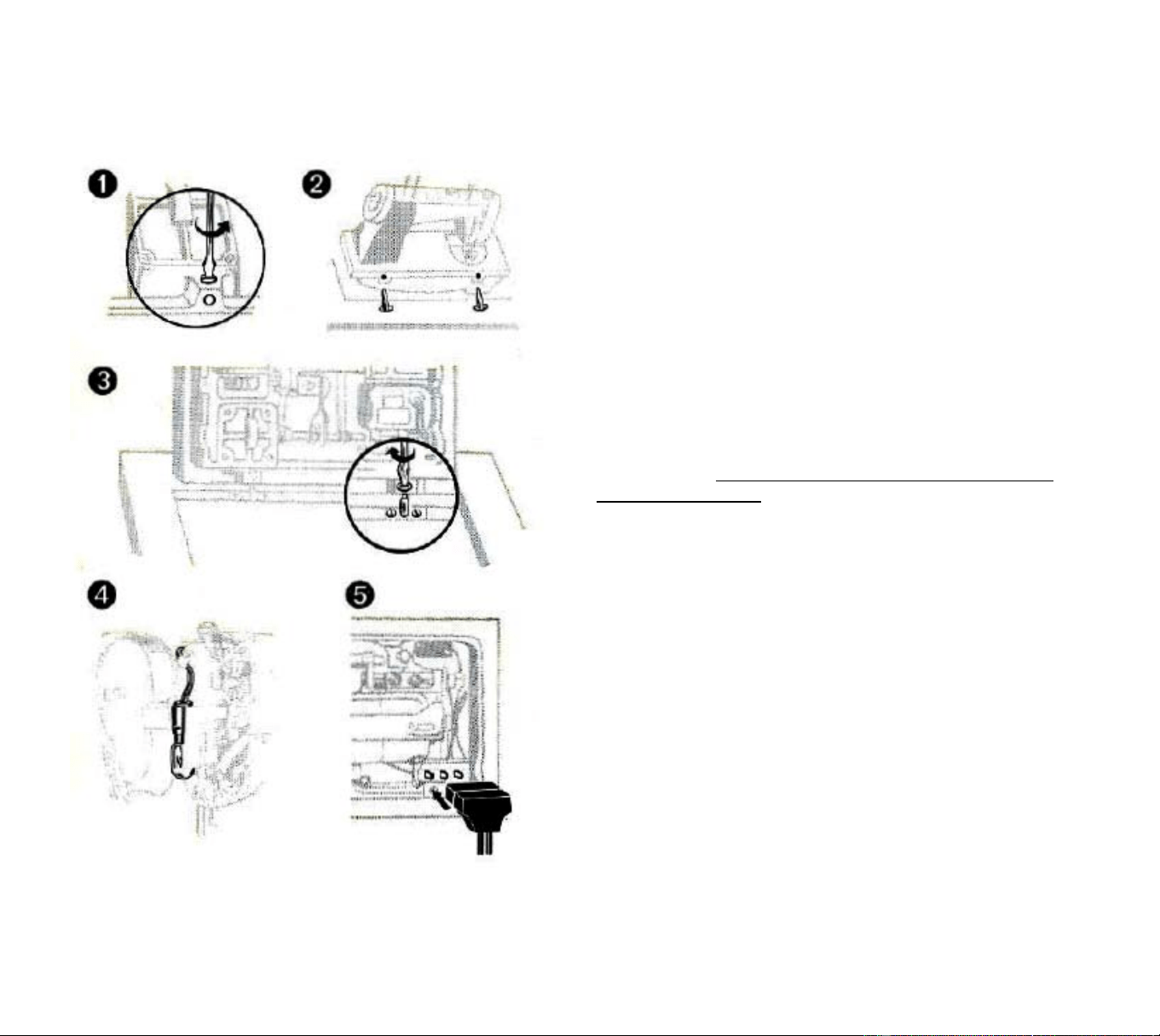
INSTALLING MACHINE HEAD
Loosen the two hinge screws under holes in the rear
edge of the machine bed (1).Raise hinge pins in the
cutout (2).Slip machine head onto the pins and
tighten hinge screws securely (3).
Lower machine head to front flap.
SEWING LIGHT
The sewing light is place inside the face cover plate
as shown. It may be turned on or off by pushing
light switch.
In order to operate the machine, the
switch must be on.
To remove bulb, turn light switch off, open the face
cover plate by swinging it open, push bulb in
slightly, turn bulb clockwise and remove from
socket. To replace, push in new bulb in and turn
counter clockwise. See illustration 4.
CONNECTING MACHINE
Push the plug onto three-prong connector under the
bed plate. Plug machine cord into any 110-120V wall
outlet. See illustration 5.
4
Downloaded from www.ManualsFile.com manuals search engine
NEEDLE AND THREAD TABLE
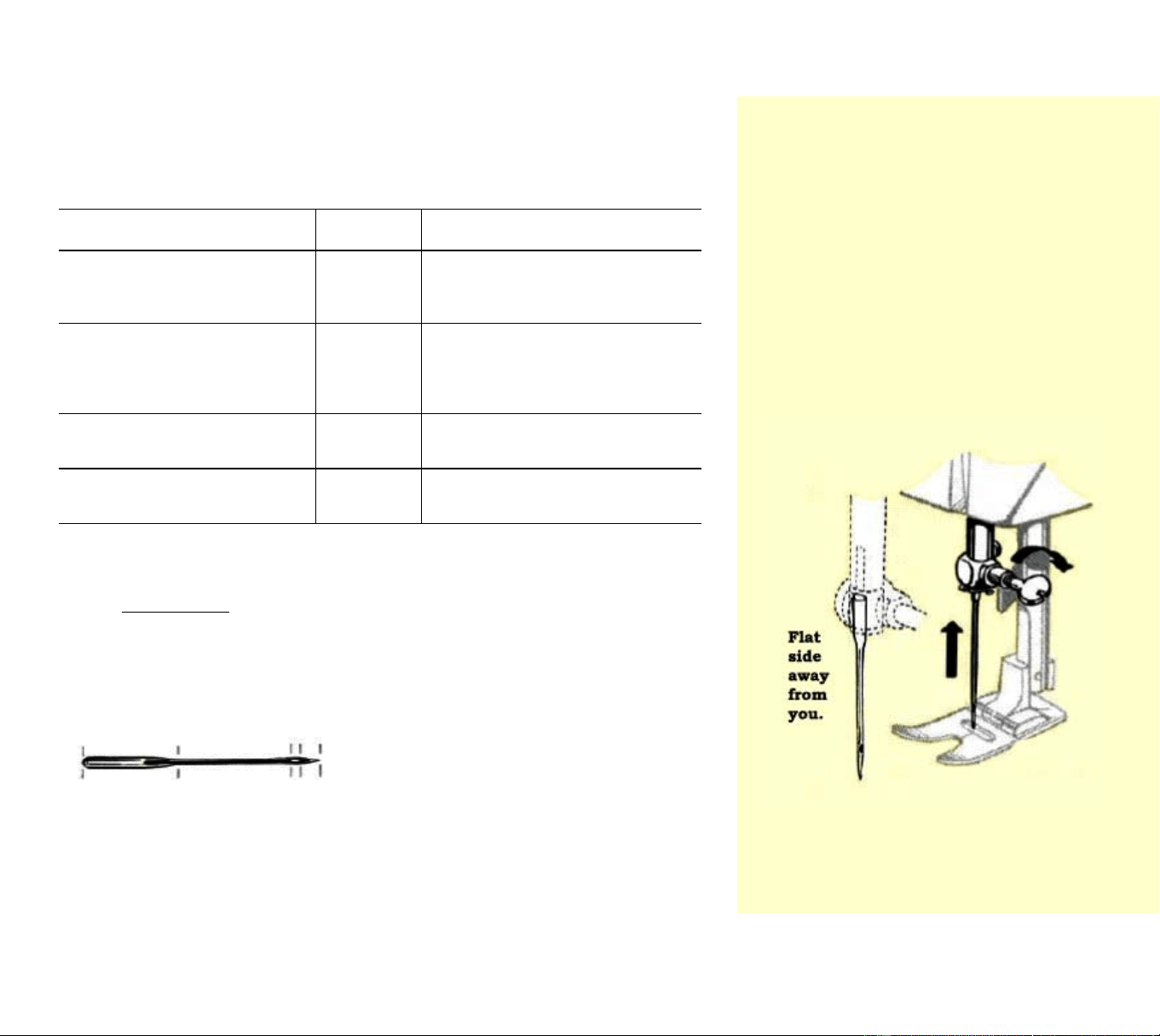
PLACEMENT OF NEEDLE
Raise needle bar to its highest po-
sition by turning hand wheel
toward you. Loosen needle clamp
screw. Hold the needle with flat
side away from you. Slip the
needle as far as it will go into the
needle clamp, and tighten the
needle clamp screw.
THREAD SIZE
NEEDLE
SIZE
FABRIC
Cotton 60 – 100
Synthetic
Silk A
Machine embroidery
11
Sheer cottons, silks, and synthetics
Fine laces
Cotton 60 – 80
Mercerized 50
Synthetic
Silk A
Machine embroidery
14
Medium weight cottons
Medium weight silks
Medium weigh synthetics
Light weight woolens
Cotton 40 – 60
Mercerized 50
Mercerized heavy duty
16
Heavy weight cottons
Medium to heavy weight woolens
Heavy drapery fabrics
Cotton 30 – 50
Mercerized heavy duty
18
Heaviest cottons as for men’s work
clothes
Heaviest woolen coating
NEEDLE SIZE
Use KENMORE 6021 needles. The size of needle should
conform to the size of the thread and both should be suitable
to the material. The same size thread should be used in the
bobbin as on the upper part of the machine for ordinary
sewing. Never use a bent needle or one with a blunt point.
This is the exact length of the needle to be used in
your machine. Comparison with this illustration will
determine whether the needle you have is the
correct one for your machine.
5
Downloaded from www.ManualsFile.com manuals search engine
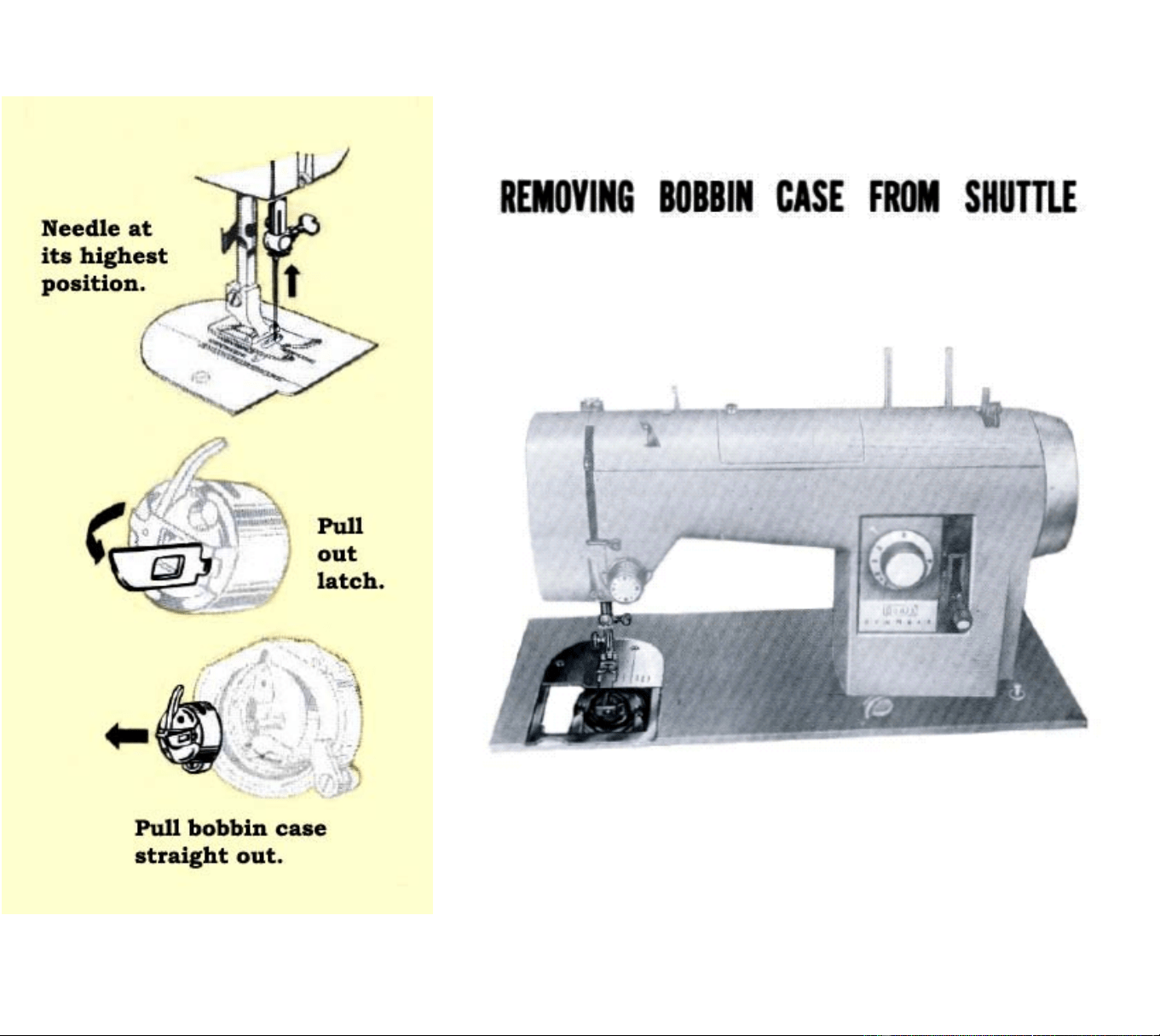
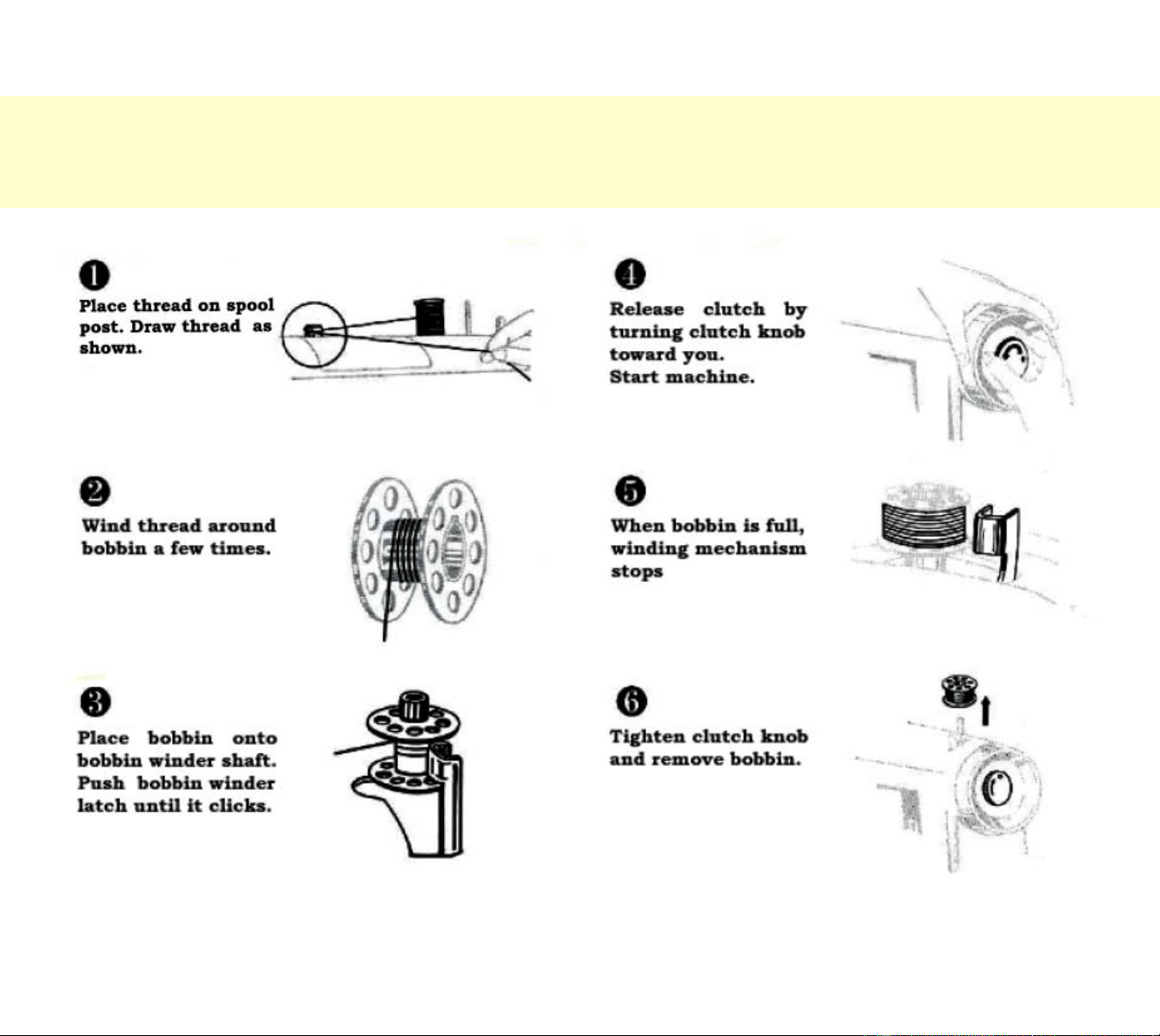
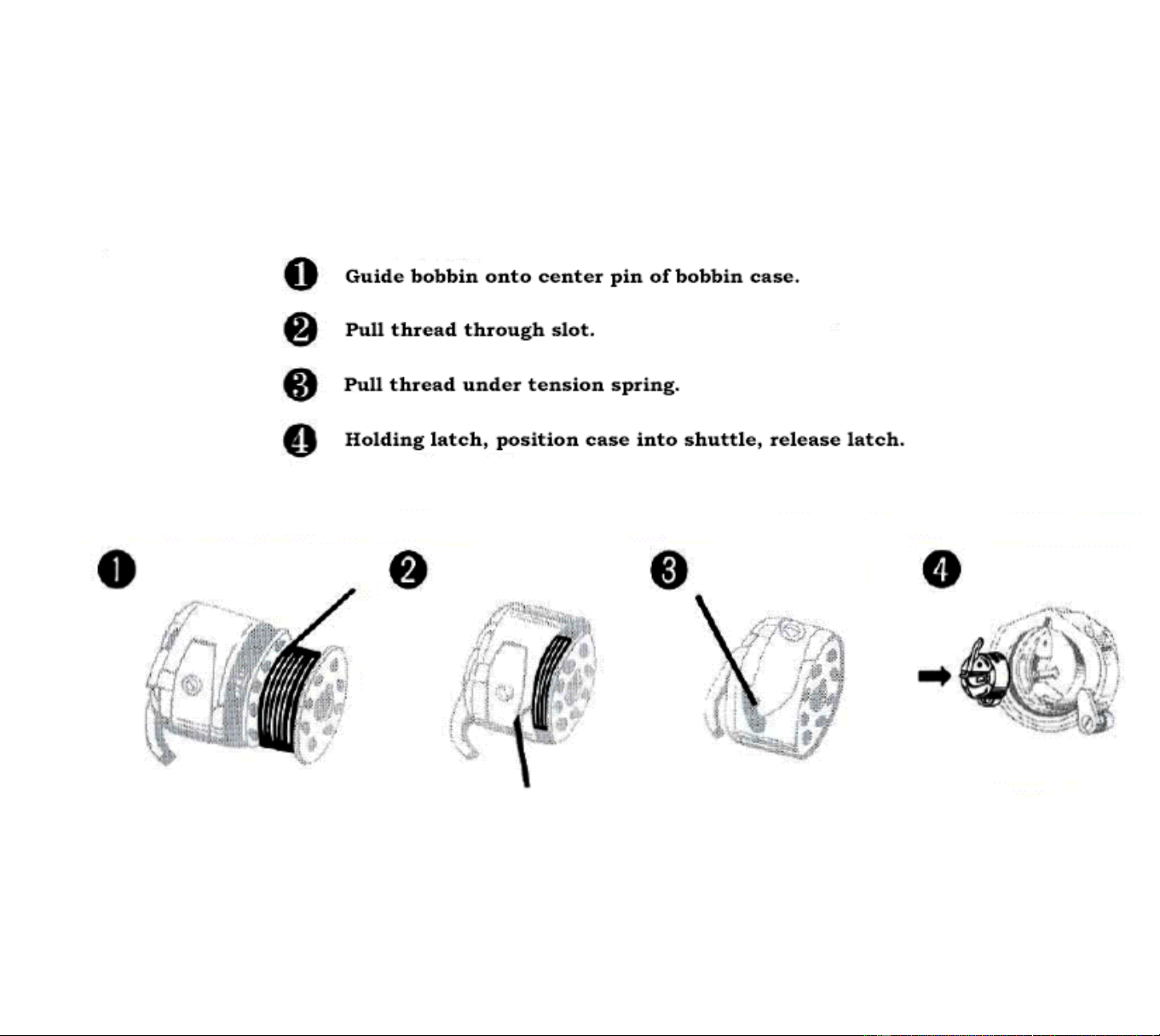
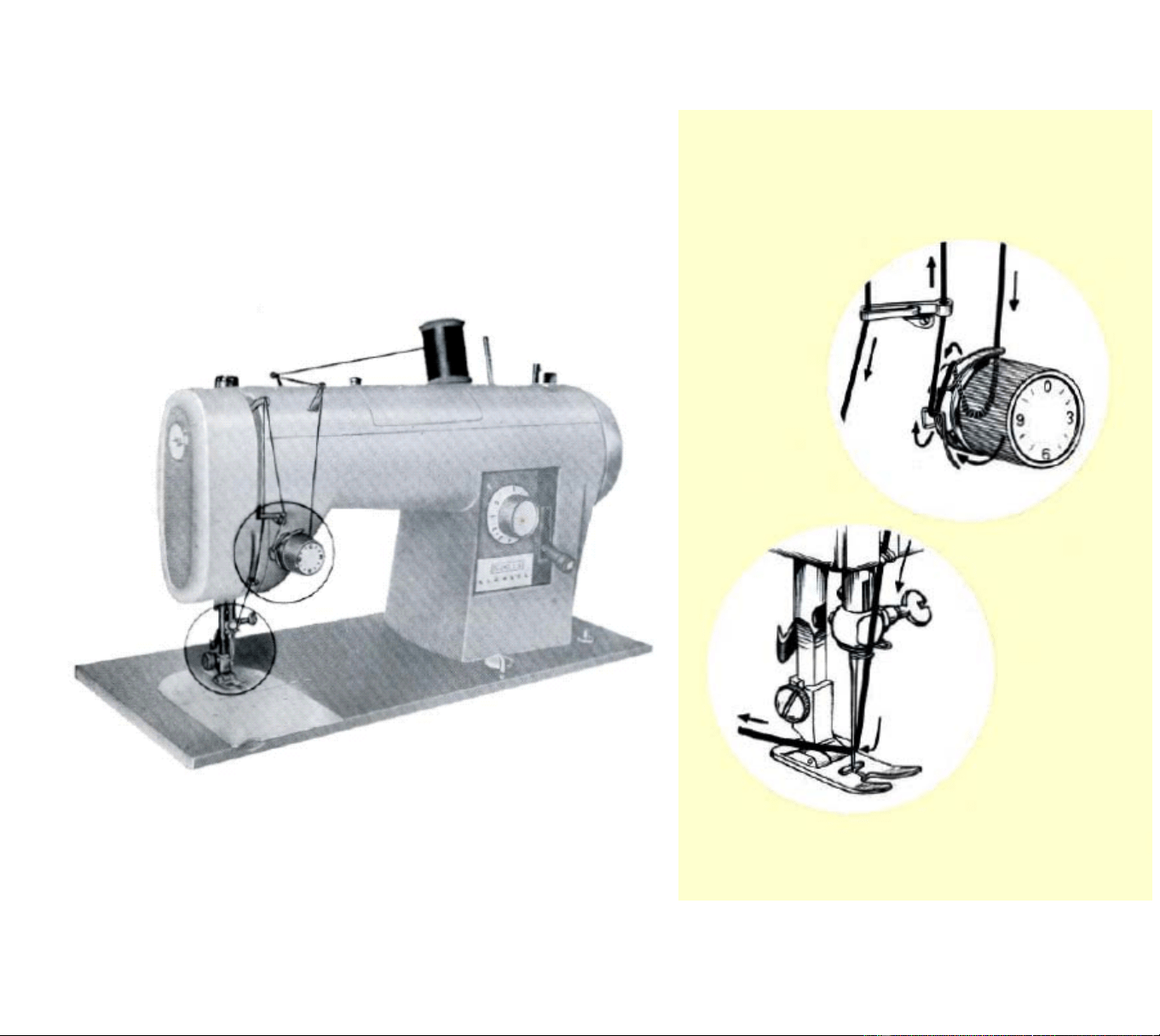
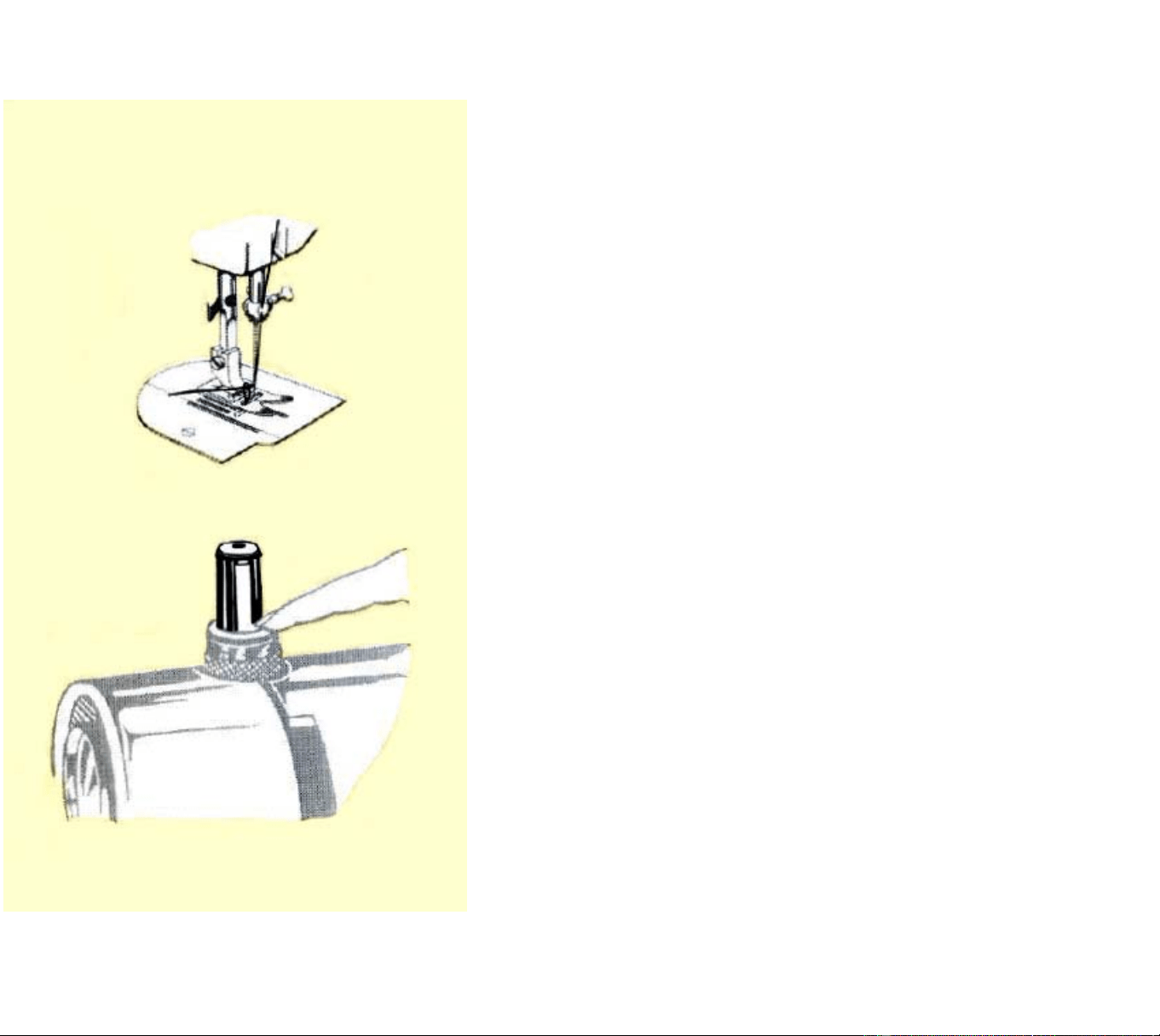
PICKING UP BOBBIN THREAD
Raise presser foot lever.
Hold needle thread loosely in left hand and rotate
hand wheel toward you one complete turn.
Bring bobbin thread up by pulling upper thread
(See illustration).
Place threads back under presser foot.
ADJUSTING THE PRESSURE OF THE PRESSER FOOT
Push down outer ring of presser foot knob (See
illustration). This will release pressure of presser foot.
To increase pressure, push down inner pin until
suitable pressure is obtained.
For ordinary sewing, the inner pin should be about
half way down. When sewing multiple thickness of
heavy material, reduce the pressure. Increase it when
sewing sheer fabrics.
Insufficient pressure may cause skipped stitches or
difficulty in guiding the fabric. If feed dog or presser
foot marks appear on the fabric, reduce the pressure.
10
Downloaded from www.ManualsFile.com manuals search engine
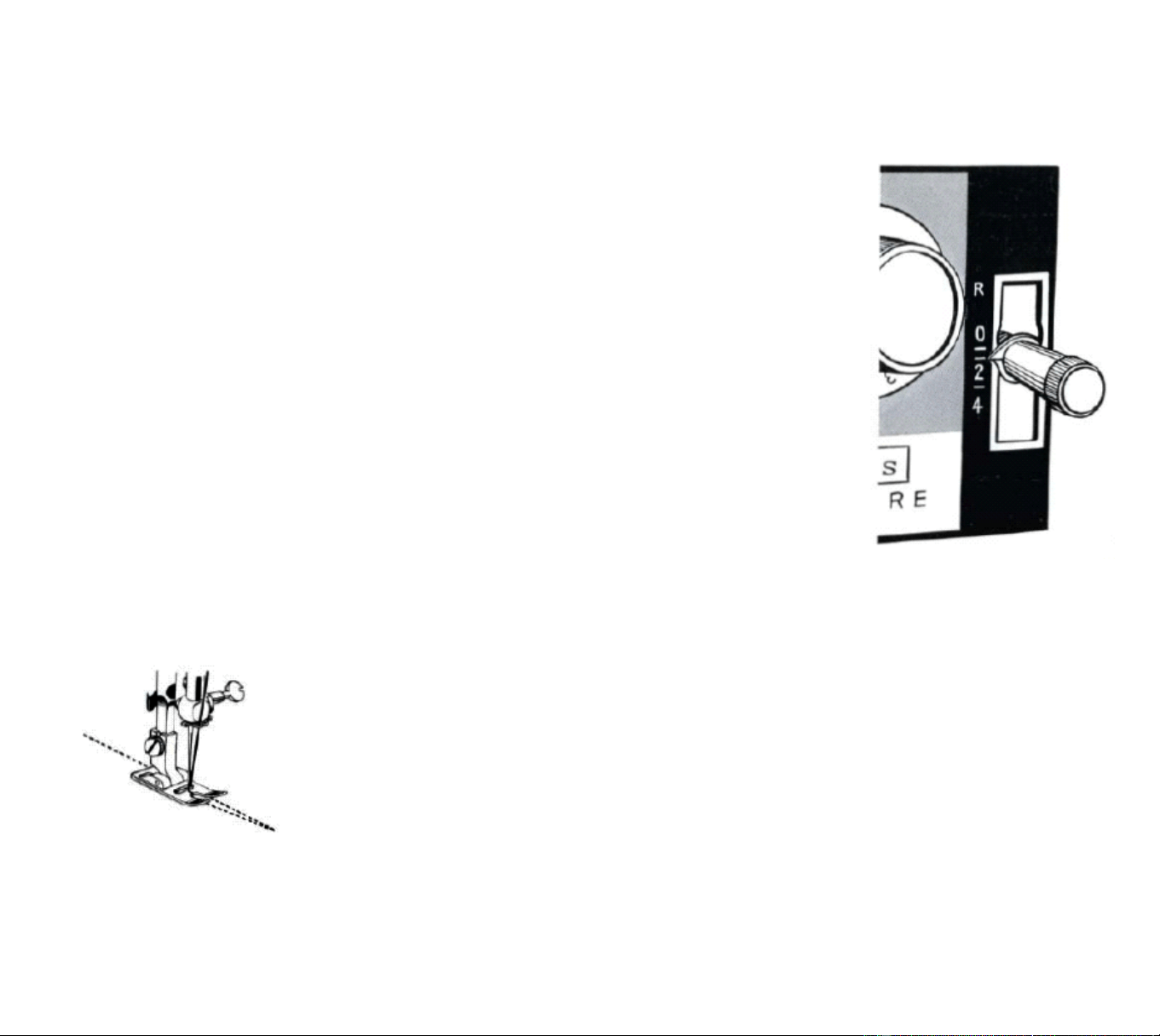
The stitch length lever controls the stitch length. Set lever to any
desired stitch length position between 0 and 4 by turning knob
until the knob indicator is aligned with stitch length number
desired.
SETTING
STITCH
LENGTH
The red mark indicates the setting for a satin stitch. This will vary
slightly depending upon the type of material to be sewn. At No. 4
the longest stitch is obtained. The size of stitch you select will
depend on fabric you are sewing. To lengthen stitch, turn the knob
counter clockwise until the lever can be lowered to the position
desired. To straight stitch, stitch width control should be set on 0
setting, or by removal of decorative cam.
REVERSE
STITCHING
Raise lever for reverse stitching. Lower lever for forward stitching. It
is best to begin and end most steams with reverse stitching often
called back tacking.
For accomplishing quicker, more even and firmer basting, we
suggest you regulate the machine in the following manner: Set
stitch length at No. 4 for the longest possible stitch. Basting is
easily removed by pulling bottom thread. When basting very sheer
fabrics use a paper backing.
BASTING
Be sure both threads are drawn back under the presser
foot. Lower needle into fabric about ½ inch from beginning
of seam. Push stitch length control lever up for reverse
stitching. Stitch in reverse until needle reaches beginning of
seam.
Move stitch length control lever down for forward stitching
and complete seam. When you reach the end, raise the
stitch length control lever and sew back over ½ inch of
completed seam.
FASTENING
A
SEAM
11
Downloaded from www.ManualsFile.com manuals search engine
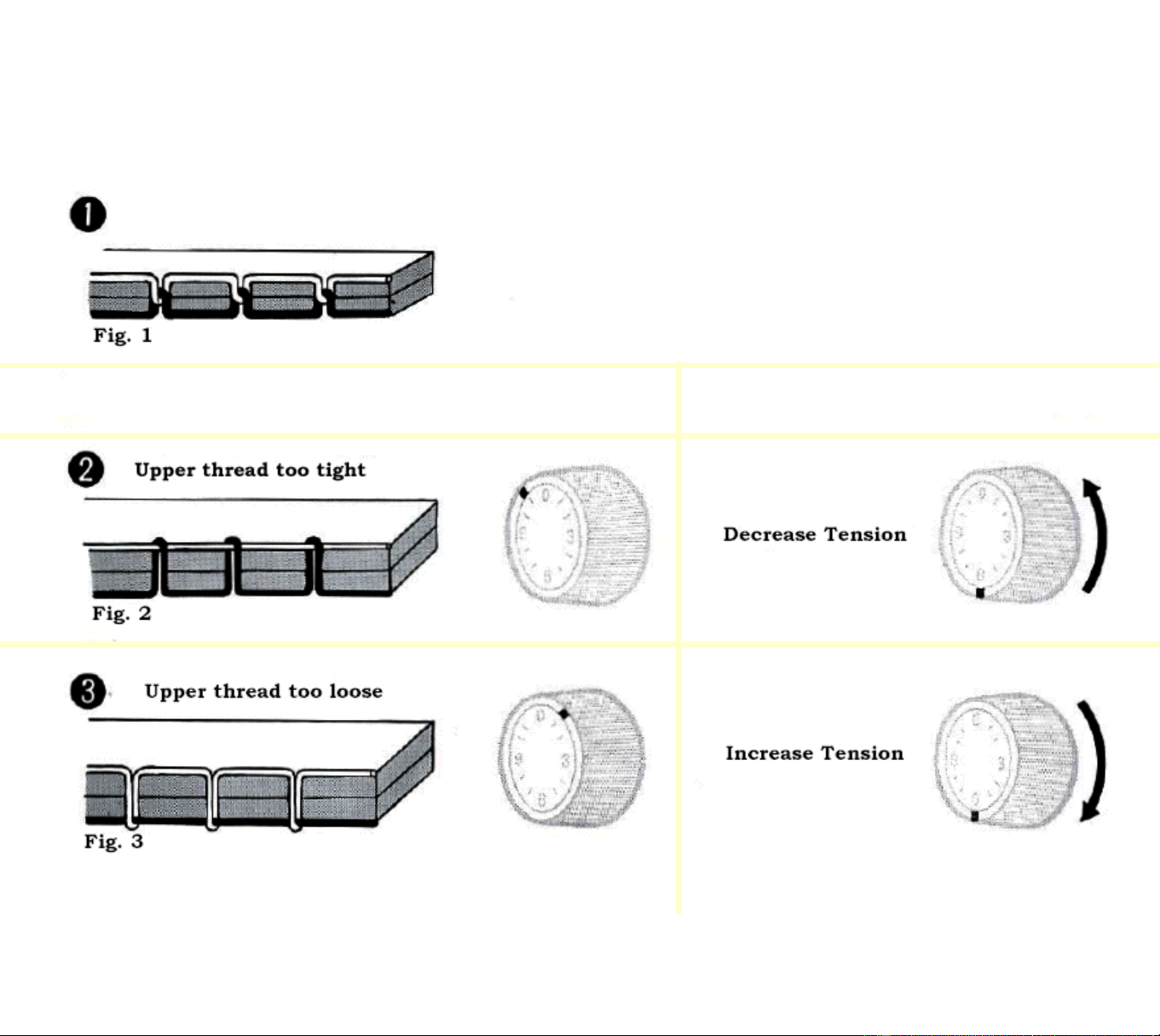
When stitching is unsatisfactory as in
figures 2 and 3, adjust the upper thread
tension.
Lower thread tension requires
adjustment less frequently than the
upper thread tension.
When stitch is satisfactory, as in figure 1
and seam is badly puckered, the cause
may be tight tensions and both upper
and lower may be adjusted. (See page 32)
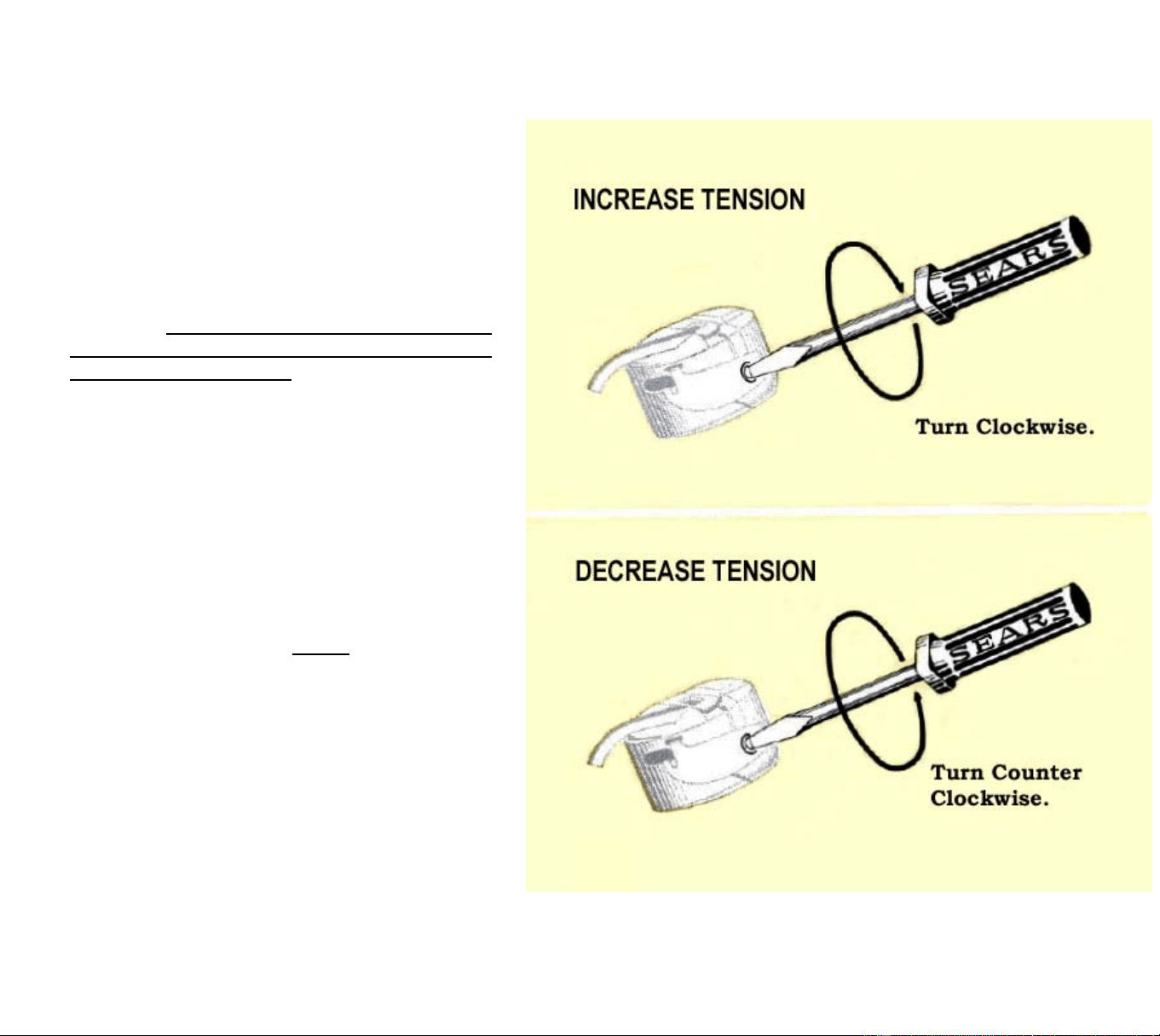
When adjusting the tension on the
bobbin case, make
slight adjustments
with a screwdriver. (See page 32)
13
Downloaded from www.ManualsFile.com manuals search engine

INSERTING AND REMOVING THE MATERIAL
For all kinds of sewing, consult chart page
5.
Before placing the material on the machine
see that:
* The presser foot and needle clamp screws
are both tight.
* The sizes of the needle and thread suit the
kind of work to be done.
* The needle and take-up lever are at their
highest position.
* The tensions have been properly adjusted.
* The ends of threads have been drawn
about 4 inches to the rear of the
machine.
* The feed dogs are up.
Place material under the presser foot, insert
the needle into the material by turning the
hand wheel toward you, lower presser foot
and start sewing. Experiment by sewing on
the fabric to be used to determine tension
adjustment and correct stitch settings.
To remove the work, first turn the hand
wheel toward you until the needle is at its
highest position, then raise the presser foot,
draw material to the rear and cut off excess
thread with the thread cutter located on the
presser bar. To avoid sewing off the end of
the material, back tack each seam. See page
11.
IMPORTANT: Always turn the hand wheel
toward you! When the machine is not being
used, place a piece of material over the feed
dog and lower the presser foot. Always have
fabric under the presser foot when operating
the machine. Operating threaded machine
without fabric will cause it to jam by forcing
thread lint into the shuttle. See pages 28 &
29.
14
Downloaded from www.ManualsFile.com manuals search engine
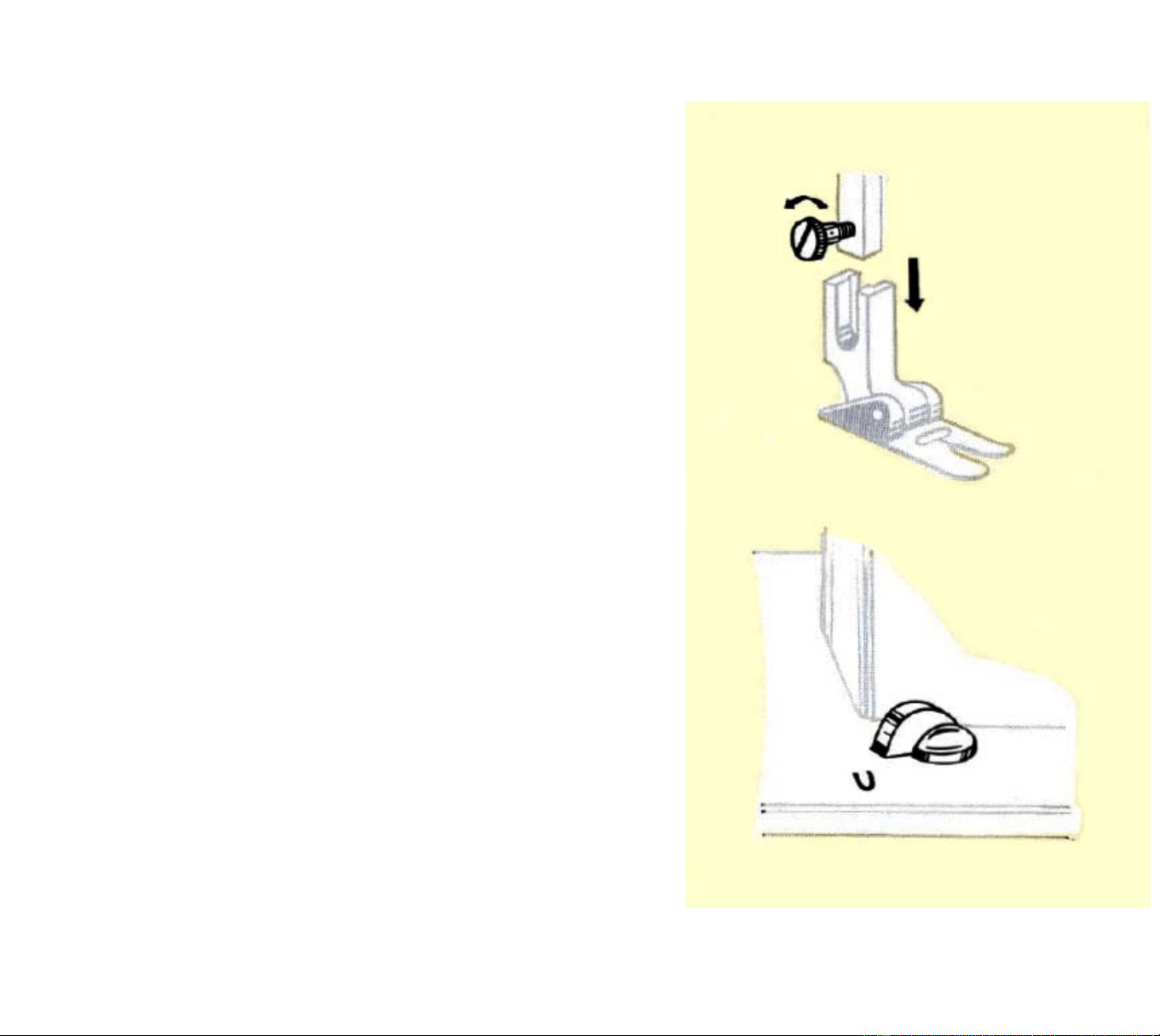
CHANGING THE PRESSER FOOT
The various attachment feet available for certain
kinds of work are to be fastened to the presser bar.
To attach the foot, raise the presser bar to its highest
position by raising the presser foot lever. Loosen the
presser foot thumb screw, choose the proper foot,
insert from the front. Tighten the screw using the
large screw driver and make sure that the foot is
secure.
TURNING A CORNER
Stop sewing machine with needle in fabric. Raise
presser foot. Turn fabric. Lower presser foot and
continue stitching.
FEED DOG
The feed dog control knob is situated on the right
front of machine bedplate. When knob is turned to
the right feed dog drops and does not pull material.
This allows the operator freedom of movement of
material, as for darning. For regular sewing, turn knob
to the left.
15
Downloaded from www.ManualsFile.com manuals search engine
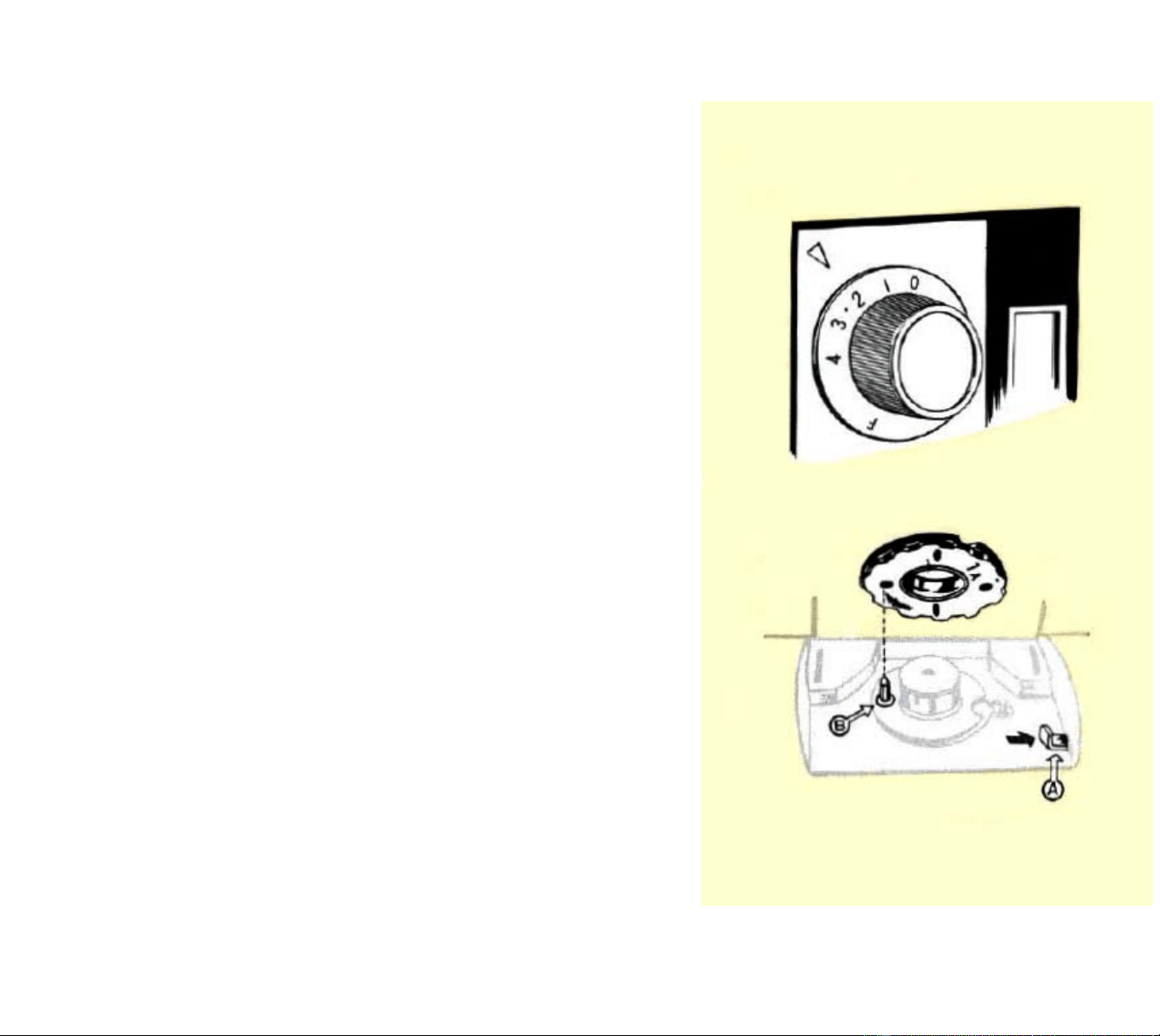
ZIGZAG CONTROL
SETTING STITCH WIDTH
Insert disc # 1A. Turn the stitch width control knob to
the desired setting between 0 and 4 on the knob. Zigzag
stitch width increase from 0 to 4. Straight stitching is
possible only with control on 0 setting or by removal of
decorative cam. (Dual needle plates-see pages 11)
INSERTING PATTERN DISC
1. Turn hand wheel so that the needle is in its highest
position.
2. Pull pattern disc shaft cover open.
3. Push cam follower releaser lever (A) to the right and
keep it there during insertion.
4. Grasp pattern disc and slip disc onto the shaft. Make
sure the retaining pin (B) enters hole in disc.
5. To remove pattern disc, open cover and pull it out from
the shaft.
There are two different patterns on each disc. A picture of
each pattern is on the disc surface. Position disc into
machine with desired pattern facing up.
16
Downloaded from www.ManualsFile.com manuals search engine
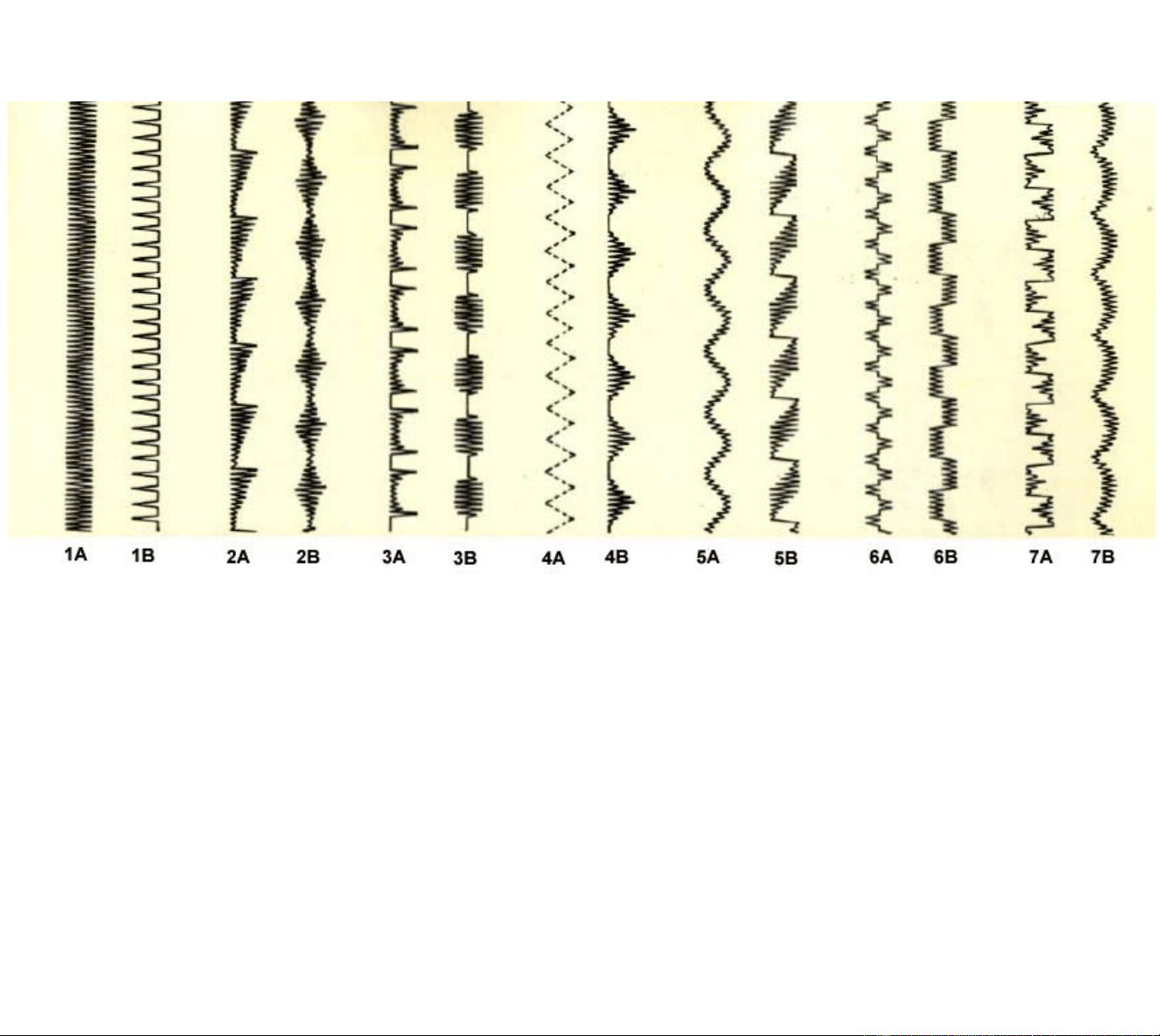
DECORATIVE STITCHING
This machine enables you to sew beautiful decorative and embroidery stitches by means of
various discs supplied with your machine. The movements of the needle are controlled by
the disc. Basic decorative stitches are made with stitch width at 4 and stitch length at the
red mark on the indicator plate. The latter will vary slightly depending upon the type of
material to be sewn. Pattern will be changed if using any patterns also can be made with
double needle. See page 25.
17
Downloaded from www.ManualsFile.com manuals search engine

DARNING
17
WITH PRESSER FOOT:
1. Turn feed dog control to right.
2. Press down outer ring of presser foot knob, see page 10. With presser foot knob in
this position, mending, darning, monogram work, etc. may be done.
3. Stretch fabric tightly between two spring embroidery hoops and place under
needle.
4. Lower presser bar so thread will have some tension. When you start to darn, move
fabric back and forth to cover darning area. Then turn fabric and continue sewing
at right angles to the previous stitching. Use medium machine speed. You can
make any length stitches desired. Slow movement of fabric will make short
darning stitches. Fast movement will make long stitches.
5. When you finish darning, raise presser foot and remove fabric. Increase pressure
for general sewing by pressing down inner pin of the presser foot knob. Turn feed
dog control to left.
WITHOUT PRESSER FOOT:
1. Turn feed dog control to right.
2. Remove presser foot.
Proceed as directed under steps 3 and 4 above.
3. When you finish darning, raise the presser foot lever and remove fabric. Replace
presser foot, and increase pressure for general sewing. Turn feed dog control to
left.
18
Downloaded from www.ManualsFile.com manuals search engine
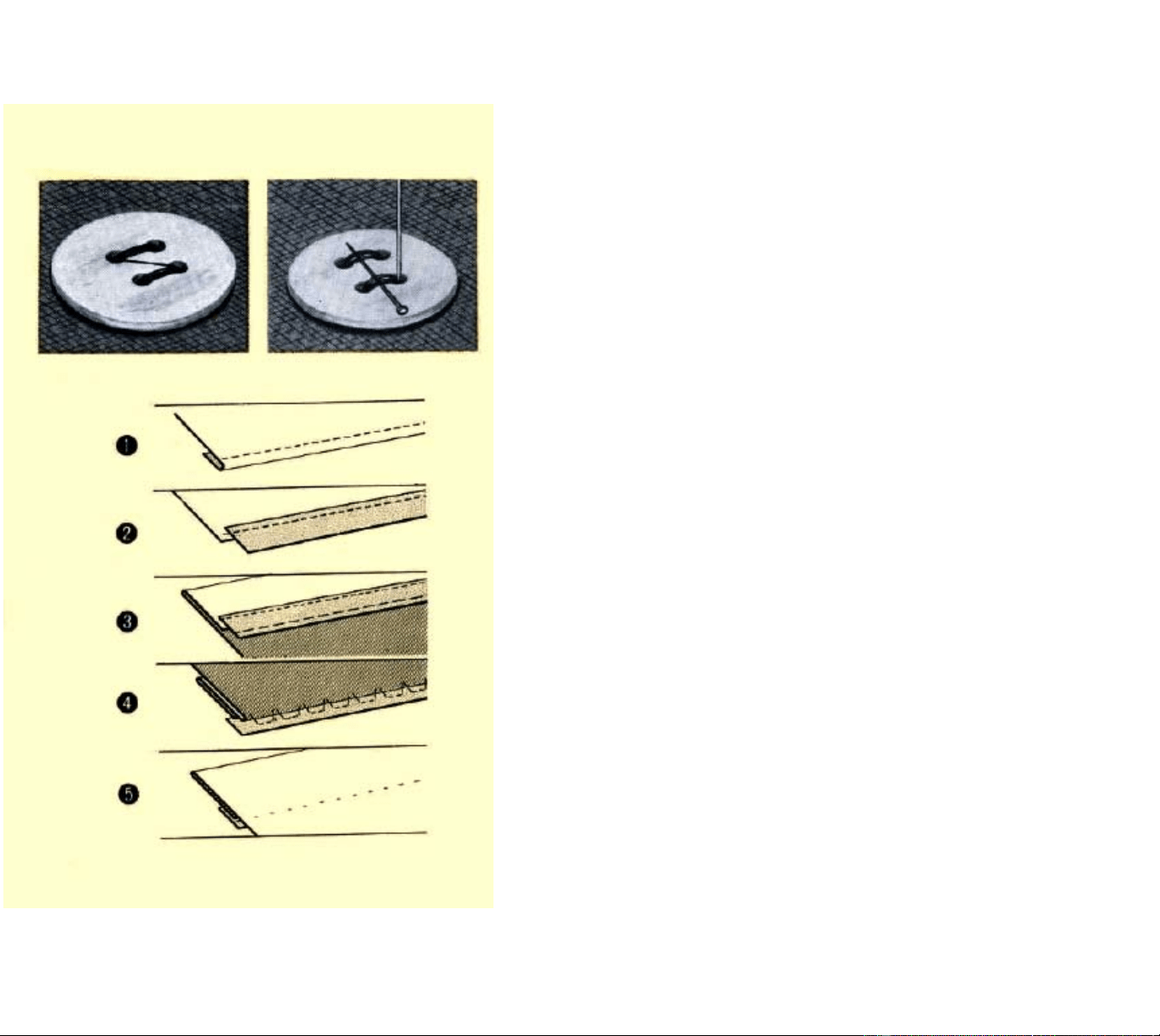
SEWING ON BUTTONS Use disc #1A
Center holes in button in slit in presser foot. Lower
presser foot to hold securely. Drop feed dog. Turn
handwheel by hand until needle goes into hole in
button. Adjust stitch width so that needle goes into
second hole. Stitch a number of times to hold securely.
NOTE: To make a small thread shank when sewing on a
flat button, place a straight pin or needle between the
holes of the button.
BLIND STITCHING
Disc #1B
(May vary depending on type of material)
Stitch width 2
Stitch length 3
1. Prepare the hem with a turned and edgestitched
finish or:
2. Apply seam tape along the raw edge with either
straight or zigzag stitching.
3. Turn hem and baste about 1/8 inch from the edge of
the seam tape using longest stitch on the sewing
machine.
4. Fold garment back along basting line and stitch
along garment fold using disc #1B.
5. Remove basting and press hem. The basting step
may be eliminated in a straight hem.
19
Downloaded from www.ManualsFile.com manuals search engine
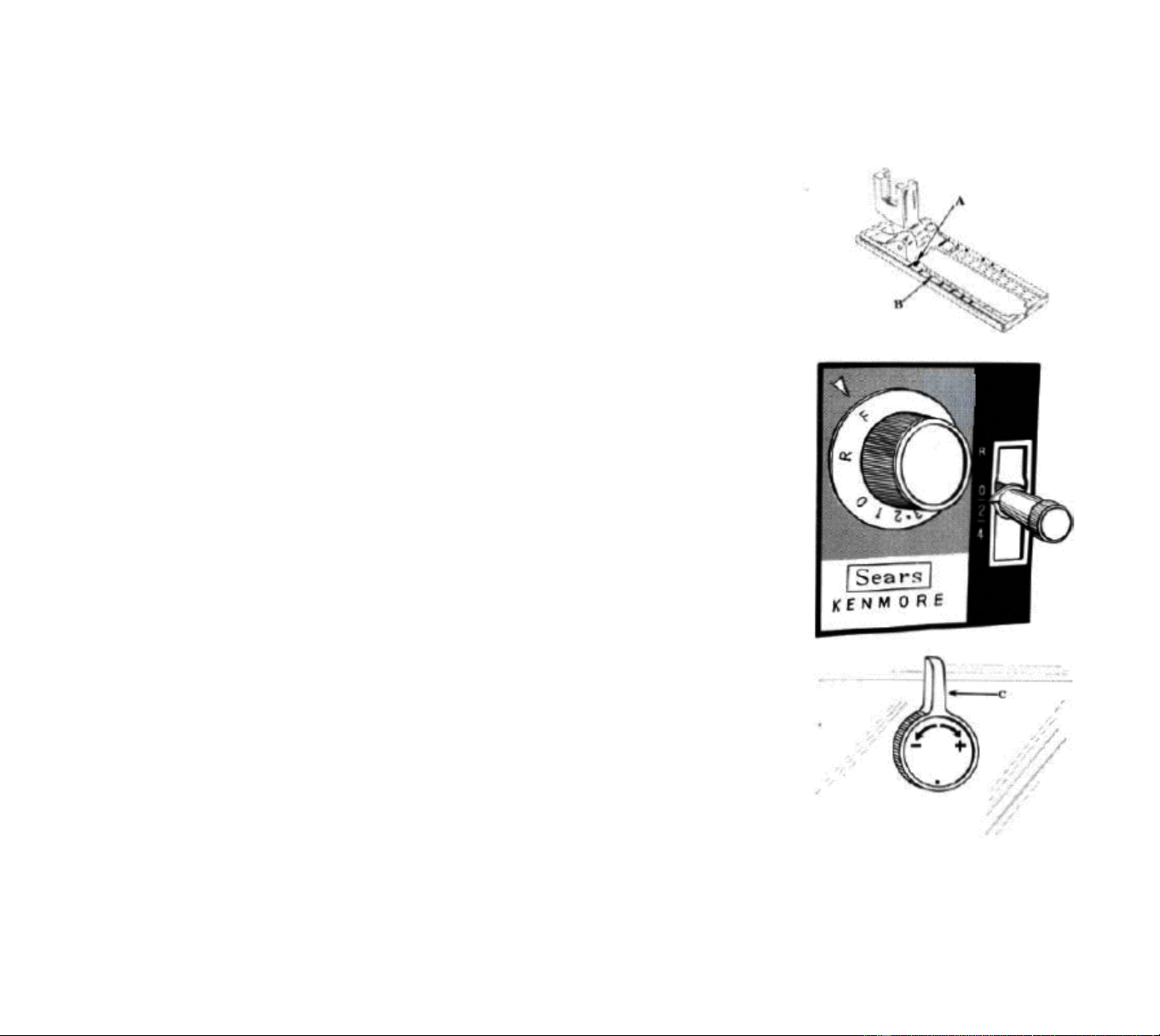
Use disc #1A and special buttonhole foot
Stitch length in red mark
Buttonhole control knob F
Feed dog control U
BUTTONHOLES
Mark buttonhole length at both ends. Without lowering the foot, let the
needle pierce the fabric at the beginning of the buttonhole. The
buttonhole length will be the distance between the needle and the front
edge of the sliding portions of the foot. Set the front edge of the foot
opening with a slight bartack allowance at the mark on the opposite end
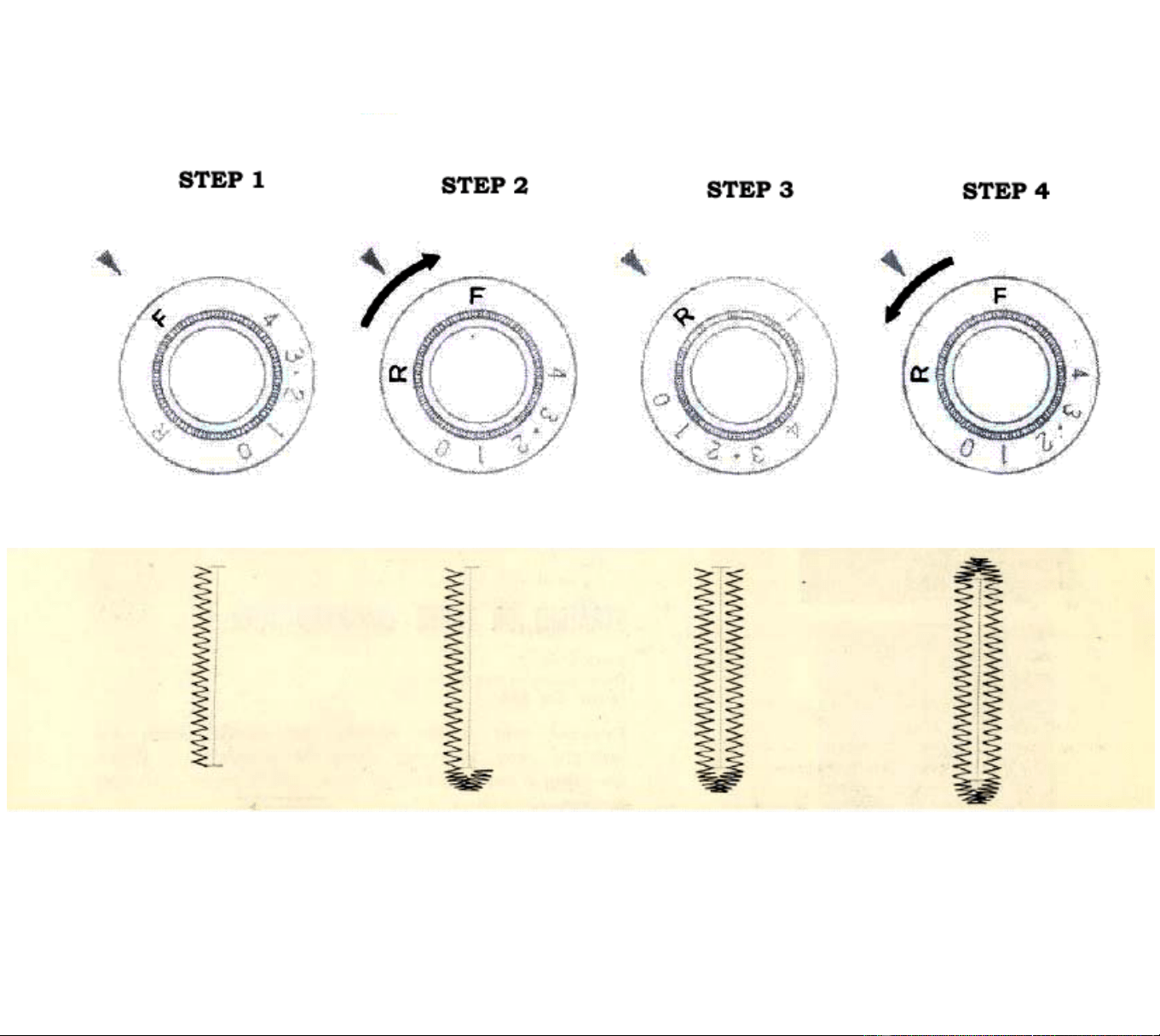
of buttonhole. Lower the foot. Stitch forward until the needle reaches
the red zone on the front edge of foot. Then turn the knob to R, and
stitch the other side of the buttonhole. Turn knob back to F to finish
the end of buttonhole. The speed with which the knob is turned
determines the number of stitches at the ends of the buttonhole. The
slower the knob is turned, while sewing, the more stitches are formed.
See steps 1 to 4.
Reproduction on identical size buttonholes is facilitated with the aid of
the graduations on the left side of the buttonhole foot. These
graduations are 1/8 inch apart. Just mark the starting points of the
buttonholes, let the needle pierce the fabric and set the index mark (A)
on the upper portion of the foot at the same graduation mark (B) as it
was set for the first buttonhole. Lower the foot. Follow the procedures
outlined above. Always make a practice buttonhole on a scrap of fabric
used in the garment using a double thickness of fabric, and an
interfacing if used in garment.
The stitch length may be varied slightly by the stitch length control
lever within the 0 to 1 range. To increase forward stitch move this lever
from the red mark toward 1, to decrease move it toward the 0. The
buttonhole reverse stitch length control (C) is used to match the length
of the reverse stitches with the forward stitches. Turn the dial to the
minus direction for shorter stitches; to the plus direction for longer
stitches. These settings may vary depending on the type of fabric used.
20
Downloaded from www.ManualsFile.com manuals search engine
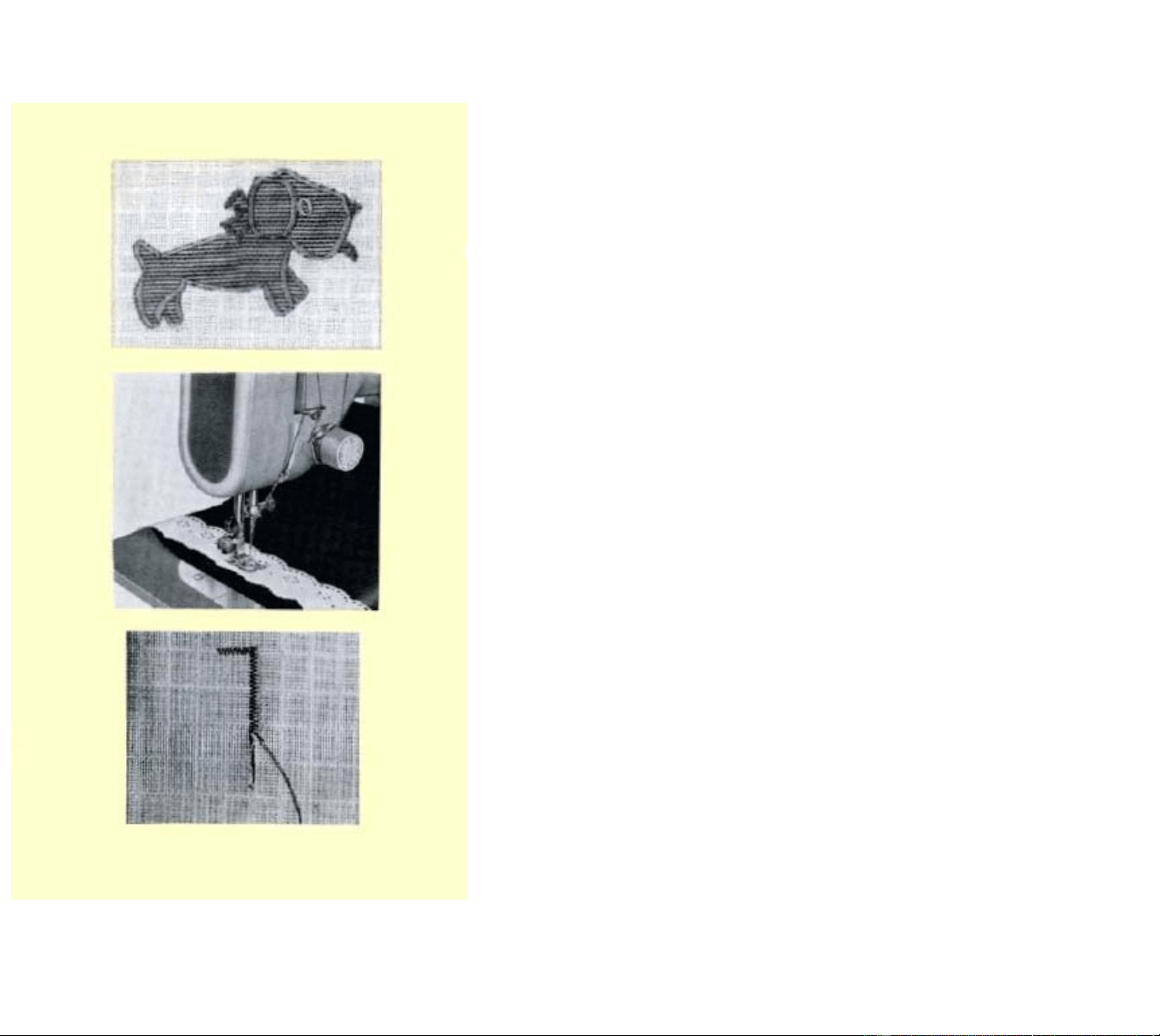
APPLIQUE Use disc #1A
Baste cutout applique to fabric. Set stitch width 2 to
4. Set stitch length at the red marking. Zigzag stitch
around applique completely covering the raw edge.
SEWING ON LACE Use disc #1A
Set stitch width to 1. Set stitch length to 1 or 2. Place
fabric under the presser foot and place lace on top of
fabric overlapping edge by ¼ inch. Start sewing with
needle at the left stitch. Position fabric and lace so
that needle goes into left edge of lace. To sew two
pieces together to make a continuous pattern, use the
same method.
STRAIGHT OR THREE – CORNERED TEAR
Stitch width 4
Stitch length at red mark
Pattern disc #4A
Position tear under needle and stitch along the
straight tear catching sides of material. When
mending a three cornered tear, stitch from each end
to center.
22
Downloaded from www.ManualsFile.com manuals search engine
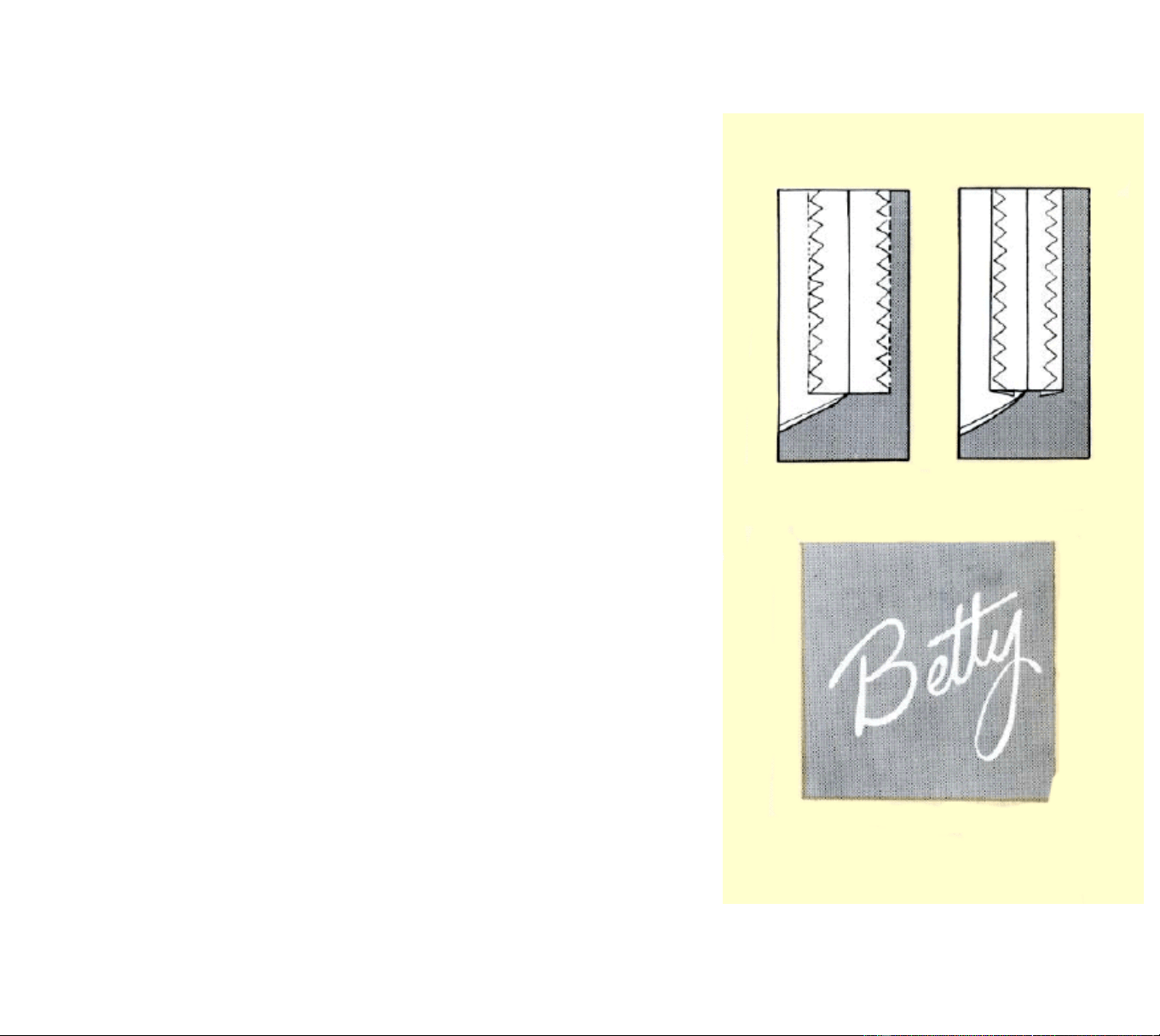
OVERCASTING
Use disc #1A
Set stitch width to 4. set stitch length to about 3. zigzag
stitch around raw edge of fabric to completely cover the
edge.
WRITING AND MONOGRAMMING
Use disc #1A
Free hand
Stitch width 0 to 4
Feed dog control Down
Draw initial or words to be sewing on fabric and fit fabric
into embroidery hoops. Writing is done with either zigzag
or straight stitching. Remove presser foot. Set stitch
width for straight or zigzag stitches as desired. Slip hoop
and fabric under the needle, lower presser bar and take
one stitch to raise bobbin thread through fabric. Using a
medium speed, stitch along marked outline, guiding
fabric carefully by hands.
23
Downloaded from www.ManualsFile.com manuals search engine
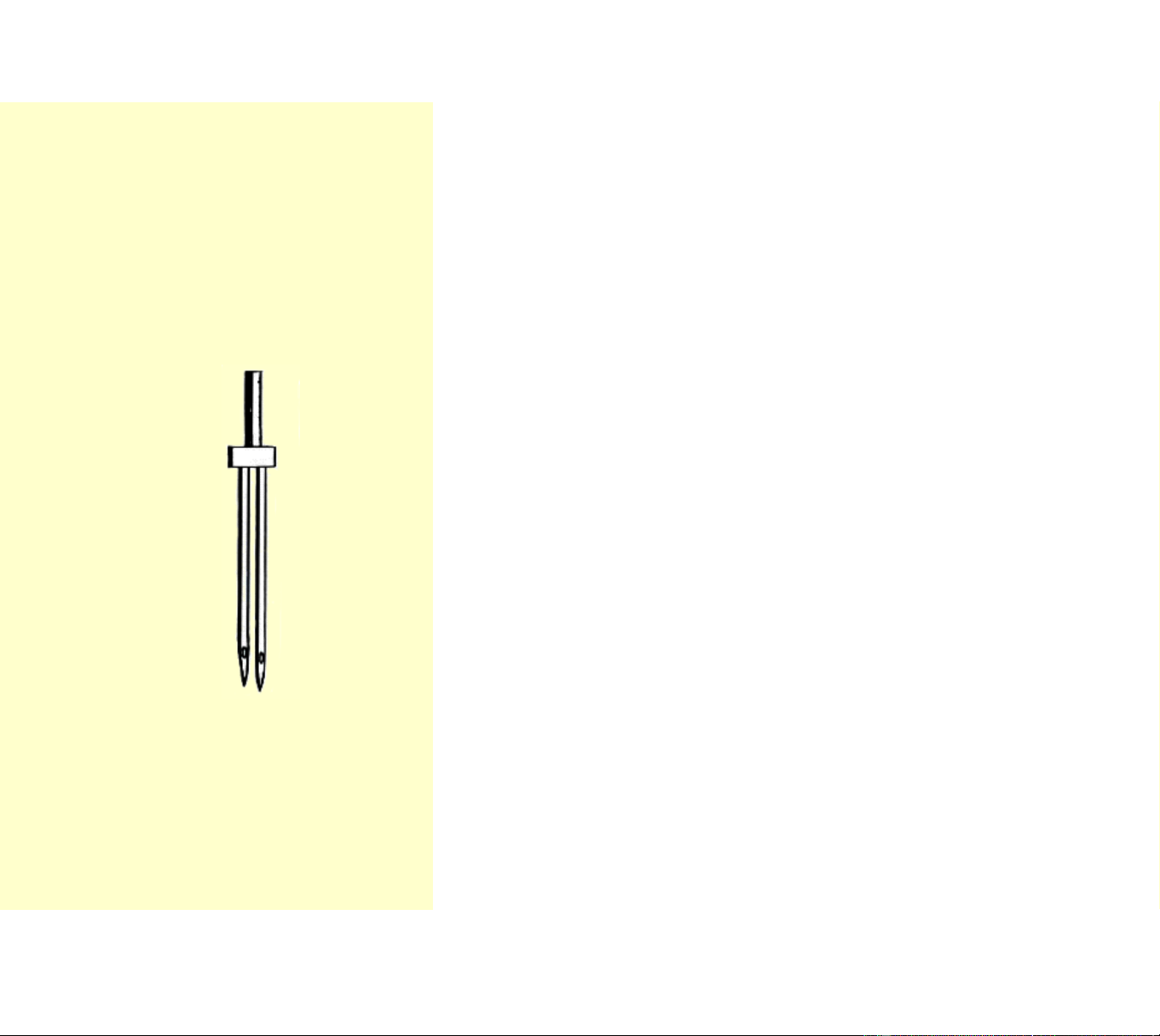
1. SETTING THE DOUBLE NEEDLE
DOUBLE NEEDLE
Raise the needle bar to its highest position and loosen
needle clamp screw. Hold double needle assembly with flat
side away from you. Slip the needle as far as it will go into
needle clamp, and tighten the screw.
2. THREADING THE DOUBLE NEEDLE
Place a spool of thread on each spool pin. Draw each
threads through upper thread guides. Continue threading
the machine as you would for single needle sewing. Draw
one thread through each needle from front to back and pull
several inches of thread through. Thread bobbin and pick up
bobbin thread as for single needle sewing.
3. THREAD SELECTION
Use mercerized sewing thread size #50 and finer. Machine
embroidery thread is recommended for both upper and
lower threading.
24
Downloaded from www.ManualsFile.com manuals search engine
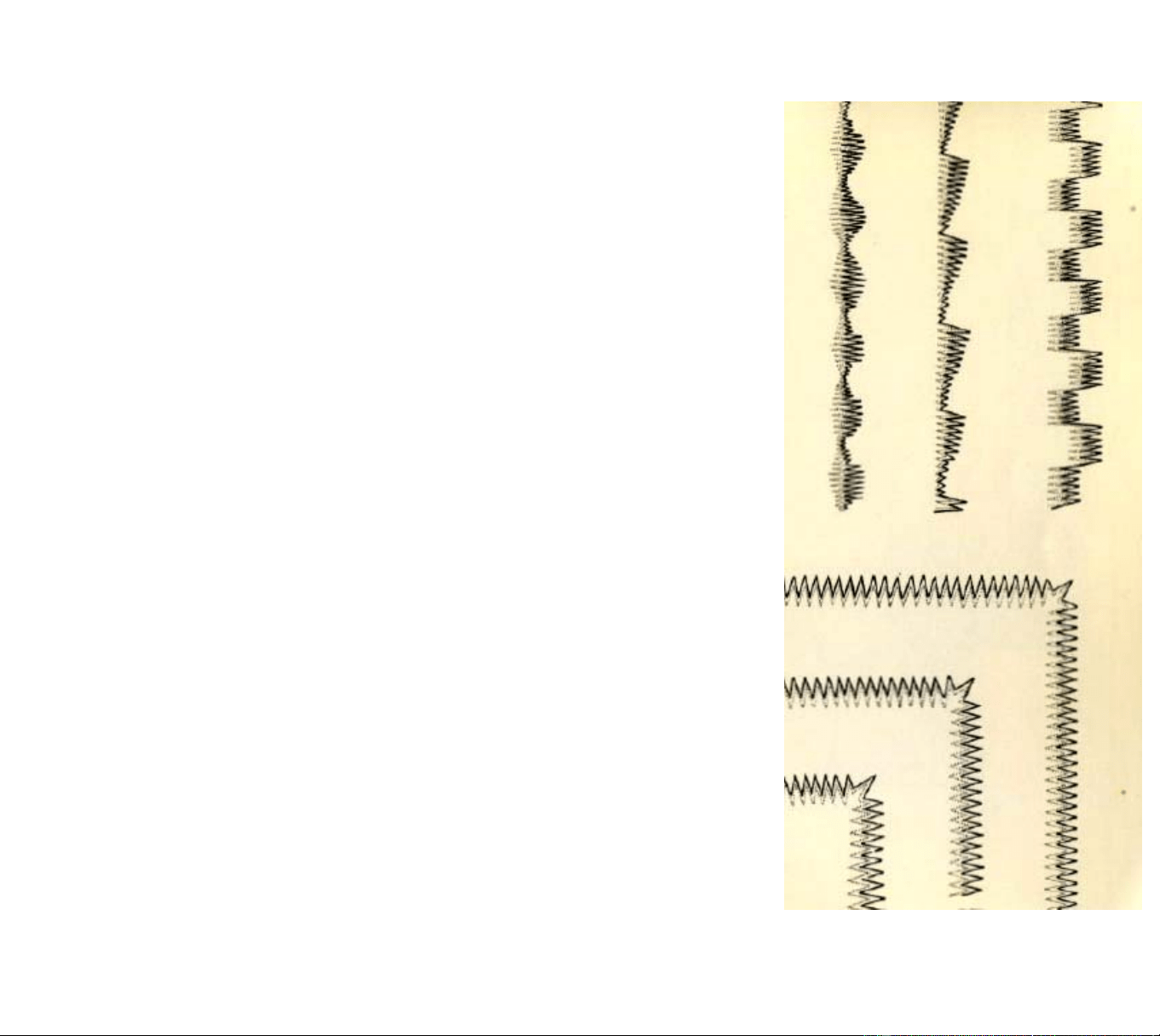
4. STITCHING
All decorative patterns are possible with double needle.
Before starting any stitching operation, check needle
drop by turning the handwheel manually. Needle should
enter fabric without touching the presser foot and
needle plate. The stitch width control should not be
advanced beyond 2 ½ setting. (black dot)
5. TURNING A CORNER
To turn a square corner in double needle stitching, stop
stitching with the needle tips just piercing the fabric.
Raise the presser foot, shift fabric half the turn, lower
presser foot and take one stitch. Raise the presser foot
again, complete the turn, and begin stitching in the
new direction.
25
Downloaded from www.ManualsFile.com manuals search engine
SYNTHETICS
Your KENMORE will sew all the new fabrics of synthetic fiber, such
as nylon, ✴ Orlon, ✴✴ Dacron, rayon, acetate, blends of these, and
combinations of synthetic and natural fibers. When stitching a fabric
of blended or combined fibers, handle it as you would a material of
the fiber present in the largest percentage. For example, a fabric
woven of 60% Orlon and 40% silk should be handled as one made
entirely of Orlon.
When stitching a fabric that is over 50% synthetic fiber, re- member:
a. Select patterns of the loose fitting type with cap or kimono
sleeves, because most synthetic fiber fabrics cannot be eased
with steam pressing, and are not absorbent.
b. Use a synthetic thread.
c. Use a fine needle as recommended in chart on page 5.
d. Wind the bobbin in the usual way, but do not pass thread between
tension discs. Guide thread by hand for a smoothly wound bobbin.
e. Choose the stitch length that gives the most satisfactory seam.
f. Check threads tensions by sewing on a double thickness of the
fabric to be used. Usually the upper thread tension must be
loosened. Sometimes both bobbin and upper thread tension must
be loosened (Page 12, 13).
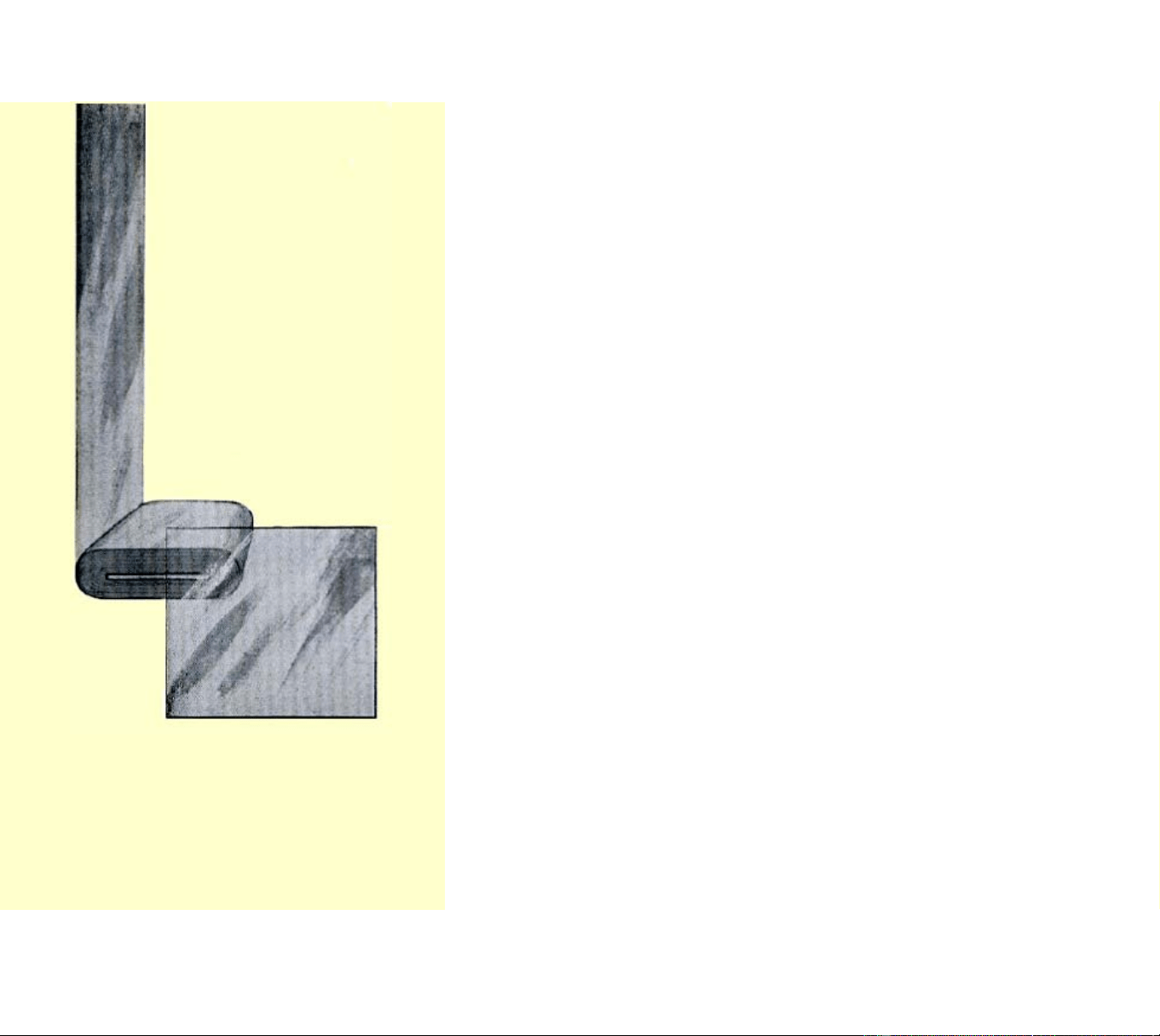
SEWING ON PLASTIC FILMS
Set the machine with normal thread tensions and a large size stitch.
Use a fine needle and mercerized thread. Hold plastic pieces together
with cellophane tape or paper clips rather than pins. Sew corner
slightly rounded rather than square.
*Trademark for DuPont’s Acrylic fiber.
✴✴ Trademark for Dupont’s
polyster fiber.
26
Downloaded from www.ManualsFile.com manuals search engine
REPLACEMENT OF THE BELT
To replace a worn belt, loosen motor bracket set
bolt and remove belt by reducing the distance
between motor pulley and hand wheel. Install new
built adjust the distance between the motor
pulley and hand wheel. To provide proper tension,
allow the belt to support the weight of the motor
and then firmly tighten the motor bracket set
bolt.
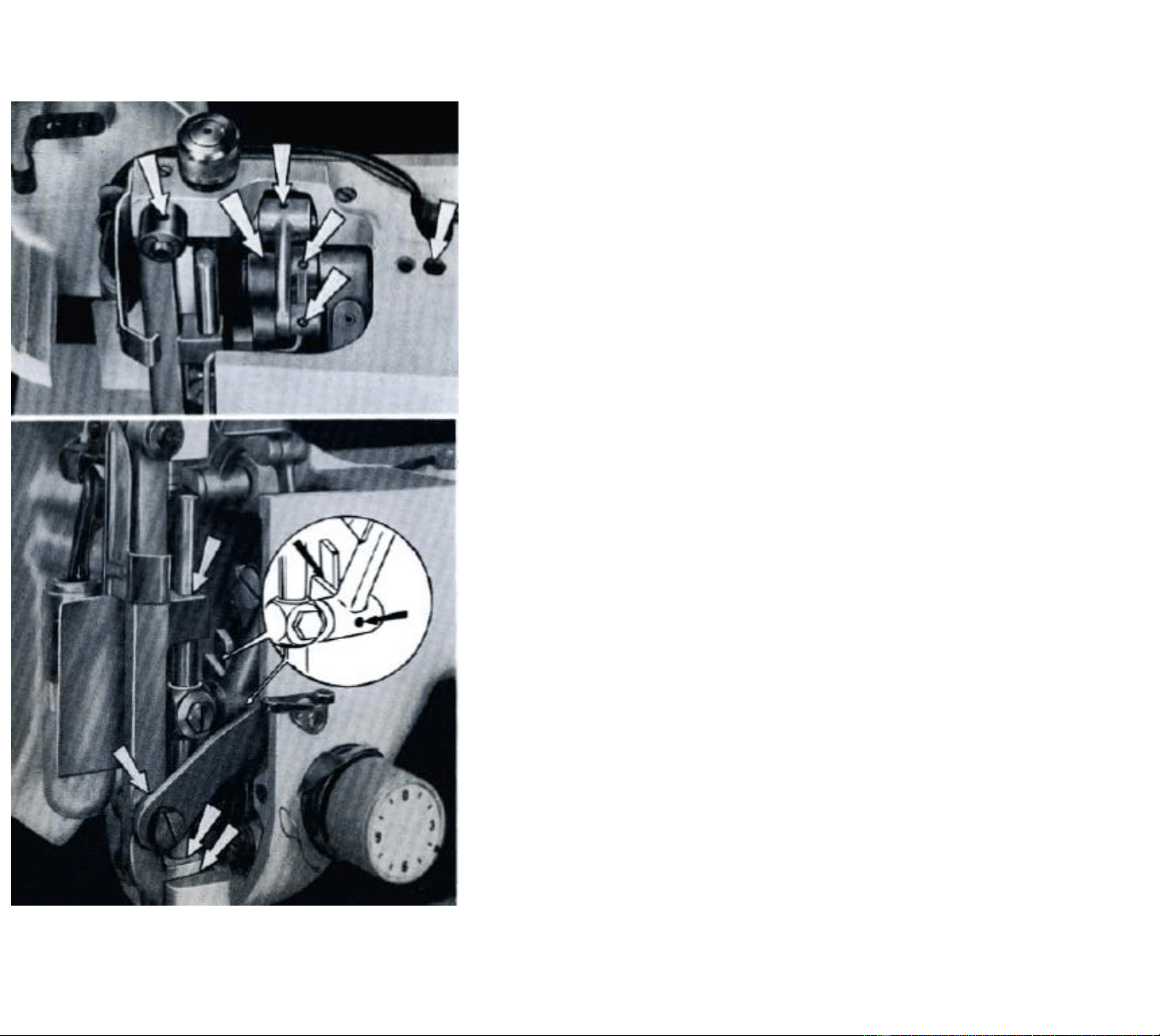
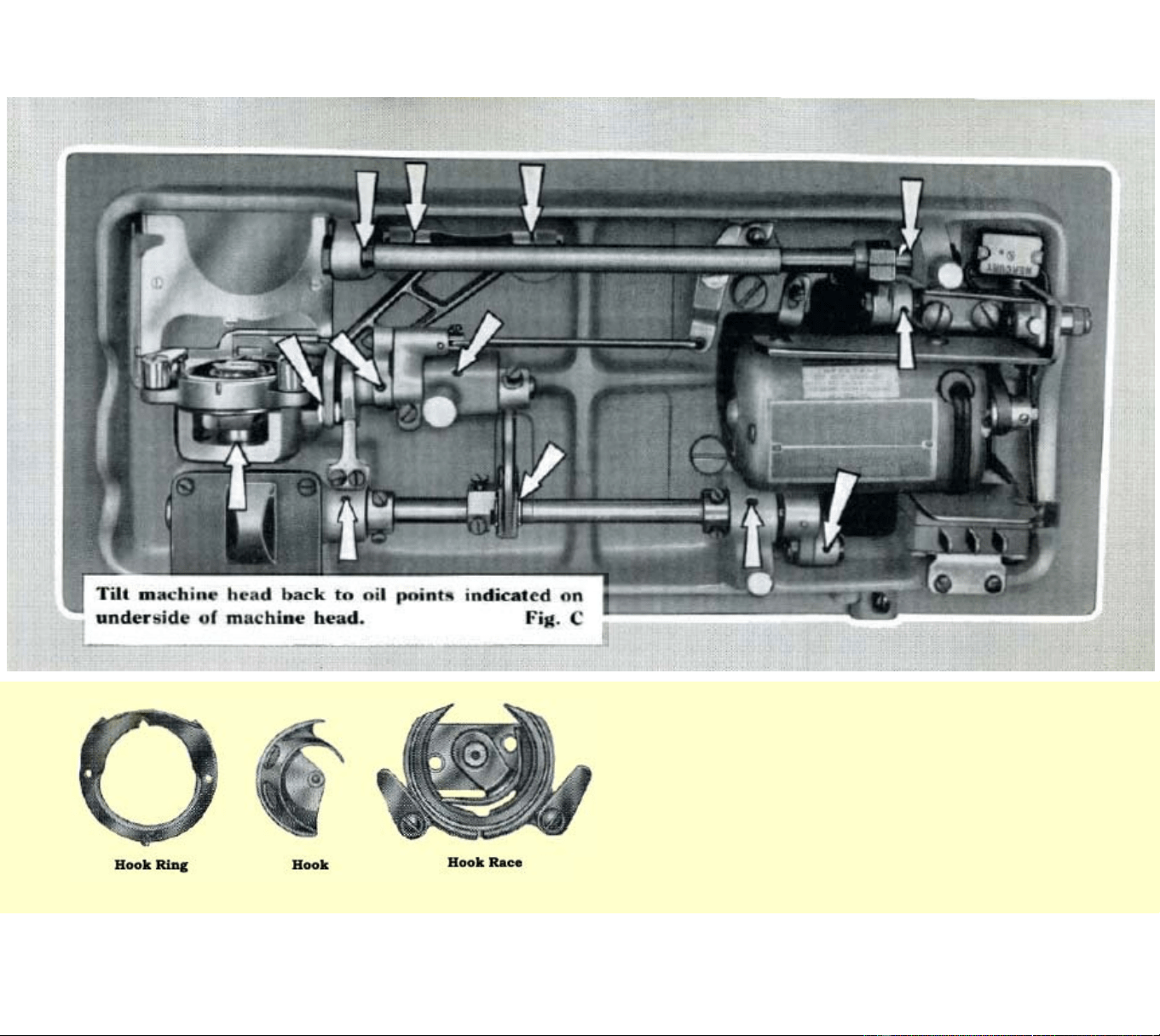
CLEANING AND OILING…………….
Keep the moving parts free from dust and thread
for quiet and efficient operation.
Cleaning should be done with a small brush.
When machine runs hard or makes excessive
noise, place a drop of KENMORE sewing machine
oil at the points indicated in Figs. A, B, & C.
Swing hinged face cover plate open to oil points
indicated at end of machine head.
27
Fig.
A
Downloaded from www.ManualsFile.com manuals search engine
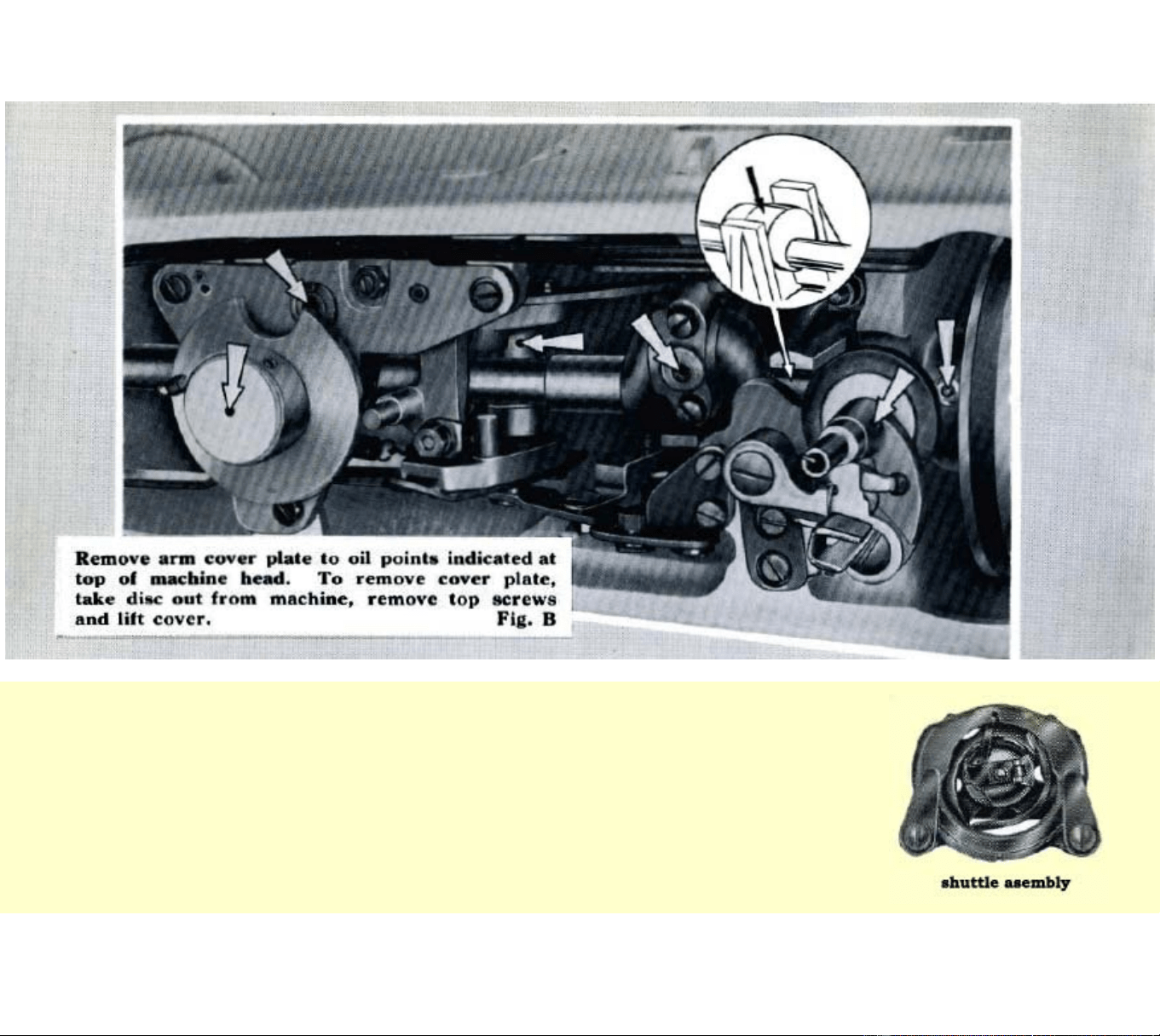
It may be necessary to clean the shuttle area occasionally.
1. Raise the needle bar to its highest 3. Clean the shuttle race of any lint
point and remove bobbin case. or small particles of thread with a
small brush.
2. Push levers sideways of the shuttle
assembly and lift hook and hook 4. Put a drop of oil on the center pin
ring out by the center pin. and on race in back of the hook.
28
Downloaded from www.ManualsFile.com manuals search engine

WHAT TO DO
PROBLEM PROBABLE CAUSE CORRECTION
Irregular
Stitches
Incorrect size needle.
Improper threading.
Loose upper thread tension.
Pulling fabric.
Light pressure on presser foot.
Loose presser foot.
Unevenly wound bobbin.
Choose correct size needle for thread and fabric (page 5).
Rethread machine (page 9).
Tighten upper thread tension (page 12).
Do not pull fabric; guide it gently.
Increase pressure on presser foot (page 10).
Reset presser foot (page 15).
Rewind bobbin (page 7).
Breaking
Needles
Pulling fabric.
Incorrect size needle.
Incorrect setting of needle.
Loose presser foot.
Do not pull fabric; guide it gently.
Choose correct size needle for thread and fabric (page 5).
Reset needle (page 5).
Reset presser foot (page 15).
Bunching of
Thread
Upper and lower threads not
drawn back under presser foot.
Feed dog down.
Draw both threads back under presser foot (page 10).
Raise feed dog (page 15).
Puckering
Incorrect thread tension(s).
Light pressure on presser foot.
Using two different sizes or
kinds of thread.
Bent or blunt needle.
Loose presser foot.
Fabric too shear or too soft.
Reset thread tension(s) (page 12, 13).
Increase pressure on presser foot (page 10).
Upper thread and bobbin thread should be same size and
kind.
Insert new needle (page 5).
Reset presser foot (page 15).
Use underlay of tissue paper of tarleton when stitching.
30
Downloaded from www.ManualsFile.com manuals search engine

WHAT TO DO
PROBLEM PROBABLE CAUSE CORRECTION
Skipping
Stitches
Incorrect size needle.
Bent or blunt needle.
Incorrect setting of needle.
Tight upper thread tension.
Light pressure on presser foot.
Choose correct size needle for thread and fabric (page 5).
Insert new needle (page 5).
Reset needle (page 5).
Loosen upper thread tension (page 12).
Increase pressure on presser foot (page 10).
Breaking Upper
Thread
Starting to stitch too fast.
Improper threading.
Tight upper thread tension.
Incorrect size needle.
Sharp eye in needle.
Start to stitch at a medium speed.
Rethread machine (page 9).
Loosen upper thread tension (page 12).
Choose correct size needle for thread and fabric (page 5).
Insert new needle (page 5).
Breaking Bobbin
Thread
Improper bobbin case threading.
Tight bobbin thread tension.
Lint in bobbin case or shuttle.
Check bobbin case threading (page 8).
Loosen bobbin thread tension (page 13).
Clean bobbin case and shuttle (page 28, 29).
Fabric not
Moving
Feed dog down.
Light pressure on presser foot.
Threads knotted under fabric.
Raise feed dog (page 15).
Increase pressure on presser foot (page 10).
Place both threads back under presser foot before
beginning to stitch.
Machine Jamming
(Knocking Noise)
Thread caught in shuttle. Disassemble and clean shuttle (page 28, 29).
31
Downloaded from www.ManualsFile.com manuals search engine

ADJUSTING YOUR SEWING MACHINE FOR GOOD STITCH
When your sewing machine does not sew a properly locked stitch, check the following:
1. Insert a new needle of the correct size for the thread and fabric you are using.
Consult chart on page 5.
2. The upper and bobbin thread should be matched in size and type.
3. Check threading carefully. See page 9.
4. Check the thread tension balance. Use
mercerized thread, and a correct size needle for
the fabric you are using. Do not try this test with synthetic thread as it will not break.
Begin with a full bobbin, properly threaded into the case. Set the stitch length at about
12 stitches per inch. Fold a 6” square of your fabric in half diagonally, forming a triangle.
Make a line of stitching ½” from fold.
a. If seam is puckered – both tensions are too tight.
b. If bottom thread lays on the fabric-tighten upper thread tension, and repeat test.
See page 12, Figure 3.
c. If top thread lays on top of fabric-loosen upper thread tension, and repeat test.
See page 12, Figure 2.
Grasp the stitching and pull with a snap to make threads break.
a. If both threads break – tensions are balanced.
b. If neither thread breaks – both tensions are too loose.
c. If upper thread breaks – loosen upper tension.
d. If lower thread breaks – tighten upper tension.
Both threads do not have to break at the same place, but they should break on the same
snap.
Bobbin tension may be reset by the following procedure. Start with a loose bobbin thread
tension. Tighten the spring screw gradually until bobbin case and full bobbin can be
gently lifted from your hand by the end of the bobbin thread.
32
Downloaded from www.ManualsFile.com manuals search engine
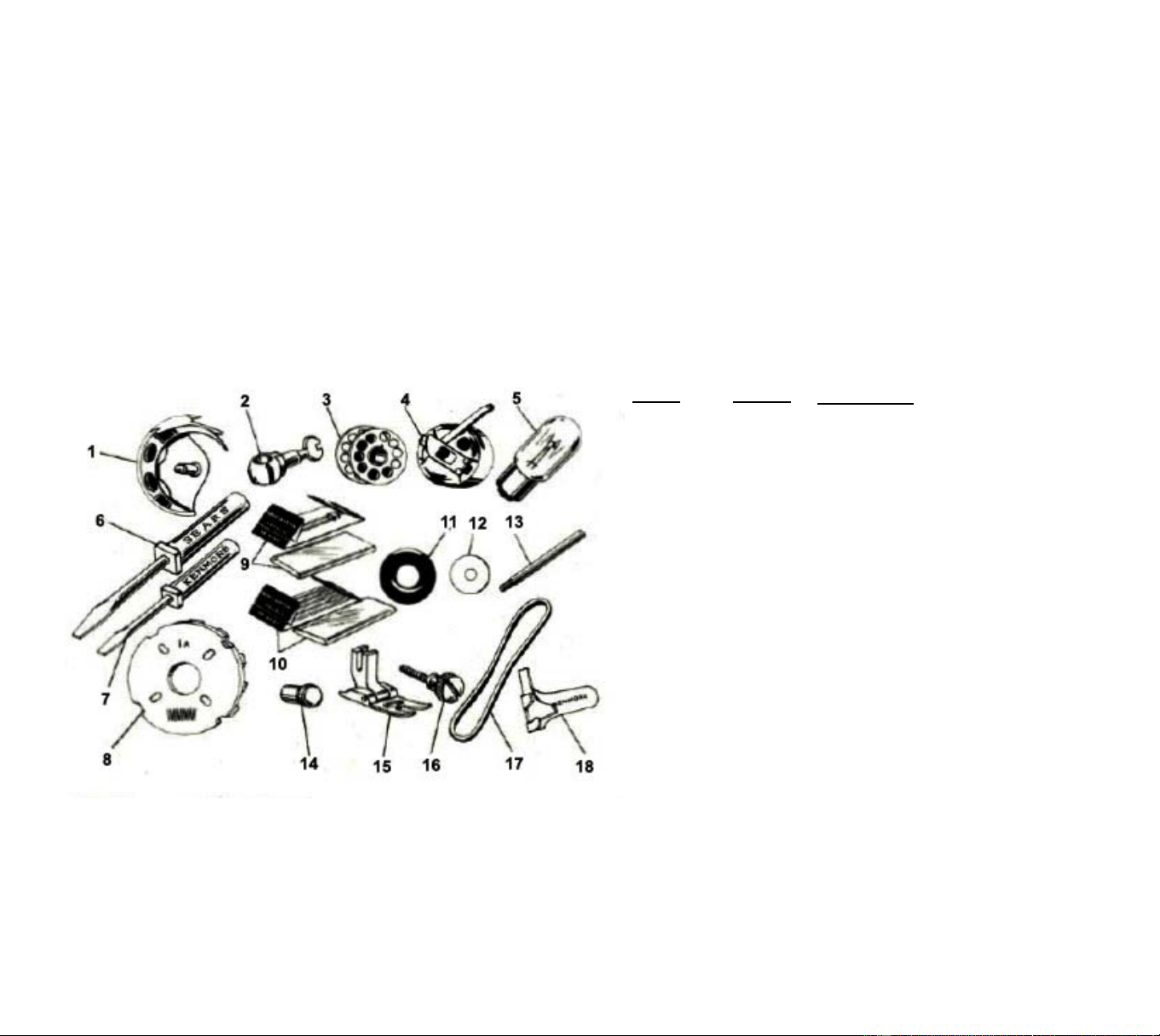
PARTS LIST
All parts listed here may be ordered through your nearest Sears or Simpsons – Sears retail
store, catalog sales office or mail order house.
When ordering these parts, please be sure to mention the following references:
1. Model & Serial numbers of machine shown on the nomenclature plate. See page 2.
2. Parts number (s) and description(s) here.
When ordering by mail, prices will be furnished on request, or parts will be shipped at
prevailing prices and you will be billed accordingly.
Description
Shuttle hook
Needle clamp
Bobbin
Bobbin case
Light bulb
Large screw driver
Small screw driver
Pattern disc # 1A & B
Pattern disc # 2A & B
Pattern disc # 3A & B
Pattern disc # 4A & B
Pattern disc # 5A & B
Pattern disc # 6A & B
Pattern disc # 7A & B
Double needle
Pack of assorted needles
Bobbin winder rubber ring
Nylon disc
Thread spool pin
Bobbin winder thread guide
Presser foot
Presser foot thumb screw
Motor rubber belt
Needle threader
Parts #
17980
13480
60502
60404
3815
3015
3016
1081
1102
1103
1119
1105
1106
1107
6027
6021
1939
2273
8286
1222
9363
135
60902
60864
Ref. #
1
2
3
4
5
6
7
8
9
10
11
12
13
14
15
16
17
18
33
Downloaded from www.ManualsFile.com manuals search engine