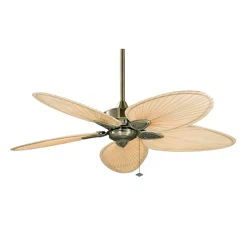
OWN ER’S M AN U AL
READ AND SAV E THESE I N ST RU CT I ON S
Models No. FP7300, FP7400, FP7410, FP7500, FP7510& FP7500RSP4LK
The WindPointe
®
Ceiling Fans
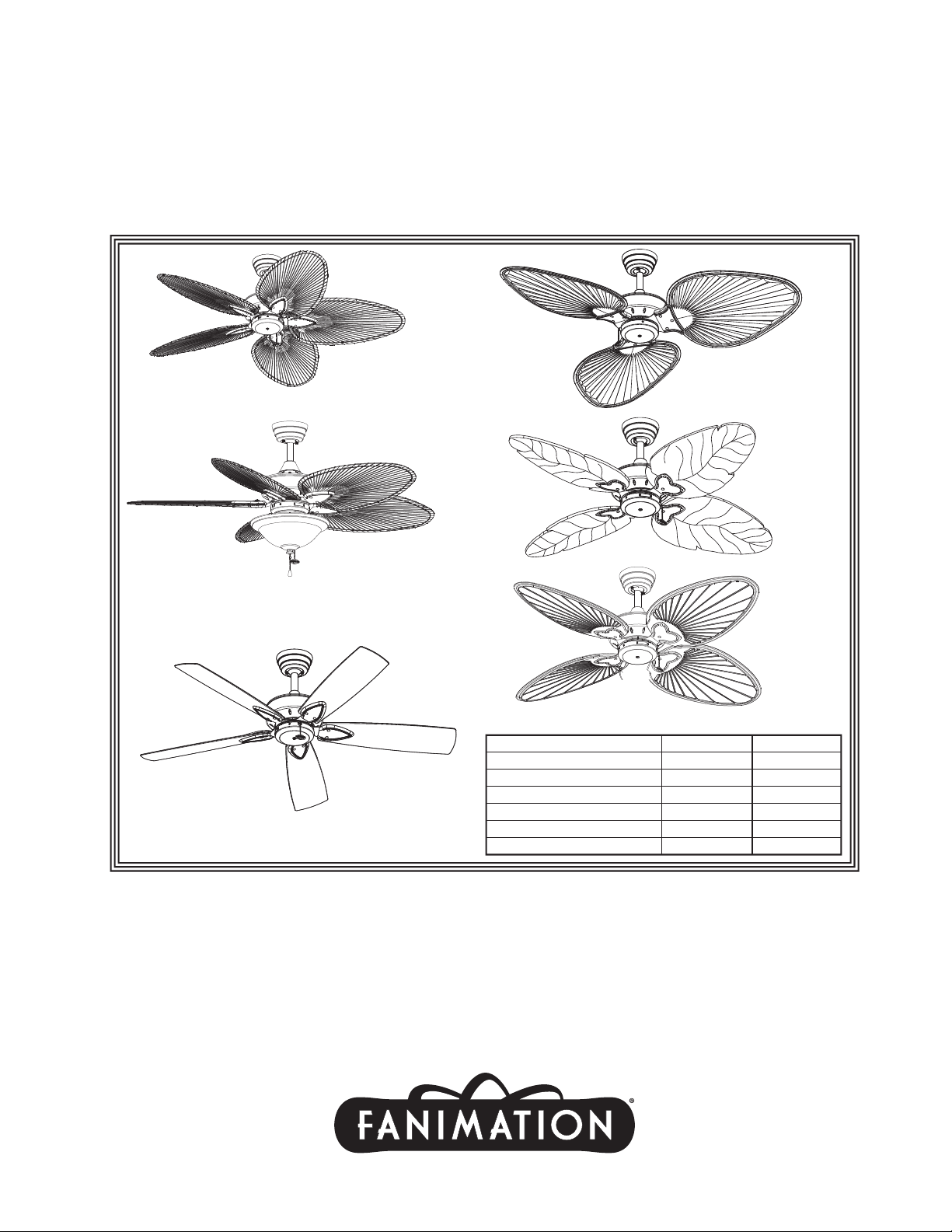
Windpointe™ Fan Model (Std) Net Weight (lbs) Net Weight (kgs)
28.46 12.91
27.75
26.29
12.58
11.95
FP7300
FP7400
FP7410
FP7500
FP7510
FP7500RSP4LK
25.57 1.60
25.57
33.25 15.1
1.60
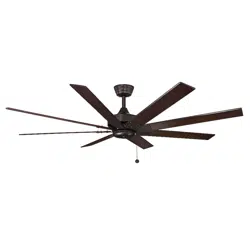
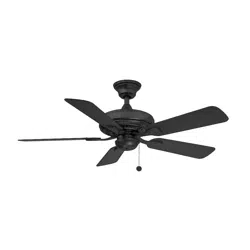
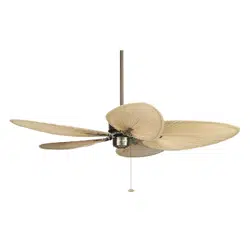
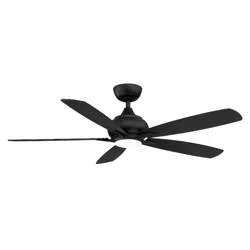
FP7410; 4-Bladed Model
FP7400; 4-Bladed Model
FP7500; 5-Bladed Model
FP7510; 5-Bladed Model
FP7300; 3-Bladed Model
FP7500RSP4LK; 5-Bladed Model
1. LIMITED LIFETIME MOTOR WARRANTY - If any part of your fan motor fails, due to a defect in materials or workmanship during
the lifetime of the original purchaser, Fanimation will provide the replacement part free of charge, when the defective fan is returned
to our national service center. Proof of purchase is required. Customer shall be responsible for all costs incurred in the removal or
reinstallation and shipping of the product for repairs or replacement.
2. ONE YEAR MOTOR LABOR WARRANTY - If your fan motor fails at any time within one year from the original purchase, due to
defects in materials or workmanship, labor to repair the motor will be provided free of charge at our national service center. Purchaser
will be responsible for labor charges after this one-year period. Customer shall be responsible for all costs incurred in the removal or
reinstallation and shipping of the product for repairs or replacement.
3. If any other part of your fan fails at any time within one year after original purchase, due to a defect in materials or workmanship, we
will repair, or replace, at our option, the defective part free of charge for parts and labor performed at our national service center.
4. Because of varying climate conditions, this warranty does not cover changes in the finish, including rusting, pitting, corroding,
tarnishing, or peeling.
5. This warranty is void and does not apply to damage from improper installation, neglect, accident, misuse, exposure to extremes of
heat or humidity, or as a result of any modification to the original product.
6. All costs of removal and reinstallation of the fan are the sole responsibility of the owner of the fan and not the store that sold the fan
or Fanimation.
7. Fanimation reserves the right to modify or discontinue any product at any time and may substitute any part under this warranty.
8. Under no circumstances may a fan be returned without prior authorization from Fanimation. The receipt of purchase must ac-
company authorized returns and must be sent freight prepaid to Fanimation. The fan to be returned must be properly packed to avoid
damage in transit; Fanimation will not be responsible for any damage resulting from improper packaging.
9. It is understood that any repair or replacement is the exclusive remedy available from Fanimation. There is no other expressed or
implied warranty. Fanimation hereby disclaims any and all implied warranties, including, but not limited to those of merchantability and
fitness for a particular purpose to the extent permitted by law. Some states do not allow limitations on implied warranties. Fanimation
will not be liable for incidental, consequential, or special damages arising out of or in conjunction with product use or performance,
except as may otherwise be accorded by law. This warranty gives you special legal rights and you may also have other rights that vary
from state to state.
10. A certain amount of wobble is normal and should not be considered a problem or a defect.
LIMITED LIFETIME WARRANTY
Extends to the original purchaser of a Fanimation Fan
Important Safety Instructions
WARNING: To avoid fire, shock and serious personal injury, follow these instructions.
Table of Contents
Unpacking Instructions . . . . . . . . . . . . . . . . . . . . . . . . . . . . . . . . . . . . . . .3
Energy Effi cient Use of Ceiling Fans . . . . . . . . . . . . . . . . . . . . . . . . . . . .4
Electrical and Structural Requirements . . . . . . . . . . . . . . . . . . . . . . . . . .4
How to Assemble Your Ceiling Fan . . . . . . . . . . . . . . . . . . . . . . . . . . . . .5
How to Hang Your Ceiling Fan . . . . . . . . . . . . . . . . . . . . . . . . . . . . . . . . .6
How to Wire Your Ceiling Fan - Pull Chain. . . . . . . . . . . . . . . . . . . . . . . .7
Installing the Canopy Housing . . . . . . . . . . . . . . . . . . . . . . . . . . . . . . . . .7
8. . . . . gnisuoH hctiwS dna ,sedalB naF eht gnitnuoM dna gnilbmessA
Operating Instructions - Pull Chain . . . . . . . . . . . . . . . . . . . . . . . . . . . . 11
Light Kit Assembly-FP7500RSP4LK ONLY . . . . . . . . . . . . . . . . . . . . . . .
Maintenance . . . . . . . . . . . . . . . . . . . . . . . . . . . . . . . . . . . . . . . . . . . . . . . 11
Blade Cleaning . . . . . . . . . . . . . . . . . . . . . . . . . . . . . . . . . . . . . . . . . . . . . 11
Parts List . . . . . . . . . . . . . . . . . . . . . . . . . . . . . . . . . . . . . . . . . . . . . . . . . .
Exploded-View Drawing. . . . . . . . . . . . . . . . . . . . . . . . . . . . . . . . . . . . . .
Trouble Shooting . . . . . . . . . . . . . . . . . . . . . . . . . . . . . . . . . . . . . . . . . . .
1. Read your owner’s manual and safety information before installing your new fan. Review the accompanying assembly diagrams.
2. Before servicing or cleaning unit, switch power off at service panel and lock service panel disconnecting means to prevent power
from being switched on accidentally. When the service disconnecting means cannot be locked, securely fasten a warning device, such
as a tag, to the service panel.
3. Be careful of the fan and blades when cleaning, painting, or working near the fan. Always turn off the power to the ceiling fan before
servicing.
4. Do not insert anything into the fan blades while the fan is operating.
5. Do not operate reversing switch until fan blades have come to a complete stop.
Additional Safety Instructions
1. To avoid possible shock, be sure electricity is turned off at the fuse box before wiring, and do not operate fan without blades.
2. All wiring and installation procedures must satisfy National Electrical Codes (ANSI/ NFPA 70-1999) and Local Codes. The ceiling fan
must be grounded as a precaution against possible electrical shock. Electrical installation should be made or approved by a licensed
electrician.
3. The fan base must be securely mounted and capable of reliably supporting at least 50 lbs. See page 4 of owner’s manual for
support requirements. Consult a qualified electrician if in doubt.
4. The fan must be mounted with the fan blades at least 7 feet from the floor to prevent accidental contact with the fan blades.
5. Follow the recommended instructions for the proper method of wiring your ceiling fan. If you do not have adequate electrical
knowledge or experience, have your fan installed by licensed electrician.
WARNING: This product is designed to use only those parts supplied with this product and/or accessories designated specifically for
use with this product. Using parts and/or accessories not designated for use with this product could result in personal injury or property
damage.
WARNING: To reduce the risk of personal injury, do not bend the blade bracket (flange or blade holder) when installing the brackets,
balancing the blades, or cleaning the fan. Do not insert foreign objects in between rotating fan blades.
WARNING: To Reduce The Risk Of Fire Or Electric Shock. Do Not Use This Fan With Any Solid-State Speed Control Device.
12
14
15
10
This Manual is Designed to Make it as Easy as Possible for You
to Assemble, Install, Operate, and Maintain Your Ceiling Fan
Unpacking Instructions
For your convenience, check-off each step. As each step is completed, place a check mark. This will ensure that all
steps have been completed and will be helpful in fi nding your place should you be interrupted.
Wiring outlet box and box connectors must be of type
required by local code. The minimum wire would be a 3-
conductor (2-wire with ground) of the following size:
NOTE: Place the parts from the loose parts bags in a small
container to keep them from being lost. If any parts are missing,
contact your local retailer.
Tools Needed for Assembly Materials
Wire Size A.W.G.Installed Wire Length
14
12
Up to 50 ft.
50 - 100 ft.
NOTE: If you are uncertain of part description, refer to
exploded view illustration. (Figure 1, page 12)
3
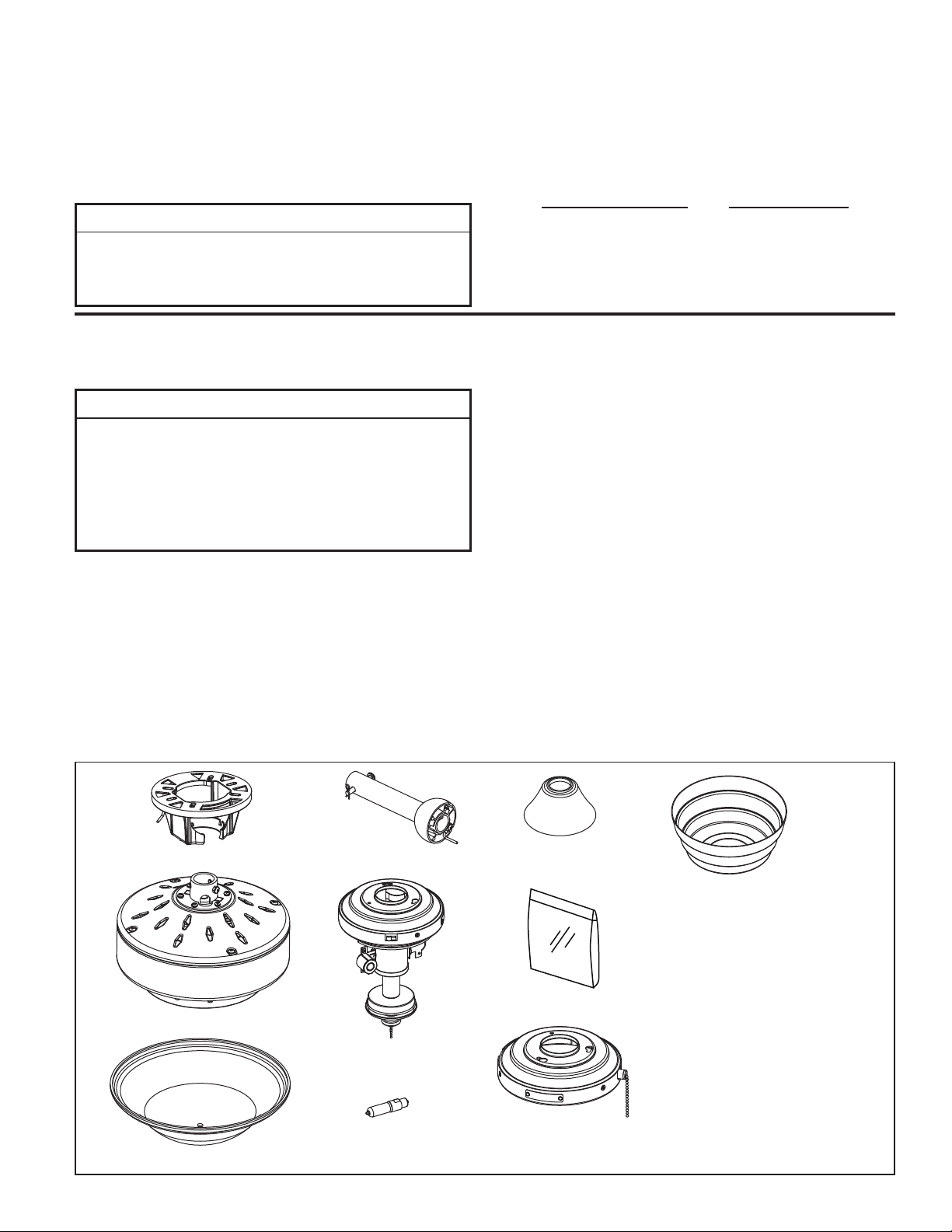
1. Check to see that you have received the following
parts:
• Fan Motor Assembly
• Switch Cup/Adapter
Assembly
• Downrod/Hanger Ball
Assembly
• Hanger Bracket
• Ceiling Canopy
• Motor Coupling Cover
• Switch Cup/Adapter
Assembly with Light Fitter
(FP7500RSP4LK only)
• Blade Holder W/Covers
• Glass Bowl
(FP7500RSP4LK only)
• 75W minican Bulb
(FP7500RSP4LK only)
• Blades
Blade Holders with Covers
(not shown –
see parts list for more details)
Hardware Bags
Fan Motor Assembly
Downrod/
Hanger Ball
Assembly
Hanger Bracket
• One Phillips head screwdriver
• One stepladder
• One ¼˝ blade screwdriver
• One wire stripper
• Three wire connectors
(supplied)
Ceiling Canopy
Blade Set (not shown –
see parts list for more details)
• Hardware bags:
– ¼-20 x ½˝
– ¼-20 x 14
(blade
holder to fan motor hub)
screws with lockwashers
– 3/16˝-24 carriage head nut
– 3/16˝-24 x 11mm (Models FP7300
& FP7400) (blade to blade holder)
washer-head screws
– 3/16˝
– 3/16˝-24 x 13mm
(Model FP7500RSP4LK)
(blade to blade holder) washer-head screws
-24 x 17mm (Model FP7500)
(blade to blade holder) washer-head
screws
– Phillips screwdriver, 4˝
– Two 5/32˝ threaded rods
– Two 5/32˝ lockwashers
– Two knurled knobs
– Ceiling Support Cable with clamp
– Flat washer
– Lag bolt
– Four wire connectors
– Chain coupler & chain fob
– Balance Kit
– Pull Chain-fan
– Pull Chain-light
(Model FP7500RSP4LK only)
Motor Coupling Cover
▲
WARNING
Do not install or use fan if any part is damaged or
missing. This product is designed to use only those
parts supplied with this product and/or any accessories
designated specifically for use with this product by
Fanimation. Substitution of parts or accessories not
designated for use with this product by Fanimation could
result in personal injury or property damage. Contact
your retail store for missing or damaged parts.
▲
WARNING
Before assembling your ceiling fan, refer to section on
proper method of wiring your fan (page 4). If you feel you
do not have enough wiring knowledge or experience,
have your fan installed by a licensed electrician.
Switch Cup Housing/
Adapter Assembly
Switch Cup/Adapter
Assembly with Light Fitter
(FP7500RSP4LK)
Glass Bowl (FP7500RSP4LK)
75-Watt
minican Bulbs
(FP7500RSP4LK)
mm pan head screws
(blade holder to fan motor hub)
with lock washers
(Model FP7500RSP4LK)

4
Electrical and Structural Requirements
Your new ceiling fan will require a grounded electrical
supply line of 120 volts AC, 60 Hz, 15 amp circuit. The
outlet box must be securely anchored and capable of
withstanding a load of at least 50 lbs. Figure 1 depicts
different structural configurations that may be used for
mounting the outlet box.
Ceiling
Ceiling
Joists
2˝ x 4˝
Outlet
Box
Figure 1
▲
WARNING
To avoid fire or shock, follow all wiring instructions
carefully. Any electrical work not described in these
instructions should be done or approved by a licensed
electrician.
▲
WARNING
Turning off wall switch is not sufficient. To avoid
possible electrical shock, be sure electricity is turned
off at the main fuse box before wiring. All wiring must
be in accordance with National and Local codes and the
ceiling fan must be properly grounded as a precaution
against possible electrical shock.
▲
WARNING
To reduce the risk of fire, electrical shock, or personal
injury, mount fan to outlet box marked acceptable for
fan support. Use screws supplied with outlet box. Most
outlet boxes commonly used for support of light fixtures
are not acceptable for fan support and may need to be
replaced. Consult a qualified electrician if in doubt.
Energy Effi cient Use of Ceiling Fans
Ceiling fan performance and energy savings rely
heavily on the proper installation and use of the ceiling
fan. Here are a few tips to ensure efficient product
performance.
Choosing the Appropriate Mounting Location
Ceiling fans should be installed, or mounted, in the middle
of the room and at least 7 feet above the floor and 18
inches from the walls. If ceiling height allows, install the fan
8 - 9 feet above the floor for optimal airflow. Consult your
Fanimation Retailer for optional mounting accessories.
Turn Off When Not in the Room
Ceiling fans cool people, not rooms. If the room is
unoccupied, turn off the ceiling fan to save energy.
Using the Ceiling Fan Year Round
Summer Season: Use the ceiling fan in the counter-
clockwise direction. The airflow produced by the ceiling
fan creates a wind-chill effect, making you “feel” cooler.
Select a fan speed that provides a comfortable breeze,
lower speeds consume less energy.
Winter Season: Reverse the motor and operate the ceiling
fan at low speed in the clockwise direction. This produces
a gentle updraft, which forces warm air near the ceiling
down into the occupied space.Remember to adjust your
thermostat when using your ceiling fan - additional energy
and dollar savings could be realized with this simple step!
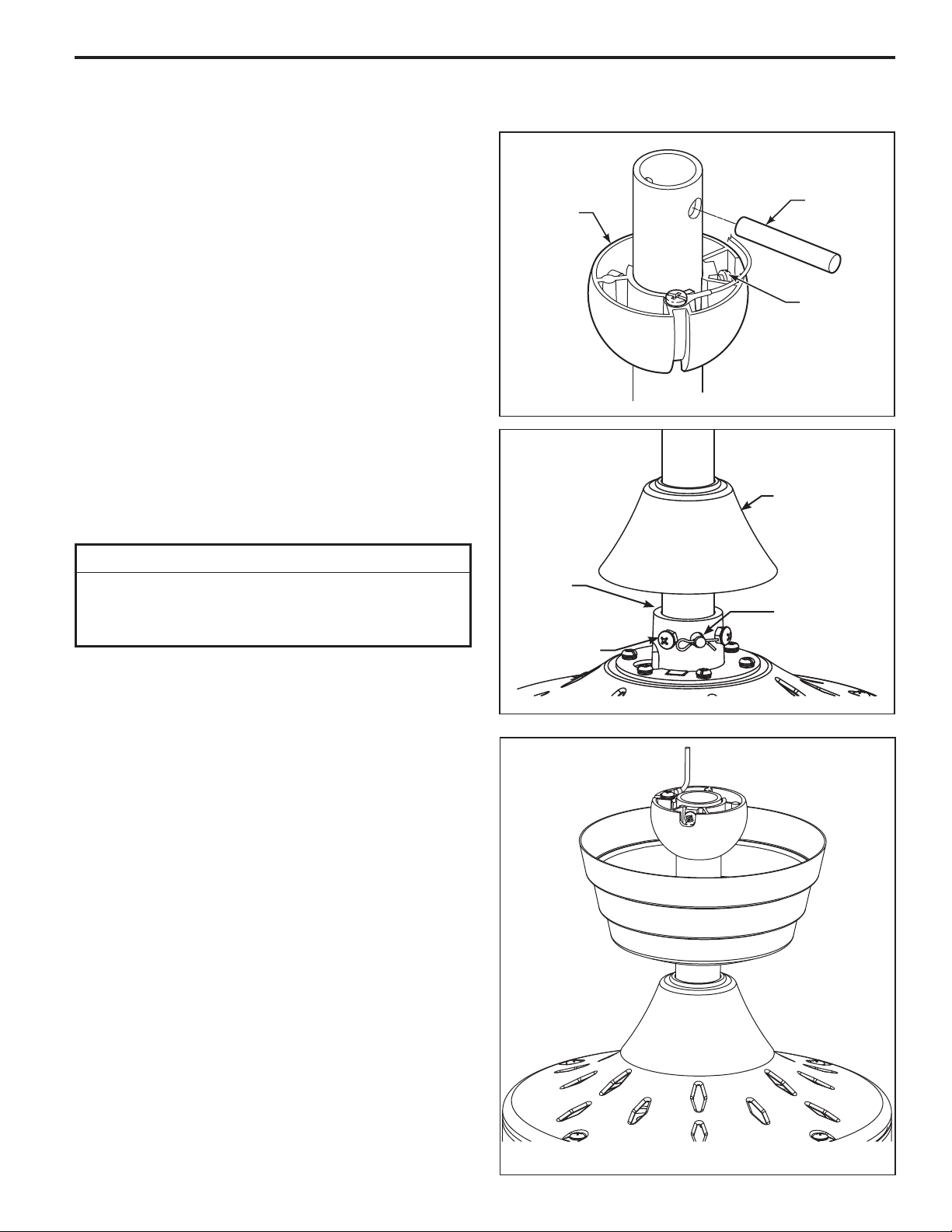
How to Assemble Your Ceiling Fan
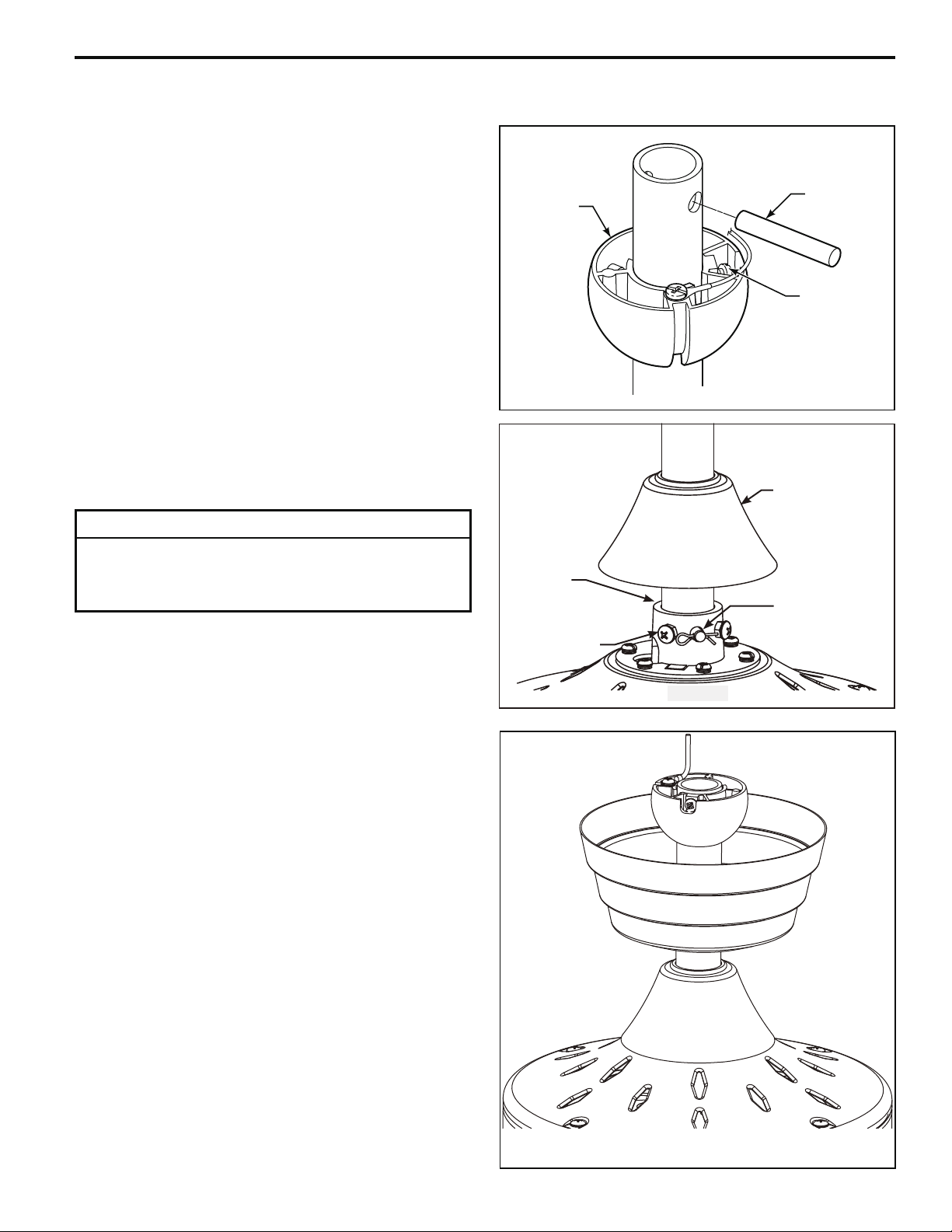
Pin
Setscrew
Hanger
Ball
Figure 1
Figure 2
1. Remove the Hanger Ball by loosening the setscrew
in the Hanger Ball until the ball falls freely down the
Downrod. (Figure 1) Remove the Pin from the Downrod,
then remove the Hanger Ball. Retain the Pin and Hanger
Ball for reinstallation in Step 5.
2. The fan comes with blue, black, white 80˝ wires and
safety cable. Separate & untwist the three wires and safety
cable. Route the wires through the downrod.
NOTE: You will be using either the 6˝ downrod supplied with
your fan or an optional downrod purchased separately.
3. Loosen the two setscrews in the Downrod Support. Align
the Clevis Pin holes in the Downrod with the holes in the
Downrod Support. Install the Clevis Pin and secure with
the Hairpin Clip. (Figure 3) Be sure to push the straight
leg of the hairpin clip through the hole near the end of the
clevis pin until the curved portion of the hairpin clip snaps
around the clevis pin. The hairpin clip must be properly
installed to prevent the clevis pin from working loose. Pull
on the Downrod to make sure the clevis pin is properly
installed.
4. Route wires and cable through Motor Coupling Cover
and Canopy on fan shown with open side facing up.
(Figure 3)
5. Reinstall the Hanger Ball (Figure 1) on the Downrod
as follows. Route the three 80˝ wires and cable through
the Hanger Ball. Position the Pin through the two holes
in the Downrod and align the Hanger Ball so the Pin is
captured in the groove in the top of the Hanger Ball. Pull
the Hanger Ball up tight against the pin. Securely tighten
the setscrew in the Hanger Ball. A loose setscrew
could create fan wobble.
6. While pulling up on the hanger ball, securely tighten the
two 3/16-24 x 3/8˝ setscrews in the downrod support. Slide
the Motor Coupling Cover down. (Figures 2 & 3)
7. The fan comes with blue, black, white leads and support
cable. Before installing fan, measure up approximately
6-9 inches above top of Downrod/Hanger Ball Assembly.
Cut off excess wire and strip back insulation ½˝ from end
of wire.
8. All set screws must be checked and retightened where
necessary before installation.
9. You have now completed the upper assembly of your
new ceiling fan. You can now proceed with the hanging
and the electrical wiring of your fan.
Hairpin Clip
Motor
Coupling
Cover
Figure 3
Downrod
Support
▲
WARNING
It is critical that the clevis pin in the downrod support
is properly installed and the setscrews are securely
tightened. Failure to verify that the pin and setscrews
are properly installed could result in the fan falling.
Setscrew (2)
5
6
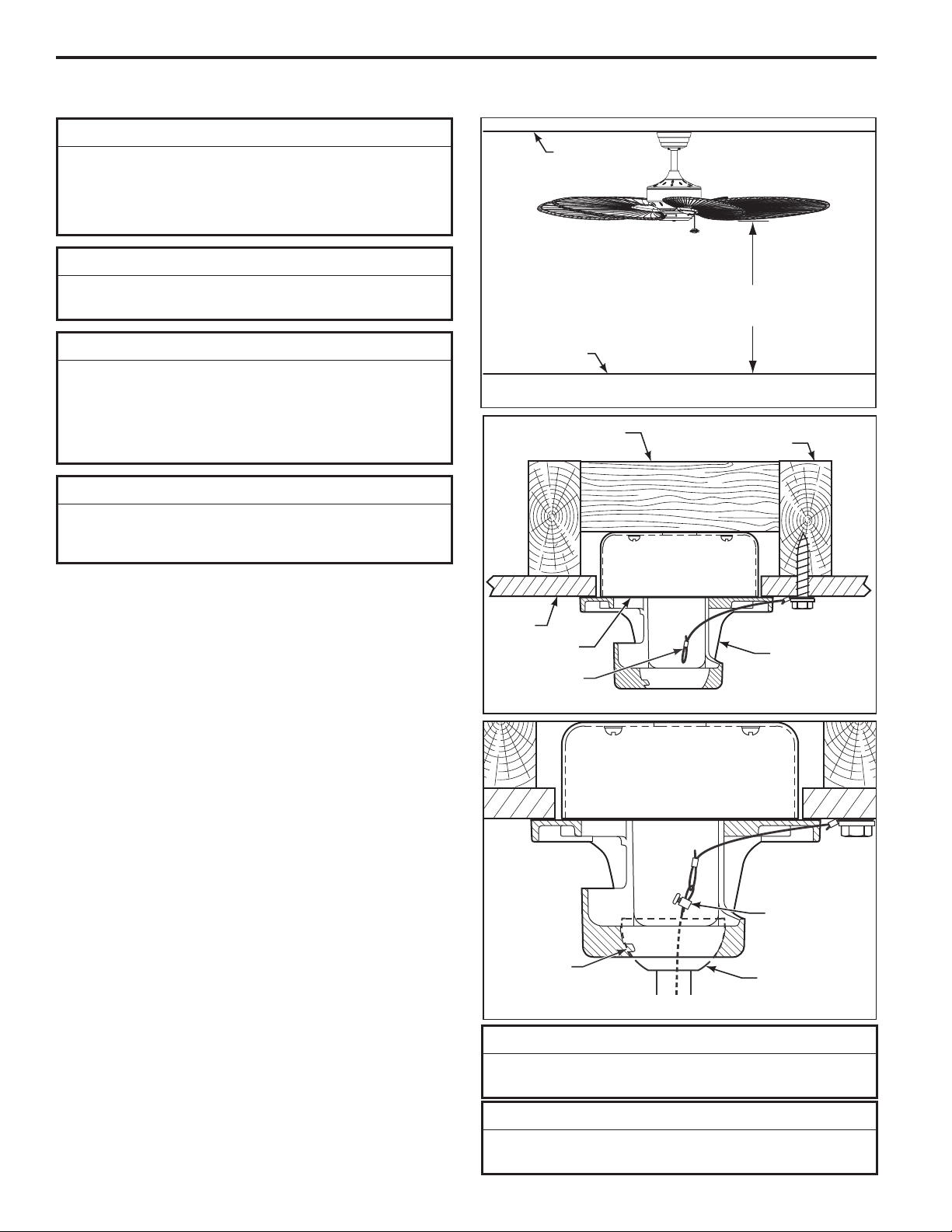
How to Hang Your Ceiling Fan
Figure 1
Floor
Ceiling
No
less than
7 ft
▲
WARNING
The fan must be hung with at least 7´ of clearance from
floor to blades (Figure 1)
▲
WARNING
The outlet box must be securely anchored and capable
of withstanding a load of at least 50 lbs. Hanger bracket
must seat fi rmly against outlet box. If the outlet box is
recessed, remove wallboard until bracket contacts box.
If bracket and/or outlet box are not securely attached,
the fan could wobble or fall.
CAUTION
Do not connect fan blades until the fan is completely
installed. Hanging fan with blades connected may result
in damage to the fan blades.
▲
WARNING
To avoid possible electrical shock, be sure electricity is
turned off at the main fuse box before hanging.
NOTE: If you are not sure if the outlet box is grounded,
contact a licensed electrician for advice, as it must be
grounded for safe operation.
▲
WARNING
Failure to seat tab in groove could cause damage to
electrical wires and possible shock or fire hazard.
▲
WARNING
To avoid possible shock, do not pinch wires between the
downrod/hanger ball assembly and the hanger bracket.
1. Using the
3
⁄8˝ x 2˝ lag bolt and flat washer, attach
safety cable to ceiling joist or wood structural member.
The lag bolt will pass through the flat washer, safety
cable loop, and into the building structure (Figure 2). You
will first drill a ¼˝ pilot hole into the building structure to
prevent splitting or cracking.
2. Securely attach the hanger bracket to ceiling junction
box acceptable for ceiling fan support.
NOTE: Ceiling support cable cannot be secured to
junction box only, it must be directly secured to ceiling
joist or structural member using the ⅜˝ x 2˝ lag bolt and
fl at washer. (Figure 2)
3. Make sure the electrical supply wires, including the
hanger bracket grounding wire and safety cable are
pulled through the downrod, between the hanger bracket
and the junction box so that electrical connections can be
made later.
4. Carefully lift the fan and seat the downrod/hanger ball
assembly on the hanger bracket that was just attached to
the ceiling joist. Be sure the groove in the ball is lined up
with tab on the hanger bracket. (Figure 3)
5. Attach the safety cable to ceiling support cable. Slide
cable clamp onto safety cable (from fan). Place the end
of cable through the loop of ceiling support cable. Pull as
much cable through loop as possible. Feed end of cable
into clamp hole and firmly tighten screw (Figure 3). Cut
off excess safety cable.
Figure 2
Junction
Box
Ceiling
Support
Cable
Hanger Bracket
Ceiling
Ceiling Joist
Wood Member
(2˝ x 4˝ Approx.)
Figure 3
Downrod/Hanger
Ball Assembly
Attach
Safety Cable to
Ceiling Support
Cable
Tab
NOTE: Supply wires and
fan wires omitted for clarity

7
How to Wire Your Ceiling Fan - Pull Chain
If you feel that you do not have enough electrical wiring knowledge or experience, have your fan installed by a
licensed electrician.
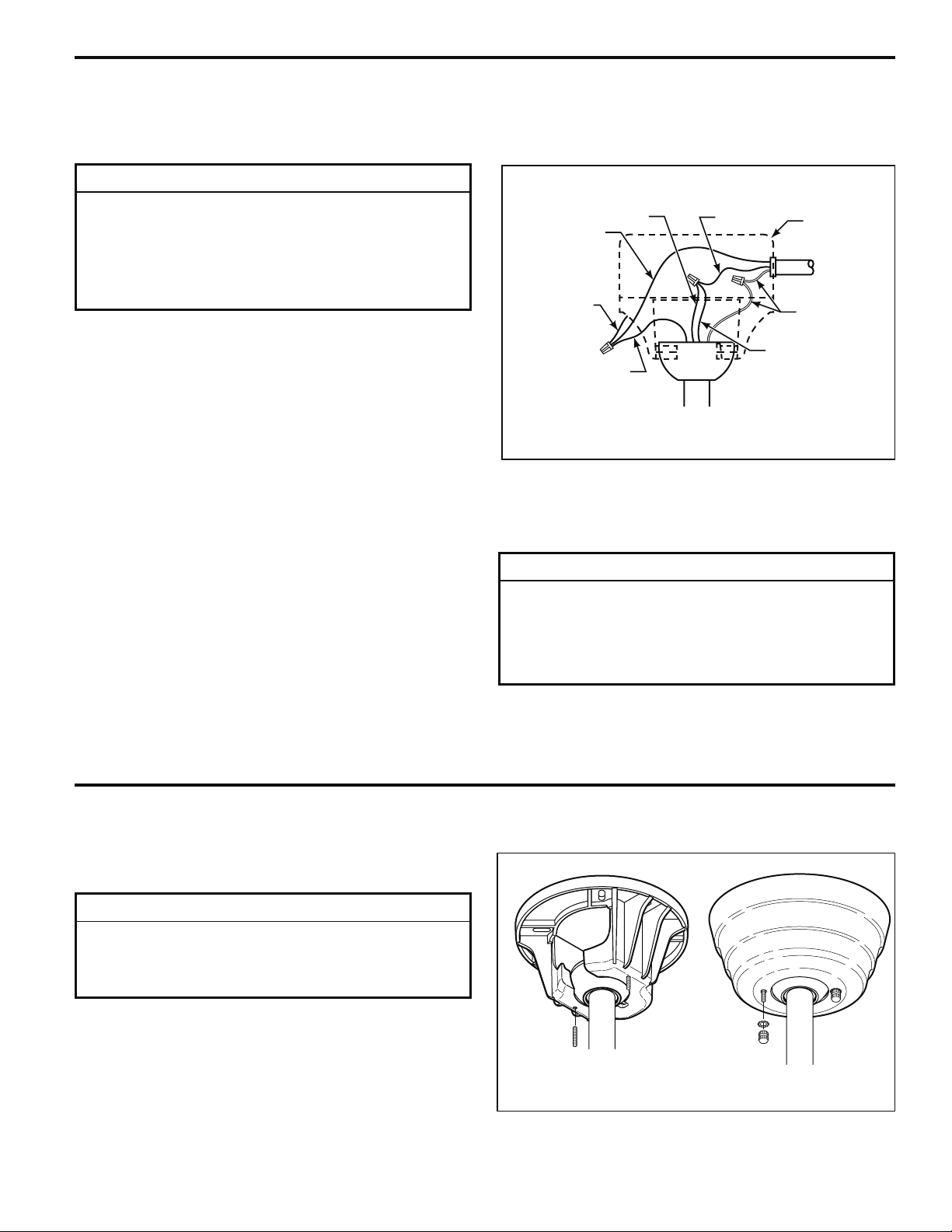
1. Connect the green grounding lead from the hanger ball
and the green grounding lead from the hanger bracket to
the supply grounding conductor (this may be a bare wire
or wire with green colored insulation). Securely connect
wires with wire connectors supplied.
2. Securely connect the white fan motor wire to the white
supply (neutral) wire using wire connector supplied.
Securely connect the black fan motor wire and blue wire
to the black supply wire using wire connector supplied
(Figure 1).
3. After splicing and making the wire connections, the
wires should be spread apart and turned upward with
the grounded conductor and the equipment-grounding
conductor on one side of the outlet box and the ungrounded
conductor on the other side of the outlet box.
4. Secure the ceiling canopy to the hanger bracket with
threaded rods, external lockwashers, and knurled knobs
provided (see below).
Household
Supply
Listed
Outlet Box
Black
Green Wire
(Ground) from
Hanger Bracket
Green Wire
(Ground)
Black
Fan Wire
White
Blue
Green Wire
(Ground) from
Hanger Bowl
Figure 1
▲
WARNING
To avoid possible electrical shock, be sure electricity is
turned off at the main fuse box before wiring.
NOTE: If you are not sure if the outlet box is grounded,
contact a licensed electrician for advice, as it must be
grounded for safe operation.
▲
WARNING
Check to see that all connections are tight, including
ground, and that no bare wire is visible at the wire
connectors, except for the ground wire. Do not operate
fan until the blades are in place. Noise and fan damage
could result.
Installing the Canopy Housing
1. Screw in two threaded rods into the Hanger Bracket
(Figure 1a).
NOTE: The threaded rods in the hanger bracket serves as
guides for easier installation.
2. Securely attach the Canopy Housing to the Hanger
Bracket using the external lockwashers and knurled knobs
supplied with your fan (Figure 1b).
Figure 1a Figure 1b
NOTE: Supply wires and fan wires omitted for clarity.
NOTE: This step is applicable after the neccessary wiring
is completed.
▲
WARNING
To avoid possible fire or shock, make sure that the
electrical wires are completely inside the canopy housing
and not pinched between the housing and the ceiling.
8
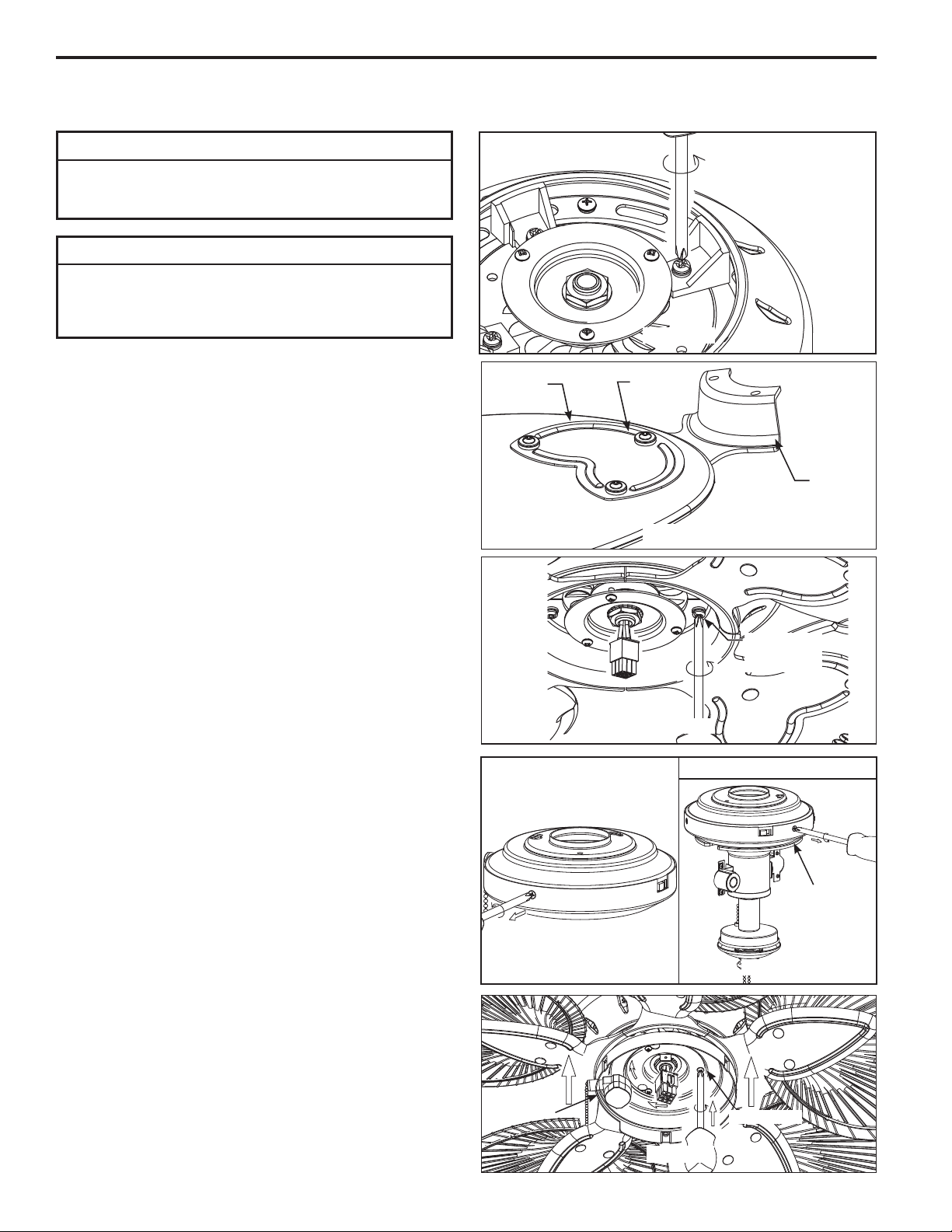
Assembling and Mounting the Fan Blades and Sw itch Hsg
1. Remove and discard the (rubber) motor “stops” by
removing the five screws. (Figure 1)
Blade & Blade Holder Assembly:
2. Lay the side of the blade holder on a flat surface with the
inside of the blade holder facing up.
3. Assemble the blade to the blade holder with the carriage
nuts, washer-head screws and the blade cover. Make sure
the bottom edge of the blade is fully seated against the
blade holder.
4. Tighten screws with a screwdriver provided, don’t over-
tighten. (Figure 2)
5. Attach assembled blades and blade holders to the motor
hub using the provided screws & lock washers. (Figure 3)
6. Make sure the screws securing the blade holders to the
motor hub are tight and that the blade holders are properly
seated.
Housing Switch Cup/Adapter Assembly:
7a. Disassemble the Housing Switch Cup/Adapter assembly
by removing three screws. (Figure 4a)
7b. Disassemble the Switch Cup/Adapter Assembly with
Light Fitter by removing three screws. (Figure 4b)
8. Remove one of the three screws in the support
bracket. Slightly loosen the remaining two screws.
Assemble the adapter assembly to the housing support
bracket using the two key slots in the adapter assembly.
Replace the third screw and securely tighten all three
screws. (Figure 5)
Figure 3
INSTALLATION NOTE
Do not connect fan blades until the fan is completely
installed. Installing the fan with blades assembled may
result in damage to the fan blades.
▲
WARNING
To reduce the risk of personal injury, do not bend the
blade holders when installing, balancing the blades or
cleaning the fan. Do not insert foreign objects in between
the rotating blades.
Figure 1
Fan Blade
Figure 2
Blade
Holder
Blade
Cover
Screw
(2 per blade
holder)
Figure 4a
FP7500RSP4LK
<<FP7500RSP4LK ONLY>>
Switch Cup/Adapter
Assembly
with Light Fitter
Figure 5
ADAPTER
ASSEMBLY
SCREWS (3)
Figure 4b
9
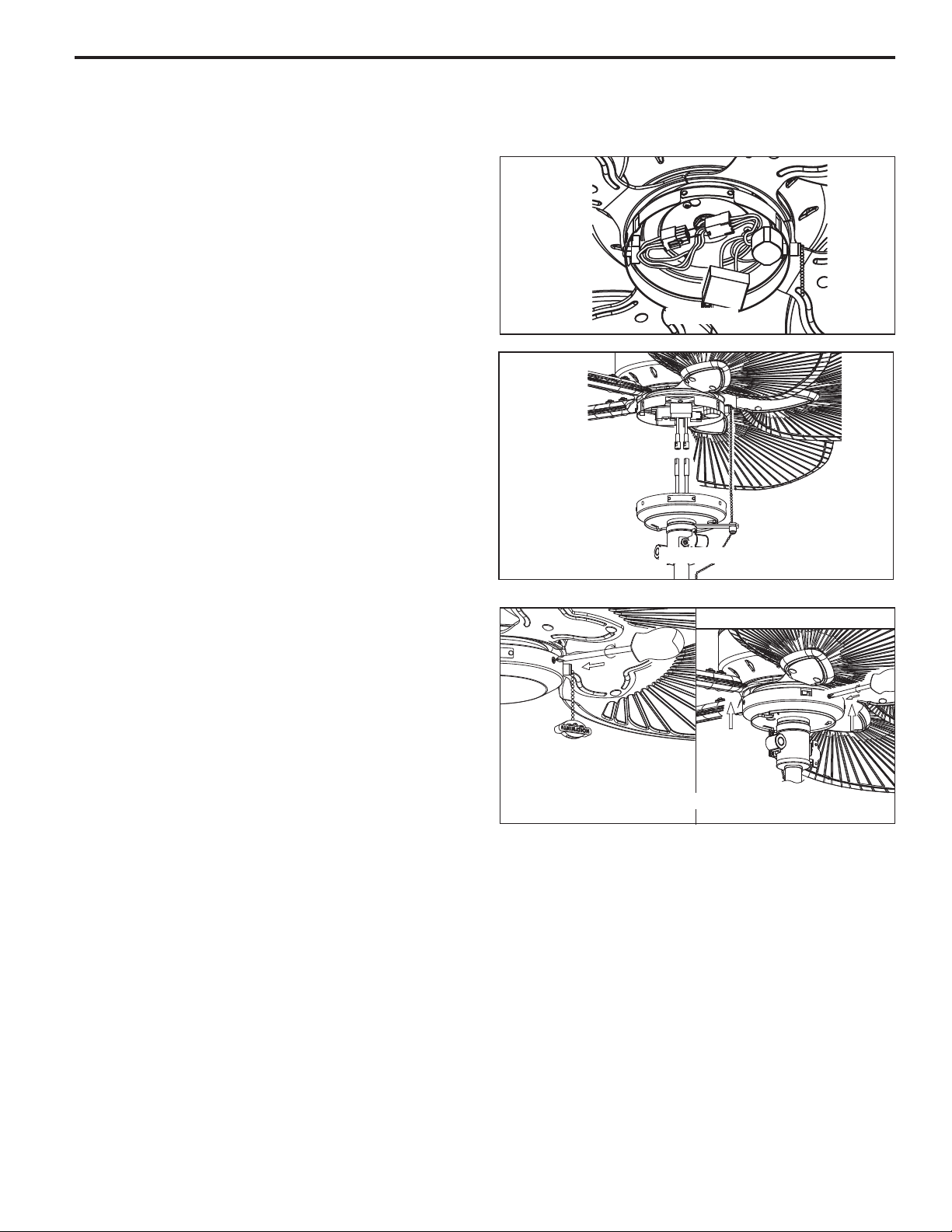
10. Assemble the Housing Switch Cup onto the assembled
Adapter with three screws. (Figure 7)
11a. Restore Power and your fan is now wired to be turned
on and off from the fan pull chain speed control.
11b.
<<FP7500RSP4LK ONLY>> Continue to the
light kit assembly process.
Assembling and Mounting the Fan Blades and Switch Hsg (cont’d)
9a. Assemble the Adapter assembly on the Housing Support
bracket and tighten three screws. Securely attach the 9-pins
witch cup connector to wiring harness socket within Adapter
assembly. (Figure 6a)
Figure 6a
Figure 6b
9b. <<FP7500RSP4LK ONLY>> Connect the 2-pin
connector from the switch cup housing light fitter to the
2-pin connector from the motor assembly. (Figure 6b)
FP7500RSP4LK
Figure 7

10
1.
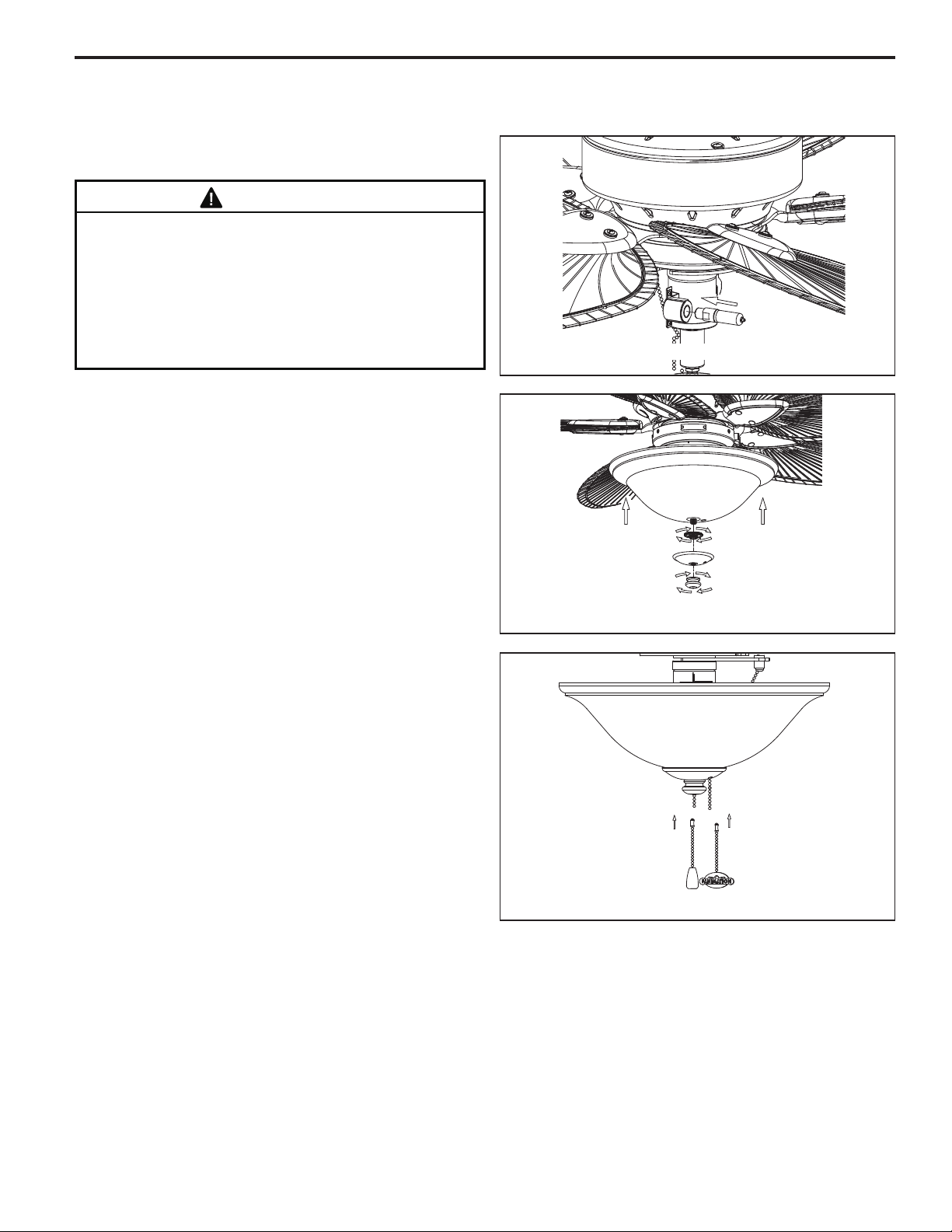
Install included minican bulbs into the sockets. (Figure 1)
2. Secure glass bowl to light fitter using supplied nut.
Next, install trim cover followed by the finial. Do not
over tighten. (Figure 2)
Light Kit Assembly—FP7500RSP4LK ONLY
Figure 1
Figure 2
Figure 3
CAUTION
3. Install pull chains and fobs. (Figure 3)
Bulb is pressurized and may shatter. DO NOT TOUCH
BULB WITH BARE HANDS. Fingerprints may result in
shorter bulb life. Remove fingerprints with alcohol
prior to use.
To reduce the risk of fire, use 75-watt max. type
T4-minican JD E11 tungsten halogen bulb. Turn off the
wall switch and allow the bulb to cool for 10 minutes
before relamping.
4. Restore Power and your fan is now wired to be turned
on and off from the fan and light kit pull chain control.

11
Maintenance
Periodic cleaning of your new ceiling fan is the only
maintenance that is needed.
When cleaning, use only a soft brush or lint free cloth to
avoid scratching the fi nish.
Abrasive cleaning agents are not required and should be
avoided to prevent damage to fi nish.
CAUTION
Do not use water when cleaning your ceiling fan. It
could damage the motor or the blades and create the
possibility of electrical shock.
Blade Cleaning
Periodic light dusting of the blades is recommended.
A feather duster will work best.
Avoid using water, cleansers, or harsh rags, which can
warp and ruin the blades.
Operating Instructions - Pull Chain
1. Restore electrical power to the outlet box by turning the
electricity on at the main fuse box. (Figure 1)
3. If airflow is desired in the opposite direction, turn the
fan off and wait for the blades to stop turning. Then slide
the reverse switch to the opposite position and turn fan
on again. Your fan model is equipped with a 4-position,
3-speed, pull chain switch. The operating sequence is as
follows: (Figure 3)
Reversing
Switch
Figure 1
MAIN FUSE BOX
2. Check the operation of the fan by gently pulling on the
pull chain switch. (Figure 2)
Pull Chain Operating Sequence
1
st
Pull High
2
nd
Pull Medium
3
rd
Pull Low
4
th
Pull Off
Reverse Switch Information
Season Rotation Direction Switch Position
Summer Counter-Clockwise Right
Winter Clockwise Left
Figure 2
FP7500RSP4LK
FP7500RSP4LK
Figure 3
Figure 4
Reversing
Switch
4.
<<FP7500RSP4LK ONLY>>
Check the operation of the down light by gently pulling
on the light kit pull chain. (Figure 4)
1
st
Pull
2
nd
Pull
On
Off
Light Kit Pull Chain Operating Sequence

12
Before discarding packaging materials, be certain all parts have been removed
Parts List
Models FP7300RS, FP7400**, FP7410**
How To Order Parts
When ordering repair parts, always
give the following information:
• Part Number
• Part Description
• Fan Model Number
Contact your retail store for repair parts.
Insert FINISH CODES (Refer to fan model number located on downrod support)
Ref. # Description
Part # FP7300RS
1 Hanger Bracket Assembly APG610BL
2 Downrod/Hanger Ball Assembly Containing:
ADR1-6**
2a Hanger Ball Assembly
2b Downrod
2c Hairpin Clip
2d Clevis Pin
3 Ceiling Canopy PG165**
4 Motor Coupling Cover P81090**
5 Fan Motor Assembly AMA51**
6
Switch Cup Housing/Adapter Assembly AP5005**
AP5006
7 Blade Holder Cover AP5061**
8 Blade Holder
AP5051**
9
Hardware Bag Containing:
HDWFP51**
5
/32˝ Threaded Rods (2)
HDWHW50
5
/32˝ External Lockwasher (2)
Knurled Knobs (2)
Blade Balance Kit (BALKT)
Chain Coupler
Chain Fob
Wire Connectors (4)
Blade Mounting Hardware Bag Containing:
HDWBM51**
3
/16˝–24 x 11 mm Washer-Hd Screws (Models FP7300 & FP7400)
3
/16˝–24 x 17 mm Washer-Head Screws (Model FP7500)
3
/16˝–24 Carriage Head Nuts
Blade Holder Mounting Hardware Bag Containing:
HDWBH53**¼–20 x ½˝ Phillips Head Screws, with Lock Washers
Philips Screwdriver, 4˝
Support Cable Bag Containing:
HWBSCABLE
Ceiling Support Cable with Clamp
Lag Bolt,
3
/8˝ x 2˝
Flat Washer
Not
Shown
Blades B3000BW (3)
B4010CP (4) for 7400AB
B4020SS (4) for 7400RS
B4010CP (4) for 7410OB
B4020SS (4) for 7410AB
Wiring Harness (part of Switch Cup Housing/Adapter assembly)
APG610BL
ADR1-6**
PG165**
P81090**
AMA55*
AP5005**
AP5006
AP5065**
AP5055**
HDWFP55**
HDWHW50
HDWBM55**
HDWBH53**
APG610BL
ADR1-6**
PG165**
P81090**
AMA55*
AP5005**
AP5006
AP5065**
AP5055**
HDWFP55**
HDWHW50
HDWBM55**
HDWBH53**
HWBSCABLEHWBSCABLE
Part # FP7410**Part # FP7400**

13
Parts List
Models FP7500**, 7510MW & FP7500RSP4LK
Ref. # Description
1 Hanger Bracket Assembly
2 Downrod/Hanger Ball Assembly Containing:
2a Hanger Ball Assembly
2b Downrod
2c Hairpin Clip
2d Clevis Pin
3 Ceiling Canopy
4 Motor Coupling Cover
5 Fan Motor Assembly
6a
6b
Switch Cup Housing/Adapter Assembly
Wiring Harness (part of Switch Cup Housing/Adapter assembly)
7 Blade Holder Cover
8 Blade Holder
9
10
Glass (FP7500RSP4LK only)
Bulb (FP7500RSP4LK only)
11
Hardware Bag Containing:
5
/32˝ Threaded Rods (2)
5
/32˝ External Lockwasher (2)
Knurled Knobs (2)
Blade Balance Kit (BALKT)
Chain Coupler
Chain Fob
Pull Chain - Light Kit (FP7500RSP4LK only)
Wire Connectors (4)
Blade Mounting Hardware Bag Containing:
3
/16˝–24 x 11 mm Washer-Hd Screws (Models FP7300 & FP7400)
3
/16˝–24 x 17 mm
3
/16˝–24 x 13 mm
Washer-Head Screws (Model FP7500)
Washer-Head Screws (Model FP7500RSP4LK)
3
/16˝–24 Carriage Head Nuts
Blade Holder Mounting Hardware Bag Containing:
¼–20 x ½˝ Phillips Head Screws, with Lock
¼–20 x 14mm Pan Head Screws, with Lock Washers
(Model FP7500RSP4LK)
Washers
Philips Screwdriver, 4˝
Support Cable Bag Containing:
Ceiling Support Cable with Clamp
Lag Bolt,
3
/8˝ x 2˝
Flat Washer
Not
Shown
Blades
Part # FP7500**
APG610BL
ADR1-6**
PG165**
P81090**
AMA53**
AP5005**
AP5006
AP5063**
AP5053**
HDWFP53*
*
HDWHW50
HDWBM53**
HDWBH53**
HWBSCABLE
ISP4 (5) for 7500AB
ISP5 (5) for 7500MW
ISD4A (5) for 7500RS
Part # FP7510MW Part # FP7500RSP4LK
APG610BL
ADR1-6**
PG165**
P81090**
AMA53**
AP5005**
AP5063**
AP5053**
HDWHW50
APW22MW (5)
AP5006
HDWFP53**
HDWBM53**
HDWBH53**
HWBSCABLE
APG610BL
ADR1-6RS
PG165RS
AP1115RS
AP5063RS
AMA7500RSP4LK
AP750003RS
AP5053RS
P801102FW
PPE11B75
HDWFP7500RSP4LK
12 Blades (FP7500RSP4LK only)
APBPP4BR (5) for
7500RSP4LK
Switch Cup/Adapter Assembly with Light Fitter (FP7500RSP4LK only)
How To Order Parts
When ordering repair parts, always
give the following information:
• Part Number
• Part Description
• Fan Model Number
Contact your retail store for repair parts.
Before discarding packaging materials, be certain all parts have been removed
Insert FINISH CODES (Refer to fan model number located on downrod support)

14
FP7300* * , FP7400* * , FP7410* * , FP7500* * , FP7510* * & FP7500RSP4LK
Exploded-V iew
NOTE: The illustration shown is not to scale or its actual configuration may vary
Figure 1
7
11
5
4
3
1
2a
2b
2c
2d
2
8
7
8
7
8
FP7300**
Blade Holders
FP7400** & FP7410**
Blade Holders
FP7500**, FP7510** & FP7500RSP4LK
Blade Holders
6a
6b
10
12
9
11
FP7500RSP4LK ONLY
15
Trouble Shooting
▲
WARNING
For your own safety turn off power at fuse box or circuit breaker before trouble shooting your fan.
Trouble Probable Cause Suggested Remedy
1. FAN WILL NOT START
1. Fuse or circuit breaker blown.
2. Loose power line connections to the fan, or loose
switch wire connections in the switch housing.
3. Reversing switch in neutral position.
1. Check main and branch circuit fuses or circuit
breakers.
2. Check line wire connections to fan and switch wire
connections in the switch housings.
CAUTION: Make sure main power is turned off !
3. Make sure reversing switch position is all the way to
one side.
2. FAN SOUNDS NOISY
1. Blades not attached to fan.
2. Loose screws in motor housing.
3. Screws securing fan blade holders to motor flywheel
are loose.
4. Wire connectors inside housing rattling.
5. Motor noise caused by solid state variable speed
control.
6. Screws holding blades to blade holders are loose.
7. Lower housing support set screw loose.
1. Attach blades to fan before operating.
2. Check to make sure all screws in motor housing are
snug (not over-tight).
3. Check to make sure the screws which attach the fan
blade holders to the motor flywheel are tight.
4. Check to make sure wire connectors in switch
housing are not rattling against each other or against
the interior wall of the switch housing.
CAUTION: Make sure main power is turned off !
5. Some fan motors are sensitive to signals from
solid-state variable speed controls. Solid-state controls
are not recommended, choose an alternative control
method.
6. Tighten screws securely.
7. Tighten set screw securely.
3. FAN WOBBLES
EXCESSIVELY
1. Setscrew in downrod support is loose.
2. Setscrew in downrod/hanger ball assembly is loose.
3. Screws securing fan blade holders to motor hub are
loose.
4. Blade holders not seated properly.
5. Hanger bracket and/or ceiling outlet box is not
securely fastened.
6. Fan blades out of balance.
1. Tighten both setscrews securely in downrod support.
2. Tighten the setscrew in the downrod/hanger ball
assembly.
3. Check to be sure screws which attach the fan blade
holders to the flywheel are tight.
4. Check to be sure the fan blade holders seat firmly
and uniformly to the surface of the motor housing. If
holders are seated incorrectly, loosen the screws and
retighten.
5. Tighten the hanger bracket screws to the outlet box,
and secure outlet box.
6. Interchanging position of fan blades can redistribute
the weight and result in a smoother operation. For
example, exchange blades in positions 1 and 3 or 1 and
4. If this does not improve wobble, exchange 2 and 3 or
2 and 4.
4. NOT ENOUGH AIR
MOVEMENT
1. If possible, consider using a longer downrod. For
example, use a 12” downrod instead of the 6” downrod
that comes with your fan.

Copyright 2011 Fanimation 2011/10 V.01
10983 Bennett Parkw ay
Zionsville, IN 46077
Toll Free (888) 567-2055
FAX (866) 482-5215
Outside U.S. call (317) 733-4113
Visit Our Website @ w w w.fanimation.com

M AN UAL DEL PROPI ETARI O
LEA Y GUARDE ESTAS INST RUCCI ON ES
Modelos N.º FP7300 / FP7400 / FP7410 / FP7500 / FP7510 & FP7500RSP4LK
The WindPointe
®
Ventiladores de techo
FP7300; modelo de 3 aspas
FP7400; modelo de 4 aspas
FP7410; modelo de 4 aspas
FP7500; modelo de 5 aspas
FP7500RSP4LK; modelo de 5 aspas
FP7510; modelo de 5 aspas
Modelo de ventilador Windpointe™
(estándar)
Peso neto (lb) Peso neto (kg)
28.46 12.91
27.75
26.29
12.58
11.95
FP7300
FP7400
FP7410
FP7500
FP7510
25.57 1.60
25.57 1.60
FP7500RSP4LK 33.25 15.1
1. Para evitar posibles descargas eléctricas, asegúrese de que la electricidad esté desconectada de la caja de fusibles antes de
realizar la instalación eléctrica, y no haga funcionar el ventilador sin las aspas.
2. Todos los procedimientos de conexión eléctrica e instalación deben cumplir con los Códigos Eléctricos Nacionales (ANSI/NFPA
70-1999) y Códigos Locales. El ventilador de techo debe estar conectado a tierra a fin de prevenir posibles descargas eléctricas. La
instalación eléctrica debe ser llevada a cabo o aprobada por un electricista autorizado.
3. Se debe fijar bien la base del ventilador; ésta debe ser capaz de soportar sin problemas al menos 22,7 kg (50 lb). Vea la página 18
del manual del propietario para ver los requisitos de soporte. Consulte a un electricista calificado si tiene dudas.
4. Las aspas del ventilador se deben instalar por lo menos a 2 m (7 pies) del suelo, a fin de evitar el contacto accidental con las mismas.
5. Siga las recomendaciones sobre el método correcto de instalación eléctrica de su ventilador de techo. Si no posee la experiencia o
los conocimientos eléctricos adecuados, contrate a un electricista autorizado para instalar el ventilador.
ADVERTENCIA: Este producto está diseñado para ser utilizado sólo con las piezas suministradas o los accesorios indicados
específicamente para el mismo. Si utiliza piezas o accesorios que no están indicados para su uso con este producto podría sufrir
lesiones personales o dañar el ventilador.
ADVERTENCIA: Para reducir el riesgo de lesiones personales, no doble los soportes de aspas (borde o soporte de aspas) al instalar
los soportes, balancear las aspas o limpiar el ventilador. No coloque objetos extraños entre las aspas del ventilador en funcionamiento.
ADVERTENCIA: para reducir el riesgo de incendios o descargas eléctricas no utilice este ventilador con ningún dispositivo de control
de velocidad de estado sólido.
Instrucciones importantes de seguridad
ADVERTENCIA: siga estas instrucciones para prevenir incendios, descargas eléctricas y lesiones personales graves.
1. Lea el manual del propietario y la información de seguridad antes de instalar su nuevo ventilador. Observe los diagramas de
ensamblaje adjuntos.
2. Antes de llevar a cabo el mantenimiento o la limpieza de la unidad, desconecte la electricidad en el panel de servicio y bloquee los
medios de desconexión del mismo para evitar que se active accidentalmente. Si no se pueden bloquear los medios de desconexión del
servicio, coloque un dispositivo de advertencia, como una etiqueta, en el panel de servicio.
3. Tenga cuidado con la estructura y las aspas del ventilador cuando limpie, pinte o trabaje cerca del mismo. Desconecte siempre la
electricidad del ventilador de techo antes de llevar a cabo el mantenimiento.
4. No coloque ningún elemento en las aspas del ventilador cuando éste se encuentre en funcionamiento.
5. No accione el conmutador inversor hasta que las aspas del ventilador se hayan detenido por completo.
Instrucciones de se guridad adicionales
GARANTÍA LIMITADA DE POR VIDA
Se extiende al comprador original de un Ventilador Fanimation.
1. GARANTÍA LIMITADA DE POR VIDA DEL MOTOR: si se produce una falla en alguna de las partes del motor de su ventilador
debido a un defecto en los materiales o en la fabricación durante el tiempo de vida del comprador original, Fanimation proporcionará
la pieza de repuesto sin cargo una vez que se devuelva el ventilador defectuoso a nuestro centro de servicios nacional. Se requiere
comprobante de venta. El cliente se hará responsable de todos los gastos de remoción o reinstalación y envío del producto para
reparaciones o sustitución.
2. GARANTÍA DE MANO DE OBRA DEL MOTOR POR UN AÑO: si el motor de su ventilador falla antes de cumplirse un año a partir del
momento de su compra original debido a defectos en los materiales o en la fabricación, se efectuará la reparación del mismo sin cargo en
nuestro centro de servicios nacional. El comprador se hará responsable de los gastos de mano de obra luego del período de un año. El
cliente se hará responsable de todos los gastos de remoción o reinstalación y envío del producto para reparaciones o sustitución.
3. Si otra pieza del ventilador fallara dentro del período de un año a partir de la fecha de compra original debido a un defecto en los
materiales o en la fabricación, repararemos o sustituiremos, según creamos conveniente, la pieza defectuosa sin cargo alguno en
nuestro centro de servicios nacional.
4. Debido a las diversas condiciones climáticas, esta garantía no cubre cambios en el acabado, incluidos oxidación, corrosión, falta de
brillo o peladuras.
5. Esta garantía es nula y no se aplica a daños por instalación incorrecta, negligencia, accidentes, uso indebido, exposición al calor o a
la humedad en exceso, o como resultado de cualquier modificación realizada al producto original.
6. Todos los gastos de remoción y reinstalación del ventilador son responsabilidad exclusiva del propietario, y no de la tienda que
vendió el ventilador o de Fanimation.
7. Fanimation se reserva el derecho de modificar o discontinuar un producto en cualquier momento, o sustituir cualquier pieza según lo
establecido por esta garantía.
8. Bajo ninguna circunstancia se podrá devolver un ventilador sin previa autorización por parte de Fanimation. Las devoluciones
autorizadas deberán ir acompañadas del recibo de venta y deberán enviarse a Fanimation, previo pago del flete. El ventilador que se
devuelve deberá estar embalado en forma adecuada a fin de evitar daños durante su transporte. Fanimation no se hará responsable de
los daños que resulten del mal empaquetamiento del producto.
9. Se entiende que las reparaciones y las sustituciones son el único recurso disponible de Fanimation. No existe ninguna garantía
expresa o implícita. Por la presente, Fanimation niega todas las garantías implícitas, que incluyen, entre otras, la comerciabilidad y la
aptitud para determinado fin hasta donde la ley lo permita. Algunos estados no permiten limitaciones sobre las garantías implícitas.
Fanimation no se hará responsable por daños accidentales, resultantes o especiales derivados del uso o el rendimiento del producto o
en conjunción con éste, excepto en los casos en los que la ley así lo disponga. Esta garantía le otorga derechos legales especiales y es
posible que también goce de otros derechos que pueden variar según el estado.
10. Una cierta cantidad de movimiento oscilante es normal y no se debe considerar un problema o un defecto.
Índice
Instrucciones para el desempaque . . . . . . . . . . . . . . . . . . . . . . . . . . . . .19
Uso eficiente de la energía en ventiladores de techo............ . . .20
Requisitos eléctricos y estructurales......................... . . .20
Cómo ensamblar el ventilador de techo ...................... . . .21
Cómo colgar el ventilador de techo . . . . . . . . . . . . . . . . . . . . . . . . . . . . .22
Cómo realizar la instalación eléctrica del ventilador de techo:
cadena de encendido/apagado .............................. . . .23
Instalación de la cubierta del capuchón ...................... . . .23
Ensamblaje y montaje de las aspas del ventilador y la caja del
interruptor .............................................. . . .24
Instrucciones de funcionamiento: cadena de encendido/apagado...27
Mantenimiento .......................................... . . .27
Limpieza de las aspas .................................... . . .27
Lista de piezas
.......................................... . . .28
Plano de despiece ....................................... . . . 30
Solución de problemas ................................... . . .31
Unidad del kit de iluminación—SÓLO FP7500RSP4LK . . . . . . . . . . . . 26

19
• Unidad del motor del ventilador
• Unidad de la caja/del adaptador
del interruptor
• Unidad del barral/de la
semiesfera
• Soporte de suspensión
• Capuchón
• Cubierta de unión del motor
• Cubiertas de soporte de aspas
• Aspas
•
Capuchón de vidrio
(sólo FP8075RSP4LK)
• Bombilla (sólo FP8075RSP4LK)
• Cubierta del interruptor / Unidad
del adaptador con colocador de
iluminación (sólo FP8075RSP4LK)
• Bolsas de accesorios:
– tornillos con arandelas de
seguridad de ¼-20 x ½˝
(soporte de aspas a buje del motor)
– tornillos con arandelas de
seguridad de ¼-20 x 14mm
(soporte de aspas a buje del motor)
(sólo FP8075RSP4LK)
▲ADVERTENCIA
No instale ni utilice el ventilador si falta alguna pieza o si
hay piezas dañadas. Este producto está diseñado para ser
utilizado sólo con las piezas suministradas o los accesorios
indicados por Fanimation específicamente para el mismo. La
sustitución de piezas o accesoriosque Fanimationno designó
para usar con este producto podría ocasionar lesiones
personales o daños en el ventilador. Póngase en contacto
con su tienda si faltan piezas o hay piezas dañadas.
Este manual está diseñado para facilitar, en la medida de lo posible, el ensamblaje,
la instalación, el funcionamiento y el mantenimiento de su ventilador de techo
Instrucciones para el Desempaque
Para su comodidad, marque cada uno de los pasos. A medida que completa cada paso, coloque una marca de verificación.
Con esto se asegurará de completar todos los pasos y podrá saber desde dónde retomar si fuera interrumpido.
La caja de distribución eléctrica y los conectores de la caja
deben ser del tipo requerido por el código local. El cable más
pequeño debe ser un cable de tres conductores (de dos
conductores con conexión a tierra) del siguiente tamaño:
NOTA: coloque las piezas de las bolsas de piezas individuales
en un contenedor pequeño para evitar que se extravíen. Si faltan
piezas, póngase en contacto con su proveedor local.
Herramientas necesarias para el ensamblaje
Materiales
tamaño del cable según el A.W.G.
(Calibre de Alambre Estadounidense)
longitud del cable instalado
14
12
hasta 15,2 m (50 pies)
de 15,2 a 30,5 m (50 a 100 pies)
NOTA: si no está seguro de la descripción de una pieza,
consulte la ilustración del despiece. (Figura 1, página 25)
1. Verifique que haya recibido las siguientes piezas:
• Destornillador Phillips
• Escalera de tijera
• Destornillador de ¼˝
• Pelacables
• Cuatro conectores de
cables (incluidos)
▲ADVERTENCIA
Antes de ensamblar el ventilador de techo, consulte la
sección sobre el método correcto de instalación eléctrica del
ventilador (página 28). Si siente que no posee la experiencia
o los conocimientos eléctricos necesarios, contrate a un
electricista autorizado para instalar el ventilador.
Bolsas de accesorios
Unidad del motor del ventilador
Unidad del
barral/de la
semiesfera
soporte de suspensión
Capuchón
Cubierta de unión del
motor
Unidad de la caja/del
adaptador del interruptor
Soporte de aspas con
cubiertas (no se muestra;
ver lista de piezas para más
detalles)
Juego de aspas (no se muestra; ver
lista de piezas para más detalles)
Capuchón de vidrio
(sólo FP7500RSP4LK)
Cubierta del interruptor / Unidad del
adaptador con colocador de
iluminación (FP7500RSP4LK)
Bombilla
minican
de 75 vatios
(sólo FP7500RSP4LK)
– tuercas de cabeza redonda de 3/16˝-24
– tornillos con cabeza de arandela de
3/16˝-24 x 11 mm (Modelos FP7300
y FP7400) (aspa a soporte de aspas)
– tornillos con cabeza de arandela de
3/16˝-24 x 17 mm (Modelo FP7500)
(aspa a soporte de aspas)
– tornillos con cabeza de arandela de
3/16˝-24 x 13 mm
(Modelo
FP8075RSP4LK)
(aspa a soporte de aspas)
– destornillador Phillips de 4˝
– dos varillas roscadas de 5/32˝
– dos arandelas de seguridad de 5/32˝
– dos perillas estriadas
– cable de soporte para techo con
abrazadera
– arandela plana
– tornillo de cabeza cuadrada
– cuatro conectores de cables
– acoplador de cadena y cadena
– kit de balanceo
– Unidad de kit de cadena de
encendido/apagado. Kit de iluminación
(sólo FP8075RSP4LK)

20
Uso eficiente de la energía en ventiladores de techo
El nivel de rendimiento y ahorro de energía de los
ventiladores detecho dependendesucorrecta instalación
yuso.Acontinuaciónlepresentamosalgunassugerencias
para asegurar un rendimiento eficiente del producto.
Selección del lugar de montaje adecuado
Los ventiladores de techo se deben instalar en el centro
de la habitación, a 2 m (7 pies) de altura del piso como
mínimo y 0,5 m (18 pulgadas) de las paredes. Si la altura
del techo lo permite, instale el ventilador a 2,5 m (8-9
pies) por encima del suelo para un flujo de aire óptimo.
Consulte en su tienda minorista de Fanimation para
obtener accesorios de montaje opcionales.
Apague el ventilador cuando no se encuentre en la
habitación
Los ventiladores son para refrescar a la gente, no a
las habitaciones. Si la habitación está vacía, apague el
ventilador de techo para ahorrar energía.
Uso del ventilador de techo todo el año
En verano: use el ventilador de techo en sentido contrario a
las agujas del reloj. El flujo de aire que produce el ventilador
creará un efectofríodel aire que lo refrescarámás. Seleccione
una velocidad que le proporcione una brisa confortable. Las
velocidades más bajas consumen menos energía.
En invierno: invierta el motor y haga funcionar el ventilador
de techo a velocidad baja y en el sentido de las agujas
del reloj. Esto produce una suave corriente ascendente,
que obliga al aire cálido que se acumula cerca del techo a
bajar al espacio ocupado. No olvide ajustar el termostato
cuando utilice el ventilador de techo. Con este sencillo
paso puede ahorrar energía adicional y dinero.
Requisitos eléctricos y estructurales
Su nuevo ventilador de techo requiere una línea de
suministro eléctrico con conexión a tierra de 120 voltios de
CA, 60 Hz, circuito de 15 amperios. La caja de distribución
eléctrica debe estar bien asegurada y debe ser capaz de
soportar una carga de, al menos, 22,7 kg (50 lb). La Figura 1
muestra diversas configuraciones estructurales que podrían
utilizarse para montar la caja de distribución eléctrica.
Techo
Vigas del
techo
5 x 10 cm
(2˝ x 4˝)
Caja de
distribución
eléctrica
Figura 1
▲ADVERTENCIA
A fin de evitar incendios o descargas eléctricas, siga con
cuidado todas las instrucciones de instalación eléctrica.
Cualquier trabajo eléctrico que no se describa en estas
instrucciones deberá ser realizado o aprobado por un
electricista autorizado.
▲ADVERTENCIA
Apagar el interruptor de pared no es suficiente. Para
evitar posibles descargas eléctricas, asegúrese de que
la electricidad esté desconectada de la caja de fusibles
principal antes de realizar la instalación eléctrica. Toda
instalación eléctrica debe cumplir con los Códigos
Nacionales y Locales y el ventilador de techo debe tener
la conexión a tierra adecuada como forma de precaución
ante posibles descargas eléctricas.
▲ADVERTENCIA
Para reducir el riesgo de incendios, descargas eléctricas o
lesiones personales, fije el ventilador a la caja de distribución
eléctrica marcada como aceptable para un peso de 22,7
kg (50 lb) o menos. Utilice los tornillos suministrados con
la caja de distribución eléctrica. La mayoría de las cajas
de distribución eléctricas que comúnmente se utilizan
como soporte de lámparas no sirven como soporte de
ventiladores y es posible que deban reemplazarse. Consulte
a un electricista calificado si tiene dudas.
21
Cómo ensamblar el ventilador de techo
Pasador
Tornillo
de fijación
Semiesfera
Figura 1
1. Afloje el tornillo de fijación de la semiesfera y retírela
hasta que ésta pueda desplazarse libremente por el barral.
(Figura 1) Retire el pasador del barral y luego extraiga la
semiesfera. Conserve el pasador y la semiesfera para su
reinstalación en el Paso 5.
2. El ventilador viene con cables de 2 m (80˝) de color
azul, negro y blanco, y cable de seguridad. Separe y
desenrosque los tres cables y el cable de seguridad. Pase
los cables a través del barral.
NOTA: podrá utilizar el barral de 15 cm (6˝) que viene con
el ventilador o un barral optativo comprado por separado.
3. Afloje los dos tornillos de fijación del soporte del barral.
Alinee los orificios del pasador en el barral con los orificios
del soporte del mismo. Coloque el pasador y asegúrelo con
el pasador de horquilla. (Figura 3) Asegúrese de empujar la
pata recta del pasador de horquilla a través del orificio cerca
de la punta del pasador hasta que la parte curva del pasador
de horquilla se cierre con un clic alrededor del pasador. El
pasador de horquilla debe estar instalado correctamente
para evitar que el pasador se afloje. Tire del barral para
asegurarse de que el pasador está instalado correctamente.
4. Pase los cables a través de la cubierta de unión del
motor y el capuchón del ventilador como se muestra, con
el lado abierto apuntando hacia arriba. (Figura 3)
5. Vuelva a colocar la semiesfera (Figura 1) en el barral
como se indica a continuación. Pase los tres cables de 2
m (80˝) y el cable de seguridad a través de la semiesfera.
Pase el pasador a través de los dos orificios en el barral
y alinee la semiesfera de modo que el pasador quede
atrapado en la ranura de la parte superior de la misma.
Empuje la semiesfera hacia arriba, bien ajustada contra
el pasador. Ajuste firmemente el tornillo de fijación de
la semiesfera. Si el tornillo está flojo, podría provocar
oscilación del ventilador.
6. Mientras empuja la semiesfera hacia arriba, ajuste bien
los dos tornillos de fijación de 3/16-24 x ⅜˝ del soporte de
barral. Deslice la cubierta de unión del motor hacia abajo.
(Figuras 2 y 3)
7. El ventilador viene con cables de color azul, negro y
blanco, y cable de soporte. Antes de instalar el ventilador,
mida aproximadamente de 15 a 23 cm (6 a 9 pulgadas)
por encima de la parte superior de la unidad del barral/de
la semiesfera. Corte el excedente de cable y pele 1,2 cm
(½˝) del aislamiento a partir del extremo del cable.
8. Se deben revisar todos los tornillos y volver a ajustarlos
según sea necesario antes de realizar la instalación.
9. De esta manera completó el ensamblaje superior de
su nuevo ventilador de techo. Ahora puede continuar con
las instrucciones para colgar el ventilador y realizar la
instalación eléctrica.
Figura 3
▲ADVERTENCIA
Es de suma importancia que el pasador del soporte del barral
esté colocado correctamente y que los tornillos de fijación
estén bien ajustados. Si el pasador y los tornillos de fijación no
están correctamente colocados, el ventilador podría caerse.
Pasador de
horquilla
Cubierta
de unión
del motor
Soporte
del barral
Tornillos de
fijación (2)
Figura 2

22
Cómo colgar el ventilador de techo
Figura 1
Piso
Techo
2 m (7 pies)
como mínimo
▲ADVERTENCIA
Las aspas del ventilador deben estar suspendidas, al
menos, a 2 m (7´) del piso (Figura 1)
▲ADVERTENCIA
La caja de distribución eléctrica debe estar bien asegurada
y debe ser capaz de soportar una carga de al menos 22,7
kg (50 lb). El soporte de suspensión debe estar colocado
firmemente contra la caja de distribución eléctrica. Si la
caja de distribución eléctrica está empotrada, retire la
tablaroca hasta que el soporte haga contacto con la caja.
Si el soporte o la caja de distribución eléctrica no están
bien asegurados, el ventilador podría oscilar o caerse.
PRECAUCIÓN
No conecte las aspas hasta que el ventilador esté
totalmente instalado. Colgar el ventilador con las aspas
conectadas podría ocasionar daños en las mismas.
▲ADVERTENCIA
Para evitar posibles descargas eléctricas, asegúrese
de que la electricidad esté desconectada de la caja de
fusibles principal antes de colgar el ventilador.
NOTA: si no está seguro si la caja de distribución
eléctrica tiene conexión a tierra, pida asesoramiento a
un electricista autorizado, ya que la conexión a tierra es
importante para un funcionamiento seguro.
▲ADVERTENCIA
Si la pestaña no está en la ranura, podrían producirse
daños en los cables eléctricos y posibles descargas
eléctricas o incendios.
▲ADVERTENCIA
Para evitar una posible descarga eléctrica, no aprisione
los cables entre la unidad del barral/de la semiesfera y el
soporte de suspensión.
1. Con el tornillo de cabeza cuadrada de ⅜˝x2˝ y la
arandela plana, fije el cable de seguridad a la viga del techo
o al miembro de madera estructural. El tornillo de cabeza
cuadrada debe pasar a través de la arandela plana y el aro del
cable de seguridad hacia adentro de la estructura del edificio
(Figura 2). Primero taladre un orificio guía de 0,6 cm (¼˝) en
la estructura del edificio para prevenir roturas o rajaduras.
2. Ajuste bien el soporte de suspensión a la caja de
conexiones del techo apta para soporte de ventilador.
NOTA: el cable de soporte para techo no se puede
asegurar solamente a la caja de conexiones; se debe
asegurar directamente a la viga de techo o miembro
estructural con el tornillo de cabeza cuadrada de ⅜˝x2˝ y
la arandela plana. (Figura 2)
3. Asegúrese de que los cables de suministro eléctrico,
incluido el cable de conexión a tierra del soporte de suspensión
y el cable de seguridad, hayan atravesado el barral, entre
el soporte de suspensión y la caja de conexiones, de modo
que más tarde se pueda realizar la instalación eléctrica.
4. Con cuidado, levante el ventilador y apoye la unidad
del barral/de la semiesfera en el soporte de suspensión
que acaba de fijar a la viga del techo. Asegúrese de que
la ranura en la semiesfera esté alineada con la pestaña
del soporte de suspensión. (Figura 3)
5. Fije el cable de seguridad al cable de soporte para techo.
Deslice la abrazadera de cables por el cable de seguridad
(del ventilador). Pase el extremo del cable a través del
aro que forma el cable de soporte para techo. Tire lo más
posible del cable a través del aro. Inserte el extremo del
cable en el orificio de la abrazadera y ajuste firmemente el
tornillo (Figura 3). Corte el exceso de cable de seguridad.
Figura 2
Caja de
conexiones
Cable de
soporte
para techo
Soporte de
suspensión
Techo
Viga del techo
Miembro de
madera (5 x 10 cm
[2”x 4”] aprox.)
Figura 3
Unidad del barral/
de la semiesfera
Fije el cable
de seguridad
al cable de
soporte para
techo
Pestaña
NOTA: se omiten los cables
de suministro y los cables del
ventilador para mayor claridad.
23
Cómo realizar la instalación eléctrica del ventilador de techo: cadena de encendido/apagado
Si siente que no posee la experiencia o los conocimientos eléctricos necesarios, contrate a un electricista
autorizado para instalar el ventilador.
1. Conecte el cable de conexión a tierra verde de la
semiesfera y el cable de conexión a tierra verde del
soporte de suspensión al conductor con conexión a tierra
(el mismo puede ser un cable desnudo o un cable con
aislamiento de color verde). Conecte los cables con los
conectores de cables suministrados.
2. Conecte el cable blanco del motor del ventilador al
cable de suministro blanco (neutro) con el conector de
cables suministrado. Conecte el cable negro del motor del
ventilador y el cable azul al cable de suministro negro con
el conector de cables suministrado (Figura 1).
3. Luego de empalmar los cables y realizar la conexión,
sepárelos y dóblelos hacia arriba con el conductor con
conexión a tierra y el conductor con conexión a tierra del
equipo en un lado de la caja de distribución eléctrica y el
conductor sin conexión a tierra del otro lado.
4. Asegureel capuchónal soporte de suspensión conlas varillas
roscadas, las arandelas de seguridad externas y las perillas
estriadas suministradas (vea instrucciones a continuación).
▲ADVERTENCIA
Para evitar posibles descargas eléctricas, asegúrese de
que la electricidad esté desconectada de la caja de fusibles
principal antes de realizar la instalación eléctrica.
NOTA: si no está seguro si la caja de distribución eléctrica
tiene conexión a tierra, pida asesoramiento a un electricista
autorizado, ya que la conexión a tierra es importante para
un funcionamiento seguro.
Figura 1a Figura 1b
Suministro
doméstico
Caja de
distribución
eléctrica
indicada
Negro
Cable verde
(conexión
a tierra) del
soporte de
suspensión
Cable verde
(conexión a
tierra)
Cable del
ventilador
negro
Blanco
Azul
Cable verde
(conexión a
tierra) de la
semiesfera
Figura 1
▲ADVERTENCIA
Verifique que todas las conexiones estén bien ajustadas,
incluida la conexión a tierra, y que no haya ningún cable
desnudo visible en los conectores de cables, a excepción
del cable de conexión a tierra. No haga funcionar el
ventilador hasta que las aspas estén colocadas. Podrían
producirse ruidos y daños en el ventilador.
Instalación de la cubierta del capuchón
1. Atornille dos varillas roscadas en el soporte de
suspensión (Figura 1).
NOTA: las varillas roscadas del soporte de suspensión
sirven de guía para facilitar la instalación.
2. Ajuste bien la cubierta del capuchón al soporte de
suspensión con las arandelas de seguridad y las perillas
estriadas suministradas con el ventilador (Figura 2).
NOTA: este paso se debe realizar luego de completar la
instalación eléctrica necesaria. (vea la página 21)
▲ADVERTENCIA
Para evitar posibles incendios o descargas eléctricas,
asegúrese de que los cables eléctricos se encuentren
completamente adentro de la cubierta del capuchón y de
que no están aprisionados entre la cubierta y el techo.
NOTA: se omiten los cables de suministro y
los cables del ventilador para mayor claridad.

24
Ensamblaje y montaje de las aspas del ventilador y la caja del interruptor
1. Retire y deseche los topes (de goma) del motor
extrayendo los cinco tornillos. (Figura 1)
Unidad del aspa/del soporte de aspas:
2. Apoye el lado liso del soporte de aspas sobre una
superficie plana, con la parte interior del soporte mirando
hacia arriba.
3. Ensamble el aspa en el soporte de aspas con las tuercas
de cabeza redonda, los tornillos con cabeza de arandela
y la cubierta de aspas. Asegúrese de que la parte inferior
del aspa se encuentre bien apoyada sobre el soporte.
4. Ajuste los tornillos con el destornillador suministrado; no
ajuste por completo. (Figura 2)
5. Ajuste las aspas ensambladas y los soportes al buje
del motor con los tornillos y las arandelas de seguridad
suministrados. (Figura 3)
6. Asegúrese de que los tornillos que fijan los soportes
de aspas al buje del motor estén bien ajustados y que los
soportes de aspas estén correctamente colocados.
Unidad de la caja/del adaptador del interruptor:
7a. Desarme la unidad de la caja/del adaptador del
interruptor retirando 3 tornillos. (Figura 4a)
▲ADVERTENCIA
Para reducir el riesgo de lesiones personales, no doble
los soportes de aspas al instalarlos, balancear las aspas
o limpiar el ventilador. No coloque objetos extraños
entre las aspas del ventilador en funcionamiento.
NOTA DE INSTALACIÓN
No conecte las aspas hasta que el ventilador esté
totalmente instalado. Instalar el ventilador con las aspas
colocadas podría ocasionar daños en las mismas.
Aspa del ventilador
Soporte
de aspas
Cubierta
de aspas
Figura 3
Figura 2
Figura 1
Tornillos (2
por soporte
de aspas)
Figura 4a
FP7500RSP4LK
Tornillos (3)
Figura 4b
Figura 5
Unidad de
interruptor/
adaptador
7b. <<SÓLO FP7500RSP4LK>> Desmonte la unidad
del adaptador / cubierta del interruptor de la carcasa
extrayendo los tres tornillos. (Figura 4b)
8. Retire uno de los tres tornillos del soporte. Afloje
ligeramente los dos tornillos restantes. Ensamble la
unidad de la caja del adaptador del interruptor en el
soporte de la caja mediante las dos ranuras en la
unidad del adaptador. Reemplace el tercer tornillo y
ajuste bien los tres tornillos. (Figura 5)
Cubierta del interruptor /
Unidad del adaptador con
colocador de iluminación

25
10. Instale el soporte del interruptor de la carcasa en el
adaptador ensamblado mediante los tres tornillos.
(Figura 7)
Figura 6a
Figura 6b
FP7500RSP4LK
Figura 7
Ensamblaje y montaje de las aspas del ventilador y la caja del interruptor (Cont.)
9a. Ensamble el adaptador en el soporte de la caja y ajuste
tres tornillos. Ajuste firmemente la caja del interruptor de 9
pasadores al enchufe del mazo de cables dentro del
adaptador.(Figura 6a)
9b. <<SÓLO FP7500RSP4LK>> Conecte el
conector de 2 clavijas desde el colocador de iluminación
de la carcasa de la cubierta del interruptor hacia el
conector de 2 clavijas desde la unidad del motor.
(Figura 6b)
11a. Vuelva a conectar la electricidad. El ventilador se
11b. <<SÓLO FP7500RSP4LK>> continuarás la unidad
del kit de iluminación proceso.
encuentra ahora conectado y se puede encender y
apagar por medio del control de velocidad de cadena de
encendido/apagado.
26
Figura 1
Figura 2
Figura 3
2. Asegure la decoración redonda de cristal para el
colocador de la iluminación utilizando la tuerca
suministrado. A continuación, instale la carcasa
elegante seguido del elemento final. No apriete en
exceso. (Figura 2)
3. Instale los acopladores y las cadenas de encendido/
apagado. (Figura 3)
1. Instale las bombillas del candelabro incluidas en
cada una de los tres casquillos. (Figura 1)
PRECAUCIÓN
La bombilla está presurizada y puede quebrarse. NO
TOQUE LA BOMBILLA CON LAS MANOS
DESPROTEGIDAS. Las huellas dactilares en la bombilla
pueden reducir la vida útil de la misma. Elimine las huellas
dactilares con alcohol antes de usar la bombilla.
Para disminuir el riesgo de incendios, utilice una bombilla
minican tipo T4 JD E11 de tungsteno halógena de 75 vatios
como máximo. Apague el interruptor de pared y deje enfriar
la bombilla durante 10 minutos antes de sustituirla.
Unidad del kit de iluminación—SÓLO FP7500RSP4LK
4. Vuelva a conectar la electricidad. El ventilador se
encuentra ahora conectado y se puede encender y apagar
por medio del control de velocidad y juego de luces de
cadena de encendido/apagado.

27
Figura 1
Figura 2
FP7500RSP4LK
FP7500RSP4LK
Figura 3
Figura 4
Instrucciones de funcionamiento de la cadena de encendido/apagado
1. Restablezca la alimentación eléctrica en la caja de
salida volviendo a conectar la electricidad de la caja
de fusibles principal. (Figura 1)
2. Verifique el funcionamiento del ventilador tirando
levemente de la cadena de encendido/apagado para el
control de la velocidad. (Figura 2)
1.ª tirada
2.ª tirada
3.ª tirada
4.ª tirada
Alta
Apagado
Baja
Media
Secuencia de funcionamiento de la cadena del tirador
3. Si desea que el flujo de aire se desplace en la
dirección opuesta, apague el ventilador y espere a que
las aspas se detengan. Luego deslice el conmutador
inversor a la posición contraria y vuelva a encender el
ventilador. Su modelo de ventilador está equipado con
un interruptor de cadena de 4 posiciones y 3
velocidades. (Figura 3)
Información sobre el interruptor de reversa
Temporada
Verano
Invierno
Dirección de rotación
En dirección de las
manecillasdel reloj
En dirección contraria
a las manecillas del reloj
Derecha
Izquierda
Posición del interruptor
4. <<SÓLO FP7500RSP4LK>> le raborpmoc
(Figura 4)
funcionamiento de la luz hacia abajo tirando suavemente
de la cadena del tirón luz.
PRINCIPAL CAJA DE
FUSIBLES
Conmutador
inversor
Conmutador
inversor
Mantenimiento
El único mantenimiento necesario para el ventilador de
techo es una limpieza periódica.
Al llevar a cabo la limpieza, use sólo un cepillo suave o un
paño sin pelusas, para evitar rayar el acabado.
No se requieren agentes abrasivos de limpieza; los mismos
deben evitarse para prevenir daños en el acabado.
PRECAUCIÓN
No utilice agua para limpiar el ventilador de techo.
Podría dañar el motor o las aspas y ocasionar posibles
descargas eléctricas.
Limpieza de las aspas
Se recomienda limpiar el polvo de las aspas periódicamente.
Lo mejor es utilizar un plumero.
Evite usar agua, productos de limpieza o trapos ásperos,
que pueden combar o dañar las aspas.
1.ª tirada
1.ª tirada
Encendido
Apagado
Secuencia de funcionamiento de la
cadenilla del kit de iluminación

28
Antes de desechar los materiales de embalaje, asegúrese de haber extraído todas las piezas
Lista de piezas
Modelos FP7300RS, FP7400**, FP7410**
N.° de
Ref.
Descripción
Pieza N.º
FP7300RS
Pieza N.º
FP7400**
1 Unidad del soporte de suspensión APG610BL APG610BL
2 Unidad del barral/de la semiesfera que contiene:
ADR1-6** ADR1-6**
2a Unidad de la semiesfera
2b Barral
2c Pasador de horquilla
2d Pasador
3 Capuchón PG165** PG165**
4 Cubierta de unión del motor P81090** P81090**
5 Unidad del motor del ventilador AMA51** AMA55**
6
Unidad de la caja/del adaptador del interruptor AP5005** AP5005**
Mazo de cables (parte de la unidad de la caja/del adaptador) AP5006 AP5006
7 Cubierta del soporte de aspas AP5061** AP5065**
8 Soporte de aspas AP5051** AP5055**
9
Bolsa de accesorios que contiene: HDWFP51** HDWFP55**
Varillas roscadas de 5/32˝ (2)
HDWHW50 HDWHW50
Arandelas de seguridad externas de 5/32˝ (2)
Perillas estriadas (2)
Kit de balanceo de aspas (KTBAL)
Acoplador de cadena
Cadena
Conectores de cables (4)
Bolsa de accesorios para el montaje de aspas que contiene:
HDWBM51** HDWBM55**
Tornillos con cabeza de arandela de 3/16˝–24 x 11 mm (modelos FP7300 y FP7400)
Tornillos con cabeza de arandela de 3/16˝–24 x 17 mm (modelo FP7500)
Tuercas de cabeza redonda de 3/16˝-24
Bolsa de accesorios para el montaje de los soportes de aspas que contiene:
HDWBH53** HDWBH53**Tornillos de cabeza tipo Phillips de ¼–20 x ½˝ con arandelas de seguridad
Destornillador Phillips de 4˝
Bolsa con cable de soporte que contiene:
HWBSCABLE HWBSCABLE
Cable de soporte para techo con abrazadera
Tornillo de cabeza cuadrada de ⅜˝ x 2˝
Arandela plana
No se
muestra
Aspas
B3000BW (3) B4010CP (4) de 7400AB
B4020SS (4) de 7400RS
B4020SS (4) de 7410AB
B4010CP (4) de 7410OB
Pieza N.º
FP7410**
APG610BL
ADR1-6**
PG165**
P81090**
AMA55**
AP5005**
AP5006
AP5065**
AP5055**
HDWFP55**
HDWHW50
HDWBM55**
HDWBH53**
HWBSCABLE
Cómo hacer un pedido de piezas
Al hacer un pedido de piezas de repuesto, proporcione siempre
la siguiente información:
• Número de pieza
• Descripción de la pieza
• Número de modelo del ventilador
Póngase en contacto con su tienda para obtener las piezas de repuesto.
Inserte los CÓDIGOS DE ACABADO (Consulte el número de modelo
del ventilador que se encuentra en el soporte de barral)

29
Antes de desechar los materiales de embalaje, asegúrese de haber extraído todas las piezas
Lista de piezas
Modelos FP7500**, FP7510MW y FP7500RSP4LK
Cómo hacer un pedido de piezas
Al hacer un pedido de piezas de repuesto, proporcione siempre
la siguiente información:
• Número de pieza
• Descripción de la pieza
• Número de modelo del ventilador
Póngase en contacto con su tienda para obtener las piezas de repuesto.
Inserte los CÓDIGOS DE ACABADO (Consulte el número de modelo
del ventilador que se encuentra en el soporte de barral)
N.° de
Ref.
Descripción
1 Unidad del soporte de suspensión
2 Unidad del barral/de la semiesfera que contiene:
2a Unidad de la semiesfera
2b Barral
2c Pasador de horquilla
2d Pasador
3 Capuchón
4 Cubierta de unión del motor
5 Unidad del motor del ventilador
6a
10
6b
Unidad de la caja/del adaptador del interruptor
Mazo de cables (parte de la unidad de la caja/del adaptador)
7 Cubierta del soporte de aspas
8 Soporte de aspas
9 Capuchón de vidrio (sólo FP7500RSP4LK)
11
12
Bolsa de accesorios que contiene:
Varillas roscadas de 5/32˝ (2)
Arandelas de seguridad externas de 5/32˝ (2)
Perillas estriadas (2)
Kit de balanceo de aspas (KTBAL)
Acoplador de cadena
Cadena
Conectores de cables (4)
Bolsa de accesorios para el montaje de aspas que contiene:
Tornillos con cabeza de arandela de 3/16˝–24 x 11 mm (modelos FP7300 y FP7400)
Tornillos con cabeza de arandela de 3/16˝–24 x 17 mm (modelo FP7500)
Tornillos con cabeza de arandela de 3/16˝–24 x 13 mm (modelo FP7500RSP4LK)
Tuercas de cabeza redonda de 3/16˝-24
Bolsa de accesorios para el montaje de los soportes de aspas que contiene:
Tornillos de cabeza tipo Phillips de ¼–20 x ½˝ con arandelas de seguridad
Tornillos de cabeza tipo Phillips de ¼–20 x 14 con arandelas de seguridad
Destornillador Phillips de 4˝
Bolsa con cable de soporte que contiene:
Cable de soporte para techo con abrazadera
Tornillo de cabeza cuadrada de ⅜˝ x 2˝
Arandela plana
N
o se
muestra
Aspas (sólo FP7500RSP4LK)
Aspas
Pieza N.º
FP7500**
Pieza N.º Pieza N.º
FP7510MW
APG610BL APG610BL
ADR1-6** ADR1-6**
PG165** PG165**
P81090** P81090**
AMA53** AMA53**
AP5005** AP5005**
AP5006 AP5006
AP5063** AP5063**
AP5053** AP5053**
HDWFP53** HDWFP53**
HDWHW50 HDWHW50
HDWBM53** HDWBM53**
HDWBH53** HDWBH53**
HWBSCABLE HWBSCABLE
ISP4 (5) de 7500AB
ISP5 (5) de 7500MW
ISD4A (5) de 7500RS
APW22MW
(5)
APG610BL
ADR1-6RS
PG165RS
AP1115RS
AP5063RS
AMA7500RSP4LK
AP750003RS
AP5053RS
P801102FW
PPE11B75
HDWFP7500RSP4LK
APBPP4BR (5)
for 7500RSP4LK
Bombilla (sólo FP7500RSP4LK)
(modelo FP7500RSP4LK)
Kit de cadena de encendido/apagado-Luz (sólo FP7500RSP4LK)
Cubierta del interruptor / Unidad del adaptador con colocador de
iluminación (FP7500RSP4LK)
FP7500RSP4LK

30
FP7300* * , FP7400* * , FP7410* * , FP7500* * , FP7510* * y FP7500RSP4LK
Despiece
NOTA: la ilustración que se muestra no está hecha a escala y su configuración real puede variar
Figura 1
Soportes
de aspas
FP7300**
Soportes
de aspas
FP7400** y FP7410**
Soportes
de aspas
FP7500**, FP7510** y FP7500RSP4LK
7
6a
5
4
3
1
2a
2b
2c
2d
2
8
7
8
7
8
11
6b
10
12
9
11
SÓLO FP7500RSP4LK

31
Solución de problemas
Problema Causa posible Solución sugerida
1. EL VENTILADOR NO
ARRANCA
1. El fusible o el disyuntor están fundidos.
2. Las conexiones eléctricas del ventilador o del
interruptor en la caja del interruptor están flojas.
3. El conmutador inversor se encuentra en posición
neutra.
1. Controle los fusibles del circuito principal y derivado
o los disyuntores.
2. Controle las conexiones eléctricas del ventilador y
del interruptor en las cajas de los interruptores.
PRECAUCIÓN: ¡Asegúrese de que el suministro
principal de electricidad esté desconectado!
3. Asegúrese de que el conmutador inversor esté
completamente a un lado.
2. EL VENTILADOR HACE
RUIDO
1. Las aspas no están sujetas al ventilador
2. Hay tornillos flojos en la caja del motor.
3. Los tornillos que aseguran los soportes de las aspas
al buje del motor están flojos.
4. Los conectores de cables dentro de la caja hacen
ruido.
5. Ruido del motor provocado por el control de
velocidad de estado sólido variable.
6. Los tornillos que sujetan las aspas a los soportes de
aspas están flojos.
7. El tornillo del soporte de la cubierta inferior está flojo.
1. Ajuste las aspas al ventilador antes de ponerlo en
funcionamiento.
2. Asegúrese de que todos los tornillos de la caja del
motor estén bien ajustados (pero no en exceso).
3. Asegúrese de que los tornillos que fijan los soportes de
aspas al buje del motor del ventilador estén bien ajustados.
4. Asegúrese de que los conectores de cables en la caja
del interruptor no produzcan ruido al rozar unos con otros
o al rozar la pared interior de la caja del interruptor.
PRECAUCIÓN: ¡Asegúrese de que el suministro
principal de electricidad esté desconectado!
5. Algunos motores de ventilador son sensibles a
las señales de los controles de velocidad de estado
sólido variables. Los controles de estado sólido no son
recomendables. Escoja un método de control alternativo.
6. Ajuste bien los tornillos.
7. Asegure bien los tornillos de fijación.
3. EL VENTILADOR OSCILA
EN EXCESO
1. El tornillo de fijación y la tuerca del soporte de barral
están flojos.
2. El tornillo de fijación en la unidad del barral/de la
semiesfera está flojo.
3. Los tornillos que aseguran los soportes de las aspas
al buje del motor están flojos.
4. Los soportes de aspas no están colocados
correctamente.
5. El soporte de suspensión o la caja de distribución
eléctrica del techo no están bien asegurados.
6. Las aspas del ventilador están desbalanceadas.
1. Ajuste bien los dos tornillos de fijación y las tuercas
en el soporte de barral.
2. Ajuste el tornillo de fijación en la unidad del barral/de
la semiesfera.
3. Asegúrese de que los tornillos que fijan los soportes de
aspas al buje del motor del ventilador estén bien ajustados.
4. Asegúrese de que los soportes de las aspas del
ventilador estén colocados firmemente y de manera
uniforme en relación con la superficie de la caja del
motor. Si los soportes están mal colocados, afloje los
tornillos y vuelva a ajustarlos.
5. Ajuste los tornillos del soporte de suspensión de la
caja de distribución eléctrica y asegúrela.
6. Al intercambiar la posición de las aspas, puede
redistribuir el peso y hacer que el ventilador funcione
más suavemente. Por ejemplo, intercambie las aspas en
las posiciones 1 y 3, o 1 y 4. Si esto no mejora el nivel de
oscilación, intercambie la 2 por la 4, o la 2 por la 5.
4. NO HAY SUFICIENTE
MOVIMIENTO DE AIRE
1. Si es posible, considere el uso de un barral más largo.
Por ejemplo, use un barral de 30,5 cm (12”) en lugar del
barral de 15 cm (6”) que viene con el ventilador.
▲ADVERTENCIA
Para su propia seguridad, desconecte la electricidad de la caja de fusibles o disyuntor antes de
solucionar problemas en su ventilador.

Copyright 2011 Fanimation 2011/10 V.01
10983 Bennett Parkw ay
Zionsville, IN 46077
Llame Sin Cargo al (888) 567-2055
FAX (866) 482-5215
Desde fuera de los EE.UU. llame al (317) 733-4113
Visite nuestro sitio Web en w w w.fanimation.com