
ZHEJIANG DAHUA VISION TECHNOLOGY CO., LTD. V1.0.7
Network Camera Web 5.0
Operation Manual

Foreword
General
This manual introduces the functions, conguration, general operation, and system maintenance of
network camera. Read carefully before using the platform, and keep the manual safe for future
reference.
Safety Instructions
The following signal words might appear in the manual.
Signal Words Meaning
Indicates a medium or low potential hazard which, if not
avoided, could result in slight or moderate injury.
Indicates a potential risk which, if not avoided, could result
in property damage, data loss, reductions in performance, or
unpredictable results.
Provides methods to help you solve a problem or save time.
Provides additional information as a supplement to the text.
Revision History
Version Revision Content Release Date
V1.0.7
●
Updated the description of people
counting.
●
Added the function of AcuPick and
disarming.
June 2023
V1.0.6
●
Added smart object detection, power
consumption mode, privacy detection
and PPE detection.
●
Updated the description of IVS.
January 2023
V1.0.5
Added the description of splicing and
panoramic linkage.
September 2022
V1.0.4
Added the description of EPTZ, AI SSA and
AFSA.
April 2022
V1.0.3 Added parking space detection mode. November 2021
V1.0.2
●
Added "6.2.2.2.14 Conguring Parking
Space".
●
Added "8.6 Setting Vehicle Density".
●
Added "8.7 Setting Parking Space".
●
Added "12.1.4 Crowd Distribution".
July 2021
Operation Manual
I

Version Revision Content Release Date
●
Added "12.1.5 Vehicle Density".
●
Updated "8.13 Setting ANPR".
V1.0.1
●
Added "8.9 Setting People Counting" and
"8.12 Setting Heat Map".
●
Added "6.2.1.11 Fisheye" and "7.4.4
Fisheye".
●
Updated "8.2 Setting Face Recognition".
●
Updated "12 Report".
May 2021
V1.0.0 First release. September 2020
Privacy Protection Notice
As the device user or data controller, you might collect the personal data of others such as their
face, ngerprints, and license plate number. You need to be in compliance with your local privacy
protection laws and regulations to protect the legitimate rights and interests of other people by
implementing measures which include but are not limited: Providing clear and visible identication
to inform people of the existence of the surveillance area and provide required contact information.
About the Manual
●
The manual is for reference only. Slight dierences might be found between the manual and the
product.
●
We are not liable for losses incurred due to operating the product in ways that are not in
compliance with the manual.
●
The manual will be updated according to the latest laws and regulations of related jurisdictions.
For detailed information, see the paper user’s manual, use our CD-ROM, scan the QR code or
visit our ocial website. The manual is for reference only. Slight dierences might be found
between the electronic version and the paper version.
●
All designs and software are subject to change without prior written notice. Product updates
might result in some dierences appearing between the actual product and the manual. Please
contact customer service for the latest program and supplementary documentation.
●
There might be errors in the print or deviations in the description of the functions, operations
and technical data. If there is any doubt or dispute, we reserve the right of nal explanation.
●
Upgrade the reader software or try other mainstream reader software if the manual (in PDF
format) cannot be opened.
●
All trademarks, registered trademarks and company names in the manual are properties of their
respective owners.
●
Please visit our website, contact the supplier or customer service if any problems occur while
using the device.
●
If there is any uncertainty or controversy, we reserve the right of nal explanation.
Operation Manual
II
Important Safeguards and Warnings
This section introduces content covering the proper handling of the device, hazard prevention, and
prevention of property damage. Read carefully before using the device, and comply with the
guidelines when using it.
Transportation Requirements
●
Transport the device under allowed humidity and temperature conditions.
●
Pack the device with packaging provided by its manufacturer or packaging of the same quality
before transporting it.
●
Do not place heavy stress on the device, violently vibrate or immerse it in liquid during
transportation.
Storage Requirements
●
Store the device under allowed humidity and temperature conditions.
●
Do not place the device in a humid, dusty, extremely hot or cold site that has strong
electromagnetic radiation or unstable illumination.
●
Do not place heavy stress on the device, violently vibrate or immerse it in liquid during storage.
Installation Requirements
●
Strictly comply with the local electrical safety code and standards, and check whether the power
supply is correct before operating the device.
●
Please follow the electrical requirements to power the device.
When selecting the power adapter, the power supply must conform to the requirements of
ES1 in IEC 62368-1 standard and be no higher than PS2. Please note that the power supply
requirements are subject to the device label.
We recommend using the power adapter provided with the device.
●
Do not connect the device to two or more kinds of power supplies, unless otherwise specied,
to avoid damage to the device.
●
The device must be installed in a location that only professionals can access, to avoid the risk of
non-professionals becoming injured from accessing the area while the device is working.
Professionals must have full knowledge of the safeguards and warnings of using the device.
●
Do not place heavy stress on the device, violently vibrate or immerse it in liquid during
installation.
●
An emergency disconnect device must be installed during installation and wiring at a readily
accessible location for emergency power cut-o.
Operation Manual
III

●
We recommend you use the device with a lightning protection device for stronger protection
against lightning. For outdoor scenarios, strictly comply with the lightning protection
regulations.
●
Ground the function earthing portion
of the device to improve its reliability (certain models
are not equipped with earthing holes). The device is a class I electrical appliance. Make sure that
the power supply of the device is connected to a power socket with protective earthing.
●
The dome cover is an optical component. Do not directly touch or wipe the surface of the cover
during installation.
Operation Requirements
●
The cover must not be opened while the device is powered on.
●
Do not touch the heat dissipation component of the device to avoid the risk of getting burnt.
●
Use the device under allowed humidity and temperature conditions.
●
Do not aim the device at strong light sources (such as lamplight, and sunlight) when focusing it,
to avoid reducing the lifespan of the CMOS sensor, and causing overbrightness and ickering.
●
When using a laser beam device, avoid exposing the device surface to laser beam radiation.
●
Prevent liquid from owing into the device to avoid damage to its internal components.
●
Protect indoor devices from rain and dampness to avoid electric shocks and res breaking out.
●
Do not block the ventilation opening near the device to avoid heat accumulation.
●
Protect the line cord and wires from being walked on or squeezed particularly at plugs, power
sockets, and the point where they exit from the device.
●
Do not directly touch the photosensitive CMOS. Use an air blower to clean the dust or dirt on
the lens.
●
The dome cover is an optical component. Do not directly touch or wipe the surface of the cover
when using it.
●
There might be a risk of electrostatic discharge on the dome cover. Power o the device when
installing the cover after the camera nishes adjustment. Do not directly touch the cover and
make sure the cover is not exposed to other equipment or human bodies
●
Strengthen the protection of the network, device data and personal information. All necessary
safety measures to ensure the network security of the device must be taken, such as using
strong passwords, regularly changing your password, updating rmware to the latest version,
and isolating computer networks. For the IPC rmware of some previous versions, the ONVIF
password will not be automatically synchronized after the main password of the system has
been changed. You need to update the rmware or change the password manually.
Maintenance Requirements
●
Strictly follow the instructions to disassemble the device. Non-professionals dismantling the
device can result in it leaking water or producing poor quality images. For a device that is
required to be disassembled before use, make sure the seal ring is at and in the seal groove
when putting the cover back on. When you nd condensed water forming on the lens or the
desiccant becomes green after you disassembled the device, contact after-sales service to
replace the desiccant. Desiccants might not be provided depending on the actual model.
Operation Manual
IV

●
Use the accessories suggested by the manufacturer. Installation and maintenance must be
performed by qualied professionals.
●
Do not directly touch the photosensitive CMOS. Use an air blower to clean the dust or dirt on
the lens. When it is necessary to clean the device, slightly wet a soft cloth with alcohol, and
gently wipe away the dirt.
●
Clean the device body with a soft dry cloth. If there are any stubborn stains, clean them away
with a soft cloth dipped in a neutral detergent, and then wipe the surface dry. Do not use
volatile solvents such as ethyl alcohol, benzene, diluent, or abrasive detergents on the device to
avoid damaging the coating and degrading the performance of the device.
●
The dome cover is an optical component. When it is contaminated with dust, grease, or
ngerprints, use degreasing cotton moistened with a little ether or a clean soft cloth dipped in
water to gently wipe it clean. An air gun is useful for blowing dust away.
●
It is normal for a camera made of stainless steel to develop rust on its surface after being used in
a strong corrosive environment (such as the seaside, and chemical plants). Use an abrasive soft
cloth moistened with a little acid solution (vinegar is recommended) to gently wipe it away.
Afterwards, wipe it dry.
Operation Manual
V

Table of Contents
Foreword........................................................................................................................................................................................................ I
Important Safeguards and Warnings.................................................................................................................................................III
1 Overview.................................................................................................................................................................................................... 1
1.1 Introduction..................................................................................................................................................................................1
1.2 Network Connection................................................................................................................................................................. 1
1.3 Functions....................................................................................................................................................................................... 1
1.3.1 Basic Functions............................................................................................................................................................... 1
1.3.2 AI Functions......................................................................................................................................................................2
2 Conguration Flow................................................................................................................................................................................ 5
3 Device Initialization................................................................................................................................................................................6
4 Login......................................................................................................................................................................................................... 10
4.1 Device Login.............................................................................................................................................................................. 10
4.2 Resetting Password................................................................................................................................................................. 11
5 Home Page............................................................................................................................................................................................. 13
6 Setting...................................................................................................................................................................................................... 14
6.1 Local..............................................................................................................................................................................................14
6.2 Camera......................................................................................................................................................................................... 15
6.2.1 Setting Image Parameters........................................................................................................................................15
6.2.2 Setting Encode Parameters......................................................................................................................................26
6.2.3 Splicing............................................................................................................................................................................40
6.2.4 Audio................................................................................................................................................................................40
6.3 Network....................................................................................................................................................................................... 43
6.3.1 TCP/IP...............................................................................................................................................................................43
6.3.2 Port....................................................................................................................................................................................46
6.3.3 PPPoE............................................................................................................................................................................... 47
6.3.4 DDNS................................................................................................................................................................................48
6.3.5 Email.................................................................................................................................................................................50
6.3.6 UPnP................................................................................................................................................................................. 51
6.3.7 SNMP................................................................................................................................................................................52
6.3.8 Bonjour............................................................................................................................................................................55
6.3.9 Multicast..........................................................................................................................................................................55
6.3.10 Register......................................................................................................................................................................... 56
6.3.11 QoS................................................................................................................................................................................. 57
6.3.12 Platform Access..........................................................................................................................................................57
6.3.13 Basic Service................................................................................................................................................................60
6.4 EPTZ...............................................................................................................................................................................................61
Operation Manual
VI

6.5 Event............................................................................................................................................................................................. 62
6.5.1 Setting Alarm Linkage................................................................................................................................................62
6.5.2 Setting Exception........................................................................................................................................................ 69
6.5.3 Setting Video Detection............................................................................................................................................72
6.5.4 Setting Audio Detection........................................................................................................................................... 76
6.5.5 Setting Disarming........................................................................................................................................................78
6.6 Storage.........................................................................................................................................................................................78
6.7 System..........................................................................................................................................................................................79
6.7.1 General............................................................................................................................................................................ 79
6.7.2 Power Consumption Mode......................................................................................................................................81
6.7.3 Account........................................................................................................................................................................... 82
6.7.4 Peripheral Management........................................................................................................................................... 88
6.7.5 Manager.......................................................................................................................................................................... 91
6.7.6 Upgrade.......................................................................................................................................................................... 93
6.8 System Information................................................................................................................................................................. 93
6.8.1 Version.............................................................................................................................................................................94
6.8.2 Online User.....................................................................................................................................................................94
6.9 Setting Log................................................................................................................................................................................. 94
6.9.1 Log.................................................................................................................................................................................... 94
6.9.2 Remote Log....................................................................................................................................................................95
7 Live.............................................................................................................................................................................................................96
7.1 Live Page..................................................................................................................................................................................... 96
7.2 Setting Encode.......................................................................................................................................................................... 97
7.3 Live View Function Bar........................................................................................................................................................... 98
7.4 Window Adjustment Bar....................................................................................................................................................... 99
7.4.1 Adjustment.................................................................................................................................................................... 99
7.4.2 Zoom and Focus........................................................................................................................................................100
7.4.3 Image Adjustment.................................................................................................................................................... 101
7.4.4 Fisheye.......................................................................................................................................................................... 102
7.5 Display Mode...........................................................................................................................................................................106
8 AI.............................................................................................................................................................................................................. 110
8.1 Setting Crowd Distribution Map...................................................................................................................................... 110
8.1.1 Global Conguration............................................................................................................................................... 110
8.1.2 Rule Conguration....................................................................................................................................................111
8.2 Setting Face Recognition....................................................................................................................................................113
8.2.1 Enabling Face Recognition....................................................................................................................................113
8.2.2 Setting Face Database.............................................................................................................................................116
8.2.3 Setting Arm Alarm.................................................................................................................................................... 124
8.2.4 Viewing Face Recognition Result........................................................................................................................ 127
Operation Manual
VII

8.3 Setting Face Detection........................................................................................................................................................ 128
8.4 Setting IVS................................................................................................................................................................................ 131
8.4.1 Global Conguration............................................................................................................................................... 131
8.4.2 Rule Conguration....................................................................................................................................................133
8.5 Setting Smart Object Detection....................................................................................................................................... 137
8.5.1 Global Conguration............................................................................................................................................... 137
8.5.2 Rule Conguration....................................................................................................................................................137
8.6 Setting Vehicle Density........................................................................................................................................................139
8.7 Setting Parking Space.......................................................................................................................................................... 141
8.7.1 Rule Conguration....................................................................................................................................................141
8.7.2 Global Conguration............................................................................................................................................... 148
8.8 Setting Video Metadata.......................................................................................................................................................148
8.8.1 Global Conguration............................................................................................................................................... 148
8.8.2 Rule Conguration....................................................................................................................................................150
8.8.3 Viewing Video Metadata Report..........................................................................................................................152
8.9 Setting People Counting.....................................................................................................................................................153
8.9.1 People Counting........................................................................................................................................................153
8.9.2 Queuing........................................................................................................................................................................156
8.9.3 Abnormal Event Detection.................................................................................................................................... 158
8.9.4 Global Conguration............................................................................................................................................... 160
8.10 Face & Body Detection...................................................................................................................................................... 161
8.10.1 Global Conguration.............................................................................................................................................161
8.10.2 Rule Conguration................................................................................................................................................. 163
8.11 PPE Detection....................................................................................................................................................................... 164
8.11.1 Rule Conguration................................................................................................................................................. 165
8.11.2 Global Conguration.............................................................................................................................................167
8.11.3 Setting Arming Database.....................................................................................................................................167
8.12 Setting Heat Map.................................................................................................................................................................168
8.13 Setting ANPR.........................................................................................................................................................................169
8.13.1 Lane Conguration................................................................................................................................................ 169
8.13.2 Rule Conguration................................................................................................................................................. 170
8.13.3 Picture.........................................................................................................................................................................172
8.13.4 Allowlist......................................................................................................................................................................173
8.13.5 Blocklist...................................................................................................................................................................... 176
8.14 Setting Panoramic Linkage..............................................................................................................................................176
8.14.1 Enabling Linkage Track.........................................................................................................................................176
8.14.2 Conguring Calibration Parameter..................................................................................................................177
8.15 Setting AcuPick.................................................................................................................................................................... 178
9 Security..................................................................................................................................................................................................180
Operation Manual
VIII

9.1 Security Status........................................................................................................................................................................ 180
9.2 System Service........................................................................................................................................................................ 181
9.2.1 802.1x............................................................................................................................................................................ 181
9.2.2 HTTPS.............................................................................................................................................................................182
9.3 Attack Defense........................................................................................................................................................................183
9.3.1 Firewall..........................................................................................................................................................................183
9.3.2 Account Lockout....................................................................................................................................................... 184
9.3.3 Anti-DoS Attack..........................................................................................................................................................185
9.4 CA Certicate...........................................................................................................................................................................186
9.4.1 Installing Device Certicate...................................................................................................................................186
9.4.2 Installing Trusted CA Certicate.......................................................................................................................... 188
9.5 A/V Encryption........................................................................................................................................................................189
9.6 Security Warning....................................................................................................................................................................190
10 Record..................................................................................................................................................................................................192
10.1 Playback..................................................................................................................................................................................192
10.1.1 Playing Back Video................................................................................................................................................. 192
10.1.2 Clipping Video......................................................................................................................................................... 194
10.1.3 Downloading Video...............................................................................................................................................195
10.2 Setting Record Control......................................................................................................................................................196
10.3 Setting Record Plan............................................................................................................................................................ 197
10.4 Storage....................................................................................................................................................................................198
10.4.1 Local Storage............................................................................................................................................................199
10.4.2 Network Storage..................................................................................................................................................... 200
11 Picture..................................................................................................................................................................................................204
11.1 Playback..................................................................................................................................................................................204
11.1.1 Playing Back Picture...............................................................................................................................................204
11.1.2 Downloading Picture............................................................................................................................................ 205
11.2 Setting Snapshot Parameters......................................................................................................................................... 207
11.3 Setting Snapshot Plan....................................................................................................................................................... 207
11.4 Storage....................................................................................................................................................................................207
11.5 Setting Upload Method.................................................................................................................................................... 208
12 Report.................................................................................................................................................................................................. 209
12.1 Viewing Report.....................................................................................................................................................................209
12.1.1 Face Recognition.................................................................................................................................................... 209
12.1.2 Video Metadata....................................................................................................................................................... 210
12.1.3 People Counting..................................................................................................................................................... 211
12.1.4 Crowd Distribution.................................................................................................................................................215
12.1.5 Vehicle Density........................................................................................................................................................ 215
12.1.6 Heat Map....................................................................................................................................................................216
Operation Manual
IX

12.1.7 ANPR............................................................................................................................................................................218
12.2 Searching for Face Picture............................................................................................................................................... 219
12.3 Auto Upload..........................................................................................................................................................................220
Appendix 1 Cybersecurity Recommendations.........................................................................................................................225
Operation Manual
X
1 Overview
1.1 Introduction
IP camera (Internet Protocol camera), is a type of digital video camera that receives control data and
sends image data through internet. They are commonly used for surveillance, requiring no local
recording device, but only a local area network.
IP camera is divided into single-channel camera and multi-channel camera according to the
channel quantity. For multi-channel camera, you can set the parameters for each channel.
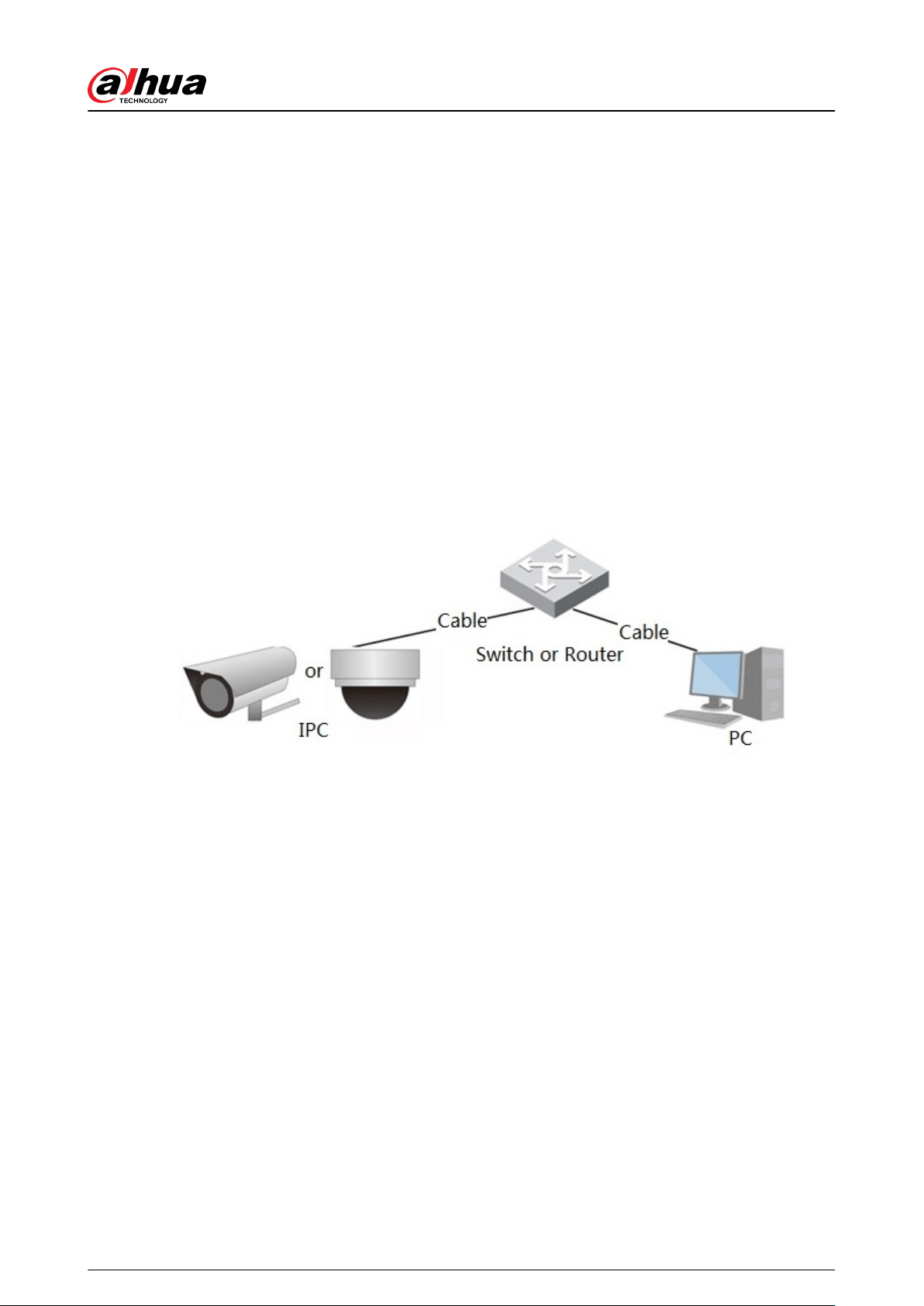
1.2 Network Connection
In the general IPC network topology, IPC is connected to PC through network switch or router.
Figure 1-1 General IPC network
Get IP address by searching on CongTool, and then you can start accessing IPC through network.
1.3 Functions
Functions might vary with dierent devices.
1.3.1 Basic Functions
Real-time Monitoring
●
Live view.
●
When live viewing the image, you can enable audio, voice talk and connect monitoring center
for quick processing on the abnormality.
●
Adjust the image to the proper position by PTZ.
●
Snapshot and triple snapshot abnormality of the monitoring image for subsequent view and
processing.
●
Record abnormality of monitoring image for subsequent view and processing.
●
Congure coding parameters, and adjust live view image.
Operation Manual
1

Alarm
●
Set alarm prompt mode and tone according to alarm type.
●
View alarm prompt message.
Exception
●
SD card error, network disconnection, illegal access, voltage detection and security exception.
●
When SD card error or illegal access is triggered, the system links alarm output and sending
email.
●
When network disconnection alarm is triggered, the system links recording and alarm output.
●
When the input voltage is more or less than the rated voltage, the alarm is triggered and the
system links sending email.
Video Detection
●
Motion detection, video tampering detection and scene changing detection.
●
When an alarm is triggered, the system performs linkages such as recording, alarm output,
sending email, PTZ operation, and snapshot.
Audio Detection
●
Audio input abnormal detection and intensity change detection.
●
When an alarm is triggered, the system performs linkages such as recording, alarm output,
sending email, PTZ operation, and snapshot.
Record
●
Auto record as schedule.
●
Play back recorded video and picture as needed.
●
Download recorded video and picture.
●
Alarm linked recording.
Account
●
Add, edit and delete user group, and manage user authorities according to user group.
●
Add, edit and delete user, and congure user authorities.
●
Change user password.
1.3.2 AI Functions
IVS
●
Tripwire, intrusion, abandoned object, moving object, fast moving, parking detection, people
gathering, and loitering detection.
●
When an alarm is triggered, the system performs linkages such as recording, alarm output,
sending email, and snapshot.
Operation Manual
2

Face Detection
●
Detects face and display the related attributes on the live page.
●
When an alarm is triggered, the system performs linkages such as recording, alarm output,
sending email, PTZ operation, and snapshot.
Face Recognition
●
Displays the recognition result on the live view page
●
In general mode, makes comparison between the detected face with the faces in face database
after detecting face. You can set the alarm mode and reporting mode for each face database
separately, and set linkages for each reporting mode.
●
In counting mode, does precise face counting after detecting face.
●
When an alarm is triggered, the system performs linkages such as recording, alarm output,
sending email, PTZ operation, and snapshot.
Crowd Distribution Map
●
View crowd distribution in real time for the timely arm to avoid accidents such as stampede.
●
When an alarm is triggered, the system performs linkages such as recording, alarm output,
sending email, PTZ operation, and snapshot.
Video Metadata
●
Captures people, non-motor vehicle and vehicle, and displays the related information on the
live page.
●
When an alarm is triggered, the system links alarm output.
People Counting
●
Counts the people ow in/out the detection area, and generates report.
●
When the number of counted number of people in the detection area or the stay duration
exceeds the congured value, an alarm will be triggered.
●
When an alarm is triggered, the system performs linkages such as recording, alarm output,
sending email, PTZ operation, and snapshot.
Heat Map
●
Counts cumulative density of moving objects, and displays the result in dierent colors.
●
View report of heat map, which includes heat map and track map (track map is not available on
economic sheye cameras).
ANPR
●
Recognizes plate number in detection area, and displays the related information on live page.
●
When an alarm is triggered, the system links alarm output and snapshot.
Operation Manual
3

Face & Body Detection
●
Detects faces and human body separately, and then correlates the face and the body.
●
When select compliant mode, the camera can detect attributes including face masks, helmets,
glasses, safety vests, top color, and bottom color, and determine whether PPE requirements are
met. PPE compliance or non-compliance alarms can be triggered according to the alarm
settings.
●
When an alarm is triggered, the system links alarm output and snapshot.
Parking Space
●
Supports planned parking space and open parking space.
●
When an alarm is triggered, the system performs linkages such as recording, alarm output,
sending email, and snapshot.
Vehicle Density
●
Includes road congestion and parking limit, and supports to view vehicle statistics through the
live page.
●
When the counted vehicle exceeds the congured vehicle number and the congestion time
exceeds the congured time, an alarm will be triggered.
●
When an alarm is triggered, the system performs linkages such as recording, alarm output and
sending email.
PPE Detection
●
When the target attributes are inconsistent with the congured attributes, the alarm is
triggered.
●
When an alarm is triggered, the system performs linkages such as recording, sending emails and
alarm output.
Privacy Protection
The target objects will be blurred by mosaic or color blocks when they are detected.
Smart Object Detection
●
Supports smart abandoned object and smart missing object detection.
●
When an alarm is triggered, the system performs linkage such as recording, alarm output,
sending email and snapshot.
AcuPick
Achieve accurate and quick search on the connected NVR.
Operation Manual
4
2 Conguration Flow
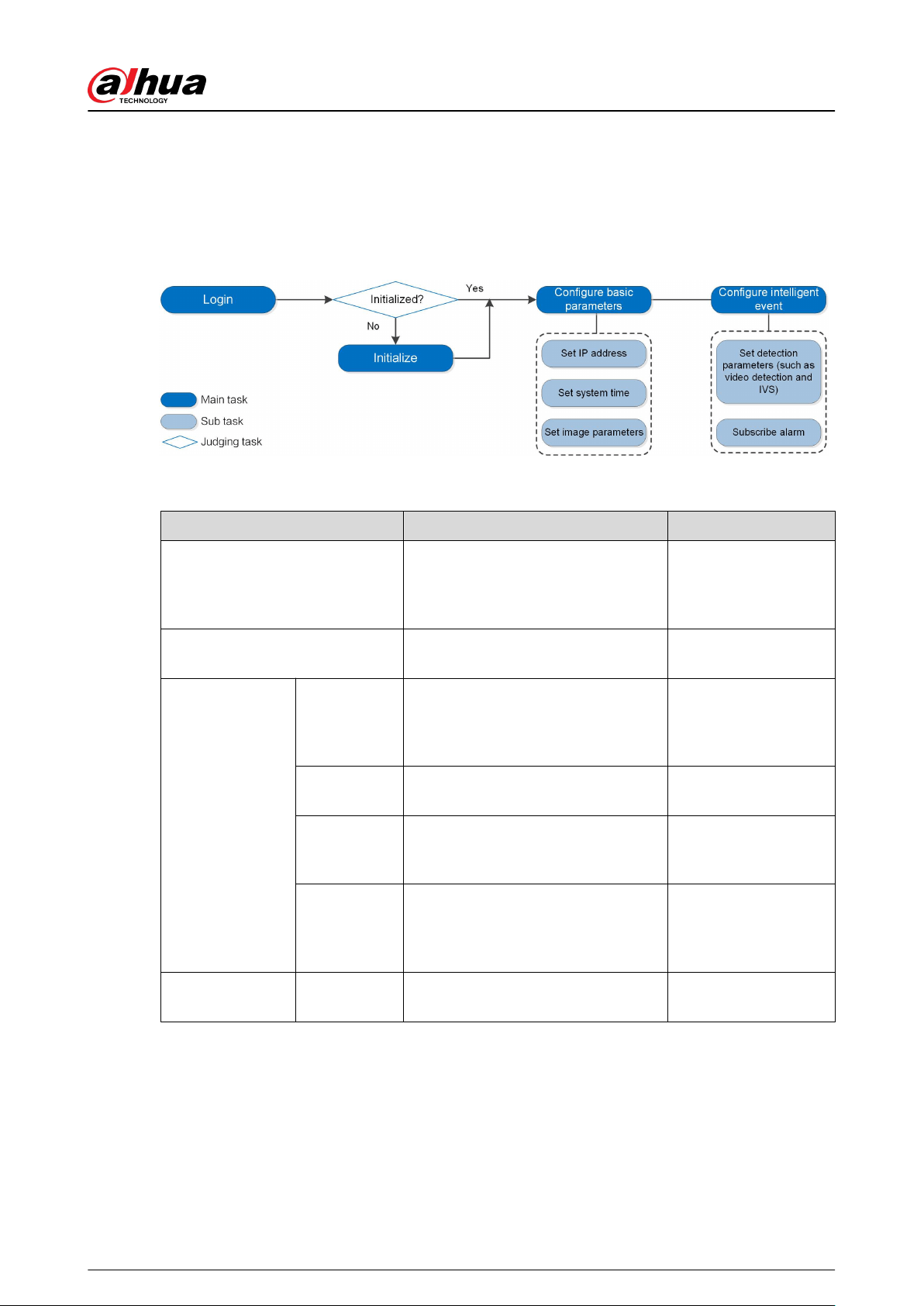
For the device conguration ow, see Figure 2-1 . For details, see Table 2-1 . Congure the device
according to the actual situation.
Figure 2-1 Conguration ow
Table 2-1 Description of ow
Conguration Description Reference
Login
Open IE browser and enter IP address
to log in to the web page, The
camera IP address is 192.168.1.108 by
default.
"4 Login"
Initialization
Initialize the camera when you use it
for the rst time.
"3 Device Initialization"
Basic parameters
Camera
parameters
Congure image parameters,
encoder parameters, and audio
parameters to ensure the image
quality.
"6.2 Camera"
Date & time
Set date and time to ensure the
recording time is correct.
"6.7.1.2 Date & Time"
IP address
Change IP address according to
network planning for the rst use or
during network adjustment.
"6.3.1 TCP/IP"
Subscribe
alarm
Subscribe alarm event. When the
subscribed alarm is triggered, the
system will record the alarm on the
alarm tab.
"6.5.1.3 Subscribing
Alarm"
AI AI rules
Congure the necessary detection
rules, such as face detection and IVS.
"8 AI"
Operation Manual
5
3 Device Initialization
Device initialization is required for the rst-time use. This manual is based on the operation on the
web page. You can also initialize device through CongTool, NVR, or platform devices.
●
To ensure the device safety, keep the password properly after initialization and change the
password regularly.
●
When initializing device, keep the PC IP and device IP in the same network.
Procedure
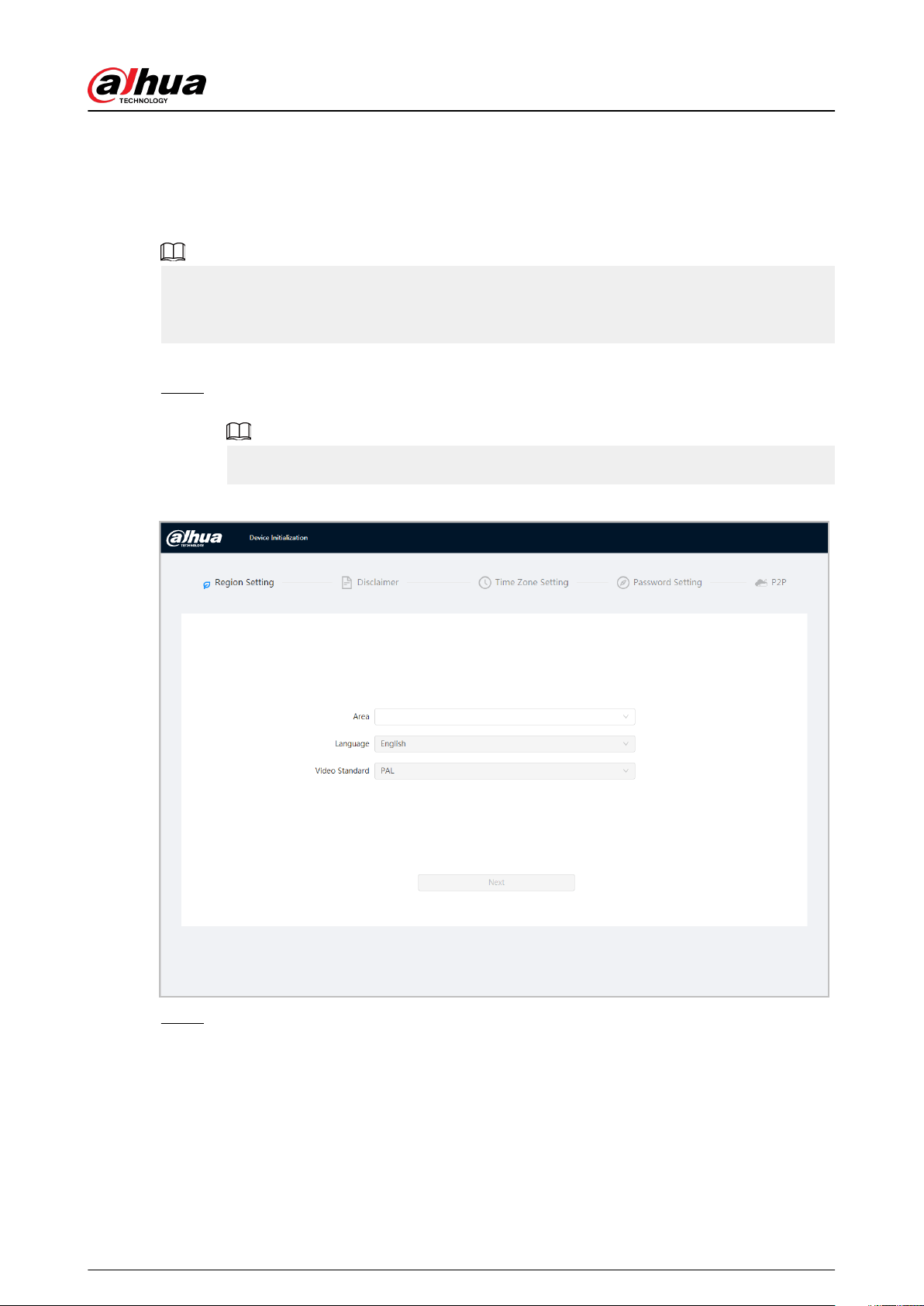
Step 1 Open IE browser, enter the IP address of the device in the address bar, and then press the
Enter key.
The IP is 192.168.1.108 by default.
Figure 3-1 Region setting
Step 2 Select the area, language, and video standard according to the actual situation, and then
click Next.
Operation Manual
6
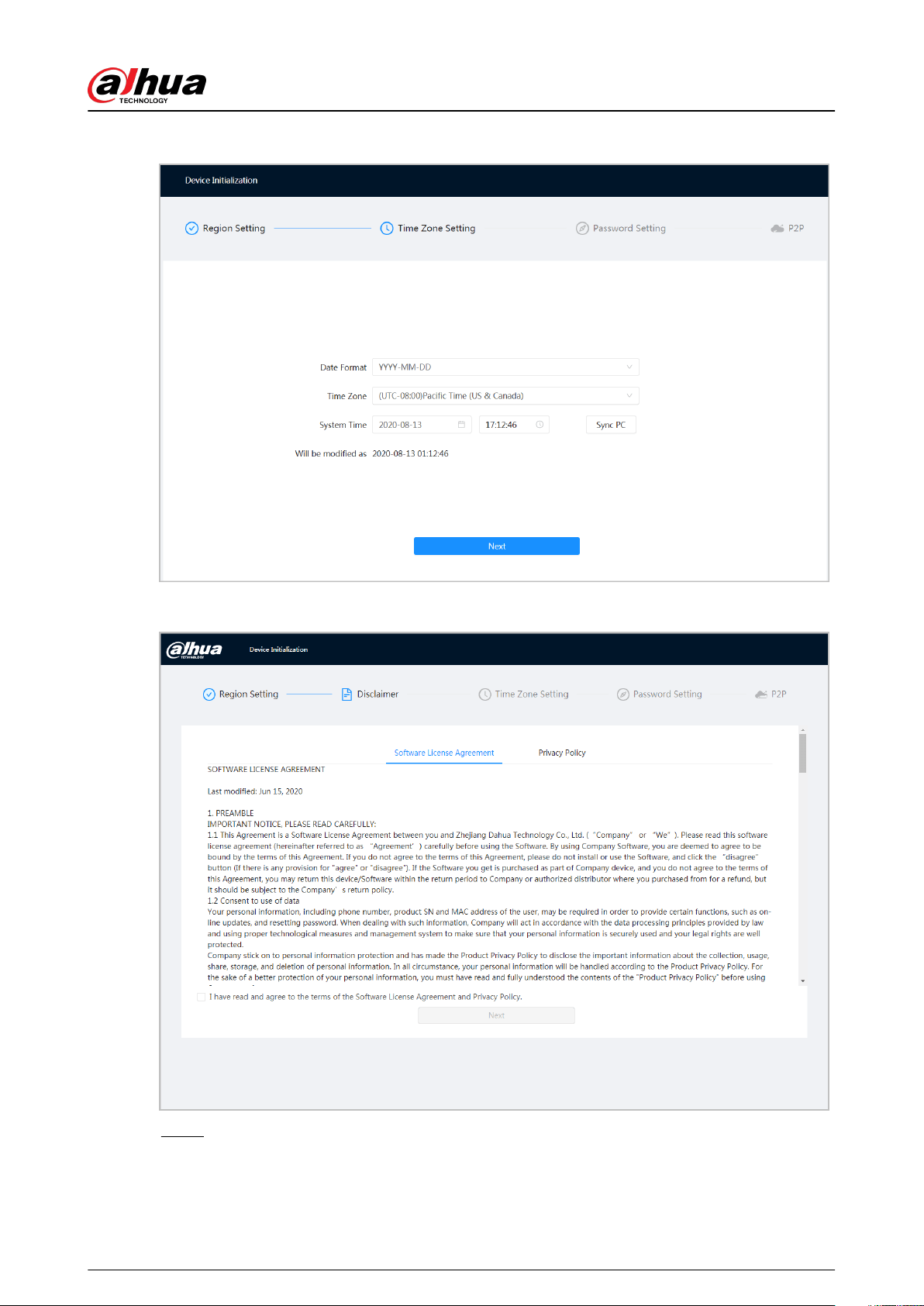
Figure 3-2 Time zone setting
Figure 3-3 Disclaimer
Step 3 Select the I have read and agree to the terms of the Software License Agreement and
Privacy Policy checkbox, and then click Next.
Operation Manual
7
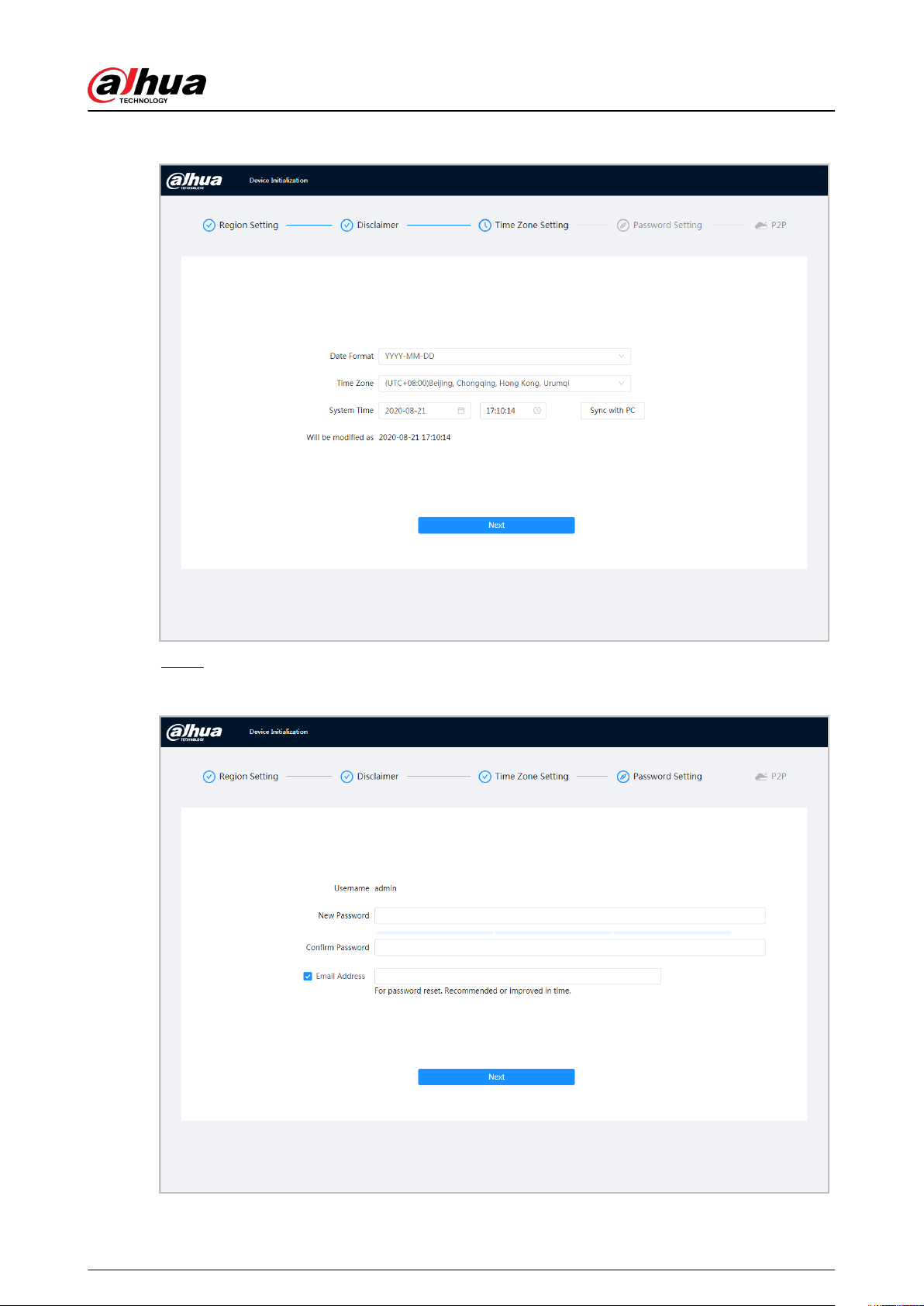
Figure 3-4 Time zone setting
Step 4 Congure the time parameters, and then click Next.
Figure 3-5 Password setting
Operation Manual
8

Step 5 Set the password for admin account.
Table 3-1 Description of password conguration
Parameter Description
Username The default username is admin.
Password The password must consist of 8 to 32 non-blank characters and
contain at least two types of characters among upper case, lower
case, number, and special character (excluding ' " ; : &). Set a high
security level password according to the password security notice.
Conrm password
Reserved email
Enter an email address for password resetting, and it is selected by
default.
When you need to reset the password of the admin account, a
security code for password resetting will be sent to the reserved
email address.
Step 6 Click Next , and then P2P page is displayed.
Operation Manual
9
4 Login
4.1 Device Login
This section introduces how to log in to the webpage. This section takes Chrome as an example.
●
You need to initialize the camera before logging in to the web page. For details, see "3 Device
Initialization".
●
When initializing the camera, keep the PC IP and device IP in the same network.
●
Follow the instruction to download and install the plug-in for the rst login.
Procedure
Step 1 Open IE browser, enter the IP address of the camera (192.168.1.108 by default) in the
address bar and press Enter.
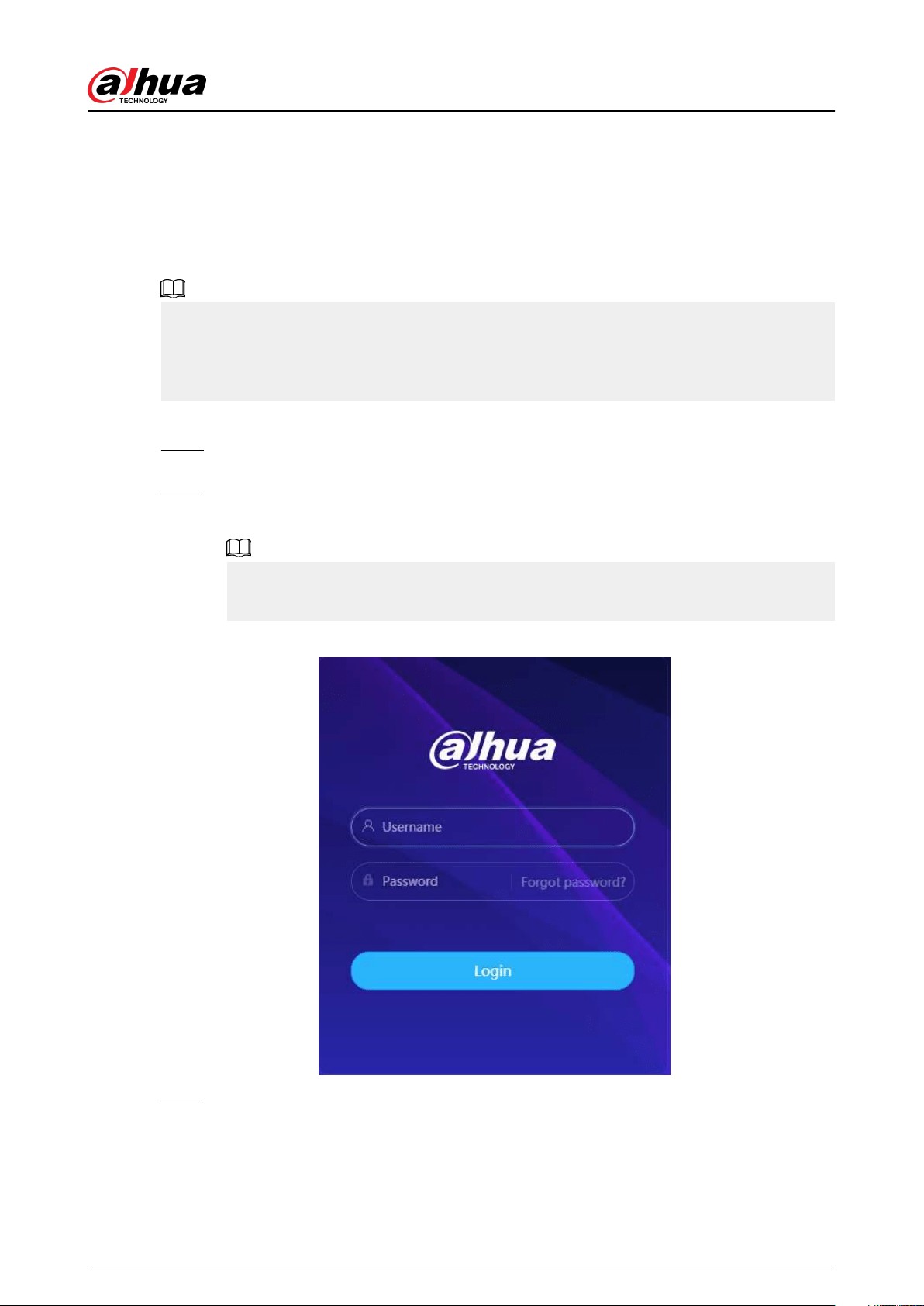
Step 2 Enter the username and password.
The username is admin by default.
Click Forget password?, and you can reset the password through the email address that
is set during the initialization. For details, see "4.2 Resetting Password".
Figure 4-1 Login
Step 3 Click Login.
Operation Manual
10
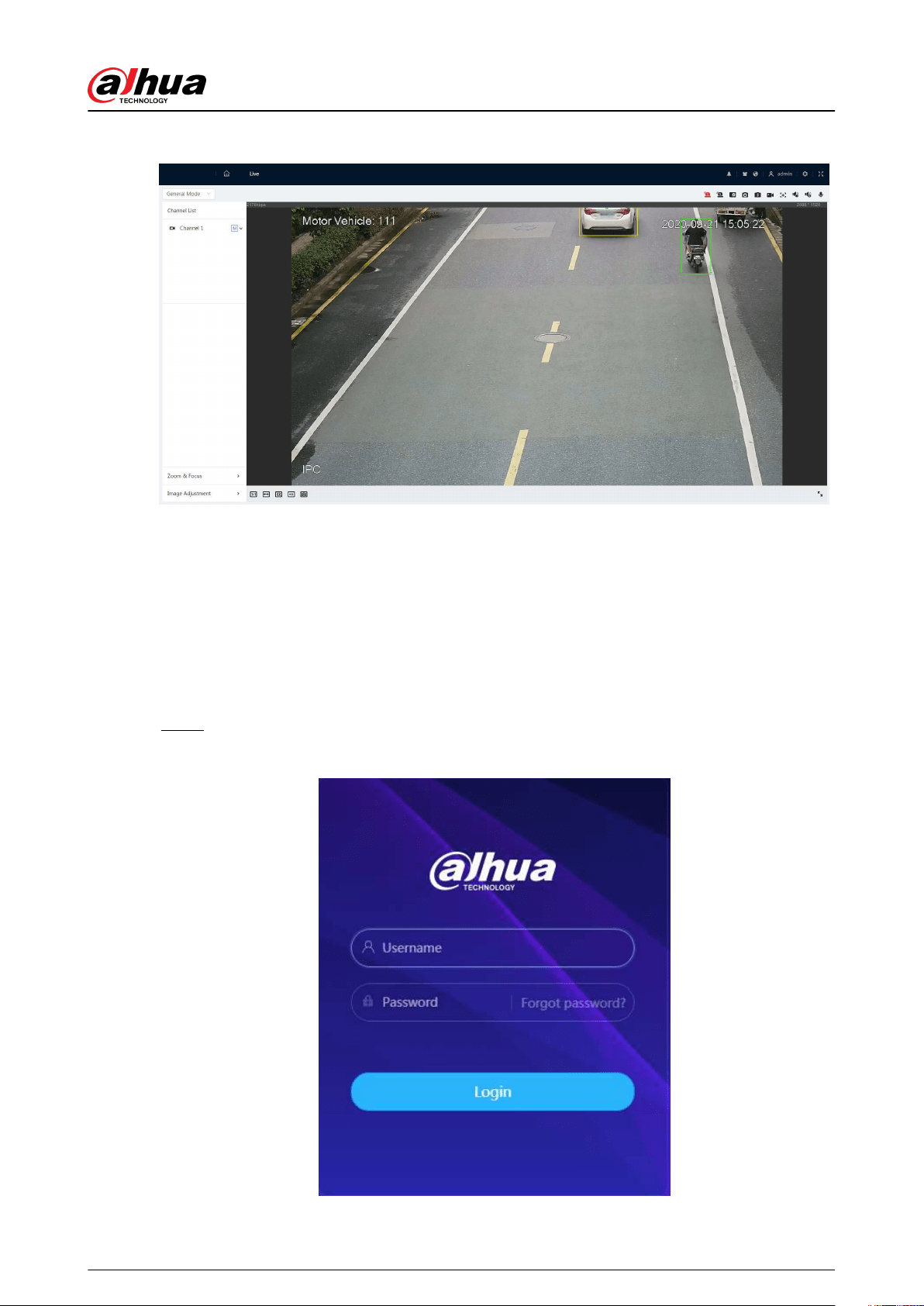
Figure 4-2 Live page
4.2 Resetting Password
When you need to reset the password for the admin account, there will be a security code sent to
the entered email address which can be used to reset the password.
Prerequisites
You have enabled password resetting service. For details, see "6.7.3.1.2 Resetting Password".
Procedure
Step 1 Open IE browser, enter the IP address of the device in the address bar and press Enter.
Figure 4-3 Login
Operation Manual
11

Step 2 Click Forget password?, and you can reset the password through the email address that
is set during the initialization.
Figure 4-4 Login
Operation Manual
12
5 Home Page
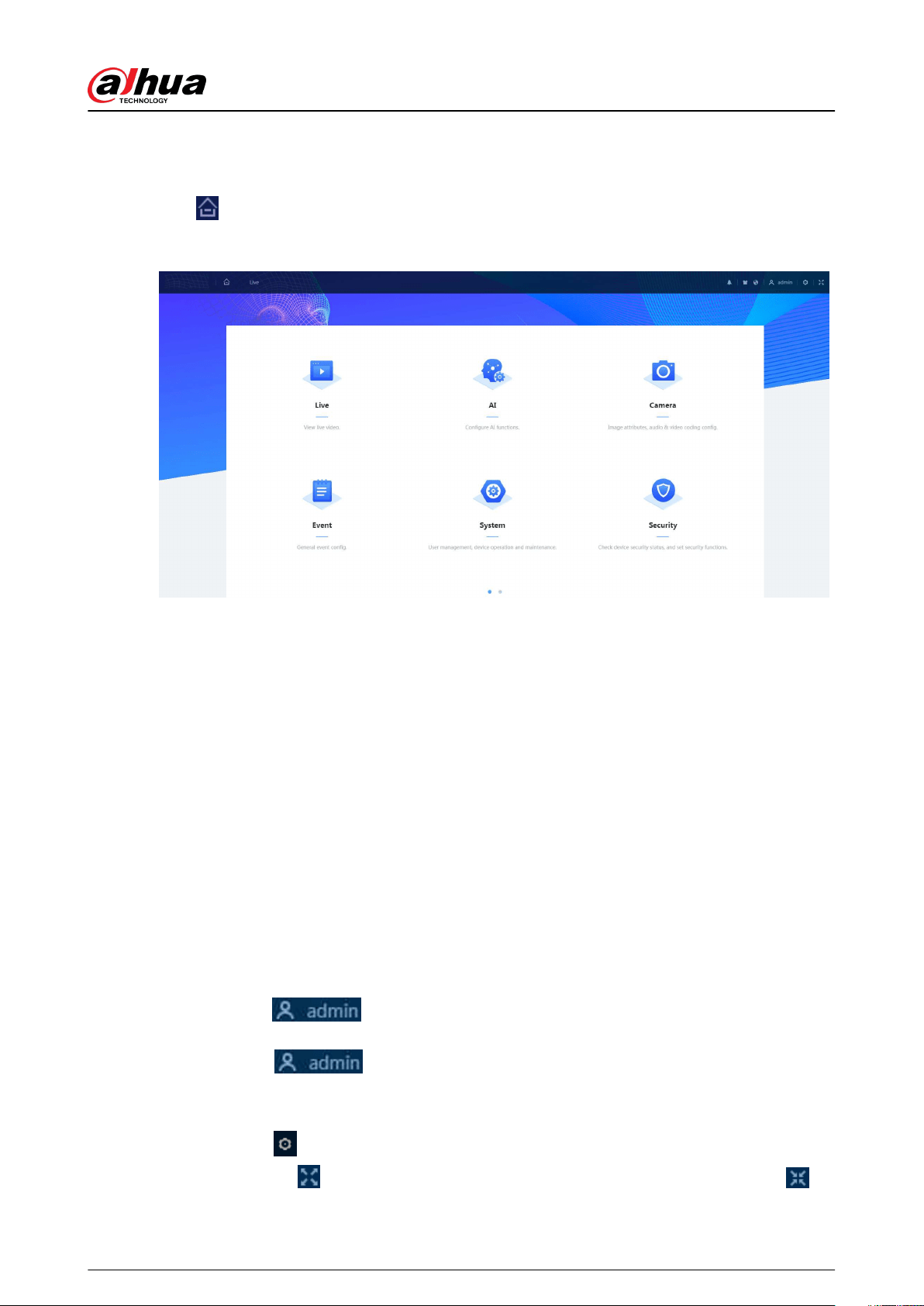
Click
at the upper-left corner of the page to display the home page.
Figure 5-1 Home page
●
Live: View the real-time monitoring image.
●
AI: Congure AI functions of the camera.
●
Camera: Congure camera parameters, including image parameters, encoder parameters, and
audio parameters.
●
PTZ: Congure PTZ settings.
●
Event: Congure general events, including alarm linkage exception, video detection, and audio
detection.
●
System: Congure system parameters, including general, date & time, account, safety, default,
import/export, remote, auto maintain and upgrade.
●
Security: Check the device security status and set security functions.
●
Record: Play back or download recorded video.
●
Picture: Play back or download image les.
●
For the camera with multiple channels, through selecting channel numbers, you can set the
parameters of the channels.
●
Report: Search the AI event report and system report.
●
Alarm subscription: Subscribe alarm.
●
Skin setting: Set the skin.
●
Language setting: Set the language.
●
Restart: Click
at the upper-right corner of the page, select Reboot, and the camera
restarts.
●
Logout: Click
at the upper-right corner of the page, select Logout to go to the
login page.
The system will sleep automatically after idling for a period of time.
●
Setting: Click
at the upper-right corner of the page to set the basic parameters.
●
Full screen: Click
at the upper-right corner of the page to enter full screen mode; click to
exit full screen mode.
Operation Manual
13
6 Setting
This section introduces the basic setting of the camera, including the conguration of local, camera,
network, event, storage, system, system information and log.
For Camera , Event and System, you can go to the conguration page through two methods. This
section takes method 1 as an example.
●
Method 1: Click
, and then select the corresponding item.
●
Method 2: Click the corresponding icon on the home page.
6.1 Local
You can select protocol and congure the storage path for live snapshot, live record, playback
snapshot, playback download, and video clips.
Procedure
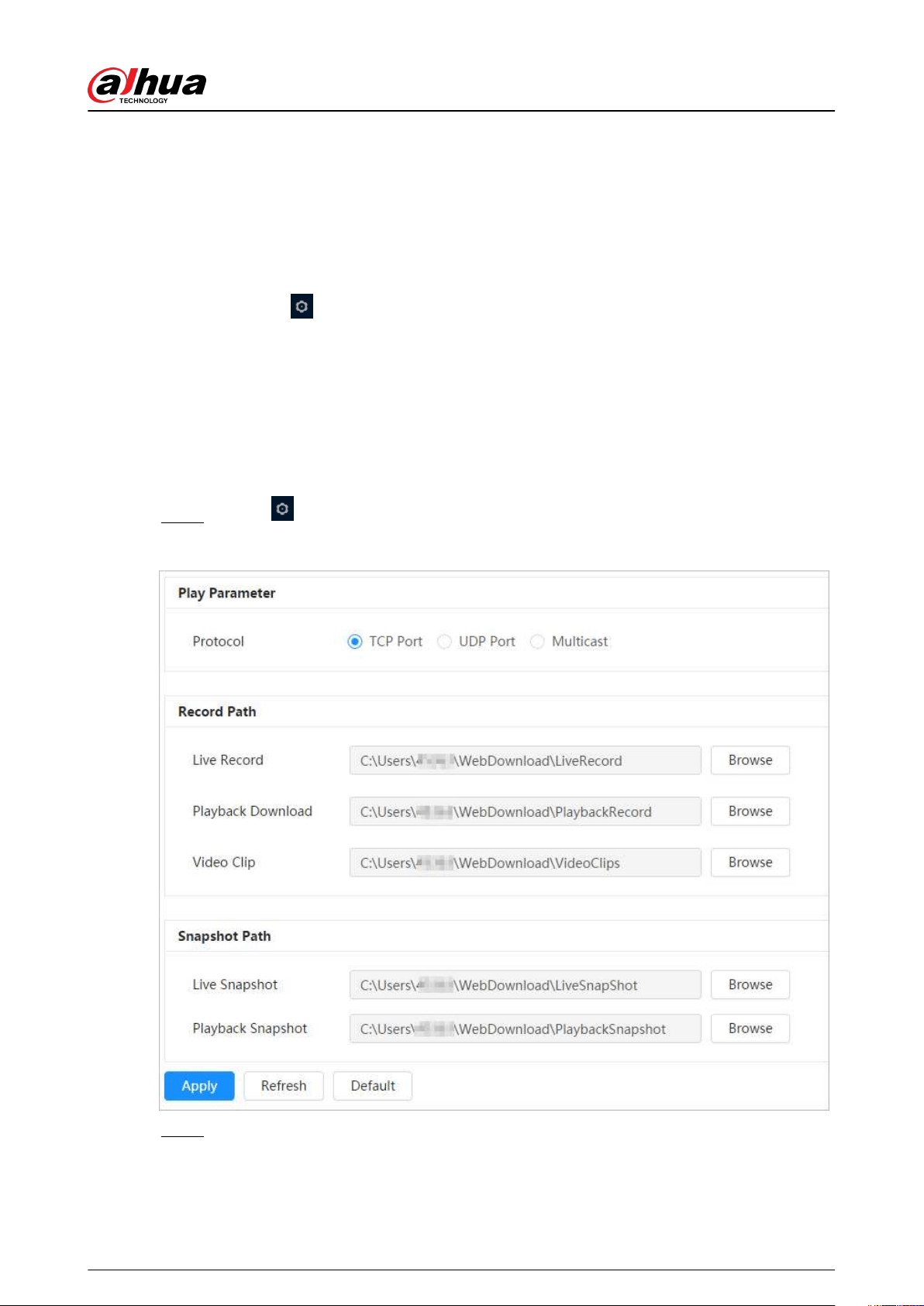
Step 1 Select > Local.
Figure 6-1 Local
Step 2 Click Browse to select the storage path for live snapshot, live record, playback snapshot,
playback download, and video clips.
Operation Manual
14
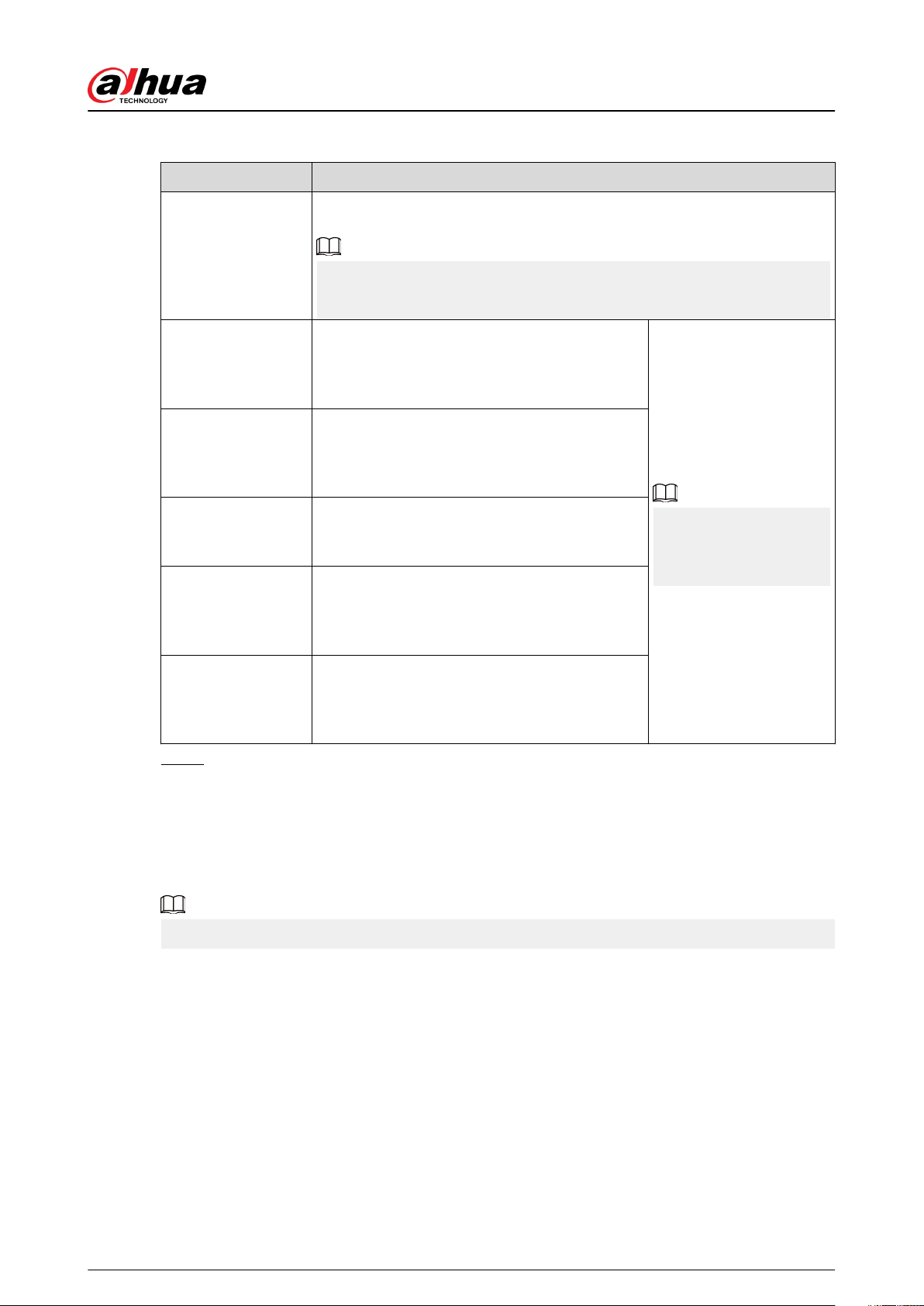
Table 6-1 Description of local parameter
Parameter Description
Protocol
You can select the network transmission protocol as needed, and the
options are TCP , UDP and Multicast.
Before selecting Multicast , make sure that you have set the Multicast
parameters.
Live Record
The recorded video of live page.
The default path is C:\Users\admin
\WebDownload\LiveRecord.
Admin in the path refers
to the account being
used.
Playback Download
The downloaded video of playback page.
The default path is C:\Users\admin
\WebDownload\PlaybackRecord.
Video Clips
The clipped video of playback page.
C:\Users\admin\WebDownload\VideoClips.
Live Snapshot
The snapshot of live page.
The default path is C:\Users\admin
\WebDownload\LiveSnapshot.
Playback Snapshot
The snapshot of playback page.
The default path is C:\Users\admin
\WebDownload\PlaybackSnapshot.
Step 3 Click Apply.
6.2 Camera
This section introduces the camera setting, including image parameters, encoder parameters, and
audio parameters.
Camera parameters of dierent devices might vary.
6.2.1 Setting Image Parameters
Congure image parameters according to the actual situation, including image, exposure,
backlight, white balance, Day/Night, and light.
6.2.1.1 Page Layout
Congure camera parameters to improve the scene clarity, and ensure that surveillance goes
properly.
Operation Manual
15
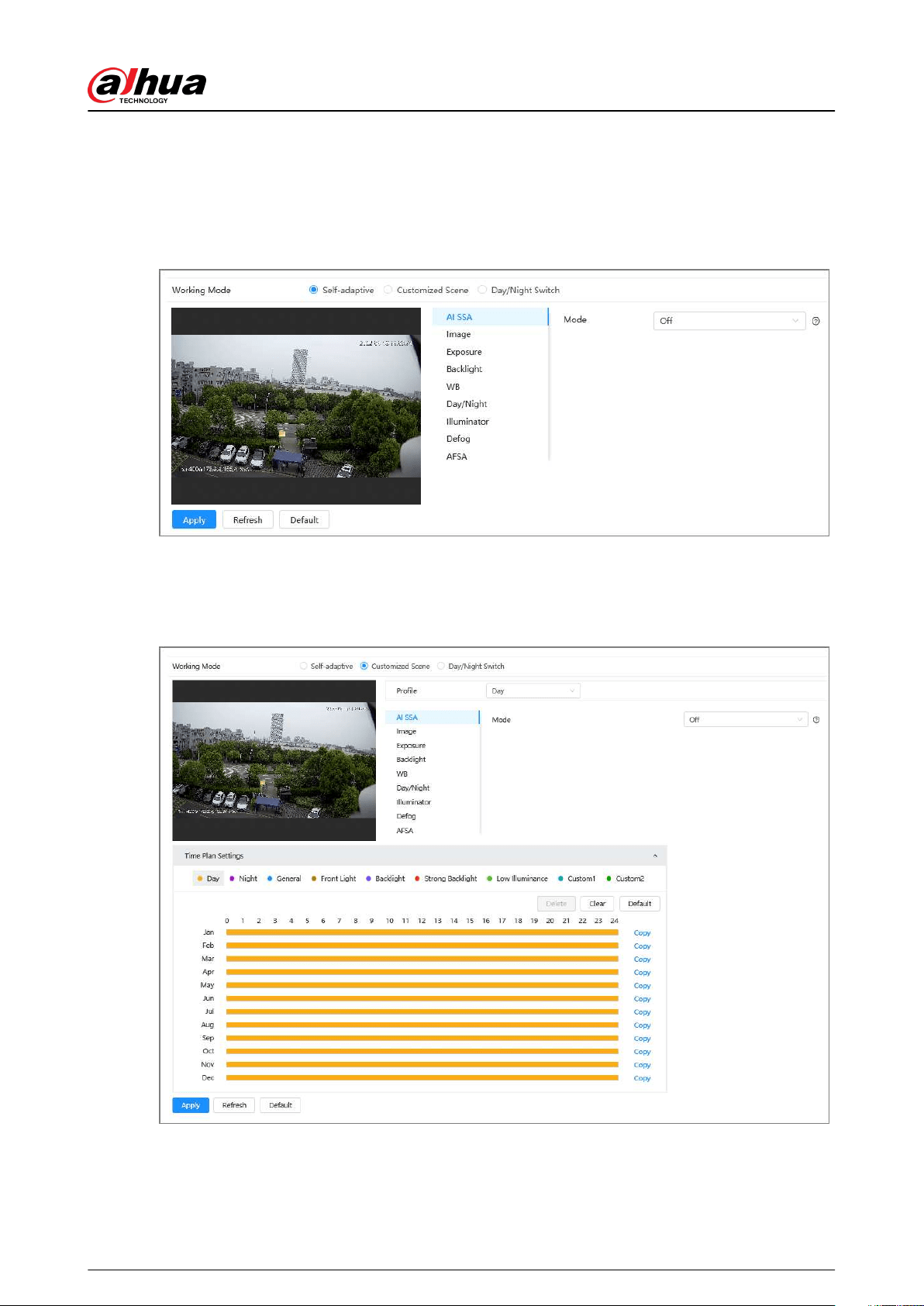
You can select normal mode, day mode, or night mode to view the conguration and the eect of
the selected mode, such as picture, exposure, and backlight.
Select the working mode as needed.
●
Self-adaptive: The camera will adjust the image according to the environment.
Figure 6-2 Page layout (self-adaptive)
●
Customized scene: You can select the prole as needed. Select the prole in Time Plan Setting
and drag the slide block to set certain time as the selected prole. For example, set 8:00–18:00 as
day, and 0:00–8:00 and 18:00–24:00 as night.
Figure 6-3 Page layout (customized scene)
●
Day/night switch: You can select Day or night in Prole and the surveillance system works
under Day/Night.
Operation Manual
16
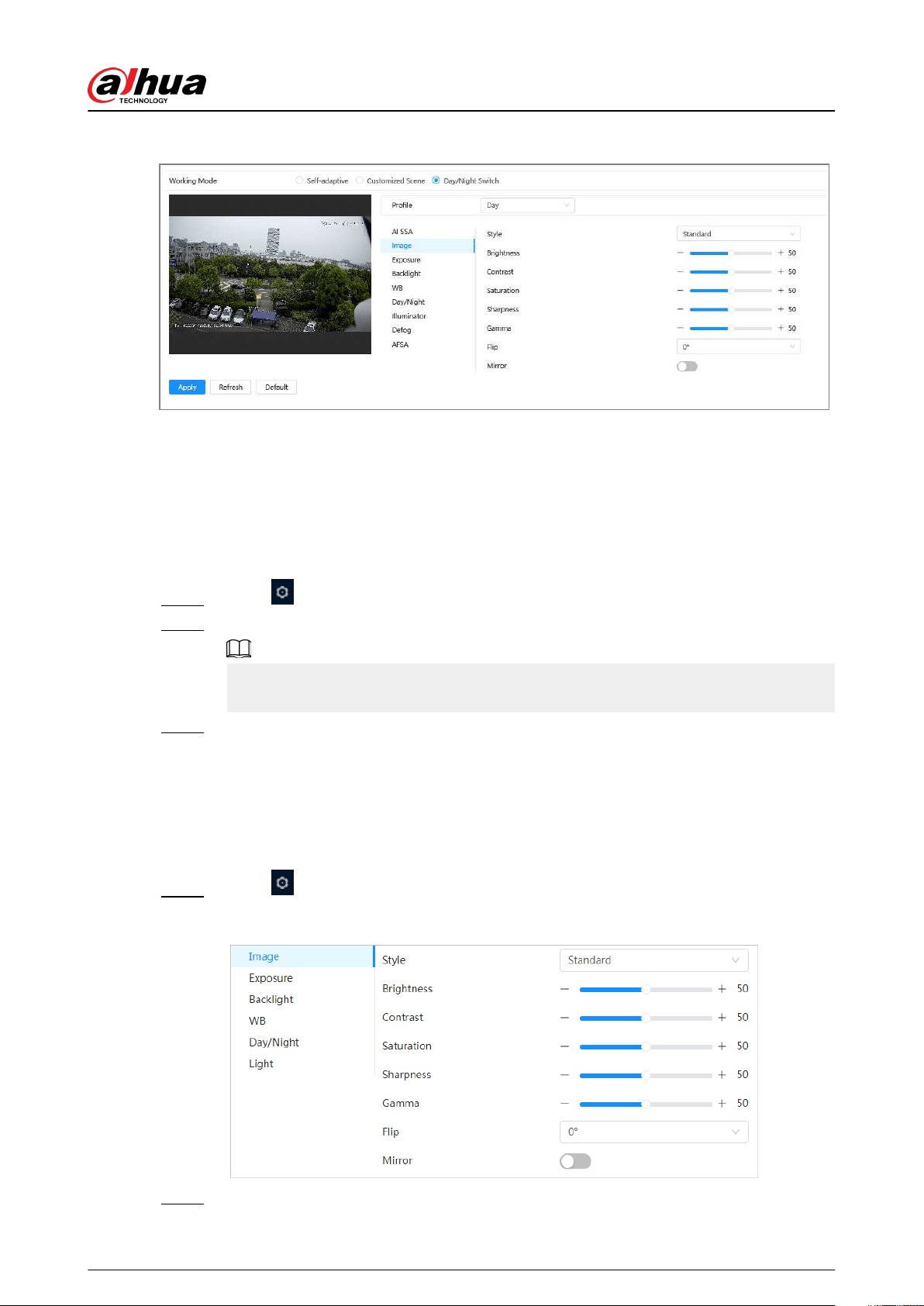
Figure 6-4 Page layout (day/night switch)
6.2.1.2 AI SSA
By enabling AI SSA (AI Scene Self-adaptation), the camera could detect environmental conditions,
such as rain, fog, backlight, low light and icker, to adjust the parameters of the image to suit the
conditions, ensuring that clear images are always produced.
Procedure
Step 1 Select > Camera > Image > AI SSA.
Step 2 Select On in the dropdown list.
After you enable AI SSA , some other functions such as exposure, backlight, defog and
AFSA will be disabled by default.
Step 3 Click Apply.
6.2.1.3 Image
You can congure picture parameters as needed.
Procedure
Step 1 Select > Camera > Image > Image.
Figure 6-5 Image
Step 2 Congure picture parameters.
Operation Manual
17
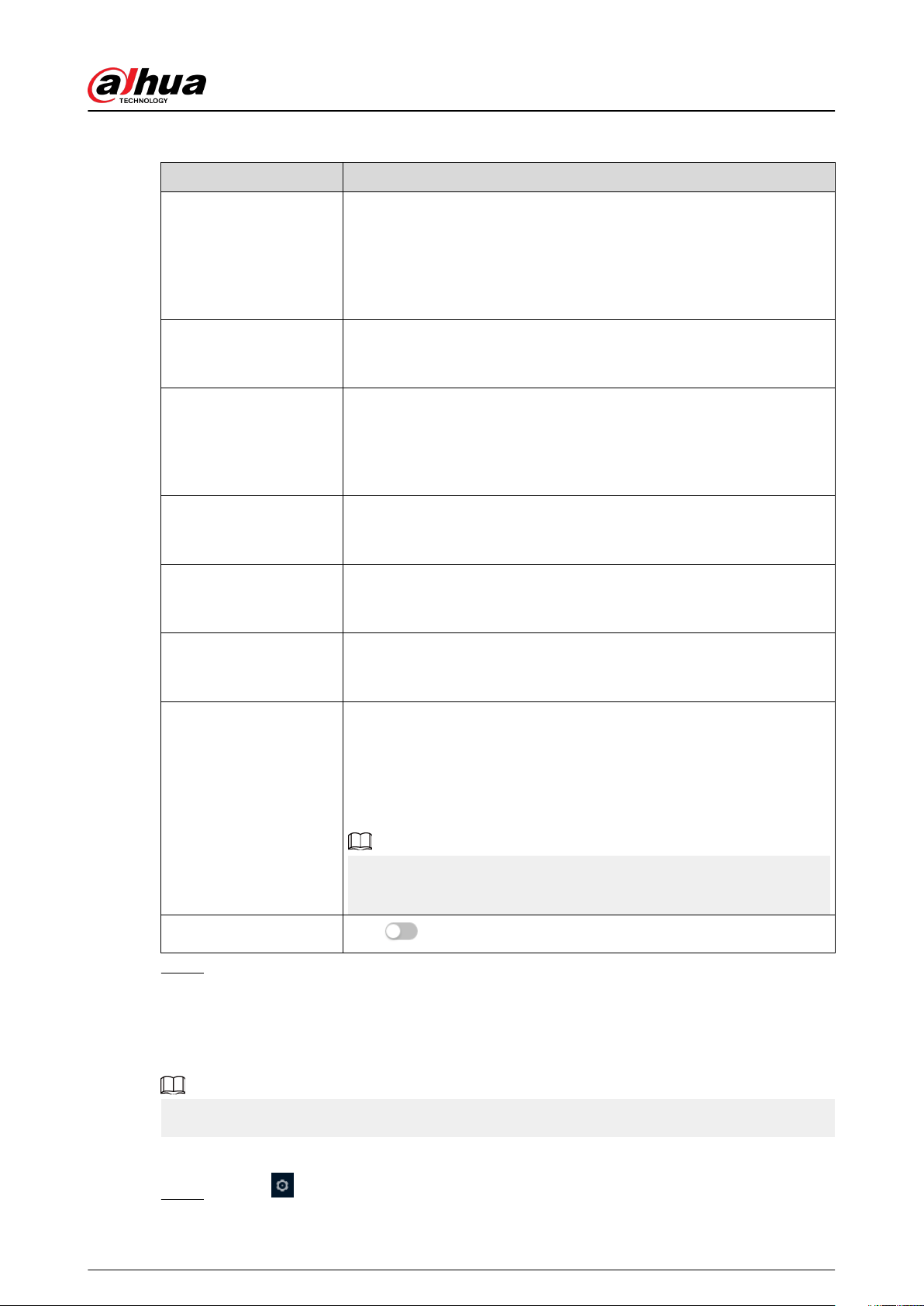
Table 6-2 Description of picture parameters
Parameter Description
Style
Select the picture style from soft, standard and vivid.
●
Soft: Default image style, displays the actual color of the image.
●
Standard: The hue of the image is weaker than the actual one, and
contrast is smaller.
●
Vivid: The image is more vivid than the actual one.
Brightness
Changes the value to adjust the picture brightness. The higher the
value is, the brighter the picture will be, and the smaller the darker. The
picture might be hazy if the value is congured too big.
Contrast
Changes the contrast of the picture. The higher the value is, the more
the contrast will be between bright and dark areas, and the smaller the
less. If the value is set too big, the dark area would be too dark and
bright area easier to get overexposed. The picture might be hazy if the
value is set too small.
Saturation
Makes the color deeper or lighter. The higher the value is, the deeper
the color will be, and the lower the lighter. Saturation value does not
change image brightness.
Sharpness
Changes the sharpness of picture edges. The higher the value is, the
clearer the picture edges will be, and if the value is set too big, picture
noises are more likely to appear.
Gamma
Changes the picture brightness and improves the picture dynamic
range in a non-linear way. The higher the value is, the brighter the
picture will be, and the smaller the darker.
Flip
Changes the display direction of the picture, see the options below.
●
0°: Normal display.
●
90°: The picture rotates 90° clockwise.
●
180°: The picture rotates 90° counterclockwise.
●
270°: The picture ips upside down.
For some models, please set the resolution to be 1080p or lower when
using 90° and 180°. For details, see "6.2.2 Setting Encode Parameters".
Mirror
Click
, and the picture will display with left and right side reversed.
Step 3 Click Apply.
6.2.1.4 Exposure
Congure iris and shutter to improve image clarity.
Cameras with true WDR do not support long exposure when WDR is enabled in Backlight.
Procedure
Step 1 Select > Camera > Image > Exposure.
Operation Manual
18

Figure 6-6 Exposure
Step 2 Congure exposure parameters.
Table 6-3 Description of exposure parameters
Parameter Description
Anti-icker
You can select from 50 Hz, 60 Hz and Outdoor.
●
50 Hz: When the electric supply is 50 Hz, the system adjusts the
exposure according to ambient light automatically to ensure that no
stripe appears.
●
60 Hz: When the electric supply is 60 Hz, the system adjusts the
exposure according to ambient light automatically to ensure that no
stripe appears.
●
Outdoor: You can select any exposure mode as needed.
Mode
Device exposure modes.
●
Auto: Adjusts the image brightness according to the actual condition
automatically.
●
Gain Priority: When the exposure range is normal, the system prefers
the congured gain range when auto adjusting according to the
ambient lighting condition. If the image brightness is not enough
and the gain has reached upper or lower limit, the system adjusts
shutter value automatically to ensure the image at ideal brightness.
You can congure gain range to adjust gain level when using gain
priority mode.
●
Shutter priority: When the exposure range is normal, the system
prefers the congured shutter range when auto adjusting according
to the ambient lighting condition. If the image brightness is not
enough and the shutter value has reached upper or lower limit, the
system adjusts gain value automatically to ensure the image at ideal
brightness.
●
Manual: Congure gain and shutter value manually to adjust image
brightness.
When the Anti-icker is set to Outdoor, you can select Auto, Gain
priority, Shutter priority or Manual in the Mode list.
Operation Manual
19

Parameter Description
Exposure
Compensation
Sets the value, and it ranges from 0 to 50. The higher the value is, the
brighter the image will be.
Shutter
Set the eective exposure time. The smaller the value, the shorter the
exposure time will be.
Gain
When selecting Gain Priority or Manual in Mode, you can set Gain.
With minimum illumination, the camera increases Gain automatically to
get clearer images.
Auto Iris
This conguration is available only when the camera is equipped with
auto-iris lens.
●
When auto iris is enabled, the iris size changes automatically
according to the ambient lighting condition, and the image
brightness changes accordingly.
●
When auto iris is disabled, the iris stays at full size and does not
change no matter how ambient lighting condition changes.
3D NR
Works with multi-frame (no less than 2 frames) images and reduces
noise by using the frame information between previous and latter
frames.
Level
This conguration is available only when the 3D NR is enabled.
The higher the level is, the better the result will be.
Step 3 Click Apply.
6.2.1.5 Backlight
You can select backlight mode from Auto, BLC, WDR, and HLC.
Procedure
Step 1 Select > Camera > Image > Backlight.
Figure 6-7 Backlight
Step 2 Congure backlight parameters.
Operation Manual
20
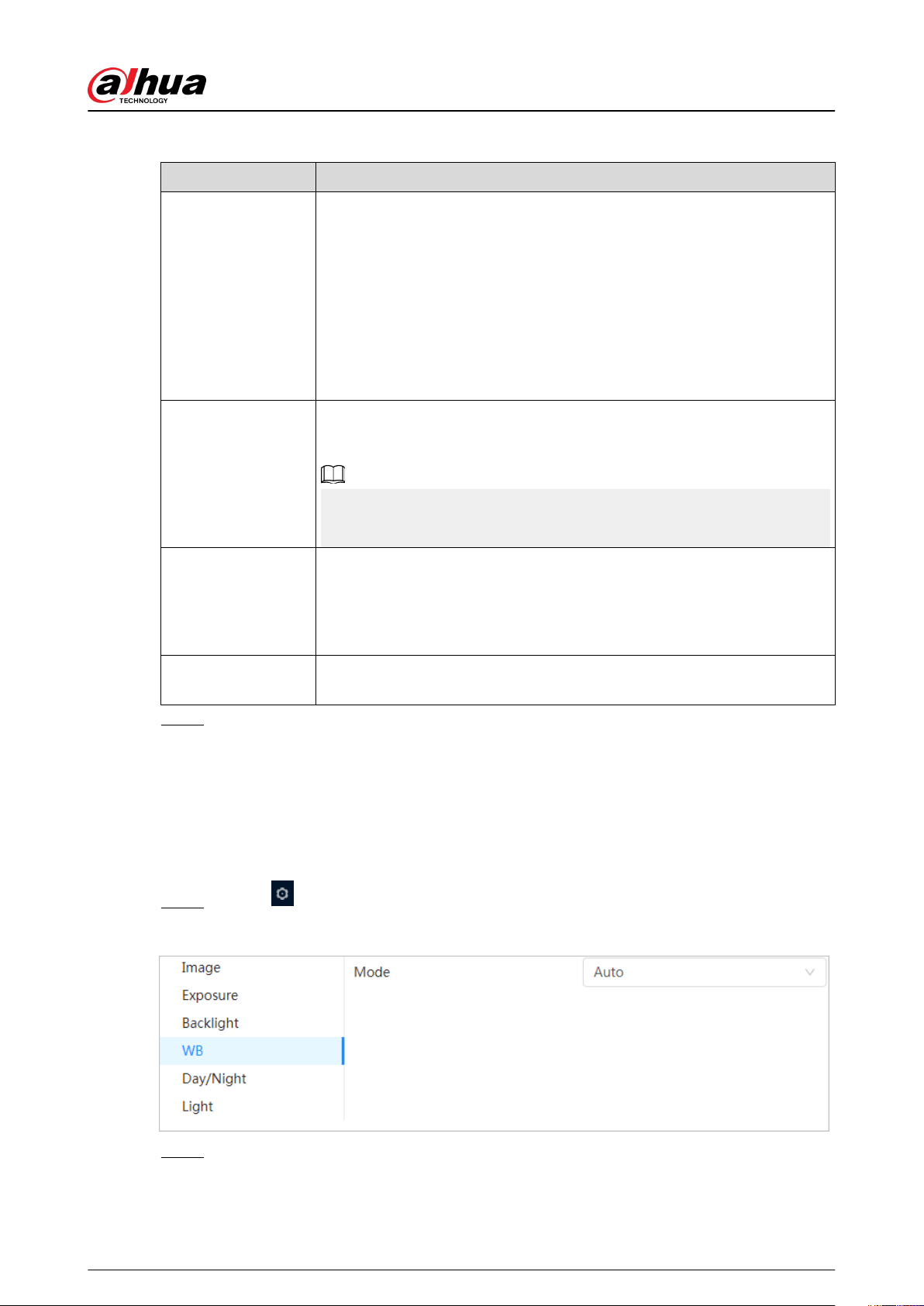
Table 6-4 Description of backlight parameters
Backlight mode Description
BLC
Enable BLC , the camera can get clearer image of the dark areas on the
target when shooting against light. You can enable or disable Customized
mode.
●
When you enable Customized mode, the system auto adjusts
exposure only to the set area according to ambient lighting condition
to ensure the image of the set area at ideal brightness.
●
When you disable Default mode, the system adjusts exposure
according to ambient lighting condition automatically to ensure the
clarity of the darkest area.
WDR
The system dims bright areas and compensates dark areas to ensure the
clarity of all the area. The higher the value is, the brighter the dark will be,
but the more the noise will be.
There might be a few seconds of video loss when the device is switching to
WDR mode from other mode.
HLC
Enable HLC when extreme strong light is in the environment (such as toll
station or parking lot), the camera will dim strong light, and reduce the size
of Halo zone to lower the brightness of the whole image, so that the
camera can capture human face or car plate detail clearly. The higher the
value is, the more obvious the HLC eect will be.
SSA
Enable SSA, the system automatically adjusts the image brightness
according to the environment to make the objects in the image clearer.
Step 3 Click Apply.
6.2.1.6 WB
WB function makes the image color display precisely as it is. When in WB mode, white objects
would always display white color in dierent environments.
Procedure
Step 1 Select > Camera > Image > WB.
Figure 6-8 WB
Step 2 Congure WB parameters.
Operation Manual
21
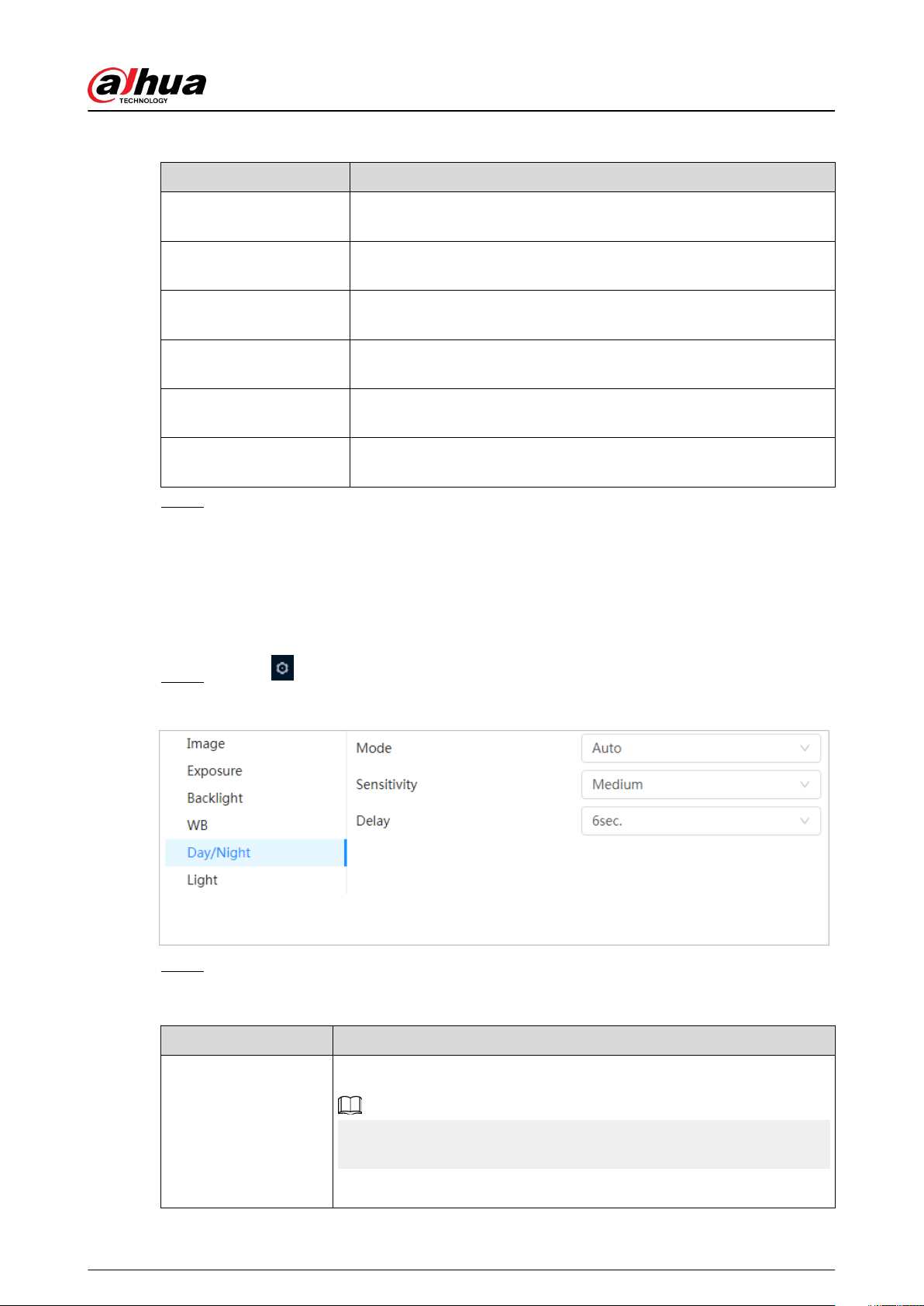
Table 6-5 Description of WB parameters
WB Mode Description
Auto
The system compensates WB according to color temperature to
ensure color precision.
Natural
The system auto compensates WB to environments without articial
light to ensure color precision.
Street Lamp
The system compensates WB to outdoor night scene to ensure color
precision.
Outdoor
The system auto compensates WB to most outdoor environments
with natural or articial light to ensure color precision.
Manual
Congure red and blue gain manually; the system auto compensates
WB according to color temperature.
Custom Area
The system compensates WB only to the set area according to color
temperature to ensure color precision.
Step 3 Click Apply.
6.2.1.7 Day/Night
Congure the display mode of the image. The system switches between color and black-and-white
mode according to the actual condition.
Procedure
Step 1 Select > Camera > Image > WB.
Figure 6-9 Day/night
Step 2 Congure day and night parameters.
Table 6-6 Description of day and night parameters
Parameter Description
Mode
You can select device display mode from Color , Auto, and B/W.
Day/Night conguration is independent from prole management
conguration.
●
Color : The system displays color image.
Operation Manual
22
Parameter Description
●
Auto : The system switches between color and black-and-white
display according to the actual condition.
●
B/W : The system displays black-and-white image.
Sensitivity
This conguration is available only when you set Auto in Mode.
You can congure camera sensitivity when switching between color and
black-and-white mode.
Delay
This conguration is available only when you set Auto in Mode.
You can congure the delay when camera switching between color and
black-and-white mode. The lower the value is, the faster the camera
switches between color and black-and-white mode.
Step 3 Click Apply.
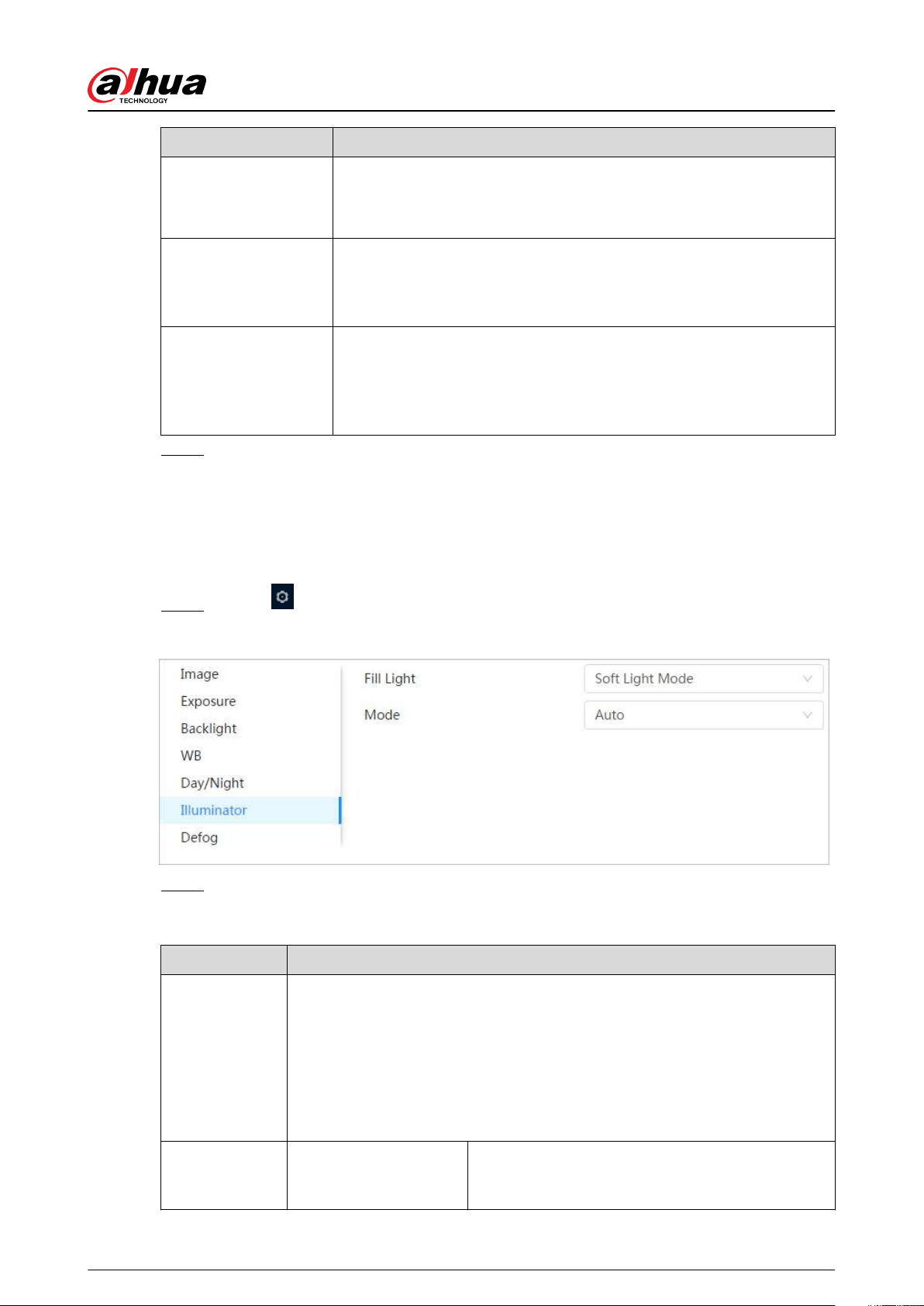
6.2.1.8 Illuminator
This conguration is available only when the device is equipped with illuminator.
Procedure
Step 1 Select > Camera > Image > Illuminator.
Figure 6-10 Light
Step 2 Congure illuminator parameters.
Table 6-7 Description of illuminator parameters
Parameter Description
Fill Light
Set Fill Light for sound and siren cameras.
●
IR Mode: Enable the IR illuminator, and the white light is disabled. When an
alarm is triggered, the system will link white light.
●
White Light: Enable the white light, and the IR illuminator is disabled. When
an alarm is triggered, the system will link white light.
●
Soft Light Mode: Enable IR illuminator and white light at the same time, and
adjust the brightness of the two illuminators to get clear images.
Mode Manual
Adjust the brightness of illuminator manually, and
then the system will supply illuminator to the image
accordingly.
Operation Manual
23
Parameter Description
Auto
The system adjusts the illuminator intensity
according to the ambient lighting condition.
Zoom Priority
The system adjusts the illuminator intensity
automatically according to the change of the
ambient light.
●
When the ambient light turns darker, the system
turns on the low beam lights rst, if the
brightness is still not enough, it turns on the high
beam lights then.
●
When the ambient light turns brighter, the
system dims high beam lights until they are o,
and then the low beam lights.
●
When the focus reaches certain wide angle, the
system will not turn on high beam light in order
to avoid over-exposure in short distance. In the
meantime, you can congure light compensation
manually to ne-tune IR light intensity.
O Illuminator is o.
Step 3 Click Apply.
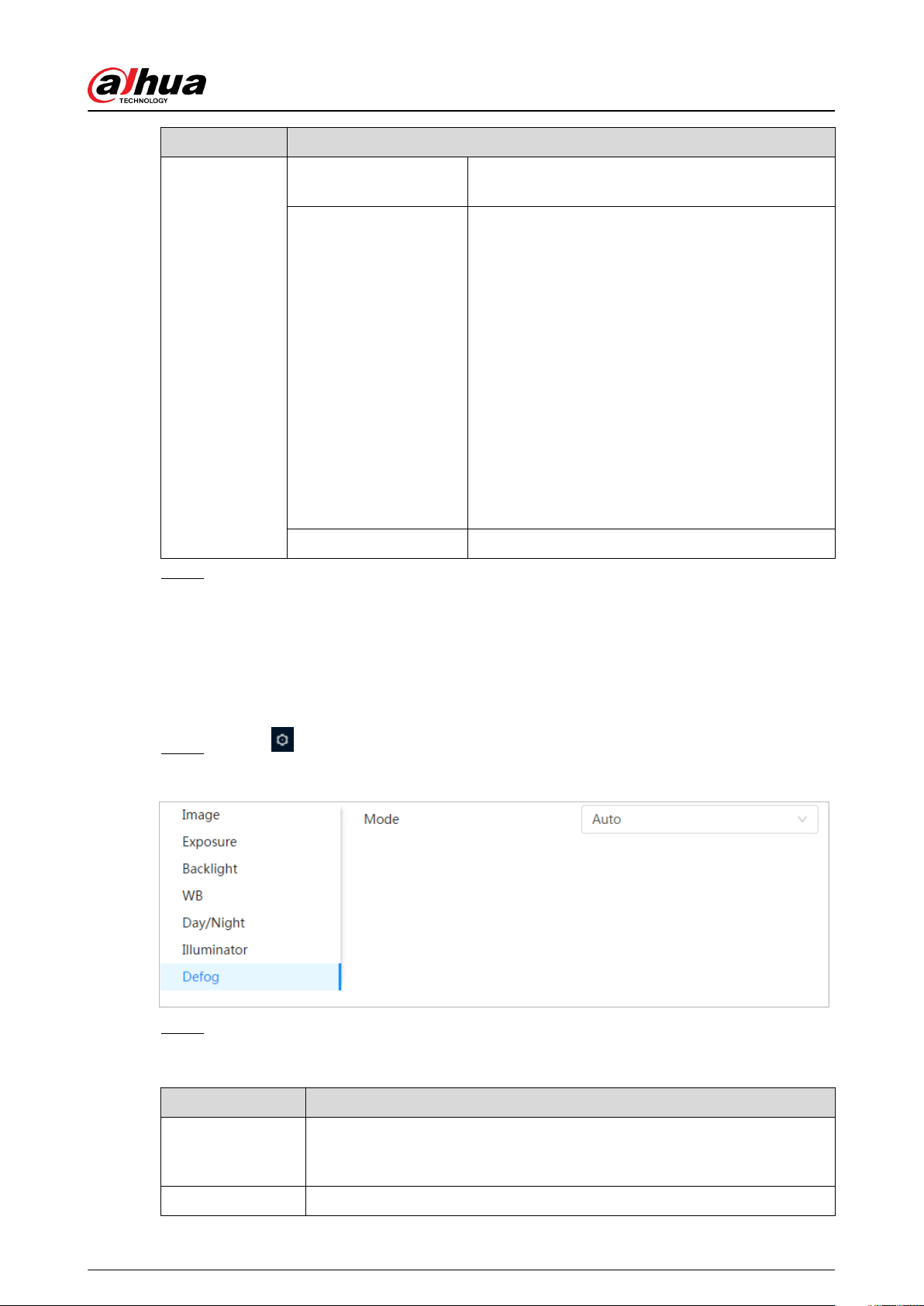
6.2.1.9 Defog
The image quality is compromised in foggy or hazy environment, and defog can be used to
improve image clarity.
Procedure
Step 1 Select > Camera > Image > Defog.
Figure 6-11 Light
Step 2 Congure defog parameters.
Table 6-8 Description of defog parameters
Defog Description
Manual
Congure function intensity and atmospheric light mode manually, and
then the system adjusts image clarity accordingly. Atmospheric light mode
can be adjusted automatically or manually.
Auto The system adjusts image clarity according to the actual condition.
Operation Manual
24
Defog Description
O Defog function is disabled.
Step 3 Click Apply.
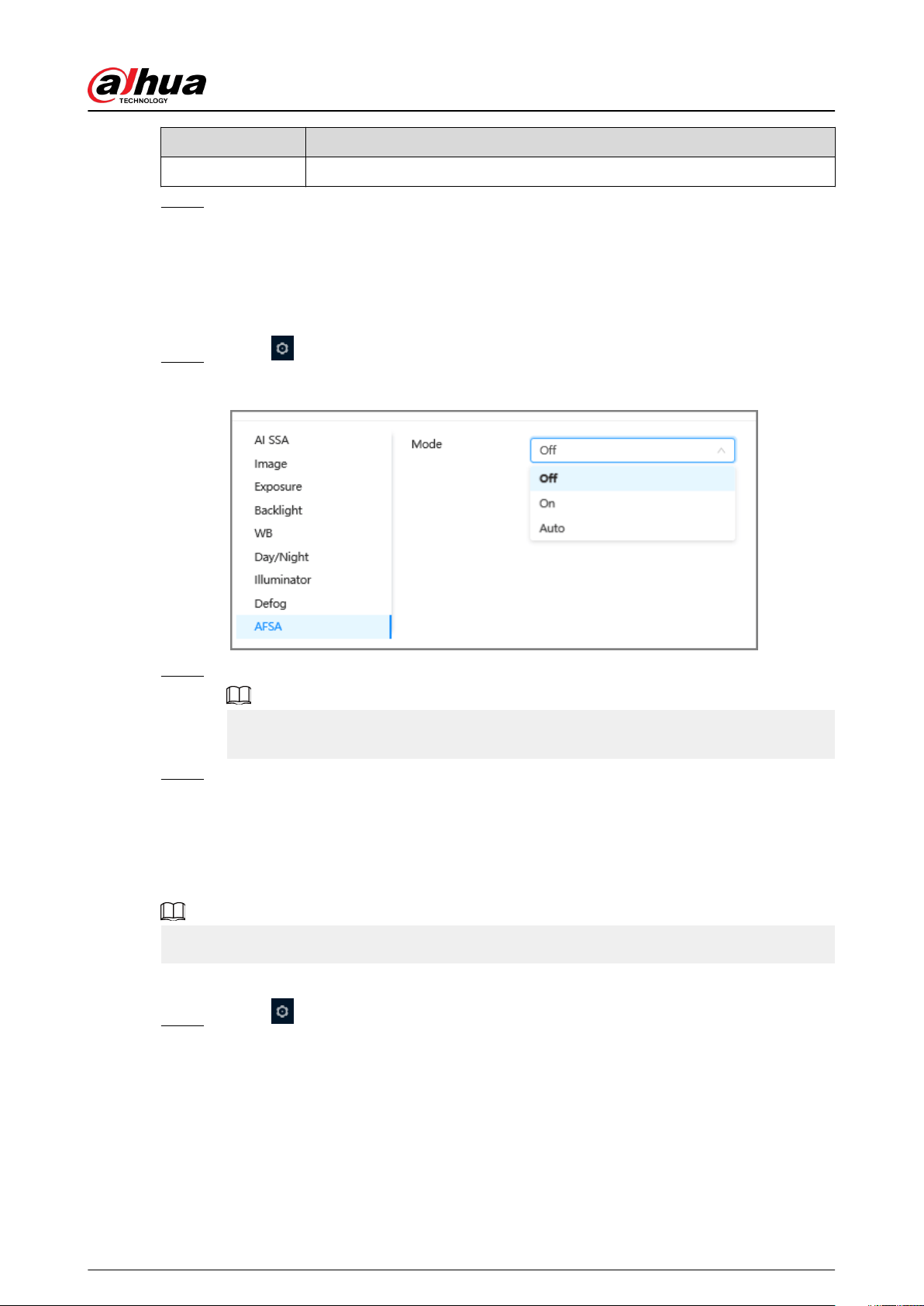
6.2.1.10 AFSA
You can enable AFSA (Anti-icker Self-adaption) to prevent image ickering.
Procedure
Step 1 Select > Camera > Image > AFSA.
Figure 6-12 AFSA
Step 2 Select On or Auto in the dropdown list.
When you select Auto, AFSA function will be enabled when the camera detects icker
and disabled when there is no icker.
Step 3 Click Apply.
6.2.1.11 Fisheye
Select installation mode and record mode according to the actual installation scene. When the
camera accesses the platform with corrective stream, the platform displays the corrective image.
This function is only available on sheye device.
Procedure
Step 1 Select > Camera > Image > Fisheye.
Operation Manual
25

Figure 6-13 Fisheye
Step 2 Set installation mode and record mode.
Table 6-9 Description of sheye parameters
Parameter Description
installation Mode You can select Ceiling , Wall, or Ground.
Record Mode
●
1O: The original image before correction.
●
1P: 360° rectangular panoramic image.
●
2P: When the installation mode is Ceiling or Ground, you can set
this mode. Two associated 180° rectangular image screens; at any
time, the two screens form a 360° panoramic image.
●
1R: Original image screen + independent sub-screen. You can
zoom or drag the image in all the screens.
●
2R: Original image screen + two independent sub-screens. You can
zoom or drag the image in all the screens.
●
4R: Original image screen + four independent sub-screens. You can
zoom or drag the image in all the screens.
●
1O + 3R: Original image screen + three independent sub-screens.
You can zoom or drag the image in original image screen, and
move the image (upper and lower) in sub-screens to adjust the
vertical view.
Step 3 Click Apply.
6.2.2 Setting Encode Parameters
This section introduces video parameters, such as video, snapshot, overlay, ROI (region of interest),
and path.
Click Default , and the device is restored to default conguration. Click Refresh to view the latest
conguration.
Operation Manual
26
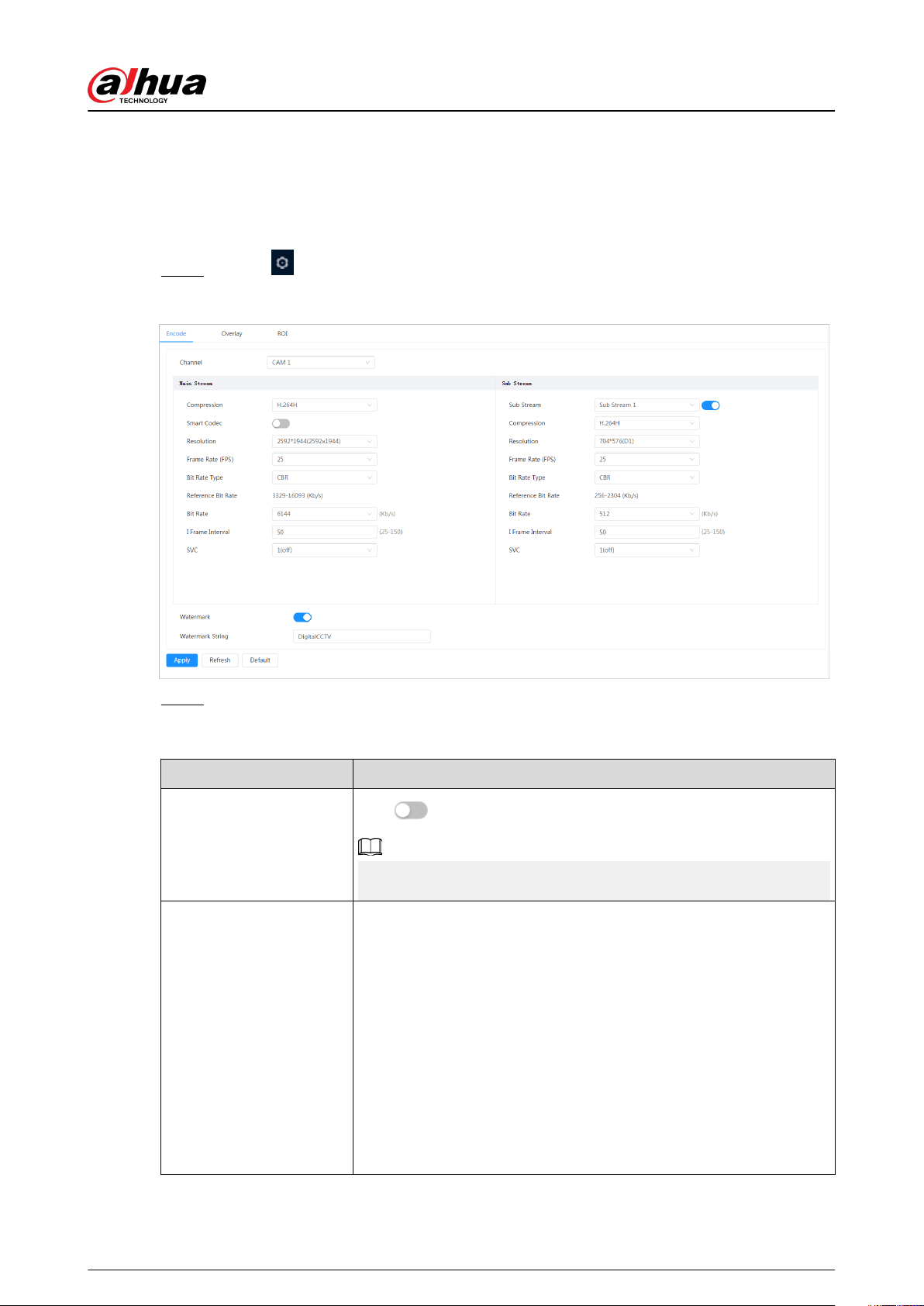
6.2.2.1 Encode
Congure video stream parameters, such as compression, resolution, frame rate, bit rate type, bit
rate, I frame interval, SVC, and watermark.
Procedure
Step 1 Select > Camera > Encode > Encode.
Figure 6-14 Encode
Step 2 Congure encode parameters.
Table 6-10 Description of encode parameters
Parameter Description
Sub Stream
Click
to enable sub stream, it is enabled by default.
You can enable multiple sub streams simultaneously.
Compression
Select encode mode.
●
H.264 : Main prole encode mode. Compared with H.264B, it
requires smaller bandwidth.
●
H.264H : High prole encode mode. Compared with H.264, it
requires smaller bandwidth.
●
H.264B : Baseline prole encode mode. It requires smaller
bandwidth.
●
H.265 : Main prole encode mode. Compared with H.264, it
requires smaller bandwidth.
●
MJPEG : When under this mode, the image requires high bit rate
value to ensure clarity, you are recommended to set the Bit Rate
value to the biggest value in the Reference Bit Rate.
Operation Manual
27
Parameter Description
Smart Codec
Click
to enable smart codec to improve video compressibility
and save storage space.
After smart codec is enabled, the device would stop supporting the
third bit stream, ROI, and smart event detection.
Output Mode You can select from Single Stream or Flex Stream.
Resolution
The resolution of the video. The higher the value is, the clearer the
image will be, but the bigger the required bandwidth will be.
Frame Rate (FPS)
The number of frame in one second of video. The higher the value is,
the clearer and smoother the video will be.
Bit Rate Type
The bit rate control type during video data transmission. You can
select bit rate type from:
●
CBR (Constant Bit Rate): The bit rate changes a little and keeps
close to the dened bit rate value.
●
VBR (Variable Bit Rate): The bit rate changes as monitoring scene
changes.
The Bit Rate Type can only be set as CBR when Encode Mode is set
as MJPEG.
Quality
This parameter can be congured only when the Bit Rate Type is set
as VBR.
The better the quality is, but the bigger the required bandwidth will
be.
Reference Bit Rate
The most suitable bit rate value range recommended to user
according to the dened resolution and frame rate.
Max Bit Rate
This parameter can be congured only when the Bit Rate Type is set
as VBR.
You can select the value of the Max Bit Rate according to the
Reference Bit Rate value. The bit rate then changes as monitoring
scene changes, but the max bit rate keeps close to the dened value.
Bit Rate
This parameter can be congured only when the Bit Rate Type is set
as CBR.
Select bit rate value in the list according to actual condition.
I Frame Interval
The number of P frames between two I frames, and the I Frame
Interval range changes as FPS changes.
It is recommended to set I Frame Interval twice as big as FPS.
SVC
Scaled video coding, is able to encode a high quality video bit stream
that contains one or more subset bit streams. When sending stream,
to improve uency, the system will quit some data of related lays
according to the network status.
Operation Manual
28
Parameter Description
●
1: The default value, which means that there is no layered coding.
●
2, 3 and 4: The lay number that the video stream is packed.
Watermark
You can verify the watermark to check if the video has been
tampered.
Watermark String
Step 3 Click Apply.
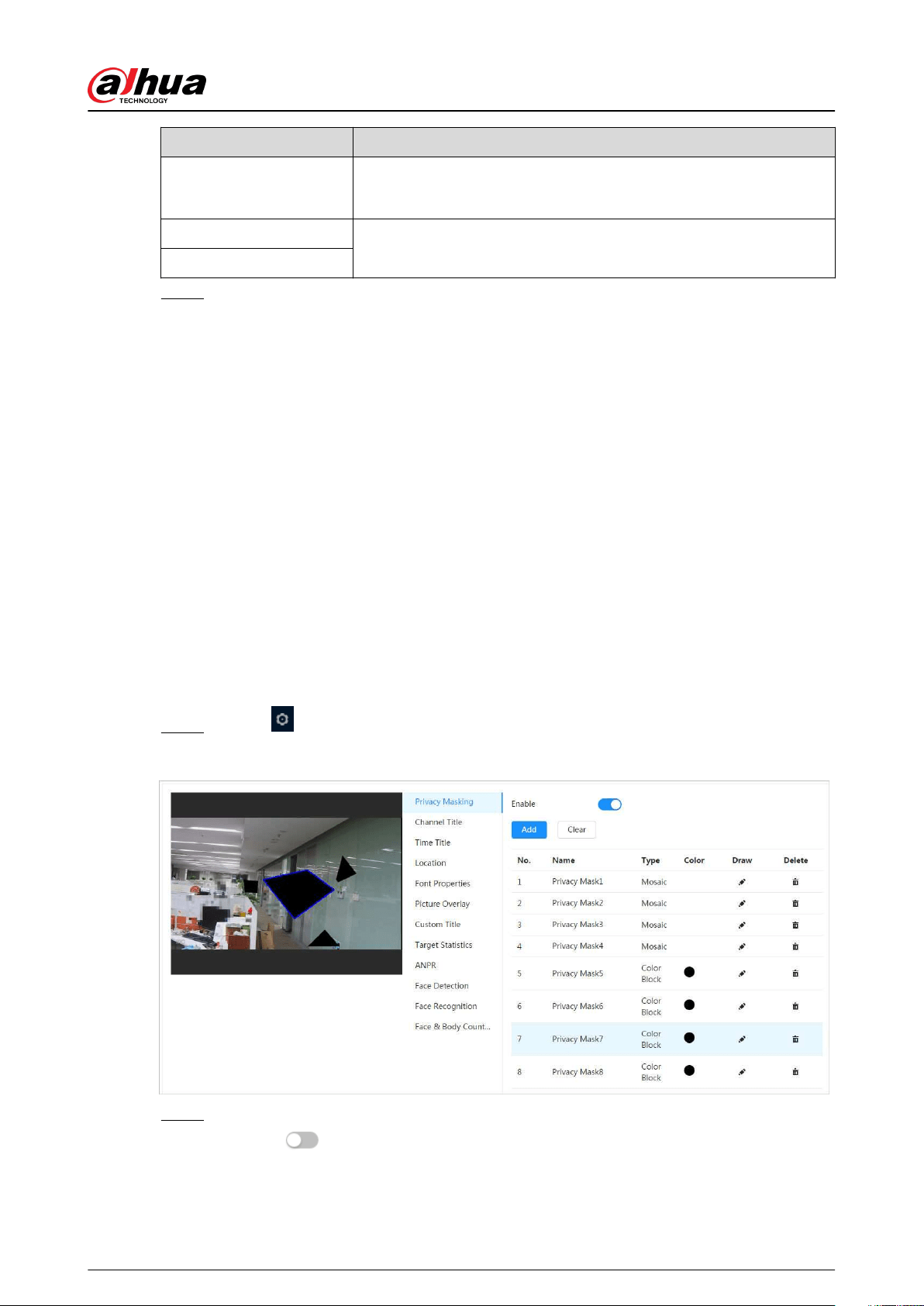
6.2.2.2 Overlay
Congure overlay information, and it will be displayed on the Live page.
6.2.2.2.1 Conguring Privacy Masking
You can enable this function when you need to protect the privacy of some area on the video
image.
Background Information
You can select the type of the masking from Color Block and Mosaic.
●
When selecting Color Block only, you can draw triangles and convex quadrilaterals as blocks.
You can drag 8 blocks at most, and the color is black.
●
When selecting Mosaic, you can draw rectangles as blocks with mosaic. You can draw 4 blocks
at most.
●
Color Block + Mosaic: You can draw 8 blocks at most.
Procedure
Step 1 Select > Camera > Encode > Overlay > Privacy Masking.
Figure 6-15 Privacy masking
Step 2 Congure privacy masking.
1. Click
next to Enable.
2. Click Add, and then drag the block to the area that you need to cover.
3. Adjust the size of the rectangle to protect the privacy.
Operation Manual
29
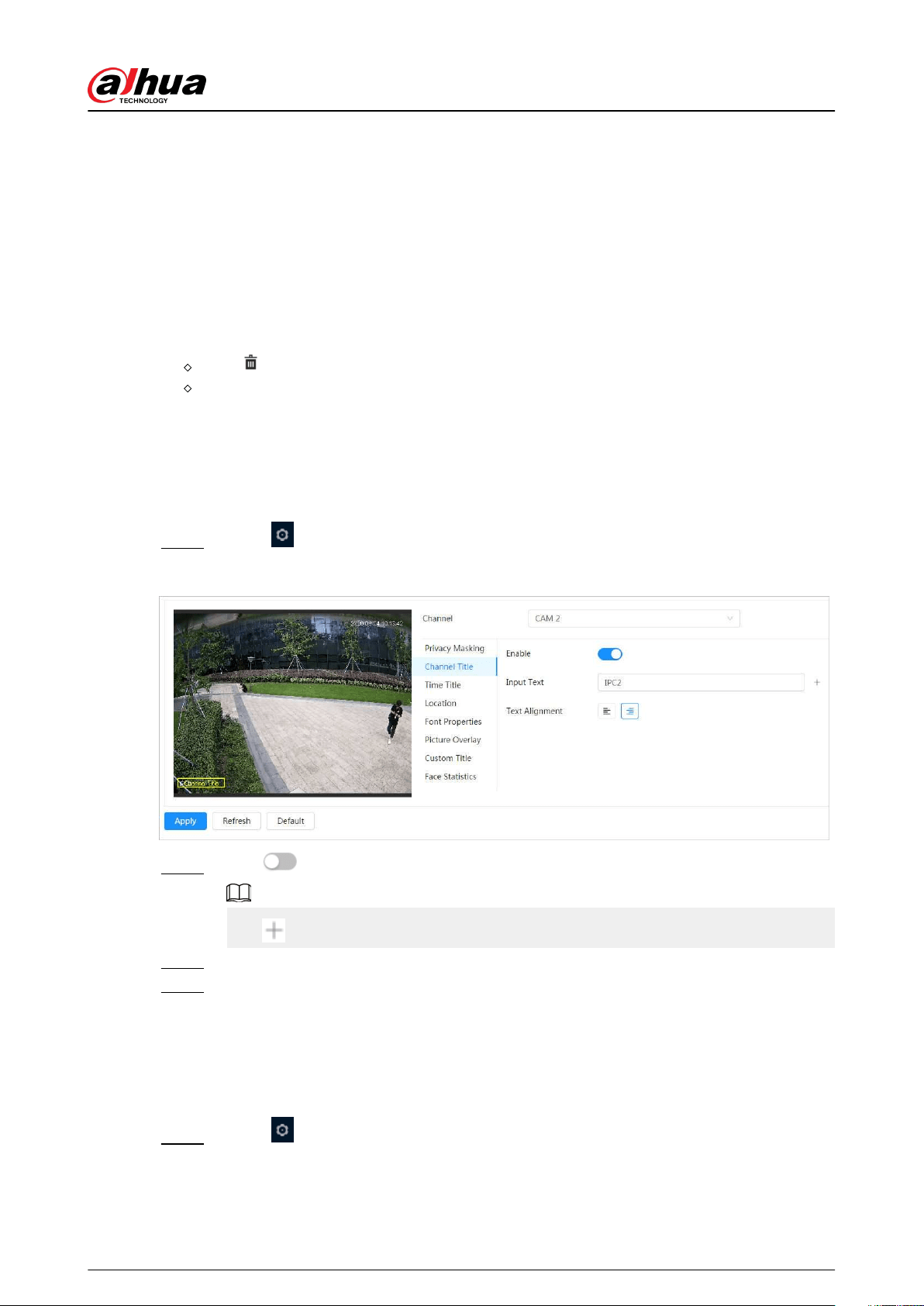
4. Click Apply.
Related Operations
●
View and edit the block
Select the privacy masking rule to be edited in the list, then the rule is highlighted, and the block
frame is displayed in the image. You can edit the selected block as needed, including moving
the position, and adjusting the size.
●
Edit the block name
Double-click the name in Name to edit the block name.
●
Delete the block
Click to delete blocks one by one.
Click Clear to delete all blocks.
6.2.2.2.2 Conguring Channel Title
You can enable this function when you need to display channel title in the video image.
Procedure
Step 1 Select > Camera > Encode > Overlay > Channel Title.
Figure 6-16 Channel title
Step 2 Click next to Enable, enter the channel title, and select the text alignment.
Click to add the channel title, and you can add 1 line at most.
Step 3 Move the title box to the position that you want in the image.
Step 4 Click Apply.
6.2.2.2.3 Conguring Time Title
You can enable this function when you need to display time in the video image.
Procedure
Step 1 Select > Camera > Encode > Overlay > Time Title.
Operation Manual
30

Figure 6-17 Time title
Step 2 Click next to Enable.
Step 3 Click next to Week Display to display the day of week.
Step 4 Move the time box to the position that you want in the image.
Step 5 Click Apply.
6.2.2.2.4 Conguring Location
You can enable this function if you need to display text in the video image.
Text overlay and picture overlay cannot work at the same time, and the IPC that connects to mobile
NVR with private protocol would display GPS information as priority.
Procedure
Step 1 Select > Camera > Encode > Overlay > Location.
Figure 6-18 Location
Step 2 Click next to Enable, enter the location information, and then select alignment. The
text is displayed in the video image.
Click to add the text overlay, and you can add 13 lines at most.
Operation Manual
31

Step 3 Move the text box to the position that you want in the image.
Step 4 Click Apply.
6.2.2.2.5 Conguring Font Properties
You can enable this function if you need to adjust the font size in the video image.
Procedure
Step 1 Select > Camera > Encode > Overlay > Font Properties.
Figure 6-19 Font properties
Step 2 Select the font color and size.
You can set the RGB value to customize the font color.
Step 3 Click Apply.
6.2.2.2.6 Conguring Picture Overlay
You can enable this function if you need to display picture information on the video image.
Text overlay and picture overlay cannot work at the same time.
Procedure
Step 1 Select > Camera > Encode > Overlay > Picture Overlay.
Operation Manual
32
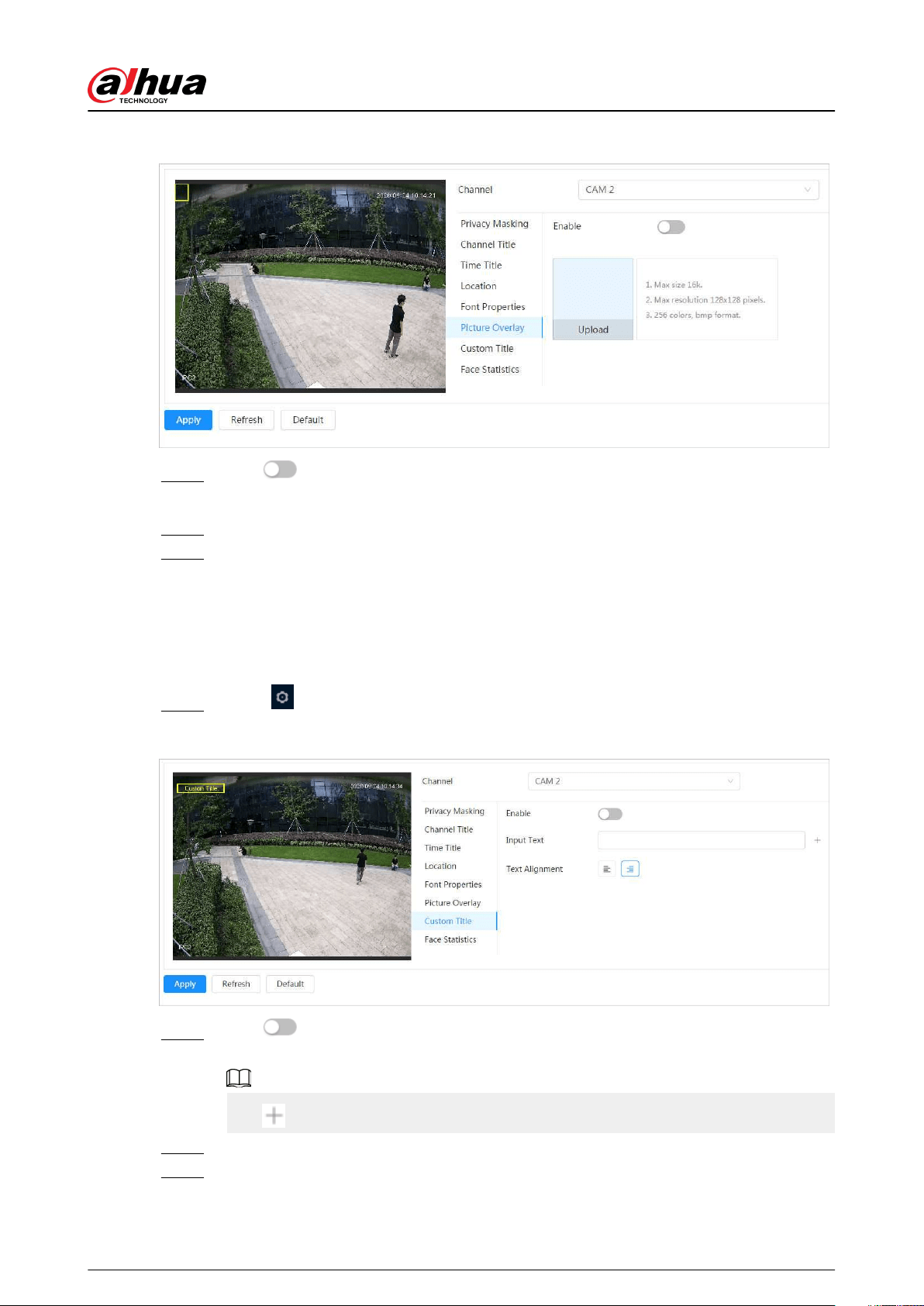
Figure 6-20 Picture overlay
Step 2 Click next to Enable , click Upload, and then select the picture to be overlaid.
The picture is displayed on the video image.
Step 3 Move the overlaid picture to the position that you want in the image.
Step 4 Click Apply.
6.2.2.2.7 Conguring Custom Title
You can enable this function if you need to display custom information on the video image.
Procedure
Step 1 Select > Camera > Encode > Overlay > Custom Title
Figure 6-21 Custom title
Step 2 Click next to Enable, enter the text that you want to display, and then select the text
alignment.
Click to add the text overlay, and you can add 1 line at most.
Step 3 Move the custom box to the position that you want in the image.
Step 4 Click Apply.
Operation Manual
33
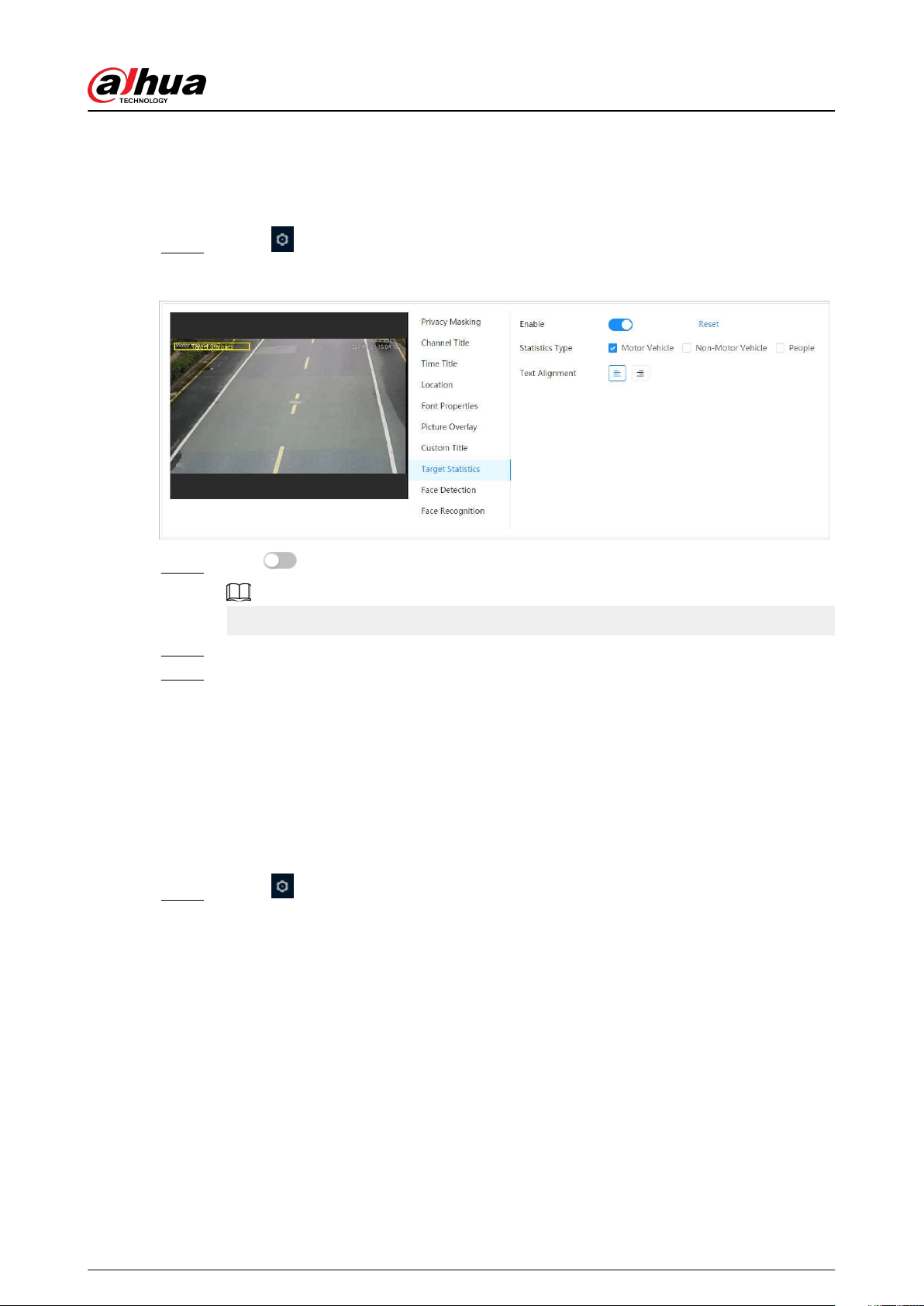
6.2.2.2.8 Conguring Target Statistics
After conguring the target statistics, the number of target statistics will be displayed on the image.
Procedure
Step 1 Select > Camera > Encode > Overlay > Target Statistics.
Figure 6-22 Target statistics
Step 2 Click next to Enable, select the statistics type, and then select the text alignment.
Click Reset to clear the statistics data.
Step 3 Move the custom box to the position that you want in the image.
Step 4 Click Apply.
The overlaid information will be displayed after enabling video metadata function.
6.2.2.2.9 Conguring ANPR
After enabling this function, ANPR statistics information will be displayed on the image. When the
overlay function is enabled during intelligent rules conguration, this function is enabled
simultaneously.
Procedure
Step 1 Select > Camera > Encode > Overlay > ANPR.
Operation Manual
34

Figure 6-23 ANPR
Step 2 Select the Enable check box, select the statistics type, and then select text alignment.
Click Reset to clear the statistics data.
Step 3 Move the ANPR box to the position that you want in the image.
Step 4 Click Apply.
6.2.2.2.10 Conguring Face Detection
After enabling this function, face statistics information will be displayed on the image. When the
overlay function is enabled during intelligent rules conguration, this function is enabled
simultaneously.
Procedure
Step 1 Select > Camera > Encode > Overlay > Face Detection.
Figure 6-24 Face detection
Step 2 Click next to Enable, and select the text alignment.
Operation Manual
35

Click Reset to clear the statistics data.
Step 3 Move the statistics box to the position that you want in the image.
Step 4 Click Apply.
The information will be displayed on the image after the face detection function is
enabled.
6.2.2.2.11 Conguring Face Recognition
After enabling this function, face statistics information will be displayed on the image. When the
overlay function is enabled during intelligent rules conguration, this function is enabled
simultaneously.
Procedure
Step 1 Select > Camera > Encode > Overlay > Face Recognition.
Figure 6-25 Face recognition
Step 2 Click next to Enable, select the statistics type, and then select the text alignment.
Click Reset to clear the statistics data.
Step 3 Move the statistics box to the position that you want in the image.
Step 4 Click Apply.
The information will be displayed on the image after the face recognition function is
enabled.
6.2.2.2.12 Conguring Face Statistics
After enabling this function, face statistics information will be displayed on the image. When the
overlay function is enabled during intelligent rules conguration, this function is enabled
simultaneously.
Procedure
Step 1 Select > Camera > Encode > Overlay > Face Statistics.
Operation Manual
36
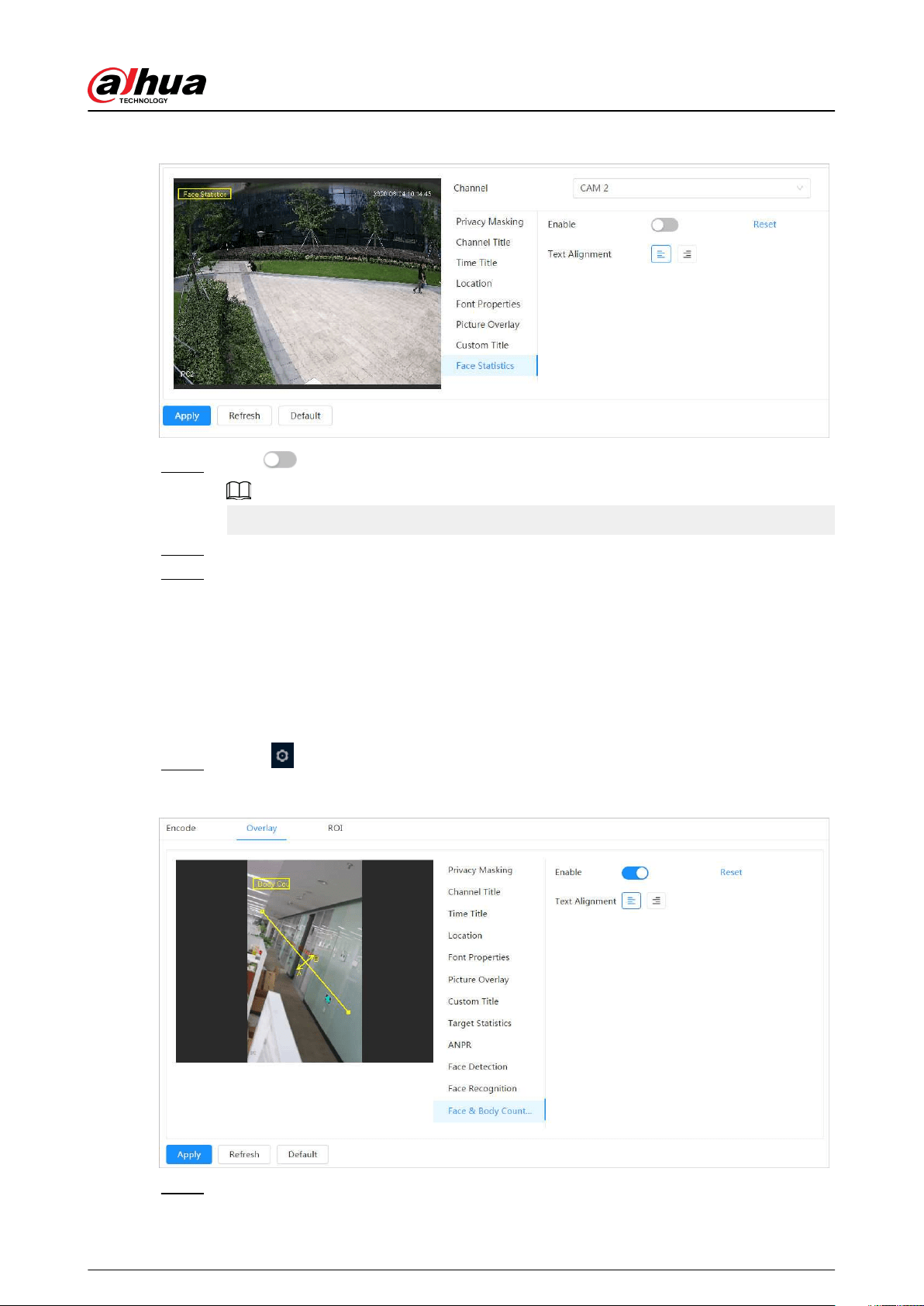
Figure 6-26 Face statistics
Step 2 Click next to Enable, and select the text alignment.
Click Reset to clear the statistics data.
Step 3 Move the statistics box to the position that you want in the image.
Step 4 Click Apply.
6.2.2.2.13 Congure Face&Body Counting
After enabling this function, face&body counting information will be displayed on the image. When
the overlay function is enabled during intelligent rules conguration, this function is enabled
simultaneously.
Procedure
Step 1 Select > Camera > Encode > Overlay > Face&Body Counting.
Figure 6-27 Face&body counting
Step 2 Select the Enable check box, and then select text alignment.
Operation Manual
37
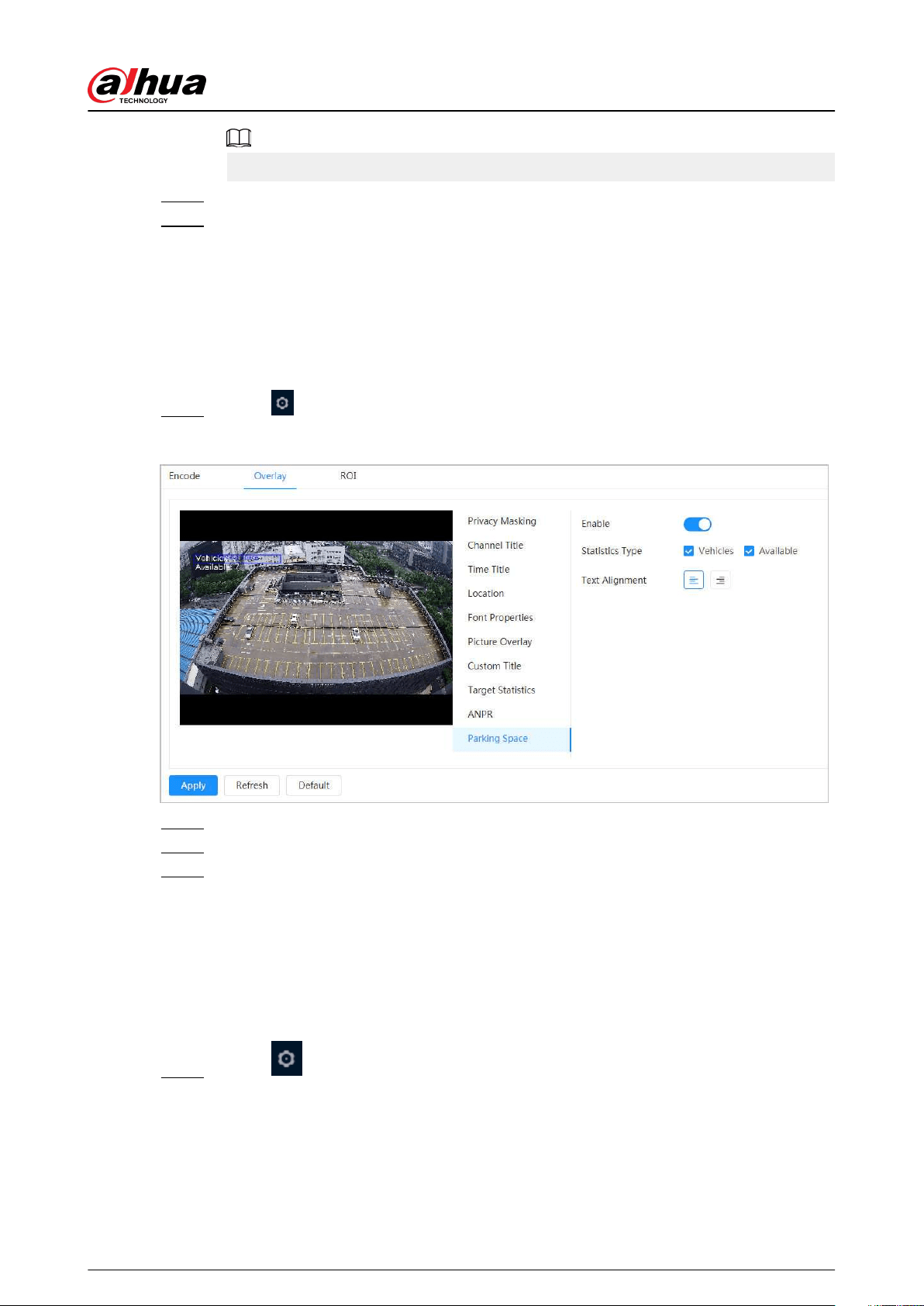
Click Reset to clear the statistics data.
Step 3 Move the face&body counting box to the position that you want in the image.
Step 4 Click Apply.
6.2.2.2.14 Conguring Parking Space
After enabling this function, parking space information will be displayed on the image. When the
overlay function is enabled during intelligent rules conguration, this function is enabled
simultaneously.
Procedure
Step 1 Select > Camera > Encode > Overlay > Parking Space.
Figure 6-28 Parking space
Step 2 Select the Enable check box.
Step 3 Select statistic type and text alignment.
Step 4 Click Apply.
6.2.2.2.15 Conguring People Counting
After enabling this function, people counting information will be displayed on the image. When the
overlay function is enabled during intelligent rules conguration, this function is enabled
simultaneously.
Procedure
Step 1 Select > Camera > Encode > Overlay > People Counting.
Operation Manual
38
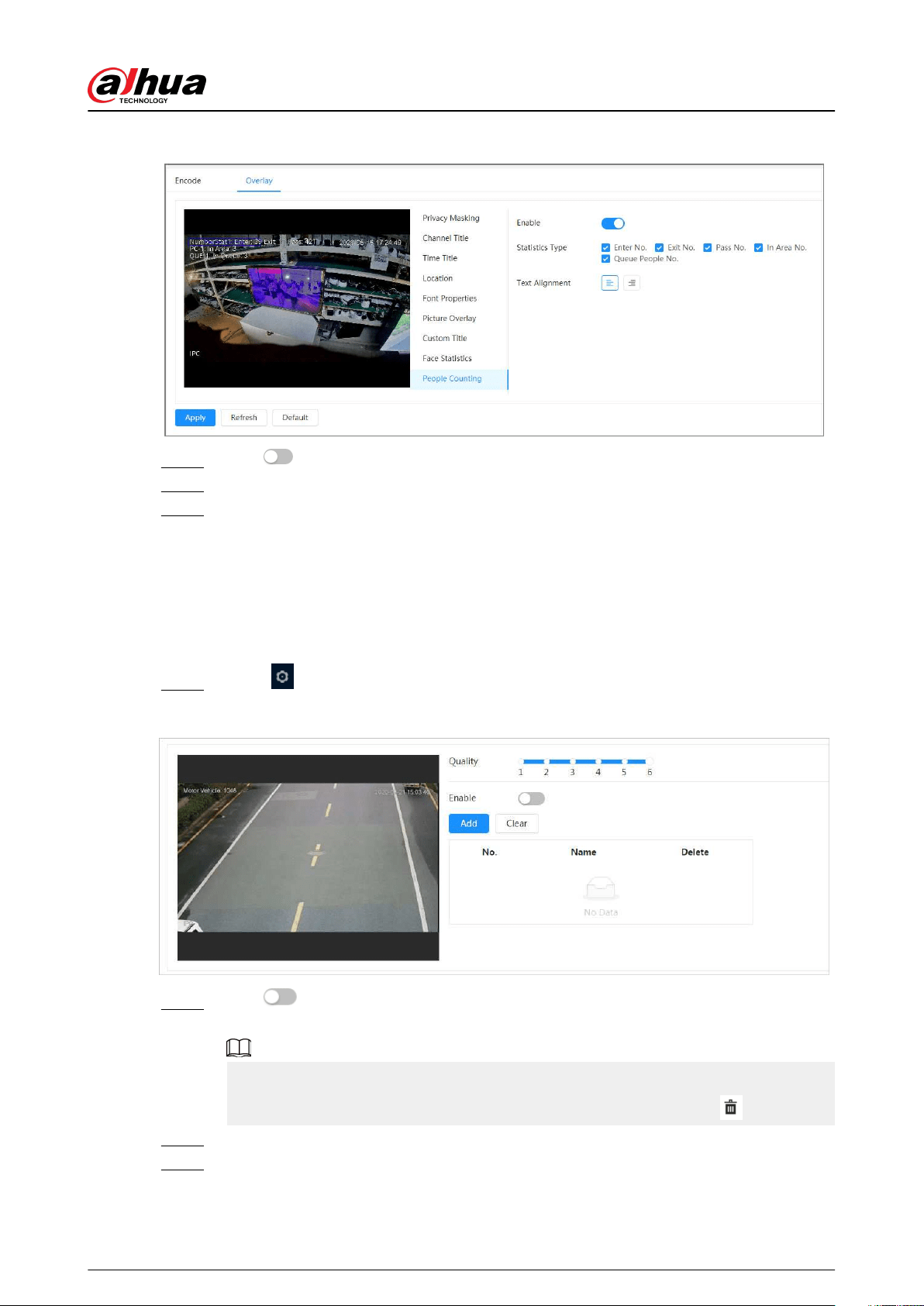
Figure 6-29 People counting
Step 2 Click next to Enable, select the statistics type, and then select the text alignment.
Step 3 Move the custom box to the position that you want in the image.
Step 4 Click Apply.
6.2.2.3 ROI
Select ROI (region of interest) on the image and congure the image quality of ROI, and then the
selected image is display at dened quality.
Procedure
Step 1 Select > Camera > Encode > ROI.
Figure 6-30 ROI
Step 2 Click next to Enable, draw an area on the image, and then congure the image
quality of ROI.
●
The higher the image quality value is, the better the quality will be.
●
Click Clear to delete all the area boxes; select one box, and then click
to delete it.
Step 3 Click Apply.
Step 4 Click Add to add more ROI. You can draw 4 area boxes at most.
Operation Manual
39
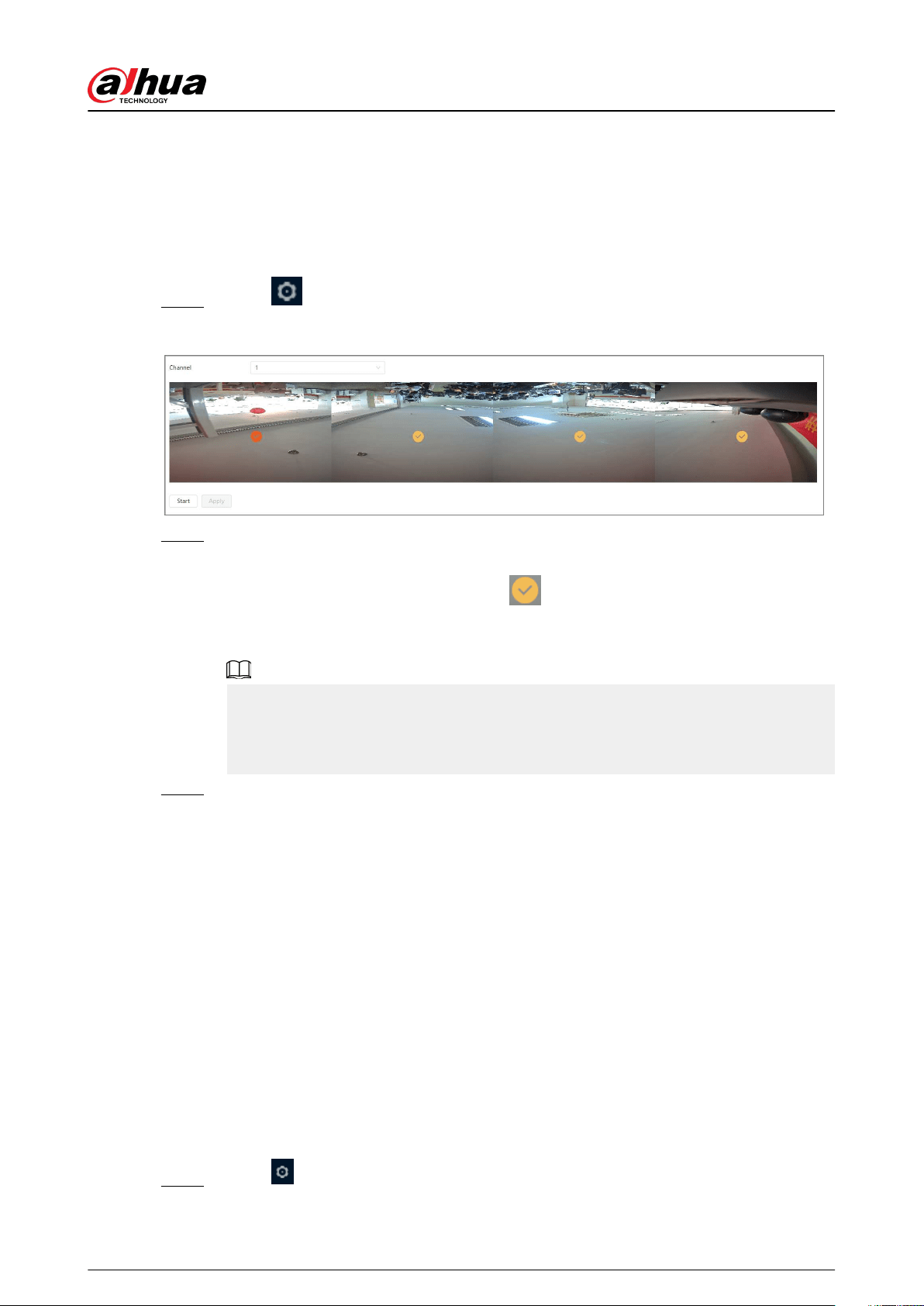
6.2.3 Splicing
When the panorama contains multiple images captured by dierent lenses, enable this function.
Before splicing, make sure that the surveillance scene is large and there are no objects blocking the
camera from taking a clear picture, otherwise, the splicing might fail.
Procedure
Step 1 Select > Camera > Splicing.
Figure 6-31 Splicing
Step 2 Select the lenses that need to be spliced.
When splicing the image through selecting lenses, you need to select the continuous
splicing screens. The screen with the icon
(deeper color) is the rst screen of the
splicing. You can select any screen as the rst one, and then select the following screens
continuously. The system supports the splicing of 2 lenses to 8 lenses.
●
This function is available on select models. And it is all sensors splicing by default.
●
For Multi-Sensor Panoramic + PTZ Camera, the 4-sensor device supports 2 to 4 lenses
splicing; the 6-sensor device supports 2 to 6 lenses splicing; the 8-sensor device
supports 2-8 lenses splicing.
Step 3 Click Start.
The system starts to splice the image.
●
Some cameras restart automatically after splicing is complete, you can view the results
of the splicing in the Live window.
●
Some cameras display splicing live window after splicing is complete. Click OK , and
then the default window appears. Click OK and the splicing will take eect.
6.2.4 Audio
You can congure audio parameters and alarm audio.
6.2.4.1 Setting Audio Parameters
This section introduces audio parameters, including encode mode, sampling frequency, audio in
type, and noise lter.
Procedure
Step 1 Select > Camera > Audio.
Operation Manual
40

Figure 6-32 Audio
Step 2 Click next to Enable in Main Stream or Sub Stream.
For the camera with multiple channels, select the channel number.
Please carefully activate the audio acquisition function according to the actual
requirements of the application scenario.
Step 3 Congure audio parameters.
Table 6-11 Description of audio parameters
Parameter Description
Compression
You can select audio Encode Mode from PCM, G.711A, G.711Mu, G.
726, AAC, G.723.
The congured audio encode mode applies to both audio and
intercom. The default value is recommended.
Sampling Frequency
Sampling number per second. The higher the sampling frequency is, the
more the sample in a second will be, and the more accuracy the
restored signal will be. You can select audio Sampling Frequency from
8000, 16000, 32000, 48000, 64000.
Audio Input Type
You can select audio input type from:
●
LineIn : Requires external audio device.
●
Mic : Not require external audio device.
Noise Filter Enable this function, and the system auto lters ambient noise.
Microphone Volume Adjusts microphone volume.
Speaker Volume Adjusts speaker volume.
Step 4 Click Apply.
Operation Manual
41
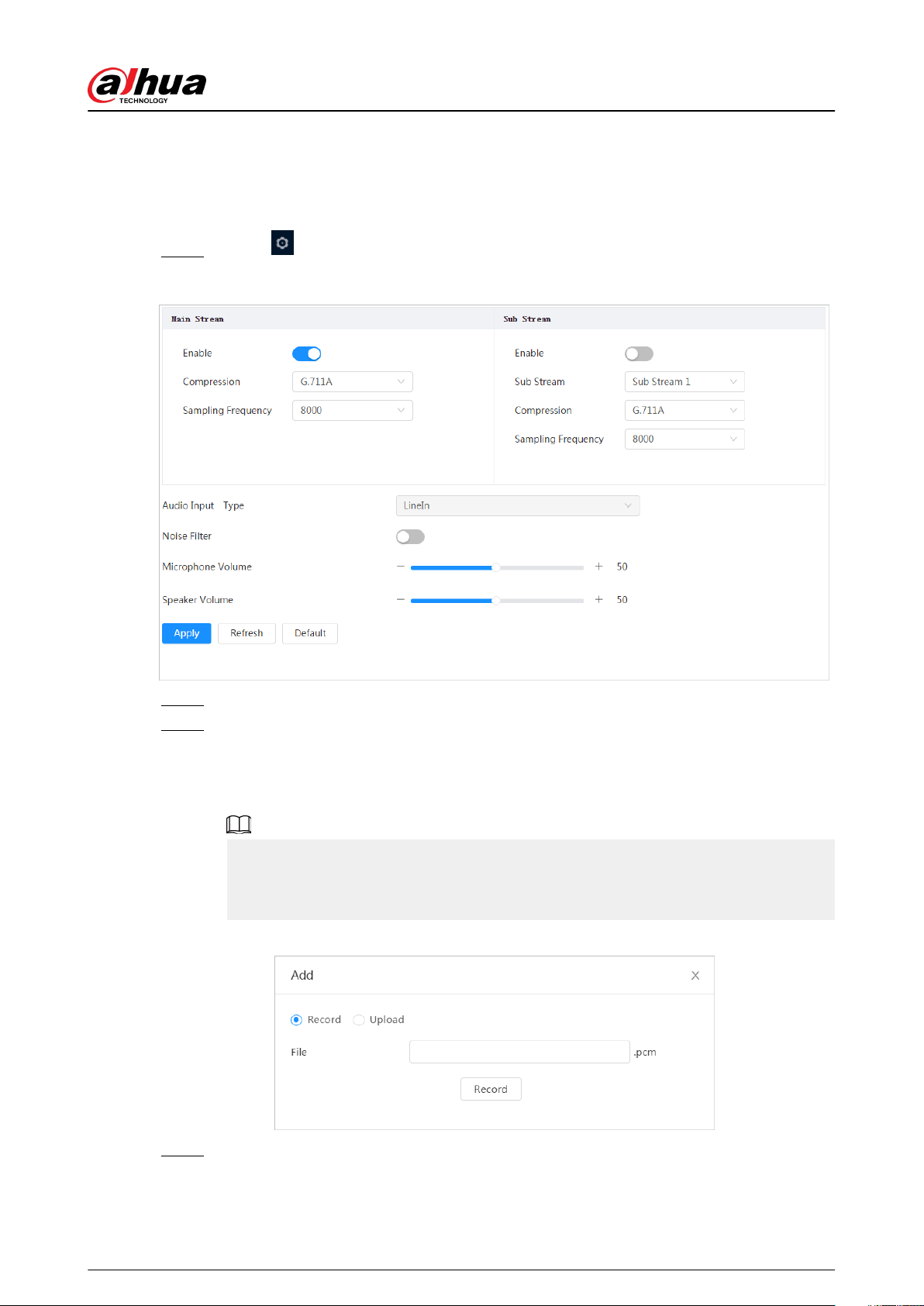
6.2.4.2 Setting Alarm Tone
You can record or upload alarm audio le. The audio le will be played when the alarm is triggered.
Procedure
Step 1 Select > Camera > Audio Tone.
Figure 6-33 Audio tone
Step 2 Click Add.
Step 3 Congure the audio le.
●
Select Record , enter the audio name in the input box, and then click Record.
●
Select Upload , click Browse to select the audio le to be uploaded, and then click
Upload.
●
The camera supports recording audio le in .pcm format only. Recording is only
supported by select models.
●
You can upload audio les in .pcm, .wav2, .mp3, or .aac format.
Figure 6-34 Add alarm tone
Step 4 Select the le that you need.
Related Operations
●
Edit audio le
Operation Manual
42

Click to edit the le name.
●
Delete audio le
Click
to delete the le name.
●
Play audio le
Click
to play the le name.
●
Download audio le
Click
to download the le name.
6.3 Network
This section introduces network conguration.
6.3.1 TCP/IP
You can congure IP address and DNS (Domain Name System) server and so on according to
network planning.
Prerequisites
The camera has connected to the network.
Procedure
Step 1 Select > Network > TCP/IP.
Operation Manual
43
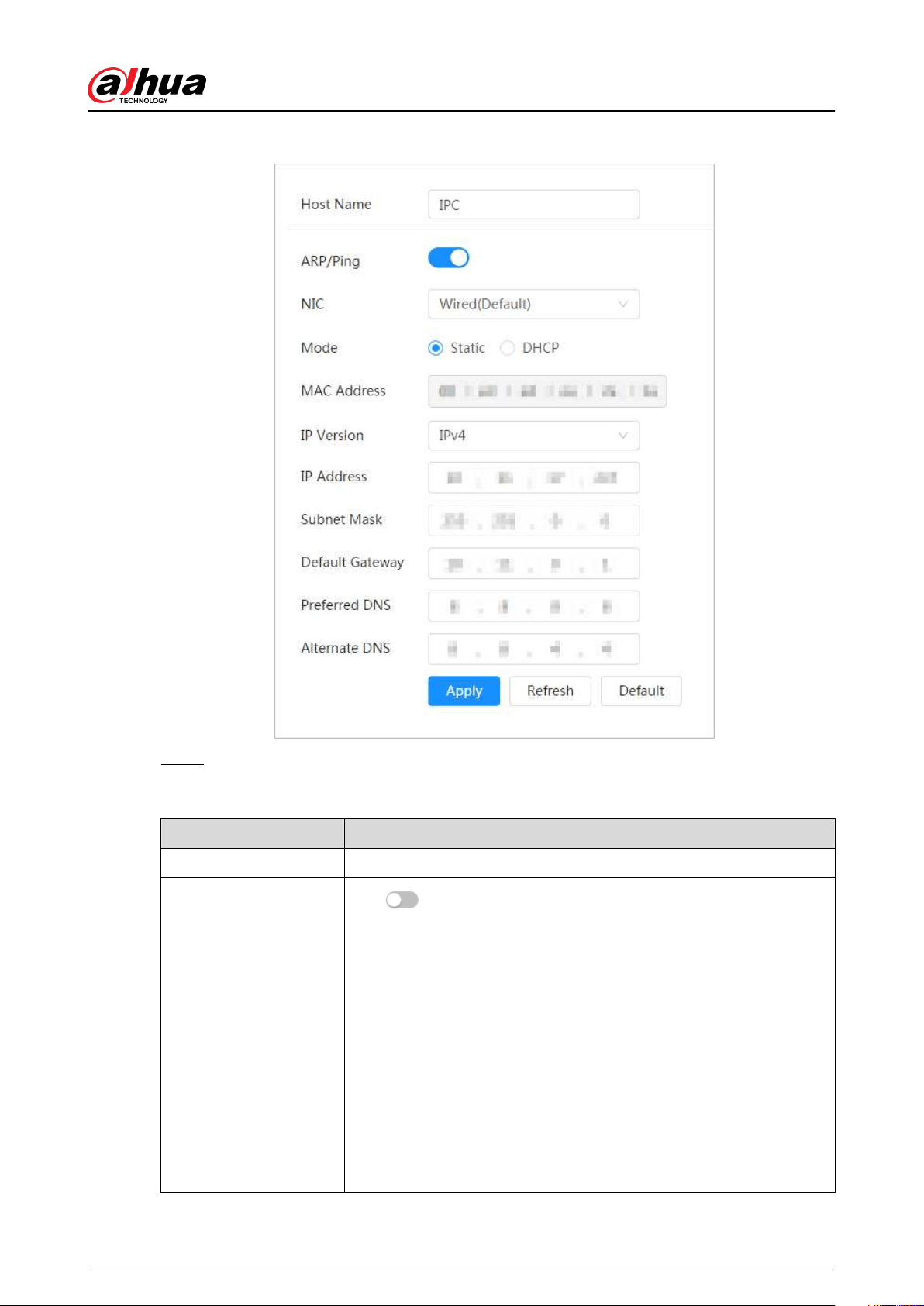
Figure 6-35 TCP/IP
Step 2 Congure TCP/IP parameters.
Table 6-12 Description of TCP/IP parameters
Parameter Description
Host Name Enter the host name, and the maximum length is 15 characters.
ARP/Ping
Click
to enable ARP/Ping to set IP address service. Get the camera
MAC address, and then you can change and congure the device IP
address with ARP/ping command.
This is enabled by default. During restart, you will have no more than 2
minutes to congure the device IP address by a ping packet with
certain length, the server will be turned o in 2 minutes, or it will be
turned o immediately after the IP address is successfully congured. If
this is not enabled, the IP address cannot be congured with ping
packet.
A demonstration of conguring IP address with ARP/Ping.
a. Keep the camera that needs to be congured and the PC within the
same local network, and then get a usable IP address.
b. Get the MAC address of the camera from device label.
Operation Manual
44
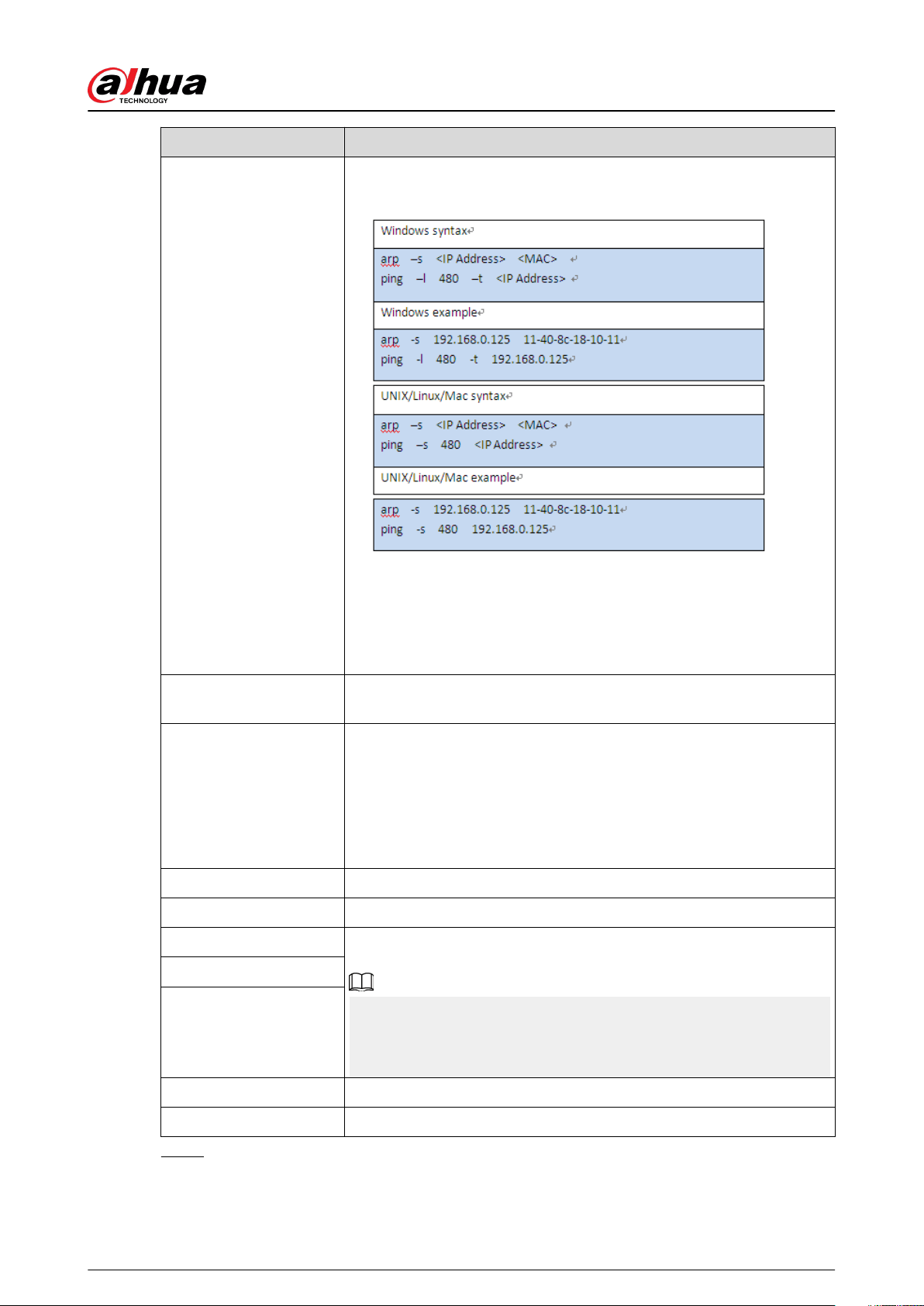
Parameter Description
c. Open command editor on the PC and enter the following
command.
d. Restart the camera.
e. Check the PC command line, if information such as Reply from
192.168.0.125… is displayed, the conguration succeeds, and you
can turn it o then.
f. Enter http://(IP address) in the browser address bar to log in.
NIC
Select the Ethernet card that need to be congured, and the default
one is Wire.
Mode
The mode that the camera gets IP:
●
Static : Congure IP Address, Subnet Mask, and Default Gateway
manually, and then click Save, the login page with the congured
IP address is displayed.
●
DHCP : When there is DHCP server in the network, select DHCP,
and the camera acquires IP address automatically.
MAC Address Displays host MAC address.
IP Version Select IPv4 or IPv6.
IP Address When you select Static in Mode, enter the IP address and subnet
mask that you need.
●
IPv6 does not have subnet mask.
●
The default gateway must be on the same network segment with
the IP address.
Subnet Mask
Default Gateway
Preferred DNS IP address of the preferred DNS.
Alternate DNS IP address of the alternate DNS.
Step 3 Click Apply.
Operation Manual
45
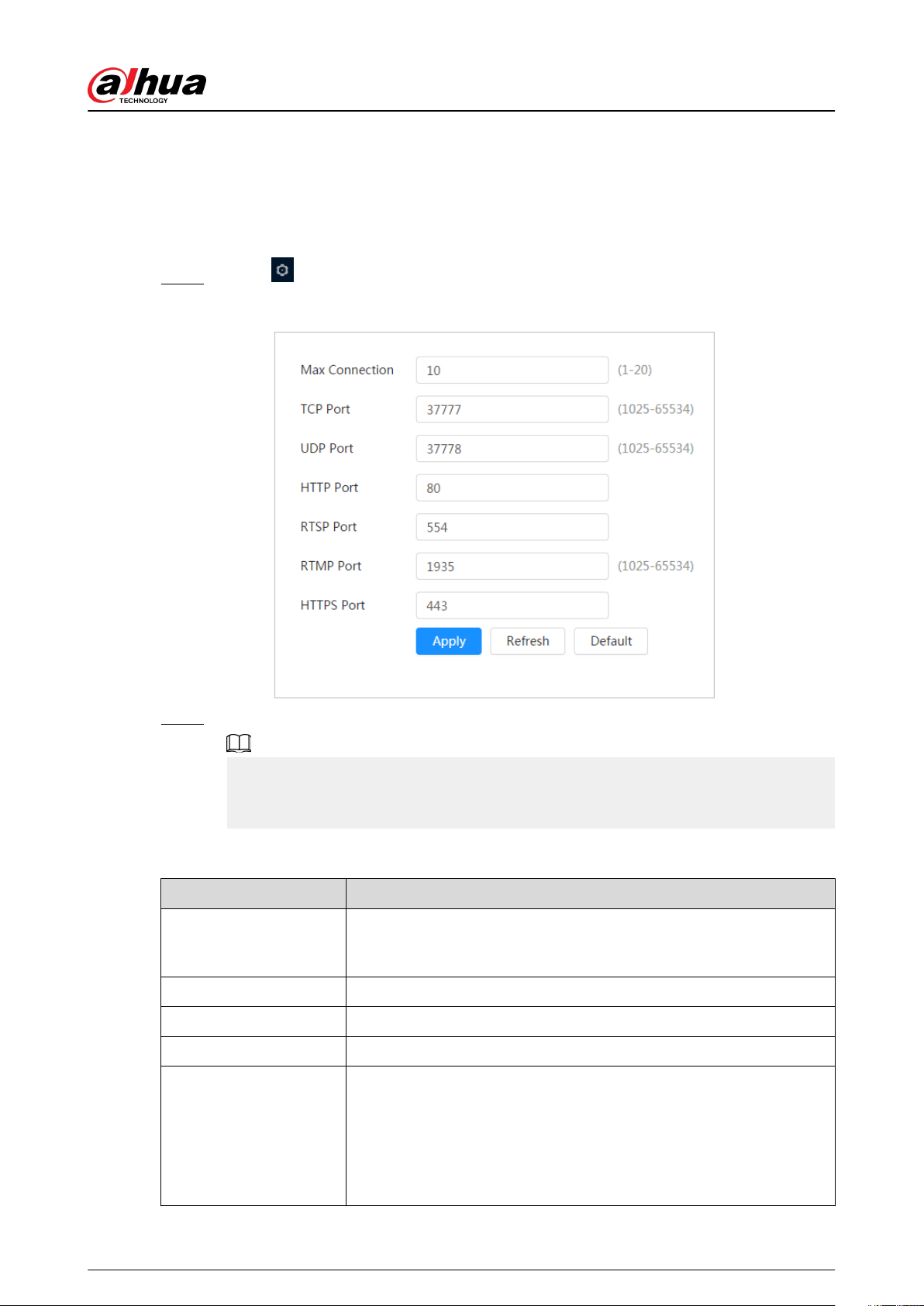
6.3.2 Port
Congure the port numbers and the maximum number of users (includes web, platform client, and
mobile phone client) that can connect to the device simultaneously.
Procedure
Step 1 Select > Network > TCP/IP.
Figure 6-36 Port
Step 2 Congure port parameters.
●
0–1024, 1900, 3800, 5000, 5050, 9999, 37776, 37780–37880, 39999, 42323 are
occupied for specic uses.
●
Do not use the same value of any other port during port conguration.
Table 6-13 Description of port parameters
Parameter Description
Max Connection
The max number of users (web client, platform client or mobile phone
client) that can connect to the device simultaneously. The value is 10
by default.
TCP Port Transmission control protocol port. The value is 37777 by default.
UDP Port User datagram protocol port. The value is 37778 by default.
HTTP Port Hyper text transfer protocol port. The value is 80 by default.
RTSP Port
●
Real time streaming protocol port, and the value is 554 by default.
If you play live view with QuickTime, VLC or Blackberry smart
phone, the following URL format is available.
●
When the URL format requiring RTSP, you need to specify channel
number and bit stream type in the URL, and also username and
password if needed.
Operation Manual
46

Parameter Description
●
When playing live view with Blackberry smart phone, you need to
turn o the audio, and then set the codec mode to H.264B and
resolution to CIF.
URL format example:
rtsp://username:password@ip:port/cam/realmonitor?
channel=1&subtype=0
Among that:
●
Username: The username, such as admin.
●
Password: The password, such as admin.
●
IP: The device IP, such as 192.168.1.112.
●
Port: Leave it if the value is 554 by default.
●
Channel: The channel number, which starts from 1. For example, if
you are using channel 2, then the channel=2.
●
Subtype: The bit stream type; 0 means main stream (Subtype=0)
and 1 means sub stream (Subtype=1).
Example: If you require the sub stream of channel 2 from a certain
device, then the URL should be:
rtsp://admin:[email protected]:554/cam/realmonitor?
channel=2&subtype=1
If username and password are not needed, then the URL can be:
rtsp://ip:port/cam/realmonitor?channel=1&subtype=0
RTMP Port
Real Time Messaging Protocol. The port that RTMP provides service. It
is 1935 by default.
HTTPS Port HTTPS communication port. It is 443 by default.
Step 3 Click Apply.
The conguration of Max Connection takes eect immediately, and others will take
eect after reboot.
6.3.3 PPPoE
Point-to-Point Protocol over Ethernet, is one of the protocols that device uses to connect to the
internet. Get the PPPoE username and password from the internet service provider, and then set up
network connection through PPPoE, the camera will acquire a WAN dynamic IP address.
Prerequisites
●
The camera has connected to the network.
●
You have gotten the account and password from Internet Service Provider.
Procedure
Step 1 Select > Network > PPPoE.
Operation Manual
47
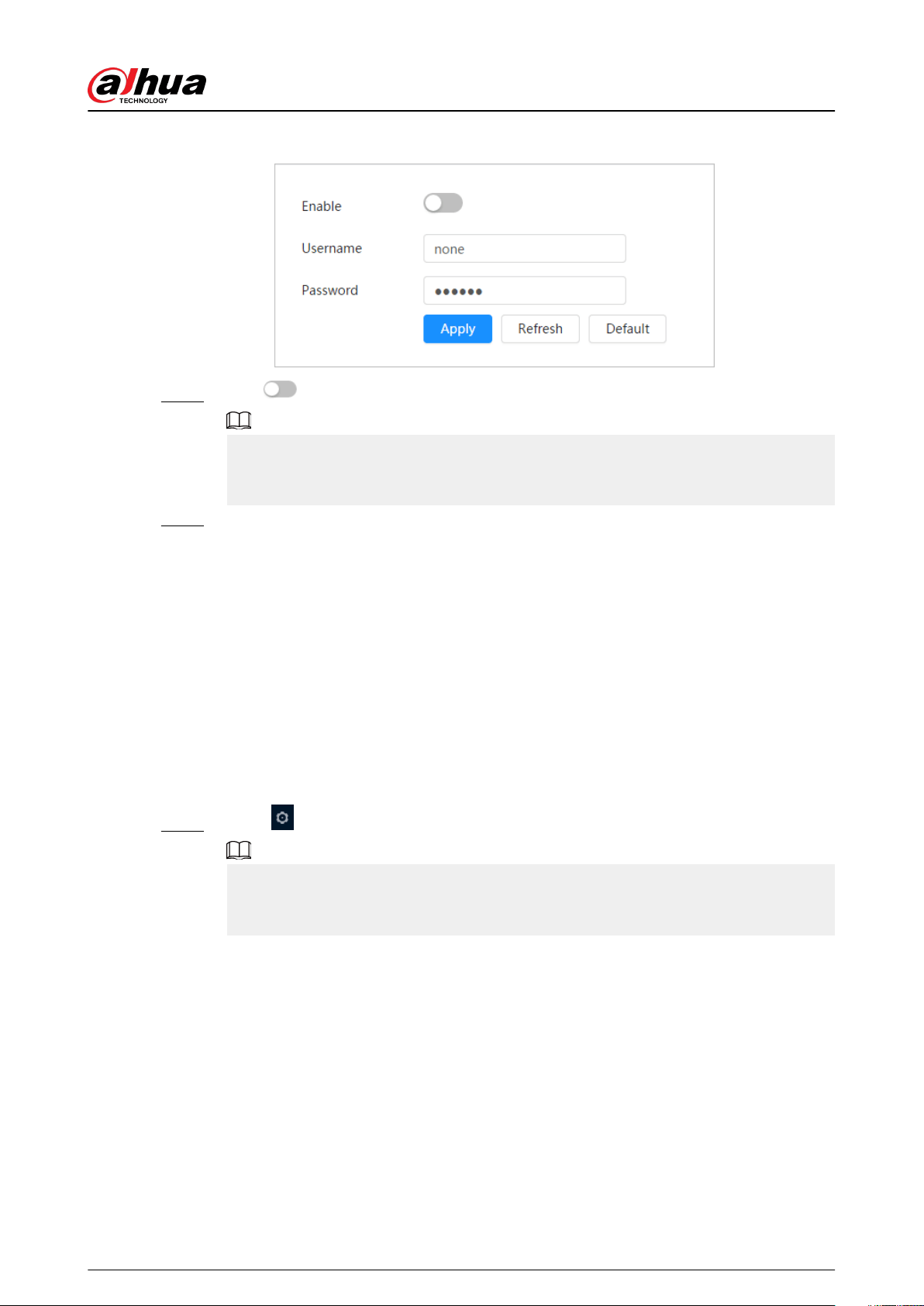
Figure 6-37 PPPoE
Step 2 Click , and then enter username and password.
●
Disable UPnP while using PPPoE to avoid possible inuence.
●
After making PPPoE connection, the device IP address cannot be modied through
web page.
Step 3 Click Apply.
The success prompt box is displayed, and then the real-time WAN IP address is displayed.
You can access camera through the IP address.
6.3.4 DDNS
Properly congure DDNS, and then the domain name on the DNS server matches your IP address
and the matching relation refreshes in real time. You can always visit the camera with the same
domain name no matter how the IP address changes.
Prerequisites
Check the type of DNS server supported by the camera.
Procedure
Step 1 Select > Network > DDNS.
●
Third party server might collect your device information after DDNS is enabled.
●
Register and log in to the DDNS website, and then you can view the information of all
the connected devices in your account.
Operation Manual
48
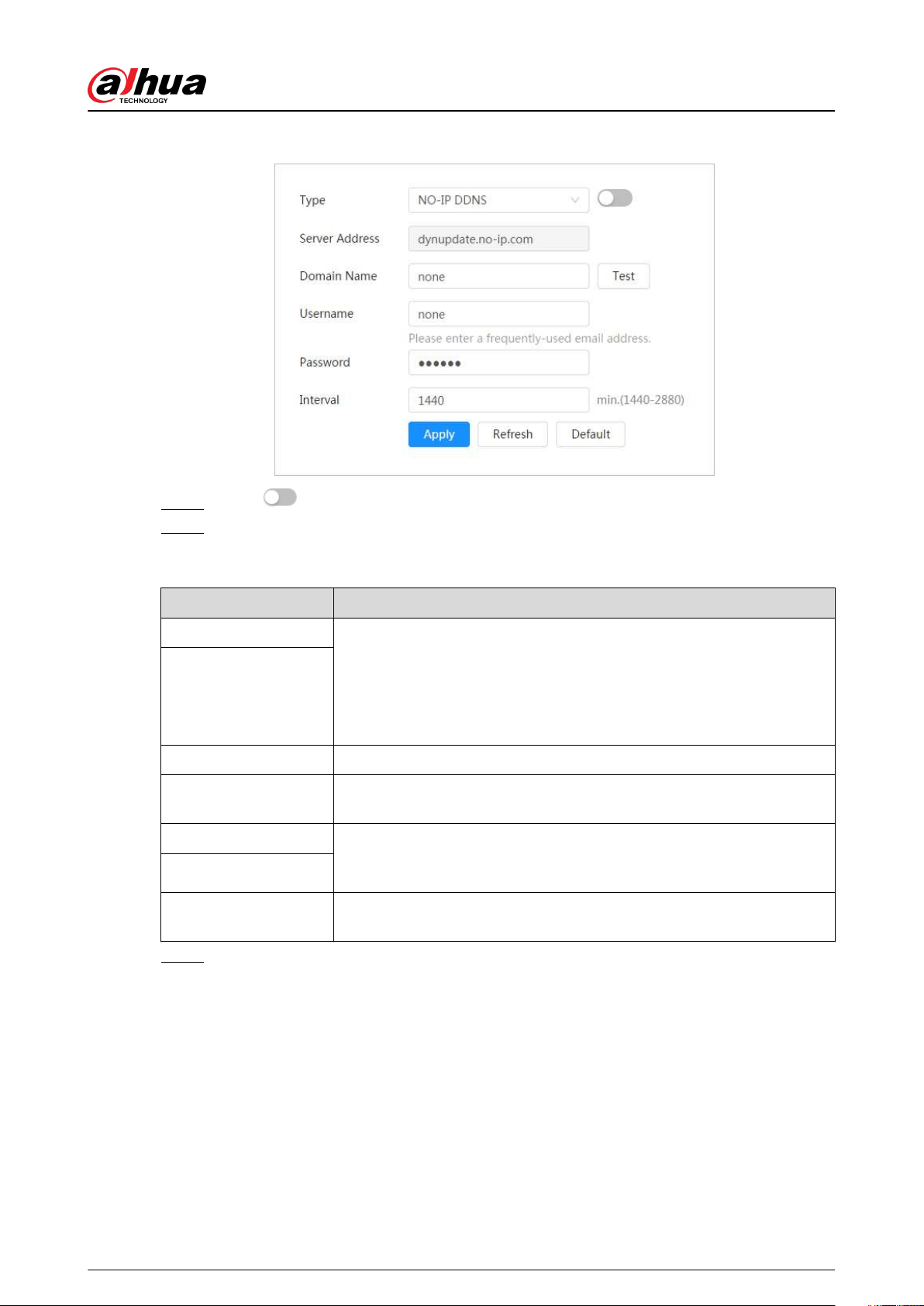
Figure 6-38 DDNS
Step 2 Click to enable the function.
Step 3 Congure DDNS parameters.
Table 6-14 Description of DDNS parameters
Parameter Description
Type The name and web address of the DDNS service provider, see the
matching relationship below:
●
CN99 DDNS web address: www.3322.org
●
NO-IP DDNS web address: dynupdate.no-ip.com
●
Dyndns DDNS web address: members.dyndns.org
Server Address
Domain Name The domain name you registered on the DDNS website.
Test
Only when selecting NO-IP DDNS type, you can click Test to check
whether the domain name registration is successful.
Username Enter the username and password that you got from the DDNS server
provider. You need to register an account (includes username and
password) on the DDNS server provider's website.
Password
Interval
The update cycle of the connection between the device and the server,
and the time is 10 minutes by default.
Step 4 Click Apply.
Results
Open the browser on PC, then enter domain name at the address bar and press Enter, the login
page is displayed.
Operation Manual
49
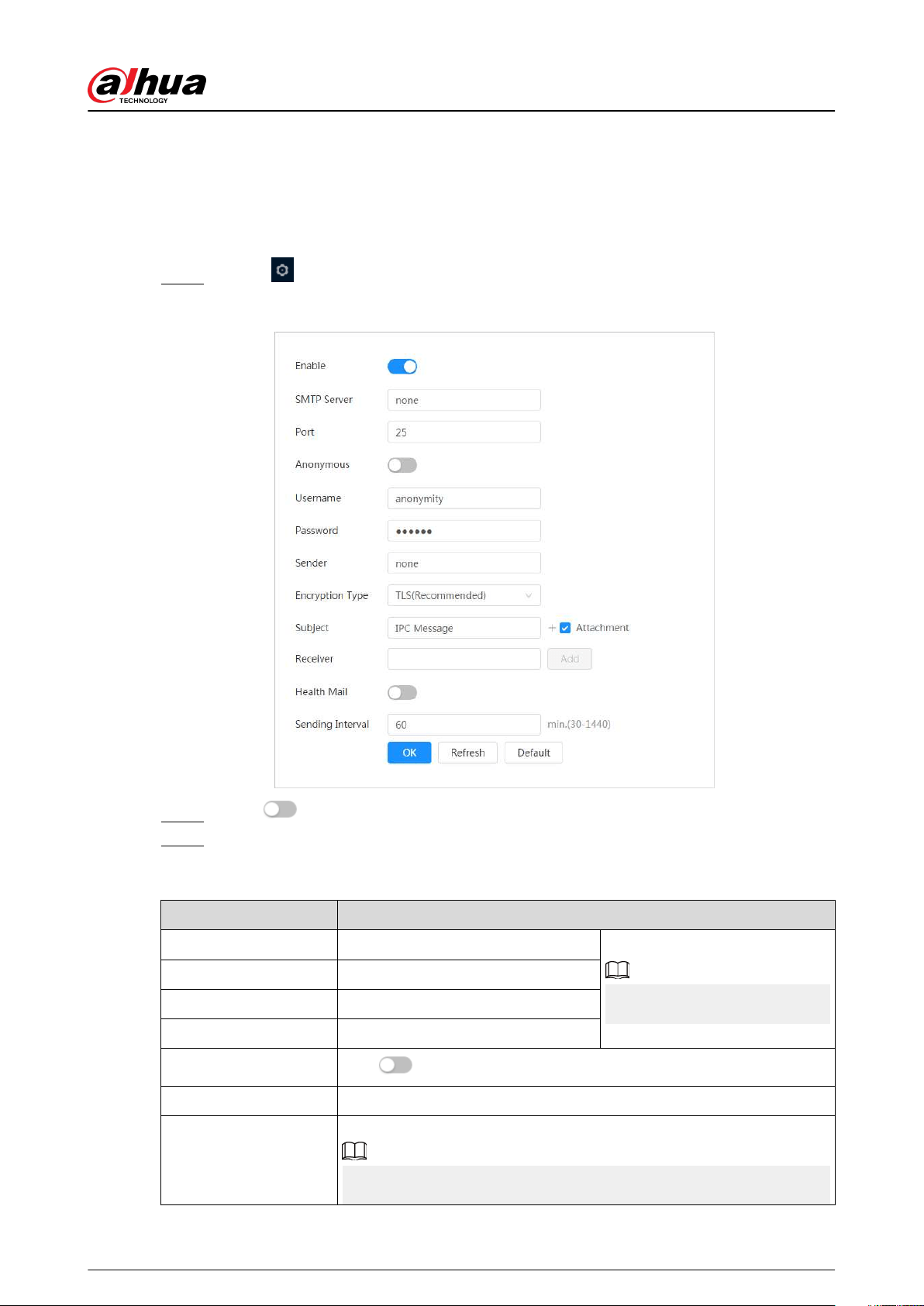
6.3.5 Email
Congure email parameter and enable email linkage. The system sends email to the dened
address when the corresponding alarm is triggered.
Procedure
Step 1 Select > Network > Email.
Figure 6-39 Email
Step 2 Click to enable the function.
Step 3 Congure email parameters.
Table 6-15 Description of email parameters
Parameter Description
SMTP Server SMTP server address
For details, see Table 6-16 .
Port The port number of the SMTP server.
Username The account of SMTP server.
Password The password of SMTP server.
Anonymous
Click
, and the sender's information is not displayed in the email.
Sender Sender’s email address.
Encryption Type
Select from None , SSL and TLS.
For details, see Table 6-16 .
Operation Manual
50

Parameter Description
Subject
Enter maximum 63 characters in Chinese, English, and Arabic numerals.
Click
to select title type, including Device Name , Device ID, and
Event Type, and you can set maximum 2 titles.
Attachment Select the check box to support attachment in the email.
Receiver
●
Receiver’s email address. Supports 3 addresses at most.
●
After entering the receiver's email address, the Test button is
display. Click Test to test whether the emails can be sent and
received successfully.
Health Mail
The system sends test mail to check if the connection is successfully
congured. Click
and congure the Sending Interval, and then
the system sends test mail as the set interval.
Table 6-16 Description of major mailbox conguration
Mailbox SMTP server Authentication Port Description
Gmail
smtp.gmail.co
m
SSL 465
You need to enable SMTP service
in your mailbox.
TLS 587
Step 4 Click Apply.
6.3.6 UPnP
UPnP (Universal Plug and Play) is a protocol that establishes mapping relation between local area
and wide area networks. This function enables you to access local area device through wide area IP
address.
Prerequisites
●
Make sure the UPnP service is installed in the system.
●
Log in the router, and congure WAN IP address to set up internet connection.
●
Enable UPnP in the router.
●
Connect your device to the LAN port of the router.
●
Select
> Network > TCP/IP, in IP Address , enter the local area IP address of the router or
select DHCP and acquires IP address automatically.
Procedure
Step 1 Select > Network > UPnP.
Operation Manual
51
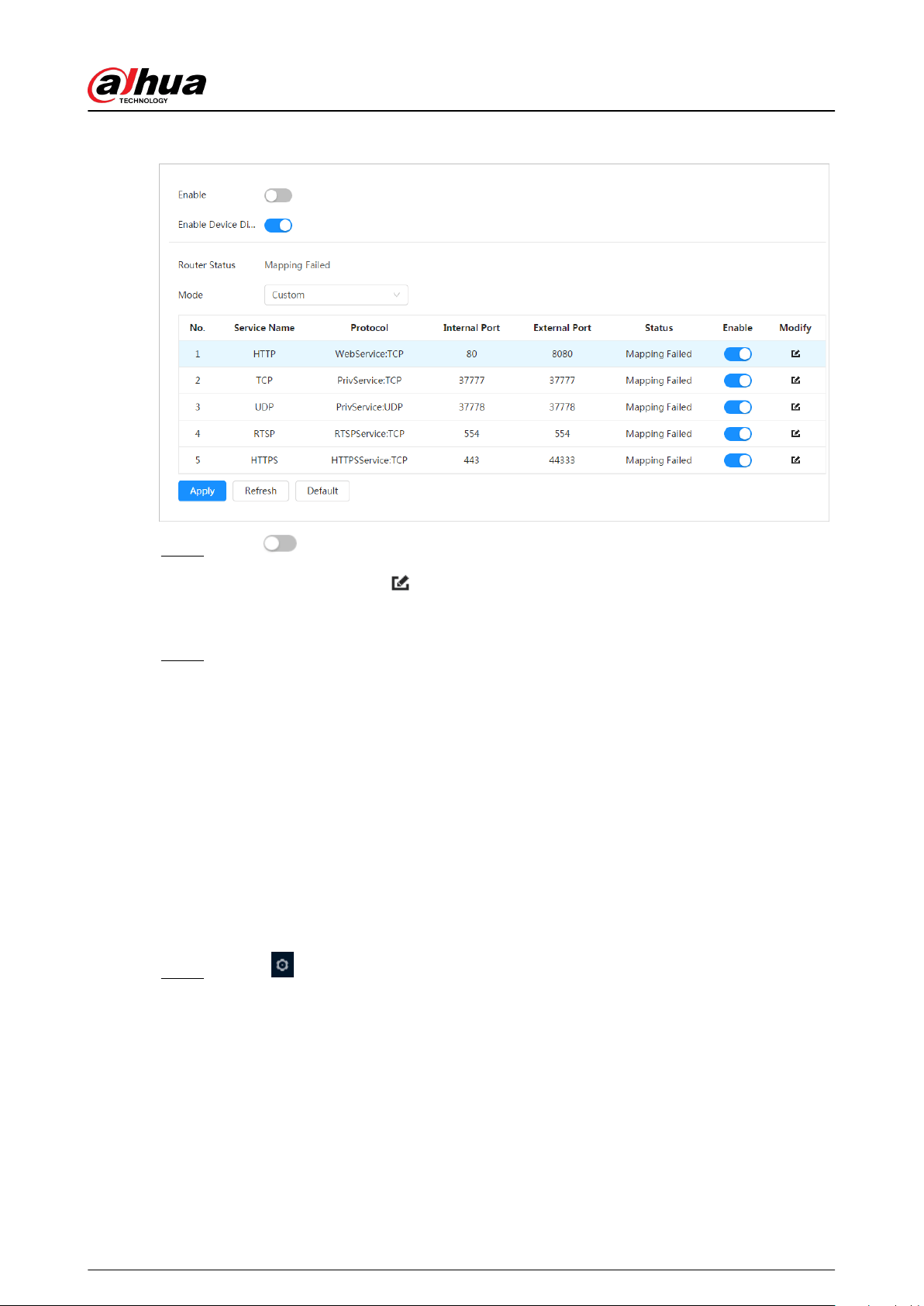
Figure 6-40 UPnP
Step 2 Click next to Enable , and there are two mapping modes: Custom and Default.
●
Select Custom, click
and then you can change external port as needed.
●
Select Default, and then the system nishes mapping with unoccupied port
automatically, and you cannot edit mapping relation.
Step 3 Click Apply.
Open web browser on PC, enter http:// wide area IP address: external port number, and
then you can visit the local area device with corresponding port.
6.3.7 SNMP
SNMP (Simple Network Management Protocol), which can be used to enable software such as MIB
Builder and MG-SOFT MIB Browser to connect to the camera and manage and monitor the camera.
Prerequisites
●
Install SNMP monitoring and managing tools such as MIB Builder and MG-SOFT MIB Browser.
●
Get the MIB le of the matched version from technical support.
Procedure
Step 1 Select > Network > SNMP.
Operation Manual
52

Figure 6-41 SNMP (1)
Figure 6-42 SNMP (2)
Step 2 Select SNMP version to enable SNMP.
●
Select V1, and the system can only process information of V1 version.
●
Select V2, and the system can only process information of V2 version.
Operation Manual
53
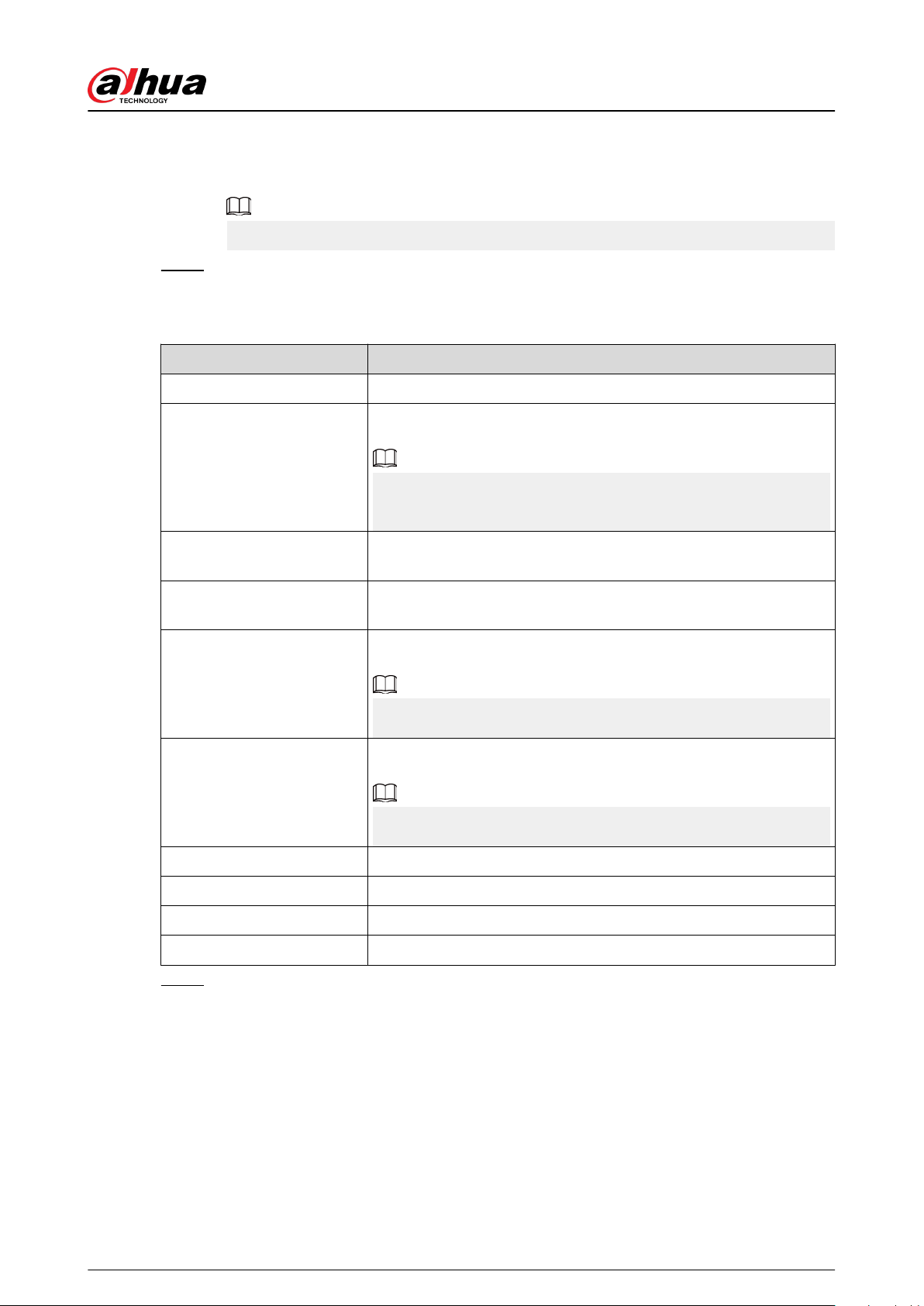
●
Select V3 , and then V1 and V2 become unavailable. You can congure username,
password and authentication type. It requires corresponding username, password and
authentication type to visit your device from the server.
Using V1 and V2 might cause data leakage, and V3 is recommended.
Step 3 In Trap Address, enter the IP address of the PC that has MIB Builder and MG-SOFT MIB
Browser installed, and leave other parameters to the default.
Table 6-17 Description of SNMP parameters
Parameter Description
SNMP Port The listening port of the software agent in the device.
Read Community, Write
Community
The read and write community string that the software agent
supports.
You can enter number, letter, underline and dash to form the
name.
Trap Address
The target address of the Trap information sent by the software
agent in the device.
Trap Port
The target port of the Trap information sent by the software agent
in the device.
Read-only Username
Set the read-only username accessing device, and it is public by
default.
You can enter number, letter, and underline to form the name.
Read/Write Username
Set the read/write username access device, and it is private by
default.
You can enter number, letter, and underline to form the name.
Authentication Type You can select from MD5 and SHA. The default type is MD5.
Authentication Password It should be no less than 8 digits.
Encryption Type The default is CBC-DES.
Encryption Password It should be no less than 8 digits.
Step 4 Click Apply.
Results
View device conguration through MIB Builder or MG-SOFT MIB Browser.
1. Run MIB Builder and MG-SOFT MIB Browser.
2. Compile the two MIB les with MIB Builder.
3. Load the generated modules with MG-SOFT MIB Browser.
4. Enter the IP address of the device you need to manage in the MG-SOFT MIB Browser, and then
select version to search.
5. Unfold all the tree lists displayed in the MG-SOFT MIB Browser, and then you can view the
conguration information, video channel amount, audio channel amount, and software version.
Operation Manual
54
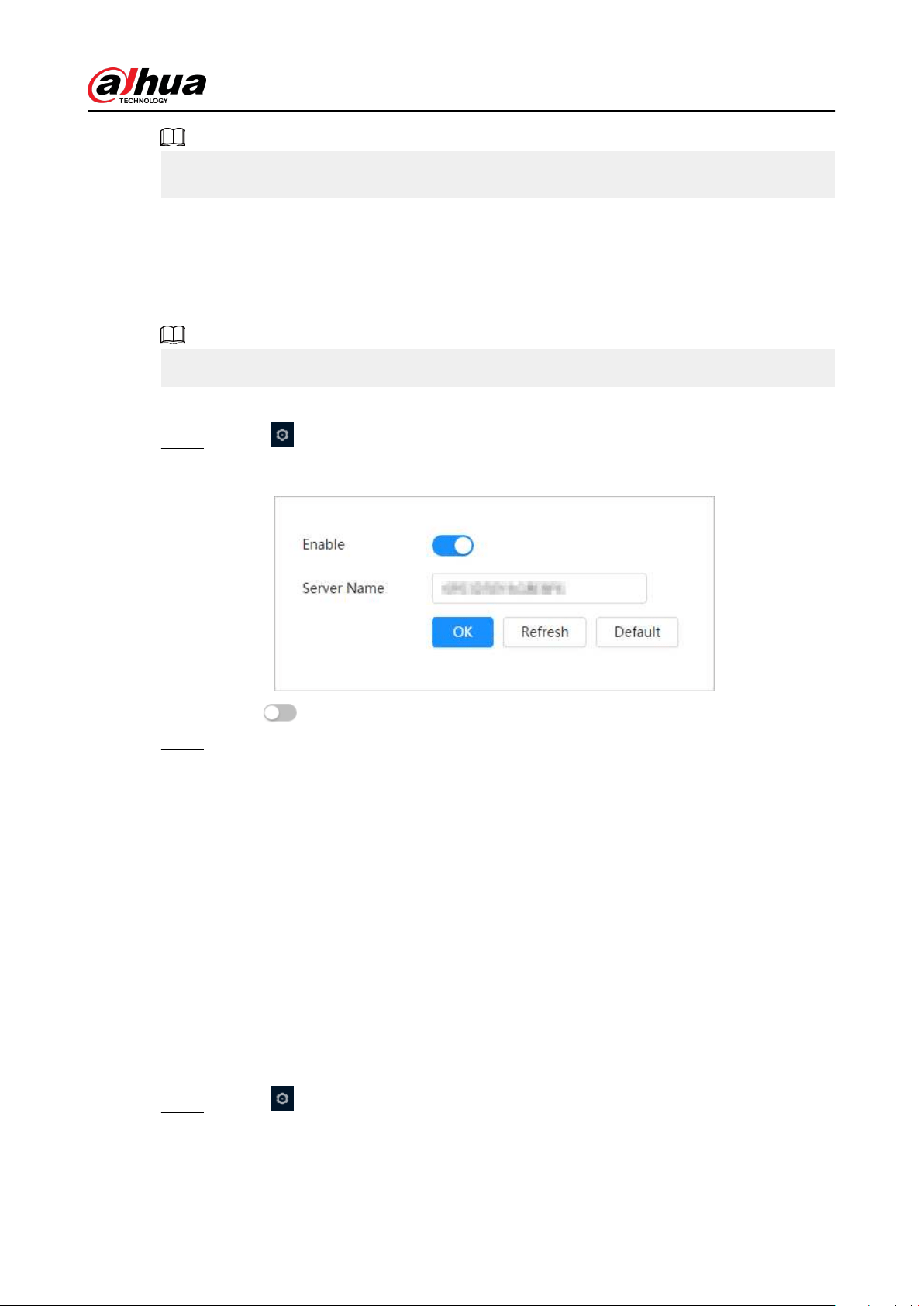
Use PC with Windows and disable SNMP Trap service. The MG-SOFT MIB Browser will display
prompt when alarm is triggered.
6.3.8 Bonjour
Enable this function, and the OS and clients that support Bonjour would nd the camera
automatically. You can have quick visit to the camera with Safari browser.
Bonjour is enabled by default.
Procedure
Step 1 Select > Network > Bonjour.
Figure 6-43 Bonjour
Step 2 Click , and then congure server name.
Step 3 Click Apply.
Results
In the OS and clients that support Bonjour, follow the steps below to visit the network camera with
Safari browser.
1. Click Show All Bookmarks in Safari.
2. Enable Bonjour. The OS or client automatically detects the network cameras with Bonjour
enabled in the LAN.
3. Click the camera to visit the corresponding web page.
6.3.9 Multicast
When multiple users are viewing the device video image simultaneously through network, it might
fail due to limited bandwidth. You can solve this problem by setting up a multicast IP (224.0.1.0–
238.255.255.255) for the camera and adopt the multicast protocol.
Procedure
Step 1 Select > Network > Multicast.
Operation Manual
55
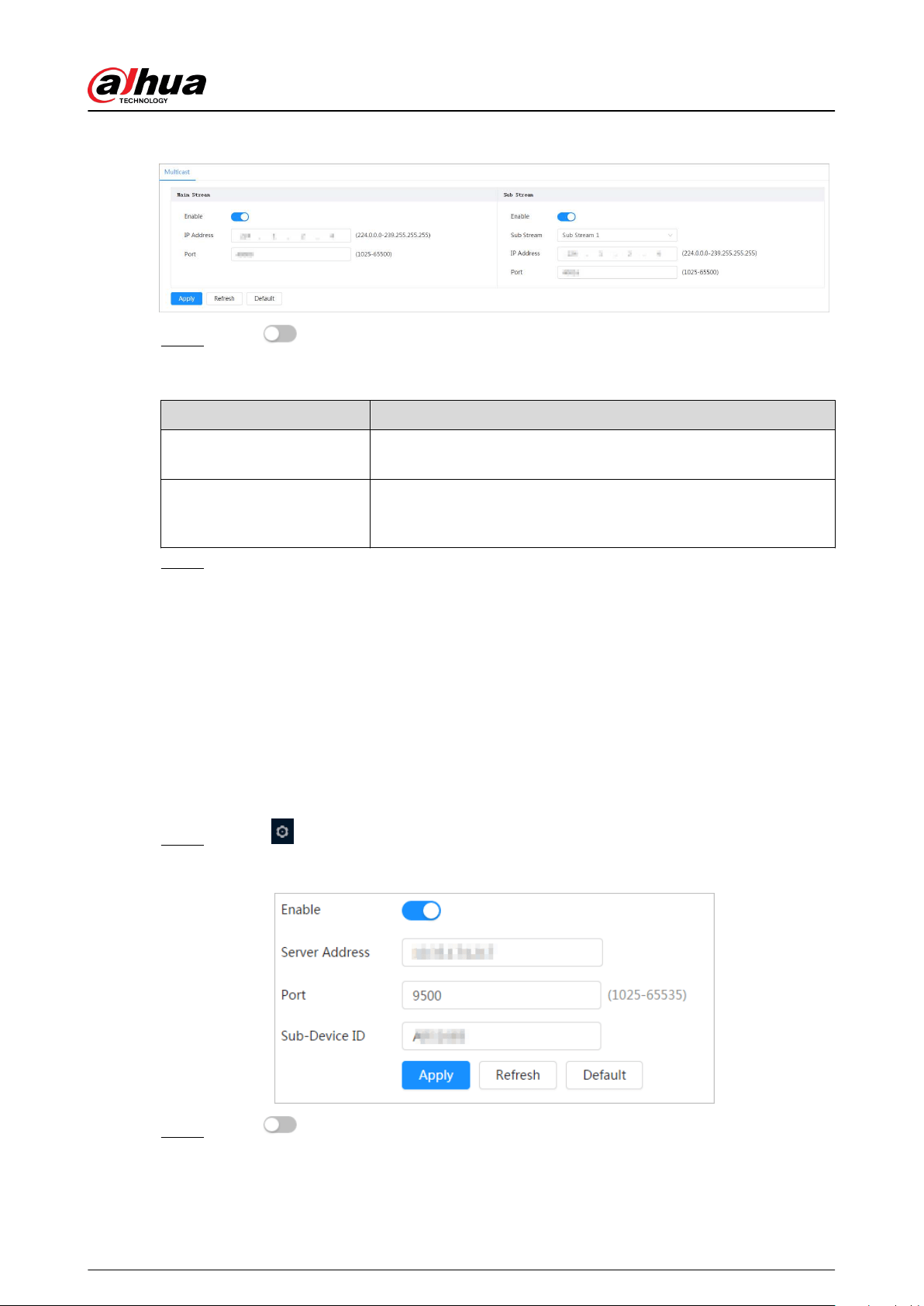
Figure 6-44 Multicast
Step 2 Click , and enter IP address and port number.
Table 6-18 Description of multicast parameters
Parameter Description
Multicast Address
The multicast IP address of Main Stream /Sub Stream is 224.1.2.4
by default, and the range is 224.0.0.0–239.255.255.255.
Port
The multicast port of corresponding stream: Main Stream : 40000;
Sub Stream1: 40016; Sub Stream2: 40032, and all the range is
1025–65500.
Step 3 Click Apply.
Results
On the Live page, select RTSP in Multicast, and then you can view the video image with multicast
protocol.
6.3.10 Register
After you enable this function, when the camera is connected into Internet, it will report the current
location to the specied server which acts as the transit to make it easier for the client software to
access the camera.
Procedure
Step 1 Select > Network > Register.
Figure 6-45 Register
Step 2 Click , and then congure server name.
Operation Manual
56
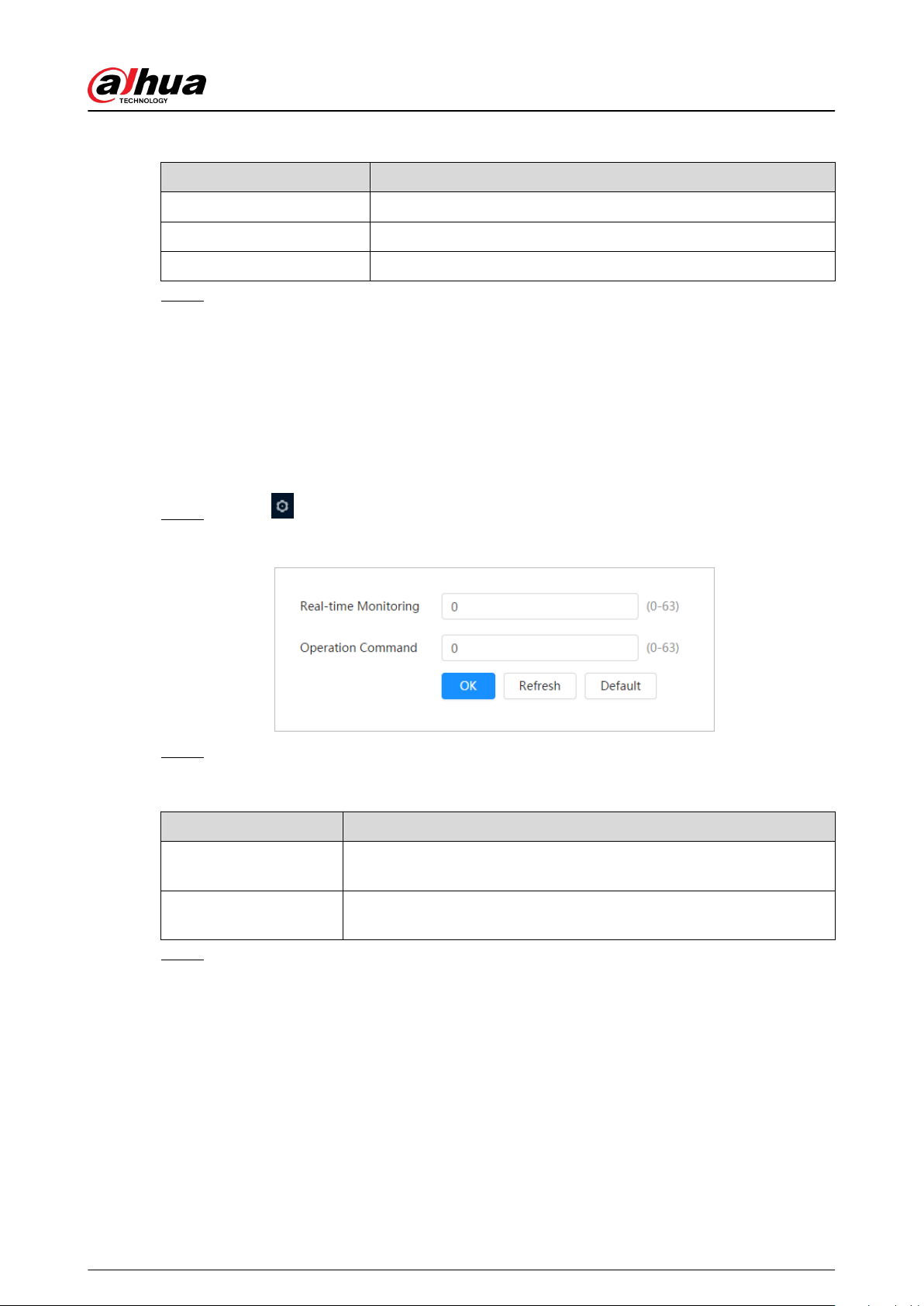
Table 6-19 Description of register parameters
Parameter Description
Server Address The IP address or domain name of the server to be registered.
Port The port for registration.
Sub-Device ID The custom ID for the camera.
Step 3 Click Apply.
6.3.11 QoS
You can solve problems such as network delay and congestion with this function. It helps to assure
bandwidth, reduce transmission delay, packet loss rate, and delay jitter to improve experience.
0–63 means 64 degrees of priority; 0 for the lowest and 63 the highest.
Procedure
Step 1 Select > Network > QoS.
Figure 6-46 QoS
Step 2 Congure QoS parameters.
Table 6-20 Description of QoS parameters
Parameter Description
Realtime Monitor
Congure the priority of the data packets that used for network
surveillance. 0 for the lowest and 63 the highest.
Command
Congure the priority of the data packets that used for congure or
checking.
Step 3 Click Save.
6.3.12 Platform Access
6.3.12.1 P2P
P2P (peer-to-peer) technology enables users to manage devices easily without requiring DDNS,
port mapping or transit server.
Background Information
Scan the QR code with your smartphone, and then you can add and manage more devices on the
mobile phone client.
Operation Manual
57
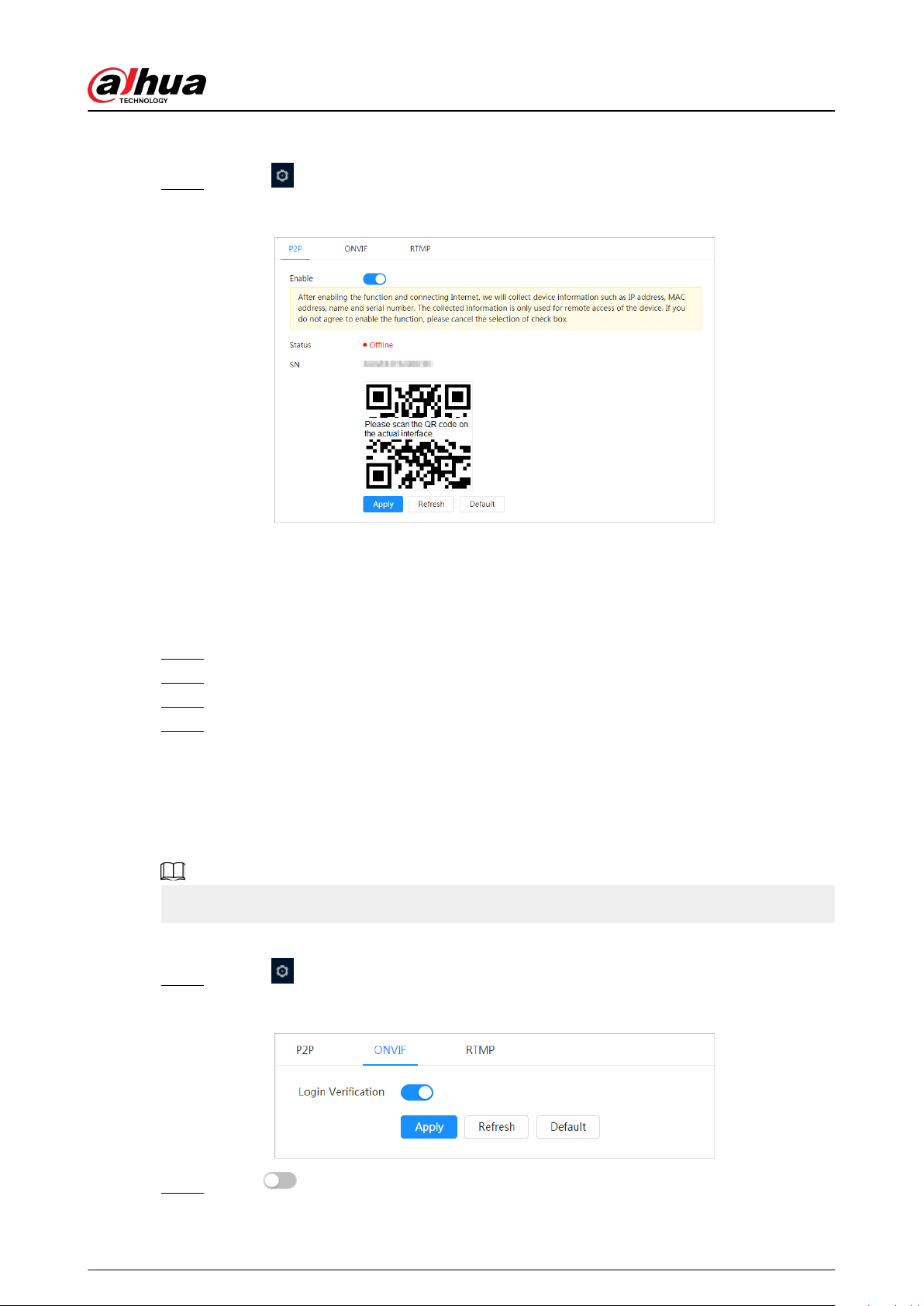
Procedure
Step 1 Select > Network > Platform Access > P2P.
Figure 6-47 P2P
●
When P2P is enabled, remote management on device is supported.
●
When P2P is enabled and the device accesses to the network, the status shows online.
The information of the IP address, MAC address, device name, and device SN will be
collected. The collected information is for remote access only. You can cancel Enable
selection to reject the collection.
Step 2 Log in to mobile phone client and tap Device management.
Step 3 Tap + at the upper-right corner.
Step 4 Scan the QR code on the P2P page.
Step 5 Follow the instructions to nish the settings.
6.3.12.2 ONVIF
The ONVIF verication is enabled by default, which allows the network video products (including
video recording device and other recording devices) from other manufacturers to connect to your
device.
ONVIF is enabled by default.
Procedure
Step 1 Select > Network > Platform Access > ONVIF.
Figure 6-48 ONVIF
Step 2 Click next to ONVIF Verication.
Operation Manual
58
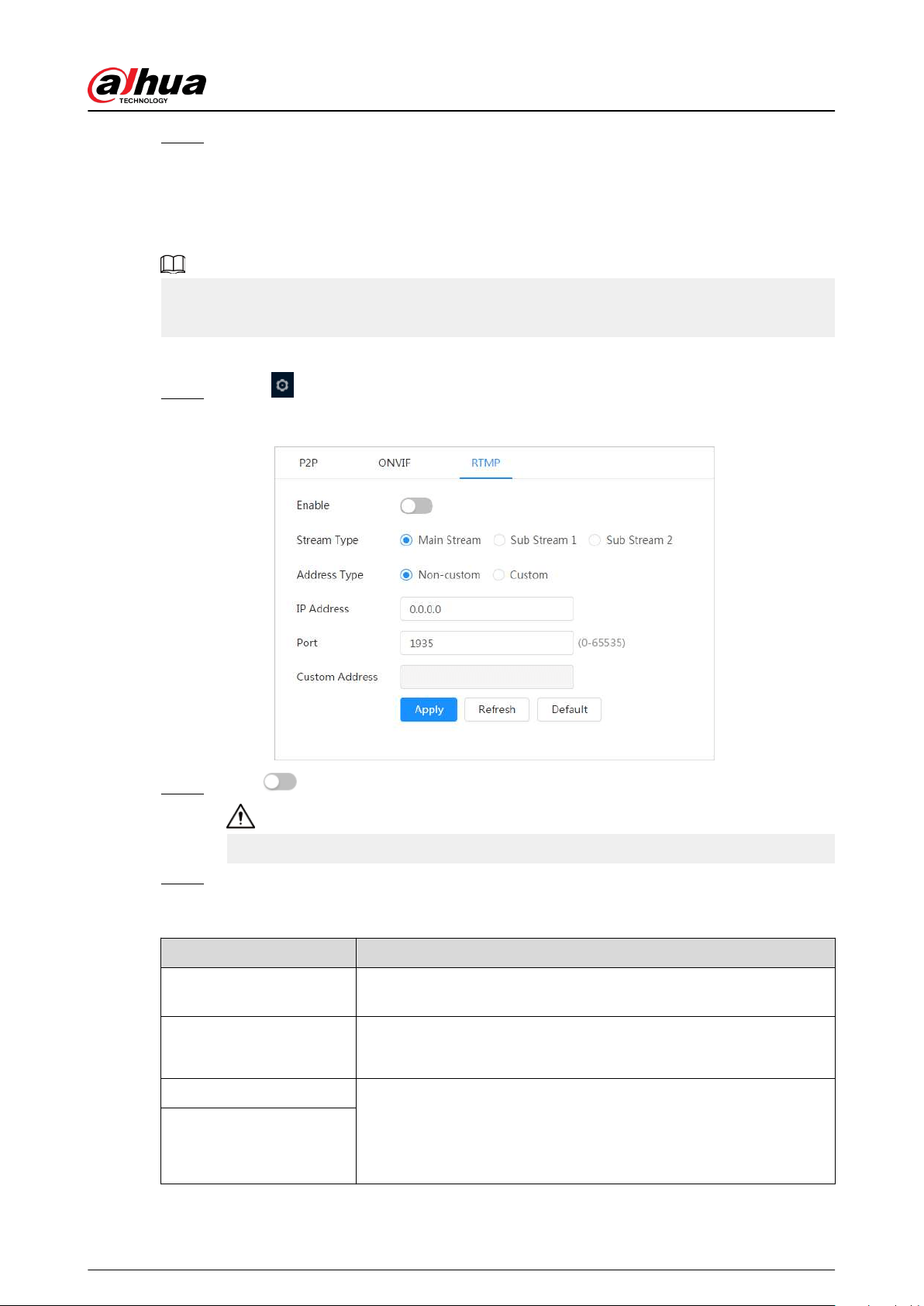
Step 3 Click Apply.
6.3.12.3 RTMP
Through RTMP, you can access a third-party platform (such as Ali and YouTube) to realize video live
view.
●
RTMP can be congured by admin only.
●
RTMP supports the H.264, H.264 B and H.264H video formats, and the AAC audio format only.
Procedure
Step 1 Select > Network > Platform Access > RTMP.
Figure 6-49 RTMP
Step 2 Click .
Make sure that the IP address is trustable when enabling RTMP.
Step 3 Congure RTMP parameters.
Table 6-21 Description of RTMP parameters
Parameter Description
Stream Type
The stream for live view. Make sure that the video format is H.264, H.
264 B and H.264H, and the audio format is AAC.
Address Type
●
Non-custom : Enter the server IP and domain name.
●
Custom : Enter the path allocated by the server.
IP Address When selecting Non-custom, you need to enter server IP address
and port.
●
IP address : Support IPv4 or domain name.
●
Port : Keep the default value.
Port
Operation Manual
59
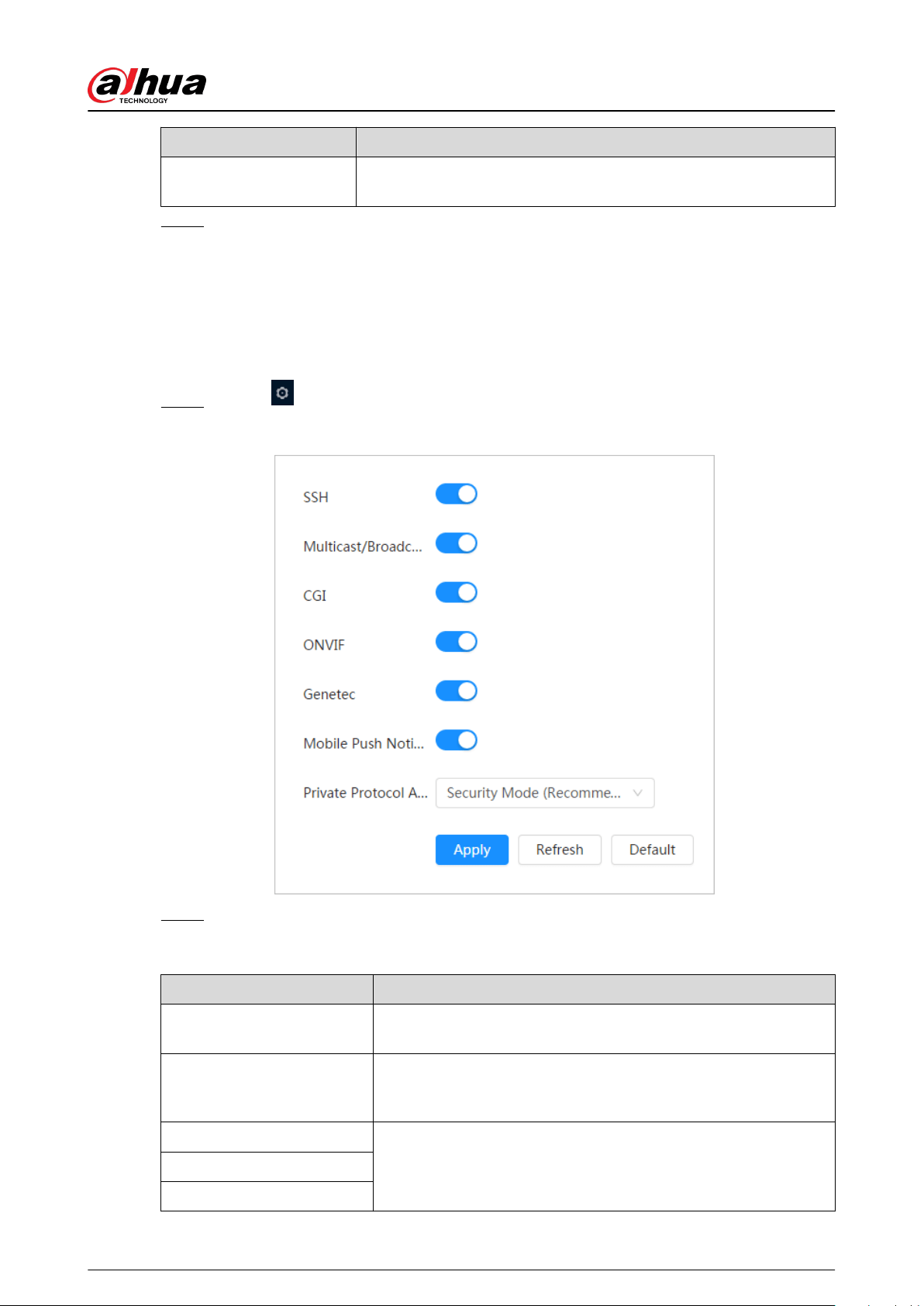
Parameter Description
Custom Address
When selecting Custom, you need to enter the path allocated by the
server.
Step 4 Click Apply.
6.3.13 Basic Service
Congure the IP hosts (devices with IP address) that are allowed to visit the device. Only the hosts
in the trusted sites list can log in to the webpage. This is to enhance network and data security.
Procedure
Step 1 Select > Network > Basic Service.
Figure 6-50 Basic service
Step 2 Enable the basic service according to the actual needs.
Table 6-22 Description of basic service parameters
Function Description
SSH
You can enable SSH authentication to perform safety
management.
Multicast/Broadcast Search
Enable this function, and then when multiple users are viewing the
device video image simultaneously through network, they can
nd your device with multicast/broadcast protocol.
CGI
Enable the function, and then other devices can access through
this service. The function is enabled by default.
Onvif
Genetec
Operation Manual
60

Function Description
Mobile Push Notication
Enable this function, and then the system will send the snapshot
that was taken when alarm is triggered to your phone, this is
enabled by default.
Private Protocol
Authentication Mode
Select the authentication mode from Security Mode and
Compatible Mode. Security mode is recommended.
Step 3 Click Apply.
6.4 EPTZ
EPTZ function can simultaneously zoom in and track multiple humans and vehicles that trigger
alarms. It provides rich details and a panoramic view at the same time.
This function is only available on select devices.
Procedure
Step 1 Select > PTZ > EPTZ Linkage.
Figure 6-51 EPTZ
Step 2 Enable this function and select the display mode.
Table 6-23 Description of display modes
Mode Description
Displays the original screen.
Displays the original image screen + 1 sub-screen.
You can zoom
or drag the
Operation Manual
61
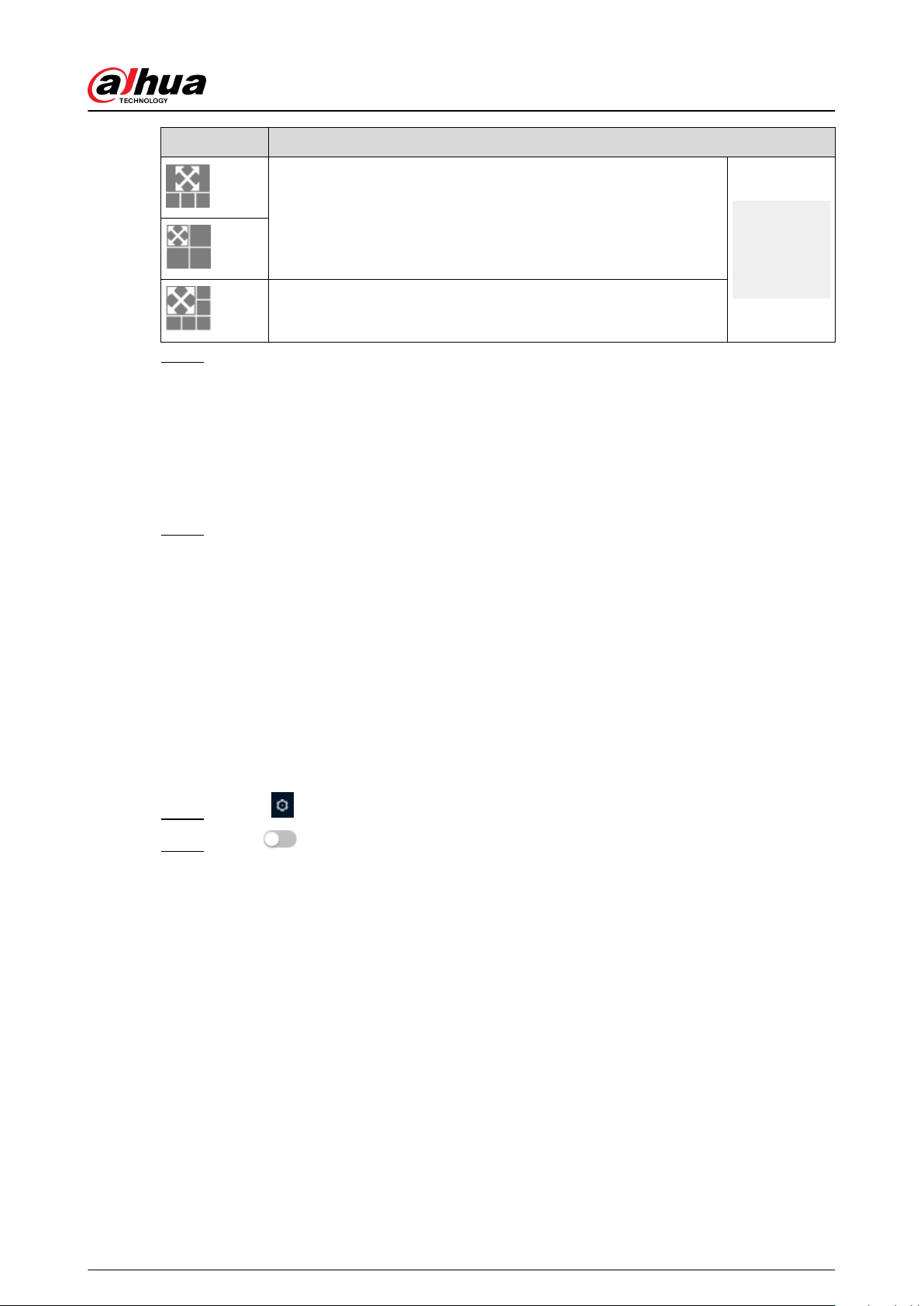
Mode Description
sub-screen
images in the
original
screen.
Displays the original image screen + 3 sub-screens.
Displays the original image screen + 5 sub-screens.
Step 3 (Optional) Enable the Linkage Track checkbox and select tracking duration mode from
the dropdown list.
●
Custom: Select the tracking duration time manually. For example, if you set from 30 s
to 60 s, after tracking object A for 30 seconds, if object B appears, the camera will start
tracking object B; if no other object appears in the process of tracking A, the camera
will stop tracking object A after 60 seconds.
●
Continue till object disappears: The camera will stop tracking when the detected
object disappears in the image.
Step 4 Click Apply.
6.5 Event
6.5.1 Setting Alarm Linkage
6.5.1.1 Setting Alarm-in
When an alarm is triggered by the device connected to the alarm-in port, the system performs the
dened alarm linkage.
Procedure
Step 1 Select > Event > Alarm.
Step 2 Click next to Enable to enable alarm linkage.
Operation Manual
62
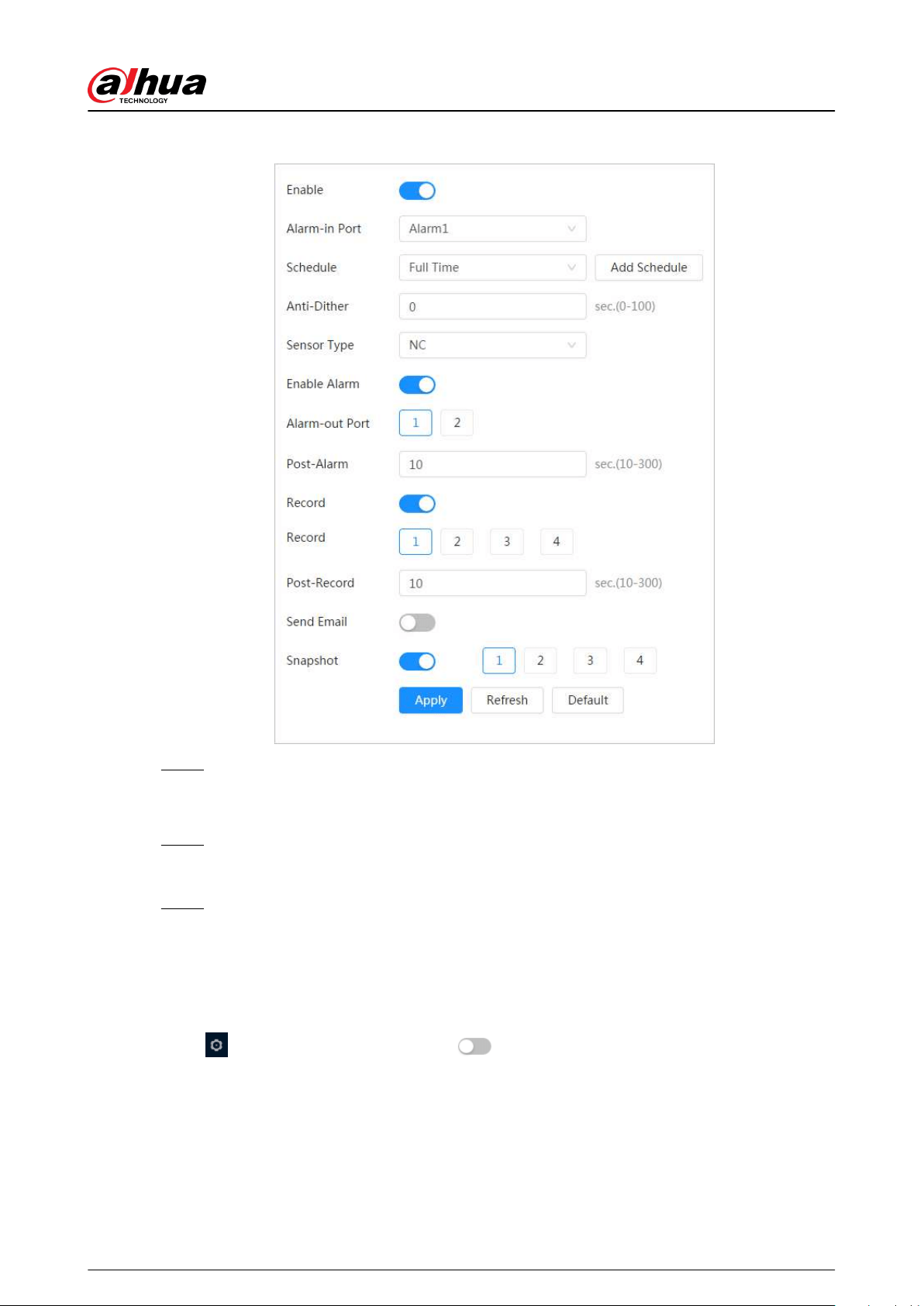
Figure 6-52 Alarm linkage
Step 3 Select an alarm-in port and a sensor type.
●
Sensor Type: NO or NC.
●
Anti-Dither: Only record one alarm event during the anti-dither period.
Step 4 Select the schedule and arming periods and alarm linkage action. If the schedules cannot
meet the scene requirement, you can click Add Schedule to add new schedule. For
details, see "6.5.1.2.1 Adding Schedule".
Step 5 Click Apply.
6.5.1.2 Alarm Linkage
When conguring alarm events, select alarm linkages (such as record, snapshot). When the
corresponding alarm is triggered in the congured arming period, the system will alarm.
Select > Event > Alarm, and then click next to Enable to enable alarm linkage.
Operation Manual
63
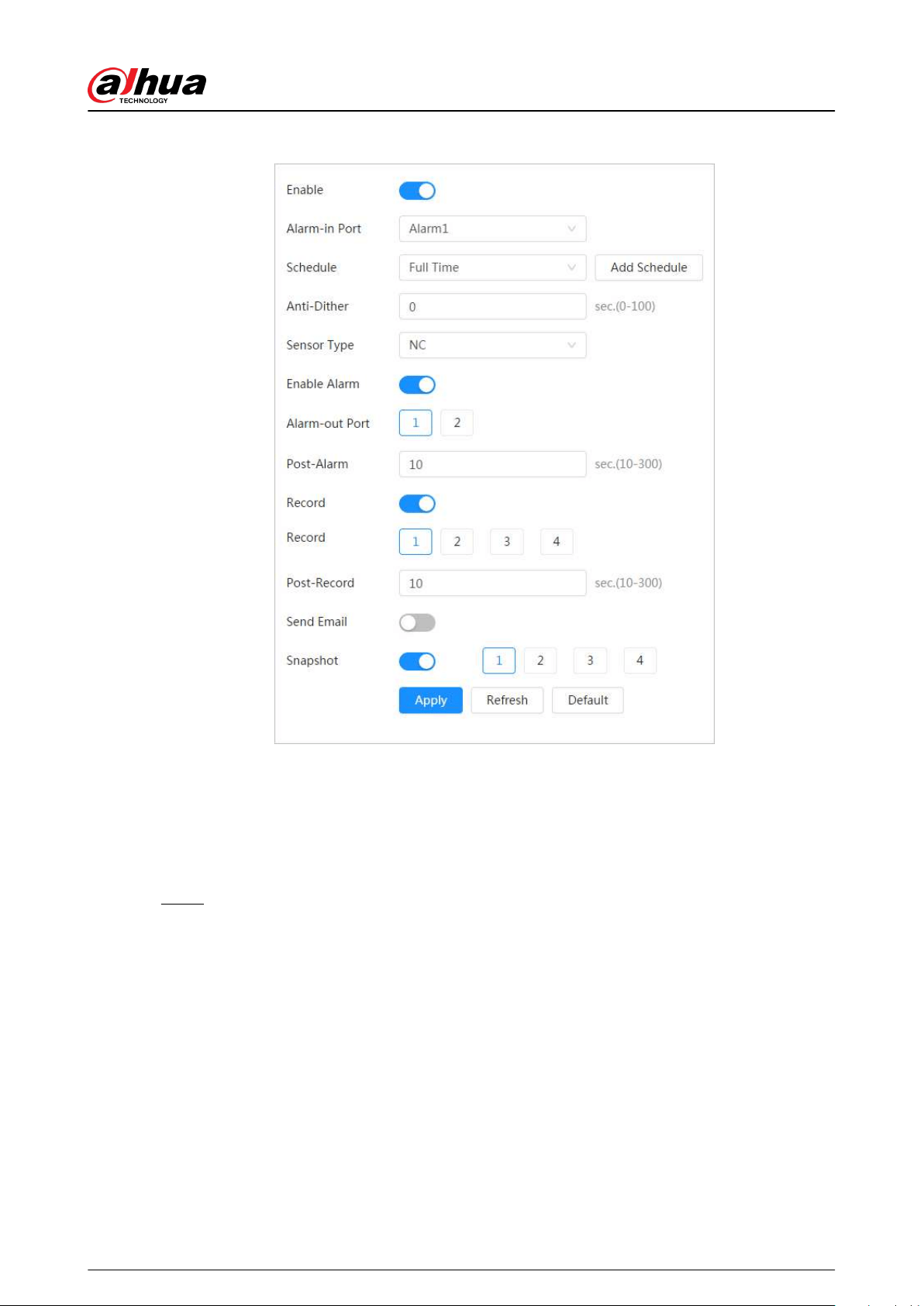
Figure 6-53 Alarm linkage
6.5.1.2.1 Adding Schedule
Set arming periods. The system only performs corresponding linkage action in the congured
period.
Procedure
Step 1 Click Add Schedule next to Schedule.
Operation Manual
64
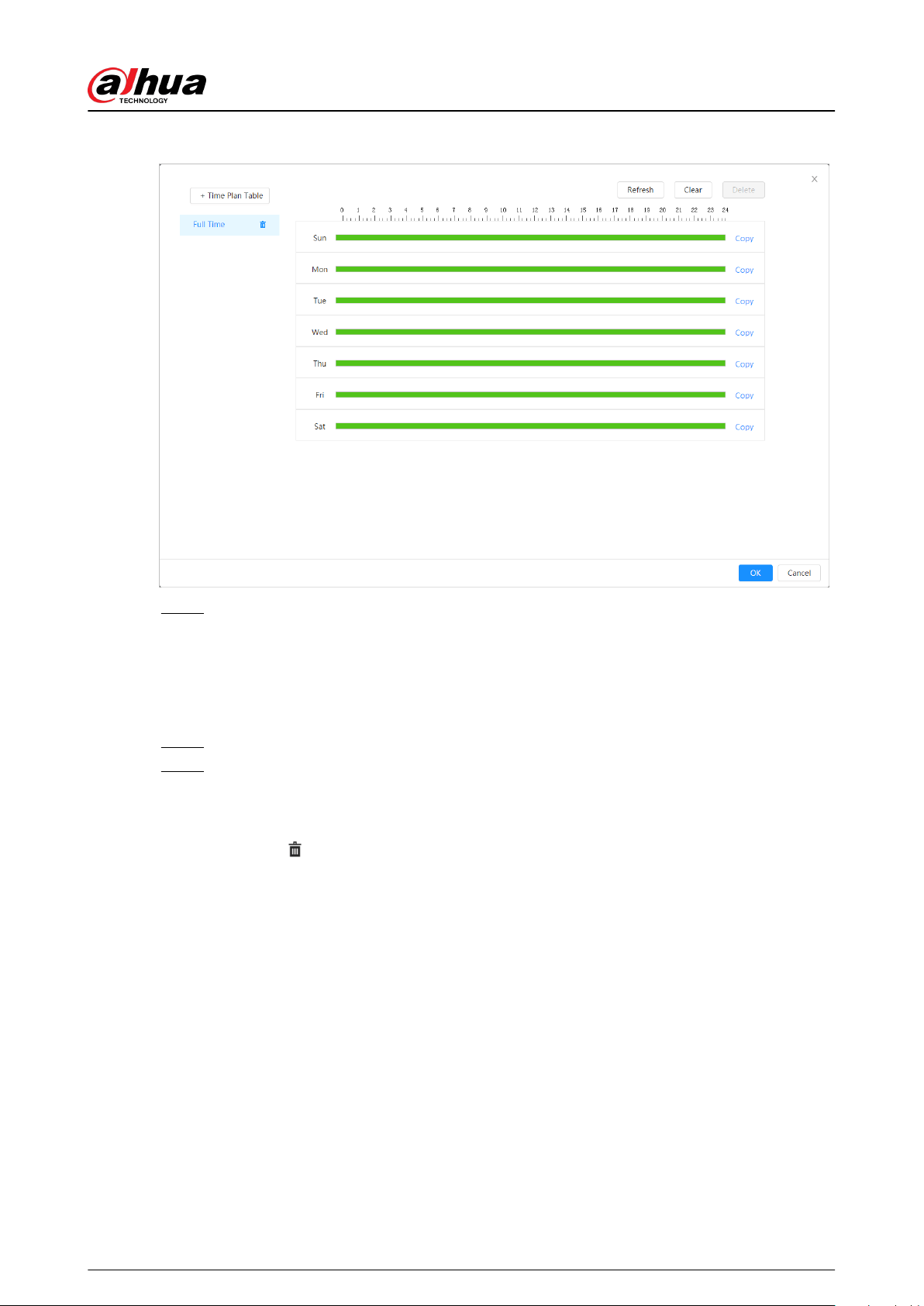
Figure 6-54 Schedule
Step 2 Press and drag the left mouse button on the timeline to set arming periods. Alarms will be
triggered in the period in green on the timeline.
●
Click Copy next to a day, and select the days that you want to copy to in the prompt
page, you can copy the conguration to the selected days. Select the Select All check
box to select all days to copy the conguration.
●
You can set 6 periods per day.
Step 3 Click Apply.
Step 4 (Optional) Click Time Plan Table to add a new time plan table.
You can:
●
Double-click the table name to edit it.
●
Click
to delete the table as needed.
6.5.1.2.2 Record Linkage
The system can link record channel when an alarm event occurs. After alarm, the system stops
recording after an extended period according to the Post-Record setting.
Prerequisites
●
After the corresponding alarm type (Normal , Motion, or Alarm) is enabled, the record channel
links recording. For details, see "10.3 Setting Record Plan".
●
Enable auto record mode, the record linkage will take eect. For details, see "10.2 Setting Record
Control".
Operation Manual
65

Setting Record Linkage
On the Alarm page, click
to enable record linkage, select the channel as needed, and set
Post-Record to set alarm linkage and record delay.
After Post-Record is congured, alarm recording continues for an extended period after the alarm
ends.
Figure 6-55 Record linkage
6.5.1.2.3 Snapshot Linkage
After snapshot linkage is congured, the system can automatically alarm and take snapshots when
an alarm is triggered.
Prerequisites
After the corresponding alarm type (Normal , Motion, or Alarm) is enabled, the snapshot channel
links capturing picture. For details, see "10.3 Setting Record Plan".
Procedure
On the Alarm page, click
to enable snapshot linkage, and select the channel as needed.
Figure 6-56 Snapshot linkage
6.5.1.2.4 Alarm-out Linkage
When an alarm is triggered, the system can automatically link with alarm-out device.
On the Alarm page, click
to enable alarm-out linkage, select the channel as needed, and then
congure Post alarm.
When alarm delay is congured, alarm continues for an extended period after the alarm ends.
Operation Manual
66
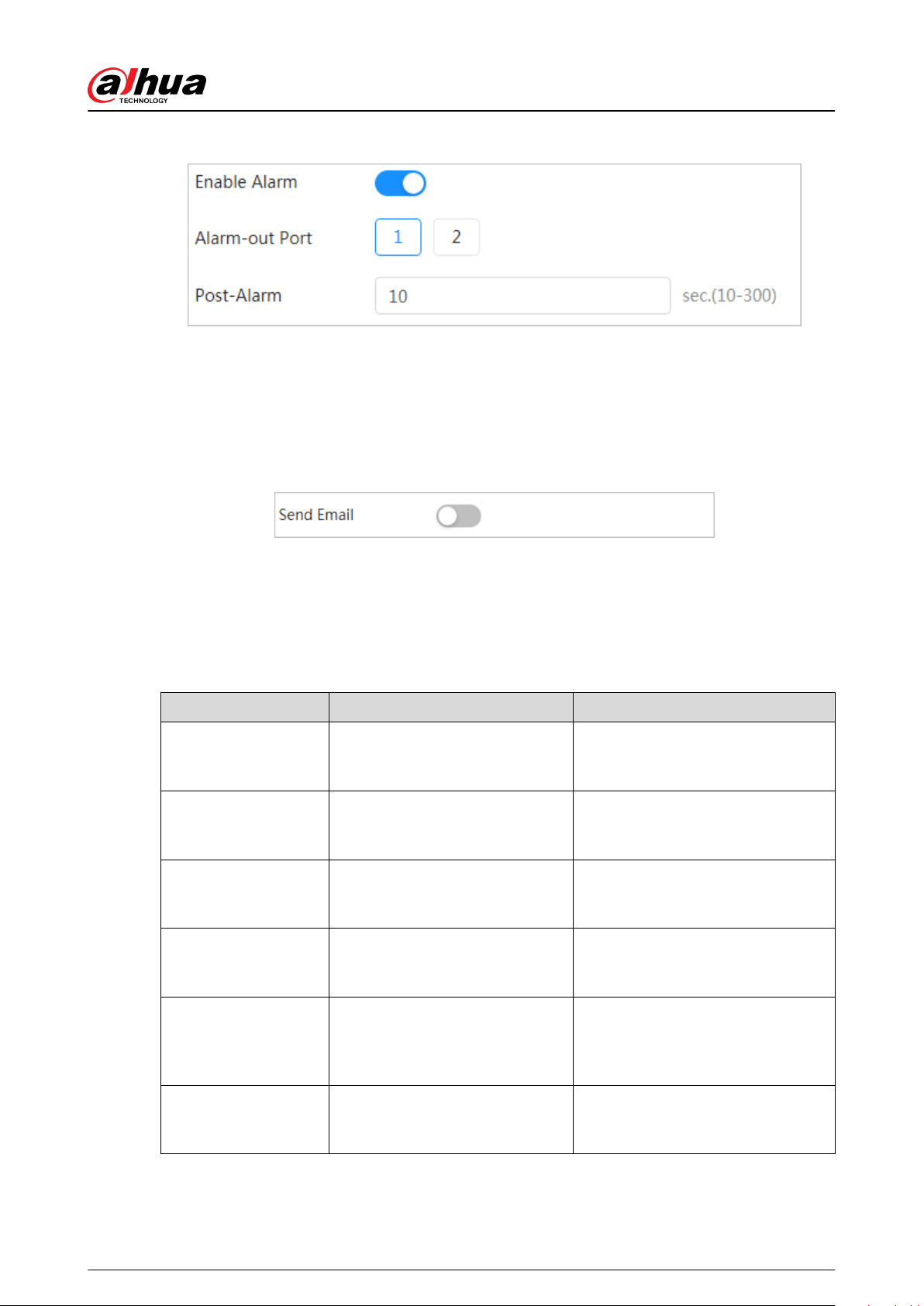
Figure 6-57 Alarm-out linkage
6.5.1.2.5 Email Linkage
When an alarm is triggered, the system will automatically send an email to users.
Email linkage takes eect only when SMTP is congured. For details, see "6.3.5 Email".
Figure 6-58 Email linkage
6.5.1.3 Subscribing Alarm
6.5.1.3.1 Alarm Types
Table 6-24 Description of alarm types
Alarm Type Description Preparation
Motion Detection
The alarm is triggered when
moving object is detected.
Motion detection is enabled. For
details, see "6.5.3.1 Setting Motion
Detection".
Disk Full
The alarm is triggered when the
free space of SD card is less than
the congured value.
The SD card no space function is
enabled. For details, see "6.5.2.1
Setting SD Card Exception".
Disk Error
The alarm is triggered when there
is failure or malfunction in the SD
card.
SD card failure detection is enabled.
For details, see "6.5.2.1 Setting SD
Card Exception".
Video Tampering
The alarm is triggered when the
camera lens is covered or there is
defocus in video images.
Video tampering is enabled. For
details, see "6.5.3.2 Setting Video
Tampering".
External Alarm
The alarm is triggered when there
is external alarm input.
The device has alarm input port and
external alarm function is enabled.
For details, see "6.5.1.1 Setting
Alarm-in".
Audio Detection
The alarm is triggered when there
is audio connection problem.
Abnormal audio detection is
enabled. For details, see "6.5.4
Setting Audio Detection".
Operation Manual
67
Alarm Type Description Preparation
IVS
The alarm is triggered when
intelligent rule is triggered.
Enable IVS, crowd map, face
detection or people counting, and
other intelligent functions.
Scene Changing
The alarm is triggered when the
device monitoring scene changes.
Scene changing detection is
enabled. For details, see "6.5.3.3
Setting Scene Changing".
Voltage Detection
The alarm is triggered when the
device detects abnormal voltage
input.
Voltage detection is enabled. For
details, see "6.5.2.3 Setting Voltage
Detection".
Security Exception
The alarm is triggered when the
device detects malicious attack.
Security exception is enabled. For
details, see "9.1 Security Status".
6.5.1.3.2 Subscribing Alarm Information
You can subscribe alarm event. When a subscribed alarm event is triggered, the system records
detailed alarm information at the right side of the page.
Functions of dierent devices might vary.
Procedure
Step 1 Click at the right-upper corner of the main page.
Operation Manual
68
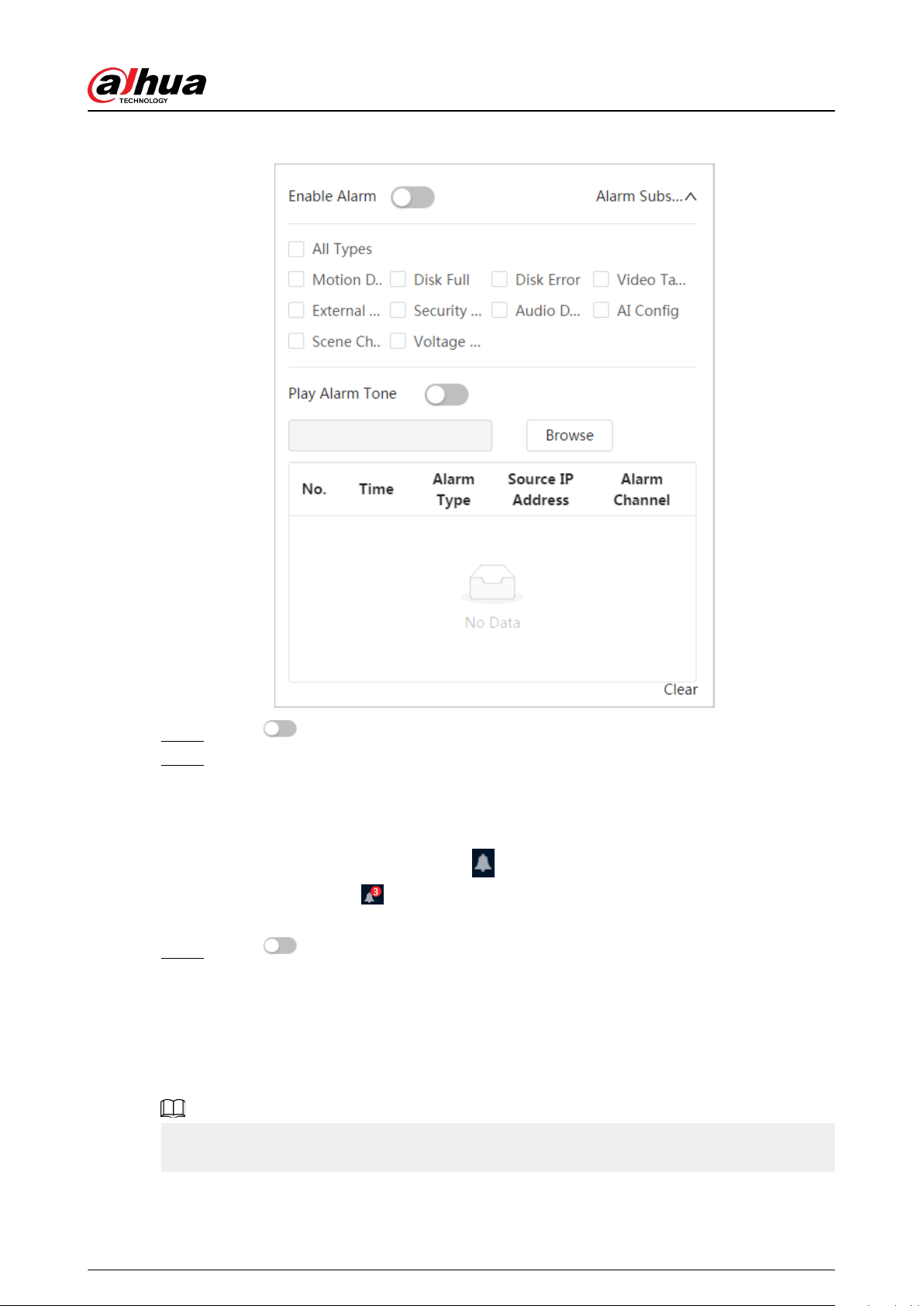
Figure 6-59 Alarm (subscription)
Step 2 Click next to Enable Alarm.
Step 3 Select alarm type according to the actual need. For details, see "6.5.1.3.2 Subscribing
Alarm Information".
The system prompts and records alarm information according to actual conditions.
When the subscribed alarm event is triggered and the alarm subscription page is not
displayed, a number is displayed on
, and the alarm information is recorded
automatically. Click to view the details in the alarm list. You can click Clear to clear
the record.
Step 4 Click next to Play Alarm Tone, and select the tone path.
The system will play the selected audio le when the selected alarm is triggered.
6.5.2 Setting Exception
Abnormality includes SD card, network, illegal access, voltage detection, and security exception.
Only the device with SD card has the abnormality functions, including No SD Card , SD Card Error,
and Capacity Warning.
Operation Manual
69
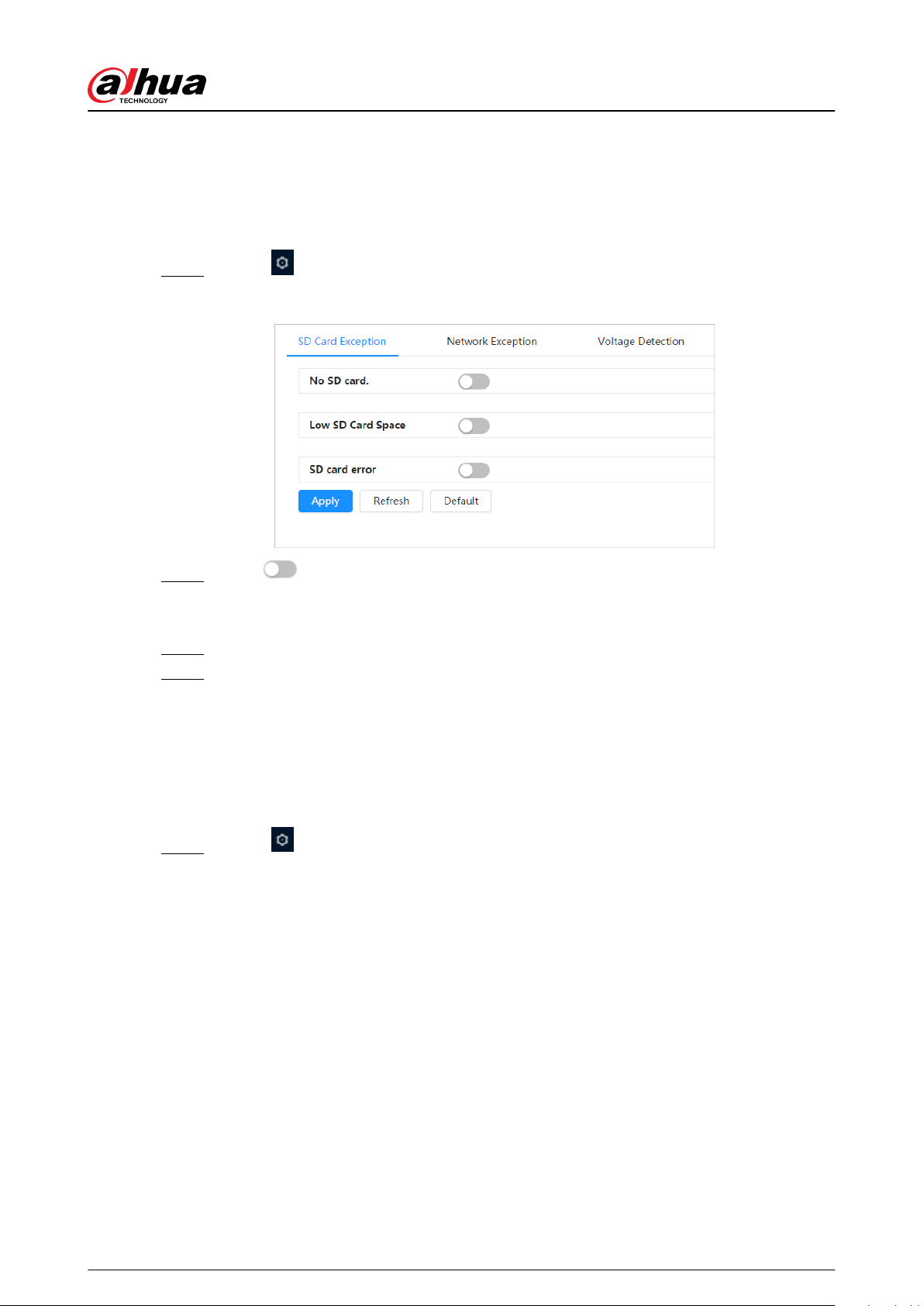
6.5.2.1 Setting SD Card Exception
In case of SD card exception, the system performs alarm linkage. The event types include No SD
Card , Low SD Card Space, and SD Card Error. Functions might vary with dierent models.
Procedure
Step 1 Select > Event > Exception > SD Card Exception.
Figure 6-60 SD card exception
Step 2 Click to enable the SD card detection functions.
When enabling Low SD Card Space , set Capacity Limit. When the remaining space of
SD card is less than this value, the alarm is triggered.
Step 3 Set alarm linkage actions. For details, see "6.5.1.2 Alarm Linkage".
Step 4 Click Apply.
6.5.2.2 Setting Network Exception
In case of network abnormality, the system performs alarm linkage. The event types include Oine
and IP Conict.
Procedure
Step 1 Select > Event > Exception > Network Exception.
Operation Manual
70

Figure 6-61 Network exception
Step 2 Click to enable the network detection function.
Step 3 Set alarm linkage actions. For details, see "6.5.1.2 Alarm Linkage".
Step 4 Click Apply.
6.5.2.3 Setting Voltage Detection
When the input voltage is higher than or lower than the rated value of the device, the system
performs alarm linkage.
Procedure
Step 1 Select > Event > Exception > Voltage Detection.
Operation Manual
71

Figure 6-62 Voltage detection
Step 2 Click to enable the voltage detection function.
When enabling Overlay, the alarm icon is displayed by overlapping when the alarm is
triggered.
Step 3 Set alarm linkage actions. For details, see "6.5.1.2 Alarm Linkage".
Step 4 Click Apply.
6.5.3 Setting Video Detection
Check whether there are considerable changes on the video by analyzing video images. In case of
any considerable change on the video (such as moving object and fuzzy image), the system
performs an alarm linkage.
6.5.3.1 Setting Motion Detection
The system performs an alarm linkage when a moving object appears in the image and its moving
speed reaches the congured sensitivity.
●
If you enable motion detection and smart motion detection simultaneously, and congure the
linked activities, the linked activities take eect as follows:
When motion detection is triggered, the camera will record and take snapshots, but other
congured linkages such as sending emails, PTZ operation will not take eect.
When smart motion detection is triggered, all the congured linkages take eect.
●
If you only enable motion detection, all the congured linkages take eect when motion
detection is triggered.
Procedure
Step 1 Select > Event > Video Detection > Motion Detection.
Operation Manual
72
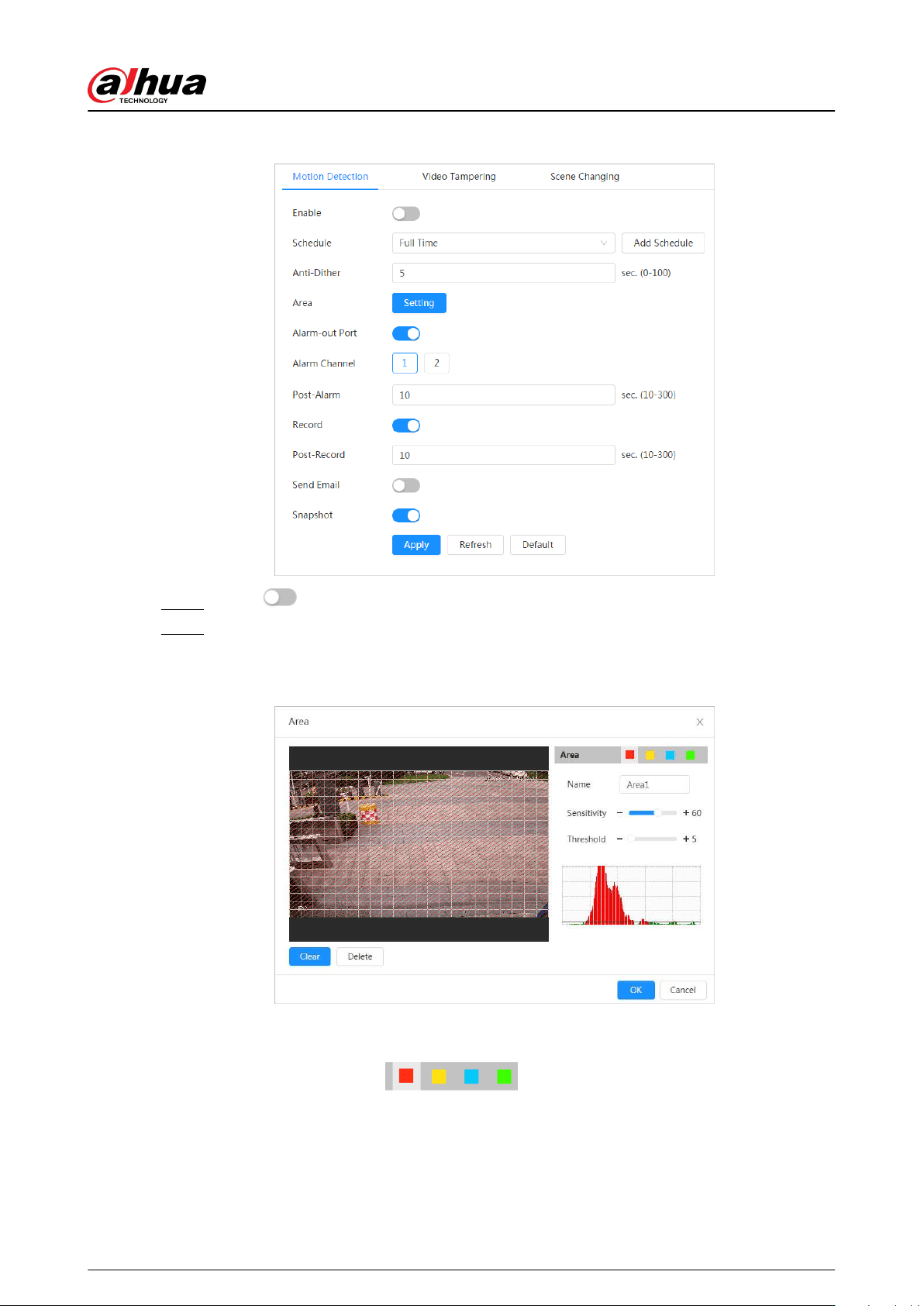
Figure 6-63 Motion detection
Step 2 Click to enable the motion detection function.
Step 3 Set the area for motion detection.
1. Click Setting next to Area.
Figure 6-64 Area
2. Select a color and set the region name. Select an eective area for motion detection in
the image and set Sensitivity and Threshold.
●
Select a color on
to set dierent detection parameters for each
region.
●
Sensitivity: Sensitive degree of outside changes. It is easier to trigger the alarm with
higher sensitivity.
●
Threshold: Eective area threshold for motion detection. The smaller the threshold
is, the easier the alarm is triggered.
Operation Manual
73

●
The whole video image is the eective area for motion detection by default.
●
The red line in the waveform indicates that the motion detection is triggered, and
the green one indicates that there is no motion detection. Adjust sensitivity and
threshold according to the waveform.
3. Click OK.
Step 4 Set arming periods and alarm linkage action. For details, see "6.5.1.2 Alarm Linkage".
If the exiting schedules cannot meet the scene requirement, you can click Add Schedule
to add a new schedule. For details, see "6.5.1.2.1 Adding Schedule".
Anti-dither: After the Anti-dither time is set, the system only records one motion
detection event in the period.
Step 5 Click Apply.
6.5.3.2 Setting Video Tampering
The system performs alarm linkage when the lens is covered or video output is mono-color screen
caused by light and other reasons.
Procedure
Step 1 Select > Event > Video Detection > Video Tampering.
Step 2 Select the event type.
●
Video Tampering : When the percentage of the tampered image and the duration
exceed the congured values, an alarm will be triggered.
●
Defocus Detection : When the image is blurred, an alarm will be triggered. This
function is available on select models.
Operation Manual
74

Figure 6-65 Video tampering
Table 6-25 Description of video temper parameter
Parameter Description
Covered Area
When the percentage of the tampered image and the duration exceed
the congured values, an alarm will be triggered.
Duration
Anti-Dither Only record one alarm event during the anti-dither period.
Step 3 Set arming periods and alarm linkage action. For details, see "6.5.1.2 Alarm Linkage".
If the exiting schedules cannot meet the scene requirement, you can click Add Schedule
to add a new schedule. For details, see "6.5.1.2.1 Adding Schedule".
Step 4 Click Apply.
6.5.3.3 Setting Scene Changing
The system performs alarm linkage when the image switches from the current scene to another
one.
Procedure
Step 1 Select > Event > Video Detection > Scene Changing.
Operation Manual
75
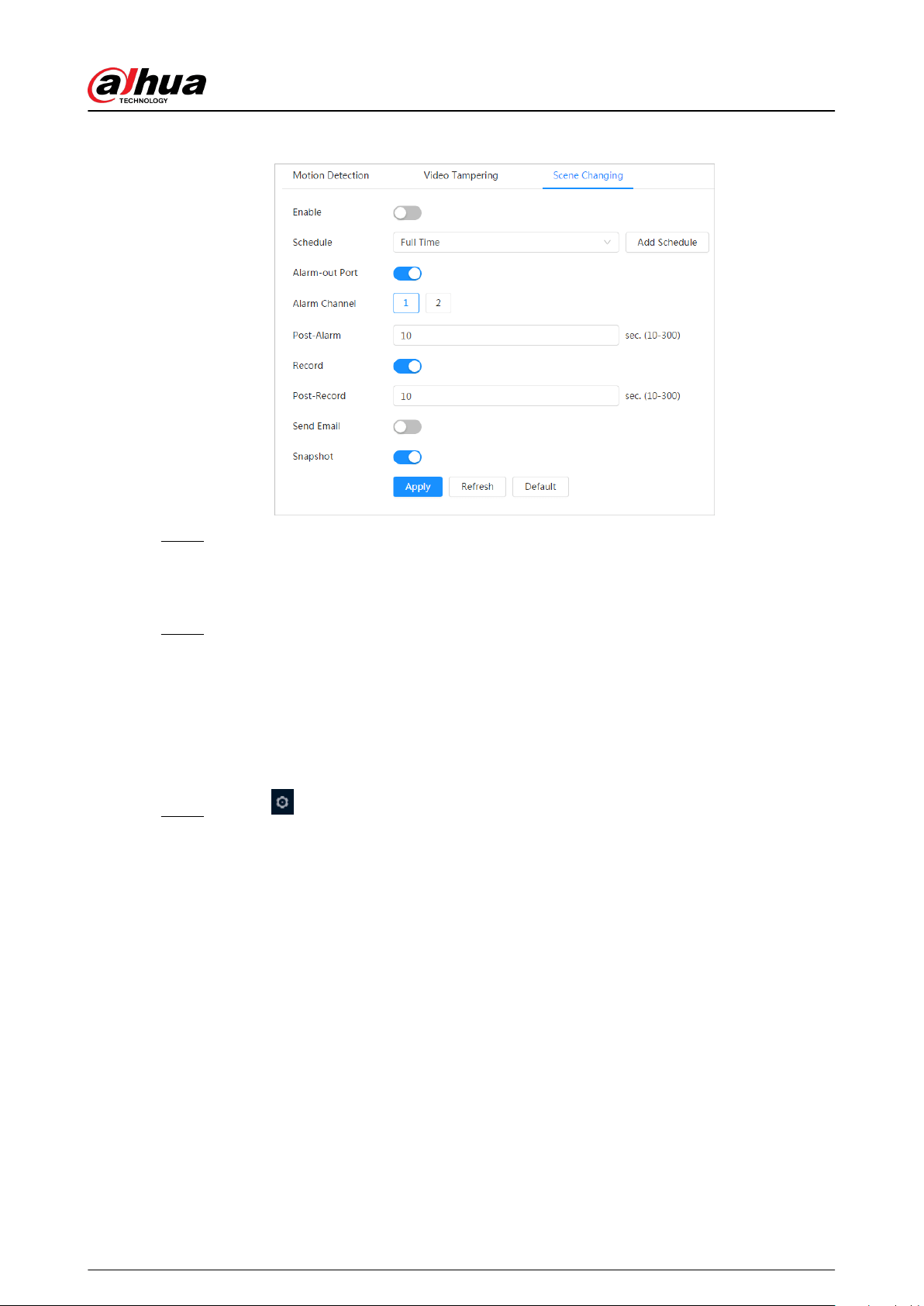
Figure 6-66 Scene changing
Step 2 Select the schedule and arming periods and alarm linkage action. For details, see "6.5.1.2
Alarm Linkage".
If the exiting schedules cannot meet the scene requirement, you can click Add Schedule
to add a new schedule. For details, see "6.5.1.2.1 Adding Schedule".
Step 3 Click Apply.
6.5.4 Setting Audio Detection
The system performs alarm linkage when vague voice, tone change, or rapid change of sound
intensity is detected.
Procedure
Step 1 Select > Event > Video Detection > Audio Detection.
Operation Manual
76
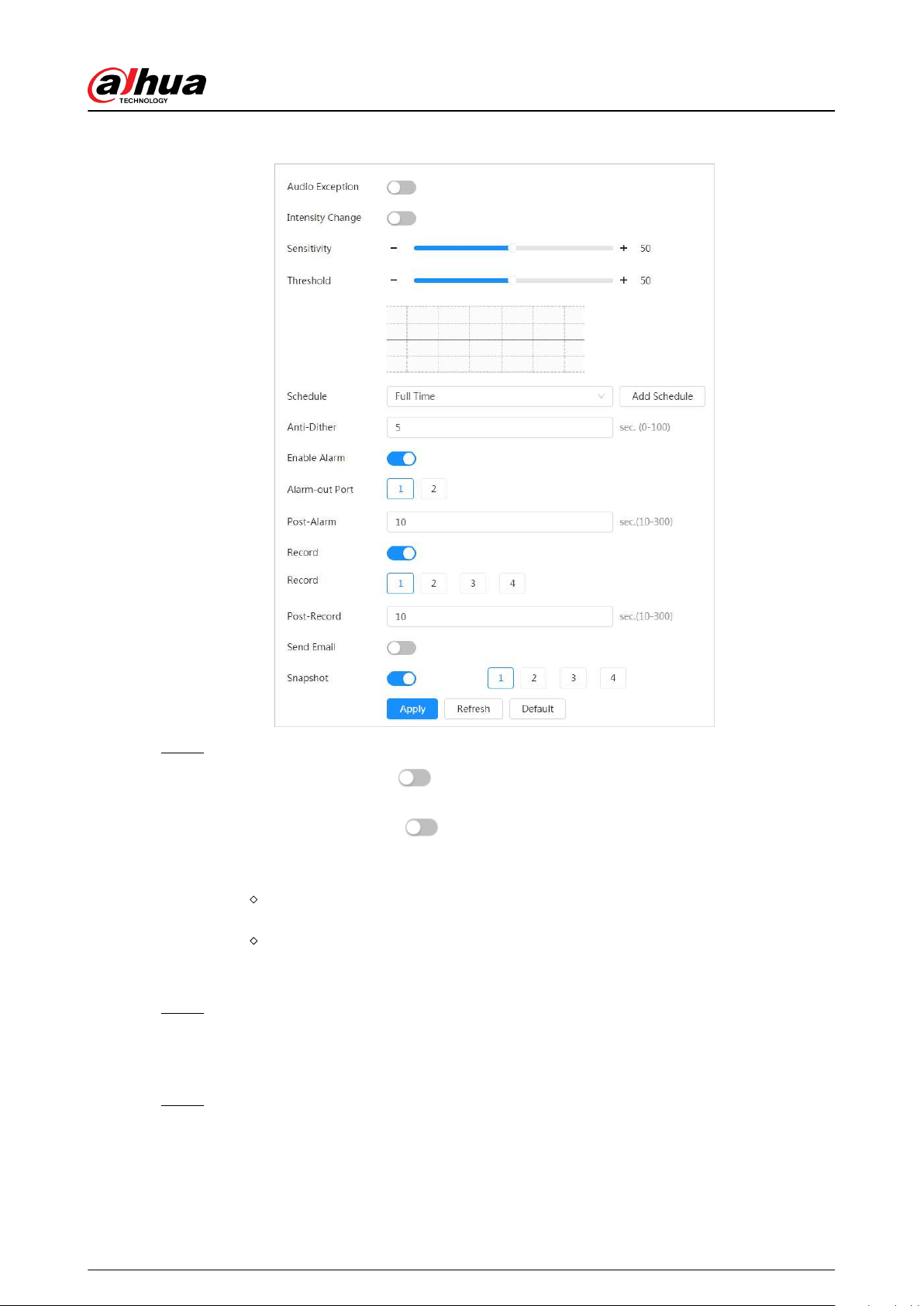
Figure 6-67 Audio detection
Step 2 Set parameters.
●
Input abnormal: Click
next to Audio Abnormal, and the alarm is triggered when
the system detects abnormal sound input.
●
Intensity change: Click
next to Intensity Change , and then set Sensitivity and
Threshold. The alarm is triggered when the system detects that the sound intensity
exceeds the congured threshold.
It is easier to trigger the alarm with higher sensitivity or smaller threshold. Set a
high threshold for noisy environment.
The red line in the waveform indicates audio detection is triggered, and the green
one indicates no audio detection. Adjust sensitivity and threshold according to the
waveform.
Step 3 Select the schedule and arming periods and alarm linkage action. For details, see "6.5.1.2
Alarm Linkage".
If the exiting schedules cannot meet the scene requirement, you can click Add Schedule
to add a new schedule. For details, see "6.5.1.2.1 Adding Schedule".
Step 4 Click Apply.
Operation Manual
77

6.5.5 Setting Disarming
Supports controlling disarm alarm linkage actions with one-click. After enabling Event
Notication, the system only triggers the selected alarm linkage actions.
Procedure
Step 1 Select > Event > Disarming.
Step 2 Enable Disarming or Disarm by Period as needed.
●
Disarming : The system stops triggering alarm linkage actions all the time.
●
Disarm by Period : The system stops triggering alarm linkage actions in the selected
period. For adding schedule, see "6.5.1.2.1 Adding Schedule".
Figure 6-68 Disarming
Step 3 Enable Event Notication , and then select the Disarm Alarm Linkage Action as
needed.
The system only triggers the selected alarm linkage actions.
Step 4 Click Apply.
6.6 Storage
Displays the information of the local SD card. You can set it as read only or read & write; you can
also hot swap and format SD card.
Functions might vary with dierent models.
Select
> Storage.
●
Click Read-Only, and then the SD card is set to read only.
●
Click Read & Write, and then the SD card is set to read & write.
●
Click Hot Swap, and then you can pull out the SD card.
●
Click Format, and you can format the SD card.
Operation Manual
78
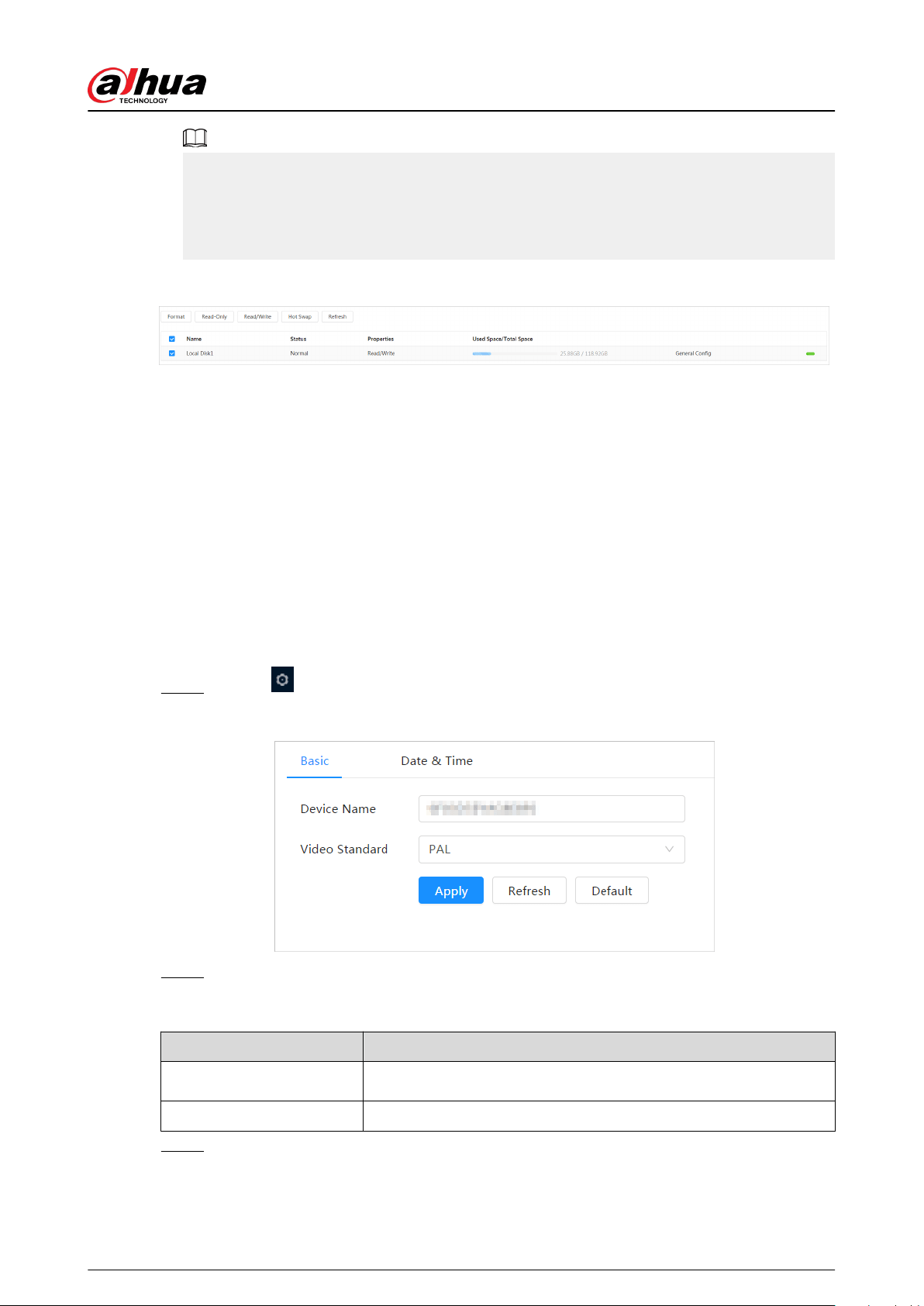
When reading SD card on PC, if the SD card capacity is much less than the nominal capacity, you
need to format the SD card. Then the data in SD card will be cleared, and the SD card is
formatted to be private le system. The private le system can greatly improve SD card
multimedia le read/write performance. Download Diskmanager from Toolbox to read the SD
card. For details, contact after-sales technicians.
Figure 6-69 Local
6.7 System
This section introduces system congurations, including general, date & time, account, safety, PTZ
settings, default, import/export, remote, auto maintain and upgrade.
6.7.1 General
6.7.1.1 Basic
You can congure device name, language and video standard.
Procedure
Step 1 Select > System > General > Basic.
Figure 6-70 Basic
Step 2 Congure general parameters.
Table 6-26 Description of general parameters
Parameter Description
Name Enter the device name.
Video Standard Select video standard from PAL and NTSC.
Step 3 Click Apply.
Operation Manual
79

6.7.1.2 Date & Time
You can congure date and time format, time zone, current time, DST (Daylight Saving Time) or
NTP server.
Procedure
Step 1 Select > System > General > Date & Time.
Figure 6-71 Date and time
Step 2 Congure date and time parameters.
Table 6-27 Description of date and time parameters
Parameter Description
Date Format Congure the date format.
Time
●
Manually Setting : Congure the parameters manually.
●
NTP : When selecting NTP, the system then syncs time with the
internet server in real time.
You can also enter the IP address, time zone, port, and interval of a PC
which installed NTP server to use NTP.
Time Format Congure the time format. You can select from 12-Hour or 24-Hour.
Time Zone Congure the time zone that the camera is at.
Current Time Congure system time.
Operation Manual
80
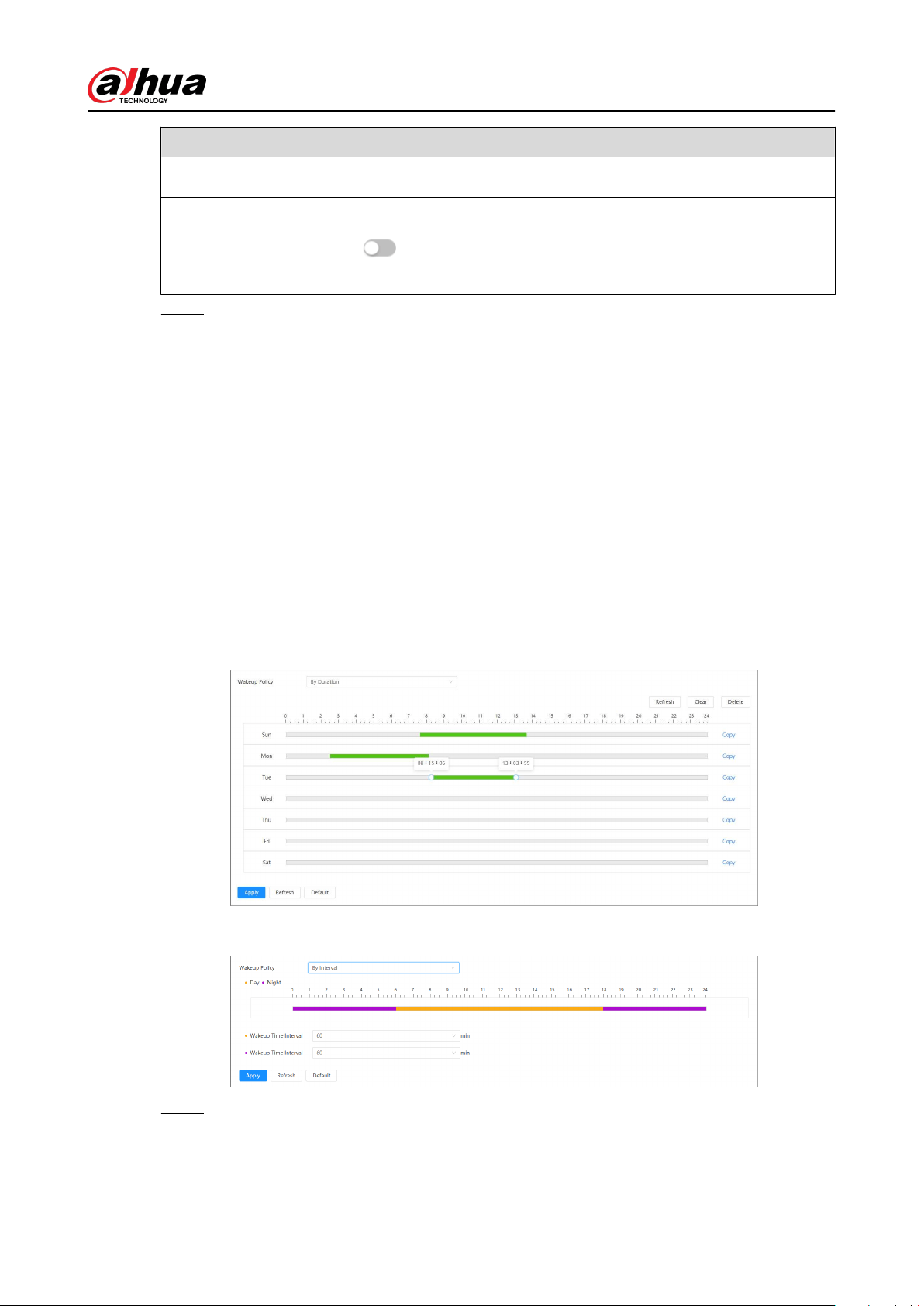
Parameter Description
Click Sync PC, and the system time changes to the PC time.
DST
Enable DST as needed.
Click
, and congure start time and end time of DST with Date or
Week.
Step 3 Click Apply.
6.7.2 Power Consumption Mode
Congure sleep mode, general mode or power saving mode as needed. When the device battery
drops to 20%, 15%, or 10%, it automatically reports the low battery event to the platform.
6.7.2.1 Setting Sleeping Mode
The device will only work when it is woken up.
Procedure
Step 1 Select System > Power Consumption Mode > Sleep Mode.
Step 2 Turn on Scheduled Wakeup.
Step 3 Select Wakeup Policy.
Figure 6-72 Wakeup by duration
Figure 6-73 Wakeup by interval
Step 4 Click Apply.
Operation Manual
81

6.7.2.2 Setting General Mode
The device is in normal power consumption state when it is in general mode. Set the power
threshold, and then the device will enter to sleep mode if the power is lower than the threshold
congured.
Procedure
Step 1 Select System > Power Consumption Mode > General Mode.
Step 2 Turn on Sleep, and then congure the threshold.
Step 3 Click Apply.
6.7.2.3 Setting Power Saving Mode
When this function is enabled, the device will lower the resolution and frame rate to minimize the
power consumption. This mode is enabled by default.
Procedure
Step 1 Select System > Power Consumption Mode > Power Saving Mode.
Step 2 Click Apply.
6.7.3 Account
You can manage users, such as add, delete, or edit them. Users include admin, added users and
ONVIF users.
Managing users and groups are only available for administrator users.
●
The max length of the user or group name is 31 characters which consists of number, letter,
underline, dash, dot and @.
●
The password must consist of 8 to 32 non-blank characters and contain at least two types of
characters among upper case, lower case, number, and special character (excluding ' " ; : &).
●
You can have 18 users and 8 groups at most.
●
You can manage users through single user or group, and duplicate usernames or group names
are not allowed. A user can only be in one group at a time, and the group users can own
authorities within group authority range.
●
Online users cannot edit their own authority.
●
There is one admin by default which has highest authority.
●
Select Anonymous Login , and then log in with only IP address instead of username and
password. Anonymous users only have preview authorities. During anonymous login, click
Logout, and then you can log in with other username.
6.7.3.1 User
6.7.3.1.1 Adding User
You are admin user by default. You can add users, and congure dierent permissions.
Procedure
Step 1 Select > System > Account > User.
Operation Manual
82
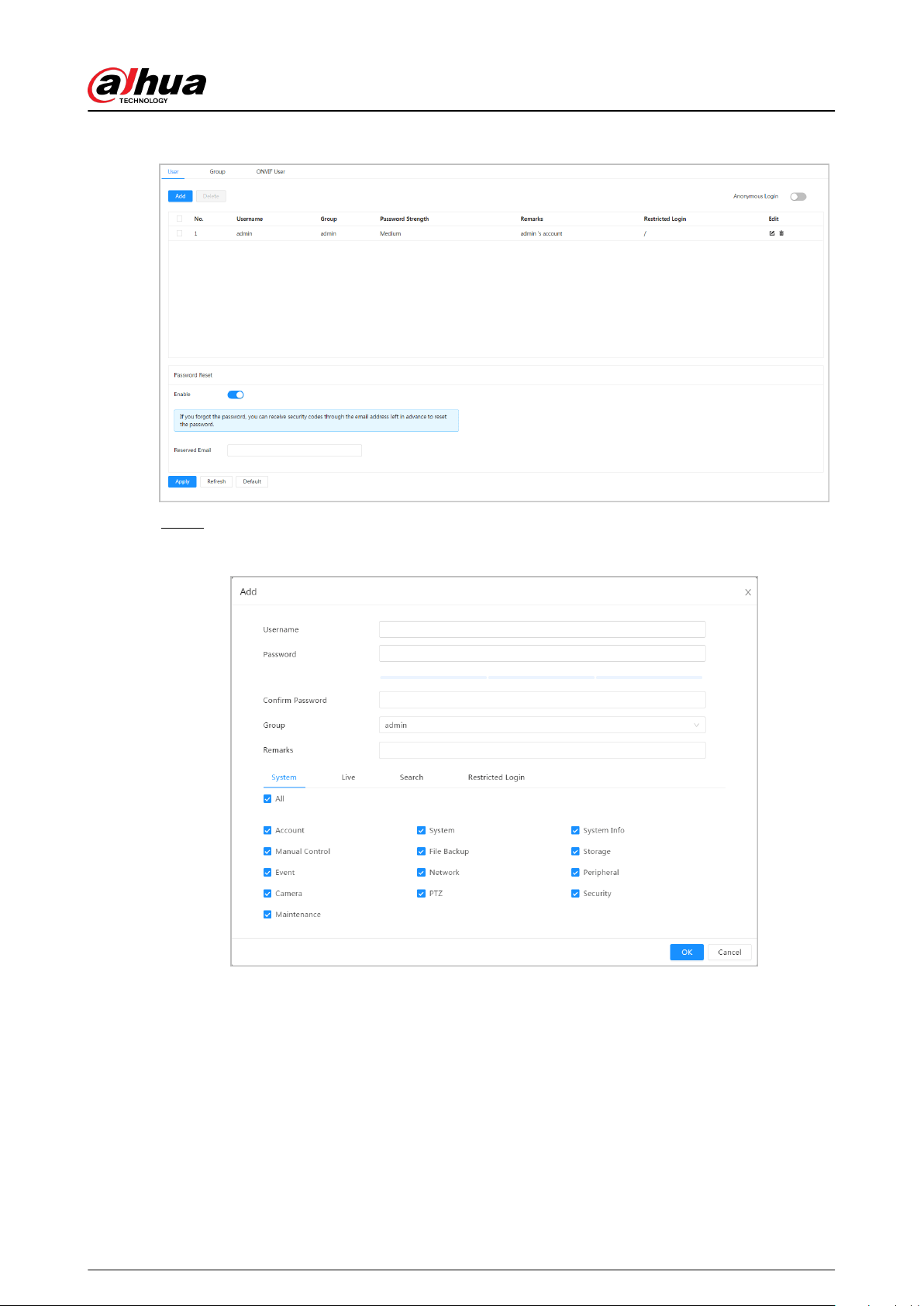
Figure 6-74 User
Step 2 Click Add.
Figure 6-75 Add user (system)
Operation Manual
83
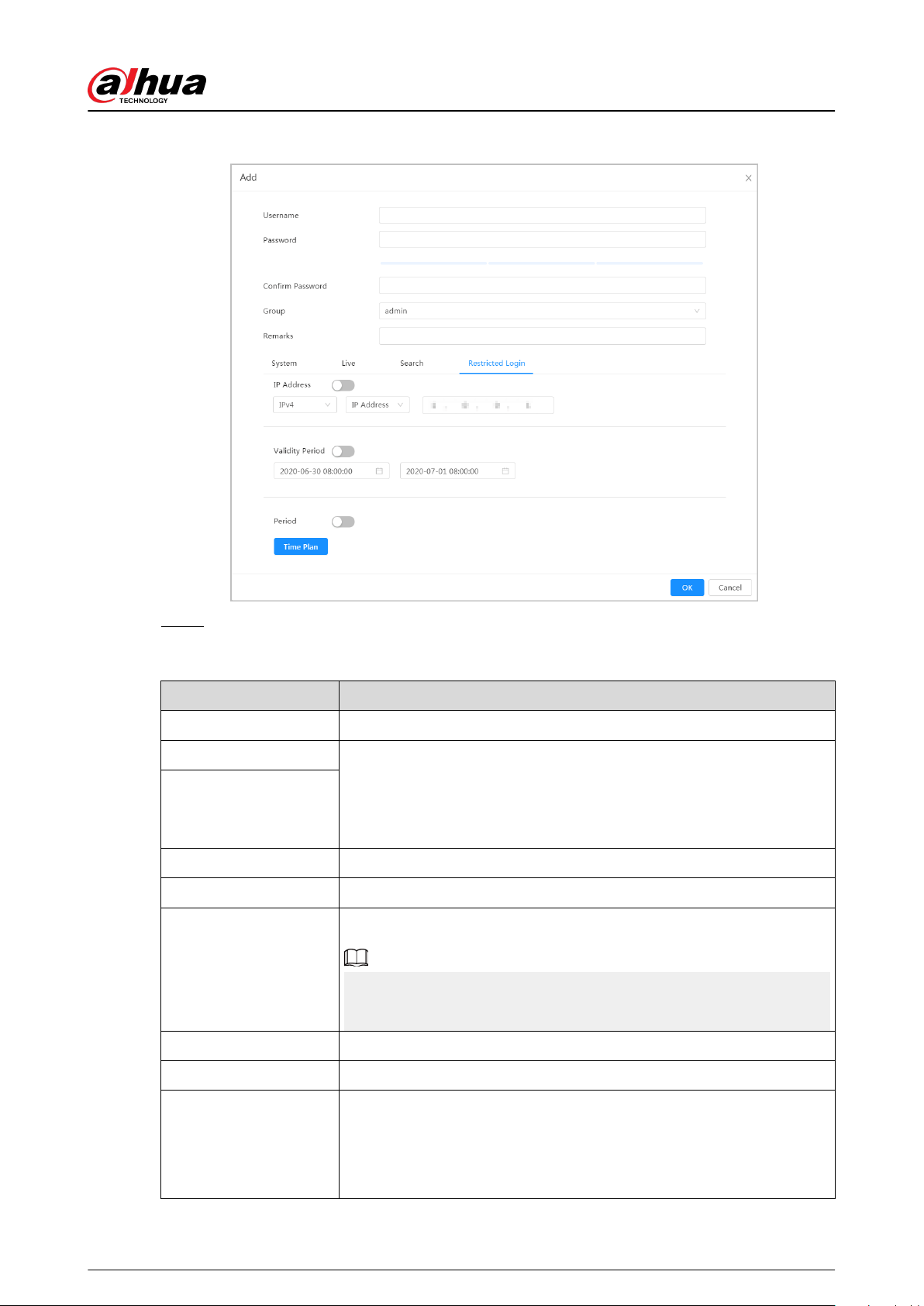
Figure 6-76 Add user (restricted login)
Step 3 Congure user parameters.
Table 6-28 Description of user parameters
Parameter Description
Username User’s unique identication. You cannot use existed username.
Password
Enter password and conrm it again.
The password must consist of 8 to 32 non-blank characters and contain
at least two types of characters among upper case, lower case, number,
and special character (excluding ' " ; : &).
Conrm Password
Group The group that users belong to. Each group has dierent authorities.
Remark Describe the user.
System
Select authorities as needed.
We recommend you give fewer permissions to normal users than
premium users.
Live Select the live view authority for the user to be added.
Search Select the search authority for the user to be added.
Restricted Login
Set the PC address that allows the dened user to log in to the camera
and the validity period and time range. You can log in to the web page
with the dened IP in the dened time range of validity period.
●
IP address: You can log in to web through the PC with the set IP.
Operation Manual
84
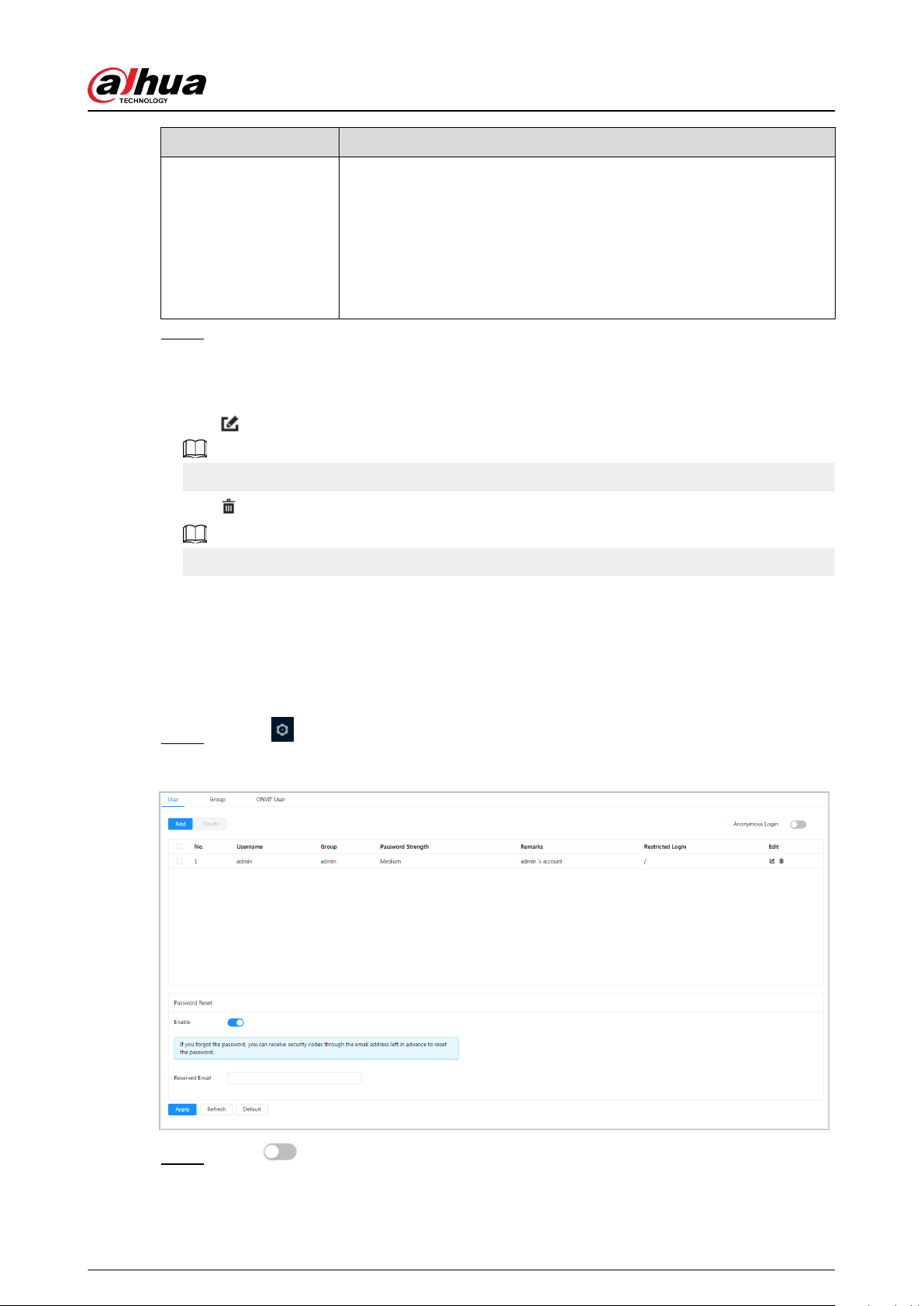
Parameter Description
●
Validity period: You can log in to web in the set validity period.
●
Time range: You can log in to web in the set time range.
Set as follows
a. IP address: Enter the IP address of the host to be added.
b. IP segment: Enter the start address and end address of the host
to be added.
Step 4 Click Apply.
The newly added user is displayed in the username list.
Related Operations
●
Click
to edit password, group, memo or authorities.
For admin account, you can only edit the password.
●
Click
to delete the added users. Admin user cannot be deleted.
The admin account cannot be deleted.
6.7.3.1.2 Resetting Password
Enable the function, and you can reset password by clicking Forget password? on the login page.
For details, see "4.2 Resetting Password".
Procedure
Step 1 Select > System > Account > User.
Figure 6-77 User
Step 2 Click next to Enable in Password Reset.
If the function is not enabled, you can only reset the password by resetting the camera.
Operation Manual
85
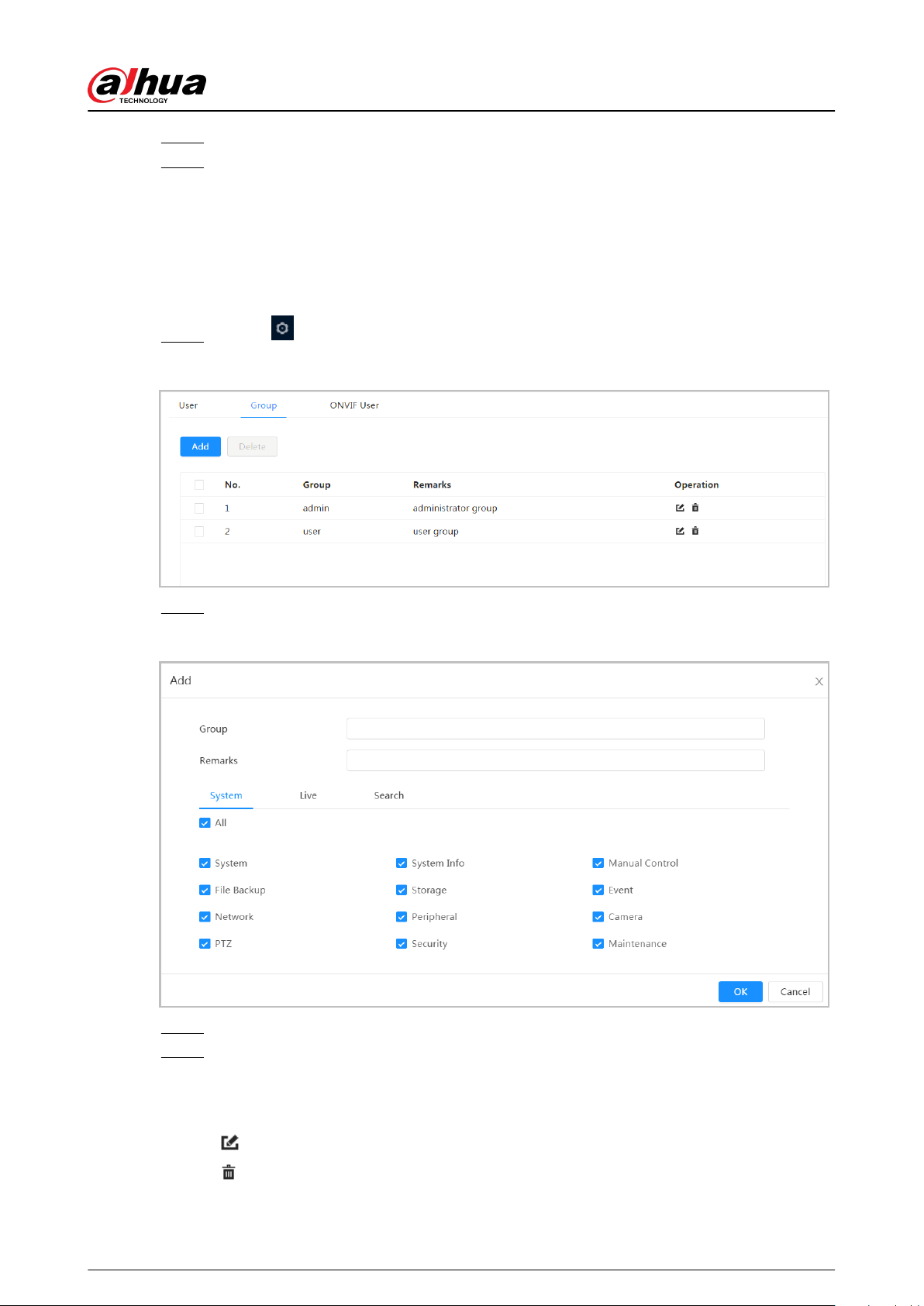
Step 3 Enter the reserved email address.
Step 4 Click Apply.
6.7.3.2 Adding User Group
You have two groups named admin and user by default, and you can add new group, delete added
group or edit group authority and memo.
Procedure
Step 1 Select > System > Account > Group.
Figure 6-78 Group name
Step 2 Click Add.
Figure 6-79 Add group
Step 3 Enter the group name and memo, and then select group authorities.
Step 4 Click OK to nish conguration.
The newly added group displays in the group name list.
Related Operations
●
Click to edit password, group, memo or authorities.
●
Click to delete the added users. Admin user cannot be deleted.
Operation Manual
86
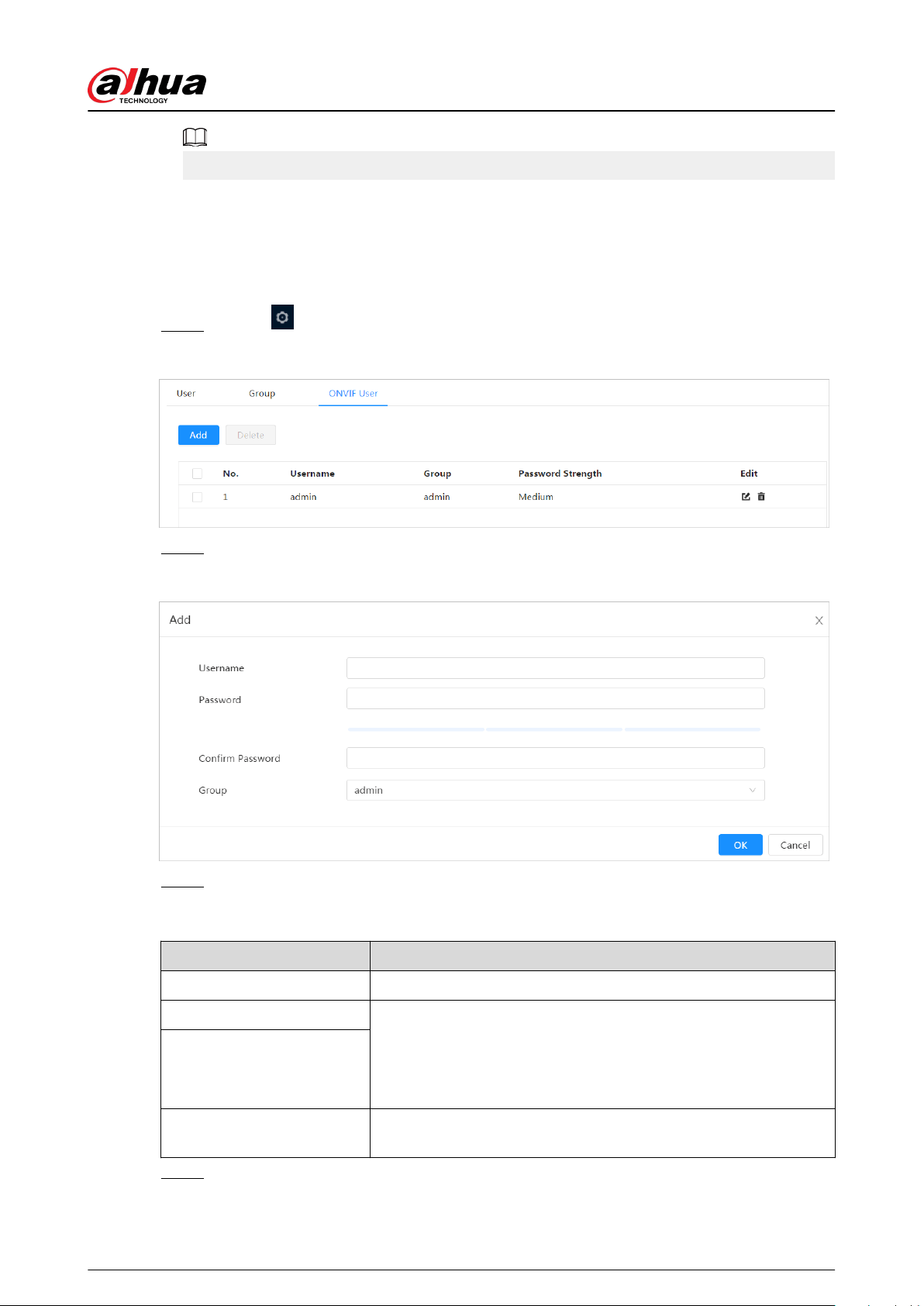
The admin group and user group cannot be deleted.
6.7.3.3 ONVIF User
You can add, delete ONVIF user, and change their passwords.
Procedure
Step 1 Select > System > Account > ONVIF User.
Figure 6-80 ONVIF user
Step 2 Click Add.
Figure 6-81 Add ONVIF user
Step 3 Congure user parameters.
Table 6-29 Description of ONVIF user parameters
Parameter Description
Username User’s unique identication. You cannot use existed username.
Password
Enter password and conrm it again.
The password must consist of 8 to 32 non-blank characters and
contain at least two types of characters among upper case, lower
case, number, and special character (excluding ' " ; : &).
Conrm Password
Group Name
The group that users belong to. Each group has dierent
authorities.
Step 4 Click OK.
The newly added user displays in the username list.
Operation Manual
87
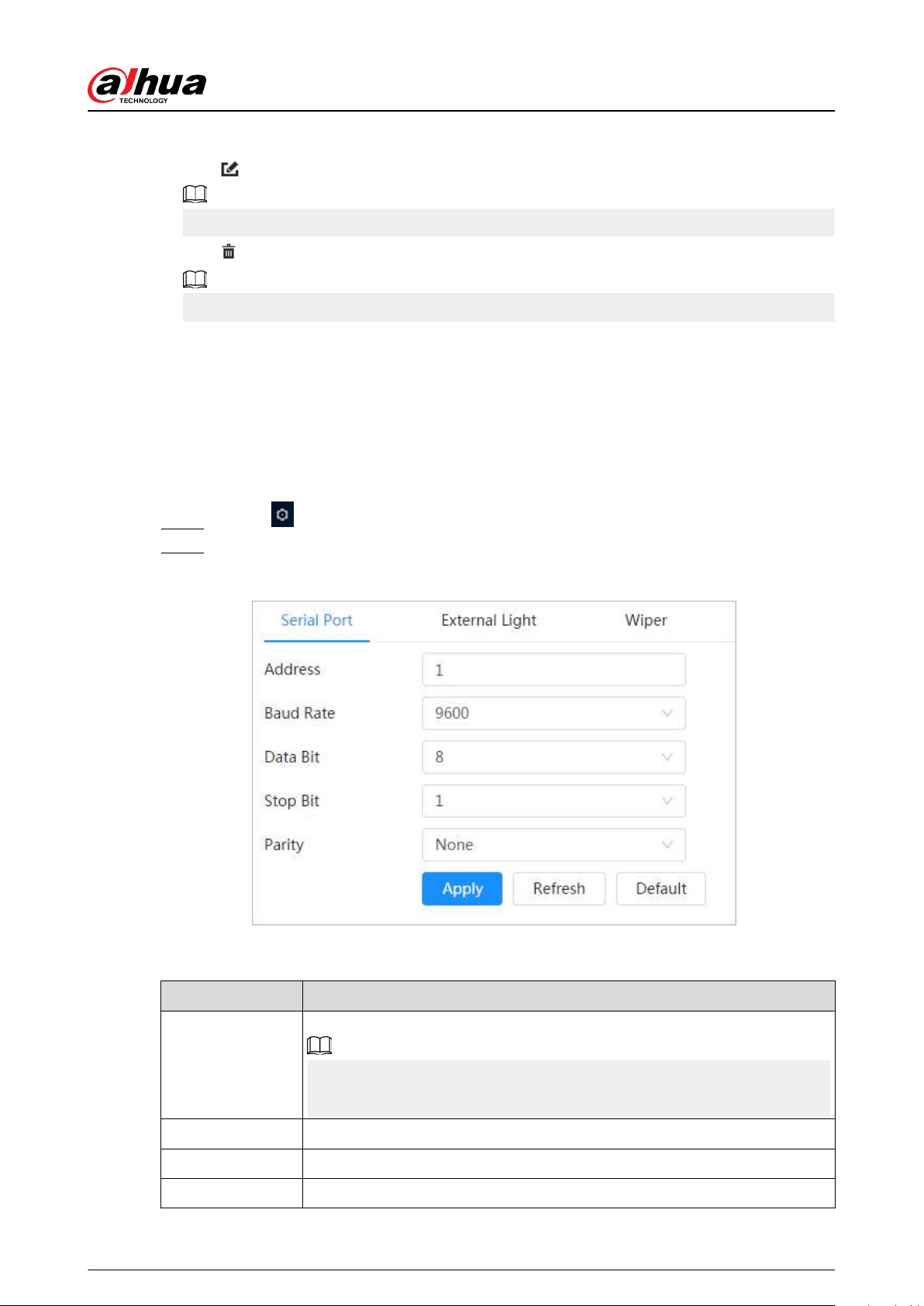
Related Operations
●
Click
to edit password, group, memo or authorities.
For admin account, you can only change the password.
●
Click
to delete the added users.
The admin account cannot be deleted.
6.7.4 Peripheral Management
6.7.4.1 Conguring Serial Port
Set the serial port of the external device.
Procedure
Step 1 Select > System > Peripheral > Serial Port.
Step 2 Congure parameters.
Figure 6-82 Serial port settings
Table 6-30 Description of serial port settings parameters
Parameter Description
IP Address
Enter the corresponding device address. It is 1 by default.
Make sure that the address is the same as the device address; otherwise you
cannot control the device.
Baud Rate Congure device baud rate. It is 9600 by default.
Data Bits It is 8 by default.
Stop Bits It is 1 by default.
Operation Manual
88

Parameter Description
Parity It is None by default.
Step 3 Click Apply.
6.7.4.2 Conguring External Light
You need to congure external light mode when the external light is used.
Prerequisites
●
Connect external light with RS-485 port.
●
You have congured serial port parameters. For details, see "6.7.4.1 Conguring Serial Port".
Procedure
Step 1 > System > Peripheral > External Light.
Step 2 Select working mode as needed.
Figure 6-83 External light
Table 6-31 Lamp parameters
Parameter Description
Work Mode
●
O : The external light is disabled.
●
Manual : Set the light brightness manually.
●
Auto : The camera turns on or turns o the light according to the light
time and photoresister automatically.
Auto Mode
●
Time : When selecting Time in Auto Mode, set the arming period. During
the arming period, the external light is on.
Select the added time plan table in the Time Plan list. Click Add
Schedule to add new time plan table. For details, see "6.5.1.2 Alarm
Linkage".
●
Photoresister : When you select Photoresister in Auto Mode, the
camera turns on the external light according to the brightness
automatically.
Light Brightness Set the brightness of the external light.
Operation Manual
89
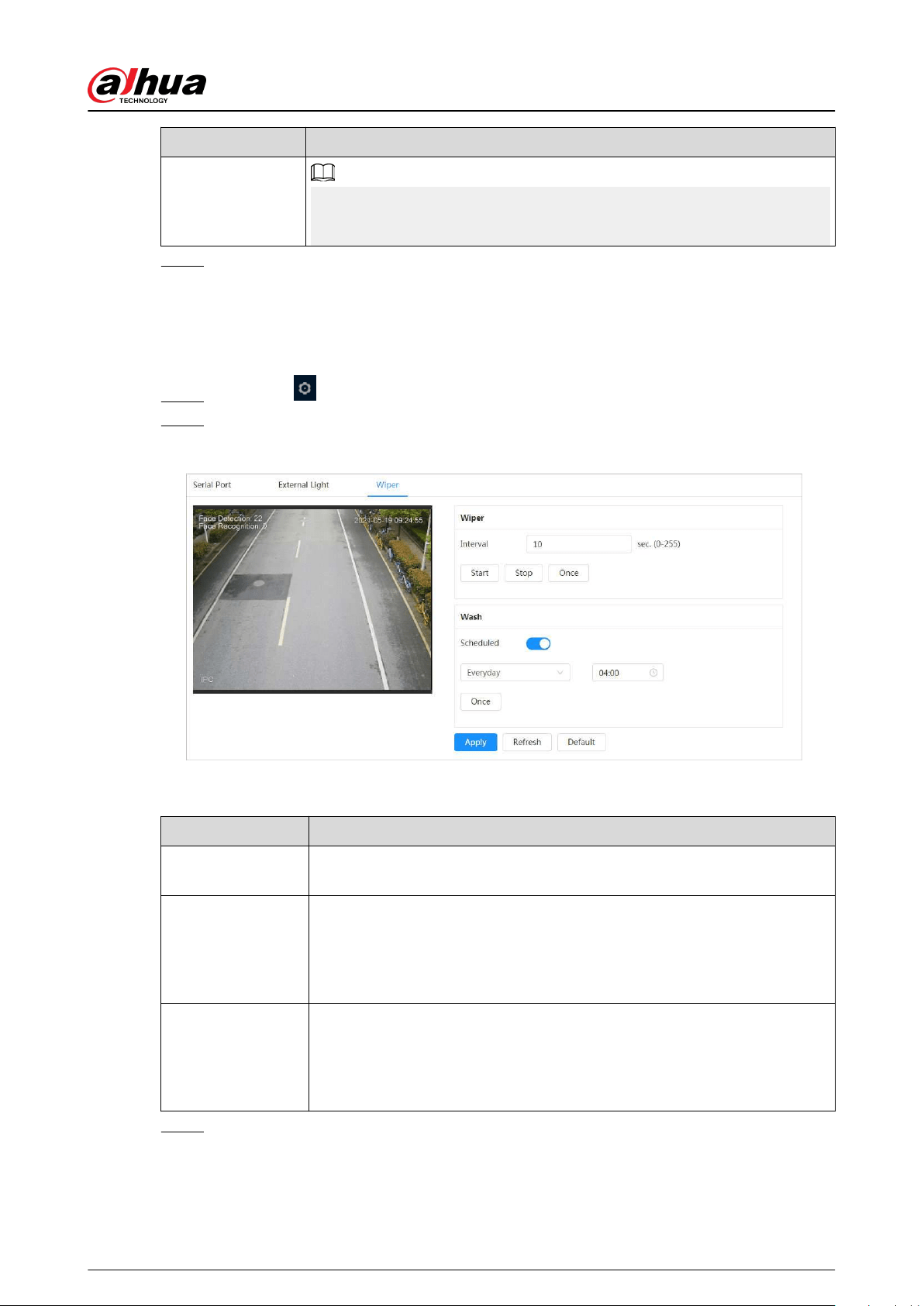
Parameter Description
For some models, you can set the brightness of each external light
separately.
Step 3 Click Apply.
6.7.4.3 Conguring Wiper
Procedure
Step 1 Select > > System > Peripheral > Wiper.
Step 2 Congure working mode of wipers.
Figure 6-84 Wiper
Table 6-32 Wiper parameter description
Parameter Description
Interval
The interval between stop mode and start mode. For example, set the time
to 10 s, and the wiper will work every 10 s.
Start, Stop, Once
Congure working mode of the wiper.
●
Click Start, and the wiper works as the set interval time.
●
Click Stop, and the wiper stops working.
●
Click Once, and the wiper works once.
Wash
Select the Schedule checkbox and set the time, and then the wiper will
work as the congured time.
Click Once, and the wiper works once. It can be used to check whether the
wiper works normally.
Step 3 Click Apply.
Operation Manual
90
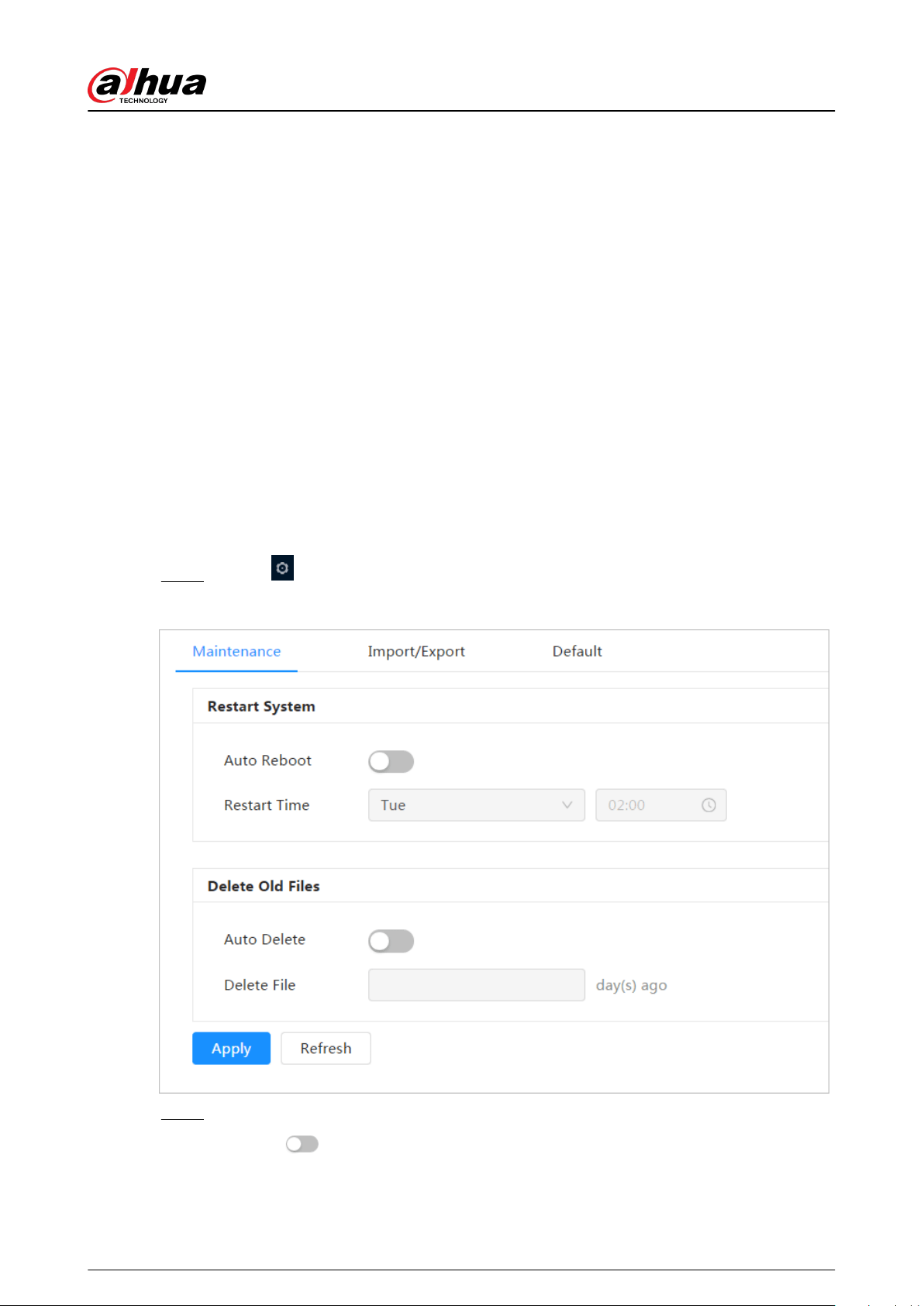
6.7.5 Manager
6.7.5.1 Requirements
To make sure the system runs normally, maintain it as the following requirements:
●
Check surveillance images regularly.
●
Clear regularly user and user group information that are not frequently used.
●
Change the password every three months. For details, see "6.7.3 Account".
●
View system logs and analyze them, and process the abnormity in time.
●
Back up the system conguration regularly.
●
Restart the device and delete the old les regularly.
●
Upgrade rmware in time.
6.7.5.2 Maintenance
You can restart the system manually, and set the time of auto reboot and auto deleting old les.
This function is disabled by default.
Procedure
Step 1 Select > System > Manager > Maintenance.
Figure 6-85 Maintenance
Step 2 Congure auto maintain parameters.
●
Click
next to Auto Reboot in Restart System, and set the reboot time, then the
system will automatically restarts at the set time every week.
Operation Manual
91
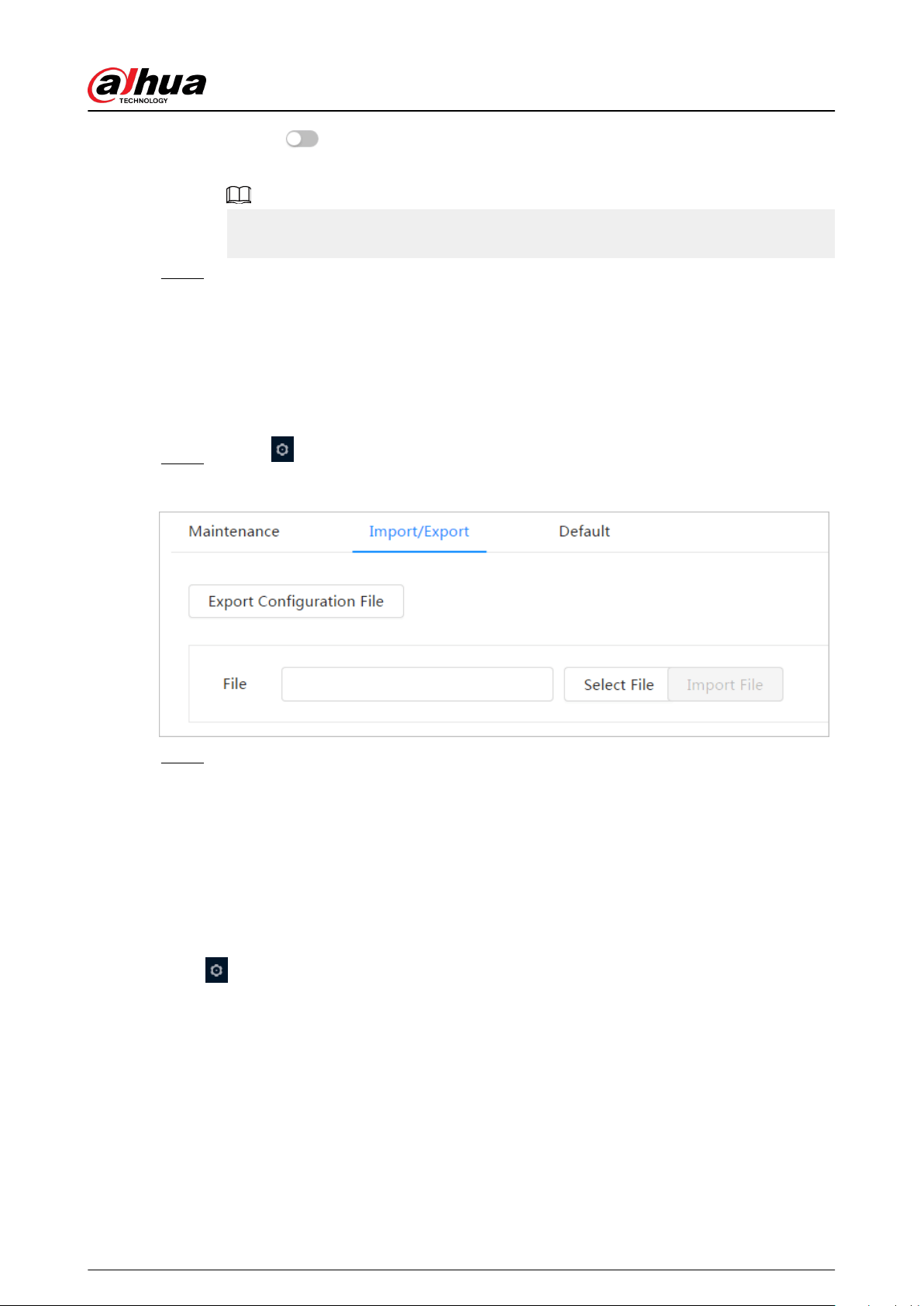
●
Click
next to Auto Delete in Delete Old Files, and set the time, then the system
will automatically deletes old les at the set time. The time range is 1 to 31 days.
When you enable and conrm the Auto Delete function, the deleted les cannot be
restored. Operate it carefully.
Step 3 Click Apply.
6.7.5.3 Import/Export
●
Export the system conguration le to back up the system conguration.
●
Import system conguration le to make quick conguration or recover system conguration.
Procedure
Step 1 Select > System > Manager > Import/Export.
Figure 6-86 Import/Export
Step 2 Import or export the le.
●
Import: Select local conguration le, and click Import File to import the local system
conguration le to the system.
●
Export: Click Export Conguration le to export the system conguration le to local
storage.
6.7.5.4 Default
Restore the device to default conguration or factory settings.
Select > System > Manager > Default.
●
Click Default, and then all the congurations except IP address and account are reset to default.
●
Click Factory Default, and all the congurations are reset to factory settings.
Operation Manual
92
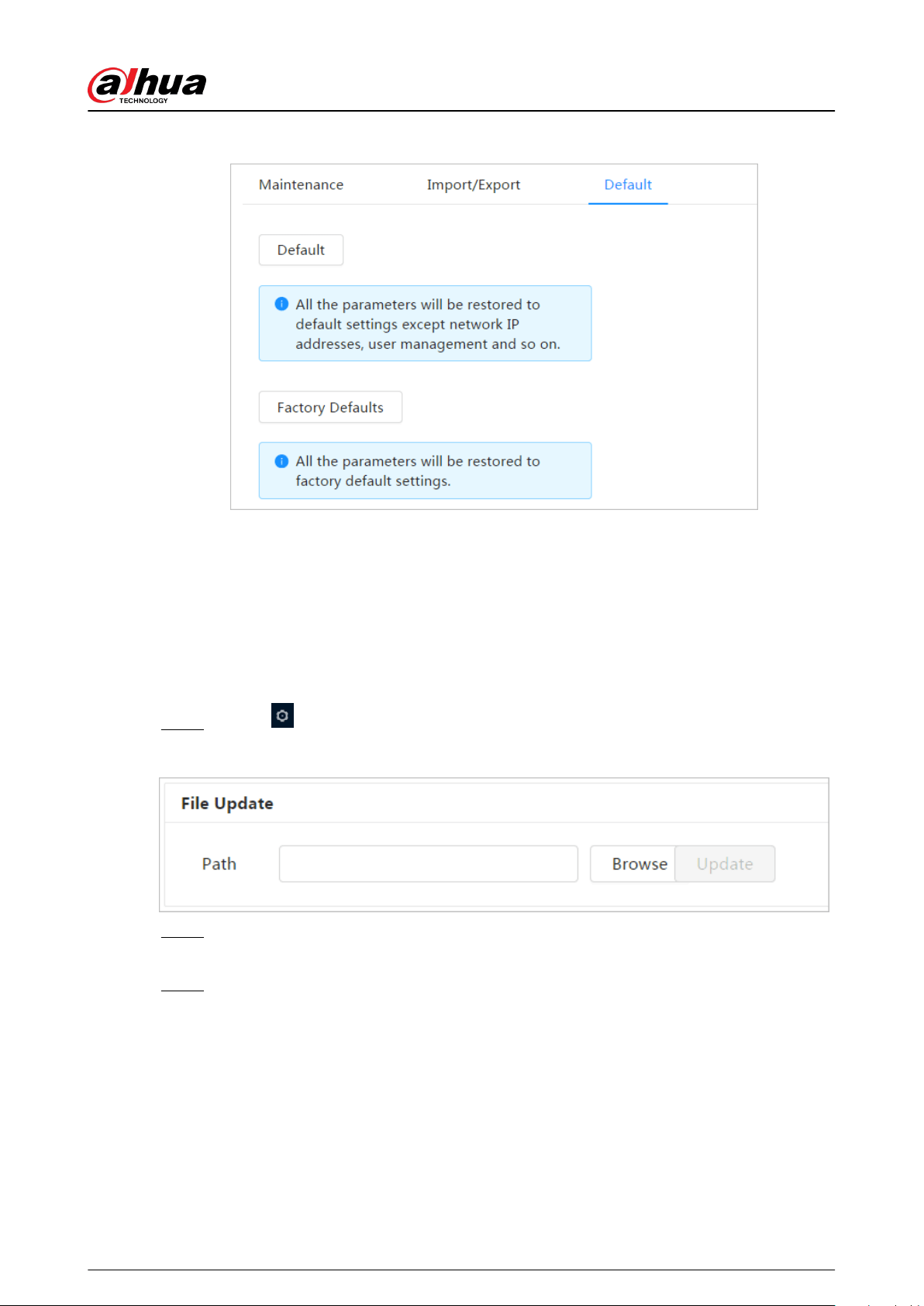
Figure 6-87 Default
6.7.6 Upgrade
Upgrading to the latest system can rene camera functions and improve stability.
If wrong upgrade le has been used, restart the device; otherwise some functions might not work
properly.
Procedure
Step 1 Select > System > Upgrade.
Figure 6-88 Upgrade
Step 2 Click Browse, and then upload upgrade le.
The upgrade le should be a .bin le.
Step 3 Click Update.
6.8 System Information
You can view the information, including version, log and online user, and back up or clear log.
Operation Manual
93

6.8.1 Version
Select > System Info > Version to view device information such as hardware, system version,
and web version.
6.8.2 Online User
Select > System Info > Online User to view all the online users logging in to web.
6.9 Setting Log
6.9.1 Log
You can view and back up logs.
Procedure
Step 1 Select > Log > Log.
Step 2 Congure Start Time and End Time, and then select the log type.
The start time should be later than January 1, 2000, and the end time should be earlier
than December 31, 2037.
The log type includes All, System, Setting, Data, Event, Record, Account, and Security.
●
System : Includes program start, abnormal close, close, program reboot, device
closedown, device reboot, system reboot, and system upgrade.
●
Setting : Includes saving conguration and deleting conguration le.
●
Data : Includes conguring disk type, clearing data, hot swap, FTP state, and record
mode.
●
Event (records events such as video detection, smart plan, alarm and abnormality):
includes event start and event end.
●
Record : Includes le access, le access error, and le search.
●
Account : Includes login, logout, adding user, deleting user, editing user, adding
group, deleting group, and editing group.
●
Security : Includes password resetting and IP lter.
Step 3 Click Search.
●
Click
or click a certain log, and then you can view the detailed information in
Details area.
●
Click Backup, and then you can back up all found logs to local PC.
Operation Manual
94
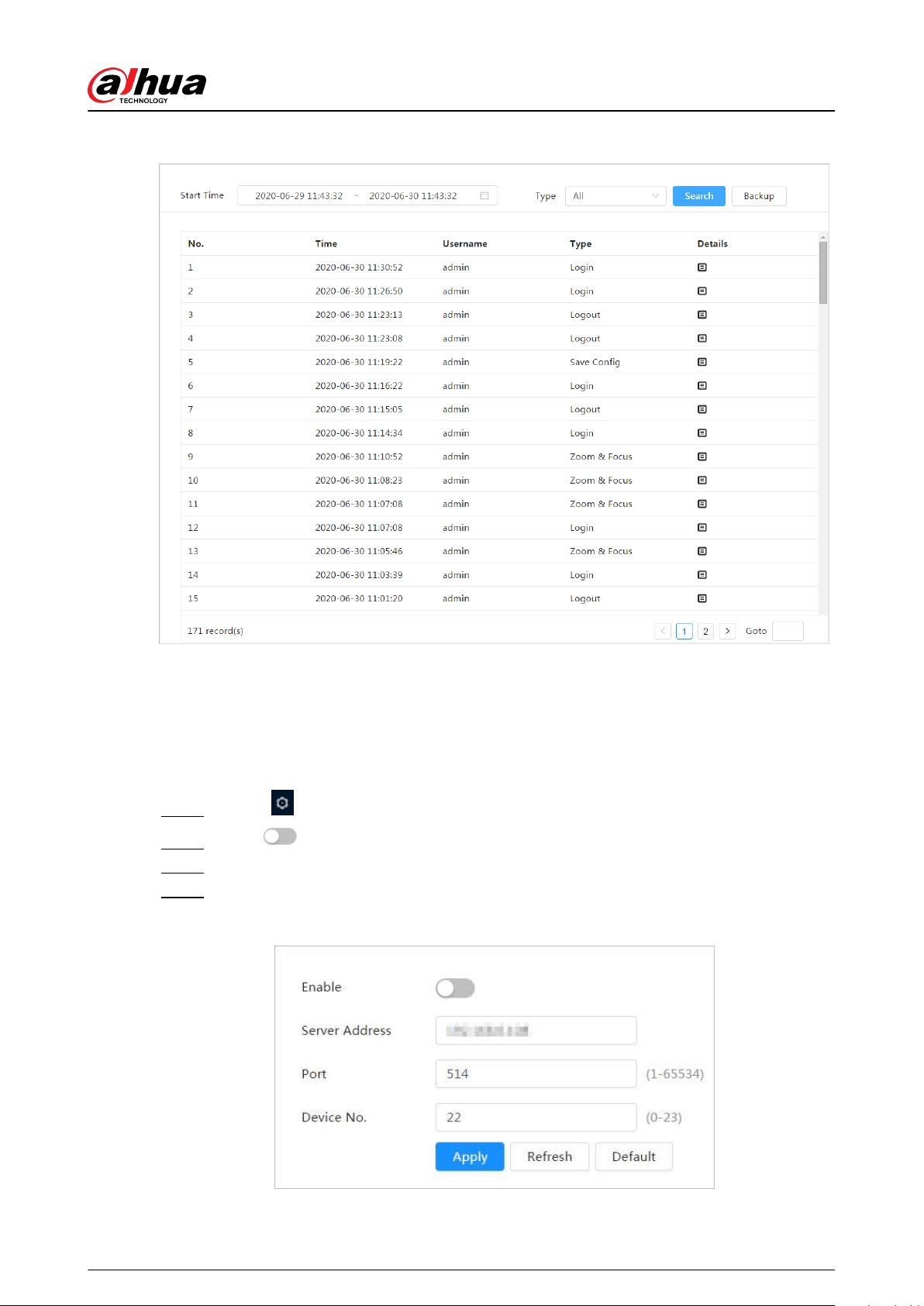
Figure 6-89 Log
6.9.2 Remote Log
Congure remote log, and you can get the related log by accessing the set address.
Procedure
Step 1 Select > Log > Remote Log.
Step 2 Click to enable remote log function.
Step 3 Set address, port and device number.
Step 4 Click Apply.
Figure 6-90 Remote log
Operation Manual
95
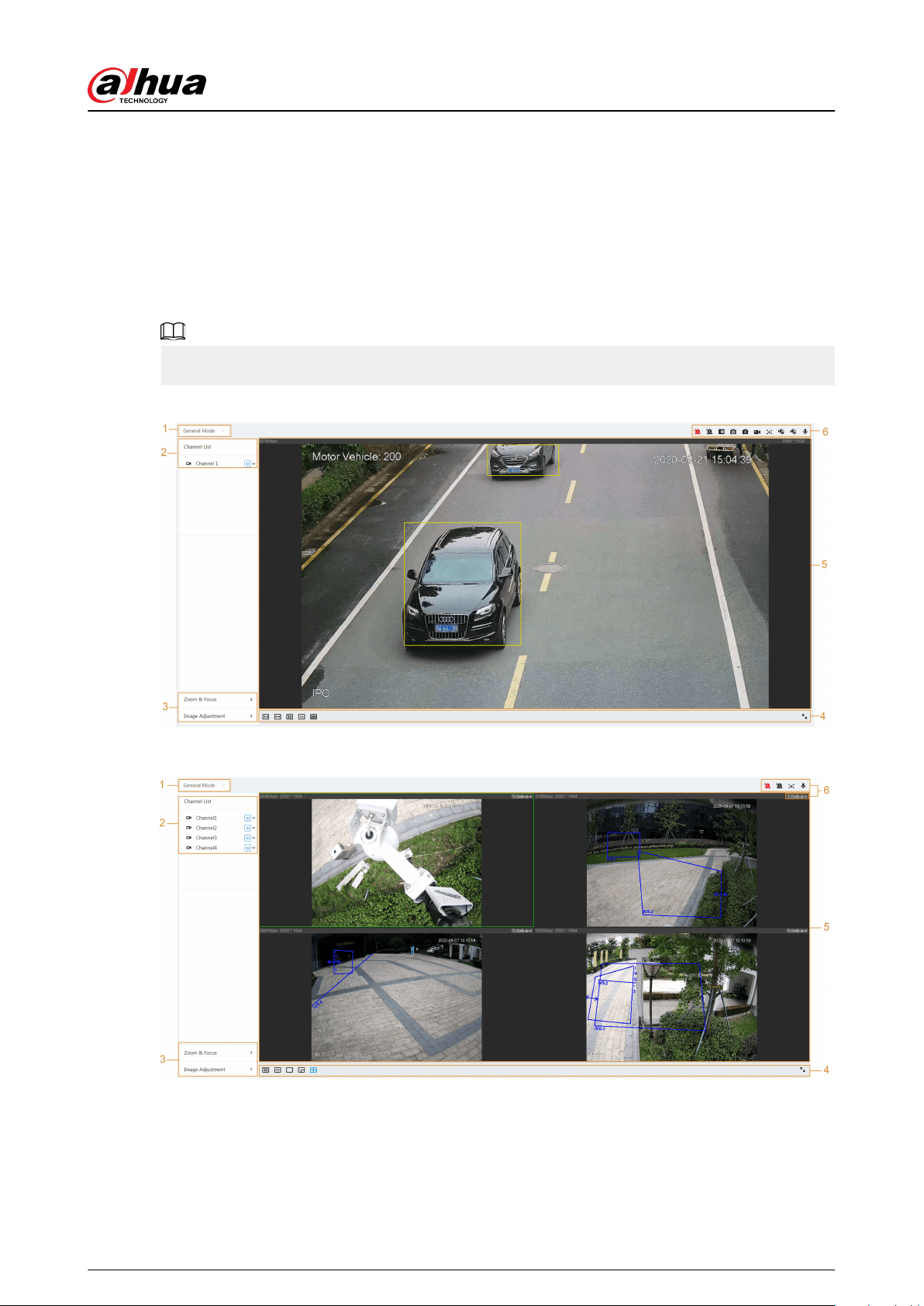
7 Live
This chapter introduces the layout of the page and function conguration.
7.1 Live Page
Log in and click the Live tab.
Pages might vary with dierent models.
Figure 7-1 Live (single channel)
Figure 7-2 Live (multiple channels)
Operation Manual
96

Figure 7-3 Live (EPTZ)
Table 7-1 Description of function bar
No. Function Description
1 Display mode
You can select the display mode from General Mode ,
Face Mode, Metadata Mode, ANPR and Face & Body
Detection. For details, see "7.5 Display Mode".
2 Channel list
Displays all channels. You can select the channel as
needed and set the stream type.
3
Image adjustment Adjustment operations in live viewing.
4
5 Live view Displays the real-time monitoring image.
6 Live view function bar Functions and operations in live viewing.
7.2 Setting Encode
Click , and then select the stream as needed.
Figure 7-4 Encode bar
●
Main Stream : It has large bit stream value and image with high resolution, but also requires
large bandwidth. This option can be used for storage and monitoring. For details, see "6.2.2.1
Encode".
Operation Manual
97
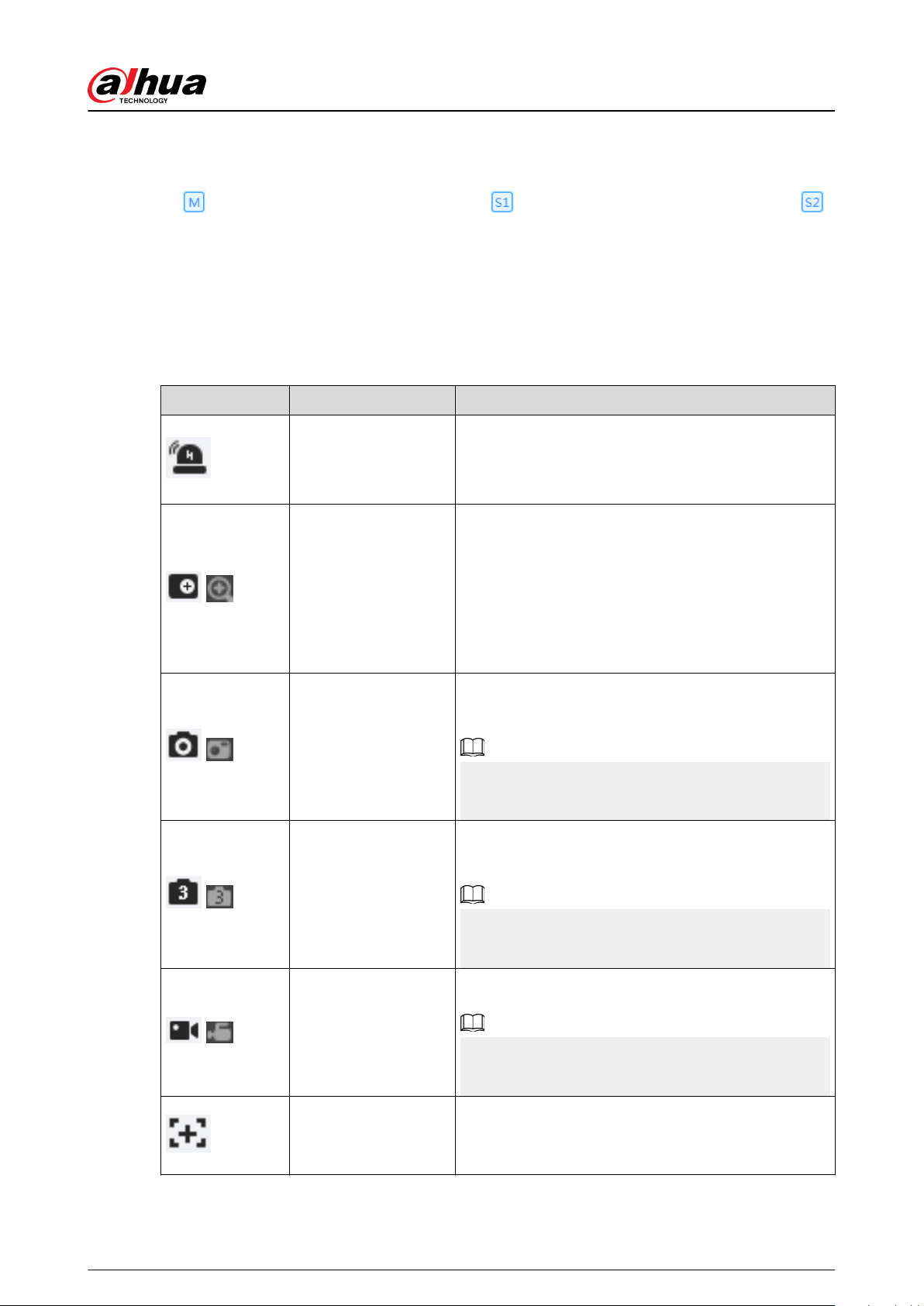
●
Sub Stream : It has small bit stream value and smooth image, and requires less bandwidth. This
option is normally used to replace main stream when bandwidth is not enough. For details, see
"6.2.2.1 Encode".
●
means the current stream is main stream; means the current stream is sub stream 1;
means the current stream is sub stream 1.
7.3 Live View Function Bar
For the live view function bar, see Table 7-2 .
Table 7-2 Description of live view function bar
Icon Function Description
Force Alarm
Display the status of alarm sound.
Click the icon to enable or disable the alarm sound
forcibly.
/
Digital Zoom
You can zoom video image through two operations.
●
Click the icon, and then select an area in the video
image to zoom in; right-click on the image to
resume the original size. In zoom in state, drag the
image to check other area.
●
Click the icon, and then scroll the mouse wheel in
the video image to zoom in or out.
/
Snapshot
Click the icon to capture one picture of the current
image, and it will be saved to the congured storage
path.
For details on viewing or conguring storage path, see
"6.1 Local".
/
Triple Snapshot
Click the icon to capture three pictures of the current
image, and they will be saved to the congured
storage path.
For details on viewing or conguring storage path, see
"6.1 Local".
/
Record
Click the icon to record video, and it will be saved to
the congured storage path.
For details on viewing or conguring storage path, see
"6.1 Local".
Aux Focus
Click the icon, the AF Peak (focus eigenvalue) and AF
Max (max focus eigenvalue) are displayed on the
video image.
Operation Manual
98

Icon Function Description
●
AF Peak : The eigenvalue of image denition, it
displays during focus.
●
AF Max : The best eigenvalue of image denition.
●
The smaller the dierence between AF peak value
and the AF max value, the better the focus is.
Aux focus closes automatically after ve minutes.
/
Audio Click the icon to enable or disable audio output.
Talk Click the icon to enable or disable the audio talk.
7.4 Window Adjustment Bar
7.4.1 Adjustment
This section introduces the adjustment of image.
Table 7-3 Description of adjustment bar
Icon Function Description
Original Size
Click the icon, and then the video displays
with original size.
Full Screen
Click the icon to enter full screen mode;
double-click or press Esc to exit.
W:H
Click the icon to resume original ratio or
change ratio.
Fluency Adjustment
Click the icon to select the uency from
Realtime , General and Fluent.
●
Realtime : Guarantees the real time of
the image. When the bandwidth is not
enough, the image might not be
smooth.
●
General : It is between Realtime and
Fluent.
●
Fluent : Guarantees the uency of the
image. There might be delay between
live view image and real-time image.
AI Rule
Click the icon, and then select Enable to
display AI rules and detection box; select
Disable to stop the display. It is enabled
by default.
Operation Manual
99

Icon Function Description
Crowd Distribution Map
Click the icon and select Enable . The
Crowd Distribution Map page is
displayed. For details, see "8.1 Setting
Crowd Distribution Map".
Adjust View
Click the icon and select Enable. When
moving the mouse printer to the center
of live page, a oating box is displayed.
Click and drag the four angles in the box
to adjust the views. This function is closed
by default.
Only Parking Space Detection Fisheye
WizMind Network Camera supports this
function.
Window Layout
When viewing multi-channel image, you
can select display layout.
7.4.2 Zoom and Focus
Click Zoom and Focus at the lower-left corner of Live page to adjust focal length to zoom in or out
video image; by adjusting focus manually, automatically or within a certain area, you can change
image clarity or correct adjusting errors.
The focus would adjust automatically after zooming in or out.
Figure 7-5 Zoom and focus
Operation Manual
100
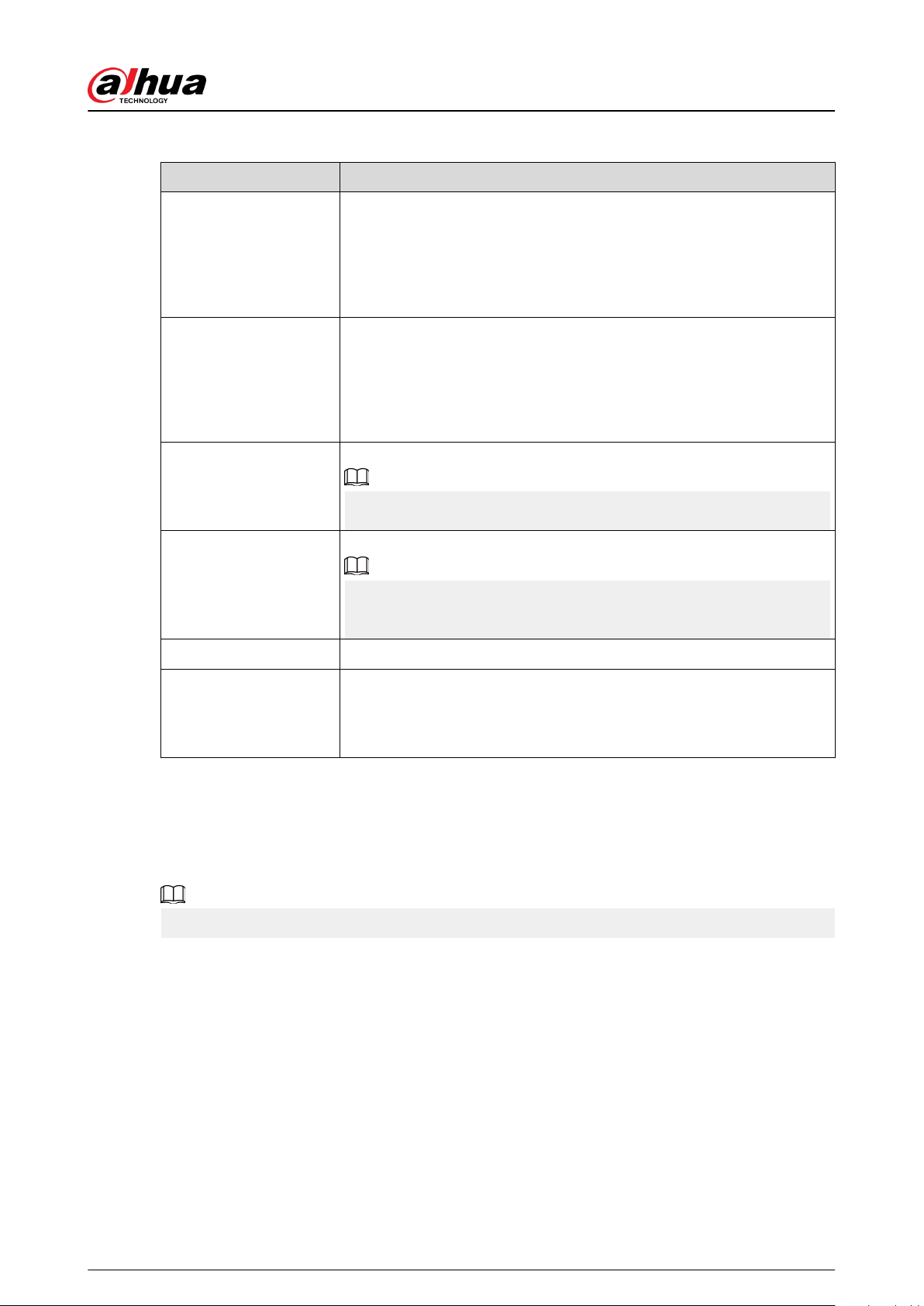
Table 7-4 Description of zoom and focus parameter
Parameter Description
Zoom Speed
Changes the focal length of the camera to zoom in or out the image.
1. Set the speed value. The Zoom Speed is the adjustment range in
one click. The larger the value is, the more the image would zoom in
or out in one click.
2. Click or hold + or – button, or drag the slider to adjust zoom.
Focus Speed
Adjusts the optical back focal length to make the image clearer.
1. Set the speed value. The Focus Speed is the adjustment range in
one click. The larger the value is, the more the adjustment in one
click.
2. Click or hold + or – button, or drag the slider to adjust focus.
Auto Focus
Adjusts image clarity automatically.
Do not make any other operation during auto focus process.
Reset
Restores focus to default value and corrects errors.
You can restore the focus if the image has poor clarity or has been
zoomed too frequently.
Refresh Get the latest zoom setting of the camera.
Area Focus
Focus on the subject of a selected area.
Click Area Focus, and then select an area in the image, the camera
performs auto focus in that area.
7.4.3 Image Adjustment
Click Image Adjustment at the lower-left corner of Live page, and click + or – button, or drag the
slider to adjust image parameters, including brightness, contrast, hue, and saturation.
The adjustment is only available on the web page, and it does not adjust the camera parameters.
Operation Manual
101
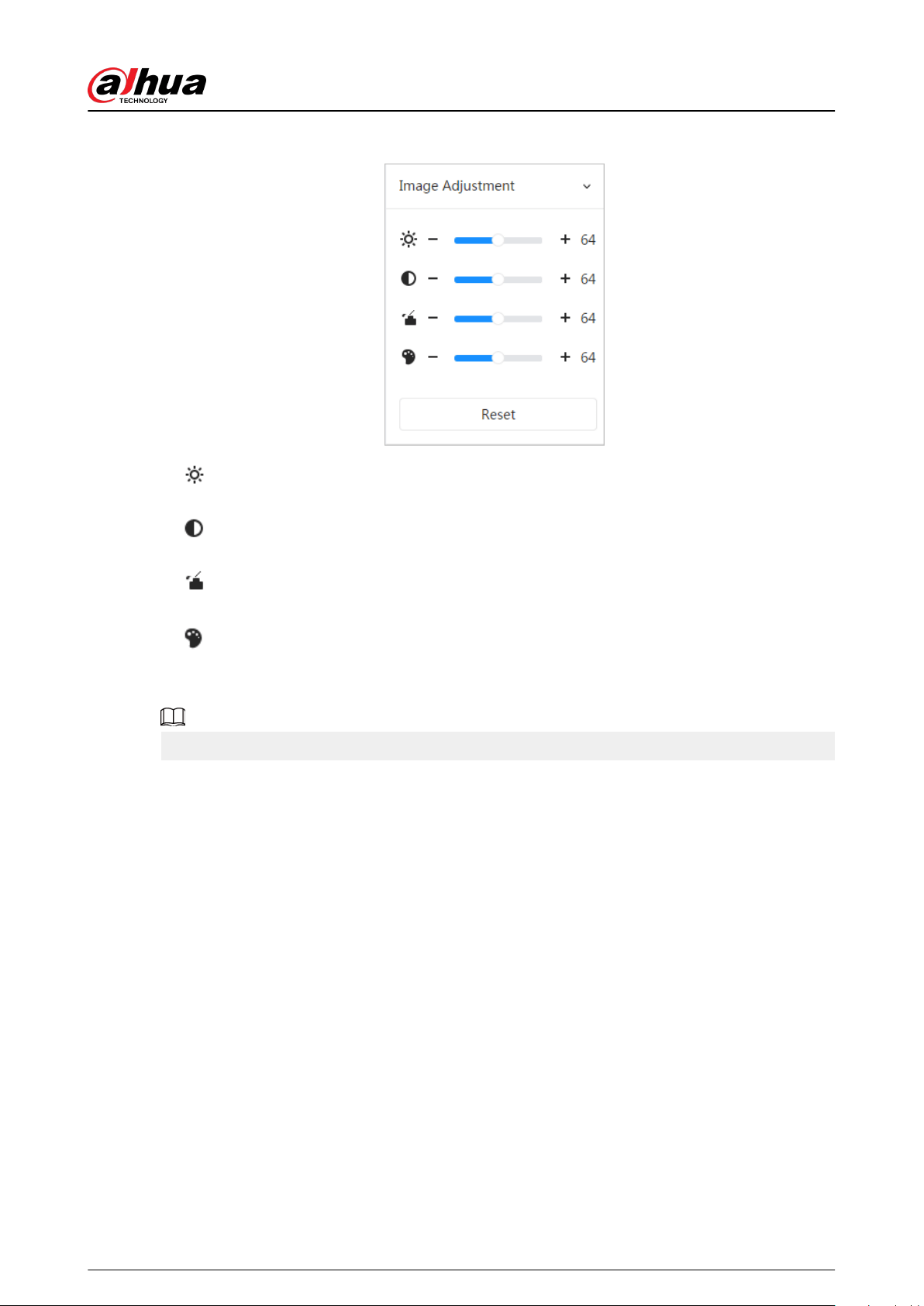
Figure 7-6 Image adjustment
●
(Brightness adjustment): Adjusts the overall image brightness, and changes the value when
the image is too bright or too dark. The bright and dark areas will have equal changes.
●
(Contrast adjustment): Changes the value when the image brightness is proper but contrast
is not enough.
●
(Saturation adjustment): Adjusts the image saturation, this value does not change image
brightness.
●
(Hue adjustment): Makes the color deeper or lighter. The default value is made by the light
sensor, and it is recommended.
Click Reset to restore focus to default value.
You can restore the zoom if the image has poor clarity or has been zoomed too frequently.
7.4.4 Fisheye
You can select the installation mode, display mode and VR mode of sheye devices as needed. For
details, see Table 7-5 .
●
Install Mode : Select the installation mode according to the actual situation.
●
Display Mode : Select the display mode of live view.
●
VR Mode : Select VR mode to display images in stereo mode.
Operation Manual
102

Figure 7-7 Fisheye-ceiling mount
Figure 7-8 Fisheye-wall mount
Figure 7-9 Fisheye-ground mount
Figure 7-10 Fisheye-VR mode
Table 7-5 Description of sheye conguration
Parameter Description
Installation mode Includes ceiling mount, wall mount, and ground mount.
Operation Manual
103
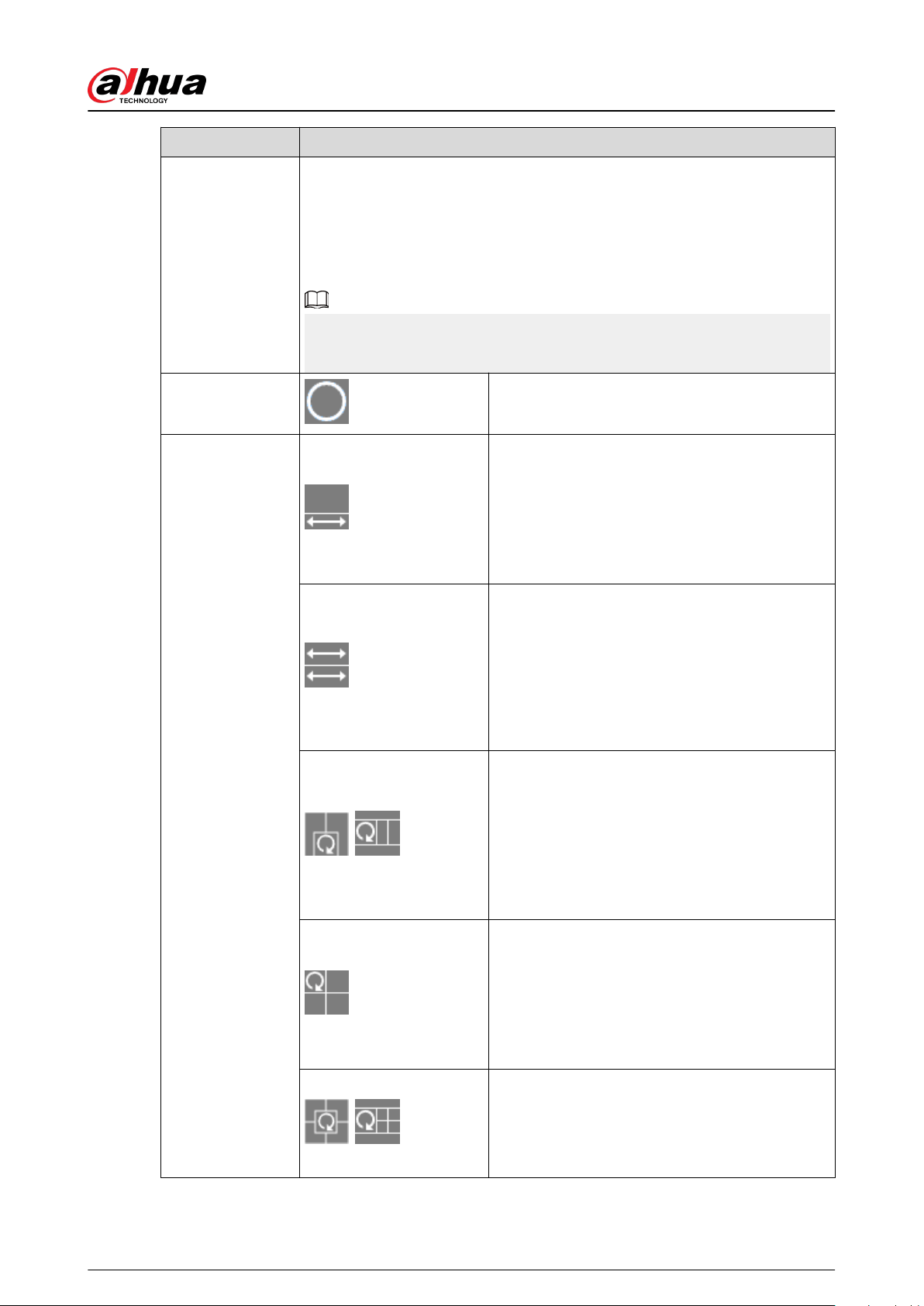
Parameter Description
Display mode
The display model of the current image. There are dierent display modes for
each installation mode.
●
Ceiling : 1P+1, 2P, 1+2, 1+3, 1+4, 1P+6, 1+8.
●
Wall : 1P, 1P+3, 1P+4, 1P+8.
●
Ground : 1P+1, 2P, 1+3, 1+4, 1P+6, 1+8.
The image will be the original size by default when switching installation
mode.
Ceiling/Wall/
Ground mount
Original image
The original image before correction.
Ceiling/Ground
mount
1P+1
360° rectangular panoramic image screen +
independent sub-screens.
●
You can zoom or drag the image in all the
screens.
●
You can move the start point (left and right)
on rectangular panoramic image screen.
2P
Two associated 180° rectangular image screens;
at any time, the two screens form a 360°
panoramic image. It is also called dual-panoramic
image.
You can move the start point (left and right) on
the two rectangular panoramic image screens,
and the two screens link each other.
, 1+2
Original image screen + two independent sub-
screens. Ground mount does not support this
display mode.
●
You can zoom or drag the image in all the
screens.
●
You can rotate the image on the original
image screen to change the start point.
1+3
Original image screen + three independent sub-
screens.
●
You can zoom or drag the image in all the
screens.
●
You can rotate the image on the original
image screen to change the start point.
, 1+4
Original image screen + four independent sub-
screens.
●
You can zoom or drag the image in all the
screens.
Operation Manual
104
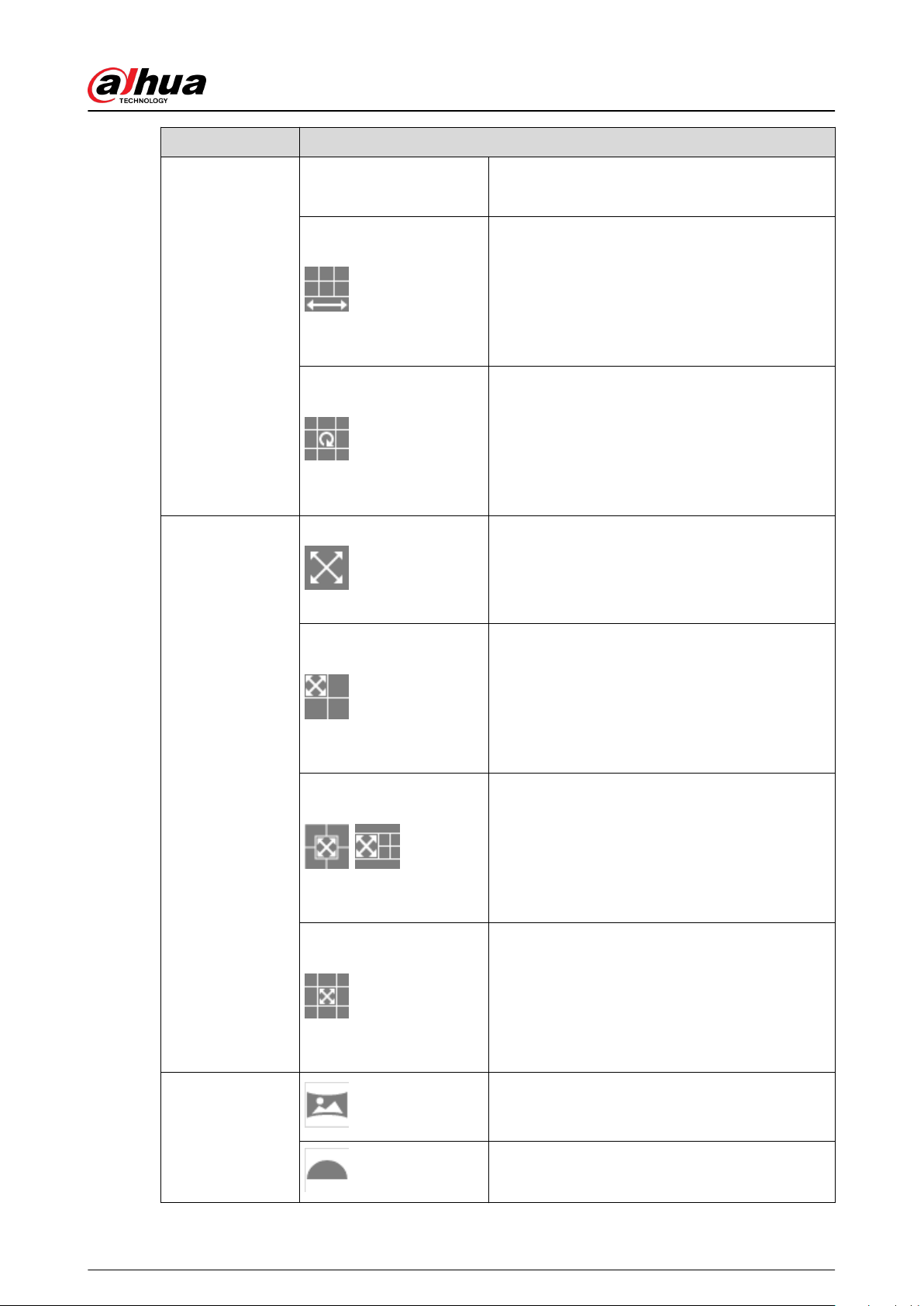
Parameter Description
●
You can rotate the image on the original
image screen to change the start point.
1P+6
360° rectangular panoramic screen + six
independent sub-screens.
●
You can zoom or drag the image in all the
screens.
●
You can move the start point (left and right)
on rectangular panoramic image screen.
1P+8
Original image screen + eight independent sub-
screens.
●
You can zoom or drag the image in all the
screens.
●
You can rotate the image on the original
image screen to change the start point.
Wall mount
1P
180° rectangular panoramic image screen (from
left to right).
You can drag the image in all the screens (up and
down) to adjust the vertical view.
1P+3
180° rectangular panoramic image screen + three
independent sub-screens.
●
You can zoom or drag the image in all the
screens.
●
You can drag the image in all the screens
(upper and lower) to adjust the vertical view.
, 1P+4
180° rectangular panoramic image screen + four
independent sub-screens.
●
You can zoom or drag the image in all the
screens.
●
You can drag the image in all the screens
(upper and lower) to adjust the vertical view.
1P+8
180° rectangular panoramic image screen + eight
independent sub-screens.
●
You can zoom or drag the image in all the
screens.
●
You can drag the image in all the screens
(upper and lower) to adjust the vertical view.
VR mode
Panorama
Drag or cross the screen 360° to unfold the
distortion panorama, and you can drag the image
in left/right direction.
Semi-circle
●
You can drag the image in upper/lower/left/
right direction. Press I to display the
Operation Manual
105

Parameter Description
panorama, and press O to resume the original
size.
●
Press S to rotate the image in anticlockwise
direction, and press E to stop the rotation.
●
Scroll the mouse wheel to zoom the image.
Cylinder
Display the distortion panorama in 360°
circularity.
●
You can drag the image in upper/lower/left/
right direction. Press I to display the
panorama, and press O to return to the
original size.
●
Press S to rotate the image in anticlockwise
direction, and press E to stop the rotation.
●
Scroll the mouse wheel to zoom the image.
Asteroid
●
You can drag the image in upper/lower/left/
right direction. Press I to display the
panorama, and press O to return to the
original size.
●
Press the left mouse-button to slide down to
display the image on the plane surface.
●
Scroll the mouse wheel to zoom the image.
7.5 Display Mode
You can select the display mode from General Mode , Face Mode, Metadata Mode, ANPR,
Parking Space Detection, PPE Detection Mode and Face & Body Detection. For general mode,
see Figure 7-2 . This section mainly introduces Face Mode, Metadata Mode, PPE Detection Mode
and Parking Space Detection.
●
Pages might vary with dierent models.
●
Make sure that you have enabled the corresponding function.
●
Select Face Mode from the display mode drop-down list.
Operation Manual
106
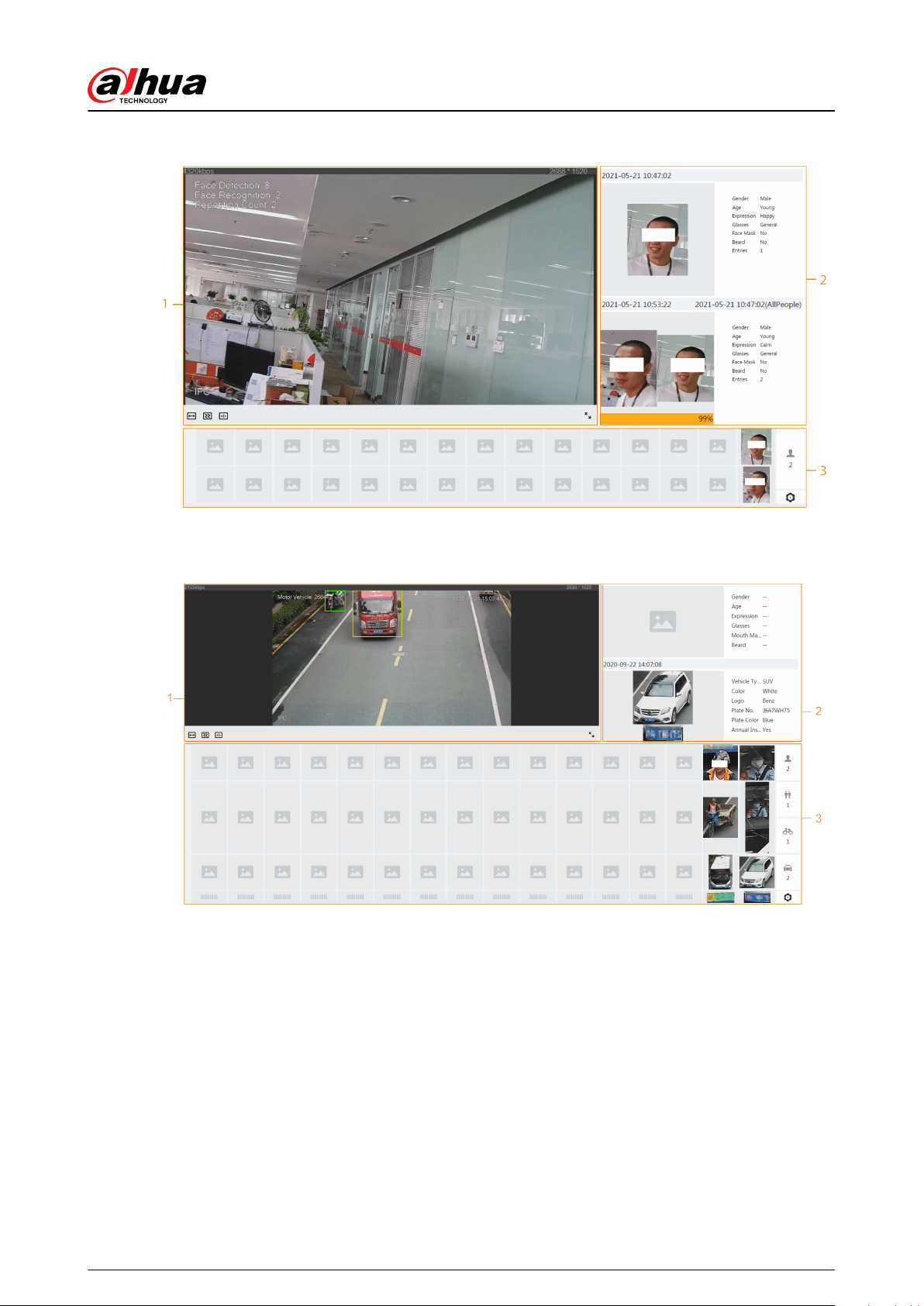
Figure 7-11 Face mode
●
Select Metadata Mode from the display mode drop-down list.
Figure 7-12 Metadata mode
●
Select PPE Detection Mode from the display mode drop-down list.
Operation Manual
107
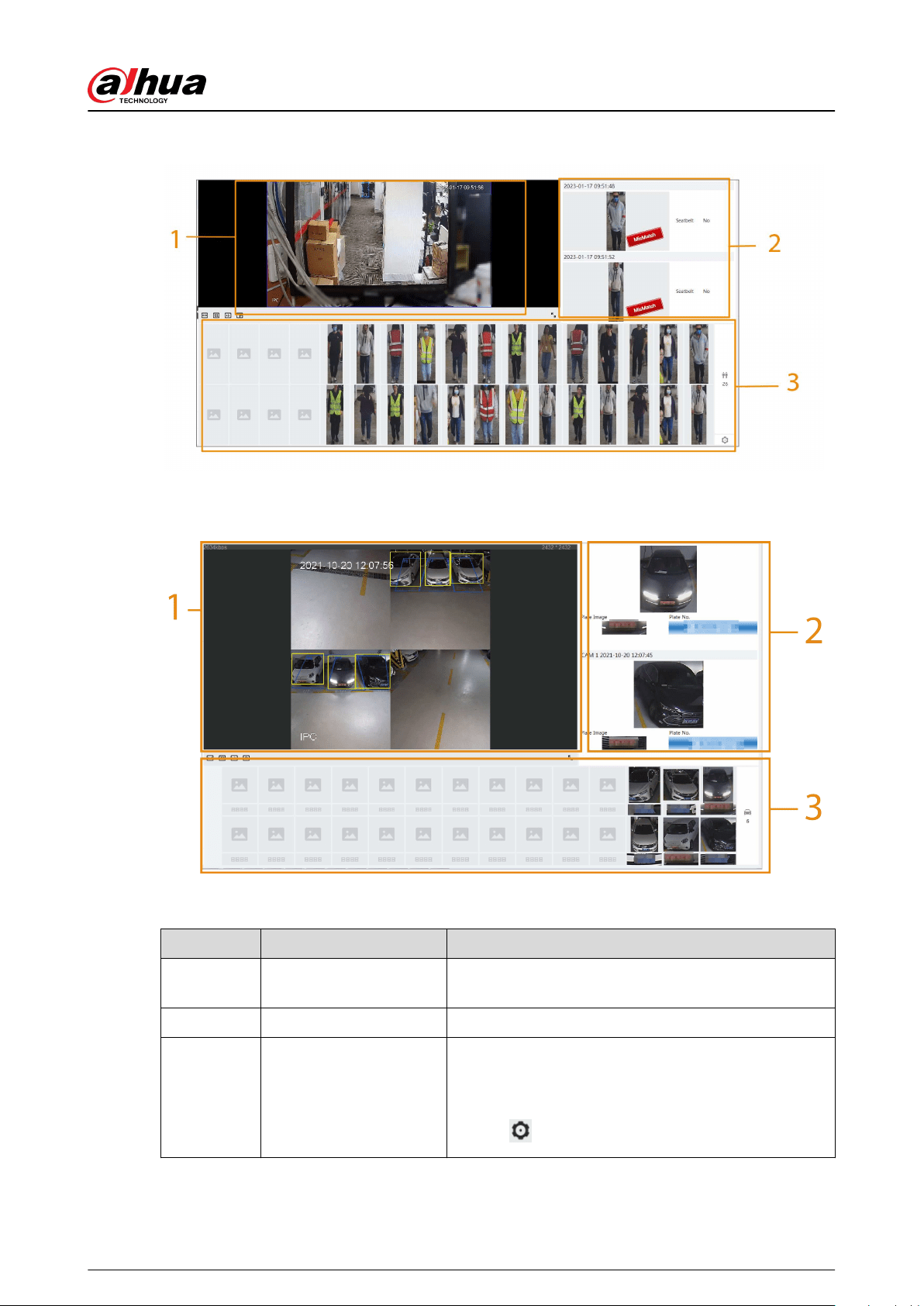
Figure 7-13 PPE Detection Mode
●
Select Parking Space Detection from the display mode drop-down list.
Figure 7-14 Parking space detection
Table 7-6 Description of layout (face mode, metadata mode and PPE detection mode)
No. Function Description
1 Live view
Displays the real-time monitoring image. For details,
see "7.4.1 Adjustment".
2 Details Displays the captured image and details.
3 Captured image
Displays the captured images.
●
Click a snapshot in the area, and the details of the
snapshot are displayed.
●
Click
to set the attributes displayed.
Operation Manual
108
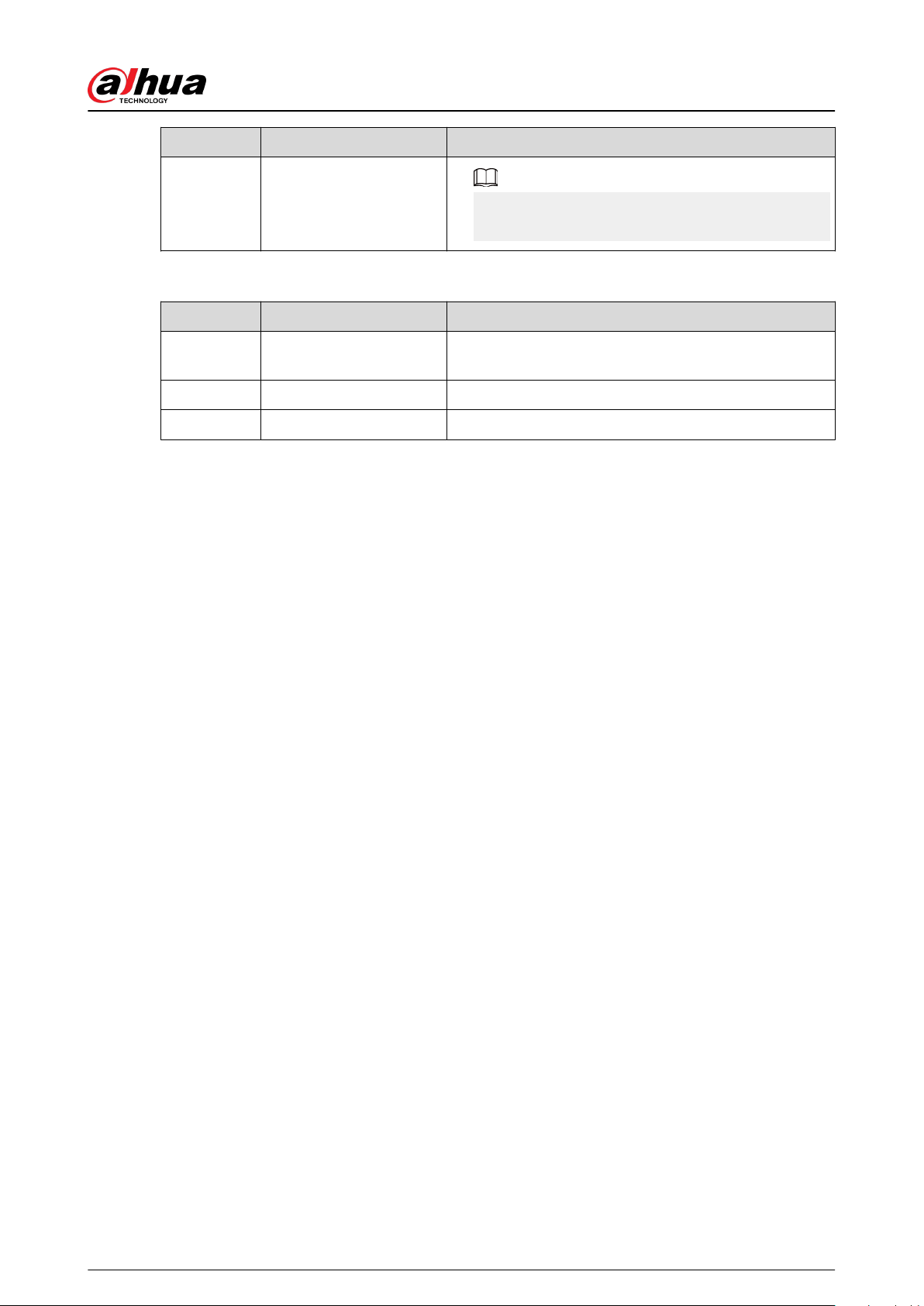
No. Function Description
This attribute is not available for parking space
mode.
Table 7-7 Description of layout (parking space mode)
No. Function Description
1 Live view
Displays the real-time monitoring image. For details,
see "7.4.1 Adjustment".
2 Captured image Displays the latest two events captured.
3 Details Displays the captured images and details.
Operation Manual
109

8 AI
8.1 Setting Crowd Distribution Map
You can view crowd distribution on the map in real time for timely arming, to prevent stampede
and other accidents.
8.1.1 Global Conguration
Set the calibration parameters of panoramic cameras.
Calibration Purpose
Determine corresponding relationship between 2D image captured by the camera and 3D actual
object according to one horizontal ruler and three vertical rulers calibrated by the user and the
corresponding actual distance.
Notes
When drawing calibration ruler, keep the ruler length consistent with the actual length of the
object.
Procedure
1. Select AI > Smart Plan.
2. Click
next to Crowd Distribution Map to enable crowd distribution map of the
corresponding channel, and then click Next.
3. Click the Global Cong tab.
4. Click the rule icon to draw one horizontal ruler and three vertical rulers on the image.
●
is the vertical ruler icon, and is the vertical horizontal icon.
●
Select the added rulers on the image, and click
to delete them.
Operation Manual
110
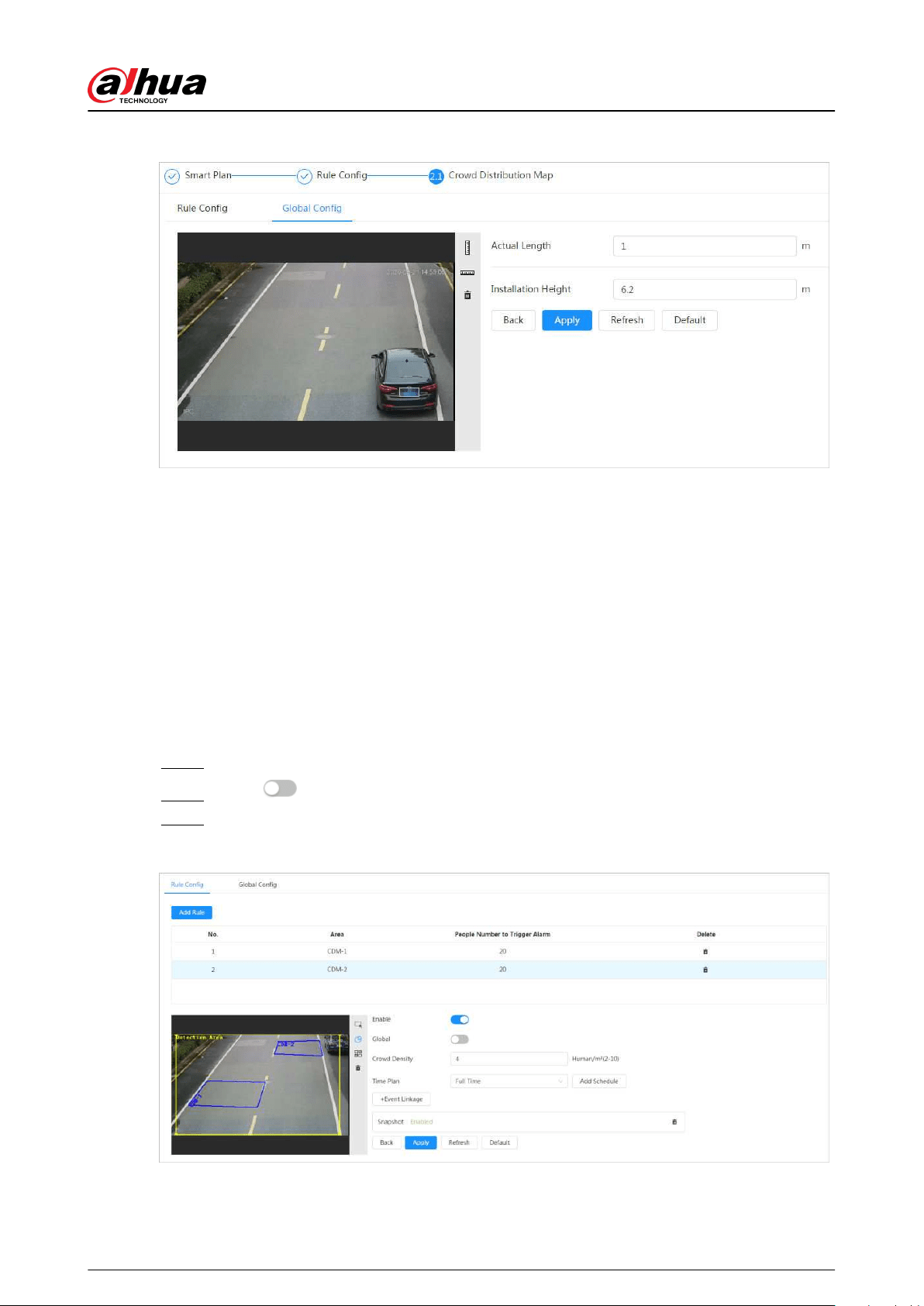
Figure 8-1 Global conguration of crowd distribution map
5. Select a calibration type and enter the actual length, and then click Add Rulers.
6. Click Apply.
8.1.2 Rule Conguration
When the number of people or the crowd density in the detection area exceeds the congured
threshold, the system performs alarm linkages.
Prerequisites
●
Select AI > Smart Plan, and enable Crowd Distribution Map.
●
You have congured the parameters on the Global Cong page.
Procedure
Step 1 Select AI > Smart Plan
Step 2 Click next to Crowd Distribution Map , and then click Next.
Step 3 Click the Rule Cong tab.
Figure 8-2 Rule conguration
Operation Manual
111

Step 4 Click next to Enable, and then the crowd map function is enabled, and the
detection area box is displayed on the image.
Click
, and you can drag any corner of the box to adjust the size of the area, and press
the left mouse button and move the box to adjust the position.
Step 5 Draw multiple people counting areas in Detection Area as needed.
1. Click Add Rule to add statistical areas.
2. Set the name of Area and People Number to Trigger Alarm.
When the number of the people in the area exceeds the congured threshold, the
alarm will be triggered, and the system will perform the linkage actions. The people
number to trigger alarm is 20 by default.
3. Click
at the right side of the image, draw people counting areas in the detection
area, and then right-click to nish the drawing.
4. Repeat the above steps to add more people counting areas.
●
Click
, and then press and hold the left mouse button to draw a rectangle, and
then pixel size is displayed.
●
Click
to delete the drawn detection or people counting areas.
Step 6 Congure parameters.
Table 8-1 Description of crowd map parameters
Parameter Description
Global
Click
next to Global and set the crowd density threshold. The
system detects crowd distribution in the global area. When the crowd
density exceeds the congured threshold, the system performs alarm
linkages.
Crowd Density
Step 7 Set arming periods and alarm linkage action. For details, see "6.5.1.2 Alarm Linkage".
Click + Event Linkage to set the linkage action.
Step 8 Click Apply.
To view alarm information on the alarm subscription tab, you need to subscribe relevant
alarm event. For details, see "6.5.1.3.2 Subscribing Alarm Information".
Results
Click
on the Live page to view the crowd distribution map.
Figure 8-3 Crowd map (1)
Double-click the rendering area at the lower-right corner in the image to view crowd distribution in
the area.
Operation Manual
112
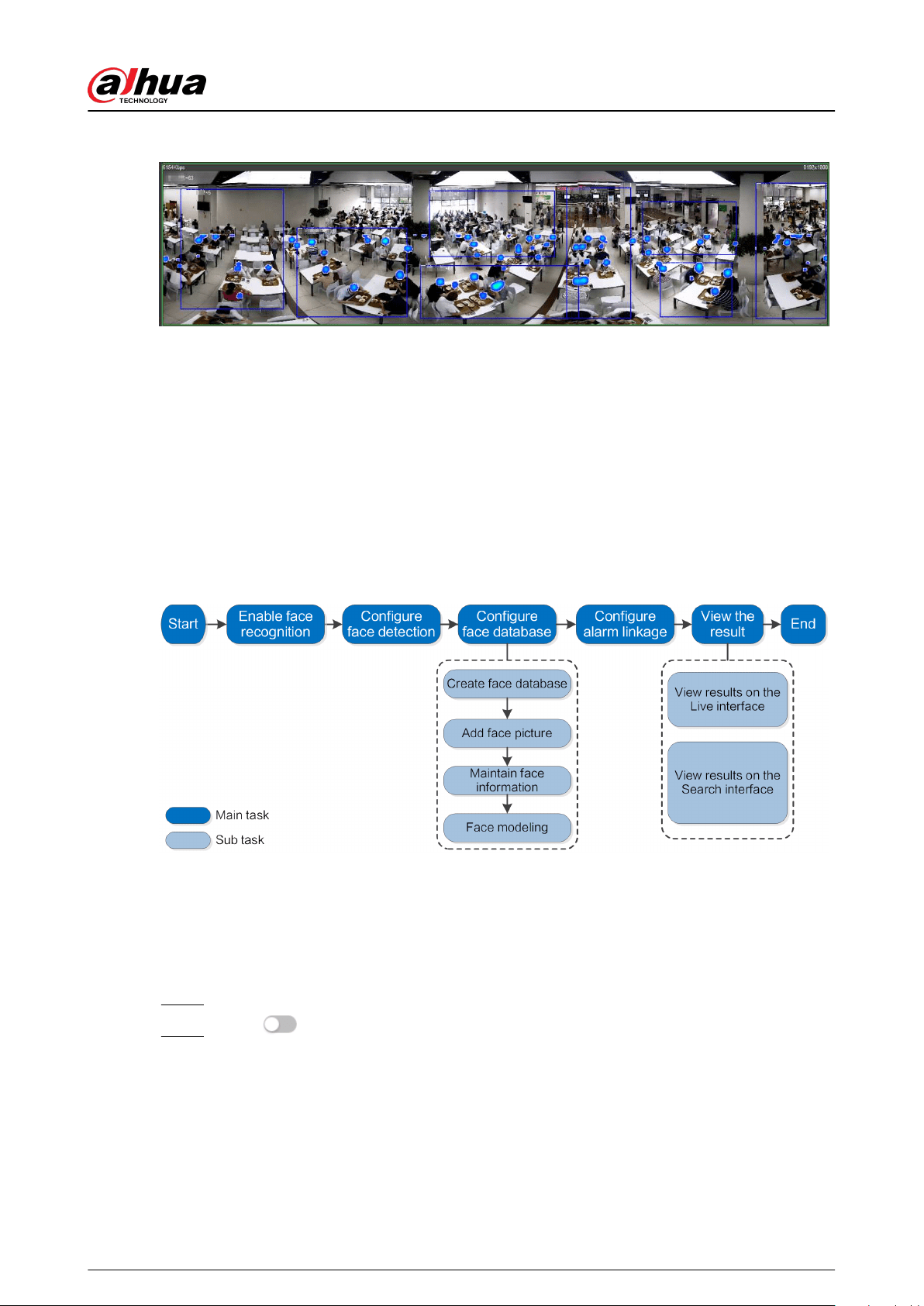
Figure 8-4 Crowd map (2)
8.2 Setting Face Recognition
When a face is detected or recognized in the detection area, the system performs alarm linkage and
supports searching face detection and recognition results.
●
Face Detection: When a face is detected in the area, the system performs alarm linkage, such as
recording and sending emails.
●
Face Recognition: When a face is detected in the area, the system compares the captured face
image with the information in the face database, and links alarm according to the comparison
result.
Figure 8-5 Face recognition owchart
8.2.1 Enabling Face Recognition
When a face is recognized in the detection area, the system performs alarm linkage.
Procedure
Step 1 Select AI > Smart Plan.
Step 2 Click next to Face Recognition to enable face recognition of the corresponding
channel, and then click Next.
Operation Manual
113
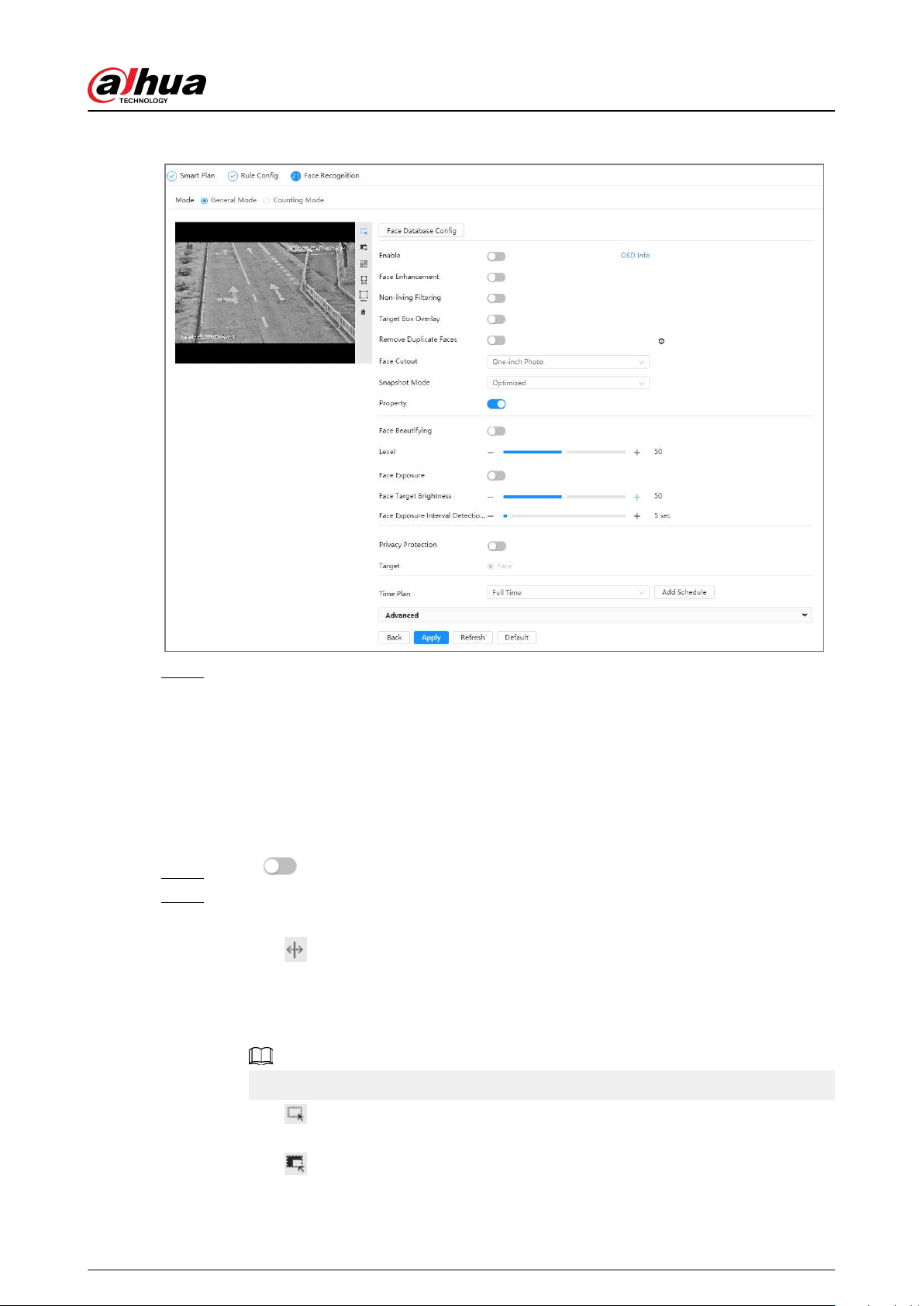
Figure 8-6 Face recognition
Step 3 Select the detection mode.
●
General Mode : When a face is detected in the detection area, the system performs
alarm linkage, such as recording and sending emails.
●
Counting Mode : You can do precise face counting with two default function
databases (all people database and exclude people database). The faces detected by
the camera will be uploaded to the all people database automatically; the face in the
exclude people database will not be counted. Add faces that you do not want to count
(such as repeating faces and loitering faces) into the exclude people database so that
the system will not count the faces after detecting them.
Step 4 Click next to Enable to enable the face detection function.
Step 5 (Optional) Click other icons at the right side of the image to draw detection area,
exclusion area, and lter targets in the image.
●
Click
to draw rule line in the image.
When targets enter or leave the detection area along the direction line, their face
images will be uploaded to the all people database, and then the system will
determine whether to count it after comparing with that in the exclude database.
This icon is only available in counting mode.
●
Click
to draw a face detection area in the image, and right-click to nish the
drawing.
●
Click
to draw an exclusion area for face detection in the image, and right-click to
nish the drawing.
Operation Manual
114

●
Click
to draw the minimum size of the target, and click to draw the maximum
size of the target. Only when the target size is between the maximum size and the
minimum size, can the alarm be triggered.
●
Click
, and then press and hold the left mouse button to draw a rectangle, the pixel
size is displayed.
●
Click
to delete the detection line.
Step 6 Set parameters.
Table 8-2 Description of face detection parameters
Parameter Description
OSD Info
Click OSD Info , and the Overlay page is displayed, and then enable the
face statistics function. The number of detected faces is displayed on the
Live page. For details, see "6.2.2.2.12 Conguring Face Statistics".
Face Enhancement
Click
to enable face enhancement, and it can preferably guarantee
clear face with low stream.
Non-living Filtering Filter non-living faces in the image, such as a face picture.
Target Box Overlay
Click
to enable the function, and then you can add a bounding box
to the face in the captured picture to highlight the face.
The captured face picture is saved in SD card or the congured storage
path. For the storage path, see "6.1 Local".
Remove Duplicate
Faces
During the congured period, the duplicate faces are displayed only once
to avoid repeated counting.
Click
to congure the parameter, and then click Apply.
●
Time : During the congured time, the function is enabled.
●
Precision : The larger the precision value, the higher the accuracy.
Face Cutout
Set a range for the captured face image, including face, one-inch picture,
and custom.
When selecting Custom , click
, congure the parameters on the
prompt page, and then click Apply.
●
Customized width: Set snapshot width; and then enter the times of
the original face width. It ranges from 1–5.
●
Customized face height: Set face height in snapshot; and then enter
the times of the original face height. It ranges from 1–2.
●
Customized body height: Set body height in snapshot; and then enter
the times of the original body height. It ranges from 0–4.
When the value is 0, it cuts out the face image only.
Snapshot Mode
●
General mode:
Optimized Snapshot : Capture the clearest picture within the
congured time after the camera detects face.
Operation Manual
115

Parameter Description
Recognition Priority : Repeatedly compare the captured face to
the faces in the armed face database, and capture the most similar
face image and send the event. We recommend you use this mode
in access control scene.
Click Advanced to set the optimized time.
●
Counting mode: The snapshot mode is tripwire by default, and you
cannot change it.
Property
Click
next to Property to enable the properties display.
Face Beautifying
Enable Face Beautifying to make face details clearer at night. After
enabling this function, you can adjust the level. The higher the level, the
higher the beautifying level.
Face Exposure
Enable Face Exposure. When a face is detected, the camera can enhance
brightness of the face to make the face image clear.
Face Target Brightness Set the face target brightness. It is 50 by default.
Face Exposure
Detection Interval
Set the face exposure detection interval to prevent image ickering
caused by constant adjustment of face exposure. It is 5 seconds by
default.
Privacy Protection
Enable this function, and the faces will be blurred by mosaic when they
are detected.
Advanced
●
Snapshot Angle Filter : Set snapshot angle to be ltered during the
face detection.
●
Snapshot Sensitivity : Set snapshot sensitivity during the face
detection. It is easier to detect face with higher sensitivity.
●
Optimized Time : Set a period to capture the clearest picture after the
camera detects face.
Step 7 Set arming periods and alarm linkage action. For details, see "6.5.1.2 Alarm Linkage".
Step 8 Click Apply.
To view alarm information on the alarm subscription tab, you need to subscribe relevant
alarm event. For details, see "6.5.1.3.2 Subscribing Alarm Information".
8.2.2 Setting Face Database
By setting face database, the face database information can be used to compare with the face
detected.
Face database conguration includes creating face database, adding face picture, and face
modeling.
8.2.2.1 Creating Face Database
Face database includes face picture, face data and other information. It also provides comparison
data for the captured face pictures.
Operation Manual
116

Procedure
Step 1 Select AI > Smart Plan.
Step 2 Click next to Face Recognition to enable face recognition of the corresponding
channel, and then click Next.
Step 3 Select the detection mode.
Step 4 Click Face Database Cong on the Face Recognition page.
Figure 8-7 Face database conguration
Step 5 Click Add Face Database.
Step 6 Set the name of the face database.
Figure 8-8 Add face database
Step 7 Click OK.
●
General mode: You can add 5 databases at most as needed.
Operation Manual
117
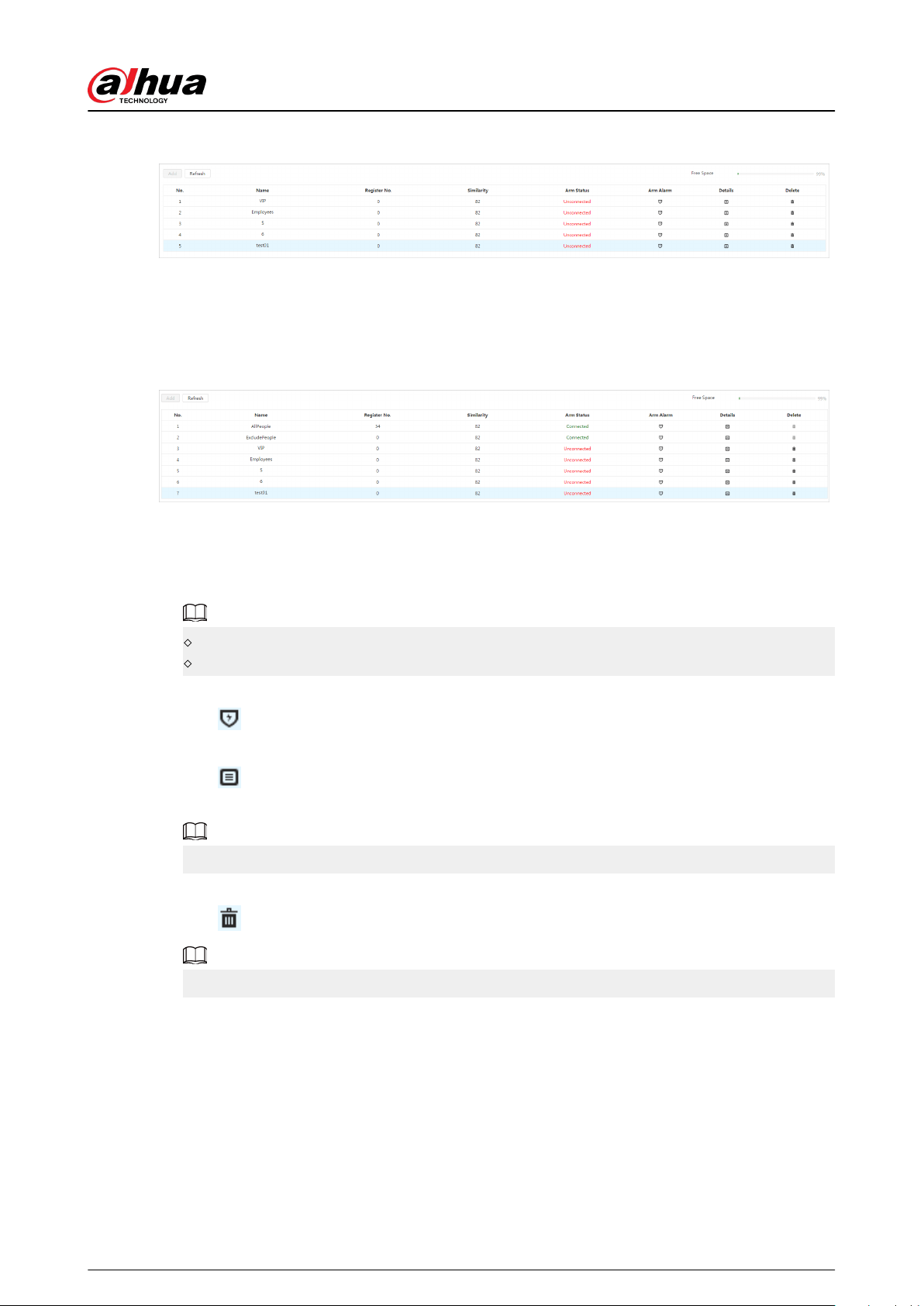
Figure 8-9 Face database successfully added (general mode)
●
Counting mode: Except two default function databases (all people database and
exclude people database), you can add 5 databases at most. Add faces that you do not
want to count (such as repeating faces and loitering faces) into the exclude people
database so that the system will not count the faces face after detecting them.
Figure 8-10 Face database successfully added (counting mode)
Related Operations
●
Edit the name of the face database
Click the text box under Name to edit the name of the face database.
You cannot change the name of all people database and exclude database.
Do not name the newly added database as AllPeople or ExcludePeople.
●
Arm alarm
Click
to congure the parameters of arm alarm. For details, see "8.2.3 Setting Arm Alarm".
●
Manage face database
Click
to manage the face database. You can search face, register, batch register, modeling all,
modeling, and delete faces.
The all people database only supports modeling all, modeling, and delete faces.
●
Delete face database
Click
to delete the face database.
The all people database and exclude database cannot be deleted.
8.2.2.2 Adding Face Picture
Add face picture to the created face database. Single adding and batch importing are supported.
Requirements on face pictures.
●
A single face picture size is 50K–150K in JPEG format. The resolution is less than 1080p.
●
Face size is 30%–60% of the whole picture. Pixel should be no less than 100 pixels between the
ears.
Operation Manual
118
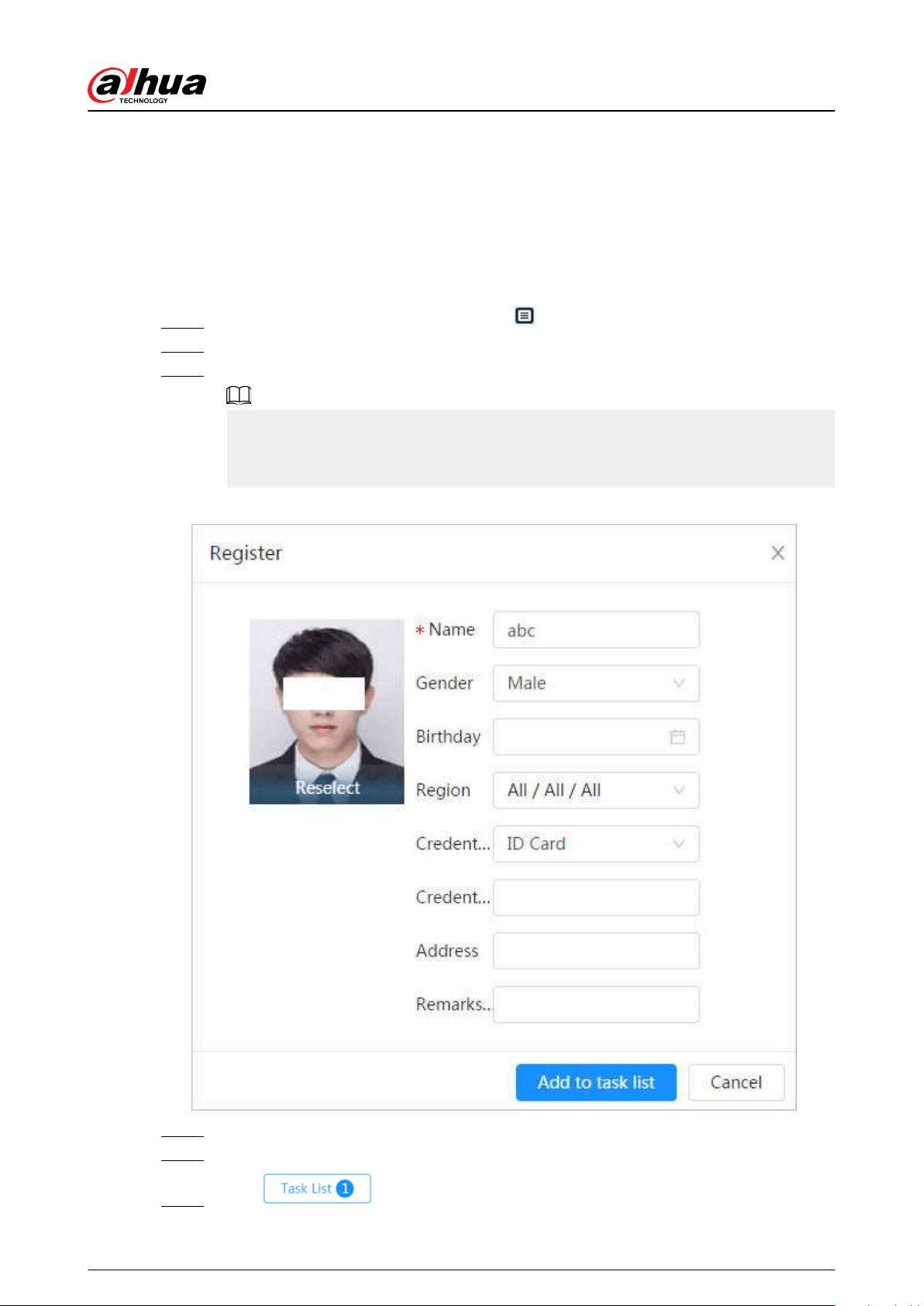
●
Taken in full-face view directly facing the camera without makeup, beautication, glasses, and
fringe. Eyebrow, mouth and other face features must be visible.
8.2.2.2.1 Single Adding
Add face pictures one by one. Select this way when you need to add a small number of face
pictures.
Procedure
Step 1 On the Face Database Cong page, click next to the face database to be congured.
Step 2 Click Register.
Step 3 Click Upload , select a face picture to be uploaded, and then click Open.
You can manually select the area for a face. After uploading picture, select a face and click
Conrm Screen . When there are multiple faces in a photo, select the target face and click
Conrm Screen to save face picture.
Figure 8-11 Register
Step 4 Enter the information about face picture according to the actual situation.
Step 5 Click Add to task list.
Step 6 Click , and then click Operation.
Operation Manual
119

●
If the operation is successful, the system prompts that stored successfully, modeled
successfully.
●
If adding user fails, the error code is displayed on the page. For details, see Table 8-3 .
For face modeling operation, see "8.2.2.4 Face Modeling".
Table 8-3 Description of error code
Parameter Error Description
0x1134000C
Picture importing error
The picture is too large, and the upper limit
is 150K.
0x1134000E
The quality of the added pictures is to the
upper limit.
0x11340019
The space of the face database exceeds the
upper limit.
1
Picture modeling error
The picture format is not correct. Import the
picture in JPG format.
2
No face in the picture or the face is not clear.
Change the picture.
3
Multiple faces in the picture. Change the
picture.
4
Failed to decode the picture. Change the
picture.
5
The picture is not suitable to be imported to
the face database. Change the picture.
6
The database error. Restart the camera and
model faces again.
7
Fails to get the picture. Import the picture
again.
8
System error. Restart the camera and model
faces again.
8.2.2.2.2 Batch Importing
Import face pictures in batches. Select this way when you need to add a large number of face
pictures.
Prerequisites
Before importing pictures in batches, name face pictures in a format of "Name#SGender#BDate of
Birth#NRegion#TCredentials Type#MID No.jpg" (for example, "John#S1#B1990-01-01#T1#M0000).
For naming rules, see Table 8-4 .
●
The max. size of a single face picture is 150K, and the resolution is less than 1080p.
●
When naming pictures, name is required, and others are optional.
Table 8-4 Description of naming rules for batch import parameters
Parameter Description
Name Enter a name.
Operation Manual
120
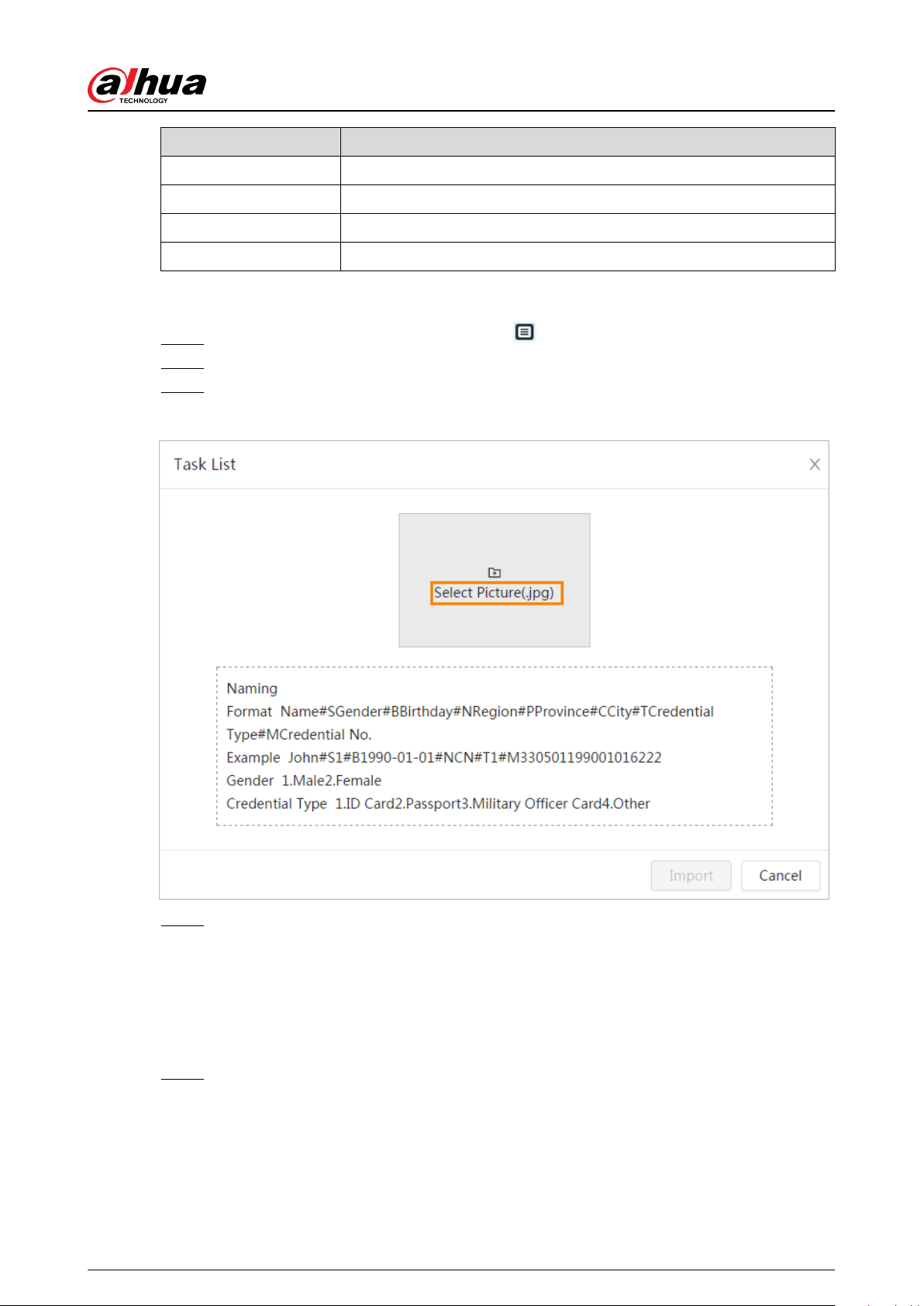
Parameter Description
Gender "1" is male and "2" female.
Date of Birth Format: yyyy-mm-dd, such as 2020-10-23.
Credentials Type "1" is ID card and "2" passport.
ID number Enter ID No.
Procedure
Step 1 On the Face Database Cong page, click next to the face database to be congured.
Step 2 Click Batch Register.
Step 3 Click Select Picture, and select storage path of the le.
Figure 8-12 Task list
Step 4 Click Import to import the face pictures.
After the importing is completed, the result will be displayed.
●
If the picture is imported successfully, click Next to do modeling operation.
●
If the picture importing failed, click Query to view the details of the pictures and error
code. For details, see Table 8-3 .
Click Export to export the error details.
Step 5 Click Next to do modeling operation.
The modeling result is displayed. If modeling failed, click Query and the failure details
will be displayed in the list. Point to the modeling status to view the details. Then you can
change picture according to the failure reason. For modeling details, see "8.2.2.4 Face
Modeling".
Operation Manual
121
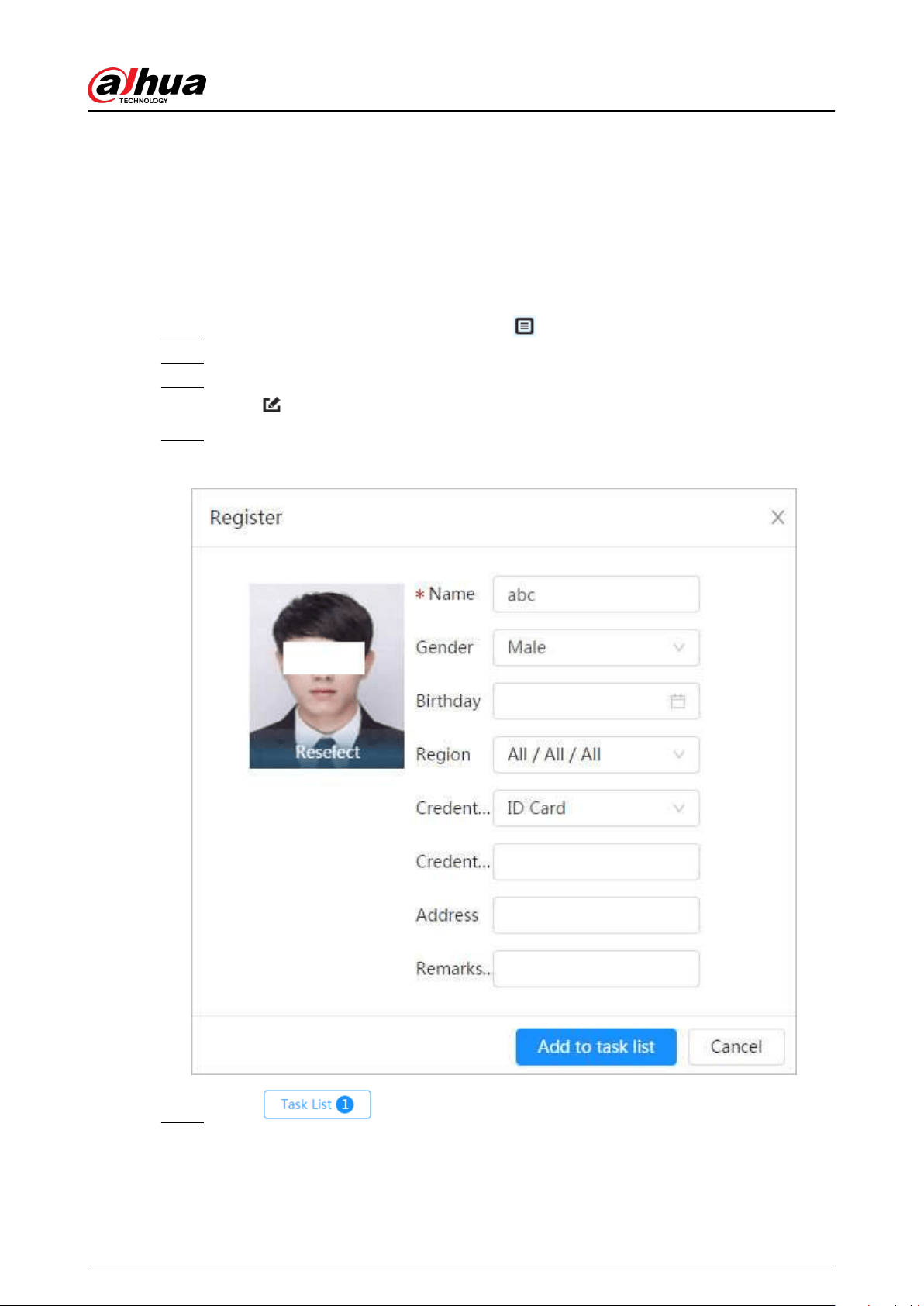
8.2.2.3 Managing Face Picture
Add face pictures to face database, and then manage and maintain face pictures to ensure correct
information.
8.2.2.3.1 Editing Face Information
Procedure
Step 1 On the Face Database Cong page, click next to the face database to be congured.
Step 2 Click Query , set the criteria as needed, and then click Search.
Step 3 Select the row where the face picture or the personnel information is located, and then
click
.
Step 4 Edit face information according to the actual need. Click Add to task list.
Figure 8-13 Face information modication
Step 5 Click , and then click Operation.
Operation Manual
122
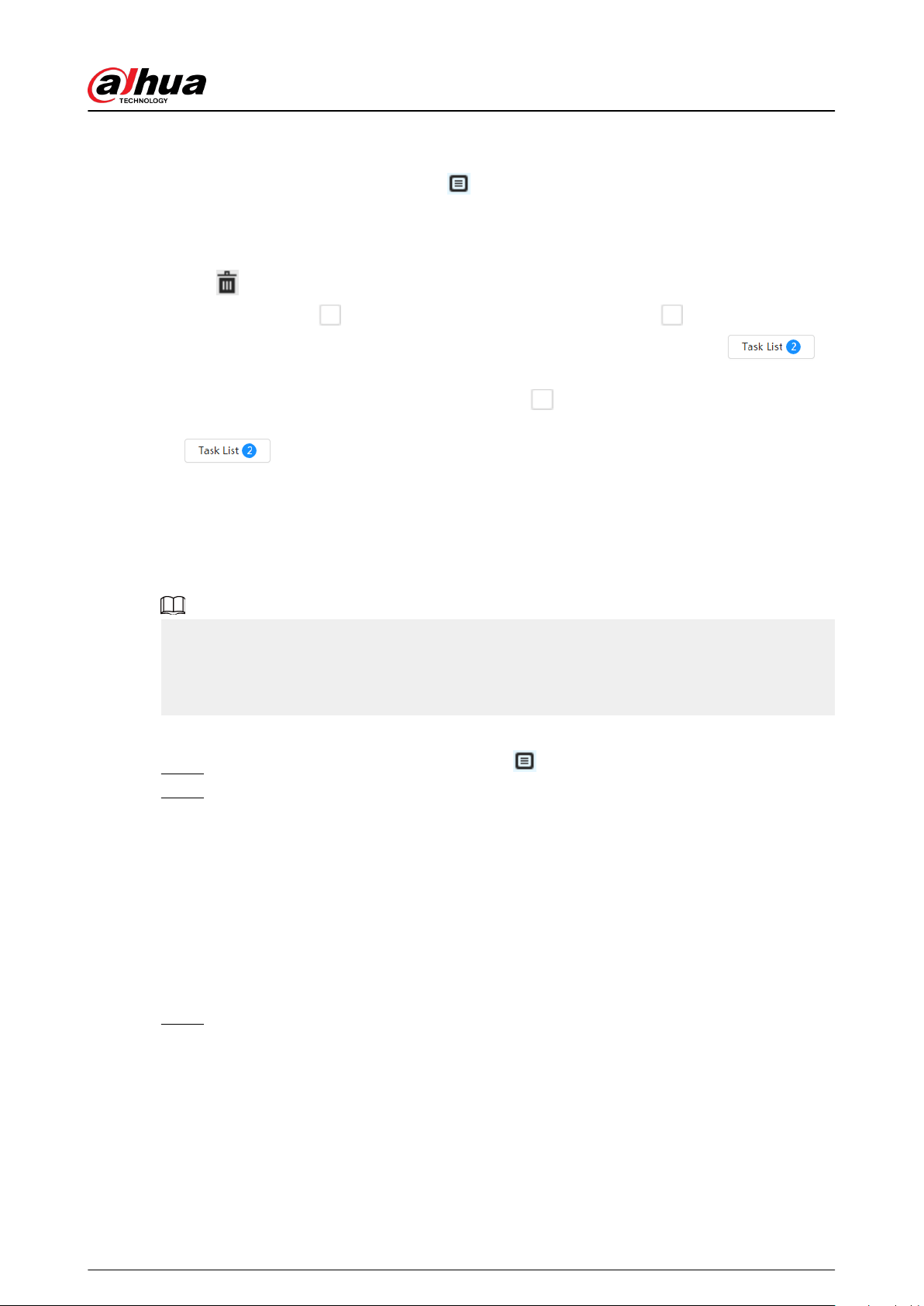
8.2.2.3.2 Deleting Face Picture
On the Face Database Cong page, click
next to the face database to be congured. Click
Query, set the search criteria as needed, click Search, select the face information that needs to be
deleted and delete it.
●
Single delete: Select the row where the face picture or the personnel information is located, and
click
to delete the face picture.
●
Batch delete: Select
at the upper-right corner of the face picture or of the row where the
personnel information is located. Select the information, click Delete , then click
,
and then click Operation to delete the selected face pictures.
●
Delete all: When viewing face pictures in a list, click
of the row where the serial number is
located; when viewing by thumbnail, select All to select all face pictures. Click Delete, then click
, and then click Operation to delete all face pictures.
8.2.2.4 Face Modeling
Face modeling extracts face picture information and imports the information to a database to
establish relevant face feature models. Through this function, the face recognition and other
intelligent detections can be realized.
●
The more the selected face pictures are, the longer time the face modeling takes. Please wait
patiently.
●
During modeling, some intelligent detection functions (such as face recognition) are not
available temporarily, and will be available after modeling.
Procedure
Step 1 On the Face Database Cong page, click next to the face database to be congured.
Step 2 Start modeling.
●
Selective modeling.
If there are many face pictures in the face database, you can set search criteria to select
the pictures that need to be modeled.
a. Set the search criteria, and click Search.
b. Select the face pictures to be modeled.
c. Click Modeling.
●
All modeling.
Click Modeling All to complete modeling of all face pictures in the face database.
Step 3 View the modeling result.
When the modeling failed, Query will be displayed in the result page. Click Query to
view the details.
Operation Manual
123
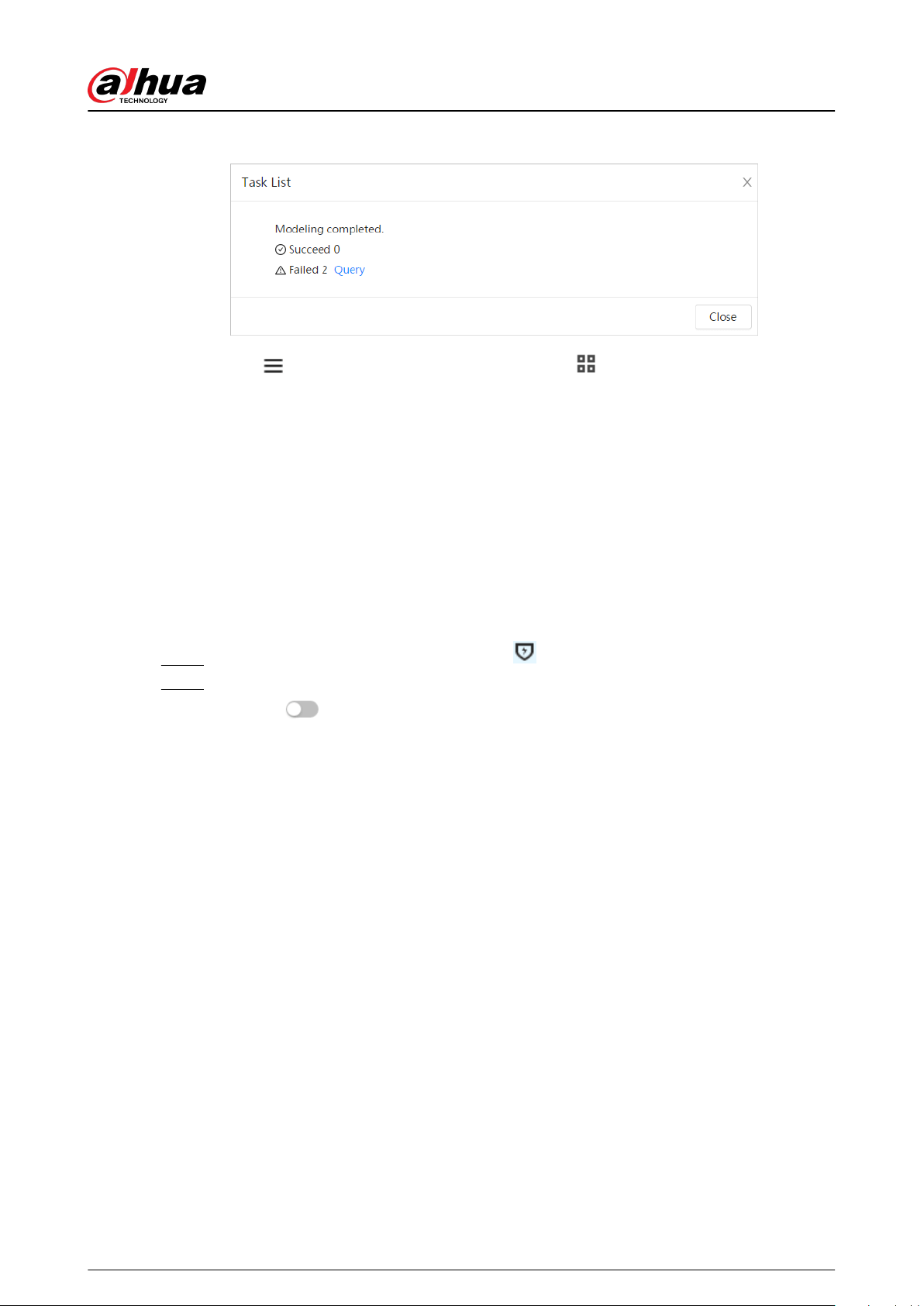
Figure 8-14 Failed modeling
Click to view the face picture in list format; click to view the face picture in
thumbnail format.
●
When the modeling status is Valid in the list or is displayed at the lower-left corner of
the thumbnail, it means the modeling succeeded.
●
When the modeling status is Invalid in the list or is displayed at the lower-left corner
of the thumbnail, it means the modeling failed. Point to the modeling status in the list
to view the details of the failure. Change the pictures according to the details.
8.2.3 Setting Arm Alarm
When face recognition succeeded or failed, the device links alarm out.
Procedure
Step 1 On the Face Database Cong page, click next to the face database to be congured.
Step 2 Arm face database.
1. Click
next to Arm to enable the face database arming.
The snapshot will be compared to the pictures in the armed face database.
2. Set the similarity.
The detected face matches the face database only when the similarity between the
detected face and the face feature in face database reaches the congured similarity
threshold. After successful match, the comparison result is displayed on the Live
page.
Operation Manual
124

Figure 8-15 Arm alarm
Operation Manual
125

Figure 8-16 Arm alarm (all people)
Figure 8-17 Arm alarm (exclude people)
Step 3 Set arming periods.
Step 4 Click
next to Local to enable local alarm output.
Table 8-5 Local alarm output
Parameter Description
Alarm-out Port
For the device with multiple alarm-out channels, select the channels
as needed.
Alarm Mode
●
All: No matter the comparison result of the detected face and that
in the face database, the camera links alarm out.
●
General: The camera links alarm out when the detected face
matches that in the face database, the camera links alarm out.
Operation Manual
126
Parameter Description
●
Stranger: The camera links alarm out when the detected face fails
to match that in the face database, the camera links alarm out.
●
Select none: the camera does not link alarm out no matter the
comparison result of the detected face and that in the face
database, the camera does not link alarm out.
Post-Alarm
When alarm delay is congured, alarm continues for the dened
period after the alarm ends.
Step 5 Select the report mode and alarm linkage action.
●
There are four report modes:
All: The camera reports events no matter the comparison result of the detected
face and that in the face database, and then congure the linkage action in
General Mode and Stranger Mode.
General: The camera reports events when the detected face matches that in the
face database, and then congure the linkage action in General Mode.
Stranger: The camera reports events when the detected face fails to match that in
the face database, and then congure the linkage action in Stranger Mode.
Select none: The camera does not report events no matter the comparison result of
the detected face and that in the face database. You do not need to congure any
linkage action.
●
Set alarm linkage action. For details, see "6.5.1.2 Alarm Linkage".
Step 6 Enable Auto Delete, set the time.
When the database is full, the camera will delete the old les according to the congured
time, and it is 7 days by default.
This function is only available on the all people database.
Step 7 Click Apply.
To view alarm information on the alarm subscription tab, you need to subscribe relevant
alarm event. For details, see "6.5.1.3.2 Subscribing Alarm Information".
8.2.4 Viewing Face Recognition Result
Select Face Mode from the display mode drop-down list at the upper-right corner.
●
The live image is displayed at the left side, and the captured face pictures and attribute
information are displayed at the right side. When the recognition is successful, the captured face
pictures, pictures in the database and the similarity of the face pictures and pictures in the
database are displayed at the right side; the snapshot counting result and thumbnails are
displayed at the bottom of the live image.
●
Click
to set the attributes. For details, see "7.5 Display Mode".
Operation Manual
127

Figure 8-18 Face recognition result
8.3 Setting Face Detection
When a face is detected in the detection area, the system performs an alarm linkage.
Procedure
Step 1 Select AI > Smart Plan.
Step 2 Click next to Face Detection to enable face detection of the corresponding
channel, and then click Next.
Figure 8-19 Face detection
Step 3 Click next to Enable to enable the face detection function.
Step 4 (Optional) Click other icons at the right side of the image to draw detection area,
exclusion area, and lter targets in the image.
Operation Manual
128
●
Click
to draw a face detection area in the image. The detection area is the whole
image by default.
●
Click
to draw an exclusion area for face detection in the image.
●
Click
to draw the minimum size of the target, and click to draw the maximum
size of the target. Only when the target size is between the maximum size and the
minimum size, can the alarm be triggered.
●
Click
, and then press and hold the left mouse button to draw a rectangle, the pixel
size is displayed.
●
Click
to delete the detection line.
Step 5 Set parameters.
Table 8-6 Description of face detection parameters
Parameter Description
OSD Info
Click OSD Info , and the Overlay page is displayed, and then enable the
face statistics function. The number of detected faces is displayed on the
Live page. For details, see "6.2.2.2.12 Conguring Face Statistics".
Face Enhancement
Click
to enable face enhancement, and it can preferably guarantee
clear face with low stream.
Non-living ltering Filter non-living faces in the image, such as a face picture.
Target Box Overlay
Click
to enable the function, and then you can add a bounding box
to the face in the captured picture to highlight the face.
The captured face picture is saved in SD card or the congured storage
path. For the storage path, see"6.1 Local".
Remove Duplicate
Faces
During the congured period, the duplicate faces are displayed only once
to avoid repeated counting. Click
next to this function to congure
the time and precision.
●
Time: In the congured time, Remove Duplicate Faces is enabled.
●
Precision: The higher the level, the more sensitive the device will be to
remove duplicate faces.
Face Cutout
Set a range for matting face image, including face, one-inch photo and
custom.
When selecting Custom , click
, congure the parameters on the
prompt page, and then click Apply.
●
Customized width: Set snapshot width; enter the times of the original
face width. It ranges from 1–5.
●
Customized face height: Set face height in snapshot; enter the times
of the original face height. It ranges from 1–2.
●
Customized body height: Set body height: in snapshot; enter the
times of the original body height. It ranges from 0–4.
When the value is 0, it means to cutout the face image only.
Operation Manual
129
Parameter Description
Snapshot Mode
●
Real-time : Capture the picture immediately after the camera detects
face.
●
Optimized : Capture the clearest picture within the congured time
after the camera detects face.
●
Quality Priority : Repeatedly compare the captured face to the faces
in the armed face database, and capture the most similar face image
and send the event. We recommend you use this mode in access
control scene.
Click Advanced to set the optimized time.
Property
Click
next to Property to enable the properties display.
Face Beautifying
Enable Face Beautifying to make face details clearer at night. After
enabling this function, you can adjust the level. The higher the level, the
higher the beautifying level.
Face Exposure
Click
next to Face Exposure. When a face is detected, the camera
can enhance brightness of the face to make the face image clear.
Face Target Brightness Set the face target brightness. It is 50 by default.
Face Exposure
Detection Interval
Set the face exposure detection interval to prevent image ickering
caused by constant adjustment of face exposure. It is 5 seconds by
default.
Privacy Protection
Enable this function, and the faces will be blurred by mosaic when they
are detected.
Advanced
●
Snapshot Angle Filter : Set snapshot angle to be ltered during the
face detection.
●
Snapshot Sensitivity : Set snapshot sensitivity during the face
detection. It is easier to detect face with higher sensitivity.
●
Optimized Time : Set a period to capture the clearest picture after the
camera detects face.
Step 6 Set arming periods and alarm linkage action. For details, see "6.5.1.2 Alarm Linkage".
Step 7 Click Apply.
To view alarm information on the alarm subscription tab, you need to subscribe relevant
alarm event. For details, see "6.5.1.3.2 Subscribing Alarm Information".
Results
The face detection result is displayed on the live page.
●
The face pictures snapped in real time and their attribute information are displayed.
●
Click a face picture in the display area, and the details are displayed.
Operation Manual
130
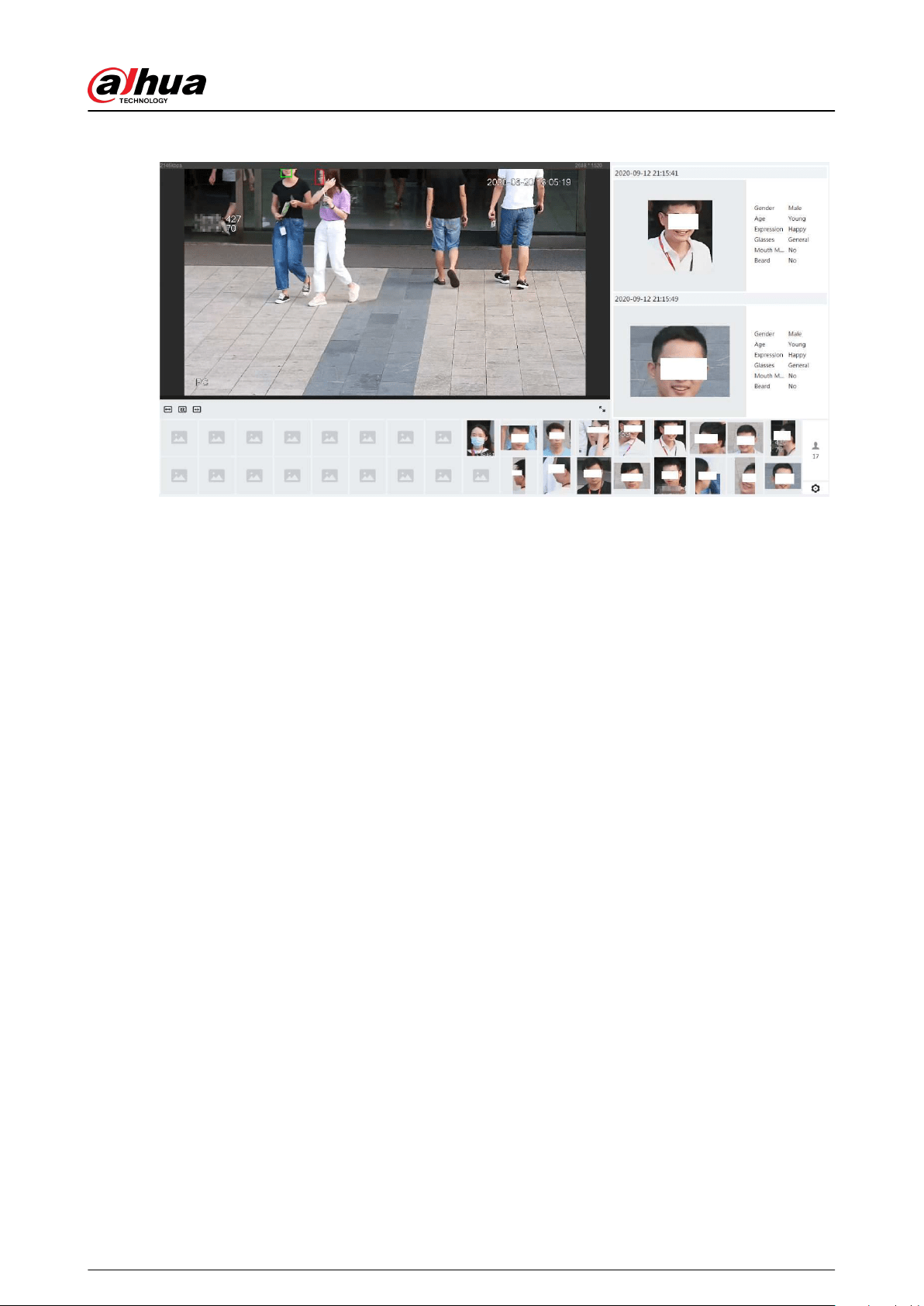
Figure 8-20 Face detection result
8.4 Setting IVS
This section introduces scene selection requirements, rule conguration, and global conguration
for IVS (intelligent video system).
Basic requirements on scene selection are as follows.
●
The target should occupy no more than 10% of the whole image.
●
The target size in the image should be no less than 10 × 10 pixels. The size of abandoned object
in the image should be no less than 15 × 15 pixels (CIF image). The target height and width
should no more than a third of the image height and width. The recommended target height is
10% of the image height.
●
The brightness dierence of the target and the background should be no less than 10 gray
levels.
●
The target should be continuously present in the image for no less than two seconds, and the
moving distance of the target should be larger than its width and no less than 15 pixels (CIF
image) at the same time.
●
Reduce the complexity of surveillance scene as much as you can. Intelligent analysis functions
are not recommended to be used in scene with dense targets and frequent illumination change.
●
Avoid areas such as glass, reective ground, water surface, and areas interfered by branch,
shadow and mosquito. Avoid backlight scene and direct light.
8.4.1 Global Conguration
Set global rules for IVS, including anti-disturb, depth of eld calibration, and valid motion
parameter for targets.
Calibration Purpose
Determine corresponding relationship between 2D image captured by the camera and 3D actual
object according to one horizontal ruler and three vertical rulers calibrated by the user and the
corresponding actual distance.
Operation Manual
131
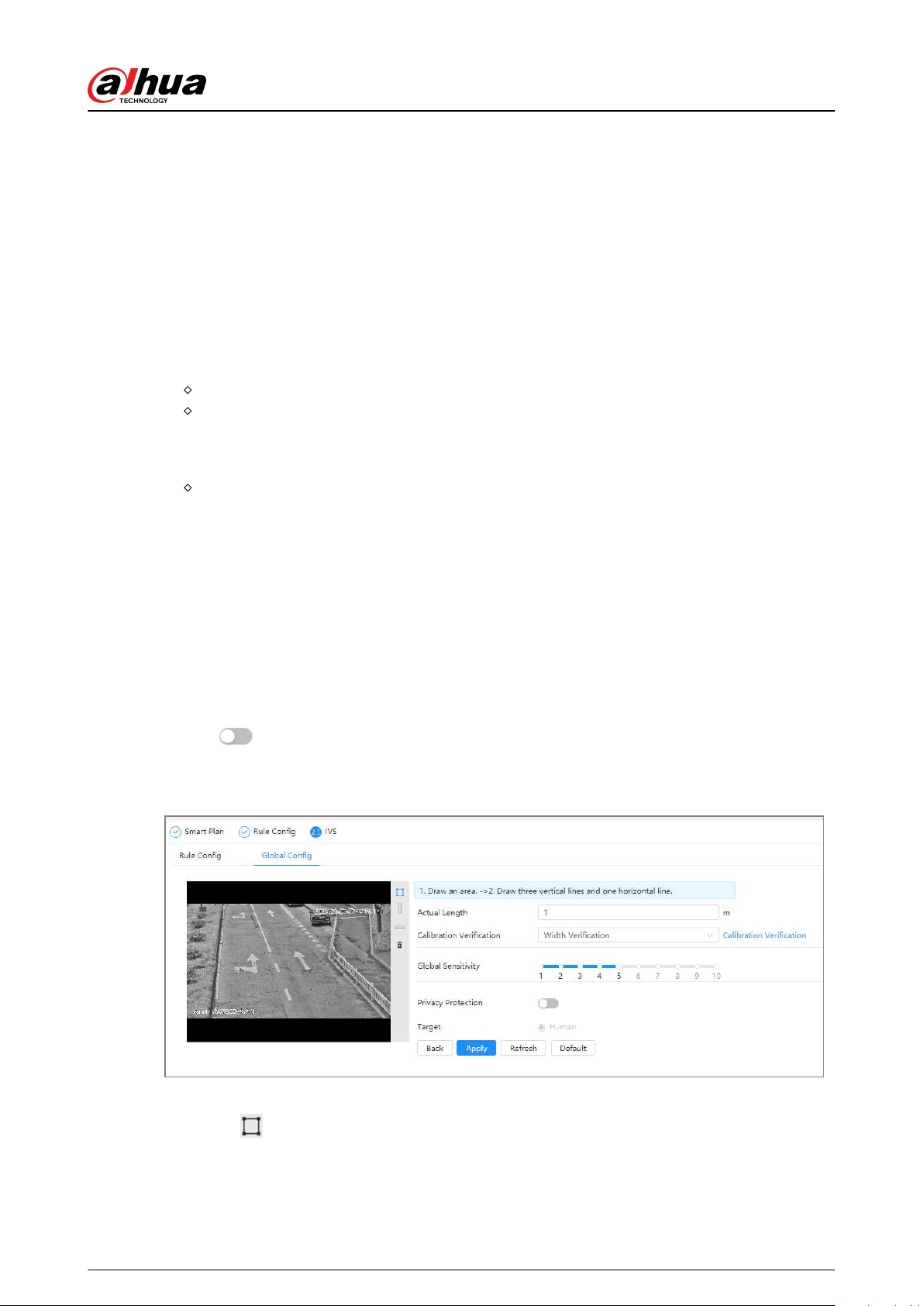
Applicable Scene
●
Medium or distant view with installation height of more than three meters. Scenes with parallel
view or ceiling-mounted are not supported.
●
Calibrate horizontal plane, not vertical walls or sloping surfaces.
●
This function is not applicable to scenes with distorted view, such as the distorted views
captured by super wide-angle or sheye camera.
Notes
●
Calibration Drawing
Calibration area: The calibration area drawn should be on one horizontal plane.
Vertical ruler: The bottom of three vertical rulers should be on the same horizontal plane.
Select three reference objects with xed height in triangular distribution as vertical rulers,
such as vehicle parked at roadside or road lamp poles. Arrange three persons to draw at each
of the three positions in the monitoring scene.
Horizontal ruler: Select reference object with known length on the ground, such as sign on
the road, or use a tape to measure the actual length.
●
Calibration Verication
After setting the ruler, draw a straight line on the image, check the estimated value of the
straight line, and then compare this value with the value measured in the actual scene to verify
calibration accuracy. In case of major dierence between the estimated value and the actual
one, ne-tune or reset parameters until the error requirement is met.
Procedure
1. Select AI > Smart Plan.
2. Click
next to IVS to enable IVS of the corresponding channel, and then click Next.
3. Click the Global Cong tab.
Figure 8-21 Global conguration of IVS
4. Set calibration area and ruler.
a. Click
and draw a calibration area in the image, and right-click to nish the drawing.
b. Click the ruler icon to draw one horizontal ruler and three vertical rulers in the calibration
area.
Operation Manual
132

●
indicates vertical ruler, and indicates horizontal ruler
●
Select an added ruler, and click
to delete the ruler.
5. Set the global sensitivity.
Adjust the lter sensitivity. With higher value, it is easier to trigger an alarm when low-contrast
object and small object are captured, and the false detection rate is higher.
6. Enable Privacy Protection. After enabled, the human detected will be blurred by mosaic.
7. Click Apply.
Result
1. Select the verication type, and then click Calibration Verication.
To verify vertical ruler and horizontal ruler, respectively select Height Verication and Width
Verication.
2. Draw a straight line in the image to verify whether the rulers are correctly set.
In case of big dierence between the estimated value and the actual one, ne-tune or reset
parameters until the error requirement is met.
8.4.2 Rule Conguration
Set rules for IVS, including cross fence detection, tripwire, intrusion, abandoned object, moving
object, fast moving, parking detection, crowd gathering, and loitering detection.
Prerequisites
●
Select AI > Smart Plan, and enable IVS.
●
Select AI > Smart Plan > Global Cong to nish global conguration.
Background Information
For the functions and applications of the rules, see Table 8-7 .
Table 8-7 Description of IVS functions
Rule Description Applicable Scene
Tripwire
When the target crosses tripwire from
the dened motion direction, an alarm
is triggered, and then the system
performs congured alarm linkages.
Scenes with sparse targets and
no occlusion among targets,
such as the perimeter
protection of unattended area.
Intrusion
When the target enters, leaves, or
appears in the detection area, an alarm
is triggered, and the system performs
congured alarm linkages.
Abandoned object
When an object is abandoned in the
detection area over the congured
time, an alarm is triggered, and then
the system performs congured alarm
linkages.
Scenes with sparse targets and
without obvious and frequent
light change. Simple scene in
the detection area is
recommended.
●
Missed alarm might
increase in the scenes with
dense targets, frequent
Operation Manual
133

Rule Description Applicable Scene
occlusion, and people
staying.
●
In scenes with complex
foreground and
background, false alarm
might be triggered for
abandoned or missing
object.
Missing object
When an object is taken out of the
detection area over the dened time,
an alarm is triggered, and then the
system performs congured alarm
linkages.
Scenes with sparse targets and
without obvious and frequent
light change. Simple scene in
the detection area is
recommended.
●
Missed alarm might
increase in the scenes with
dense targets, frequent
occlusion, and people
staying.
●
In scenes with complex
foreground and
background, false alarm
might be triggered for
abandoned or missing
object.
Fast moving
When the motion speed is higher than
the congured speed, an alarm is
triggered, and then the system
performs congured alarm linkages.
Scene with sparse targets and
less occlusion. The camera
should be installed right above
the monitoring area. The light
direction should be vertical to
the motion direction.
Parking detection
When the target stays over the
congured time, an alarm is triggered,
and then the system performs
congured alarm linkages.
Road monitoring and trac
management.
Crowd gathering
When the crowd gathers or the crowd
density is large, an alarm is triggered,
and then the system performs
congured alarm linkages.
Scenes with medium or long
distance, such as outdoor
plaza, government entrance,
station entrance and exit. It is
not suitable for short-distance
view analysis.
Loitering detection
When the target loiters over the
shortest alarm time, an alarm is
triggered, and then the system
performs congured alarm linkages.
After alarm is triggered, if the target
stays in the area within the time
interval of alarm, then alarm will be
triggered again.
Scenes such as park and hall.
Congure IVS rules. This section takes tripwire as an example.
Operation Manual
134
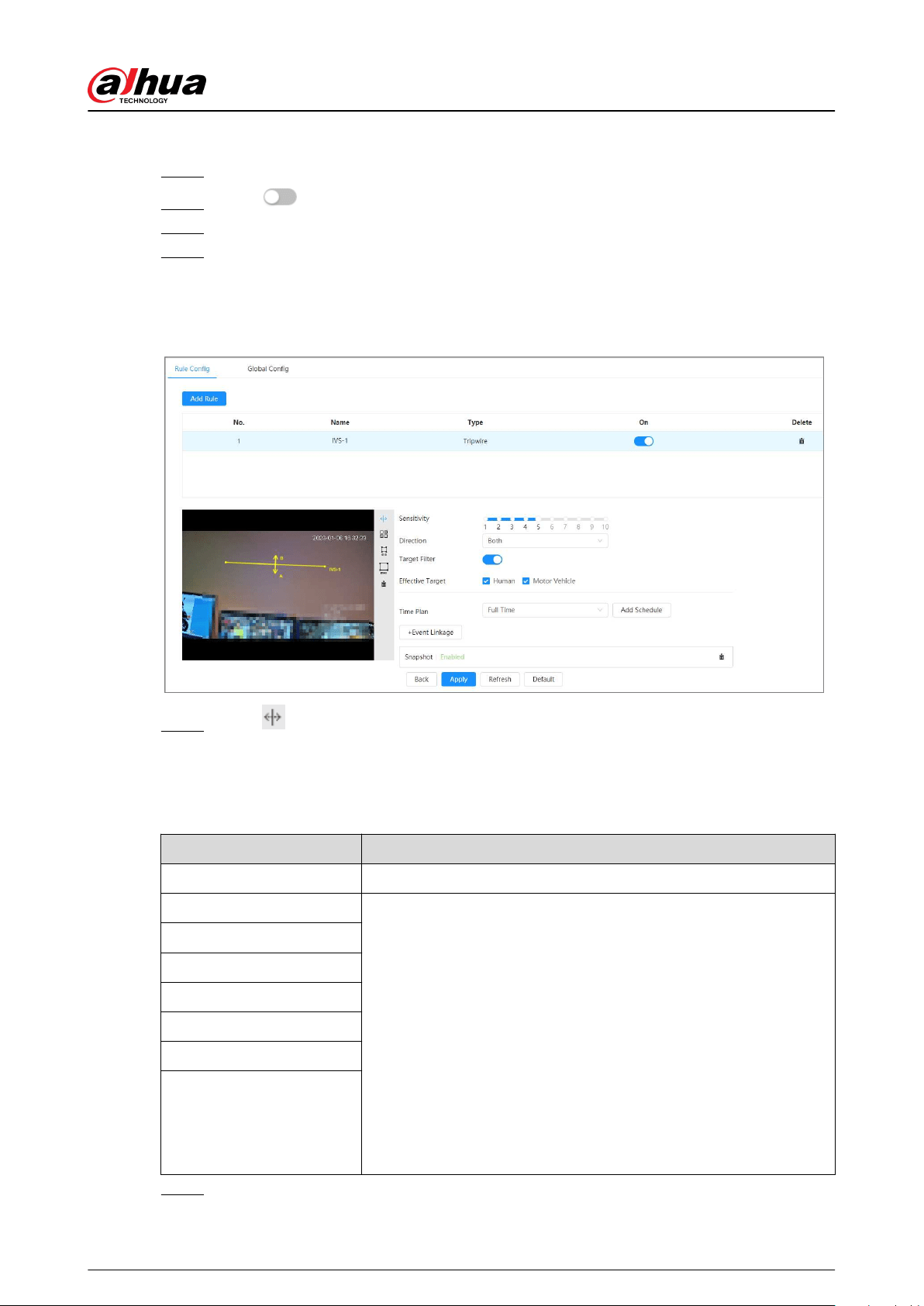
Procedure
Step 1 Select AI > Smart Plan.
Step 2 Click next to IVS to enable IVS of the corresponding channel, and then click Next.
Step 3 Click the Rule Cong tab.
Step 4 Click Add Rule on the Rule Cong page, and then select Tripwire from the drop-down
list.
Double-click the name, and you can edit the rule name; the rule is enabled by default.
Figure 8-22 Tripwire
Step 5 Click to draw rule line in the image. Right-click to nish drawing.
For requirements of drawing rules, see Table 8-7 . After drawing rules, drag corners of the
detection area to adjust the area range.
Table 8-8 Description of IVS analysis
Rule Description
Tripwire Draw a detection line.
Intrusion Draw a detection area.
●
During the detection of abandoned object, the alarm is also
triggered if pedestrian or vehicle stays for a long time. If the
abandoned object is smaller than pedestrian and vehicle, set the
target size to lter pedestrian and vehicle or properly extend the
duration to avoid false alarm triggered by transient staying of
pedestrian.
●
During the detection of crowd gathering, false alarm might be
triggered by low installation height, large percentage of single
person in an image or obvious target occlusion, continuous
shaking of the camera, shaking of leaves and tree shade,
frequent opening or closing of retractable door, or dense trac
or people ow.
Abandoned object
Missing object
Fast moving
Parking detection
Crowd gathering
Loitering detection
Step 6 (Optional) Click other icons at the right side of the image to lter targets in the image.
Operation Manual
135

●
Click
to draw the minimum size of the target, and click to draw the
maximum size of the target. Only when the target size is between the maximum size
and the minimum size, can the alarm be triggered.
●
Click
, and then press and hold the left mouse button to draw a rectangle, the pixel
size is displayed.
●
Click
to delete the detection line.
Step 7 Set rule parameters for IVS.
Table 8-9 Description of IVS parameters
Parameter Description
Direction
Set the direction of rule detection.
●
When setting tripwire, select A->B , B->A, or A<->B.
●
When setting intrusion, select Enter , Exit, or Both.
Action
When setting intrusion action, select Appears , Cross or Inside.
Inside and appears/cross cannot work at the same time.
Target Filter
Click
to enable this function.
●
When you select Human as the alarm target, an alarm will be
triggered when the system detects that persons trigger the rule.
●
When you select Motor Vehicle as the alarm target, alarm will be
triggered when the system detects that vehicle triggers the rule.
Duration
●
For abandoned object, the duration is the shortest time for
triggering an alarm after an object is abandoned.
●
For missing object, the duration is the shortest time for triggering
an alarm after an object is missing.
●
For parking detection, crowd gathering, or loitering detection, the
duration is the shortest time for triggering an alarm after an object
appears in the area.
Sensitivity
When the sensitivity is high, detection becomes easier, but the
number of false detections increases.
Missing Object , Abandoned Object and Loitering Detection do not
support this function.
Step 8 Set arming periods and alarm linkage action. For details, see "6.5.1.2 Alarm Linkage".
Click + Event Linkage to set the linkage action.
Step 9 Click Apply.
To view alarm information on the alarm subscription tab, you need to subscribe relevant
alarm event. For details, see "6.5.1.3.2 Subscribing Alarm Information".
Operation Manual
136

8.5 Setting Smart Object Detection
This section introduces scene selection requirements, rule conguration, and global conguration
for smart object detection.
Basic requirements on scene selection are as follows.
●
The target should occupy no more than 10% of the whole image.
●
The target size in the image should be no less than 10 × 10 pixels. The size of abandoned object
in the image should be no less than 15 × 15 pixels (CIF image). The target height and width
should no more than a third of the image height and width. The recommended target height is
10% of the image height.
●
The brightness dierence of the target and the background should be no less than 10 gray
levels.
●
The target should be continuously present in the image for no less than two seconds, and the
moving distance of the target should be larger than its width and no less than 15 pixels (CIF
image) at the same time.
●
Reduce the complexity of surveillance scene as much as you can. Intelligent analysis functions
are not recommended to be used in scene with dense targets and frequent illumination change.
●
Avoid areas such as glass, reective ground, water surface, and areas interfered by branch,
shadow and mosquito. Avoid backlight scene and direct light.
8.5.1 Global Conguration
Procedure
Step 1 Select AI > Smart Plan.
Step 2 Click next to Smart Object Detection , and then click Next.
Step 3 Click the Global Cong tab.
Step 4 Turn on Independent Object Detection.
Step 5 Click Apply.
8.5.2 Rule Conguration
Prerequisites
You have congured the global cong in Smart Object Detection.
Procedure
Step 1 Select AI > Smart Plan.
Step 2 Click next to Smart Object Detection , and then click Next.
Step 3 Click the Rule Cong tab.
Step 4 Click Add Rule on the Rule Cong page Here we use Smart Abandoned Object as an
example.
Double-click the name, and then you can edit the rule name; the rule is enabled by
default.
Operation Manual
137
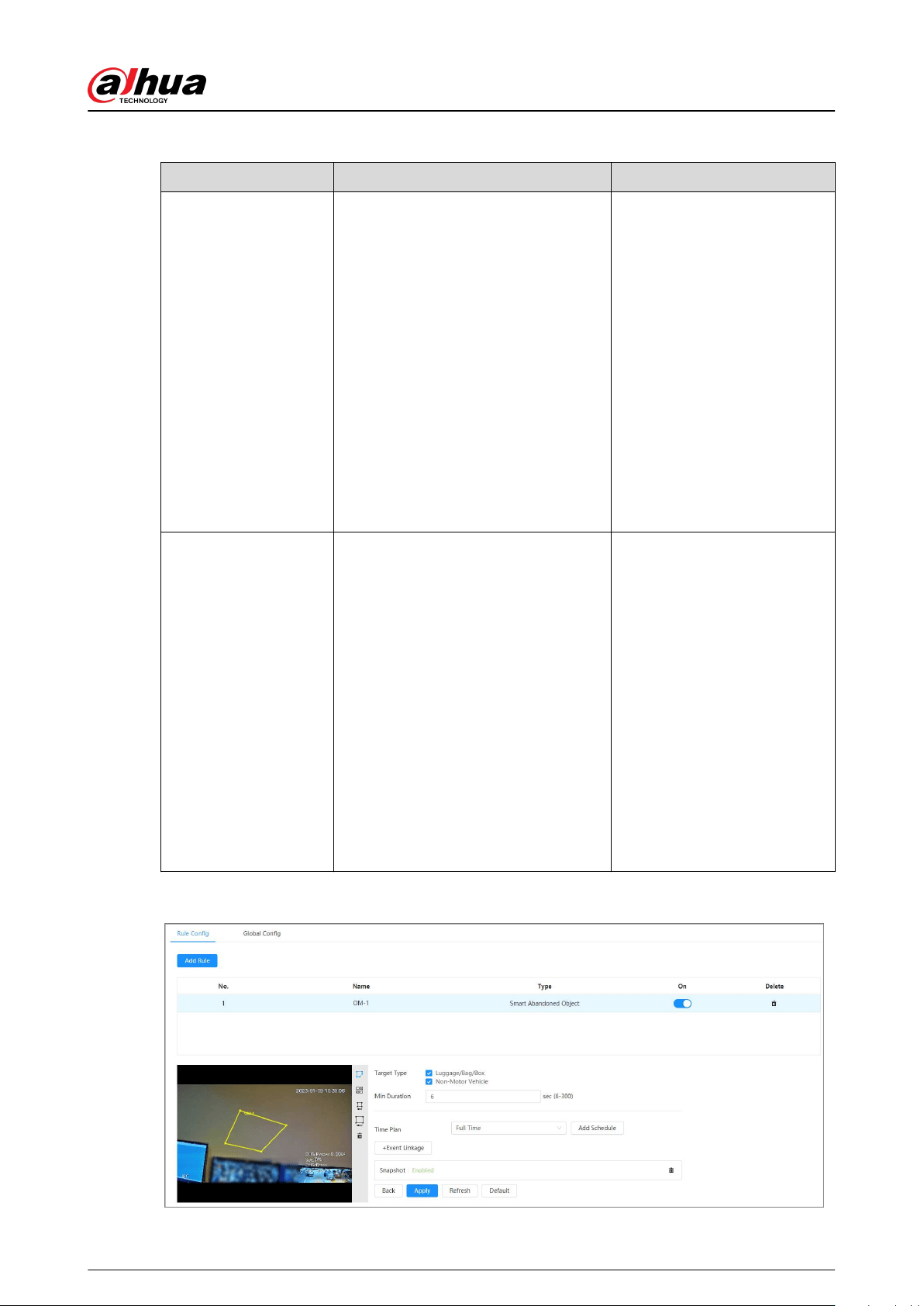
Table 8-10 Description of smart object detection functions
Rule Description Applicable Scene
Smart Abandoned
object
When an object is abandoned in the
detection area over the congured
time, an alarm is triggered, and then
the system performs congured alarm
linkages.
Scenes with sparse targets and
without obvious and frequent
light change. Simple scene in
the detection area is
recommended.
●
Missed alarm might
increase in the scenes with
dense targets, frequent
occlusion, and people
staying.
●
In scenes with complex
foreground and
background, false alarm
might be triggered for
abandoned or missing
object.
Smart Missing object
When an object is taken out of the
detection area over the dened time,
an alarm is triggered, and then the
system performs congured alarm
linkages.
Scenes with sparse targets and
without obvious and frequent
light change. Simple scene in
the detection area is
recommended.
●
Missed alarm might
increase in the scenes with
dense targets, frequent
occlusion, and people
staying.
●
In scenes with complex
foreground and
background, false alarm
might be triggered for
abandoned or missing
object.
Figure 8-23 Smart abandoned object
Operation Manual
138
Step 5 Click to draw rule area in the image. Right-click to nish drawing.
Step 6 (Optional) Click other icons at the right side of the image to lter targets in the image.
●
Click
to draw the minimum size of the target, and click to draw the
maximum size of the target. Only when the target size is between the maximum size
and the minimum size, can the alarm be triggered.
●
Click
, and then press and hold the left mouse button to draw a rectangle, the
pixel size is displayed.
●
Click
to delete the detection line.
Step 7 Set rule parameters for smart object detection.
Table 8-11 Description of smart object detection parameters
Parameter Description
Target Type You can select from Luggage/Bag/Box and Non-Motor Vehicle.
Min Duration
●
For smart abandoned object, the duration is the shortest time for
triggering an alarm after an object is abandoned.
●
For smart missing object, the duration is the shortest time for
triggering an alarm after an object is missing.
Step 8 Select time plan, and then Set arming periods and alarm linkage action, and then click +
Event Linkage to set the linkage action.
●
If the added time plan cannot meet your requirements, click Add Schedule to add an
arming schedule. For details, see "6.5.1.2.1 Adding Schedule".
●
Click Event Linkage to add linked event and set linkage parameters. For details, see
"6.5.1.2 Alarm Linkage".
Step 9 Click Apply.
8.6 Setting Vehicle Density
Congure rules for vehicle density, including road congestion and parking upper limit, and you can
view vehicle statistics through the live page.
Background Information
Congure rules for trac congestion and parking upper limit. When the counted vehicle exceeds
the congured vehicle number and the congestion time exceeds the congured time, an alarm will
be triggered.
Procedure
Step 1 Select AI > Smart Plan.
Step 2 Click next to Vehicle Density , and then click Next.
Step 3 Click Add Rule to select rules.
Operation Manual
139
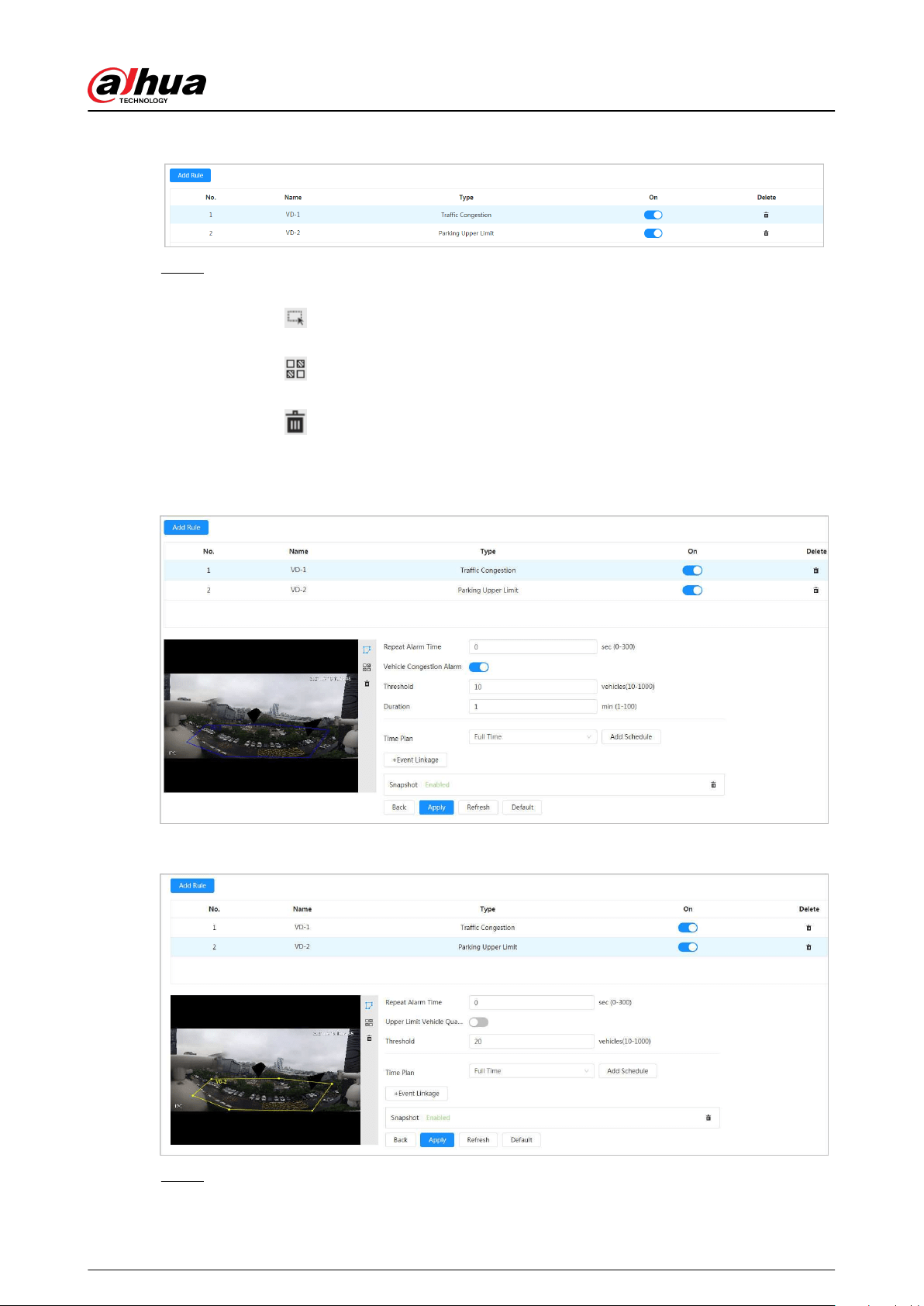
Figure 8-24 Add rules
Step 4 (Optional) Click other icons at the right side of the image to draw detection area on the
image.
●
Click
to draw a detection area in the image. The detection area is the whole image
by default.
●
Click
, and then press and hold the left mouse button to draw a rectangle, the pixel
size is displayed.
●
Click
to delete the detection line.
Repeat step 1-4 to add multiple statistical areas. You can add up to 9 rules at most.
Figure 8-25 Vehicle density (trac congestion)
Figure 8-26 Vehicle density (parking upper limit)
Step 5 Set parameters.
Operation Manual
140
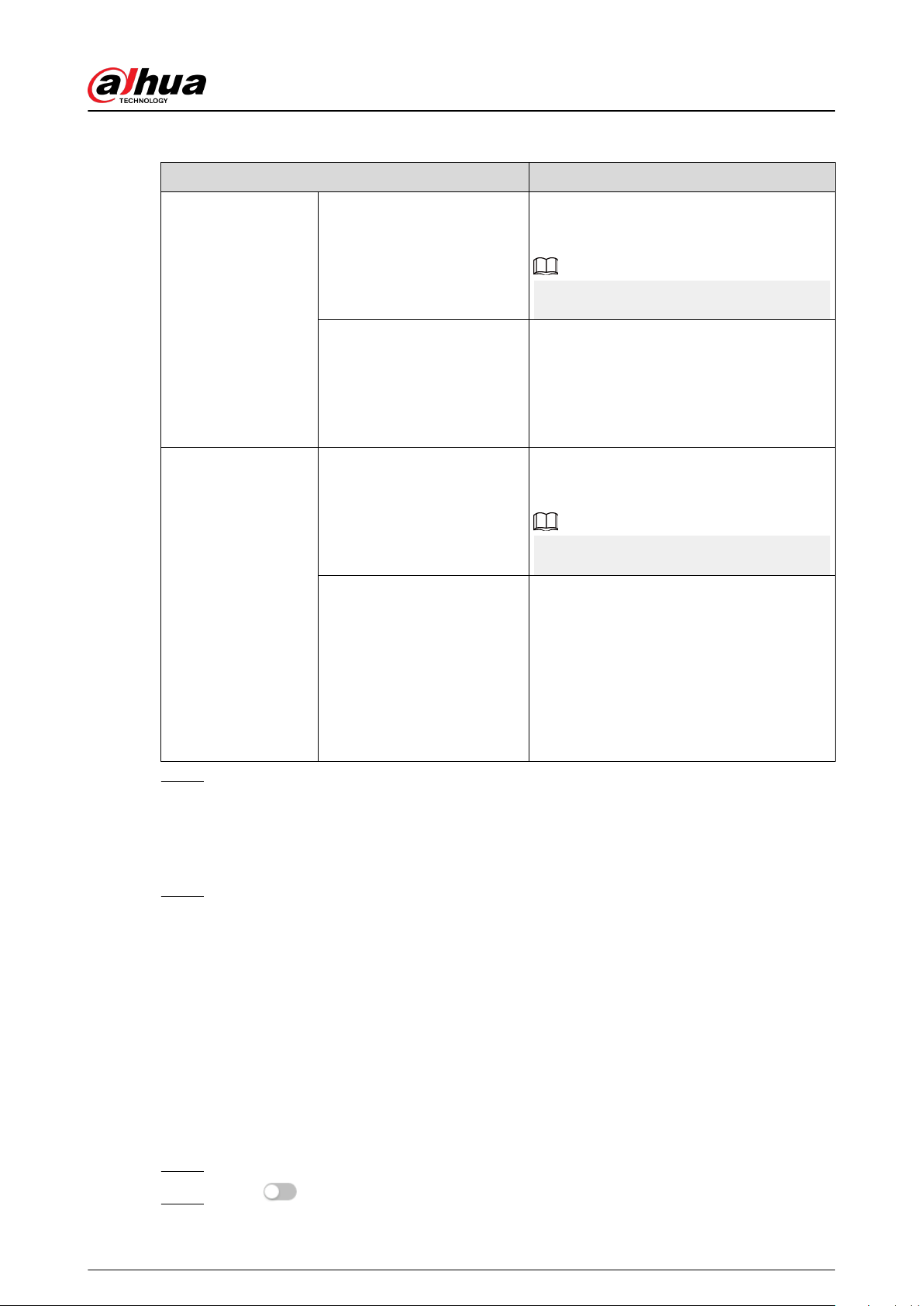
Table 8-12 Description of parameters
Parameter Description
Trac Congestion
Repeat Alarm Time
When the alarm is triggered and this state
lasts for repetitive alarm time, the alarm will
be triggered again.
0 means repeat alarm function disabled.
Vehicle Congestion Alarm
Enable vehicle congestion alarm to set the
upper threshold and duration of vehicles in
the area. When the number of vehicles
exceeds the threshold and the congestion
time exceeds the congured continuous
congestion time, an alarm will be triggered.
Parking Upper Limit
Repeat Alarm Time
When the alarm is triggered and this state
lasts for repetitive alarm time, the alarm will
be triggered again.
0 means Repeat Alarm function disabled.
Upper Limit Vehicle Quantity
Alarm
Enable upper limit vehicle quantity alarm
to set the upper threshold and duration of
vehicles in the area. When the number of
vehicles exceeds the threshold and the
congestion time exceeds the congured
continuous congestion time, an alarm will
be triggered. The upper threshold of
vehicles that trigger an alarm is 20 vehicles
by default.
Step 6 Select time plan and click + Event Linkage.
●
If the added time plan cannot meet your requirements, click Add Schedule to add an
arming schedule. For details, see "6.5.1.2.1 Adding Schedule".
●
Click Event Linkage to add linked event and set linkage parameters. For details, see
"6.5.1.2 Alarm Linkage".
Step 7 Click Apply.
8.7 Setting Parking Space
This section introduces rule conguration and global conguration for parking space.
8.7.1 Rule Conguration
8.7.1.1 For Parking Space Detection Fisheye WizMind Network Camera
Procedure
Step 1 Select AI > Smart Plan.
Step 2 Click next to Parking Space Management , and then click Next.
Operation Manual
141
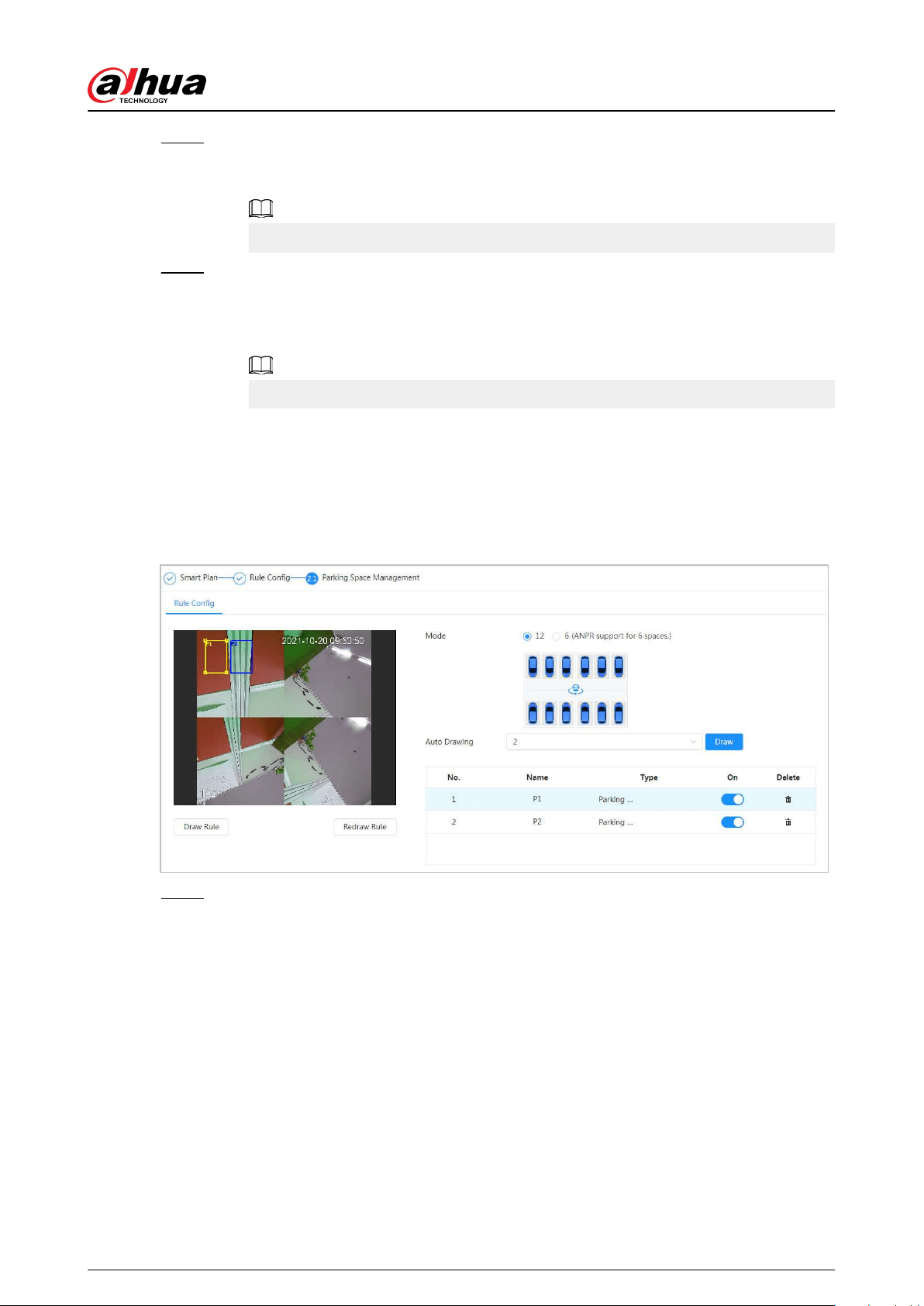
Step 3 Select the mode.
●
12 parking spaces: Only supports parking space detection.
●
6 parking spaces: Supports both ANPR and parking space detection.
ANPR is available for customized devices.
Step 4 Draw rules.
●
Manual drawing: Click Draw Rule on the lower-right corner of the image. Click the left
mouse button on the image to draw a closed box, and then click the right mouse
button to complete the drawing.
Click Redraw Rule to redraw the detection area as needed.
●
Auto drawing: Select the number from the drop-down list and then click Draw. The
added rules will be displayed in the list. Click the text box under Name to edit the rule
name. The rule is enabled by default.
The system automatically shows the number of parking space detection boxes on the
image. Click and drag the box according to the actual parking space.
Figure 8-27 Parking space
Step 5 Congure the parameters.
Operation Manual
142
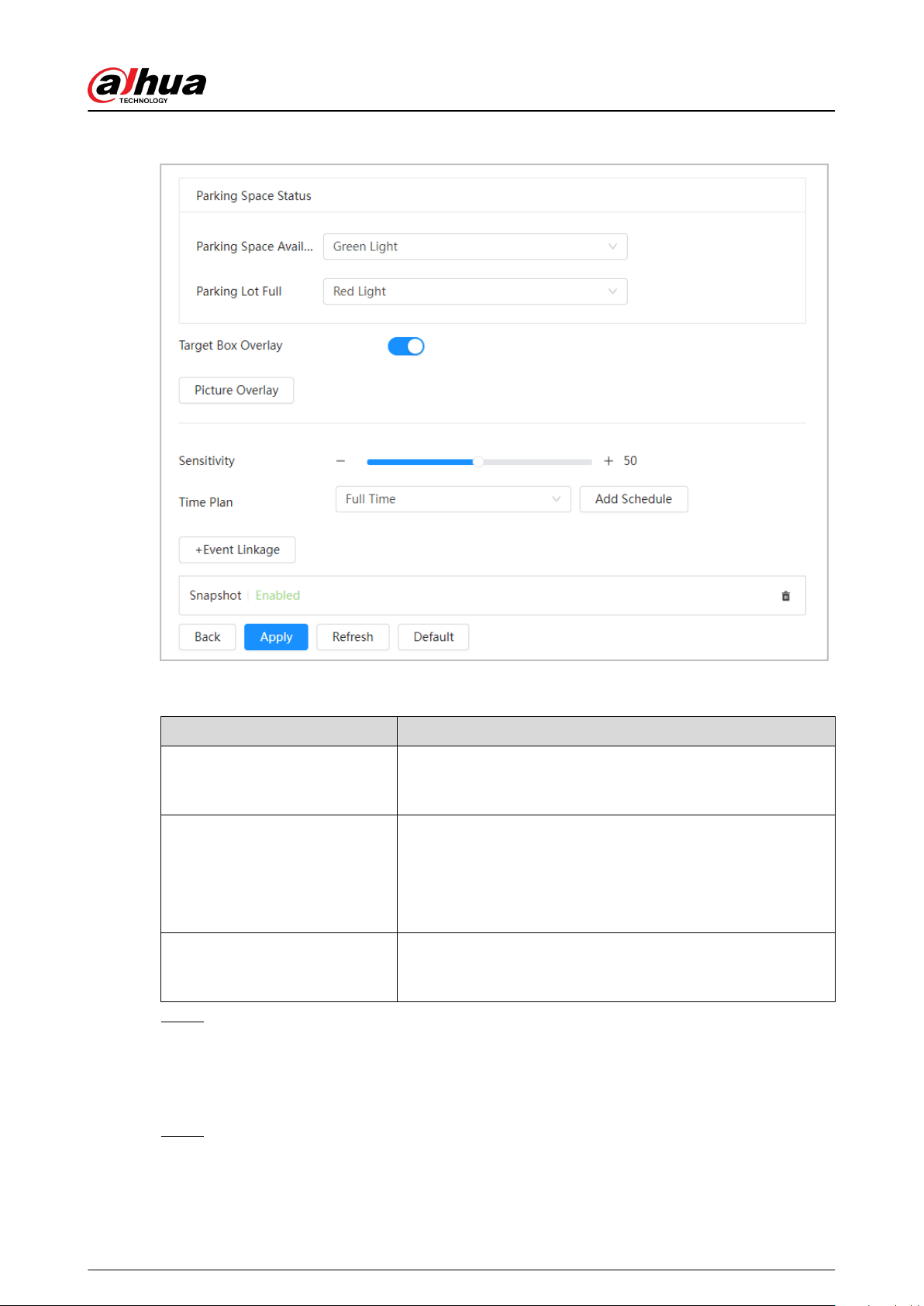
Figure 8-28 Parking space parameters
Table 8-13 Description of parking space parameters
Parameter Description
Parking Space Status
Congure the status light for when parking space is available
and the parking lot is full. The colors available for both status
are: None, red, yellow, green, blue, cyan, pink and white.
Target Box Overlay
Overlay the target box on the captured pictures to mark the
change of parking space. It is enabled by default. Click Picture
Overlay to select the information displayed on the picture.
The captured picture is saved in the congured storage path.
For the storage path, see "10.4.1 Local Storage".
Sensitivity
Set the sensitivity of parking space detection. When the
sensitivity is high, detection becomes easier, but the number
of false detections increases. It is 50 by default.
Step 6 Select time plan and click + Event Linkage.
●
If the added time plan does not meet your requirements, click Add Schedule to add
an arming schedule. For details, see "6.5.1.2.1 Adding Schedule".
●
Click Event Linkage to add linked events and to congure linkage parameters. For
details, see "6.5.1.2 Alarm Linkage".
Step 7 Click Apply.
Operation Manual
143
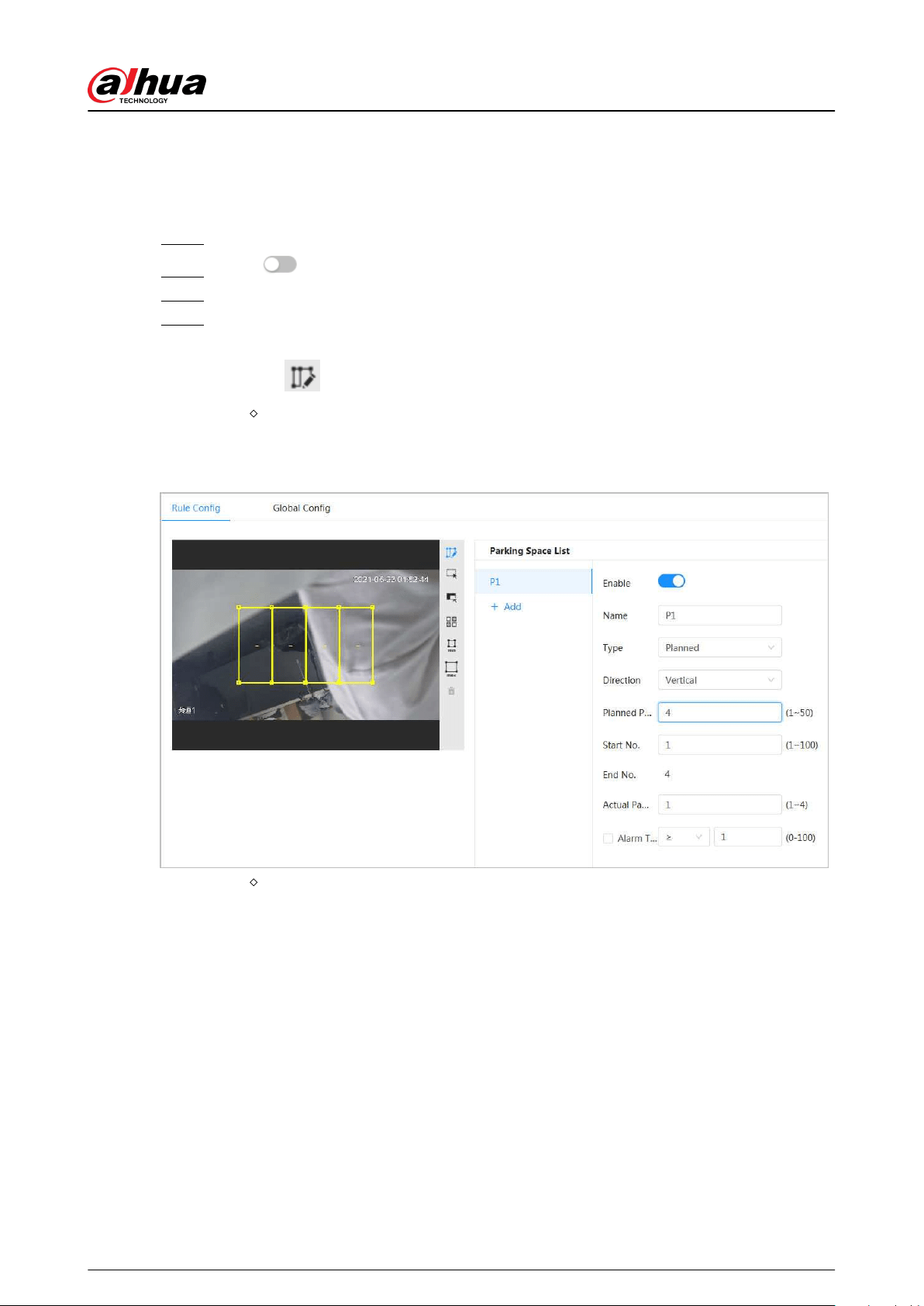
8.7.1.2 For Other Cameras
Set planned or open type for parking space.
Procedure
Step 1 Select AI > Smart Plan.
Step 2 Click next to Parking Space , and then click Next.
Step 3 Click the Rule Cong tab.
Step 4 (Optional) Click other icons at the right side of the image to draw detection area,
exclusion area, and lter targets in the image.
●
Click
to draw the rectangle area.
If you select planned parking space, the rectangle area will be divided equally
according to the planned parking spaces number that you congured.
Figure 8-29 Rule conguration (1)
If you select open parking space, the rectangle area will not be divided.
Operation Manual
144
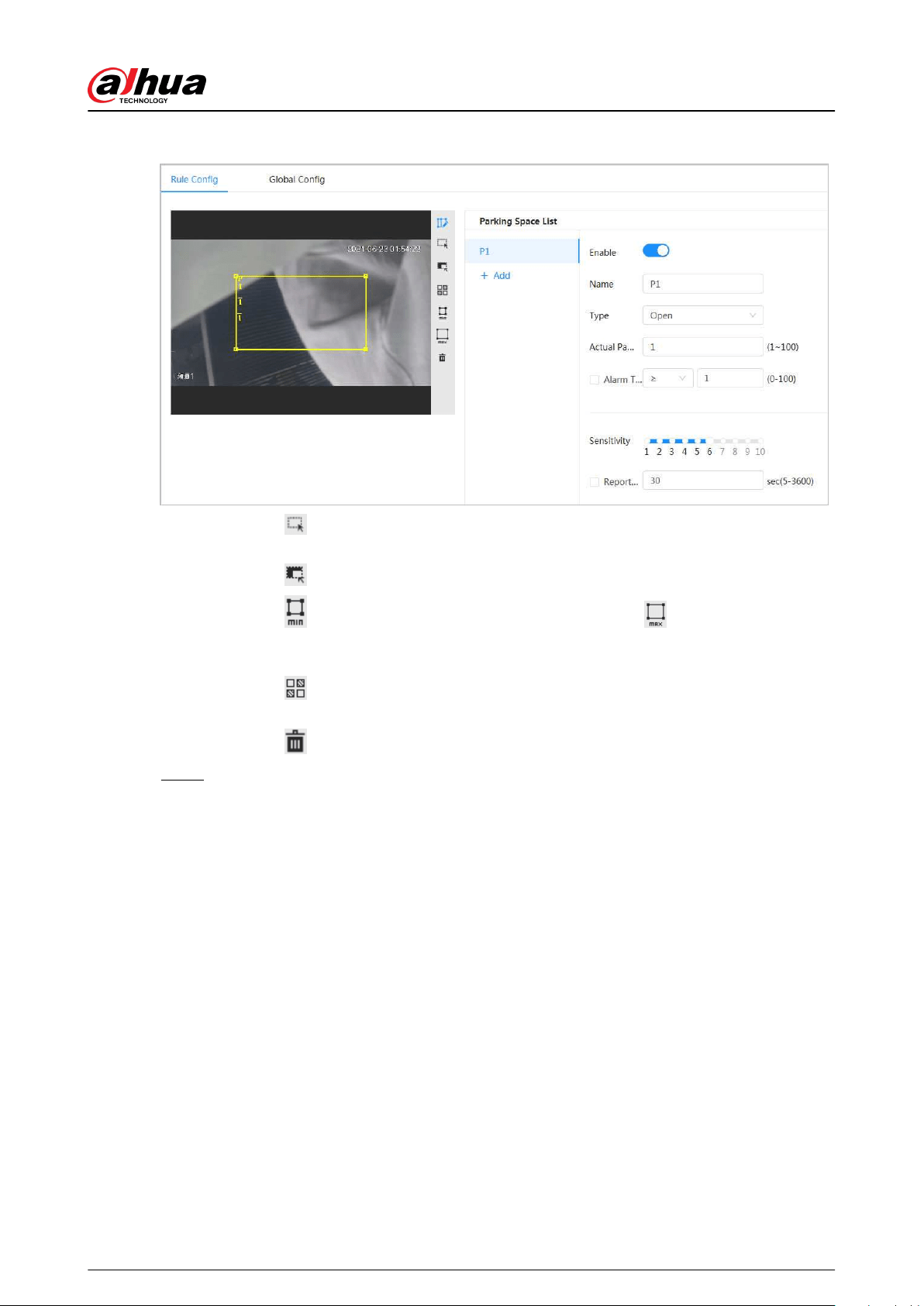
Figure 8-30 Rule conguration (2)
●
Click
to draw a parking space detection area in the image. The detection area is the
whole image by default.
●
Click
to draw an exclusion area for parking space detection in the image.
●
Click
to draw the minimum size of the target, and click to draw the maximum
size of the target. Only when the target size is between the maximum size and the
minimum size, can the alarm be triggered.
●
Click
, and then press and hold the left mouse button to draw a rectangle, the pixel
size is displayed.
●
Click
to delete the detection line.
Step 5 Select Planned/Open in Type.
●
Planned Parking Space
It is used for parking management of planned parking lots (with clearly delineated
parking spaces). When there is a car parked in the parking space, a red dot is drawn.
And a parking space without a car is drawn a green dot.
Operation Manual
145
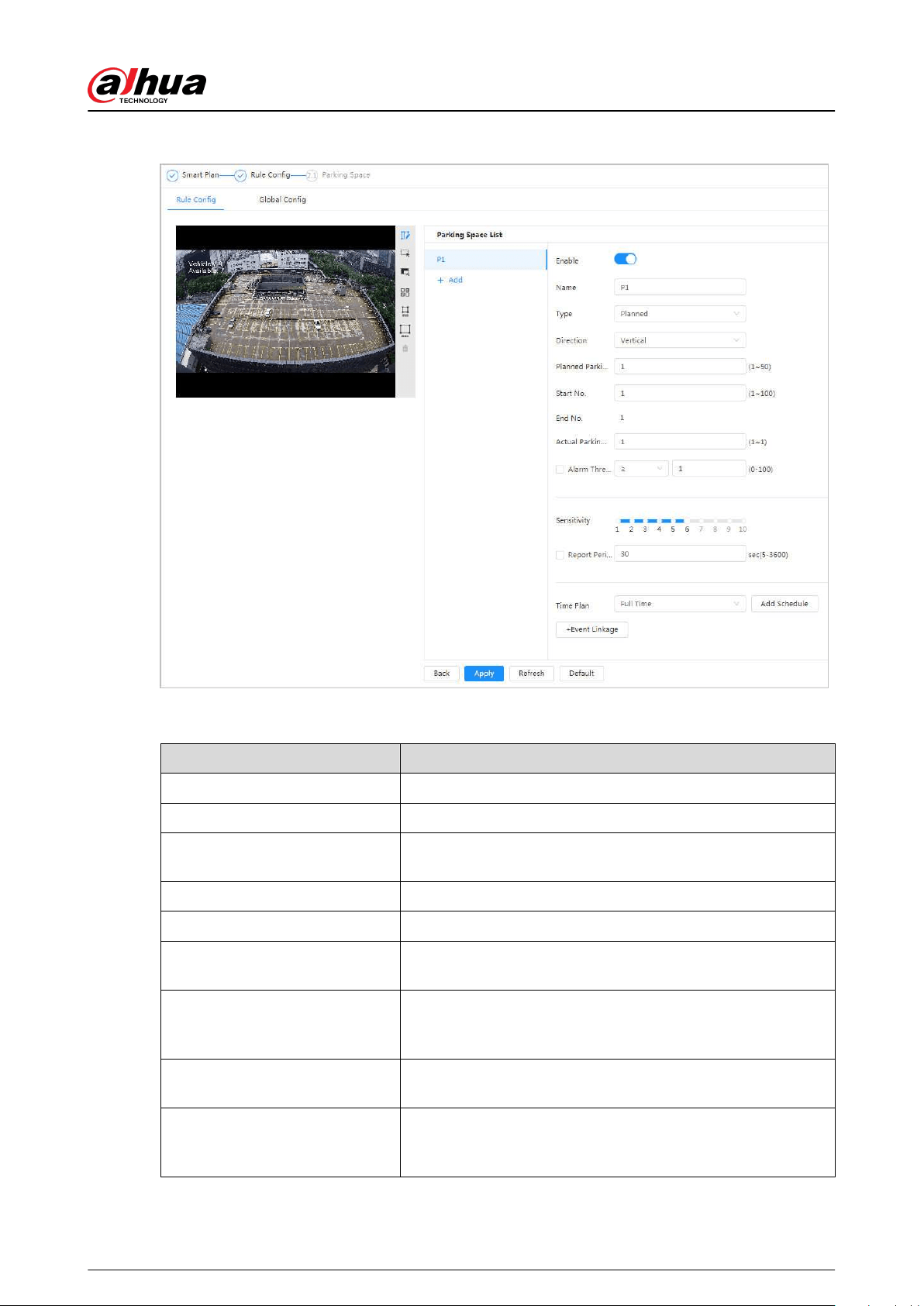
Figure 8-31 Planned parking space
Table 8-14 Description of planned parking space parameters
Parameter Description
Name Enter the name of the added parking space.
Direction You can select Vertical or Horizontal direction.
Planned Parking Space
It can be used to divide the initial quadrilateral equally, which
is convenient for you to draw the rule box
Start No. Associates with the name of parking spaces.
End No. Associates with Planned Parking Space.
Actual Parking Space
It ranges from 1 to the congured value of planned parking
space. Actual Parking Space is 1 by default.
Alarm Threshold
You can set it from 0 through 100. When alarm is triggered, the
frame of related statistic area will ash red. And the threshold
number is 0 by default.
Sensitivity
Adjust the false alarm and miss alarm of the system. And the
sensitivity is 6 by default.
Report Period
The report period is 30 seconds by default. And you can set it
between 5 to 3600 seconds. It will only upload related data
but not pictures or videos.
●
Open Parking Space
Operation Manual
146
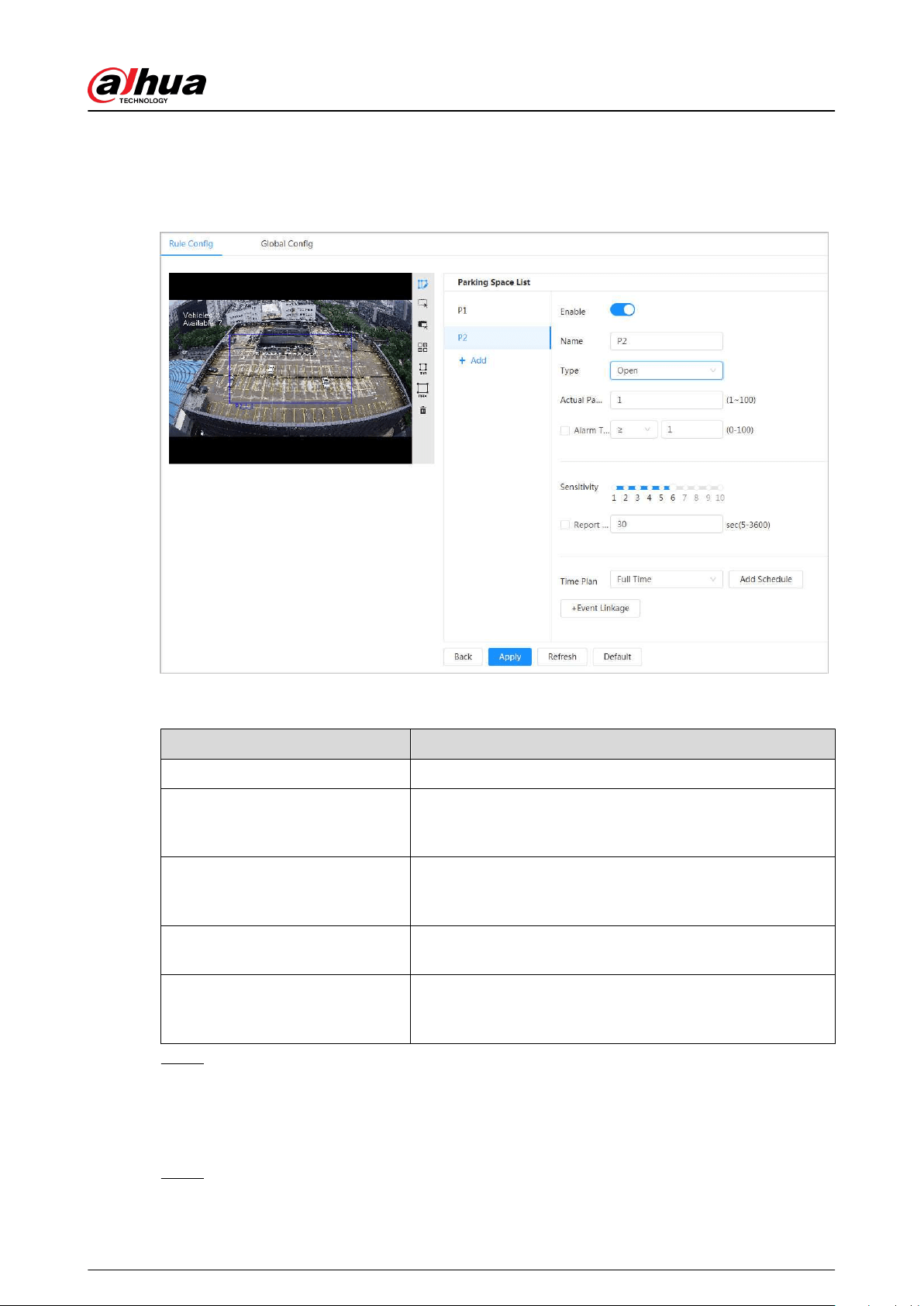
It is used for parking management of open parking lots in a large area. When there is a
car parked in the parking space, a red dot is drawn. And a parking space without a car
will not show any dot.
Figure 8-32 Open parking space parameters
Table 8-15 Description of open parking space parameters
Parameter Description
Name Enter the name of the added parking space.
Actual Parking Space
Actual Parking Space is 1 by default. When you change the
planned parking space, the input range would change into 1
- the number of planned parking space.
Alarm Threshold
The threshold number is 0 by default. And you can set it
between 0 to 100. When alarm is triggered, the frame of
related statistic area will ash in red.
Sensitivity
It is designed to adjust the false alarm and miss alarm of the
system. And the sensitivity is 6 by default.
Report Period
The report period is 30 seconds by default. And you can set it
between 5 to 3600 seconds. It will only upload related data
but not pictures or videos.
Step 6 Select time plan and click + Event Linkage
●
If the added time plan cannot meet your requirements, click Add Schedule to add an
arming schedule. For details, see "6.5.1.2.1 Adding Schedule".
●
Click +Event Linkage to add linked event and set linkage parameters. For details, see
"6.5.1.2 Alarm Linkage".
Step 7 Click Apply.
Operation Manual
147

8.7.2 Global Conguration
Procedure
Step 1 (Optional) Set OSD information.
Click OSD Info, and the Overlay page is displayed, and then enable the Parking Space
function. The statistical result is displayed on the Live page For details, see "6.2.2.2.14
Conguring Parking Space".
Step 2 Adjust condence level.
Condence level is used for algorithm adjustment of false alarm and detection.
Step 3 Click Apply.
8.8 Setting Video Metadata
Classify people, non-motor vehicles and motor vehicles in the captured video, and display the
relevant attributes on the live page.
8.8.1 Global Conguration
Set the global conguration of video metadata, including face parameter and scene parameter.
Procedure
Step 1 Select AI > Smart Plan.
Step 2 Click next to Video Metadata to enable video metadata of the corresponding
channel, and then click Next.
Step 3 Click the Global Cong tab.
Step 4 Set parameters.
Operation Manual
148
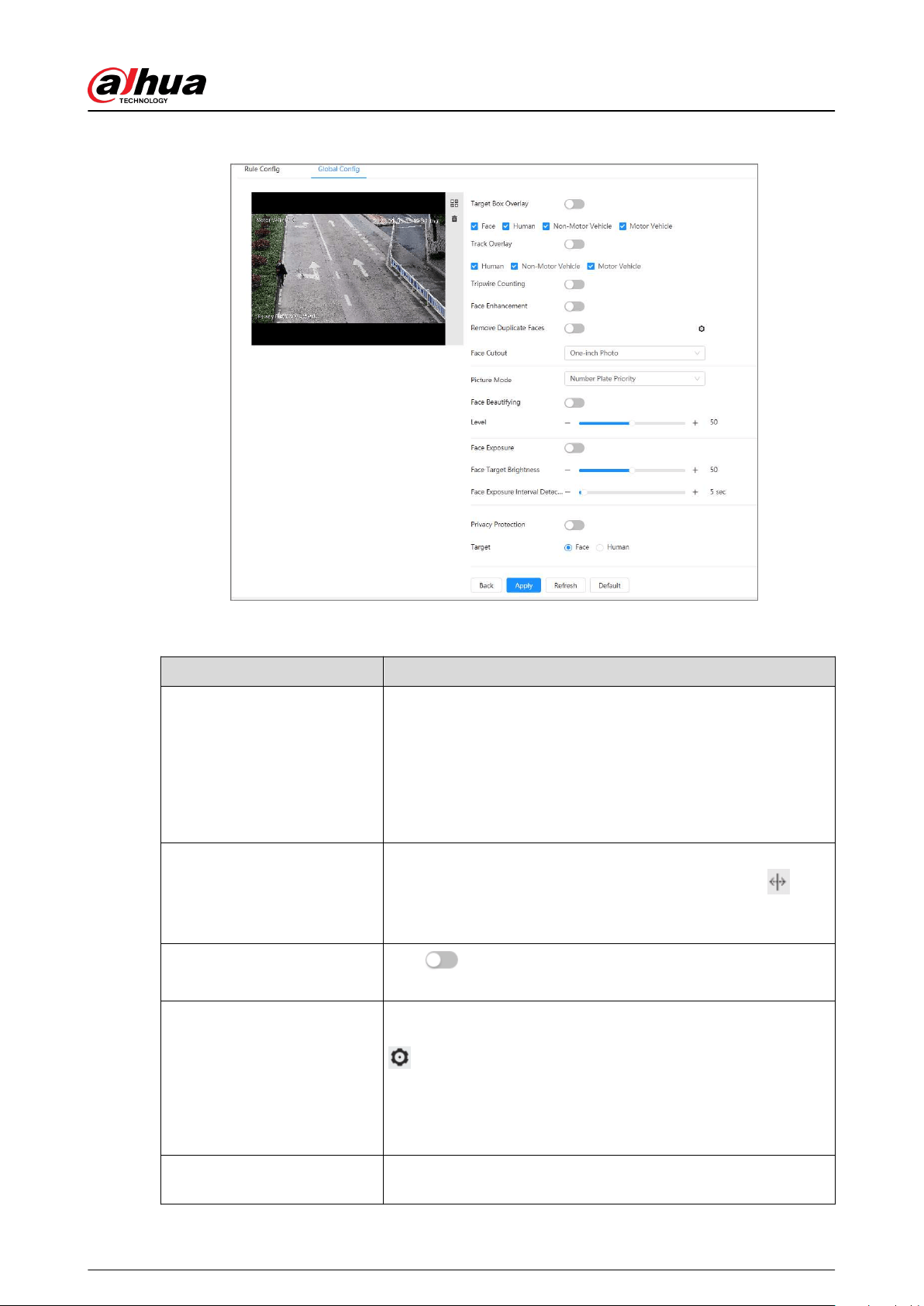
Figure 8-33 Global conguration of video metadata
Table 8-16 Description of scene set parameters (video metadata)
Parameter Description
Target Overlay
Overlay target box on the captured pictures to mark the target
position.
Four types of target boxes are supported. Select the target box
as needed.
The captured pictures are stored in SD card or the congured
storage path. For details, see "6.1 Local".
Tripwire Counting
Enable this function, and set the tripwire direction. The snapshot
mode is Tripwire by default, and you cannot change it.
will
be displayed beside the image on the Rule Cong page. You can
draw the rule as needed.
Face Enhancement
Click
next to Face Enhancement to preferably guarantee
clear face with low stream.
Remove Duplicate Faces
During the congured period, the face that detected several
times is displayed only once, to avoid repeated counting. Click
to set the parameters, and then click Apply.
●
Time: The function is valid within the congured period.
●
Precision: The larger the value is, the higher the accuracy will
be.
Face Cutout
Set a range for matting face image, including face picture and
one-inch picture.
Operation Manual
149

Parameter Description
Picture Mode Set picture mode as Number Plate Priority or Face Priority.
Face Beautifying
Enable Face Beautifying to make face details clearer at night.
After enabling this function, you can adjust the level. The higher
the level, the higher the beautifying level.
Face Exposure
Enable Face Exposure to make face clearer by adjusting lens
aperture and shutter.
Target Face Brightness Set the face target brightness, and it is 50 by default.
Face Exposure Interval
Detection Time
Set the face exposure interval detection time to prevent image
ickering caused by constant adjustment of face exposure. It is 5
seconds by default.
Privacy Protection
Enable this function, and then the selected targets (face or
human) will be blurred by mosaic when they are detected.
Step 5 Click Apply.
8.8.2 Rule Conguration
Set the detection scene and rules, including people, non-motor vehicle, and motor vehicle.
Prerequisites
●
Select AI > Smart Plan, and enable Video Metadata.
●
You have congured the parameters on the Clobal Cong page.
Procedure
Step 1 Select AI > Smart Plan.
Step 2 Click next to Video Metadata , and then click Next.
Step 3 Click the Rule Cong tab.
Step 4 Click Add Rule to select rules.
The added rules will be display in the list. Click the text box under Name to edit the rule
name. The rule is enabled by default.
Figure 8-34 Rule congure (video metadata)
Step 5 Congure Picture.
1. Click .
2. Set overlay of motor vehicle, non-motor vehicle and people and the box position.
This section takes the conguration of non-motor vehicle overlay as an example.
Operation Manual
150
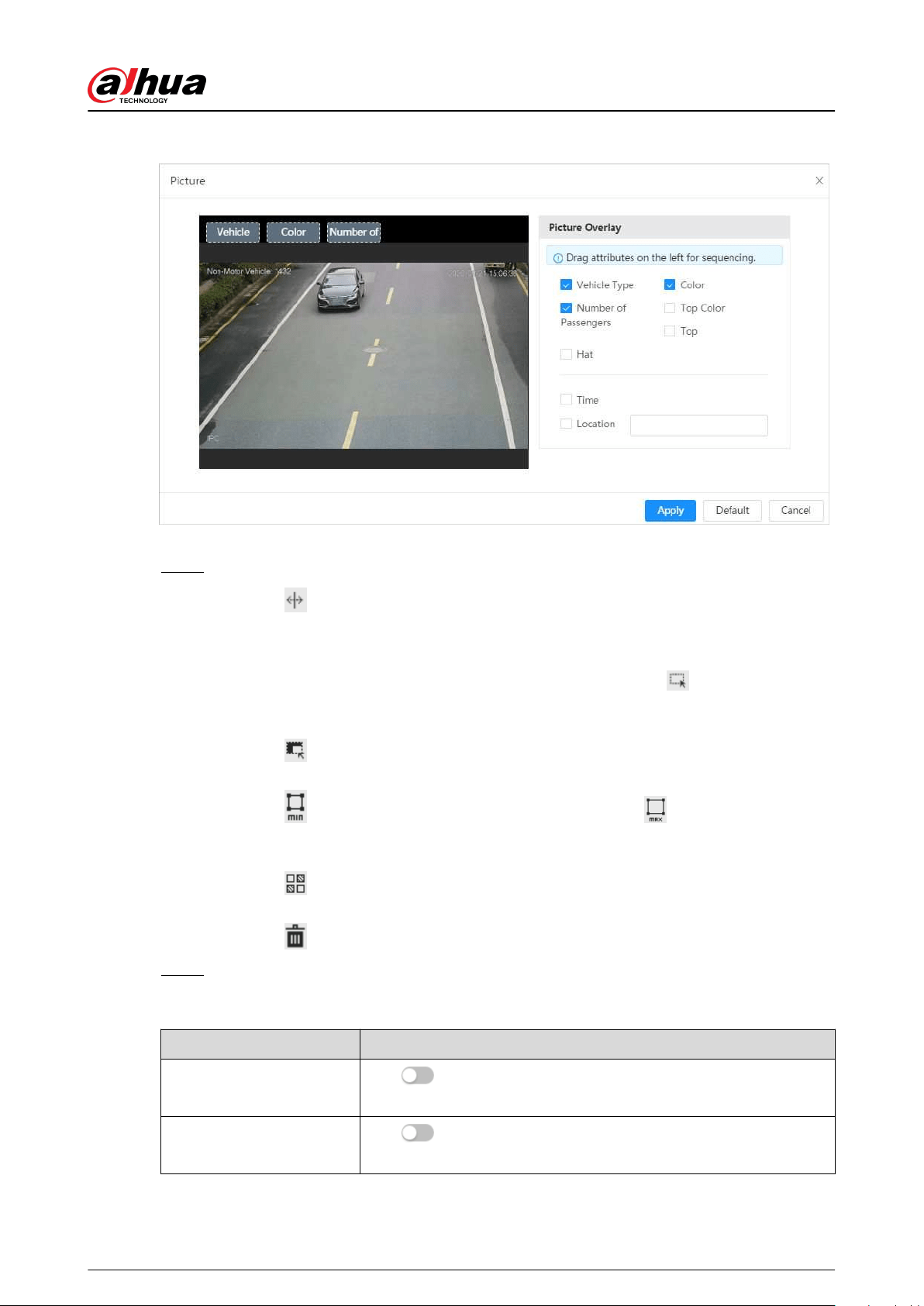
Figure 8-35 Picture (non-motor vehicle)
3. Click Apply.
Step 6 (Optional) Click the icons at the right side of the image to lter targets in the image.
●
Click
to draw rule line in the image.
When targets pass the tripwire along the congured direction line, they will be
counted.
●
After the rule is enabled, the detection area is displayed. Click
, and you drag the
any corner of the box to adjust the size of the area, and press the left mouse button
and move the box to adjust the position.
●
Click
to draw an area exclusion area for face detection in the image, and right-click
to nish the drawing..
●
Click
to draw the minimum size of the target, and click to draw the maximum
size of the target. Only when the target size is between the maximum size and the
minimum size, can the alarm be triggered.
●
Click
, and then press and hold the left mouse button to draw a rectangle, the pixel
size is displayed.
●
Click
to delete the detection line.
Step 7 Set parameters.
Table 8-17 Description of crowd map parameters
Parameter Description
People Flow Statistics
Click
next to People Flow Statistics to count the number of
people in the detection area.
Flow Statistics (Non-motor
Vehicle)
Click
next to Flow Statistics (Non-motor Vehicle) to count
the number of non-motor vehicles in the detection area.
Operation Manual
151
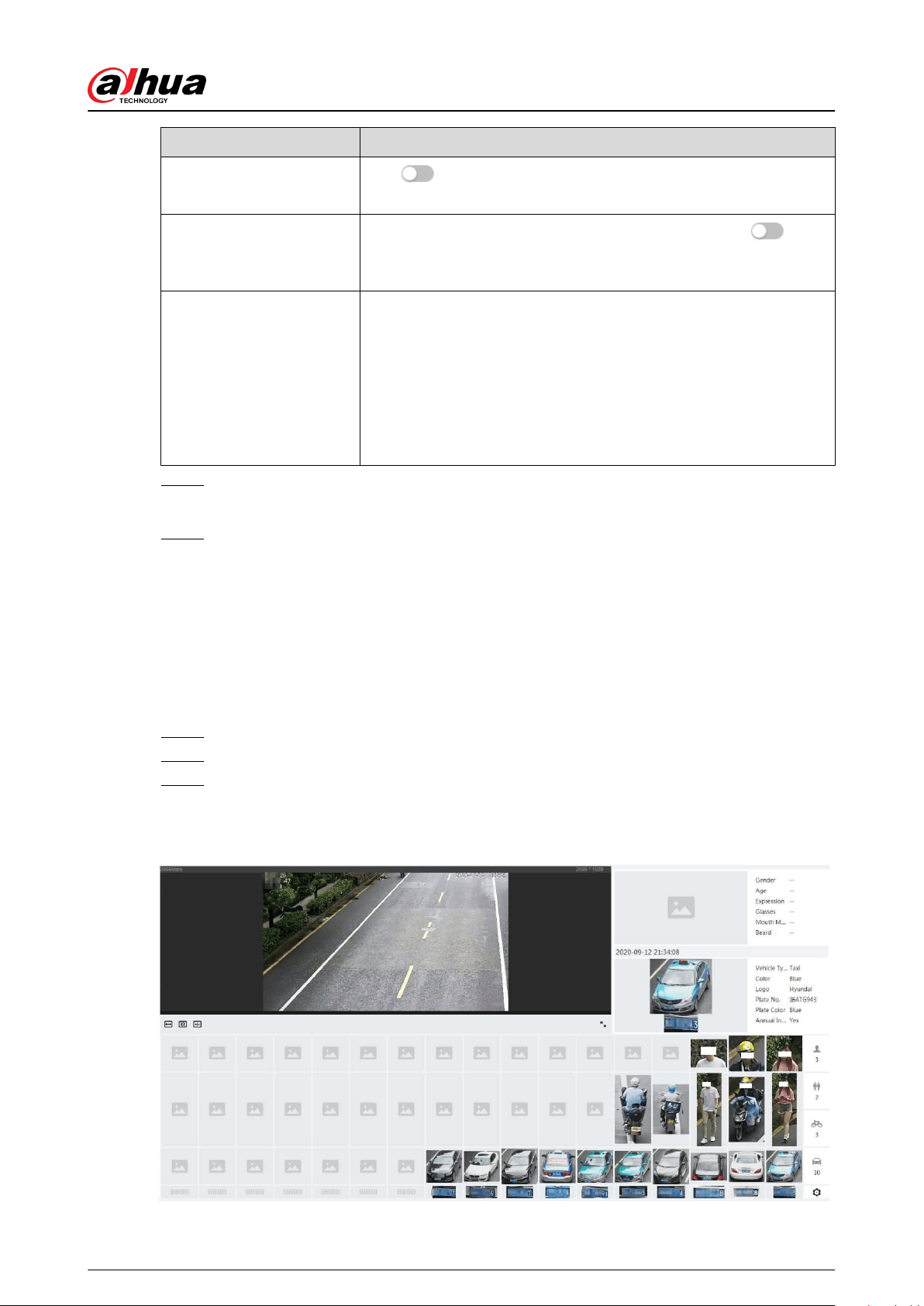
Parameter Description
Trac Flow Stat
Click
next to Trac Flow Statistics to count the number of
motor vehicles in the detection area.
OSD
Click OSD Info , and the Overlay page is displayed. Click
next
to Enable to enable the target statistics function. For details, see
"6.2.2.2.8 Conguring Target Statistics".
Snapshot Mode
●
Optimized: Capture the pictures until the vehicle disappears from
the image, and report the clearest picture.
●
Tripwire: Capture the pictures when the vehicle triggers tripwire
as the congured direction.
a. Select Tripwire.
b. Select the direction from A to B , B to A, and Both.
c. Adjust the position of rule line as needed.
Step 8 Set arming periods and alarm linkage action. For details, see "6.5.1.2 Alarm Linkage".
Click + Event Linkage to set the linkage action.
Step 9 Click Apply.
To view alarm information on the alarm subscription tab, you need to subscribe relevant
alarm event. For details, see "6.5.1.3.2 Subscribing Alarm Information".
8.8.3 Viewing Video Metadata Report
Generate data of video metadata recognition in report form.
Procedure
Step 1 Select Setting > Event > Video Metadata > Report.
Step 2 Select the report type, start time, end time, and other parameters.
Step 3 Click Search to complete the report.
The statistical results are displayed. Click Export to export the statistical report.
Figure 8-36 Video metadata report
Operation Manual
152
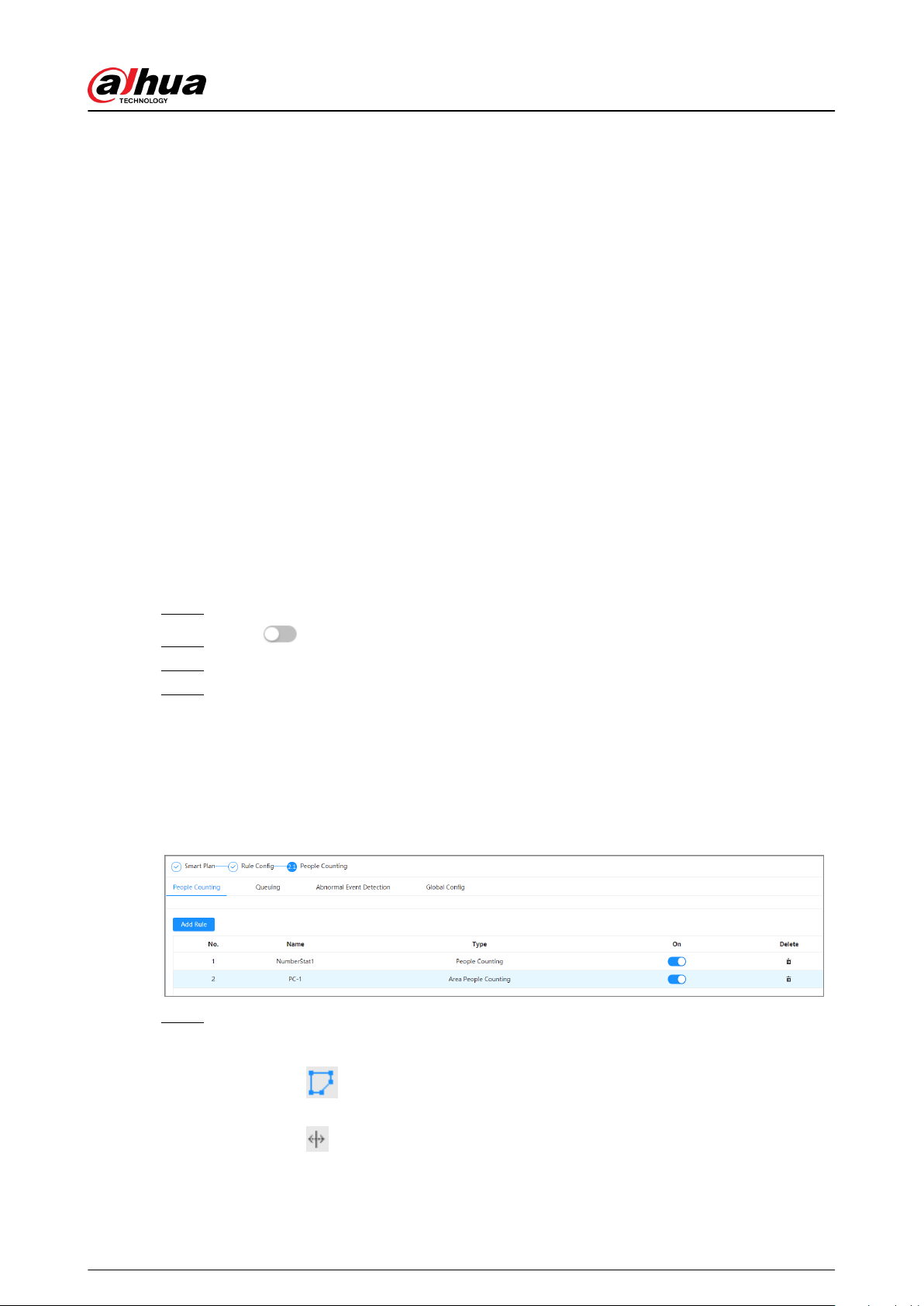
8.9 Setting People Counting
Set people counting (including entry number, exit number and stay number in area), queuing
number, and view the people counting data in report form.
8.9.1 People Counting
The system counts the number of people entering and leaving the detection area. When the
number of counted people exceeds the congured value, an alarm is triggered and the system
performs an alarm linkage.
Background Information
There are two types of people counting rules.
●
People Counting : The system counts the people entering and leaving the detection area.
When the number of counted number of people who enter, leave, or stay in the area exceeds
the congured value, an alarm is triggered, and the system performs an alarm linkage.
●
Area People Counting : The system counts the people in the detection area and the duration
that people stay in the area. When the number of counted number of people in the detection
area or the stay duration exceeds the congured value, an alarm is triggered, and the system
performs an alarm linkage. This function is available on some select models.
Procedure
Step 1 Select AI > Smart Plan
Step 2 Click next to People Counting , and then click Next.
Step 3 Click the People Counting tab.
Step 4 Click Add Rule to select rules.
●
The added rules will be displayed in the list. Click the text box under Name to edit the
rule name. The rule is enabled by default.
●
For the models that support multiple counting rules, dierent detection areas can be
overlapped. It supports at most 4 people counting rules and 4 area people counting
rules.
Figure 8-37 Add rule
Step 5 Draw a detection area in the image.
●
People counting
a. Click
, drag the any corner of the box to adjust the size of the area, press the
right mouse button, and then move the box to adjust the position.
b. Click
to draw rule line in the image.
When targets enter or leave the detection area along the direction line, they will be
counted.
Operation Manual
153
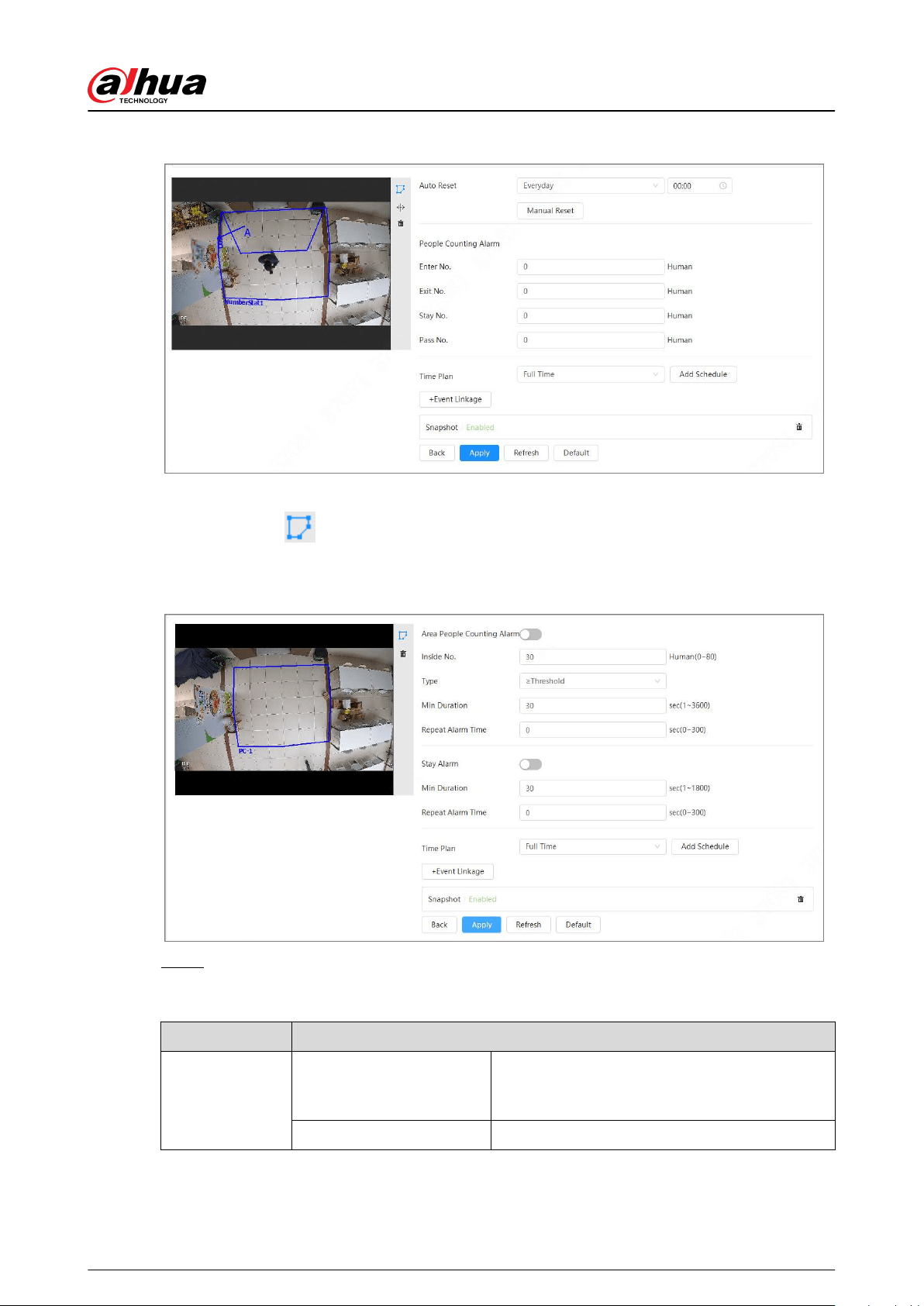
Figure 8-38 People counting (1)
●
Area people counting
Click
, and drag the any corner of the box to adjust the size of the area, and press
the right mouse button and move the box to adjust the position.
Figure 8-39 People counting (2)
Step 6 Set parameters.
Table 8-18 Description of people counting parameters
Parameter Description
People counting
Auto Reset
Set the reset period and time, and then the
system will clear the countered number
according to the congured time automatically.
Manual Reset Manually clear the countered number.
Operation Manual
154
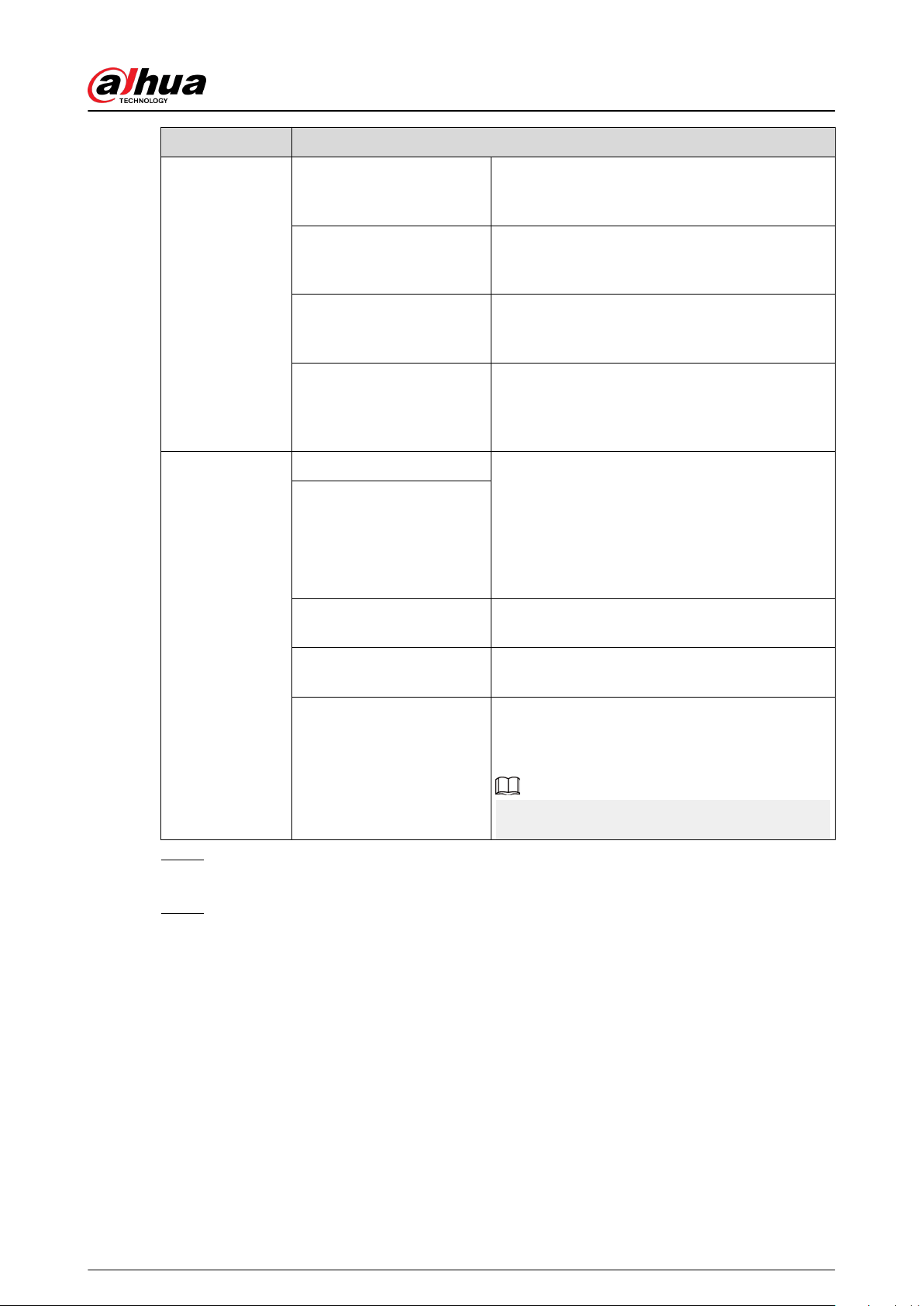
Parameter Description
Enter No.
Counts the number of people entering in the
direction A-->B. When the number exceeds the
congured value, an alarm will be triggered.
Exit No.
Counts the number of people entering in the
direction B-->A. When the number exceeds the
congured value, an alarm will be triggered.
Stay No.
It is the dierence between the Enter No. and
Exit No.. When the number exceeds the
congured value, an alarm will be triggered.
Pass No.
Counts the number of people entering and
exiting the detection area from the direction A.
When the number exceeds the congured value,
an alarm will be triggered.
Area people
counting
Inside Number
Set the number of people in the people counting
region. When the people count reaches the
congured value, an alarm will be triggered.
When you set inside number to 0, and select ≥
Threshold in Type, the system will not perform
the alarm linkage.
Type
Stay Alarm
Select the Stay Alarm checkbox to enable this
function.
Min Duration
When the stay duration exceeds the congured
value, an alarm is triggered.
Repeat Alarm Time
When the alarm is triggered and this state lasts
for repetitive alarm time, the alarm will be
triggered again.
0 means repeat alarm function disabled.
Step 7 Set arming periods and alarm linkage action. For details, see "6.5.1.2 Alarm Linkage".
Click + Event Linkage to set the linkage action.
Step 8 Click Apply.
To view alarm information on the alarm subscription tab, you need to subscribe relevant
alarm event. For details, see "6.5.1.3.2 Subscribing Alarm Information".
Results
You can view the counting results on the Live page.
●
For People Counting rule, the entry and exit numbers are displayed.
●
For Area People Counting rule, the inside number is displayed.
Operation Manual
155
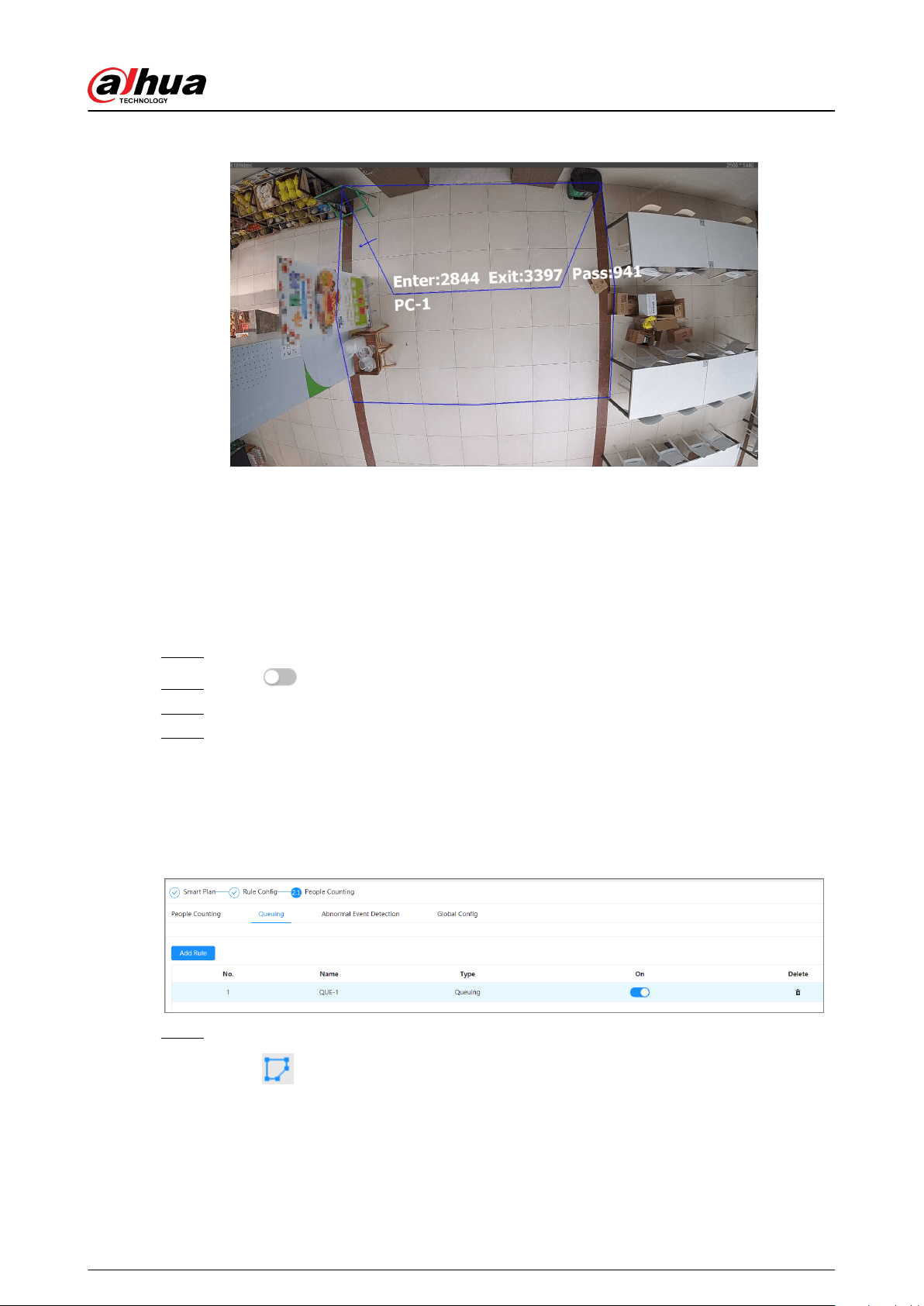
Figure 8-40 Counting result
8.9.2 Queuing
The system counts the queue people in the detection area. When the queue people number
exceeds the congured number or the queue time exceeds the congured time, an alarm will be
triggered, and the system performs an alarm linkage.
Procedure
Step 1 Select AI > Smart Plan
Step 2 Click next to People Counting , and then click Next.
Step 3 Click the Queuing tab.
Step 4 Click Add Rule > Queuing to select rules.
●
The added rules will be display in the list. Click the text box under Name to edit the
rule name. The rule is enabled by default.
●
For the models that support multiple counting rules, dierent detection areas can be
overlapped. It supports at most 4 queuing rules.
Figure 8-41 Add rule
Step 5 Draw a detection area in the image.
Click
to draw the detection area, and press the right mouse button to complete the
drawing.
Operation Manual
156

Figure 8-42 Queuing
Step 6 Set parameters.
Table 8-19 Description of queuing
Parameter Description
Queue People No. Alarm
Enable the queue people No. alarm function.
Queue People No.
Type
Set the queue people number for triggering the alarm and
counting type. When the queue people number reaches the
congured value, an alarm will be triggered.
Queue Time Alarm Enable the queue time alarm function.
Queue Time
Set the queue time. When the queue time reaches the congured
value, the alarm is triggered.
Step 7 Set arming periods and alarm linkage action. For details, see "6.5.1.2 Alarm Linkage".
Click + Event Linkage to set the linkage action.
Step 8 Click Apply.
To view alarm information on the alarm subscription tab, you need to subscribe relevant
alarm event. For details, see "6.5.1.3.2 Subscribing Alarm Information".
Results
You can view the queuing results on the Live page.
The queuing number and the stay time of each target are displayed on the page.
Operation Manual
157

Figure 8-43 Queuing result
8.9.3 Abnormal Event Detection
The system detects the congestion in the detection area. When the congestion detected exceeds
the congured value, an alarm is triggered and the system performs an alarm linkage.
Procedure
Step 1 Select AI > Smart Plan
Step 2 Click next to People Counting , and then click Next.
Step 3 Click the Abnormal Event Detection tab.
Step 4 Click Add Rule > Crow Detection to select rules.
●
The added rules will be displayed in the list. Click the text box under Name to edit the
rule name. The rule is enabled by default.
●
For the models that support multiple counting rules, dierent detection areas can be
overlapped. It supports at most 4 queuing rules
Figure 8-44 Add rule
Step 5 Draw a detection area in the image.
Click
, and drag the any corner of the box to adjust the size of the area, and press the
right mouse button and move the box to adjust the position.
Operation Manual
158
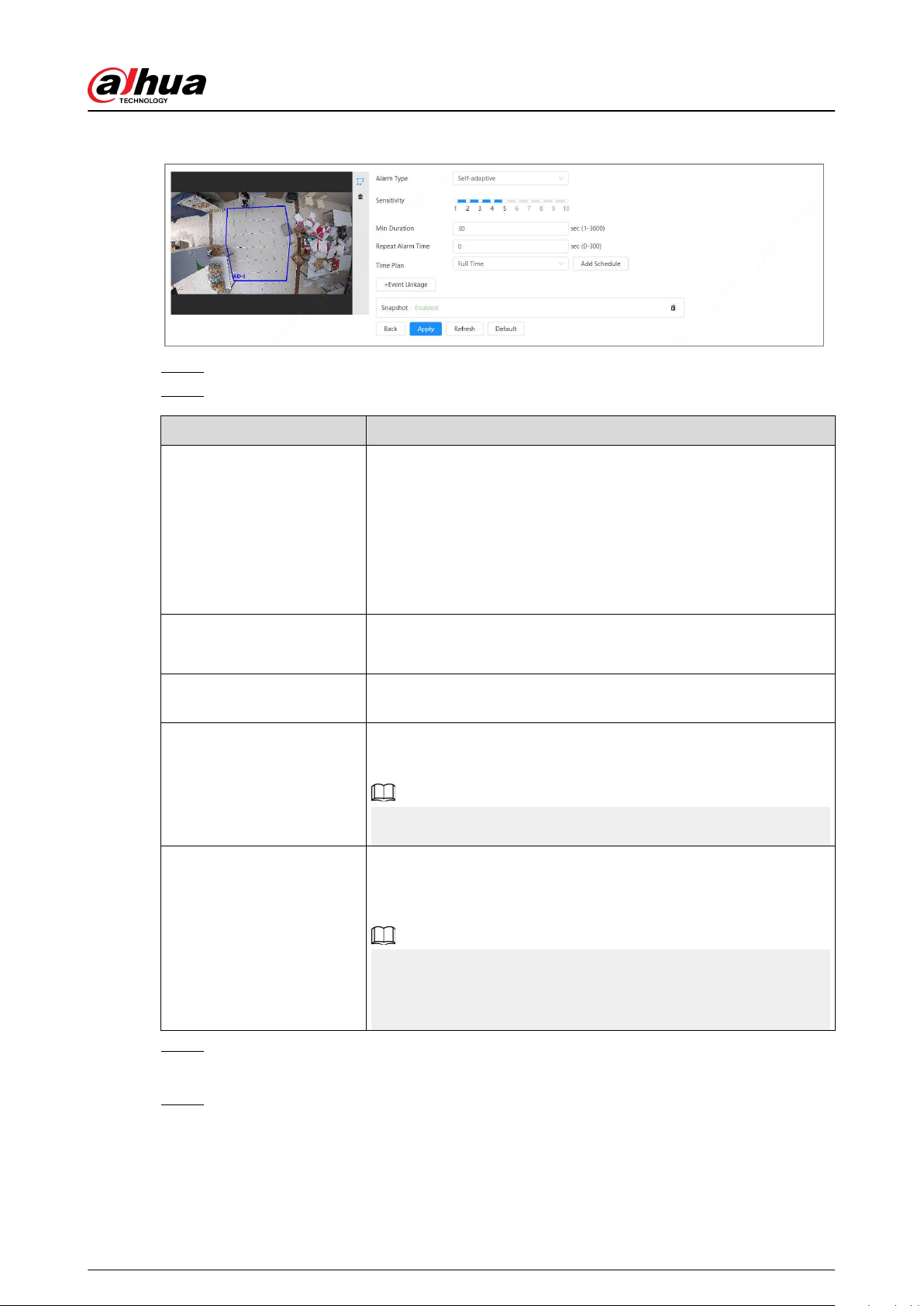
Figure 8-45 Abnormal Event Detection
Step 6 Set parameters.
Step 7 Table 8-20 Description of abnormal event detection
Parameter Description
Alarm Type
You can select from Self-adaptive and Custom.
●
Self-adaptive: The system calculates the number of people and
the area of detection region to determine whether the alarm is
triggered.
●
Custom: Congure crowd number for dierent crowd level.
When the number exceed the congured value, an alarm will be
triggered. Up to 5 levels can be added.
Sensitivity
The higher the sensitivity, the easier the detection, but the more
the false detections.
Min Deration
When the duration of congestion exceeds the congured value, an
alarm is triggered.
Repeat Alarm Time
When the alarm is triggered and this state lasts for repetitive alarm
time, the alarm will be triggered again.
0 means repeat alarm function disabled.
Crowd Level
When the alarm type is Custom , click Add to add crowd level.
When the number exceed the congured value, an alarm will be
triggered.
●
The number of people in the crowd level added later must be
larger than the number added before.
●
When deleting the crowd level, delete it from the highest level.
Step 8 Set arming periods and alarm linkage action. For details, see "6.5.1.2 Alarm Linkage".
Click + Event Linkage to set the linkage action.
Step 9 Click Apply.
To view alarm information on the alarm subscription tab, you need to subscribe relevant
alarm event. For details, see "6.5.1.3.2 Subscribing Alarm Information".
Operation Manual
159
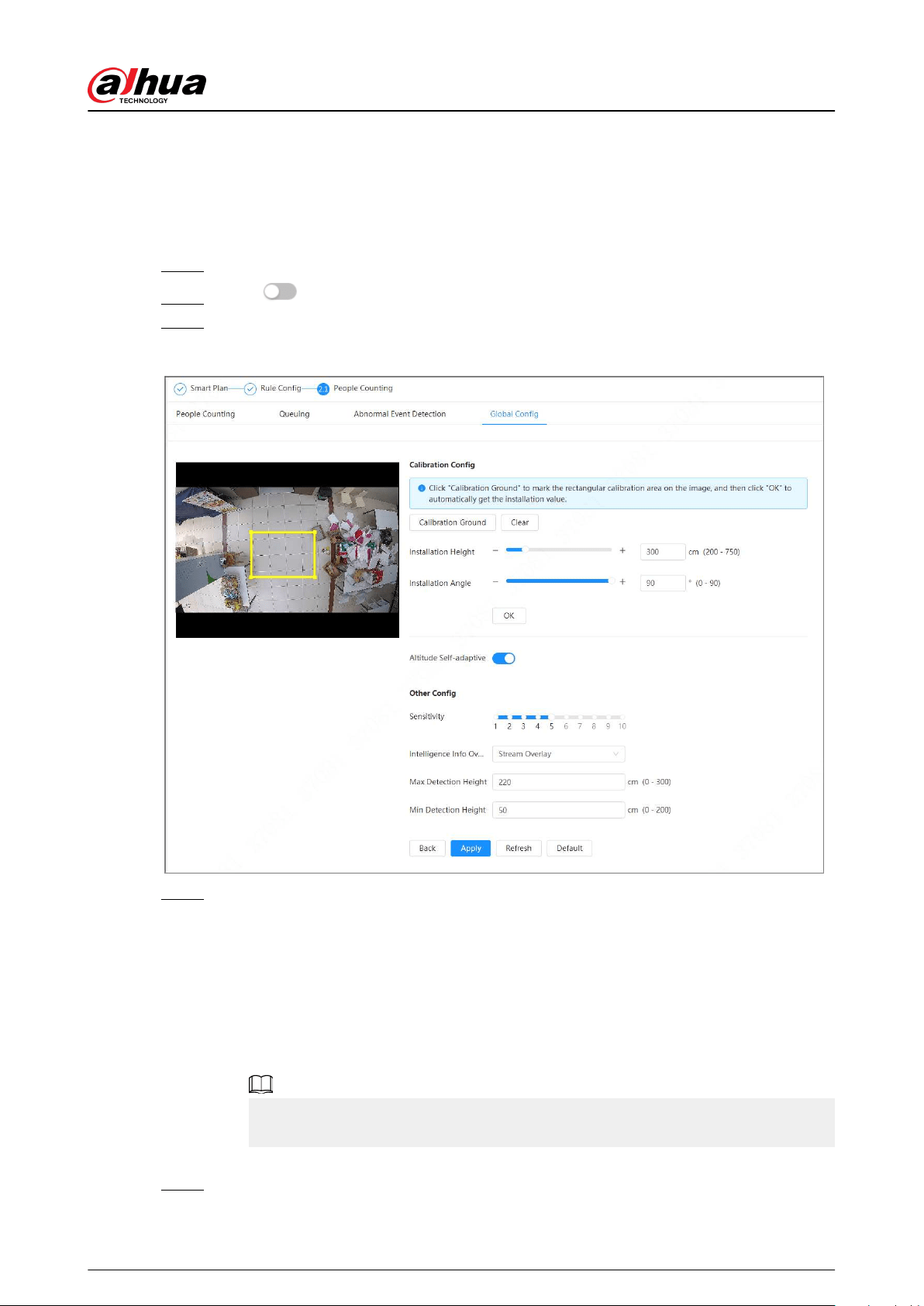
8.9.4 Global Conguration
After you congured the calibration ground and enabled altitude self-adaptive, the device could
automatically adjust the eld of view according to the installation height and angle.
Procedure
Step 1 Select AI > Smart Plan
Step 2 Click next to People Counting , and then click Next.
Step 3 Click the Global Cong tab.
Figure 8-46 Global cong
Step 4 Set the calibration cong.
●
Method 1: Congure the installation height and angle manually according to the
actual situation.
●
Method 2: Automatically calculate the installation height and angle by calibration
ground.
Here we use method 2 as an example.
a. Click Calibration Ground.
b. Draw the yellow box in the live page.
Try to choose a position near the middle of the detection region and which is easy to
be recognize.
c. Click OK. The device automatically calculate the installation height and angle.
Step 5 Enable Altitude self-adaptive.
Operation Manual
160

Step 6 Set the sensitivity.
When the sensitivity is high, detection becomes easier, but the number of false detections
increases.
Step 7 Set the intelligence info overlay.
●
Stream overlay: Overlay the information on the stream.
When enabling Stream Overlay , the Overlay function in camera setting will be
disabled. When Overlay is enabled again, the function restores and maintains the
previous settings.
●
Overlay: Click OSD Info, and the Overlay page is displayed, and then enable the
People Counting function. The number of detected information is displayed on the
Live page. For details, see "6.2.2.2.15 Conguring People Counting".
Step 8 Congure the max and min detection height.
Step 9 Click Apply.
8.10 Face & Body Detection
After enabling this function, the camera detects faces and human body separately, and then
correlates the face and the body. When selecting compliant mode, the camera can detect attributes
including face masks, helmets, glasses, safety vests, top color, and bottom color, and determine
whether PPE requirements are met. PPE compliance or non-compliance alarms can be triggered
according to the alarm settings.
8.10.1 Global Conguration
Set the global conguration of face & body detection, including face parameter and scene
parameter.
Procedure
Step 1 Select AI > Smart Plan.
Step 2 Click next to Face & Body Detection to enable face & body detection of the
corresponding channel, and then click Next.
Step 3 Click the Global Cong tab.
Step 4 Set parameters.
Operation Manual
161
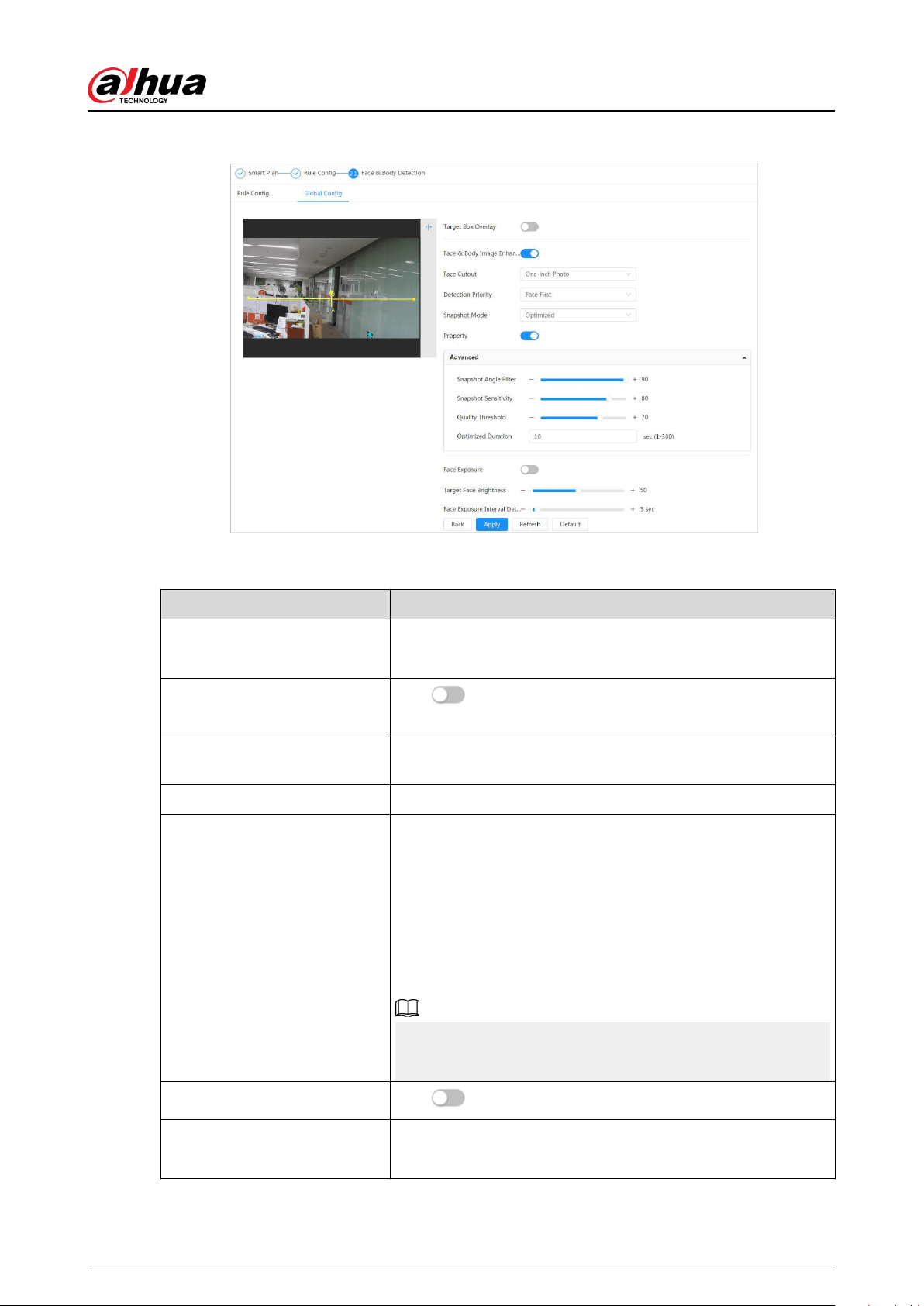
Figure 8-47 Global conguration of face & body detection
Table 8-21 Description of scene set parameters (face & body detection)
Parameter Description
Target Box Overlay
Overlay target box on the captured pictures to mark the target
position.
Face & Body Image
Enhancement
Click
next to Face & Body Image Enhancement to
preferably guarantee clear face and body with low stream.
Face Cutout
Set a range for matting face image, including face, one-inch
photo, and custom.
Detection Priority Select from Face First or Human Body First.
Snapshot Mode
●
Real-time : Capture the image when the camera detects a
face.
●
Optimized : Capture the clearest image within the
congured time after the camera detects face.
●
Quality Priority : After detecting the face image quality is
higher than the quality threshold, the camera captures the
image.
●
Tripwire : This snapshot is available in PPE Detection Mode.
Click Advanced to set the optimized time and quality
threshold.
Property
Click
next to Property to enable the properties display.
Advance
●
Snapshot Angle Filter : Set snapshot angle to be ltered
during the face detection.
Operation Manual
162
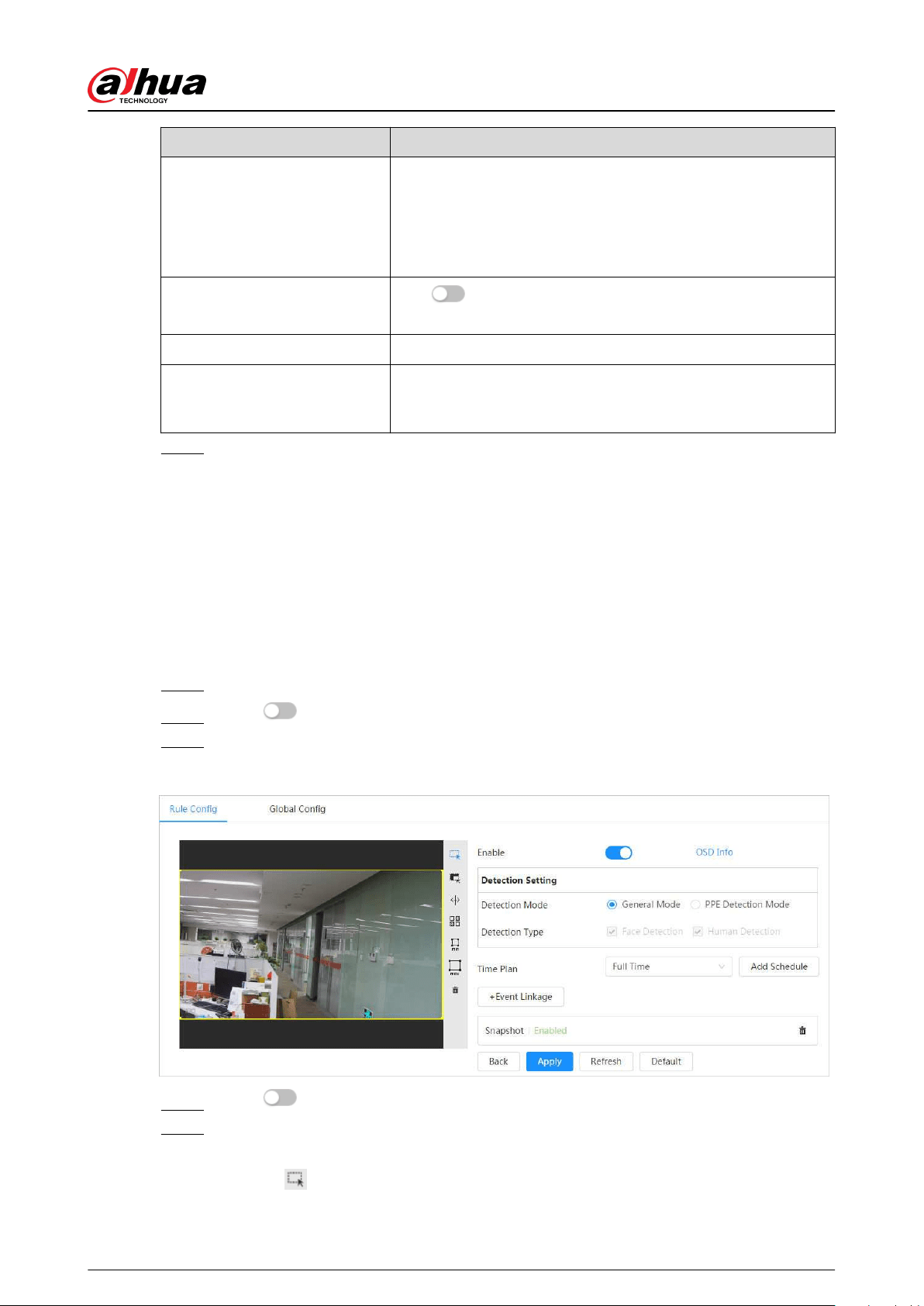
Parameter Description
●
Snapshot Sensitivity : Set snapshot sensitivity during the
face detection. It is easier to detect face with higher
sensitivity.
●
Optimized Time : Set a period to capture the clearest
picture after the camera detects face.
Face Exposure
Click
next to Face Exposure to make face clearer by
adjusting lens aperture and shutter.
Target Face Brightness Set the face target brightness, and it is 50 by default.
Face Exposure Interval
Detection Time
Set the face exposure interval detection time to prevent image
ickering caused by constant adjustment of face exposure. It is
5 seconds by default.
Step 5 Click Apply.
8.10.2 Rule Conguration
Set the detection scene and rules, including people, non-motor vehicle, and motor vehicle.
Prerequisites
●
Select AI > Smart Plan, and enable Face & Body Detection.
●
You have congured the parameters on the Global Cong page.
Procedure
Step 1 Select AI > Smart Plan
Step 2 Click next to Face & Body Detection , and then click Next.
Step 3 Click the Rule Cong tab.
Figure 8-48 Rule conguration
Step 4 Click next to Enable to enable the face detection function.
Step 5 (Optional) Click other icons at the right side of the image to draw detection area,
exclusion area, and lter targets in the image.
●
Click
to draw a face detection area in the image, and right-click to nish the
drawing.
Operation Manual
163

●
Click
to draw an exclusion area for face detection in the image, and right-click to
nish the drawing.
●
Click
to draw rule line in the image.
●
Click
to draw the minimum size of the target, and click to draw the maximum
size of the target. Only when the target size is between the maximum size and the
minimum size, can the alarm be triggered.
●
Click
, and then press and hold the left mouse button to draw a rectangle, the pixel
size is displayed.
●
Click
to delete the detection line.
Step 6 (Optional) Set OSD information.
Click OSD Info , and the Overlay page is displayed, and then enable the face & body
counting function. The number of detected faces and bodies is displayed on the Live
page. For details, see "6.2.2.2.12 Conguring Face Statistics".
Step 7 Select the detection mode.
●
General Mode (selected by default): The system will perform an alarm linkage when
the camera detects a face or a person.
●
PPE Detection Mode :
a. Click + next to AI Attributes.
b. Select AI attributes that you want to detect.
The AI attributes include mouth mask, vest, safety helmet, glasses, top color, and
bottom color. For glasses, you need to select the glass type; for safety helmet, top
color, and bottom color, you need to select colors.
c. Click Apply to go back to the Rule Cong page.
d. Select the alarm mode.
Match Attributes Alarm : When the target's properties are compliant with the
congured properties, an alarm will be triggered, and the system performs an
alarm linkage.
Mismatch Attributes Alarm : When the target's properties are not compliant
with the congured properties, an alarm will be triggered, and the system
performs an alarm linkage.
Step 8 Set arming periods and alarm linkage action. For details, see "6.5.1.2 Alarm Linkage".
Step 9 Click Apply.
To view alarm information on the alarm subscription tab, you need to subscribe relevant
alarm event. For details, see "6.5.1.3.2 Subscribing Alarm Information".
8.11 PPE Detection
After PPE (Personal Protective Equipment) detection is enabled and related rules are congured,
when the target attributes are inconsistent with the congured attributes, the alarm is triggered.
This function can be widely used in energy, nance, retail, manufacturing and other industries of
employee service compliance.
Operation Manual
164
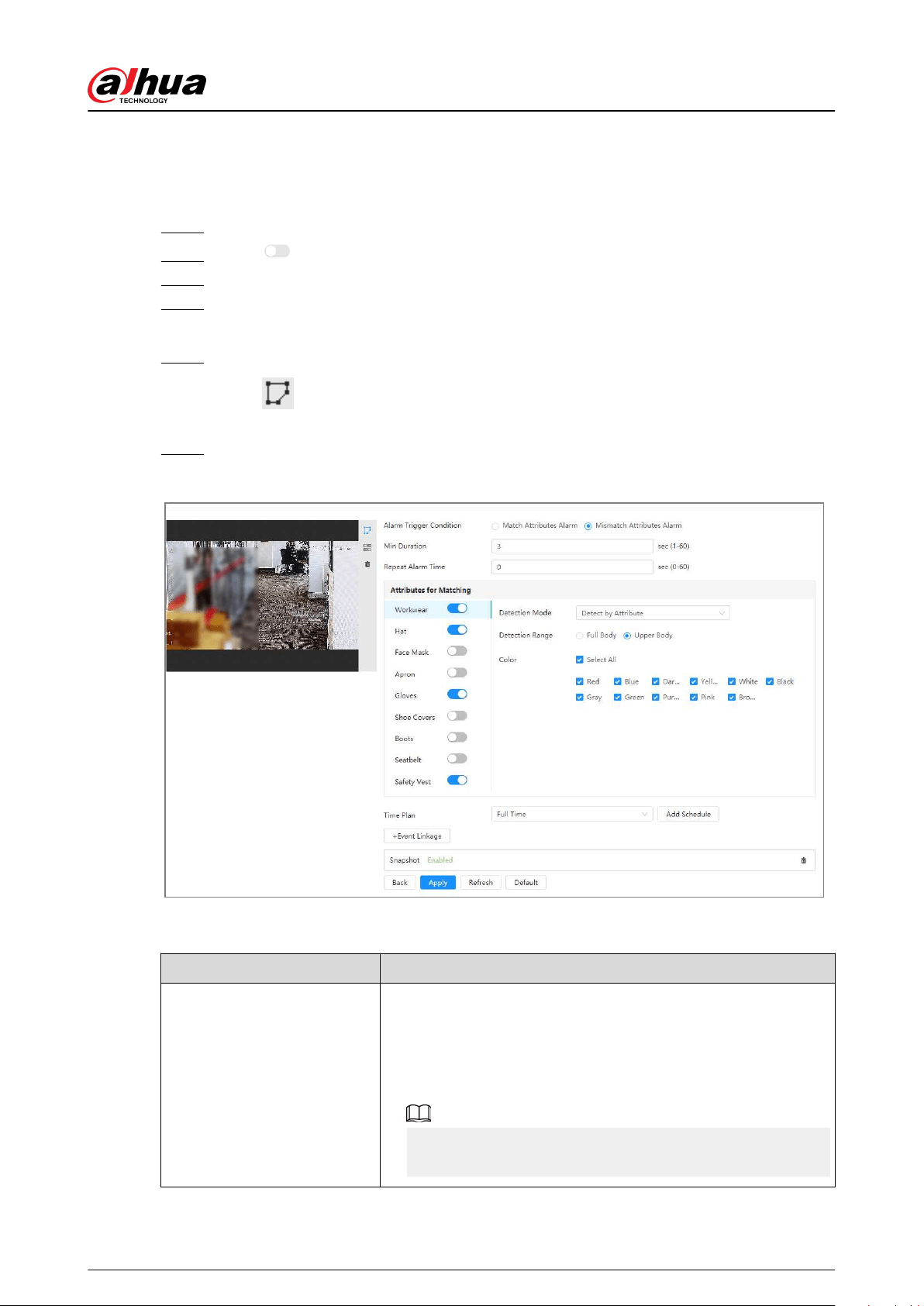
8.11.1 Rule Conguration
Procedure
Step 1 Select AI > Smart Plan.
Step 2 Click next to PPE Detection , and then click Next.
Step 3 Click the Rule Cong tab.
Step 4 Click Add Rule , and then select PPE Detection.
Currently only one rule can be added.
Step 5 Draw the detection area.
Click
, drag the any corner of the box to adjust the size of the area, and then press the
right mouse button and move the box to adjust the position.
Step 6 Congure the detection parameters.
Figure 8-49 PPE detection
Table 8-22 Description of PPE detection parameters
Parameter Description
Alarm Trigger Condition
●
Match Attributes Alarm : When the detected object matches
all of the congured attributes, the system triggers alarm.
●
Mismatch Attributes Alarm : When the detected object does
not match the congured attributes, the system triggers
alarm.
Each detected attribute which does not match the congured
attributes will trigger a new alarm.
Operation Manual
165
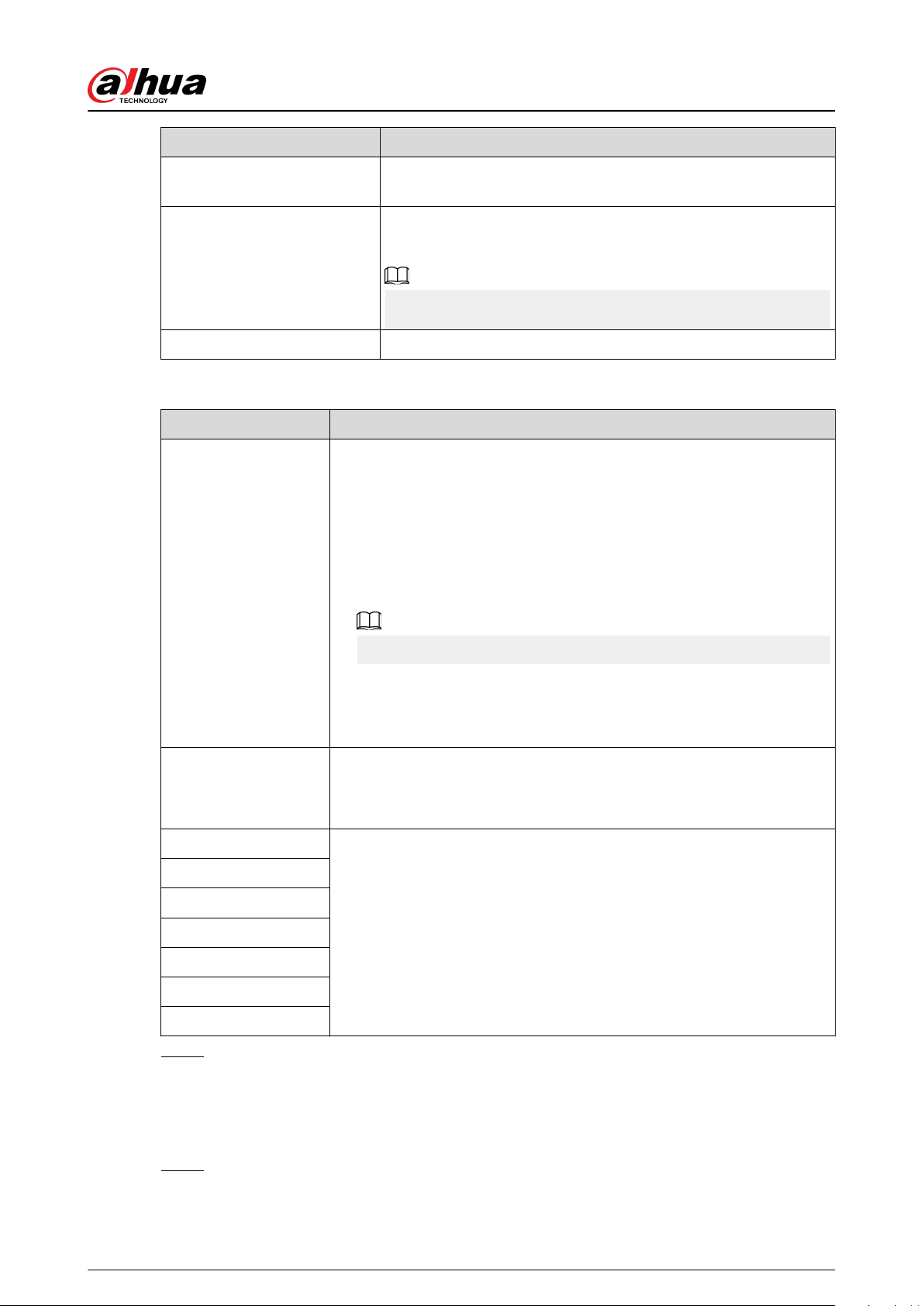
Parameter Description
Min Duration
The minimum duration between the detected object appears and
trigger the alarm.
Repeat Alarm Time
When the alarm is triggered and this state lasts for repetitive
alarm time, the alarm will be triggered again.
0 means repeat alarm function disabled.
Attributes for Matching Set the alarm attributes. For details, see Table 8-23 .
Table 8-23 Description of attributes for matching
Attribute Description
Workwear
Select the detection mode.
●
Registration Mode : Detect the attribute Yes or No, and this mode
can be used when the clothes of upper body and lower body are in
dierent color.
Compare the detected workwear with the information in linked
arming database. You should congure the arming database in
advance. For details, see "8.11.3 Setting Arming Database".
Up to 5 arming databases can be added to the same rule.
●
Detect by Attribute :
a. Select the detection range from Full Body and Upper Body.
b. Select the color.
Hat
a. Select the detection attribute: Yes or No.
b. Select the detection range: Safety helmet or cap. If you choose safety
helmet, select the color.
Face Mask
Select the detection attribute: Yes or No.
Apron
Gloves
Shoe Covers
Boots
Seatbelt
Safety Vest
Step 7 Select time plan, and then click + Event Linkage.
●
If the added time plan cannot meet your requirements, click Add Schedule to add an
arming schedule. For details, see "6.5.1.2.1 Adding Schedule".
●
Click Event Linkage to add linked event and set linkage parameters. For details, see
"6.5.1.2 Alarm Linkage".
Step 8 Click Apply.
Operation Manual
166
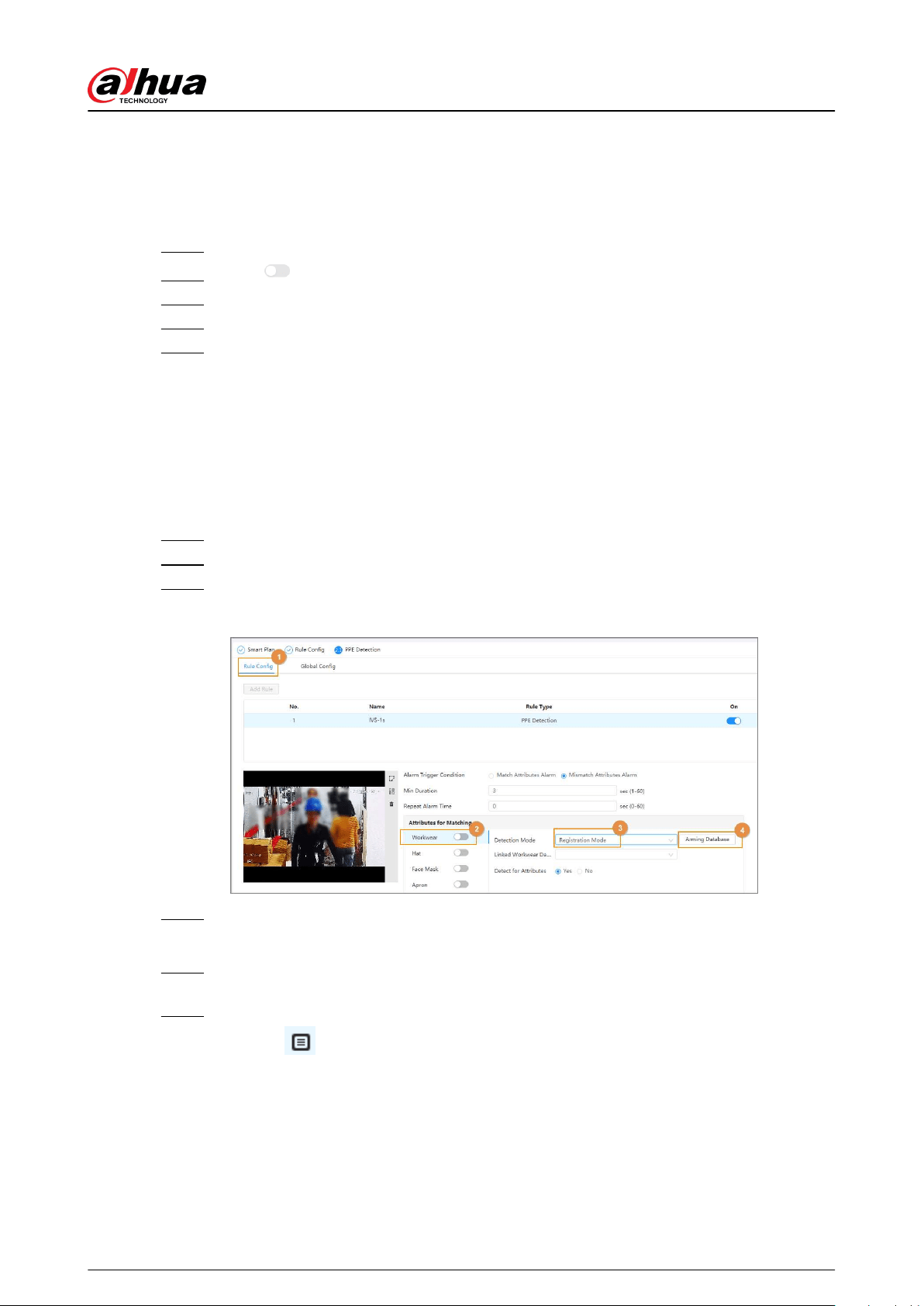
8.11.2 Global Conguration
Set the privacy protection for PPE detection.
Procedure
Step 1 Select AI > Smart Plan.
Step 2 Click next to PPE Detection , and then click Next.
Step 3 Click the Global Cong tab.
Step 4 Turn on Privacy Protection, and then choose the target.
Step 5 Click Apply.
8.11.3 Setting Arming Database
Prerequisites
Added PPE detection in Rule Cong tag.
Procedure
Step 1 Select AI > Smart Plan > PPE Detection.
Step 2 Click Rule Cong tag.
Step 3 Select Workwear > Registration Mode > Arming Database.
Figure 8-50 Arming database
Step 4 Click Add in Arming Database page.
Up to 5 arming databases can be added.
Step 5 Create the name of database, and then select the optional plan. You can select to detect
full body or half body.
Step 6 Congure the database.
1. Click
below Details.
2. Import the modeling pictures.
●
Import: Import one picture.
●
Batch import: Import up to 40 pictures at the same time.
3. Select imported pictures, and then click Modeling.
4. After modeling, you can check the modeling status in the drop-down list.
Operation Manual
167
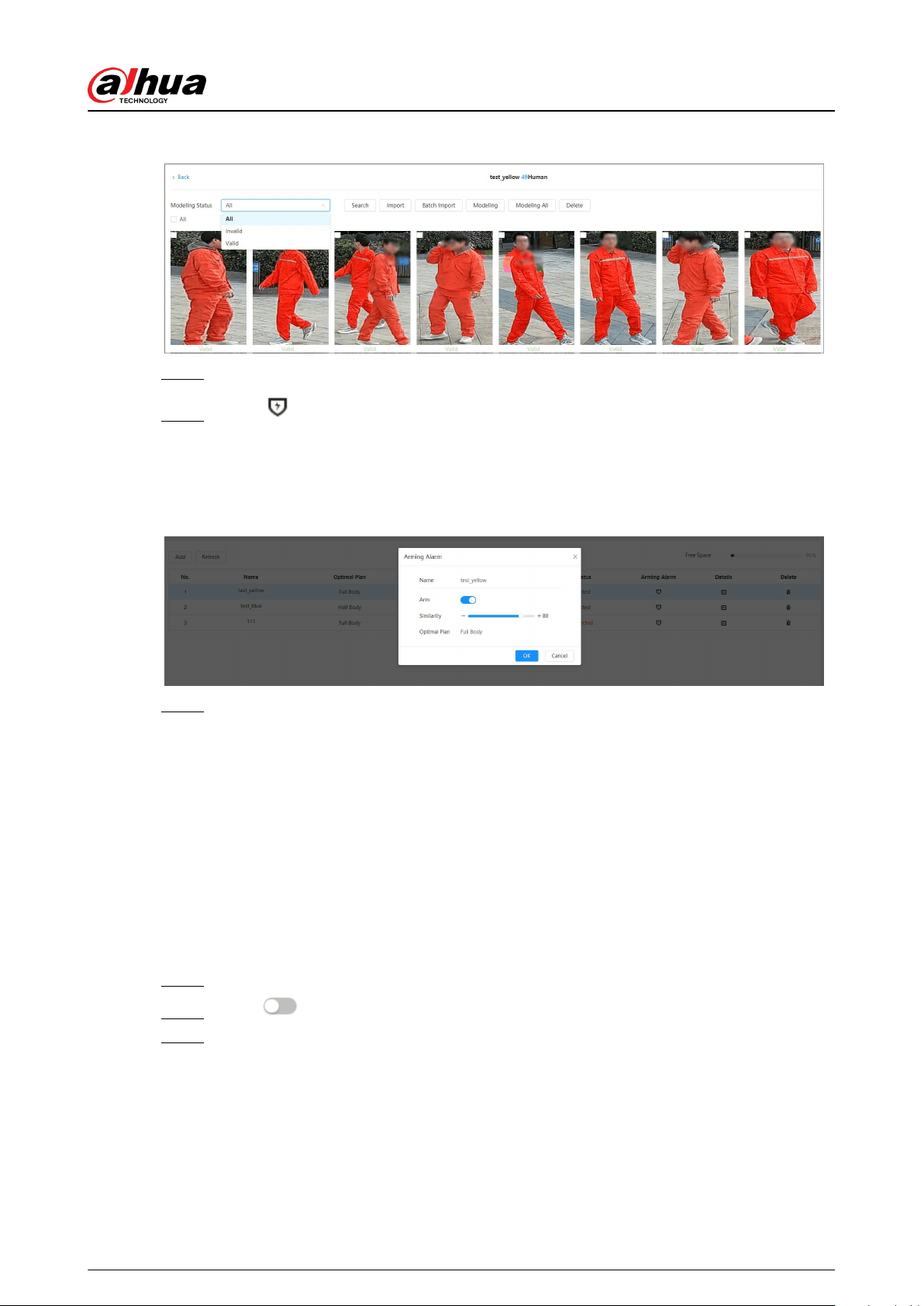
Figure 8-51 Search the modeling status
Step 7 Click Back, and then go back to arming database page.
Step 8 Click below Arming Alarm to set the parameters of arming alarm.
1. Enable Arm checkbox.
2. Set the similarity as needed.
3. Click OK.
Figure 8-52 Arming alarm
Step 9 Link workwear attributes. For details, see Table 8-23 .
8.12 Setting Heat Map
Detect the distribution of dynamically moving objects in the target area within a certain period and
displays the distribution on a heat map. Color varies from blue to red. The lowest heating value is in
blue, and the highest heating value is in red.
Background Information
When mirroring occurs on the camera or the viewing angle changes, original data on the heat map
will be cleared.
Procedure
Step 1 Select AI > Smart Plan
Step 2 Click next to Heat Map , and then click Next.
Step 3 Select the Enable check box, and then the heat map function is enabled.
Operation Manual
168
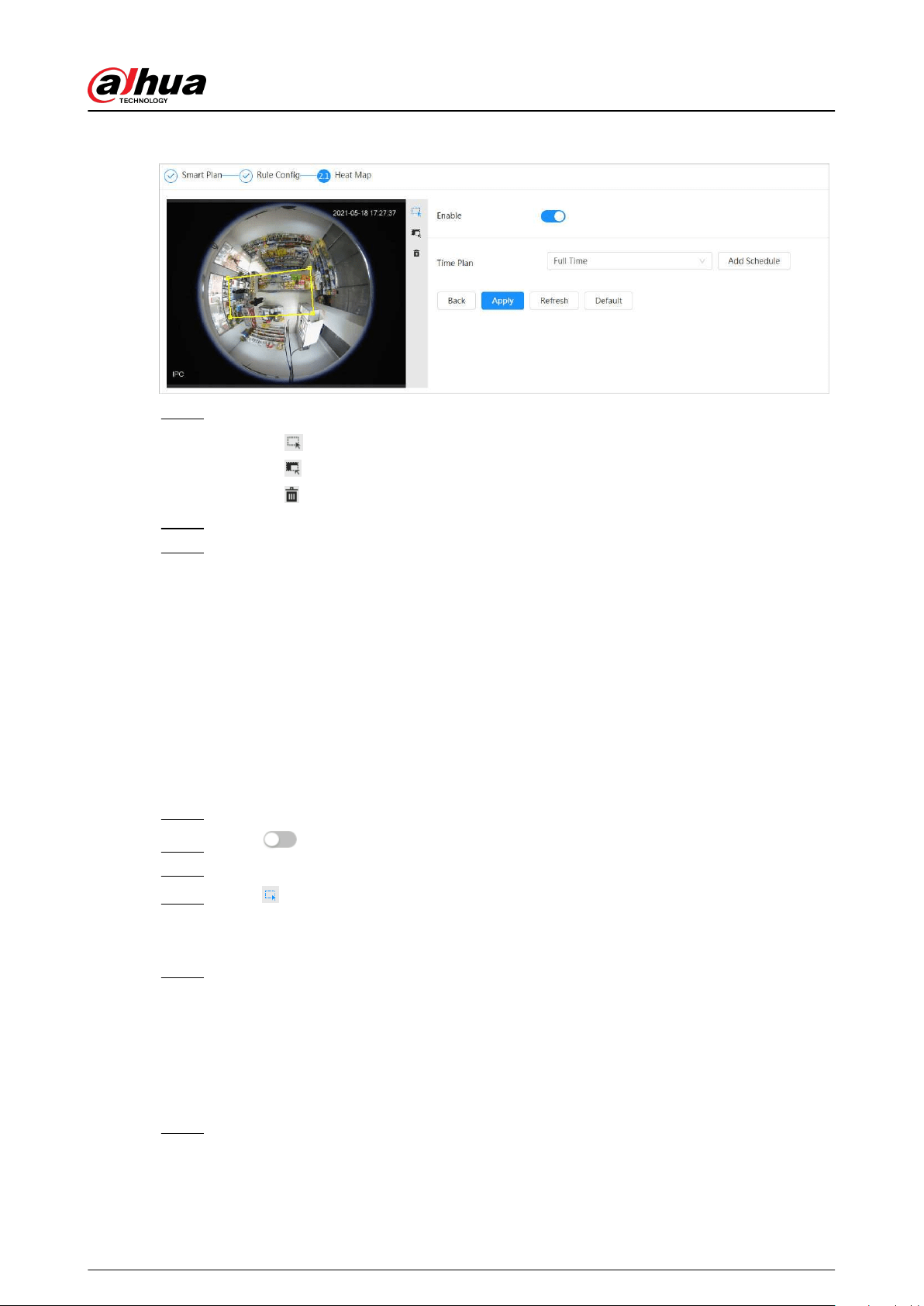
Figure 8-53 Heat Map
Step 4 Draw detection area and exclusion area.
●
Click
to draw a detection area on the image. Right-click to nish drawing.
●
Click
to draw an exclusion area on the image. Right-click to nish drawing.
●
Click
to clear the existing detection area or exclusion area.
Step 5 Set arming periods and alarm linkage action. For details, see "6.5.1.2 Alarm Linkage".
Step 6 Click Apply.
8.13 Setting ANPR
When a motor vehicle triggers the rule line in the detection area, it will capture the license plate
and report the attributes of the motor vehicle.
8.13.1 Lane Conguration
Congure lane conguration including detection area, lane line, detection line and lane direction.
Procedure
Step 1 Select AI > Smart Plan.
Step 2 Click next to ANPR , and then click Next.
Step 3 Click the Lane Cong tab.
Step 4 Click and draw the detection area.
Press the left mouse button to draw the detection area, and press the right mouse button
to nish.
Step 5 Congure lane line information.
●
One lane line is composed of two lane lines with an arrow, and the arrow represents
the direction of the lane.
●
The lane is enabled by default after drawing. If you do not select a lane, the track frame
will be displayed on the screen, but the event of license plate recognition will not be
reported.
●
The lane number of each lane is unique and unchangeable.
Step 6 Select the lane direction.
●
Vehicle Head : The driving direction of the vehicle in the lane is from top to bottom↓.
●
Vehicle Tail : The driving direction of the vehicle in the lane is from bottom to top↑.
Operation Manual
169

Figure 8-54 ANPR
Step 7 Congure detection line information.
●
The detection line is displayed in red and it only available in the drawn lane line.
●
When a motor vehicle triggers the detection line, a snapshot will be taken. Also the
license plate and its vehicle attributes will be reported.
Step 8 (Optional) You can repeat step 4-7 to draw more lane lines and detection lines. You can
add two lane lines at most.
Step 9 (Optional) Click Advanced.
●
Click
next to Trac Flow Statics. The system only detects the number of motor
vehicle and generates report after you enable this function.
●
Click OSD Info , and the Overlay page is displayed, and then enable the Parking
Space function. The statistical result is displayed on the Live page. For details, see
"6.2.2.2.9 Conguring ANPR".
Step 10 Click Apply.
8.13.2 Rule Conguration
When a motor vehicle trigger the lane line associated, the system performs the dened alarm
linkage.
Procedure
Step 1 Select AI > Smart Plan.
Step 2 Click next to ANPR , and then click Next.
Step 3 Click the Rule Cong tab.
Step 4 Click lane line to select the line that you congured. If no line is congured, click Add
Lane Line.
Operation Manual
170

Figure 8-55 Rule conguration (1)
Figure 8-56 Rule conguration (2)
Step 5 Select time plan and click + Event Linkage.
Operation Manual
171
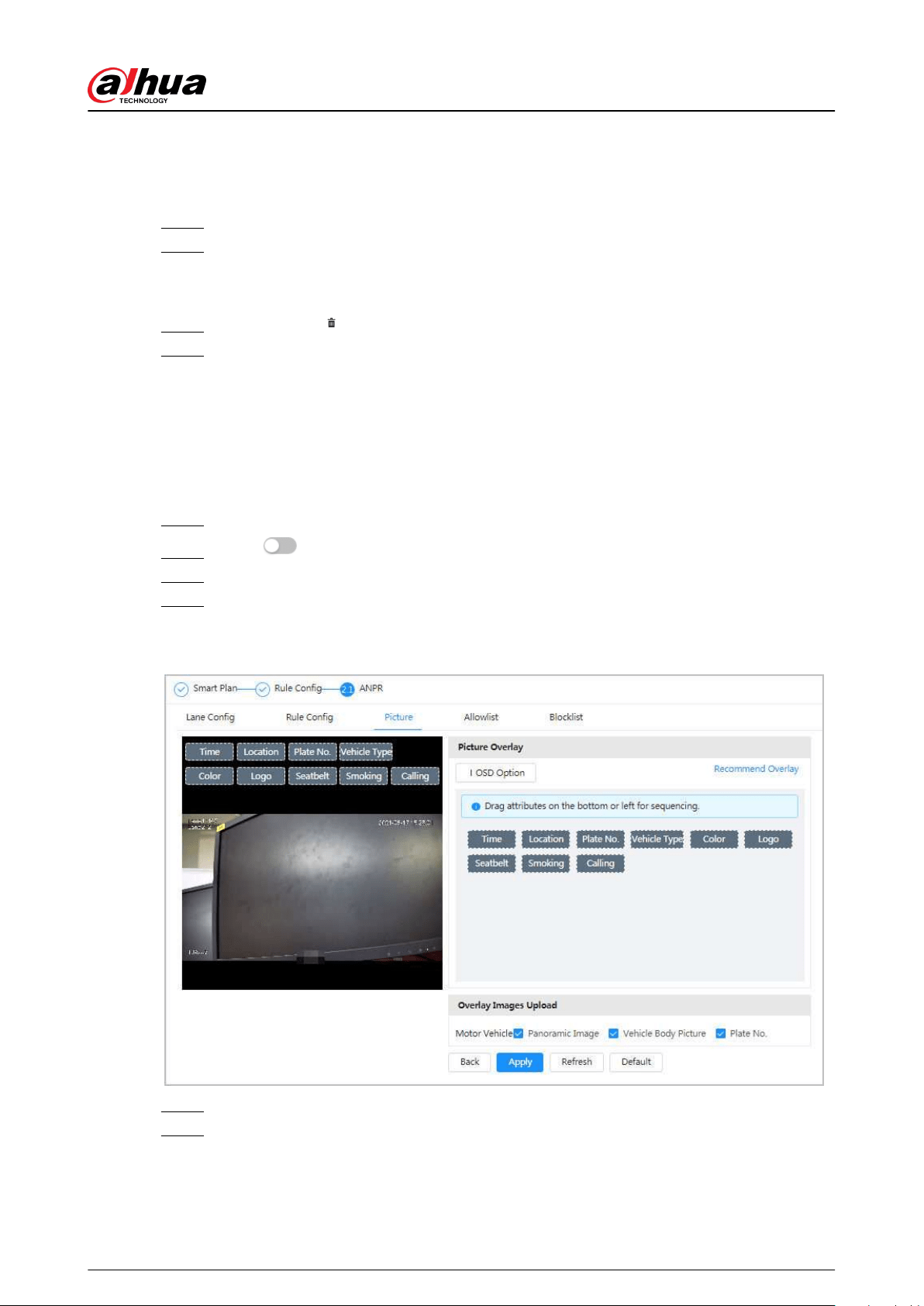
●
If the added time plan cannot meet your requirements, click Add Schedule to add an
arming schedule. For details, see "6.5.1.2.1 Adding Schedule".
●
Click +Event Linkage to add linked event, which support record, send email,
snapshot, alarm-out port and audio linkage.
Step 6 Set related alarm linkage.
Step 7 Set audio linkage. For more information, see "6.2.4.2 Setting Alarm Tone".
●
Set play count period.
●
Select the le needed.
Step 8 (Optical) Click to delete related linkage as needed.
Step 9 Click Apply.
8.13.3 Picture
Set overlay information and image display position, such as plate number, time, vehicle type, and
vehicle logo.
Procedure
Step 1 Select AI > Smart Plan.
Step 2 Click next to ANPR , and then click Next.
Step 3 Click the Picture tab.
Step 4 Click + OSD Option to select the type of overlay information that needs to capture. You
can adjust the position of the information displayed.
Figure 8-57 Picture
Step 5 Select the overlay images upload type(s).
Step 6 Click Apply.
Operation Manual
172
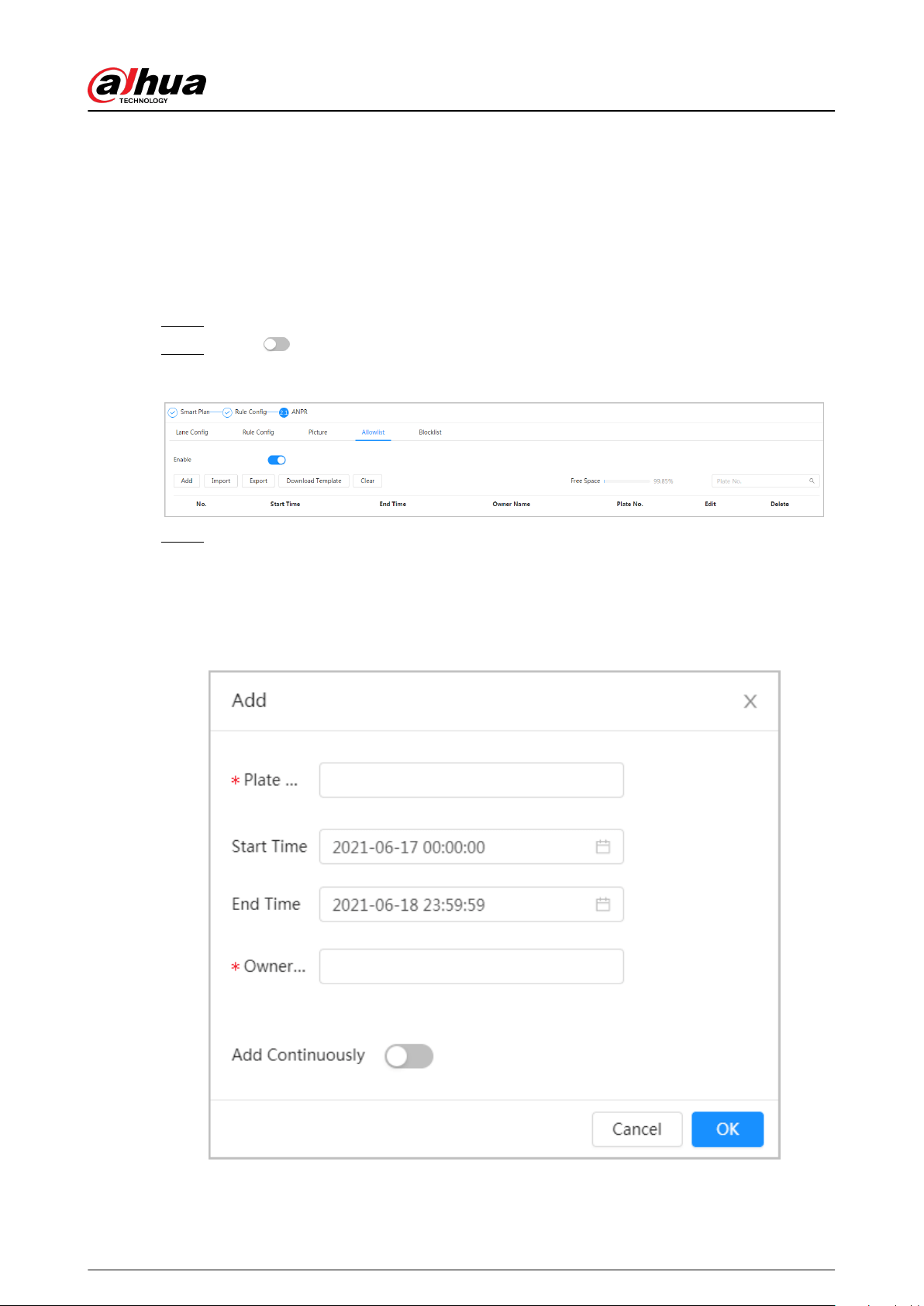
8.13.4 Allowlist
After enabling allowlist, the camera will upload allowlist event and trigger linkage alarm when it
detects the plate number in the allowlist.
Background Information
You can add 10,000 plate information in allowlist at most.
Procedure
Step 1 Select AI > Smart Plan > Allowlist.
Step 2 Click next to Enable to enable the allowlist function.
Figure 8-58 Enable allowlist
Step 3 Add allowlist.
●
Add allowlist one by one.
a. Click Add.
b. Set plate information.
Figure 8-59 Add allowlist plate
Operation Manual
173

Table 8-24 Description of parameters
Parameter Description
Plate No. Enter the complete plate number.
Start Time/End Time
Set the validity of allowlist for the plate number. After
this time range, the vehicle will not be detected even
within allowlist.
Owner Name Enter the name of car owner.
c. Click OK.
Click Add Continuously to add more plate number.
●
Add allowlist in batches.
a. Refer to the steps "Add allowlist one by one".
b. Click Export.
c. Do not select Encryption and then click OK to export the unencrypted allowlist
le.
Figure 8-60 Encryption settings (1)
d. Add the license plate information according to the sample of the exported le, and
then save the table.
Figure 8-61 Template
e. Click Import to upload allowlist table.
If the table is encrypted, you need to enter the password when uploading.
If the table is unencrypted, you can upload directly.
Related Operations
●
Search plate number.
Enter the plate number in
and then click . The search result is as below:
Operation Manual
174

Figure 8-62 Search allowlist
If you do not enter anything, it will show all the allowlist plate numbers added.
●
Edit allowlist information.
Click
to edit Start Time/End Time and Owner Name.
●
Delete allowlist.
Click to delete specic allowlist number.
Click Clear to delete all allowlist number.
●
Export allowlist.
Click Export. Enable encrypted or unencrypted le as needed and then export it to your PC.
Export the le in .csv format if not encrypted, and you can edit the le.
Figure 8-63 Encryption settings (2)
Export the le in .backup format if encrypted, and you cannot edit the le.
Operation Manual
175
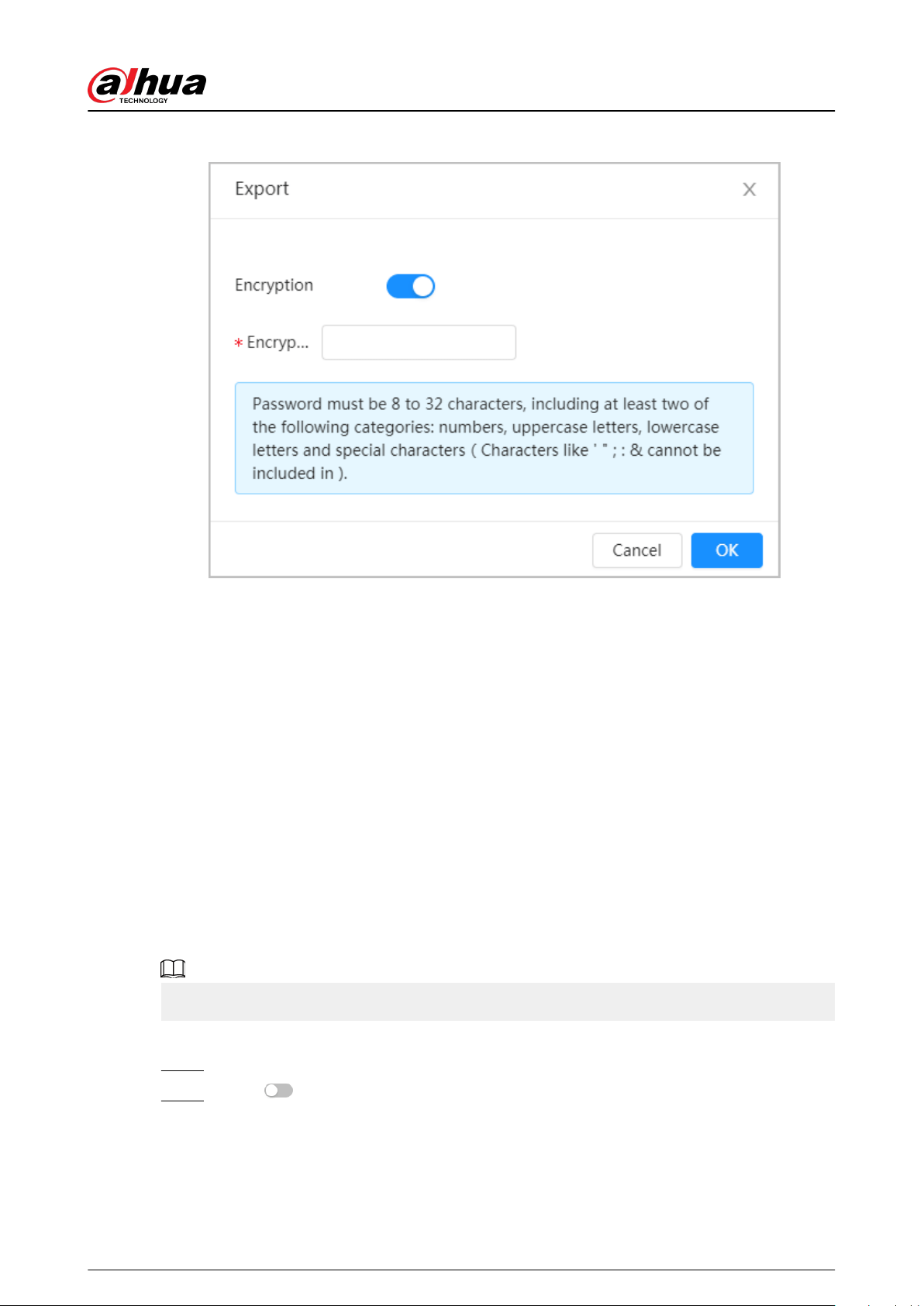
Figure 8-64 Encryption settings (3)
8.13.5 Blocklist
After enabling blocklist, an alarm will be triggered when a plate number in blocklist is detected.
An alarm will be triggered when a plate number in the block list is detected.
You can add 10,000 plate information in blocklist at most.
The operation of blocklist is same as allowlist. For details, see "8.13.4 Allowlist".
8.14 Setting Panoramic Linkage
8.14.1 Enabling Linkage Track
Background Information
Linkage Track is not enabled by default. Please enable it when necessary.
Procedure
Step 1 Select AI > Panoramic Linkage > Linkage Track.
Step 2 Click next to Enable to enable Linkage Track.
Operation Manual
176

Figure 8-65 Linkage track
Step 3 Congure other parameters.
Table 8-25 Parameters of linkage track
Parameters Description
Tracking Duration
●
Continue till object disappears: When alarm is triggered, the camera
automatically links to the corresponding position and tracks the
object until the object exceeds the monitoring range.
●
Custom: Set the tracking duration for the camera.
Tracking Target Size
Ratio
Sets the ratio of the tracked object in the detail camera frame.
Idle Interval
Set the idle interval and idle position. If the PTZ does not receive any
tracking command within the idle interval you set, the camera will
automatically turn to the idle position. For example, if the idle interval is
5 seconds and idle position is preset 1, when the PTZ does not receivce
any tracking command for 5 seconds, it will turn to preset 1
automatically.
You need to set presets in advance.
Idle Position
Step 4 Click OK.
8.14.2 Conguring Calibration Parameter
Auto calibration mode is available on select models.
Procedure
Step 1 Select AI > Panoramic Linkage > Main/Sub Calibration.
Step 2 Congure calibration parameters.
●
Auto calibration
Operation Manual
177
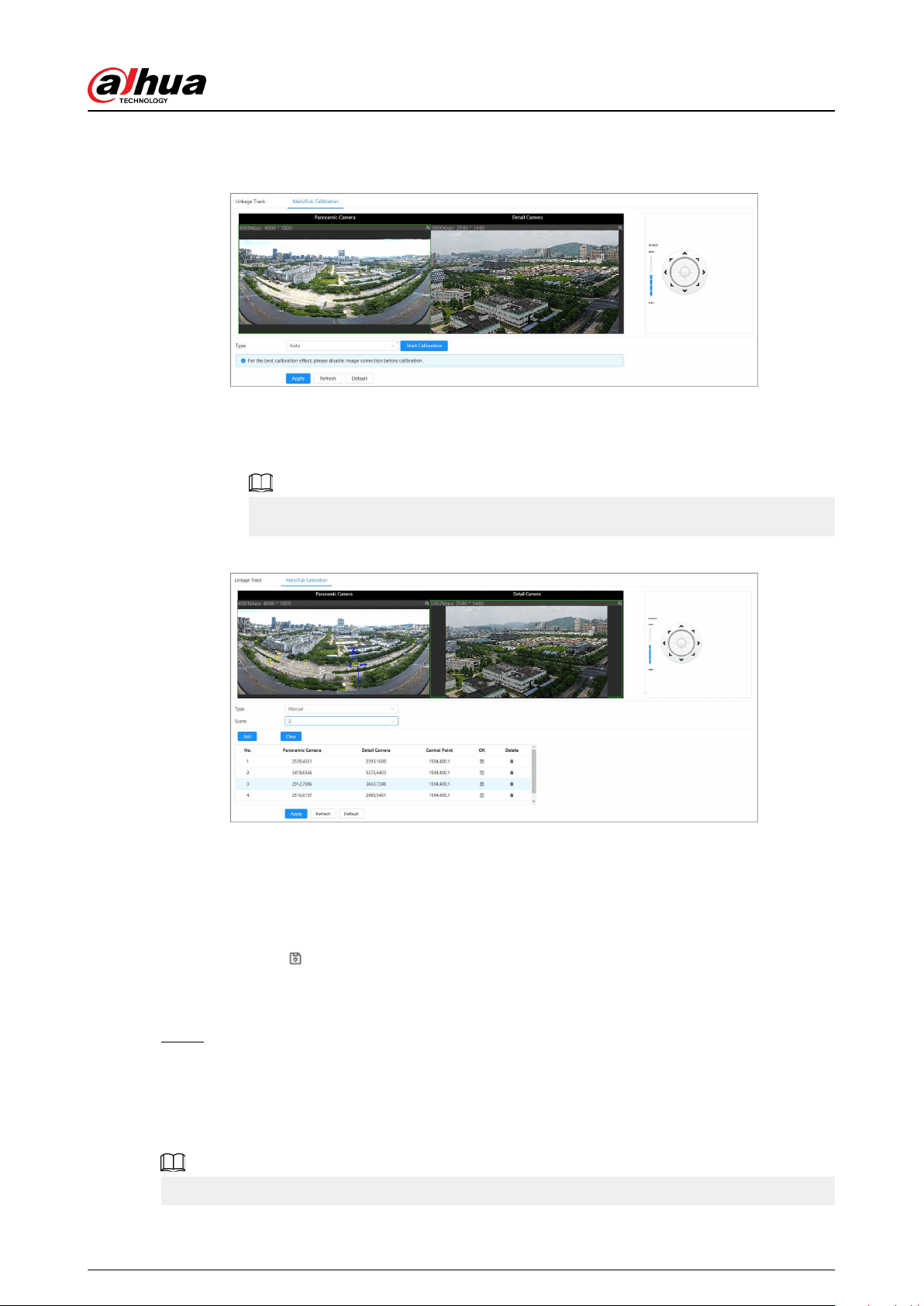
Select Auto in Type, and then click Start Calibration.
Figure 8-66 Auto calibration
●
Manual calibration
Select Manual in Type, select the scene, and then add calibration point for it in the
live image.
Web pages might vary with dierent models.
Figure 8-67 Manual calibration
1. Adjust the speed dome lens and turn it to the same view as the chosen lens, and then
click Add.
The calibration dots are displayed in both images.
2. Pair each dot in the two images, and keep the paired dots at the same spot of the live
view.
3. Click
.
At least 4 pairs of calibration dots are needed to ensure the views of the PTZ camera
and the panoramic camera as similar as possible.
Step 3 Click Apply.
8.15 Setting AcuPick
Enable this function to achieve accurate and quick search on the connected NVR.
Make sure that the connected NVR supports AcuPick mode.
Operation Manual
178
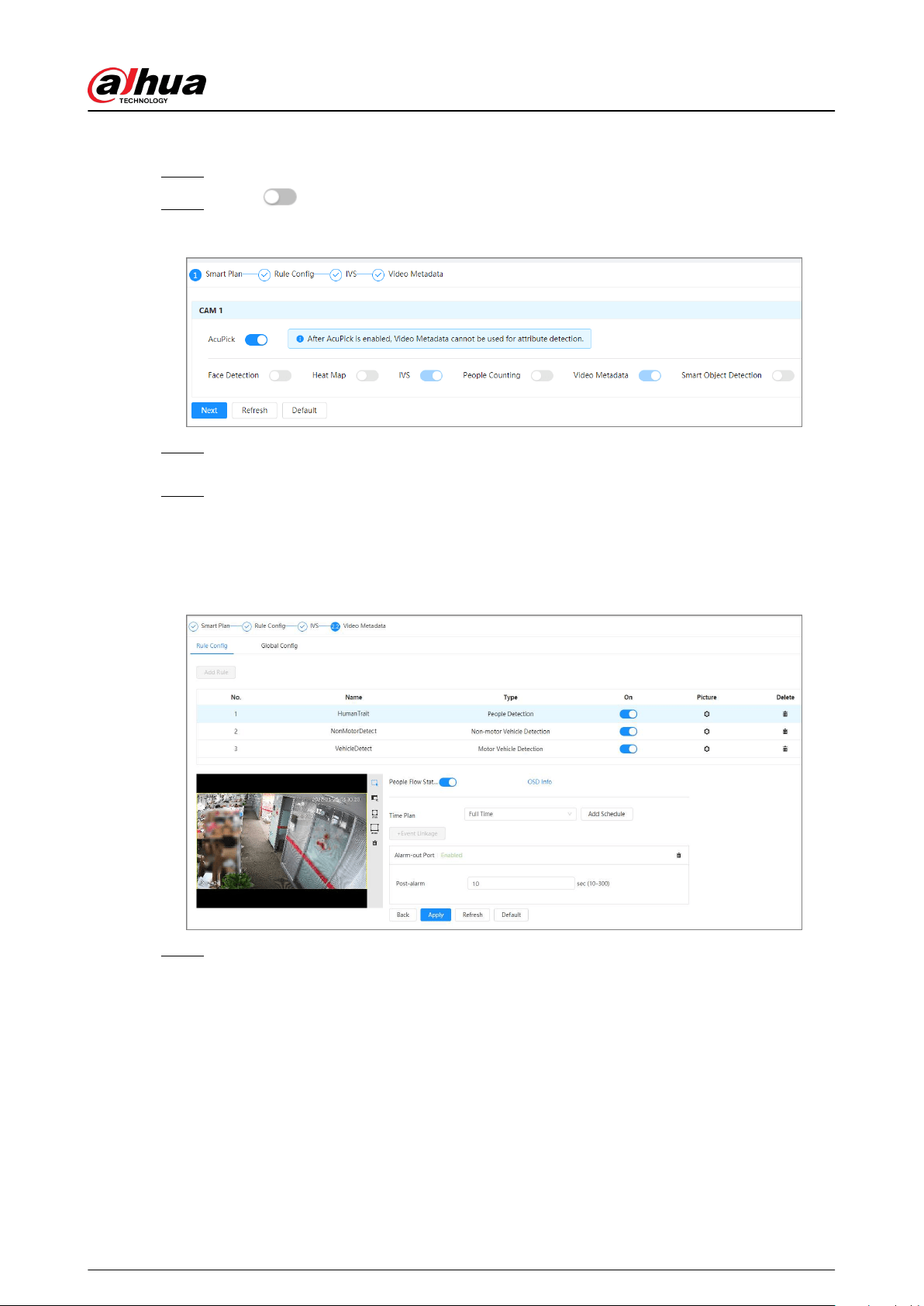
Procedure
Step 1 Select AI > Smart Plan.
Step 2 Click next to AcuPick , and then click Next.
Figure 8-68 Enable AcuPick
Step 3 (Optional) Set IVS function as needed, and then click Next. For details, see "8.4 Setting
IVS".
Step 4 Set video metadata function. For details, see "8.8 Setting Video Metadata"
Support People Detection , Non-motor Vehicle Detection and Motor Vehicle
Detection. Only when you enable the rules will the device push the corresponding
information to the connected NVR.
Figure 8-69 Set video metadata
Step 5 Click Apply.
Operation Manual
179
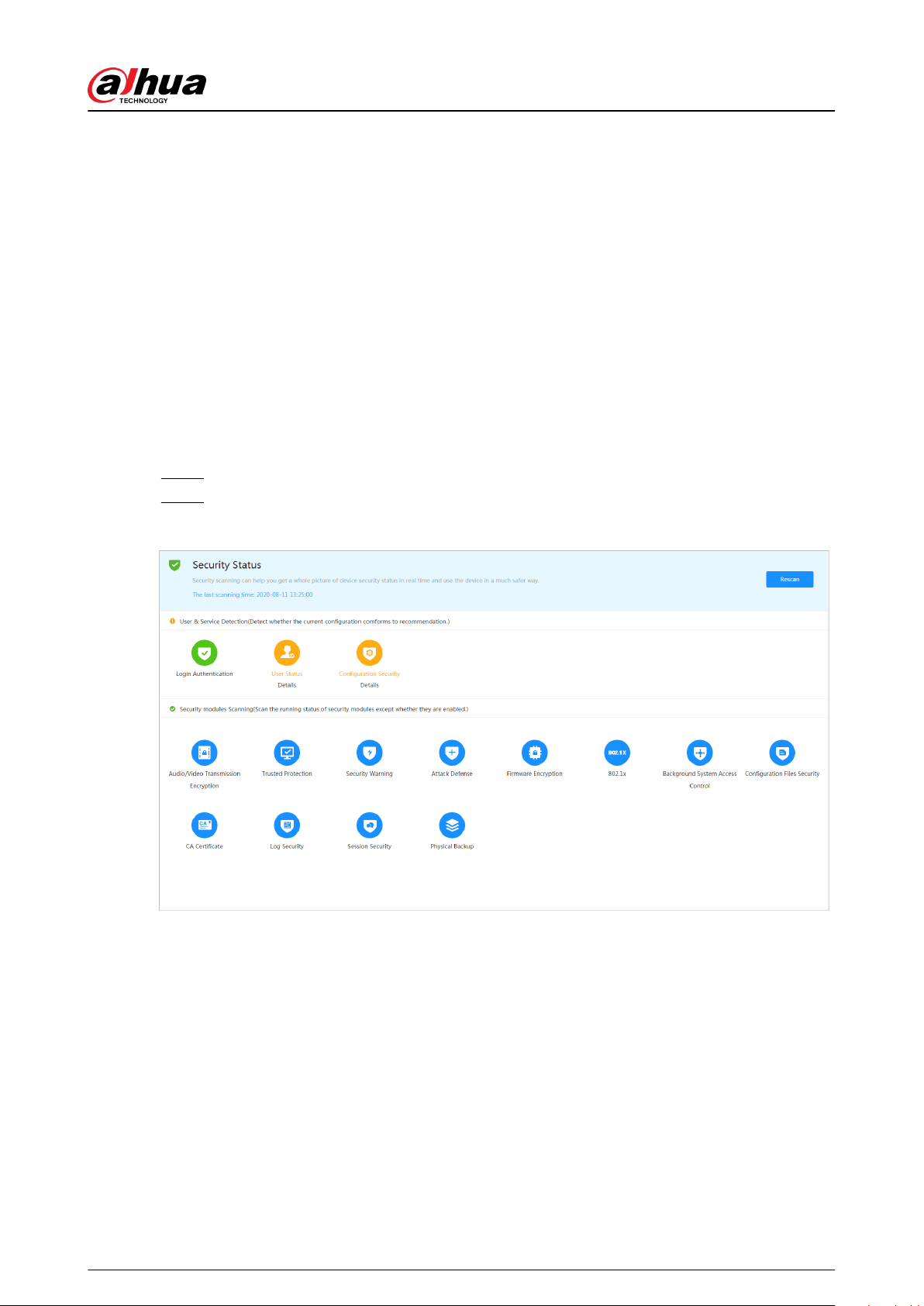
9 Security
9.1 Security Status
Background Information
Detect the user and service, and scan the security modules to check the security status of the
camera, so that when abnormality appears, you can process it timely.
●
User and service detection: Detect login authentication, user status, and conguration security
to check whether the current conguration conforms to recommendation.
●
Security modules scanning: Scan the running status of security modules, such as audio/video
transmission, trusted protection, securing warning and attack defense, not detect whether they
are enabled.
Procedure
Step 1 Select Security > Security Status.
Step 2 Click Rescan to scan the security status of the camera.
Figure 9-1 Security Status
Related Operations
After scanning, dierent results will be displayed with dierent color. Yellow indicates that the
security modules are abnormal, and Green indicates that the security modules are normal.
1. Click Details to view the details of the scanning result.
2. Click Ignore to ignore the exception, and it will not be scanned in next scanning.
Click Joint Detection, and the exception will be scanned in next scanning.
3. Click Optimize, and the corresponding page is displayed, and you can edit the conguration to
clear the exception.
Operation Manual
180
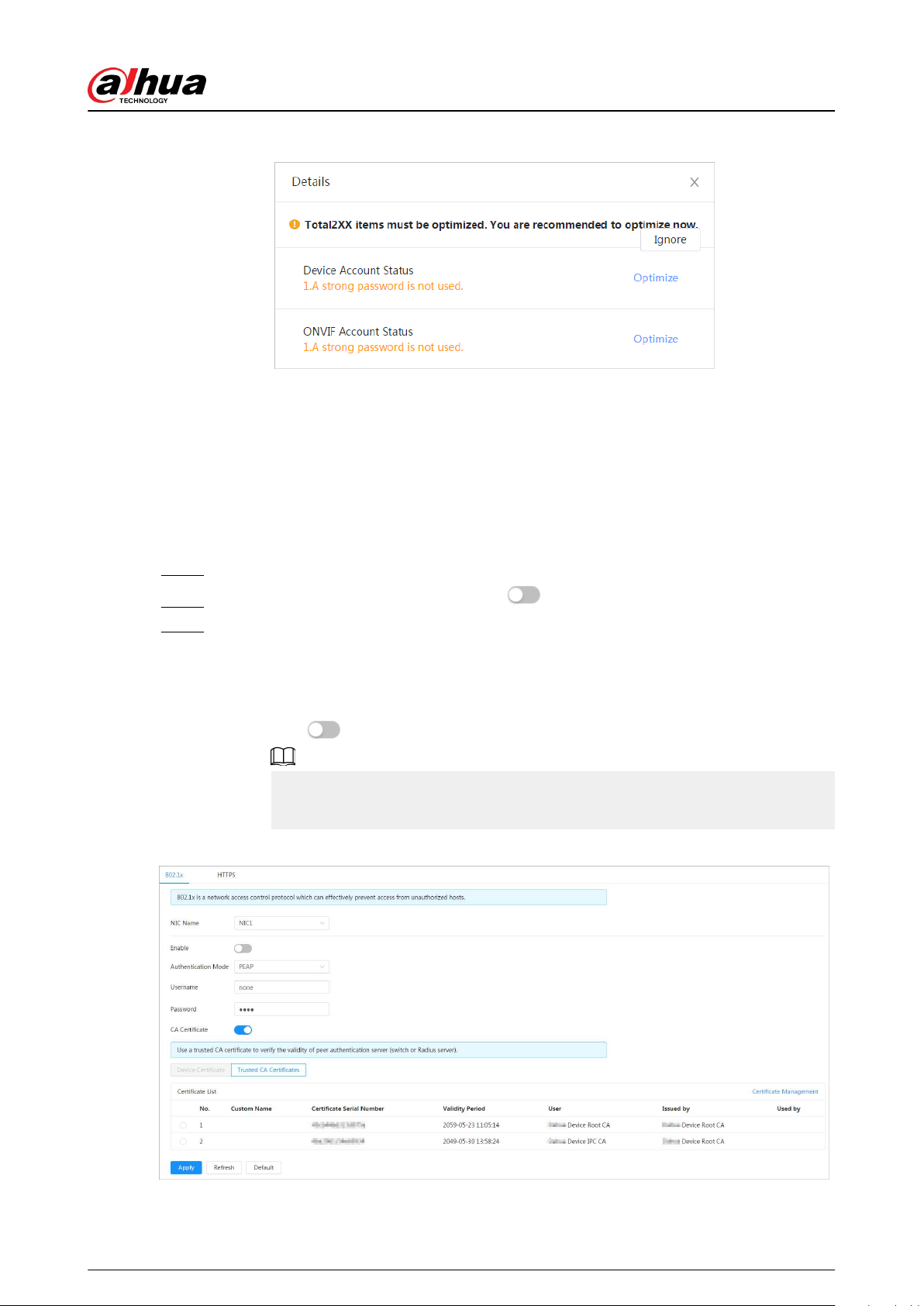
Figure 9-2 Security Status
9.2 System Service
9.2.1 802.1x
Cameras can connect to LAN after passing 802.1x authentication.
Procedure
Step 1 Select Security > System Service > 802.1x.
Step 2 Select the NIC name as needed, and click to enable it.
Step 3 Select the authentication mode, and then congure parameters.
●
PEAP: Protected EAP protocol.
a. Select PEAP as the authentication mode.
b. Enter the username and password that has been authenticated on the server.
c. Click
next to CA certicate, and select the trusted CA certicate in list.
If there is no certicate in the list, click Certicate Management at the left
navigation bar. For details, see "9.4.2 Installing Trusted CA Certicate".
Figure 9-3 802.1x (PEAP)
Operation Manual
181
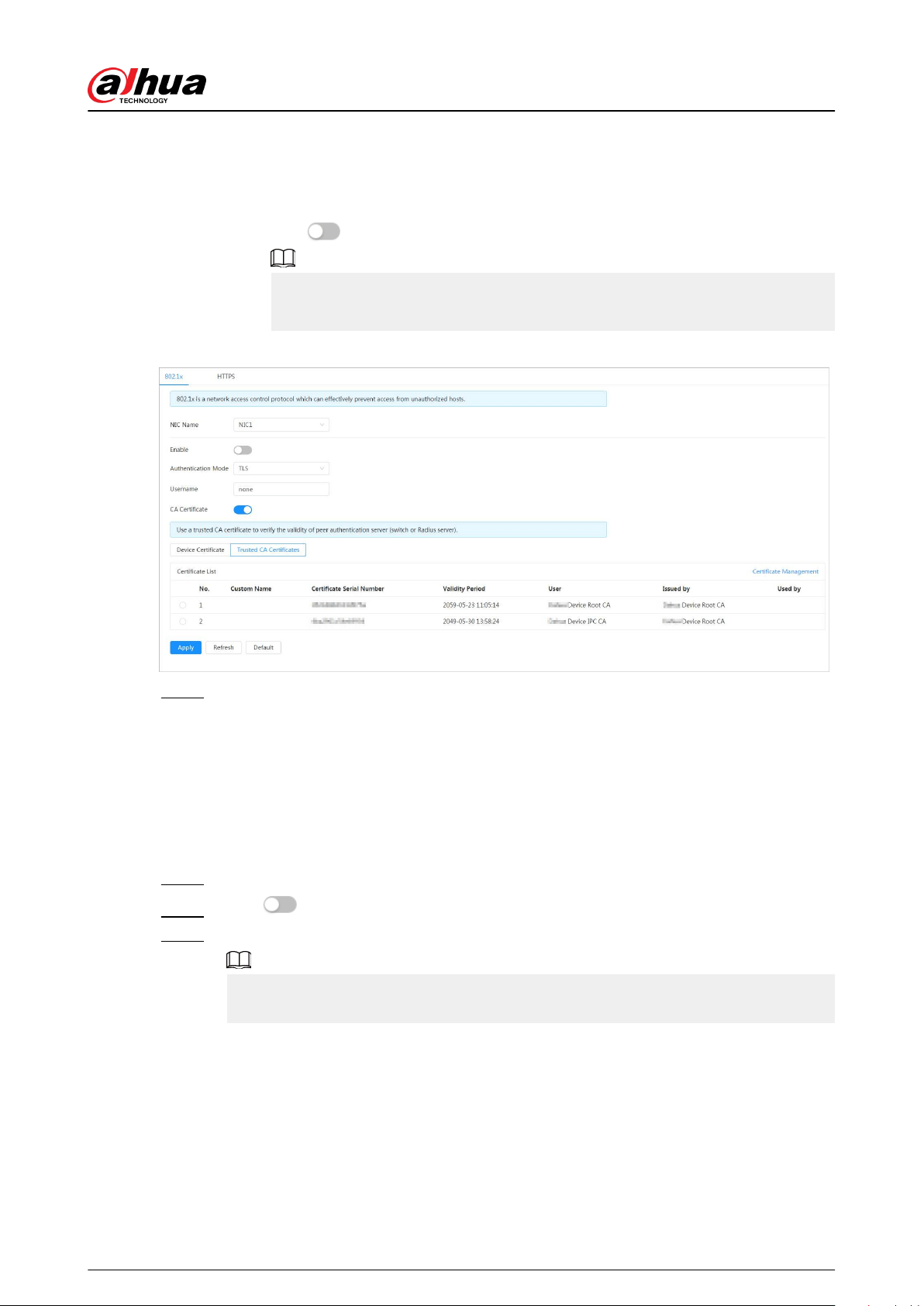
●
TLS: Transport Layer Security. It is applied in two communication application programs
to guarantee the security and integrity of the data.
a. Select TLS as the authentication mode.
b. Enter the username.
c. Click
next to CA certicate, and select the trusted CA certicate in list.
If there is no certicate in the list, click Certicate Management at the left
navigation bar. For details, see "9.4.2 Installing Trusted CA Certicate".
Figure 9-4 802.1x (TLS)
Step 4 Click Apply.
9.2.2 HTTPS
Create a certicate or upload an authenticated certicate, and then you can log in through HTTPS
with your PC. The HTTPS can protect page authenticity on all types of websites, secure accounts,
and keep user communications, identity, and web browsing private.
Procedure
Step 1 Select Security > System Service > HTTPS.
Step 2 Click to enable it.
Step 3 Select the certicate.
If there is no certicate in the list, click Certicate Management at the left navigation
bar. For details, see "9.4.2 Installing Trusted CA Certicate".
Operation Manual
182

Figure 9-5 HTTPS
Step 4 Click Apply.
9.3 Attack Defense
9.3.1 Firewall
Congure rewall to limit access to the camera.
Procedure
Step 1 Select Security > Attack Defense > Firewall.
Step 2 Click to enable the rewall function.
Figure 9-6 Firewall
Step 3 Select the mode: Allowlist and Blocklist.
●
Allowlist : Only when the IP/MAC of your PC in the allow list, can you access the
camera. Ports are the same.
●
Blocklist : When the IP/MAC of your PC is in the block list, you cannot access the
camera. Ports are the same.
Step 4 Click Add to add the host IP/MAC address to Allowlist or Blocklist, and then click OK.
Operation Manual
183
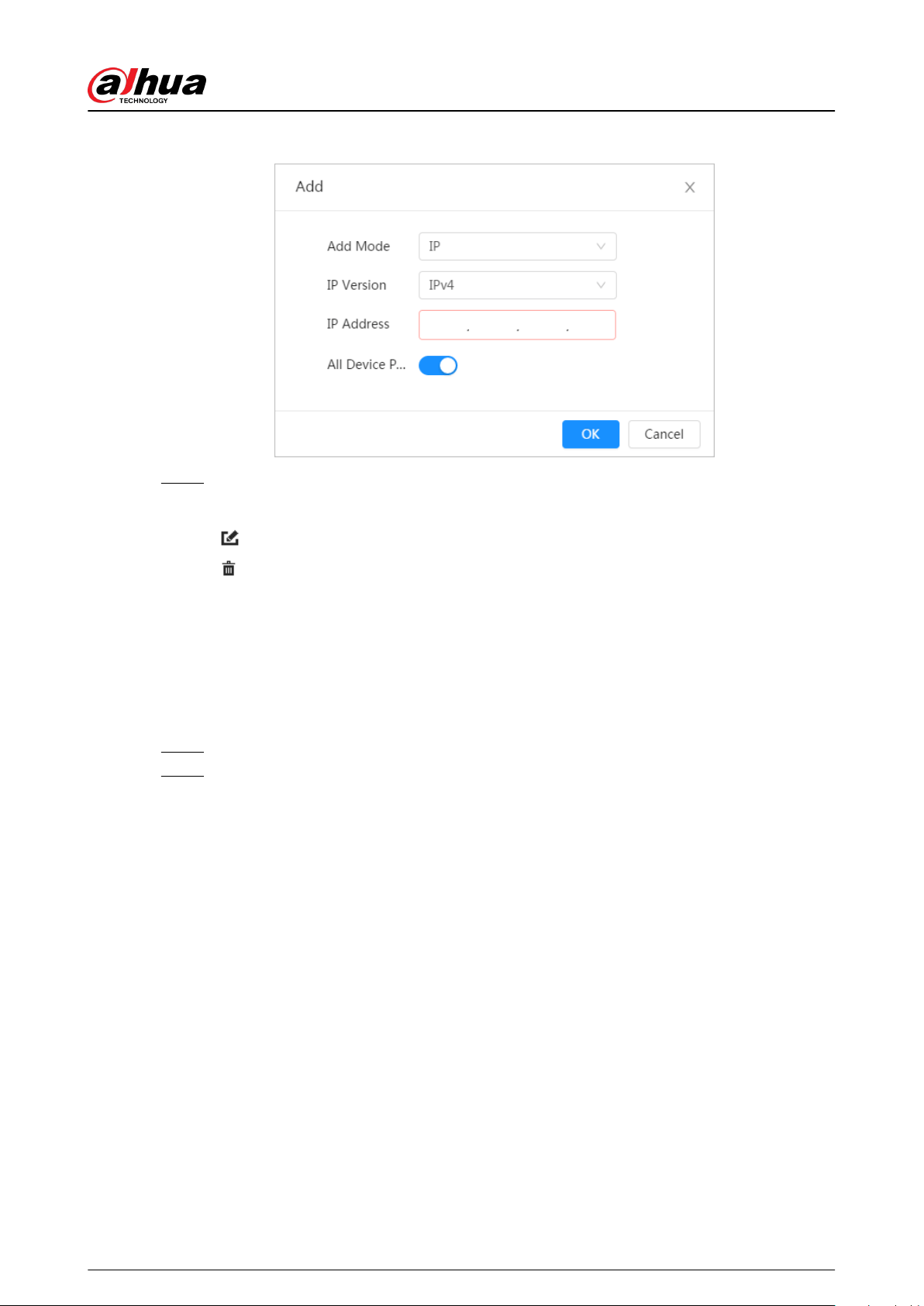
Figure 9-7 Firewall
Step 5 Click Apply.
Related Operations
●
Click
to edit the host information.
●
Click
to delete the host information.
9.3.2 Account Lockout
If you consecutively enter a wrong password more than the congured value, the account will be
locked.
Procedure
Step 1 Select Security > Attack Defense > Account Lockout.
Step 2 Congure the login attempt and lock time for device account and ONVIF user.
●
Login attempt: Upper limit of login attempts. If you consecutively enter a wrong
password more than the congured value, the account will be locked.
●
Lock time: The period during which you cannot login after the login attempts reaches
upper limit.
Operation Manual
184
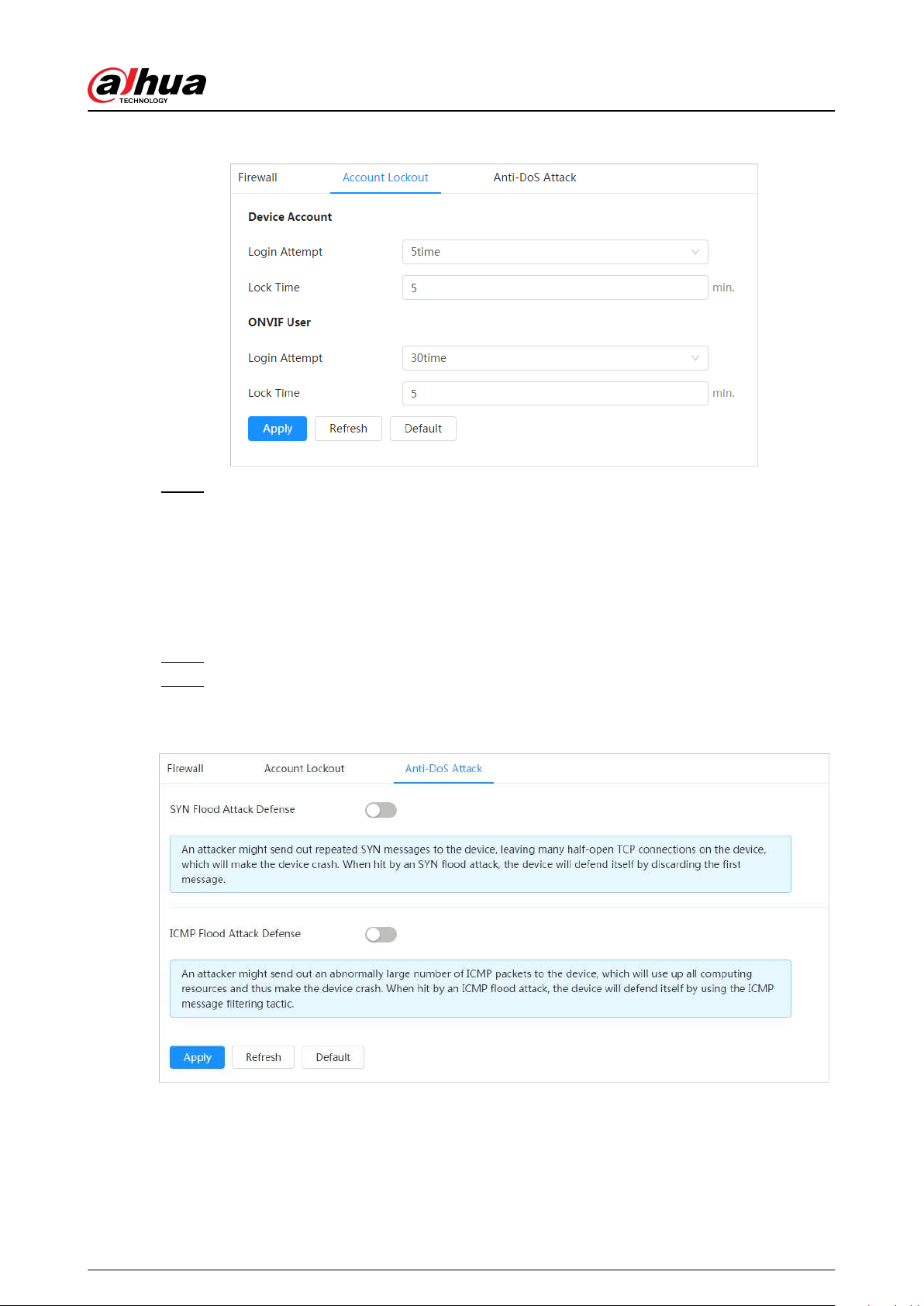
Figure 9-8 Account lockout
Step 3 Click Apply.
9.3.3 Anti-DoS Attack
You can enable SYN Flood Attack Defense and ICMP Flood Attack Defense to defend the device
against Dos attack.
Procedure
Step 1 Select Security > Attack Defense > Anti-DoS Attack.
Step 2 Select SYN Flood Attack Defense or ICMP Flood Attack Defense to defend the device
against Dos attack.
Figure 9-9 Anti-DoS attack
Operation Manual
185
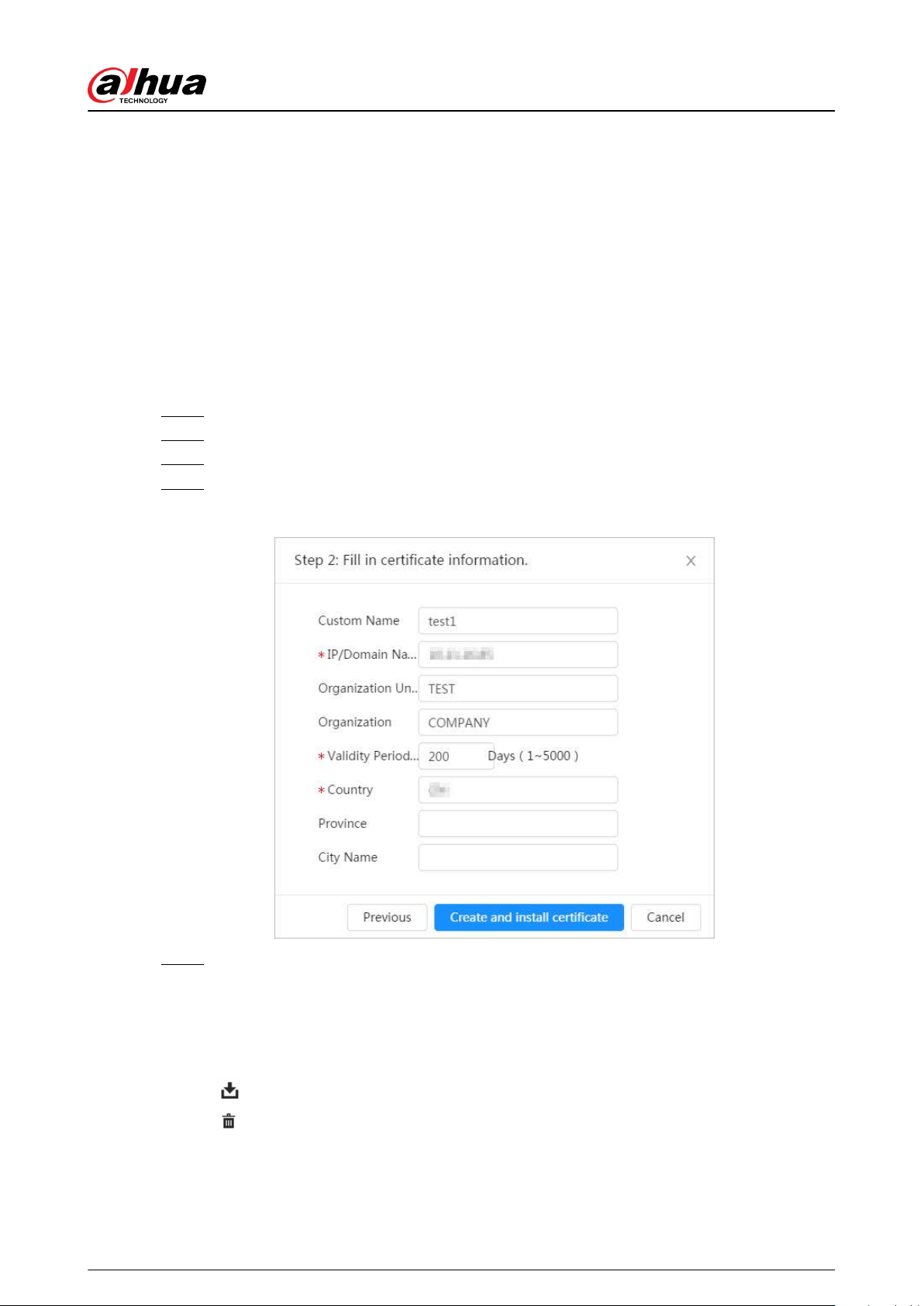
9.4 CA Certicate
9.4.1 Installing Device Certicate
Create a certicate or upload an authenticated certicate, and then you can log in through HTTPS
with your PC.
9.4.1.1 Creating Certicate
Creating certicate in the device.
Procedure
Step 1 Select Security > CA Certicate > Device Certicate.
Step 2 Select Installing Device Certicate.
Step 3 Select Create Certicate , and click Next.
Step 4 Enter the certicate information.
Figure 9-10 Certicate information (1)
Step 5 Click Create and install certicate.
After the certicate is created successfully, you can view the created certicate on the
Device Certicate page.
Related Operations
●
Click Enter Edit Mode, you can edit the custom name of the certicate.
●
Click
to download the certicate.
●
Click
to delete the certicate.
Operation Manual
186

9.4.1.2 Applying for and Importing CA Certicate
Import the third-party CA certicate to the camera.
Procedure
Step 1 Select Security > CA Certicate > Device Certicate.
Step 2 Select Installing Device Certicate.
Step 3 Select Apply for CA Certicate and Import (Recommended) , and click Next.
Step 4 Enter the certicate information.
Figure 9-11 Certicate information (2)
Step 5 Click Create and Download.
Save the request le to your PC.
Step 6 Apply the CA certicate from the third-party certicate authority.
Step 7 Import the signed CA certicate.
1. Save the CA certicate to the PC.
2. Do Step 1 to Step 3 , and click Browse to select the signed CE certicate.
3. Click Install and Import.
After the certicate is created successfully, you can view the created certicate on the
Device Certicate page.
●
Click Recreate to create the request le again.
●
Click Import Later to import the certicate next time.
Related Operations
●
Click Enter Edit Mode, you can edit the custom name of the certicate.
●
Click
to download the certicate.
●
Click
to delete the certicate.
Operation Manual
187
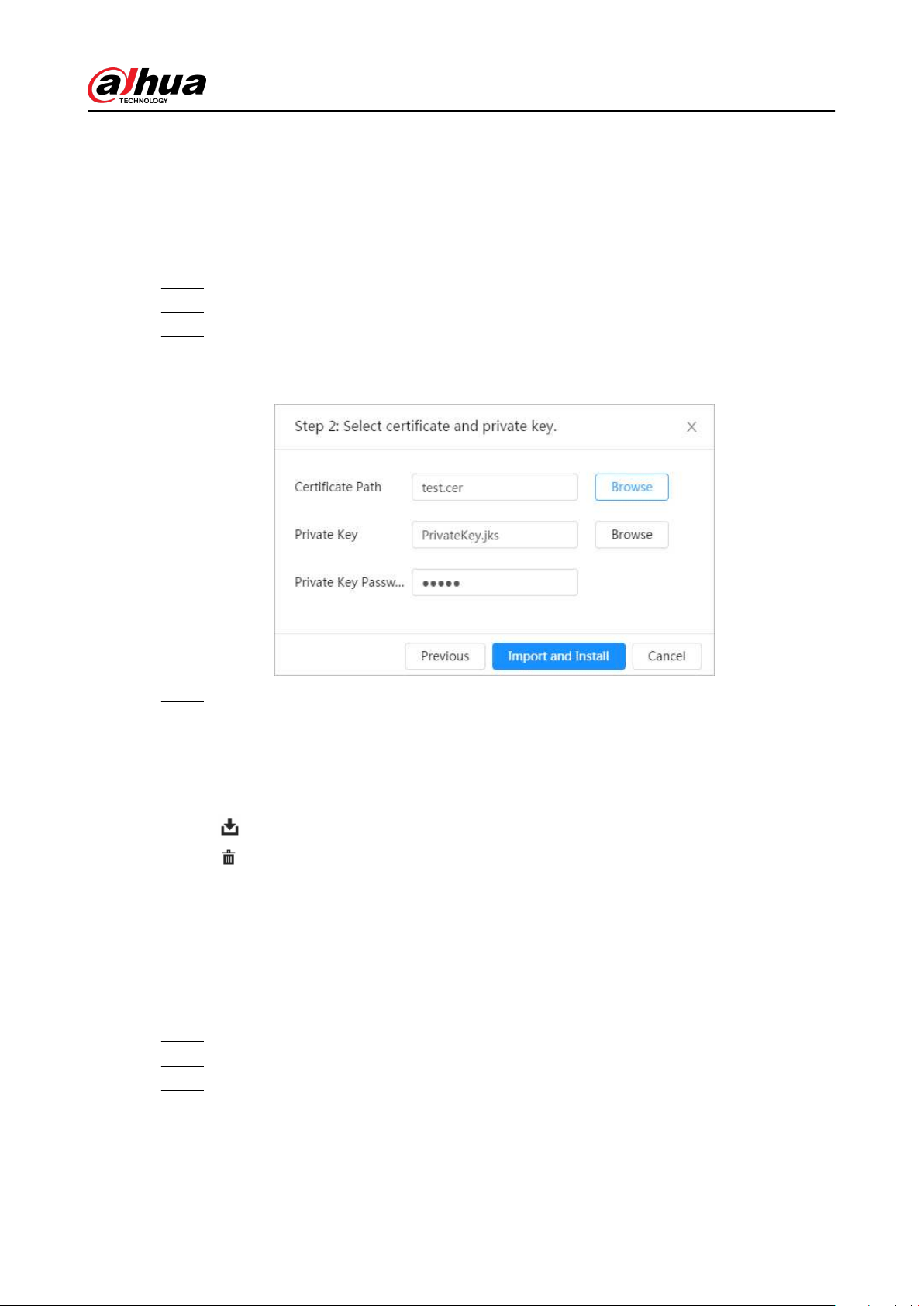
9.4.1.3 Installing Existing Certicate
Import the existing third-party certicate to the camera. When apply for the third-party certicate,
you also need to apply for the private key le and private key password.
Procedure
Step 1 Select Security > CA Certicate > Device Certicate.
Step 2 Select Installing Device Certicate.
Step 3 Select Install Existing Certicate , and click Next.
Step 4 Click Browse to select the certicate and private key le, and enter the private key
password.
Figure 9-12 Certicate and private key
Step 5 Click Import and Install.
After the certicate is created successfully, you can view the created certicate on the
Device Certicate page.
Related Operations
●
Click Enter Edit Mode, you can edit the custom name of the certicate.
●
Click
to download the certicate.
●
Click
to delete the certicate.
9.4.2 Installing Trusted CA Certicate
CA certicate is a digital certicate for the legal identity of the camera. For example, when the
camera accesses the LAN through 802.1x, the CA certicate is required.
Procedure
Step 1 Select Security > CA Certicate > Trusted CA Certicates.
Step 2 Select Installing Trusted Certicate.
Step 3 Click Browse to select the certicate.
Operation Manual
188
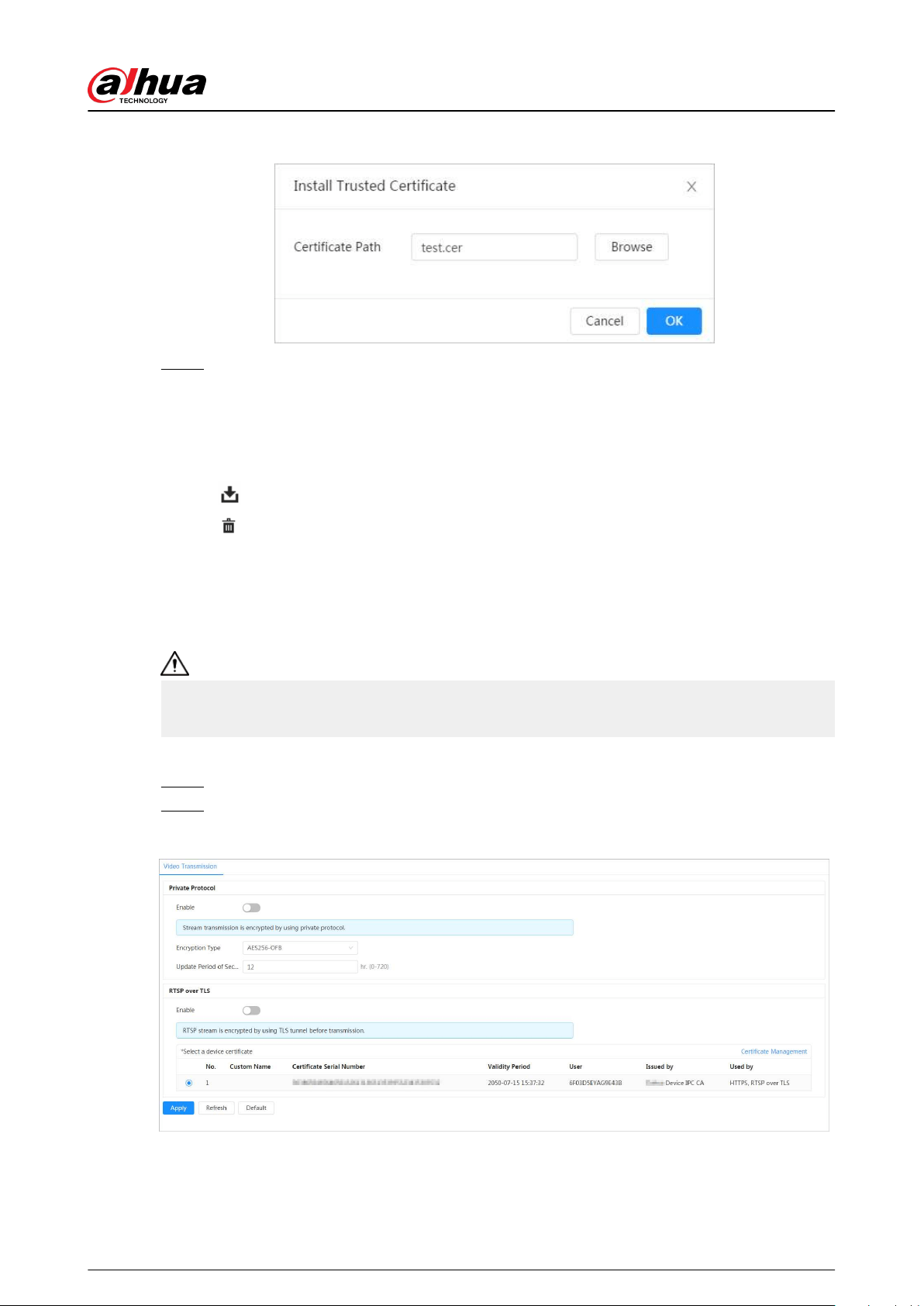
Figure 9-13 Installing trusted certicate
Step 4 Click OK.
After the certicate is created successfully, you can view the created certicate on the
Trusted CA Certicate page.
Related Operations
●
Click Enter Edit Mode, you can edit the custom name of the certicate.
●
Click
to download the certicate.
●
Click
to delete the certicate.
9.5 A/V Encryption
The device supports audio and video encryption during data transmission.
You are recommended to enable A/V Encryption function. There might be safety risk if this function
is disabled.
Procedure
Step 1 Select Security > A/V Encryption.
Step 2 Congure the parameters.
Figure 9-14 A/V encryption
Operation Manual
189

Table 9-1 A/V encryption parameter
Area Parameter Description
Private Protocol
Enable
Enables stream frame encryption by
using private protocol.
There might be safety risk if this service
is disabled.
Encryption Type Use the default setting.
Update Period of Secret Key
Secret key update period.
Value range: 0–720 hours. 0 means
never update the secret key.
Default value: 12.
RTSP over TLS
Enable
Enables RTSP stream encryption by
using TLS.
There might be safety risk if this service
is disabled.
Select a device certicate
Select a device certicate for RTSP over
TLS.
Certicate Management
For details about certicate
management, see "9.4.1 Installing
Device Certicate".
Step 3 Click Apply.
9.6 Security Warning
When security exception event is detected, the camera sends a warning to remind you to process it
timely, to avoid security risk.
Procedure
Step 1 Select Security > Security Warning.
Step 2 Click next to Enable to enable security warning.
Step 3 Congure the parameters.
Operation Manual
190
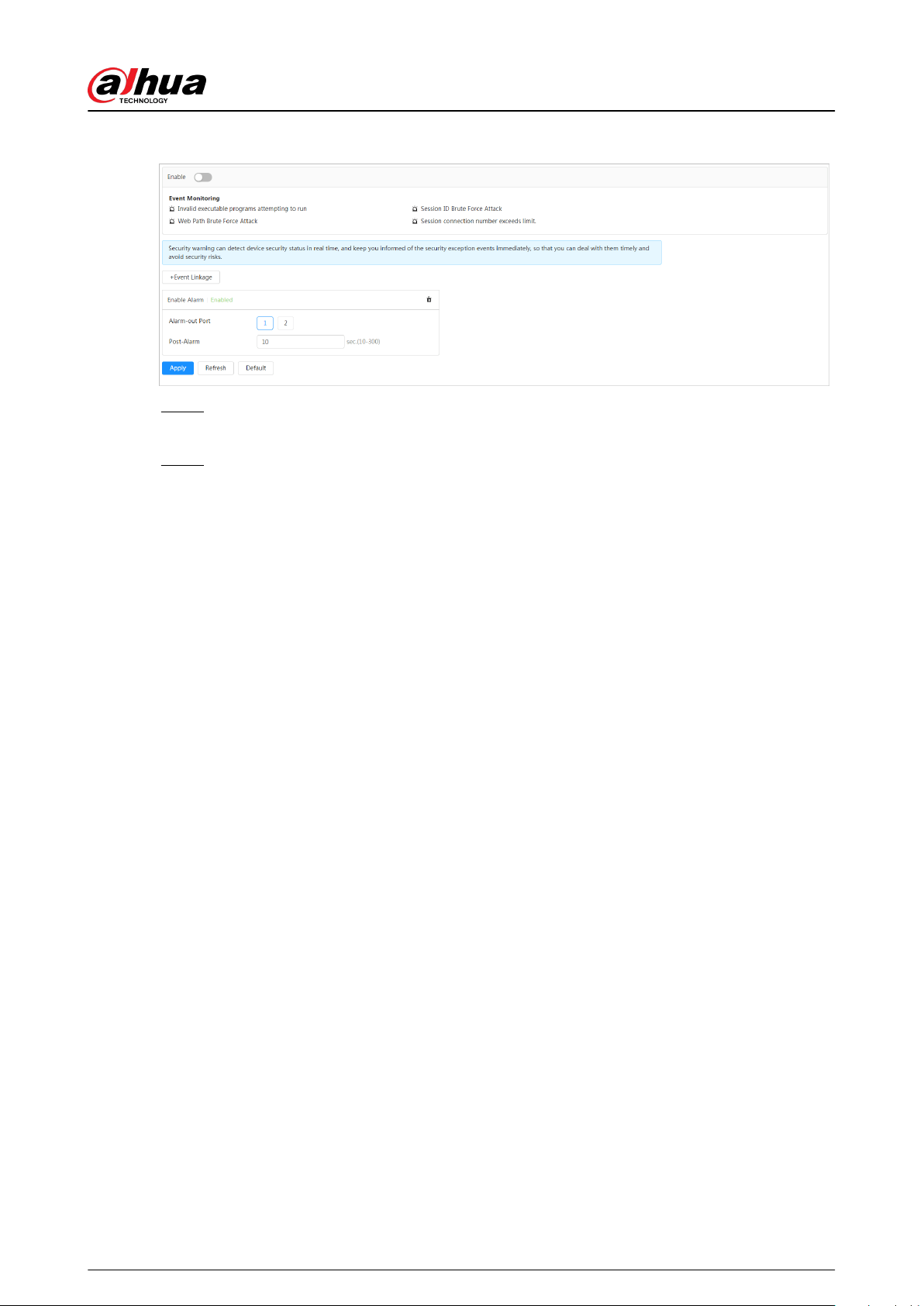

10 Record
This section introduces the functions and operations of video playback.
10.1 Playback
10.1.1 Playing Back Video
This section introduces the operation of video playback.
Prerequisites
●
This function is available on the camera with SD card.
●
Before playing back video, congure record time range, record storage method, record schedule
and record control. For details, see "10.2 Setting Record Control", "10.3 Setting Record Plan", and
"10.4 Storage".
Procedure
Step 1 Select Record > Search Video.
Step 2 Select the channel, the record type, and record time, and then click Search.
●
Click All , and select the record type from the drop-down list, you can select from All,
General, Event, Alarm, and Manual.
When selecting Event as the record type, you can select the specic event types, such
as Motion Detection, Video Tamper and Scene Changing.
●
The dates with blue dots indicate there are videos recorded on those days.
Figure 10-1 Search video
Step 3 Point to the searched video, and then click to play back the selected video.
The video playback page is displayed.
Operation Manual
192
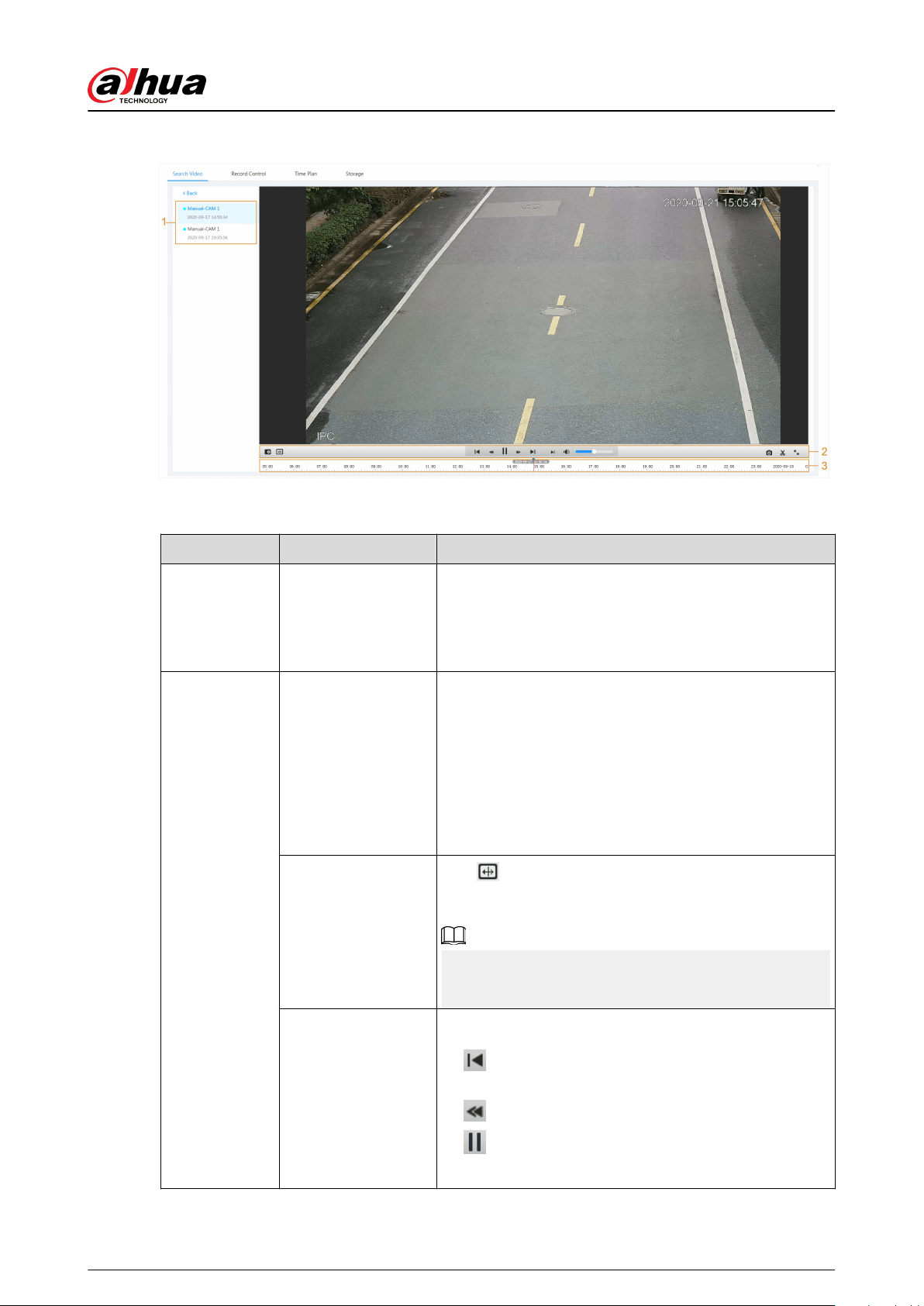
Figure 10-2 Video playback
Table 10-1 Description of video playback page
No Function Description
1 Recorded video list
Displays all searched recorded video les. Click any les
to play back it.
Click Back at the upper-left corner to go to the Search
Video page.
2
Digital Zoom
You can zoom video image of the selected area through
two operations.
●
Click the icon, and then select an area in the video
image to zoom in; right-click on the image to resume
the original size. In zoom in state, drag the image to
check other area.
●
Click the icon, and then scroll the mouse wheel in the
video image to zoom in or out.
AI Rule
Click
, and then select Enable to display AI rules and
detection box; select Disable to stop the display. It is
enabled by default.
AI rules is valid only when you enabled the rule during
recording.
Play control bar
Controls playback.
●
: Click the icon to play back the previous recorded
video in the recorded video list.
●
: Click the icon to slow down the playback.
●
: Click the icon to stop playing back recorded
videos.
Operation Manual
193

No Function Description
The icon changes to , click the icon to play back
recorded videos.
●
: Click the icon to speed up the playback.
●
: Click the icon to play back the next recorded
video in the recorded video list.
●
: Click the icon to play the next frame.
Sound
Controls the sound during playback.
●
: Mute mode.
●
: Vocal state. You can adjust the sound.
Snapshot
Click
to capture one picture of the current image, and
it will be saved to the congured storage path.
About viewing or conguring storage path, see "6.1
Local".
Video clip
Click
, and clip a certain recorded video and save it.
For details, see "10.1.2 Clipping Video".
Full Screen
Click
, and the image is displayed in full-screen mode;
double-click the image or press Esc button to exit full-
screen mode.
3 Progress bar
Displays the record type and the corresponding period.
●
Click any point in the colored area, and the system
will play back the recorded video from the selected
moment.
●
Each record type has its own color, and you can see
their relations in Record Type bar.
10.1.2 Clipping Video
Procedure
Step 1 Click .
Step 2 Drag the clipping box on the progress bar to select the start time and end time of the
target video
Figure 10-3 Clipping video
Step 3 Click OK to download the video.
Step 4 Select the download format and storage path.
Operation Manual
194
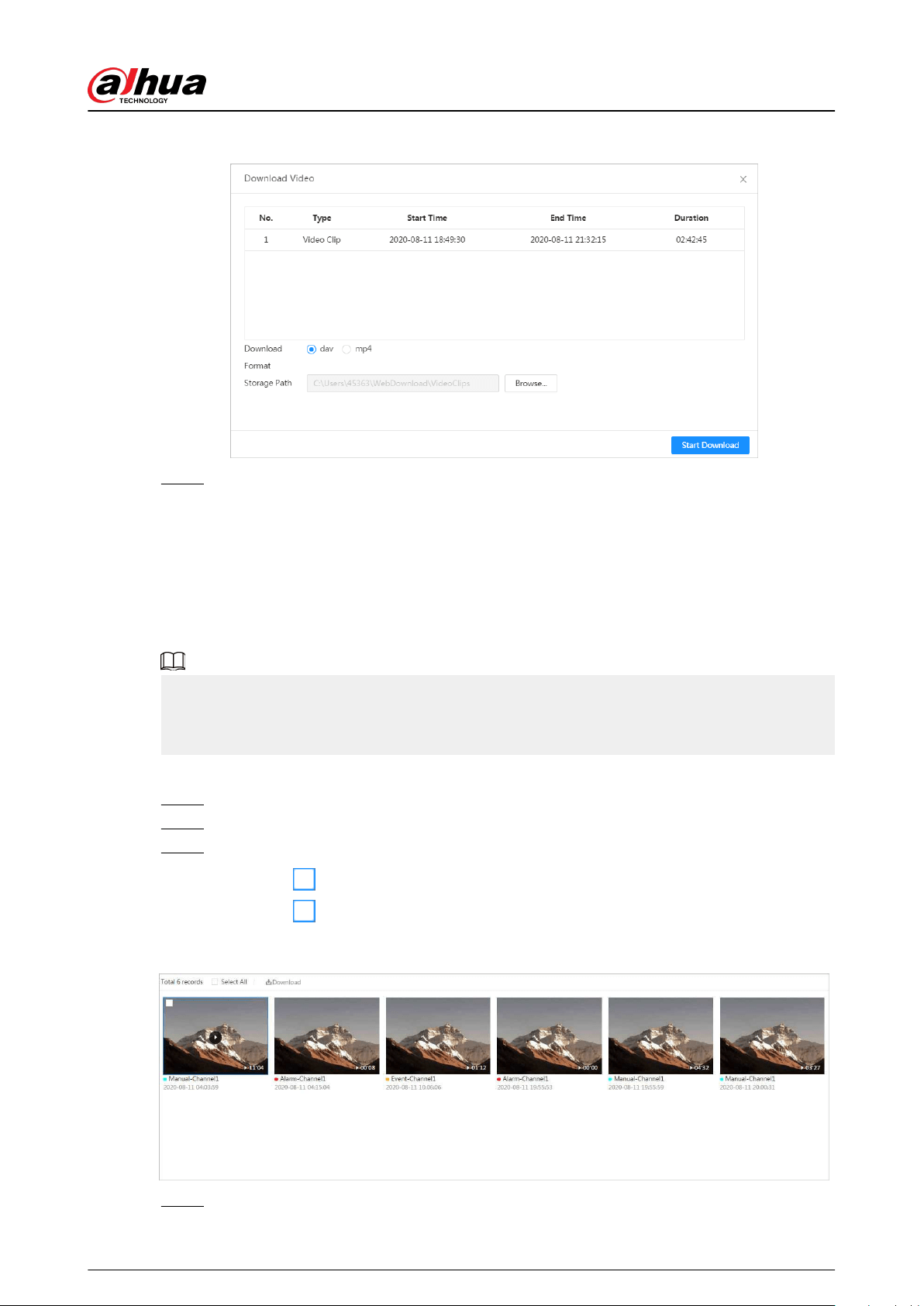
Figure 10-4 Clipping video
Step 5 Click Start Download.
The playback stops and the clipped le is saved in the congured storage path. For details
of storage path, see "6.1 Local".
10.1.3 Downloading Video
Download videos to a dened path. You can download a single video, or download them in
batches.
●
Playback and downloading at the same time is not supported.
●
Operations might vary with dierent browsers.
●
For details of viewing or setting storage path, see "6.1 Local".
Procedure
Step 1 Select Record > Search Video.
Step 2 Select the channel, the record type, and record time, and the click Search.
Step 3 Select the videos to be downloaded.
●
Select
at the upper-right corner of each video le to select one or multiple videos.
●
Select
next to Select All to select all searched videos.
Figure 10-5 Selecting video le
Step 4 Click Download.
Operation Manual
195
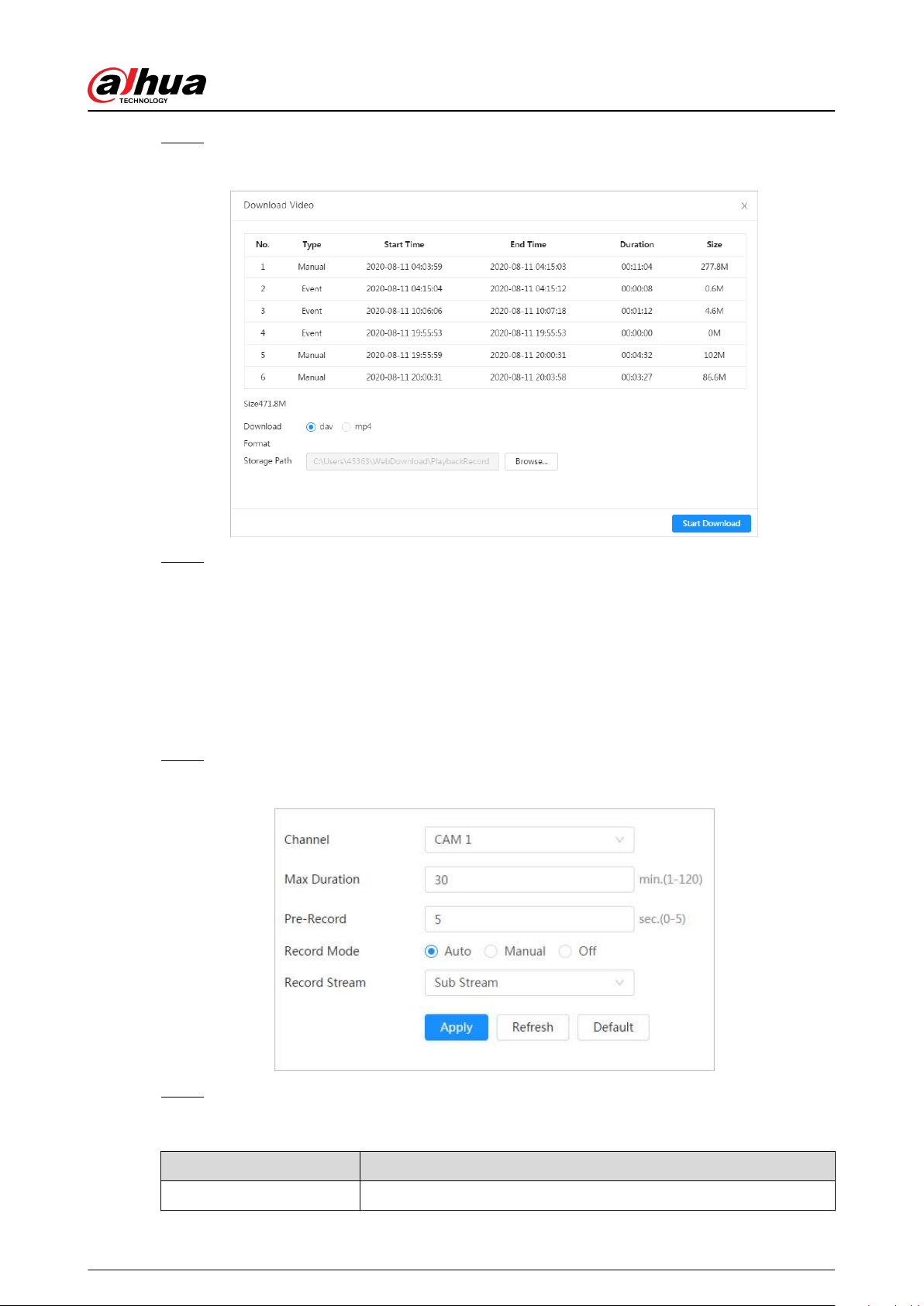
Step 5 Select the download format and storage path.
Figure 10-6 Downloading video
Step 6 Click Start Download.
The downloaded les are saved in the congured storage path. For details of storage
path, see "6.1 Local".
10.2 Setting Record Control
Set parameters such as pack duration, pre-event record, disk full, record mode, and record stream.
Procedure
Step 1 Click Record in the home page, and then click the Record Control tab.
Figure 10-7 Record control
Step 2 Set parameters.
Table 10-2 Description of record control parameters
Parameter Description
Max Duration The time for packing each video le.
Operation Manual
196
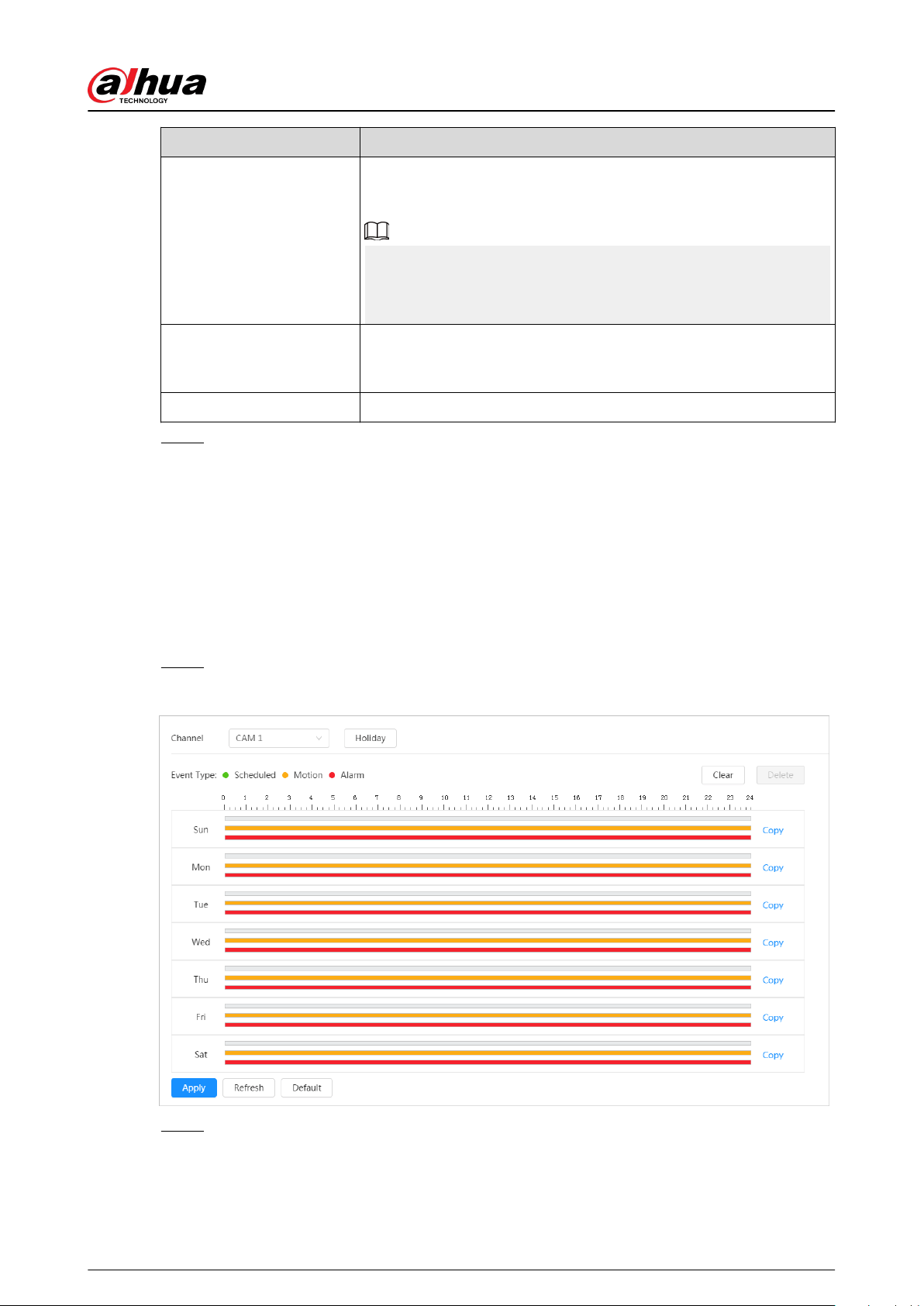
Parameter Description
Pre-Record
The time to record the video in advance of a triggered alarm event.
For example, if the pre-event record is set to be 5 s, the system saves
the recorded video 5 s before the alarm is triggered.
When an alarm or motion detection links recording, and the
recording is not enabled, the system saves the video data within the
pre-event record time to the video le.
Record Mode
When you select Manual , the system starts recording; when you
select Auto, the system starts recording in the congured period of
record plan.
Record Stream Select record stream, including Main Stream and Sub Stream.
Step 3 Click Apply.
10.3 Setting Record Plan
After the corresponding alarm type (Normal , Motion, and Alarm) is enabled, the record channel
links recording.
Set certain days as holiday, and when the Record is selected in the holiday schedule, the system
records video as holiday schedule dened.
Procedure
Step 1 Click Record on the home page, and then click the Time Plan tab.
Figure 10-8 Time plan
Step 2 Set record plan.
Green represents normal record plan (such as timing recording); yellow represents
motion record plan (such as recording triggered by intelligent events); red represents
alarm record plan (such as recording triggered by alarm-in). Select a record type, such as
Operation Manual
197
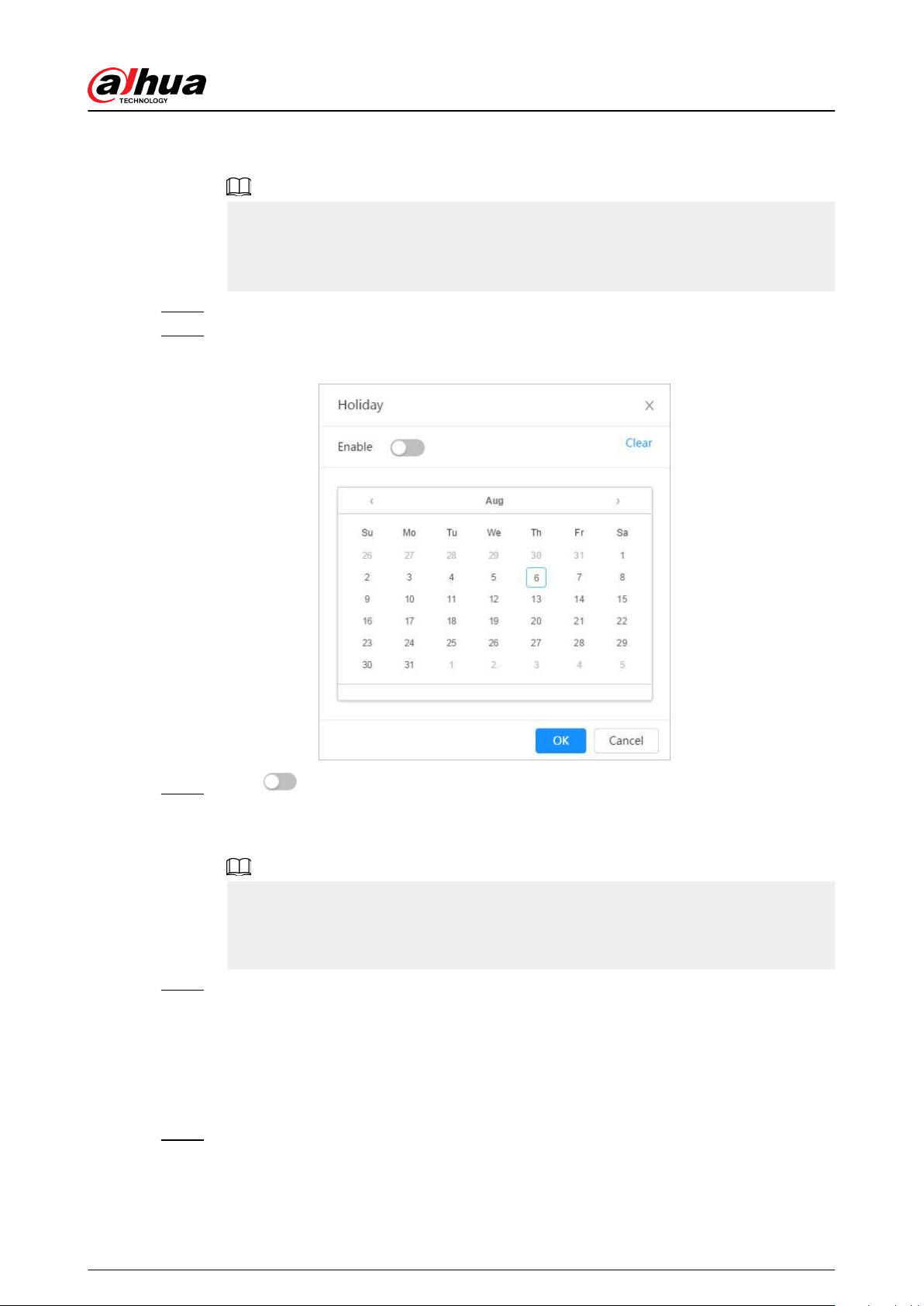
Normal, and directly press and drag the left mouse button to set the period for normal
record on the timeline.
●
Click Copy next to a day, and select the days that you want to copy to in the prompt
page, you can copy the conguration to the selected days. Select the Select All check
box to select all day to copy the conguration.
●
You can set 6 periods per day.
Step 3 Click Apply.
Step 4 Click Holiday to set holidays.
Figure 10-9 Time plan
Step 5 Click to enable the holiday conguration, and select the days that you need to set as
holiday.
Click Clear to cancel the selection.
When holiday schedule setting is not the same as the general setting, holiday schedule
setting is prior to the general setting. For example, with holiday schedule enabled, if the
day is holiday, the system snapshots or records as holiday schedule setting; otherwise, the
system snapshots or records as general setting.
Step 6 Click OK.
10.4 Storage
This section introduces the conguration of the storage method for the recorded videos.
Procedure
Step 1 Select Record > Storage.
Operation Manual
198

Figure 10-10 Live
Step 2 Select the storage method that you need for dierent types of recorded videos.
Table 10-3 Description of storage parameters
Parameter Description
Event Type Select from Scheduled , Motion Detection and Alarm.
Disk Full
Recording strategy when the disk is full.
●
Overwrite : Cyclically overwrite the earliest video when the disk is
full.
●
Stop : Stop recording when the disk is full.
Storage Method
Select from Local storage and Network storage
●
Local storage : Save the recorded videos in the internal SD card.
Local storage is displayed only on models that support SD card.
●
Network storage : Save the recorded videos in the FTP server or
NAS.
Step 3 Click Apply.
10.4.1 Local Storage
Procedure
Step 1 Select Record > Storage.
Step 2 Select the recording strategy in Disk Full.
●
Overwrite : Cyclically overwrite the earliest video when the disk is full.
●
Stop : Stop recording when the disk is full.
Step 3 Select Local storage in Storage Method to save the recorded videos in the internal SD
card.
Operation Manual
199
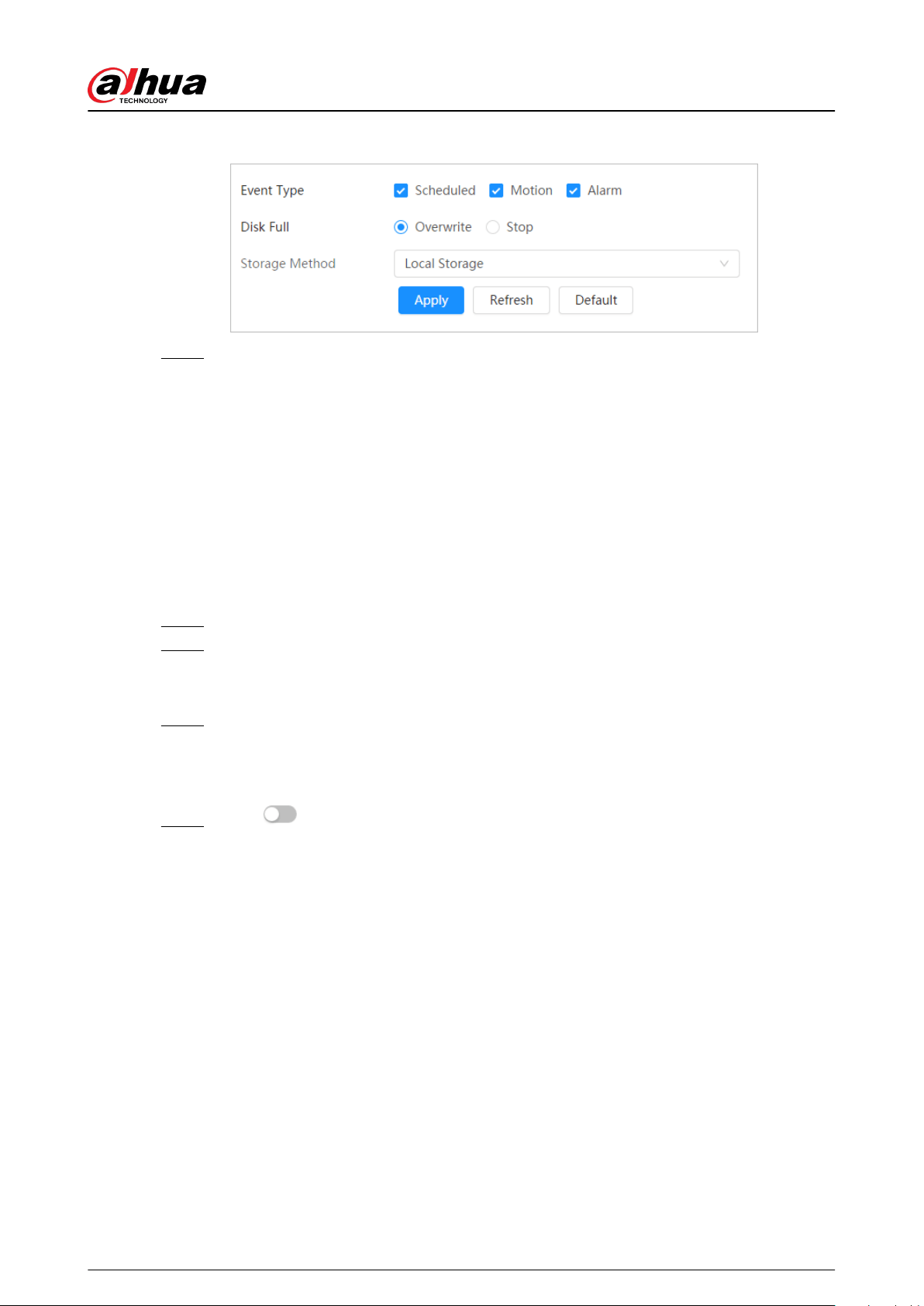
Figure 10-11 Local storage
Step 4 Click Apply.
10.4.2 Network Storage
You can select from FTP and NAS.
When the network does not work, you can save all the les to the internal SD card for emergency.
10.4.2.1 FTP
Enable this function, and you can save all the les in the FTP server.
Procedure
Step 1 Select Record > Storage.
Step 2 Select the recording strategy in Disk Full.
●
Overwrite : Cyclically overwrite the earliest video when the disk is full.
●
Stop : Stop recording when the disk is full.
Step 3 Select Network storage in Storage Method, and select FTP to save the recorded videos
in FTP server.
You select FTP or SFPT from the drop-down list. SFPT is recommended to enhance
network security.
Step 4 Click next to Enable to enable the FTP function.
Operation Manual
200
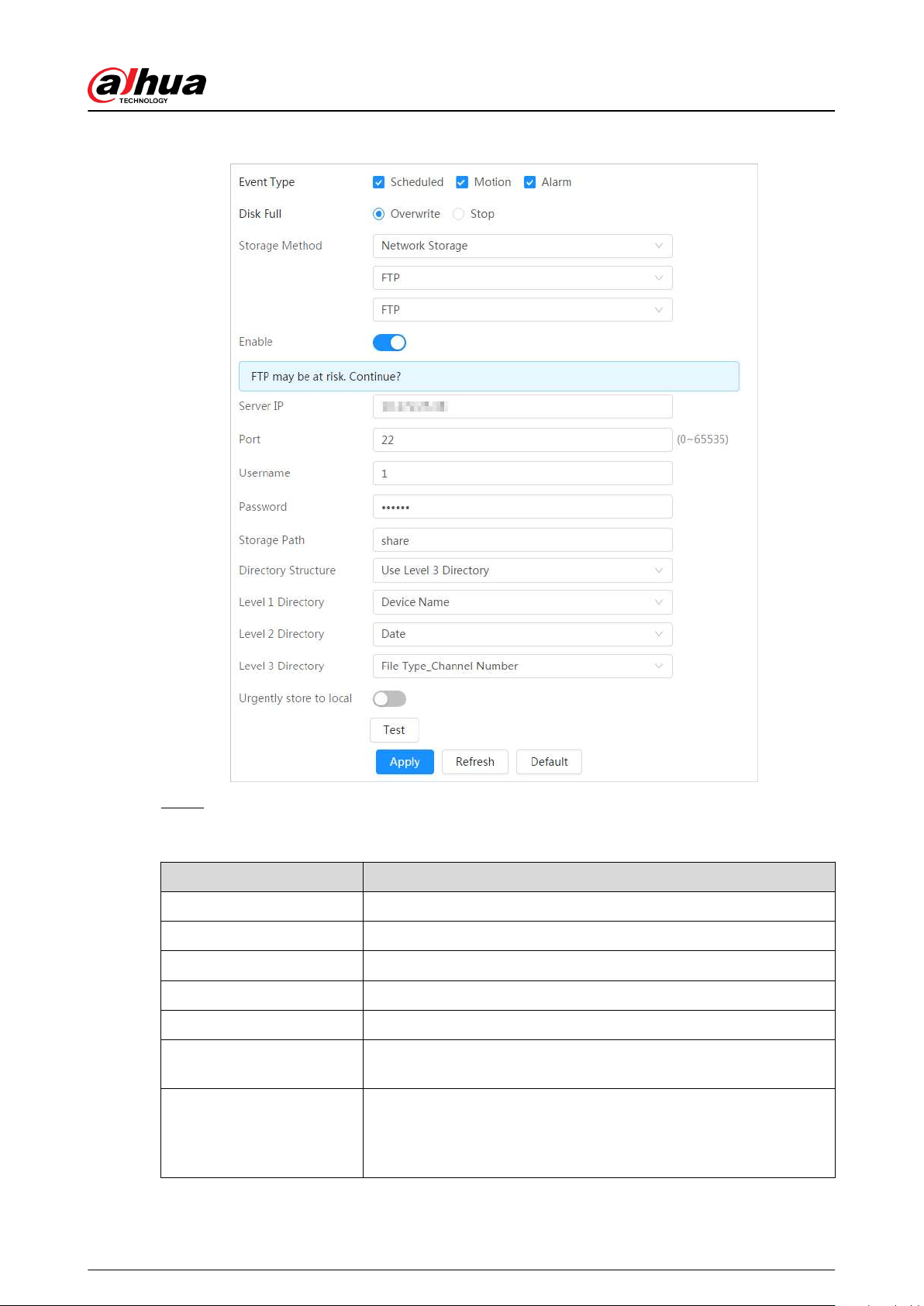
Figure 10-12 FTP
Step 5 Congure FTP parameters.
Table 10-4 Description of FTP parameters
Parameter Description
Server IP The IP address of the FTP server.
Port The port number of the FTP server.
Username The username to log in to the FTP server.
Password The password to log in to the FTP server.
Storage Path The destination path in the FTP server.
Directory Structure
Set the directory structure, and you can select Use Level 1
Directory , Use Level 2 Directory, and Use Level 3 Directory
Level 1 Directory
Set the Level 1 directory name, and you can select from Device
name , Device IP, and Custom.
When you select Custom, please enter the custom directory.
Operation Manual
201
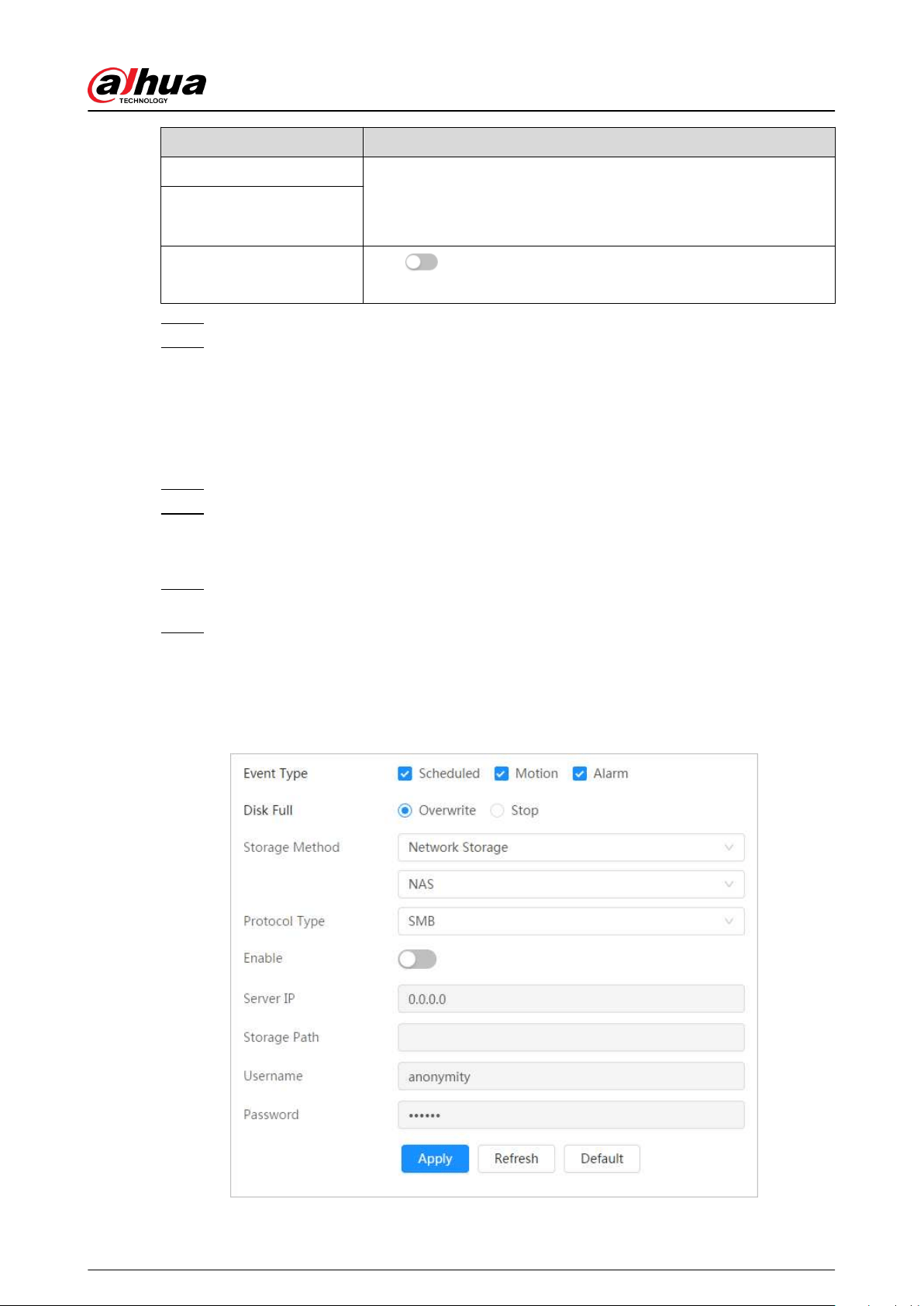
Parameter Description
Level 2 Directory
Set the Level 2 directory name, and you can select from File Type ,
Date, File Type_Channel Number, and Custom.
When you select Custom, please enter the custom directory.
Level 3 Directory
Urgently store to local
Click
, and when the FTP server does not work, all the les are
saved to the internal SD card.
Step 6 Click Save.
Step 7 Click Test to test whether FTP function works normally.
10.4.2.2 NAS
Enable this function, and you can save all the les in the NAS.
Procedure
Step 1 Select Record > Storage.
Step 2 Select the recording strategy in Disk Full.
●
Overwrite : Cyclically overwrite the earliest video when the disk is full.
●
Stop : Stop recording when the disk is full.
Step 3 Select Network storage in Storage Method, and select NAS to save the recorded videos
in NAS server.
Step 4 Select NAS protocol type.
●
NFS (Network File System): A le system which enables computers in the same
network share les through TCP/IP.
●
SMB (Server Message Block): Provides shared access for clients and the server.
Figure 10-13 FTP
Operation Manual
202

Step 5 Congure NAS parameters.
Table 10-5 Description of NAS parameters
Parameter Description
Server IP The IP address of the NAS server.
Storage Path The destination path in the NAS server.
Username
When selecting SMB protocol, you are required to enter
username and password. Enter them as needed.
Password
Step 6 Click Apply.
Operation Manual
203
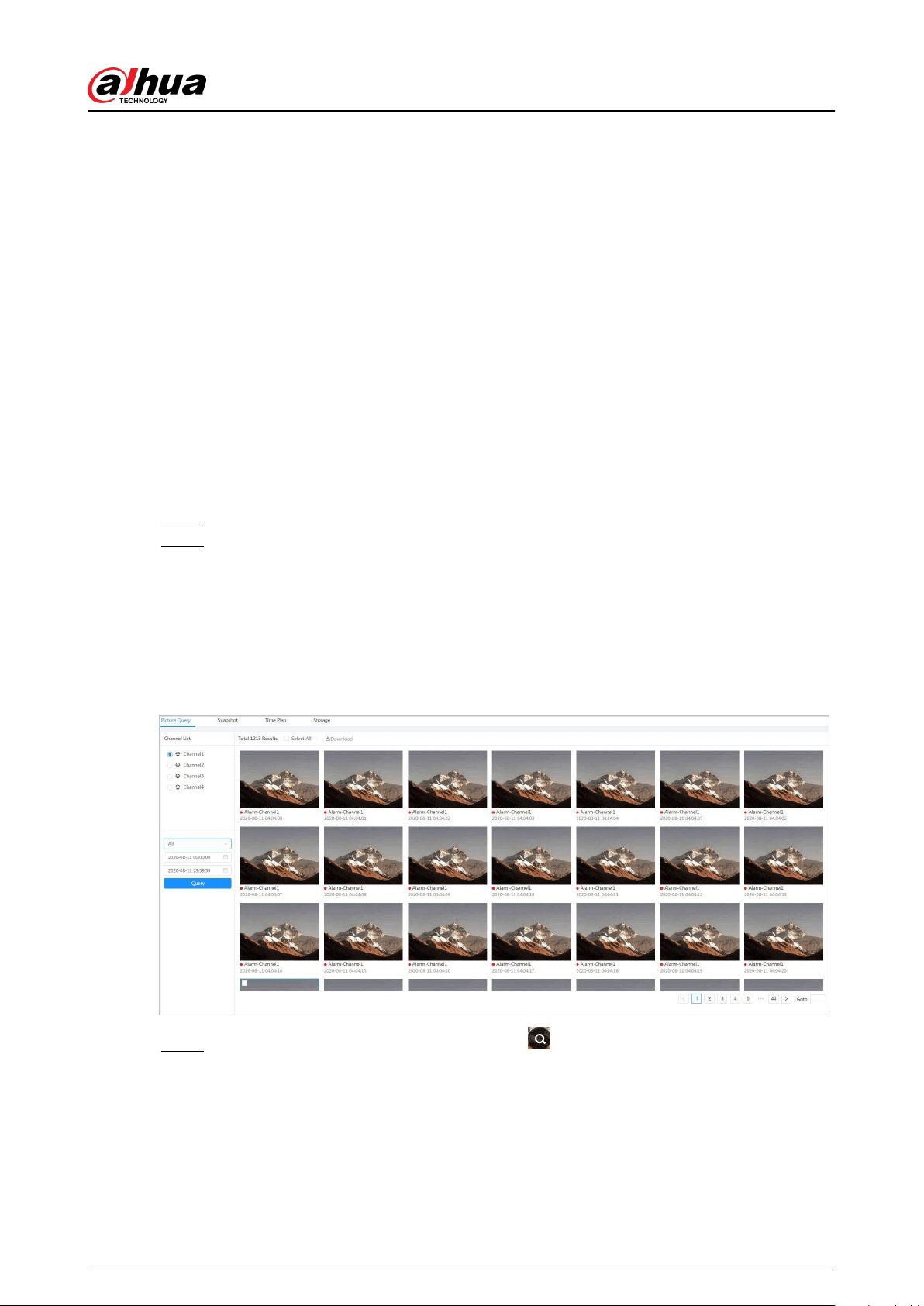
11 Picture
This section introduces the related functions and operations of picture playback.
11.1 Playback
11.1.1 Playing Back Picture
This section introduces the operation of picture playback.
Prerequisites
●
This function is available on the camera with SD card.
●
Before playing back picture, congure snapshot time range, snapshot storage method, snapshot
plan. For details, see"11.3 Setting Snapshot Plan".
Procedure
Step 1 Select Record > Picture Query.
Step 2 Select the channel, the snapshot type, and snapshot time, and then click Search.
●
Click All , and select the record type from the drop-down list, you can select from All,
General, Event, and Alarm.
When selecting Event as the snapshot type, you can select the specic event types,
such as Motion Detection, Video Tamper and Scene Changing.
●
The dates with blue dots indicate there are snapshots on those days.
Figure 11-1 Picture query
Step 3 Point to the searched picture, and then click to play back the selected picture.
The picture playback page is displayed.
Operation Manual
204

Figure 11-2 Picture playback
Table 11-1 Description of playback page
No. Function Description
1 Snapshot list
Displays all searched snapshots. Click any les to play back it.
Click Back at the upper-left corner to go to the Picture
Query page.
2 Manual display
●
Click
to display the previous snapshot in the snapshot
list.
●
Click
to display the nest snapshot in the snapshot list.
3 Slide show
Click
to display the snapshots list one by one in slide
show mode.
4 Full screen
Click
, and the snapshot is displayed in full-screen mode;
double-click the image or press Esc button to exit full-screen
mode.
11.1.2 Downloading Picture
Download pictures to a dened path. You can download a single picture, or download them in
batches.
●
Operations might vary with dierent browsers.
●
For details of viewing or setting storage path, see "6.1 Local".
Procedure
Step 1 Select Picture > Picture Query.
Step 2 Select the channel, the snapshot type, and snapshot time, and then click Search.
Step 3 Select the pictures to be downloaded.
Operation Manual
205
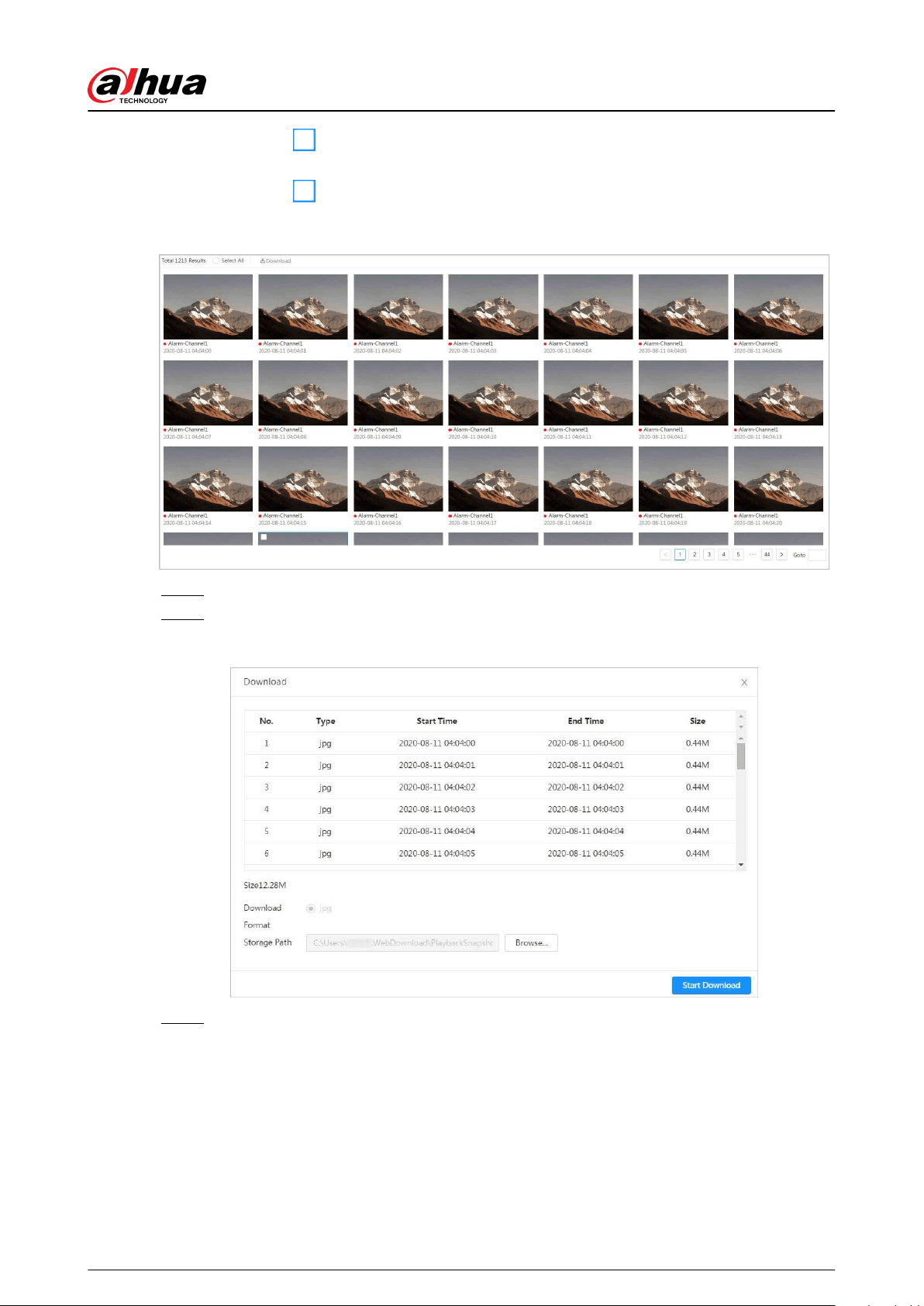
●
Select
at the upper-right corner of each picture le to select one or multiple
pictures.
●
Select
next to Select All to select all searched pictures.
Figure 11-3 Selecting picture le
Step 4 Click Download.
Step 5 Select the download format and storage path.
Figure 11-4 Downloading picture
Step 6 Click Start Download.
The downloaded pictures are saved in the congured storage path. For details of storage
path, see "6.1 Local".
Operation Manual
206
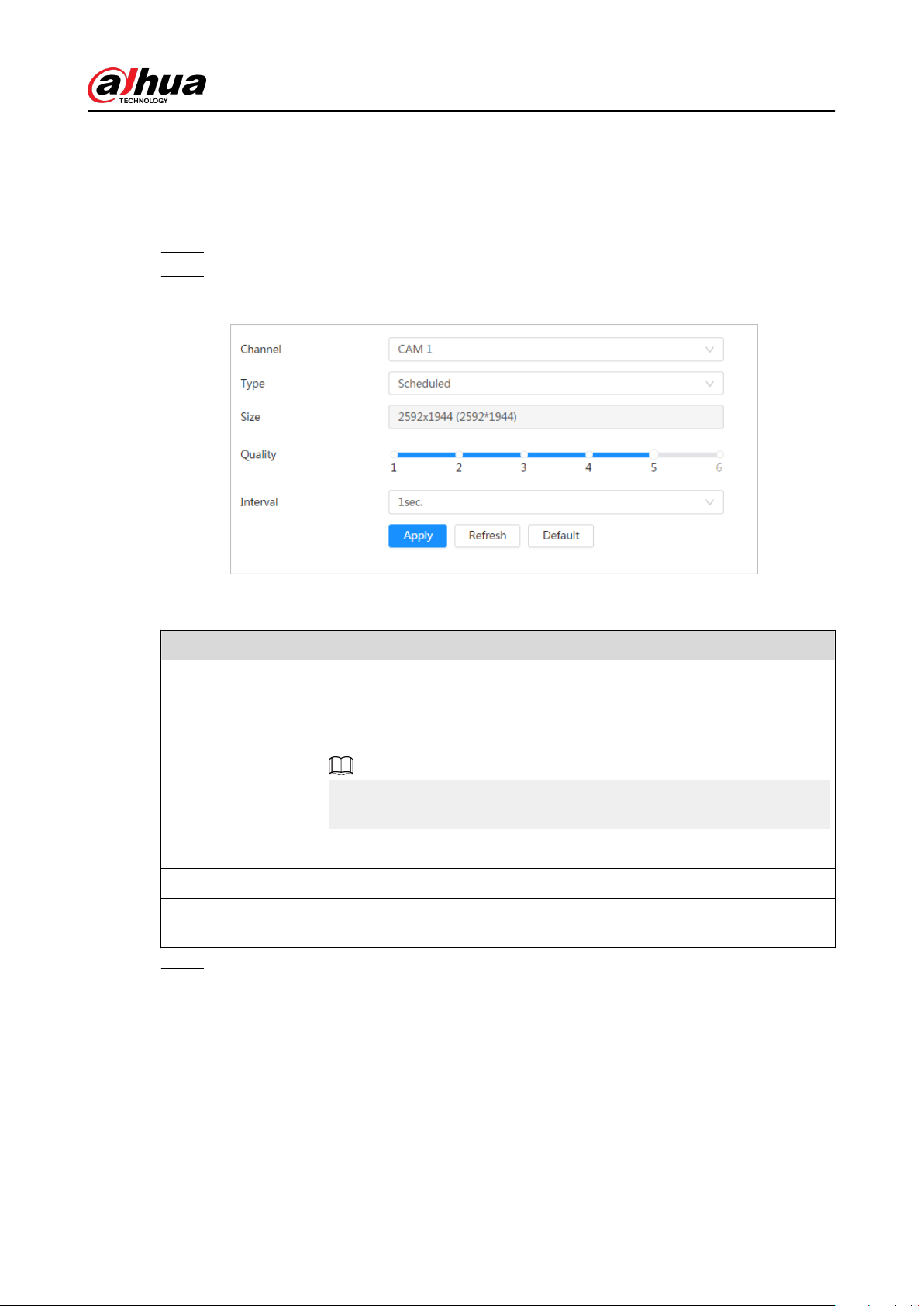
11.2 Setting Snapshot Parameters
Set the snapshot parameters, including type, size, quality and Interval.
Procedure
Step 1 Select Picture > Snapshot.
Step 2 Select the channel and set the parameters.
Figure 11-5 Snapshot
Table 11-2 Description of snapshot parameters
Parameter Description
Type
You can select from Scheduled and Event.
●
Scheduled : Capture images in congured period.
●
Event : Capture images when congured event is triggered, such as
Motion Detection, Video Tamper and Scene Changing.
Make sure that you have enable the corresponding event detection and
the snapshot function.
Size It is same with the resolution of the main stream.
Quality Set the quality of the snapshot. The higher the value, the better the quality.
Interval
Set the frequency of snapshot. You can select Custom to set the frequency
as needed.
Step 3 Click Apply.
11.3 Setting Snapshot Plan
According to the congured snapshot plan, the system enables or disables snapshot at
corresponding time. For detailed operation, see "10.3 Setting Record Plan".
11.4 Storage
Set the storage method for the snapshot. For detailed operation, see "10.4 Storage".
Operation Manual
207

11.5 Setting Upload Method
Automatically upload images to the dened server through HTTP protocol, and congure
parameters.
Background Information
You do not need to set upload period. When an alarm is triggered, images will be automatically
uploaded to the dened server.
Procedure
Step 1 On the web page, select Picture > Auto Upload.
Step 2 Enable the function.
Step 3 Click Add, and then congure parameters of HTTP upload method.
You can add two server information at most.
Figure 11-6 Image Upload
Table 11-3 Description of HTTP mode Parameter
Parameter Description
IP/Domain name
The IP address and port number of the server which the report will
be uploaded to.
Port
Path The storage path of the server for the report.
Event type
Select the event type form the drop-down list. You can select more
than one types at the same time.
The event types in the drop-down list are the same with that of
picture playback.
Test Test the network connection between the camera and the server.
Step 4 Click Apply.
Operation Manual
208
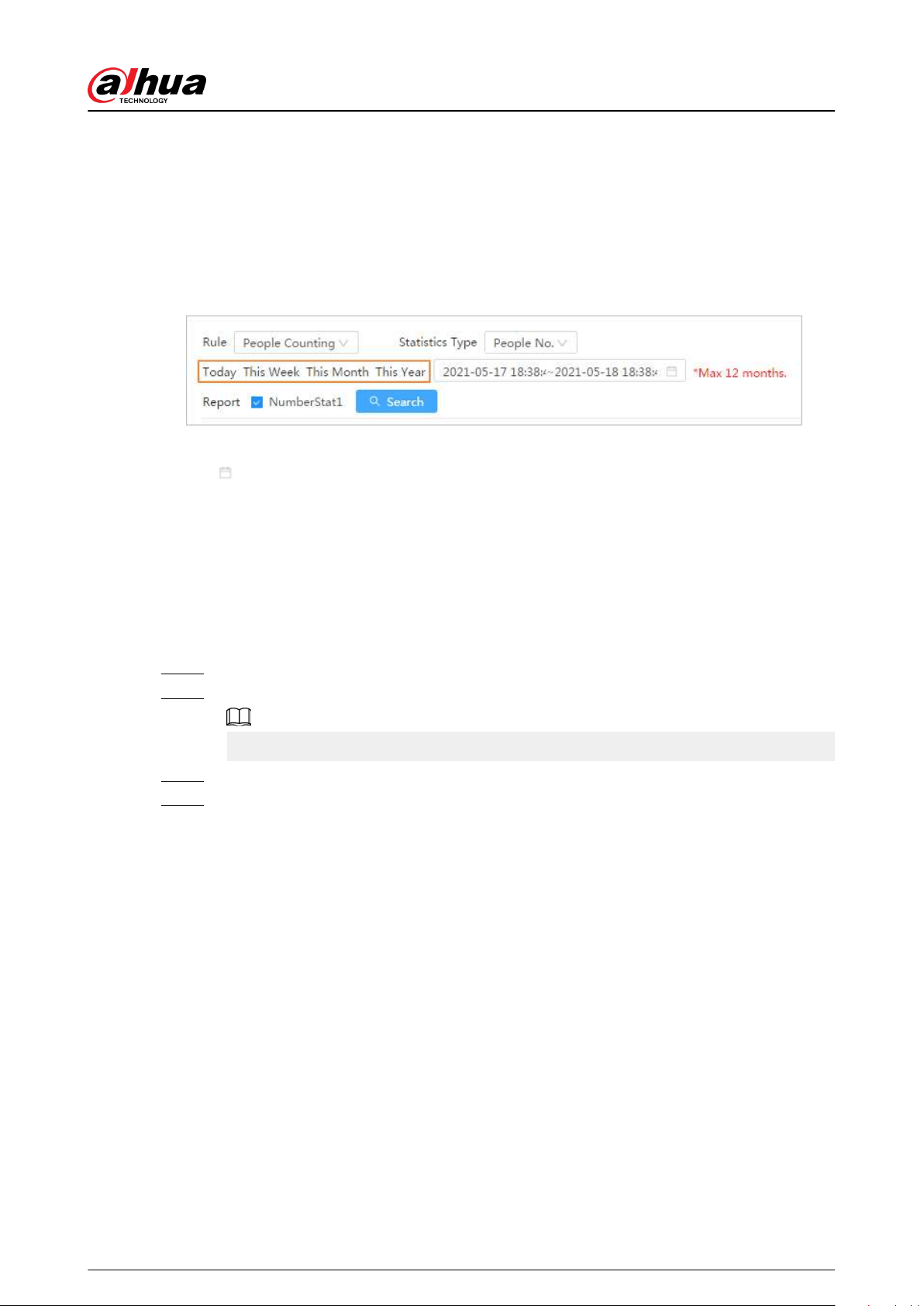
12 Report
12.1 Viewing Report
View the statistics results of AI functions in report form.
Figure 12-1 Report
●
The period for the report is the latest 24 hours by default.
●
Click
to customize the period for the report.
●
Click Today , This Week, This Month, or This Year. The start time of the period is 0 o'clock of
the rst day, and the end time is the current time.
12.1.1 Face Recognition
View the statistics result of face recognition in report form.
Procedure
Step 1 Select Report > Report > Face Recognition.
Step 2 Set the period for the report.
For multi-channel camera, select the channel rst.
Step 3 Select the gender and age.
Step 4 Click Search.
Operation Manual
209

Figure 12-2 Face Recognition report
Related Operations
●
Select the report form
Click
to display the report in line chart; click to display the report in bar chart.
●
Select the statistics type on the upper-right corner
The statistics result of unselected types will not be displayed.
●
Export reports
Select the le format, and then click Export.
Select png : Displays the report in picture format.
Select csv : Displays the report in list format.
12.1.2 Video Metadata
View the statistics result of video metadata in report form.
Procedure
Step 1 Select Report > Report > Video Metadata.
Step 2 Set the period for the report.
Operation Manual
210
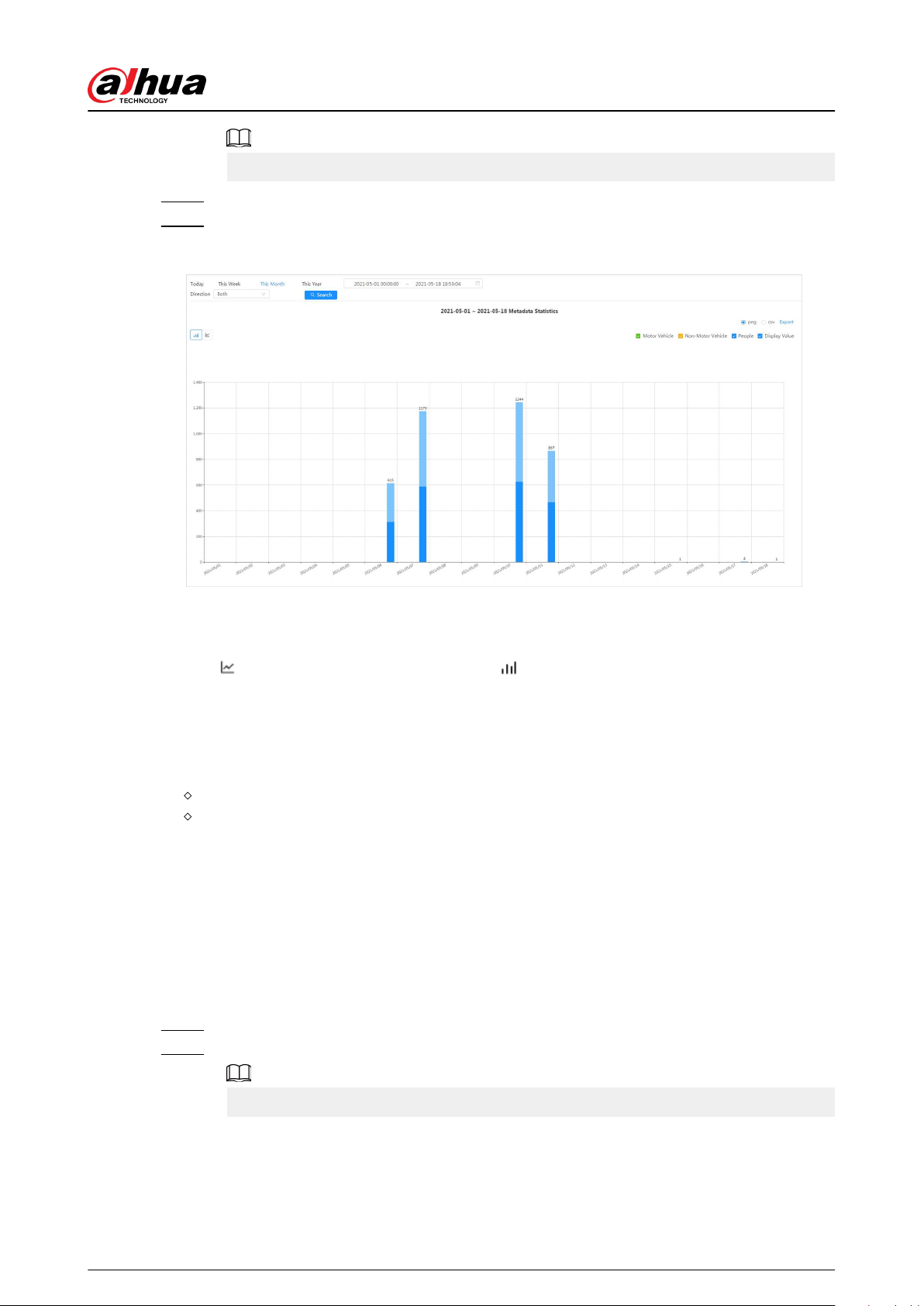
For multi-channel camera, select the channel rst.
Step 3 Select the tripwire direction.
Step 4 Click Search.
Figure 12-3 Video metadata report
Related Operations
●
Select the report form
Click
to display the report in line chart; click to display the report in bar chart.
●
Select the statistics type on the upper-right corner
The statistics result of unselected types will not be displayed.
●
Export reports
Select the le format, and then click Export.
Select png : Displays the report in picture format.
Select csv : Displays the report in list format.
12.1.3 People Counting
Search for the counting results with dierent rules and counting methods.
Prerequisites
Make sure that you have congured the rule before searching for the report.
Procedure
Step 1 Select Report > Report > People Counting.
Step 2 Set search conditions.
For multi-channel camera, select the channel rst.
Operation Manual
211

Table 12-1 Set search conditions
Parameter Description
Rule
Select the rule as needed, and then you need to select the statistics type
according to the select rule.
Statistics Type
The statistics type of the people counting report.
●
People No. : Displays the report of the number of people that meet
the congured condition.
●
Strand Time : Displays the report of the average stranding time in the
detection area during a certain period. It is available when the rule of
Area People Counting is selected.
Stay Time
When selecting rule to Area People Counting , and statistics type to
People No., you need to congure this parameter.
The report displays the number of people whose stay time is shorter than
the stay time threshold and is equal to or longer than the stay time
threshold.
Queue Time
When selecting rule to Queuing , and statistics type to People No., you
need to congure this parameter.
The report displays the number of people whose stay time is shorter than
Queuing Time and is equal or longer than Queuing Time.
Period for the report
Set the period for the report.
●
When selecting rule to People Counting, you can view the daily,
weekly, monthly and yearly report, and you can also customize the
period.
●
When selecting rule to Area People Counting or Queuing, you can
view the daily, weekly, and monthly report, and you can also
customize the period.
Report
Select the rule name of the report that you want to search. You can select
multiple rule names at the same time.
Step 3 Click Search.
Operation Manual
212
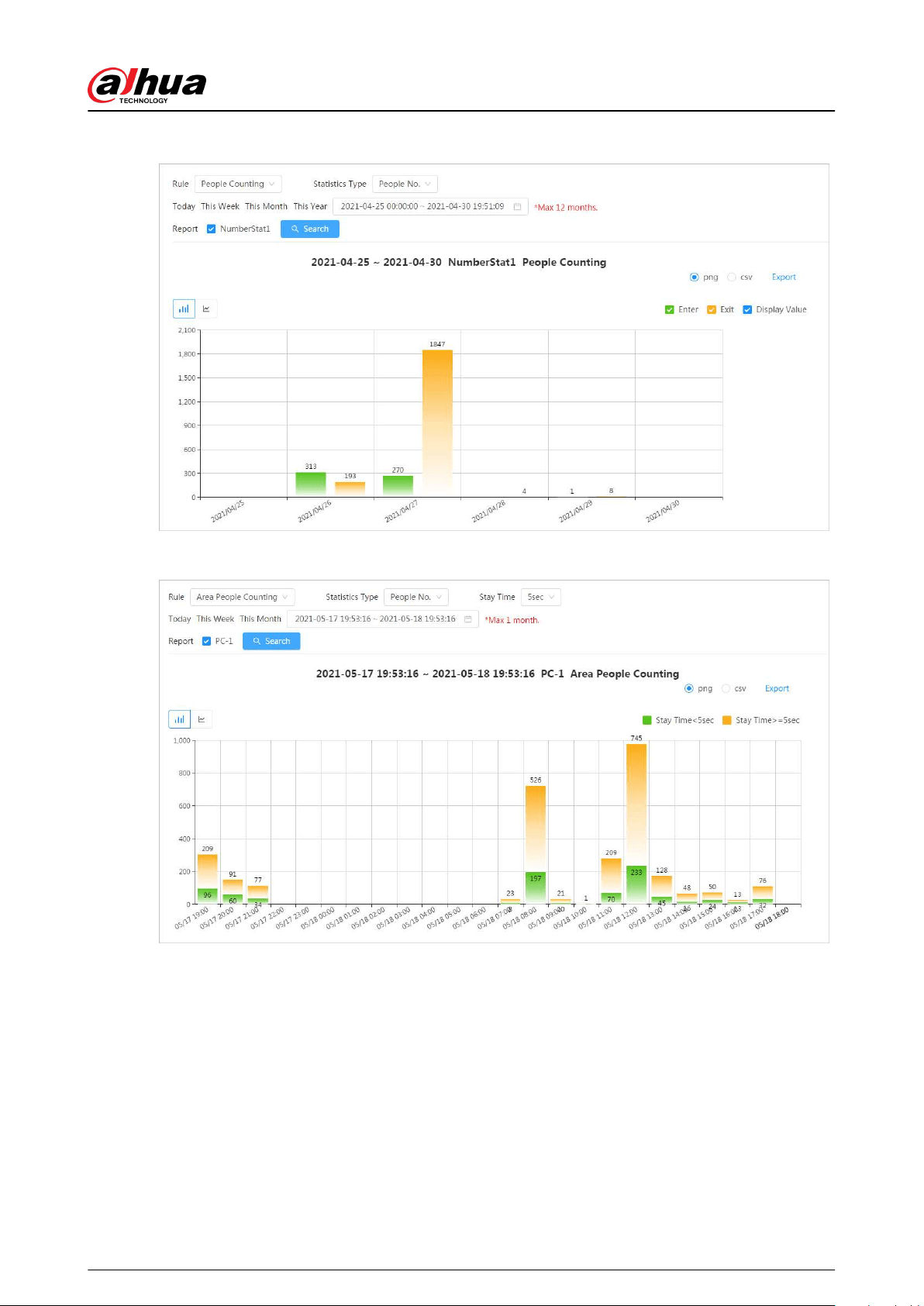
Figure 12-4 People counting
Figure 12-5 Area people counting (number of people)
Operation Manual
213
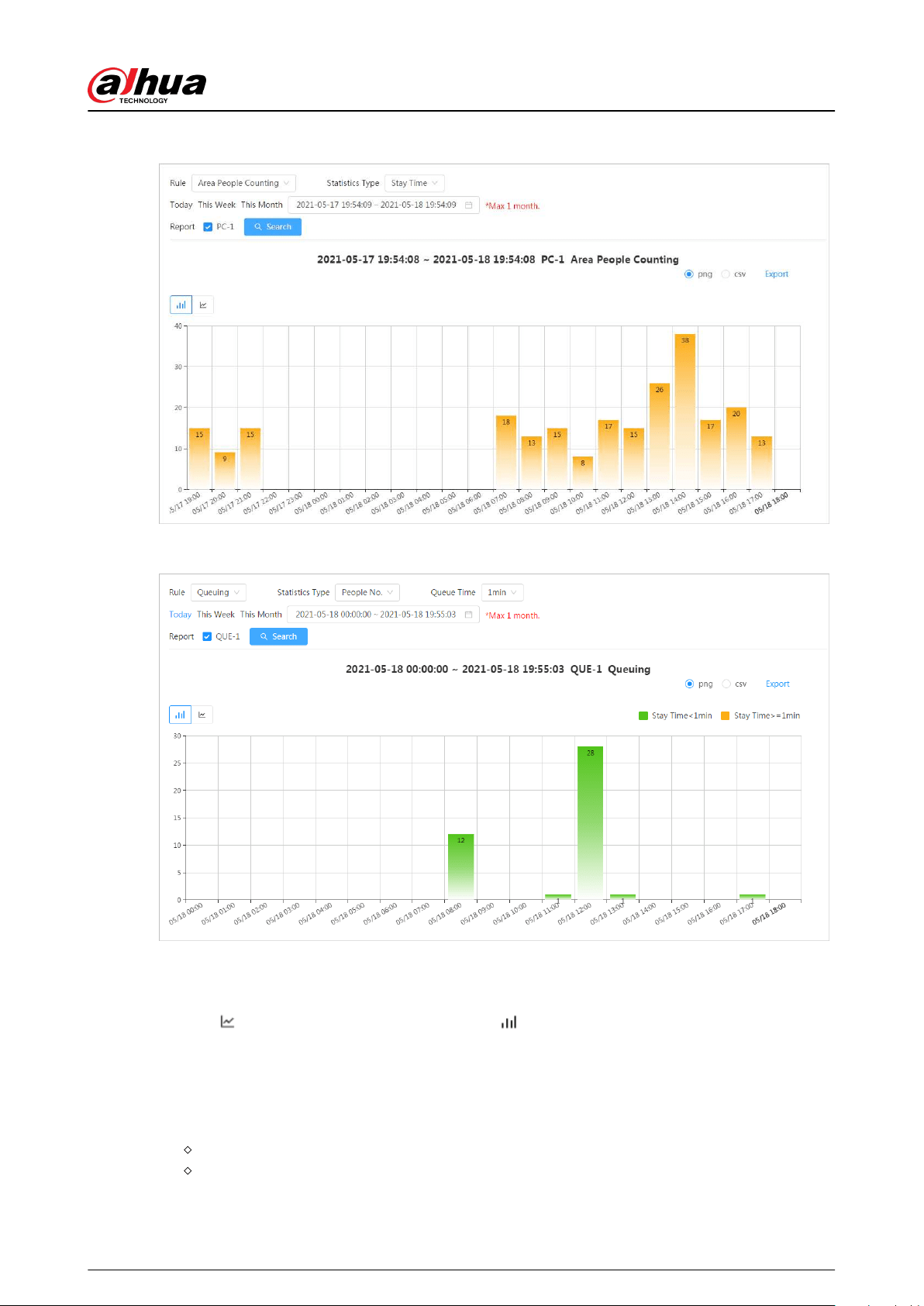
Figure 12-6 Area people counting (stay time)
Figure 12-7 Queuing
Related Operations
●
Select the report form
Click
to display the report in line chart; click to display the report in bar chart.
●
Select the statistics type on the upper-right corner
The statistics result of unselected types will not be displayed.
●
Export reports
Select the le format, and then click Export.
Select png : Displays the report in picture format.
Select csv : Displays the report in list format.
Operation Manual
214
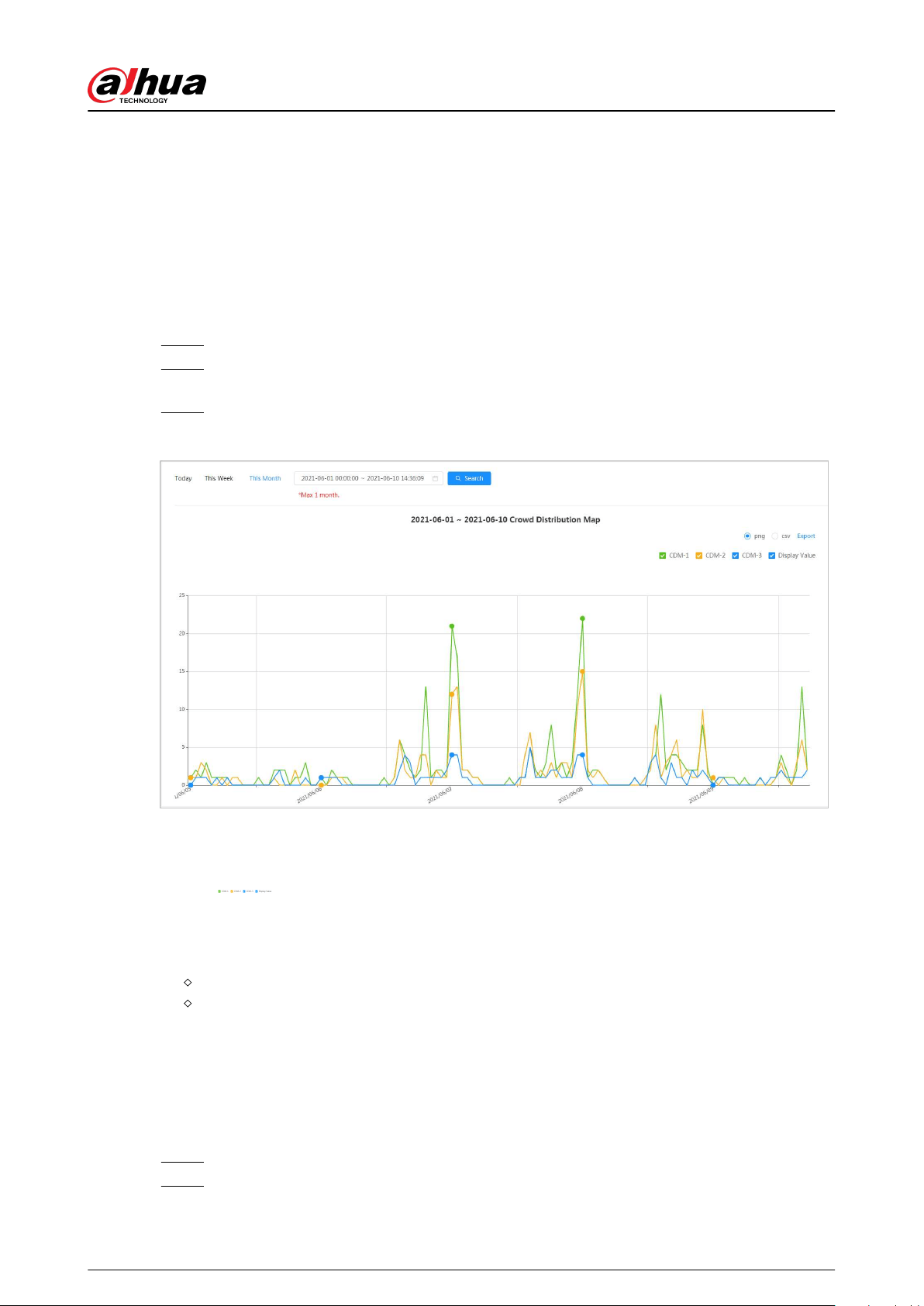
12.1.4 Crowd Distribution
You can search for the number of people at a certain moment and get daily/weekly/monthly
reports.
Prerequisites
Conrm that crowd distribution map function has already set; otherwise the corresponding report
cannot be searched.
Procedure
Step 1 Select Report > Report > Crowd Distribution Map.
Step 2 Select the period for report statistics. You can view daily reports, weekly reports and
monthly reports, or customize the period.
Step 3 Click Search.
Figure 12-8 Crowd distribution map
Related Operations
●
Select statistics type
Click and select the type needed.
●
Export statistic report
Select the exact format and click Export, the report will be saved to the storage path of your
browser.
Select png : Displays the report in picture format.
Select csv : Displays the report in list format.
12.1.5 Vehicle Density
Search for the number of cars at a certain moment in each statistical area.
Procedure
Step 1 Select Report > Report > Vehicle Density.
Step 2 Select the period for report statistics. You can view daily reports, weekly reports and
monthly reports, or customize the period.
Operation Manual
215
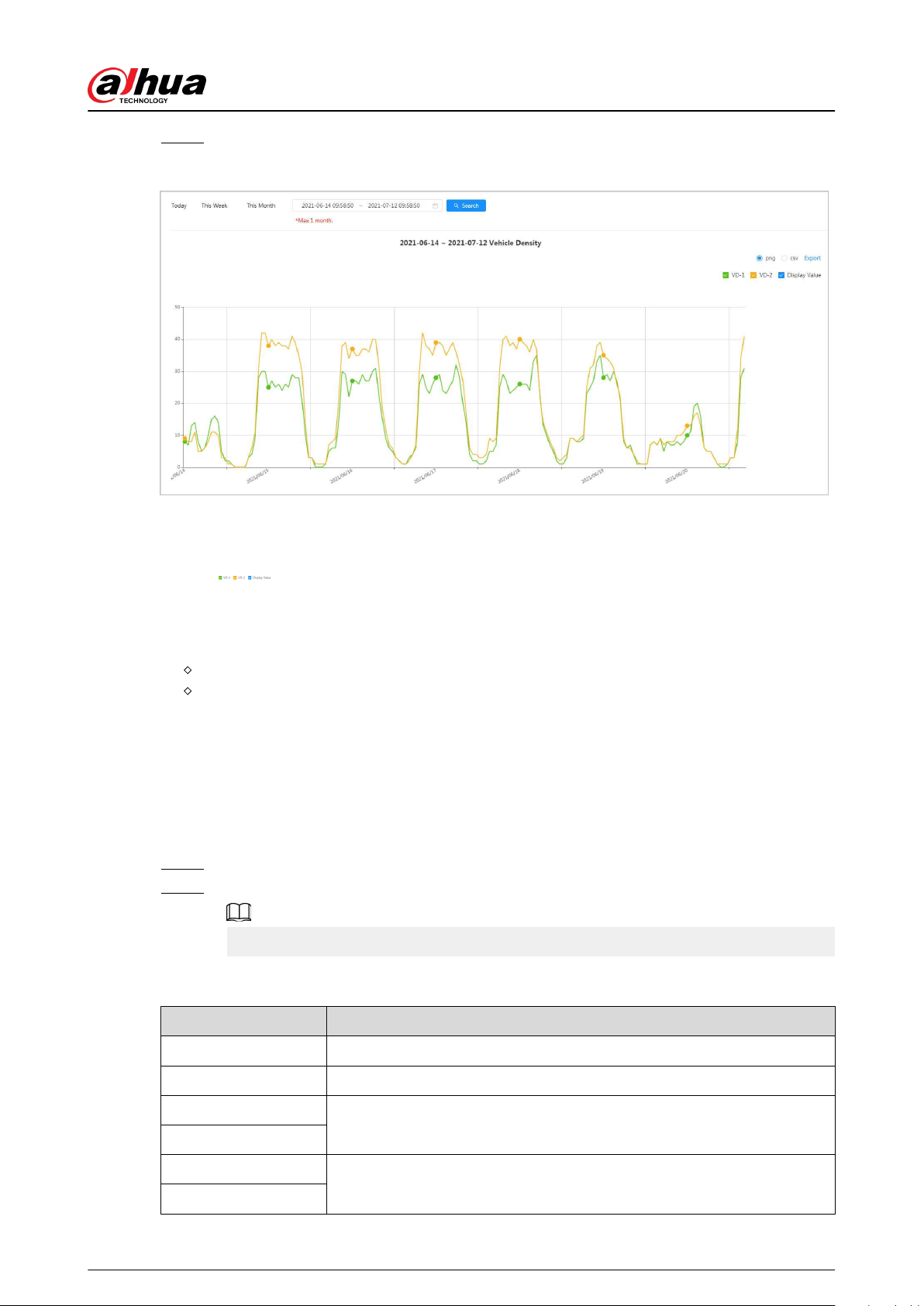
Step 3 Click Search.
Figure 12-9 Vehicle density map
Related Operations
●
Select statistics type
Click to select the type as needed.
●
Export statistic report
Select the exact format and click Export, the report will be saved to the save path of your
browser.
Select png : Displays the report in picture format.
Select csv : Displays the report in list format.
12.1.6 Heat Map
View heat map and track map. You can search the detection results by number of people and stay
time, and then generate the heat map. Heat map is not available on economic sheye cameras.
Procedure
Step 1 Select Report > Report > Heat Map.
Step 2 Set search conditions.
For multi-channel camera, select the channel rst.
Table 12-2 Set search conditions
Parameter Description
Channel For multi-channel camera, select the channel rst.
Type You can select report type form Heat Map and Track Map.
People No.
When selecting type as Heat Map , select People No., and then set the
threshold. The system will display the heat map for people density.
Threshold
Time
When selecting type as Heat Map , select Time and then set the
threshold. The system will display the heat map for stay time.
Threshold
Operation Manual
216
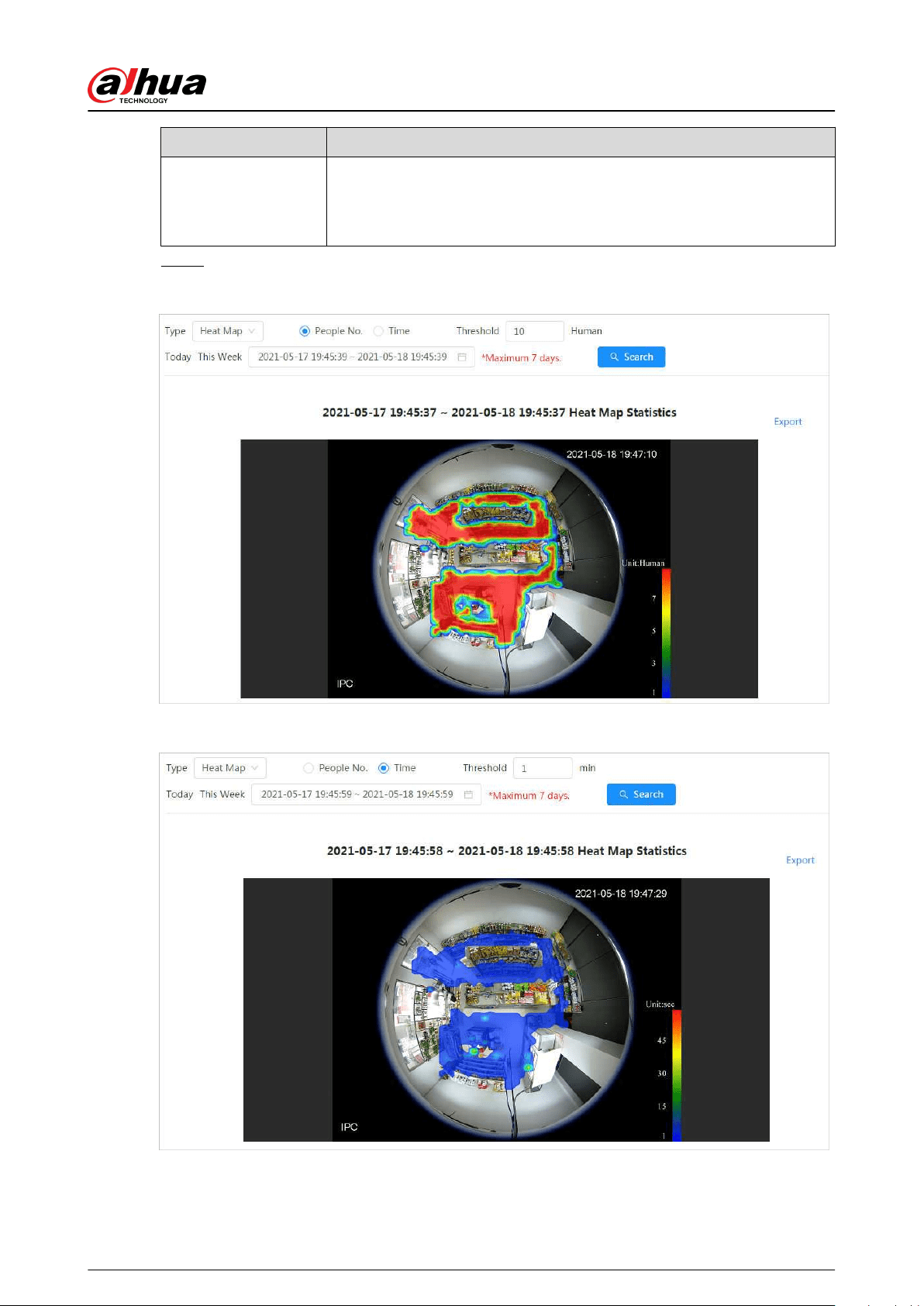
Parameter Description
Period for the report
Set the period for the report.
You can view the daily and weekly report, and you can also customize the
period.
Step 3 Click Search.
Figure 12-10 Heat map (people No.)
Figure 12-11 Heat map (time)
Operation Manual
217
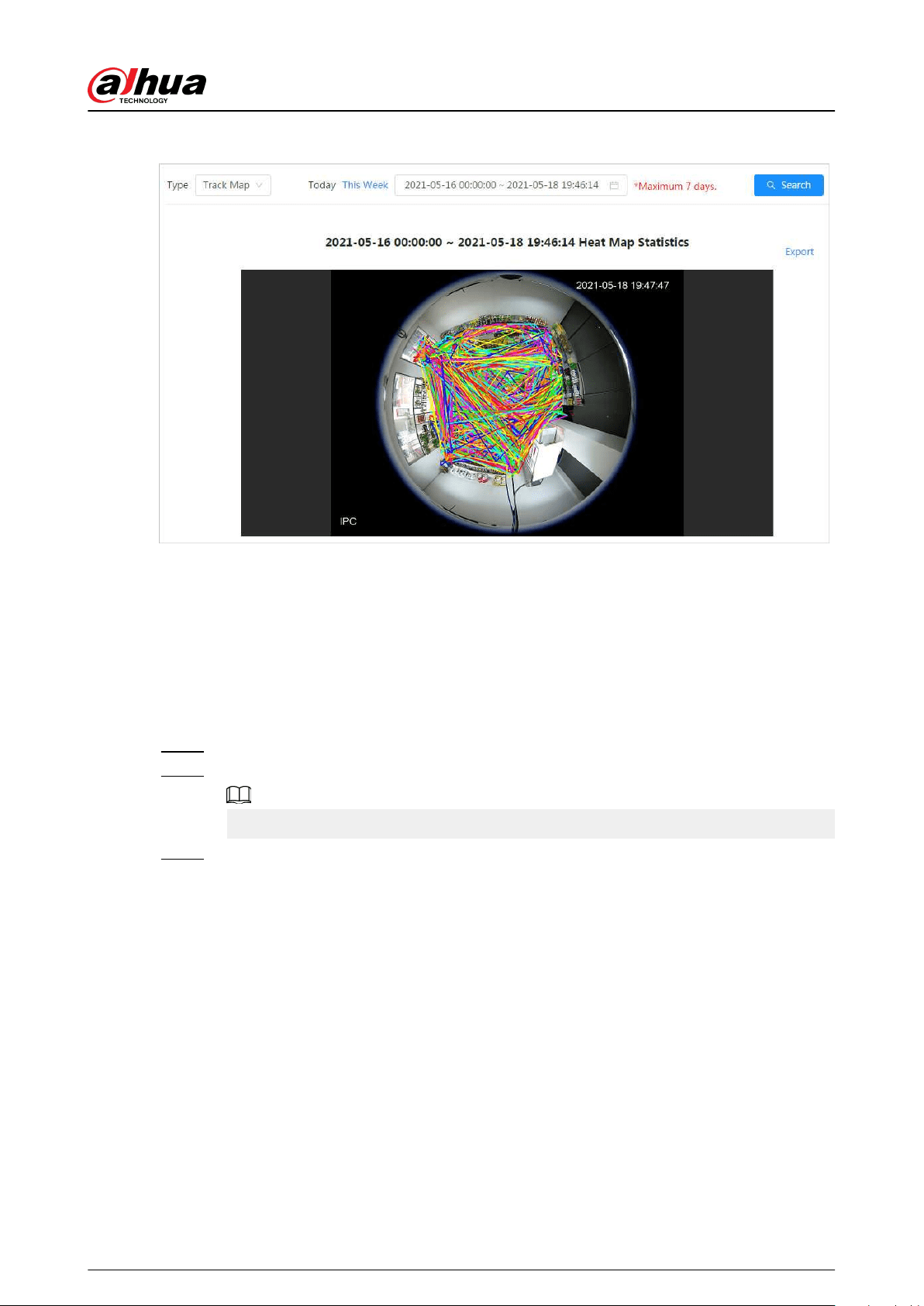
Figure 12-12 Track map
Related Operations
Click Export, and select the storage path for the exported report in .bmp format.
12.1.7 ANPR
View the statistics result of ANPR in report form.
Procedure
Step 1 Select Report > Report > ANPR.
Step 2 Set the period for the report.
For multi-channel camera, select the channel rst.
Step 3 Click Search.
Operation Manual
218
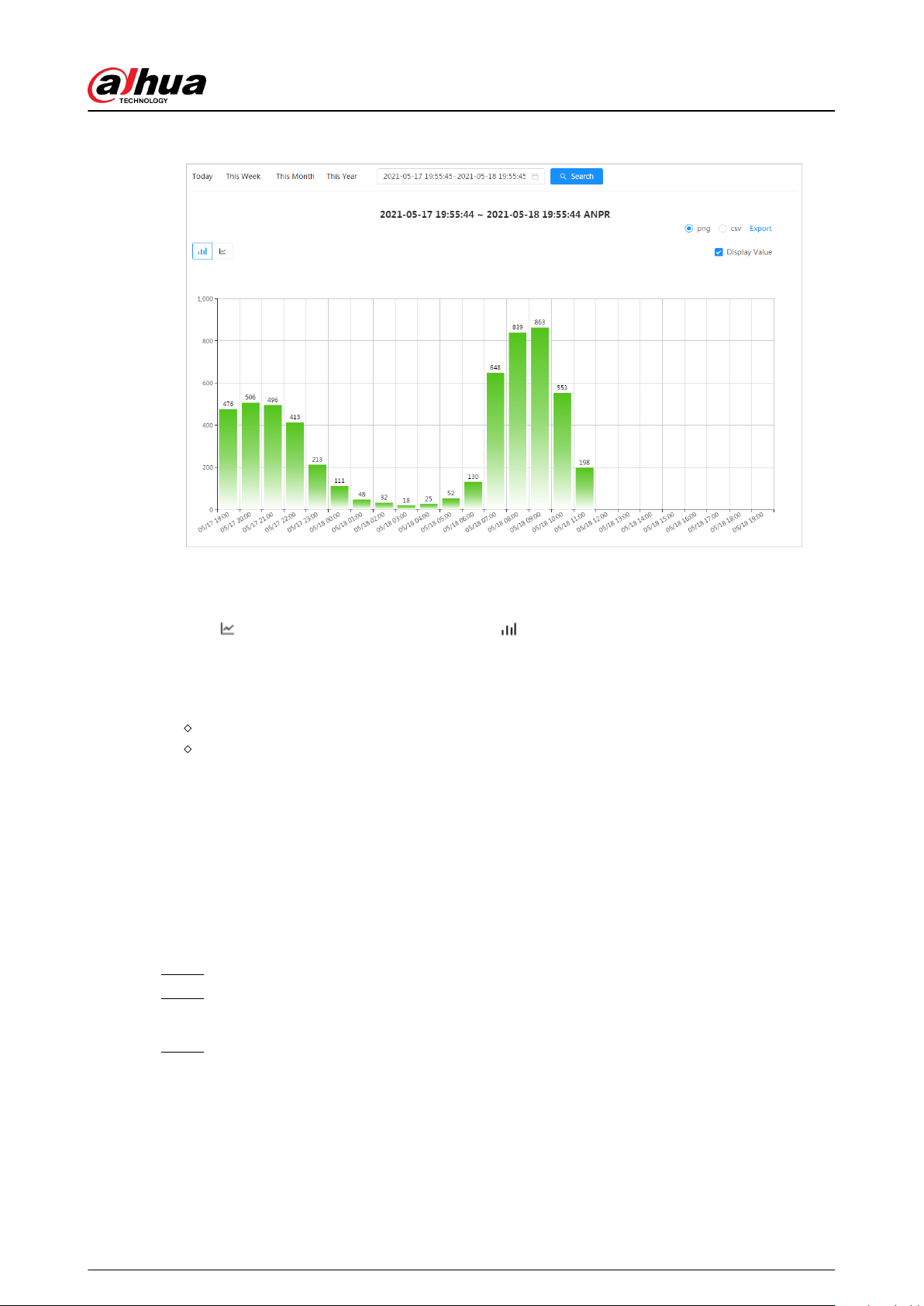
Figure 12-13 ANPR report
Related Operations
●
Select the report form
Click
to display the report in line chart; click to display the report in bar chart.
●
Select the Display Value checkbox to display the value in the report
●
Export reports
Select the le format, and then click Export.
Select png : Displays the report in picture format.
Select csv : Displays the report in list format.
12.2 Searching for Face Picture
Search for the face recognition or snapshot results by pictures.
Prerequisites
Make sure that you have installed SD card.
Procedure
Step 1 Select Report > Picture Query > Face.
Step 2 Select the type and set the period for the report.
Click Advance to set face attributes for precise search.
Step 3 Click Search. The search result is displayed.
Operation Manual
219
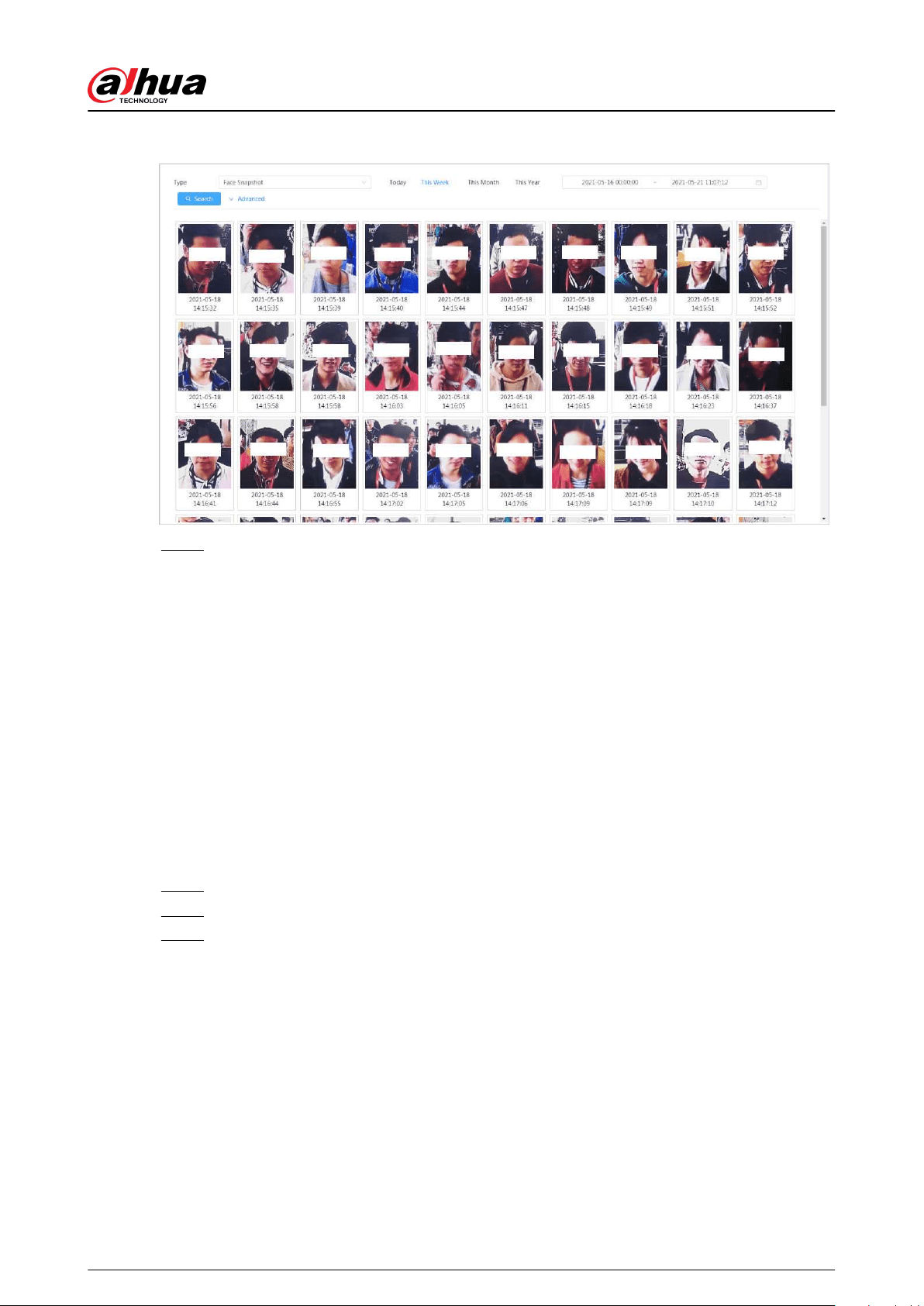
Figure 12-14 Face report
Step 4 Click the picture, and then you can view the details.
12.3 Auto Upload
Select the upload mode, enable it, and congure the parameters. The camera will upload reports of
AI functions to a dened server periodically.
Background Information
There are three upload methods:
●
HTTP: Upload reports to a server through HTTP protocol.
●
FTP: Upload reports to a server through FTP protocol. You need to set the parameters, such as
the server IP, username, password, and storage path.
●
Email: Send reports to receivers through emails. You need to set the parameters, such as the
username, password, sender and receiver.
Procedure
Step 1 Select Report > Auto Upload.
Step 2 Select the upload method, and then enable it.
Step 3 Set parameters.
Parameters of dierent upload methods are dierent.
●
HTTP
Click Add, and then add the information of server. You can add two server information
at most.
Operation Manual
220
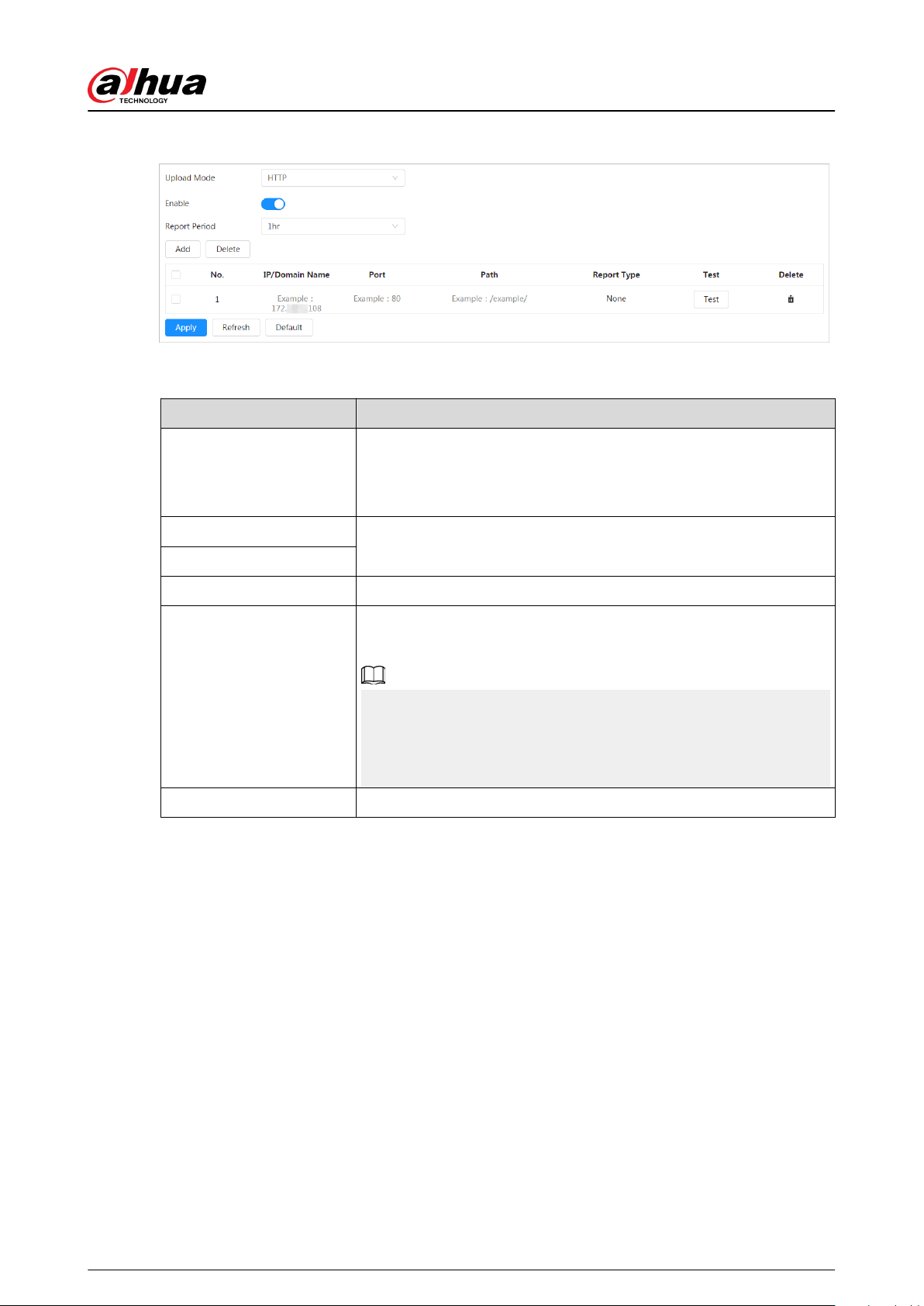
Figure 12-15 HTTP upload method
Table 12-3 Description of HTTP mode parameter
Parameter Description
Report Period
Select the report period from the drop-down list.
It is 1 hour by default, which indicates that upload the report every 1
hour.
IP/Domain name
The IP address and port number of the server which the report will
be uploaded to.
Port
Path The storage path of the server for the report.
Report type
Select the report type form the drop-down list. You can select more
than one types at the same time.
The report types in the drop-down list are the same with that
supported AI function. For example: If the camera supports people
counting, heat map, and video metadata, the 3 report types are
displayed in the drop-down list.
Test Test the network connection between the camera and the server.
●
FTP upload method
Operation Manual
221
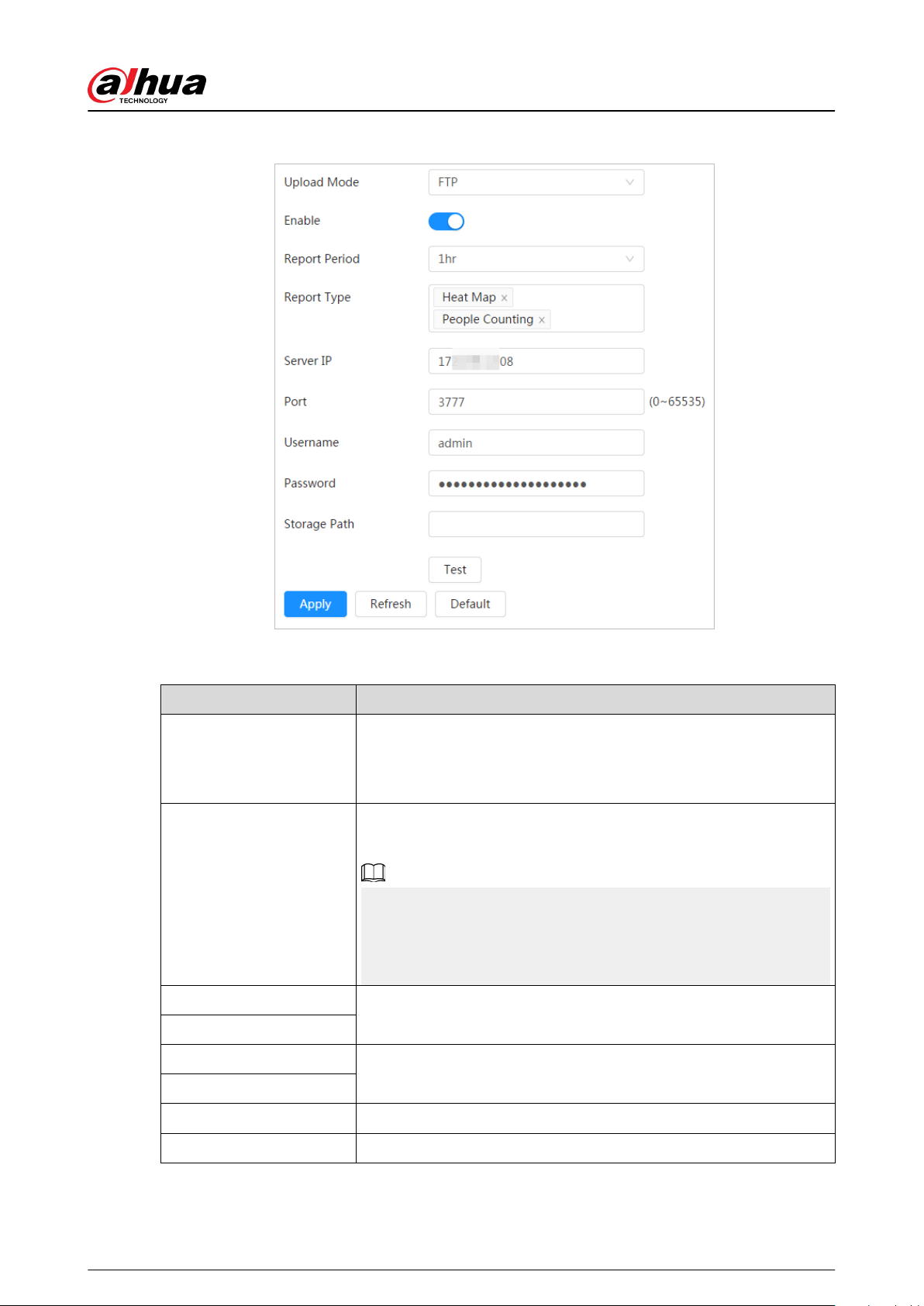
Figure 12-16 FTP upload method
Table 12-4 Description of FTP mode parameter
Parameter Description
Report Period
Select the report period from the drop-down list.
It is 1 hour by default, which indicates that upload the report every 1
hour.
Report type
Select the report type form the drop-down list. You can select more
than one types at the same time.
The report types in the drop-down list are the same with that
supported AI function. For example: If the camera supports people
counting, heat map, and video metadata, the 3 report types are
displayed in the drop-down list,
Server IP
The IP address and port number of the FTP server which the report
will be uploaded to.
Port
Username
Username and password for logging in to FTP server.
Password
Storage Path Username and password for logging in to FTP server.
Test Test the network connection between the camera and the server.
●
Email upload method
Operation Manual
222

Figure 12-17 Email upload method
Table 12-5 Description of email mode parameter
Parameter Description
Report Period
Select the report period from the drop-down list.
It is 1 hour by default, which indicates that upload the report every 1 hour.
Report Type
Select the report type form the drop-down list. You can select more than
one types at the same time.
The report types in the drop-down list are the same with that
supported AI function. For example: If the camera supports people
counting, and video metadata the 2 report types are displayed in the
drop-down list,
Heat map report will not be uploaded when you select email upload
method, so heat map will not be displayed in the drop-down list.
SMTP server SMTP (Simple Mail Transfer Protocol) server IP address and port number.
See Table 12-6 for details.
Port
Anonymous
Select Anonymous, and the sender's information is not displayed in the
email.
Operation Manual
223
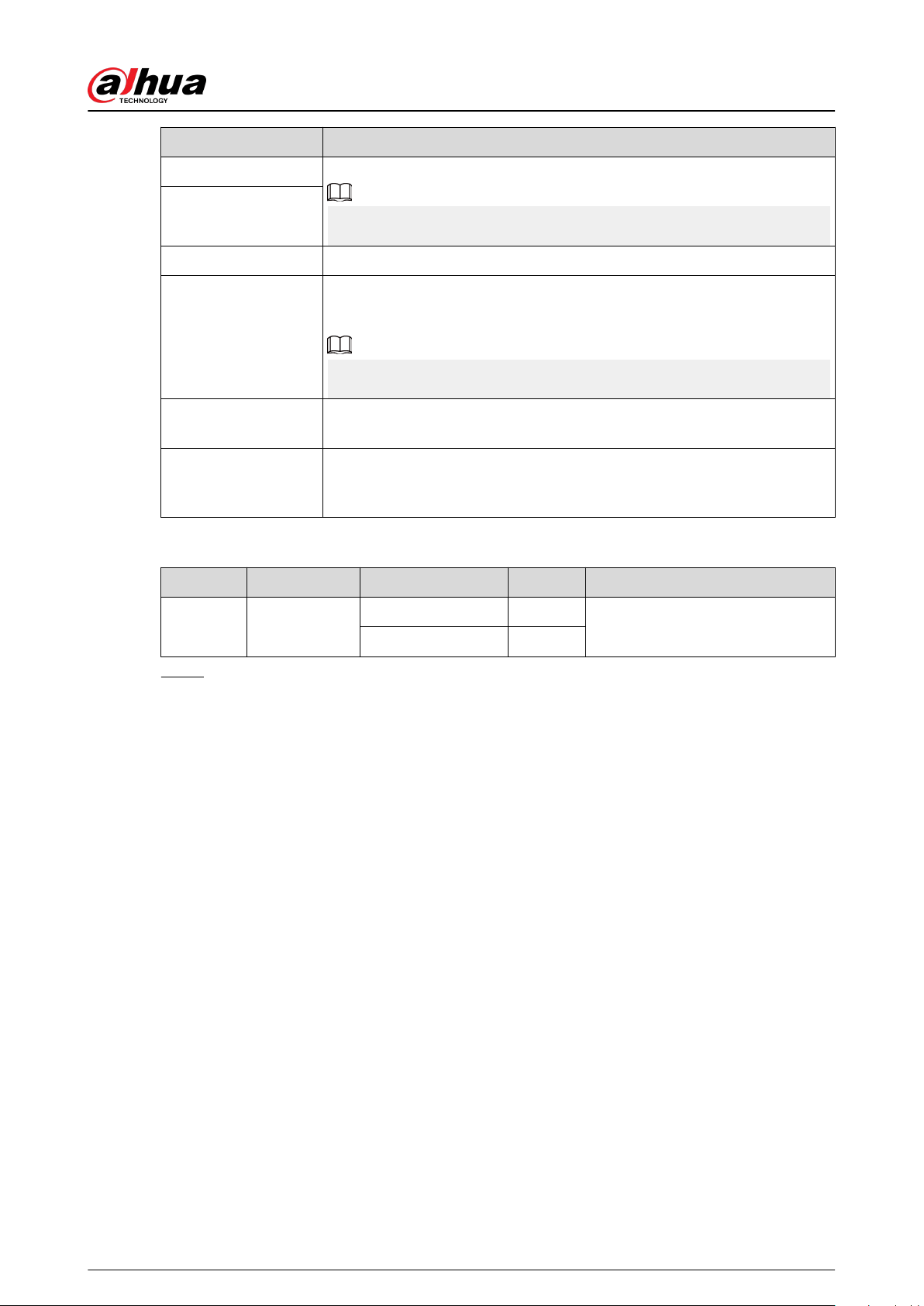
Parameter Description
Username Username and password used to log in server.
See Table 12-6 for details.
Password
Sender Sender's email address.
Encryption Type
Select the encryption type from None, SSL (Secure Sockets Layer) and TLS
(Transport Layer Security).
See Table 12-6 for details.
Subject
Email subject. You can enter up to 120 characters in Chinese, English, and
Arabic numerals.
Receiver
Email addresses of receivers. Click add to set more than one receivers.
Supports 3 addresses at most.
Table 12-6 Description of major mailbox conguration
Mailbox SMTP server Authentication Port Description
Gmail
smtp.gmail.co
m
SSL 465
You need to enable SMTP service
in your mailbox.
TLS 587
Step 4 Click Apply.
Operation Manual
224

Appendix 1 Cybersecurity Recommendations
Cybersecurity is more than just a buzzword: it’s something that pertains to every device that is
connected to the internet. IP video surveillance is not immune to cyber risks, but taking basic steps
toward protecting and strengthening networks and networked appliances will make them less
susceptible to attacks. Below are some tips and recommendations from Dahua on how to create a
more secured security system.
Mandatory actions to be taken for basic device network security:
1. Use Strong Passwords
Please refer to the following suggestions to set passwords:
●
The length should not be less than 8 characters.
●
Include at least two types of characters; character types include upper and lower case letters,
numbers and symbols.
●
Do not contain the account name or the account name in reverse order.
●
Do not use continuous characters, such as 123, abc, etc.
●
Do not use overlapped characters, such as 111, aaa, etc.
2. Update Firmware and Client Software in Time
●
According to the standard procedure in Tech-industry, we recommend to keep your device
(such as NVR, DVR, IP camera, etc.) rmware up-to-date to ensure the system is equipped
with the latest security patches and xes. When the device is connected to the public
network, it is recommended to enable the “auto-check for updates” function to obtain timely
information of rmware updates released by the manufacturer.
●
We suggest that you download and use the latest version of client software.
"Nice to have" recommendations to improve your device network security:
1. Physical Protection
We suggest that you perform physical protection to device, especially storage devices. For
example, place the device in a special computer room and cabinet, and implement well-done
access control permission and key management to prevent unauthorized personnel from
carrying out physical contacts such as damaging hardware, unauthorized connection of
removable device (such as USB ash disk, serial port), etc.
2. Change Passwords Regularly
We suggest that you change passwords regularly to reduce the risk of being guessed or cracked.
3. Set and Update Passwords Reset Information Timely
The device supports password reset function. Please set up related information for password
reset in time, including the end user’s mailbox and password protection questions. If the
information changes, please modify it in time. When setting password protection questions, it is
suggested not to use those that can be easily guessed.
4. Enable Account Lock
The account lock feature is enabled by default, and we recommend you to keep it on to
guarantee the account security. If an attacker attempts to log in with the wrong password
several times, the corresponding account and the source IP address will be locked.
5. Change Default HTTP and Other Service Ports
We suggest you to change default HTTP and other service ports into any set of numbers
between 1024–65535, reducing the risk of outsiders being able to guess which ports you are
using.
6. Enable HTTPS
We suggest you to enable HTTPS, so that you visit Web service through a secure communication
channel.
Operation Manual
225

7. MAC Address Binding
We recommend you to bind the IP and MAC address of the gateway to the device, thus reducing
the risk of ARP spoong.
8. Assign Accounts and Privileges Reasonably
According to business and management requirements, reasonably add users and assign a
minimum set of permissions to them.
9. Disable Unnecessary Services and Choose Secure Modes
If not needed, it is recommended to turn o some services such as SNMP, SMTP, UPnP, etc., to
reduce risks.
If necessary, it is highly recommended that you use safe modes, including but not limited to the
following services:
●
SNMP: Choose SNMP v3, and set up strong encryption passwords and authentication
passwords.
●
SMTP: Choose TLS to access mailbox server.
●
FTP: Choose SFTP, and set up strong passwords.
●
AP hotspot: Choose WPA2-PSK encryption mode, and set up strong passwords.
10.Audio and Video Encrypted Transmission
If your audio and video data contents are very important or sensitive, we recommend that you
use encrypted transmission function, to reduce the risk of audio and video data being stolen
during transmission.
Reminder: encrypted transmission will cause some loss in transmission eciency.
11.Secure Auditing
●
Check online users: we suggest that you check online users regularly to see if the device is
logged in without authorization.
●
Check device log: By viewing the logs, you can know the IP addresses that were used to log
in to your devices and their key operations.
12.Network Log
Due to the limited storage capacity of the device, the stored log is limited. If you need to save
the log for a long time, it is recommended that you enable the network log function to ensure
that the critical logs are synchronized to the network log server for tracing.
13.Construct a Safe Network Environment
In order to better ensure the safety of device and reduce potential cyber risks, we recommend:
●
Disable the port mapping function of the router to avoid direct access to the intranet devices
from external network.
●
The network should be partitioned and isolated according to the actual network needs. If
there are no communication requirements between two sub networks, it is suggested to use
VLAN, network GAP and other technologies to partition the network, so as to achieve the
network isolation eect.
●
Establish the 802.1x access authentication system to reduce the risk of unauthorized access
to private networks.
●
Enable IP/MAC address ltering function to limit the range of hosts allowed to access the
device.
More information
Please visit Dahua ocial website security emergency response center for security announcements
and the latest security recommendations.
Operation Manual
226