
NT200 OBDII/EOBD Code Reader User’s Guide_English Version_V1.20
1
Table of Contents
1. Safety Information
....................................................................................................................3
1.1 Important Safety Instructions....................................................................3
2. Introduction
...............................................................................................................................
4
2.1 About the Code Reader............................................................................. 4
3. OBDII/EOBD Diagnosis
........................................................................................................ 14
3.1 Reading DTCs........................................................................................... 17
3.2 Clearing DTCs........................................................................................... 20

NT200 OBDII/EOBD Code Reader User’s Guide_English Version_V1.20
2
3.3 Viewing Datastream................................................................................. 23
3.4 Viewing Freeze Data................................................................................25
3.5 Reading I/M Readiness Status Data.................................................... 28
3.6 Reading Vehicle Information.................................................................. 34
3.7 Exiting Test................................................................................................. 38
√ To avoid exiting, use the UP/DOWN key to select YES and press the ENTER key.
..... 40
6. Updating the Code Reader...................................................................................................40
4. Troubleshooting
.....................................................................................................................
44

NT200 OBDII/EOBD Code Reader User’s Guide_English Version_V1.20
3
1. Safety Information
For your safety, and to prevent damage to the equipment and vehicles, read this manual
thoroughly before operating your NT200 code reader. The safety messages presented
below and throughout this user manual are reminders to the operator to exercise extreme
care when using this device. Always refer to and follow safety messages and test
procedures provided by the manufacturer of the vehicle or equipment being tested. Read,
understand and follow all safety messages and instructions in this manual.
1.1 Important Safety Instructions
Always use this code reader as described in the user manual, and follow all safety
messages.
Do not route the test cable in a manner that would interfere with driving controls.
Do not exceed voltage limits between inputs specified in this user manual.

NT200 OBDII/EOBD Code Reader User’s Guide_English Version_V1.20
4
Always wear ANSI approved goggles to protect your eyes from propelled objects
as well as hot or caustic liquids.
Keep a dry chemical fire extinguisher suitable for gasoline, chemical and electrical
fires in work area.
Make sure to turn off ignition before connecting or disconnecting the code reader.
2. Introduction
The NT200 has been developed by leading industry experts. It is specially designed to
read/clear codes, read live data, retrieve freeze data and request vehicle information on
OBDII/EOBD compliant cars, SUVs, light-duty trucks and mini-vans sold worldwide since
1996.
2.1 About the Code Reader
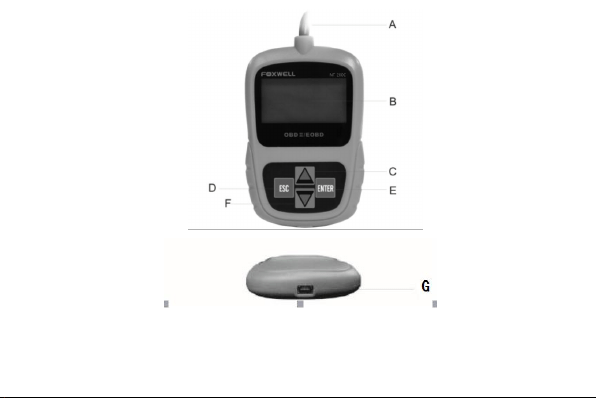
Code Reader Controls
NT200 OBDII/EOBD Code Reader User’s Guide_English Version_V1.20
5
A. OBD II Cable - provides communication for vehicle DLC.

NT200 OBDII/EOBD Code Reader User’s Guide_English Version_V1.20
6
B. LCD Display - shows menus, test results and operation tips.
C. UP Key - moves selection up.
D. ESC Key - returns to previous screen or level.
E. ENTER Key - confirms an action or enter system setup menu
from home screen
F. DOWN Key - moves selection down
G.
USB Port – provides a USB connection for the PC or laptop.
Specifications
1.Display:Backlit, 128 x 64 pixel display with contrast
adjustment.
2.WorkingTemperature: 0 to 60℃ (32 to 140℉)
3.Storage Temperature: -20 to 70℃ (-4 to 158℉)
4.Power: 8-18 Volts powered by vehicle battery
5.Dimensions(L*W*H): 120*75*20mm (4.7*2.96*0.78in)
6.Weight: 300g

NT200 OBDII/EOBD Code Reader User’s Guide_English Version_V1.20
7
Display Indicators
Below is a list indictors used to help navigate through menus.
1 $ Indicates the control unit number.
2 Indicates more than one screen of information is available.
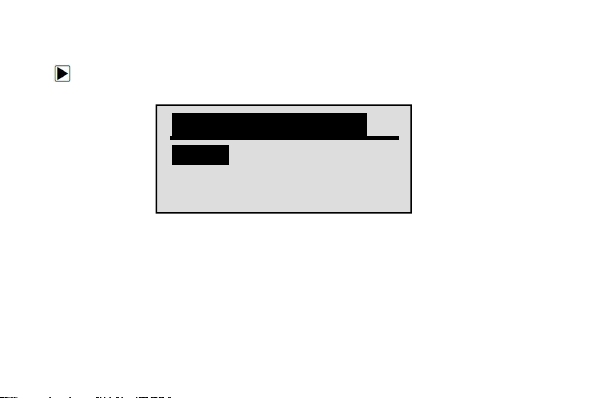
System Setup
System Setup allows you to:
● Select menu languages.
● Change measurement unit.
● Adjust display contrast.
√ System Setup settings remain until changes to the existing setups are made.
NT200 OBDII/EOBD Code Reader User’s Guide_English Version_V1.20
8
To do system setup:
1. Press the UP/DOWN key to enter System Setup from
home screen.
√ Follow on-screen instructions to program the code reader to meet your specific
needs.
Changing Language
√ The code reader is set to display English menus by default.
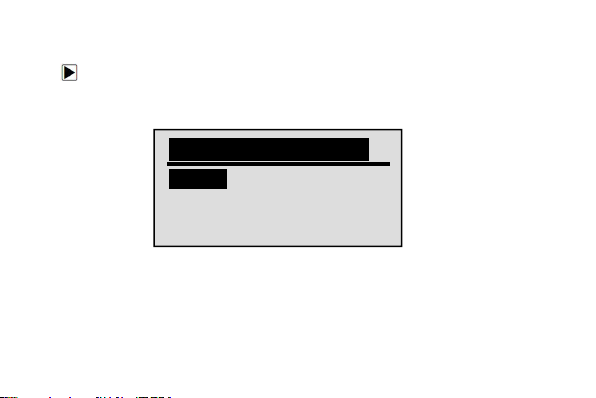
To change menu language:
System Setup
Language
Measurement Unit
Contrast
NT200 OBDII/EOBD Code Reader User’s Guide_English Version_V1.20
9
2. Use the UP/DOWN key to pick Language from System
Setup screen.
3. Press the ENTER key to confirm.
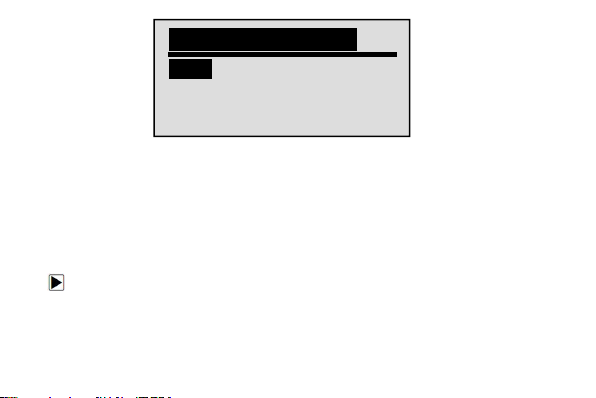
4. Use the UP/DOWN key to select desired language
System Setup
Language
Measurement Unit
Contrast
NT200 OBDII/EOBD Code Reader User’s Guide_English Version_V1.20
10
5. Press the ENTER key to save language setting and
return.
Changing Measurement Unit
√ Metric is the default measurement unit.
To change measurement unit:
1. Use the UP/DOWN key to select Measurement Unit from System Setup
screen.
2. Press the ENTER key to confirm.
Language
English
Espanol
Francais
NT200 OBDII/EOBD Code Reader User’s Guide_English Version_V1.20
11
3. Use the UP/DOWN key to select desired measurement unit.
System Setup
Language
Measurement Unit
Contrast
Measurement Unit
English
Metric
NT200 OBDII/EOBD Code Reader User’s Guide_English Version_V1.20
12
4. Press the ENTER key to save measurement setting and return.
Adjusting Display Contrast
To adjust display contrast:
1. Use the UP/DOWN key to select Contrast from System Setup screen.
2. Press the ENTER key to confirm.
3. Use the UP/DOWN key to adjust contrast.
4.
System Setup
Language
Measurement Unit
Contrast
NT200 OBDII/EOBD Code Reader User’s Guide_English Version_V1.20
13
5. Press the ENTER key to save contrast setting and
return.
Exiting System Setup
To quit system setup:
1. Use the ESC key to quit system setup
Contrast
Contrast (30%)
[UP/Down Key] – Adjust
[ENTER] – Save
NT200 OBDII/EOBD Code Reader User’s Guide_English Version_V1.20
14
3. OBDII/EOBD Diagnosis
Diagnostic Menu allows you to:
● Read DTCs.
● Clear DTCs.
● View live datastream.
● View freeze data.
● Retrieve vehicle information.
System Setup
Language
Measurement Unit
Contrast

NT200 OBDII/EOBD Code Reader User’s Guide_English Version_V1.20
15
√ The code reader detects the communication protocol when it is connected to the
vehicle and uses the protocol throughout the testing until another vehicle is
diagnosed.
√ If the code reader fails to communicate with the vehicle a “Communication
Error!” message displays. Make sure the OBDII connector is securely attached,
and the ignition key is on. Turn vehicle key to off for 10 seconds, then on. If the
problem still exists, refer to “Error Messages” on page 18 of
Troubleshooting.
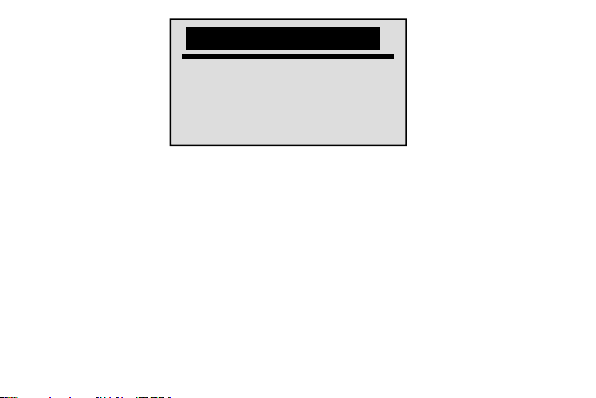
√ When the code reader links to a vehicle, it checks the status of I/M Monitors, and
gives a summary report on the display as illustrated below.
NT200 OBDII/EOBD Code Reader User’s Guide_English Version_V1.20
16
√ If the vehicle is equipped with more than one computer module (for example a
powertrain control module [PCM] and a transmission control module [TCM]),
the code reader identifies them by their identification names (ID) assigned by
the manufacturer (i.e. Engine or A/T).
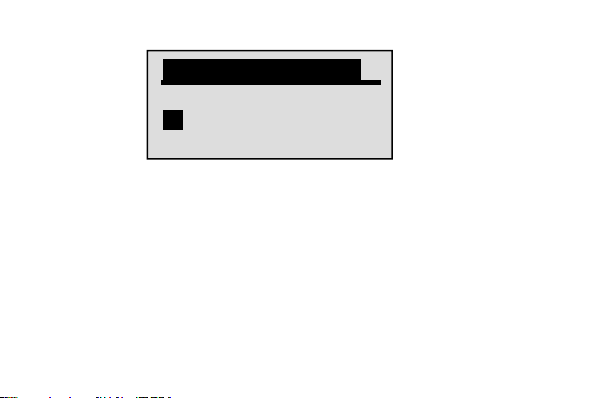
√ Use the UP/DOWN key to select a control module where the data may be
retrieved when more than one module is detected.
System Status
Code Found 3
Monitors N/A 4
Monitors OK 4
Monitors INC 3
NT200 OBDII/EOBD Code Reader User’s Guide_English Version_V1.20
17
√ To view information of other control units quit the current test and select another
module.
3.1 Reading DTCs
The Read Codes function is used to read DTCs (stored codes), which are used to
help identify the cause of a trouble or troubles with a vehicle, and pending codes from
the vehicle’s control modules.
Control Module
Engine
A/T

NT200 OBDII/EOBD Code Reader User’s Guide_English Version_V1.20
18
√ When emission-related or drivability fault occurs the control module illuminates
the malfunction indicator lamp (MIL).
√ Pending Codes are also referred to as continuous monitor or maturing codes
that indicate intermittent faults. If the fault does not occur within a certain
number of drive cycles (depending on vehicle), the code clears from memory. If
fault occurs a specific number of times, the code matures into a DTC and the
MIL illuminates or blinks.
√ This function can be performed with KOEO or KOER.
To read codes from vehicle control modules:
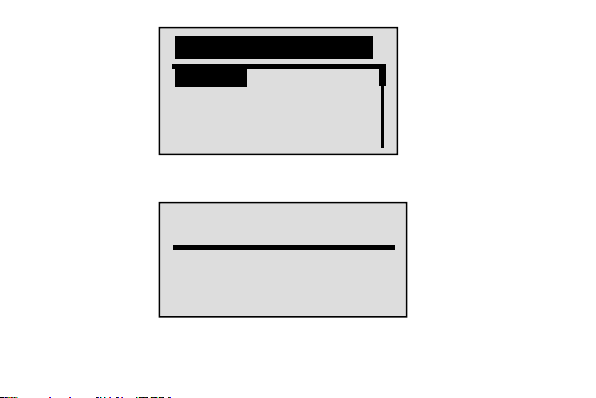
1. Press the ENTER key to start diagnosis from home screen.
2. Use the DUP/DOWN key to select Read Codes from Diagnostic Menu
screen.
NT200 OBDII/EOBD Code Reader User’s Guide_English Version_V1.20
19
3. Press the ENTER key to confirm.
4. View DTCs and their definitions.
$10 1/2
P0101 Generic
Mass or Volume Air
Flow A Circuit Range
/ Performance
Diagnostic Menu
Read Codes
Clear Codes
Datastream
Freeze Data

NT200 OBDII/EOBD Code Reader User’s Guide_English Version_V1.20
20
√ If no DTCs are present a message stating “No (Pending) Codes Found” is
displayed.
√ If any manufacturer specific or enhanced codes are detected, a “Manufacturer
specific codes are found! Press any key to select vehicle make!” message
displays prompting you to select a vehicle make before viewing DTC(s).
√ If the manufacturer of the vehicle being tested is not listed, select Other.
5. Press the ESC key to return to Diagnostic Menu screen.
3.2 Clearing DTCs
The Clear Codes function is used to delete DTCs and I/M Readiness data from vehicle’s
control module(s). It may also erase freeze data, and set monitors to incomplete or not
ready.
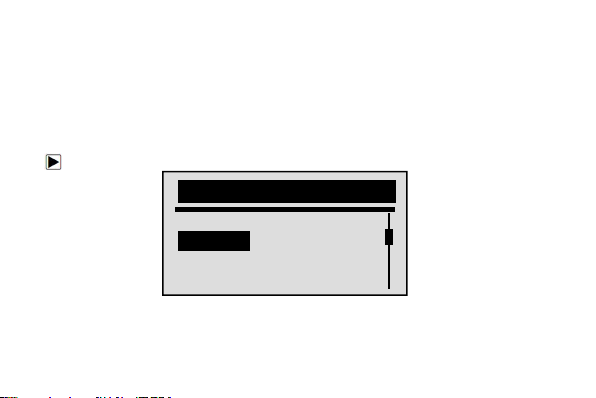
√ Perform Clear Codes function only after systems have been checked
completely.
√ After servicing the vehicle, erase stored DTCs and verify no codes have been
NT200 OBDII/EOBD Code Reader User’s Guide_English Version_V1.20
21
reset. If a DTC returns, the problem has not been fixed or other faults are
present.
√ Depending on which monitor sets a code, the vehicle may need to be driven and
the monitor run before concluding that the fault has been repaired.
√ This function is performed with KOEO. Do not start the engine.
To erase codes from vehicle control modules:
1. Use the UP/DOWN key to select Clear Codes from Diagnostic Menu screen.
2. Press the ENTER key to confirm.
Diagnostic Menu
Read Codes
Clear Codes
Datastream
Freeze Data
NT200 OBDII/EOBD Code Reader User’s Guide_English Version_V1.20
22
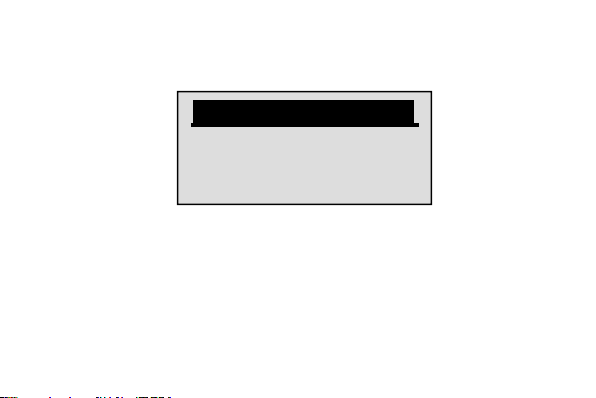
3. If codes and diagnostic results are to be cleared, use the UP/DOWN key to
select YES and press the ENTER key.
√ If codes and test data are not to be deleted, select ESC, and a “Command
Cancelled!” message displays prompting to press any key to return to
Diagnostic Menu.
4. Wait a few seconds until a “Codes Cleared!” message shows indicating codes
have been cleared successfully.
√ If the code reader fails to clear the codes, a “Clear Error! Turn Key on with
Clear Code
Are You Sure to
Clear Codes?
<YES> NO

NT200 OBDII/EOBD Code Reader User’s Guide_English Version_V1.20
23
Engine off!” message displays.
5. Wait a few seconds or press any key to return to Diagnostic Menu.
3.3 Viewing Datastream
The Datastream function allows real time viewing of the vehicle’s electronic control unit’s
PID data, including sensor data, operation of switches, solenoids and relays.
To view live datastream:
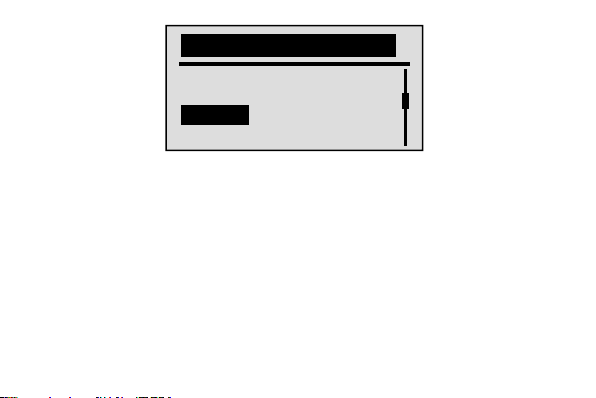
1. Use the UP/DOWN key to select Datastrean from Diagnostic Menu screen.
NT200 OBDII/EOBD Code Reader User’s Guide_English Version_V1.20
24
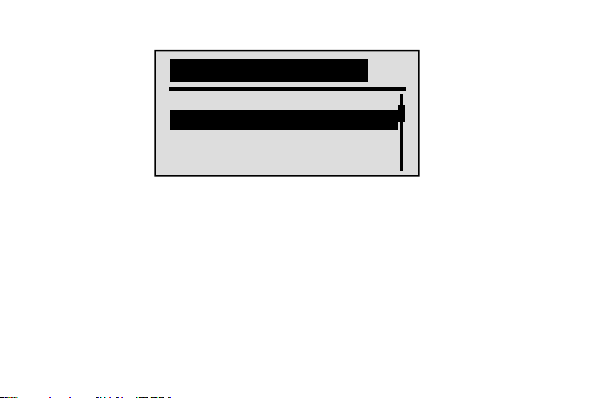
2. Press the ENTER key to confirm.
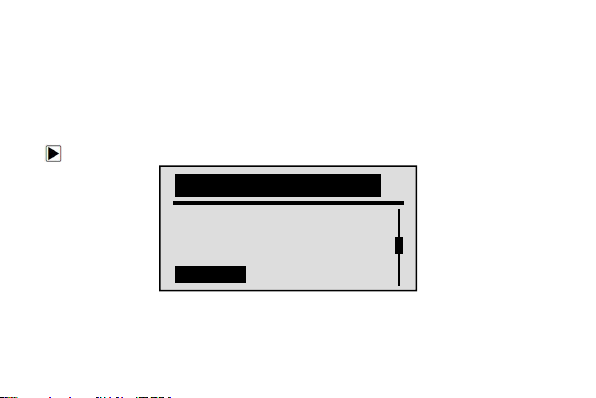
3. View PIDs on code reader. Use the UP/DOWN key when more than one screen
of information is retrieved
Diagnostic Menu
Read Codes
Clear Codes
Datastream
Freeze Data
NT200 OBDII/EOBD Code Reader User’s Guide_English Version_V1.20
25
√ Some vehicles may not support this function, and a “Not Support This Function!”
message display.
4. Press the ESC key to return.
3.4 Viewing Freeze Data
The Freeze Data function is used to view freeze frame data, a snapshot of vehicle
Datastream
DTC_CNT 2
LOAD_PCT % 0.0
ETC
℉
171
RPM/min 0
NT200 OBDII/EOBD Code Reader User’s Guide_English Version_V1.20
26
operating conditions recorded by the on-board computer at the time of an
emission-related fault.
√ If codes were cleared, freeze data may not be stored in vehicle memory
depending on vehicle.
To view freeze frame data:
1. Use the UP/DOWN key to select Freeze Data from Diagnostic Menu screen
2. Press the ENTER key to confirm.
Diagnostic Menu
Read Codes
Clear Codes
Datastream
Freeze Data
NT200 OBDII/EOBD Code Reader User’s Guide_English Version_V1.20
27
3. View freeze frame data on screen. If more than one screen of information is
retrieved, use the UP/DOWN key to view additional data.
√ If no freeze frame is detected, a “No Freeze Data Found!” message displays.
√ Some vehicles may not support this function, and a “Not Support This Function!”
message display.
4. Press the ESC key to return to Diagnostic Menu.
Freeze Data
DTCFRZF P0157
FUELSYS1 OL
FUELSYS2 OL
LOAD_PCT (%) 0.0

NT200 OBDII/EOBD Code Reader User’s Guide_English Version_V1.20
28
3.5 Reading I/M Readiness Status Data
The I/M Readiness function is used to view a snapshot of the operations for the emission
system on OBDII/EOBD vehicles.
√ I/M Readiness is a useful function used to check if all
monitors are OK or N/A.
√ The vehicle’s computer performs tests on the emission system during normal
driving conditions. After a specific amount of drive time (each monitor has
specific driving conditions and time required), the computer’s monitors decide if
the vehicles emission system is working correctly. When the monitor’s status is:
● OK - vehicle was driven enough to complete the monitor.
● INC (Incomplete) - vehicle was not driven enough to complete the monitor.
● N/A (Not Applicable) - vehicle does not support that monitor.
√ I/M Readiness function is performed with the KOER or KOEO.
√ There are two types of I/M Readiness tests:
NT200 OBDII/EOBD Code Reader User’s Guide_English Version_V1.20
29
● Since DTCs Cleared - shows status of the monitors since the DTCs were last
cleared.
● This Drive Cycle - shows status of monitors since the start of the current drive
cycle.
√ Below is a list of abbreviations and names of OBD II monitors supported by the
code reader.
No.
Abbreviation
Name
1
Misfire Monitor
Misfire Monitor
2
Fuel System Mon
Fuel System Monitor
3
Comp.
Component
Comprehensive Components Monitor
4
Catalyst Mon
Catalyst Monitor
5
Htd Catalyst
Heated Catalyst Monitor
6
Evap System
Mon
Evaporative System Monitor
7
Sec Air System
Secondary Air System Monitor
NT200 OBDII/EOBD Code Reader User’s Guide_English Version_V1.20
30
8
A/C Refrig Mon
Air Conditioning Refrigerant Monitor
9
Oxygen Sens
Mon
Oxygen Sensor Monitor
10
Oxygen Sens Htr
Oxygen Sensor Heater Monitor
11
EGR System
Mon
Exhaust Gas Recirculation System
Monitor
NOTE Not all monitors are supported by all vehicles.
To retrieve I/M Readiness Status data:
1. Use the UP/DOWN key to select I/M Readiness from
Diagnostic Menu screen.
NT200 OBDII/EOBD Code Reader User’s Guide_English Version_V1.20
31
2. Press the ENTER key to confirm.
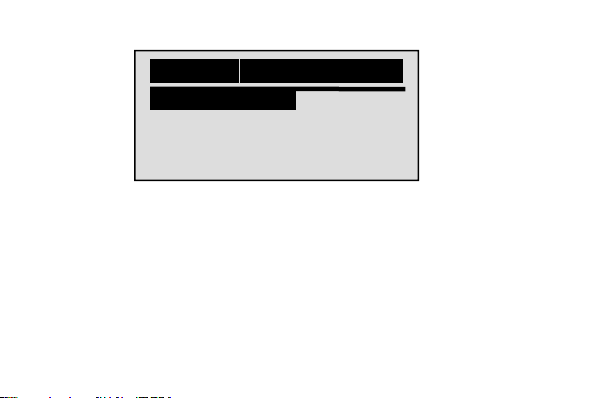
√ If vehicle supports both types of monitors, please see the
following screen:
Diagnostic Menu
I/M Readiness
Vehicle Information
NT200 OBDII/EOBD Code Reader User’s Guide_English Version_V1.20
32
√ Use the UP/DOWN key to select a monitor type and
press the ENTER key to confirm.
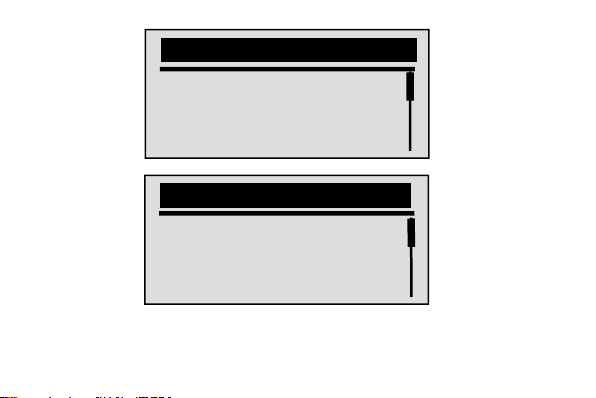
3. Depending on readiness test, one of these 2 screens will be
present.
I/M Readiness
Since DTCs Cleared
This Drive Cycle
NT200 OBDII/EOBD Code Reader User’s Guide_English Version_V1.20
33
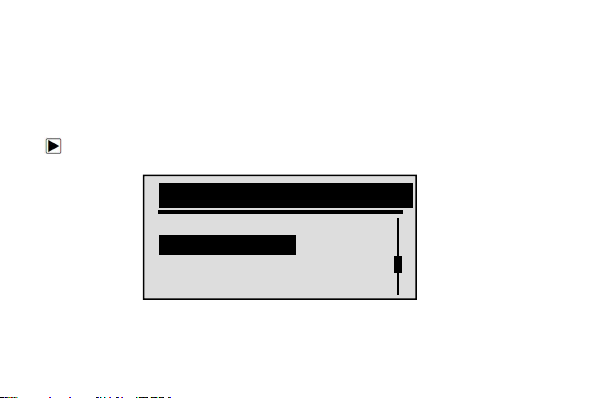
Or
Since DTCs Cleared
MIL Status OFF
Misfire Monitor N/A
Fuel System Mon N/A
Comp. Component OK
This Drive Cycle
MIL Status OFF
Misfire Monitor N/A
Fuel System Mon N/A
Comp. Component OK

NT200 OBDII/EOBD Code Reader User’s Guide_English Version_V1.20
34
√ If more than one screen of information is retrieved, use the
UP/DOWN key to view additional data.
√ Some vehicle may not support this function, and a “Not Support
This Function!” message displays.
4. Press the ESC key to return to Diagnostic Menu.
3.6 Reading Vehicle Information
The Vehicle Information function is used to request the vehicle’s VIN
number, calibration ID(s) which identifies software version in vehicle
control module(s), calibration verification numbers (CVN(s)) and in-use
performance tracking on model year 2000 and newer OBD II compliant
vehicles.
√ CVNs are calculated values required by OBD II regulations. They
are reported to check if emission-related calibrations have been
NT200 OBDII/EOBD Code Reader User’s Guide_English Version_V1.20
35
changed. Multiple CVNs may be reported for a control module.
It may take several minutes to do the CVN calculation.
√ In-use performance tracking tracks performance of key
readiness monitors.
To request vehicle information:
1. Use the DOWN key to select Vehicle Information from
Diagnostic Menu screen.
2. Press the ENTER key to confirm.
Diagnostic Menu
I/M Readiness
Vehicle Information
NT200 OBDII/EOBD Code Reader User’s Guide_English Version_V1.20
36
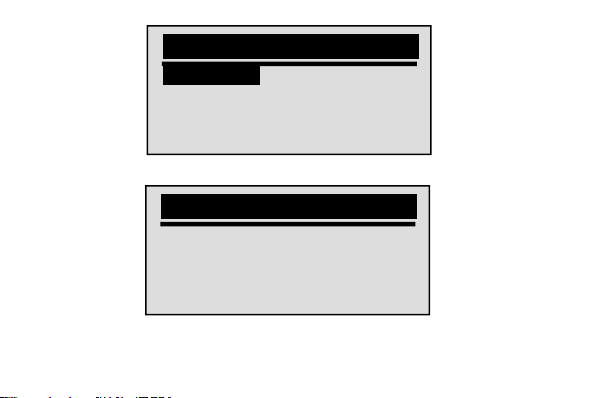
3. Wait a few seconds or press ENTER key to continue.
√ Some vehicles may not support this function, and a “Not Support
This Function!” message displays.
4. Use the UP/DOWN key to select an available item from Vehicle
Information screen.
5.
Vehicle Information
Turn Key on
with Engine off!
Any key to continue.
NT200 OBDII/EOBD Code Reader User’s Guide_English Version_V1.20
37
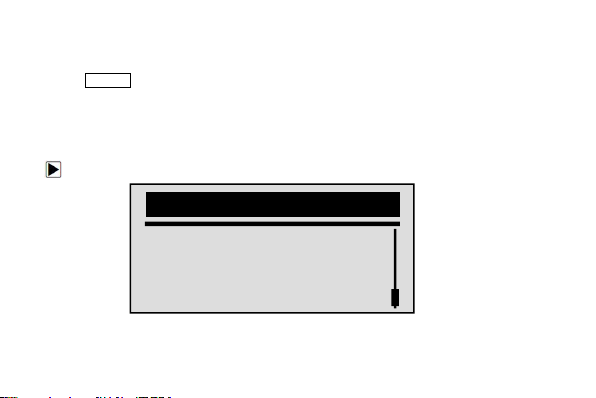
6. Press the ENTER key to view retrieved information.
Vehicle Information
Calibration ID
Cal. Verif. Number
Calibration ID
Cal ID1:
09G927750EK_0706
NT200 OBDII/EOBD Code Reader User’s Guide_English Version_V1.20
38
7. Press the ESC key return.
NOTE Not all data is supported by all vehicles.
3.7 Exiting Test
To exit the OBDII test:
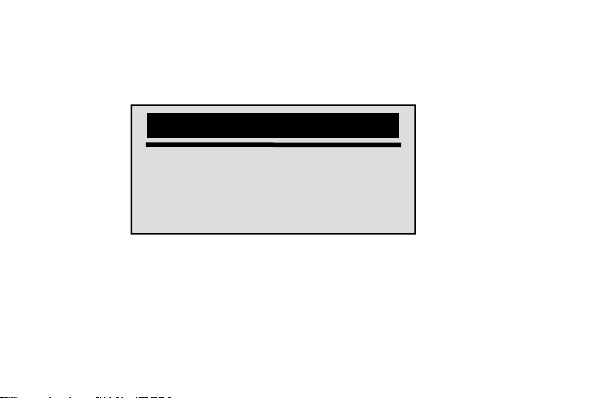
1. Use the ESC key to return to Diagnostic Menu screen.
Diagnostic Menu
I/M Readiness
Vehicle Information
NT200 OBDII/EOBD Code Reader User’s Guide_English Version_V1.20
39
2. Press the ENTER key to confirm.
3. To quit the test, use the UP/DOWN key to select YES and press
the ENTER key.
Exit Test
Are You Sure to
Exit Test?
<YES> NO

NT200 OBDII/EOBD Code Reader User’s Guide_English Version_V1.20
40
√ To avoid exiting, use the UP/DOWN key to select YES and press
the ENTER key.
6. Updating the Code Reader
NT200 is able to be updated to keep you stay current with the latest development of
diagnosis.
√ The update of NT200 consists of two parts: program upgrade and DTC upgrade.
√ To update the code reader, you need following tools:
● NT200 Code Reader
● Update Tool Downloaded in Our Website
● PC or Laptop with USB Ports and Internet Explorer
● USB Cable
√ To be able to use update tool, PC or laptop must meet the following minimum
requirements:
● Operation System: Win98/NT, Win ME, Win2000, Win XP, VISTA and
NT200 OBDII/EOBD Code Reader User’s Guide_English Version_V1.20
41
Windows 7.
● CPU: Intel PIII or better
● RAM: 64MB or better
● Hard Disk Space: 30MB or better
● Display: 800*600 pixel, 16 byte true color display or better
● Internet Explorer 4.0 or newer
IMPORTANT Do not disconnect the code reader from computer, or power off
the computer during the process of updating.
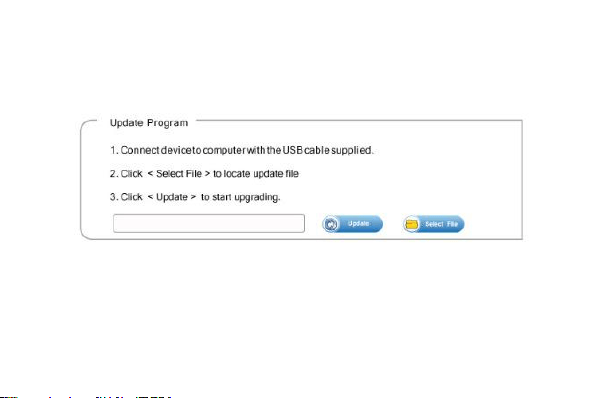
To update program:
1.
Download the update tool and update files from our website and save the
applications and files in computer disk.
2. Unzip the update tool file. Follow instructions on computer screen to install the
tool and driver.
3.
Double click the desktop icon to launch the application.
NT200 OBDII/EOBD Code Reader User’s Guide_English Version_V1.20
42
4.
Connect NT200 to computer with the USB cable provided and the application
detect the device automatically.
5. Use <Select File> to locate update file downloaded.
NT200 OBDII/EOBD Code Reader User’s Guide_English Version_V1.20
43
6.
Click <Update> to start updating.
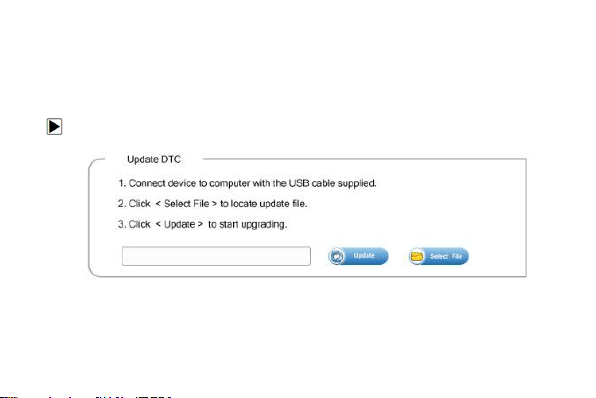
To update DTCs:
√ It may takes several minutes to update the DTCs.
1.
Use <Select File> to locate update file downloaded.

NT200 OBDII/EOBD Code Reader User’s Guide_English Version_V1.20
44
Click <Update> to start updating
4. Troubleshooting
4.1 Error Message
When a “Communication Error!” message displays, please check the
following:
● Verify ignition key is in the ON position.
● Make sure the code reader is correctly attached to vehicle’s
Data Link Connector (DLC).
● Check DLC for cracked or recessed pins, or for any substance
that could prevent a good electrical connection.
● Check NT200’s OBDII connector for bent or broken pins.

NT200 OBDII/EOBD Code Reader User’s Guide_English Version_V1.20
45
● Make sure the vehicle is OBDII/EOBD compliant.
● Cycle the vehicle key to OFF for 10s and then back to ON.
● Verify battery voltage is at least 8.0V with KOEO.
● Verify that the control module is not defective.
4.2 Code Reader Does Not Power Up
If the NT200 will not power up, communicate with vehicle’s control
module, or functions incorrectly in any other way, do the following:
● Check DLC for broken or bent pins and clean the pins if need
be.
● Make sure NT200 is correctly connected to the vehicle’s DLC.
● Verify battery voltage is at least 8.0V with KOEO.

