3M Respirator
Selection Guide

For more information
I
n U.S.
Technical Assistance
1-800-243-4630
Customer Care Center
1-800-328-1667
3M.com/PPESafety
In Canada
Technical Assistance
1-800-267-4414
Customer Care
1-800-364-3577
3M.ca/PPESafety
© 3M 2019. Data for this guide compiled 2019.

Respirator Selection Criteria ................................................................................ 1
• Respirator Program Management
• Respirator Fit
• Assigned Protection Factors (APF)
• Effects from Skin or Eye Contact
• Human Factors
• Location of Hazardous Areas
• Respirator Characteristics, Capabilities, and Limitations
• General Use Instructions
• General Use Limitations
Format Explanation ............................................................................................... 4
• Chemical Name
• CAS #
• Synonyms
• IDLH Level
• OEL
• Respirator Recommendations
• Comments
Particulate Filter Definitions ................................................................................10
• N-Series
• R-Series
• P-Series
• HEPA
How to Use This Guide .........................................................................................11
Chemical Compound Guide ...............................................................................15
Respirator Codes and Descriptions .......................................... end of document
Table of Contents
© 3M 2019 Data for this guide compiled 2019
1
your local 3M representative or call our
3M Technical Service Line at
1-800-243-4630.
Respirator Program Management
In the United States, where respirators
are in use in the workplace, a formal
respiratory protection program must
be established covering the requirements
outlined in the OSHA Respiratory
Protection Standard (29 CFR 1910.134).
Education and training must be properly
emphasized and conducted periodically.
Maintenance, cleaning, and storage
programs must be established and
routinely followed for respirators that are
reused.
Respirator Fit
The OSHA Respiratory Protection
(disposable) respirator or a reusable
Selection of appropriate respiratory protective
equipment (RPE) will depend on the particular
situation and should be made only by a
competent person knowledgeable of the actual
working conditions and the limitations of RPE.
Details regarding performance and limitations
are set out on the respirator packaging and User
Instructions. 3M respirators help protect against
certain airborne contaminants. No respirator is
capable of preventing all airborne contaminants
from entering the wearer’s breathing zone.
Before use, the wearer must read and
understand the User Instructions provided as a
part of the product packaging. This guide
summarizes certain U.S. respiratory
requirements and considerations. Local
requirements may vary. Follow all local
regulations. In the U.S., a written respiratory
protection program must be implemented
meeting all the requirements of OSHA 29 CFR
1910.134 including training, fit testing, and
medical evaluation. In Canada, CSA standards
Z94.4 requirements must be met and/or
requirements of the applicable jurisdiction, as
appropriate. Misuse may result in sickness or
death. For correct use, consult supervisor and
User Instructions, or call 3M Personal Safety
Division (PSD) Technical Service in the U.S.A. at
1-800-243-4630. In Canada, call
1-800-267-4414.
or call 3M Technical Service at
1-800-243-4630.
death. Misuse of a repirator may
result in sickness or death. For
correct use, consult a supervisor
and User Instructions, or call 3M
Technical Service at
1-800-243-4630.
R
espirator Selection Criteria
The 3M
™
Respirator Selection Guide
includes a list of chemicals for which
3M respirators can help provide protection.
This information can be used to
supplement general industrial hygiene
knowledge. Once workplace
contaminants and their
the guide can be used to help select an
appropriate 3M
™
Respirator for nearly
700 chemicals with Threshold Limit Values
(TLVs
®
) or other recommended exposure
limits. Because actual conditions vary from
one worksite to another, this information is
intended only as a guide. Selection of the
most appropriate respirator will depend on
the particular situation and should be made
only by a person familiar with the
and limitations of respiratory protection
products. If you have any questions
related to proper selection and use of 3M
respirators, or the use of this guide, contact

22
Assigned protection factors* per OSHA
29 CFR 1910.134 are as follows:
Air Purifying Respirators
• Half facepiece (ltering facepiece-
disposable and reusable) ..................... 10
• Full facepiece ........................................50
Powered Air Purifying Respirators
• Loose-fitting facepiece....................... 25
• Half facepiece .......................................50
• Full facepiece, helmet, or hood .....1000**
Supplied Air Respirators (airline)
• Continuous Flow
–Loose-fitting facepiece................... 25
–Half facepiece ...................................50
–Full facepiece, helmet, or hood ..... 1000**
•
Pressure demand with full facepiece .
....1000
Self-Contained Breathing
Apparatus (SCBA)
Pressure demand airline with escape
SCBA .............................................10,000
unknown and IDLH atmospheres
Pressure demand SCBA ...............10,000
unknown and IDLH atmospheres
Effects From Skin or Eye Contact
If a chemical can be absorbed through
the skin, skin protection may be required
in addition to respiratory protection.
Eye protection may also be necessary
if not provided by the respirator.
Failure to provide adequate skin or eye
protection can invalidate established
exposure limits and make respirator use
ineective for protection against certain
workplace contaminants.
* Assigned protection factors may vary for specific standards as pro mul gat ed by OSHA. Where assigned protection factors in local, state, or federal standards
are lower than those listed here, they should be used instead. For additional limitations of 3M respiratory protection products, refer to 3M respirator packaging
and
User Instructions.
** Respirator manufacturer must provide data demonstrating performance of 1000 or greater, otherwise APF of 25.
Respirator Selection Cri te ria
respirator, the wearer must obtain
a satisfactory
a
qualitative or quan
test. Worker
Hazard Ratio
Airborne Contaminant Concentration
=
OEL
comfort should also be considered.
Removal of the respirator in
contaminated environments, even for
short periods of time, dramatically
reduces the protection afforded by the
respirator.
Assigned Protection Factors (APF)
The respirator selected must have an
assigned protection factor (APF)
adequate for the particular workplace
exposure. Divide the air contaminant
concentration by the occupational
exposure limit (OEL) to obtain a hazard
ratio. Then select a respirator with an
assigned protection factor greater than
or equal to that hazard ratio.

3
Location Of Hazardous Area
When specifying supplied air respirators,
consider the distance the worker must
travel to get to an uncontaminated work
area, as well as obstacles or equipment
present in the area. If ladders or scaolds
must be climbed, a supplied air respirator
or a combination air purifying/supplied
air respirator may not be appropriate.
Respirator Characteristics,
Capabilities, and Limitations
A respirator may not be able to help
protect against all of the contaminants
present in a particular work environment.
Specific limitations are stated on the
approval labels and are included with
User Instructions. These must be carefully
reviewed for each respirator before use.
General precautionary information is
given below. Refer to respirator
packaging and User Instructions for
specific information.
General Use Instructions
• Failure to follow all instructions and
limitations on the use of these respirators
and/or failure to wear them properly
during all times of exposure can reduce
respirator effectiveness and may result in
sickness or death.
• Many of the contaminants that can be
dangerous to a person’s health include
ones that are so small they cannot be
seen or smelled at dangerous levels.
• Before use of any respirator, the wearer
must first be trained by the employer in
proper respirator use in accordance with
applicable safety and health standards.
• The OSHA Respiratory Protection
Standard (29 CFR 1910.134(f)(1)) requires
that the wearer of any tight-fitting
respirator be fit tested.
• Leave the contaminated area immediately
if dizziness or other distress occurs, if the
respirator becomes damaged or breathing
becomes difficult, if contaminants can be
smelled or tasted, or if irritation occurs.
Human Factors
Consider the entire package of safety
equipment required for the job. The
respirator selected must be compatible
with hard hats, goggles, glasses, welding
hoods, faceshields, etc. In addition, the
worker must be able to communicate
and perform required job duties without
removing the respirator. If strenuous work
is to be performed, or if the respirator is to
be worn for an extended period of time, it
may be desirable to select a lightweight
respirator with low breathing resistance.
If a respirator does not have good worker
acceptance and does not stay on the
worker’s face, it will not provide the
protection needed.

4
General Use Limitations
• Air purifying respirators do not supply
o
xygen.
• Only use self-contained breathing
apparatus (SCBA) or combination
supplied air/SCBA when concentrations
are unknown, or in atmospheres
containing less than 19.5% oxygen.
• Do not abuse or misuse any respirator.
• Do not use tight-fitting respirators or
loose-fitting facepieces with beards or
other facial hair or conditions that
prevent direct contact between the
face and the edge of the respirator.
• Do not use when concentrations
exceed maximum use concentrations
established by regulatory agencies.
Format Explanation
Chemical Name
Chemical names listed in this guide are
generally those used in the Threshold
Limit Values and Biological Exposure
Indices for 2019 published by the
American Conference of Governmental
Industrial Hygienists (ACGIH).
Pesticides and chemicals without
established occupational exposure limits
are not included. Call 3M Technical
Service for assistance in selecting
respirators for these chemicals.
CAS #
Chemical abstract service registry
numbers were established b
y the
American Chemical Society to harmonize
chemical identication regardless of the
synonym used or dierences in spelling.
Synonyms
Several common synonyms are listed in
this column.
IDLH Level
This is the concentration considered
Immediately Dangerous to Life or Health
(IDLH), as published by the National
Institute for Occupational Safety and
Health (NIOSH) (DHHS [NIOSH]
Publication No. 90-117). It specically
refers to the acute respiratory exposure
that poses an immediate threat of loss
of life, immediate or delayed irreversible
adverse effects on health, or acute eye
exposure that would prevent escape from
a hazardous atmosphere.
Format Explanation
4

5
The reasons NIOSH established an IDLH at
a particular level for a specific chemical are
described in Documentation for
Immediately Dangerous to Life or Health
Concentrations (IDLHs), NTIS Publication
No. PB-94-195047, May 1994. The 1994
IDLH values established by NIOSH used
interim criteria, and OSHA stated in a
August 3, 1998 memorandum that OSHA
will use the older 1990 IDLH values. The
1990 IDLH values are used in this guide,
but OSHA allows employers to use other
IDLH values.
For those substances with no IDLH listed,
the manufacturer or supplier may have
additional chemical information. The
Chemical Referral Center operated by the
Chemical Manufacturers Asso ciation can
assist in providing telephone numbers for
obtaining information from manufacturers.
The lower explosive level (LEL) has been
listed when an IDLH value was not located.
The concentration that would result in an
oxygen decient atmosphere should also
be considered to be IDLH.
OEL
• The occupational exposure limits listed
are 2019 ACGIH Threshold Limit
Values (TLVs), unless otherwise stated.
From ACGIH
®
, 2019 TLVs
®
and BEIs
®
Book. Copyright 2019. Reprinted with
permission. The concentrations are
expressed in ppm — parts per million
(parts of contaminant per million parts
of air) — unless specifically stated as
mg/m
3
(milligrams of contaminant per
cubic meter of air) or some other unit.
• The OSHA Permissible Exposure Limit
(PEL) is listed when it is more stringent
than the current TLV.
• The 2010 Workplace Environmental
Exposure Levels (WEEL) from
the American Industrial Hygiene
Association is listed when it is the most
stringent value or there is no TLV or PEL.
• Time Weighted Average (TWA) exposure
limits are for a normal eight (8) hour
workday and a forty (40) hour work-week.
• Short-Term Exposure Limit (STEL) is
a 15-minute time weighted average
exposure which should not be
exceeded at any time during a workday.
• Ceiling (C) exposure limits refer to
concentrations that should not be
exceeded during any part of the
working exposure.
• Exposure limits for particulates are as
total dust unless otherwise noted (e.g.,
inhalable fraction, respirable fraction,
respirable bers, etc.)
• Skin notations indicate the substance
can be absorbed through the skin. In
these cases, appropriate measures must

66
be taken to prevent skin and eye contact
to avoid invalidating the OEL.
• For a more detailed explanation of TLVs
and their proper
application, refer to the
TLV booklet available for a nominal fee
from ACGIH, 1330 Kemper Meadow
Drive, Cincinnati, OH 45240
www.acgih.org.
Odor Threshold
Odor thresholds have been removed
from this version of the guide. While
contaminant odor or irritation may serve
as a secondary indicator of when to
change cartridges, it cannot be used as
the primary indicator for when to
change.
For more information on odor thresholds,
please see relevant publications such as
“Odor Thresholds for Chemicals with
Established Health Standards, Second
Edition. AIHA (2013).”
Respirator Type
This column lists the suggested type of
particulate, gas/vapor, or supplied air
respirator. The abbreviations used are
explained at the end of this document.
Not all of these respirators have been
specifically tested against each compound
listed. Either specific testing or a review of
chemical and physical properties of the
materials, as well as adsorption or filtration
characteristics of the respirators, forms
the basis for the recommendations.
6
The recommendations are for single
substances. When two or more
substances are present, a combination
respirator may be appropriate. For
example, with a spray paint that contains
organic solvents and titanium dioxide, a
respirator consisting of an organic vapor
cartridge and a particle filter may be
appropriate. In cases where an air
purifying respirator is not available for all
of the substances of concern in a
mixture, a supplied air respirator may be
required.
In some cases, the respirator is
preceded by an “(F)” designation. These
contaminants have been identified as
potential eye irritants. Full facepieces,
hoods, helmets or loose fitting
facepieces, or half facepieces with
appropriate eye protection should be
considered.
Format Explanation

7
Do not exceed maximum use concentrations
established by regulatory agencies. Follow the
protection factor guidelines in specific OSHA
standards, and refer to the instructions in the
Respirator Selection Criteria and How To Use
This Guide sections of this guide.
When a chemical cartridge respirator is
recommended, it can only be used if a
cartridge change schedule is established as
described in 29 CFR 1910.134 (d)(3)(iii) (B) (2).
If a change schedule is not established, a
supplied air respirator must be used instead.
Comments
Other information may be listed in
this column:
A. Short service life means predicted
cartridge life of less than 30 minutes at
concentrations of ten times (10X) the OEL,
or the contaminant’s boiling point is less
than 65C. Actual service life will vary
considerably depending on concentration
levels, temperature, humidity, work rate,
etc. See the following literature references
for specific details on the conditions and
limitations of these estimates:
1. 3M Company.
3M Service Life Software.
3M.com/sls
2. Nelson, G.O. and C.A. Harder.
Respirator Cartridge Efficiency
Studies: V. Effect of Solvent Vapor.
Am. Ind. Hyg. Assoc. J. 35(7):
391-410 (1974).
Sometimes, a supplied air respirator
is recommended because the
service life may be so short that the
frequency required for changing
the
cartridges may not be practical.
References to Ineective sorbents
or Unknown sorbent eectiveness
indicate 3M does not make chemical
cartridge respirators appropriate for
these substances at this time or it is not
known how effective the sorbents would
be for these materials.
B. References to a respirator not
being specically approved refer to
approvals for that particular substance
only. All respirators listed in this guide
are NIOSH approved for specic
substances and/or conditions.

8
C. Comments regarding warning
properties have been removed as
OSHA allows air purifying respirators to
be used against gases and vapors with
poor or unknown warning properties.
Instead cartridge change schedules
based on objective information and
data must be established.
D. These compounds have been
identified as possibly existing in both
particulate and vapor phase in the
workplace. For these compounds, 3M
recommends that a gas/vapor
cartridge be used in addition to the
traditionally accepted particulate
filter. It is the user’s responsibility
to determine whether both forms
coexist. Both chemical properties and
use conditions/processes
can affect the physical form in the
workplace. Users should consider
Format Explanation
specific exposure data and
workplace conditions before making
their final selection.* If a chemical
cartridge is used, a change schedule
must be e
stablished to replace the
cartridges before the end of their
service life.
E. These compounds have been identied
as possibly existing in both vapor and
particulate phase in the workplace.
Even though these chemicals would
be expected to be in the vapor phase,
when other aerosols are present or
there is high humidity, it is possible
that the vapor may be adsorbed onto
these coexisting particles or dissolved
in available water droplets; therefore,
3M recommends a lter for the
particulate phase be used in addition
to the traditionally accepted chemical
cartridge. It is the user’s responsibility to
determine whether both forms coexist.
Both chemical properties and use
conditions/processes can aect the
physical form in the workplace. Users
should consider specic exposure
data and workplace conditions before
making their nal selection.*
F. It is believed that an N-series filter is
sufficient since these materials will not
coa
t the filter fibers, but since this
material may contain oil aerosols, an
R- or P-series filter is recommended
until further research or a regulatory
agency takes a specific position.
G. R- or P-series filters have been
recommended pending more research
as to how these materials affect the
filter fibers.
H. Listing of 3M 3510, 3530, 3550, or
3720 refers to a 3M
™
Personal Air
Monitor with Pre-Paid Analysis.
* See Perez, C. and S. C. Soderholm: Some Chemicals Requiring Special Consideration When Deciding Whether to Sample the Particle, Vapor, or Both Phases of an
Atmosphere. Appl. Occup. Hyg. 6(10): 859-864 (1991).

9
Monitors may be used to measure the
amount of specific contaminants in the
air. 3M™ Monitors without pre-paid
analysis may be used with analysis
performed
by a private laboratory.
You should check with the laboratory to
determine what other chemicals can be
measured with the monitors. An
estimate of the airborne concentration
is needed for making appropriate
respirator selection and establishing a
cartridge change schedule.
Contact the toll free 3M Technical Service
Line at 1-800-
243-4630 if you have
questions about the use of this guide or the
proper selection and use and limi ta tions of
any 3M respirators.

Particulate Filter Definitions 10
Particulate Filter Definitions
N-Series Filters: These filters are
restricted to use in atmospheres free of oil
aero sols. They may be used for any solid
or liquid airborne particulate hazard that
does not contain oil. Generally these
filters should be replaced subject to
con sid erations of hygiene, damage, and
increased breathing resistance.
R-Series Filters: A filter intended
for removal of any particle including
oil-based liquid aerosol. They may be used
for any solid or liquid airborne particulate
hazard. If the atmosphere contains oil, the
R-series filter should be used only for a
single shift (or for 8 hours of continuous or
intermittent use).
P-
Series Filters: A
lter
i
ntended
f
or
remo
val of any particle including
oil-based liquid aerosols. They may be
used for any solid or liquid particulate
airborne hazard. NIOSH requires that
respirator manufacturers establish
time-use limitations for all P-series lters.
3M recommends that in atmospheres
containing oil aerosols, P-series lters
should be used and reused for no
more than 40 hours of use or 30 days,
whichever occurs first, unless the filter
needs to be changed for hygiene
reasons, is damaged, or becomes
difficult to breathe through before the
time limit is reached. When used in
atmospheres containing non-oil aerosol,
3M P-series filters should be replaced
subject to conditions of hygiene,
damage and increased breathing
resistance.
Oil: Any of numerous mineral, vegetable and
synthetic substances and animal and vegetable
fats that are generally slippery, com bus ti ble,
viscous, liquid or liquefiable at room temperatures
soluble in various organic solvents such as ether
but not in water.
95 Level Filter
At least 95% filtration efficiency
per the NIOSH 42 CFR 84 test
method.
100 Level Filter
At least 99.97% filtration efficiency
per the NIOSH 42 CFR 84 test
method.
HEPA Filter
At least 99.97% filtration efficiency
per the NIOSH 42 CFR 84 test
method. Filter class for powered
air purifying respirators (PAPRs) only.
Use instead of N, R, P type filters.

11
For PAPRs, use a HEPA filter instead of the N, R
or P type particle filters listed in the guide.
If respiratory protection is required for
an
atmosphere with more than one chemical, you
must follow the directions below for proper
respirator selection. If you need help, call 3M
Technical Service at 1-800-243-4630.
1. Identify the air contaminants present in the
workplace. Include chemical name and
form. Classify particulate contaminants as
oil or non-oil material. If the chemical is
listed in this guide, it is classified. For help,
see definition of oil. The material safety
data sheet (MSDS) can be helpful with this
step. Consider particulate contaminants as
oil if unknown or not sure. List the
contaminants on the form contained in this
guide or on your own form. Go to Step 2.
2. Determine the air concentration of the
contaminant(s). Air sampling is highly
recommended. Consideration should be
given to TWA, short term and peak
(ceiling) exposures, while keeping in mind
seasonal and worker variability and the
specific process being used.
If air sampling data are not available and
sampling is not practical, historical
information from similar processes or
analogous operations may be helpful for
calculating maximum exposures and
evaluating potential health effects. Record
the airborne concentration(s) on the form
provided or your own form. Go to Step 3.
3. Is the airborne concentration unknown?
a) If yes, go to Step 16.
b) If no, go to Step 4.
4. Is the oxygen concentration less than
19.5% or does the potential exist for the
oxygen concentration to fall below 19.5%?
a) If yes, go to Step 16.
b) If no, go to Step 5.
5. Is the chemical listed in the guide?
a) If yes, go to Step 6.
b) If no, go to Step 15.
How to Use this Guide
If a respirator is being selected for a single
compound listed in this guide with an air
concentration not exceeding either the respirator
APF times the OEL, or the IDLH, then the
respirator identified in the Respirator column may
be appropriate for selection. Descriptions of the
respirator codes may be found at the end of this
guide.
If a particulate filter respirator is recommended
(any respirator code with N95, N100, R95, P95 or
P100 in it) and a mineral, vegetable or synthetic oil
or other oily material is also present in the air, you
must select a respirator that provides the same
efficiency but is acceptable for oil aerosols (see
Oil definition given previously). For example, if a
respirator is being selected for beryllium dust at a
concentration 2 times the exposure limit, the
guide lists N95. If an oil mist is present (air
concentration greater than 0.1 mg/m3, but less
than the occupational exposure limit) either an R-
or P-series filter must be selected, even though
respiratory protection is not needed for the oil
mist.

12
6. Record the IDLH value and the value from
the OEL column on the form provided or
on one you created. Determine the hazard
ratio (see page 1) and record. Using this
information, determine which condition
describes your situation:
a) Does the airborne concentration exceed
the IDLH value? If yes, go to Step 16.
b) Does the hazard ratio exceed
(>) 1000?
If yes, go to Step 16.
c) Does the hazard ratio exceed (>) 50?If
yes, go to Step 7.
d) Does the hazard ratio exceed (>) 10?
If yes, go to Step 8.
e) Is the hazard ratio less than or equal
to (≤) 10? If yes, go to Step 9.
7. If the hazard ratio exceeds 50, but is less
than 1000: Select one of the following
respirators: (1) a full facepiece, helmet or
hood supplied air respirator or (2) a full
facepiece, helmet or hood powered air
purifying respirator (PAPR) with the same
cartridge type as listed in the guide under
the Respirator column.
If a PAPR is selected, use a HEPA lter if an
N, R, or P-series lter is listed. If the guide
lists SA or SA(F), a PAPR cannot be used.
If a gas or vapor respirator is selected,
cartridge change schedules based on
objective data must be established.
Otherwise supplied air respirators must
be used. The service life of gas or vapor
cartridges should be considered to
determine if supplied air respirators are a
better selection given the high exposure
concentrations. Record the respirator you
selected in the last column of the form for
that chemical. Go to Step 10.
8. If the hazard ratio exceeds 10 but is less than
50, select one of the following respirators:
(1) If the guide lists SA or SA(F), a supplied
air respirator must be used. Loose fitting
facepieces may only be used if the hazard
ratio is less than 25. (2) A powered air
purifying respirator (PAPR) may be used
with the cartridge and/or filter type listed
under the Respirator column. Use a HEPA
filter if an N, R, P-series filter is listed. Loose
fitting facepiece may only be used if the
hazard ratio is less than 25.
(3) A full facepiece respirator that has been
quantitatively fit tested may be used with
cartridges and/or filters listed under the
Respirator column. If a gas or vapor
respirator is selected, cartridge change
schedules based on objective data must be
established. Otherwise supplied air
respirators must be used. Record the
respirator you selected in the last column of
the form for that chemical. Go to Step 10.
9. If the hazard ratio is less than or equal to 10:
Select the respirator type listed in the
Respirator column.
If a gas or vapor respirator
is selected, cartridge change schedules based
on objective data must be established.
Otherwise supplied air respirators must be
used. Record the respirator you selected in the
last column of the form for that chemical. Go
to Step 10.
10. Are any other air contaminants present at
the same time?
a) If yes, go to Step 2 and repeat the
procedure, recording the appropriate
information for the next chemical. When
two or more contaminants that act upon
How to Use This Guide

13
the same organ system are present,
consideration should be given to the
combined eect rather than individual
eects. Consult the current TLVs
®
and documentation published by the
American Conference of Governmental
Industrial Hygienists for more
information and the appropriate formula.
If combined eects are considered,
calculate the hazard ratio for the mixture.
b) If no, go to Step 11.
11. Are any of the respirators listed in the last
column a particulate lter respirator (i.e.,
does it have an N, R or P lter?)?
a) If yes, go to Step 12.
b) If no, go to Step 14.
12. Are only N-series particulate lter
respirator(s) listed?
a) If yes, go to Step 13.
b) If no, go to Step 14.
13. Is airborne oil mist present at a
concentration greater than 0.1 mg/m³
but less than the value in the OEL column
of the guide? (If a respirator is not being
selected for oil, the presence of the oil
must still be considered when choosing the
appropriate lter.)
a) If yes, a respirator with either an
R- or P-series or HEPA
filter must be
selected. R-series filters must be
changed after 8 hours use or after the
respirator is loaded with or exposed to
200 mg of aerosol. The manufacturer’s
service time recommendation must be
followed for P-series filters. Record the
respirator with the R- or P-series filter
that is being selected. Go to Step 14.
b) If no, go to Step 14.
14. Was more than one respirator type
required for the specific exposure situation
(i.e., is there more than one respirator code
included in the list made in the
last column of the form?)?
a) If yes, note all respirators
recommended. If your list contains
more than one respirator and all are air-
purifying respirators, select the one
with the highest assigned protection
factor (see page 2) and one that
removes all of the contaminants, if
available.
If SA or SA(F) is one of the
respirators listed, this respirator must
be selected over all others. If any of
the respirator codes contain the (F)
designation, respirators with half
facepieces cannot be used unless
appropriate eye protection is also
worn. If no air-purifying respirator
will provide the protection required,
select SA or SA(F). Go to Step 17.
b) If no, record the respirator listed
as the final respirator selected
(bottom line). Go to Step 17.
15. If the chemical is not listed in the guide,
either it is a pesticide or an occupational
exposure limit was not located.
If an
acceptable exposure level is not known, a
respirator cannot be recommended.
If you
have an exposure level for the material
and would like help, go to Step 17. If no
exposure limit is known, go to Step 16.
16. These conditions (unknown, <19.5%
oxygen, airborne concentration >IDLH)
are generally considered as IDLH or the
hazard ratio exceeds 1000.
Select either a
positive pressure self-contained breathing
1414
apparatus (SCBA) or combination
respirator consisting of a positive pressure
supplied air respirator with an auxiliary
SCBA.
The rated duration of the auxiliary
SCBA should be sucient to allow
adequate time for escape. Record the
respirator selected in the nal row of the
form. This is the minimum acceptable
level of respiratory protection; the
selection process is nished. If you need
help, go to Step 17.
17. Do you need help?
a) If yes, call 3M for assistance at
1-800-243-4630.
b) If no, order the selected respirator(s)
from your local safety equipment
distributor.
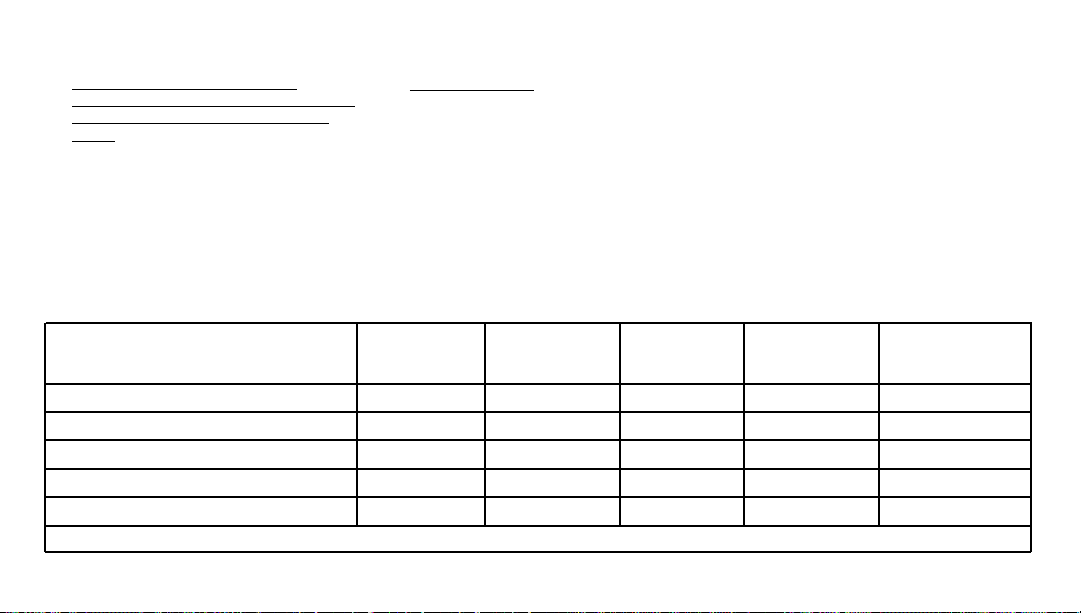
Respirator Selected:
Chemical Name
Air
Concentration
IDLH
Hazard
Ratio
OEL
Respirator
Type
Respirator Selection Form

NOTE:
See important warnings, definitions, and explanation of column headings and abbreviations starting on page 1.
15
Chemical Name
CAS # Synonym
IDLH
(ppm)
OEL
(ppm)
R
e
spirator
(
Exposures < both
A
PF x OEL and IDLH)
C
omments
Acetaldehyde
75-07-0
Ace
tic aldehy
de, Ethanal 10000
TWA=200 (OSHA)
C=25
(F)OV
(F)MG
Multigas cartridge
recommended for longer
service life
Acetic acid
64-19-7
E
thanoic acid, Glacial ace
tic
acid, Methane carboxylic acid,
Vinegar
acid
1000 TWA=10
STEL=15
(F)OV/AG
Acetic anhydride
108-24-7
Acetic acid anhydride, Acetyl
oxide, Ethanoic anhydride
1000 TWA=1
STEL=3
(F)OV
Acetone
67-64-1
2
-Pr
opanone, Dimethyl ketone,
Ketone propane
20000 TWA=250
STEL=500
OV
Short service life.
3M 3530 Monitor
Acetone
cyanohydrin
75-86-5
2
-Cyano-2-propanol,
2-Hydroxy-2-methyl
pr
opanenitrile,
2-Methyllactonile, 2-Propane
cyanohydrin, a-Hydroxy
isobutyronitrile
22000 TWA=2 (AIHA)
STEL=5 (AIHA)
C=5 mg/m
3
(as CN)
-skin-
OV
Acetonitrile
75-05-8
Cy
anome
thane, Ethane
nitrile, Ethyl nitrile,
Methanecarbonitrile, Methyl
cyanide
4000 TWA=20
-skin-
OV 3M 3530 Monitor
Acetamide
60-35-5
Ethanamide
TWA=1
(inhalable fraction
and vapor)
OV/N95
See comment D on
page 8

Chemical Compound Guide
Acetophenone
98-86-2
1-Phen
yle
thanone, Acetyl
benzene, Benzoyl methide,
Methyl phenyl ketone
TW
A=10
OV
See comment E on
page 8
Acetylsalic
ylic acid
50-78-2
A
spirin TWA=5 mg/m
3
N95
Acrolein
107-02-8
Acrylaldehy
de,
Acrylic aldehyde,
Allylaldehyde, Propenal
5 TWA=0.1 (OSHA)
C=0.1
-skin-
(F)OV Short service life
Acrylamide
79-06-1
Acrylamide monomer,
Acrylic amide, Pr
openamide
TW
A=0.03 mg/m
3
(inhalable fraction
and vapor)
-skin-
OV/N95
See comment D on
page 8
Acrylic acid
79-10-7
Acr
oleic acid, Pr
openoic acid 24000 TWA=2
-skin-
(F)OV
Acrylonitrile
107-13-1
AN, Pr
openenitrile,
Vinyl cyanide
500 TW
A=2
-skin-
OV SA if cartridge not
disposed of after shift,
per 29 CFR 1910.1045.
3M 3510 monitor.
Adipic acid
124-04-9
1,4-B
utanedicarbo
xylic acid,
1,6-Hexanedioic acid, Adipinic
acid, Hexanedioic acid
TWA=5 mg/m
3
(F)N95
16

NOTE:
See important warnings, definitions, and explanation of column headings and abbreviations starting on page 1.
17
Chemical Name
CAS # Synonym
IDLH
(ppm)
OEL
(ppm)
R
e
spirator
(
Exposures < both
A
PF x OEL and IDLH)
C
omments
Adiponitrile
111-69-3
1,4-D
ic
y
anobutane, A
ddipic
acid dinitrile, Hexanedinitrile,
Tetramethylene cyanide
17000 TWA=2
-skin-
OV
Allyl alcohol
107-18-6
2
-Propen-1-ol, 2-Propenol,
Vinyl carbinol
150 TW
A=0.5
-skin-
(F)OV 3M 3510 Monitor
Allyl Bromide
106-95-6
1-Br
omo-
2
-pr
opene; 1-Propene;
3-bromo-; 2-Propenyl
bromide; 3-Bromo-1-
propene; 3-Bromopropene;
3-Bromoproylene
44000
TWA=0.1
STEL=0.2
-skin-
(F)OV
Allyl chloride
107
-05-
1
1-Chlor
o-
2
-pr
opene,
3-Chloropropene
300 TWA=1
STEL=2
-skin-
OV Short service life
Allyl glycidyl ether
106-92
-
3
1-
Allylo
xy
-
2,3-epoxy-propane,
AGE
270 TWA=1
C=10 (OSHA)
(F)OV
Allyl isothiocyanate
57-06-7
AITC, Allyl
isosulf
oc
y
anate, Allyl
thiocarbanimide, Oil of mustard,
3-Isothiocyanate-1-propene
STEL=1 (AIHA)
-skin-
OV SA if used with acids
Allyl propyl disulde
2179-59-1
2
-Propenyl propyl disulde,
Onion oil, Propyl allyl disulde
TW
A=0.5 (F)OV
Allyl Methacrylate,
96-05-9
AMA
TWA=1
-skin-
OV

18
alpha-Alumina
1344-28-1
TWA=15 mg/m
3
(OSHA)
N95
Aluminum metal and
insoluble compounds
7429-90-5
TWA=15 mg/m
3
(OSHA)
TWA=1 mg/m
3
(respirable fraction)
N95
p-Aminobenzoic acid
150-13-0
4-Aminobenzoic acid,
Aminobenzoic acid, PABA
TWA=5 mg/m
3
(AIHA)
(F)N95
2-Aminopyridine
504-29-0
a-Aminopyridine 5 TWA=0.5 OV
Aminotri
(methylenephosphonic
acid)
6419-19-8
ATMP, Briquest 301-32S,
Briquest 302-500, Dequest
2000, Dequest 2001,
Nitrilotrimethanephosphonic
acid, NTF, NTMP, NTPA
TWA=10 mg/m
3
(AIHA)
AG/N95 If heated, AG cartridge
may be needed
Ammonia
7664-41-7
Anhydrous ammonia 500 TWA=25
STEL=35
(F)AM Irritation also
provides warning
Ammonium chloride
(liquids)
12125-02-9
TWA=10 mg/m
3
STEL=20 mg/m
3
AM/N95
Ammonium chloride
(solids)
12125-02-9
TWA=10 mg/m
3
STEL=20 mg/m
3
N95

NOTE:
See important warnings, definitions, and explanation of column headings and abbreviations starting on page 1.
19
Chemical Name
CAS # Synonym
IDLH
(ppm)
OEL
(ppm)
R
e
spirator
(
Exposures < both
A
PF x OEL and IDLH)
C
omments
Ammonium
peruorooctanoate
3825-26-1
TWA=0.01 mg/m
3
-skin-
OV/N95
See comment D on
page 8
n-Amyl alcohol
71-41-0
1-Pen
tanol, Amyl alcohol,
n-Butyl carbinol, n-Pentanol,
Pen
tanol, Pentyl alcohol
TWA=100 (AIHA) (F)OV
tert-Amyl
methyl ether
994-05-8
T
AME TW
A=20 OV
Aniline
62-53-3
Aminobenzene, Aniline
oil,
Phenylamine
100 TWA=2
-skin-
OV
o-Anisidine
90-04-0
29191-52-4
2-Methoxyaniline,
o-Aminoanisole,
o-Methoxyaniline (oil)
50 mg/m
3
TWA=0.5 mg/m
3
-skin-
OV/P95
p-Anisidine
104-94-9
29191-52-4
4-Methoxyaniline, p-
Aminoanisole,
p-Methoxyaniline (solid)
50 mg/m
3
TWA=0.5 mg/m
3
-skin-
OV/N95
Antimony and
compounds (as Sb)
7440-36-0
80 mg/m
3
TWA=0.5 mg/m
3
N95
3M 3510 Monitor

20
Arsenic, elemental
7440-38-2
100 mg/m
3
TWA=0.01 mg/m
3
N100
Arsenic, inorganic
compounds
(except arsine)
(as As)
100 mg/m
3
TWA=0.01 mg/m
3
MG/N100 No half mask respirators
for arsenic trichloride
because of skin
adsorption.
N100 may
be appropriate if vapor
concentrations are
below exposure limits
Arsenic, organic
compounds (as As)
TWA=0.5 mg/m
3
(OSHA)
OV/N100 MG/N100 may be
required for certain
organic arsenic
compounds
Arsine
7784-42-1
Arsenic hydride, Arsenic
trihydride, Arseniuretted
hydrogen, Arsenous hydride,
Hy
dr
ogen arsenide
6 TWA=0.005 (F)SA Unknown sorbent
eectiveness
Asbestos
1332-21-4
Actinolite, Amosite,
Anthophyllite, Chrysotile,
Crocidolite, Tremolite
TWA= 0.1 f/cc
(respirable bers)
N100
Dual cartridge as per
29 CFR 1910.1001,
1915.1001 and 1926.1101
Asphalt (petroleum;
bitumen) fumes
8052-42-4
Asphaltic bitumen, Asphaltum,
Bitumen, Hot mix asphalt,
Mineral pitch, Petroleum asphalt,
Road asphalt, Road tar
TWA=0.5 mg/m
3
(inhalable fraction
as benzene-soluble
aerosol)
OV/P95
R or P95 alone may be
suitable for some
applications. See
comment F on page 8

NOTE:
See important warnings, definitions, and explanation of column headings and abbreviations starting on page 1.
21
Chemical Name
CAS # Synonym
IDLH
(ppm)
OEL
(ppm)
R
e
spirator
(
Exposures < both
A
PF x OEL and IDLH)
C
omments
Barium and soluble
compounds (as Ba)
7440-39-3
1100 mg/m
3
TWA=0.5 mg/m
3
N95
Barium sulfate
7727-43-7
TW
A= 5 mg/m
3
(inhalable fraction)
N95
Benzaldehyde
100-52-7
Benzenecarbonal, Benzoic
aldehyde, Oil of bitter almond
TWA=2 (AIHA)
STEL=4 (AIHA)
(F)OV
Benzene
71-43-2
Benz
ol, Coal
tar
naptha 3000 TWA=0.5
STEL=2.5
-skin-
OV
SA if cartridges are
not replaced at the
start of each shift, per
20 CFR 1910.1028.
3M 3510 Monitor
Benz
ophenone
119-61-9
Benz
o
yl benzene, D
iphenyl
ketone, Diphenyl methanone,
Phen
yl ketone
TWA=0.5 mg/m
3
(AIHA)
OV/N95
See comment D on
page 8
Benz
o
trichloride
98-07
-7
Benzen
yl trichloride,
Benzenylchloride, Benzoic
trichloride, Benzyl trichloride,
Phenyl chloroform,
Toluene trichloride,
Trichloromethylbenzene
C=0.1
-skin-
(F)OV

22
Benzoyl chloride
98-88-4
a-Chlor
obenzaldehy
de,
Benzene carbonyl chloride,
Benz
oic acid chloride
C=0.5 (F)OV/AG
(F)MG
Benzoyl peroxide
94-36-0
D
ibenzoyl peroxide 7000 mg/m
3
TWA=5 mg/m
3
OV/N95
See comment D on
page 8
Benzyl aceta
te
140-11-4
Ace
tic acid benzyl ester,
Acetic acid phenylmethyl ester,
Phen
ylmethyl acetate
TWA=10 OV/N95
Benzyl alcohol
100-51-6
a-Hydroxytoluene,
Phenylcarbinol,
Phenylmethanol
TW
A=10 (
AIHA) (F)OV
Benzyl chloride
100-44-7
a-Chlorotoluene
10 TWA=1 (F)OV/AG See comment E on
page 8. 3M 3510
Monitor
Beryllium and
compounds (as Be)
7440-41-7
10 mg/m
3
TWA=0.00005
mg/m
3
(inhalable
fraction)
STEL=0.002 mg/m
3
( OSHA)
-skin-
N95
Biphenyl
92-52-4
D
iphen
yl, Phenylbenzene 300 mg/m
3
TWA=0.2 OV/N95
See OSHA standard
1910.1024 regarding
PAPRs requested by
employee
Bismuth telluride
(undoped)
1304-82-1
Bismuth sesquitelluride
TWA=10 mg/m
3
TWA=5 mg/m
3
(OSHA, respirable
fraction)
N95

NOTE:
See important warnings, definitions, and explanation of column headings and abbreviations starting on page 1.
23
Chemical Name
CAS # Synonym
IDLH
(ppm)
OEL
(ppm)
R
e
spirator
(
Exposures < both
A
PF x OEL and IDLH)
C
omments
Bismuth telluride
(Se-doped) (as Bi
2
Te
3
)
TWA=5 mg/m
3
N95
Boric acid
10043-35-3
Borofax, Boron trihydroxide,
Hydrogen orthoborate, Kill-off,
Kjel-sorb Orthoboric acid, Three
elephant, Trihydroxyborane
TWA=2 mg/m
3
(inhalable fraction)
STEL=6 mg/m
3
(inhalable fraction)
N95
Boron oxide
1303-86-2
Anhydrous boric acid, Boric
anhydride, Boric oxide
TWA=10 mg/m
3
N95
Boron tribromide
10294-33-4
Boron bromide
C=0.7
(F)AG
Boron triuoride
7637-07-2
100
C=0.7
(F)AG
STEL=0.1
Bor on trichloride
10294-34-5
(F)AG
C=0.7
Trichloroboron
Boron trifluoride
diethyl ether
109-63-7
(F)OV/AG
TWA=0.1
(as BF3)
C=0.7 (as BF3)
Bor on trifluoride
dimethyl ether
353- 42-4
(F)OV/AG
TWA=0.1
(as BF3)
C=0.7 (as BF3)

24
Bromine
pentauoride
7789-30-2
TW
A=0.1 AG
Bromoform
75-25-2
Tribr
omome
thane TWA=0.5 (F)OV 3M 3510 Monitor
1-Bromopropane
106-94-5
n-Pr
opylbr
omide,
Propylbromide
TW
A=0.1 OV
1,3-Butadiene
106-99-0
B
ie
thylene, Divinyl,
Erythrene
20000
TWA=1 (OSHA)
STEL=5 (OSHA)
OV
Cartridges must be
replaced, per
29 CFR 1910.1051.
3M 3530 Monitor
Butane
106-97-8
n-Butane,
Methylethyl methane
16000 STEL=1000
SA Short OV service life
1-Butene
106-98-9
1-B
utylene, a-B
utene,
a-Butylene, But-1-ene,
E
thylethylene
TWA=250 OV Short service life
2-Butene (mixture
of trans- and cis-)
107-01-7
b-B
utene, b-B
utylene,
Dimethylethylene,
Pseudobutylene
TWA=250 OV Short service life
cis-2-Butene
590-18-1
b-cis-B
utylene, cis-
1,2-
Dimethylethylene, cis-Butene,
cis-Butene-2
TWA=250 OV Short service life
Bromine
7726-95-6
10 TW
A=0
.1
STEL=0.2
(F)AG Irritation also
provides warning
3M 3510 Monitor

NOTE:
See important warnings, definitions, and explanation of column headings and abbreviations starting on page 1.
25
Chemical Name
CAS # Synonym
IDLH
(ppm)
OEL
(ppm)
R
e
spirator
(
Exposures < both
A
PF x OEL and IDLH)
C
omments
trans-2-Butene
624-64-6
2
-B
utene,(E)-; 2-trans-Butene,
b-trans-Butylene, trans-1,2-
Dimethylethylene, trans-Butene
TWA=250 OV Short service life
2-Butoxyethanol
111-76-2
Butyl Cellosolve
®
, Ethylene
glycol monobutylether
700 TW
A=20
(F)OV
See comment E on
page 8. 3M 3510
Monitor
2-Butoxyethyl
acetate
112-07-2
Ace
tic acid, 2-butoxyethyl ester;
2-Butoxyethanol acetate; Butyl
Cellusolve acetate; Butylglycol
acetate; EGBA; Ektasolve
EB acetate; Ethylene glycol
monobutyl ether acetate;
Glycol monobutyl ether acetate
8800 TWA=20 OV
n-Butyl acetate
123-86-4
Ace
tic acid butyl ester, B
utyl
acetate, Butyl ethanoate
10000
TWA=50
STEL=150
(F)OV
See comment E on
page 8. 3M 3510
Monitor.
sec-Butyl acetate
105-46-4
1-Methylpropylacetate
10000 (F)OV
See comment E on
page 8. 3M 3510
Monitor.
tert-Butyl acetate
540-88-5
Ace
tic acid
tert-butyl ester 10000
TWA=50
STEL=150
(F)OV 3M 3510 Monitor
Butyl acrylate
141-32-2
2
-Pr
openoic acid butyl ester,
Butyl 2-propenoate
15000 TW
A=2 OV 3M 3510 Monitor
TWA=50
STEL=150
3M 3510 Monitor

26
n-Butyl alcohol
71-36-3
1-B
utanol, 1-Hy
dr
oxybutane,
Butyl alcohol, Butyl
hydroxide, Butyric alcohol,
Methylolpropane, n-Butanol,
n-Propyl carbinol, Propyl
methanol
8000 TWA=20 (F)OV 3M 3510 Monitor
sec-Butyl alcohol
78-92-2
2
-B
utanol, Me
thyl ethyl carbinol 10000 TWA=100 (F)OV 3M 3510 Monitor
tert-Butyl alcohol
75-65-0
2
-Me
thyl-
2-propanol, TBA,
Trimethyl carbinol
8000 TWA=100 (F)OV 3M 3510 Monitor
Butylamine
109-73-9
1-
Aminobutane, n-B
utylamine 2000
C=5
-skin-
AM
AM not specifically
approved, but 3M
recommended for
longer service life
Butylated
hydroxytoluene
128-37-0
2,6-bis(
1,1-D
ime
thylethyl)-4-
methylphenol; 2,6-Di-tert-butyl-
p-cresol; BHT; DBPD
TWA=2 mg/m
3
(inhalable fraction
and vapor)
(F)OV/N95
4-tert-Butylcatechol
98-29-3
4-(
1,1-D
ime
thylethyl)-1,2-
benzenediol; 4-tert-Butyl
pyrocatechol; 4-tert-Butyl-1-1,2-
dihydroxy benzene; p-tert-
Butylcatechol
C= 2 mg/m
3
(AIHA)
-skin-
(F)N95
tert-B
utyl
chr
omate (as CrO
3
)
1189-85-1
Chr
omic acid di-
tert-butyl ester
30 mg/m
3
TWA=0.005 mg/m
3
(OSHA)
C=0.1 mg/m
3
-skin-
N95
See comment D on
page 8

NOTE:
See important warnings, definitions, and explanation of column headings and abbreviations starting on page 1.
27
Chemical Name
CAS # Synonym
IDLH
(ppm)
OEL
(ppm)
R
e
spirator
(
Exposures < both
A
PF x OEL and IDLH)
C
omments
Butylene oxide
106-88-7
1,2
-B
utene oxide; 1,2-Butylene
oxide; 1,2-Epoxybutane;
1-Butene oxide; BO; Epoxy-
butane
TWA=2 (AIHA) OV Short service life
n-Butyl glycidyl
ether
2426-08-6
1,2
-Epoxy-3-butoxypropane,
BGE
3500 TW
A=3
-skin-
OV 3M 3510 Monitor
n-Butyl lactate
138-22-7
Lactic acid butylester 11500 TW
A=5 OV Irritation also
provides warning
Butyl mercaptan
109-79-5
1-Mercapt
obutane,
n-Butanethiol
2500 TW
A=0.5 OV
o-sec-Butylphenol
89-72-5
2
-sec-B
utylphenol TWA=5
-skin-
OV/P95
p-tert-Butyltoluene
98-51-1
1-Me
thyl-4-
tert-butylbenzene 1000 TWA=1 OV
Butyraldehyde
123-72-8
B
utal, B
utaldehyde, Butalyde,
Butanal, Butanaldehyde,
Butylaldehyde, Butyral butyric
aldehyde
19000 TWA=25 (AIHA) (F)Form
Formaldehyde
cartridge not
specifically approved,
but 3M recommended
for longer service life
tert-Butyl hydroperoxide
75-91-2
1,1-Dimethylethyl hydroperoxide
TWA=0.1
(F)OV
Irritation also
provides warning
-skin-

28
Cadmium and
compounds (as Cd)
7440-43-9
Cadmium oxide fume 9 mg/m
3
(fume)
50 mg/m
3
TWA=0.002 mg/m
3
(respirable fraction)
TWA=0.005 mg/
m
3
(OSHA)
N100
Calcium arsenate
(as As)
7778-44-1
Cucumber
dust, Tricalcium
arsenate, Tricalcium o-arsenate
100 mg/m
3
TWA=0.01 mg/m
3
N100
Calcium carbonate
1317-65-3
Limest
one, Marble TWA=15 mg/m
3
(OSHA)
TWA= 5 mg/m
3
(OSHA, respirable
fraction)
N95
Calcium chromate
(as Cr)
13765-19-0
Calcium
chrome yellow N95
Calcium cyanamide
156-62-7
Calcium carbimide, Lime
nitr
ogen
TWA=0.5 mg/m
3
N95
Calcium uoride
(as F)
7789-75-5
F
luorite, F
luorospar TWA= 2.5 mg/m
3
N95
TWA=0.0002 mg/m
3
(as Cr(VI), inhalable
fraction)
STEL=0.0005 mg/m
3
(as Cr(VI), inhalable
fraction)
-skin-
30 mg/m
3

NOTE:
See important warnings, definitions, and explanation of column headings and abbreviations starting on page 1.
29
Chemical Name
CAS # Synonym
IDLH
(ppm)
OEL
(ppm)
R
e
spirator
(
Exposures < both
A
PF x OEL and IDLH)
C
omments
Calcium oxide
1305-78-8
Pebble lime, Quicklime
TWA=2 mg/m
3
N95
Calcium silicate
(containing no
asbestos and <1%
cry
staline silica)
1344-95-2
Calcium hydrosilicate,
Wollastonite
TWA=1 mg/m
3
N95
Calcium sulfate
7778-18-9
G
ypsum, Plaster of Paris
TWA=10 mg/m
3
(inhalable fraction)
TWA= 5 mg/m
3
(OSHA, respirable
fra ction)
N95
Camphor
76-22-2
2
-Camphonone, Gum
camphor, Laurel camphor,
S
ynthetic camphor
200 mg/m
3
TWA=2
STEL=3
(F)OV/N95 3M 3510 Monitor
Caprolactam
105-60-2
2-Oxohexamethylenimine,
Aminocaproic lactam
14000 TWA=5 mg/m
3
(inhalable fraction
and vapor)
OV/N95
Captan
133-06-2
N-(Trichlor
omethylthio)-4-
cyclohexene-1,2-dicarboximide
TWA=5 mg/m
3
(inhalable fraction)
N95
See comment D on
page 8
Calcium hydroxide
1305-62-0
Calcium hy
dra
te, Caustic lime,
Hydrated lime
TWA=5 mg/m
3
N95

30
Carbon black
1333-86-4
Ace
tylene black, Channel black,
F
urnace black, Lamp black,
Thermal black
TWA=3 mg/m
3
(inhalable fraction)
N95
Carbon dioxide
124-38-9
Carbonic acid gas, Dry
ice 50000
TW
A=5000
STEL=30000
SA Ineective sorben
ts
Carbon disulde
75-15-0
Carbon bisulde, Carbon
bisulfur, Carbon bisulphide,
Carbon disulphide, Carbon
sulde, Dithiocarbonic
anhy
dride, Sulphocarbonic
anhydride, Weevitox
500 TWA=1
C=30 (OSHA)
-skin-
OV Short service life
Carbon mono
xide
630-08-0
Mono
xide 1500 TWA=25 SA Ineective sorbents
Carbon tetrabromide
558-13-4
Te
trabr
omome
thane TW
A=0.1
STEL=0.3
(F)OV
Carbon tetrachloride
56-23-5
Te
trachlor
ome
thane 300
TWA=5
STEL=10
C=25 (OSHA)
-skin-
(F)OV 3M 3510 Monitor
Carbonyl uoride
353-50-4
Carbon o
xyuoride,
F
luor
oformyl uoride
TW
A=2
STEL=5
(F)MG
Carbonyl sulde
463-58-1
Carbon mono
xide monosulde,
Carbon o
xide sulde, Carbon
oxysulde, Oxycarbon sulde
TWA=5 SA

NOTE:
See important warnings, definitions, and explanation of column headings and abbreviations starting on page 1.
31
Chemical Name
CAS # Synonym
IDLH
(ppm)
OEL
(ppm)
R
e
spirator
(
Exposures < both
A
PF x OEL and IDLH)
C
omments
Catechol
120-80-9
Pyrocatechol 14000 TWA=5
-skin-
OV/N95
Cellulose
9004-34-6
Paper ber
TWA=10 mg/m
3
TWA= 5 mg/m
3
(OSHA, respirable
fraction)
N95
Cesium uoride (as F)
13400-13-0
TWA=2.5 mg/m
3
N95
Cesium hydroxide
21351-79-1
Cesuim hydrate TWA=2 mg/m
3
N95
Chloramphenicol
56-75-7
[R-(R*,R*)]-2,2-dichloro-N-
[2,hydroxy-1-(hydroxy methyl)-2-
(4-nitrophenyl)ethyl] acetamide;
Chloromycetin; Levomycetin
TWA=0.5 mg/m
3
(AIHA)
N95
Chlorinated
diphenyl oxide
31242-93-0
Hexachlorodiphenyl oxide TWA=0.5 mg/m
3
OV/P95
Chlorine
7782-50-5
30
TWA=0.1
STEL=0.4
C=1 (OSHA)
(F)AG
Irritation also
provides warning

32
Chlorine dioxide
10049-04-4
Chlorine oxide,
Chlorine peroxide
10
AG
Chlorine triuoride
7790-91-2
Chlorine uoride 20 C=0
.
1 MG
Chloroacetaldehyde
107-20-0
2
-Chlor
oethanal,
Chloroacetaldehyde
(40% aqueous)
100 C=1
(F)OV
Chloroacetone
78-95-5
Chlorace
t
one, 1-Chloro-2-
propanone, Monochloroacetone
C=1
-skin-
(F)OV
Chloroacetyl
chloride
79-04-9
Chlorace
tyl chloride TWA=0.05
STEL=0.15
-skin-
(F)OV/AG
Chlorobenzene
108-90-7
Chlor
obenz
ol, MCB,
Monochlorobenzene,
Phenyl chloride
2400 TW
A=10
OV 3M 3510 Monitor
Chlorobromomethane
74-97-5
Bromochloromethane, CBM,
Halon
™
1011, Methylene
chlorobromide
5000 TWA=200 OV
1-Chloro-1,1-
diuoroethane
75-68-3
a-Chlor
oe
thylidene uoride,
Chlorodiuoroethane,
Dymel
®
142b, Genetron
™
142b,
HCFC-142b
TWA=1000 (AIHA) SA Short OV service life
C=0
.
1

NOTE:
See important warnings, definitions, and explanation of column headings and abbreviations starting on page 1.
33
Chemical Name
CAS # Synonym
IDLH
(ppm)
OEL
(ppm)
R
e
spirator
(
Exposures < both
A
PF x OEL and IDLH)
C
omments
Chlorodiuoromethane
75-45-6
Freon
®
22 TWA=1000 SA Ineective sorbents
Chlorodiphenyl
(42% chlorine)
53469-21-9
PCB, P
olychlorina
ted biphenyl 10 mg/m
3
TWA=1 mg/m
3
-skin-
(F)OV/P95
See comment D on
page 8
Chlorodiphenyl
(54% chlorine)
11097-69-1
PCB, P
olychlorina
ted biphenyl 5 mg/m
3
TWA=0.5 mg/m
3
-skin-
(F)OV/P95
See comment D on
page 8
Chloroform
67-66-3
Trichlor
omethane 1000 TWA=10
C=50 (OSHA)
OV
Short service life.
3M 3510 Monitor
bis-(2-
Chloroisopropyl
)
ether
39628-32-9
BCIPE; bis-(1-methyl-2-
chloroethyl) ether; bis-2-
chloro-1-methylethyl ether;
Dichloroisopropyl ether
TWA=3 (AIHA) (F)OV
bis-Chloromethyl
ether
542-88-1
BCME, Chlor
o (chlor
omethoxy)
methane, Chloromethyl ether,
Dichloromethylether
TWA=0.001 (F)OV OSHA requires SA
with hood for certain
applications; see
29 CFR 1910.1003

34
Chloropenta-
uoroethane
76-15-3
FC-115,
Monochloropentauoroethane
TWA=1000 SA Short OV service life
Chloropicrin
76-06-2
Nitr
ochlor
oform,
Nitrotrichloromethane,
Trichloronitromethane
4 TWA=0.1 (F)SA Irritation also
provides warning
b-Chloroprene
126-99-8
2
-Chloro-1,3-butadiene, beta-
Chloroprene, Chlorobutadiene
400
TWA=1
-skin-
(F)OV Short service life
2-Chloropropane
75-29-6
2
-CP, 2
-Propyl chloride, Isoprid,
Isopropyl chloride
TWA=50 (AIHA) OV Short service life
1-Chloro-2-propanol
127-00-4
1-Chlor
o-
2-hydroxypropane,
1-Chloroisopropyl alcohol, sec-
Propylene chlorohydrin
TWA=1
-skin-
OV
2-Chloro-1-propanol
78-89-7
1-Hy
droxy-2-chloropropane,
2-Chloropropanol,
2-Chloropropyl alcohol,
Propylene chlorohydrin
TW
A=1
-skin-
OV
2-Chloropropionic
acid
598-78-7
a-Chlor
opropionic acid TWA=0.1
-skin-
OV/AG
o-Chlorostyrene
2039-87-4
1-Chlor
o-2-ethenylbenzene,
2-Chlorostyrene
TWA=50
STEL=75
OV

NOTE:
See important warnings, definitions, and explanation of column headings and abbreviations starting on page 1.
35
Chemical Name
CAS # Synonym
IDLH
(ppm)
OEL
(ppm)
R
e
spirator
(
Exposures < both
A
PF x OEL and IDLH)
C
omments
Chlorosulfonic acid
7790-94-5
Chlor
osulfuric acid, CS
A C=0
.1 mg/m
3
(AIHA) (F)AG/N95 HCl, SO
2
hydrolysis
products
2-Chloro-1,1,1,2-
tetrauoroethane
2837-89-0
Chlor
o
te
trauoroethane,
Fluorocarbon 124, HCFC124,
HFA124
TWA=1000 (AIHA) SA Short OV service life
o-Chlorotoluene
95-49-8
2
-Chlor
o-
1-methylbenzene TWA=50 OV
Chlorotriuoroethylene
79-38-9
CFE, CTFE,
Triuor
ochlor
oethylene,
Triuorovinylchloride
TWA=5 (AIHA) SA Short OV service life
Chromium II
compounds (as Cr)
TW
A=0
.5 mg/m
3
(OSHA)
N95
Chromium metal
7440-47-3
TWA=0.5 mg/m
3
(inhalable fraction)
N95
Chromium III
compounds
TWA=0.003 mg/m
3
(as Cr(III))
N95

36
Chromium VI
compo unds
Hexavalent chromium
compounds, Chromic
acid
30 mg/m
3
N95
Chromyl chloride
14977-61-8
Chlor
o-chr
omic anhy
dride,
Chromium oxychloride
(F)AG/N95
Citral
5392-40-5
2,6-Octadienal-
3,7
-dime
thyl;
3,7-Dimethyl-2,6-octadienal
TWA=5 (inhalable
fraction and vapor)
-skin-
OV/P95
Coal dust, Anthracite TW
A=0.4 mg/m
3
(respirable fraction)
N95 May also contain
crystaline silica (quartz)
Coal dust, Bituminous or
Lignite
TWA=0.9 mg/m
3
(respirable fraction)
N95 May also contain
crystaline silica (quartz)
Coal tar pitch volatiles
(as Benzene solubles)
65996-93-2
P
articula
te polyc
yclic aromatic
hydrocarbons, PPAH
700 mg/m
3
TWA=0.2 mg/m
3
R95
P95
Respirators with
nuisance level
organic vapor or acid
gas relief specifically
recommended
See comment D on
page 8
Skin notation for
water soluble
compounds
See comment E
on page 8
TWA=0.0002 mg/m
3
(as Cr(VI), inhalable
fraction)
STEL=0.0005 mg/m
3
(as Cr(VI), inhalable
fraction)
-skin-
TWA=0.0002 mg/m
3
(as Cr(VI), inhalable
fraction)
STEL=0.0005 mg/m
3
(as Cr(VI), inhalable
fraction)
-skin-

NOTE:
See important warnings, definitions, and explanation of column headings and abbreviations starting on page 1.
37
Chemical Name
CAS # Synonym
IDLH
(ppm)
OEL
(ppm)
R
e
spirator
(
Exposures < both
A
PF x OEL and IDLH)
C
omments
Cobalt, elemental and
inorganic compounds
(as Co)
7440-48-4
20 mg/m
3
TWA=0.02 mg/m
3
(inhalable fraction)
N95
Cobalt carbonyl (as Co)
10210-68-1
TWA=0.1 mg/m
3
SA Ineective sorbents
Cobalt hydrocarbonyl
(as Co)
16842-03-8
TW
A=0
.
1 mg/m
3
SA Ineective sorbents
Coke oven emissions
65996-93-2
TWA=0.15 mg/m
3
(OSHA)
R95
P95
Respirators with
nuisance level
organic vapor or acid
gas relief specifically
recommended.
Copper dust and mist
(
as Cu)
7440-50-8
TWA=1 mg/m
3
N95
Copper fume (as Cu)
7440-50-8
TW
A=0
.
1 mg/m
3
(OSHA)
N95

38
Cotton dust, raw TWA=0.1 mg/m
3
(thoracic fraction)
N95 5X PEL maximum for
disposables, per OSHA
cotton dust standard.
If
oil aerosol present, use
R or P95
Cresol (all isomers)
1319-77-3
Cres
ylic acid 250 TW
A=20 mg/m
3
(inhalable fraction
and vapor)
-skin-
OV/P95
Crot
onaldehyde
4170-30-3
b-Me
thylacr
olein, Cr
otonic
aldehyde, Propylene aldehyde
400
TWA=2 (OSHA)
C=0.3
(F)OV
Cryolite (as F)
15096-52-3
Greenland spar, Ice
t
one
500 mg/m
3
TWA=2.5 mg/m
3
N95
Cumene
98-82-8
2
-Phenyl propane, Cumol,
Isopropyl benzene
8000 TWA=50 OV 3M 3510 Monitor
Cumene
hydroperoxide
80-15-9
a,a
’-Dimethylbenzyl
hydroperoxide, CHP,
Cumyl hydroperoxide, Isopropyl
benzene hy
droperoxide
TWA=1 (AIHA)
-skin-
(F)OV
Cyanamide
420-04-2
Carbodiimide, Cy
anogenamide TW
A=2 mg/m
3
N95
See comment D on
page 8

NOTE:
See important warnings, definitions, and explanation of column headings and abbreviations starting on page 1.
39
Chemical Name
CAS # Synonym
IDLH
(ppm)
OEL
(ppm)
R
e
spirator
(
Exposures < both
A
PF x OEL and IDLH)
C
omments
Cyanides (as CN) 50 mg/m
3
TWA=5 mg/m
3
-skin-
SA
Cyanogen
460-19-5
D
ic
yan, Oxalonitrile 66000
C=5
MG
Cyanogen bromide
506-68-3
Bromine cyanide C=0.3 (F)SA
Cyanogen chloride
506-77-4
CNCl C=0
.3 (F)SA Short OV service life
Cyclohexane
110-82-7
He
x
ahydrobenzene,
Hexamethylene
10000 TWA=100 (F)OV Irritation also provides
warning. 3M 3510
Monitor.
Cyclohexanol
108-93-0
Anol, Cyclohexyl alcohol,
Hexahydrophenol, Hexalin,
Hydralin, Hydroxycyclohexane
3500 TWA=50
-skin-
OV
See comment E on
page 8. 3M 3510
Monitor.
Cyclohexanone
108-94-1
Cyclohe
xyl ketone,
Pimelic ketone
5000 TW
A=20
STEL=50
-skin-
OV 3M 3510 Monitor

40
Cyclohexene
110-83-8
Benzene te
trahy
dride 10000
TWA=300 OV 3M 3510 Monitor
Cyclohexylamine
108-91-8
Aminoc
yclohe
x
ane,
Hexahydroaniline
15000 TWA=10 (F)OV
Cyclonite
121-82-4
He
x
ahy
dro-1,3,5-trinitro-sym-
triazine, RDX, sym-Trimethylene
trinitramine
TWA=0.5 mg/m
3
-skin-
N95
Cyclopentadiene
542-
92-7
1,3-Cylclopen
tadiene 2000
TWA=0.5 OV Short service life
Cyclopentane
287-92-3
Pen
tame
thylene 11000
TWA=600 SA Short OV service life
Decaborane
17702-41-9
100 mg/m
3
TWA=0.05
STEL=0.15
-skin-
SA Unknown sorbent
eectiveness
Decabromodiphenyl
oxide
1163-19-5
bis-(Pentabromophenyl)
ether, DBDPO,
Decabr
omodiphen
yl e
ther
TWA=5 mg/m
3
(AIHA)
N95
1-Decene
872-05-9
a-Decene, Dec
ylene 5000 TW
A=100 (
AIHA) OV
Dehydrolinalool
29171-20-8
TW
A=2 (
AIHA
) OV
STEL=1

NOTE:
See important warnings, definitions, and explanation of column headings and abbreviations starting on page 1.
41
Chemical Name
CAS # Synonym
IDLH
(ppm)
OEL
(ppm)
R
e
spirator
(
Exposures < both
A
PF x OEL and IDLH)
C
omments
Diacetone alcohol
123-42-2
2
-Methyl-2-pentanol-4-one,
4-Hydroxy-4-methyl-
2-pentanone, Diacetone
2100 TW
A=50 (F)OV 3M 3510 Monitor
Diacetyl
431-03-8
B
iacetyl, 2,3-Butanedione,
Dimethylglyoxal, Dimethyl
diketone, 2,3-Diketobutane
TWA=0.01
STEL=0.02
OV/P95
Diallylamine
124-02-7
Di-2-propenylamine, N-2-
propenyl-2-propen-1-amine
TWA=1 (AIHA)
-skin-
OV
Diazomethane
334-88-3
Azime
thylene, Diazirine 2 TWA=0.2 SA Unknown sorbent
eectiveness
Diborane
19287-45-7
Bor
oethane 40 TWA=0.1 SA Unknown sorbent
eectiveness
Dibromochloro-
propane
96-12-8
1,2
-Dibromo-3-chloropropane,
1-Chloro-2,3-dibromopropane,
DBCP
TWA=0.001 (OSHA) (F)SA
OSHA requires (F)SA;
no change schedule
allowed
Dibromoneopenytl
Glycol
3296-90-0
D
ibromopentaerythritol TWA=0.2 mg/m
3
(AIHA)
(F)R95/P95 R95/P95 acceptable
with appropriate eye/
face protection

42
Dibutylamine
111-92-2
1-B
utanamine, n-butyl; D
i-n-
butylamine; DNBA
C=5 (AIHA)
-skin-
(F)OV
See comment E on
page 8
2-N-
Dibutylaminoethanol
102-81-8
Dibutylaminoethanol,
N,N-Dibutyl-N-(2-hydroxyethyl)
amine
TWA=0.5
-skin-
(F)OV
Dibutyl phenyl
phosphate
2528-36-1
DBPP TW
A=0
.3
-skin-
R95
P95
OV/P95 may be
preferable if heat
involved
Dibutyl phosphate
107-66-4
Dibutyl acid-o-phosphate,
Dibutyl phosphoric acid,
Di-n-butyl hydrogen phosphate
125 TW
A=5 mg/m
3
(inhalable fraction
and vapor)
-skin-
OV/P95
Dibutyl phthalate
84-74-2
1,2
-Benzene dicarbo
xylate,
DBP, Dibutyl
9300 mg/m
3
TWA=5 mg/m
3
OV/P95
See comment D on
page 8
Dichlor
oacetic acid
79-43-6
2
-
2-Dichloroacetic acid; Acetic
acid, dichloro; Dichloroethanoic
acid; Urmer’s liquid
TWA=0.5
-skin-
(F)OV/AG
Dichloroacetylene
7572-29-4
D
ichloroethyne C=0.1 (F)SA Short OV service life
o-Dichlorobenzene
95-50-1
1,2
-D
ichlorobenzene,
o-Dichlorobenzol
1000 TWA=25
STEL=50
C=50 (OSHA)
(F)OV See comment E on
page 8. 3M 3510
Monitor
See comment D on
page 8

NOTE:
See important warnings, definitions, and explanation of column headings and abbreviations starting on page 1.
43
Chemical Name
CAS # Synonym
IDLH
(ppm)
OEL
(ppm)
R
e
spirator
(
Exposures < both
A
PF x OEL and IDLH)
C
omments
p-Dichlorobenzene
106-46-7
1,4-Dichlorobenzene,
Dichloricide, PDCB,
1000 TW
A=10
(F)OV/N95 3M 3510 Monitor
1,4-Dichloro-
2-butene
764-41-0
1,4-DCB, 2
-Butylenedichloride,
DCB, dichlorobutene
TWA=0.005
-skin-
(F)OV
Dichlorodi-
uoromethane
75-71-8
Freon
®
12, Refrigerant 12 50000 TWA=1000 SA Short OV service life
1,3-Dichloro-5,5-
dimethyl hydantoin
118-52-5
Dactin, Halane TWA=0.2 mg/m
3
STEL=0.4 mg/m
3
OV/N95
1,1-Dichloroethane
75-34-3
E
thylidene chloride 4000 TWA=100 OV Short service life
1,2-Dichloroethylene
540-59-0
156-59-2
156-60-5
Ace
tylene dichloride, Dioform 4000 TWA=200 OV
Short service life.
3M 3510 Monitor

44
Dichloroethyl ether
111-44-4
2,2’
-D
ichlorodiethyl ether; bis-
(2-Chloroethyl) ether
250 TW
A=5
STEL=10
C=15 (OSHA)
-skin-
(F)OV
1,1-Dichloro-1-
uoroethane
1717-00-6
Fluorocarbon 141b,
HCFC 141b, HFA 141b
TW
A=500 (
AIHA)
STEL=3000
(AIHA, 5 minute)
SA Short OV service life
Dichlorouoromethane
75-43-4
Dichloromonouoromethane,
Freon
®
21, Refrigerant 21
50000 TWA=10 SA Short OV service life
1,1-Dichloro-1-
nitroethane
594-72-9
150 TW
A=2
C=10 (OSHA)
OV
2,4-Dichlorophenol
120-83-2
2,4-DCP, DCP TW
A=1 (AIHA)
-skin-
OV R or P95 may also
be needed if material
is molten
1,3-Dichlor
opropene
542-75-6
1,3-D
ichlor
opropylene 53000 TWA=1
-skin-
(F)OV
2,2-Dichloropropionic
acid
75-99-0
D
alapon
™
TWA=5 mg/m
3
(inhalable fraction)
(F)OV/N95
Dichlorotetra-
uoroethane
76-14-2
FC
-114, Freon
®
114,
Halon
™
242, Refrigerant 114
50000 TWA=1000 SA Short OV service life

NOTE:
See important warnings, definitions, and explanation of column headings and abbreviations starting on page 1.
45
Chemical Name
CAS # Synonym
IDLH
(ppm)
OEL
(ppm)
R
e
spirator
(
Exposures < both
A
PF x OEL and IDLH)
C
omments
Dicyclopentadiene
77-73-6
8000
TWA=0.5
STEL=1
OV/N95
Dicyclopentadienyl
iron (as Fe)
102-54-5
bis-Cyclopentadienyl iron (as Fe)
TWA=10 mg/m
3
TWA=5 mg/m
3
(OSHA, respirable
fraction)
N95
Diesel fuel (as total
hydrocarbons)
68334-30-5
68476-30-2
68476-31-3
68476-34-6
77650-28-3
A
stral oil, Coal oil, Fuel oil,
Gas oil, Home heating oil,
Marine diesel fuel
TW
A=100 (inhalable
fraction and vapor)
-skin-
OV/P95
Diethanolamine
111-42-2
2,2’
-D
ihydroxydiethylamine,
Butadiene Dioxide, DEA,
Diolamine, N,N-Diethanolamine,
di-(2-Hydroxyethyl)amine,
2,2’-Iminobisethanol
16000 TWA=1 mg/m
3
(inhalable fraction
and vapor)
-skin-
OV/N95
See comment E on
page 8
See comment E on
page 8. 3M 3510
Monitor
3M 3510 Monitor

46
Diethylamine
109-89-7
2000 TW
A=5
STEL=15
-skin-
(F)AM
(F)OV
AM not specically
approved, but
3M recommended for
longer service life
2-
Diethylaminoethanol
100-37-8
2-Diethylaminoethyl alcohol,
N,N-Diethylethanolamine
500 TW
A=2
-skin-
OV
Diethylbenzenes,
mixed
25340-17-4
1,2
-Diethylbenzene,
1,3-Diethylbenzene,
1,4-Diethylbenzene, DEB,
Dowtherm
™
J
TWA=5 (AIHA) OV
Diethylene glycol
111-46-6
2,2’
-Dihydroxydiethyl ether,
DEG, Digycol
TW
A=10 mg/m
3
(AIHA)
R95
P95
See comments D and G
on page 8
Diethylene glycol
monobutyl ether
112-34-5
Butoxy diethylene glycol,
Butoxydiglycol, Butyl Carbitol
®
TWA=10 (inhalable
fraction and vapor)
(F)OV/P95
See comment D on
page 8. 3M 3510
Monitor
Diethylene glycol
monoethyl ether
111-90-0
2-(2-Ethoxyethoxy) ethanol,
Carbitol
®
, DiEGEE, Diethylene
glycol ethyl ether, Dioxitol, Ethyl
Carbit
ol
®
, Glycol ether DE
12000 TWA=25 (AIHA) OV
Diethylene triamine
111-40-0
20000 TW
A=1
-skin-
(F)OV
N,N-
Diethylhydroxylamine
3710-84-7
DEHA TWA=2 OV
3M 3510 Monitor

NOTE:
See important warnings, definitions, and explanation of column headings and abbreviations starting on page 1.
47
Chemical Name
CAS # Synonym
IDLH
(ppm)
OEL
(ppm)
R
e
spirator
(
Exposures < both
A
PF x OEL and IDLH)
C
omments
Diethyl ketone
96-22-0
3-Pen
tanone, E
thyl pr
opionyl,
Metacetone, Propione
16000 TWA=200
STEL=300
OV
Diethyl phthalate
84-66-2
DEP, E
thylphthala
te 7000 TW
A=5 mg/m
3
R95
P95
Diuorodibr
omo-
methane
75-61-6
DFBM, D
ibromodiuoro-
methane, Freon
®
12B2
2500 TWA=100 OV Short service life
1,1-Diuoroethane
75-37-6
Dymel
®
152a, Ethylidene
uoride, Freon
®
152a, Genetron
™
152a, HFC-152a
TWA=1000 (AIHA) SA Ineective sorbents
Diuoromethane
75-10-5
Hydrouorocarbon 32, R32,
Refrigerant 32
TWA=1000 (AIHA) SA Ineective sorbents
Diglycidyl ether
2238-07-5
2
-Epo
xypr
opyl ether, bis-
(2,3-Epoxypropyl)-ether, DGE,
Di-(epoxypropyl) ether, Diallyl
e
ther
dio
xide
25 TWA=0.01
C=0.5 (OSHA)
(F)OV
Diisobutylene
(mixed isomers
)
25167-70-8
D
iisobutene TWA=75 (AIHA) OV
a-Diisobutylene
107-39-1
2,4,4-
Trime
thyl-1-pentene,
a-Diisobutene
TWA=75 (AIHA) OV

48
b-Diisobutylene
107-40-4
2,4,4-
Trime
thyl-2-pentene,
b-Diisobutene
TWA=75 (AIHA) OV
Diisobutyl ketone
108-83-8
2,6-D
ime
thyl-4-heptanone,
Isovalerone, sym-
Diisopropylacetone, Valerone
2000 TWA=25 (F)OV
See comment E on
page 8.
Diisopropylamine
108-18-9
1000 TWA=5
-skin-
(F)OV
Dimethyl acetamide
127-19-5
DMAC, N,N-D
ime
thyl
acetamide
400 TW
A=10
-skin-
OV
Dimethylamine
124-40-3
Anhy
dr
ous dimethylamine 2000 TWA=5
STEL=15
AM AM not specically
approved, but
3M recommended for
longer service life
bis-(2-
D
imethylaminoethyl)
ether
3033-62-3
DMAEE; Ethylamine,
2,2”-Oxybis (N,N-dimethyl);
Niax
®
Catalyst A-99
TWA=0.05
STEL=0.15
-skin-
(F)OV
Dimethylaniline
121-69-7
N,N-Dimethylaniline 100 TWA=5
STEL=10
-skin-
OV
Dimethyl carbamoyl
chloride
79-44-7
Chlor
oformic acid
dimethylamide, Dimethyl
carbamic chloride,
Dimethylcarbamyl chloride,
DMCC
TWA=0.005
-skin-
(F)MG
3M 3510 Monitor

NOTE:
See important warnings, definitions, and explanation of column headings and abbreviations starting on page 1.
49
Chemical Name
CAS # Synonym
IDLH
(ppm)
OEL
(ppm)
R
e
spirator
(
Exposures < both
A
PF x OEL and IDLH)
C
omments
Dimethyldichlorosilane
75-78-5
Dichlorodimethylsilane C=2 (AIHA) OV/AG
Dimethyl disulde
624-92-0
2,3-Dithiabutane,
Dimethyldisulde,
Dimethyldisulphide, DMDS
TWA=0.5
-skin-
OV/AG
Dimethyl ether
115-10-6
Methyl ether, Wood ether 34000
TWA=1000 (AIHA)
SA Short OV service life
Dimethylethoxysilane
14857-34-2
Ethoxydimethyl silane TWA=0.5
STEL=1.5
(F)SA Unknown sorbent
eectiveness
Dimethyl formamide
68-12-2
DMF, N,N-Dimethyl formamide 3500
TWA=5
-skin-
(F)OV
1,1-Dimethylhydrazine
57-14-7
UDMH,
unsym-Dimethylhydrazine
50 TWA=0.01
-skin-
(F)AM
Dim ethylphenol,
562-75-0, 105-67-9,
95-87-4, 576-26-1,
95-65-8, 108-68-9,
1300-71-6
2,3 -Dimethylphenol, 2,4-
Dimethylphenol,
2,5-Dimethylphenol, 2,6-
Dimethylphenol, 3,4-
Dimethylphenol,
3,5-Dimethylphenol
TWA=1
(inhalable fraction
and vapor)
(F)OV/N95
S ee comment D on
page 8
3M 3510 Monitor

50
Dimethylphthalate
131-11-3
DMP 9300 mg/m
3
TWA=5 mg/m
3
OV/P95
See comment D on
page 8
Dime
thyl sulde
75-18-3
DMS;
Me
thane, thiobis; Thiobis
(methane)
TWA=10 OV/AG AG recommended since
H2S may also be present
Dimethyl sulfoxide
67-68-5
DMSO, Me
thylsulf
oxide TWA=250 (AIHA) OV
Dimethylsulfate
77-78-1
Me
thyl sulfa
te 10 TWA=0.1
-skin-
(F)OV
Dimethyl terephthalate
120-61-6
1,4-Benzene dicarboxylic acid,
dimethyl ester; Dimethyl para-
phthalate; DMT
TWA=5 mg/m
3
(AIHA)
OV/N95
N,N-Dimethyl-para-
toluidine
99-97-8
4-Dimethylaminotoluene,
DMPT, N,N,4-trimethylaniline,
N,N,4-Trimethylbenzenamine
TWA=0.5 (AIHA) OV
Dinitrobenzene
528-29-0
99-65-0
100-25-4
25154-54-5
1,2
-Dinitrobenzene,
1,3-Dinitrobenzene,
1,4-Dinitrobenzene,
m-Dinitrobenzene,
o-Dinitrobenzene,
p-Dinitrobenzene
200 mg/m
3
TWA=0.15
(inhalable fraction
and vapor)
-skin-
OV/N95
3,5-Dinitro-o-
toluamide
148-01-6
2
-Methyl-3,5-dinitrobenzamide,
Coccidin, Dinitolmide, Salcostat,
Zoalene
TWA=1 mg/m
3
N95

NOTE:
See important warnings, definitions, and explanation of column headings and abbreviations starting on page 1.
51
Chemical Name
CAS # Synonym
IDLH
(ppm)
OEL
(ppm)
R
e
spirator
(
Exposures < both
A
PF x OEL and IDLH)
C
omments
Dinitrotoluene
25321-14-6
DNT 200 mg/m
3
TWA=0.2 mg/m
3
-skin-
OV/N95
See comment D on
page 8
Di-sec-octyl phthalate
117-81-7
bis(2
-E
thylhexyl) phthalate,
DEHP, Di-2-ethylhexyl phthalate,
DOP
3000 TWA=5 mg/m
3
R95
P95
1,3-Dioxalane
646-06-0
1,3-D
ioxacyclopentane;
1,3-Dioxalan; 1,3-Dioxole,
dihydroethylene glycol formal;
Dioxalane; Formal glycol; Glycol
methylene ether; Glycolformal
TWA=20 OV
Dioxane
123-91-1
1,4-Dioxane, Diethylene
dioxide, Diethylene ether,
p-D
ioxane
2000 TWA=20
-skin-
OV
Diphenylamine
122-39-4
DP
A, N-Phenylaniline TWA=10 mg/m
3
N95 OV/N95 may be
preferable when odor
is a problem
Dipropylene glycol
methyl ether
34590-94-8
bis(2-Methoxypropyl) ether,
Dipropylene glycol monomethyl
ether, Dowanol
™
50B
11000 TWA=100
STEL=150
-skin-
OV
3M 3510 Monitor

52
Dipropyl ketone
123-19-3
4-Heptanone, B
utyrane TW
A=50 OV
Divinyl benzene
1321-74-0
D
VB, Vin
ylstyrene 11000 TWA=10 (F)OV
Dodecyl mercaptan
112-55-0
1-Dodecane
thiol,
1-Mercaptododecane,
n-Dodecyl mercaptan, n-Lauryl
mercaptan
TWA=0.1 OV R or P lter may be
needed with oily
aerosols
Dowtherm
™
Q 1,1-Diphenylethane with
ethylated benzenes
TWA=1 (AIHA) OV/P95
Emery
1302-74-5
Corundum TWA=15 mg/m
3
(OSHA)
TWA=1 mg/m
3
(respirable fraction)
N95
Enurane
13838-16-9
2-Chloro-1,1,2-triuoroethyl
diuoromethyl ether; Ethrane
TWA=75 SA
Short OV service life
Epichlorohydrin
106-89-8
1-Chlor
o,2,3-epo
xypropane,
2-Chloropropylene oxide,
gamma-Chloropropylene oxide
250 TW
A=0
.5
-skin-
(F)OV 3M 3510 Monitor
Erythromycin
114-07-8
Do
tycin, E-Mycin
™
, Ericynum,
Erycin, Pentadecanoic acid
TWA=3 mg/m
3
(AIHA)
N95

NOTE:
See important warnings, definitions, and explanation of column headings and abbreviations starting on page 1.
53
Chemical Name
CAS # Synonym
IDLH
(ppm)
OEL
(ppm)
R
e
spirator
(
Exposures < both
A
PF x OEL and IDLH)
C
omments
Ethane
74-84-0
E
thylhy
dride, Me
thyl methane Simple asphyxiant,
oxygen displacing gas
Ethanolamine
141-43-5
2
-
Aminoe
thanol,
2-Hydroxyethylamine,
b-Aminoethyl alcohol,
Ethylolamine,
Monoethanolamine
1000 TW
A=3
STEL=6
OV
2-Ethoxyethanol
110-80-5
Cellosolve
®
solvent, Ethylene
glycol monoethyl ether, Glycol
monoethyl ether
6000 TWA=5
-skin-
OV 3M 3510 Monitor
2
-Ethoxyethyl
acetate
111-15-9
Cellosolve
®
acetate, Ethylene
glycol monoethyl ether acetate
2500 TWA=5
-skin-
OV 3M 3510 Monitor
E
thyl acetate
141-78-6
Ace
tic ester, Acetic ether,
Ethyl ethanoate
10000 TW
A=400 (F)OV 3M 3510 Monitor
Ethyl acrylate
140-88-5
Acrylic acid e
thyl ester 2000
TW
A=5
STEL=15
-skin-
(F)OV 3M 3510 Monitor

54
Ethyl alcohol
64-17-5
E
thanol 15000
STEL=1000 OV Short OV service life
Ethylamine
75-04-7
Aminoe
thane, Anhy
drous
ethylamine, Monoethylamine
4000 TWA=5
STEL=15
-skin-
(F)AM AM not specically
approved, but
3M recommended for
longer service life
Ethyl amyl ketone
541-85-5
5-Methyl-3-heptanone, EAK 3000 TWA=10 (F)OV
Ethyl benzene
100-41-4
Ethylbenzol, Phenylethane
2000 TWA=20 OV
See comment E on
page 8. 3M 3510
Monitor.
Ethyl bromide
74-96-4
Br
omoe
thane 3500 TWA=5
-skin-
SA Short OV service life
Ethyl butyl ketone
106-35-4
3-Heptanone 3000 TW
A=50
STEL=
75
OV
See comment E on
page 8
Ethyl chloride
75-00-3
Chlor
oe
thane, Hydrochloric
ether, Monochloroethane
20000 TW
A=100
-skin-
SA Short OV service life
Ethyl cyanoacrylate
7085-85-0
2
-Cy
ano-2-propenoic acid,
ethyl ester; 2-Cyanoacrylic
acid, ethyl ester; ECA; Ethyl
2-cyano-2-propenoate; Ethyl
2-cyanoacrylate; Ethyl alpha-
cyanoacrylate
TWA=0.2 (F)OV
STEL=1

NOTE:
See important warnings, definitions, and explanation of column headings and abbreviations starting on page 1.
55
Chemical Name
CAS # Synonym
IDLH
(ppm)
OEL
(ppm)
R
e
spirator
(
Exposures < both
A
PF x OEL and IDLH)
C
omments
Ethyl tert-butyl ether
637-92-3
1,1-Dimethyl ethyl ether;
2-Ethoxy-2-methylpropane;
ETBE; Ethyl 1,1-dimethylethyl
ether; Ethyl tert-butyl oxide;
tert-Butyl ethyl ether
TWA=25 OV
Ethylene
74-85-1
Acetene, Bicarburretted
hydrogen, Elayl, Ethene,
Oleant gas
TWA=200 (F)SA
Ethylene chlorohydrin
107-07-3
2-Chloroethanol,
2-Chloroethyl alcohol
10 C=1
-skin-
OV
Ethylenediamine
107-15-3
1,2-Diaminoethane,
1,2-Ethanediamine
2000 TWA=10 (F)OV
Ethylene dibromide
106-93-4
1,2-Dibromoethane 400
TWA=20 (OSHA)
C=30 (OSHA)
-skin-
(F)OV
Ethylene dichloride
107-06-2
1,2-Dichloroethane,
Ethylene chloride
1000 TWA=10
C=100 (OSHA)
OV 3M 3510 Monitor
Ethylene glycol
107-21-1
1,2-Ethanediol
32000
ST EL=10 mg/m
3
(inhalable particulate matter)
OV/P95
See comments D and G
on page 8
TWA=25
(vapor fraction)
STEL=50
(vapor fraction)

56
Ethylene glycol
dinitrate
628-96-6
Glycol dinitra
te, Nitroglycol 500 mg/m
3
TWA=0.05
C=0.2 (OSHA)
-skin-
OV
E
thyleneimine
151-56-4
Aminoe
thylene, Azirane,
Aziridine, D
ihy
droazirine,
D
imethylenimine, Ethyleimine
100 TWA=0.05
STEL=0.1
-skin-
(F)MG OSHA
requires SA
with hood for certain
applications; see
29 CFR 1910.1003
E
thylene o
xide
75-21-8
1,2
-Epo
xye
thane, D
imethylene
oxide, Oxirane
800 TWA=1
STEL=5 (OSHA)
(F)S
A
OSHA requires (F)SA; no
change schedule allowed.
3M 3550 Monitor.
Ethyl ether
60-29-7
D
ie
thyl e
ther, E
ther, Ethyl oxide 19000 TWA=400
STEL=500
OV
Short service life.
3M 3530 Monitor
E
thyl formate
109-94-4
E
thyl me
thanoa
te, F
ormic acid
ethyl ester
8000 STEL=100 (F)OV
2-Ethylhexanoic acid
149-57-5
2
-B
utylbutanoic acid,
2
-Ethylcaproic acid,
2-Ethylhexoic acid,
Butylethylacetic acid,
Ethylhexoic acid
TWA=5 mg/m
3
(inhalable fraction
and vapor)
OV/N95
Ethylidene
norbornene
16219-75-3
ENB TW
A=2
STEL=4
(F)OV
See comment D on
page 8
Short service life.
3M 3510 Monitor

NOTE:
See important warnings, definitions, and explanation of column headings and abbreviations starting on page 1.
57
Chemical Name
CAS # Synonym
IDLH
(ppm)
OEL
(ppm)
R
e
spirator
(
Exposures < both
A
PF x OEL and IDLH)
C
omments
Ethyl isocyanate
109-90-0
I
soc
yanatoethene; Isocyanic
acid, ethyl ester
TWA= 0.02 ppm
STEL= 0.06 ppm
-skin-
OV Short service life
Ethyl mercaptan
75-08-1
E
thane
thiol, Ethyl sulfhydrate 2500 TWA=0.5
C=10 (OSHA)
OV Short service life
N-Ethylmorpholine
100-74-3
4-Ethylmorpholine
2000
TWA=5
-skin-
(F)OV
Ethyl silicate
78-10-4
E
thyl
orthosilicate, Tetraethoxy-
silane, Tetraethyl silicate
1000 TWA=10 OV
Ferrovanadium dust
12604-58-9
TW
A=1 mg/m
3
STEL=3 mg/m
3
N95
Flour dust TWA=0.5 mg/m
3
(inhalable fraction)
N95
Fluorides (as F) (Synonyms vary depending
upon specic compound.)
500 mg/m
3
TWA=2.5 mg/m
3
N95
Fluorine
7782-41-4
25
TWA=0.1
C=0.5
(F)SA Unknown reaction
products with sorbent

58
Formaldehyde
50-00-0
F
ormalin, Me
thylene oxide 30
TWA=0.1
STEL=0.3
(F)Form Irritation also
provides warning.
3M 3720 Monitor
Formamide
75-12-7
Me
thanamide TW
A=10
-skin-
OV
Formic acid
64-18-6
Hy
dr
ogencarboxylic acid,
Methanoic acid
30 TWA=5
STEL=10
(F)AG
(F)Form
Low IDLH
Furfural
98-01-1
2
-F
uraldehyde,
2-Furancarboxaldehyde,
Fural, Furfuraldehyde
250 TWA=0.2
-skin-
(F)OV
3M 3510 Monitor
Furfuryl alcohol
98-00-0
2
-Hydroxymethylfuran,
2-Furylmethanol
250 TWA=0.2
-skin-
(F)OV
See comment E on
page 8
Gallium arsenide
1303-00-0
Gallium monoarsenide TW
A=0
.0003
mg/m
3
(respirable
fraction)
N100
Gasoline
86290-81-5
Petrol 14000 TWA=300
STEL=500
(F)OV
Germanium
tetrahydride
7782-65-2
Germane, Germanium hy
dride TWA=0.2 (F)SA Unknown sorbent
eectiveness

NOTE:
See important warnings, definitions, and explanation of column headings and abbreviations starting on page 1.
59
Chemical Name
CAS # Synonym
IDLH
(ppm)
OEL
(ppm)
R
e
spirator
(
Exposures < both
A
PF x OEL and IDLH)
C
omments
Glutaraldehyde
111-30-8
1,5-Pen
tanedial C=0.05 (F)OV
See comment E on
page 8
Glycerin mist
56-81-5
Glycer
ol
TWA= 5 mg/m
3
(OSHA, respirable
fraction)
R95
P95
Glycidol
556-52-5
2,3-Epo
xy-1-propanol;
2-Hydroxymethyloxiran;
3-Hydroxypropylene oxide;
Epoxypropyl alcohol;
Hydroxymethyl ethylene oxide
500 TWA=2 OV
Glycidyl
methacrylate
106-91-2
1-Pr
opanol, 2-3, epoxy-,
ethacrylate; 2,3-Epoxypropyl
methacrylate; 2-Methyl-2-
propenoic acid, oxiranylmethyl
ester; GMA; Methacrylic acid,
2,3-Epoxypropyl ester
TWA=0.5 (AIHA)
-skin-
OV
Glyoxal
107-22-2
1,2
-Ethanedione, Biformyl,
Diformyl, Ethanedial,
Glyoxalaldehyde, Oxalaldehyde
TWA=0.1 mg/m
3
(inhalable fraction
and vapor)
(F)OV/N95
Short OV service life at
10X OEL. See comment
E in Help document.
Grain dust (oat,
wheat, barley)
TW
A=4 mg/m
3
N95

60
Graphite (natural)
7782-42-5
B
lack lead, Corbo minerals,
Plumbago, Potelot, Silver lead
TWA=2 mg/m
3
(respirable fraction)
N95
Graphite (synthetic)
7440-44-0
TWA=15 mg/m
3
(OSHA)
TWA=2 mg/m
3
(respirable fraction)
N95
Hafnium and compounds
(as Hf)
7440-58-6
TW
A=0
.5 mg/m
3
N95
Halothane
151-67-7
2
-Br
omo-2-chloro-1,1,1-
triuoroethane
TWA=50 OV
Short service life.
Heptane (all isomers)
142-82-5
590-35-2
565-59-3
108-08-7
591-76-4
589-34-4
n-Heptane, normal Heptane 5000 TW
A=400
STEL=500
OV 3M 3510 Monitor
Hexachlorobenzene
118-74-1
Perchlor
obenzene TWA=0.002 mg/m
3
-skin-
N95
Hexachlorobutadiene
87-68-3
He
xachloro-1,3-butadiene;
Perchlorobutadiene
TWA=0.02
-skin-
(F)OV
Hard metals containing
cobalt and tungsten
TWA=0.005 mg/m
3
(thoracic fraction)
N95

NOTE:
See important warnings, definitions, and explanation of column headings and abbreviations starting on page 1.
61
Chemical Name
CAS # Synonym
IDLH
(ppm)
OEL
(ppm)
R
e
spirator
(
Exposures < both
A
PF x OEL and IDLH)
C
omments
Hexachlorocyclo-
pentadiene
77-47-4
TW
A=0.01 (F)OV
Hexachloroethane
67-72-1
Perchlor
oe
thane 300 TWA=1
-skin-
OV/N95
Hexachloro-
naphthalene
1335-87-1
Halo
wax
™
1014 2 mg/m
3
TWA=0.2 mg/m
3
-skin-
OV/N95
See comment D on
page 8
1,4-Hexadiene
592-45-0
1-
Allylpropene TWA=10 (AIHA) OV
Hexauoroacetone
684-16-2
1,1,1,3,3,3-He
x
auoro-2-
propanone
TWA=0.1
-skin-
SA Short OV service life
1,1,1,3,3,3-
Hexauoropropane
690-39-1
FC
-236fa, FE-13, HFC-236fa,
Hydrouorocarbon 236fa
TWA=1000 (AIHA) SA Ineective sorbents

62
Hexauoropropylene
116-15-4
1,1,2,3,3,3-He
x
auor
o-
1-pr
opene;
1,1,2,3,3,3-Hexauoropropylene;
Fluorocarbon 1216;
Hexauoropropene; HFP;
Peruoro-1-propene;
Peruoropropene;
Peruoropropylene
TWA=0.1 SA Short OV service life
Hexahydrophthalic
anhydride
(all isomers)
85-42-7
13149-00-3
14166-21-3
1,2
-Cyclohe
x
anedicarbo
xylic
acid anhydride;
1,2-Cyclohexanedicarboxylic
anhydride;
1,3-Isobenzofurandione,
hexahydro; Cyclohexane-1,2-
dicaboxylic anhydride, cis and
trans mixture; Hexahydro-
1,3-isobenzofurandione;
Hexahydrophthalic acid
anhydride; HHPA; HHPAA
C=0.005 mg/m
3
(inhalable fraction
and vapor)
OV/N95
Hexamethylene
diisocyanate
822-06-0
HDI TWA=0.005 OV/N95
Hexane (n-hexane)
110-54-3
He
xyl hy
dride, Normal he
x
ane 5000
TWA=50
-skin-
OV 3M 3510 Monitor
See comment D on
page 8

NOTE:
See important warnings, definitions, and explanation of column headings and abbreviations starting on page 1.
63
Chemical Name
CAS # Synonym
IDLH
(ppm)
OEL
(ppm)
R
e
spirator
(
Exposures < both
A
PF x OEL and IDLH)
C
omments
Hexane
(other isomers)
12000 TW
A=500
STEL=1000
OV
Short service life.
3M 3510 Monitor
1,6-Hexanediamine
124-09-4
1,6-D
iaminohe
xane,
Hexamethylenediamine, HMD,
HMDA
TWA=0.5 OV/N95
Hexanediol diacrylate
13048-33-4
HDODA; Propenoic acid,
1,6-hexanediol ester
TW
A=1 mg/m
3
(AIHA)
OV/P95
See comment D on
page 8
1-Hexene
592
-41-6
B
utyl e
thylene, Hex-1-ene,
Hexene, Hexene-n-1, Hexylene
TWA=50 OV Short service life
sec-Hexyl acetate
108-84-9
1,3-D
ime
thylbutyl acetate,
Methylamyl acetate,
Methylisoamyl acetate,
Me
thylisobutyl carbinol
4000
TWA=50 (F)OV
See comment E on
page 8
Hexylene glycol
107
-41-5
2-Methyl-2,4-pentanediol
13000
TWA=25
(vapor fraction)
(F)OV/P95
Irritation also
provides warning
STEL=50
(vapor fraction)
STEL=10mg/m3
(inhalable
particulate matter)

64
HFE-7100
163702-08-7
163702-07-6
60% o
f mixture is: 1-Methoxy-
2-triuoromethyl-1,1,2,3,3,3-
hexauoropropane;
1-Methoxyperuoroisobutane
40% of mixture is
1-Methoxy-1,1,2,2,3,3,4,4,4-
nonauorobutane;
1-Methoxyperuorobutane
TWA=750 (AIHA) OV Short service life.
Hydrazine
302-01-2
Anhydrous hydrazine 80 TWA=0.01
-skin-
(F)AM
Hydrogenated
terphenyls
61788-32-7
TW
A=0.5 R95
P95
Hydrogen bromide
10035-10-6
HBr, Hydrobromic acid
50 C=2 AG Not specically
approved for HBr
Hydrogen chloride
7647-01-0
HCl, Hy
dr
ochloric acid,
Muriatic acid
100 C=2
AG Irritation also
provides warning
Hydrogen cyanide
74-90-8
Hy
dr
ocyanic acid, Prussic acid 50 C=4.7
-skin-
(F)SA Low IDLH
Hydrogen uoride
7664-39-3
An
y
drouoric acid, Etching
acid, Fluoric acid, Fluorohydric
acid, HF
30 TW
A=0.5
C=2
-skin-
(F)HF
3M 3510 Monitor

NOTE:
See important warnings, definitions, and explanation of column headings and abbreviations starting on page 1.
65
Chemical Name
CAS # Synonym
IDLH
(ppm)
OEL
(ppm)
R
e
spirator
(
Exposures < both
A
PF x OEL and IDLH)
C
omments
Hydrogen peroxide
7722-84-1
Hy
drogen dioxide, Peroxide 75 TWA=1 (F)OV See Technical Data
Bulletin #185
Hydrogen selenide
(as Se)
7783-07-5
Selenium hy
dride 2 TWA=0.05 (F)MG
Hydrogen sulde
7783-06-4
H
2
S, Hepatic gas, Hydrosulfuric
acid, Sulfuretted hydrogen
300 TWA=1
STEL=5
AG Poor warning
(olfactory fatigue)
Hydroquinone
123-31-9
1,4-Benzenediol,
Dihydroxybenzene, Quinol
TWA=1 mg/m
3
(F)OV/N95
See comment D on
page 8
4-Hydroxybenzoic
acid
99-96-7
TW
A=5 mg/m
3
(AIHA)
(F)N95
2-Hydroxypropyl
acrylate
999-61-1
H
PA 18000 TWA=0.5
-skin-
OV
Indene
95-13-6
Indonaphthene TW
A=5 OV
Indium and
compounds (as In)
7440-74-6
TW
A=0.1 mg/m
3
N95

66
Iodides TWA=0.01 (inhalable
fraction and vapor)
(F)MG/N95
Iodine
7553-56-2
10 TWA=0.01 (inhalable
fraction a nd vapor)
STEL=0.1 (vapor)
(F)MG/N95
See comment E on
page 8
See comment E on
page 8
Iodoform
75-47-8
Triiodomethane TWA=0.6
(F)OV
Iron oxide
1309-37-1
Burnt sienna, Burnt umber,
Ferric oxide, Hematite,
Jeweler’s rouge, Rouge
TWA=5 mg/m
3
(respirable fraction)
N95
Iron oxide fume
1309-37-1
Ferric oxide fume TWA=10 mg/m
3
(OSHA)
TWA= 5 mg/m
3
(respirable fraction)
N95
Iron pentacarbonyl
(as Fe)
13463-40-6
Iron carbonyl TWA=0.1
STEL=0.2
SA Unknown sorbent
eectiveness
Iron salts, soluble
(as Fe)
Ferric chloride; Ferric nitrate;
Ferric sulfate; Ferric/Ferrous
salts, soluble; Ferrous chloride;
Ferrous sulfate
TWA=1 mg/m
3
N95
Indium tin oxide
50926-11-9
TWA=0.0001 mg/m
3
(respirable fraction)
N95
90:10 mixture of
In
2
O
3
and SnO
2

NOTE:
See important warnings, definitions, and explanation of column headings and abbreviations starting on page 1.
67
Chemical Name
CAS # Synonym
IDLH
(ppm)
OEL
(ppm)
R
e
spirator
(
Exposures < both
A
PF x OEL and IDLH)
C
omments
Isoamyl alcohol
123-51-3
3-Me
thyl-
1-butanol, Fusel oil,
Isobutyl carbinol, Isopentyl
alcohol
10000 TWA=100
STEL=125
(F)OV
See comment E on
page 8
Isobutane
75-28-5
2
-Methyl propane,
Methylpropane
16000 STEL=1000
SA Short OV service life
Isobutene
115-11-7
1,1-D
ime
thylethene,
1,1-Dimethylethylene,
2-Methylpropene,
2-Methylpropylene, Isobutylene
TWA=250 OV Short service life
Isobutyl acetate
110-19-0
2
-Me
thylpropyl acetate 7500
TWA=50
(F)OV
Isobutyl alcohol
78-83-1
2
-Me
thyl-1-propanol, IBA,
Isobutanol, Isopropylcarbinol
8000 TWA=50 (F)OV 3M 3510 Monitor
Isobutyl nitrite
542-56-3
IBN; Nitr
ous acid,
2-methylpropyl ester; Nitrous
acid, isobutyl ester
C=1 OV
STEL=150
3M 3510 Monitor

68
Isobutyraldehyde
78-84-2
2
-Me
thyl-1-propanal,
2-Methylpropanal,
2-Methylpropionaldehyde,
Isobutanal, Isobutyl aldehyde,
Isobutyric aldehyde,
Valine aldehyde
TWA=25 (AIHA) OV Short service life
Isocyanuric acid
108-80-5
Cy
anuric acid; s-
Triazine-
2,4,6(1H,3H,5H)-triione;
s-Triazinetriol
TWA=10 mg/m
3
(AIHA)
TWA=5 mg/m
3
(AIHA, respirable
fraction)
N95 AM/N95 may be
preferable if wet
Isooctyl alcohol
26952-21-6
I
sooctanol 9000
TWA=50
-skin-
OV
Isophorone
78-59-1
3,5,5-
Trime
thyl-2-cyclohexene-
1-one
800 C=5 OV
See comment E on
page 8. 3M 3510
Monitor
Isophorone
diisocyanate
4098-71-9
IPDI TW
A=0.005 OV/N95
Isophthalic acid
121-91-5
1,3-Benzenedicarbo
xylic acid,
IA, IPA, m-Phthalic acid
TWA=10 mg/m
3
(AIHA)
TWA=5 mg/m
3
(AIHA, respirable
fraction)
N95
Isoprene
78-79-5
2
-Me
thyl-1,3-butadiene 15000 TWA=2 (AIHA) OV Short service life

NOTE:
See important warnings, definitions, and explanation of column headings and abbreviations starting on page 1.
69
Chemical Name
CAS # Synonym
IDLH
(ppm)
OEL
(ppm)
R
e
spirator
(
Exposures < both
A
PF x OEL and IDLH)
C
omments
Isopropoxyethanol
109-59-1
E
thylene glycol monoisopr
opyl
ether, IPE, Isopropyl Cellosolve
®
,
Isopropyl glycol
TWA=25
-skin-
OV
Isopropyl acetate
108-21-4
I
sopropyl ester of acetic acid,
sec-Propyl acetate
16000 TW
A=100
STEL=150
(F)OV 3M 3510 Monitor
Isopropylamine
75-31-0
2
-
Aminopr
opane,
Monoisopropylamine
4000 TWA=5
STEL=10
(F)AM
(F)OV
AM not specically
approved, but
3M recommended for
longer service life
N-Isopr
opylaniline
7
68-52-5
o-Aminoisopropylbenzene,
o-Isopropylaniline
TWA=2
-skin-
OV
Isopropyl ether
108-20-3
D
iisopr
opyl e
ther 10000 TWA=250
STEL=310
OV
Isopropyl
glycidyl ether
4016-14-2
1,2
-Epoxy-3-isopropoxy-
propane, IGE,
Isopropoxymethyl-oxiran,
I
sopropyl epoxypropyl ether
1000 TWA=50
STEL=75
(F)OV

70
Kaolin (particles with
no asbestos and <1%
crystalline silica)
1332-58-7
Aluminium silica
te, China cla
y TWA= 2 mg/m
3
(respirable fraction)
N95
Kerosene
(applications with
negligible aerosol)
8008-20-6
64712-81-0
64742-81-0
Deobase, D
iesel No
.1,
Fuel oil No.1, JP-4, JP-5,
JP-8, Kerosine,
7000 TWA= 200 mg/m
3
(as total hydrocabon
vapor)
-skin-
OV/P95 When aerosols present,
add a particulate
prelter
Ketene
463-51-4
Carbomethene, Ethenone TWA=0.5
STEL=1.5
(F)SA Ineective sorbents
Lead arsenate
(as As)
3687-31-8
100 mg/m
3
TWA=0.01 mg/m
3
N100
Lead chromate
(as Cr)
7758-97-6
Chr
omates of lead, Chrome
orange, Red lead chromate
30 mg/m
3
N100
Lead, elemental and
inorganic compounds
(as Pb)
7439-92-1
700 mg/m
3
TWA=0.05 mg/m
3
N100
TWA=0.0002 mg/m
3
(as Cr(VI), inhalable
fraction)
STEL=0.0005 mg/m
3
(as Cr(VI), inhalable
fraction)

NOTE:
See important warnings, definitions, and explanation of column headings and abbreviations starting on page 1.
71
Chemical Name
CAS # Synonym
IDLH
(ppm)
OEL
(ppm)
R
e
spirator
(
Exposures < both
A
PF x OEL and IDLH)
C
omments
d-Limonene
5989-27-5
1-Me
thyl-4(
1-methylethenyl)
cyclohexene, 4-Isopropyl-1-
methlcyclohexene, Cajeputene,
Cinene, p-Mentha-1,8-diene
TWA=30 (AIHA) OV
Lithium uoride (as F)
7789-24-4
TW
A=2.5 mg/m
3
N95
Lithium hydride
7580-67-8
55 mg/m
3
C=0.05 mg/m
3
(inhalable fraction)
N95
Lithium hydroxide
1310-65-2
C=1 mg/m
3
(AIHA) N95
Lithium hydroxide
monohydrate
1310-66-3
C=1.
8 mg/m
3
(AIHA) N95
Lithium oxide
12057-24-8
D
ilithium o
xide, Lithium
monoxide
C=1 mg/m
3
(AIHA) N95
LPG
68476-85-7
Bo
ttled gas, Liqueed
petroleum gas
19000
TWA=1000 (OSHA) SA
Mixture with
compounds with short
OV service life
3M 3510 Monitor

72
Magnesite
546-93-0
Magnesium carbona
te TWA=15 mg/m
3
(OSHA)
TWA= 5 mg/m
3
(OSHA, respirable
fraction)
N95
Magnesium
oxide fume
1309-48-4
Magnesia fume TW
A=10 mg/m
3
(inhalable fraction)
N95
Maleic anhydride
108-31-6
2,5-F
urandione, cis-
B
utenedioic anhy
dride,
Maleic acid anhydride
14000 TWA=0.01 mg/m
3
(Inhalable fraction
and vapor)
(F)OV/N95
Manganese
cyclopentadienyl
tricarbonyl
12079-65-1
MCT TW
A=0
.
1 mg/m
3
-skin-
SA Properties
of vapor
unknown
Manganese,
elemental and inorganic
compounds (
as Mn
)
7
439-96-5
TWA=0.1 mg/m
3
(inhalable fraction)
TWA=0.02 mg/m
3
(respirable fraction)
C= 5 mg/m
3
(OSHA)
N95
Melamine
108-78-1
1,3,5-
Triazine-
2,4,6-
triamine;
2,4,6-Triamino-1,3,5-triazine;
Cyanuramide
TWA=3 mg/m
3
(AIHA, inhalable
fraction and vapor)
N95
See comment D
on page 8

NOTE:
See important warnings, definitions, and explanation of column headings and abbreviations starting on page 1.
73
Chemical Name
CAS # Synonym
IDLH
(ppm)
OEL
(ppm)
R
e
spirator
(
Exposures < both
A
PF x OEL and IDLH)
C
omments
2-Mercaptobenzo-
thiazole
149-30-4
2-Benzothiazolethiol,
2-Benzothiazolylmercaptan,
Benzothiazole-2-thione,
Mercaptobenzothiazole
TWA=5 mg/m
3
(AIHA)
-skin-
N95
Mercaptoethanol
60-24-2
1-Hydroxy-2-mercaptoethane,
2-Hydroxy-1-ethanethiol,
2-Hydroxyethylmercaptan,
2ME, 2-Mercaptoethanol,
2-Thioethanol,
Thioethyleneglycol, Thioglycol
TWA=0.2 (AIHA) OV
Mercury, alkyl
compounds (as Hg)
10 mg/m
3
TWA=0.01 mg/m
3
-skin-
OV
Mercury, aryl
compounds (as Hg)
28 mg/m
3
TWA=0.1 mg/m
3
-skin-
N95 Dust with essentially no
vapor pressure only
Mercury, inorganic
compounds (as Hg)
28 mg/m
3
TWA=0.025 mg/m
3
-skin-
N95
Dust with essentially
no vapor pressure
only. Hg/N95 for
volatile liquids
Mercury, metallic
mercury vapor
7439-97-6
Hg, Quicksilver 28 mg/m
3
TWA=0.025 mg/m
3
-skin-
Hg
-skin-

74
Mesityl oxide
141-79-7
I
sobuten
yl methyl ketone,
Isopropylidene acetone,
Methyl isobutenyl ketone
5000 TW
A=15
STEL=25
(F)OV
Methacrylic acid
79-41-4
a-Me
thacrylic acid TWA=20 (F)OV
Methane
74-82-8
B
iogas, Fire damp, Marsh
gas, Methyl hydride, R 50
(refrigerant)
Simple asphyxiant,
oxygen displacing gas
2-Methoxyethanol
109-86-4
Ethylene glycol monomethyl
ether, Methyl Cellosolve
®
2000 TWA=0.1
-skin-
OV 3M 3510 Monitor
2-Methoxyethyl
acetate
110-49-6
E
thylene glycol methyl ether
acetate, Ethylene glycol
monomethyl ether acetate,
Methyl Cellosolve
®
acetate
4000 TWA=0.1
-skin-
OV 3M 3510 Monitor
4-Methoxyphenol
150-76-5
Hy
dr
oquinone monomethyl
ether, p-Methoxyphenol
TWA=5 mg/m
3
N95
3-Methoxypropyl
amine
5332-73-0
1-Pr
opanimine, 3-me
thoxy TWA=5 (AIHA)
STEL=15 (AIHA)
(F)OV
(F)AM
Irritation also provides
warning. AM may be
preferred, but not
specifically approved
Methyl acetate
79-20-9
Ace
tic acid me
thyl ester, Methyl
acetic ester, Methyl ethanoate
10000 TWA=200
STEL=250
OV
Short service life.
3M 3530 Monitor

NOTE:
See important warnings, definitions, and explanation of column headings and abbreviations starting on page 1.
75
Chemical Name
CAS # Synonym
IDLH
(ppm)
OEL
(ppm)
R
e
spirator
(
Exposures < both
A
PF x OEL and IDLH)
C
omments
Methyl acetylene
74-99-7
Allylene, Pr
opyne 15000
TW
A=1000 SA Short OV service life
Methyl acetylene
propadiene mixture
59355-75-8
MAPP
gas, Methyl acetylene-
allene mixture, Propyne-allene
mixture
15000 TWA=1000
STEL=1250
SA Short OV
service life
Methyl acrylate
96-33-3
Me
thyl propenoate 1000 TWA=2
-skin-
(F)OV 3M 3510 Monitor
Methylacrylonitrile
126-98-7
2
-Me
thyl-
2-propenenitrile,
Isoprene cyanide
20000 TWA=1
-skin-
SA
Methylal
109-87-5
D
ime
tho
xymethane,
Dimethylacetal formaldehyde,
Formal, Methyl formal
15000 TWA=1000 SA
Methyl alcohol
67-56-1
Carbinol, Methanol,
Wood alcohol
25000 TW
A=200
STEL=250
-skin-
SA Short OV
service life
Methylamine
74-89-5
Monome
thylamine 100
TW
A=5
STEL=15
(F)AM

76
Methyl amyl alcohol
108-11-2
Me
thyl isobutyl carbinol 2000
TWA=25
STEL=40
-skin-
OV
Methyl n-amyl ketone
110-43-0
2
-Heptanone, Amyl
methyl
ketone, Methyl amyl ketone,
n-
Amyl methyl ketone
4000 TWA=50 OV
See comment E on
page 8. 3M 3510
Monitor
Methylaniline
100-61-8
MA, Monomethyl
aniline, N-Methyl
aniline
100 TW
A=0.5
-skin-
OV
Methyl bromide
74-83-9
Br
omome
thane 2000 TWA=1
C=20 (OSHA)
-skin-
(F)SA Short OV service life.
Use of 60928 cartridge/
lter recommended
by 3M, not specically
approved for methyl
bromide
Methyl tert-butyl
ether
1634-04-4
2,2
-MMOP, 2
-Methoxy-2-
methyl-propane, MTBE,
tert-Butyl methyl ether
25000 TW
A=50 OV Short service life.
3M 3510 Monitor
Methyl n-butyl ke
tone
591-78-6
2
-Hexanone, MBK 5000 TWA=5
STEL=10
-skin-
OV 3M 3510 Monitor
Methyl chloride
74-87-3
Chlor
ome
thane 10000 TWA=50
STEL=100
-skin-
SA Short OV service life

NOTE:
See important warnings, definitions, and explanation of column headings and abbreviations starting on page 1.
77
Chemical Name
CAS # Synonym
IDLH
(ppm)
OEL
(ppm)
R
e
spirator
(
Exposures < both
A
PF x OEL and IDLH)
C
omments
Methyl chloroform
71-55-6
1,1,1-
Trichlor
oethane 1000 TWA=350
STEL=450
OV 3M 3510 Monitor
Methyl
2-cyanoacrylate
137-05-3
Mecryla
te
TWA=0.2
STEL=1
(F)OV
Methylcyclohexane
108-87-2
Cyclohe
xylme
thane,
Hexahydrotoluene
10000 TWA=400 OV
Methylcyclohexanol
25639-42-3
He
x
ahydrocresols 10000 TWA=50 OV
o-Methylcyclo-
hexanone
583-60-8
2
-Methylcyclohexanone 2500 TWA=50
STEL=75
-skin-
(F)OV Irritation also
provides warning
2-Me
thylcyclo-
pentadienyl manganese
tricarbonyl (as Mn)
12108-13-3
TW
A=0.2 mg/m
3
-skin-
OV/N95 SA preferable if
heat involved
Methylene bisphenyl
isocyanate
101-68-8
4,4-Diphenylmethane
diisocyanate, MDI, Methylene-
bis-(4-phenyl isocyanate)
100 mg/m
3
TWA=0.005
C=0.02 (OSHA)
OV/N95

78
Methylene chloride
75-09-2
D
ichlor
omethane, Methylene
dichloride
5000 TWA=25 (OSHA)
STEL=125 (OSHA)
(F)SA
OSHA requires (F)SA;
no change schedule
allowed. Short OV
service life.
3M 3530
Monitor
4,4’-Methylene-bis-
(2-chloroaniline)
101-14-4
4,4'-Methylene-bis-
(2-chlorobenzamine),
DACPM, MOCA
TWA=0.01
(inhalable fraction
and vapor)
-skin-
OV/N95
Methylene-bis(4-
cyclohexylisocyanate)
5124-30-1
TW
A=0
.005 OV/N95
4,4’-Methylene
dianiline
101-77-9
4,4'-Diaminodiphenylmethane,
MDA
TWA=0.01 (OSHA)
STEL=0.1 (OSHA)
-skin-
N100 Use OV/N100 if heat is
involved.
See 29 CFR
1910.1050.
Methyl ethyl ketone
78-93-3
2-Butanone, MEK 3000 TWA=200
STEL=300
(F)OV 3M 3510 Monitor
Methyl ethyl ketone
peroxide
1338-23-4
MEKP C=0
.2 (F)OV
Methyl ethyl
ketoxime
96-29-7
2
-Butanone oxime, MEKO TWA=10 (AIHA) OV
See comment D on
page 8

NOTE:
See important warnings, definitions, and explanation of column headings and abbreviations starting on page 1.
79
Chemical Name
CAS # Synonym
IDLH
(ppm)
OEL
(ppm)
R
e
spirator
(
Exposures < both
A
PF x OEL and IDLH)
C
omments
Methyl formate
107-31-3
F
ormic acid me
thyl ester,
Me
thyl me
thanoate
5000 TW
A=50
STEL=100
SA Short OV service life
Methyl hydrazine
60-34-4
Monome
thyl hy
drazine 50
TW
A=0
.01
C=0.2 (OSHA)
-skin-
(F)AM
Methyl iodide
74-88-4
I
odome
thane 800
TWA=2
-skin-
(F)SA
Short OV service life. Use
of 60928 cartridge/lter
recommended by 3M,
not specically approved
for methyl iodide.
Methyl isoamyl ketone
110-12-3
2
-Me
thyl-5-he
x
anone,
5-Methyl-2-hexanone, MIAK
10000 TW
A=20
STEL=50
(F)OV
Methyl isobutyl ketone
108-10-1
He
x
one, MIBK 3000
TW
A=20
STEL=
75
(F)OV 3M 3510 Monitor
Methyl isocyanate
624-83-9
I
soc
y
anic acid,me
thyl ester 20
TWA=0.02
STEL=0.06
-skin-
SA Unkno
wn sorben
t
eectiveness
Methyl isopropyl
ketone 563-80-4
3-Me
thyl-
2
-butanone, MIPK TW
A=20 (F)O
V
3M 3510 Monitor

80
Methyl mercaptan
74-93-1
Mercapt
ome
thane,
Methanethiol, Methyl
sulfhydrate, Thiomethyl alcohol
400 TW
A=0
.5
C=10 (OSHA)
OV Short service life
Methyl methacrylate
80-62-6
2
-Methyl-2-propenoic acid
methyl ester; Methacrylic
acid,methyl ester; Methyl alpha-
methyl-acrylate; Methyl-2-
methyl-2-propenoate; Methyl-2-
methylpropenoate; MMA
4000 TWA=50
STEL=100
OV 3M 3510 Monitor
1-Methylnaphthalene
90-12-0
a-Me
thyl naphthalene,
a-Methylnaphthalene
TWA=0.5
-skin-
OV/R95
OV/P95
2-Methylnaphthalene
91-57-6
b-Me
thyl naphthalene,
b-Methylnaphthalene
TWA=0.5
-skin-
OV/R95
OV/P95
Methyl propyl ketone
107-87-9
2
-Pen
tanone, Ethyl acetone,
MPK
5000 STEL=150
(F)OV 3M 3510 Monitor
n-Methyl-2-
pyrrolidone
872-50-4
1-Me
thyl-2-pyrrolidone,
m-Pyrol, n-Methyl Pyrrolidone,
NMP
TW
A=10 (
AIHA)
-skin-
OV
Methyl silicate
681-84-5
Te
tramethoxy silane TWA=1 (F)OV
a-Methyl styrene
98-83-9
1-Me
thyl-
1-phenylethylene,
AMS
5000 TW
A=10 OV
See comment E on
page 8
3M 3510 Monitor

NOTE:
See important warnings, definitions, and explanation of column headings and abbreviations starting on page 1.
81
Chemical Name
CAS # Synonym
IDLH
(ppm)
OEL
(ppm)
R
e
spirator
(
Exposures < both
A
PF x OEL and IDLH)
C
omments
Methyltrichlorosilane
75-79-6
Trichlor
omethylsilane C=1 (AIHA)
(F)AG/N95 Irritation also
provides warning
Methyl vinyl ketone
78-94-4
3-B
uten-2-one, 3-Butene-2-
one, Acetyl ethylene, d(3)-2-
Butenone, g-Oxo-a-Butylene,
Methyl vinyl acetone, Methylene
acetone
21000
C=0.01
OV
Mica (less than
1% quartz)
12001-26-2
TW
A=3 mg/m
3
(respirable fraction)
N95
Mineral oil (pure,
highly and severely
rened), e
xcluding
metal working uids
8012-95-1
Liquid pe
trolatum, Parran oil,
USP mineral oil, White mineral oil
TWA= 5 mg/m
3
(inhalable particulate
matter)
R95
P95
Methyltetrahydrophthalic
anhydride isomers
3425-89-6, 5333-84-6,
11070-44-3, 19438-63-2,
19438-64-3, 26590-20-5,
42498-58-8
TWA=0.07 ppb
STEL=0.3 ppb
OV
-skin-

82
Molybdenum, soluble
compounds (as Mo)
7439-98-7
TWA=0.5 mg/m
3
(respirable fraction)
N95
Monochloroacetic
acid
79-11-8
Chlor
oethanoic acid, MCAA TWA=0.5 (inhalable
fraction and vapor)
-skin-
(F)OV/N95
Morpholine
110-91-8
D
ie
thylenimide oxide,
Tetrahyrdo-1,4-oxazine
8000 TW
A=20
-skin-
(F)OV
Naphtha (coal tar)
8030-30-6
Crude solvent coal tar naphtha,
High solvent naphtha, Rubber
solvent
10000 TWA=100 (OSHA) (F)OV
Odor variable.
Irritation
also provides warning.
3M 3510 Monitor
Naphthalene
91-20-3
Naphthalin,
W
hite tar 500 TWA=10
-skin-
OV
3M 3510 Monitor. See
comment E on page 8
Natural gas
8006-14-2
Simple asphyxiant,
o
xygen displacing gas.
Natural rubber latex
9006-04-6
Caoutchouc, India rubber,
Na
tural latex, Natural rubber,
NRL, Polyisoprene, Rubber
TWA=0.0001 mg/m
3
(inhalable fraction)
-skin-
N95
See comment D on
page 8
Molybdenum and
insoluble compounds
(as Mo)
7439-98-7
TWA=10 mg/m
3
(inhalable fraction)
TWA=3 mg/m
3
(respirable fraction)
N95
Monomethylformamide
123-39-7
n-Methylformamide
TWA=1
-skin-
(F)OV

NOTE:
See important warnings, definitions, and explanation of column headings and abbreviations starting on page 1.
83
Chemical Name
CAS # Synonym
IDLH
(ppm)
OEL
(ppm)
R
e
spirator
(
Exposures < both
A
PF x OEL and IDLH)
C
omments
Nickel, elemental/metal
compounds (as Ni)
7440-02-0
TWA=1 mg/m
3
(OSHA)
TWA=1.5 mg/m
3
(inhalable fraction)
N95
Nickel, insoluble
inorganic compounds
(not otherwise specied)
(as Ni)
TWA=0.2 mg/m
3
(inhalable fraction)
N95
Nickel, soluble inorganic
compounds (not
otherwise specied)
(as Ni)
TWA=0.1 mg/m
3
(inhalable fraction)
N95
Nickel subsulde
(as Ni)
12035-72-2
TW
A=0
.1 mg/m
3
(inhalable fraction)
N95
Nicotine
54-11-5
3-(
1-Me
thyl-2-pyrrolidyl)
pyridine
35 mg/m
3
TWA=0.5 mg/m
3
-skin-
OV/P95
See comment D on
page 8
Nitric acid
7697-37-2
Aqua
f
ortis, Hydrogen nitrate,
Red fuming nitric acid, RFNA,
WFNA, W
hite fuming nitric acid
100 TWA=2
STEL=4
(F)SA Ineective sorbents
Nickel carbonyl (as Ni)
13463-39-3
Nickel tetracarbonyl 7 TWA=0.001
(OSHA)
C=0.05
(F)SA Unknown sorbent
eectiveness

84
Nitric oxide
10102-43-9
Nitrogen monoxide,
NO
100 TWA=25 SA Ineective sorbents
p-Nitroaniline
100-01-6
1-
Amino-4-nitr
obenzene,
4-Nitroaniline, Azoic diazo
component 37, Fast Red GG
base, p-Aminonitro-benzene,
PNA
300 mg/m
3
TWA=3 mg/m
3
-skin-
OV/N95
See comment D on
page 8
Nitrobenzene
98-95-3
Nitrobenzol, Oil of mirbane 200 TWA=1
-skin-
OV
p-Nitrochlorobenzene
100-00-5
1-Chloro-4-nitrobenzene,
4-Chloronitrobenzene,
PCNB, PNCB
1000 mg/m
3
TWA=0.1
-skin-
OV
Nitroethane
79-24-3
1000 TW
A=100 (F)OV
Nitrogen dioxide
10102-44-0
Nitrogen peroxide
50 TW
A=0
.2
C=5 (OSHA)
SA Ineective sorbents
Nitrogen triuoride
7783-54-2
Nitr
ogen uoride 2000
TWA=10 SA Unknown sorbent
eectiveness
Nitroglycerin (NG)
55-63-0
Glyceryl trinitra
te,
Trinitroglycerin
500 mg/m
3
TWA=0.05
C=0.2 (OSHA)
-skin-
OV
Nitromethane
75-52-5
Nitr
ocarbol 1000
TWA=20 OV

NOTE:
See important warnings, definitions, and explanation of column headings and abbreviations starting on page 1.
85
Chemical Name
CAS # Synonym
IDLH
(ppm)
OEL
(ppm)
R
e
spirator
(
Exposures < both
A
PF x OEL and IDLH)
C
omments
1-Nitropropane
108-03-2
2300 TW
A=25
OV
2-Nitropropane
79-46-9
sec-Nitr
opr
opane 2300 TWA=10 OV
Nitrotoluene
88-72-2
99-08-1
99-99-0
Nitr
o
toluol 200 TWA=2
-skin-
OV/N95
See comment D on
page 8
5-Nitro-o-toluidine
99-55-8
2
-Me
thyl-5-nitrobenzenamine,
5-Nitro-2-toluidine, Azoic Diazo
Compound 12
TWA=1 mg/m
3
(inhalable fraction)
OV/R95
OV/P95
Nitrous oxide
10024-97-2
Dinitrogen monoxide
TWA=50 SA Ineective sorbents
Nonane
111-84-2
n-Nonane 8000 TW
A=200
OV
Octachloro-
naphthalene
2234-13-1
Halo
wax
™
1051 TWA=0.1 mg/m
3
STEL=0.3 mg/m
3
-skin-
OV/N95
See comment D on
page 8

86
Octane, all isomers
111-65-9
540-84-1
n-Octane, I
sooctane 5000 TWA=300 OV 3M 3510 Monitor
1-Octanol
111-87-5
1-Hy
dr
oxyoctane, Alcohol C-8,
Capryl alcohol, Heptyl carbinol,
n-Octanol, n-Octyl alcohol
TWA=50 (AIHA) OV
1-Octene
111-66-0
a-Octene, a-Octylene 8000 TWA=75 (AIHA) OV
Osmium tetroxide
(as Os)
20816-12-0
Osmic acid 1 mg/m
3
TWA=0.0002
STEL=0.0006
(F)SA Unknown sorbent
eectiveness
Oxalic acid
144-62-7
6153-56-6
E
thane dioic acid,
Oxalic acid dihydrate
500 mg/m
3
TWA=1 mg/m
3
STEL=2 mg/m
3
OV/N95
See comment D on
page 8
p,p-Oxybis
(benzenesulfonyl
hydrazide)
80-51-3
Benzenesulfonic acid,
4,4-Oxybis-dihydrazide;
Celogen
®
; Diphenyl ether
4,4’-disulfohydrazide; OBSH
TWA=0.1 mg/m
3
(inhalable fraction)
N95
Oxygen diuoride
7783-41-7
Diuorine monoxide,
Fluorine monoxide
0.
5 C=0.05 SA Unknown sorbent
eectiveness

NOTE:
See important warnings, definitions, and explanation of column headings and abbreviations starting on page 1.
87
Chemical Name
CAS # Synonym
IDLH
(ppm)
OEL
(ppm)
R
e
spirator
(
Exposures < both
A
PF x OEL and IDLH)
C
omments
Ozone
10028-15-6
10
TWA=0.05
(heavy work)
TWA=0.1
(light
work)
TWA=0.0
8
(moderate
work)
OZ Respirators with
nuisance level
organic vapor relief
recommended by
3M up to 10X OEL.
Not NIOSH approved
for ozone.
Paran wax fume
8002-74-2
TWA=2 mg/m
3
N95
Particulates Not
Otherwise Regulated
Nuisance particulates
TWA=15 mg/m
3
(total dust, OSHA)
TWA=10 mg/m
3
(inhalable fraction)
TWA=3 mg/m
3
(respirable fraction)
N95
This category includes
many materials.
For
oils, an R or P95
filter/respirator is
recommended
Pentaborane
19624-22-7
Pen
tabor
on nonahydride,
Stable pentaborane
3 TW
A=0.005
STEL=0.015
SA Unknown sorbent
eectiveness
Pentachloro-
naphthalene
1321-64-8
Halo
wax
™
1013
TWA=0.5 mg/m
3
(inhalable fraction
and vapor)
-skin-
OV/N95
See comment D on
page 8

88
Pentaerythritol
115-77-5
Te
trame
thylolmethane
TWA=10 mg/m
3
TWA= 5 mg/m
3
(OSHA, respirable
fraction)
N95
Pentaerythritol
triacrylate
3524-68-3
2
-Propenoic acid,
2-(hydroxymethyl)-2-[[(1-oxo-
2-propenyl)oxy]methyl]-1,3-
propanediyl-ester, PETA
TWA=1 mg/m
3
(AIHA)
OV/P95
See comment D on
page 8
1,1,1,2,2-
Pen
tauoroethane
354-33-6
F
luorocarbon 125, HFC-125,
Pentauoroethane
TWA=1000 (AIHA) SA Ineective sorbents
1,1,1,3,3-
Pentauoropropane
460-73-1
Gene
tron
™
245fa, HFC-245fa,
R-245fa
TWA=300 (AIHA) SA
Pentane, all isomers
109-66-0
78-78-4
463-82-1
n-Pen
tane 15000
TWA=1000 OV
Short service life.
3M 3530 Monitor
2,4-Pentanedione
123-54-6
Ace
tylace
tone, Diacetylmethane TWA=25
-skin-
OV

NOTE:
See important warnings, definitions, and explanation of column headings and abbreviations starting on page 1.
89
Chemical Name
CAS # Synonym
IDLH
(ppm)
OEL
(ppm)
R
e
spirator
(
Exposures < both
A
PF x OEL and IDLH)
C
omments
Pentyl acetate,
all isomers
628-63-7
626-38-0
620-11-1
625-16-1
123-92-2
624-41-9
2
-
Ace
toxypentane, 3-Amyl
acetate, n-Amyl acetate, sec-
Amyl acetate, tert-Amyl acetate,
Banana oil, 1,1-Dimethylpropyl
acetate, Isoamyl acetate,
Isopentyl acetate, 3-Methyl-1-
butanol acetate, 1-Methylbutyl
acetate, 2-Methylbutyl acetate,
3-Methylbutyl acetate,
2-Methylbutyl ethanoate,
1-Pentanol acetate, 2-Pentanol
acetate, 1-Pentyl acetate,
2-Pentyl acetate, 3-Pentyl
acetate
3000-9000 TWA=50
STEL=100
OV
See comment E on
page 8. 3M 3510
Monitor
Peracetic acid
79-21-0
Ace
tic per
o
xide,
Peroxyacetic acid
STEL= 0
.4ppm
(Inhalable fraction
and vapor)
(F)OV/AG/N95
See Technical Data
Bulletin #185. See
comment E on
page 8
Perchloroethylene
127-18-4
Perk, Tetrachloroethylene 500 TWA=25
STEL=100
(F)O
V
Perchloromethyl
mercaptan
594-42-3
PMM, Trichlor
omethyl
sulfur chloride
10 TW
A=0
.
1 OV
3M 3510 Monitor

90
Perchloryl uoride
7616-94-6
Chlorine o
xyuoride 385
TWA=3
STEL=6
SA Unknown sorbent
eectiveness
Peruorobutyl
ethylene
19430-93-4
1H,1H,2H-Peruor
ohexene;
1-Hexane,3,3,4,4,5,5,6,6,6-
nonauoro; PFBE
TWA=100 OV Short service life
Peruoroisobutylene
382-21-8
Octauor
oisobutylene,
Octauoro-sec-butene, PFIB
C=0
.01 SA Short OV service life
Persulfates,
Ammonium
7727-54-0
TW
A=0.1 mg/m
3
N95
Persulfates,
Potassium
7727-21-1
TW
A=0.1 mg/m
3
(F)N95
Persulfates, Sodium
7775-27-1
TW
A=0
.1 mg/m
3
(F)N95
Petroleum distillates
8002-05-9
Alipha
tic petroleum
naphtha, Petroleum ether
(boiling range 95-115 degrees C),
Pe
tr
oleum naphtha
10000
TWA=500 (OSHA) OV Odor variable. See also
Gasoline, Stoddard
solvent
Phenol
108-95-2
Carbolic acid, Monohydroxy
benzene
250 TWA=5
-skin-
OV/N95

NOTE:
See important warnings, definitions, and explanation of column headings and abbreviations starting on page 1.
91
Chemical Name
CAS # Synonym
IDLH
(ppm)
OEL
(ppm)
R
e
spirator
(
Exposures < both
A
PF x OEL and IDLH)
C
omments
m-Phenylenediamine
108-45-2
1,3-Benzenediamine,
m-Diaminobenzene
TWA=0.1 mg/m
3
OV/N95 SA preferable if heat
involved
o-Phenylenediamine
95-54-5
1,2-Benzenediamine,
o-Diaminobenzene, Orthamine
TWA=0.1 mg/m
3
OV/N95 SA preferable if heat
involved
p-Phenylenediamine
106-50-3
1,4-Diaminobenzene,
p-Diaminobenzene
TWA=0.1 mg/m
3
OV/N95 SA preferable if heat
involved
Phenyl ether, vapor
101-84-8
Diphenyl ether, Diphenyl oxide 7000
TWA=1
STEL=2
OV
See comment E on
page 8. 3M 3510
Monitor.
Phenyl ether-biphenyl
mixture vapor
8004-13-5
Diphenyl oxide-diphenyl mixture,
Dowtherm
™
A
TWA=1 (OSHA)
OV
See comment E on
page 8
Phenyl glycidyl ether
122-60-1
1,2-Epoxy-3-phenoxy propane,
Glycidyl phenyl ether,
Oxirane, PGE, Phenoxymethyl,
Phenoxypropenoxide, Phenyl
epoxypropyl ether
TWA=0.1
-skin-
OV
Phenylhydrazine
100-63-0
Hydrazinobenzene
295 TWA=0.1
-skin-
(F)OV

92
Phenyl isocyanate
103-71-9
Isocyanatobenzene, Carbamil
Phenyl carbamide
TWA=0.005
STEL=0.015
OV
Phenyl mercaptan
108-98-5
Benzene
thiol, T
hiophenol TWA=0.1 OV
Phenylphosphine
638-21-1
C=0
.
05 OV
Phosgene
75-44-5
Carbon o
xychloride, Carbon
yl
chloride, Chloroformyl chloride
2 TWA=0.1 SA
Phosphine
7803-51-2
Hydrogen phosphide,
Phosphorus hydride
200 TWA=0.05
C=0.15
SA Hg recommended for
certain applications.
See Technical Data
Bulletin #212
2-Phosphono-
1,2,4-
butanetricarboxylic acid
37971-36-1
PB
TC TW
A=10 (AIHA) N95
Phosphoric acid
7664-38-2
m-Phosphoric acid,
o-Phosphoric acid,
White phosphoric acid
10000 mg/m
3
TWA=1 mg/m
3
STEL=3 mg/m
3
(F)N95 N95 acceptable with
appropriate eye/face
protection
Phosphorus (yellow)
12185-10-3
W
hite phosphorus, WP TW
A=0.1 mg/m
3
SA If no phosphorus vapor
or phosphine gas
present, N95
Phosphorus oxychloride
10025-87-3
Phosphoryl chloride
TW
A=0
.1 (F)AG

NOTE:
See important warnings, definitions, and explanation of column headings and abbreviations starting on page 1.
93
Chemical Name
CAS # Synonym
IDLH
(ppm)
OEL
(ppm)
R
e
spirator
(
Exposures < both
A
PF x OEL and IDLH)
C
omments
Phosphorus
pentachloride
10026-13-8
Phosphoric chloride
200
mg/m
3
TWA=0.1 AG
Phosphorus
pentasulde
1314-80-3
Phosphoric sulde 750
mg/m
3
TWA=1 mg/m
3
STEL=3 mg/m
3
N95
Phosphorus
trichloride
7719-12-2
Phosphorus chloride 50 TW
A=0.2
STEL=0.5
(F)AG
Phthalic anhydride
85-44-9
1,3-I
sobenzofurandione, PAN
10000
mg/m
3
TWA=0.002 mg/m
3
(inhalable fraction
and vapor)
STEL=0.005 mg/m
3
(inhalable fraction
and vapor)
- skin-
OV/N95
m-Phthalodinitrile
626-17-5
IPN, I
sophthalodinitrile,
m-Dicyanobenzene
TWA=5 mg/m
3
(inhalable fraction
and vapor)
OV/N95
See comment D on
page 8
See comment D on
page 8
o-Phthalaldehyde
643-79-8
1,2-Benzenedialdehyde,
OPA
C=0.0001
(F)OV/N95
- skin-

94
2-Picoline
109-06-8
2
-Me
thyl-pyridine, a-Picoline TWA=2 (AIHA)
STEL=5 (AIHA)
-skin-
OV
3-Picoline
108-99-6
3-Me
thyl-pyridine, b-Picoline TW
A=2 (AIHA)
STEL=5 (AIHA)
-skin-
OV
4-Picoline
108-8 9-4
4-Me
thyl-pyridine, g-Picoline TW
A=2 (AIHA)
STEL=5 (AIHA)
-skin-
OV
Picric acid
88-89-1
2,4,6-
Trinitr
ophenol, Lyddite,
Melinite, Pertite, Shimose
100 mg/m
3
TWA=0.1 mg/m
3
N95
Piperazine and salts
110-85-0
1,4-Piperazine,
1,4-Diazacyclohexane,
Diethylenediamine,
Hexahydropyrazine, Piperazidine
TWA=0.03
(inhalable fraction
and vapor, as
piperazine)
OV/N95
See comment D on
page 8
Piperidine
110-89-4
He
x
ahydropyridine TWA=1 (AIHA)
-skin-
(F)OV
Platinum metal
(as Pt)
7440-06-4
TW
A=1 mg/m
3
N95
o-Phthalodinitrile
91-15-6
1,2
-Benzenedicarbonitrile,
1,2-dicyanobenzene,
1,2-Benzodinitrile,
o-Benzenedinitrile,
Phtalic acid dinitrile
TW
A=1 mg/m
3
(inhalable fraction
and vapor)
OV/N95
See comment D on
page 8

NOTE:
See important warnings, definitions, and explanation of column headings and abbreviations starting on page 1.
95
Chemical Name
CAS # Synonym
IDLH
(ppm)
OEL
(ppm)
R
e
spirator
(
Exposures < both
A
PF x OEL and IDLH)
C
omments
Polyethylene glycols
25322-68-3
PEG, PGE, P
oly
oxyethylene TWA=10 mg/m
3
(AIHA)
R95
P95
See comment G on
page 8
Polypr
opylene
glycols
25322-69-4
PPG TW
A=10 mg/m
3
(AIHA)
R95
P95
See comment G on
page 8
Polyvin
yl chloride
9002-86-2
Clor
oethene polymer,
Cloroethylene homopolymer,
Cloroethylene polymer,
Polychloroethylene, PVC, Vinyl
chloride homoploymer, Vinyl
chloride polymer
TWA=1 mg/m
3
(respirable fraction)
N95
Portland cement
(containing no
asbestos and <1%
cry
staline silica
)
65997-15-1
Cement, Hyraulic cement,
Portland cement silicate
TW
A=1 mg/m
3
(respirable fraction)
N95
Potassium bromate
7758-01-2
Br
omic acid po
tassium salt TWA=0.1 mg/m
3
(AIHA)
N95
Potassium hydroxide
1310-58-3
Caustic po
tash, Lye, Potassium
hydrate
C=2 mg/m
3
N95
Platinum soluble
salts (as Pt)
TW
A=0
.002 mg/m
3
(F)N95

96
Propane
74-98-6
D
ime
thyl me
thane, n-Propane 20000 TWA=1000
(OSHA)
SA Ineective sorbents
2-Propanol
67-63-0
IP
A, I
sopr
opanol,
Isopropyl alcohol,
sec-Propyl alcohol
12000 TW
A=200
STEL=400
(F)OV Irritation also provides
warning. 3M 3530
Monitor
n-Propanol
71-23-8
1-Propanol, Ethyl carbinol,
n-Propyl alcohol, Propan-1-ol
4000 TWA=100 (F)OV
See comment E on
page 8. 3M 3510
Monitor
Propargyl alcohol
107-19-7
2
-Pr
opyn-
1-ol TWA=1
-skin-
OV
Propargyl bromide
106-96-7
1-Br
omo-
2
-propyne;
3-Bromopropyne;
Bromopropyne; gama-
Bromoallylene; Propyne,
3-bromo
TWA=0.1 (AIHA)
-skin-
OV
2-Propenoic acid,
Isooctyl ester
29590-42-9
IO
A, I
soctyl acryla
te TWA=5 (AIHA) OV
b-Propiolactone
57-57-8
3-Hydroxy beta-lactone;
3-Hydroxypropionic acid; beta-
Propiolactone; BPL; Hydroacrylic
acid, beta-lactone; Propiolactone
29000 TWA=0.5 (F)OV OSHA requires SA
with hood for certain
applications; see 29
CFR 1910.1003

NOTE:
See important warnings, definitions, and explanation of column headings and abbreviations starting on page 1.
97
Chemical Name
CAS # Synonym
IDLH
(ppm)
OEL
(ppm)
R
e
spirator
(
Exposures < both
A
PF x OEL and IDLH)
C
omments
Propionaldehyde
123-38-6
1-Pr
opanal,
Methylacetalaldhyde,
Propylaldehyde
TWA=20 SA Short OV service life
Propionic acid
79-09-4
Ethylformic acid,
Methylacetic acid
29000 TW
A=10 (F)OV
n-Propyl acetate
109-60-4
Ace
tic acid n-pr
opyl ester,
Propyl acetate
8000
TWA=100
STEL=150
(F)OV 3M 3510 Monitor
Propylene
115-07-1
1-Pr
opene, 1-Pr
opylene,
Methylethene, Methylethylene,
Propene
TWA=500 SA
Propylene dichloride
78-87-5
1,2-Dichloropropane 2000 TWA=10 OV
Propylene glycol
(aerosol only)
57-55-6
1,2
-Dihydroxy propane,
1,2-Propanediol, Methyl glycol
TWA=10 mg/m
3
(AIHA)
R95
P95
See comment G on
page 8
Propylene glycol
(vapor and aerosol)
57-55-6
1,2
-D
ihydroxy propane,
1,2-Propanediol, Methyl glycol
24000 TWA=10 mg/m
3
(AIHA)
OV/P95
See comment G on
page 8
Propylene glycol
dinitrate
6423-43-4
1,2
-Propanediol dinitrate,
1,2-Propylene glycol dinitrate
TWA=0.05
-skin-
(F)OV

98
Propylene glycol
ethyl ether
1569-02-4
Propylene glycol monoethyl
ether
TWA=50
STEL=200
(F)OV
Propylene glycol
monomethyl ether
acetate
108-65-6
1-Me
tho
xy-2-acetoxypropane,
1-Methyoxy-2-propanol acetate,
2-Methoxy-1-methylethyl
acetate, Glycol ether PM
acetate, PGMEA
15000 TWA=50 (AIHA) OV 3M 3510 Monitor
Propyleneimine
75-55-8
2-Methylaziridine 500 TWA=0.2
STEL=0.4
-skin-
(F)OV
Propylene oxide
75-56-9
1,2
-Epo
xypropane, 1,2-
Propylene oxide,
2,3-Epo
xypropane,
Methyloxirane, Propene oxide
2000 TWA=2 OV Short service life.
3M 3550 Monitor
n-Propyl nitrate
627-13-4
Nitric acid n-pr
opylester 2000
TWA=25
STEL=40
OV
Pyridine
110-86-1
Azabenzene, Azine 3600 TW
A=1
OV
Quinoline
91-22-5
1-
Azana-phthalene, 1-Benzazine,
Chinoline, Lencol, Leukoline
TWA=0.001 (AIHA)
-skin-
(F)OV
Propylene glycol
monomethyl ether
107-98-2
1-Methoxy-2-propanol 16000 TWA=50
STEL=100
OV 3M 3510 Monitor
-skin-

NOTE:
See important warnings, definitions, and explanation of column headings and abbreviations starting on page 1.
99
Chemical Name
CAS # Synonym
IDLH
(ppm)
OEL
(ppm)
R
e
spirator
(
Exposures < both
A
PF x OEL and IDLH)
C
omments
Quinone
106-51-4
Benz
oquinone,
p-Benzoquinone
300 mg/m
3
TWA=0.1 (F)OV/N95
Resorcinol
108-46-3
1,3-Benzenediol,
m-Dihydroxybenzene
14000 TWA=10
STEL=20
N95 OV/N95 may be
preferable if heat is
involved
Rhodium, metal and
insoluble compounds
7440-16-6
TW
A=0
.1 mg/m
3
(OSHA)
N95
Rhodium, soluble
compounds (as Rh)
TWA=0.001 mg/
m
3
(OSHA)
N95
Selenium & compounds,
(as Se)
7782-49-2
TW
A=0
.2 mg/m
3
N95
Selenium hexauoride
7783-79-1
5 TW
A=0
.05 SA Unknown sorbent
eectiveness
Silca, amorphous
(diatomaceous earth)
61790-53-2
Diatomite, Silicon dioxide TWA=0.8 mg/m
3
(OSHA)
N95 Assuming 100% SiO
2
(80 mg/m
3
divided by
%SiO
2
)

100
Silica, crystalline
14808-60-7
1317-95-9
14464-46-1
Cry
stallized silicon dio
xide,
Cristobalite, a-Quartz, Silica,
Tripoli
TW
A=0
.025 mg/m
3
(respirable fraction)
N95
Silica, crystalline-
tridymite
15468-32-3
TWA=0.05 mg/m
3
(OSHA, respirable
fraction)
N95
S
ilicon
7440-21-3
TWA=15 mg/m
3
(OSHA)
TWA=5 mg/m
3
(OSHA, respirable
fraction)
N95
Silicon carbide (brous)
409-21-2
TW
A=
0.1 f/cc
(respirable bers)
N95
Silicon carbide
(nonbrous particles
with no asbestos and
<1% crystalline silica)
409-21-2
TWA= 10 mg/m
3
(inhalable fraction)
TWA=3 mg/m
3
(respirable fraction)
N95
Silicon tetrahydride
7803-62-5
S
ilane TW
A=5 SA

NOTE:
See important warnings, definitions, and explanation of column headings and abbreviations starting on page 1.
101
Chemical Name
CAS # Synonym
IDLH
(ppm)
OEL
(ppm)
R
e
spirator
(
Exposures < both
A
PF x OEL and IDLH)
C
omments
Silver, metal and
soluble compounds
(as Ag)
7440-22-4
TWA=0.01 mg/m
3
(OSHA)
N95
Soapstone (particles
with no asbestos and
<1% crystalline silica)
Massive talc, Soapstone
silicate, Steatite
TWA=2 mg/m
3
(respirable fraction)
N95
Sodium azide as
hydrazoic acid vapor
26628-22-8
Hydrazoic acid vapor C=0.11 SA Unknown sorbent
eectiveness
Sodium azide as
sodium azide
26628-22-8
Hy
drazoic acid (no vapor) C=0.29 mg/m
3
N95
Sodium bisulte
7631-90-5
Sodium hy
dr
ogen sulte TWA=5 mg/m
3
AG/N95 N95 alone may be
suitable if irritation
eliminated
Sodium borate,
anhydrous
1330-43-4
Borates, tetrasodium salts,
anhydrous; Borax fused;
Boric acid, disodium salt;
Disodium tetraborate;
Sodium tetraborate, anhydrous
TWA=2 mg/m
3
(inhalable fraction)
STEL=6 mg/m
3
(inhalable fraction)
N95

102
Sodium borate,
decahydrate
1303-96-4
Borascu; Borates, tetrasodium
salts, decahydrate; Borax;
Borocin; Disodium diborate
decahydrate; Disodium
tetraborate decahydrate;
Sodium pyroborate decahydrate;
Sodium tetraborate, decahydrate
TWA=2 mg/m
3
(inhalable fraction)
STEL=6 mg/m
3
(inhalable fraction)
N95
Sodium borate,
pentahydrate
12179-04-3
Borates, tetrasodium salts,
pentahydrate; Boric acid,
pentahydrate; Boron sodium
oxide, pentahydrate; Mule team
borascu; Sodium tetraborate
pentahydrate
TWA=2 mg/m
3
(inhalable fraction)
STEL=6 mg/m
3
(inhalable fraction)
N95
Sodium
chloroacetate
3926-62-3
Chlor
oace
tic acid, sodium
salt; Mono
x
one; Sodium
monochloroacetate
TWA=2.5 mg/m
3
(AIHA)
N95
Sodium
uoroacetate
62-74-8
1080, SF
A, Sodium
monouor
oace
ta
te
5 mg/m
3
TWA=0.05 mg/m
3
-skin-
N95
Sodium hydro
xide
1310-
73-
2
Caustic soda, L
ye, Soda lye
250 mg/m
3
C=2 mg/m
3
N95
Sodium hypochlorite
7681-52-9
Hypochlor
ous acid, sodium
salt; Sodium oxychloride
STEL= 2 mg/m
3
(AIHA)
N95
Chlo rine may also be
present

NOTE:
See important warnings, definitions, and explanation of column headings and abbreviations starting on page 1.
103
Chemical Name
CAS # Synonym
IDLH
(ppm)
OEL
(ppm)
R
e
spirator
(
Exposures < both
A
PF x OEL and IDLH)
C
omments
Sodium metabisulte
7681-57-4
Sodium pyrosulte TWA=5 mg/m
3
AG/N95
N95 alone may be suitable
if irritation eliminated
Starch
9005-25-8
Corn starch
TWA=10 mg/m
3
TWA= 5 mg/m
3
(OSHA, respira ble
fraction)
N95
Stearates
557-05-1;
557-04-0; 57-11-4;
822-16-2
Aluminium stearate, Calcium
stearate, Glyceryl stearate,
Lithium stearate, magnesium
stearate, Potassium stearate,
Sodium stearate, Stearic acid,
Zinc stearate
TWA=10 mg/m
3
(inhalable fraction)
N95
Stibine
7803-52-3
Antimony trihydride,
Hydrogen antimonide
40 TWA=0.1 SA Unknown sorbent
eectiveness
Stoddard solvent
8052-41-3
Dry cleaning safety solvent,
Mineral spirits
29500
mg/m
3
TWA=100 OV 3M 3510 Monitor
Strontium chromate
(as Cr)
7789-06-2
C.I. pigment yellow 32,
Strontium yellow
N95
TWA=3 mg/m
3
(respirable
fraction)
30 mg/m
3
T WA=0.0002 mg/m
3
(as Cr(VI), inhalable
fraction)
STEL=0.0005 mg /m
3
(as Cr(VI), inhalable
fraction)

104
Styrene
100-42-5
Cinnamene, Phenylethylene,
Styrene, Styrene monomer,
Vinyl benzene
5000 TW
A=20
STEL=40
OV 3M 3510 Monitor
Subtilisins
1395-21-7
9014-01-1
Pr
o
teolytic enzymes as 100%
crystalline enzyme
C=0.00006 mg/m
3
SA Dicult to measure 10X
OEL.
N95 acceptable
with suitable air
sampling data
Sucrose
57-50-1
S
acchar
ose, Table sugar TWA=10 mg/m
3
TWA= 5 mg/m
3
(OSHA, respirable
fraction)
N95
Sulfur dioxide
7446-09-5
SO
2
100 STEL=0.25 AG Irritation and taste also
provides warning
Sulfur hexauoride
2551-62-4
SF
6
TWA=1000 SA Unknown sorbent
eectiveness
Sulfuric acid
7664-93-9
Hydrogen sulfate, Matting acid,
Oil of vitriol, Sulphuric acid,
Vitriol brown oil
80 mg/m
3
TWA=0.2 mg/m
3
(thoracic fraction)
(F)N95 N95 acceptable with
appropriate eye/face
protection
Sulfur monochloride
10025-67-9
Sulfur chloride,
Sulfur subchloride
10 C=1
(F)AG
Sulfur pentauoride
5714-22-7
D
isulfur
decauoride 1 C=0.01 AG
Strychnine
57-24-9
3 mg/m
3
TWA=0.15 mg/m
3
N95

NOTE:
See important warnings, definitions, and explanation of column headings and abbreviations starting on page 1.
105
Chemical Name
CAS # Synonym
IDLH
(ppm)
OEL
(ppm)
R
e
spirator
(
Exposures < both
A
PF x OEL and IDLH)
C
omments
Sulfur tetrauoride
7783-60-0
C=0
.
1 AG
Sulfuryl uoride
2699-79-8
1000
TW
A=5
STEL=10
SA Unkno
wn sorbent
eectiveness
Synthetic vitreous
bers - Continuous
lamen
t glass bers
Fibr
ous glass, dust; Glass,
brous or dust
TWA=5 mg/m
3
(inhalable fraction)
TWA=1 f/cc
(respirable bers)
N95
Synthetic vitreous
bers - glass wool bers
TWA=1 f/cc
(respirable bers)
N95
Synthetic vitreous
bers - refractory
ceramic bers
TW
A=0
.2 f
/cc
(respirable bers)
N95
Synthetic vitreous
bers - rock wool bers
Mineral (rock), wool ber TWA=1 f/cc
(respirable bers)
N95
Synthetic vitreous
bers - slag wool bers
TW
A=1 f
/cc
(respirable bers)
N95

106
Synthetic vitreous
bers - special purpose
glass bers
TW
A=1 f
/cc
(respirable bers)
N95
Talc (containing no
asbestos and <1%
cystalline silica)
14807-96-6
Hydrous magnesium silicate,
Non-asbestiform talc, Non-
brous talc, Steatite talc
TWA=2 mg/m
3
(respirable fraction)
N95
Tantalum, metal and
oxide dusts (as Ta)
7440-25-7
TW
A=5 mg/m
3
(OSHA)
N95
Tellurium and
compounds (as Te,
excluding hydrogen
telluride)
13494-80-9
TWA=0.1 mg/m
3
N95
Tellurium hexauoride
(as Te)
7783-80-4
1 TWA=0.02 SA Unknown sorbent
eectiveness
Terephthalic acid
100-21-0
1,4 Benzenediacarbo
xylic acids,
Benzene-p-dicarboxylic acid,
p-Phthalic acid, Tephthol, TPA
TWA=10 mg/m
3
N95
Terphenyls
26140-60-3
D
iphen
yl benzenes, Mixed
terphenyls, m-Terphenyl,
o-Terphenyl, p-Terphenyl
C=5 mg/m
3
N95 OV/N95 may be
preferable if heat is
involved

NOTE:
See important warnings, definitions, and explanation of column headings and abbreviations starting on page 1.
107
Chemical Name
CAS # Synonym
IDLH
(ppm)
OEL
(ppm)
R
e
spirator
(
Exposures < both
A
PF x OEL and IDLH)
C
omments
1,1,2,2-
Tetrabromoethane
79-27-6
Ace
tylene tetrabromide,
Muthmann’s liquid,
Tetrabromoethane,
Tetrabromoethylene
10
TWA=0.1
OV/N95
See comment E on
page 8
1,1,1,2-
Tetrachloro-2,2-
diuoroethane
76-11-9
2,2-Diuoro-1,1,1,2-
tetrachloroethane;
Freon
®
112a; Halocarbon
112a; Refrigerant 112a
15000 TW
A=100
OV
1,1,2,2-Tetrachloro-
1,2-diuoroethane
76-12-0
Freon
®
112, Halocarbon 112,
Refrigerant 112
15000 TWA=50 OV
1,1,2,2-
Tetrachloroethane
79-34-5
Ace
tylene tetrachloride 150 TWA=1
-skin-
OV 3M 3510 Monitor
Tetrachloro-
naphthalene
1335-88-2
Halo
w
ax
™
, Nibren wax,
Seekay wax
TW
A=2 mg/m
3
OV/N95
See comment D on
page 8
2,3,5,6-
Te
trachloropyridine
2402-79-1
Pyridine 2,3,5,6-
te
trachloro- TWA=5 mg/m
3
(AIHA)
OV/N95
See comment D on
page 8

108
Tetrachlorosilane
10026-04-7
Silicon chloride,
Silicon tetrachloride
C=1 (AIHA) AG/N95 Reacts rapidly with
moisture yielding HCl
and silica
Tetraethylene glycol
diacrylate
17831-71-9
2-Propionic acid, oxy-bis
(2,1- ethane-diyoxy-2,1-
ethanediol) ester; TTEGDA
TWA=1 mg/m
3
(AIHA)
-skin-
OV/P95
See comment D on
page 8
Tetrae
thylene
pentamine
112-57-2
1,2
-E
thanediamine,
N-(2-aminoethyl)-N’-(2-
((2-aminoethyl)amino)
ethyl); DEH 26; TEPA;
Tetraethyl pentamine; Tetren
1,4,7,10,13-Pentaazatridecane
TWA=5 mg/m
3
(AIHA)
-skin-
(F)OV
Tetraethyl lead
(as Pb)
78-00-2
Lead
te
traethyl, TEL
40 mg/m
3
TWA=0.075 mg/m
3
(OSHA)
-skin-
OV
1,1,1,2-
Tetrauoroethane
811-97-2
F
luorocarbon 134a, HFA 134a,
HFC 134a, Tetrauoroethane
TWA=1000 (AIHA) SA Ineective sorbents
Tetrauoroethylene
116-14-3
1,1,2,2
-
Tetrauoroethylene;
Fluoroplast 4; Peruoroethene;
Peruoroethylene;
Tetrauoroethene; TFE
TWA=2 SA

NOTE:
See important warnings, definitions, and explanation of column headings and abbreviations starting on page 1.
109
Chemical Name
CAS # Synonym
IDLH
(ppm)
OEL
(ppm)
R
e
spirator
(
Exposures < both
A
PF x OEL and IDLH)
C
omments
2,3,3,3-
Tetrauoropropene
754-12-1
TWA=500 (AIHA) SA
Tetrahydrofuran
109-99-9
Diethylene oxide,
Tetramethylene oxide, THF
20000 TWA=50
STEL=100
-skin-
OV 3M 3510 Monitor
Tetrahydrofurfuryl
alcohol
97-99-4
Tetrahydro-2-furancarbinol,
Tetrahydro-2-furanmethanol,
Tetrahydro-2-furylmethanol,
THFA
TWA=0.5 (AIHA) OV
Tetrakis
(hydroxymethyl)
phosphonium chloride
124-64-1
Proban CC, Pyroset TKC,
Retardol C, Tetrahydroxymethyl
phosphonium chloride, THPC
TWA=2 mg/m
3
N95
Tetrakis
(hydroxymethyl)
phosphonium sulfate
55566-30-8
bis tetrakis-(hydroxymethyl)
phosphonium sulfate,
Octakis (hydroxymethyl)
phosphonium sulfate, Pyroset
TKO, Retardol S, THPS
TWA=2 mg/m
3
N95
-skin-

110
Tetramethyl lead
(as Pb)
75-74-1
Lead
tetramethyl, TML
40 mg/m
3
TWA=0.075 mg/m
3
(OSHA)
-skin-
OV
Tetramethyl
succinonitrile
3333-52-6
TMSN 5
TWA=0.09
(inhalable fraction
and vapor)
-skin-
OV/N95
Tetranitromethane
509-14-8
Te
tan 5 TWA=0.005 OV
Tetryl
479-45-8
2,4,6-
Trinitrophenylmethylnitramine,
Nitramine, N-Me
thyl-N-
2,4,6-
tetranitroaniline, Tetralite
TWA=1.5 mg/m
3
N95
Thallium, elemental
and soluble
compounds (as Tl)
7440-28-0
T
hallium acetate, Thallium
carbonate, Thallium hydroxide
20 mg/m
3
TWA=0.02 mg/m
3
(inhalable fraction)
-skin-
N95
4,4’-Thiobis(6-tert-
butyl-m-cresol)
96-69-5
4,4’
-
Thiobis(3-methyl-6-tert-
butyl phenol)
TWA=15 mg/m
3
(OSHA)
TWA=1 mg/m
3
(inhalable
fraction) TWA=5
mg/m
3
(OSHA, respirable
fraction)
N95
See comment D on
page 8

NOTE:
See important warnings, definitions, and explanation of column headings and abbreviations starting on page 1.
111
Chemical Name
CAS # Synonym
IDLH
(ppm)
OEL
(ppm)
R
e
spirator
(
Exposures < both
A
PF x OEL and IDLH)
C
omments
Thioglycolic acid
68-11-1
Mercapt
oace
tic acid,
Thioranic acid
59000 TW
A=1
-skin-
(F)OV
Thionyl chloride
7719-09-7
S
ulfur
o
xychloride, Sulfurous
oxychloride
C=0.2 (F)AG
Thiram
137-26-8
Te
trame
thylthioram disulde,
TMT, TMTD, TMTDS
1500 mg/m
3
TWA=0.05 mg/m
3
(inhalable fraction
and vapor)
OV/N95
Tin and inorganic
compounds (except
SnH
4
and In
2
O
5
Sn)
(as Sn) 7440-31-5
400 mg/m
3
TWA=2 mg/m
3
(inhalable
particulate)
N95
Tin, organic compounds
(as Sn)
TWA=0.1 mg/m
3
STEL=0.2 mg/m
3
-skin-
OV/N95
See comment D on
page 8
Titanium dioxide
13463-67
-
7
Ana
tase, Brookite, Rutile TWA=10 mg/m
3
N95
Titanium
tetrachloride
7550-45-0
Titanium chloride TW
A=0
.5 mg/m
3
(AIHA)
AG/N95
See comment D on
page 8

112
Toluene
108-88-3
Aantisal 1a, Methacide, Methyl
benzene, Methylbenzol,
Monomethyl benzene, Phenyl
methane, Tol, Toluol, Tolu-sol
2000 TWA=20
C=300 (OSHA)
OV 3M 3510 Monitor
Toluene diamine
25376-45-8
95-80-7
Diaminotoluene, TDA,
Tolyenediamine
TWA=0.005 (AIHA)
-skin-
N95
Toluene-2,6-
diisocyanate
91-08-7
2,6-TDI,
2,6-Toluene diisocyanate
10
OV/N95
Toluene-2,4-
diisocyanate
584-84-9
2,4-TDI, 2,4-Toluene
diisocyanate
TWA=0 .001
(inhalable fraction
and vapor)
STEL=0.005
(inhalable fraction
and vapor)
-skin-
OV/N95
p-Toluenesulfonyl
chloride
98-59-9
4-Methyl-benzenesulfonyl
chloride, Tosyl chloride
C=5 mg/m
3
(AIHA) (F)OV/AG/
N95
See comment D on page 8.
HCl and p-toluene sulfuric
acid produced by hydrolysis
m-Toluidine
108-44-1
m-Aminotoluene TWA=2
-skin-
(F)OV
o-Toluidine
95-53-4
1-Methyl-1,2-aminobenzene;
2-Methylaniline;
o-Aminotoluene; o-Methylaniline
100 TWA=2
-skin-
(F)OV
See comment E on
page 8
TWA=0 .001
(inhalable fraction
and vapor)
STEL=0.005
(inhalable fraction
and vapor)
-skin-
See comment E on
page 8

NOTE:
See important warnings, definitions, and explanation of column headings and abbreviations starting on page 1.
113
Chemical Name
CAS # Synonym
IDLH
(ppm)
OEL
(ppm)
R
e
spirator
(
Exposures < both
A
PF x OEL and IDLH)
C
omments
p-Toluidine
106-49-0
p-Aminotoluene,
TWA=2
-skin-
(F)OV
Tributyl phosphate
126-73-8
TBP, Tri-n-butyl
phospha
te 125 TWA=5 mg/ m
3
(Inhalable fraction
and vapor)
OV/P95
Trichloroacetic acid
76-03-9
TCA TWA=0.5 (F)OV/AG Irritation also
provides warning
1,2,4-
Trichlorobenzene
120-82-1
25000 C=5
OV
1,1,2-Trichloroethane
79-00-5
b-
Trichlor
oethane,
Vinyl trichloride
500 TW
A=10
-skin-
(F)OV
Trichloroethylene
79-01-6
1,1,2
-
TCE, 1-Chloro-2,2-
dichloroethylene, Ethylene
trichloride, TCE, Triclene
™
1000 TWA=10
STEL=25
C=200 (OSHA)
OV 3M 3510 Monitor
Trichlorouoromethane
75-69-4
CFC
-
11, Fluorotrichloromethane,
Freon
™
11, Refrigerant 11,
Trichloromonouoromethane
10000
TWA=1000 (OSHA)
C=1000
SA Short OV service life
See comment E on
page 8

114
Trichloronaphthalene
1321-65-9
Halo
w
ax
™
, Nibren wax,
Seekay wax
TW
A=5 mg/m
3
-skin-
OV/N95 See comment D on
page 8
1,2,3-
Trichloropropane
96-18-4
Allyl trichloride,
Glycerin
trichlorohydrin, Glycerol
trichlorohydrin, Trichlorohydrin
1000 TWA=0.005
-skin-
(F)OV
Trichlorosilane
10025-78-2
Silicochloroform
C=0.5 (AIHA) (F)AG
1,1,2-Trichloro-1,2,2-
triuoroethane
76-13-1
FC
-113, Freon
®
113,
Halocarbon 113,
Refrigerant 113, TTE
4500 TW
A=1000
STEL=1250
SA
Short OV service life.
Triethanolamine
102-71-6
2,2,2-Nitrilotriethanol,
Daltogen, Sterolamide, TEA,
Trihydroxytriethylamine
TWA=5 mg/m
3
OV/P95
See comment D on
page 8
Trietho
xysilane
998-30-1
S
ilane, triethoxy- TWA=0.05 (AIHA) (F)SA Unknown sorbent
eectiveness
Triethylamine
121-44-8
N,N-D
ie
thylanamine,
N-Triethylamine, TEA
1000 TWA=0.5
STEL=1
(F)OV AM not specically
approved, but
3M recommended for
longer service life
Triethylene glycol
diacrylate
1680-21-3
2
-Pr
openoic acid,
2-ethanediylbis-(oxy-2,1-
ethanediyl) ester; TREGDA
TWA=1 mg/m
3
(AIHA)
OV/P95
-skin-

NOTE:
See important warnings, definitions, and explanation of column headings and abbreviations starting on page 1.
115
Chemical Name
CAS # Synonym
IDLH
(ppm)
OEL
(ppm)
R
e
spirator
(
Exposures < both
A
PF x OEL and IDLH)
C
omments
Triethylenetetramine
112-24-3
1,4,7,10-
Te
traazadecane;
1,8-Diamino-3,6-diazaoctane;
3,6-Diazaoctane-1,8-diamine; N,
N’-bis(2-aminoethyl)-1,2,ethane
diamine; TECZA; TETA, Trientine
TWA=1 (AIHA)
-skin-
OV
See comment E on
page 8. R or P filter,
if filter required
Triethylphosphate
78-40-0
Phosphoric acid triethyl ester 17000 TWA=7.45 mg/m
3
(AIHA)
OV/P95
Triuorobromo-
methane
75-63-8
Br
omo
triuoromethane,
Freon
®
13B1, Halocarbon 13B1,
Halon
™
1301, Refrigerant 13B1
50000 TWA=1000 SA Short OV service life
1,1,1-Triuoro-2,2-
dichloroethane
306-83-2
FC-123, HCFC-123,
Hydrouorocarbon 123
TWA=50 (AIHA) SA Short OV service life
1,1,1-Triuoroethane
420-46-2
FC
-
143a, HFC-143a,
Hydrouorocarbon 143a
TWA=1000 (AIHA) SA Ineective sorbents
2,2,2-Triuoroethanol
75-89-8
2,2,2
-
Triuoroethyl alcohol;
Ethanol, 2,2,2,-Triuoro; TFE
55000 TWA=0.3 (AIHA) SA Ineective sorbents
1,3,5-Triglycidyl-s-
triazinetrione
2451-62-9
1,3,5-
Triazine-2,4,6-(1H,3H,5H)-
trione, Araldite PT-810, TEPIC
TWA=0.05 mg/m
3
N95

116
Trimellitic anhydride
552-30-7
Anhy
dr
otrimellitic acid,
TMA, TMAN, Trimellitic acid
anhydride
TWA=0.0005
mg/m
3
(inhalable
fraction and vapor)
STEL=0.002 mg/m
3
(inhalable fraction
and vapor)
OV/N95
Chemical
manufacturer's
recommendation. See
comment D on page
8
Trimethoxysilane
2487-90-3
TW
A=0
.05 (AIHA) (F)OV
Trimethylamine
75-50-3
N,N-D
ime
thyl methanamine,
N-Trimethylamine, TMA
20000 TWA=1 (AIHA)
STEL=15
(F)AM AIHA WEEL is lower
than TLV of 5 ppm.
AM not specifically
approved
Trimethyl benzene
25551-13-7
Hemimellitene, Mesitylene,
P
seudocumene
8000 TWA=25 OV 3M 3510 Monitor
Trimethylchlorosilane
75-77-4
Chlorotrimethylsilane,
Monochlorotrimethylsilicon,
Trimethyl chlorosilane
C=5 (AIHA) (F)OV/AG
Trimethyl phosphite
121-45-9
Me
thyl phosphite, Phosphorus
acid trimethylester
TWA=2 (F)OV
Trimethylolpropane
triacrylate
15625-89-5
2
-Propenoic acid, 2-ethyl-2(((1-
oxo-2-propenyl) oxy) methyl)-
1,3-propanediyl ester
TWA=1 mg/m
3
(AIHA)
OV/P95
Trimethylolpropane
trimethacrylate
3290-92-4
Acrylic acid, triester w/2-ethyl
2 (hydroxymethyl) 1,3
pr
opanediol
TW
A=1 mg/m
3
(AIHA)
OV/P95
-skin-
-skin-

NOTE:
See important warnings, definitions, and explanation of column headings and abbreviations starting on page 1.
117
Chemical Name
CAS # Synonym
IDLH
(ppm)
OEL
(ppm)
R
e
spirator
(
Exposures < both
A
PF x OEL and IDLH)
C
omments
2,4,6-Trinitrotoluene
(TNT)
118-96-7
sym-Trinitrotoluene, TNT,
Trinitrotoluene, Trinitrotoluol
1000 mg/m
3
TWA=0.1 mg/m
3
(inhalable fraction
and vapor)
-skin-
OV/N95
See comment D on
page 8
Triorthocresyl
phosphate
78-30-8
o-
Trit
olyl phosphate, TCP,
TOCP, Tricresylphosphate
40 mg/m
3
TWA=0.0 2 mg/m
3
(inhalable fraction
and vapor)
-skin-
R95
P95
Triphenyl phosphate
115-86-6
Phen
yl phosphate, TPP TWA=3 mg/m
3
N95 OV/N95 may be
preferable if heat is
involved
Trisodium phosphate
7601-54-9
Sodium
o-phospha
te, TSP STEL=5 mg/m
3
(AIHA)
(F)N95 N95 acceptable with
appropriate eye/face
protection
See comment D on
page 8
Tungsten and compounds,
the absence of cobalt
7440-33-7
TWA=3 mg/m
3
(respirable
particulate matter)
N95

118
Turpentine
8006-64-2
G
um spirits, G
um
turpentine,
Turps, Wood turpentine
1500 TWA=20 (F)OV
See comment E on
page 8
Uranium, insoluble
compounds (as U)
7440-61-1
30 mg/m
3
TWA=0.2 mg/m
3
STEL=0.6 mg/m
3
N95 See 10 CFR 20
subpart H
Uranium, soluble
compounds (
as U)
7
440-61-1
20 mg/m
3
TWA=0.05 mg/m
3
(OSHA)
N95 AG/N95 if halides. See
10 CFR 20 subpart H
Urea
57-13-6
Carbamide, Carbon
yldiamide,
Carbon
yldiamine, Isourea
TWA=10 mg/m
3
(AIHA)
N95 AM/N95 may be
preferable if heat is
involved
n-Valeraldehyde
110-62-3
Pen
tanal, V
aleric
aldehyde TWA=50 (F)OV
Vanadium pentoxide
1314-62-1
V
anadic anhy
dride,
Vanadium oxide
70 mg/m
3
TWA= 0.05 mg/m
3
(inhalable fraction)
C=0.5 mg/m
3
(OSHA, respirable
fraction)
N95
Vanadium
pentoxide fume
1314-62-1
70 mg/m
3
TWA=0.05 mg/m
3
(inhalable fraction)
C=0.1 mg/m
3
(OSHA)
N95
Vanillin
121-33-5
V
anilla, V
anillaldehy
de,
Vanillic aldehyde
TW
A=10 mg/m
3
(AIHA)
N95

NOTE:
See important warnings, definitions, and explanation of column headings and abbreviations starting on page 1.
119
Chemical Name
CAS # Synonym
IDLH
(ppm)
OEL
(ppm)
R
e
spirator
(
Exposures < both
A
PF x OEL and IDLH)
C
omments
Vegetable oil
TWA=15 mg/m
3
(OSHA)
TWA= 5 mg/m
3
(OSHA, respirable
fraction)
R95
P95
Vinyl acetate
108-05-4
1-Acetoxyethylene,
Ethenyl acetate
26000 TW
A=10
STEL=15
(F)OV 3M 3510 Monitor
Vinyl bromide
593-60-2
Br
omoe
thylene TWA=0.5 (F)SA Short OV service life
Vinyl Chloride
75-01-4
Chlor
oe
thene, Chloroethylene,
Monochloroethylene, VC, VCM,
Vinyl chloride monomer
36000
TWA=1
STEL=5 (OSHA)
SA
OSHA allows OV for
very short use periods.
See 29 CFR 1910.1017.
3M 3530 Monitor
4-Vin
ylcyclohexene
100-40-3
1-Vinylcyclohexene-3,
4-Ethenyl-1-1-cyclohexene,
4-Vinyl-1-cyclohexene,
4-Vinylcyclohex-1-ene,
4-Vinylcyclohexene,
4-Vinylcyclohexene-1-
butadiene dimer, VCH
TWA=0.1 OV
Vinyl cyclohexene
dioxide
106-87-6
Vinylcyclohexane dioxide TWA=0.1
-skin-
(F)OV

120
Vinyl uoride
75-02-5
F
luor
oethene, Fluoroethylene,
Monouoroethylene
26000 TWA=1 SA Short OV service life
Vinylidene chloride
75-35-4
1,1-D
ichlor
oethylene, VDC 65000 TWA=5 OV Short service life
Vinylidene uoride
75-38-7
1,1-D
iuor
oethene;
1,1-Diuoroethylene; Ethene,
1,1-diuoro; Ethylene,1,1-diuoro;
Halocarbon 1132A;
VDF;
Vinylidene diuoride
55000 TWA=500 SA Ineective sorbents
N-Vinyl-2-pyrrolidone
88-12-0
1-E
then
yl-2-pyrrolidinone,
1-Vinylpyrrolidinone,
N-Vinylpyrrolidinone,
Vinylbutyrlactam,
Vinylpyrrolidinone,
Vinylpyrrolidone
TWA=0.05 OV
Vinyl toluene
25013-15-4
Me
thyl
styrene, Tolyethylene 5000 TWA=50
STEL=100
(F)OV
See comment E on
page 8. 3M 3510
Monitor.
Vinyltrichlorosilane
75-94-5
S
ilane trichlor
oethenyl, Silane
trichlorovinyl, Trichlorovinyl
silicane, Trichlorovinylsilane,
Trichlorovinylsilicon,
Vinylsilicon trichloride
C=1 (
AIHA
) OV/AG
Wood dust
(All varieties except
western red cedar
)
TW
A=1 mg/m
3
(inhalable fraction)
N95

NOTE:
See important warnings, definitions, and explanation of column headings and abbreviations starting on page 1.
121
Chemical Name
CAS # Synonym
IDLH
(ppm)
OEL
(ppm)
R
e
spirator
(
Exposures < both
A
PF x OEL and IDLH)
C
omments
Wood dust
(Western red cedar)
TWA=0.5 mg/m
3
(inhalable fraction)
N95
Xylene
(o-, m-, p- isomers)
1330-20-7
95-47-6
108-38-3
106-42-3
Dimethylbenzene
(o-, m-, p-isomers),
1,2-Dimethylbenzene,
1,3-Dimethylbenzene,
1,4-Dimethylbenzene
1000 TWA=100
STEL=150
OV 3M 3510 Monitor
m-Xylene
a,a’-diamine
1477-55-0
MXDA C=0.1 mg/m
3
-skin-
OV/N95
See comment D on
page 8
Xylidine
1300-73-8
Aminodimethyl benzene,
Aminoxylene dimethyl aniline,
Dimethylaminobenzene
150 TWA=0.5 (inhalable
fraction and vapor)
-skin-
OV/N95
See comment E on
page 8
Yttrium, metal and
compounds (as Y)
7440-65-5
TWA=1 mg/m
3
N95
Zinc chloride fume
7646-85-7
4800 mg/m
3
TWA=1 mg/m
3
STEL=2 mg/m
3
N95

122
Zinc chromate
(as Cr)
13530-65-9
11103-86-9
37300-23-5
Basic zinc chr
omate,
Chromates of zinc,
Zinc potassium chromate,
Zinc yellow
N95
Zinc oxide
1314-13-2
Zinc white,
Zincite 2500 mg/m
3
TWA=15 mg/m
3
(OSHA)
TWA=2 mg/m
3
(respirable fraction)
STEL=10 mg/m
3
(respirable fraction)
N95
Zirconium and
compounds (as Zr)
7440-67-7
500 mg/m
3
TWA=5 mg/m
3
STEL=10 mg/m
3
N95
30 mg/m
3
TWA=0 .0002 mg/m
3
(as Cr(VI), inhalable
fraction)
STEL=0.0005 mg/m
3
(as Cr(VI), inhalable
fraction)

Respirator Codes and Descriptions
(F)
AG
AM
FORM Formaldehyde Respirator
HF Hydrogen Fluoride Respirator
Hg Mercury Vapor Respirator
MG Multi-gas/Vapor Respirator
N100 N100 Particulate Respirator
N95 N95 Particulate Respirator
OV Organic Vapor Respirator
OZ Ozone Respirator
P100
P100 Particulate Respirator
P95 P95 Particulate Respirator
R95 R95 Particulate Respirator
SA Supplied Air Respirator
SA(F)
Supplied air respirator with full facepiece,
helmet, hood, or loose fitting facepiece;
or supplied air with half half facepiece
with appropriate eye protection
N
ote:
Respirator abbreviations may be combined. For
example, (F)OV/AG/P95 is a full facepiece respirator with an
o
rganic vapor/acid gas cartridge and a P95 particulate filter.
HEPA
filters are used for PAPRs instead of N, R, P
type particle filters.
3M
™
Select and Service Life Software helps you
select an appropriate type of respirator or estimate
service life of 3M gas/vapor cartridges. Both
programs are easy to use, accurate and give
printable reports. 3M.com/sls
Full facepiece, helmet, hood,
loose fitting facepiece, or half
facepiece with appropriate eye
protection (with appropriate
cartridges and filters)
Acid Gas Respirator
Ammonia/Methylamine Respirator

3
Personal Safety Division
3M Center
Building 235-2W-70
St. Paul, MN 55144-1000
For more information:
In U.S.
Technical Assistance 1-800-243-4630
Customer Care Center 1-800-328-1667
3M.com/PPESafety
In Canada
Technical Assistance 1-800-267-4414
Customer Care 1-800-364-3577
3M.ca/PPESafety
3M and all other trademarks used
herein are trademarks of 3M Company,
used under license in Canada.
Please recycle. Printed in U.S.A.
© 3M 2019 All rights reserved.
70-0715-7412-6
Data for this guide compiled August, 2019.
Always refer to latest TLV Guide and OSHA standards
for possible changes and rulings.
TLVs from ACGIH
®
, 2019 TLVs
®
and BEIs
®
Book.
Copyright 2019. Reprinted with permission.
3M is a trademark of 3M Company, used under license in Canada.
Celogen is a registered trademark of U.S. Rubber Company.
Dalapon and Triclene are trademarks of Diamond Shamrock.
Dowtherm is a trademark and Carbitol is a registered trademark of Dow Chemical.
Cellosolve, Dymel and Freon are registered trademarks of E. I. du Pont de Nemours and Company.
E-Mycin is a trademark of Upjohn Pharmaceuticals.
Genetron is a trademark of Honeywell International Inc.
Halon is a trademark of Allied Chemical.
Halowax is a trademark of Bakelite Corp./Union Carbide.
3M PSD products are for occupational use only.
