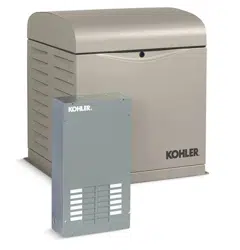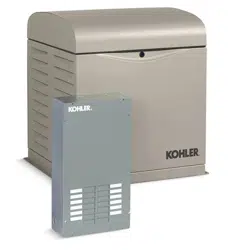
Residential/Commercial Generator Sets
Models:
10/12RESV
10/12RESVL
Similar Models (no longer available):
8RESV/L
Controller:
RDC2
TP-6880 2/21e
Operation
WARNING: This product can expose you
to chemicals, including carbon monoxide
and benzene, which are known to the State
of California to cause cancer and birth
defects or other reproductive harm.
For more information go to
www.P65warnings.ca.gov
Product Identification Information
Product identification numbers determine service parts.
Record the product identification numbers in the spaces
below immediately after unpacking the products so that
the numbers are readily available for future reference.
Record field-installed kit numbers after installing the
kits.
Generator Set Identification Numbers
Record the product identification numbers from the
generator set nameplate(s).
Model Designation
Specification Number
Serial Number
Accessory Number Accessory Description
Controller Identification
Record the controller description from the generator set
operation manual, spec sheet, or sales invoice.
Controller Description
Engine Identification
Record the product identification information from the
engine nameplate.
Manufacturer
Model Designation
Serial Number

Table of Contents
TP-6880 2/21 Table of Contents
Product Identification Information 2. . . . . . . . . . . . . . . . . . . . . . . . . . . . . . . . . . . . . . . . . . . . . . . . . . . . . . . . . .
Safety Precautions and Instructions 5. . . . . . . . . . . . . . . . . . . . . . . . . . . . . . . . . . . . . . . . . . . . . . . . . . . . . . . .
Introduction 9. . . . . . . . . . . . . . . . . . . . . . . . . . . . . . . . . . . . . . . . . . . . . . . . . . . . . . . . . . . . . . . . . . . . . . . . . . . . . .
Service Assistance 11. . . . . . . . . . . . . . . . . . . . . . . . . . . . . . . . . . . . . . . . . . . . . . . . . . . . . . . . . . . . . . . . . . . . . . . .
Section 1 Descriptions and Service Views 13. . . . . . . . . . . . . . . . . . . . . . . . . . . . . . . . . . . . . . . . . . . . . . . . . .
1.1 Introduction 13. . . . . . . . . . . . . . . . . . . . . . . . . . . . . . . . . . . . . . . . . . . . . . . . . . . . . . . . . .
1.2 Engine 13. . . . . . . . . . . . . . . . . . . . . . . . . . . . . . . . . . . . . . . . . . . . . . . . . . . . . . . . . . . . . .
1.3 Generator Set Enclosure 13. . . . . . . . . . . . . . . . . . . . . . . . . . . . . . . . . . . . . . . . . . . . . . .
1.4 Alternator 13. . . . . . . . . . . . . . . . . . . . . . . . . . . . . . . . . . . . . . . . . . . . . . . . . . . . . . . . . . . .
1.5 Transfer Switch 13. . . . . . . . . . . . . . . . . . . . . . . . . . . . . . . . . . . . . . . . . . . . . . . . . . . . . . .
1.6 Controllers 13. . . . . . . . . . . . . . . . . . . . . . . . . . . . . . . . . . . . . . . . . . . . . . . . . . . . . . . . . . .
1.7 OnCue Plus Generator Management System 15. . . . . . . . . . . . . . . . . . . . . . . . . . . . .
1.8 Accessories 15. . . . . . . . . . . . . . . . . . . . . . . . . . . . . . . . . . . . . . . . . . . . . . . . . . . . . . . . . .
1.8.1 Carburetor Heater 15. . . . . . . . . . . . . . . . . . . . . . . . . . . . . . . . . . . . . . . . . . . . .
1.8.2 Battery Heater Kit 15. . . . . . . . . . . . . . . . . . . . . . . . . . . . . . . . . . . . . . . . . . . . .
1.8.3 Programmable Interface Module (PIM) 16. . . . . . . . . . . . . . . . . . . . . . . . . . .
1.8.4 Load Management 16. . . . . . . . . . . . . . . . . . . . . . . . . . . . . . . . . . . . . . . . . . . .
1.8.5 Emergency Stop Kit 16. . . . . . . . . . . . . . . . . . . . . . . . . . . . . . . . . . . . . . . . . . .
1.9 Service Views 17. . . . . . . . . . . . . . . . . . . . . . . . . . . . . . . . . . . . . . . . . . . . . . . . . . . . . . . .
Section 2 Generator Set Operation 19. . . . . . . . . . . . . . . . . . . . . . . . . . . . . . . . . . . . . . . . . . . . . . . . . . . . . . . . .
2.1 Prestart Checklist 19. . . . . . . . . . . . . . . . . . . . . . . . . . . . . . . . . . . . . . . . . . . . . . . . . . . . .
2.2 Exercising the Generator Set 21. . . . . . . . . . . . . . . . . . . . . . . . . . . . . . . . . . . . . . . . . . .
2.3 Generator Set Operation 21. . . . . . . . . . . . . . . . . . . . . . . . . . . . . . . . . . . . . . . . . . . . . . .
2.3.1 Local Starting and Stopping 21. . . . . . . . . . . . . . . . . . . . . . . . . . . . . . . . . . . .
2.3.2 Automatic Starting and Stopping 21. . . . . . . . . . . . . . . . . . . . . . . . . . . . . . . .
2.3.3 Remote Starting and Stopping 21. . . . . . . . . . . . . . . . . . . . . . . . . . . . . . . . . .
2.3.4 Emergency Stop Switch 21. . . . . . . . . . . . . . . . . . . . . . . . . . . . . . . . . . . . . . . .
2.3.5 Engine Start Crank Cycle 22. . . . . . . . . . . . . . . . . . . . . . . . . . . . . . . . . . . . . .
2.3.6 Engine Cooldown 22. . . . . . . . . . . . . . . . . . . . . . . . . . . . . . . . . . . . . . . . . . . . .
2.3.7 Automatic Operation with Model RXT Transfer Switch 22. . . . . . . . . . . . . .
2.3.8 Automatic Operation with Other Transfer Switches 23. . . . . . . . . . . . . . . . .
2.4 Exercise 23. . . . . . . . . . . . . . . . . . . . . . . . . . . . . . . . . . . . . . . . . . . . . . . . . . . . . . . . . . . . .
2.4.1 Setting the Exerciser 23. . . . . . . . . . . . . . . . . . . . . . . . . . . . . . . . . . . . . . . . . .
2.4.2 Unloaded Cycle Exercise with Complete System Diagnostics 23. . . . . . .
2.4.3 Unloaded Full-Speed Exercise 24. . . . . . . . . . . . . . . . . . . . . . . . . . . . . . . . . .
2.4.4 Loaded Full-Speed Exercise (with RXT only) 24. . . . . . . . . . . . . . . . . . . . . .
2.4.5 Shutdown During Exercise (Advanced Diagnostic) 25. . . . . . . . . . . . . . . . .
2.4.6 Power Failure During Exercise Cycle 25. . . . . . . . . . . . . . . . . . . . . . . . . . . .
2.5 Faults 25. . . . . . . . . . . . . . . . . . . . . . . . . . . . . . . . . . . . . . . . . . . . . . . . . . . . . . . . . . . . . . .
2.5.1 Warnings 25. . . . . . . . . . . . . . . . . . . . . . . . . . . . . . . . . . . . . . . . . . . . . . . . . . . .
2.5.2 Shutdowns 25. . . . . . . . . . . . . . . . . . . . . . . . . . . . . . . . . . . . . . . . . . . . . . . . . . .
2.5.3 ATS Communication Errors 25. . . . . . . . . . . . . . . . . . . . . . . . . . . . . . . . . . . . .
2.5.4 Resetting the Controller after a Fault Shutdown 26. . . . . . . . . . . . . . . . . . .
2.6 Generator Enclosure Thermostat 29. . . . . . . . . . . . . . . . . . . . . . . . . . . . . . . . . . . . . . . .
Section 3 RDC2 Controller Operation 31. . . . . . . . . . . . . . . . . . . . . . . . . . . . . . . . . . . . . . . . . . . . . . . . . . . . . . .
3.1 RDC2 Generator Set/ Transfer Switch Controller 31. . . . . . . . . . . . . . . . . . . . . . . . . .
3.2 Controls and Indicators 31. . . . . . . . . . . . . . . . . . . . . . . . . . . . . . . . . . . . . . . . . . . . . . . .
3.2.1 Controller Keypad 32. . . . . . . . . . . . . . . . . . . . . . . . . . . . . . . . . . . . . . . . . . . . .
3.2.2 LED Indicators 32. . . . . . . . . . . . . . . . . . . . . . . . . . . . . . . . . . . . . . . . . . . . . . . .
3.2.3 LCD Display 33. . . . . . . . . . . . . . . . . . . . . . . . . . . . . . . . . . . . . . . . . . . . . . . . . .
3.3 Controller Power 34. . . . . . . . . . . . . . . . . . . . . . . . . . . . . . . . . . . . . . . . . . . . . . . . . . . . . .
3.4 Battery Charging 34. . . . . . . . . . . . . . . . . . . . . . . . . . . . . . . . . . . . . . . . . . . . . . . . . . . . . .
3.5 Changing Settings 34. . . . . . . . . . . . . . . . . . . . . . . . . . . . . . . . . . . . . . . . . . . . . . . . . . . .
3.6 Setting the Exerciser 36. . . . . . . . . . . . . . . . . . . . . . . . . . . . . . . . . . . . . . . . . . . . . . . . . .
3.6.1 Setting the Exerciser at Controller Power-up 36. . . . . . . . . . . . . . . . . . . . . .
3.6.2 Changing the Exercise Settings 36. . . . . . . . . . . . . . . . . . . . . . . . . . . . . . . . .
3.7 RDC2 Controller Menus 38. . . . . . . . . . . . . . . . . . . . . . . . . . . . . . . . . . . . . . . . . . . . . . . .
3.8 Main Menu 38. . . . . . . . . . . . . . . . . . . . . . . . . . . . . . . . . . . . . . . . . . . . . . . . . . . . . . . . . . .
3.9 Overview Menu 39. . . . . . . . . . . . . . . . . . . . . . . . . . . . . . . . . . . . . . . . . . . . . . . . . . . . . . .
3.10 Engine Metering Menu 39. . . . . . . . . . . . . . . . . . . . . . . . . . . . . . . . . . . . . . . . . . . . . . . . .

Table of Contents, continued
TP-6880 2/21Table of Contents
3.11 Generator Metering Menu 40. . . . . . . . . . . . . . . . . . . . . . . . . . . . . . . . . . . . . . . . . . . . . .
3.12 Generator Set Information Menu 41. . . . . . . . . . . . . . . . . . . . . . . . . . . . . . . . . . . . . . . .
3.13 Genset Run Time Menu 41. . . . . . . . . . . . . . . . . . . . . . . . . . . . . . . . . . . . . . . . . . . . . . . .
3.14 Genset System Menu 42. . . . . . . . . . . . . . . . . . . . . . . . . . . . . . . . . . . . . . . . . . . . . . . . . .
3.15 ATS Status Menu 43. . . . . . . . . . . . . . . . . . . . . . . . . . . . . . . . . . . . . . . . . . . . . . . . . . . . .
3.16 ATS Configuration Menu 44. . . . . . . . . . . . . . . . . . . . . . . . . . . . . . . . . . . . . . . . . . . . . . .
3.17 Date and Time Menu 45. . . . . . . . . . . . . . . . . . . . . . . . . . . . . . . . . . . . . . . . . . . . . . . . . .
3.18 Networking Information Menus 45. . . . . . . . . . . . . . . . . . . . . . . . . . . . . . . . . . . . . . . . . .
3.18.1 Networking Status Submenu 46. . . . . . . . . . . . . . . . . . . . . . . . . . . . . . . . . . . .
3.18.2 Networking Configuration Submenu (OnCue Plus Password) 47. . . . . . . .
3.18.3 RBUS Information 49. . . . . . . . . . . . . . . . . . . . . . . . . . . . . . . . . . . . . . . . . . . . .
3.18.4 Remote Devices Submenu 50. . . . . . . . . . . . . . . . . . . . . . . . . . . . . . . . . . . . .
3.19 Programmable Interface Module (PIM) Status Menu 51. . . . . . . . . . . . . . . . . . . . . . .
3.20 Load Control Menus 52. . . . . . . . . . . . . . . . . . . . . . . . . . . . . . . . . . . . . . . . . . . . . . . . . . .
3.21 Event Log 53. . . . . . . . . . . . . . . . . . . . . . . . . . . . . . . . . . . . . . . . . . . . . . . . . . . . . . . . . . . .
Section 4 Scheduled Maintenance 55. . . . . . . . . . . . . . . . . . . . . . . . . . . . . . . . . . . . . . . . . . . . . . . . . . . . . . . . . .
4.1 Scheduled Maintenance 56. . . . . . . . . . . . . . . . . . . . . . . . . . . . . . . . . . . . . . . . . . . . . . .
4.1.1 Service Schedule 57. . . . . . . . . . . . . . . . . . . . . . . . . . . . . . . . . . . . . . . . . . . . .
4.2 Lubrication System 58. . . . . . . . . . . . . . . . . . . . . . . . . . . . . . . . . . . . . . . . . . . . . . . . . . . .
4.2.1 Low Oil Pressure Shutdown 58. . . . . . . . . . . . . . . . . . . . . . . . . . . . . . . . . . . .
4.2.2 Oil Check 58. . . . . . . . . . . . . . . . . . . . . . . . . . . . . . . . . . . . . . . . . . . . . . . . . . . .
4.2.3 Engine Oil Recommendation 58. . . . . . . . . . . . . . . . . . . . . . . . . . . . . . . . . . .
4.2.4 Oil Change Procedure 58. . . . . . . . . . . . . . . . . . . . . . . . . . . . . . . . . . . . . . . . .
4.2.5 Resetting the Maintenance Timer 60. . . . . . . . . . . . . . . . . . . . . . . . . . . . . . . .
4.3 Spark Plugs 60. . . . . . . . . . . . . . . . . . . . . . . . . . . . . . . . . . . . . . . . . . . . . . . . . . . . . . . . . .
4.4 Air Cleaner Service 61. . . . . . . . . . . . . . . . . . . . . . . . . . . . . . . . . . . . . . . . . . . . . . . . . . . .
4.4.1 Air Cleaner, 8RESV/RESVL Models 61. . . . . . . . . . . . . . . . . . . . . . . . . . . . .
4.4.2 Air Cleaner, 10/12RESV/RESVL Models 62. . . . . . . . . . . . . . . . . . . . . . . . .
4.5 Cooling System 62. . . . . . . . . . . . . . . . . . . . . . . . . . . . . . . . . . . . . . . . . . . . . . . . . . . . . . .
4.6 Exhaust System 63. . . . . . . . . . . . . . . . . . . . . . . . . . . . . . . . . . . . . . . . . . . . . . . . . . . . . .
4.7 Battery 64. . . . . . . . . . . . . . . . . . . . . . . . . . . . . . . . . . . . . . . . . . . . . . . . . . . . . . . . . . . . . .
4.7.1 Checking Electrolyte Level 65. . . . . . . . . . . . . . . . . . . . . . . . . . . . . . . . . . . . .
4.7.2 Checking Specific Gravity 65. . . . . . . . . . . . . . . . . . . . . . . . . . . . . . . . . . . . . .
4.8 Storage Procedure 66. . . . . . . . . . . . . . . . . . . . . . . . . . . . . . . . . . . . . . . . . . . . . . . . . . . .
4.8.1 Lubricating System 66. . . . . . . . . . . . . . . . . . . . . . . . . . . . . . . . . . . . . . . . . . . .
4.8.2 Fuel System 66. . . . . . . . . . . . . . . . . . . . . . . . . . . . . . . . . . . . . . . . . . . . . . . . . .
4.8.3 Cylinder Lubrication 66. . . . . . . . . . . . . . . . . . . . . . . . . . . . . . . . . . . . . . . . . . .
4.8.4 Exterior Preparation 66. . . . . . . . . . . . . . . . . . . . . . . . . . . . . . . . . . . . . . . . . . .
4.8.5 Battery 66. . . . . . . . . . . . . . . . . . . . . . . . . . . . . . . . . . . . . . . . . . . . . . . . . . . . . .
Section 5 Troubleshooting 67. . . . . . . . . . . . . . . . . . . . . . . . . . . . . . . . . . . . . . . . . . . . . . . . . . . . . . . . . . . . . . . . .
5.1 Introduction 67. . . . . . . . . . . . . . . . . . . . . . . . . . . . . . . . . . . . . . . . . . . . . . . . . . . . . . . . . .
5.2 USB Port 67. . . . . . . . . . . . . . . . . . . . . . . . . . . . . . . . . . . . . . . . . . . . . . . . . . . . . . . . . . . .
5.3 Fault Messages 67. . . . . . . . . . . . . . . . . . . . . . . . . . . . . . . . . . . . . . . . . . . . . . . . . . . . . . .
5.4 Circuit Protection 67. . . . . . . . . . . . . . . . . . . . . . . . . . . . . . . . . . . . . . . . . . . . . . . . . . . . . .
5.4.1 Controller Internal Circuit Protection 67. . . . . . . . . . . . . . . . . . . . . . . . . . . . .
5.4.2 Line Circuit Breaker 67. . . . . . . . . . . . . . . . . . . . . . . . . . . . . . . . . . . . . . . . . . .
5.4.3 Auxiliary Winding Circuit Breaker 67. . . . . . . . . . . . . . . . . . . . . . . . . . . . . . . .
5.5 Stop Switch 67. . . . . . . . . . . . . . . . . . . . . . . . . . . . . . . . . . . . . . . . . . . . . . . . . . . . . . . . . .
5.6 Troubleshooting 68. . . . . . . . . . . . . . . . . . . . . . . . . . . . . . . . . . . . . . . . . . . . . . . . . . . . . . .
Appendix A Abbreviations 71. . . . . . . . . . . . . . . . . . . . . . . . . . . . . . . . . . . . . . . . . . . . . . . . . . . . . . . . . . . . . . . .
Appendix B DC2 Controller Operation 73. . . . . . . . . . . . . . . . . . . . . . . . . . . . . . . . . . . . . . . . . . . . . . . . . . . . .
TP-6880 2/21 5Safety Precautions and Instructions
Safety Precautions and Instructions
IMPORTANT SAFETY INSTRUCTIONS.
Electromechanical equipment,
including generator sets, transfer
switches, switchgear, and accessories,
can cause bodily harm and pose
life-threatening danger when
improperly installed, operated, or
maintained. To prevent accidents be
aware of potential dangers and act
safely. Read and follow all safety
precautions and instructions. SAVE
THESE INSTRUCTIONS.
This manual has several types of safety
precautions and instructions: Danger,
Warning, Caution, and Notice.
DANGER
DANGER indicates a hazardous
situation which, if not avoided, will
result in death or serious injury.
WARNING
WARNING indicates a hazardous
situation which, if not avoided, could
result in death or serious injury.
CAUTION
CAUTION indicates a hazardous
situation which, if not avoided, could
result in minor or moderate injury.
NOTICE
NOTICE is used to address practices
not related to physical injury.
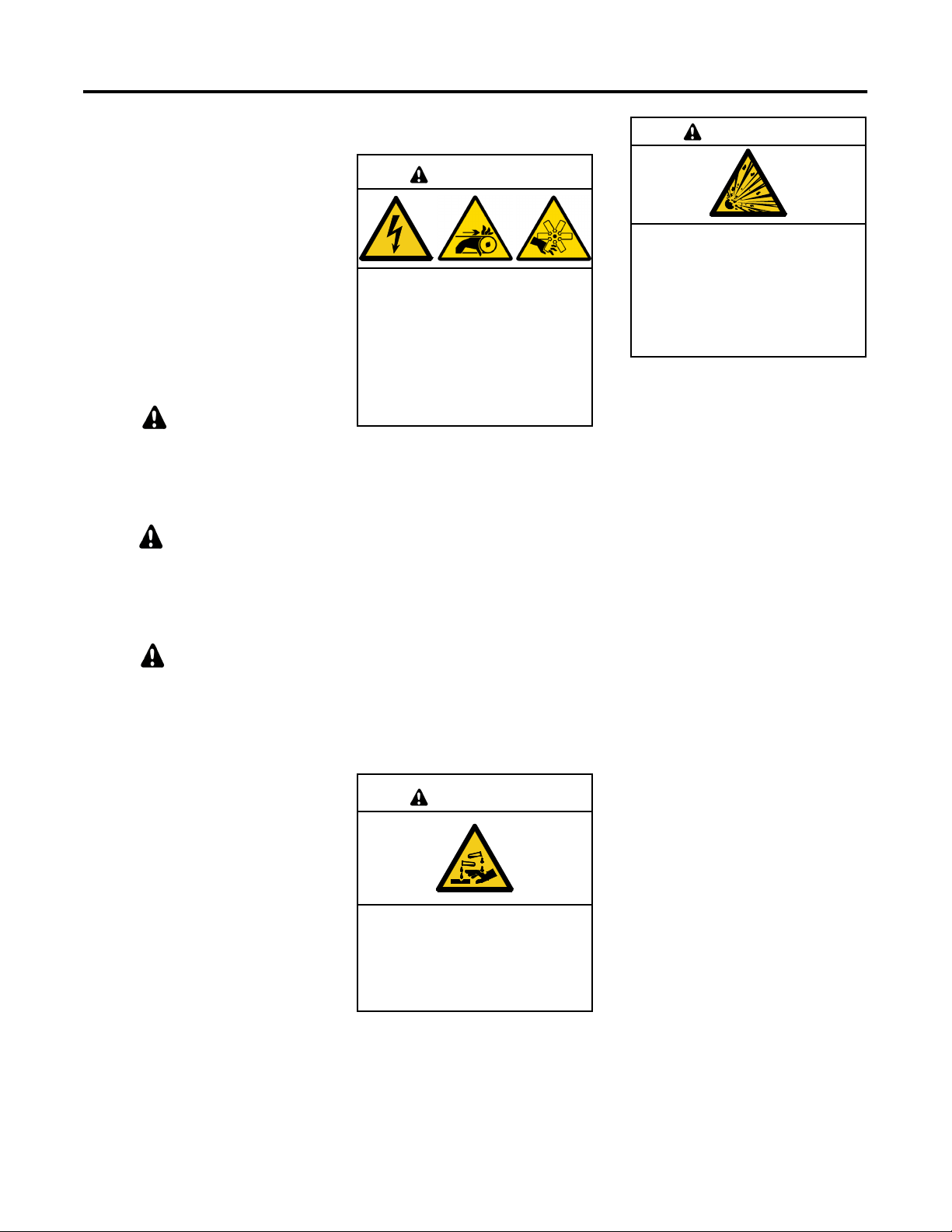
Safety decals affixed to the equipment
in prominent places alert the operator
or service technician to potential
hazards and explain how to act safely.
The decals are shown throughout this
publication to improve operator
recognition. Replace missing or
damaged decals.
Accidental Starting
Accidental starting.
Can cause severe injury or death.
Disconnect the battery cables before
working on the generator set.
Remove the negative (- ) lead first
when disconnecting the battery.
Reconnect the negative (- ) lead last
when reconnecting the battery.
WARNING
Disabling the generator set.
Accidental starting can cause
severe injury or death. Before
working on the generator set or
equipment connected to the set,
disable the generator set as follows:
(1) Press the generator set off/reset
button to shut down the generator set.
(2) Disconnect the power to the battery
charger, if equipped. (3) Remove the
battery cables, negative (- ) lead first.
Reconnect the negative (- ) lead last
when reconnecting the battery. Follow
these precautions to prevent the
starting of the generator set by the
remote start/stop switch.
Battery
Sulfuric acid in batteries.
Can cause severe injury or death.
Wear protective goggles and
clothing. Battery acid may cause
blindness and burn skin.
WARNING
Explosion.
Can cause severe injury or death.
Relays in the battery charger
cause arcs or sparks.
Locate the battery in a well-ventilated
area. Isolate the battery charger from
explosive fumes.
WARNING
Battery electrolyte is a diluted
sulfuric acid. Battery acid can cause
severe injury or death. Battery acid
can cause blindness and burn skin.
Always wear splashproof safety
goggles, rubber gloves, and boots
when servicing the battery. Do not
open a sealed battery or mutilate the
battery case. If battery acid splashes in
the eyes or on the skin, immediately
flush the affected area for 15 minutes
with large quantities of clean water.
Seek immediate medical aid in the case
of eye contact. Never add acid to a
battery after placing the battery in
service, as this may result in hazardous
spattering of battery acid.
Battery acid cleanup. Battery acid
can cause severe injury or death.
Battery acid is electrically conductive
and corrosive. Add 500 g (1 lb.) of
bicarbonate of soda (baking soda) to a
container with 4 L (1 gal.) of water and
mix the neutralizing solution. Pour the
neutralizing solution on the spilled
battery acid and continue to add the
neutralizing solution to the spilled
battery acid until all evidence of a
chemical reaction (foaming) has
ceased. Flush the resulting liquid with
water and dry the area.
TP-6880 2/216 Safety Precautions and Instructions
Battery gases. Explosion can cause
severe injury or death. Battery gases
can cause an explosion. Do not smoke
or permit flames or sparks to occur near
a battery at any time, particularly when
it is charging. Do not dispose of a
battery in a fire. To prevent burns and
sparks that could cause an explosion,
avoid touching the battery terminals
with tools or other metal objects.
Remove all jewelry before servicing the
equipment. Discharge static electricity
from your body before touching
batteries by first touching a grounded
metal surface away from the battery. To
avoid sparks, do not disturb the battery
charger connections while the battery
is charging. Always turn the battery
charger off before disconnecting the
battery connections. Ventilate the
compartments containing batteries to
prevent accumulation of explosive
gases.
Battery short circuits. Explosion
can cause severe injury or death.
Short circuits can cause bodily injury
and/or equipment damage.
Disconnect the battery before
generator set installation or
maintenance. Remove all jewelry
before servicing the equipment. Use
tools with insulated handles. Remove
the negative (- ) lead first when
disconnecting the battery. Reconnect
the negative (- ) lead last when
reconnecting the battery. Never
connect the negative (- ) battery cable
to the positive (+) connection terminal
of the starter solenoid. Do not test the
battery condition by shorting the
terminals together.
Engine Backfire/Flash
Fire
Risk of fire.
Can cause severe injury or death.
Do not smoke or permit flames or
sparks near fuels or the fuel system.
WARNING
Servicing the air cleaner. A sudden
backfire can cause severe injury or
death. Do not operate the generator
set with the air cleaner removed.
Servicing the fuel system. A flash
fire can cause severe injury or death.
Do not smoke or permit flames or
sparks near the carburetor, fuel line,
fuel filter, fuel pump, or other potential
sources of spilled fuels or fuel vapors.
Catch fuels in an approved container
when removing the fuel line or
carburetor.
Combustible materials. A fire can
cause severe injury or death.
Generator set engine fuels and fuel
vapors are flammable and explosive.
Handle these materials carefully to
minimize the risk of fire or explosion.
Equip the compartment or nearby area
with a fully charged fire extinguisher.
Select a fire extinguisher rated ABC or
BC for electrical fires or as
recommended by the local fire code or
an authorized agency. Train all
personnel on fire extinguisher
operation and fire prevention
procedures.
Exhaust System
Carbon monoxide.
Can cause severe nausea,
fainting, or death.
The exhaust system must be
leakproof and routinely inspected.
WARNING
Generator set operation. Carbon
monoxide can cause severe nausea,
fainting, or death. Carbon monoxide
is an odorless, colorless, tasteless,
nonirritating gas that can cause death if
inhaled for even a short time. Avoid
breathing exhaust fumes when working
on or near the generator set. Never
operate the generator set inside a
building. Never operate the generator
set where exhaust gas could seep
inside or be drawn into a potentially
occupied building through windows, air
intake vents, or other openings.
Carbon monoxide detectors.
Carbon monoxide can cause severe
nausea, fainting, or death. Install
carbon monoxide detectors on each
level of any building adjacent to the
generator set. Locate the detectors to
adequately warn the building’s
occupants of the presence of carbon
monoxide. Keep the detectors
operational at all times. Periodically
test and replace the carbon monoxide
detectors according to the
manufacturer’s instructions.
Carbon monoxide symptoms.
Carbon monoxide can cause severe
nausea, fainting, or death. Carbon
monoxide is a poisonous gas present in
exhaust gases. Carbon monoxide is an
odorless, colorless, tasteless,
nonirritating gas that can cause death if
inhaled for even a short time. Carbon
monoxide poisoning symptoms include
but are not limited to the following:
Light-headedness, dizziness
Physical fatigue, weakness in
joints and muscles
Sleepiness, mental fatigue,
inability to concentrate
or speak clearly, blurred vision
Stomachache, vomiting, nausea
If experiencing any of these symptoms
and carbon monoxide poisoning is
possible, seek fresh air immediately
and remain active. Do not sit, lie down,
or fall asleep. Alert others to the
possibility of carbon monoxide
poisoning. Seek medical attention if
the condition of affected persons does
not improve within minutes of breathing
fresh air.
TP-6880 2/21 7Safety Precautions and Instructions
Fuel System
Explosive fuel vapors.
Can cause severe injury or death.
Use extreme care when handling,
storing, and using fuels.
WARNING
The fuel system. Explosive fuel
vapors can cause severe injury or
death. Vaporized fuels are highly
explosive. Use extreme care when
handling and storing fuels. Store fuels
in a well-ventilated area away from
spark-producing equipment and out of
the reach of children. Never add fuel to
the tank while the engine is running
because spilled fuel may ignite on
contact with hot parts or from sparks.
Do not smoke or permit flames or
sparks to occur near sources of spilled
fuel or fuel vapors. Keep the fuel lines
and connections tight and in good
condition. Do not replace flexible fuel
lines with rigid lines. Use flexible
sections to avoid fuel line breakage
caused by vibration. Do not operate the
generator set in the presence of fuel
leaks, fuel accumulation, or sparks.
Repair fuel systems before resuming
generator set operation.
Gas fuel leaks. Explosive fuel
vapors can cause severe injury or
death. Fuel leakage can cause an
explosion. Check the LPG vapor or
natural gas fuel system for leakage by
using a soap and water solution with
the fuel system test pressurized to
6- 8 ounces per square inch
(10- 14 inches water column). Do not
use a soap solution containing either
ammonia or chlorine because both
prevent bubble formation. A successful
test depends on the ability of the
solution to bubble.
Hazardous Noise
Hazardous noise.
Can cause hearing loss.
Never operate the generator set
without a muffler or with a faulty
exhaust system.
CAUTION
Engine noise. Hazardous noise can
cause hearing loss. Generator sets
not equipped with sound enclosures
can produce noise levels greater than
105 dBA. Prolonged exposure to noise
levels greater than 85 dBA can cause
permanent hearing loss. Wear hearing
protection when near an operating
generator set.
Hazardous Voltage/
Moving Parts
Hazardous voltage.
Will cause severe injury or death.
This equipment must be installed and
serviced by qualified electrical
personnel.
DANGER
Hazardous voltage. Moving parts.
Will cause severe injury or death.
Operate the generator set only when
all guards and electrical enclosures
are in place.
DANGER
Hazardous voltage. Backfeed to
the utility system.
Can cause property damage,
severe injury, or death.
If the generator set is used for
standby power, install an automatic
transfer switch to prevent inadvertent
interconnection of standby and
normal sources of supply.
WARNING
Welding the generator set.
Can cause severe electrical
equipment damage.
Welding on generator set will cause
serious damage to engine electronic
controls components. Disconnect all
engine electronic control connections
before welding.
CAUTION
Grounding electrical equipment.
Hazardous voltage will cause severe
injury or death. Electrocution is
possible whenever electricity is
present. Ensure you comply with all
applicable codes and standards.
Electrically ground the generator set,
transfer switch, and related equipment
and electrical circuits. Turn off the main
circuit breakers of all power sources
before servicing the equipment. Never
contact electrical leads or appliances
when standing in water or on wet
ground because these conditions
increase the risk of electrocution.
Welding on the generator set. Can
cause severe electrical equipment
damage. Before welding on the
generator set perform the following
steps: (1) Remove the battery cables,
negative (- ) lead first. (2) Disconnect
all engine electronic control module
(ECM) connectors. (3) Disconnect all
generator set controller and voltage
regulator circuit board connectors.
(4) Disconnect the engine battery-
charging alternator connections.
(5) Attach the weld ground connection
close to the weld location.
TP-6880 2/218 Safety Precautions and Instructions
Connecting the battery and the
battery charger. Hazardous voltage
will cause severe injury or death.
Reconnect the battery correctly,
positive to positive and negative to
negative, to avoid electrical shock and
damage to the battery charger and
battery(ies). Have a qualified
electrician install the battery(ies).
Short circuits. Hazardous
voltage/current will cause severe
injury or death. Short circuits can
cause bodily injury and/or equipment
damage. Do not contact electrical
connections with tools or jewelry while
making adjustments or repairs.
Remove all jewelry before servicing the
equipment.
Electrical backfeed to the utility.
Hazardous backfeed voltage can
cause severe injury or death. Install
a transfer switch in standby power
installations to prevent the connection
of standby and other sources of power.
Electrical backfeed into a utility
electrical system can cause severe
injury or death to utility personnel
working on power lines.
Heavy Equipment
Unbalanced weight.
Improper lifting can cause severe
injury or death and equipment
damage.
Do not use lifting eyes.
Lift the generator set using lifting bars
inserted through the lifting holes on
the skid.
WARNING
Hot Parts
Hot engine and exhaust system.
Can cause severe injury or death.
Do not work on the generator set until
it cools.
WARNING
Servicing the exhaust system. Hot
parts can cause severe injury or
death. Do not touch hot engine parts.
The engine and exhaust system
components become extremely hot
during operation.
Servicing the engine heater. Hot
parts can cause minor personal
injury or property damage. Install the
heater before connecting it to power.
Operating the heater before installation
can cause burns and component
damage. Disconnect power to the
heater and allow it to cool before
servicing the heater or nearby parts.
Notice
NOTICE
Canadian installations only. For
standby service connect the output of
the generator set to a suitably rated
transfer switch in accordance with
Canadian Electrical Code, Part 1.
TP-6880 2/21 9Introduction
Introduction
This manual provides operation and maintenance
instructions for residential/commercial model
8/10/12RESV and RESVL generator sets equipped with
Kohler RDC2 generator set/transfer switch controllers.
See Figure 1. The RDC2 controllers control the
generator set and the optional Model RXT transfer
switch.
NOTE: The DC2 controller has been discontinued.
Model 8/10/12RESV and RESVL generator sets built in
2019 are equipped with the RDC2 controller.
This generator set is approved for use in stationary
applications in locations served by a reliable utility
power source. Have the generator set installed by an
authorized distributor/dealer or service technician.
Refer to TP-6879, Installation Manual, for installation
instructions.
Information in this publication represents data available
at the time of print. Kohler Co. reserves the right to
change this publication and the products represented
without notice and without any obligation or liability
whatsoever.
Read this manual and carefully follow all procedures
and safety precautions to ensure proper equipment
operation and to avoid bodily injury. Read and follow the
Safety Precautions and Instructions section at the
beginning of this manual. Keep this manual with the
equipment for future reference.
The equipment service requirements are very important
to safe and efficient operation. Inspect the parts often
and perform required service at the prescribed intervals.
Obtain service from an authorized service distributor/
dealer to keep equipment in top condition.
Figure 1 RESV/RESVL Generator Set
List of Related Literature
Figure 2 identifies related literature available for the
generator sets covered in this manual. Only trained and
qualified personnel should install or service the
generator set.
Generator Set Literature Part Number
Spec Sheet, 8RESV(L) G4- 252
Spec Sheet, 10/12RESV(L) G4- 254
Installation Manual, Model
8/10/12RESV/RESVL Generator Set
TP-6984
Transfer Switch Literature
Operation/Installation Manual, Model
RXT Automatic Transfer Switch
TP-6807
Operation/Installation Manual, Model
RDT Automatic Transfer Switch
TP-6345
Accessory Literature
Installation/Technical Manual, OnCue
Plus Software
TP-7007
User Guide, OnCue Plus Software TP-7006
Operation Manual, SiteTech Software TP-6701
Installation Instructions, Programmable
Interface Module (PIM)
TT-1584
Installation Instructions,
Battery Heater Kit
TT- 1634
Instructions, Firmware Update Using
USB Utility
TT-1636
Instructions, Load Shed Kit TT-1609
Installation Instructions,
Remote Emergency Stop Switch
(Lockable) TT- 1795
Figure 2 Related Literature
TP-6880 2/2110 Introduction
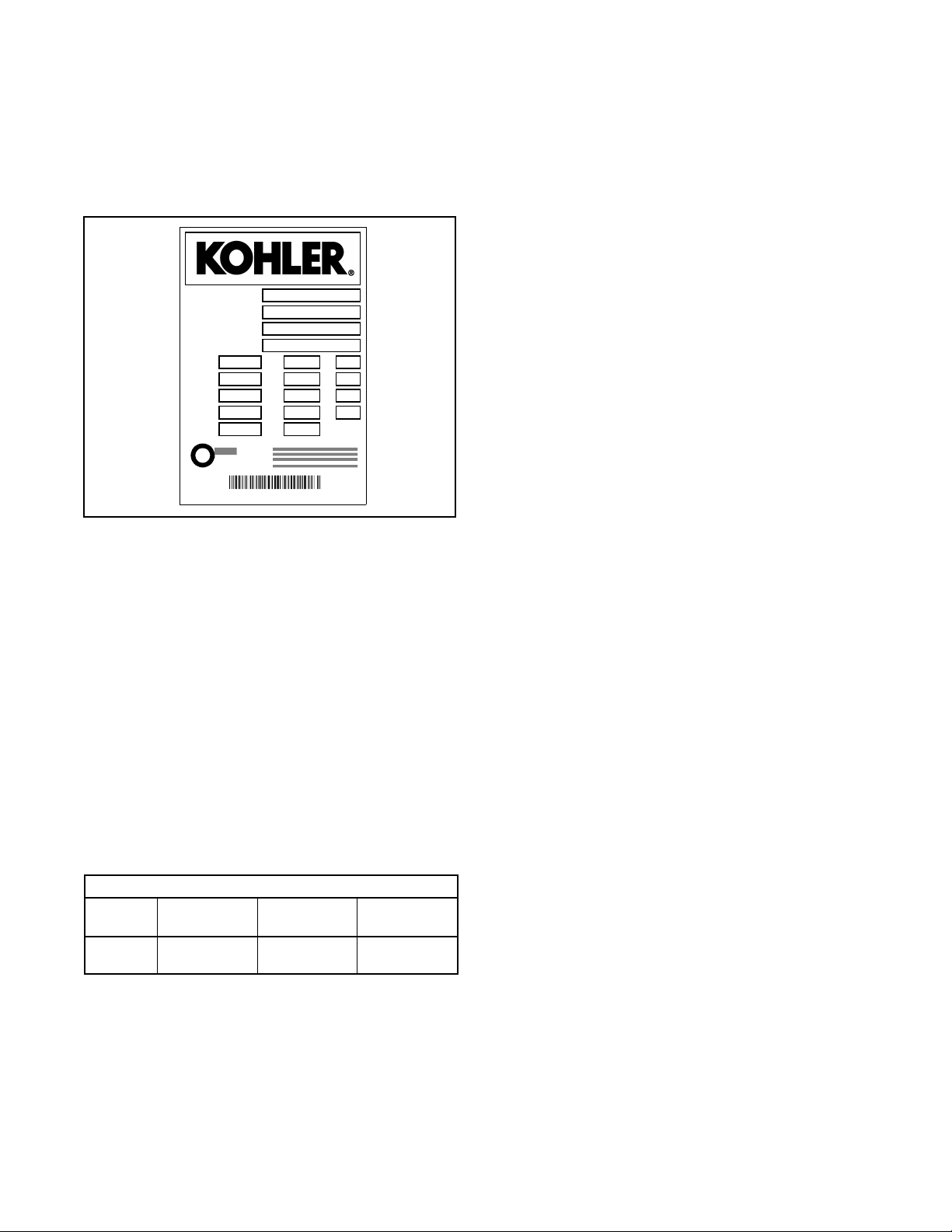
Nameplate
The following illustration shows a typical generator set
nameplate. Copy the model, serial, and specification
numbers from the nameplate into the spaces provided in
the product information section on the inside front cover
of this manual. See the service views in Section 1.9 for
the nameplate location.
Service Duty
Voltage
Alt Model
Insulation
MFG Date
Amps
Phase
RPM
Battery
Fuel
kW
kVA
Hz
Genset Model
Spec Number
Serial Number
Material Number
PF
Emission Information
The Kohler Model SV620 engine used on the 8RESV/L
generator set is certified to operate using natural gas or
propane fuel.
The Kohler Model KT725 engine used on the
10RESV/L and 12RESV/L generator set is certified to
operate using natural gas or propane fuel.
The Emission Compliance Period referred to on the
Emission Control or Air Index label indicates the number
of operating hours for which the engine has been shown
to meet CARB or EPA emission requirements. Figure 3
provides the engine compliance period (in hours)
associated with the category descriptor, which may be
found on the certification label.
Emission Compliance Period
EPA
Category C
250 hours
Category B
500 hours
Category A
1000 hours
CARB
Moderate
125 hours
Intermediate
250 hours
Extended
500 hours
Figure 3 Emission Compliance Period
Refer to the certification label for engine displacement.
The exhaust emission control system for the SV620
engines (8RESV/L) is EM for U.S. EPA, California, and
Europe.
The exhaust emission control system for the KT725
engine (10RESV/L and 12RESV/L) is EM for U.S. EPA,
California, and Europe.
Generator Set Application
Kohler Power Systems (KPS) ensures that all Kohler
generator sets are certified to applicable standards for
their intended application. It is the owner/operator’s
responsibility to operate Kohler generator sets
exclusively according to the directions provided in the
accompanying operation manuals.
Kohler generator sets designated as Stationary
Standby, Emergency or Emergency Standby may only
be operated for emergency power generation and for
maintenance/testing. Emergency power generation is
limited to power production when electric power from a
local utility (or the normal power source, if the facility
runs on its own power production) is interrupted.
The US Clean Air Act explicitly prohibits using
Emergency Standby generators as a primary electric
power source regardless of whether a site is connected
to the electrical grid. Emergency Standby generators
may NOT be used to power sites which are not
connected to an electric utility. The U.S. Clean Air Act
authorizes owner/operator fines of up to $3,750 per day
of operation in violation of the generator set’s
certification.
Owners/operators should familiarize themselves with
and perform all testing, maintenance, notification,
reporting and record keeping as required by the Clean
Air Act. In most cases, performance testing is not
required if the generator is operated and maintained
according to the operation manual. However,
owners/operators must retain maintenance records.

TP-6880 2/21 11Service Assistance
Service Assistance
For professional advice on generator set power
requirements and conscientious service, please contact
your nearest Kohler distributor or dealer.
Visit the Kohler Co. website at KOHLERPower.com.
Look at the labels and decals on your Kohler product
or review the appropriate literature or documents
included with the product.
Call toll free in the US and Canada 1-800-544-2444.
Outside the US and Canada, call the nearest regional
office.
Headquarters Europe, Middle East, Africa
(EMEA)
Kohler EMEA Headquarters
Netherlands B.V.
Kristallaan 1
4761 ZC Zevenbergen
The Netherlands
Phone: (31) 168 331630
Fax: (31) 168 331631
Asia Pacific
Power Systems Asia Pacific Regional Office
Singapore, Republic of Singapore
Phone: (65) 6264-6422
Fax: (65) 6264-6455
China
North China Regional Office, Beijing
Phone: (86) 10 6518 7950
(86) 10 6518 7951
(86) 10 6518 7952
Fax: (86) 10 6518 7955
East China Regional Office, Shanghai
Phone: (86) 21 6288 0500
Fax: (86) 21 6288 0550
India, Bangladesh, Sri Lanka
India Regional Office
Bangalore, India
Phone: (91) 80 3366208
(91) 80 3366231
Fax: (91) 80 3315972
Japan, Korea
North Asia Regional Office
Tokyo, Japan
Phone: (813) 3440-4515
Fax: (813) 3440-2727

TP-6880 2/2112 Service Assistance
Notes
TP-6880 2/21 13Section 1 Descriptions and Service Views
Section 1 Descriptions and Service Views
1.1 Introduction
The generator set specification sheets provide specific
generator and engine information. Refer to the spec
sheet for data not supplied in this manual. Consult the
generator set service manual, engine operation manual,
and engine service manual for additional specifications.
Obtain copies of the latest spec sheets, manuals,
diagrams, and drawings from your local distributor/
dealer.
1.2 Engine
The 8RESV generator set has a four-cycle, single
cylinder, air-cooled Kohler engine and 10/12RESV
generator sets have a four-cycle, twin cylinder,
air-cooled Kohler engine. The engines operate on
clean-burning natural gas or LPG. Engine features
include:
Efficient overhead valve design and full pressure
lubrication for maximum power, torque, and reliability
under all operating conditions.
Dependable, maintenance-free electronic ignition.
Precision-formulated cast iron construction of parts
subjected to the most wear and tear.
Field-convertible multi-fuel systems that allow fuel
changeover from natural gas to LPG (and vice- versa)
while maintaining EPA emission certification.
1.3 Generator Set Enclosure
The generator set is housed in a steel enclosure which is
dipped in e-coat for extra corrosion protection and
painted with a durable powder coat finish. The
enclosure has a hinged, locking roof that allows easy
access to the generator set controller when required,
but locks securely to prevent unauthorized access.
To open the roof, insert the key provided with the
enclosure and turn counterclockwise 1/4 turn. Then just
raise the roof. The roof stays open until you are ready to
close it.
Be sure to close and lock the enclosure, and keep the
key in a secure location.
1.4 Alternator
The generator uses Kohler’s unique PowerBoost
voltage regulation system, which provides instant
response to load changes.
PowerBoost ensures reliable motor starting and
consistent voltage levels. PowerBoost utilizes a
voltage excitation system that employs a winding
independent of the main output windings to provide
excitation voltage.
1.5 Transfer Switch
The RDC2 controller is designed to interface with and
control the Kohler Model RXT Automatic Transfer
Switch (ATS). Do not use the Kohler Model RRT transfer
switch with the RDC2 controller.
If the power system uses a different model transfer
switch, the RDC2 controllers will not control the transfer
switch. An ATS other than the Model RXT must be
equipped with a transfer switch controller and engine
start contacts that connect to the remote engine start
terminals on the generator set.
1.6 Controllers
The generator sets are equipped with the RDC2
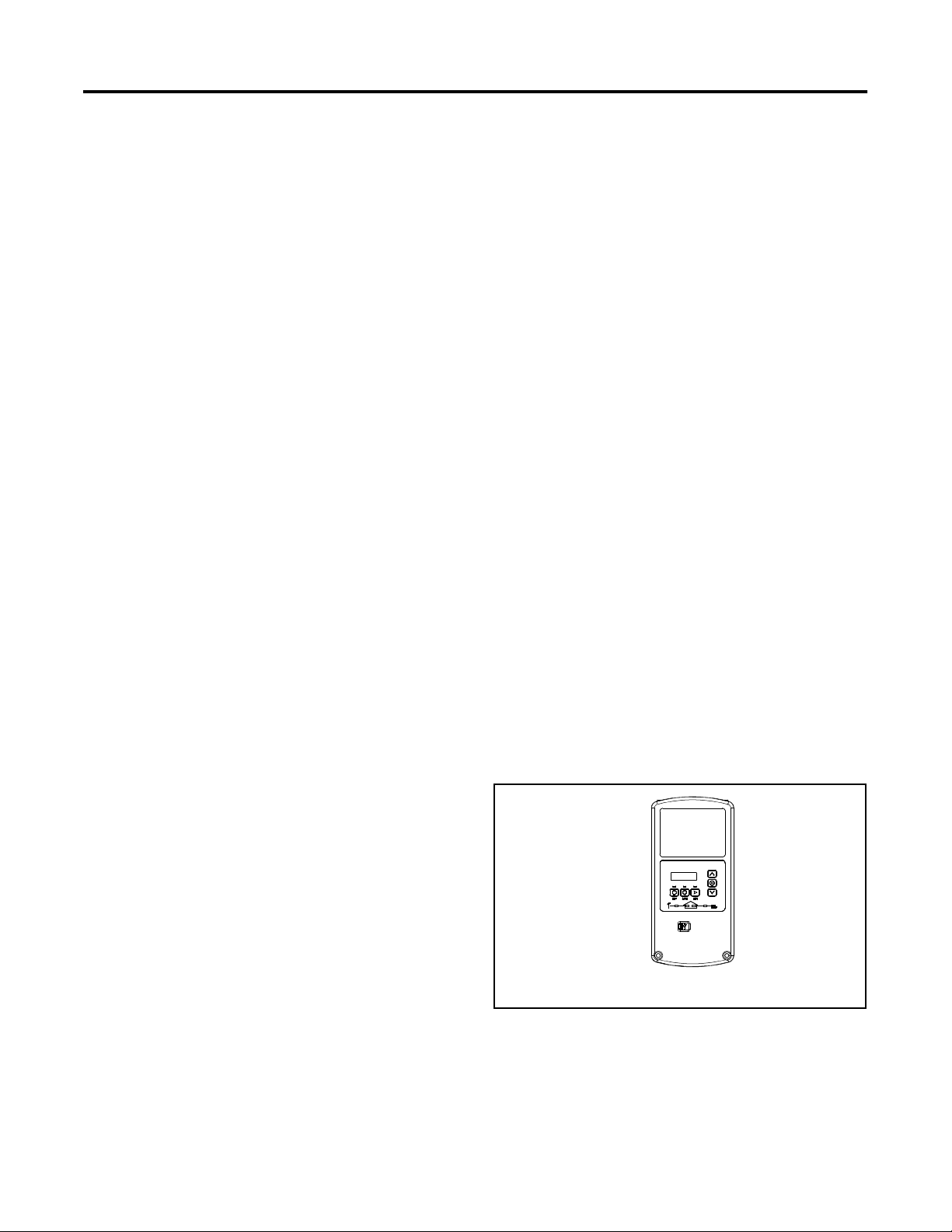
controller. See Figure 1-1.
The controller provides integrated control for the
generator set, Kohler Model RXT transfer switch,
programmable interface module (PIM), and load
management device.
Note: Load management devices are not available with
the transfer switch supplied with models
8RESVL, 10 RESVL, 12 RESVL.
The controller’s 2-line LCD screen displays status
messages and system settings that are clear and easy
to read, even in direct sunlight or low light.
RDC2
Figure 1-1 Generator Set Controller

TP-6880 2/2114 Section 1 Descriptions and Service Views
RDC2 Controller Features
Six-button keypad
OFF, AUTO, and RUN pushbuttons
Select and arrow buttons for access to system
configuration and adjustment menus
LED indicators for OFF, AUTO, and RUN modes
LED indicators for utility power and generator set
source availability and ATS position (Model RXT
transfer switch required)
LCD display
Two lines x 16 characters per line
Backlit display with adjustable contrast for
excellent visibility in all lighting conditions
Scrolling system status display
Generator set status
Voltage and frequency
Engine temperature
Oil pressure
Battery voltage
Engine runtime hours
Date and time displays
Smart engine cooldown senses engine temperature
Digital isochronous governor to maintain
steady-state speed at all loads
Digital voltage regulation: ±0.5% RMS no-load to
full-load
Automatic start with programmed cranking cycle
Programmable exerciser can be set to start
automatically on any future day and time, and run
every week or every two weeks
Exercise modes
Unloaded weekly exercise with complete system
diagnostics
Unloaded full-speed exercise
Loaded full-speed exercise (Model RXT ATS
required)
Front-access mini USB connector for SiteTech
connection or the Kohler USB utility
Integral Ethernet connector for Kohler OnCue
Plus
Built-in 2.5 amp battery charger
Remote two-wire start/stop capability for optional
connection of Model RDT transfer switches
Diagnostic messages
Displays diagnostic messages for the engine,
generator, Model RXT transfer switch,
programmable interface module (PIM), and load
management device
Over 70 diagnostic messages can be displayed
Maintenance reminders
System settings
System voltage, frequency, and phase
Voltage adjustment
Measurement system, English or metric
ATS status (Model RXT ATS required)
Source availability
ATS position (normal/utility or
emergency/generator)
Source voltage and frequency
ATS control (Model RXT ATS required)
Source voltage and frequency settings
Engine start time delay
Transfer time delays
Voltage calibration
Fixed pickup and dropout settings
Programmable Interface Module (PIM) status
displays
Input status (active/inactive)
Output status (active/inactive)
Load control menus
Load status
Test function
TP-6880 2/21 15Section 1 Descriptions and Service Views
1.7 OnCue Plus Generator
Management System
The Kohler OnCue Plus Generator Management
System is now included with the generator set. The
OnCue Plus System allows monitoring and control of
your generator set from your home or other location with
Internet access using a computer or mobile device.
OnCue Plus can be configured to send email or text
message notifications in the event of a generator set
fault.
You can also use Google Assistant or Amazon Alexa
and your smart device to control your generator. Use
voice commands to check your generator’s status,
check for active alerts, and start or stop an exercise.
See the OnCue Plus User Guide, TP- 7006, for simple
setup instructions and voice commands
OnCue Plus Wireless is also available. OnCue Plus
Wireless works with the customer’s wireless ethernet
router and does not require the installation of a network
cable between the generator set and the customer’s
router/modem.
1.8 Accessories
The following optional accessories are offered for the
RESV and RESVL generator sets.
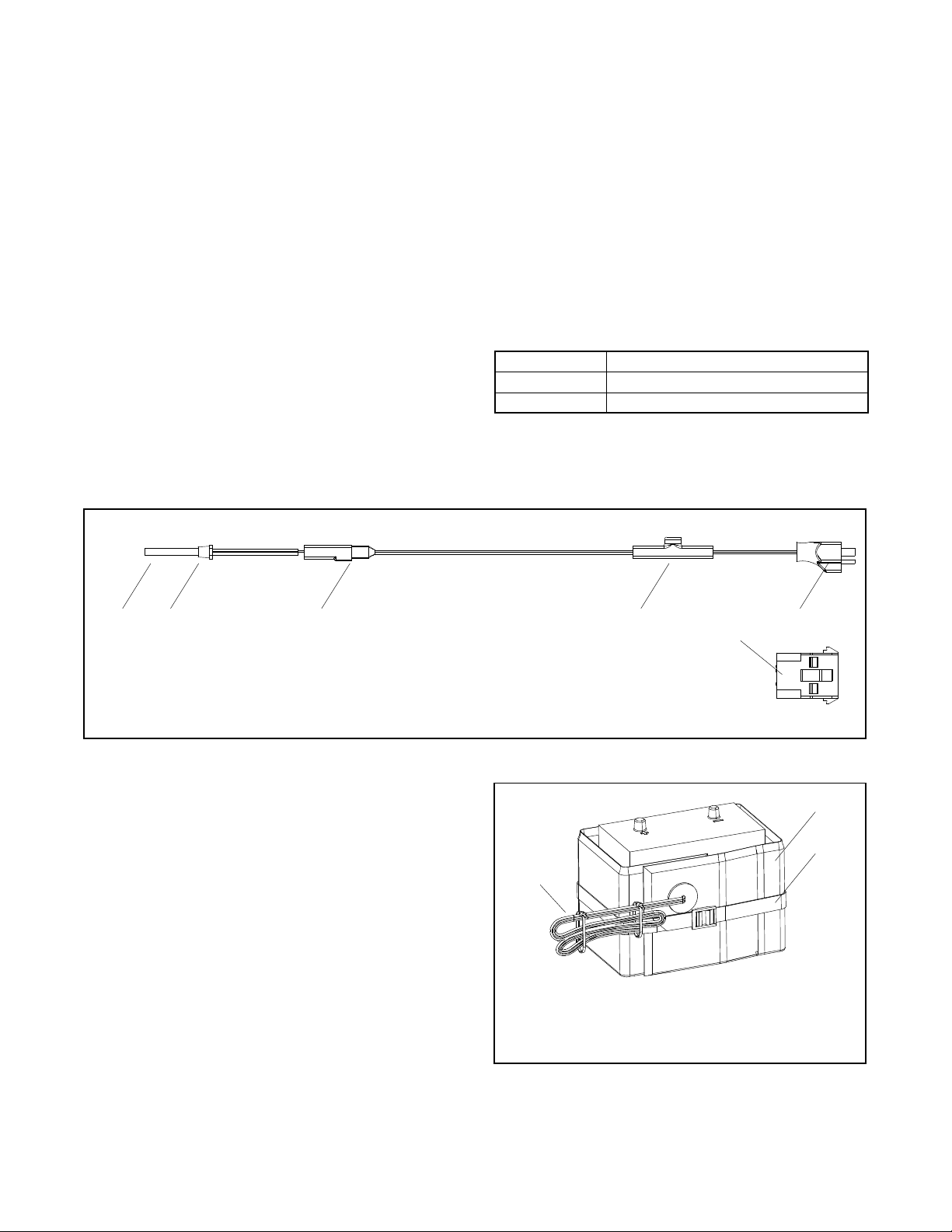
1.8.1 Carburetor Heater
An optional carburetor heater is recommended for
improved cold starting in locations where the ambient
temperature drops below 0C (32F). The carburetor
heater prevents condensation and carburetor icing. The
heater requires a continuous source of AC power.
See the generator set Installation manual for more
information.
Voltage 120 VAC
Thermostat ON 4 ± 4C (40 ± 7F)
Thermostat OFF
16 ± 3C (60 ± 5F)
Figure 4 Heater Specifications, 20kW Models
1
GM57968
1. Heating element
2. 1/8 NPT threaded fitting
3. Power cord disconnect plug
4. Thermostat
5. 120 VAC plug (GM57968)
6. 240 volt 3-pin plug (GM88228)
3 4 52
GM88228
NO TAG
Figure 5 Carburetor Heater
1.8.2 Battery Heater Kit
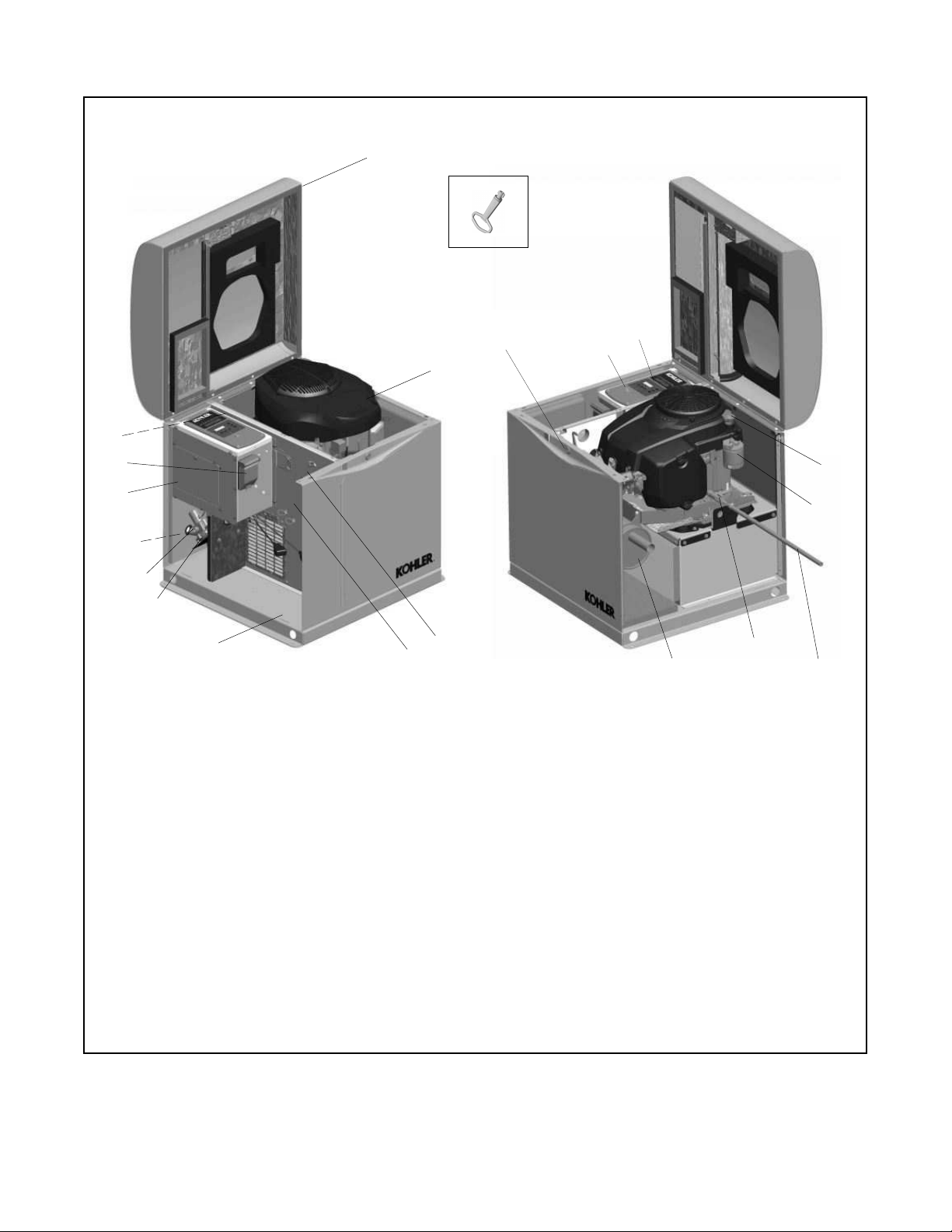
The battery heater kit contains a heating wrap to help
warm the battery in cold climates. See Figure 6. The
battery heater is equipped with a thermostat that turns
the heater on at 16- 18C (60- 65F) and off at 27C
(80F). Battery heaters are recommended for regions
where the temperature regularly falls below 0C (32F).
Note: Battery heaters are compatible with all
Kohler-supplied lead-acid batteries.* For other
battery types, check the battery manufacturer’s
instructions for any restrictions regarding the use
of battery heaters.
The battery heater requires a source of AC power. Verify
that AC power is connected to the generator set as
described in the generator set Installation Manual. The
circuit must be backed up by the generator set to provide
power at all times.
1. Battery heater wrap
2. Retaining strap or cable ties (included)
3. Power cord
1
2
3
Figure 6 Battery Heater (typical)

TP-6880 2/2116 Section 1 Descriptions and Service Views
1.8.3 Programmable Interface Module
(PIM)
The optional Programmable Interface Module (PIM)
provides two programmable inputs and six
programmable dry contact outputs for connection to
customer-supplied equipment. The outputs are
controlled by the RDC2 controller, and can also be
controlled remotely using the OnCue Plus program.
The PIM is mounted in a NEMA 3R aluminum enclosure,
which can be mounted indoors or outdoors. See the
installation instructions provided with the PIM.
1.8.4 Load Management
On models 8RESV, 10RESV, and 12RESV only, two
optional load management devices are available for use
when combined with a model RXT and RDT transfer
switch:
The optional Load Shed Kit mounts inside a model
RDT or RXT transfer switch.
The combined interface/load management board is
available for the Model RXT transfer switch.
Note: Load shed kits are not available with the transfer
switch supplied with models 8RESVL, 10RESVL,
12RESVL.
The load management devices provide an automatic
load management system to comply with Section 702.5
of NEC 2008. The installer is responsible for ensuring
that the power system installation complies with all
applicable state and local codes.
Note: The load management devices are only
compatible with single-phase generator sets.
The load management device automatically manages
up to six residential loads. Two relays are provided to
control two independent air conditioner loads. Up to four
power relay modules (or customer-provided power
relays) can be connected for management of
non-essential secondary loads.
The load management device is controlled by the RDC2
controller. The load on the generator set is monitored,
and loads are added or shed in the order of their priority.
See the installation instructions provided with the load
shed kit or the Model RXT Operation and Installation
Manual for more information.
1.8.5 Emergency Stop Kit
An emergency stop button is available as a loose kit.
Pressing the emergency stop button causes the
generator set to shut down immediately. The generator
controller displays an emergency stop shutdown
message after the button is pressed.
E-stop assembly harness contains the E-stop, contact
block, and two leads connected to the contact block.
The harness is factory-assembled. The kit also includes
the emergency stop switch decal.
The generator set enclosure is designed with an
opening for the emergency stop button. Install the
emergency stop button as described in the TT- 1613
instructions.
RDC2 firmware to version 5.5 or higher is required for
E-stop operation. Use a personal computer (laptop) and
Kohler SiteTech software or the USB Utility to update
the controller firmware, if necessary. See TP-6701,
SiteTech Operation Manual, or TT-1636, Firmware
Update Using the USB Utility, for instructions if
necessary.
TP-6880 2/21 17Section 1 Descriptions and Service Views
1.9 Service Views
7
8
11
20
2
9
6
ADV-9739
10
19
5
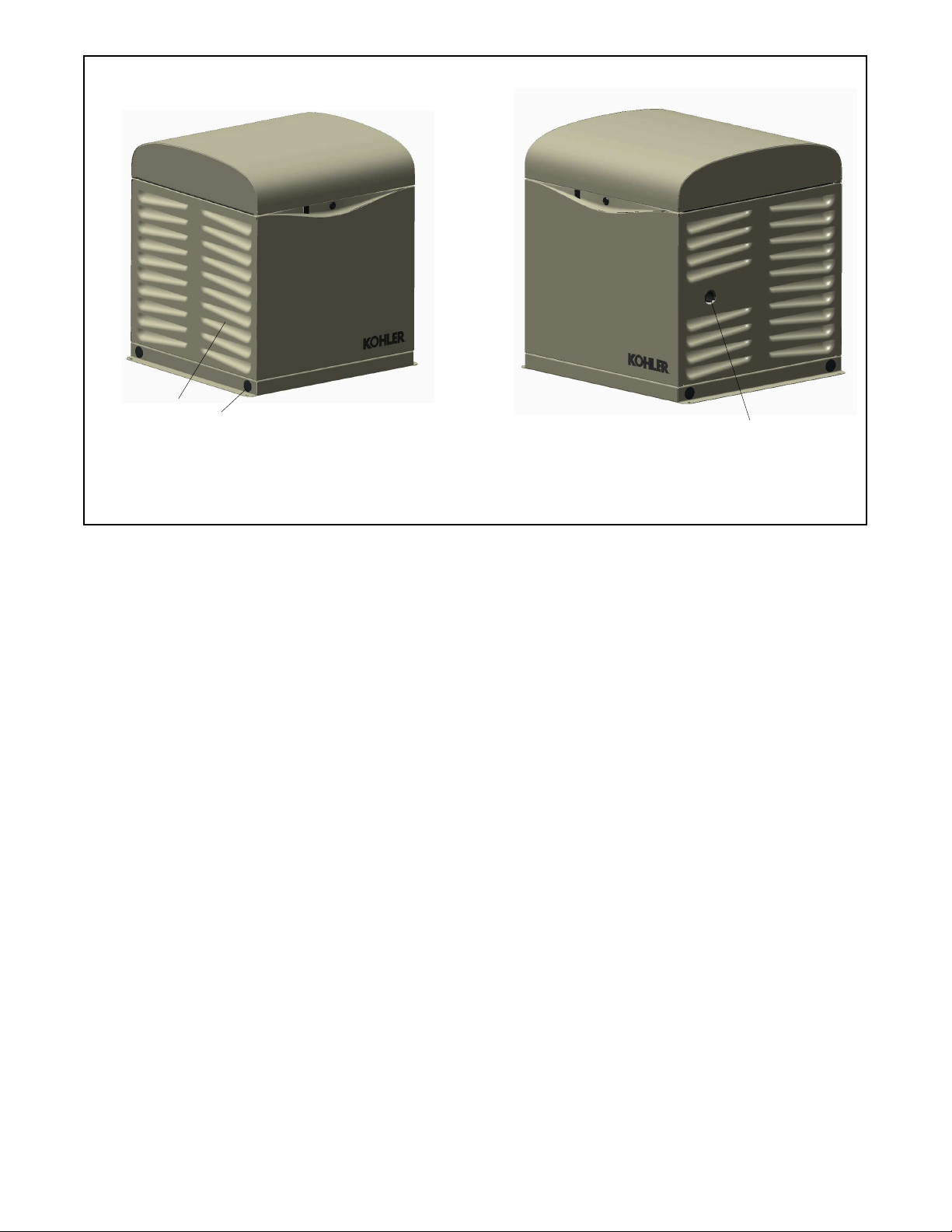
1. Hinged roof
2. Air cleaner
3. Nameplate location
4. Thermostat
5. Engine starting battery location (battery purchased separately)
6. Gas regulator assembly and fuel selector valve
7. Fuel solenoid valve connection
8. Fuel inlet
9. Field-connection terminal block and 20 amp resettable circuit
breaker (behind panel)
10. Line circuit breaker
11. 120 VAC receptacles for optional carburetor heater (not shown)
12. Lock
13. Key, provided with generator set
14. USB port
15. RDC2 controller
16. Oil check (dipstick) and oil fill
17. Oil filter
18. Oil drain hose
19. Oil drain valve
20. Silencer
15
17
14
3
16
1
12
13
4
18
Figure 1-2 Service View
TP-6880 2/2118 Section 1 Descriptions and Service Views
22
23
21
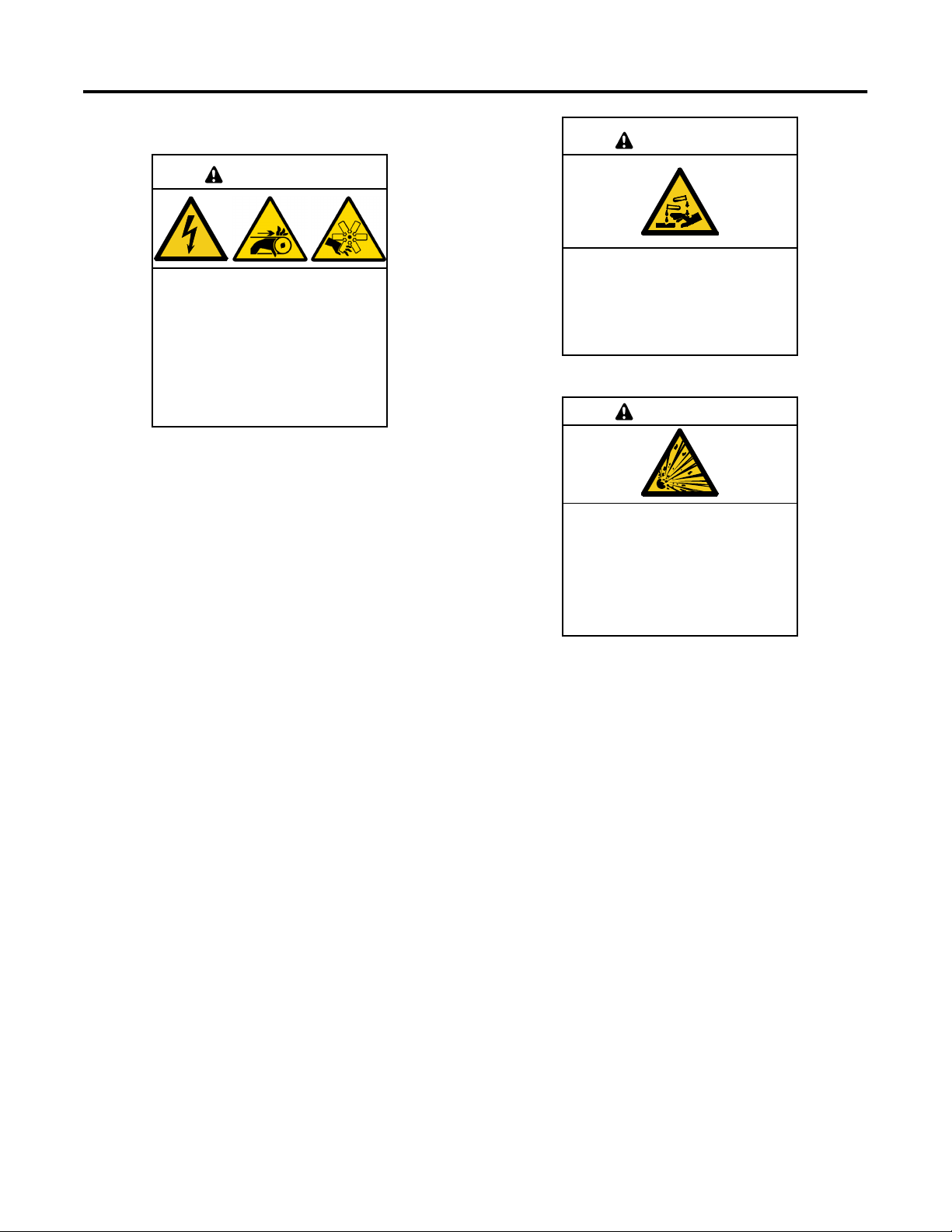
21. Lifting holes
22. Air intake
23. Exhaust outlet
Figure 1-3 Service View
TP-6880 2/21 19Section 2 Generator Set Operation
Section 2 Generator Set Operation
2.1 Prestart Checklist
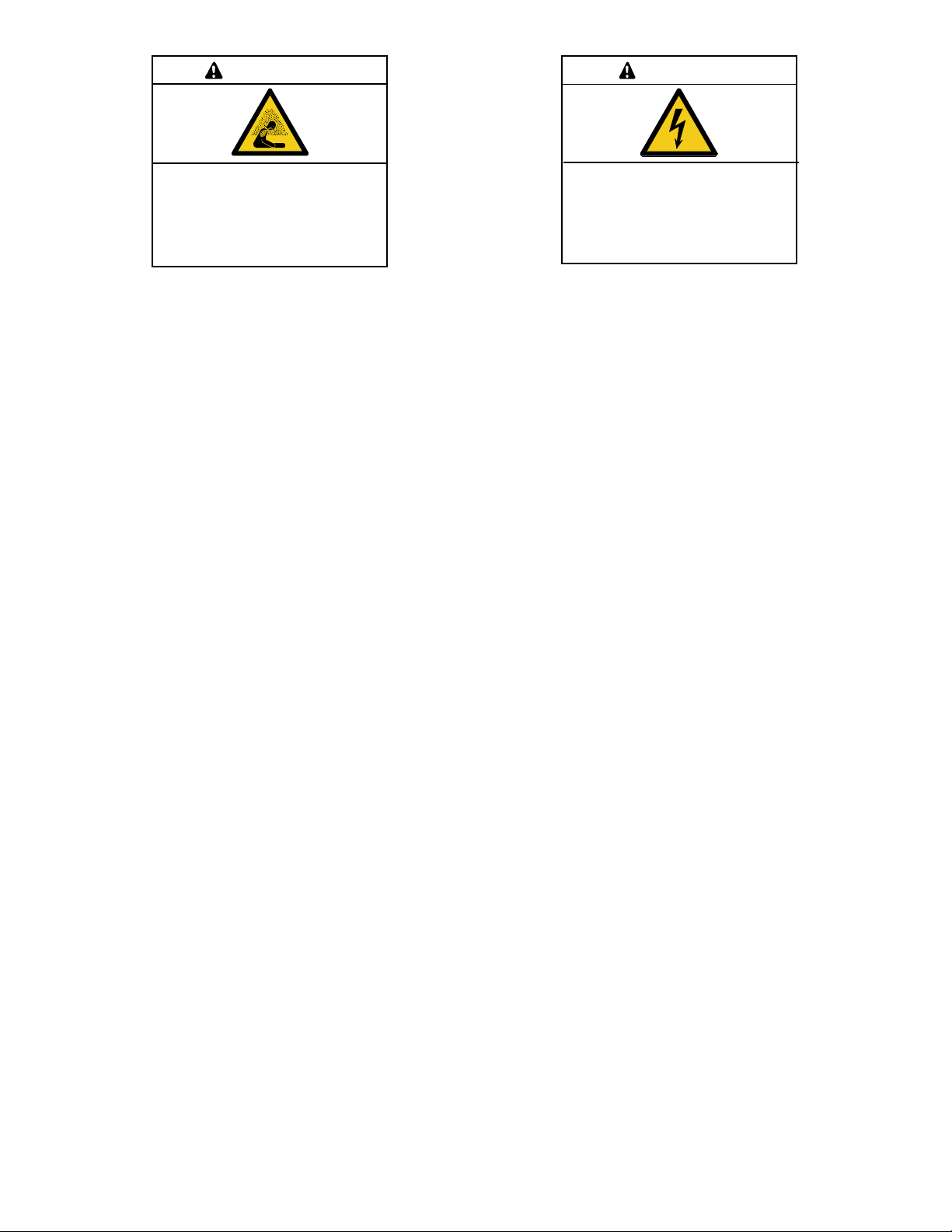
Accidental starting.
Can cause severe injury or death.
Disconnect the battery cables before
working on the generator set.
Remove the negative (- ) lead first
when disconnecting the battery.
Reconnect the negative (- ) lead last
when reconnecting the battery.
WARNING
Disabling the generator set. Accidental starting can
cause severe injury or death. Before working on the
generator set or equipment connected to the set, disable the
generator set as follows: (1) Press the generator set off/reset
button to shut down the generator set. (2) Disconnect the
power to the battery charger, if equipped. (3) Remove the
battery cables, negative (- ) lead first. Reconnect the negative
(- ) lead last when reconnecting the battery. Follow these
precautions to prevent the starting of the generator set by the
remote start/stop switch.
Sulfuric acid in batteries.
Can cause severe injury or death.
Wear protective goggles and
clothing. Battery acid may cause
blindness and burn skin.
WARNING
Explosion.
Can cause severe injury or death.
Relays in the battery charger
cause arcs or sparks.
Locate the battery in a well-ventilated
area. Isolate the battery charger from
explosive fumes.
WARNING
Battery gases. Explosion can cause severe injury or
death. Battery gases can cause an explosion. Do not smoke
or permit flames or sparks to occur near a battery at any time,
particularly when it is charging. Do not dispose of a battery in a
fire. To prevent burns and sparks that could cause an
explosion, avoid touching the battery terminals with tools or
other metal objects. Remove all jewelry before servicing the
equipment. Discharge static electricity from your body before
touching batteries by first touching a grounded metal surface
away from the battery. To avoid sparks, do not disturb the
battery charger connections while the battery is charging.
Always turn the battery charger off before disconnecting the
battery connections. Ventilate the compartments containing
batteries to prevent accumulation of explosive gases.
Battery electrolyte is a diluted sulfuric acid. Battery acid
can cause severe injury or death. Battery acid can cause
blindness and burn skin. Always wear splashproof safety
goggles, rubber gloves, and boots when servicing the battery.
Do not open a sealed battery or mutilate the battery case. If
battery acid splashes in the eyes or on the skin, immediately
flush the affected area for 15 minutes with large quantities of
clean water. Seek immediate medical aid in the case of eye
contact. Never add acid to a battery after placing the battery in
service, as this may result in hazardous spattering of battery
acid.
TP-6880 2/2120 Section 2 Generator Set Operation
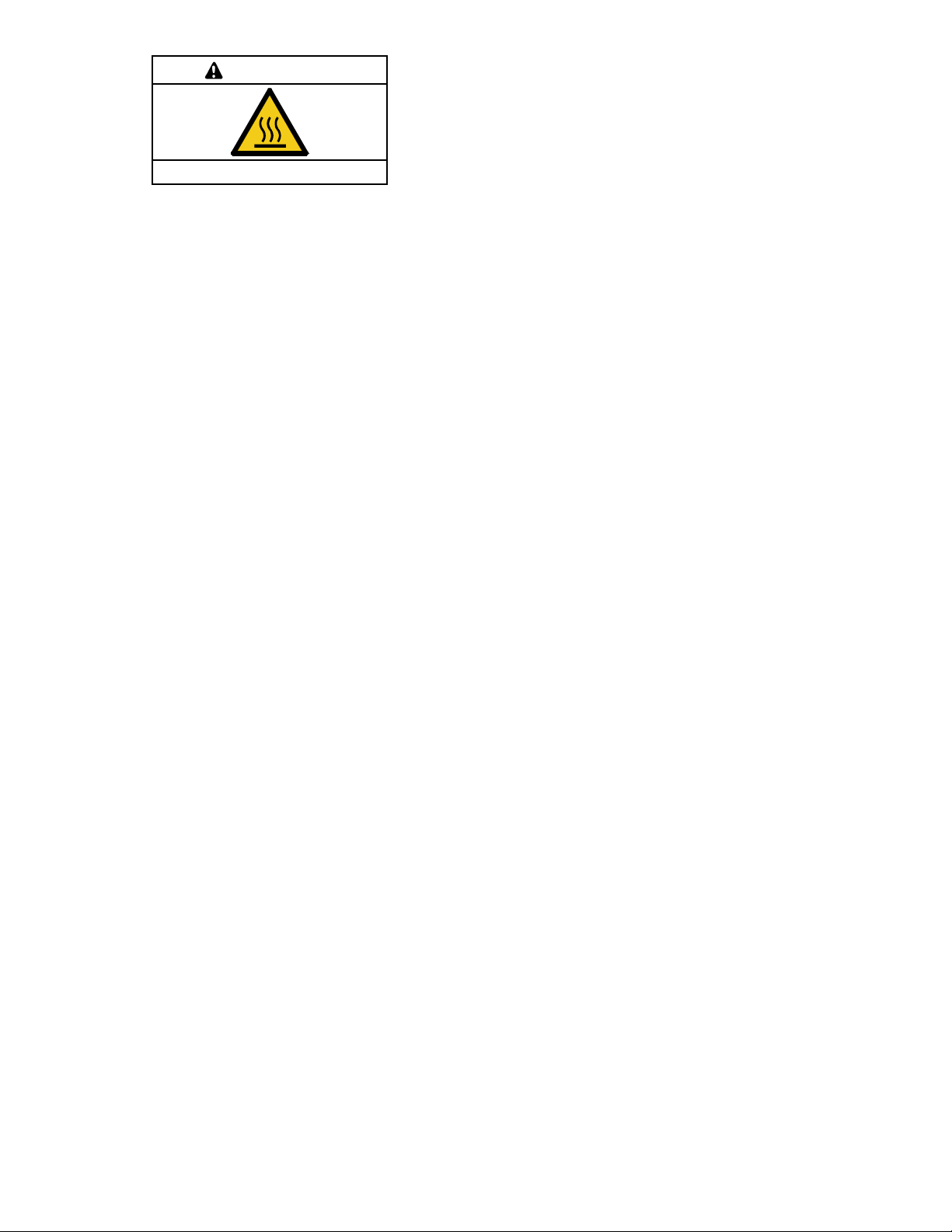
Carbon monoxide.
Can cause severe nausea,
fainting, or death.
The exhaust system must be
leakproof and routinely inspected.
WARNING
Carbon monoxide symptoms. Carbon monoxide can
cause severe nausea, fainting, or death. Carbon monoxide
is a poisonous gas present in exhaust gases. Carbon
monoxide is an odorless, colorless, tasteless, nonirritating gas
that can cause death if inhaled for even a short time. Carbon
monoxide poisoning symptoms include but are not limited to
the following:
Light-headedness, dizziness
Physical fatigue, weakness in
joints and muscles
Sleepiness, mental fatigue,
inability to concentrate
or speak clearly, blurred vision
Stomachache, vomiting, nausea
If experiencing any of these symptoms and carbon monoxide
poisoning is possible, seek fresh air immediately and remain
active. Do not sit, lie down, or fall asleep. Alert others to the
possibility of carbon monoxide poisoning. Seek medical
attention if the condition of affected persons does not improve
within minutes of breathing fresh air.
Generator set operation. Carbon monoxide can cause
severe nausea, fainting, or death. Carbon monoxide is an
odorless, colorless, tasteless, nonirritating gas that can cause
death if inhaled for even a short time. Avoid breathing exhaust
fumes when working on or near the generator set. Never
operate the generator set inside a building. Never operate the
generator set where exhaust gas could seep inside or be
drawn into a potentially occupied building through windows, air
intake vents, or other openings.
Carbon monoxide detectors. Carbon monoxide can
cause severe nausea, fainting, or death. Install carbon
monoxide detectors on each level of any building adjacent to
the generator set. Locate the detectors to adequately warn the
building’s occupants of the presence of carbon monoxide.
Keep the detectors operational at all times. Periodically test
and replace the carbon monoxide detectors according to the
manufacturer’s instructions.
Hazardous voltage.
Will cause severe injury or death.
This equipment must be installed and
serviced by qualified electrical
personnel.
DANGER
Grounding electrical equipment. Hazardous voltage will
cause severe injury or death. Electrocution is possible
whenever electricity is present. Ensure you comply with all
applicable codes and standards. Electrically ground the
generator set, transfer switch, and related equipment and
electrical circuits. Turn off the main circuit breakers of all
power sources before servicing the equipment. Never contact
electrical leads or appliances when standing in water or on wet
ground because these conditions increase the risk of
electrocution.
Connecting the battery and the battery charger.
Hazardous voltage will cause severe injury or death.
Reconnect the battery correctly, positive to positive and
negative to negative, to avoid electrical shock and damage to
the battery charger and battery(ies). Have a qualified
electrician install the battery(ies).
Short circuits. Hazardous voltage/current will cause
severe injury or death. Short circuits can cause bodily injury
and/or equipment damage. Do not contact electrical
connections with tools or jewelry while making adjustments or
repairs. Remove all jewelry before servicing the equipment.
Carbon monoxide detectors. Carbon monoxide can
cause severe nausea, fainting, or death. Install carbon
monoxide detectors on each level of any building adjacent to
the generator set. Locate the detectors to adequately warn the
building’s occupants of the presence of carbon monoxide.
Keep the detectors operational at all times. Periodically test
and replace the carbon monoxide detectors according to the
manufacturer’s instructions.
TP-6880 2/21 21Section 2 Generator Set Operation
Hot surfaces.
CAUTION
Remind family members, children, and visitors to use
caution near the generator set. Generator sets
connected to automatic transfer switches will start
automatically during exercise periods and power
outages. Some generator components become hot
when the generator is running and remain hot for a time
after the generator set shuts down.
To ensure continued satisfactory operation, perform the
following checks or inspections before or at each
startup, as designated, and at the intervals specified in
the service schedule. In addition, some checks require
verification after the unit starts.
Air Cleaner. Check for a clean and installed air cleaner
element to prevent unfiltered air from entering the
engine.
Air Inlets. Check for clean and unobstructed air inlets.
Battery. Check for tight battery connections. Consult
the battery manufacturer’s instructions regarding
battery care and maintenance.
Exhaust System. Check for exhaust leaks and
blockages. Check the muffler condition.
Inspect the exhaust system components for cracks,
leaks, and corrosion. Check for tight exhaust system
connections.
Check for corroded or broken metal parts and replace
them as needed.
Check that the exhaust outlet is unobstructed.
Oil Level. Check the oil level before starting the
generator set and at the intervals given in Section 4,
Scheduled Maintenance. Maintain the oil level at or
near, not over, the full mark on the dipstick.
Operating Area. Check for obstructions that could
block the flow of cooling air. Keep the air intake area
clean. Do not leave rags, tools, or debris on or near the
generator set.
2.2 Exercising the Generator Set
Operate the generator set without load once each week
for 20 minutes. See Section 2.4 for information about
loaded and unloaded exercise modes. For instructions
to set the exerciser, see Section 3.6.
2.3 Generator Set Operation
2.3.1 Local Starting and Stopping
Start: Press the RUN button to immediately start the
generator set.
Stop: Press the OFF button. The engine stops.
Run the generator set with no load for at least 2 minutes
to ensure adequate engine cooldown.
2.3.2 Automatic Starting and Stopping
An automatic transfer switch monitors the utility power
and signals the generator set to start when utility power
is lost. The ATS then transfers the load to the generator
set.
When utility power is restored, the transfer switch
transfers the load back to utility, runs the generator set
with no load to cool down the engine, and then stops the
generator set.
2.3.3 Remote Starting and Stopping
A remote switch connected to terminals 3 and 4 can be
used to start and stop the generator set. Close the
switch to start and run the generator set. Open the
switch to stop the generator set.
Run the generator set with no load for at least 2 minutes
to ensure adequate engine cooldown.
2.3.4 Emergency Stop Switch
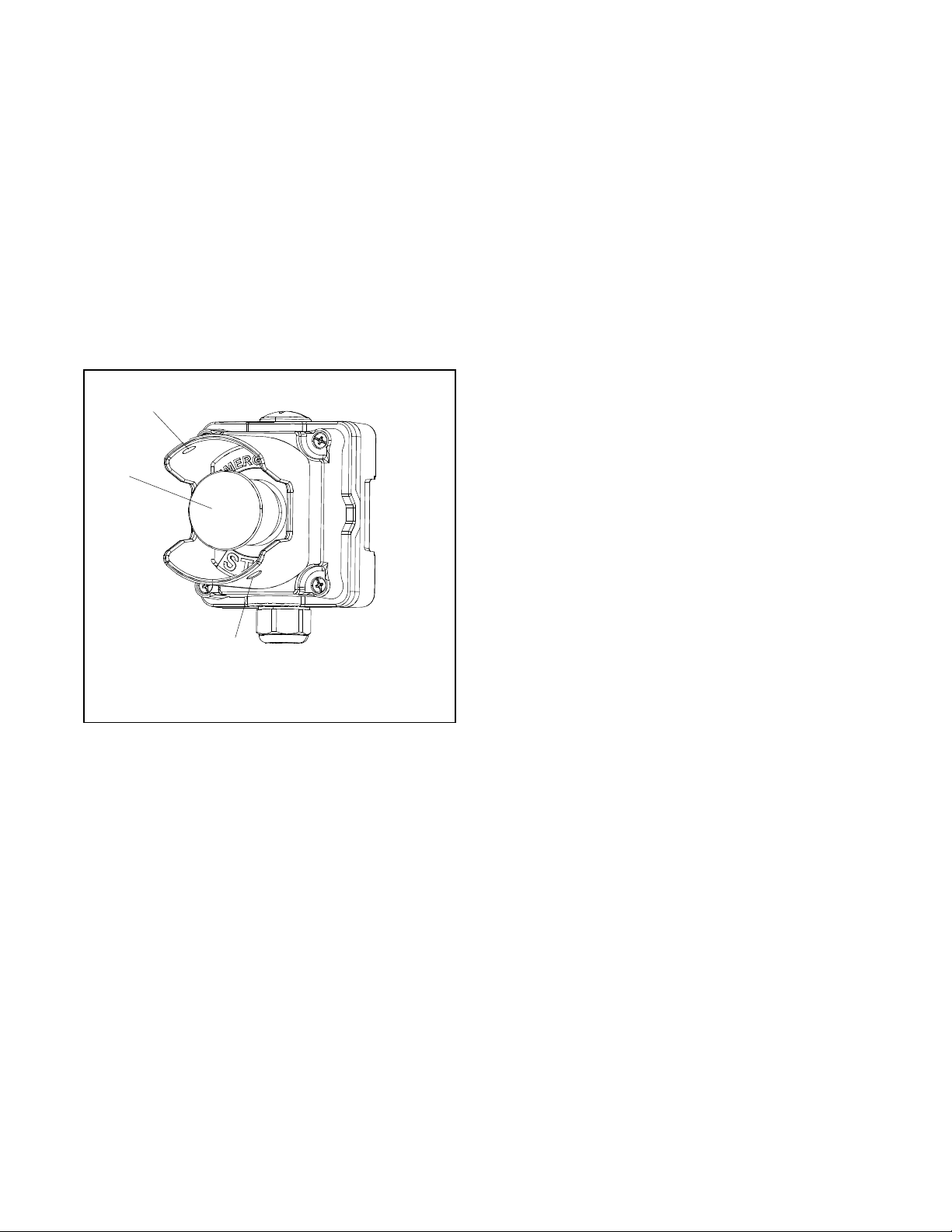
The generator set may be connected to an optional
emergency stop switch. See Figure 2-1. The
Emergency Stop Switch may be mounted near the
generator set or in a remote location. If the emergency
stop button is activated, the controller display will show
Emerg Stop Shutdwn.
Emergency Stop Switch Operation
Press the red STOP button to shut down the
generator set in an emergency.
Using the emergency stop button bypasses the engine
cooldown cycle, stopping the engine immediately. The
controller emergency stop lamp lights (if equipped) and
the unit shuts down. The generator set cannot be
TP-6880 2/2122 Section 2 Generator Set Operation
restarted until the emergency stop switch(es) is/are
reset.
Lockout/Tagout
The emergency stop button can be locked in the STOP
position. Insert a lock through two openings in the yellow
shroud to prevent the stop button from being pulled out.
See Figure 2-1. Remove the lock for normal operation.
A lock is not required in order to keep the switch
activated. The switch button will stay depressed until it is
pulled out by the operator.
Resetting the Emergency Stop Switch
To reset the E-stop switch, remove the locking device
and pull the button out. Reset the controller by pressing
the OFF/RESET button.
2
GM103743
1. Two openings in the shroud for customer-provided lockout/
tagout device
2. Stop button
1
1
Figure 2-1 Emergency Stop Switch (optional)
2.3.5 Engine Start Crank Cycle
The controller attempts to start the generator set three
times (three crank cycles, 15 seconds crank and
15 seconds off). If the generator set does not start in
three attempts, the system shuts down on an overcrank
fault. See Section 2.5.
Cranking 1, 2, and 3 are displayed during the crank
cycle. Pressing the OFF button during the crank cycle
stops the cranking. No other buttons are acknowledged
during the crank cycle.
2.3.6 Engine Cooldown
The engine cooldown time delay allows the engine to
run after the loads have been removed.
The engine cooldown time delay is set to 5 minutes. The
engine stops before the cooldown time delay expires if
the temperature drops below the cooled-down
temperature level, or if the temperature rises above the
high limit during the cooldown cycle.
If a transfer switch other than the Model RXT is used, an
additional engine cooldown time delay may be
programmed on the transfer switch. To allow the smart
engine cooldown on the RDC2 controller to operate
most efficiently, set the cooldown time on the transfer
switch controller to zero or the minimum time allowed.
Refer to the instructions provided with the transfer
switch for more information.
2.3.7 Automatic Operation with Model
RXT Transfer Switch
The Model RXT transfer switch connects to the RDC2
controller through the ATS interface board on the
transfer switch. Also see the Model RXT Transfer Switch
Operation/Installation Manual for more information
about transfer switch operation.
The controller must be in AUTO mode for automatic
transfer switch operation.
Automatic Start
The RDC2 controller receives utility source voltage
sensing data from the Model RXT transfer switch.
1. If the utility source voltage falls below an
acceptable level, the controller starts the engine
start time delay.
2. If the utility source is not restored before the time
delay expires, the generator set starts.
3. After the Normal-to-Emergency time delay, the
ATS is signaled to transfer the load to the
emergency source.
Automatic Stop with Engine Cooldown
1. When the utility source is restored, the
Emergency-to-Normal time delay starts.
2. When the Emergency-to-Normal time delay
expires, the load is transferred to the utility.
3. The generator set runs through the engine
cooldown cycle and then stops.
TP-6880 2/21 23Section 2 Generator Set Operation
2.3.8 Automatic Operation with Other
Transfer Switches
If a transfer switch other than the Model RXT (such as a
Kohler Model RDT) is used, the engine start contacts
from the ATS must be connected to engine start leads 3
and 4 on the generator set.
The controller must be in AUTO mode to respond to
remote start/stop signals from an ATS or remote switch.
Press the AUTO button to put the controller into
automatic mode.
Automatic Start
The engine start contacts on the ATS close to signal the
generator set to start, and remain closed while the
generator set is running.
Automatic Stop
The engine start contacts on the ATS open to signal the
generator set to stop.
2.4 Exercise
The RDC2 controller can be set to automatically run the
generator set at the same time and day each week.
Exercising the generator set weekly or every two weeks
is required to keep the engine and alternator in good
operating condition.
Three exercise modes are available: unloaded cycle,
unloaded full speed, and loaded full speed. See
Sections 2.4.2 through 2.4.4 for information about the
exercise modes. A loaded exercise can be set at the
RDC2 controller only if a Model RXT transfer switch is
connected.
Note: With transfer switches other than the Model RXT,
it is possible to have two exercise settings (one
unloaded exercise set at the generator set
controller, and another exercise set at the ATS
controller). If the exercise times overlap, the ATS
exercise setting takes priority.
If a transfer switch other than the Model RXT is used,
refer to the instructions provided with the transfer switch
to set a loaded exercise at the ATS, if desired.
2.4.1 Setting the Exerciser
When power is applied to the RDC2 controller (that is,
when the battery is connected), you will be prompted to
set the date and time, and then to set the exerciser.
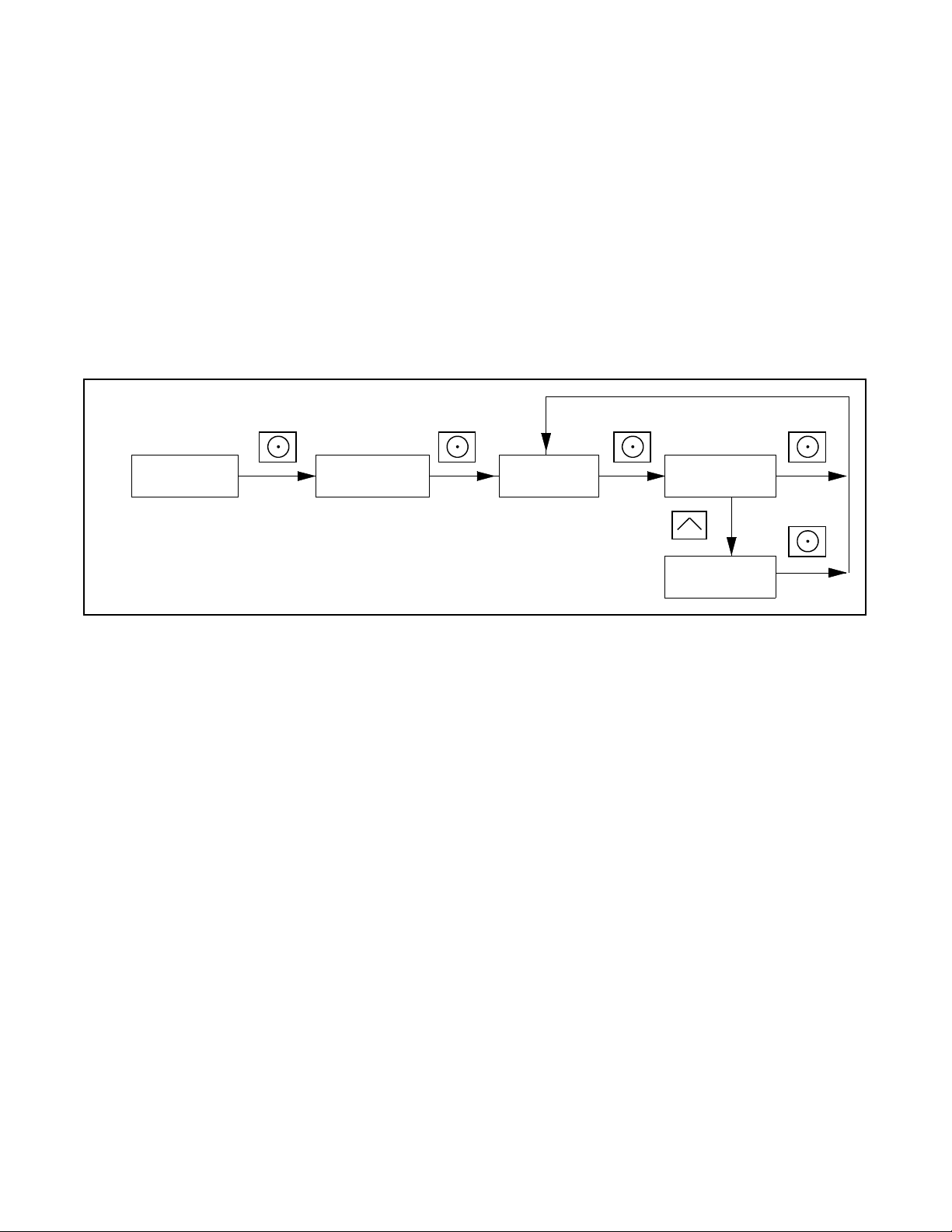
The first setting will flash. Press the Up and Down arrow
buttons to change the setting. Press Select to save the
setting and move on to the next. See Section 3.5 for
more detailed instructions to change settings on the
RDC2. See Section 3.6 for more detailed instructions to
set the exerciser or change the exercise settings.
2.4.2 Unloaded Cycle Exercise with
Complete System Diagnostics
An unloaded exercise runs the generator set without
signalling the transfer switch to transfer the electrical
load from the utility source to the generator set. The
Unloaded Cycle exercise with diagnostics is the
recommended exercise mode and is the default
exercise setting.
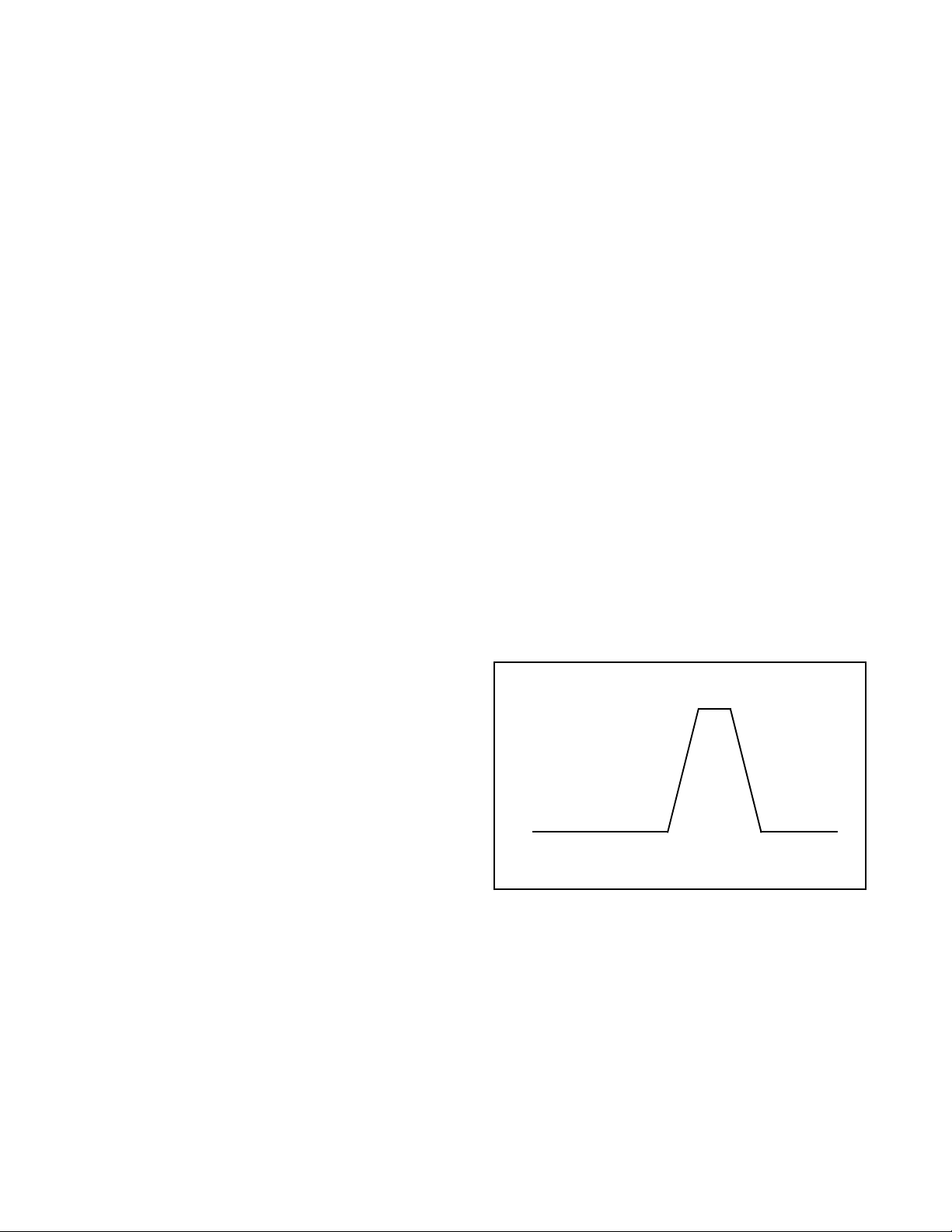
The Unloaded Cycle exercise runs the engine for 20
minutes in the cycle shown in Figure 2-2 and described
below.
Runs at reduced speed for 10 minutes to warm up
and exercise the engine.
Ramps up and runs at full speed for 3 minutes.
Engine diagnostics are performed during this
full-speed portion of the cycle, which provides the
best test of engine and alternator power backup
capability. Diagnostic tests at full speed can identify
potential problems with the power output and alert the
operator before an emergency event.
Ramps down and runs at reduced speed for 5
minutes to cool down the engine before shutting down
automatically.
Engine Speed, RPM
Engine
Exercise
Full-Speed
Diagnostics
Cooldown
3 min.
1 min.
1 min.
10 min. 5 min.
Figure 2-2 Unloaded Exercise Cycle

TP-6880 2/2124 Section 2 Generator Set Operation
System Diagnostics
During the unloaded exercise, the controller monitors
the following data. The controller display indicates that
the generator set is running, unless a fault is detected as
described below.
ATS connection. The controller verifies that the
Model RXT ATS interface board is connected.
Battery voltage. Battery voltage is checked before
exercise to verify engine starting capability. Battery
voltage provides a measurement of battery health. If
the controller detects low battery voltage, the
condition is indicated on the display.
Communication integrity tests. J1939, RBUS,
Ethernet, and USB are monitored for messages
indicating that the controller and wiring are reliable.
Engine speed. Engine speed is measured at
reduced speed and full speed. An overspeed or
underspeed condition will result in a fault condition
and shutdown.
Generator output frequency and voltage.
Operating the generator at full speed allows the
RDC2 controller to check the output power for correct
voltage, frequency, and stability. When the engine is
running at full speed, the controller verifies that the
voltage and frequency are within acceptable limits. A
fault message is displayed if the voltage or frequency
is out of range.
Oil pressure. Oil pressure is verified to ensure
proper lubrication of critical engine components.
Pressure is monitored at both reduced and full
speeds. If the oil pressure is low, the Low Oil Pressure
message is displayed and the generator set shuts
down.
2.4.3 Unloaded Full-Speed Exercise
The unloaded full-speed exercise runs the generator set
at full speed for 20 minutes without transferring the load.
To set an unloaded full-speed exercise, follow the
procedure in Figure 3-8 and select Exercise Mode:
Unloaded Full.
2.4.4 Loaded Full-Speed Exercise (with
RXT only)
A loaded exercise starts the generator set, ramps up to
full speed, and then transfers the electrical load from the
utility source to the generator set. After 20 minutes, the
load is transferred back to the utility source. The engine
runs without load for 5 minutes or until cool, and then
shuts down automatically.
Note: With a loaded exercise, power to the building is
lost for up to 10 seconds during load transfer.
For a loaded exercise controlled by the RDC2 controller,
a Model RXT transfer switch must be connected to the
generator set. To set a loaded exercise, follow the
procedure in Figure 3-8 and select Exercise Type:
Loaded.
For a loaded exercise with a transfer switch other than a
Kohler Model RXT, program the exercise at the
transfer switch controller. Refer to the transfer switch
operation manual for instructions.

TP-6880 2/21 25Section 2 Generator Set Operation
2.4.5 Shutdown During Exercise
(Advanced Diagnostic)
The following advanced diagnostic operation applies to
RDC2 controllers with firmware versions 5.04 and
higher.
If the generator set shuts down on a fault during an
exercise, the controller will try to restart the engine. If the
engine starts, the generator set will run at full speed for
two minutes and then stop. The event history will show
Advanced Diagnostic Active. The exercise schedule is
maintained.
If the engine does not start, the shutdown message will
be displayed. Correct the fault condition and reset the
fault as described in Section 2.5.
2.4.6 Power Failure During Exercise
Cycle
If the utility power is lost during an unloaded exercise,
the ATS transfers to the emergency source, the exercise
is ended and the control remains in the AUTO mode.
If the utility power is lost during a loaded exercise, the
exercise is ended. The ATS remains in the emergency
position and the control goes into the AUTO mode.
The generator set continues to run and supply power to
the load for the duration of the utility power outage.
When Utility power is restored, the ATS will re-transfer to
the utility source through normal timing sequences.
2.5 Faults
The RDC2 controller displays fault messages for
generator set warnings and shutdowns. Selected fault
messages are shown in Figure 2-4.
2.5.1 Warnings
The controller displays a fault message but the
generator set does not shut down on a warning. The
controller resets automatically after a warning condition
is corrected.
2.5.2 Shutdowns
Under a fault shutdown condition, the generator set
shuts down automatically and the controller displays a
fault message. The OFF LED flashes. In some cases,
the engine cooldown cycle runs before the engine shuts
down. See Figure 2-4.
Shutdown switches (such as the low oil pressure switch
or high engine temperature switch) on the generator set
will automatically reset when the problem is corrected.
However, the fault condition at the controller does not
clear until the controller is reset.
The generator set cannot be restarted until the fault
condition is corrected and the controller is reset. See
Section 2.5.4 for instructions to reset the controller after
a fault shutdown.
2.5.3 ATS Communication Errors
When a Model RXT transfer switch is used, an ATS fault
indicates that the connection to the interface board on
the transfer switch has been lost. Check the connection
to the ATS interface board.
TP-6880 2/2126 Section 2 Generator Set Operation
2.5.4 Resetting the Controller after a
Fault Shutdown
Always identify and correct the cause of a fault
shutdown before resetting the controller. Check the fault
message displayed on the controller and refer to
Figure 2-4 to identify and correct the fault condition
before proceeding. Contact an authorized
distributor/dealer for service, if necessary.
RDC2 Controller
Press the OFF button to reset the controller, or follow the
procedure below. See Figure 2-3.
1. While the fault message is displayed, press the
Select button to go to the Overview menu.
2. Press Select again. The active fault message is
displayed.
3. Press Select. Confirm Clear Fault: NO is displayed.
4. Press the Down arrow button. Confirm Clear Fault:
YES is displayed.
5. Press the Select button to enter YES and clear the
fault.
6. Press the Select button to return to the overview
menu. The controller changes to OFF mode.
7. Press AUTO to put the generator set into automatic
mode.
Overview - - >
1.2 h
Fault Message
tp6809
Confirm Clear
Fault: NO
Confirm Clear
Fault: YES
Fault Message
Press Up arrow button.
Figure 2-3 Clearing a Fault on the RDC2 Controller
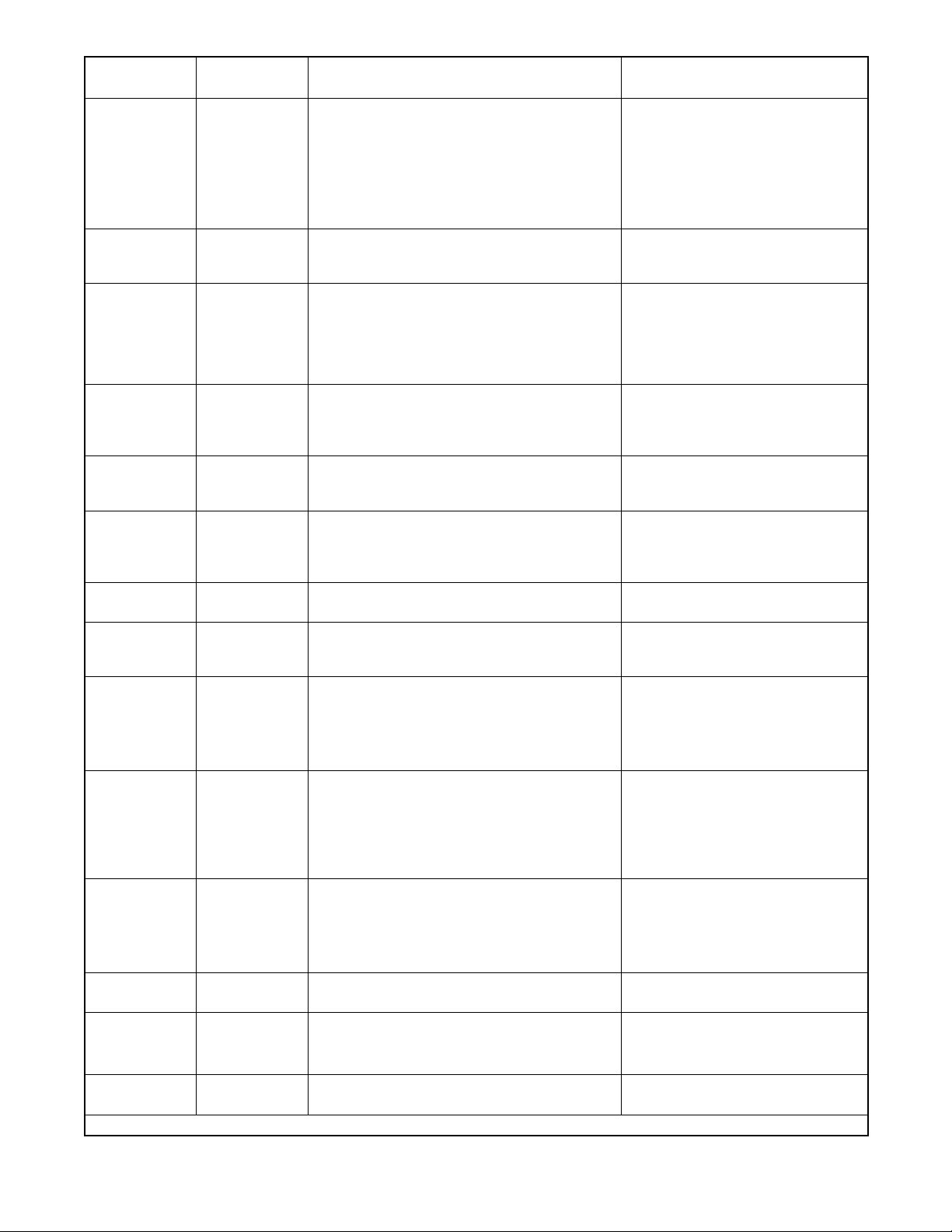
TP-6880 2/21 27Section 2 Generator Set Operation
Fault Message
Warning (W) or
Shutdown (SD)
Condition Check
AC Sens Loss W (1 sec.)
SD (3 sec.) *
AC sensing lost. In Auto mode, generator output
AC sensing is lost. Detection begins 10 seconds
after crank disconnect.
Warning: after 1 second if no output detected
after crank disconnect.
Shutdown: after 3 seconds if voltage was
present and then lost.
Contact an authorized
distributor/dealer for service.
Accy PwrOver
Warning
W Accessory Power Overload. An over current fault
(short circuit) on the accessory controller power
output.
Contact an authorized
distributor/dealer for service.
Advanced
Diagnostic
(event history
only)
SD Shutdown during the reduced speed portion of
an exercise. The event history will show
Advanced Diagnostic Active. The engine then
restarts, runs at full speed for 2 minutes, and
stops. The controller returns to AUTO mode.
The exercise schedule does not change.
If the generator set does not restart
and return to AUTO, check for other
faults that prevent generator set
operation.
Alt Protect SD High generator current has been detected. The
generator set shuts down to protect the
alternator from damage caused by overheating
the windings (10RESV and 12RESV only).
Reduce the load.
ATS ComError W ATS communication error. Warning is displayed
if ATS interface connection is lost.
See Section 2.5.3.
Check communication wiring between
transfer switch interface board and
generator set.
ATS PhaseRot W ATS phase rotation mismatch. Transfer switch
phase rotation does not match, ATS will not
transfer.
Correct the ATS connection. Refer to
the ATS Installation manual, wiring
diagrams, and labels on the transfer
switch.
Aux Input SD * Auxiliary input. An optional customer-connected
input is closed. (Digital input from optional PIM.)
Check customer-supplied equipment.
Batt Chg Flt W Battery charger fault. Input to PIM from an
external battery charger (not the built-in battery
charger).
Check external battery charger.
Battery High W Engine starting battery voltage rises above 16
VDC for more than 10 seconds. Inhibited during
the engine crank cycle.
Clears when the battery voltage returns to an
acceptable level.
Check the battery rating and
condition.
Check the battery charger operation.
Battery Low W Engine starting battery voltage falls below 12.5
VDC for more than 90 seconds when the engine
is not running. Not operative during the engine
crank cycle.
Clears when the battery voltage returns to an
acceptable level.
Check the battery rating and
condition.
Check the battery charger operation.
Charge or replace the battery.
Battery CrLo
Warning
W Engine starting battery voltage falls below 11
Volts for more than 10 seconds. Inhibited during
the engine crank cycle.
Clears when the battery voltage returns to an
acceptable level.
Check the battery rating and
condition.
Check the battery charger operation.
Charge or replace the battery.
Eng Speed
High
SD * Engine speed exceeds 115% of the normal
running speed for more than 0.3 seconds.
Contact an authorized
distributor/dealer for service.
Eng Speed Low SD * Engine speed drops below 85% of the normal
running speed for more than 3 seconds.
Reduce the load.
Contact an authorized
distributor/dealer for service.
Exer Not Sch W Exercise not scheduled. No exercise is
scheduled on the controller.
See Section 3.6 for instructions to set
the exerciser.
* Engine cooldown runs before shutting down.
TP-6880 2/2128 Section 2 Generator Set Operation
Fault
Warning (W) or
Shutdown (SD)
Condition Check
Frequency High SD * Governed frequency exceeds 110% of the
system’s frequency setpoint for more than 10
seconds. Function becomes active 10 seconds
after engine start (10 second inhibit).
Contact an authorized
distributor/dealer for service.
Frequency Low SD * Governed frequency falls below 90% of the
system frequency setting for more than
10 seconds, or 1 Hz below the system frequency
setting for more than 60 seconds.
Function becomes active 10 seconds after
engine start (10 second inhibit).
Reduce the load and restart the
generator set.
Contact an authorized
distributor/dealer for service.
Lo Crank Vlt W Low cranking voltage. Battery voltage falls below
8 VDC for more than 6 seconds while the starter
is engaged.
Charge or replace the battery.
MainPwrOverL SD Main power overload. An over current fault on
the 70 controller power output (short circuit).
Contact an authorized
distributor/dealer for service.
Check for shorted run relay.
Check wiring for short circuits.
Not in Auto W The generator set is not in Automatic (standby)
mode. Remote start and stop commands from a
transfer switch or remote switch will be ignored.
Press AUTO to place the generator
set in Automatic mode, when
appropriate.
Oil Pres Low SD * The LOP switch indicates low oil pressure for
more than 5 seconds. Function becomes active
30 seconds after crank disconnect (30 second
inhibit).
Note: The low oil pressure shutdown does not
protect against low oil level. Check the engine oil
level regularly as recommended in Section 4.
Check for leaks in the lubrication
system.
Check the oil level and add oil if the
level is low.
Check the oil pressure switch and
wiring
Over Crank SD Three unsuccessful starting attempts. Check the fuel supply, spark plug,
and battery.
Reset the thermostat.
Check for loose connections.
Contact an authorized
distributor/dealer for service.
Spd Sens Flt SD Engine speed sensor has failed or engine
stalled.
Contact an authorized
distributor/dealer for service.
Total Power
High
SD Measured load is greater than 102% of the
generator set power rating for more than 1
minute (10RESV and 12RESV only).
Reduce the load.
Volts L1-L2
High
SD * Generator voltage high. Output voltage exceeds
120% of the system nominal voltage for more
than 2 seconds.
Contact an authorized
distributor/dealer for service.
Volts L1-L2 Low SD * Generator voltage low. Output voltage falls
below 80% of the nominal system voltage for
more than 10 seconds.
Reduce the load and restart the
generator set.
Contact an authorized
distributor/dealer for service.
* Engine cooldown runs before shutting down.
Figure 2-4 Controller Fault Messages
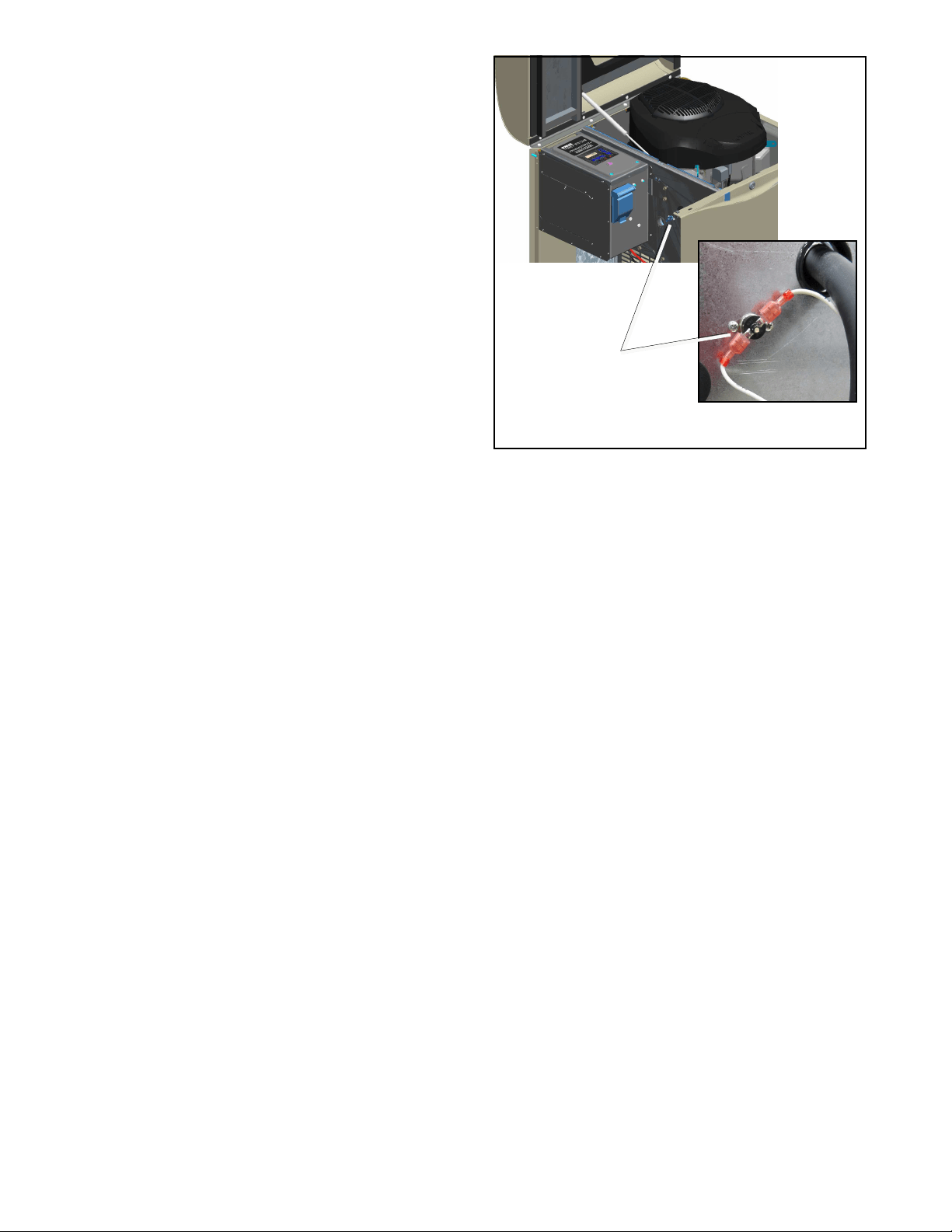
TP-6880 2/21 29Section 2 Generator Set Operation
2.6 Generator Enclosure
Thermostat
8RESV(L), 10RESV(L), and 12RESV(L) generators
include a resettable thermostat in the air intake
compartment. The thermostat detects excess heat
inside the enclosure. If the thermostat trips, the
generator will shut down and the controller will display a
fault (underspeed, underfrequency, or undervoltage). If
the thermostat trips for some reason other than high
temperature (i.e. a nuisance trip), follow these steps to
reset the thermostat.
1. Disconnect the utility power to the generator by
opening (turning OFF) the corresponding circuit
breaker at the building’s distribution panel.
2. Open the enclosure roof.
3. Press the button on the thermostat to reset it. See
Figure 2-5 for the thermostat location.
4. Reconnect utility power to the generator set by
closing the circuit breaker in the distribution panel.
5. Reset the fault on the RDC2 controller. See
Section 2.5.4.
1
1. Thermostat
Figure 2-5 Thermostat Location

TP-6880 2/2130 Section 2 Generator Set Operation
Notes

TP-6880 2/21 31Section 3 RDC2 Controller Operation
Section 3 RDC2 Controller Operation
3.1 RDC2 Generator Set/ Transfer
Switch Controller
The generator sets are equipped with the RDC2
generator set/transfer switch controller.
The RDC2 controls the following power system
components:
Model 8RESV/L, 10RESV/L, or 12RESV/L generator
set
Model RXT Automatic Transfer Switch (ATS)
Load shed kit
Programmable Interface Module (PIM)
The RDC2 controller features include:
Two-line x 16 character backlit digital display with
adjustable contrast
OFF, AUTO, and RUN generator set master control
buttons
Generator set status indicating LEDs (OFF, AUTO,
RUN)
Up, Down, and Select buttons for navigation through
menus and adjustments
Power system indicator LEDs to show utility and
generator source status, and to show which source
(utility or generator) is supplying power to the load
3.2 Controls and Indicators
Figure 3-1 illustrates the RDC2 controller. See
Figure 3-2 for details of the controller’s user interface.
1. User Interface; see Figure 3-2
2. USB port (mini-B); see Section 5.2.
1
2
GM77569
Figure 3-1 RDC2 Controls and Indicators
1. 2-line LCD display
2. Up button
3. Select button
4. Down button
5. RUN button and LED
6. Generator power available LED*
7. Building on generator power LED*
8. Building on utility power LED*
9. Utility power available LED*
10. OFF button and LED
11. AUTO button and LED
* These LEDs operate only if a Model RXT transfer switch is
connected.
1
10
3
2
5
11
4
GM77569
6789
Figure 3-2 RDC2 User Interface
TP-6880 2/2132 Section 3 RDC2 Controller Operation
3.2.1 Controller Keypad
The RUN, OFF, and AUTO buttons control the generator
set as described in Figure 3-3.
Use the Select, Up arrow, and Down arrow buttons to
navigate through the menus and change settings, if
necessary. See Section 2.3 for operation instructions.
3.2.2 LED Indicators
LEDs above the RUN, OFF, and AUTO buttons indicate
the mode of operation as shown in Figure 3-4.
Power System LEDs indicate the status of the utility
power and the generator set, and indicate which source
is supplying power to the building (based on the position
of the RXT transfer switch). See Figure 3-2 and
Figure 3-4.
Note: The power system LEDs operate only if a Model
RXT transfer switch is connected. They will not
operate if a different transfer switch is used.
Button Button Function
RUN Starts the generator set. The engine start time delay is ignored.
OFF Stops the generator set. The cooldown time delay is ignored.
During the engine crank cycle, pressing OFF will stop the crank cycle.
Press OFF to clear faults and reset the controller.
AUTO Places the generator set in Automatic (standby) mode.
Down arrow
Use to navigate through menus and change settings. This manual contains instructions to navigate the
controller menus and adjust settings on the RDC2 controller.
Select
Up arrow
Figure 3-3 RDC2 Controller Pushbutton Operation
LED LED Operation
RUN Lights when the generator set has been started locally by pressing the RUN button.
Remote start and stop commands are ignored.
OFF
Lights for 2 seconds, then flashes every 2 seconds when the generator set and
controller are off. Remote start/stop commands have no effect. The exercise cycle will
not run.
In Auto mode, OFF LED flashes quickly to indicate a fault shutdown. Attention required.
Identify and correct the fault condition before resetting the controller.
AUTO Lights when the generator is in automatic (standby) mode. Generator set will respond to
engine start and stop commands from the controller (for example, exercise start and stop
commands) or an ATS. Time delays operate as described in Section 2.3.
Utility Power Available * Lights when utility power is available.
Building on Utility Power * Lights when the building load is connected to utility power through the RXT transfer
switch.
Generator Power Available * Lights when generator power is available.
Building on Generator Power * Lights when the building load is connected to generator power through the RXT transfer
switch.
* These LEDs operate only if a Model RXT transfer switch is connected.
Figure 3-4 RDC2 Controller LED Operation
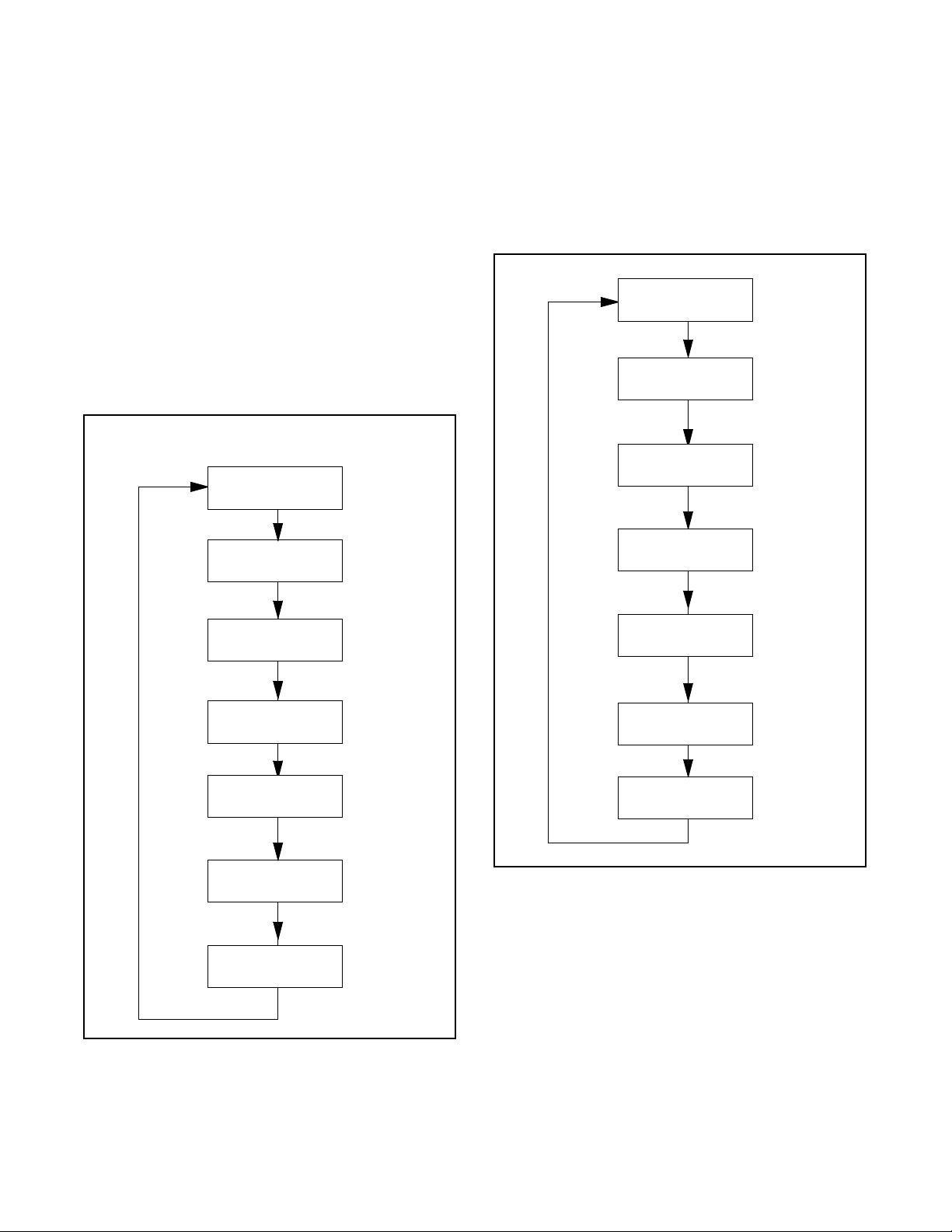
TP-6880 2/21 33Section 3 RDC2 Controller Operation
3.2.3 LCD Display
The controller is equipped with a two-line x 16 character
backlit digital display with adjustable contrast. When the
generator is running, the controller automatically scrolls
through the displays shown in Figure 3-5. When the
system is in AUTO, the screens shown in Figure 3-6 are
displayed.
When a fault or warning condition exists, the controller
will show the corresponding message. See Section 2.5
for more information about faults.
Controller menus display power system information,
including status information for the engine, generator,
and optional RBUS accessories, exercise settings, and
event history. Some menus allow changes to the
controller settings. See Sections 3.7 through 3.21 for
menu diagrams.
tp6804
Genset Status
Running
Voltage: 240V
Freq: 60.0Hz
Engine: 123F
Oil Pressure: OK
Battery
12.3V
Engine Runtime:
12345.6 h
Date: 02DEC2011
Time: HR:MNpm
Active Alert
Sample data shown.
Figure 3-5 Autopaging Displays, Generator Running
The display contrast is adjustable. Navigate to the
Genset System menu and step down to the Contrast
screen. Press the Select button, and then use the up and
down arrow buttons to adjust the contrast. See Section
3.5, Changing Settings, and Section 3.14, Genset
System Menu.
The display backlight turns off after about a minute of no
activity. The backlight turns on when a button is pressed
or when the generator set starts.
tp6804
Battery
12.3V
Engine Runtime:
12345.6 h
Date: 02DEC2011
Time: HR:MNpm
Next Exercise:
09:00p 09Dec2011
Next Maintenance:
150 h or Mar2012
Sample data shown.
Genset Status
Standby
Active Alert
Figure 3-6 Autopaging Displays, Automatic Mode

TP-6880 2/2134 Section 3 RDC2 Controller Operation
3.3 Controller Power
The RDC2 controller is powered by the generator set
engine starting battery and the built-in battery charger.
Note: To disconnect controller power, disconnect the
utility power to the generator set and disconnect
the battery.
If controller power is disconnected and reconnected,
you will be prompted to set the time, date, and exerciser.
The first setting will flash. Press the Up and Down arrow
buttons to change the setting. Press Select to save the
setting and move on to the next. Repeat until all settings
are saved and the controller returns to the main menu.
See Section 3.5 for more detailed instructions to change
settings on the RDC2. See Section 3.6 for more detailed
instructions to set the exerciser or change the exercise
settings.
3.4 Battery Charging
The controller includes a built-in battery charger to
maintain the engine starting battery. The RDC2
controller monitors the battery voltage and provides a
constant 14.0 ±2% VDC voltage and maximum 2.5
amps to charge the battery.
The installer must connect 120 VAC/60Hz utility power
provided from the building on a breaker-protected circuit
for the built-in battery charger.
3.5 Changing Settings
Some settings can be changed from the controller
keypad. The controller settings and generator set output
are factory-set and should not require field adjustment
under normal circumstances. Check and adjust the
settings and/or output when:
The controller has been replaced.
The voltage requires adjustment for a particular
application.
Troubleshooting generator set problems.
Have controller setup and adjustment performed only by
an authorized Kohler distributor/dealer or authorized
representative.
The following procedure explains how to change
settings. See Figure 3-7 for an example using the Date
and Time settings.
Note: Use caution when navigating the controller
menus. In some menus, pressing the Select
button can enable editing of the controller
settings. Changing the settings to incorrect
values can adversely affect generator set
operation or render the unit inoperable.
Procedure to Change Settings
1. Press the Select button to enter the main menu.
2. Press the down arrow button until the desired
menu is displayed. The Genset System menu is
used for this example. See Figure 3-9.
3. Press the Select button to enter the genset system
displays. See Figure 3-7.
4. Press the down arrow button to step through the
generator set system settings.
5. To change any of the genset system settings, press
the Select button. The selected setting flashes.
6. Press the up or down arrow buttons to increase or
decrease the setting.
7. When the desired setting is shown, press Select.
The value stops flashing. If there are additional
adjustable settings on the screen, the next setting
flashes. For example, in the date menu, the day,
month, and year can be adjusted.
8. Repeat steps 6 and 7 for each setting on the
screen.
9. Press the down arrow to step to the next screen.
10. To exit, press the down arrow button until Return is
displayed. Press the Select button to exit the menu.
11. Press the AUTO or OFF button to exit the main
menu.
Note: If no buttons are pushed, the controller exits the
menus and returns to the generator set status
display after 5 minutes.
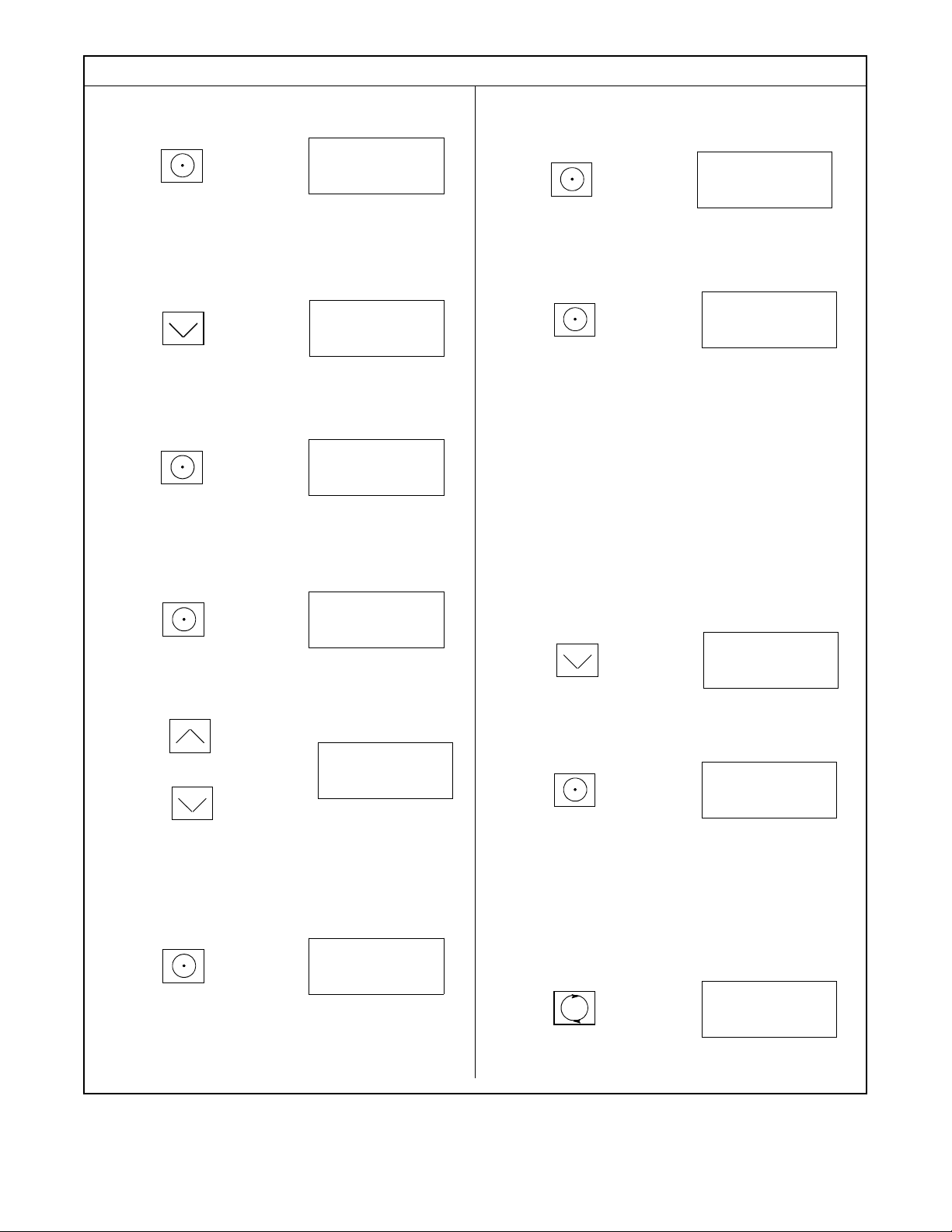
TP-6880 2/21 35Section 3 RDC2 Controller Operation
1. Press the Select button to enter the main menu.
2. Press the down arrow button until the desired
menu is displayed. See Figure 3-9. Date and Time
are used for this example.
3. Press the Select button to enter the Date and Time
menu.
4. To change the date and time settings, press the
Select button again. The year will flash.
5. Press the up or down arrow buttons to change the
year.
6. When the correct year is shown, press the Select
button. The year is saved and the next setting
(month) flashes.
7. Repeat steps 5 and 6, using the arrow and select
buttons to set the month and the date.
Press:
Changing Settings on the RDC2 Controller
Press: Display:
Overview - - >
1.2 h
Display:
Press: Display:
Press: Display:
Date - - >
and Time
Date:
05Dec2011
8. When the correct date is shown, press the Select
button. The saved date is shown.
9. Press the down arrow button to step to the next
menu.
10. Repeat steps 5 and 6, using the arrow and select
buttons to set and save the time.
Note: To change from am to pm, press the up arrow
key to increase the hour until the correct hour
and pm is displayed.
11. In the time format menu, press Select and then
press the up or down arrow button to change the
format, 12 hr. or 24 hr. Press Select to save the
displayed format.
12. Press the down arrow button. Return is
displayed.
13. Press Select to return to the Date and Time
menu.
14. Press the Up or Down arrow buttons to step to a
different menu.
15. Press Auto to signal the controller to exit the
menus and return to the generator set status
display.
Note: If no buttons are pressed, the controller returns
to the status display after 5 minutes.
Press:
Display:
OR
Press: Display:
Press: Display:
<- - Return
Press: Display:
Time:
01:49pm
Date - - >
and Time
AUTO
Press:
Display:
Genset State
Standby
Date:
05Dec2011
Date:
05Dec2012
Press: Display:
Date:
05Dec2012
Press: Display:
Date:
03Jan2012
Figure 3-7 Changing Settings

TP-6880 2/2136 Section 3 RDC2 Controller Operation
3.6 Setting the Exerciser
Set the exerciser to automatically run the generator set
for 20 minutes every week or every two weeks.
3.6.1 Setting the Exerciser at Controller
Power-up
When battery power is connected to the controller, you
will be prompted to set the date and time, and then to set
the exerciser.
The first setting will flash. Press the Up and Down arrow
buttons to change the setting. Press Select to save the
setting and move on to the next. See Section 3.5 for
more detailed instructions to change settings on the
RDC2.
If the battery is disconnected and reconnected during
generator set maintenance or service, the time, date,
and exercise settings will need to be re-entered.
3.6.2 Changing the Exercise Settings
This section explains how to change the exercise
settings after the initial setup.
Follow the procedure below and see the flowchart in
Figure 3-8 to set the exercise time and date, mode, and
frequency.
Procedure to Set the Exerciser
1. Press the AUTO button on the controller.
2. Press the Select button to go to the main menu.
See Figure 3-9.
3. Press the down arrow button to step to the Genset
System menu.
4. Press the Select button to enter the Genset system
menu. See Figure 3-8.
5. Use the down arrow button to step to the Next
Exercise menu. If the exerciser is not set, No
Exercise Scheduled will be displayed.
6. Press and HOLD the Select button to enable
editing.
7. Press the Select button. The setting flashes to
show that it can be changed. For example, HR
flashes to show that the hour can be changed.
8. Press the Up or Down arrow buttons to change the
setting.
9. Press the Select button to save the setting and
move to the next. For example, save HR setting
and move to MN.
10. Repeat steps 5 through 9 to change the next item
on the line until the desired settings are displayed.
11. Press Select to save after all settings have been
selected. Settings will stop flashing.
12. If the generator set is connected to a Kohler Model
RXT transfer switch, the exercise can be changed
to a loaded exercise. Set the Exercise Mode to
Unloaded Cycle, Unloaded Full, or Loaded Full
(RXT ATS required) as shown in Figure 3-8.
Unloaded Cycle is recommended. See Sections
2.4.2 through 2.4.4 for information about the
exercise modes.
13. Set the exercise frequency (weekly or every two
weeks). Weekly exercises are recommended.
14. Press the down arrow button to step to the Return
menu. Press the Select button to return to the main
menu.
After a scheduled exercise run, the next exercise time
and date will be updated automatically based on the
Exercise Frequency setting.
Other transfer switches: For a loaded exercise with a
transfer switch other than a Kohler Model RXT ATS,
refer to the transfer switch operation manual for
instructions.
Exerciser Reset
To reset the exerciser to run at a different day and/or
time or to change the exercise mode, follow the
procedure in Section 3.6.2 to change the exerciser
settings.
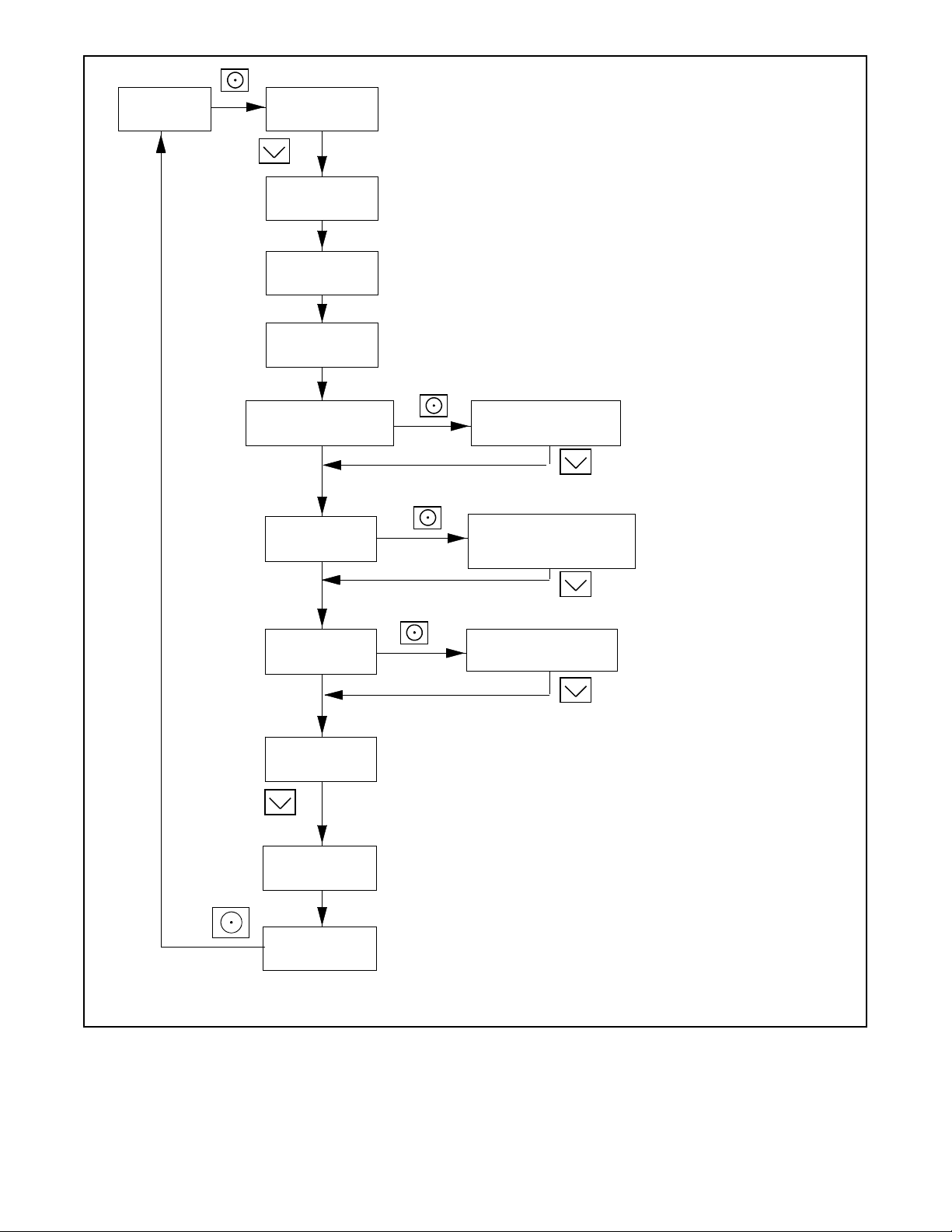
TP-6880 2/21 37Section 3 RDC2 Controller Operation
tp6804
System Freq:
XX.X Hz
Genset - - >
System
System Volt
Battery V:
HOLD:
Next Exercise
HR:MN PM MM/DD/YY
HOLD:
Exercise Freq:
Weekly/Bi-Weekly
System Phase
Language:
<- - Return
Next Exercise *
HR:MN PM MM/DD/YY
Exercise Freq:
Weekly
Exercise Mode:
Loaded
HOLD:
Exercise Mode:
Unloaded Cycle/Unloaded
Full/ Loaded Full
Contrast:
50
* If the exerciser has not been set, No Exercise Sch will be displayed.
Figure 3-8 Procedure to Set the Exerciser on the RDC2 Controller
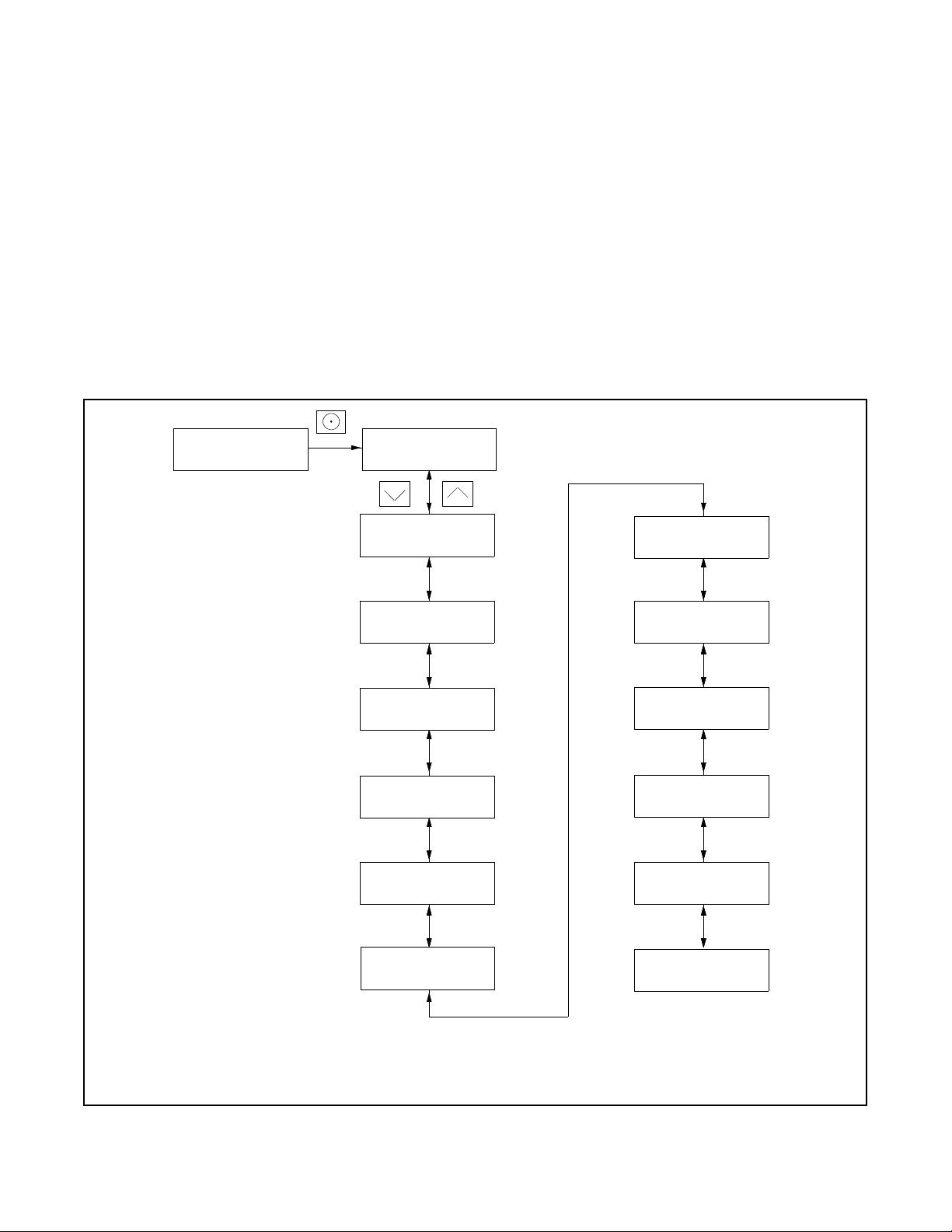
TP-6880 2/2138 Section 3 RDC2 Controller Operation
3.7 RDC2 Controller Menus
Controller menus display power system information,
including status information for the engine, generator,
and optional RBUS accessories, exercise settings, and
event history. Some menus allow changes to the
controller settings. Status information, including the
engine runtime, cannot be changed by the operator.
Diagrams in the following sections show how to
navigate through the menus.
Note: Use caution when navigating the controller
menus. In some menus, pressing the Select
button can enable editing of the controller
settings. Changing the settings to incorrect
values can adversely affect generator set
operation or render the unit inoperable.
If a setting on the controller display is flashing, edit mode
has been enabled. Press the OFF or AUTO button to exit
the edit mode.
3.8 Main Menu
Press the Select button once to bring up the main menu.
Overview is displayed. See Figure 3-9. Press the down
arrow button to step to the next menu, Engine Metering.
Use the UP and DOWN arrow buttons to step up and
down through the menus shown in Figure 3-9.
The controller will exit the main menu after 5 minutes if
no buttons are pressed. To exit the main menu
immediately, press the controller’s OFF or AUTO
button.
Overview - - >
1.2 h
Engine - - >
Metering
tp6804
Generator- - >
Metering
Genset - - >
Information
Genset - - >
Run Time
Date - - >
and Time
ATS - - >
Configuration *
Genset - - >
System
Event Log- - >
Load - - >
Control
PIM - - >
Status
Network - - >
Information
Status
Displays
ATS - - >
Status
* ATS Configuration appears only if a Model RXT transfer switch is connected.
PIM Status appears only if a programmable interface module is connected.
Load Control appears only if a load management device is connected.
Press the Up and Down arrow buttons
to move between menus.
Press OFF or AUTO to exit the menus.
Figure 3-9 RDC2 Main Menu
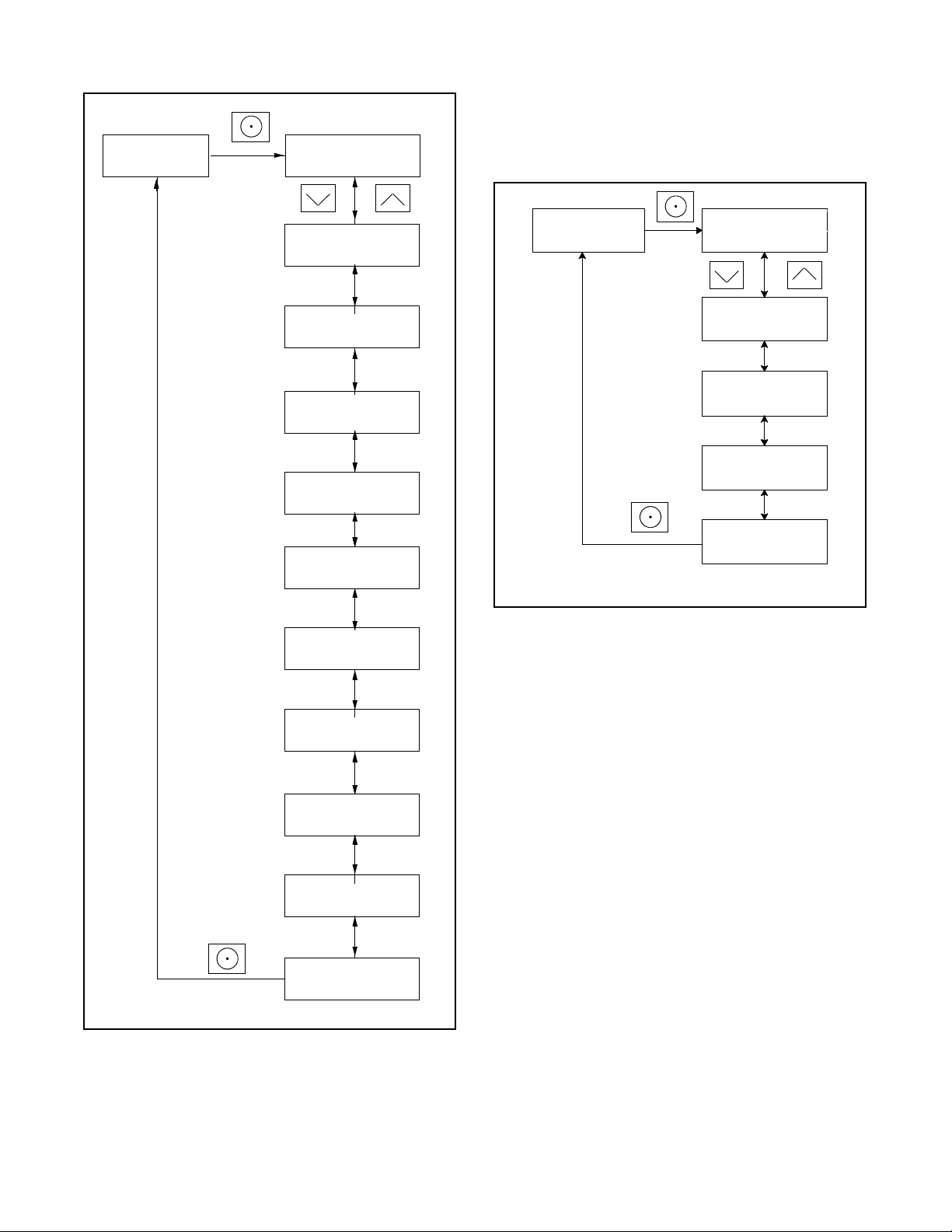
TP-6880 2/21 39Section 3 RDC2 Controller Operation
3.9 Overview Menu
Overview - - >
1.2 h
Active Alert
(if any)
tp6804
Genset Status
Standby
Voltage: 240V
Freq: 60.0Hz
Engine: 123F
Oil Pressure: OK
Battery
12.3V
Engine Runtime:
12345.6 h
Date: 02DEC2011
Time: HR:MNpm
Next Exercise:
09:00p 09Dec2011
Next Maintenance:
150 h or Mar2012
SW Version:
12.34
<- - Return
Note: Actual settings may vary.
Figure 3-10 Overview Menu
3.10 Engine Metering Menu
The engine metering menu displays engine status
information as shown in Figure 3-11. This menu
displays status information only. No settings can be
changed from this menu.
tp6810
Eng Speed:
3600 RPM
Battery:
12.3 V
<- - Return
Engine - - >
Metering
Oil Pressure:
Switch: Normal
Oil Temp:
123 F
Note: Actual settings may vary.
Figure 3-11 Engine Metering Menu
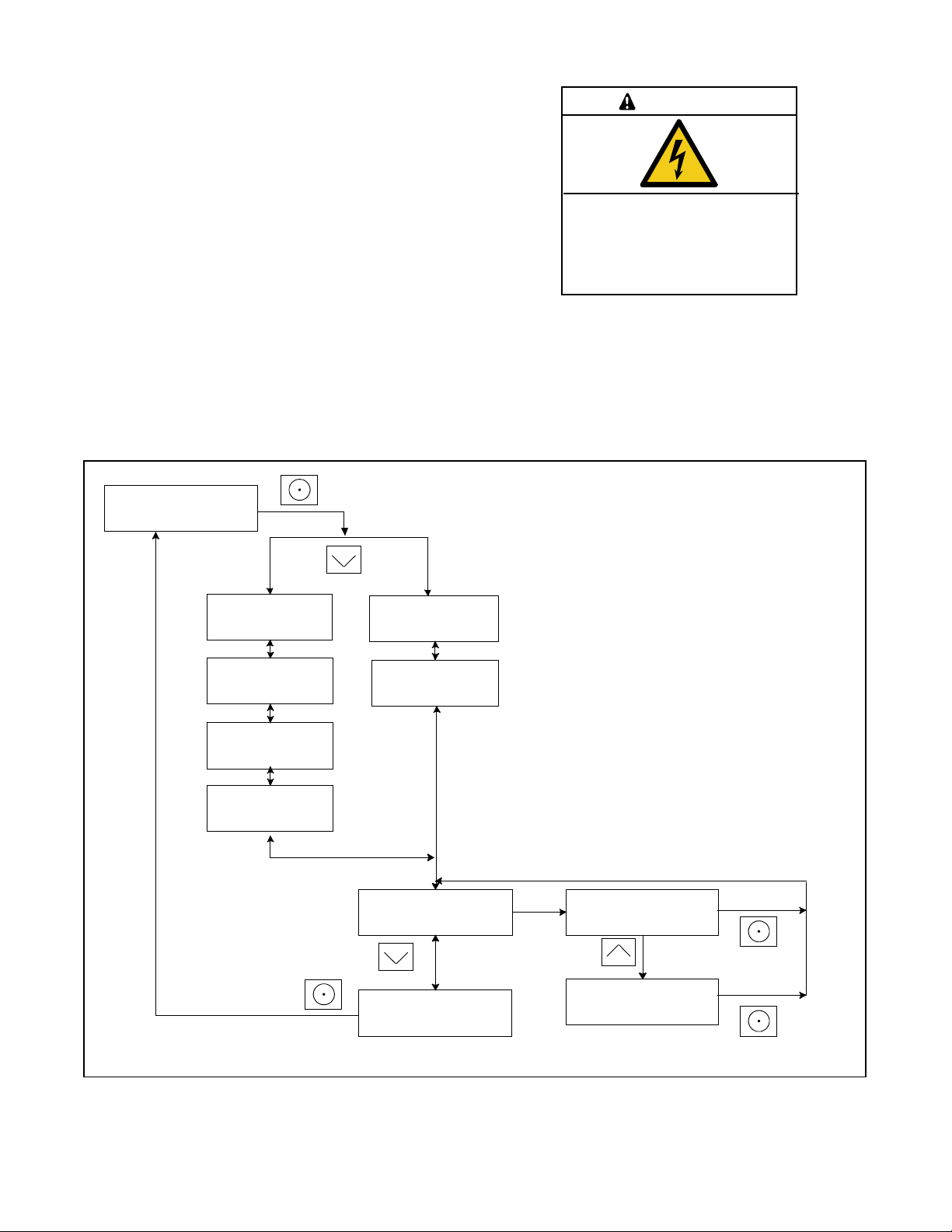
TP-6880 2/2140 Section 3 RDC2 Controller Operation
3.11 Generator Metering Menu
The generator metering menu displays the generator
voltage and frequency. See Figure 3-12.
Voltage Calibration
Hazardous voltage.
Will cause severe injury or death.
This equipment must be installed and
serviced by qualified electrical
personnel.
DANGER
The voltage calibration mode can be entered from the
Generator Metering menu. Contact a Kohler-authorized
distributor/dealer for service.
The Reset Calibration menu allows you to set the
voltage reading back to the original value after
calibration, if necessary. See Figure 3-12.
Volts L1- L2:
240 V
Volts L2- L3:
240 V
Volts L3- L1:
240 V
Generator - - >
Metering
Reset
Calibration
<- - Return
Reset
Calib? No
Volts:
240 V
Three-phase
Single-phase
tp6810
Reset
Calib? Yes
Frequency:
60.0 Hz
Frequency:
60.0 Hz
Note: Actual settings may vary.
Figure 3-12 Generator Metering Menu
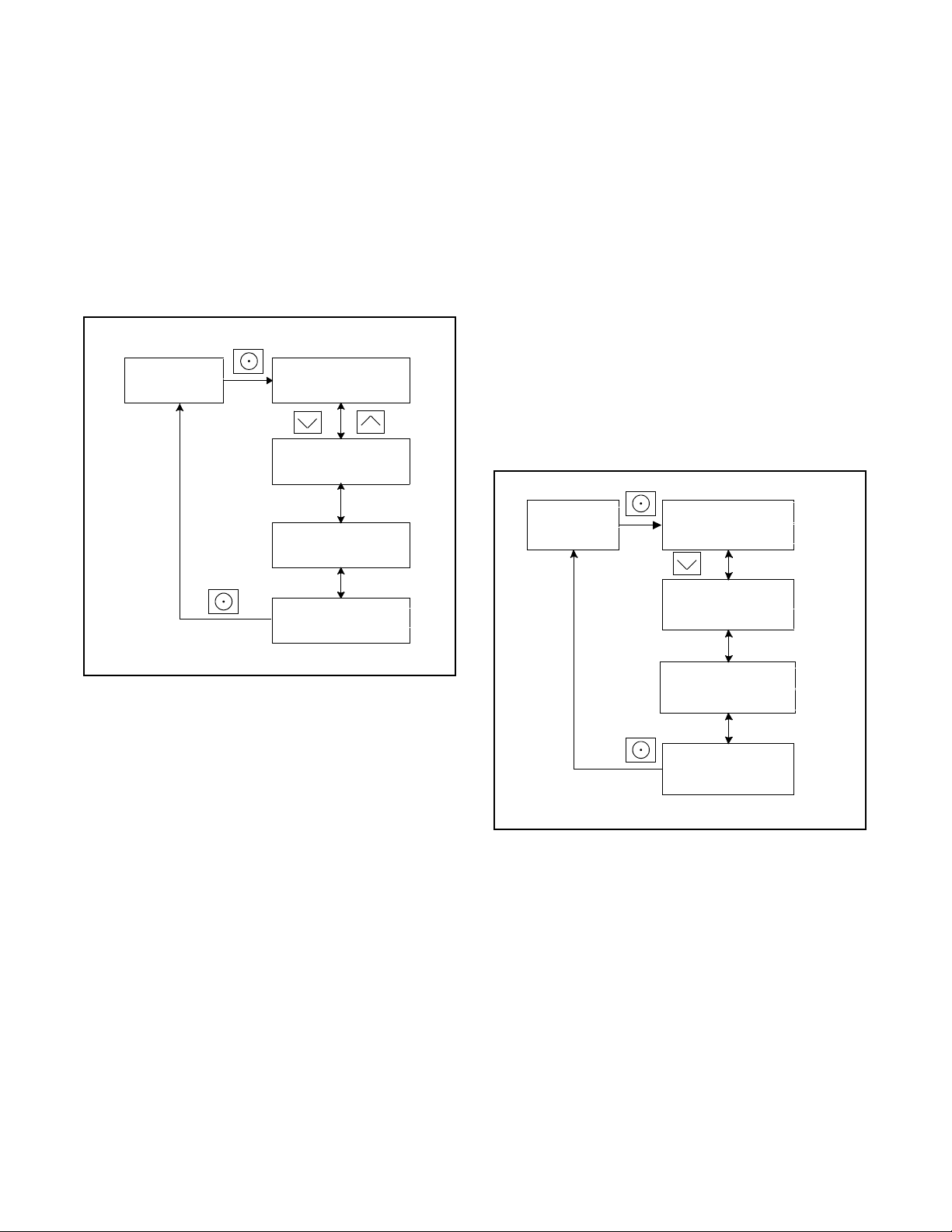
TP-6880 2/21 41Section 3 RDC2 Controller Operation
3.12 Generator Set Information
Menu
The generator set model number and serial numbers
are displayed. No changes are allowed from this menu.
Model and serial numbers are factory set and should not
require changes in the field, except in the event that the
controller is being replaced. A personal computer
running Kohler SiteTech software is required to enter the
generator set model number and serial numbers on a
replacement controller. Contact an authorized Kohler
distributor/dealer for service.
tp6804
Genset M/N:
20RESV
Genset S/N:
Controller S/N:
<- - Return
Genset - - >
Information
########
########
Figure 3-13 Generator Set Information Menu
3.13 Genset Run Time Menu
The data shown in Figure 3-14 are displayed. No
changes are allowed from this menu.
Eng Runtime displays the total number of hours that the
generator set engine has run. The runtime is not
resettable.
The Next Maintenance menu shows the number of
hours of generator set operation until maintenance is
required. The estimated date for the next scheduled
maintenance is also displayed. The maintenance
reminder intervals are based on the engine
manufacturer’s recommendation for changing the oil.
Refer to Section 4, Scheduled Maintenance, for
maintenance instructions.
After changing the oil and performing other
recommended maintenance, go to the Overview menu
to reset the maintenance timer. See Section 4.2.5 for
instructions to reset the maintenance timer.
tp6810
Eng Runtime:
12345.6 h
Eng Starts:
123456
<- - Return
Genset - - >
Run Time
Next Maintenance:
150 h or Mar2012
Note: Sample data shown.
Figure 3-14 Generator Set Run Time Menu
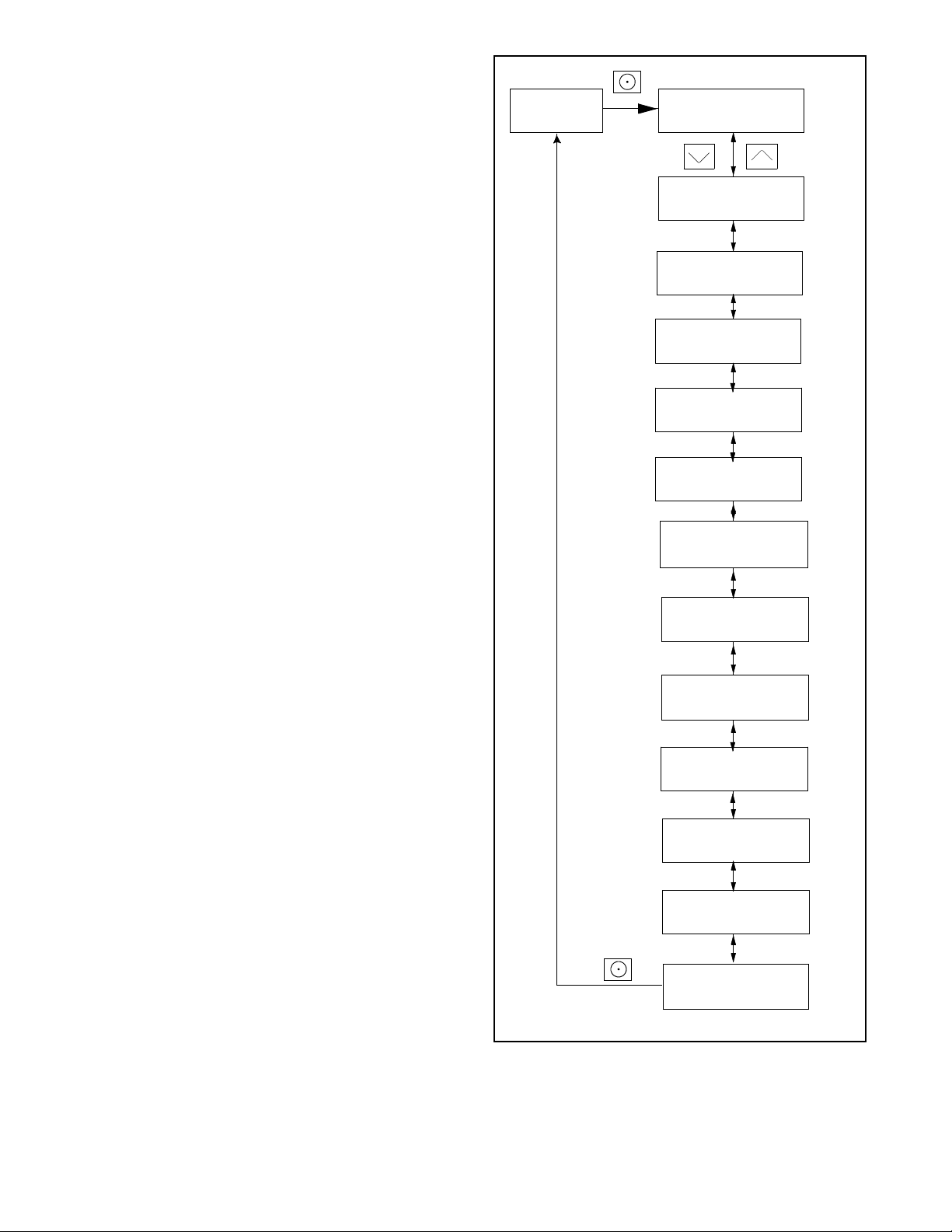
TP-6880 2/2142 Section 3 RDC2 Controller Operation
3.14 Genset System Menu
The genset system menu displays the system
information shown in Figure 3-15. Generator sets are
factory set and should not require changes to the
system settings in the field.
A Kohler authorized distributor or dealer can adjust
these settings, if necessary. If the generator set is
reconnected to a different voltage or the system settings
require adjustment for some other reason, see Section
3.5 for instructions to enable editing and change the
system settings.
Note: Use caution when navigating the controller
menus. In some menus, pressing the Select
button can enable editing of the controller
settings. Changing the settings to incorrect
values can adversely affect generator set
operation or render the unit inoperable.
Voltage Regulator (VR) Voltage Adj
The generator set voltage is factory set and typically
does not require adjustment in the field. If voltage
adjustment is required, contact a Kohler authorized
distributor or dealer for service. Refer to the generator
set Installation Manual for instructions to adjust the
voltage.
Fuel Type
The fuel type, LP or natural gas, is shown. Do not
change the fuel type in this menu unless the generator
fuel system has been converted by an authorized
distributor or dealer.
Setting the Exerciser
Use the Genset System menus to set the generator set
exerciser. Refer to Section 2.4 for instructions to set the
exerciser and for more information about exercising the
generator set.
After a scheduled exercise run, the Next Exercise time
and date will be updated automatically based on the
Exercise Frequency setting.
Adjusting the Display Contrast
To adjust the display contrast, use the down arrow
button to step to the Contrast menu. Press the Select
button, and then use the up and down arrow buttons to
adjust the contrast. Press the Select button to save the
contrast setting.
tp6804
Genset - - >
System
System Voltage:
240 V
System Battery:
12 V
System Phase:
Single
<- - Return
Next Exercise
06:30p 15Dec2015
Exercise Freq:
Weekly
Exercise Mode:
Unloaded Variable
System Freq:
60 Hz
Meas System:
English
Contrast:
50
VR Voltage Adj:
240.0V
Note: Actual settings may vary.
Fuel Type
LP
Language:
English
Figure 3-15 Genset System Menu
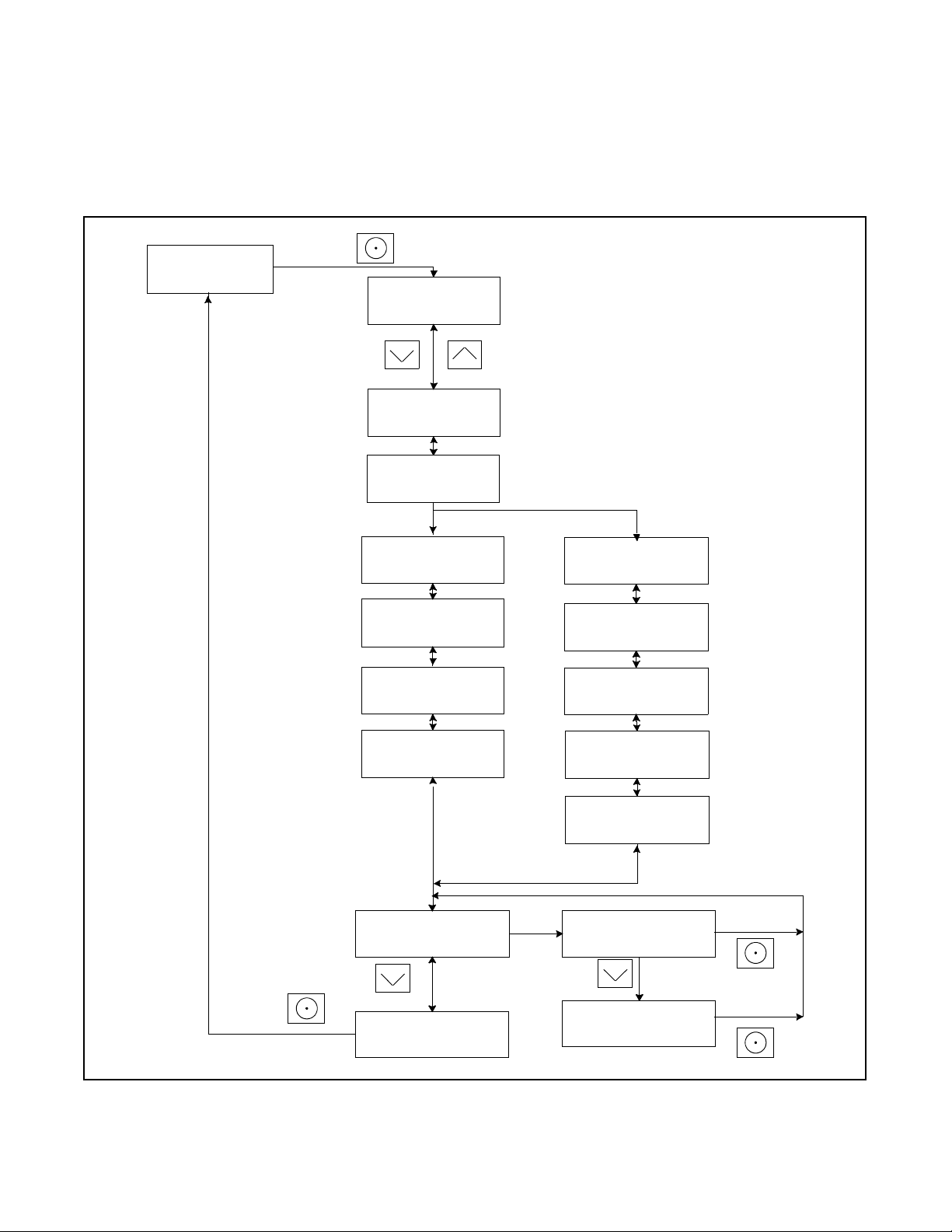
TP-6880 2/21 43Section 3 RDC2 Controller Operation
3.15 ATS Status Menu
ATS menus appear if a Model RXT transfer switch is
connected to the generator set. If no transfer switch is
connected, or another model ATS is connected to the
engine start connections, Remote ATS is displayed on
the ATS Status screen.
The ATS Status menu displays Model RXT transfer
switch and source information.
The voltage shown in these menus can be calibrated.
Follow the safety precautions at the beginning of this
manuals. Use a voltmeter to measure the line-to-line
voltage and follow the instructions in Figure 3-16 to
calibrate the voltage readings.
Emerg Volts:
tp6810
Normal Voltage:
L1- L2 240 V
Normal Voltage:
L2- L3 240 V
Normal Voltage:
L3- L1: 240 V
ATS - - >
Status
Normal Freq.:
60.0 Hz
ATS Position:
Normal
Normal Status:
Not/Acceptable
Emerg. Status:
Standby
Three-phase
Single-phase
Reset
Calibration
<- - Return
Reset
Calib? No
Reset
Calib? Yes
Note: If there is no Model RXT transfer
switch connected to the generator set,
Remote ATS is displayed and the other
screens on this page do not appear.
Normal Freq.:
60.0 Hz
Normal Volts:
240.0 V
Emerg. Freq.:
60.0 Hz
240.0 V
Similar screens appear for
the emergency source.
Normal Rotation:
Note: Sample data shown.
Figure 3-16 ATS Status Menu, with Calibration
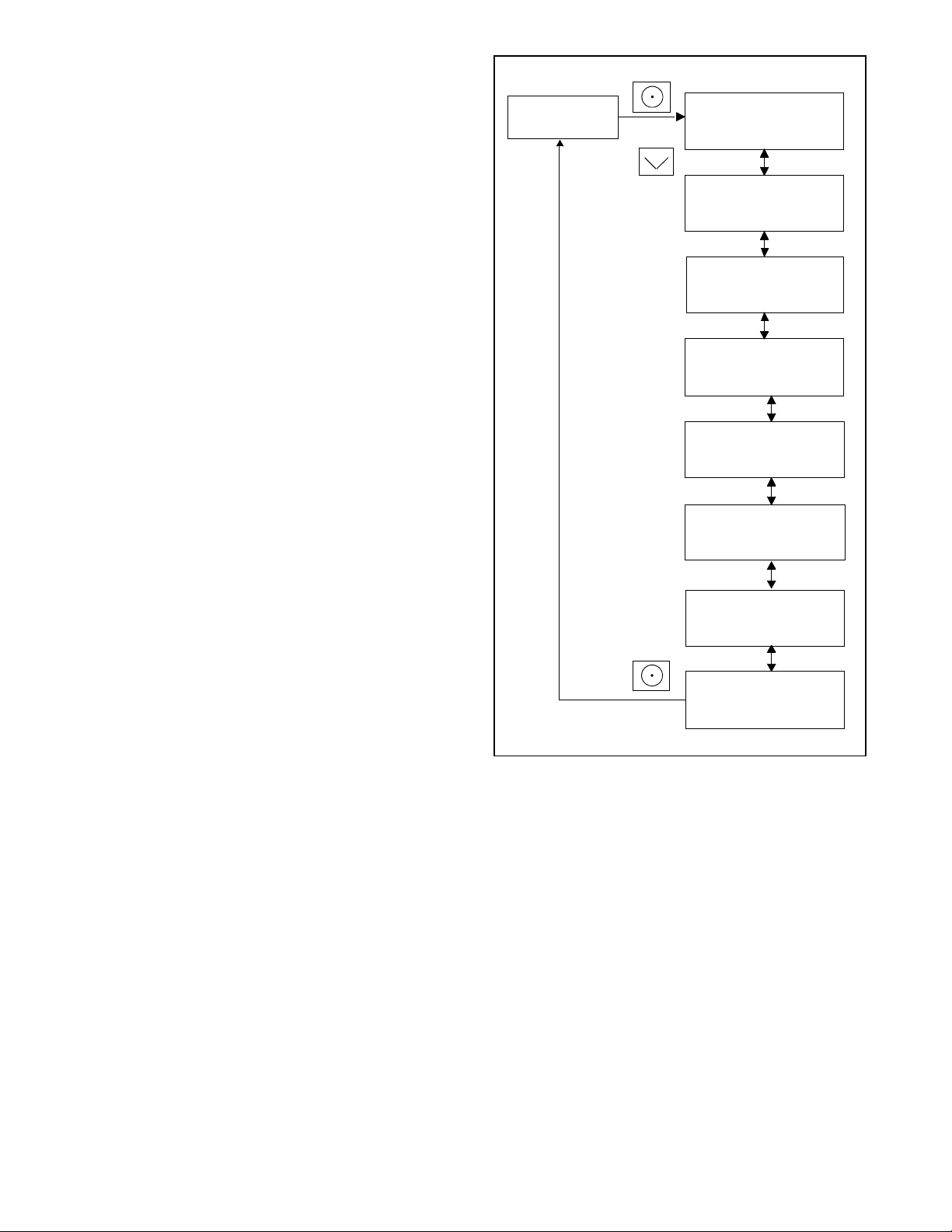
TP-6880 2/2144 Section 3 RDC2 Controller Operation
3.16 ATS Configuration Menu
Note: The ATS Configuration menu appears only if a
Model RXT transfer switch is connected.
Use the ATS Configuration submenu to check the Model
RXT transfer switch system settings and time delays,
and change the settings, if necessary.
Changing ATS Configuration Settings
To enable editing, press the select button. The value
flashes to indicate that it can be changed. Press the up
and down arrow buttons to change the value. Press the
Select button to save the value shown.
Use the up and down arrow buttons to move to the next
value to be changed. Repeat the adjustment process
until all values are correct.
Press the down arrow until Return is displayed. Press
the select button to return to the main menu.
tp6810
Normal Freq:
12.3 Hz
<- - Return
Normal Voltage:
12345.6 V
ATS - - >
Configuration
Emerg. Freq:
12.3 Hz
Emerg. Voltage:
12345.6 V
Emerg. Engine
Start: 3 sec
Transfer From
Normal:3 sec
Transfer From
Emerg.: 120 sec
Note: Actual settings may vary.
Figure 3-17 ATS Configuration Menu
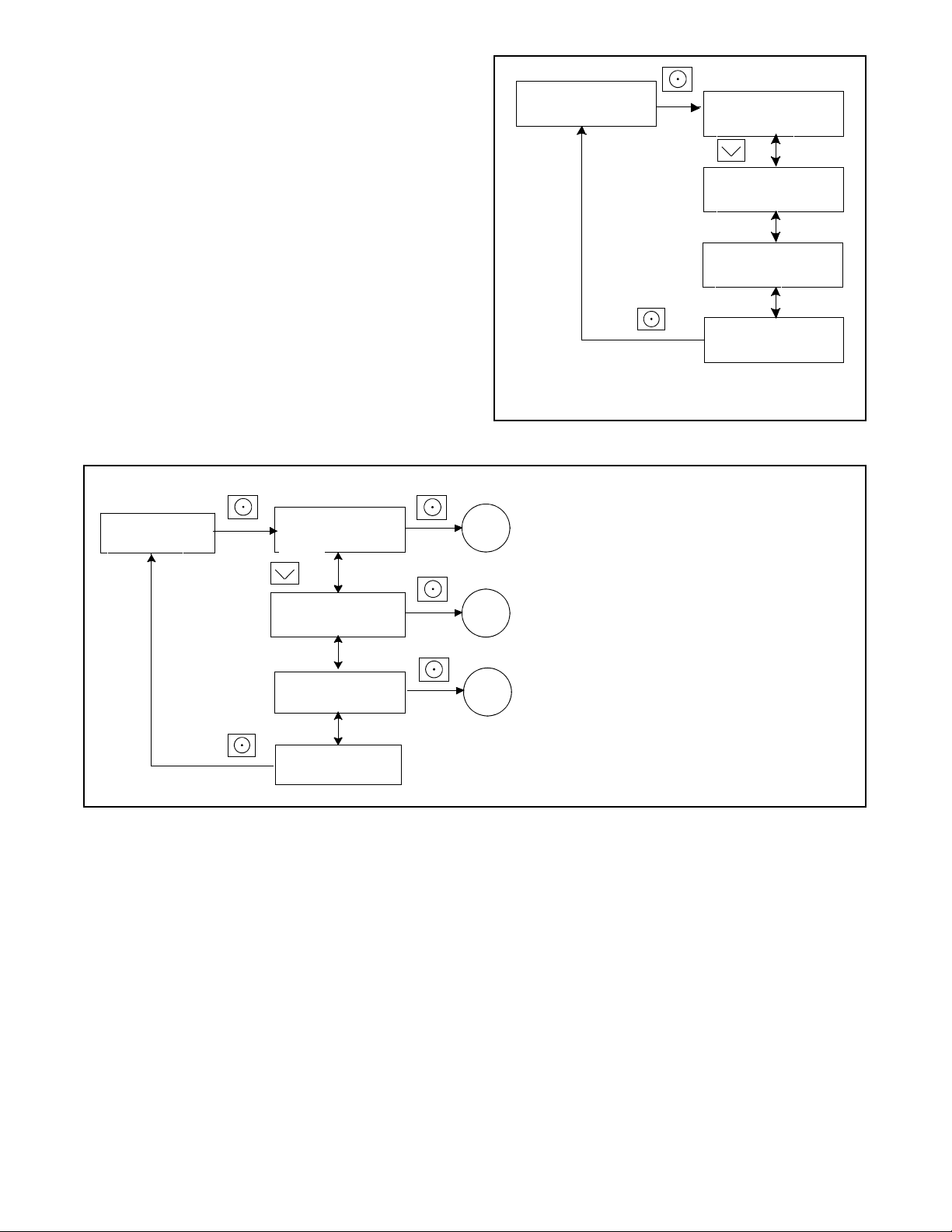
TP-6880 2/21 45Section 3 RDC2 Controller Operation
3.17 Date and Time Menu
The date and time will typically be set at controller
power- up. To change the date, time, or time format
(12 hour or 24 hour), use the Date and Time menu.
See Figure 3-18.
3.18 Networking Information Menus
Use the networking menus to view and adjust
communication settings for systems with remote RBUS
devices such as a PIM or load shed kit, and for systems
that use the Kohler OnCue Plus Generator
Management System.
RBUS is a proprietary RS-485 communications
protocol.
The Networking Information menu leads to submenus
for network and RBUS communication settings.
tp6804
Date:
02Dec2011
Time:
12:34pm
Time Format:
12hr|24hr
Date and
Time
To change the date and time, press the Select button
See Figure 3-7 for instructions.
<- - Return
Figure 3-18 Date and Time Menu
tp6810
Networking- - >
Information
Networking- - >
Status
NS
RBUS - - >
Information
RB
<- - Return
Networking- - >
Configuration
NC
See Figure 3-20.
See Figure 3-21.
See Figure 3-22.
Figure 3-19 Networking Information Menu
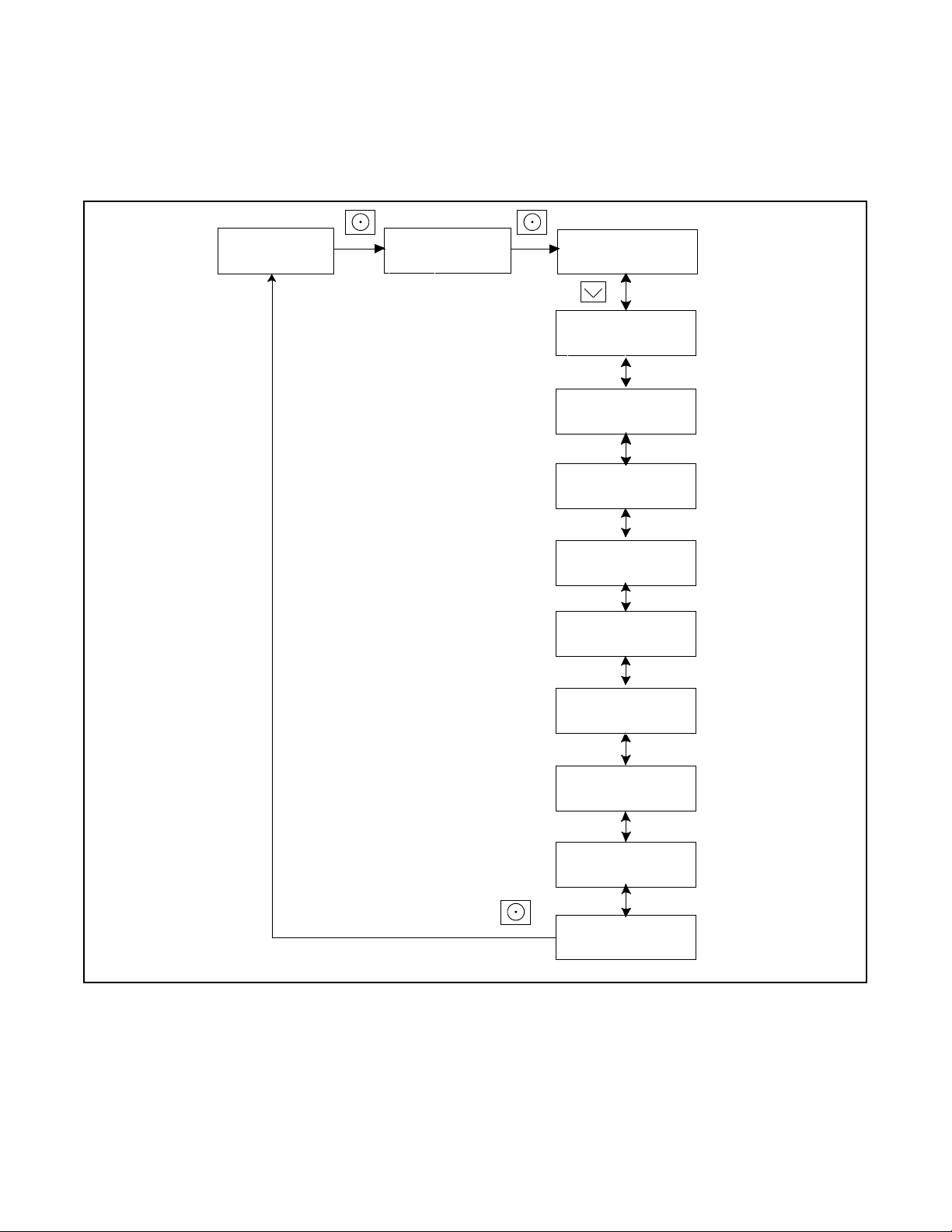
TP-6880 2/2146 Section 3 RDC2 Controller Operation
3.18.1 Networking Status Submenu
The Networking Status submenu contains settings for
OnCue Plus. See the OnCue Plus Software Operation
Manual for information about the appropriate network
settings for OnCue Plus. Changes to these settings are
not typically required.
If DHCP is enabled, IP parameters are not displayed. If
DHCP is disabled (i.e., if a static IP address is used), the
IP parameters are displayed.
To enable or disable DHCP and change the IP settings,
go to the Networking Configuration menu. See
Section 3.18.2.
tp6804
IP Address:
123.456.789.123
Gateway:
123.456.789.123
<- - Return
Subnet Mask:
123.456.789.123
DHCP:
Enabled
Ethernet Status:
Disconnected
DNS 1:
123.456.789.123
DNS 2:
123.456.789.123
OnCue Server:
123.456.789.123
OnCue Status:
Connected
Networking- - >
Status
Networking- - >
Information
Figure 3-20 Network Status Submenu

TP-6880 2/21 47Section 3 RDC2 Controller Operation
3.18.2 Networking Configuration
Submenu (OnCue Plus Password)
The Networking Configuration menu includes settings
used for communication with the Kohler OnCue Plus
Generator Management System.
Password
Note: Use the OnCue password shown on the
controller display for OnCue Plus applications.
For the initial OnCue Plus setup, you will be required to
reset the OnCue password on the RDC2 controller, and
then enter it into the OnCue Plus software. To reset the
password, follow the instructions in Figure 3-21.
Note: The password is displayed for only 10 seconds.
Be sure to write down the password and serial
number.
A new password is generated each time the reset
password procedure is performed. If the password is
reset after the OnCue Plus system has been set up, the
connection will be lost. Disconnect the battery power to
the controller, wait a minute, then reconnect power.
DHCP Submenu
For most applications, the Dynamic Host Configuration
Protocol (DHCP) is enabled and the IP settings cannot
be changed from the controller keypad. If DHCP is
enabled, IP parameters are not displayed.
If DHCP is disabled (i.e., if a static IP address is
required), then the IP parameters can be modified. For
applications that require static IP addresses, press and
hold the select button to enable editing, disable DHCP,
and then step to the next parameters and enter the
information.
If an error occurs while setting a parameter, an error
message is displayed and then the controller exits the
edit mode. Previous settings are preserved.
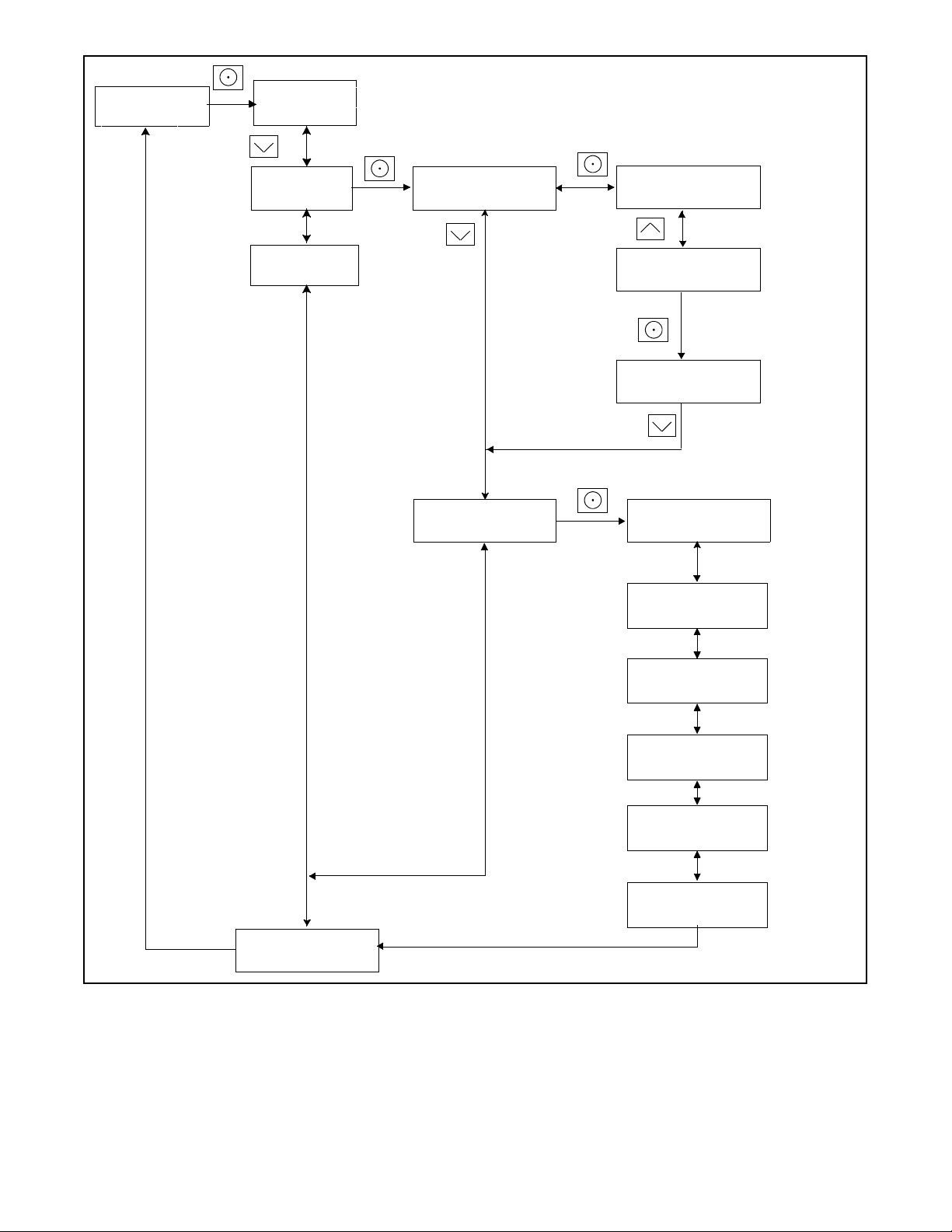
TP-6880 2/2148 Section 3 RDC2 Controller Operation
DNS 2:
123.456.789.123
tp6804
<- - Return
DHCP:
Enabled
Reset OnCue
Password
Reset OnCue
Password? No
S/N: 1234567
New PW: 12345
Press Select to enter YES
or NO as displayed. New
password is displayed for
approximately 10 seconds.
Networking
Configuration
HOLD
Reset OnCue
Password? Yes
UP arrow for YES,
Down arrow for NO.
Networking- - >
Information
Networking- - >
Status
IP Address:
123.456.789.123
Gateway:
123.456.789.123
Subnet Mask:
123.456.789.123
DNS 1:
123.456.789.123
DHCP:
Disabled
HOLD
UP arrow to enable,
Down arrow to disable.
RBUS - - >
Information
Figure 3-21 Network Configuration Submenu
TP-6880 2/21 49Section 3 RDC2 Controller Operation
3.18.3 RBUS Information
The RBUS Information menu contains settings for
remote modules that communicate with the RDC2
controller using RBUS protocol. This includes the
following optional modules:
Model RXT transfer switch
Programmable Interface Module (PIM)
Load Shed Kit or RXT combined interface/load
management board
tp6804
Modules Connected:
2
Module Timeouts:
1234
Net Cycle Time:
123ms
Module Errors:
1234
< - - Return
RD
Remote - - >
Devices
See Figure 3-23.
Networking- - >
Information
Networking- - >
Status
RBUS - - >
Information
<- - Return
Networking- - >
Configuration
Figure 3-22 RBUS Information Submenu
TP-6880 2/2150 Section 3 RDC2 Controller Operation
3.18.4 Remote Devices Submenu
Check the status of remote devices communicating
through RBUS. Device types can include:
Model RXT ATS
Programmable Interface Module (PIM)
Load Shed Kit or RXT combined interface/load
management board
The serial numbers for the PIM or load shed kit are
printed on the circuit boards inside the enclosures.
tp6804
Module Status:
Connected
Firmware Ver.:
122
Module ID:
12
S/N: XXXXXXXXX
<<*DeviceType*>>
Return - - >
S/N: XXXXXXXXX
<<*DeviceType*>>
Comm. Errors:
12345
Comm. Timeouts:
12345
(Dis)Connected:
MM/DD/YY 12:12
<- - Return
Connected: Displays the date and time that the
device was connected.
Disconnected: Displays the last date and time of
successful communication.
Remote - - >
Devices
From Figure 3-22:
Figure 3-23 Remote Devices Submenu
TP-6880 2/21 51Section 3 RDC2 Controller Operation
3.19 Programmable Interface
Module (PIM) Status Menu
The PIM status menu displays the status of inputs and
outputs connected to the programmable interface
module (PIM). this menu appears only if a PIM is
connected. This is a status display menu only. Input and
output settings cannot be changed from the RDC2
controller’s user interface.
A personal computer running Kohler SiteTech
software is required to change the input and output
settings. Contact an authorized distributor or dealer for
service.
The Kohler OnCue Plus Management System can be
used to turn outputs on and off. See the OnCue Plus
Software Operation Manual for instructions.
tp6810
PIM
Status:
PIM 1 - - >
<- - Return
Input 1
In/Active
Output 1:
In/Active
Input 2
In/Active
Output 2:
In/Active
Output 3:
In/Active
Output 4:
In/Active
Output 5:
In/Active
Output 6:
In/Active
<- - Return
Figure 3-24 Programmable Interface Module (PIM) Status Menu
TP-6880 2/2152 Section 3 RDC2 Controller Operation
3.20 Load Control Menus
The Load Control menu displays the status of the load
management inputs and outputs, and allows a test of the
load management output relays. This menu appears
only if a load management device is connected.
Generator current is displayed as a percent of the
maximum generator capacity. The load management
device adds and sheds loads based on the generator
current.
The test function cycles the relays in the order of their
priority. For detailed information about load
management operation, refer to TT-1609, provided with
the load shed kit, or TP-6807, RXT Transfer Switch
Operation and Installation Manual.
Note: Load shed kits are not available with the transfer
switch supplied with models 8RESVL, 10RESVL,
12RESVL.
Input 1:
In/Active
Output 1:
Add/Shed
Input 2:
In/Active
Output 2:
Add/Shed
Output 3:
Add/Shed
Output 4:
Add/Shed
Output 5:
Add/Shed
Output 6:
Add/Shed
Test Outputs
Push Select
(blinking)
<- - Return
tp6810
Load - - >
Control
Load - - >
Control 1
<- - Return
Generator
Current: 123 %
Figure 3-25 Load Control Status Menu
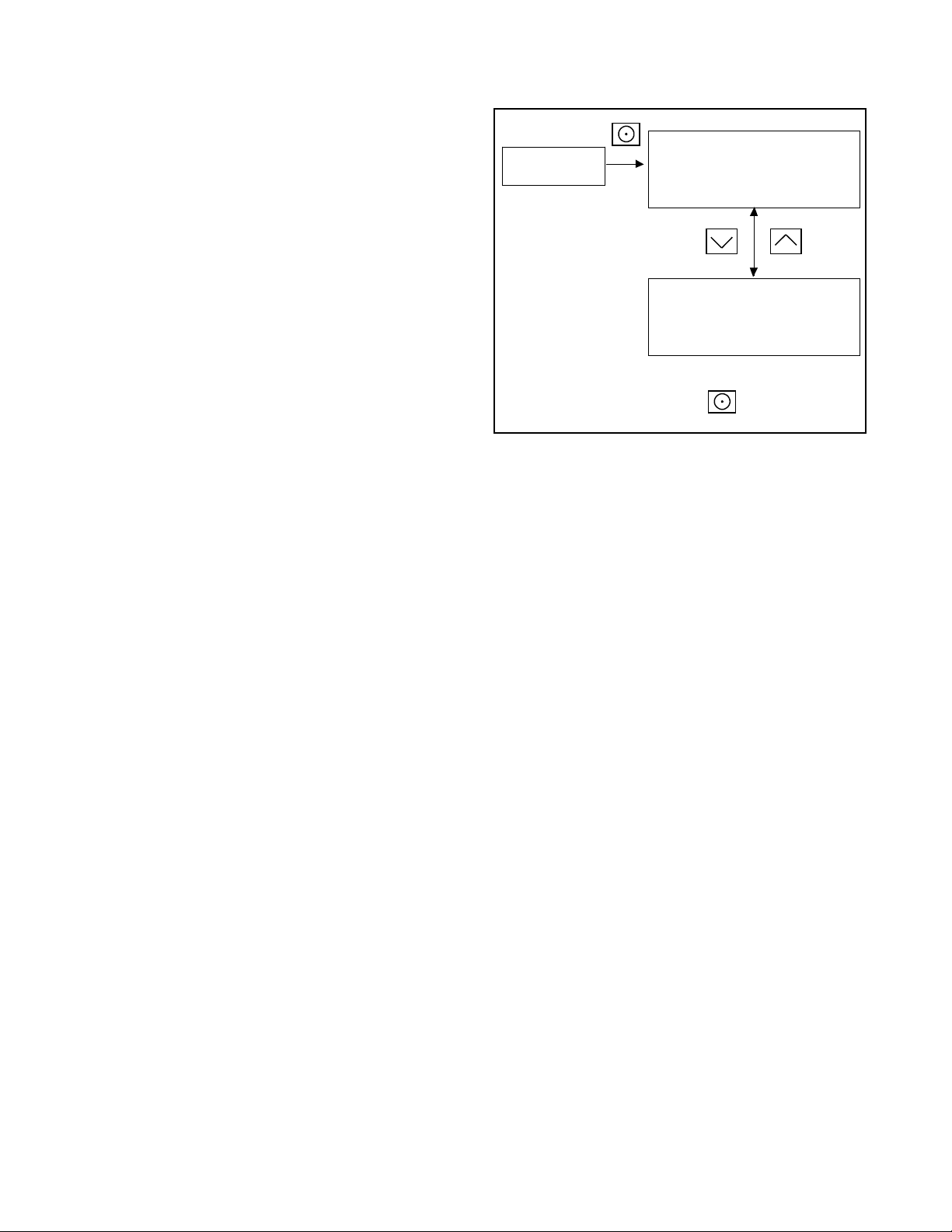
TP-6880 2/21 53Section 3 RDC2 Controller Operation
3.21 Event Log
The event log displays up to 1000 controller faults and
notices, starting with the most recent event. Events are
numbered 1- 1000, with 1 being the most recent. Each
event is displayed with the date and time of the event,
the number of the event, a code to indicate whether the
event was a warning (W), shutdown (S), or
informational notice ( I), the engine hours at the time of
the event, and the event description.
The time and date for notices (I) are not stored in the
controller.
Procedure to View Event History
1. Press Select to enter the main menu.
2. Press the down arrow to step down to the event log.
3. Press Select to display the most recent event.
4. Press the down arrow to step to the next event.
5. Use the up and down arrow buttons to view events.
6. Press the Select button to exit the event log.
To stop viewing the event history before the last event,
press the select button to return to the main menu.
tp6810
Event Log - - >
Date MO/DA/YEAR
time HR:MN
event number, W/S/I, engine hours
event name
Press UP and Down arrow but-
tons to scroll through events
Date MO/DA/YEAR
time HR:MN
event number, W/S/I, engine hours
event name
Press Select button at any time to
return to the main menu.
Figure 3-26 Event Log

TP-6880 2/2154 Section 3 RDC2 Controller Operation
Notes
TP-6880 2/21 55Section 4 Scheduled Maintenance
Section 4 Scheduled Maintenance
Accidental starting.
Can cause severe injury or death.
Disconnect the battery cables before
working on the generator set.
Remove the negative (- ) lead first
when disconnecting the battery.
Reconnect the negative (- ) lead last
when reconnecting the battery.
WARNING
Disabling the generator set. Accidental starting can
cause severe injury or death. Before working on the
generator set or equipment connected to the set, disable the
generator set as follows: (1) Press the generator set off/reset
button to shut down the generator set. (2) Disconnect the
power to the battery charger, if equipped. (3) Remove the
battery cables, negative (- ) lead first. Reconnect the negative
(- ) lead last when reconnecting the battery. Follow these
precautions to prevent the starting of the generator set by the
remote start/stop switch.
Hot engine and exhaust system.
Can cause severe injury or death.
Do not work on the generator set until
it cools.
WARNING
Servicing the alternator. Hot parts can cause severe
injury or death. Avoid touching the alternator field or exciter
armature. When shorted, the alternator field and exciter
armature become hot enough to cause severe burns.
Servicing the exhaust system. Hot parts can cause
severe injury or death. Do not touch hot engine parts. The
engine and exhaust system components become extremely
hot during operation.
Servicing the engine heater. Hot parts can cause minor
personal injury or property damage. Install the heater
before connecting it to power. Operating the heater before
installation can cause burns and component damage.
Disconnect power to the heater and allow it to cool before
servicing the heater or nearby parts.
Hazardous voltage.
Will cause severe injury or death.
This equipment must be installed and
serviced by qualified electrical per-
sonnel.
DANGER
Hazardous voltage. Moving parts.
Will cause severe injury or death.
Operate the generator set only when
all guards and electrical enclosures
are in place.
DANGER
Risk of fire.
Can cause severe injury or death.
Do not smoke or permit flames or
sparks near fuels or the fuel system.
WARNING
Servicing the air cleaner. A sudden backfire can cause
severe injury or death. Do not operate the generator set with
the air cleaner removed.
Servicing the fuel system. A flash fire can cause severe
injury or death. Do not smoke or permit flames or sparks near
the carburetor, fuel line, fuel filter, fuel pump, or other potential
sources of spilled fuels or fuel vapors. Catch fuels in an
approved container when removing the fuel line or carburetor.

TP-6880 2/2156 Section 4 Scheduled Maintenance
The fuel system. Explosive fuel vapors can cause severe
injury or death. Vaporized fuels are highly explosive. Use
extreme care when handling and storing fuels. Store fuels in a
well-ventilated area away from spark-producing equipment
and out of the reach of children. Never add fuel to the tank
while the engine is running because spilled fuel may ignite on
contact with hot parts or from sparks. Do not smoke or permit
flames or sparks to occur near sources of spilled fuel or fuel
vapors. Keep the fuel lines and connections tight and in good
condition. Do not replace flexible fuel lines with rigid lines. Use
flexible sections to avoid fuel line breakage caused by
vibration. Do not operate the generator set in the presence of
fuel leaks, fuel accumulation, or sparks. Repair fuel systems
before resuming generator set operation.
Gas fuel leaks. Explosive fuel vapors can cause severe
injury or death. Fuel leakage can cause an explosion. Check
the LPG vapor or natural gas fuel system for leakage by using
a soap and water solution with the fuel system test pressurized
to 6- 8 ounces per square inch (10- 14 inches water column).
Do not use a soap solution containing either ammonia or
chlorine because both prevent bubble formation. A successful
test depends on the ability of the solution to bubble.
LPG liquid withdrawal fuel leaks. Explosive fuel vapors
can cause severe injury or death. Fuel leakage can cause
an explosion. Check the LPG liquid withdrawal fuel system for
leakage by using a soap and water solution with the fuel
system test pressurized to at least 90 psi (621 kPa). Do not
use a soap solution containing either ammonia or chlorine
because both prevent bubble formation. A successful test
depends on the ability of the solution to bubble.
See the Safety Precautions and Instructions at the
beginning of this manual before attempting to service,
repair, or operate the generator set. Have an authorized
distributor/dealer perform generator set service.
Routine Maintenance. Refer to the following generator
set service schedule, the engine service schedule, and
the runtime hours displayed on the generator set
controller to determine when to schedule routine
maintenance. Service the generator set more
frequently if it is subject to extreme weather, long
operating hours, or dusty or dirty conditions.
Maintenance Reminders. The controller displays a
reminder message every 100 hours of engine run time.
Change the oil and perform other maintenance tasks
listed on the service schedule. Then reset the reminder.
See Section 4.2.5 for instructions to reset the
maintenance reminder.
Service Schedule. Perform maintenance on each item
in the service schedule at the designated interval for the
life of the generator set.
Tools. Tools and instruments used to perform some
maintenance items are not generally available to the
generator set owner. Therefore, have service performed
by an authorized distributor/dealer.
4.1 Scheduled Maintenance
Refer to the following service schedules and the runtime
hours displayed on the controller display to schedule
routine maintenance. Intervals are shown in hours of
operation and/or time intervals (i.e. weekly, monthly,
quarterly, etc.) Have an authorized distributor/dealer
service the generator set at the designated intervals in
the service schedule for the life of the generator set.
Service units subject to extreme weather, long operating
hours, or dusty or dirty conditions more frequently.
Contact an authorized distributor/dealer for parts.
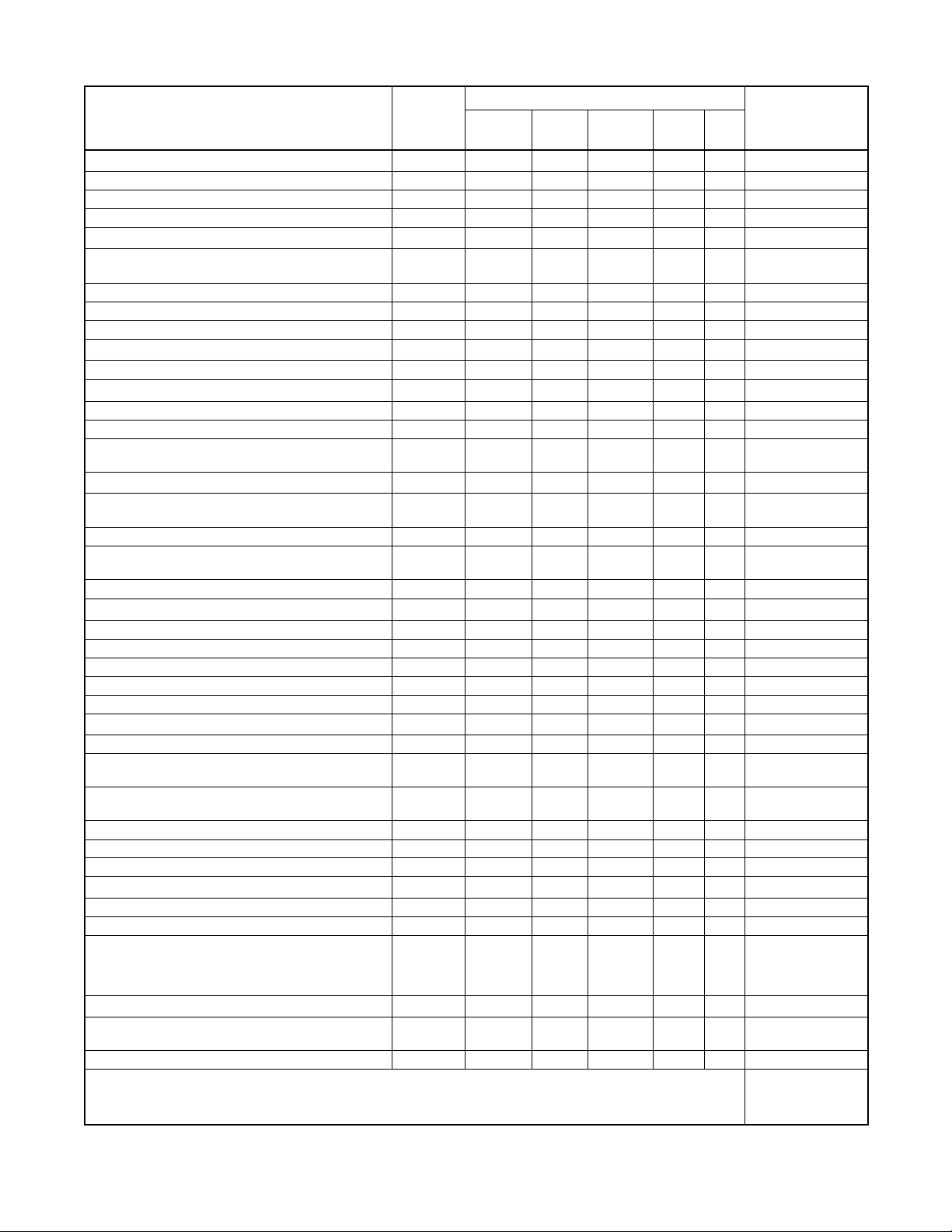
TP-6880 2/21 57Section 4 Scheduled Maintenance
4.1.1 Service Schedule
System Component or Procedure
See
Section
Procedure
Frequency
Visually
Inspect
Check Change Clean Test
Fuel
Flexible lines and connections X R Quarterly
Main tank supply level X Weekly
Fuel piping X Yearly
Lubrication
4.2
Oil level
X X
8 hours or
before use
Crankcase breather hose X Yearly or 500 hours
Change oil X Yearly or 100 hours
Replace filter X Yearly or 100 hours
Cooling
4.5
Air ducts, louvers X X Yearly
Exhaust Line
4.6
Leakage X X Weekly
Insulation, fire hazards X Yearly
Obstructions or combustible materials near
exhaust outlet
X Weekly
DC Electrical System
4.7
Battery charger operation, charge rate (if
equipped)
X Monthly
Remove corrosion, clean and dry battery and rack X X Yearly
Clean and tighten battery terminals and inspect
boots
X X Yearly
Battery electrolyte level and specific gravity * X Yearly
AC Electrical System
Tighten control and power wiring connections X Yearly
Remote control system, if equipped X Monthly
Visible wear or damage X Quarterly
Wire abrasions where subject to motion X X Six Months
Wire-cable insulation condition X 3 Years or 500 hours
Engine and Mounting
Visible wear or damage X Weekly
Air cleaner service
4.4
150 300
Yearly or hours
shown
Spark plugs (apply anti-seize lubricant for easy
removal)
4.3
X Yearly or 500 hours
Have valve lash checked/adjusted, 8RESV(L) Engine SM D 100 hours
Have valve lash checked/adjusted, 10/12RESV(L) Engine SM D 500 hours
Replace stepper motor coupling and bushing D 500 hours
Generator
Visible wear or damage X Quarterly
Exercise generator set X Weekly
Measure and record resistance readings of
windings with insulation tester (Megger, with
SCR assembly or rectifier and load leads
disconnected) *
D 3 Years
General Condition of Equipment
Evidence of vibration, leakage, excessive noise,
temperature, or deterioration
X X X Weekly
Interior of sound enclosure X X Quarterly
* Not necessary for maintenance-free batteries.
Service more frequently under extremely dusty/dirty conditions.
Megger is a registered trademark of Biddle Instruments.
X Action
D Authorized distributor/dealer only
R Replace as necessary
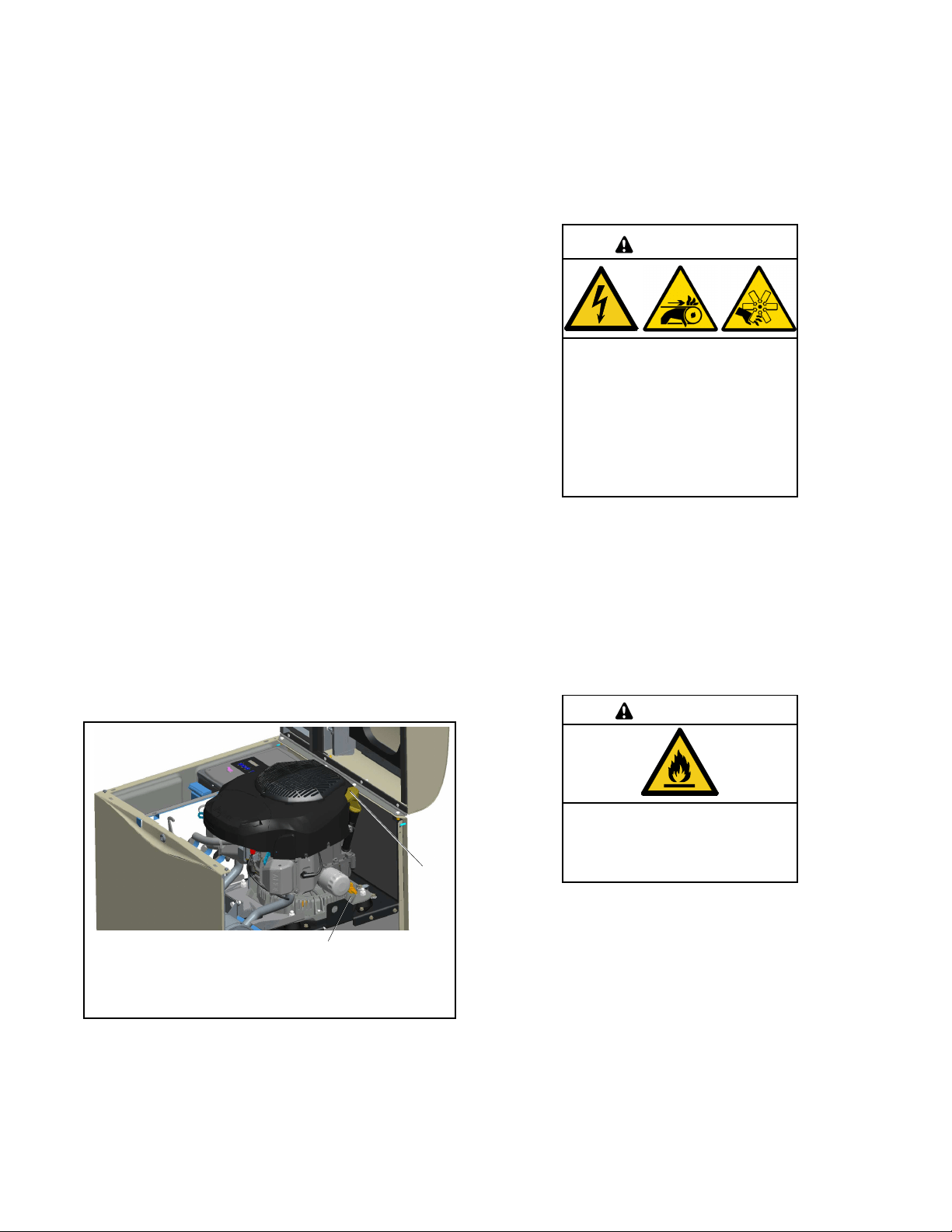
TP-6880 2/2158 Section 4 Scheduled Maintenance
4.2 Lubrication System
See the service schedules in Section 4.1 for oil change
and oil filter replacement intervals. See the service
views in Section 1.9 for the oil drain, oil check, oil fill, and
oil filter locations.
4.2.1 Low Oil Pressure Shutdown
The low oil pressure (LOP) shutdown feature protects
the engine against internal damage if the oil pressure
drops below a minimum pressure because of oil pump
failure or other malfunction.
Note: The LOP shutdown feature does not protect
against damage caused by operating when the
oil level is low; it is not a low oil level shutdown.
Check the oil level regularly, and add oil as
needed.
4.2.2 Oil Check
The generator set is shipped with oil. Before operating
the generator set, check the engine oil in the crankcase.
To check the oil level, shut down the generator set and
wait several minutes. Remove the dipstick and wipe the
end clean, reinsert, and remove. See Figure 4-1.
Maintain the oil level between the Add and Full marks on
the dipstick. Add 5W-30 synthetic oil when the oil level is
low.
Check the oil level before each use. For extended
operation, check the oil level every 8 hours. Do not
check the oil level when the generator set is running.
6515
1. Oil dipstick/oil fill
2. Oil drain valve
2
1
Figure 4-1 Oil Check (typical)
4.2.3 Engine Oil Recommendation
Use 5W-30 API (American Petroleum Institute) Service
Class SG, SH, or SJ synthetic oil. Synthetic oil oxidizes
and thickens less than other oils and leaves the engine
intake valves and pistons cleaner.
4.2.4 Oil Change Procedure
Accidental starting.
Can cause severe injury or death.
Disconnect the battery cables before
working on the generator set.
Remove the negative (- ) lead first
when disconnecting the battery.
Reconnect the negative (- ) lead last
when reconnecting the battery.
WARNING
Disabling the generator set. Accidental starting can
cause severe injury or death. Before working on the
generator set or equipment connected to the set, disable the
generator set as follows: (1) Press the generator set off/reset
button to shut down the generator set. (2) Disconnect the
power to the battery charger, if equipped. (3) Remove the
battery cables, negative (- ) lead first. Reconnect the negative
(- ) lead last when reconnecting the battery. Follow these
precautions to prevent the starting of the generator set by the
remote start/stop switch.
Risk of fire.
Can cause severe injury or death.
Do not smoke or permit flames or
sparks near fuels or the fuel system.
WARNING
Servicing the fuel system. A flash fire can cause severe
injury or death. Do not smoke or permit flames or sparks near
the carburetor, fuel line, fuel filter, fuel pump, or other potential
sources of spilled fuels or fuel vapors. Catch fuels in an
approved container when removing the fuel line or carburetor.
TP-6880 2/21 59Section 4 Scheduled Maintenance
Note: Dispose of all waste materials (engine oil, fuel,
filter, etc.) in an environmentally safe manner.
Note: The oil change procedure requires the use of
rags, a drain tube, and a funnel. Follow the
instructions and use caution to prevent oil from
spilling on or into the alternator.
1. Drain the oil.
a. Press the OFF button on the generator set
controller.
b. Disconnect the utility power to the generator
set.
c. Disconnect the generator set engine starting
battery, negative (- ) lead first.
d. Remove the side panel on the exhaust side of
the enclosure.
e. Clean the area around the dipstick and oil fill
cap.
f. To prevent oil from spilling into the alternator,
completely cover the alternator with rags
around the areas near the oil drain valve and oil
filter.
g. Insert a drain tube (3/8 in. inside diameter) onto
the oil drain valve and place the end of the tube
into a drain pan. The tube will reduce the
potential for spilled oil.
h. Open the oil drain valve on the engine.
i. Remove the dipstick and oil fill cap. Allow time
for the engine oil to drain completely.
j. Close the oil drain valve and remove the oil
drain tube.
k. Replace the dipstick.
2. Replace the oil filter.
a. Clean the area around the oil filter.
b. Loosen the oil filter by rotating it
counterclockwise with an oil filter wrench.
c. As you remove the oil filter, tilt the filter upward
to prevent oil from spilling.
d. Clean the gasket sealing surface of the oil filter
adapter.
e. Apply a light coat of clean oil to the rubber seal
of the new oil filter.
f. Lightly thread the new oil filter by hand until you
feel Resistance. Then, tighten the filter an
additional 3/4 turn with an oil filter wrench.
3. Fill with oil.
Note: When the oil is drained, some oil remains in the
engine. The amount of oil needed to refill the
engine may be less than the capacity shown in
Figure 4-2. Use the dipstick shown in Figure 4-1
to check the oil level during the fill. Do not fill past
the full mark on the dipstick.
Generator Set Model Oil Capacity, L (qt.)
8RESV/RESVL 1.5 (1.6)
10/12RESV/RESVL 1.9 (2.0)
Figure 4-2 Engine Oil Capacity (new, dry engine)
a. See Section 4.2.3 for the recommended oil
type. To prevent spilling, use a funnel to add oil
through the oil fill port. Use the dipstick to check
the oil level before starting to add the final quart
of oil. Fill the engine to the F mark on the
dipstick.
b. Reinstall the dipstick and the oil fill cap.
c. Remove all rags near the alternator and oil
drain valve.
d. Reconnect the generator set engine starting
battery, negative (- ) lead last.
e. Reconnect the utility power to the generator
set.
f. Press the RUN button on the generator set
controller. The generator set will start.
g. Run the generator set for a minute to allow the
oil pressure to reach operating range.
h. Stop the generator set, wait 1 minute, and then
recheck the oil level. Add oil to bring the level up
to the F mark on the dipstick.
4. Check for leaks.
a. Check for oil leaks.
b. Fix leaks and recheck the oil level.
c. Reinstall the side panel.
5. Reset the maintenance timer on the controller.
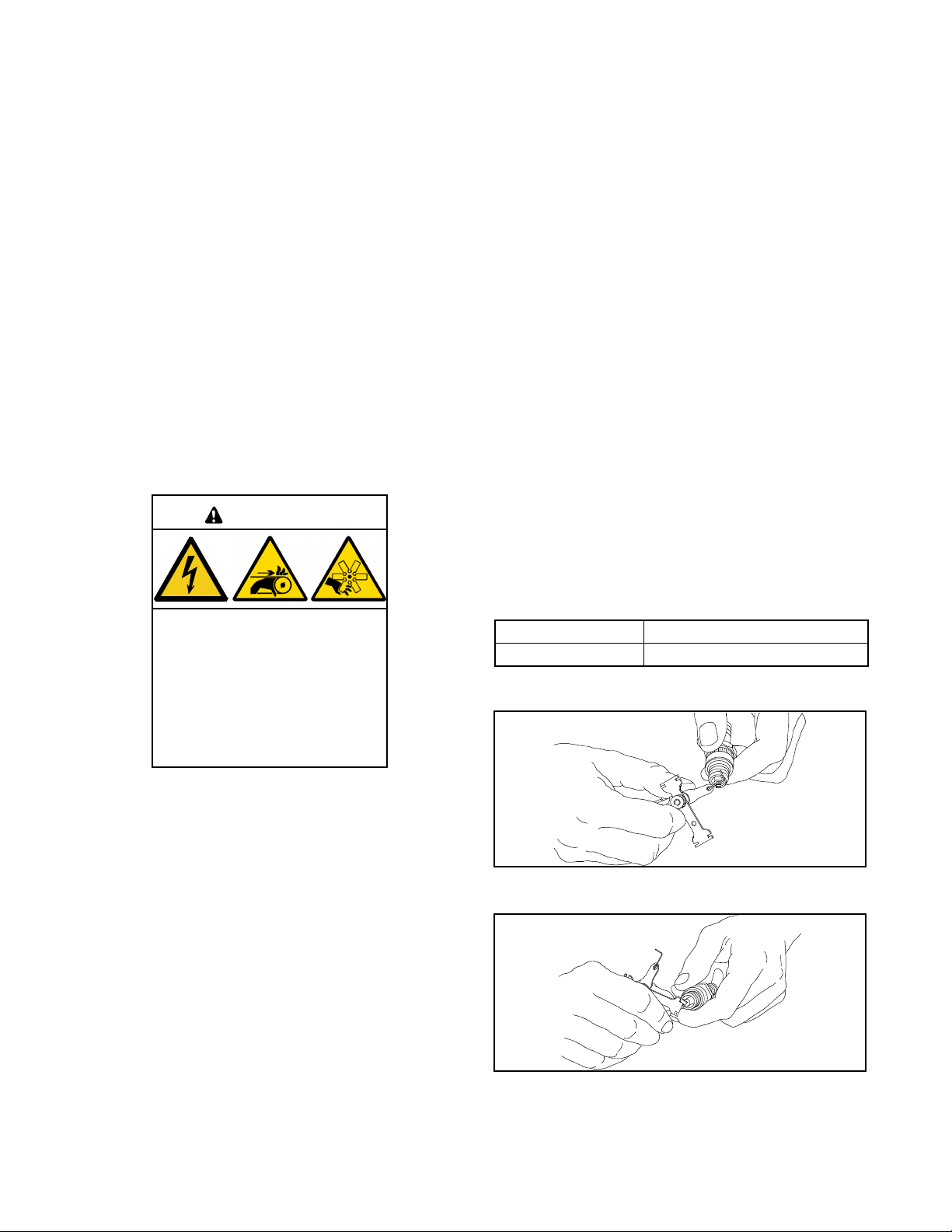
TP-6880 2/2160 Section 4 Scheduled Maintenance
4.2.5 Resetting the Maintenance Timer
RDC2:
1. From the Overview menu, step down to the Genset
Run Time menu.
2. Press the Select button and then step down to the
Next Maintenance screen.
3. Press the Select button.
4. Press the Up arrow button so that “Reset Maint
Timer? Yes” is displayed.
5. Press the Select button. After about two minutes,
the new maintenance interval and date are
displayed.
4.3 Spark Plugs
Wear protective goggles and clothing when using power
tools, hand tools, or compressed air.
Accidental starting.
Can cause severe injury or death.
Disconnect the battery cables before
working on the generator set.
Remove the negative (- ) lead first
when disconnecting the battery.
Reconnect the negative (- ) lead last
when reconnecting the battery.
WARNING
Disabling the generator set. Accidental starting can
cause severe injury or death. Before working on the
generator set or equipment connected to the set, disable the
generator set as follows: (1) Press the generator set off/reset
button to shut down the generator set. (2) Disconnect the
power to the battery charger, if equipped. (3) Remove the
battery cables, negative (- ) lead first. Reconnect the negative
(- ) lead last when reconnecting the battery. Follow these
precautions to prevent the starting of the generator set by the
remote start/stop switch.
Reset the spark plug gap or replace the plugs with new
plugs as necessary.
1. Clean the area around the base of the spark plug to
keep dirt and debris out of the engine.
2. Remove the spark plug and check its condition.
Replace the spark plug if it is worn or if its reuse is
questionable.
3. Check the spark plug gap using a wire feeler
gauge. See Figure 4-3 for the recommended spark
plug gap. Adjust the gap by carefully bending the
ground electrode. See Figure 4-4 and Figure 4-5.
4. For easy removal, apply a light coating of anti-seize
lubricant to the cleaned spark plug threads. Wipe
away any excess compound.
5. Reinstall the spark plug into the cylinder head.
Torque the spark plug to 24.4- 29.8 Nm
(18- 22 ft. lb.)
Generator Set Model Spark Plug Gap
8/10/12RESV/RESVL 0.508 mm (0.020 in.)
Figure 4-3 Spark Plug Gap
1- 514
Figure 4-4 Checking the Spark Plug Gap
1- 511
Figure 4-5 Adjusting the Spark Plug Gap
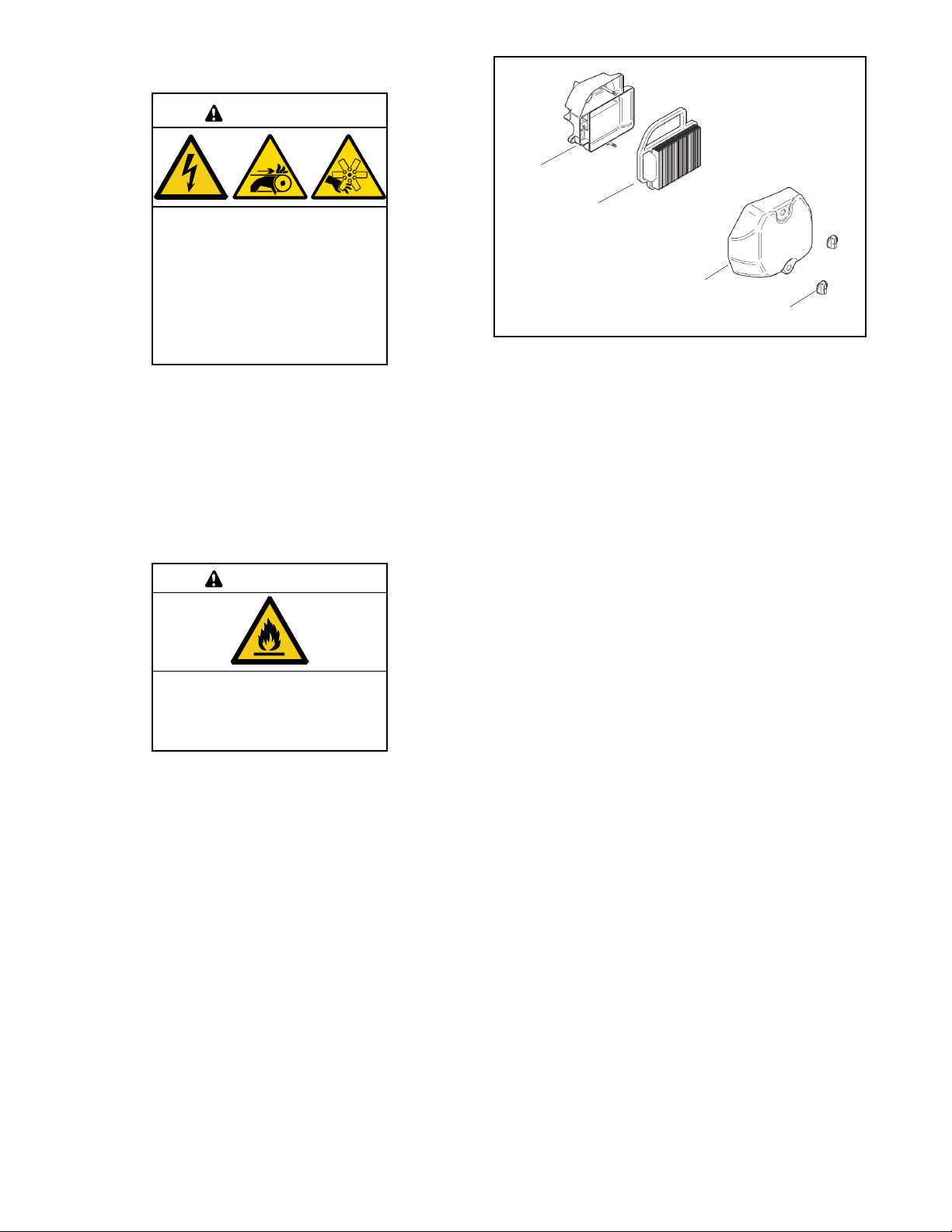
TP-6880 2/21 61Section 4 Scheduled Maintenance
4.4 Air Cleaner Service
Accidental starting.
Can cause severe injury or death.
Disconnect the battery cables before
working on the generator set.
Remove the negative (- ) lead first
when disconnecting the battery.
Reconnect the negative (- ) lead last
when reconnecting the battery.
WARNING
Disabling the generator set. Accidental starting can
cause severe injury or death. Before working on the
generator set or equipment connected to the set, disable the
generator set as follows: (1) Press the generator set off/reset
button to shut down the generator set. (2) Disconnect the
power to the battery charger, if equipped. (3) Remove the
battery cables, negative (- ) lead first. Reconnect the negative
(- ) lead last when reconnecting the battery. Follow these
precautions to prevent the starting of the generator set by the
remote start/stop switch.
Risk of fire.
Can cause severe injury or death.
Do not smoke or permit flames or
sparks near fuels or the fuel system.
WARNING
Servicing the air cleaner. A sudden backfire can cause
severe injury or death. Do not operate the generator set with
the air cleaner removed.
4.4.1 Air Cleaner, 8RESV/RESVL
Models
The engine has a replaceable high-density paper air
cleaner element. See Figure 4-6.
Check for a buildup of dirt and debris around the air
cleaner system. Keep this area clean. Also check for
loose or damaged components. Replace all bent or
damaged air cleaner components.
Note: Operating the engine with loose or damaged air
cleaner components could allow unfiltered air
into the engine causing premature wear and
failure.
1
2
3
4
586536
1. Air cleaner base
2. Air cleaner element
3. Element cover
4. Air cleaner knob
Figure 4-6 Air Cleaner Components
Paper Element Service
Use the following procedure to replace the paper
element at the intervals specified in the service
schedule. Replace the paper element more often under
extremely dusty or dirty conditions.
1. Press the OFF button on the generator set
controller.
2. Disconnect the utility power to the generator set.
3. Disconnect the generator set engine starting
battery, negative (- ) lead first.
4. Loosen the cover retaining knobs and remove the
cover.
5. Remove the paper element.
Note: Do not wash the paper element or clean it
with pressurized air, as this will damage the
element.
6. Replace the element if it is dirty, bent, or damaged.
7. Check the air cleaner base. Make sure it is secure
and not bent or damaged. Also check the element
cover for damage and fit. Replace all damaged air
cleaner components. Remove any loose dirt or
debris from the air cleaner base. Wipe the base
carefully so that no dirt drops into the intake throat.
Check the condition of the rubber seal on the air
cleaner stud and replace the seal if necessary.
8. Reinstall the paper element and the air cleaner
cover. Secure the cover with the cover retaining
knobs.
9. Reconnect the utility power to the generator set.
10. Reconnect the generator set engine starting
battery, negative (- ) lead last.
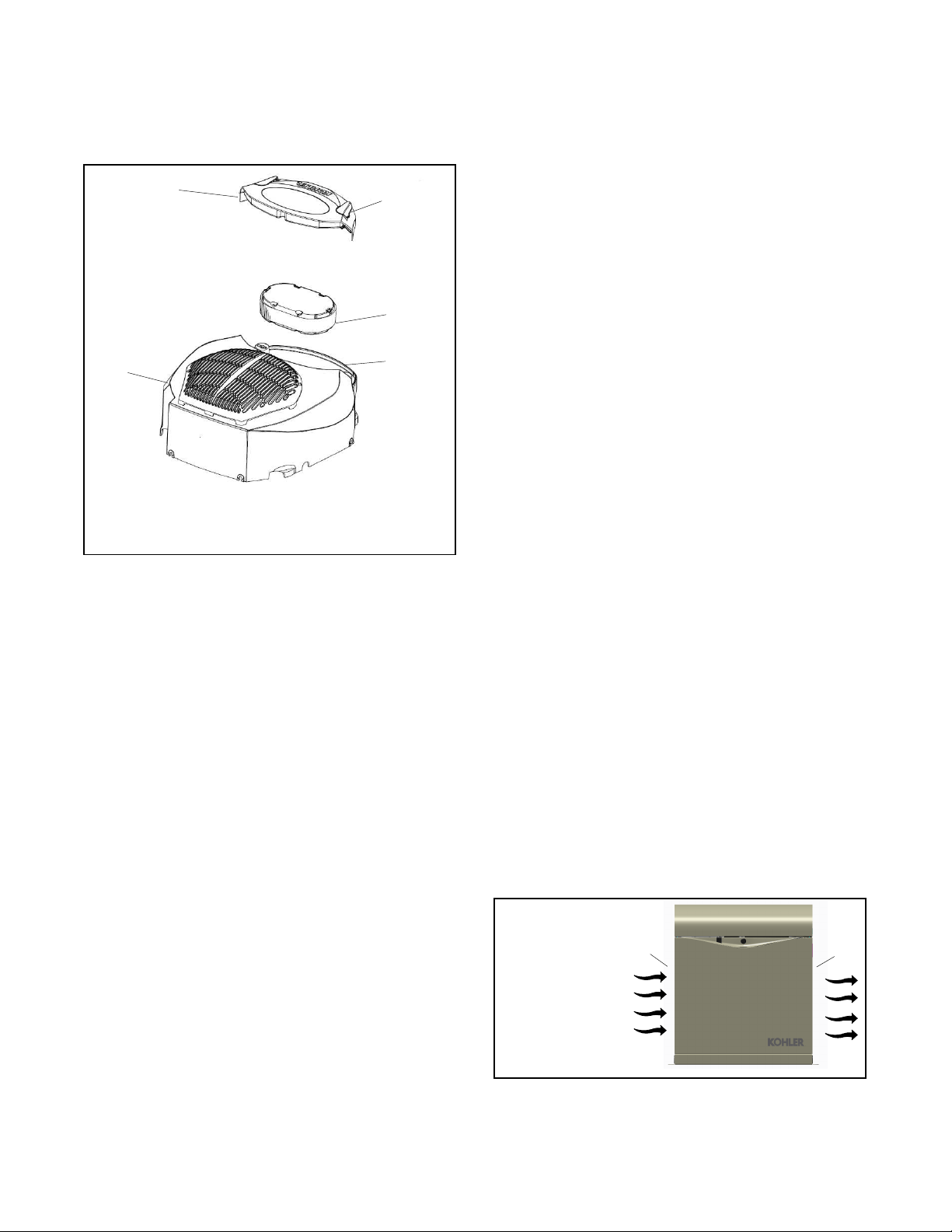
TP-6880 2/2162 Section 4 Scheduled Maintenance
4.4.2 Air Cleaner, 10/12RESV/RESVL
Models
The engine is equipped with a replaceable, high density
paper air cleaner element. See Figure 4-7.
tp6515
1. Air cleaner cover lever
2. Air cleaner element
3. Base
4. Blower housing
5. Air cleaner cover
2
3
1
4
5
Figure 4-7 Air Cleaner Components
Check the air cleaner daily or before starting the engine.
Check for a buildup of dirt and debris around the air
cleaner system. Keep this area clean. Also check for
loose or damaged components. Replace all bent or
damaged air cleaner components.
Note: Operating the engine with loose or damaged air
cleaner components could allow unfiltered air
into the engine causing premature wear and
failure.
Paper Element Service
Replace the paper element at the intervals indicated in
the service schedule. See Figure 4-7 for the air cleaner
components.
1. Press the OFF button on the generator set
controller.
2. Disconnect the utility power to the generator set.
3. Disconnect the generator set engine starting
battery, negative (- ) lead first.
4. Rotate the air cleaner cover levers outward to
unlock cover; remove the air cleaner cover.
5. Remove the paper element from the base.
6. Do not wash the paper element or use pressurized
air, as this will damage the element. Replace a
dirty, bent, or damaged element. Handle new
elements carefully; do not use if the sealing
surfaces are bent or damaged.
7. When servicing the air cleaner, check the air
cleaner base. Make sure it is secured and not bent
or damaged. Also, check the element cover for
damage or improper fit. Replace all damaged air
cleaner components.
Note: If any loose dirt or debris fell on the air cleaner
base when the element was removed, carefully
remove it and wipe the base clean. Be careful that
none of it drops into the intake throat.
8. Reinstall the paper element onto the air cleaner
base. Make sure the element is flat and properly
seated.
9. Position the air cleaner cover with levers outward
over air cleaner; turn levers inward to lock.
10. When element replacement is necessary, order
genuine Kohler parts.
11. Reconnect the power to the battery charger.
12. Reconnect the generator set engine starting
battery, negative (- ) lead last.
4.5 Cooling System
The engine fan draws cooling air through the openings
in the sides and end near the battery. The alternator fan
draws cooling air through openings on the side walls of
the enclosure. The cooling air mixes with the engine
exhaust and is discharged at the exhaust outlet. See the
service view in Section 1.9 for air intake and exhaust
locations. To prevent generator set damage caused by
overheating, keep the housing cooling inlets and outlets
clean and unobstructed at all times.
Note: Do not block the generator set cooling air inlets or
mount other equipment above them. Overheating
and severe generator damage may occur.
1. Air intake
2. Exhaust outlet
1
2
FRONT VIEW
Figure 4-8 Cooling Air Intake and Exhaust
TP-6880 2/21 63Section 4 Scheduled Maintenance
4.6 Exhaust System
Carbon monoxide.
Can cause severe nausea,
fainting, or death.
The exhaust system must be
leakproof and routinely inspected.
WARNING
Generator set operation. Carbon monoxide can cause
severe nausea, fainting, or death. Carbon monoxide is an
odorless, colorless, tasteless, nonirritating gas that can cause
death if inhaled for even a short time. Avoid breathing exhaust
fumes when working on or near the generator set. Never
operate the generator set inside a building. Never operate the
generator set where exhaust gas could seep inside or be
drawn into a potentially occupied building through windows, air
intake vents, or other openings.
Carbon monoxide detectors. Carbon monoxide can
cause severe nausea, fainting, or death. Install carbon
monoxide detectors on each level of any building adjacent to
the generator set. Locate the detectors to adequately warn the
building’s occupants of the presence of carbon monoxide.
Keep the detectors operational at all times. Periodically test
and replace the carbon monoxide detectors according to the
manufacturer’s instructions.
Carbon monoxide symptoms. Carbon monoxide can
cause severe nausea, fainting, or death. Carbon monoxide
is a poisonous gas present in exhaust gases. Carbon
monoxide is an odorless, colorless, tasteless, nonirritating gas
that can cause death if inhaled for even a short time. Carbon
monoxide poisoning symptoms include but are not limited to
the following:
Light-headedness, dizziness
Physical fatigue, weakness in
joints and muscles
Sleepiness, mental fatigue,
inability to concentrate
or speak clearly, blurred vision
Stomachache, vomiting, nausea
If experiencing any of these symptoms and carbon monoxide
poisoning is possible, seek fresh air immediately and remain
active. Do not sit, lie down, or fall asleep. Alert others to the
possibility of carbon monoxide poisoning. Seek medical
attention if the condition of affected persons does not improve
within minutes of breathing fresh air.
Hazardous noise.
Can cause hearing loss.
Never operate the generator set
without a muffler or with a faulty
exhaust system.
CAUTION
Hot engine and exhaust system.
Can cause severe injury or death.
Do not work on the generator set until
it cools.
WARNING
Servicing the exhaust system. Hot parts can cause
severe injury or death. Do not touch hot engine parts. The
engine and exhaust system components become extremely
hot during operation.
Remove all combustible materials from the exhaust
location. Combustible materials include building
materials as well as natural surroundings. Keep dry field
grass, foliage, and combustible landscaping material a
minimum of 1.5 m (5 ft.) from the exhaust outlet.
Periodically inspect the exhaust system components for
cracks, leaks, and corrosion.
Check for corroded or broken metal parts and replace
them as needed.
Check that the exhaust outlet is clear.
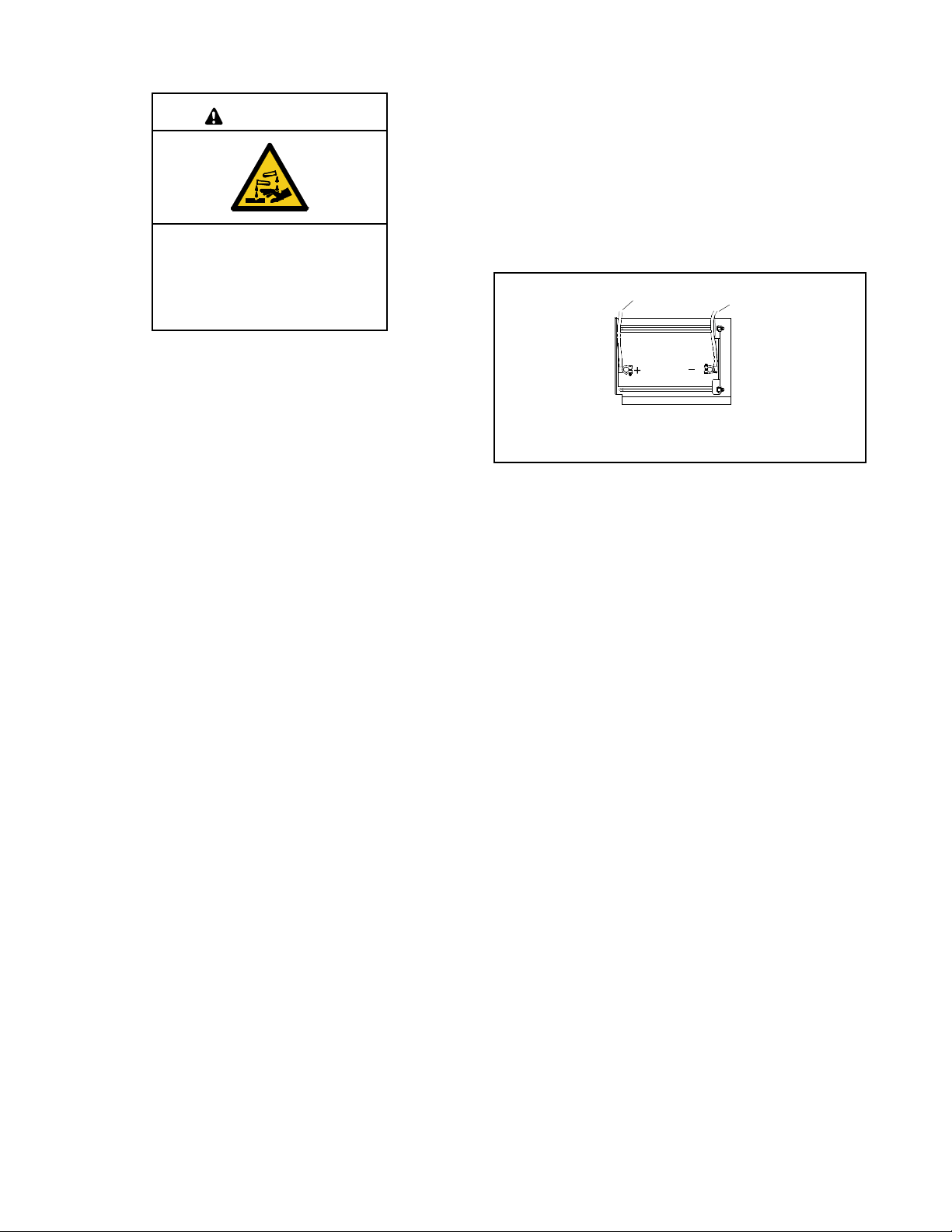
TP-6880 2/2164 Section 4 Scheduled Maintenance
4.7 Battery
Sulfuric acid in batteries.
Can cause severe injury or death.
Wear protective goggles and
clothing. Battery acid may cause
blindness and burn skin.
WARNING
Battery electrolyte is a diluted sulfuric acid. Battery acid
can cause severe injury or death. Battery acid can cause
blindness and burn skin. Always wear splashproof safety
goggles, rubber gloves, and boots when servicing the battery.
Do not open a sealed battery or mutilate the battery case. If
battery acid splashes in the eyes or on the skin, immediately
flush the affected area for 15 minutes with large quantities of
clean water. Seek immediate medical aid in the case of eye
contact. Never add acid to a battery after placing the battery in
service, as this may result in hazardous spattering of battery
acid.
Battery acid cleanup. Battery acid can cause severe
injury or death. Battery acid is electrically conductive and
corrosive. Add 500 g (1 lb.) of bicarbonate of soda (baking
soda) to a container with 4 L (1 gal.) of water and mix the
neutralizing solution. Pour the neutralizing solution on the
spilled battery acid and continue to add the neutralizing
solution to the spilled battery acid until all evidence of a
chemical reaction (foaming) has ceased. Flush the resulting
liquid with water and dry the area.
Battery gases. Explosion can cause severe injury or
death. Battery gases can cause an explosion. Do not smoke
or permit flames or sparks to occur near a battery at any time,
particularly when it is charging. Do not dispose of a battery in a
fire. To prevent burns and sparks that could cause an
explosion, avoid touching the battery terminals with tools or
other metal objects. Remove all jewelry before servicing the
equipment. Discharge static electricity from your body before
touching batteries by first touching a grounded metal surface
away from the battery. To avoid sparks, do not disturb the
battery charger connections while the battery is charging.
Always turn the battery charger off before disconnecting the
battery connections. Ventilate the compartments containing
batteries to prevent accumulation of explosive gases.
Battery short circuits. Explosion can cause severe injury
or death. Short circuits can cause bodily injury and/or
equipment damage. Disconnect the battery before generator
set installation or maintenance. Remove all jewelry before
servicing the equipment. Use tools with insulated handles.
Remove the negative (- ) lead first when disconnecting the
battery. Reconnect the negative (- ) lead last when
reconnecting the battery. Never connect the negative (- )
battery cable to the positive (+) connection terminal of the
starter solenoid. Do not test the battery condition by shorting
the terminals together.
Refer to this section for general battery information and
maintenance. Also consult the battery manufacturer’s
instructions for battery maintenance.
All generator set models use a negative ground with a
12-volt engine electrical system. Consult the generator
set nameplate for the engine electrical system voltage.
Consult the generator spec sheet for battery capacity
recommendations for replacement purposes. Wiring
diagrams provide battery connection information. See
Figure 4-9 for typical battery connections.
EZ-273000-J
1
2
1. To positive (+) terminal on starter solenoid.
2. To ground (- ) terminal on or near starter motor.
Figure 4-9 12-Volt Engine Electrical System Single
Starter Motor, Typical Battery Connection
Clean the battery and cables and tighten battery
terminals using the service schedule recommendations.
To prevent corrosion, maintain tight, dry electrical
connections at the battery terminals. To remove
corrosion from battery terminals, disconnect the cables
from the battery and scrub the terminals with a wire
brush. Clean the battery and cables with a solution of
baking soda and water. After cleaning, flush the battery
and cables with clean water and wipe them with a dry,
lint-free cloth.
After reconnecting the battery cables, coat the battery
terminals with petroleum jelly, silicone grease, or other
nonconductive grease.
Note: Ensure that the battery is positioned toward the
front of the generator so it does not block the
alternator air intake vent. See Figure 1-2.
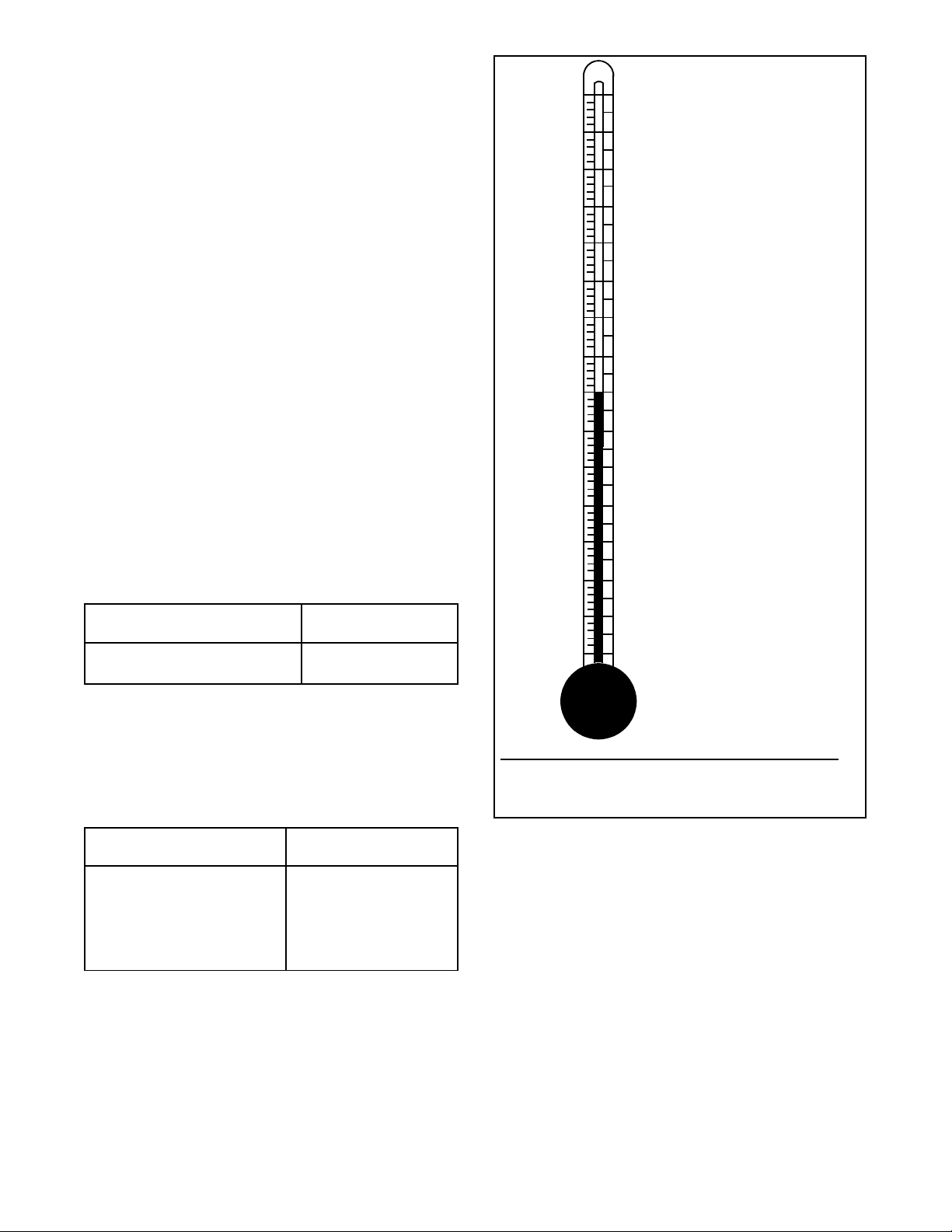
TP-6880 2/21 65Section 4 Scheduled Maintenance
4.7.1 Checking Electrolyte Level
Check the electrolyte level of batteries with filler caps
monthly. Remove filler caps and verify that electrolyte
level reaches bottom of filler holes. Refill as necessary
with distilled water. DO NOT add fresh electrolyte.
Tighten all filler caps. If water is added during freezing
temperatures, run the generator set for 20- 30 minutes
to mix the electrolyte and water to prevent battery
damage from freezing.
4.7.2 Checking Specific Gravity
Use a battery hydrometer to check the specific gravity of
the electrolyte in each battery cell. While holding the
hydrometer vertically, read the number on the glass bulb
at the top of the electrolyte level or the number adjacent
to the pointer. If the hydrometer used does not have a
correction table, use the correction factors in
Figure 4-12. Determine specific gravity and electrolyte
temperature of battery cells. Locate temperature in
Figure 4-12 and adjust the specific gravity by the
amount shown.
The battery is fully charged if the specific gravity is 1.260
at an electrolyte temperature of 80°F (26.7°C). The
difference between specific gravities of each cell should
not exceed 0.01. Charge the battery if the specific
gravity is below 1.215 at an electrolyte temperature of
80°F (26.7°C). See Figure 4-10.
Specific Gravity,
Corrected to
80
°
F (26.7
°
C)
Battery
Condition
Below 1.215 Needs charging
1.260 Fully charged
Figure 4-10 Specific Gravity Interpretation
Some battery testers have four or five beads in the test
tube. Draw electrolyte into the tube as performed with
the battery hydrometer described previously. Use the
manufacturer’s instructions. Figure 4-11 interprets
typical test results.
Number of Floating Beads
Battery
Condition
5 Overcharged
4 Fully charged
3 Good charge
1 or 2 Low charge
0 Dead battery
Figure 4-11 Bead-Type Test Interpretation
10
20
30
40
50
60
70
80
90
100
110
120
130
140
150
160
- 12.2
- 6.7
- 1.1
4.4
10
21.1
26.7
32.2
37.8
43.3
48.9
54.4
60.0
65.6
71.1
15.6
+ .032
+ .030
+ .028
+ .026
+ .024
+ .022
+ .020
+ .018
+ .016
+ .014
+ .012
+ .010
+ .008
+ .006
+ .004
+ .002
0
- .002
- .004
- . 006
- .008
- .010
- .012
- .014
- .016
- .018
- .020
- .022
- .024
- .026
- .028
°
C
°
F
EXAMPLE NO. 1—
Temperature below 80
°
F (26.7
°
C)
Hydrometer Reading 1.250
Acid Temperature 20
°
F (- 6.7
°
C)
Subtract .024 Specific Gravity
Corrected Specific Gravity is
1.226
1.250 - .024 = 1.226
EXAMPLE NO. 2—
Temperature above 80
°
F (26.7
°
C)
Hydrometer Reading 1.235
Acid Temperature 100
°
F (37.8
°
C)
Add .008 Specific Gravity
Corrected Specific Gravity is
1.243
1.235 + .008 = 1.243
The temperature correction amounts to about .004 (4 points) of
specific gravity for each 10°F (5.5°C) change in temperature.
Correction
1-787
Temperature
Figure 4-12 Specific Gravity Temperature Correction

TP-6880 2/2166 Section 4 Scheduled Maintenance
4.8 Storage Procedure
Perform the following storage procedure before
removing the generator set from service for three
months or longer. Follow the engine manufacturer’s
recommendations for storage, if available.
Note: Run the generator set monthly whenever
possible.
4.8.1 Lubricating System
1. Operate the generator set until it reaches operating
temperature, or about 15 minutes.
2. Stop the generator set.
3. While the engine is still warm, drain the engine
lubrication oil from the engine crankcase.
4. Refill engine crankcase with oil. See Section 4.2.3
for oil recommendations.
5. Run the generator set for a few minutes to
distribute the clean oil.
6. Stop the generator set.
4.8.2 Fuel System
1. Start the generator set.
2. With the generator set running, shut off the gas
supply.
3. Run the generator set until the engine stops.
4. Press the OFF button on the generator set
controller.
4.8.3 Cylinder Lubrication
1. Remove the spark plugs.
2. Pour one tablespoon of engine oil into each spark
plug hole. Install the spark plugs and ground the
spark plug leads. Do not connect the leads to the
plugs.
3. Crank the engine two or three revolutions to
lubricate the cylinders.
4.8.4 Exterior Preparation
1. Clean the exterior surface of the generator set.
2. Seal all openings in the engine with nonabsorbent
adhesive tape.
3. Mask all areas to be used for electrical contact.
4. Spread a light film of oil over unpainted metallic
surfaces to prevent rust and corrosion.
4.8.5 Battery
Perform battery storage last.
1. Press the OFF button on the generator set
controller.
2. Disconnect the battery, negative (- ) lead first.
3. Clean the battery.
4. Place the battery in a warm, dry location.
5. Connect the battery to a float/equalize battery
charger, or charge the battery monthly using a
trickle charger. Follow the battery charger
manufacturer’s recommendations.

TP-6880 2/21 67Section 5 Troubleshooting
Section 5 Troubleshooting
5.1 Introduction
Use the troubleshooting charts in this section to
diagnose and correct common problems. First check for
simple causes such as a dead engine starting battery,
loose connections, or an open circuit breaker. The
charts include a list of common problems, possible
causes of the problem, and recommended corrective
actions.
If the procedures in this manual do not explain how to
correct the problem, contact an authorized Kohler
distributor/dealer. Maintain a record of repairs and
adjustments performed on the equipment. Use the
record to help describe the problem and repairs or
adjustments made to equipment.
5.2 USB Port
A USB port is located on the front of the controller. See
Figure 1-2 for location. Use a USB cable with a mini-B
connector to connect the controller to your personal
computer (laptop).
Some controller settings can be adjusted using a laptop
computer with Kohler SiteTech software. SiteTech
software is available to Kohler authorized distributors
and dealers. See TP-6701, SiteTech Software
Operation Manual, for more information.
5.3 Fault Messages
The controller displays fault messages to aid in
troubleshooting. Selected fault messages and
recommended checks are listed in Figure 2-4.
Identify and correct the cause of the fault condition.
Then reset the controller after a fault shutdown. See
Section 2.5.4.
5.4 Circuit Protection
If the generator set circuit breaker trips repeatedly,
contact an authorized Kohler distributor/ dealer for
service.
5.4.1 Controller Internal Circuit
Protection
The controller is equipped with internal circuit
protection. A fault message, Accy PwrOver Warning or
MainPwrOverL Shutdown, is displayed if this internal
protection is activated. Press OFF to reset. Contact an
authorized Kohler distributor/ dealer for service.
5.4.2 Line Circuit Breaker
The line circuit breaker interrupts the generator output in
the event of a fault in the wiring between the generator
and the load. If the circuit breaker trips, reduce the load
and switch the breaker back to the ON position.
5.4.3 Auxiliary Winding Circuit Breaker
A resettable circuit breaker protects the alternator. The
circuit breaker is located in the junction box area. See
Figure 1-2.
5.5 Stop Switch
The generator set may be equipped with an optional
emergency stop switch. Verify that it is safe to start the
generator set and apply power to the load before
deactivating this switch. See Section 2.3.4.
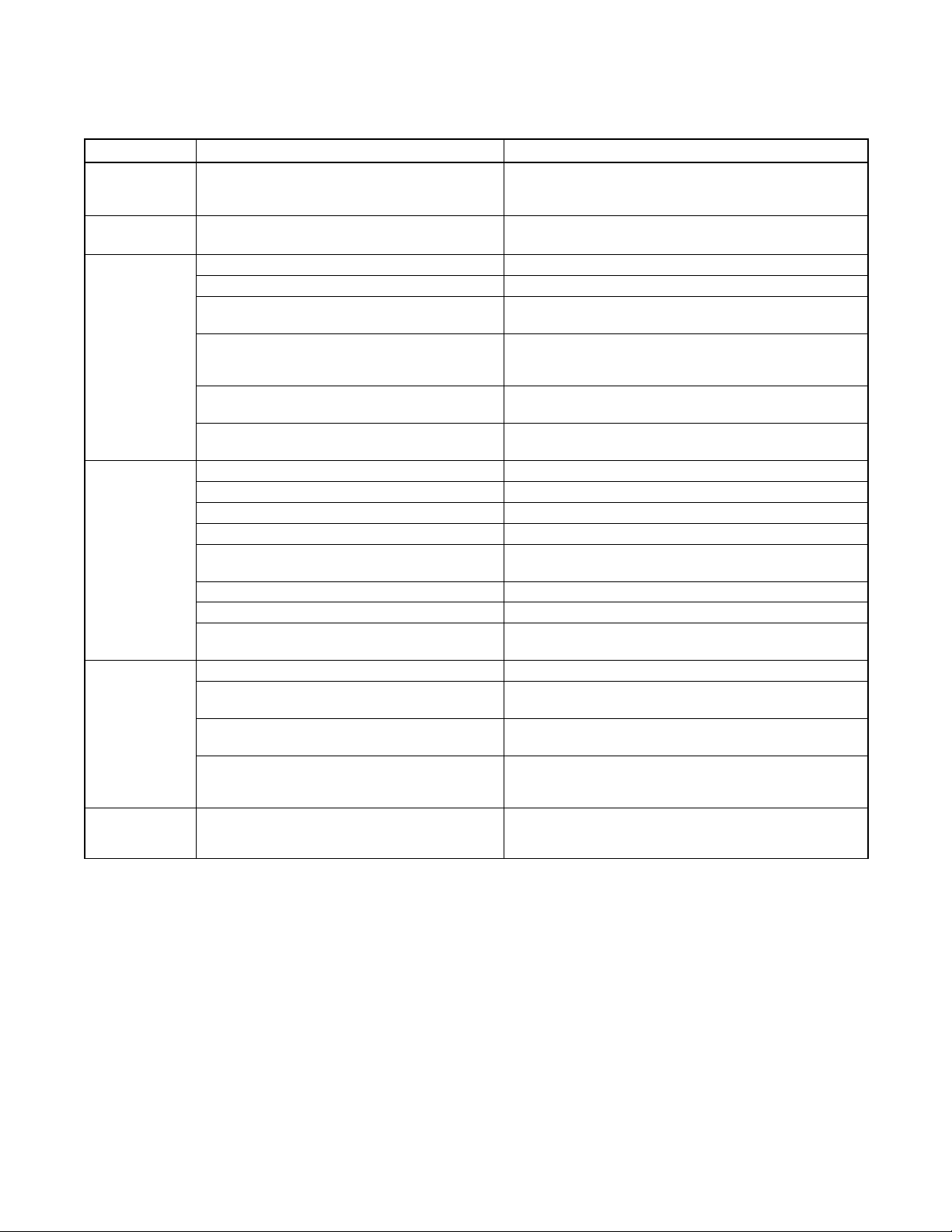
TP-6880 2/2168 Section 5 Troubleshooting
5.6 Troubleshooting
Figure 5-1 contains generator set troubleshooting, diagnostic, and repair information. Check for loose connections
before replacing parts.
Problem Possible Cause Corrective Action
Controller
display
backlight is off.
Backlight turns off after about 1 minute with no
activity.
Backlight will turn on when a button is pressed or the
generator set starts.
Controller
display is off.
Low or no battery voltage. Check connections.
Check generator set battery. See Figure 5-1.
The generator
set does not
crank.
Battery weak or dead. Recharge or replace the battery.
Battery connections reversed or poor. Check the connections.
Emergency stop switch activated. Verify that it is safe to start the engine and apply load.
Then reset the stop switch or engine shutdown switch.
Fault shutdown. Check the controller display for fault messages. See
Section 2.5. Correct the fault condition and reset the
controller.
Generator set in the OFF mode. Press the RUN button to start the engine or press AUTO
to allow remote starting.
Gererator thermostat tripped. For trips other than temperature (nuisance trips), reset
the thermostat. See Section 2.6.
The generator
set cranks but
does not start,
starts hard,
lacks power, or
operates
erratically.
Air cleaner clogged. Clean and/or replace the air cleaner.
Battery weak or dead. Recharge or replace the battery.
Battery connection poor. Clean and tighten the battery connections.
Spark plug wire connection loose. Check the spark plug wires.
Low oil pressure shutdown. Check for oil leaks. Check the oil level and add oil if
necessary.
Fuel pressure insufficient. Check the fuel supply and valves.
Engine malfunction. Contact an authorized Kohler distributor/dealer.
Gererator thermostat tripped. For trips other than temperature (nuisance trips), reset
the thermostat. See Section 2.6.
No AC output.
Line circuit breaker in the OFF position. Place the circuit breaker in the ON position.
Line circuit breaker tripping because of
overload.
Reduce the load on the generator set.
Line circuit breaker tripping because of short
circuit.
Contact an authorized Kohler distributor/dealer for
service.
Auxiliary winding circuit breaker tripped. Reset the circuit breaker (located in junction box).
Contact an authorized Kohler distributor/dealer for
service if breaker trips repeatedly.
Low output or
excessive drop
in voltage.
Generator set overloaded. Reduce the load.
TP-6880 2/21 69Section 5 Troubleshooting
Problem Possible Cause Corrective Action
Generator set
stops suddenly.
Low oil pressure shutdown. Check for oil leaks. Check the oil level and add oil if
necessary.
Out of fuel. Check fuel supply.
Overcrank shutdown. Reset the controller. If the overcrank fault occurs again,
contact an authorized Kohler distributor/dealer.
Auxiliary winding circuit breaker tripped. Reset the circuit breaker (located in junction box.)
Contact an authorized Kohler distributor/dealer for
service if breaker trips repeatedly.
Emergency stop switch activated. Verify that it is safe to start the engine and apply load.
Then reset the stop switch or engine shutdown switch.
Fault shutdown. Check the controller display for fault messages. See
Section 2.5. Correct the fault condition and reset the
controller.
Generator set in the OFF mode. Press the RUN button to start the engine or press AUTO
to allow remote starting.
Remote stop command received from a remote
switch, ATS, or OnCue Plus.
Check the remote switch position. Check OnCue Plus.
Engine malfunction. Contact an authorized Kohler distributor/dealer.
Figure 5-1 General Troubleshooting Chart

TP-6880 2/2170 Section 5 Troubleshooting
Notes

TP-6880 2/21 Appendix 71
Appendix A Abbreviations
The following list contains abbreviations that may appear in this publication.
A, amp ampere
ABDC after bottom dead center
AC alternating current
A/D analog to digital
ADC advanced digital control;
analog to digital converter
adj. adjust, adjustment
ADV advertising dimensional
drawing
Ah amp-hour
AHWT anticipatory high water
temperature
AISI American Iron and Steel
Institute
ALOP anticipatory low oil pressure
alt. alternator
Al aluminum
ANSI American National Standards
Institute (formerly American
Standards Association, ASA)
AO anticipatory only
APDC Air Pollution Control District
API American Petroleum Institute
approx. approximate, approximately
APU Auxiliary Power Unit
AQMD Air Quality Management District
AR as required, as requested
AS as supplied, as stated, as
suggested
ASE American Society of Engineers
ASME American Society of
Mechanical Engineers
assy. assembly
ASTM American Society for Testing
Materials
ATDC after top dead center
ATS automatic transfer switch
auto. automatic
aux. auxiliary
avg. average
AVR automatic voltage regulator
AWG American Wire Gauge
AWM appliance wiring material
bat. battery
BBDC before bottom dead center
BC battery charger, battery
charging
BCA battery charging alternator
BCI Battery Council International
BDC before dead center
BHP brake horsepower
blk. black (paint color), block
(engine)
blk. htr. block heater
BMEP brake mean effective pressure
bps bits per second
br. brass
BTDC before top dead center
Btu British thermal unit
Btu/min. British thermal units per minute
C Celsius, centigrade
cal. calorie
CAN controller area network
CARB California Air Resources Board
CAT5 Category 5 (network cable)
CB circuit breaker
CC crank cycle
cc cubic centimeter
CCA cold cranking amps
ccw. counterclockwise
CEC Canadian Electrical Code
cert. certificate, certification, certified
cfh cubic feet per hour
cfm cubic feet per minute
CG center of gravity
CID cubic inch displacement
CL centerline
cm centimeter
CMOS complementary metal oxide
substrate (semiconductor)
com communications (port)
coml commercial
Coml/Rec Commercial/Recreational
conn. connection
cont. continued
CPVC chlorinated polyvinyl chloride
crit. critical
CSA Canadian Standards
Association
CT current transformer
Cu copper
cUL Canadian Underwriter’s
Laboratories
CUL Canadian Underwriter’s
Laboratories
cu. in. cubic inch
cw. clockwise
CWC city water-cooled
cyl. cylinder
D/A digital to analog
DAC digital to analog converter
dB decibel
dB(A) decibel (A weighted)
DC direct current
DCR direct current resistance
deg., ° degree
dept. department
dia. diameter
DI/EO dual inlet/end outlet
DIN Deutsches Institut fur Normung
e. V. (also Deutsche Industrie
Normenausschuss)
DIP dual inline package
DPDT double-pole, double-throw
DPST double-pole, single-throw
DS disconnect switch
DVR digital voltage regulator
E
2
PROM, EEPROM
electrically-erasable
programmable read-only
memory
E, emer. emergency (power source)
ECM electronic control module,
engine control module
EDI electronic data interchange
EFR emergency frequency relay
e.g. for example (exempli gratia)
EG electronic governor
EGSA Electrical Generating Systems
Association
EIA Electronic Industries
Association
EI/EO end inlet/end outlet
EMI electromagnetic interference
emiss. emission
eng. engine
EPA Environmental Protection
Agency
EPS emergency power system
ER emergency relay
ES engineering special,
engineered special
ESD electrostatic discharge
est. estimated
E-Stop emergency stop
etc. et cetera (and so forth)
exh. exhaust
ext. external
F Fahrenheit, female
FHM flat head machine (screw)
fl. oz. fluid ounce
flex. flexible
freq. frequency
FS full scale
ft. foot, feet
ft. lb. foot pounds (torque)
ft./min. feet per minute
ftp file transfer protocol
g gram
ga. gauge (meters, wire size)
gal. gallon
gen. generator
genset generator set
GFI ground fault interrupter
GND, ground
gov. governor
gph gallons per hour
gpm gallons per minute
gr. grade, gross
GRD equipment ground
gr. wt. gross weight
H x W x D height by width by depth
HC hex cap
HCHT high cylinder head temperature
HD heavy duty
HET high exhaust temp., high
engine temp.
hex hexagon
Hg mercury (element)
HH hex head
HHC hex head cap
HP horsepower
hr. hour
HS heat shrink
hsg. housing
HVAC heating, ventilation, and air
conditioning
HWT high water temperature
Hz hertz (cycles per second)
IBC International Building Code
IC integrated circuit
ID inside diameter, identification
IEC International Electrotechnical
Commission
IEEE Institute of Electrical and
Electronics Engineers
IMS improved motor starting
in. inch
in. H
2
O inches of water
in. Hg inches of mercury
in. lb. inch pounds
Inc. incorporated
ind. industrial
int. internal
int./ext. internal/external
I/O input/output
IP internet protocol
ISO International Organization for
Standardization
J joule
JIS Japanese Industry Standard
k kilo (1000)
K kelvin
kA kiloampere
KB kilobyte (2
10
bytes)
KBus Kohler communication protocol
kg kilogram

TP-6880 2/2172 Appendix
kg/cm
2
kilograms per square
centimeter
kgm kilogram-meter
kg/m
3
kilograms per cubic meter
kHz kilohertz
kJ kilojoule
km kilometer
kOhm, kΩ kilo-ohm
kPa kilopascal
kph kilometers per hour
kV kilovolt
kVA kilovolt ampere
kVAR kilovolt ampere reactive
kW kilowatt
kWh kilowatt-hour
kWm kilowatt mechanical
kWth kilowatt-thermal
L liter
LAN local area network
L x W x H length by width by height
lb. pound, pounds
lbm/ft
3
pounds mass per cubic feet
LCB line circuit breaker
LCD liquid crystal display
LED light emitting diode
Lph liters per hour
Lpm liters per minute
LOP low oil pressure
LP liquefied petroleum
LPG liquefied petroleum gas
LS left side
L
wa
sound power level, A weighted
LWL low water level
LWT low water temperature
m meter, milli (1/1000)
M mega (10
6
when used with SI
units), male
m
3
cubic meter
m
3
/hr. cubic meters per hour
m
3
/min. cubic meters per minute
mA milliampere
man. manual
max. maximum
MB megabyte (2
20
bytes)
MCCB molded-case circuit breaker
MCM one thousand circular mils
meggar megohmmeter
MHz megahertz
mi. mile
mil one one-thousandth of an inch
min. minimum, minute
misc. miscellaneous
MJ megajoule
mJ millijoule
mm millimeter
mOhm, mΩmilliohm
MOhm, MΩmegohm
MOV metal oxide varistor
MPa megapascal
mpg miles per gallon
mph miles per hour
MS military standard
ms millisecond
m/sec. meters per second
mtg. mounting
MTU Motoren-und Turbinen-Union
MW megawatt
mW milliwatt
µF microfarad
N, norm. normal (power source)
NA not available, not applicable
nat. gas natural gas
NBS National Bureau of Standards
NC normally closed
NEC National Electrical Code
NEMA National Electrical
Manufacturers Association
NFPA National Fire Protection
Association
Nm newton meter
NO normally open
no., nos. number, numbers
NPS National Pipe, Straight
NPSC National Pipe, Straight-coupling
NPT National Standard taper pipe
thread per general use
NPTF National Pipe, Taper-Fine
NR not required, normal relay
ns nanosecond
OC overcrank
OD outside diameter
OEM original equipment
manufacturer
OF overfrequency
opt. option, optional
OS oversize, overspeed
OSHA Occupational Safety and Health
Administration
OV overvoltage
oz. ounce
p., pp. page, pages
PC personal computer
PCB printed circuit board
pF picofarad
PF power factor
ph., ∅ phase
PHC Phillips head Crimptite
(screw)
PHH Phillips hex head (screw)
PHM pan head machine (screw)
PLC programmable logic control
PMG permanent magnet generator
pot potentiometer, potential
ppm parts per million
PROM programmable read-only
memory
psi pounds per square inch
psig pounds per square inch gauge
pt. pint
PTC positive temperature coefficient
PTO power takeoff
PVC polyvinyl chloride
qt. quart, quarts
qty. quantity
R replacement (emergency)
power source
rad. radiator, radius
RAM random access memory
RBUS RS-485 proprietary
communications
RDO relay driver output
ref. reference
rem. remote
Res/Coml Residential/Commercial
RFI radio frequency interference
RH round head
RHM round head machine (screw)
rly. relay
rms root mean square
rnd. round
RO read only
ROM read only memory
rot. rotate, rotating
rpm revolutions per minute
RS right side
RTDs Resistance Temperature
Detectors
RTU remote terminal unit
RTV room temperature vulcanization
RW read/write
SAE Society of Automotive
Engineers
scfm standard cubic feet per minute
SCR silicon controlled rectifier
s, sec. second
SI Systeme international d’unites,
International System of Units
SI/EO side in/end out
sil. silencer
SMTP simple mail transfer protocol
SN serial number
SNMP simple network management
protocol
SPDT single-pole, double-throw
SPST single-pole, single-throw
spec specification
specs specification(s)
sq. square
sq. cm square centimeter
sq. in. square inch
SMS short message service
SS stainless steel
std. standard
stl. steel
tach. tachometer
TB terminal block
TCP transmission control protocol
TD time delay
TDC top dead center
TDEC time delay engine cooldown
TDEN time delay emergency to
normal
TDES time delay engine start
TDNE time delay normal to
emergency
TDOE time delay off to emergency
TDON time delay off to normal
temp. temperature
term. terminal
THD total harmonic distortion
TIF telephone influence factor
tol. tolerance
turbo. turbocharger
typ. typical (same in multiple
locations)
UF underfrequency
UHF ultrahigh frequency
UIF user interface
UL Underwriter’s Laboratories, Inc.
UNC unified coarse thread (was NC)
UNF unified fine thread (was NF)
univ. universal
URL uniform resource locator
(web address)
US undersize, underspeed
UV ultraviolet, undervoltage
V volt
VAC volts alternating current
VAR voltampere reactive
VDC volts direct current
VFD vacuum fluorescent display
VGA video graphics adapter
VHF very high frequency
W watt
WCR withstand and closing rating
w/ with
WO write only
w/o without
wt. weight
xfmr transformer

TPMP-6880 2/21 Appendix 73
Appendix B DC2 Controller Operation
Note: Models 8RESVL, 10RESVL, and 12RESVL built before 2019 are equipped with the DC2 controller.
DC2 Generator Set/ Transfer Switch Controller
The DC2 controls the following power system components:
Model 8RESVL, 10RESVL, or 12RESVL generator set
Model RXT Automatic Transfer Switch (ATS)
Programmable Interface Module (PIM)
DC2 controller features include:
Two-line x 16 character backlit digital display with adjustable contrast
OFF, AUTO, RUN, and EXERCISE generator set
control buttons
Controls and Indicators
Figure 5-2 illustrates the DC2 controller. See Figure 5-3 for details of the controller’s user interface.
1. User Interface
2. USB port (mini-B); see Section 5.2
1
2
GM77569
Figure 5-2 DC2 Controls and Indicators
1. 2-line LCD display
2. EXERCISE button
3. RUN button and LED
4. AUTO button and LED
5. OFF button and LED
1
4 3
5
2
GM77569
Figure 5-3 DC2 User Interface
TPMP-6880 2/2174 Appendix
Controller Keypad
Control Buttons
The RUN, OFF, and AUTO buttons control the generator set as described in Figure 5-4.
Use the EXERCISE button to set the exerciser on the DC2 controller.
Note: A personal computer (laptop) with Kohler SiteTech software is required for changing settings on the DC2
controller.
Button Button Function
RUN Press to start the generator set. The engine start time delay is ignored.
The software version and engine model are displayed briefly when RUN is pressed.
OFF Stops the generator set. The cooldown time delay is ignored.
During the engine crank cycle, pressing OFF will stop the crank cycle.
Press to clear faults and reset the controller.
Press and hold to access the event log.
AUTO Press to place the generator set in Automatic (standby) mode.
Press to exit the event log.
Press and hold AUTO and OFF to reset the maintenance timer.
EXERCISE When the controller is in AUTO mode, press to set the exerciser.
When the controller is OFF, press and hold to reset the OnCue password.
Figure 5-4 DC2 Controller Pushbutton Operation
LED Indicators
LEDs above the RUN, OFF, and AUTO buttons indicate the mode of operation as shown in Figure 5-5.
LED LED Indication Description
RUN RUN LED is on. Generator set is running. Remote start and stop commands are ignored.
OFF
OFF LED lights for 2
seconds, then flashes
every 2 seconds.
Generator set and controller are off. Remote start/stop commands have no ef-
fect. The exercise cycle will not run.
In Auto mode, OFF LED
flashes quickly to indicate
a fault shutdown.
Attention required. Identify and correct the fault condition before resetting the
controller.
AUTO AUTO LED is on. Automatic (standby) mode. Generator set will respond to engine start and
stop commands from the controller (for example, exercise start and stop com-
mands) or an ATS. Time delays operate as described in Section 2.3.
Figure 5-5 DC2 Controller LED Operation
TPMP-6880 2/21 Appendix 75
LCD Display
The controller is equipped with a two-line x 16 character backlit digital display with adjustable contrast. When the
generator set is running, the messages shown in Figure 5-6 are displayed. When the system is in AUTO, the LCD
display steps through the status messages shown in Figure 5-7.
When a fault or warning condition exists, the controller will show the corresponding message. See Section 2.5 for more
information on fault and warning messages.
The display backlight turns off after about a minute of no activity. The backlight turns on when a button is pressed or
when the generator set starts.
Running
ATS: Normal *
Voltage: 240V
Freq: 60.0Hz
Engine: 123F
Oil Pressure: OK
Battery 12.3V
Runtime: 12345.6 h
Next Exercise:
7d 6h 42m
Sample data shown.
Active Alert
(if any)
OnCue Status:
Disconnected
* Model RXT ATS required
OnCue status is displayed only if OnCue password has been reset.
Figure 5-6 Status Displays, Generator Running
TPMP-6880 2/2176 Appendix
Genset State
Standby
Battery 12.3V
Runtime: 12345.6 h
Next Exercise:
7d 6h 42m
Sample data shown.
Active Alert
(if any)
Next Maint:
123h or 12months
OnCue Status:
Disconnected
OnCue status is displayed only if OnCue password has
been reset.
Figure 5-7 Status Displays, Generator in Standby
Controller Power
The DC2 controller is powered by the generator set engine starting battery.
Note: To disconnect controller power, disconnect the utility power to the generator set and disconnect the battery
(negative lead first).
Battery Charging
The controller includes a built-in battery charger to maintain the engine starting battery. The DC2 controller monitors
the battery voltage and provides a constant 14 ±2% VDC voltage and maximum 2.5 amps to charge the battery.
The installer must connect 120 VAC/60Hz utility power provided from the building on a breaker-protected circuit for the
built-in battery charger. See the Installation Manual for instructions to connect power.
Exercise
The DC2 controller can be set to automatically run the generator set at the same time and day each week. Exercising
the generator set weekly is required to keep the engine and alternator in good operating condition.
A laptop computer with Kohler SiteTech software can be used to change the exercise frequency to every two
weeks. Use a USB cable to connect the controller to the computer and see TP-6701, SiteTech Operation Manual for
instructions.

TPMP-6880 2/21 Appendix 77
Exercise Modes
Unloaded Cycle or Loaded Full-Speed exercises can be set from the DC2 controller. The Unloaded Cycle exercise
mode is the default exercise mode. A Model RXT transfer switch is required for the Loaded Full-Speed exercise mode.
See Section 2.4 for more information about the exercise modes.
A laptop computer with Kohler SiteTech software can be used to change the exercise mode to Unloaded Full
Speed.
Setting the Exerciser
Set the exerciser to automatically run the generator set for 20 minutes every week. Follow the procedure below to set
the exerciser.
Procedure to Set the Exerciser
1. Press AUTO. Verify that the AUTO LED is on and Utility power is available.
2. Press the exercise button to start an unloaded exercise.
3. If a loaded exercise is required, press the Exercise button again within 5 seconds.
4. After 5 seconds, the generator begins its crank cycles. During the crank cycles, the number of the crank cycle is
displayed. No button presses are acknowledged during the crank cycles.
5. The generator runs through the exercise cycle described in Section 2.4.2. The controller monitors the system
during the unloaded exercise as described in System Diagnostics.
6. After 20 minutes, the engine stops automatically.
The exercise time is set to the time the exercise button is pressed. An unloaded or loaded exercise, as selected above,
will occur at the same time every seven days.
Exerciser Reset
To reset the exerciser to run at a different day and/or time, follow the procedure above to enter the new exerciser
settings. The old settings will be replaced by the new time and day.
Faults
The controller displays fault messages for generator set warnings and shutdowns. Selected fault messages are shown
in Figure 2-4.
Warnings
The controller displays a fault message but the generator set does not shut down on a warning. The controller resets
automatically after a warning condition is corrected.
Shutdowns
Under a fault shutdown condition, the generator set shuts down automatically and the controller displays a fault
message. The OFF LED flashes. In some cases, the engine cooldown cycle runs before the engine shuts down. See
Figure 2-4.
TPMP-6880 2/2178 Appendix
Shutdown switches (such as the low oil pressure switch or high engine temperature switch) on the generator set will
automatically reset when the problem is corrected. However, the fault condition at the controller does not clear until the
controller is reset.
The generator set cannot be restarted until the fault condition is corrected and the controller is reset. See Section 2.5.4
for instructions to reset the controller after a fault shutdown.
ATS Communication Errors
When a Model RXT transfer switch is used, an ATS fault indicates that the connection to the interface board on the
transfer switch has been lost. Check the connection to the ATS interface board.
Resetting the Controller after a Fault Shutdown
Always identify and correct the cause of a fault shutdown before resetting the controller. Check the fault message
displayed on the controller and refer to Figure 2-4 to identify and correct the fault condition before proceeding. Contact
an authorized distributor/dealer for service, if necessary.
Press the OFF button to clear the fault message on the controller.
Event Log
The event log displays up to 10 controller faults and notices, starting with the most recent event. Events are numbered
1- 10, with 1 being the most recent. Each event is displayed with the date and time of the event, the number of the
event, a letter to indicate whether the event was a warning (W ), shutdown (S), or informational notice (I), the engine
hours at the time of the event, and the event description. See Figure 5-8.
tp6804
Any Screen
Event number, W/S/I, engine hours
Event name
Press AUTO button at any time to exit the event log.
Hold
OFF
Press OFF
Event number, W/S/I, engine hours
Event name
Figure 5-8 Event Log
Procedure to View Event Log
1. Press the OFF button. The controller must be OFF to display the event log.
2. Press and hold the OFF button until the first event appears on the display.
3. Press OFF to step through the other events.
4. To exit the Event Log, hold the OFF button or press the AUTO button.

TPMP-6880 2/21 Appendix 79
Maintenance Timer
The maintenance timer keeps track of the time until the next recommended maintenance according to the
maintenance schedule for the generator set. Reset the maintenance timer after changing the oil and performing the
other maintenance tasks recommended in Section 4.
To reset the maintenance timer:
1. Press and hold the OFF and AUTO buttons together until Maintenance Timer Reset is displayed.
2. Release the OFF and AUTO buttons.
OnCue Plus Password
To set the OnCue Plus password on the DC2 controller,
1. Press the OFF button and verify that the generator set is not running.
2. Press and hold the Exercise button until Press Again to Reset OnCue PW is displayed.
3. Release the Exercise button and press it again within 5 seconds.
Note: If the Exercise button is not pressed within 5 seconds, the controller exits the password reset mode.
4. The genset serial number and new password (PW) will be displayed for 10 seconds. Record the password for
entry into the OnCue Plus program.

2014 Kohler Co. All rights reserved.
TP-6880 2/21e
KOHLER CO., Kohler, Wisconsin 53044
Phone 920-457-4441, Fax 920-459-1646
For the nearest sales/service outlet in the
US and Canada, phone 1-800-544-2444
KOHLERPower.com