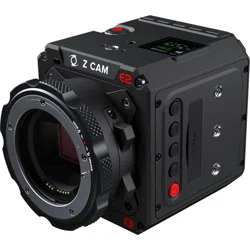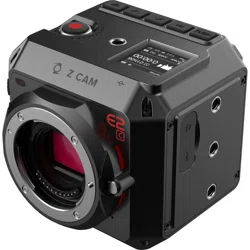

Z CAM
E2C
User Manual v1.2
Draft
(Firmware 0.94)
1. Introduction
1.1. Camera Introduction
1.2. LCD Screen
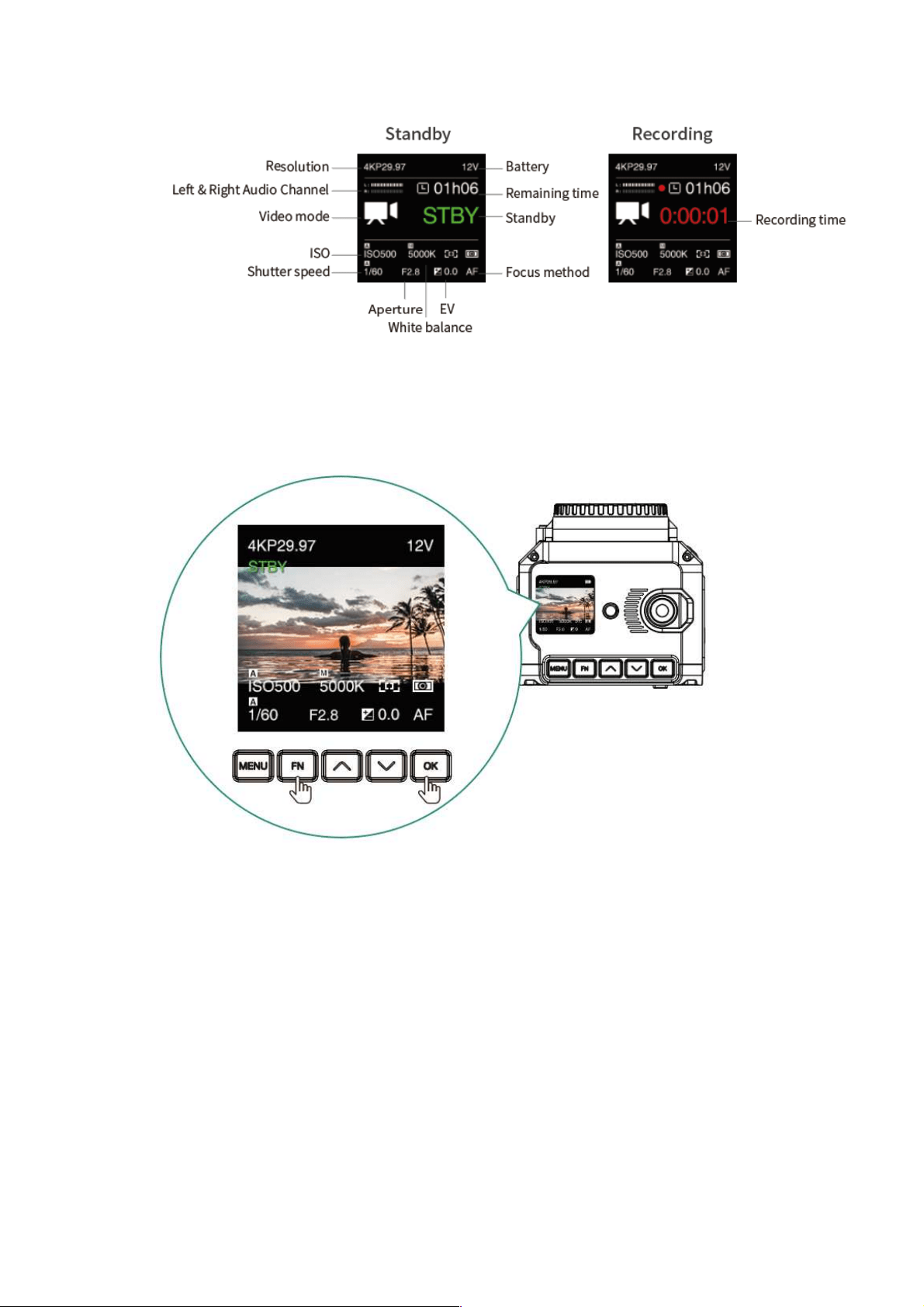
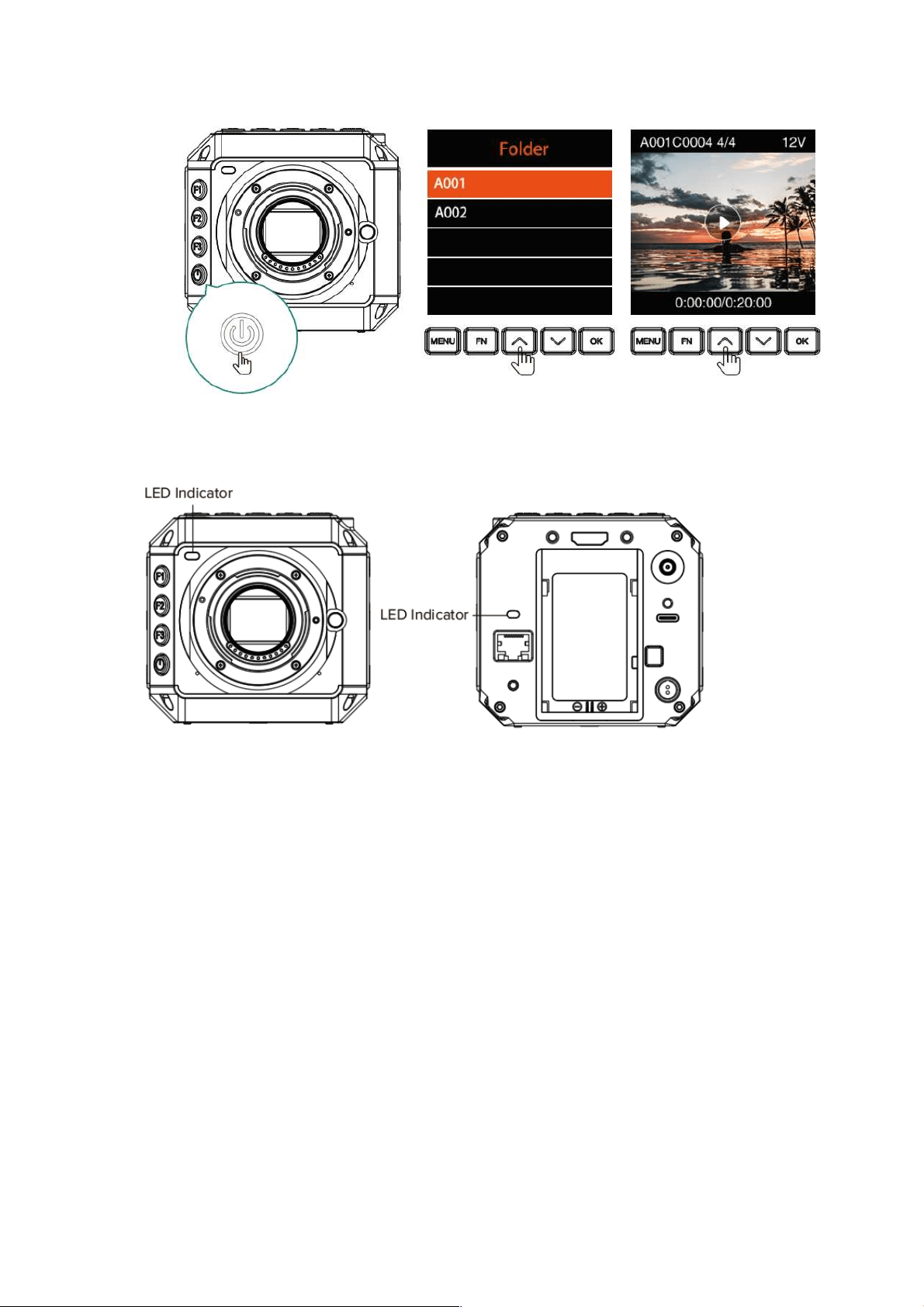
The content displayed on the LCD Screen will be different when the camera is in different
mode.
• Standby & Recording
•
• Preview
Press FN + OK button when the camera is in Standby mode, it will switch to Preview
mode. Press FN + OK again to come back to Standby mode.
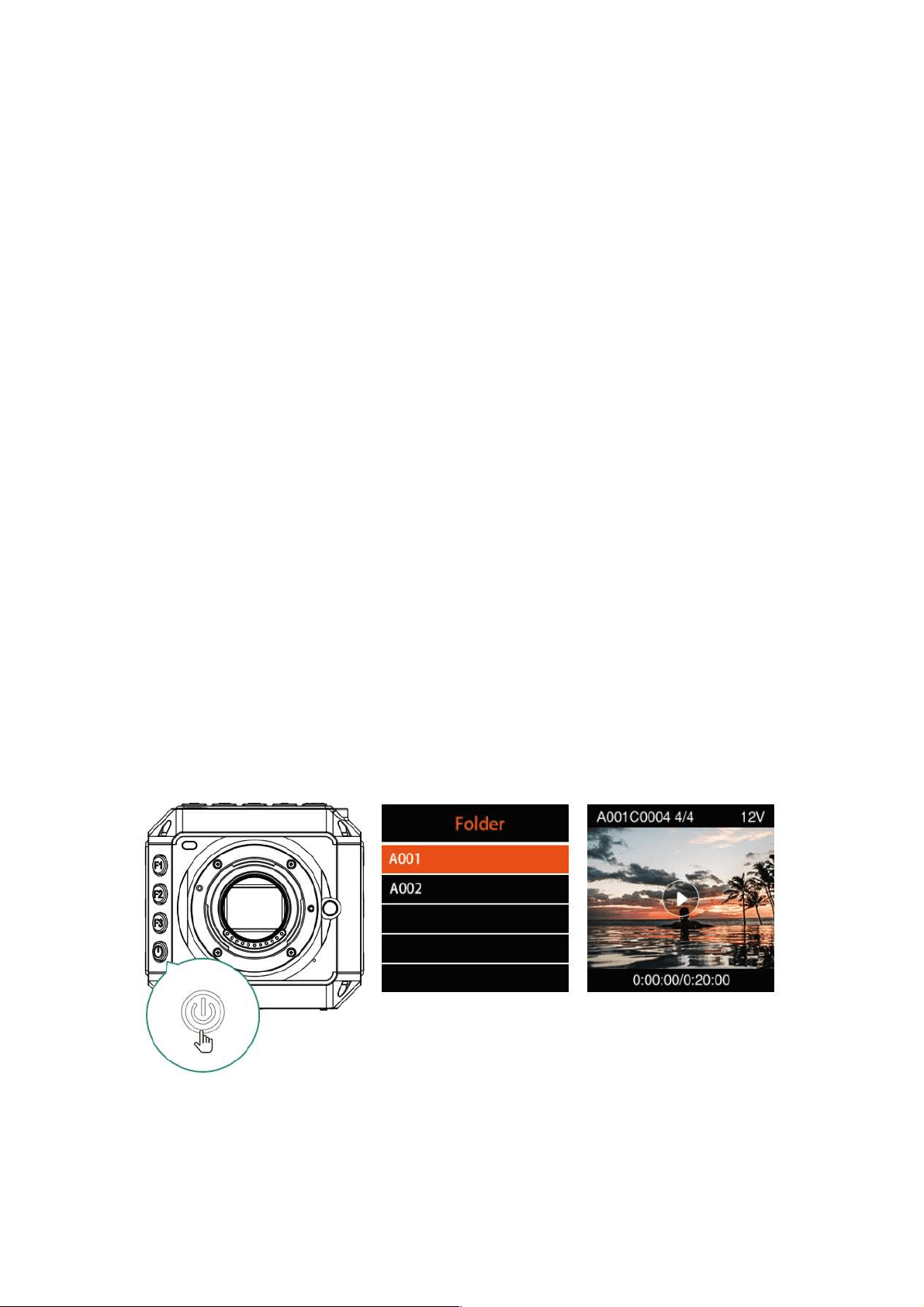
• Playback
Short press Power button when the camera is in Standby / Preview mode, it will
switch to Playback mode. Short press Power button again to come back to Standby
/ Preview mode.
1.3. LED Indicator Status
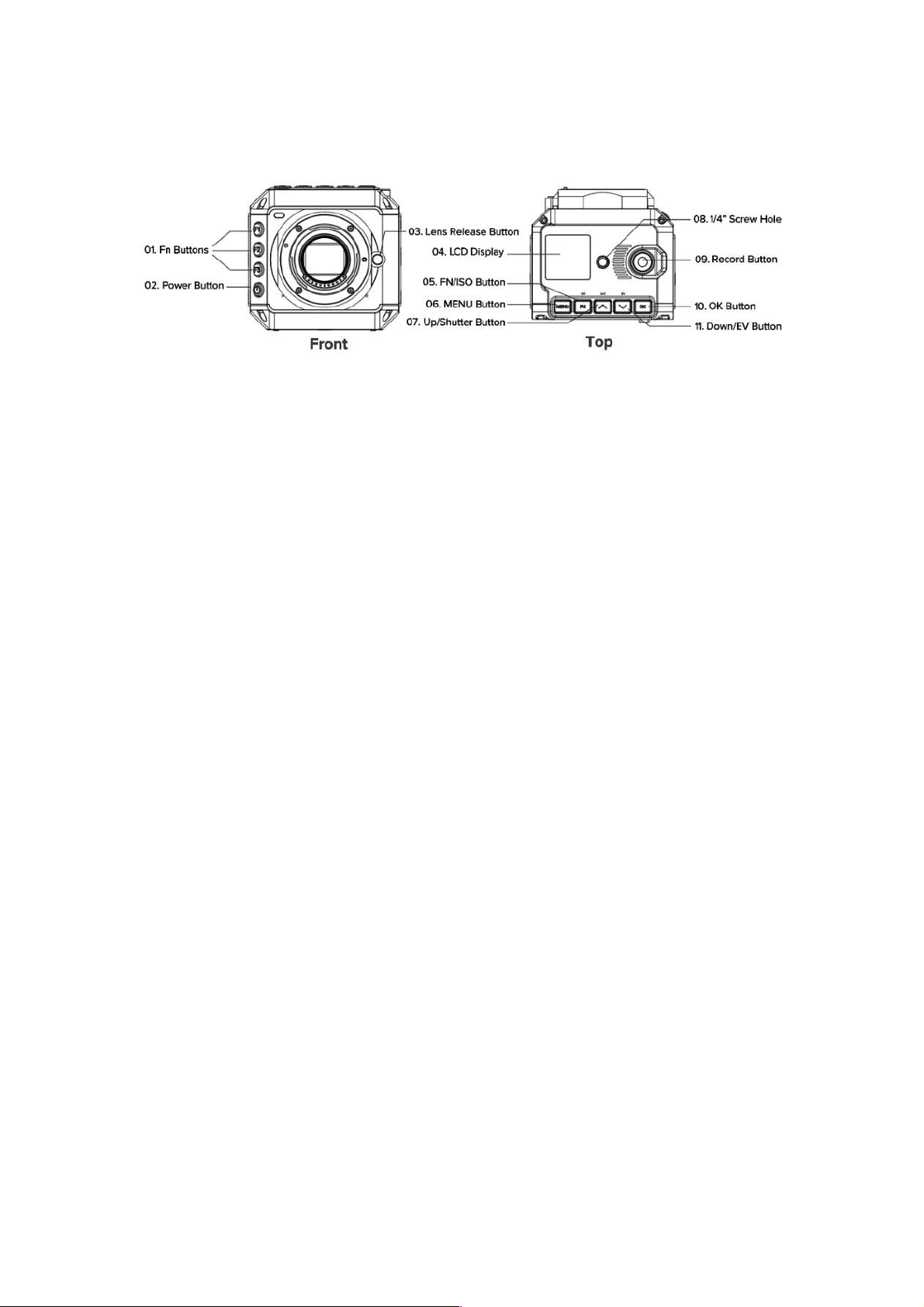
• Green
: Standby.
• Red
: Recording.
• Flashing Red (every 1s)
: No memory card.
• Flashing Red (every 0.5s)
: Memory card is full.
• Flashing Red (every 0.2s)
: Camera overheat.
• Flashing Red (very fast)
: Critical error.
• Flashing Red (fast & slow alternant)
: Low battery
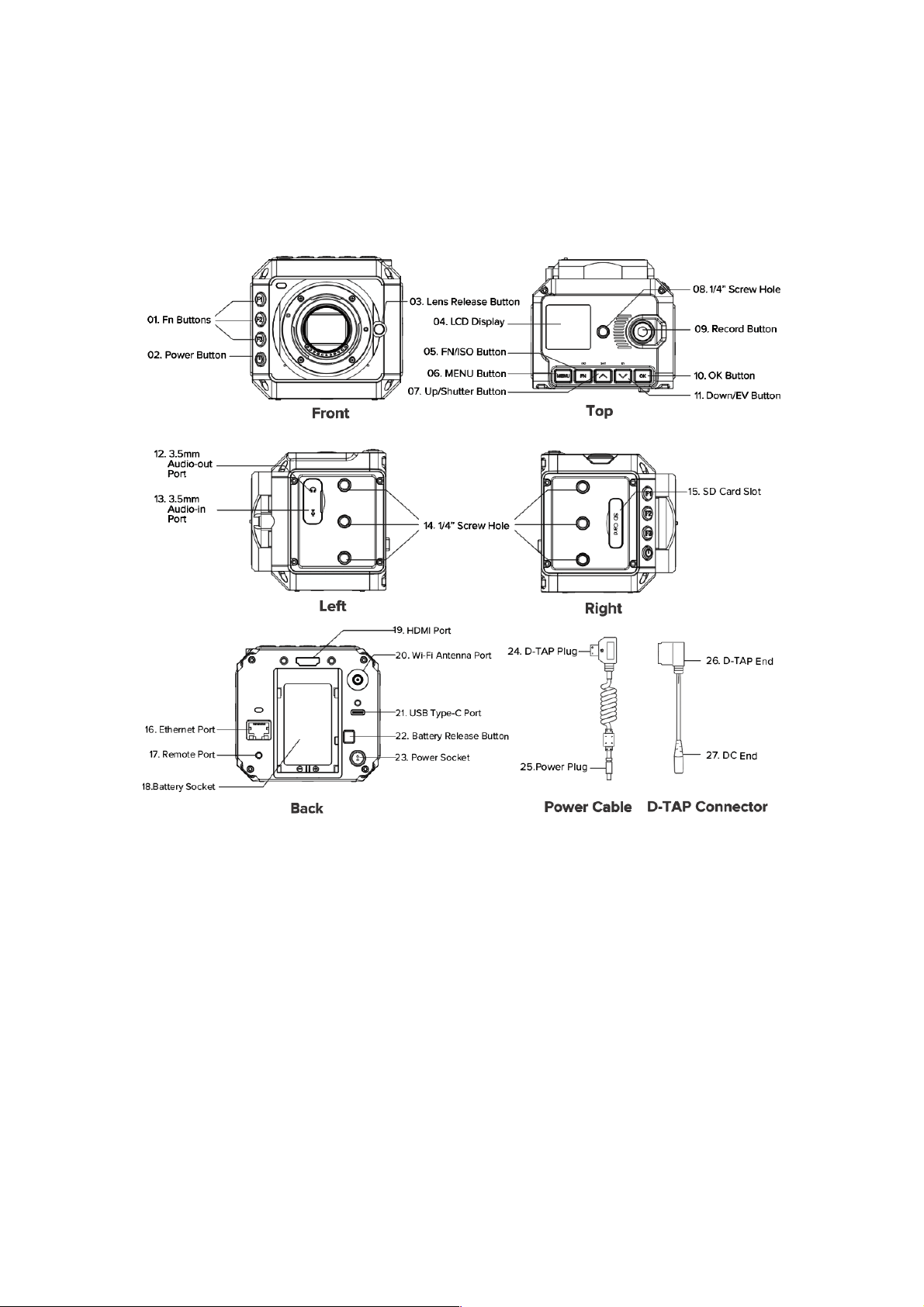
1.4. Buttons
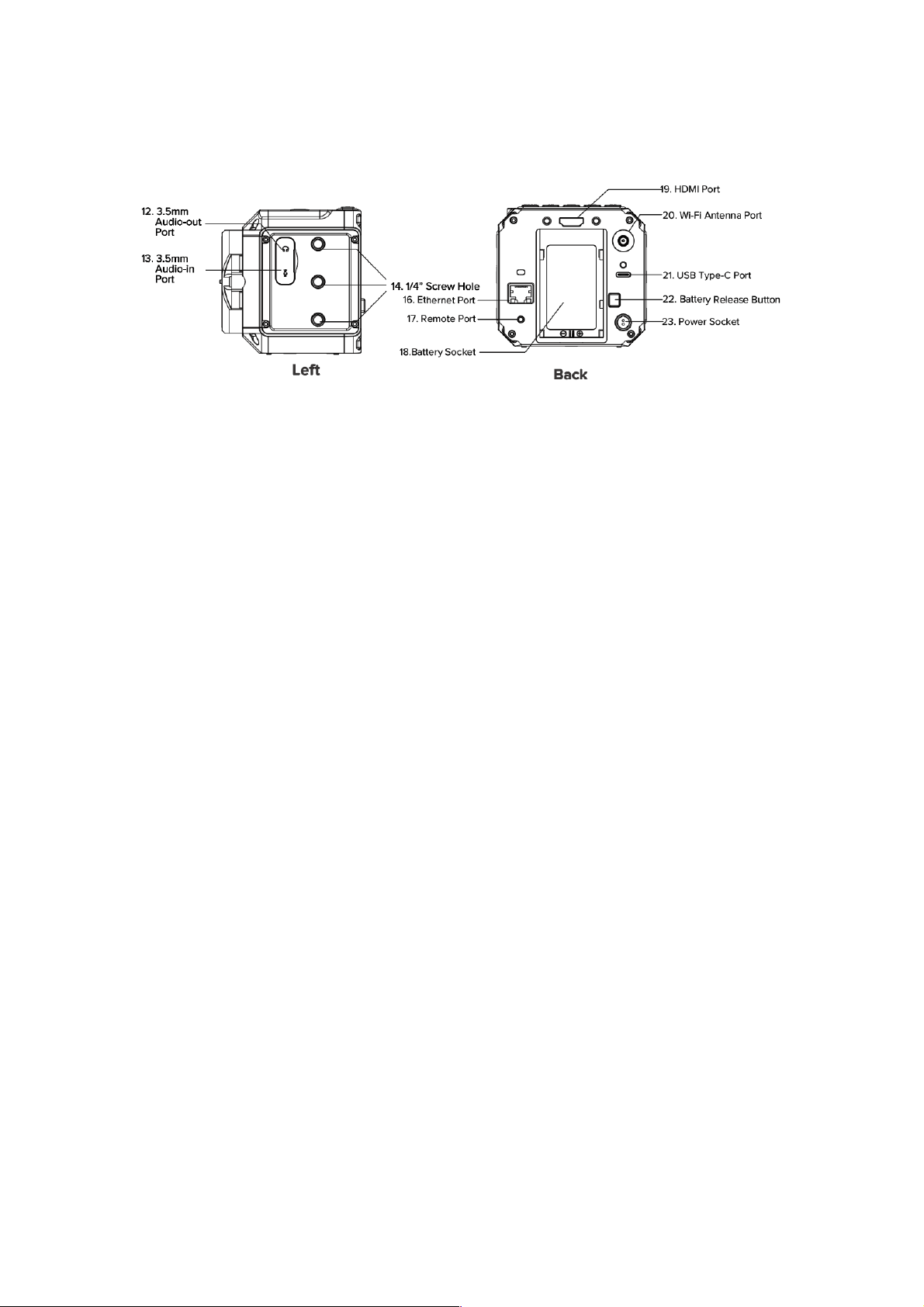
• MENU: Camera setting.
• FN / ISO: FN or ISO quick setting (2.1 Quick Settings).
• Up / SHT: Up selection (or add value) or Shutter Speed / Shutter Angle quick setting
(2.1 Quick Settings).
• Down / EV: Down selection (or reduce value) or EV quick setting (2.1 Quick
Settings).
• OK: Confirmation or to trigger the AF function (2.1 Quick Settings).
• F1: AEL (Auto Exposure Lock) by default, can be changed to other quick settings
(2.10 System - Fn).
• F2: Load profile by default, can be changed to other quick settings (2.10 System -
Fn).
• F3: Aperture quick setting by default, can be changed to other quick settings (2.10
System - Fn).
• Power button: Long press for 3 seconds to power on / off the camera, short press to
switch to / back from Playback mode.
1.5. Interfaces
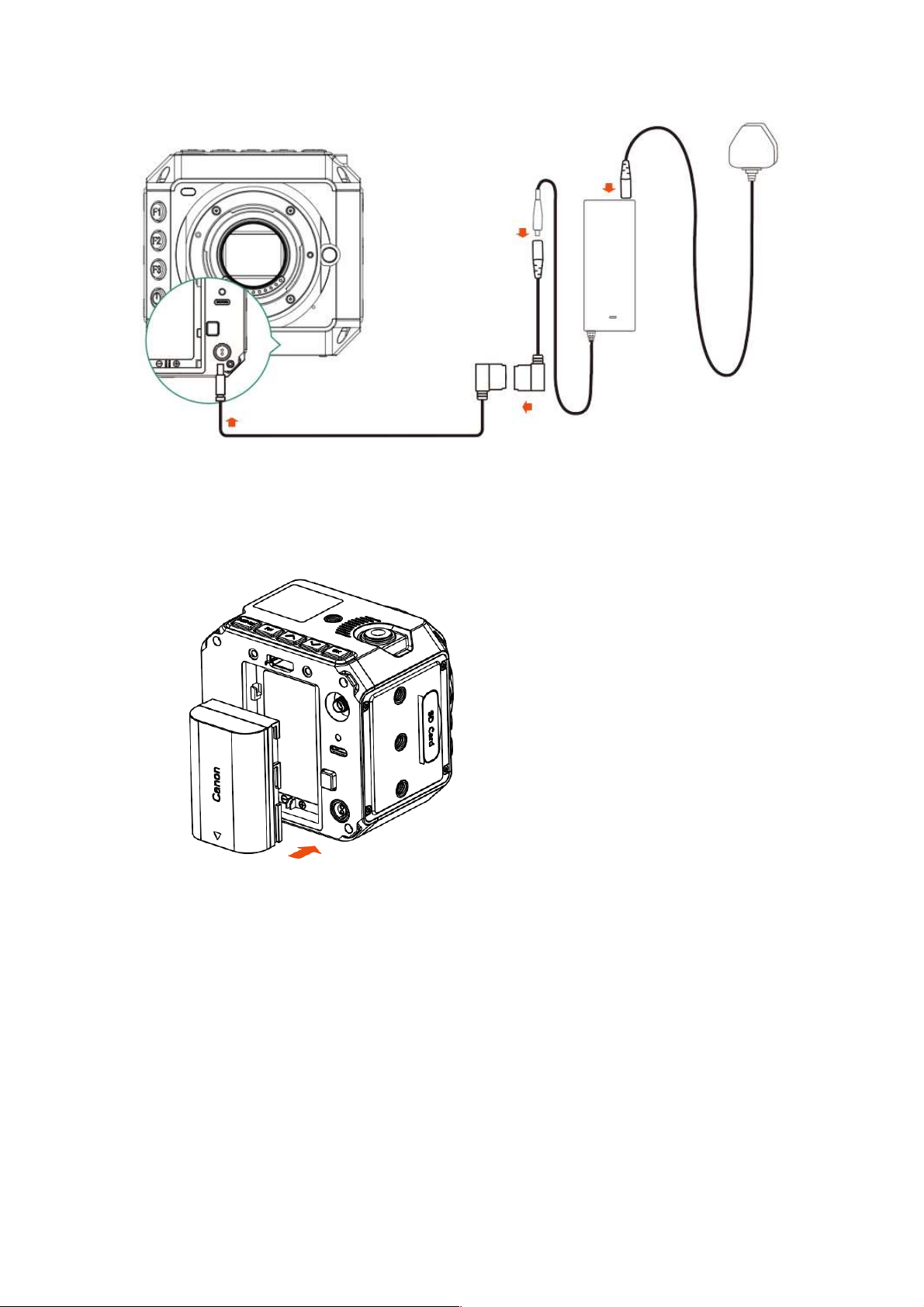
• 3.5mm audio-out: 3.5mm(TRS) jack socket, stereo audio-out, can connect
headphone for audio monitoring
• 3.5mm audio-in: 3.5mm(TRS) jack socket, support stereo microphone input (do not
support line-in), can connect external microphone
• HDMI: HDMI 2.0 Type A port, video output up to 4K @30fps(10-bit 4:2:2).
• Wi-Fi: 2.4GHz Wi-Fi antenna port, 802.11n supported.
• Ethernet: Gigabit Ethernet port for camera control, setting & live streaming (with Z
CAM software installed on PC). POE (Power Over Ethernet) supported (802.3af /
802.3at compatible, refer to “1.6 Power Options - Power over Ethernet” for more
detail).
• USB: USB 3.0 Type C port for camera control and data transformation only. USB-
Serial converter is supported.
• Remote: 2.5mm jack socket, compatible with Sony LANC protocol.
1.6. Power Options
• AC/DC Power Adapter: The camera comes with a D-TAP power cable and D-TAP /DC
connector, and can be connected to an AC/DC power adapter with 12V/3~5A output,
and 2.1 x 5.5mm DC plug. (Power adapter not included in the package)
• Camera Battery: The battery socket is compatible with Canon LP-E6 battery. (Battery
not included in the package)
• V Mount Battery: Connect the camera to a V mount battery (with D-TAP port) with the
D-TAP power cable (D-TAP plug).
• Power Over Ethernet (POE): Connect the camera to a switcher / router supports POE
(compatible with 802.3af / 802.3at standard) with an Ethernet cable (Super CAT 5 or
above, less then 100m length) , then the camera can be powered by the switcher /
router.
1.7. Storage
The camera uses SD card or SSD as storage.
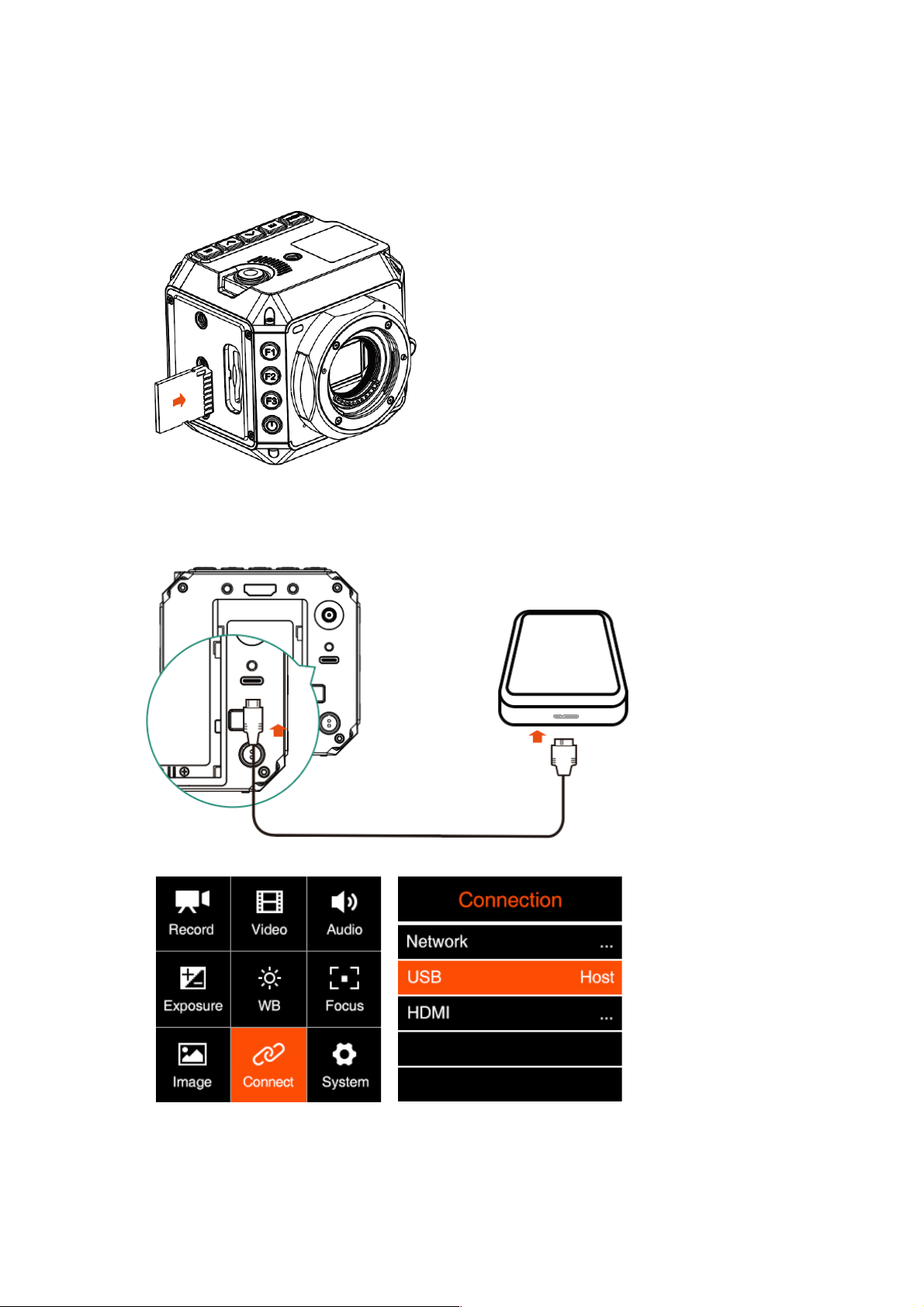
• SD card: The camera has 1 x internal SD card slot. Insert the SD card with correct
direction, push it to the end until it’s locked. To take out the SD card, push in the card
and it will be unlocked, then take it out from the slot.
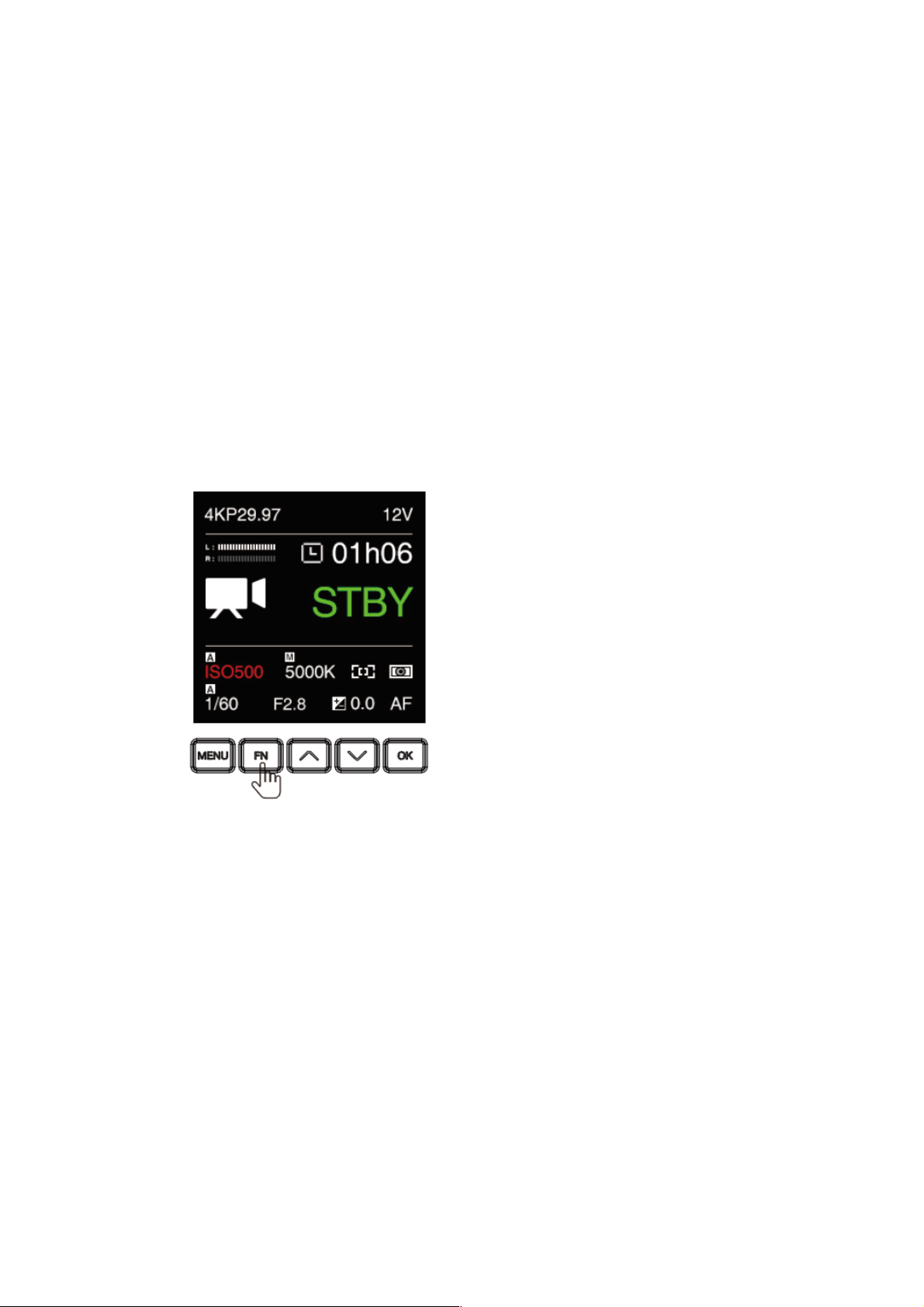
• SSD: Connect the SSD through USB-C port on back of camera as storage. (Note:
USB-C port must be in “Host” mode, see 2.9 Connect - USB)
Please not that the SSD will NOT be recognized if there is SD card in the camera.
Attention: When using a SD or SSD on Z CAM E2C for the first time, please format it on
computer in exFAT, and then format in the camera.
2. Camera Settings
2.1. Quick Setting
When the camera is in Standby or Recording mode, some key settings can be quickly
accessed by pressing the buttons on the camera.
• ISO: Press FN to set ISO, then press Up / Down to adjust the value, and OK to
confirm.
• Shutter: Press UP to set shutter speed / angle (refer to 2.5 Exposure – Shutter
Operation about shutter speed / shutter angle), then press Up / Down to adjust
the value, and OK to confirm.
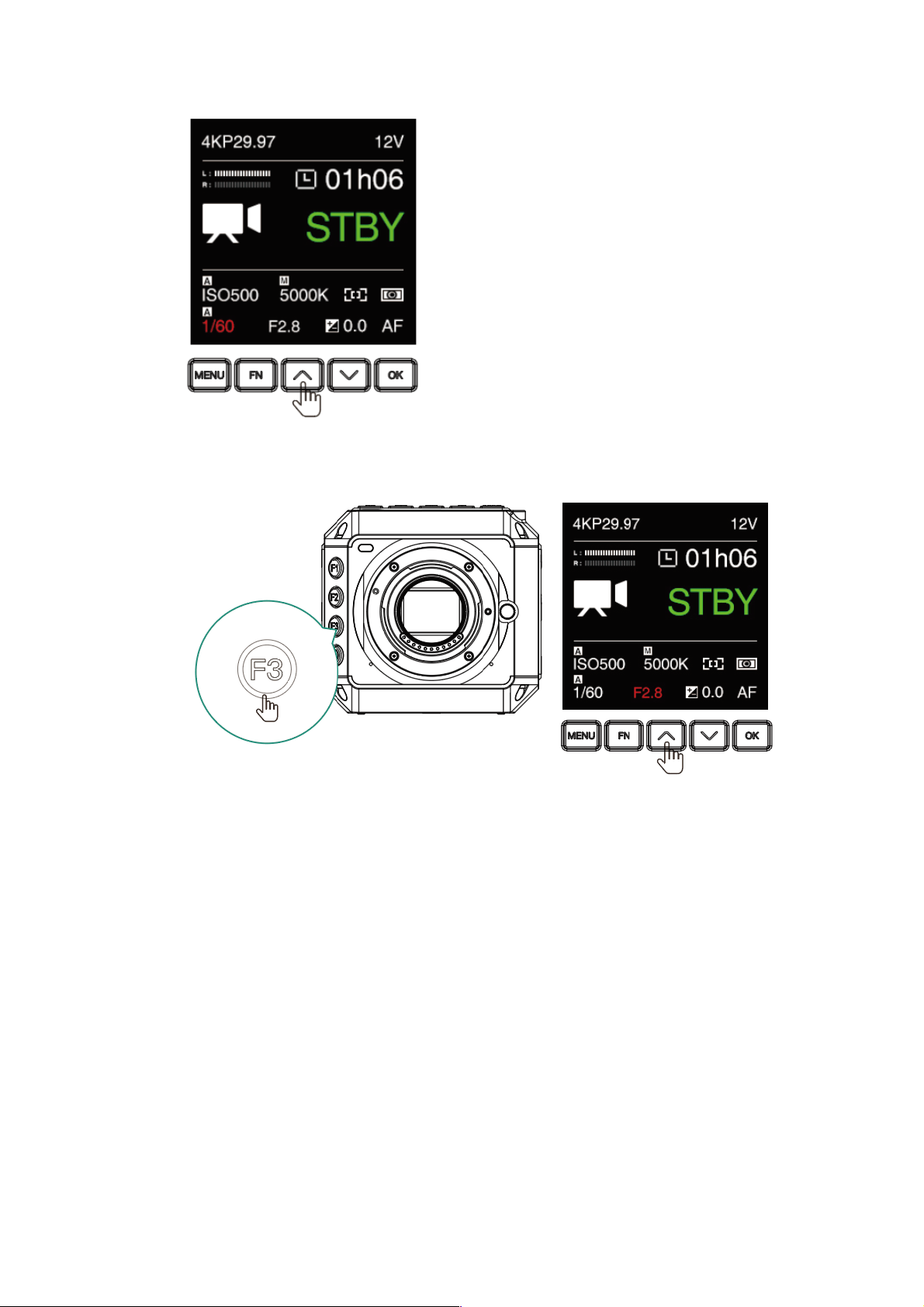
• Aperture
:
Press F3 to set the aperture, then press Up / Down to adjust the
value, and OK to confirm
• EV: Press DOWN to set the EV, then press Up / Down to adjust the value, and
OK to confirm.
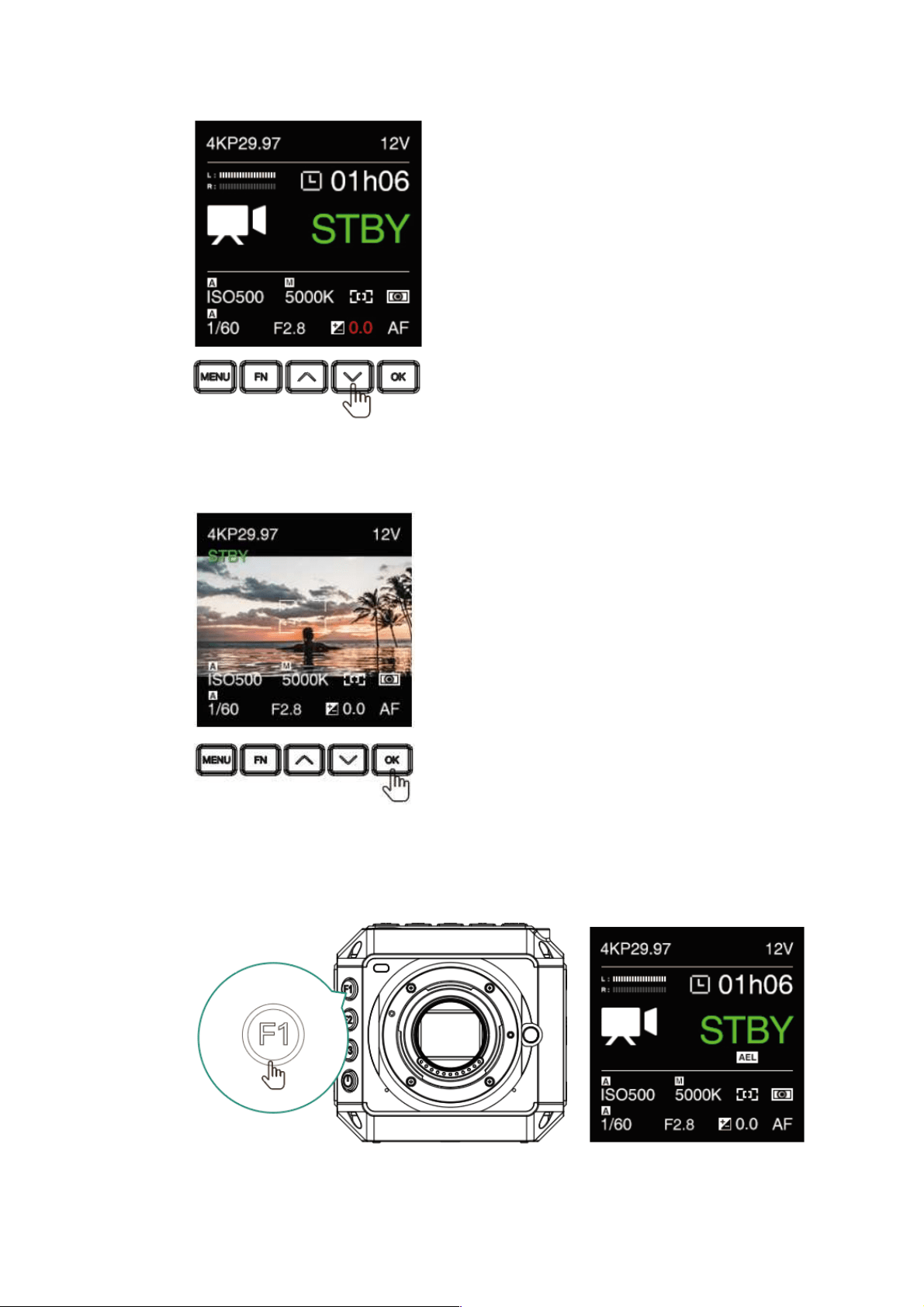
• AF: When focus is in AF mode (requires a lens with auto-focus function), press
OK to trigger the auto-focus.
•
• AEL (F1): Press F1 to lock the exposure, then press again to unlock
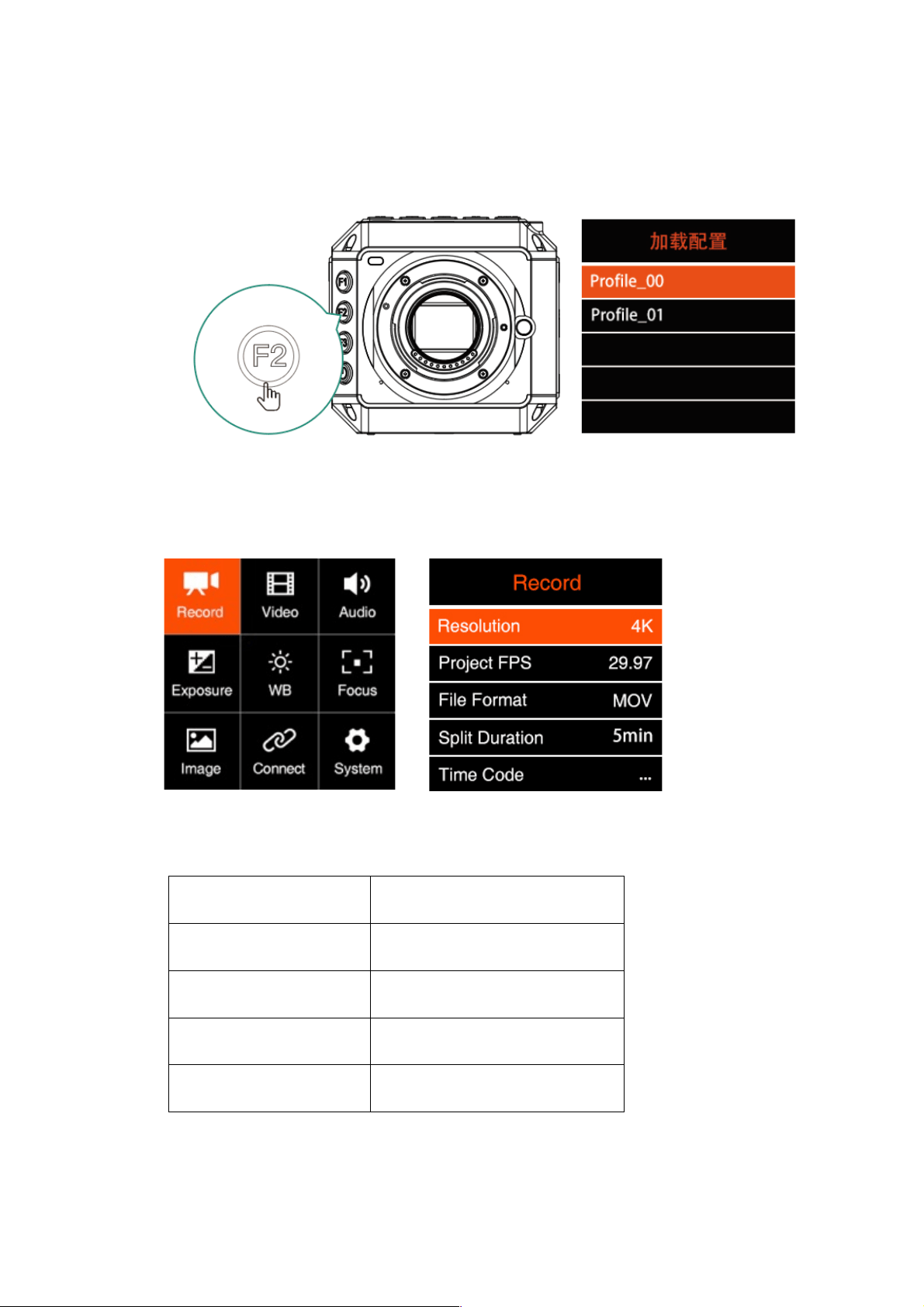
• Load profile
(
F2
)
:Load the configuration saved in the camera. (2.10 System
User Profile).
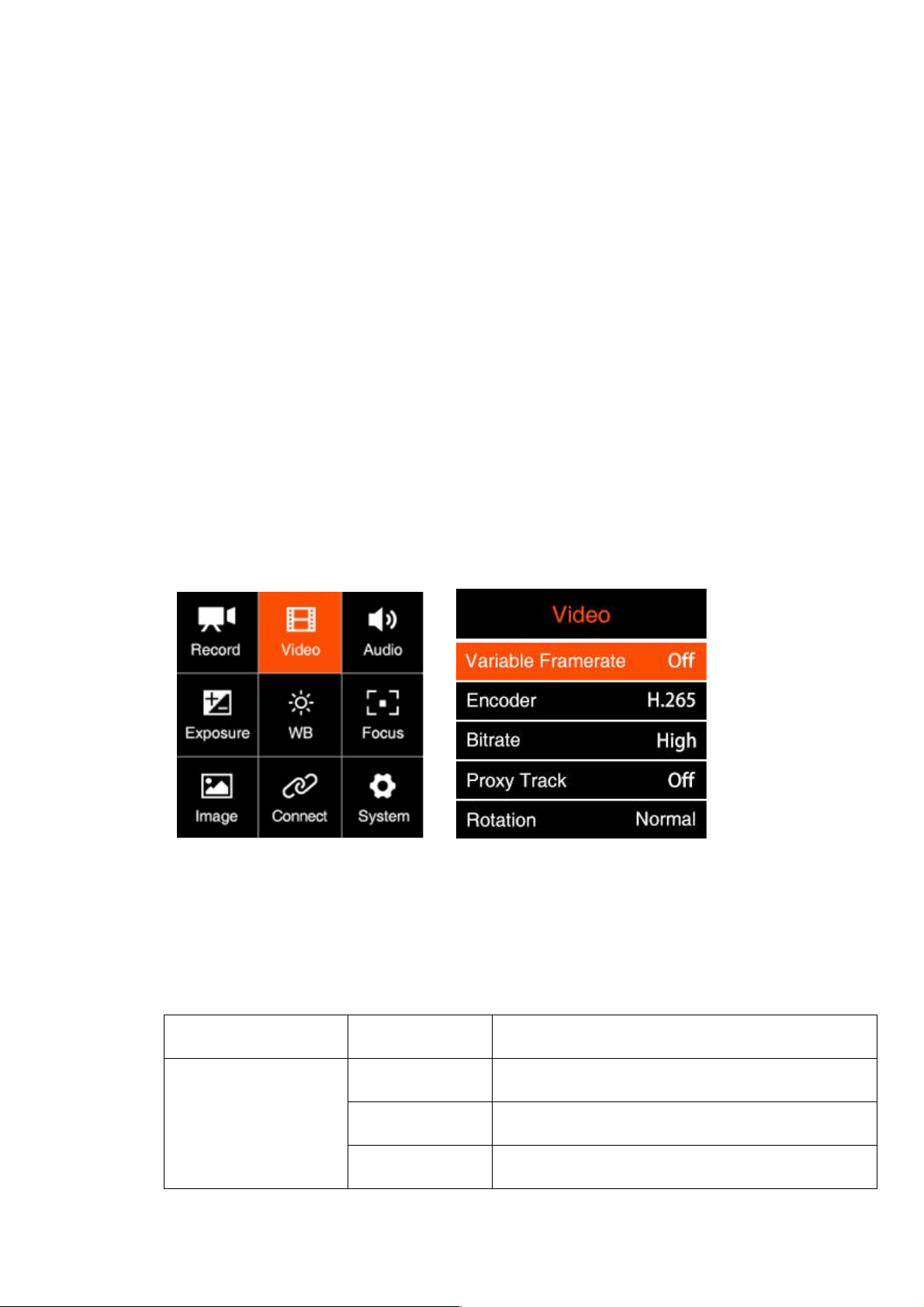
2.2. Record
Resolution
Resolution
Details
4K
3840 x 2160(16:9)
2880 x 2880
1:1 aspect ratio
2336 x 1344
the VFR can up to 60fps
1920 x 1080
16:9,the VFR can up to 60fps
• Project FPS: Frame rate of the video project. It will be different when the resolution is
set to different values.

Resolution
Project FPS
4K(3840 x 2160)/
2880 x 2880
23.98 / 24 / 25 / 29.97
2336 x 1344 / 1920 x
1080
23.98 / 24 / 25 / 29.97 / 50 /
59.94
• File format: MOV / MP4
• Split duration: 1 / 5 / 10 / 15 / 20 / 30 min. The camera will split the video with the
length set here automatically.
Note:After the first section via camera automatically splitting, the
out of sync
problem between audio and video will happen. You need to use “Z CAM™ Video
Concatenator” to merge the video section before the post editing and processing.
The download link as below:
http://www.z-cam.com/cn/software-update/
• Time Code: Set the time code, there are sub-items as below:
n Time Code Source: Internal / External
n Time Code Value: Reset / Manual / Current
1) Reset: Reset the time code value to 0.
2) Manual Input: Set the time code value manually 00:00:00:00
(hour:minute:second:frame).
3) Current Time: Set time according to the camera system setting time.
n Count Up: Rec Run / Free Run.
1) Rec Run: Counts the time code only when recording video.
2) Free Run: Counts the time code even when not recording video
(including when the camera is power off)
n Time Code Mode: DF / NDF.
1) DF: The camera modifies the difference between recorded time and time
code. Seconds and frames are separated by “.”. (Example: 00:00:00.00)
2) NDF: Records the time code without drop frame.Seconds and frames
are separated by “:”. (Example: 00:00:00:00)
n HDMI Display: On / Off. To enable / disable the display of time code through
HDMI output.
l Playback FR: Default / VFR. When it’s set to Default, the frame rate of playback will
be the same as set in Project FPS, when it’s set VFR, the frame rate of playback will
be the same as set in Variable Frame Rate (2.3 Video – Variable Frame Rate)
For example: Set “Record”-“Project FPS” to 29.97, and “Video”-“Variable Framerate”
to 60. If the "Playback FR" is set to “Default”, the playback frame rate of the video will
be 29.97fps (2 x slow motion). If the "Playback FR" is set to “Variable Frame Rate”,
the playback frame rate of the video will be 60fps (normal speed).
• Meta Setup: Set the camera metadata, include “Camera ID” and “Reel Name”.
n Camera ID: A ~ Z
n Reel Name:001 ~ 999
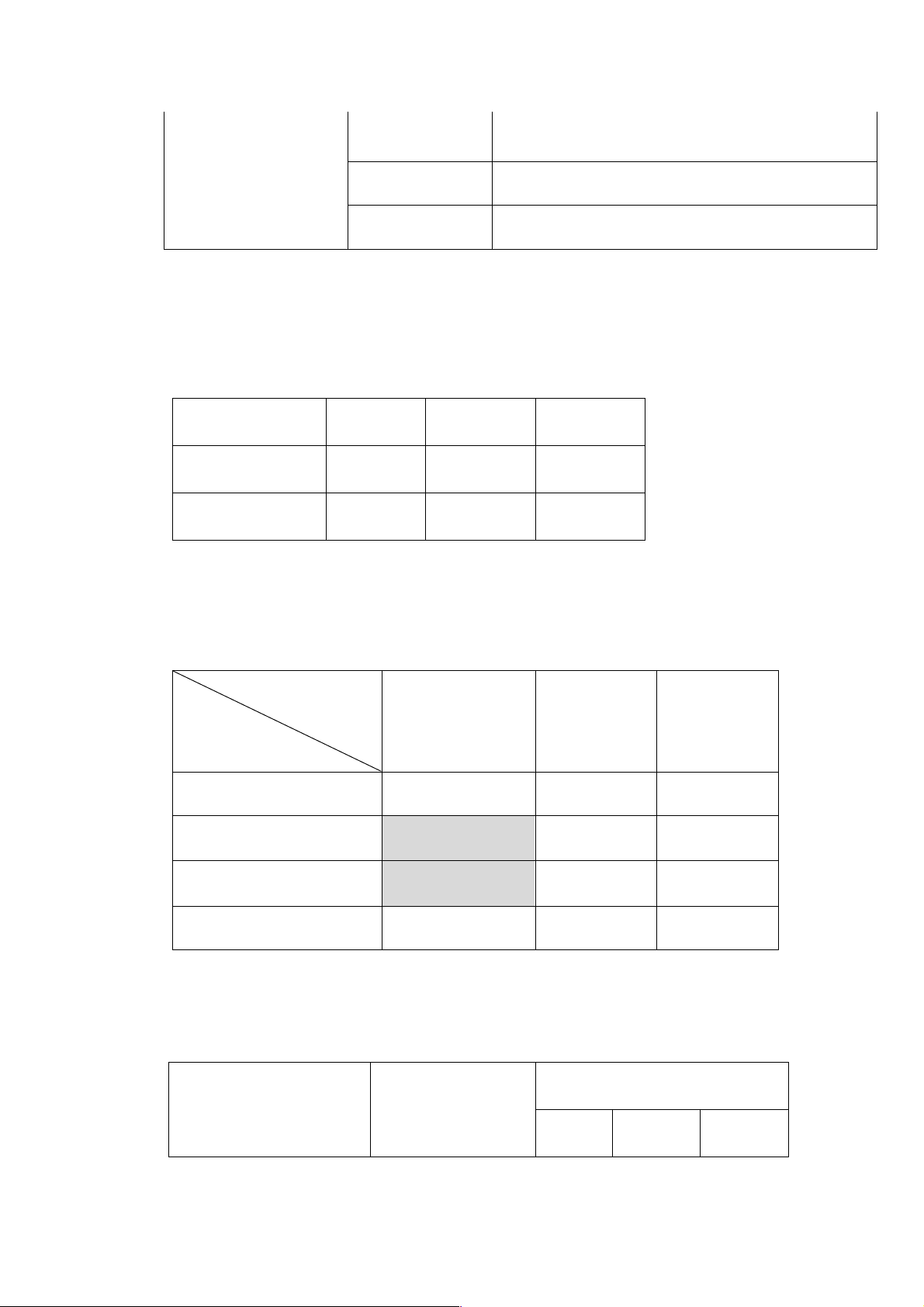
2.3. Video
• Variable Frame Rate (VFR): With VFR you can set a different frame rate for capturing
based on the Project FPS for recording, in this way you can get a slow-motion or fast-
motion footage.
VFR options are related to the Resolution and Project FPS in Record setting. Here
list the VFR under each setting combination as below:
Resolution
Project FPS
Variable Frame Rate(fps)
4K (3840 x 2160)
/ 2880 x 2880
23.98 / 24
1 / 5 / 10 / 15 / 20 / 21 / 22 / 23 / 24
25
1 / 5 / 10 / 15 / 20 / 25
29.97
1 / 5 / 10 / 15 / 30
2336 x 1344 / 1920 x
1080
23.98 / 24
1 / 5 / 10 / 15 / 20 / 21 / 22 / 23 / 24 / 40 / 48 / 60
25 / 50
1 / 5 / 10 / 15 / 20 / 25 / 50
29.97 / 59.94
1 / 5 / 10 / 15 / 30 / 60
• Encoder: H.264 / H.265 / ZRAW*
The corresponding color bit depth and sampling of each encoding format are as
follows:
Encoder
H.264
H.265
ZRAW
Color Bit Depth
8bit
10bit
12bit
Color Sampling
4:2:0
4:2:0
N/A
Optional video encoder depends on the setting of "resolution" and "frame rate" (if
"variable frame rate" is used, the value of "variable frame rate" shall prevail). The
maximum resolution/frame rate (including variable frame rate) combinations
supported by each encoding format are as follows:
Encoder
Resolution
& Max Frame Rate
H.264
H.265
ZRAW
4K
30
30
30
2880 x 2880
30
30
30
2336 x 1344
60
60
60
1920 x 1080
60
60
60
*Partial debayer ZRAW, up to 4k@30fps,compression ratio 8:1
• Bitrate: High / Middle / Low. Value of the bitrate varies in different resolution and frame
rate.
Resolution
Frame Rate (FR)
Range
(
fps
)
*
Bitrate
(
Mbps
)
High
Medium
Low

4K (3840 x 2160)
/ 2880 x 2880
FR <= 30
200
130
60
2336 x 1344 / 1920x1080
FR <= 30
30
20
10
30 < FR <= 60
60
30
15
* If VFR is activated, the frame rate here refers to the frame rate in VFR, otherwise it
refers to the frame rate in Project FPS.
• Proxy Track: On / Off. To enable or disable proxy track recording during video
recording, it will automatically “On” when using ZRAW as recording encoder, which
will record a second video track (H.265) into the video file.
Note: the proxy track can not be recorded when the following encoding format,
resolution, and code rate are set:
- H.265,Bitrate set as “High”
• Rotation: Normal / Upside Down. Rotate the image by 180 degrees.
Note: This setting is available only when the frame rate of recording is under 30fps
(include 30fps). The display on the LCD and the video output from HDMI will not be
rotated during preview and recording in current firmware, and only the video recorded
in the storage will be rotated when it’s set to “Upside Down”.
• Timelapse: Off / Manual, when it’s Off, the camera is in normal record mode. When it
is set to a specific value 00:0s, the camera is in time lapse video mode.
l VFR Control
:
Coarse / Fine
- Coarse:Adjust based on the camera’s preset value within the range of VFR
- Fine:VFR fine control within the range of VFR, 1 frame per step.
l Photo Quality
:
JPEG / RAW / HEIF
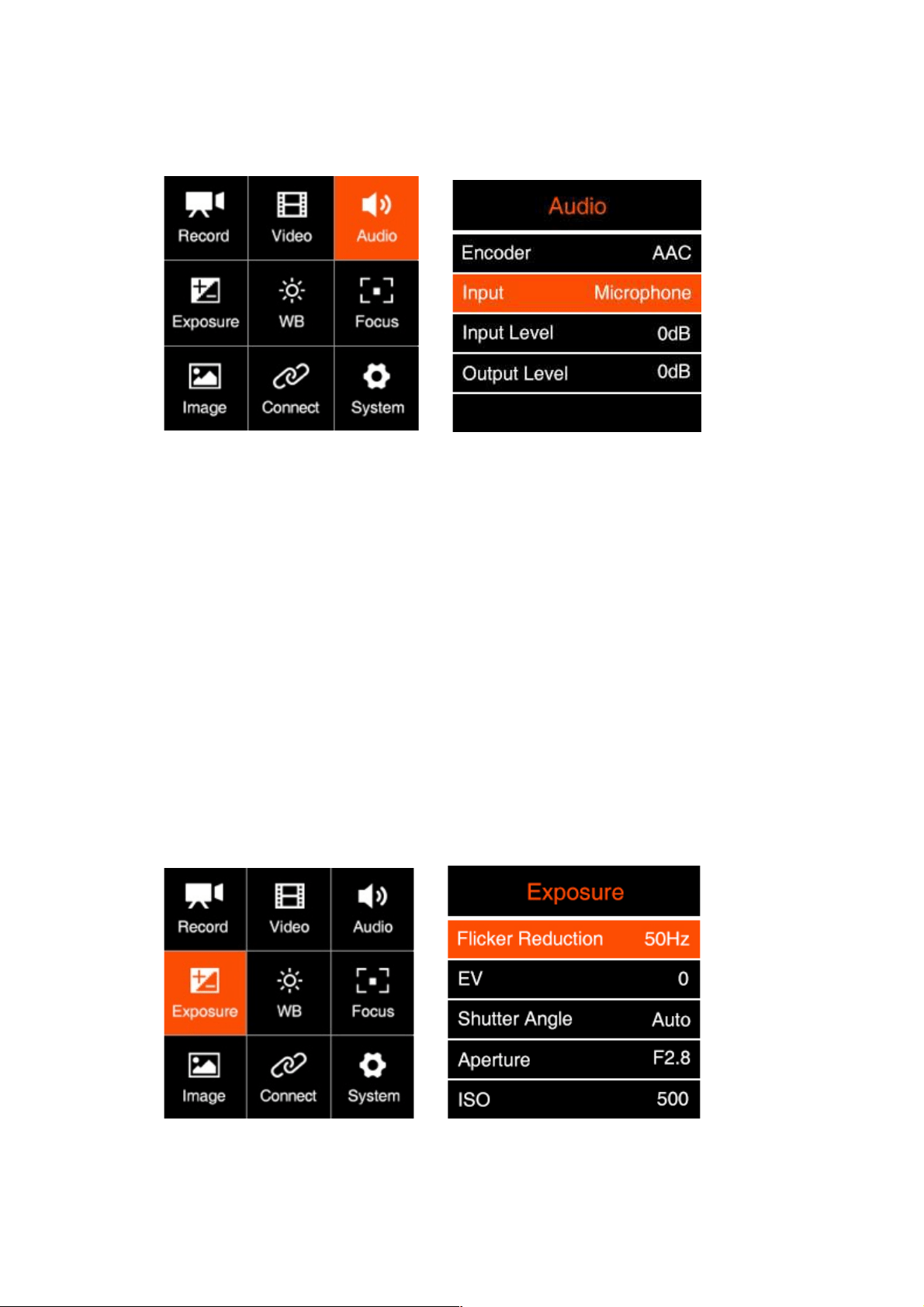
2.4. Audio
• Encoder: None / AAC / PCM
• Input: Off / Microphone
n Off:Turn off all audio input.
n Microphone:The camera will use built-in microphone as audio input if there is
no external microphone plugged into the 3.5mm audio-in port, and will use the
external microphone if there is one plugged into the 3.5mm audio-in port.
• Input Gain: -18 ~ 6 dB, can be set manually.
• Output Gain: -6 ~ 6 dB, can be set manually.
• Audio Level Display: Disable / Enable
2.5. Exposure
• Flicker Reduction:60Hz / 50Hz. It’s set to eliminate light flicking caused by the
frequency of the electricity, which is 60Hz in North America and some parts of Asia.

(South Korea,Philippines,Ta i w a n o f China), And 50Hz for China mainland, other
countries and regions.
• EV: -3.0 ~ 3.0
• Shutter Speed / Shutter Angle: This setting depends on whether “Shutter Speed” or
“Shutter Angle” is selected in 2.5 Exposure - Shutter Operation
Shutter Speed: Auto / Manual(1” ~1/8000”)
Shutter Angle: Auto / Manual(1°~ 360°)
* The minimum shutter speed “1” is available only when" variable frame rate "is set to
“1”.
• Aperture: It shows the range of aperture of the lens, and can be adjusted manually if
it’s an electrical lens. Only for lenses with electronic contacts. If the lens used is a
purely mechanical without electronic contacts, the aperture value is not shown here.
• ISO: Auto or Manual (800 ~ 25600)
• Minimum ISO: 800 ~ 3200
• Max ISO: 1600 ~ 25600
• Max Shutter Speed / Max Shutter Angle: This setting will be activated if Shutter
Speed / Shutter Angle is in Auto mode.
Max Shutter Speed: Auto / Manual (1” ~ 1/1600”)
Max Shutter Angle: Auto / Manual (1°~ 360°)
• Metering Mode: Center / Average / Spot, it sets the metering mode of exposure.
• Shutter Operation: Speed / Angle
• AE Speed: Slow / Normal / Fast
• Lock In Record: Off / On. Enable this function, it will automatically lock the exposure
during recording.
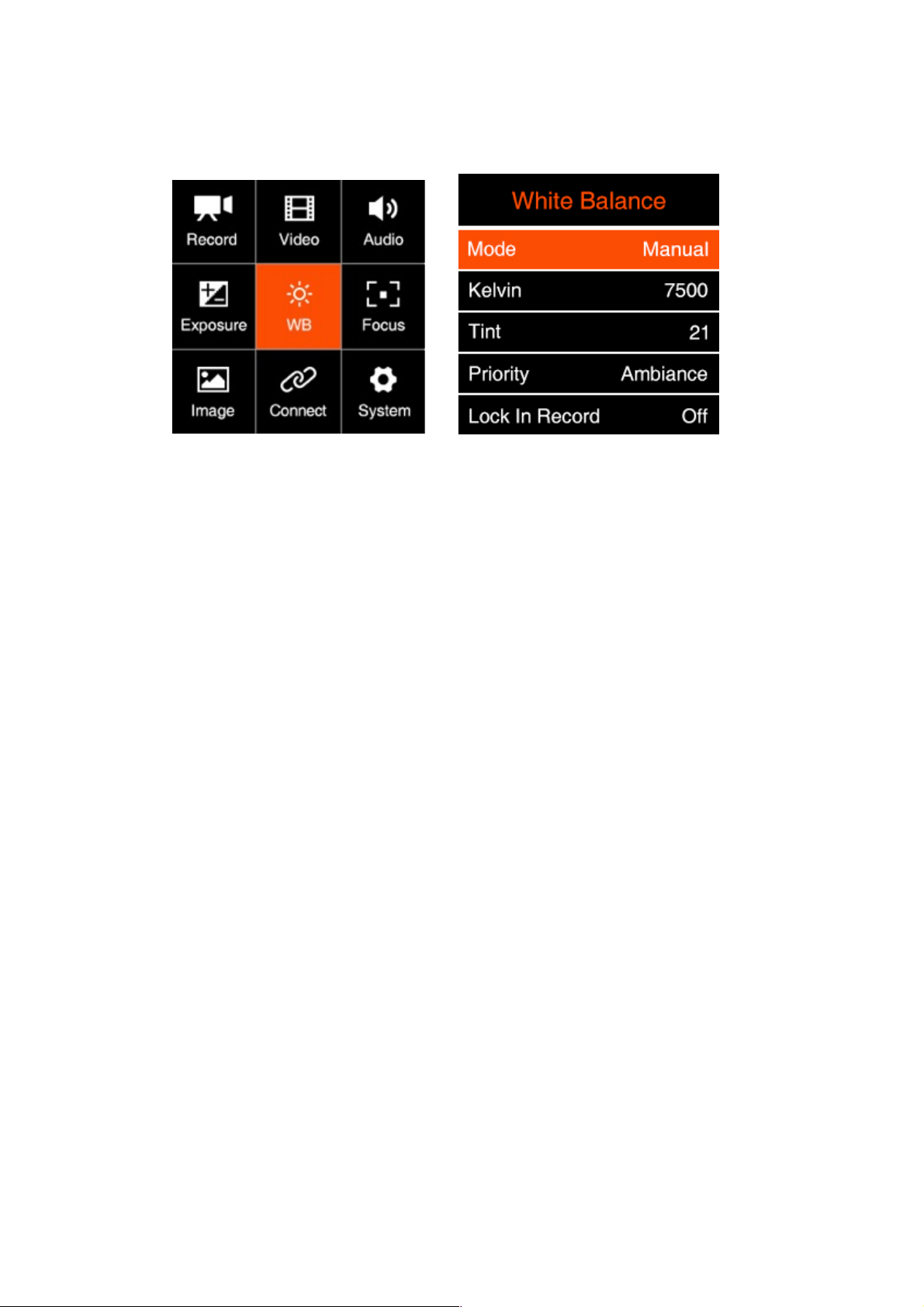
2.6. White Balance
• Mode: Auto / Incandescent / Cloudy / D10000 / Fluorescent / Daylight / Shade /
Manual
• Kelvin: When White Balance is set to “Auto” or “Preset Value”, it shows the current
color temperature, when White Balance is set to “Manual”, it can be adjusted
manually (2300 K ~ 30000 K)
• Tint: -100 ~ 100, default is 0.
• Priority: Ambiance / White
Ambiance: To increase the intensity of the image’s warm color cast when shooting a
tungsten-light scene.
White: To reduce the intensity of the image’s warm color cast when shooting a
tungsten-light scene.
• Lock In Record: Off / On. Enable this function, it will automatically lock the exposure
during recording.
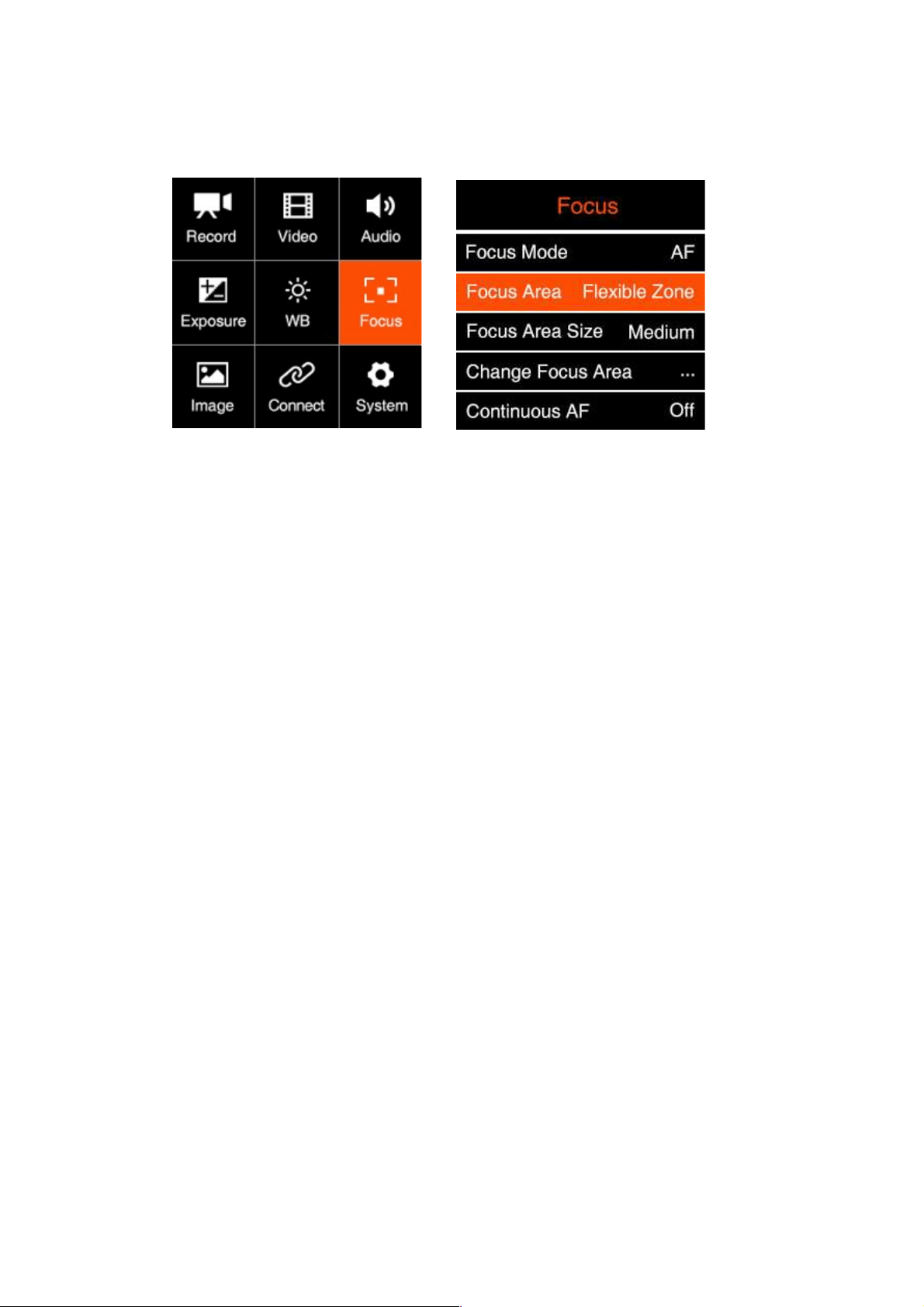
2.7. Focus
• Focus Mode: MF (Manual Focus) / AF (Auto Focus)
• Focus Area: Flexible Zone / Human Track. This will only be enabled when Focus
Mode is set to “Auto Focus”.
Flexible Zone: Can move focus area via Up / Down button
Human Track: The camera can detect whether there is a human body in the picture.
If yes, the focus area will keep tracking the human body automatically.
• Focus Area size: Small / Medium / Large. This will only be enabled when Focus
Mode is set to “AF” and Focus Area is set to “Flexible Zone”.
• Change Focus Area: Move the focus area via Up / Down button. This will only be
enabled when Focus Mode is set to “AF” and Focus Area is set to “Flexible Zone”.
• Continuous AF (CAF): On / Off. This will only be enabled when Focus Mode is set
to “Auto Focus”. When CAF is activated, the camera will continuously adjust the focus
as to follow the target object when it is moving.
• Live CAF: On / Off. This will only be enabled when CAF is set to “On”. Active
continuous focus in real time according to the scene.
• CAF Sensitivity: High / Medium / Low. This will only be enabled when CAF is
activated.
• MF Assist:
n Preview: On / Off
n Recording: On / Off
This will only be enabled when Focus Mode is set to MF. When it is set to On, the
image in the focus area will be enlarged to 2 x size on the screen (both LCD display
and HDMI output) when the focus is being adjusted manually. And it be set for Preview
and Recording separately.
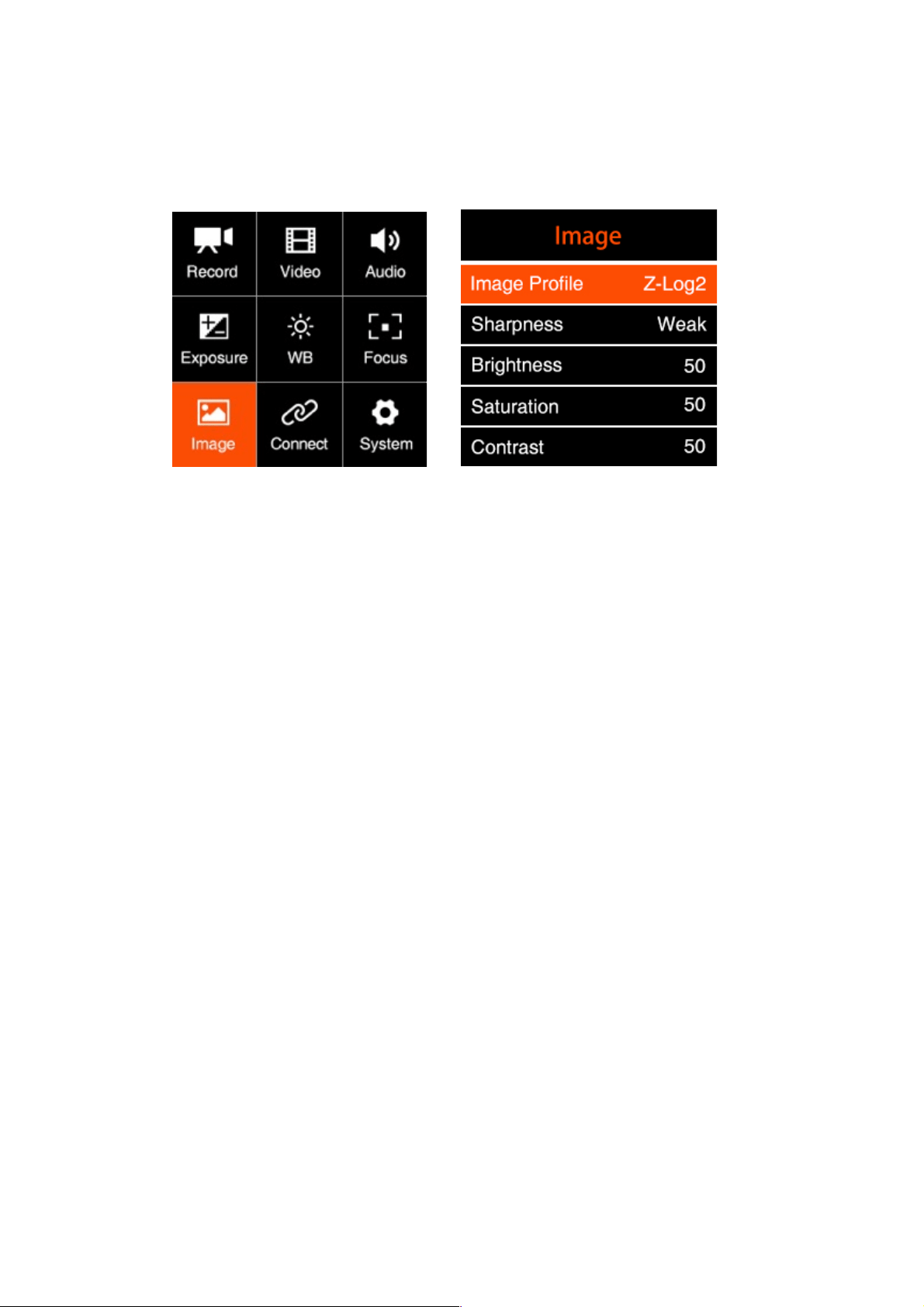
2.8. Image
• Image Profile: Rec.709 / Z-Log2 / Flat / HLG
- Rec.709:It is Rec.709 like color space, which is usually used for directly output.
- Z-Log2:It is the log developed by Z CAM, with 11.5 stops of dynamic range
and reserve more detain in highlight area, good enough for post processing.
- FLAT:It is 709 like curve with color information, and lower the contrast for easy
post processing.
- HLG (
Hybrid Log-Gamma): Encode the high-light and low-light parts of the HDR
signal in two different ways in which the low-light part use the standard gamma
curve and the high-light part use the logarithmic curve.
• Sharpness: Strong / Medium / Week, default Medium.
• Brightness: 0~100, default is 50.
• Saturation: 0~100, default is 50.
• Contrast: 0~100, default 50.
• Luminance Level: Full / Limited. The range of luminance level is 0~255 when it’s set
to Full, and 16~235 when it’s set to Limited.
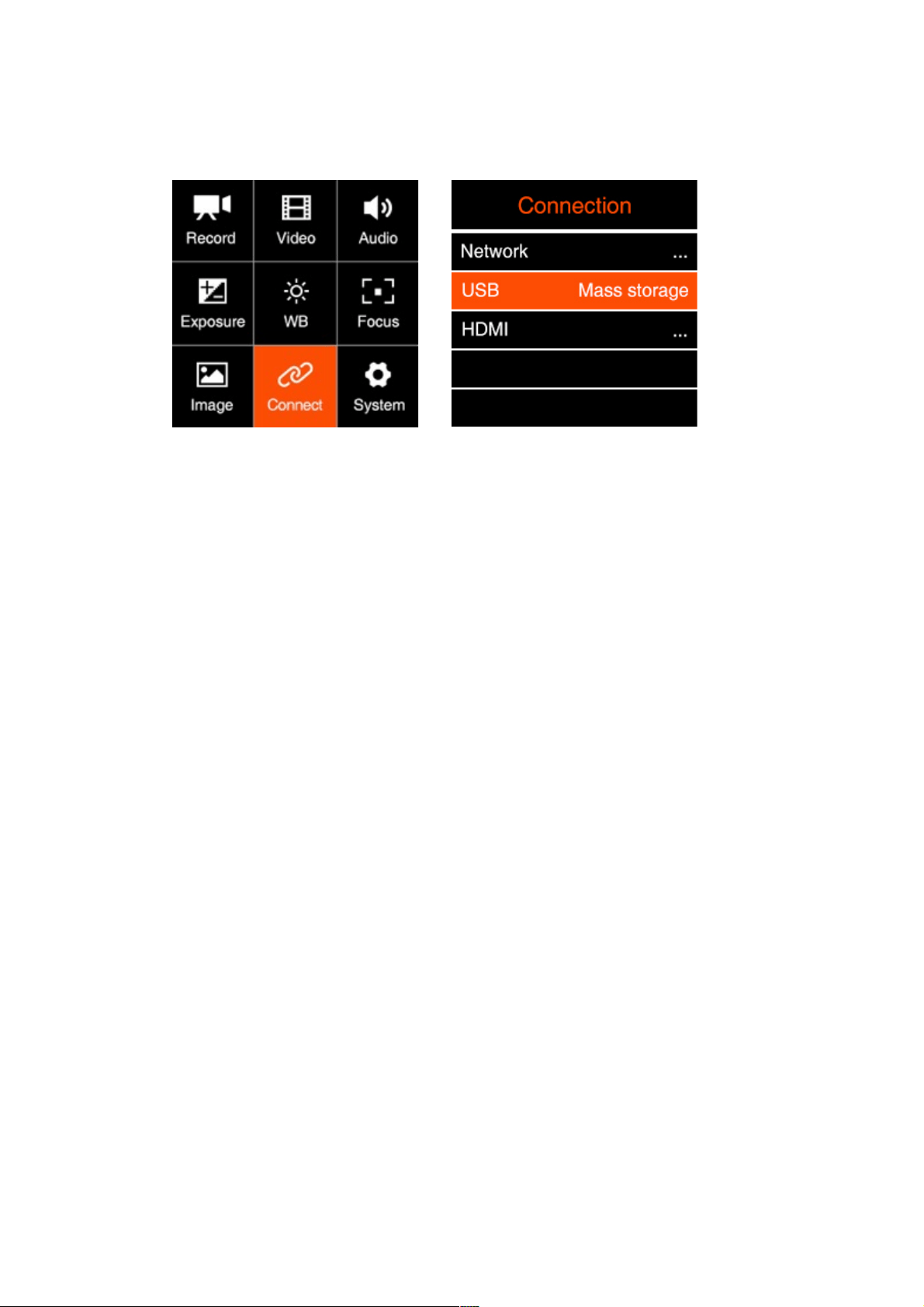
2.9. Connect
• Network: there are sub-items as below:
n Wi-Fi: Off / On. When the Wi-Fi is activated, here will show the Wi-Fi ID, which
is ZCAM-E2C-XXXX (last four digits which match to the camera ID), and the
default password is: 12345678, which can only be changed with iOS app (6.
Using Z Camera App)
n Wi-Fi IP: Here will show IP address of the Wi-Fi when it’s is activated.
n ETH. Mode (Ethernet Mode): Direct / Router / Static
- Router: Camera is connected to the computer through a router, IP address will be
assigned by the router.
- Direct: Camera is connected to the computer directly through Ethernet cable, camera
will generate the IP address. The default is: 10.98.32.1
- Static: to set the IP address with configuration file. (Please contact Z CAM’s technical
support if you want to set this)
n ETH. IP: IP address of the Ethernet when it’s connected.
• USB: Host / Mass Storage / Network / Serial
n Host: The camera will act as a host device which can transfer data to external storage
(SSD e.g.) or communicate with external device like iOS device with Z Camera app
(6. Using Z Camera App).
n Mass Storage: The camera will be recognized as a storage when it is connected to
a computer (PC / Mac), and the file on the SD card inside the camera can be accessed.
n Network: The camera will act as a RNDIS device.
The camera will be recognized as a RNDIS device when it is connected to a computer
(PC / Mac) or external device. Computer or external device can access or control the
camera using the HTTP API. (for HTTP API information, contact Z CAM technical
support)
n Serial: The camera will be controlled by UART command from a computer
through USB port.
• HDMI: Display Info. / OSD Layout / Resolution / Use EDID
n Display Info: On / Off. Turn on / off camera status on HDMI monitor.
n OSD Layout: Type 1 / Type 2
Type 1: Assist tool as waveform etc. display on the video directly.
Type 2: Add the black frame area to display assist tool.
n Resolution: Auto / Manual (options supported by the HDMI display).
Auto: The camera will select the most suitable format (resolution & frame rate)
from the HDMI monitor.
Manual: Here will list the formats supported by the HDMI monitor for the user to
select manually.
n Use EDID: Disable / Enable. This setting determines whether the camera
automatically reads the EDID information of the HDMI connected monitor.
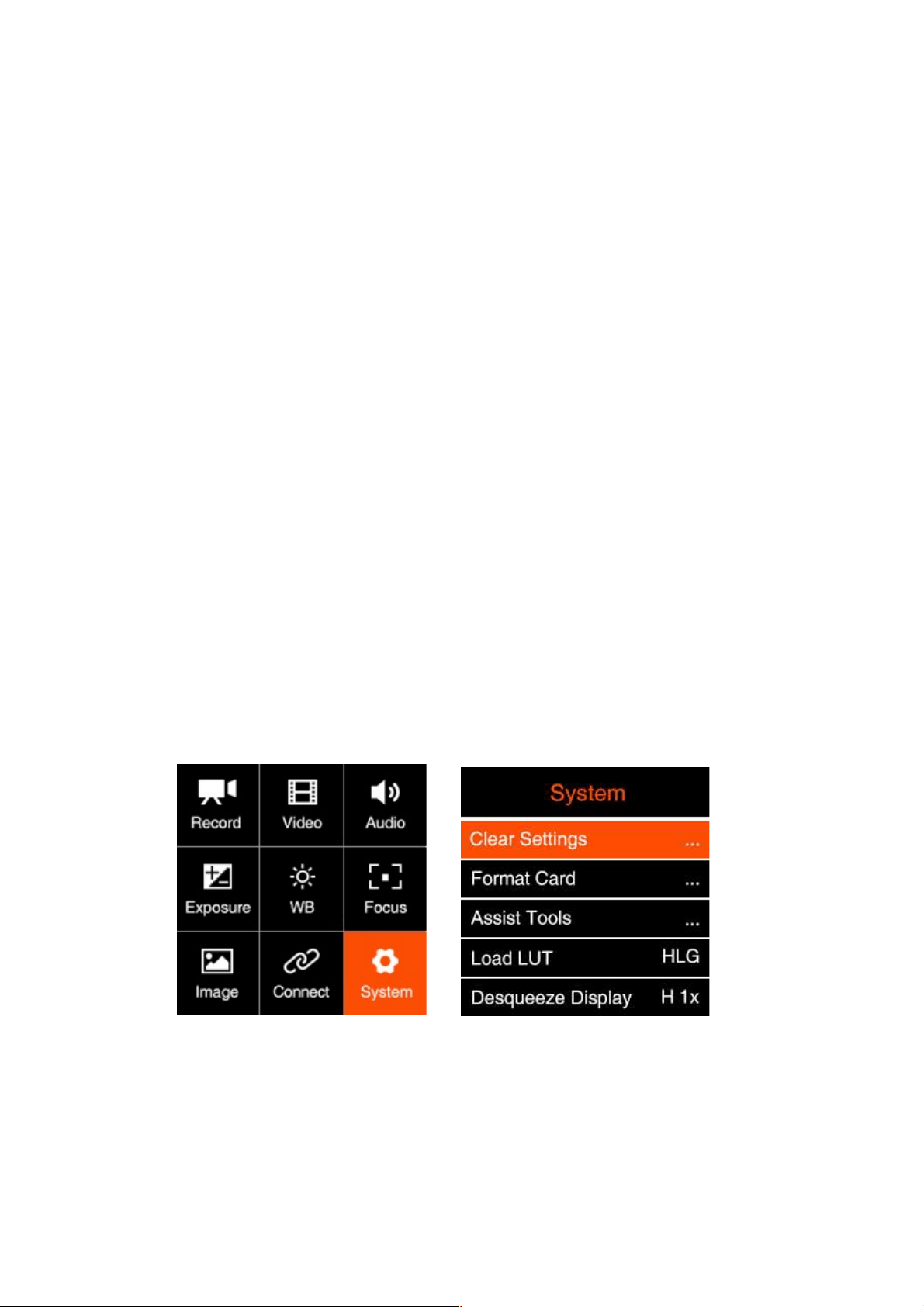
2.10. System
• Clear Settings:Clear all the Settings in the camera and set them to default values.
• Format Card:Format the SD card or the external SSD connected through USB Type
C port (if there is no SD card in the camera). Please note that formatting will erase
ALL DATA in the storage!

Attention: When using a SD or SSD on Z CAM E2C for the first time, please format
it on the computer in exFAT format, and then format it in the camera.
• Assist Tools: There is three sub-items in this setting: Display / Scope / Peak /
Exposure / Frame Line / Center Mark / Grid Line / Safe Area
n Display: On / Off. To enable or disable the assist tool on the display. Please
note that when the assist tool is enabled, the effect will be output through HDMI
together with the video stream. So you would need to turn it off if you are using
external recorder though HDMI connection.
n Scope: Tool / O pa c ity / Measure
- To o l : Disable / Waveform / Parade / Vectorscope / Histogram, for HDMI
output only
- Opacity: 10~100, adjust the tool’s brightness on the monitor when it’s
enabled.
- Measure: Without LUT / With LUT, if it's set to ” With LUT”, then the scope
tool will measure on the video with LUT, otherwise it will measure the video
without LUT.
n Peak: Enable / Color
- Enable: On / Off, to enable / disable the Peak tool and set the color of
peaking focus.
- Color: Red, Green, Blue, Orange and White, choose the color of peaking
focus display.
n Exposure: Tool / Zebra1 Setting / Zebra2 Setting
- Too l : D is a b le / F a l s e C o lor / Wav e f o rm / Z e b ra / Ve c t or s c op e
Select the appropriate exposure assist tool or turn it off. The false color/
waveform / vectorscope are only displayed on the HDMI output screen.
- Zebra1 setting: 55~100, it can only be set when the tool is selected as
"zebra".
- Zebra2 setting: 0~50, it can only be set when the tool is selected as
"zebra".
n Frame line: Ratio / Color
- Ratio: None / 2.4:1 / 2.35:1 / 1.9:1 / 1.85:1 / 4:3 Frame line can be
displayed on the HDMI output screen according to the selected ratio.
- Color: Red, Green, Blue, Orange and White, can choose the color of frame

line.
n Center Mark: Enable / Color
- Enable: On / Off, when setting “Enable”, there display cross mark on the
center of HDMI output screen.
- Color: Red, Green, Blue, Orange and White, can choose the color of center
mark.
n Grid Line: On / Off, to turn on / off the grid line on HDMI output.
n Safe Area: On / Off, to turn on / off the safe area frame line on HDMI output.
• Load LUT: None / Rec709 / V709 / LC709A / zRGB_AR / zRGB_AX2 / sRGB /
sCINE_709 / Rec2020 / HLG / P3D60 / P3D65 / P3DCI / F709 / Import
Note:
1. Import: To import LUT from CFast card, the LUT file should be saved in
“MISC/Looks/preview” folder of the storage.
2. Only support x33 cube format for HDMI output.
3. LUT is available for playback mode
• Desqueeze Display: H 1x / H 1.33x / H 1.5x / H 1.8x / H 2x / V 1x / V 1.33x / V 1.5x
/ V 1.8x / V 2x. When the camera is using an anamorphic lens, it’s to set the de-
squeeze ratio as to horizontally or vertically resize the image correctly.
• User Profile: Save Profile / Load Profile / Save To Card / Load From Card
n Save Profile: Export current Fn configuration to a file and save it in the memory
of the camera.
n Load Profile: Select the saved configuration in the camera, import and apply it
to the camera settings.
n Save To Card: Export the current camera settings as a configuration file and
save in the camera card (save in /MISC/profile/ directory, file name suffix.prf)
n Load From Card: Import the configuration file from the CFast card of camera,
and apply it to the camera settings.
Note: Configuration files saved on a memory card can be renamed, but only
in English letters.
• User Button: Users can set the function for all the other keys (including FN /F1 / F2
/ F3 / POWER / UP / DOWN / OK) on the camera except MENU. It can be defined as
shortcut setting functions., which includes as below:
Playback (for Power button only) / AE Lock / AF Lock / White Balance Lock / Aperture
/ ISO / Peak / Exposure Tool / White Balance / HDMI OSD / Shutter / Exposure Value
/ AF / Magnifier / Focus Area / Load Profile / None
Note: the custom function of the power button is short press trigger, long press
the power button is still on/off function.
• Record Indicator: On / Off. Set both front LED light and back LED light on / off
• Restore Lens Pos.: Disable / Enable.
When it’s set to “Enable”, the camera will remember the latest focusing position of the
lens when the camera is shut down, and restore it when it’s powered on again (with
the same lens only).
• LCD Brightness: 10 ~ 100, default 50.
• Power: Auto Power Off / Auto Standby / Low Alarm
n Auto Power OFF:Off / 30s / 1min / 2mins / 4mins / 8mins / 15mins.
n Auto Standby: Off / 1min / 5mins / 15mins.
n Low Alarm: LP-E6 battery / V Mount battery, Low alarm voltage value for
camera can be set for the different batteries.
LP-E6 battery:5.6V ~ 6.3V,Default as 5.8V
V Mount Battery:13.1V ~ 13.8V,Default as 13.3V
• Language:简体中⽂ / English
• Date / Time: Set the date and time of the camera.
• Time Zone: Set the time zone of the camera.
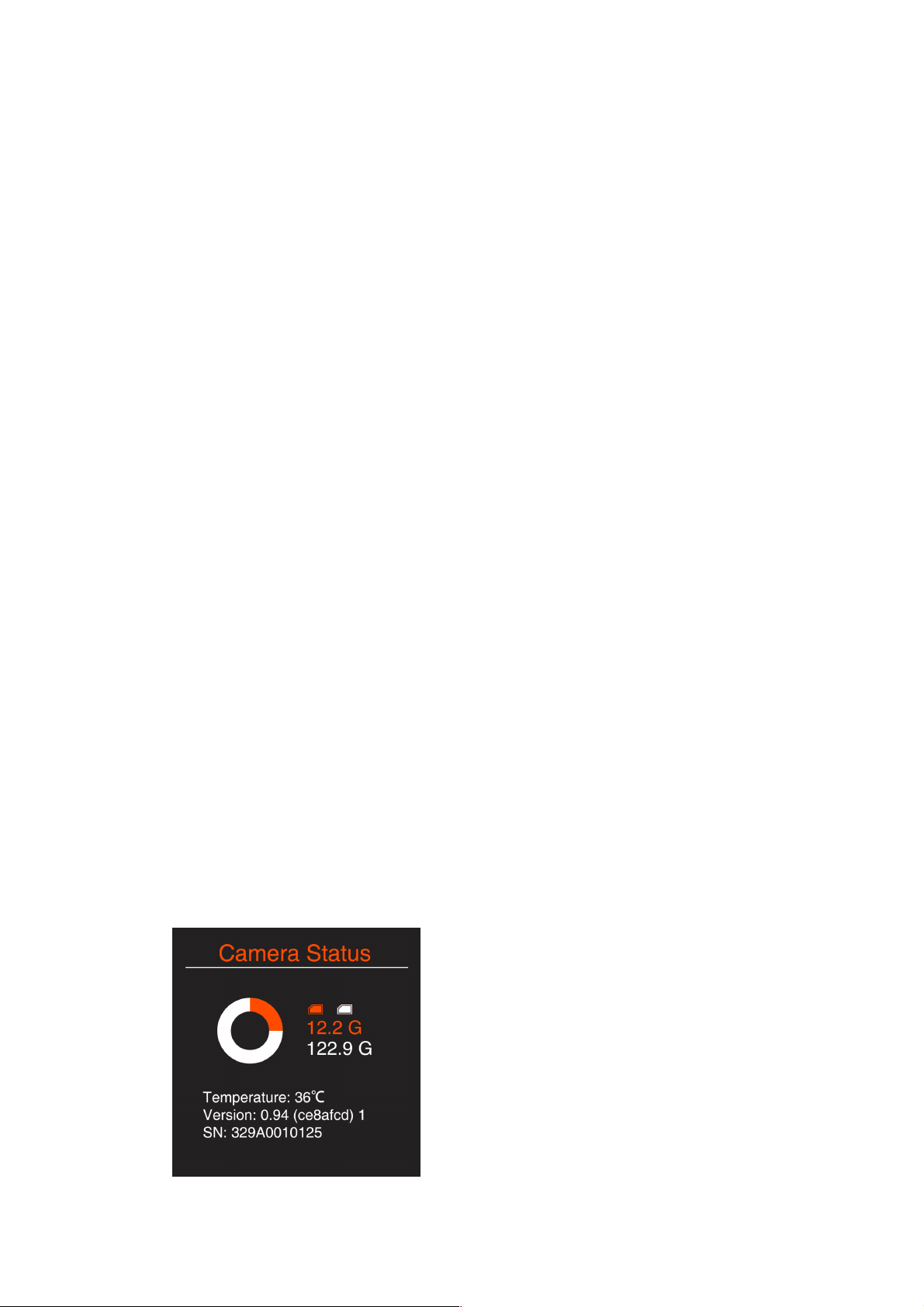
• Camera Status: Displays the current status of the camera, including storage
capacity (used and remaining space),temperature (inside the camera),firmware
version and camera ID etc.
• Version: Firmware version of the camera.
3. Video Recording
3.1. Start / Stop Recording
While camera is in Standby mode with SD card inserted or SSD connected (and the
storage is not full), press Record button to start recording, and press Record button again
to stop recording.
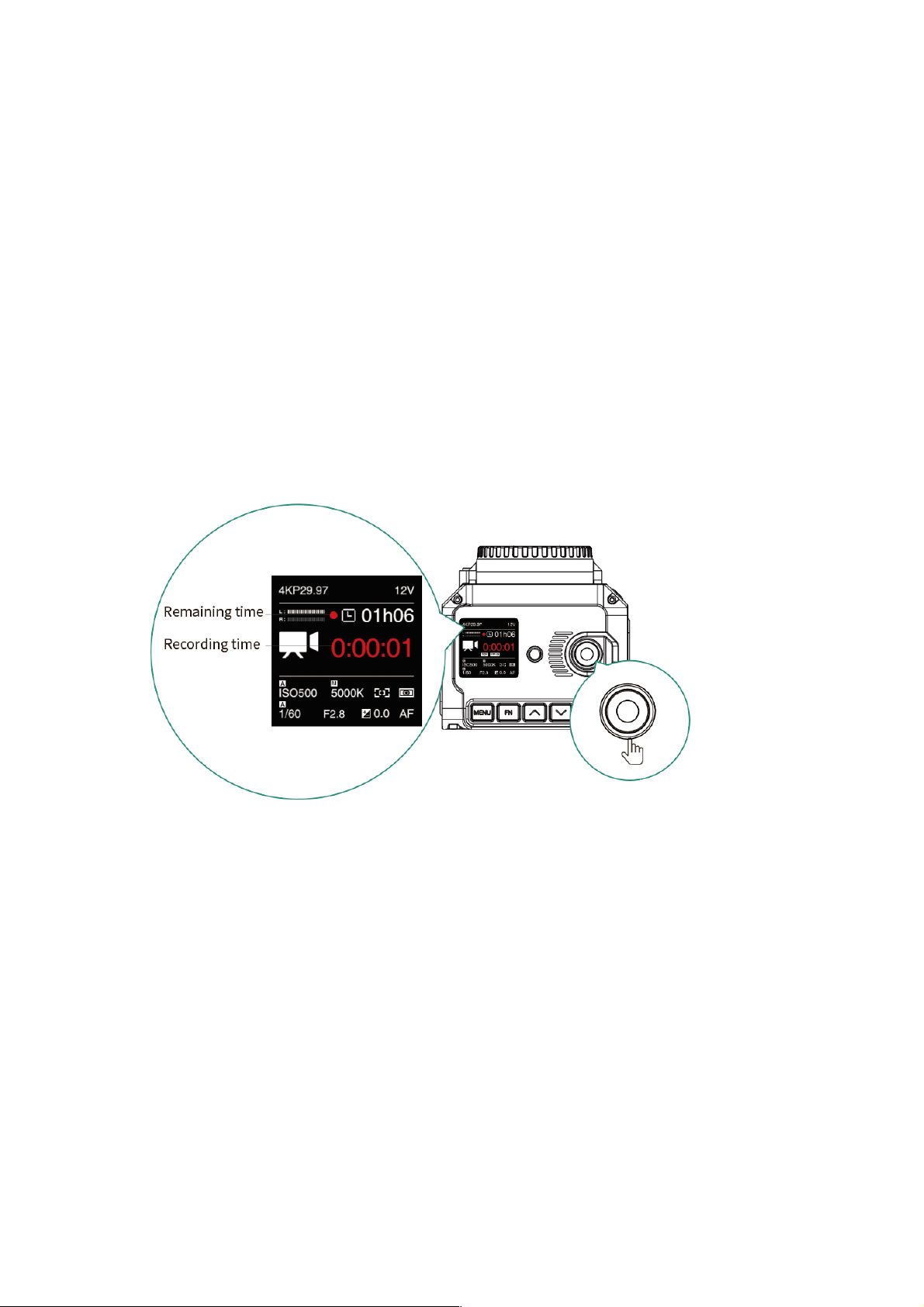
The recording time and remaining time for recording (depends on the capacity of the
storage) would appear on the LCD display.
3.2. Variable Frame Rate (VFR) Video Recording
VFR will enable you to record a footage with higher / lower frame rate in capturing than in
playback, which is usually called slow motion / fast motion effect.
For example, to record a 1920 x1080 @60fps footage with playback frame rate in
29.97fps, you would need to follow the steps as below:
1) In Record setting, set Resolution to “1920 x1080”, Project FPS to “29.97” and make
sure Playback FR is set to “Default”.
2) In Video setting, set Variable Frame Rate (VFR) to “60”.
3) Go back to the standby status, an “VFR 60” icon would show up on LCD display, which
means the camera is working with VFR in 60fps.
Note: Different resolution and frame rate settings correspond to different variable frame
rate range. Refer to 2.2 Record and 2.3 Video.
3.3. Timelapse Video Recording
To a c t i v e "Timelapse" function, it can record time-lapse video to the memory card, specific
steps are as follows:
1) Set Video - Variable Framerate to "off", otherwise it’s not able to set up timelapse
parameters.
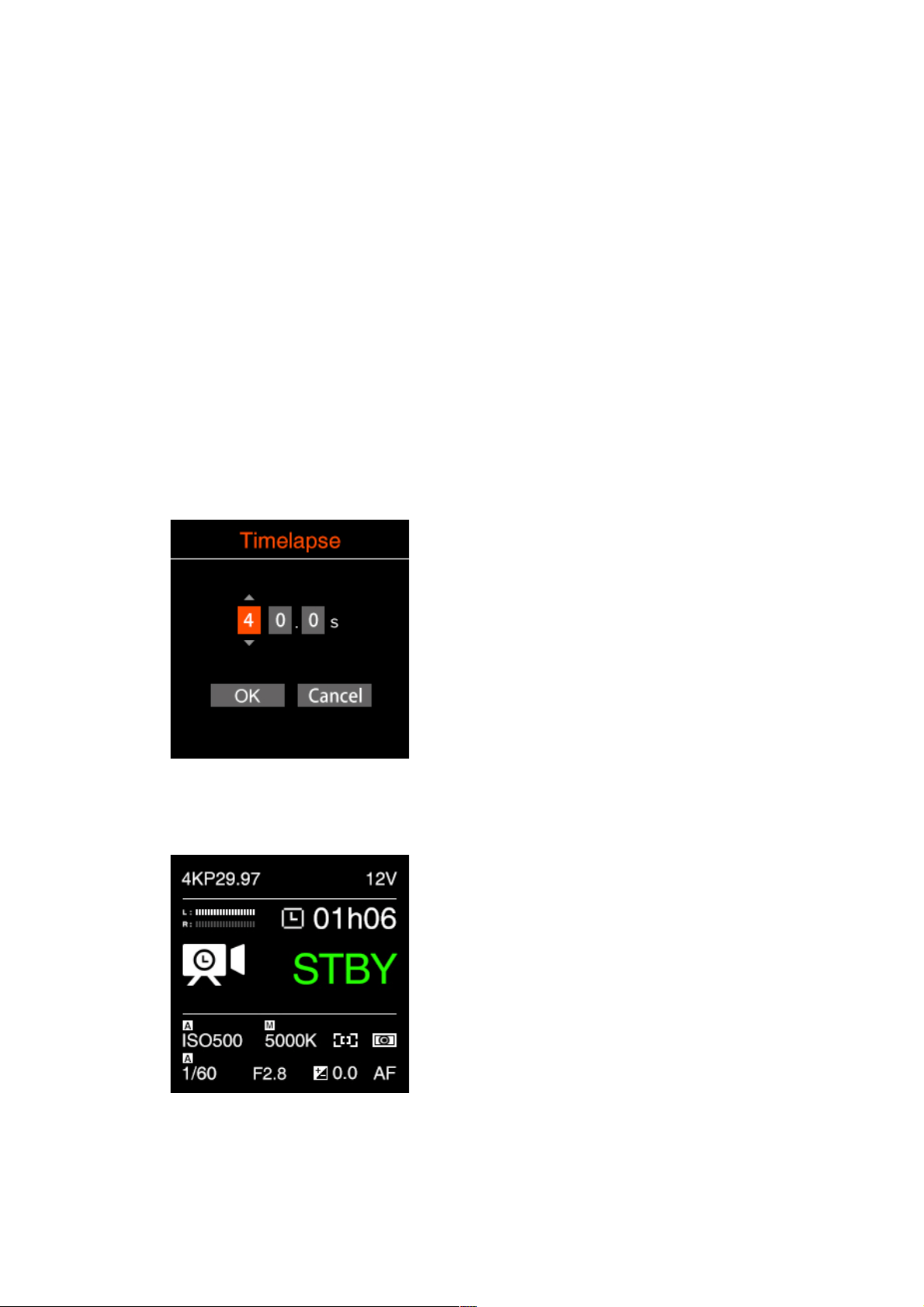
2) In Video – Timelapse setting, set the timelapse interval value (the interval is the time
between each frame shot) through the FN key (skip to the next setting item), and UP/
Down button.
The minimum unit of interval time is milliseconds (0.1s), and the range can be set as
0.2s ~ 60s.
3) After the timelapse interval is confirmed , the value will be displayed in the menu
"Timelapse", and the camera icon will be displayed in timelpase recording mode on
the standby.
4) Set other video parameters, except the "Variable Framerate" can not be opened, the
rest is the same as normal recording video.
5) Press "record" button and the camera will start recording. The recording time shown
on the screen is the time-length of the video file that was recorded in the camera, but
not the time used for recording.
The
formula to calculate the time required for recording and the time-length of the
video file is:
Recording time = timelapse interval x frame rate x time-length of video file
For example, if the timelapse interval is set to 0.5s and the frame rate is 25fps, then
as to record 1 minute of timelapse video, the time required for recording will be 0.5 x
25 x 1 = 12.5 minutes.
4. Video Playback & File Management
4.1. Video Playback
While camera is in Standby mode, short press Power button to enter into Playback mode,
on the LCD display there would list the file folders on the storage (SD card or external
SSD). Come into the folder then will show the thumbnail, video serial No. and the total
number of the latest video in the folder. Press Up / Down button to browse the footages
inside the folder.
Press OK button to play the selected footage. When the footage is being played, press the
Up / Down button to speed up / slow down (2x faster / slower).
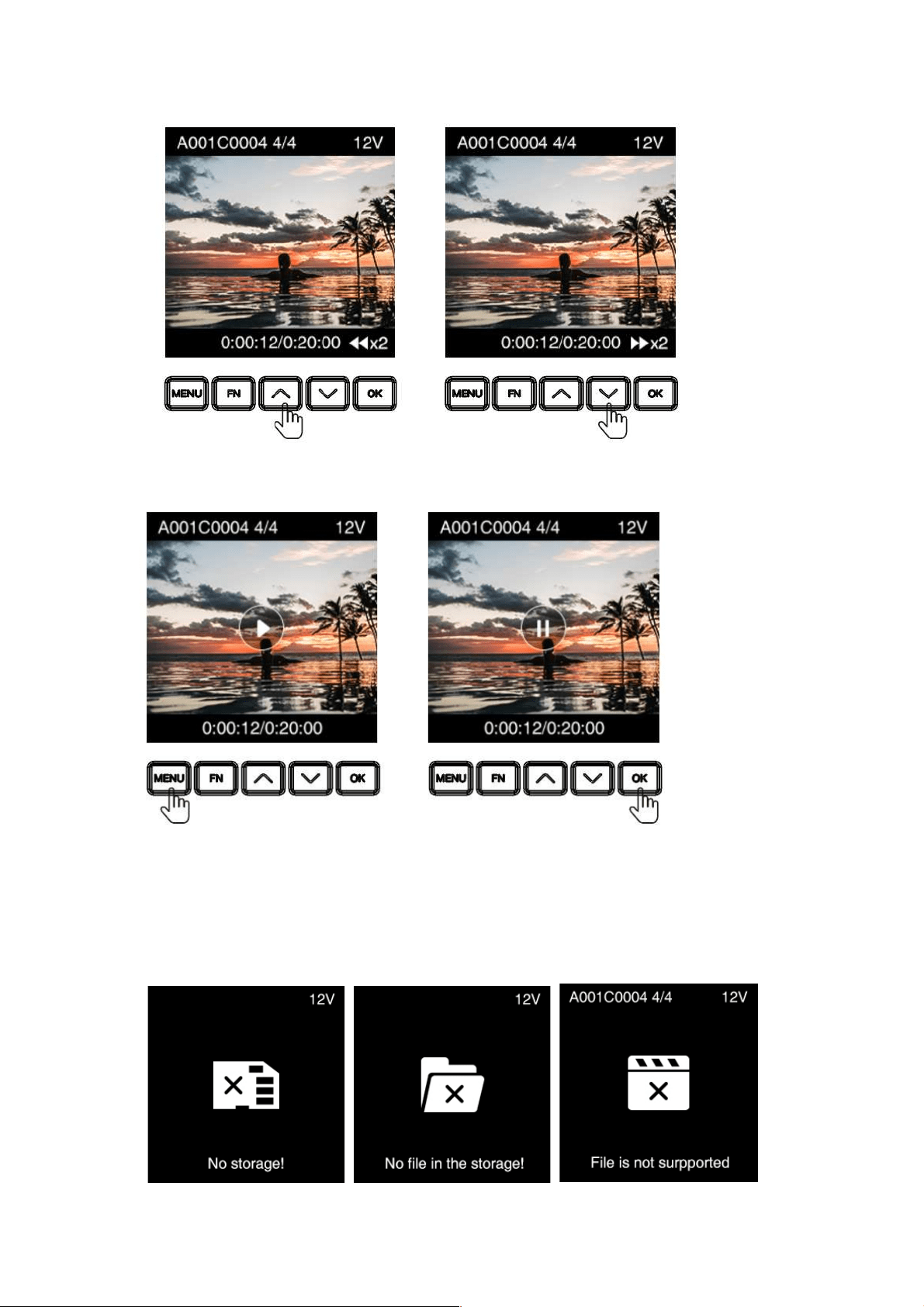
Press OK button to pause, and press MENU button to stop it.
Please note if there is no storage in the camera, or there is storage in the camera but no
video footage in the storage (or other files not supported), there will be alert message on
the screen.
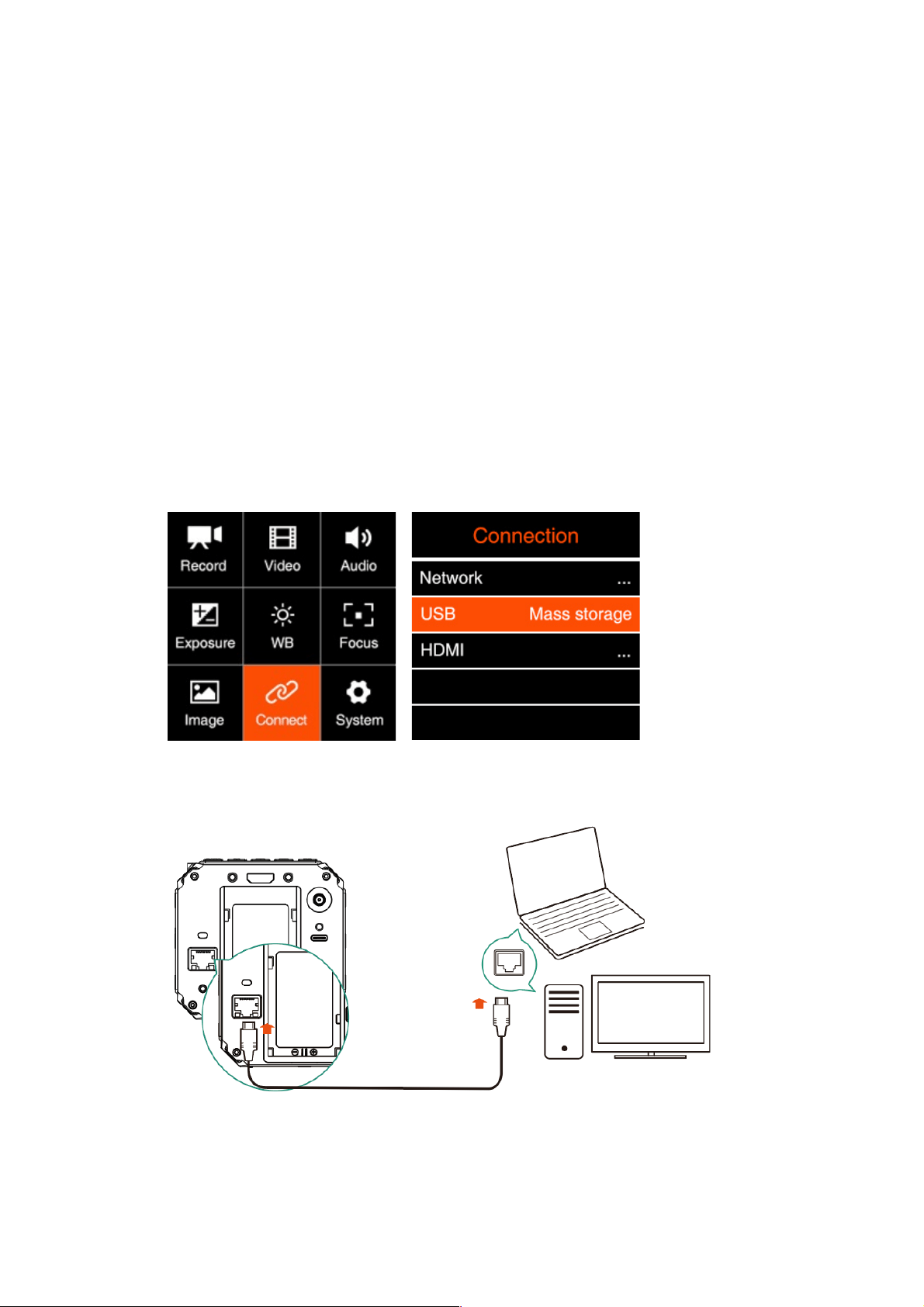
4.2. Delete Video
Under Playback mode, long press FN button when the video is not playing, there will be
pop-up confirmation message” Delete the file?” , select “Confirm” and then press OK to
delete.
Note: The deleted file is not restorable, please double check before this action.
4.3. Download Video
Besides taking out the SD card to get the footages recorded, you can also get the footages
from the camera (with SD card inside) from a computer through an USB Type C cable:
1) Power on the camera.
2) In Connect setting, set USB to “Mass storage”.
3) Connect the camera to a computer with an USB Type C cable, an “USB” icon would
show up on LCD screen, then it’s connected successfully.
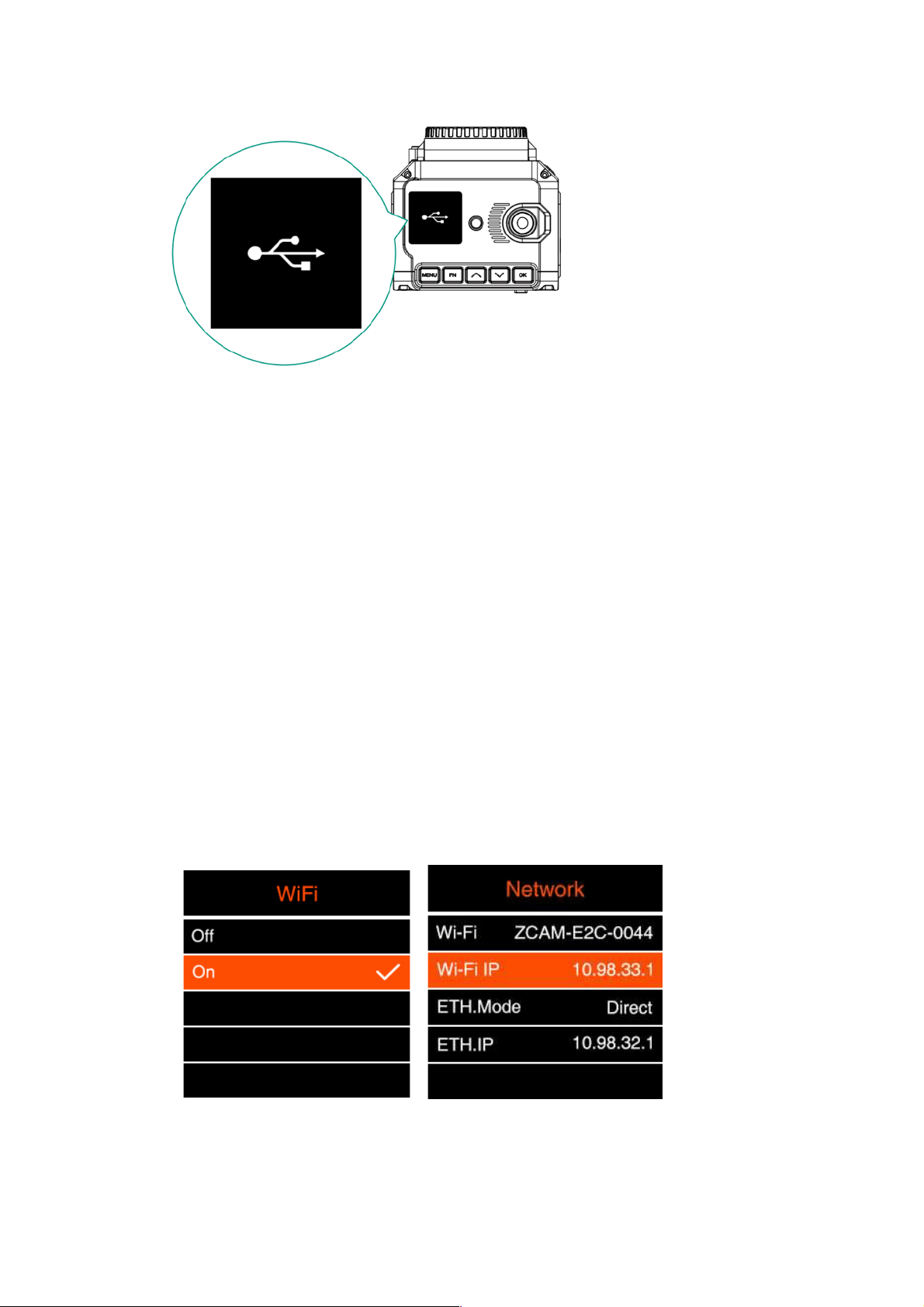
4) PC will detect the camera and shows it as external storage device. You can access &
manage the files in the SD card inside the camera.
5. Connect to the Camera
5.1. Wi-Fi Connection
You can connect the camera to an external iOS device (iPhone / iPad) or a computer (PC
/ Mac) through Wi-Fi with following steps:
1. Install a Wi-Fi antenna to the Wi-Fi Antenna Port of the camera.
2. In Connect –Network setting menu, set the Wi-Fi to “On”,go back to Network
setting, there will show the Wi-Fi ID: ZCAM-E2C-XXXX (last 4 digits match to camera
ID) on the Wi-Fi item.
3. Press MENU to go back to Standby screen, there will be a Wi-Fi icon on top of the
screen.
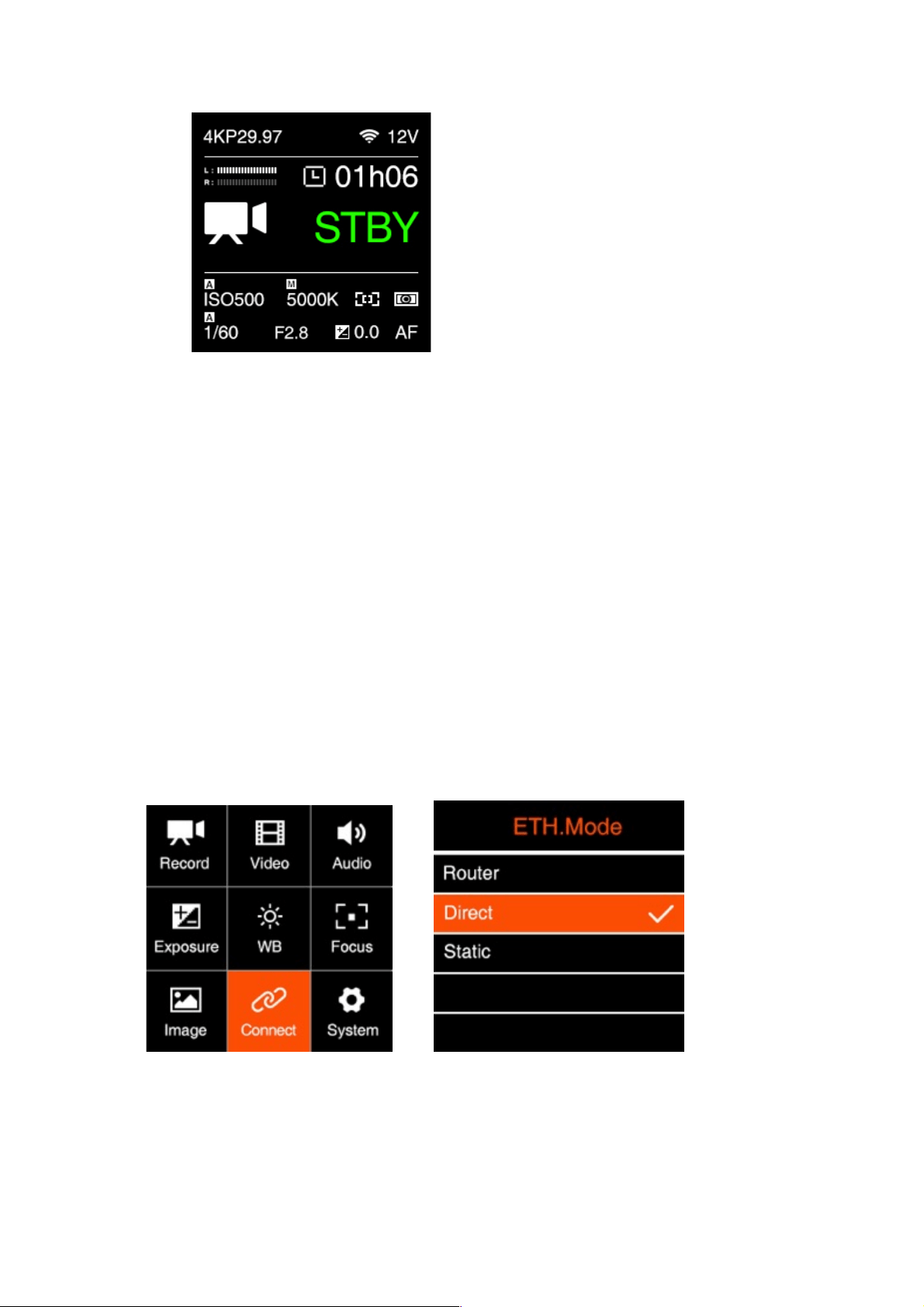
4. Connect to the camera from the iOS device or a computer with that Wi-Fi ID, and
the default password of the Wi-Fi is 12345678. (not changeable for now)
5.2. Ethernet Connection
There are 2 options to connect the camera to a computer through Ethernet: Direct
Connection or Connection through a Router:
Direct connection
Follow the steps below to set up direct Ethernet connection between the camera and the
computer:
1. Set the Network-ETH. Mode to “Direct” in Connect-Network setting (default).
2. Connect the camera to a computer with an Ethernet cable.
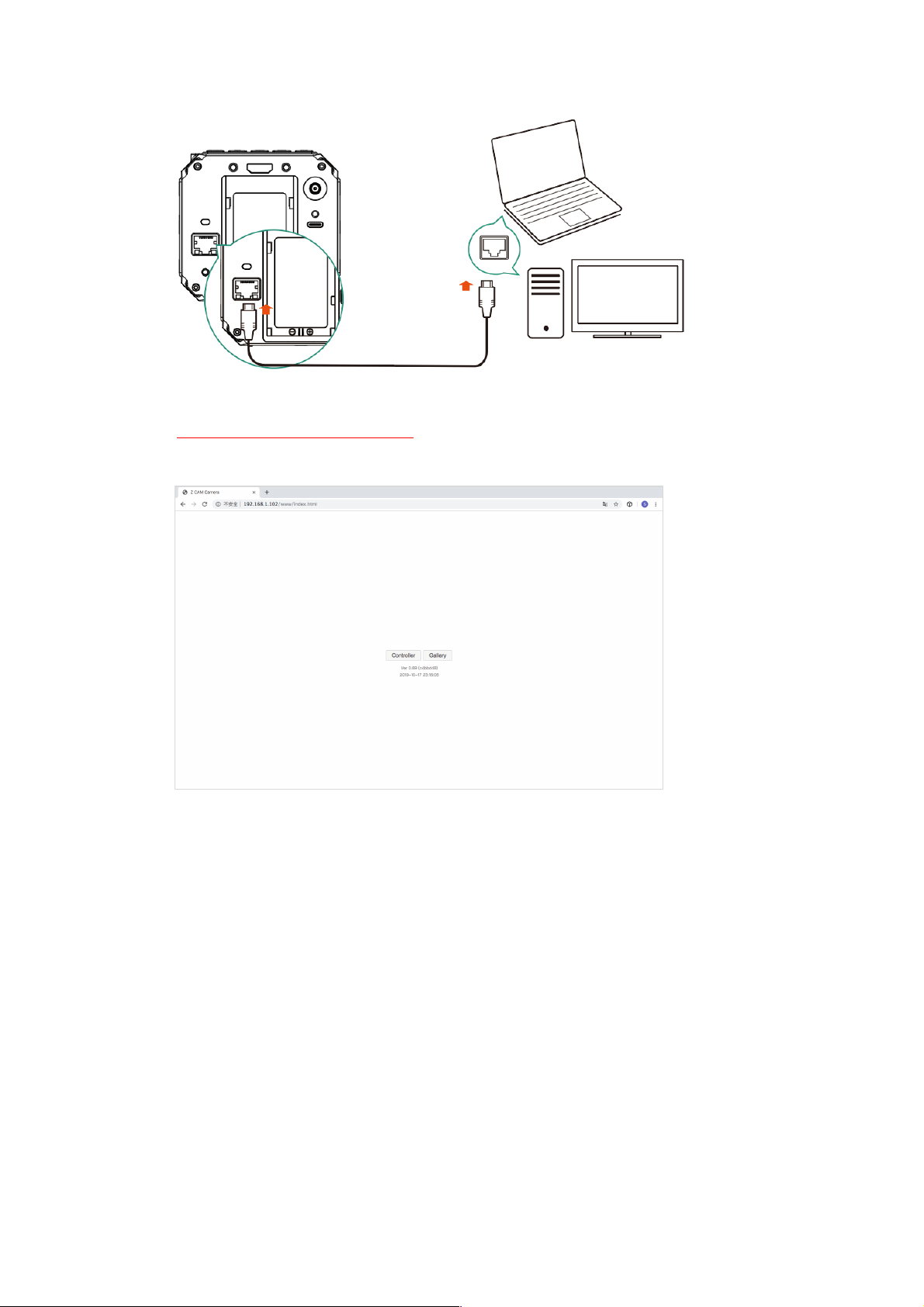
3. Open a browser on the PC / Mac, type in the address:
http://10.98.32.1/www/index.html. You will see the page below if it’s connected
successfully.
Connection through a Router
You can set up an Ethernet conne ction between the camera and a computer through a
router with following steps:
1. Set the Network-ETH. Mode to “Router” in Connect-Netwrok setting (2.10
Connect – Network-ETH. mode)
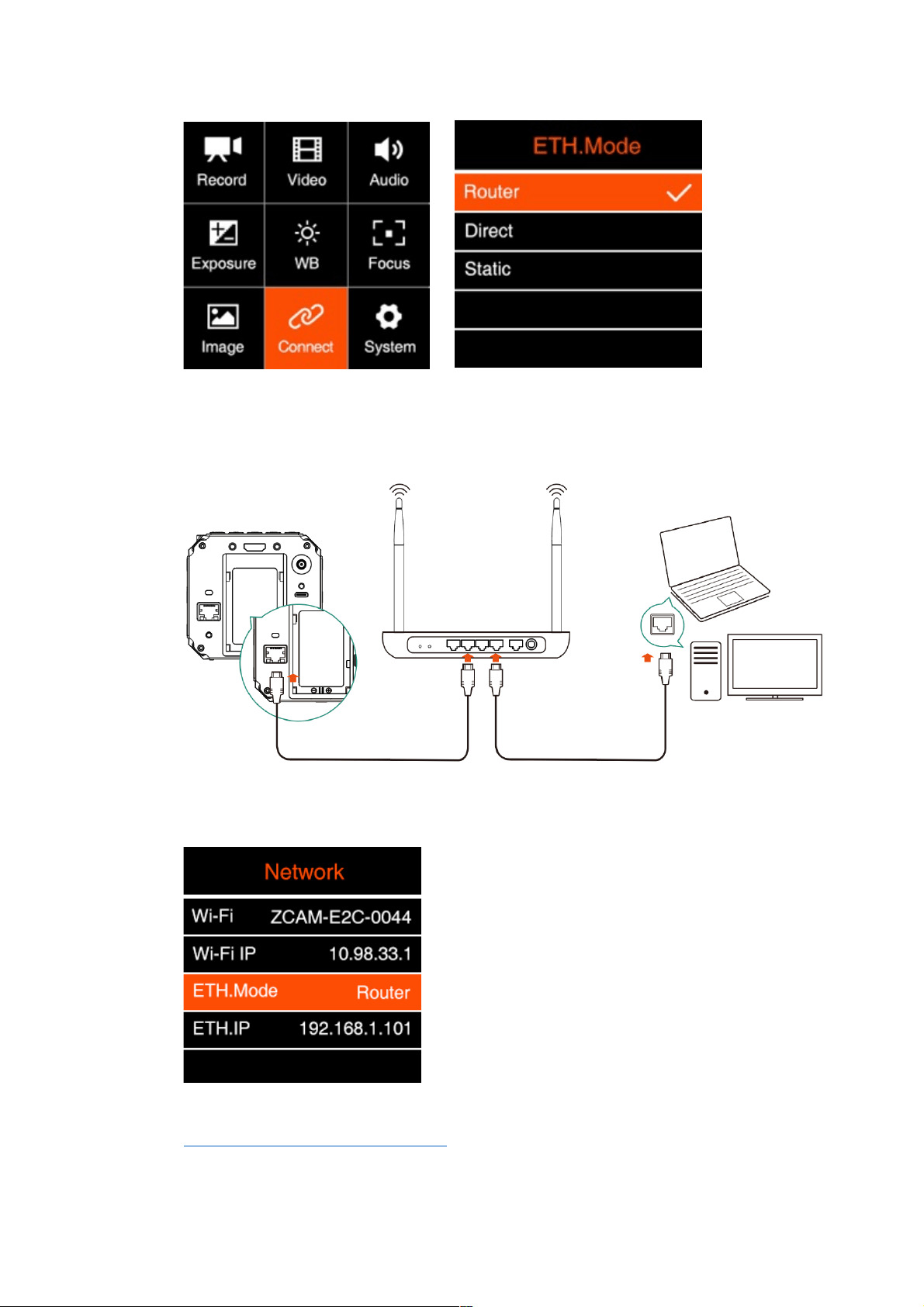
2. Connect the camera to a router with an Ethernet cable, then connect the router to
the computer with Ethernet cable or Wi-Fi. (Note: Camera and PC should connect
to the LAN port of router, not WAN port)
3. Check the Connect – Network setting, and there will show the IP address of the
camera on ETH.IP item (e.g. 192.168.1.101) if the connection is OK.
4. Open a browser on the PC / Mac, type in the address:
http://192.168.1.101/www/index.html (192.168.1.101 is the IP address example on
step 3 above, please use the actual IP address of the camera. You will see the

page below if it’s connected successfully.
6. Using Z Camera App
Download and install the Z Camera App from Apple App Store to your iOS device (iPhone
or iPad), then you can use this device to live view and control the camera including start /
stop recording and most of the settings, with following steps
• Install App: Search "Z Camera" in Apple App Store to download and install it.
• Connect to camera: Connect the iOS device to the camera with an USB Type C to
Lighting cable as below, or through Wi-Fi.
• Wi-Fi connection refer to the section 5.1. The steps of USB connection are as follows:
1. Connect the iOS device to the camera via USB cable
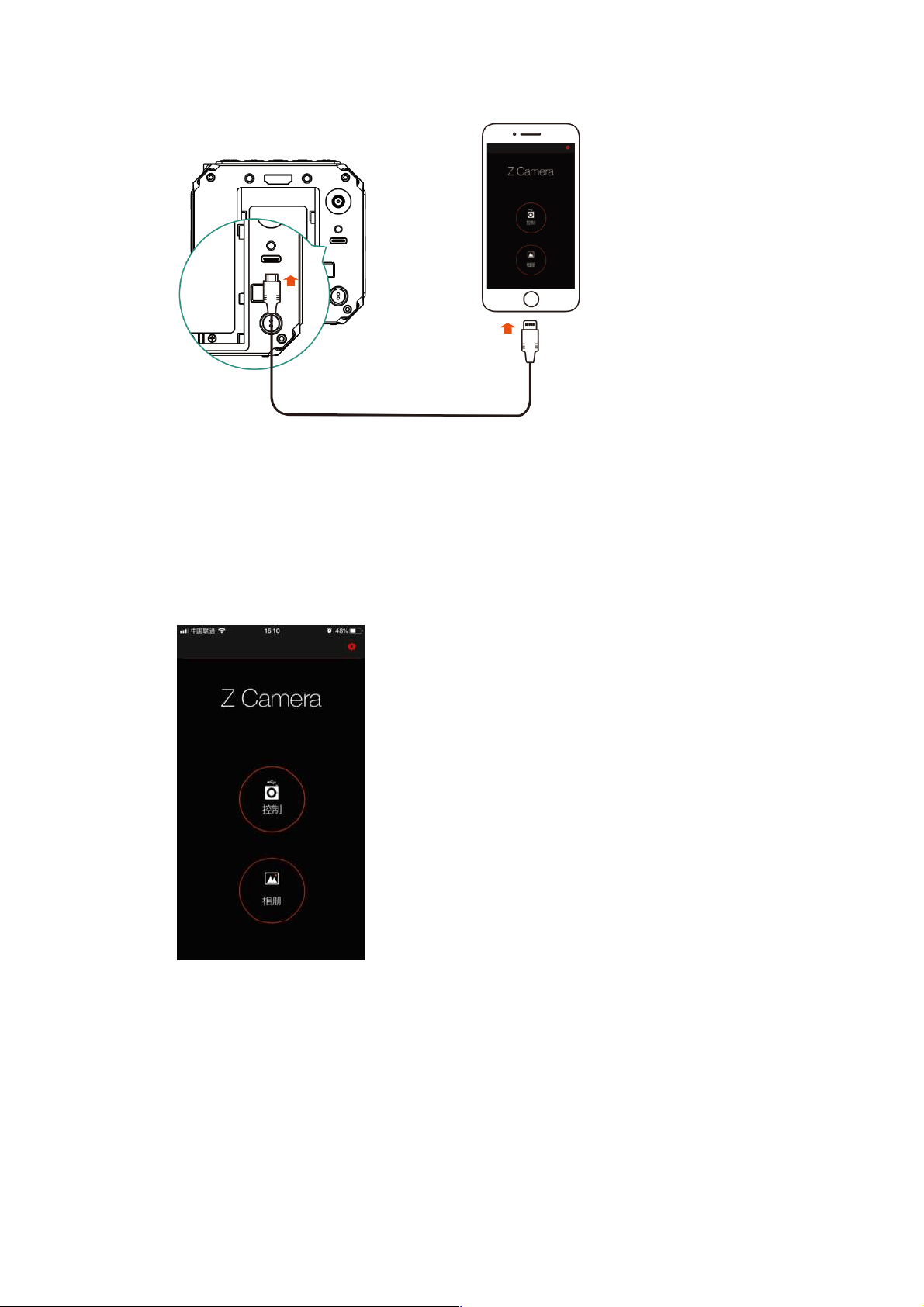
2. If it’s the 1
st
time to connect the device to the camera, there will be a pop-up message
on your iOS device “Trust this device?”, click “Yes” and it will ask you to input
password, which is the password to unlock your iOS device.
3. Open Z Camera App, if the camera is connected successfully, the “Control” icon will
be activated (it’s gray color if there is no connection) and there will be a small USB or
Wi-Fi icon on (depends the connection method you use). Click the “Control” icon and
you will come into the live-view and control panel.
4. Details about the Z Camera app will be added in the future update of the document.
In the App, you can monitor and play back the video of the camera in real time, and
set camera parameters through the menu.
Note: Detailed description of App functions will be added in later versions.
7. Firmware Upgrade
Follow the steps below to upgrade the firmware of the camera:
1) Download the latest version of firmware (update.zip) for Z CAM E2C from Z CAM’s
website:
http://www.z-cam.com/firmware-update/.
2) Put the update.zip file to the root directory of the SD card (DO NOT unzip it!).
3) Insert the SD card to the camera and power it on.
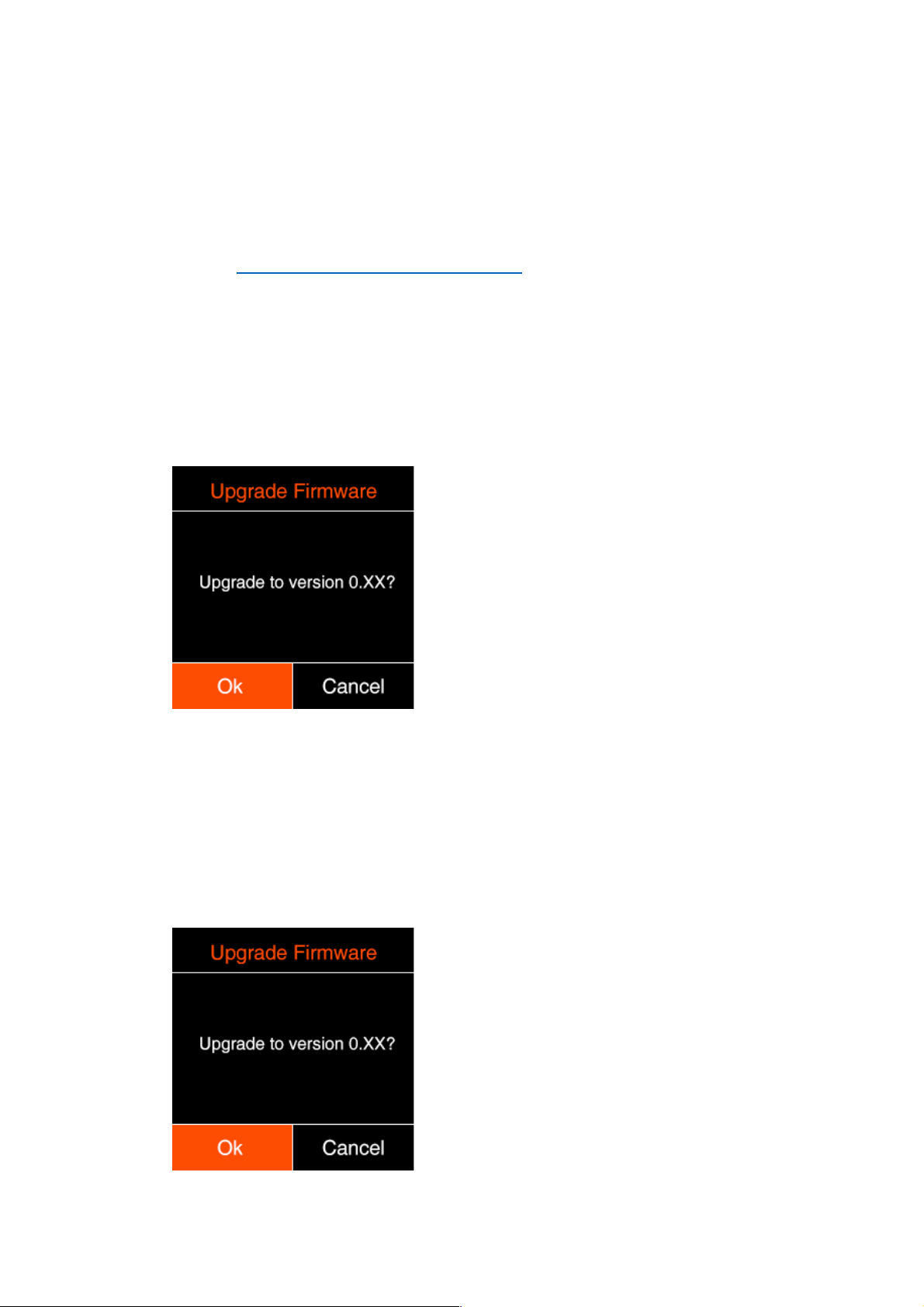
If the firmware version of file in the card is higher than the camera’s one, there will be
a pop-up message for firmware upgrade. Select “OK” and press OK button, the
camera will upgrade the firmware* and restart the camera after it’s finished.
4) If the version of the update.zip file in SD card is the same as or lower than the
camera’s one (to refresh or downgrade the firmware), there will be no pop-up message
when the camera is powered on. Go to Version in System setting, press OK button
and you will see the pop-up message for firmware update. Select “OK” and press OK
button to update the firmware*.

* Please make sure the camera will not power off during the firmware upgrade / update
process.
8. Camera Maintenance
• As the camera is a precise instrument, please do not drop it or let it suffer physical
strike.
• As the camera is not waterproof, please do not use it in water or under a humid
environment.
• If the camera is infiltrated by water accidentally, please shut it down, cut off the
power or take off the battery (if any), take out the memory card, and drying the
camera within 24 hours.
• The working temperature of the camera is 0-40°C. Please do not place or use the
camera in an environment where the temperature is lower than 0°C or higher than
40°C.
• Please do not let the camera and the installed lens to face the sun for long time.
• Please do not touch the image sensor while removing the lens.
• Please do not use any detergent containing organic solvent to clean the camera
body and the lens.
• Please use soft lens cloth to clean the camera body regularly.
• Please do not disassemble the camera by yourself.
• Please do not place the camera in a darkroom or a lab or other places where
corrosive chemicals are stored.
Disclaimer: All product features and technical specifications stated above are subjected to Z CAM’s sole interpretation
and explanation.