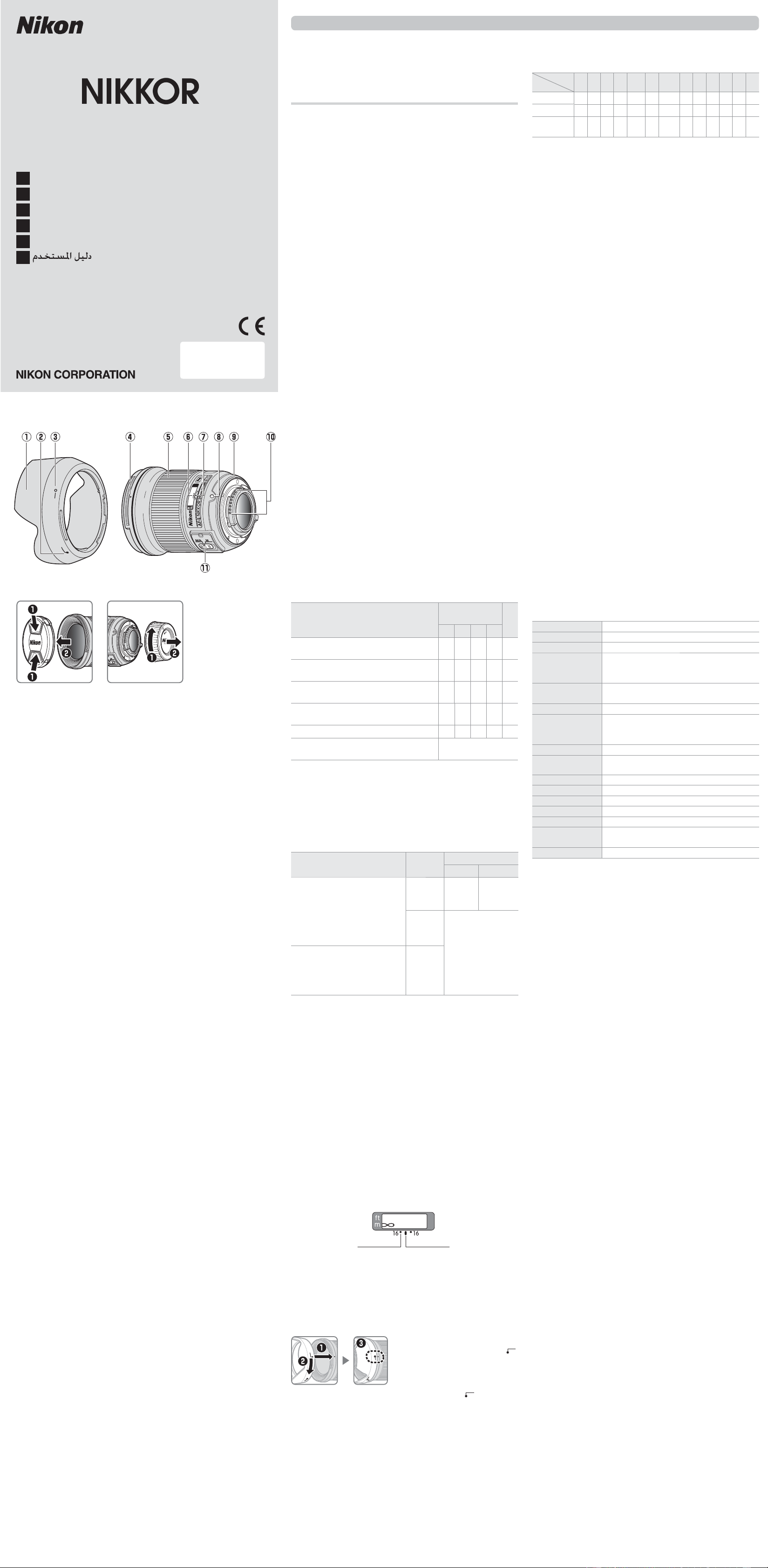
中文版(简体)
FrançaisEnglish
■
■
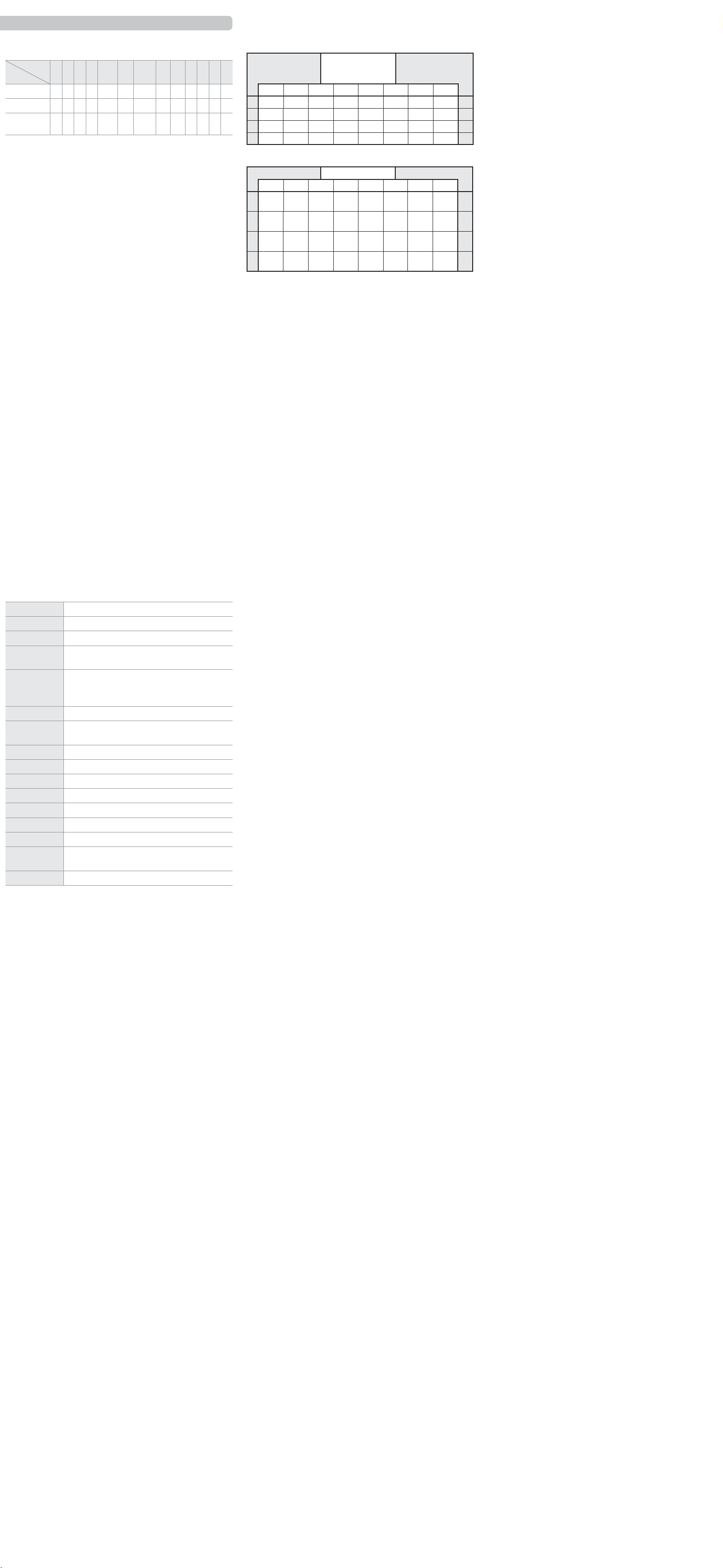
Depth of fi eld (Metric)
Depth of fi eld (Metric)
■
■
Profondeur de champ
Profondeur de champ
■
景深
(m)
• Focus distance
• Distance de mise au point
•
对焦距离
• Depth of eld
• Profondeur de champ
•
景深
• Reproduction ratio
• Rapport de reproduction
•
成像率
f/1.8 f/2.0 f/2.8 f/4 f/5.6 f/8 f/11 f/16
0.23
0.23 – 0.23 0.23 – 0.23 0.23 – 0.23 0.23 – 0.23 0.23 – 0.24 0.22 – 0.24 0.22 – 0.24 0.22 – 0.25 1/4.9
0.3 0.30 – 0.30 0.30 – 0.31 0.29 – 0.31 0.29 – 0.31 0.29 – 0.31 0.28 – 0.32 0.28 – 0.33 0.27 – 0.34 1/7.7
0.5 0.48 – 0.52 0.48 – 0.52 0.48 – 0.53 0.47 – 0.54 0.46 – 0.56 0.44 – 0.59 0.42 – 0.63 0.40 – 0.73
1/15.9
∞ 9.88 – ∞ 9.20 – ∞ 6.60 – ∞ 4.65 – ∞ 3.35 – ∞ 2.38 – ∞ 1.76 – ∞ 1.25 – ∞ 1/∞
■
■
Depth of fi eld (Imperial)
Depth of fi eld (Imperial)
(ft)
(ft)
Focus distance Depth of field Reproduction ratio
f/1.8 f/2.0 f/2.8 f/4 f/5.6 f/8 f/11 f/16
0.8
9 ⁄ in. –
9 ⁄ in.
9 ⁄ in. –
9 ⁄ in.
9 ⁄ in. –
9 ⁄ in.
9 ⁄ in. –
9 ⁄ in.
9 ⁄ in. –
9 ⁄ in.
9 ⁄ in. –
10 in.
9 ⁄ in. –
10 ⁄ in.
8 ⁄ in. –
10 ⁄ in.
1/5.4
1
11 ⁄ in. –
1 ft ⁄ in.
11 ⁄ in. –
1 ft ⁄ in.
11 ⁄ in. –
1 ft ⁄ in.
11 ⁄ in. –
1 ft ⁄ in.
11 ⁄ in. –
1 ft ⁄ in.
11 ⁄ in. –
1 ft ⁄ in.
11 ⁄ in. –
1 ft 1 ⁄ in.
10 ⁄ in. –
1 ft 1 ⁄ in.
1/7.9
1.6
1 ft 6 ⁄ in. –
1 ft 7 ⁄ in.
1 ft 6 ⁄ in.
–
1 ft 7 ⁄ in.
1 ft 6 ⁄ in. –
1 ft 8 ⁄ in.
1 ft 6 in. –
1 ft 8 ⁄ in.
1 ft 5 ⁄ in. –
1 ft 9 ⁄ in.
1 ft 4 ⁄ in. –
1 ft 10 ⁄ in.
1 ft 4 ⁄ in. –
2 ft
1 ft 3 ⁄ in. –
2 ft 3 ⁄ in.
1/15.4
∞
32 ft 5 ⁄ in. –
∞
30 ft 2 ⁄ in. –
∞
21 ft 7 ⁄ in. –
∞
15 ft 3 ⁄ in. –
∞
11 ft ⁄ in. –
∞
7 ft 9 ⁄ in. –
∞
5 ft 9 ⁄ in. –
∞
4 ft ⁄ in. –
∞
1/∞
En
User’s Manual
Fr
Manuel d’utilisation
Sc
使用说明书
Tc
使用說明書
Id
Manual bagi Pengguna
Ar
AF-S NIKKOR 24mm f/1.8G ED
Printed in Japan
SB5D01(6C)
7MA0256C-01
使用产品前请仔细阅读本使用说明书,并请妥善保管。
在使用本产品前,请仔细阅读这些使用说明和照相机的说明书。
注意:
当安装在一台
DX
格式数码单镜反光照相机(例如
D
7200
或
D
5500
)上时,该镜头的视角为
61
°且焦距相当于
36
mm
(
35
mm
格式)。
安全须知
为预防发生伤害、损失或其他事故,请在使用本产品前仔细阅读
“安全须知”,并以正确的方法使用。请在阅读之后妥善保管本说明
书,以便随时查阅。
A
警告
(有可能造成人员死亡或负重伤的事项)
A
注意
(有可能造成人身伤害或物品损害的事项)
图示和符号的实例
F
禁止
(不允许进行的行为)符号。
C
执行
(必须进行的行为)符号。
A
警告
F
禁止 切勿自行拆解、修理或改装。
F
禁止
当产品由于跌落而破损使得内部外露时,切勿用手触碰
外露部分。
否则将会导致触电或受伤。
C
执行
当发现产品变热、冒烟或发出焦味等异常时,请立刻取
出照相机中的电池或切断照相机电源(电源适配器)。
若放任不管,将会导致起火或烫伤。
取出电池或切断电源时,请小心勿被烫伤。
请委托尼康授权的维修服务中心进行修理。
F
禁止
切勿使产品被水淋湿。
勿用湿手触碰。
否则将导致触电或起火。
F
禁止
切勿在有可能起火、爆炸的场所使用。
在液化石油气站、汽油加油站等会产生易燃性气体、粉
尘的场所使用产品,将会导致起火或爆炸。
F
禁止
切勿使用镜头或照相机直接观看太阳或强光。
否则将会导致失明或视觉损伤。
A
注意
C
执行
切勿在婴幼儿伸手可及之处保管本产品。
否则将会导致受伤或故障。
C
执行
进行背光拍摄时,务必使太阳充分偏离视角。
不使用时,请盖上镜头盖,或者存放在没有阳光照射处。
阳光会聚焦,并将导致起火。
F
禁止
切勿置于高温的地方(如夏天封闭的车内或直射阳光
下)。
切勿将产品用手帕或毛巾包裹着使用。
否则将会导致故障或起火。
■
镜头部件
q
镜头遮光罩
w
镜头遮光罩
对齐
标记
e
镜头遮光罩
锁定
标记
r
镜头遮光罩安装标记
t
对焦环
y
对焦距离指示
u
对焦距离标记
i
镜头安装标记
o
镜头卡口橡胶垫圈
!0
CPU
接点
!1
对焦模式切换器
■
兼容性
勾选标记(“
✔
”)表示支持的功能,破折号(“—”)表示不支持的
功能。可用功能可能受到一些限制 ;有关详细信息,请参阅照相机
的说明书。
照相机
曝光(拍摄)模式
AF
3
P
2
SAM
尼康
FX
格式和
DX
格式数码单镜反光
照相机
✔✔✔✔✔
F
6
、
F
5
、
F
100
、
F
80
系列、
F
75
系列、
F
65
系列、
Pronea
600
i
、
Pronea S
1
✔✔✔✔✔
F
4
系列、
F
90
X
、
F
90
系列、
F
70
系列
✔✔
——
✔
F
60
系列、
F
55
系列、
F
50
系列、
F-
401
x
、
F-
401
s
、
F-
401
✔✔✔✔
—
F-
801
s
、
F-
801
、
F-
601
M
✔✔
———
F
3
AF
、
F-
601
、
F-
501
、尼康
MF
照相机
(
F-
601
M
除外)
—
1
曝光模式
M
(手动)不可用。
2
包括自动和场景(数字可变程序)模式。
3
自动对焦。
■
对焦
所支持的对焦模式如下表所示
(有关照相机对焦模式的信息,请参
阅照相机的说明书)。
照相机
照相机
对焦模式
镜头对焦模式
M/A M
尼康
FX
格式和
DX
格式数码
单镜反光照相机、
F
6
、
F
5
、
F
4
系列、
F
100
、
F
90
X
、
F
90
系列、
F
80
系列、
F
75
系列、
F
70
系列、
F
65
系列、
Pronea
600
i
、
Pronea S
AF
手动优先的
自动对焦
带有电子
测距仪的
手动对焦
MF
手动对焦
(除
F-
601
M
以外的
所有照相机均带有
电子测距仪)
F
60
系列、
F
55
系列、
F
50
系列、
F-
801
s
、
F-
801
、
F-
601
M
、
F-
401
x
、
F-
401
s
、
F-
401
AF
、
MF
M/A
(手动优先的自动对焦)
使用手动优先的自动对焦(
M/A
)进行对焦的步骤如下 :
z
将镜头对焦模式切换器推至
M/A
。
x
对焦。
若有需要,您可在半按快门释放按钮期间(或者,若照相机配
备有一个
AF-ON
按钮,则在按下
AF-ON
按钮期间)旋转镜头
对焦环来使手动对焦优先于自动对焦。若要使用自动对焦以重
新对焦,请再次半按快门释放按钮或再次按下
AF-ON
按钮。
■
景深
镜头上的景深指示表示大致的景深。若照相机支持景深预览(光圈
缩小),则景深还可在取景器中进行预览。有关详细信息,请参阅
景深列表。
注意
:
请注意,对焦距离指示仅可作为指南,可能无法准确显示离拍
摄对象的距离,并且由于景深或其他因素的影响,照相机对焦于远距
离物体时可能不会显示
∞
。
0.5
1.6 1
0.3
对焦距离标记景深指示
■
光圈
请使用照相机控制调整光圈。
■
镜头遮光罩
镜头遮光罩可保护镜头并阻挡可能导致杂光或鬼影的散射光线。
安装遮光罩
将镜头遮光罩安装标记(
●
)与镜头
遮光罩对齐标记(
)对齐,然后旋
转遮光罩(
w
)直至
●
标记与镜头遮
光罩锁定标记(
—
)对齐。
安装或取下遮光罩时,请在其底部的
标记附近将其握住,并避
免握得太紧。若未正确安装好遮光罩,则可能会产生渐晕。
不使用时,可将遮光罩反转并固定在镜头上。
■
对焦屏
下列照相机支持用于不同情况下的多种对焦屏。
对焦屏
照相机
ABCE
EC-B
EC-E
G
1
G
2
G
3
G
4
JLMU
F
6
—
—— ———
F
5
+ DP-
30
F
5
+ DA-
30
(+
0
.
5
)
:
推荐使用。
:
在取景器中可见渐晕(照片不会受到影响)。
—
:
与照相机不兼容。
(
)
:
括号中的数据是指用于中央重点测光的曝光补偿值。
当调整
F
6
的曝光补偿时,请在个人设定
b
6
(“对焦屏
补偿”)中选择“其它对焦屏”;请注意,使用
B
或
E
以外的对焦屏时,即使曝光补偿值为
0
,也必须选择
“其它对焦屏”。
F
5
的曝光补偿可使用个人设定
18
进行
调整 ;有关详细信息,请参阅照相机的说明书。
空白单元格
:
不适用于该镜头。请注意,在放大倍率为
1
:
1
或更高
时,
M
型屏幕仍可用于显微拍摄和微距拍摄。
注意
:
F
5
仅在使用
A
、
B
、
E
、
EC-B/EC-E
、
J
和
L
对焦屏时支持矩阵测光。
■
镜头保养
•
拿起或持握镜头或照相机时,切勿仅持拿镜头遮光罩。
•
保持
CPU
接点清洁。
•
若镜头卡口橡胶垫圈损坏,请立即停止使用并将镜头送至尼康授
权的维修服务中心进行维修。
•
用吹气球去除镜头表面的灰尘和浮屑。若要去除污点和指纹,可
使用一块滴有少许乙醇或镜头清洁剂的干净软棉布或镜头清洁
纸,以圆周运动方式从里向外进行清洁。注意不要留下污渍,也
不要用手指碰触玻璃。
•
切勿使用涂料稀释剂或苯等有机溶剂清洁镜头。
•
镜头遮光罩或
NC
滤镜可用于保护前部镜头元件。
•
将镜头放入镜头套之前,请盖好镜头前盖和镜头后盖。
•
若在较长时间内不使用镜头,请将其存放在阴凉干燥的地方以防
止发霉和生锈。切不可存放在直射阳光下,也不可与石脑油或樟
脑丸一起存放。
•
保持镜头干燥。内部构造生锈将导致无法挽回的损坏。
•
将镜头放置在过于炎热的地方将会使强化塑料部件受损或变形。
•
运输产品时,请在包装箱内装入足够多的缓冲材料,以减少(避
免) 由 于 冲 击 导 致 产 品 损 坏 。
■
随附配件
•
72
mm
搭扣式镜头前盖
LC-
72
•
镜头后盖
LF-
4
•
卡口式镜头遮光罩
HB-
76
•
镜头套
CL-
1015
■
兼容的配件
•
72
mm
旋入式滤镜
■
技术规格
类型
带内置
CPU
和
F
卡口的
G
型
AF-S
镜头
焦距
24
mm
最大光圈
f/
1
.
8
镜头结构
9
组
12
片(包括
2
枚
ED
镜片组件、
2
枚非球面镜片
组件和带纳米结晶涂层的镜片组件)
视角
•
尼康胶卷单镜反光与
FX
格式数码单镜反光照相
机:
84
°
•
尼康
DX
格式数码单镜反光照相机 :
61
°
距离信息
输出到照相机
对焦
后组对焦(
RF
)系统(可进行由宁静波动马达控
制的自动对焦,具备用于手动对焦的独立对焦环)
对焦距离指示
0
.
23
m
至无穷远(∞)
最近对焦距离
0
.
23
m
(至焦平面)
光圈叶片
7
片(圆形光圈孔)
光圈
全自动
光圈范围
f/
1
.
8
–
16
测光
全开光圈测光
滤镜附件尺寸
72
mm
(
P =
0
.
75
mm
)
尺寸
约
77
.
5
mm
(最大直径)×
83
.
0
mm
(从照相机镜头卡口边缘开始的距离)
重量
约
355
g
尼康公司保留可随时更改说明书内载之硬件技术规格的权利,而无
须事先通知。
Before using this product, please carefully read both these instructions and
the camera manual.
Note: When mounted on a DX-format digital single-lens refl ex camera such
as the D7200 or D5500, this lens has an angle of view of 61° and a focal
length equivalent to 36 mm (35 mm format).
For Your Safety
For Your Safety
A
A
WARNINGS
WARNINGS
• Do not disassemble or modify. In the event of malfunction, the product should
be repaired only by a qualifi ed technician. Should the product break open
as the result of a fall or other accident, avoid touching exposed parts. Fail-
ure to observe these precautions could result in electric shock or other
injury.
• Turn the camera o immediately in the event of malfunction. Should you notice
smoke or an unusual smell coming from the equipment, immediately unplug
the AC adapter and remove the camera battery, taking care to avoid burns.
Continued operation could result in fi re or injury. After removing the battery,
take the equipment to a Nikon-authorized service center for inspection.
• Keep dry. Do not expose the product to water or handle with wet hands.
Failure to observe this precaution could result in fi re or electric shock.
• Do not use in the presence of ammable gas. Operating the equipment at fi lling
stations or in the presence of propane or other fl ammable gas or dust
could result in explosion or fi re.
• Do not look at the sun through the lens or the camera view nder. Viewing the sun
or other bright light source through the lens or viewfi nder could cause
permanent visual impairment.
A
A
CAUTIONS
CAUTIONS
• Keep out of reach of children. Failure to observe this precaution could result in
injury or product malfunction.
• Do not focus sunlight through the lens. Sunlight focused through the lens
could cause fi re. When shooting backlit subjects keep the sun well out of
the frame; if the lens will not be used for an extended period, replace the
lens caps and store out of direct sunlight.
• Do not overheat. Do not leave the product in locations exposed to extreme-
ly high temperatures, such as in an enclosed vehicle in direct sunlight,
or wrap the product in a towel or handkerchief or otherwise cover the
product while it is in use. Failure to observe these precautions could result
in fi re or product malfunction.
■
■
Parts of the Lens
Parts of the Lens
q
Lens hood
w
Lens hood alignment mark
e
Lens hood lock mark
r
Lens hood mounting mark
t
Focus ring
y
Focus distance indicator
u
Focus distance mark
i
Lens mounting mark
o
Rubber lens-mount gasket
!0
CPU contacts
!1
Focus-mode switch
■
■
Compatibility
Compatibility
Check marks (“
✔
“) indicate supported features, dashes (“—”) features that are
not supported. Some limitations may apply; see the camera manual for details.
Camera
Camera
Exposure (shooting)
Exposure (shooting)
mode
mode
AF
AF
5
5
P
P
4
4
S
S
A
A
M
M
Nikon FX-format and DX-format digital single-
lens refl ex cameras
✔✔✔✔✔
F6, F5, F100, F/N80-series
1
, F/N75-series
1
,
F/N65-series
1
, Pronea 600i/6i
1
, Pronea S
2
✔✔✔✔✔
F4-series, F90X/N90s
1
, F90-series/N90
1
,
F70-series/N70
1
✔✔
——
✔
F60-series/N60
1
, F/N55-series
1
, F50-series/N50
1
,
F-401x/N5005
1
, F-401s/N4004s
1
, F-401/N4004
1
✔✔✔✔
—
F-801s/N8008s
1
, F-801/N8008
1
, F-601M/N6000
1
✔✔
———
F3AF, F-601/N6006
1
, F-501/N2020
3
, Nikon
manual focus cameras (excluding F-601M/N6000
1
)
—
1. N-series cameras and Pronea 6i sold in U. S. A. only.
2. Exposure mode M (manual) not available.
3. N2020 sold in U. S. A. and Canada only.
4. Includes AUTO and scene (Digital Vari-Program) modes.
5. Autofocus.
■
■
Focus
Focus
Supported focus modes are shown in the following table (for information
on camera focus modes, see the camera manual).
Camera
Camera
Camera
Camera
focus mode
focus mode
Lens focus mode
Lens focus mode
M/A
M/A
M
M
Nikon FX-format and DX-format
digital single-lens refl ex cameras,
F6, F5, F4-series, F100, F90X/N90s
*
,
F90-series/N90
*
, F/N80-series
*
,
F/N75-series
*
, F70-series/N70
*
,
F/N65-series
*
, Pronea 600i/6i
*
,
Pronea S
AF
Autofocus
with manual
override
Manual focus
with electronic
range nder
MF
Manual focus (electronic
range nder available with
all cameras except F-601
M/
N6000
*
)
F60-series/N60
*
, F/N55-series
*
,
F50-series/N50
*
, F-801s/N8008s
*
,
F-801/N8008
*
, F-601M/N6000
*
,
F-401x/N5005
*
, F-401s/N4004s
*
,
F-401/N4004
*
AF, MF
* N-series cameras and Pronea 6i sold in U. S. A. only.
M/A (Autofocus with Manual Override)
M/A (Autofocus with Manual Override)
To focus using autofocus with manual override (M/A):
z
Slide the lens focus-mode switch to M/A.
x
Focus.
If desired, autofocus can be over-ridden by rotating the lens
focus ring while the shutter-release button is pressed halfway
(or, if the camera is equipped with an AF-ON button, while the
AF-ON button is pressed). To refocus using autofocus, press the
shutter-release button halfway or press the AF-ON button again.
■
■
Depth of Field
Depth of Field
The depth-of-fi eld indicators on the lens show the approximate depth of
fi eld. If the camera off ers depth-of-fi eld preview (stop down), depth of fi eld
can also be previewed in the viewfi nder. See the depth of fi eld table for
more information.
Note: Note that the focus distance indicator is intended only as a guide and
may not accurately show the distance to the subject and may, due to depth
of fi eld or other factors, not show ∞ when the camera is focused on a distant
object.
0.5
1.6 1
0.3
Focus distance
mark
Depth-of- eld
indicators
■
■
Aperture
Aperture
Aperture is adjusted using camera controls.
■
■
The Lens Hood
The Lens Hood
The lens hoods protect the lens and block stray light that would otherwise
cause fl are or ghosting.
Attaching the Hood
Attaching the Hood
Align the lens hood mounting mark (●)
with the lens hood alignment mark (
)
and then rotate the hood (
w
) until the
● mark is aligned with the lens hood
lock mark (—).
When attaching or removing the hood, hold it near the
symbol on its
base and avoid gripping it too tightly. Vignetting may occur if the hood is
not correctly attached.
The hood can be reversed and mounted on the lens when not in use.
■
■
Focusing Screens
Focusing Screens
The following cameras support a variety of focusing screens for use in dif-
ferent situations.
Screen
Screen
Camera
Camera
A
A
B
B
C
C
E
E
EC-B
EC-B
EC-E
EC-E
G1
G1
G2
G2
G3
G3
G4
G4
J
J
L
L
M
M
U
U
F6
—
—— — ——
F5+ DP-30
F5+ DA-30
(+0.5)
: Recommended.
: Vignetting visible in viewfi nder (photographs are not aff ected).
—: Not compatible with camera.
( ): Figures in parentheses give the exposure compensation for cen-
ter-weighted metering. Select “Other screen” for Custom Setting
b6 (“Screen comp.”) when adjusting exposure compensation for
the F6; note that with screens other than B or E, “Other screen”
must be selected even when the value for exposure compensa-
tion is 0. Exposure compensation for the F5 can be adjusted using
Custom Setting 18; see the camera manual for details.
Empty cell: Not suited to use with this lens. Note that type M screens can
however be used for photomicrography and macro photography
at magnifi cations of 1 : 1 or higher.
Note: The F5 supports matrix metering with A, B, E, EC-B/EC-E, J, and L focusing
screens only.
■
■
Lens Care
Lens Care
• Do not pick up or hold the lens or camera using only the lens hood.
• Keep the CPU contacts clean.
• Should the rubber lens-mount gasket be damaged, cease use immedi-
ately and take the lens to a Nikon-authorized service center for repair.
• Use a blower to remove dust and lint from the lens surfaces. To remove
smudges and fi ngerprints, apply a small amount of ethanol or lens cleaner
to a soft, clean cotton cloth or lens-cleaning tissue and clean from the
center outwards using a circular motion, taking care not to leave smears
or touch the glass with your fi ngers.
• Never use organic solvents such as paint thinner or benzene to clean the
lens.
• The lens hood or NC fi lters can be used to protect the front lens element.
• Attach the front and rear caps before placing the lens in its lens case.
• If the lens will not be used for an extended period, store it in a cool, dry
location to prevent mold and rust. Do not store in direct sunlight or with
naphtha or camphor moth balls.
• Keep the lens dry. Rusting of the internal mechanism can cause irrepa-
rable damage.
• Leaving the lens in extremely hot locations could damage or warp parts
made from reinforced plastic.
■
■
Supplied Accessories
Supplied Accessories
• 72 mm snap-on Front Lens Cap LC-72
• Rear Lens Cap LF-4
• Bayonet Hood HB-76
• Lens Case CL-1015
■
■
Compatible Accessories
Compatible Accessories
• 72 mm screw-on fi lters
■
■
Specifi cations
Specifi cations
Type
Type Type G AF-S lens with built-in CPU and F mount
Focal length
Focal length 24 mm
Maximum aperture
Maximum aperture f/1.8
Lens construction
Lens construction 12 elements in 9 groups (including 2 ED lens elements, 2
aspherical lens elements, and lens elements with Nano-Crystal
coatings)
Angle of view
Angle of view • Nikon fi lm SLR and FX-format D-SLR cameras: 84°
• Nikon DX-format D-SLR cameras: 61°
Distance information
Distance information Output to camera
Focusing
Focusing Rear Focusing (RF) System with autofocus con-
trolled by Silent Wave Motor and separate focus
ring for manual focus
Focus distance indicator
Focus distance indicator 0.23 m to infi nity (∞)
Minimum focus
Minimum focus
distance
distance
0.23 m (0.75ft) from focal plane
Diaphragm blades
Diaphragm blades 7 (rounded diaphragm opening)
Diaphragm
Diaphragm Fully automatic
Aperture range
Aperture range f/1.8 –
16
Metering
Metering Full aperture
Filter-attachment size
Filter-attachment size 72 mm (P = 0.75 mm)
Dimensions
Dimensions Approx. 77.5 mm maximum diameter × 83.0 mm
(distance from camera lens mount ange)
Weight
Weight Approx. 355 g (12.6 oz)
Nikon reserves the right to change the specifi cations of the hardware described
in this manual at any time and without prior notice.
Avant de l’utiliser, veuillez lire attentivement ces instructions et le manuel
de l’appareil photo.
Remarque : lorsqu’il est monté sur un refl ex numérique de format DX,
comme le D7200 ou le D5500, cet objectif a un angle de champ de 61° et
une focale équivalente à 36 mm (format 24×36 mm).
Pour votre sécurité
Pour votre sécurité
A
A
AVERTISSEMENTS
AVERTISSEMENTS
• Ne démontez pas ou ne modi ez pas le produit. En cas de dysfonctionnement,
ce produit ne doit être réparé que par un technicien qualifi é. Si ce produit
se casse suite à une chute ou à un autre accident, évitez de toucher
les parties exposées. Le non-respect de ces consignes de sécurité peut
provoquer un choc électrique ou d’autres blessures.
• En cas de dysfonctionnement, mettez immédiatement l’appareil photo hors tension.
En cas d’apparition de fumée ou d’une odeur inhabituelle provenant
du matériel, débranchez immédiatement l’adaptateur secteur et retirez
l’accumulateur de l’appareil photo, en faisant attention de ne pas vous
brûler. Continuer d’utiliser le matériel risque de provoquer un incendie ou
des blessures. Une fois l’accumulateur retiré, apportez votre matériel à un
centre Nikon agréé pour le faire contrôler.
• Gardez le produit au sec. N’exposez pas ce produit à l’eau ou ne le manipulez
pas avec les mains mouillées. Le non-respect de cette consigne de
sécurité peut provoquer un incendie ou un choc électrique.
• N’utilisez pas le matériel en présence de gaz in ammables. La manipulation du
matériel dans des stations-service ou en présence de propane, d’autres gaz
infl ammables ou de poussière peut provoquer une explosion ou un incendie.
• Ne regardez pas le soleil à travers l’objectif ou le viseur de l’appareil photo. L’observation
du soleil ou de toute autre source lumineuse puissante à travers l’objectif ou
le viseur peut provoquer des troubles irrémédiables de la vision.
A
A
MISES EN GARDE
MISES EN GARDE
• Conservez hors de portée des enfants. Le non-respect de cette consigne de
sécurité peut provoquer des blessures ou le dysfonctionnement du produit.
• Ne focalisez pas les rayons du soleil à travers l’objectif. Les rayons du soleil
focalisés à travers l’objectif peuvent provoquer un incendie. Lorsque vous
photographiez des sujets à contre-jour, maintenez le soleil loin du cadre ;
si vous n’avez pas l’intention d’utiliser l’objectif avant longtemps, remettez
en place ses bouchons et rangez-le à l’abri de la lumière directe du soleil.
• Ne surchau ez pas le produit. Ne laissez pas ce produit dans des lieux exposés
à des températures très élevées, comme dans une voiture fermée en plein
soleil. N’emballez pas ce produit dans une serviette, un mouchoir ou ne
le recouvrez pas de quelque manière que ce soit lorsque vous l’utilisez. Le
non-respect de ces consignes de sécurité peut provoquer un incendie ou
le dysfonctionnement du produit.
■
■
Parties de l’objectif
Parties de l’objectif
q
Parasoleil
w
Repère d’alignement du parasoleil
e
Repère de verrouillage du parasoleil
r
Repère de montage du parasoleil
t
Bague de mise au point
y
Indicateur de distance de mise au point
u
Repère de distance de mise au point
i
Repère de montage de l’objectif
o
Joint en caoutchouc de la monture d’objectif
!0
Contacts du microprocesseur
!1
Commutateur du mode de mise au point
■
■
Compatibilité
Compatibilité
Les marques (« ✔ ») indiquent les fonctions prises en charge, les traits
(« — ») les fonctions non prises en charge. Certaines restrictions peuvent
s’appliquer ; consultez le manuel de l’appareil photo pour plus de détails.
Appareil photo
Appareil photo
Mode d’exposition
Mode d’exposition
(prise de vue)
(prise de vue)
AF
AF
3
3
P
P
2
2
S
S
A
A
M
M
Appareils photo numériques refl ex Nikon de
format FX et DX
✔✔✔✔✔
F6, F5, F100, gamme F80, gamme F75,
gamme F65, Pronea 600i, Pronea S
1
✔✔✔✔✔
Gamme F4, F90X, gamme F90, gamme F70
✔✔
——
✔
Gamme F60, gamme F55, gamme F50,
F-401x, F-401s, F-401
✔✔✔✔
—
F-801s, F-801, F-601
M
✔✔
———
F3AF, F-601, F-501, appareils MF Nikon (sauf
F-601
M)
—
1. Mode d’exposition M (manuel) non disponible.
2. Inclut les modes AUTO et scène (Vari-programme).
3. Autofocus.
■
■
Mise au point
Mise au point
Les modes de mise au point pris en charge sont indiqués dans le tableau
suivant (pour en savoir plus sur les modes de mise au point de l’appareil
photo, consultez le manuel de ce dernier).
Appareil photo
Appareil photo
Mode de mise
Mode de mise
au point de
au point de
l’appareil photo
l’appareil photo
Mode de mise au point
Mode de mise au point
de l’objectif
de l’objectif
M/A
M/A
M
M
Appareils photo numériques refl ex
Nikon de format FX et DX, F6, F5,
gamme F4, F100, F90X,
gamme F90, gamme F80,
gamme F75, gamme F70, gamme F65,
Pronea 600i, Pronea S
AF
Autofocus
à priorité
manuelle
Mise au point
manuelle avec
télémètre
électronique
MF
Mise au point
manuelle
(télémètre électronique
disponible sur tous les
appareils photo excepté
F-601
M)
Gamme F60, gamme F55,
gamme F50, F-801s, F-801,
F-601M, F-401x, F-401s, F-401
AF, MF
M/A (Autofocus à priorité manuelle)
M/A (Autofocus à priorité manuelle)
Pour faire la mise au point en utilisant l’autofocus à priorité manuelle (M/A) :
z
Positionnez le commutateur du mode de mise au point de l’objectif
sur M/A.
x
Eff ectuez la mise au point.
Si vous le souhaitez, vous pouvez désactiver l’autofocus en
pivotant la bague de mise au point de l’objectif avec le déclencheur
appuyé à mi-course (ou avec la commande AF-ON appuyée, si
l’appareil photo est pourvu d’une commande AF-ON). Pour refaire
la mise au point avec l’autofocus, appuyez à mi-course sur le
déclencheur ou appuyez de nouveau sur la commande AF-ON.
■
■
Profondeur de champ
Profondeur de champ
Les indicateurs de profondeur de champ visibles sur l’objectif indiquent
la profondeur de champ approximative. Si l’appareil photo dispose d’une
fonction d’aperçu de la profondeur de champ, il est également possible de
prévisualiser cette dernière dans le viseur. Reportez-vous au tableau de la
profondeur de champ pour en savoir plus.
Note: remarquez que la distance affi chée par l’indicateur de distance de mise au
point n’est donnée qu’à titre indicatif et peut ne pas correspondre précisément
à la distance réelle du sujet, et peut, en raison de la profondeur de champ ou
d’autres facteurs, ne pas affi cher ∞ alors que le sujet mis au point est éloigné.
0.5
1.6 1
0.3
Indicateurs de
profondeur de champ
Repère de distance
de mise au point
■
■
Ouverture
Ouverture
Pour régler l’ouverture, utilisez les commandes de l’appareil photo.
■
■
Parasoleil
Parasoleil
Le parasoleil protège l’objectif et bloque la lumière diff use pouvant causer
de la lumière parasite ou une image fantôme.
Fixation du parasoleil
Fixation du parasoleil
Alignez le repère de montage du parasoleil
(
●) sur le repère d’alignement du parasoleil
( ), puis tournez le parasoleil (
w
) jusqu’à
ce que le repère
● soit aligné sur le repère
de verrouillage du parasoleil (—).
Lors de la fi xation ou du retrait du parasoleil, tenez-le près du symbole
sur sa base, et évitez de le serrer trop fermement. Un vignettage peut se
produire si le parasoleil n’est pas correctement attaché.
Le parasoleil peut être retourné et monté sur l’objectif lorsqu’il n’est pas utilisé.
■
■
Verres de visée
Verres de visée
Les appareils photo suivants sont compatibles avec un grand nombre de
verres de visée adaptés à diff érentes situations.
Verre
Verre
Appareil photo
Appareil photo
A
A
B
B
C
C
E
E
EC-B
EC-B
EC-E
EC-E
G1
G1
G2
G2
G3
G3
G4
G4
J
J
L
L
M
M
U
U
F6
—
—— — ——
F5+ DP-30
F5+ DA-30
(+0,5)
: Recommandé.
: Vignettage visible dans le viseur (les photos ne sont pas aff ectées).
— : Non compatible avec l’appareil photo.
( ) : Les chiff res entre parenthèses donnent la correction d’exposition
pour la mesure pondérée centrale. Sélectionnez « Activ.:
autre » pour le Réglage personnalisé b6 (« Plage visée ») lors de
l’ajustement de la correction d’exposition pour l’appareil photo
F6 ; remarquez qu’avec les verres autres que B ou E, « Activ.:
autre » doit être sélectionné, et ce même lorsque la valeur pour
la correction d’exposition est de 0. La correction d’exposition
pour l’appareil photo F5 peut être ajustée en utilisant le Réglage
personnalisé 18 ; consultez le manuel de l’appareil photo pour
plus de détails.
Cellule vide
: L’utilisation ne convient pas avec cet objectif. Veuillez remarquer
cependant que les verres de type M peuvent être utilisés
pour la microphotographie et la macrophotographie avec un
grossissement de 1 : 1 ou plus.
Remarque : l’appareil photo F5 prend en charge la mesure matricielle avec les
verres de visée A, B, E, EC-B/EC-E, J, et L uniquement.
■
■
Entretien de l’objectif
Entretien de l’objectif
• Ne prenez pas ou ne tenez pas l’objectif ou l’appareil photo en saisissant
uniquement le parasoleil.
• Maintenez les contacts du microprocesseur propres.
• Si le joint en caoutchouc de la monture d’objectif est endommagé, cessez
immédiatement l’utilisation et confi ez l’objectif à un centre Nikon agréé
pour le faire réparer.
• Utilisez une souffl ette pour enlever la poussière et les peluches sur
la surface de l’objectif. Pour eff acer les taches et les traces de doigt,
imprégnez un morceau de tissu propre en coton avec une petite quantité
d’éthanol ou de nettoyant pour objectif ou utilisez une lingette de
nettoyage d’objectif, et nettoyez avec un mouvement circulaire à partir
du centre vers l’extérieur, tout en prenant soin de ne pas laisser de taches,
ni de toucher le verre avec vos doigts.
• N’utilisez jamais de solvants organiques comme un diluant à peinture ou
du benzène pour nettoyer l’objectif.
• Le parasoleil ou les fi ltres NC peuvent être utilisés pour protéger la lentille
frontale.
• Fixez les bouchons avant et arrière avant de placer l’objectif dans son étui.
• Si vous n’avez pas l’intention d’utiliser l’objectif pendant une période
prolongée, rangez-le dans un endroit frais et sec pour éviter la moisissure
et la rouille. Ne pas ranger à la lumière directe du soleil ou avec des boules
antimites de naphtaline ou de camphre.
• Tenez l’objectif au sec. La formation de rouille sur le mécanisme interne
peut causer des dégâts irréparables.
• Laisser l’objectif dans des endroits extrêmement chauds peut
endommager ou déformer les éléments composés de plastique renforcé.
■
■
Accessoires fournis
Accessoires fournis
• Bouchon avant d’objectif encliquetable 72 mm LC-72
• Bouchon arrière d’objectif LF-4
• Parasoleil à baïonnette HB-76
• Étui pour objectif CL-1015
■
■
Accessoires compatibles
Accessoires compatibles
• Filtres à visser 72 mm
■
■
Caractéristiques
Caractéristiques
Type
Type Objectif AF-S de type G avec microprocesseur intégré
et monture F
Focale
Focale 24 mm
Ouverture maximale
Ouverture maximale f/1.8
Construction optique
Construction optique 12 lentilles en 9 groupes (dont 2 lentilles en verre ED,
2lentilles asphériques et des lentilles béné ciant d’un traitement
nanocristal)
Angle de champ
Angle de champ • Refl ex numériques Nikon de format FX et refl ex
argentiques Nikon : 84°
• Refl ex numériques Nikon de format DX : 61°
Information de
Information de
distance
distance
Communiquée au boîtier de l’appareil photo
Mise au point
Mise au point Système de mise au point arrière (RF, Rear Focusing)
avec autofocus commandé par un moteur
ondulatoire silencieux (SWM) et bague de mise au
point pour mise au point manuelle
Indicateur de
Indicateur de
distance de mise au
distance de mise au
point
point
0,23 m à l’infi ni (∞)
Distance minimale de
Distance minimale de
mise au point
mise au point
0,23 m depuis le plan focal
Lamelles de
Lamelles de
diaphragme
diaphragme
7 (diaphragme circulaire)
Diaphragme
Diaphragme Intégralement automatique
Plage des ouvertures
Plage des ouvertures f/1.8 – 16
Mesure
Mesure Pleine ouverture
Diamètre de xation
Diamètre de xation
pour ltre
pour ltre
72 mm (P = 0,75 mm)
Dimensions
Dimensions Environ 77,5 mm de diamètre maximum × 83,0 mm
(distance à partir du plan d’appui de la monture d’objectif de
l’appareil photo)
Poids
Poids Environ 355 g
Nikon se réserve le droit de modifi er les caractéristiques du matériel décrit dans
ce manuel à tout moment et sans préavis.
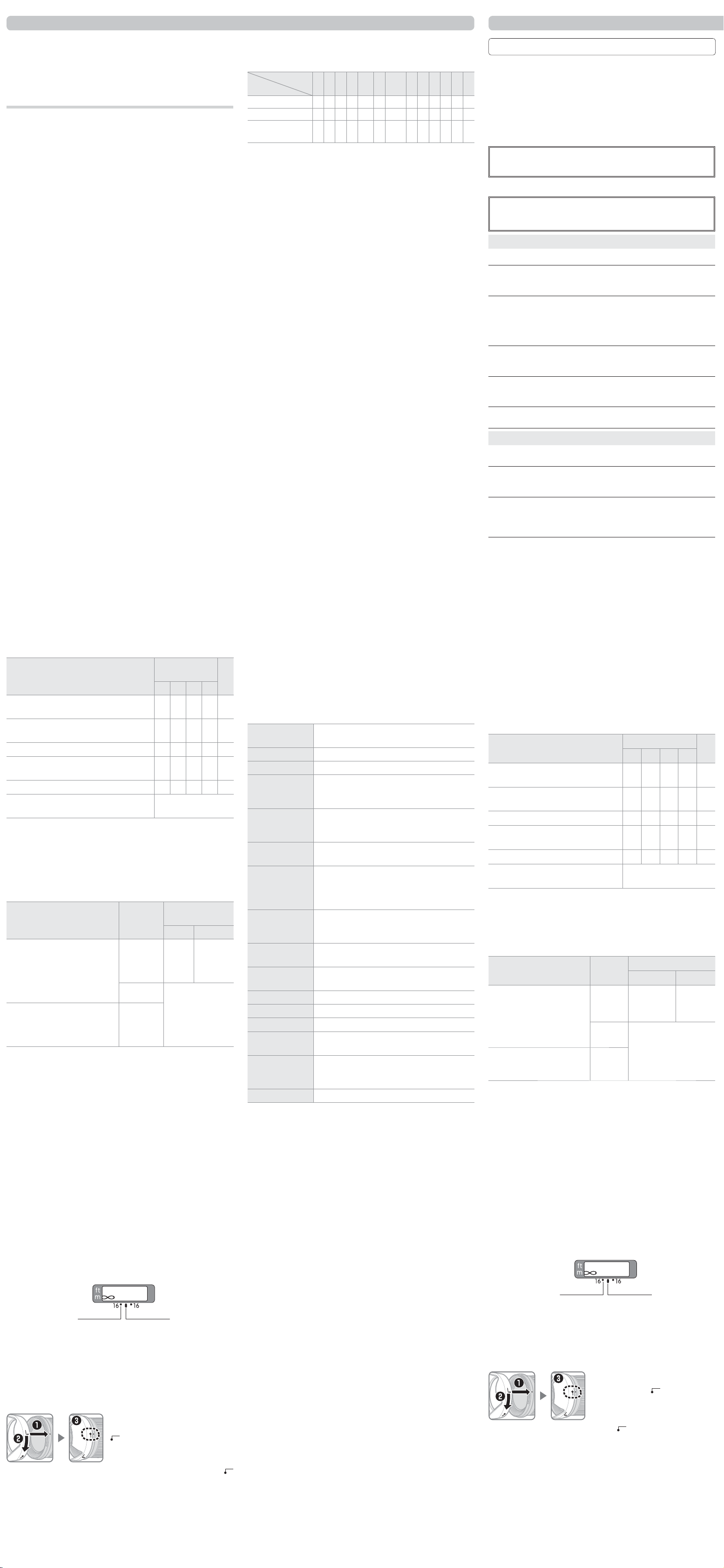
中文版(简体)
FrançaisEnglish
■
■
Depth of fi eld (Metric)
Depth of fi eld (Metric)
■
■
Profondeur de champ
Profondeur de champ
■
景深
(m)
• Focus distance
• Distance de mise au point
•
对焦距离
• Depth of eld
• Profondeur de champ
•
景深
• Reproduction ratio
• Rapport de reproduction
•
成像率
f/1.8 f/2.0 f/2.8 f/4 f/5.6 f/8 f/11 f/16
0.23
0.23 – 0.23 0.23 – 0.23 0.23 – 0.23 0.23 – 0.23 0.23 – 0.24 0.22 – 0.24 0.22 – 0.24 0.22 – 0.25 1/4.9
0.3 0.30 – 0.30 0.30 – 0.31 0.29 – 0.31 0.29 – 0.31 0.29 – 0.31 0.28 – 0.32 0.28 – 0.33 0.27 – 0.34 1/7.7
0.5 0.48 – 0.52 0.48 – 0.52 0.48 – 0.53 0.47 – 0.54 0.46 – 0.56 0.44 – 0.59 0.42 – 0.63 0.40 – 0.73
1/15.9
∞ 9.88 – ∞ 9.20 – ∞ 6.60 – ∞ 4.65 – ∞ 3.35 – ∞ 2.38 – ∞ 1.76 – ∞ 1.25 – ∞ 1/∞
■
■
Depth of fi eld (Imperial)
Depth of fi eld (Imperial)
(ft)
(ft)
Focus distance Depth of field Reproduction ratio
f/1.8 f/2.0 f/2.8 f/4 f/5.6 f/8 f/11 f/16
0.8
9 ⁄ in. –
9 ⁄ in.
9 ⁄ in. –
9 ⁄ in.
9 ⁄ in. –
9 ⁄ in.
9 ⁄ in. –
9 ⁄ in.
9 ⁄ in. –
9 ⁄ in.
9 ⁄ in. –
10 in.
9 ⁄ in. –
10 ⁄ in.
8 ⁄ in. –
10 ⁄ in.
1/5.4
1
11 ⁄ in. –
1 ft ⁄ in.
11 ⁄ in. –
1 ft ⁄ in.
11 ⁄ in. –
1 ft ⁄ in.
11 ⁄ in. –
1 ft ⁄ in.
11 ⁄ in. –
1 ft ⁄ in.
11 ⁄ in. –
1 ft ⁄ in.
11 ⁄ in. –
1 ft 1 ⁄ in.
10 ⁄ in. –
1 ft 1 ⁄ in.
1/7.9
1.6
1 ft 6 ⁄ in. –
1 ft 7 ⁄ in.
1 ft 6 ⁄ in.
–
1 ft 7 ⁄ in.
1 ft 6 ⁄ in. –
1 ft 8 ⁄ in.
1 ft 6 in. –
1 ft 8 ⁄ in.
1 ft 5 ⁄ in. –
1 ft 9 ⁄ in.
1 ft 4 ⁄ in. –
1 ft 10 ⁄ in.
1 ft 4 ⁄ in. –
2 ft
1 ft 3 ⁄ in. –
2 ft 3 ⁄ in.
1/15.4
∞
32 ft 5 ⁄ in. –
∞
30 ft 2 ⁄ in. –
∞
21 ft 7 ⁄ in. –
∞
15 ft 3 ⁄ in. –
∞
11 ft ⁄ in. –
∞
7 ft 9 ⁄ in. –
∞
5 ft 9 ⁄ in. –
∞
4 ft ⁄ in. –
∞
1/∞
En
User’s Manual
Fr
Manuel d’utilisation
Sc
使用说明书
Tc
使用說明書
Id
Manual bagi Pengguna
Ar
AF-S NIKKOR 24mm f/1.8G ED
Printed in Japan
SB5D01(6C)
7MA0256C-01
使用产品前请仔细阅读本使用说明书,并请妥善保管。
在使用本产品前,请仔细阅读这些使用说明和照相机的说明书。
注意:
当安装在一台
DX
格式数码单镜反光照相机(例如
D
7200
或
D
5500
)上时,该镜头的视角为
61
°且焦距相当于
36
mm
(
35
mm
格式)。
安全须知
为预防发生伤害、损失或其他事故,请在使用本产品前仔细阅读
“安全须知”,并以正确的方法使用。请在阅读之后妥善保管本说明
书,以便随时查阅。
A
警告
(有可能造成人员死亡或负重伤的事项)
A
注意
(有可能造成人身伤害或物品损害的事项)
图示和符号的实例
F
禁止
(不允许进行的行为)符号。
C
执行
(必须进行的行为)符号。
A
警告
F
禁止 切勿自行拆解、修理或改装。
F
禁止
当产品由于跌落而破损使得内部外露时,切勿用手触碰
外露部分。
否则将会导致触电或受伤。
C
执行
当发现产品变热、冒烟或发出焦味等异常时,请立刻取
出照相机中的电池或切断照相机电源(电源适配器)。
若放任不管,将会导致起火或烫伤。
取出电池或切断电源时,请小心勿被烫伤。
请委托尼康授权的维修服务中心进行修理。
F
禁止
切勿使产品被水淋湿。
勿用湿手触碰。
否则将导致触电或起火。
F
禁止
切勿在有可能起火、爆炸的场所使用。
在液化石油气站、汽油加油站等会产生易燃性气体、粉
尘的场所使用产品,将会导致起火或爆炸。
F
禁止
切勿使用镜头或照相机直接观看太阳或强光。
否则将会导致失明或视觉损伤。
A
注意
C
执行
切勿在婴幼儿伸手可及之处保管本产品。
否则将会导致受伤或故障。
C
执行
进行背光拍摄时,务必使太阳充分偏离视角。
不使用时,请盖上镜头盖,或者存放在没有阳光照射处。
阳光会聚焦,并将导致起火。
F
禁止
切勿置于高温的地方(如夏天封闭的车内或直射阳光
下)。
切勿将产品用手帕或毛巾包裹着使用。
否则将会导致故障或起火。
■
镜头部件
q
镜头遮光罩
w
镜头遮光罩
对齐
标记
e
镜头遮光罩
锁定
标记
r
镜头遮光罩安装标记
t
对焦环
y
对焦距离指示
u
对焦距离标记
i
镜头安装标记
o
镜头卡口橡胶垫圈
!0
CPU
接点
!1
对焦模式切换器
■
兼容性
勾选标记(“
✔
”)表示支持的功能,破折号(“—”)表示不支持的
功能。可用功能可能受到一些限制 ;有关详细信息,请参阅照相机
的说明书。
照相机
曝光(拍摄)模式
AF
3
P
2
SAM
尼康
FX
格式和
DX
格式数码单镜反光
照相机
✔✔✔✔✔
F
6
、
F
5
、
F
100
、
F
80
系列、
F
75
系列、
F
65
系列、
Pronea
600
i
、
Pronea S
1
✔✔✔✔✔
F
4
系列、
F
90
X
、
F
90
系列、
F
70
系列
✔✔
——
✔
F
60
系列、
F
55
系列、
F
50
系列、
F-
401
x
、
F-
401
s
、
F-
401
✔✔✔✔
—
F-
801
s
、
F-
801
、
F-
601
M
✔✔
———
F
3
AF
、
F-
601
、
F-
501
、尼康
MF
照相机
(
F-
601
M
除外)
—
1
曝光模式
M
(手动)不可用。
2
包括自动和场景(数字可变程序)模式。
3
自动对焦。
■
对焦
所支持的对焦模式如下表所示
(有关照相机对焦模式的信息,请参
阅照相机的说明书)。
照相机
照相机
对焦模式
镜头对焦模式
M/A M
尼康
FX
格式和
DX
格式数码
单镜反光照相机、
F
6
、
F
5
、
F
4
系列、
F
100
、
F
90
X
、
F
90
系列、
F
80
系列、
F
75
系列、
F
70
系列、
F
65
系列、
Pronea
600
i
、
Pronea S
AF
手动优先的
自动对焦
带有电子
测距仪的
手动对焦
MF
手动对焦
(除
F-
601
M
以外的
所有照相机均带有
电子测距仪)
F
60
系列、
F
55
系列、
F
50
系列、
F-
801
s
、
F-
801
、
F-
601
M
、
F-
401
x
、
F-
401
s
、
F-
401
AF
、
MF
M/A
(手动优先的自动对焦)
使用手动优先的自动对焦(
M/A
)进行对焦的步骤如下 :
z
将镜头对焦模式切换器推至
M/A
。
x
对焦。
若有需要,您可在半按快门释放按钮期间(或者,若照相机配
备有一个
AF-ON
按钮,则在按下
AF-ON
按钮期间)旋转镜头
对焦环来使手动对焦优先于自动对焦。若要使用自动对焦以重
新对焦,请再次半按快门释放按钮或再次按下
AF-ON
按钮。
■
景深
镜头上的景深指示表示大致的景深。若照相机支持景深预览(光圈
缩小),则景深还可在取景器中进行预览。有关详细信息,请参阅
景深列表。
注意
:
请注意,对焦距离指示仅可作为指南,可能无法准确显示离拍
摄对象的距离,并且由于景深或其他因素的影响,照相机对焦于远距
离物体时可能不会显示
∞
。
0.5
1.6 1
0.3
对焦距离标记景深指示
■
光圈
请使用照相机控制调整光圈。
■
镜头遮光罩
镜头遮光罩可保护镜头并阻挡可能导致杂光或鬼影的散射光线。
安装遮光罩
将镜头遮光罩安装标记(
●
)与镜头
遮光罩对齐标记(
)对齐,然后旋
转遮光罩(
w
)直至
●
标记与镜头遮
光罩锁定标记(
—
)对齐。
安装或取下遮光罩时,请在其底部的
标记附近将其握住,并避
免握得太紧。若未正确安装好遮光罩,则可能会产生渐晕。
不使用时,可将遮光罩反转并固定在镜头上。
■
对焦屏
下列照相机支持用于不同情况下的多种对焦屏。
对焦屏
照相机
ABCE
EC-B
EC-E
G
1
G
2
G
3
G
4
JLMU
F
6
—
—— ———
F
5
+ DP-
30
F
5
+ DA-
30
(+
0
.
5
)
:
推荐使用。
:
在取景器中可见渐晕(照片不会受到影响)。
—
:
与照相机不兼容。
(
)
:
括号中的数据是指用于中央重点测光的曝光补偿值。
当调整
F
6
的曝光补偿时,请在个人设定
b
6
(“对焦屏
补偿”)中选择“其它对焦屏”;请注意,使用
B
或
E
以外的对焦屏时,即使曝光补偿值为
0
,也必须选择
“其它对焦屏”。
F
5
的曝光补偿可使用个人设定
18
进行
调整 ;有关详细信息,请参阅照相机的说明书。
空白单元格
:
不适用于该镜头。请注意,在放大倍率为
1
:
1
或更高
时,
M
型屏幕仍可用于显微拍摄和微距拍摄。
注意
:
F
5
仅在使用
A
、
B
、
E
、
EC-B/EC-E
、
J
和
L
对焦屏时支持矩阵测光。
■
镜头保养
•
拿起或持握镜头或照相机时,切勿仅持拿镜头遮光罩。
•
保持
CPU
接点清洁。
•
若镜头卡口橡胶垫圈损坏,请立即停止使用并将镜头送至尼康授
权的维修服务中心进行维修。
•
用吹气球去除镜头表面的灰尘和浮屑。若要去除污点和指纹,可
使用一块滴有少许乙醇或镜头清洁剂的干净软棉布或镜头清洁
纸,以圆周运动方式从里向外进行清洁。注意不要留下污渍,也
不要用手指碰触玻璃。
•
切勿使用涂料稀释剂或苯等有机溶剂清洁镜头。
•
镜头遮光罩或
NC
滤镜可用于保护前部镜头元件。
•
将镜头放入镜头套之前,请盖好镜头前盖和镜头后盖。
•
若在较长时间内不使用镜头,请将其存放在阴凉干燥的地方以防
止发霉和生锈。切不可存放在直射阳光下,也不可与石脑油或樟
脑丸一起存放。
•
保持镜头干燥。内部构造生锈将导致无法挽回的损坏。
•
将镜头放置在过于炎热的地方将会使强化塑料部件受损或变形。
•
运输产品时,请在包装箱内装入足够多的缓冲材料,以减少(避
免) 由 于 冲 击 导 致 产 品 损 坏 。
■
随附配件
•
72
mm
搭扣式镜头前盖
LC-
72
•
镜头后盖
LF-
4
•
卡口式镜头遮光罩
HB-
76
•
镜头套
CL-
1015
■
兼容的配件
•
72
mm
旋入式滤镜
■
技术规格
类型
带内置
CPU
和
F
卡口的
G
型
AF-S
镜头
焦距
24
mm
最大光圈
f/
1
.
8
镜头结构
9
组
12
片(包括
2
枚
ED
镜片组件、
2
枚非球面镜片
组件和带纳米结晶涂层的镜片组件)
视角
•
尼康胶卷单镜反光与
FX
格式数码单镜反光照相
机:
84
°
•
尼康
DX
格式数码单镜反光照相机 :
61
°
距离信息
输出到照相机
对焦
后组对焦(
RF
)系统(可进行由宁静波动马达控
制的自动对焦,具备用于手动对焦的独立对焦环)
对焦距离指示
0
.
23
m
至无穷远(∞)
最近对焦距离
0
.
23
m
(至焦平面)
光圈叶片
7
片(圆形光圈孔)
光圈
全自动
光圈范围
f/
1
.
8
–
16
测光
全开光圈测光
滤镜附件尺寸
72
mm
(
P =
0
.
75
mm
)
尺寸
约
77
.
5
mm
(最大直径)×
83
.
0
mm
(从照相机镜头卡口边缘开始的距离)
重量
约
355
g
尼康公司保留可随时更改说明书内载之硬件技术规格的权利,而无
须事先通知。
Before using this product, please carefully read both these instructions and
the camera manual.
Note: When mounted on a DX-format digital single-lens refl ex camera such
as the D7200 or D5500, this lens has an angle of view of 61° and a focal
length equivalent to 36 mm (35 mm format).
For Your Safety
For Your Safety
A
A
WARNINGS
WARNINGS
• Do not disassemble or modify. In the event of malfunction, the product should
be repaired only by a qualifi ed technician. Should the product break open
as the result of a fall or other accident, avoid touching exposed parts. Fail-
ure to observe these precautions could result in electric shock or other
injury.
• Turn the camera o immediately in the event of malfunction. Should you notice
smoke or an unusual smell coming from the equipment, immediately unplug
the AC adapter and remove the camera battery, taking care to avoid burns.
Continued operation could result in fi re or injury. After removing the battery,
take the equipment to a Nikon-authorized service center for inspection.
• Keep dry. Do not expose the product to water or handle with wet hands.
Failure to observe this precaution could result in fi re or electric shock.
• Do not use in the presence of ammable gas. Operating the equipment at fi lling
stations or in the presence of propane or other fl ammable gas or dust
could result in explosion or fi re.
• Do not look at the sun through the lens or the camera view nder. Viewing the sun
or other bright light source through the lens or viewfi nder could cause
permanent visual impairment.
A
A
CAUTIONS
CAUTIONS
• Keep out of reach of children. Failure to observe this precaution could result in
injury or product malfunction.
• Do not focus sunlight through the lens. Sunlight focused through the lens
could cause fi re. When shooting backlit subjects keep the sun well out of
the frame; if the lens will not be used for an extended period, replace the
lens caps and store out of direct sunlight.
• Do not overheat. Do not leave the product in locations exposed to extreme-
ly high temperatures, such as in an enclosed vehicle in direct sunlight,
or wrap the product in a towel or handkerchief or otherwise cover the
product while it is in use. Failure to observe these precautions could result
in fi re or product malfunction.
■
■
Parts of the Lens
Parts of the Lens
q
Lens hood
w
Lens hood alignment mark
e
Lens hood lock mark
r
Lens hood mounting mark
t
Focus ring
y
Focus distance indicator
u
Focus distance mark
i
Lens mounting mark
o
Rubber lens-mount gasket
!0
CPU contacts
!1
Focus-mode switch
■
■
Compatibility
Compatibility
Check marks (“
✔
“) indicate supported features, dashes (“—”) features that are
not supported. Some limitations may apply; see the camera manual for details.
Camera
Camera
Exposure (shooting)
Exposure (shooting)
mode
mode
AF
AF
5
5
P
P
4
4
S
S
A
A
M
M
Nikon FX-format and DX-format digital single-
lens refl ex cameras
✔✔✔✔✔
F6, F5, F100, F/N80-series
1
, F/N75-series
1
,
F/N65-series
1
, Pronea 600i/6i
1
, Pronea S
2
✔✔✔✔✔
F4-series, F90X/N90s
1
, F90-series/N90
1
,
F70-series/N70
1
✔✔
——
✔
F60-series/N60
1
, F/N55-series
1
, F50-series/N50
1
,
F-401x/N5005
1
, F-401s/N4004s
1
, F-401/N4004
1
✔✔✔✔
—
F-801s/N8008s
1
, F-801/N8008
1
, F-601M/N6000
1
✔✔
———
F3AF, F-601/N6006
1
, F-501/N2020
3
, Nikon
manual focus cameras (excluding F-601M/N6000
1
)
—
1. N-series cameras and Pronea 6i sold in U. S. A. only.
2. Exposure mode M (manual) not available.
3. N2020 sold in U. S. A. and Canada only.
4. Includes AUTO and scene (Digital Vari-Program) modes.
5. Autofocus.
■
■
Focus
Focus
Supported focus modes are shown in the following table (for information
on camera focus modes, see the camera manual).
Camera
Camera
Camera
Camera
focus mode
focus mode
Lens focus mode
Lens focus mode
M/A
M/A
M
M
Nikon FX-format and DX-format
digital single-lens refl ex cameras,
F6, F5, F4-series, F100, F90X/N90s
*
,
F90-series/N90
*
, F/N80-series
*
,
F/N75-series
*
, F70-series/N70
*
,
F/N65-series
*
, Pronea 600i/6i
*
,
Pronea S
AF
Autofocus
with manual
override
Manual focus
with electronic
range nder
MF
Manual focus (electronic
range nder available with
all cameras except F-601
M/
N6000
*
)
F60-series/N60
*
, F/N55-series
*
,
F50-series/N50
*
, F-801s/N8008s
*
,
F-801/N8008
*
, F-601M/N6000
*
,
F-401x/N5005
*
, F-401s/N4004s
*
,
F-401/N4004
*
AF, MF
* N-series cameras and Pronea 6i sold in U. S. A. only.
M/A (Autofocus with Manual Override)
M/A (Autofocus with Manual Override)
To focus using autofocus with manual override (M/A):
z
Slide the lens focus-mode switch to M/A.
x
Focus.
If desired, autofocus can be over-ridden by rotating the lens
focus ring while the shutter-release button is pressed halfway
(or, if the camera is equipped with an AF-ON button, while the
AF-ON button is pressed). To refocus using autofocus, press the
shutter-release button halfway or press the AF-ON button again.
■
■
Depth of Field
Depth of Field
The depth-of-fi eld indicators on the lens show the approximate depth of
fi eld. If the camera off ers depth-of-fi eld preview (stop down), depth of fi eld
can also be previewed in the viewfi nder. See the depth of fi eld table for
more information.
Note: Note that the focus distance indicator is intended only as a guide and
may not accurately show the distance to the subject and may, due to depth
of fi eld or other factors, not show ∞ when the camera is focused on a distant
object.
0.5
1.6 1
0.3
Focus distance
mark
Depth-of- eld
indicators
■
■
Aperture
Aperture
Aperture is adjusted using camera controls.
■
■
The Lens Hood
The Lens Hood
The lens hoods protect the lens and block stray light that would otherwise
cause fl are or ghosting.
Attaching the Hood
Attaching the Hood
Align the lens hood mounting mark (●)
with the lens hood alignment mark (
)
and then rotate the hood (
w
) until the
● mark is aligned with the lens hood
lock mark (—).
When attaching or removing the hood, hold it near the
symbol on its
base and avoid gripping it too tightly. Vignetting may occur if the hood is
not correctly attached.
The hood can be reversed and mounted on the lens when not in use.
■
■
Focusing Screens
Focusing Screens
The following cameras support a variety of focusing screens for use in dif-
ferent situations.
Screen
Screen
Camera
Camera
A
A
B
B
C
C
E
E
EC-B
EC-B
EC-E
EC-E
G1
G1
G2
G2
G3
G3
G4
G4
J
J
L
L
M
M
U
U
F6
—
—— — ——
F5+ DP-30
F5+ DA-30
(+0.5)
: Recommended.
: Vignetting visible in viewfi nder (photographs are not aff ected).
—: Not compatible with camera.
( ): Figures in parentheses give the exposure compensation for cen-
ter-weighted metering. Select “Other screen” for Custom Setting
b6 (“Screen comp.”) when adjusting exposure compensation for
the F6; note that with screens other than B or E, “Other screen”
must be selected even when the value for exposure compensa-
tion is 0. Exposure compensation for the F5 can be adjusted using
Custom Setting 18; see the camera manual for details.
Empty cell: Not suited to use with this lens. Note that type M screens can
however be used for photomicrography and macro photography
at magnifi cations of 1 : 1 or higher.
Note: The F5 supports matrix metering with A, B, E, EC-B/EC-E, J, and L focusing
screens only.
■
■
Lens Care
Lens Care
• Do not pick up or hold the lens or camera using only the lens hood.
• Keep the CPU contacts clean.
• Should the rubber lens-mount gasket be damaged, cease use immedi-
ately and take the lens to a Nikon-authorized service center for repair.
• Use a blower to remove dust and lint from the lens surfaces. To remove
smudges and fi ngerprints, apply a small amount of ethanol or lens cleaner
to a soft, clean cotton cloth or lens-cleaning tissue and clean from the
center outwards using a circular motion, taking care not to leave smears
or touch the glass with your fi ngers.
• Never use organic solvents such as paint thinner or benzene to clean the
lens.
• The lens hood or NC fi lters can be used to protect the front lens element.
• Attach the front and rear caps before placing the lens in its lens case.
• If the lens will not be used for an extended period, store it in a cool, dry
location to prevent mold and rust. Do not store in direct sunlight or with
naphtha or camphor moth balls.
• Keep the lens dry. Rusting of the internal mechanism can cause irrepa-
rable damage.
• Leaving the lens in extremely hot locations could damage or warp parts
made from reinforced plastic.
■
■
Supplied Accessories
Supplied Accessories
• 72 mm snap-on Front Lens Cap LC-72
• Rear Lens Cap LF-4
• Bayonet Hood HB-76
• Lens Case CL-1015
■
■
Compatible Accessories
Compatible Accessories
• 72 mm screw-on fi lters
■
■
Specifi cations
Specifi cations
Type
Type Type G AF-S lens with built-in CPU and F mount
Focal length
Focal length 24 mm
Maximum aperture
Maximum aperture f/1.8
Lens construction
Lens construction 12 elements in 9 groups (including 2 ED lens elements, 2
aspherical lens elements, and lens elements with Nano-Crystal
coatings)
Angle of view
Angle of view • Nikon fi lm SLR and FX-format D-SLR cameras: 84°
• Nikon DX-format D-SLR cameras: 61°
Distance information
Distance information Output to camera
Focusing
Focusing Rear Focusing (RF) System with autofocus con-
trolled by Silent Wave Motor and separate focus
ring for manual focus
Focus distance indicator
Focus distance indicator 0.23 m to infi nity (∞)
Minimum focus
Minimum focus
distance
distance
0.23 m (0.75ft) from focal plane
Diaphragm blades
Diaphragm blades 7 (rounded diaphragm opening)
Diaphragm
Diaphragm Fully automatic
Aperture range
Aperture range f/1.8 –
16
Metering
Metering Full aperture
Filter-attachment size
Filter-attachment size 72 mm (P = 0.75 mm)
Dimensions
Dimensions Approx. 77.5 mm maximum diameter × 83.0 mm
(distance from camera lens mount ange)
Weight
Weight Approx. 355 g (12.6 oz)
Nikon reserves the right to change the specifi cations of the hardware described
in this manual at any time and without prior notice.
Avant de l’utiliser, veuillez lire attentivement ces instructions et le manuel
de l’appareil photo.
Remarque : lorsqu’il est monté sur un refl ex numérique de format DX,
comme le D7200 ou le D5500, cet objectif a un angle de champ de 61° et
une focale équivalente à 36 mm (format 24×36 mm).
Pour votre sécurité
Pour votre sécurité
A
A
AVERTISSEMENTS
AVERTISSEMENTS
• Ne démontez pas ou ne modi ez pas le produit. En cas de dysfonctionnement,
ce produit ne doit être réparé que par un technicien qualifi é. Si ce produit
se casse suite à une chute ou à un autre accident, évitez de toucher
les parties exposées. Le non-respect de ces consignes de sécurité peut
provoquer un choc électrique ou d’autres blessures.
• En cas de dysfonctionnement, mettez immédiatement l’appareil photo hors tension.
En cas d’apparition de fumée ou d’une odeur inhabituelle provenant
du matériel, débranchez immédiatement l’adaptateur secteur et retirez
l’accumulateur de l’appareil photo, en faisant attention de ne pas vous
brûler. Continuer d’utiliser le matériel risque de provoquer un incendie ou
des blessures. Une fois l’accumulateur retiré, apportez votre matériel à un
centre Nikon agréé pour le faire contrôler.
• Gardez le produit au sec. N’exposez pas ce produit à l’eau ou ne le manipulez
pas avec les mains mouillées. Le non-respect de cette consigne de
sécurité peut provoquer un incendie ou un choc électrique.
• N’utilisez pas le matériel en présence de gaz in ammables. La manipulation du
matériel dans des stations-service ou en présence de propane, d’autres gaz
infl ammables ou de poussière peut provoquer une explosion ou un incendie.
• Ne regardez pas le soleil à travers l’objectif ou le viseur de l’appareil photo. L’observation
du soleil ou de toute autre source lumineuse puissante à travers l’objectif ou
le viseur peut provoquer des troubles irrémédiables de la vision.
A
A
MISES EN GARDE
MISES EN GARDE
• Conservez hors de portée des enfants. Le non-respect de cette consigne de
sécurité peut provoquer des blessures ou le dysfonctionnement du produit.
• Ne focalisez pas les rayons du soleil à travers l’objectif. Les rayons du soleil
focalisés à travers l’objectif peuvent provoquer un incendie. Lorsque vous
photographiez des sujets à contre-jour, maintenez le soleil loin du cadre ;
si vous n’avez pas l’intention d’utiliser l’objectif avant longtemps, remettez
en place ses bouchons et rangez-le à l’abri de la lumière directe du soleil.
• Ne surchau ez pas le produit. Ne laissez pas ce produit dans des lieux exposés
à des températures très élevées, comme dans une voiture fermée en plein
soleil. N’emballez pas ce produit dans une serviette, un mouchoir ou ne
le recouvrez pas de quelque manière que ce soit lorsque vous l’utilisez. Le
non-respect de ces consignes de sécurité peut provoquer un incendie ou
le dysfonctionnement du produit.
■
■
Parties de l’objectif
Parties de l’objectif
q
Parasoleil
w
Repère d’alignement du parasoleil
e
Repère de verrouillage du parasoleil
r
Repère de montage du parasoleil
t
Bague de mise au point
y
Indicateur de distance de mise au point
u
Repère de distance de mise au point
i
Repère de montage de l’objectif
o
Joint en caoutchouc de la monture d’objectif
!0
Contacts du microprocesseur
!1
Commutateur du mode de mise au point
■
■
Compatibilité
Compatibilité
Les marques (« ✔ ») indiquent les fonctions prises en charge, les traits
(« — ») les fonctions non prises en charge. Certaines restrictions peuvent
s’appliquer ; consultez le manuel de l’appareil photo pour plus de détails.
Appareil photo
Appareil photo
Mode d’exposition
Mode d’exposition
(prise de vue)
(prise de vue)
AF
AF
3
3
P
P
2
2
S
S
A
A
M
M
Appareils photo numériques refl ex Nikon de
format FX et DX
✔✔✔✔✔
F6, F5, F100, gamme F80, gamme F75,
gamme F65, Pronea 600i, Pronea S
1
✔✔✔✔✔
Gamme F4, F90X, gamme F90, gamme F70
✔✔
——
✔
Gamme F60, gamme F55, gamme F50,
F-401x, F-401s, F-401
✔✔✔✔
—
F-801s, F-801, F-601
M
✔✔
———
F3AF, F-601, F-501, appareils MF Nikon (sauf
F-601
M)
—
1. Mode d’exposition M (manuel) non disponible.
2. Inclut les modes AUTO et scène (Vari-programme).
3. Autofocus.
■
■
Mise au point
Mise au point
Les modes de mise au point pris en charge sont indiqués dans le tableau
suivant (pour en savoir plus sur les modes de mise au point de l’appareil
photo, consultez le manuel de ce dernier).
Appareil photo
Appareil photo
Mode de mise
Mode de mise
au point de
au point de
l’appareil photo
l’appareil photo
Mode de mise au point
Mode de mise au point
de l’objectif
de l’objectif
M/A
M/A
M
M
Appareils photo numériques refl ex
Nikon de format FX et DX, F6, F5,
gamme F4, F100, F90X,
gamme F90, gamme F80,
gamme F75, gamme F70, gamme F65,
Pronea 600i, Pronea S
AF
Autofocus
à priorité
manuelle
Mise au point
manuelle avec
télémètre
électronique
MF
Mise au point
manuelle
(télémètre électronique
disponible sur tous les
appareils photo excepté
F-601
M)
Gamme F60, gamme F55,
gamme F50, F-801s, F-801,
F-601M, F-401x, F-401s, F-401
AF, MF
M/A (Autofocus à priorité manuelle)
M/A (Autofocus à priorité manuelle)
Pour faire la mise au point en utilisant l’autofocus à priorité manuelle (M/A) :
z
Positionnez le commutateur du mode de mise au point de l’objectif
sur M/A.
x
Eff ectuez la mise au point.
Si vous le souhaitez, vous pouvez désactiver l’autofocus en
pivotant la bague de mise au point de l’objectif avec le déclencheur
appuyé à mi-course (ou avec la commande AF-ON appuyée, si
l’appareil photo est pourvu d’une commande AF-ON). Pour refaire
la mise au point avec l’autofocus, appuyez à mi-course sur le
déclencheur ou appuyez de nouveau sur la commande AF-ON.
■
■
Profondeur de champ
Profondeur de champ
Les indicateurs de profondeur de champ visibles sur l’objectif indiquent
la profondeur de champ approximative. Si l’appareil photo dispose d’une
fonction d’aperçu de la profondeur de champ, il est également possible de
prévisualiser cette dernière dans le viseur. Reportez-vous au tableau de la
profondeur de champ pour en savoir plus.
Note: remarquez que la distance affi chée par l’indicateur de distance de mise au
point n’est donnée qu’à titre indicatif et peut ne pas correspondre précisément
à la distance réelle du sujet, et peut, en raison de la profondeur de champ ou
d’autres facteurs, ne pas affi cher ∞ alors que le sujet mis au point est éloigné.
0.5
1.6 1
0.3
Indicateurs de
profondeur de champ
Repère de distance
de mise au point
■
■
Ouverture
Ouverture
Pour régler l’ouverture, utilisez les commandes de l’appareil photo.
■
■
Parasoleil
Parasoleil
Le parasoleil protège l’objectif et bloque la lumière diff use pouvant causer
de la lumière parasite ou une image fantôme.
Fixation du parasoleil
Fixation du parasoleil
Alignez le repère de montage du parasoleil
(
●) sur le repère d’alignement du parasoleil
( ), puis tournez le parasoleil (
w
) jusqu’à
ce que le repère
● soit aligné sur le repère
de verrouillage du parasoleil (—).
Lors de la fi xation ou du retrait du parasoleil, tenez-le près du symbole
sur sa base, et évitez de le serrer trop fermement. Un vignettage peut se
produire si le parasoleil n’est pas correctement attaché.
Le parasoleil peut être retourné et monté sur l’objectif lorsqu’il n’est pas utilisé.
■
■
Verres de visée
Verres de visée
Les appareils photo suivants sont compatibles avec un grand nombre de
verres de visée adaptés à diff érentes situations.
Verre
Verre
Appareil photo
Appareil photo
A
A
B
B
C
C
E
E
EC-B
EC-B
EC-E
EC-E
G1
G1
G2
G2
G3
G3
G4
G4
J
J
L
L
M
M
U
U
F6
—
—— — ——
F5+ DP-30
F5+ DA-30
(+0,5)
: Recommandé.
: Vignettage visible dans le viseur (les photos ne sont pas aff ectées).
— : Non compatible avec l’appareil photo.
( ) : Les chiff res entre parenthèses donnent la correction d’exposition
pour la mesure pondérée centrale. Sélectionnez « Activ.:
autre » pour le Réglage personnalisé b6 (« Plage visée ») lors de
l’ajustement de la correction d’exposition pour l’appareil photo
F6 ; remarquez qu’avec les verres autres que B ou E, « Activ.:
autre » doit être sélectionné, et ce même lorsque la valeur pour
la correction d’exposition est de 0. La correction d’exposition
pour l’appareil photo F5 peut être ajustée en utilisant le Réglage
personnalisé 18 ; consultez le manuel de l’appareil photo pour
plus de détails.
Cellule vide
: L’utilisation ne convient pas avec cet objectif. Veuillez remarquer
cependant que les verres de type M peuvent être utilisés
pour la microphotographie et la macrophotographie avec un
grossissement de 1 : 1 ou plus.
Remarque : l’appareil photo F5 prend en charge la mesure matricielle avec les
verres de visée A, B, E, EC-B/EC-E, J, et L uniquement.
■
■
Entretien de l’objectif
Entretien de l’objectif
• Ne prenez pas ou ne tenez pas l’objectif ou l’appareil photo en saisissant
uniquement le parasoleil.
• Maintenez les contacts du microprocesseur propres.
• Si le joint en caoutchouc de la monture d’objectif est endommagé, cessez
immédiatement l’utilisation et confi ez l’objectif à un centre Nikon agréé
pour le faire réparer.
• Utilisez une souffl ette pour enlever la poussière et les peluches sur
la surface de l’objectif. Pour eff acer les taches et les traces de doigt,
imprégnez un morceau de tissu propre en coton avec une petite quantité
d’éthanol ou de nettoyant pour objectif ou utilisez une lingette de
nettoyage d’objectif, et nettoyez avec un mouvement circulaire à partir
du centre vers l’extérieur, tout en prenant soin de ne pas laisser de taches,
ni de toucher le verre avec vos doigts.
• N’utilisez jamais de solvants organiques comme un diluant à peinture ou
du benzène pour nettoyer l’objectif.
• Le parasoleil ou les fi ltres NC peuvent être utilisés pour protéger la lentille
frontale.
• Fixez les bouchons avant et arrière avant de placer l’objectif dans son étui.
• Si vous n’avez pas l’intention d’utiliser l’objectif pendant une période
prolongée, rangez-le dans un endroit frais et sec pour éviter la moisissure
et la rouille. Ne pas ranger à la lumière directe du soleil ou avec des boules
antimites de naphtaline ou de camphre.
• Tenez l’objectif au sec. La formation de rouille sur le mécanisme interne
peut causer des dégâts irréparables.
• Laisser l’objectif dans des endroits extrêmement chauds peut
endommager ou déformer les éléments composés de plastique renforcé.
■
■
Accessoires fournis
Accessoires fournis
• Bouchon avant d’objectif encliquetable 72 mm LC-72
• Bouchon arrière d’objectif LF-4
• Parasoleil à baïonnette HB-76
• Étui pour objectif CL-1015
■
■
Accessoires compatibles
Accessoires compatibles
• Filtres à visser 72 mm
■
■
Caractéristiques
Caractéristiques
Type
Type Objectif AF-S de type G avec microprocesseur intégré
et monture F
Focale
Focale 24 mm
Ouverture maximale
Ouverture maximale f/1.8
Construction optique
Construction optique 12 lentilles en 9 groupes (dont 2 lentilles en verre ED,
2lentilles asphériques et des lentilles béné ciant d’un traitement
nanocristal)
Angle de champ
Angle de champ • Refl ex numériques Nikon de format FX et refl ex
argentiques Nikon : 84°
• Refl ex numériques Nikon de format DX : 61°
Information de
Information de
distance
distance
Communiquée au boîtier de l’appareil photo
Mise au point
Mise au point Système de mise au point arrière (RF, Rear Focusing)
avec autofocus commandé par un moteur
ondulatoire silencieux (SWM) et bague de mise au
point pour mise au point manuelle
Indicateur de
Indicateur de
distance de mise au
distance de mise au
point
point
0,23 m à l’infi ni (∞)
Distance minimale de
Distance minimale de
mise au point
mise au point
0,23 m depuis le plan focal
Lamelles de
Lamelles de
diaphragme
diaphragme
7 (diaphragme circulaire)
Diaphragme
Diaphragme Intégralement automatique
Plage des ouvertures
Plage des ouvertures f/1.8 – 16
Mesure
Mesure Pleine ouverture
Diamètre de xation
Diamètre de xation
pour ltre
pour ltre
72 mm (P = 0,75 mm)
Dimensions
Dimensions Environ 77,5 mm de diamètre maximum × 83,0 mm
(distance à partir du plan d’appui de la monture d’objectif de
l’appareil photo)
Poids
Poids Environ 355 g
Nikon se réserve le droit de modifi er les caractéristiques du matériel décrit dans
ce manuel à tout moment et sans préavis.
中文版(简体)
FrançaisEnglish
■
■
Depth of fi eld (Metric)
Depth of fi eld (Metric)
■
■
Profondeur de champ
Profondeur de champ
■
景深
(m)
• Focus distance
• Distance de mise au point
•
对焦距离
• Depth of eld
• Profondeur de champ
•
景深
• Reproduction ratio
• Rapport de reproduction
•
成像率
f/1.8 f/2.0 f/2.8 f/4 f/5.6 f/8 f/11 f/16
0.23
0.23 – 0.23 0.23 – 0.23 0.23 – 0.23 0.23 – 0.23 0.23 – 0.24 0.22 – 0.24 0.22 – 0.24 0.22 – 0.25 1/4.9
0.3 0.30 – 0.30 0.30 – 0.31 0.29 – 0.31 0.29 – 0.31 0.29 – 0.31 0.28 – 0.32 0.28 – 0.33 0.27 – 0.34 1/7.7
0.5 0.48 – 0.52 0.48 – 0.52 0.48 – 0.53 0.47 – 0.54 0.46 – 0.56 0.44 – 0.59 0.42 – 0.63 0.40 – 0.73
1/15.9
∞ 9.88 – ∞ 9.20 – ∞ 6.60 – ∞ 4.65 – ∞ 3.35 – ∞ 2.38 – ∞ 1.76 – ∞ 1.25 – ∞ 1/∞
■
■
Depth of fi eld (Imperial)
Depth of fi eld (Imperial)
(ft)
(ft)
Focus distance Depth of field Reproduction ratio
f/1.8 f/2.0 f/2.8 f/4 f/5.6 f/8 f/11 f/16
0.8
9 ⁄ in. –
9 ⁄ in.
9 ⁄ in. –
9 ⁄ in.
9 ⁄ in. –
9 ⁄ in.
9 ⁄ in. –
9 ⁄ in.
9 ⁄ in. –
9 ⁄ in.
9 ⁄ in. –
10 in.
9 ⁄ in. –
10 ⁄ in.
8 ⁄ in. –
10 ⁄ in.
1/5.4
1
11 ⁄ in. –
1 ft ⁄ in.
11 ⁄ in. –
1 ft ⁄ in.
11 ⁄ in. –
1 ft ⁄ in.
11 ⁄ in. –
1 ft ⁄ in.
11 ⁄ in. –
1 ft ⁄ in.
11 ⁄ in. –
1 ft ⁄ in.
11 ⁄ in. –
1 ft 1 ⁄ in.
10 ⁄ in. –
1 ft 1 ⁄ in.
1/7.9
1.6
1 ft 6 ⁄ in. –
1 ft 7 ⁄ in.
1 ft 6 ⁄ in.
–
1 ft 7 ⁄ in.
1 ft 6 ⁄ in. –
1 ft 8 ⁄ in.
1 ft 6 in. –
1 ft 8 ⁄ in.
1 ft 5 ⁄ in. –
1 ft 9 ⁄ in.
1 ft 4 ⁄ in. –
1 ft 10 ⁄ in.
1 ft 4 ⁄ in. –
2 ft
1 ft 3 ⁄ in. –
2 ft 3 ⁄ in.
1/15.4
∞
32 ft 5 ⁄ in. –
∞
30 ft 2 ⁄ in. –
∞
21 ft 7 ⁄ in. –
∞
15 ft 3 ⁄ in. –
∞
11 ft ⁄ in. –
∞
7 ft 9 ⁄ in. –
∞
5 ft 9 ⁄ in. –
∞
4 ft ⁄ in. –
∞
1/∞
En
User’s Manual
Fr
Manuel d’utilisation
Sc
使用说明书
Tc
使用說明書
Id
Manual bagi Pengguna
Ar
AF-S NIKKOR 24mm f/1.8G ED
Printed in Japan
SB5D01(6C)
7MA0256C-01
使用产品前请仔细阅读本使用说明书,并请妥善保管。
在使用本产品前,请仔细阅读这些使用说明和照相机的说明书。
注意:
当安装在一台
DX
格式数码单镜反光照相机(例如
D
7200
或
D
5500
)上时,该镜头的视角为
61
°且焦距相当于
36
mm
(
35
mm
格式)。
安全须知
为预防发生伤害、损失或其他事故,请在使用本产品前仔细阅读
“安全须知”,并以正确的方法使用。请在阅读之后妥善保管本说明
书,以便随时查阅。
A
警告
(有可能造成人员死亡或负重伤的事项)
A
注意
(有可能造成人身伤害或物品损害的事项)
图示和符号的实例
F
禁止
(不允许进行的行为)符号。
C
执行
(必须进行的行为)符号。
A
警告
F
禁止 切勿自行拆解、修理或改装。
F
禁止
当产品由于跌落而破损使得内部外露时,切勿用手触碰
外露部分。
否则将会导致触电或受伤。
C
执行
当发现产品变热、冒烟或发出焦味等异常时,请立刻取
出照相机中的电池或切断照相机电源(电源适配器)。
若放任不管,将会导致起火或烫伤。
取出电池或切断电源时,请小心勿被烫伤。
请委托尼康授权的维修服务中心进行修理。
F
禁止
切勿使产品被水淋湿。
勿用湿手触碰。
否则将导致触电或起火。
F
禁止
切勿在有可能起火、爆炸的场所使用。
在液化石油气站、汽油加油站等会产生易燃性气体、粉
尘的场所使用产品,将会导致起火或爆炸。
F
禁止
切勿使用镜头或照相机直接观看太阳或强光。
否则将会导致失明或视觉损伤。
A
注意
C
执行
切勿在婴幼儿伸手可及之处保管本产品。
否则将会导致受伤或故障。
C
执行
进行背光拍摄时,务必使太阳充分偏离视角。
不使用时,请盖上镜头盖,或者存放在没有阳光照射处。
阳光会聚焦,并将导致起火。
F
禁止
切勿置于高温的地方(如夏天封闭的车内或直射阳光
下)。
切勿将产品用手帕或毛巾包裹着使用。
否则将会导致故障或起火。
■
镜头部件
q
镜头遮光罩
w
镜头遮光罩
对齐
标记
e
镜头遮光罩
锁定
标记
r
镜头遮光罩安装标记
t
对焦环
y
对焦距离指示
u
对焦距离标记
i
镜头安装标记
o
镜头卡口橡胶垫圈
!0
CPU
接点
!1
对焦模式切换器
■
兼容性
勾选标记(“
✔
”)表示支持的功能,破折号(“—”)表示不支持的
功能。可用功能可能受到一些限制 ;有关详细信息,请参阅照相机
的说明书。
照相机
曝光(拍摄)模式
AF
3
P
2
SAM
尼康
FX
格式和
DX
格式数码单镜反光
照相机
✔✔✔✔✔
F
6
、
F
5
、
F
100
、
F
80
系列、
F
75
系列、
F
65
系列、
Pronea
600
i
、
Pronea S
1
✔✔✔✔✔
F
4
系列、
F
90
X
、
F
90
系列、
F
70
系列
✔✔
——
✔
F
60
系列、
F
55
系列、
F
50
系列、
F-
401
x
、
F-
401
s
、
F-
401
✔✔✔✔
—
F-
801
s
、
F-
801
、
F-
601
M
✔✔
———
F
3
AF
、
F-
601
、
F-
501
、尼康
MF
照相机
(
F-
601
M
除外)
—
1
曝光模式
M
(手动)不可用。
2
包括自动和场景(数字可变程序)模式。
3
自动对焦。
■
对焦
所支持的对焦模式如下表所示
(有关照相机对焦模式的信息,请参
阅照相机的说明书)。
照相机
照相机
对焦模式
镜头对焦模式
M/A M
尼康
FX
格式和
DX
格式数码
单镜反光照相机、
F
6
、
F
5
、
F
4
系列、
F
100
、
F
90
X
、
F
90
系列、
F
80
系列、
F
75
系列、
F
70
系列、
F
65
系列、
Pronea
600
i
、
Pronea S
AF
手动优先的
自动对焦
带有电子
测距仪的
手动对焦
MF
手动对焦
(除
F-
601
M
以外的
所有照相机均带有
电子测距仪)
F
60
系列、
F
55
系列、
F
50
系列、
F-
801
s
、
F-
801
、
F-
601
M
、
F-
401
x
、
F-
401
s
、
F-
401
AF
、
MF
M/A
(手动优先的自动对焦)
使用手动优先的自动对焦(
M/A
)进行对焦的步骤如下 :
z
将镜头对焦模式切换器推至
M/A
。
x
对焦。
若有需要,您可在半按快门释放按钮期间(或者,若照相机配
备有一个
AF-ON
按钮,则在按下
AF-ON
按钮期间)旋转镜头
对焦环来使手动对焦优先于自动对焦。若要使用自动对焦以重
新对焦,请再次半按快门释放按钮或再次按下
AF-ON
按钮。
■
景深
镜头上的景深指示表示大致的景深。若照相机支持景深预览(光圈
缩小),则景深还可在取景器中进行预览。有关详细信息,请参阅
景深列表。
注意
:
请注意,对焦距离指示仅可作为指南,可能无法准确显示离拍
摄对象的距离,并且由于景深或其他因素的影响,照相机对焦于远距
离物体时可能不会显示
∞
。
0.5
1.6 1
0.3
对焦距离标记景深指示
■
光圈
请使用照相机控制调整光圈。
■
镜头遮光罩
镜头遮光罩可保护镜头并阻挡可能导致杂光或鬼影的散射光线。
安装遮光罩
将镜头遮光罩安装标记(
●
)与镜头
遮光罩对齐标记(
)对齐,然后旋
转遮光罩(
w
)直至
●
标记与镜头遮
光罩锁定标记(
—
)对齐。
安装或取下遮光罩时,请在其底部的
标记附近将其握住,并避
免握得太紧。若未正确安装好遮光罩,则可能会产生渐晕。
不使用时,可将遮光罩反转并固定在镜头上。
■
对焦屏
下列照相机支持用于不同情况下的多种对焦屏。
对焦屏
照相机
ABCE
EC-B
EC-E
G
1
G
2
G
3
G
4
JLMU
F
6
—
—— ———
F
5
+ DP-
30
F
5
+ DA-
30
(+
0
.
5
)
:
推荐使用。
:
在取景器中可见渐晕(照片不会受到影响)。
—
:
与照相机不兼容。
(
)
:
括号中的数据是指用于中央重点测光的曝光补偿值。
当调整
F
6
的曝光补偿时,请在个人设定
b
6
(“对焦屏
补偿”)中选择“其它对焦屏”;请注意,使用
B
或
E
以外的对焦屏时,即使曝光补偿值为
0
,也必须选择
“其它对焦屏”。
F
5
的曝光补偿可使用个人设定
18
进行
调整 ;有关详细信息,请参阅照相机的说明书。
空白单元格
:
不适用于该镜头。请注意,在放大倍率为
1
:
1
或更高
时,
M
型屏幕仍可用于显微拍摄和微距拍摄。
注意
:
F
5
仅在使用
A
、
B
、
E
、
EC-B/EC-E
、
J
和
L
对焦屏时支持矩阵测光。
■
镜头保养
•
拿起或持握镜头或照相机时,切勿仅持拿镜头遮光罩。
•
保持
CPU
接点清洁。
•
若镜头卡口橡胶垫圈损坏,请立即停止使用并将镜头送至尼康授
权的维修服务中心进行维修。
•
用吹气球去除镜头表面的灰尘和浮屑。若要去除污点和指纹,可
使用一块滴有少许乙醇或镜头清洁剂的干净软棉布或镜头清洁
纸,以圆周运动方式从里向外进行清洁。注意不要留下污渍,也
不要用手指碰触玻璃。
•
切勿使用涂料稀释剂或苯等有机溶剂清洁镜头。
•
镜头遮光罩或
NC
滤镜可用于保护前部镜头元件。
•
将镜头放入镜头套之前,请盖好镜头前盖和镜头后盖。
•
若在较长时间内不使用镜头,请将其存放在阴凉干燥的地方以防
止发霉和生锈。切不可存放在直射阳光下,也不可与石脑油或樟
脑丸一起存放。
•
保持镜头干燥。内部构造生锈将导致无法挽回的损坏。
•
将镜头放置在过于炎热的地方将会使强化塑料部件受损或变形。
•
运输产品时,请在包装箱内装入足够多的缓冲材料,以减少(避
免) 由 于 冲 击 导 致 产 品 损 坏 。
■
随附配件
•
72
mm
搭扣式镜头前盖
LC-
72
•
镜头后盖
LF-
4
•
卡口式镜头遮光罩
HB-
76
•
镜头套
CL-
1015
■
兼容的配件
•
72
mm
旋入式滤镜
■
技术规格
类型
带内置
CPU
和
F
卡口的
G
型
AF-S
镜头
焦距
24
mm
最大光圈
f/
1
.
8
镜头结构
9
组
12
片(包括
2
枚
ED
镜片组件、
2
枚非球面镜片
组件和带纳米结晶涂层的镜片组件)
视角
•
尼康胶卷单镜反光与
FX
格式数码单镜反光照相
机:
84
°
•
尼康
DX
格式数码单镜反光照相机 :
61
°
距离信息
输出到照相机
对焦
后组对焦(
RF
)系统(可进行由宁静波动马达控
制的自动对焦,具备用于手动对焦的独立对焦环)
对焦距离指示
0
.
23
m
至无穷远(∞)
最近对焦距离
0
.
23
m
(至焦平面)
光圈叶片
7
片(圆形光圈孔)
光圈
全自动
光圈范围
f/
1
.
8
–
16
测光
全开光圈测光
滤镜附件尺寸
72
mm
(
P =
0
.
75
mm
)
尺寸
约
77
.
5
mm
(最大直径)×
83
.
0
mm
(从照相机镜头卡口边缘开始的距离)
重量
约
355
g
尼康公司保留可随时更改说明书内载之硬件技术规格的权利,而无
须事先通知。
Before using this product, please carefully read both these instructions and
the camera manual.
Note: When mounted on a DX-format digital single-lens refl ex camera such
as the D7200 or D5500, this lens has an angle of view of 61° and a focal
length equivalent to 36 mm (35 mm format).
For Your Safety
For Your Safety
A
A
WARNINGS
WARNINGS
• Do not disassemble or modify. In the event of malfunction, the product should
be repaired only by a qualifi ed technician. Should the product break open
as the result of a fall or other accident, avoid touching exposed parts. Fail-
ure to observe these precautions could result in electric shock or other
injury.
• Turn the camera o immediately in the event of malfunction. Should you notice
smoke or an unusual smell coming from the equipment, immediately unplug
the AC adapter and remove the camera battery, taking care to avoid burns.
Continued operation could result in fi re or injury. After removing the battery,
take the equipment to a Nikon-authorized service center for inspection.
• Keep dry. Do not expose the product to water or handle with wet hands.
Failure to observe this precaution could result in fi re or electric shock.
• Do not use in the presence of ammable gas. Operating the equipment at fi lling
stations or in the presence of propane or other fl ammable gas or dust
could result in explosion or fi re.
• Do not look at the sun through the lens or the camera view nder. Viewing the sun
or other bright light source through the lens or viewfi nder could cause
permanent visual impairment.
A
A
CAUTIONS
CAUTIONS
• Keep out of reach of children. Failure to observe this precaution could result in
injury or product malfunction.
• Do not focus sunlight through the lens. Sunlight focused through the lens
could cause fi re. When shooting backlit subjects keep the sun well out of
the frame; if the lens will not be used for an extended period, replace the
lens caps and store out of direct sunlight.
• Do not overheat. Do not leave the product in locations exposed to extreme-
ly high temperatures, such as in an enclosed vehicle in direct sunlight,
or wrap the product in a towel or handkerchief or otherwise cover the
product while it is in use. Failure to observe these precautions could result
in fi re or product malfunction.
■
■
Parts of the Lens
Parts of the Lens
q
Lens hood
w
Lens hood alignment mark
e
Lens hood lock mark
r
Lens hood mounting mark
t
Focus ring
y
Focus distance indicator
u
Focus distance mark
i
Lens mounting mark
o
Rubber lens-mount gasket
!0
CPU contacts
!1
Focus-mode switch
■
■
Compatibility
Compatibility
Check marks (“
✔
“) indicate supported features, dashes (“—”) features that are
not supported. Some limitations may apply; see the camera manual for details.
Camera
Camera
Exposure (shooting)
Exposure (shooting)
mode
mode
AF
AF
5
5
P
P
4
4
S
S
A
A
M
M
Nikon FX-format and DX-format digital single-
lens refl ex cameras
✔✔✔✔✔
F6, F5, F100, F/N80-series
1
, F/N75-series
1
,
F/N65-series
1
, Pronea 600i/6i
1
, Pronea S
2
✔✔✔✔✔
F4-series, F90X/N90s
1
, F90-series/N90
1
,
F70-series/N70
1
✔✔
——
✔
F60-series/N60
1
, F/N55-series
1
, F50-series/N50
1
,
F-401x/N5005
1
, F-401s/N4004s
1
, F-401/N4004
1
✔✔✔✔
—
F-801s/N8008s
1
, F-801/N8008
1
, F-601M/N6000
1
✔✔
———
F3AF, F-601/N6006
1
, F-501/N2020
3
, Nikon
manual focus cameras (excluding F-601M/N6000
1
)
—
1. N-series cameras and Pronea 6i sold in U. S. A. only.
2. Exposure mode M (manual) not available.
3. N2020 sold in U. S. A. and Canada only.
4. Includes AUTO and scene (Digital Vari-Program) modes.
5. Autofocus.
■
■
Focus
Focus
Supported focus modes are shown in the following table (for information
on camera focus modes, see the camera manual).
Camera
Camera
Camera
Camera
focus mode
focus mode
Lens focus mode
Lens focus mode
M/A
M/A
M
M
Nikon FX-format and DX-format
digital single-lens refl ex cameras,
F6, F5, F4-series, F100, F90X/N90s
*
,
F90-series/N90
*
, F/N80-series
*
,
F/N75-series
*
, F70-series/N70
*
,
F/N65-series
*
, Pronea 600i/6i
*
,
Pronea S
AF
Autofocus
with manual
override
Manual focus
with electronic
range nder
MF
Manual focus (electronic
range nder available with
all cameras except F-601
M/
N6000
*
)
F60-series/N60
*
, F/N55-series
*
,
F50-series/N50
*
, F-801s/N8008s
*
,
F-801/N8008
*
, F-601M/N6000
*
,
F-401x/N5005
*
, F-401s/N4004s
*
,
F-401/N4004
*
AF, MF
* N-series cameras and Pronea 6i sold in U. S. A. only.
M/A (Autofocus with Manual Override)
M/A (Autofocus with Manual Override)
To focus using autofocus with manual override (M/A):
z
Slide the lens focus-mode switch to M/A.
x
Focus.
If desired, autofocus can be over-ridden by rotating the lens
focus ring while the shutter-release button is pressed halfway
(or, if the camera is equipped with an AF-ON button, while the
AF-ON button is pressed). To refocus using autofocus, press the
shutter-release button halfway or press the AF-ON button again.
■
■
Depth of Field
Depth of Field
The depth-of-fi eld indicators on the lens show the approximate depth of
fi eld. If the camera off ers depth-of-fi eld preview (stop down), depth of fi eld
can also be previewed in the viewfi nder. See the depth of fi eld table for
more information.
Note: Note that the focus distance indicator is intended only as a guide and
may not accurately show the distance to the subject and may, due to depth
of fi eld or other factors, not show ∞ when the camera is focused on a distant
object.
0.5
1.6 1
0.3
Focus distance
mark
Depth-of- eld
indicators
■
■
Aperture
Aperture
Aperture is adjusted using camera controls.
■
■
The Lens Hood
The Lens Hood
The lens hoods protect the lens and block stray light that would otherwise
cause fl are or ghosting.
Attaching the Hood
Attaching the Hood
Align the lens hood mounting mark (●)
with the lens hood alignment mark (
)
and then rotate the hood (
w
) until the
● mark is aligned with the lens hood
lock mark (—).
When attaching or removing the hood, hold it near the
symbol on its
base and avoid gripping it too tightly. Vignetting may occur if the hood is
not correctly attached.
The hood can be reversed and mounted on the lens when not in use.
■
■
Focusing Screens
Focusing Screens
The following cameras support a variety of focusing screens for use in dif-
ferent situations.
Screen
Screen
Camera
Camera
A
A
B
B
C
C
E
E
EC-B
EC-B
EC-E
EC-E
G1
G1
G2
G2
G3
G3
G4
G4
J
J
L
L
M
M
U
U
F6
—
—— — ——
F5+ DP-30
F5+ DA-30
(+0.5)
: Recommended.
: Vignetting visible in viewfi nder (photographs are not aff ected).
—: Not compatible with camera.
( ): Figures in parentheses give the exposure compensation for cen-
ter-weighted metering. Select “Other screen” for Custom Setting
b6 (“Screen comp.”) when adjusting exposure compensation for
the F6; note that with screens other than B or E, “Other screen”
must be selected even when the value for exposure compensa-
tion is 0. Exposure compensation for the F5 can be adjusted using
Custom Setting 18; see the camera manual for details.
Empty cell: Not suited to use with this lens. Note that type M screens can
however be used for photomicrography and macro photography
at magnifi cations of 1 : 1 or higher.
Note: The F5 supports matrix metering with A, B, E, EC-B/EC-E, J, and L focusing
screens only.
■
■
Lens Care
Lens Care
• Do not pick up or hold the lens or camera using only the lens hood.
• Keep the CPU contacts clean.
• Should the rubber lens-mount gasket be damaged, cease use immedi-
ately and take the lens to a Nikon-authorized service center for repair.
• Use a blower to remove dust and lint from the lens surfaces. To remove
smudges and fi ngerprints, apply a small amount of ethanol or lens cleaner
to a soft, clean cotton cloth or lens-cleaning tissue and clean from the
center outwards using a circular motion, taking care not to leave smears
or touch the glass with your fi ngers.
• Never use organic solvents such as paint thinner or benzene to clean the
lens.
• The lens hood or NC fi lters can be used to protect the front lens element.
• Attach the front and rear caps before placing the lens in its lens case.
• If the lens will not be used for an extended period, store it in a cool, dry
location to prevent mold and rust. Do not store in direct sunlight or with
naphtha or camphor moth balls.
• Keep the lens dry. Rusting of the internal mechanism can cause irrepa-
rable damage.
• Leaving the lens in extremely hot locations could damage or warp parts
made from reinforced plastic.
■
■
Supplied Accessories
Supplied Accessories
• 72 mm snap-on Front Lens Cap LC-72
• Rear Lens Cap LF-4
• Bayonet Hood HB-76
• Lens Case CL-1015
■
■
Compatible Accessories
Compatible Accessories
• 72 mm screw-on fi lters
■
■
Specifi cations
Specifi cations
Type
Type Type G AF-S lens with built-in CPU and F mount
Focal length
Focal length 24 mm
Maximum aperture
Maximum aperture f/1.8
Lens construction
Lens construction 12 elements in 9 groups (including 2 ED lens elements, 2
aspherical lens elements, and lens elements with Nano-Crystal
coatings)
Angle of view
Angle of view • Nikon fi lm SLR and FX-format D-SLR cameras: 84°
• Nikon DX-format D-SLR cameras: 61°
Distance information
Distance information Output to camera
Focusing
Focusing Rear Focusing (RF) System with autofocus con-
trolled by Silent Wave Motor and separate focus
ring for manual focus
Focus distance indicator
Focus distance indicator 0.23 m to infi nity (∞)
Minimum focus
Minimum focus
distance
distance
0.23 m (0.75ft) from focal plane
Diaphragm blades
Diaphragm blades 7 (rounded diaphragm opening)
Diaphragm
Diaphragm Fully automatic
Aperture range
Aperture range f/1.8 –
16
Metering
Metering Full aperture
Filter-attachment size
Filter-attachment size 72 mm (P = 0.75 mm)
Dimensions
Dimensions Approx. 77.5 mm maximum diameter × 83.0 mm
(distance from camera lens mount ange)
Weight
Weight Approx. 355 g (12.6 oz)
Nikon reserves the right to change the specifi cations of the hardware described
in this manual at any time and without prior notice.
Avant de l’utiliser, veuillez lire attentivement ces instructions et le manuel
de l’appareil photo.
Remarque : lorsqu’il est monté sur un refl ex numérique de format DX,
comme le D7200 ou le D5500, cet objectif a un angle de champ de 61° et
une focale équivalente à 36 mm (format 24×36 mm).
Pour votre sécurité
Pour votre sécurité
A
A
AVERTISSEMENTS
AVERTISSEMENTS
• Ne démontez pas ou ne modi ez pas le produit. En cas de dysfonctionnement,
ce produit ne doit être réparé que par un technicien qualifi é. Si ce produit
se casse suite à une chute ou à un autre accident, évitez de toucher
les parties exposées. Le non-respect de ces consignes de sécurité peut
provoquer un choc électrique ou d’autres blessures.
• En cas de dysfonctionnement, mettez immédiatement l’appareil photo hors tension.
En cas d’apparition de fumée ou d’une odeur inhabituelle provenant
du matériel, débranchez immédiatement l’adaptateur secteur et retirez
l’accumulateur de l’appareil photo, en faisant attention de ne pas vous
brûler. Continuer d’utiliser le matériel risque de provoquer un incendie ou
des blessures. Une fois l’accumulateur retiré, apportez votre matériel à un
centre Nikon agréé pour le faire contrôler.
• Gardez le produit au sec. N’exposez pas ce produit à l’eau ou ne le manipulez
pas avec les mains mouillées. Le non-respect de cette consigne de
sécurité peut provoquer un incendie ou un choc électrique.
• N’utilisez pas le matériel en présence de gaz in ammables. La manipulation du
matériel dans des stations-service ou en présence de propane, d’autres gaz
infl ammables ou de poussière peut provoquer une explosion ou un incendie.
• Ne regardez pas le soleil à travers l’objectif ou le viseur de l’appareil photo. L’observation
du soleil ou de toute autre source lumineuse puissante à travers l’objectif ou
le viseur peut provoquer des troubles irrémédiables de la vision.
A
A
MISES EN GARDE
MISES EN GARDE
• Conservez hors de portée des enfants. Le non-respect de cette consigne de
sécurité peut provoquer des blessures ou le dysfonctionnement du produit.
• Ne focalisez pas les rayons du soleil à travers l’objectif. Les rayons du soleil
focalisés à travers l’objectif peuvent provoquer un incendie. Lorsque vous
photographiez des sujets à contre-jour, maintenez le soleil loin du cadre ;
si vous n’avez pas l’intention d’utiliser l’objectif avant longtemps, remettez
en place ses bouchons et rangez-le à l’abri de la lumière directe du soleil.
• Ne surchau ez pas le produit. Ne laissez pas ce produit dans des lieux exposés
à des températures très élevées, comme dans une voiture fermée en plein
soleil. N’emballez pas ce produit dans une serviette, un mouchoir ou ne
le recouvrez pas de quelque manière que ce soit lorsque vous l’utilisez. Le
non-respect de ces consignes de sécurité peut provoquer un incendie ou
le dysfonctionnement du produit.
■
■
Parties de l’objectif
Parties de l’objectif
q
Parasoleil
w
Repère d’alignement du parasoleil
e
Repère de verrouillage du parasoleil
r
Repère de montage du parasoleil
t
Bague de mise au point
y
Indicateur de distance de mise au point
u
Repère de distance de mise au point
i
Repère de montage de l’objectif
o
Joint en caoutchouc de la monture d’objectif
!0
Contacts du microprocesseur
!1
Commutateur du mode de mise au point
■
■
Compatibilité
Compatibilité
Les marques (« ✔ ») indiquent les fonctions prises en charge, les traits
(« — ») les fonctions non prises en charge. Certaines restrictions peuvent
s’appliquer ; consultez le manuel de l’appareil photo pour plus de détails.
Appareil photo
Appareil photo
Mode d’exposition
Mode d’exposition
(prise de vue)
(prise de vue)
AF
AF
3
3
P
P
2
2
S
S
A
A
M
M
Appareils photo numériques refl ex Nikon de
format FX et DX
✔✔✔✔✔
F6, F5, F100, gamme F80, gamme F75,
gamme F65, Pronea 600i, Pronea S
1
✔✔✔✔✔
Gamme F4, F90X, gamme F90, gamme F70
✔✔
——
✔
Gamme F60, gamme F55, gamme F50,
F-401x, F-401s, F-401
✔✔✔✔
—
F-801s, F-801, F-601
M
✔✔
———
F3AF, F-601, F-501, appareils MF Nikon (sauf
F-601
M)
—
1. Mode d’exposition M (manuel) non disponible.
2. Inclut les modes AUTO et scène (Vari-programme).
3. Autofocus.
■
■
Mise au point
Mise au point
Les modes de mise au point pris en charge sont indiqués dans le tableau
suivant (pour en savoir plus sur les modes de mise au point de l’appareil
photo, consultez le manuel de ce dernier).
Appareil photo
Appareil photo
Mode de mise
Mode de mise
au point de
au point de
l’appareil photo
l’appareil photo
Mode de mise au point
Mode de mise au point
de l’objectif
de l’objectif
M/A
M/A
M
M
Appareils photo numériques refl ex
Nikon de format FX et DX, F6, F5,
gamme F4, F100, F90X,
gamme F90, gamme F80,
gamme F75, gamme F70, gamme F65,
Pronea 600i, Pronea S
AF
Autofocus
à priorité
manuelle
Mise au point
manuelle avec
télémètre
électronique
MF
Mise au point
manuelle
(télémètre électronique
disponible sur tous les
appareils photo excepté
F-601
M)
Gamme F60, gamme F55,
gamme F50, F-801s, F-801,
F-601M, F-401x, F-401s, F-401
AF, MF
M/A (Autofocus à priorité manuelle)
M/A (Autofocus à priorité manuelle)
Pour faire la mise au point en utilisant l’autofocus à priorité manuelle (M/A) :
z
Positionnez le commutateur du mode de mise au point de l’objectif
sur M/A.
x
Eff ectuez la mise au point.
Si vous le souhaitez, vous pouvez désactiver l’autofocus en
pivotant la bague de mise au point de l’objectif avec le déclencheur
appuyé à mi-course (ou avec la commande AF-ON appuyée, si
l’appareil photo est pourvu d’une commande AF-ON). Pour refaire
la mise au point avec l’autofocus, appuyez à mi-course sur le
déclencheur ou appuyez de nouveau sur la commande AF-ON.
■
■
Profondeur de champ
Profondeur de champ
Les indicateurs de profondeur de champ visibles sur l’objectif indiquent
la profondeur de champ approximative. Si l’appareil photo dispose d’une
fonction d’aperçu de la profondeur de champ, il est également possible de
prévisualiser cette dernière dans le viseur. Reportez-vous au tableau de la
profondeur de champ pour en savoir plus.
Note: remarquez que la distance affi chée par l’indicateur de distance de mise au
point n’est donnée qu’à titre indicatif et peut ne pas correspondre précisément
à la distance réelle du sujet, et peut, en raison de la profondeur de champ ou
d’autres facteurs, ne pas affi cher ∞ alors que le sujet mis au point est éloigné.
0.5
1.6 1
0.3
Indicateurs de
profondeur de champ
Repère de distance
de mise au point
■
■
Ouverture
Ouverture
Pour régler l’ouverture, utilisez les commandes de l’appareil photo.
■
■
Parasoleil
Parasoleil
Le parasoleil protège l’objectif et bloque la lumière diff use pouvant causer
de la lumière parasite ou une image fantôme.
Fixation du parasoleil
Fixation du parasoleil
Alignez le repère de montage du parasoleil
(
●) sur le repère d’alignement du parasoleil
( ), puis tournez le parasoleil (
w
) jusqu’à
ce que le repère
● soit aligné sur le repère
de verrouillage du parasoleil (—).
Lors de la fi xation ou du retrait du parasoleil, tenez-le près du symbole
sur sa base, et évitez de le serrer trop fermement. Un vignettage peut se
produire si le parasoleil n’est pas correctement attaché.
Le parasoleil peut être retourné et monté sur l’objectif lorsqu’il n’est pas utilisé.
■
■
Verres de visée
Verres de visée
Les appareils photo suivants sont compatibles avec un grand nombre de
verres de visée adaptés à diff érentes situations.
Verre
Verre
Appareil photo
Appareil photo
A
A
B
B
C
C
E
E
EC-B
EC-B
EC-E
EC-E
G1
G1
G2
G2
G3
G3
G4
G4
J
J
L
L
M
M
U
U
F6
—
—— — ——
F5+ DP-30
F5+ DA-30
(+0,5)
: Recommandé.
: Vignettage visible dans le viseur (les photos ne sont pas aff ectées).
— : Non compatible avec l’appareil photo.
( ) : Les chiff res entre parenthèses donnent la correction d’exposition
pour la mesure pondérée centrale. Sélectionnez « Activ.:
autre » pour le Réglage personnalisé b6 (« Plage visée ») lors de
l’ajustement de la correction d’exposition pour l’appareil photo
F6 ; remarquez qu’avec les verres autres que B ou E, « Activ.:
autre » doit être sélectionné, et ce même lorsque la valeur pour
la correction d’exposition est de 0. La correction d’exposition
pour l’appareil photo F5 peut être ajustée en utilisant le Réglage
personnalisé 18 ; consultez le manuel de l’appareil photo pour
plus de détails.
Cellule vide
: L’utilisation ne convient pas avec cet objectif. Veuillez remarquer
cependant que les verres de type M peuvent être utilisés
pour la microphotographie et la macrophotographie avec un
grossissement de 1 : 1 ou plus.
Remarque : l’appareil photo F5 prend en charge la mesure matricielle avec les
verres de visée A, B, E, EC-B/EC-E, J, et L uniquement.
■
■
Entretien de l’objectif
Entretien de l’objectif
• Ne prenez pas ou ne tenez pas l’objectif ou l’appareil photo en saisissant
uniquement le parasoleil.
• Maintenez les contacts du microprocesseur propres.
• Si le joint en caoutchouc de la monture d’objectif est endommagé, cessez
immédiatement l’utilisation et confi ez l’objectif à un centre Nikon agréé
pour le faire réparer.
• Utilisez une souffl ette pour enlever la poussière et les peluches sur
la surface de l’objectif. Pour eff acer les taches et les traces de doigt,
imprégnez un morceau de tissu propre en coton avec une petite quantité
d’éthanol ou de nettoyant pour objectif ou utilisez une lingette de
nettoyage d’objectif, et nettoyez avec un mouvement circulaire à partir
du centre vers l’extérieur, tout en prenant soin de ne pas laisser de taches,
ni de toucher le verre avec vos doigts.
• N’utilisez jamais de solvants organiques comme un diluant à peinture ou
du benzène pour nettoyer l’objectif.
• Le parasoleil ou les fi ltres NC peuvent être utilisés pour protéger la lentille
frontale.
• Fixez les bouchons avant et arrière avant de placer l’objectif dans son étui.
• Si vous n’avez pas l’intention d’utiliser l’objectif pendant une période
prolongée, rangez-le dans un endroit frais et sec pour éviter la moisissure
et la rouille. Ne pas ranger à la lumière directe du soleil ou avec des boules
antimites de naphtaline ou de camphre.
• Tenez l’objectif au sec. La formation de rouille sur le mécanisme interne
peut causer des dégâts irréparables.
• Laisser l’objectif dans des endroits extrêmement chauds peut
endommager ou déformer les éléments composés de plastique renforcé.
■
■
Accessoires fournis
Accessoires fournis
• Bouchon avant d’objectif encliquetable 72 mm LC-72
• Bouchon arrière d’objectif LF-4
• Parasoleil à baïonnette HB-76
• Étui pour objectif CL-1015
■
■
Accessoires compatibles
Accessoires compatibles
• Filtres à visser 72 mm
■
■
Caractéristiques
Caractéristiques
Type
Type Objectif AF-S de type G avec microprocesseur intégré
et monture F
Focale
Focale 24 mm
Ouverture maximale
Ouverture maximale f/1.8
Construction optique
Construction optique 12 lentilles en 9 groupes (dont 2 lentilles en verre ED,
2lentilles asphériques et des lentilles béné ciant d’un traitement
nanocristal)
Angle de champ
Angle de champ • Refl ex numériques Nikon de format FX et refl ex
argentiques Nikon : 84°
• Refl ex numériques Nikon de format DX : 61°
Information de
Information de
distance
distance
Communiquée au boîtier de l’appareil photo
Mise au point
Mise au point Système de mise au point arrière (RF, Rear Focusing)
avec autofocus commandé par un moteur
ondulatoire silencieux (SWM) et bague de mise au
point pour mise au point manuelle
Indicateur de
Indicateur de
distance de mise au
distance de mise au
point
point
0,23 m à l’infi ni (∞)
Distance minimale de
Distance minimale de
mise au point
mise au point
0,23 m depuis le plan focal
Lamelles de
Lamelles de
diaphragme
diaphragme
7 (diaphragme circulaire)
Diaphragme
Diaphragme Intégralement automatique
Plage des ouvertures
Plage des ouvertures f/1.8 – 16
Mesure
Mesure Pleine ouverture
Diamètre de xation
Diamètre de xation
pour ltre
pour ltre
72 mm (P = 0,75 mm)
Dimensions
Dimensions Environ 77,5 mm de diamètre maximum × 83,0 mm
(distance à partir du plan d’appui de la monture d’objectif de
l’appareil photo)
Poids
Poids Environ 355 g
Nikon se réserve le droit de modifi er les caractéristiques du matériel décrit dans
ce manuel à tout moment et sans préavis.
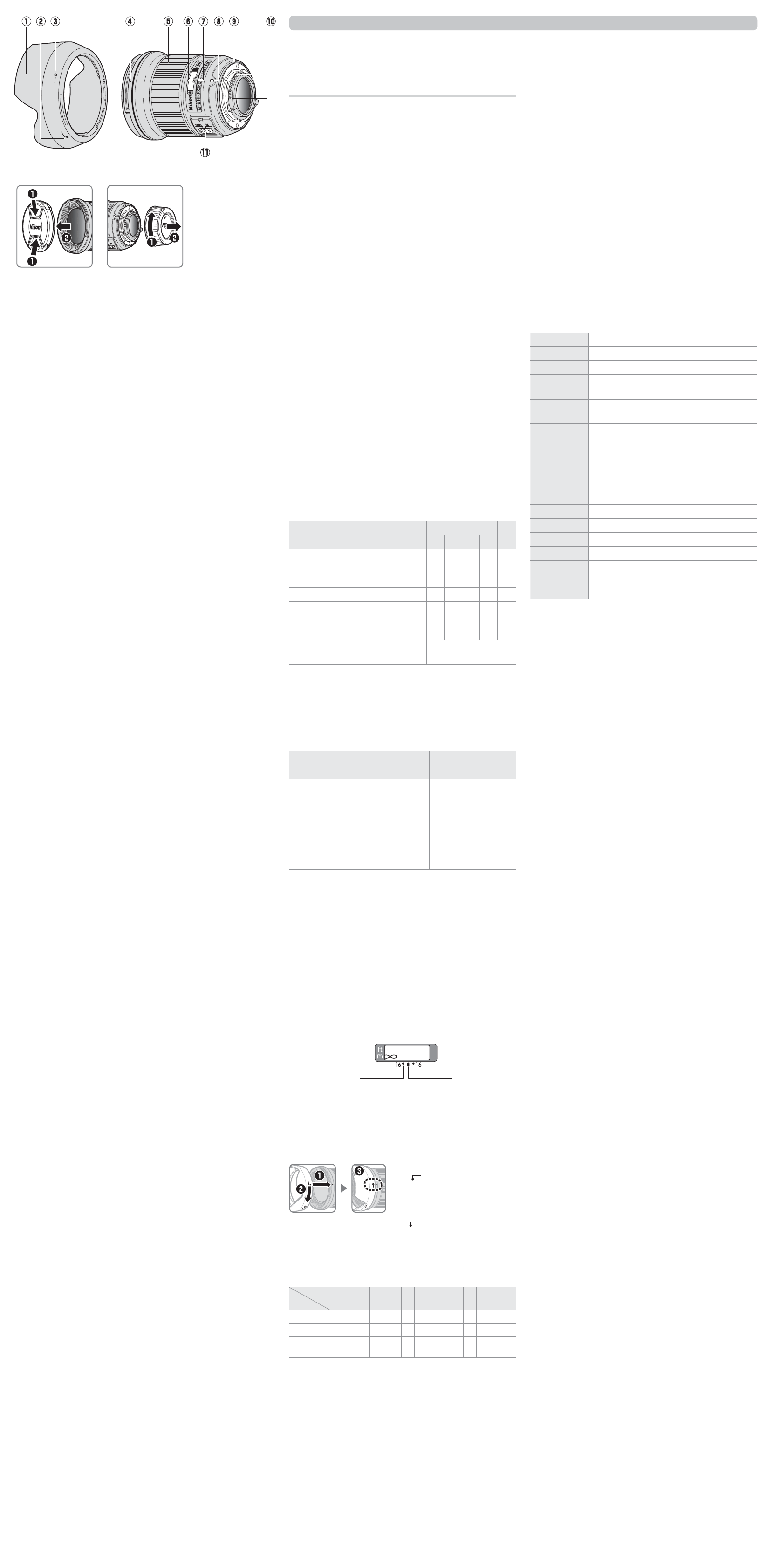
©
2015 Nikon Corporation
.ǃƄƶƵŽȚ Țnjƀ ȳȚNjƈƄŴȚ ǚƃŻ ǀƁƾƶƯŮ ȚǍƸžƾƳŽȚ ǚƸŽȢȶ ȝƾƵƸƴƯƄŽȚ ȵnjƀ ȜȔȚǍŻ ǟűǍƁ
ȚǍƸžƾƳŽȚ ǚƅž DX ǀưƸǧ ȜNjŲȚȶ ǀŴNjŸ ǏżƾƯŮ ǀƸƵŻȤ ȚǍƸžƾż ǟƴŸ ǀŴNjƯŽȚ ƿƸżǍů NjƶŸ :ǀƮŲǾž
.(Ǜž 35 ǀưƸǧ) Ǜž 36 ȸȶƾƉƁ ȸȤƻŮ ȲǞŶȶ °61 ǀŴNjƯŽȚ ȵnjƷŽ ȜȤǞƫŽȚ ǀƁȶȚȥ ȴǞƳů ȆD5500 ȶȖ D7200
ǙƄžǾŴ ǚűȖ ǜž
A ȝȚǍƁnjƇů
• ǚƀƻž Ǡƶź NjƁ ǟƴŸ ǃƄƶƵŽȚ ǀſƾƸǧ ƿƆƁ ȆǚƭŸ ȞȶNjŲ ǀŽƾŲ Ǡź
.ƾƷŽ
ȿ
NjƯů ȶȖ ǀƁȤƾƭƃŽȚ ǙƳƱů ǽ
ȔȚǎűLjȚ ǏƵƴů ǽ ȆǍųȕ ȞȢƾƇŽ ȶȖ ȪǞƲƉŽ ǀƆƸƄſ ǝŲƾƄƱſȚȶ ǃƄƶƵŽȚ ǍƉż ǀŽƾŲ Ǡź .ǓƲź
.ȷǍųȖ ǀŮƾǧȘ ȶȖ ǀƸŮǍƷż ǀžNjǧ ȞȶNjŲ Ǡź ƿƃƉƄƁ NjŻ ȝƾŶƾƸƄŲǽȚ ȵnjƀ ȬƾƃůȚ ȳNjŸ .ǀźǞƪƳƵŽȚ
• ȶȖ ȴƾųȢ ȞƾƯƃſȚ ǀƮŲǾž ǀŽƾŲ Ǡź
.ǃƄƶƵŽȚ Ǡź ǚƭŸ ȞȶNjŲ ǀŽƾŲ Ǡź ȜǍŵƾƃž ȚǍƸžƾƳŽȚ ǘƴŹȚ
ȆȤǞƱŽȚ ǟƴŸ ȚǍƸžƾƳŽȚ ǀƁȤƾƭŮ ȬǎſȚȶ ȢȢǍƄƵŽȚ ȤƾƸƄŽȚ ȲǞƇž ǚƫźȚ ȆȥƾƷƆŽȚ ǜž ǀƁȢƾŸ ǍƸŹ ǀƇǣȚȤ
ȩǍƯƄŽȚ ǟŽȘ ȳȚNjƈƄŴǽȚ Ǡź ȤȚǍƵƄŴǽȚ ȸȢƻƁ NjŻ .ȰȶǍƇŮ ǀŮƾǧȁȚ ƿƶƆƄŽ ȤnjƇŽȚ ǠųǞů ƿƆƁ
NjƵƄƯž ȴǞƳƸſ ǀžNjų ǎżǍž ǟŽȘ ȚǍƸžƾƳŽƾŮ ǝűǞů ȆǀƁȤƾƭƃŽȚ ǀŽȚȥȘ NjƯŮ .ǘƁǍŲ țǞƪſ ȶȖ ǀŮƾǧȂŽ
.ǑƇƱƴŽ
• NjŻ ǝƸƃƶƄŽȚ Țnjƀ ȬƾƃůȚ ȳNjŸ .ȴƾƄƴƄƃž ȱȚNjƁȶ ǝƉƵƴů ȶȖ ȔƾƵƴŽ ǃƄƶƵŽȚ ȩ
ȿ
ǍƯů ǽ
.ƾ
ȹ
źƾű ǝƸƴŸ ǔźƾŲ
.ǀƸǣƾŮǍƷż ǀžNjǧ ȶȖ ǘƁǍŲ ǟŽȘ ȸȢƻƁ
• ȝƾƭƇž Ǡź ȥƾƷƆŽȚ ǚƸưƪů ȸȢƻƁ NjŻ
.ȲƾƯƄŵǾŽ ǀƴŮƾŻ ȝȚȥƾŹ ǓŴȶ ǃƄƶƵŽȚ ȳNjƈƄƉů ǽ
.ǘƁǍŲ ȶȖ ȤƾƆƱſȚ ǟŽȘ ȤƾƃưŽȚ ȶȖ ȲƾƯƄŵǾŽ ǀƴŮƾŻ ȷǍųȖ ȝȚȥƾŹ ȶȖ ȴƾŮȶǍƃŽȚ ȢǞűȶ Ǡź ȶȖ ǀƂƃƯƄŽȚ
• ǏƵƪŽȚ ǟŽȘ ǍƮƶŽȚ
.ȚǍƸžƾƳŽƾŮ ȨƾƈŽȚ ǍƮƶƵŽȚ ǜƸƯž ȶȖ ǀŴNjƯŽȚ ȲǾų ǜž ǏƵƪŽȚ ǟŽȘ ǍƮƶů ǽ
ǀŮƾǧȘ ǟŽȘ ȸȢƻƁ NjŻ ǍƮƶƵŽȚ ǜƸƯž ȶȖ ǀŴNjƯŽȚ ȲǾų ǜž ȷǍųLjȚ ǀƯŶƾƉŽȚ ȔǞƬŽȚ ȤȢƾƫž ȶȖ
ȤƾƫŮȁȚ ǟƴŸ ȜȤNjƲŽȚ Ǡź ǀƵǣȚȢ
A ȝƾƷƸƃƶů
• Ǡź ȶȖ ǀŮƾǧȘ Ǡź ƿƃƉƄƁ NjŻ ȝƾƵƸƴƯƄŽȚ ȵnjƀ ȬƾƃůȚ ȳNjŸ
.ȲƾƱŶLjȚ ȲȶƾƶƄž ǜŸ Ț
ȹ
NjƸƯŮ ǔƱƇƁ
.ǃƄƶƵŽȚ ǚƭŸ
• ǀƭŴȚǞŮ ȵǎƸżǍů ǛƄƁ ȸnjŽȚ ǏƵƪŽȚ ȔǞǤ ƿƃƉƄƁ NjŻ
.ǀŴNjƯŽȚ ǍƃŸ ǏƵƪŽȚ ȔǞǤ ǎżǍů ǽ
ȟȤƾų ǏƵƪŽȚ ǚƯűȚ ǀƸƱƴƈŽȚ ȜȔƾǤȁȚ ȝȚȣ ȯȚNjƀLjȚ ǍƁǞƫů NjƶŸ .ǘƁǍŲ țǞƪſ Ǡź ǀŴNjƯŽȚ
Ț
ȹ
NjƸƯŮ ƾƷſǎųȶ ǀŴNjƯŽȚ ǀƸƭŹȖ ȲNjƃƄŴȚ ȆǀƴƁǞŶ ȜǍƄƱŽ ȳNjƈƄƉƄ
Ƚ
Ŵ ǀŴNjƯŽȚ ǜƳů ǛŽ ȚȣȘ ȑȤƾŶȁȚ
.ǍŵƾƃƵŽȚ ǏƵƪŽȚ ȔǞǤ ǜŸ
• ǚƅž ȆȚ
ȹ
Njű ǀƸŽƾŸ ȜȤȚǍŲ ȝƾűȤNjŽ ǀǤǍƯž ǜżƾžȖ Ǡź ǃƄƶƵŽȚ ȱǍƄů ǽ
.ȜNjǣȚǎŽȚ ȜȤȚǍƇŽȚ ƿƶƆů
Ǡƭưů ȶȖ ǚƁNjƶž ȶȖ ǀƱƪƶƵŮ ǃƄƶƵŽȚ Ǡƭưů ȶȖ ǍŵƾƃƵŽȚ ǏƵƪŽȚ ȔǞǤ Ǡź ǀƲƴưž ȜȤƾƸŴ
.ǃƄƶƵŽƾŮ ǚƭŸ ȶȖ ǘƁǍŲ ǟŽȘ ȸȢƻƁ NjŻ ȝƾƷƸƃƶƄŽȚ ȵnjƀ ȬƾƃůȚ ȳNjŸ .ǝžȚNjƈƄŴȚ ȔƾƶŰȖ ǃƄƶƵŽȚ
■ ǀŴNjƯŽȚ ȔȚǎűȖ
ǀŴNjƯŽȚ ǀƸŻȚȶ
q
ǀŴNjƯŽȚ ǀƸŻȚȶ ȜȚȣƾƇž ǀžǾŸ
w
ǀŴNjƯŽȚ ǀƸŻȚȶ ǚƱŻ ǀžǾŸ
e
ǀŴNjƯŽȚ ǀƸŻȚȶ ƿƸżǍů ǀžǾŸ
r
ȸȤƻƃŽȚ ǎƸżǍƄŽȚ ǀƲƴŲ
t
ȸȤƻƃŽȚ ǎƸżǍƄŽȚ ǀźƾƉž Ǎŵƻž
y
ȸȤƻƃŽȚ ǎƸżǍƄŽȚ ǀźƾƉž ǀžǾŸ
u
ǀŴNjƯŽȚ ƿƸżǍů ǀžǾŸ
i
ǀŴNjƯŽȚ ƿƸżǍƄŽ ǀƸŶƾƭƵŽȚ ǀƸƪƇŽȚ
o
CPU ȜNjŲȶ ǚƸǧǞů ȯȚǍŶȖ
!0
ȸȤƻƃŽȚ ǎƸżǍƄŽȚ ǕǤȶ ȠƾƄƱž
!1
■ ǀƸƲźȚǞƄŽȚ
ǟƴŸ ("
—
") ǀŶǍƪŽȚ ȝƾžǾŸ ȲNjů ȆǀžǞŸNjƵŽȚ ǗǣƾŷǞŽȚ ǟƴŸ ("✔") țȚǞƫŽȚ ȝƾžǾŸ ȲNjů
.ǚƸǧƾƱƄƴŽ ȚǍƸžƾƳŽȚ ǚƸŽȢ ǍƮſȚ ȑȢǞƸƲŽȚ ǒƯŮ ȩǍƱů NjŻ
.ǀžǞŸNjƵŽȚ ǍƸŹ ǗǣƾŷǞŽȚ
AF
3
ǒƁǍƯƄŽȚ ǕǤȶ
(ǍƁǞƫů) ǠǣǞƬŽȚ
ȚǍƸžƾƳŽȚMASP
2
✔✔✔✔✔
DX ȶ FX ǀưƸƫŮ ȜNjŲȚȶ ǀŴNjŸ ǏżƾƯŮ ǀƸƵŻǍŽȚ ȴǞƳƸſ ȝȚǍƸžƾż
✔✔✔✔✔
ȆF65 ǀƴƉƴŴ ȆF75 ǀƴƉƴŴ ȆF80 ǀƴƉƴŴ ȆF100 ȆF5 ȆF6
Pronea S
1
ȆPronea 600i
✔
——
✔✔
F70 ǀƴƉƴƉŽȚ ȆF90 ǀƴƉƴƉŽȚ ȆF90X ȆF4 ǀƴƉƴƉŽȚ
—
✔✔✔✔
ȆF-401s ȆF-401x ȆF50 ǀƴƉƴƉŽȚ ȆF55 ǀƴƉƴƉŽȚ ȆF60 ǀƴƉƴƉŽȚ
F-401
———
✔✔
F-601
M ȆF-801 ȆF-801s
—
ȸȶNjƁ ȸȤƻŮ ǎƸżǍƄŮ ȴǞƳƸſ ȝȚǍƸžƾż ȆF-501 ȆF-601 ȆF3AF
(F-601
M ȔƾƶƅƄŴƾŮ)
1 .(ȸȶNjƁ) M ǠǣǞƬŽȚ ǒƁǍƯƄŽȚ ǕǤȶ ǍźǞƄƁ ǽ
2 .(ǠƵŻǍŽȚ ǍƸưƄŽȚ ǃžƾſǍŮ) NjƷƪƵŽȚ ǕǤȶȶ ǠǣƾƲƴƄŽȚ ǕǤǞŽȚ ǙŽȣ Ǡź ƾƵŮ
3 .ǠǣƾƲƴů ȸȤƻŮ ǎƸżǍů
■ ȸȤƻƃŽȚ ǎƸżǍƄŽȚ
ǎƸżǍƄŽȚ ȬƾǤȶȖ ǜŸ ȝƾžǞƴƯƵŽ) ǀžǞŸNjƵŽȚ ȸȤƻƃŽȚ ǎƸżǍƄŽȚ ȬƾǤȶȖ ǠŽƾƄŽȚ ȲȶNjƆŽȚ ȩǍƯƁ
.(ȚǍƸžƾƳŽȚ ǚƸŽȢ ǍƮſȚ ȆȚǍƸžƾƳŽƾŮ ǀǧƾƈŽȚ ȸȤƻƃŽȚ
ǀŴNjƯƴŽ ȸȤƻƃŽȚ ǎƸżǍƄŽȚ ǕǤȶ ǕǤȶ
ǎƸżǍƄŽȚ
ȸȤƻƃŽȚ
ȚǍƸžƾƳƴŽ ȚǍƸžƾƳŽȚMM/A
ȸȶNjƁ ȸȤƻŮ ǎƸżǍů
ȷNjž ǜƸƯž Ǖž
ǠſȶǍƄƳŽȘ
ȸȤƻŮ ǎƸżǍů
ȔƾưŽȘ Ǖž ǠǣƾƲƴů
ǠǣƾƲƴů
(AF ǀƁǞŽȶȖ)
AF
ȜNjŲȚȶ ǀŴNjŸ ǏżƾƯŮ ǀƸƵŻȤ ȴǞƳƸſ ȝȚǍƸžƾż
ȆF100 ȆF4 ǀƴƉƴƉŽȚ ȆF5 ȆF6 ȆDX ȶ FX ǀưƸǧ
ȆF80 ǀƴƉƴƉŽȚ ȆF90 ǀƴƉƴƉŽȚ ȆF90X
ȆF65 ǀƴƉƴƉŽȚ ȆF70 ǀƴƉƴƉŽȚ ȆF75 ǀƴƉƴƉŽȚ
Pronea S ȆPronea 600i
ȸȶNjƁ ȸȤƻŮ ǎƸżǍů
Ǖž ǠſȶǍƄƳŽȘ ȷNjž ǜƸƯž ǍźǞƄƁ)
(F-601
M ȚNjŸƾž ȝȚǍƸžƾƳŽȚ ǕƸƵű
MF
AFȆ MF
ȆF50 ǀƴƉƴŴ ȆF55 ǀƴƉƴŴ ȆF60 ǀƴƉƴŴ
ȆF-401s ȆF-401x ȆF-601M ȆF-801 ȆF-801s
F-401
(ȸȶNjƁ ǚƁNjƯů Ǖž ǠǣƾƲƴů ȸȤƻŮ ǎƸżǍů) M/A
:(M/A) ȸȶNjƸŽȚ ǚƁNjƯƄŽȚ Ǖž ǠǣƾƲƴƄŽȚ ȸȤƻƃŽȚ ǎƸżǍƄŽȚ ȳȚNjƈƄŴƾŮ ǎƸżǍƄŽȚ ǓƃƬŽ
.
M/A ǕǤǞŽȚ ǟƴŸ ǀŴNjƯƴŽ ȸȤƻƃŽȚ ǎƸżǍƄŽȚ ǕǤȶ ȠƾƄƱž ǓƃǤȚ
z
.ȸȤƻƃŽȚ ǎƸżǍƄŽȚ ǓƃǤȚ
x
ǎƸżǍƄŽȚ ǀƲƴŲ ȜȤȚȢȘ ȲǾų ǜž ǠǣƾƲƴƄŽȚ ȸȤƻƃŽȚ ǎƸżǍƄŽȚ ǚƁNjƯů ȆǀƃŹǍŽȚ NjƶŸ ȆǜƳƵƁ
ǁſƾż ȚȣȘ ȶȖ) ǗƫƄƶƵŽȚ ǟƄŲ ǘŽƾưŽȚ ǍƁǍƇů Ȥȥ ǟƴŸ ǓưƬŽȚ ȔƾƶŰȖ ǀŴNjƯƴŽ ȸȤƻƃŽȚ
ǎƸżǍƄŽȚ ǓƃǤ ȜȢƾŸȁ
.(AF-ON ȤǎŽȚ ǟƴŸ ǓưƬŽȚ ȔƾƶŰȖ ȆAF-ON ȤǎŮ ȜǎƷƆž ȚǍƸžƾƳŽȚ
ǗƫƄƶƵŽȚ ǟƄŲ ǘŽƾưŽȚ ǍƁǍƇů Ȥȥ ǓưǤȚ ȆǠǣƾƲƴƄŽȚ ȸȤƻƃŽȚ ǎƸżǍƄŽȚ ȳȚNjƈƄŴƾŮ ȸȤƻƃŽȚ
.ȷǍųȖ ȜǍž AF-ON ȤǎŽȚ ǓưǤȚ ȶȖ
■ ȰƾƭƶŽȚ ǘƵŸ
ǁſƾż ȚȣȘ .ǠƃƁǍƲƄŽȚ ȰƾƭƶŽȚ ǘƵŸ ǀŴNjƯŽȚ ǟƴŸ ȜȢǞűǞƵŽȚ ȰƾƭƶŽȚ ǘƵŸ ȝȚǍŵƻž ljǤǞů
ǘƵŸ ǀƶƁƾƯž
ȹ
ƾƬƁȖ ǜƳƵƁ Ȇ(ǀƇƄƱŽȚ ǛƆŲ ǚƸƴƲů) ȰƾƭƶŽȚ ǘƵƯŽ ǀƶƁƾƯž ǍźǞů ȚǍƸžƾƳŽȚ
.ȝƾžǞƴƯƵŽȚ ǜž NjƁǎƵŽ ȰƾƭƶŽȚ ǘƵŸ ȲȶNjű ǕűȚȤ .ǍƮƶƵŽȚ ǜƸƯž ȲǾų ǜž ȰƾƭƶŽȚ
ȩǍƯƁ ǽ NjŻȶ ǚƸŽNjż ǓƲź ȳȚNjƈƄŴǾŽ NjƯž ȸȤƻƃŽȚ ǎƸżǍƄŽȚ ǀźƾƉž Ǎŵƻž ȴȖ ǔŲǽ :ǀƮŲǾž
∞ ǎžǍŽȚ ȩǍƯƁ ǽ ȆȷǍųȖ ǚžȚǞŸȶ ȰƾƭƶŽȚ ǘƵƯŽ ǀƆƸƄſ ȴƾƸŲLjȚ ǒƯŮ Ǡźȶ ȆǀŻNjŮ ȯȚNjƀLjȚ NjƯŮ ǀźƾƉž
.NjƸƯŮ ȯNjƀ ǟƴŸ ȸȤƻƃŽȚ ǎƸżǍƄŽȚ ȚǍƸžƾƳŽȚ ǓƃƬů ƾžNjƶŸ
0.5
1.6 1
0.3
ǘƵŸ ȝȚǍŵƻž
ȰƾƭƶŽȚ
ǀźƾƉž ǀžǾŸ
ȸȤƻƃŽȚ ǎƸżǍƄŽȚ
■ ǀƇƄƱŽȚ
.ȚǍƸžƾƳŽƾŮ ǀǧƾƈŽȚ ǛƳƇƄŽȚ ljƸůƾƱž ȳȚNjƈƄŴƾŮ ǀŴNjƯŽȚ ǀƇƄź ǚƁNjƯů ǛƄƁ
■ ǀŴNjƯŽȚ ǀƸŻȚȶ
ȶȖ ǃƀǞƄŽȚ ƿƃƉů NjŻ ǠƄŽȚ ȜǍŰƾƶƄƵŽȚ ȜȔƾǤȁȚ ƿƆƇůȶ ǀŴNjƯƴŽ ǀƁƾƵŲ ǀŴNjƯŽȚ ǀƸŻȚȶ ǍźǞů
.ȜȤǞƫŽȚ ȵǞƪů
ǀŴNjƯŽȚ ǀƸŻȚȶ ǀƃƸżǍů
ǀžǾŸ Ǖž (●) ǀŴNjƯŽȚ ǀƸŻȚȶ ƿƸżǍů ǀžǾŸ ȸȣƾŲ
ǀŴNjƯŽȚ ǀƸŻȚȶ ȤȢȖ ǛŰ (
) ǀŴNjƯŽȚ ǀƸŻȚȶ ǀžƾƲƄŴȚ
ǀƸŻȚȶ ǚƱŻ ǀžǾŸ Ǖž ● ǀžǾŸ ȜȚȣƾƇž ǛƄů ȴȖ ǟŽȘ (
w)
.(—{) ǀŴNjƯŽȚ
ƾƷůNjŸƾŻ ǟƴŸ ȢǞűǞƵŽȚ ǎžǍŽȚ ǜž țǍƲŽƾŮ ƾƷƳƉžȖ ȆǀŴNjƯŽȚ ǀƸŻȚȶ Ǚź ȶȖ ƿƸżǍů NjƶŸ
ǚƳƪŮ ǀƸŻȚǞŽȚ ƿƸżǍů ȳNjŸ ǀŽƾŲ Ǡź ǀźǍųȥ ǍƷƮů NjŻ
.ǗƶƯŮ ƾƷŮ ȱƾƉžȁȚ ƿƶƆůȶ
.ljƸƇǧ
.ȳȚNjƈƄŴǽȚ ȳNjŸ ǀŽƾŲ Ǡź ǀŴNjƯŽȚ ǟƴŸ ƾƷƃƸżǍůȶ ǀƸŻȚǞŽȚ ǏƳŸ ǜƳƵƁ
■ ȸȤƻƃŽȚ ǎƸżǍƄŽȚ ȝƾŵƾŵ
Ǡź ȳȚNjƈƄŴǾŽ ȸȤƻƃŽȚ ǎƸżǍƄŽȚ ȝƾŵƾŵ ǜž ǀƱƴƄƈž ǀŸǞƵƆž ǀƸŽƾƄŽȚ ȝȚǍƸžƾƳŽȚ ǛŸNjů
.ǀƱƴƄƈƵŽȚ ȯȶǍƮŽȚ
U M L J G4 G3 G2 G1
EC-B
EC-EECBA
ǀŵƾƪŽȚ
ȚǍƸžƾƳŽȚ
——
——
—
F6
F5+DP-30
(+0.5)
F5+DA-30
.ǝŮ ljƫƶƁ :
.(ȤǞƫŽȚ ǍŰƺƄů ǽ) ǍƮƶƵŽȚ ǜƸƯž Ǡź ǀźǍųȥ ǍƷƮů : {
.ȚǍƸžƾƳŽȚ Ǖž ǘźȚǞƄž ǍƸŹ : —
ǍƄųȚ
.ǗƫƄƶƵŽȚ ȦƾƸŻ ȜǍƁƾƯƵŽ ǠǣǞƬŽȚ ǒƁǍƯƄŽȚ ǒƁǞƯů ǟŽȘ ȦȚǞŻLjȚ ǜƸŮ ȳƾŻȤLjȚ ǍƸƪů :( )
ǒƁǞƯů) ("Screen comp.") b6 ȸȢƾƸƄŸǽȚ ȢȚNjŸȂŽ ǀƃƉƶŽƾŮ (ȷǍųȖ ǀŵƾŵ) "Other screen"
ȷǍųȖ ȝƾŵƾŵ Ǖž ǝſȖ ǔŲǽ ȑF6 ȚǍƸžƾƳƴŽ ǠǣǞƬŽȚ ǒƁǍƯƄŽȚ ǒƁǞƯů ǚƁNjƯů NjƶŸ (ǀŵƾƪŽȚ
ǒƁǞƯů ǀƵƸŻ ǁſƾż ȚȣȘ ǟƄŲ (ȷǍųȖ ǀŵƾŵ) "Other screen" ȤƾƸƄųȚ ƿƆƁ ȆE ȶȖ B ǍƸŹ
ȳȚNjƈƄŴƾŮ F5 ȚǍƸžƾƳƴŽ ǠǣǞƬŽȚ ǒƁǍƯƄŽȚ ǒƁǞƯů ǚƁNjƯů ǜƳƵƁ
.0 ȸȶƾƉů ǠǣǞƬŽȚ ǒƁǍƯƄŽȚ
.ǚƸǧƾƱƄƴŽ ȚǍƸžƾƳŽȚ ǚƸŽȢ ǍƮſȚ ȑ18 ȸȢƾƸƄŸǽȚ ȢȚNjŸȁȚ
ǜƳƵƁ M ȬǞƶŽȚ ǜž ȝƾŵƾƪŽȚ ȴȖ ǔŲǽ ǙŽȣ Ǖžȶ
.ǀŴNjƯŽȚ ȵnjƀ Ǖž ȳȚNjƈƄŴǾŽ ƿŴƾƶž ǍƸŹ : ǀŹȤƾź ǀƸƴų
.ǟƴŸȖ ȶȖ 1 : 1 ǍƸƃƳů ǀƃƉƶŮ țǍƲƵŽȚ ȶȖ ǠŮǞƳŴȶǍƳƸƵŽȚ ǍƁǞƫƄŽȚ Ǡź ƾƷžȚNjƈƄŴȚ
EC-E/EC-B ȶ E ȶ B ȶ A ȸȤƻƃŽȚ ǎƸżǍƄŽȚ ȝƾŵƾŵ Ǖž ǀźǞƱƫƵŽȚ ȜǍƁƾƯž F5 ȚǍƸžƾƳŽȚ ǛŸNjů :ǀƮŲǾž
.ǓƲź L ȶ J ȶ
ǀƸŮǍƯŽȚ
■ ǀŴNjƯŽƾŮ ǀƁƾƶƯŽȚ
•.ǓƲź ǀŴNjƯŽȚ ǀƸŻȚȶ ȳȚNjƈƄŴƾŮ ȚǍƸžƾƳŽȚ ȶȖ ǀŴNjƯŽȚ ǙƉƵů ȶȖ ǓƲƄƴů ǽ
•.CPU ȜNjŲȶ ǚƸǧǞů ȯȚǍŶȖ ǀźƾƮſ ǟƴŸ ǔźƾŲ
• ȜǍŵƾƃž ȲƾƵƯƄŴǽȚ ǜŸ ǗŻǞů ȆǀŴNjƯŽȚ ƿƸżǍƄŽ ǀƸŶƾƭƵŽȚ ǀƸƪƇŽȚ Ǘƴů ǀŽƾŲ Ǡź
.ǀſƾƸƫƴŽ NjƵƄƯž ȴǞƳƸſ ǀžNjų ǎżǍž ǟŽȘ ǀŴNjƯŽƾŮ ǝűǞůȶ
• ǜž ǑƴƈƄƴŽ
.ǀŴNjƯŽȚ ljƭŴ ǟƴŸ ǜž ǀŽƾƉƶŽȚȶ ǀŮǍůLjȚ ǜž ǑƴƈƄƴŽ ǀŲȶǍž ȳNjƈƄŴȚ
ǀƯƭŻ ǟŽȘ ǀŴNjƯŽȚ ǗƮƶž ȶȖ ȲǞſƾƅƁȁȚ ǜž ǚƸƴŻ ȤȚNjƲž ǗǤȖ ȆǕŮƾǧLjȚ ȝƾƵƫŮȶ ǕƲƃŽȚ
ǎżǍƵŽȚ ǜž ǀŴNjƯŽȚ ǗƮſȶ ǀŴNjŸ ǗƸƮƶů ǚƁNjƶž ǟŽȘ ȶȖ ǀƱƸƮſȶ ǀƵŸƾſ ǀƸƶƭŻ ȧƾƵŻ
.ǙƯŮƾǧƺŮ ȟƾűǎŽȚ ǏƵŽ ȶȖ ȝƾƈƭŽ ȱǍů ȳNjƯŽ ȵƾƃƄſǽȚ Ǖž ȆǀƁǍǣȚȢ ǀżǍŲ Ǡź ȟȤƾƈŽȚ ǞƇſ
•.ǀŴNjƯŽȚ ǗƸƮƶů ȩǍưŮ ǜƁǎƶƃŽȚ ȶȖ ȴƾƀNjŽȚ ǗƱƈž ǚƅž ȸǞƬŸ ƿƁnjž
ȹ
ȚNjŮȖ ȳNjƈƄƉů ǽ
•.ǠžƾžLjȚ ǀŴNjƯŽȚ ǍƫƶŸ ǀƁƾƵƇŽ NC ȝƾƇŵǍž ȶȖ ǀŴNjƯŽȚ ǀƸŻȚȶ ȳȚNjƈƄŴȚ ǜƳƵƁ
•.ǀŴNjƯŽȚ ǀƃƸƲŲ Ǡź ǀŴNjƯŽȚ ǕǤȶ ǚƃŻ ǠƱƴƈŽȚȶ ǠžƾžLjȚ ǜƁȔƾƭưŽȚ ƿżȤ
• ȯƾűȶ ȢȤƾŮ ȴƾƳž Ǡź ƾƷŮ ǔƱƄŲȚ ȆȜNjƄƵž ȜǍƄƱŽ ǀŴNjƯŽȚ ȳȚNjƈƄŴȚ ǛƄƁ ǜŽ ǀŽƾŲ Ǡź
ȝȚǍż ȶȖ ƾƄźƾſ Ǖž ȶȖ ǍŵƾƃƵŽȚ ǏƵƪŽȚ ȔǞǤ Ǡź ƾƷſǎƈů ǽ
.ȖNjǧ ȶȖ ǜƱŸ ȴǞƳů ƿƶƆƄŽ
.ǀƅƯŽȚ ȤǞźƾż
• ǽ Ǘƴů ȬǞŻȶ Ǡź ƿƃƉƄƁ NjŻ ǀƸƴųȚNjŽȚ ǚƵƯŽȚ ǀƸŽȕ ȖNjǧ
.ǀźƾű ǀŴNjƯŽȚ ǠƴŸ ǔźƾŲ
.ǝŲǾǧȘ ǜƳƵƁ
• ǜž ǀŸǞƶƫƵŽȚ ȔȚǎűLjȚ ȵǞƪƁ ȶȖ ǗƴƄƁ NjŻ ȜȤȚǍƇŽȚ ȜNjƁNjŵ ǕŻȚǞž Ǡź ǀŴNjƯŽȚ ȱǍů
.ȷǞƲƵŽȚ ǙƸƄŴǾƃŽȚ
■ ǀƲźǍƵŽȚ ȝȚȤȚǞƉƉżȁȚ
•Ǜž 72 ǍƭŻ LC-72 ȥȚǍŶ ǓưǤ ǠžƾžȖ ǀŴNjŸ ȔƾƭŹ
•LF-4 ȥȚǍŶ ǠƱƴų ǀŴNjŸ ȔƾƭŹ
•HB-76 ȥȚǍŶ ǀƶƶƉž ȜNjŸƾƲŮ ǀŴNjŸ ǀƸŻȚȶ
•CL-1015 ǀŴNjƯŽȚ ǀƃƸƲŲ
■ ǀƲźȚǞƄƵŽȚ ȝȚȤȚǞƉƉżȁȚ
•Ǜž 72 ǍƭŻ ǀƸƃŽǞŽ ǀŴNjƯƴŽ ȝƾƇŵǍž
■ ȝƾƱǧȚǞƵŽȚ
F ƿƸżǍů ȜNjŸƾŻȶ CPU ȜNjŲǞŮ ȜǎƷƆž G ȬǞƶŽȚ ǜž AF-S ǀŴNjŸ
ȬǞƶŽȚ
Ǜž 24
ȸȤƻƃŽȚ ȲǞƭŽȚ
f/ 1.8
ǀƇƄƱƴŽ ǟƫŻLjȚ NjƇŽȚ
ȸǍƫƶŸȶ ED ǀŴNjŸ ȸǍƫƶŸ ǚƵƪƁ ƾƵŮ) ǀŸǞƵƆž 9 Ǡź ǍƫƶŸ 12
(ȲƾƄƉƁǍż Ǟſƾſ ȔǾŶ ȝƾƲƃƭŮ ǀŴNjŸ ǍǧƾƶŸȶ ǜƸƁȶǍż ǝƃŵ ǀŴNjŸ
ǀŴNjƯŽȚ ǜƁǞƳů
•°84 :FX ǀưƸǧ D-SLR ȶ ǛƴƸƱŮ SLR ȴǞƳƸſ ȝȚǍƸžƾż
•°61 :DX ǀưƸǧ D-SLR ȴǞƳƸſ ȝȚǍƸžƾż
ȜȤǞƫŽȚ ǀƁȶȚȥ
ȚǍƸžƾƳŽȚ ǟŽȘ ȟǍƈŽȚ
ǀźƾƉƵŽȚ ȝƾžǞƴƯž
ȸȤƻŮ ǎƸżǍů Ǖž (RF) Rear Focusing ǠƱƴƈŽȚ ȸȤƻƃŽȚ ǎƸżǍƄŽȚ ȳƾƮſ
ǀƲƴŲȶ ǁžƾǧ ǠűǞž ȱǍƇž ǀƭŴȚǞŮ ǝƸź ǛƳƇƄŽȚ ǛƄƁ ǠǣƾƲƴů
ȹ
ƾƁȶNjƁ ȸȤƻƃŽȚ ǎƸżǍƄŽȚ ǓƃƬŽ ǀƴƫƱƶž ȸȤƻŮ ǎƸżǍů
ȸȤƻƃŽȚ ǎƸżǍƄŽȚ
(
f) ǀƁƾƷſǾŽȚ ǟŽȘ ǍƄž 0.23
ǎƸżǍƄŽȚ ǀźƾƉž Ǎŵƻž
ȸȤƻƃŽȚ
ǀƁȤƻƃŽȚ ǀźƾƉƵŽȚ ǜž ȳ 0.23
ǀźƾƉƵŽ ǟſȢLjȚ NjƇŽȚ
ǎƸżǍƄŽȚ
(ǀƁǍǣȚȢ ƿűƾŲ ǀƇƄź) 7
ǀƇƄƱŽȚ ƿűƾŲ ȝȚǍƱŵ
ǚžƾƳŽƾŮ ǠǣƾƲƴů
ǀƇƄƱŽȚ ƿűƾŲ
16 – f/ 1.8
ǀƇƄƱŽȚ Ȱƾƭſ
ǀƴžƾż ǀƇƄƱŽȚ
ȜǍƁƾƯƵŽȚ
(Ǜž 0.75=P) Ǜž 72
ljŵǍƵŽȚ ǍƭŻ ȦƾƸŻ
ƿƸżǍů ǀƱŵ ǜž ǀźƾƉƵŽȚ)
ȹ
ƾƃƁǍƲů Ǜž 83.0 × ǍƭŻ ǟƫŻȖ Ǜž 77.5
(ȚǍƸžƾƳŽȚ ǟƴŸ ǀŴNjƯŽȚ
ȢƾƯŮLjȚ
ȹ
ƾƃƁǍƲů ȳȚǍű 355
ȴȥǞŽȚ
ȴȶNjŮȶ ǁŻȶ ȸȖ Ǡź ǚƸŽNjŽȚ Țnjƀ Ǡź ȜȢȤȚǞŽȚ ȜǎƷűLjƾŮ ǀǧƾƈŽȚ ȝƾƱǧȚǞƵŽȚ ǍƸƸưů Ǡź ǘƇŽƾŮ ȴǞƳƸſ ǔƱƄƇů
.ǘƃƉž ȤƾƭųȘ
■
景深
■
■
Kedalaman Bidang
Kedalaman Bidang
■
■ (m)
• 對焦距離
• Jarak fokus
•
• 景深
• Kedalaman Bidang
•
• 重現比率
• Rasio penggandaan
•
f/1.8 f/2.0 f/2.8 f/4 f/5.6 f/8 f/11 f/16
0.23
0.23 – 0.23 0.23 – 0.23 0.23 – 0.23 0.23 – 0.23 0.23 – 0.24 0.22 – 0.24 0.22 – 0.24 0.22 – 0.25 1/4.9
0.3 0.30 – 0.30 0.30 – 0.31 0.29 – 0.31 0.29 – 0.31 0.29 – 0.31 0.28 – 0.32 0.28 – 0.33 0.27 – 0.34 1/7.7
0.5 0.48 – 0.52 0.48 – 0.52 0.48 – 0.53 0.47 – 0.54 0.46 – 0.56 0.44 – 0.59 0.42 – 0.63 0.40 – 0.73
1/15.9
∞ 9.88 – ∞ 9.20 – ∞ 6.60 – ∞ 4.65 – ∞ 3.35 – ∞ 2.38 – ∞ 1.76 – ∞ 1.25 – ∞ 1/∞
在使用本產品前,請仔細閱讀這些使用說明和相機說明書。
注意:當安裝在一台
DX 格式數碼單鏡反光相機(例如 D7200 或
D5500
)上時, 該鏡頭的畫角為 61°且焦距相當於 36 mm(35 mm 格
式)。
安全須知
A
警告
•
勿自行拆解或改裝。遇到故障時,本產品只能由有資格的維修技師進
行修理。若本產品因為跌落或其他意外事故造成破損,請不要觸碰外
露的零件,否則可能導致觸電或其他傷害事故。
•
發生故障時立刻關閉相機。當您發現本裝置冒煙或發出異味時,請立
刻拔下
AC 變壓器的插頭並取出相機電池,注意避免被灼傷。若在此
情形下繼續使用,將可能導致火災或受傷。請在取出電池後,將裝置
送到尼康授權維修服務中心進行檢查維修。
•
保持乾爽。切勿使本產品接觸到水,也不要用濕手接觸,否則可能導
致火災或觸電。
•
勿在易燃氣體環境中使用。在加油站或者有丙烷氣或其他易燃氣體或
粉塵的環境中操作本裝置可能導致爆炸或火災。
•
勿透過鏡頭或相機觀景器觀看太陽。透過鏡頭或觀景器觀看太陽或
其他明亮光源,可能會導致永久性的視覺損傷。
A
注意事項
•
勿在兒童伸手可及之處保管本產品。若不遵守此注意事項,可能會導
致受傷或產品故障。
•
勿透過鏡頭聚焦陽光。陽光透過鏡頭聚焦可能會引起火災。拍攝逆光
主體時,請不要讓太陽進入構圖範圍;若將在較長時間內不使用鏡頭,
請蓋好鏡頭蓋並將其存放在遠離直射陽光的地方。
•
勿加熱。請勿將本產品置於極其高溫的場所(如直射陽光下封閉的車
內),也不要在使用期間用毛巾或手帕裹住本產品或者遮蓋本產品,
否則可能導致火災或產品故障。
■
鏡頭部件
q
遮光罩
w
遮光罩
對齊
標記
e
遮光罩
鎖定
標記
r
遮光罩接環標記
t
對焦環
y
對焦距離指示器
u
對焦距離標記
i
鏡頭接環標記
o
橡膠鏡頭接環密封墊
!0
CPU接點
!1
對焦模式切換器
■
兼容性
核選標記(“
✔
”)表示支援的功能,破折號(“—”)表示不支援的功能。
可用功能可能受到一些限制;有關詳情,請參見相機說明書。
相機
曝光(拍攝)模式
AF
3
P
2
SAM
尼康FX格式和 DX 格式數碼單鏡反光相機
✔✔✔✔✔
F6、F5、F100、F80 系列、F75系列、F65
系列、Pronea 600i、Pronea S
1
✔✔✔✔✔
F4 系列、F90X、F90系列、F70系列
✔✔
——
✔
F60 系列、F55系列 、F50 系列、F-401x、
F-401s、F-401
✔✔✔✔
—
F-801s、F-801、F-601
M
✔✔
———
F3AF、F-601、F-501、尼康MF相機
(F-601
M
除外)
—
1
曝光模式
M(手動)不可用。
2
包括自動和場境(數碼多元化自動拍攝)模式。
3
自動對焦。
■
對焦
所支援的對焦模式如下表所示(有關相機對焦模式的資訊,請參見相機
說明書)
。
相機
相機
對焦模式
鏡頭對焦模式
M/A M
尼康FX格式和 DX 格式數碼單
鏡反光相機、F6、F5、F4 系列、
F100、F90X、F90系列、F80 系
列、F75系列、F70系列、F65系
列、Pronea 600i、Pronea S
AF
自動對焦
(連手動優
先)
帶有電子測
距器的手動
對焦
MF
手動對焦
(除 F-601
M
以外的所有
相機均帶有電子測距器)
F60 系列、F55系列、F50 系列、
F-801s、F-801、F-601
M
、F-401x、
F-401s、F-401
AF
、MF
M/A
(自動對焦(連手動優先))
使用自動對焦(連手動優先)(M/A)進行對焦的步驟如下:
z
將鏡頭對焦模式切換器推至 M/A。
x
對焦。
若有需要,您可在半按快門釋放按鍵期間(或者,若相機配備有一
個
AF-ON
按鍵,則在按下
AF-ON
按鍵期間)旋轉鏡頭對焦環來使
手動對焦優先於自動對焦。若要使用自動對焦以重新對焦,請再次
半按快門釋放按鍵或再次按下
AF-ON
按鍵。
■
景深
鏡頭上的景深指示器表示大致的景深。若相機支援景深預覽(光圈縮
小),則景深還可在觀景器中進行預覽。有關詳情,請參見景深列表。
注意
:
請注意,對焦距離指示器僅可作為指南,可能無法準確顯示離主
體的距離,並且由於景深或其他因素的影響,相機對焦於遠距離物體
時可能不會顯示
∞
。
0.5
1.6 1
0.3
景深指示器 對焦距離標記
■
光圈
請使用相機控制調整光圈。
■
遮光罩
遮光罩可保護鏡頭並阻擋可能導致眩光或鬼影的散射光線。
安裝遮光罩
將遮光罩接環標記(
●
)與遮光罩對齊
標記( )對齊,然後旋轉遮光罩(
w
)
直至
●
標記與遮光罩鎖定標記(
—
)
對齊。
安裝或取下遮光罩時,請在其底部的 標記附近將其握住,並避免握
得太緊。若未正確安裝好遮光罩,則可能會產生邊暈。
不使用時,可將遮光罩反轉並固定在鏡頭上。
■
對焦屏
下列相機支援用於不同情況下的多種對焦屏。
屏幕
相機
ABCE
EC-B
EC-E G1 G2 G3 G4 J L M U
F6
—
—— — ——
F5+ DP-30
F5+ DA-30
(+0.5)
: 建議使用。
: 在觀景器中可見邊暈(相片不會受到影響)。
—:
與相機不兼容。
():
括弧中的資料是指用於偏重中央測光的曝光補償值。當調整
F6 的曝光補償時,請在用戶設定b6(“Screen comp.(對焦
屏補償)”)中選擇“
Other screen(其他對焦屏)”;請注意,
使用B 或 E 以外的屏幕時,即使曝光補償值為0,也必須選擇
“Other screen(其他對焦屏)”。F5 的曝光補償可使用用戶設
定18 進行調整;有關詳情,請參見相機說明書。
空白單格
: 不適用於該鏡頭。請注意,在放大倍率為1 : 1或更高時,M
型屏幕仍可用於顯微攝影和微距攝影。
注意
:
F5
僅在使用
A、B、E、EC-B/EC-E、J和 L 對焦屏時支援矩陣測光。
■
鏡頭保養
•
拿起或持握鏡頭或相機時,切勿僅持拿遮光罩。
•
保持CPU 接點清潔。
•
若橡膠鏡頭接環密封墊損壞,請立即停止使用並將鏡頭送至尼康授權
維修服務中心進行維修。
•
用吹氣球去除鏡頭表面的灰塵和浮屑。若要去除污點和指紋,可使用
一塊滴有少許乙醇或鏡頭清潔劑的乾淨軟棉布或鏡頭清潔紙,以圓周
運動方式從裡向外進行清潔。注意不要留下污漬,也不要用手指碰觸
玻璃。
•
切勿使用塗料稀釋劑或苯等有機溶劑清潔鏡頭。
•
遮光罩或
NC濾鏡可用於保護前部鏡片元件。
•
將鏡頭放入鏡頭套之前,請蓋好鏡頭前蓋和鏡頭後蓋。
•
若在較長時間內不使用鏡頭,請將其存放在陰涼乾爽的地方以防止發
霉和生銹。切不可存放在直射陽光下,也不可與石腦油或樟腦丸一起
存放。
•
保持鏡頭乾爽。內部構造生銹將導致無法挽回的損壞。
•
將鏡頭放置在過於炎熱的地方將會使強化塑膠部件受損或變形。
■
隨附配件
•
72 mm 扣入式鏡頭前蓋 LC-72
•
鏡頭後蓋
LF-4
•
刺刀式遮光罩
HB-76
•
鏡頭套
CL-1015
■
兼容的配件
•
72 mm 旋入式濾鏡
■
技術規格
類型 帶內置 CPU和 F接環的G 型 AF-S鏡頭
焦距
24 mm
最大光圈 f/1.8
鏡頭結構 9 組 12 片(包括 2 個 ED 鏡片元件、2 個非球面鏡
片元件和帶納米結晶塗層的鏡片元件)
畫角
•
尼康菲林單鏡反光與
FX格式數碼單鏡反光相機:84°
•
尼康
DX 格式數碼單鏡反光相機 :61°
距離資訊 輸出主體與相機之間的距離資訊
對焦 後方對焦(
RF)系統(可進行由寧靜波動馬達控制
的自動對焦,也具備用於手動對焦的獨立對焦環)
對焦距離指示器
0.23 m 至無限遠(∞)
最短對焦距離
0.23 m(至焦平面)
光圈葉片
7 片(圓形光圈孔)
光圈 全自動
光圈範圍
f/1.8 – 16
測光 全開光圈測光
濾鏡接口大小
72 mm(P = 0.75 mm)
尺寸 約
77.5 mm(最大直徑)× 83.0 mm(從相機鏡頭
接環邊緣開始的距離)
重量 約
355 g
尼康公司保留可隨時更改說明書內載之硬件技術規格的權利,而無須
事先通知。
繁體中文
Sebelum menggunakan produk ini, mohon membaca dengan seksama
baik petunjuk ini maupun buku petunjuk kamera.
Catatan: Saat digunakan pada kamera digital refl eks lensa tunggal format-
DX seperti D7200 atau D5500, lensa ini memiliki sudut gambar 61° dan
panjang fokal setara dengan 36 mm (format 35 mm).
Demi Keamanan Anda
Demi Keamanan Anda
A
A
PERINGATAN
PERINGATAN
• Jangan membongkar atau memodi kasi. Apabila terjadi kegagalan fungsi,
produk sebaiknya diperbaiki hanya oleh teknisi berpengalaman. Apabila
produk pecah terbelah akibat dari terjatuh atau kecelakaan lainnya,
hindari menyentuh bagian yang terbuka. Gagal mematuhi pencegahan
ini dapat menimbulkan sengatan listrik atau cedera lainnya.
• Segera matikan kamera apabila terjadi kegagalan fungsi. Apabila Anda melihat ada
asap atau bau tidak biasa muncul dari unit produk, segera cabut adaptor AC dan
keluarkan baterai kamera, sambil berhati-hati agar tidak terbakar. Melanjutkan
pengoperasian dapat menyebabkan kebakaran atau cedera. Setelah melepas
baterai, bawalah unit produk ke pusat servis resmi Nikon untuk pemeriksaan.
• Jaga agar tetap kering. Jangan paparkan produk ke air atau menangani
dengan tangan basah. Gagal mematuhi pencegahan ini dapat
menyebabkan kebakaran atau sengatan listrik.
• Jangan gunakan di daerah yang mengandung gas mudah terbakar. Menggunakan
unit produk di pom bensin atau saat ada gas propana atau gas mudah
terbakar lain atau debu dapat memicu ledakan atau kebakaran.
• Jangan melihat langsung ke matahari melalui lensa atau jendela bidik kamera.
Memandang ke matahari atau sumber cahaya kuat lainnya melalui lensa
atau jendela bidik dapat menyebabkan gangguan penglihatan menetap.
A
A
PERINGATAN
PERINGATAN
• Jauhkan dari jangkauan anak-anak. Gagal mematuhi pencegahan ini
dapat menyebabkan cedera atau kegagalan fungsi produk.
• Jangan memfokus cahaya matahari melalui lensa. Cahaya matahari yang
terfokus melalui lensa dapat menimbulkan kebakaran. Saat memotret
subjek diterangi dari belakang, sebisanya jauhkan cahaya matahari dari
bingkai; jika lensa tidak akan digunakan untuk jangka panjang, pasang
kembali penutup lensa dan simpan di tempat yang tidak kena cahaya
matahari langsung.
• Jangan biarkan kepanasan. Jangan tinggalkan produk di lokasi yang
terpapar pada suhu teramat tinggi, seperti dalam kendaraan tertutup
dengan cahaya matahari langsung, atau membungkus produk dengan
handuk atau saputangan ataupun menutupi produk selama penggunaan.
Gagal mematuhi pencegahan ini dapat menyebabkan kebakaran atau
kegagalan fungsi produk.
■
■
Bagian-bagian Lensa
Bagian-bagian Lensa
q
Tudung lensa
w
Tanda kesejajaran tudung lensa
e
Tanda kunci tudung lensa
r
Tanda pemasangan tudung lensa
t
Cincin fokus
y
Indikator jarak fokus
u
Tanda jarak fokus
i
Tanda pemasangan lensa
o
Gasket karet pemasangan lensa
!0
Kontak CPU
!1
Switch mode fokus
■
■
Kompatibilitas
Kompatibilitas
Tanda centang (“✔“) menunjukkan fi tur yang didukung, garis strip (“—”)
untuk fi tur yang tidak didukung. Beberapa keterbatasan mungkin berlaku;
lihatlah buku petunjuk kamera untuk rinciannya.
Kamera
Kamera
Mode pencahayaan
Mode pencahayaan
(pemotretan)
(pemotretan)
AF
AF
3
3
P
P
2
2
S
S
A
A
M
M
Kamera SLR digital Nikon format-FX dan
format-DX
✔✔✔✔✔
F6, F5, F100, seri F80, seri F75, seri F65,
Pronea 600i, Pronea S
1
✔✔✔✔✔
Seri F4, F90X, seri F90, seri F70
✔✔
——
✔
Seri F60, seri F55, seri F50, F-401x, F-401s, F-401
✔✔✔✔
—
F-801s, F-801, F-601
M
✔✔
———
F3AF, F-601, F-501, kamera fokus manual Nikon
(terkecuali F-601
M)
—
1. Mode pencahayaan M (manual) tidak tersedia.
2. Termasuk mode AUTO dan mode scene (Vari-Program Digital).
3. Fokus otomatis.
■
■
Fokus
Fokus
Mode fokus yang didukung ditunjukkan dalam tabel berikut (untuk
informasi tentang mode fokus kamera, bacalah buku petunjuk kamera).
Kamera
Kamera
Mode
Mode
fokus
fokus
kamera
kamera
Mode fokus lensa
Mode fokus lensa
M/A
M/A
M
M
Kamera SLR digital Nikon format-FX
dan format-DX, F6, F5, seri F4, F100,
F90X, seri F90, seri F80, seri F75,
seri F70, seri F65, Pronea 600i,
Pronea S
AF
Fokus otomatis
dengan
pengaturan
manual
Fokus manual
dengan jendela
jangkauan
elektronik
MF Fokus manual
(jendela jangkauan elektronik
tersedia pada semua kamera
kecuali F-601
M)
Seri F60, seri F55, seri F50, F-801s,
F-801, F-601
M, F-401x, F-401s, F-401
AF, MF
M/A (Fokus otomatis dengan Pengaturan Manual)
M/A (Fokus otomatis dengan Pengaturan Manual)
Untuk memfokus menggunakan fokus otomatis dengan pengaturan
manual (M/A):
z
Geser switch mode-fokus lensa ke M/A.
x
Fokus.
Jika diinginkan, fokus otomatis dapat dibatalkan dengan
memutar cincin fokus lensa sambil menekan setengah tombol
pelepas rana (atau, jika kamera dilengkapi dengan tombol
AF-ON, sementara tombol AF-ON ditekan). Untuk memfokus
ulang menggunakan fokus otomatis, tekan setengah tombol
pelepas rana atau tekan tombol AF-ON kembali.
■
■
Kedalaman Bidang
Kedalaman Bidang
Indikator kedalaman bidang pada lensa menunjukkan perkiraan kedalaman
bidangnya. Jika kamera menawarkan pratinjau kedalaman bidang
(penghentian bukaan), kedalaman bidang dapat juga dipratinjau di jendela
bidik. Lihat tabel kedalaman bidang untuk informasi selengkapnya.
Catatan: Catat bahwa indikator jarak fokus dimaksudkan hanya sebagai
panduan dan mungkin tidak dapat secara tepat menunjukkan jarak ke subjek
serta kemungkinan, oleh karena kedalaman bidang dan faktor lainnya, tidak
menampilkan ∞ saat kamera difokus pada objek jauh.
0.5
1.6 1
0.3
Indikator
kedalaman bidang Tanda jarak fokus
■
■
Bukaan
Bukaan
Bukaan disesuaikan menggunakan kontrol kamera.
■
■
Tudung Lensa
Tudung Lensa
Tudung lensa melindungi lensa dan mencegah masuknya berkas cahaya
yang dapat menyebabkan silau atau gambar ganda.
Memasang Tudung
Memasang Tudung
Sejajarkan tanda pemasangan tudung
lensa (
●) dengan tanda garis arah
tudung lensa ( ) dan lalu putar
tudungnya (
w
) hingga tanda
●sejajar
dengan tanda pengunci tudung lensa
(—
).
Saat memasang atau melepaskan tudung, peganglah di dekat simbol
pada dasarnya dan hindari menggenggam terlalu kencang. Vinyet dapat
terbentuk jika tudung tidak terpasang dengan benar.
Tudung dapat dibalik dan dipasang pada lensa saat tidak digunakan.
■
■
Layar Pengatur Fokus
Layar Pengatur Fokus
Kamera berikut ini mendukung beragam layar pengatur fokus untuk
digunakan dalam situasi berbeda.
Layar
Layar
Kamera
Kamera
A
A
B
B
C
C
E
E
EC-B
EC-B
EC-E
EC-E
G1
G1
G2
G2
G3
G3
G4
G4
J
J
L
L
M
M
U
U
F6
—
—— — ——
F5+ DP-30
F5+ DA-30
(+0,5)
: Disarankan.
: Bayangan tampak di jendela bidik (foto tidak terpengaruh).
—: Tidak kompatibel dengan kamera.
( ): Angka dalam tanda kurung memberi kompensasi pencahayaan
untuk pengukuran rasio pusat. Pilih “Layar lainnya“ untuk
Pengaturan Kustom b6 (“Komp. layar“) saat menyesuaikan
kompensasi pencahayaan untuk F6; catat bahwa dengan layar
selain daripada B atau E, “Layar lainnya“ harus dipilih bahkan
ketika nilai untuk kompensasi pencahayaan adalah 0. Kompensasi
pencahayaan untuk F5 dapat disesuaikan menggunakan
Pengaturan Kustom 18; lihatlah buku petunjuk kamera untuk
rinciannya.
Sel kosong: Tidak cocok untuk digunakan bersama lensa ini. Catat bahwa layar tipe M dapat
digunakan untuk fotomikrogra dan fotogra makro pada pembesaran 1 : 1 atau
lebih tinggi.
Catatan: F5 mendukung pengukuran matriks dengan layar pengatur fokus A,
B, E, EC-B/EC-E, J, dan L saja.
■
■
Perawatan Lensa
Perawatan Lensa
• Jangan memungut atau memegang lensa atau kamera hanya pada
tudung lensanya.
• Jaga agar kontak CPU tetap bersih.
• Apabila gasket karet pemasangan lensa rusak, hentikan segera
penggunaan dan bawalah lensa ke pusat servis resmi Nikon untuk
direparasi.
• Gunakan blower untuk menghilangkan debu dan kotoran dari permukaan
lensa. Untuk menghilangkan noda dan sidik jari, teteskan sedikit ethanol
atau cairan pembersih lensa ke kain katun lembut dan bersih atau ke tisu
pembersih lensa dan bersihkan dari tengah bergerak melingkar ke luar,
usahakan agar tidak meninggalkan noda atau menyentuh kaca dengan
jari Anda.
• Jangan gunakan pelarut organik seperti tiner cat atau bensin untuk
membersihkan lensa.
• Tudung lensa atau fi lter NC dapat digunakan untuk melindungi elemen
lensa depan.
• Pasang penutup depan dan belakang sebelum meletakkan lensa dalam
kotak lensa.
• Apabila lensa tidak akan digunakan dalam waktu lama, simpanlah di
tempat yang sejuk dan kering untuk mencegah jamur dan karat. Jangan
menyimpan di tempat yang terkena cahaya matahari langsung atau
bersama nafta atau kapur barus.
• Jaga lensa agar tetap kering. Karat pada mekanisme internal dapat
menyebabkan kerusakan yang tidak dapat diperbaiki.
• Meninggalkan lensa di tempat yang sangat panas dapat merusak atau
melengkungkan bagian yang terbuat dari plastik penguatan.
■
■
Aksesori yang Disertakan
Aksesori yang Disertakan
• Penutup Lensa Depan 72 mm snap-on LC-72
• Tutup Lensa Belakang LF-4
• Tudung Bayonet HB-76
• Kotak Lensa CL-1015
■
■
Aksesori Kompatibel
Aksesori Kompatibel
• Filter ulir 72 mm
■
■
Spesifi kasi
Spesifi kasi
Tipe
Tipe Lensa tipe G AF-S dengan CPU terpasang dan
dudukan F
Panjang fokal
Panjang fokal 24 mm
Bukaan maksimal
Bukaan maksimal f/1.8
Konstruksi lensa
Konstruksi lensa
12 elemen dalam 9 grup (termasuk 2 elemen lensa ED,
2 elemen lensa asferik, dan elemen lensa dengan lapisan Nano-Kristal)
Sudut gambar
Sudut gambar • Kamera SLR fi lm Nikon dan D-SLR format-FX: 84°
• Kamera D-SLR Nikon format-DX: 61°
Informasi jarak
Informasi jarak Output ke kamera
Memfokus
Memfokus Sistem Pemfokusan Belakang (RF) dengan fokus
otomatis yang dikendalikan oleh Motor Autofocus
Senyap dan cincin fokus terpisah bagi fokus manual
Indikator jarak fokus
Indikator jarak fokus 0,23 m hingga tak terbatas (∞)
Jarak fokus minimum
Jarak fokus minimum 0,23 m dari bidang fokal
Bilah diafragma
Bilah diafragma 7 (bukaan diafragma lingkaran)
Diafragma
Diafragma Otomatis penuh
Kisaran bukaan
Kisaran bukaan f/1.8 – 16
Pengukuran
Pengukuran Bukaan penuh
Ukuran tambahan
Ukuran tambahan
lter
lter
72 mm (P = 0,75 mm)
Dimensi
Dimensi Garis tengah maksimum sekitar 77,5 mm × 83,0 mm
(jarak dari kelepak pemasangan lensa kamera)
Berat
Berat Sekitar 355 g
Nikon memiliki hak untuk mengubah spesifi kasi dari perangkat keras
sebagaimana dijelaskan dalam buku petunjuk ini kapan saja dan tanpa
pemberitahuan terlebih dahulu.
INDONESIAN
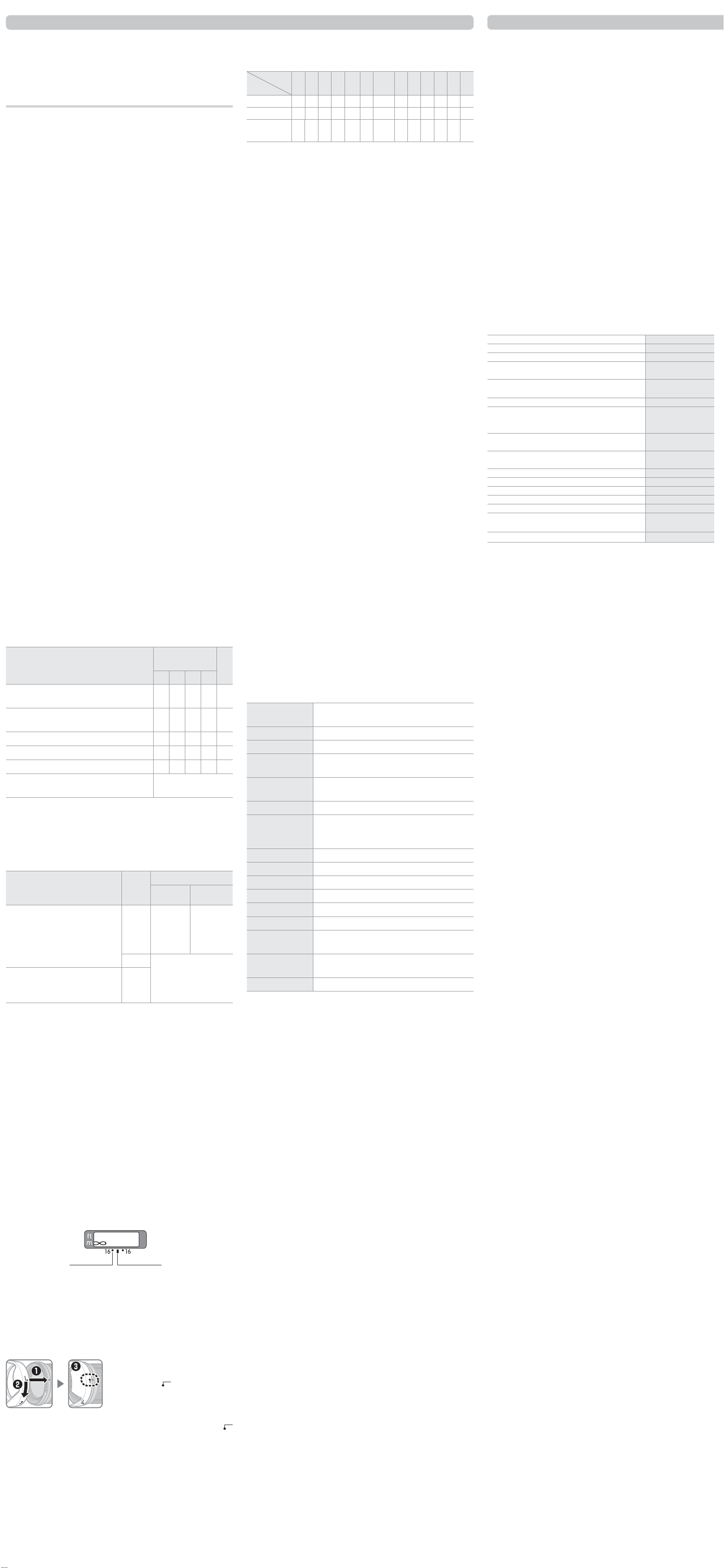
©
2015 Nikon Corporation
.ǃƄƶƵŽȚ Țnjƀ ȳȚNjƈƄŴȚ ǚƃŻ ǀƁƾƶƯŮ ȚǍƸžƾƳŽȚ ǚƸŽȢȶ ȝƾƵƸƴƯƄŽȚ ȵnjƀ ȜȔȚǍŻ ǟűǍƁ
ȚǍƸžƾƳŽȚ ǚƅž DX ǀưƸǧ ȜNjŲȚȶ ǀŴNjŸ ǏżƾƯŮ ǀƸƵŻȤ ȚǍƸžƾż ǟƴŸ ǀŴNjƯŽȚ ƿƸżǍů NjƶŸ :ǀƮŲǾž
.(Ǜž 35 ǀưƸǧ) Ǜž 36 ȸȶƾƉƁ ȸȤƻŮ ȲǞŶȶ °61 ǀŴNjƯŽȚ ȵnjƷŽ ȜȤǞƫŽȚ ǀƁȶȚȥ ȴǞƳů ȆD5500 ȶȖ D7200
ǙƄžǾŴ ǚűȖ ǜž
A ȝȚǍƁnjƇů
• ǚƀƻž Ǡƶź NjƁ ǟƴŸ ǃƄƶƵŽȚ ǀſƾƸǧ ƿƆƁ ȆǚƭŸ ȞȶNjŲ ǀŽƾŲ Ǡź
.ƾƷŽ
ȿ
NjƯů ȶȖ ǀƁȤƾƭƃŽȚ ǙƳƱů ǽ
ȔȚǎűLjȚ ǏƵƴů ǽ ȆǍųȕ ȞȢƾƇŽ ȶȖ ȪǞƲƉŽ ǀƆƸƄſ ǝŲƾƄƱſȚȶ ǃƄƶƵŽȚ ǍƉż ǀŽƾŲ Ǡź .ǓƲź
.ȷǍųȖ ǀŮƾǧȘ ȶȖ ǀƸŮǍƷż ǀžNjǧ ȞȶNjŲ Ǡź ƿƃƉƄƁ NjŻ ȝƾŶƾƸƄŲǽȚ ȵnjƀ ȬƾƃůȚ ȳNjŸ .ǀźǞƪƳƵŽȚ
• ȶȖ ȴƾųȢ ȞƾƯƃſȚ ǀƮŲǾž ǀŽƾŲ Ǡź
.ǃƄƶƵŽȚ Ǡź ǚƭŸ ȞȶNjŲ ǀŽƾŲ Ǡź ȜǍŵƾƃž ȚǍƸžƾƳŽȚ ǘƴŹȚ
ȆȤǞƱŽȚ ǟƴŸ ȚǍƸžƾƳŽȚ ǀƁȤƾƭŮ ȬǎſȚȶ ȢȢǍƄƵŽȚ ȤƾƸƄŽȚ ȲǞƇž ǚƫźȚ ȆȥƾƷƆŽȚ ǜž ǀƁȢƾŸ ǍƸŹ ǀƇǣȚȤ
ȩǍƯƄŽȚ ǟŽȘ ȳȚNjƈƄŴǽȚ Ǡź ȤȚǍƵƄŴǽȚ ȸȢƻƁ NjŻ .ȰȶǍƇŮ ǀŮƾǧȁȚ ƿƶƆƄŽ ȤnjƇŽȚ ǠųǞů ƿƆƁ
NjƵƄƯž ȴǞƳƸſ ǀžNjų ǎżǍž ǟŽȘ ȚǍƸžƾƳŽƾŮ ǝűǞů ȆǀƁȤƾƭƃŽȚ ǀŽȚȥȘ NjƯŮ .ǘƁǍŲ țǞƪſ ȶȖ ǀŮƾǧȂŽ
.ǑƇƱƴŽ
• NjŻ ǝƸƃƶƄŽȚ Țnjƀ ȬƾƃůȚ ȳNjŸ .ȴƾƄƴƄƃž ȱȚNjƁȶ ǝƉƵƴů ȶȖ ȔƾƵƴŽ ǃƄƶƵŽȚ ȩ
ȿ
ǍƯů ǽ
.ƾ
ȹ
źƾű ǝƸƴŸ ǔźƾŲ
.ǀƸǣƾŮǍƷż ǀžNjǧ ȶȖ ǘƁǍŲ ǟŽȘ ȸȢƻƁ
• ȝƾƭƇž Ǡź ȥƾƷƆŽȚ ǚƸưƪů ȸȢƻƁ NjŻ
.ȲƾƯƄŵǾŽ ǀƴŮƾŻ ȝȚȥƾŹ ǓŴȶ ǃƄƶƵŽȚ ȳNjƈƄƉů ǽ
.ǘƁǍŲ ȶȖ ȤƾƆƱſȚ ǟŽȘ ȤƾƃưŽȚ ȶȖ ȲƾƯƄŵǾŽ ǀƴŮƾŻ ȷǍųȖ ȝȚȥƾŹ ȶȖ ȴƾŮȶǍƃŽȚ ȢǞűȶ Ǡź ȶȖ ǀƂƃƯƄŽȚ
• ǏƵƪŽȚ ǟŽȘ ǍƮƶŽȚ
.ȚǍƸžƾƳŽƾŮ ȨƾƈŽȚ ǍƮƶƵŽȚ ǜƸƯž ȶȖ ǀŴNjƯŽȚ ȲǾų ǜž ǏƵƪŽȚ ǟŽȘ ǍƮƶů ǽ
ǀŮƾǧȘ ǟŽȘ ȸȢƻƁ NjŻ ǍƮƶƵŽȚ ǜƸƯž ȶȖ ǀŴNjƯŽȚ ȲǾų ǜž ȷǍųLjȚ ǀƯŶƾƉŽȚ ȔǞƬŽȚ ȤȢƾƫž ȶȖ
ȤƾƫŮȁȚ ǟƴŸ ȜȤNjƲŽȚ Ǡź ǀƵǣȚȢ
A ȝƾƷƸƃƶů
• Ǡź ȶȖ ǀŮƾǧȘ Ǡź ƿƃƉƄƁ NjŻ ȝƾƵƸƴƯƄŽȚ ȵnjƀ ȬƾƃůȚ ȳNjŸ
.ȲƾƱŶLjȚ ȲȶƾƶƄž ǜŸ Ț
ȹ
NjƸƯŮ ǔƱƇƁ
.ǃƄƶƵŽȚ ǚƭŸ
• ǀƭŴȚǞŮ ȵǎƸżǍů ǛƄƁ ȸnjŽȚ ǏƵƪŽȚ ȔǞǤ ƿƃƉƄƁ NjŻ
.ǀŴNjƯŽȚ ǍƃŸ ǏƵƪŽȚ ȔǞǤ ǎżǍů ǽ
ȟȤƾų ǏƵƪŽȚ ǚƯűȚ ǀƸƱƴƈŽȚ ȜȔƾǤȁȚ ȝȚȣ ȯȚNjƀLjȚ ǍƁǞƫů NjƶŸ .ǘƁǍŲ țǞƪſ Ǡź ǀŴNjƯŽȚ
Ț
ȹ
NjƸƯŮ ƾƷſǎųȶ ǀŴNjƯŽȚ ǀƸƭŹȖ ȲNjƃƄŴȚ ȆǀƴƁǞŶ ȜǍƄƱŽ ȳNjƈƄƉƄ
Ƚ
Ŵ ǀŴNjƯŽȚ ǜƳů ǛŽ ȚȣȘ ȑȤƾŶȁȚ
.ǍŵƾƃƵŽȚ ǏƵƪŽȚ ȔǞǤ ǜŸ
• ǚƅž ȆȚ
ȹ
Njű ǀƸŽƾŸ ȜȤȚǍŲ ȝƾűȤNjŽ ǀǤǍƯž ǜżƾžȖ Ǡź ǃƄƶƵŽȚ ȱǍƄů ǽ
.ȜNjǣȚǎŽȚ ȜȤȚǍƇŽȚ ƿƶƆů
Ǡƭưů ȶȖ ǚƁNjƶž ȶȖ ǀƱƪƶƵŮ ǃƄƶƵŽȚ Ǡƭưů ȶȖ ǍŵƾƃƵŽȚ ǏƵƪŽȚ ȔǞǤ Ǡź ǀƲƴưž ȜȤƾƸŴ
.ǃƄƶƵŽƾŮ ǚƭŸ ȶȖ ǘƁǍŲ ǟŽȘ ȸȢƻƁ NjŻ ȝƾƷƸƃƶƄŽȚ ȵnjƀ ȬƾƃůȚ ȳNjŸ .ǝžȚNjƈƄŴȚ ȔƾƶŰȖ ǃƄƶƵŽȚ
■ ǀŴNjƯŽȚ ȔȚǎűȖ
ǀŴNjƯŽȚ ǀƸŻȚȶ
q
ǀŴNjƯŽȚ ǀƸŻȚȶ ȜȚȣƾƇž ǀžǾŸ
w
ǀŴNjƯŽȚ ǀƸŻȚȶ ǚƱŻ ǀžǾŸ
e
ǀŴNjƯŽȚ ǀƸŻȚȶ ƿƸżǍů ǀžǾŸ
r
ȸȤƻƃŽȚ ǎƸżǍƄŽȚ ǀƲƴŲ
t
ȸȤƻƃŽȚ ǎƸżǍƄŽȚ ǀźƾƉž Ǎŵƻž
y
ȸȤƻƃŽȚ ǎƸżǍƄŽȚ ǀźƾƉž ǀžǾŸ
u
ǀŴNjƯŽȚ ƿƸżǍů ǀžǾŸ
i
ǀŴNjƯŽȚ ƿƸżǍƄŽ ǀƸŶƾƭƵŽȚ ǀƸƪƇŽȚ
o
CPU ȜNjŲȶ ǚƸǧǞů ȯȚǍŶȖ
!0
ȸȤƻƃŽȚ ǎƸżǍƄŽȚ ǕǤȶ ȠƾƄƱž
!1
■ ǀƸƲźȚǞƄŽȚ
ǟƴŸ ("
—
") ǀŶǍƪŽȚ ȝƾžǾŸ ȲNjů ȆǀžǞŸNjƵŽȚ ǗǣƾŷǞŽȚ ǟƴŸ ("✔") țȚǞƫŽȚ ȝƾžǾŸ ȲNjů
.ǚƸǧƾƱƄƴŽ ȚǍƸžƾƳŽȚ ǚƸŽȢ ǍƮſȚ ȑȢǞƸƲŽȚ ǒƯŮ ȩǍƱů NjŻ
.ǀžǞŸNjƵŽȚ ǍƸŹ ǗǣƾŷǞŽȚ
AF
3
ǒƁǍƯƄŽȚ ǕǤȶ
(ǍƁǞƫů) ǠǣǞƬŽȚ
ȚǍƸžƾƳŽȚMASP
2
✔✔✔✔✔
DX ȶ FX ǀưƸƫŮ ȜNjŲȚȶ ǀŴNjŸ ǏżƾƯŮ ǀƸƵŻǍŽȚ ȴǞƳƸſ ȝȚǍƸžƾż
✔✔✔✔✔
ȆF65 ǀƴƉƴŴ ȆF75 ǀƴƉƴŴ ȆF80 ǀƴƉƴŴ ȆF100 ȆF5 ȆF6
Pronea S
1
ȆPronea 600i
✔
——
✔✔
F70 ǀƴƉƴƉŽȚ ȆF90 ǀƴƉƴƉŽȚ ȆF90X ȆF4 ǀƴƉƴƉŽȚ
—
✔✔✔✔
ȆF-401s ȆF-401x ȆF50 ǀƴƉƴƉŽȚ ȆF55 ǀƴƉƴƉŽȚ ȆF60 ǀƴƉƴƉŽȚ
F-401
———
✔✔
F-601
M ȆF-801 ȆF-801s
—
ȸȶNjƁ ȸȤƻŮ ǎƸżǍƄŮ ȴǞƳƸſ ȝȚǍƸžƾż ȆF-501 ȆF-601 ȆF3AF
(F-601
M ȔƾƶƅƄŴƾŮ)
1 .(ȸȶNjƁ) M ǠǣǞƬŽȚ ǒƁǍƯƄŽȚ ǕǤȶ ǍźǞƄƁ ǽ
2 .(ǠƵŻǍŽȚ ǍƸưƄŽȚ ǃžƾſǍŮ) NjƷƪƵŽȚ ǕǤȶȶ ǠǣƾƲƴƄŽȚ ǕǤǞŽȚ ǙŽȣ Ǡź ƾƵŮ
3 .ǠǣƾƲƴů ȸȤƻŮ ǎƸżǍů
■ ȸȤƻƃŽȚ ǎƸżǍƄŽȚ
ǎƸżǍƄŽȚ ȬƾǤȶȖ ǜŸ ȝƾžǞƴƯƵŽ) ǀžǞŸNjƵŽȚ ȸȤƻƃŽȚ ǎƸżǍƄŽȚ ȬƾǤȶȖ ǠŽƾƄŽȚ ȲȶNjƆŽȚ ȩǍƯƁ
.(ȚǍƸžƾƳŽȚ ǚƸŽȢ ǍƮſȚ ȆȚǍƸžƾƳŽƾŮ ǀǧƾƈŽȚ ȸȤƻƃŽȚ
ǀŴNjƯƴŽ ȸȤƻƃŽȚ ǎƸżǍƄŽȚ ǕǤȶ ǕǤȶ
ǎƸżǍƄŽȚ
ȸȤƻƃŽȚ
ȚǍƸžƾƳƴŽ ȚǍƸžƾƳŽȚMM/A
ȸȶNjƁ ȸȤƻŮ ǎƸżǍů
ȷNjž ǜƸƯž Ǖž
ǠſȶǍƄƳŽȘ
ȸȤƻŮ ǎƸżǍů
ȔƾưŽȘ Ǖž ǠǣƾƲƴů
ǠǣƾƲƴů
(AF ǀƁǞŽȶȖ)
AF
ȜNjŲȚȶ ǀŴNjŸ ǏżƾƯŮ ǀƸƵŻȤ ȴǞƳƸſ ȝȚǍƸžƾż
ȆF100 ȆF4 ǀƴƉƴƉŽȚ ȆF5 ȆF6 ȆDX ȶ FX ǀưƸǧ
ȆF80 ǀƴƉƴƉŽȚ ȆF90 ǀƴƉƴƉŽȚ ȆF90X
ȆF65 ǀƴƉƴƉŽȚ ȆF70 ǀƴƉƴƉŽȚ ȆF75 ǀƴƉƴƉŽȚ
Pronea S ȆPronea 600i
ȸȶNjƁ ȸȤƻŮ ǎƸżǍů
Ǖž ǠſȶǍƄƳŽȘ ȷNjž ǜƸƯž ǍźǞƄƁ)
(F-601
M ȚNjŸƾž ȝȚǍƸžƾƳŽȚ ǕƸƵű
MF
AFȆ MF
ȆF50 ǀƴƉƴŴ ȆF55 ǀƴƉƴŴ ȆF60 ǀƴƉƴŴ
ȆF-401s ȆF-401x ȆF-601M ȆF-801 ȆF-801s
F-401
(ȸȶNjƁ ǚƁNjƯů Ǖž ǠǣƾƲƴů ȸȤƻŮ ǎƸżǍů) M/A
:(M/A) ȸȶNjƸŽȚ ǚƁNjƯƄŽȚ Ǖž ǠǣƾƲƴƄŽȚ ȸȤƻƃŽȚ ǎƸżǍƄŽȚ ȳȚNjƈƄŴƾŮ ǎƸżǍƄŽȚ ǓƃƬŽ
.
M/A ǕǤǞŽȚ ǟƴŸ ǀŴNjƯƴŽ ȸȤƻƃŽȚ ǎƸżǍƄŽȚ ǕǤȶ ȠƾƄƱž ǓƃǤȚ
z
.ȸȤƻƃŽȚ ǎƸżǍƄŽȚ ǓƃǤȚ
x
ǎƸżǍƄŽȚ ǀƲƴŲ ȜȤȚȢȘ ȲǾų ǜž ǠǣƾƲƴƄŽȚ ȸȤƻƃŽȚ ǎƸżǍƄŽȚ ǚƁNjƯů ȆǀƃŹǍŽȚ NjƶŸ ȆǜƳƵƁ
ǁſƾż ȚȣȘ ȶȖ) ǗƫƄƶƵŽȚ ǟƄŲ ǘŽƾưŽȚ ǍƁǍƇů Ȥȥ ǟƴŸ ǓưƬŽȚ ȔƾƶŰȖ ǀŴNjƯƴŽ ȸȤƻƃŽȚ
ǎƸżǍƄŽȚ ǓƃǤ ȜȢƾŸȁ
.(AF-ON ȤǎŽȚ ǟƴŸ ǓưƬŽȚ ȔƾƶŰȖ ȆAF-ON ȤǎŮ ȜǎƷƆž ȚǍƸžƾƳŽȚ
ǗƫƄƶƵŽȚ ǟƄŲ ǘŽƾưŽȚ ǍƁǍƇů Ȥȥ ǓưǤȚ ȆǠǣƾƲƴƄŽȚ ȸȤƻƃŽȚ ǎƸżǍƄŽȚ ȳȚNjƈƄŴƾŮ ȸȤƻƃŽȚ
.ȷǍųȖ ȜǍž AF-ON ȤǎŽȚ ǓưǤȚ ȶȖ
■ ȰƾƭƶŽȚ ǘƵŸ
ǁſƾż ȚȣȘ .ǠƃƁǍƲƄŽȚ ȰƾƭƶŽȚ ǘƵŸ ǀŴNjƯŽȚ ǟƴŸ ȜȢǞűǞƵŽȚ ȰƾƭƶŽȚ ǘƵŸ ȝȚǍŵƻž ljǤǞů
ǘƵŸ ǀƶƁƾƯž
ȹ
ƾƬƁȖ ǜƳƵƁ Ȇ(ǀƇƄƱŽȚ ǛƆŲ ǚƸƴƲů) ȰƾƭƶŽȚ ǘƵƯŽ ǀƶƁƾƯž ǍźǞů ȚǍƸžƾƳŽȚ
.ȝƾžǞƴƯƵŽȚ ǜž NjƁǎƵŽ ȰƾƭƶŽȚ ǘƵŸ ȲȶNjű ǕűȚȤ .ǍƮƶƵŽȚ ǜƸƯž ȲǾų ǜž ȰƾƭƶŽȚ
ȩǍƯƁ ǽ NjŻȶ ǚƸŽNjż ǓƲź ȳȚNjƈƄŴǾŽ NjƯž ȸȤƻƃŽȚ ǎƸżǍƄŽȚ ǀźƾƉž Ǎŵƻž ȴȖ ǔŲǽ :ǀƮŲǾž
∞ ǎžǍŽȚ ȩǍƯƁ ǽ ȆȷǍųȖ ǚžȚǞŸȶ ȰƾƭƶŽȚ ǘƵƯŽ ǀƆƸƄſ ȴƾƸŲLjȚ ǒƯŮ Ǡźȶ ȆǀŻNjŮ ȯȚNjƀLjȚ NjƯŮ ǀźƾƉž
.NjƸƯŮ ȯNjƀ ǟƴŸ ȸȤƻƃŽȚ ǎƸżǍƄŽȚ ȚǍƸžƾƳŽȚ ǓƃƬů ƾžNjƶŸ
0.5
1.6 1
0.3
ǘƵŸ ȝȚǍŵƻž
ȰƾƭƶŽȚ
ǀźƾƉž ǀžǾŸ
ȸȤƻƃŽȚ ǎƸżǍƄŽȚ
■ ǀƇƄƱŽȚ
.ȚǍƸžƾƳŽƾŮ ǀǧƾƈŽȚ ǛƳƇƄŽȚ ljƸůƾƱž ȳȚNjƈƄŴƾŮ ǀŴNjƯŽȚ ǀƇƄź ǚƁNjƯů ǛƄƁ
■ ǀŴNjƯŽȚ ǀƸŻȚȶ
ȶȖ ǃƀǞƄŽȚ ƿƃƉů NjŻ ǠƄŽȚ ȜǍŰƾƶƄƵŽȚ ȜȔƾǤȁȚ ƿƆƇůȶ ǀŴNjƯƴŽ ǀƁƾƵŲ ǀŴNjƯŽȚ ǀƸŻȚȶ ǍźǞů
.ȜȤǞƫŽȚ ȵǞƪů
ǀŴNjƯŽȚ ǀƸŻȚȶ ǀƃƸżǍů
ǀžǾŸ Ǖž (●) ǀŴNjƯŽȚ ǀƸŻȚȶ ƿƸżǍů ǀžǾŸ ȸȣƾŲ
ǀŴNjƯŽȚ ǀƸŻȚȶ ȤȢȖ ǛŰ (
) ǀŴNjƯŽȚ ǀƸŻȚȶ ǀžƾƲƄŴȚ
ǀƸŻȚȶ ǚƱŻ ǀžǾŸ Ǖž ● ǀžǾŸ ȜȚȣƾƇž ǛƄů ȴȖ ǟŽȘ (
w)
.(—{) ǀŴNjƯŽȚ
ƾƷůNjŸƾŻ ǟƴŸ ȢǞűǞƵŽȚ ǎžǍŽȚ ǜž țǍƲŽƾŮ ƾƷƳƉžȖ ȆǀŴNjƯŽȚ ǀƸŻȚȶ Ǚź ȶȖ ƿƸżǍů NjƶŸ
ǚƳƪŮ ǀƸŻȚǞŽȚ ƿƸżǍů ȳNjŸ ǀŽƾŲ Ǡź ǀźǍųȥ ǍƷƮů NjŻ
.ǗƶƯŮ ƾƷŮ ȱƾƉžȁȚ ƿƶƆůȶ
.ljƸƇǧ
.ȳȚNjƈƄŴǽȚ ȳNjŸ ǀŽƾŲ Ǡź ǀŴNjƯŽȚ ǟƴŸ ƾƷƃƸżǍůȶ ǀƸŻȚǞŽȚ ǏƳŸ ǜƳƵƁ
■ ȸȤƻƃŽȚ ǎƸżǍƄŽȚ ȝƾŵƾŵ
Ǡź ȳȚNjƈƄŴǾŽ ȸȤƻƃŽȚ ǎƸżǍƄŽȚ ȝƾŵƾŵ ǜž ǀƱƴƄƈž ǀŸǞƵƆž ǀƸŽƾƄŽȚ ȝȚǍƸžƾƳŽȚ ǛŸNjů
.ǀƱƴƄƈƵŽȚ ȯȶǍƮŽȚ
U M L J G4 G3 G2 G1
EC-B
EC-EECBA
ǀŵƾƪŽȚ
ȚǍƸžƾƳŽȚ
——
——
—
F6
F5+DP-30
(+0.5)
F5+DA-30
.ǝŮ ljƫƶƁ :
.(ȤǞƫŽȚ ǍŰƺƄů ǽ) ǍƮƶƵŽȚ ǜƸƯž Ǡź ǀźǍųȥ ǍƷƮů : {
.ȚǍƸžƾƳŽȚ Ǖž ǘźȚǞƄž ǍƸŹ : —
ǍƄųȚ
.ǗƫƄƶƵŽȚ ȦƾƸŻ ȜǍƁƾƯƵŽ ǠǣǞƬŽȚ ǒƁǍƯƄŽȚ ǒƁǞƯů ǟŽȘ ȦȚǞŻLjȚ ǜƸŮ ȳƾŻȤLjȚ ǍƸƪů :( )
ǒƁǞƯů) ("Screen comp.") b6 ȸȢƾƸƄŸǽȚ ȢȚNjŸȂŽ ǀƃƉƶŽƾŮ (ȷǍųȖ ǀŵƾŵ) "Other screen"
ȷǍųȖ ȝƾŵƾŵ Ǖž ǝſȖ ǔŲǽ ȑF6 ȚǍƸžƾƳƴŽ ǠǣǞƬŽȚ ǒƁǍƯƄŽȚ ǒƁǞƯů ǚƁNjƯů NjƶŸ (ǀŵƾƪŽȚ
ǒƁǞƯů ǀƵƸŻ ǁſƾż ȚȣȘ ǟƄŲ (ȷǍųȖ ǀŵƾŵ) "Other screen" ȤƾƸƄųȚ ƿƆƁ ȆE ȶȖ B ǍƸŹ
ȳȚNjƈƄŴƾŮ F5 ȚǍƸžƾƳƴŽ ǠǣǞƬŽȚ ǒƁǍƯƄŽȚ ǒƁǞƯů ǚƁNjƯů ǜƳƵƁ
.0 ȸȶƾƉů ǠǣǞƬŽȚ ǒƁǍƯƄŽȚ
.ǚƸǧƾƱƄƴŽ ȚǍƸžƾƳŽȚ ǚƸŽȢ ǍƮſȚ ȑ18 ȸȢƾƸƄŸǽȚ ȢȚNjŸȁȚ
ǜƳƵƁ M ȬǞƶŽȚ ǜž ȝƾŵƾƪŽȚ ȴȖ ǔŲǽ ǙŽȣ Ǖžȶ
.ǀŴNjƯŽȚ ȵnjƀ Ǖž ȳȚNjƈƄŴǾŽ ƿŴƾƶž ǍƸŹ : ǀŹȤƾź ǀƸƴų
.ǟƴŸȖ ȶȖ 1 : 1 ǍƸƃƳů ǀƃƉƶŮ țǍƲƵŽȚ ȶȖ ǠŮǞƳŴȶǍƳƸƵŽȚ ǍƁǞƫƄŽȚ Ǡź ƾƷžȚNjƈƄŴȚ
EC-E/EC-B ȶ E ȶ B ȶ A ȸȤƻƃŽȚ ǎƸżǍƄŽȚ ȝƾŵƾŵ Ǖž ǀźǞƱƫƵŽȚ ȜǍƁƾƯž F5 ȚǍƸžƾƳŽȚ ǛŸNjů :ǀƮŲǾž
.ǓƲź L ȶ J ȶ
ǀƸŮǍƯŽȚ
■ ǀŴNjƯŽƾŮ ǀƁƾƶƯŽȚ
•.ǓƲź ǀŴNjƯŽȚ ǀƸŻȚȶ ȳȚNjƈƄŴƾŮ ȚǍƸžƾƳŽȚ ȶȖ ǀŴNjƯŽȚ ǙƉƵů ȶȖ ǓƲƄƴů ǽ
•.CPU ȜNjŲȶ ǚƸǧǞů ȯȚǍŶȖ ǀźƾƮſ ǟƴŸ ǔźƾŲ
• ȜǍŵƾƃž ȲƾƵƯƄŴǽȚ ǜŸ ǗŻǞů ȆǀŴNjƯŽȚ ƿƸżǍƄŽ ǀƸŶƾƭƵŽȚ ǀƸƪƇŽȚ Ǘƴů ǀŽƾŲ Ǡź
.ǀſƾƸƫƴŽ NjƵƄƯž ȴǞƳƸſ ǀžNjų ǎżǍž ǟŽȘ ǀŴNjƯŽƾŮ ǝűǞůȶ
• ǜž ǑƴƈƄƴŽ
.ǀŴNjƯŽȚ ljƭŴ ǟƴŸ ǜž ǀŽƾƉƶŽȚȶ ǀŮǍůLjȚ ǜž ǑƴƈƄƴŽ ǀŲȶǍž ȳNjƈƄŴȚ
ǀƯƭŻ ǟŽȘ ǀŴNjƯŽȚ ǗƮƶž ȶȖ ȲǞſƾƅƁȁȚ ǜž ǚƸƴŻ ȤȚNjƲž ǗǤȖ ȆǕŮƾǧLjȚ ȝƾƵƫŮȶ ǕƲƃŽȚ
ǎżǍƵŽȚ ǜž ǀŴNjƯŽȚ ǗƮſȶ ǀŴNjŸ ǗƸƮƶů ǚƁNjƶž ǟŽȘ ȶȖ ǀƱƸƮſȶ ǀƵŸƾſ ǀƸƶƭŻ ȧƾƵŻ
.ǙƯŮƾǧƺŮ ȟƾűǎŽȚ ǏƵŽ ȶȖ ȝƾƈƭŽ ȱǍů ȳNjƯŽ ȵƾƃƄſǽȚ Ǖž ȆǀƁǍǣȚȢ ǀżǍŲ Ǡź ȟȤƾƈŽȚ ǞƇſ
•.ǀŴNjƯŽȚ ǗƸƮƶů ȩǍưŮ ǜƁǎƶƃŽȚ ȶȖ ȴƾƀNjŽȚ ǗƱƈž ǚƅž ȸǞƬŸ ƿƁnjž
ȹ
ȚNjŮȖ ȳNjƈƄƉů ǽ
•.ǠžƾžLjȚ ǀŴNjƯŽȚ ǍƫƶŸ ǀƁƾƵƇŽ NC ȝƾƇŵǍž ȶȖ ǀŴNjƯŽȚ ǀƸŻȚȶ ȳȚNjƈƄŴȚ ǜƳƵƁ
•.ǀŴNjƯŽȚ ǀƃƸƲŲ Ǡź ǀŴNjƯŽȚ ǕǤȶ ǚƃŻ ǠƱƴƈŽȚȶ ǠžƾžLjȚ ǜƁȔƾƭưŽȚ ƿżȤ
• ȯƾűȶ ȢȤƾŮ ȴƾƳž Ǡź ƾƷŮ ǔƱƄŲȚ ȆȜNjƄƵž ȜǍƄƱŽ ǀŴNjƯŽȚ ȳȚNjƈƄŴȚ ǛƄƁ ǜŽ ǀŽƾŲ Ǡź
ȝȚǍż ȶȖ ƾƄźƾſ Ǖž ȶȖ ǍŵƾƃƵŽȚ ǏƵƪŽȚ ȔǞǤ Ǡź ƾƷſǎƈů ǽ
.ȖNjǧ ȶȖ ǜƱŸ ȴǞƳů ƿƶƆƄŽ
.ǀƅƯŽȚ ȤǞźƾż
• ǽ Ǘƴů ȬǞŻȶ Ǡź ƿƃƉƄƁ NjŻ ǀƸƴųȚNjŽȚ ǚƵƯŽȚ ǀƸŽȕ ȖNjǧ
.ǀźƾű ǀŴNjƯŽȚ ǠƴŸ ǔźƾŲ
.ǝŲǾǧȘ ǜƳƵƁ
• ǜž ǀŸǞƶƫƵŽȚ ȔȚǎűLjȚ ȵǞƪƁ ȶȖ ǗƴƄƁ NjŻ ȜȤȚǍƇŽȚ ȜNjƁNjŵ ǕŻȚǞž Ǡź ǀŴNjƯŽȚ ȱǍů
.ȷǞƲƵŽȚ ǙƸƄŴǾƃŽȚ
■ ǀƲźǍƵŽȚ ȝȚȤȚǞƉƉżȁȚ
•Ǜž 72 ǍƭŻ LC-72 ȥȚǍŶ ǓưǤ ǠžƾžȖ ǀŴNjŸ ȔƾƭŹ
•LF-4 ȥȚǍŶ ǠƱƴų ǀŴNjŸ ȔƾƭŹ
•HB-76 ȥȚǍŶ ǀƶƶƉž ȜNjŸƾƲŮ ǀŴNjŸ ǀƸŻȚȶ
•CL-1015 ǀŴNjƯŽȚ ǀƃƸƲŲ
■ ǀƲźȚǞƄƵŽȚ ȝȚȤȚǞƉƉżȁȚ
•Ǜž 72 ǍƭŻ ǀƸƃŽǞŽ ǀŴNjƯƴŽ ȝƾƇŵǍž
■ ȝƾƱǧȚǞƵŽȚ
F ƿƸżǍů ȜNjŸƾŻȶ CPU ȜNjŲǞŮ ȜǎƷƆž G ȬǞƶŽȚ ǜž AF-S ǀŴNjŸ
ȬǞƶŽȚ
Ǜž 24
ȸȤƻƃŽȚ ȲǞƭŽȚ
f/ 1.8
ǀƇƄƱƴŽ ǟƫŻLjȚ NjƇŽȚ
ȸǍƫƶŸȶ ED ǀŴNjŸ ȸǍƫƶŸ ǚƵƪƁ ƾƵŮ) ǀŸǞƵƆž 9 Ǡź ǍƫƶŸ 12
(ȲƾƄƉƁǍż Ǟſƾſ ȔǾŶ ȝƾƲƃƭŮ ǀŴNjŸ ǍǧƾƶŸȶ ǜƸƁȶǍż ǝƃŵ ǀŴNjŸ
ǀŴNjƯŽȚ ǜƁǞƳů
•°84 :FX ǀưƸǧ D-SLR ȶ ǛƴƸƱŮ SLR ȴǞƳƸſ ȝȚǍƸžƾż
•°61 :DX ǀưƸǧ D-SLR ȴǞƳƸſ ȝȚǍƸžƾż
ȜȤǞƫŽȚ ǀƁȶȚȥ
ȚǍƸžƾƳŽȚ ǟŽȘ ȟǍƈŽȚ
ǀźƾƉƵŽȚ ȝƾžǞƴƯž
ȸȤƻŮ ǎƸżǍů Ǖž (RF) Rear Focusing ǠƱƴƈŽȚ ȸȤƻƃŽȚ ǎƸżǍƄŽȚ ȳƾƮſ
ǀƲƴŲȶ ǁžƾǧ ǠűǞž ȱǍƇž ǀƭŴȚǞŮ ǝƸź ǛƳƇƄŽȚ ǛƄƁ ǠǣƾƲƴů
ȹ
ƾƁȶNjƁ ȸȤƻƃŽȚ ǎƸżǍƄŽȚ ǓƃƬŽ ǀƴƫƱƶž ȸȤƻŮ ǎƸżǍů
ȸȤƻƃŽȚ ǎƸżǍƄŽȚ
(
f) ǀƁƾƷſǾŽȚ ǟŽȘ ǍƄž 0.23
ǎƸżǍƄŽȚ ǀźƾƉž Ǎŵƻž
ȸȤƻƃŽȚ
ǀƁȤƻƃŽȚ ǀźƾƉƵŽȚ ǜž ȳ 0.23
ǀźƾƉƵŽ ǟſȢLjȚ NjƇŽȚ
ǎƸżǍƄŽȚ
(ǀƁǍǣȚȢ ƿűƾŲ ǀƇƄź) 7
ǀƇƄƱŽȚ ƿűƾŲ ȝȚǍƱŵ
ǚžƾƳŽƾŮ ǠǣƾƲƴů
ǀƇƄƱŽȚ ƿűƾŲ
16 – f/ 1.8
ǀƇƄƱŽȚ Ȱƾƭſ
ǀƴžƾż ǀƇƄƱŽȚ
ȜǍƁƾƯƵŽȚ
(Ǜž 0.75=P) Ǜž 72
ljŵǍƵŽȚ ǍƭŻ ȦƾƸŻ
ƿƸżǍů ǀƱŵ ǜž ǀźƾƉƵŽȚ)
ȹ
ƾƃƁǍƲů Ǜž 83.0 × ǍƭŻ ǟƫŻȖ Ǜž 77.5
(ȚǍƸžƾƳŽȚ ǟƴŸ ǀŴNjƯŽȚ
ȢƾƯŮLjȚ
ȹ
ƾƃƁǍƲů ȳȚǍű 355
ȴȥǞŽȚ
ȴȶNjŮȶ ǁŻȶ ȸȖ Ǡź ǚƸŽNjŽȚ Țnjƀ Ǡź ȜȢȤȚǞŽȚ ȜǎƷűLjƾŮ ǀǧƾƈŽȚ ȝƾƱǧȚǞƵŽȚ ǍƸƸưů Ǡź ǘƇŽƾŮ ȴǞƳƸſ ǔƱƄƇů
.ǘƃƉž ȤƾƭųȘ
■
景深
■■
Kedalaman BidangKedalaman Bidang
■■ (m)
• 對焦距離
• Jarak fokus
•
• 景深
• Kedalaman Bidang
•
• 重現比率
• Rasio penggandaan
•
f/1.8 f/2.0 f/2.8 f/4 f/5.6 f/8 f/11 f/16
0.23
0.23 – 0.23 0.23 – 0.23 0.23 – 0.23 0.23 – 0.23 0.23 – 0.24 0.22 – 0.24 0.22 – 0.24 0.22 – 0.25 1/4.9
0.3 0.30 – 0.30 0.30 – 0.31 0.29 – 0.31 0.29 – 0.31 0.29 – 0.31 0.28 – 0.32 0.28 – 0.33 0.27 – 0.34 1/7.7
0.5 0.48 – 0.52 0.48 – 0.52 0.48 – 0.53 0.47 – 0.54 0.46 – 0.56 0.44 – 0.59 0.42 – 0.63 0.40 – 0.73
1/15.9
∞ 9.88 – ∞ 9.20 – ∞ 6.60 – ∞ 4.65 – ∞ 3.35 – ∞ 2.38 – ∞ 1.76 – ∞ 1.25 – ∞ 1/∞
在使用本產品前,請仔細閱讀這些使用說明和相機說明書。
注意:當安裝在一台
DX 格式數碼單鏡反光相機(例如 D7200 或
D5500
)上時, 該鏡頭的畫角為 61°且焦距相當於 36 mm(35 mm 格
式)。
安全須知
A
警告
•
勿自行拆解或改裝。遇到故障時,本產品只能由有資格的維修技師進
行修理。若本產品因為跌落或其他意外事故造成破損,請不要觸碰外
露的零件,否則可能導致觸電或其他傷害事故。
•
發生故障時立刻關閉相機。當您發現本裝置冒煙或發出異味時,請立
刻拔下
AC 變壓器的插頭並取出相機電池,注意避免被灼傷。若在此
情形下繼續使用,將可能導致火災或受傷。請在取出電池後,將裝置
送到尼康授權維修服務中心進行檢查維修。
•
保持乾爽。切勿使本產品接觸到水,也不要用濕手接觸,否則可能導
致火災或觸電。
•
勿在易燃氣體環境中使用。在加油站或者有丙烷氣或其他易燃氣體或
粉塵的環境中操作本裝置可能導致爆炸或火災。
•
勿透過鏡頭或相機觀景器觀看太陽。透過鏡頭或觀景器觀看太陽或
其他明亮光源,可能會導致永久性的視覺損傷。
A
注意事項
•
勿在兒童伸手可及之處保管本產品。若不遵守此注意事項,可能會導
致受傷或產品故障。
•
勿透過鏡頭聚焦陽光。陽光透過鏡頭聚焦可能會引起火災。拍攝逆光
主體時,請不要讓太陽進入構圖範圍;若將在較長時間內不使用鏡頭,
請蓋好鏡頭蓋並將其存放在遠離直射陽光的地方。
•
勿加熱。請勿將本產品置於極其高溫的場所(如直射陽光下封閉的車
內),也不要在使用期間用毛巾或手帕裹住本產品或者遮蓋本產品,
否則可能導致火災或產品故障。
■
鏡頭部件
q
遮光罩
w
遮光罩
對齊
標記
e
遮光罩
鎖定
標記
r
遮光罩接環標記
t
對焦環
y
對焦距離指示器
u
對焦距離標記
i
鏡頭接環標記
o
橡膠鏡頭接環密封墊
!0
CPU接點
!1
對焦模式切換器
■
兼容性
核選標記(“
✔
”)表示支援的功能,破折號(“—”)表示不支援的功能。
可用功能可能受到一些限制;有關詳情,請參見相機說明書。
相機
曝光(拍攝)模式
AF
3
P
2
SAM
尼康FX格式和 DX 格式數碼單鏡反光相機
✔✔✔✔✔
F6、F5、F100、F80 系列、F75系列、F65
系列、Pronea 600i、Pronea S
1
✔✔✔✔✔
F4 系列、F90X、F90系列、F70系列
✔✔
——
✔
F60 系列、F55系列 、F50 系列、F-401x、
F-401s、F-401
✔✔✔✔
—
F-801s、F-801、F-601
M
✔✔
———
F3AF、F-601、F-501、尼康MF相機
(F-601
M
除外)
—
1
曝光模式
M(手動)不可用。
2
包括自動和場境(數碼多元化自動拍攝)模式。
3
自動對焦。
■
對焦
所支援的對焦模式如下表所示(有關相機對焦模式的資訊,請參見相機
說明書)
。
相機
相機
對焦模式
鏡頭對焦模式
M/A M
尼康FX格式和 DX 格式數碼單
鏡反光相機、F6、F5、F4 系列、
F100、F90X、F90系列、F80 系
列、F75系列、F70系列、F65系
列、Pronea 600i、Pronea S
AF
自動對焦
(連手動優
先)
帶有電子測
距器的手動
對焦
MF
手動對焦
(除 F-601
M
以外的所有
相機均帶有電子測距器)
F60 系列、F55系列、F50 系列、
F-801s、F-801、F-601
M
、F-401x、
F-401s、F-401
AF
、MF
M/A
(自動對焦(連手動優先))
使用自動對焦(連手動優先)(M/A)進行對焦的步驟如下:
z
將鏡頭對焦模式切換器推至 M/A。
x
對焦。
若有需要,您可在半按快門釋放按鍵期間(或者,若相機配備有一
個
AF-ON
按鍵,則在按下
AF-ON
按鍵期間)旋轉鏡頭對焦環來使
手動對焦優先於自動對焦。若要使用自動對焦以重新對焦,請再次
半按快門釋放按鍵或再次按下
AF-ON
按鍵。
■
景深
鏡頭上的景深指示器表示大致的景深。若相機支援景深預覽(光圈縮
小),則景深還可在觀景器中進行預覽。有關詳情,請參見景深列表。
注意
:
請注意,對焦距離指示器僅可作為指南,可能無法準確顯示離主
體的距離,並且由於景深或其他因素的影響,相機對焦於遠距離物體
時可能不會顯示
∞
。
0.5
1.6 1
0.3
景深指示器 對焦距離標記
■
光圈
請使用相機控制調整光圈。
■
遮光罩
遮光罩可保護鏡頭並阻擋可能導致眩光或鬼影的散射光線。
安裝遮光罩
將遮光罩接環標記(
●
)與遮光罩對齊
標記( )對齊,然後旋轉遮光罩(
w
)
直至
●
標記與遮光罩鎖定標記(
—
)
對齊。
安裝或取下遮光罩時,請在其底部的 標記附近將其握住,並避免握
得太緊。若未正確安裝好遮光罩,則可能會產生邊暈。
不使用時,可將遮光罩反轉並固定在鏡頭上。
■
對焦屏
下列相機支援用於不同情況下的多種對焦屏。
屏幕
相機
ABCE
EC-B
EC-E G1 G2 G3 G4 J L M U
F6
—
—— — ——
F5+ DP-30
F5+ DA-30
(+0.5)
: 建議使用。
: 在觀景器中可見邊暈(相片不會受到影響)。
—:
與相機不兼容。
():
括弧中的資料是指用於偏重中央測光的曝光補償值。當調整
F6 的曝光補償時,請在用戶設定b6(“Screen comp.(對焦
屏補償)”)中選擇“
Other screen(其他對焦屏)”;請注意,
使用B 或 E 以外的屏幕時,即使曝光補償值為0,也必須選擇
“Other screen(其他對焦屏)”。F5 的曝光補償可使用用戶設
定18 進行調整;有關詳情,請參見相機說明書。
空白單格
: 不適用於該鏡頭。請注意,在放大倍率為1 : 1或更高時,M
型屏幕仍可用於顯微攝影和微距攝影。
注意
:
F5
僅在使用
A、B、E、EC-B/EC-E、J和 L 對焦屏時支援矩陣測光。
■
鏡頭保養
•
拿起或持握鏡頭或相機時,切勿僅持拿遮光罩。
•
保持CPU 接點清潔。
•
若橡膠鏡頭接環密封墊損壞,請立即停止使用並將鏡頭送至尼康授權
維修服務中心進行維修。
•
用吹氣球去除鏡頭表面的灰塵和浮屑。若要去除污點和指紋,可使用
一塊滴有少許乙醇或鏡頭清潔劑的乾淨軟棉布或鏡頭清潔紙,以圓周
運動方式從裡向外進行清潔。注意不要留下污漬,也不要用手指碰觸
玻璃。
•
切勿使用塗料稀釋劑或苯等有機溶劑清潔鏡頭。
•
遮光罩或
NC濾鏡可用於保護前部鏡片元件。
•
將鏡頭放入鏡頭套之前,請蓋好鏡頭前蓋和鏡頭後蓋。
•
若在較長時間內不使用鏡頭,請將其存放在陰涼乾爽的地方以防止發
霉和生銹。切不可存放在直射陽光下,也不可與石腦油或樟腦丸一起
存放。
•
保持鏡頭乾爽。內部構造生銹將導致無法挽回的損壞。
•
將鏡頭放置在過於炎熱的地方將會使強化塑膠部件受損或變形。
■
隨附配件
•
72 mm 扣入式鏡頭前蓋 LC-72
•
鏡頭後蓋
LF-4
•
刺刀式遮光罩
HB-76
•
鏡頭套
CL-1015
■
兼容的配件
•
72 mm 旋入式濾鏡
■
技術規格
類型 帶內置 CPU和 F接環的G 型 AF-S鏡頭
焦距
24 mm
最大光圈 f/1.8
鏡頭結構 9 組 12 片(包括 2 個 ED 鏡片元件、2 個非球面鏡
片元件和帶納米結晶塗層的鏡片元件)
畫角
•
尼康菲林單鏡反光與
FX格式數碼單鏡反光相機:84°
•
尼康
DX 格式數碼單鏡反光相機 :61°
距離資訊 輸出主體與相機之間的距離資訊
對焦 後方對焦(
RF)系統(可進行由寧靜波動馬達控制
的自動對焦,也具備用於手動對焦的獨立對焦環)
對焦距離指示器
0.23 m 至無限遠(∞)
最短對焦距離
0.23 m(至焦平面)
光圈葉片
7 片(圓形光圈孔)
光圈 全自動
光圈範圍
f/1.8 – 16
測光 全開光圈測光
濾鏡接口大小
72 mm(P = 0.75 mm)
尺寸 約
77.5 mm(最大直徑)× 83.0 mm(從相機鏡頭
接環邊緣開始的距離)
重量 約
355 g
尼康公司保留可隨時更改說明書內載之硬件技術規格的權利,而無須
事先通知。
繁體中文
Sebelum menggunakan produk ini, mohon membaca dengan seksama
baik petunjuk ini maupun buku petunjuk kamera.
Catatan: Saat digunakan pada kamera digital refl eks lensa tunggal format-
DX seperti D7200 atau D5500, lensa ini memiliki sudut gambar 61° dan
panjang fokal setara dengan 36 mm (format 35 mm).
Demi Keamanan AndaDemi Keamanan Anda
AAPERINGATANPERINGATAN
• Jangan membongkar atau memodi kasi. Apabila terjadi kegagalan fungsi,
produk sebaiknya diperbaiki hanya oleh teknisi berpengalaman. Apabila
produk pecah terbelah akibat dari terjatuh atau kecelakaan lainnya,
hindari menyentuh bagian yang terbuka. Gagal mematuhi pencegahan
ini dapat menimbulkan sengatan listrik atau cedera lainnya.
• Segera matikan kamera apabila terjadi kegagalan fungsi. Apabila Anda melihat ada
asap atau bau tidak biasa muncul dari unit produk, segera cabut adaptor AC dan
keluarkan baterai kamera, sambil berhati-hati agar tidak terbakar. Melanjutkan
pengoperasian dapat menyebabkan kebakaran atau cedera. Setelah melepas
baterai, bawalah unit produk ke pusat servis resmi Nikon untuk pemeriksaan.
• Jaga agar tetap kering. Jangan paparkan produk ke air atau menangani
dengan tangan basah. Gagal mematuhi pencegahan ini dapat
menyebabkan kebakaran atau sengatan listrik.
• Jangan gunakan di daerah yang mengandung gas mudah terbakar. Menggunakan
unit produk di pom bensin atau saat ada gas propana atau gas mudah
terbakar lain atau debu dapat memicu ledakan atau kebakaran.
• Jangan melihat langsung ke matahari melalui lensa atau jendela bidik kamera.
Memandang ke matahari atau sumber cahaya kuat lainnya melalui lensa
atau jendela bidik dapat menyebabkan gangguan penglihatan menetap.
AAPERINGATANPERINGATAN
• Jauhkan dari jangkauan anak-anak. Gagal mematuhi pencegahan ini
dapat menyebabkan cedera atau kegagalan fungsi produk.
• Jangan memfokus cahaya matahari melalui lensa. Cahaya matahari yang
terfokus melalui lensa dapat menimbulkan kebakaran. Saat memotret
subjek diterangi dari belakang, sebisanya jauhkan cahaya matahari dari
bingkai; jika lensa tidak akan digunakan untuk jangka panjang, pasang
kembali penutup lensa dan simpan di tempat yang tidak kena cahaya
matahari langsung.
• Jangan biarkan kepanasan. Jangan tinggalkan produk di lokasi yang
terpapar pada suhu teramat tinggi, seperti dalam kendaraan tertutup
dengan cahaya matahari langsung, atau membungkus produk dengan
handuk atau saputangan ataupun menutupi produk selama penggunaan.
Gagal mematuhi pencegahan ini dapat menyebabkan kebakaran atau
kegagalan fungsi produk.
■■
Bagian-bagian LensaBagian-bagian Lensa
q
Tudung lensa
w
Tanda kesejajaran tudung lensa
e
Tanda kunci tudung lensa
r
Tanda pemasangan tudung lensa
t
Cincin fokus
y
Indikator jarak fokus
u
Tanda jarak fokus
i
Tanda pemasangan lensa
o
Gasket karet pemasangan lensa
!0
Kontak CPU
!1
Switch mode fokus
■■
Kompatibilitas Kompatibilitas
Tanda centang (“✔“) menunjukkan fi tur yang didukung, garis strip (“—”)
untuk fi tur yang tidak didukung. Beberapa keterbatasan mungkin berlaku;
lihatlah buku petunjuk kamera untuk rinciannya.
KameraKamera
Mode pencahayaan Mode pencahayaan
(pemotretan)(pemotretan)
AFAF
3 3
PP
2 2
SS AA MM
Kamera SLR digital Nikon format-FX dan
format-DX
✔✔✔✔✔
F6, F5, F100, seri F80, seri F75, seri F65,
Pronea 600i, Pronea S
1
✔✔✔✔✔
Seri F4, F90X, seri F90, seri F70
✔✔
——
✔
Seri F60, seri F55, seri F50, F-401x, F-401s, F-401
✔✔✔✔
—
F-801s, F-801, F-601
M
✔✔
———
F3AF, F-601, F-501, kamera fokus manual Nikon
(terkecuali F-601
M)
—
1. Mode pencahayaan M (manual) tidak tersedia.
2. Termasuk mode AUTO dan mode scene (Vari-Program Digital).
3. Fokus otomatis.
■■
FokusFokus
Mode fokus yang didukung ditunjukkan dalam tabel berikut (untuk
informasi tentang mode fokus kamera, bacalah buku petunjuk kamera).
KameraKamera
Mode Mode
fokus fokus
kamerakamera
Mode fokus lensaMode fokus lensa
M/AM/A MM
Kamera SLR digital Nikon format-FX
dan format-DX, F6, F5, seri F4, F100,
F90X, seri F90, seri F80, seri F75,
seri F70, seri F65, Pronea 600i,
Pronea S
AF
Fokus otomatis
dengan
pengaturan
manual
Fokus manual
dengan jendela
jangkauan
elektronik
MF Fokus manual
(jendela jangkauan elektronik
tersedia pada semua kamera
kecuali F-601
M)
Seri F60, seri F55, seri F50, F-801s,
F-801, F-601
M, F-401x, F-401s, F-401
AF, MF
M/A (Fokus otomatis dengan Pengaturan Manual)M/A (Fokus otomatis dengan Pengaturan Manual)
Untuk memfokus menggunakan fokus otomatis dengan pengaturan
manual (M/A):
z
Geser switch mode-fokus lensa ke M/A.
x
Fokus.
Jika diinginkan, fokus otomatis dapat dibatalkan dengan
memutar cincin fokus lensa sambil menekan setengah tombol
pelepas rana (atau, jika kamera dilengkapi dengan tombol
AF-ON, sementara tombol AF-ON ditekan). Untuk memfokus
ulang menggunakan fokus otomatis, tekan setengah tombol
pelepas rana atau tekan tombol AF-ON kembali.
■■
Kedalaman BidangKedalaman Bidang
Indikator kedalaman bidang pada lensa menunjukkan perkiraan kedalaman
bidangnya. Jika kamera menawarkan pratinjau kedalaman bidang
(penghentian bukaan), kedalaman bidang dapat juga dipratinjau di jendela
bidik. Lihat tabel kedalaman bidang untuk informasi selengkapnya.
Catatan: Catat bahwa indikator jarak fokus dimaksudkan hanya sebagai
panduan dan mungkin tidak dapat secara tepat menunjukkan jarak ke subjek
serta kemungkinan, oleh karena kedalaman bidang dan faktor lainnya, tidak
menampilkan ∞ saat kamera difokus pada objek jauh.
0.5
1.6 1
0.3
Indikator
kedalaman bidang Tanda jarak fokus
■■
BukaanBukaan
Bukaan disesuaikan menggunakan kontrol kamera.
■■
Tudung Lensa Tudung Lensa
Tudung lensa melindungi lensa dan mencegah masuknya berkas cahaya
yang dapat menyebabkan silau atau gambar ganda.
Memasang TudungMemasang Tudung
Sejajarkan tanda pemasangan tudung
lensa (
●) dengan tanda garis arah
tudung lensa ( ) dan lalu putar
tudungnya (
w
) hingga tanda
●sejajar
dengan tanda pengunci tudung lensa
(—
).
Saat memasang atau melepaskan tudung, peganglah di dekat simbol
pada dasarnya dan hindari menggenggam terlalu kencang. Vinyet dapat
terbentuk jika tudung tidak terpasang dengan benar.
Tudung dapat dibalik dan dipasang pada lensa saat tidak digunakan.
■■
Layar Pengatur FokusLayar Pengatur Fokus
Kamera berikut ini mendukung beragam layar pengatur fokus untuk
digunakan dalam situasi berbeda.
LayarLayar
KameraKamera AA BB CC EE
EC-BEC-B
EC-EEC-E G1G1 G2G2 G3G3 G4G4 JJ LL MM UU
F6
—
—— — ——
F5+ DP-30
F5+ DA-30
(+0,5)
: Disarankan.
: Bayangan tampak di jendela bidik (foto tidak terpengaruh).
—: Tidak kompatibel dengan kamera.
( ): Angka dalam tanda kurung memberi kompensasi pencahayaan
untuk pengukuran rasio pusat. Pilih “Layar lainnya“ untuk
Pengaturan Kustom b6 (“Komp. layar“) saat menyesuaikan
kompensasi pencahayaan untuk F6; catat bahwa dengan layar
selain daripada B atau E, “Layar lainnya“ harus dipilih bahkan
ketika nilai untuk kompensasi pencahayaan adalah 0. Kompensasi
pencahayaan untuk F5 dapat disesuaikan menggunakan
Pengaturan Kustom 18; lihatlah buku petunjuk kamera untuk
rinciannya.
Sel kosong: Tidak cocok untuk digunakan bersama lensa ini. Catat bahwa layar tipe M dapat
digunakan untuk fotomikrogra dan fotogra makro pada pembesaran 1 : 1 atau
lebih tinggi.
Catatan: F5 mendukung pengukuran matriks dengan layar pengatur fokus A,
B, E, EC-B/EC-E, J, dan L saja.
■■
Perawatan LensaPerawatan Lensa
• Jangan memungut atau memegang lensa atau kamera hanya pada
tudung lensanya.
• Jaga agar kontak CPU tetap bersih.
• Apabila gasket karet pemasangan lensa rusak, hentikan segera
penggunaan dan bawalah lensa ke pusat servis resmi Nikon untuk
direparasi.
• Gunakan blower untuk menghilangkan debu dan kotoran dari permukaan
lensa. Untuk menghilangkan noda dan sidik jari, teteskan sedikit ethanol
atau cairan pembersih lensa ke kain katun lembut dan bersih atau ke tisu
pembersih lensa dan bersihkan dari tengah bergerak melingkar ke luar,
usahakan agar tidak meninggalkan noda atau menyentuh kaca dengan
jari Anda.
• Jangan gunakan pelarut organik seperti tiner cat atau bensin untuk
membersihkan lensa.
• Tudung lensa atau fi lter NC dapat digunakan untuk melindungi elemen
lensa depan.
• Pasang penutup depan dan belakang sebelum meletakkan lensa dalam
kotak lensa.
• Apabila lensa tidak akan digunakan dalam waktu lama, simpanlah di
tempat yang sejuk dan kering untuk mencegah jamur dan karat. Jangan
menyimpan di tempat yang terkena cahaya matahari langsung atau
bersama nafta atau kapur barus.
• Jaga lensa agar tetap kering. Karat pada mekanisme internal dapat
menyebabkan kerusakan yang tidak dapat diperbaiki.
• Meninggalkan lensa di tempat yang sangat panas dapat merusak atau
melengkungkan bagian yang terbuat dari plastik penguatan.
■■
Aksesori yang DisertakanAksesori yang Disertakan
• Penutup Lensa Depan 72 mm snap-on LC-72
• Tutup Lensa Belakang LF-4
• Tudung Bayonet HB-76
• Kotak Lensa CL-1015
■■
Aksesori KompatibelAksesori Kompatibel
• Filter ulir 72 mm
■■
Spesifi kasiSpesifi kasi
TipeTipe Lensa tipe G AF-S dengan CPU terpasang dan
dudukan F
Panjang fokalPanjang fokal 24 mm
Bukaan maksimalBukaan maksimal f/1.8
Konstruksi lensaKonstruksi lensa
12 elemen dalam 9 grup (termasuk 2 elemen lensa ED,
2 elemen lensa asferik, dan elemen lensa dengan lapisan Nano-Kristal)
Sudut gambarSudut gambar • Kamera SLR fi lm Nikon dan D-SLR format-FX: 84°
• Kamera D-SLR Nikon format-DX: 61°
Informasi jarakInformasi jarak Output ke kamera
MemfokusMemfokus Sistem Pemfokusan Belakang (RF) dengan fokus
otomatis yang dikendalikan oleh Motor Autofocus
Senyap dan cincin fokus terpisah bagi fokus manual
Indikator jarak fokusIndikator jarak fokus 0,23 m hingga tak terbatas (∞)
Jarak fokus minimumJarak fokus minimum 0,23 m dari bidang fokal
Bilah diafragmaBilah diafragma 7 (bukaan diafragma lingkaran)
DiafragmaDiafragma Otomatis penuh
Kisaran bukaanKisaran bukaan f/1.8 – 16
PengukuranPengukuran Bukaan penuh
Ukuran tambahan Ukuran tambahan
lter lter
72 mm (P = 0,75 mm)
DimensiDimensi Garis tengah maksimum sekitar 77,5 mm × 83,0 mm
(jarak dari kelepak pemasangan lensa kamera)
BeratBerat Sekitar 355 g
Nikon memiliki hak untuk mengubah spesifi kasi dari perangkat keras
sebagaimana dijelaskan dalam buku petunjuk ini kapan saja dan tanpa
pemberitahuan terlebih dahulu.
INDONESIAN
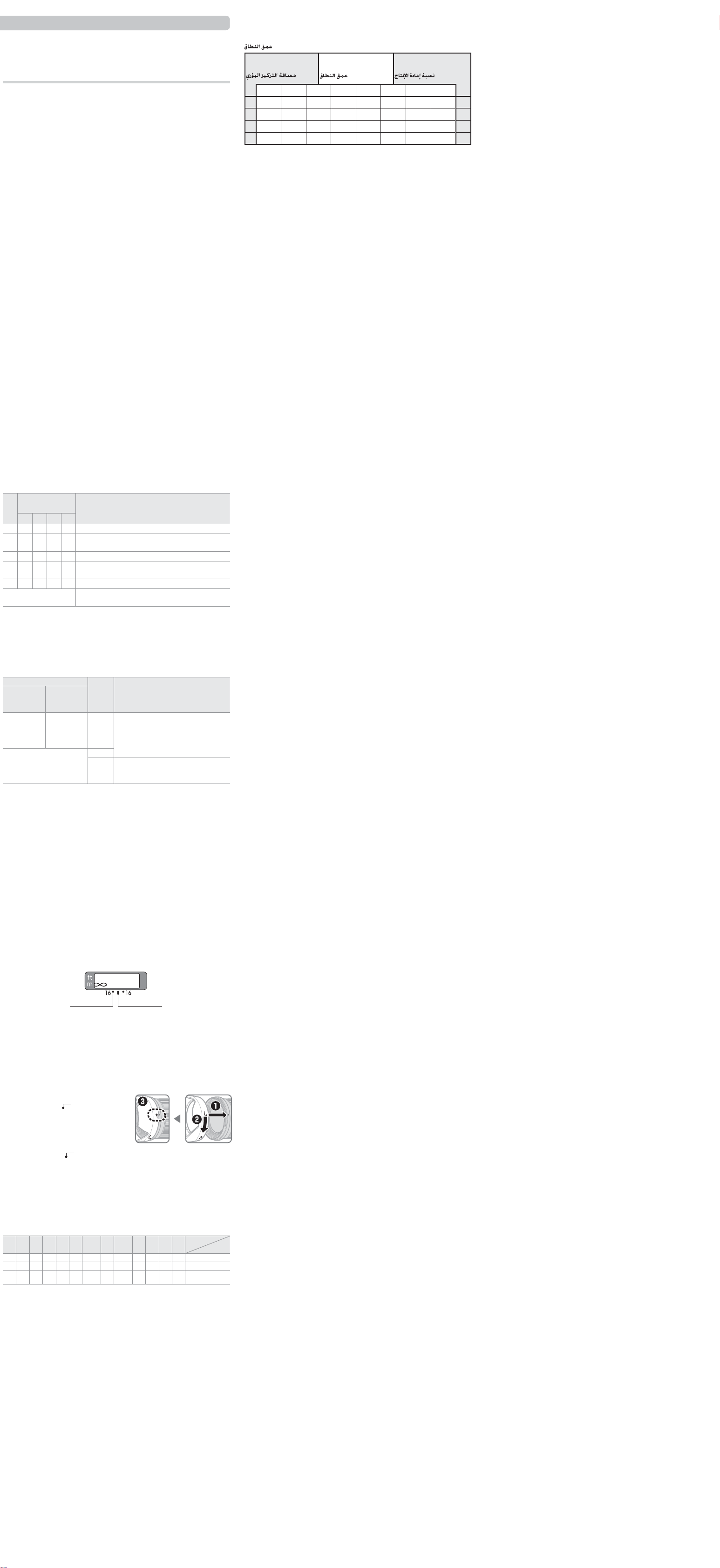
©
2015 Nikon Corporation
.ǃƄƶƵŽȚ Țnjƀ ȳȚNjƈƄŴȚ ǚƃŻ ǀƁƾƶƯŮ ȚǍƸžƾƳŽȚ ǚƸŽȢȶ ȝƾƵƸƴƯƄŽȚ ȵnjƀ ȜȔȚǍŻ ǟűǍƁ
ȚǍƸžƾƳŽȚ ǚƅž DX ǀưƸǧ ȜNjŲȚȶ ǀŴNjŸ ǏżƾƯŮ ǀƸƵŻȤ ȚǍƸžƾż ǟƴŸ ǀŴNjƯŽȚ ƿƸżǍů NjƶŸ :ǀƮŲǾž
.(Ǜž 35 ǀưƸǧ) Ǜž 36 ȸȶƾƉƁ ȸȤƻŮ ȲǞŶȶ °61 ǀŴNjƯŽȚ ȵnjƷŽ ȜȤǞƫŽȚ ǀƁȶȚȥ ȴǞƳů ȆD5500 ȶȖ D7200
ǙƄžǾŴ ǚűȖ ǜž
A ȝȚǍƁnjƇů
• ǚƀƻž Ǡƶź NjƁ ǟƴŸ ǃƄƶƵŽȚ ǀſƾƸǧ ƿƆƁ ȆǚƭŸ ȞȶNjŲ ǀŽƾŲ Ǡź
.ƾƷŽ
ȿ
NjƯů ȶȖ ǀƁȤƾƭƃŽȚ ǙƳƱů ǽ
ȔȚǎűLjȚ ǏƵƴů ǽ ȆǍųȕ ȞȢƾƇŽ ȶȖ ȪǞƲƉŽ ǀƆƸƄſ ǝŲƾƄƱſȚȶ ǃƄƶƵŽȚ ǍƉż ǀŽƾŲ Ǡź .ǓƲź
.ȷǍųȖ ǀŮƾǧȘ ȶȖ ǀƸŮǍƷż ǀžNjǧ ȞȶNjŲ Ǡź ƿƃƉƄƁ NjŻ ȝƾŶƾƸƄŲǽȚ ȵnjƀ ȬƾƃůȚ ȳNjŸ .ǀźǞƪƳƵŽȚ
• ȶȖ ȴƾųȢ ȞƾƯƃſȚ ǀƮŲǾž ǀŽƾŲ Ǡź
.ǃƄƶƵŽȚ Ǡź ǚƭŸ ȞȶNjŲ ǀŽƾŲ Ǡź ȜǍŵƾƃž ȚǍƸžƾƳŽȚ ǘƴŹȚ
ȆȤǞƱŽȚ ǟƴŸ ȚǍƸžƾƳŽȚ ǀƁȤƾƭŮ ȬǎſȚȶ ȢȢǍƄƵŽȚ ȤƾƸƄŽȚ ȲǞƇž ǚƫźȚ ȆȥƾƷƆŽȚ ǜž ǀƁȢƾŸ ǍƸŹ ǀƇǣȚȤ
ȩǍƯƄŽȚ ǟŽȘ ȳȚNjƈƄŴǽȚ Ǡź ȤȚǍƵƄŴǽȚ ȸȢƻƁ NjŻ .ȰȶǍƇŮ ǀŮƾǧȁȚ ƿƶƆƄŽ ȤnjƇŽȚ ǠųǞů ƿƆƁ
NjƵƄƯž ȴǞƳƸſ ǀžNjų ǎżǍž ǟŽȘ ȚǍƸžƾƳŽƾŮ ǝűǞů ȆǀƁȤƾƭƃŽȚ ǀŽȚȥȘ NjƯŮ .ǘƁǍŲ țǞƪſ ȶȖ ǀŮƾǧȂŽ
.ǑƇƱƴŽ
• NjŻ ǝƸƃƶƄŽȚ Țnjƀ ȬƾƃůȚ ȳNjŸ .ȴƾƄƴƄƃž ȱȚNjƁȶ ǝƉƵƴů ȶȖ ȔƾƵƴŽ ǃƄƶƵŽȚ ȩ
ȿ
ǍƯů ǽ
.ƾ
ȹ
źƾű ǝƸƴŸ ǔźƾŲ
.ǀƸǣƾŮǍƷż ǀžNjǧ ȶȖ ǘƁǍŲ ǟŽȘ ȸȢƻƁ
• ȝƾƭƇž Ǡź ȥƾƷƆŽȚ ǚƸưƪů ȸȢƻƁ NjŻ
.ȲƾƯƄŵǾŽ ǀƴŮƾŻ ȝȚȥƾŹ ǓŴȶ ǃƄƶƵŽȚ ȳNjƈƄƉů ǽ
.ǘƁǍŲ ȶȖ ȤƾƆƱſȚ ǟŽȘ ȤƾƃưŽȚ ȶȖ ȲƾƯƄŵǾŽ ǀƴŮƾŻ ȷǍųȖ ȝȚȥƾŹ ȶȖ ȴƾŮȶǍƃŽȚ ȢǞűȶ Ǡź ȶȖ ǀƂƃƯƄŽȚ
• ǏƵƪŽȚ ǟŽȘ ǍƮƶŽȚ
.ȚǍƸžƾƳŽƾŮ ȨƾƈŽȚ ǍƮƶƵŽȚ ǜƸƯž ȶȖ ǀŴNjƯŽȚ ȲǾų ǜž ǏƵƪŽȚ ǟŽȘ ǍƮƶů ǽ
ǀŮƾǧȘ ǟŽȘ ȸȢƻƁ NjŻ ǍƮƶƵŽȚ ǜƸƯž ȶȖ ǀŴNjƯŽȚ ȲǾų ǜž ȷǍųLjȚ ǀƯŶƾƉŽȚ ȔǞƬŽȚ ȤȢƾƫž ȶȖ
ȤƾƫŮȁȚ ǟƴŸ ȜȤNjƲŽȚ Ǡź ǀƵǣȚȢ
A ȝƾƷƸƃƶů
• Ǡź ȶȖ ǀŮƾǧȘ Ǡź ƿƃƉƄƁ NjŻ ȝƾƵƸƴƯƄŽȚ ȵnjƀ ȬƾƃůȚ ȳNjŸ
.ȲƾƱŶLjȚ ȲȶƾƶƄž ǜŸ Ț
ȹ
NjƸƯŮ ǔƱƇƁ
.ǃƄƶƵŽȚ ǚƭŸ
• ǀƭŴȚǞŮ ȵǎƸżǍů ǛƄƁ ȸnjŽȚ ǏƵƪŽȚ ȔǞǤ ƿƃƉƄƁ NjŻ
.ǀŴNjƯŽȚ ǍƃŸ ǏƵƪŽȚ ȔǞǤ ǎżǍů ǽ
ȟȤƾų ǏƵƪŽȚ ǚƯűȚ ǀƸƱƴƈŽȚ ȜȔƾǤȁȚ ȝȚȣ ȯȚNjƀLjȚ ǍƁǞƫů NjƶŸ .ǘƁǍŲ țǞƪſ Ǡź ǀŴNjƯŽȚ
Ț
ȹ
NjƸƯŮ ƾƷſǎųȶ ǀŴNjƯŽȚ ǀƸƭŹȖ ȲNjƃƄŴȚ ȆǀƴƁǞŶ ȜǍƄƱŽ ȳNjƈƄƉƄ
Ƚ
Ŵ ǀŴNjƯŽȚ ǜƳů ǛŽ ȚȣȘ ȑȤƾŶȁȚ
.ǍŵƾƃƵŽȚ ǏƵƪŽȚ ȔǞǤ ǜŸ
• ǚƅž ȆȚ
ȹ
Njű ǀƸŽƾŸ ȜȤȚǍŲ ȝƾűȤNjŽ ǀǤǍƯž ǜżƾžȖ Ǡź ǃƄƶƵŽȚ ȱǍƄů ǽ
.ȜNjǣȚǎŽȚ ȜȤȚǍƇŽȚ ƿƶƆů
Ǡƭưů ȶȖ ǚƁNjƶž ȶȖ ǀƱƪƶƵŮ ǃƄƶƵŽȚ Ǡƭưů ȶȖ ǍŵƾƃƵŽȚ ǏƵƪŽȚ ȔǞǤ Ǡź ǀƲƴưž ȜȤƾƸŴ
.ǃƄƶƵŽƾŮ ǚƭŸ ȶȖ ǘƁǍŲ ǟŽȘ ȸȢƻƁ NjŻ ȝƾƷƸƃƶƄŽȚ ȵnjƀ ȬƾƃůȚ ȳNjŸ .ǝžȚNjƈƄŴȚ ȔƾƶŰȖ ǃƄƶƵŽȚ
■ ǀŴNjƯŽȚ ȔȚǎűȖ
ǀŴNjƯŽȚ ǀƸŻȚȶ
q
ǀŴNjƯŽȚ ǀƸŻȚȶ ȜȚȣƾƇž ǀžǾŸ
w
ǀŴNjƯŽȚ ǀƸŻȚȶ ǚƱŻ ǀžǾŸ
e
ǀŴNjƯŽȚ ǀƸŻȚȶ ƿƸżǍů ǀžǾŸ
r
ȸȤƻƃŽȚ ǎƸżǍƄŽȚ ǀƲƴŲ
t
ȸȤƻƃŽȚ ǎƸżǍƄŽȚ ǀźƾƉž Ǎŵƻž
y
ȸȤƻƃŽȚ ǎƸżǍƄŽȚ ǀźƾƉž ǀžǾŸ
u
ǀŴNjƯŽȚ ƿƸżǍů ǀžǾŸ
i
ǀŴNjƯŽȚ ƿƸżǍƄŽ ǀƸŶƾƭƵŽȚ ǀƸƪƇŽȚ
o
CPU ȜNjŲȶ ǚƸǧǞů ȯȚǍŶȖ
!0
ȸȤƻƃŽȚ ǎƸżǍƄŽȚ ǕǤȶ ȠƾƄƱž
!1
■ ǀƸƲźȚǞƄŽȚ
ǟƴŸ ("
—
") ǀŶǍƪŽȚ ȝƾžǾŸ ȲNjů ȆǀžǞŸNjƵŽȚ ǗǣƾŷǞŽȚ ǟƴŸ ("✔") țȚǞƫŽȚ ȝƾžǾŸ ȲNjů
.ǚƸǧƾƱƄƴŽ ȚǍƸžƾƳŽȚ ǚƸŽȢ ǍƮſȚ ȑȢǞƸƲŽȚ ǒƯŮ ȩǍƱů NjŻ
.ǀžǞŸNjƵŽȚ ǍƸŹ ǗǣƾŷǞŽȚ
AF
3
ǒƁǍƯƄŽȚ ǕǤȶ
(ǍƁǞƫů) ǠǣǞƬŽȚ
ȚǍƸžƾƳŽȚMASP
2
✔✔✔✔✔
DX ȶ FX ǀưƸƫŮ ȜNjŲȚȶ ǀŴNjŸ ǏżƾƯŮ ǀƸƵŻǍŽȚ ȴǞƳƸſ ȝȚǍƸžƾż
✔✔✔✔✔
ȆF65 ǀƴƉƴŴ ȆF75 ǀƴƉƴŴ ȆF80 ǀƴƉƴŴ ȆF100 ȆF5 ȆF6
Pronea S
1
ȆPronea 600i
✔
——
✔✔
F70 ǀƴƉƴƉŽȚ ȆF90 ǀƴƉƴƉŽȚ ȆF90X ȆF4 ǀƴƉƴƉŽȚ
—
✔✔✔✔
ȆF-401s ȆF-401x ȆF50 ǀƴƉƴƉŽȚ ȆF55 ǀƴƉƴƉŽȚ ȆF60 ǀƴƉƴƉŽȚ
F-401
———
✔✔
F-601
M ȆF-801 ȆF-801s
—
ȸȶNjƁ ȸȤƻŮ ǎƸżǍƄŮ ȴǞƳƸſ ȝȚǍƸžƾż ȆF-501 ȆF-601 ȆF3AF
(F-601
M ȔƾƶƅƄŴƾŮ)
1 .(ȸȶNjƁ) M ǠǣǞƬŽȚ ǒƁǍƯƄŽȚ ǕǤȶ ǍźǞƄƁ ǽ
2 .(ǠƵŻǍŽȚ ǍƸưƄŽȚ ǃžƾſǍŮ) NjƷƪƵŽȚ ǕǤȶȶ ǠǣƾƲƴƄŽȚ ǕǤǞŽȚ ǙŽȣ Ǡź ƾƵŮ
3 .ǠǣƾƲƴů ȸȤƻŮ ǎƸżǍů
■ ȸȤƻƃŽȚ ǎƸżǍƄŽȚ
ǎƸżǍƄŽȚ ȬƾǤȶȖ ǜŸ ȝƾžǞƴƯƵŽ) ǀžǞŸNjƵŽȚ ȸȤƻƃŽȚ ǎƸżǍƄŽȚ ȬƾǤȶȖ ǠŽƾƄŽȚ ȲȶNjƆŽȚ ȩǍƯƁ
.(ȚǍƸžƾƳŽȚ ǚƸŽȢ ǍƮſȚ ȆȚǍƸžƾƳŽƾŮ ǀǧƾƈŽȚ ȸȤƻƃŽȚ
ǀŴNjƯƴŽ ȸȤƻƃŽȚ ǎƸżǍƄŽȚ ǕǤȶ ǕǤȶ
ǎƸżǍƄŽȚ
ȸȤƻƃŽȚ
ȚǍƸžƾƳƴŽ ȚǍƸžƾƳŽȚMM/A
ȸȶNjƁ ȸȤƻŮ ǎƸżǍů
ȷNjž ǜƸƯž Ǖž
ǠſȶǍƄƳŽȘ
ȸȤƻŮ ǎƸżǍů
ȔƾưŽȘ Ǖž ǠǣƾƲƴů
ǠǣƾƲƴů
(AF ǀƁǞŽȶȖ)
AF
ȜNjŲȚȶ ǀŴNjŸ ǏżƾƯŮ ǀƸƵŻȤ ȴǞƳƸſ ȝȚǍƸžƾż
ȆF100 ȆF4 ǀƴƉƴƉŽȚ ȆF5 ȆF6 ȆDX ȶ FX ǀưƸǧ
ȆF80 ǀƴƉƴƉŽȚ ȆF90 ǀƴƉƴƉŽȚ ȆF90X
ȆF65 ǀƴƉƴƉŽȚ ȆF70 ǀƴƉƴƉŽȚ ȆF75 ǀƴƉƴƉŽȚ
Pronea S ȆPronea 600i
ȸȶNjƁ ȸȤƻŮ ǎƸżǍů
Ǖž ǠſȶǍƄƳŽȘ ȷNjž ǜƸƯž ǍźǞƄƁ)
(F-601
M ȚNjŸƾž ȝȚǍƸžƾƳŽȚ ǕƸƵű
MF
AFȆ MF
ȆF50 ǀƴƉƴŴ ȆF55 ǀƴƉƴŴ ȆF60 ǀƴƉƴŴ
ȆF-401s ȆF-401x ȆF-601M ȆF-801 ȆF-801s
F-401
(ȸȶNjƁ ǚƁNjƯů Ǖž ǠǣƾƲƴů ȸȤƻŮ ǎƸżǍů) M/A
:(M/A) ȸȶNjƸŽȚ ǚƁNjƯƄŽȚ Ǖž ǠǣƾƲƴƄŽȚ ȸȤƻƃŽȚ ǎƸżǍƄŽȚ ȳȚNjƈƄŴƾŮ ǎƸżǍƄŽȚ ǓƃƬŽ
.
M/A ǕǤǞŽȚ ǟƴŸ ǀŴNjƯƴŽ ȸȤƻƃŽȚ ǎƸżǍƄŽȚ ǕǤȶ ȠƾƄƱž ǓƃǤȚ
z
.ȸȤƻƃŽȚ ǎƸżǍƄŽȚ ǓƃǤȚ
x
ǎƸżǍƄŽȚ ǀƲƴŲ ȜȤȚȢȘ ȲǾų ǜž ǠǣƾƲƴƄŽȚ ȸȤƻƃŽȚ ǎƸżǍƄŽȚ ǚƁNjƯů ȆǀƃŹǍŽȚ NjƶŸ ȆǜƳƵƁ
ǁſƾż ȚȣȘ ȶȖ) ǗƫƄƶƵŽȚ ǟƄŲ ǘŽƾưŽȚ ǍƁǍƇů Ȥȥ ǟƴŸ ǓưƬŽȚ ȔƾƶŰȖ ǀŴNjƯƴŽ ȸȤƻƃŽȚ
ǎƸżǍƄŽȚ ǓƃǤ ȜȢƾŸȁ
.(AF-ON ȤǎŽȚ ǟƴŸ ǓưƬŽȚ ȔƾƶŰȖ ȆAF-ON ȤǎŮ ȜǎƷƆž ȚǍƸžƾƳŽȚ
ǗƫƄƶƵŽȚ ǟƄŲ ǘŽƾưŽȚ ǍƁǍƇů Ȥȥ ǓưǤȚ ȆǠǣƾƲƴƄŽȚ ȸȤƻƃŽȚ ǎƸżǍƄŽȚ ȳȚNjƈƄŴƾŮ ȸȤƻƃŽȚ
.ȷǍųȖ ȜǍž AF-ON ȤǎŽȚ ǓưǤȚ ȶȖ
■ ȰƾƭƶŽȚ ǘƵŸ
ǁſƾż ȚȣȘ .ǠƃƁǍƲƄŽȚ ȰƾƭƶŽȚ ǘƵŸ ǀŴNjƯŽȚ ǟƴŸ ȜȢǞűǞƵŽȚ ȰƾƭƶŽȚ ǘƵŸ ȝȚǍŵƻž ljǤǞů
ǘƵŸ ǀƶƁƾƯž
ȹ
ƾƬƁȖ ǜƳƵƁ Ȇ(ǀƇƄƱŽȚ ǛƆŲ ǚƸƴƲů) ȰƾƭƶŽȚ ǘƵƯŽ ǀƶƁƾƯž ǍźǞů ȚǍƸžƾƳŽȚ
.ȝƾžǞƴƯƵŽȚ ǜž NjƁǎƵŽ ȰƾƭƶŽȚ ǘƵŸ ȲȶNjű ǕűȚȤ .ǍƮƶƵŽȚ ǜƸƯž ȲǾų ǜž ȰƾƭƶŽȚ
ȩǍƯƁ ǽ NjŻȶ ǚƸŽNjż ǓƲź ȳȚNjƈƄŴǾŽ NjƯž ȸȤƻƃŽȚ ǎƸżǍƄŽȚ ǀźƾƉž Ǎŵƻž ȴȖ ǔŲǽ :ǀƮŲǾž
∞ ǎžǍŽȚ ȩǍƯƁ ǽ ȆȷǍųȖ ǚžȚǞŸȶ ȰƾƭƶŽȚ ǘƵƯŽ ǀƆƸƄſ ȴƾƸŲLjȚ ǒƯŮ Ǡźȶ ȆǀŻNjŮ ȯȚNjƀLjȚ NjƯŮ ǀźƾƉž
.NjƸƯŮ ȯNjƀ ǟƴŸ ȸȤƻƃŽȚ ǎƸżǍƄŽȚ ȚǍƸžƾƳŽȚ ǓƃƬů ƾžNjƶŸ
0.5
1.6 1
0.3
ǘƵŸ ȝȚǍŵƻž
ȰƾƭƶŽȚ
ǀźƾƉž ǀžǾŸ
ȸȤƻƃŽȚ ǎƸżǍƄŽȚ
■ ǀƇƄƱŽȚ
.ȚǍƸžƾƳŽƾŮ ǀǧƾƈŽȚ ǛƳƇƄŽȚ ljƸůƾƱž ȳȚNjƈƄŴƾŮ ǀŴNjƯŽȚ ǀƇƄź ǚƁNjƯů ǛƄƁ
■ ǀŴNjƯŽȚ ǀƸŻȚȶ
ȶȖ ǃƀǞƄŽȚ ƿƃƉů NjŻ ǠƄŽȚ ȜǍŰƾƶƄƵŽȚ ȜȔƾǤȁȚ ƿƆƇůȶ ǀŴNjƯƴŽ ǀƁƾƵŲ ǀŴNjƯŽȚ ǀƸŻȚȶ ǍźǞů
.ȜȤǞƫŽȚ ȵǞƪů
ǀŴNjƯŽȚ ǀƸŻȚȶ ǀƃƸżǍů
ǀžǾŸ Ǖž (●) ǀŴNjƯŽȚ ǀƸŻȚȶ ƿƸżǍů ǀžǾŸ ȸȣƾŲ
ǀŴNjƯŽȚ ǀƸŻȚȶ ȤȢȖ ǛŰ (
) ǀŴNjƯŽȚ ǀƸŻȚȶ ǀžƾƲƄŴȚ
ǀƸŻȚȶ ǚƱŻ ǀžǾŸ Ǖž ● ǀžǾŸ ȜȚȣƾƇž ǛƄů ȴȖ ǟŽȘ (
w)
.(—{) ǀŴNjƯŽȚ
ƾƷůNjŸƾŻ ǟƴŸ ȢǞűǞƵŽȚ ǎžǍŽȚ ǜž țǍƲŽƾŮ ƾƷƳƉžȖ ȆǀŴNjƯŽȚ ǀƸŻȚȶ Ǚź ȶȖ ƿƸżǍů NjƶŸ
ǚƳƪŮ ǀƸŻȚǞŽȚ ƿƸżǍů ȳNjŸ ǀŽƾŲ Ǡź ǀźǍųȥ ǍƷƮů NjŻ
.ǗƶƯŮ ƾƷŮ ȱƾƉžȁȚ ƿƶƆůȶ
.ljƸƇǧ
.ȳȚNjƈƄŴǽȚ ȳNjŸ ǀŽƾŲ Ǡź ǀŴNjƯŽȚ ǟƴŸ ƾƷƃƸżǍůȶ ǀƸŻȚǞŽȚ ǏƳŸ ǜƳƵƁ
■ ȸȤƻƃŽȚ ǎƸżǍƄŽȚ ȝƾŵƾŵ
Ǡź ȳȚNjƈƄŴǾŽ ȸȤƻƃŽȚ ǎƸżǍƄŽȚ ȝƾŵƾŵ ǜž ǀƱƴƄƈž ǀŸǞƵƆž ǀƸŽƾƄŽȚ ȝȚǍƸžƾƳŽȚ ǛŸNjů
.ǀƱƴƄƈƵŽȚ ȯȶǍƮŽȚ
U M L J G4 G3 G2 G1
EC-B
EC-EECBA
ǀŵƾƪŽȚ
ȚǍƸžƾƳŽȚ
——
——
—
F6
F5+DP-30
(+0.5)
F5+DA-30
.ǝŮ ljƫƶƁ :
.(ȤǞƫŽȚ ǍŰƺƄů ǽ) ǍƮƶƵŽȚ ǜƸƯž Ǡź ǀźǍųȥ ǍƷƮů : {
.ȚǍƸžƾƳŽȚ Ǖž ǘźȚǞƄž ǍƸŹ : —
ǍƄųȚ
.ǗƫƄƶƵŽȚ ȦƾƸŻ ȜǍƁƾƯƵŽ ǠǣǞƬŽȚ ǒƁǍƯƄŽȚ ǒƁǞƯů ǟŽȘ ȦȚǞŻLjȚ ǜƸŮ ȳƾŻȤLjȚ ǍƸƪů :( )
ǒƁǞƯů) ("Screen comp.") b6 ȸȢƾƸƄŸǽȚ ȢȚNjŸȂŽ ǀƃƉƶŽƾŮ (ȷǍųȖ ǀŵƾŵ) "Other screen"
ȷǍųȖ ȝƾŵƾŵ Ǖž ǝſȖ ǔŲǽ ȑF6 ȚǍƸžƾƳƴŽ ǠǣǞƬŽȚ ǒƁǍƯƄŽȚ ǒƁǞƯů ǚƁNjƯů NjƶŸ (ǀŵƾƪŽȚ
ǒƁǞƯů ǀƵƸŻ ǁſƾż ȚȣȘ ǟƄŲ (ȷǍųȖ ǀŵƾŵ) "Other screen" ȤƾƸƄųȚ ƿƆƁ ȆE ȶȖ B ǍƸŹ
ȳȚNjƈƄŴƾŮ F5 ȚǍƸžƾƳƴŽ ǠǣǞƬŽȚ ǒƁǍƯƄŽȚ ǒƁǞƯů ǚƁNjƯů ǜƳƵƁ
.0 ȸȶƾƉů ǠǣǞƬŽȚ ǒƁǍƯƄŽȚ
.ǚƸǧƾƱƄƴŽ ȚǍƸžƾƳŽȚ ǚƸŽȢ ǍƮſȚ ȑ18 ȸȢƾƸƄŸǽȚ ȢȚNjŸȁȚ
ǜƳƵƁ M ȬǞƶŽȚ ǜž ȝƾŵƾƪŽȚ ȴȖ ǔŲǽ ǙŽȣ Ǖžȶ
.ǀŴNjƯŽȚ ȵnjƀ Ǖž ȳȚNjƈƄŴǾŽ ƿŴƾƶž ǍƸŹ : ǀŹȤƾź ǀƸƴų
.ǟƴŸȖ ȶȖ 1 : 1 ǍƸƃƳů ǀƃƉƶŮ țǍƲƵŽȚ ȶȖ ǠŮǞƳŴȶǍƳƸƵŽȚ ǍƁǞƫƄŽȚ Ǡź ƾƷžȚNjƈƄŴȚ
EC-E/EC-B ȶ E ȶ B ȶ A ȸȤƻƃŽȚ ǎƸżǍƄŽȚ ȝƾŵƾŵ Ǖž ǀźǞƱƫƵŽȚ ȜǍƁƾƯž F5 ȚǍƸžƾƳŽȚ ǛŸNjů :ǀƮŲǾž
.ǓƲź L ȶ J ȶ
ǀƸŮǍƯŽȚ
■ ǀŴNjƯŽƾŮ ǀƁƾƶƯŽȚ
•.ǓƲź ǀŴNjƯŽȚ ǀƸŻȚȶ ȳȚNjƈƄŴƾŮ ȚǍƸžƾƳŽȚ ȶȖ ǀŴNjƯŽȚ ǙƉƵů ȶȖ ǓƲƄƴů ǽ
•.CPU ȜNjŲȶ ǚƸǧǞů ȯȚǍŶȖ ǀźƾƮſ ǟƴŸ ǔźƾŲ
• ȜǍŵƾƃž ȲƾƵƯƄŴǽȚ ǜŸ ǗŻǞů ȆǀŴNjƯŽȚ ƿƸżǍƄŽ ǀƸŶƾƭƵŽȚ ǀƸƪƇŽȚ Ǘƴů ǀŽƾŲ Ǡź
.ǀſƾƸƫƴŽ NjƵƄƯž ȴǞƳƸſ ǀžNjų ǎżǍž ǟŽȘ ǀŴNjƯŽƾŮ ǝűǞůȶ
• ǜž ǑƴƈƄƴŽ
.ǀŴNjƯŽȚ ljƭŴ ǟƴŸ ǜž ǀŽƾƉƶŽȚȶ ǀŮǍůLjȚ ǜž ǑƴƈƄƴŽ ǀŲȶǍž ȳNjƈƄŴȚ
ǀƯƭŻ ǟŽȘ ǀŴNjƯŽȚ ǗƮƶž ȶȖ ȲǞſƾƅƁȁȚ ǜž ǚƸƴŻ ȤȚNjƲž ǗǤȖ ȆǕŮƾǧLjȚ ȝƾƵƫŮȶ ǕƲƃŽȚ
ǎżǍƵŽȚ ǜž ǀŴNjƯŽȚ ǗƮſȶ ǀŴNjŸ ǗƸƮƶů ǚƁNjƶž ǟŽȘ ȶȖ ǀƱƸƮſȶ ǀƵŸƾſ ǀƸƶƭŻ ȧƾƵŻ
.ǙƯŮƾǧƺŮ ȟƾűǎŽȚ ǏƵŽ ȶȖ ȝƾƈƭŽ ȱǍů ȳNjƯŽ ȵƾƃƄſǽȚ Ǖž ȆǀƁǍǣȚȢ ǀżǍŲ Ǡź ȟȤƾƈŽȚ ǞƇſ
•.ǀŴNjƯŽȚ ǗƸƮƶů ȩǍưŮ ǜƁǎƶƃŽȚ ȶȖ ȴƾƀNjŽȚ ǗƱƈž ǚƅž ȸǞƬŸ ƿƁnjž
ȹ
ȚNjŮȖ ȳNjƈƄƉů ǽ
•.ǠžƾžLjȚ ǀŴNjƯŽȚ ǍƫƶŸ ǀƁƾƵƇŽ NC ȝƾƇŵǍž ȶȖ ǀŴNjƯŽȚ ǀƸŻȚȶ ȳȚNjƈƄŴȚ ǜƳƵƁ
•.ǀŴNjƯŽȚ ǀƃƸƲŲ Ǡź ǀŴNjƯŽȚ ǕǤȶ ǚƃŻ ǠƱƴƈŽȚȶ ǠžƾžLjȚ ǜƁȔƾƭưŽȚ ƿżȤ
• ȯƾűȶ ȢȤƾŮ ȴƾƳž Ǡź ƾƷŮ ǔƱƄŲȚ ȆȜNjƄƵž ȜǍƄƱŽ ǀŴNjƯŽȚ ȳȚNjƈƄŴȚ ǛƄƁ ǜŽ ǀŽƾŲ Ǡź
ȝȚǍż ȶȖ ƾƄźƾſ Ǖž ȶȖ ǍŵƾƃƵŽȚ ǏƵƪŽȚ ȔǞǤ Ǡź ƾƷſǎƈů ǽ
.ȖNjǧ ȶȖ ǜƱŸ ȴǞƳů ƿƶƆƄŽ
.ǀƅƯŽȚ ȤǞźƾż
• ǽ Ǘƴů ȬǞŻȶ Ǡź ƿƃƉƄƁ NjŻ ǀƸƴųȚNjŽȚ ǚƵƯŽȚ ǀƸŽȕ ȖNjǧ
.ǀźƾű ǀŴNjƯŽȚ ǠƴŸ ǔźƾŲ
.ǝŲǾǧȘ ǜƳƵƁ
• ǜž ǀŸǞƶƫƵŽȚ ȔȚǎűLjȚ ȵǞƪƁ ȶȖ ǗƴƄƁ NjŻ ȜȤȚǍƇŽȚ ȜNjƁNjŵ ǕŻȚǞž Ǡź ǀŴNjƯŽȚ ȱǍů
.ȷǞƲƵŽȚ ǙƸƄŴǾƃŽȚ
■ ǀƲźǍƵŽȚ ȝȚȤȚǞƉƉżȁȚ
•Ǜž 72 ǍƭŻ LC-72 ȥȚǍŶ ǓưǤ ǠžƾžȖ ǀŴNjŸ ȔƾƭŹ
•LF-4 ȥȚǍŶ ǠƱƴų ǀŴNjŸ ȔƾƭŹ
•HB-76 ȥȚǍŶ ǀƶƶƉž ȜNjŸƾƲŮ ǀŴNjŸ ǀƸŻȚȶ
•CL-1015 ǀŴNjƯŽȚ ǀƃƸƲŲ
■ ǀƲźȚǞƄƵŽȚ ȝȚȤȚǞƉƉżȁȚ
•Ǜž 72 ǍƭŻ ǀƸƃŽǞŽ ǀŴNjƯƴŽ ȝƾƇŵǍž
■ ȝƾƱǧȚǞƵŽȚ
F ƿƸżǍů ȜNjŸƾŻȶ CPU ȜNjŲǞŮ ȜǎƷƆž G ȬǞƶŽȚ ǜž AF-S ǀŴNjŸ
ȬǞƶŽȚ
Ǜž 24
ȸȤƻƃŽȚ ȲǞƭŽȚ
f/ 1.8
ǀƇƄƱƴŽ ǟƫŻLjȚ NjƇŽȚ
ȸǍƫƶŸȶ ED ǀŴNjŸ ȸǍƫƶŸ ǚƵƪƁ ƾƵŮ) ǀŸǞƵƆž 9 Ǡź ǍƫƶŸ 12
(ȲƾƄƉƁǍż Ǟſƾſ ȔǾŶ ȝƾƲƃƭŮ ǀŴNjŸ ǍǧƾƶŸȶ ǜƸƁȶǍż ǝƃŵ ǀŴNjŸ
ǀŴNjƯŽȚ ǜƁǞƳů
•°84 :FX ǀưƸǧ D-SLR ȶ ǛƴƸƱŮ SLR ȴǞƳƸſ ȝȚǍƸžƾż
•°61 :DX ǀưƸǧ D-SLR ȴǞƳƸſ ȝȚǍƸžƾż
ȜȤǞƫŽȚ ǀƁȶȚȥ
ȚǍƸžƾƳŽȚ ǟŽȘ ȟǍƈŽȚ
ǀźƾƉƵŽȚ ȝƾžǞƴƯž
ȸȤƻŮ ǎƸżǍů Ǖž (RF) Rear Focusing ǠƱƴƈŽȚ ȸȤƻƃŽȚ ǎƸżǍƄŽȚ ȳƾƮſ
ǀƲƴŲȶ ǁžƾǧ ǠűǞž ȱǍƇž ǀƭŴȚǞŮ ǝƸź ǛƳƇƄŽȚ ǛƄƁ ǠǣƾƲƴů
ȹ
ƾƁȶNjƁ ȸȤƻƃŽȚ ǎƸżǍƄŽȚ ǓƃƬŽ ǀƴƫƱƶž ȸȤƻŮ ǎƸżǍů
ȸȤƻƃŽȚ ǎƸżǍƄŽȚ
(
f) ǀƁƾƷſǾŽȚ ǟŽȘ ǍƄž 0.23
ǎƸżǍƄŽȚ ǀźƾƉž Ǎŵƻž
ȸȤƻƃŽȚ
ǀƁȤƻƃŽȚ ǀźƾƉƵŽȚ ǜž ȳ 0.23
ǀźƾƉƵŽ ǟſȢLjȚ NjƇŽȚ
ǎƸżǍƄŽȚ
(ǀƁǍǣȚȢ ƿűƾŲ ǀƇƄź) 7
ǀƇƄƱŽȚ ƿűƾŲ ȝȚǍƱŵ
ǚžƾƳŽƾŮ ǠǣƾƲƴů
ǀƇƄƱŽȚ ƿűƾŲ
16 – f/ 1.8
ǀƇƄƱŽȚ Ȱƾƭſ
ǀƴžƾż ǀƇƄƱŽȚ
ȜǍƁƾƯƵŽȚ
(Ǜž 0.75=P) Ǜž 72
ljŵǍƵŽȚ ǍƭŻ ȦƾƸŻ
ƿƸżǍů ǀƱŵ ǜž ǀźƾƉƵŽȚ)
ȹ
ƾƃƁǍƲů Ǜž 83.0 × ǍƭŻ ǟƫŻȖ Ǜž 77.5
(ȚǍƸžƾƳŽȚ ǟƴŸ ǀŴNjƯŽȚ
ȢƾƯŮLjȚ
ȹ
ƾƃƁǍƲů ȳȚǍű 355
ȴȥǞŽȚ
ȴȶNjŮȶ ǁŻȶ ȸȖ Ǡź ǚƸŽNjŽȚ Țnjƀ Ǡź ȜȢȤȚǞŽȚ ȜǎƷűLjƾŮ ǀǧƾƈŽȚ ȝƾƱǧȚǞƵŽȚ ǍƸƸưů Ǡź ǘƇŽƾŮ ȴǞƳƸſ ǔƱƄƇů
.ǘƃƉž ȤƾƭųȘ
■
景深
■
■
Kedalaman Bidang
Kedalaman Bidang
■
■ (m)
• 對焦距離
• Jarak fokus
•
• 景深
• Kedalaman Bidang
•
• 重現比率
• Rasio penggandaan
•
f/1.8 f/2.0 f/2.8 f/4 f/5.6 f/8 f/11 f/16
0.23
0.23 – 0.23 0.23 – 0.23 0.23 – 0.23 0.23 – 0.23 0.23 – 0.24 0.22 – 0.24 0.22 – 0.24 0.22 – 0.25 1/4.9
0.3 0.30 – 0.30 0.30 – 0.31 0.29 – 0.31 0.29 – 0.31 0.29 – 0.31 0.28 – 0.32 0.28 – 0.33 0.27 – 0.34 1/7.7
0.5 0.48 – 0.52 0.48 – 0.52 0.48 – 0.53 0.47 – 0.54 0.46 – 0.56 0.44 – 0.59 0.42 – 0.63 0.40 – 0.73
1/15.9
∞ 9.88 – ∞ 9.20 – ∞ 6.60 – ∞ 4.65 – ∞ 3.35 – ∞ 2.38 – ∞ 1.76 – ∞ 1.25 – ∞ 1/∞
在使用本產品前,請仔細閱讀這些使用說明和相機說明書。
注意:當安裝在一台
DX 格式數碼單鏡反光相機(例如 D7200 或
D5500
)上時, 該鏡頭的畫角為 61°且焦距相當於 36 mm(35 mm 格
式)。
安全須知
A
警告
•
勿自行拆解或改裝。遇到故障時,本產品只能由有資格的維修技師進
行修理。若本產品因為跌落或其他意外事故造成破損,請不要觸碰外
露的零件,否則可能導致觸電或其他傷害事故。
•
發生故障時立刻關閉相機。當您發現本裝置冒煙或發出異味時,請立
刻拔下
AC 變壓器的插頭並取出相機電池,注意避免被灼傷。若在此
情形下繼續使用,將可能導致火災或受傷。請在取出電池後,將裝置
送到尼康授權維修服務中心進行檢查維修。
•
保持乾爽。切勿使本產品接觸到水,也不要用濕手接觸,否則可能導
致火災或觸電。
•
勿在易燃氣體環境中使用。在加油站或者有丙烷氣或其他易燃氣體或
粉塵的環境中操作本裝置可能導致爆炸或火災。
•
勿透過鏡頭或相機觀景器觀看太陽。透過鏡頭或觀景器觀看太陽或
其他明亮光源,可能會導致永久性的視覺損傷。
A
注意事項
•
勿在兒童伸手可及之處保管本產品。若不遵守此注意事項,可能會導
致受傷或產品故障。
•
勿透過鏡頭聚焦陽光。陽光透過鏡頭聚焦可能會引起火災。拍攝逆光
主體時,請不要讓太陽進入構圖範圍;若將在較長時間內不使用鏡頭,
請蓋好鏡頭蓋並將其存放在遠離直射陽光的地方。
•
勿加熱。請勿將本產品置於極其高溫的場所(如直射陽光下封閉的車
內),也不要在使用期間用毛巾或手帕裹住本產品或者遮蓋本產品,
否則可能導致火災或產品故障。
■
鏡頭部件
q
遮光罩
w
遮光罩
對齊
標記
e
遮光罩
鎖定
標記
r
遮光罩接環標記
t
對焦環
y
對焦距離指示器
u
對焦距離標記
i
鏡頭接環標記
o
橡膠鏡頭接環密封墊
!0
CPU接點
!1
對焦模式切換器
■
兼容性
核選標記(“
✔
”)表示支援的功能,破折號(“—”)表示不支援的功能。
可用功能可能受到一些限制;有關詳情,請參見相機說明書。
相機
曝光(拍攝)模式
AF
3
P
2
SAM
尼康FX格式和 DX 格式數碼單鏡反光相機
✔✔✔✔✔
F6、F5、F100、F80 系列、F75系列、F65
系列、Pronea 600i、Pronea S
1
✔✔✔✔✔
F4 系列、F90X、F90系列、F70系列
✔✔
——
✔
F60 系列、F55系列 、F50 系列、F-401x、
F-401s、F-401
✔✔✔✔
—
F-801s、F-801、F-601
M
✔✔
———
F3AF、F-601、F-501、尼康MF相機
(F-601
M
除外)
—
1
曝光模式
M(手動)不可用。
2
包括自動和場境(數碼多元化自動拍攝)模式。
3
自動對焦。
■
對焦
所支援的對焦模式如下表所示(有關相機對焦模式的資訊,請參見相機
說明書)
。
相機
相機
對焦模式
鏡頭對焦模式
M/A M
尼康FX格式和 DX 格式數碼單
鏡反光相機、F6、F5、F4 系列、
F100、F90X、F90系列、F80 系
列、F75系列、F70系列、F65系
列、Pronea 600i、Pronea S
AF
自動對焦
(連手動優
先)
帶有電子測
距器的手動
對焦
MF
手動對焦
(除 F-601
M
以外的所有
相機均帶有電子測距器)
F60 系列、F55系列、F50 系列、
F-801s、F-801、F-601
M
、F-401x、
F-401s、F-401
AF
、MF
M/A
(自動對焦(連手動優先))
使用自動對焦(連手動優先)(M/A)進行對焦的步驟如下:
z
將鏡頭對焦模式切換器推至 M/A。
x
對焦。
若有需要,您可在半按快門釋放按鍵期間(或者,若相機配備有一
個
AF-ON
按鍵,則在按下
AF-ON
按鍵期間)旋轉鏡頭對焦環來使
手動對焦優先於自動對焦。若要使用自動對焦以重新對焦,請再次
半按快門釋放按鍵或再次按下
AF-ON
按鍵。
■
景深
鏡頭上的景深指示器表示大致的景深。若相機支援景深預覽(光圈縮
小),則景深還可在觀景器中進行預覽。有關詳情,請參見景深列表。
注意
:
請注意,對焦距離指示器僅可作為指南,可能無法準確顯示離主
體的距離,並且由於景深或其他因素的影響,相機對焦於遠距離物體
時可能不會顯示
∞
。
0.5
1.6 1
0.3
景深指示器 對焦距離標記
■
光圈
請使用相機控制調整光圈。
■
遮光罩
遮光罩可保護鏡頭並阻擋可能導致眩光或鬼影的散射光線。
安裝遮光罩
將遮光罩接環標記(
●
)與遮光罩對齊
標記( )對齊,然後旋轉遮光罩(
w
)
直至
●
標記與遮光罩鎖定標記(
—
)
對齊。
安裝或取下遮光罩時,請在其底部的 標記附近將其握住,並避免握
得太緊。若未正確安裝好遮光罩,則可能會產生邊暈。
不使用時,可將遮光罩反轉並固定在鏡頭上。
■
對焦屏
下列相機支援用於不同情況下的多種對焦屏。
屏幕
相機
ABCE
EC-B
EC-E G1 G2 G3 G4 J L M U
F6
—
—— — ——
F5+ DP-30
F5+ DA-30
(+0.5)
: 建議使用。
: 在觀景器中可見邊暈(相片不會受到影響)。
—:
與相機不兼容。
():
括弧中的資料是指用於偏重中央測光的曝光補償值。當調整
F6 的曝光補償時,請在用戶設定b6(“Screen comp.(對焦
屏補償)”)中選擇“
Other screen(其他對焦屏)”;請注意,
使用B 或 E 以外的屏幕時,即使曝光補償值為0,也必須選擇
“Other screen(其他對焦屏)”。F5 的曝光補償可使用用戶設
定18 進行調整;有關詳情,請參見相機說明書。
空白單格
: 不適用於該鏡頭。請注意,在放大倍率為1 : 1或更高時,M
型屏幕仍可用於顯微攝影和微距攝影。
注意
:
F5
僅在使用
A、B、E、EC-B/EC-E、J和 L 對焦屏時支援矩陣測光。
■
鏡頭保養
•
拿起或持握鏡頭或相機時,切勿僅持拿遮光罩。
•
保持CPU 接點清潔。
•
若橡膠鏡頭接環密封墊損壞,請立即停止使用並將鏡頭送至尼康授權
維修服務中心進行維修。
•
用吹氣球去除鏡頭表面的灰塵和浮屑。若要去除污點和指紋,可使用
一塊滴有少許乙醇或鏡頭清潔劑的乾淨軟棉布或鏡頭清潔紙,以圓周
運動方式從裡向外進行清潔。注意不要留下污漬,也不要用手指碰觸
玻璃。
•
切勿使用塗料稀釋劑或苯等有機溶劑清潔鏡頭。
•
遮光罩或
NC濾鏡可用於保護前部鏡片元件。
•
將鏡頭放入鏡頭套之前,請蓋好鏡頭前蓋和鏡頭後蓋。
•
若在較長時間內不使用鏡頭,請將其存放在陰涼乾爽的地方以防止發
霉和生銹。切不可存放在直射陽光下,也不可與石腦油或樟腦丸一起
存放。
•
保持鏡頭乾爽。內部構造生銹將導致無法挽回的損壞。
•
將鏡頭放置在過於炎熱的地方將會使強化塑膠部件受損或變形。
■
隨附配件
•
72 mm 扣入式鏡頭前蓋 LC-72
•
鏡頭後蓋
LF-4
•
刺刀式遮光罩
HB-76
•
鏡頭套
CL-1015
■
兼容的配件
•
72 mm 旋入式濾鏡
■
技術規格
類型 帶內置 CPU和 F接環的G 型 AF-S鏡頭
焦距
24 mm
最大光圈 f/1.8
鏡頭結構 9 組 12 片(包括 2 個 ED 鏡片元件、2 個非球面鏡
片元件和帶納米結晶塗層的鏡片元件)
畫角
•
尼康菲林單鏡反光與
FX格式數碼單鏡反光相機:84°
•
尼康
DX 格式數碼單鏡反光相機 :61°
距離資訊 輸出主體與相機之間的距離資訊
對焦 後方對焦(
RF)系統(可進行由寧靜波動馬達控制
的自動對焦,也具備用於手動對焦的獨立對焦環)
對焦距離指示器
0.23 m 至無限遠(∞)
最短對焦距離
0.23 m(至焦平面)
光圈葉片
7 片(圓形光圈孔)
光圈 全自動
光圈範圍
f/1.8 – 16
測光 全開光圈測光
濾鏡接口大小
72 mm(P = 0.75 mm)
尺寸 約
77.5 mm(最大直徑)× 83.0 mm(從相機鏡頭
接環邊緣開始的距離)
重量 約
355 g
尼康公司保留可隨時更改說明書內載之硬件技術規格的權利,而無須
事先通知。
繁體中文
Sebelum menggunakan produk ini, mohon membaca dengan seksama
baik petunjuk ini maupun buku petunjuk kamera.
Catatan: Saat digunakan pada kamera digital refl eks lensa tunggal format-
DX seperti D7200 atau D5500, lensa ini memiliki sudut gambar 61° dan
panjang fokal setara dengan 36 mm (format 35 mm).
Demi Keamanan Anda
Demi Keamanan Anda
A
A
PERINGATAN
PERINGATAN
• Jangan membongkar atau memodi kasi. Apabila terjadi kegagalan fungsi,
produk sebaiknya diperbaiki hanya oleh teknisi berpengalaman. Apabila
produk pecah terbelah akibat dari terjatuh atau kecelakaan lainnya,
hindari menyentuh bagian yang terbuka. Gagal mematuhi pencegahan
ini dapat menimbulkan sengatan listrik atau cedera lainnya.
• Segera matikan kamera apabila terjadi kegagalan fungsi. Apabila Anda melihat ada
asap atau bau tidak biasa muncul dari unit produk, segera cabut adaptor AC dan
keluarkan baterai kamera, sambil berhati-hati agar tidak terbakar. Melanjutkan
pengoperasian dapat menyebabkan kebakaran atau cedera. Setelah melepas
baterai, bawalah unit produk ke pusat servis resmi Nikon untuk pemeriksaan.
• Jaga agar tetap kering. Jangan paparkan produk ke air atau menangani
dengan tangan basah. Gagal mematuhi pencegahan ini dapat
menyebabkan kebakaran atau sengatan listrik.
• Jangan gunakan di daerah yang mengandung gas mudah terbakar. Menggunakan
unit produk di pom bensin atau saat ada gas propana atau gas mudah
terbakar lain atau debu dapat memicu ledakan atau kebakaran.
• Jangan melihat langsung ke matahari melalui lensa atau jendela bidik kamera.
Memandang ke matahari atau sumber cahaya kuat lainnya melalui lensa
atau jendela bidik dapat menyebabkan gangguan penglihatan menetap.
A
A
PERINGATAN
PERINGATAN
• Jauhkan dari jangkauan anak-anak. Gagal mematuhi pencegahan ini
dapat menyebabkan cedera atau kegagalan fungsi produk.
• Jangan memfokus cahaya matahari melalui lensa. Cahaya matahari yang
terfokus melalui lensa dapat menimbulkan kebakaran. Saat memotret
subjek diterangi dari belakang, sebisanya jauhkan cahaya matahari dari
bingkai; jika lensa tidak akan digunakan untuk jangka panjang, pasang
kembali penutup lensa dan simpan di tempat yang tidak kena cahaya
matahari langsung.
• Jangan biarkan kepanasan. Jangan tinggalkan produk di lokasi yang
terpapar pada suhu teramat tinggi, seperti dalam kendaraan tertutup
dengan cahaya matahari langsung, atau membungkus produk dengan
handuk atau saputangan ataupun menutupi produk selama penggunaan.
Gagal mematuhi pencegahan ini dapat menyebabkan kebakaran atau
kegagalan fungsi produk.
■
■
Bagian-bagian Lensa
Bagian-bagian Lensa
q
Tudung lensa
w
Tanda kesejajaran tudung lensa
e
Tanda kunci tudung lensa
r
Tanda pemasangan tudung lensa
t
Cincin fokus
y
Indikator jarak fokus
u
Tanda jarak fokus
i
Tanda pemasangan lensa
o
Gasket karet pemasangan lensa
!0
Kontak CPU
!1
Switch mode fokus
■
■
Kompatibilitas
Kompatibilitas
Tanda centang (“✔“) menunjukkan fi tur yang didukung, garis strip (“—”)
untuk fi tur yang tidak didukung. Beberapa keterbatasan mungkin berlaku;
lihatlah buku petunjuk kamera untuk rinciannya.
Kamera
Kamera
Mode pencahayaan
Mode pencahayaan
(pemotretan)
(pemotretan)
AF
AF
3
3
P
P
2
2
S
S
A
A
M
M
Kamera SLR digital Nikon format-FX dan
format-DX
✔✔✔✔✔
F6, F5, F100, seri F80, seri F75, seri F65,
Pronea 600i, Pronea S
1
✔✔✔✔✔
Seri F4, F90X, seri F90, seri F70
✔✔
——
✔
Seri F60, seri F55, seri F50, F-401x, F-401s, F-401
✔✔✔✔
—
F-801s, F-801, F-601
M
✔✔
———
F3AF, F-601, F-501, kamera fokus manual Nikon
(terkecuali F-601
M)
—
1. Mode pencahayaan M (manual) tidak tersedia.
2. Termasuk mode AUTO dan mode scene (Vari-Program Digital).
3. Fokus otomatis.
■
■
Fokus
Fokus
Mode fokus yang didukung ditunjukkan dalam tabel berikut (untuk
informasi tentang mode fokus kamera, bacalah buku petunjuk kamera).
Kamera
Kamera
Mode
Mode
fokus
fokus
kamera
kamera
Mode fokus lensa
Mode fokus lensa
M/A
M/A
M
M
Kamera SLR digital Nikon format-FX
dan format-DX, F6, F5, seri F4, F100,
F90X, seri F90, seri F80, seri F75,
seri F70, seri F65, Pronea 600i,
Pronea S
AF
Fokus otomatis
dengan
pengaturan
manual
Fokus manual
dengan jendela
jangkauan
elektronik
MF Fokus manual
(jendela jangkauan elektronik
tersedia pada semua kamera
kecuali F-601
M)
Seri F60, seri F55, seri F50, F-801s,
F-801, F-601
M, F-401x, F-401s, F-401
AF, MF
M/A (Fokus otomatis dengan Pengaturan Manual)
M/A (Fokus otomatis dengan Pengaturan Manual)
Untuk memfokus menggunakan fokus otomatis dengan pengaturan
manual (M/A):
z
Geser switch mode-fokus lensa ke M/A.
x
Fokus.
Jika diinginkan, fokus otomatis dapat dibatalkan dengan
memutar cincin fokus lensa sambil menekan setengah tombol
pelepas rana (atau, jika kamera dilengkapi dengan tombol
AF-ON, sementara tombol AF-ON ditekan). Untuk memfokus
ulang menggunakan fokus otomatis, tekan setengah tombol
pelepas rana atau tekan tombol AF-ON kembali.
■
■
Kedalaman Bidang
Kedalaman Bidang
Indikator kedalaman bidang pada lensa menunjukkan perkiraan kedalaman
bidangnya. Jika kamera menawarkan pratinjau kedalaman bidang
(penghentian bukaan), kedalaman bidang dapat juga dipratinjau di jendela
bidik. Lihat tabel kedalaman bidang untuk informasi selengkapnya.
Catatan: Catat bahwa indikator jarak fokus dimaksudkan hanya sebagai
panduan dan mungkin tidak dapat secara tepat menunjukkan jarak ke subjek
serta kemungkinan, oleh karena kedalaman bidang dan faktor lainnya, tidak
menampilkan ∞ saat kamera difokus pada objek jauh.
0.5
1.6 1
0.3
Indikator
kedalaman bidang Tanda jarak fokus
■
■
Bukaan
Bukaan
Bukaan disesuaikan menggunakan kontrol kamera.
■
■
Tudung Lensa
Tudung Lensa
Tudung lensa melindungi lensa dan mencegah masuknya berkas cahaya
yang dapat menyebabkan silau atau gambar ganda.
Memasang Tudung
Memasang Tudung
Sejajarkan tanda pemasangan tudung
lensa (
●) dengan tanda garis arah
tudung lensa ( ) dan lalu putar
tudungnya (
w
) hingga tanda
●sejajar
dengan tanda pengunci tudung lensa
(—
).
Saat memasang atau melepaskan tudung, peganglah di dekat simbol
pada dasarnya dan hindari menggenggam terlalu kencang. Vinyet dapat
terbentuk jika tudung tidak terpasang dengan benar.
Tudung dapat dibalik dan dipasang pada lensa saat tidak digunakan.
■
■
Layar Pengatur Fokus
Layar Pengatur Fokus
Kamera berikut ini mendukung beragam layar pengatur fokus untuk
digunakan dalam situasi berbeda.
Layar
Layar
Kamera
Kamera
A
A
B
B
C
C
E
E
EC-B
EC-B
EC-E
EC-E
G1
G1
G2
G2
G3
G3
G4
G4
J
J
L
L
M
M
U
U
F6
—
—— — ——
F5+ DP-30
F5+ DA-30
(+0,5)
: Disarankan.
: Bayangan tampak di jendela bidik (foto tidak terpengaruh).
—: Tidak kompatibel dengan kamera.
( ): Angka dalam tanda kurung memberi kompensasi pencahayaan
untuk pengukuran rasio pusat. Pilih “Layar lainnya“ untuk
Pengaturan Kustom b6 (“Komp. layar“) saat menyesuaikan
kompensasi pencahayaan untuk F6; catat bahwa dengan layar
selain daripada B atau E, “Layar lainnya“ harus dipilih bahkan
ketika nilai untuk kompensasi pencahayaan adalah 0. Kompensasi
pencahayaan untuk F5 dapat disesuaikan menggunakan
Pengaturan Kustom 18; lihatlah buku petunjuk kamera untuk
rinciannya.
Sel kosong: Tidak cocok untuk digunakan bersama lensa ini. Catat bahwa layar tipe M dapat
digunakan untuk fotomikrogra dan fotogra makro pada pembesaran 1 : 1 atau
lebih tinggi.
Catatan: F5 mendukung pengukuran matriks dengan layar pengatur fokus A,
B, E, EC-B/EC-E, J, dan L saja.
■
■
Perawatan Lensa
Perawatan Lensa
• Jangan memungut atau memegang lensa atau kamera hanya pada
tudung lensanya.
• Jaga agar kontak CPU tetap bersih.
• Apabila gasket karet pemasangan lensa rusak, hentikan segera
penggunaan dan bawalah lensa ke pusat servis resmi Nikon untuk
direparasi.
• Gunakan blower untuk menghilangkan debu dan kotoran dari permukaan
lensa. Untuk menghilangkan noda dan sidik jari, teteskan sedikit ethanol
atau cairan pembersih lensa ke kain katun lembut dan bersih atau ke tisu
pembersih lensa dan bersihkan dari tengah bergerak melingkar ke luar,
usahakan agar tidak meninggalkan noda atau menyentuh kaca dengan
jari Anda.
• Jangan gunakan pelarut organik seperti tiner cat atau bensin untuk
membersihkan lensa.
• Tudung lensa atau fi lter NC dapat digunakan untuk melindungi elemen
lensa depan.
• Pasang penutup depan dan belakang sebelum meletakkan lensa dalam
kotak lensa.
• Apabila lensa tidak akan digunakan dalam waktu lama, simpanlah di
tempat yang sejuk dan kering untuk mencegah jamur dan karat. Jangan
menyimpan di tempat yang terkena cahaya matahari langsung atau
bersama nafta atau kapur barus.
• Jaga lensa agar tetap kering. Karat pada mekanisme internal dapat
menyebabkan kerusakan yang tidak dapat diperbaiki.
• Meninggalkan lensa di tempat yang sangat panas dapat merusak atau
melengkungkan bagian yang terbuat dari plastik penguatan.
■
■
Aksesori yang Disertakan
Aksesori yang Disertakan
• Penutup Lensa Depan 72 mm snap-on LC-72
• Tutup Lensa Belakang LF-4
• Tudung Bayonet HB-76
• Kotak Lensa CL-1015
■
■
Aksesori Kompatibel
Aksesori Kompatibel
• Filter ulir 72 mm
■
■
Spesifi kasi
Spesifi kasi
Tipe
Tipe Lensa tipe G AF-S dengan CPU terpasang dan
dudukan F
Panjang fokal
Panjang fokal 24 mm
Bukaan maksimal
Bukaan maksimal f/1.8
Konstruksi lensa
Konstruksi lensa
12 elemen dalam 9 grup (termasuk 2 elemen lensa ED,
2 elemen lensa asferik, dan elemen lensa dengan lapisan Nano-Kristal)
Sudut gambar
Sudut gambar • Kamera SLR fi lm Nikon dan D-SLR format-FX: 84°
• Kamera D-SLR Nikon format-DX: 61°
Informasi jarak
Informasi jarak Output ke kamera
Memfokus
Memfokus Sistem Pemfokusan Belakang (RF) dengan fokus
otomatis yang dikendalikan oleh Motor Autofocus
Senyap dan cincin fokus terpisah bagi fokus manual
Indikator jarak fokus
Indikator jarak fokus 0,23 m hingga tak terbatas (∞)
Jarak fokus minimum
Jarak fokus minimum 0,23 m dari bidang fokal
Bilah diafragma
Bilah diafragma 7 (bukaan diafragma lingkaran)
Diafragma
Diafragma Otomatis penuh
Kisaran bukaan
Kisaran bukaan f/1.8 – 16
Pengukuran
Pengukuran Bukaan penuh
Ukuran tambahan
Ukuran tambahan
lter
lter
72 mm (P = 0,75 mm)
Dimensi
Dimensi Garis tengah maksimum sekitar 77,5 mm × 83,0 mm
(jarak dari kelepak pemasangan lensa kamera)
Berat
Berat Sekitar 355 g
Nikon memiliki hak untuk mengubah spesifi kasi dari perangkat keras
sebagaimana dijelaskan dalam buku petunjuk ini kapan saja dan tanpa
pemberitahuan terlebih dahulu.
INDONESIAN