diono.com
1
READ INSTRUCTION MANUAL
before using this car seat
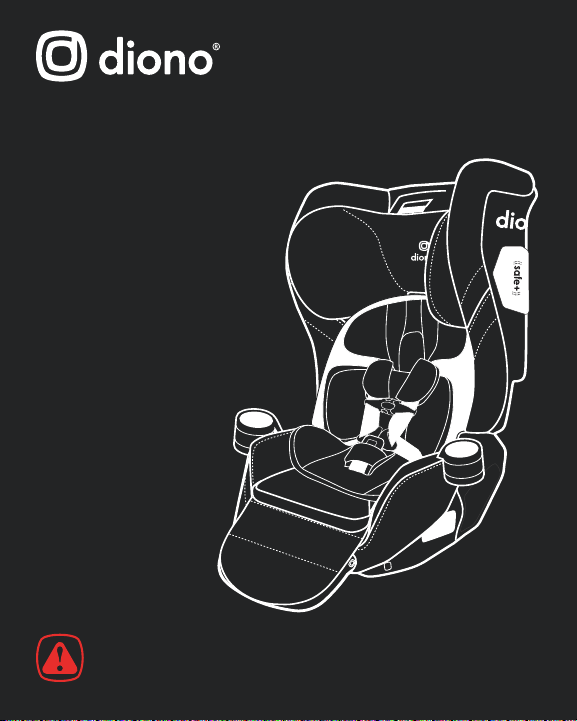
Car Seat Instructional Manual
All-In-One Convertible
4-120 lb (1.8-54 kg)
Radian 3QXT+
® ®
2
WE LOVE TO HELP
Hello there, Welcome to the Diono family!
We’ve created
this lovingly engineered car seat to help keep your child
comfortable and safe with all of the goods and none of the
gimmicks. We look forward to lending a helping hand
each and every day.
Any questions?
Diono U.S.: 1-855-463-4666
Diono Canada: 1-866-954-9786
REGISTER THIS CAR SEAT
Certication
Safe Use Guide
Warnings & Safe Practices
Car Seat Use After Collision
Parts
Vehicle Seating Locations
Vehicle Seat Belt Types
Latch Plates
Retractors
How To Lock Your Retractor
CONTENTS
6
8
9-13
14-17
18-19
20-21
22-23
24-29

diono.com
3
CONTENTS
LATCH/UAS
Belt Locking Clip
Side Impact Management
First Setup
A. Unfolding Car Seat
B. Harness Strap Placement
C. Buckle Slot Placement
D. Changing Harness Positon
E. Buckle Strap Slot Change
F. Harness Tightening
G. Adjusting Headrest
REAR-FACING INSTALLATION
Detachable Rear-Facing Base
Seat Bights
Anti-Rebound Panel (ARP)
Infant Support
Newborn Harness Pads
Newborn Protection Insert
LATCH/UAS Installation
Lap/Shoulder Belt Installation
Lap Belt Installation
FORWARD-FACING INSTALLATION
Top Tether
SafeStop™
Adjustable Bottom
Anti-Rebound Panel (ARP)
30
31
32
33-42
43-56
57-73

4
80/20 Overhang Guidance
LATCH/UAS Installation
Lap Belt Cushion
Lap/Shoulder Belt Installation
Lap Belt Installation
BOOSTER MODE INSTALLATION
Aircraft Installation
Comfort Features
Cup Holder
Expandable Side WIngs
Toddler Liner
Harness Strap Removal
Harness Strap Replacement
Folding Car Seat
Seat Cover Removal
Seat Cover Installation
Care and maintenance
Warranty
74-77
78
79-81
82-83
84-85
86-87
88-91
92-95
96-97
98-100
CONTENTS

diono.com
5
NOTES

6
Please take a few moments to promptly ll out and return the attached card
or register online using the direct link to the manufacturer’s registration
website provided.
Child restraints could be recalled for safety reasons. You must register this
restraint to be reached in a recall. Send your name, address, e-mail address
if available, and the restraint’s model number and manufacturing date to:
Diono U.S., PO Box 77129, Seattle, WA 98177
or call 1-855-463-4666 or register online at: http://diono.com/product-
registration/
Diono Canada ULC, 2160 S. Service Rd. W.,Oakville, ON L6L 9Z9
Canada or call 1-866-954-9786 or register online at: http://diono.ca/
product-registration/
For future reference, in the case of a change of address, please take a
moment to ll out the following information:
Model Number:
Manufacture Date:
This information can be found either on the registration card or on the
manufacturing label located on the seat.
For recall information, call the U.S. Government’s Vehicle Safety Hotline at
1-888-327-4236 (TTY: 1-800-424-9153), or go to http://www.NHTSA.gov.
REGISTER THIS CAR SEAT

diono.com
7
OUR STORY
Time. It goes so fast...
Who would have thought that over two decades have passed since
we rst stepped out into the world and started a business dedicated to
family travel.
Well the world has changed a lot, but we’re proud to say that we haven’t
(sure we’ve grown up), but we are still as passionate about what we do
today as we were back then.
Our story is ‘made of Seattle’, a city like no other. This is a place where
creative minds & innovators rub shoulders within a landscape of
adventure; a place where being ‘a little di erent’, is the everyday norm.
With a love for design and an understanding of modern parenting, we
strive to create amazing products, so that you and your little ones can
celebrate the joy in every journey.
People who own Diono products can be found in all four corners of the
big, blue, green ball we all call home. Some are fans & followers, some
are supporters, tweeters, social media magicians, miracle moms and
devoted dads.
Without your passion, pictures, words and stories, we would never hear
your voice. So tell us about your patch of grass, and join in the hustle
and bustle at diono.com.
Share your journey @diono social
or nd the latest news on,
8
This child restraint system conforms to all
applicable requirements of U.S Federal Motor
Vehicle Safety Standards (FMVSS) 213 and Canada
Motor Vehicle Safety Standards (CMVSS) 213,
213.1, 213.2.
This child restraint is certied for use in aircraft
only when in harness mode.
This child restraint is not certied for use in
aircraft when used in booster mode. Aircraft seats
do not have shoulder belts which are required for
use with this booster.
Diono and the US Federal Aviation Administration (FAA)
strongly urge you to secure your child in a child restraint
system (CRS) or device for the duration of your ight. Please
contact the airline for their specic policies.
CERTIFICATION

diono.com
9
WARNING – failure to follow these instructions
and the product labels can result in serious
injury or death to your child.
Your child’s safety depends on you. Death or serious
injury can occur.
No child restraint can guarantee protection from injury in
every situation, but proper use helps to reduce the risk of
serious injury or death.
Carefully read and understand all instructions and warnings
in this manual. Your child’s safety depends on you knowing
how to setup, install and use this child restraint properly.
Choose the correct mode of use for your child, depending
on their weight and height.
This child restraint is designed for use only with children
who weigh 4–120 lb (1.8–54 kg) and whose height is 57 in
(144 cm) or less in the following modes.
SAFE USE GUIDE
10
SAFE USE GUIDE
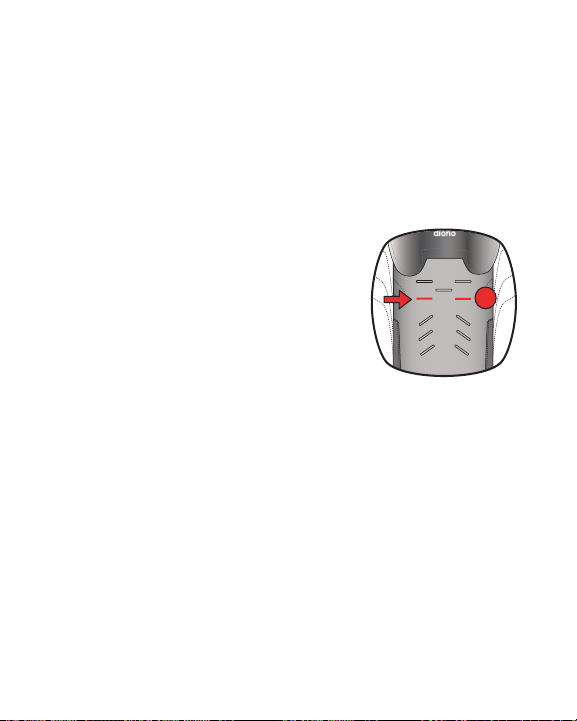
DO NOT place this car seat rear-facing in a vehicle
seating location with an active front air bag.
Choose the proper car seat belt path
1. REAR-FACING SECTION
2. FORWARD-FACING SECTION
3. BOOSTER MODE SECTION
Choose a suitable location for this car seat in your vehicle.
Review your vehicle seating locations.
Install this car seat tightly in your vehicle.
Secure harness snug and at on your child.
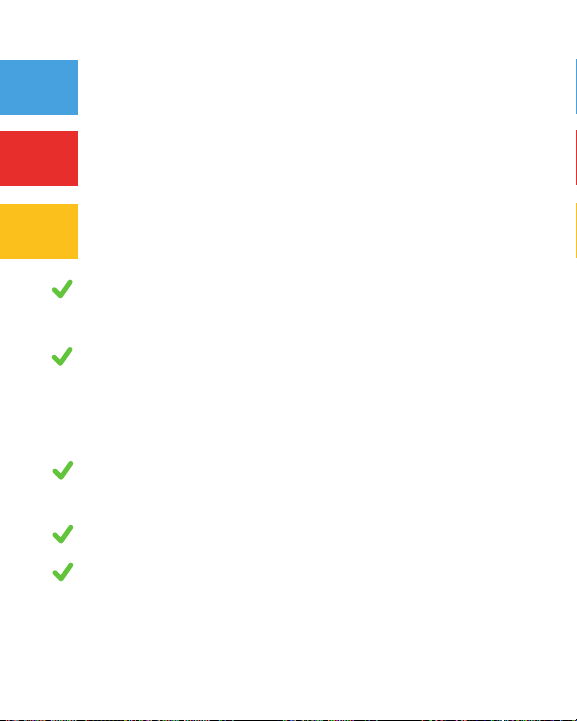
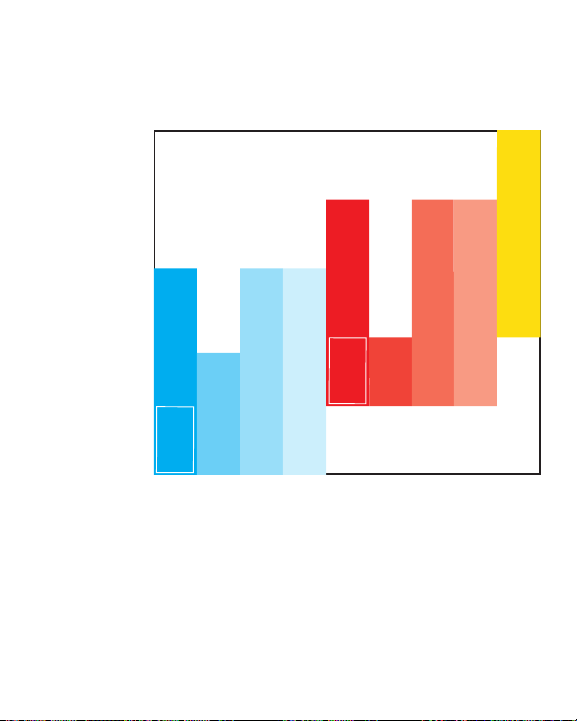
Rear-facing: 4–50 lb (1.8–22.7 kg) and whose height
is 18-44 in (46-112 cm).
Forward-facing: 22–65 lb (10–29.5 kg) and whose
height is 30-57 in (76-145 cm).
Booster: 40–120 lb (18–54 kg) and whose height is
40-57 in (101-145 cm).
diono.com
11
4 lb (1.8 kg)
22 lb (10 kg)
40 lb (18 kg)
50 lb (22.7 kg)
65 lb (29.5 kg)
120 lb (54 kg)
USE DETACHABLE REAR-FACING BASE
LAP/SHOULDER BELT ONLY
INSTALLATION
REAR-FACING
LATCH/UAS
LAP/SHOULDER BELT
LAP BELT
FORWARD-FACING
LATCH/UAS
LAP/SHOULDER BELT
LAP BELT w/ TOP TETHER
BOOSTER
50
50
50
35
MUST BE
REAR-FACING
CAN BE REAR-FACING
22
WITH
SAFESTOP
WITHOUT SAFESTOP
40
65
40
65 65
REMOVE 5-POINT HARNESS
WEIGHT
CAR SEAT WEIGHT GUIDE
SAFE USE GUIDE

12
SAFE USE GUIDE
Infants who weigh less than 22 lb (10 kg) or are under 1
year old, MUST use this child restraint rear-facing.
For newborn infants, you must consult the infant’s doctor
before using this child restraint. A newborn infant may have
diculty breathing or have other medical problems when
placed in a seated position.
Before installing this child restraint in a vehicle, be sure to
also check the vehicle owner’s manual for information on
proper installation.
Check all installation congurations before discarding the box.
Diono cannot guarantee proper t in all vehicles.
According to accident statistics, children are safer when
properly restrained in the vehicle's rear seating positions
than in the front seating positions.
diono.com
13
Rear-facing: Harness straps MUST be at or just below the
child’s shoulders. Top of head must be 1.5 in (3.8 cm) below
the top of the car seat shell.
Forward-facing: Harness straps MUST be above the child’s
shoulders. Top of child’s ears MUST be below top of car
seat shell.
Booster mode: Child MUST be
secured using ONLY the vehicle lap/
shoulder belt. Child MUST weigh at
least 40 lb (18 kg), with shoulders
positioned at or above the 4th slot
and remain properly seated for the
entire ride.
ALWAYS install this child restraint in the back seat.
The back seat is the safest place for children 12 and under.
NEVER leave car seat unsecured in your vehicle even
when it is unoccupied. It could injure other occupants in a
sudden stop or collision.
4
SAFE USE GUIDE
!WARNING!
!DEATH OR SERIOUS INJURY CAN OCCUR!
!
!
14
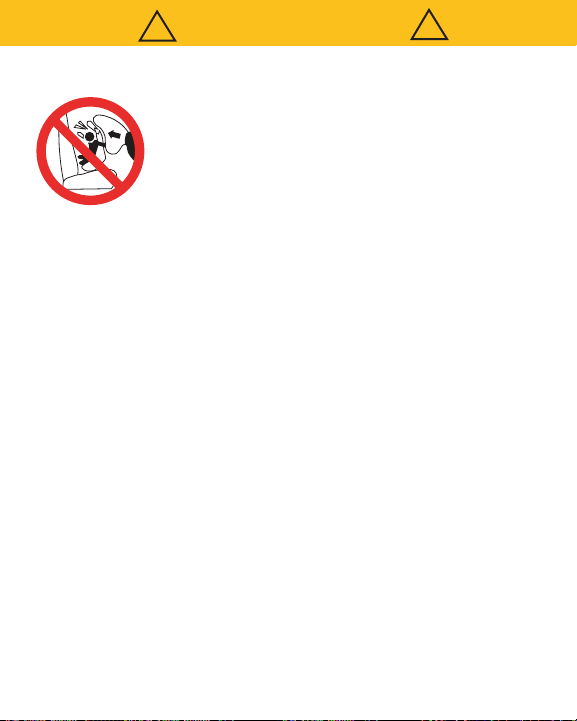
Never place this child restraint rear-
facing in a vehicle seating location with
an active front air bag. Death or serious
injury may occur. If an air bag inates,
it can hit the child or child restraint with
enough force to cause serious injury or
death to your child. For vehicles with side
passenger air bags, refer to your vehicle
owner’s manual for information on your
child restraint installation.
Take care to secure the child properly. Snugly adjust the
harness straps provided with this child restraint around
your child. A snug strap should not allow any slack. It lies
in a relatively straight line without sagging. It does not
press on the child’s skin or push the child’s body into an
unnatural position.
For any questions or concerns please contact diono at:
Diono U.S.:
1-855-463-4666 or online at www.diono.com
Diono Canada:
1-866-954-9786 or online at www.diono.ca

!DEATH OR SERIOUS INJURY CAN OCCUR!
!
!
diono.com
15
• DO NOT use child restraint in any conguration not
shown in the instructions.
• DO NOT modify your child restraint.
• NEVER install in a seat that is rear-facing, side-facing or
on the back of a folded down vehicle seat.
• ALWAYS secure this child restraint with the vehicle’s
child restraint anchorage system (LATCH/UAS) if
available OR the vehicle seat belt.
• NEVER use the restraint system in a vehicle seating
position where it cannot be secured tightly. A loosely
installed restraint system will not protect your child
in a collision.
• DO NOT use the LATCH/UAS system to attach this child
restraint rear-facing when restraining a child weighing
more than 35 lb (15.8 kg) or forward-facing when
restraining a child weighing more than 40 lb (18 kg).
• ALWAYS use the top tether strap when installed in the
forward-facing mode.

!WARNING!
!DEATH OR SERIOUS INJURY CAN OCCUR!
!
!
16
• DO NOT use any accessories, inserts or products not
included with this child restraint, unless approved by
Diono. Items not tested with this child restraint could
injure your child.
• NEVER remove harness from child restraint without
following the proper removal and installation
instructions (see pg 82).
• DO NOT use child restraint without seat cover installed.
• ALWAYS check seat belt or LATCH/UAS connectors to
ensure all buckles are securely latched.
• NEVER leave child unattended. Do not allow children to
play in or around the child restraint. Child may become
tangled in harness straps and suocate or strangle.
• ALWAYS keep child properly secured in harness
whenever child is in child restraint.

!DEATH OR SERIOUS INJURY CAN OCCUR!
!
!
diono.com
17
EXPIRATION
• DO NOT use the child restraint if any part is damaged
or broken, expired (over ten years from date of
purchase), missing instructions, missing parts, or if the
straps are cut, frayed, or damaged in any way. Call to
nd out if the damaged part or parts can be replaced.
Diono U.S.: 1-855-463-4666
Diono Canada: 1-866-954-9786
SAFE PRACTICES
• DO NOT leave loose objects, such as books, bags,
etc., in the back of the vehicle. In the event of a sharp
turn, sudden stop, or collision, loose objects can be
thrown around and possibly cause serious injury to
vehicle occupants.
• ALWAYS check all surfaces of restraint before securing
your child. In warm weather, child restraints can
become very hot. Do not allow children to play with
vehicle seat belts.

18
CAR SEAT USE AFTER A COLLISION
UNITED STATES
The U.S. National Highway Trac Safety Administration
(NHTSA) recommends that car seats be replaced
following a MODERATE or SEVERE collision in order
to ensure a continued high level of collision protection
for child passengers. In the U.S., car seats do not
automatically need to be replaced following a MINOR
collision.
NHTSA defines a MINOR crash as one in which ALL of
the following apply:
• The vehicle was able to be driven away from the
crash site.
• The vehicle door nearest the car seat was not
damaged.
• None of the passengers in the vehicle sustained any
injuries in the crash.
• If the vehicle has air bags, the air bags did not deploy
during the crash; and
• There is no visible damage to the car seat.
NEVER use a car seat that has been involved in a
MODERATE or SEVERE collision.

diono.com
19
CAR SEAT USE AFTER A COLLISION
CANADA
• DO NOT USE THIS CHILD RESTRAINT SYSTEM IF
IT HAS BEEN IN A VEHICLE ACCIDENT.
• Transport Canada designates that you MUST
replace this child restraint if it has been involved in
a collision.
• You must dispose of your child seat or booster seat
if the child seat was in a vehicle during a crash. Even
if the child seat was empty or was not directly hit, it
may be damaged.
• You must dispose of your child seat or booster seat
if the shell is cracked or the webbing of the child car
seat is frayed, torn or discolored.
20
PARTS
1
2
3
4
5
6
7
8
9
10
11
12
13
14
15
17
19
20
21
22
18
23
24
25
26
27
28
16
30
29

diono.com
21
PARTS
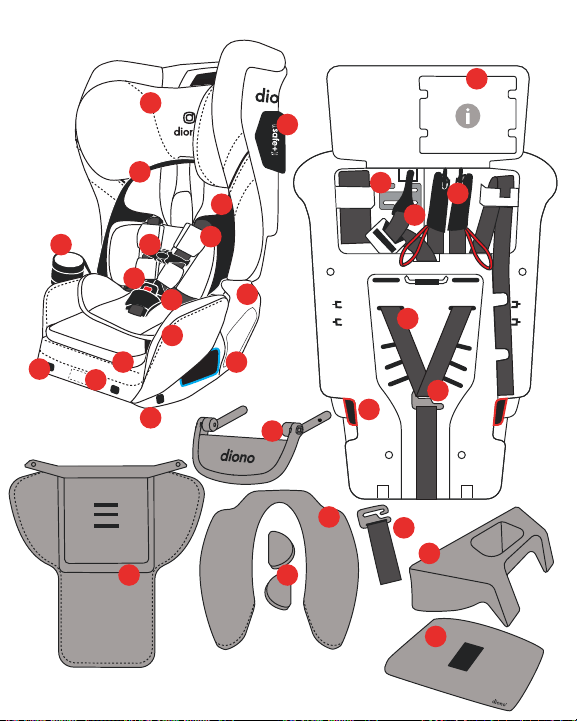
1. LATCH/UAS
Located under ap
2. Top Tether
Located under ap
3. SafeStop™
4. Instruction Manual Storage
Located under ap
5. Harness Straps
6. Harness Strap Hook
7. Forward-Facing Belt Path
8. Rear-Facing Belt Path
9. Chest Clip
10. Harness Pads
11. Buckle
12. Buckle Pad
13. Memory Foam Cushion
14. Harness Adjust Strap
& Silver Release Button
15. Anti-Rebound Panel Slots
16. Anti-Rebound
Panel Release
17. Expandable Side Wings
18. Adjustable Headrest
19. Booster Shoulder
Belt Guides
20. Booster Belt Guide
21. Cup Holder x2
22. Infant Support
23. Newborn Protection Insert
24. Newborn Harness Pads
25. Anti-Rebound Panel (ARP)
26. Side Impact
Management Pod
27. Rear-Facing Base
28. Toddler Liner
29. Belt Locking Clip
30. Lap Belt Cushion
U.S. Only
22
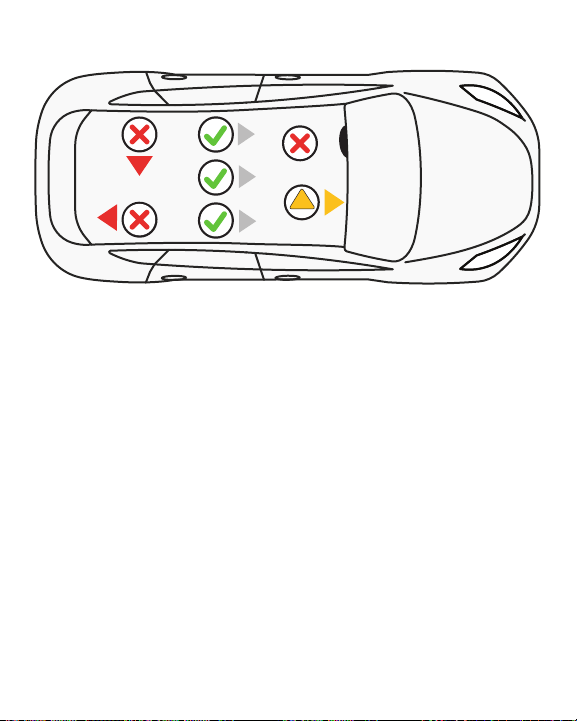
VEHICLE SEATING LOCATIONS
!
INSTALL CHILD RESTRAINT CORRECTLY
NEVER place this child restraint rear-facing in a
vehicle seating location with an active frontal air
bag. If the airbag inates, it can cause serious injury
or death to your child. For vehicles with side air bags,
refer to your vehicle owner’s manual for information
on your child restraint installation.
diono.com
23
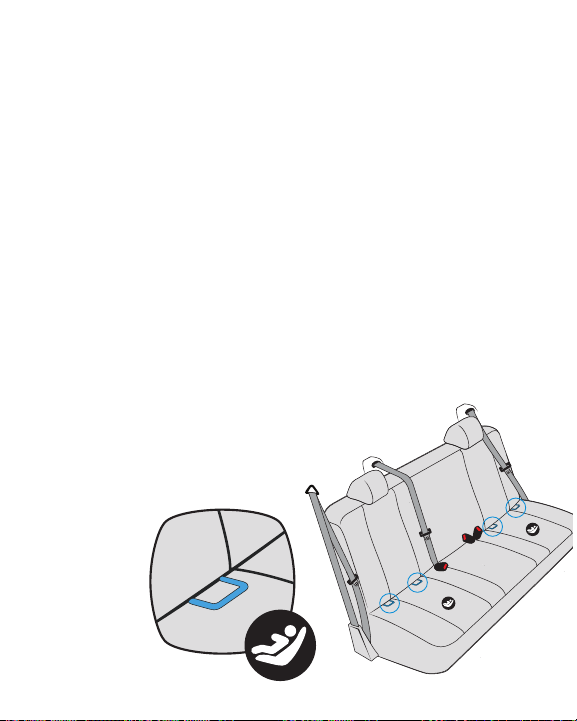
The safest seating position is one that works best for your
specic child restraint, family and vehicle model.
Before installing this child restraint you must determine the
method of installation and the best vehicle seating position
for that method. This child restraint can be installed either
using LATCH/UAS or the Vehicle Seat Belt.
DO NOT install using both methods at the same time.
When determining whether the child restraint can be used
with vehicle LATCH/UAS anchors in the rear center seating
position, it is critical that you refer to your vehicle owner’s
manual. If the child restraint does not install best in the rear
center seating location, it is recommended to
move to one of the outboard seating positions.
VEHICLE SEATING LOCATIONS
Vehicle
LATCH/UAS
anchors
24
2
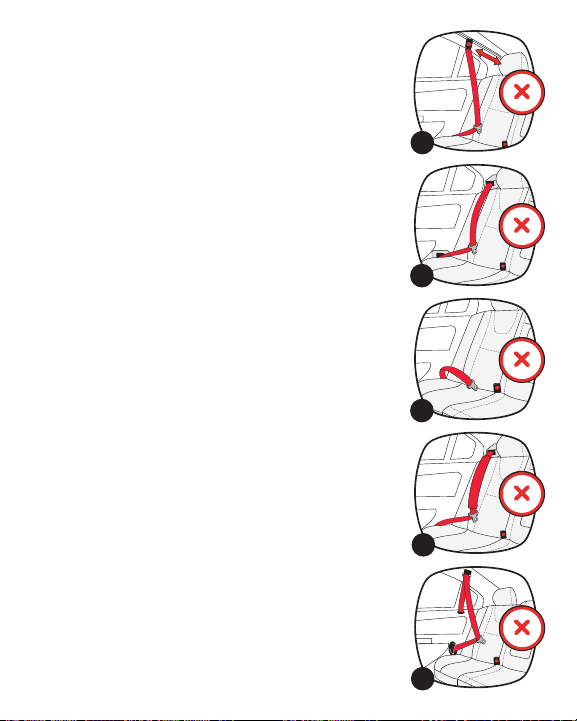
VEHICLE SEAT BELT TYPES
The following types of vehicle
belts CANNOT BE USED with your
child restraint.
If any of the belt types listed below are in
the chosen seating position, you MUST
choose another seating position or use
LATCH/UAS if available.
1. Motorized (Automatic) Vehicle Belts
2. Dual Retractor Lap/Shoulder Belts
3. Non-Locking (ELR) Lap Belts
4. Inatable Seat Belts
5. Door Mounted Vehicle Belts
Please refer to your vehicle owner’s
manual for specic information about
seat belts and their use with child
restraints.
1
3
4
5
diono.com
25
VEHICLE SEAT BELT TYPES
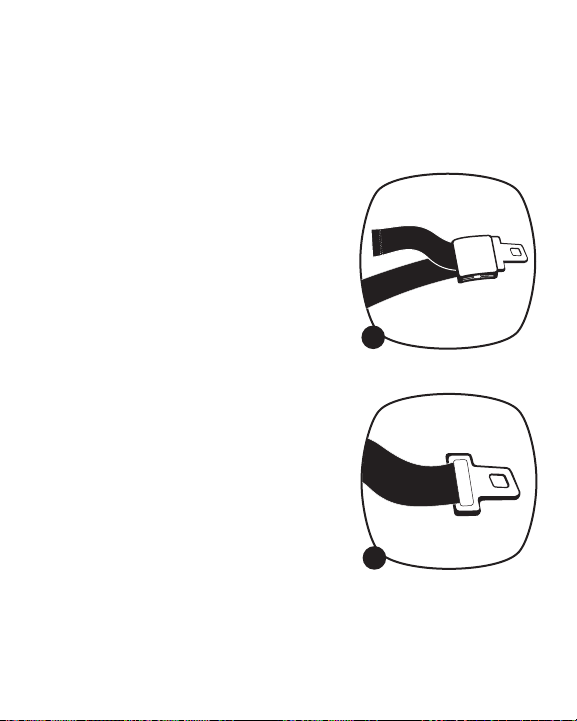
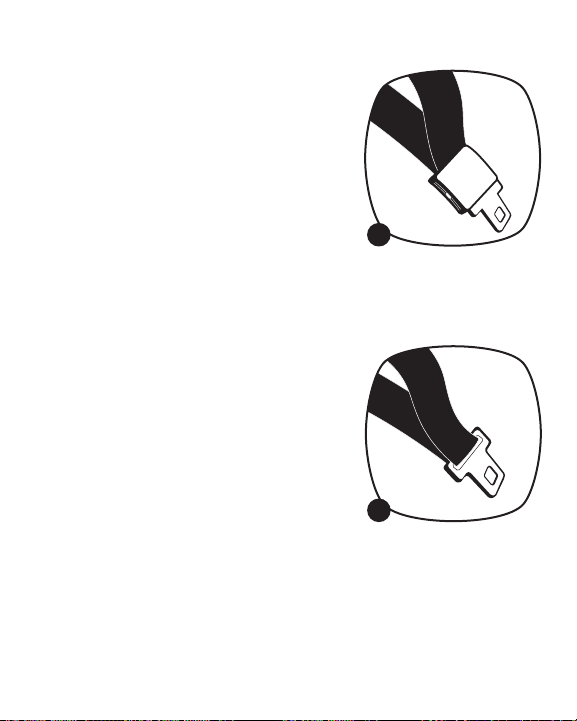
TYPES OF SEAT BELT LATCH PLATES SAFE TO USE WHILE
SECURING YOUR CAR SEAT
1. Lap Belt with Locking Latch Plate.
Once buckled, the vehicle belt is
tightened by pulling on the free end
of the strap until the belt is tight.
TIP: A way to tell if the seat lap belt
is a locking latch plate is to sit in the
vehicle and buckle yourself in. Pull
gently on the lap belt. If it stays tight,
it is locking.
2. Lap Belt with Automatic
Locking Retractor (ALR).
The automatic locking retractor
does not allow the lap belt to
get longer once it is buckled and
retractor is locked.
The vehicle belt is tightened by
feeding seat belt webbing into
retractor after it has been locked.
1
2
26
3. Lap/Shoulder Belt with Locking
Latch Plate. The lap portion of
this belt does not loosen once
the belt is buckled.
The vehicle belt is tightened by pulling
up hard on shoulder belt and feeding
the extra webbing into the retractor.
4. Lap/Shoulder Belt with Sliding Latch Plate with
Locking Retractor. The latch plate slides freely along
the lap/shoulder belt.
Vehicle belts with sliding latch plates
are typically locked at the shoulder
belt retractor by pulling all of the
webbing out slowly until it stops to
switch the retractor. (see page 28)
DO NOT use Non-Locking Latch
Plates to secure your car seat. Types of
non-locking latch plates are:
• Sliding Latch Plate with an Emergency Locking Retrator.
• Dynamic Latch Plate
• Sewn-On Latch Plate
VEHICLE SEAT BELT TYPES
3
4

diono.com
27
Please refer to your vehicle owner’s manual for further
information on which type of LATCH PLATES are located in
your vehicle.
NOTE: LATCH/UAS can be used IN PLACE of these vehicle
belt types. Refer to your vehicle owner’s manual for LATCH/
UAS locations.
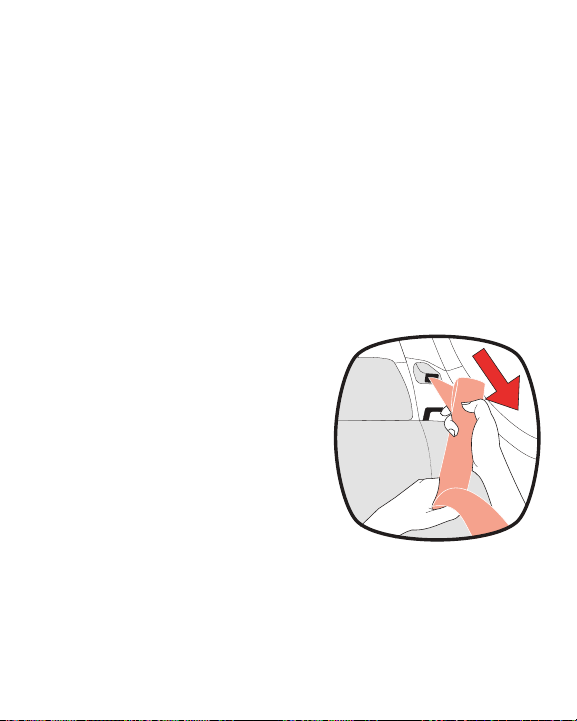
TYPES OF RETRACTORS
1. Emergency Locking Retracors (ELR)
• Only locks with sudden stops, accelerations, turns or if
involved in an accident.
• For Rear-Facing and Forward-Facing installations you
MUST use LATCH/UAS or a locking clip if your vehicle is
only equipped with ELR retractors.
2. Automatic Locking Retractor (ALR)
• Found in older vehicles and MUST be used to secure
your child in Rear-Facing and Forward-Facing
installations only.
VEHICLE SEAT BELT TYPES
28
3. Switchable Retractor
Most common type of retractor and is switchable from (ELR)
to (ALR).
• MUST switch to (ALR) mode for Rear-Facing and
Forward-Facing installations only.
• Leave in (ELR) mode for Booster use only.
HOW TO SWITCH YOUR SWITCHABLE RETRACTOR
FROM ELR TO ALR MODE
1. Feed latch plate into the
proper belt path. Be sure the
belt is at and not twisted.
2. Click the latch plate into
the vehicles buckle.
3. Locate the retractor then gently
pull the seat belt out of the retractor until it stops,
then slowly feed webbing back into retractor.
IMPORTANT: You will hear clicking. This is how you
know you have locked the retractor.
VEHICLE SEAT BELT TYPES

diono.com
29
4. No Retractor
Some older vehicles do not have a retractor to store the
excess seat belt webbing, leaving the excess webbing visible.
Lap belts without a retractor will always have a latch
plate the provides the locking feature necessay to secure
your car seat properly.
Review your vehicle owner’s manual for specic instructions on
what type of seat belt system your vehicle is equipped with.
VEHICLE SEAT BELT TYPES
30
WHAT IS LATCH/UAS?
Most vehicles manufactured after
September 1, 2002 are equipped with:
U.S.: LATCH (Lower Anchors and
Tethers for CHildren)
Canada: UAS (Universal Anchorage System)
Check your vehicle owner’s manual to determine LATCH/
UAS lower anchor compatible seating positions. Some
vehicle manuals use the term “ISOFIX” instead; LATCH/
UAS can also be used in vehicle seating positions that are
equipped with ISOFIX. Look for the LATCH/UAS symbol
that may be visible by the crease of the rear seats.
WARNING: DO NOT use the LATCH/UAS strap to attach
this child restraint rear-facing when restraining a child
weighing over 35 lb (15.8 kg) or forward-facing when
restraining a child weighing over 40 lb (18 kg).
DO NOT install using both LATCH/UAS connectors and
the vehicle seat belt at the same time.
LATCH/UAS
diono.com
31
BELT LOCKING CLIP
WARNING: If your vehicle lap/shoulder belt is equipped with
ELR (Emergency Locking Retractor) that does not switch to
function as an ALR (Automatic Locking Retractor), you MUST
use a locking clip to secure lap portion of vehicle seat belt. If
you have any questions, please consult your vehicle owner’s
manual or contact the vehicle manufacturer.
1. Remove lock clip storage
location on back of seat.
2. Route the vehicle seat belt
through the proper belt path
and buckle it in. While pushing
down on seat, pin the two straps
together behind the buckle
tongue. Unbuckle the belt without
allowing it to slip.
3. Attach locking clip to lap/
shoulder belt. Rebuckle belt.
Check that lap belt does not move
by pulling hard. If belt loosens or
lengthens, repeat procedure.
1 in
2.5 cm
32
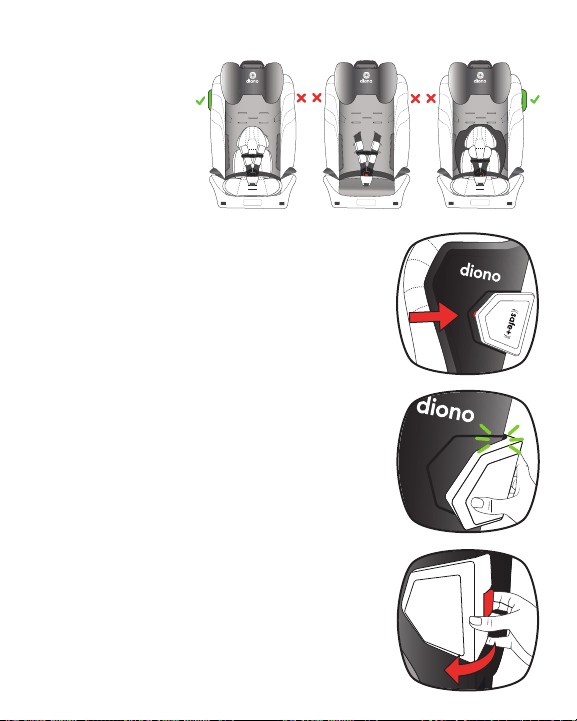
Your car seat
includes a
Side Impact
Management
(SIM) Pod that will
provide additional
side impact
protection.
1. Place your SIM pod on the side
of the car seat adjacent to the
vehicle door.
2. Insert the front hook into the slot
on the side of the seat.
3. Insert the back hooks into the slots
on the back of the seat. An audible
"click" should be heard when
attached to the slots correctly.
To remove the SIM pod, lift the pod tab
release from the back of the seat, then
gently remove the front hook from the
side of the seat.
SIDE IMPACT MANAGEMENT
diono.com
33
FIRST SETUP
A. UNFOLDING CAR SEAT
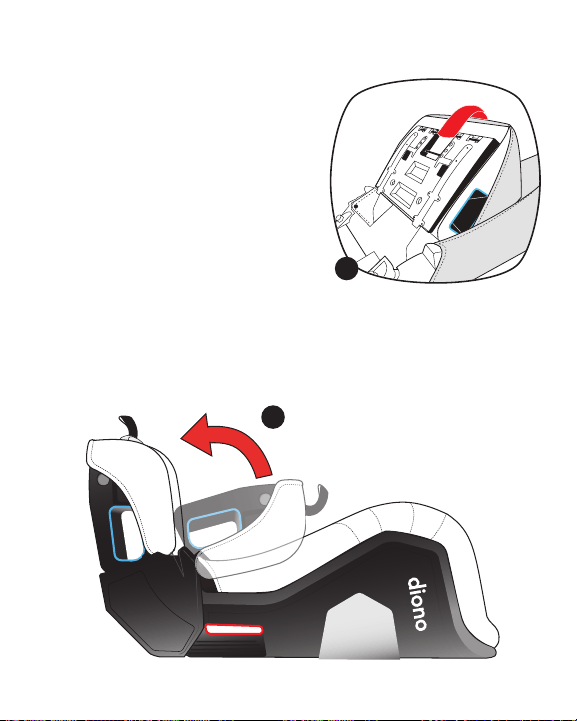
1. Place car seat on its back on
a at surface and unfasten
red carry strap from the
bottom. Be sure the harness
adjuster strap moves freely
and is not locked within the
bottom of the seat. Remove
cup holder if present.
2. Rotate bottom OPEN until your hear it “click”. This
conrms the car seat is locked for use.
2
1
34
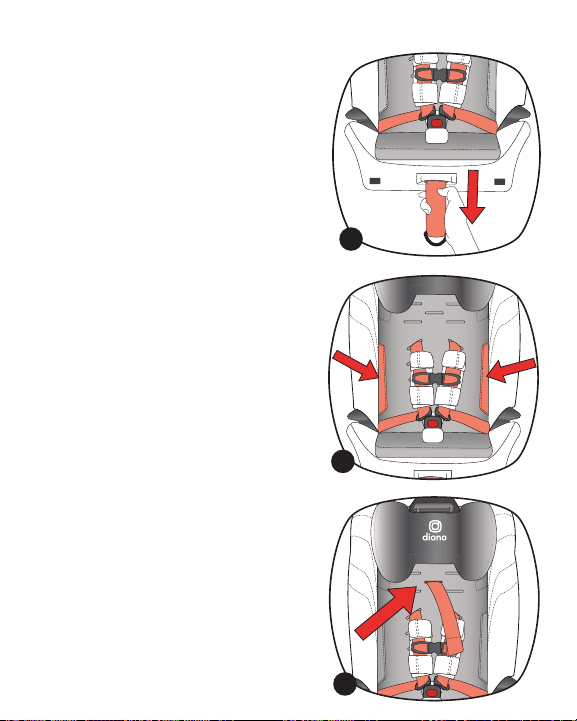
3. Pull harness adjusting strap
until harness begins to
tighten. If it does not tighten
freely, check the belt path on
the back of the seat bottom is
clear from obstruction.
4. Fasten both of the fabric
side panels on the inside of
the cover.
5. Tuck the red strap through
the center slot between the
upper harness slots.
IMPORTANT: Before
securing your child, make
sure the car seat is locked
in the open position. If not,
repeat instructions from
step one.
3
FIRST SETUP
4
5
diono.com
35
IMPORTANT! Setup harness before
installing car seat in vehicle.
B. HARNESS STRAP PLACEMENT
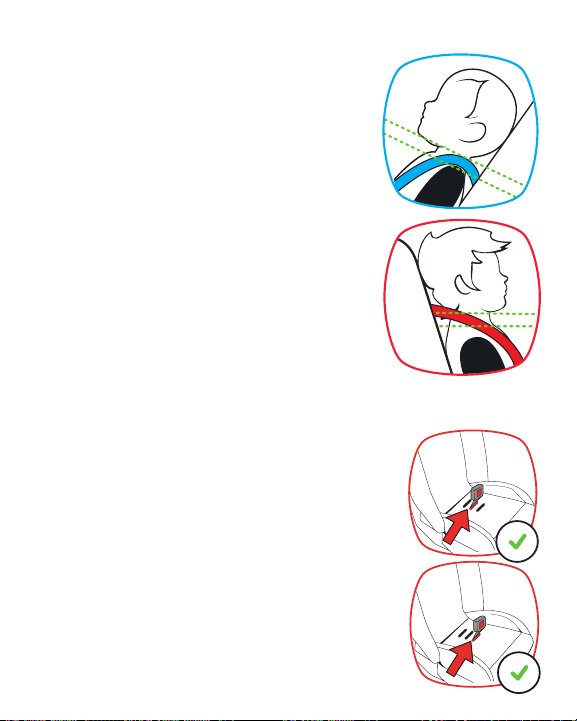
Rear-Facing: Harness straps MUST be
at or just below the child’s shoulders.
Top of head must be 1.5 in (3.8 cm)
below the top of the car seat shell.
Forward-Facing: Harness straps MUST
be above the child’s shoulders. Top of
child’s ears MUST be below top of car
seat shell.
C. BUCKLE SLOT PLACEMENT
Rear-Facing: Any of three buckle positions
are acceptable, as long as the harness is
snug on the child's shoulders and child is
not sitting directly on top of center buckle.
Forward-Facing:
• 22–30 lb (10–13.6 kg) MUST use the
middle buckle slot ONLY!
• Above 30 lb (13.6 kg) MUST use the
forward most buckle slot ONLY!
REAR-FACING
MIDDLE SLOT
FORWARD MOST SLOT
FORWARD-FACING
FIRST SETUP
36
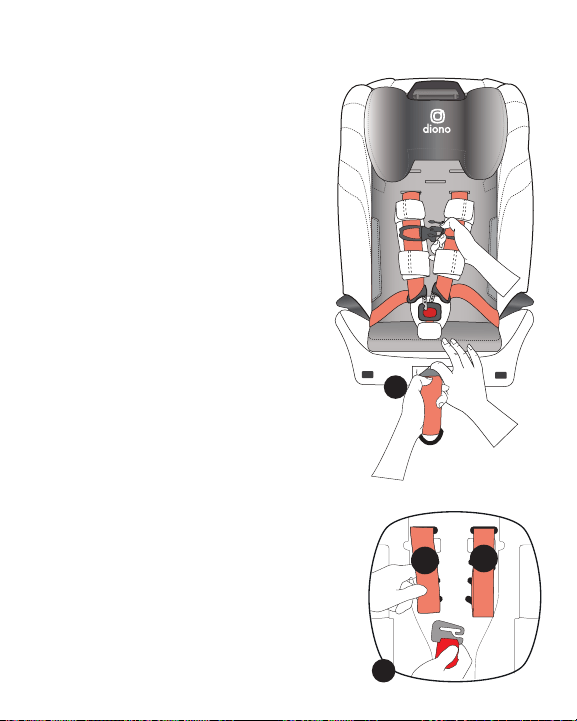
D. CHANGING HARNESS POSITON
1. Unbuckle the chest clip and
harness buckle.
2. To loosen harness, push
down on silver lever and pull
shoulder straps forward.
3. Detach harness straps from
metal plate on back of seat.
4. Pull each harness through to
the front of the seat.
5. Re-locate each shoulder strap
to the correct slot determined.
Then push through to the back of
the seat taking care to keep each
harness strap at.
6. Re-secure the shoulder straps
to the metal plate. Make sure
to secure the left strap onto the
metal hook rst then secure the
second strap onto the metal hook.
2 nd
1st
2
6
FIRST SETUP
diono.com
37
FIRST SETUP
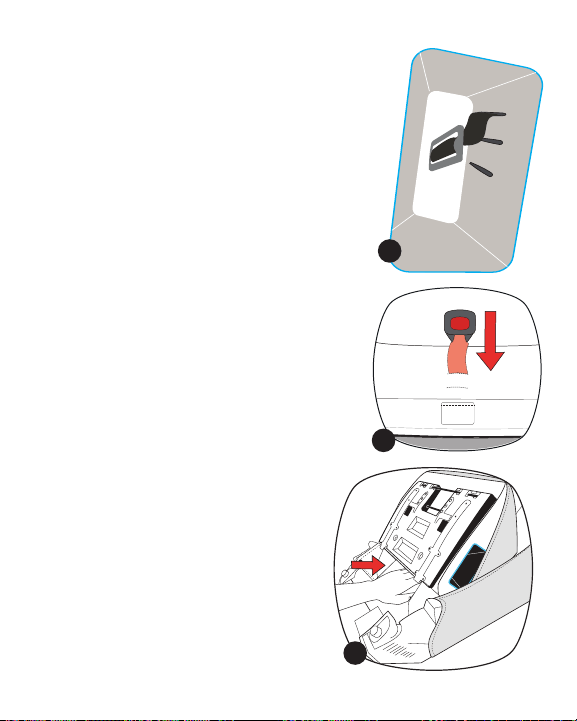
E. BUCKLE STRAP SLOT CHANGE
Buckle Strap Removal
1. Look through the rear-facing belt
path for a better view of the buckle
strap metal retainer.
2. To create slack, locate buckle
and push buckle strap into the
bottom of the car seat base.
3. Partially fold seat (see pg 86).
4. Reach into the bottom of the
seat. You will feel the buckle
strap metal retainer.
2
4
1
38
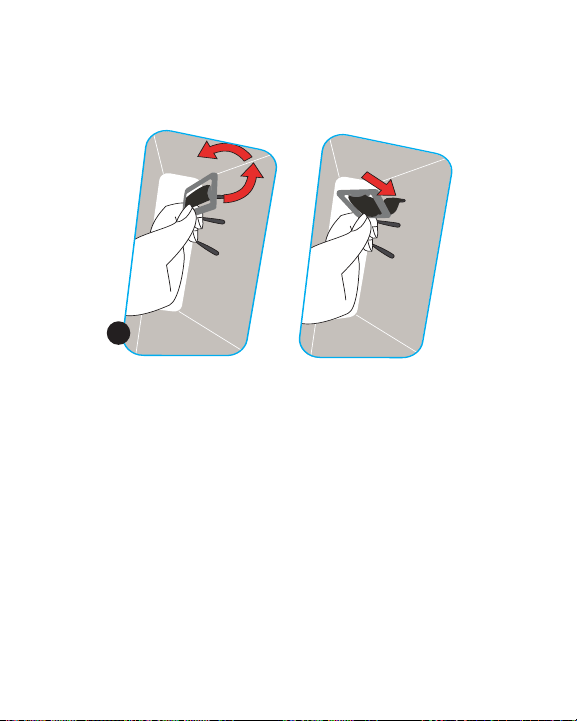
5. Rotate metal retainer vertical and insert it up through
the shell and pad. From the top of the car seat, pull the
buckle strap out.
Buckle Strap Insert
1. Find appropriate buckle slot.
2. Make sure the red release button faces towards the
front of the car seat and the buckle strap is not twisted.
3. Hold metal retainer vertical and rmly push through
appropriate slot and all the way through the bottom
of the seat.
4. Pull up on buckle strap to conrm buckle is secured.
5
FIRST SETUP
diono.com
39
FIRST SETUP
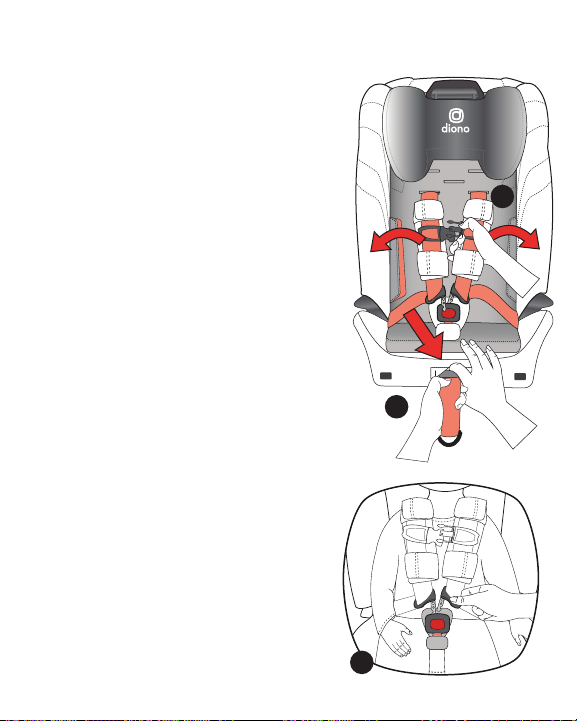
F. HARNESS TIGHTENING
Prior to installing the car seat into
your vehicle, follow these steps to
set up harness.
1. To loosen harness push down
on silver harness release and
pull shoulder straps forward.
2. Unfasten chest clip and harness
buckle, and move harness straps
to the sides.
3. Properaly position child in
car seat, all the way back and
sitting upright.
4. Position harness straps around
the child and fasten buckle
with harness pad positioned
between the buckle and the
child. Gently tug on harness
strap to make sure straps are
securly buckled.
2
1
4
40
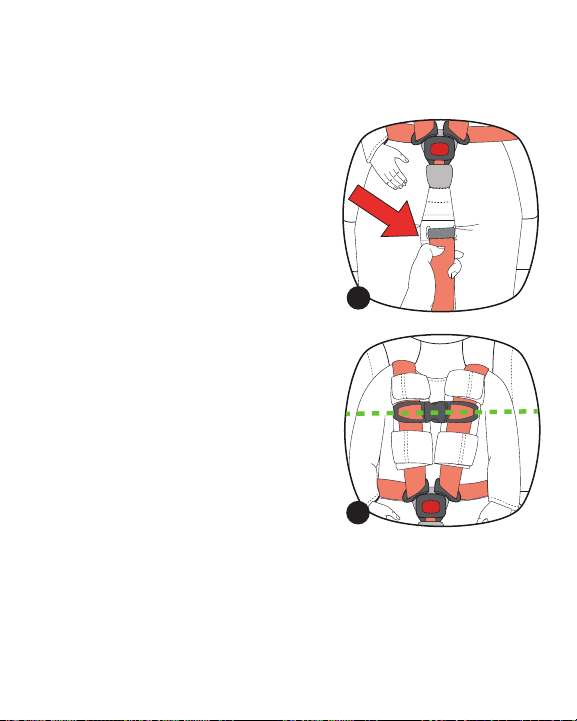
5. Genlty pull harness straps upwards to snugly t lap
portion of harness across the body and low on the
childs hips.
6. Slowly pull harness adjuster
strap downwards (forward-
facing) or straight up (rear-
facing), using a pull-tug
motion, to tighten harness
for a comfortable and snug t
around child.
7. Conrm harness is not
twisted and lays at against
childs chest.
8. Properly position harness
chest clip level with child’s
armpits then fasten chest
clip together.
FIRST SETUP
6
8
diono.com
41
FIRST SETUP
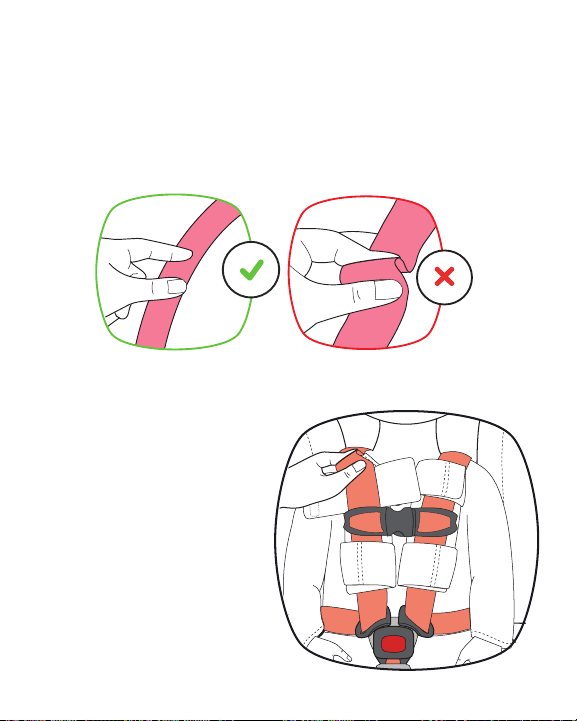
9. Finally, do the PINCH TEST. Take the thumb and index
nger and 'glide' your ngers along the harness at the
collar bone. If you are able to pinch any of the webbing
of the harness strap, tighten it again. If you can’t pinch
the harness then it’s properly tightened.
NOTE: If harness pads are
used, you may need to
unfasten the top harness
pad to access strap to
successfully administer
the pinch test.
42
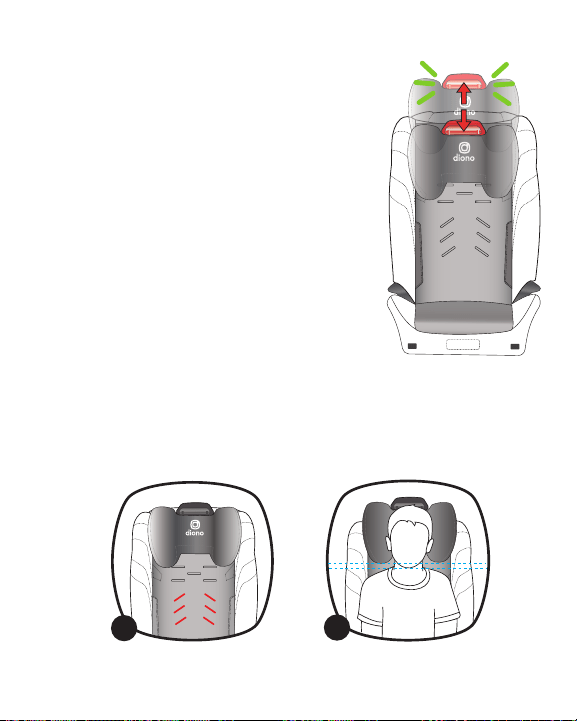
G. ADJUSTING HEADREST
1. Press lever on headrest and slide up
or down to adjust.
2. Listen for audible "click" to conrm
headrest is in locked position.
IMPORTANT!
A. When using the bottom harness
slot, position headrest level with
the top of the seat.
B. When using the top 4 harness slots, position headrest
so that the bottom edge is above the shoulders and
about level with the jaw.
FIRST SETUP
A
B
REAR-FACING
diono.com
43
1
REAR-FACING
Installation Instructions
4–50 lb (1.8–22.7 kg)
18-44 in (46-112 cm)
LATCH/UAS Strap
Vehicle Lap/Shoulder Belt
Vehicle Lap Belt

REAR-FACING
44
Infants who weigh less than 22 lb (10 kg) and are
under one year old, MUST use this car seat rear-facing.
• MUST attach rear-facing base to car seat.
• Install this car seat tightly in your vehicle. When
checked at the rear-facing belt path, the car seat
should not move more than 1 in (2.5 cm) from side-to-
side or front-to-back. If using a lap belt only, refer to
your vehicle owner's manual for installation advice.
• Harness straps MUST be at or just below the top
of your child’s shoulders. Place the chest clip at
armpit level.
• Do not use adjustable bottom in rear-facing mode.
The American Academy of Pediatrics (AAP), NHTSA,
Transport Canada and Diono RECOMMEND that children
be rear-facing until two years of age or they reach the
maximum rear-facing height or weight of their car seat.
This car seat can remain rear-facing up to 50 lb (22.7 kg) or
44 in (112 cm) tall.
Rear-facing is the safest position for your child. Even if
your provincial, territorial, or state regulations allow you
to move to a forward-facing seat, your child should keep
using rear-facing seats as long as possible.
REAR-FACING
diono.com
45
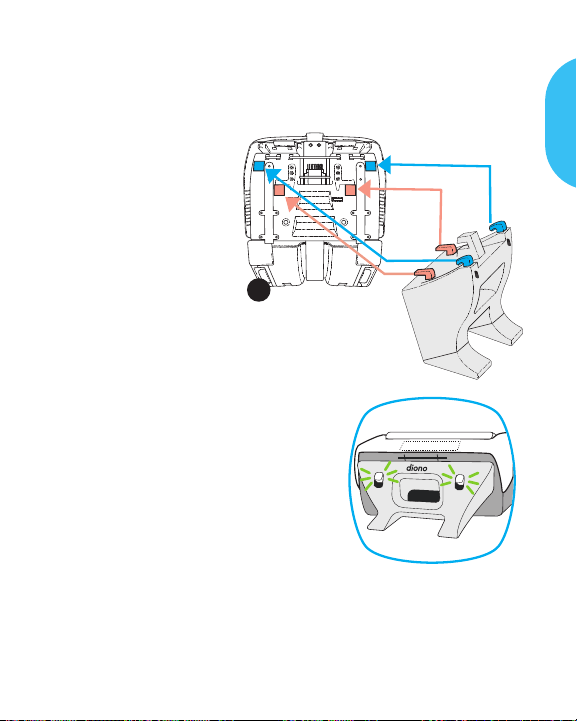
DETACHABLE REARFACING BASE INSTRUCTIONS
ONLY use rear-facing base on rear-facing installs.
1. Conrm car seat
is locked in its
unfolded position.
2. Insert hooks into
the aligned slots
and rotate the
base until hearing
an audible “click”.
Conrm base is locked
and does not move.
To remove, press release buttons
and pull top end outwards to
remove top section. Gently
detach base lower hooks from
seat bottom.
2
REAR-FACING
46
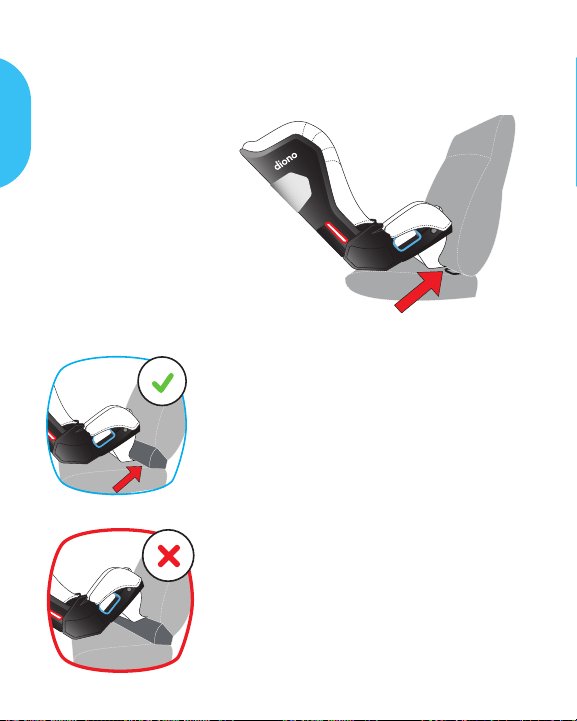
SEAT BIGHTS
Non-Elevated Seat Bight
Place the car seat on the
vehicle seat making
sure the feet of the
rear-facing base are
securly tucked in the seat
bight and at on the vehicle
seat bottom. The front of the car
seat will also be touching the vehicle
seat back.
Elevated Seat Bight
For vehicles with an elevated seat
bight, make sure the feet of the rear-
facing base are at on the vehicle seat
bottom. With an elevated seat bight it
is acceptable if the front of the car seat
does not touch the vehicle seat back.
DO NOT push the feet of the rear-
facing base into the elevated seat bight
as this will change the recline angle.
REAR-FACING
diono.com
47
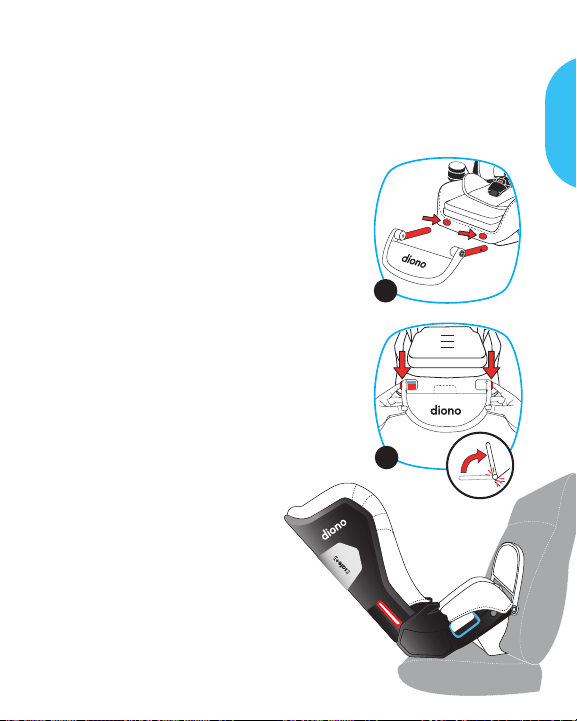
ANTI-REBOUND PANEL (ARP)
Diono RECOMENDS using the anti-rebound panel
(ARP) with rear-facing installs.
1. Place the ARP into the slots on
the front of the car seat until
hearing an audible "click". Pull bars
outwards to conrm it is locked.
2. Push the buttons on the outside
hinge of the ARP and rotate the
board up until hearing an audible
"click". Pull on ARP to conrm it is
locked into position.
IMPORTANT: DO NOT use the
ARP in any other conguration
than noted for rear-facing
installations.
To remove, press the release
buttons on the outside of the
seat and pull the ARP out.
NOTE: You may need to release
one side at a time.
2
1
REAR-FACING
48
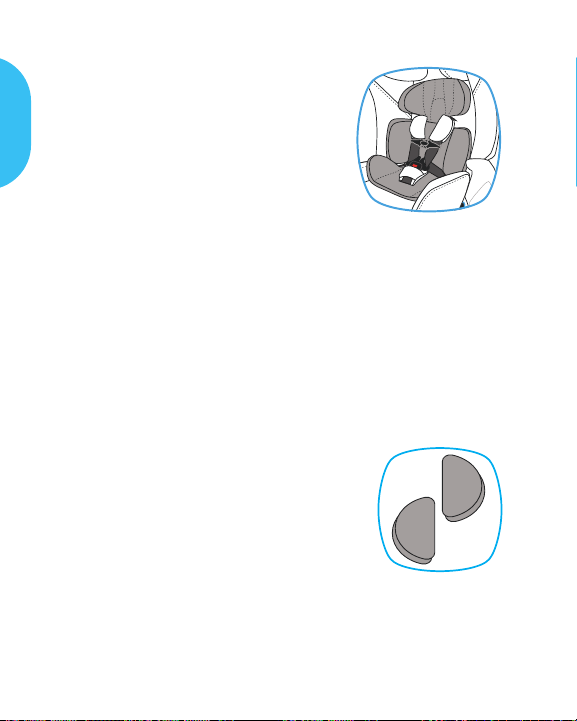
INFANT SUPPORT
To ensure a better t for smaller
infants, we recommend using the
infant head and body support
cushions included with your
car seat. The infant support also
includes a removable Travel High Wedge for better
positioning of infants. Use of these cushions and wedge
is optional and does not aect the safety of the seat.
To use, slide the buckle through the buckle slot on the
infant body cushion that matches the slot chosen on
the seat then adjust harness.
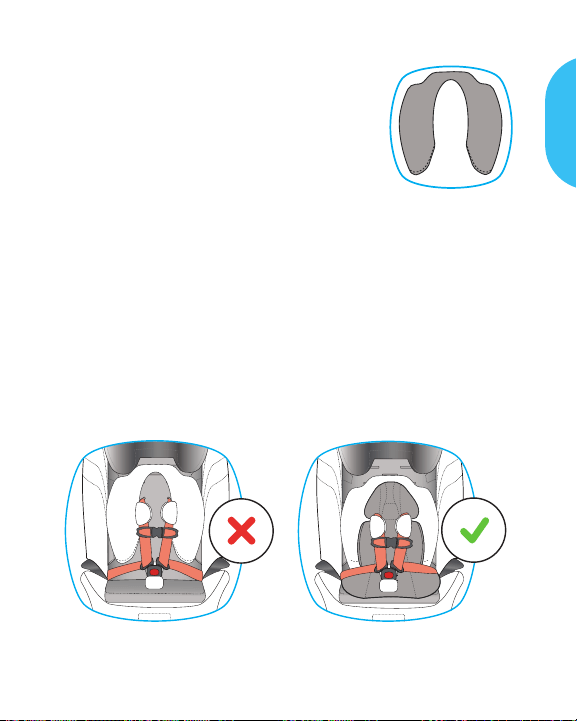
NEWBORN HARNESS PADS OPTIONAL
These harness pads were developed
specically for smaller infants and
newborns. Use these in place of the
standard harness pads.
Replace newborn harness pads with
standard harness pads when the child
becomes tall enough to need additional padding on
seat harness.
REAR-FACING
diono.com
49
NEWBORN PROTECTION INSERT
4–10 lb (1.8–4.5 kg)
The newborn protection insert is used
in combination with the infant support
cushion to provide side protection in the
event of a collision.
Install infant support by sliding the buckle through the
buckle slot on the cushion that matches the slot chosen
on the seat (see pg 35) then slide newborn protection
insert behind infant support cushion.
DO NOT use newborn protection insert WITHOUT the
infant support cushion.
REAR-FACING
50
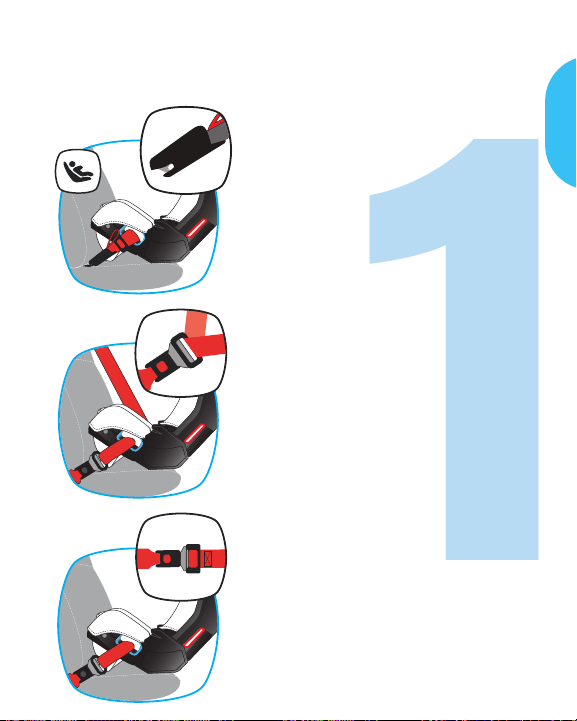
INSTALL USING:
DO NOT install by this method for a child weighing
more than 35 lb (15.8 kg). Reinstall with vehicle
seat belt for a child weighing between 35–50 lb
(15.8–22.7 kg).
1. Install detachable rear-facing
base (see pg 45) and ARP (see
pg 47).
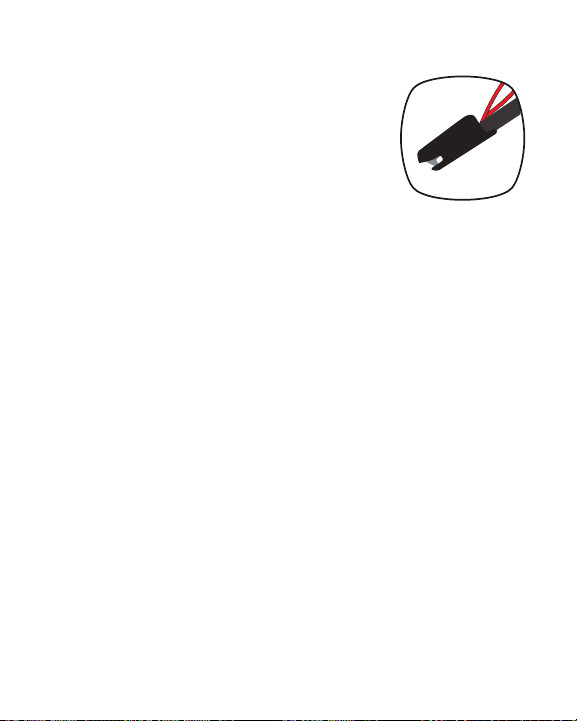
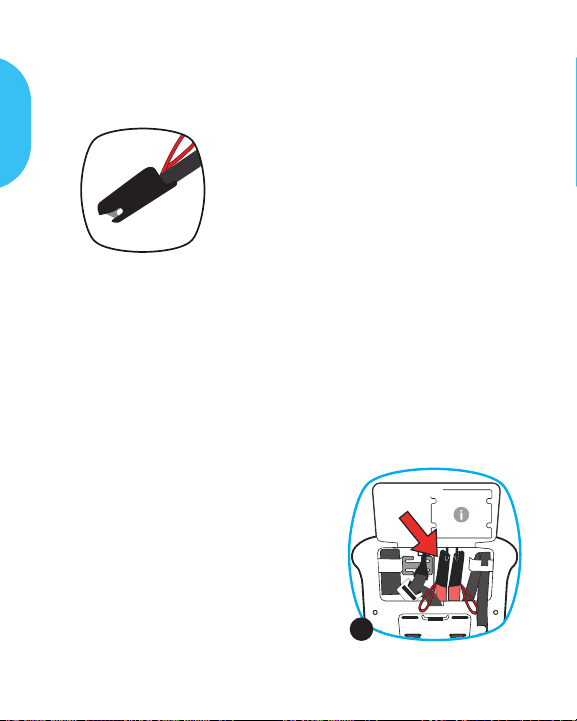
2. Remove LATCH/UAS strap
from storage location on
back of seat. Use LATCH/UAS
red release tabs on LATCH/
UAS connectors and pull
up to remove.
LATCH/UAS
4–35 lb (1.8–15.8 kg)
LATCH Connectors
2
REAR-FACING
diono.com
51
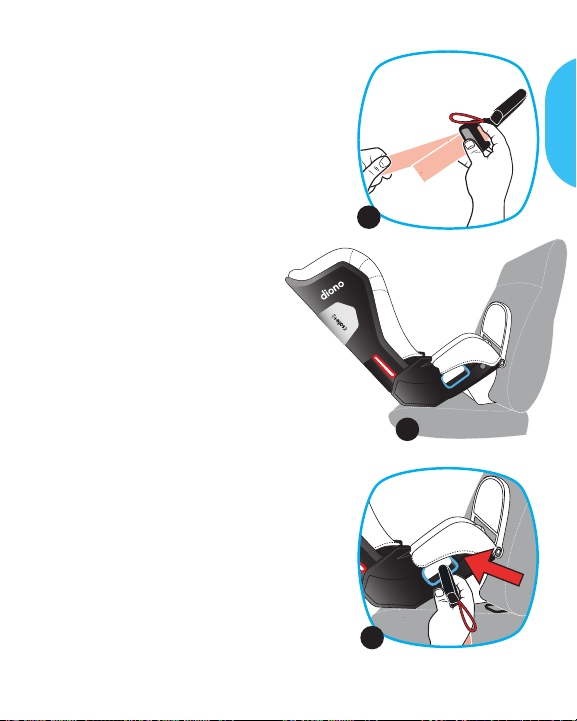
3. Extend the LATCH/UAS strap.
For easier installation, extend the
LATCH/UAS strap to its maximum
length by pressing the grey
button and pulling on the strap.
4. Place car seat rear-facing in
back seat of the vehicle
with detachable rear-
facing base and ARP
installed. Center the car
seat between the vehicle
LATCH/UAS anchors. The seat
bottom and feet of the rear-
facing base should sit at on the
vehicle seat with no overhang.
5. Slide the LATCH/UAS strap
through the rear-facing belt
path and out the other side.
The LATCH strap should lie at
and not be twisted. The red
release loops on the connectors
should be facing up and
tightening mechanism should be
on the child’s left side of seat.
3
4
5
REAR-FACING
52
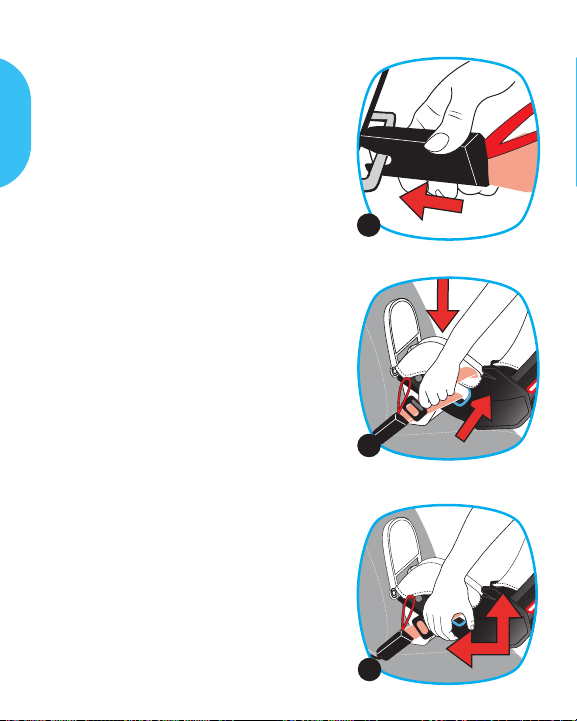
6. Attach LATCH/UAS connectors
to vehicle LATCH/UAS anchors
and listen for audible "click" to
conrm engagement.
7. Tighten the LATCH/UAS strap.
With one hand press down
rmly in the center of the
car seat while tightening the
LATCH/UAS strap with the other
hand. You may need to tighten
further by pulling upwards in-
line with the belt path.
8. Test for tightness. Grab the
seat at the bottom of the rear-
facing belt path. Try to move
the car seat side-to-side and
front-to-back with the force of
a rm handshake. If the seat
moves less than 1 in (2.5 cm), it
is tight enough. DO NOT test
by grasping the top or back
of the car seat. Only check by
grabbing at the rear-facing
belt path opening.
6
7
8
REAR-FACING
diono.com
53
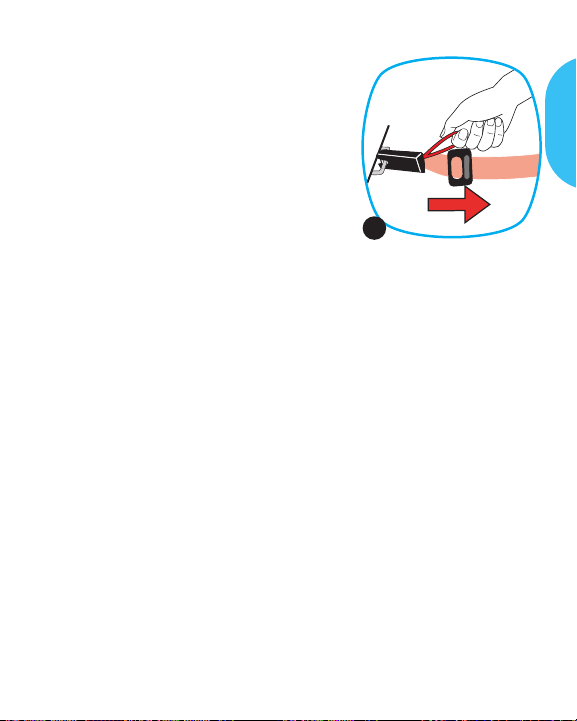
9. To remove LATCH/UAS strap
from vehicle use the LATCH/
UAS red release straps on the
LATCH/UAS connectors and pull
them o the anchor bars.
9
REAR-FACING
54
INSTALLATION WITH:
1. Install detachable rear-facing base (see pg 45) and
ARP (see pg 47).
2. Place car seat rear-
facing in back seat
of the vehicle with
detachable rear-facing
base and ARP installed.
Center the car seat on the
vehicle seat. The seat bottom
and feet of the rear-facing base
should sit at on the vehicle seat
with no overhang.
LAP/SHOULDER BELT
4–50 lb (1.8–22.7 kg)
2
LAP BELT
4–50 lb (1.8–22.7 kg)
REAR-FACING
diono.com
55
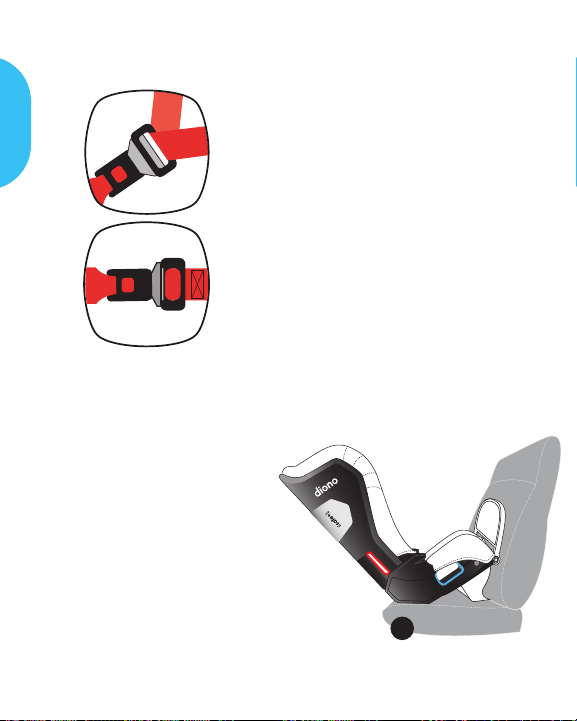
3. Slide the vehicle seat belt
through the rear-facing belt
path and out the other side.
Buckle it. Conrm the seat belt
is at and not twisted.
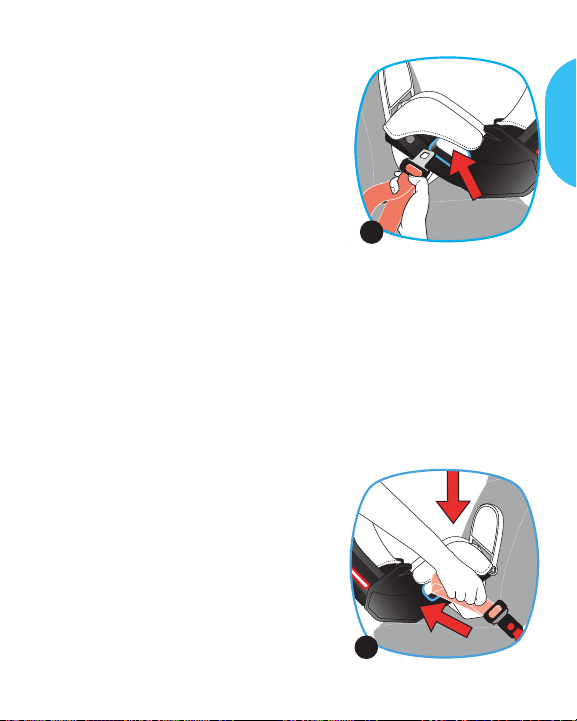
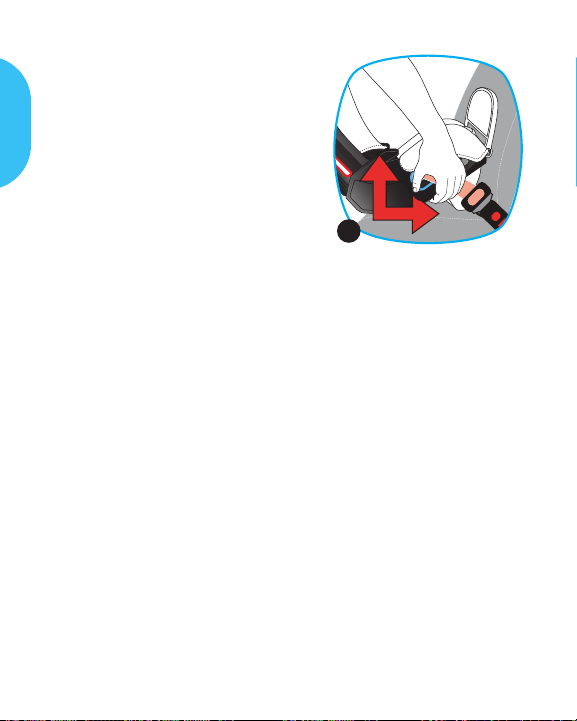
4. Tighten the belt strap,
A. LAP/SHOULDER BELT
Switch your vehicle seat
belt to ALR mode (see pg 28) Once the
retractor is locked, press down rmly in the
center of the seat while pulling on the shoulder
belt nearest to the buckle. Keep tension on the
shoulder belt while feeding the slack back into
the retractor.
OR
B. LAP BELT
To tighten, press down
rmly in the center of the
car seat with one hand
while tightening the lap belt
strap with the other hand.
You may need to tighten
further by pulling in-line
with the belt path.
4
3
REAR-FACING
56
5. Test for tightness. Grab
the seat at the bottom of
the rear-facing belt path.
Try to move the car seat
side-to-side and front-to-
back with the force of a rm
handshake. If the seat moves
less than 1 in (2.5 cm), it is
tight enough. DO NOT test
by grasping the top or back
of the car seat. Only check
by grabbing rear-facing
belt path opening.
5
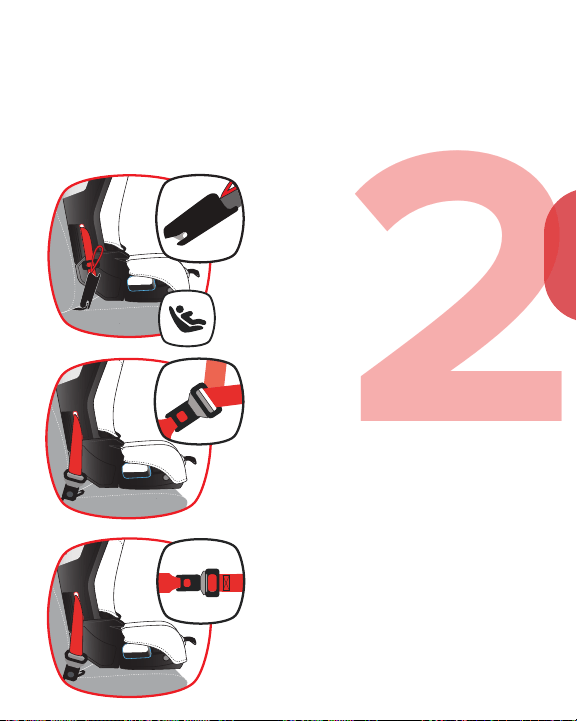
FORWARD-FACING
diono.com
57
2
LATCH/UAS Strap
Vehicle Lap/Shoulder Belt
Vehicle Lap Belt
FORWARD-FACING
Installation instructions
22–65 lb (10–29.5 kg)
30-57 in (76-145 cm)

FOWARD-FACING
58
The American Academy of Pediatrics (AAP), NHTSA,
Transport Canada and Diono recommend that children
be rear-facing until they reach the maximum rear-facing
height or weight. This car seat can remain rear-facing up
to 50 lb (22.7 kg).
• When checked at forward-facing belt path, this
car seat should not move more than 1 in (2.5 cm)
from side-to-side or front-to-back. If using a lap
belt only, refer to your vehicle owners manual for
installation advice.
• Harness straps MUST be above the top of your child’s
shoulders. Place chest clip at armpit level.
• In forward-facing mode, the top of the car seat MUST
be supported by either the vehicle’s head support or
the vehicle’s seat back.
• A gap between the car seat and the vehicle’s seat
back is acceptable as long as the top is supported and
the bottom is at on the vehicle’s seat.
• While using only the lab belt with no available top
tether, you must use the 5th harness slot with the lap
belt cusion.
FORWARD-FACING
diono.com
59
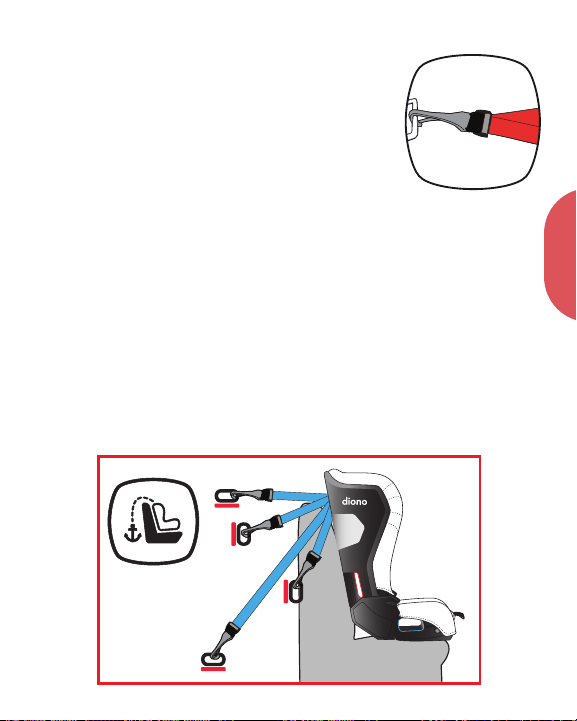
TOP TETHER
ALWAYS Use the top tether.
A tether is designed to reduce
movement of a forward-facing
child restraint in a collision.
Vehicle tether anchors can be found in many locations
within the vehicle. Some of the typical locations are shown
here. Please refer to your vehicle owner’s manual for exact
locations, requirements, and anchor identication points.
After removing slack from top tether, store any excess
webbing so it does not become a safety hazard.
FORWARD-FACING TOP TETHER INSTALLATION
FOWARD-FACING
60
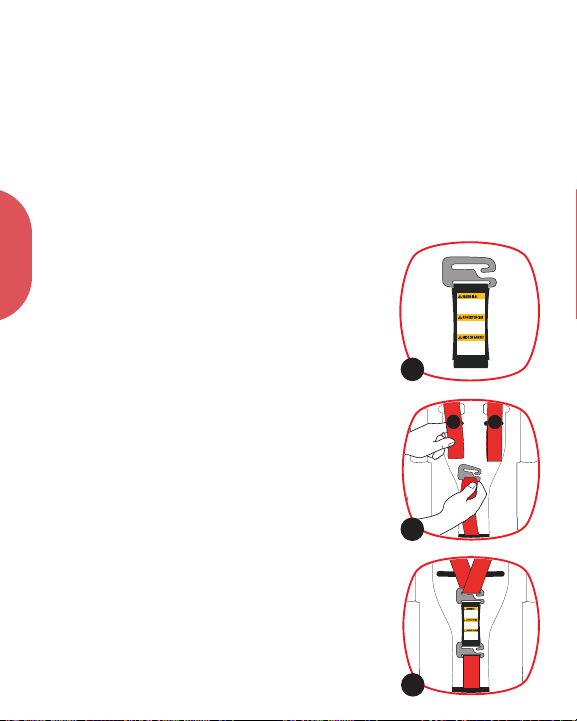
SAFESTOP
SafeStop is for use ONLY in forward-facing installations
with children weighing 22–40 lb (10–18 kg).
DO NOT use rear-facing. DO NOT use in booster mode.
IMPORTANT: The SafeStop will need to be removed
once the child reaches 40 lb (18 kg).
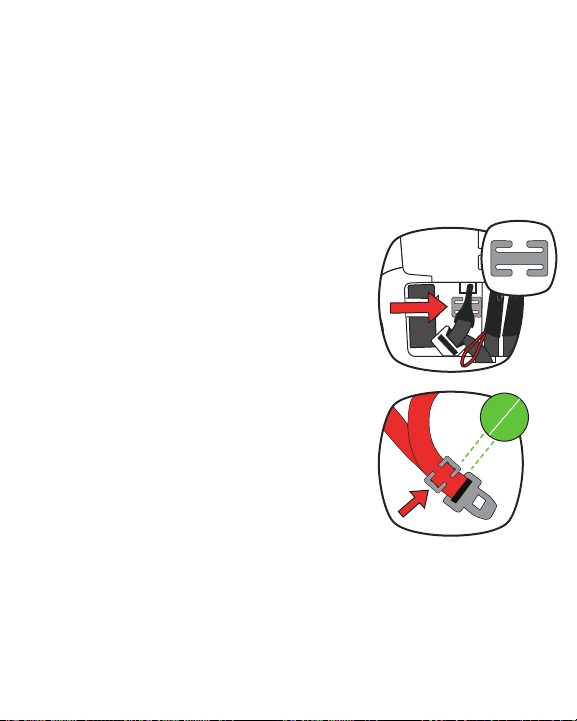
1. Locate SafeStop.
2. Remove harness straps from
metal plate. Once detached,
thread both harness straps onto
the metal hook of the SafeStop.
Connect left side of harness rst,
then follow with the right.
3. 3. Thread bottom of SafeStop Thread bottom of SafeStop
onto the harness strap onto the harness strap
hook. hook. Check to ensure proper
engagement to the metal plate.
Take care to ensure harness straps
are not twisted and are clear from
any obstructions.
1
2
1
2
3
FORWARD-FACING
diono.com
61
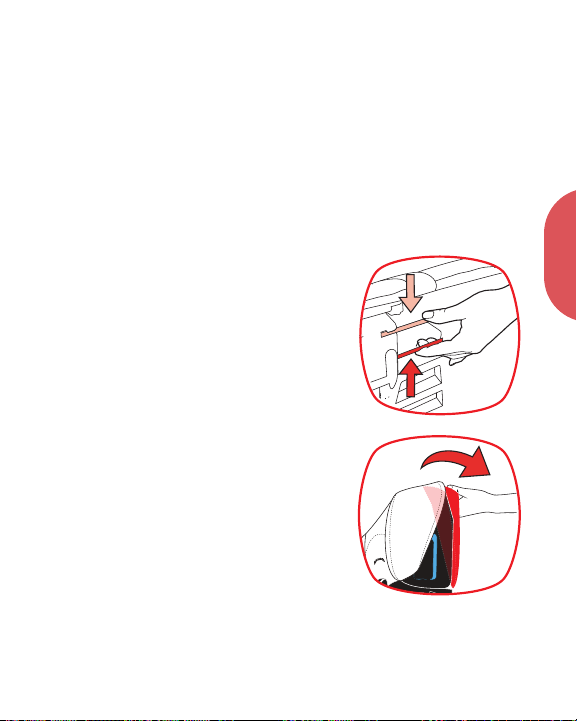
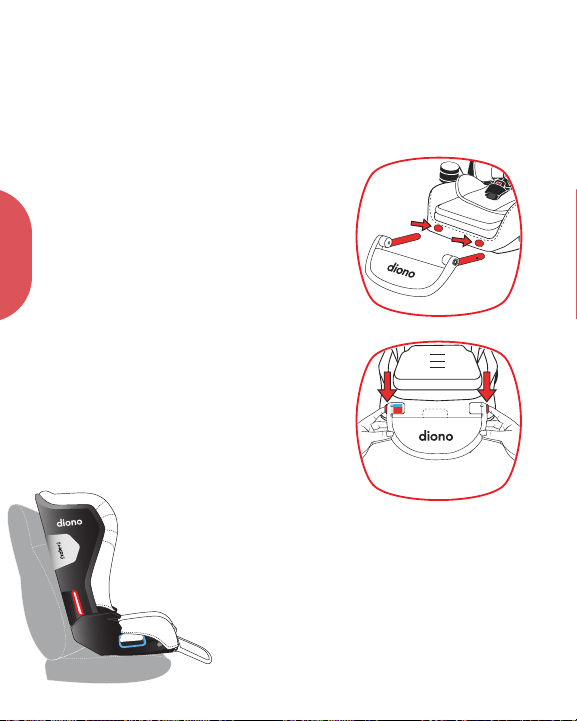
ADJUSTABLE BOTTOM
WARNING! Use adjustable bottom for forward-facing
installs only.
DO NOT use rear-facing. DO NOT use in booster mode.
IMPORTANT: If the child is OVER 25 LB (11.3 KG), lower
the adjustable bottom.
1. Lift the bottom bar up and grasp
the upper bar toward the seat
bottom to release.
2. Pull bar towards you to extend
the adjustable bottom. Listen
for audible “click” to conrm
bottom is in locked position.
To store adjustable bottom, lift the
lower bar up while grasping the
top bar and push the bottom back
into the seat base.
FOWARD-FACING
62
ANTIREBOUND PANEL ARP
NOTE: Anti-rebound panel is for comfort only. It is not
required for forward-facing installs.
1. Place the ARP into the slots on
the front of the car seat until
hearing an audible "click". Pull
bars outwards to conrm lock
in place.
2. Push the buttons on the outside
hinge of the ARP in and rotate the
board down until hearing an
audible "click" at the desired
angle. Push on board to conrm
it is locked into position.
DO NOT use ARP in
rear-facing position when
installed forward-facing.
To remove, press the release buttons on the
outside of the seat and pull the ARP
out. NOTE: You may need to release
one side at a time.
FORWARD-FACING
diono.com
63
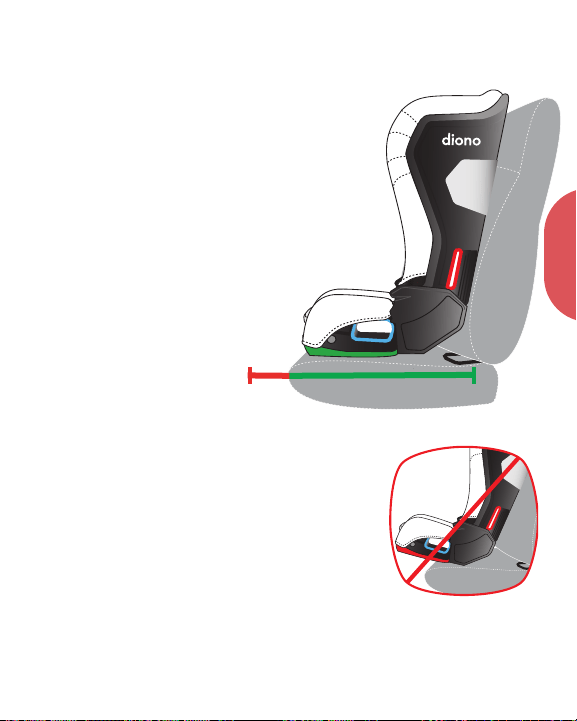
80/20 OVERHANG GUIDANCE
IMPORTANT: To follow 80/20 overhang
guidance, ensure that no more than
20% of the car seat base overhangs
beyond the front edge of the vehicle
seat cushion.
ESTIMATING METHOD
1. Estimate the halfway point
of the car seat base.
2. Then halve the
outer half (the half
farthest from the
seat bight) to mark
the spot that
would be about 75%.
3. Add a bit more to the footprint that
is supported by the seat cushion.
This will be around 80% and that
would be meeting the 80/20
overhang guidance.
If results are unclear using the estimating method, use
a tape measure and do the math.
20%
80%
FOWARD-FACING
64
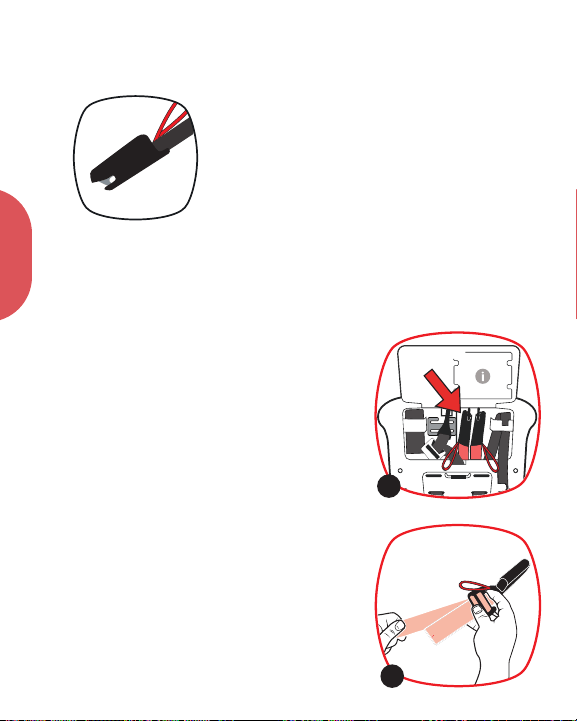
INSTALL USING:
DO NOT install by this method for a child weighing
more than 40 lb (18 kg). Reinstall with lap/shoulder belt
for weights between 40–65 lb (18–29.5 kg).
1. Remove LATCH/UAS strap
from storage location on back
of seat. Use LATCH/UAS release
on the LATCH /UAS connectors
to remove.
2. Extend the LATCH/UAS strap.
For easier installation, extend the
LATCH/UAS strap to its maximum
length by pressing the grey button
and pulling on the strap.
LATCH/UAS
22–40 lb (10–18 kg)
LATCH Connectors
1
2
FORWARD-FACING
diono.com
65
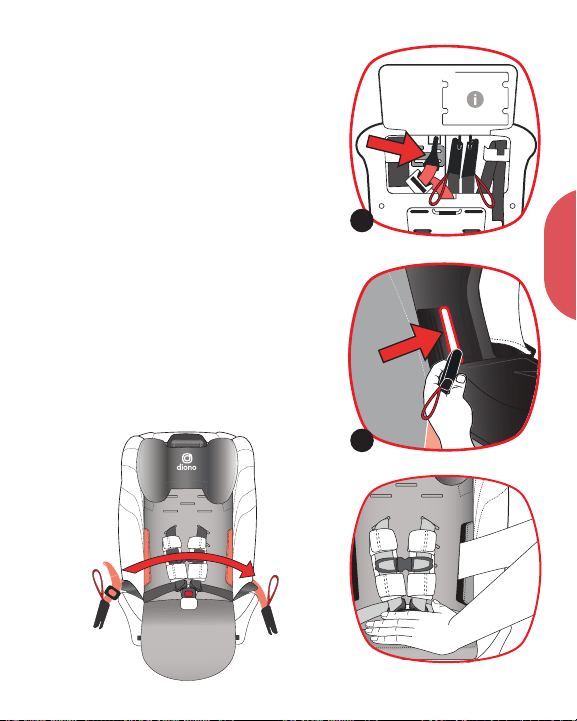
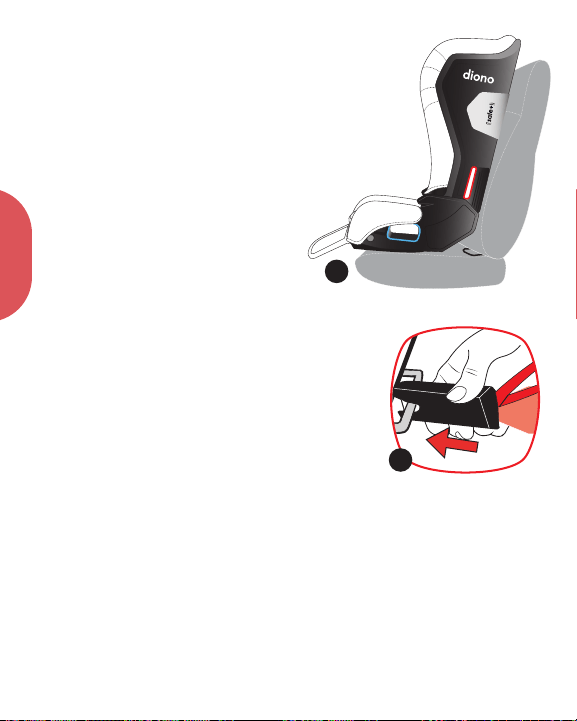
3. Unhook and remove top
tether strap from storage
location on the back of seat.
4. Feed LATCH/UAS connectors
into forward-facing belt
path. The LATCH/UAS
connectors are easier to feed
through by opening side
panels and routing behind
cover. The red release loops
on the connectors should
be facing up and tightening
mechanism should be on the
child’s right side of seat.
Top Tether
3
4
FOWARD-FACING
66
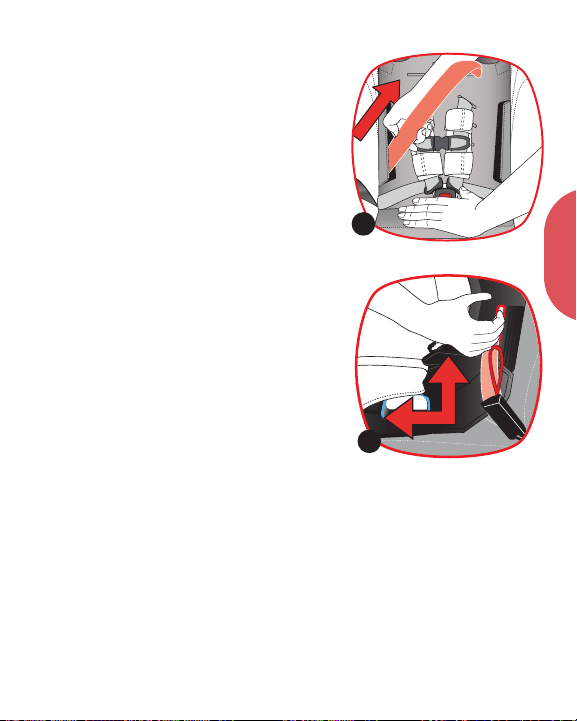
5. Place car seat forward-facing in back
seat of the vehicle. Center the car
seat between the vehicle LATCH/UAS
anchors. The entire seat bottom should
sit at on the vehicle seat. If overhang
is present refer to page 63.
6. Loosely attach tether
strap. Do not tighten.
Consult your vehicle
owners manual for specic
tether anchor locations.
7. Attach LATCH/UAS connectors to
vehicle’s LATCH/UAS anchors and
listen for audible "click" to conrm
engagement. LATCH/UAS strap
should lie at and not be twisted.
5
7
FORWARD-FACING
diono.com
67
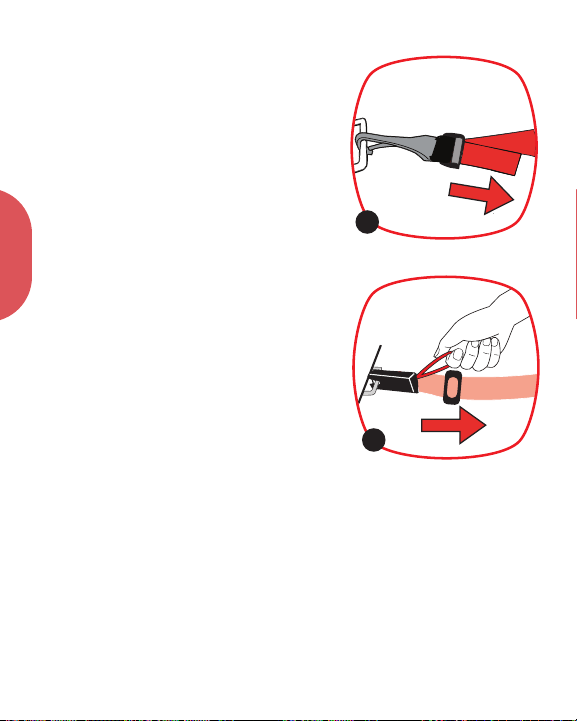
8. Tighten the LATCH/UAS
strap. With one hand press
down rmly in the center of
the car seat while tightening
the LATCH/UAS strap with the
other hand. You may need
to tighten further by pulling
upwards in-line with the
belt path.
9. Test for tightness. Grab the
seat at the forward-facing
belt path. Try to move the car
seat side-to-side and front-
to-back with the force of a
rm handshake. If the seat
moves less than 1 in (2.5 cm), it
is tight enough. DO NOT test
by grasping the top or back
of the car seat. Only check by
grabbing the forward-facing
belt path opening.
9
8
FOWARD-FACING
68
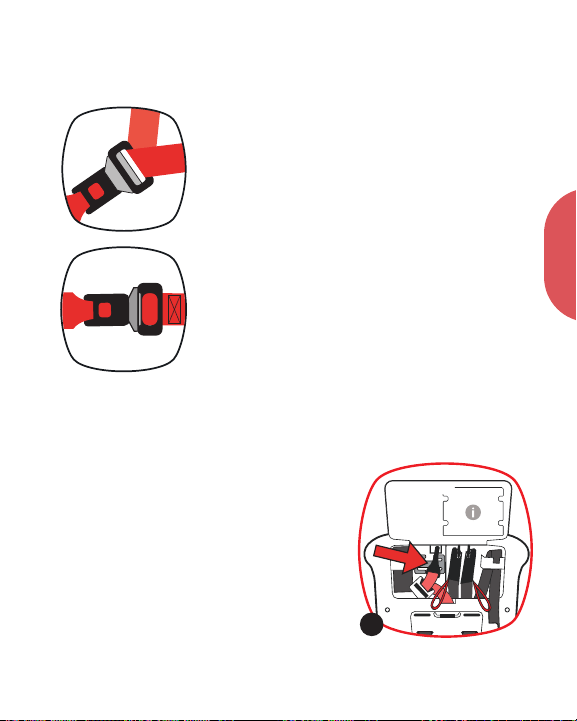
10. Tighten the top tether strap to
remove the slack. There should
not be any extra tension on
the top tether. Do not push
on the car seat back while
tightening. Compressing the
car seat into the vehicle seat
might reslult in a top tether
that is too tight. Store any
excess webbing so it does not
become a safety hazard.
11. To remove LATCH/UAS strap
from vehicle use the LATCH/
UAS red release straps on the
LATCH/UAS connectors and
pull them o the anchor bars.
12. To loosen or remove the top
tether, push in on the grey
button to loosen, then unclip
the top tether.
10
11
FORWARD-FACING
diono.com
69
INSTALL USING:
1. Unhook and remove top tether
from storage location on back
of seat.
2. Place car seat forward-facing
in back seat of the vehicle. The
entire seat bottom should sit as
at as possible on the vehicle
seat. If overhang is present refer
to page 63.
LAP/SHOULDER BELT
22–65 lb (10–29.5 kg)
Top Tether
1
LAP BELT
22–65 lb (10–29.5 kg)
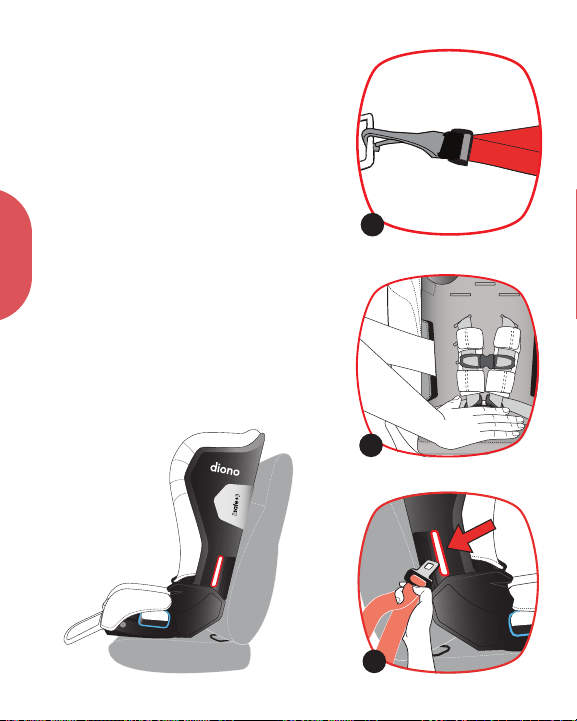
FOWARD-FACING
70
3. Loosely attach top tether
strap. Do not tighten. Consult
your vehicle owner’s manual
for specic location.
4. Unfasten fabric side panels
and reach behind cover for
easy access to belt path.
5. Slide the vehicle seat belt
through the forward-facing
belt path and out the other
side. Buckle it. The seat belt
should lie as at as possible
and not be twisted.
3
5
4
FORWARD-FACING
diono.com
71
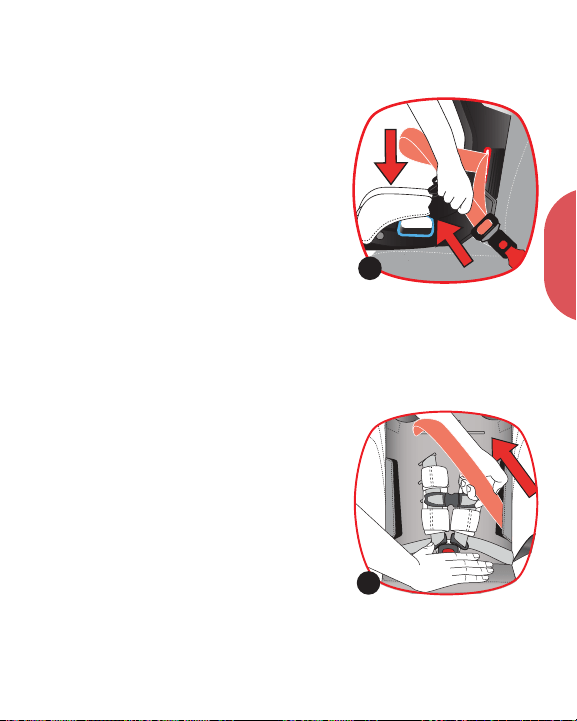
6. Tighten the belt strap,
A. LAP/SHOULDER BELT
Switch your vehicle seat
belt to ALR mode (see pg
28) Once the retractor is
locked, press down rmly in
the center of the seat while
pulling on the shoulder belt
nearest to the buckle. Keep
tension on the shoulder
belt while feeding the slack
back into the retractor.
OR
B. LAP BELT
To tighten, press down
rmly in the center of the
car seat with one hand
while tightening the lap belt
strap with the other hand.
You may need to tighten
further by pulling in-line
with the belt path.
6
A
B
FOWARD-FACING
72
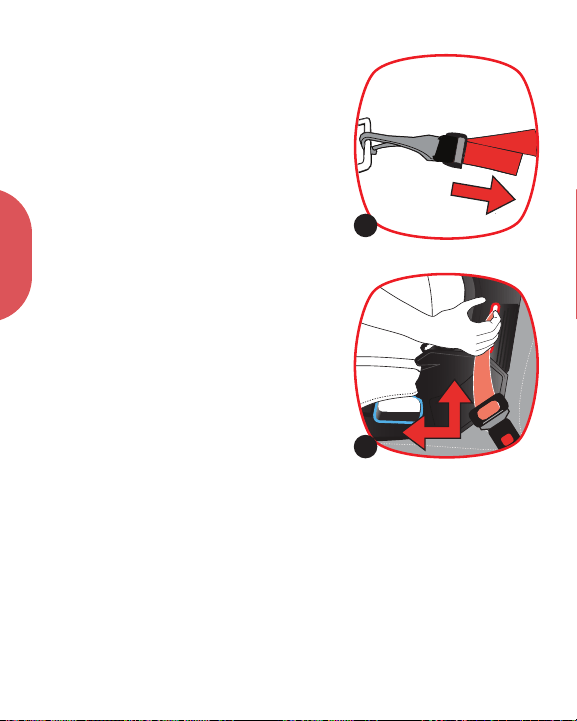
7. Tighten the top tether strap
to remove all the slack. There
should not any extra tension
on the top tether. Do not push
on the car seat back while
tightening. Compressing the
car seat into the vehicle seat
might reslult in a top tether
that is too tight. Store any
excess webbing so it does not
become a safety hazard.
8. Test for tightness. Grab the
seat at the forward-facing
belt path. Try to move the car
seat side-to-side and front-to-
back with the force of a rm
handshake. If the seat moves
less than 1 in (2.5 cm), it is
tight enough. DO NOT test by
grasping the top or back of
the car seat. Only check by
grabbing the forward-facing
belt path opening.
8
7
FORWARD-FACING
diono.com
73
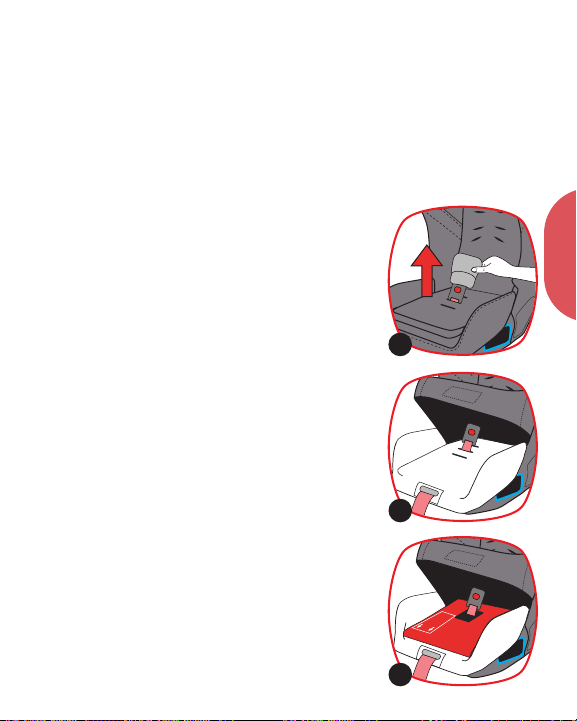
LAP BELT CUSHION
* IMPORTANT! FOR FORWARDFACING
INSTALLATIONS USING A LAP BELT ONLY WITH NO
TOP TETHER ANCHOR AVAILABLE FROM 2265 LB
1029.5 KG. DO NOT USE REARFACING. *
*MUST USE 5TH HARNESS SLOT.*
1. Remove the center buckle pad
by pulling it carefully up and over
the buckle.
2. Unclip seat cover from seat
bottom. Lift seat cover away
from the seat bottom and remove
the buckle.
3. Place lap belt cushion on seat
bottom, and slide the buckle
through the slot in the cushion.
4. Guide buckle through seat cover
bottom and memory foam cushion.
Reattach cover to seat bottom.
5. Reinstall the center buckle pad.
Should you need a longer buckle,
these are available by calling
customer care.
2
1
3
BOOSTER
74
3
BOOSTER MODE
Installation instructions
40–120 lb (18–54 kg)
40-57 in (101-145 cm)
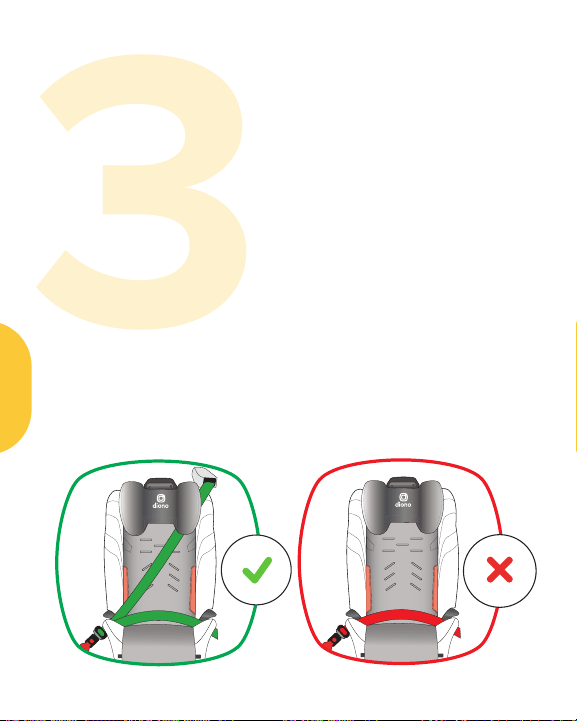
WARNING! use ONLY the vehicle lap and shoulder belt
system when restraining the child in the booster seat.
• DO NOT use a lap belt only!
• DO NOT use with detachable base.
• DO NOT use with adjustable bottom lowered.
• DO NOT use if the child’s shoulders are not at or
above the 4th harness slot.
BOOSTER
diono.com
75
ALWAYS secure the child restraint when it is unoccupied
using the vehicle lap/shoulder belt or LATCH/UAS
connectors. It could injure other occupants in a sudden
stop or collision.
1. Remove the 5-Point harness (see pg 82).
2. Place child in car seat with their back at against the
back of the seat. The entire seat bottom should sit as at
as possible on the vehicle seat. If overhang is present
refer to page 63.
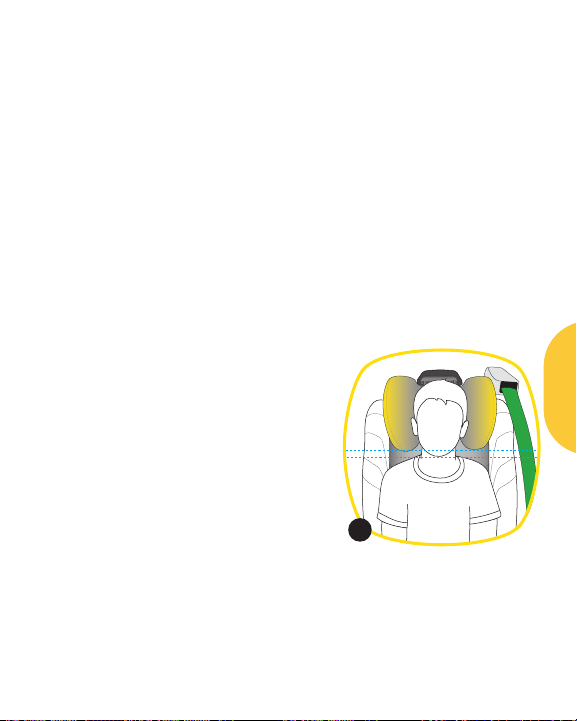
3. Adjust head support to
proper height. The bottom
of the headrest should be
even with the child’s jaw.
Squeeze the head support
adjustment lever on the
back of the booster seat to
adjust its height up or down
to t the child.
Continued on the next page
3
BOOSTER
76
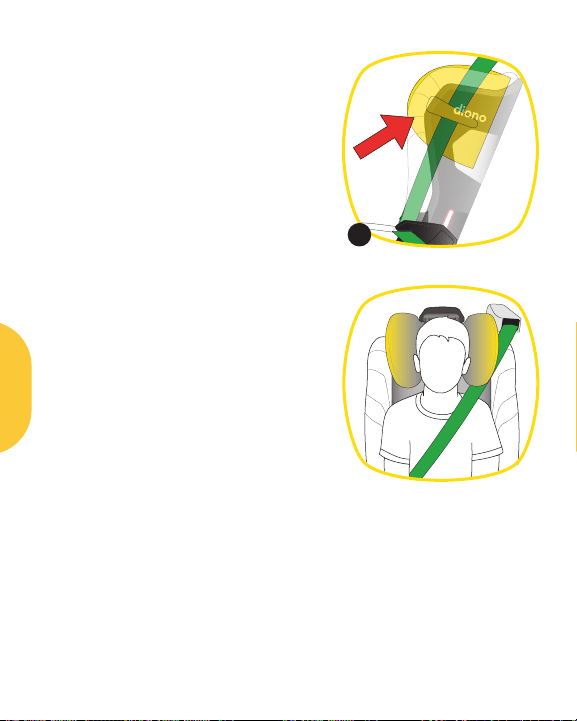
4. Feed the shoulder belt
through the upper belt guide
and over booster seat.
IMPORTANT! When the
shoulder belt is routed
through the upper belt guide,
pull some webbing out of the
retractor. Slowly release it to
make sure the belt property
feeds back into the retractor.
Do this between each use.
If the belt does not retract
properly, you must choose
another seating position or
continue to use the seat in
harness mode if the child is
still within the forward-facing
height or weight limits.
4
BOOSTER
diono.com
77
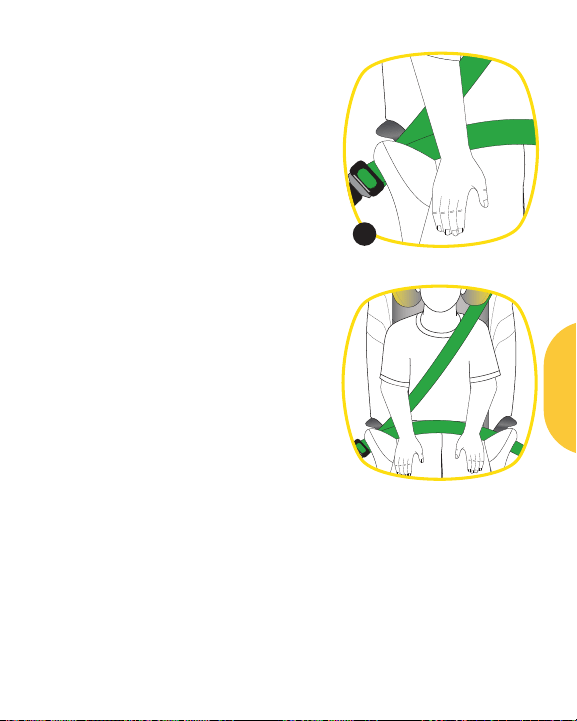
5. Buckle the vehicle seat belt
making sure the lap portion of
the belt goes under both lower
belt guides and lays across
your child’s hips. DO NOT lay
belt high over the child’s belly.
Be sure the shoulder belt lays
across your child’s shoulders,
between the neck and edge
of the shoulder. The shoulder
belt should NOT hover over
the shoulder or touch the
child’s neck.
Make sure shoulder belt is
under the lower belt guide
and closest to the buckle.
5
78
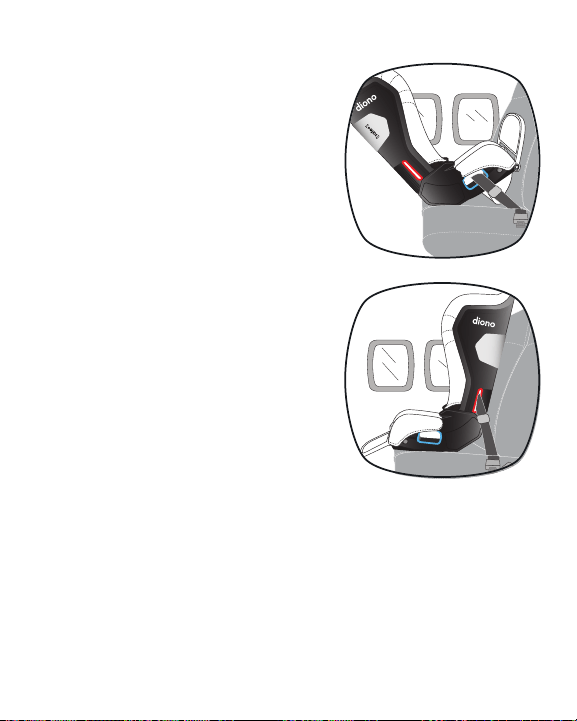
1. Adjust the seat belt buckle to its
shortest length to ensure the
buckle is not in the belt path
and accessible for release.
2. Ask the ight attendant for a
“seat belt extender” and then
use this extender to adjust the
seat belt length.
3. Follow the instructions for
the lap belt installation for
rear-facing (see pg 53) and for
forward-facing (see pg 68).
THIS RESTRAINT IS NOT
CERTIFIED FOR USE IN AIRCRAFT
IN BOOSTER MODE. Aircraft
seats do not have shoulder belts
which are required for booster
mode with this child restraint.
AIRCRAFT INSTALLATION
diono.com
79
CUP HOLDER
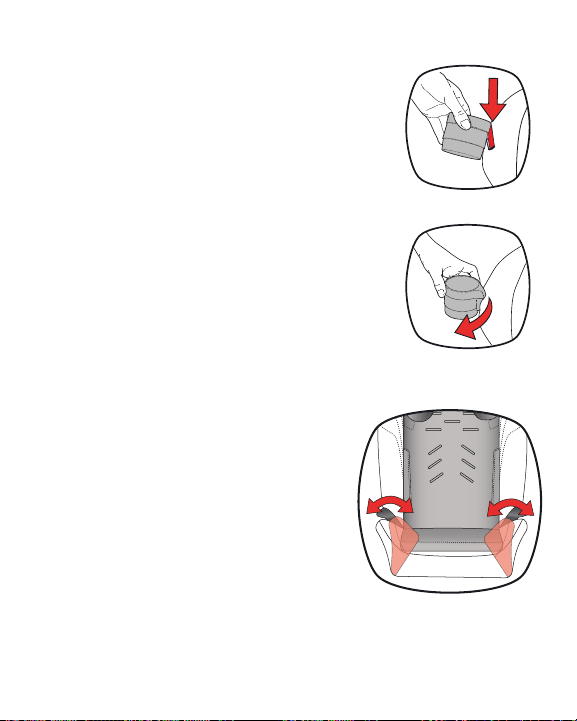
1. To attach your cup holder, locate
the cup holder icon on seat cover
on either side of the seat.
2. Insert the cup holder into the slot
in the seat. Push down to securely
engage the cup holder into the slot
and twist to secure.
CAUTION: DO NOT use with hot liquids
as this could burn a child.
EXPANDABLE SIDE WINGS
The side wings can be adjusted for
comfort. These will not impact the
safety of the car seat in any manner.
Simply push the side wings outward
as shown to extend.
COMFORT FEATURES
80
TODDLER LINER
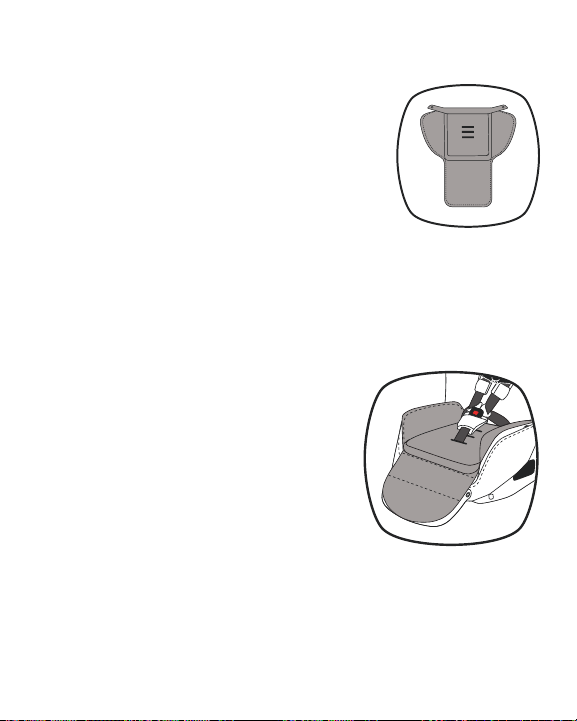
A seat liner for toddlers is provided for
comfort and does not aect the safety of
the seat.
DO NOT use in rear-facing installations.
DO NOT use with infant support cushion and/or newborn
protection insert.
ALWAYS secure toddler liner to seat cover with snaps.
Forward-Facing Installation:
1. Unbuckle harness and remove
buckle pad.
2. Insert memory foam cushion into
toddler liner.
3. Thread the buckle through the slot appropriate for the
weight of your child and replace buckle pad (if needed).
4. Fasten snaps to back side of cover behind harness slots.
COMFORT FEATURES
diono.com
81
COMFORT FEATURES
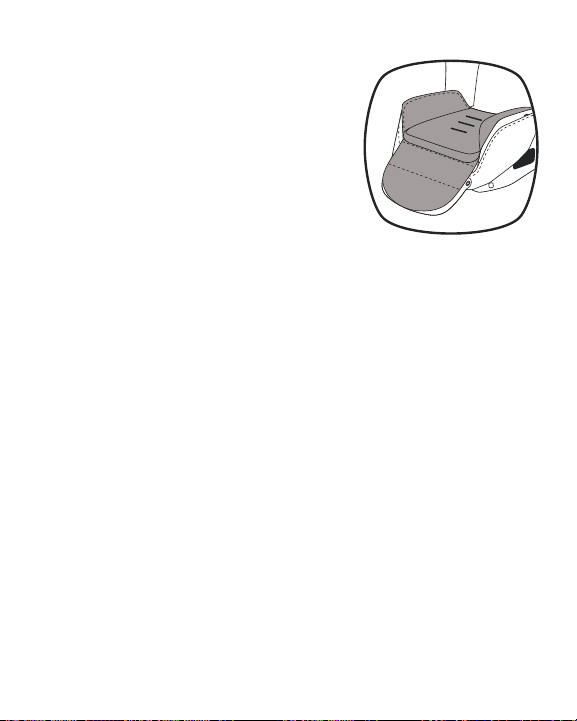
Booster Installation:
1. Remove harness (see pg 82)
2. Insert memory foam cushion into
toddler liner.
3. Fasten snaps to back side of cover
behind harness slots.
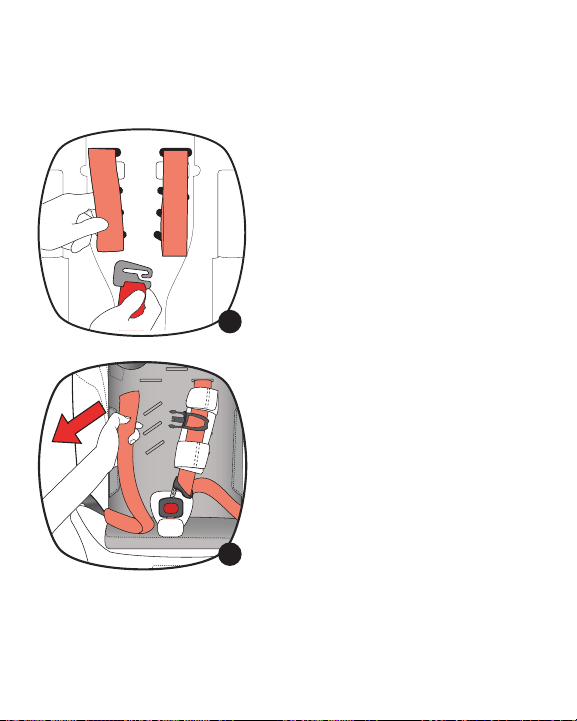
82
HINT: Before removal have your phone handy and take
photos of the process for future reference.
1. Remove harness straps
from the metal hook on
back of seat.
2. From the front of the seat,
pull the harness straps
through and out of the
harness slots. Remove the
harness pads and chest clip
from each side.
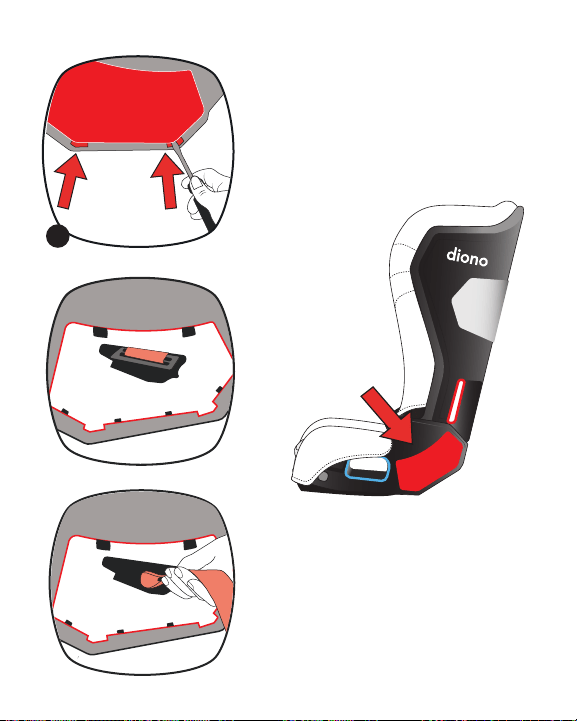
3. Using a standard
screwdriver, locate the
notches in the harness
access panel near the
lower belt guides and pull
the panel away from the
seat shell. Remove old
harness straps from each
side of the seat.
HARNESS STRAP REMOVAL
1
2
diono.com
83
HARNESS STRAP REMOVAL
3
84
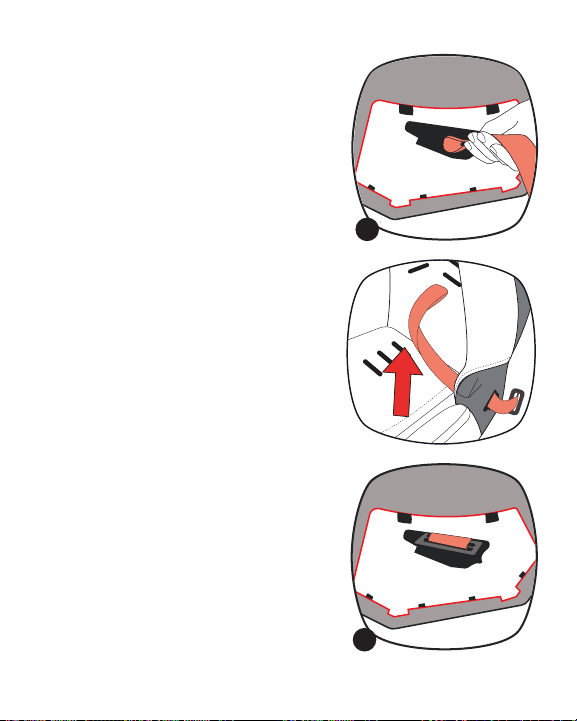
HARNESS STRAP REPLACEMENT
HINT: Before installation have
your phone handy and take
photos of the process for future
reference.
1. Insert new harness strap
through the harness panel slot
and pull the strap up.
2. Once the strap is pulled up
until the metal retainer is
located as shown, re-fasten
and close the access panel
by pushing onto slot until an
audible “click” is heard.
1
2
diono.com
85
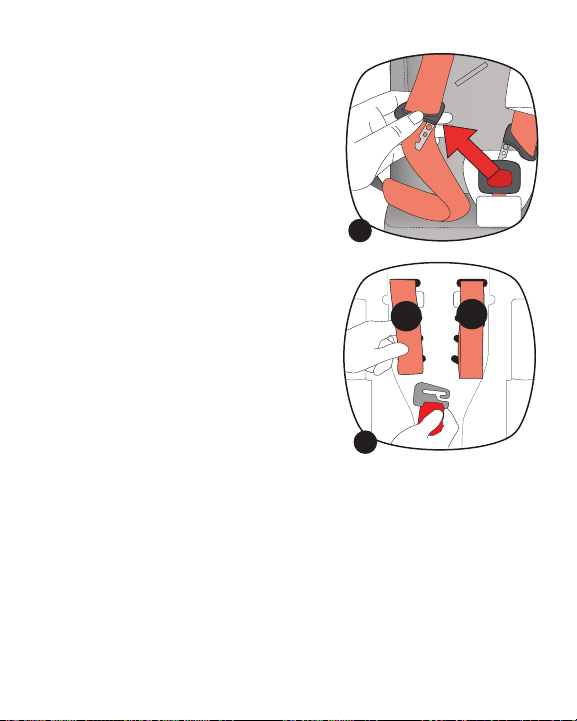
3. Slide the new harness straps
through the buckle tongues
in the center buckle, re-attach
the chest clip and reinstall the
harness pads. Making sure the
harness straps are oriented
correctly and not twisted.
4. Re-secure the harness straps
to the metal plate. Make sure
to secure the left strap onto the
metal hook rst then secure
the second strap onto the
metal hook.
5. Tighten the harness (see pg 39).
HARNESS STRAP REPLACEMENT
2 nd
1st
3
4
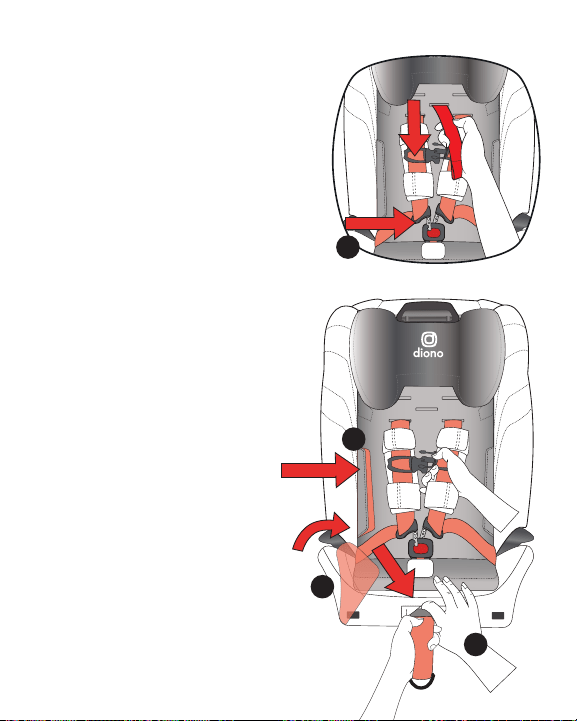
86
1. Unbuckle harness and take
out the red carry strap from
behind the cover.
2. Unfasten both fabric panels
and open fully.
3. Adjust both expandable side
to their inward position.
4. Press down on silver
harness release button to
loosen harness straps, pads
and chest clip.
2
3
4
1
FOLDING CAR SEAT
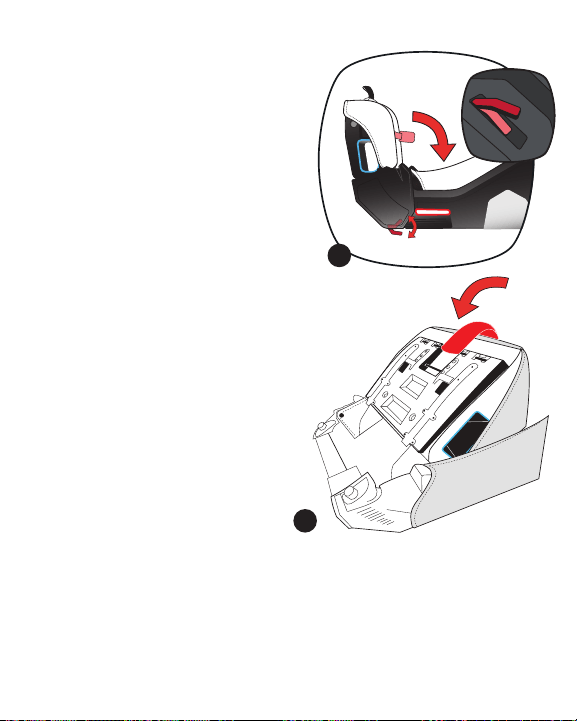
diono.com
87
5. Place car seat on its back,
pull on the red release
levers while pushing the car
seat forward in on itself.
6. Fasten red carry strap on
the rst metal bar on the
bottom of the seat.
IMPORTANT: Make sure car
seat is correctly secured by
carry strap. Injury could occur
if unproperly secured.
6
FOLDING CAR SEAT
5
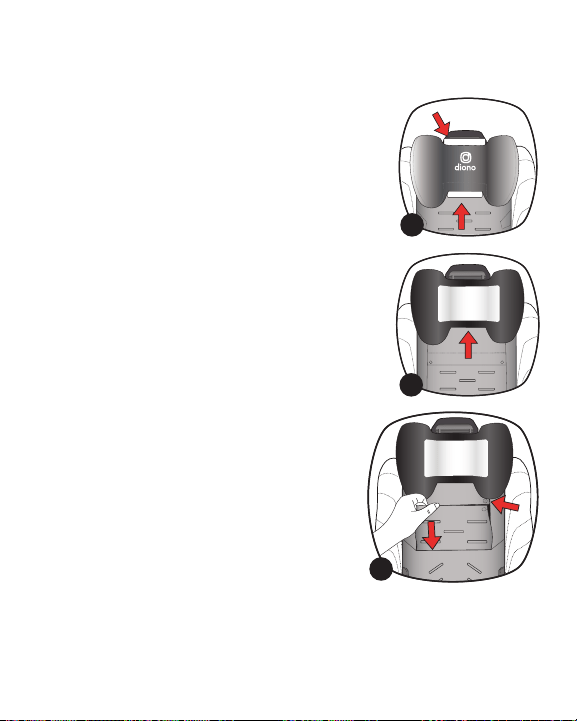
88
SEAT COVER REMOVAL
HINT: Before removal have your phone
handy and take photos of the process
for future reference.
1. Remove harness (see pg 82).
2. Remove headrest cover by pulling on
tabs located on at the center of the
headrest along the top and bottom.
Remove headrest cover.
3. Push headrest up to highest position.
4. Locate and unfasten snaps under ap
located under headrest.
2
4
3
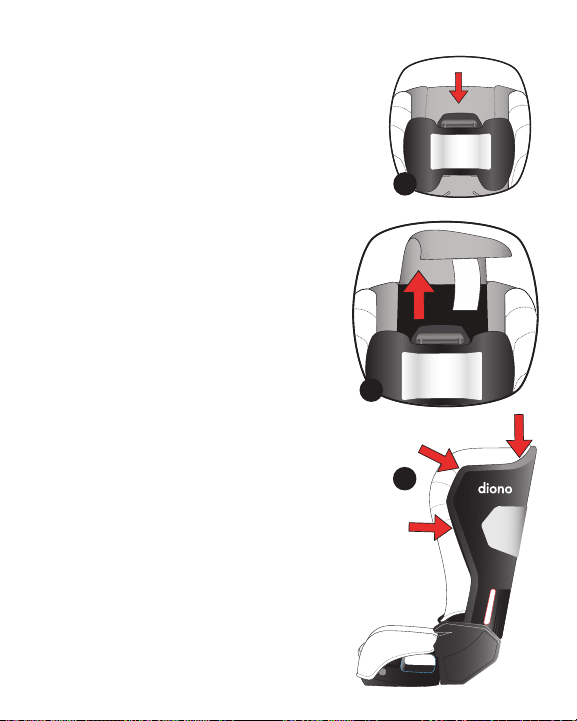
diono.com
89
SEAT COVER REMOVAL
5. Push headrest to lowest postiton.
6. Pull top ap up from behind
the headrest.
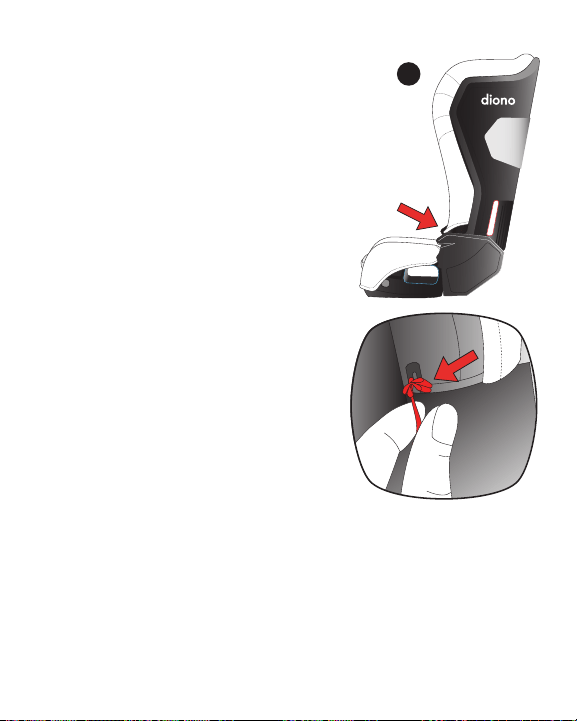
7. Gently pull the car seat fabric out of
the plastic channel around the shell
of the car seat.
5
6
Continued on the next page
7
90
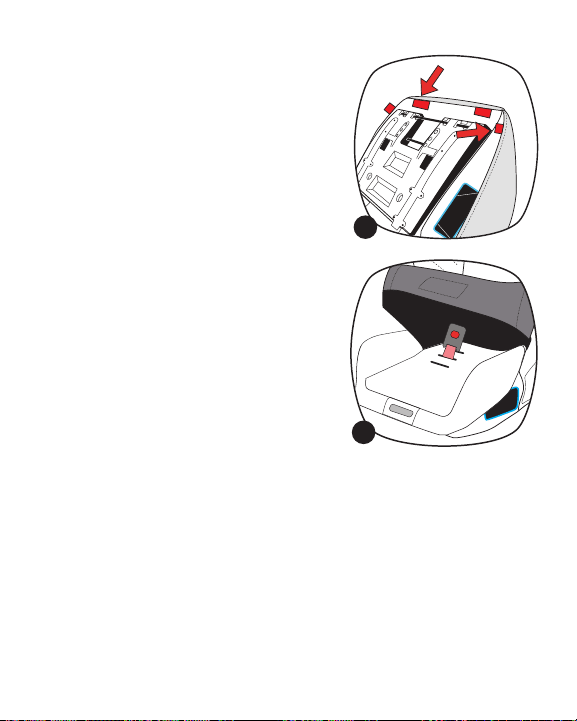
SEAT COVER REMOVAL
8. Pull the elastic band up and
around to remove from channel.
8
diono.com
91
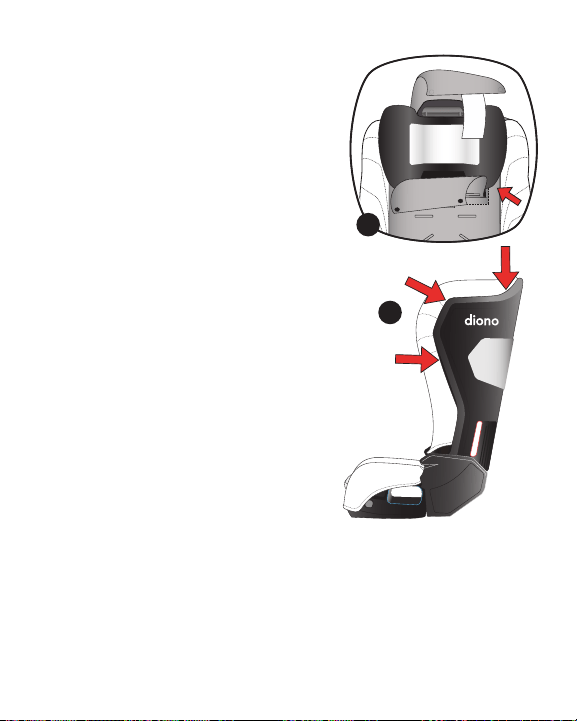
9. Remove four plastic tabs from
slots located on the sides of the
bottom front of seat.
10. Remove buckle from memory
foam cushion and seat cover
bottom and pull seat cover free
from seat shell.
SEAT COVER REMOVAL
10
9
92
SEAT COVER INSTALLATION
HINT: Before installation have
your phone handy and take
photos of the process for future
reference.
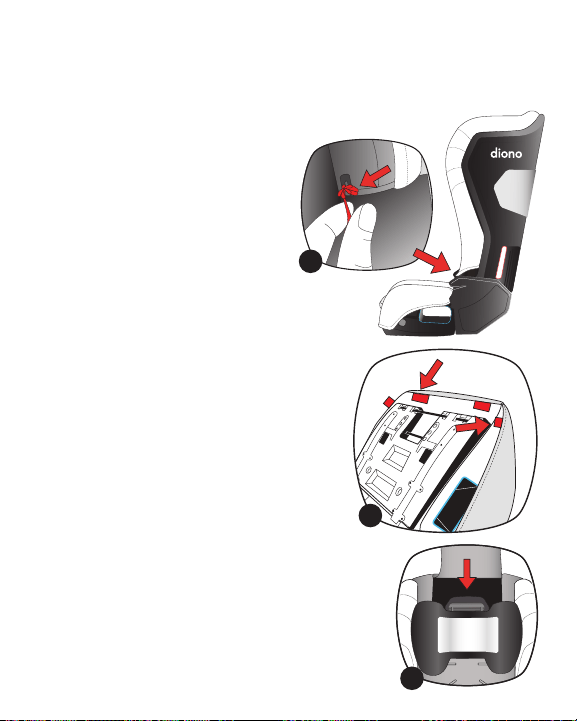
1. Pull car seat cover over car
seat headrest.
2. Tuck the elastic edge of the
car seat cover into the car seat
shell channel located along the
edge of the car seat. Tip: You
may need to use a at head
screwdriver to carefully push
cover into channels located
on the seat shell.
1
2
diono.com
93
SEAT COVER INSTALLATION
3. Pull elastic bands up and around shell channel tabs
located on both sides of the car seat shell near the lower
booster belt guides.
4. Pull seat cover bottom
over the side wings and
base of the car seat and
insert the four plastic tabs
into dedicated slots.
5. Direct focus up to the headrest
and move the headrest to the
lowest position.
3
4
5
94
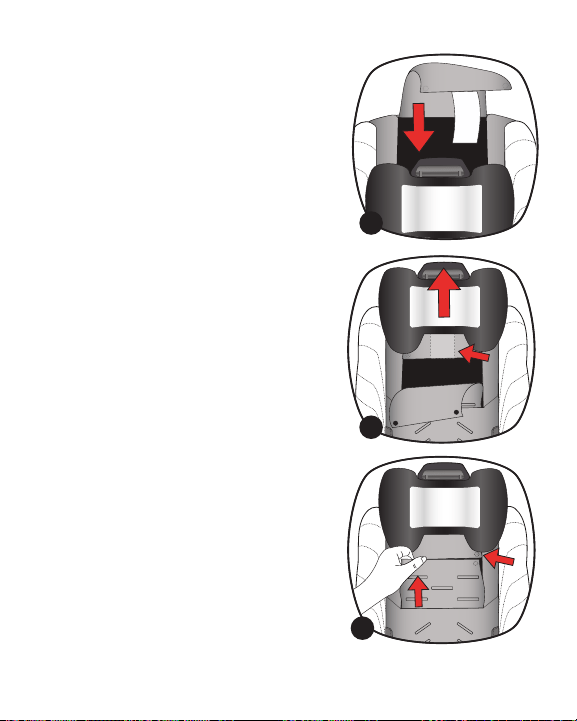
6. Gently guide plastic ap
attached to top fabric ap
underneath the headrest,
making sure fabric ap is not
twisted and lays at.
7. Gently raise the headrest to the
highest position and pull all
the top fabric ap down. Tuck
plastic ap under top fabric ap.
8. Pull bottom fabric ap up,
making sure it is at and not
twisted. Insert snaps into holes
of the top fabric ap and then
into shell. You will hear an
audible click.
SEAT COVER INSTALLATION
6
7
8
diono.com
95
SEAT COVER INSTALLATION
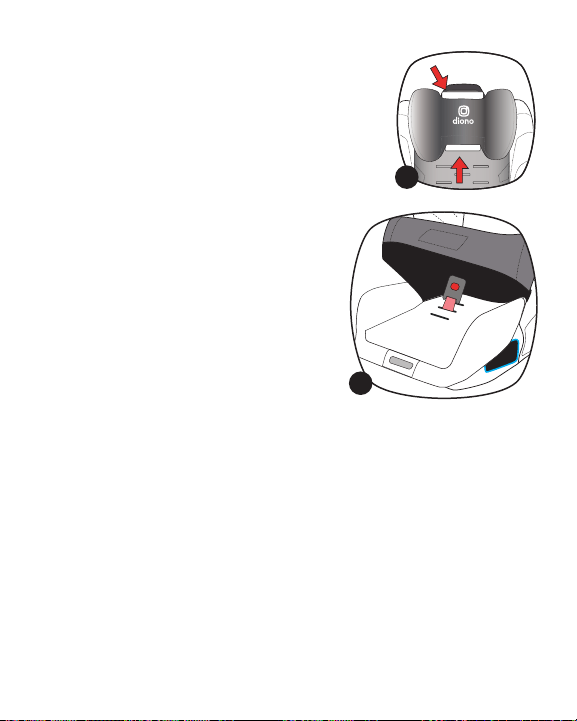
9. Pull headrest cover over headrest
and insert plastic tabs into top and
bottom of headrest.
10. Insert buckle into memory foam
cushion and seat cover bottom
and pull through appropriate
cushion slot.
11. Attach harness to car seat
(see pg 78).
10
9
96
CARE & MAINTENANCE
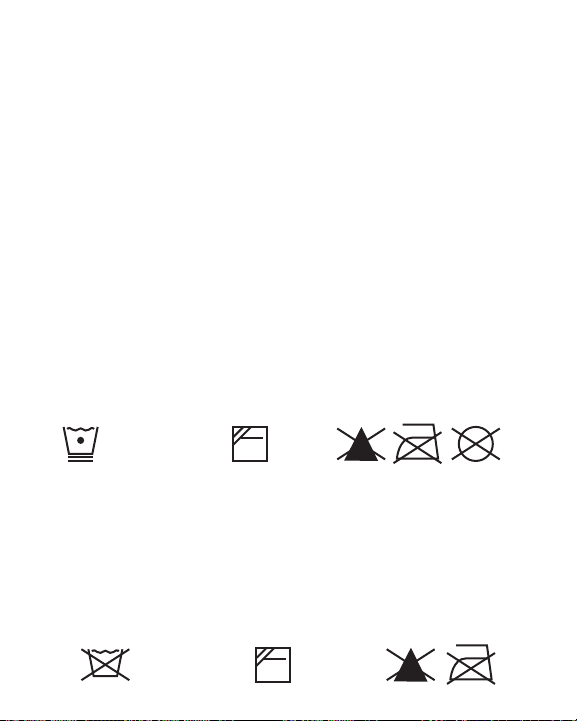
CLEANING FABRICS: Seat cover, infant support, newborn
proteciton insert, center buckle pad and harness pads.
REMOVE memory foam insert from seat pad, newborn
protection insert pad and harness pads prior to washing.
DO NOT wash memory foam.
REMOVE infant support wedge from infant support
cushion before washing. REMOVE newborn protection
wedge from newborn protection insert before washing.
DO NOT wash support wedges.
Machine or hand wash fabrics in cold water on gentle cycle
with mild detergent. Dry at and away from direct sunlight
before re-use or storage. DO NOT bleach, iron or dry clean.
CLEANING HARNESS AND BUCKLE STRAPS: Clean with
damp cloth only. Wet cloth with warm water and mild
soap. Wring cloth thoroughly and spot clean. Allow to dry
completetly before use. DO NOT use solvents, bleach
or abrasive cleaners. DO NOT soak or submerge the
harness webbing.
Spot clean only with
warm water. Use
mild detergent
Towel dry completely
before re-use
DO NOT bleach
EN
CLEANING FABRICS: Seat pad, infant support, harness and
buckle pads
CLEANING HARNESS: Harness and buckle straps
CLEANING PLASTICS: Seat shell and components
Machine wash in cold
water on gentle cycle
using mild detergent
Dry flat and in
the shade only
DO NOT bleach, iron
or dry clean
Spot clean only with
warm water. Use
mild detergent
Dry flat and in
the shade only,
before re-use
DO NOT bleach or
iron
Spot clean only with
warm water. Use
mild detergent
Towel dry completely
before re-use
DO NOT bleach
EN
CLEANING FABRICS: Seat pad, infant support, harness and
buckle pads
CLEANING HARNESS: Harness and buckle straps
CLEANING PLASTICS: Seat shell and components
Machine wash in cold
water on gentle cycle
using mild detergent
Dry flat and in
the shade only
DO NOT bleach, iron
or dry clean
Spot clean only with
warm water. Use
mild detergent
Dry flat and in
the shade only,
before re-use
DO NOT bleach or
iron
diono.com
97
CARE & MAINTENANCE
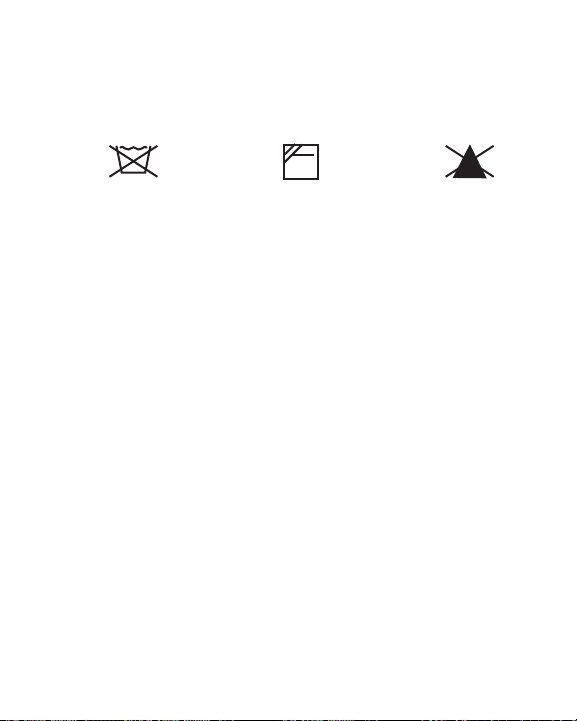
CLEANING PLASTICS: Spot clean using a damp cloth and
warm water with mild detergent. Towel dry completely
before re-use or storage. DO NOT bleach.
CLEANING CENTER BUCKLE: Remove center buckle from
car seat. Gently rinse ONLY the buckle mechanism in mildly
hot water, or soak overnight. DO NOT get the buckle strap
wet. Towel dry center buckle. Make sure buckle is working
correctly before reconnecting center strap to car seat. DO
NOT use detergents or lubricants.
Spot clean only with
warm water. Use
mild detergent
Towel dry completely
before re-use
DO NOT bleach
EN
CLEANING FABRICS: Seat pad, infant support, harness and
buckle pads
CLEANING HARNESS: Harness and buckle straps
CLEANING PLASTICS: Seat shell and components
Machine wash in cold
water on gentle cycle
using mild detergent
Dry flat and in
the shade only
DO NOT bleach, iron
or dry clean
Spot clean only with
warm water. Use
mild detergent
Dry flat and in
the shade only,
before re-use
DO NOT bleach or
iron

98
WARRANTY
As a part of this Diono Warranty Policy (Policy), Diono, L.L.C. dba Diono, a Washington limited
liability company (Diono U.S.A.), and its foreign-related companies, Diono ULC, a Canadian
unlimited liability company (Diono Canada), Diono Ltd. a United Kingdom limited company
(Diono U.K.), and Diono GmbH, a German company with limited liability (Diono E.U.) (Diono
U.S.A., Diono Canada, Diono U.K., and Diono E.U. shall be collectively referred to herein as
Diono), warrants its products, namely its car seats, strollers, baby carriers, and accessories
thereto (collectively, the Products) to their non-merchant original retail Product purchasers
(collectively, the Purchasers) as follows:
1. REGISTRATION
To qualify for the warranties detailed in this Policy, Diono instructs all Purchasers to complete the
online Product Registration form and mail the owner registration card included in the Product
Purchase to Diono within (30) days of purchase. Failing to take such actions may prevent a Purchaser
from qualify for the warranties detailed in this Policy. For more information about Product
registration, Purchasers are recommended to refer to their Product’s Product Manual, the Diono
Instruction Manual, and/or contact Diono as provided in Section 9 of this Policy. Such registration
requirements detailed in this subsection of the Policy do not apply to warranties provided by Diono
E.U. as detailed in Section 2.4 below.
2. GENERAL WARRANTY PERIOD
2.1 General U.S. Warranty Period. Diono U.S.A. warrants to Purchasers that its Products will be free
from defects in material and workmanship for one (1) year from the date of original purchase (the
U.S. Warranty Period). During the U.S. Warranty Period, Diono U.S.A. will, at its option, repair or replace
a Product if it is found by Diono U.S.A. to be defective in material or workmanship.
2.2
General Canadian Warranty Period. Diono Canada warrants to Purchasers that its Products
will be free from defects in material and workmanship for one (1) year from the date of original
purchase (the Canadian Warranty Period). During the Canadian Warranty Period, Diono Canada will,
at its option, repair or replace a Product if it is found by Diono Canada to be defective in material or
workmanship.
2.3
General U.K. Warranty Period. Diono U.K. warrants to Purchasers that its Products will be free
from defects in material and workmanship for one (1) year from the date of original purchase (the
U.K. Warranty Period). During the U.K. Warranty Period, Diono U.K. will, at its option, repair or replace
a Product if it is found by Diono U.K. to be defective in material or workmanship.
2.4
General European Warranty Period. Diono E.U. warrants to Purchaser that its Products are in
conformity with their original contracts of sale (collectively, the Contracts), and notably will be free
from defects in material and workmanship at the time the Products were delivered to Purchaser, for
two (2) years from the date of original purchase (the European Warranty Period). The Products are
presumed to be in conformity with the Contract if they are t for the purposes for which products of
the same type are normally used, or show the quality and performance which are normal in products
of the same type and which Purchaser can reasonably expect, given the nature of the Products and
taking into account any public statements on the speci c characteristics of the goods made about
them by Diono, particularly in advertising or on labelling. Purchaser must inform Diono E.U. of the
Lack of Conformity within a period of two (2) months from the date on which Purchaser detected
such lack of conformity discovery. There shall be deemed to not be a Lack of Conformity at the time
the Contract was concluded when Purchaser was aware, or could not reasonably be unaware, of the
Lack of Conformity. During the European Warranty Period, Diono E.U. will, at the Purchaser’s option,
repair or replace a Product free of charge, within a reasonable time and without any signi cant

diono.com
99
WARRANTY
inconvenience to the Purchaser, if it is found by Diono E.U. to be defective in material or
workmanship respectively, unless this is impossible or disproportionately burdensome. When repair
or replacement of a Product are impossible or disproportionately burdensome, the Purchaser may
request a refund of the Product or a reduction of its price in proportion to the degree of
non-conformity of the said Product, otherwise in accordance with the Diono Return Policy.
3. EXTENDED EXPRESS WARRANTIES
3.1 Quali cations. Diono warrants to Purchasers an extended warranty (Extended Warranty) for
certain Products, namely (a) 2020 model year strollers and car seats (namely, Radian R and Q,
Monterey, Cambria, Everett and Solana, and strollers (Flexa and Excurze)), and (b) Diono Canada car
seats and strollers (collectively, Extended Warranty Products) that will be free from defects in material
and workmanship for a period of two (2) years after the general warranty periods detailed in Section
2 of this Policy (the Extended Warranty Period) has expired, provided that: (i) such Extended Warranty
Product(s) were purchased new from the Website; (ii) its Purchasers have fully registered their
Extended Warranty Products on the Website within two (2) months of purchase; and (iii) An original
receipt of purchase for such Extended Warranty Product(s) are provided to Diono for veri cation. This
Extended Warranty applies only in the U.S.A., the U.K. and Germany. During the Extended Warranty
Period, Diono will, at its option, repair or replace a qualifying Extended Warranty Product if it is found
by Diono to be defective in material or workmanship.
3.2 Extended Warranty Limitations. It is expressly agreed that Diono’s obligations and the
Purchaser’s remedies under the limited extended warranty contained herein are exclusive and are
strictly limited to the repair or replacement of the Extended Warranty Product. This limited extended
warranty is conditional upon strict compliance with the provisions of the Instruction Manual for the
Extended Warranty Product(s) in question. In no event will Diono be liable to Purchaser for any
damages, including incidental or consequential damages, arising out of the use or inability to use any
Extended Warranty Product.
4. IMPLIED WARRANTIES
Any implied warranties applied to a Product, including without limitation implied warranties of
merchantability and tness for a particular purpose, shall be limited to the duration and terms of the
express written warranties detailed in this Policy. Such warranties give Purchasers speci c legal rights,
which vary from jurisdiction-to-jurisdiction. Some U.S. states and Canadian provinces do not allow
limitations on how long an implied warranty lasts or the exclusion or limitation of incidental or
consequential damages. As such, such implied warranty limitations may not apply. Notwithstanding,
neither Diono, nor any retailer selling any Product, authorizes any person to create for it any other
warranty, obligation, or liability in connection with any Product not otherwise detailed in this Policy.
5. WARRANTY LIMITATIONS
5.1 Damage Limitations. The warranties identi ed in this Policy do not cover: (a) any Product
purchased from a non-authorized Diono retailer; (b) the e ects of normal wear and tear on a Product;
(c) damage arising from Product repairs or modi cations carried out by a third party; (d) a Product’s
involvement in an accident; (e) dissatisfaction with a Product’s t, weight, functionality, color or style;
(f) Product damage resulting from negligence, modi cation, improper installation, accident,
transport damage, incorrect washing of covers, corrosion, rust, mold, insu cient maintenance,
misuse or abuse ; or (g) any Product defect that originated from material or design supplied by the
Purchaser.

100
WARRANTY
5.2 Remedy Limitations
. It is expressly agreed that Diono’s obligations and a Purchaser’s remedies
under the limited warranties provided in this Policy are exclusive and are strictly limited to the repair
or replacement of a Product unless as otherwise detailed in Section 2 of this Policy. Such limited
warranties are also conditional upon strict compliance with the provisions of the Instruction Manual
for the Product(s) in question. In no event will Diono or any of their authorized manufacturers or
retailers be liable to a Purchaser for any damages, including without limitation incidental or
consequential damages, arising out of a Purchaser’s use or inability to use any Product.
5.3 Other Requirements and Limitations.
The warranties detailed in this Policy: (a) are
non-transferable by Purchaser; (b) are only valid when supplied with proof of purchase from an
authorized retailer or the Website; and (c) are valid only in the original country of the Product’s
purchase.
6. USE OF OUTSIDE PARTS AND ACCESSORIES
The use of covers, inserts, toys, accessories, or tightening devices produced by parties other than
Diono or its authorized manufacturers (collectively, Outside Products) in any Product is not approved
by Diono. The use of any Outside Product in conjunction with a Product could cause the Product to
fail U.S., Canadian, U.K., and/or European safety standards. As a result, use of any Outside Product
with a Product automatically voids any warranties granted under this Policy.
7. RESERVED RIGHTS
Diono reserves the right to: (a) discontinue any Product; (b) change a Product’s parts, fabrics, or
design; (c) substitute a Product with a comparable model or Product; or (d) apply a divergent
manufacturer’s guarantee for a Product in any speci c geographical region.
8. SHIPPING CHARGES
Shipping charges for the replacement of any Product pursuant to a warranty granted under this
Policy will be Purchaser’s sole responsibility. Diono will not be responsible for any delays or damage
caused by the shipment of a replacement Product. More information about Diono’s shipping policies
can be found in the Diono Shipping Policy.
9. QUESTIONS
Should any Purchaser have issues concerning a warranty or this Policy, Diono recommends
contacting Diono Customer Service at 855-463-4666 (8:00 am to 3:00 pm PST) or support@diono.
zendesk.com for help or assistance.

diono.com
101
NOTES

102
#MadeOfSeattle
Made in China | All rights reserved
revised/revisado 20230330
© 2023 Diono LLC | 14810 Puyallup Street E | Suite 200
Sumner WA 98390 | United States
United States: diono.com | 1-855-463-4666
Canada: diono.ca | 1-866-954-9786